Issues
Nose for business
L’Hospitalet de Llobregat is a world away from the warren-like streets of Barcelona’s Gothic Quarter. A short trip southwest of the centre, the suburb is more functional than picturesque: a new-build symbol of Catalonia’s economic clout. Up on the executive floor of Puig Tower, a glass-and-steel skyscraper designed by Pritzker-winning architect Rafael Moneo, president and CEO Marc Puig is easing himself onto a sofa and preparing to talk about how his family firm has become one of the biggest luxury-industry success stories in recent history.
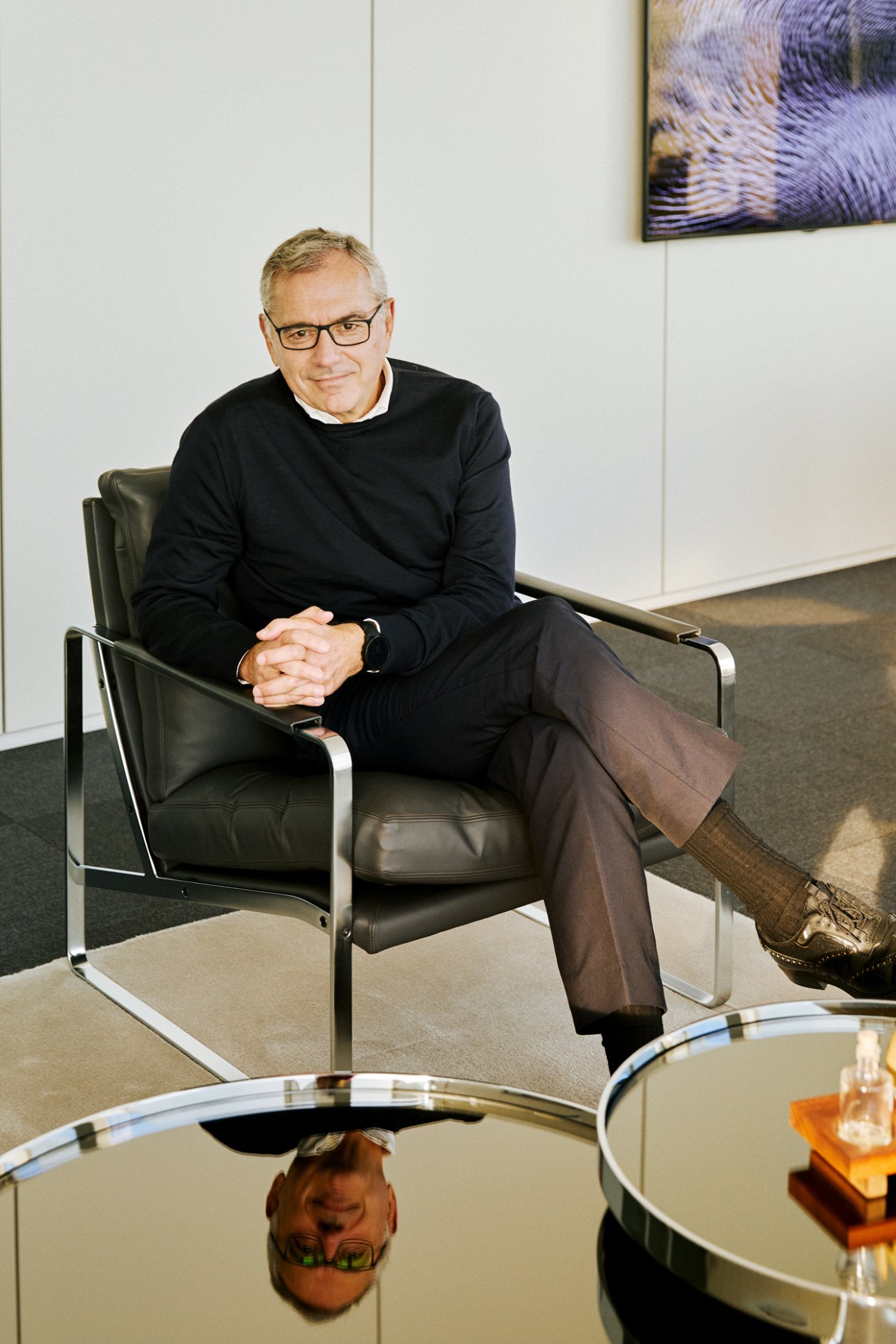
Over the course of a century in the business, Puig (pronounced “poodge”) has grown from fragrance-maker to branch out into fashion and now make-up, wellness and skincare. “We keep expanding because if you don’t grow, you go backwards,” says Puig, dressed in a white, open-neck shirt. Today the company has a portfolio of 17 brands – 13 of which it owns – spanning 10 different countries. These include household names such as Paco Rabanne, Jean Paul Gaultier and Carolina Herrera. Swedish beauty brand Byredo and renowned Antwerp-based fashion label Dries Van Noten have been some of the newest additions to the Puig portfolio. Before these acquisitions, both brands were founder-led businesses that thrived on their independent status and were therefore seen as being unlikely to sell – but Puig proved otherwise.
Getting them on board have been big wins, highlighting how the family-run firm has been able to earn founders’ trust and scale these brands without compromising their integrity. “Partnering with Puig, a company with a proven track record of developing founder-led brands, will help us realise our full potential across product categories in a way that truly resonates with the culture,” says Byredo founder Ben Gorham, who sold a majority stake to Puig last May, in a deal that valued his business at $1bn (€906m).
Puig shows little sign of slowing down, claiming a bigger stake in the fashion market by revamping dormant brands such as Nina Ricci and continuing to invest in the art of perfumery. If proof of concept were needed, Puig’s financial results speak for themselves. In March the group announced its annual figures for last year, which showed a robust balance sheet. With revenues of €3.6bn, its post-tax income was €400m, up 71 per cent on the previous year. So now is the time for Puig to step out of the shadows in the way that its French counterparts lvmh and Kering have been doing for years.
“We want to be more outspoken about who we are,” says Puig. And while he says that the group’s focus, for now, is consolidating current brands, ruling out further acquisitions would be unwise. The company’s healthy balance sheet explains its CEO’s relaxed demeanour today but there was a time not long after Puig took over as chief executive when things looked rather different. By his own admission, the business had been spreading itself too thin and trying to do too much in too many categories. “An organisation can do a limited number of things well,” he says. Tough decisions needed to be made, which included closing half of the company’s factories and honing its focus on fashion and high-end fragrances. A goal was set to grow the latter category’s global market share from where it stood, at 3 per cent, to 10 per cent – a benchmark that it reached last year.
Puig’s success hasn’t simply been about streamlining; other savvy business moves have also reaped dividends. The first was the decision to move away from a licensee model, in which it was historically contracted by big-name brands to produce their fragrances. Puig’s second winning move was to consciously get bigger, by setting out to acquire new names. The beauty sector was bound to consolidate, in the CEO’s eyes, with smaller players either disappearing or being acquired. And that meant that Puig needed to reach what he calls a “critical mass”. Luca Solca, a senior research analyst for global luxury goods at Bernstein in Geneva, puts it another way. “There are a lot of fixed costs in this business so scale is very important,” he says. “You don’t want to be a dwarf in the land of giants.”


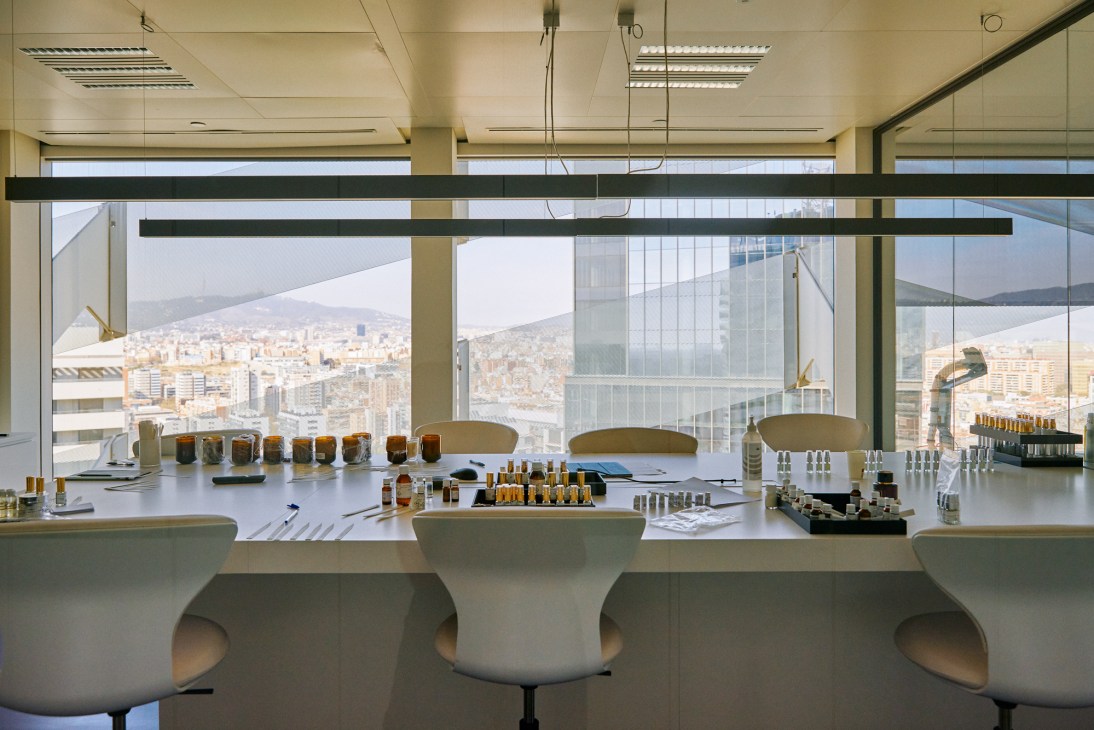
As monocle heads into Puig Tower, past a perfume bottle sculpture by famed Catalan artist Joan Miró, the busy team behind the success story is revealed. Desks peppered with prototypes and sample photography are spread across multiple floors, accommodating the company’s 600-strong workforce in Barcelona (it has 10,000 employees worldwide). The perfumery area and creative lab on the 18th floor have a more serene feel, resembling a hotel lounge more than an office, with cream sofas, slatted-wood room dividers and shelves stocked with neatly arranged fragrance bottles. The space was designed as a small lab for the group’s brands to visit and develop ideas – and stands as a reminder that, at its core, Puig is still first and foremost a fragrance company.
Overseeing these proceedings is senior perfumer Elisabeth Vidal, who has been with the firm for 30 years. She is part of a team of in-house perfumers split between Barcelona and Paris, and works on high-profile fragrances that before launching can take up to three years to develop and as many as 3,000 trials. According to Vidal, a vital cog in this process is the marketing department, which is there to “inspire” the perfumers. Its role is also a reminder that selling perfume goes beyond scent alone, something that Puig seems to have understood early on.
That’s where fashion comes in: though still a relatively small part of the Puig business, it is arguably its most high profile and feeds directly into the fragrances cash-cow. “It’s about creating a desirable brand – and in order to do so you still need to put on fashion shows,” says Iria Pérez Gestal, director of Spanish media platform Modaes. “Aspiration is still achieved through fashion, not through the pure smell of a perfume.”


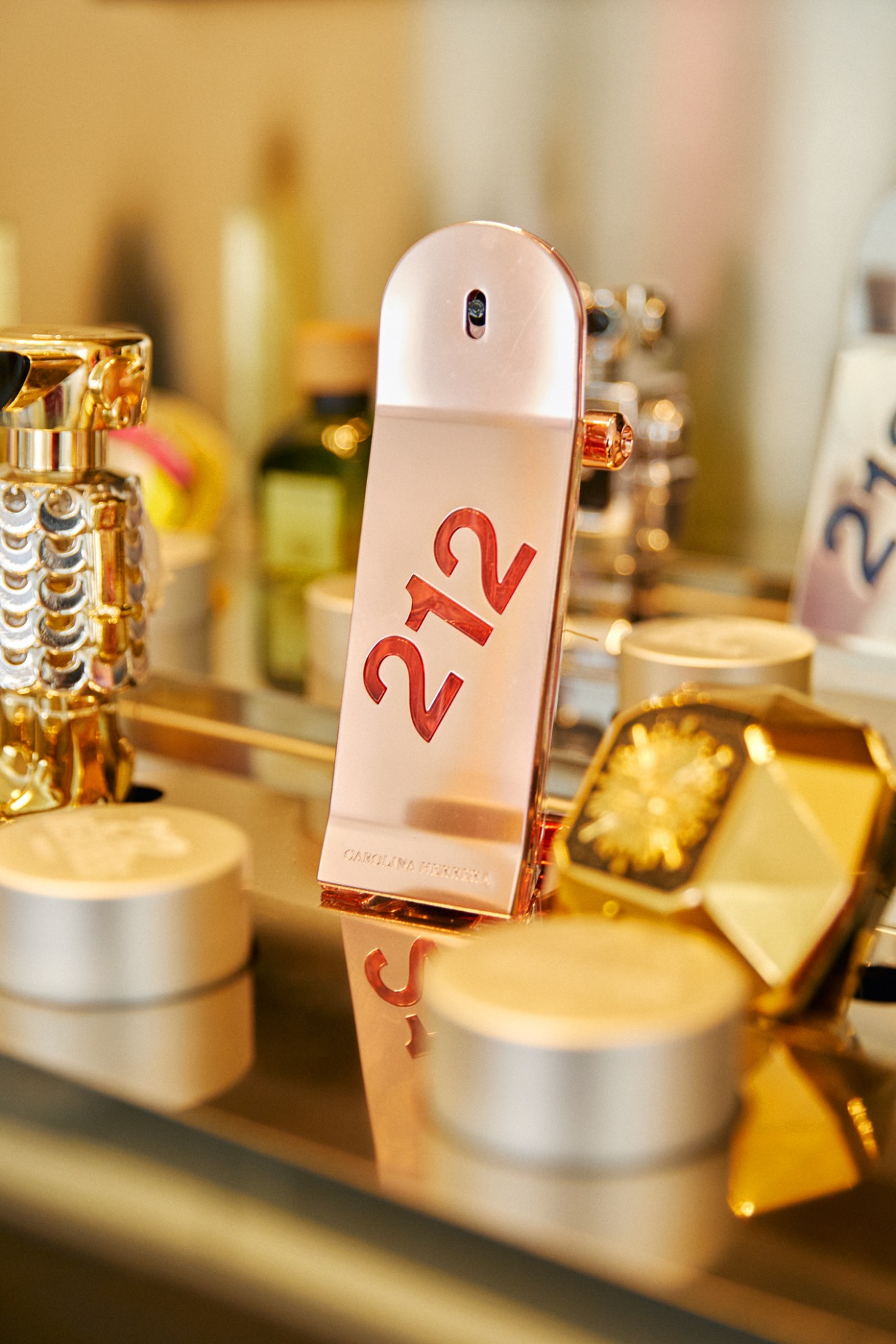
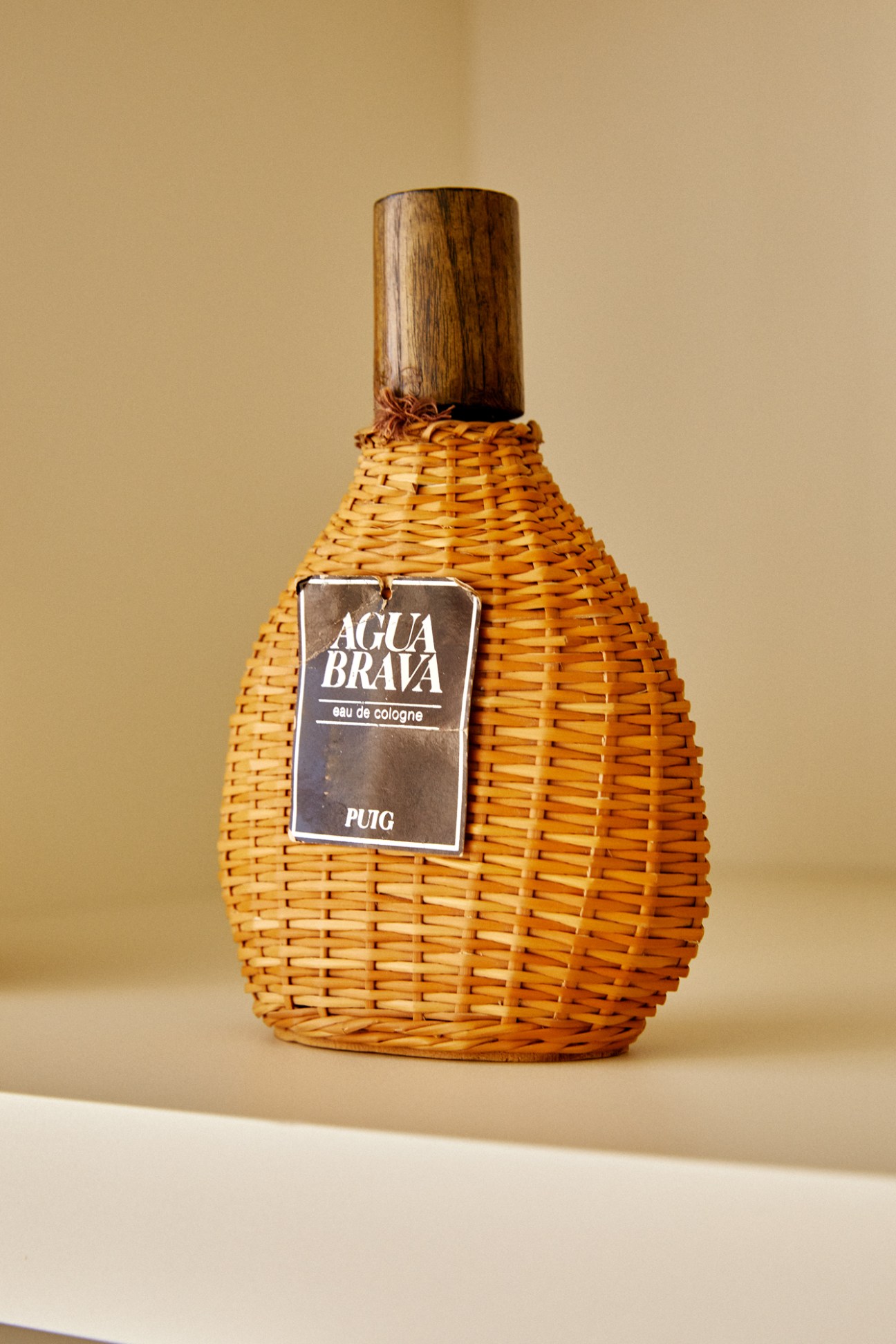
This approach has been at the core of Puig’s new business strategy – giving the firm a leg up on its competitors, which tend to run fashion and beauty divisions separately. “We build the image of a brand through fashion and translate that into the fragrance world,” says Puig. That’s why when Paco Rabanne needed a boost, the group put more effort into developing its ready-to-wear collections. It has also been helping the fashion labels in its portfolio to enter the fragrance fold. Last year, Dries Van Noten launched its first beauty line: a set of 10 unisex perfumes and 30 lipsticks. The range had the same personal and artisanal feel as Van Noten’s fashion collections, with the designer working with Puig’s perfumers to translate the smells from his garden into perfume.
Puig has also been expanding into other niche segments over the past decade – a move aimed at addressing shifting consumer tastes that have put natural ingredients top of the agenda. In the past few years it has embarked on an acquisitions spending spree to target smaller skincare, fragrance and make-up brands, including bringing Colombian natural cosmetics name Loto del Sur and India’s wellness-focused Kama Ayurveda into the fold.
But perhaps its boldest move was the June 2020 purchase of the UK’s Charlotte Tilbury, something that London-based luxury analyst Mario Ortelli says reflected “a long-term view on the market”. Long view or otherwise, it was a watershed moment – Puig’s largest acquisition to date and made during the height of lockdown when the future was far from certain. Though the purchase figure hasn’t been disclosed, Charlotte Tilbury had been valued at more than €1bn, meaning that Puig paid an eye-watering sum. “That was a difficult decision,” says Puig. “And [yet] there was no hesitation.” With the make-up and skincare brand’s continuing success – and its expansion in China – the acquisition is already looking like a shrewd move.
While these new purchases clearly have an eye on emerging or expanding markets such as Latin America or Asia, that is only part of the story. An equally important piece of the puzzle is having direct control over retail, rather than relying on third parties. Puig’s newest stablemates all have direct-to-consumer elements, either through e-commerce or bricks-and-mortar retail. Kama Ayurveda, for example, has 60 existing shops in India and plans to expand internationally. After getting the nod from the communications director sitting in on the interview, the CEO reveals that the brand will soon be opening in London, while Van Noten has opened a store in Los Angeles and three in China since partnering with Puig.
Even as it achieves larger scale, the group still prides itself on making leftfield moves that keep the market on its toes. That might mean naming 27-year-old London-based Harris Reed as creative director at Nina Ricci and giving him carte blanche to revive the dormant house (more to do with his “positivism and optimism” than his age, according to Puig’s CEO). The company has also demonstrated a consistent ability to keep brand founders in the picture, from Carolina Herrera and Jean Paul Gaultier before they retired to Van Noten and Tilbury. “Though management might be harder than when you have 100 per cent control, Puig keeps them on board, and I think it’s better for the business,” says Modaes’ Pérez Gestal.
Puig is also betting on innovation as a differentiator. Not all its initiatives have worked out – a collaboration with Bosch to make perfume at home was a flop – but some feel as though they have genuine potential to shake up the industry. One of the more intriguing things you can do at Puig HQ is stick your nose into one of the company’s AirParfum machines. A smelling device sold to retailers for between €4,000 and €13,000, it sprays a quick hit of perfume through a central halo and, unlike traditional diffusers, doesn’t use alcohol. This apparently allows the user to avoid smell saturation, which often happens when assaulted by an army of sprayers in department stores. AirParfum has also been trialled in cultural settings such as Madrid’s Prado Museum, with visitors using it to zoom in on images of Peter Paul Rubens’ and Jan Brueghel’s paintings and sniff the flora and fauna depicted (tip: avoid the musky civet at all costs).
AirParfum is part of a family of innovations aimed at demystifying the world of fragrances, including investment in cataloguing more than 20,000 perfumes through brand-agnostic, open-source website Wikiparfum. There is also an ambition to crack the old conundrum of selling smellies online, by creating “scent visualiser” software that allows users to see the smelling notes of a fragrance.
For all the technological leaps forward, perhaps Puig’s biggest innovation is an old-school managerial decision: the Puig family recently decided that the next generation would not be occupying leadership positions. It’s a move that many family-run businesses ought to be taking for the greater good of their enterprises but often fail to do (lvmh CEO Bernard Arnault, who has given all five of his children leadership positions from early ages, are you listening?).
Marc will soon have a new skyscraper opposite the existing HQ to populate as the company continues to grow, and he recognises the need to “open up to more potential talent” rather than relying on a small clan. While he might be relieved not to have to ready himself for a messy family succession battle, he’s also not in a rush to go anywhere. “It’s exciting to be in this company right now,” he says, shifting position on his executive-floor sofa. Success, one imagines, smells rather good.
Images: Getty Images, Tekever
Gardening leave
Niwaki × Oliver Spencer
UK & Japan
London label Oliver Spencer has collaborated with Japanese gardening brand Niwaki to create a collection of gilets, shirts and jackets that will stand up to hours spent in nature or tending your garden.
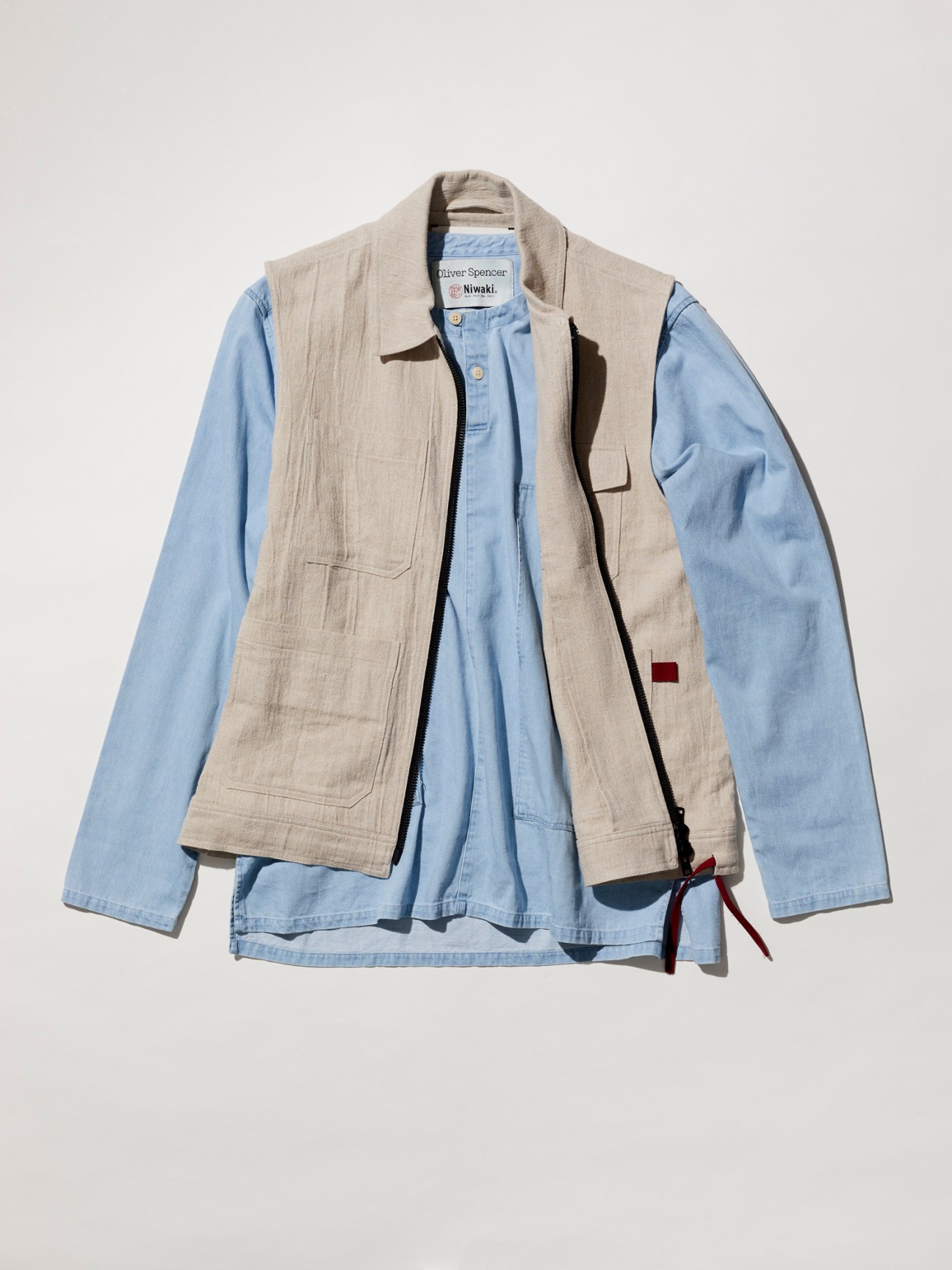
The gardening jacket features five front pockets for smaller tools and seed packets or, for non-gardeners, your keys and wallet. “I wanted the jacket to have a boxy artist silhouette so that it’s comfortable when moving around but also looks contemporary,” says Spencer. This is utility wear for those committed to the art of gardening, as well as anyone who wants more practicality from their warm-weather wardrobe. The collection also features a denim smock-shirt with Japanese-inspired stitch detailing and an overshirt with semi-hidden buttons that won’t snag on plants.
oliverspencer.co.uk; niwaki.com
Dior × Parley for the Oceans
France & USA
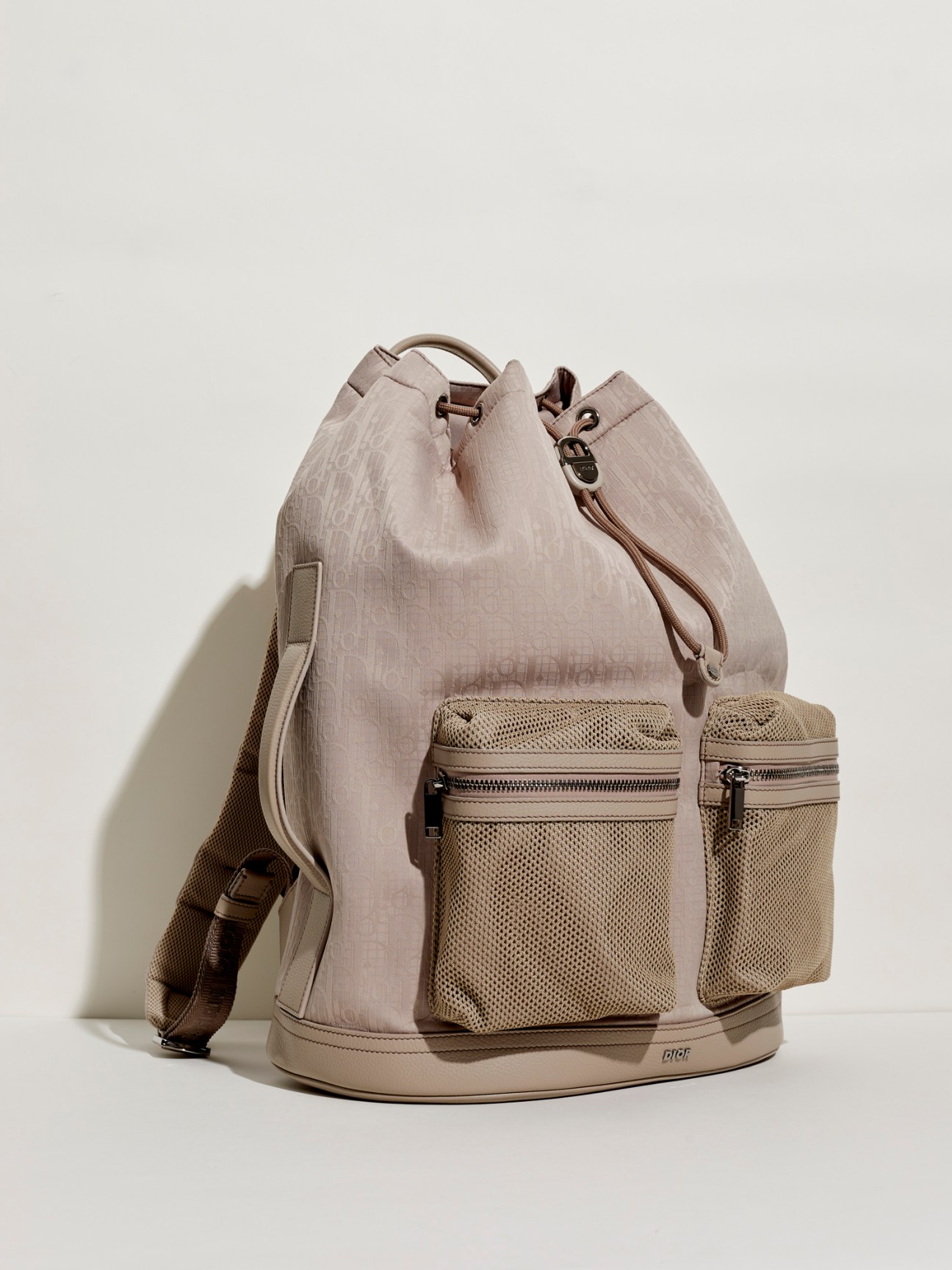
Dior has launched a new eco-friendly beachwear collection in partnership with environmental organisation Parley for the Oceans. What began in 2019 as research into developing yarns and fabrics from marine plastic waste has developed into fully fledged luxury collections featuring bucket hats, backpacks, shorts and lightweight tailoring. “Wearing a piece by Dior × Parley is an act of rebellion,” says Cyrill Gutsch, CEO of Parley for the Oceans. “It shows you want to solve the environmental issues we are facing.”
Hermès H08 Watch
France
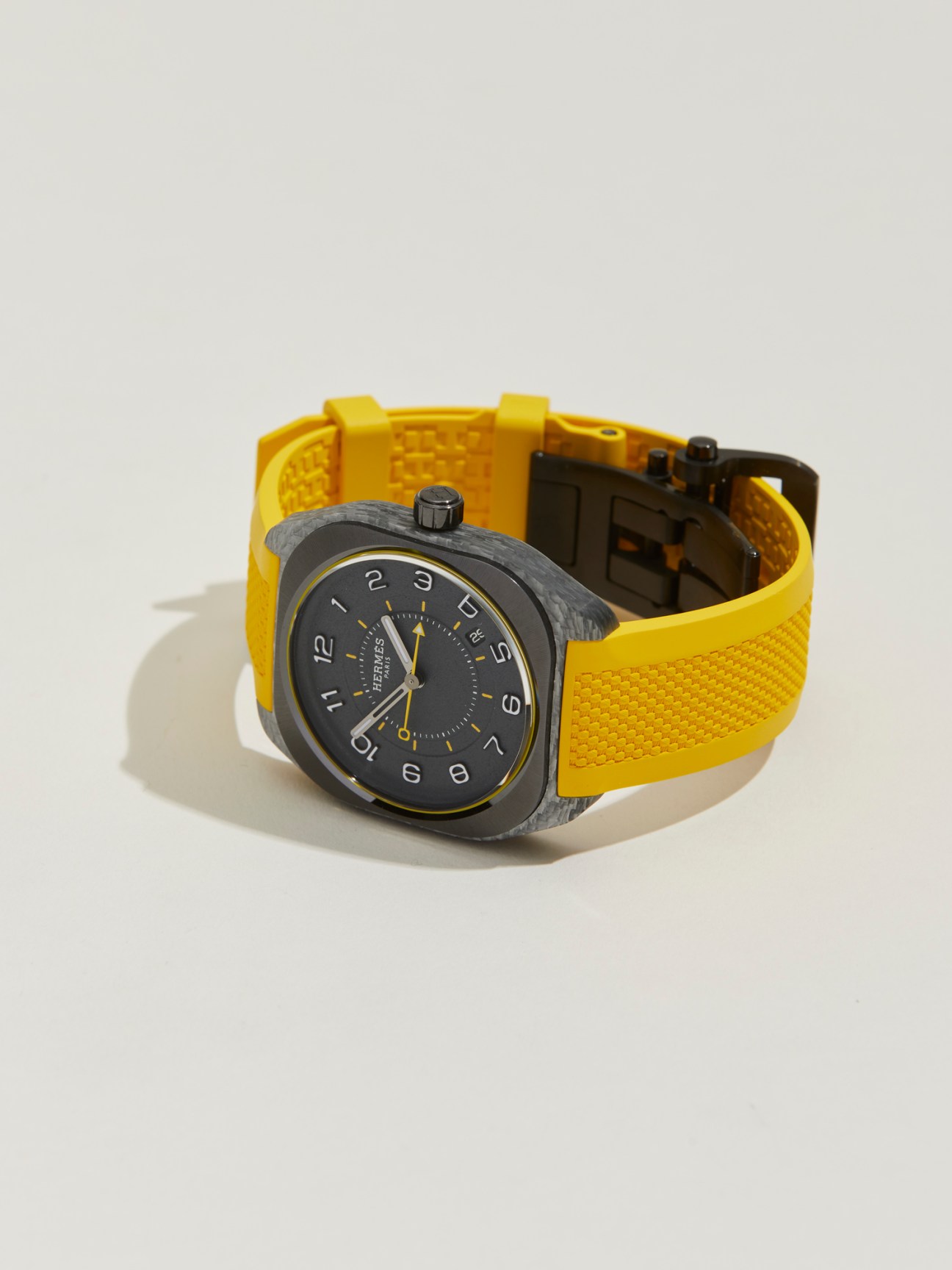
The sporty h08 watch is a recent addition to Hermès’ collection of timepieces. The French luxury house has reworked its original h08 model, adding a glass fibre case coated in aluminium and slate powder. Water-resistant features and straps in sunny shades make it ideal for summer days.
hermes.com
Contre Allée
UK
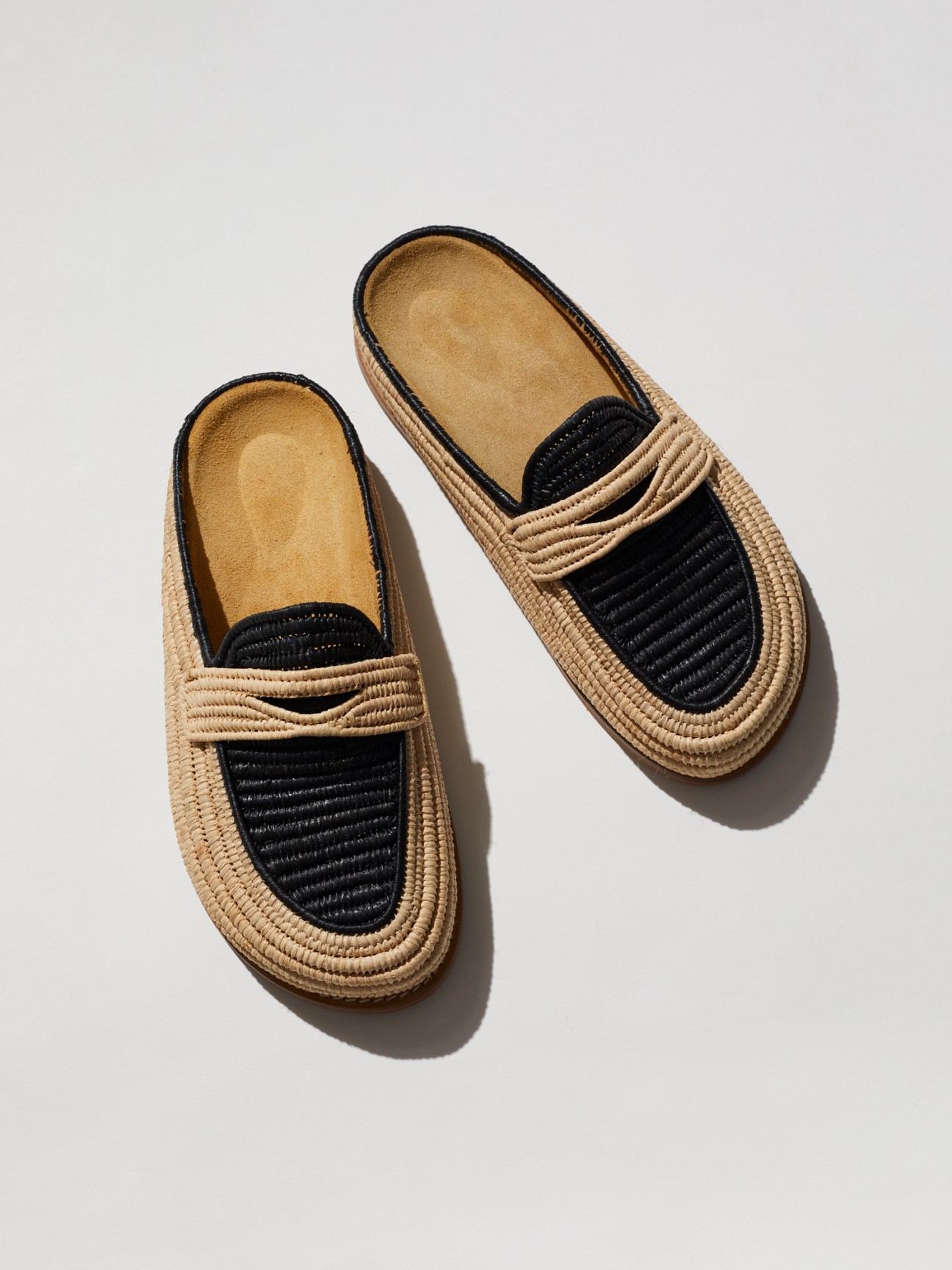
After travelling around Moroccan medinas, designers Marouane Haial and Anne Epagneul were enamoured by the country’s craft heritage and locals’ commitment to using all-natural materials such as raffia. They returned home to London and went on to launch Contre Allée to introduce Moroccan craft to the wider fashion market. They now work with a wide network of artisans across Morocco to create elegant loafers, handwoven using raffia. Each pair is made to order and requires a full day’s work to complete. We recommend investing in a colour-block, backless pair for summer.
contreallee.co
Haulier International
Australia
Jeremy Hershan launched his apparel and accessories label Haulier International in 2020 with a series of elegant, meticulously crafted tote bags. “I wanted to create a timeless product that would be hardwearing and purposeful,” he says. Hershan spent the better part of a decade working in luxury fashion houses in the UK before returning home as the head of design at Australian outfitters RM Williams.

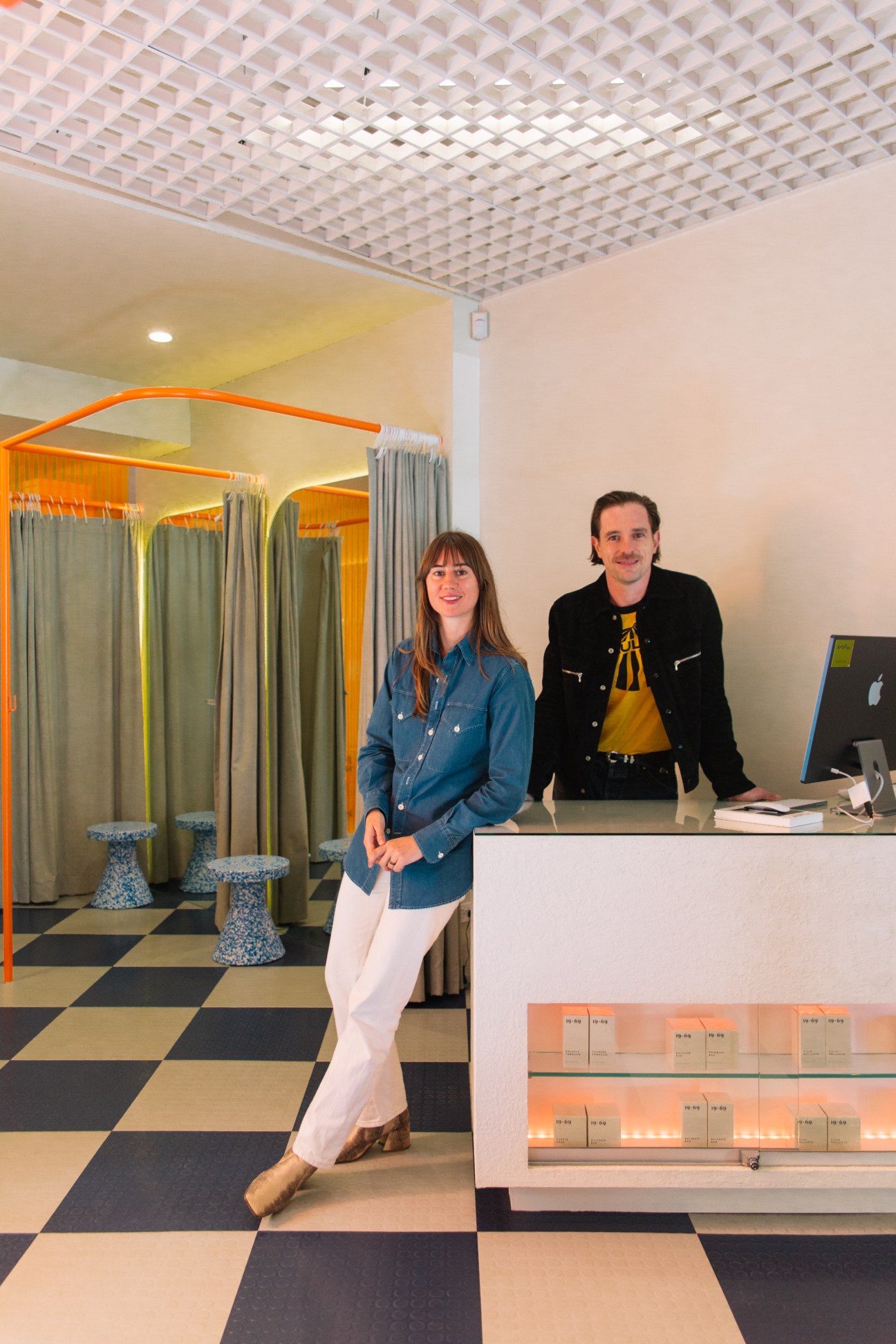
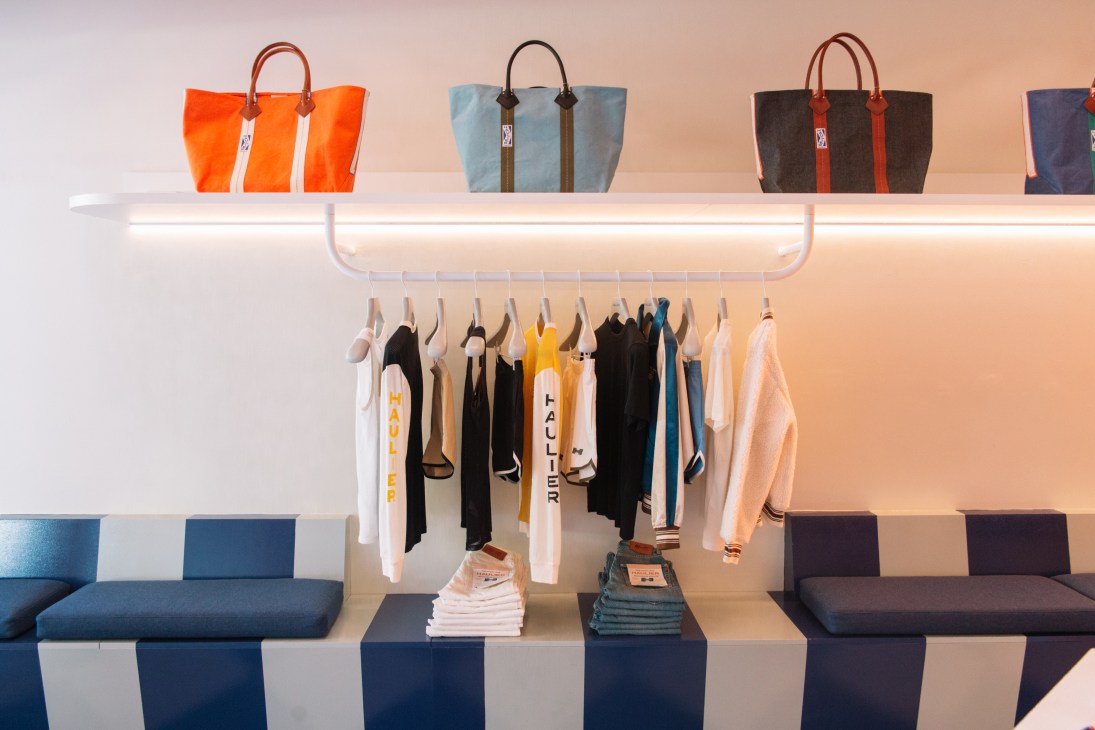
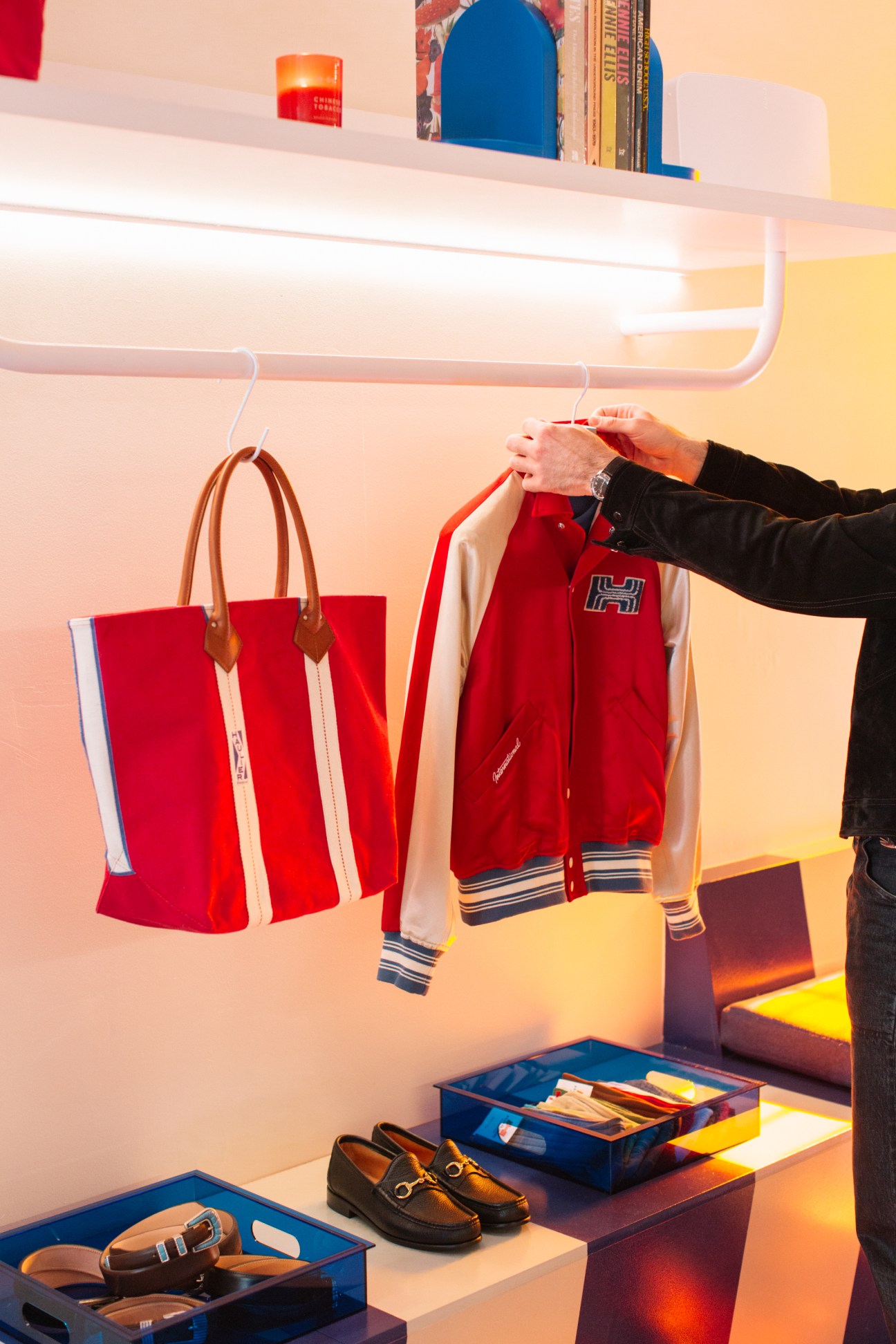
Manufactured in small-scale Portuguese factories, Haulier’s signature totes are handmade in “almost bulletproof” fabric and woven on mid-century shuttle looms similar to those used to produce Japanese denim. “I don’t believe that modern technology can replicate the beauty of traditional workmanship,” adds Hershan. “Our system means that we can set the exact dimensions for each bag’s pattern, avoiding any negative space and eliminating waste. It’s a slow, measured process.”
The roomy bags are made from a sturdy selvedge canvas with supportive webbing based on a material that Hershan found on the straps of an old French air force bag. “Our bags do have a holiday suitability but they are all-purpose,” he says. “The more they’re used, the more character they adopt. I love products that tell stories after time and wear.”
Haulier has now branched into clothing, which is notable for its nostalgic nods to 1970s airline travel and classic athletic style. A new flagship in Sydney sets the scene with interiors that call to mind a vintage aeroplane terminal. Hershan’s top pick? “Our Canyon Motocross T-shirt is made from a mesh cotton inspired by old sportswear fabrications.” Pack it in your tote and you’ll be good to go.
haulier.international
Fateeva
Austria
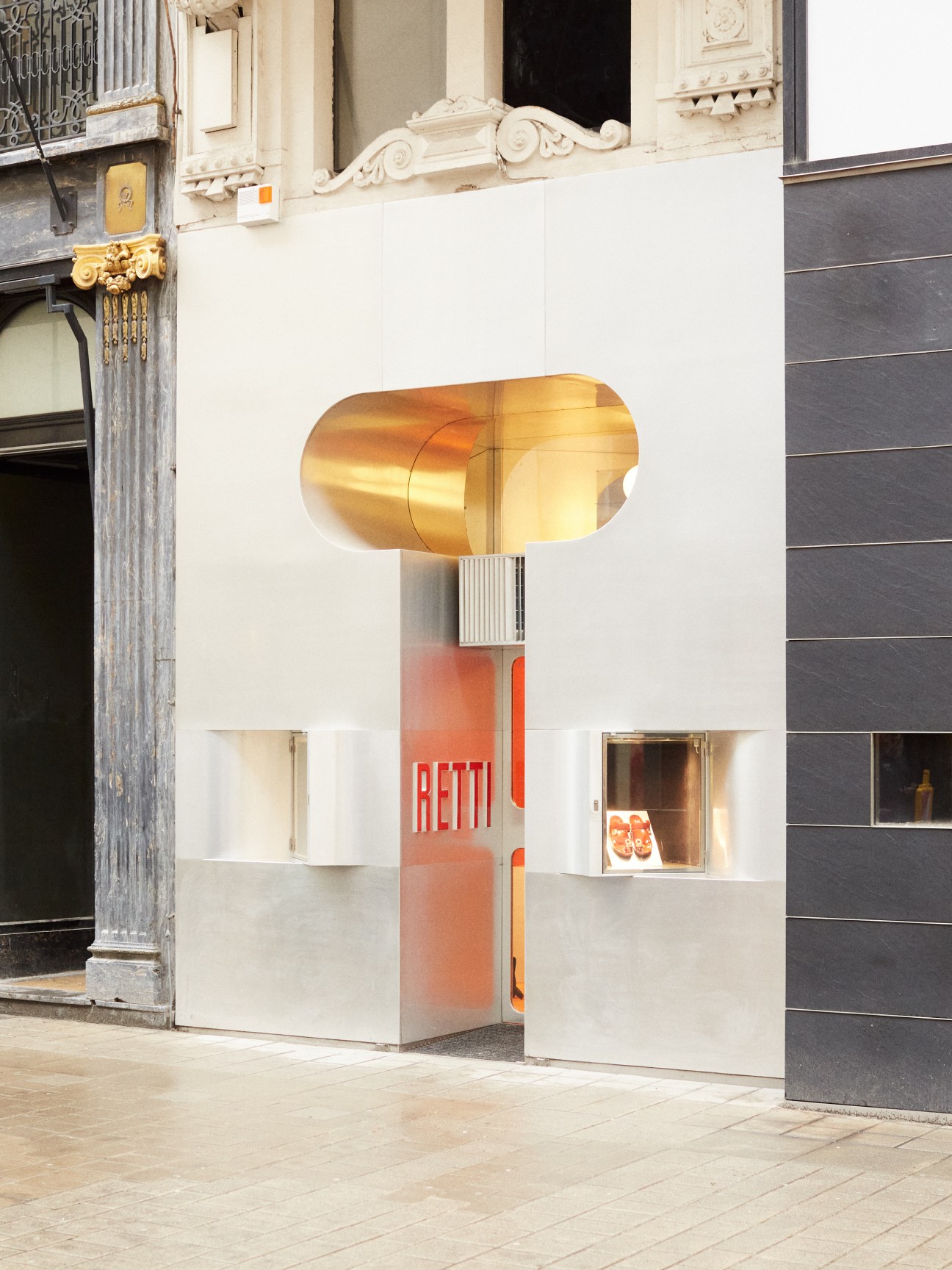
The most eye-catching façade on Vienna’s main shopping street has to be that of the former Ratti candle shop. Designed in the 1960s by architect Hans Hollein, it stands out thanks to its stainless-steel shopfront. After a long hiatus, the Kohlmarkt space is back open for business and in May and June it will house the pop-up shop and atelier of Elizaveta Fateeva, whose label offers minimalist shoes and clothes made from deadstock materials.
The Viennese fashion designer talks to Monocle about finding the right home for her minimalist designs.
How did you get the chance to move into this icon of Austrian architecture?
This shop was renovated two years ago and is now in exactly the same state that it was in the 1960s. It’s very hard to find a permanent tenant who can move in without changing anything inside, because the space is under landmark protection. It’s a generous step to give it to an emerging sustainable brand from Vienna. [Firms like ours] aren’t usually represented on this street.
What makes the space a good match for Fateeva?
It looks small from the outside but when you enter you get a feeling that you’re in Star Trek. I didn’t want to overwhelm it with too much product but everything I do is so minimal that it fits with the interiors. The more time I spend here, the more ideas I get.
What will your customers find in-store?
I come from an accessories background: I started my label with only three designs for men’s sandals, which you’ll find in the new shop. I’ll also present my collection of unisex clothing made from upcycled materials. During the pop-up, I’ll look for people to collaborate with, on shoe design for example, and create new editions from month to month.
fateeva.net
Quick smart
Tried and trusted
Foxtrot, Chicago
It’s sometimes said that every overnight success is a decade in the making. As Chicago’s convenience-store-cum-café Foxtrot proves after 10 years in the business, sometimes it also takes time to get the recipe right.
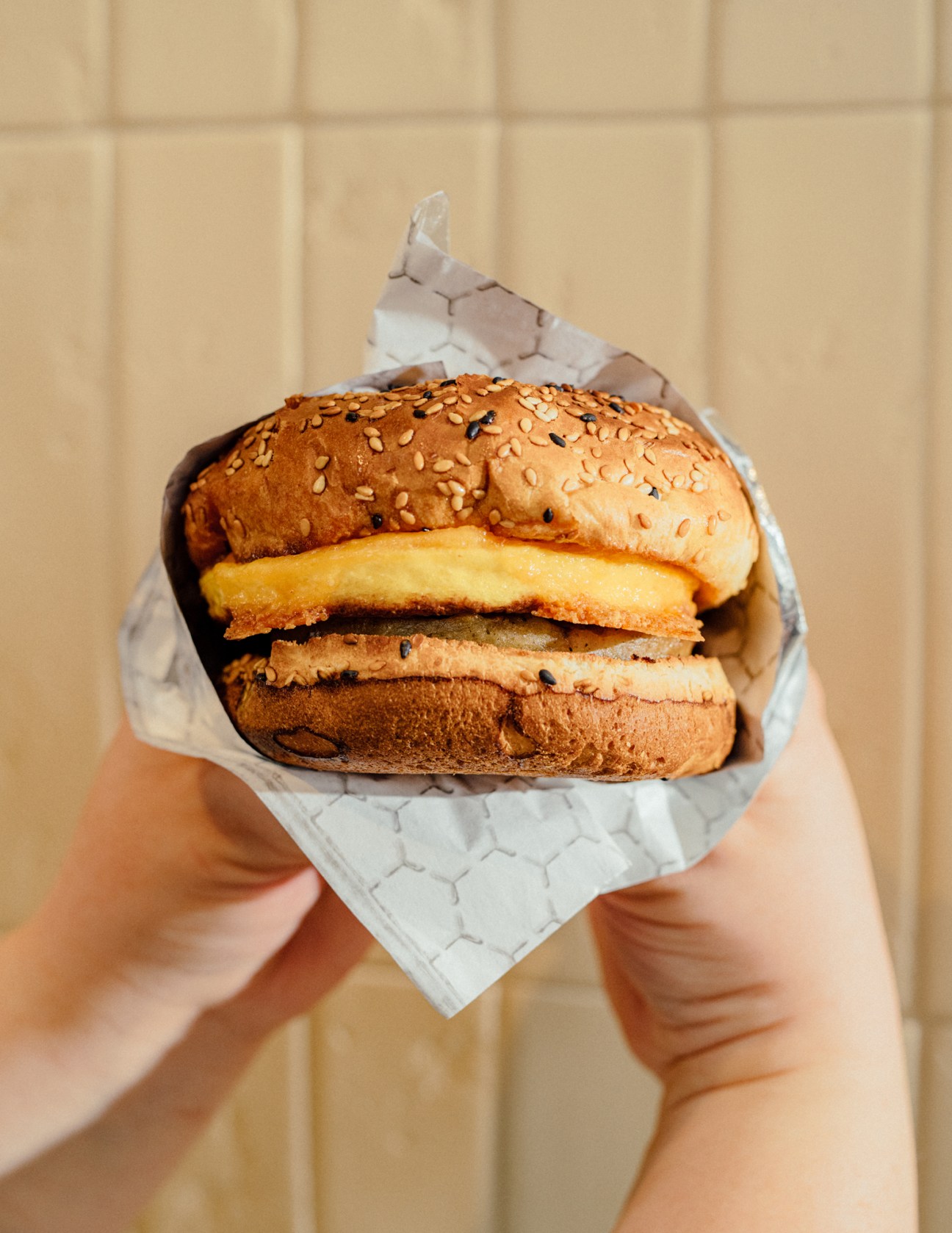
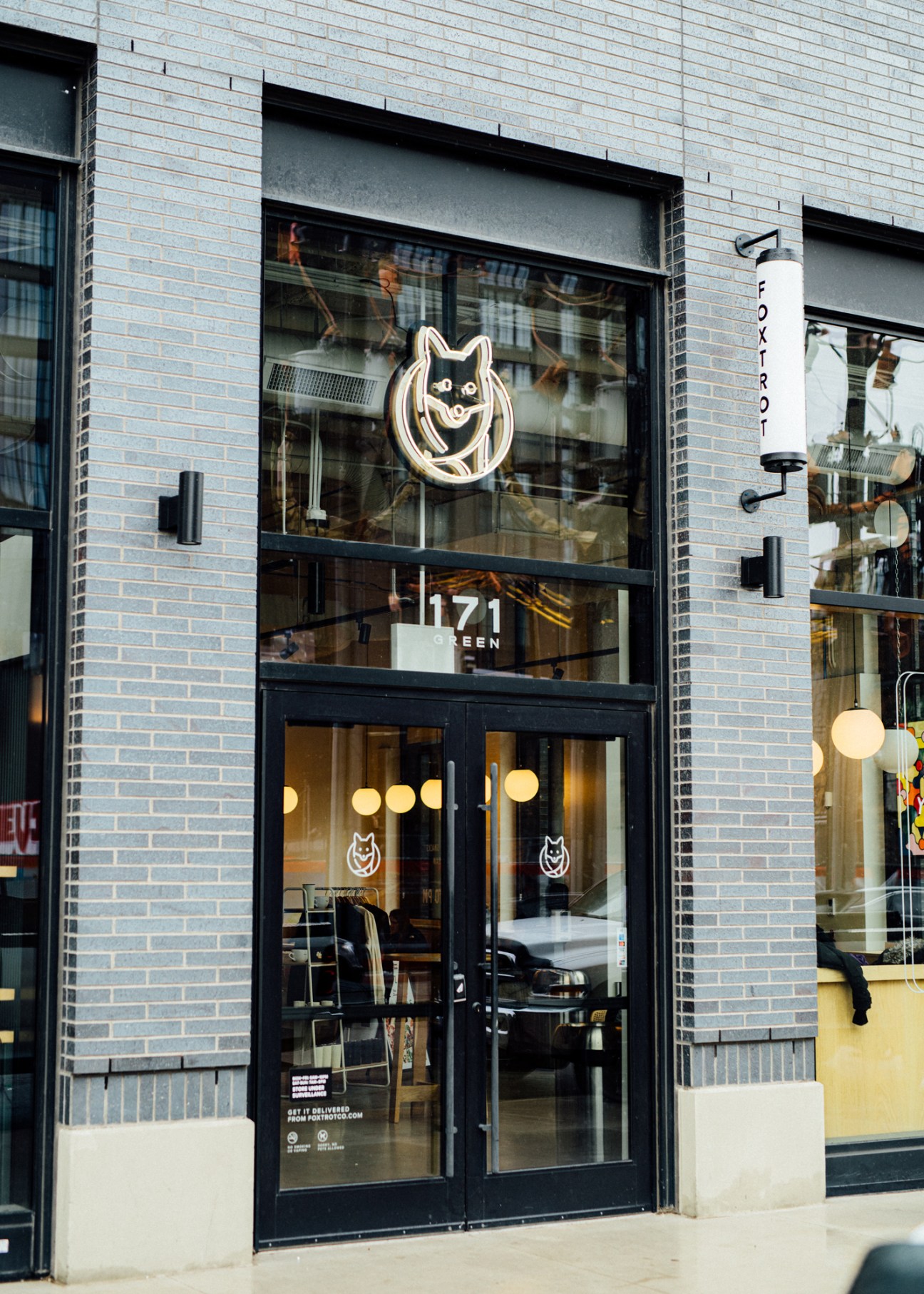
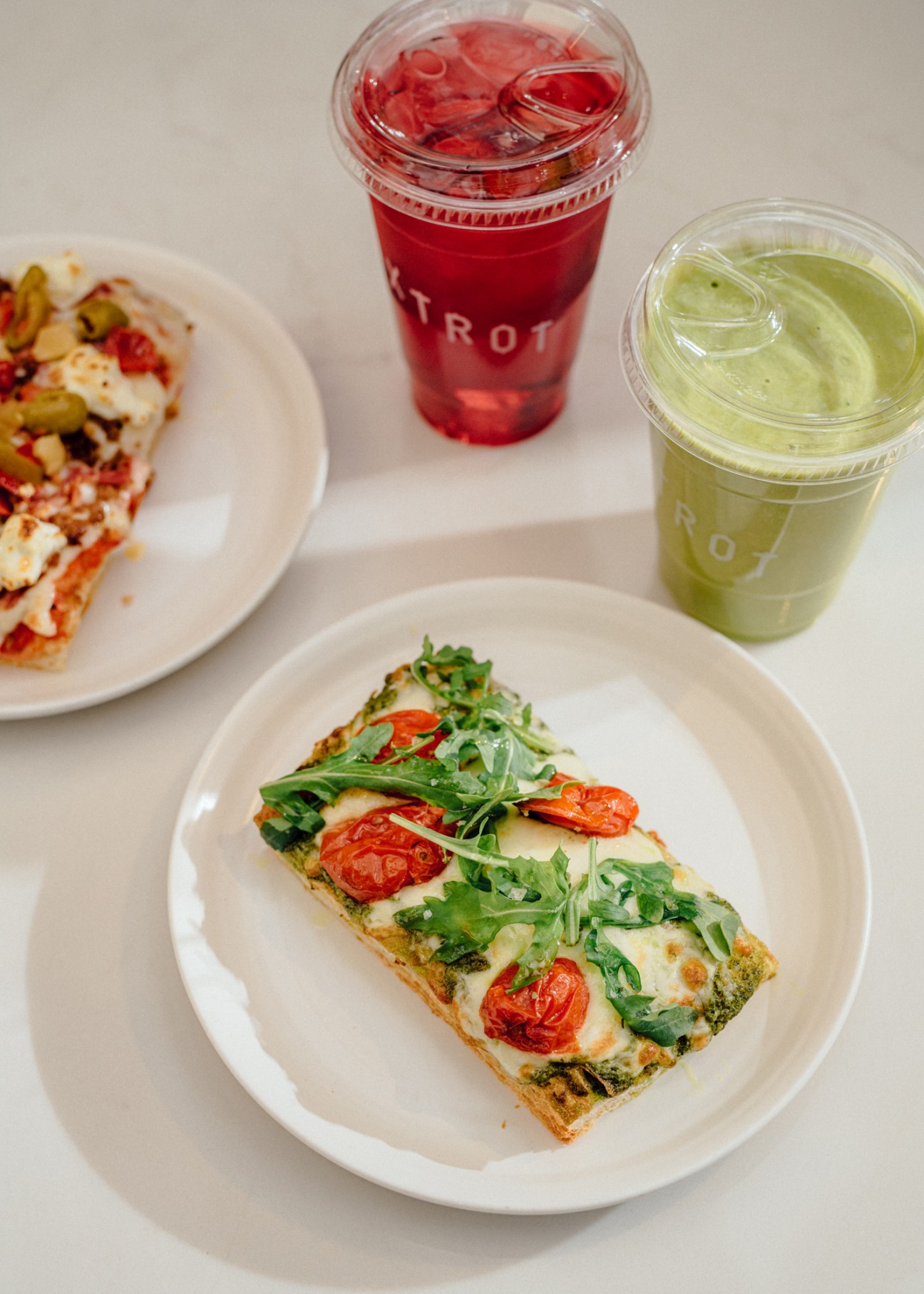
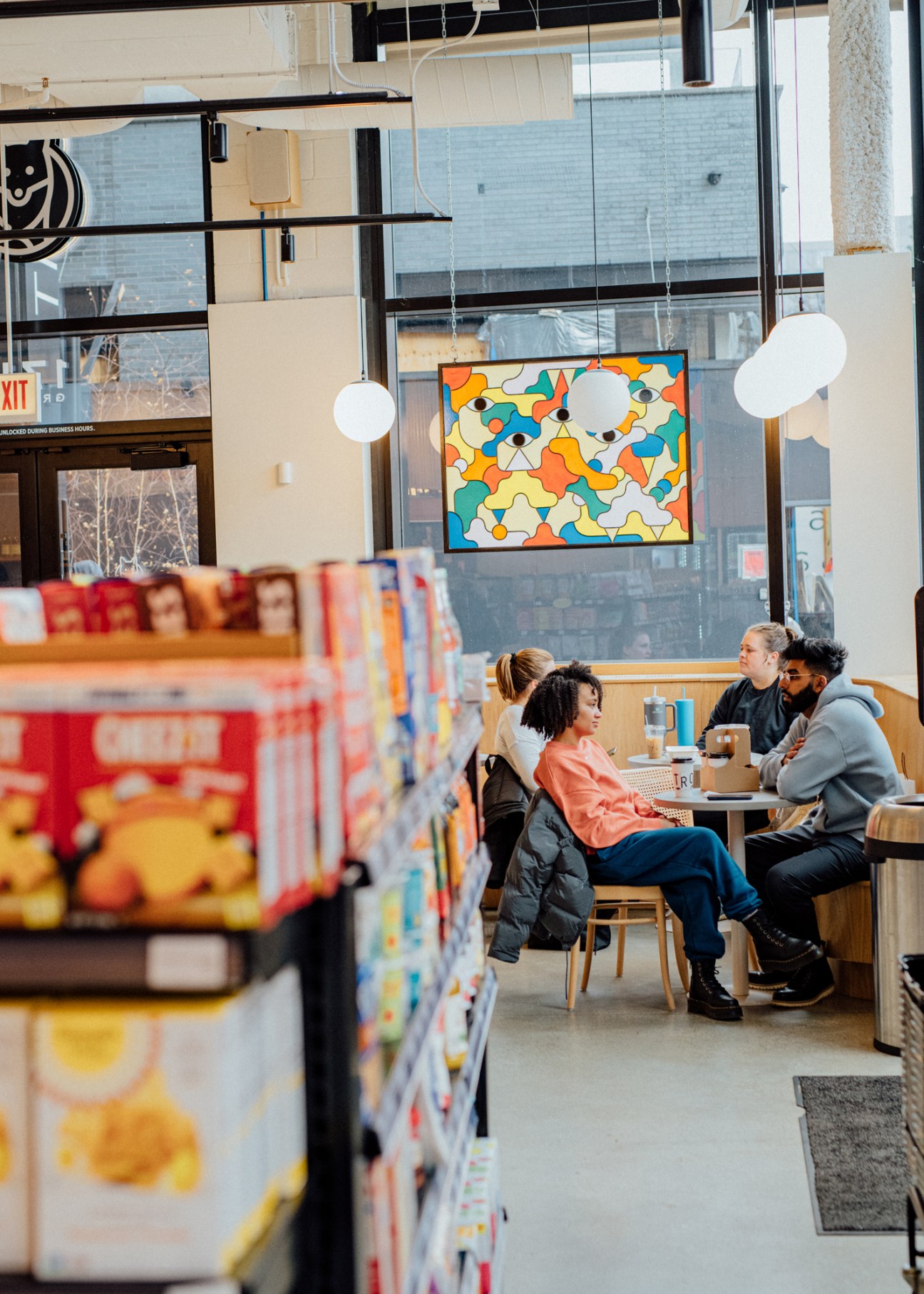
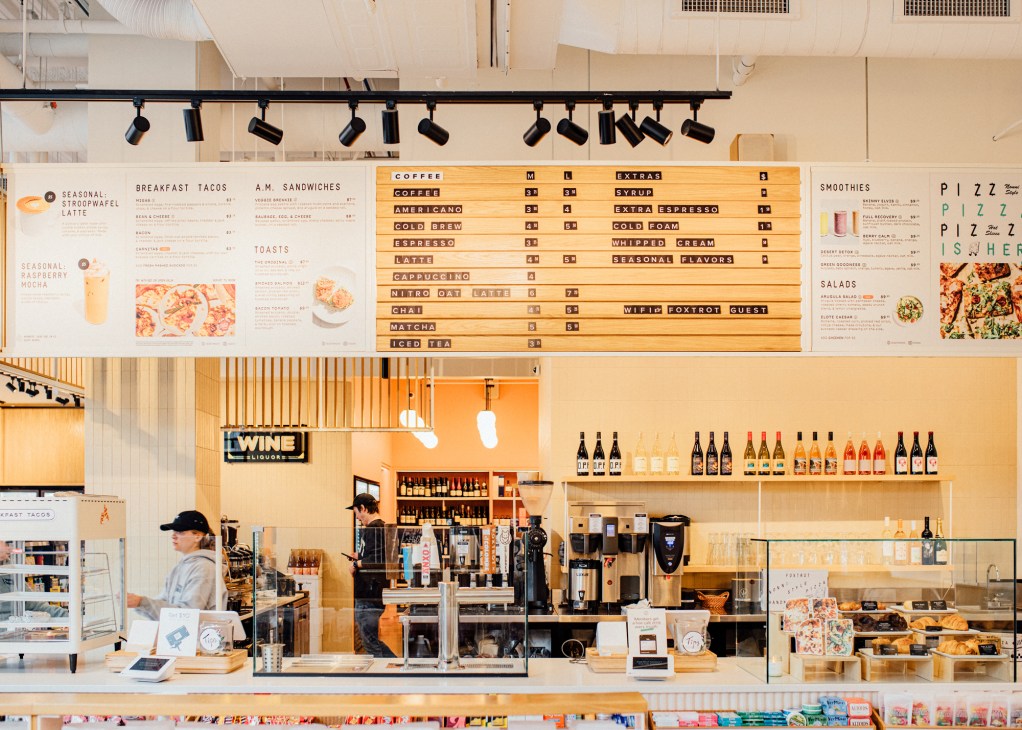
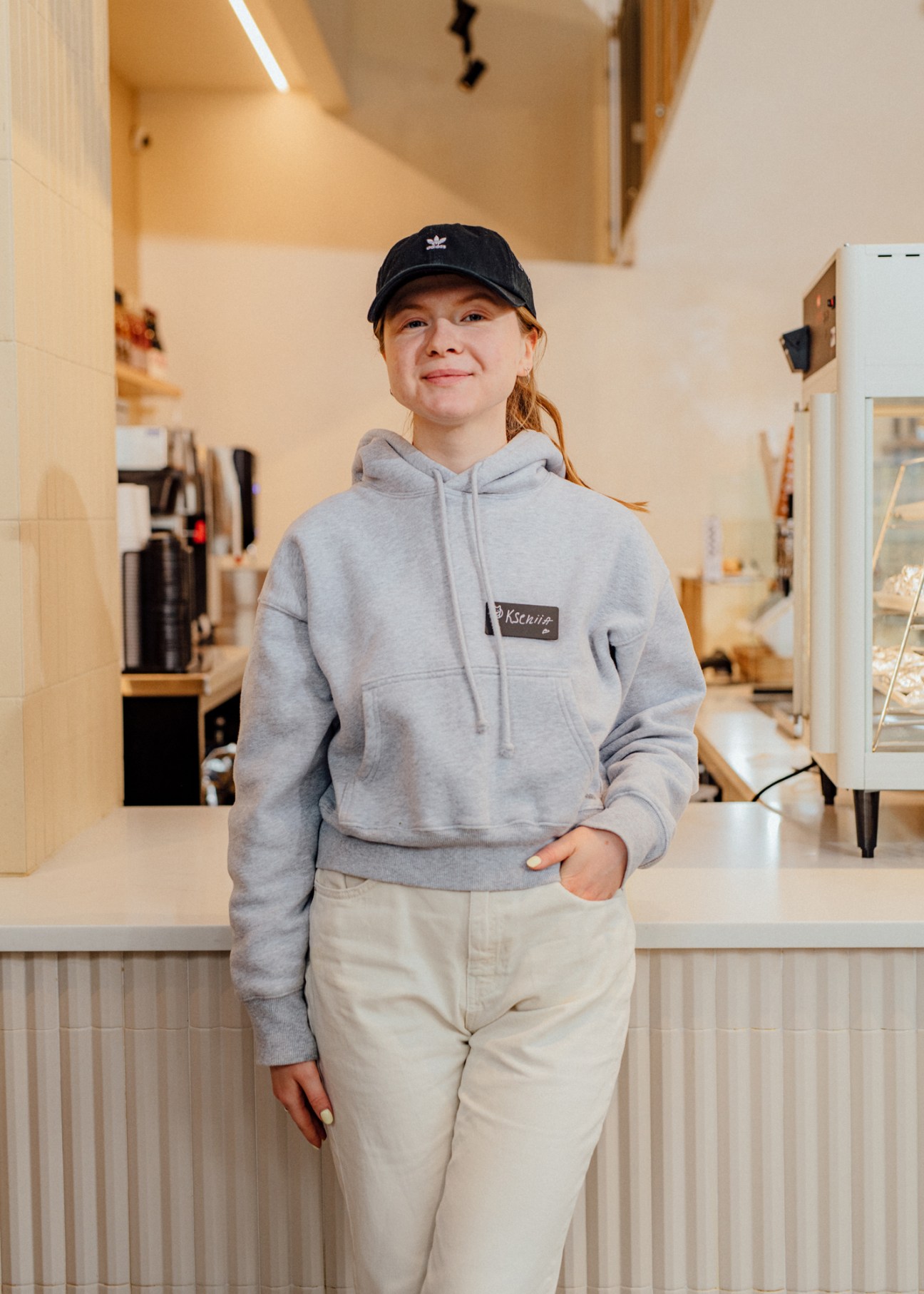
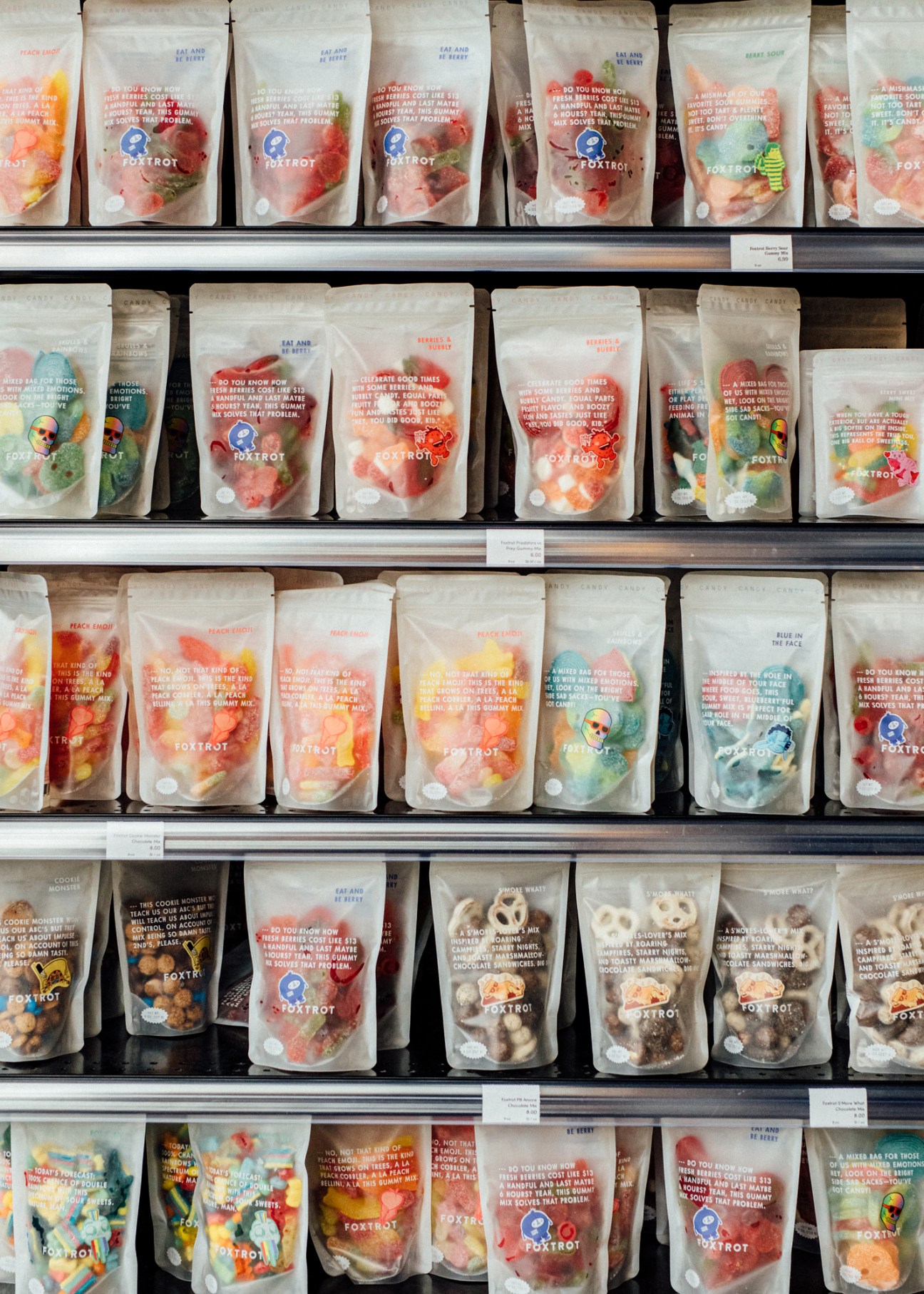
What started as co-founder Michael LaVitola’s “dream digital-only corner shop”, stocked with products from his favourite Chicago artisans delivered in an hour or less, has grown into a nationwide brand. What’s more, it’s moved beyond the confines of the screen and now offers charming retail spaces too.
With 15 shops in Chicago and 11 in Washington, Dallas and Austin, LaVitola plans to end 2023 with more than 30 locations. The expansion is helped by a $185.4m (€170m) war chest. Is Foxtrot where he thought it would be after 10 years? “To see what we have built, what the team and brand have become, is amazing,” says LaVitola from Foxtrot’s new shop in the heart of Chicago’s Fulton Market District. “But we’re truly just at the beginning of it all,” he adds, noting that we are a stone’s throw away from the brand’s first-ever shop and warehouse in the West Loop.
So why move into physical spaces if you’re starting a convenience service? “A gathering space people go to, a place to get the things that they buy most often, a beautiful environment with good music, friends and people around – that’s really what people have been after,” says LaVitola. “The products we sell are secondary to creating a neighbourhood space where people want to be. We knew that customers needed this.”

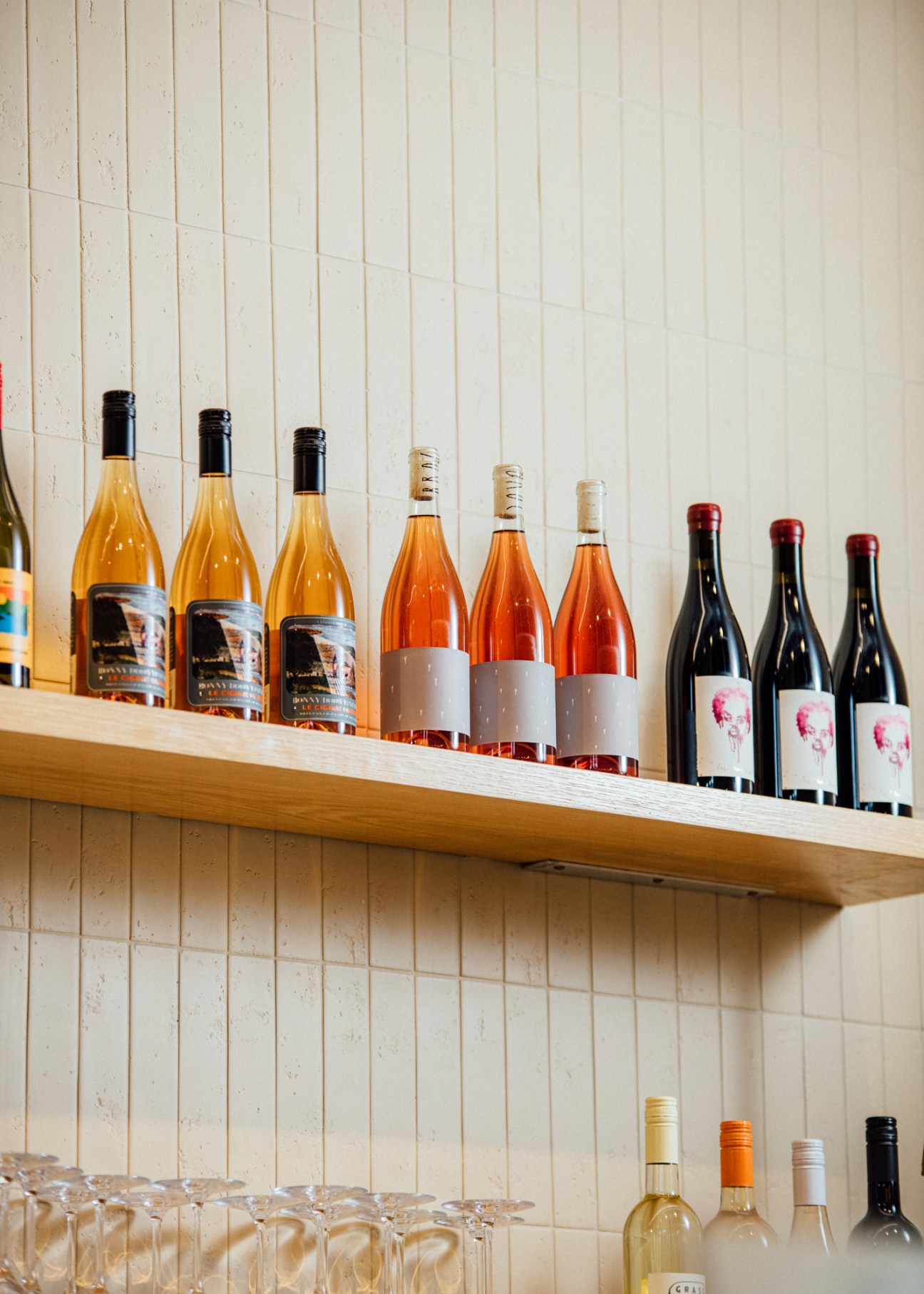
Foxtrot’s product mix includes local favourites but also things you wouldn’t find elsewhere: there are gummy sweets from Malmö alongside coffee from West Town in Chicago and a bottle of sparklingly good pét nat wine from South Africa’s Swartland. “We have one $25 [€23] cabernet, one $15 [€14] rosé,” LaVitola tells Monocle. “We try to find the best product at each price point. If you have confidence in our picks, then you’re much more likely to take a risk on a new product.”
Taking inspiration from Japan’s well-stocked convenience stores, Foxtrot decides carefully what to stack on its shelves. This keeps customers coming back time and again but also attracts small, honest and interesting brands looking to work with good partners.
So the Foxtrot formula works but is there anything that LaVitola is worried about when it comes to expansion? “We’re not sure yet,” he says. “Foxtrot works on a corner in Fulton Market here in Chicago. It works in Georgetown, in Washington and in Dallas. The products can change but at the end of the day, it’s about great coffee, great wine and tasty treats.” He smiles. “I think people everywhere want that, right?”
foxtrotco.com
German bites
Schmatz, Tokyo
Sitting in the Nakameguro outlet of the German restaurant chain that he co-founded in Tokyo, Marc Luetten looks the picture of success. The restaurant is buzzing, sausage platters are flying out of the kitchen and German draft beer is being served in elegant glasses. Today, 31-year-old Luetten heads up Schmatz, a thriving company with 36 restaurants in Japan, 700 staff and nearly a million customers a year. But none of this was guaranteed when he and 36-year-old Christopher Ax left careers in venture capital to follow their dream of starting a business.
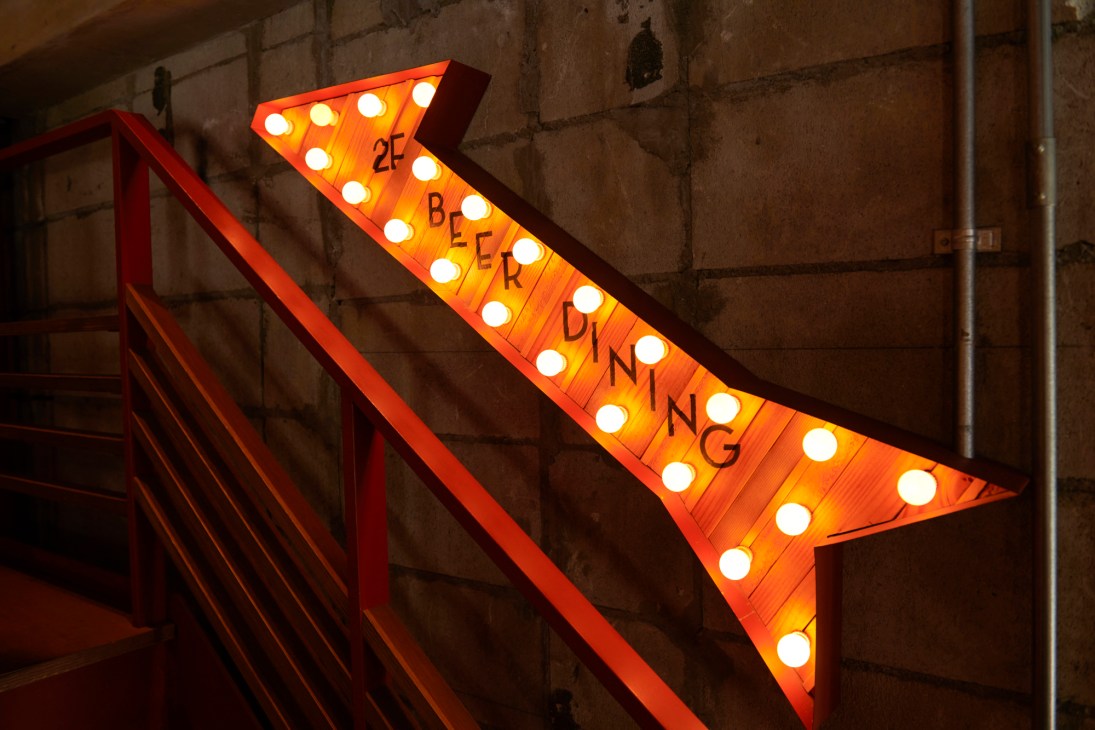
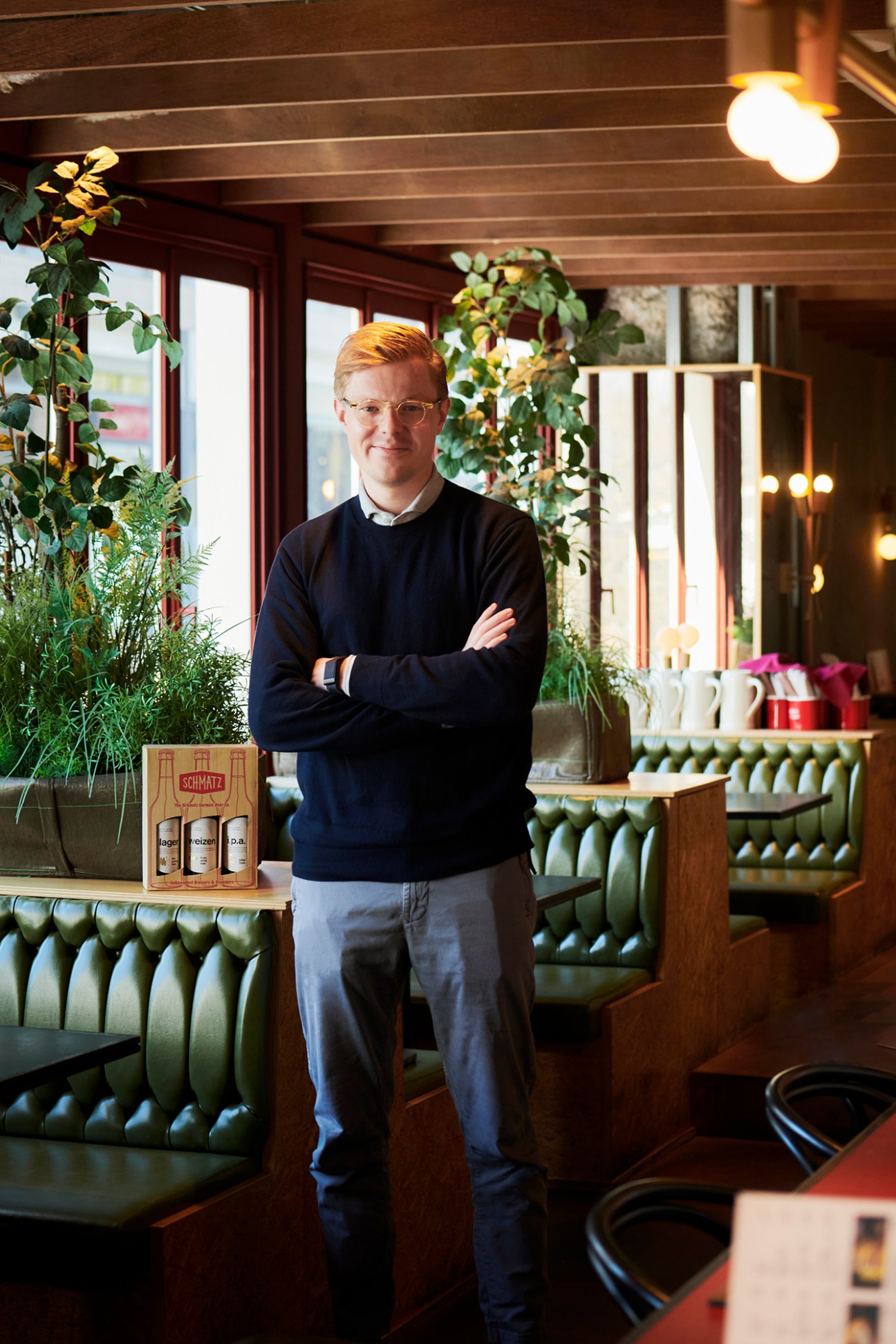
Luetten and Ax had known each other since childhood; their families lived on the same street in Hamburg. Both had gone into banking and happened to wind up working in New York at the same time. While they enjoyed their jobs, both wanted to build a business and came up with the idea of doing it together. Japan, where they had (independently) spent time, was a shared passion, as was food; Luetten loves to cook while Ax’s family owned an organic farm.
They threw various ideas around but kept coming back to their core interests: food and Japan. “At first we thought that this [food] idea was just too far-fetched and we put it to one side,” says Luetten. “But then we both remembered that when you say ‘Germany’ in Japan, people think of sausages, beer and cars. We asked, ‘Why is there no cool, modern or accessible German brand out there?’”
Even though they had no experience in food or hospitality, the plan to bring German food and beer to Japan started to take shape. The entrepreneurial duo headed to Tokyo in 2013 armed with a slender budget of ¥2m (about €14,000), which covered the cost of a second-hand food truck and meagre living expenses. In three months they were under way, grilling sausages and serving beer at a farmer’s market in Aoyama in central Tokyo. “There were hard days when the weather was cold and we didn’t sell a single sausage,” says Luetten. “But it was fun and even those times teach you the realities of the business.”
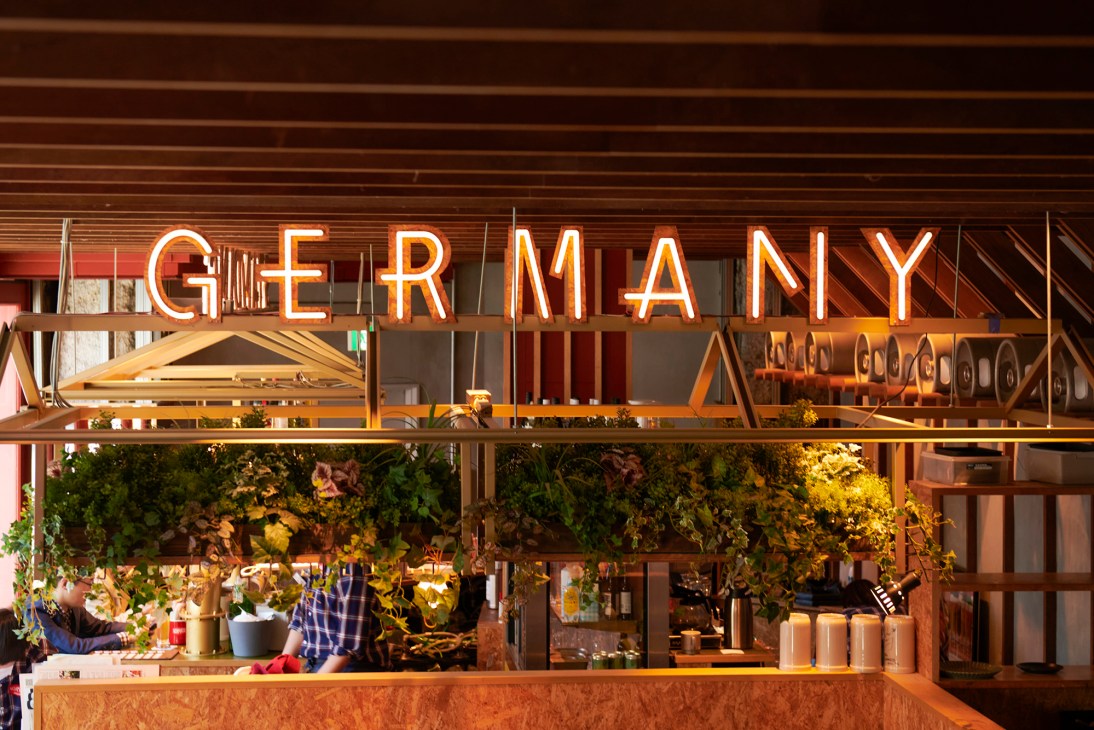
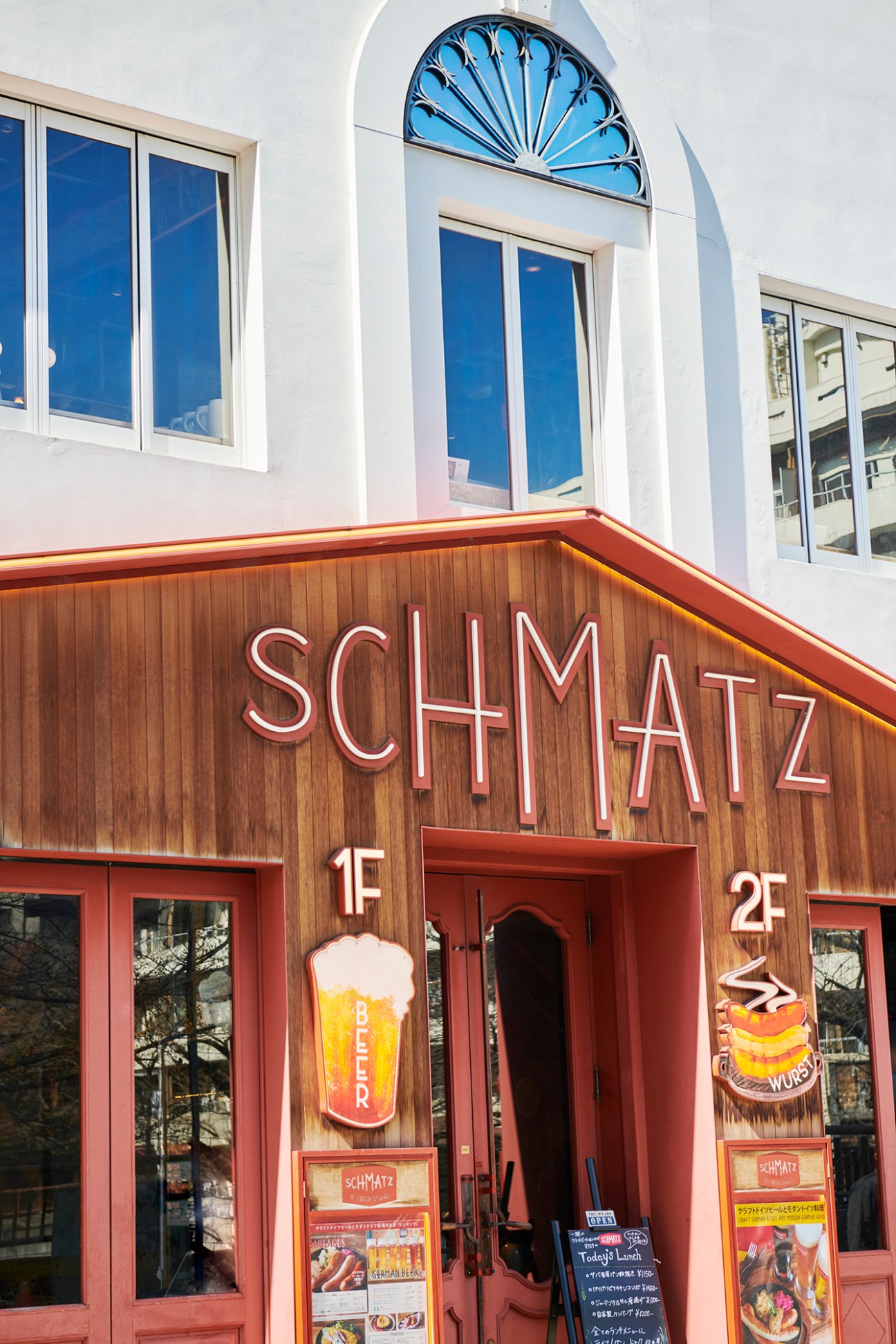
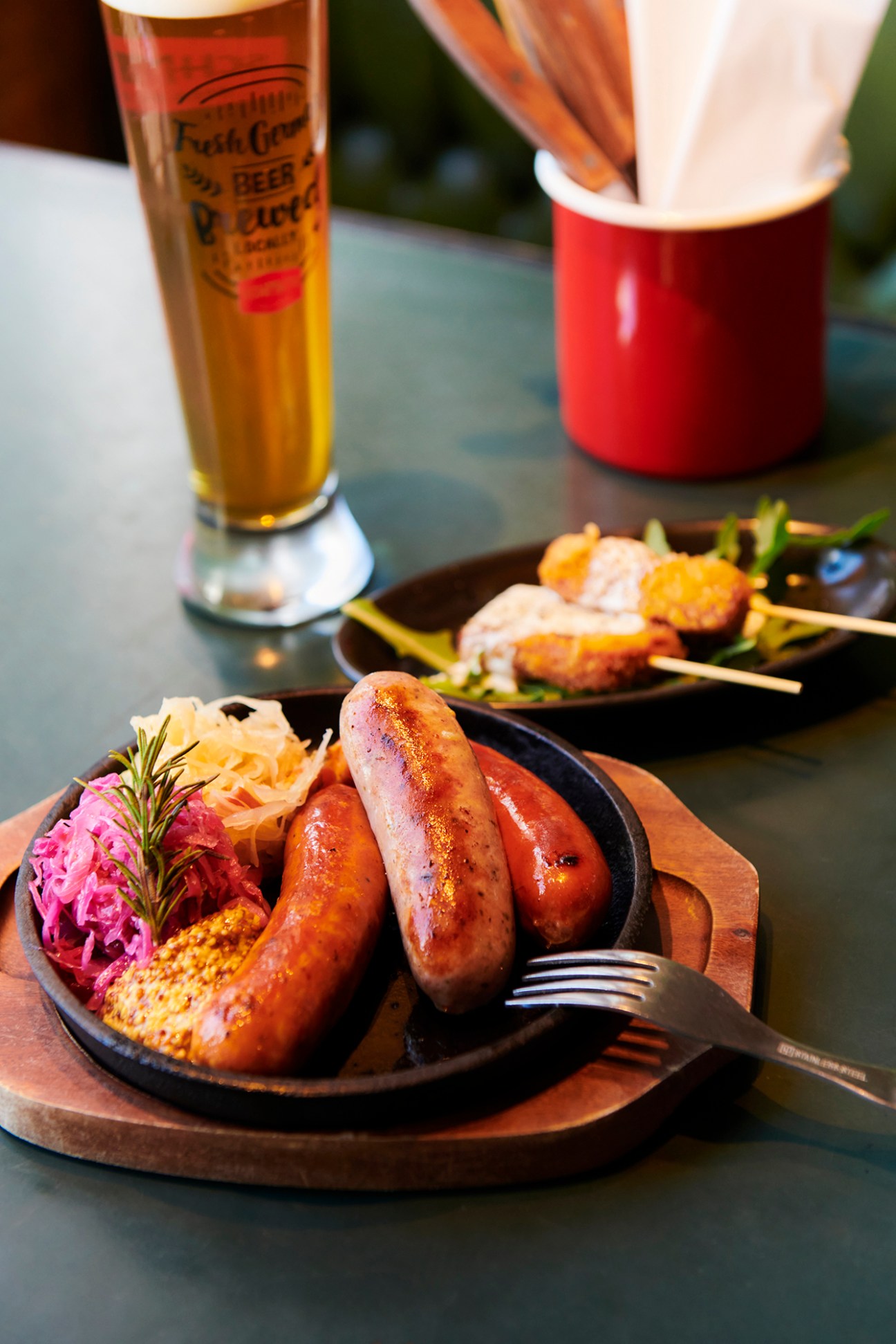
Six months of food-truck experience became the basis of a solid investment pitch. Having secured the funding, Luetten and Ax opened the first Schmatz restaurant in Akasaka in Tokyo in 2015. Getting the menu right was the priority. “All of the sausages are made 100 per cent in the authentic German way,” says Luetten. Some are imported but most come from a Japanese supplier that has perfected the German sausage (with a little less salt), even sending people to the wurst’s homeland to study. Schmatz also works with small-scale sausage makers who create niche products in Japan. “As the largest German restaurant group here, I feel that it’s our responsibility to support these producers.” Beers, meanwhile, are made to Schmatz’s specifications with partners in Germany.
The initial plan was for 100 Schmatz restaurants and outlets opened at speed over the first few years. Then the pandemic gave the founders time to reassess. The idea now is to grow slowly and focus more on the experience, grounding the restaurants in their communities and responding to local interests. “We don’t want to be another cookie-cutter chain,” says Luetten.
schmatz.jp
Hot off the grill
Croq’Michel, Toulouse
The sandwich toasters have barely been fired up at Croq’Michel, Toulouse’s latest takeaway spot, but already loyal croqueurs have been drawn in by the reputation of its Michelin-starred chef and founder, Michel Sarran. From the cries of the chef’s name from passers-by to a teenager requesting a selfie, it’s clear that Sarran is a celebrity here.
The chef’s prominence is largely due to his appearance as a judge on cooking show Top Chef, as well as his eponymous restaurant that has been tempting Toulouse’s foodies for the past 25 years. That his latest project is a takeaway venture is no mean feat in a country that sees long, languid meals as sacrosanct.
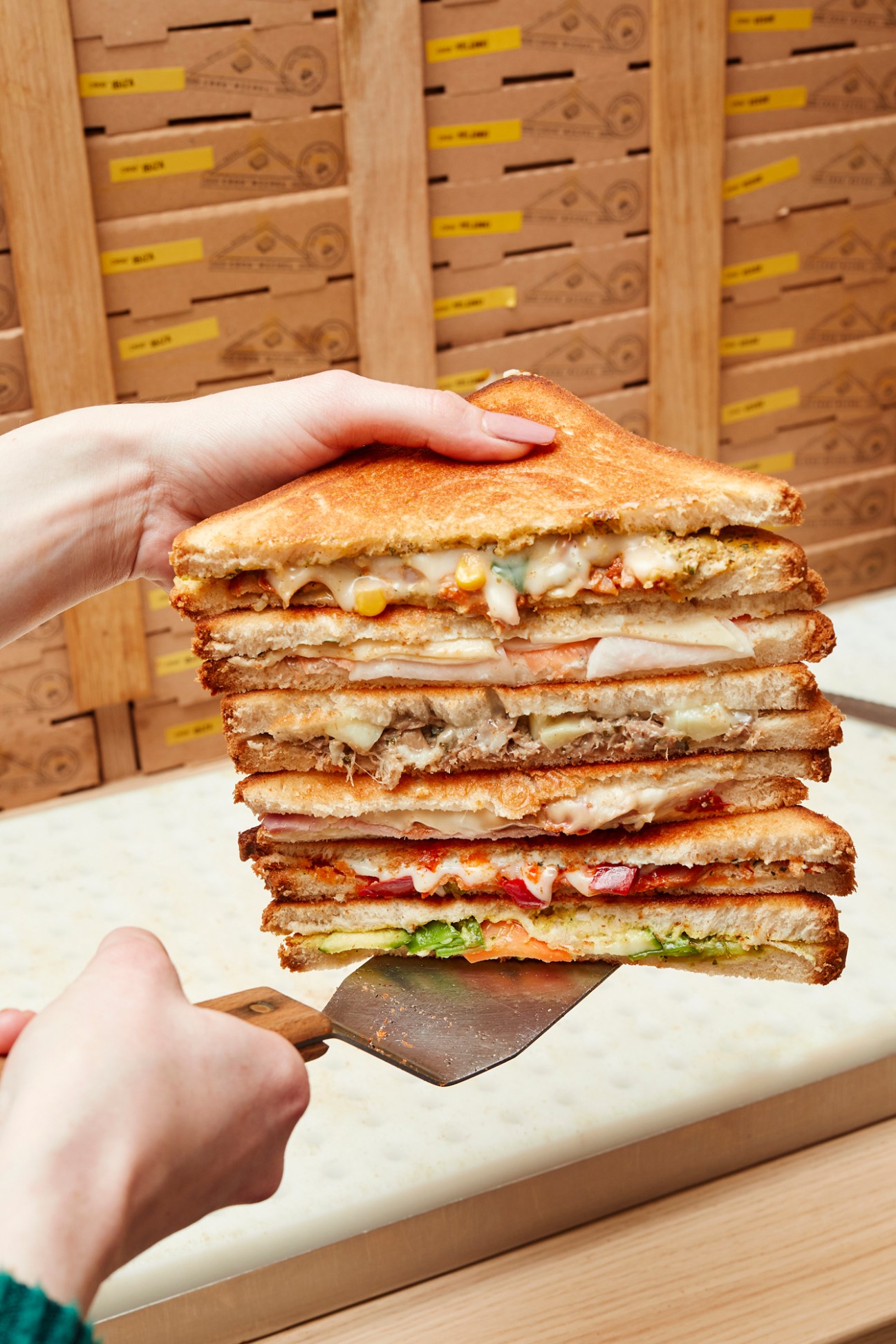
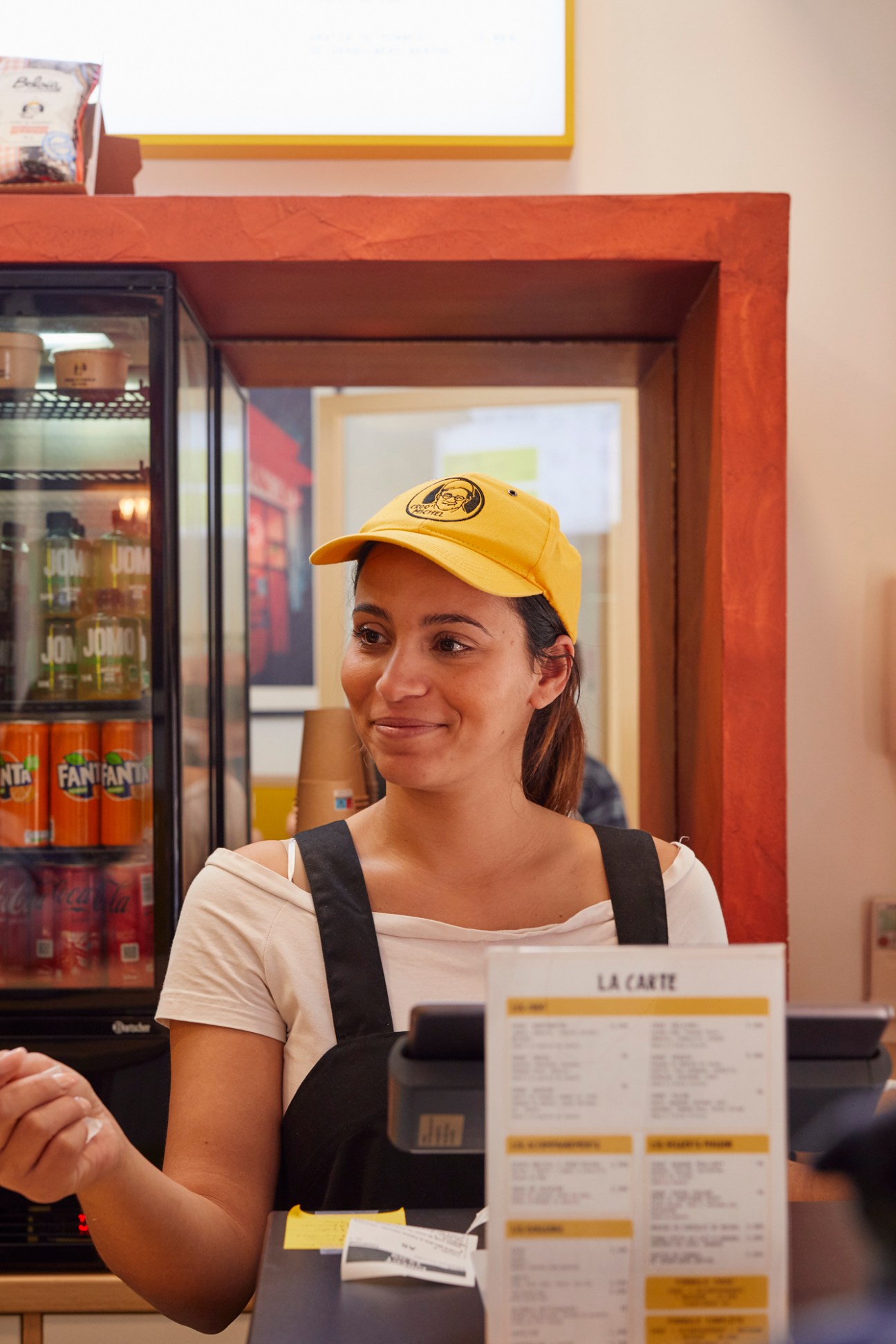
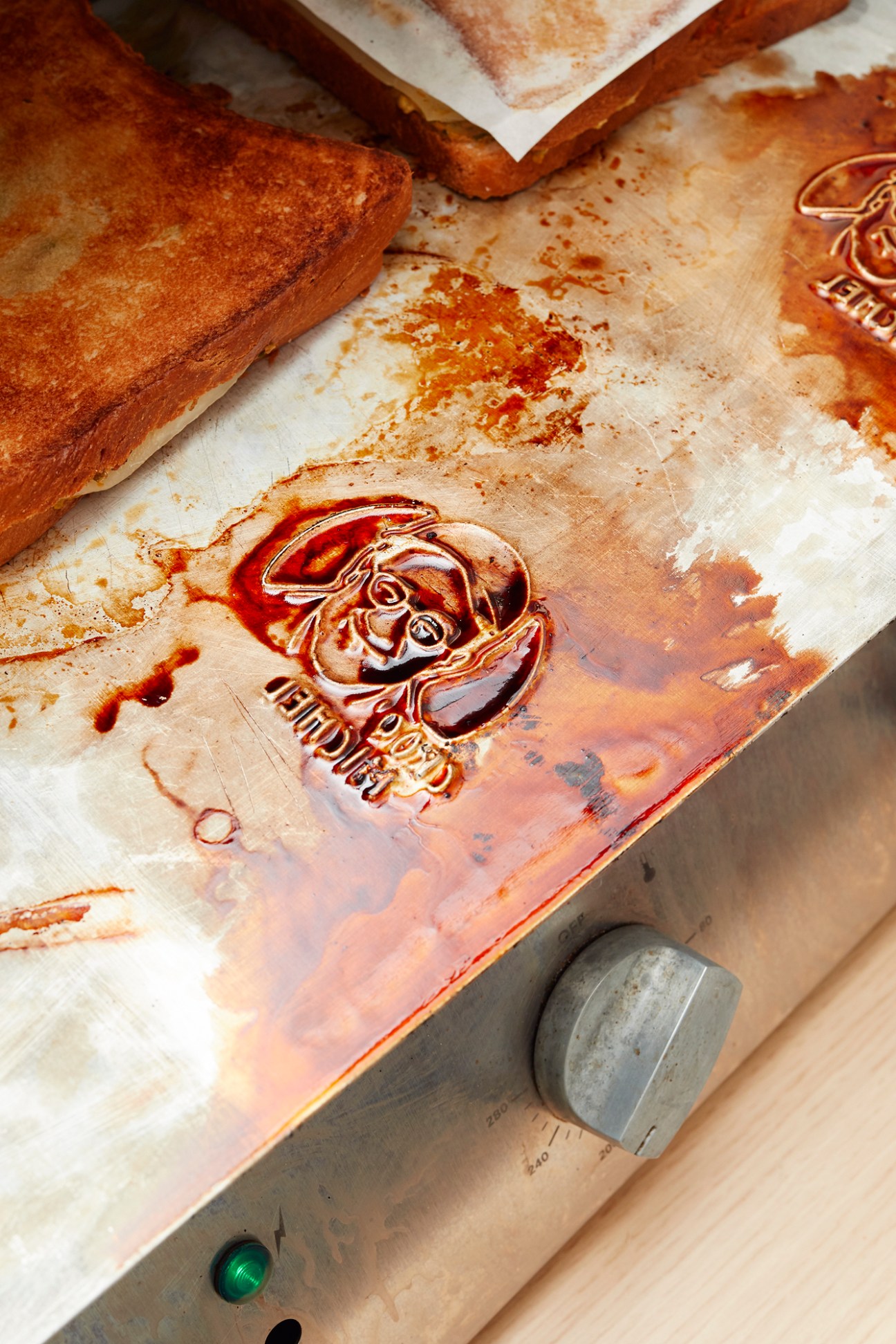
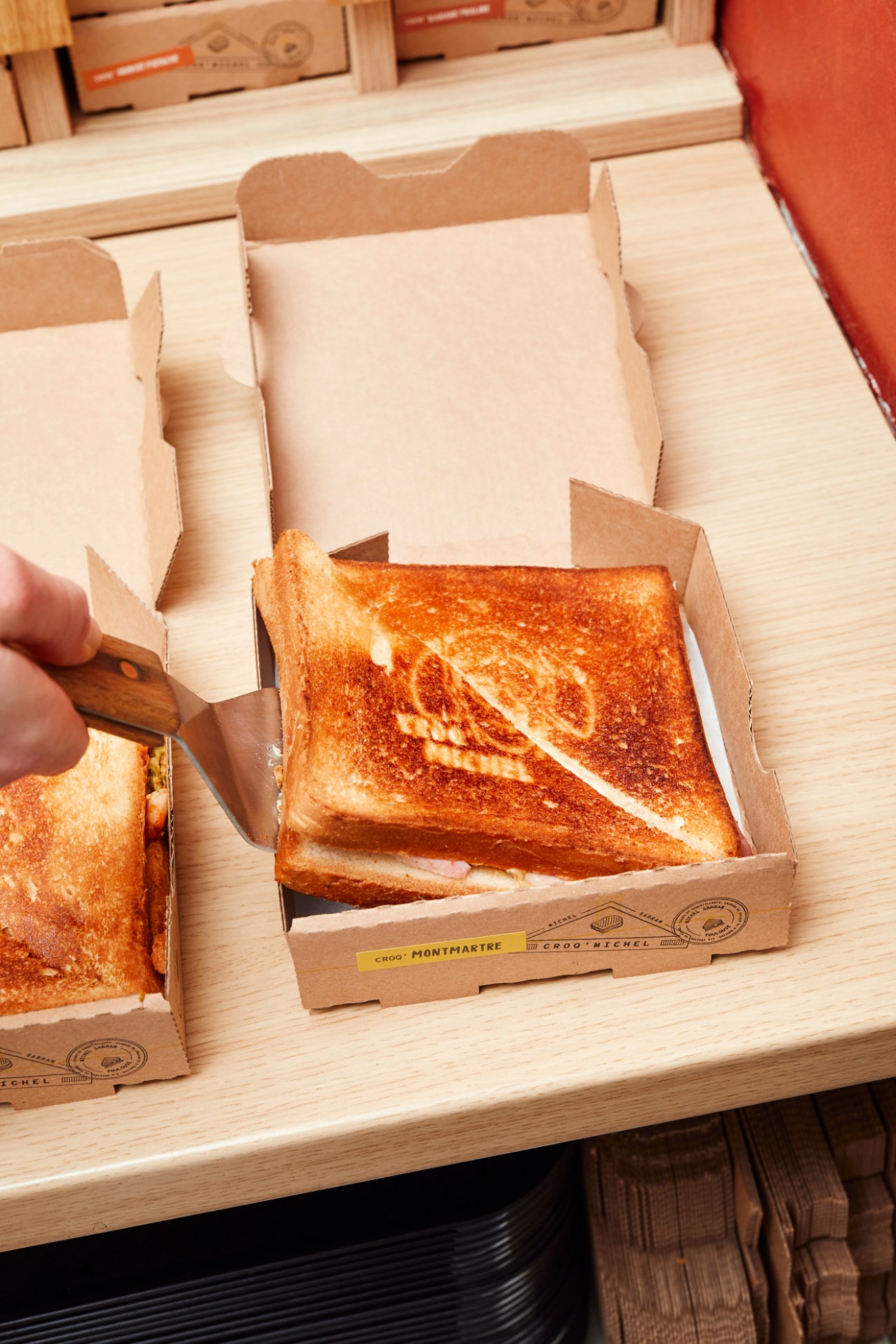
The inspiration for Sarran’s croque monsieur takeaway came during lockdown when his restaurant shuttered, leaving him with surplus truffles that he put in sandwiches for healthcare workers. He named the venture after himself but also after the creator of the original croque monsieur, Michel Lunarca. The result: a pandemic-proof hole-in-the-wall serving up a host of imaginatively filled croques, embossed with a logo featuring Sarran’s smiling face. No wonder he’s so recognisable.
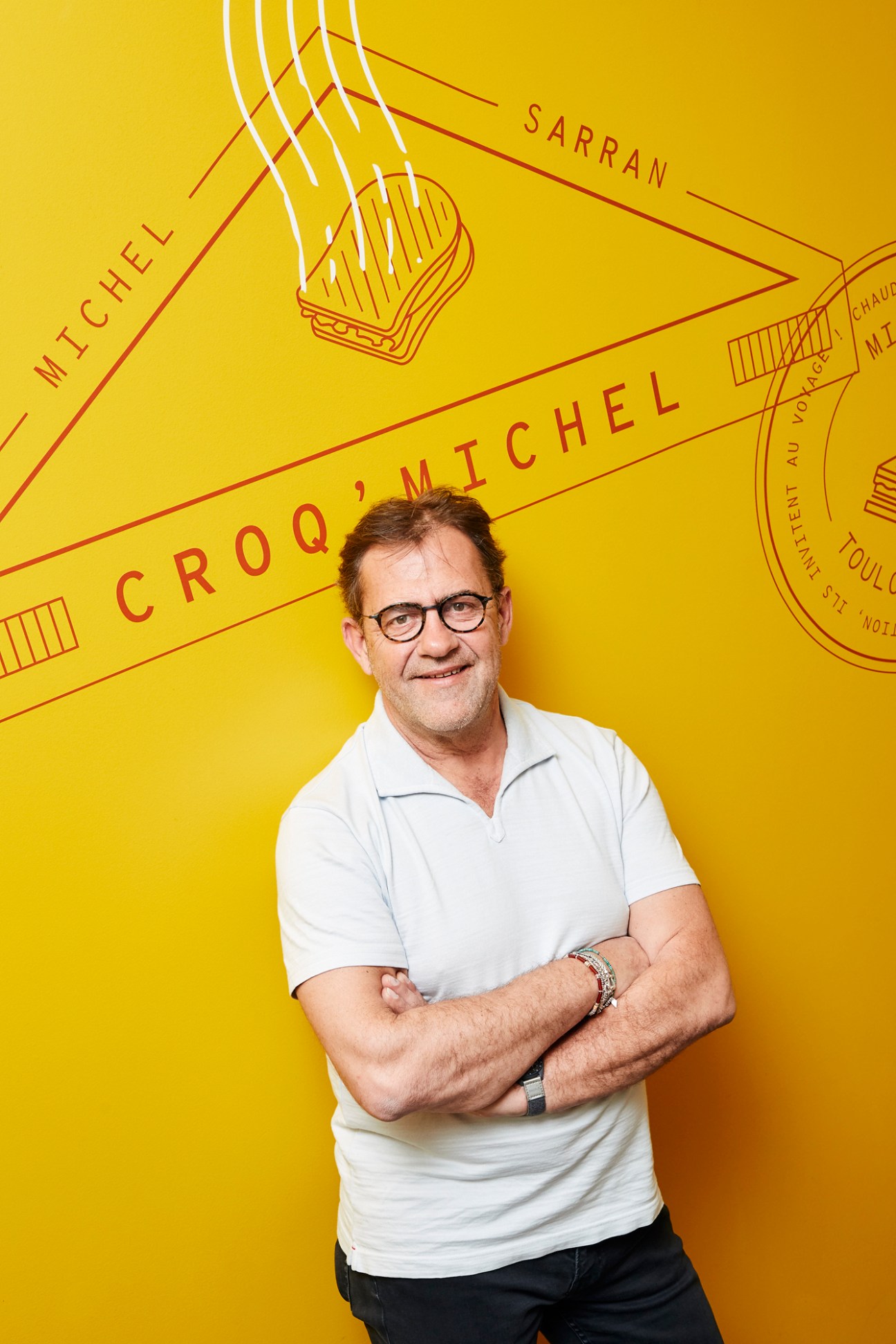
But the chef’s creations aren’t the traditional French croque. The ham, gruyère and béchamel combo has been replaced with unorthodox fillings. One bestseller is the Croq’Gascon, filled with duck confit (a nod to Sarran’s native Gascony), while the Croq’Ibiza, where he has a second home, contains spicy chorizo and nutty manchego. Meanwhile, the limited-edition Croq’Marseille, available on the summertime Paris-Marseille route, was a collaboration with France’s national rail company, SNCF. “Life is a risk – if we don’t take risks we stagnate,” says Sarran. “We have this impression of French food being high quality but we also enjoy popular food here. So why not try to make high-quality fast food with French roots that’s fun and unpretentious?”
croq-michel.com
Pastures new
Casino
New York
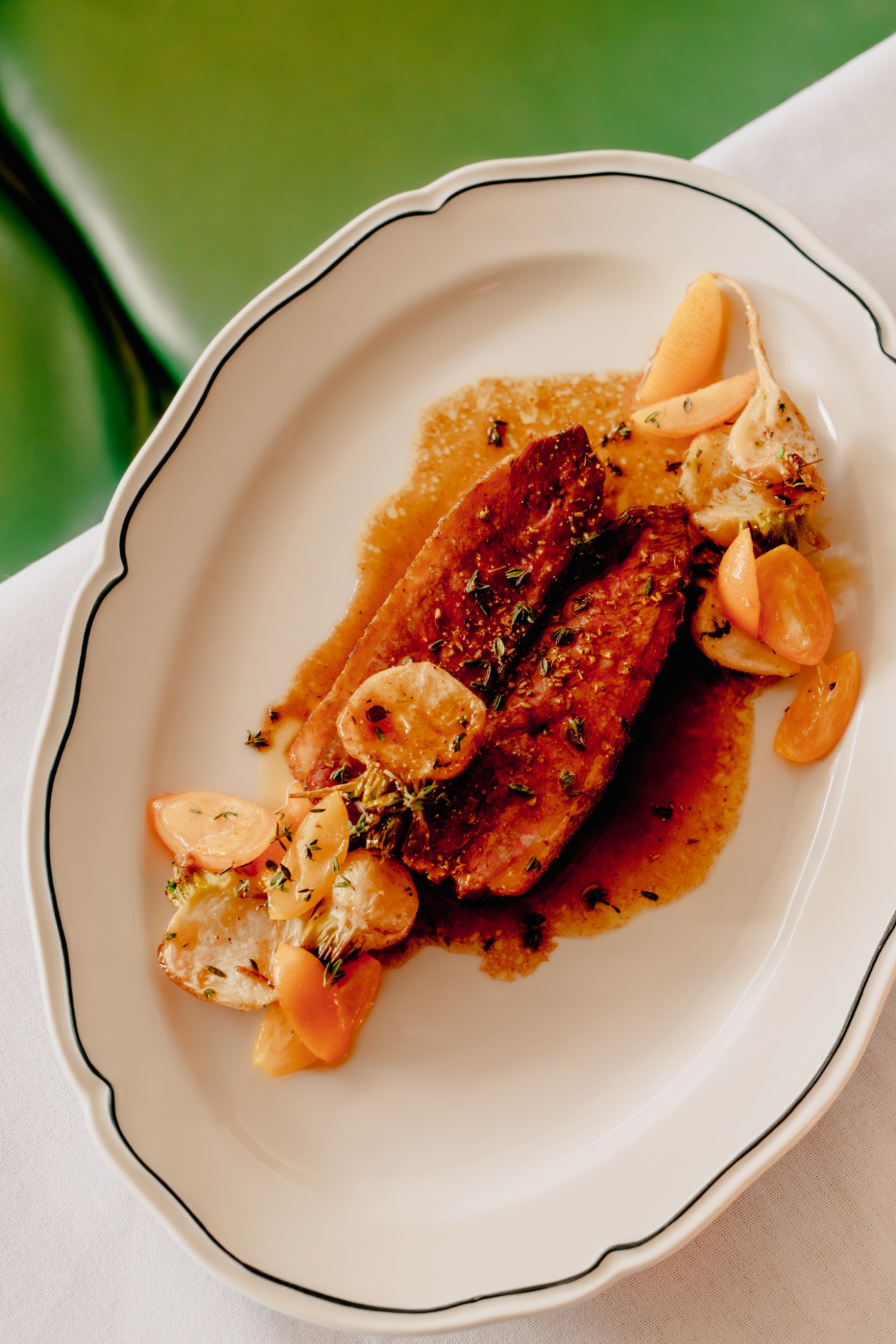
The Lower East Side has seen a host of new restaurant openings over the past few months. The liveliest and most fun is Casino, from the founder of Primo’s and Mr Fong’s. Swing by at 17.30 and you’ll see the first guests fly in. By 19.30 the place is packed with people sipping spritzes and tucking in to bowls of pasta. In a city where tables change as quickly as the lights in Times Square, it’s rather rare that you can linger at a restaurant without feeling hurried.
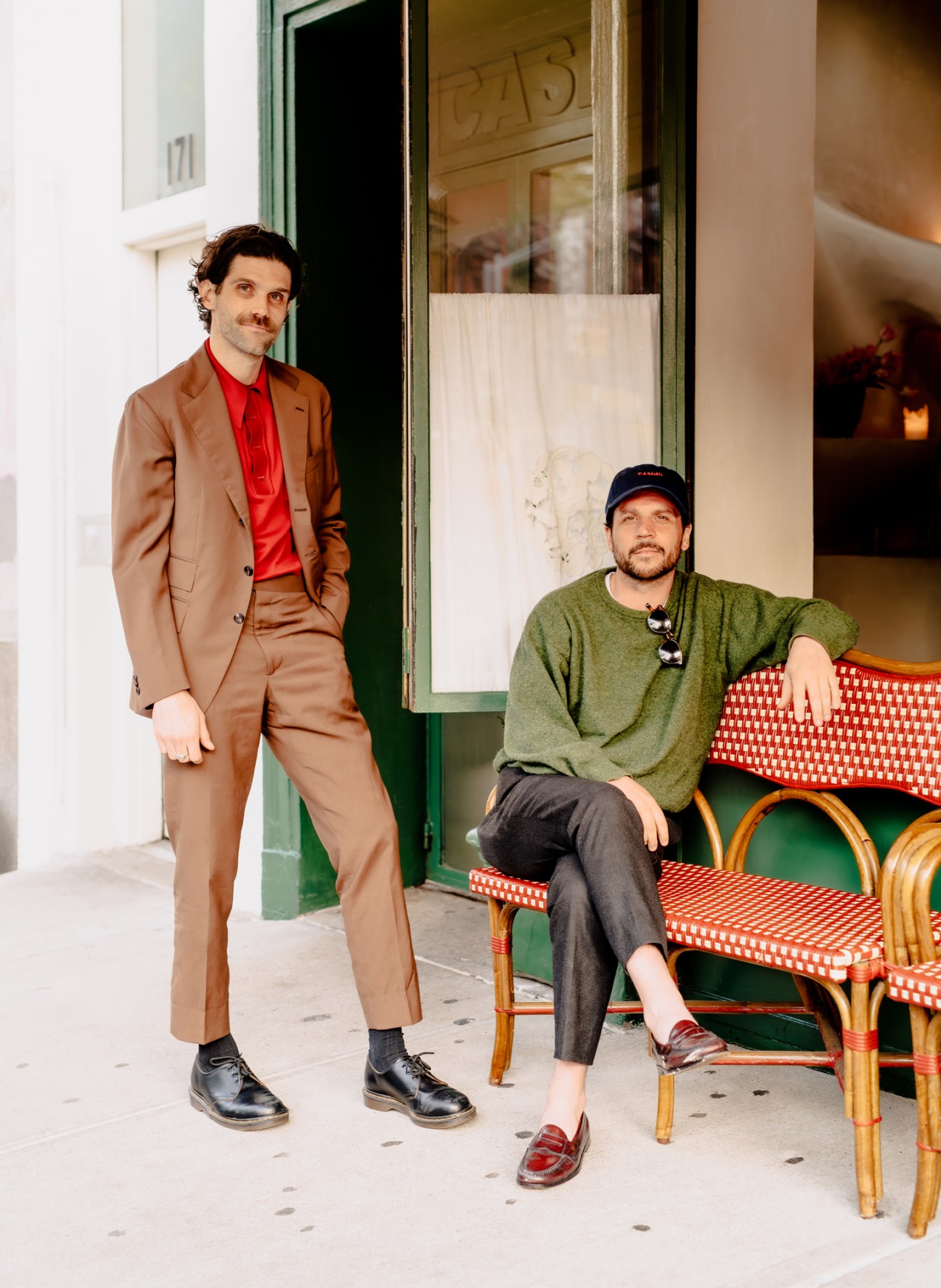

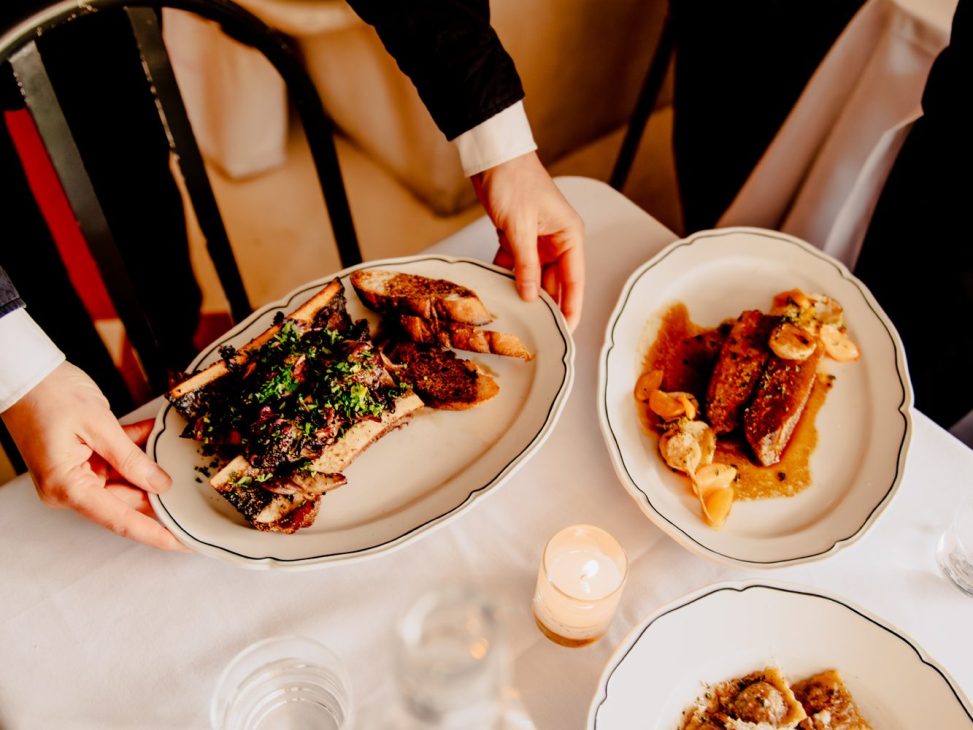
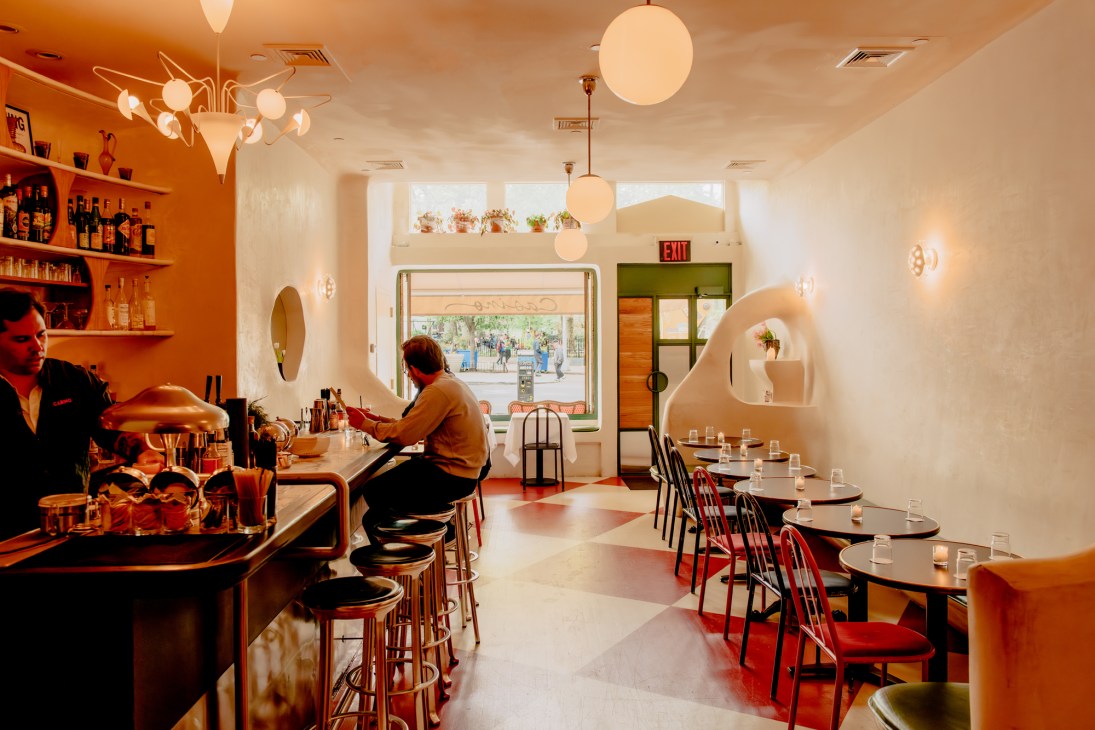
For owner Aisa Shelley, spontaneity is important to the concept. “My favourite restaurants always have a walk-in bar,” says Shelley, who has kept the rear dining room for reservations and the front café for walk-ins. Given that the restaurant was inspired by a road trip from the south of France to Italy, the laid-back atmosphere makes sense and sits in direct opposition to that of the stuffier restaurants nearby. “I fell in love with that Riviera feel,” says Shelley as he shows Monocle around. That feeling is reflected in the design by Camilla Deterre. The café is bright, with bistro tables and light, curved walls that nod to the work of Mexican architect Javier Senosiain.
The dining room is more sophisticated, with dark hues, slick red booths and pressed white tablecloths. “A lot of the design references 1970s eco houses,” says Shelley. And if Casino’s interiors don’t transport you, the menu will – think whole roast turbot with capers and lemon, wood-roasted prawns with garlic and chilli, and bucatini pasta with clams. “The space isn’t supposed to be anything; it’s supposed to feel like something. And that feeling is whatever you get on vacation.”
casinonyc.info
Recipe
Kimchi pancakes
This simple take on a Korean classic has plenty of tang. The recipe serves one as a main or two as a starter. Enjoy.
Makes one large pancake
Ingredients
For dipping sauce:
1 tbsp light soy sauce
1 tbsp rice vinegar
1 tsp toasted and ground sesame seeds
1 large pinch Korean chilli powder or Japanese ‘shichimi’
1 large pinch sugar
For pancake:
2 medium eggs
1 tbsp water
1 tsp light soy sauce
75g plain flour
30g potato starch or cornflour
3 tbsps toasted sesame oil
50g garlic chives, chopped into 5cm lengths
100g kimchi, roughly chopped
Method:
1.
Mix the dipping-sauce ingredients in a small bowl.
2.
Put the eggs, water and soy sauce in a separate bowl and beat well. Pour the flour into a third bowl and make a well in the middle. Add the egg mixture and whisk until thoroughly combined.
3.
Heat 2 tbsps of sesame oil in a small frying pan. Add the rest of the ingredients to the pancake mix and stir well, then transfer into the pan. Cook for about 3 minutes on each side over a medium heat. Pour a tablespoon of sesame oil into the side of the pan and let the oil to go underneath the pancake. Cook for a further 30 seconds on each side to make the pancakes extra crispy.
4.
Remove the pancake from the pan and cut into four pieces. Serve warm with the dipping sauce.
ayanishimura.com
Stereo
Zürich
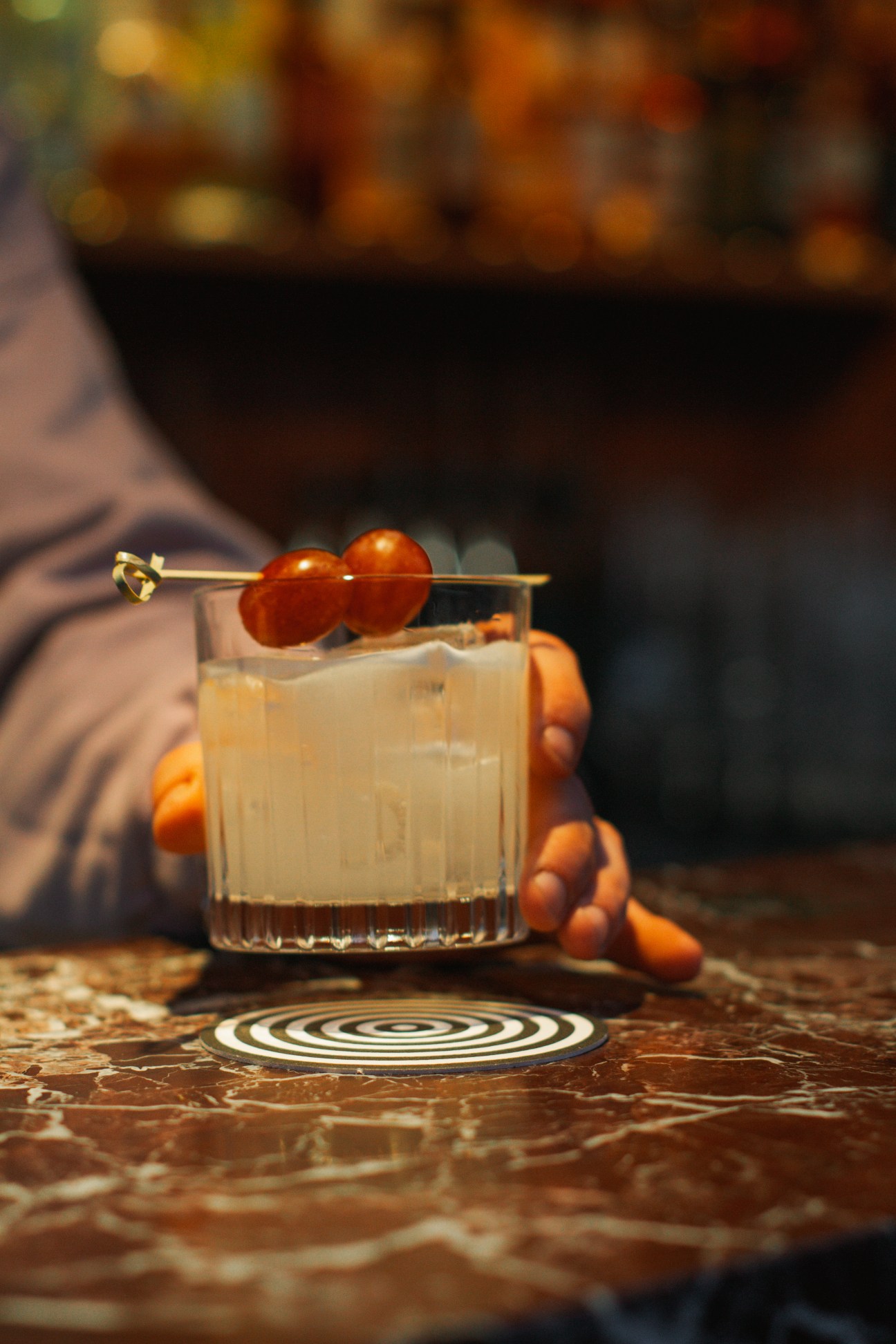
While many recent openings here focus on casual dinners, quiet soundtracks and intricate cocktails, Stereo instead cranks up the volume. On Wednesdays the music comes from the bar’s own record collection but on weekends it welcomes some of the city’s best guest DJs and the line-up proves that Zürich’s music tastes have matured beyond 1990s electronica. The interiors were developed with furniture-maker Walter Möbel and harness just the right amount of light. Be warned: time flies at Stereo, right up until 04.00.
stereo-bar.ch
Cozinha das Flores
Porto
Over the past decade, chef Nuno Mendes has brought a taste of his native Lisbon to London in several restaurants, including a stint at the Chiltern Firehouse and his own venture, Lisboeta. This year he’s back in Portugal but not on home turf. With Cozinha das Flores, Mendes’s first restaurant in Porto, the chef pays homage to the richness of northern Portugal’s often-overlooked cuisine. “The flavours are so unique up here,” he says. “The climate is colder and the produce and the way of working with it is entirely different than in the south.” That produce makes its way into the menu’s whimsical twists on traditional recipes.
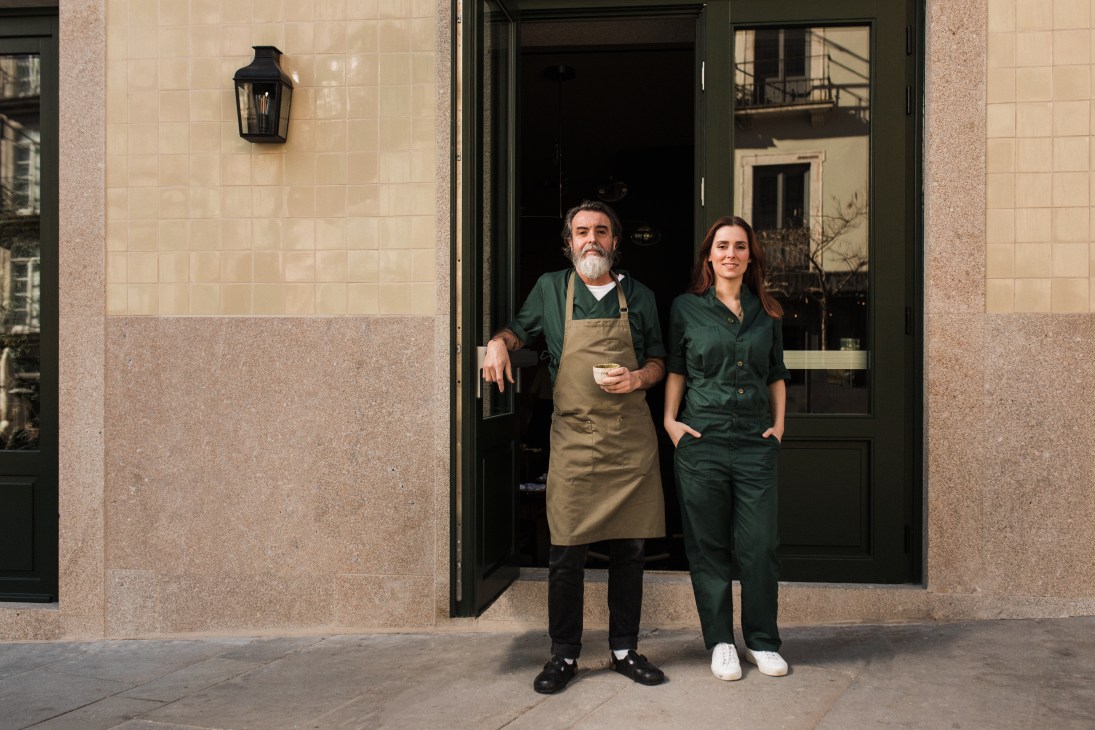
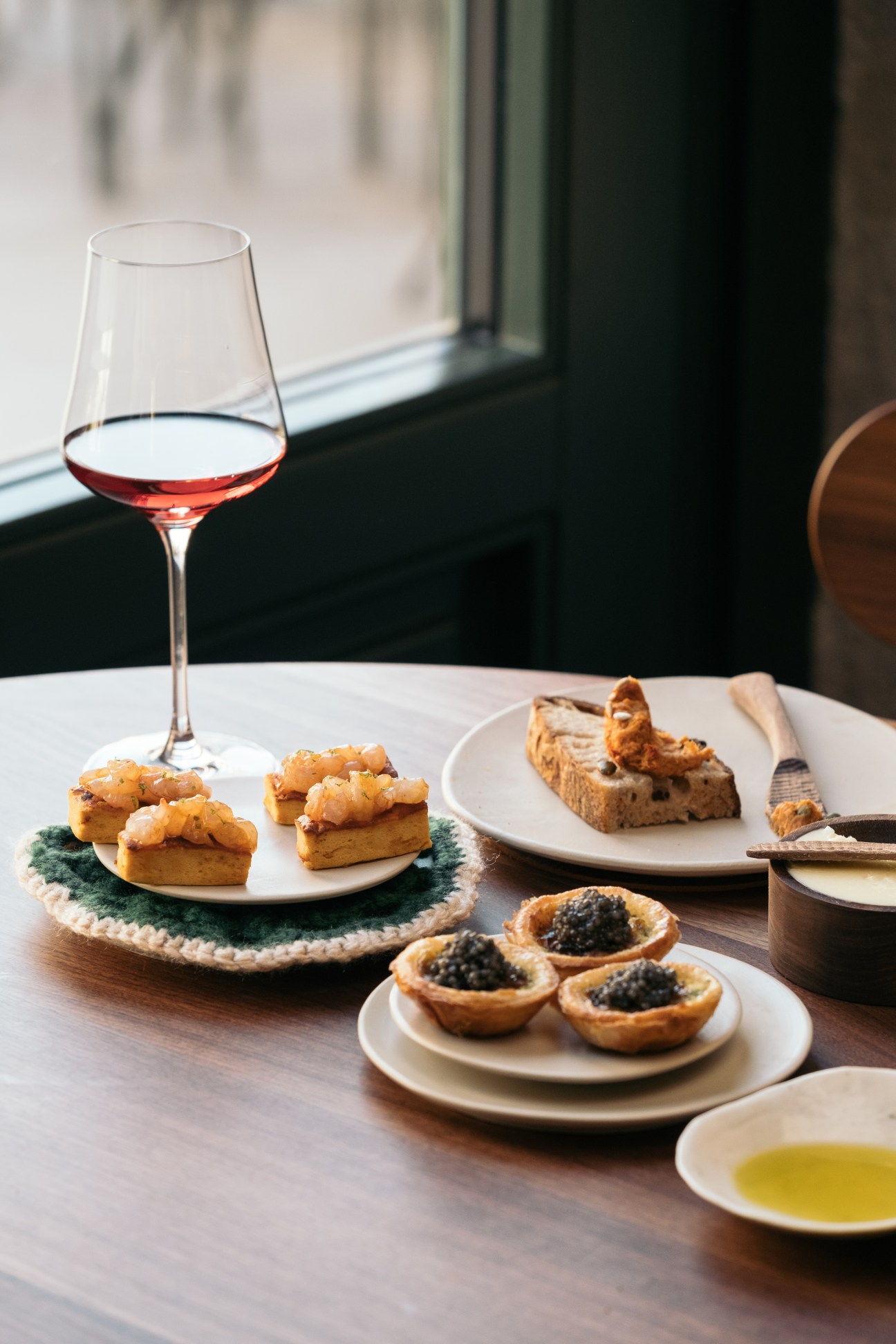
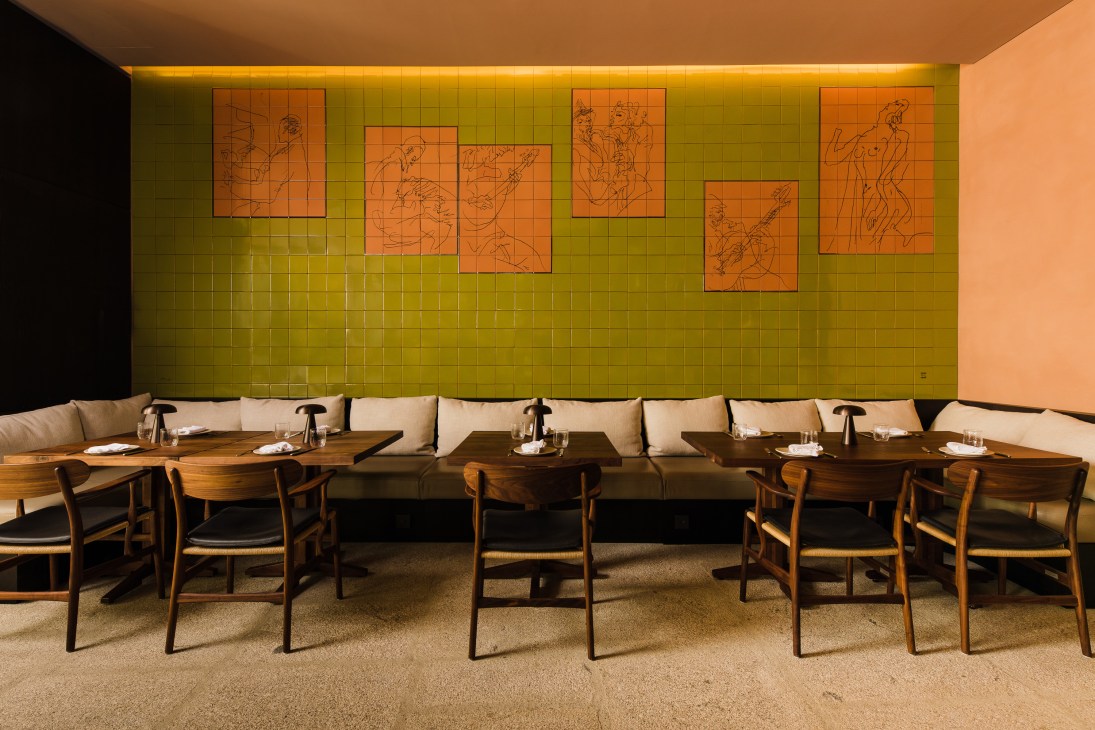
One such turn sees Mendes adding prawns to the pão de ló, a Portuguese sponge cake, as a reference to the dish’s history in 15th-century Japan. Eccentricities aside, “the intention is first and foremost to create a dynamic and fun space,” says Mendes. Designed by Space Copenhagen, it features a bar, Flôr, and an Álvaro Siza mural. The Pritzker-winning architect and Porto native captured the lively yet laidback nature of the city through the use of musical motifs. “Ultimately, I would love this to be a place that Portuenses are proud of,” says Mendes.
cozinhadasflores.com
Songbook
Tokyo
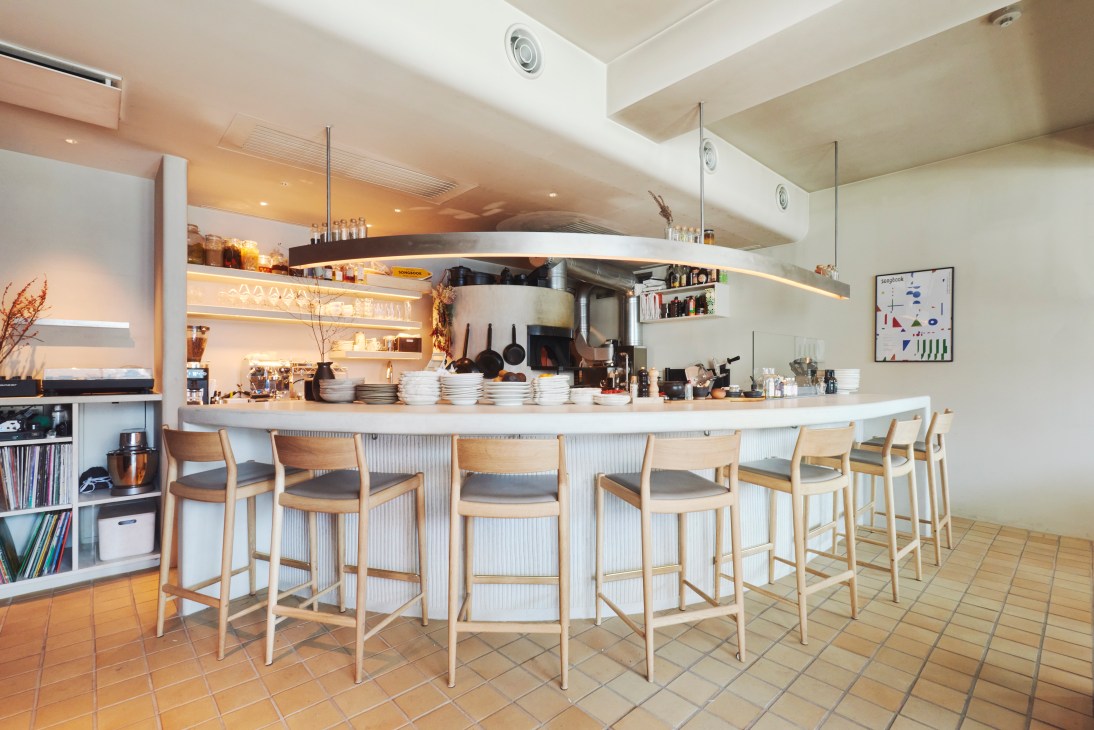
Opened in December in Setagaya Daita, this small, 15-seat restaurant is the latest from Kyohei Nishi, the chef behind popular French bistro Neki in Nihonbashi Kabuto-cho. Kyoto-born Nishi is a fourth-generation chef and a culinary thoroughbred, and having trained in Alsace and served in gallic restaurants in Kyoto and Tokyo, he brings a knowledge of French cooking to his Japanese menu. “I cook Japanese ingredients on a wood fire,” he says, smiling from behind the bespoke pizza oven. “I serve simple dishes but there is a lot of work involved.” He sources the best seasonal ingredients and the changing menu might include capon from Kagoshima or salad with kinkan citrus fruit and parmesan. But don’t forget to try the pizza too.
5-10-7 Daita Setagaya-ku
Nature’s bounty
In Italy, April is the month when winemakers gather to hone sales strategies and talk business. While the vast Verona trade fair Vinitaly dominates national headlines, smaller events focused on sustainable approaches to viticulture are growing more influential. As tastes change, fairs such as Summa are becoming increasingly important.
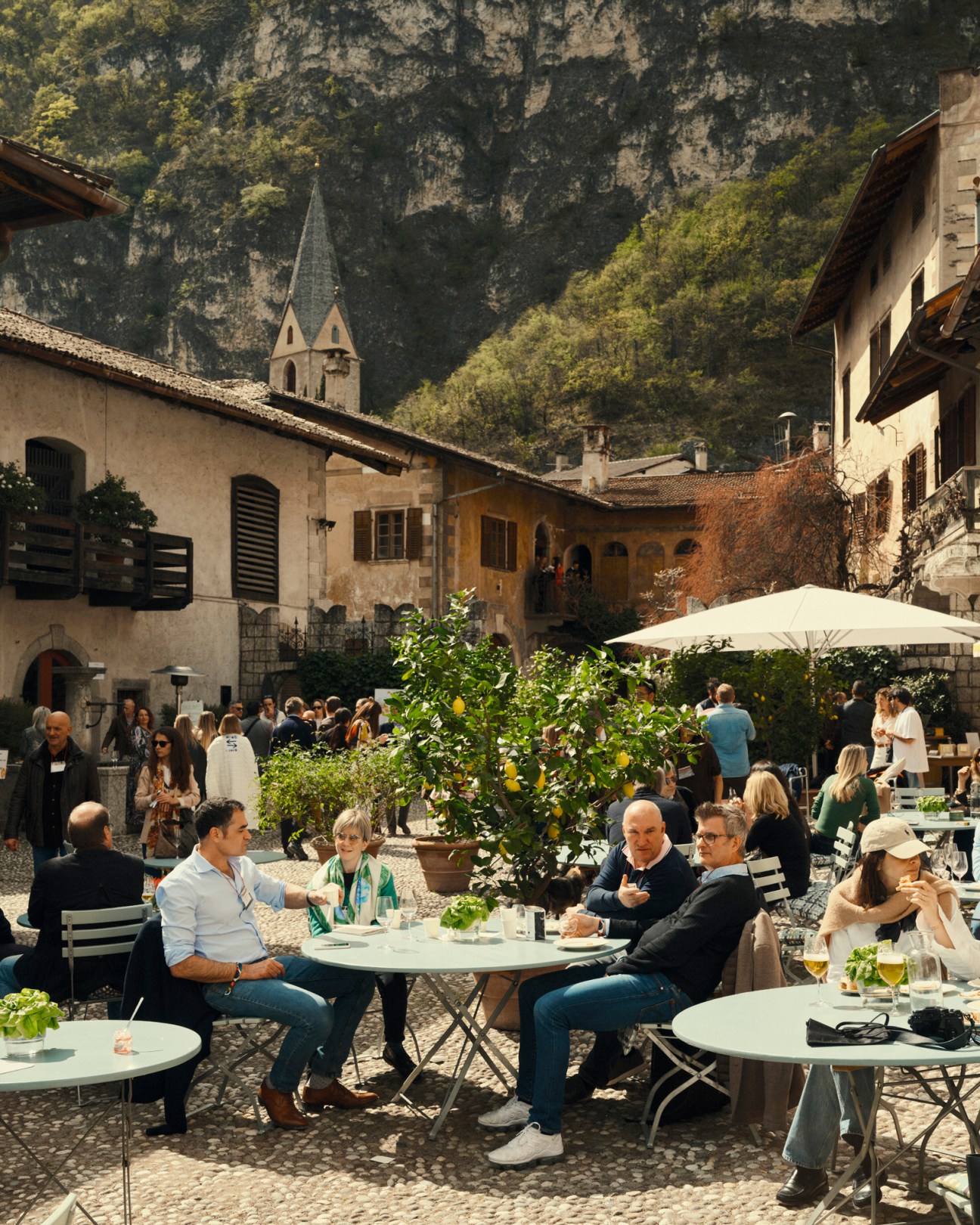
Organised every year by South Tyrol’s Alois Lageder winery, the two-day fair gathers more than 100 producers, many of whom are friends of the Lageder family and all committed to the principles of organic agriculture. The tasting rooms are inside historic buildings on the family’s estate in the village of Magrè.
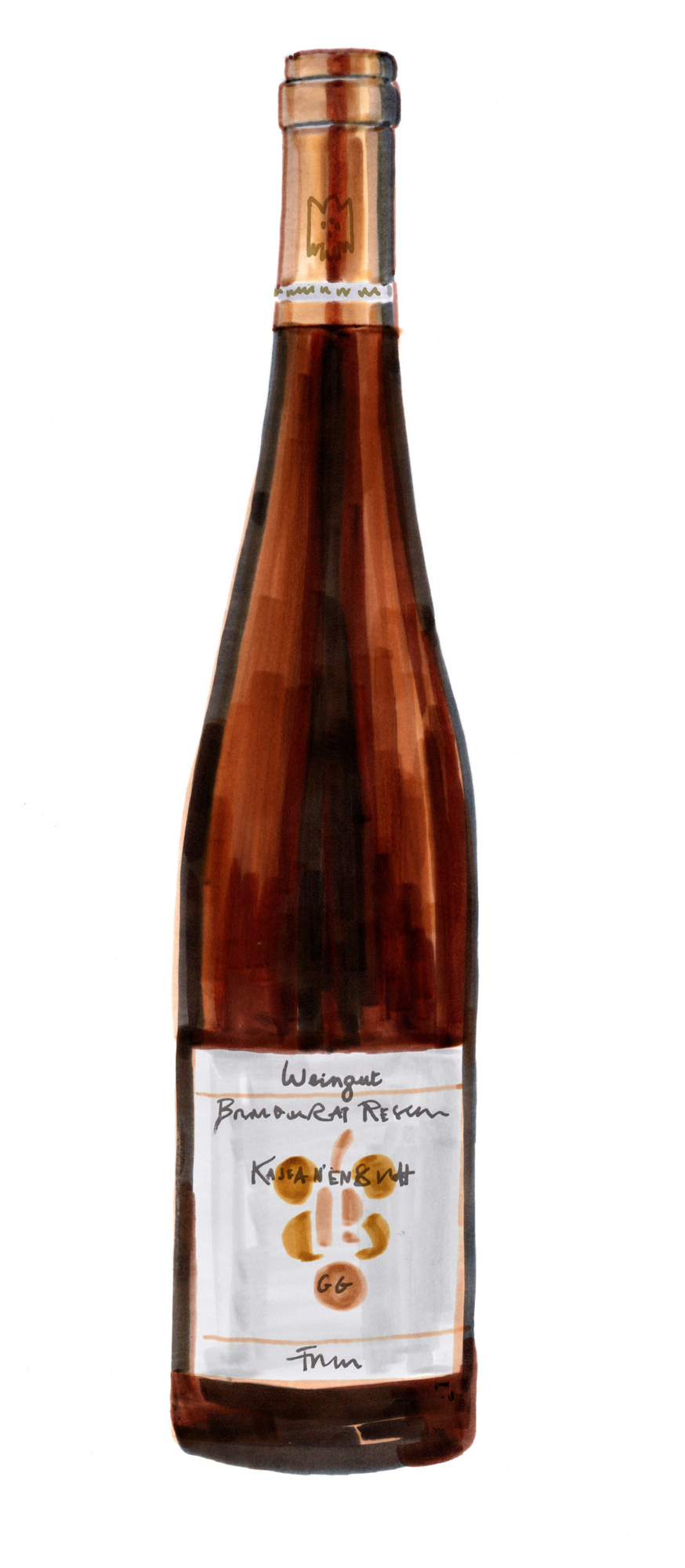
Producers from Italy, Austria, Germany and further afield take up booths in rooms with frescoes, antique furnishings and vaulted ceilings – a welcome change from the stuffy confines at conventional fairgrounds. “It’s an exceptionally curated selection of vignerons in an epic setting,” says first-time visitor Nuno Bico of Porto-based importer Vigner On, who was particularly impressed with the rieslings at the stand of Ökonomierat Rebholz, a winery from Germany’s Pfalz region.
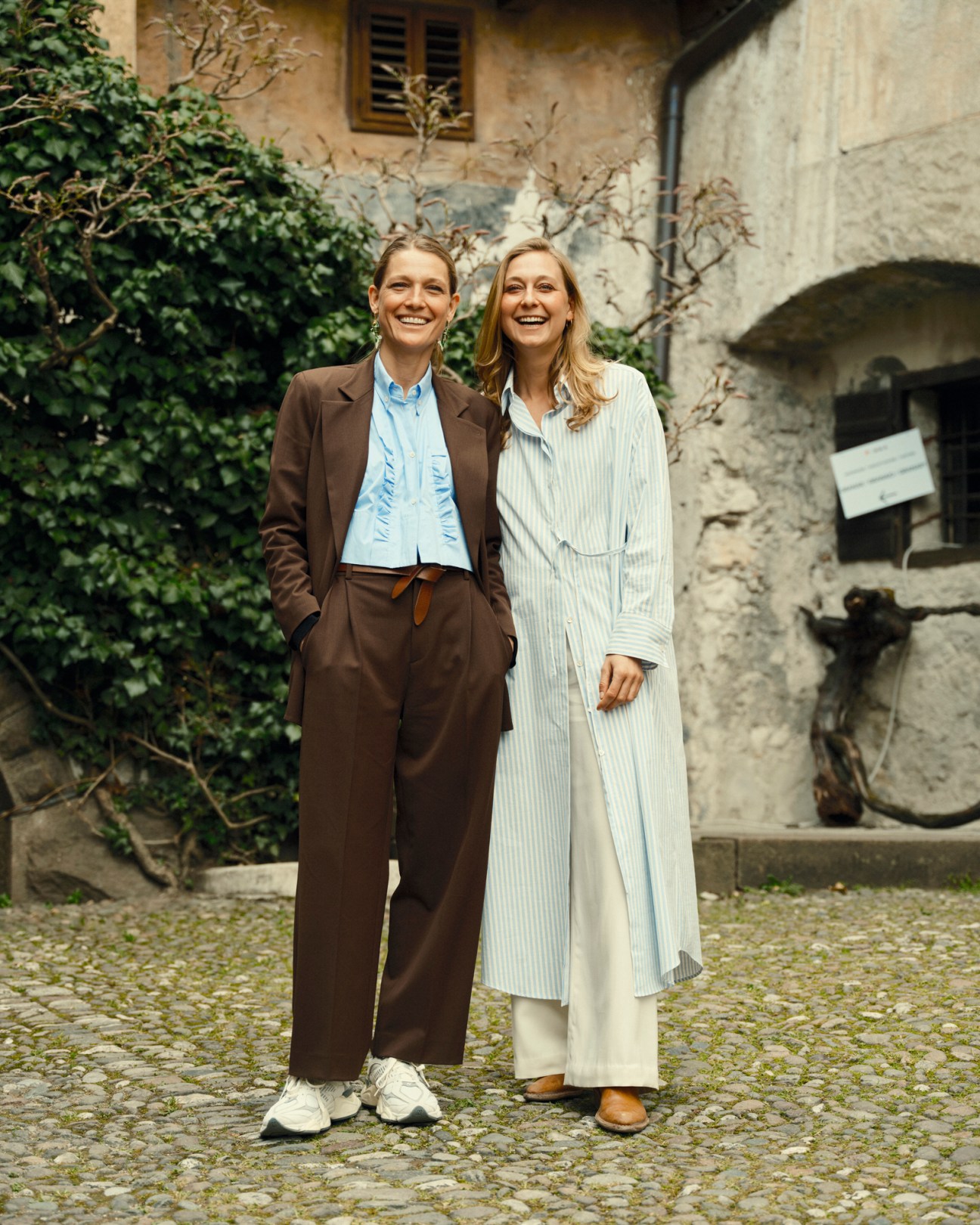
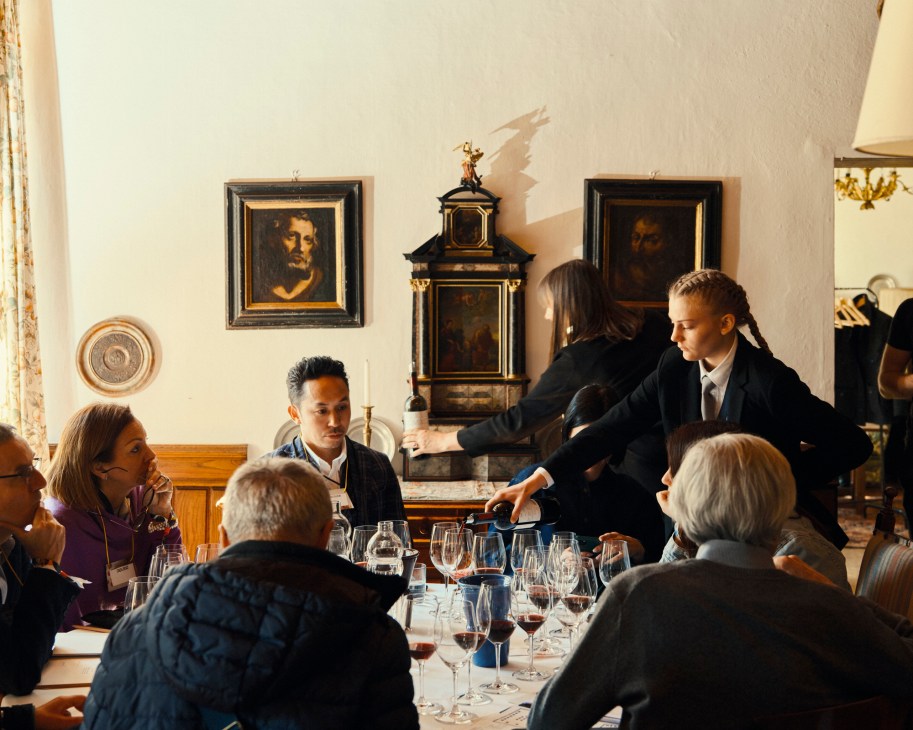
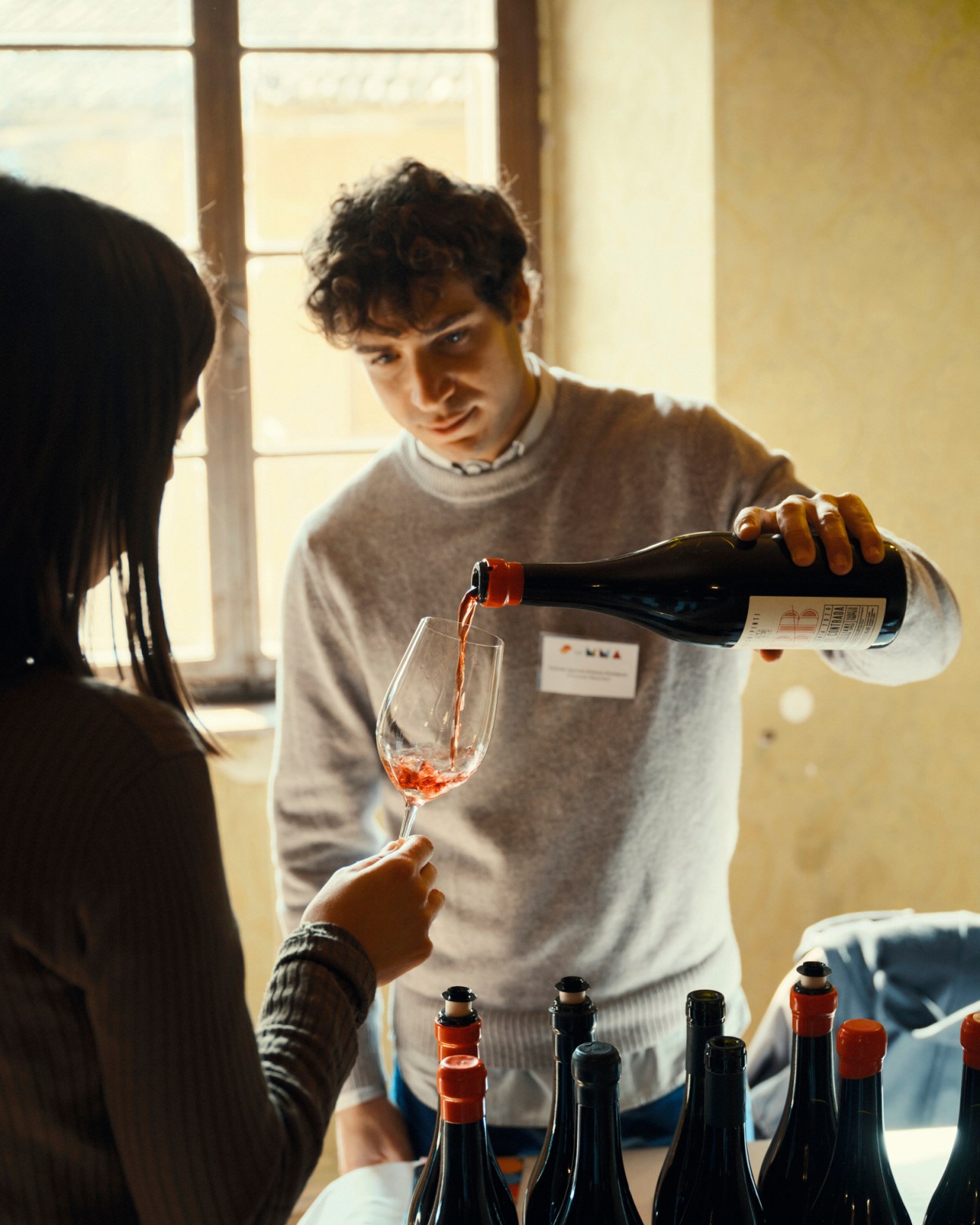
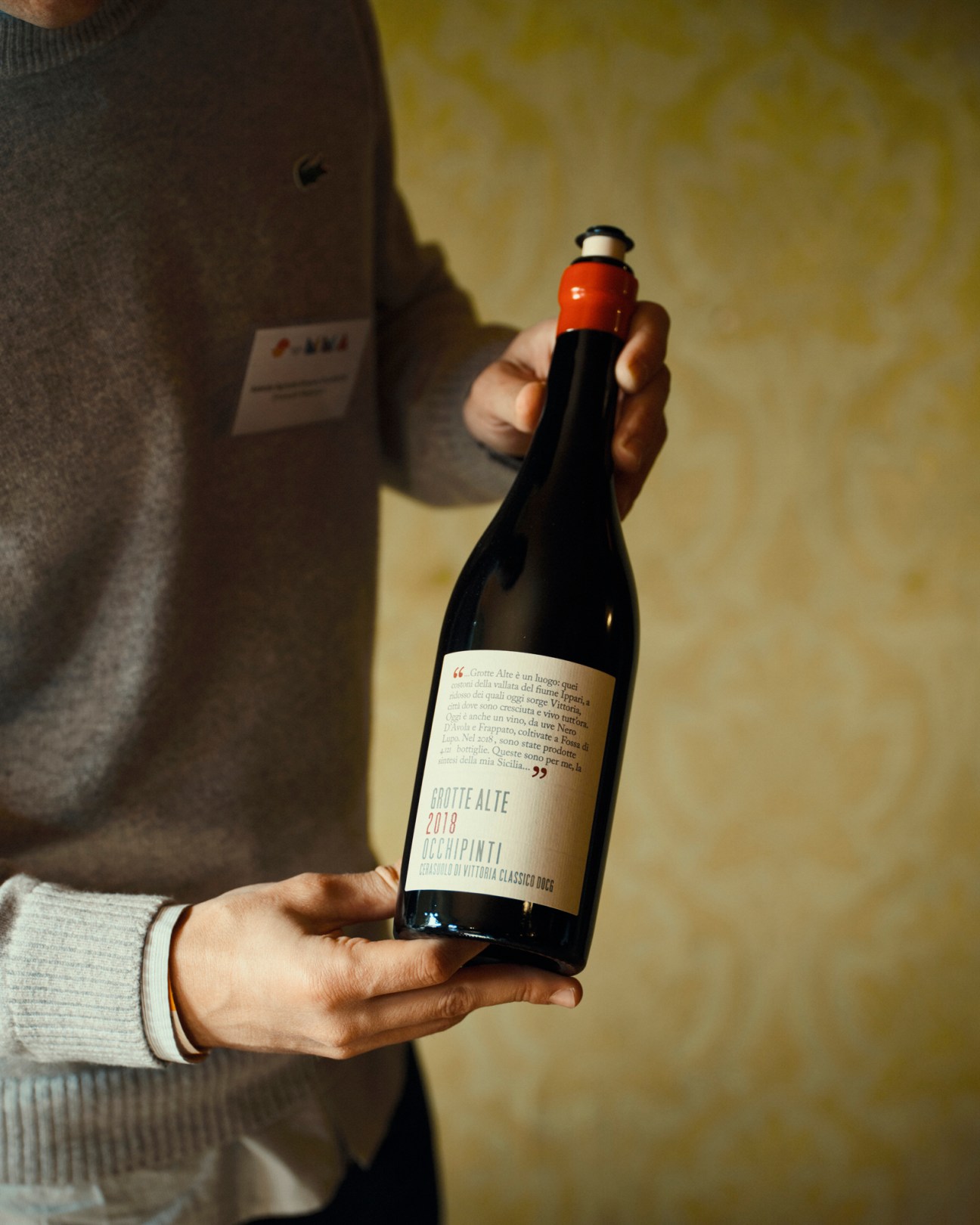
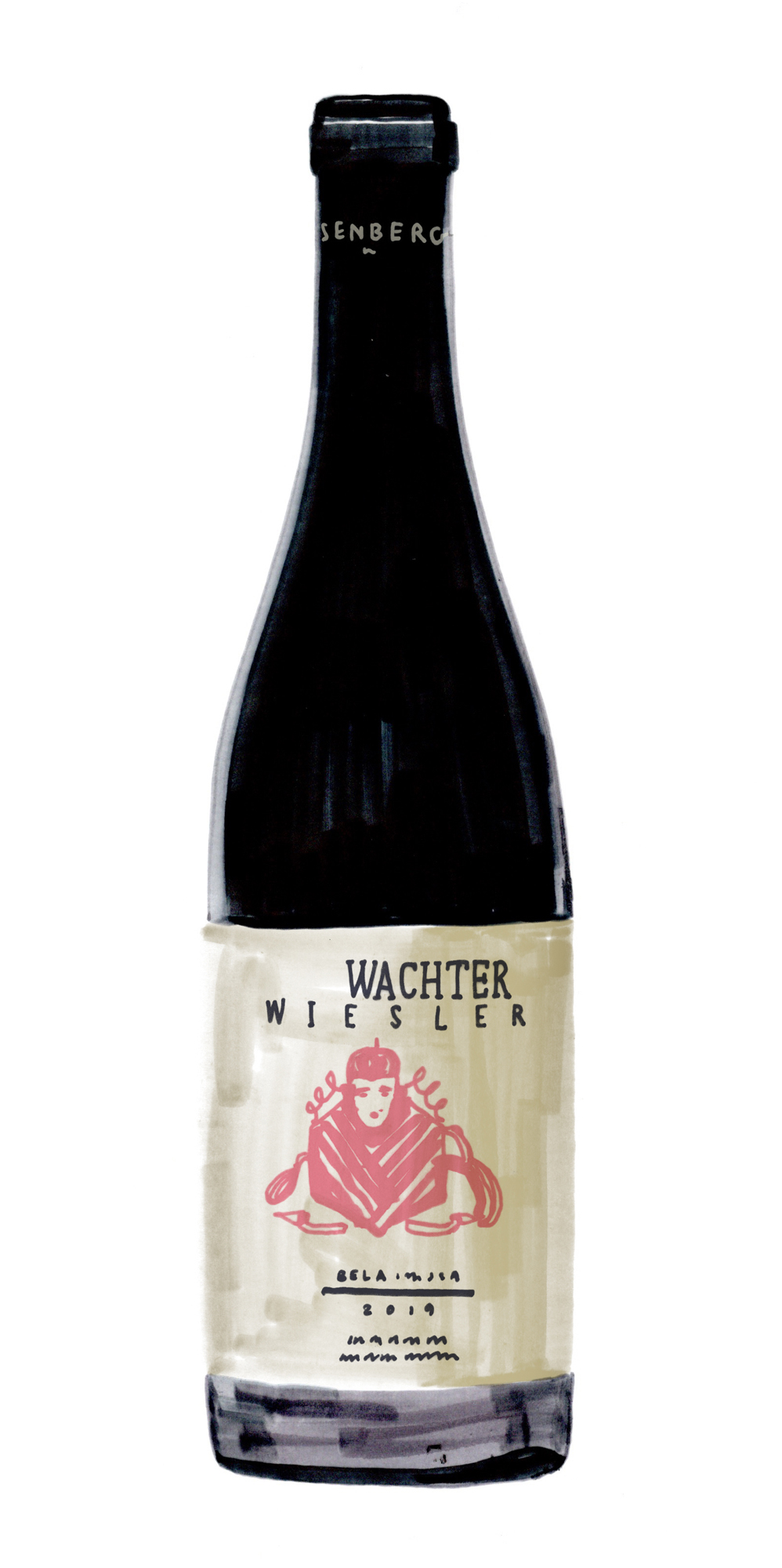
Among the other discoveries at this year’s outing were winemakers from Burgenland in the east of Austria. These include Rosi Schuster and Wachter Wiesler, who brought bright and fresh blaufränkisch, a red varietal that’s becoming increasingly popular with sommeliers across Europe. “The grape has the finesse of a burgundy with the structure of a Piedmontese barolo,” says Roland Velich of Moric winery.
Biodynamic winemaking, which the Lageder family has adhered to for 20 years, was on display. For instance, industry heavy hitter Elisabetta Foradori, a veteran winemaker from Trentino known for her work with the local red grape teroldego, which she ages in amphorae, was in attendance. Female-led wineries were well represented too: Sicilian producer Arianna Occhipinti was showing her island varietals, including frappato and grillo, which she grows without pesticides or chemical fertilisers.
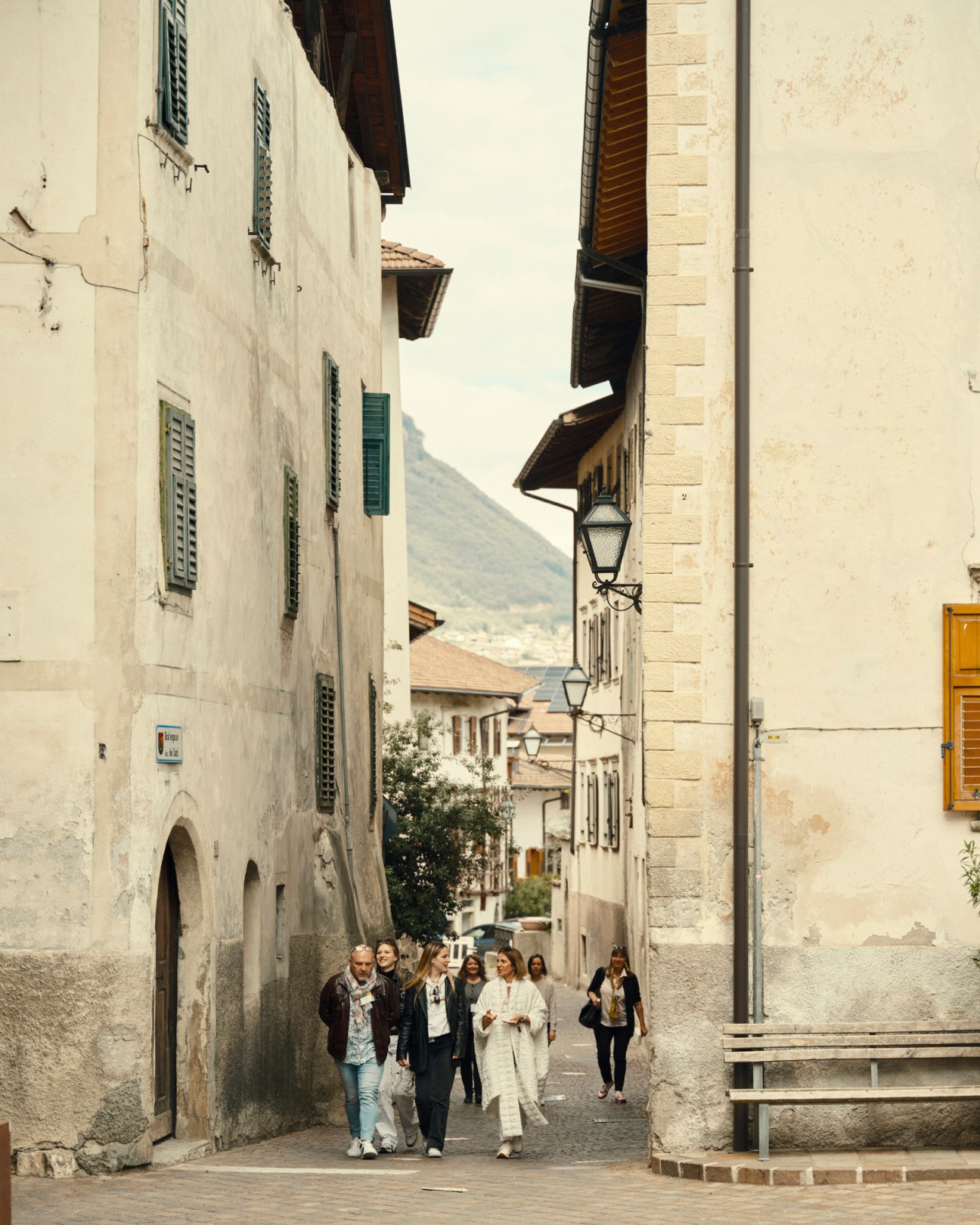

First-time exhibitor Anna Jorgensen of Cortes de Cima, a Portuguese winery in Alentejo, was keen to talk about biodiversity and traditional winemaking methods. Based in Vidigueira, an area with a 2,000-year history of producing wine in talha (large clay vessels), Jorgensen presented her palhete wine, an easygoing mix of syrah and viognier. “It’s a more innovative talha wine, taking whole bunches of syrah grapes that we cover with fermented white grape juice in the talha and then leave to infuse in there for a week before we press.”
Beatrice Giardini of Villa Venti had at the ready the latest vintage of primo segno, made from sangiovese in vineyards in Romagna near the Adriatic. “It’s different from Tuscan sangiovese, which is planted at higher elevations, as they play more with the austerity of the tannins and we play with fresh fruit and minerality,” she says. It was yet another sign that wine distributors and the public in attendance were in search of fresher reds that leave a lighter footprint on the environment.
summa-al.EU
Wine finds from Summa
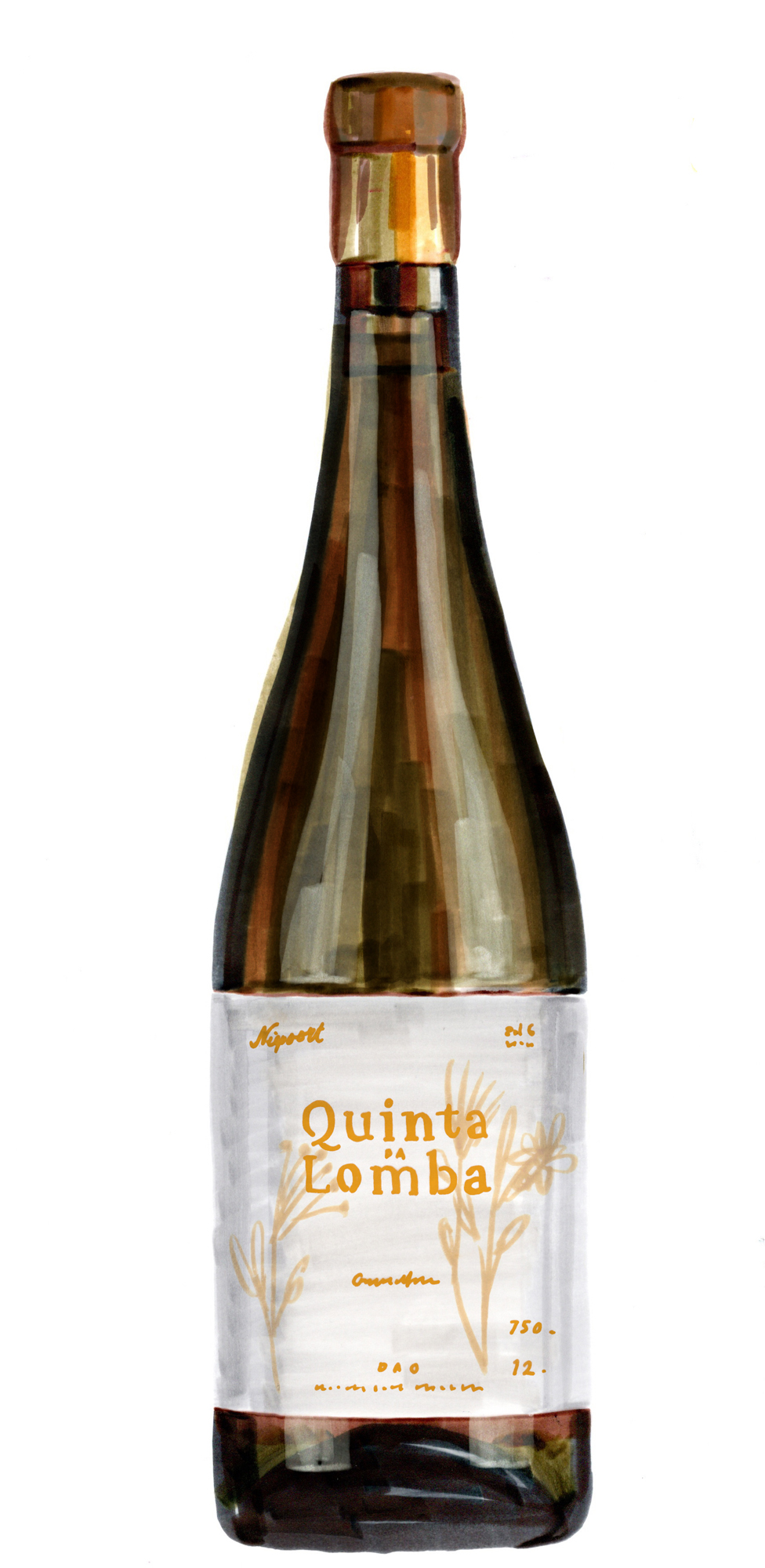
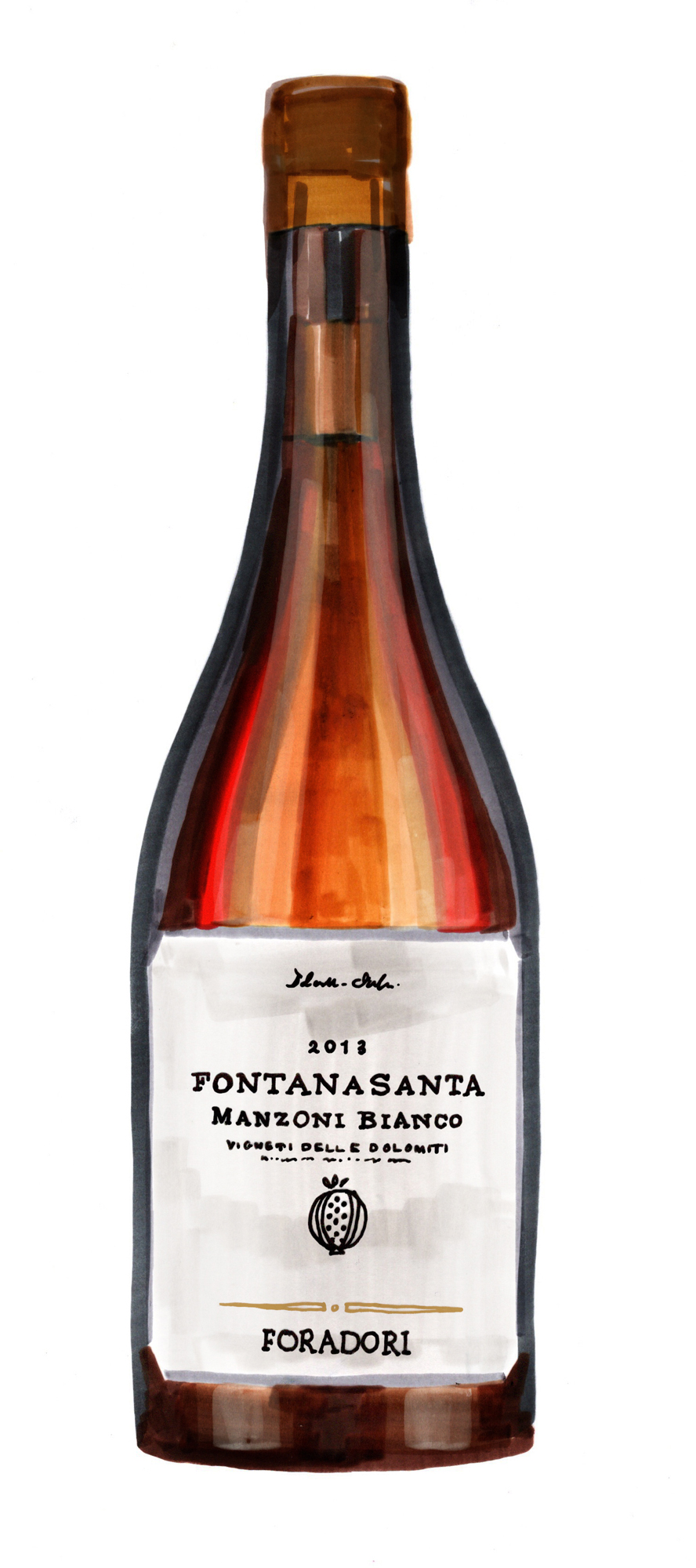
Here are a few of our favourite finds from South Tyrol and further afield. There’s something at Summa for everyone this summer. This is what’s in our hamper.
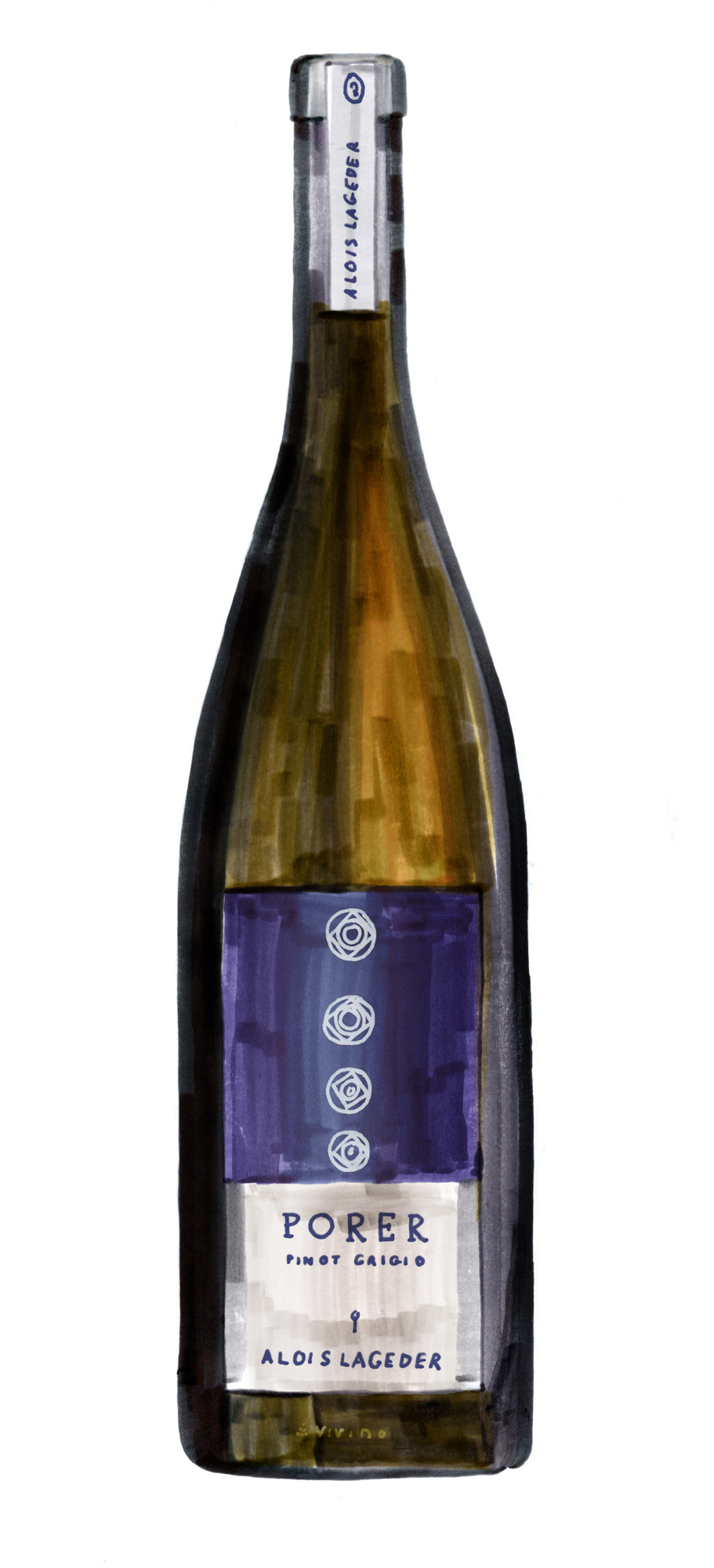
Quinta da Lomba Garrafeira Branco 2016 by Niepoort
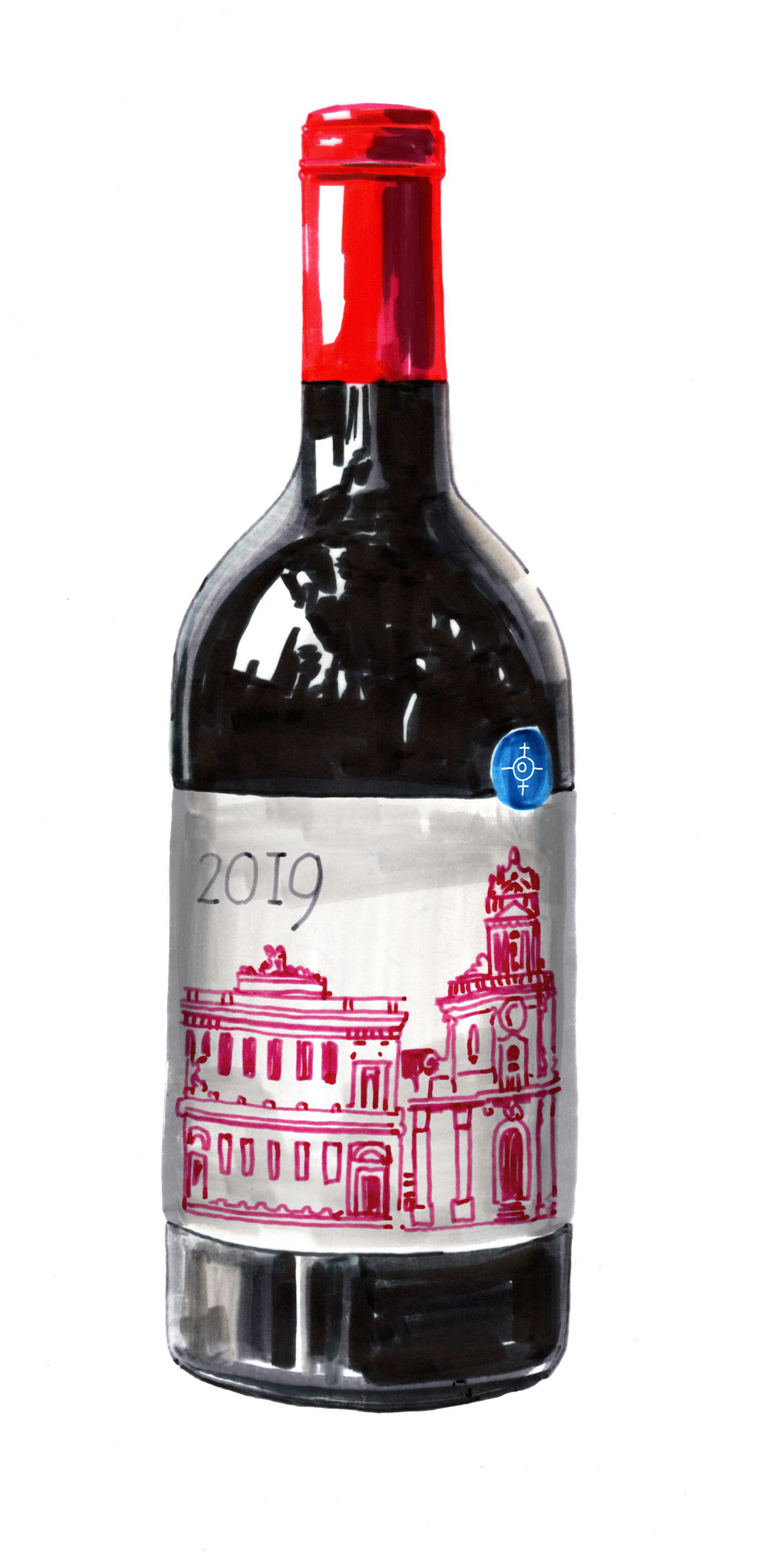
Fontanasanta Manzoni Bianco 2021 by Foradori
Sound advice
R1S Smart Radio
Ruark

With its grey lacquer case and walnut grille, Ruark’s latest tabletop radio, the R1S, is as elegant as it is advanced. Though compact, it delivers plenty of volume and has a rich, warm tone. It offers DAB, DAB+ and FM radio alongside online stations; you can also play music from your phone on its speaker via Bluetooth.
ruarkaudio.com
Ear (2)
Nothing

In-ear headphones need to look good as well as sound good. As with London-based electronics company Nothing’s earlier models, the design here goes big on transparent coverings: internal components (in the stalk of the earbud, for example) are visible. The earpiece is a glossy white, with three sizes of tip to ensure a snug fit. The Ear (2) also offers active noise-cancelling, so you’ll be able to hear your music above the din of your commute. The earbuds are Hi-Res Audio certified, which means that they can handle the highest-quality sound files.
nothing.tech
Era 300
Sonos

This wireless speaker from Sonos looks more like a hat box than a music source but its curious shape is the result of the woofers and tweeters inside that pump out sound multidirectionally, making it capable of room-filling “spatial audio”. As with all Sonos speakers, it’s simple to set up and can be connected with other devices. You can also wirelessly pair two Era 300s for more stereo separation or, for an impeccable home-cinema effect, use them as surround-sound rear speakers in conjunction with a Sonos soundbar connected to the TV.
sonos.com
Images: Getty Images, Tekever
Perfect combinations
Maison Delano
Paris
Bar Manager Kevin Eteo Mba is busy fine-tuning one of Maison Delano’s signature cocktails. Combining Anaë gin, verjuice, ruby port and Jerez manzanilla with flower mead from Mont-Saint-Michel, ginger syrup, a spray of Currach whiskey and spirulina, he works deftly before placing a tumbler on the black granite bar. “That’s the Delano mule,” he says. It’s a reinterpretation of the classic US east coast cocktail, in a nod to the original Delano hotel in Miami, which has been closed since 2020. Launched by Ian Schrager in 1995, the Philippe Starck-designed beach club was known for its whitewashed palette and Blue Door restaurant beloved by A-listers.
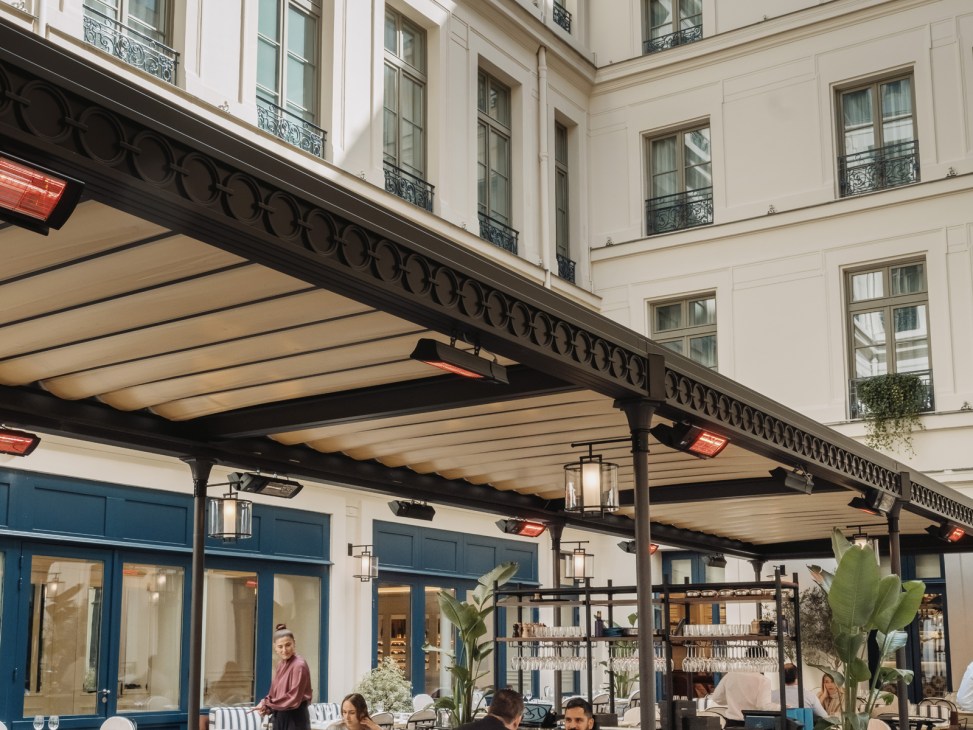
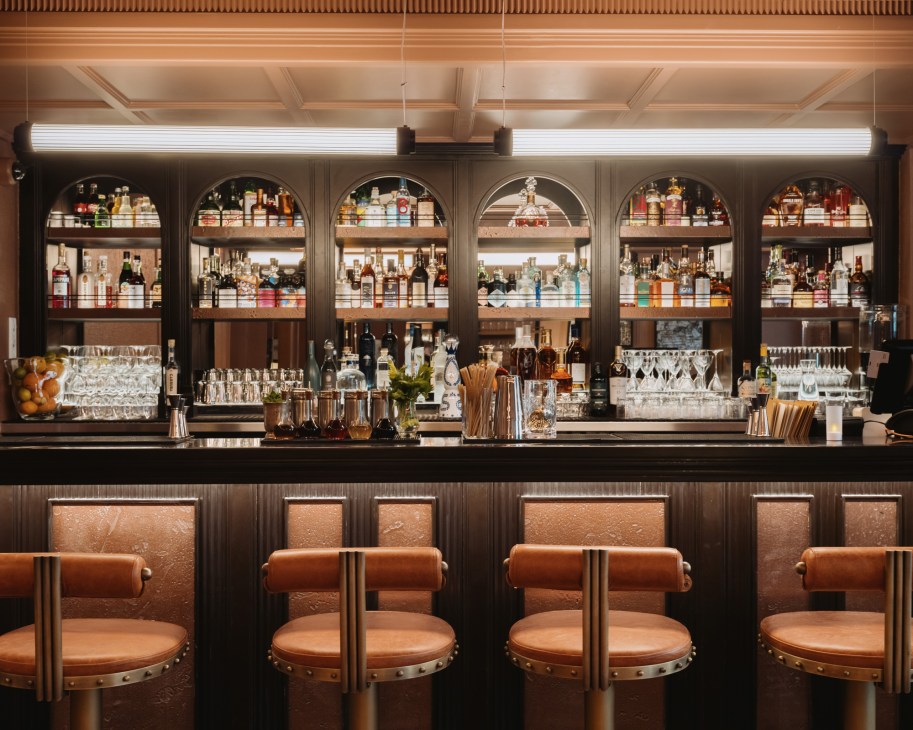
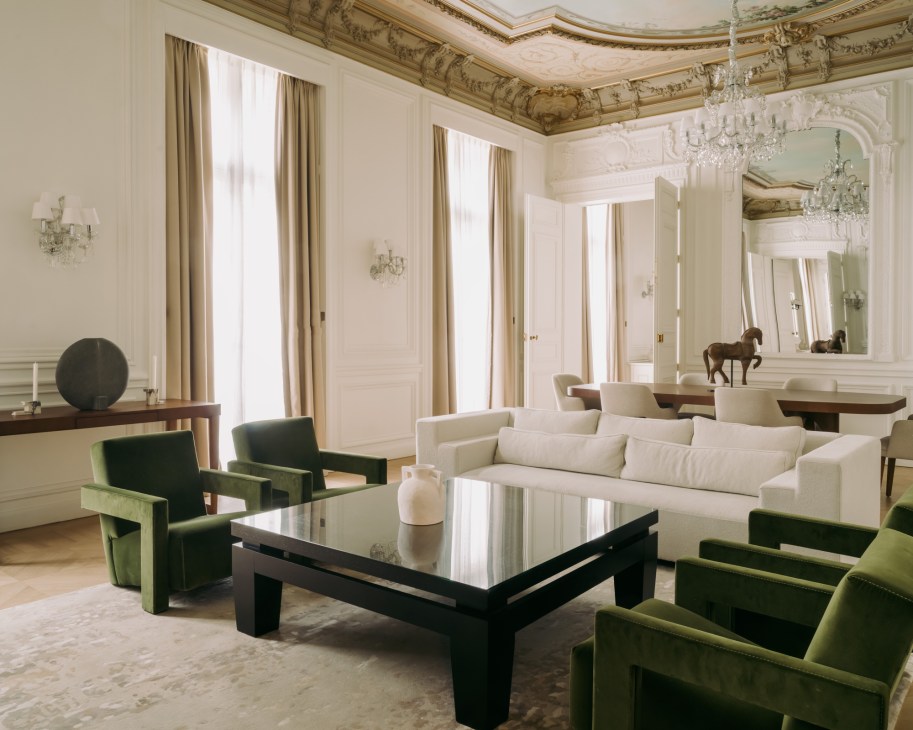
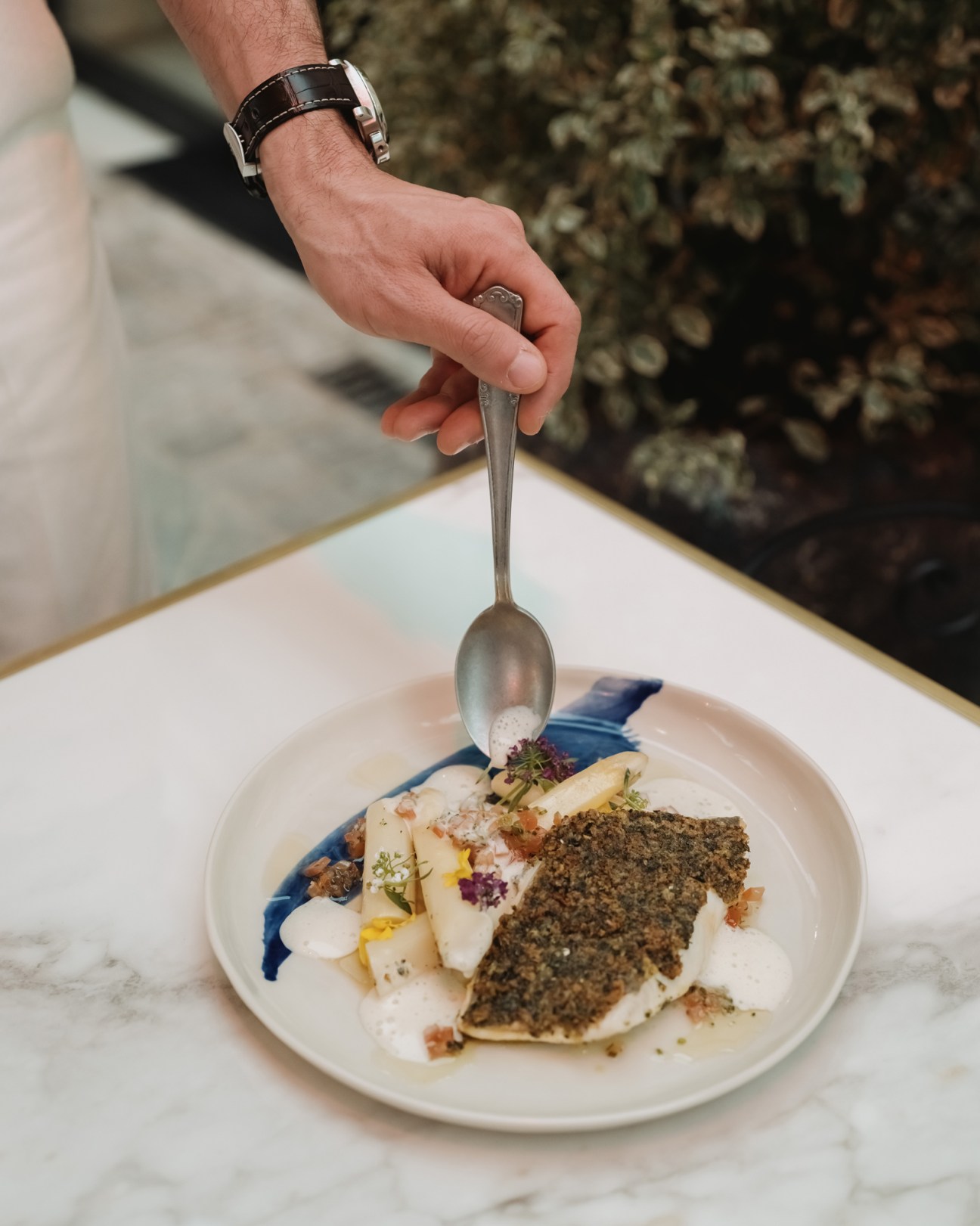
Maison Delano in Paris, a new collaboration between Katara Hospitality and Ennismore (a joint venture with Accor), is far from a carbon copy of the original. The hotel is in a 1734 mansion with all the trimmings: think gilded mirrors, marble fireplaces and ornate frescoes. The 56 guest rooms and suites were designed by Lázaro Rosa-Violán, with views over the interior courtyard or across Rue d’Anjou, on the corner of Rue du Faubourg Saint-Honoré. In Dani García’s La Chambre Bleue restaurant, diners can enjoy a paella with a French twist; there’s a cobblestoned courtyard trimmed with awnings and blue touches across the banquettes, window frames and kitchen tiles, including a fresco by ceramics-maker Art Antic L’Alcora in the kitchen.
In the bar, Eteo preps for the night ahead. “I fell in love with the French art de vivre,” he says. This hotel might have Floridian roots and a Spanish-inspired menu but there’s no mistaking its French flair for bringing together ingredients with a certain je ne sais quoi.
maisondelanoparis.com
8 Holland Street Townhouse
Bath
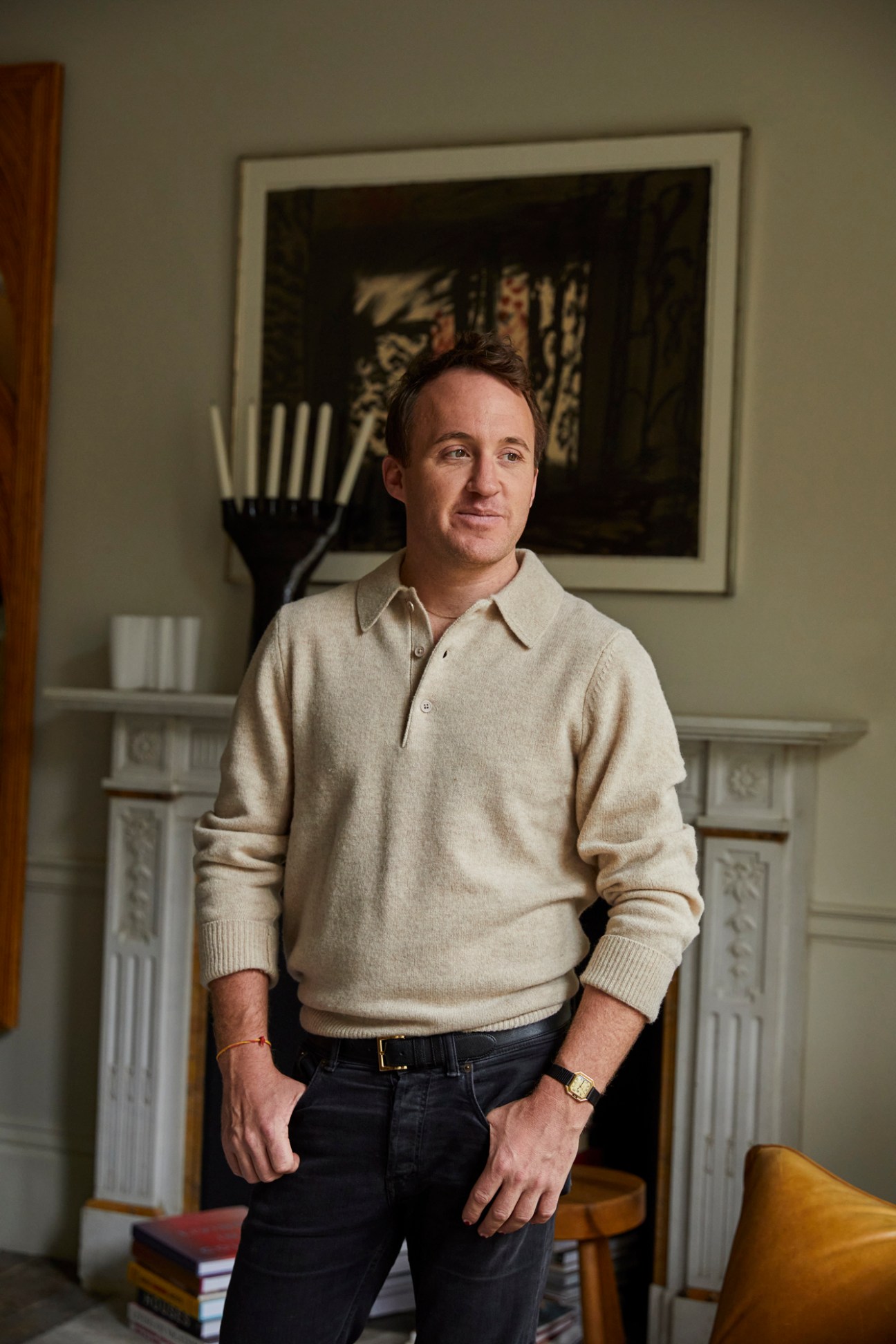
When deciding on a colour scheme for his new guesthouse in Bath, curator and collector Tobias Vernon referenced the pastel hues of neoclassical architect and designer Robert Adam. The hallway and main staircase of this spacious Georgian property are decked out in welcoming shades of pink, blue and green. In its feel and function, the project forms a pleasing extension to Vernon’s quirky gallery-cum-shops 8 Holland Street in London and Bath.
The guesthouse sits above the Bath gallery and is packed with design objects, from a decorative Eames whale to a green Vico Magistretti chair and a vintage Mario Bellini leather sofa. Almost everything is for sale, which means that the interiors will change as pieces come and go.
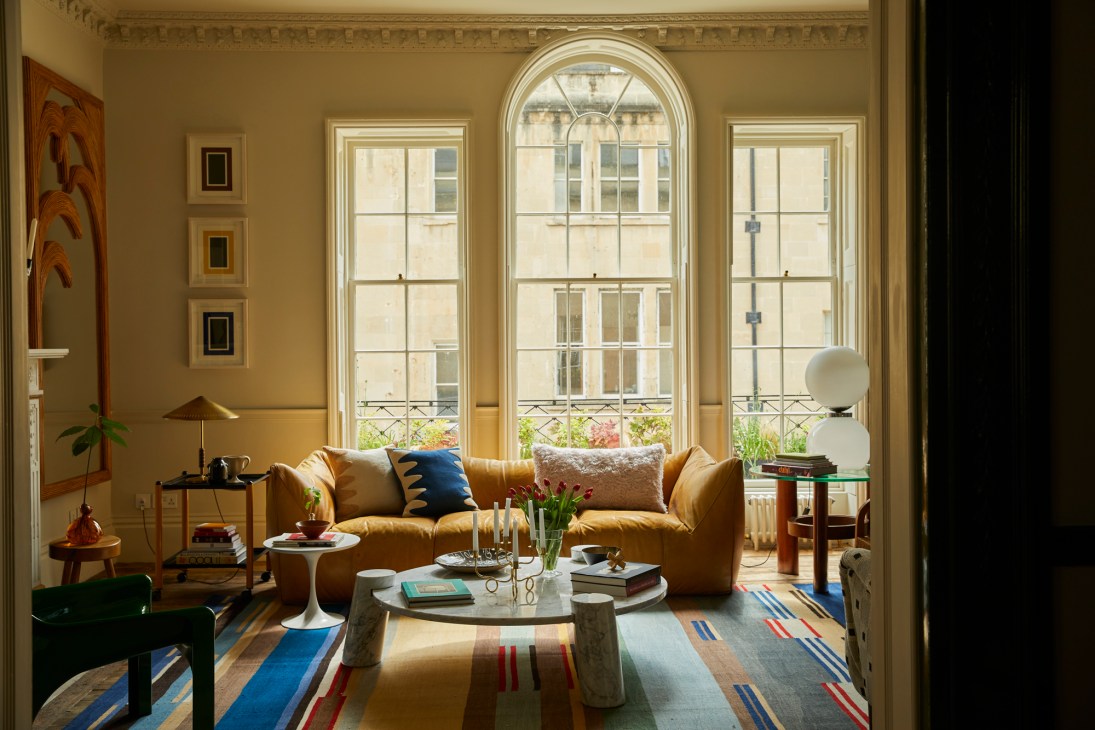
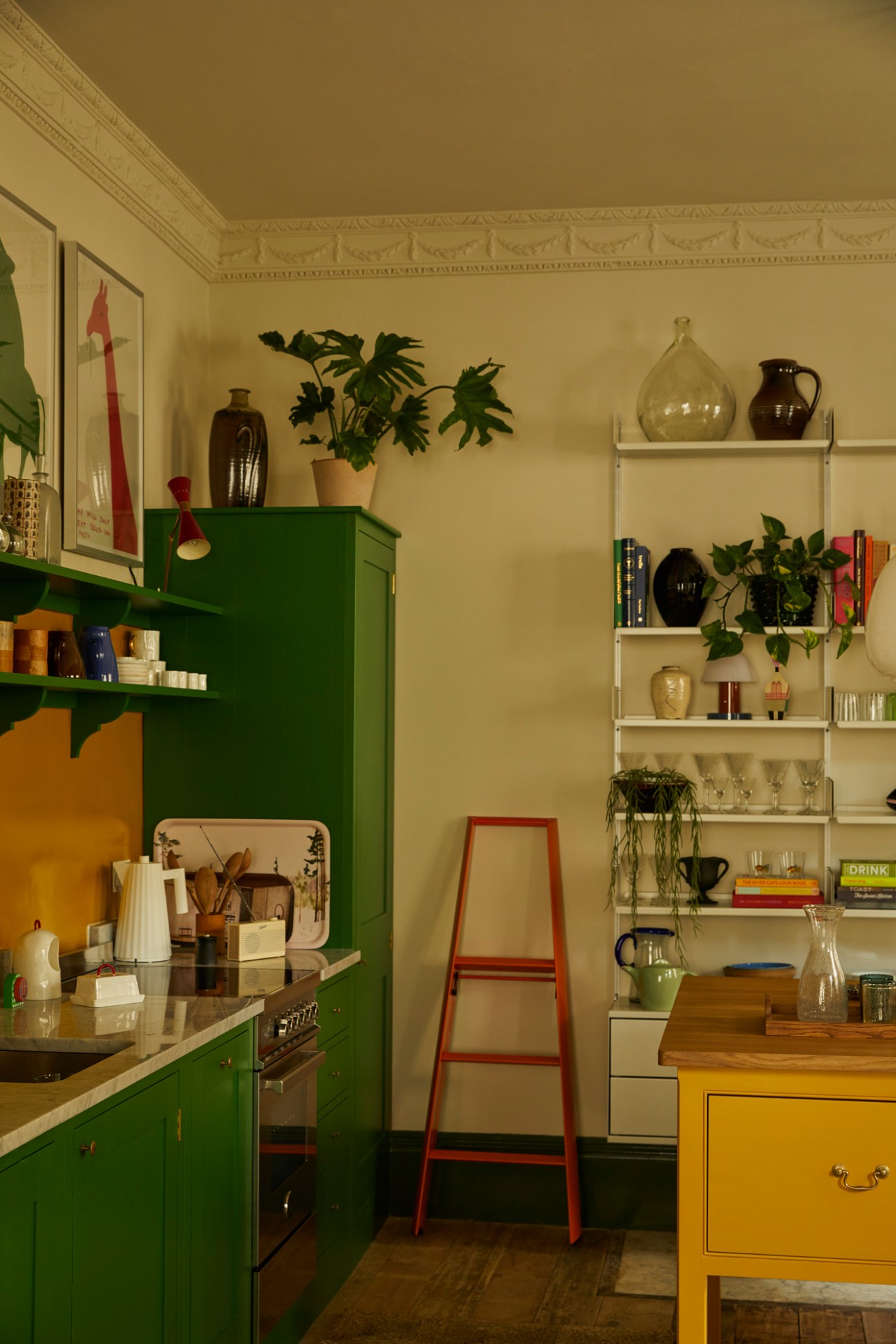
There are three comfortably appointed bedrooms, a large drawing room and a big kitchen that reveal Vernon’s passion for melding colours, patterns and surfaces in unexpected ways. “There’s a balance of different materials and textures here,” he says. “There’s a lot of metal and glass but there are also wood and rustic pieces, and then something lacquered and some fibreglass. I like to think about these juxtapositions.”
In May, 8 Holland Street launched a second London venue, a gallery, exhibition space and design studio overlooking St James’s Park. “It’s hugely exciting,” says Vernon. We hope to continue the townhouse concept in the capital too. It’s all go.”
8hollandstreet.com
Phoenix rising Global
Villa Inkognito
Oslo
A cheerful hum fills the air as Monocle visits Villa Inkognito on a bright spring morning. A few days before the official opening, almost every room of this former private residence from 1870 is being tended by people tweaking light fixtures, adjusting tapestries or perfecting bowls of pomegranates.
The property sits next to Sommerro, the spectacular 231-room hotel that opened last year in the art deco former HQ of Norway’s state energy company in Oslo’s West End. By contrast, Inkognito’s 11 rooms, run by the same team, are places for relaxation and privacy.
Built by architect Thøger Binneballe as an office, the building hosted the Algerian embassy from 1980. As the hotel’s name suggests, it is supposed to feel mysterious and there is indeed an atmosphere of delightful discretion here – it’s part fairy tale, part Orient Express.
The supervisor, (dubbed the lady of the house) Deborah Wigardt, guides Monocle past interiors that are a mix of classic Norwegian, art nouveau with hints of arts and crafts, and a bit of Japonisme, all rooted in the history of the building, which was brought to life by interior design company GrecoDeco.
Start your day by ordering eggs benedict and coffee in the cosy open kitchen (Sommerro will provide chefs on request), then catch up on the news in the blue snug before working up a sweat in the private gym. An evening at one of the seven eateries at Sommerro follows, which you can enter via a direct – and characteristically discreet – passageway that links the two buildings.
This passageway is also handy if you would like to swim in Sommerro’s wellness area, Vestkantbadet, which features a spectacular restored walrus mosaic by Per Krohg. Back at Villa Inkognito, have a cheeky nightcap in the Lily Pad room or indulge your curiosity in the Poppy Library (books are on loan from the National Museum library) before you curl up in the comfort of your bed.
Landscape art
Artist Rosie Mennem’s hand-painted and botanically inspired work is on show throughout the villa. Mennem also took cues from Norwegian landscapes to create bespoke decorative pieces that appear across the hotel’s cabinets and woodwork.
sommerrohouse.com
To get a sense of the overwhelming scale of Tokyo, it always pays to view it from above. And where better to see the city’s magical jumble than from the new Bulgari Hotel Tokyo, an amber-hued oasis that occupies the top five floors of the city’s latest skyscraper, Tokyo Midtown Yaesu. With its basement walkway to Tokyo Station, busy shopping and office floors, and even an elementary school, this new development is a microcosm of modern Tokyo. For Milan-based architectural studio Antonio Citterio Patricia Viel (ACPV), responsible for the design of all eight of Bulgari’s hotels, it was an irresistible proposition.
Bulgari Hotel
Tokyo
“We liked that the project maintained the complexity of the old neighbourhood,” says Patricia Viel. “To build a liveable place, you need a mixture of real life and aspirational life.” If the school provides the reality, the hotel brings the aspiration and more than a touch of Roman glamour. Doors slide open, the Bulgari scent wafts through the air and black-and-white photos of film stars at Bulgari’s Via Condotti shop adorn the walls. Jewels appear in cases, including a signature diamond-studded Serpenti watch and a jewelled brooch made in 1972 that boasts an image of Mount Fuji.
The hotel’s colour palette is all warm caramels, rich saffrons and deep browns – a deliberate contrast to the concrete world outside. “The colours in Japan are always a little dusty, very sophisticated,” says Viel. “Tokyo is a very medium-grey kind of environment, which I like very much, but we thought we’d bring some colour into this picture.” There’s Italian travertine, Japanese wood, custom Italian mosaics and handblown Murano lights. And, everywhere, those Tokyo vistas.
Design cues are drawn from Japan and from Bulgari’s own story, which started when Greek silversmith Sotirio Bulgari opened a shop in Rome in 1884. The elm wood lobby portals echo the entrance of Bulgari’s Via Condotti flagship as well as the bell-shaped windows of a Japanese Zen temple. Bulgari’s classic fan-shaped “Diva” motif, inspired by the ancient Roman baths of Caracalla, looks like a traditional Japanese pattern when repeated here on mosaics and silk walls.
Dar Zefta
Lebanon
The hotel has 98 rooms, some with views of the Rainbow Bridge and Tokyo Skytree, others overlooking the central station and the Imperial Palace beyond. There’s a 416 sq m suite with its own kitchen and gym, artworks, and a headboard by 17th-century Kyoto textile-maker Hosoo. The spa has nine treatment rooms, steam, sauna and hot baths, and a gym put together by London trainer Lee Mullins with an outdoor terrace. The 25-metre-long swimming pool, lined with emerald mosaic tiles, is big enough for proper lengths but has cabanas for snoozing poolside too.
bulgarihotels.com
After spending his childhood in the gardens of his great-grandfather’s mansion, Bahjat el-Darwiche was determined to preserve it for the next generation. Sadly, in 2014, a devastating fire swept the family home in the southern Lebanese village of Zefta and destroyed the roof along with everything inside.
Walking through the ashes, says Bahjat, was “painful”. “But my thinking was: no matter what, I’m going to rebuild it better than it was,” he says. “I want my father to see the house that he fought so hard to protect standing tall again.”
The rebuild came together with the help of architect Simone Kosremelli of the American University of Beirut. “My great-grandfather was avant garde,” says Bahjat. “So I decided to do the same, to build for the next 100 years and preserve the spirit of the house while increasing its comfort for living.” Kosremelli incorporated new features such as skylights and wooden beams throughout, and extended the house to create seven spacious new rooms around the cobbled courtyard.
“People thought we were crazy investing so much at a time when the country is going down and running costs are going up,” says Bahjat. “We decided not to leave after the disasters here. Many people have decided that their children have no future in this country. We’re trying to swim against the tide, set the highest standards of service and inspire hope.”
The process took six years, much of it spent sourcing furnishings. Just one armoire survived the fire – the rest of the appointments are a love letter to Levantine design across the decades: sweeping art deco mirrors sit alongside Damascene bureaux with mosaic woodwork and inlaid mother-of-pearl; carpets from Istanbul’s Grand Bazaar coat the stone floors; and Parisian auction rooms supplied finishing touches, such as two Jean Royère Yo-Yo armchairs. A pair of chandeliers by Italian designer Gio Ponti dominate the dining room – after falling in love with the first, it took Bahjat years to find its partner.
“We don’t promote; it’s all word of mouth,” says Ghada Darwiche, Dar Zefta’s guest liaison and Bahjat’s wife. She takes the bookings, discussing menus and plans for the stay. But not all guests are right for the house and she’s selective about bookings. “We’re not a hotel; people who come here want to connect with the house, with its history, with us. It’s a special environment.”
Guests range from Lebanese visitors seeking to escape the buzz of the city to diplomats exploring further afield than the capital, while architects, designers, artists and musicians are regular visitors, attracted by the architecture and decor. The couple use the garden for pop-up exhibitions – Bahjat has many canvases stashed around the house by up-and- coming Lebanese artists who he supports.
Lebanon’s south is best known as the home of the militant group Hezbollah and the site of multiple wars fought against Israel. Bahjat wants to show the gentler side of the area, whose meadows, orchards and rolling hills foster a sense of timeless relaxation. “For many of our guests, it’s their first time in the south. This is a way of giving back. With a project like this, we can provide local employment to inspire new ideas.”
“The house isn’t totally finished,” says Ghada, sipping green tea as the afternoon light filters through leaves of the apricot tree overhead. “Because, as people come, they will bring their stories with them and build memories here, and that will become part of the fabric of the house. It will keep growing with every new visitor.”
darzefta.com
It takes a village
Lebanese dining is always special but at Dar Zefta, it’s unforgettable. Averse to the impersonality of buffets, meals here reflect the warmth of Levantine hospitality. Lunches and dinners feature everything from silky kibbeh nayyeh and spiced Levantine lamb tartare to maqluba, melt-in-the-mouth aubergine, roasted tomatoes, courgettes, chicken and crunchy potatoes, all spilling over mounds of stock-rich rice. Every ingredient comes from the house’s orchards or the nearby merchants that Dar Zefta has called upon for generations. The secret? Zainab, the chef, a mother of four from the nearby village.
Above the salt
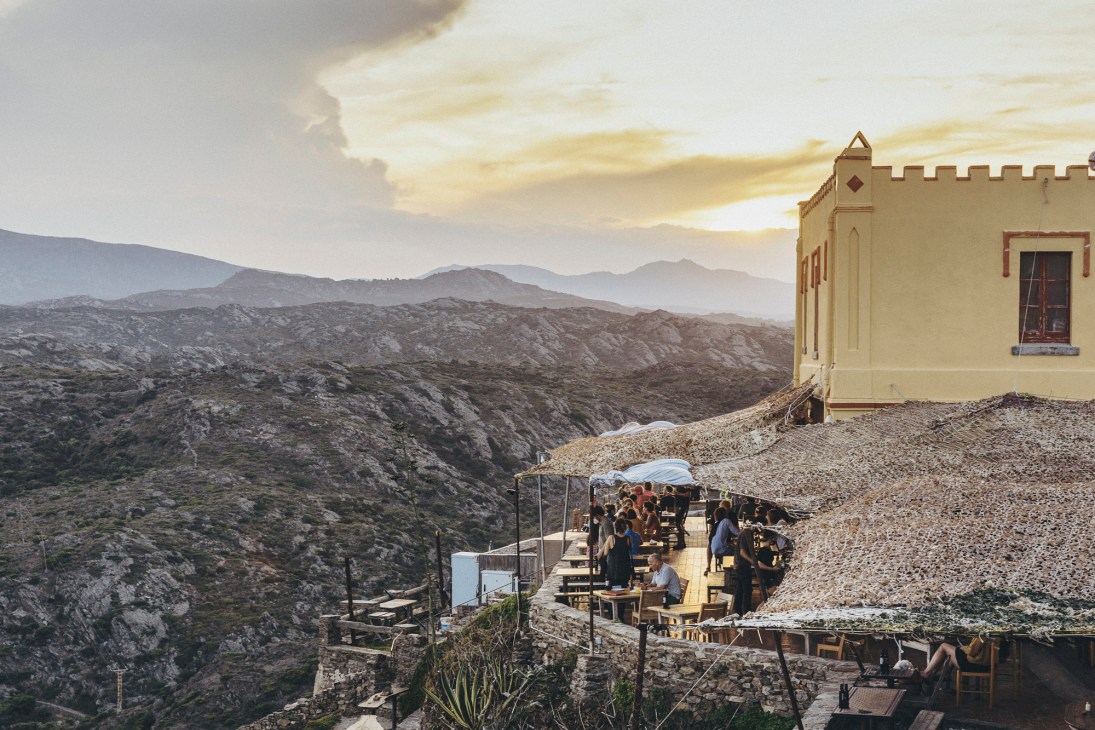
The Cap de Creus peninsula juts out from the coast of Catalonia into the Mediterranean. Its jagged shoreline has proven treacherous to many a ship. But on the terrace of Restaurant Cap de Creus, near the town of Cadaqués, you can think of happier things. And this image summons something that always makes our day: allowing time to idle by in the heat of a European summer. If it all feels too good to walk away from, well, they rent out apartments too.
Ibiza’s expat growers are sowing a more sustainable future
Though more readily associated with clubbing than growing crops, the Balearic island of Ibiza is experiencing an exponential growth in small-scale agricultural activity, the seeds of which are mainly being sown by expats disillusioned with the corporate grind and wasteful lifestyle of mainland Europe and beyond. These new smallholders are investing their time and money in sustainable and biodynamic practices, typically influenced by age-old, organic and collaborative concepts. Monocle crisscrosses the White Island to visit these innovative farms and meet the growers whose fertile imaginations could offer solutions for how food is produced and consumed across the world at large.
There’s a seductive, mythological side to Ibiza. Readily embraced, earnestly retold, many of the stories have a self-fulfilling sparkle to them. The multitudes gathered to gaze at the rocky islet of Es Vedrà, for example, say that it’s magnetic. Another much-loved maxim claims that Ibiza accepts or rejects people according to their intentions, while others quote the probably apocryphal line from Nostradamus: “Ibiza will be the final refuge on Earth.” Indeed, every time the world seems to teeter on the brink, the island welcomes waves of second-lifers seeking a fresh start. Lately the seeds of change are coming from a resurgent interest in agriculture, uniting people from all walks of life around a more balanced future.
The aforementioned folklore doesn’t seem to be on the minds of the workers assembled for the morning meeting at Ibiza’s largest certified-organic farm, Terra Masia. It’s 07.45 and the sun is drenching the 56-hectare property in a golden hue. Folded over the island’s northeastern plain, wisps of dissipating mist are giving way to the scent of orange blossom in the early morning air.
Ticking through the order of the day is head farmer Philipp Gandler, a young, mild-mannered Austrian who moved to Ibiza in 2017. Twenty faces – mainly European, some hailing from Ukraine, another from Africa – sip coffee, exchange playful banter and listen to the morning laundry list before hopping off for an honest day’s work. “I was fed up,” says Gandler, of his past life working in a Michelin-starred kitchen and as a private chef for a princess. “There was so much waste.” Seeking a more sustainable lifestyle is a common island concern. Visionary farming projects like this one have become the locus for talking about – and toiling for – real systemic change.
Talking us through his 18-month journey to enrich the farm’s soil using terra preta, fertile anthropogenic soil found in the Amazon basin, there’s a glint in Gandler’s eye. “Since we switched to biodynamic, it’s almost as though the animals know,” he says, highlighting a tenfold increase in rabbits and birds nibbling and pecking at the crops. “Avoiding pesticides and using untreated seeds makes our daily battles harder but we’re determined to prove that this farming model is the future.”
Supported by Dutch investors and a Scottish DJ, Terra Masia’s harvest – taken from 3,000 fruit trees, countless vegetable plots and greenhouses – is sold to island restaurants. Eco-conscious islanders can visit too. A wooden market stall sells vegetable boxes with aromatic bundles of rosemary, white sage and bay leaves. Terra Masia also offers seasonal farm tastings that enable more people to get a taste, smell and sight of farm life in the warmer months.
Returning from her morning check of Terra Masia’s 10 hives, resident beekeeper Amandine Massot seems worried. The bees, she says, are getting more aggressive but no one knows why. Massot relocated from France in 2020. “There’s more space here,” she says. “Ibiza feels far away yet still connected. Nearly everyone comes from abroad. We bond over wanting something better.” With 50,000 perturbed bees per hive, workplace discord still appears be a live issue, however.
Leaving the unsolved mystery of the belligerent bees behind, we travel northwest to Terra Viva, another farm with a big vision – and plenty of happy hens. Co-founder Andrea Abad has just waved goodbye to a group of schoolchildren learning how to make flower bombs – an innocuous germination technique that consists of seeds rolled into balls of clay, championed by late Japanese natural farmer and philosopher Masanobu Fukuoka.
An energetic 34-year-old from Barcelona, Abad once worked in marketing for an oil company. “Every time I sent an email, I felt like part of my soul died,” she says. It was a talk by activist Satish Kumar in London that prompted her to resign and foray into permaculture. Terra Viva’s focus is syntropic farming, which mimics the complexity of a forest. “We want to prove within five years that we can grow without external inputs such as water, fertilisers or pesticide, nourishing the soil with just tree clippings,” says Abad. The farm’s 20 hectares were secured as a part of the Association of Organic Farmers of Ibiza’s land bank. The founders – an Israeli film producer, an Italian documentary-maker, an American offering new-age palliative care, a Colombian farmer and Abad – signed a 25-year lease for just €1,500 a year. “When I pitched the project to investors, I went all in,” says Abad. “I asked them, ‘Are we going to be regenerating systems and working practices too?’” As a result, everyone, including the chief farmer and landowner, were made equal partners. Turning her professional communication skills to a cause she truly believes in, Abad has built friendly alliances with Ibicenco farmers for training and knowledge sharing. There are plans for Terra Viva to become a centre for EU certification for regenerative farming practices too.
In an example of how the farm improves on standard industry practices, Terra Viva’s nifty moveable chicken tractors (like coops on wheels) ensure that the birds have access to fresh food and pasture, and are protected by several Pyrenean mastiffs. Feeding off the land means that the farm’s 2,400 healthy chickens grow to three months with 21 per cent less saturated fat, triple the omega-3 and more vitamin A, K and D than standard hens, with no antibiotics or hormones. Judging by their serene mood, the birds might as well be at a clucking day spa.
When a neighbour complained about the taming of his once wild view, Abad responded with articles and videos to explain the vision. “One day he wrote back, ‘Now I understand. Empty land is dead land. I want to help.’” He’s now the project’s biggest financial backer. It shows that there’s a more wholesome side to the amount of capital pouring into Ibiza; a neighbours’ squabble can suddenly become a collaborative investment in the future.
Brokers turned bucolic warriors are becoming a bit of a trope in Ibiza. It’s the latest chapter of a long saga of wealth and wanderlust that has altered the relationship with the land. But Ibiza’s new farming movement, conscious and collaborative, feels like a course correction. Many of the generational farmers are welcoming this renewed interest. Traditionally, sons of farmers inherited fertile fields while daughters were relegated to less- precious allotments along the coast. Tourism turned the tide as demand for property with sea views brought newfound prosperity for the women, while men chased fortunes in hard-slog service industries such as taxi driving. This might have fed the folklore about the island’s divine feminine energy but the collective thirst for easy money also left much of Ibiza’s arable farmland abandoned.
In 2022, 3.4 million visitors passed through Ibiza (up 8.3 per cent from pre-pandemic levels). For a 570 sq km island with only 161,000 permanent residents, the trample of tourism often favours a myopic mindset. Island elders recall waterfalls pouring from the aquifer but today parts of the water table are sucked dry during the peak of summer. There’s more island mythology about this too, according to which Ibiza is a microcosm for how people treat the wider world.
Christian Jochnick is telling us his grand plan. Trailing a herd of 120 goats in the fields of a disused dairy farm, the Swedish lse graduate and former investment banker bought the property a year ago to be the epicentre of his Juntos Farm project. “What’s happening in Ibiza is unique,” he says, attributing the surge in nature-conscious investment to a wake-up call resulting from the pandemic.
Tipped to be a €40m development, Juntos Farm will combine the essence of a food market, co-op and what Jochnick calls “a regenerative theme park”. It has the ring of a boardroom pitch but the idea is about creating an experiential destination grounded by the spirit of sharing. There are plans to strengthen the island’s production capabilities by offering open-access facilities such as a transformation kitchen and processing plant, helping small-scale farmers to add value to their yields by producing oils and pickling and fermenting.
Over the past 20 years, Ibiza has lost 56 per cent of its agricultural land, Jochnick tells us, while only 2 per cent of food consumed here is grown locally. “We want to bring a sense of ceremony and celebration to the land with a focus on interconnectedness,” he says. Christian has recently been supporting an initiative that replaces diesel-powered tractors with mule- and horse-driven vehicles.
“I was living a perfect life in London but there was an emptiness,” he says, as we walk past a trio of women adding seedlings to the keyline crops. “Like many, I was asking myself, ‘What am I doing? Where am I going?’ ‘Juntos‘, which means ‘together’ in Spanish, is about responding to the modern malaise by offering greater purpose, connection and the promise of deeper relationships.”
Thinking about personal potential is a recurring theme in this Balearic idyll. Inside Elaine Groenestein’s canister-laden kitchen, a strong sense of playfulness is baked into the process too. “Telling people that I farm is a good way to avoid conversations about the stock market,” she says, laughing. “Ibiza made me redefine the meaning of career.” The Dutch-Tanzanian founder of Labritja Botanica, Groenestein transforms her own farm-grown chillies, herbs and berries into face oils, spicy salt, fruit preserves and wine. Living between Amsterdam and Ibiza, she juggles a clutch of passion projects as an angel investor and art curator. Adding to the daily fun at her 600-year-old restored finca is a gang of six feisty rescue donkeys and a sheep.
The line between farming and hospitality is blurring in the Balearics. Set to open in June, Aguamadera, the island’s most anticipated new agroturismo, is a 12-room rural hotel, restaurant and crop-revival project, co-founded by Pablo Fernández-Valdés and Iria Urgell, daughter of the founder of superclub Pacha. Today, two Mexican farming consultants, recently arrived from Yucatán, are overseeing a delivery of enriched soil. “In Mayan culture, you ask permission of the energy of the land,” says Tomás Gómez, a dancer, who with husband David Robertson swapped city life to make a difference on the land. “These small rituals are important because they cultivate reciprocal respect with the environment.”
In the tiny town of Sant Mateu, at a table filled with plates of roasted broccoli and beetroot butter, Monocle meets French-Canadian former recruitment director Sophie Daunais. As the owner and director of delightful restaurant Juntos House – affiliated with the Juntos Farm project via a previous marriage – she believes that many people come to Ibiza to build something new. “In Montréal there’s a saying: ‘Don’t dream in colours.’ This warns people not to follow the crowd. Living in Ibiza has taught me that being a leader is important.”
Alonso Colmenares’s The Farmers Club is about connecting the well-intentioned dots. A farm-design consultancy combined with services such as soil analytics, it has grown 22 projects so far. The Madrileño advertising consultant’s own property, The Farm, is run with Chilean wife Francisca Muñizaga, who ditched the music industry to become one of the island’s most sought-after florists. “We all know each other in this new farming community,” says Colmenares, passing through his grove of 500 pomegranate trees. “Here, it’s more about collaboration and communication than competition.”
It all comes down to how people define progress, says Jochnick, when quizzed about his farming project’s philosophy. “For me, it’s about biodiversity, better water, nutrients in the soil and insects in the air – more life.” Perhaps it’s the small-island dynamic but plans to revive the world seem to carry more promise in Ibiza. Once a place to unplug from the ether, the influx of money has rewired the island, making it a place where ideas, intentions and influence are backed by a spirit of collaboration.