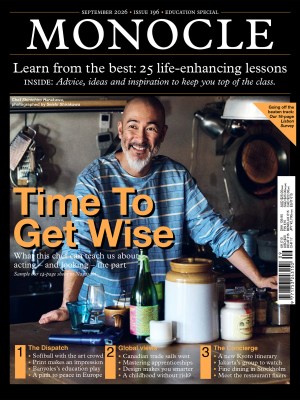
Issues
Field days
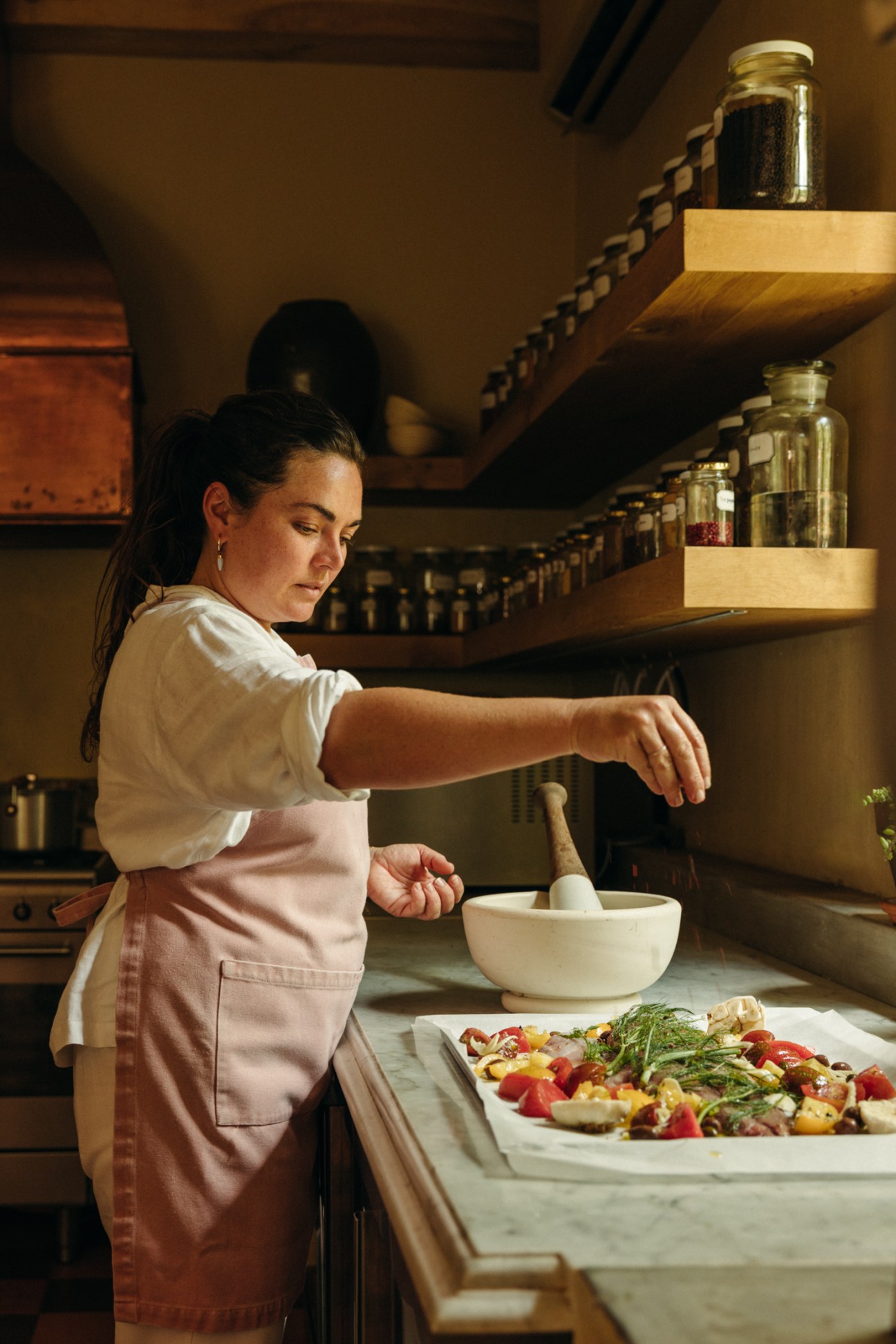
It’s starting to get dark in Franschhoek and Fleur Huijskens is plucking sun-warmed tomatoes from a cluster of vines at Sterrekopje, the farm and retreat that she co-founded. “We have to harvest them quickly,” she says with a grin as she drops the ripe red orbs into a bowl and admires the surrounding mountains that appear ablaze in the late-afternoon light. “They’ve been exploding in the heat.”
Monocle follows Huijskens through the garden towards the farmhouse that she shares with partner and co-founder, Nicole Boekhoorn, and their dogs, Frankie and Winston. The couple, originally from the Netherlands, started the retreat as an addition to their lifestyle, as well as to welcome guests. “I wanted to bring together all of the things that I like,” says Boekhoorn, who has adorned the hotel with hallmarks of her travels in India, Morocco, Kenya and Mexico. They initially looked for suitable properties in Europe until a wedding invitation reminded Boekhoorn of her childhood love of South Africa. Shortly afterwards, she found a 50-hectare family farm for sale just outside the small but picturesque town of Franschhoek.
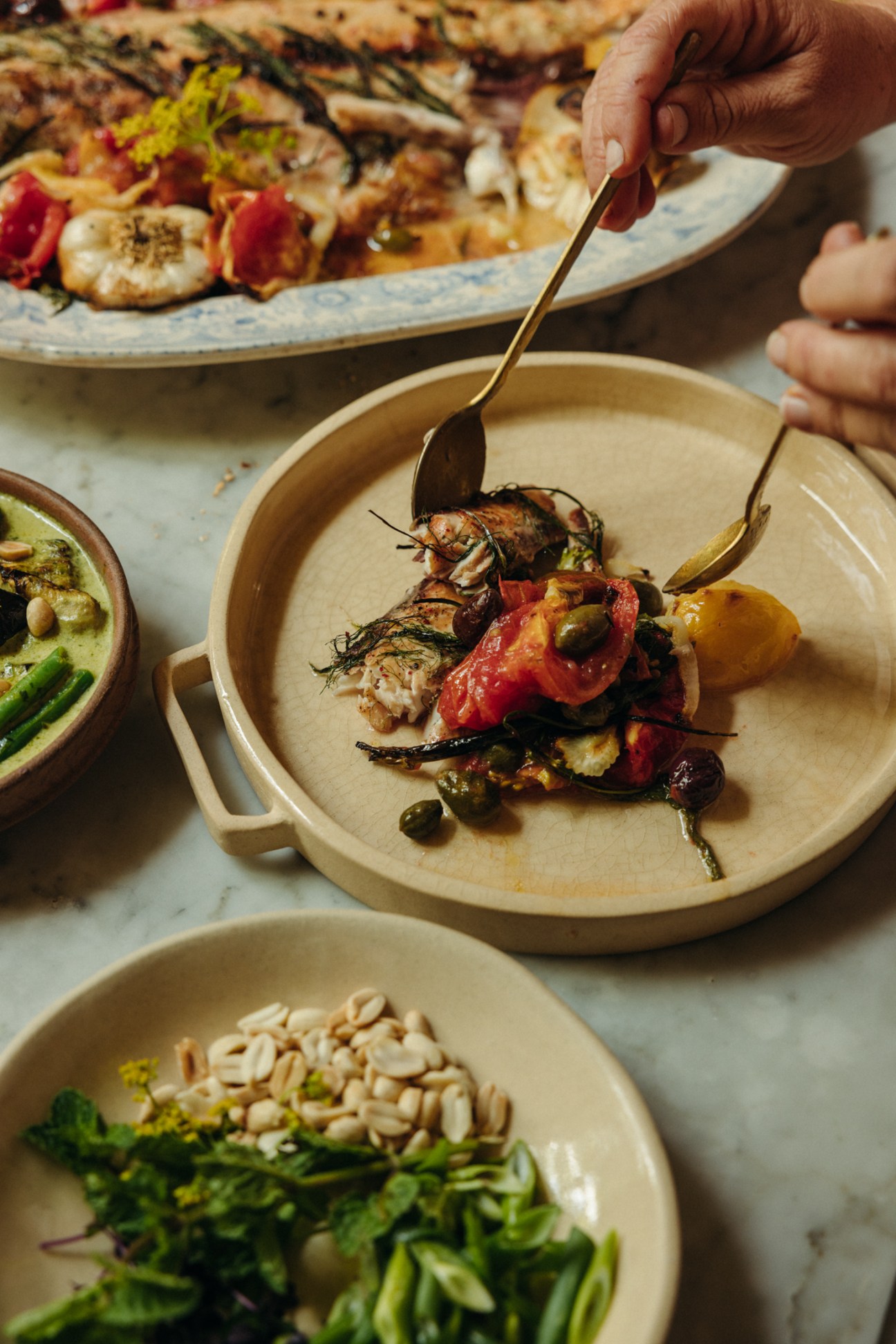
“I wanted to open something that was not a hotel or retreat but something in between,” Boekhoorn tells Monocle over a dinner of roast salmon, tomato salad and hasselback beetroots. “Retreats can be rigid and ask a lot of you in a short amount of time. Offering nothing is the art.”
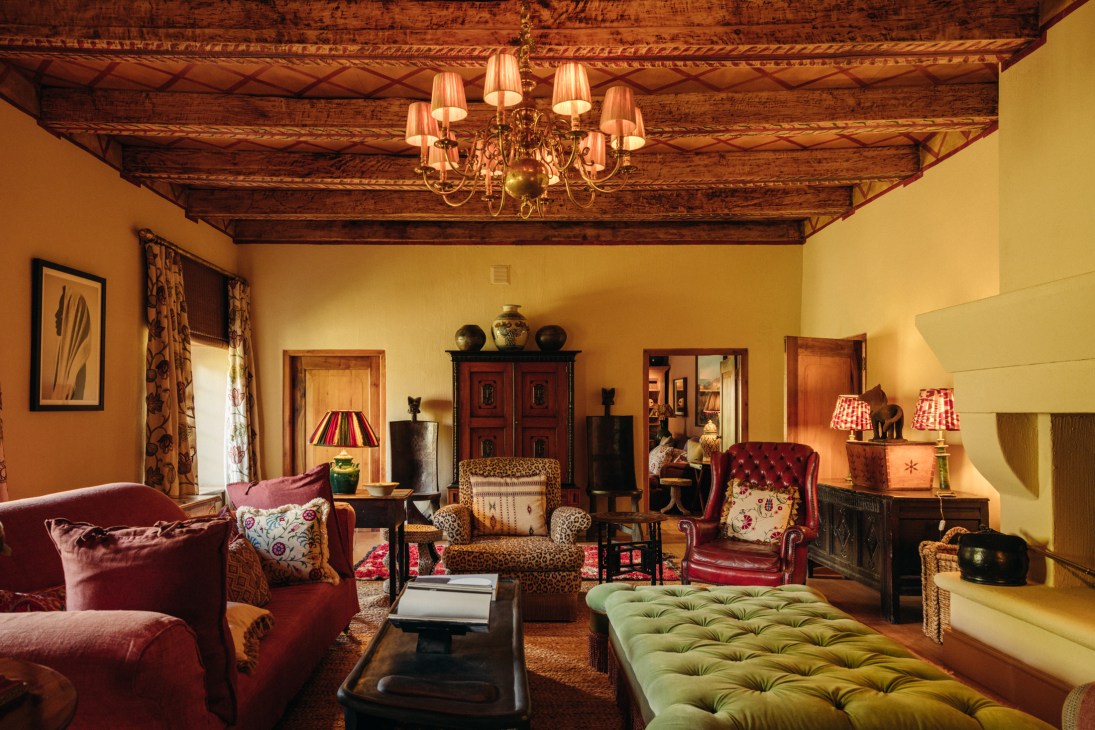
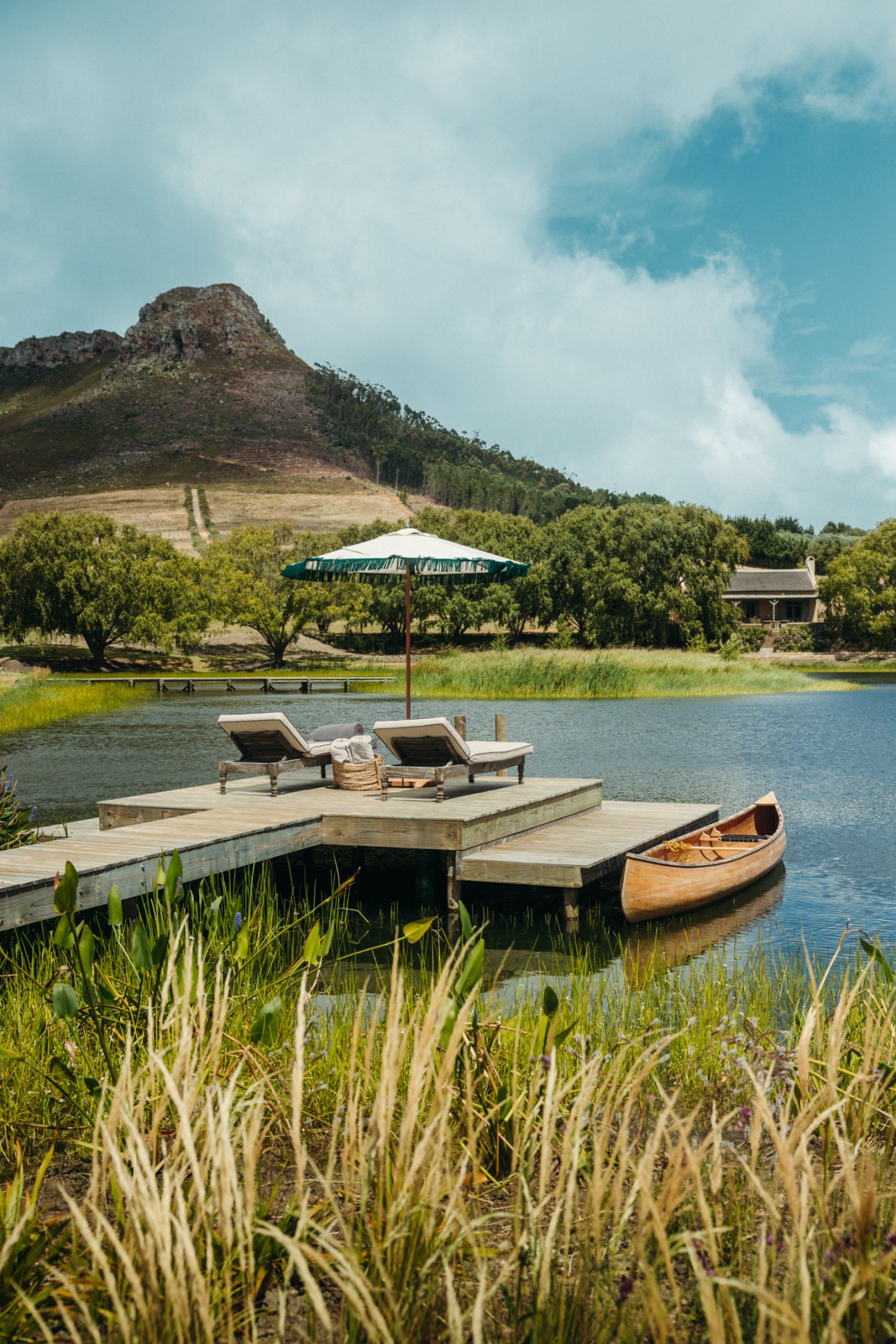
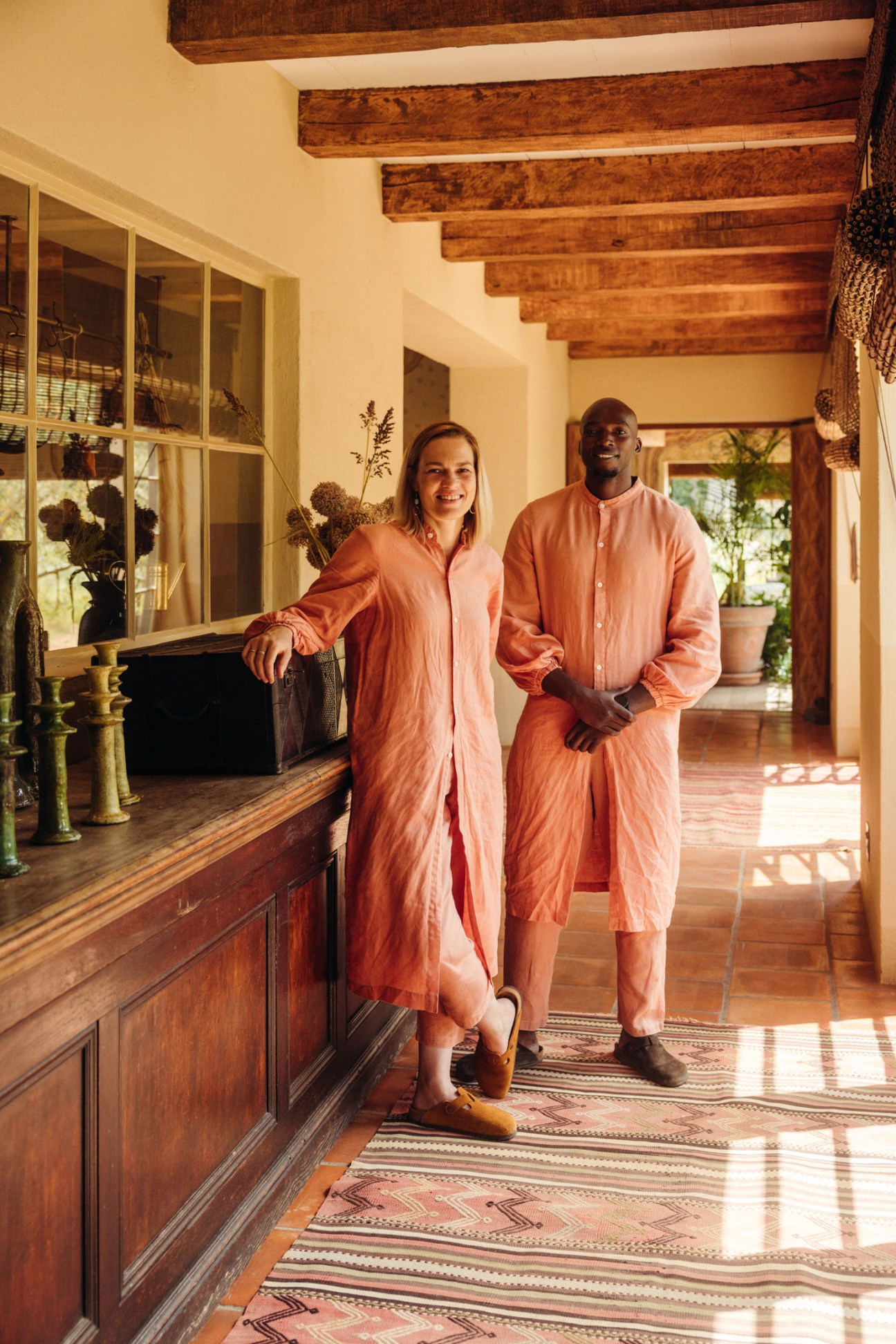

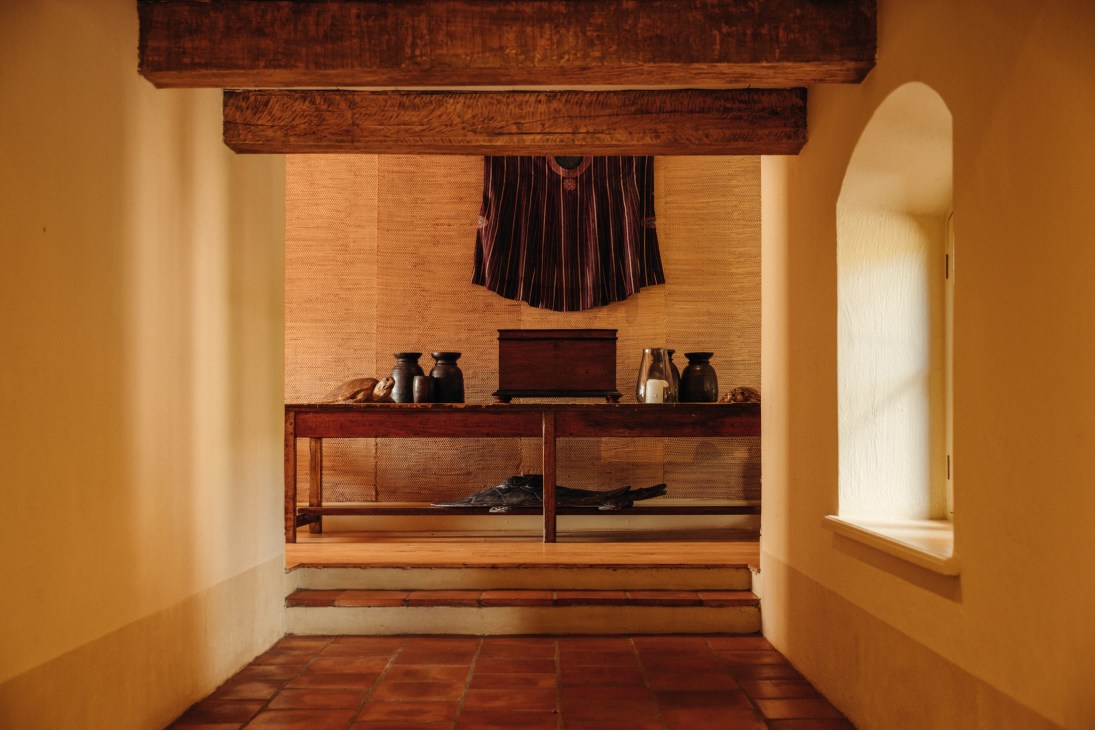
The 11-room property is filled with four-poster beds, plush chairs and wide tables that Boekhoorn curated with designer Greg Mellor. The garden was created by Leon Kluge, who represents South Africa at Chelsea Flower Show. It has hundreds of nooks in which to get lost, as well as an orchard, indigenous garden, swimming pools and a dam. When Monocle visits, the trees are laden with plums and the path is beset with bunches of buchu (a herb). The garden also includes a chicken coop, pig pen and mushroom house. “There’s always something from the garden to eat,” says Kluge, kneeling to pick up an apple that has just fallen from a tree.
Guests can take guided hikes, book yoga sessions or have a treatment at the hammam and spa. Classes in drawing and pottery are also offered. In the bakery, chef and baker Augusta Nel can usually be spotted between the pastry classes kneading dough. After a breakfast of her bread, jam and nut butter, Nel is busy folding puff pastry to pair with fresh mozzarella for lunch. “We want our guests to feel like they’re a part of Sterrekopje,” says Boekhoorn, who encourages people to wander the grounds and introduce themselves to the team. Across from the bakery is the kitchen with a giant wooden counter, hearth and dining table. The space spills out onto a courtyard where guests can eat surrounded by olive trees.
But for all the things to do at Sterrekopje, its success is that it lures you in to doing very little. “We hope that guests feel more connected to nature,” says Boekhoorn. After a few hours here, it’s hard to feel anything else.
sterrekopje.com
Franschhoek address book
To eat
Chefs Warehouse at Maison
Tapas-style meals in a shaded garden with vineyard views.
chefswarehouse.co.za
Babylonstoren
Grab lunch at The Greenhouse or Babel restaurant then stock up on produce in the farm shop.
babylonstoren.com
To drink
Truth
A decent outpost of the beloved Cape Town coffee brand.
truth.coffee
Mullineux & Leeu Family Wines
Raise a glass to Andrea Mullineux, one of South Africa’s rising stars, at this smart winery.
leeucollection.com
To see
Everard Read
Explore two local branches of South Africa’s oldest commercial art gallery group.
everard-read-franschhoek.co.za
Brisbane’s West Village shows how independent retail creates a real sense of place
Everything in its right place
How well-chosen retail outlets helped Brisbane establish a new community.
There’s always a risk of large mixed-use developments feeling a little soulless. At Brisbane’s West Village, however, Japanese developer Sekisui House has created a bustling neighbourhood by dedicating more than a third of the 2.6 hectare site to green space and bringing in independent retailers. The result is a hub that residents and visitors alike can drop into for staples, special occasions or just to relax in the parks that run through the precinct, which is 10 minutes from the cbd.
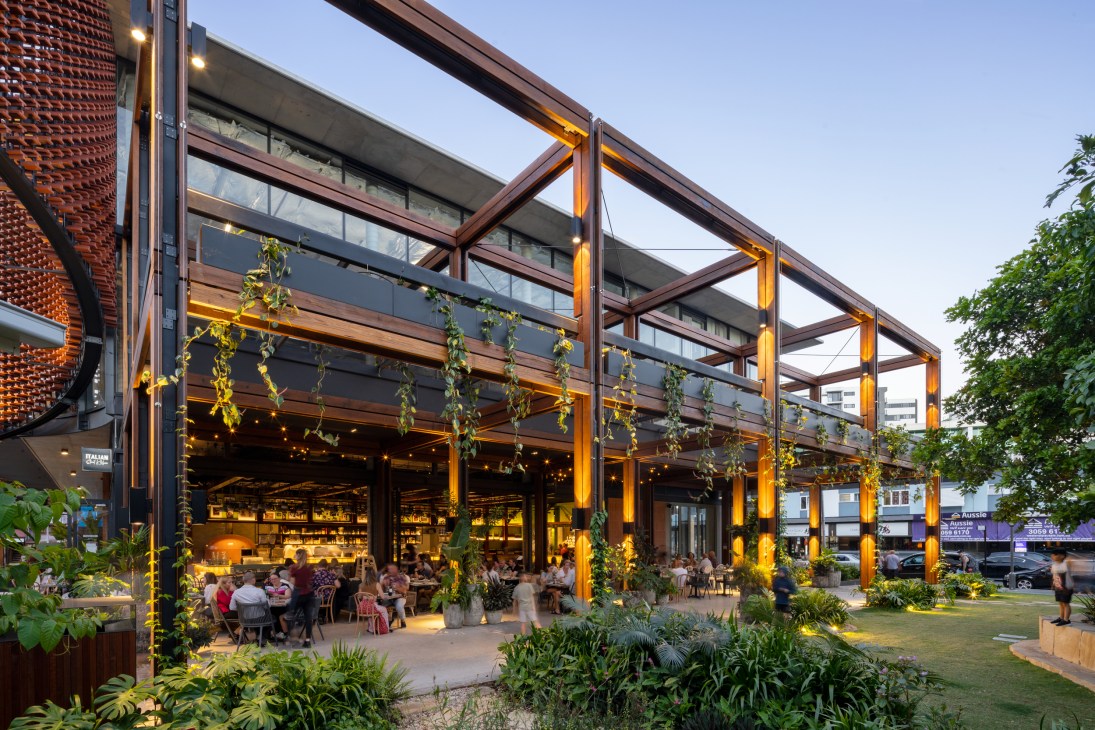
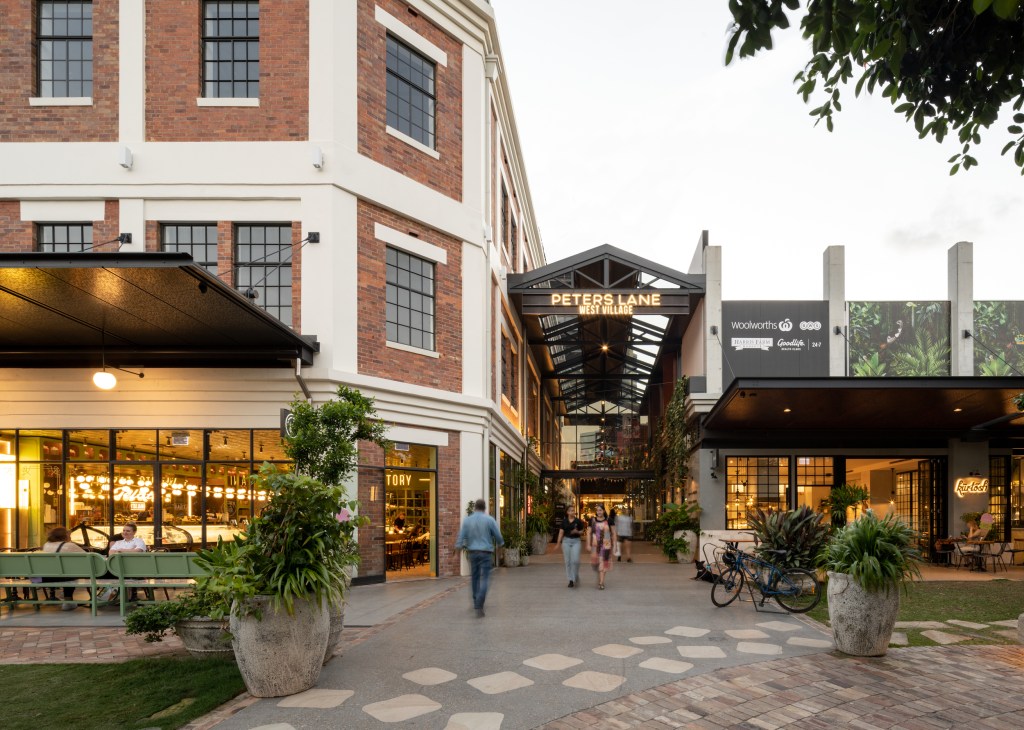
“Our retail tenants were chosen for their unique offering and the value they could add to the West Village lifestyle,” says Hide Seguchi, Sekisui House Australia’s CEO. The au$1.1bn (€640m) development, in Brisbane’s West End, mixes fashion and convenience stores, casual and fine dining, as well as medical services and cosmetic retail. Visitor numbers have outstripped Sekisui House’s projections, with about 18,000 people a day coming through on weekends and up to 26,000 at its busiest times. Retail space is sought after and demand for the development’s units – now fully leased – has nudged rents above the area’s average.
Residents were unsure about West Village when it was proposed in 2014 but attitudes have warmed. Lindsay Anderson, who has lived in the area for 10 years, stops by regularly with his dog. On a midweek morning the two are lounging under the large fig tree on the grass common. The precinct is “a good addition to the neighbourhood”, he says. “It’s cosmopolitan, multicultural. Between the supermarket, the shops and the restaurants, you have everything you need.” That sums up West Village’s appeal to a new, growing market, says leasing agent Julian Musial. Post-pandemic, people are interested in spaces where they can live, work and shop: “a lifestyle precinct… where everything you need is in one place”.
Sekisui House’s focus on independent retailers helps West Village feel grounded in the West End. Take optician For Eyes Only, which has been in the area for more than 20 years. Now inside the Peters Lane building, it stocks a range of handmade eyewear, including Ahlem, Le Coq Et L’Abeille and Thierry Lasry. Family-run grocer Harris Farm Markets, which occupies most of the 100-year-old Peters Ice Cream Factory at the heart of the site, is also a draw. Next door, Tel Aviv-based gelateria Anita has its latest outpost.
The most striking part of West Village is The Eaves, which acts as a “front door” to the site and has a façade that draws the eye to the Peters Ice Cream Factory. “In Brisbane, we don’t have many heritage buildings, so it’s important to celebrate them,” says Kelly Geldard of city-based architects Bureau Proberts. The upper floors of The Eaves are occupied by a day spa, as well as a doctor’s practice, dentist and chiropractor – valuable services that are often forgotten in the planning of large new developments.
On the ground floor, Greek restaurant Yamas is packed. “Being in Queensland, I liked the openness, the feel of the space and being able to enjoy the good weather,” says owner Michael Tassis of what led him to open in West Village. Yamas has been seating about 2,000 diners a week – a mix of West Village residents, shoppers and locals from West End, where there’s a large Greek community. “My worry was that Greeks will tell you if it isn’t right,” says Tassis. “But the community appreciates it.”
Secondhand opinion
Luxury resale
The luxury fashion industry has traditionally sneered at secondhand goods. Fashion is built on the concept of seasonal renewal, with many brands producing four collections a year. To maintain healthy cash flows, labels want shoppers to fill their wardrobes with “newness”. But luxury retailers have been facing pressure to produce less, reduce their environmental footprints and embrace more circular business models. Disruption has arrived online in the form of secondhand marketplaces such as Vestiaire Collective in France and The Real Real in the US.
Yet these platforms have faced criticism too. A lack of quality control meant that many sites were flogging shoddy counterfeits. But the businesses have kept on growing. To build trust, Vestiaire improved its service with new fulfilment centres and teams of luxury experts recruited from auction houses such as Christie’s and Sotheby’s. The changes have allowed the resale market to polish its image, with secondhand items now dubbed “pre-loved” rather than “used”.
Luxury retailers can no longer ignore the secondhand market. According to management consultants McKinsey, it’s a €28bn economy set to grow about 15 per cent every year. That’s why brands such as Alexander McQueen and Florence-based Luisa Via Roma partnered with Vestiaire to sell old-season stock. It’s a huge shift in an industry that had been known to burn unsold stock so as not to dilute the value of new collections.
So how will the resale market maintain momentum? There’s a lo-fi solution: community-based, independent resellers opening bricks-and-mortar spaces to showcase collections. A case in point is mother-and-daughter-run Sellier, based in London and Monaco, which now has a reputation for good-as-new Hermès and Chanel accessories. “Having a physical space offers people comfort; they know we’re not just a bot on Instagram,” founder Hanushka Toni tells Monocle. The solution to fashion’s waste problem is not to sell things differently; it’s to scale back – and put the human at the centre of business.
Brand revival
Big for its boots
Business is booming for outdoors brand LL Bean and its open-all-hours HQ.
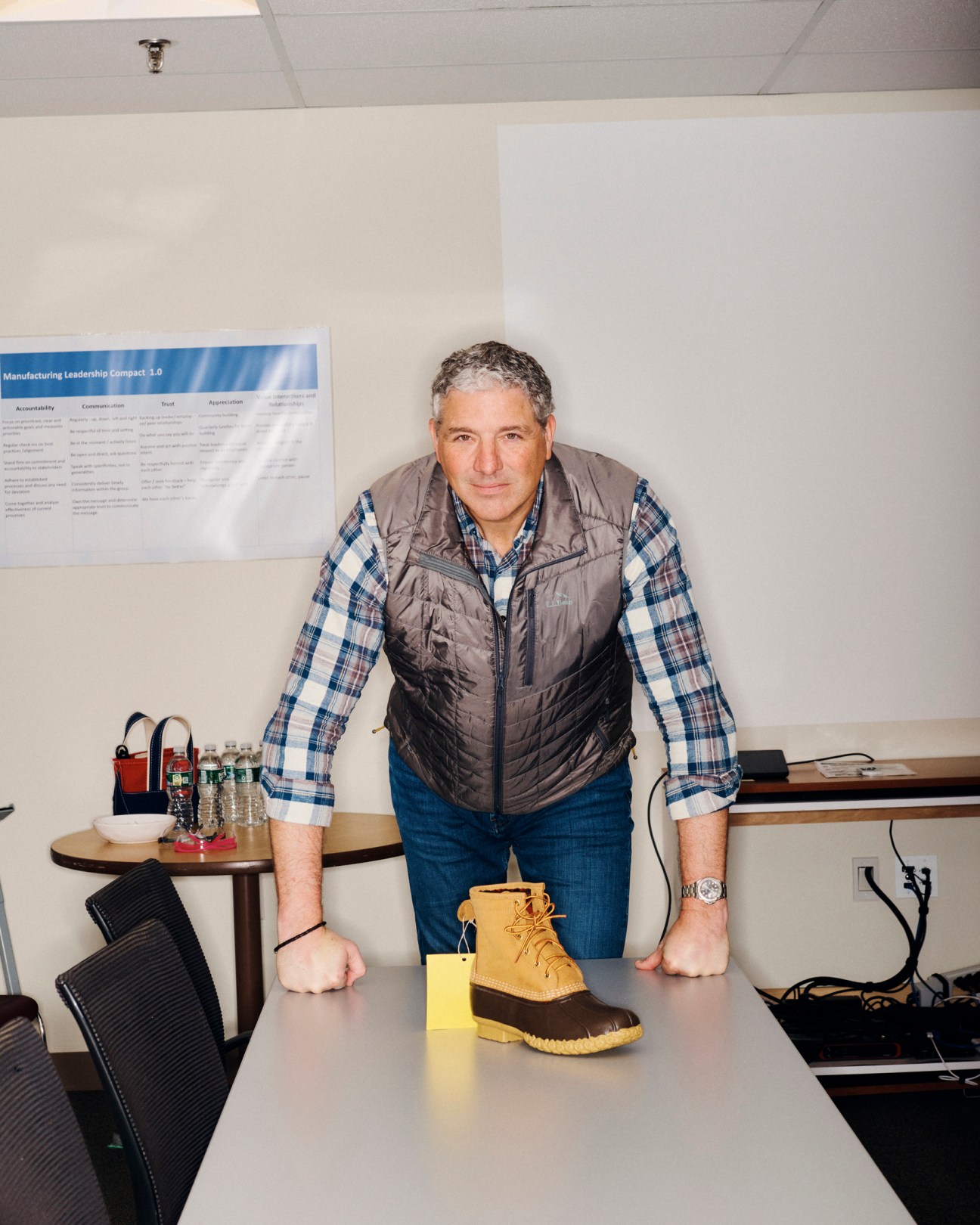
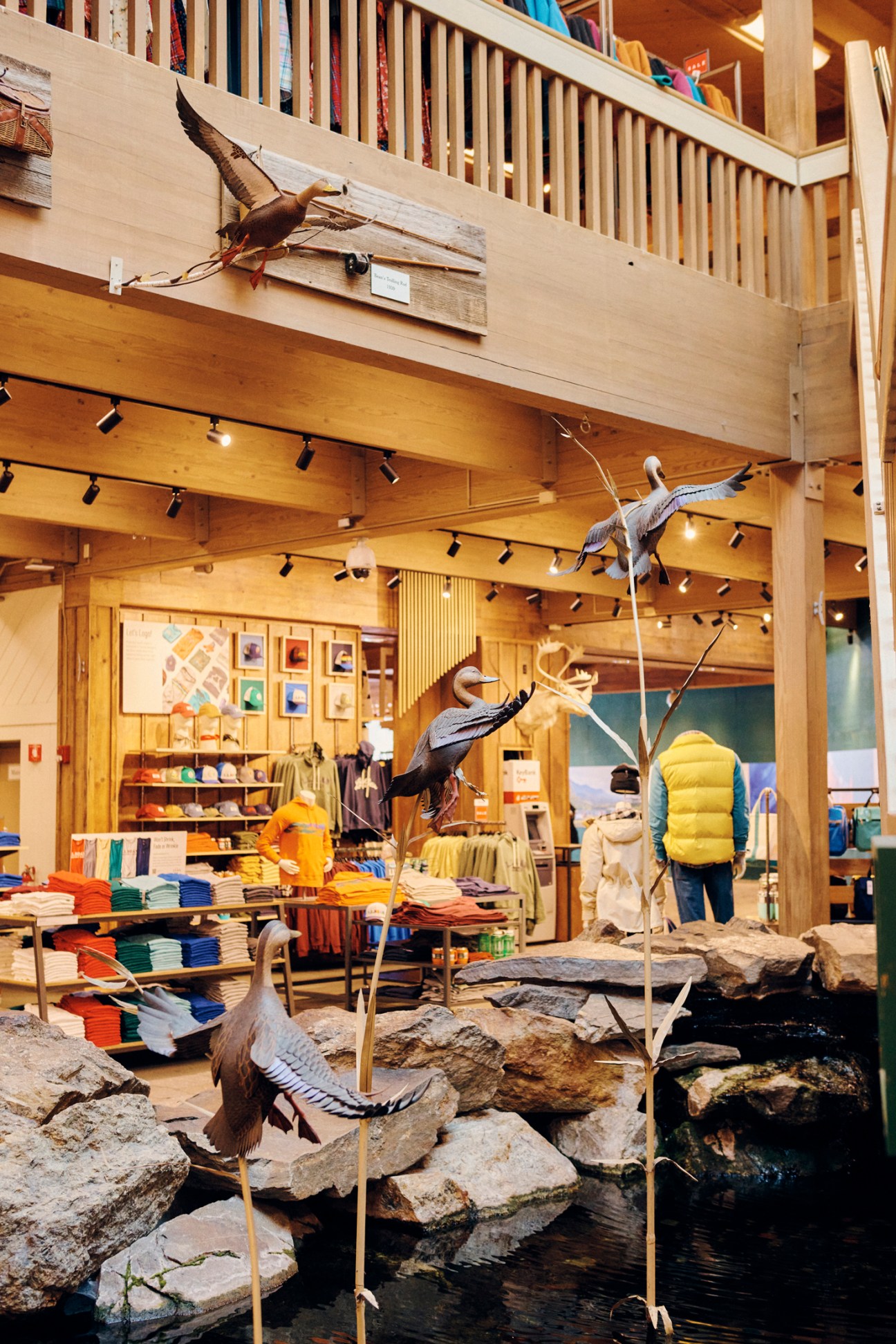
“This has to be a place where people can walk in and feel at home,” says Shawn Gorman, executive chairman of LL Bean, as we descend the grand staircase of the flagship shop in Freeport, Maine. His great- grandfather, Leon Leonwood Bean, planted the flag here 111 years ago as a business selling outdoor gear to adventurous souls that became pure Americana.
Looking down to the in-store trout pond, Gorman outlines how the two-hectare retail campus is about to be refreshed to the tune of $50m (€47m). The taxidermy moose will stay, he says, but the experience will be “elevated”, with simple graphics and natural textures that emphasise the restorative value of the great outdoors.
LL Bean opened in 1912 as a hunting- and-fishing outfitter selling out of a three-page catalogue. Over the decades, its remit expanded and by the 1990s almost every middle-class kid in America had something bearing the Bean logo. The classic Bean Boot – half-wellington, half-hunting shoe – was designed in 1911 for stalking through marshland and never quite went out of style. Every one is still stitched just outside Freeport.
Fortunes ebbed and flowed between the generations but, in 2022, amid a boom in outdoor gear, the brand reported revenue of $1.8bn (€1.7bn) and its biggest growth in sales in 30 years. “I’ve always been a huge advocate for retail growth,” says Gorman, the fourth generation to take the reins of this entirely family-owned business. Under his tenure, the number of shops in the US has doubled to 56, while in 2019 LL Bean opened its first shop in Canada. Six more shops are due to open across North America this year. The future of retail, he says, is in part about reconnecting customers with the brand’s outdoorsy roots.
LL Bean timeline
1911: Leon Leonwood Bean invents the Maine Hunting Shoe, now called the Bean Boot
1917: The first LL Bean retail shop opens in Freeport, Maine
1951: The flagship shop opens 24 hours a day, all year round
1967: The death of Leon Leonwood Bean makes national news
1987: The signature logo of a sunrise over Katahdin Lake is introduced
1992: LL Bean expands internationally opening three shops in Tokyo
2000: The first LL Bean shop in the US outside Maine opens in Virginia
2013: Shawn Gorman, great-grandson of the founder, becomes chairman
2023: LL Bean’s new global headquarters opens in Freeport
As LL Bean grew over the decades, the product range ballooned and the true heritage brand drifted from its rugged origins. “We got a little carried away,” says Gorman. “We built a great base in the 1970s and 1980s but when those customers started ageing, we adapted with them and moved into pinpoint Oxford shirts and penny loafers, which wasn’t true to what we were.” One of the first things Gorman did as chair was to halve the assortment.
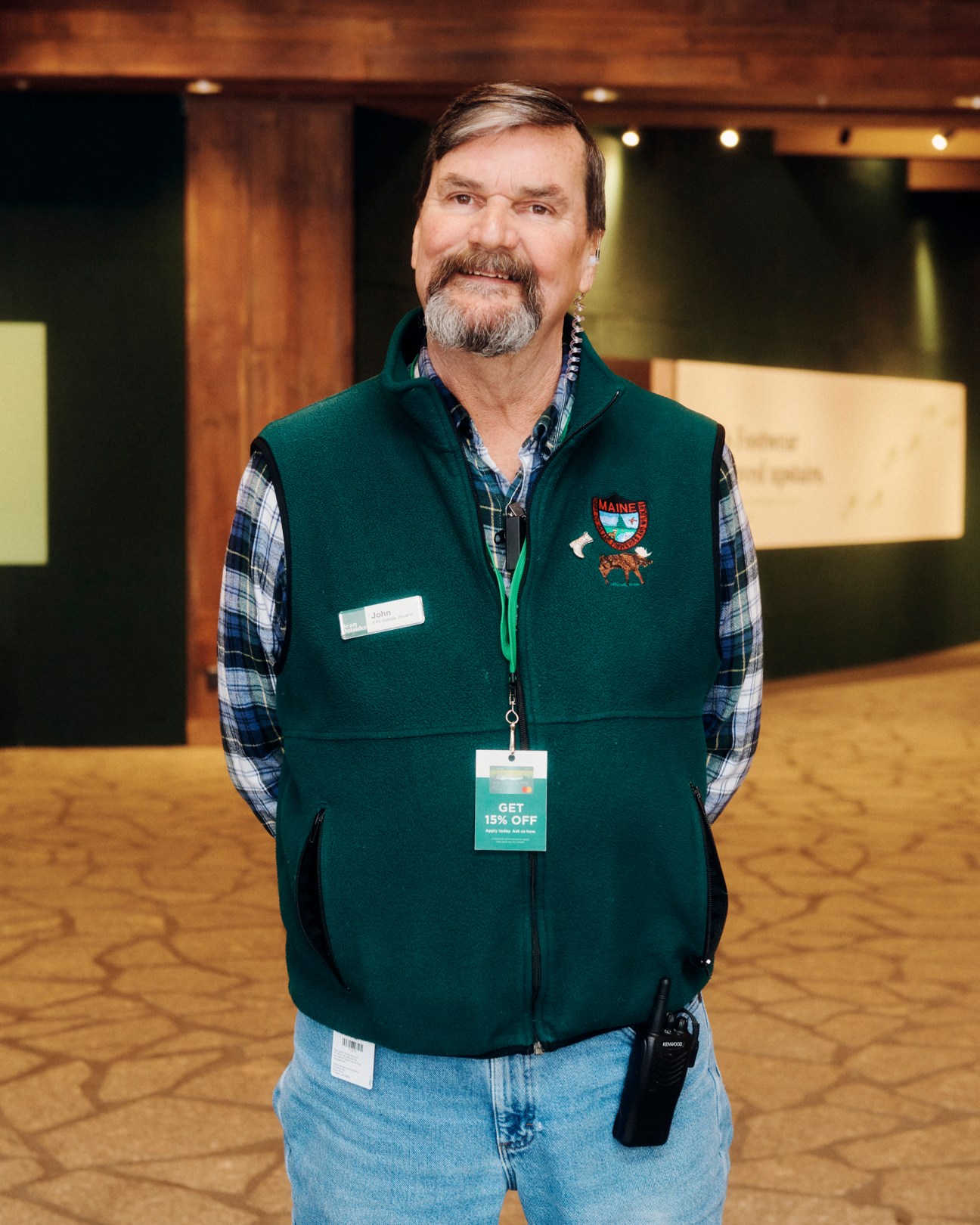
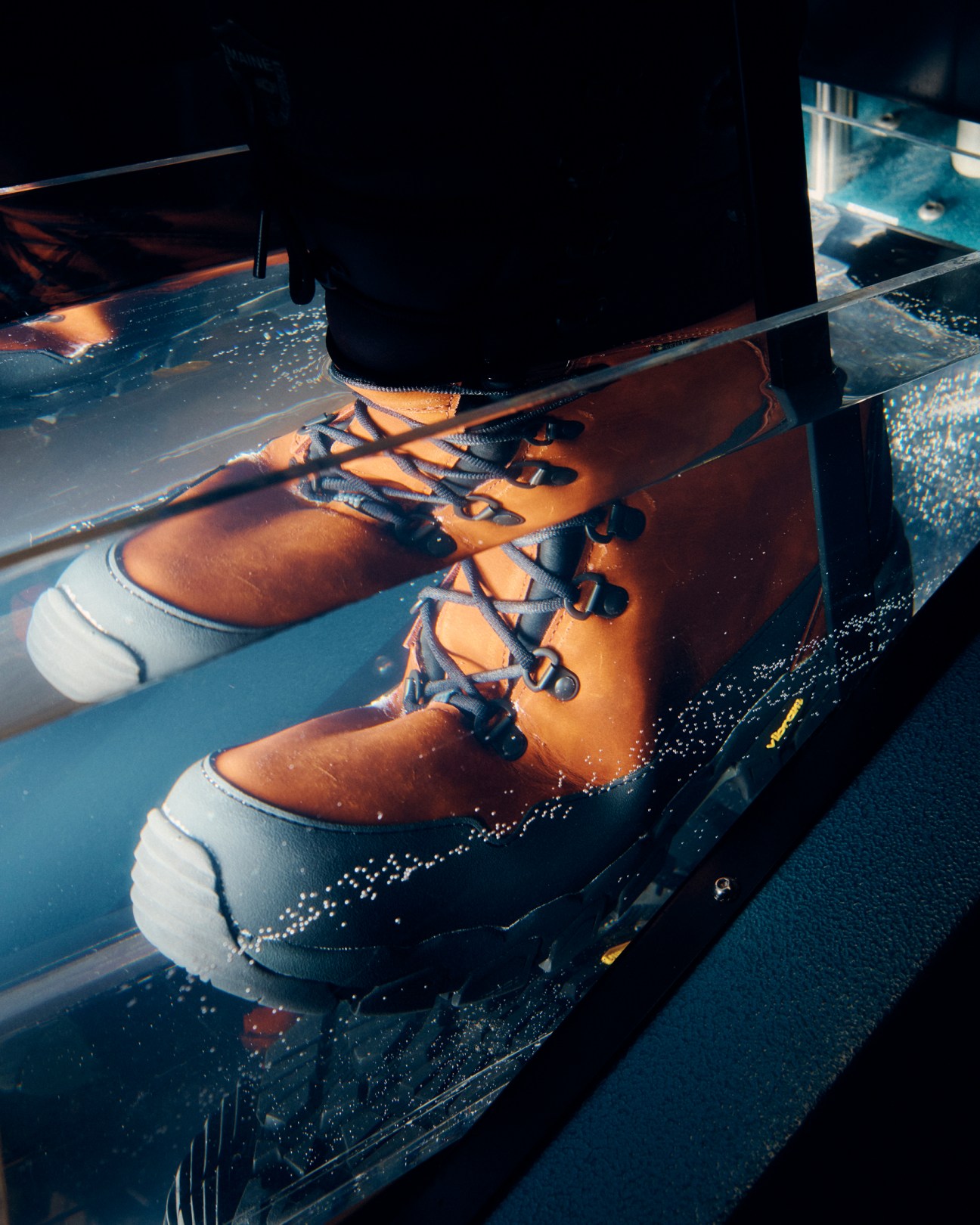

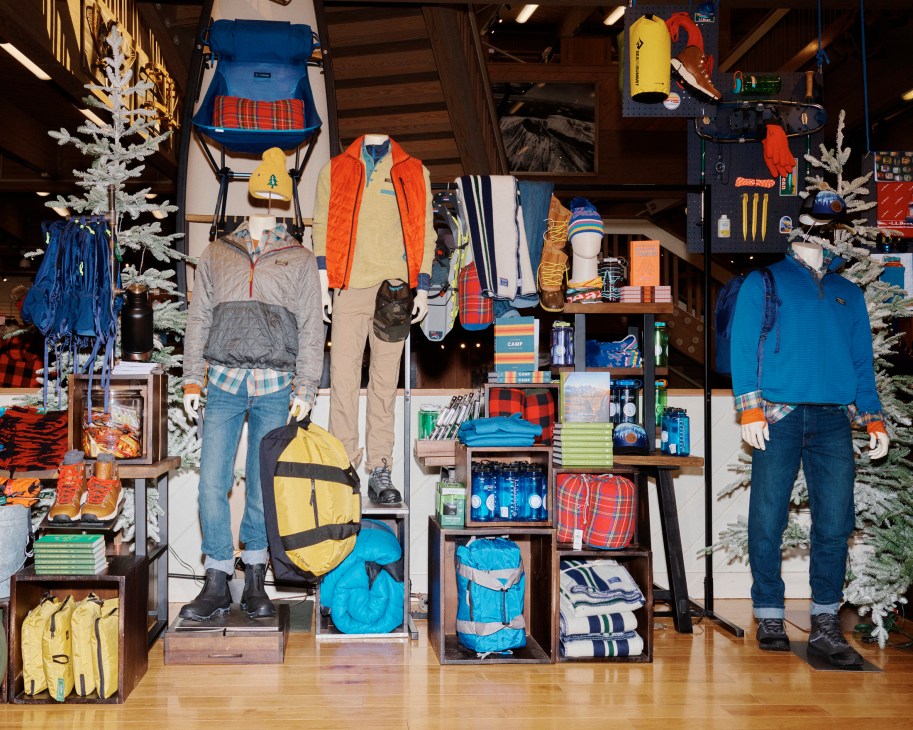
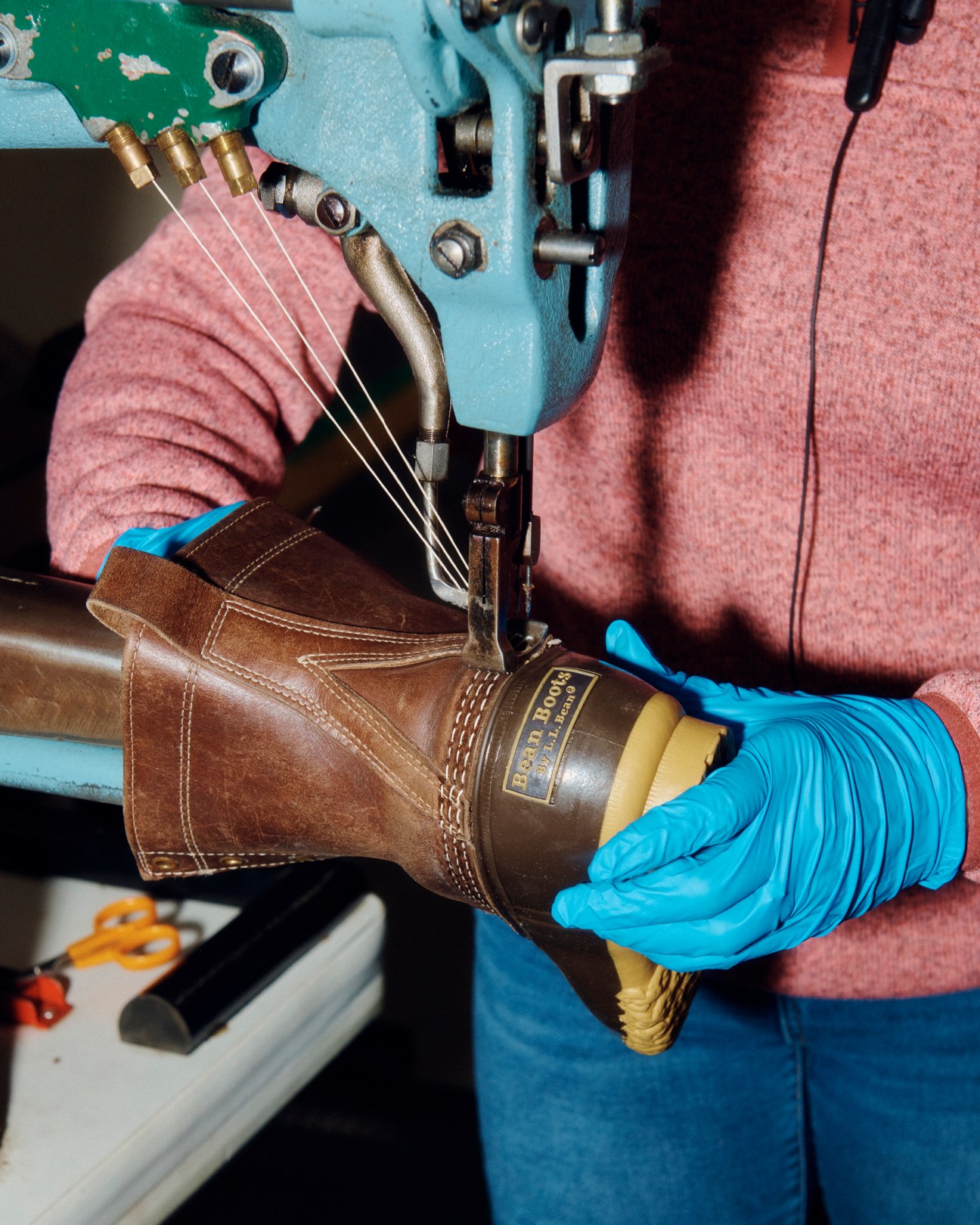
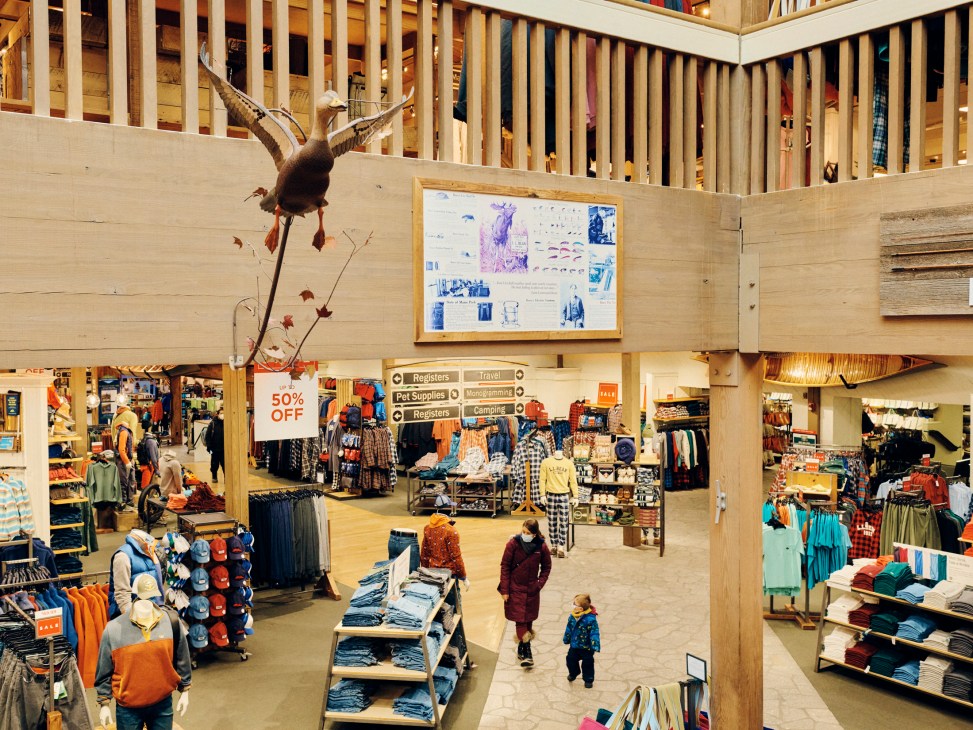
Unlike many outdoor brands, LL Bean has resisted flirting with streetwear and does few collaborations; it has never tried too hard. That was what appealed, in the 1970s, to Japanese menswear editors who adored the brand’s unpretentious yet preppy Ivy League style. LL Bean’s first shop outside Maine was in Tokyo, opening in 1992.
“We have never gone seeking fashion but fashion has found us on occasion,” says Gorman. “Our products have to be authentic because our customers know us well.”
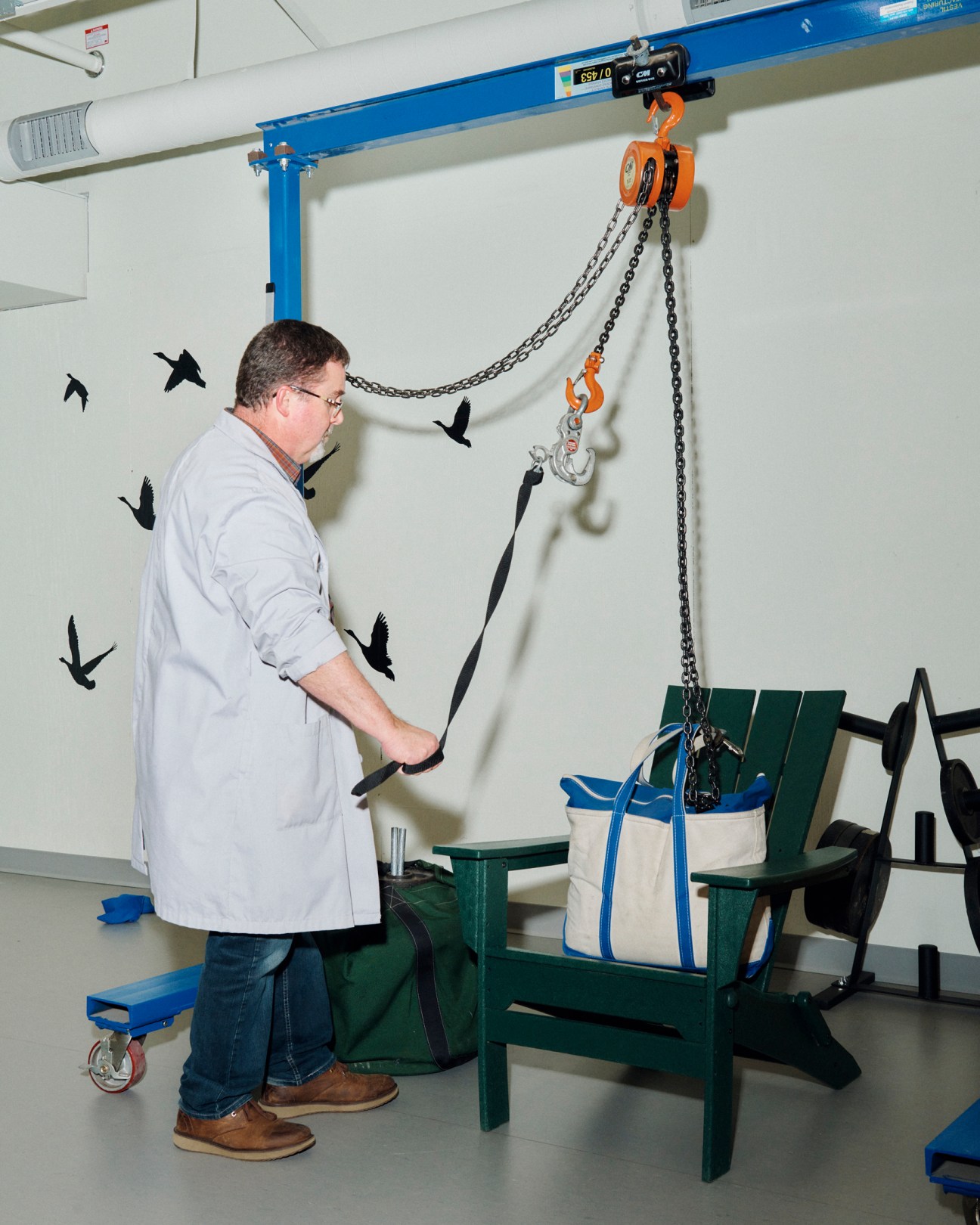
Devotees still travel from all over the US to the Freeport flagship, which stays open 24 hours every day, just in case passing hunters or fisherfolk need to pick up kit on their way to the wilds. Only John F Kennedy’s assassination, the death of the founder and coronavirus have closed it. It’s the sort of service only a family-owned business would provide. As is the foundational promise to repair every pair of Bean Boots, however old or battered, for a mere $40 (€38).
At the factory, we’re shown a wall of letters that have been sent to the repair team over the years – a man who found his dad’s old size 11s, for instance and wanted them fixed up so he could literally walk in his shoes. “I love to be able to create things that I feel a part of,” says Connie Rose, a Bean Boot leatherworker who also leads the morning callisthenics. “It’s a big family here.”
Bagging-area blues
Staffless supermarkets
There’s a game that British people sometimes play, only half-ironically, in which they rank their favourite supermarket. Such is the dominance in the grocery sector of a quartet of uninspiring players (“the big four”) that it’s a bit like picking your favourite dictator. The two largest, Tesco and Sainsbury’s, constitute 43 per cent of a market worth £212bn (€239bn) in 2021. But even these behemoths of retail are but minnows compared to their brethren in Big Tech.
For Amazon (market value: €970bn), Tesco (€21bn) is a mere granule of sugar on a shop-bought doughnut. In 2021, the technology giant hurled itself into British supermarket retail armed with the same tool it used to disrupt the bookselling business in 1990s Seattle: technology. Amazon Fresh’s “Just Walk Out” system employs sensors that detect when an item has been lifted off a shelf and placed into someone’s basket. Its price is then charged, using more sensors, to the shopper’s Amazon account.
When its first UK grocery store opened, Amazon’s dominance seemed inevitable. But while the Californian giant opened dozens of outlets across London last year, the company announced in February that it would be closing several of them due to a $720m (€673m) slump in the value of its bricks-and-mortar portfolio. This appeared to signal Amazon’s loss of faith in its ability to disrupt the sector. Its CEO, Andy Jassy, said Fresh had failed to provide a “different offering” to consumers.
He was right. Even as their ubiquity and profits have soared, the UK’s biggest supermarkets have cut staff in favour of automated checkouts. These much-maligned tills blare out robotic instructions that make supermarket shopping, an already tedious experience, even more disassociating. Amazon Fresh, which merely offers improved technology and fewer underpaid staff, represents a small change rather than an epochal shift. A truly disruptive thing would be to focus on the human connection that shops can provide.
Unfortunately, Jeff Bezos is about as likely to recognise this as he is to send a self-checkout till on a rocket to Mars.
Ambitious expansion
Butterfly effect
The Mall Group chairwoman’s plan for Thai retail is taking flight.
If Bangkok is a city of shopping malls then Supaluck Umpujh is one its chief architects. The chairwoman of the Mall Group, one of Thailand’s largest mall operators, has spent the past 30 years building up the standard of retail in her hometown and the 68-year-old is not done yet. This December, Umpujh is due to cut the ribbon on Emsphere. The 200,000 sq m mixed-use development on Sukhumvit Road, Bangkok’s bustling retail artery, is a stone’s throw from two of her existing developments, Emporium and Emquartier – she would like to rename the area “Em” district. “You will not recognise Emsphere as a mall,” Umpujh tells Monocle from her house in the Thai capital; a tropical oasis full of Banyan trees, waterfalls and fish. “It’s the future of retail but the service will still be superb.”
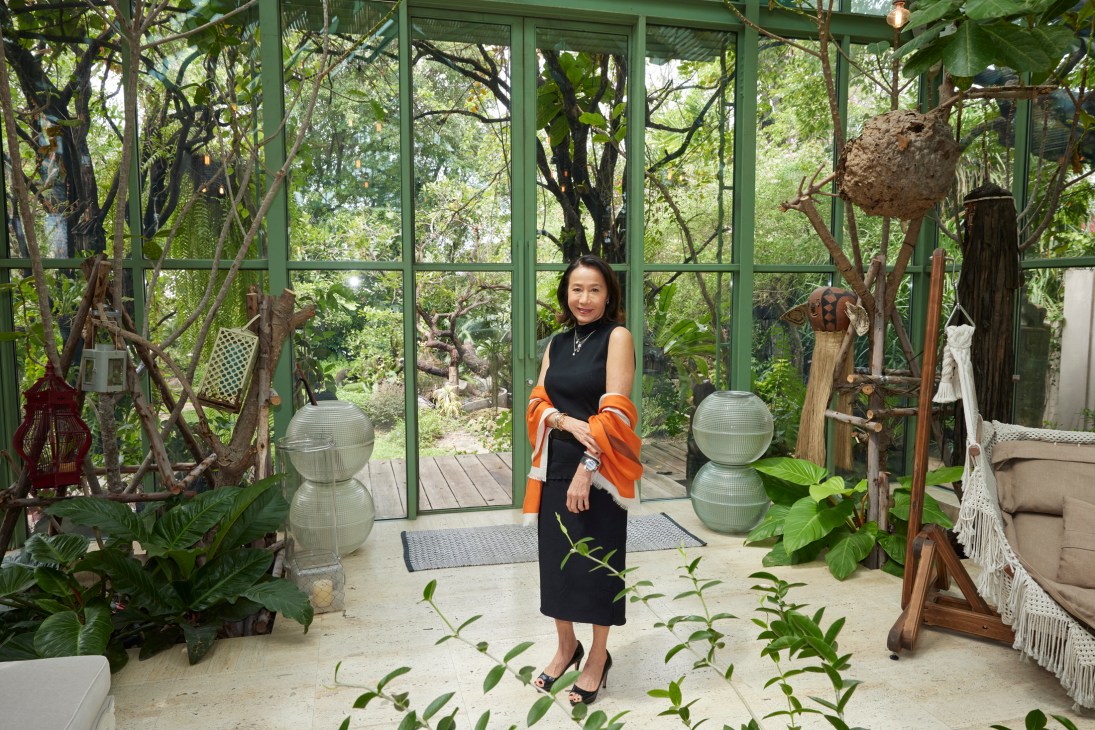
The Thai retail tycoon has staked €381m on her newest property and signed Ikea as her anchor tenant. Although the Swedish firm’s first city-centre shop in Bangkok is already causing a mix of excitement and dread among residents of the central Phrong Phom, Thong Lo and Ekkamai districts, Umpujh says that she doesn’t simply want to add more shops to Sukhumvit; she wants to entertain. Her biggest coup has been to convince American live-entertainment giant aeg to partner with her for its first arena in southeast Asia – a win for Thailand and a platform for Empshere to attract a fragmented consumer market. Events at the 6,000-seater auditorium will include music, sport, e-gaming and film. “You can’t underestimate the value of entertainment,” she says with the wisdom of a nightclub owner (she also owns two bars inside Emquartier). “After coronavirus, people will buy a drink far easier than buying something from H&M.”
Umpujh’s wisdom
1. Strike deals on the dancefloor. When execs from a top luxury brand needed convincing about the Thai market for high-end handbags, Umpujh took them clubbing. “I love music and to entertain,” she says.
2. Mall operators shouldn’t become retailers. “If I had my own brands they would get the best sites, which would frustrate others,” she says. “I win when my tenants know I have no conflict of interest.”
3. Lose small, win big. “In Thailand we know how to compromise. I tell my team that it’s OK to lose a bit to make others happy.”
Umpujh has a history of dreaming big. Emporium brought European luxury brands, such as Chanel and Hermès, to the Thai capital, while Siam Paragon continues to be one of the world’s most popular shopping destinations. “I never studied retail, so I always think outside the box,” says Umpujh, who left behind her pharmacy career to join her father’s company. Four decades later she looks every inch at home in the industry.
Known as Elle to her friends and nicknamed “Iron Butterfly” by the business media, she refers to herself as both a “great warrior” and a “teacher”. She enumerates a number of guiding principles, the sum of which can be boiled down to two universal truths: people like new things and humans are social animals. “I’ve seen the failure of the department stores in the US and it’s because of the format,” she says. “Difference is key and that’s what the US forgot. When you don’t follow a format you need to come up with something else.”
Umpujh is due at Emsphere today for a site visit. The pandemic delayed the opening by several years but the downtime hasn’t prompted any soul-searching from her about the longevity of a predominantly bricks-and-mortar retail business that currently employs about 10,000 people. Umpujh says that her father taught her to see the opportunity in every crisis, and coronavirus was no different. Wealthy Thais went on a domestic spending spree during the travel lockdown and this bump in luxury sales offset a slump in demand at the six other shopping malls operated under the Mall brand. “By the end of 2022 our sales were on par with 2019 but our profits were higher because we cut down costs,” she says.
The CEO says that luxury brands cause her the biggest headaches, not technological disruption or competition from rivals such as Central Group and Siam Piwat. “They think they control the world,” she says, sharing war stories about winning over French fashion executives and turning Italian billionaires into friends. “All of these brands have passed through windy, stormy and sunny days and they know that everywhere they go with me there is trust and confidence.”
The next, even more ambitious part of Umpujh’s retail masterplan for the Thai capital has already appeared on the horizon. When it opens in 2026, the 93,000 sq m Bangkok Mall will be five times the size of Emsphere. Thailand is eyeing France’s title as the world’s most-visited country and Bangkok’s chief architect is building a “city within a city” to entertain an expected influx of wealthy Chinese, Indians and Indonesians. “Bangkok Mall will be my legacy,” she says, nixing any talk of retirement. With no children, the family business will one day pass to her nieces and nephews. “I learn from them about new fashion and technology – and what they get from me is experience.”
Future-proofing
How a Finnish shop has revived an old brand.
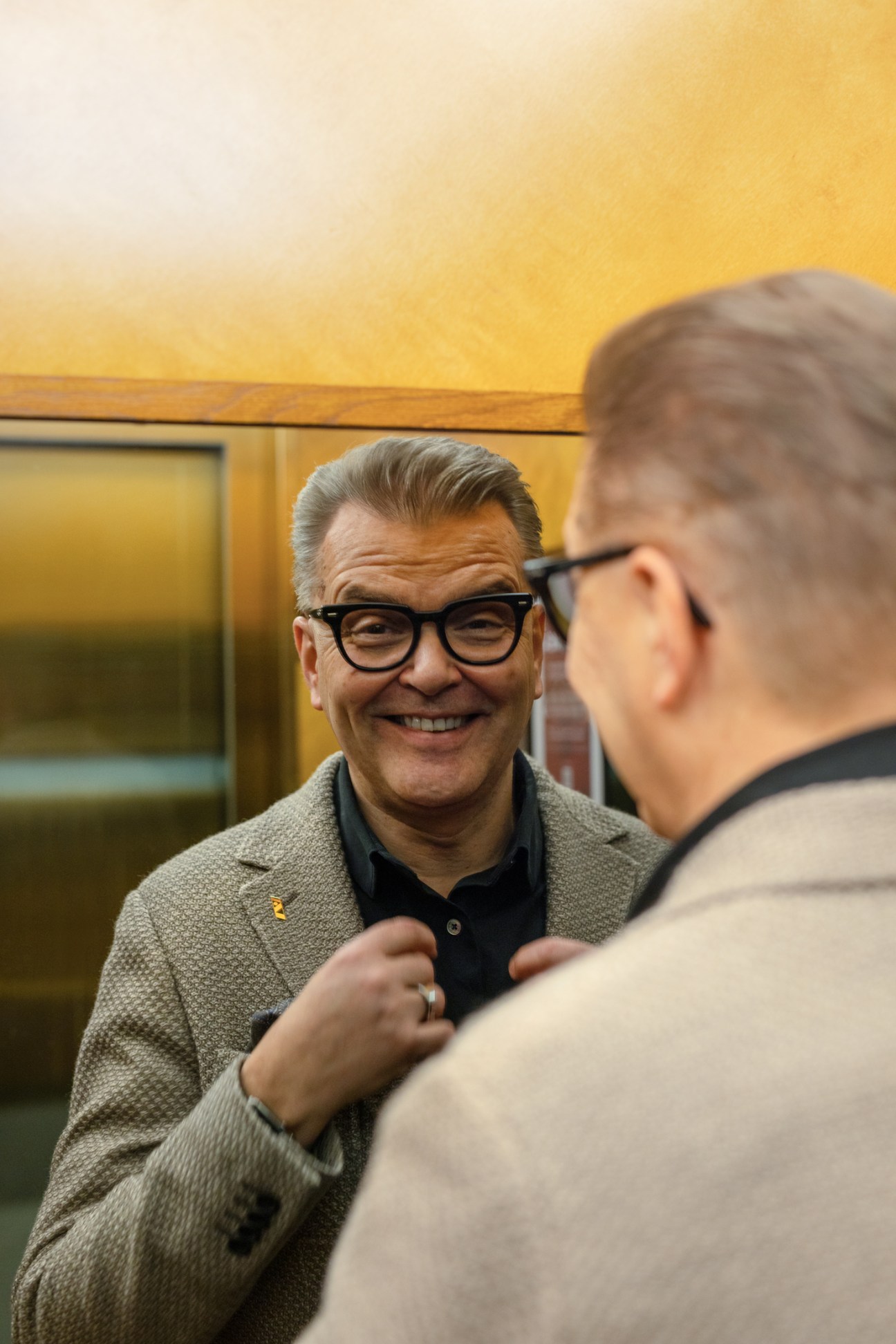
Jari Latvanen took over as CEO of Stockmann Group and its storied Helsinki department store in 2019. The company was in debt after a failed expansion into Russia and the costly, but ultimately useful, €867m purchase of Swedish fashion giant Lindex. Meanwhile, its department store was losing customers to online shopping. Now the group’s fortunes are back on track, showing a profit of €527m in 2021. Stockmann also posted revenue growth over the first three quarters of 2022.
Monocle meets Latvanen to discuss why a great brand shouldn’t try to be everything to everyone and why loyal customers count more than passing ones.
How did you revive Stockmann after so many challenging years?
The key was returning Stockmann to its roots as a premium retailer. When I joined we were trying to sell everything to everyone and that was not working. We are now a premium department store, not a shopping mall. We need to offer our customers a “wow” factor. We also improved the level of customer service, something Stockmann was previously known for.
Stockmann is one of Europe’s oldest department stores and the group dates from 1862. Can this history help?
This heritage is a valuable asset. Stockmann has always been more than just a department store. We have been an attraction. We had Finland’s first escalator and the latest in international fashion before the others. These are the roots that we are returning to. We want to offer exclusive experiences such as fashion shows; we want to be a location not only for shopping but also for meeting your friends and for enjoying great food and drinks. Three quarters of our revenue comes from our loyal, returning customers: that’s an incredibly high number in this industry.
Many heritage retailers are in crisis. What is your advice to them on how to turn things around?
Know your company’s dna. That’s the thing that made you successful in the first place. Too many companies try to transform themselves by following the latest fad. Why do what everyone else is already doing? Listen to your customers and your employees to better understand the brand. Focus on the things that you can change.
Tell us about the future.
Department stores, unlike malls, are often in city centres. We need to use that to our advantage: we are where the people are. People can buy most things online – we need to accept that – and, of course, be part of that too by having a good cross-channel strategy. We need to give people a reason to visit us. As for Stockmann specifically, we have a lot coming. In our Helsinki flagship, we’ll open the largest toy shop in the Nordics as well as a new children’s department. We have some exclusives coming and we’ll focus more on men’s fashion, as men under 35 are the fastest- growing customer segment for us. We’ll also focus more on circular economy by opening things such as trainer bars where people can get their favourite shoes fixed. After years of crisis, Stockmann can now focus on growth.
Jari Latvanen’s advice for reviving a dented brand
1. Hone in on your unique selling point.
2. Listen to your customer. Then surprise them with your dedication and great service.
3. Have a razor-sharp focus on your chosen strategy.
4. Know your market but stay agile.
5. Department stores may be an in-person business, but you still need to embrace digital opportunities to tell your story.
Noble village
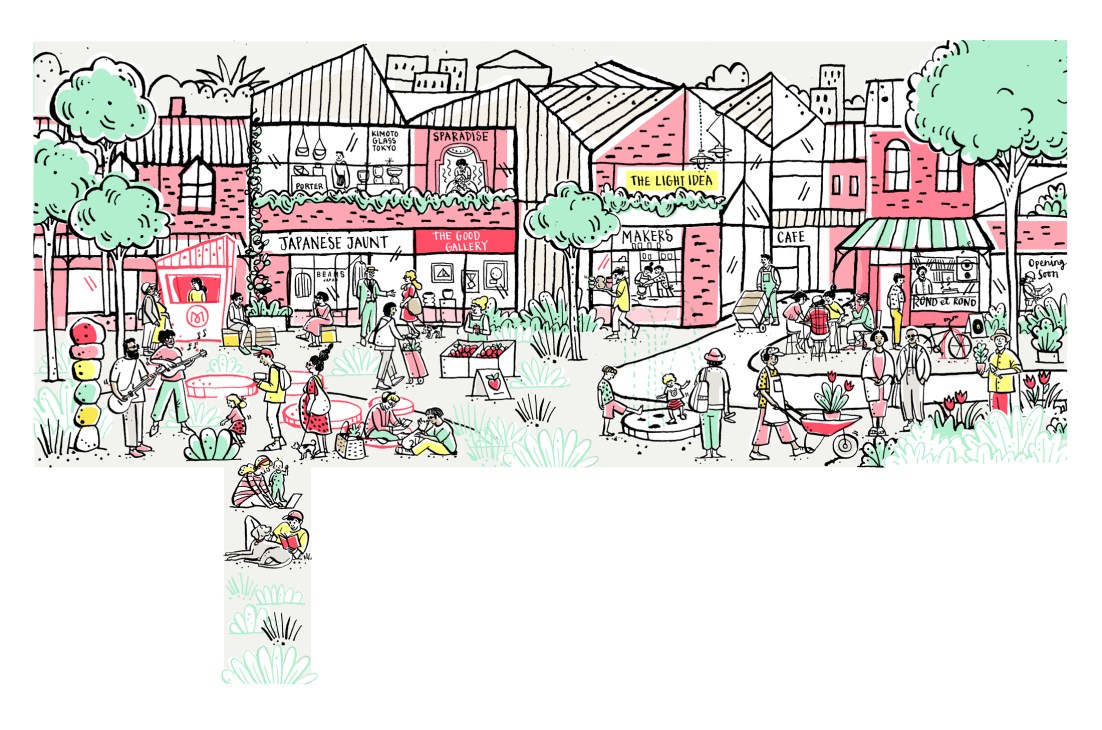
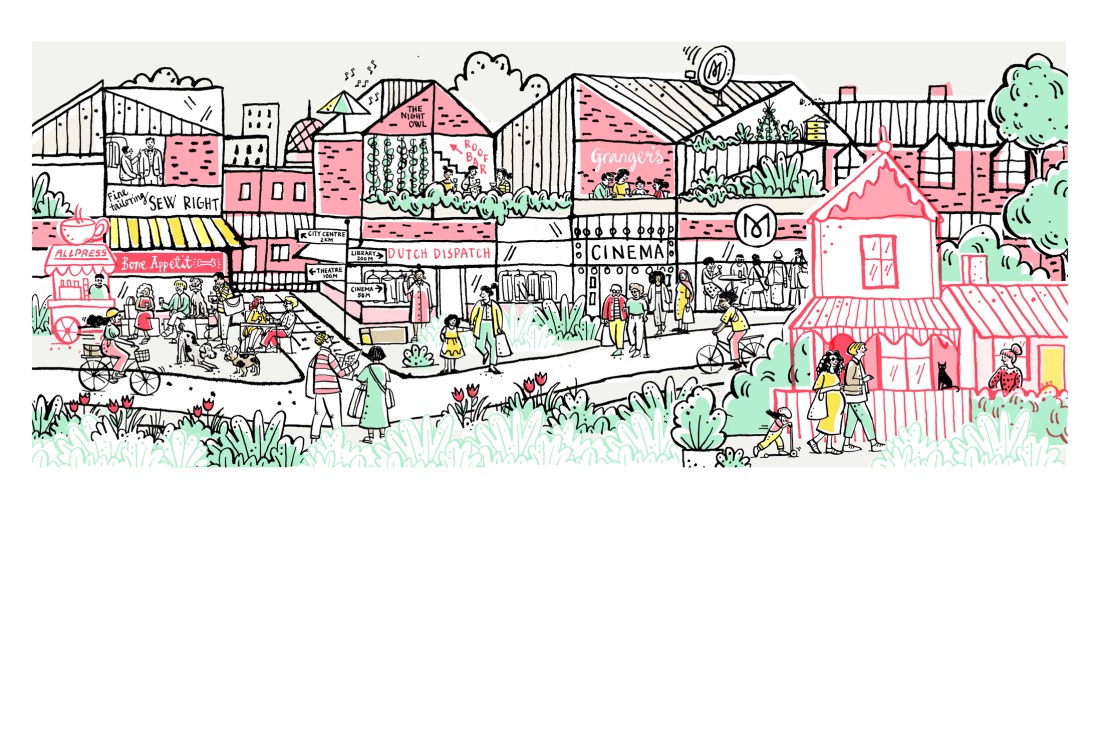
Good retail makes neighbourhoods and fosters communities. But what exactly makes for a good experience that will see people do more than just shop? Here’s how to do it right.
Online shopping means that we can have most things delivered straight to our door. But do we really want to live in a world that is filled with warehouses and delivery vehicles? Retail done right can still be an easy sell. Shops can connect communities, buoy good brands and add life to cities: think of The Commons in Bangkok or Coal Drops Yard in London. Sadly, good retail outposts – in which to shop, eat and get a decent culture fix – are few and far between. That’s why Monocle is planning its own.
While we believe that good retail is grounded in its location, we have compiled a wish list of global talent to help out. The result? A destination that gives back to its neighbourhood, supports talented individuals and is a pleasing place in which to linger. So grab your bag and bring your wallet, we’re off for a spree in Monocle’s perfect retail village.
Sense of arrival
There’s something for everyone at our shopping village, which sits in a neighbourhood that is in need of a little retail love. Residents amble here, while visitors from further afield arrive via nearby transit; there’s also valet parking and the option to have your car cleaned and buffed while parked out of site in the underground car park.
Walkable streets
A main thoroughfare peppered with little laneways and leafy plazas offers space to stretch your legs and enjoy the village feel. Handsome timber and steel benches, finished with bright pops of colour by Czech brand Mmcité, provide spaces for weary legs to rest and for thirsty shoppers to enjoy coffee from one of our nattily branded kiosks.
Good greenery
No cost is spared when it comes to the planting: mature trees sit in dense beds of low greenery designed to stay fresh across the seasons. The vegetation also offsets the village’s environmental impact.
Space to enjoy
Our water features and fountains babble calmly and create safe spaces for tots to paddle when the weather is clement. Meanwhile, people perch on seating platforms, taking in performances from the city’s musicians and quality touring acts (rumour has it that several chart toppers got their first break here).
Accessible architecture
To ensure that the upper floors feel connected with the hubbub outside, our buildings are no more than three storeys high. They’re made from a tactile mix of recycled bricks from an old factory across town, cross-laminated timber and natural materials that will age gracefully.
Who we would tap:
We would ask Australian design firm Richards and Spence to lay out the village, which would seamlessly flow into the surrounding streets, making it feel part of the city.
US landscape architect Kathryn Gustafson would craft the flow of outdoor spaces. She might suggest capturing rainwater and including discreet solar panels.
Zürich-based Schweitzer Project would handle the shop fit-outs, striking a balance between busy and minimal.
Fabien Lombardi of Paris bar Bambino knows how to get people wiggling. He handles our playlist and runs a vinyl-shop-cum-listening bar.
Berlin’s Ebolicht will do the lighting and produce a series of lamps with our in-house team (yes, they’re for sale).
Distinct departments
A dedicated village department store sells wares grouped by theme and region rather than product type; the Japan section has exclusive goodies from Beams, bags by Porter and glassware by Kimoto.
Short-term leases
Who’s that moving in next door? Some shops can be leased by the month for small firms to try something new and for entrepreneurs to test products and ideas.
Change it up
The changing rooms in all of our shops are roomy, well-lit and contain mirrors at different angles so that outfits can be properly inspected. And flattering lighting spurs sales.
Smarter signage
Clear wayfinding by Norwegian firm Snøhetta directs visitors to locations in and beyond the village. Want to know where the nearest theatre or library is? We’ll happily show you the way. Being a good neighbour matters and it’s why so many brands beyond the village send visitors our way too.
Knowing information
Staffed information points where shoppers can talk with someone in the know about all that the village – and city – has to offer are essential (no tinny speakers or crumpled maps here). Think of our team as your concierges while you’re here: they’ve been known to sort snappy airport transfers and wrangle great tables all over town.
The sumptuous spa
We’ve partnered with Austrian beauty whizz Susanne Kaufmann on a custom range of natural skincare products and the winning treatments at the spa come courtesy of Swiss firms Clinique La Prairie. The steamy Turkish hammam is also worth a visit.
Inspired art
Too much corporate art is a bad mix of silly digital displays or bad objets d’art. So we’ve handpicked the 15 best photographers, ceramicists and painters from around the city whose works you can – and should – buy at a range of price points. Check it all out at our friendly gallery.
Expert gardeners
Great in (the flower) bed, our team of maintenance staff takes real pride in keeping its patch spruced and clean. An organic vegetable garden to go with the orchard and beehives is also in the works.
Cinema culture
Exclusive director interviews and film-making classes run by the city’s best cinema make our intimate three-screen set-up a must whether you’re shopping or not.
Simple shopping
Transactions are made easier thanks to our own credit card, which offers benefits across the site and Air Miles too. Our point-of-sale technology also allows you to tap for anything in any shop.
Members’ club
Want better drinks, a lounge to relax in and access to extra restaurants and bars? Join our members’ club. You’ll get first dibs on limited-edition collaborations and a subscriber-only podcast (did we mention that we have a radio station?).
Brands with buzz
Prior to the grand opening, we scoured the city for the best new brands. Leading local talents have set up their second shops, while a select few retailers from beyond the border have set up their first international outpost.
Pet-friendly position
A team of friendly staff will greet you at our two dedicated pooch parlours: grooming salon Vanity Fur and Bone Appétit, which sells upmarket dog treats.
Somewhere to learn
There are friendly workshops at convenient times so try your hand at crafts, basket weaving or throwing a pot. Oh, and there’s a cookery school too. But we also host courses on how to brand a business, stage a redesign or take a product to market. We’re always happy to give young retailers a leg up.
Tidy tailor
Buying a new suit or overcoat but need it adjusted slightly? The village tailor, trained by Hong Kong’s Ascot Chang, is on hand to do it for you quick smart.
Here to help
Life can get a little complicated but this is where we come in. Kitted out in Italian-made uniforms by Milanese firm Studio Older, our bright and multilingual team is unobtrusive (no painted-on-smiles or uncomfortable standing around). These hospitality-school grads are always on hand to go the extra mile.
All-hours dining:
Oslo’s Fuglen runs the kiosks, Australian chef Bill Granger has a brunch spot and there’s a lively farmers’ market.
For the evening, we’ve invested in a space where guest chefs, such as Mexico City’s Elena Reygadas, tempt new punters.
Munich bar specialist Charles Schumann is refining the cocktail menu at our new venue, The Night Owl.
The village people:
Personal shopper Dee de la Mode can tell at a glance exactly what style and cuts will suit her clients best.
Tilly Peddler runs a design shop with a focus on lesser-known design hubs. This month – the Dutch Dispatch.
Porter Thomas Hilfsbereit never fails to impress with his courtesy and efficiency.
2023’s Fashion 25: The labels and designers to know now
1.
SMR Days
UK
The aim of smr Days is to capture nomadic style and the carefree spirit of holidays. Co-founders Gautam Rajani, Dan May and Adam Shapiro (pictured, from left) combined a wealth of experience working in fashion styling and communications to create the young label, which has hit the ground running since its inception in 2020.
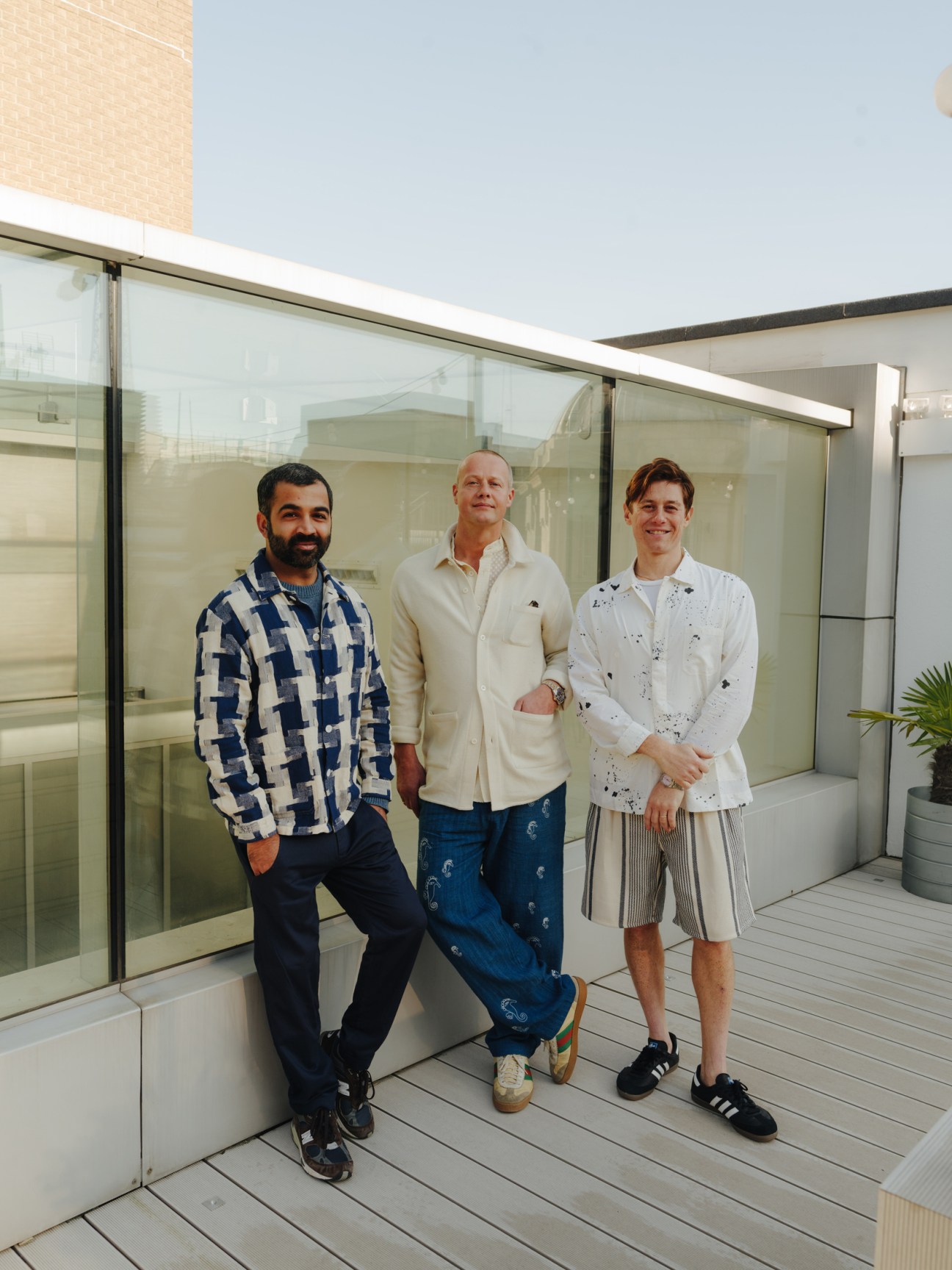
The brand’s main goal is to offer high-quality craftsmanship that’s often lost in the overly simplistic designs that dominate the casual-menswear market. “The brand caters for those wanting to elevate a relaxed style,” says Shapiro. Pieces highlight artisanal techniques such as Indian bandhani tie-dye, kantha embroidery and traditional block printing, which add a refined flair to even the most casual silhouettes. Inspired by the artisan communities in Rajani’s home country of India, the three founders also want to use their work to help keep Indian craft alive and ensure that these skills are passed on to the next generation. A highlight from the most recent collection uses chikankari, a hand-embroidery technique, to create seahorse motifs over a two-piece suit in midnight blue.
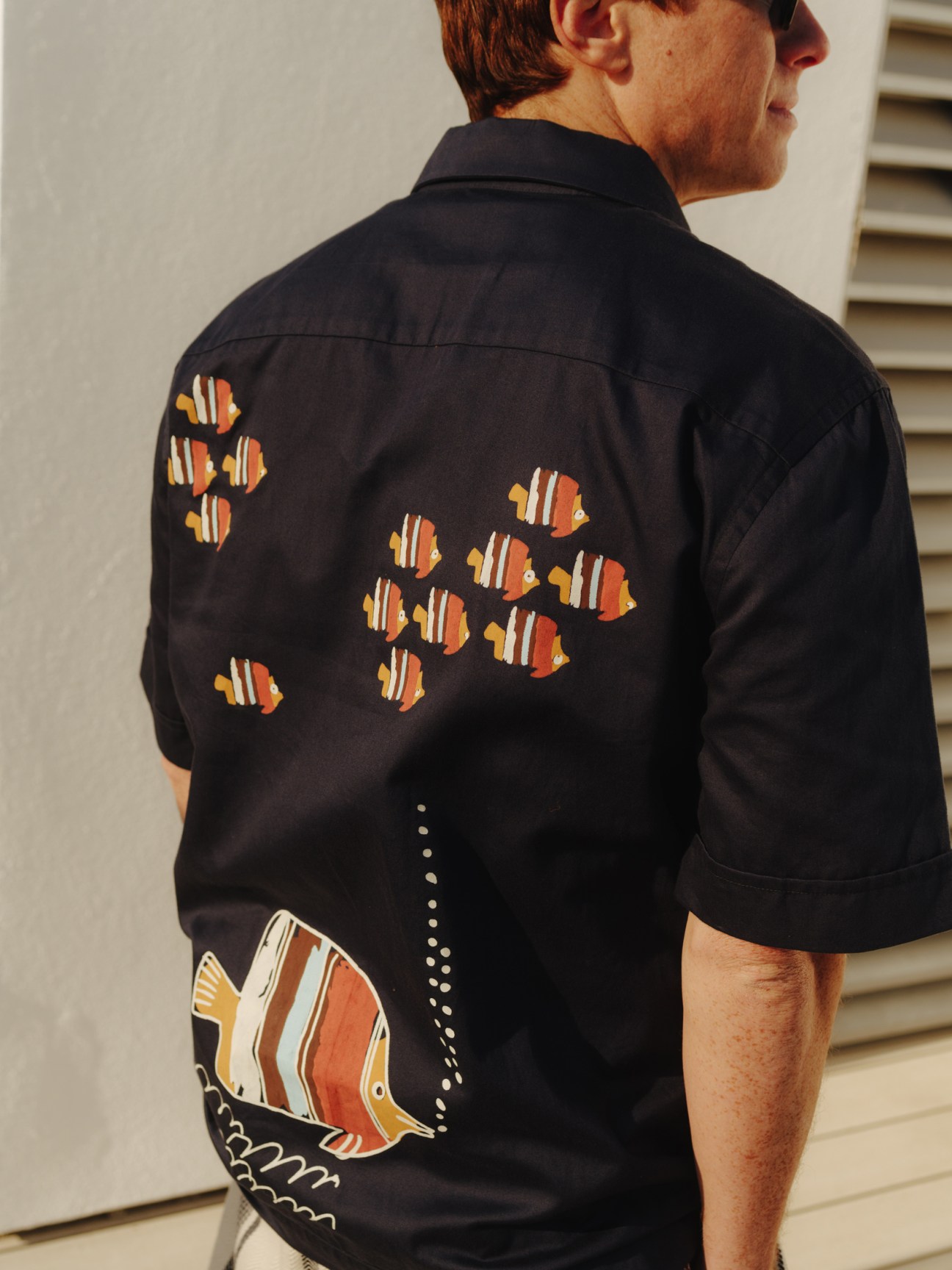
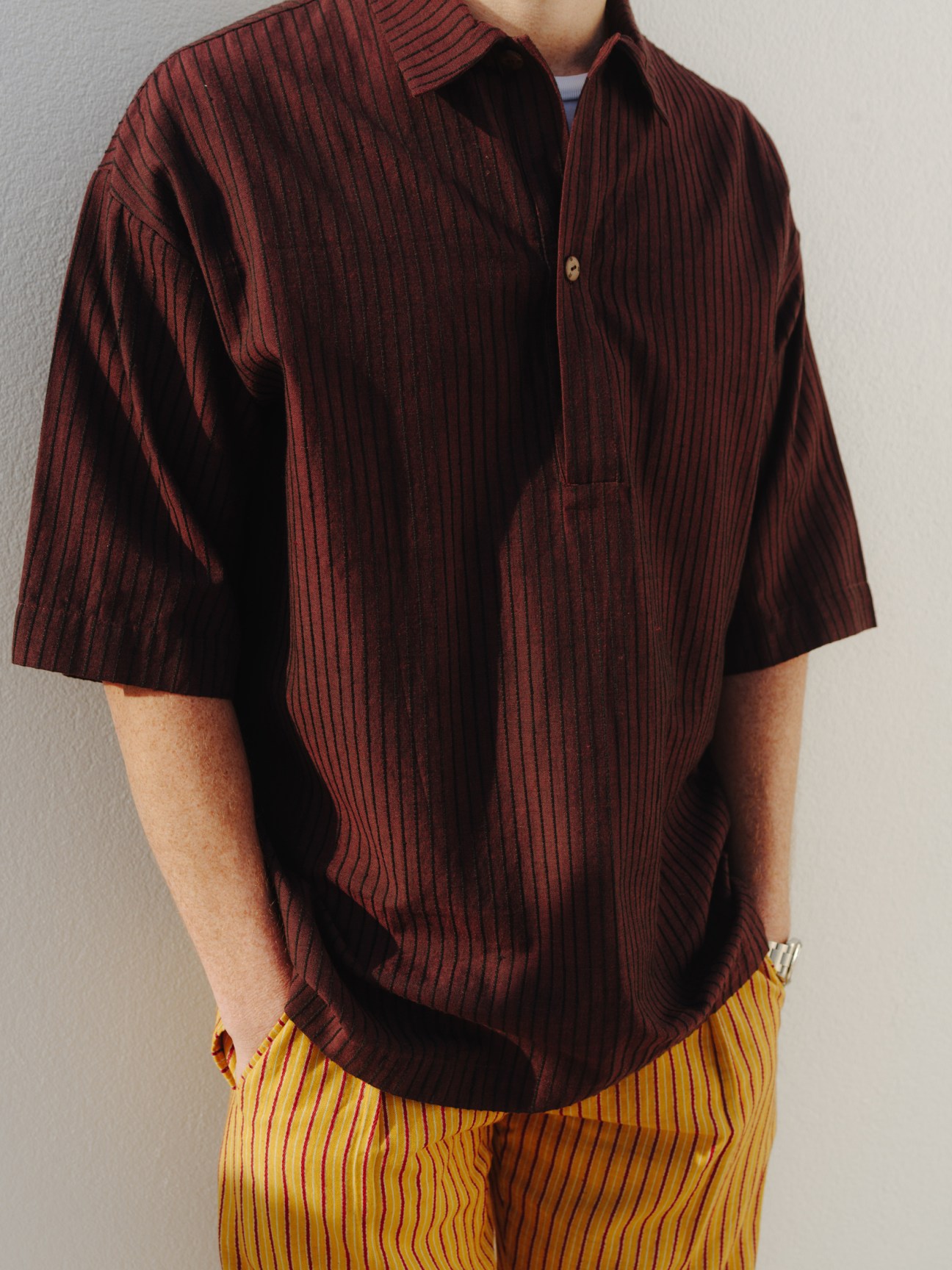

Alongside designing their ready-to-wear collection, the founders collaborated with The Standard Hotel to create the staff uniforms for its Ibiza outpost. Avid travellers, the three are always sharing stories of their trips on the brand’s online platforms. “smr Days is synonymous with wanderlust,” says May.
smrdays.com
2.
Hermès
Spain
Hermès’ latest boutique is on Paseo de Gracia, Barcelona’s most prominent shopping avenue. The two-storey setting, which looks nothing like traditional Hermès flagships, was renovated by Paris-based architecture firm rdai. “The design of the shop is inspired by the richness of Catalan architecture,” says rdai architect Denis Montel, who wanted to combine the city’s colourful aesthetic with the Parisian house’s classic codes.
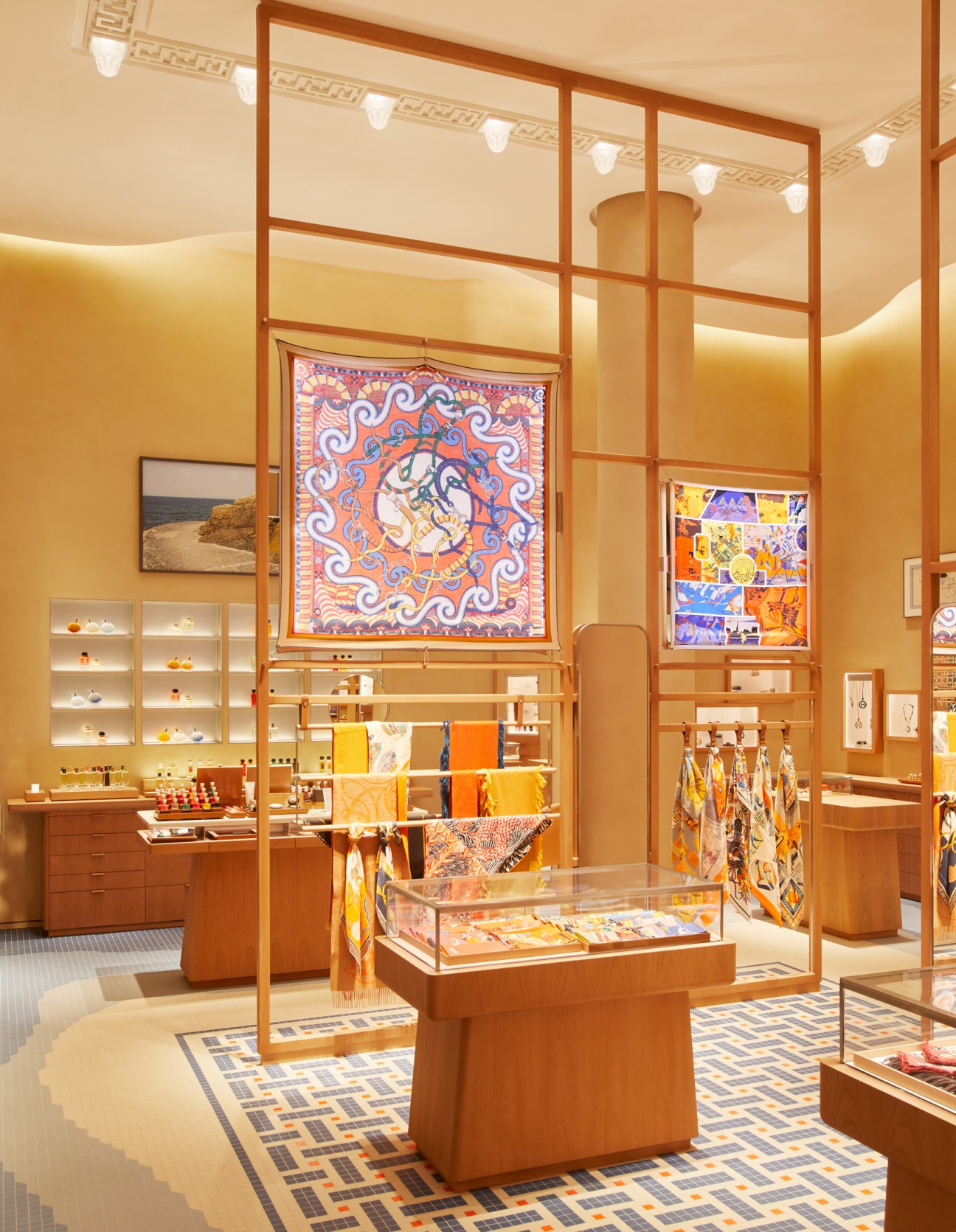
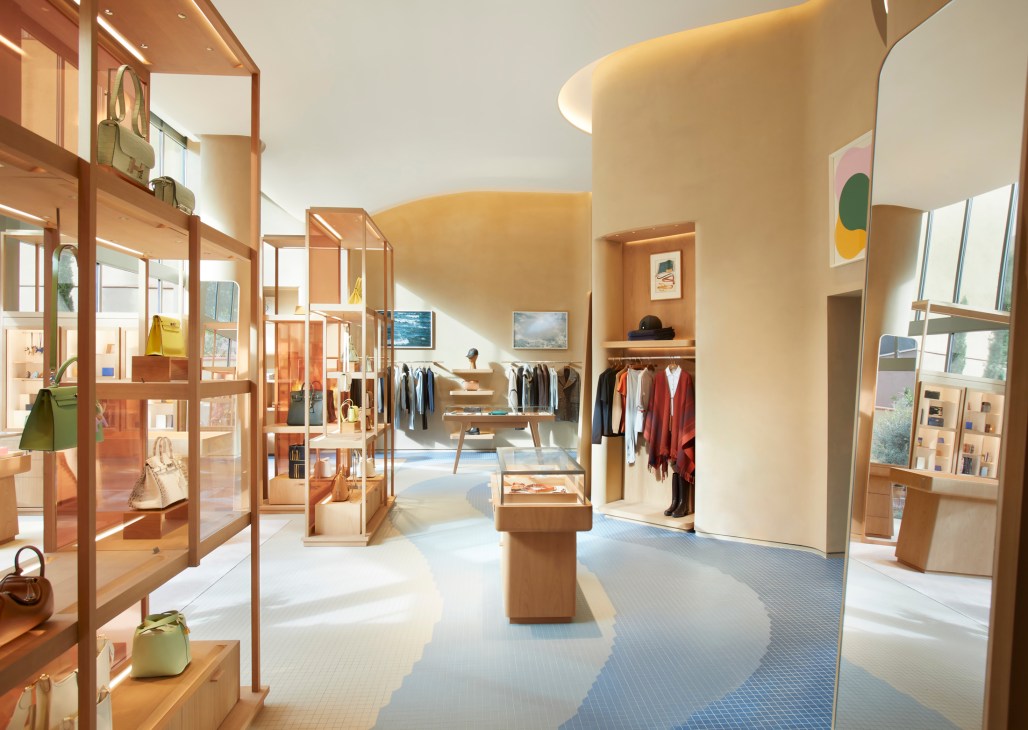
Mosaic floors and plush mohair carpets stand out, with wave-like patterns evoking Barcelona’s seaside spirit. “The walls are finished in warm, sandy-hued stucco to complete the enveloping Barcelona atmosphere,” says Montel. The shop displays creations from the 16 types of craftsmanship championed by Hermès, from silk and jewellery to leather goods. A private lounge highlights the building’s original features, including a stained-glass window bay by 19th-century modernist glass-maker Antoni Rigalt i Blanch.
“The walls are finished in warm, sandy-hued stucco to complete the enveloping Barcelona atmosphere”
The brand also commissioned a luminous chromatic work installed in the window by French artist Nathalie Junod Ponsard to lure passersby, while a garden and courtyard have been given the Mediterranean treatment by Barcelona-based landscape firm Local 4, with fragrant citrus, pine trees and bright bougainvillea.
hermes.com
3.
Sartori
Italy
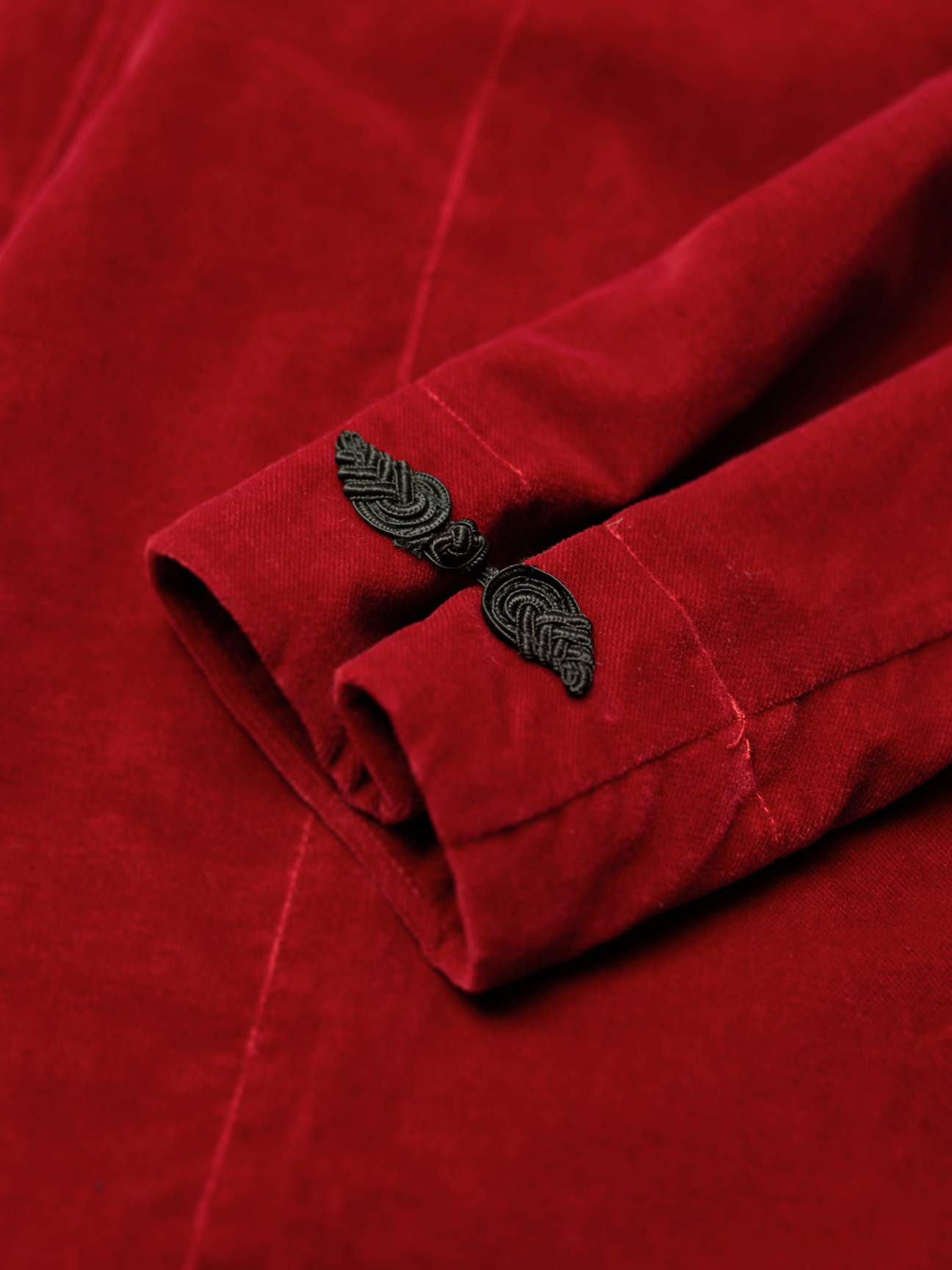
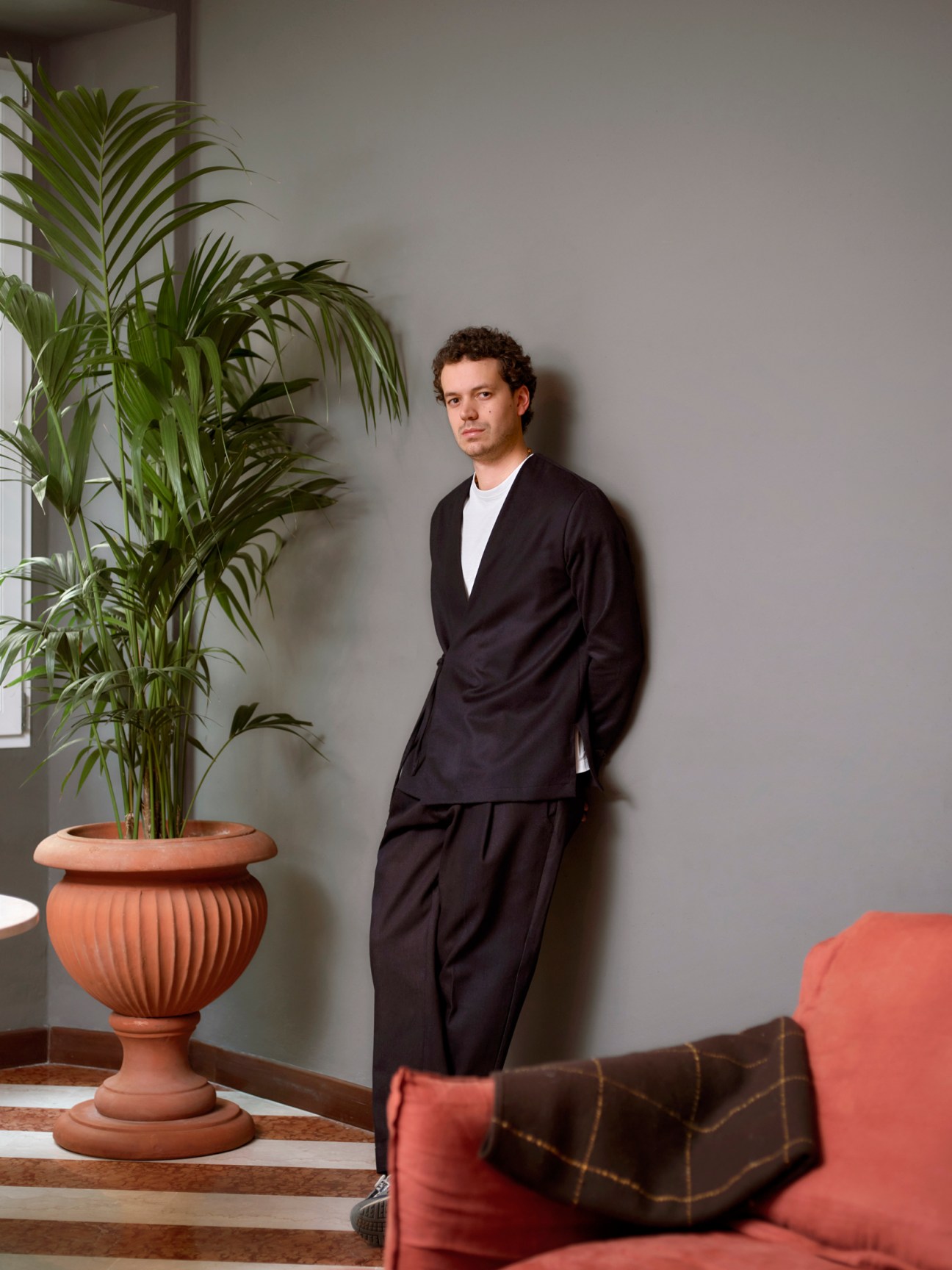
Sartori stands out from its competitors in Italy by looking to Asia for style cues. Edoardo and Marco Sartori studied law but ended up in fashion. “We had a passion for Japanese clothing,” says Edoardo, who oversees the brand’s everyday operations. “We love the clean looks from the likes of Issey Miyake.” Sartori often references Japanese dress, with tops and loose jackets inspired by kimonos and yukatas. The same comfy approach is applied to trousers. “We never want our clothes to feel constraining,” says Edoardo. Western-style blazers are also on offer but Sartori’s clientele has grown attached to the East-meets-West cuts. “People have responded well to our signature style,” says Edoardo.
sartori.store

4.
Birkenstock 3 Fear Of God
US & Germany
Birkenstock 1774, a special-projects line by the German heritage-footwear brand, has debuted Los Feliz, an elegant pair of slides co-designed with Fear Of God, Jerry Lorenzo’s Los Angeles-based label. Inspired by classic Birkenstock silhouettes and – as the name suggests – the Los Feliz neighbourhood in Los Angeles, Lorenzo has added a thicker suede strap and raw-edged soles on the slides, which come in neutral shades of calf suede or felt. “We’re always attempting to create a product that’s rooted in function and necessity but is also preceded by a clear aesthetic point of view,” says Lorenzo.
birkenstock.com
5.
Wild Life Tailor
Japan
Wild Life Tailor has maintained a strong presence in Tokyo since its first shop opened in 2010. “Tailoring is at the heart of our style,” says Kouhei Mizobuchi, the buyer behind the shop. “The idea is to dress down traditional formalwear by adding a casual essence. I wanted to have a shop where staff dressed in jeans can effortlessly take measurements for custom suits.”
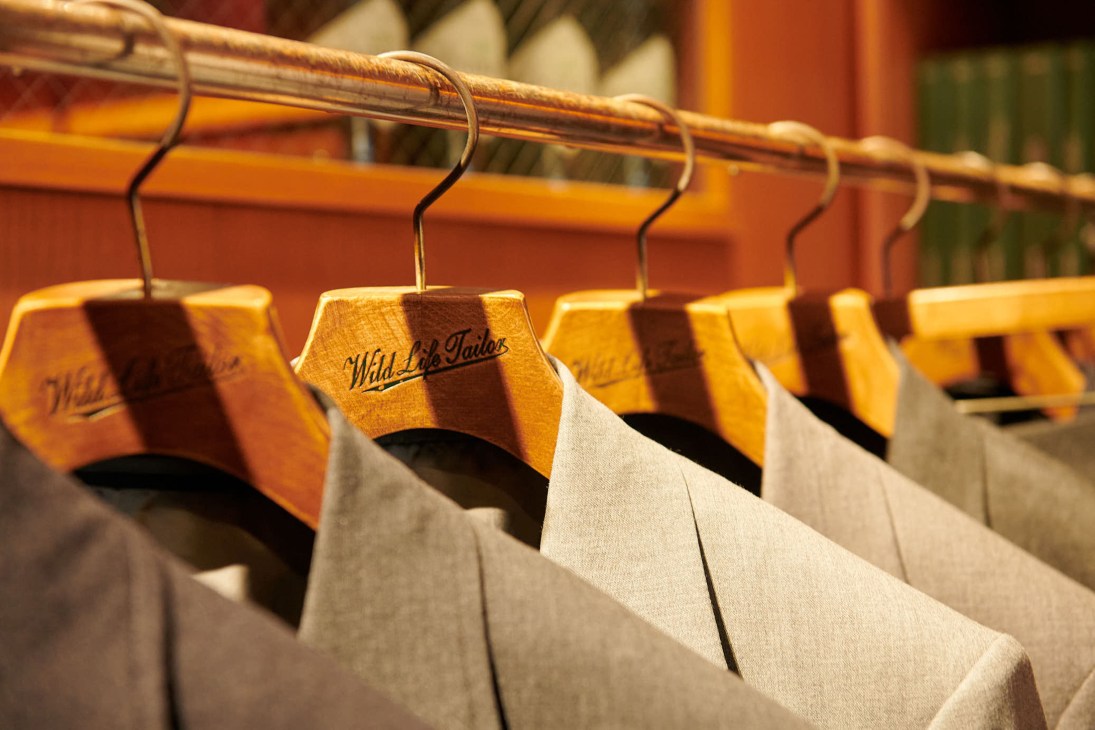
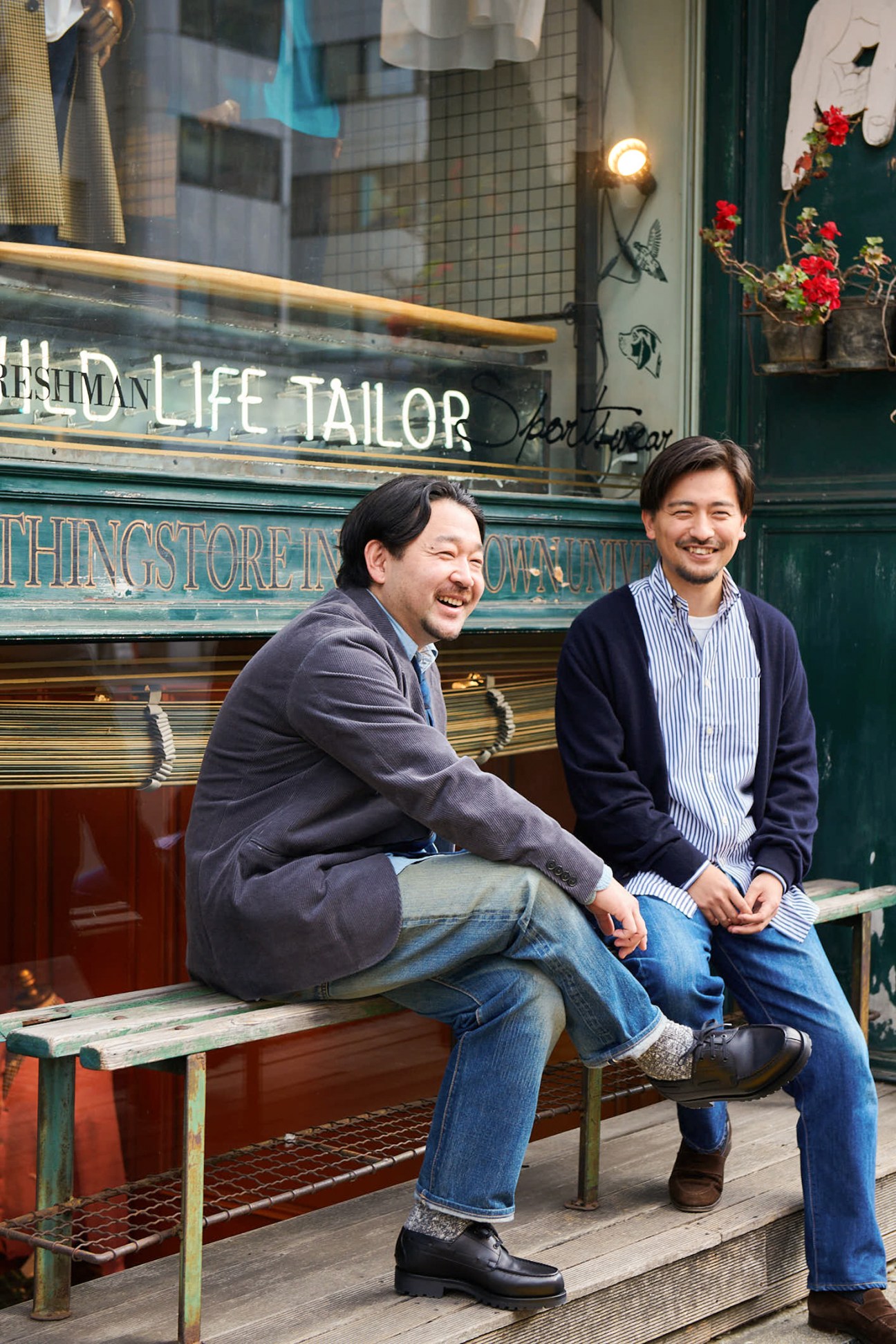
Wild Life Tailor has outposts in Tokyo and Sapporo in Hokkaido. Wild Life Tailor’s original shop in Ebisu offers made-to-measure tailoring and ready-to-wear suits produced by Scye Clothing. “We choose timeless pieces from brands to creat our own style,” says Mizobuchi (pictured, on left), who also selects pieces from nearly 30 other labels – mostly Japanese favourites, such as Heugn, Comoli and Hand Room. But the global scene remains an inspiration to Mizobuchi. “Ordering a bespoke shoe at the John Lobb shop in London carries a special meaning . We aspire to be like them.”
wildlifetailor.adametrope.com
6.
Onkai Heiwa
Switzerland
Eric Blum’s Zürich studio is filled with natural light and minimalist wooden furniture to better display his collection of hats and elegant leather bags, the latter designed with his business partner and brother-in-law, Luca Meyer (pictured, on right, with Blum). Blum’s label, Onkai Heiwa (named after his Japanese grandfather), has become widely known for handcrafted accessories over the past eight years, ever since Blum decided to leave his career as a professional hockey player and pursue fashion. It was the art of millinery that first drew him to the fashion world. “A hat can elevate the simplest of outfits,” he says, adding that he is never short of inspiration when coming up with new designs – currently he is looking at the hats worn by the likes of Al Capone.
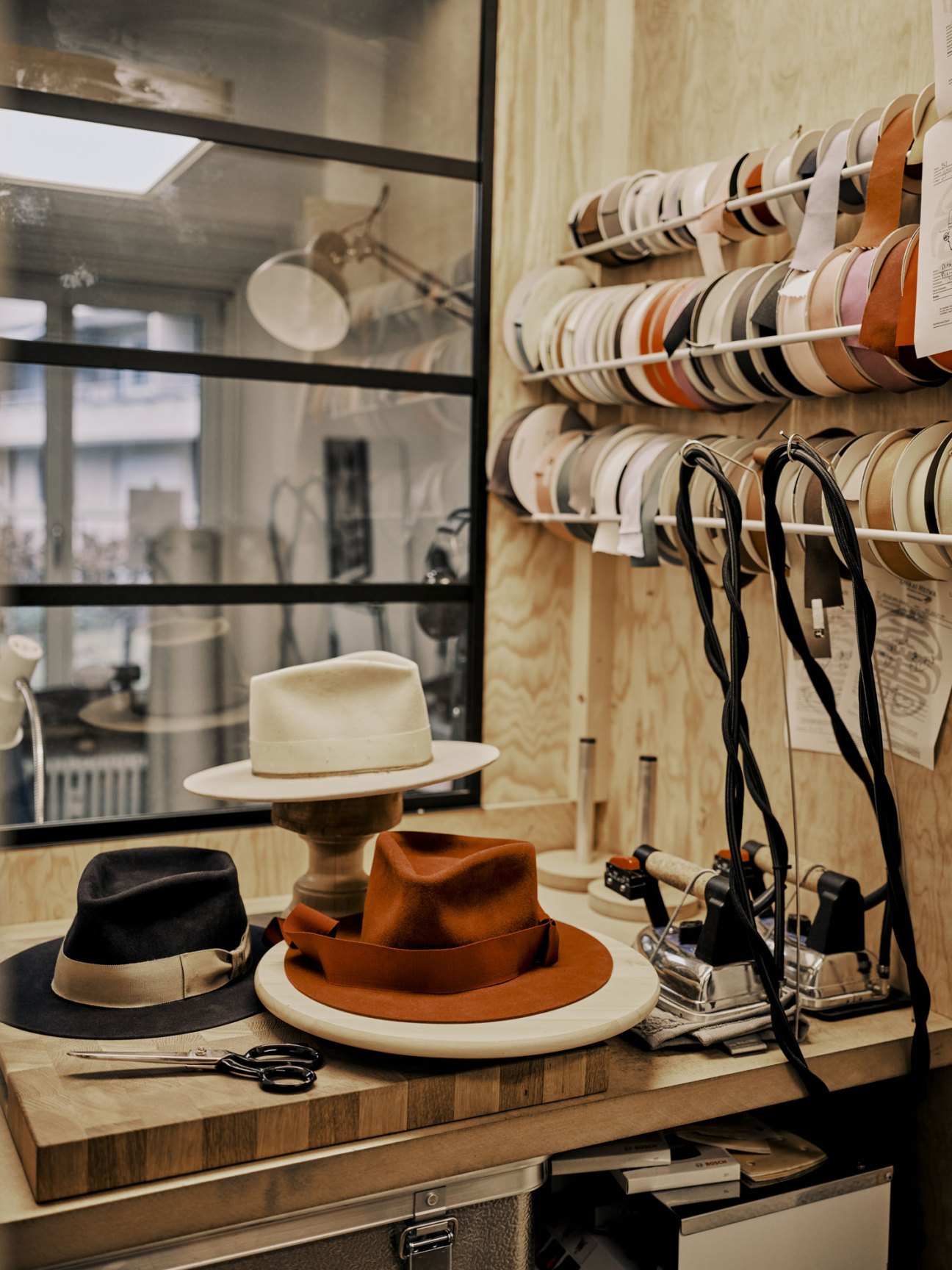

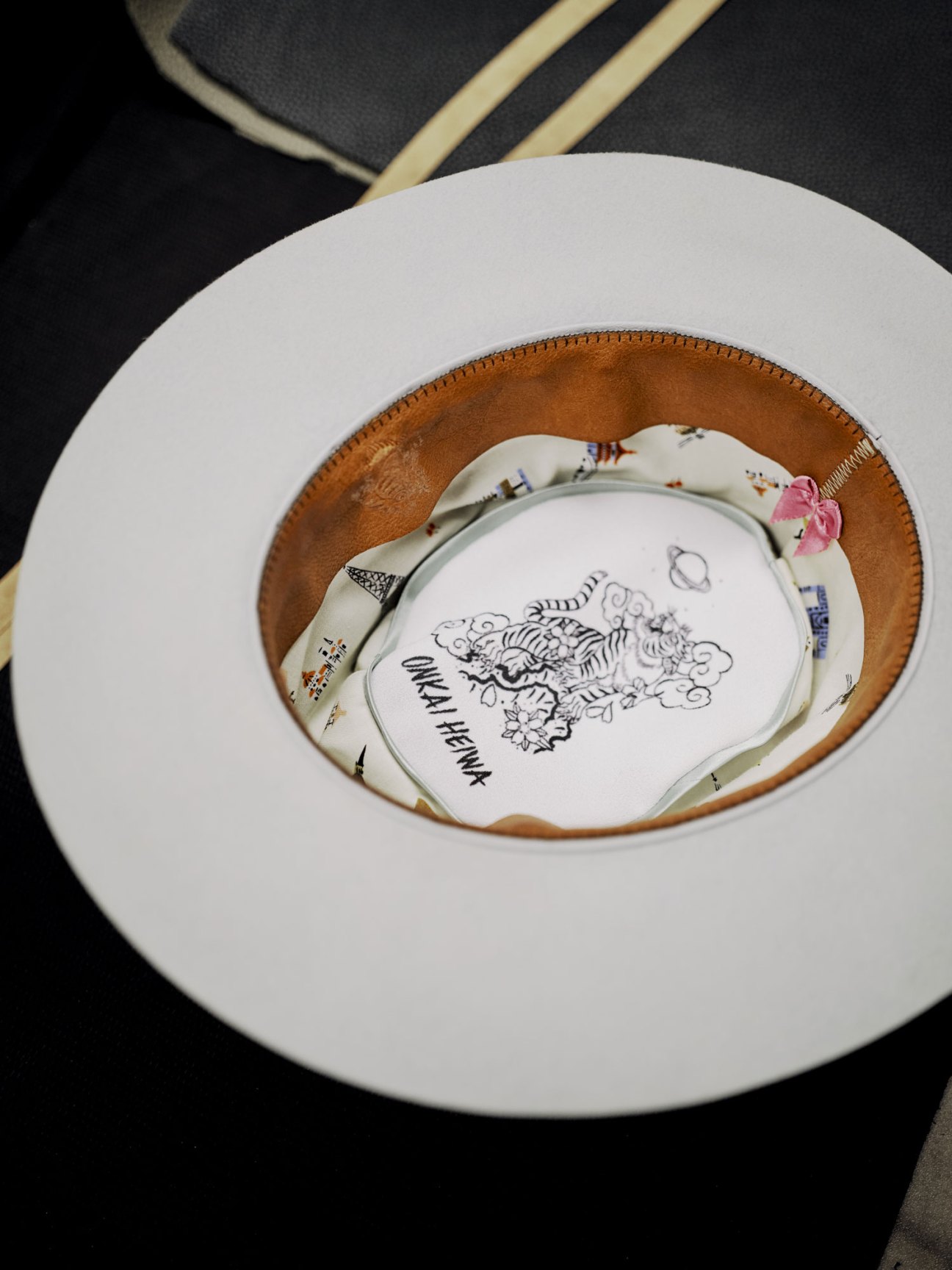
Blum’s Japanese roots inform his commitment to craft and eye for detail. His designs are all made to order and he makes a point of personally taking each client’s measurements in his workshop in Zürich’s lively Wiedikon area to determine the perfect fit. He then uses a high-quality felt to design his signature fedoras. “Felt has always fascinated me; it’s such a fashionable material,” says Blum. One of the brand’s neutral-hued fedoras or structured leather totes will make a smart addition to your professional wardrobe.
onkaiheiwa.com

7.
Easymoc
USA
Easymoc’s signature slip-ons pay homage to classic LL Bean camp moccasins dating to 1936. Redesigned with sturdier mules and high-quality leather, the moccasins go large on comfort. Produced in small batches, the shoes are hand-sewn in a workshop in Lewiston, Maine.
easymocs.com

8.
Heugn
Japan
Launched in 2019, Heugn is a Tokyo-based menswear brand by Masato Koyama, former chief designer at Japanese fashion giant United Arrows. The brand’s identity is anchored in pieces designed to last a lifetime, including tapered trousers and utilitarian jackets and knits. Its relaxed shirt is our pick for the season.
heugn.com
9.
Cuffs
USA
The Cuffs boutique in northeast Ohio was one of the first US shops to stock Hermès men’s ties in the 1980s. Its co-founders, Patty and Rodger Kowall, always had an eye for quality and a trip to Hermès’ Paris HQ in 1985 proved fruitful. Jean-Louis Dumas, then president of the Hermès Group, convinced the Kowalls to build a separate room within the Italianate Cuffs building to offer the complete Hermès’ collection.
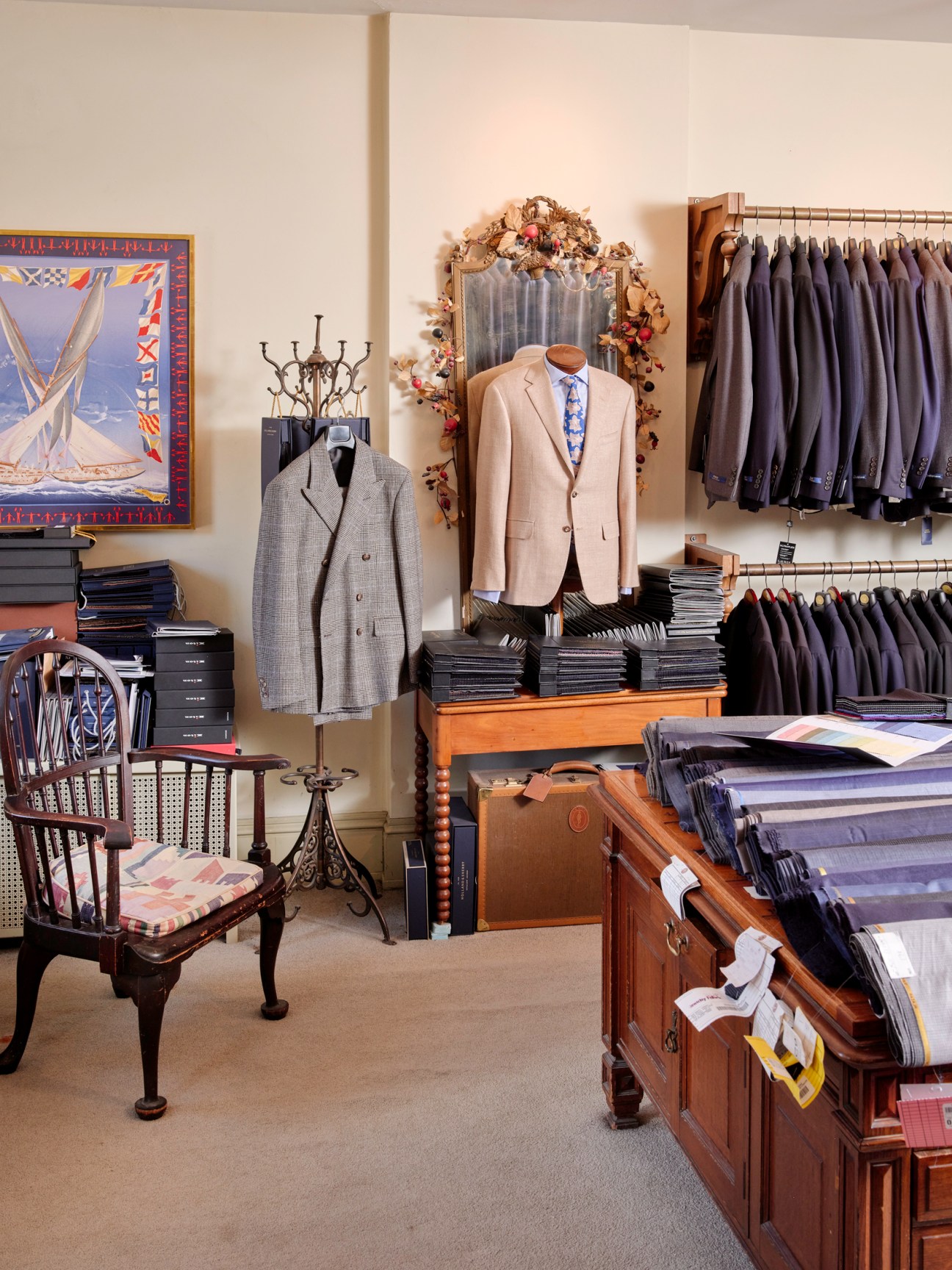
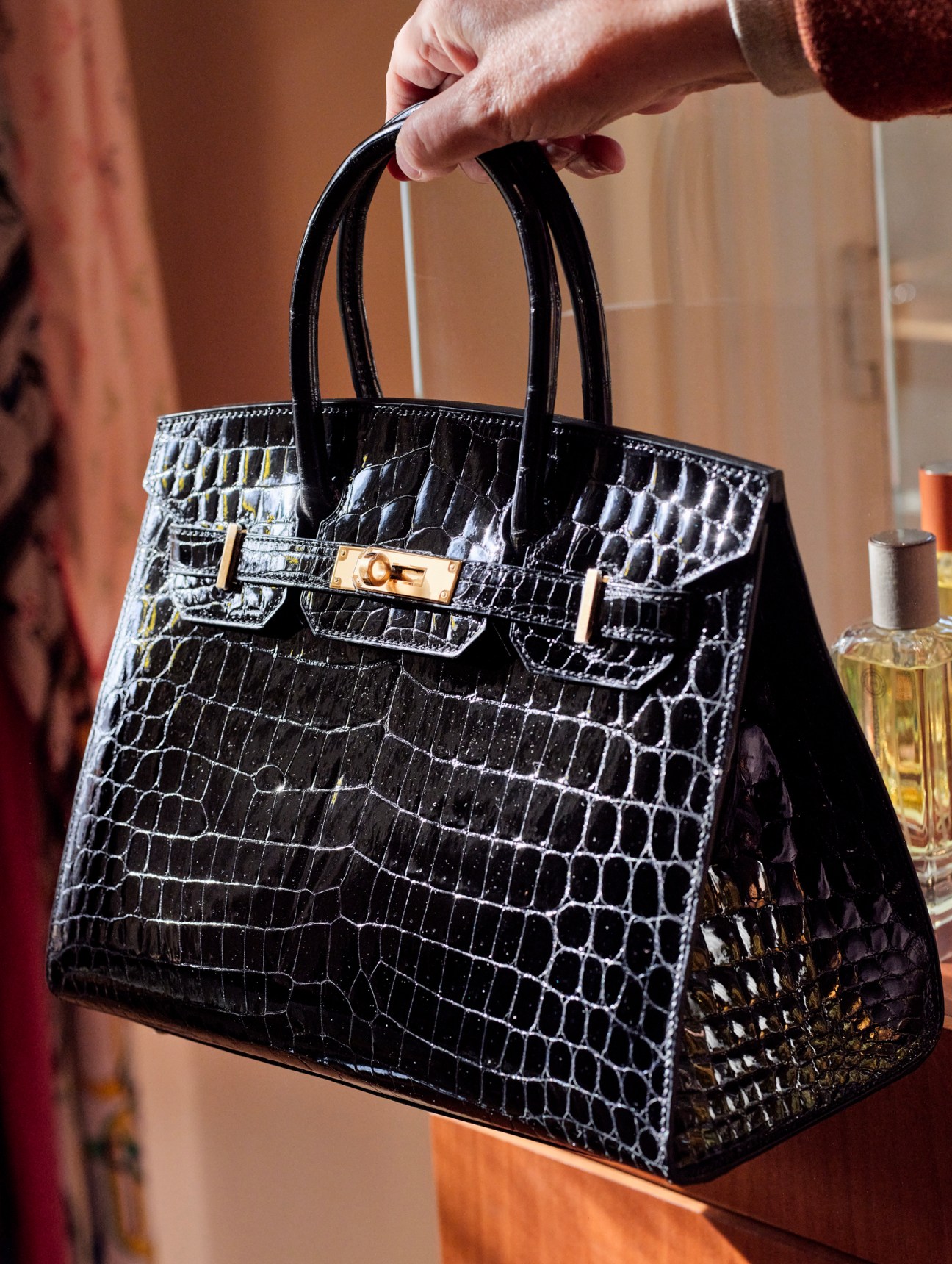
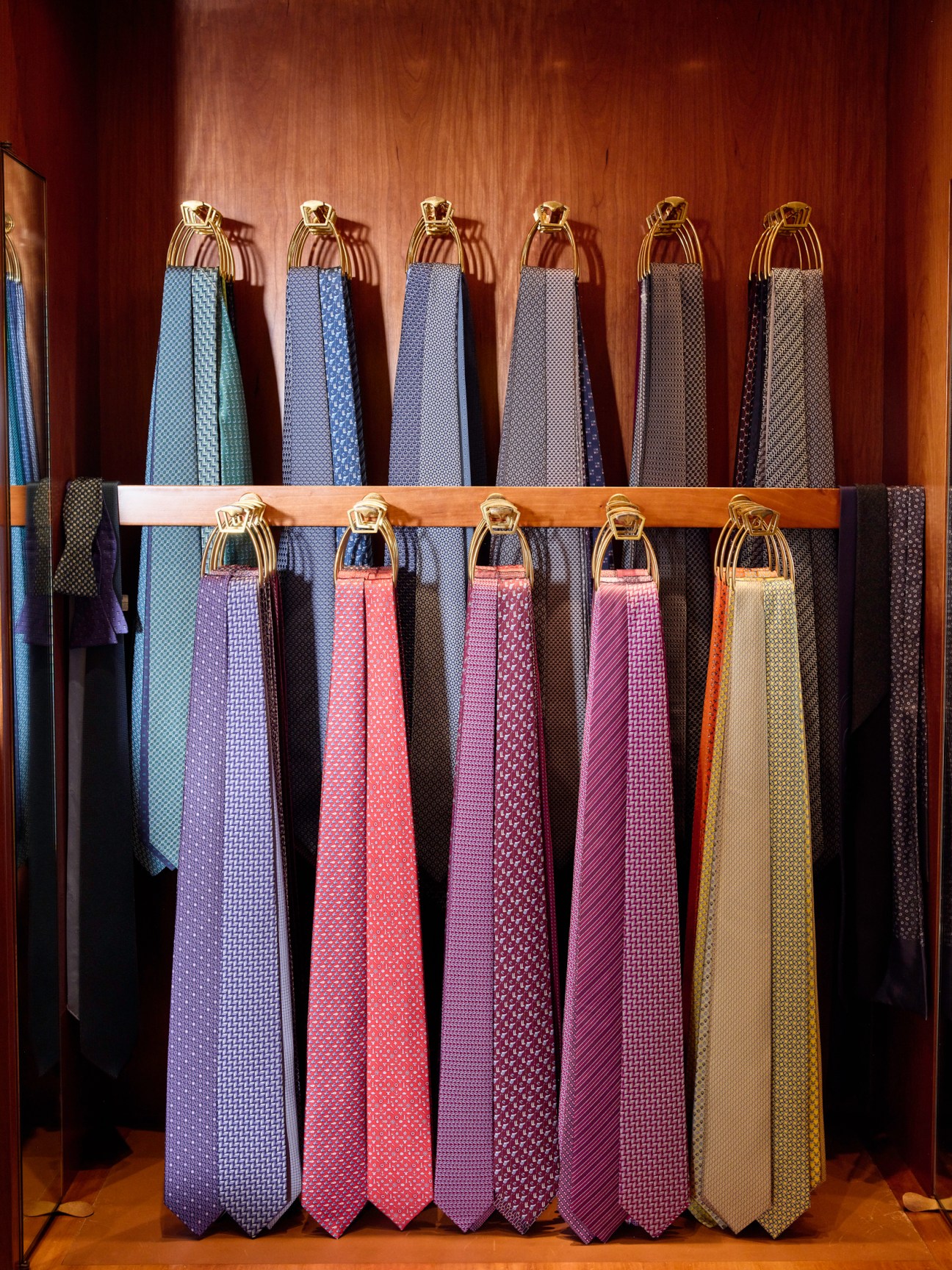
The couple worked with Paris-based architect Rena Dumas (wife of Jean-Louis) to build the space, while keeping the historical features of the building, a former residence from 1857.
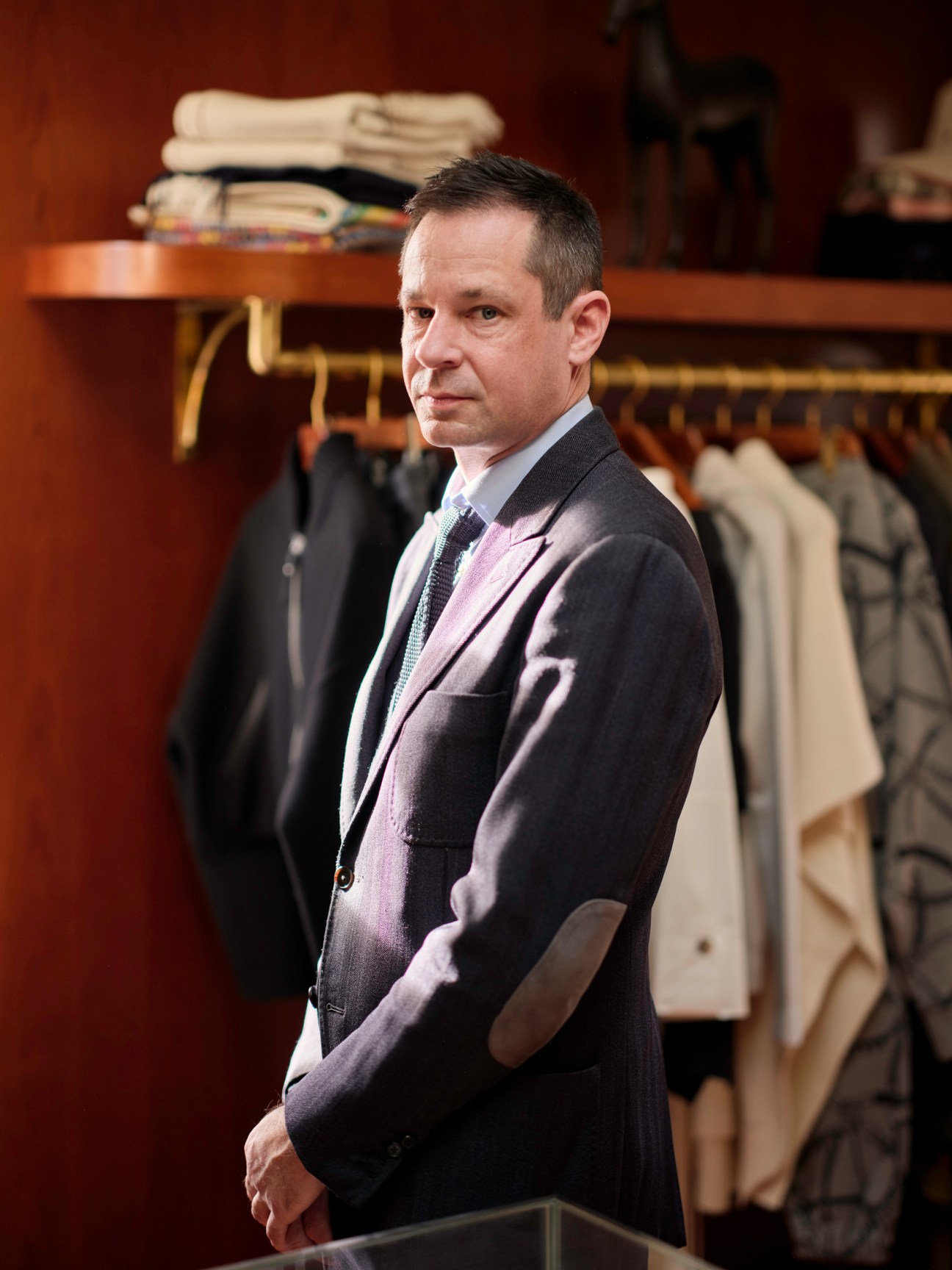
After expanding into women’s silk scarves and fragrances, Cuffs now stocks more than 30 labels, including Barbour, Acqua di Parma, Crockett & Jones and Marco Pescarolo – all picked with clients in mind. “Value and quality are never compromised by profit margins,” says Zachary Kowall, the founders’ son and Cuffs’ current COO (pictured). “We take pride in providing quality to our customers, whether it’s a Hermès handbag, a Kiton suit or an Aran cable knit sweater. We want our clients to appreciate the craftsmanship and time that went into each piece.” This brand mix also ensures that Cuffs maintains its own identity, despite its strong associations with Hermès.
cuffsclothing.com
10.
AT Kollektive
Denmark
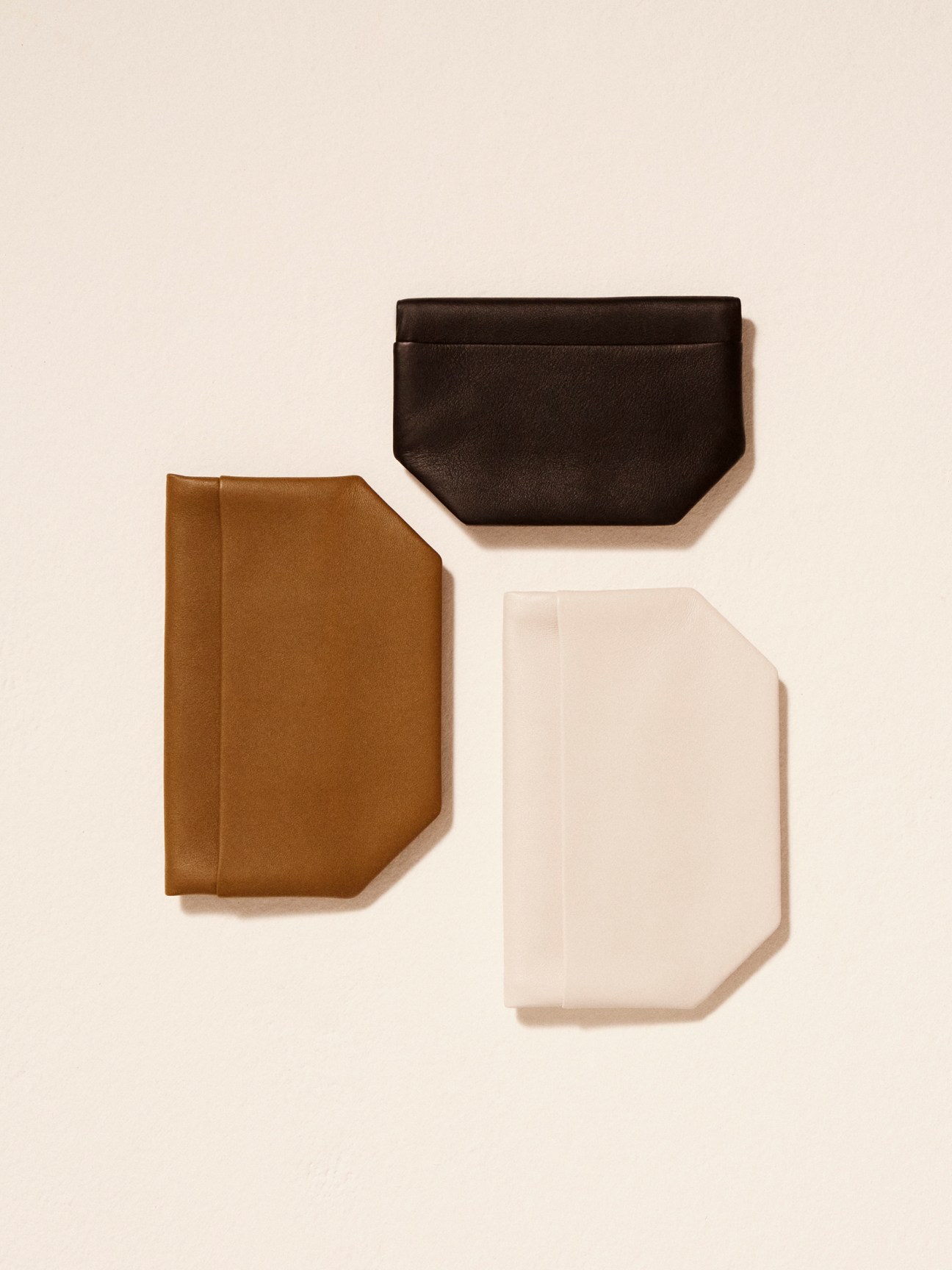
When Berlin-based designer Kostas Murkudis visited the Ecco leather factory in Dongen, an hour’s drive from Amsterdam, he was struck by the skills of the in-house artisans and the smooth running of the facility. “Ecco can control the production process from sketch to final product,” says Murkudis. “There aren’t many businesses that still do this. It has the know-how to bring complex designs to life.” Yet the Danish brand’s reputation is mostly limited to its signature lace-up shoes, which score highly on comfort but not on fashion credentials. Murkudis saw potential to raise the brand’s profile and worked with Ecco CEO Panos Mytaros to launch AT Kollektive. The concept invites a group of designers into the world of Ecco once a year, giving them access to its leather tannery and factory to design limited-edition clothing, accessories or furniture.
The first cohort includes Murkudis himself, former Chloé creative director Natacha Ramsay-Levi, award-winning UK designer Bianca Saunders and Isaac Reina, a former Hermès menswear designer. Everyone brought fresh perspectives and challenged Ecco to elevate its design capabilities, from Saunders’ feather-light leather blazers to Murkudis’ elegant totes that can be packed flat (pictured). “Bringing this group together gives Ecco a different visibility and encourages it to go into another direction: it can do so much more than just comfortable shoes,” says Murkudis. “AT Kollektive is like a creative lab to feed ideas into its main lines and help it evolve.”
atkollektive.com

11.
Veilance
Canada
Part of Canadian outerwear brand Arc’teryx, Veilance focuses less on clothing for extreme environments and more on urban living. The Vancouver-based label pioneers items that are responsibly made, functional and, thanks to a partnership with Gore-Tex, waterproof. Its signature range of shirts and jackets will work across seasons and occasions.
arcteryx.com
12.
M1le
UK
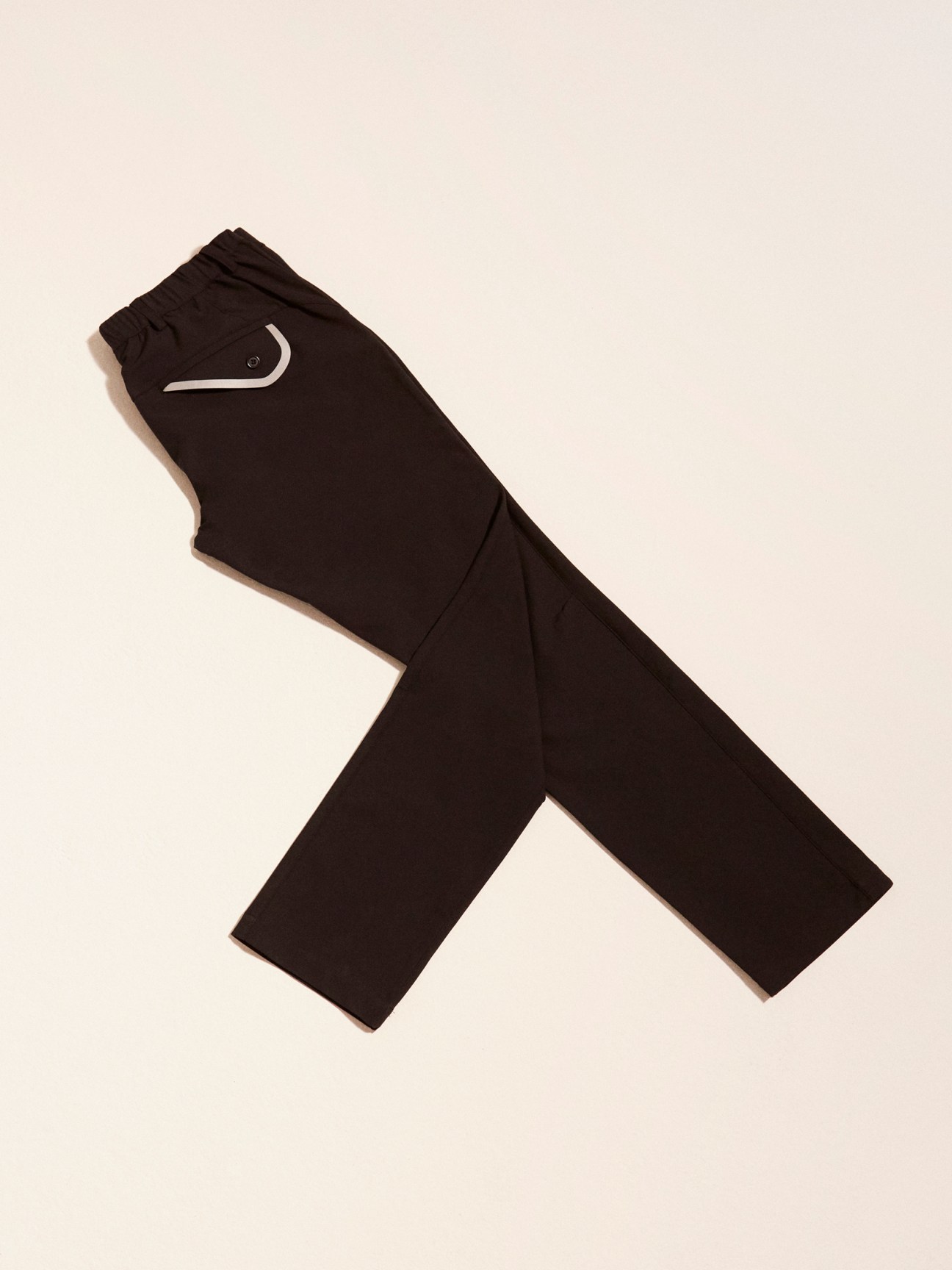
London-based start-up M1le makes technical cycling trousers that are smart enough for the office. With the degree of innovation in the sportswear sector, it was high time that a brand moved away from Lycra to offer more polished items. M1le co-founder Megan McCann translated this need into tailored trousers that are made using technical fabric, bridging the gap between office and activewear. Finding a material that was water-repellent yet breathable was tricky. “We needed a fabric that was heavy enough to hang like a trouser but not cling,” says McCann. “It also couldn’t make any sound when the wearer walks.”
More straightforward has been creating the cut of the trousers, with an athletic and tapered slim leg that’s as close to an office trouser as possible. The cycling-friendly features are subtle: hidden zips on pockets keep keys safe and the hems can be rolled up to reveal reflective panels for added visibility. “We don’t want people to worry about how they look on the bike,” says McCann.
This year, M1le is switching to recycled polyester, vegetable-based fabric coating and new manufacturing facilities in Lithuania that will run on renewable energy.
onemilelondon.com
13.
Mogi Folk Art
Japan
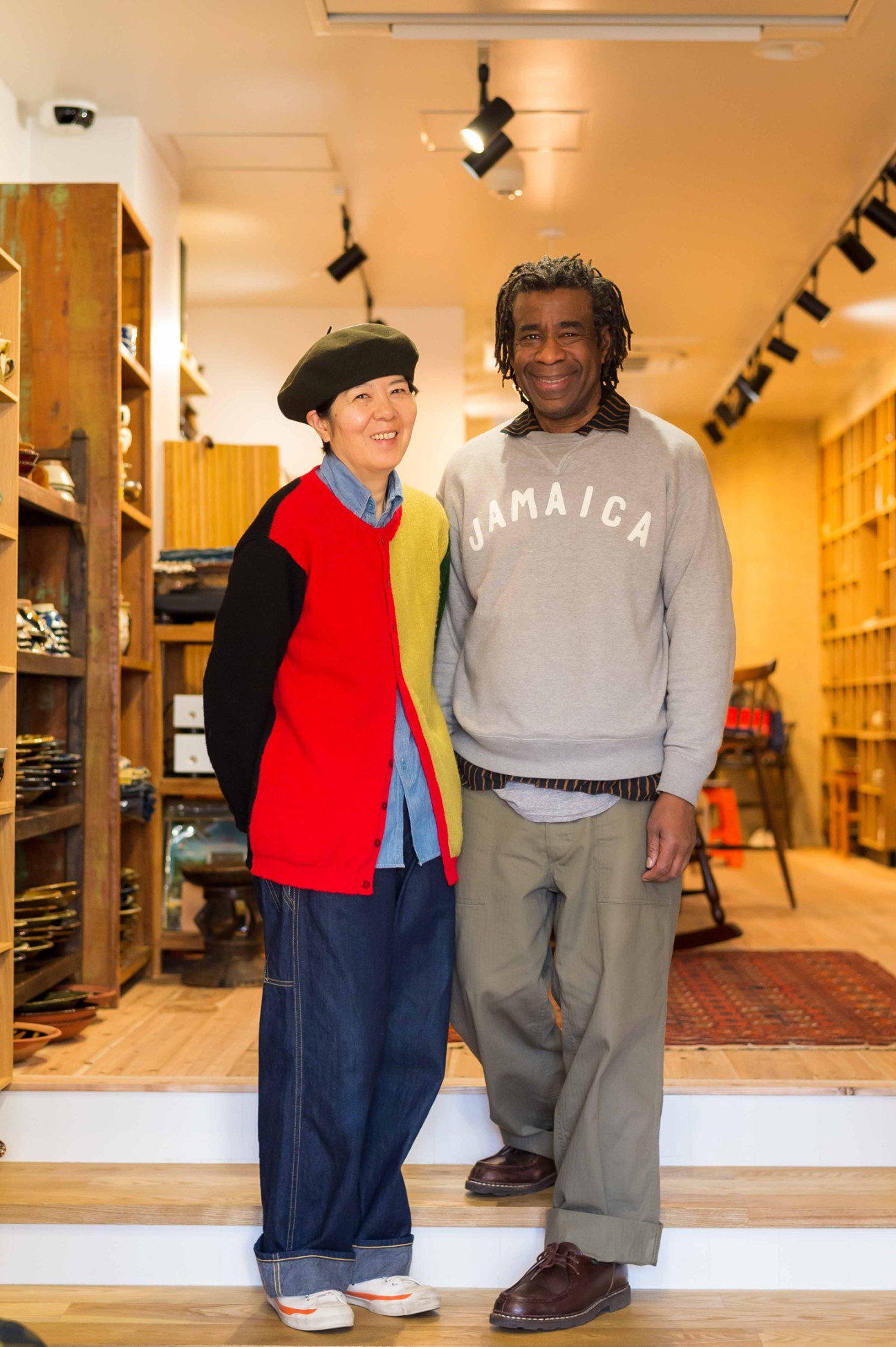
Before the pandemic, Keiko Kitamura and Terry Ellis (pictured) were working for Japanese fashion company Beams, travelling between London and Tokyo to design and buy clothing for in-house label Fennica. As travel shut down, they stayed put in Tokyo and opened their own shop: Mogi Folk Art in Koenji. It is a treasure trove of Japanese mingei (folk) pottery, African art, secondhand designer clothing and new pieces, mostly made in Japan. Mogi makes shoes with Moonstar in Kyushu; hats and berets with Cableami. Ellis, who was born in Jamaica, references his heritage in a range of best-selling sweatshirts, modelled on Jamaica’s uniform at the 1952 Helsinki Olympics.
The shop is a unique mix: an Edo-era indigo boro jacket sits alongside Scottish knitwear. Ellis isn’t interested in selling vintage clothing online. “It’s important that people find something special when they come to the shop,” he says.
3-45-12 Koenjiminami, Suginami City
14.
Anest Collective
Italy
Milan-based Anest Collective takes a poetic approach to fashion, referencing Leonardo da Vinci’s 1490 Vitruvian Man in its designs and staging displays that recall the work of Russian artist Kazimir Malevich. “We look at evocative imagery,” says contributing creative director Brendan Mullane (pictured). “It allows you to tap in to a creative mindset.” For the brand’s spring collection, wool, cashmere and mulberry silks take centre stage.
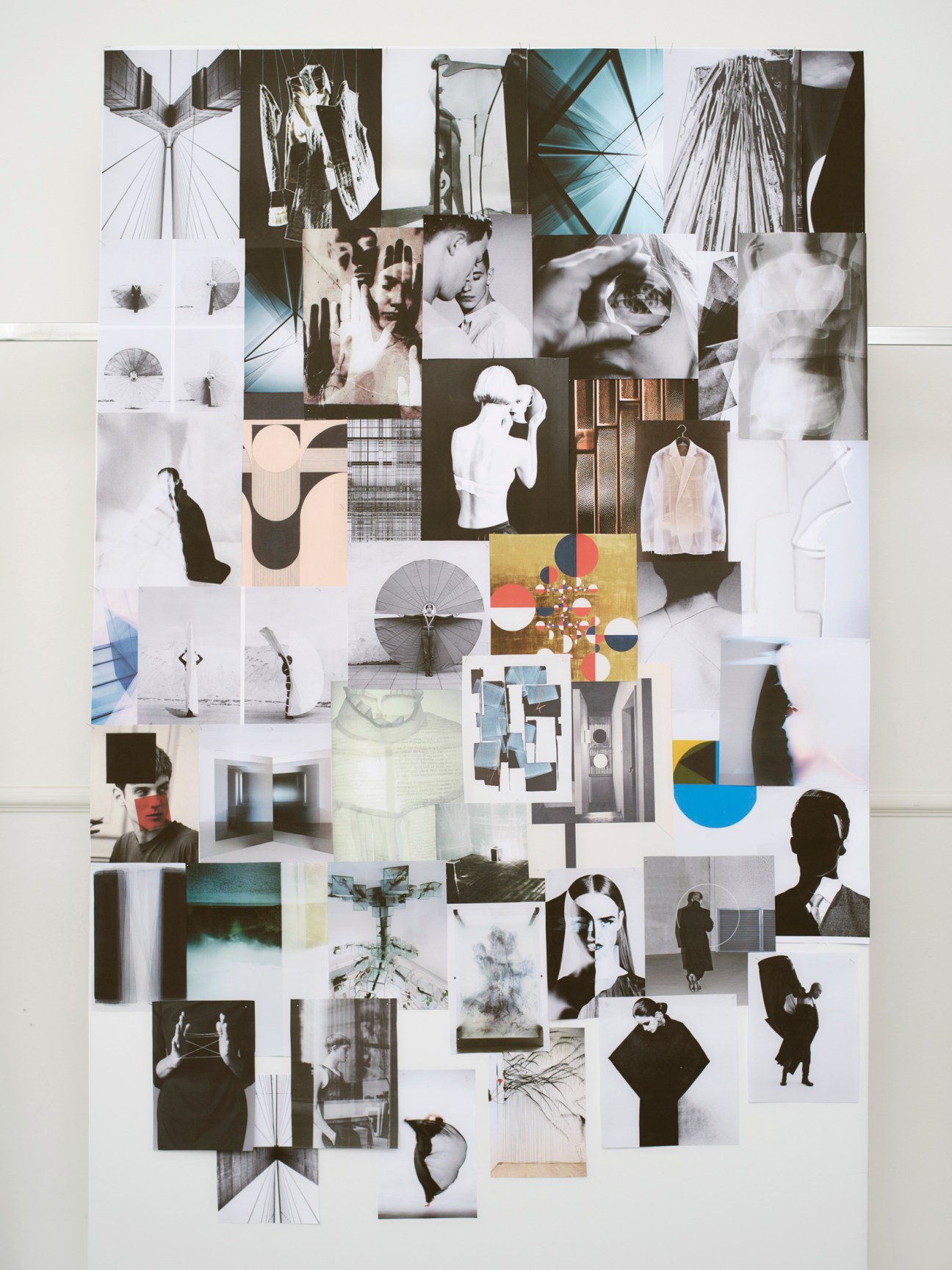
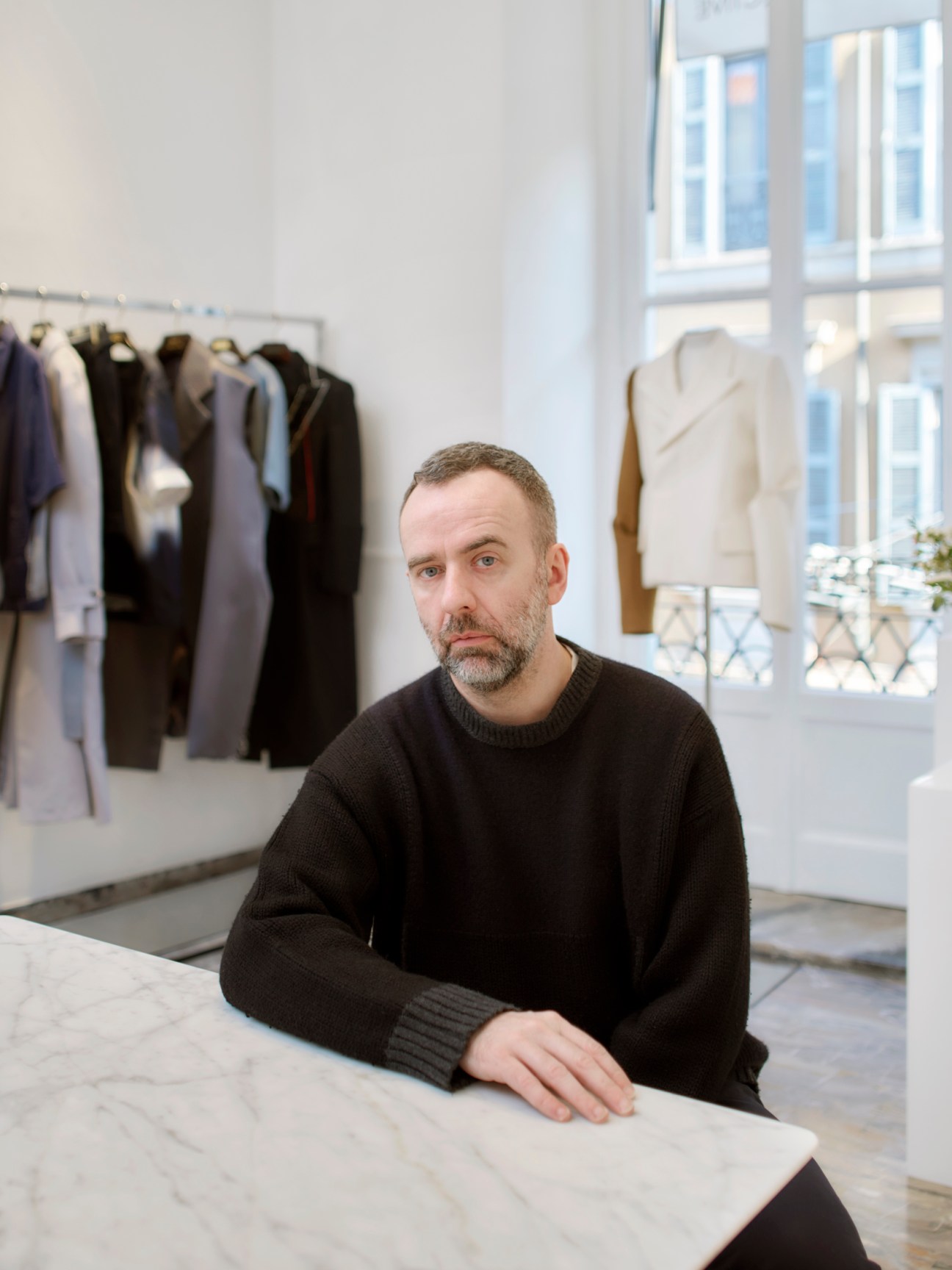
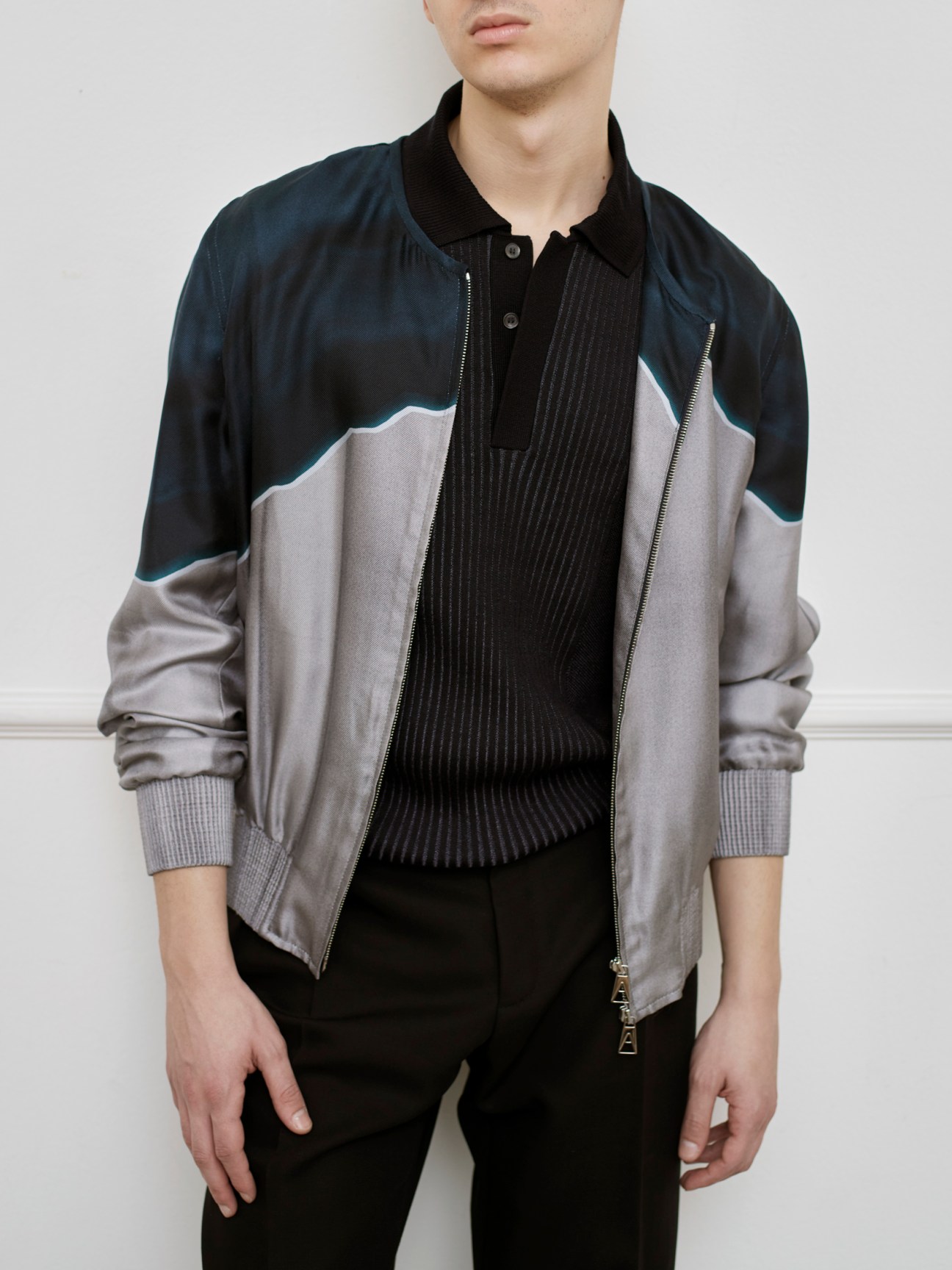
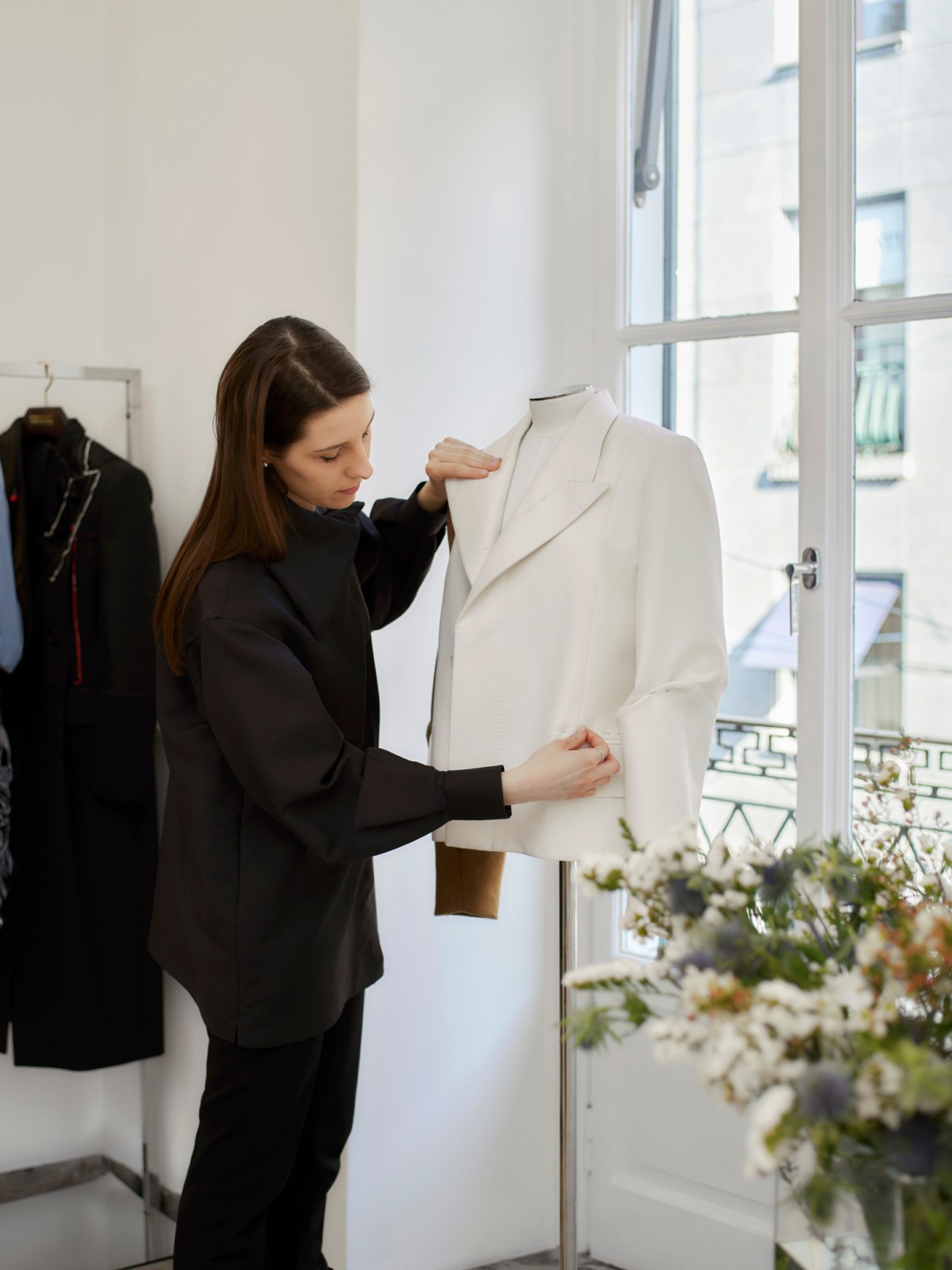
The brand’s showroom in Milan is filled with pieces by Dutch designer Aldo Bakker and Irish glass-maker J Hill’s Standard. “It aims to bring together curious people,” says Mullane. “An Anest Collective client sees more than what is on the surface.”
anestcollective.com
15.
Cordera
Spain
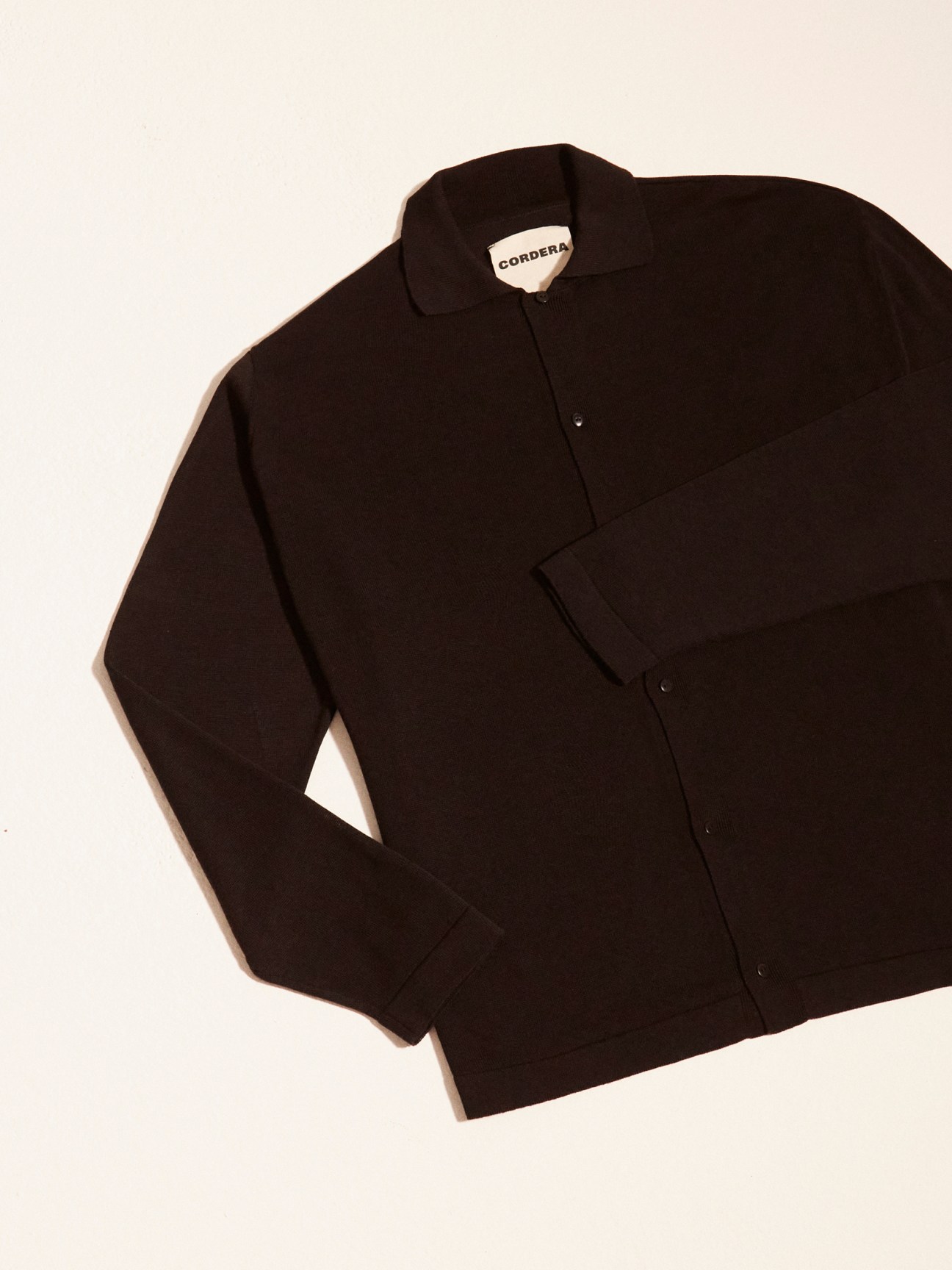
Since founding their eponymous clothing brand in 2008, sisters Mónica and María Cordera have been drawing their design inspiration from the rugged landscapes of their native Galicia. “We’re lucky to live in a region with such beautiful nature,” says Mónica. “It’s all reflected in the colours, the shapes, the textures and the quality of our creations.”
This lush corner of northern Spain has long been a centre for wool and linen, two materials that form the cornerstone of Codera’s range. The duo source fabrics and yarn from regional producers and work with small, family-run factories to produce their designs, which include slouchy wool trousers, cable-knit jumpers and boxy trench coats. The common thread is the sisters’ minimalist aesthetic of clean lines and neutral, earthy tones.
All Cordera clothes are produced in one size. “Our silhouettes are relaxed and easy to wear because of their loose fit and the quality of the materials,” says María. “Every garment can fit many different bodies and sizes.”
cordera.es
16.
Spring accessories: hats
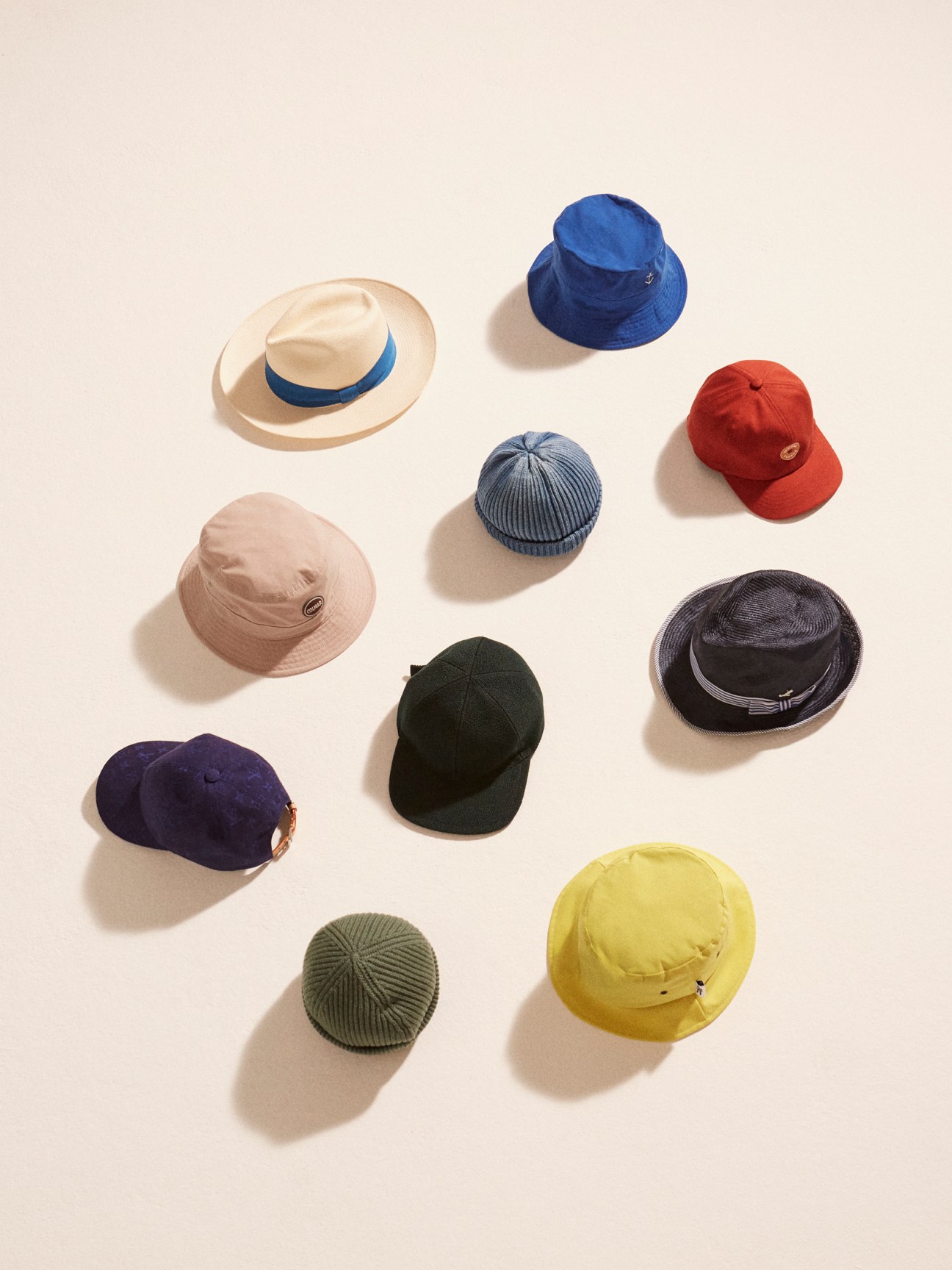
The spring months are tricky to dress for but woolly toppers, waterproof bucket hats and corduroy caps are one way to weatherproof an outfit. We have our eye on a pine-green textured wool cap by Danish textile brand Kvadrat, designed in collaboration with Prada co-creative director Raf Simons. Louis Vuitton’s jacquard cap and Brazil-inspired label Frescobol Carioca’s classic panama design are also high on our wish lists for the season.
kvadrat.dk
louisvuitton.com
frescobolcarioca.com
17.
Rovi Lucca
Italy
During Italy’s lockdown, Fabrizio Taliani, a menswear designer whose CV includes Zegna and Hugo Boss, and Bradley Seymour, a creative director from Australia, found space away from their hectic lives in Milan to let new ideas blossom. The result is the pair’s new clothing label, Rovi Lucca. The casual-outerwear brand draws inspiration from the Tuscan countryside around Lucca, where Taliani and Seymour holed up.
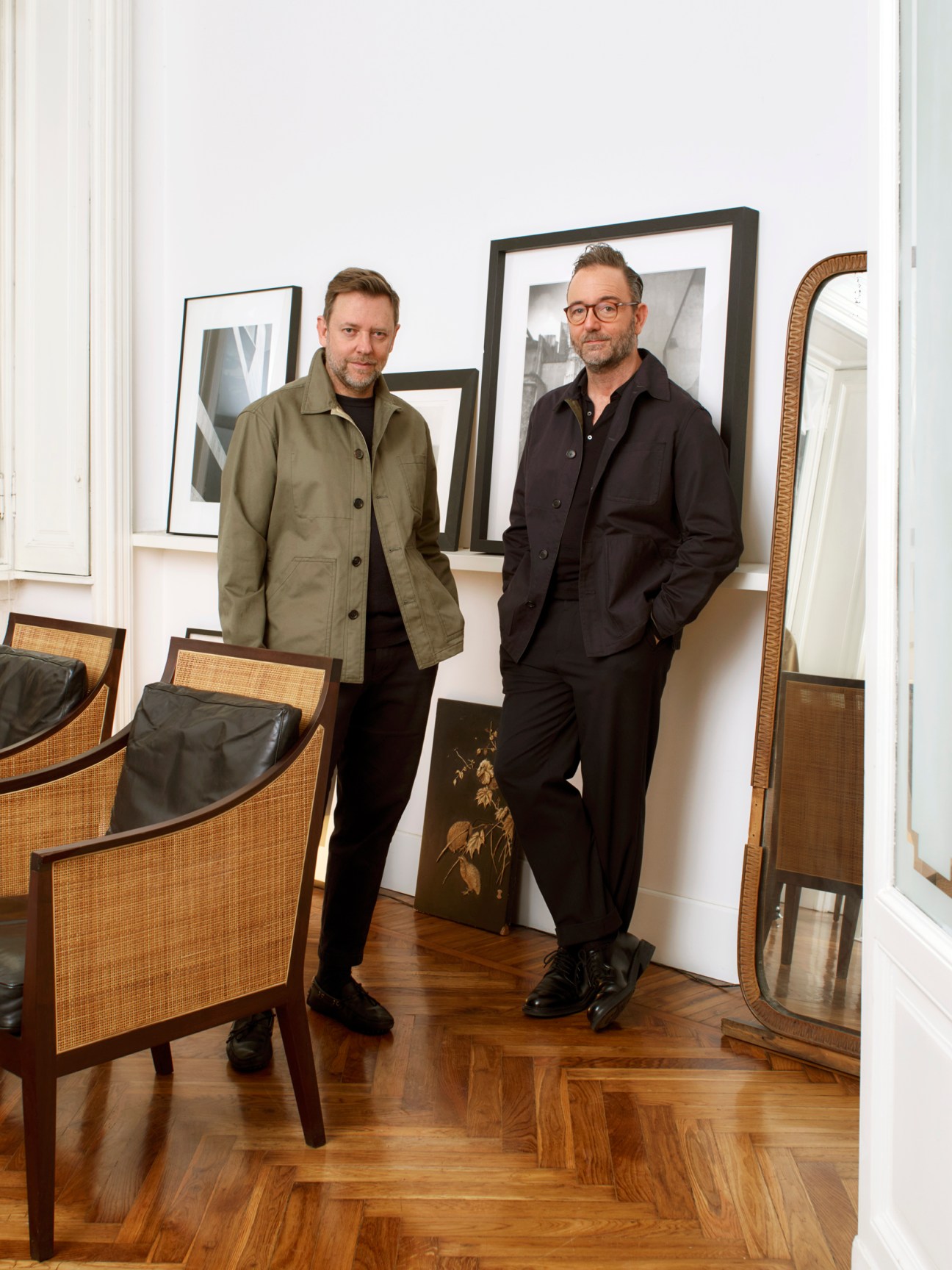
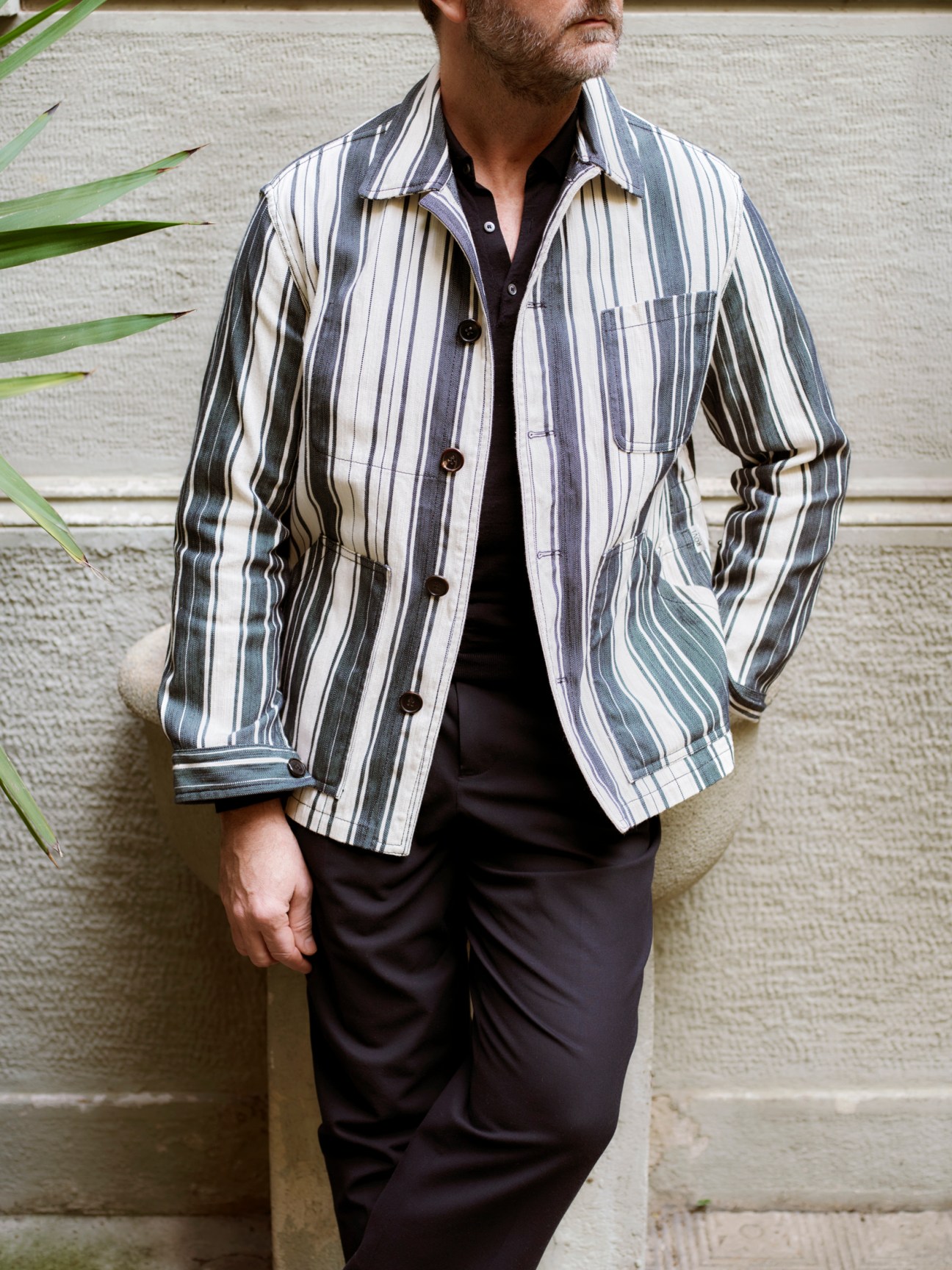
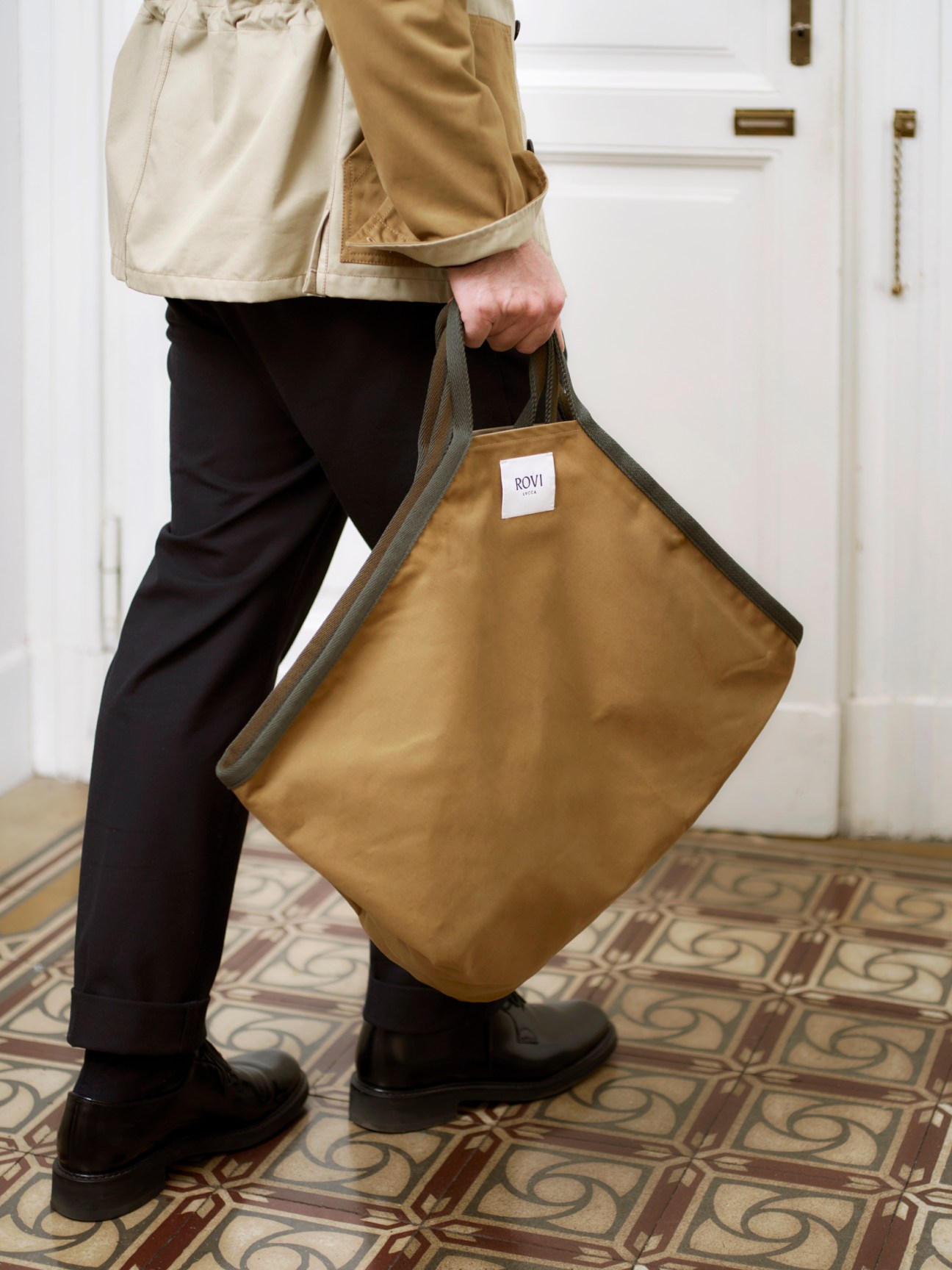
“We wanted to share that connection with nature,” says Seymour. For its chic yet functional Lucchese garden jacket, Rovi Lucca sourced cotton twill from a mill in England, known for making sturdy fabrics for trench coats. The “Made in Italy” collection also includes a smart adjustable apron and spacious double-faced-cotton log carrier for transporting cuttings or groceries.
Rovi Lucca’s debut collection has caught the eye of global retailers, including menswear buyer Bruce Pask, who will launch the Milanese label at Bergdorf Goodman this spring.
bergdorfgoodman.com
18.
Celine
France
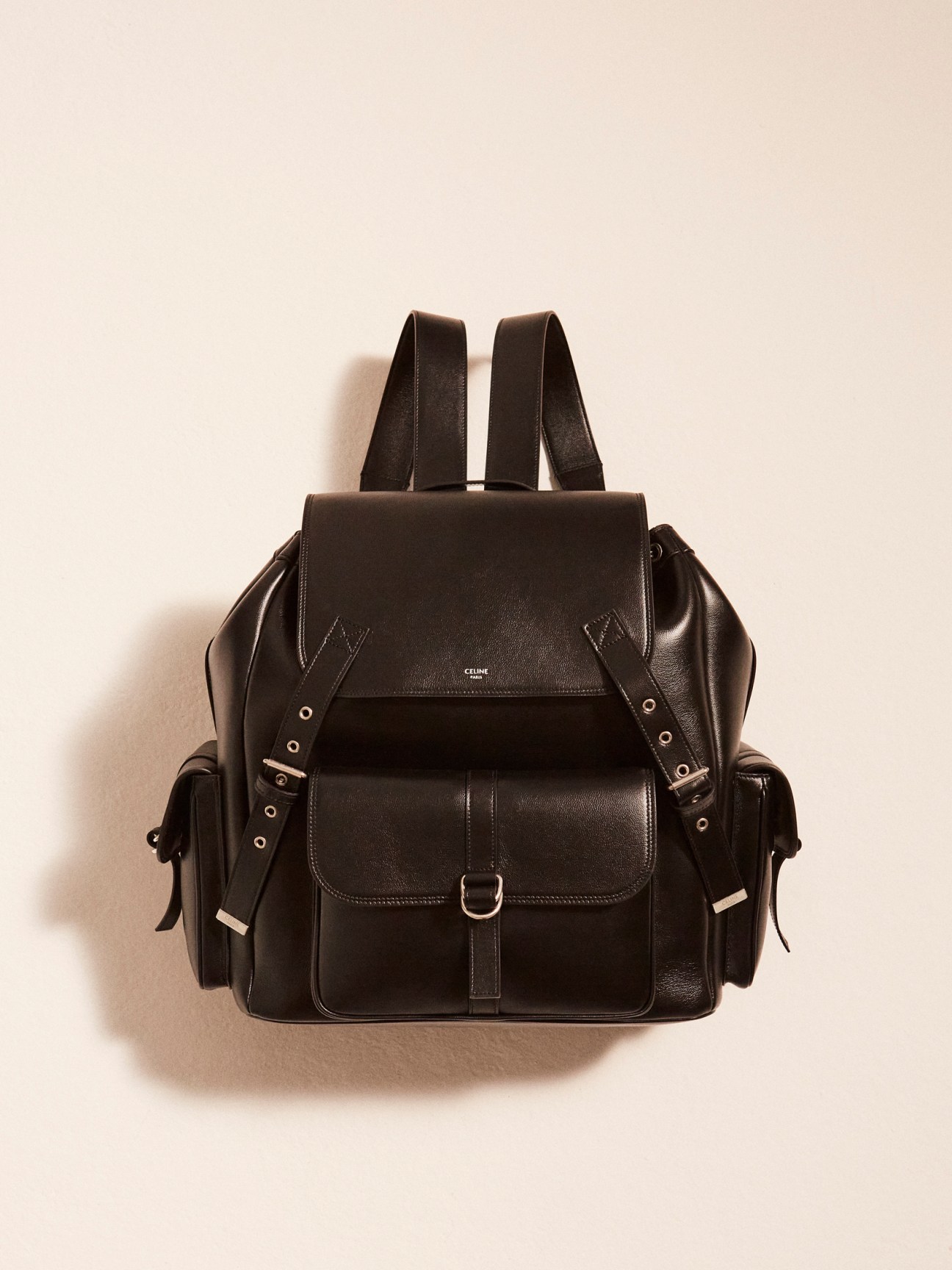
Roomy totes and oversized backpacks are fast becoming a mainstay at Celine under the creative direction of Hedi Slimane. The label’s most recent collection presentation, which took place at Paris nightclub Le Palace, featured plenty of these leather accessories, worn with rock’n’roll-inspired leather jackets and slim trousers. This black leather number with silver finishes (pictured) is a functional, everyday option with pockets and an adjustable strap so that it can be carried over the shoulder.
celine.com

19.
Neithers
South Korea
Seoul-born designer Dukhyun Won created Neithers to offer logo-free, utilitarian clothes. His fast-growing label, launched in 2017, has expanded distribution across South Korea, Japan and Taiwan. The brand stands out for its sturdy fabrics and relaxed silhouettes, characteristic of Seoul’s fashion scene. We like the signature Barista shirt.
neithers.co.kr
20.
Tembea
Japan
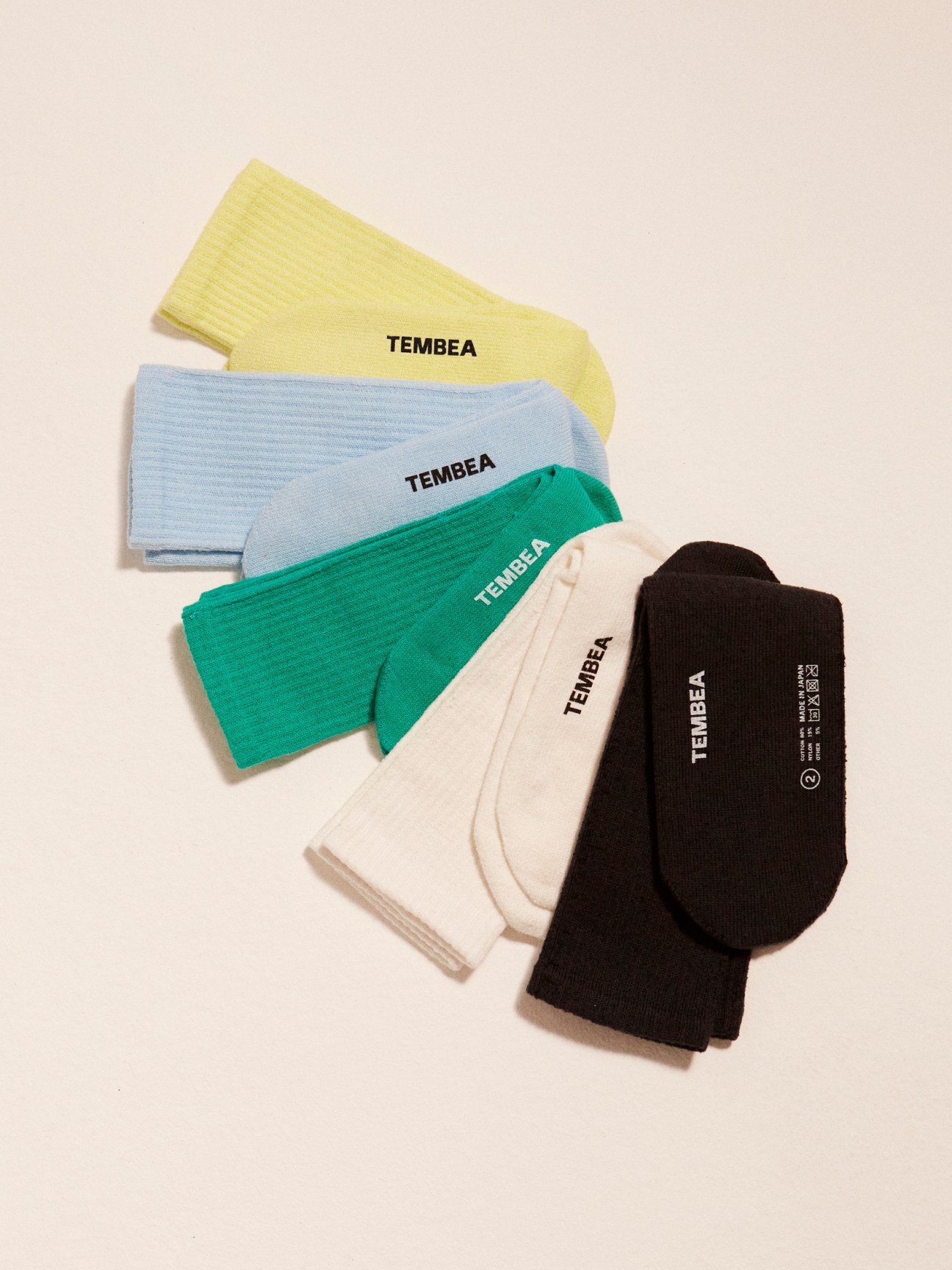
Tembea might be synonymous with high-quality totes in Japan but the Tokyo-based label also makes elegant leather wallets, hats and socks. We rate these brightly coloured pairs, featuring seamless toes.
torso-design.com

21.
Amiacalva
Japan
Amiacalva is an Osaka-based bag brand that makes everything from totes and backpacks to shoulder bags. It uses “Made in Japan” cottons and nylons, as well as an original canvas fabric for its functional products. The designs are distinctly minimal, letting the quality speak for itself.
amiacalva.com
22.
Asket
Sweden
Swedish brand Asket designs single collections of classic clothing to stand the test of time – think merino-wool jumpers, twill chinos and wool coats for all seasons. Its approach to dressing has been resonating globally. “This year will be about scaling up,” says Jakob Dworsky (pictured), who founded the label in 2015 alongside August Bard Bringéus. “We want to grow the team while keeping the same spirit.”

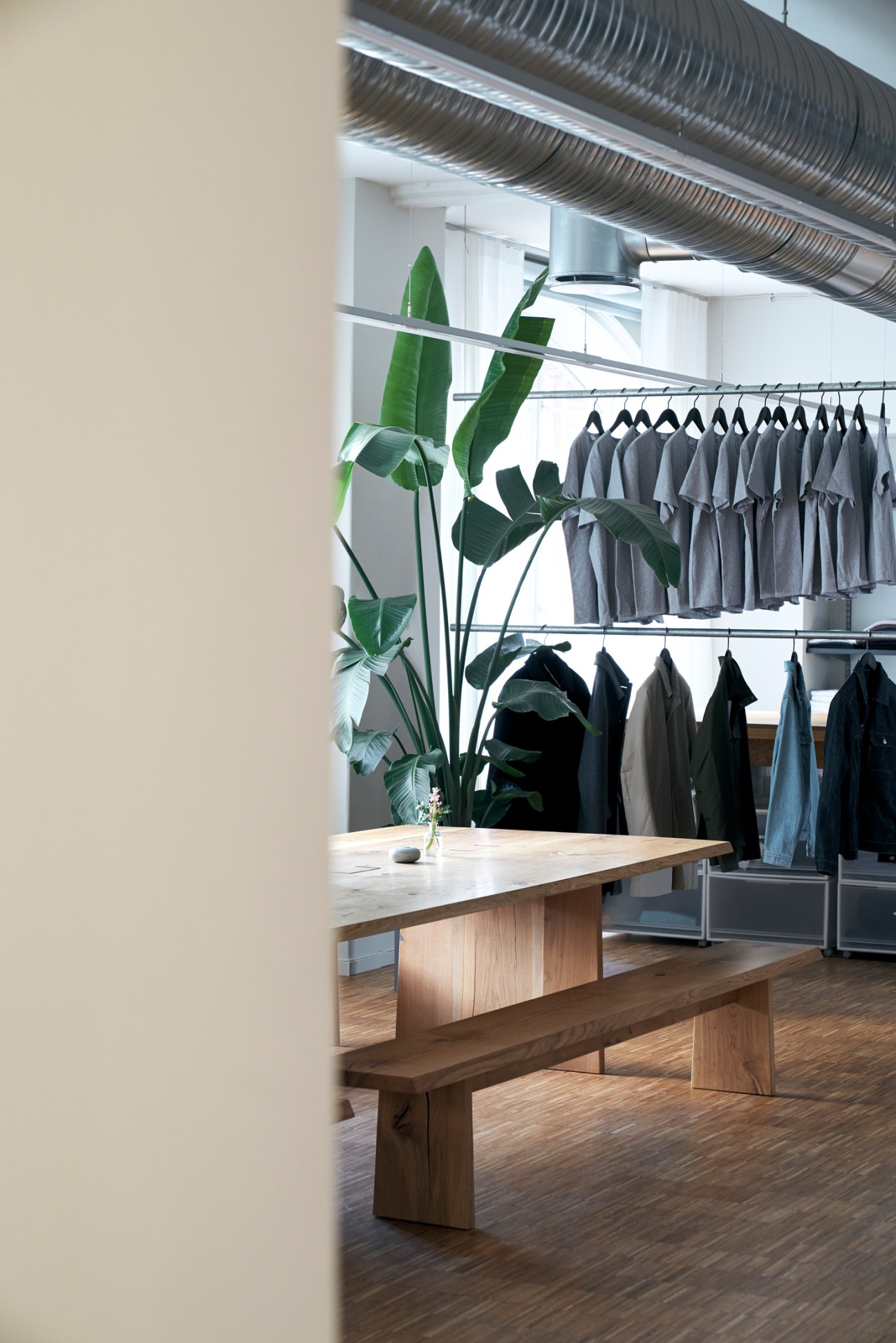
Asket opened its first shop in Stockholm’s upscale Norrmalm in 2021. “We realised the need for physical retail because we’re selling high-quality garments with a great fit,” says Dworsky. “If you can’t feel them or try them on, there will be a barrier for some customers.”
Asket plans to expand its physical retail network to the UK and Germany, where Scandinavian minimalism is increasingly popular. “It gives us a head start,” says Dworsky. “We’re a minimalist brand. Asket means ‘an aesthete’ in Swedish; it’s about refraining from excess and focusing on what matters.”
asket.com
23.
Unfeigned
Spain
Madrid-based Unfeigned stands out for its high-quality organic or recycled materials and comfortable yet sleek designs, including velour polo shorts, workwear-inspired cotton jackets and sporty vests. Founded by Rafa Gómez in 2019, the label has grown a robust wholesale business around the world, working with retailers in the US, UK, Germany and Japan.
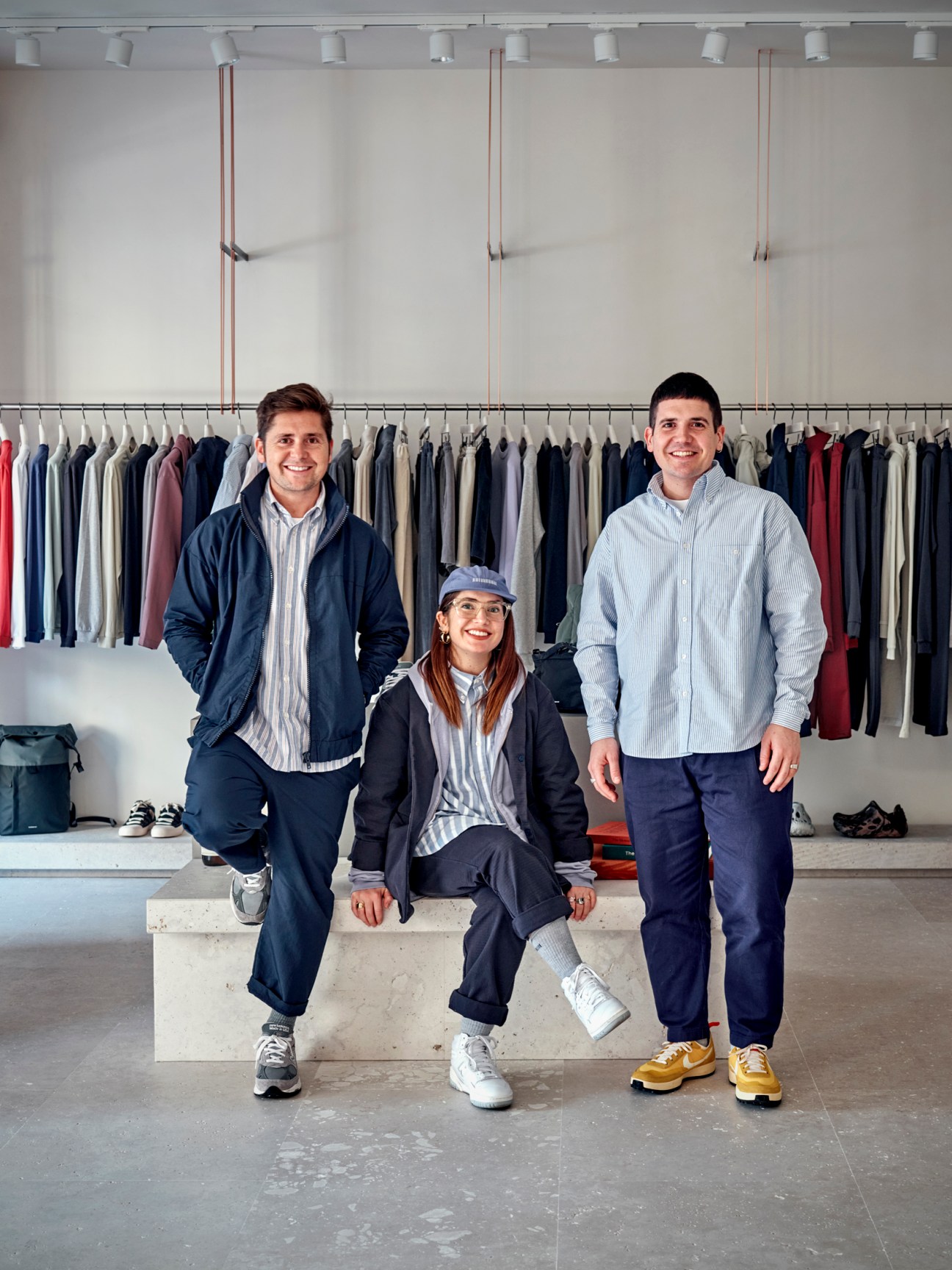
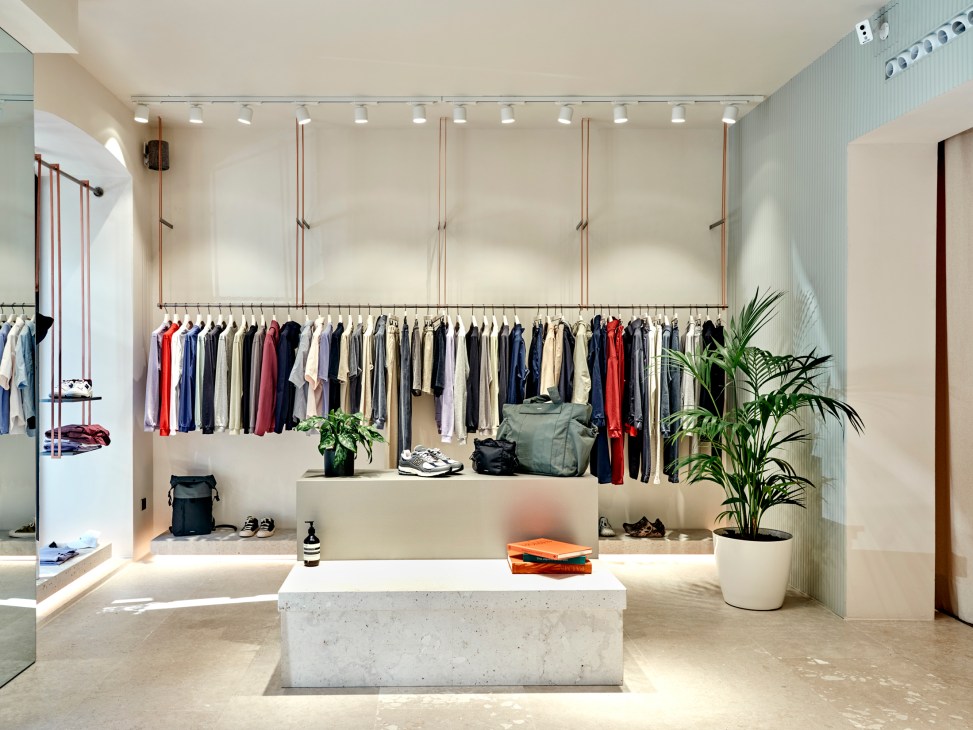
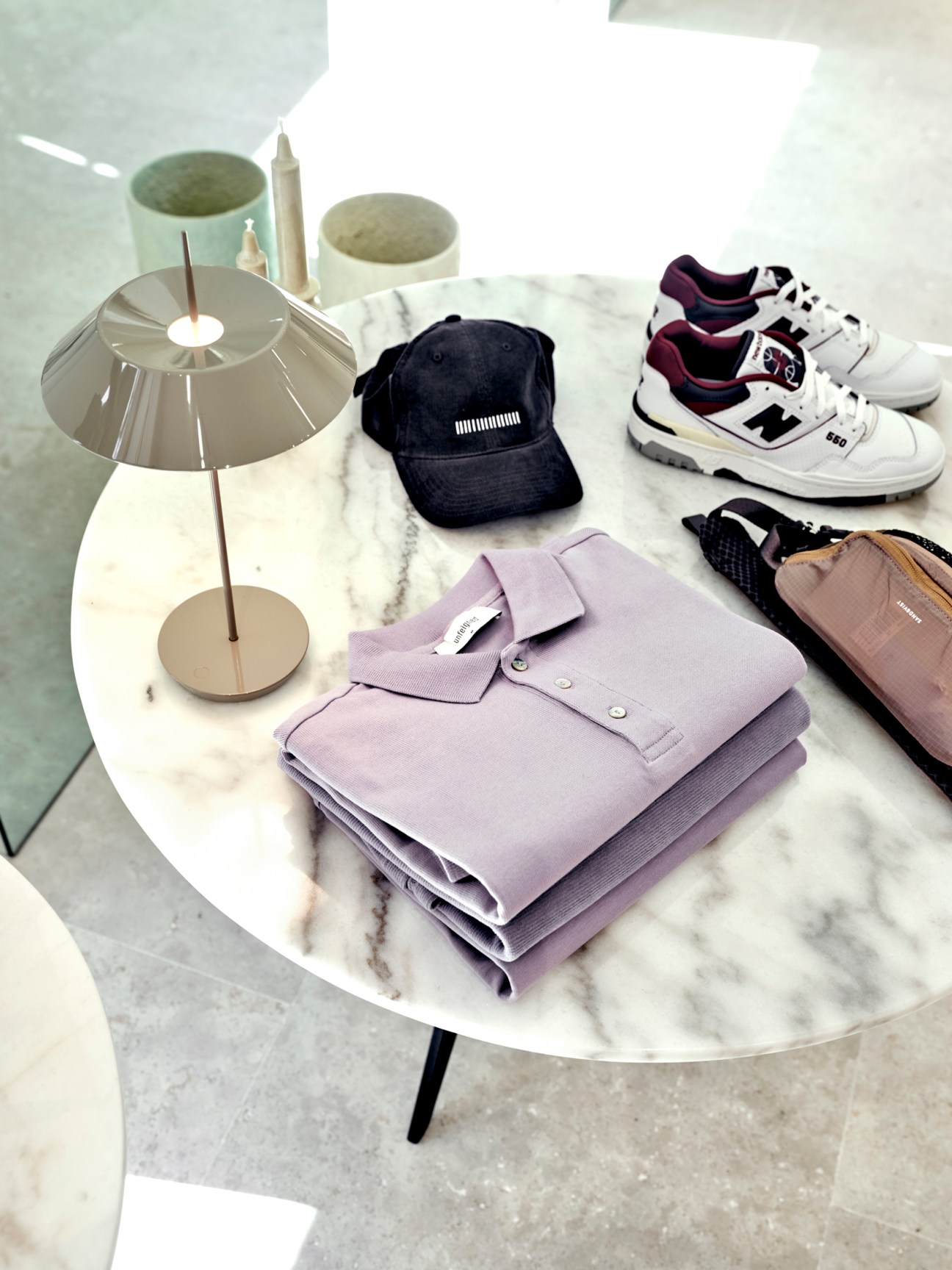
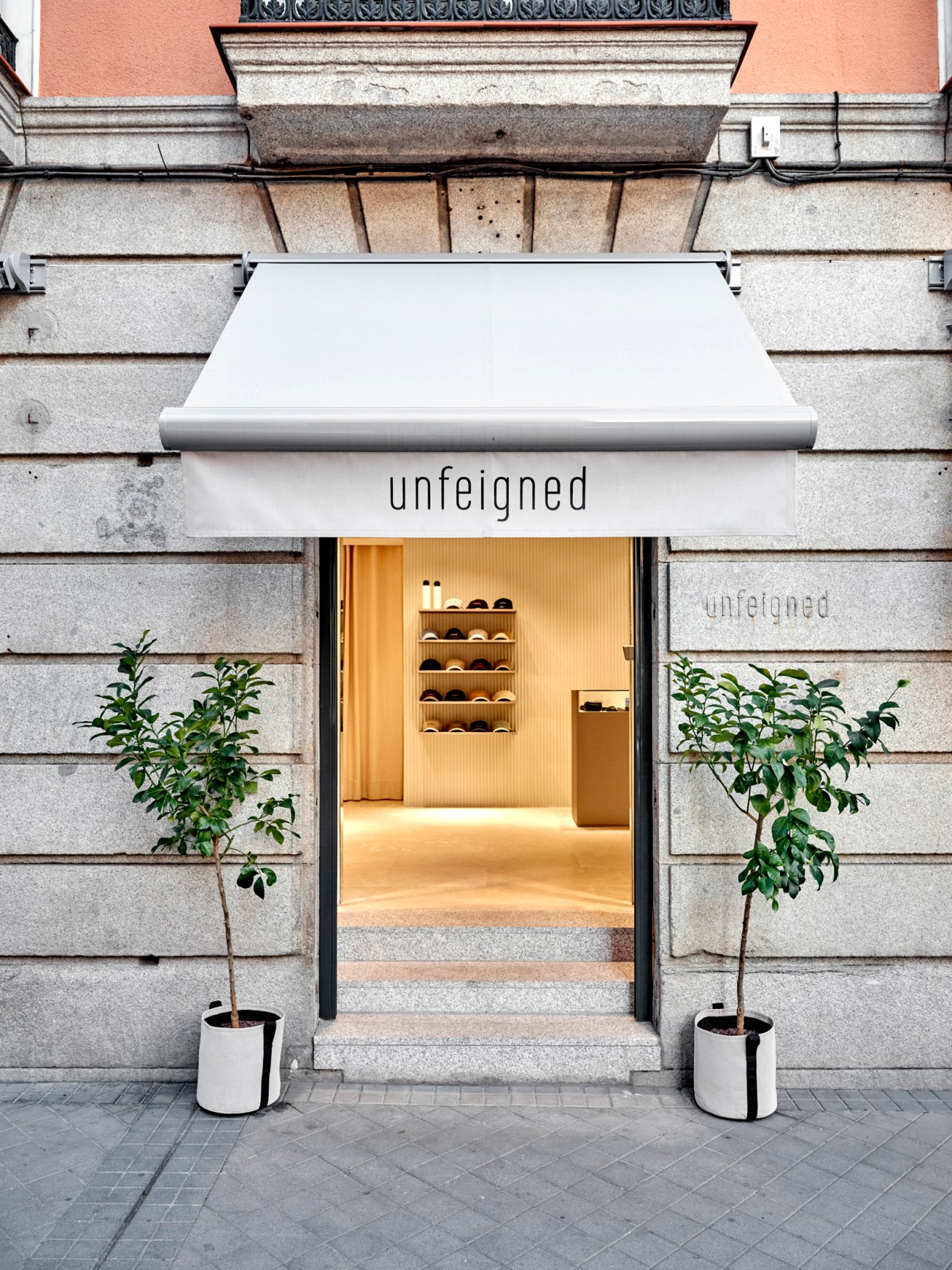
Unfeigned has built on that success by opening its first physical shop, in Madrid’s Salesas district. Designed by Estudio Morgan, it captures the label’s understated aesthetic. “We wanted to reflect the values of the brand: simplicity, sustainability and quality,” says María Gómez, the founder’s sister. She emphasises the attention that went into designing the fitting rooms. “We wanted great lighting to ensure that the clothes look exactly how they will when you’re out on the streets or at a restaurant.” The shop also stocks products from third-party brands, such as New Balance and Merrell trainers and Sandqvist backpacks.
unfeignedgear.com
24.
Emporio Armani Icons
Italy
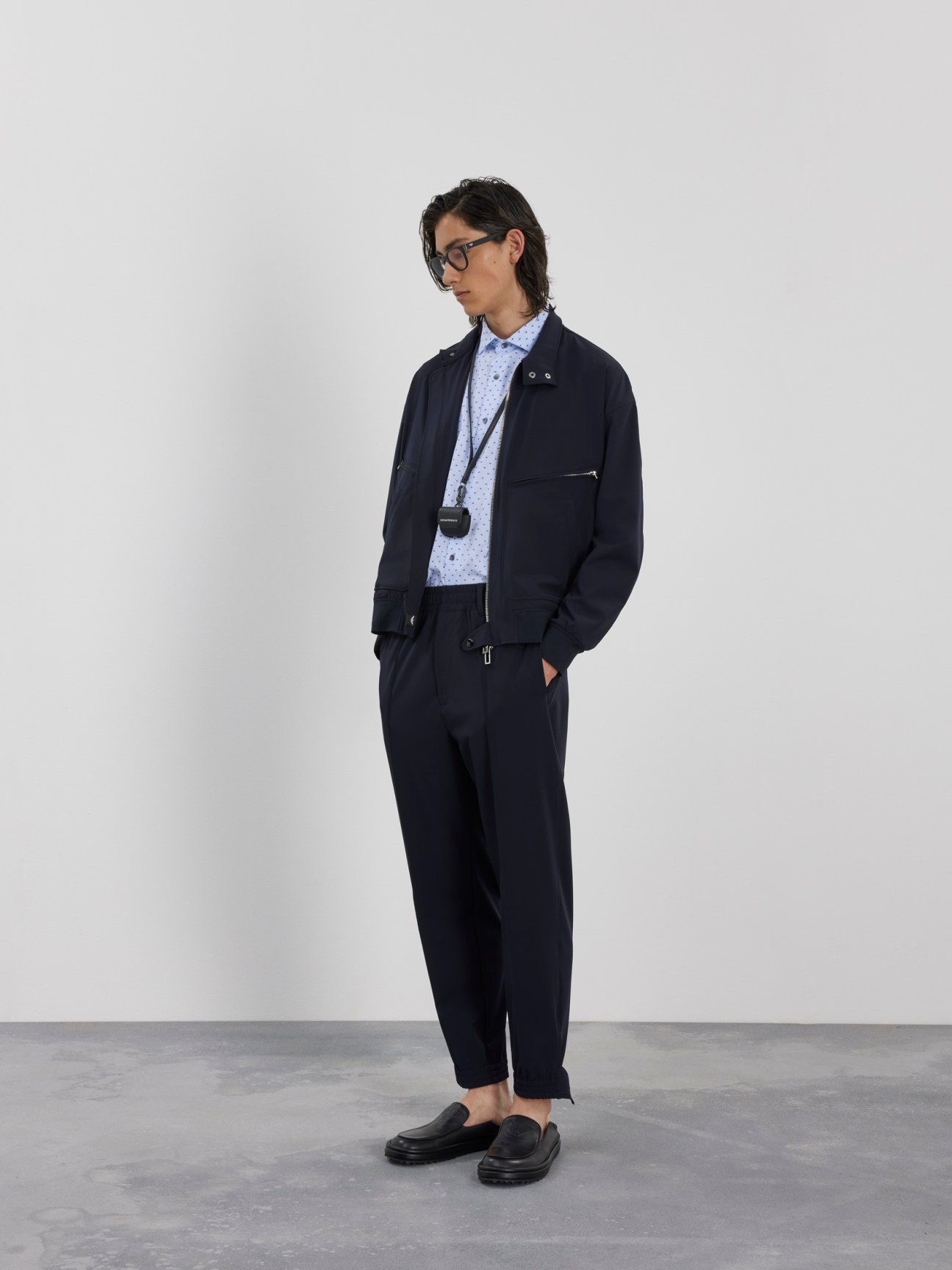
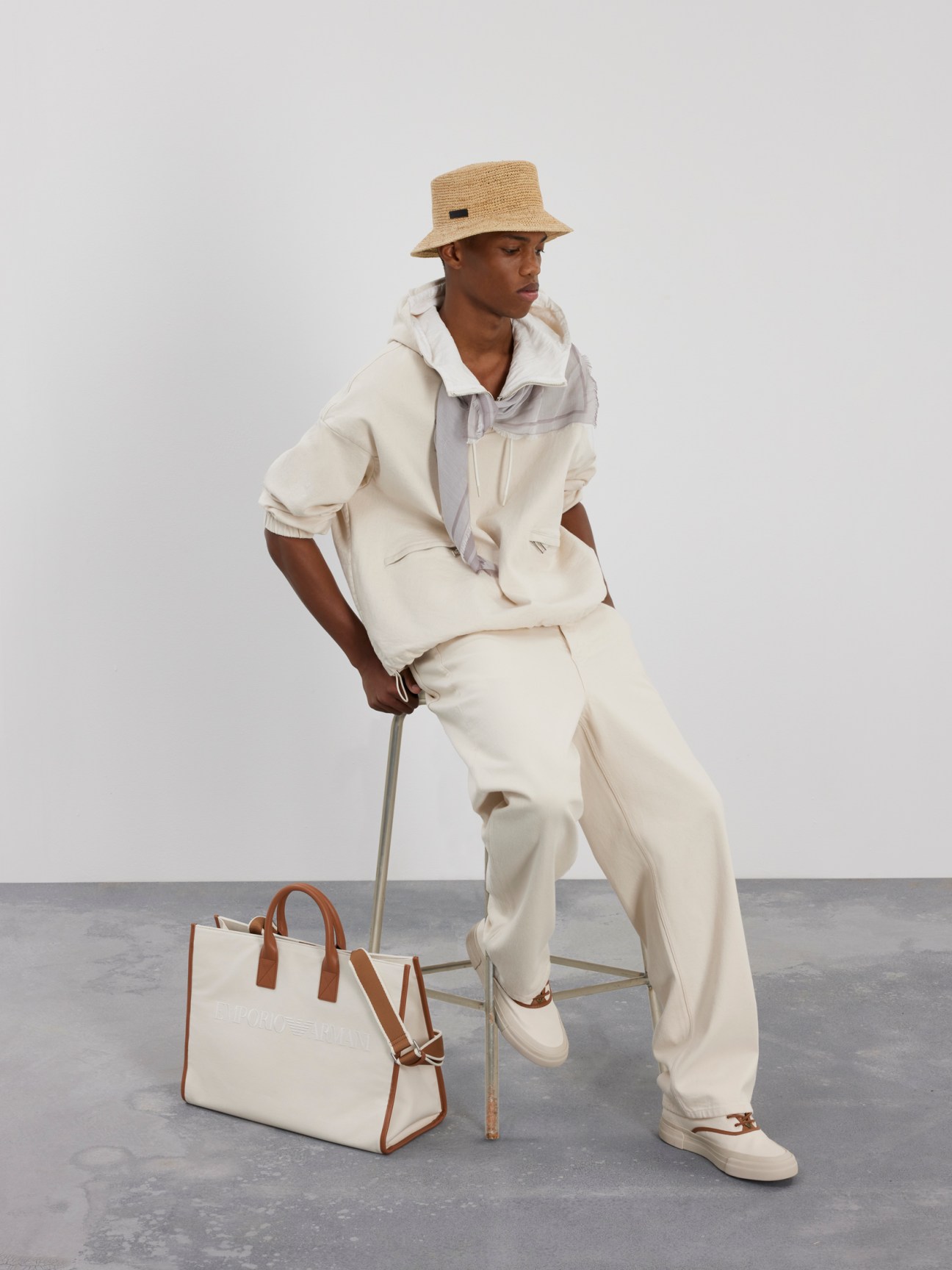
As part of its new spring releases, Emporio Armani is debuting Icons, a new capsule collection that brings together some of the brand’s most timeless silhouettes. Focusing on neutral navy and off-white shades, the collection doubles down on day wear, such as loosely tailored trousers, workwear-inspired jackets made using sturdy cotton-poplin and roomy totes. The aim was to add polish and more of a dandy flair to these everyday staples – in line with Armani’s commitment to dressing up no matter the occasion or time of day. We recommend the laid-back white suits for aperitivo hour.
armani.com
25.
Spring accessories:
Watches
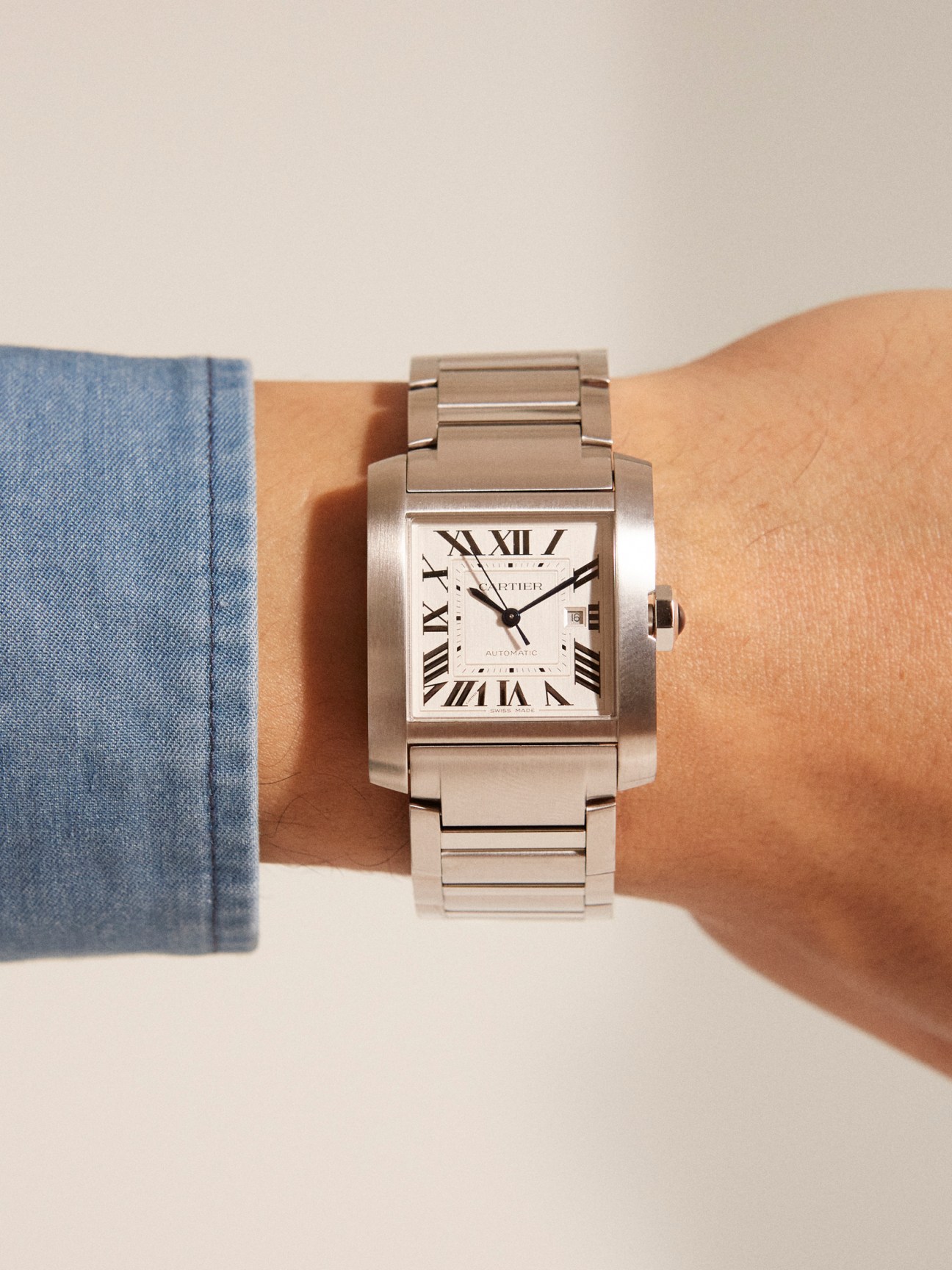
In time for the new season, here are the timepieces we have our eye on, from models by Swiss watchmakers Jaeger-LeCoultre, Vacheron Constantin and Blancpain to limited-edition watches by Japan’s Grand Seiko.
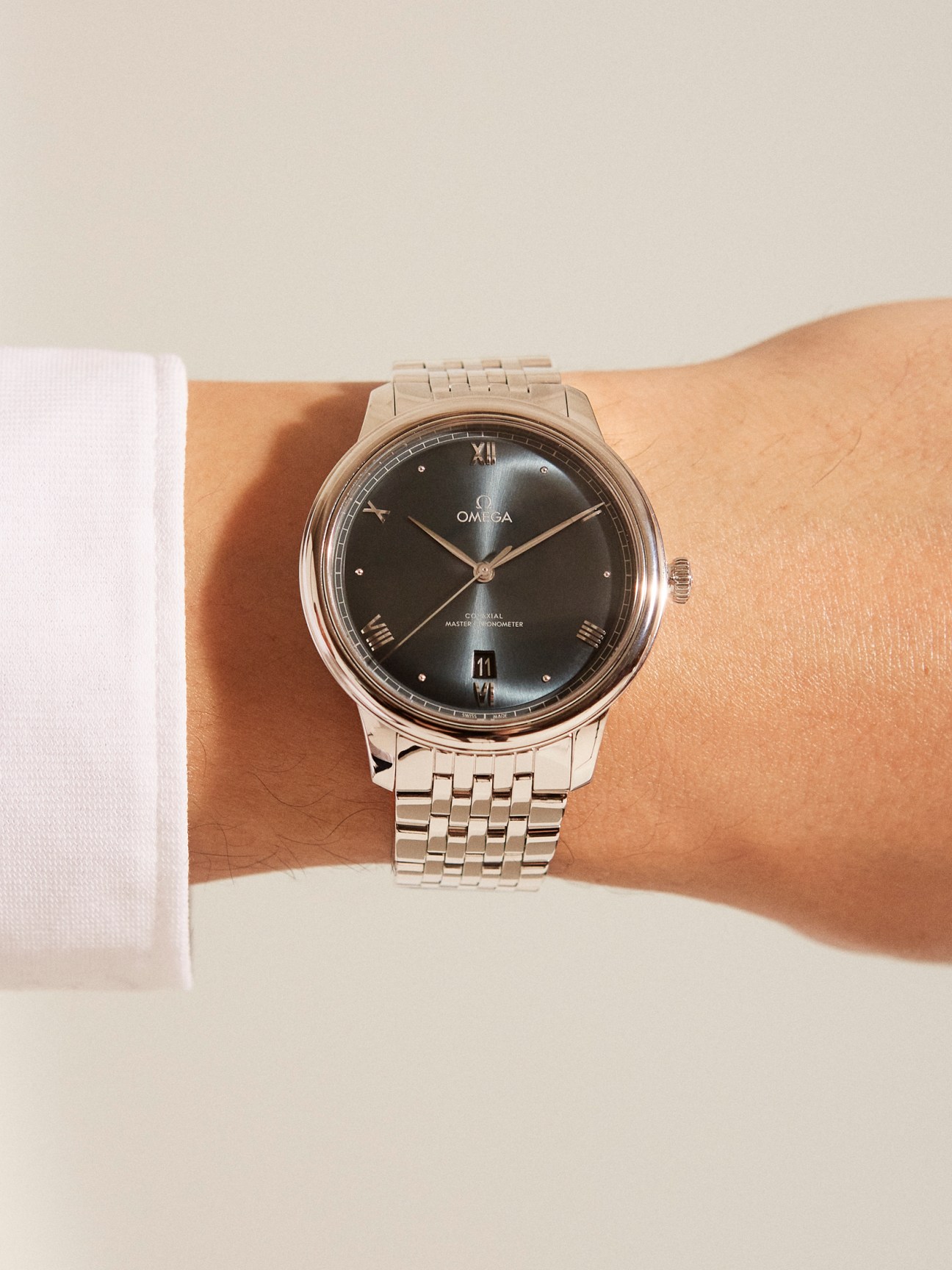
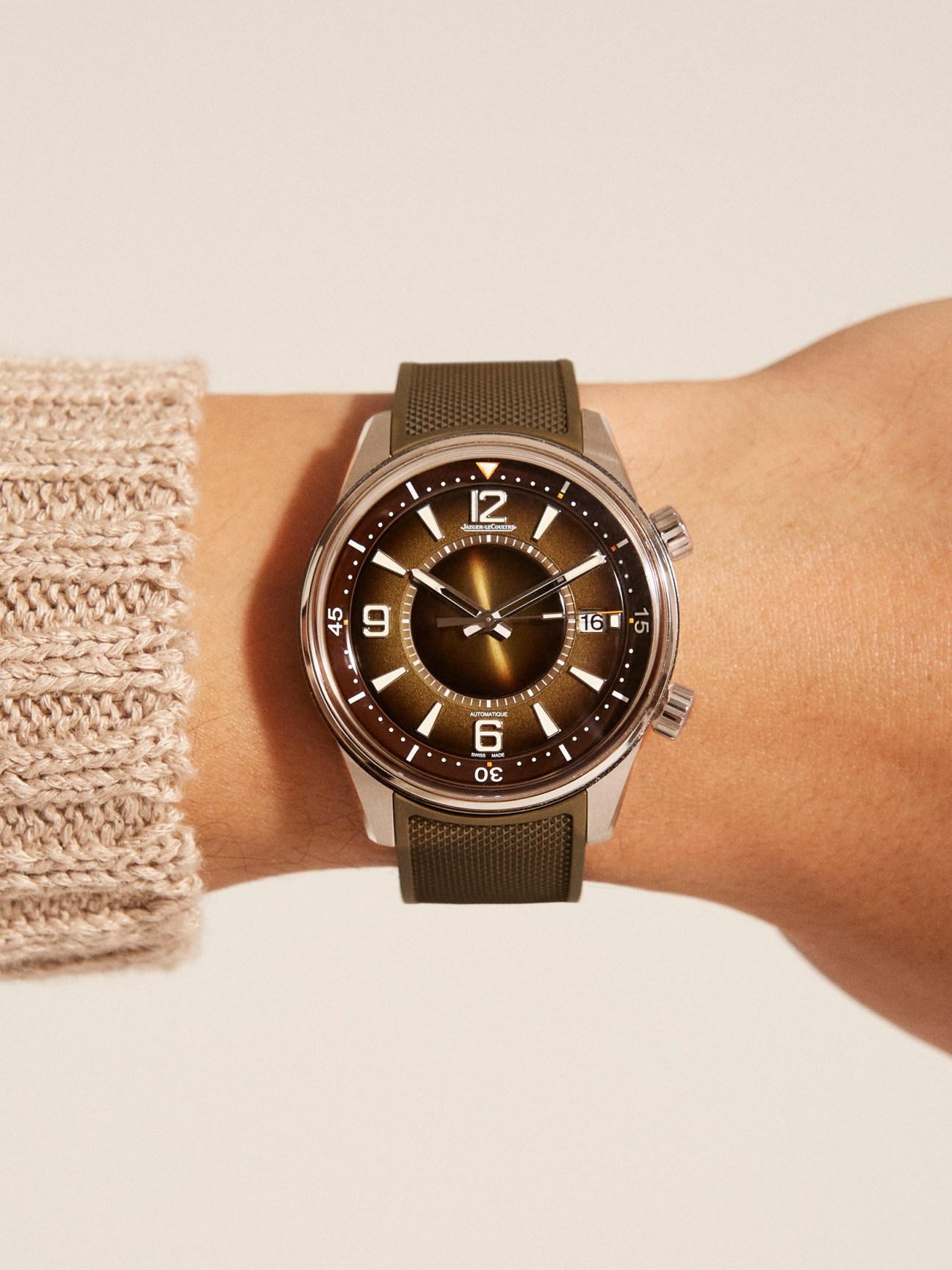
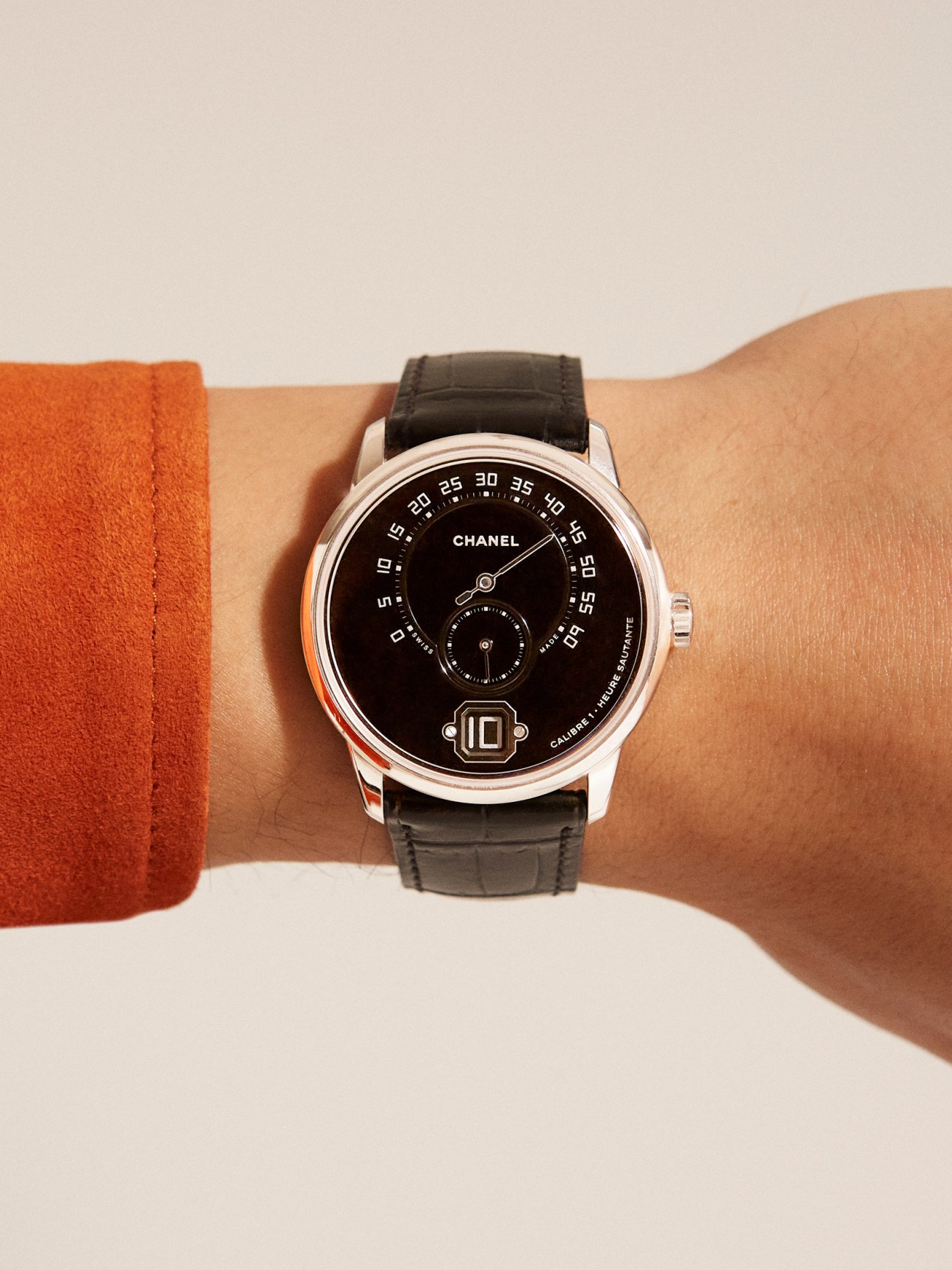
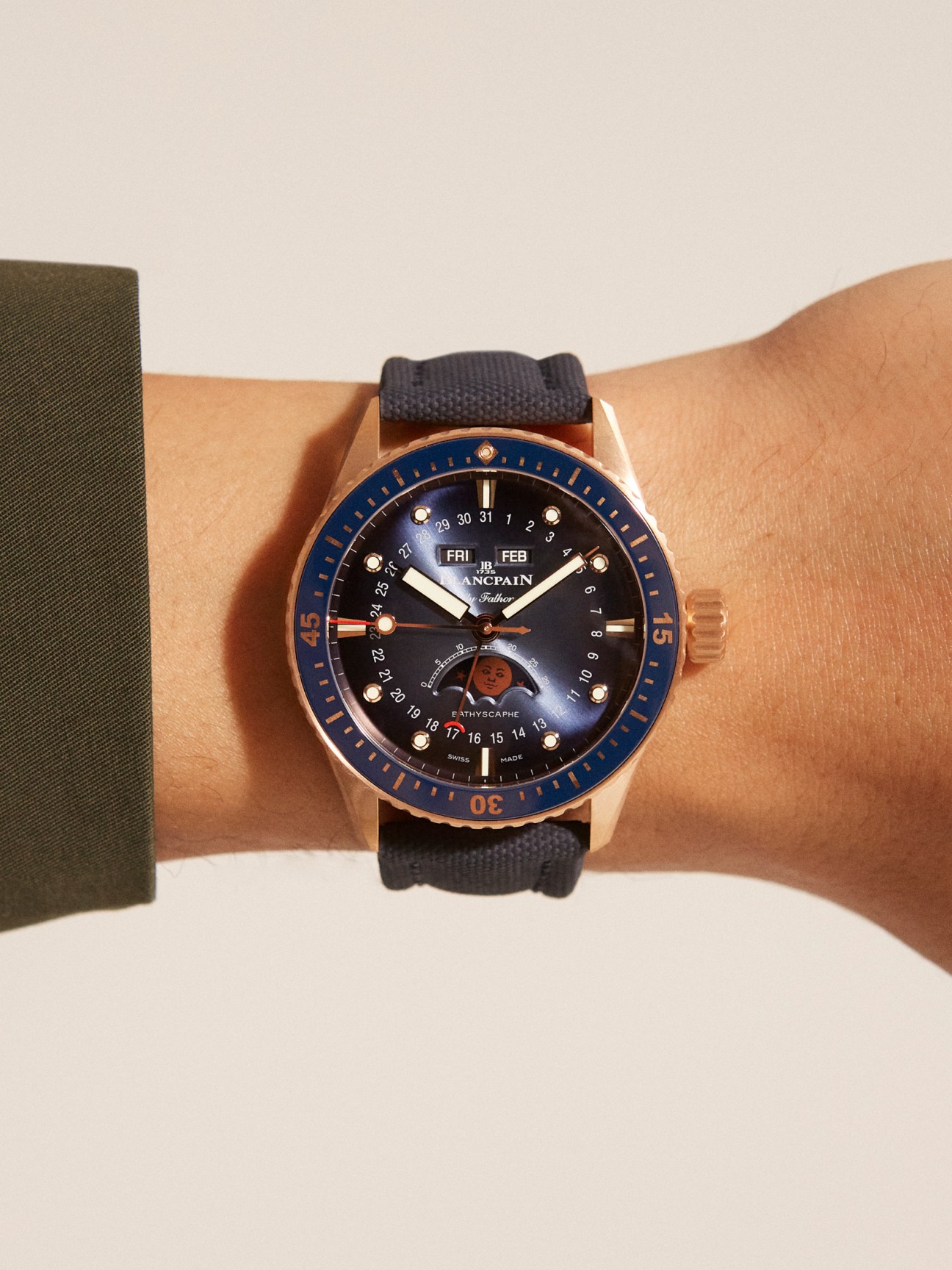
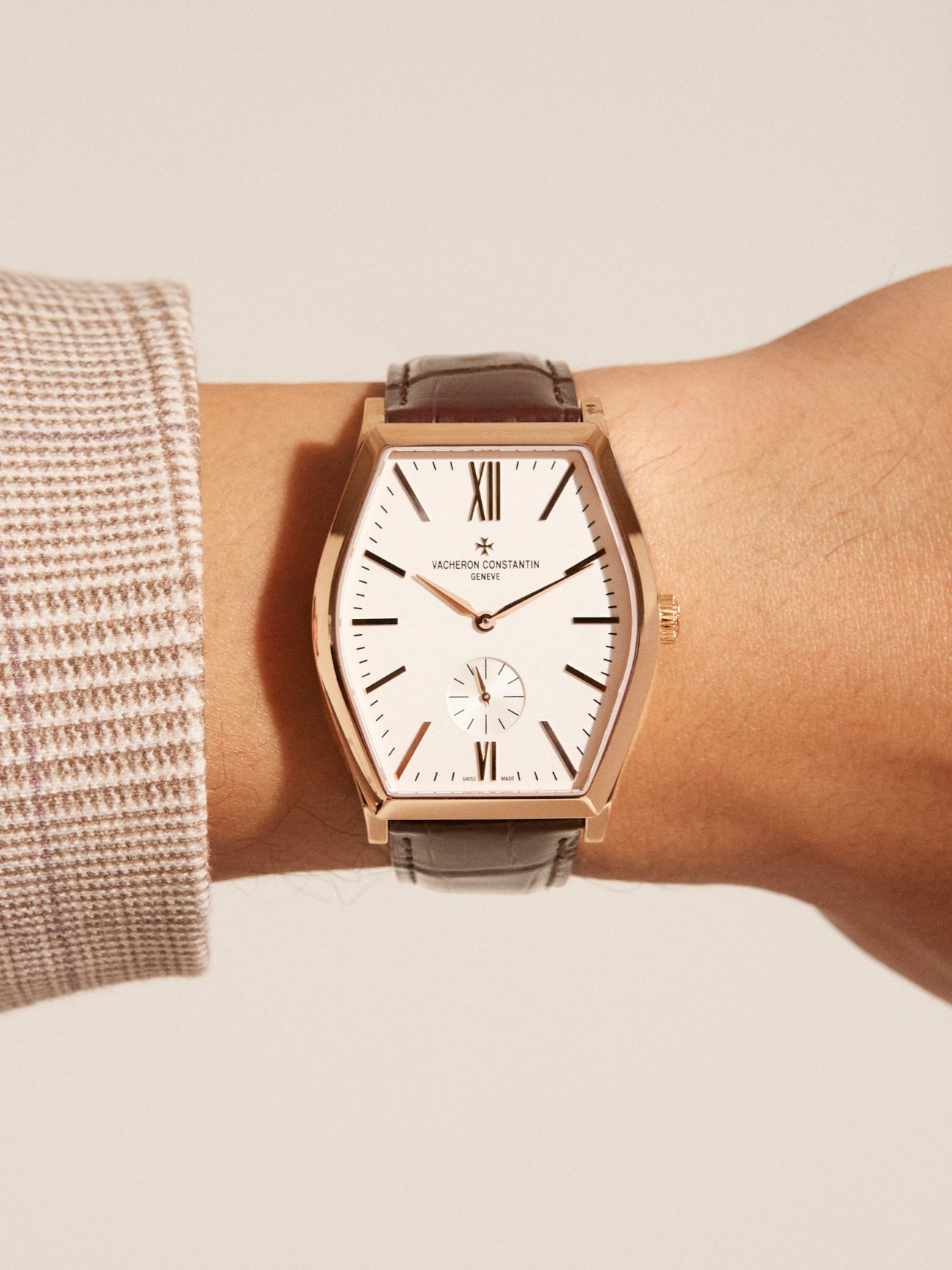
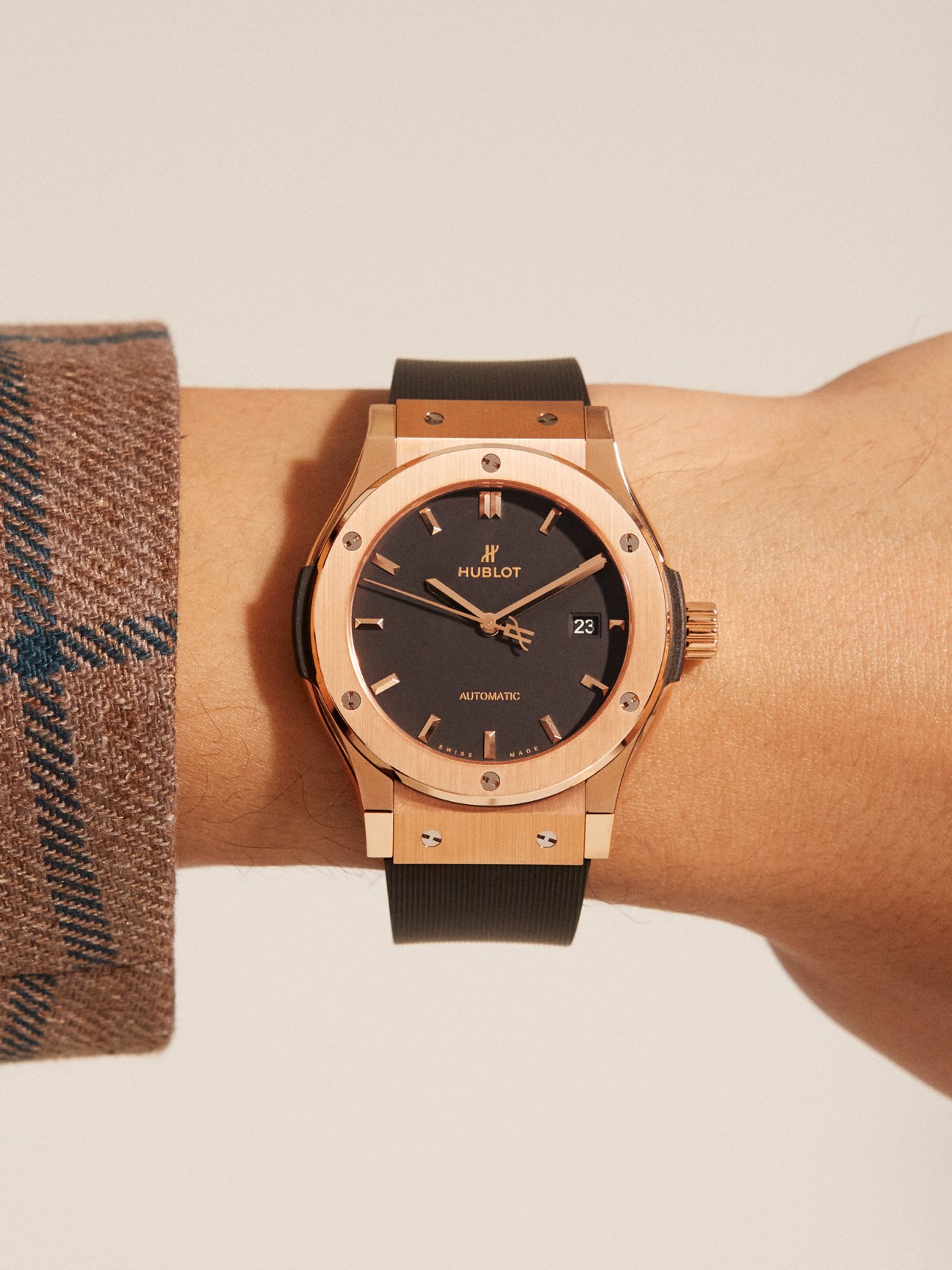
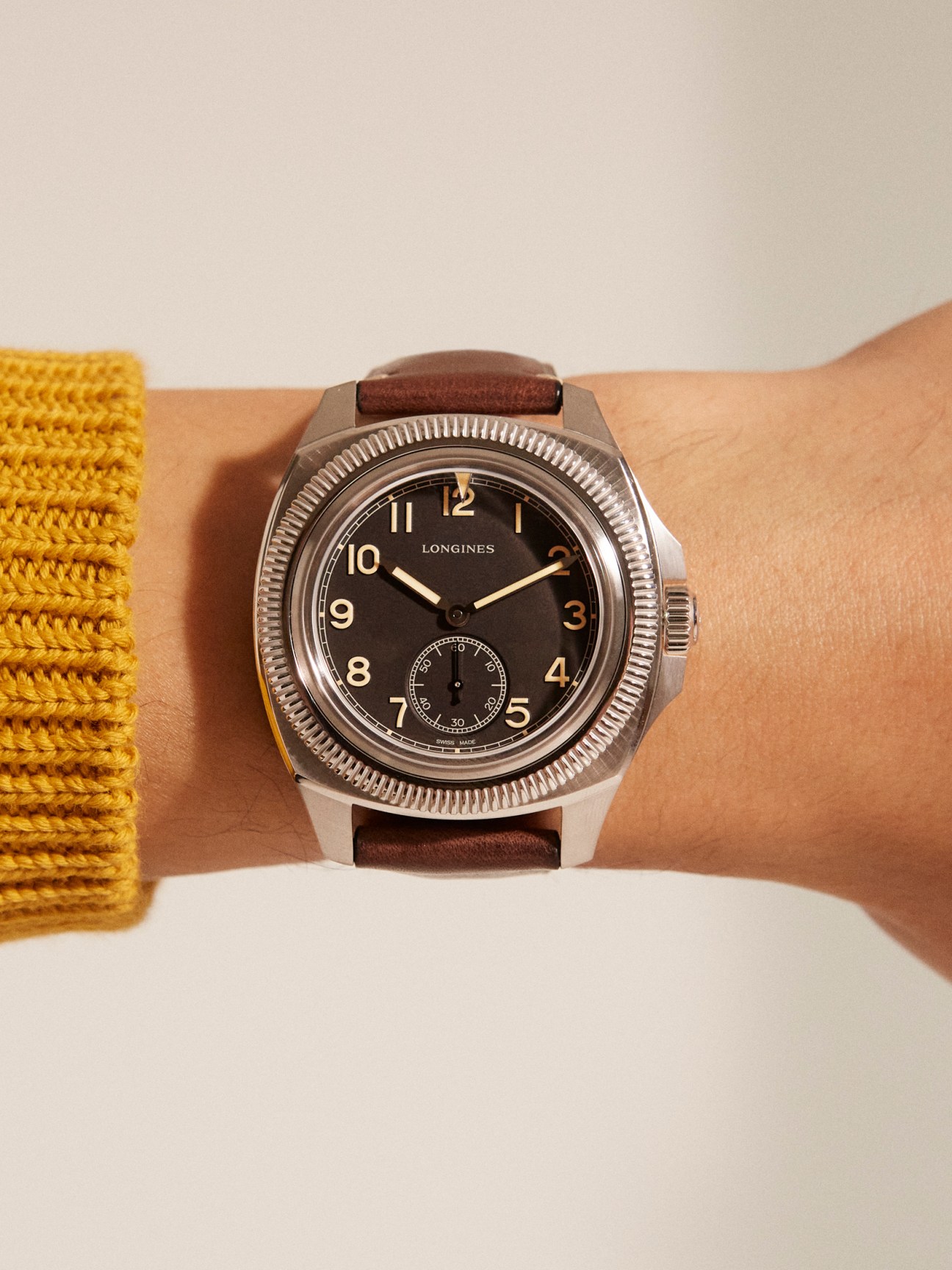
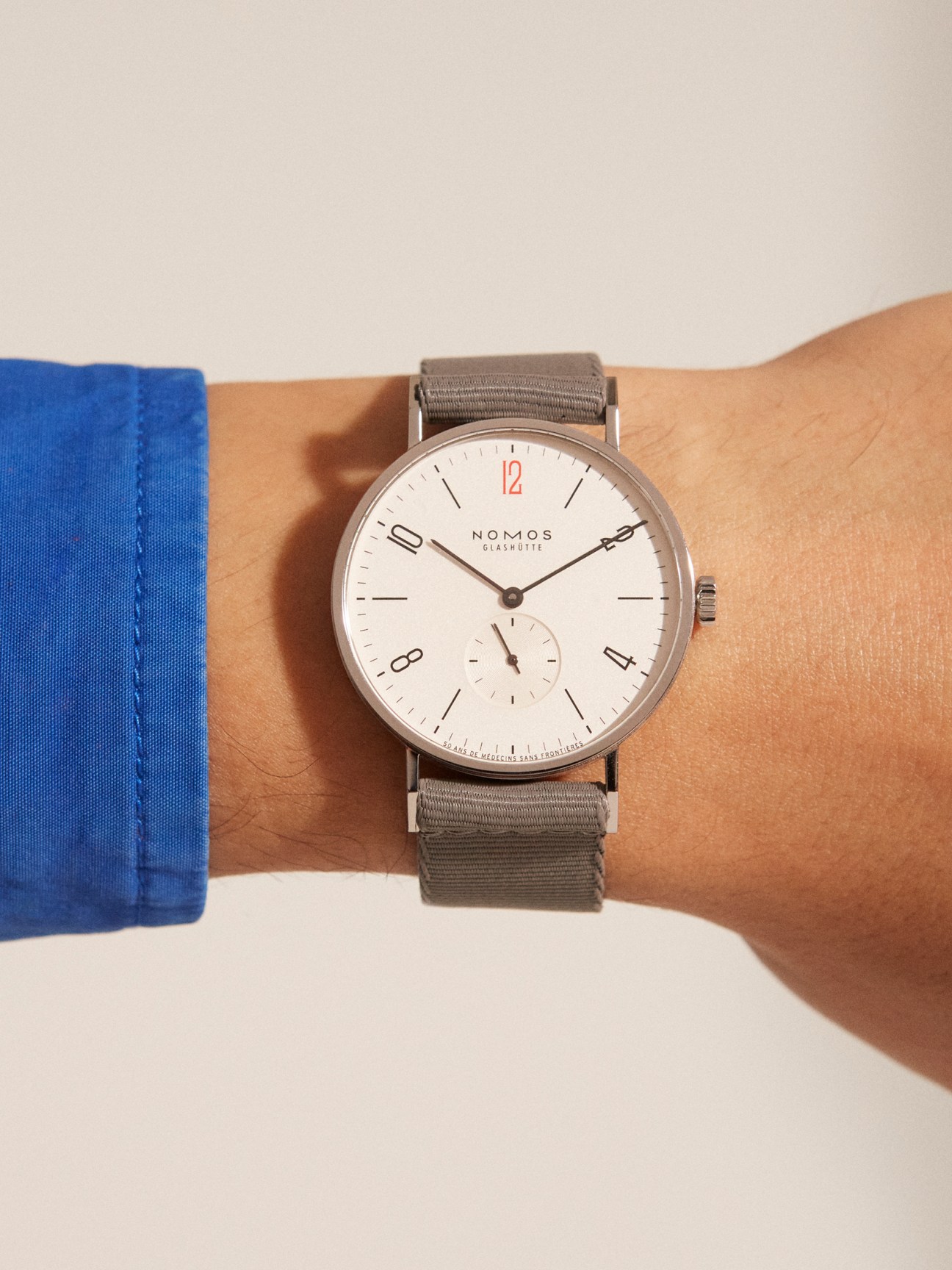
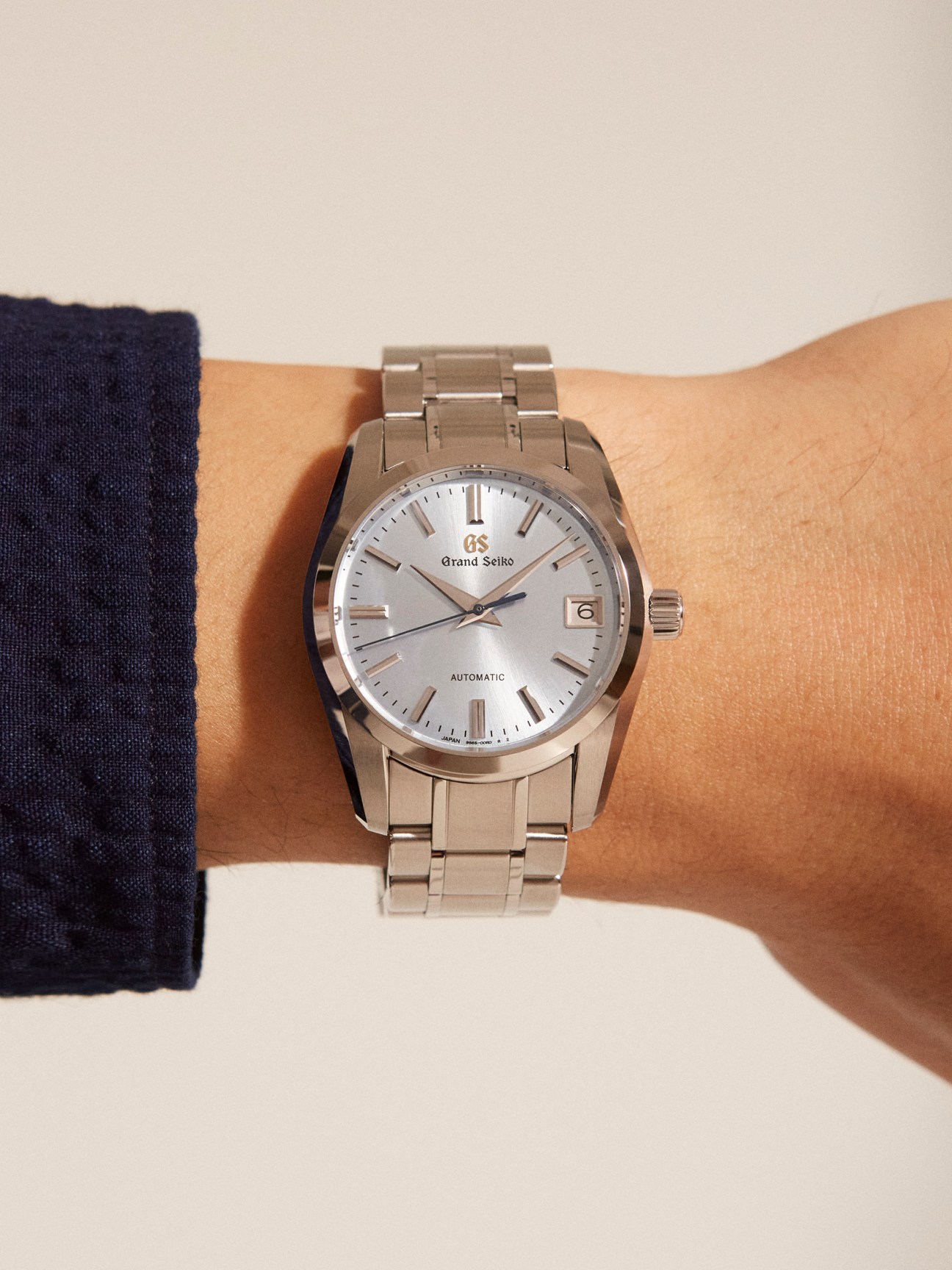
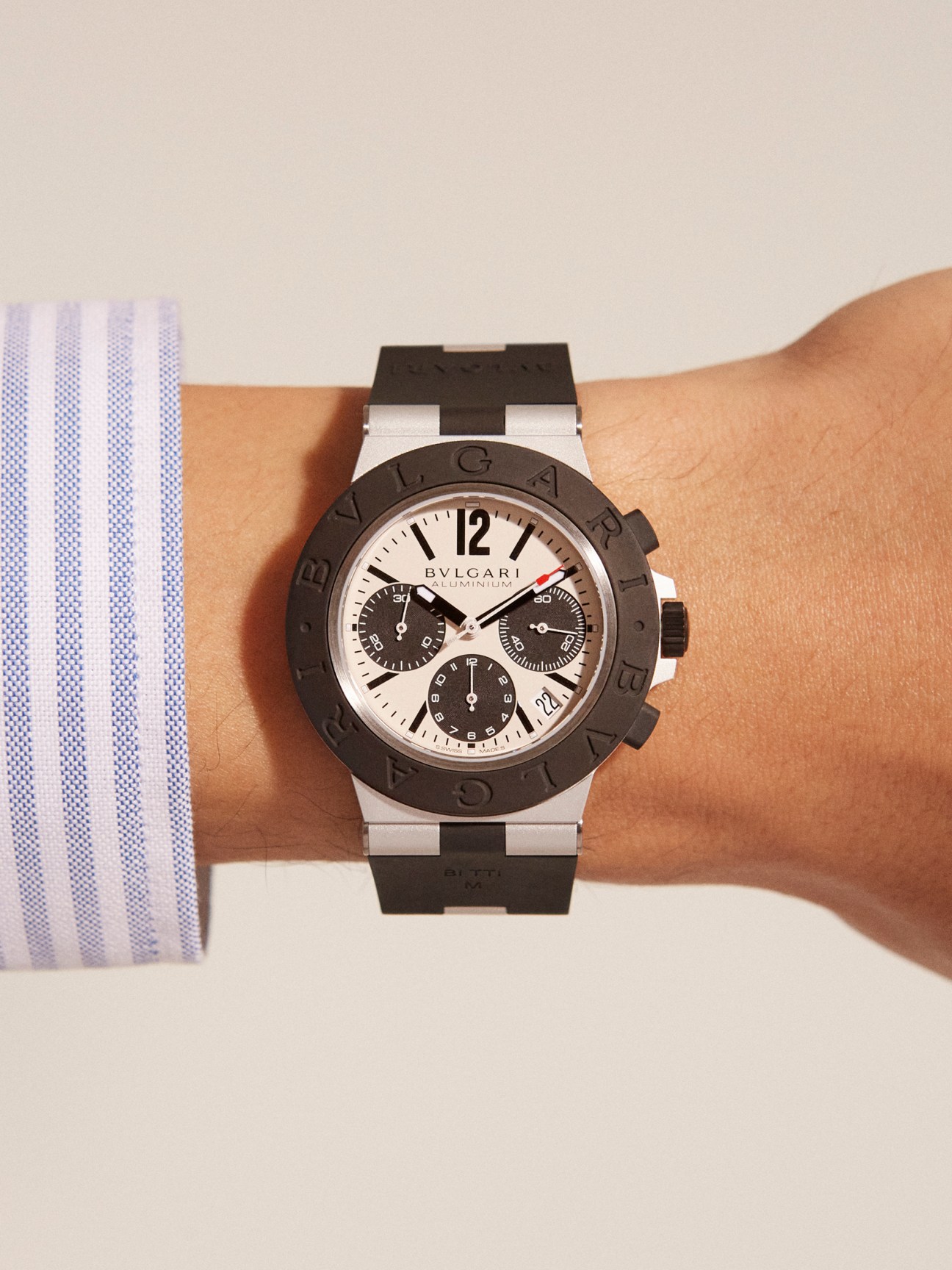
Marking the 25th anniversary of its 9S Calibre watch movement, Grand Seiko’s Mid-Heaven model features an elegant, icy-blue dial inspired by the views from Mount Iwate. Also worth noting is Nomos Glashütte’s Tangente 38 model, created as part of a partnership between the German horologist and Doctors Without Borders. Limited to 2,021 pieces, the watch was designed to honour the medical organisation’s 50th anniversary by donating €100 from each purchase to the charity’s team.
Otherwise, a classic silver Tank watch with Roman numerals by Cartier will never go out of style and the De Ville Prestige by Omega, featuring a racing-green face and silver band, will see you through all times of day, from morning meetings to black-tie affairs in the evening.
nomos-glashuette.com
cartier.com
omega.com
Still life: Pelle Crepin.
Building a story
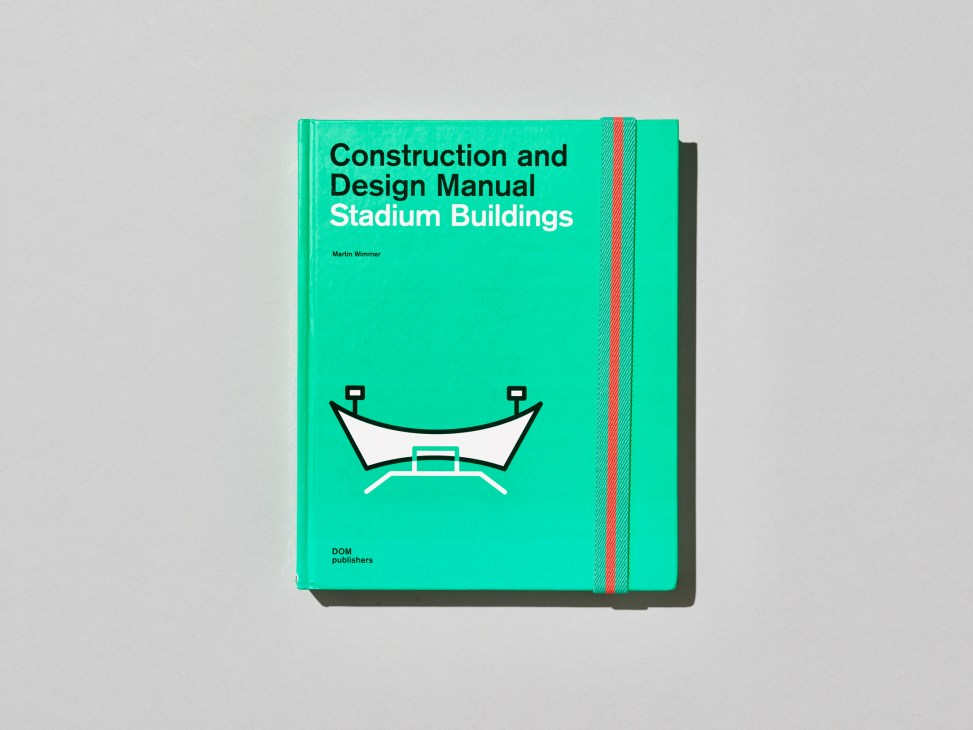
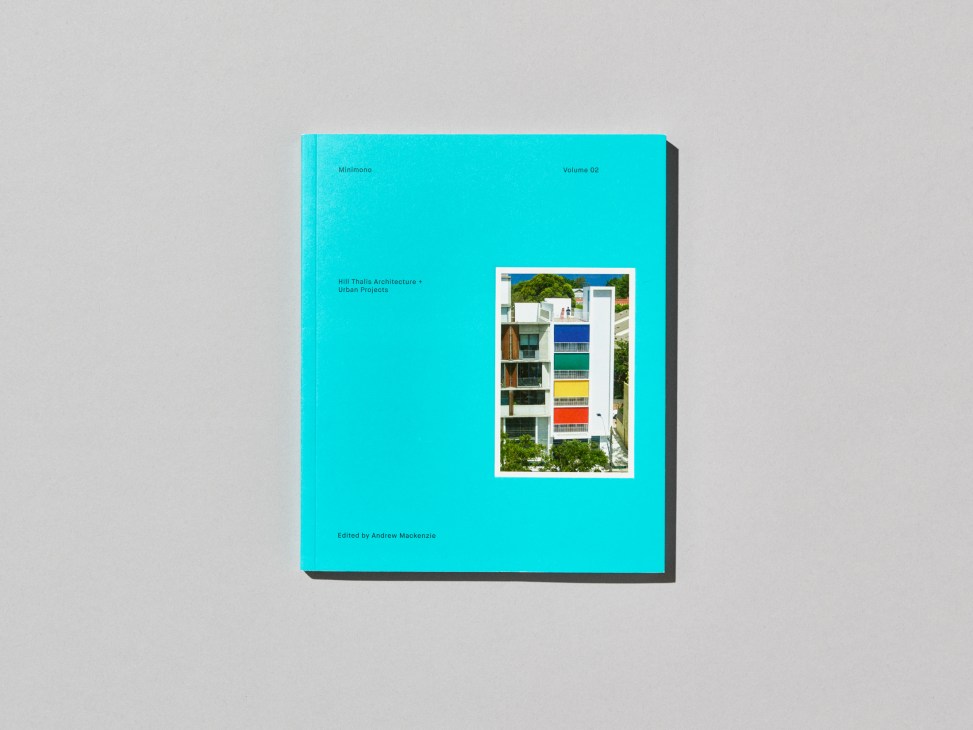
How many people would pick up a manual for the technical construction and design of stadium buildings? Berlin-based dom Publishers knew that such a book would not be an easy sell – at least not to architects.
“It’s very difficult to sell a book on stadiums to practising architects because not so many stadiums are built, so architects don’t need it,” says Philipp Meuser, dom’s owner. Despite this, the publisher, which specialises in architectural publications, went ahead and printed such a manual anyway.
The happy plot twist here is that Stadium Buildings, released under dom’s Construction and Design Manual series, went on to be such a success that it was later printed in English and Russian, following on from the original German edition. “It’s popular with students and people who aren’t involved in architecture but who are interested in sports,” says Meuser.
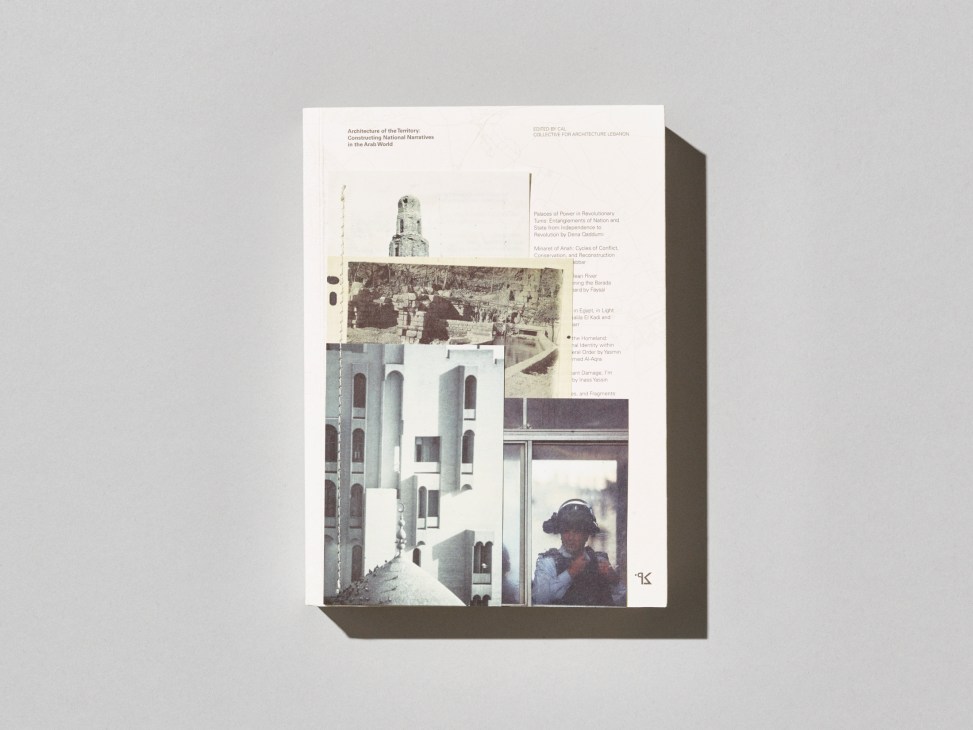
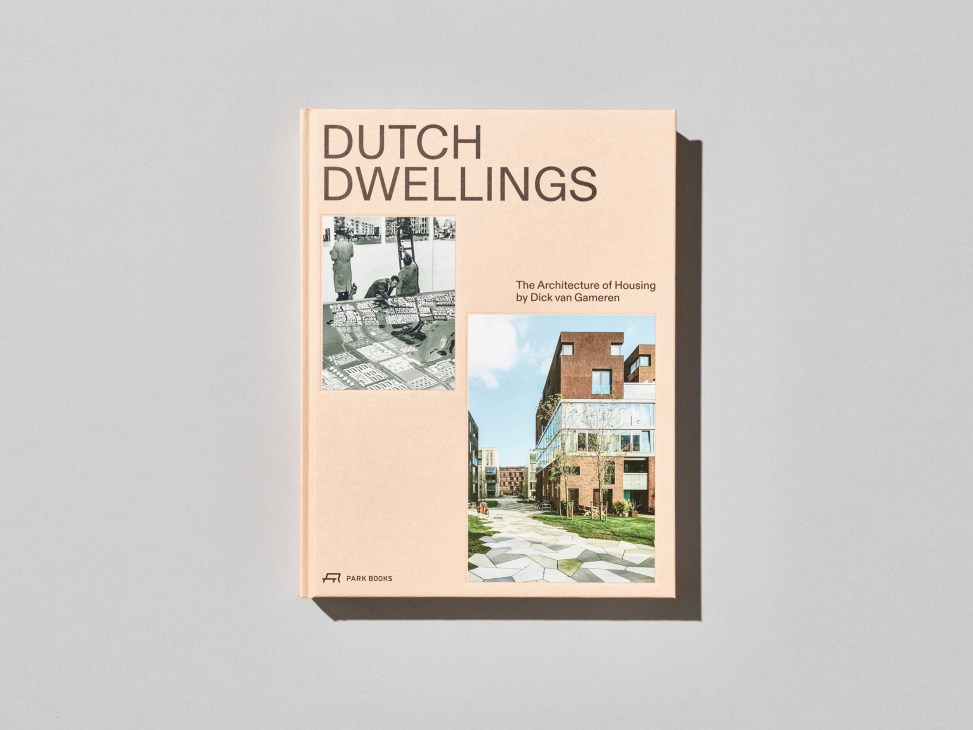
The success of dom’s manuals, which have included specialist guides on building types ranging from aquariums to kindergartens and which come with highly technical plans, shows that books about architecture are not only read by architects. Niche and expert subjects can be popular; nothing pleases the specialist publisher more than having the general reader engrossed in their specific corner of the world.
“Our audience is architects and designers but also, and of most importance, all those who are interested in how our cities and spaces are built, which should be everyone, frankly, as we all live within architecture,” says Daniela Sá of Lisbon-based Monade, which produces books in English, in addition to its native Portuguese, to reach a wider audience.
Like Meuser, Sá is an architect. And like many of their peers who are involved in publishing enterprises – from Steven Holl and Bill Stout (of William Stout Architectural Books), who co-founded the Pamphlet Architecture series in the 1970s, to Rem Koolhaas, who calls his research studio, amo, the twin of his architectural practice, oma – they are as interested in shaping discourse as they are skylines. The worlds of publishing and architecture have always had strong ties.
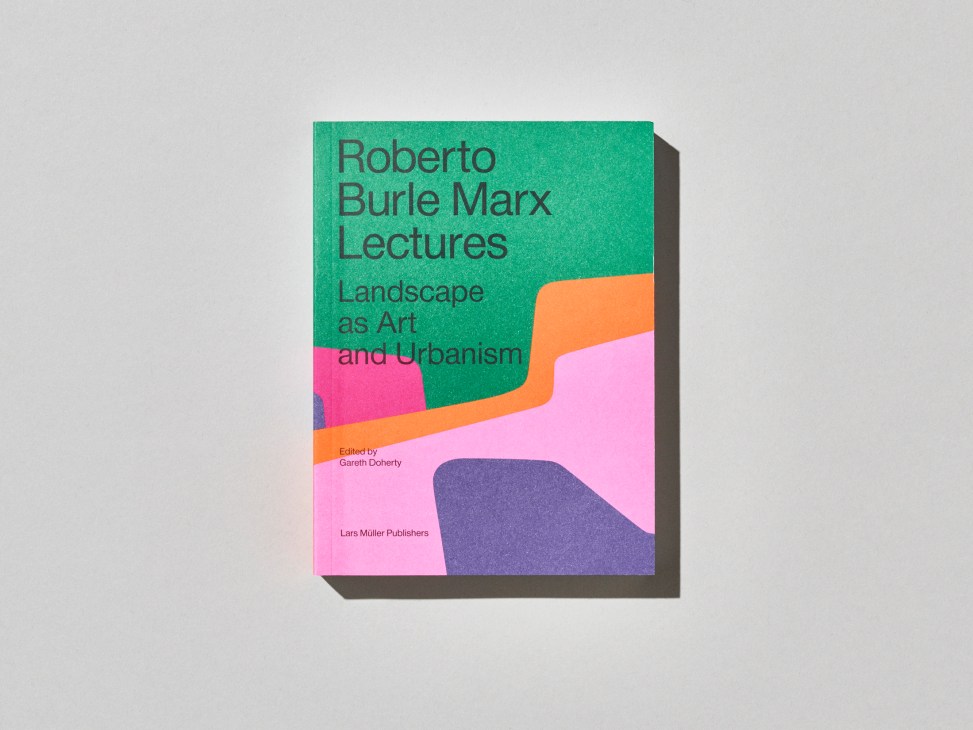
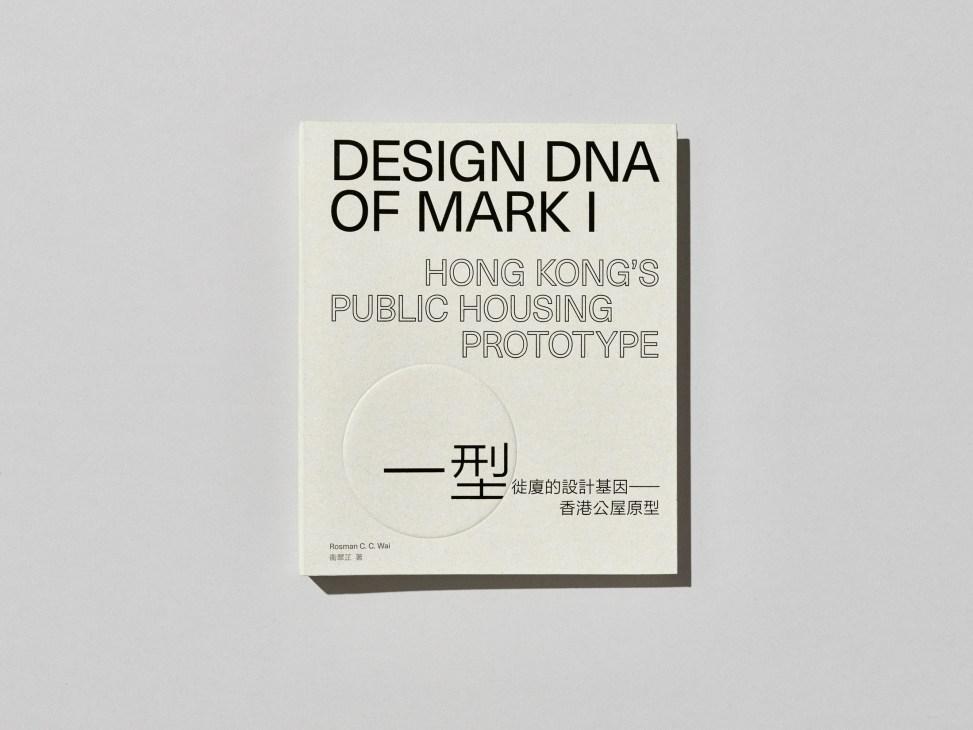
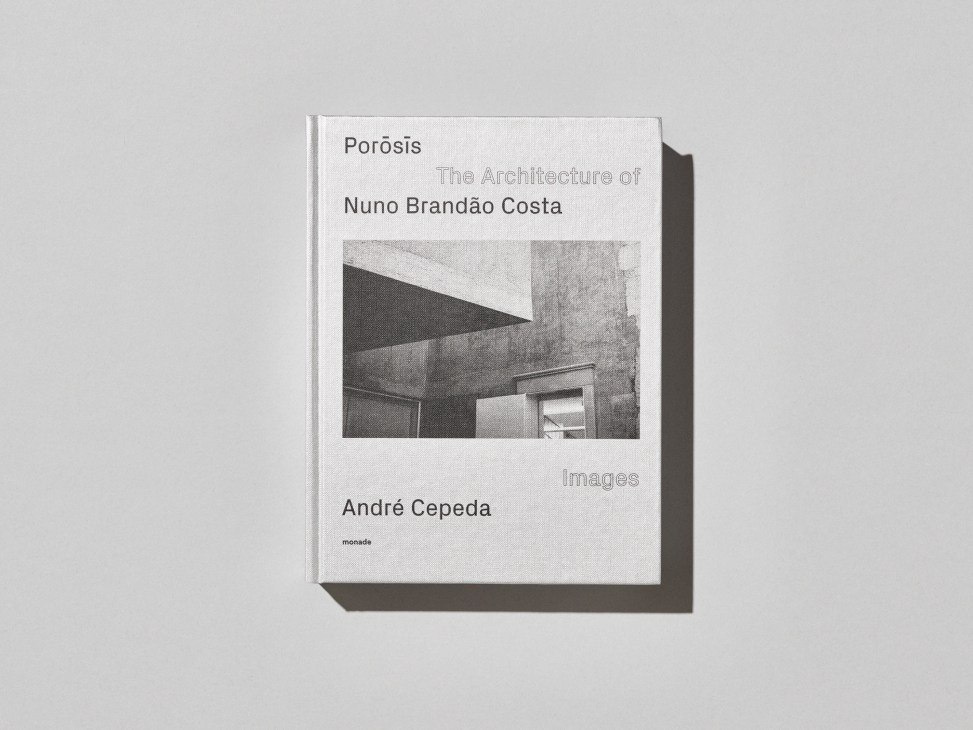
Architect-led books are often self-initiated and architects have many reasons to put themselves through the toil of writing and publishing. For Koolhaas and oma, amo is a think-tank that enables the practice to pursue its own interests, including those outside the traditional bounds of architecture, without having to wait for commissions.
Books are a favoured medium for architects to articulate ideas and knowledge. “For most people, architecture is just a pretty shape so books in which the value of the work can be explained are important to help them understand architecture,” says Rocco Yim.
For the Hong Kong-based architect, who is now putting together a fifth book, working in the slower medium of print has also proved to be an indispensable exercise for him to pause, evaluate and set direction. “Making a book is a very good way to focus on how we are moving forward and examine why we are doing what we are doing,” he says.
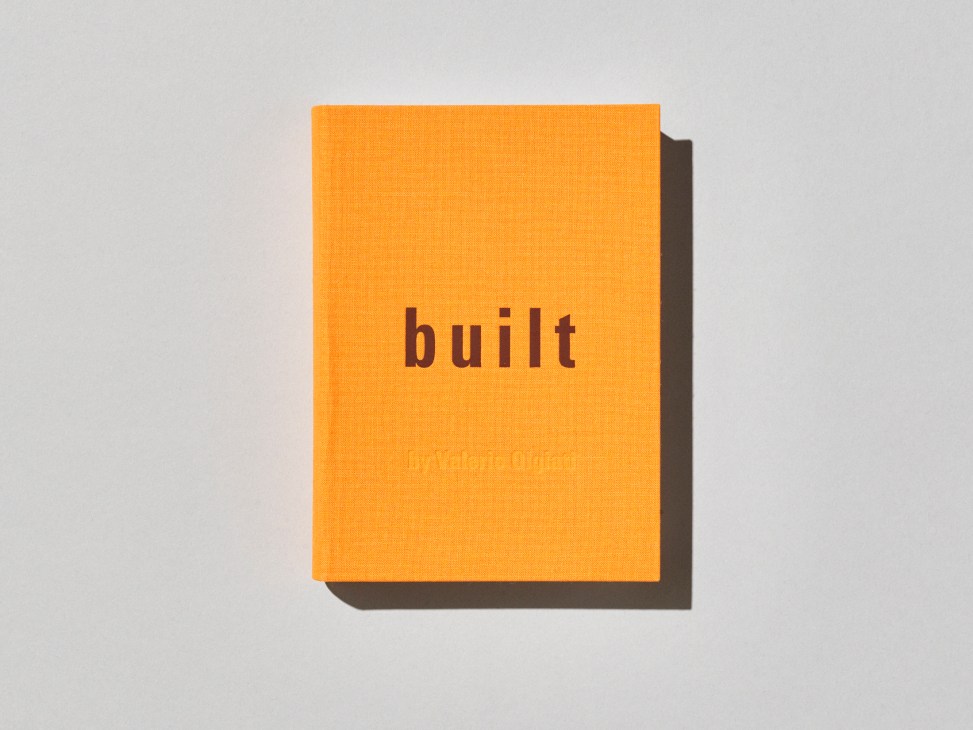
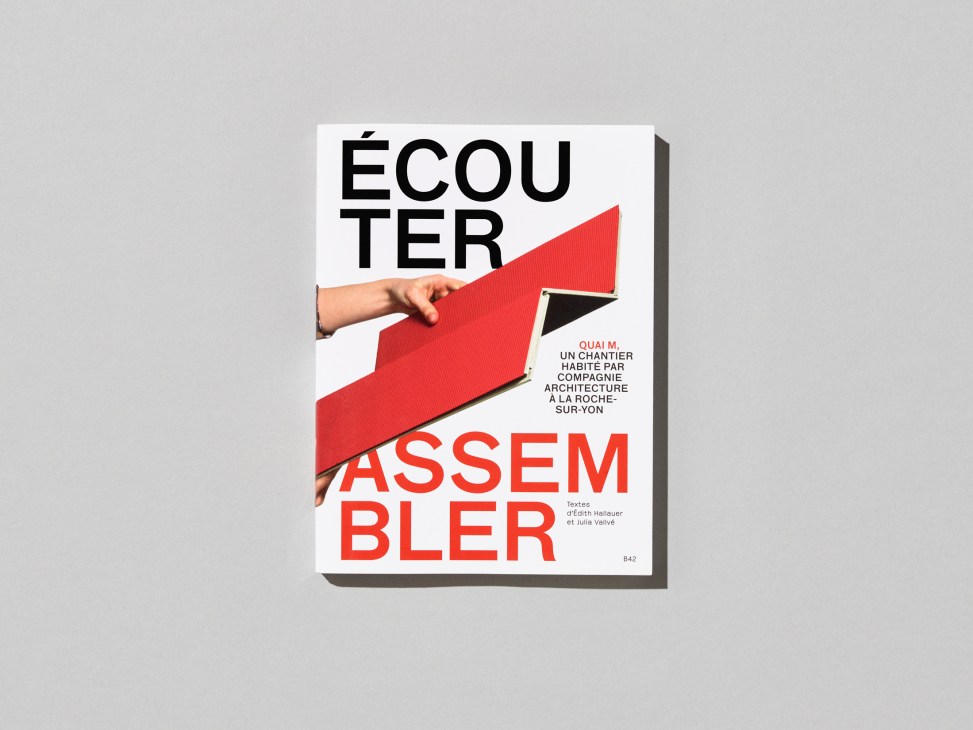
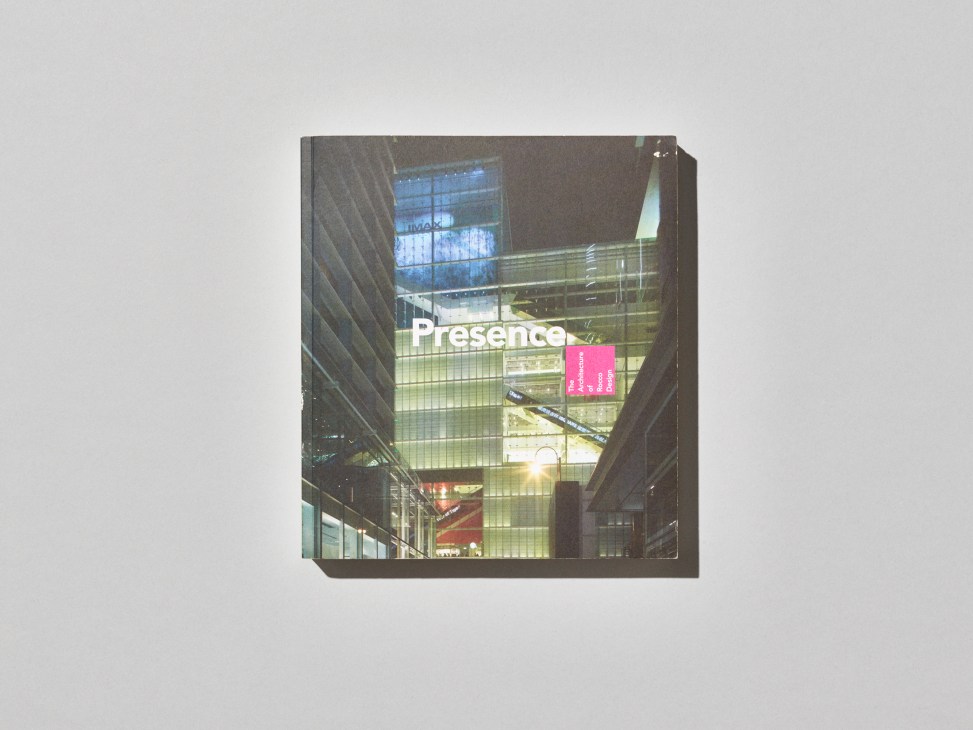
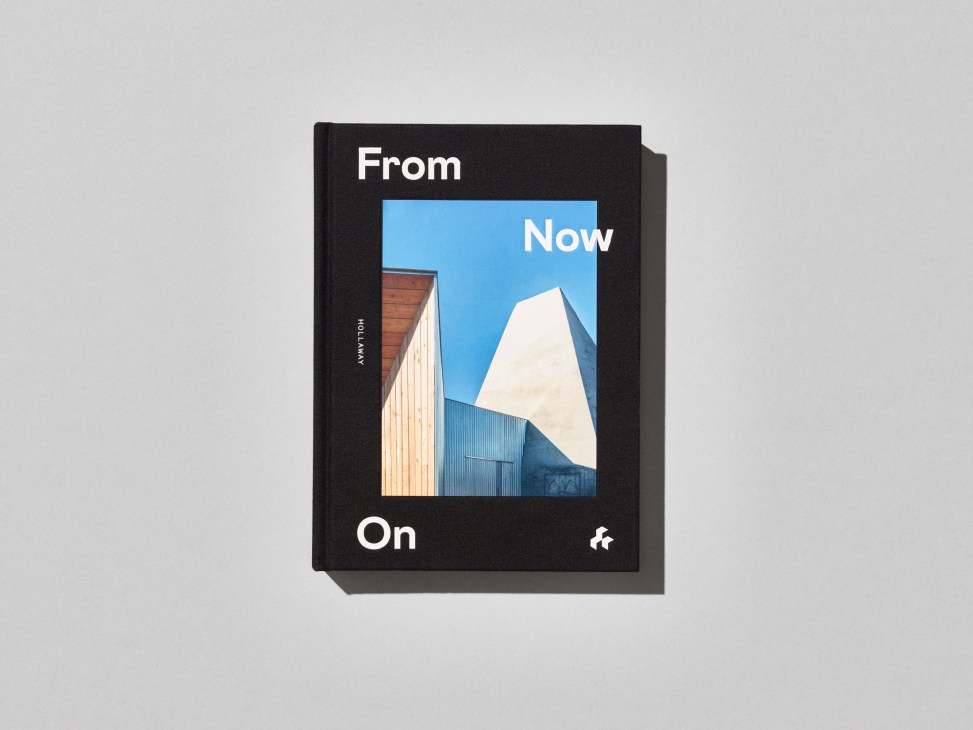
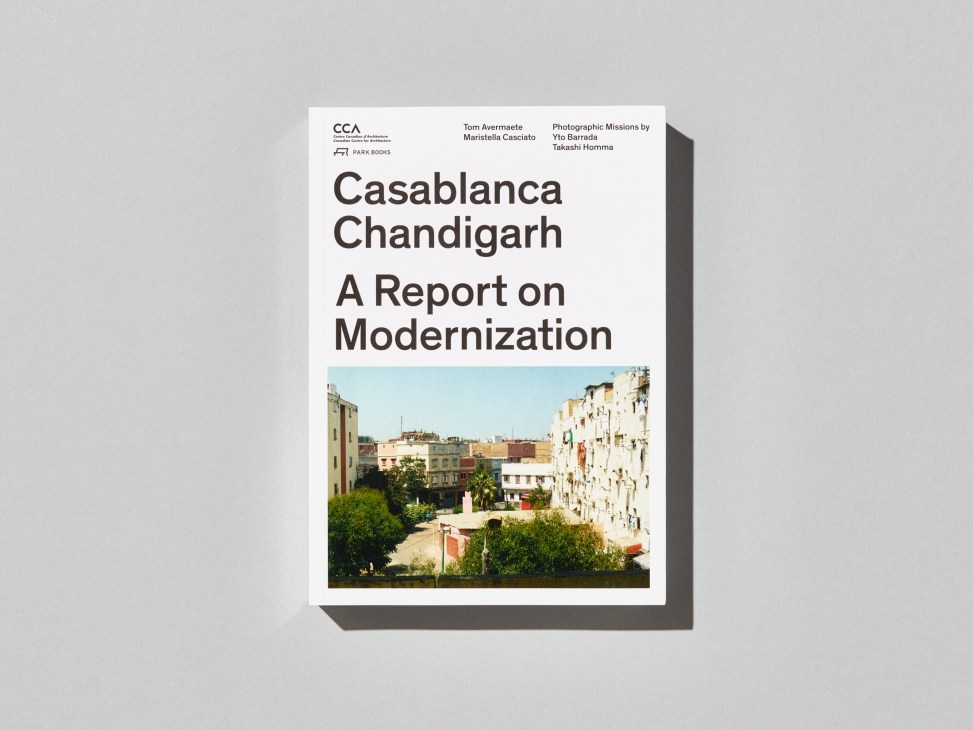
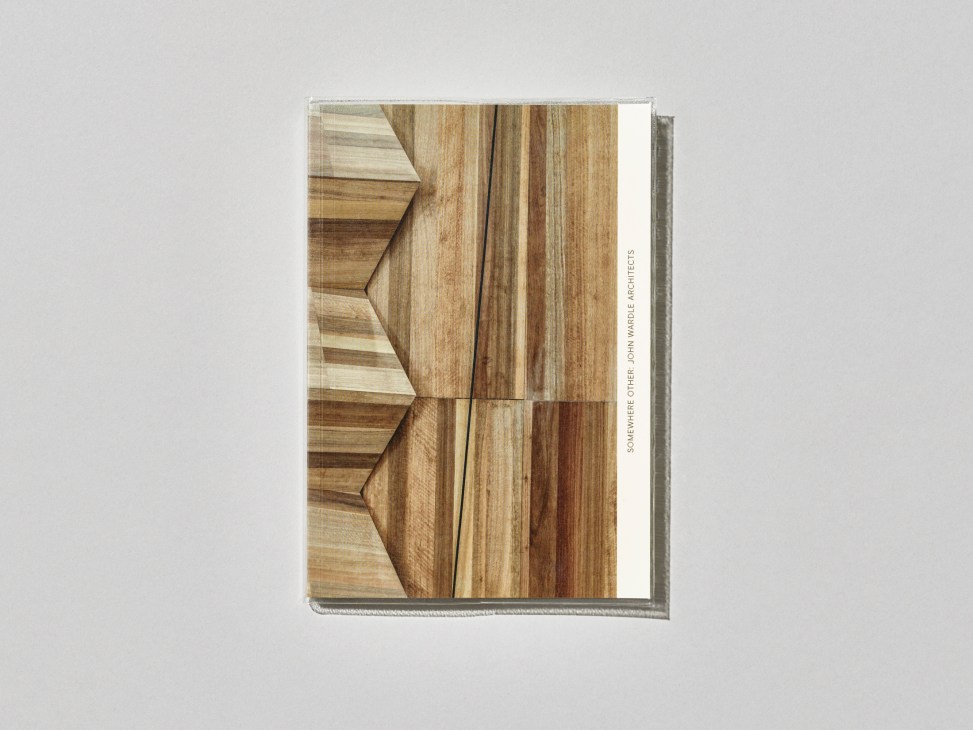
The process of writing and creating books can also feed back into the design work. In the case of Australian architect John Wardle, a turn of phrase shaped not only a monograph but a whole design approach. “Our second monograph is titled This Building Likes Me, which was a comment made about one of our projects that resonated strongly,” he says. “We’ve unconsciously tried to develop buildings that are empathetic to those who work in them and those who engage with them.”
Partnering architects in these bookish endeavours are the small presses and specialist publishers that offer editorial as well as marketing and distribution support. These design-minded teams make some of the most handsome and coveted volumes. “In the design realm, physical books have retained their cachet and desirability,” says Maitiú Ward of Australia’s Uro Publications, a publisher that also has a bricks-and-mortar bookshop in Melbourne stocking art, architecture and design titles. “In fact, it feels like the perception of their value might even have increased.”
Uro’s in-house publishing programme only produces four or five books a year. “Because of our interest in history and our critical bent, we don’t produce a lot of coffee-table books, which would be the convention for most design publishers, or at least the big ones,” says Ward. “Social media does a fine job of catering to the demand for airbrushed architecture; we prefer ours with the rust left on.”
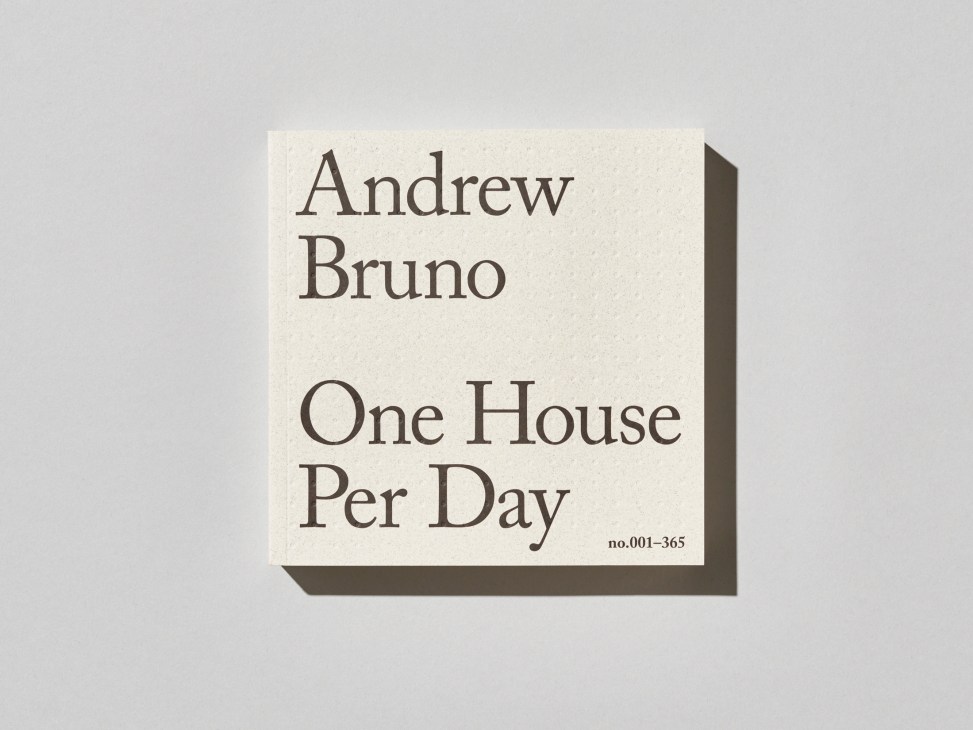
Hong Kong’s mccm Creations is similarly selective in its editorial approach, releasing architecture titles with strong social and cultural storytelling. “Readers look beyond art, design and architecture,” says founder Mary Chan, who envisions mccm’s books as future classics that will stay relevant for years. “They are curious about people, living cultures, the organic growth and development of a place, and the dynamics of history.”
Chan also observes that traditional publishing genres of literature, design, art, history and science are getting increasingly blurred as readers seek books that delve deeper but also discuss wider socio-cultural contexts. Such a shift in readers’ preferences bodes well for passionate publishers, not to mention the architects who have always fought for their discipline to be understood and appreciated beyond pretty buildings.
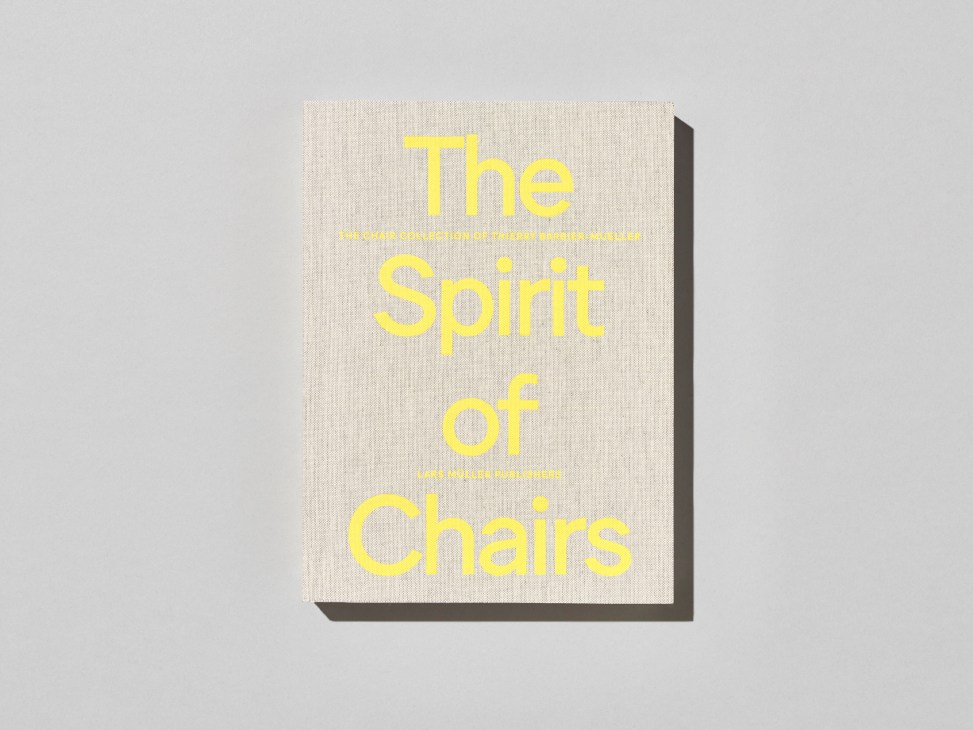
Lars Müller Publishers
Switzerland
A graphic designer by training, Oslo-born, Zürich-based Lars Müller established his own design studio in 1982 and his namesake publishing house the following year. Working as publisher, editor and designer, Müller has gone on to produce more than 600 titles on architecture, design, art and photography. “As a designer, I always have my eye on the form taken by a book, on its material presence,” says Müller. “I despise well-designed books with weak content.”
Monade
Portugal
Founded and run by architects Daniela Sá and João Carmo Simões, Monade has been printing architectural books since 2016. “We believe that the book is a strong medium to express complex contents and relations,” says Sá. In addition to its publishing work, the Monade team also works as researchers and curators, partnering with the likes of the Venice Architecture Biennale and the Canadian Centre for Architecture on exhibitions.
Toto Publishing
Japan
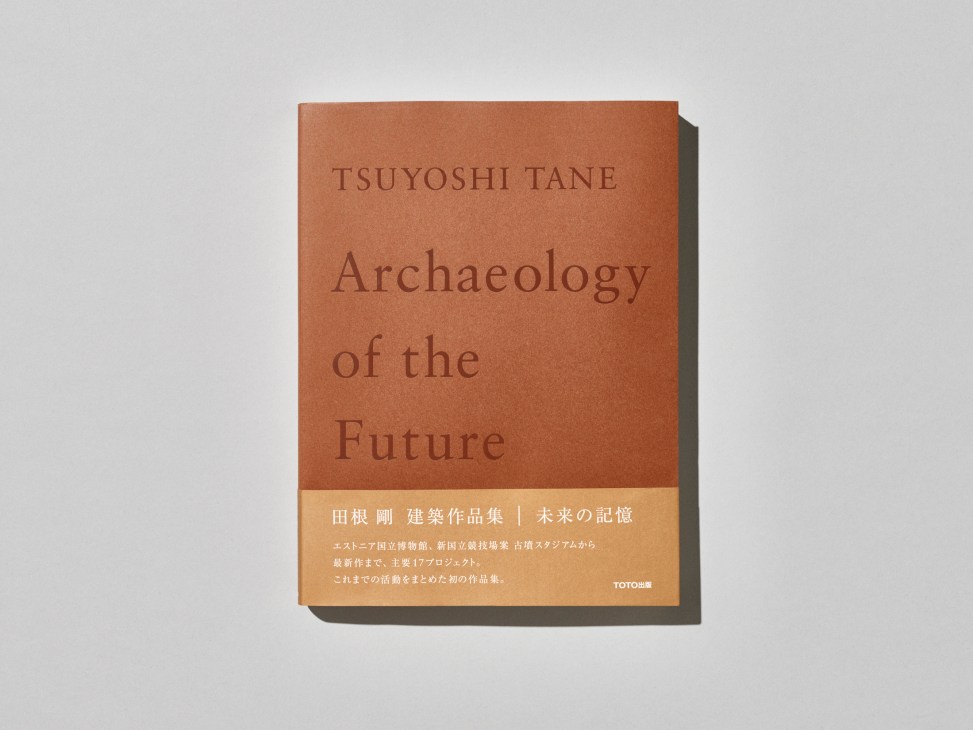
Founded in 1917, bathroom brand Toto is perhaps best known for its Washlet toilet, which launched in the early 1980s – a decade when it also launched its own imprint. Part of the Japanese firm’s social contribution programme, Toto Publishing produces books on architecture and design in perfect complement to its smartly designed products. The publisher’s most significant works include monographs on Luis Barragán and Tadao Ando.
See the light
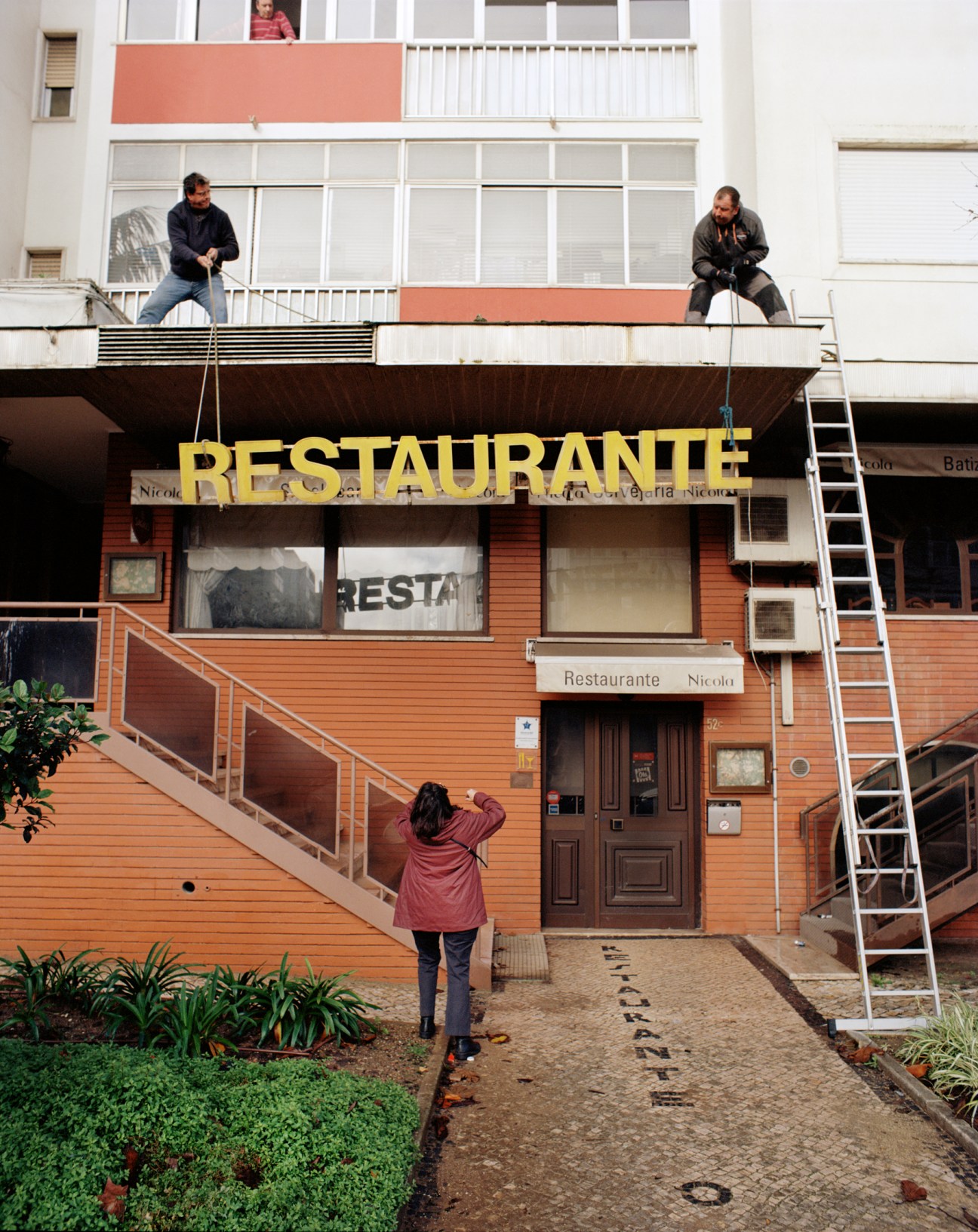
It’s 10.00 at O Casarão, a café on the outskirts of Lisbon, and people are clustering at the snack bar to order their morning coffees. With habitual chatter and the clinking of crockery, it appears to be a typical day in this café but for O Casarão’s owner, Fernando Caldas, it’s far from that. “After 45 years in business, we’ll be closing down next week,” he says, teary-eyed. Today is particularly symbolic; in a few minutes, the large neon signs that have brightly identified this establishment and the restaurant next door will be taken down.
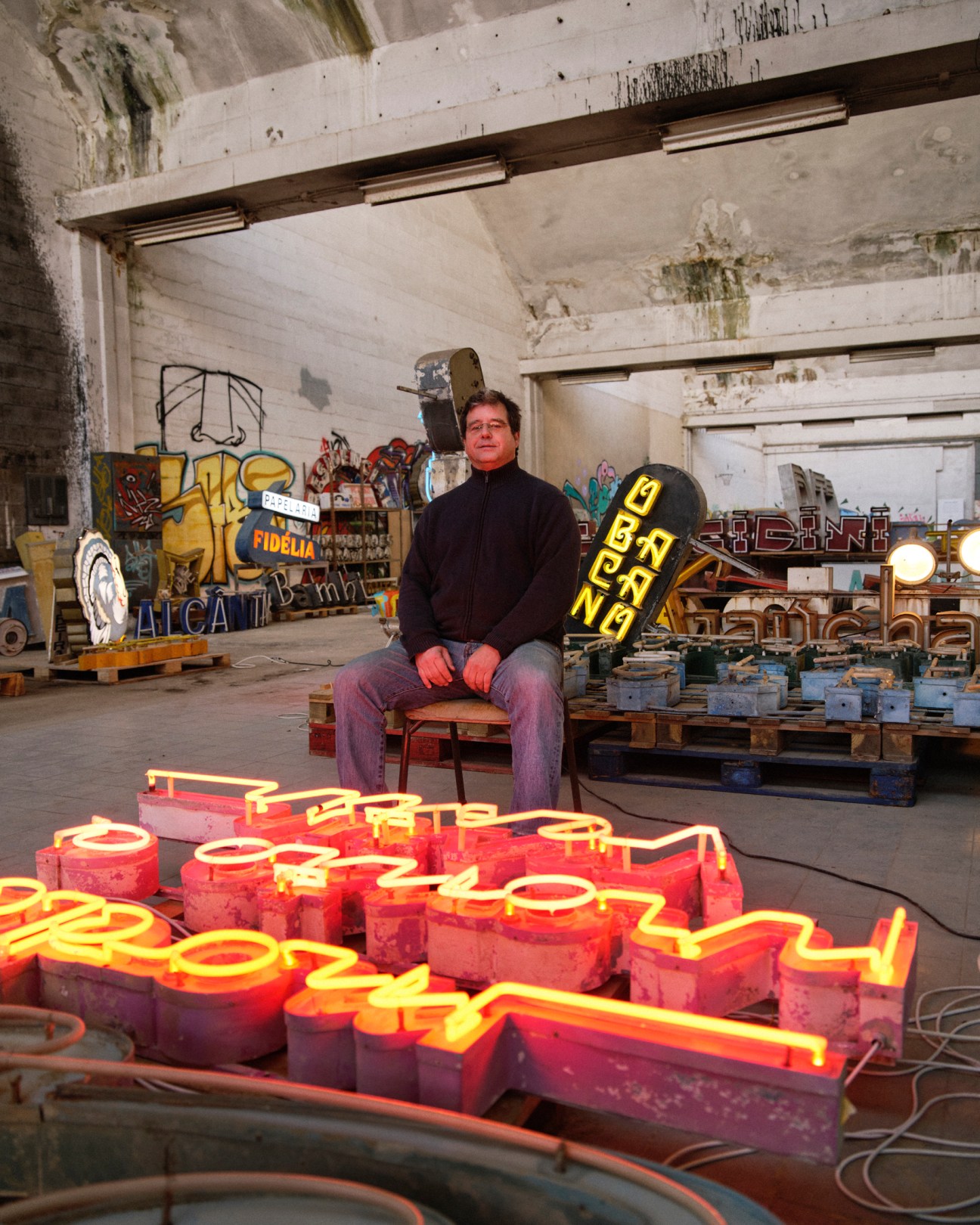

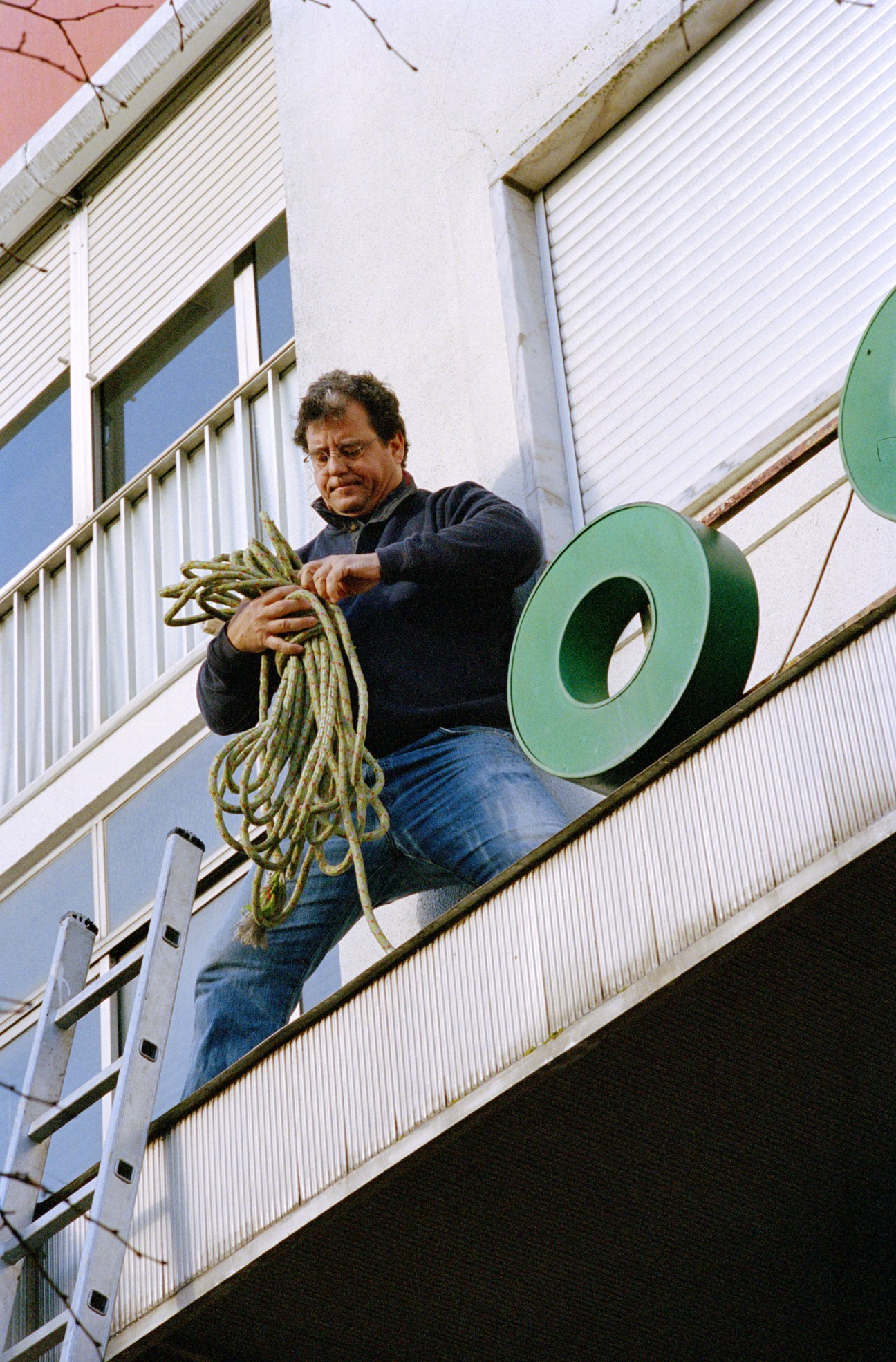
When it opened in 1974, Caldas’s restaurant, which is now beside a busy road and surrounded by city sprawl, was a semi-rural outpost. “There were few buildings here; these were mostly farms,” he says, as ropes are tied to the green metal letters of O Casarão. “This sign would be the reference used to give people directions in the area.”
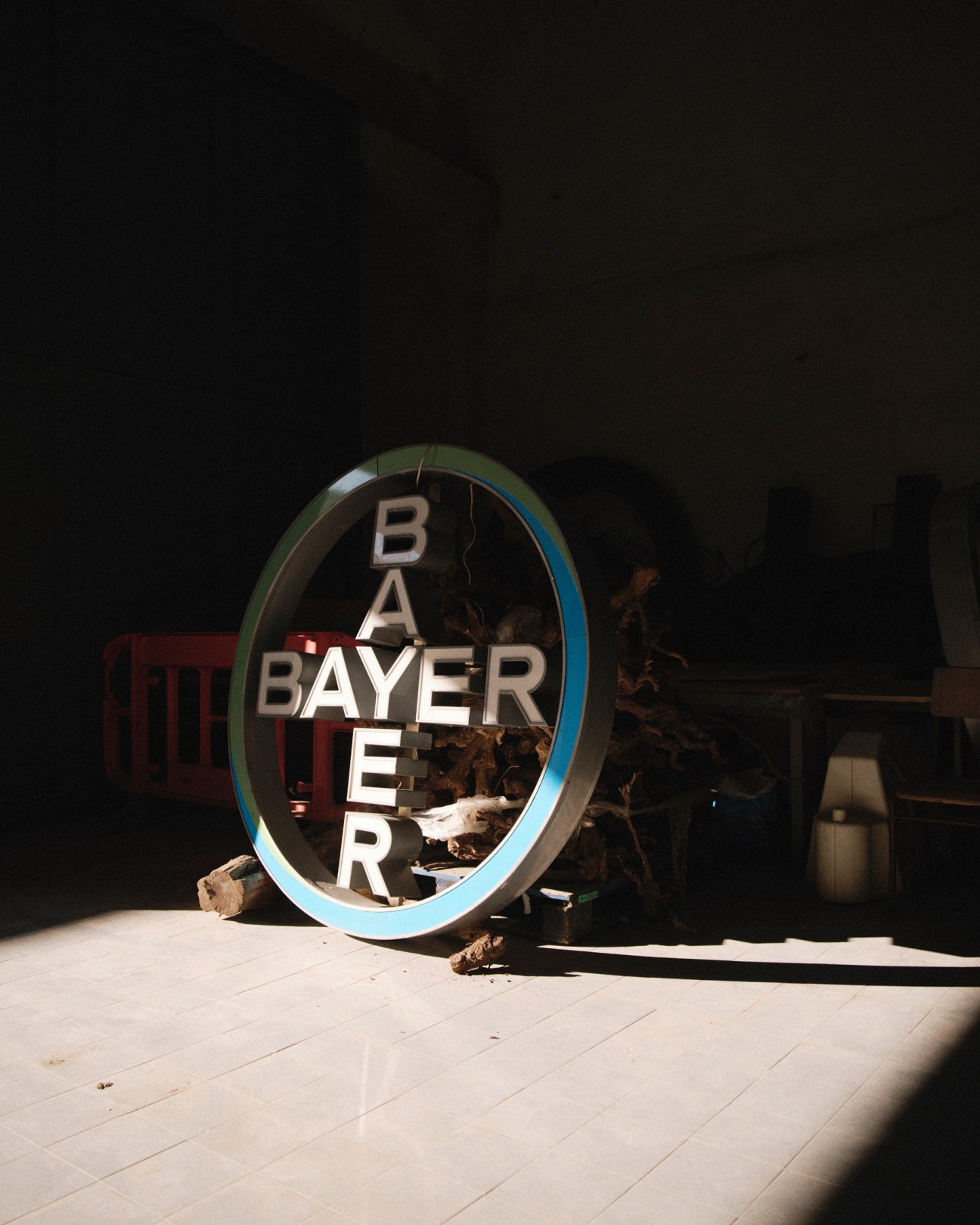
Although O Casarão (Portuguese for “Big House”) will no longer serve as the geographical signifier that it once did in the Queluz de Baixo area, the stories that the sign embodies still have a bright future. Why? Well, holding firmly to the other end of the ropes, slowly leveraging the sign down the building’s façade, are Paulo Barata and Rita Múrias, the husband-and-wife team behind the not-for-profit project Letreiro Galeria. Since 2014 the duo have been rescuing old signs like this one when the shops that they once embellished close down. The aim is to preserve them as part of Portugal’s cultural and design heritage.
With the sign firmly strapped onto the roof of the couple’s Renault, they are ready to go. It’s a short yet thrilling ride to Letreiro Galeria’s warehouse, not only because of the big letters protruding out of the front and back of the car but also because the couple have a habit of looking up to buildings’ façades rather than the road ahead while driving. “We try to do our research on foot now,” says Barata, laughing. “We realised that it’s probably safer.”
When the couple first started collecting signs, they did so alongside their day jobs as graphic designers for an agency and a news publication respectively. “I was at a point in my career where I knew that I wanted to do something involving the community and I always loved these old signs,” says Múrias. Soon, however, the passion project began to take more time and space than they had at their disposal. “We never thought that the project would acquire these proportions,” she says, as she opens the doors to their vast storage facility.
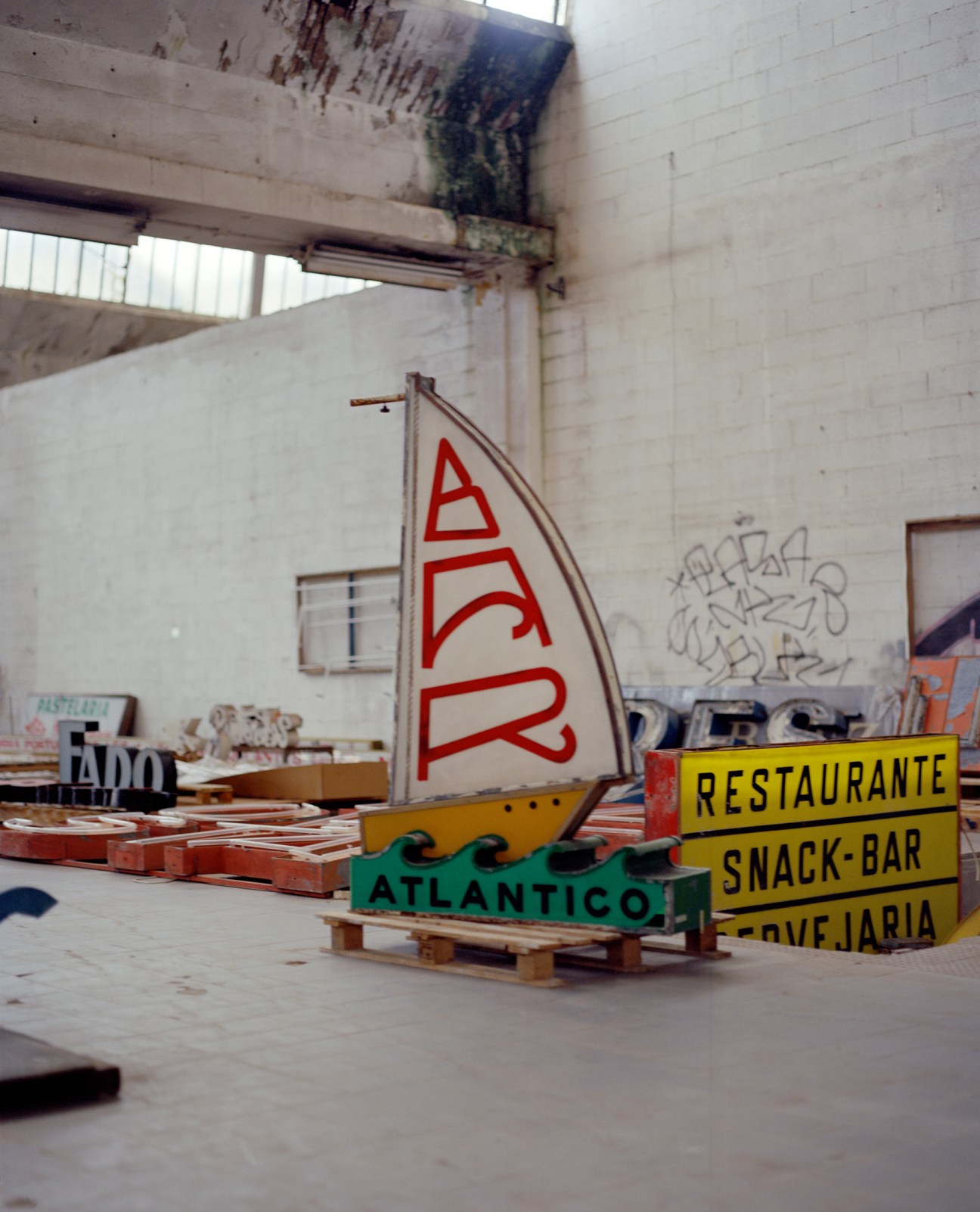
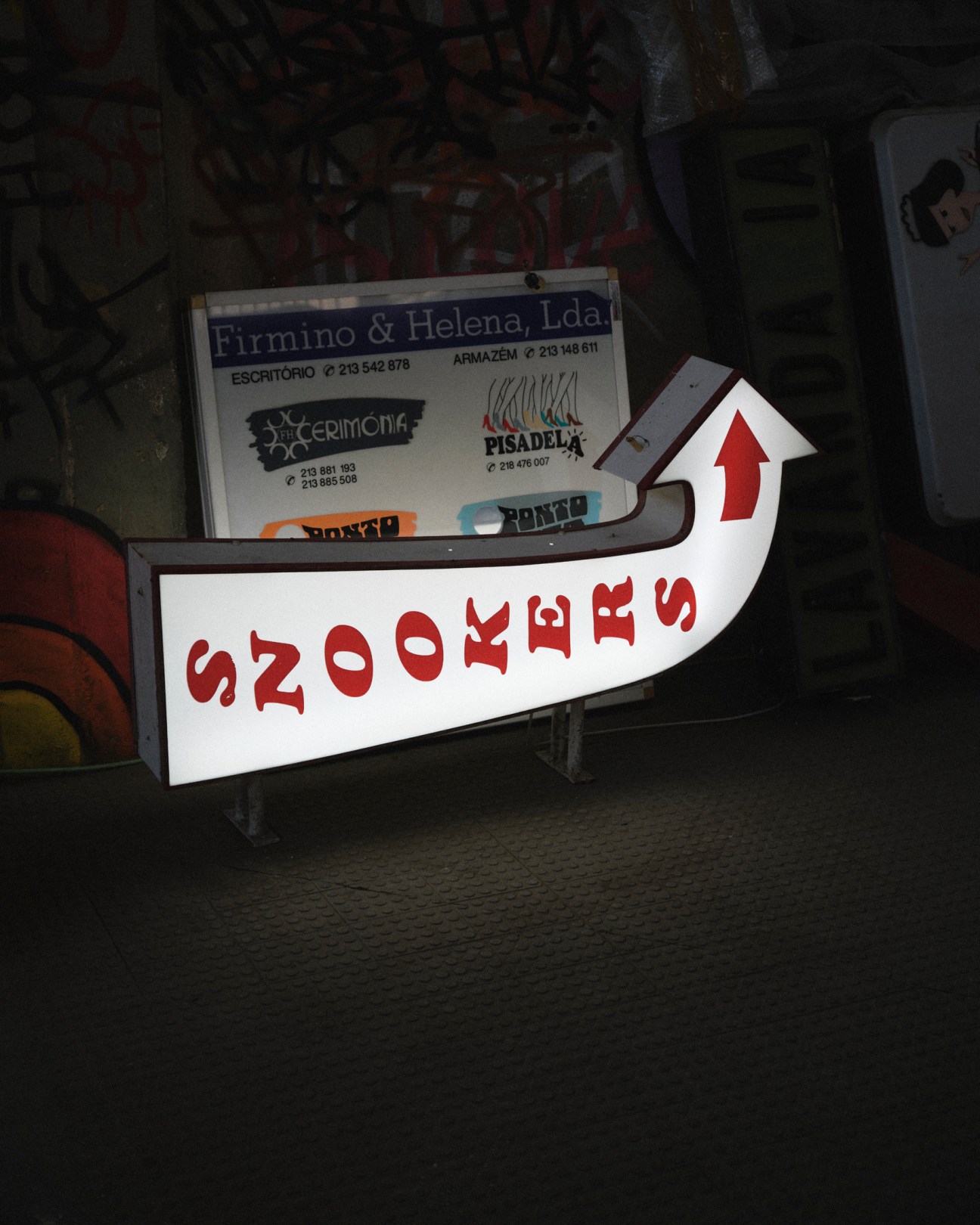
Scattered everywhere inside, under the arched ceiling and leaning against the eight-metre-high walls, are more than 300 shop signs; relics of Portuguese graphic design history in a range of styles, fonts, shapes and colours. The Letreiro Galeria collection spans from the 1930s to the 1990s, after which computer-aided signage design became commonplace and, says Múrias, “things get less interesting for us”. Some of the pieces are emblematic – such as the 2.5-metre-tall neon letters that once spelled out “Ritz” on the roof of the famed Lisbon hotel – while others are more popular artefacts like the lightboxes that signalled payphones and several signs from commercial establishments, such as shoe shops, hairdressers and restaurants.
“In the beginning, we came at this from the design angle, collecting only what we thought was beautiful,” says Múrias, adding that their interest soon grew to include a fascination with the word choices, the history of the signs and people attached to them. “The design became somewhat secondary to the story,” she says, walking past a flower-power style sign from the 1960s, with “chou-chou” written out in playful, undulating bubble letters; apparently it was one of the first shops in Lisbon to sell mini-skirts. Like the O Casarão sign taken down earlier, all of these are precious fragments of a bygone era, making up part of the city’s collective memory. “We’ve had people become very sentimental after seeing a particular sign that they walked past in their childhood,” says Múrias. “It can elicit instant flashbacks to another time.”
Beyond the stories of each establishment, the collection also tells wider narratives about the evolution of commerce in Portugal and shows how graphic and type design has changed the ways that businesses communicate over time. It’s these narratives that Múrias and Barata have tried to weave into the five exhibitions that they’ve put on in recent years to share the work of Letreiro Galeria. Signs for Costa Hairdressers or A Raposo Neto Textiles attest to how it was customary to name an establishment after its owners, prior to the emergence of global brands. “And even before that, graphic symbols would be used to identify the type of establishment, such as the still- customary pair of glasses atop an opticians,” says Múrias. Rhyming verses chanted by street sellers would later become catchphrases painted onto signs, a tradition that paved the way for modern advertising jingles and slogans.
Browsing the collection chronologically also tells the story of Portugal’s manufacturing prowess and how materials and techniques evolved from decade to decade – hand-painted glass was leapfrogged by metal plates and wood, before the emergence of illuminated signs, lightboxes, incandescent and neon lamps. “There’s so much to learn,” says Múrias who, inspired by her work at Letreiro Galeria, began pursuing a doctorate in design in 2016; her thesis focused on Lisbon’s 20th-century urban design.
Part of her weeks are currently taken up with scouring the city archives like an urban archaeologist, tracing the history of particular establishments to see how the design of shopfronts and signs have changed over time. “The bureaucracy of Latin countries works to our advantage here,” says Barata. “A licence from town hall is required for any little modification to a building’s façade and so everything is logged.”
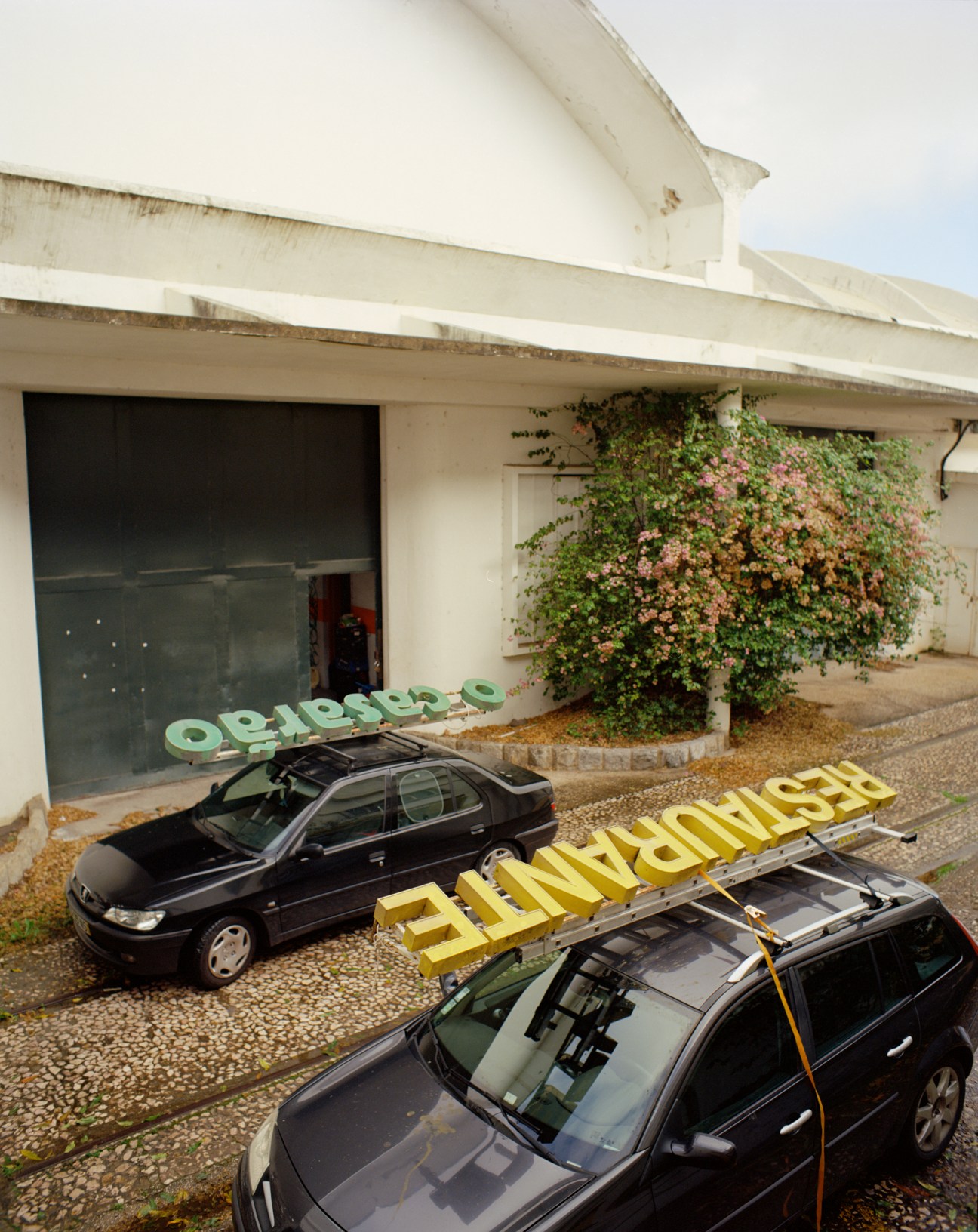
Being one step ahead of construction companies has become Múrias and Barata’s modus operandi. “We have to get to a sign as soon as the establishment closes, before they start work on the building, if we are to keep it from being thrown away or broken,” says Barata. That involves travelling up and down the country to butter up business owners and make their project and intentions known. “At first, people were suspicious when we expressed interest in keeping their signs,” he says. “We often had to visit three or four times to convince them to donate them. It’s been getting easier though and the exhibitions that we have done have helped.” They make a point of hand-delivering invites to their events to past and potential sign donors, who are often happy to see them.
Despite Letreiro Galeria’s wide appeal, which touches on urban, cultural, graphic design and branding heritage, the project has struggled to secure any institutional support. “Shop signs are part of the vernacular so perhaps they don’t draw an elite crowd in the same way that an art gallery with a big, shiny name might,” says Múrias.
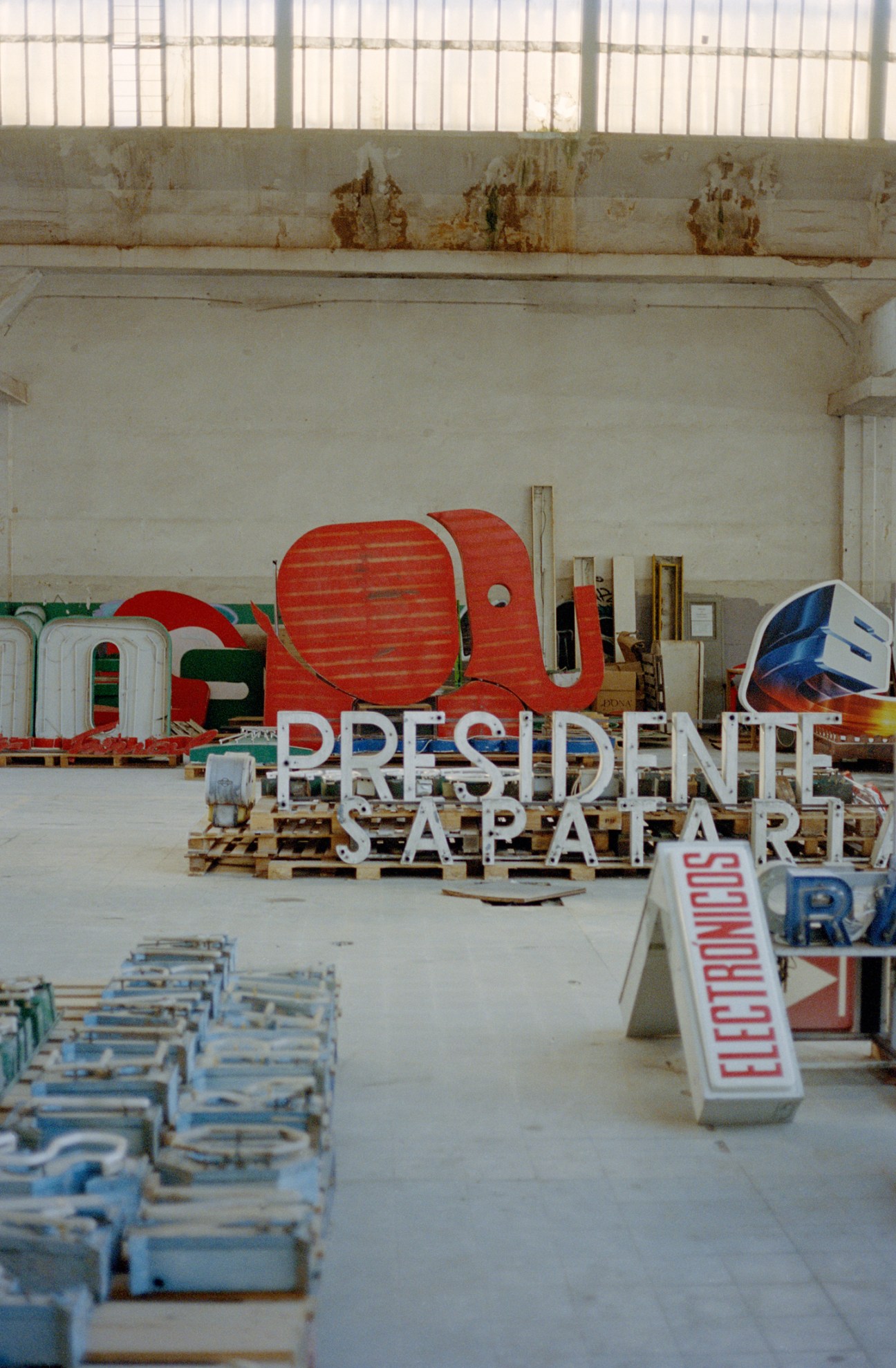
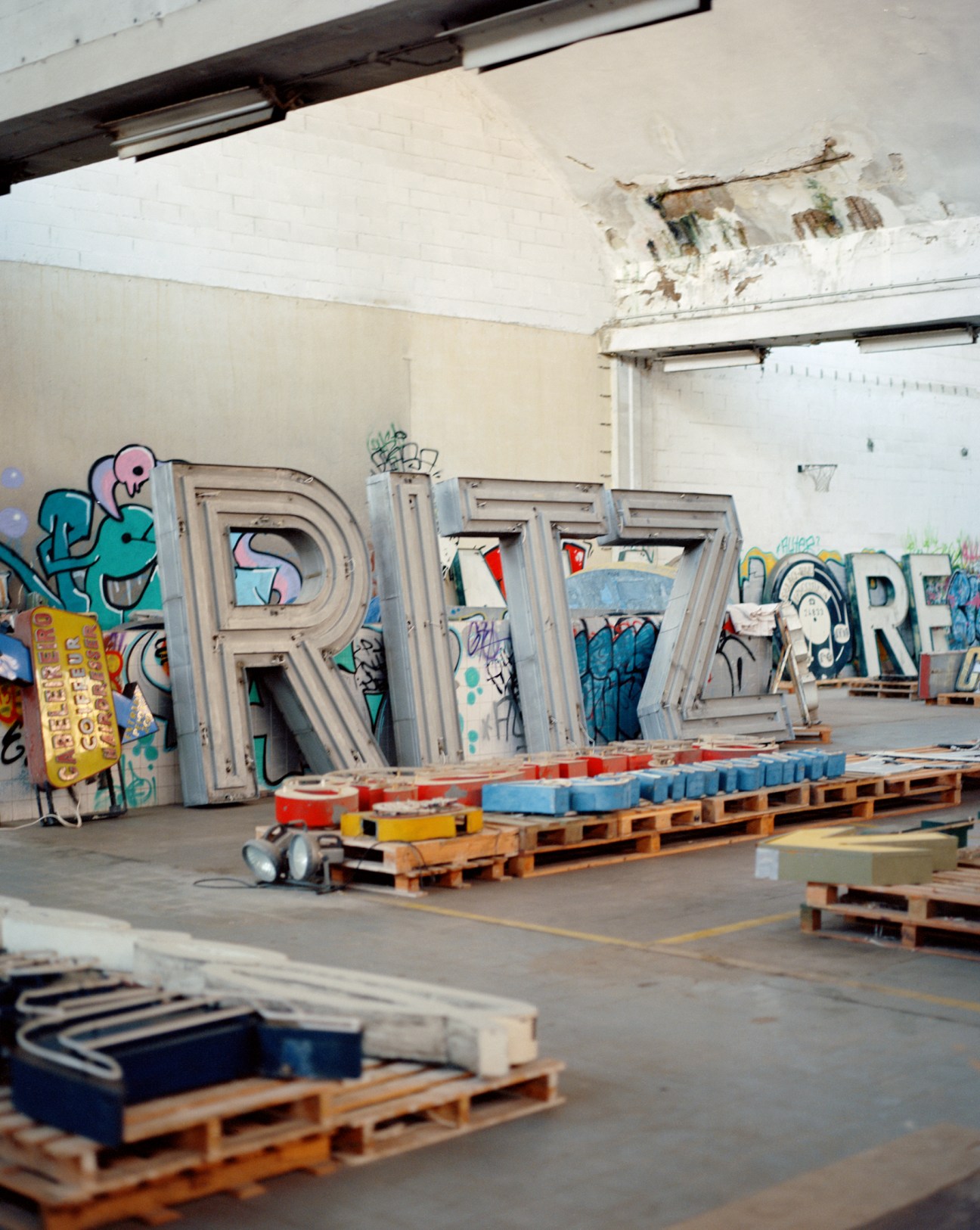
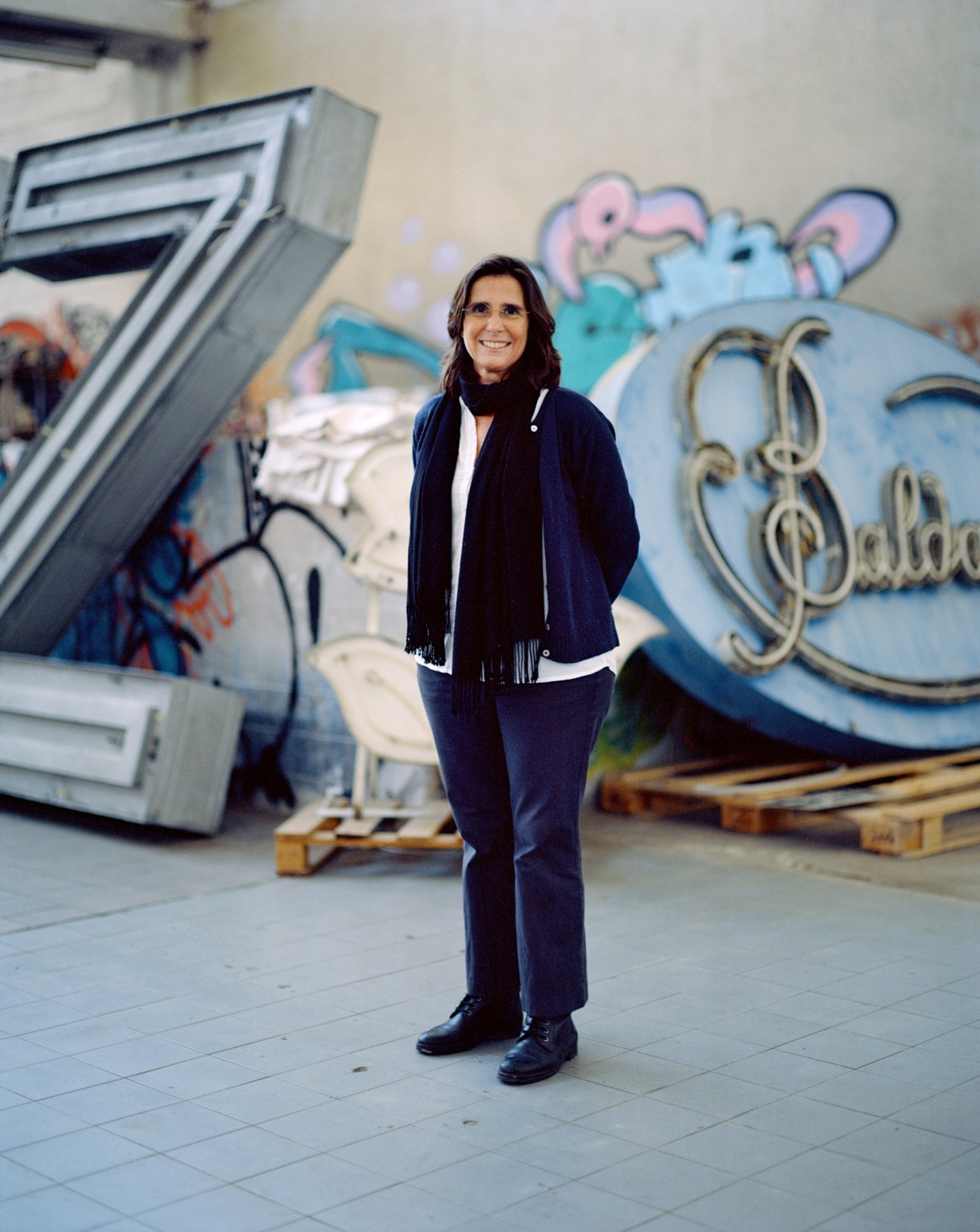
“Our dream is to open a museum where we could stage exhibitions and make the whole collection open to the public,” adds Barata, mentioning established neon collections such as the Neon Muzeum in Warsaw and Berlin’s Buchstaben Museum, plus the fact that the couple’s borrowed storage space is currently slated for demolition and redevelopment. Securing a permanent space would be the first step but they must also make the project financially sustainable.
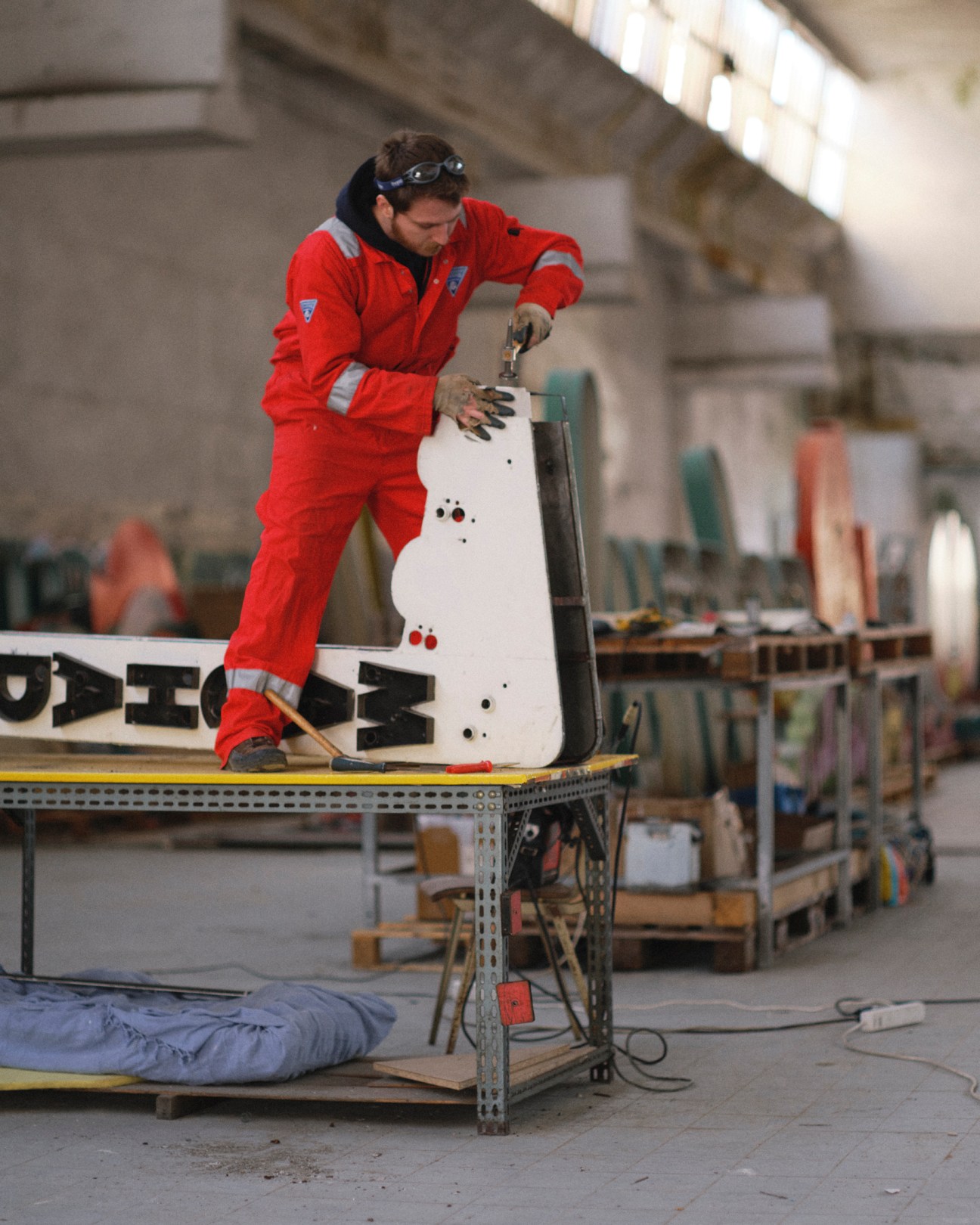
Recently, Letreiro Galeria has begun to lease signs to TV and film production companies that want to bring some authentic design heritage to their sets. If the idea catches on, it could provide a welcome income stream. So far it’s been public generosity that has really made the difference. Cash donations are often used to repair broken signs in the collection. Next in line to be fixed is a large neon sign for Oculista Machado, an opticians in Lisbon; on seeing the unlit sign in one of the gallery’s exhibitions, the optician’s granddaughters felt compelled to make a generous contribution that would help it shine again.
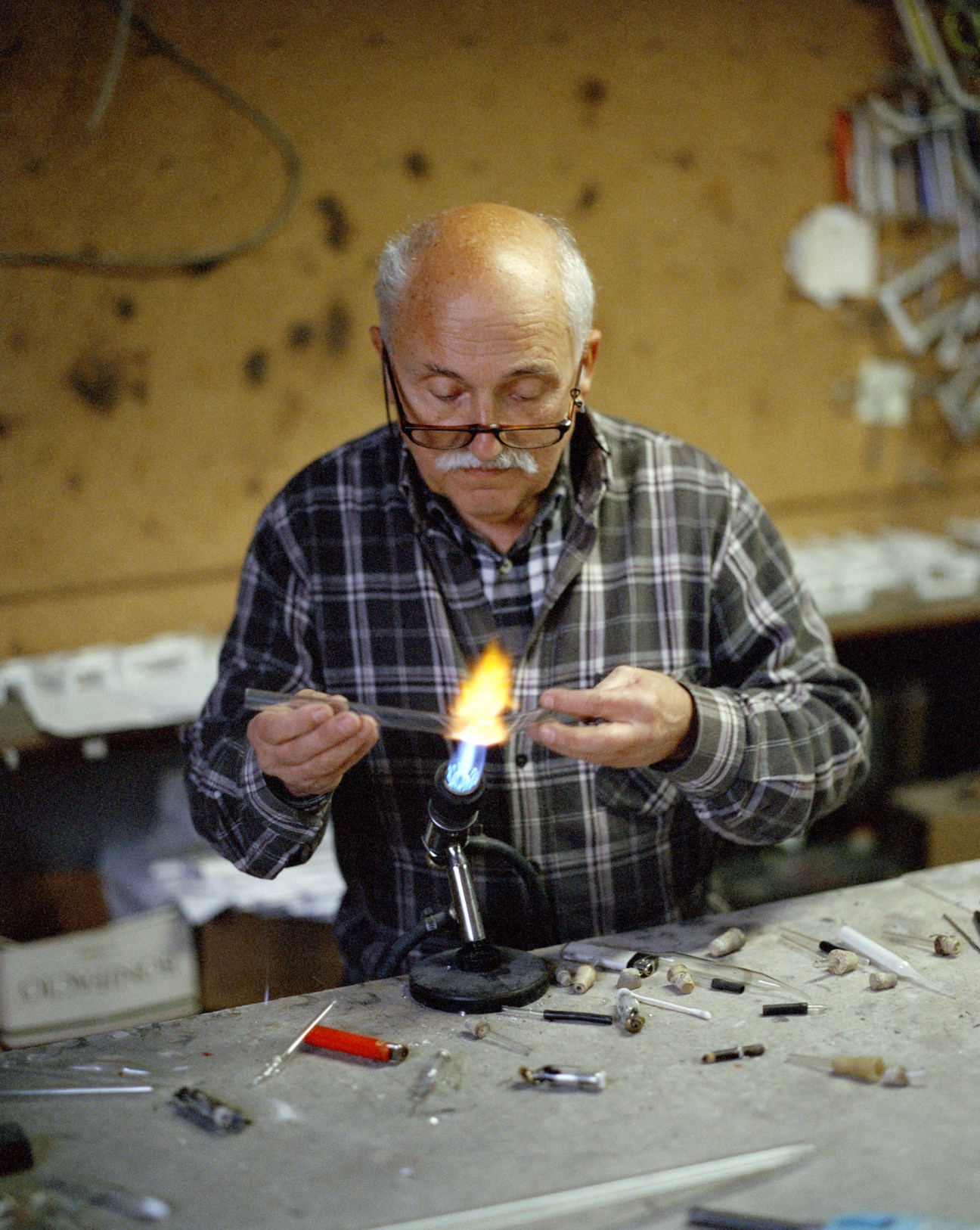
The sign has since been taken to a workshop on the other side of town where Antonio Reis and his partner Jorge Neves will repair the broken letters, as well as shape tubes of glass on an open flame to recreate the original neon spectacles. The small studio is filled with a curious variety of tools and materials, including blowtorches, gas canisters, and flasks containing mysterious powders that gain fluorescent colours when in contact with neon or argon. It’s the kind of setting that you’d imagine an alchemist working in, making evident just how much goes into creating the magic luminescence of neon. “Everything here is done by hand” says Neves, who has, for six decades, been merging design, chemistry, electrical engineering and dexterity to make shining signs.
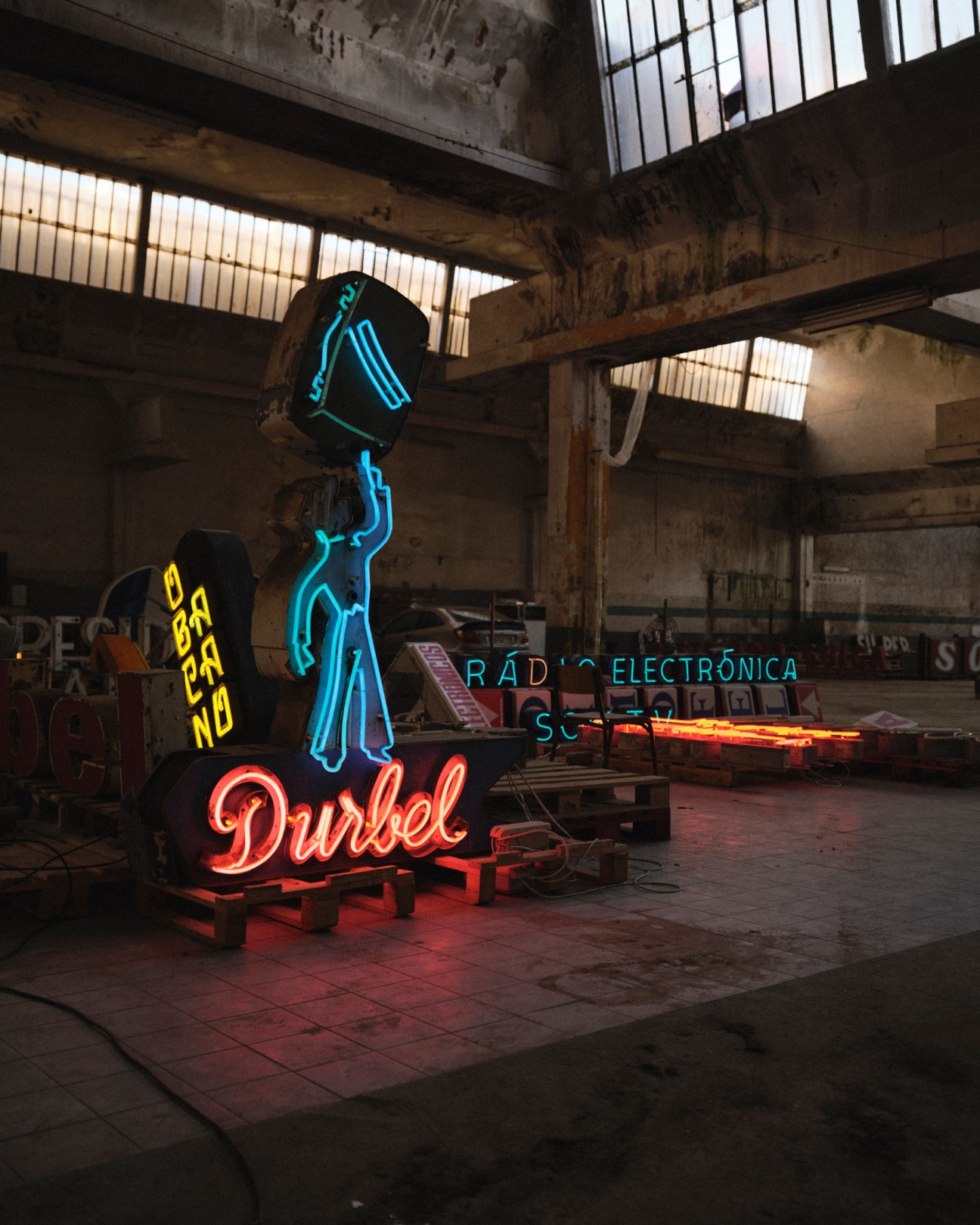
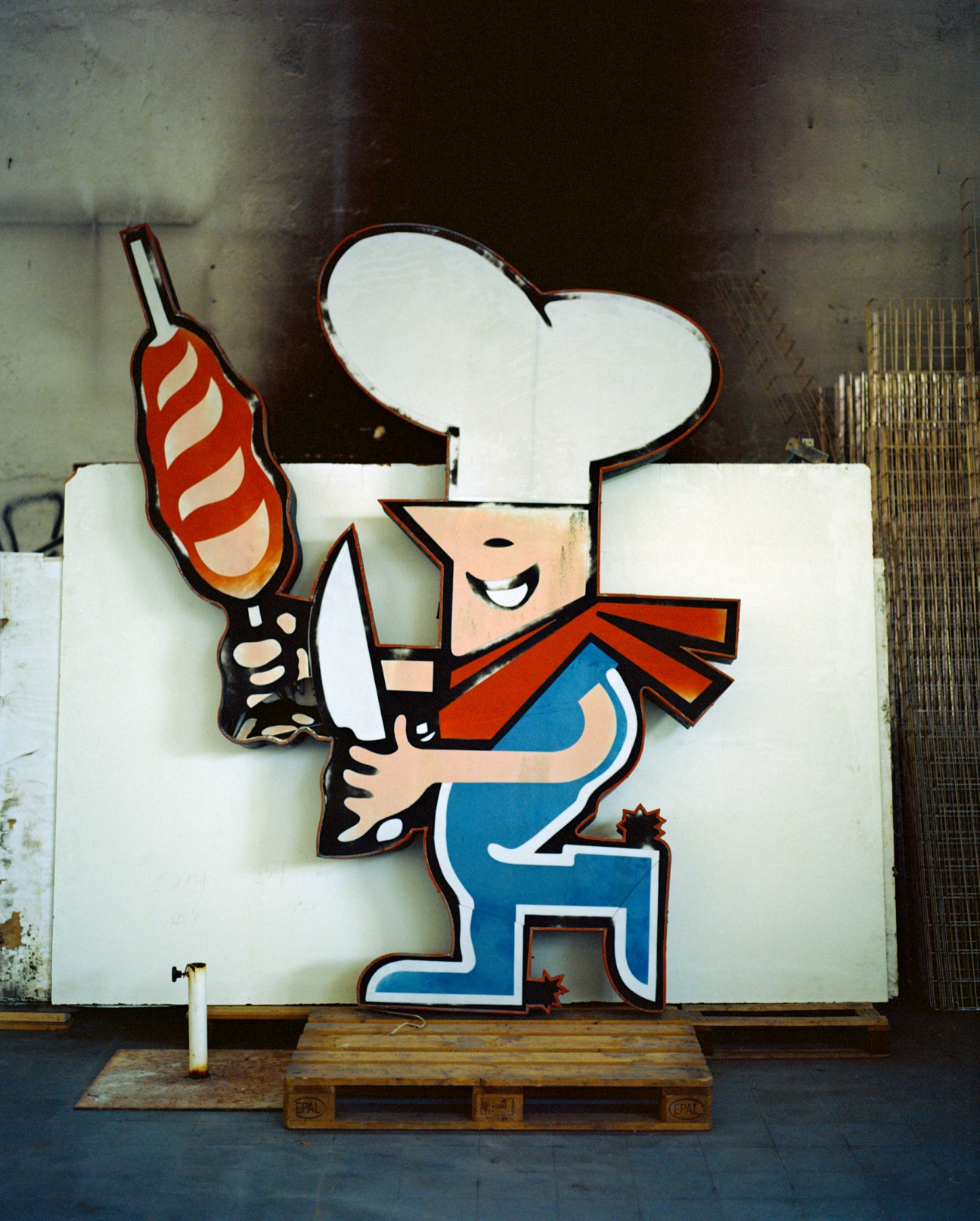
Despite the widespread popularity of led lamps, Reis and Neves aren’t short of work. The elegance of neon is still widely appreciated; it’s merely that the customer base has changed over the years. “While we previously went around the city looking for work from newly established cafés and restaurants, work comes to us now,” says Neves. “Decorators, artists and chefs are among our clients today.”
Still, it’s an industry on the verge of extinction. With fewer and fewer people willing to put in the hours to master the craft, Reis and Neves are among the country’s last practitioners. The prospect makes Letreiro Galeria’s effort all the more meaningful, safeguarding not only memories and graphic design heritage but also the last remnants of a fading craft. “It touches me to see a sign that I created 40 or 50 years ago still shining bright,” says Neves. “I truly value the work that Paulo and Rita are doing. I am proud to know them.”
Digging it
It’s spring in the northern hemisphere and while many people are laying ground to grow their businesses or perhaps planning a summer escape, it’s also time to start thinking about sprucing up your garden.
With that in mind, we’ve scoured Japan’s best gardening shops, leafed through the most obscure catalogues and sorted the wheat from the chaff when it comes to the best – and most useful – gardening goodies, picking out the ones with the sharpest shapes and best looks.
Whether you’re planning to tackle a window box or hanging basket, or tame a peskily overgrown garden, help is at hand for budding botanists. Here’s everything you’ll need for a timely sweep, clip or prune.
1.
Gardening tools
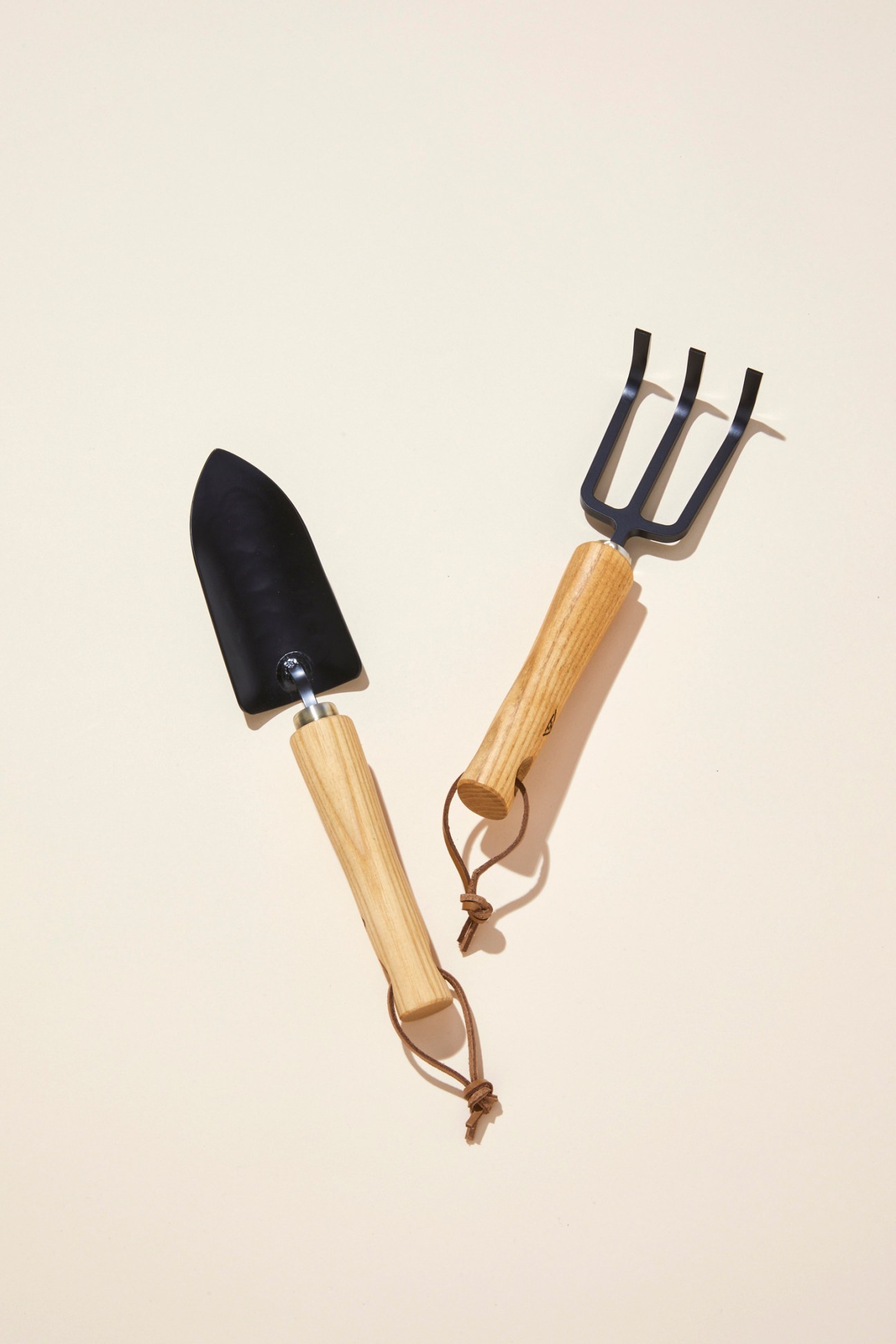
Kondo Factory
These wooden-handled wonders are made in Niigata by Kondo Factory.
kuwakaji.com
2.
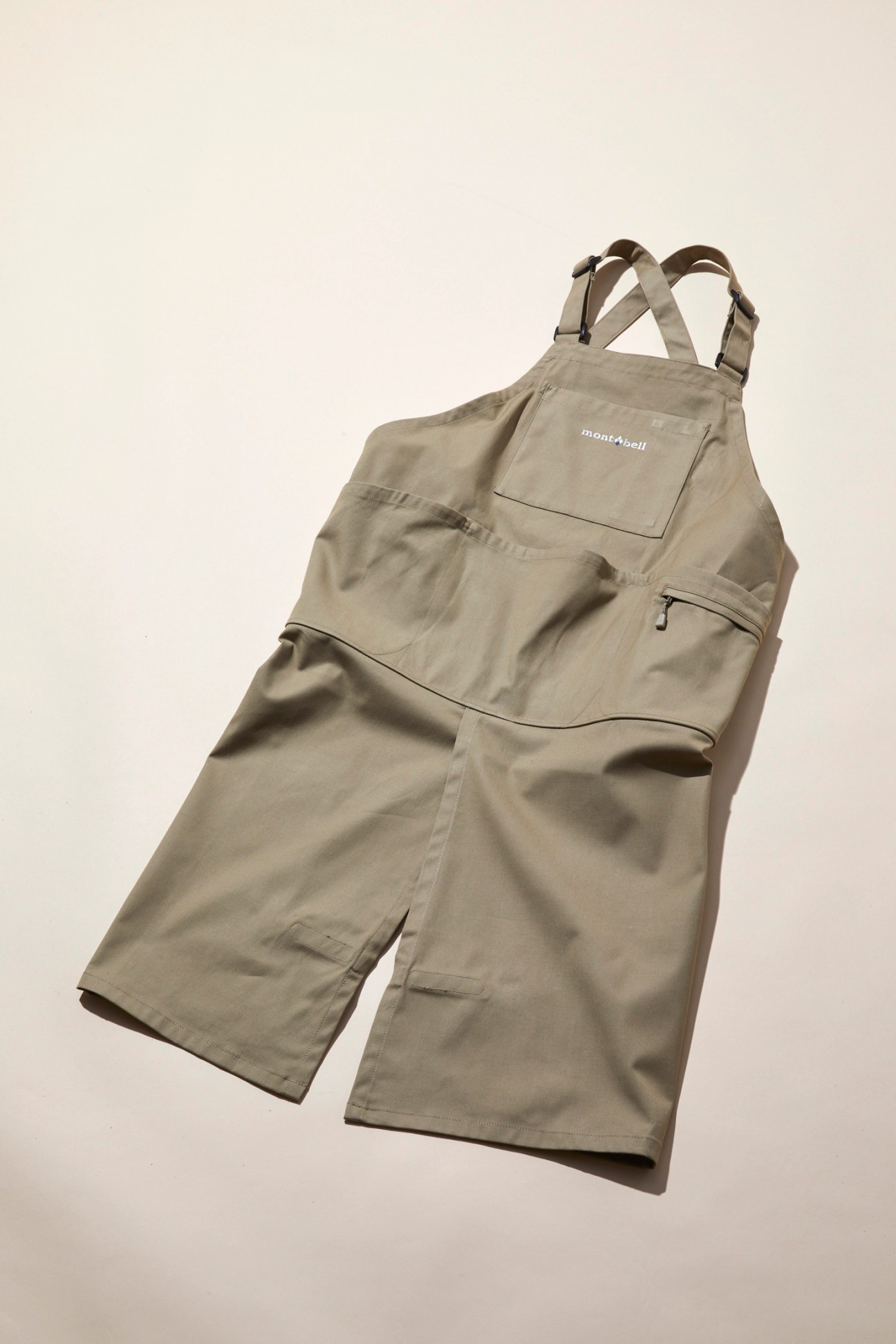
Apron
Montbell
Osaka-based Montbell is a specialist in hardy outdoor gear. Its apron is no exception.
montbell.jp

3.
Scissors
Ubukeya
Japanese scissors by veteran blade-merchant Ubukeya are a cut above the rest.
ubukeya.com
4.
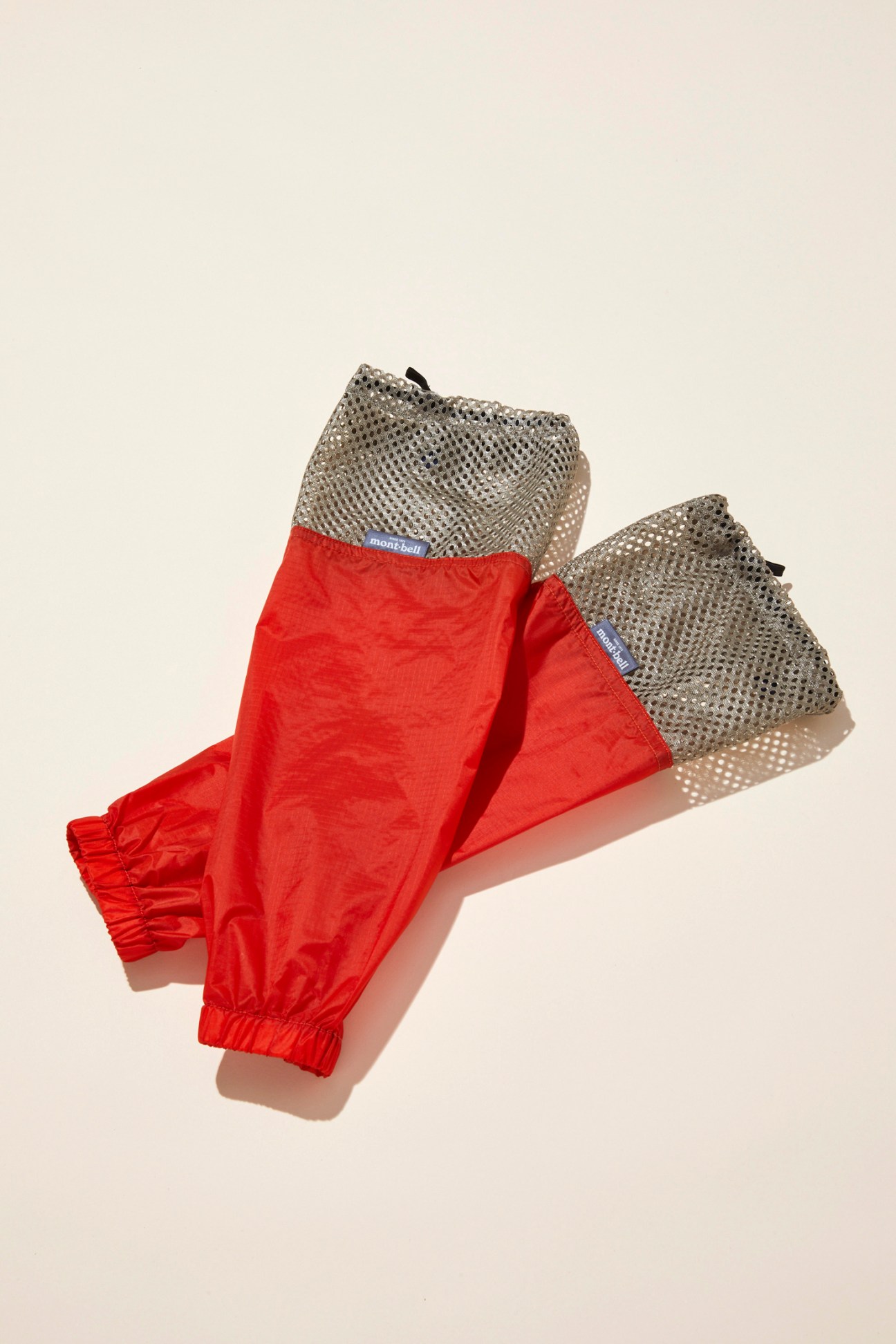
Arm protectors
Montbell
These Montbell arm protectors are excellent for seeing off stinging nettles and thorny tasks. They’re also an outré fashion statement.
montbell.jp

5.
Hose
Green Life
Green Life’s self-winding hose is quite simply the best you’ll find. Sturdy and perfectly constructed.
greenlife-web.co.jp
6.
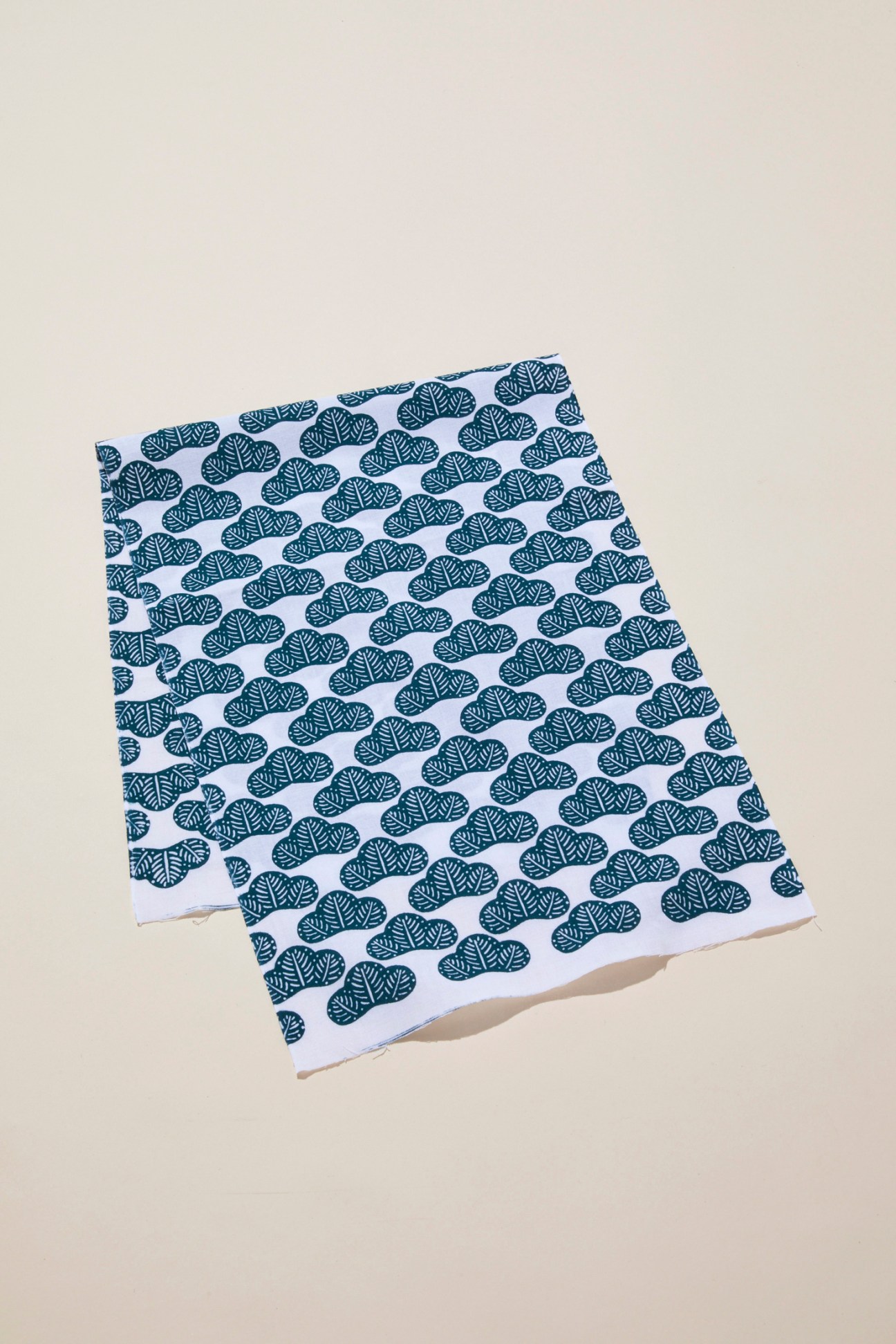
Towel
Kamawanu
This fetching cotton tenugui from Kamawanu makes for a handy towel for mopping a brow or wearing as a headband.
kamawanu.jp

7.
Watering can
Royal Gardener’s Club
A simple, seemly watering can from Tokyo’s Royal Gardener’s Club. The retractable lid helps prevents spillages.
rgc.tokyo

8.
Broom
Matsunoya
Founded in the 1940s, Matsunoya specialises in aramono (household items) made by artisans across the country. This one cleans up.
matsunoya.jp
9.
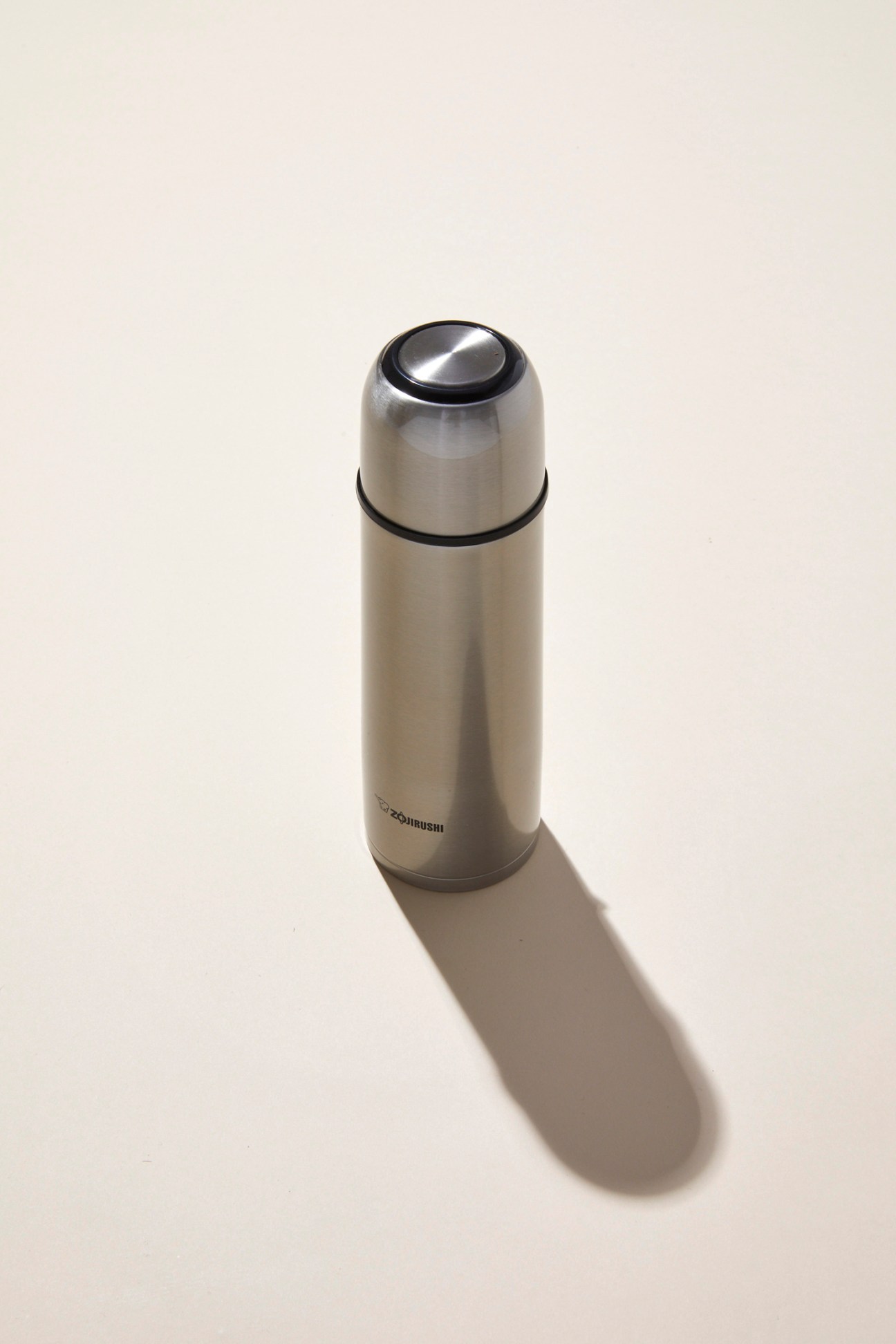
Flask
Zojirusihi
Gardening can be thirsty work so don’t forget your thermal Japanese-made flask.
zojirushi.co.jp
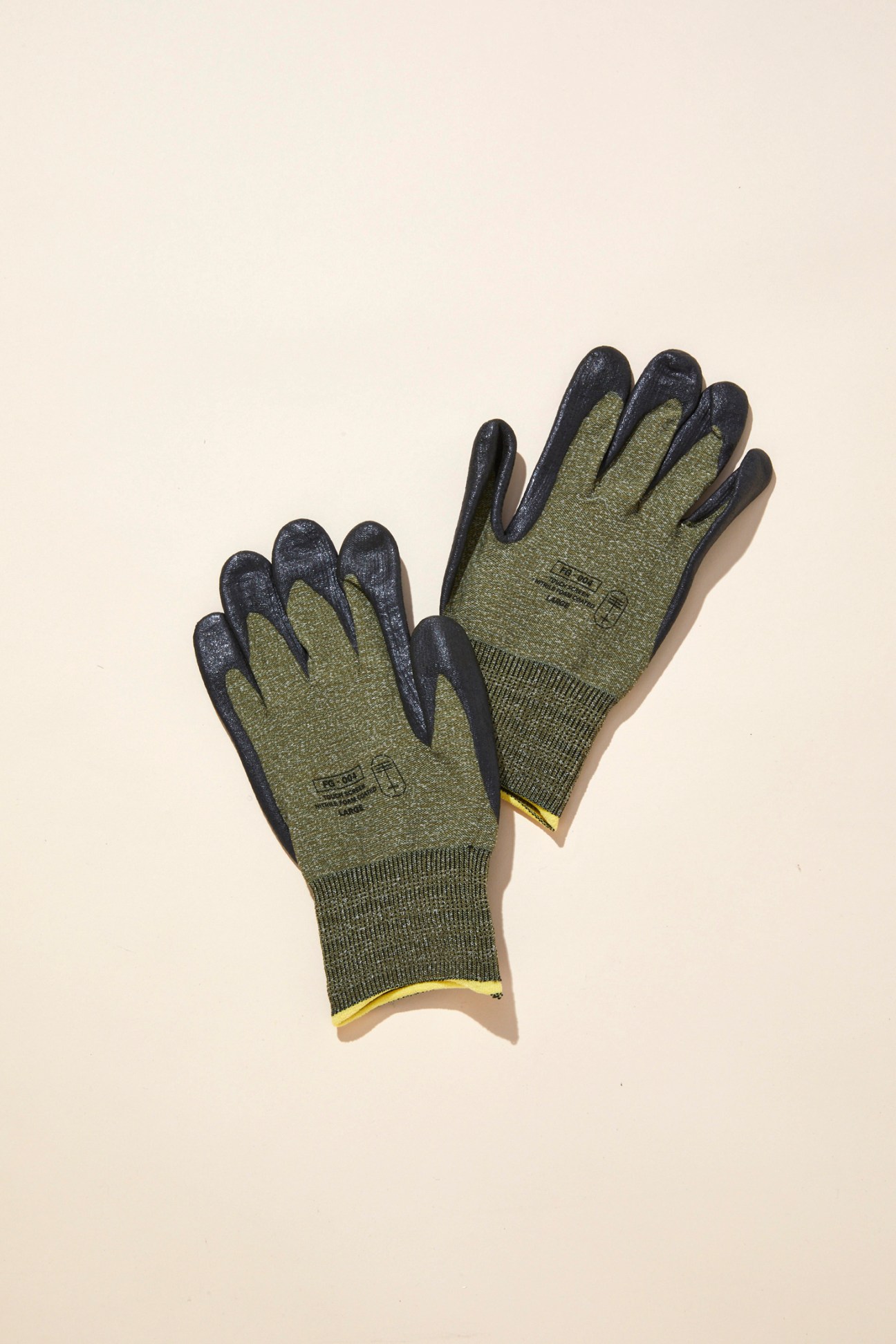
10.
Gloves
Tet
These gloves from Tet are good for gardening or DIY. And they’ll make a smart ensemble with your Montbell arm protectors.
te-t.jp
How to grow a Japanese garden
Lesson from a master
Japanese gardens differ from their Western cousins in many ways, even down to the tools. “I don’t claim to be an authority on Western gardens but recently I saw one in Kyoto that made me consider how different they can be from those of my native Japan,” says master gardener Sueo Kato.
Kato’s family has run Kyoto-based Ueyakato Landscape, a Japanese gardening firm, since 1848. He has got his hands dirty creating and cultivating countless Japanese gardens, including Kohojo Garden in Kyoto’s beloved Nanzen-ji Temple. Unlike Western gardens, which tend to be wide, open spaces filled with imported flowers, Kyoto gardens were smaller and more intimate. “In the West, large parties are held on carefully managed lawns,” says Kato. “In Japan, guests would be entertained individually in narrow, dimly lit tea houses [chashitsu].” Unlike the cultivated plants beloved of Western gardeners, Japanese gardeners have always tended to try to create more natural landscapes that look as though they haven’t been touched at all.”
Kato explains that gardens that don’t bear the mark of human touch have influenced Japanese tools too. “A Japanese saw, for example, has alternating blades that can be adjusted by the gardener to allow a subtle cut that can barely be noticed,” says Kato, whose work also includes training the next generation of conservationists. “We also think about the person who will experience the garden, often using pruning shears made from hard steel. This is not only because they cut well but because they make a pleasing sound too.”
In this sense, Western gardening traditions are coming closer to those of their Japanese counterparts, including a focus on native plants and natural landscapes. “For me, the quintessential Japanese garden is one that looks untouched,” says Kato. “That’s what we gardeners in Japan are striving to achieve.”
Out of the past
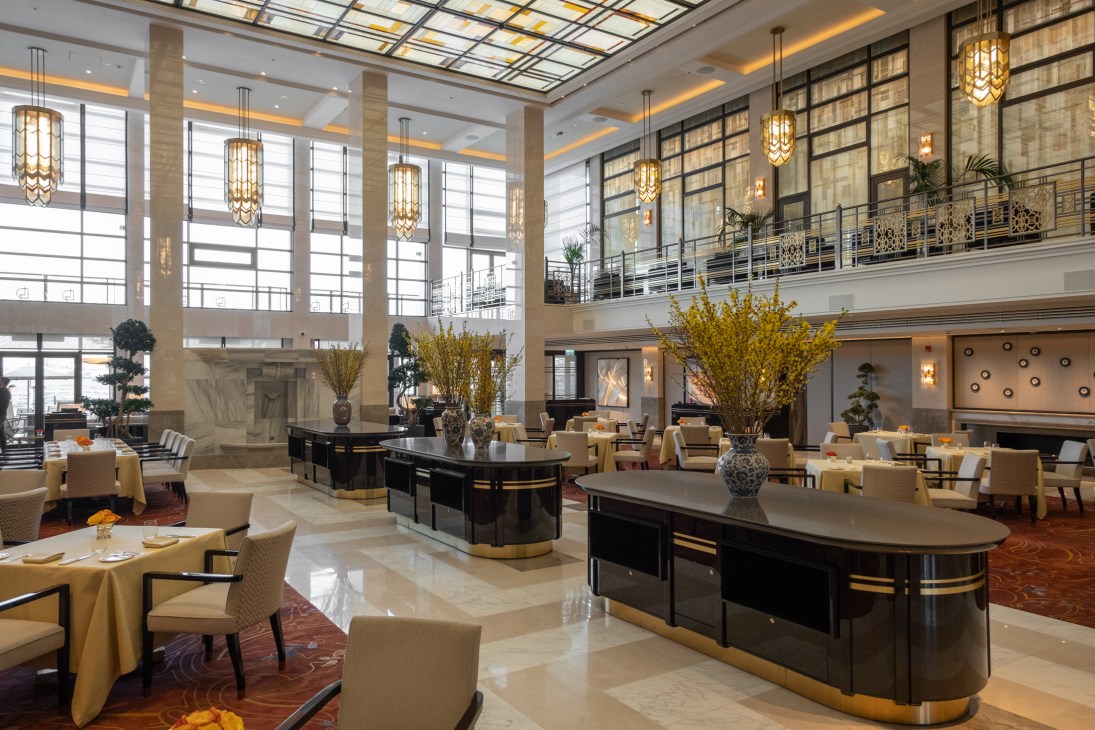
It’s difficult to decide where to look first when you step into the grand lobby of the new Peninsula Istanbul hotel. To the stained-glass ceiling with its geometric, orange-and-yellow panels? To the iridescent shine of the marble floor, worn by decades of footfall? Or perhaps out through the huge windows at the minareted cityscape outside? It’s dizzying in the best sense: a visual assault that captures the intoxicating comings and goings of Istanbul.
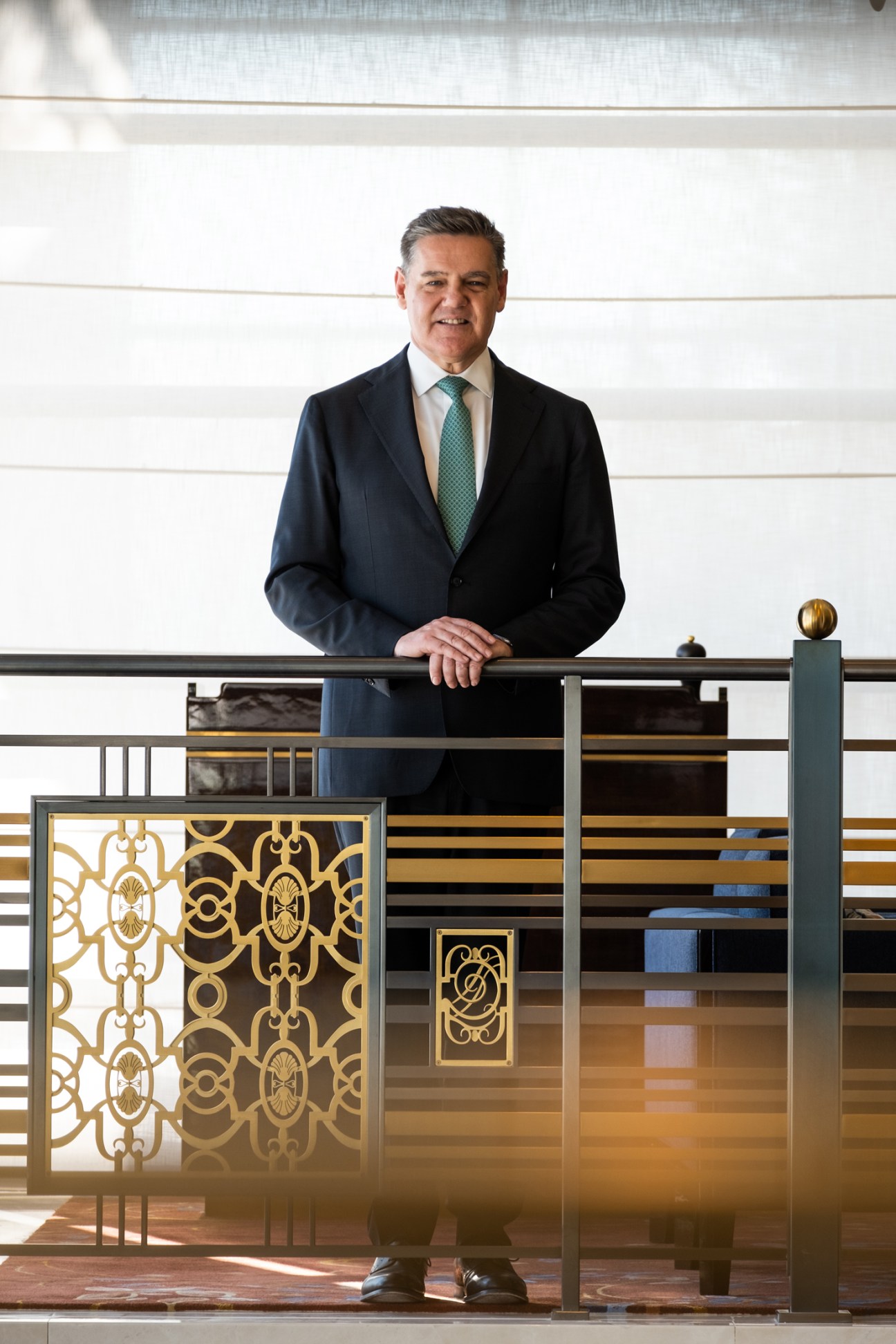
“We see ourselves as custodians of this site,” says Jonathan Crook, the hotel’s managing director, an Englishman with polished manners who arrived here after a decade heading up the hospitality brand’s site on Manhattan’s Fifth Avenue. In Istanbul, the Peninsula has picked an ambitious site for its 11th hotel: three adjacent historic buildings and a newly built fourth on a stretch of waterfront in the heart of the city that lay unseen behind hoardings for years. “It’s a unique location,” says Crook as he shows Monocle around. “It is our job to protect it, to bring it back to life.”

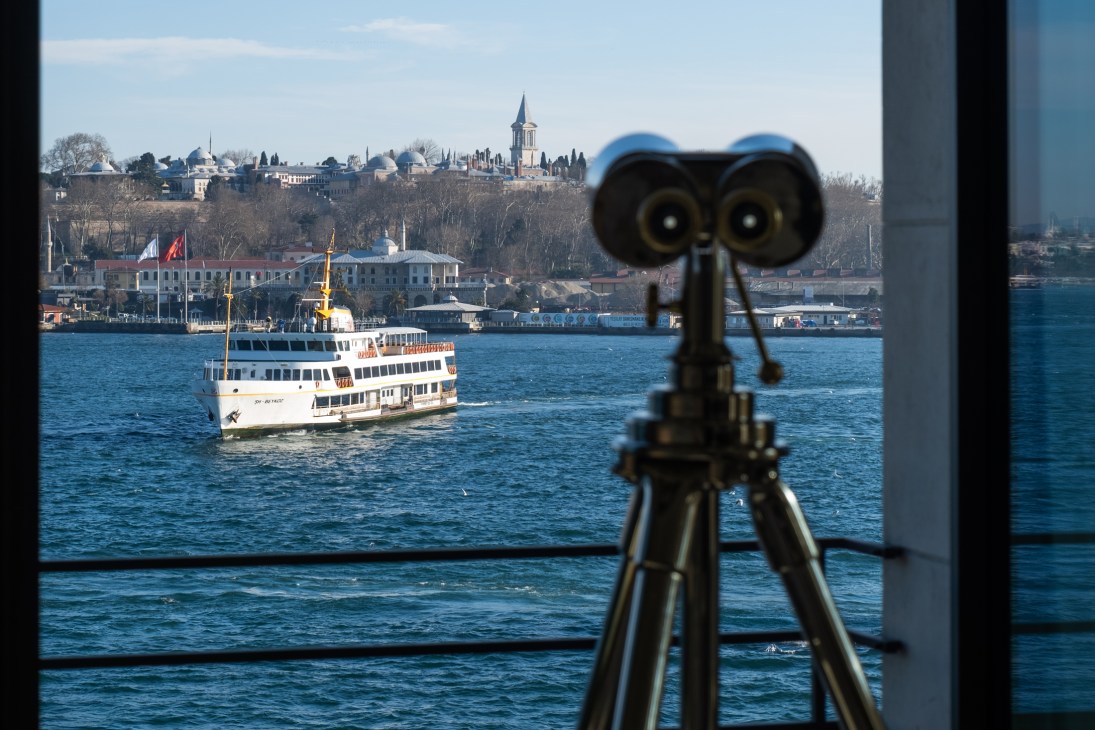
Even before the catastrophic recent earthquakes, Turkey was undergoing plenty of turbulence but tourism roared back in 2022 and the Peninsula, which opened on 14 February, occupies a breathtaking space. From the terrace of its penthouse, there’s a 360-degree panorama taking in the Topkapi Palace, Suleymaniye Mosque, Hagia Sophia, Galata Tower and a hotchpotch of apartment blocks. Between them is the bewitching Bosphorus, where ferries and pleasure boats chug their way between continental Europe and Asia.
Crook’s genteel manner perfectly complements the Peninsula’s ethos. Founded in 1866, the Hong Kong- based brand is one of the world’s oldest and most respected. Nodding to this heritage, the Peninsula Istanbul’s 177 guest rooms are fitted with valet boxes and staff in starched, white uniforms topped with pillbox hats greet guests at the entrance – as they do at all of the brand’s locations, from Hong Kong to Beverly Hills. But the Peninsula’s emphasis is on place rather than brand (or bland) consistency. In Istanbul, that local flavour comes in many forms, including the brass buckles of the staff uniforms, created by craftsmen in the nearby 15th-century Grand Bazaar, and the subtle fragrance of fig and pomegranate that wafts through the hotel’s rooms.
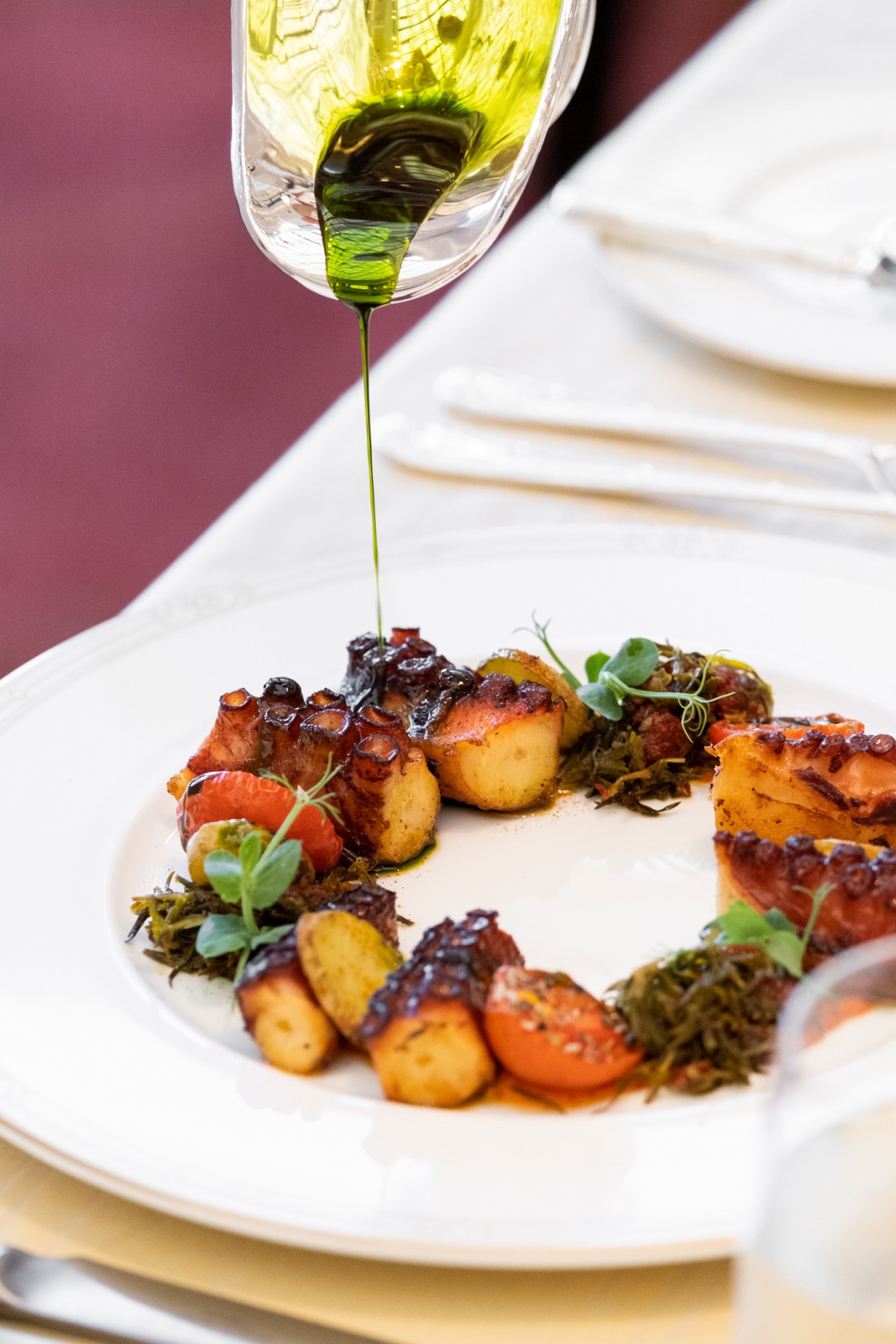
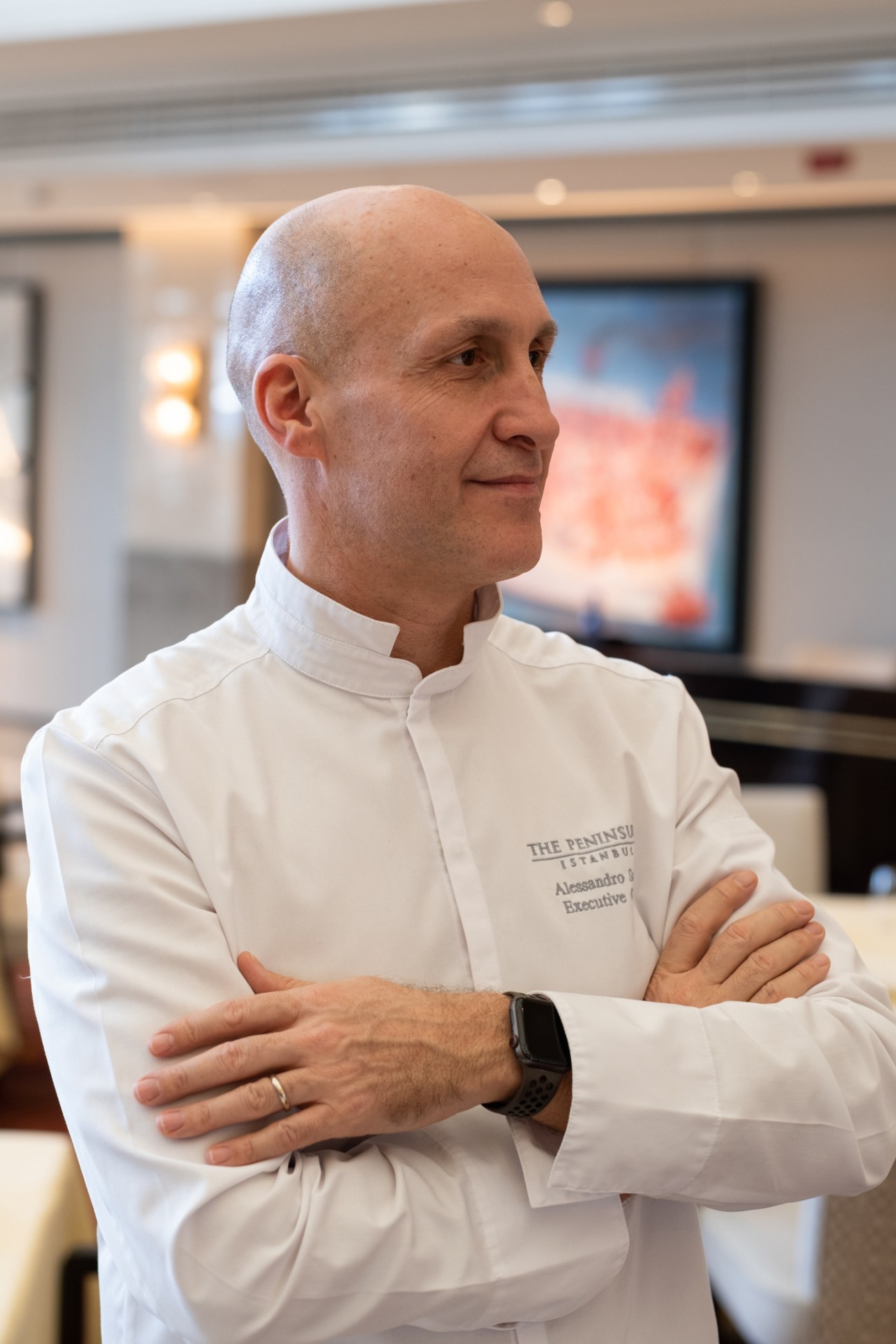
Zeynep Fadillioglu, an Istanbul- based interior designer who was “born on the Bosphorus”, has reimagined the buildings, preserving their humming energy from their days as a hub for travellers arriving in Istanbul by sea. “We should not lose our memories of places,” she tells Monocle. “Those memories should be the basis of new ideas. This is a place of arrival.”
Fadillioglu has turned the lobby at the centre of the three historic buildings into a destination in itself. This cavernous space was once the international cruise-ship terminal of Istanbul, designed in 1936 by Rebii Gorbon, an architect known for providing a Turkish twist on the Bauhaus spirit. It remained in use until 2014. The original structure, with its modernist clock tower, was demolished but it was faithfully reconstructed to meet current earthquake standards. The original marble floor, however, was mostly preserved and Gorbon’s aesthetic was given a twist.
“The glass in the lobby is like a textile,” says Fadillioglu of the ceiling and internal windows, which remain faithful to the geometric designs of Gorbon’s original but have been upgraded with sumptuous new panes created by a Turkish glass artist. “We are using the layers of Istanbul in a sophisticated way.”
Over afternoon tea in the glow of the lobby’s waterfront windows, visitors can look out over the manicured lawns and olive trees in the Enzo Enea-designed garden that lines the shore. Glass walkways link the 20th- and 21st-century buildings on either side, which were once home to the city’s port authorities. The Merkez Han building is a stuccoed mansion adorned with the turquoise mosaics and arched windows that are emblematic of Eastern architecture, while the six-storey Cinili Han structure to its right is coated in gold tiles. The guest rooms are spread across the four, while the new ballroom on the site of a former warehouse is at the end of the chain.


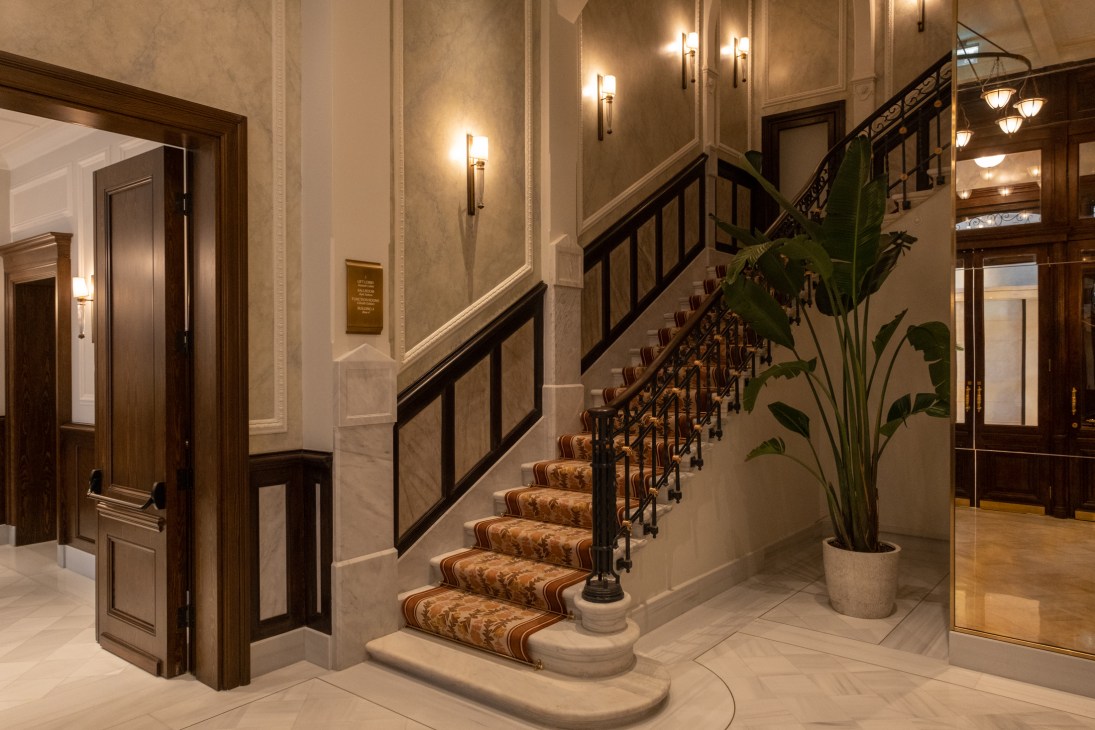
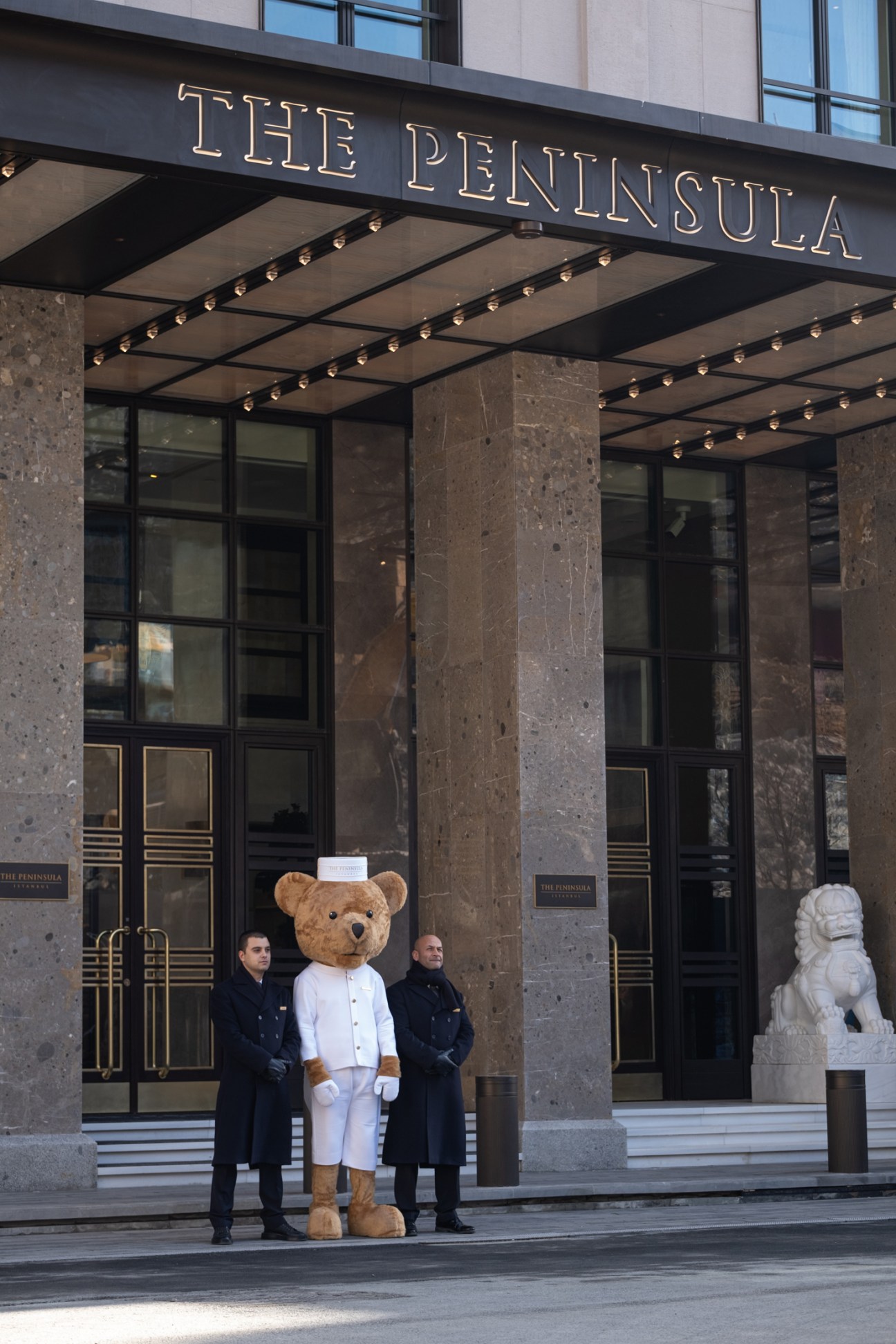
Creating a sense of continuity between the buildings while respecting their original features was “like composing music on four different instruments”, says Fadillioglu. “Each should be composed to create harmony. We repurposed the buildings without changing their main characteristics, combining them into one symphony.”
The hotel isn’t just a paean to the past. It also offers a snapshot of modern Turkey’s creative scene, with 80 pieces of artwork, mostly commissioned from Turkish artists, scattered across the rooms and gardens. Fêted Istanbul chef Fatih Tutak, whose restaurant Turk Fatih Tutak was recently awarded two Michelin stars, will run the rooftop restaurant, opening in June.
The Peninsula site’s redevelopment is part of a wider regeneration of the Karaköy district, a well-appointed neighbourhood scarred by decades of shoddy city planning. An ugly multistorey structure behind the hotel will be pulled down to create a new park, a rare green space in central Istanbul. Meanwhile, the Galataport development next to the hotel sits alongside the new Renzo Piano-designed Istanbul Modern museum. Karaköy’s backstreets are morphing from a maze of dingy neighbourhood bars and cafés into something more upmarket. “We’re saying to our customers, ‘We’re here, so you should be too,’\” says Crook with a grin. “We believe in Turkey. There is a strong future here.”
Exploring Karaköy
In this neighbourhood, you’ll still find shops dedicated to fishing and sailing equipment. At the port next to the Peninsula, people fish in the waters of the Golden Horn, a Bosphorus tributary that cuts through the oldest part of Turkey’s largest city. To eat, Karaköy Lokantasi is a favourite of Monocle editors. The Peninsula, however, represents a new chapter for the neighbourhood and is part of a €1.7bn redevelopment of the waterfront.
The city’s best homegrown brands are invited. Fahri Konsolos, a cocktail bar that has become an institution on Istanbul’s Asian side, is opening a branch. Around every corner in the backstreets are windows onto Istanbul’s past. Look out for the four Orthodox churches established by White Russians who fled the Bolshevik Revolution and the grand buildings of its bigger boulevards, which housed the city’s financial district in the late Ottoman era. Visit the excellent Salt Galata, an art space, library, archive and café in the old central bank. The 16th-century Kilic Ali Pasa hammam is the city’s best spot for a traditional steam bath.
Purchasing power: Part 1
How does a retailer known for offering value products elevate its design credentials without losing its core audience? What’s a chairman to do when a bloated offering has diluted his brand? And how can you tell whether higher rents are a sign of a footfall magnet or that it’s time to move on? All of these questions are ones facing retailers large and small in straitened times.
To chart a course through an era of inflation, labour shortages and shifting supply chains, we’ve found stories from around the world that tell you about the state of retail at large and in microcosm. Spoiler: it’s in good health. From the global behemoth that is Spain’s Zara Home pairing up with designer Vincent Van Duysen to a Tokyo bookshop that sells one title a week, via a retail renaissance for the Rockefeller Center, we’ve talked to the people who can tell you how the world of retail got to, where it is now and where it’s going.
Shopping might have moved into a brave new era of stationery vending machines and staffless supermarkets but the bedrock of good retail has remained constant: a focus on bricks and mortar, and, just as important, putting the customer first.
Best: Design upgrade
Open house
Zara Home’s apartment-style Madrid flagship sees the brand edge upmarket.
A serious-looking couple clasp the corners of an unfurled tablecloth and consider its future, while a pair of spectacled señoras fawn over a sourdough-making kit. Two children slouch in a corner chair, clearly resigned to this overtly adult frenzy for homeware.
We’re inside Zara Home’s new Madrid flagship, which opened last October in the refurbished Edificio España building. It unfolds like a house, with a kitchen, library, lounge and bedrooms, and it seems as if everyone has stopped by: young, old, bargain hunters and big spenders. The Spanish homeware giant’s broad appeal is unmatched.
“Decoration trends are global and we reflect this with our collections,” says Lorena Mosquera, who, as general brand manager since 2018, has been elevating Zara Home’s image beyond the mass market. “Every new project is part of a push to make us more creative, agile, efficient and respectful of customers and the environment,” she says. First trialled in the company’s home city of A Coruña, Galicia, the new apartment-style concept will also be rolled out in Paris, Rome and Japan this year.
In lockstep with parent company Inditex’s longstanding policy of minimal marketing, splashy campaigns are sidelined for a focus on the customer experience. Apart from refining the look and feel of shops, big names have been recruited to spruce up the product offering. With more than 5,000 different items every year, there’s much potential for collaboration.
The most remarkable of these found Zara Home teaming up with Belgian architect and designer Vincent Van Duysen for a new living- room collection in 2022 – an unequivocal coup. “I embrace the same social message of democratic design for everyone,” Van Duysen tells Monocle from his Antwerp studio. Describing the collaborative process with second- generation CEO Marta Ortega, appointed chairperson of Inditex in 2021, Van Duysen praises the brand’s quality and short production times. All new furniture is made in Spain.
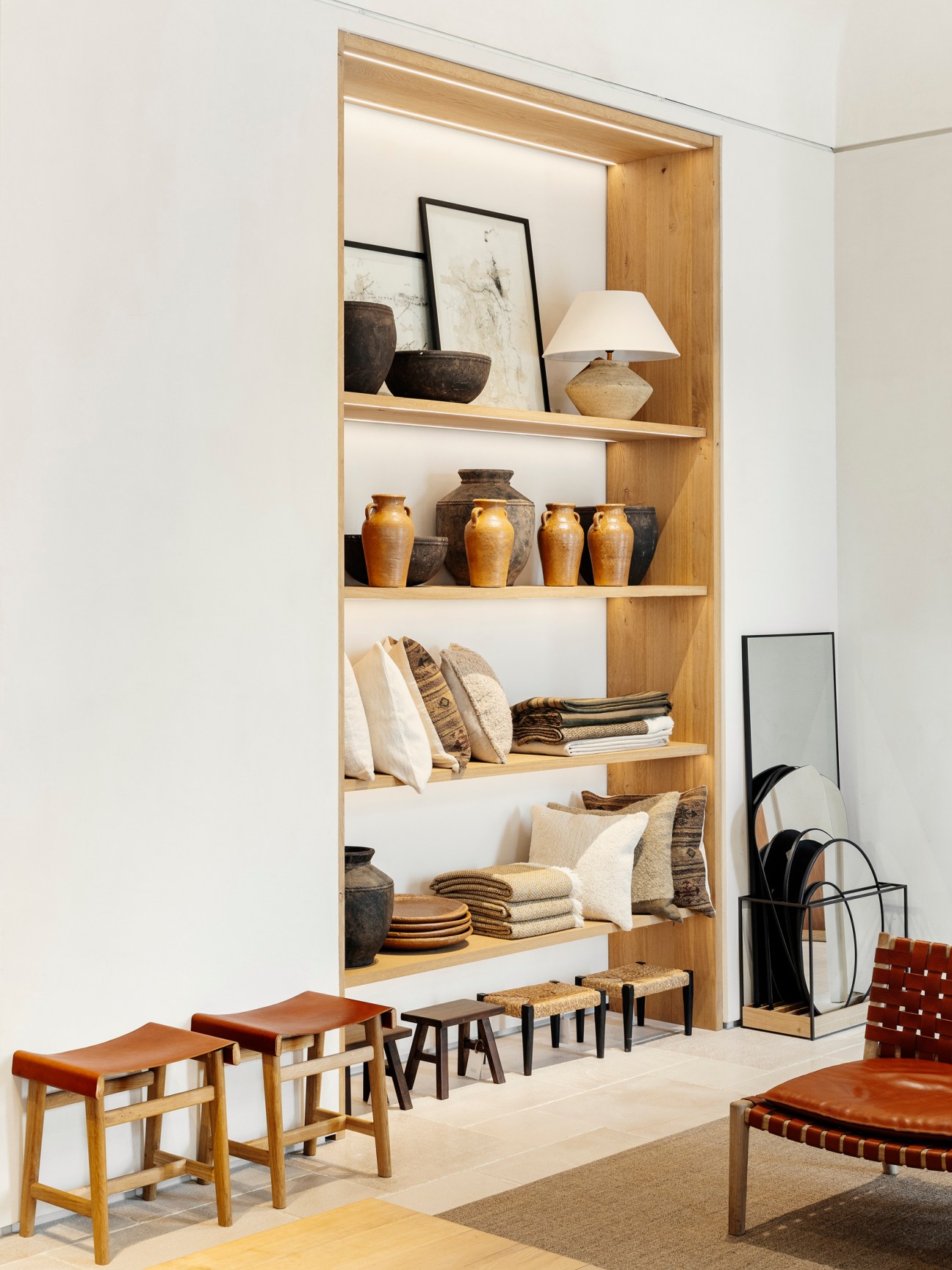
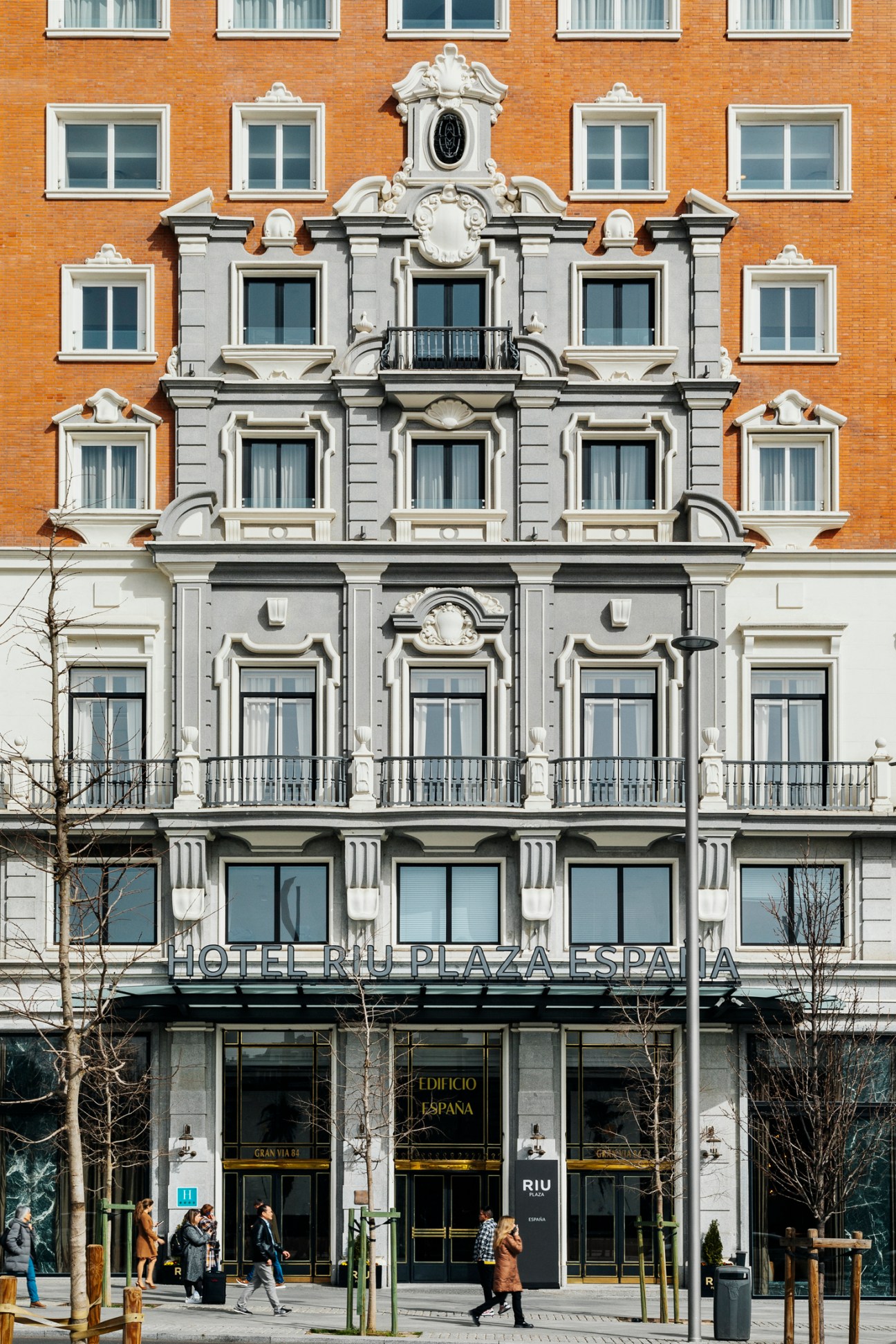
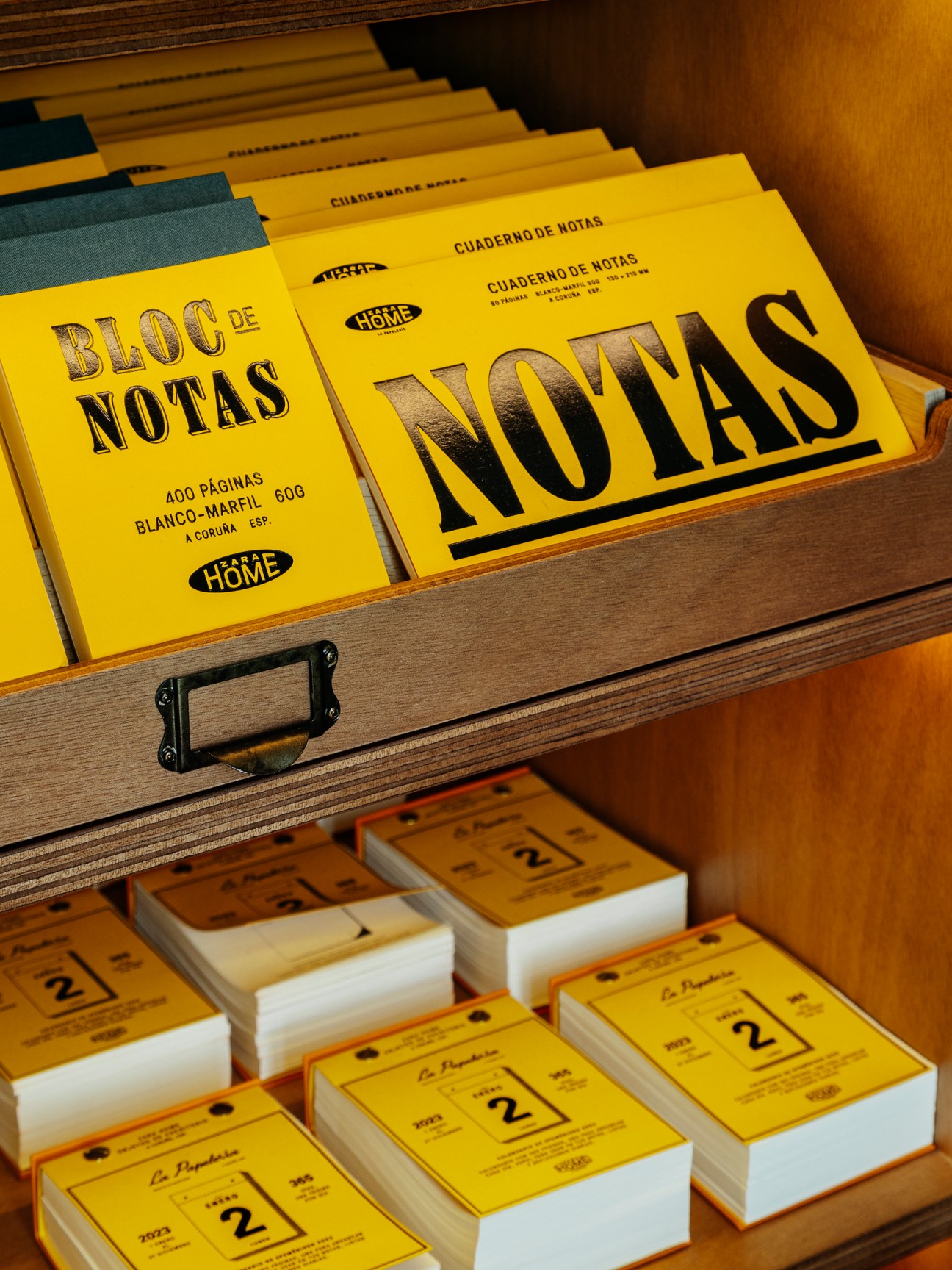
Expanding with a second dining-room range in June, the collection is turning heads. “It’s a repositioning,” says Van Duysen, who, at 60, was attracted by the chance to revisit iconic pieces. The new premium offer, he says, “is intended to reach all layers of society”.
Mosquera has also been consolidating global retail locations (from 507 in 2021 to 425 in 2023) by shoring up bigger shops and managing the retreat from the Russian market. Online sales represent a sizeable share of purchases but a push to digitisation and self-service checkouts is balanced with real employees and in-store browsing paired with home delivery. This is a house that encourages customers to see and touch its products.
And if the couple who were inspecting the tablecloth – now walking out with a full linen set and some new plates – are anything to go by, those visiting this impeccably tidy apartment- style shop seem more than happy to welcome the brand back into their homes.
Making a scene
French studio Nocod tells luxury brands’ stories via vivid interior installations.
Interior designer Baptiste Dosne met his wife, architect Floriane, in 2006 while studying in Paris. The duo (pictured) have been creative partners ever since. In 2015, they established their own studio, Nocod, which has made a name for itself globally thanks to its scenographic approach to luxury retail design. Nocod builds scenes for its clients, rather than completing shopfits, helping to create narratives around products and brands. Its clients include Cartier, US clothing label Amiri, Atelier Swarovski, Japanese jeweller Tasaki and Louis Vuitton. For the latter, it created a “time capsule” showing a cross-section of the Italian fashion house’s historic collections.
In 2021, Floriane and Baptiste relocated from Paris to Lille. Over waffles at Lille institution Pâtisserie Méert, the duo explained to Monocle why luxury retailers need to offer full experiences to customers.
Why did you launch Nocod?
baptiste dosne: Our studio’s name comes from the words “no code”. Earlier in our careers, we repeated brands’ [style and design] codes and learnt how to use them. But the time came to forget them in order to innovate and offer a new perspective.
What do today’s luxury retail spaces need to offer?
floriane dosne: A sense of community and to resonate with customers. Today, people go to physical shops to experience something new, not just the act of buying. Shops need to be flexible enough to offer unique experiences.
Why is it important to create scenes and not just build interiors?
bd: Brands want visitors to be immersed in a story. We look for the story in the brand’s heritage and then deploy it in a space. If visitors have only five minutes to spare, they need to understand the big picture [about a brand] immediately. Our job is to make it light and quick but also memorable.
How do you create these scenes?
bd: By placing old objects alongside new ones. It immediately gives visitors a sense of the brand’s history.
FD: We like to play with mirrors too. They are magic tools; they can be used to de-structure a space, which offers visitors an immersive experience.
What was the idea behind your ‘time capsule’ for Louis Vuitton?
bd: To present the brand’s future using the treasures in its archive. The brand wanted an instrument that would be extremely strong in visual terms.
What about Amiri’s Tokyo flagship?
bd: Amiri is a young brand, so we built an architectural vocabulary. We created a space open to the city, to invite people in. It was Amiri’s first shop in Japan, which made openness important.
What’s next for Nocod?
bd: Amiri is opening a vast shop in Chicago this spring, for which we designed the interiors. We are also redesigning its flagship in Beverly Hills.
Nocod’s top tips for creating luxury retail experiences
1. Don’t write off the power of a pop-up. Ephemeral spaces are an opportunity to pack more punch visually and try things out.
2. Bricks-and-mortar matters more than ever. Luxury brands increasingly want to offer experiences that require a physical space.
3. Make local people want to come to your shop. Root it in the area and the community.
Singular approach
The one-title bookshop
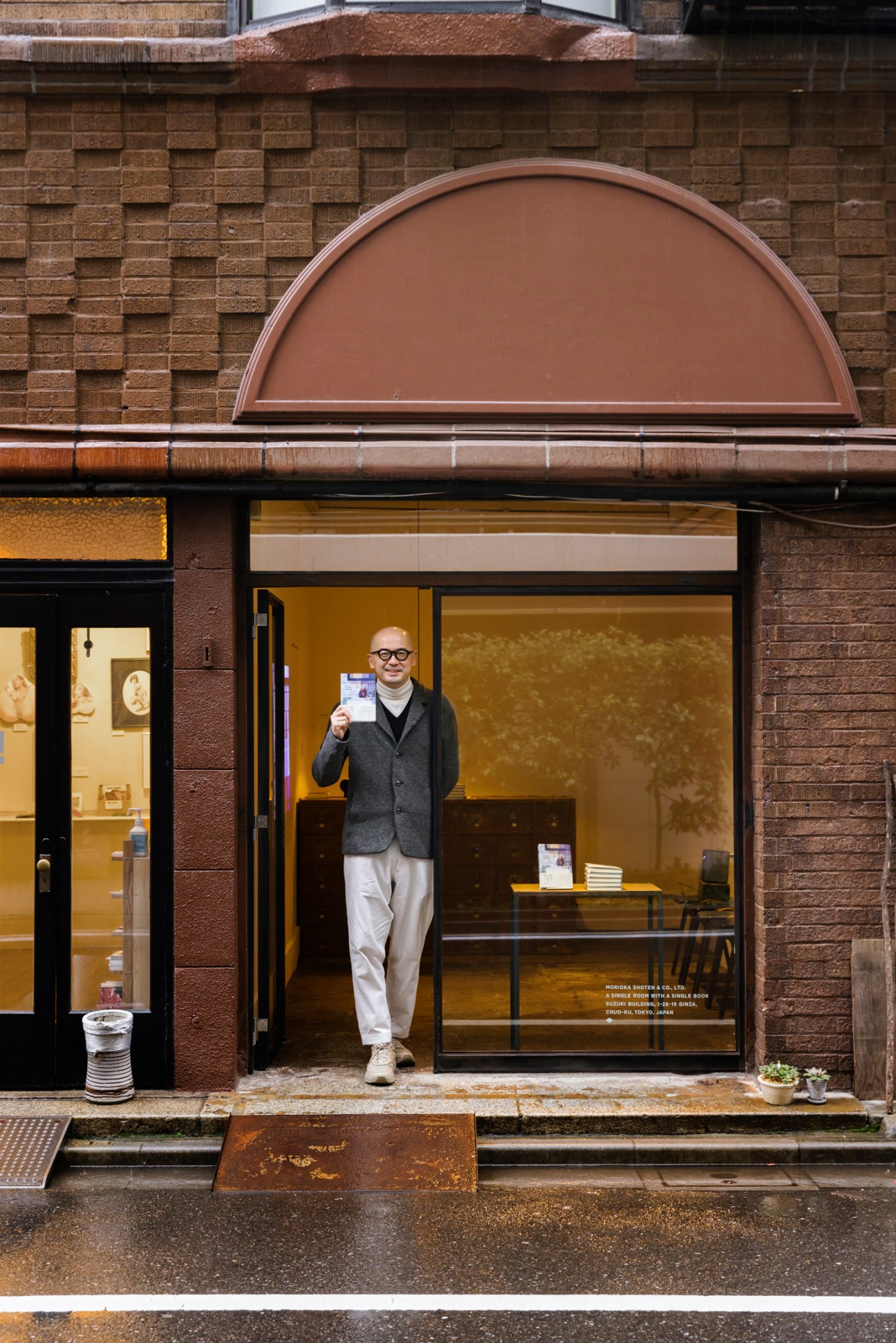
On a quiet side street in busy Ginza sits Morioka Shoten, a tiny bookshop empty but for the lone product on sale: a single title that changes every week. Founder Yoshiyuki Morioka used to work at a bookseller in Jimbo-cho [the city’s bookshop district] before going it alone in 2006 near Ginza, initially opening a gallery-cum-bookshop that specialised in photography, art and architecture. “When I did book launch events, sales were good,” he says. “It occurred to me that I could make a business if I sold just one book.”
Morioka won investment from Masamichi Toyama, a retail consultant and founder of similarly focused ventures such as Soup Stock Tokyo and Giraffe, a necktie specialist. To supplement revenue, Morioka invites authors and photographers to deliver talks or sell their wares to accompany the launch of new publications.
That hybrid model allowed Morioka Shoten to open in Ginza, specifically geared towards the single-book concept. Each week’s book is presented on a table in the front window and on the counter at the back of the shop.
“It’s been a hit,” says Morioka. The shop has won the approval of authors, who enjoy a space that allows them to engage directly with their audience. Fans travel from across Japan and beyond to visit a shop whose success proves the power of a simple idea in a crowded market.
Best: Location spotting
Words on the street
Bookshop chain McNally Jackson is capitalising on Midtown Manhattan’s retail renaissance.
“We’re never really looking to expand,” says Sarah McNally, founder of the McNally Jackson chain of bookshops in New York. “We’re never like, ‘We want to make our lives hell and make more work.’\” So when the company’s director, Doug Singleton, floated the idea of a new shop – what would become the chain’s fifth – at Rockefeller Center in Midtown Manhattan, McNally was sceptical. “The idea of Rockefeller Center didn’t seem very McNally Jackson at first,” she says, as she shows Monocle around the new timber-swathed outlet. “But when I saw this space, I realised that Doug was right. When I moved to New York in the 1990s, there was a tradition of these beautiful, iconic Midtown bookshops, such as Scribner’s, Brentano’s and Rizzoli, that have all gone now. The idea of reinstating that kind of business in the area was exciting.”
Since McNally Jackson opened its first shop in the downtown Nolita neighbourhood in 2004, it has grown into the most notable chain of independent bookshops in the city. Each branch executes the traditional functions of a boutique New York literary retailer: stocking a diverse range of quality titles, hosting author readings and generally providing a physical locus for a bookish clientele that spends a lot of time in the realms of their imagination. Beyond these core offerings, McNally Jackson’s success is built on an unusually dynamic retail strategy. In 2013 it opened Goods for the Study, a sister operation specialising in stationery. Last year, McNally Editions, the chain’s publishing arm, released its first collection: a series of paperback editions of neglected and out-of-print works.
The chain’s vast new 650 sq m space at Rockefeller Center forms part of a broader Midtown renaissance. A couple of years ago, there was genuine concern that the appeal of the world’s largest central business district might have been permanently diminished. Over several centuries Midtown had evolved to meet the demands of millions of office workers commuting to and from the area, five days a week, but at the height of the pandemic almost all of those commuters were staying at home instead. Hundreds of small-to-medium sized businesses that depended on the daily influx of commuters were forced to close.
Some of the pandemic’s challenges might still persist in the US but businesses and workers are at least returning to this area. The shake-up of Midtown’s real-estate market has prompted some creative solutions including a call from New York’s mayor, Eric Adams, to convert vacant office spaces into housing. There has also been an upswing in the area’s street-level retail offering with Rockefeller Center serving as an unlikely focal point; this imposing complex of 19 commercial buildings, designed in the art deco and international styles, has mainly housed corporate offices since its construction in the 1930s.
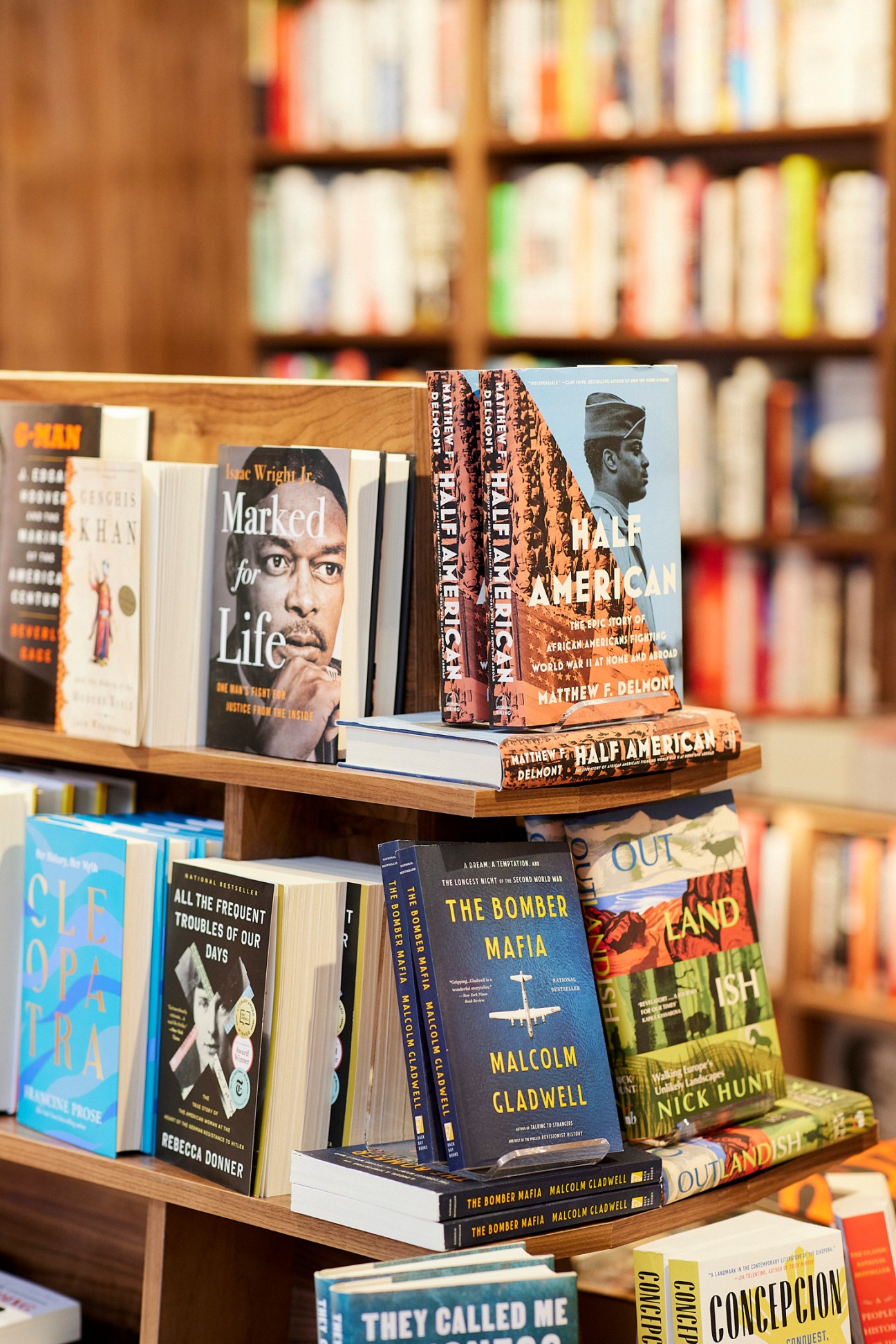
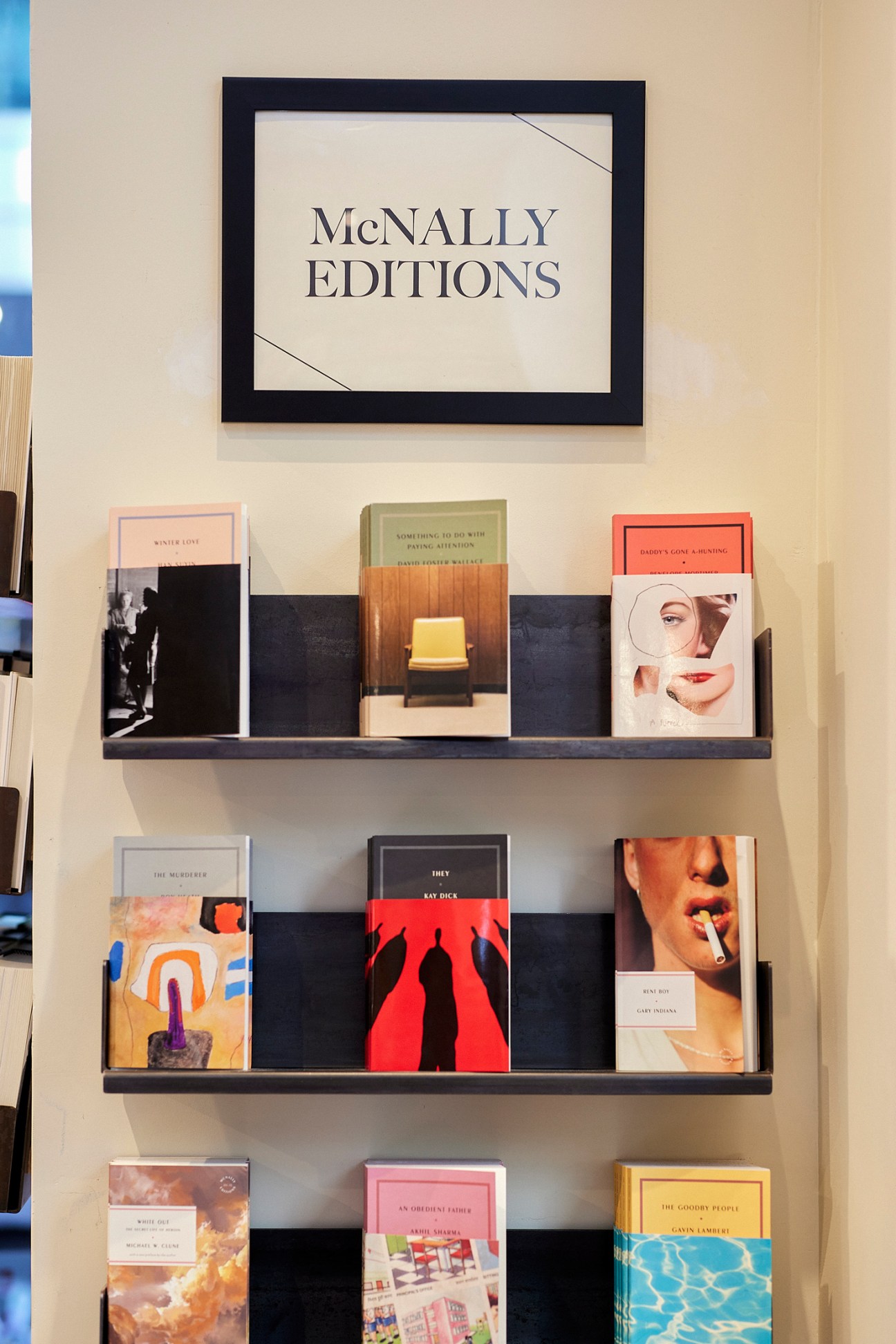
Property investment company Tishman Speyer, the Rockefeller Center’s owners since 2000, has sought to diversify and improve its once-stodgy retail offerings. In 2021 the London-based music retailer Rough Trade raised eyebrows when it moved its New York outlet from young, hip Williamsburg to Rockefeller Center. Several other comparably fashionable retailers and restaurants followed. “Rockefeller Center now isn’t what it was five or 10 years ago,” says McNally. “Rough Trade was the first one to make the move here from Williamsburg, where it was near one of our other stores. Then all of our downtown restaurant neighbours started moving to Rockefeller Center, so it just started feeling nice up here.”
While McNally teases further projects on the horizon, she’s resolute that, whatever the future holds for McNally Jackson, the chain will stay in the city. “We’d never leave New York,” she says. “There’s an alchemy between the city that we love and the books that we love.”
McNally Jackson shoppers
Rockefeller Center
Fabio, 49, New Jersey
“I’m generally looking at self-development or self-improvement books and biographies. I hear Dopamine Nation by Anna Lembke is an amazing book about how, with social media, we can’t turn off our minds. They do a good job here of mixing it up every so often for browsing.”
Julia, 29, East Harlem
“I’m getting my husband a birthday gift. He likes old pictures of New York. I’m thinking of this big heavy book, New York: An Illustrated History by Ric Burns, James Sanders and Lisa Ades.”
Philip, 69, Atlanta
“To tell you the truth, I’m a bit of a pen freak. McNally Jackson has some of the nice Japanese precision-point pens, although they’re not as cutting-edge as I prefer. My favourite pen is a Montblanc Artfineliner with a 0.3mm tip but Pilot has some really nice multi-pens.”
Best: Retail revival
Reviving the heart
Smart initiatives from city hall and a desire to craft in-person experiences are revitalising Montpellier’s old centre.
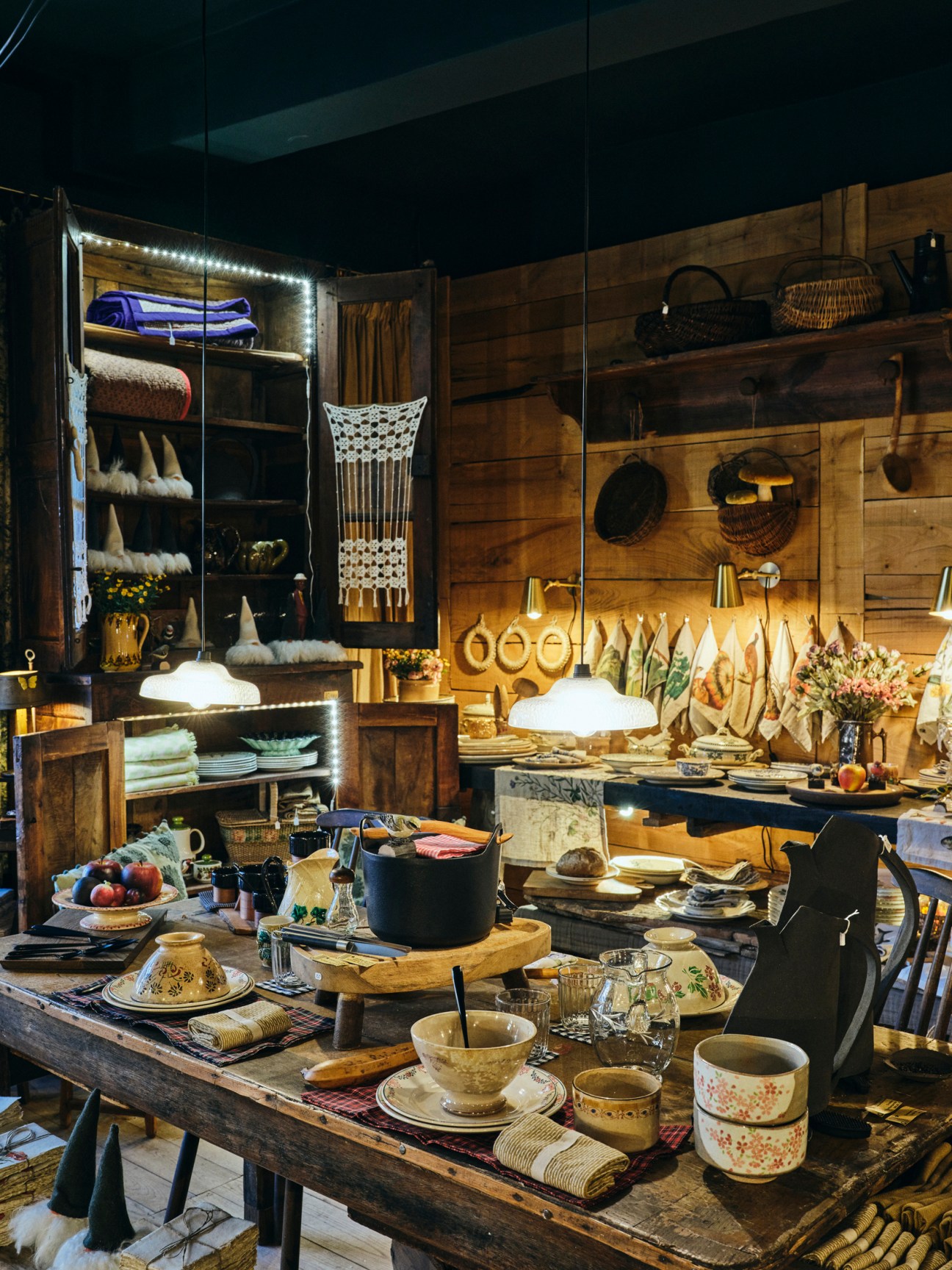
There’s a charming, unhurried atmosphere that pervades Montpellier’s Café Cours during the mid-morning coffee “rush”. Standing behind the coffee shop’s steel counter is co-owner Qian Chen, measuring out ground coffee for the handful of customers gathered inside. In front of her are two V60 drippers that she is about to use to make filter coffee. “French people still think of café filtre as jus de chaussette or ‘sock juice’,” she says with a grin. “We want to show them that it’s anything but.”
For those wanting to buy more than a cup of coffee, Café Cours has a retail corner where Chen and her husband, Florian Babon, sell Hario hand grinders, Origami ceramic drippers and beans from Amsterdam’s Dak roastery. With every purchase, Chen and Babon offer tips to their customers, sharing the knowledge that one would usually only find by spending hours poring over specialist blogs.
Chen and Babon aren’t the only ones in the southern French city who are luring shoppers away from their computer screens and out into the pedestrianised old centre of L’Écusson. The area’s shopkeepers and craftspeople are well-placed to meet the Montpelliérains who would prefer to smell, feel and see the things that they’re parting with their hard-earned cash to own. “We’re here to tell stories and inspire emotions that you don’t get online,” says Olivier Bardou, who founded his homeware boutique, De La Luce, here 20 years ago. Under the vaulted ceilings of a 17th-century hôtel particulier, De La Luce sells everything from Japanese clothing to Provençal flea-market finds. The bazaar-like setting, which encourages exploration, is part of the shop’s success. Bardou doesn’t sell his goods online. “They need to be seen to be appreciated,” he says, as he guides Monocle through his shop.
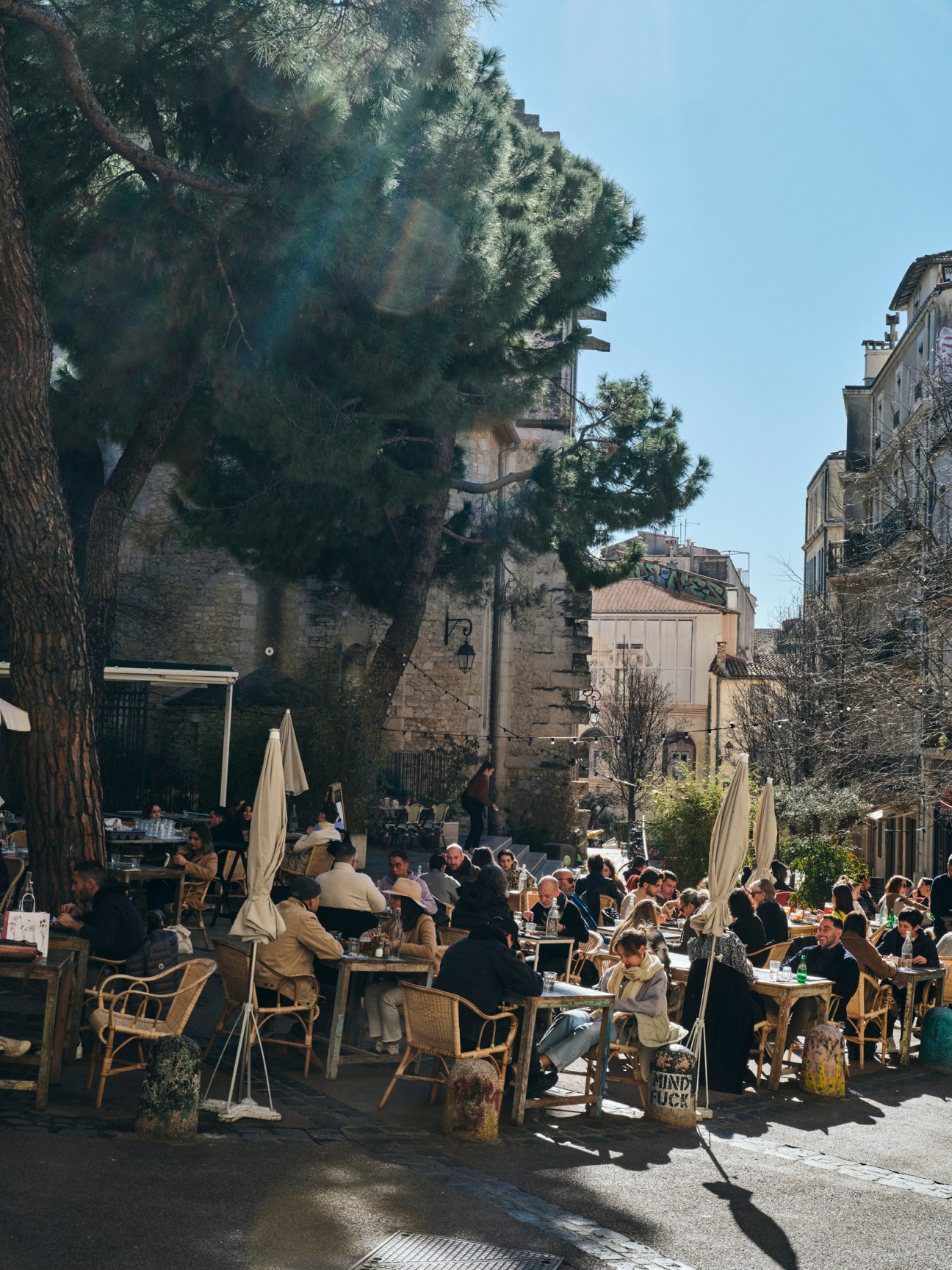
Montpellier’s bricks-and-mortar retailers are a point of pride for the local government. In 2020, with the election of new mayor Michaël Delafosse, several initiatives were launched to support L’Écusson’s shopkeepers through the pandemic. At a time when foot traffic to the world’s physical retailers was at an all-time low, forcing many to permanently shut, the municipality made all public transport free on weekends to draw more visitors. This has proven so popular that, from September, it will be implemented throughout the week.
The mayor also abandoned the development of a large suburban mall, which his predecessor had planned as part of a plan to develop the area of Pérols. In the wake of the pandemic, when people were learning to cherish their neighbourhood high streets again, it was a model that Delafosse deemed obsolete.
No megastore can replicate the experience of gazing into the windows of artisans’ ateliers and witnessing things being made from scratch. On a stroll around L’Écusson’s labyrinthine lanes, for example, you might spot Camille Lameynardie throwing pots at her light-filled studio-boutique, Claycraft. While it has only been two years since Lameynardie left Paris in search of a sunnier life at a lower cost, she has already firmly integrated into the local community. “Montpellier feels like a village but it has the creative energy of a big city,” she says. Lameynardie is part of Ateliers Saint Roch, an association founded by the neighbourhood’s artisans to attract footfall to their workshops by organising exhibitions, classes and craft-themed walking tours.
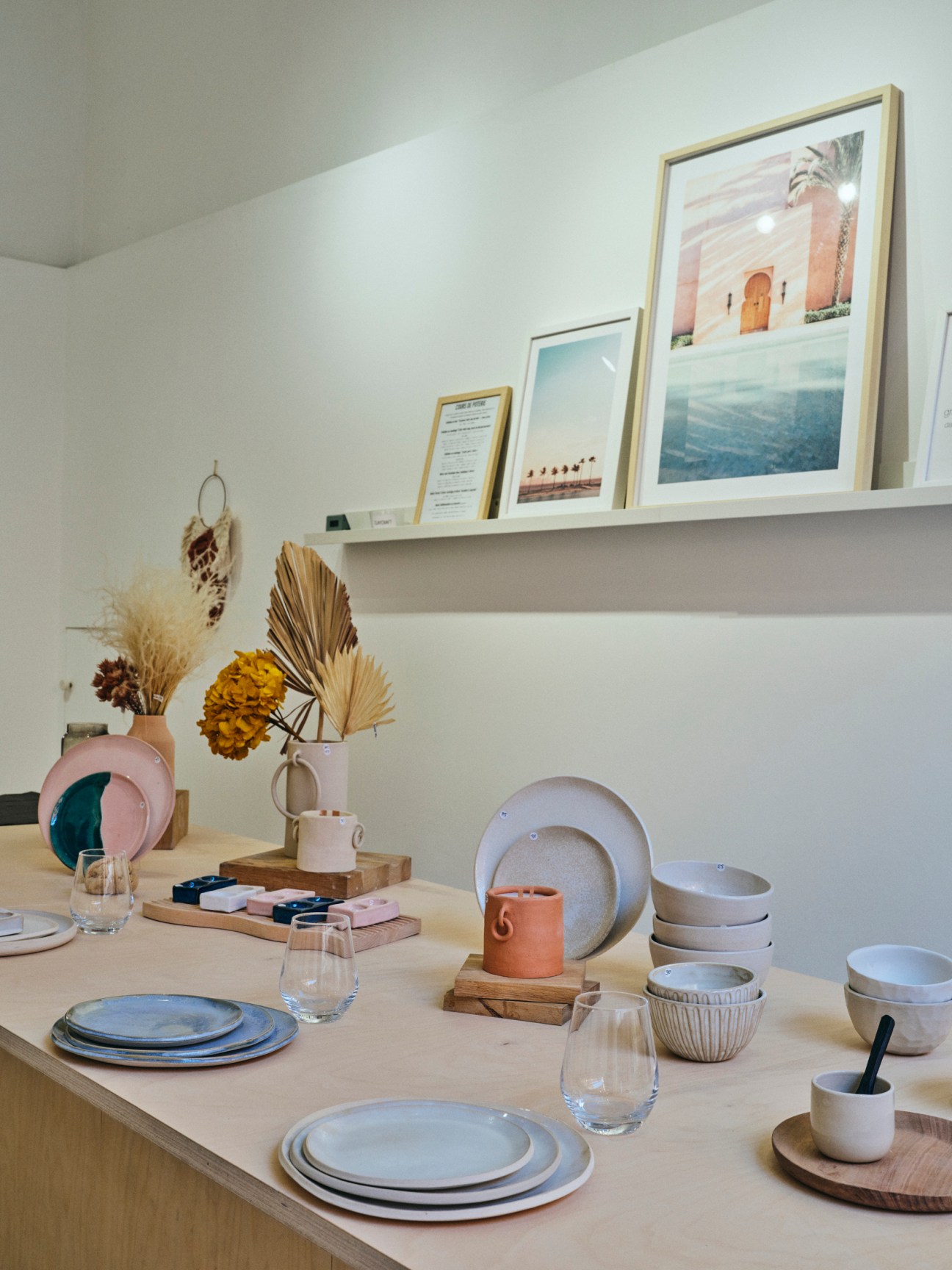
With the opening in 2019 of the Mo.Co contemporary arts centre, businesses have started spilling out into the streets around Montpellier’s historic heart. “It helped to create a dynamic in a district that was commercially a bit slower,” says Martial Ballejos, the co-owner of Manifest, a clothing shop on Boulevard du Jeu de Paume. The city has also invested in renovating the nearby Laissac market hall, which now houses 24 independent butchers, fromageries and lunch canteens to cater to the workers in the surrounding offices. The efforts are part of a wider plan to increase the appeal of central Montpellier in the run-up to its bid to become one of three European Capitals of Culture in 2028.
New outlets are springing up all the time. Among the recent arrivals is Quanto Basta, an Italian épicerie in a newly developed residential enclave behind Laissac. The venture started off as an e-commerce site but the founders soon realised that, in order to win a loyal following among the neighbourhood’s thirtysomething residents, they needed to open their shop doors. “We thought that we would speak to a younger clientele by selling through a website,” says co-owner Jordan Errigo, an industrial designer who co-created the shop’s playful identity and interiors. “But you’d be surprised by how many of them prefer coming in to discover something new.”
And he has a point: when physical retail is designed by people who know how to make the experience exciting, popping to the shops can be a source of inspiration.
Montpellier in numbers:
299,096: Number of inhabitants
€233: Average commercial rent per sq m (compared with €930 in Paris)
1,800: Number of independent retailers in L’Écusson
4 million: Footfall in L’Écusson (the city centre) between January and August 2022
40 per cent: Increase in footfall on the area’s busiest street, Rue de la Loge, since 2021
Best: Luxurious layover
Welcome arrival
Haneda airport has broken the mould of tired travel retail.
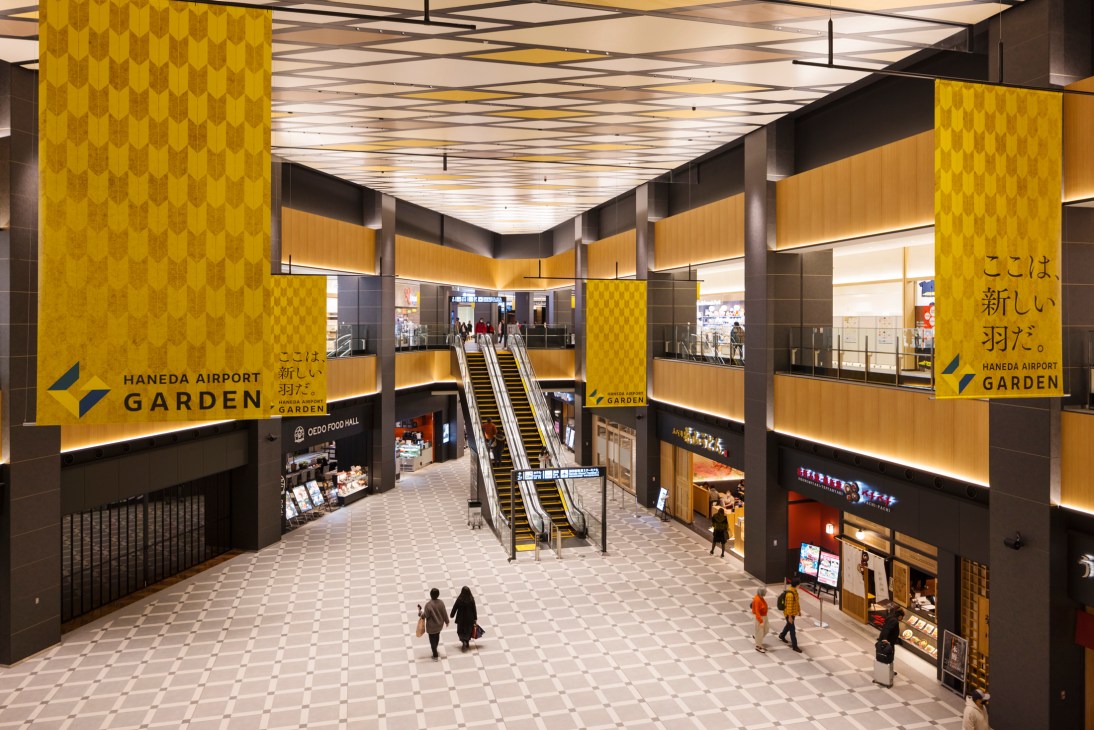
Haneda in Tokyo is one of the busiest airports in the world. Nearly 87 million passengers passed through its gates in the year before the pandemic. Hotel rooms at the international terminal were at capacity and the shopping area had scope for expansion. A new addition, due to open in 2020 was, inevitably delayed. But now, Haneda Airport Garden has opened – and it’s huge. It has 80 shops and restaurants, a 1,717-room hotel and a 12th-floor spa with open-air baths that enjoy views of Mount Fuji.
“It was tough waiting,” says Naoyuki Murata, who runs the operation. He works for Sumitomo Fudosan Retail Management, which won the development bid in 2016. “Our theme was Japanese culture and hospitality,” says Murata. Airside shops can be repetitive but, here, the retail team had some fun.
“There are many independent businesses that couldn’t afford a big space, so we’ve made room for small shops,” says Murata. Mamezono, a Tokyo confectioner, is selling delicious Japanese-style sweets with a twist, adding raspberry and chocolate to its squares of soft azuki bean paste. Miyabi, a Kyoto bread shop, offers pale-pink sakura croissant loaves served by cheery staff in full kimono.
Green-tea company Kimikura’s first Tokyo shop sells everything from takeaway matcha latte to complete tea ceremony sets. “We wanted to tell people about tea but also about Japanese culture,” says Kimikura’s Kanoko Abe. Coffee fans can buy all the equipment they need from cult Tokyo maker Hario.
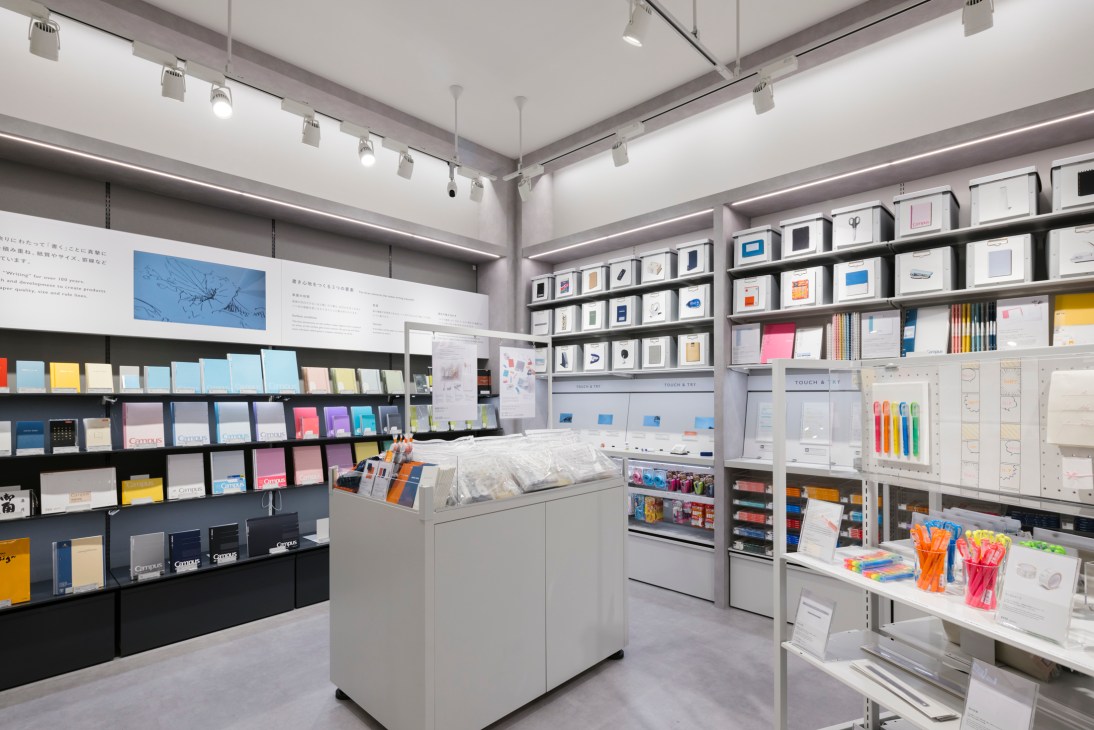

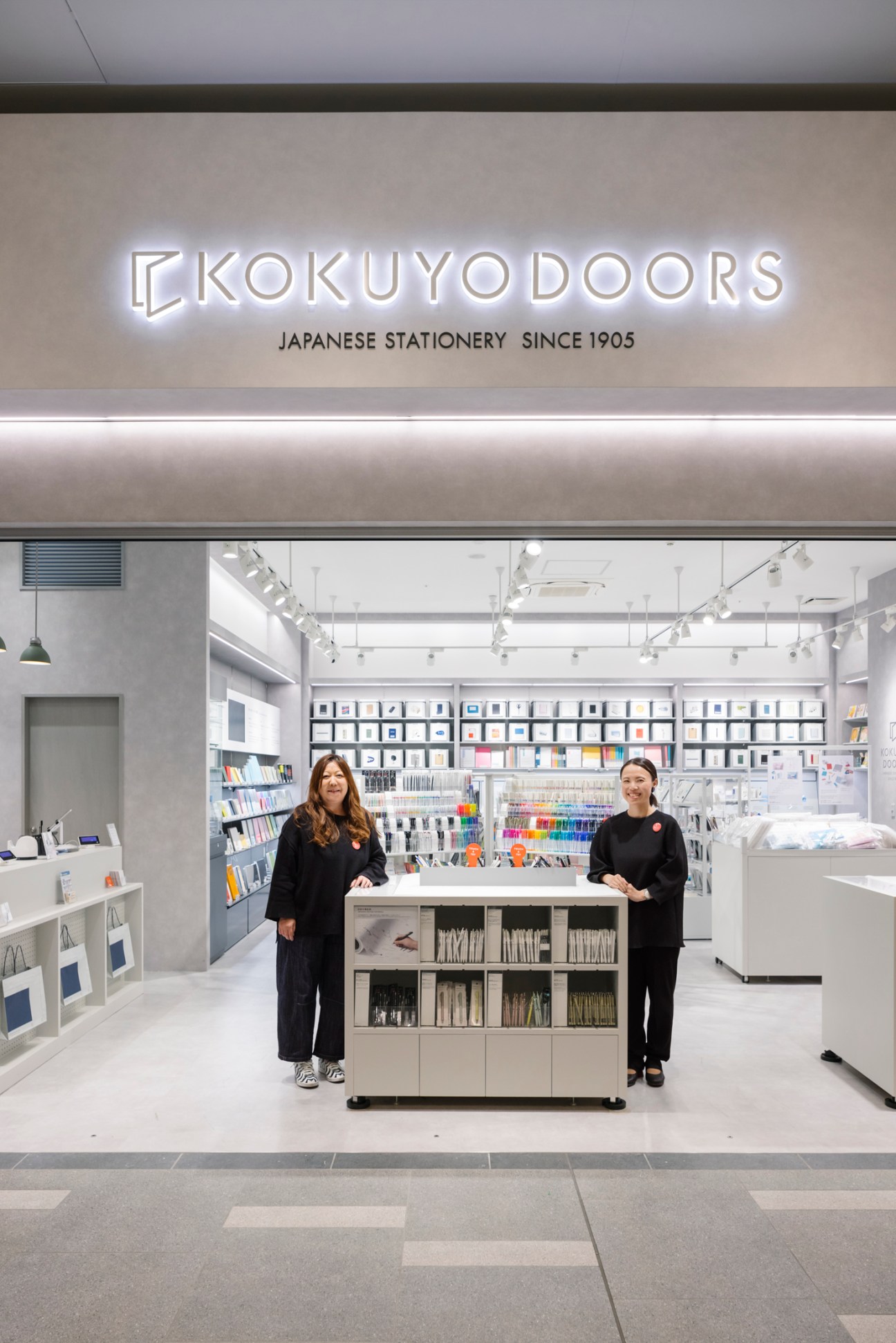
Century-old stationery company Kokuyo has developed a new concept for Haneda called Kokuyo Doors. The big draw is its vending machine, which sells beautifully packaged stationery. And there are dozens of other shops selling rice crackers, umbrellas, kitchen knives, shirts and even saké barrels. There’s also a Lawson convenience store and a restaurant lineup that focuses, unsurprisingly, on Japan. “We thought about what travellers might like to eat when they leave Japan and when they return,” says Murata. So far, customers are loving the shops. “We tried to represent all of Japan,” he says. “We’re bringing something fresh to airport retail.”
What’s in store
Notable developments
For developers and investors with retail property interests, 2022 was a good year. In the US, vacancy rates for retail space dropped to their lowest level for 15 years, while retail investment increased by 20 per cent in Europe, according to investment bank bnp Paribas. The big question for 2023 is whether this trend will continue. Here are three developments hoping that the momentum is maintained.
Battersea Power Station
London, UK
Almost 40 years after their closure, and after eight years of reconstruction, the turbine halls at Battersea Power Station reopened in October 2022. Home to 100 shops in a restored art deco building, the £9bn (€10.2bn) project drew more than 250,000 visitors on its opening weekend. But it’s just a small part of the redevelopment of the power station. The next phase, led by architects Foster 1 Partners and Adamson Associates, is a new high street, Electric Boulevard, opening in summer 2023. With two levels of premium retail along its length, the open-air street will be a welcome addition to the mall-like power station proper.
Saadiyat Grove
Abu Dhabi, UAE
Sitting 500 metres off the coast of Abu Dhabi, Saadiyat Island is home to one of the Emirati city’s most significant retail development projects: Saadiyat Grove. Set to open later this year, it will have more than 70 shops, a cinema and 50,000 sq m of dining space, providing some welcome retail therapy after visitors have spent time on the island’s pristine beaches.
The Central
Dallas, USA
Work is well under way on this mixed-use development of 2,000 apartments and more than 110,000 sq m of retail space, which is due to open in the heart of Texas’s largest city by 2025. Built around a large green space, The Central will offer an alternative to the car-centric suburban-mall shopping experience that’s common across Texas, as residents can walk to shops from their park-side homes.
Crimson tide
If you spot a gloriously bright red spot on the horizon between the Korean peninsula and Japan, there’s a good chance that it’s the Queen Beetle. This jolly ferry service run by JR Kyushu Jet Ferry whisks passengers between Fukuoka’s Hakata Port and the city of Busan in South Korea. First launched in 1991, the ferry has carried more than 6.5 million travellers but those who have used the service since late 2022 have had a much more buoyant experience.
“Fukuoka has a strong connection with Korea historically and culturally,” says Masayuki Mizuno, JR Kyushu Jet Ferry’s president. “Busan is our closest big city. It’s 213km away and has a population of 3.5 million.” Over the years, the company had run a succession of speedy jetfoil services (known as Beetles) across the rough Genkai Sea, connecting the cities in less than four hours. The rub? Seatbelts required. “Being seated for more than three hours wasn’t ideal,” says Mizuno. “We wanted passengers to enjoy the journey more.”
Designer Eiji Mitooka, the man behind the old Beetle as well as luxury trains and Shinkansen for JR Kyushu’s railway arm, drew up a new plan. “We wanted to create a quality experience,” says Mizuno. Mitooka believes that travel should be uplifting rather than just about moving from A to B. He settled on a trimaran, which has a central hull with smaller ones on each side to reduce rocking, and he tapped Aussie firm Austal to build it.

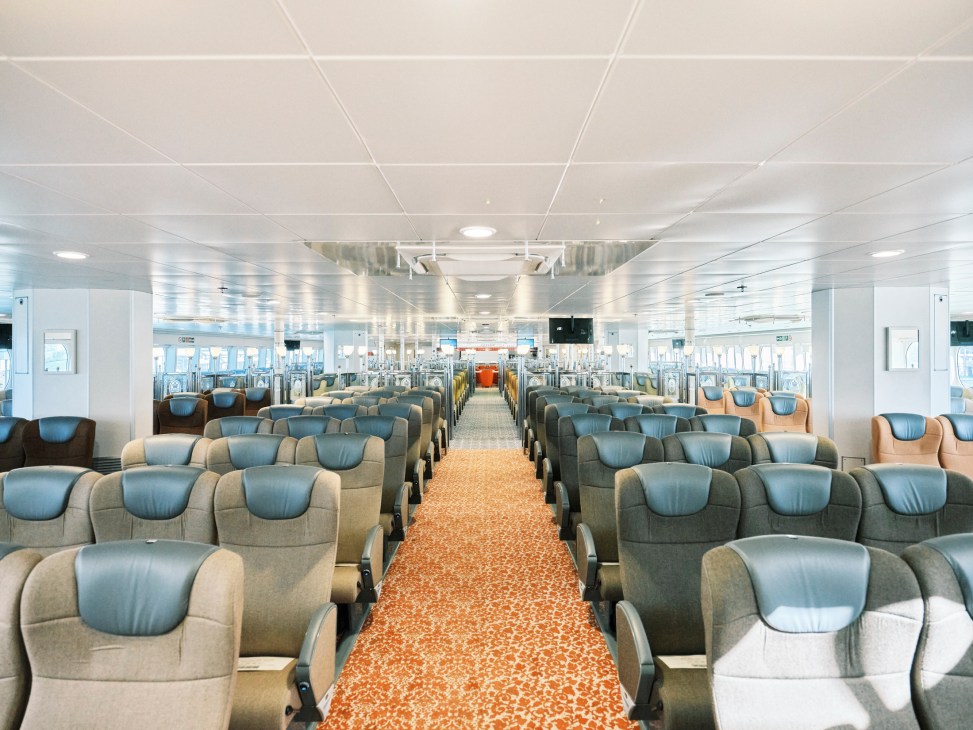
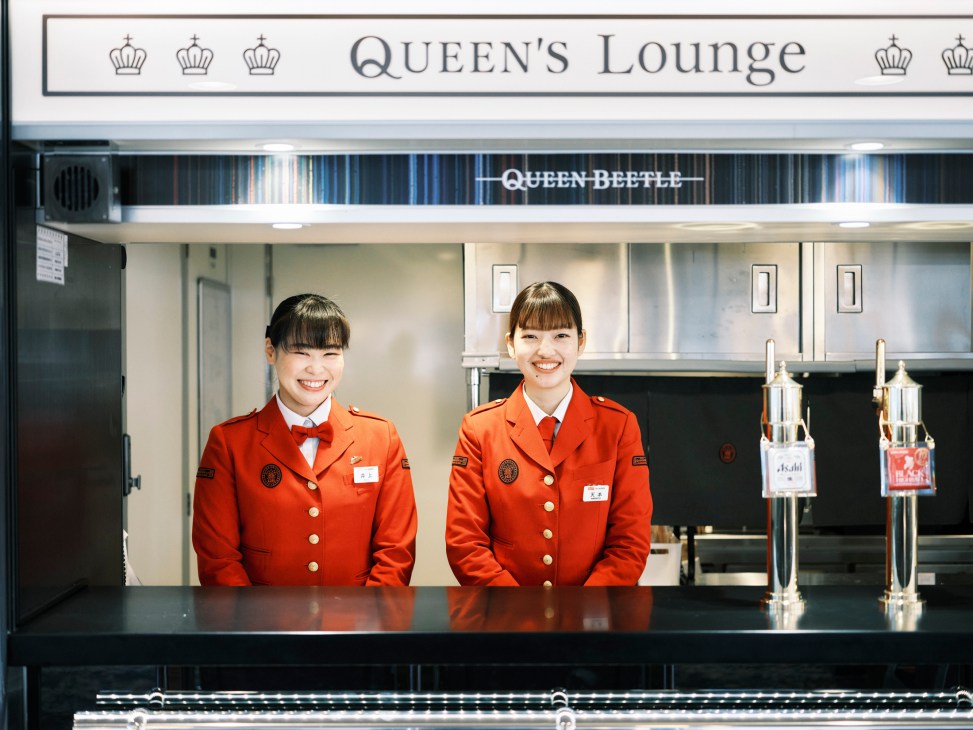
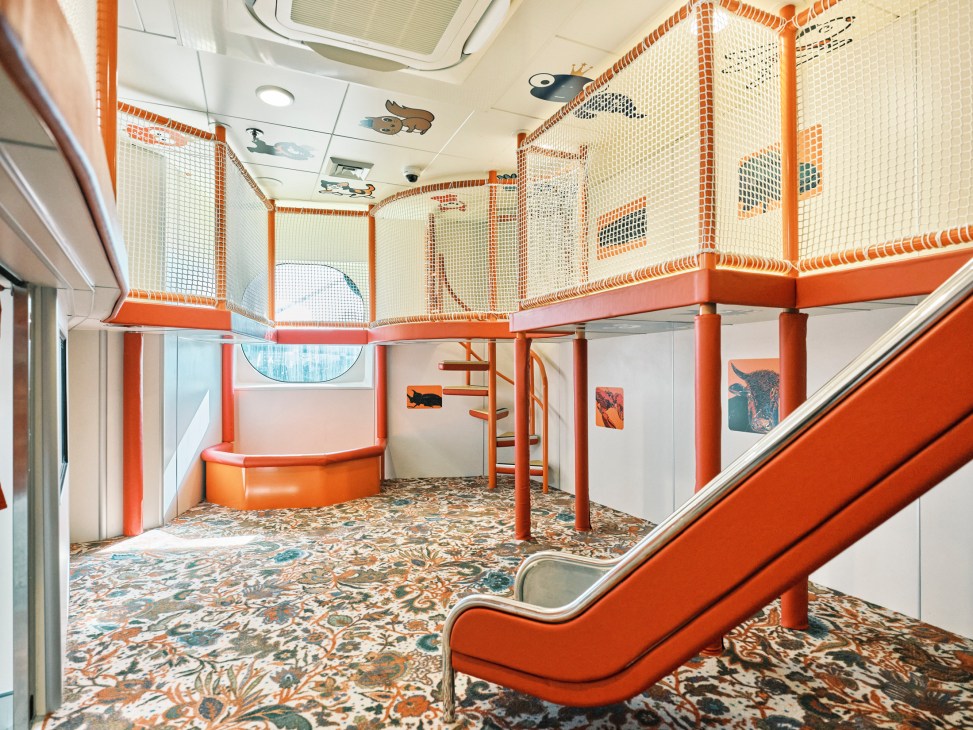
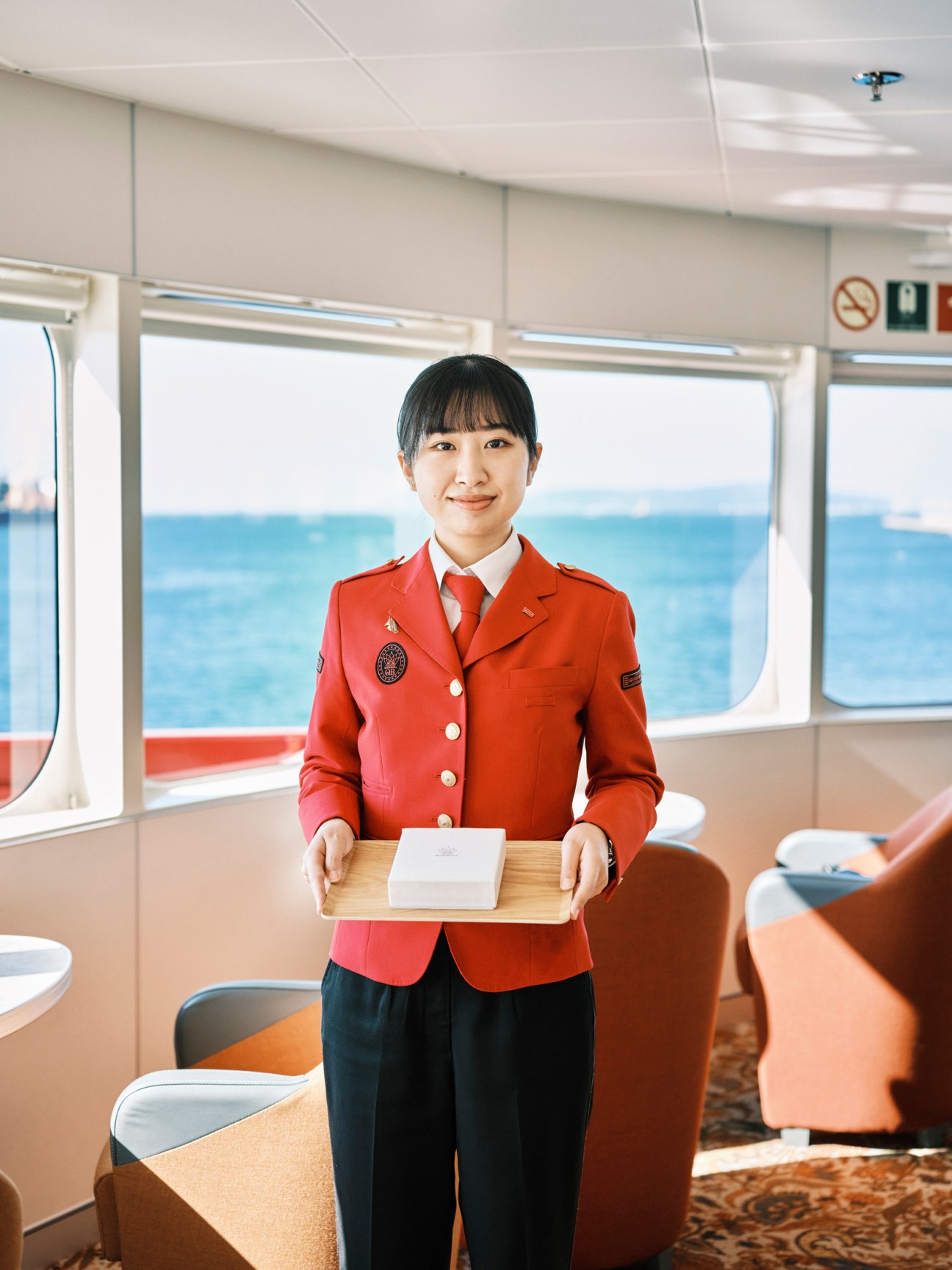
“Ships might be the most difficult transportation to design but when all the boxes are ticked, they can be the most joyful, beautiful and delightful,” says Mitooka, who added kiosks, comfortable seats in all areas, a playroom for children and a sundeck. “I just tried to provide a great experience.”
jrbeetle.com
The ‘Queen Beetle’ in numbers:
Length: 83.5 metres
Weight: 700 tonnes
Engines: 4
Ticket price: ¥8,000 (€57) to ¥13,000 (€92)
Crossings per day: 2
Duration of journey: 3 hours and 40 minutes
Length of crossing: 213km
Capacity: 502 passengers
Class act
It’s a crisp morning and Porter Airlines is unveiling a new addition to its fleet of narrow-body, short-haul aircraft at an airstrip in Toronto. This is the first of 50 E195-E2s that Porter has ordered from Brazil-based aerospace manufacturer Embraer. Robert Deluce started Porter in Toronto in 2006 and his son, Michael, is now its CEO, overseeing the most ambitious expansion of a Canadian airline’s inventory in years.
Delivery of the new fleet is expected to be complete by late 2024, with the option of 50 more. The 132-seat E195-E2s will fly from Toronto, Ottawa, Montréal and Halifax. Porter’s new routes will increase its presence in eastern Canada’s major cities, as well as those in the US – potentially upsetting the balance of Canada’s aviation sector, where flag-carrier Air Canada and Calgary-based Westjet have long been dominant.
Michael Deluce tells Monocle about Porter’s expansion and why he hopes that elevating Economy Class travel will make his company unique among the major North American carriers.
Why did Porter choose the E195-E2?
It’s highly efficient, with the lowest fuel consumption of all narrow-body aircraft. It’s also the quietest. It fits with our desire to offer a modern, comfortable product while respecting noise and sustainability issues. Porter already has the lowest environmental footprint of any Canadian airline; our E195-E2s will complement our Dash 8-400 fleet. People can make a real choice between the airlines that they want to travel with.
What do you hope to achieve with the new fleet?
These aircraft fly 2,600 nautical miles [4,815km], allowing us to operate from Toronto and fly as far as Barbados or San Francisco. We’re leaps and bounds above our competitors when it comes to customer satisfaction with our existing product. There has been a drive among North American airlines to reduce costs and that has had a significant effect on economy travellers. It has created a two-tier environment: you have a great experience if you’re a premium passenger but economy is treated differently. Our approach is to bring enjoyment back to economy. Porter will elevate travel for everyone.
“Our approach is to bring enjoyment back to economy. Porter will elevate travel for everyone”
How can cabin configuration help to enhance the onboard experience
Aircraft for economy travel across North America are almost entirely in a three-by-three configuration. A third of passengers have middle seats. I can confidently say that no one likes a middle seat. We’ll be the only airline in North America not to have them. The E195-E2 has a two-by-two configuration throughout, providing more space and comfort.
Why upend Economy Class rather than the higher-margin classes?
Ninety per cent of travellers are in Economy Class, not Business Class. It’s a segment of the market that is widely dissatisfied with what’s available. We’ll be delivering an enjoyable economy experience that people will pay a fair price for; we have demonstrated that it’s possible over the past 17 years. Now there’s an opportunity to disrupt the entire segment, which is the largest portion of air travel in North America.
Is it hard to scale up the details-driven service that Porter is known for?
The E195-E2’s fuel efficiency helps to lower costs, letting us invest in service and give something back to the consumer. It also allows us to have competitive fares. We’ll continue to offer all of our amenities: complimentary beer, wine served in glassware and premium snacks. And we’ll be Canada’s first airline to offer free, fast-streaming wi-fi to all passengers. On longer flights we’ll have a selection of fresh, healthy, eco-packaged meals that will set us apart.
You are expanding your presence at Toronto Pearson. Will that affect your service at Billy Bishop Airport?
Billy Bishop is one of the world’s best-located urban airports. It is 3km away from Toronto’s financial and entertainment districts, and is popular with Torontonians. But it’s a regional airport. The range of aircraft that can operate from there is limited to about 1,300km.
What changes have you noticed since Canada’s air-travel restrictions were lifted?
There is a lot of pent-up demand. There was a significant shutdown of air travel in Canada. The effect was greater here than in many other places. Leisure travel is much stronger than pre-pandemic levels; the recovery of business travel has been slower but it’s on a good trajectory. There might be fundamental shifts in demand but if, say, hybrid working remains the norm or there’s a long-term shift towards working just four days a week in the office, there will still be more opportunities for people to work remotely, to travel and to experience different parts of the world. Over the coming months, we’ll announce additional destinations that will broaden our reach: across Canada and the US, then eventually to Mexico and the Caribbean.
Porter in numbers
Staff:
Porter employs 2,500, expected to rise to between 5,000 and 6,000 by the end of 2024.
Fleet:
As of February 2023, Porter’s fleet consists of 29 De Havilland Canada DHC-8s (“Dash 8s”) and 10 Embraer E195-E2s. A further 40 of the latter will be delivered by 2024.
Destinations:
Porter serves 18 locations in Canada, such as Ottawa, Montréal and Mont-Tremblant, as well as four international airports including Chicago Midway and Newark Liberty International in the US.
New in 2023:
There will be four daily routes from Toronto Pearson to Ottawa and Montréal, three daily flights to Vancouver and two daily flights to Edmonton, Calgary and Halifax. Additional routes expected in the future will serve San Francisco, Los Angeles, Dallas, Atlanta and Nassau in the Bahamas.