Issues
Connective threads
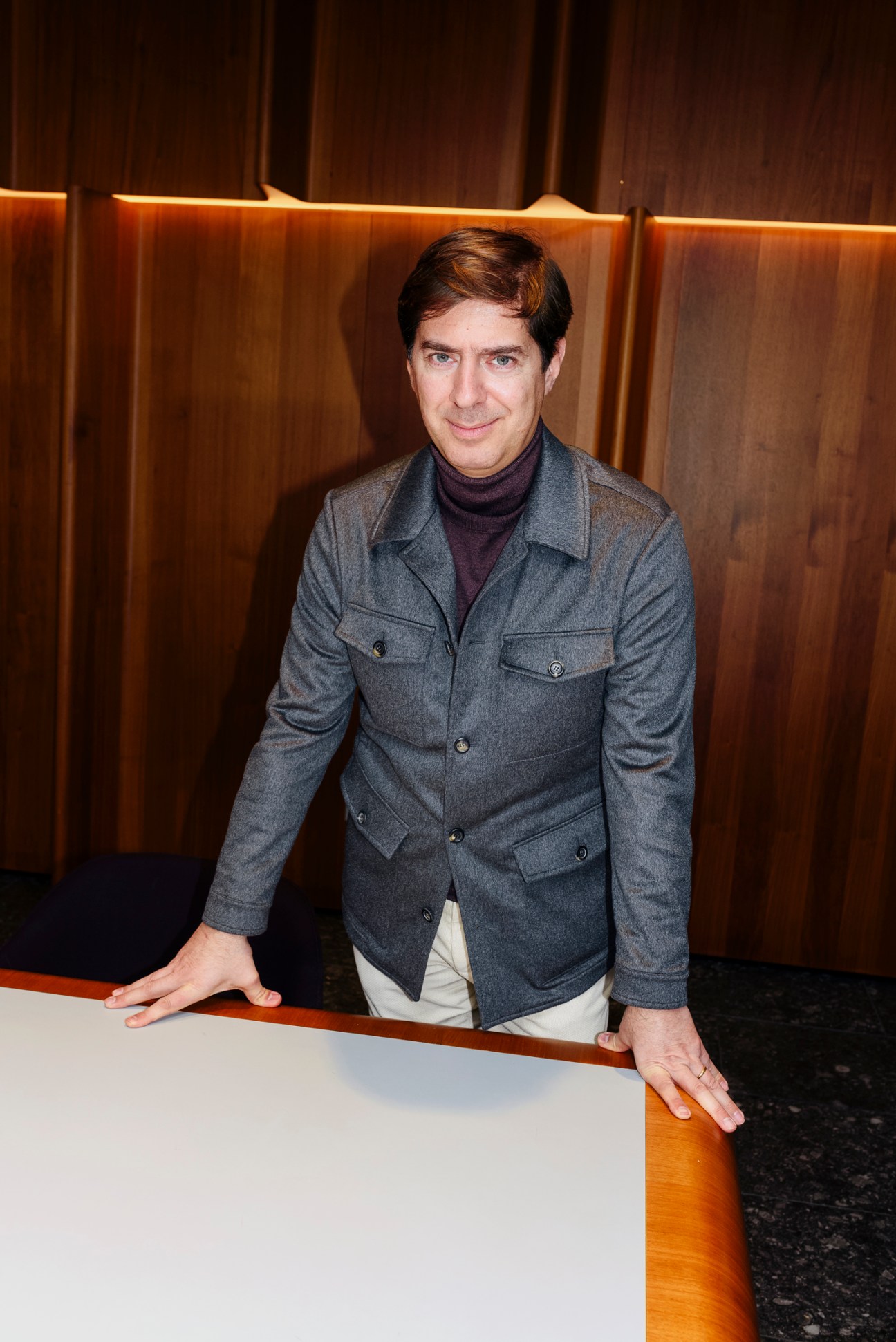
Stefano Canali
President & CEO, Canali
Italy is brimming with best-in-class artisans and global fashion houses that invest heavily in tailoring so it’s not easy to survive as an independent brand. Canali is proving to be an exception, turning its independence into one of its greatest strengths. The Milan-based label has been family-owned since Giacomo and Giovanni Canali opened a tailor’s shop in 1934. Today the Canalis remain against bringing in external investors and pursuing rapid expansion. “We don’t publish quarterly results or answer to investors so we can take the time to make the right decisions based on our values rather than the need to show short-term profit,” says Stefano Canali, grandson of one of the founders and the company’s CEO since 2018.
Canali has been leading the way when it comes to responsible manufacturing. The brand is among the few that still make all of their products in Italy, never resorting to cheaper alternatives abroad. Now it wants to raise the bar even higher with a new range of clothes made from recycled fabrics, by reducing the sizes of collections to avoid overproduction and lobbying for Europe-wide sustainability regulations. These collections have also helped the brand to express a clearer perspective. Today the brand’s CEO is aware that there is less room for traditional silhouettes or stiff shoulder pads but it is staying true to Italian elegance and the art of tailoring, offering looser suits and experimenting with materials. “That is paying off,” says Canali. “Sales grew by 38 per cent in the past year.”
Beyond overseeing the brand’s design evolution, Canali has sought to highlight the humanity at its core by opening new, more welcoming shops around the world – and being a great host during the company’s seasonal presentations, which usually take place in Milanese palazzi. Here, he speaks to Monocle about how he is leading the business into the future.
How does family heritage influence the business?
Our heritage is synonymous with the company’s values. The Canali story is one of resilience: the Second World War erased everything and my family had to invest all that it owned to rebuild the company. By the 1960s the market had moved on from our core overcoat business so we had to start from scratch and refocus on suits. There’s an optimistic message there. I often find it interesting to look back, especially since the pandemic, which was the third critical turning point in the company’s history.
What are some of the changes that you have had to implement because of the pandemic?
Our product offer has evolved in response to the fact that the world has changed – and so have our customers’ needs. But anything that we propose still remains consistent with our identity. We will never completely diverge from who we are. The classic suit doesn’t really exist any more; you won’t see pinstripe suits and big shoulder pads in our collections. Volumes are changing and the fits are getting wider but there’s always a common thread: high quality. Even when we’re designing a simple jersey jacket, we’ll work with the best tailors. For instance, we created a cotton-cashmere- corduroy suit for next autumn; it was hard to get right as it can’t be ironed but our artisans had the skills needed to innovate and come up with new constructions.
Have you also had to rethink your retail strategy?
Our shops are about a third of the business and are crucial to delivering the brand message to our customers. Our most important recent opening was on Madison Avenue in New York. We had a new shop concept and location, which resulted in our highest-ever turnover. We’re also going ahead with renovations to our flagship in Milan and looking more closely at the Indian market, which is usually quite neglected. We want to create a typical Milanese home away from home and ensure that our new shops feel warm and welcoming. There are enhanced customisation services and bigger lounges, where customers can relax.
Sustainability has been a big focus for you. What is your approach to that area of the business?
It’s important because we’re all contributing to climate change. I was in my home town in January and there was no snow on the mountains. Something is changing and we must act. Italy could become a paradigm for sustainable production. Our Care capsule is an example of our upcycling efforts: we used recycled or certified organic materials for products across all key categories, while the filling in our down jackets was made using scraps from the production cycle. That needn’t mean compromising on standards; the quality is still there.
Is state intervention necessary for major changes?
It is and that’s why I became a founding member and joined the board of directors of the first association in Italy created to tackle clothing waste, following the EU’s extended producer-responsibility schemes. We are waiting for government approval to start operations but, when it comes through, we’ll be working on reusing or recycling unsold clothing and ensuring that it’s recycled as raw materials, resold or discarded responsibly. The initiative was first launched in France; Italy is the second country to take it on. The change in government has delayed getting it off the ground but it’s now back at the top of the agenda and we’re well-positioned to tackle the issue.
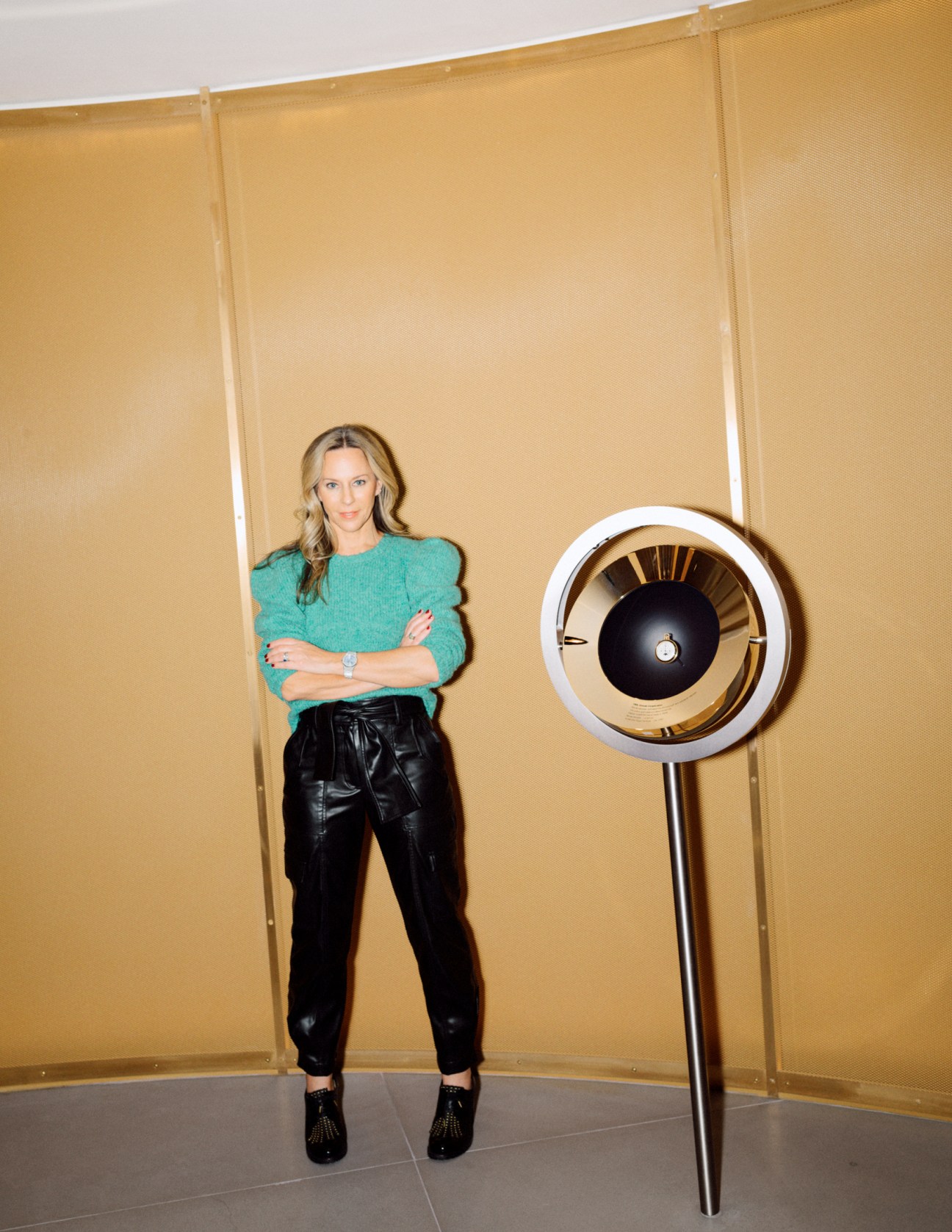
Ginny Wright
CEO of the Americas, Audemars Piguet
Last year, Swiss watch-maker Audemars Piguet’s sales surpassed those of historic rivals such as Patek Philippe for the first time, with revenues reaching €2bn – a 28 per cent increase on 2021. Demand for the brand’s Royal Oak model, now one of the world’s most coveted sports watches, has never been so robust, with customers willing to wait for years to get their hands on one. This year the Royal Oak Offshore, which paved the way for the brand’s larger-sized watches, is celebrating its 30th anniversary and demand is bound to grow even further.
To maintain momentum, the Swiss house, headquartered in Le Brassus, is investing heavily in the US, which is one of the top markets for the sector. Americans spent more than $3.8bn (€3.5bn) on luxury watches in 2022, according to the Federation of the Swiss Watch Industry.
Ginny Wright, Audemars Piguet’s CEO of the Americas since 2021, is the driving force behind the company’s success in the region. A seasoned US luxury executive with experience at brands such as Kiehl’s, Lancôme and Ralph Lauren Fragrances, she looks beyond short-term goals when laying out her strategy. At the top of her agenda? Establishing personal relationships with clients, designing new AP Houses across the country to combine retail with entertainment, and making space for more women to join the company, both as staff and as customers.
You’ve had a varied career both within the luxury space and outside it. What lessons have you brought to your current role from your previous experiences?
I couldn’t have started further from luxury, having majored in economics and political science, with my first job on Capitol Hill. But I always had a keen interest in luxury, fashion and beauty. I discovered Audemars Piguet when I was studying at essec Business School outside Paris; both L’Oréal and lvmh sponsored the programme at the time and there was a big focus on luxury. When I went on to work for Kiehl’s, I found a business that was family-owned and focused on keeping its heritage, thoughtfulness and craftsmanship. I made sure to bring [to my role] this understanding of the respect that you must have for a brand, especially one in which the founding family is still involved, as well as a commitment to getting to know the client and being close to them.
Your watches, particularly the Royal Oak, are limited in number. How do you balance that with your efforts to expand the brand’s customer base?
We have made significant strides in increasing our availability. In 2021, for example, we were producing 45,000 watches; the following year the number increased to 50,000. Because it takes so much time to craft these timepieces, limited production is both a natural consequence and a necessity. People understand what goes into creating our watches and are willing to wait for one.
Where does the Royal Oak Offshore collection, which celebrates its 30th anniversary this year, fit in the house’s catalogue?
The Royal Oak Offshore collection allowed Audemars Piguet to experiment a little more and take bigger risks. It was a chance to tap into popular culture too, with a series of partnerships, first with Arnold Schwarzenegger in 1999 and then with Jay-Z in 2005. We’ve done so many different versions of the Offshore. That’s what’s so fun about it.
What makes the US market unique?
The US is the brand’s number-one market. We have a rich history there: our first boutique in New York opened in 2003. It started when François-Henry Bennahmias, the brand’s global CEO, was running this region. He helped to introduce US hip-hop and sports culture to our headquarters in Le Brassus, Switzerland. We now want to speak to the next generation of collectors here and bring more women into the brand. When I started, 16 per cent of our US clients were self-purchasing women. In less than two years, that number has grown to 24 per cent. Women are starting to feel more comfortable coming into an Audemars Piguet shop; they’re not paying as much attention to novelties and are instead buying watches to mark milestones and looking for businesses that share their values. This is the brand that dynamic women who are now running companies or hedge funds are looking for.
You have been opening AP Houses in several US cities. How is the AP House experience different from that of a typical watch boutique?
When you enter one, it will feel as though you’re stepping into someone’s apartment. AP Houses are open-plan, with a dining-room table, couches and a beautiful bar with a piano and guitars that you can pick up and play. Of course, we have watches on display; it’s just a far more relaxed environment in which to experience them. We’re working with local designers so that each house has a connection to the city that it’s located in.
This is shaping up to be a tumultuous year in terms of geopolitics and the global economy. How will you sustain growth in this environment?
We want to bring new clients to the brand but we’re also focusing on a different type of growth [relating to our existing clientele]. Having direct relationships with clients and ownership of your retail makes a huge difference in how people spend time with you and how they make shopping decisions. For us, it’s about making the effort to get to know people. That’s what makes us so appealing to anyone who is just entering the watch world.
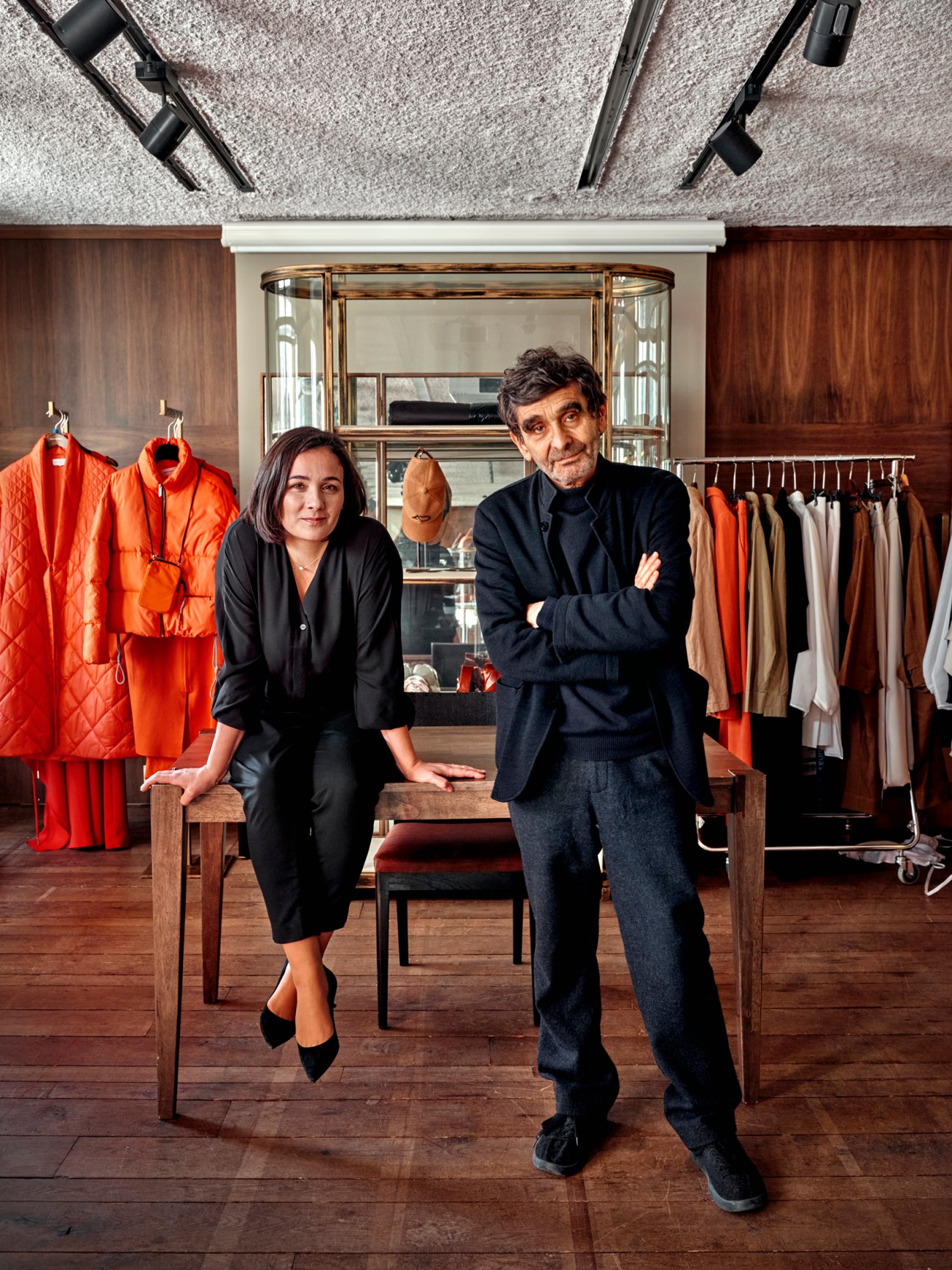
Adolfo & Adriana Domínguez
Founder & executive president, Adolfo Domínguez
When Adolfo Domínguez took over his family’s tailor’s shop in the 1970s, few could have predicted that the young Galician designer would reshape the country’s fashion landscape. His signature linen suits were a breath of fresh air and quickly became the go-to look for a generation of Spaniards seeking to break away from the Franco years and its stuffy tailoring. By the 1980s the brand had expanded internationally with shops in Paris and London, and in 1997 it became the first fashion company to be listed on the Madrid stock exchange. Domínguez remains the brand’s main stakeholder and a board member, though much of the responsibility has been passed on to his daughter, Adriana, who is now its executive president. Monocle met the duo to discuss their investment in well-designed shops and ability to push boundaries, and how they protect their heritage while still evolving with the times.
How have you found the process of passing the business down to the next generation?
Adolfo: I inherited the brand from my parents and now I’m passing it on to my children. The main thing that the transition has taught me is how innately Adriana understands the brand. She has grown up with it and so doesn’t need to learn what its core principles are. This also allows her to break, adapt and reinvent these principles with more freedom.
Which principles are you working to redefine?
Adriana: My father has always been an environmentalist. He did interviews in 1992 with El País about ecology before the issue became mainstream. But environmental responsibility is a moving target. We are now hiring a chief sustainability officer because, though we have people working on implementing sustainable practices, what the department needs is its own leadership. Nearshoring during the pandemic pushed us forward; now we have between 30 and 40 per cent of our production in close proximity, particularly in Portugal. We also want to contribute to the debate on consumption. The most responsible thing that you can do is to consume less, which means higher quality at higher prices. That’s where we sit in the market.
Adolfo: We’re also one of only a few brands to be selling more linen than cotton. Producing linen uses far less water than growing cotton and you don’t need as many pesticides. My grandmother grew flax and used it to make linen. Everything in our house was made from it: sheets, towels, shirts. The flax would be cut and then left outside in the rain for three or four weeks. Every harvest is different so you get a very different fabric each season. When I was starting out, it was the era of polyester. People were used to things not getting creases. So when I started selling shirts and suits made from linen, it was difficult. We had to be patient. That’s why I came up with the marketing slogan, “La arruga es bella,” meaning, “Wrinkles are beautiful.” I truly believe that they are.
You’ve opened a new flagship shop in Madrid. Why are bricks-and-mortar outlets still important?
Adriana: People sometimes need the convenience of online shopping but, at other times, they want the experience of going into a shop and being treated well. We don’t only operate in capital cities: for example, we have 127 shops in Mexico. We’ve been in Japan for almost 20 years and we have 19 shops there. We really try to get close to our clients, particularly in countries that appreciate our styles.
How have your shops changed over the years?
Adolfo: When we first opened our shops in the 1980s, I thought that we were inventing a unique look; young people tend to think that way. It turns out that we were just reproducing Bauhaus principles without knowing it. That kind of simplicity still feels so modern. Then, for a few years, we switched to a warmer, classic European look, using more dark wood but always keeping a certain simplicity. Now, with my daughter onboard, we’re back to the minimalism that we started out with.
Adriana: We use limestone for the walls because it ages very beautifully. We aim to refurbish old shops as well as invest in new ones. That’s why we believe in using materials that will last. Our floors are made from locally sourced wood, using up the whole of the trunk by collaging together bigger and smaller pieces. We also collaborate with artists. Regina Dejiménez, for example, created a woven-textile wall hanging for our new Madrid shop and Galician artist Idoia Cuesta made an installation from wicker branches for our flagship in Ourense. These partnerships speak the language of our brand, which is about beauty and exclusivity.
What is your approach to seasonal collections?
Adriana: My sister used to arrange for a number of our designers to spend Monday afternoons learning traditional weaving techniques. They come back with these designs made by hand on looms, which are then sent to be industrialised. We’re bringing ancient ways of weaving linen back to life. We also have what we call “the Ágora”, in which our designers come together with artists for three weeks to create collections from scratch, like they do in haute couture. They’re not looking at what everyone else out there is doing; instead, they’re coming up with new concepts for runway collections that are then adapted for sale in our shops. Our designers love it and it helps us to attract talent. We’re a designer brand that lets designers be artists. That’s a rarity in the industry.
On its own terms
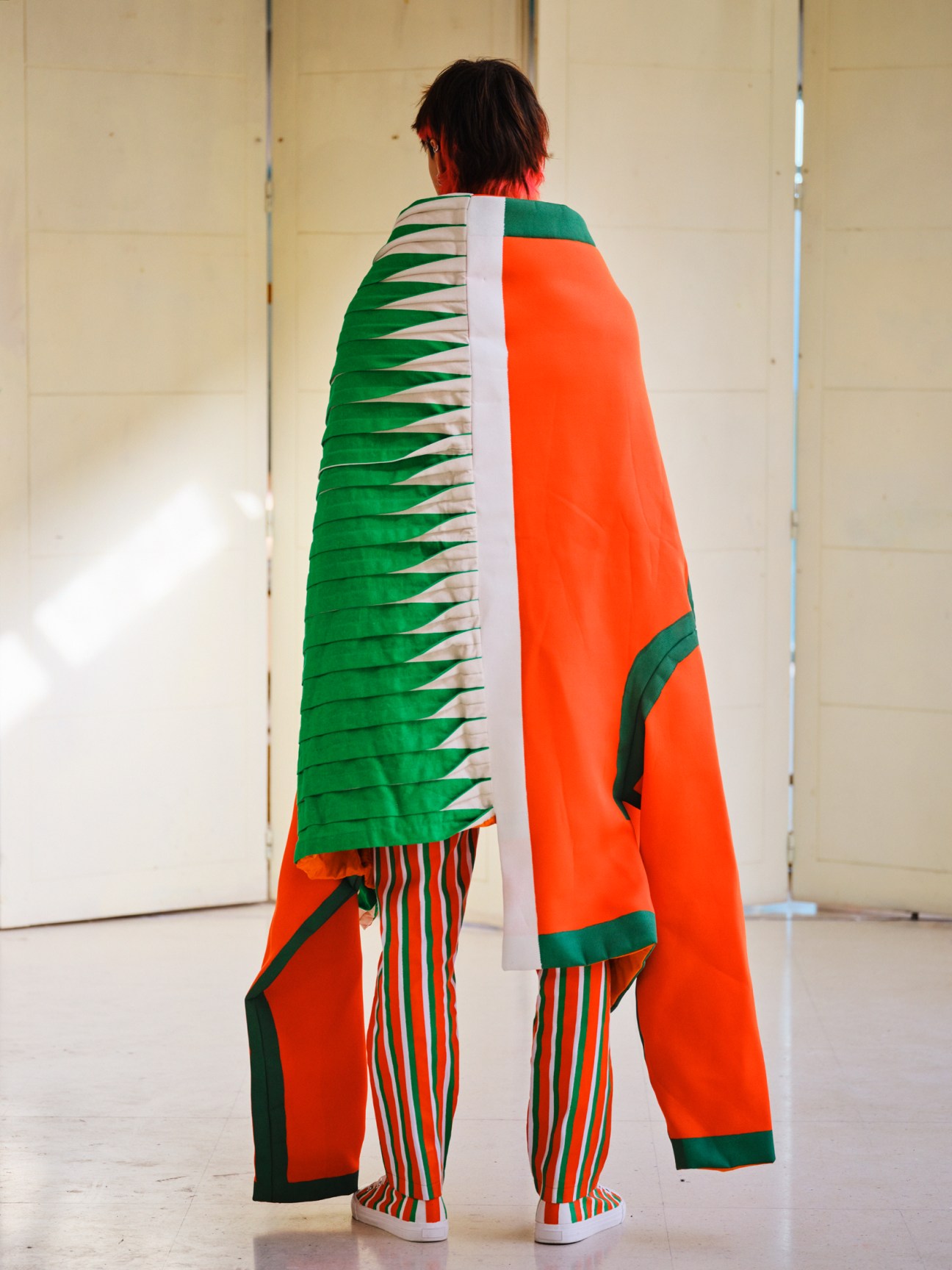
When Lola Dopico started recruiting models for her students’ annual fashion show, she didn’t expect such an enthusiastic response. “The flyers drew so much interest from people in the town,” says the teacher, who spearheads the master’s programme in fashion design and creative direction at the University of Vigo’s Pontevedra branch. People from nearby towns signed up to model and the school’s photography students also volunteered to shoot the collections. “It felt like a real team effort.”

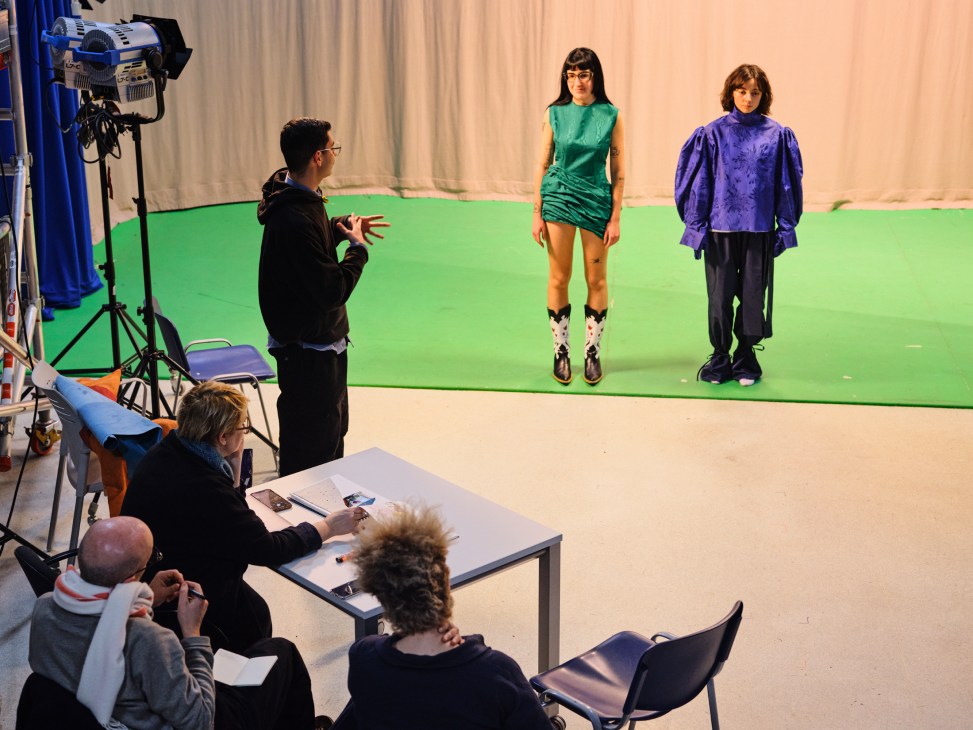
The close-knit community found in the town of Pontevedra, and within its college, has been a key part of the programme’s success, offering students the opportunity to forge connections with anyone who shares a mutual interest in craft and design. The small city of 83,000 is located on the craggy coast of Galicia, just above Portugal and approximately 60km from the region’s capital, Santiago de Compostela. Founded in 2003, the school’s fashion programme – which covers everything from screen printing and graphic design to sketching and tailoring – was developed by the university’s art department when staff realised that there were no fashion courses in the region. Starting a fashion programme with international ambitions in a small coastal city seemed like a bold choice at the time.
“We’re not London, not even Madrid or Barcelona,” Dopico tells Monocle. But while it’s often difficult to be far from the big fashion capitals, the distance is also proving advantageous and helping to set Pontevedra’s students apart. “Big cities are great but they’re also closely tied to trend-based cycles. In a place like Pontevedra, trends matter less, meaning that students can go about their creative processes from a perspective that feels more artistic.” For the most part, theirs is a more personal approach to fashion and design. “It makes them look inward, toward their own identities,” adds Dopico.
The presence of Zara-owner Inditex in the region (its headquarters are about an hour’s drive away in Arteixo) has also opened up new career opportunities for graduates and raised the profile of the local fashion industry. It’s no wonder, then, that the University of Vigo’s master’s course is turning into a hotbed of creativity, drawing in students from around Galicia; an average of 20 enrol in the programme every year. Equally, many go on to work for global fashion houses based in Milan or Paris.
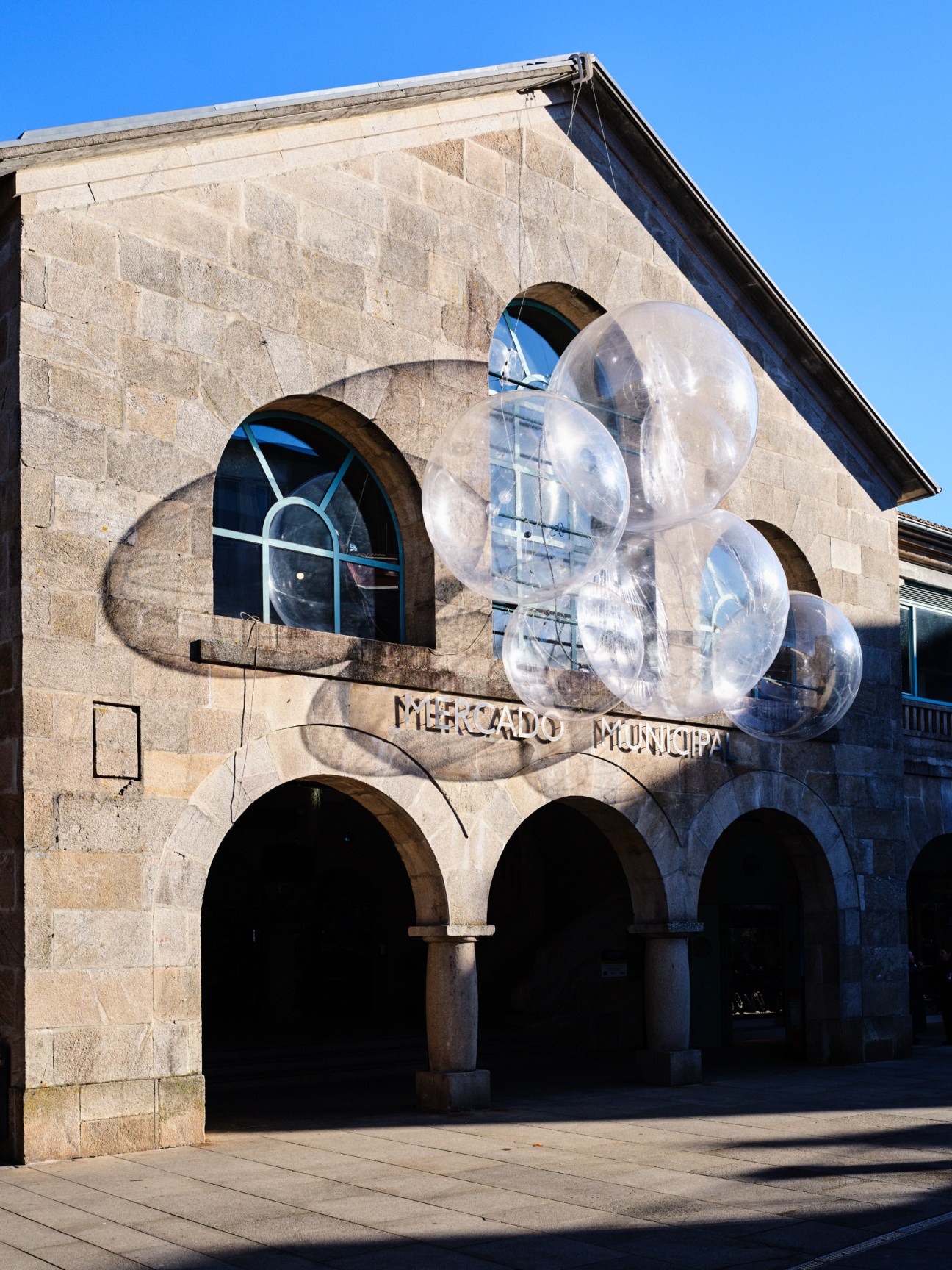
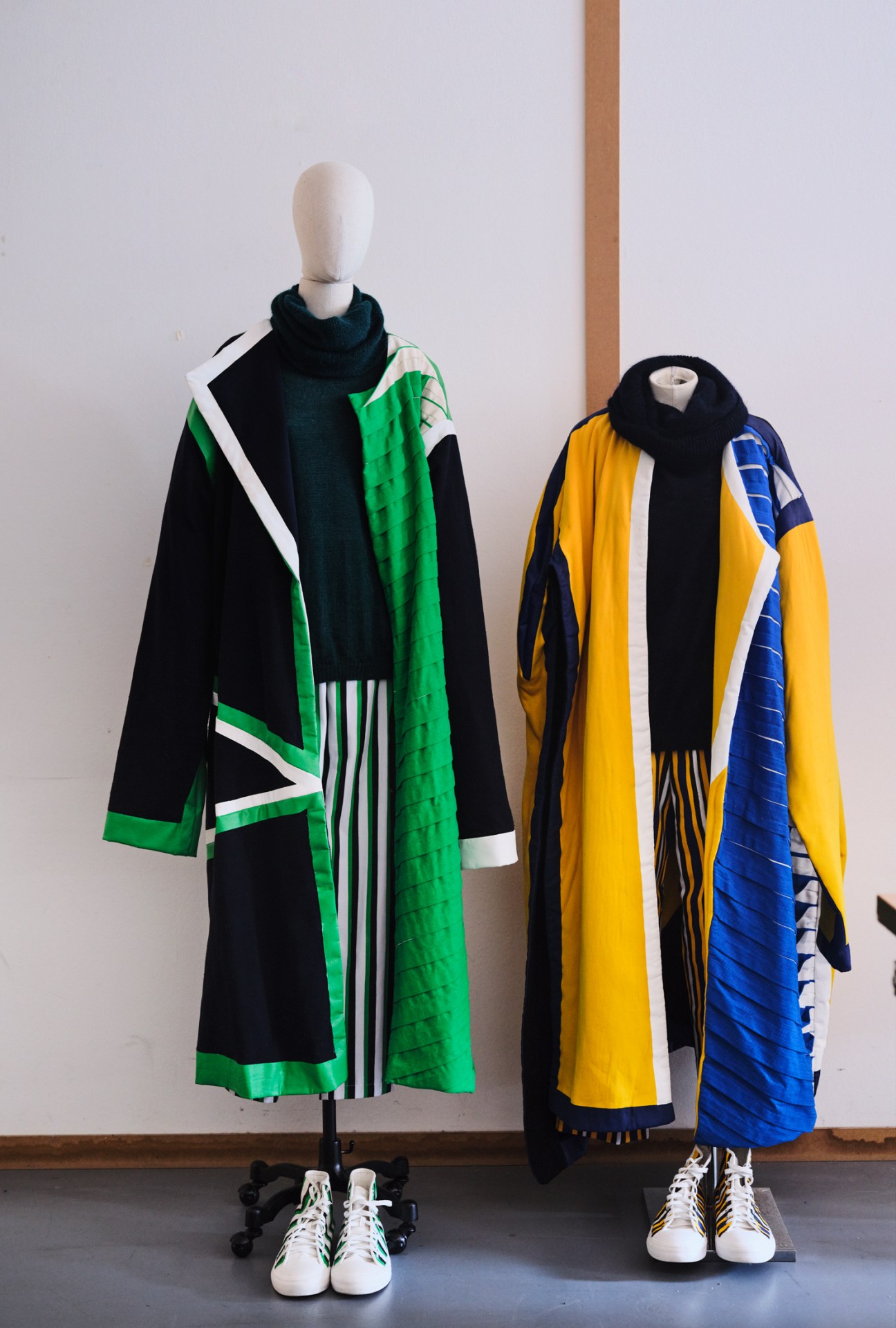
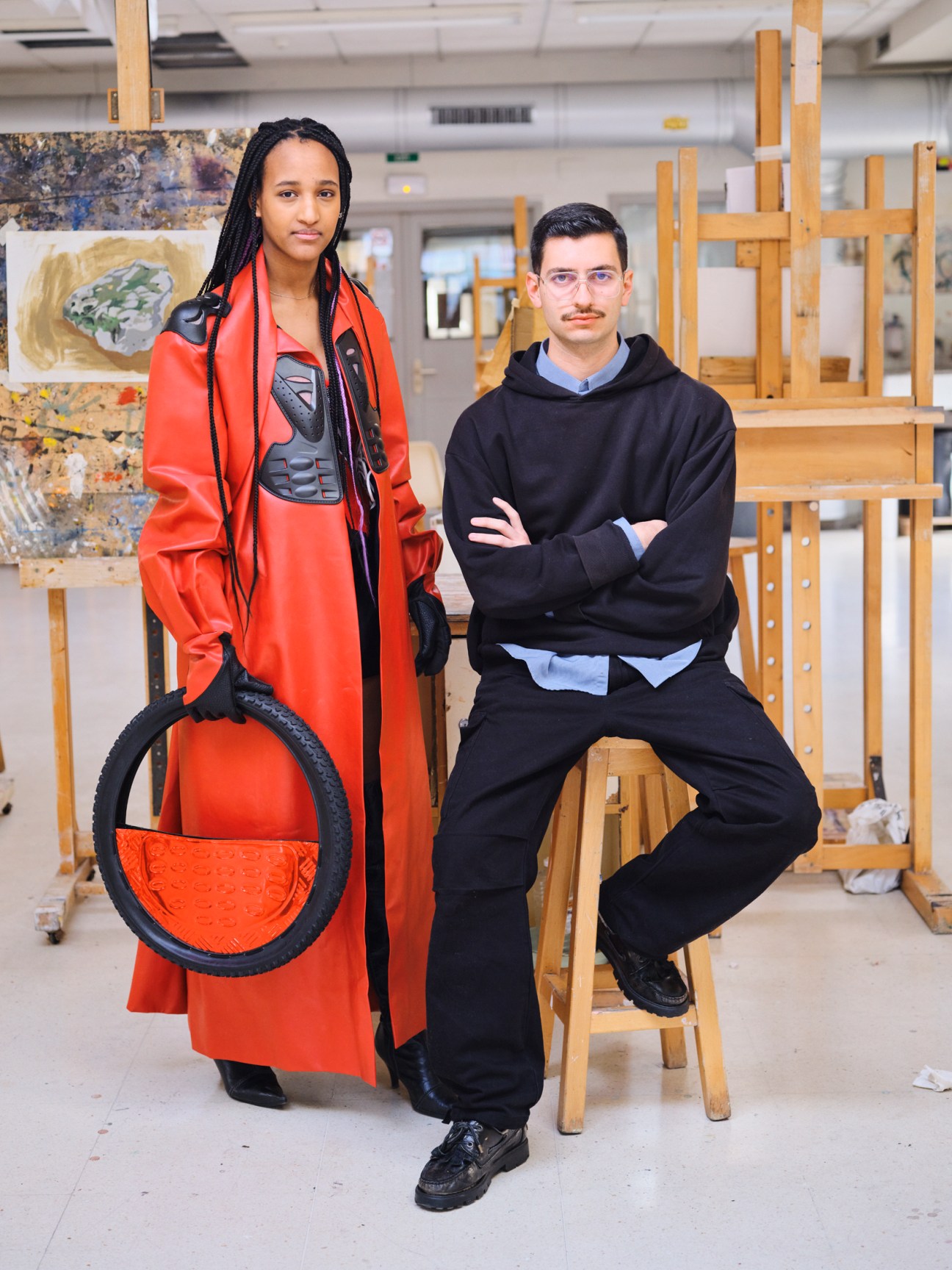
Eduardo Outeiro, who teaches a class on microfusion (a manufacturing method in the jewellery industry) thinks that part of the appeal lies in the lifestyle that Pontevedra has to offer. “You can’t directly access the mainstream here,” he says. “Living in a small city also means that you have more time for personal projects. Everyone lives close to where they study and the library is nearby. In Galicia, it’s not hard to move around.”
Having more time for self-reflection translates to more autobiographical projects. “Students look at topics such as identity, family or the villages where people come from,” says Dopico. Pontevedra is famously peaceful: in 1999 it banned cars from most of its streets. “There’s a reason people come here to raise children,” says Alfredo Olmedo, who teaches on the course and works on Galician clothing brand D-due alongside Charo Froján. For the most part, teachers and students at the school seem to have tapped into how quality of life can support creativity. This slower pace of living also fosters familiarity and more personal connections between students and teachers. Sitting at a café in the city’s Old Town earlier that day, Olmedo spotted a clothing rack filled with dresses and could name the student who designed them with a glance.
Olmedo and Froján have been teaching on the course since it began. For both designers, the programme is interlinked with the area’s history in manufacturing. “Many tailoring and textile businesses, including that of my parents, cropped up in the 1960s, partly because of travel,” says Froján. “At the time, people had started going to cities like Paris and bringing that knowledge back here. But as the years went by, they began to disappear.” Teaching is a way of preserving that heritage and helping to keep the local industry alive.
Galician businesses such as Inditex, also founded in the 1960s, are playing their own part. The firm has gone on to become the world’s biggest fashion retailer (founder Armando Ortega’s net worth is estimated to be €71bn) . It’s impossible to escape Inditex’s influence at the university. The school’s employment rate is high: about 60 per cent of students secure jobs at Inditex. “Many go to Zara or Zara Home,” says Dopico. While others have gone to Spanish brands outside Galicia, such as Bimba y Lola and Adolfo Domínguez , a Galician native whose brand is now based in Madrid. Inditex is by far the top employer.
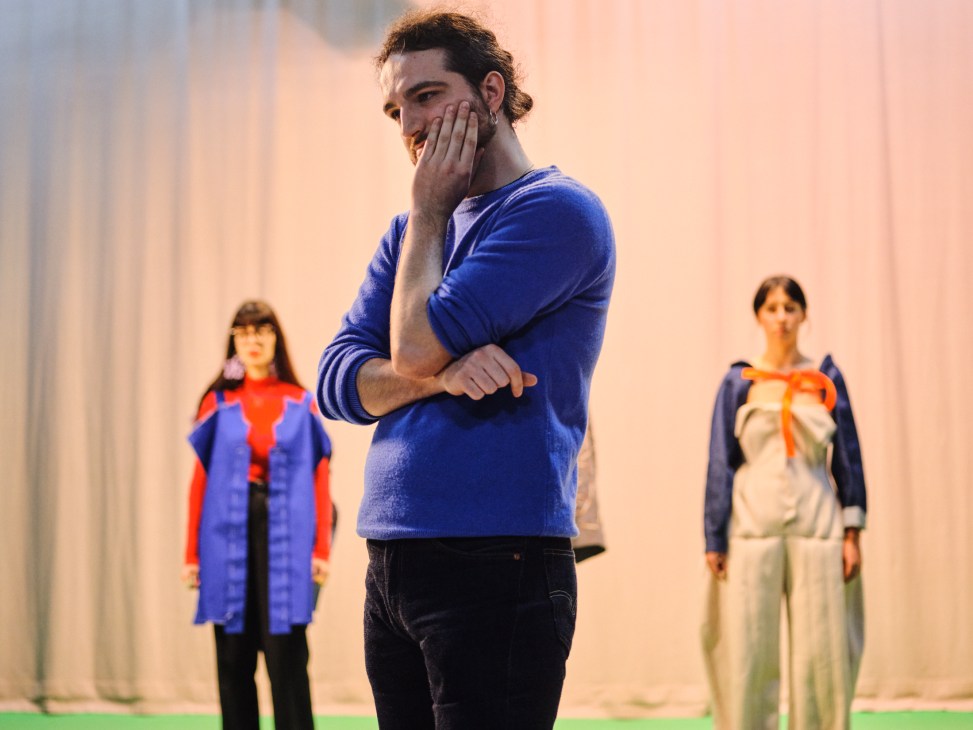
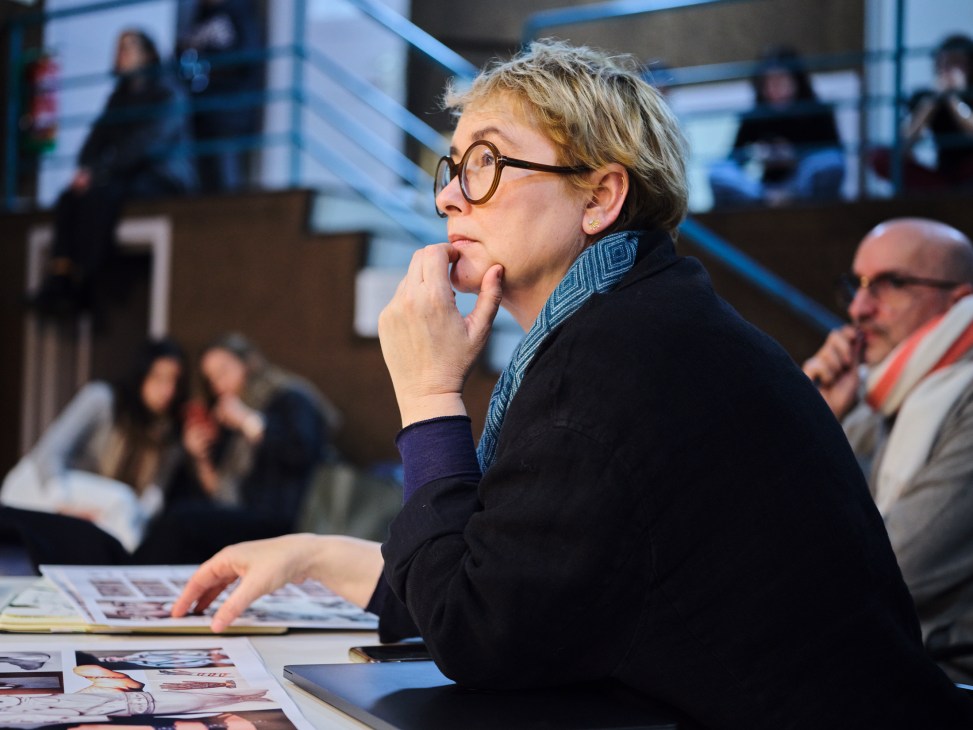
Most students look for entry-level jobs at major Spanish labels because starting their own brand is hard – particularly when you’re in a small city. “We don’t have access to a lot of materials and textiles,” says Olmedo, recalling his own experiences with D-due. “It’s harder to make yourself seen or heard.” Yet Olmedo acknowledges that these challenges are making his students bolder and more eager to find new ways to stand out. “The silver lining is that those hindrances force people to be a little more creative and a little more modern with their work,” he adds.
The university’s students, who are preparing to submit their projects for assessment when Monocle tours the school, don’t shy away from bold designs, while their creative references range from medieval folk tales and the mundanity of everyday life. In one of the school’s classrooms, Jorge Hurtado is putting the finishing touches to a design. “I’ve always been drawn to nature,” says Hurtado as he fluffs up the blouse’s balloon sleeve, shifting the mannequin towards the sun to see how the light hits its corners and seams. “I was inspired by the shape of jellyfish because I’ve always been drawn to things that are detailed.” He picks up his notebook and flicks through sketches of creatures that look as though they have been plucked from the bottom of the sea. “It’s crazy how much we still don’t know about the ocean,” he says.
Lara Cortes, another student, was curious about a different kind of unknown. “We don’t know much about how women lived in palaces,” she says, pointing at a gown she is working on. “When I was first creating these designs, I was interested in how femininity was perceived in the past.” Cortes designed whimsical silhouettes which wouldn’t have looked out of place in a castle, as well as grungier styles to suggest what women in the medieval era would have looked like if they had had more freedom to dress and act how they wanted.
“International travel shouldn’t be overlooked but studying fashion in a more rural region also has advantages”
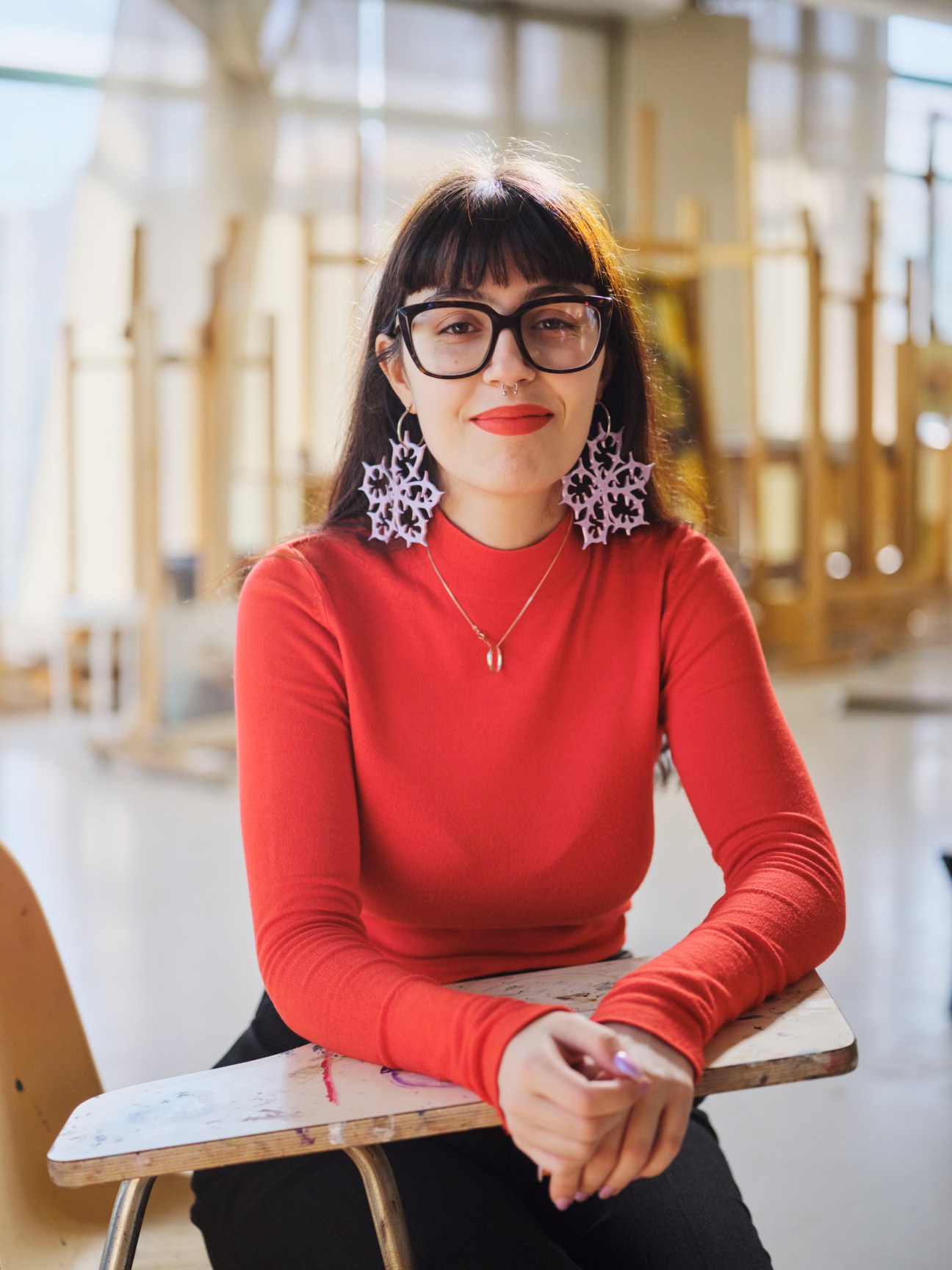
For students such as Cortes, designing clothes is as much a sociological exercise as it is a sartorial one. This approach resonates with the school’s broader teaching philosophy. Here, students are encouraged to maintain a grasp of different disciplines by attending a variety of classes and accessing materials and resources from other courses. For instance, students can use graphic design, painting and even photographic facilities to supplement their fashion education. For Alba Vidal, who had studied film in Santander prior to moving to Pontevedra and joining the fashion programme, access to this kind of equipment is what sets the course apart. “I’ve really enjoyed working with the screen-printing machines,” she says. With a majority of the students coming from non-fashion backgrounds – some studied languages, translation or art prior to joining the programme – the curiosity to experiment with new formats is strong.
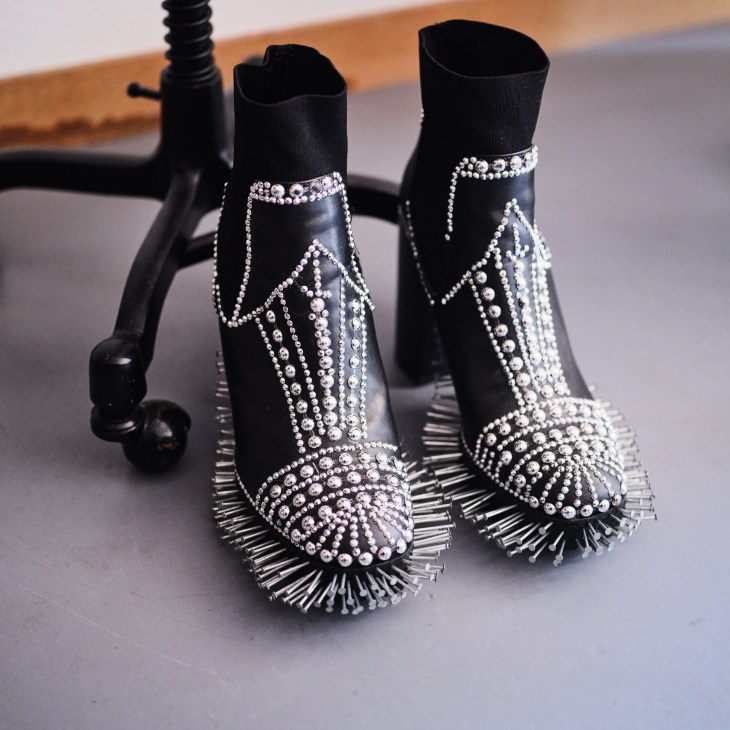

When invited to join the judging committee of the November 2021 student fashion show, Celeste Chipperfield, art consultant and daughter of architect David, could sense this experimental spirit. Living in a city like Pontevedra, she says, has something to do with it. “The influence of international travel shouldn’t be overlooked but studying fashion in a more rural region also has advantages, especially in today’s fast-evolving society, where the focus is shifting away from consumer culture and moving closer towards the sustainable circular economies that can be more easily achieved in smaller communities.” She spends much of her time in the region to help with her family’s foundation and restaurant, Bar de Porto.
Given the fashion industry’s increased appreciation for circularity and responsible manufacturing, Pontevedra and its growing talent pool are looking at a bright future – and attention from the international fashion community is bound to increase. After all, building a sustainable brand is a lot easier in a smaller community, where items are sourced locally. Producing at a slower pace, without the added pressure of adhering to seasonal whims, allows designers to tap into a more creative place, while consumers can prioritise quality over quantity. “The challenge with being in a small city has been keeping up with the changing fashion seasons,” says Dopico. “But in some ways the focus on seasons is disappearing anyway.”
As for creativity, the students of Pontevedra are proving that it can flourish in a small city just as much as it does in an established fashion capital – if not more. Olmedo often brings the life and work of Italian painter and print-maker Giorgio Morandi to mind. “He barely left the neighbourhood and the house he was born and raised in,” he says. “But Morandi’s art was also incredibly cosmopolitan; to this day the fashion world still looks to his prints for inspiration. In the end, what really matters is your sense of self.”
A secret life in pictures
My aunt had been sick for a while so, just before the first lockdown here in the UK, I drove my son 160km south from London to her home in Hampshire’s New Forest to say “hi” and see my cousin’s kids. It was over a cup of tea that my aunt, who has since sadly passed away, asked if I’d ever seen my grandfather’s photographs. My answer was a polite but intrigued “no”.
It was a freezing evening when we marched out to the garage with torches to drag the boxes back into the house. I started opening the crates at random and holding the transparencies up to the kitchen light. I was just flabbergasted by the quality that I instantly saw. The first picture that I pulled out showed a man at a fair. He was wearing a trilby and tie, smoking as the sunlight glints off his tiepin. I’d describe what I felt then as a sort of Vivian Maier moment [the previously unknown US photographer’s work was discovered at auction in 2007 and only posthumously gained international recognition]. It’s different, of course, but to me the discovery of my late grandfather Percy S Waite’s work felt similarly exhilarating.
Finding his photography archive was all-the-more magical for me because I have been a professional photographer for 25 years. I study the discipline all of the time and, honestly, I’m completely obsessive; I’m a hoarder and collector. I had also believed that I was the only artistic person in the family. My mother is a mathematician and my late grandfather had been a successful solicitor. I was dimly aware that he’d been an amateur photographer and an enthusiastic member of Enfield Camera Club in north London. He had even been known to host the occasional family slideshow. But before the discovery, I’d only ever seen a few prints scattered around and I had no idea how prolific he was. I wondered why his work hadn’t been mentioned to me before.
That evening, I drove home from Beaulieu in a haze. Hunched in the boot of my car were four trunks of camera rolls, transparencies, slides and dozens of black-and-white scrapbooks; about 7,000 pictures in total, many of them meticulously kept, cross-referenced and ink-labelled in my grandfather’s own fair hand. My drive back to London was under way but the journey to understanding his work and life was only just beginning. What followed would take me from his tough East End childhood, through Blitz-hit London and onto sunnier snapshots of postwar Paris, Bandol, Beirut and Cascais.
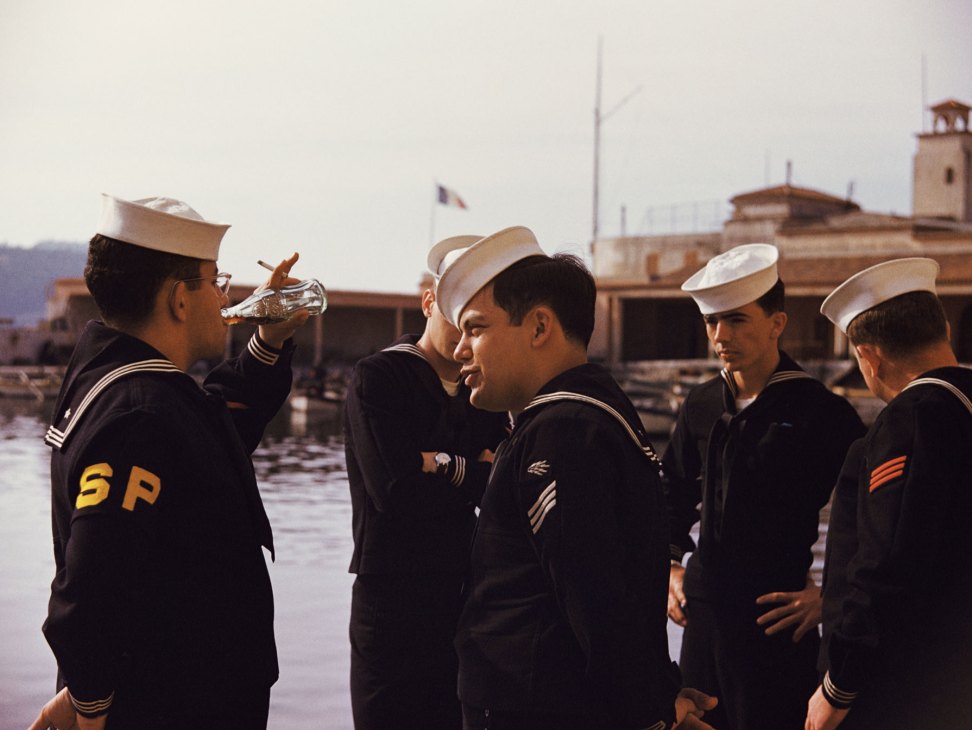
I was seven years old when my grandfather died in 1977. Although I hadn’t really known him, these images drew me into his world. I saw an absence of vanity in his pictures, a love of life and some cheek and humour. His photographs are intimate and I could see that he engaged with people – I can say this because I’ve done a lot of street photography in my time. He clearly had the ability to put people at ease in several languages and you can see that as he’s nattering to a French nun, joking with a Lebanese policeman or chatting to an American GI at the docks. It’s never easy to get people to relax in front of a camera. I love catching people off-guard; if they’re relaxed, they look good.
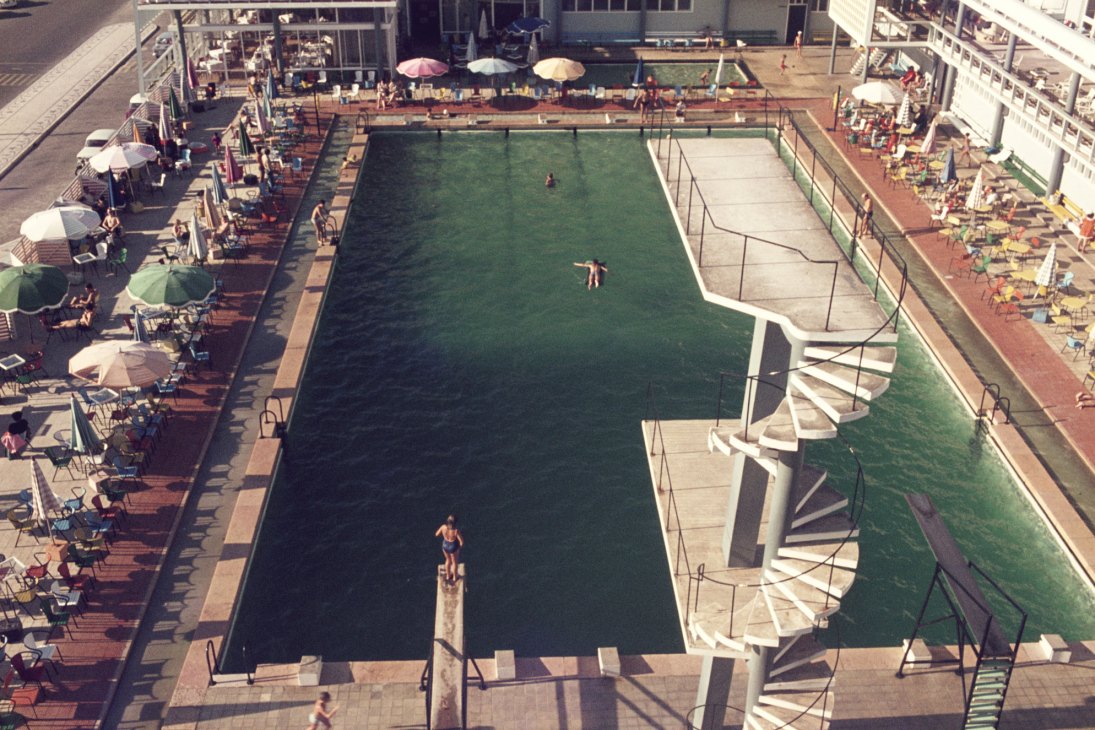
The images shown in this Expo are taken from what I’m calling his Kodachrome archive, which was taken between about 1950 and 1973. He must have been using a light meter but shooting in direct sunlight with an ultra-sensitive transparency film such as Kodachrome is still very difficult: your exposures need to be superb. The results are amazing, really. I don’t think that there are any bad pictures in the archive.
There are so many themes to unpack in my grandfather’s images. He clearly loved the docks, markets, nuns, uniforms and beaches. He also had an incredible eye for people’s personal style: their hair, brooches, hats, swimsuits and sunglasses. Another thing that I noticed when I pulled that first handful of slides out of the box on the kitchen table in Beaulieu is that, although I picked out the best shot first, I also saw the previous two or three frames that were taken to perfect it. My grandfather was obviously moving through crowds, seeking out and building up to that one final shot. It’s a recurring theme throughout his archive. His eye for composition was excellent.

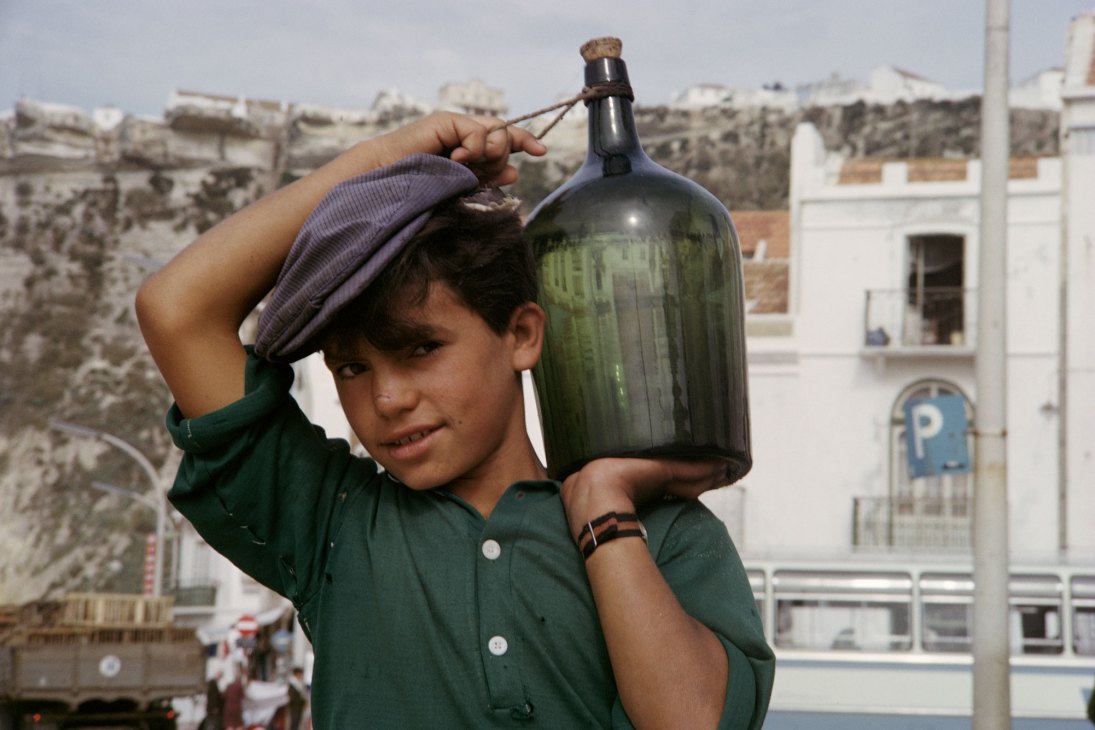
Aside from the many boats, bicycles, airports, folk costumes, children, cats and cafés, one of his favourite subjects was his beloved wife, Alys, my grandmother, who he married in 1936. She was very beautiful, elegant and stylish so he was lucky there. Alys died 20 years ago but even in old age she was flawlessly presented and impeccably dressed. Knowing the archive has helped me know her better too.
Discovering my grandfather’s photography archive has opened a lot of family conversations about who Percy S Waite was and where he came from. His family hailed from London’s East End and he left school at 13. My grandfather’s success came through self-drive, education and a hunger to travel. His brother became a school caretaker. There’s nothing wrong with that but the difference between that and the lifestyle that Percy was able to provide his family is starkly visible in his photography.
Born in 1908, Percy S Waite had a hard start in life. His mother died when he was eight and, despite moving among caring relatives, he had to help support his ill father. As a clerk, he wasn’t conscripted in the war because legal services were deemed essential. At the time, he worked an allotment and helped at a nearby pig farm for extra food during rationing. In the spare time that he did have, he managed to teach himself Latin and shorthand after deciding to qualify as a solicitor.
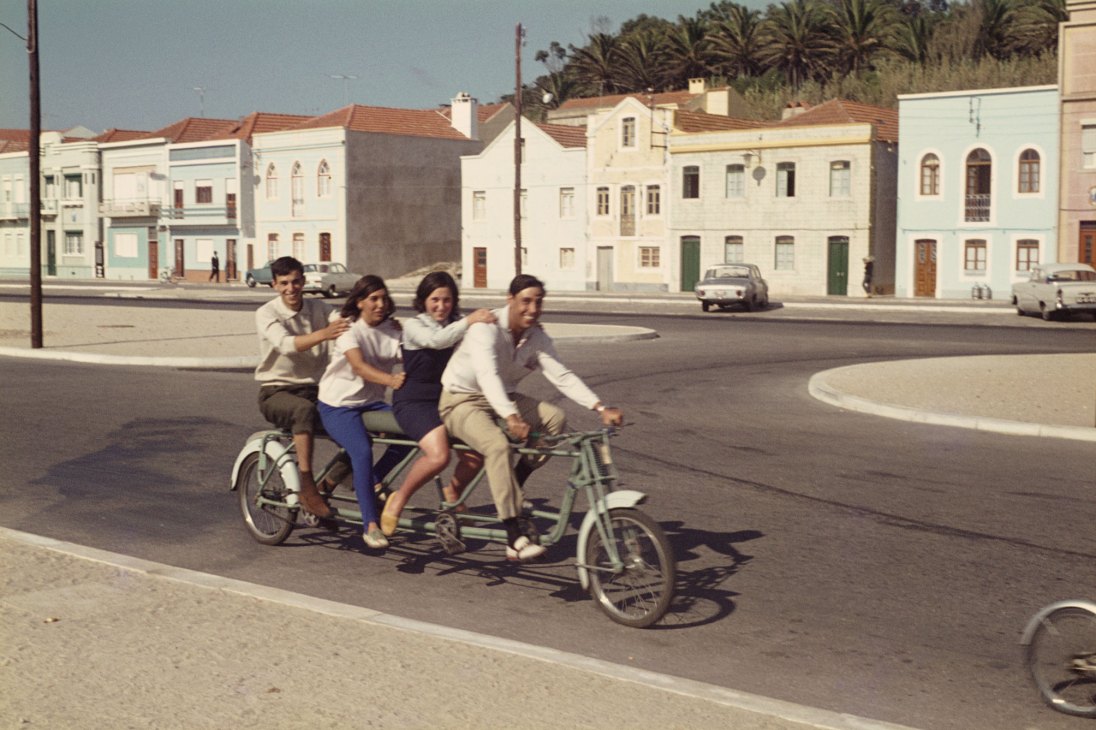
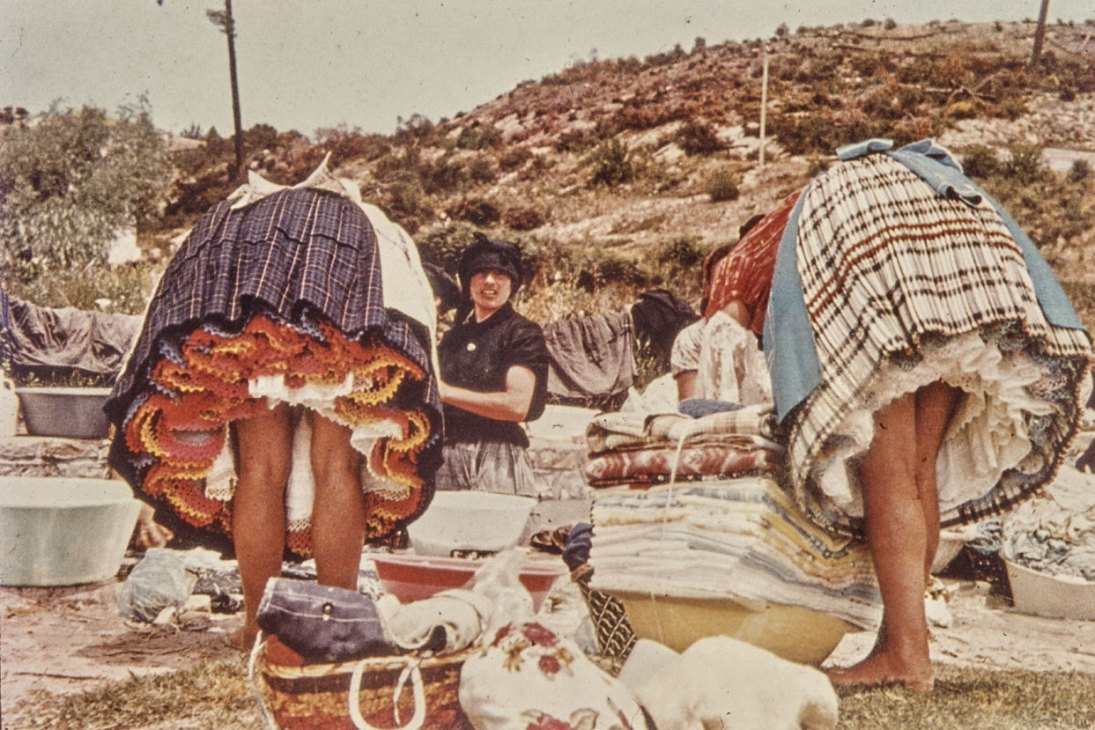
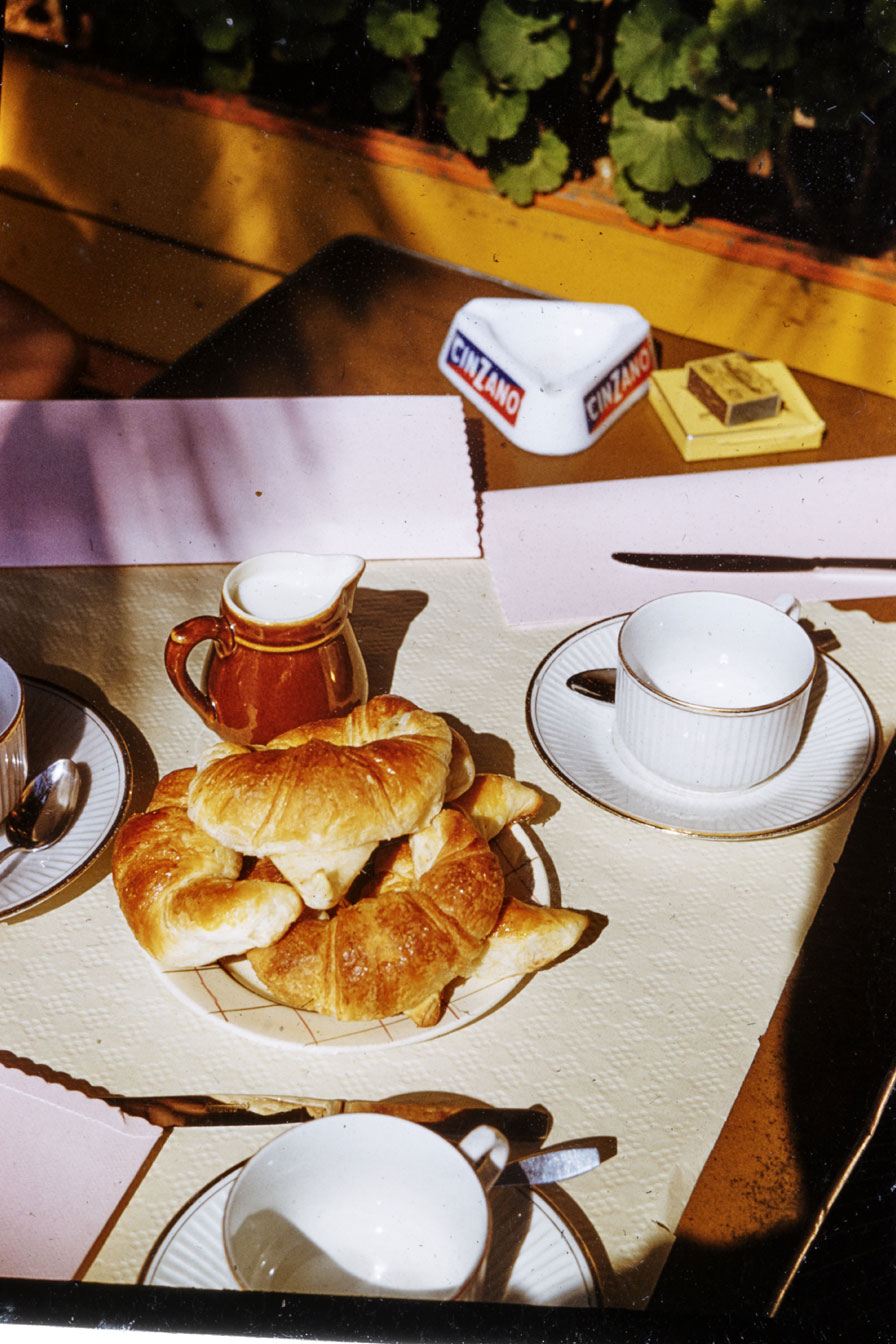
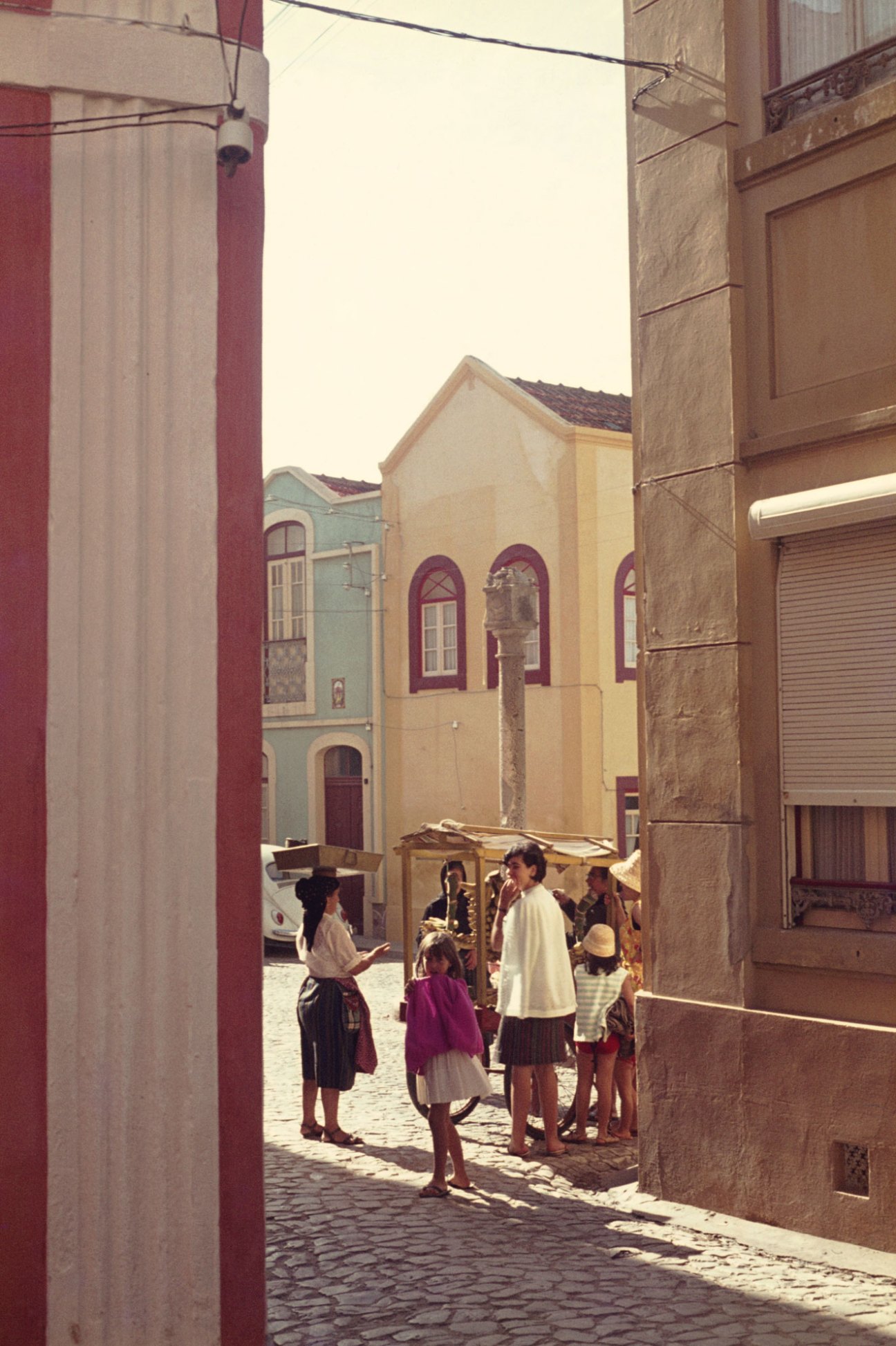
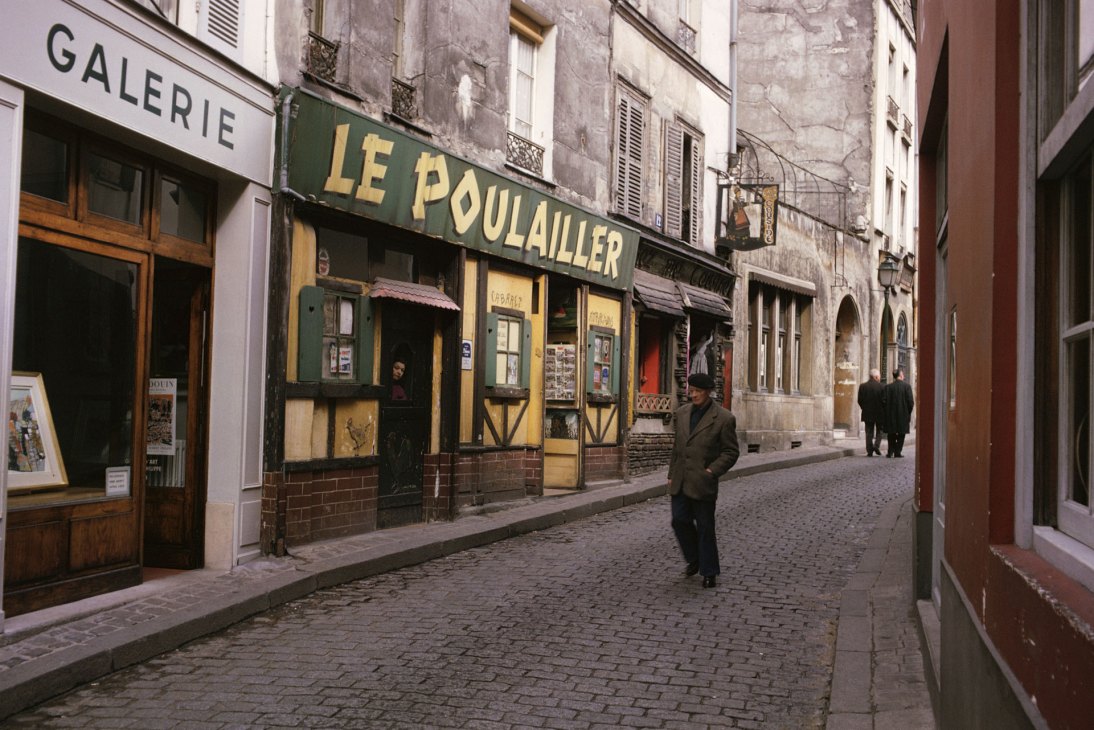
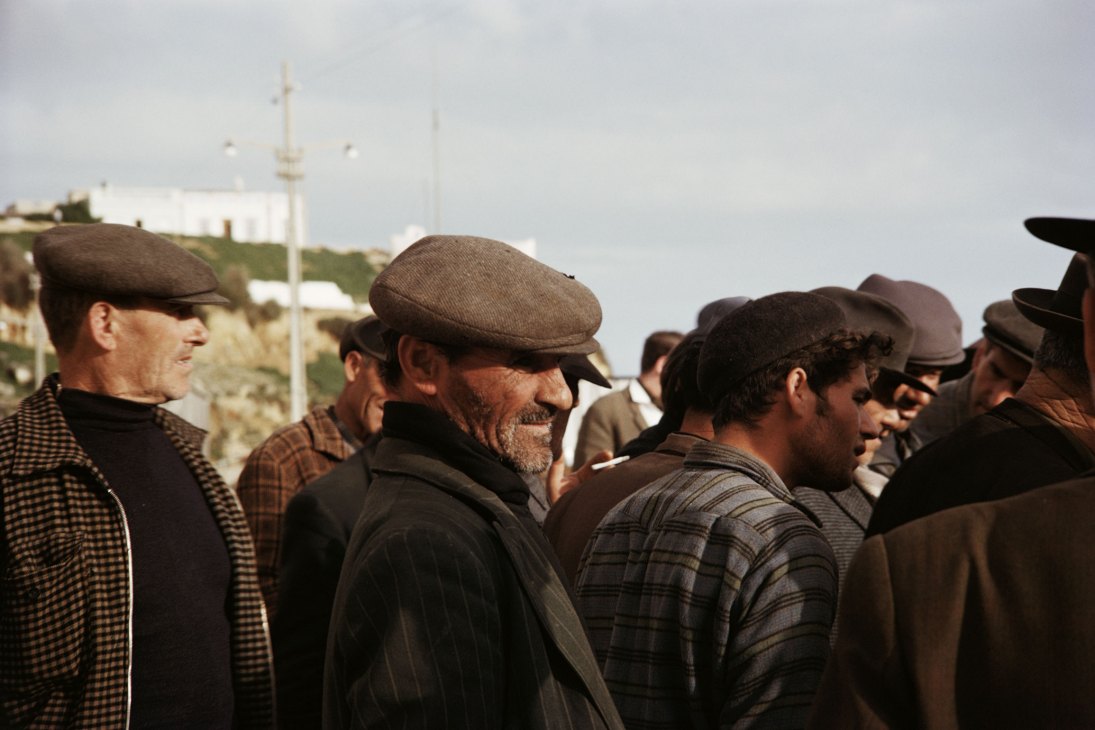
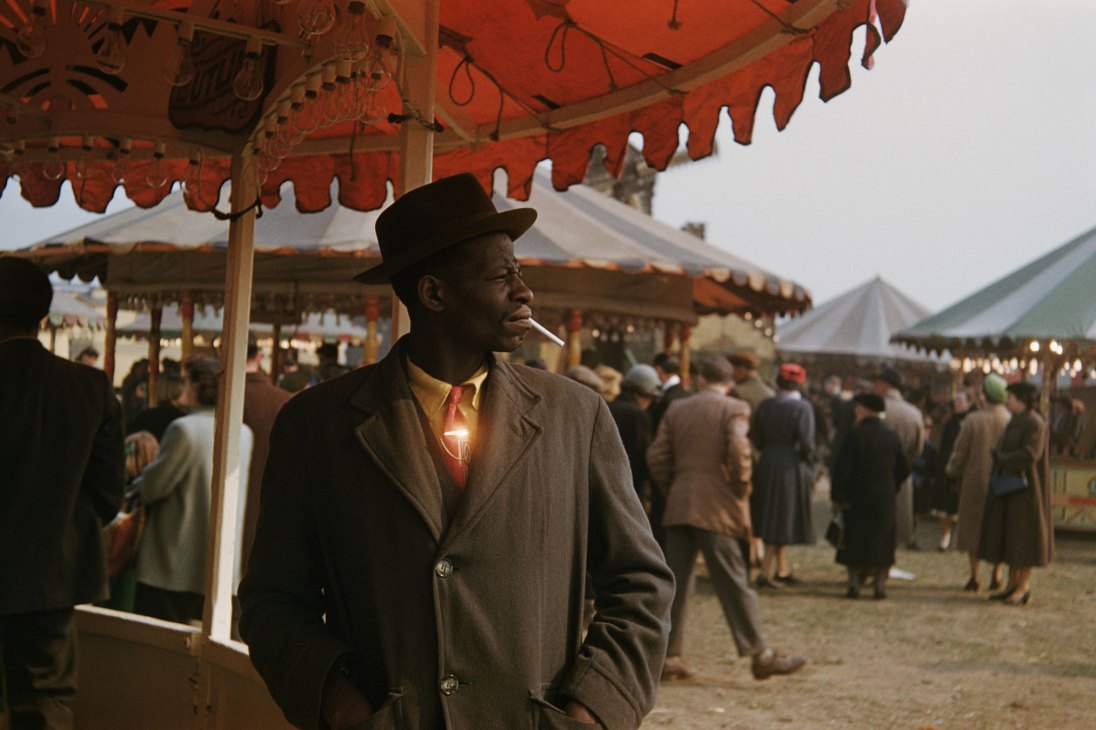
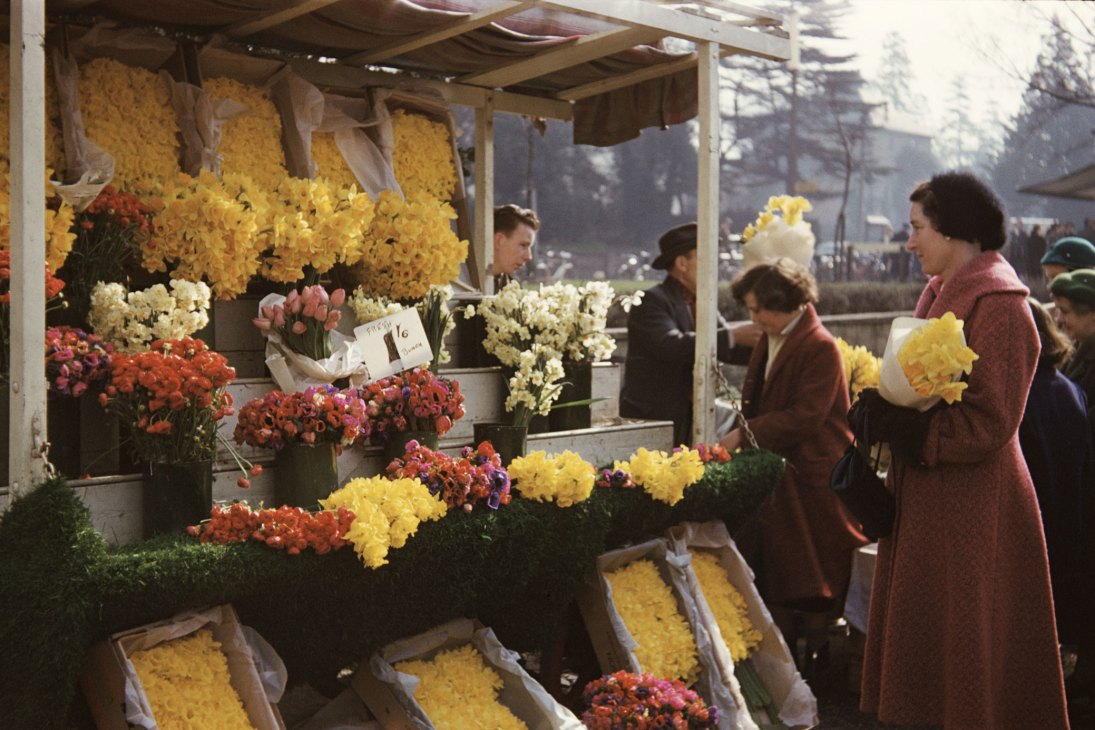
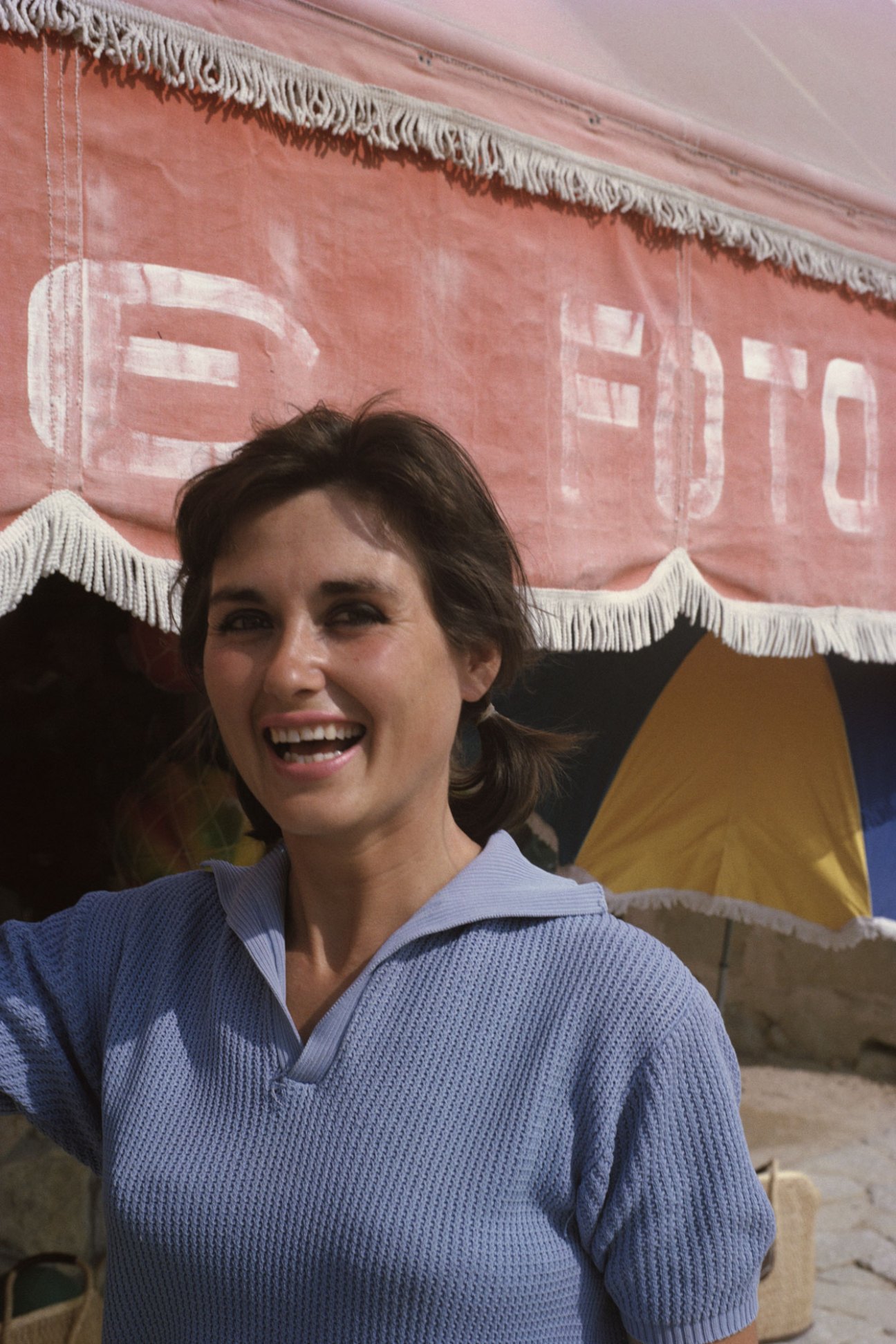

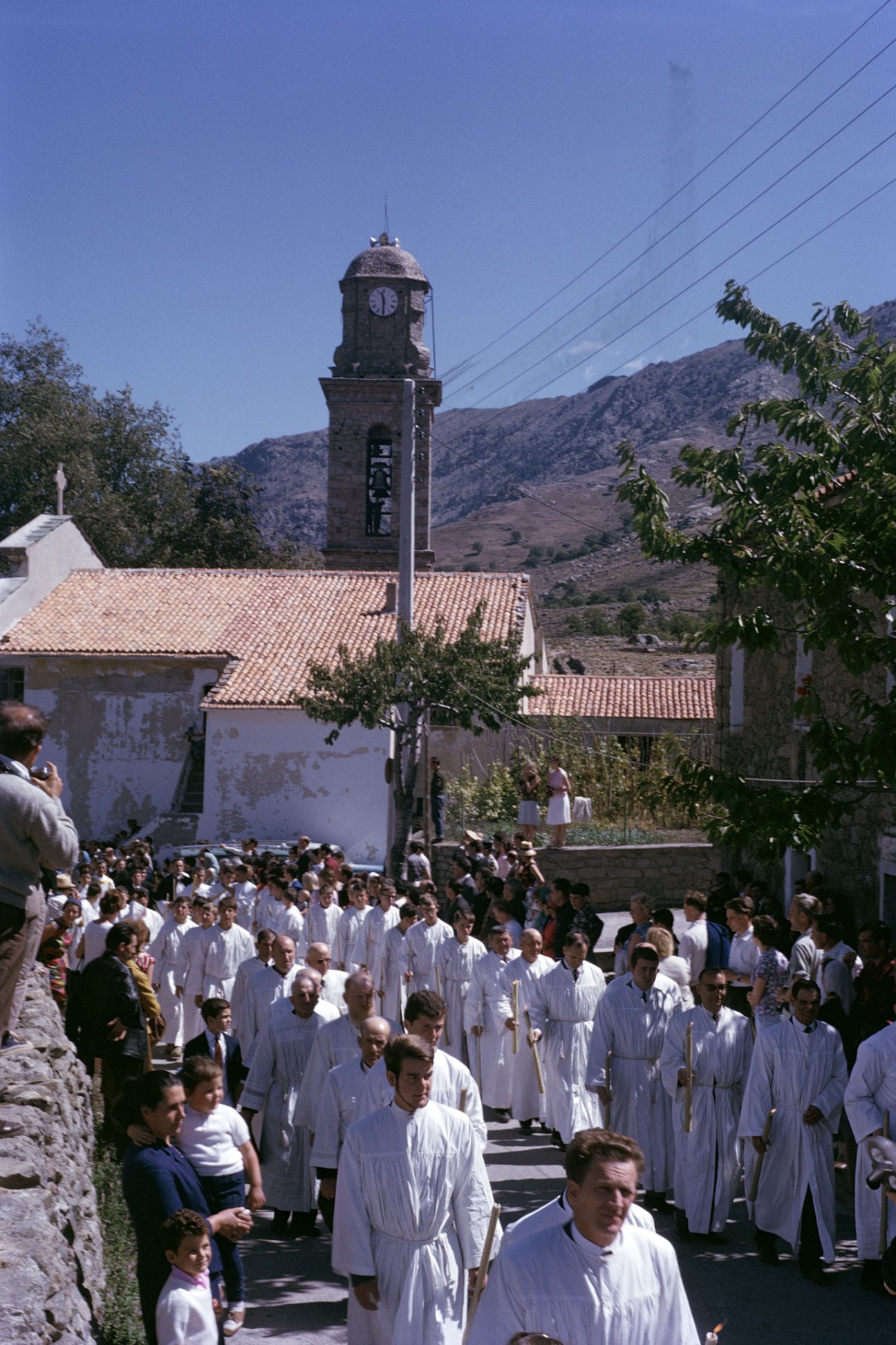
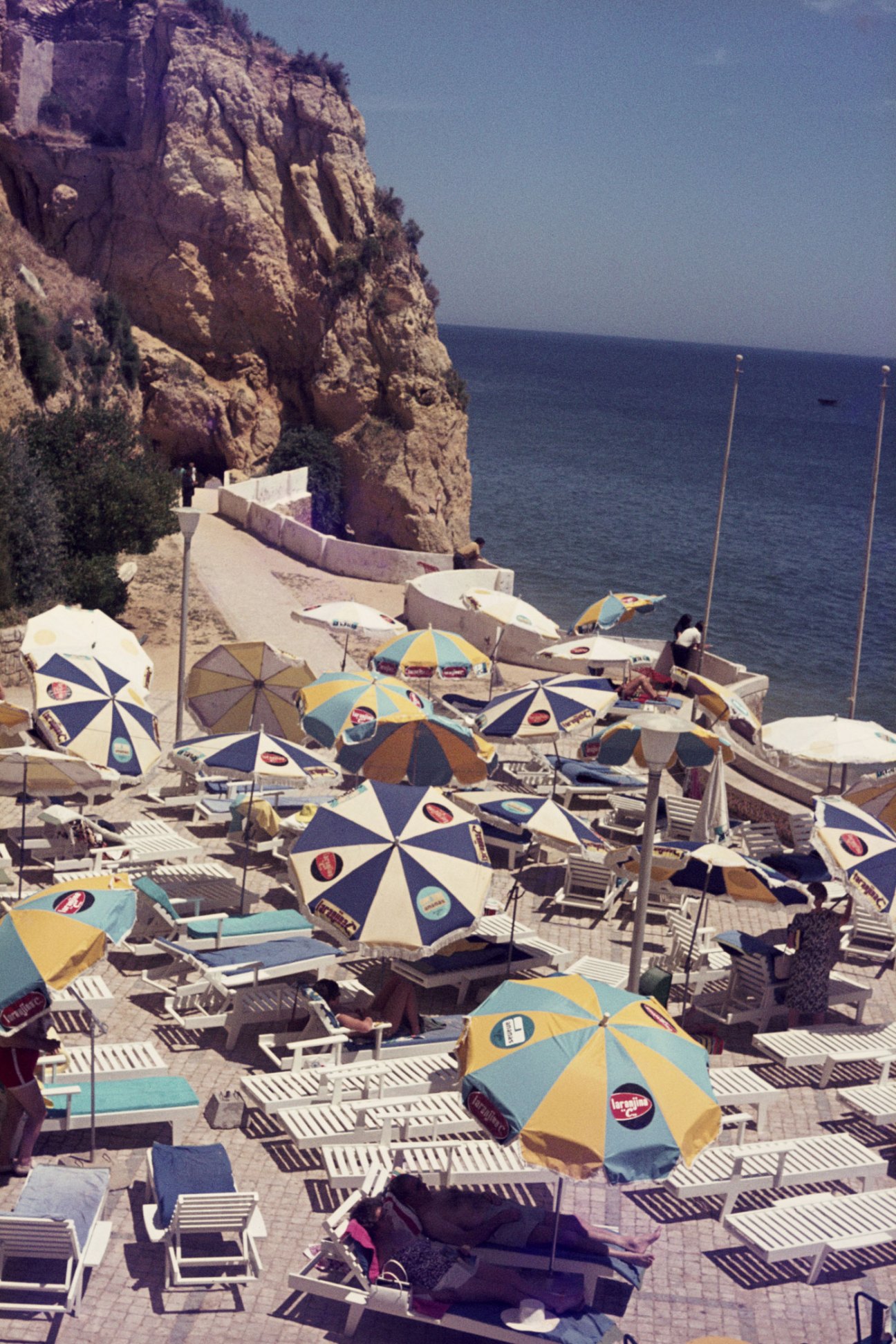
A lot of the pictures in the colour archive date from just five years after the Second World War ended, when the UK was rationing. What’s remarkable is that at this time Percy and Alys were packing up with three kids to visit the south of France. They loved to travel and kept a house in London, another in Lavenham, Suffolk, and a small place that they loved in Bandol on the Côte d’Azur – it’s bloody impressive, considering where he came from. I can see that they dressed in a very elegant way and, while I’m sure they liked the good things in life, they don’t seem to be show-offs. Almost none of the pictures taken feature food, shopping or expensive hotels.
In my heart I am a documentary photographer and, having spent so long with his archive now, I think that this gene – or whatever you want to call it – comes from my grandfather. There are so many similarities in the way that we approach subjects that I can’t claim it as my own, even if we both arrived at it independently.
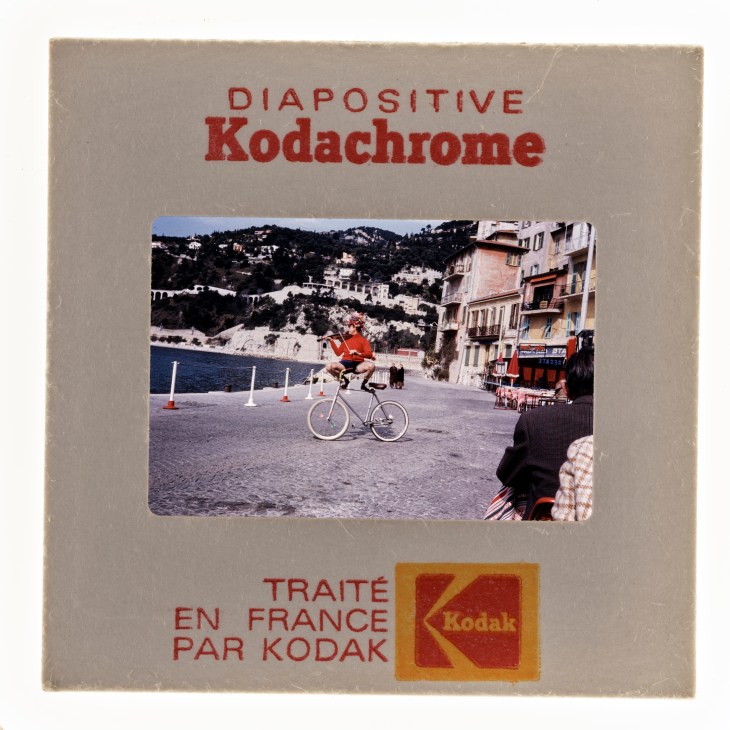
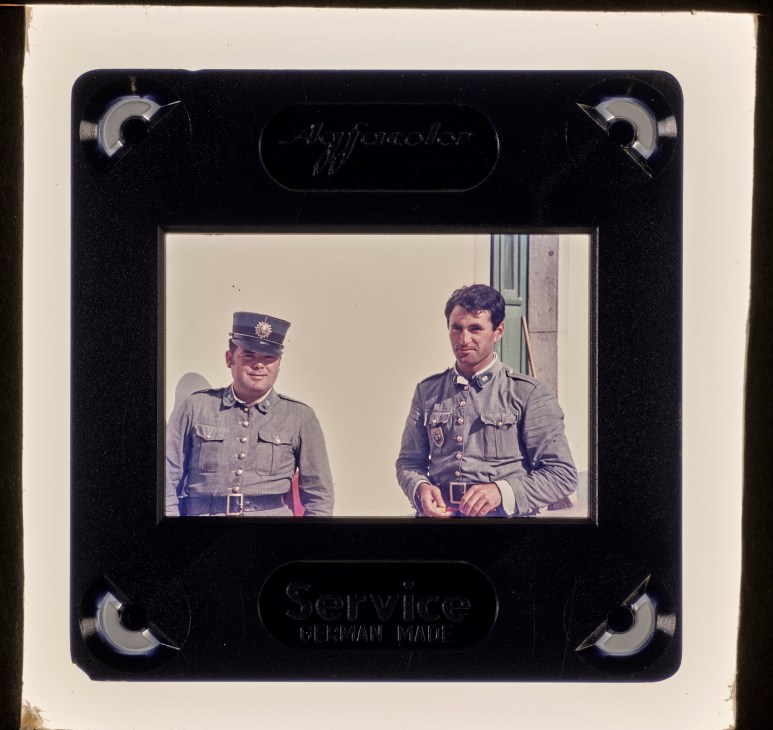
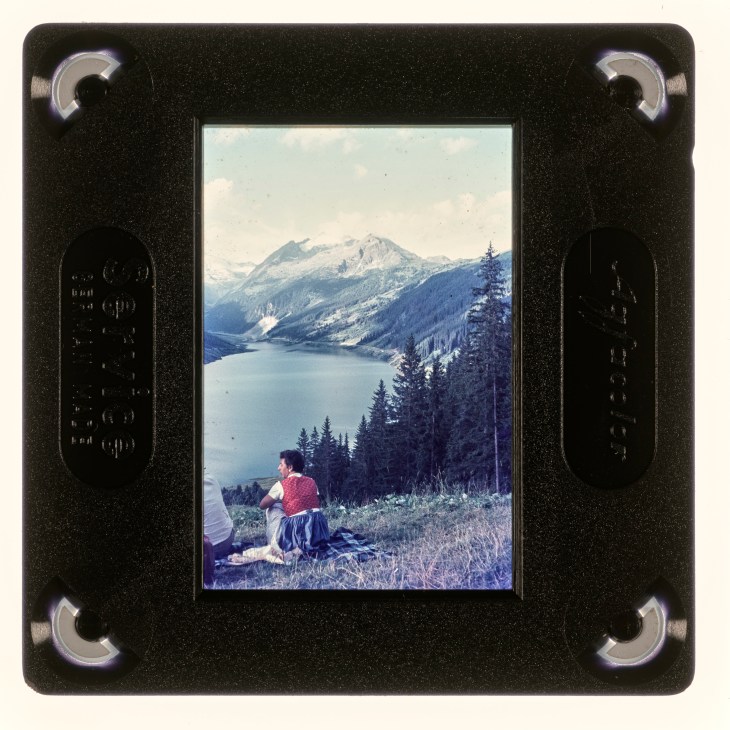
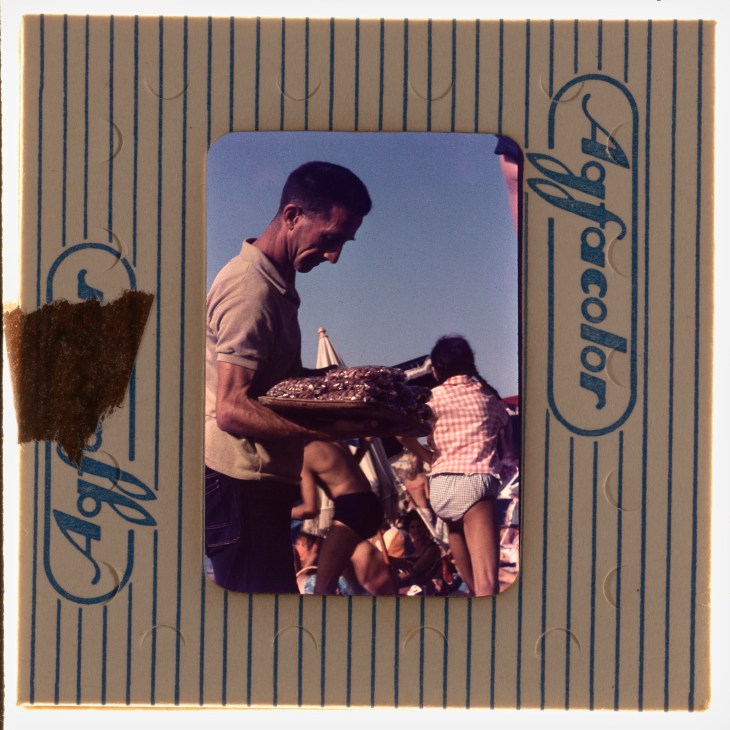
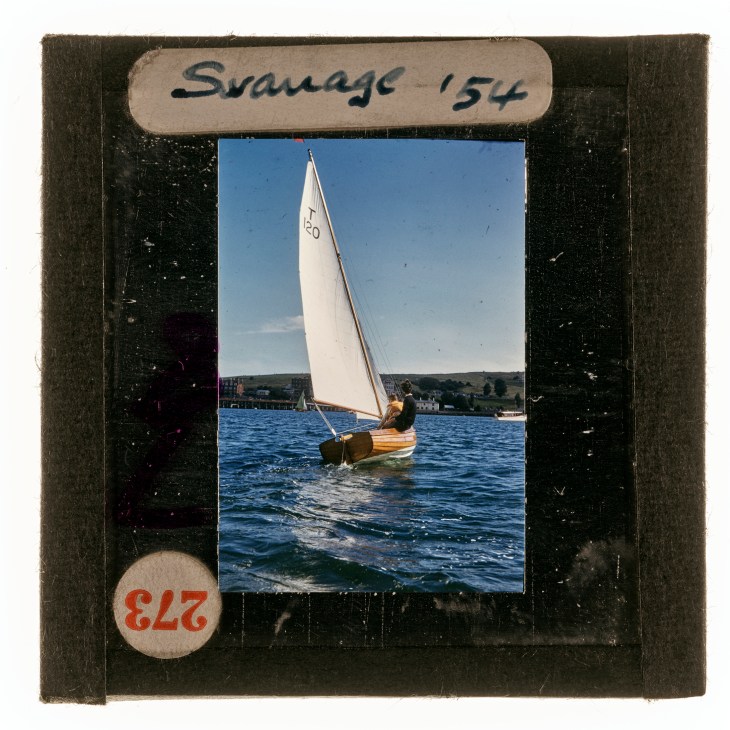
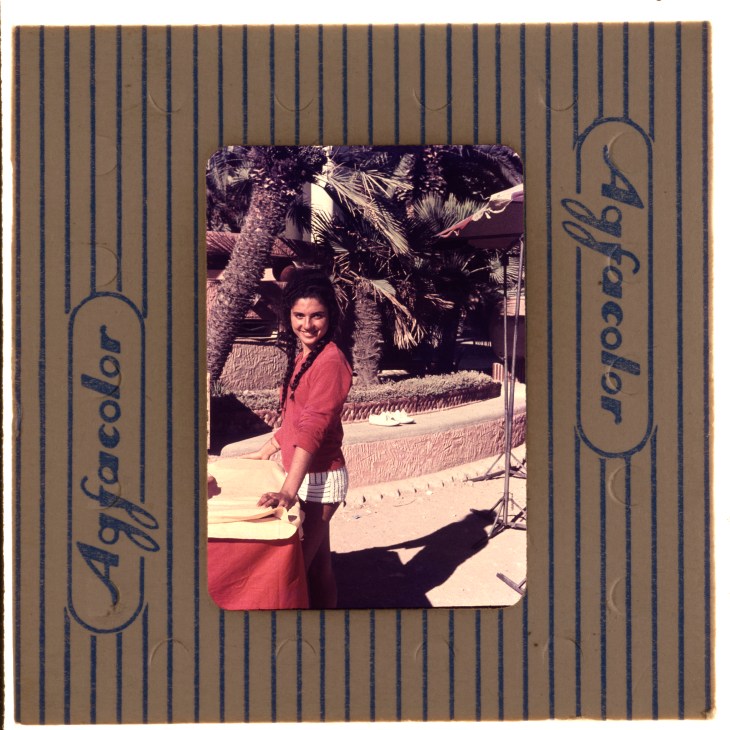
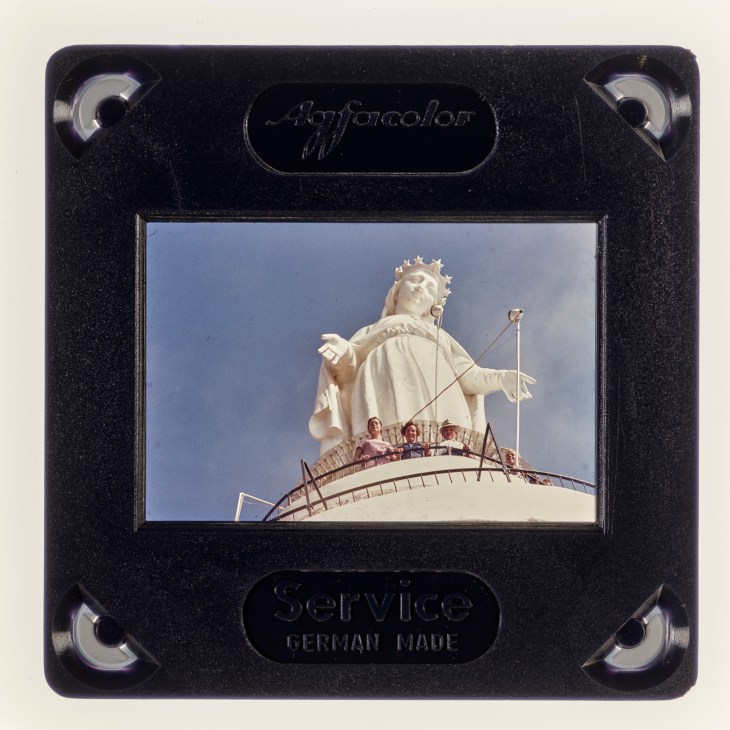
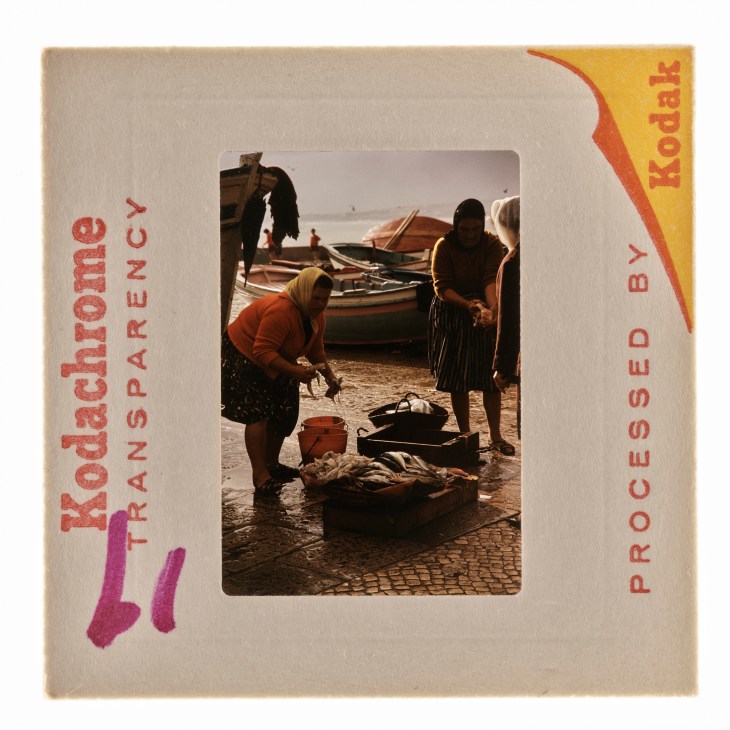
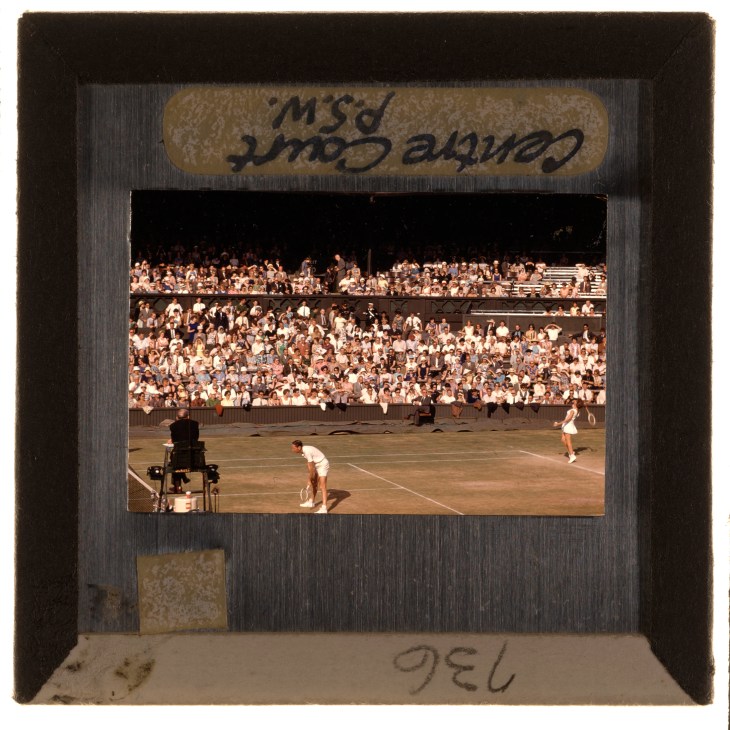
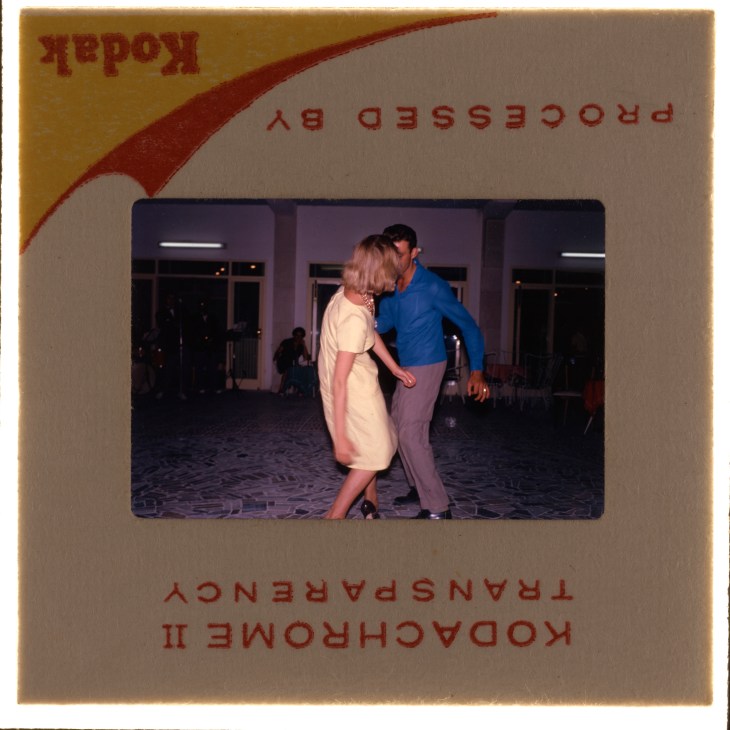

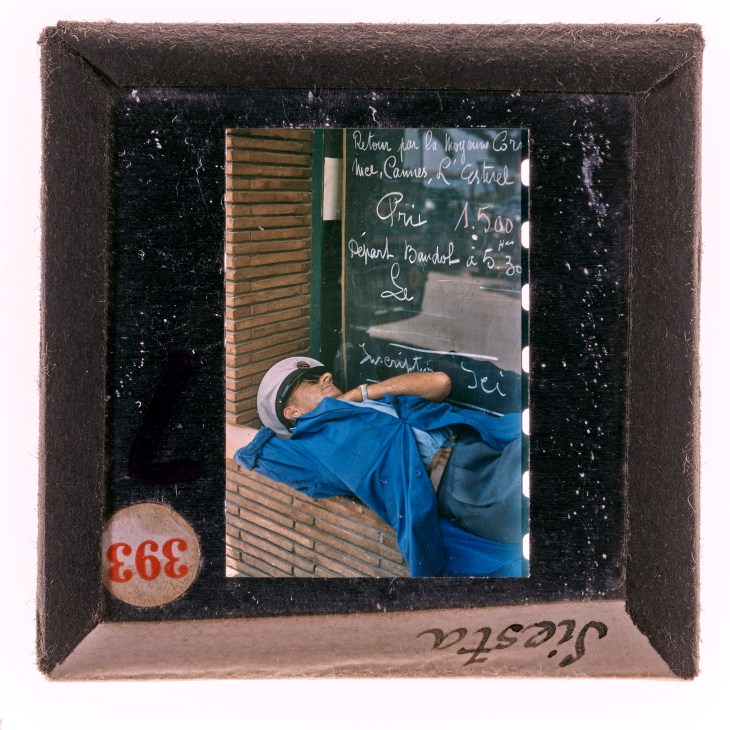
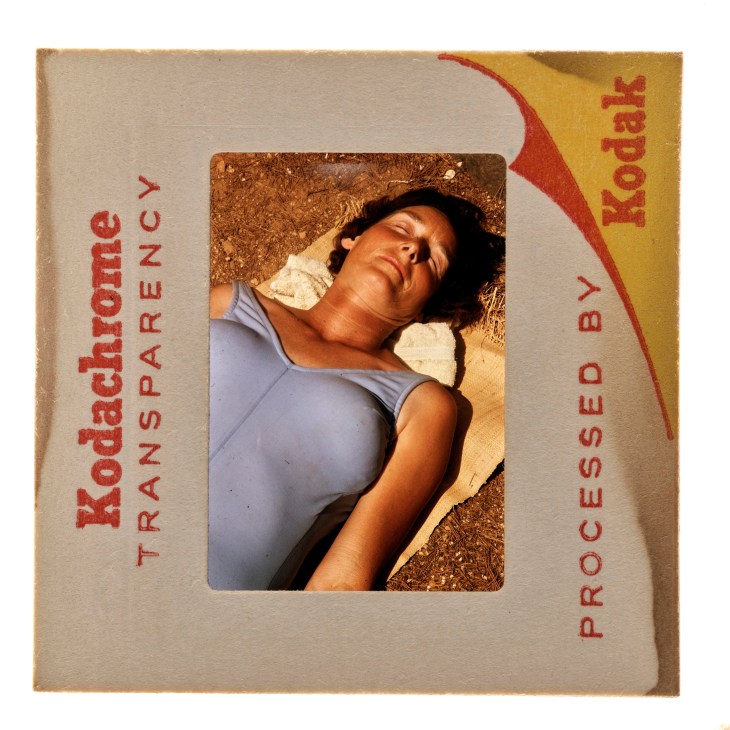
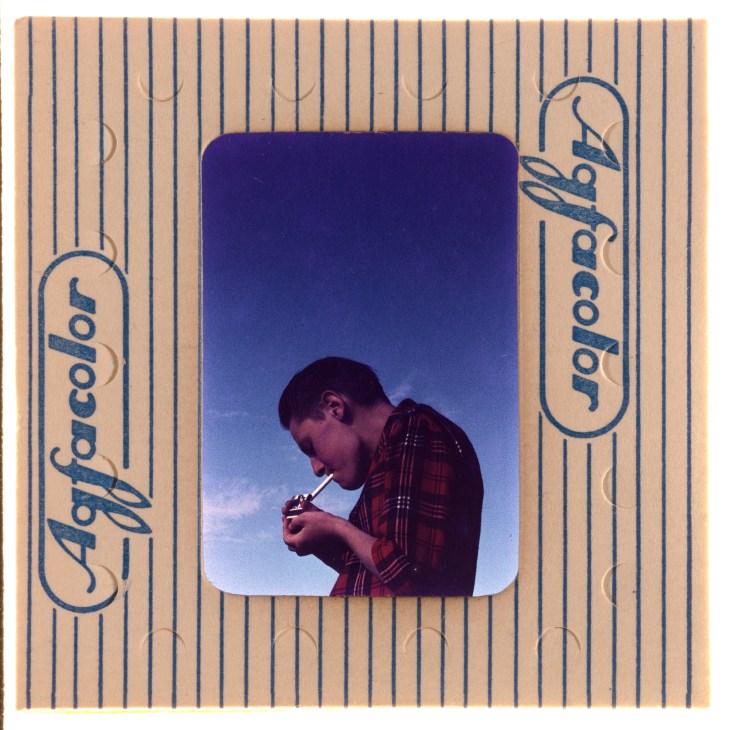
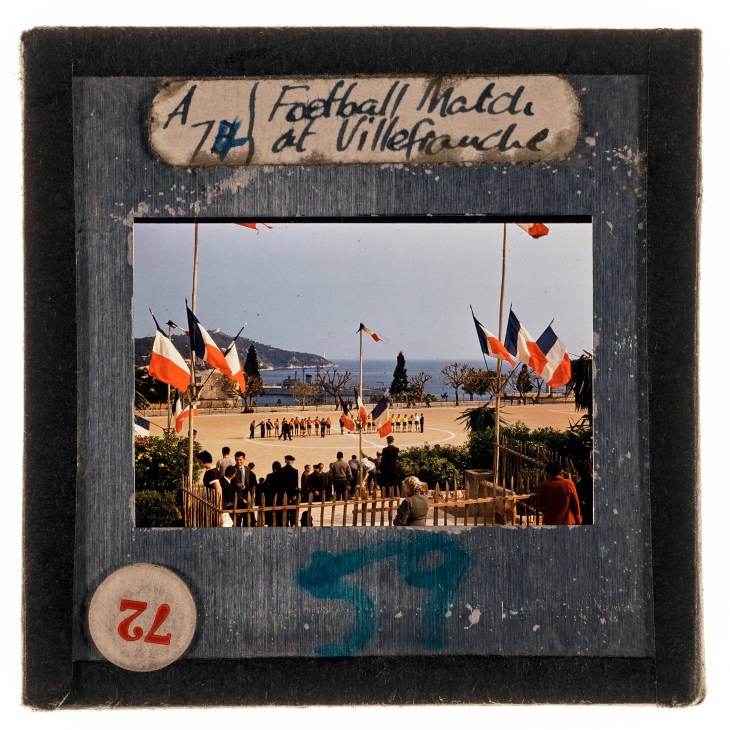
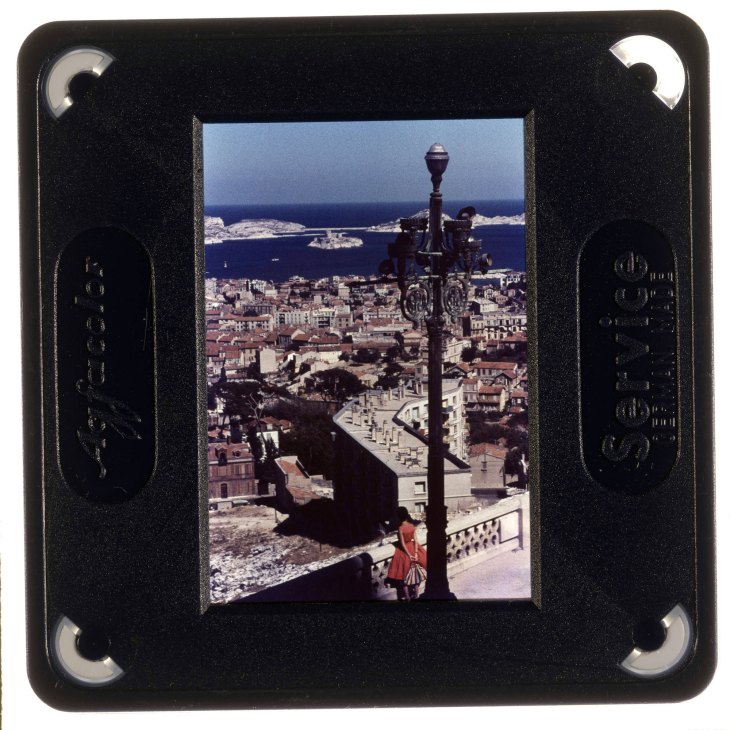
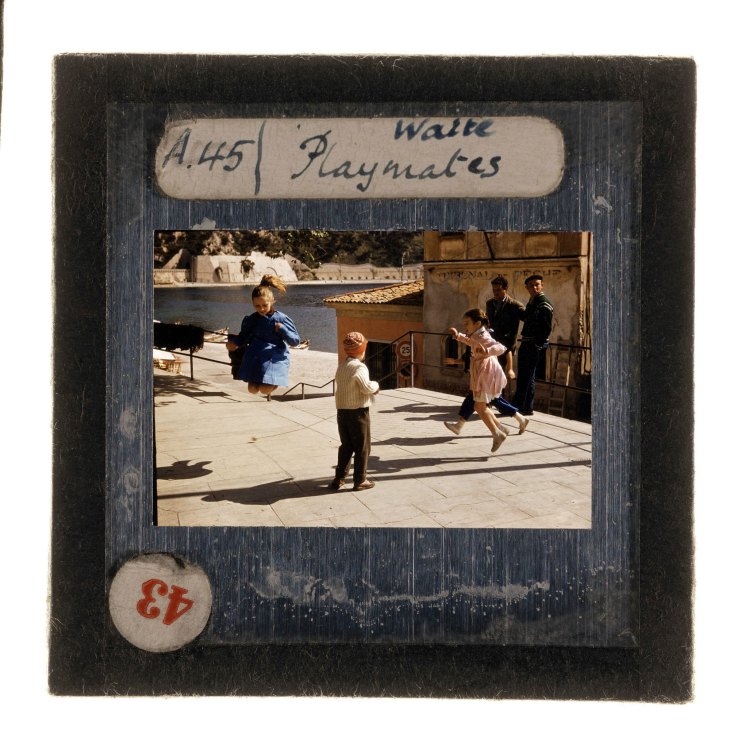
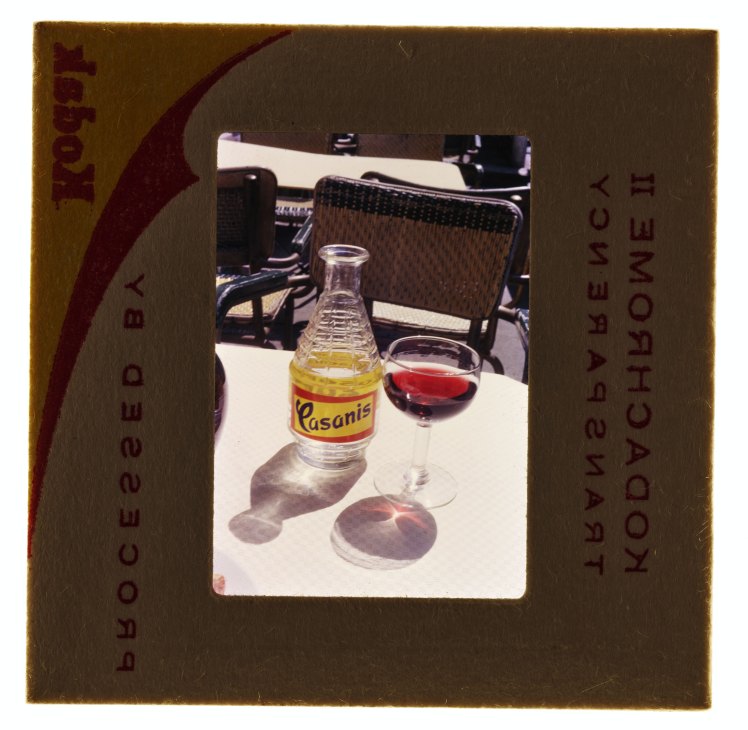
Kodachrome slides discovered in Waite’s archive of about 7,000 images
I did a project on Russian sailors years ago not knowing that decades earlier my grandfather had been hanging around the Marseille docks joking with the US navy’s Sixth Fleet. My mum and aunt remember the beautiful French ladies flocking to the port to meet these handsome American sailors as my grandfather watched on, his Leica shutter snapping in the afternoon sun as the waves broke nearby.
My grandfather, his wife and their three daughters, including my aunt and mother, continued to travel for as long as his health allowed. When he died in the UK in 1977, my grandma sold their house because it was too big for her. She moved to a smaller one, bringing the archive with her in plastic boxes, never thinking to share the photographs. When she died, somebody moved them again, this time to my aunt’s house. After her divorce that house was knocked down and bulldozed before the archive landed in the New Forest. My aunt couldn’t even tell me how it got there and who moved it, so the fact that it survived is still incredible.
I often think about the amazing artists and photographers out there who, like Percy S Waite, just don’t have the appetite, skills or ego for self-promotion. I asked my mum recently how she thought my grandfather might have felt about his images being published. She was sure that he’d be proud that anyone was showing an interest in his pictures, let alone that his grandson was following in his accomplished footsteps. The only recognition that his work received until now was a single award from the Enfield Camera Club, of which he was extremely proud.
I feel as if I know my grandfather much better now. I can see him not just as the elderly man with a walking stick but through a snapshot of who he was and how he saw the world at his physical peak. I’m ambivalent about photographic culture today. It’s become so throwaway, full of mindless pictures. I find myself needing to think twice: should I try to record a moment or just be in it? In this sense, the archive is a time capsule. It’s a different world. It is a good world.
As told to Monocle’s editor, Josh Fehnert
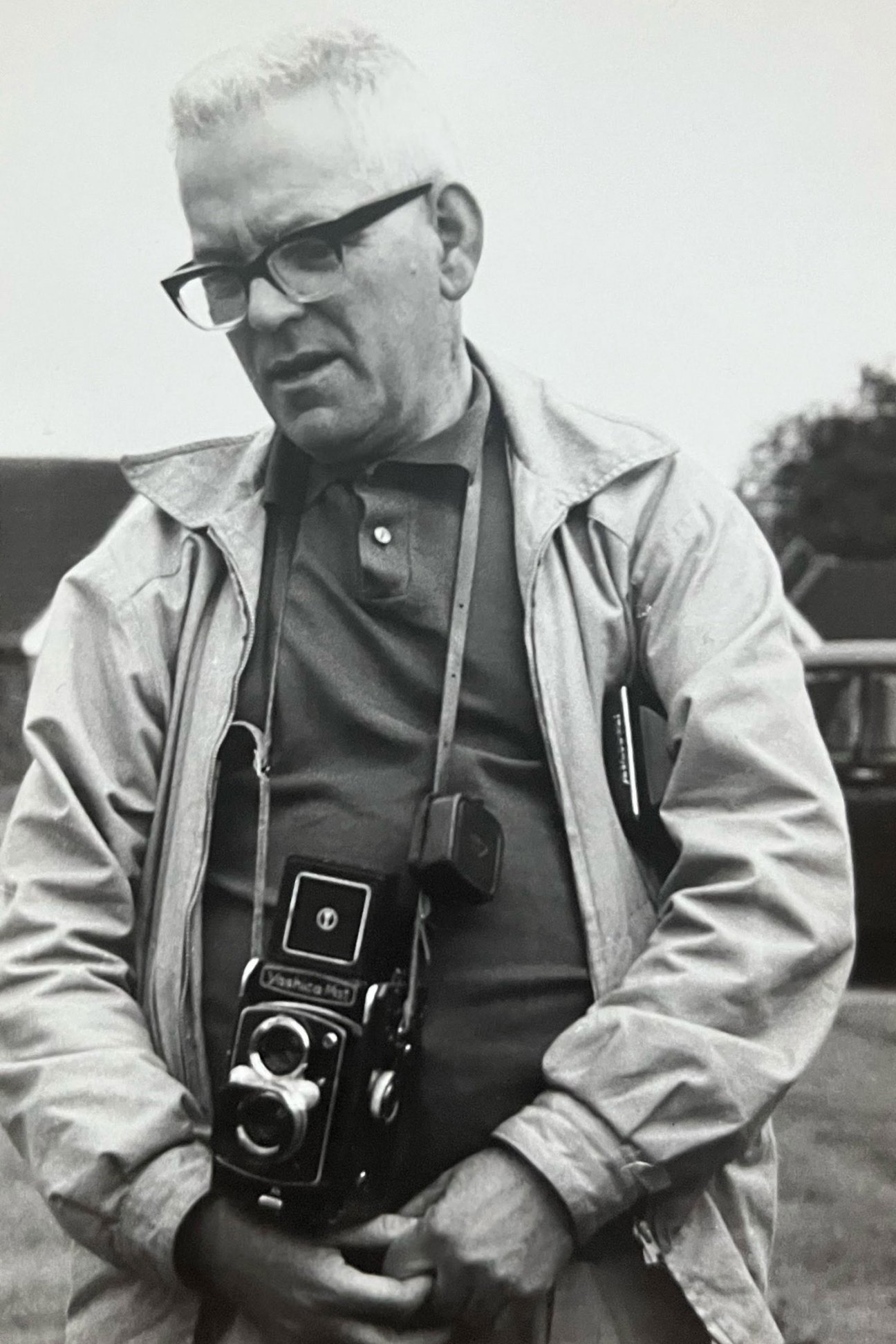
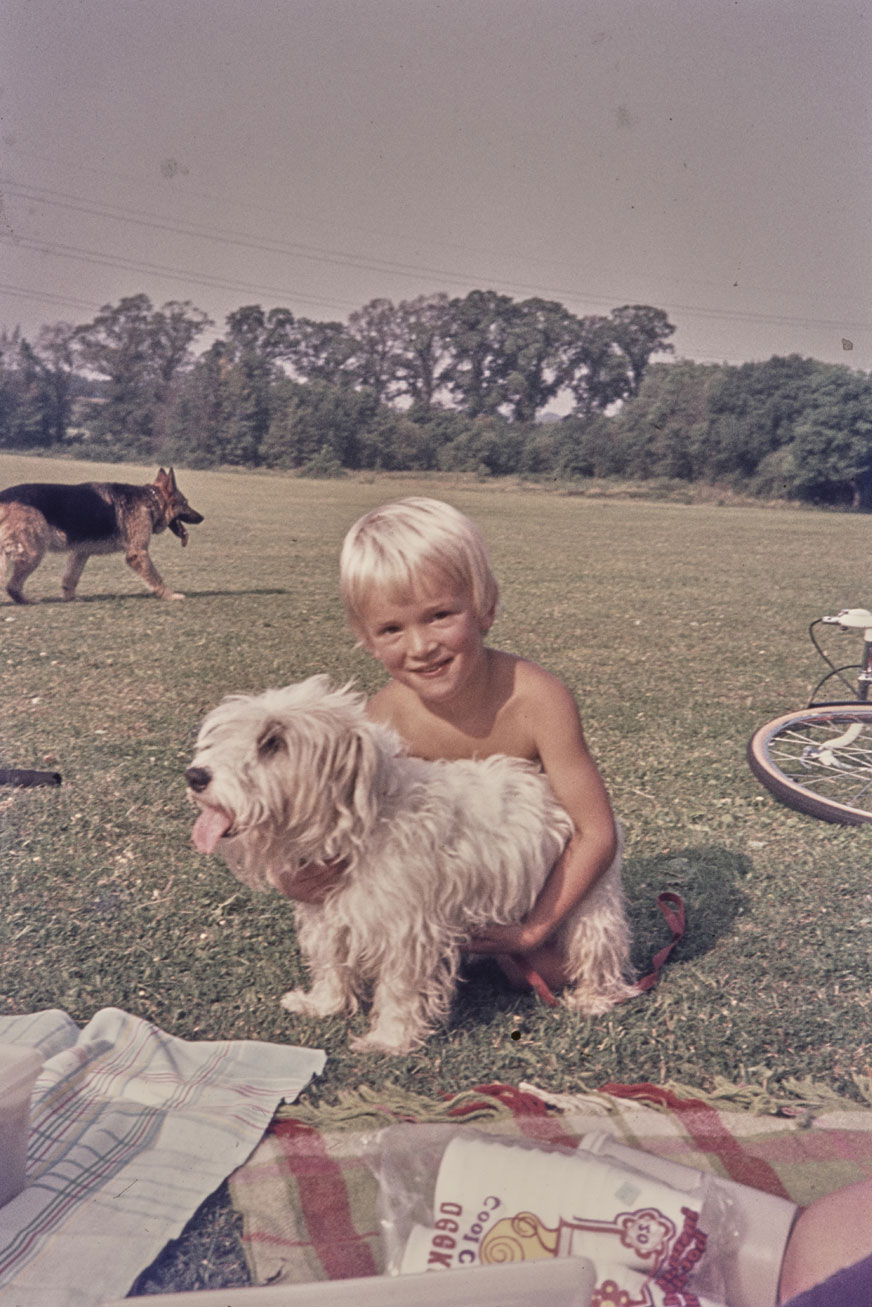
About John Balsom:
Despite describing himself as a late-bloomer, who worked on building sites until his mid-twenties, John Balsom (pictured, right, as a child) has become a leading documentary and portrait photographer. What constitutes a good picture? “An unstated, unforced moment,” he says. “My shooting style is natural and simple.” That might be true but the results are often breathtaking. Balsom has shot for Monocle since 2007 and we’re very grateful that he decided to offer us the first opportunity to publish selections from the remarkable archive of images taken by his grandfather, Percy S Waite (pictured, left). He hopes to turn the discovery into a book and exhibition in the near future.
Size matters
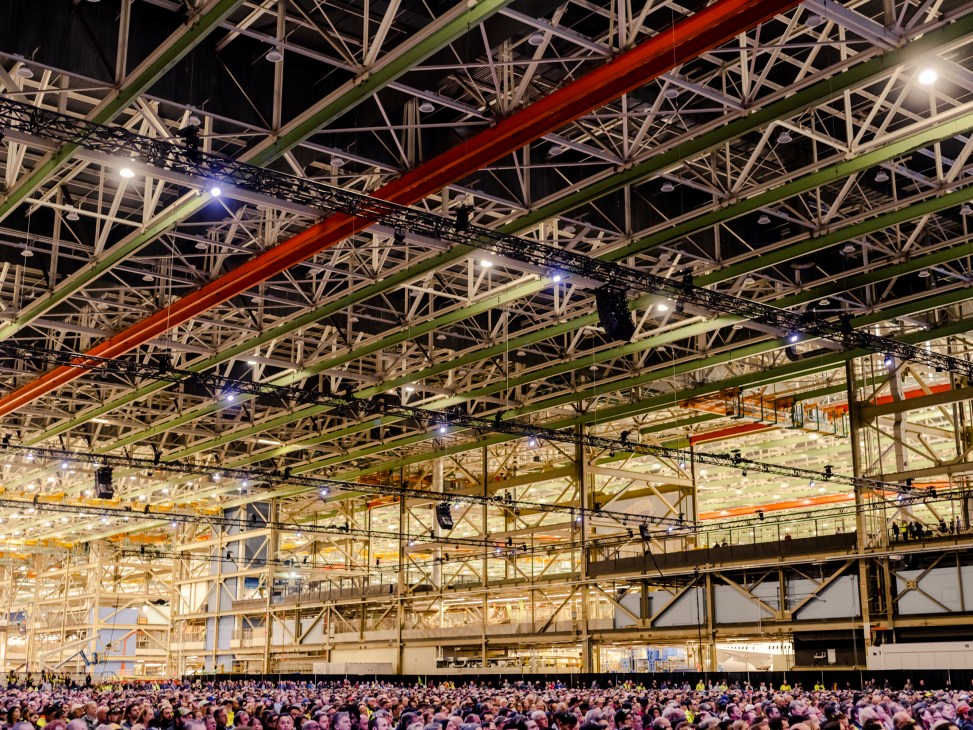
The factory in Everett, Washington, where Boeing built the 747 for more than 50 years is so big that clouds used to form inside above the production line. Some say that you would occasionally see a rainbow. Plenty of legends have emerged from this building, which is still the world’s largest by volume. Not least among them was the 747 itself, modern aviation’s most important aircraft, once described by Norman Foster as “heroic” in scale.
Over the past 20 years, however, the drive for greater fuel efficiency and smaller planes has made the jumbo jet, with its four huge engines, a relic. In January the last 747 ever to be built rolled out of the factory. Though this plane won’t disappear completely from our skies for many years – cargo carriers such as Atlas Air, which bought the last one, will give it a long afterlife – only a handful of airlines still fly passenger services on 747s. To mark the end of production, Boeing invited thousands of people to watch the last one being delivered, including the world’s press and many of the design engineers who built the original 747, referred to in-house as “The Incredibles”.


It was the kind of sendoff more associated with beloved film stars than an aeroplane. Tributes poured in from celebrities and ceos around the world; Boeing bigwigs extolled the virtues of its design against a backdrop of vintage footage; actor John Travolta, who is also a licenced pilot, came onstage to pay homage. When the hangar doors peeled back to reveal the last 747, accompanied by sad yet triumphant rock music, there were a few misty eyes. “Nowadays aeroplanes are all brain,” said one Argentine journalist. “But the 747 had heart.”
When the plane took off a day later, its flight path traced the shape of a crown and the numbers seven, four and seven. There was a strong sense of nostalgia for a bygone golden age of aviation. But what inspiration can the grand vision of the jumbo jet offer today?
“I was carried through this factory to see the 747 as a baby, which you weren’t supposed to do,” says Alicia Amble, granddaughter of Boeing engineer Joe Sutter, who led the original 4,500-strong design team. Amble was born in 1969, the year of the 747’s test flight, for which engineers would sneak into the factory through the night to keep working on the first jet. Sutter envisioned an aircraft built with an understanding of the needs of the people who would be onboard. Its design was informed by extensive interviews with passengers, pilots and crew to find out how they wanted to fly.
“The 747 introduced the twin-aisle wide-body, the overhead bin, in-flight entertainment – things that we take for granted but were innovations then,” says Michael Lombardi, Boeing’s senior historian. “The team was very focused on the passenger experience.” For that reason, the 747 was twice as big as any commercial plane built before it and capable of transporting more than 400 passengers.
When it made its debut for Pan Am in 1970, it had twin aisles and a cabin as spacious as a living room, with room for a cocktail lounge, and a distinctive hump that would eventually serve as First Class on most carriers. “They took us stewardesses up in a cherry picker and photographed us seated on the wheel well, lined up like dolls,” says Cheryl Morrow, who crewed twa’s first 747 flight from Los Angeles to New York in 1970. She recalls trying to create ice cream in the galley at 35,000ft, using dry ice and crème de menthe. “It was exciting to be on a plane that large.”
Yet the 747 was also the swan song of aviation’s golden era. More seats meant cheaper tickets and within a few years of its first takeoff the 747 had become the bridge for millions of people to explore the world. It kicked off mass travel and the so-called spacious age soon gave way to coach class and the big squeeze.
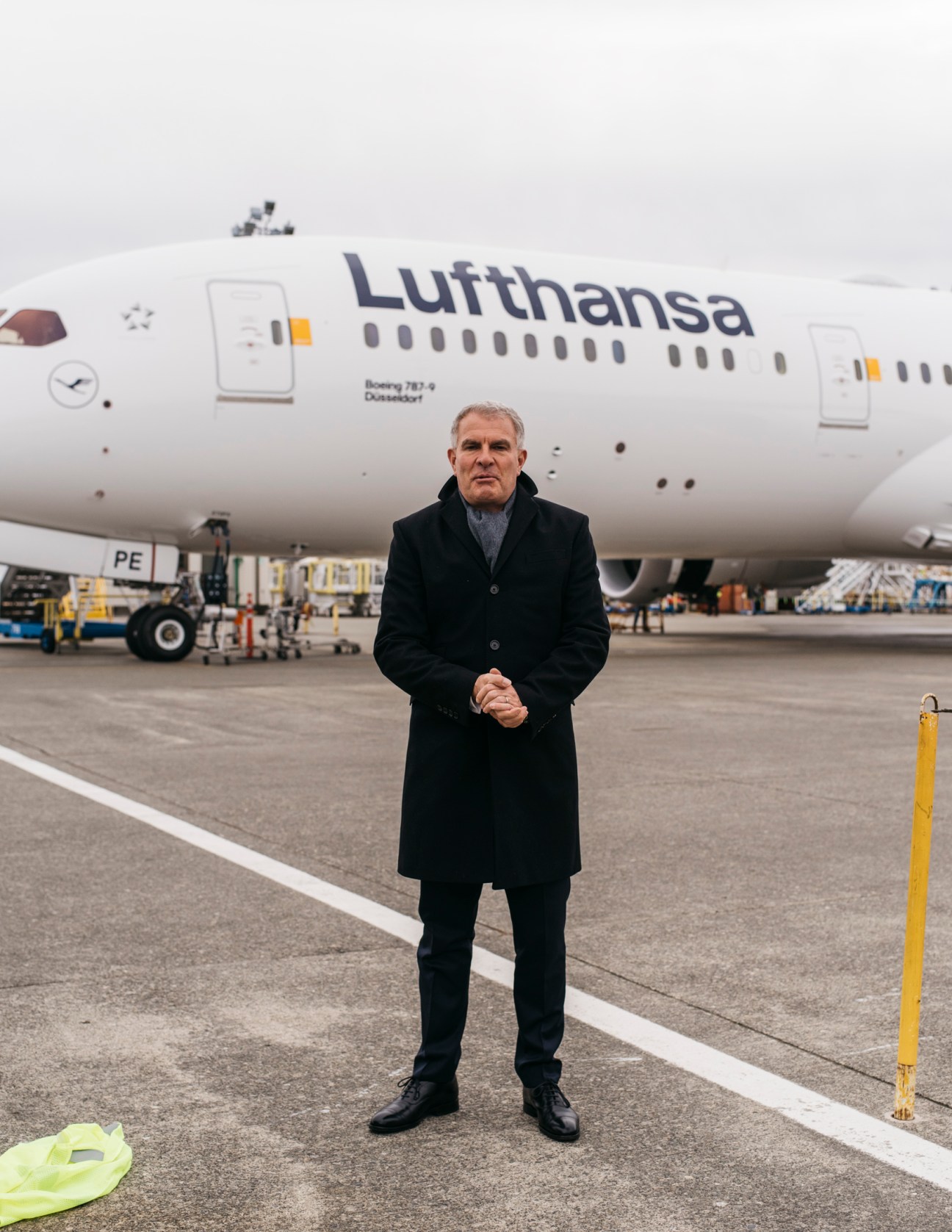
“When the 747 was introduced, people talked about air travel,” says Carsten Spohr, the Lufthansa Group’s CEO. “But in the decades since, too many in this industry have moved towards air transport, which is very different. People need to be hosted again.” The German carrier flies more passenger- carrying 747s than any other airline, in part, he says, because it has the space to deliver the kind of service that Lufthansa wants to offer.
The pandemic was expected to hasten the demise of big jets such as the 747 but Lufthansa already has orders in for the 777-9x, which is even longer, with space for as many as 425 passengers. The 777-9x is considered the inheritor of the jumbo’s legacy; Boeing just needs to deliver it, having delayed the first planes to 2025.
“When it comes to the long-range product, Boeing and Airbus have what a carrier like us needs,” says Spohr. “But when you think about the innovation that went on in the 1960s and 1970s, it makes you realise that we need more of it in propulsion and airframe design. The pipeline for both [Boeing and Airbus] is not as full as we would like. What will be the next mid-range aeroplane after the a320, which first flew in 1987?” Dave Calhoun, Boeing’s CEO, has said that no new planes will be launched until “the middle of the next deccade”. In the meantime, the old Everett factory will build the narrow-body 737 Max, as well as the 767, 777 and 777x.
Nevertheless, the Queen of the Skies continues to inspire. Seattle-based design consultancy Teague has created interiors for many of Boeing’s iconic aircraft, including the 787 Dreamliner, and collaborated with the firm on the cabin architecture of the 777x. Teague’s principal futurist, Devin Liddell, says that, with this latest plane, the objective was to recapture the wonder of flight that the vast 747 embodied. “Connecting with the horizon and the sky is important for passenger experience and wellbeing,” says Liddell. “The windows on the 777x are significantly larger than usual. So even if you’re in a seat that doesn’t directly look out of the window, you still have a sense of the horizon. The bins and the lighting are also configured to create a feeling of headspace.”
In true Joe Sutter style, Teague has built a network of frequent flyers called “the Flying Aces”, which it consults for intel on what passengers and crew need from their aircraft. “We talk about loyalty in aviation but what we actually mean is love,” says Liddell. “We want people to love these things – and people really loved the 747.”
From the cockpit
Mark Vanhoenacker flies the Boeing 787 for British Airways and is the author of Skyfaring and Imagine a City. Here, he gives a pilot’s-eye view of the jumbo’s legacy.
What is it like to pilot a 747?
The aircraft was a dream to fly. One of my instructors was fond of saying, “Mark, it’s just a big Cessna.” It was surely the last non-fly-by-wire airliner that I’ll ever pilot. Early on in our training, pilots are taught that aeronautical engineers must balance two opposing qualities: manoeuvrability and stability. The team that gave us the 747 got it right.
What does the end of its production mean to you?
It’s sad but it’s hard to imagine a more illustrious run. It had such an important role in bringing people and places together that I wonder whether historians will someday rank it alongside the internet in terms of how it shaped the world. It brought people together. Its status as a cultural shorthand for graceful enormity and a more accessible world is assured.
With its shapely hump, the jumbo was visually distinctive. Do planes look too alike these days?
The configuration that you see so often at airports now – a slender fuselage and one engine under each wing – offers so many efficiencies and it’ll be with us for decades to come, I suspect. If aircraft today offer an aesthetic improvement over the 747, it’s in the winglets. The Airbus a350 has its wingtip “scimitars”, which are so distinctive and lovely.
What new plane are you most excited about?
I’m looking forward to the 777-x, which will be delivered to airlines from the middle of the decade. In terms of capacity, it’s a true 747 replacement, while offering huge improvements in efficiency and customer experience. And check out its folding wingtips.
Rising tides
What would you say if we asked you to name the US’s great financial centres? New York, obviously. San Francisco too. Chicago, perhaps? How about Salt Lake City? Maybe not yet. The world of work is spinning fast. The pandemic shook its usual rhythms, while the rise of remote toil has liberated others from their desks. An increasing number of workers are keen to sidestep the city rat race and have the option of visiting a national park or heading to the ski slopes at weekends. That’s why a global bank has just set up a new office in Utah, rather than in downtown Los Angeles or Miami. Goldman Sachs, for one, thinks that its base should be both a hub for existing talent and a place that’s pleasant to call home.
In the race to tempt talent, there are some unlikely urban winners in the US and beyond. Businesses are also increasingly looking beyond the same clutch of global capital cities to recruit a willing workforce and offer new perks for fresh hires. Just look at Thailand: its professional, highly skilled medical practitioners have helped it to become a top – and trusted – destination for medical tourism. To be clear, this isn’t just a repackaging of that tired old story about wealthy firms trying to cut costs and hire workers in less expensive markets – the reason why many British banks outsource calls to India or Italian ones do to Albania.
Here in our global survey of new and emerging talent pools and outposts of opportunity, we talk to the academics putting Vilnius on the map (with laser precision), ask about Basel’s biotech business, look at Lagos’s status as a magnet for venture capital funding and head to the Canaries to talk about the film business. Move over New York, Berlin and Hong Kong. These are the places tempting fresh talent.

1.
Medical tourism
Bangkok, Thailand
The profile of the average tourist heading to Bangkok has undergone a transformation from a budget-conscious backpacker to those shopping for luxury goods, five-star experiences and, increasingly, a medical procedure performed by a world-renowned health expert. A record 40 million tourists visited Thailand before the coronavirus in 2019 and approximately 3.5 million had a doctor’s appointment on their itineraries. Most of the best-known private hospitals are in Bangkok, marketing high-quality healthcare that won’t cost an arm and leg. Bangkok Dusit Medical Services is Thailand’s largest private healthcare group (and one of the world’s biggest). It employs a range of specialists and 12,000 physicians across 49 hospitals and clinics.
“People are a lot more concerned about their health these days and interested in preventative treatments,” says Preawphan Punyaratabandhu, a dermatologist at Bangkok Hospital who also specialises in preventive medicine. Her patients fly in from China and the Middle East for consultations. As the global market for wellness continues to grow, Bangkok’s time as Asia’s top medical tourism destination is unlikely to get old soon.
Thailand’s medical tourism in numbers
1. 59 Thai hospitals accredited by the US-based Joint Commission International – fourth-highest globally.
2. €6,900 spent on healthcare per trip on average.
3. 50 per cent of medical tourists visit Thailand for a full health check.

2.
Laser expertise
Vilnius, Lithuania
Lithuania’s capital, Vilnius, has an ultra-focused talent for lasers. The roots of this prowess are in the Soviet planned economy. “Back then the only place for talented people to thrive was academia,” says Mikas Vengris, a professor at the Laser Research Centre at Vilnius University.
These academics established private companies when the economy opened up in the 1990s and today they produce lasers for everything from mobile phones to medical equipment. As of last year, Lithuania’s laser industry counted 50 companies, employing some 1,400 people; its lasers and optical components are exported to about 80 countries around the world. Those companies have also expanded their talent needs, calling on engineers and programmers in Vilnius and second-city Kaunas. Vilnius University continues to train a new generation; every year many of the institution’s 150 physics students go on to work for laser companies. “We’ve become a factory for making laser specialists for the industry,” adds Vengris.
Vilnius’s top laser talent
1. EKSPLA. Global market leader that makes lasers measured in picoseconds (that’s very, very fast) for research and industry.
2. Light Conversion. Its lasers are used to polish stainless steel and cut heart stents.
3. Quantum Light Instruments. The firm’s scientists and engineers design specialised lasers.

3.
Drama-free banking
Salt Lake City, USA
Far from the chest-thumping excesses of Wall Street, there’s a thriving financial sector in the mountain valleys of Utah that employs more than 91,000 people, many of them in Salt Lake City. The jewel in the state capital’s financial crown is an office of Goldman Sachs but other major banks, such as Wells Fargo, JP Morgan Chase and Discover Products, also have a presence in the city.
What makes it so attractive? Salt Lake City, whose population is about 50 per cent Mormon, has a large homegrown talent pool. “We’re good at having babies here, with a higher birth rate than the national average,” says Jake Maxwell, workforce development manager at the city’s Department of Economic Development. “We’re better equipped to replace the ageing baby boomers.” Most Mormons have travelled abroad and speak a second language, making them desirable employees. Utah’s universities are also aligned with the finance sector. There’s plenty to attract talent too. Utah has five national parks. Government subsidies have helped to foster a rich cultural scene, with downtown Salt Lake City boasting a ballet company, an opera company and the world-class Eccles Theater.
Three of Salt Lake City’s smaller banks
1. Zions Bancorporation. Founded by the Mormon church in 1873.
2. Silicon Valley Bank. Specialises in providing services to start-ups.
3. Mountain America Credit Union. Not-for-profit institution in Sandy, just outside the city.

4.
African technology talent
Lagos, Nigeria
The beginnings of Nigeria’s technology industry can be traced to the middle-class suburb of Yaba. It is home to start-up incubators such as Co-Creation Hub, established in 2011. Soon after, software developer Andela and fintech company Flutterwave, both of them unicorns – companies valued at more than $1bn (€0.9bn) – also sprang up. And since then the industry has spread to other parts of the city such as Ikeja, Surulere and Lagos Island.
Today more than 500 technology start-ups operate out of Nigeria’s commercial capital and, according to data from technology analytics firm Partech, bustling Lagos has attracted more than €2.6bn in venture capital funding in the past three years, with most of it going to fintech companies.
“As the Nigerian tech ecosystem has grown progressively larger over the past decade, Lagos has served as the centrepiece,” says Eghosa Omogui, managing general partner at venture-capital firm EchoVC Partners, which has offices in Lagos. “This means that the best talent is either already there or plans to move there.”
Lagos’s universities supply the city’s technology firms with a steady influx of talent but the industry is also a draw for graduates from neighbouring states. A competitive job market means plenty of people are looking to get into a sector that is seen as an antidote to high national employment figures. “More companies are coming into Lagos because of its diverse talents,” says Sultan Akintunde, co-founder of AltSchool, a Nigerian technology talent training and placement company.
Lagos-based companies to watch
1. Flutterwave. With an estimated value of €2.8bn, Flutterwave allows African businesses to bank globally.
2. Paystack. Provides payment services for online businesses and was seen as Africa’s answer to payment giant Stripe until the Silicon Valley firm bought Paystack for €188m in 2021.
3. Jumia. The online shopping site was valued at more than €2bn when it launched its initial public offering in 2019.

5.
Film infrastructure
Canary Islands, Spain
In UK TV show Doctor Who, Lanzarote, one of the Canary Islands, has passed for the moon. Over the years, the islands’ terrain has been popular with crews seeking wild landscapes, for films including Fast & Furious, the Jason Bourne franchise and Marvel’s Eternals.
Tax rebates have also made the Canaries an attractive location. Foreign productions are entitled to a 45 to 50 per cent deduction on expenditure in Spain. This, along with the work of local film commissions, has fostered a homegrown film scene on islands such as Tenerife and Fuerteventura, and boosted production there.
While most equipment has to be shipped from the mainland, line producers such as Julen Robles believe that the Canaries’ potential lies in its people. “In a few years, many locals will be ready to work in key positions,” he says. But the islands’ model is being recreated in other Spanish locations, such as the Basque Country, where the government has also introduced tax rebates. “Film commissions in the Canary Islands will have to keep working hard if they don’t want to lose out,” says Robles.
Tenerife in numbers
1. €58m profit generated by Tenerife’s audiovisual industry in 2021.
2. 190 productions in the island in 2021, generating more than 8,500 jobs.
3. €18m per episode: ceiling on fiscal incentives enjoyed by TV productions in the Canary Islands.

6.
Multilingual workers
Randstad, Netherlands
Randstad is small but it packs a punch in terms of metropolises, including Amsterdam, Rotterdam, The Hague and Utrecht. It markets itself as a place that can meet international companies’ foreign-language needs – and for good reason. Almost 95 per cent of the Dutch population speaks English; in last year’s English Proficiency Index, the European nation took the top spot. According to Florin Buduroi, managing director of multilingual recruitment agency Adams, people grow up speaking English here and foreigners can get by without learning Dutch. “The education system lets you choose early on if you want a bilingual education,” says Buduroi. It’s no surprise that the likes of Netflix, Nike and Tesla have hubs in Randstad.
Buduroi points out that it’s not just about finding English talent. Most of the jobs that Adams places are for those who speak several other languages; recently he helped a Finnish company move here and hire eight people. Workers can be recruited from other countries but having one of the world’s best education systems means that many of them are already in the Netherlands and looking to join the job market after graduation. “Talent enters the Dutch market via universities and then stays,” says Buduroi.
Firms with HQs in Randstad
1. Nike. More than 2,000 employees from 80 countries work at its European HQ in Hilversum.
2. Maersk. Its sizeable main office in Rotterdam benefits from its proximity to the city’s port.
3. Netflix. Established a base in Amsterdam in 2015. Its staff there has risen from 30 to more than 350.
7.
Life sciences
Basel, Switzerland
Basel is the place to go for biology, pharmaceuticals, medicine and more. It’s home to the headquarters of Novartis and Roche, and juggernauts such as Bayer, Johnson & Johnson and Moderna all have regional branches nearby. They’re just a few constituents in Basel’s vast, 700-company-strong industry.
“There’s a wealth of people with know-how at your doorstep,” says Simon Ittig, CEO of T3 Pharma, a privately held clinical-stage biotech company. “Of my neighbours, over half of them work in life sciences.” The additional presence of 1,000 research institutions, universities, hospitals and clinics have fostered an ecosystem with deep roots. The University of Basel has its own molecular and biomedical research institution and eth Zurich’s biosystems science and engineering departments are in Basel.
That mix of academia and industry has also attracted expats and created cohorts of graduates who move up a food chain of 32,500 employees (a third of them are from overseas), generating some €93bn.
Meanwhile, the appeal of the city of Basel itself should not be underestimated: it offers medieval architecture, a renowned art scene and the Rhine to swim in during the summer.
Basel in numbers
1. €76.5bn worth of pharmaceutical exports from the Basel region every year.
2. €1.5bn in public market financing secured by Basel’s life sciences companies per year.
3. €516m earned in venture capital and private equity by the city’s life sciences companies every year.
Bubbling under
Just after 02.00 on a rainy September night in 2022, seismologists on the Danish island of Bornholm in the Baltic Sea registered a powerful tremor. Measuring 2.3 on the Richter scale, it was detected as far north as the Arctic Circle. Moments later, the pressure inside one of the two Nord Stream gas pipelines, which run underneath the Baltic from Russia to Germany, dropped dramatically. As day broke, a Danish Air Force pilot in an f-16 fighter jet spotted a large area of bubbling water 20km southeast of Bornholm in Denmark’s exclusive economic zone. It didn’t take long for the authorities to work out what had happened: the Nord Stream 2 gas pipeline had exploded and was leaking large quantities of natural gas. The Danish coast guard was dispatched to set up a five-nautical-mile (9.26km) exclusion zone around the site.
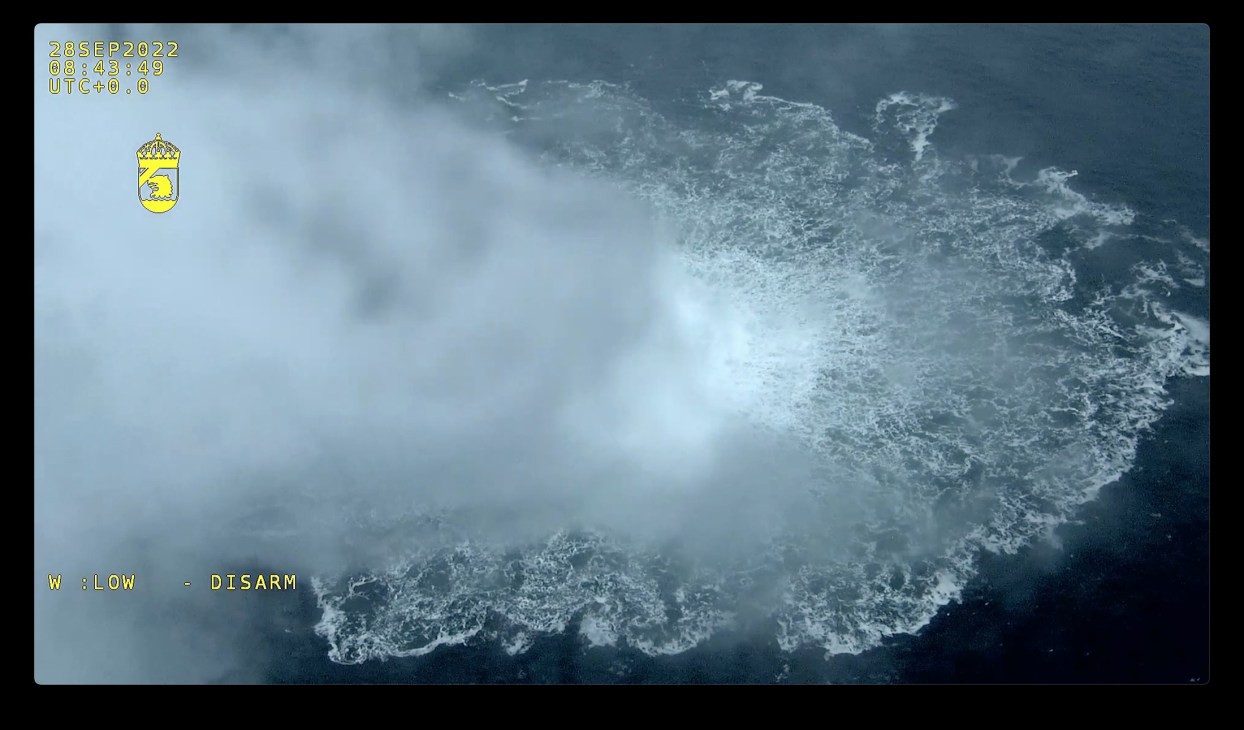
At 19.00, 17 hours after the first blast, another powerful explosion was detected about 70km north, this time in Swedish waters. Two sizeable ruptures were found in the Nord Stream 1 pipeline. As the explosions ripped through the steel and concrete pipes, masses of gas stored at high pressure burst into the sea. Together, these two pipelines have the capacity to transport 110 billion cubic metres of gas a year (more than Germany’s total annual consumption) and have come to symbolise Europe’s dependence on Russia’s natural resources.
These explosions became an international incident and a major news story worldwide. Images of gas plumes bubbling on the surface of the Baltic – at places about 1km wide – flooded TV screens. The Danish and Swedish governments, alongside the EU and Nato, quickly attributed the leaks to sabotage. After a week the gas leaks stopped, having emitted, according to some estimates, as much methane as the whole of Sweden does in a year. All 1,224km of Nord Streams 1 and 2 now lay empty. Danish and Swedish authorities began examining the damaged pipelines but remained tight-lipped about their findings, releasing only a handful of carefully worded statements.
When Monocle approached the Swedish Prosecution Authority for this report, our interview request was turned down with the explanation that “when the prosecutor has something to communicate, such as when the investigation is set to be concluded, it will be done in a new press release”. And despite the months that have passed since the explosions, no underwater images have been released by the authorities – they have come from specialist teams hired by investigative reporters.
On 18 October, navigating the rough seas in a Targa 29 utility boat hired by journalists from the Swedish newspaper Expressen, Norwegian underwater-drone company Blueye Robotics found the damaged pipelines. The drone’s operator, Trond Larsen, was the first civilian to see the effects of the explosion and was struck by the extent of the damage. “At least 50 metres of the pipe was missing”, he tells Monocle. “The 4cm-thick steel pipe, which was encased in 11cm of concrete, was bent and torn with a lot of force.” According to Larsen, the drone found pieces of debris as far as 200 metres from the pipeline, suggesting that the explosion was powerful. “We did not see many large pieces of debris,” says Larsen. “I suspect that the Swedish investigators had already confiscated them.” On Borholm, crew from Danish news channel tv2 piloted an underwater drone to the explosion site and made similar findings.
Three weeks after the explosions, Swedish government investigators were careful not to speculate in public how the attacks had been carried out or by whom. But by then independent experts had much more to go on. “Judging by the extent of the damage, the attackers used several hundred kilos of explosives,” says Mika Tyry, a retired Finnish army explosives expert. Tyry has analysed the scenes of bomb attacks in Afghanistan and is the person the Finnish police call upon for explosives advice. He believes that the Nord Stream attacks required immense skill and co-ordination, as well as knowledge of the pipelines. “To carry out a series of explosions in such a heavily trafficked area, while avoiding collateral damage, is no small feat,” he says. Tyry’s theory is that the explosives were planted by an underwater vessel – a submarine or drone piloted from a surface vessel as inconspicuous as a fishing boat whose transponders were switched off. “Several sets of explosives were placed in carefully selected locations near different parts of the pipeline,” he says, adding that “no single diver can pull this off; this was done by a state”. Tyry believes that the explosives were detonated by a countdown timer, as a remote-controlled trigger would risk revealing where the signal was sent from.
Other experts share Tyry’s view. Hans Liwang, an associate professor at the Swedish Defence University, is an expert in maritime security. “Any nation with a navy could have done this,” he says. According to Liwang, fishing boats, commercial ships and state vessels navigate in that zone all the time. “Any one of them can launch an underwater drone or a small submarine and transport the explosives down 70 metres to where the pipe runs,” he says. But it is not really about who can deliver a few hundred kilos of explosives to the bottom of the Baltic; it is about how they are placed. Both Nord Streams 1 and 2 consist of two parallel pipes. Of these four pipes, three were severely damaged, with only one of Nord Stream 2’s pipes left intact. During such massive explosions, how was it possible that one of the four pipes was left operational? “Either the attack failed in this respect or this was done on purpose,” says Liwang.
Majority owner Gazprom says that it would take up to a year to repair the damage. To this day, however, no repair work has taken place and the area is closed while the investigation continues.
While many Western experts and politicians believe that the Nord Stream saboteurs were probably Russian, only a few have said it out loud. The US energy secretary Jennifer Granholm told the BBC that it “seems” Russia is to blame. “This is clearly an act of sabotage of some sort and Russia certainly is the most likely suspect,” former CIA director John Brennan said in a CNN interview. “Only Russia can really be considered for this,” Gerhard Schindler, the former head of Germany’s federal intelligence agency, told Welt. Others, such as Nato secretary-general Jens Stoltenberg, have chosen their words more carefully. “We will further increase the protection of our critical infrastructure in light of the sabotage of the Nord Stream pipelines,” he said in October.
Russia, for its part, has called the allegations preposterous, countering that the Nord Stream pipelines are a key element in its energy-export infrastructure, which has the potential to bring in billions of euros a year. “This is a big problem for us and the gas is very expensive,” Kremlin spokesman Dmitry Peskov said in September. “Now the gas is flying off into the air.” In hindsight, the decision by Gazprom, the Russian state-owned energy company that runs the pipelines, to halt gas supplies indefinitely three weeks before the explosions could be called into question. The Kremlin has blamed the UK’s Royal Navy, without offering any evidence.
In October, Vladimir Putin said that his country was willing to start selling gas to Europe using the remaining pipe of Nord Stream 2. “The ball is in the EU’s court. If they want to, then the taps can be turned on,” Putin said during a speech in Moscow. Though Putin’s words are usually to be taken with a Baltic Sea’s worth of salt, many commentators have questioned why Russia would commit such a seemingly self-destructive act. The Nord Stream pipelines are a massive source of revenue for the country and an integral part of its 21st-century statecraft, often used to win European acquiescence for other forms of Russian foreign policy, such as the interference in former Soviet countries, by leveraging the continent’s reliance on fossil fuels.
Any attempt to explain the reasons behind the sabotage is at this point theorising but Moscow might well have been using the most effective weapon it had (short of a direct military attack) to destabilise Nato. Moreover, an attack on Nord Stream might actually work to its economic advantage by increasing the price of gas in a globalised market, which Russia still dominates despite Western sanctions. Much of this theorising boils down to asking not who has the most to gain from Nord Stream’s distruction but who has the least to lose. In February, Russia requested that the UN Security Council open an inquiry into the sabotage. “We all know who knows the pipelines best and how to place explosives in such a way that one pipeline remains operational,” says Jens Wenzel Kristoffersen, a military analyst at Copenhagen University and a commander of the Royal Danish Navy. He is convinced that Russia is behind the attack. “No allied nation would sabotage the critical infrastructure of Nato countries,” he adds. “All arrows point east.” According to Kristoffersen, publicly available information sent from vessels’ transponders shows that there was a lot of Russian maritime traffic in this part of the Baltic Sea in the run-up to the explosions. “That and the fact that the Russians have been conspicuously passive in investigating the attacks makes me suspicious,” he says.
There have been other theories. In February, American investigative journalist Seymour Hersh published a detailed account of what he said was a US plot to sabotage the pipelines. Hersh says that the US made the decision to destroy the Nord Stream pipelines, which it has always opposed, so that Russia would not be able to weaponise Europe’s gas dependence. The attack, Hersh claims, was carried out by elite military divers who planted C4 explosives near the pipelines and detonated them using a sonar buoy dropped from a plane a few months later. At first, the theory sounds plausible. After all, Joe Biden previously warned that, “if Russia invades [Ukraine] again, then there will no longer be Nord Stream 2. We will bring an end to it.” Much of Hersh’s theory relies on what he calls “a source with direct knowledge of the operational planning”. But the experts who Monocle spoke to find the idea that Washington was behind the attack unlikely.
“Hersh does not explain why only three out of four pipelines were sabotaged and why there were many hours between the detonations at Nord Stream 2 and Nord Stream 1,” says Liwang. A sonar buoy, he believes, would have detonated all three simultaneously. Tyry, meanwhile, claims that the evidence made public so far, as well as videos from the blast sites, suggests a large explosive device of several hundreds of kilos, which is too big for divers to carry. Then there’s visibility. “The Baltic Sea is one of the most challenging waters for divers; you can often see just a few metres in front of you,” he says. Kristoffersen calls Hersh’s story “fake news”, which reads like “an excellently written James Clavell novel”. He says that his colleagues in the Danish navy have discredited the account. “If this took place during the 2022 Baltops Nato military exercise [as Hersh claims], all navies participating would have known where each and every single warship was and what they were doing,” says Kristoffersen.
Another theory that has been floated is that the attack was carried out by environmental activists. Liwang says that this is unlikely, though he does not rule it out. “Yes, it could in theory be a group that benefits from the uncertainty that such an attack against energy infrastructure creates,” he says. But he maintains that “no one has claimed the attack”, which runs counter to activist groups’ usual tactics. It is also unlikely that activists would have the capacity to carry out such an operation. “A highly demanding sabotage operation like this needs a lot of planning and practice in the Baltic Sea region, known to be among the most challenging waters to navigate,” says Tyry. “It is also highly unlikely that they would have the kind of underwater vessels needed to transport close to a tonne of explosives and attach the detonators without being noticed by sonic surveillance.”
“Whoever is behind the attacks wanted to send a message to Nato that this is what we can do to you – hit you anywhere, any time,” says Kristoffersen. But while sowing fear and uncertainty is straight out of Putin’s hybrid-warfare playbook, it is also something that a terrorist group such as Isis could do. But, says Liwang, “These attackers did not want to be identified which, in my opinion, rules out terrorist groups just as it does environmental activists.”
Every expert Monocle spoke to believes that investigators will reveal who the culprits are. They have already confirmed that they are analysing both the residue from the explosive material as well as the detonator used. But when exactly they decide to go public with the information is also a political decision. “Different laboratories will be able to pinpoint where the explosives were manufactured and that can be cross-checked with who is known to use them,” says Tyry. If investigators in Denmark and Sweden can prove with certainty that Russia was behind the attacks, for example by pointing to explosives that can be traced to a Russian weapons facility, Kristoffersen believes that they might not go public straight away. “Why make an already tense security situation more tense?” he says.Tyry believes it is possible that investigators already know the culprits. “This crime can and will be solved,” he says.
If Russia was behind the Nord Stream attacks, that alone might not change European geopolitics a great deal. After all, Western investigators have already proven that Moscow carried out chemical attacks in the UK and Syria. Russia still denies responsibility for these; it probably would continue to deny responsibility for the Nord Stream sabotage. The geopolitical climate has already changed and these kinds of attacks are not new. The same can be said about the weaponisation of Europe’s energy supply. Still, the Nord Stream attacks mark a turning point. Whoever is behind them has shown how vulnerable Europe’s energy infrastructure is. The continent made a strategic error in becoming reliant on Putin’s Russia for energy and nothing could serve as a better metaphor for that mistake than three exploded pipelines at the bottom of the sea.
Key facts: Nord Stream 1
Runs from Vyborg in northwest Russia to Lubmin in northeast Germany. Financed by Gazprom, Uniper, Wintershall Dea, Gasunie and Engie. Inaugurated in 2011 by Angela Merkel, Dmitry Medvedev, François Fillon and Mark Rutte.
Key facts: Nord Stream 2
Runs from Ust-Luga in northwest Russia to Lubmin in northeast Germany. Financed by Gazprom, Uniper, Wintershall Dea, omv, Engie and Shell. Completed in September 2021 but not opened. Olaf Scholz suspended certification on 22 February 2022, two days before Russia invaded Ukraine.
Images: Getty Images
On the edge
There wasn’t much to indicate that we had strayed into one of Melilla’s restricted military zones. The car’s navigation app had instructed us to keep heading up one of the Spanish city’s many ascents, despite the asphalt road below the wheels turning to gravel and dust. Rounding a corner, we were surprised by a convoy of three armoured personnel carriers on exercise, a mounted gunman brandishing a weapon that was a little too close to our vehicle for comfort. We were eventually waved on by the stern cadets.
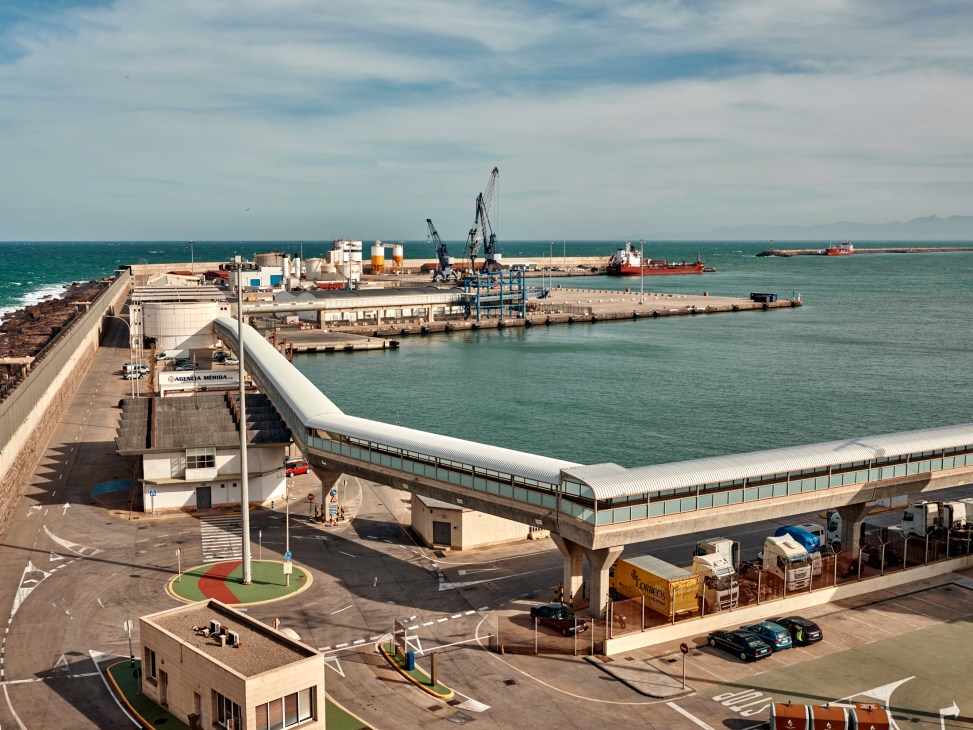
In Melilla, you’re never far from the military, the police or the military police. A realm of the Spanish crown since the 15th century, the autonomous city lies on a fortified rocky outcrop of Africa about 200km southeast of Málaga across the Alboran Sea. Morocco has long claimed the 12 sq km EU enclave – as well as another Spanish autonomous city in the Maghreb called Ceuta, directly opposite Gibraltar – as its own. Alongside a 10-metre-tall double-fence border dividing it from Morocco’s Rif region, there are a plethora of armed personnel here. Some 3,000 troops and 600 members of the Guardia Civil (Spain’s gendarmerie force) make up part of the city’s population of 82,800. Combined with the public servants in town, about half of Melilla’s workforce depends on Madrid for their employment. “This is the last communist city in Europe,” says Gabriel Gonzálvez, making a common quip. “If you aren’t living from the mother country, you don’t eat.”
Gonzálvez is sitting on a mosaicked bench in Melilla’s downtown, a compact area packed with an impressive and surprising array of art nouveau and art deco buildings. Some are in a state of dilapidation from the sun and salty air, making downtown feel like a cross between Barcelona and Havana. Gonzálvez is the president of the Melilla Entrepreneurship Cluster, a group of start-up owners and more conventional workers. “The economic model has always been the border,” he says. His cluster is looking to change the way Melilla works and diversify its industries.
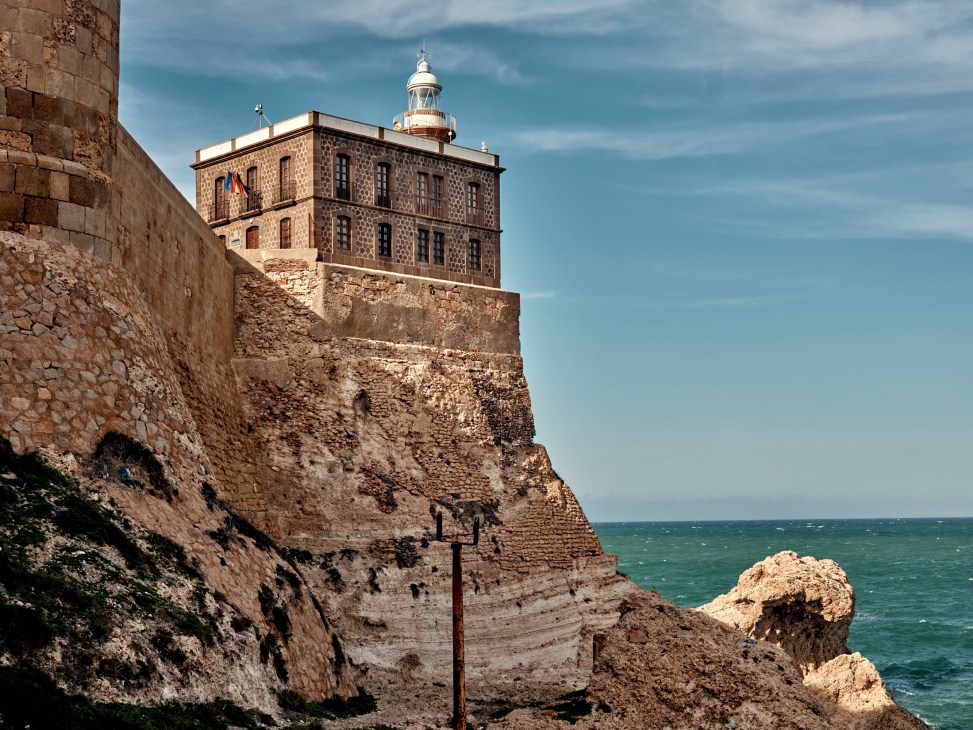
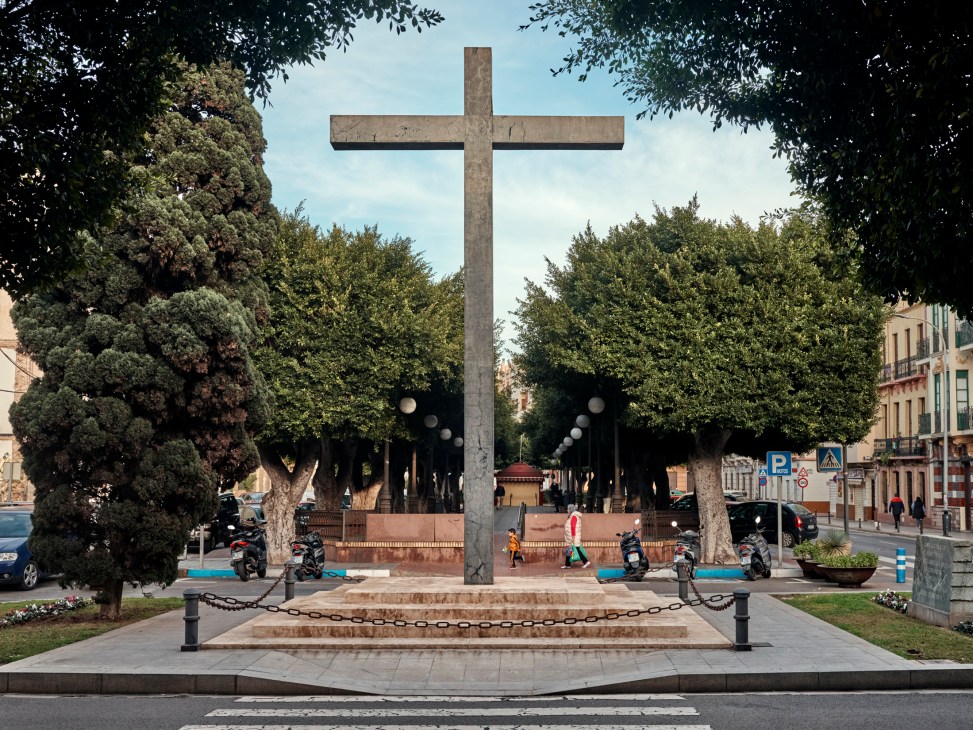
And yet the border has always been an inescapable part of life here. Not long ago, its presence was a minor inconvenience at most. During our four days in town, several people tell us about childhoods in Melilla when the frontier was only demarcated using low-slung concertina wire that one could hop over to spend a weekend in Morocco. Moroccans, in turn, would come to Melilla to buy clothes, head to the beach or sneak an illicit beer. The fruits of this social and cultural mestizaje (mixing) can be felt today: about half the population is Muslim and of Berber descent. Spanish churros are washed down with sweet mint tea, and Tamazight, the Berber language, is as commonplace as Spanish, Melilla’s official language. A five-minute walk from where Gonzálvez sits feels more like Tangier than Tarifa, with teeming streets full of informal sellers – moved on by the police when they can be bothered – and people heading into the yellow-and-green Central Mosque three times a day for prayers.
The fence might have gradually grown over decades – partly due to Spain joining the European Communities (now the EU) in 1986, even if Melilla remains outside the visa-free Schengen Area – but the big change came in August 2018 when Morocco unilaterally closed its customs border with the enclave, upping the ante on its sovereignty claims. Two years later, it used what many analysts see as the cynical context of the pandemic to close the crossing. Although one border post is open, to date there has been no return to the “good neighbour” agreements that allowed residents on both sides of the frontier to cross easily with just an ID card. Currently, Melilla inhabitants need passports to visit Morocco; residents from the Moroccan province of Nador require a passport and visa. It has left Melilla’s estimated 10,000 non-resident and undocumented peoples in a legal limbo, essentially unable to go anywhere. “It’s not an open border,” says Mar Soriano, a lawyer who works for Melilla-based NGO Solidary Wheels, from a tiny co-working space in the city centre. “Only those with privilege pass.” She says that many cross-border families haven’t been able to reunite.
As only one of two EU cities with an African land border, Melilla is also seen as an El Dorado for migrants looking to reach the bloc. That has led many to try to jump the fence, with Moroccan authorities often turning a blind eye. Spain’s defence minister, Margarita Robles, has accused its Maghreb neighbour of “blackmail” by weaponising migration to put political pressure on Madrid. The results have sometimes been tragic: on 24 June last year, nearly 2,000 migrants crossed from their camp in Morocco’s Mount Gurugu area and attempted to scale the border fence. Police ineptitude on both sides and excessive use of force resulted in the deaths of at least 24 people.
Playing on Spanish fears of mass migration may have worked. The European nation began to openly court Morocco last year, culminating in the first bilateral meeting in eight years between the two countries in Rabat in February. Spain, long neutral on the status of Western Sahara, its former colony annexed by Morocco, performed a policy volte-face during this period. It now recognises Rabat’s plans to grant Western Sahara autonomy, which would keep it part of Morocco. Spain is clearly banking on Moroccan concessions over Ceuta and Melilla, alongside a normalisation of border exchanges and better control of illegal migration. But not a lot has changed. “Spain hasn’t fixed anything and hasn’t even accomplished its own objectives,” says Hugh Lovatt, senior policy fellow with the Middle East and North Africa programme at the European Council on Foreign Relations. But it’s Maite Echarte, who works with street children in Melilla, who puts it better as we sip coffee near the city’s la Vieja fortress. “It was a bajada de pantalones,” she says with a smirk. This literally translates as “a lowering of the trousers”, meaning that Spain revealed its hand (and possibly other things) without guaranteeing anything in return for a population that feels Spanish and under threat.


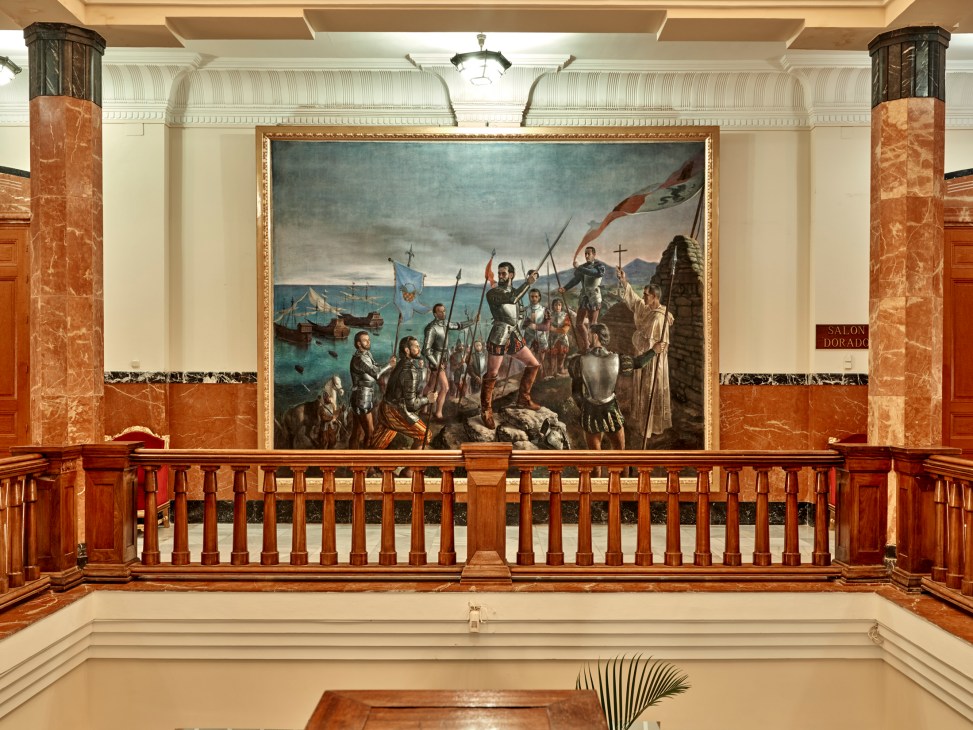
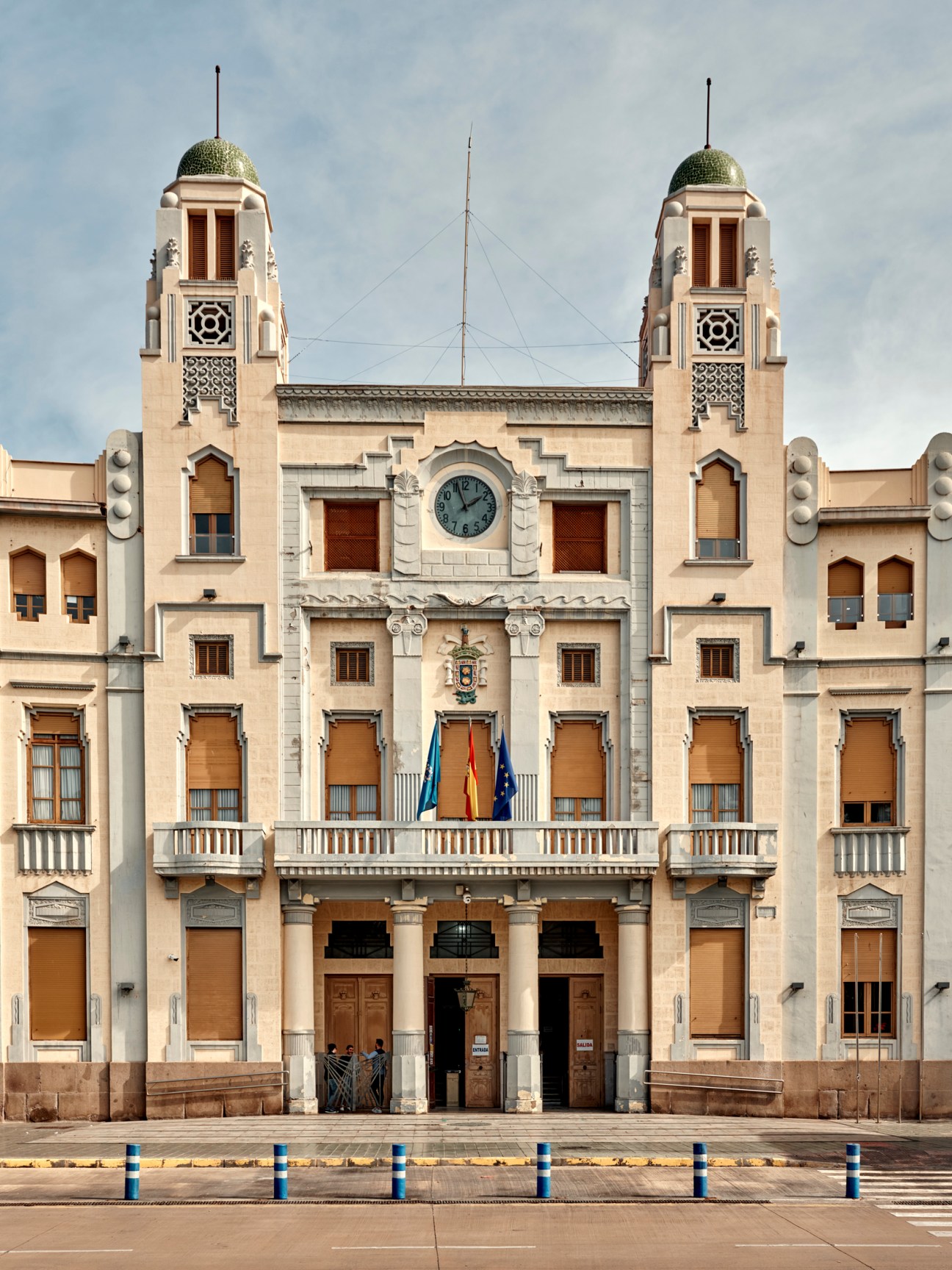
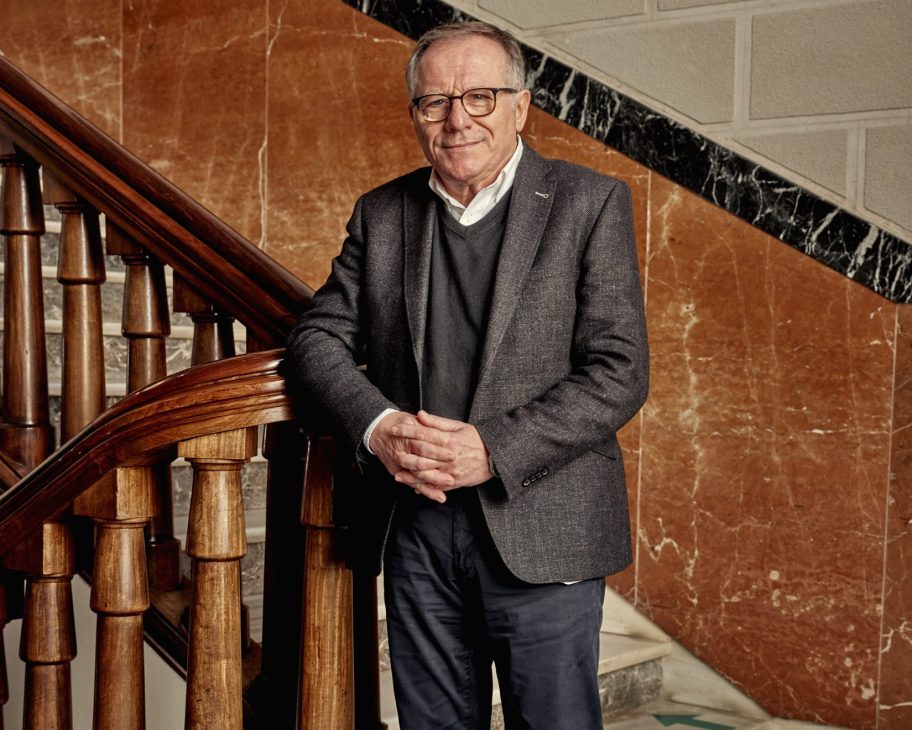
Melilla’s City Hall is one of its finest examples of art deco architecture. Dominated by two small towers, the building’s façade curves with the contours of the square in which it sits. Up a grand staircase, past a giant oil painting of Pedro de Estopiñán, the conquistador who founded Melilla in 1497, leads to the office of the city’s president (essentially a mayor who oversees an assembly), Eduardo de Castro. When we meet, he has just returned from a trip to Madrid, during which Morocco topped the agenda.
De Castro is sitting at his desk next to a trio of flags: one for the city, Spain and the EU. During our chat he glances at a laptop in front of him; it’s not clear whether he’s using it as a crib sheet or multitasking. He says that the purpose of his trip, in part, was to urge Madrid to keep up the momentum regarding rapprochement with Morocco – a country that he accuses of “operating in grey areas” – rather than leaving Melilla in the lurch. But he also recognises that his city needs to shift its gaze.
“Melilla needs to stop just looking to Morocco,” he says. “It needs to find another economic niche.” In the past, that economic niche has been contraband goods flowing to Morocco (euphemistically referred to by many here as “atypical commerce”), something that recent border complications have put a stop to. Aside from defence and government, Melilla doesn’t has few industries. There are no factories or farms and its youth unemployment rate is over 50 per cent. The official population has decreased by nearly 2,000 in two years and finding solutions won’t be easy. Soon, however, it won’t depend on De Castro. Citing ideological divisions in the city assembly, where he sits as an independent, as well as rampant patronage, he admits to being “disgusted” by the way that politics is conducted. When elections are held at the end of May, he will step down after a single four-year term.

Allegations of graft and institutional corruption are nothing new in a city that was dominated for 19 years by the right-wing People’s Party’s Juan José Imbroda. But that isn’t deterring others from stepping up. Standing in the doorway of his HQ, Amin Azmani switches effortlessly between Tamazight and Spanish as he receives food and clothes donated by Melilla’s residents to earthquake victims in Turkey and Syria. As well as being a healthcare official and restaurant manager, Azmani is the founder of Somos Melilla (We Are Melilla), a new political party that claims to be above the city’s political sectarianism. He is adamant that his party will be in the next assembly.
Azmani says that he has a plan to “restore and uplift” Melilla. Alongside recuperating its decimated fishing industry, he thinks that the city can become a centre for everything from education to Mediterranean marine investigation. And then there’s the economic boost of bringing in more military, a surprising policy goal for a former member of Spain’s left-wing Socialist Party. “This means a higher population, more consumers and a better economy,” Azmani says. “There are regions that live from fishing or agriculture, such as Andalucía, and Melilla is historically a military territory. During compulsory military service [which ended in 2001] we had 17,000 military personnel here.”
Just like entrepreneur Gabriel Gonzálvez, Azmani is determined to move beyond border talk. And while he admits to the tension created by the fence, he says that it’s no different to the US-Mexico relationship. Azmani says that Melilla could be an example to the world of cultures and religions living side by side. Alongside the Christian and Muslim populations, there is a sizeable Sephardic Jewish community that found refuge here after being expelled from peninsular Spain in 1492. Counting about 1,000 members, it has seven synagogues in the city. Melilla also has a small Hindu population.
Though run-down in places, it’s hard to deny that the enclave has potential. What it seems to need most of all is a positive branding campaign that would move the story beyond the single issue of migration. Alongside business advantages such as no vat and heavily reduced corporation tax, Melilla’s unique heritage could also appeal to international tourists. It’s something that the city’s official chronicler Antonio Bravo, collector of 5,000 books and 500 magazines relating to Melilla, thinks “could be the future of the city”. But almost everyone Monocle speaks to complains about connectivity. The only way to access Melilla is via either ferries from the mainland, which take at least six and a half hours, or a small Air Nostrum-operated atr-72 propeller plane that departs from a few peninsular cities. While Melilla residents get 75 per cent of the ticket subsidised by the state, there’s a feeling that prices are too expensive to lure tourists. De Castro speaks of wanting to install a price cap, while Azmani suggests a state-controlled boat service.
Nevertheless, air ticket sales are up and 14 cruises are scheduled to stop in Melilla in 2023. Beyond the beaches and clement weather, perhaps it’s architecture that could provide the greatest lure. After Barcelona, Melilla has the highest number of modernista, art nouveau and art deco buildings in Spain. Much of this bounty is down to one man: Enrique Nieto, a Catalan architect who arrived in 1909 and never left, quickly establishing himself as a favourite among a bourgeoise intent on making its mark. Nieto’s designs include City Hall, Or Zaruah Synagogue and the Central Mosque – his oeuvre an enduring testament to Melilla’s diversity. And yet no museum dedicated to the enclave’s architectural legacy currently exists.
Like many others, Jennifer Aragón believes that more needs to be done to promote this side of Melilla. Over juice at Churrería El Mantelete, a no-frills café established in 1955, she explains how she returned to her hometown in 2018 after studying in Granada and living in Latin America. Two years later – just before the pandemic – she set up a tour-guide business that is beginning to take off. While she is honest enough to admit that she needs to be earning a viable living, she adds that her principal motivation is to make Melilla better known to the world. “This city has huge potential,” she says. And she’s determined to make sure that it is realised.

Military symbols
Spain’s armed forces have left their mark everywhere in Melilla. Street names include Spanish Navy Avenue and Lieutenant Aguilar de Mera Street, and there are army bases and restricted areas dotted around town, especially near the Moroccan border. The army’s elite Legion, which Francisco Franco led in Melilla in the 1920s, has a unit in the city, while command barracks are daubed with the words “Everything for the motherland.” Melilla has a complicated relationship with Franco and a statue of the former dictator was only removed in 2021; there’s still a plaque on the house he once lived in. One huge and glaringly fascist monument continues to stand among the art nouveau buildings – something that Melilla will need to rectify if it wants to improve its brand. The 1942 Monument to Spanish Heroes may have had its plaque removed but it’s possible to see the outline of Francoist symbols on one side and graffiti, that someone has tried to scrub out, which reads: “Down with fascist monuments.” President Eduardo de Castro says that he wanted to remove the statue from the start of his mandate but it takes time. “This isn’t a dictatorship,” he says. “It needs to be negotiated.”
Design
Make your marque
In recent years there has been a pattern of brands, from carmakers and technology companies to clothing labels, simplifying their logos. In the fashion world, graphic emblems were deleted from brand guides while wordmarks moved from serif to sans serif fonts, with accents and strokes dropped from the letterforms.
It was a logical step for many companies – including Balenciaga, Saint Laurent and Balmain – as the simpler forms, without the flicks and flourishes of a serif typeface, are more accessible in a range of scales and mediums, whether on a computer screen or a shirt. But the tide appears to be turning. Burberry, which began using a sans serif logo in 2018, recently joined the likes of Bottega Veneta and Salvatore Ferragamo in reverting to a serif typeface; it also reintroduced its equestrian knight motif from 1909 in a new shade of light blue.
Burberry’s move should be lauded. The change marks a return not only to the brand’s roots but to the very essence of the need for branding: to make a company stand out and be readily recognisable among its competitors. In dropping the sans serif font and moving away from wordmarks that look similar to those of other fashion houses, Burberry has brought some visual distinction to its brand.
From an identity and marketing perspective, this makes sense too. Burberry, under new creative director Daniel Lee, is attempting to reassert itself as one of the top international luxury brands. To do this, it needs to tap into its heritage: serif fonts, unlike the sans serif typefaces popularised in the 20th century and movements like the Bauhaus, have been used since antiquity and so carry the necessary weight and sense of history.
This move by Burberry is a reminder that adjusting logos and wordmarks to follow a trend or to pair better with new technology can strip away a brand’s all-important heritage. For those concerned about a move towards sameness, as other fashion houses might follow suit, fear not: serif fonts allow for more differentiation between typefaces thanks to the ability to vary the height, weight and slant of the text. Additionally, the presence of these accents and strokes helps to create distinction between letterforms, making such fonts easily legible even when used on smaller formats, such as phones or clothing tags. The serif, then, can be safely welcomed back.
Nic Monisse on…
Why trade halls matter
“Do trade halls still matter?” asked Lise Refslund Kirkegaard, head of brand marketing at Carl Hansen & Søn, over dinner at Stockholm Design Week. Responsible for much of the Danish furniture firm’s events, Refslund Kirkegaard was mulling over whether there was merit in brands and designers continuing to attend such shows, where extravagant stands display their work.
It’s a valid question. Traditional trade fairs are competing with numerous spin-off design weeks that now take place in city centres, where there’s natural foot traffic and existing showrooms. In Milan, Salone del Mobile (taking place from 18 to 23 April this year) competes with Fuorisalone in the city’s design district, while 3 Days of Design in Copenhagen has ditched the trade hall altogether. There’s understandable concern but Stockholm Design Week, where Refslund Kirkegaard raised the question, might hold some answers.

Think smaller
Recognising the need to make trade fairs easy to navigate for attendees, organisers have been rightsizing furniture shows. Stockholm kept its fair to just three halls, while Salone del Mobile’s 2023 iteration will, for the first time, see all its exhibitors displaying on the ground floor of the multi-level Fiera Milano.
“Everyone’s here and everyone’s really positive,” says Bo Hellberg, chief marketing officer at Swedish brand String Furniture. “You meet your friends and competitors and have conversations about work. The social part of the fair is super important.”
Walking Monocle through String’s stand, Hellberg talks of the importance of having a central gathering point for the industry as well as championing emerging design.
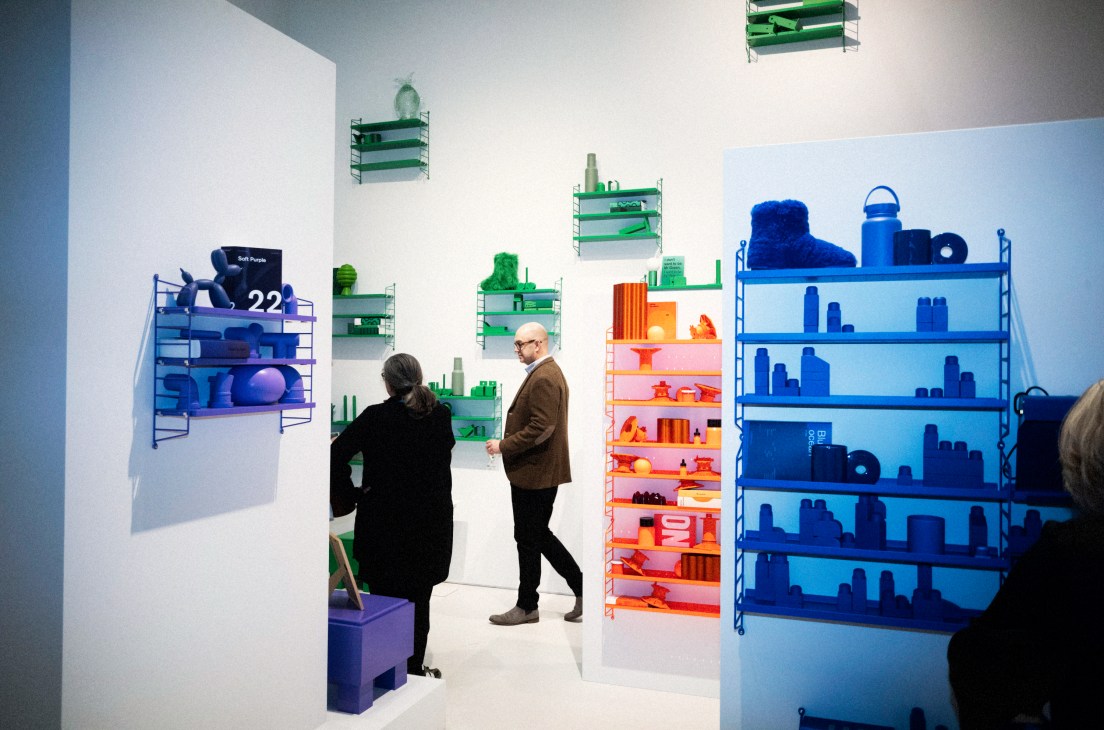

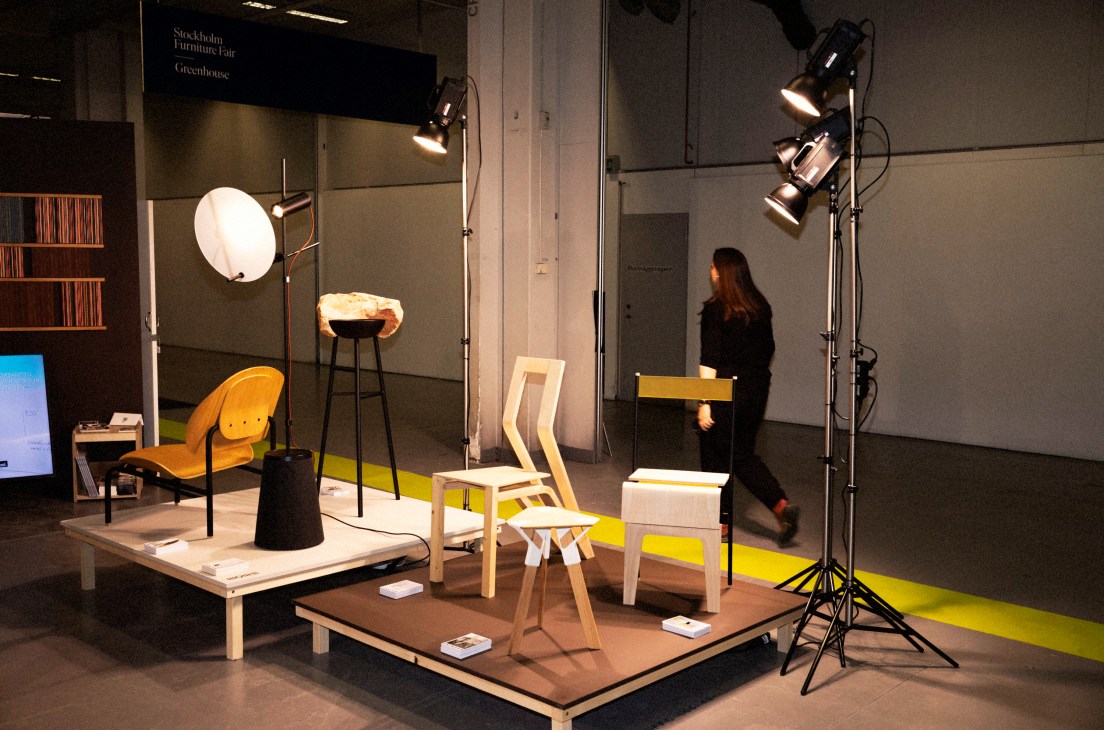
The headline act at the fair was Greenhouse, an area for new talent; this year it was busier and buzzier than the stalls of established brands, with many of those firms also getting involved in Greenhouse. String, for instance, presented a scholarship to design student Daniel Odentia, helping him further his studies, while just beyond the Greenhouse section, acoustics company Baux displayed the efforts of eight young designers commissioned to research the link between materials and wellbeing.
“As a designer, it’s important not to be closed off in your bubble,” says Kristin Erlendsdottir, an interior architecture student presenting her work with Baux. “And that’s exactly what you can get here. To meet people and brands, and talk and share experiences is really important.” It seems, then, that the trade hall still matters.
Images: Felix Odell
Urbanism
Retail
London
Travel in style
There are few transit systems as instantly recognisable as London’s underground network. Managed by Transport for London (TfL), its quintessential map design, created by Harry Beck 90 years ago, circle- and-bar logo and nickname, the Tube, are all intrinsically linked with the city.
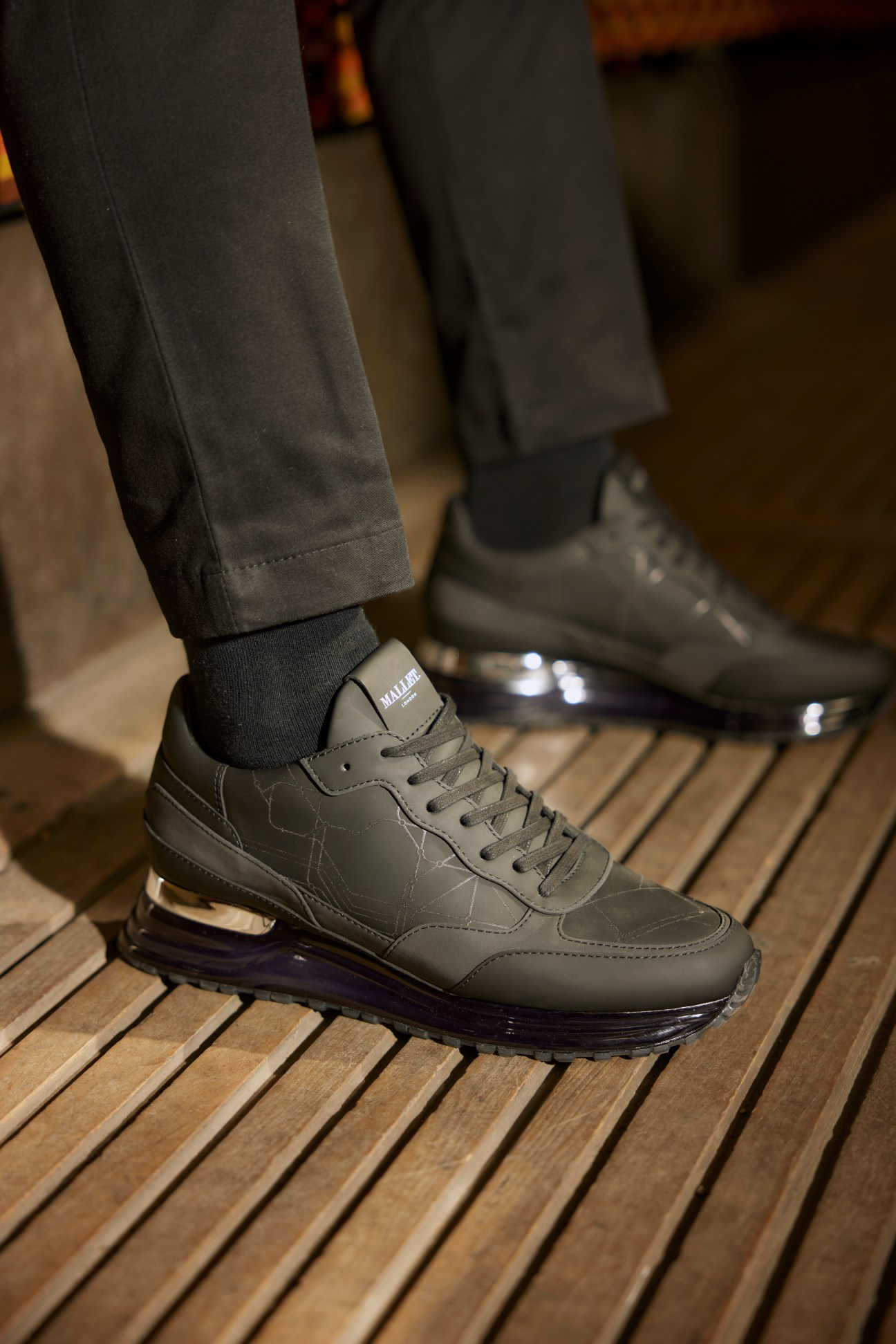
And this is precisely what makes TfL’s latest venture, a collaboration with premium UK footwear brand Mallet, a significant one for Londoners. The limited-edition capsule collection sees the launch of two styles of Mallet Knox trainers. A black pair has Beck’s design printed on its side in tonal white, while a white version is decorated in reflective grey. Branded laces, a TfL key chain and a wallet for your Oyster card are also included in the box.
“We wanted something spectacular and a design that’s usable,” says Ellen Sankey, the brand licensing manager at TfL. “Because when you look at the TfL brand, that’s why people like us: good design that works and that has a purpose.”
As for what that purpose is, in the context of this collaboration? Well, it’s a chance for the shoe owners to wear their civic pride – and for TfL to express its own identity beyond its network of tunnels.
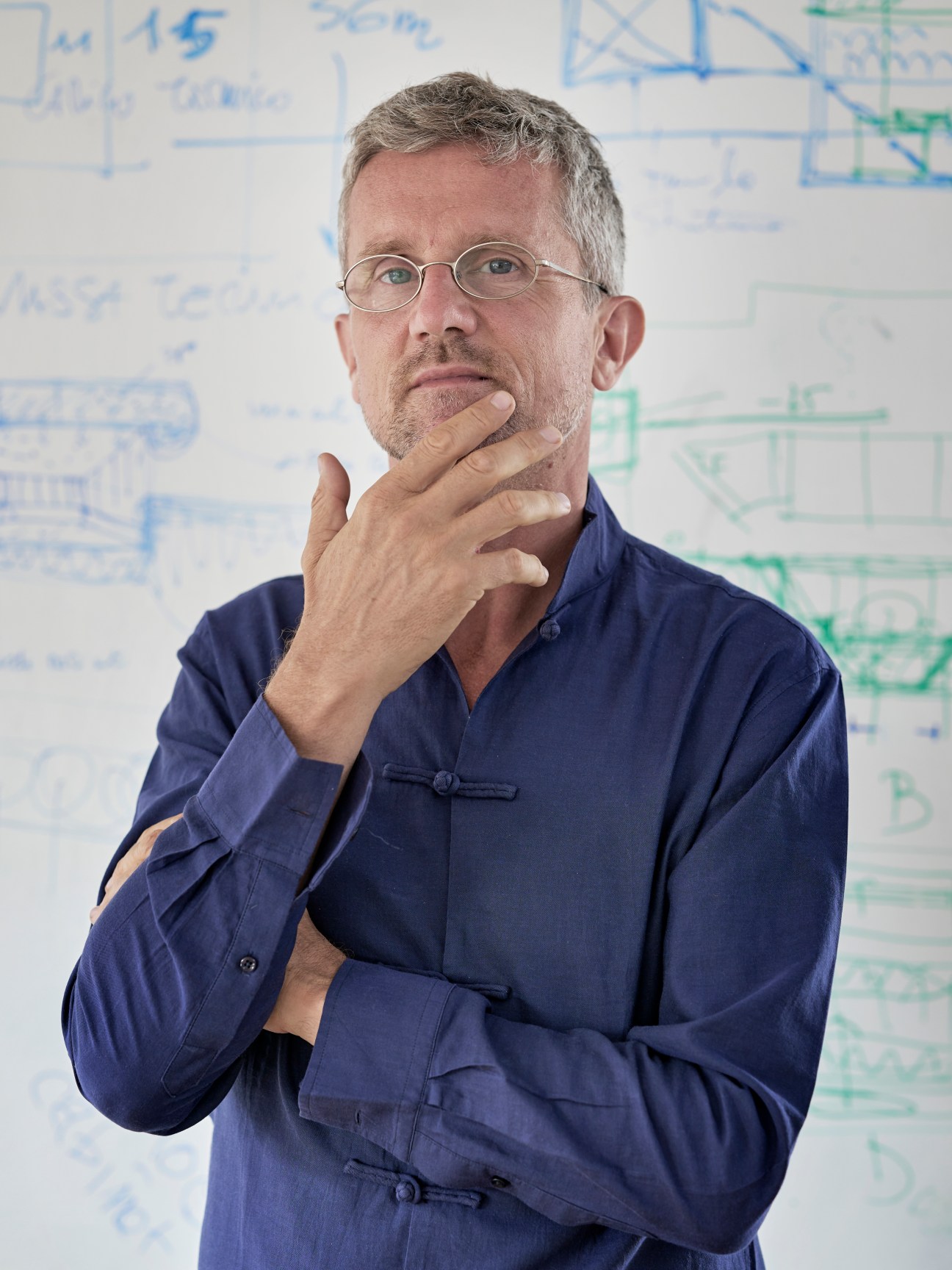
Urbanism
USA
Q&A
Carlo Ratti
Director, Senseable City Laboratory, MIT
Planning for rapid urbanisation is at the core of Italian architect Carlo Ratti work. Here, he explains the issues at hand.
You focus on the intersection of nature-based solutions, artificial intelligence [AI] and technology to build a better world. How do they complement each other?
We need to bring them closer together. On the one hand, you have nature itself: using trees, greening and so on in the built environment. But on the other hand, it’s also about using AI and technology so that buildings can respond [to changes in the environment] in a dynamic way.
How do we retain the traditional ways we live while also using technology in new developments?
If you look back at the 20th century and cities that were built from scratch – Brasília in Brazil or Chandigarh in India – the feedback loop is missing. You have to test things and see what works and what doesn’t.
So we need to build in a way that allows for trial and error in the incorporation of new technology?
Yes. Sometimes architects think that the final solution is fixed. But the reality is that they might have missed a few things.
For more interviews with city leaders and architects, tune in to The Urbanist on Monocle 24 at Monocle.com/radio
Education
Cape Town
Learning curve
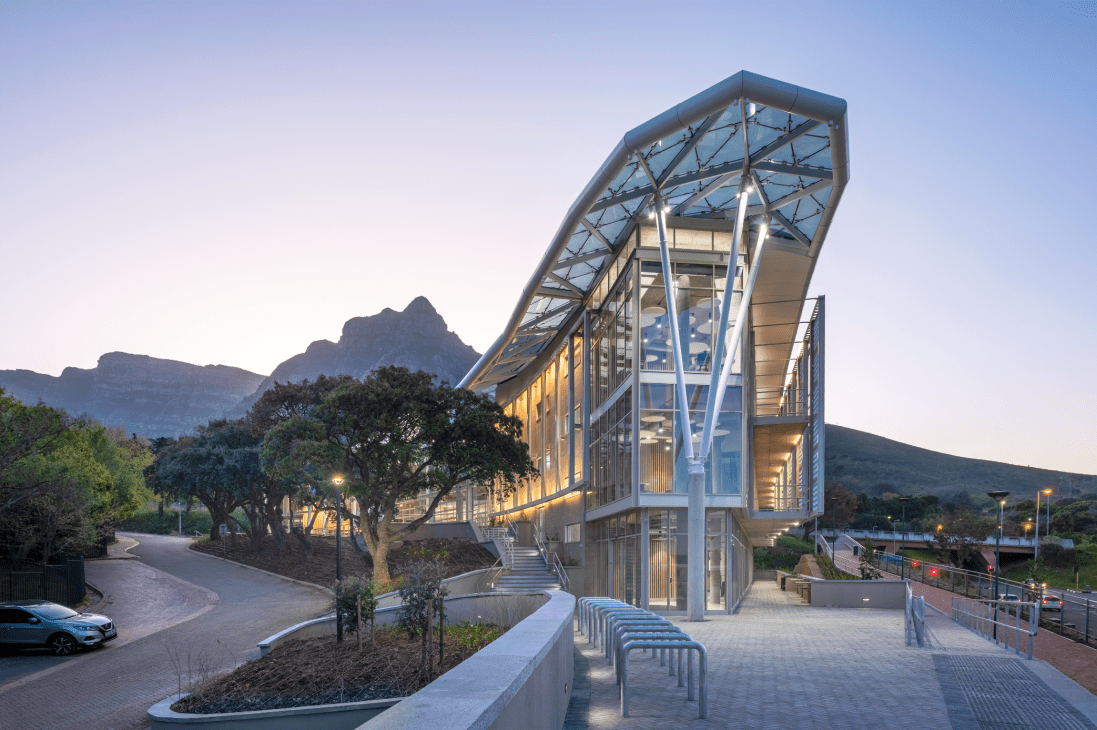
The Hasso Plattner D-School Afrika is the continent’s first purpose-built school of design. Founded and funded by the Hasso Plattner Foundation, a German non-profit, the new institution in Cape Town is set in a glass building designed by kmh Architects. Its flexible learning spaces have modular furniture and walls lined with whiteboards, and a testing room contains materials for building prototypes. “It’s a blank canvas that can be transformed into a learning environment,” says Fehraad De Nicker, the school’s communications manager.
Students work towards physical prototypes and are taught to redefine problems. “Can you design a faster queue for the aquarium?” says De Nicker, giving an example. “It’s how engineers and architects are taught.” The result is an opportunity for professionals and graduates to enhance their skills. Here’s hoping that the school leads its graduates to innovative solutions to urban problems across Africa.
Images: Alessandro Albert, Mallet London
Culture
Education
Comic tips
Hester Underhill on the school for aspiring comic-book authors and why you must be quick on the draw to attend.
When Berta González and Alfredo Borés started running comic-book workshops in Barcelona last year, they assumed that it would be their classes for children that filled up fast. But, to their surprise, the sessions for adults quickly became oversubscribed. People of all ages soon started flocking to La Gossa, the pair’s school in a former ceramics atelier in the city’s Gràcia neighbourhood. Borés, an illustrator and comic-book artist, runs daily, 90-minute classes on how to draw, write and structure zines and graphic novels. “One thing that we tell all of our students is that it doesn’t matter how well you can draw,” he says. “We’re focusing on the narrative part: how to tell a story.”
Though Spain’s illustrated-publishing sector is not quite as big as the graphic-novel market in France, it is still among Europe’s biggest and Barcelona has long been the epicentre of the nation’s independent-comic scene. “In the 1980s there were a lot of underground magazines being published in the city,” says Borés. “There’s a new wave appearing today. New authors are producing cool stuff that’s totally different to mainstream comics in terms of format and narrative.” Publishing houses such as Apa Apa Cómics and Sapristi have helped to bolster this resurgence. “They’re being really bold with what they publish; it’s scary to create something so different.” Still, despite the city’s thriving network of shops, publishers and book fairs dedicated to the medium, Borés and González realised that there were few services to help aspiring creators get a foot in the industry’s door. “We wanted to attract people who are just starting out and might not know the comic-book world,” says González, a graphic designer by trade. “But mostly we wanted to create a space for students to draw, meet people and have fun.”
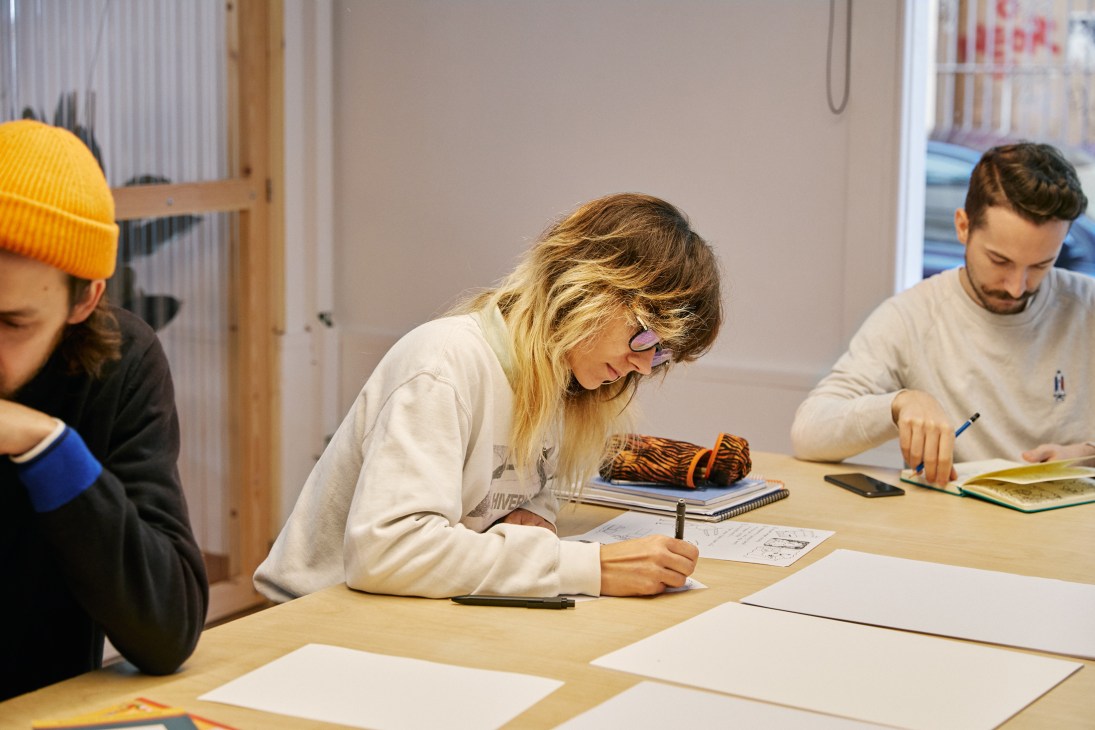
In the classroom, Borés guides up to 10 students through exercises on topics such as constructing a narrative using as few images as possible or experimenting with different ways of writing dialogue. “We often have to explain to them that creating a comic takes a lot of planning,” he says. “You can’t just start drawing; you have to write a script, create a storyboard and develop your characters.” Students also study works by other authors for inspiration, leafing through a library of titles that include US cult classics Ghost World and Black Hole, as well as publications by Catalan artists such as Marc Torices and Genie Espinosa.
The school is also home to a café, where González serves flat whites in cups emblazoned with an illustration of La Gossa’s mascot, the couple’s dog, Yuba. The latter is also the school’s namesake (gossa is Catalan for dog) and can be spotted welcoming visitors with tail wagging or napping by the window. “We want to do more exhibitions and book presentations here,” says González. “La Gossa isn’t only for the students; it’s a place for conversations to happen around comic books.”
escolagossa.com
Music
Pressing matters
At the stroke of midnight on Friday 21 October last year, pop star Taylor Swift released her tenth studio album, Midnights. It broke a slew of records, including becoming the best-selling vinyl album since US sales began being tracked in 1991. If you picked up a copy, there’s a high chance that your disc was produced at Precision Record Pressing (PRP), one of North America’s largest manufacturer of LPs. Headquartered in the city of Burlington, less than an hour away from Toronto, this company is one of half a dozen of presses in an area that’s become a global production hub for vinyl. “It’s nice to have some personal connection to these artists and be a part of the mechanics behind how their music gets a physical release, even if they will never know my name,” says Paul Miller, PRP’s senior vice-president of sales. The company’s manufacturing facility is equipped with 35 presses that produce up to 7,500 discs every day.
When PRP was founded in 2017, it was something of an outlier in Canada. At the time, the bulk of vinyl pressing was undertaken in Germany and the US, meaning that the waiting list for producing a record could be anywhere between six months and a year. Demand has continued to surge since: the international vinyl sector was worth more than $1.5bn (€1.4bn) in 2021 and grew by 22 per cent in the US last year, marking 17 years of consistent growth. Today it would be unthinkable for a major artist to release a new album without a run of LPs to accompany it. “Almost every artist gets a vinyl release,” says Trevor Larocque (pictured), co-founder of Toronto-based label Paper Bag Records and owner of the city’s Tiny Record Shop. “And nine times out of 10, it’ll sell out.”
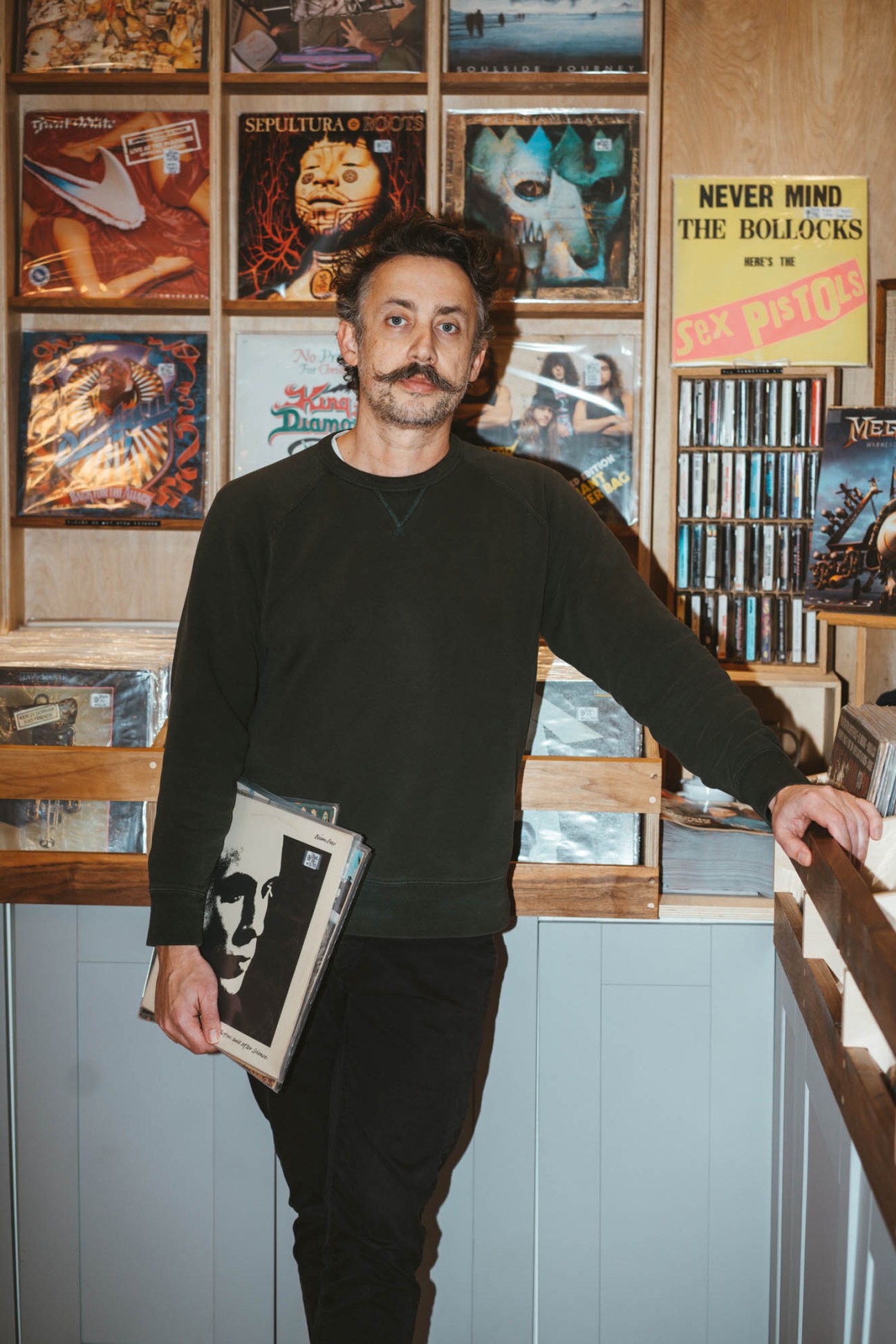
All of this has put pressure on manufacturers. “The market is expected to increase by 4 per cent this year,” says Miller. While technology can help companies expand production capacity, the way that LPs are made has hardly changed since the first long-playing record was pressed by RCA Victor in 1930. Miller is buoyant about embracing the challenge. “It’s been difficult to innovate when you’re just trying to meet demand,” he says. “But record plants are going to be pushed to become the best version of themselves. How do we evolve the pressing process, either through new compounds that are more environmentally friendly or through other technology, to make interesting new effects in colour or in sound? Those conversations are alive at the moment and we’re thinking about that a lot.” Now that vinyl has its success pinned down, the industry is getting ready to spin in a new direction.
precisionpressing.com; tinyrecordshop.com
Art
Zoning in
The eyes of those who remember The Zone – once “Los Angeles’s most popular private club for men” – will glaze over eyes if you ask them what a night out there was like. The venue, a fixture of Hollywood hedonism, closed in 2019 but its old digs are now the home of the UK’s Lisson Gallery’s first West Coast outpost – its seventh space internationally. “LA is how Berlin was 15 years ago,” says Lisson’s CEO Alex Logsdail. “So many artists are moving here, or looking to, because you can get a large studio – and they want to be shown here.”
Lisson has joined a clutch of long-standing galleries clustered around Sycamore Avenue. It’s also arriving amid a flurry of new openings: Hauser & Wirth now has two spaces in LA, New York’s David Zwirner is in the process of refitting a gallery in Melrose Hill, and there have been other arrivals from outside the US, such as Francis Gallery from the UK. The combination of a growing collector base and a group of acquisitive, expanding museums is what’s enticing many gallerists out here. Logsdail sees this move as an investment. “You feel pretty far from everything out here and exist on LA time, which gives you space to think.”
lissongallery.com
Media
Q&A
Line Chawaf
Founder, Rozana Radio
Line Chawaf founded Rozana Radio in the Turkish city of Gaziantep after leaving Syria 10 years ago. It now broadcasts to more than 10 million listeners across northern Syria and southern Turkey, the earthquake-struck region that needs accurate news more than ever.
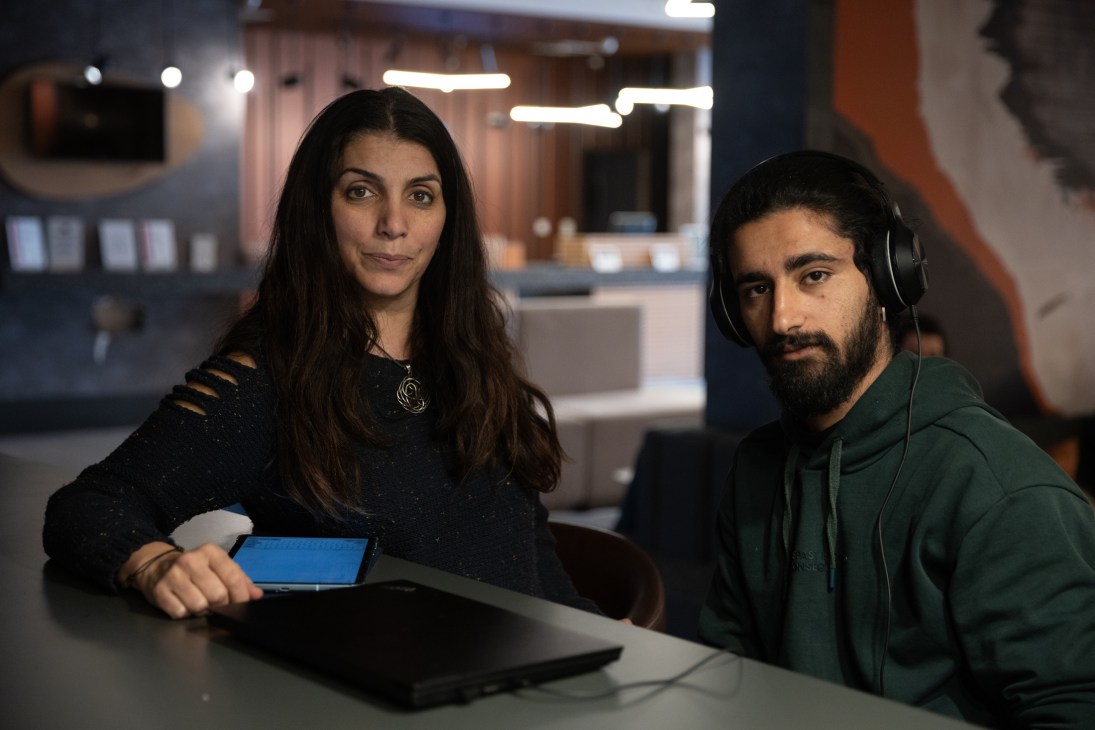
What are your priorities in terms of coverage?
We do a lot of service and solutions-oriented reporting, targeting the everyday needs of our listeners. We have reporters who go into the camps and report on specific shortages and needs of the residents. We have shows with legal experts, mental-health and education specialists. We also have a weekend women’s programme to make them aware of their rights.
Has your mission changed?
In the beginning we were all news. As the displacement and refugee situation changed to a long-term crisis, we stayed here in Gaziantep, even after the border with Syria closed, and switched to focusing more on analysis and community support. It’s about keeping a connection with Syrians on both sides of the border.
What lies ahead?
We want to produce more new formats that encourage people to speak to each other across political and geographical boundaries. And we want to keep training young Syrian journalists.
rozana.fm