Issues
Cold war modern
In 1961, just weeks after the Berlin Wall has been erected, a new cultural landmark in the well-to-do neighbourhood of Charlottenburg opened its doors for the first time. Its modernity and dextrous use of glass and concrete marked it immediately as a symbol of a Germany that is determined to shake off its Nazi past and take a stand against what is happening in communist-controlled East Berlin.
The low-slung grey façade of the Deutsche Oper looks out on busy Bismarckstrasse. Even today, the institution remains true to its postwar ideals of transparency and of looking forwards. “Our mission has always been to be very open,” its general artistic director, Dietmar Schwarz, tells Monocle. The opera, he says, was originally founded here in 1912 in a baroque-revival-style building and it catered for the bourgeoisie of Charlottenburg, then an affluent independent city.
Yet its fate has always been linked to the zeitgeist and, after a couple of relatively uneventful decades, it became the property of the Nazi government in 1934. Joseph Goebbels’ Ministry of Propaganda knew the importance of putting on a show when it came to swaying public opinion and the theatre was used to stage nationalistic productions. A “Führer’s Box” was installed; Adolf Hitler, Goebbels and other Nazi leaders personally attended the opening of the redecorated opera house. Before the end of the Second World War, however, it was destroyed in a bombing raid.
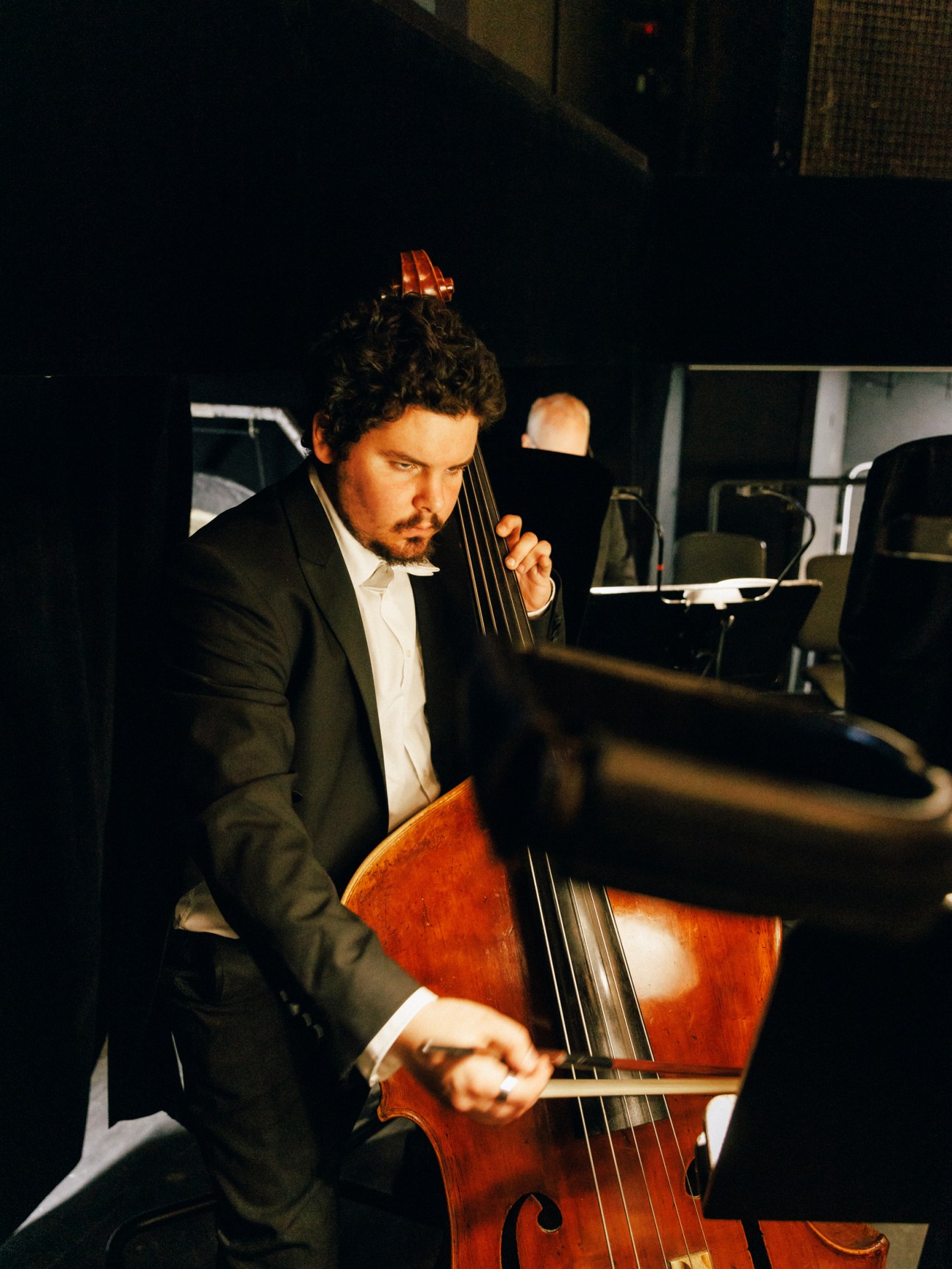
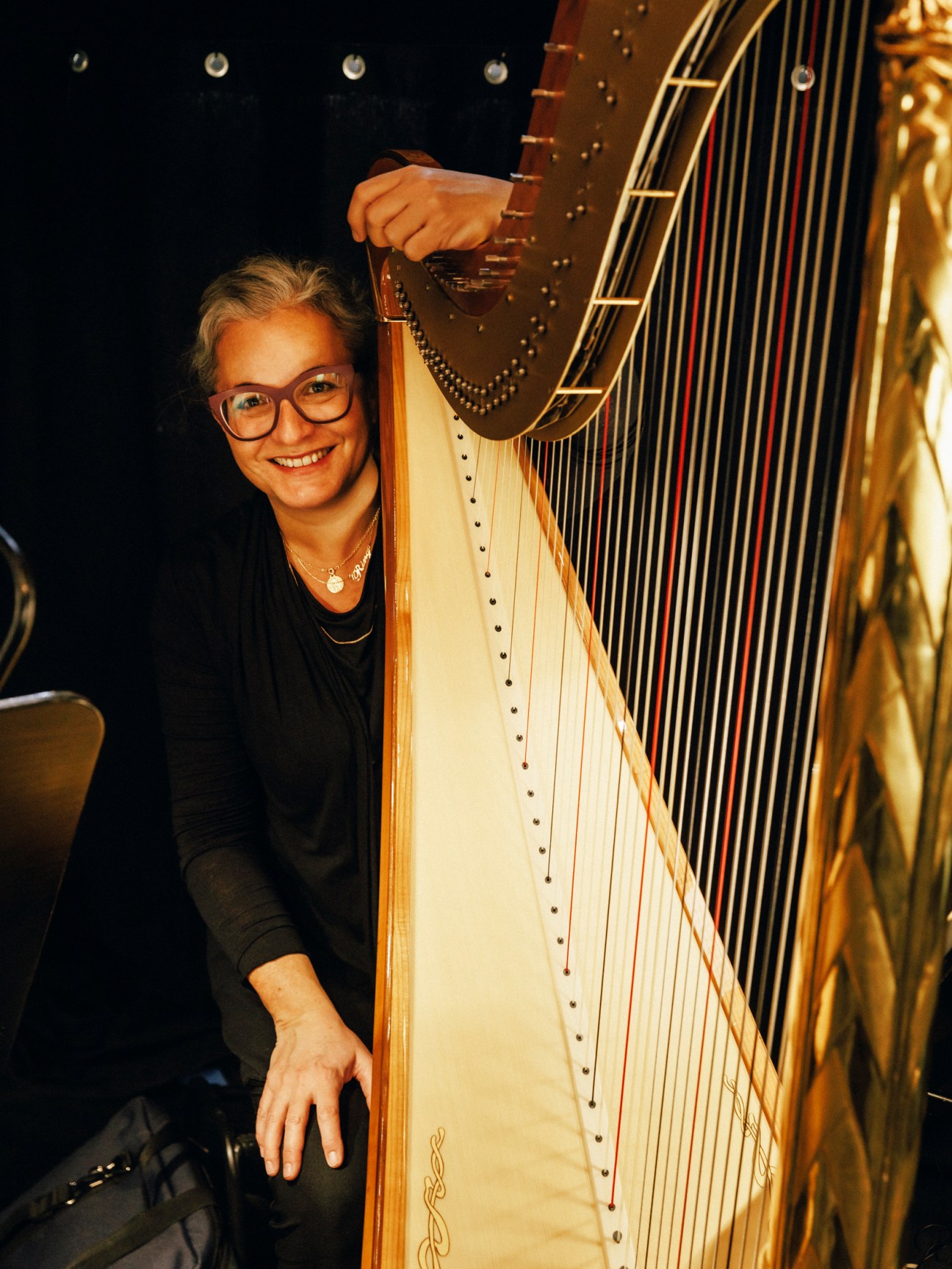
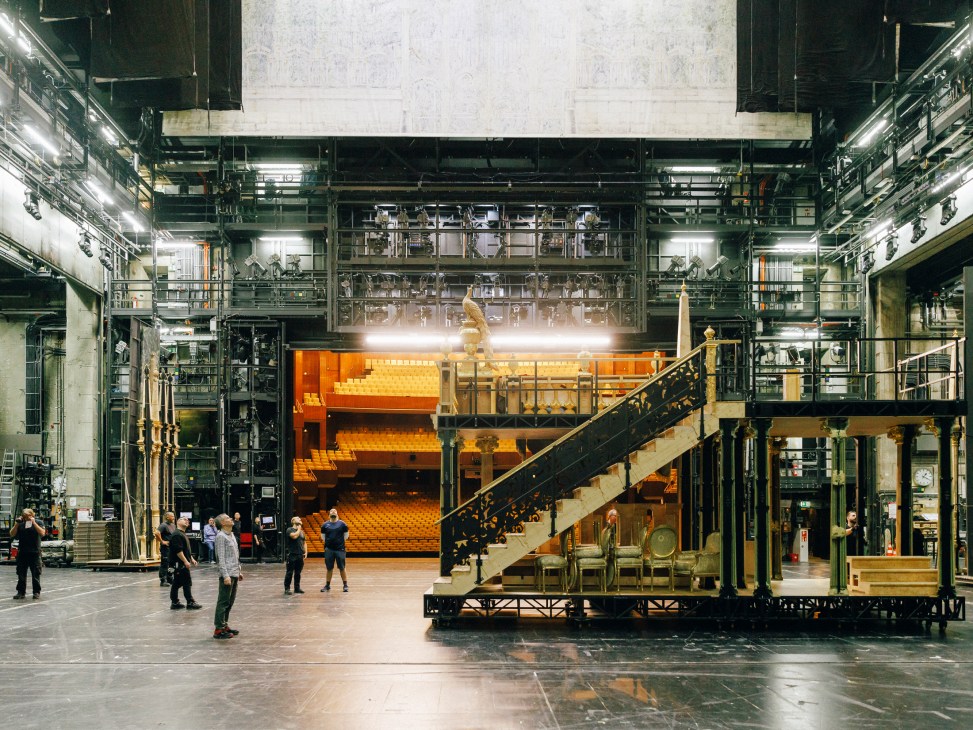
In the 1950s, Berlin-born architect Fritz Bornemann was given the task of creating a new space on the same site. A smart figure who was often snapped wearing dark glasses, Bornemann had already worked on the Amerika-Gedenk Bibliothek in Kreuzberg by the time he was chosen. His Deutsche Oper building took on an even greater significance when the Berlin Wall sealed off the German capital’s two other opera houses – the neoclassical Staatsoper Berlin and the Komische Oper Berlin – in the Soviet-controlled East.
“The task [of the building’s architecture] was to show off transparency and democracy,” says the opera’s current head of dramaturgy, Jörg Königsdorf, as he leads Monocle through the doors into the building’s airy lobby. To achieve this, Bornemann drew on its original 1912 layout and footprint but broke with the vernacular of collonaded, marble-clad opera houses. “Bornemann radically rejected the traditional dignified formulas of theatre construction,” says Frank Schmitz, a professor of architectural history at the University of Hamburg and the author of Spiel-Räume der Demokratie (“Playgrounds of Democracy”), a book on mid-century theatre design. He draws attention to the absence of allegorical representations of antiquity: no Apollo, no Muses. “The Deutsche Oper was the counter-image of the Staatsoper, which was faithfully restored on the outside after severe damage during the war, complete with its columns and gilded inscription,” he says.
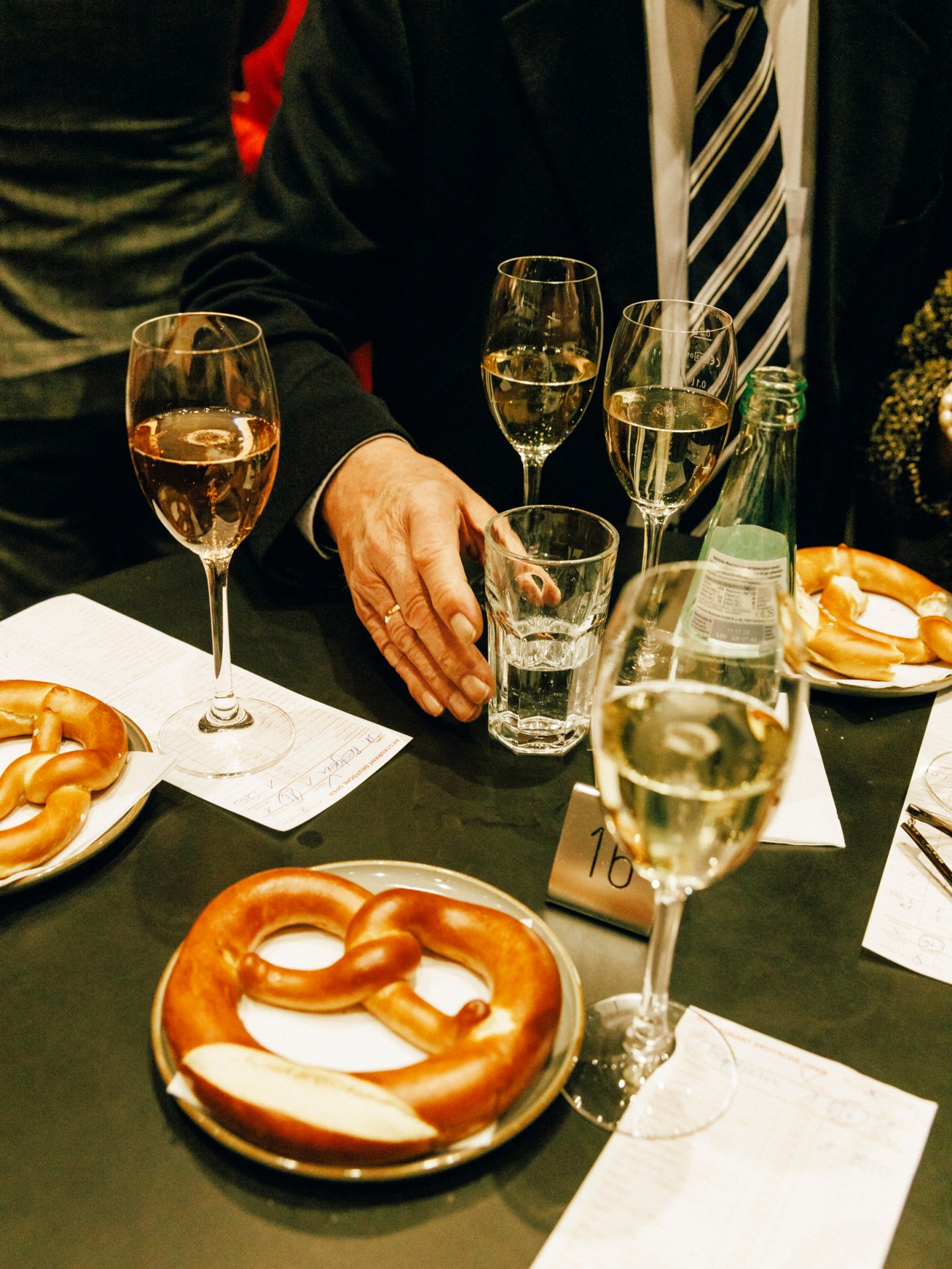
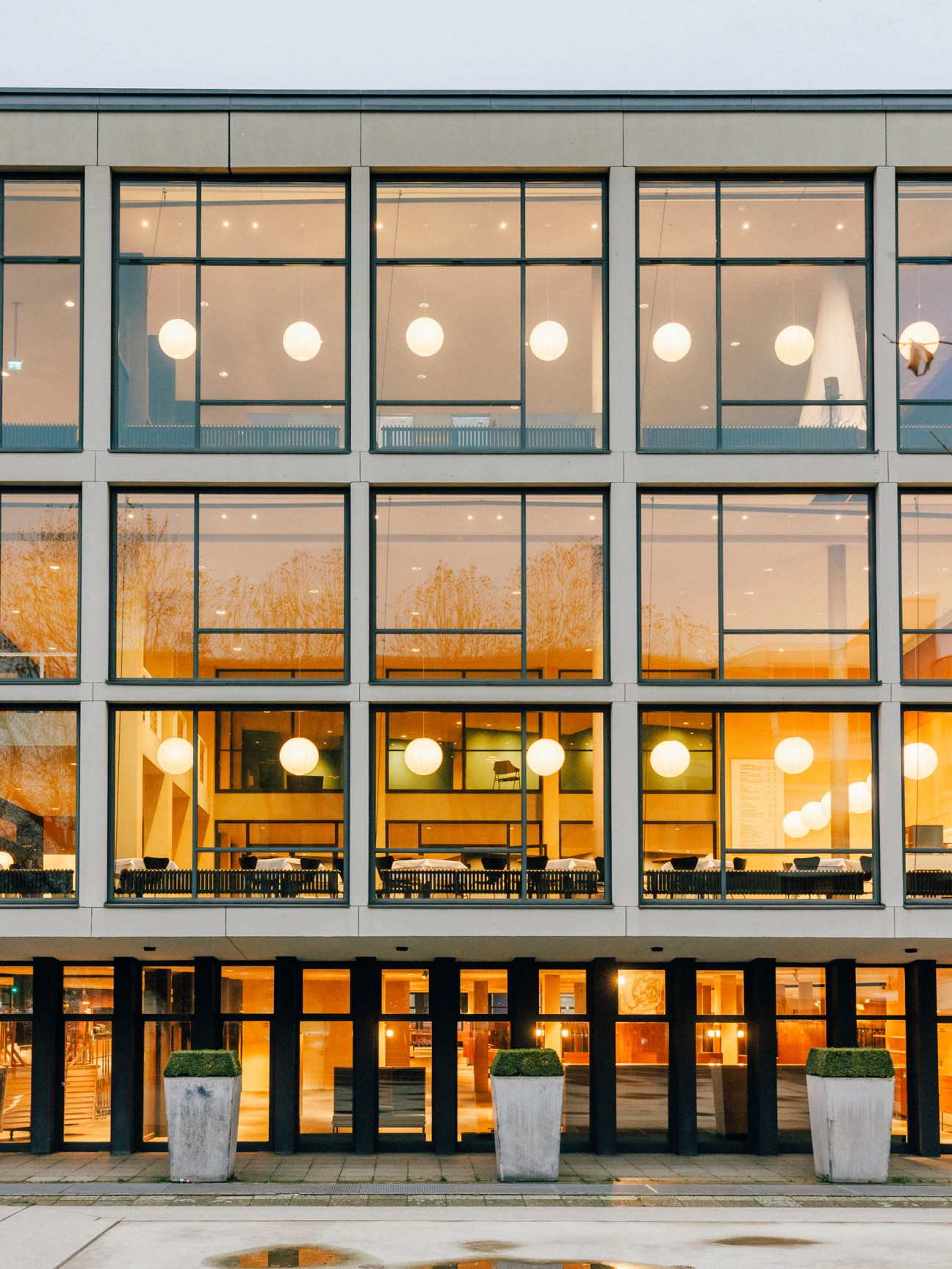
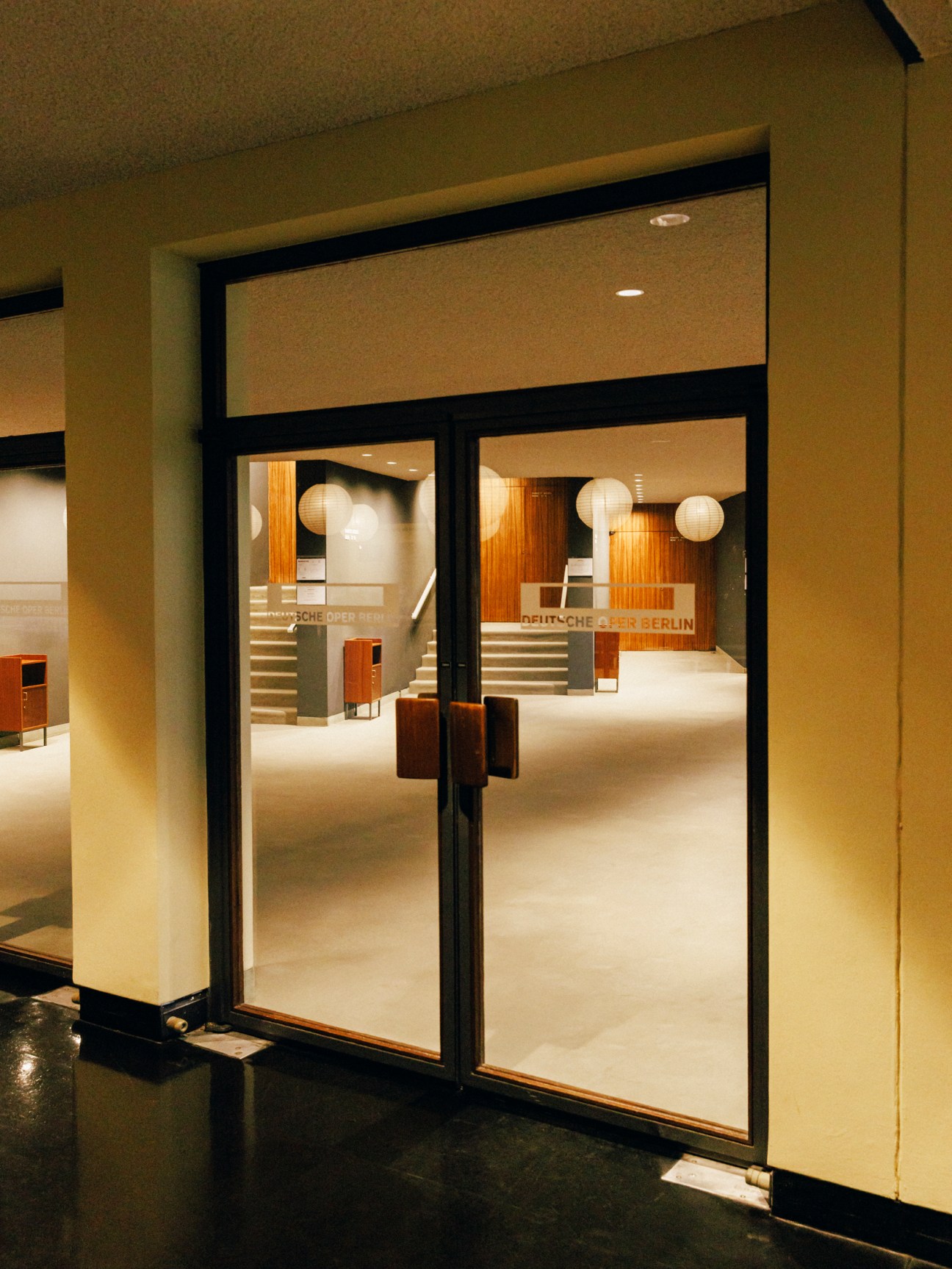
Arriving at the Deutsche Oper Berlin today, visitors are instead greeted by an exposed concrete façade that serves as a sound barrier, shielding the performances that take place within from the hum of the Bismarckstrasse traffic. Königsdorf says that the decision to build such a robust exterior was also symbolic. “The purpose was to create what would now be a safe space for the arts,” he says.
In contrast to the solid concrete, other sections of the façade are glass – a nod to the theme of transparency but also useful for letting light in. Because of the building’s extensive use of the material, it is possible to see all the way through it, while floating staircases add to the feeling of openness. The same goes for the paper lanterns that glow like fireflies, casting a warm light that can be spotted from outside the building – a human touch in what is otherwise a busy traffic artery.
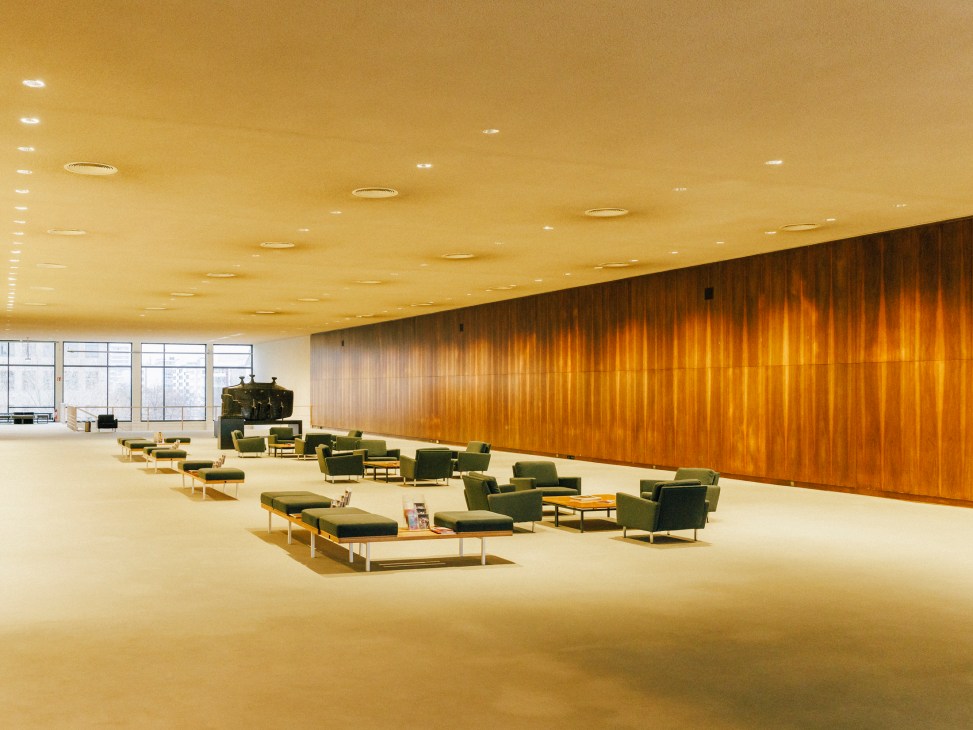
While Bornemann opted for a restrained and utilitarian palate of concrete, glass, wood and black linoleum, to dismiss these choices as postwar belt-tightening would be to misunderstand his intentions, says Königsdorf. “Only the highest quality of materials was used here,” he says, gesturing around the foyer. “Bornemann wanted to redefine luxury.” Königsdorf adds that this impulse extended to the building’s generous proportions.
Now funded by Berlin’s regional government, the Deutsche Oper runs a programme of 30 operas a year: a mix of favourites by the likes of Mozart and Verdi, as well as works by lesser-known composers. “I look to the traditions of the opera house and the city, and combine these with my vision,” says Schwarz of his post, which he has held since 2012, after previously serving as opera director at Theater Basel.
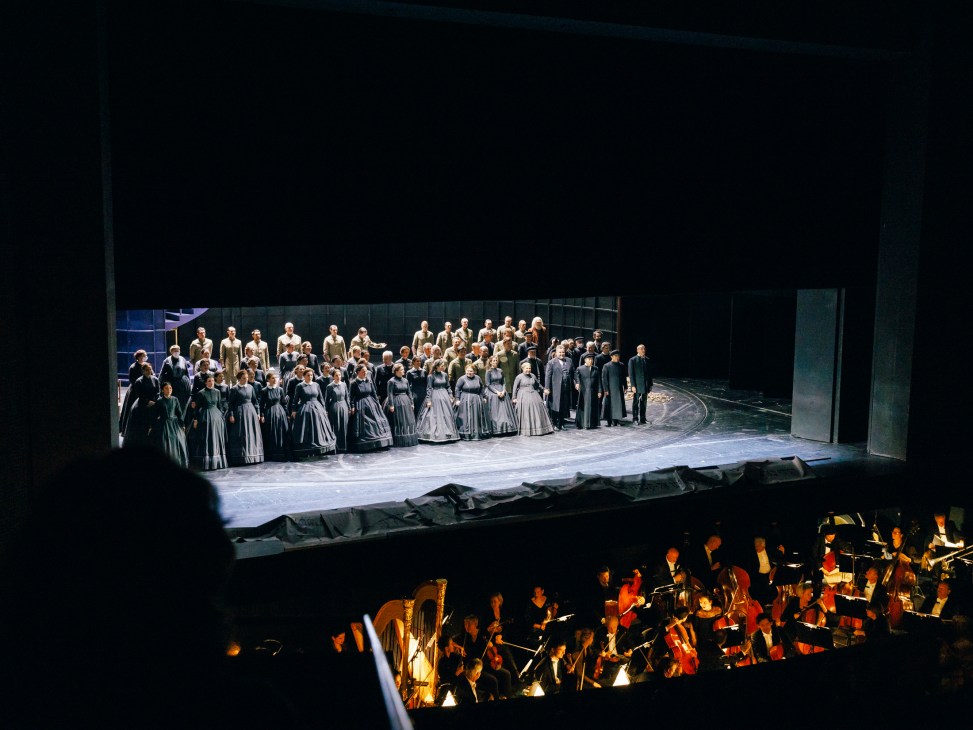
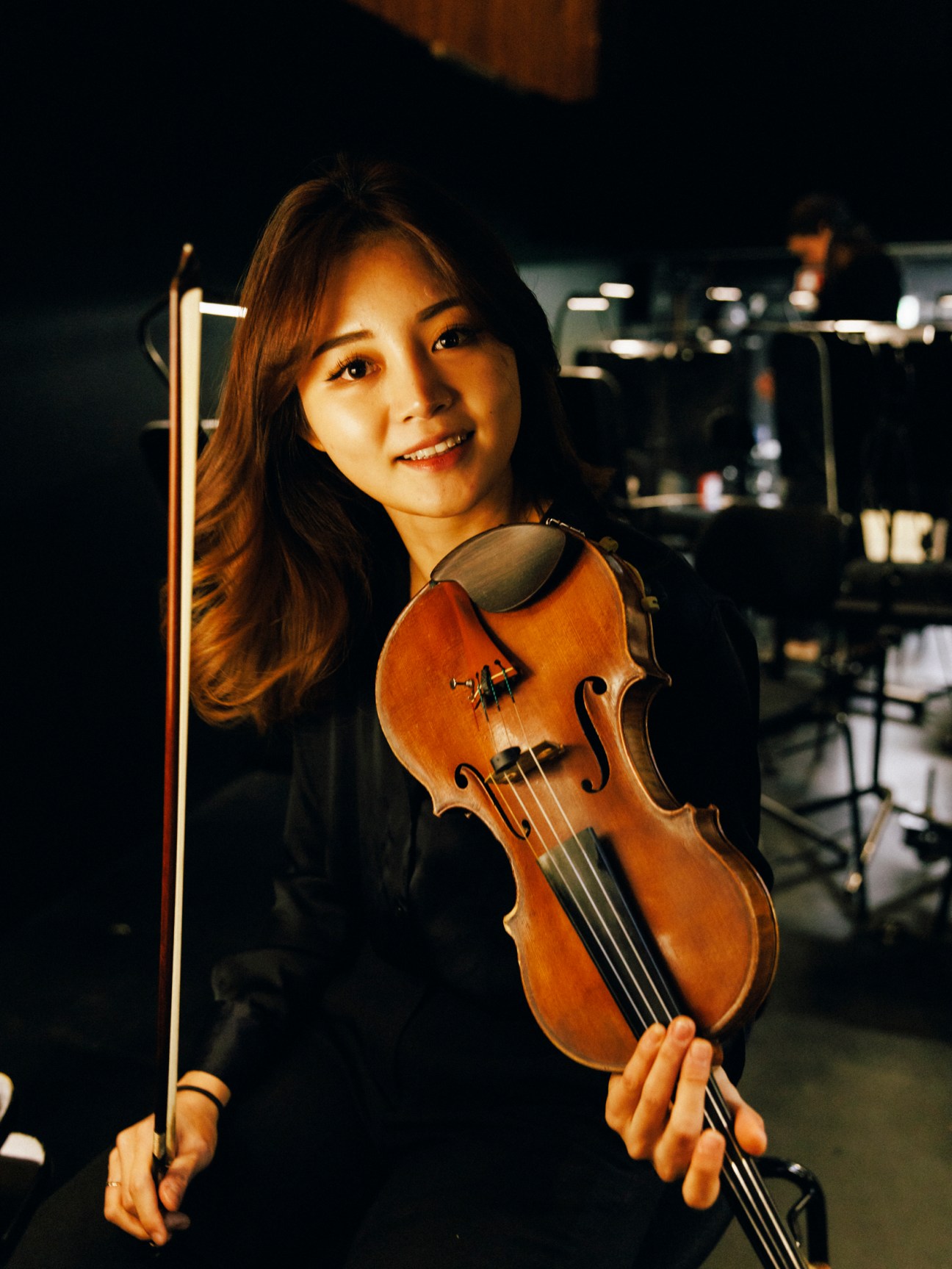
On the day that Monocle visits, the building is humming with activity. Someone backstage is practising a French horn, its sound low and velvety. On the stage, singers are rehearsing, their voices rising through the empty auditorium. “In acoustic terms, the opera building is the best in Berlin,” says Anna Smirnova, a mezzo-soprano who is performing in several operas here this season. “My voice feels free and I don’t have to adapt it. It sounds perfect anywhere on the stage.” Sparkly costumes hang ready in the dressing rooms, waiting for that night’s soloists to arrive. In the cafeteria on the ground floor (which, in another gesture of openness, is open to all), employees gather for lunch and coffee.
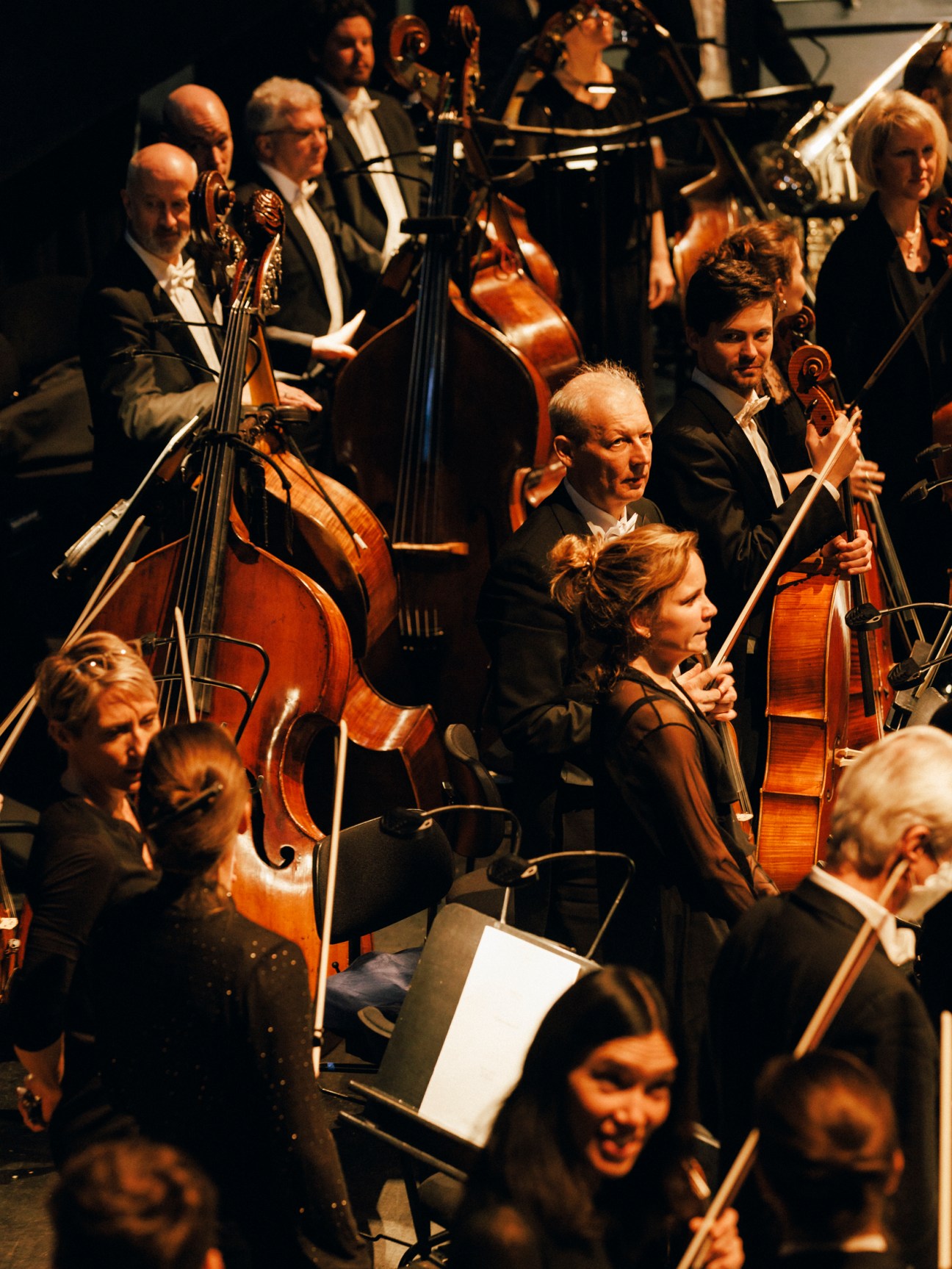
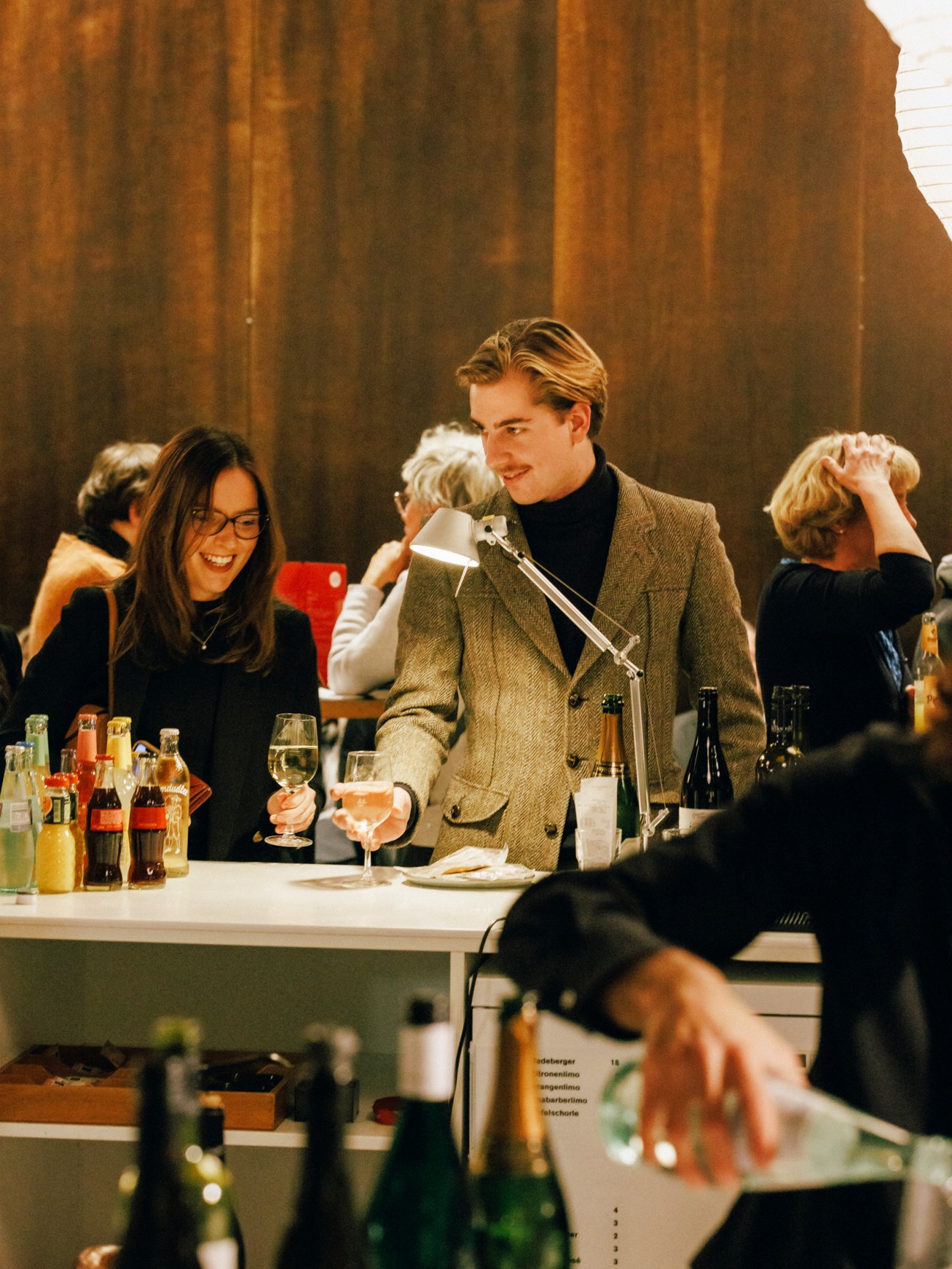
The building properly comes to life at night, as guests bustle in for the evening’s performance. First, members of the technical crew arrive in the wings, where the words “bitte gröste ruhe” (“Please be silent”) are printed in big capital letters. The stage manager, ready to co-ordinate their movements, takes his seat. Then volunteer firefighters, who are present at every performance, along with a doctor, appear. Slowly, theatregoers emerge from the Deutsche Oper U-Bahn station outside and the lobby fills with chatter. Freed of their coats, they make their way upstairs into the foyer for a catch-up with friends or a swift drink at the bar. As the musicians tune their instruments in the orchestra pit, the audience settles in.
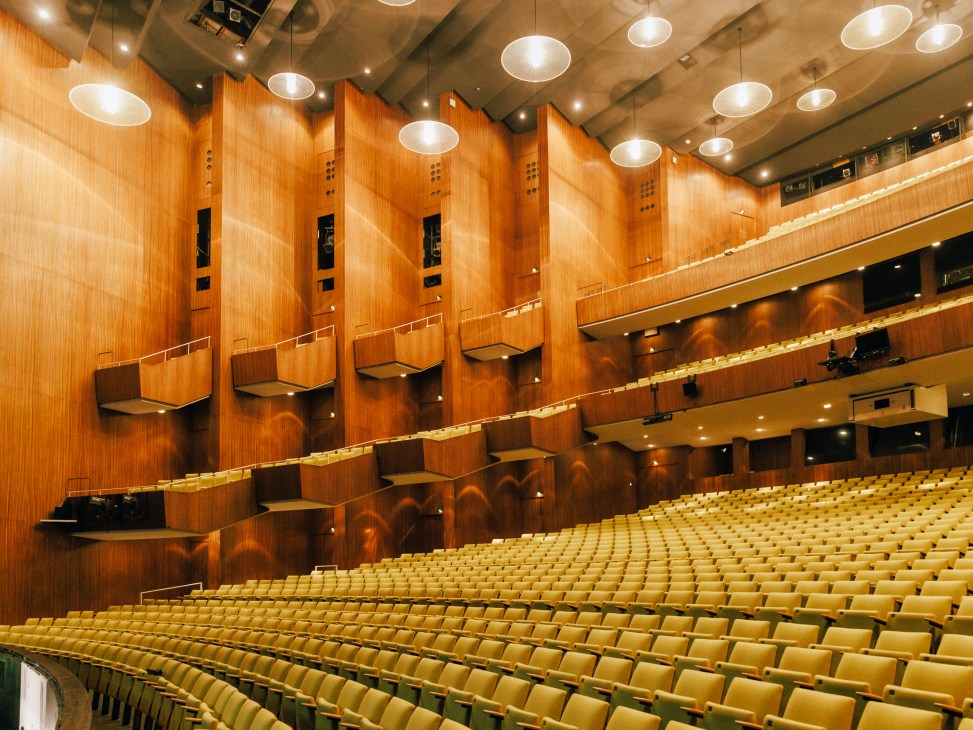
With more than 1,800 seats, the Deutsche Oper is one of Germany’s largest theatres. Like the original 1912 opera house, it has no royal box for dignitaries and forgoes the traditional horseshoe shape in favour of rows that are only slightly curved. “The seating arrangements in the postwar West German auditoriums were a subject of intense debate,” says Schmitz. “They were supposed to illustrate the democratic constitution of society.”
The boxes that do exist face the stage, rather than across the room, so no one needs to turn to face the performance. “The auditorium is democratic with full sight of the stage from every seat,” says Königsdorf, leading Monocle along one of the highest rows at the back of the upper level. Indeed, even from there, the dress rehearsal that is taking place is in perfect view, never obstructed by columns or architectural finials and flourishes.
As in Bornemann’s time, the Deutsche Oper’s vast foyers are a place for Berliners to see and be seen. “Theatre buildings in the Federal Republic of Germany were spaces for social negotiation, places where society encounters itself,” says Schmitz. The large lobbies on the first and second floors stretch the full width of the building. Bornemann left them purposefully sparse. They are also regularly used to host exhibitions of contemporary art. During the interval, opera-goers mingle over glasses of champagne and Butterbrezeln in one of the building’s several bars, the headlights of the Bismarkstrasse traffic visible through the huge side windows.
The Deutsche Oper was a milestone in Bornemann’s career and it is where he celebrated his 95th birthday with a reception, surrounded by friends and colleagues. His later work included another Berlin theatre, the Freie Volksbühne (now the Haus der Berliner Festspiele), and the German pavilion at the 1970 Japan World Exhibition in Osaka. He received fulsome plaudits from the Berlin Chamber of Architects and the Association of German Architects (for which he served as chairman) after his death in Berlin in 2007.
“The view of postwar modern architecture has changed,” says Schmitz. “With the distance of two generations, it is now perceived as historical. A younger generation is looking at the elegance of the Deutsche Oper and appreciating its design.” Rather than bemoaning the building’s clean lines and concrete or comparing it to other older and grander opera houses, guests now tend to COO with appreciation as they pass through the space. “Nowadays, our architecture is considered cool again,” says Schwarz, as the Deutsche Oper gears up for the evening’s performance.
All falling into place
Well, there’s nothing like setting the bar high. When we started plotting out this issue, we came up with a simple but appealing plan for our monthly Expo section to match the magazine’s broader theme. We would ask 10 architects we admire to tell us about a “place that works” for them and then send out photographers to shoot all of their suggestions. But during another meeting, someone suggested that we should raise the target to 25 and include planners and public-realm specialists too. “Why not make it a round 50?” someone else helpfully chipped in (OK, that might have been me).
To his credit, our affable design editor, Nic Monisse, accepted the challenge. Over the following days he contacted practitioners around the globe and asked them whether they could perhaps also send us an image of their chosen spot. And the replies came flooding in. To see the fruits of this ambitious commission, flick ahead to our Expo (see here).
Architects and planners think about and understand what works in a place more than most of us but perhaps what appealed to even these knowledgeable souls about the task at hand was that, even for them, it’s often hard to define the precise mix of ingredients that makes something successful. Why is it that, say, one restaurant has a queue around the block while another similar joint with perfectly good food flounders? Or why does one office building brim with life while its neighbour struggles to attract tenants?
In this issue we attempt to explain this as we reveal the galleries, television studios, manufacturing hubs, parliament buildings, dining spaces and churches that work and the planning – and the magic – that went into their recipes. As we start a fresh year, we also hope that this roll call of outposts will provide you with inspiration and game-raising encouragement (and perhaps entice you to head out on a few research trips too).

Take, for example, the church on our list. Grundtvigs Kirke (see here) is about to find itself in the spotlight as part of Copenhagen’s year as Unesco’s World Capital of Architecture. It was built as a memorial to 19th- century pastor and poet Nikolaj Frederik Severin Grundtvig, who wrote Denmark’s psalm book among many other accomplishments. This vast cathedral was designed by Peder Jensen-Klint and construction started in 1921; when he died in 1930 his son, Kaare Klint, took over the project.
The soaring edifice looks like a spaceship that has landed in a housing estate. It’s made from simple bricks, each one sanded by hand to create an almost mystical light. As you step inside, you feel a sense of awe – but at what, precisely, is up to you. The commitment to craft, the ruthless simplicity, the unadorned truth, the belief in trusting materials – really, whatever your task at hand, there’s something to learn here.
Similarly, the Finnish parliament (see here) offers a lesson in convening better conversations. Or what about the Brazilian coffee company (see here) that has crossed over to Europe with ease because of its rigorous brand execution? And then there’s the car plant in Morocco (see here) that is benefiting from the country’s long-term investment in renewables. There are benchmarks to marvel at in all of these stories.
Meanwhile, some Monocle news. In the coming weeks we’ll be launching our next handbook: after the success of Portugal: The Monocle Handbook, this time we are heading to Spain. Also on sale now is The Monocle Companion – Fifty Essays for a Brighter Future, our second paperback essay collection. And we will shortly be revealing the destinations for this year’s conferences. There are a lot of great things on our schedule (and all are hopefully a little inspiring too). I hope that we get to see you somewhere in the world in 2023.
In the meantime, as always, please feel free to send thoughts, ideas and suggestions to [email protected]. Here’s wishing you an inspired year ahead.
To the Western Slope: How Grand Junction, Colorado became a haven for innovative businesses
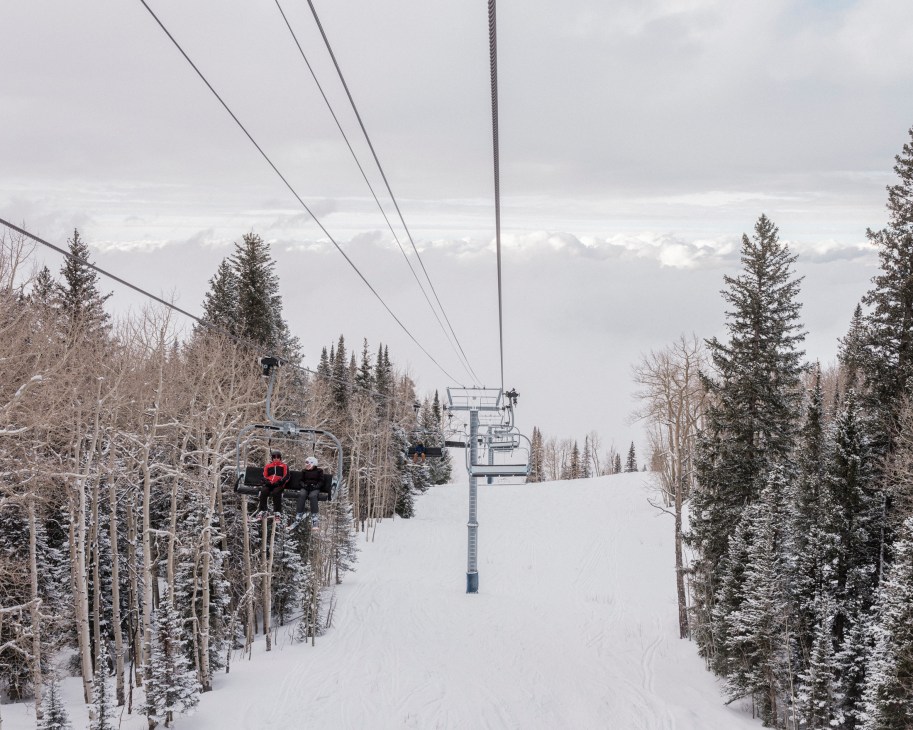
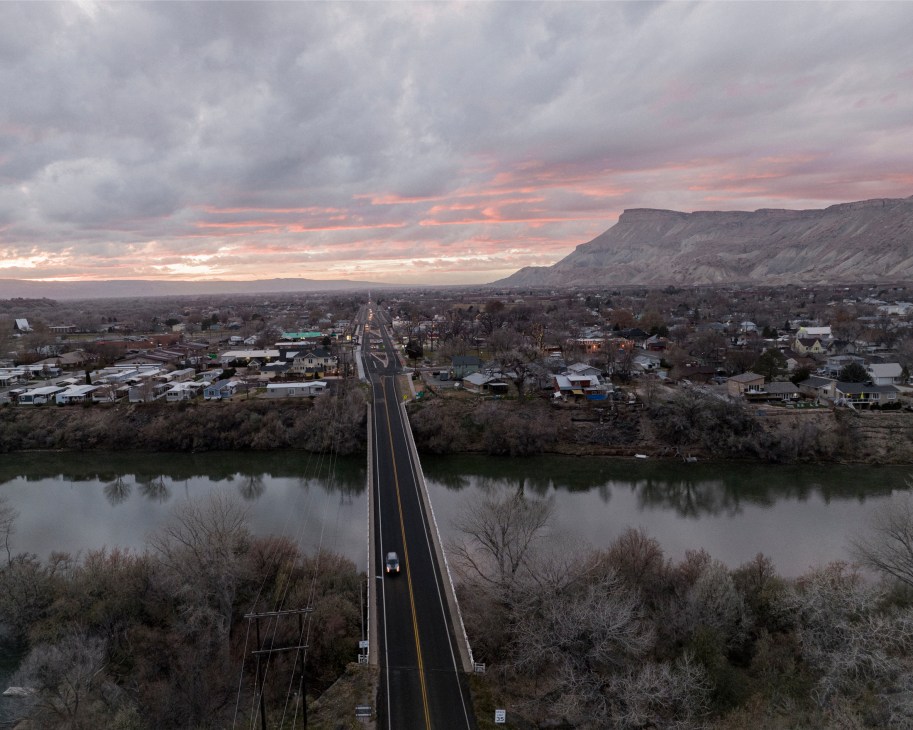
With the promise of 300 days of sunshine a year, people in Grand Junction, Colorado, like to start the day in the great outdoors. A paddle down the river before work, perhaps, or a mountain-bike ride at lunch – or a few runs at the Powderhorn Ski Resort, a charming throwback built in 1966, where the longest wait-time at the gondola is 10 minutes.
The so-called “Colorado lifestyle” is what draws thousands of people to move to the state. But as these cities have filled up in recent years, word has spread about this once-remote outpost on the Western Slope of the Rocky mountains, where the roads and ski runs are quieter. Cheaper labour and land – house prices are 60 per cent that of the state average – are also enticing entrepreneurs to put down roots and start businesses in the town, at a time when America’s largest cities are struggling with population decline and shaky post-pandemic reputations for crime and homelessness.
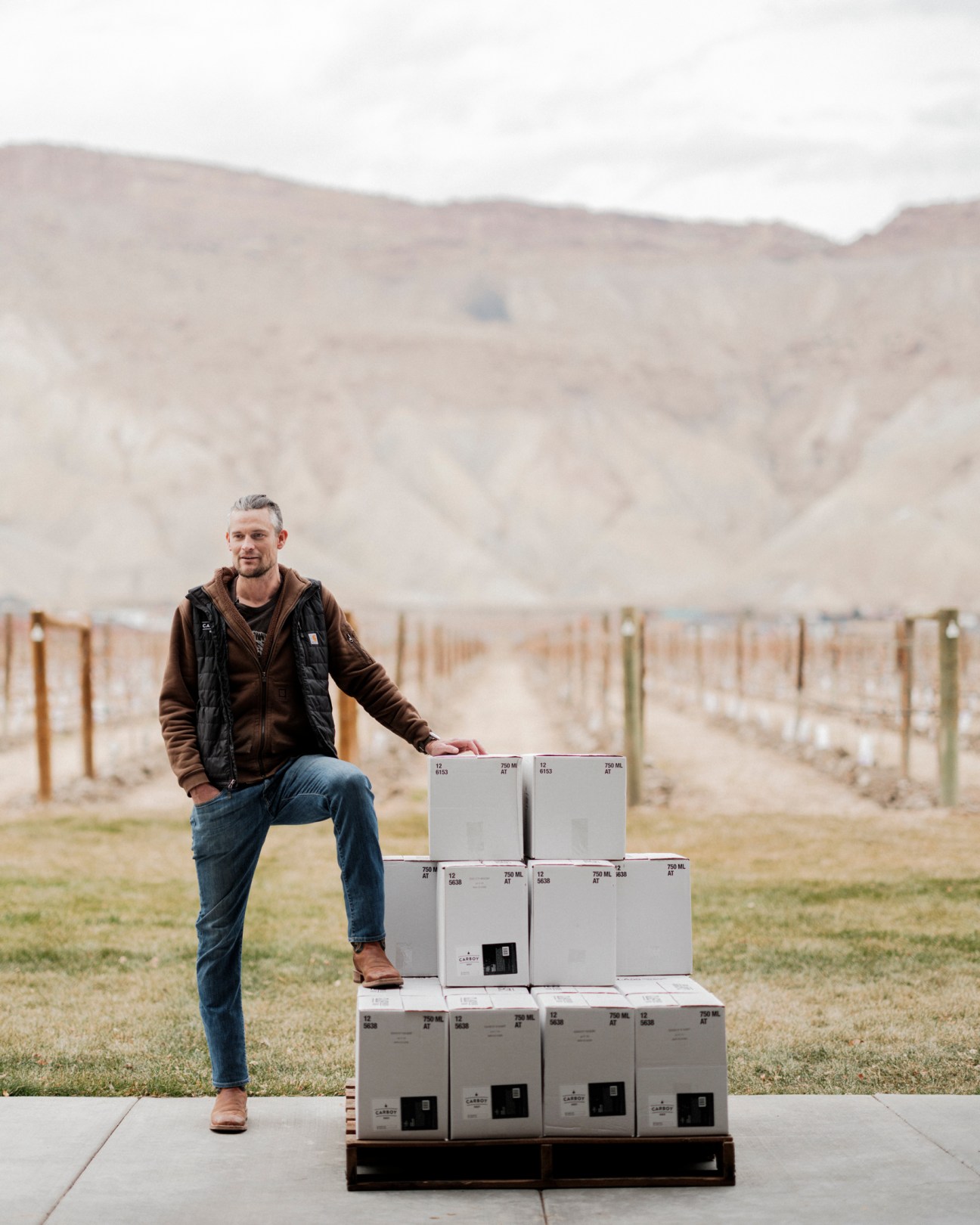
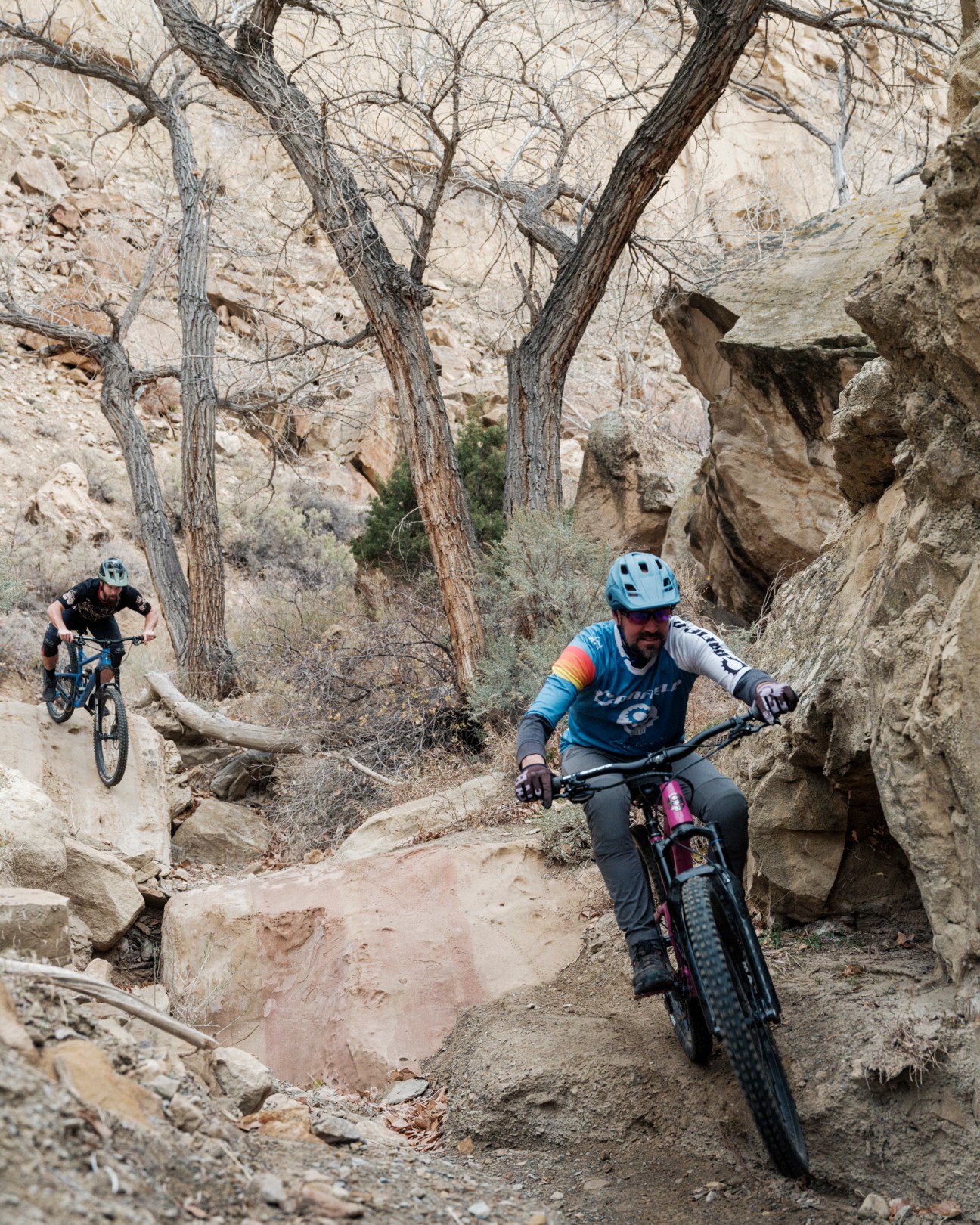
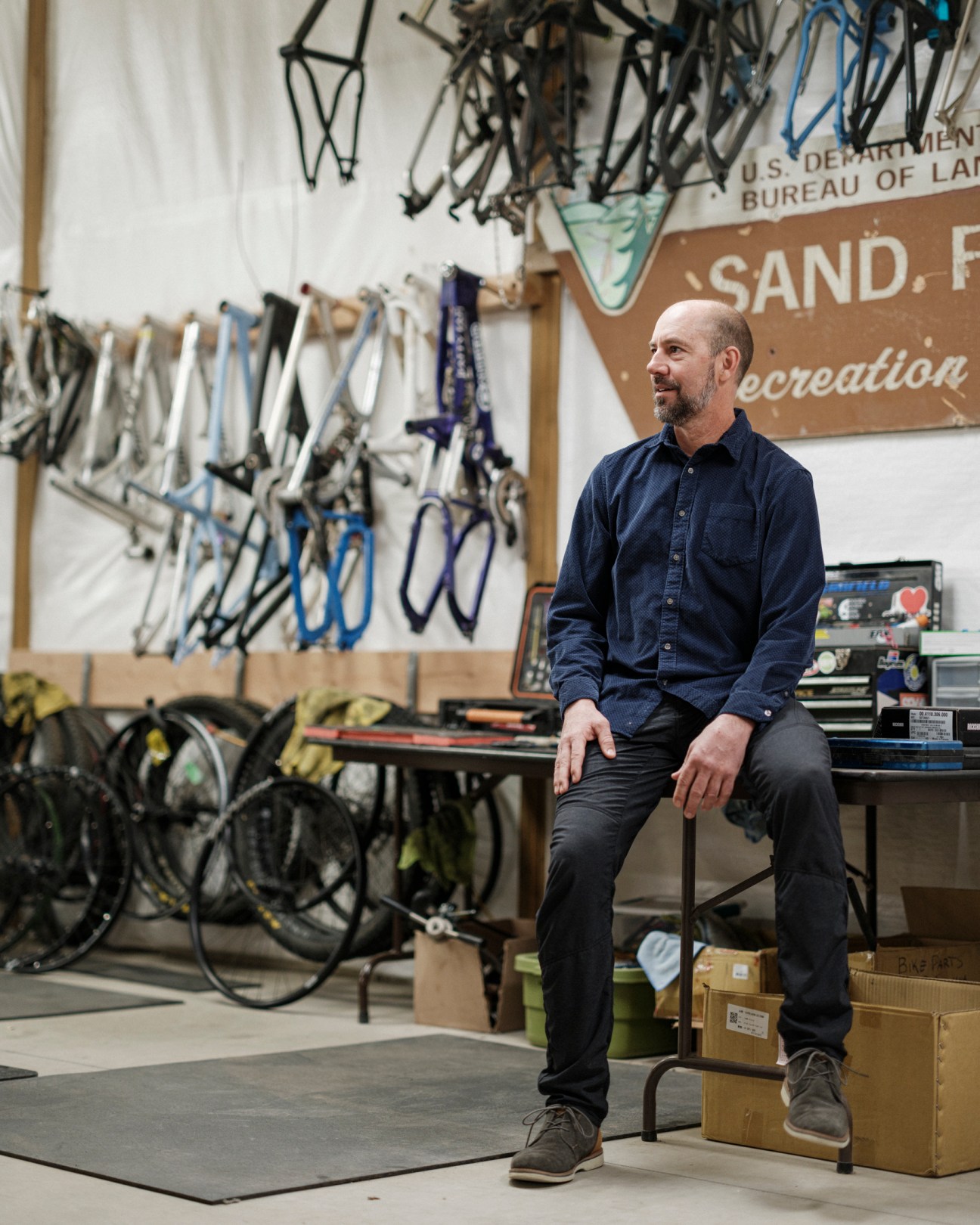
Grand Junction sits in the Grand Valley, a row of small cities with a backdrop that’s straight out of the Old West, complete with monumental mesas and mountains the colour of fool’s gold. Lance Canfield moved his performance bike design company Canfield Bikes from Washington State to the valley in 2020. He now makes hundreds of frames every year, shipping them internationally. There’s also a growing number of high-end bike parts manufacturers based in town – companies such as DT Swiss, who wanted to be close to an area that’s a magnet for the sport, with abundant trails and reliable waves of tourism. Canfield tackles the 3,350-metre ride down the Grand Mesa on his weekends. “You can’t be a half-assed athlete in this valley and stay safe,” he says. Aspen and Telluride, key destinations in the Western Slope, continue to haul in huge numbers of visitors. But the mountain outposts in between are lighting up: Carbondale, Steamboat and up-and-coming ski resorts like Glenwood Hot Springs have all seen an influx of new arrivals; many putting down roots, others seeking quieter climes. There are already grumbles of housing shortages echoing between the Rockies but in Grand Junction there’s space to grow, positioning it as a base for the region.
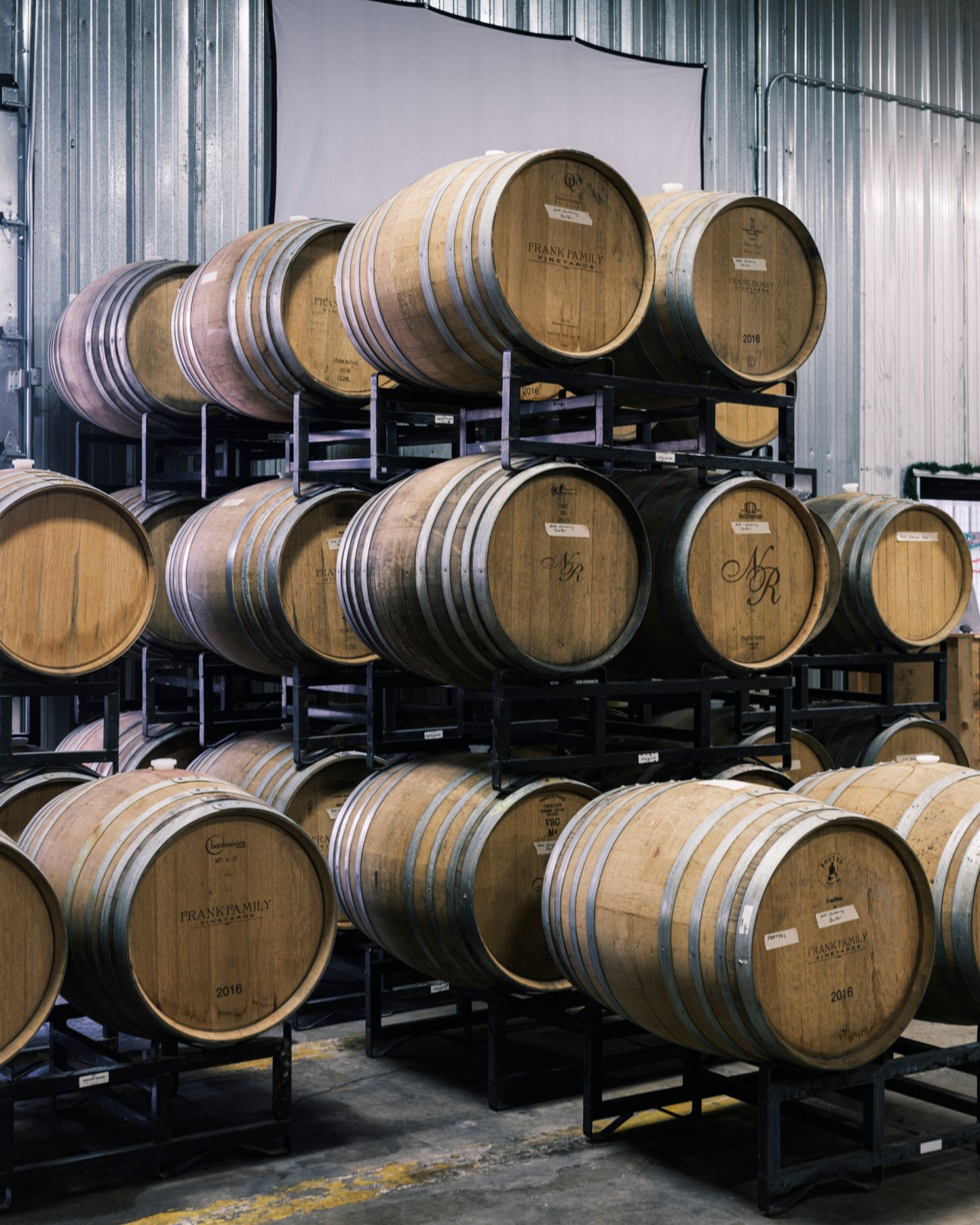
While the road into the area is a whistlestop tour through every known fast-food joint, growth is bringing a change of tastes. Ben Parsons, originally from Kent in England, was the founder of Denver’s best-known urban winery, The Infinite Monkey Theorem, before sensing opportunity out West. He lived briefly in the Grand Valley 20 years ago but returned to find the quaint town of Palisade, with its peach farms and vineyards, of which there are more than 25, much changed. “A crowd that appreciates the finer things in life is moving out this way,” says Parsons, whose winery The Ordinary Fellow opened in a historic peach-packing building in 2021.
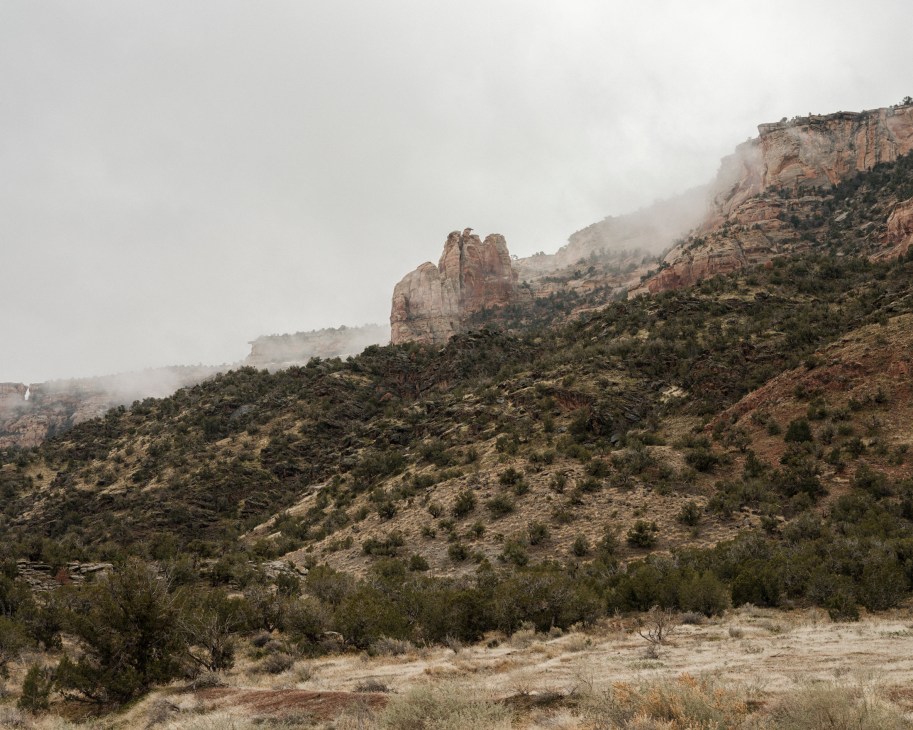
Old businesses are also being revived. Carboy, another major Denver winery, expanded into the valley in 2021 and bought a vineyard at the foot of Mount Garfield, attracted by the hot-by-day, cool-by-night climate in Palisade that is ideal for sparkling wine. It’s run by James Melling, who spent years selling property in San Francisco before realising his dream to start a vineyard, while Kevin Webber, chief executive officer of Carboy, says this long-overlooked wine country is attracting attention from Californian growers. “You can go out to this new frontier and, for a fraction of the cost elsewhere, plant vines – there’s a lot of energy right now.”
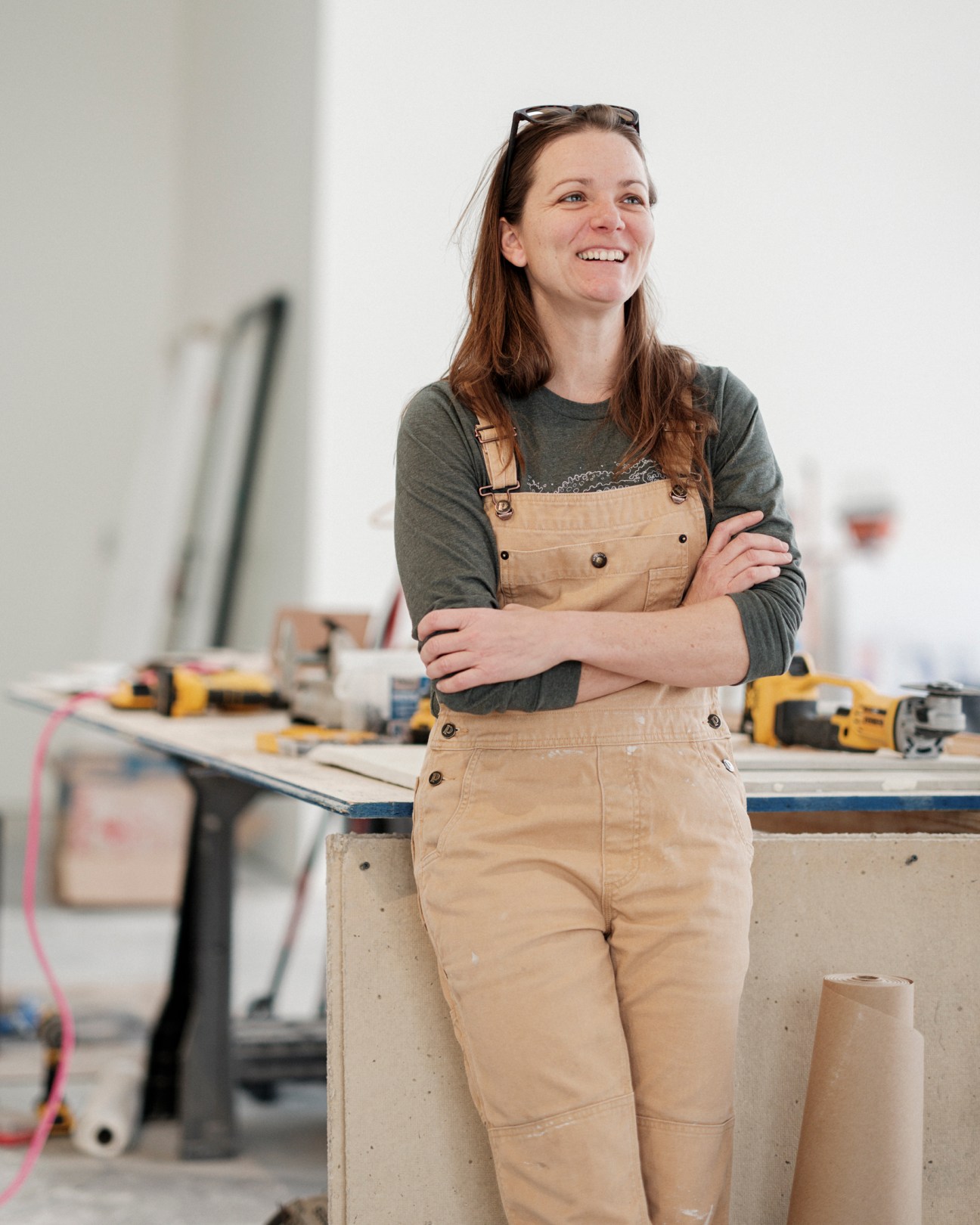
In tandem, new restaurants are capitalising on the changing crowd. In Palisade, Pêche was started by a couple who met working in the kitchen of the Michelin-starred Alinea in Chicago before striking out for the mountains on their own. Josh Niernberg, a former pro-snowboarder turned food entrepreneur who moved to the Western Slope a decade ago, is about to open his fourth venture in the valley. “This first was more successful than we ever expected,” he says, from behind the bar of his popular Bin 707 restaurant in downtown Grand Junction. “Colorado wine doesn’t really have this hospitality side to it, so we tapped into that, and as more people came for mountain-biking or heading to places like Telluride, this became a destination restaurant and a best-kept secret.”
Those who grew up in the Grand Valley remember it as a place where people with ambition left. After all, you don’t have to go too far afield in Colorado’s mountains to find eerie ghost towns with names like Goldfield, which emptied when the local mine went dry. Grand Junction could almost have gone a similar route: its primary industry had long been oil and gas extraction, with flashy cars on the roads and all the trappings, but in the 1980s ExxonMobil pulled out, triggering an exodus of jobs and people from the city.
“When the oil and gas industry pulled out again in the 2008 financial crisis, we lost about 14,000 people in our labour force,” says Curtis Englehart, executive director of the Grand Junction Economic Partnership (GJEP), which was set up to diversify the economy and protect it from boom-bust cycles. In the 2000s, the city poured money into building a first-rate medical industry – lauded by then-president Barack Obama as a model for other American cities to follow to create cheap and accessible healthcare – which brings plenty of well-heeled doctors to the city.
Oil and gas did, though, leave behind a skilled industrial workforce. Leitner-Poma, one of the world’s biggest manufacturers of ski lifts, is headquartered here; they built the capsules for the London Eye. West Star Aviation, at Grand Junction’s airport, is an aircraft-maintenance firm servicing private jets and the military.
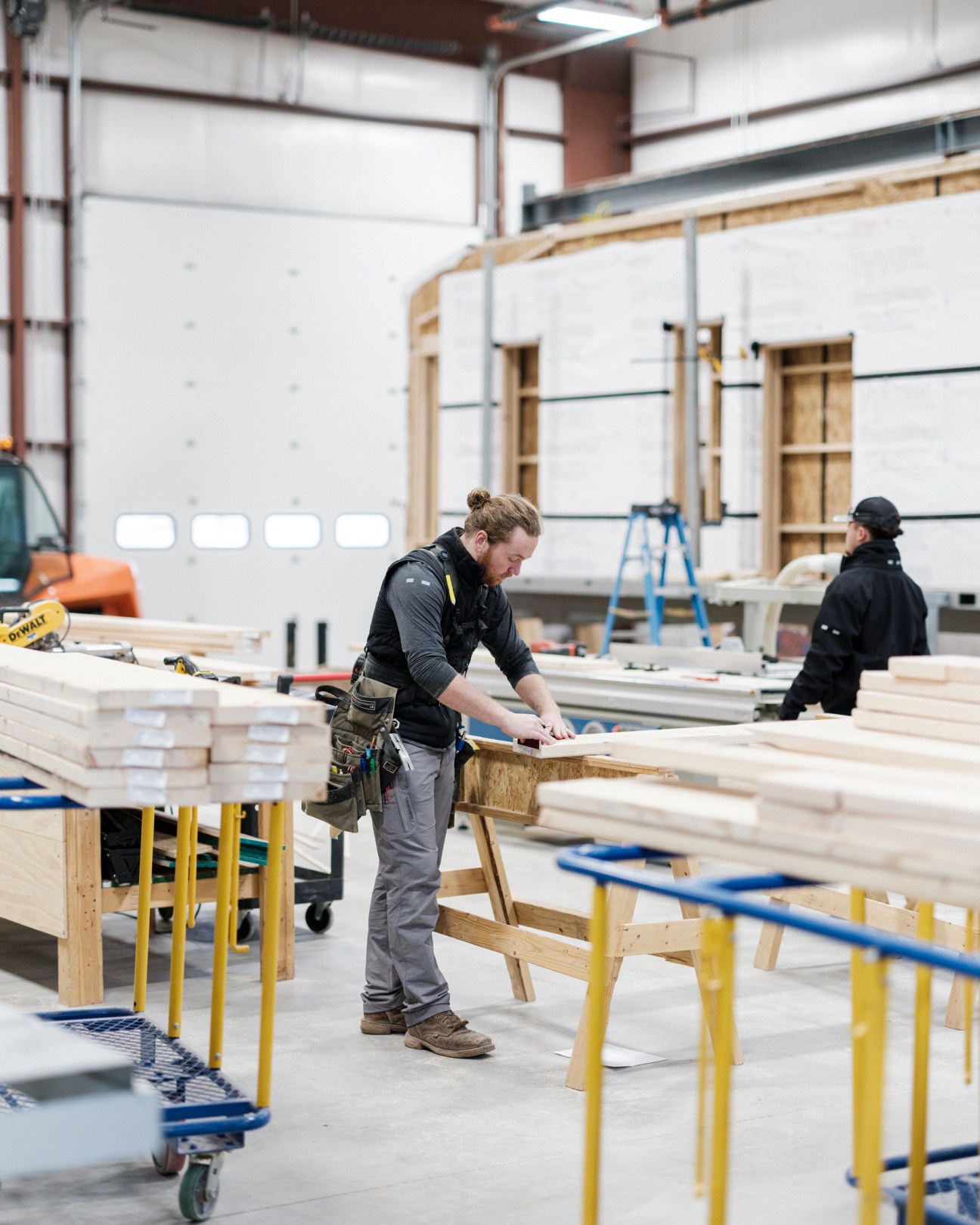
To attract newer businesses, gjep has created a Jump-Start initiative with cash incentives and tax breaks. One recipient is Phoenix Haus, which was founded in Detroit by Bill McDonald, who was later joined by his sister, Kate, to bring Central European methods of house pre-fabrication to the American market, built with the option of operating off-grid. “Almost 100 per cent of our homes were going to Colorado and so, after our last long roadtrip, we said that we had to make the move,” says Kate. Phoenix Haus has caught a wave of growth in communities around the Western Slope and is booked up right through the next year, with its first project coming online in Aspen. Once a house leaves the factory, says Kate McDonald, it can be assembled on-site in four days. Phoenix Haus received $250,000 (€237,000) of investment from Denver-based Greenline Ventures and similar investors are increasingly looking around the Western Slope for new ideas. Gavin Brooke, a developer who has worked in Aspen and elsewhere, has backed the creation of Farm, 20 studios for small retailers and businesses in downtown Fruita, a biking town in the valley. “It’s fascinating to watch the transformation of these small towns on the frontier,” says Brooke. “There’s probably the demand in every small town in Colorado for one really great restaurant right now.”
Indeed, many of these mountain outposts are hungry for new ideas. “The whole Western Slope has been under-developed for decades,” says Aaron Young, originally from New Jersey, who adds that mapping company Kaart, in Grand Junction, competes with similar companies in California and New York because of the cheaper cost of labour locally. Young has just returned to his desk after a few runs down Powderhorn that morning, where he’s also developing a boutique hotel. “I see bright things on the horizon.”
Why it works:
With access to its skilled labour force, excellent healthcare and cheaper rents, the Western slope is thriving at a time of urban uncertainty in parts of the US. Come with fresh ideas – and bring your ski boots.
A sense of place
What makes a place – from an office to a garden, a street corner to a train station – work? What are the tangibles of this intangible question? This is something that Monocle has pieced together over the next 14 pages by posing these very questions to a group of 50 leading creatives.
Our contributors include award-winning architects, top furniture designers and curators of international art fairs. Each was also asked to share a photograph that they have taken – or one from their company archive – which shows a great place that they think just, well, works.
The survey returned a variety of locations: university libraries, national cultural centres, boutique shops, riverside parks, century-old modernist villas, smart new restaurants and more. And, despite the differences between the chosen places, some threads emerged. Abundant natural light, proximity to nature, cosy rooms, robust raw materials and a connection to local history all featured repeatedly.
This Expo is a collection of images that can serve as a source of inspiration for those looking to build better environments. It also provides insight into the ways that leading designers see the world. So, settle into your favourite spot and read on to learn about some outstanding places.
1.
Dorte Mandrup
Founder, Dorte Mandrup Arkitekter
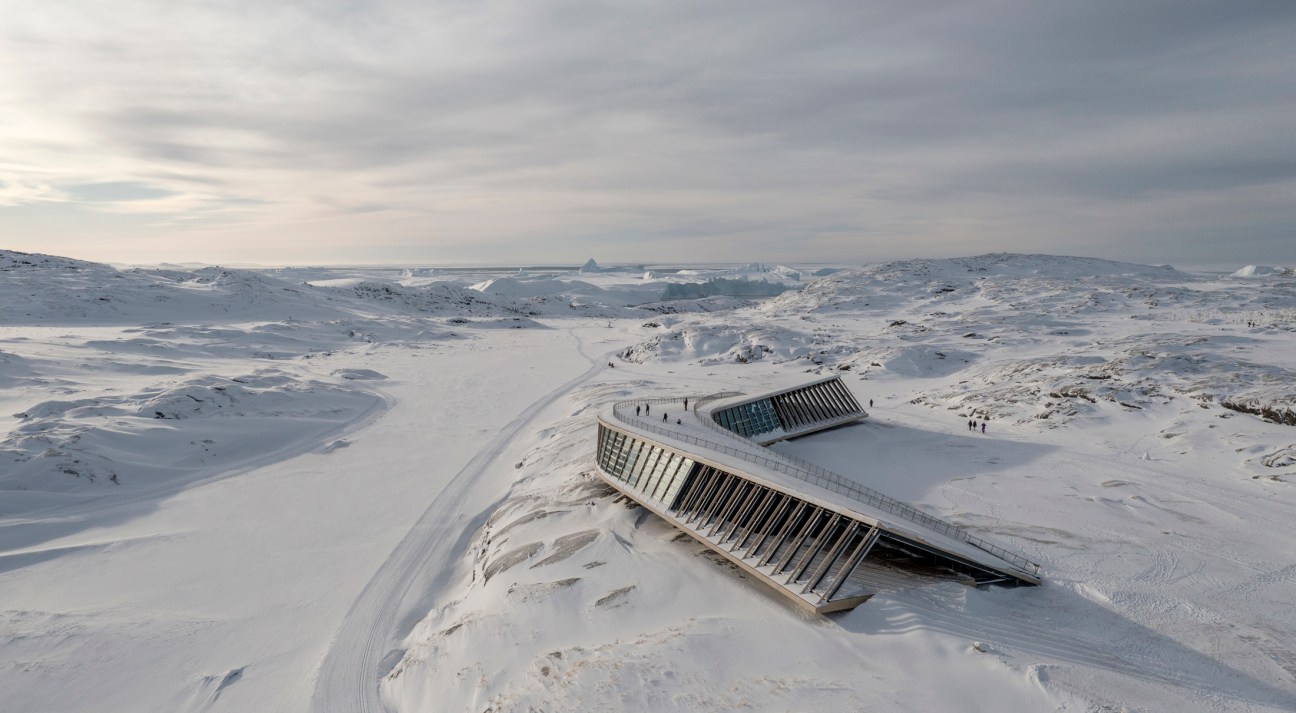
Ilulissat Icefjord Centre, Greenland
“The elongated roof has no social, economic or cultural boundaries. It is a place for everyone. A place to gather to see the sun rise after six weeks of darkness. A place to get married. A place for gatherings. A place for locals and visitors alike.”
2.
Alison Brooks
Founder, Alison Brooks Architects
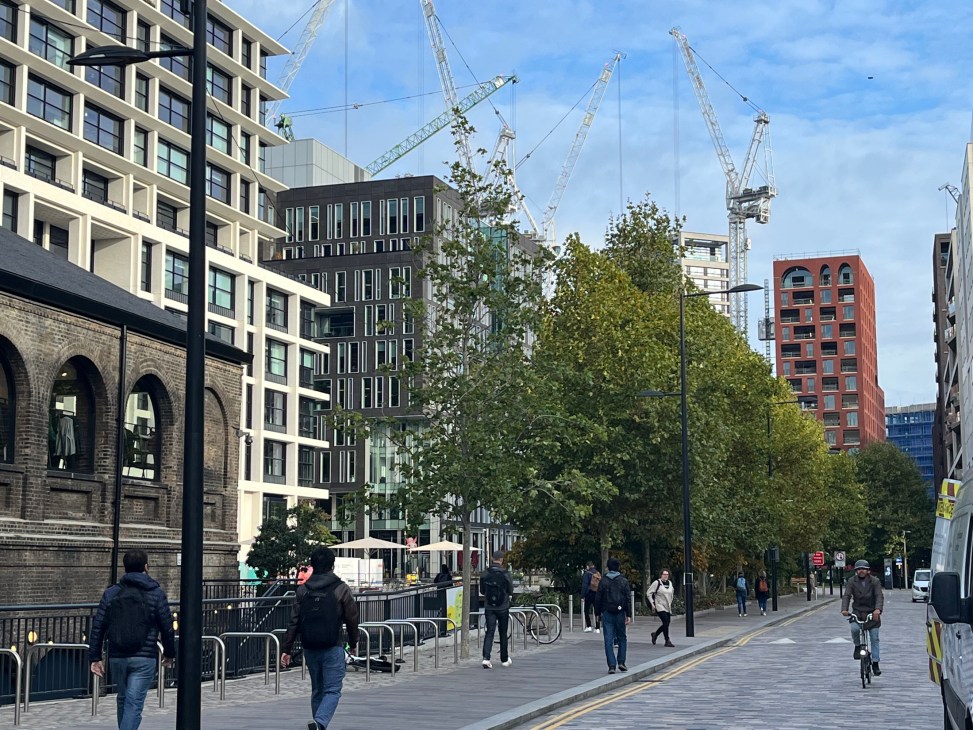
King’s Cross, UK
“This is looking north toward my building, Cadence, which is under construction. This is a joyful and beautiful area of London that demonstrates what’s possible when developers commit to the highest quality urban design and architecture for the city and all its people.”
3.
Alexandra Hagen
CEO, White Arkitekter
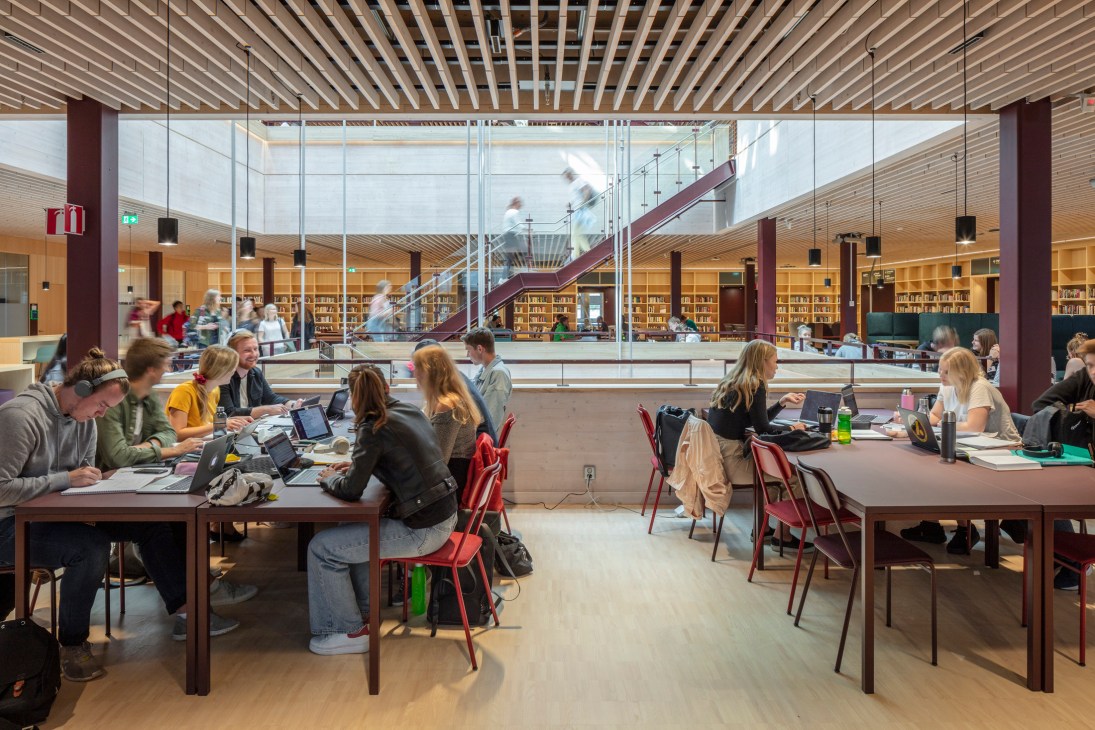
Campus Valla, Sweden
“The library and study spaces at the Student House in Linköping are a place to learn and make friends for life, a meeting place where anything can happen. There is rarely an empty seat to be found. It just works.”
4.
Carla Juaçaba
Architect
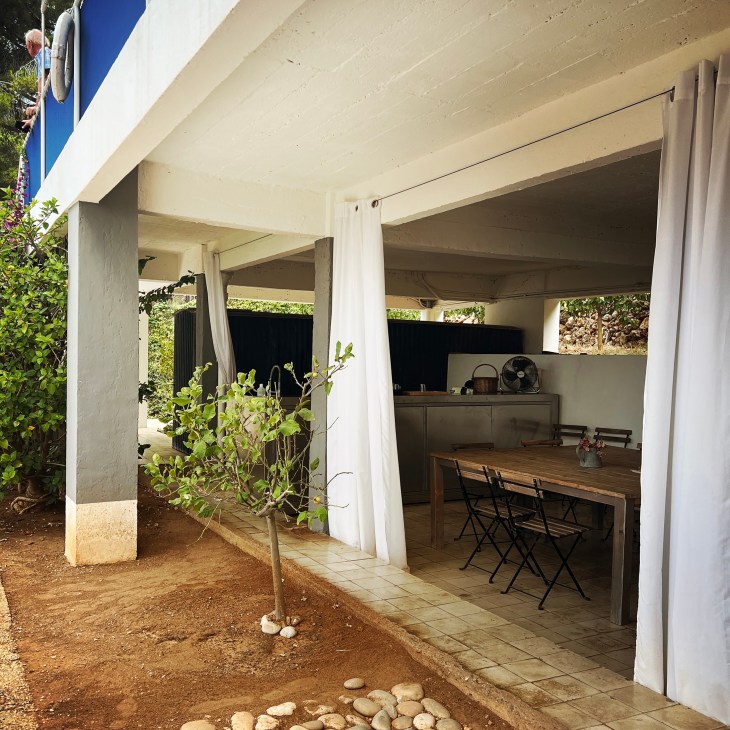
Villa E-1027, France
“One can still feel the presence of life around this table [in the French Riviera villa designed by Eileen Gray]. Memories are real, even of those who did not happen to be there. The result is a mist of history yet there is still a sense of reality.”
5.
Ismail Tazi
Co-founder, Trame
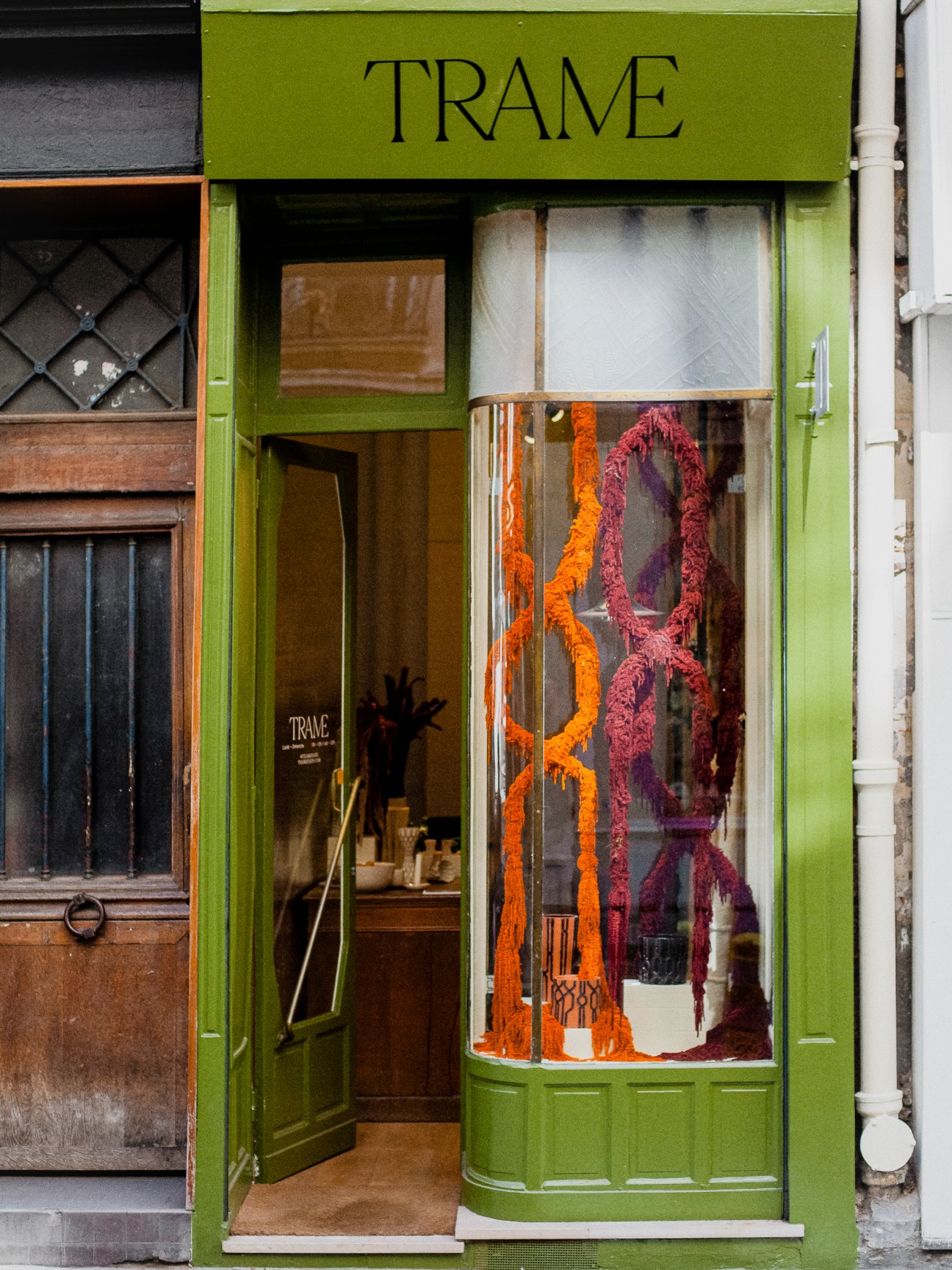
Trame, France
“Our small shop in Le Marais has an art deco façade and an amazing installation by Ruby Mary Lennox in the window. It’s a reminder that small spaces, when well laid out and designed, can be powerful and effective.”
6.
Martha Schwartz
Founder, Martha Schwartz Partners
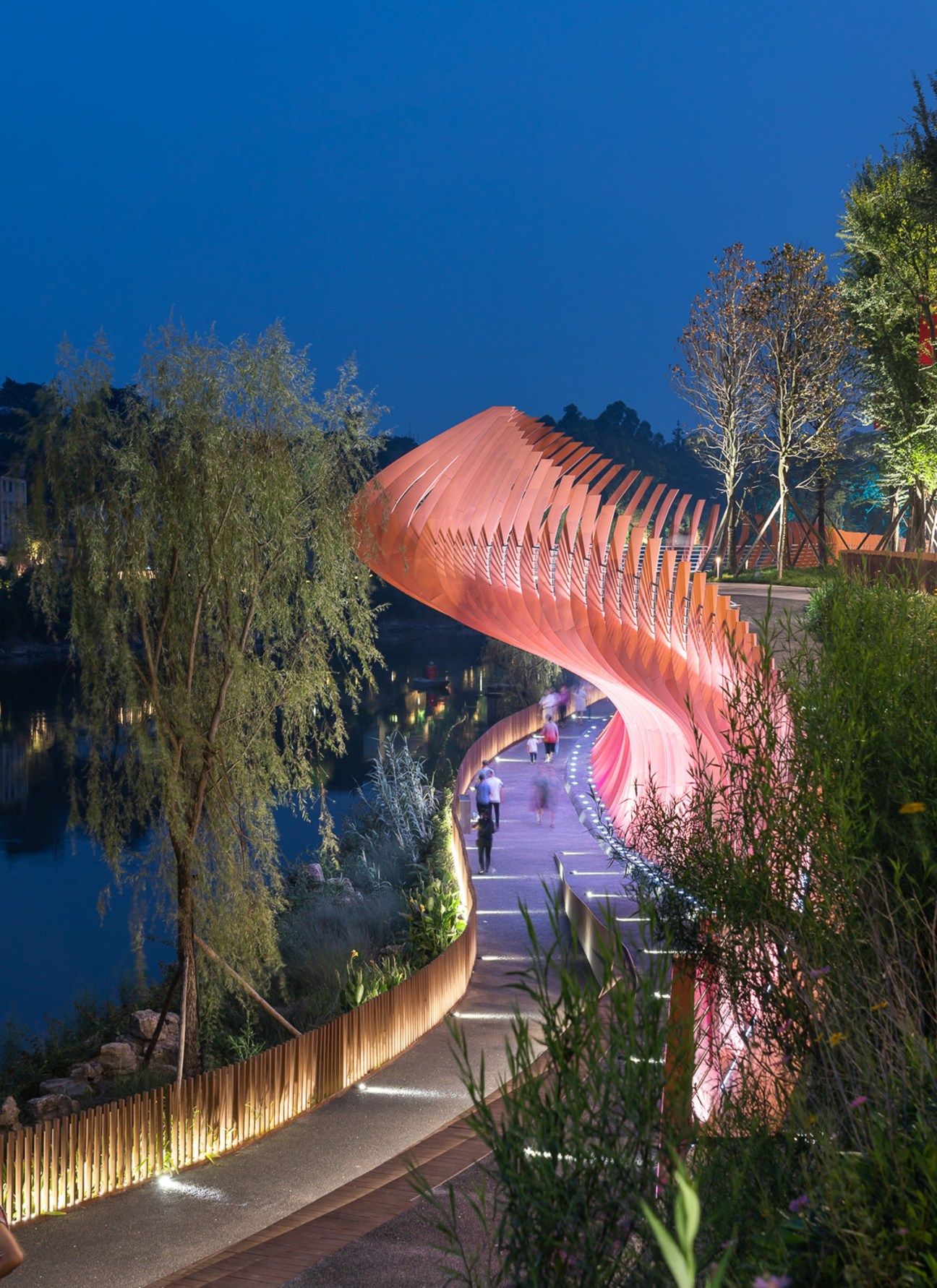
Zigong Dongxingsi Riverfront Park, China
“My practice finished this project in 2019. As the sun goes down, the huge, orange skeletal backbone that winds through the park gets washed in coloured lights. This is a surprise that brings me great joy as it had not been part of our design.”
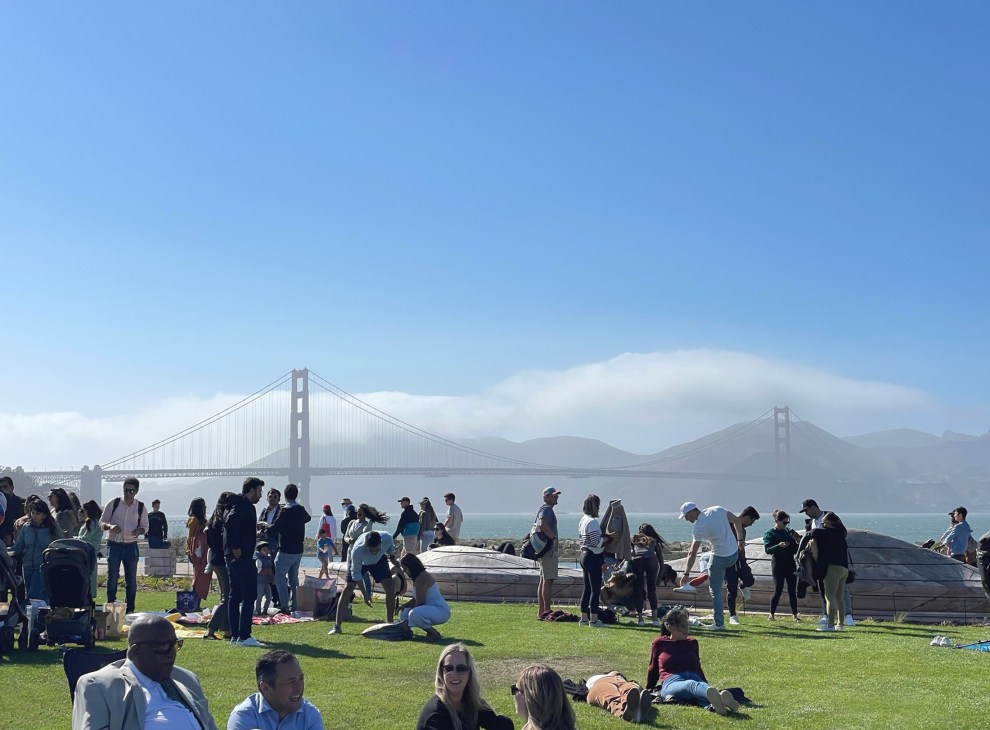
7.
James Corner
Founder, James Corner Field Operations
Presidio Tunnel Tops, USA
“The lawn, overlooks and bluff walk along our Presidio Tunnel Tops project in San Francisco work because they allow the surrounding views and context to shine. They focus attention on all that surrounds the site.”
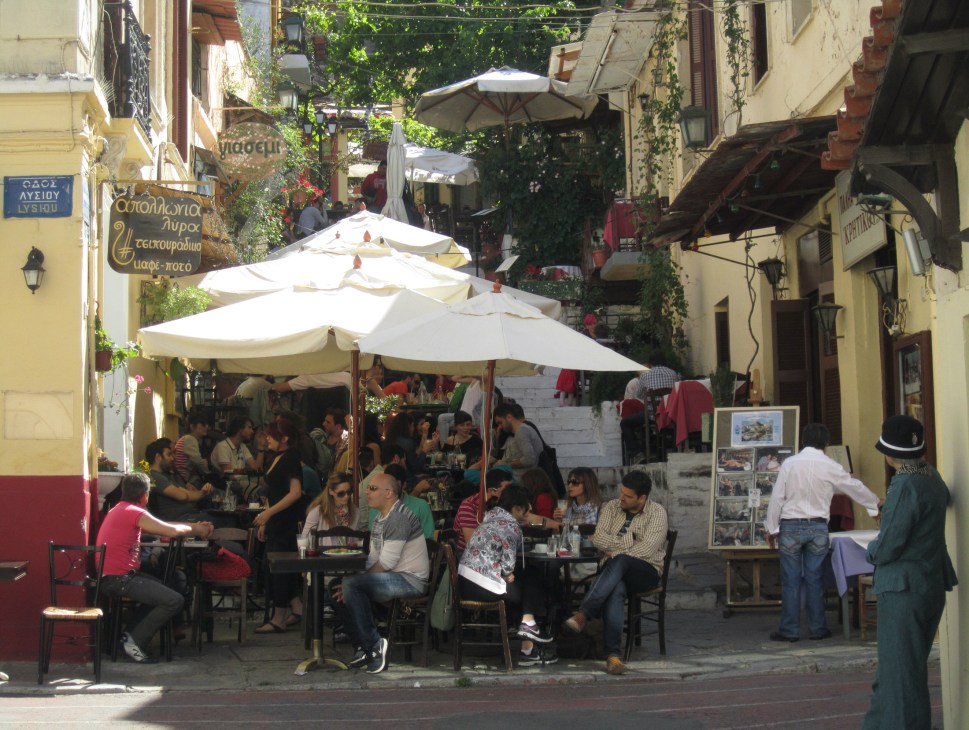
8.
Jan Gehl
Founding partner, Gehl Architects
Acropolis cafés, Greece
“This café scene in Athens illustrates a point that my old professor, Sven Ingvar Andersson, always made: make less space than you think is needed because it will be much cosier. This is the opposite of what is usually the case in newly designed cities.”
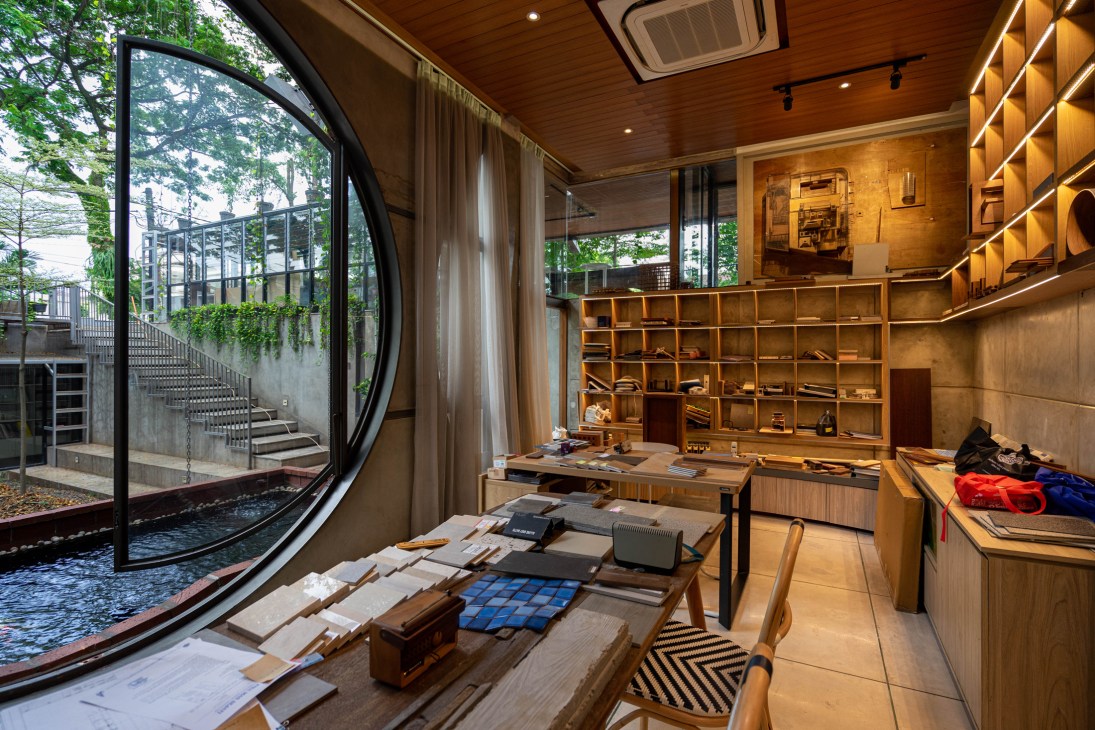
9.
Realrich Sjarief
Founder, Raw Architecture
Guha, Indonesia
“This space works because of its flexibility; it could be a living room, a material library, a place to meet clients or a personal study. It is located is in the middle of our Jakarta studio, overlooking the south courtyard, to reduce the temperature in a tropical climate.”
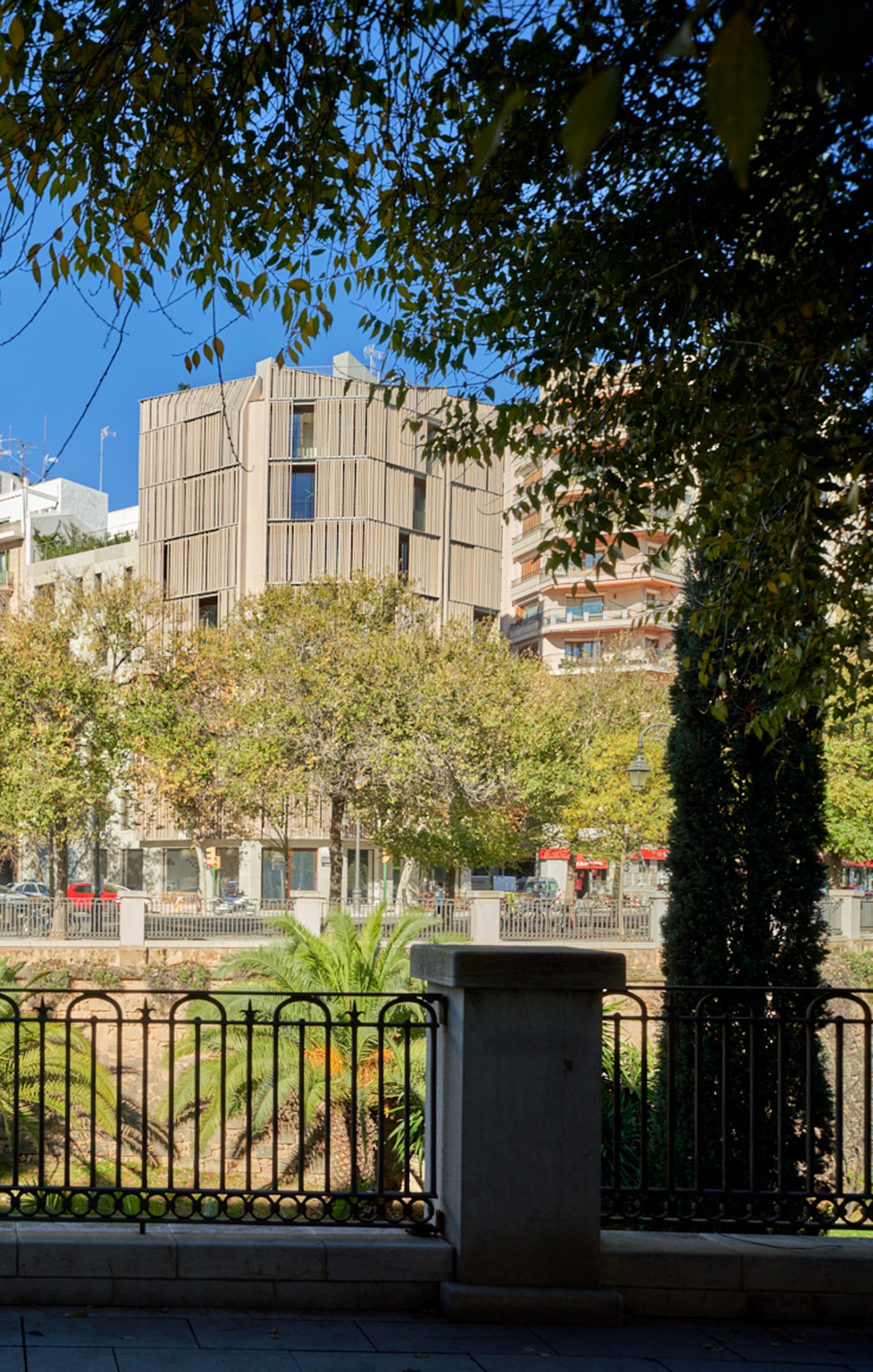
10.
Paloma Hernaiz
Co-founder, Ohlab
Passeig de Mallorca, Spain
“My partner, Jaime Oliver, and I love this promenade. We’ve just finished the building with the timber façade, which interprets elements of local architecture.”
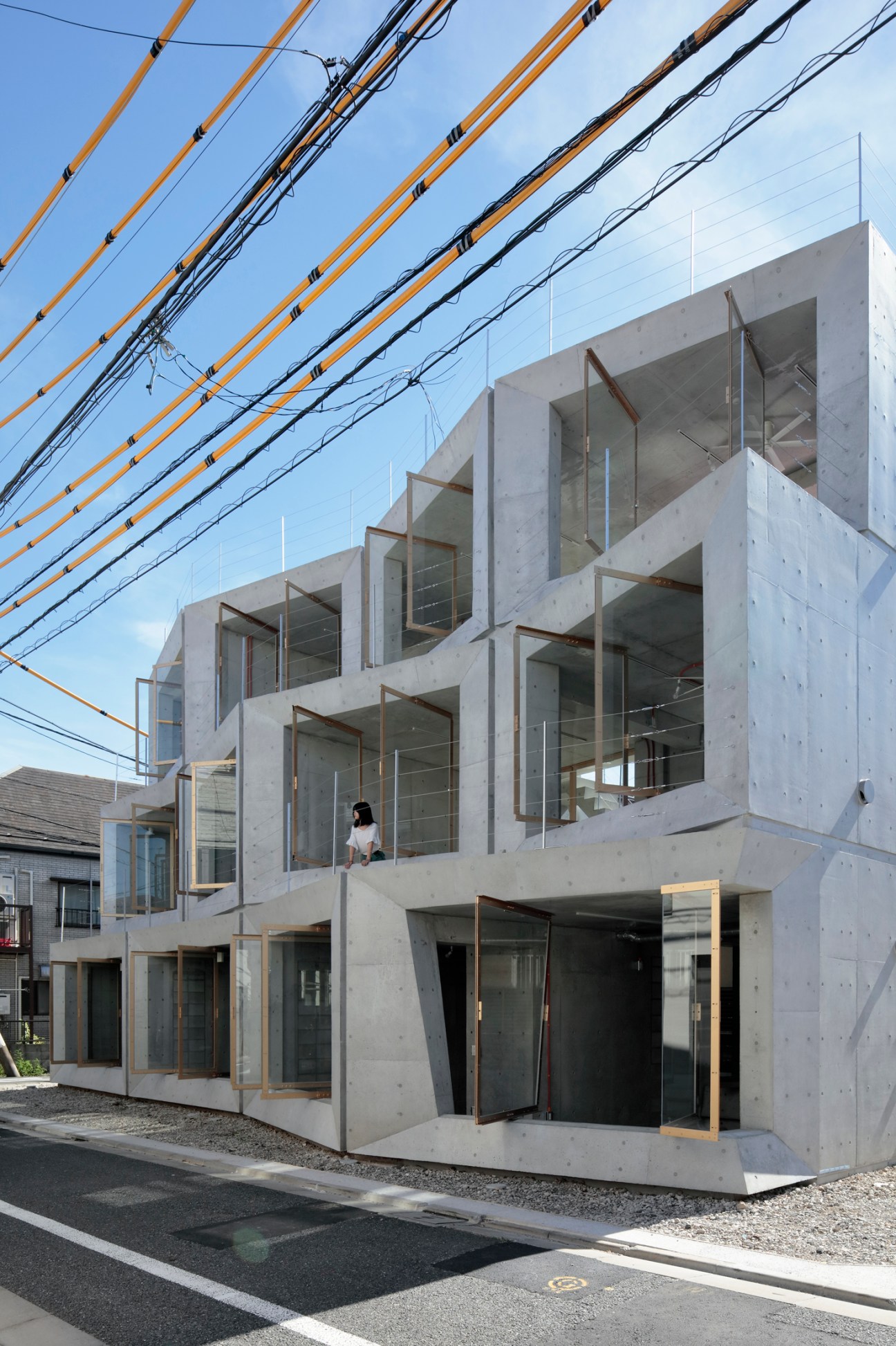
11.
Tomohisa Miyauchi
Founder, Archisan
House of Quartz, Japan
“This is the residential neighbourhood of Yutenji, a hidden gem of Tokyo. This building has a fashion boutique, hairdresser, nail salon and office all packed in together.”
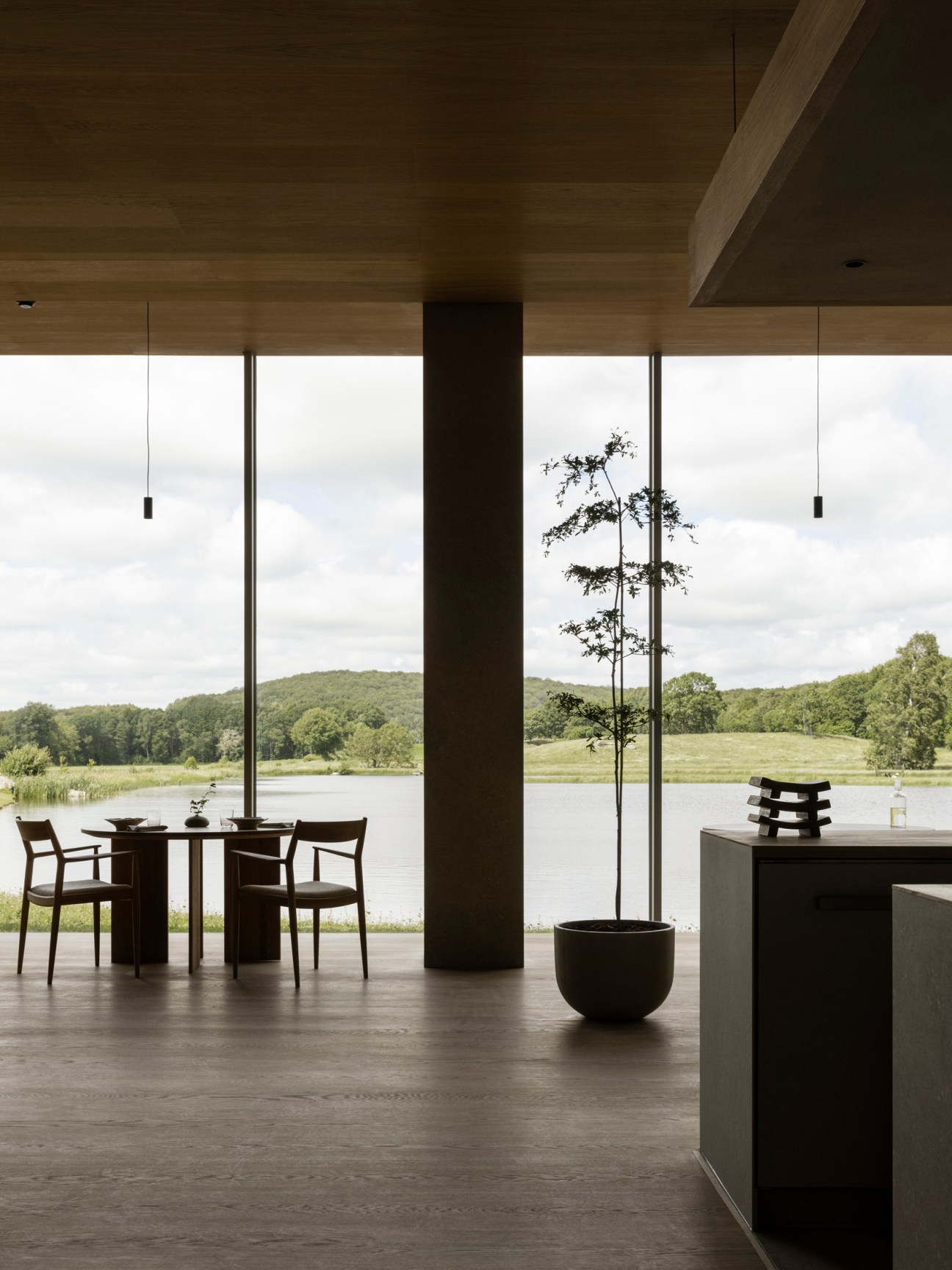
12.
Frederik Werner
Partner, Norm Architects
Restaurant Äng, Sweden
“Sitting as a solitary diamond in the undulating fields of Ästad Vingård, one of Sweden’s largest vineyards, Äng is an extraordinary culinary experience that engages all senses.”
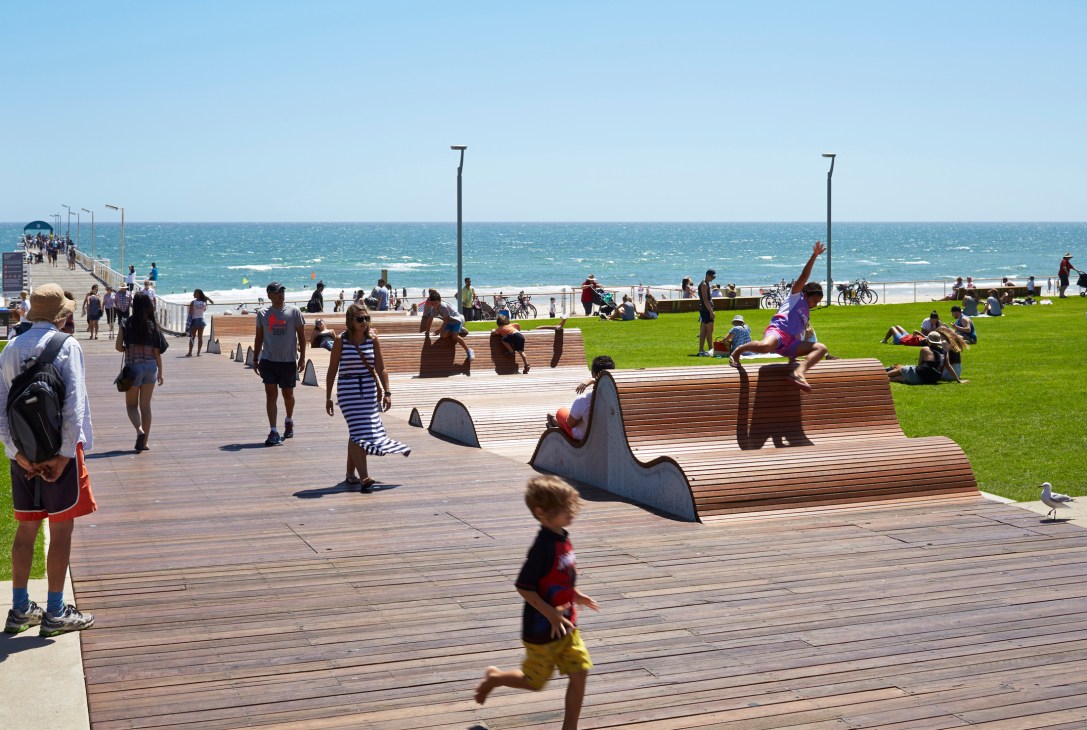
13.
Kate Cullity
Director, tcl
Ripple Lounge, Henley Square, Australia
“South Australians love to spend summer at the beach and Adelaide’s playful Ripple Lounge provides a canvas to sit and sprawl on while kids race up and down its wave-like forms.”
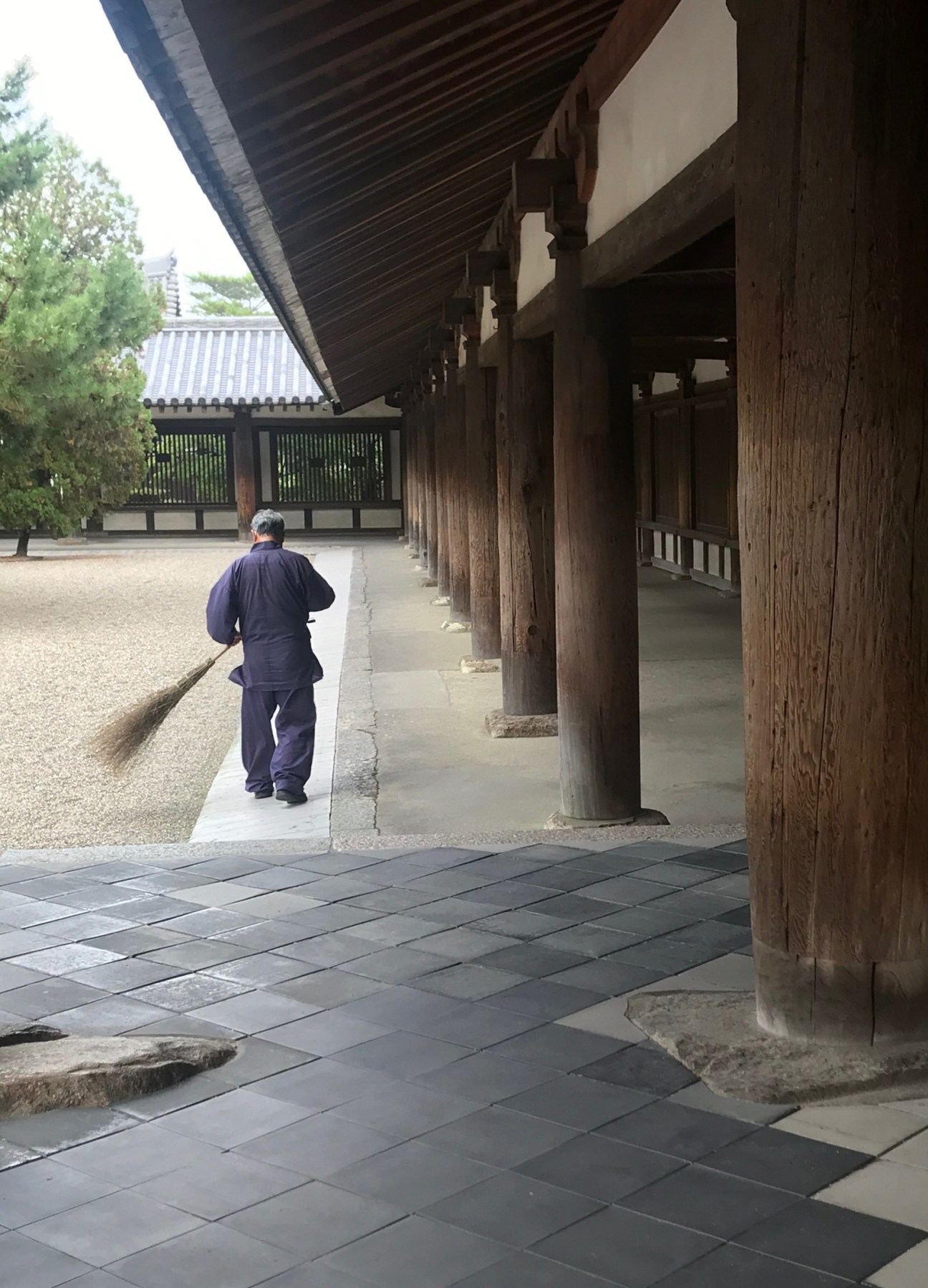
14.
Ryutaro Yoshida
Founder, Time & Style
Horyu-ji, Japan
“Built 1,400 years ago, this temple in Nara is the world’s oldest wooden structure; it is said that the wood used is 2,000-year-old Japanese cypress. Japan is a country with many disasters such as earthquakes and typhoons but this temple is a place where you can feel the splendour of wood that has endured the wind and snow for a long time.”
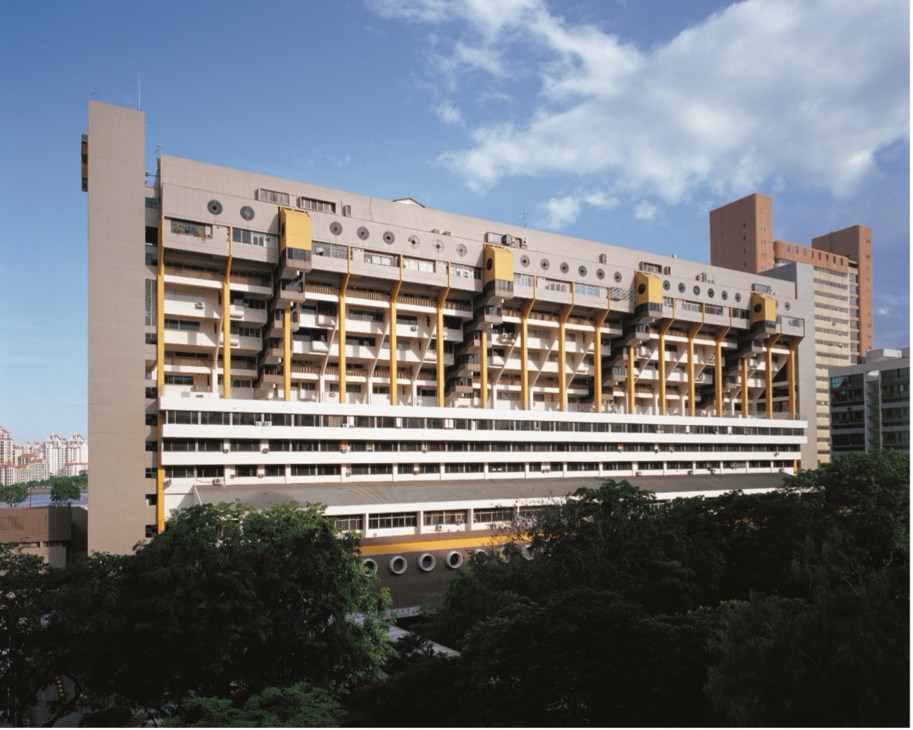
15.
Mok Wei Wei
Founder, W Architects
Golden Mile Complex, Singapore
“Built in 1973 as one of the first high-rise, mixed-use developments in Singapore, it redefined modern urban living at that time. It was gazetted for conservation in 2021 and today remains one of Singapore’s finest examples of brutalist architecture.”
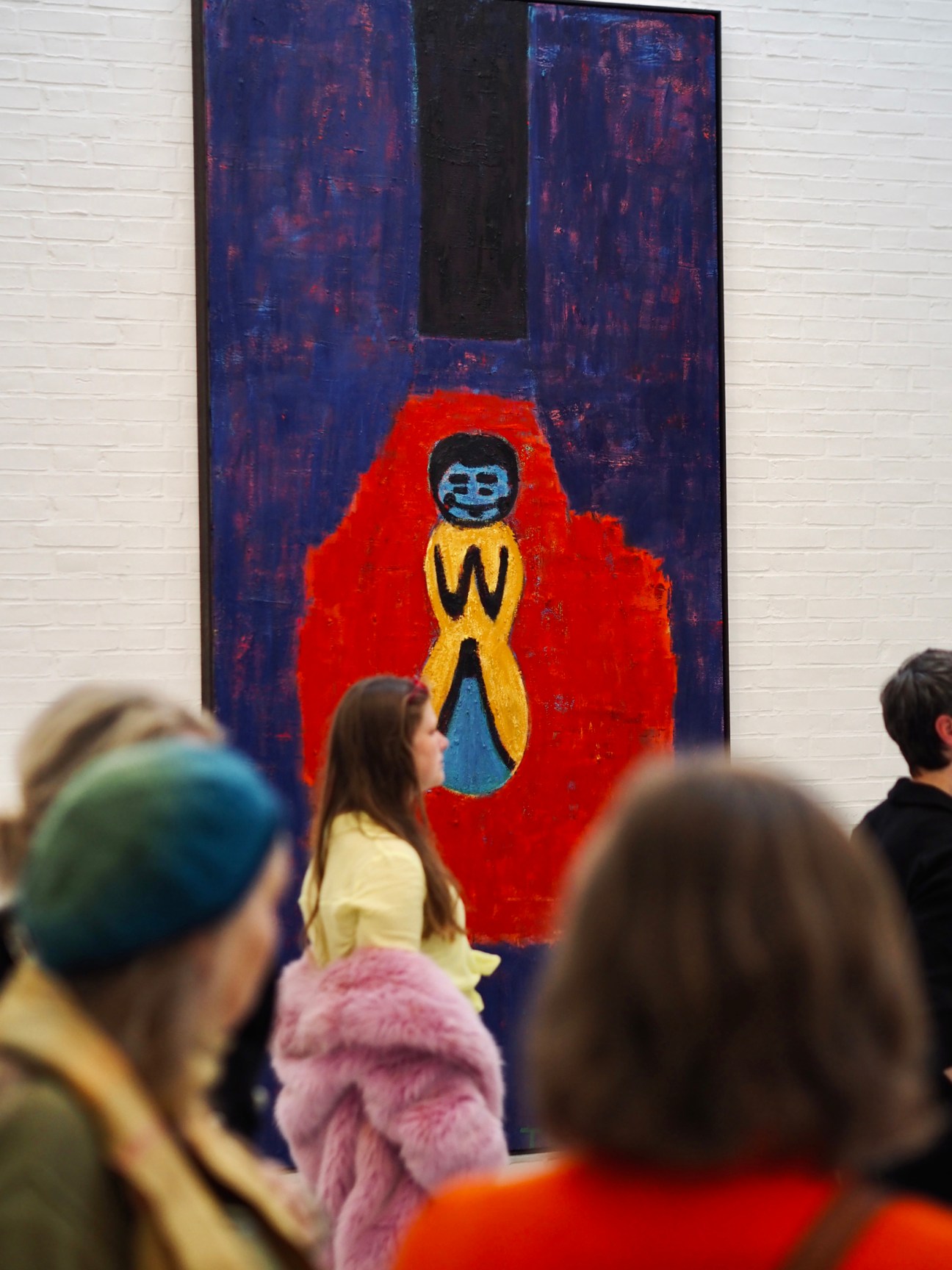
16.
Lasse Andersson
Director, Kunsten Museum of Modern Art and Utzon Center
Kunsten Museum of Modern Art, Denmark
“I can’t imagine a better place to be than in front of Tal R’s painting Lillen in Aalborg. The door opening in the painting connects to the exhibition space, revealing the power of aesthetics in art, architecture and fashion.”
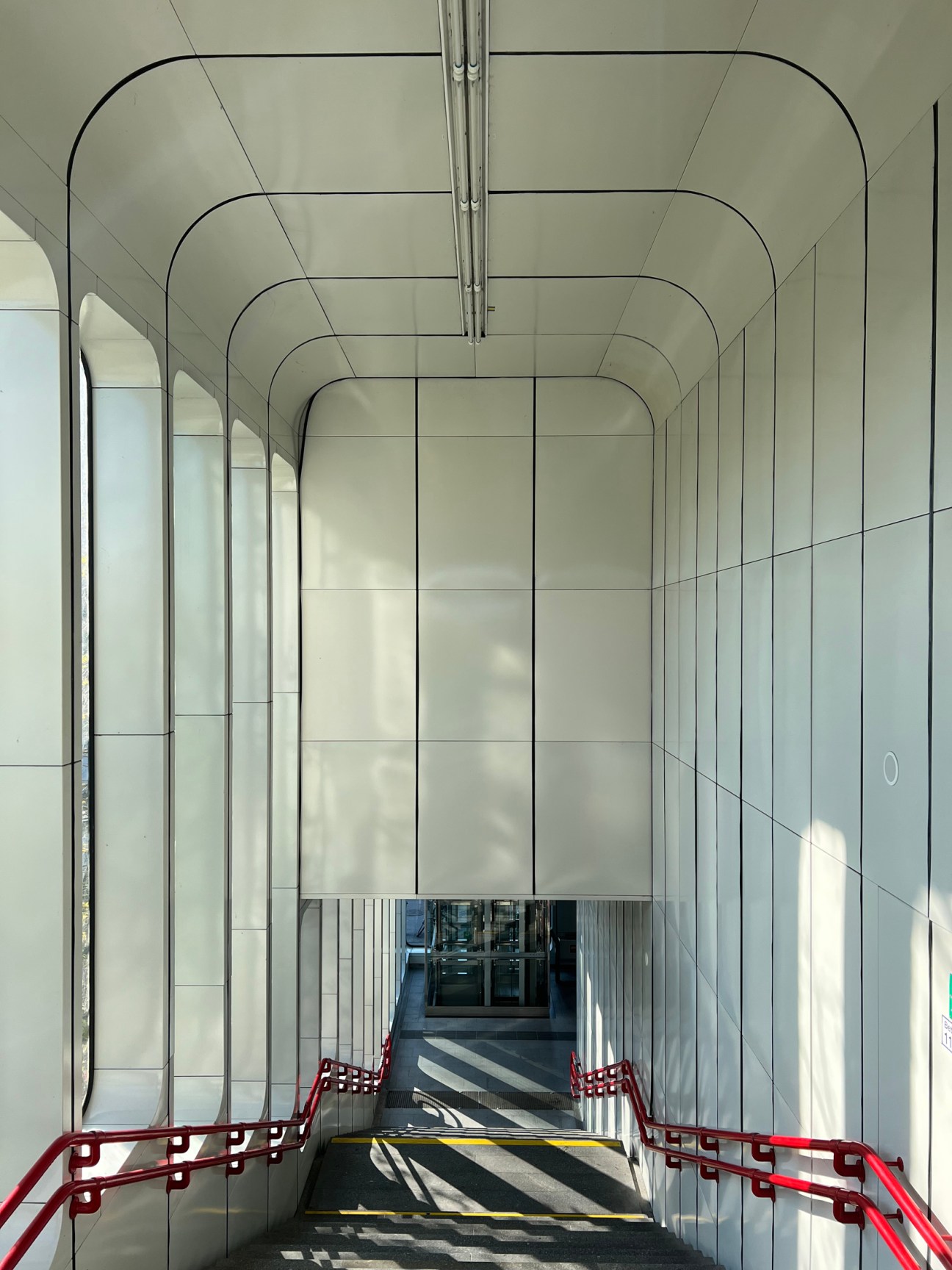
17.
Karin Novozamsky
Co-founder, Apt
Alte Donau station, Austria
“Designed in the 1970s, this is a stunning, timeless and impressive piece of architecture in Vienna. The station is above ground so the high ceiling and huge windowed front allow natural light to fill the generous space.”
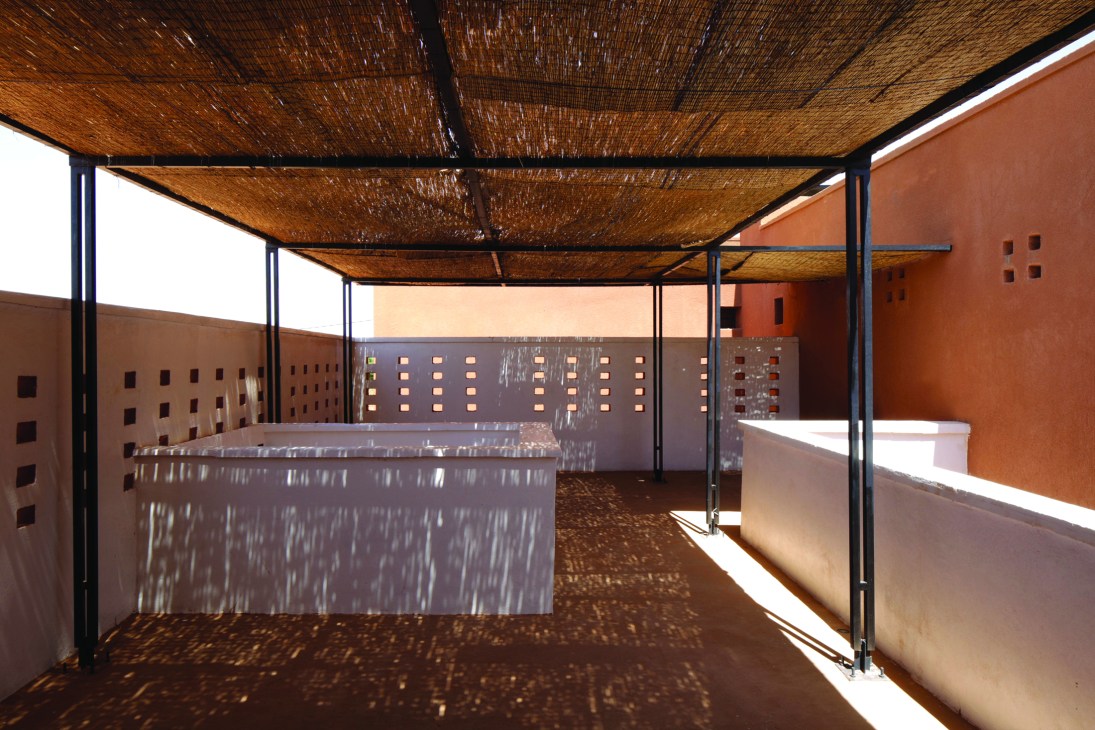
18.
Mariam Issoufou Kamara
Founder, Atelier Masomi
Niamey 2000, Niger
“As temperatures can get extremely hot in Niamey, the courtyard spaces and terraces in this housing development offer a respite from the heat. They also make for cool, abundant areas in which residents can entertain privately, away from prying eyes.”
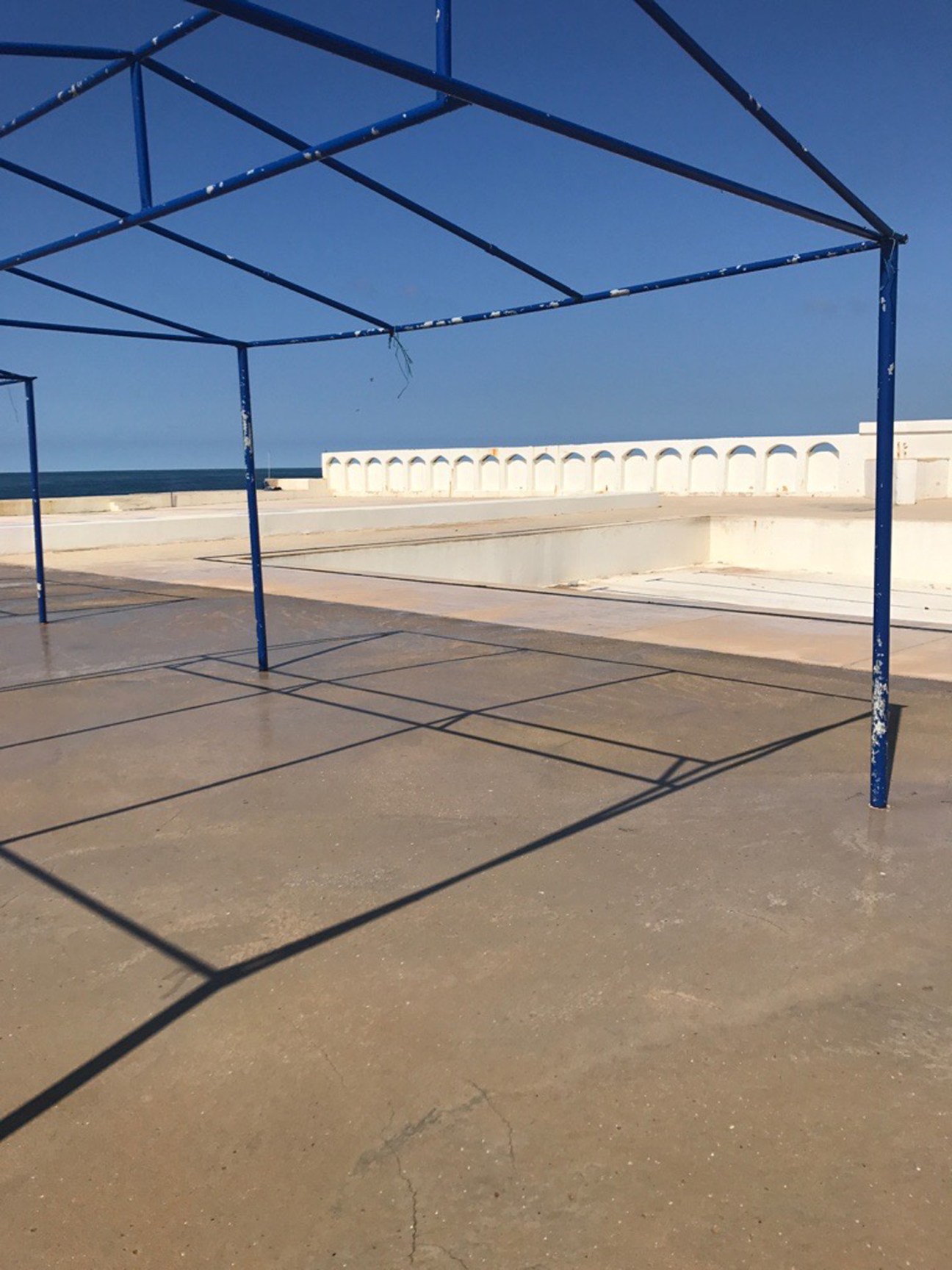
19.
Nada Debs
Designer
Sporting Club Beach, Lebanon
“This is the place where I look at the horizon, just beyond the wall. It gives me hope and clarity of thought.”
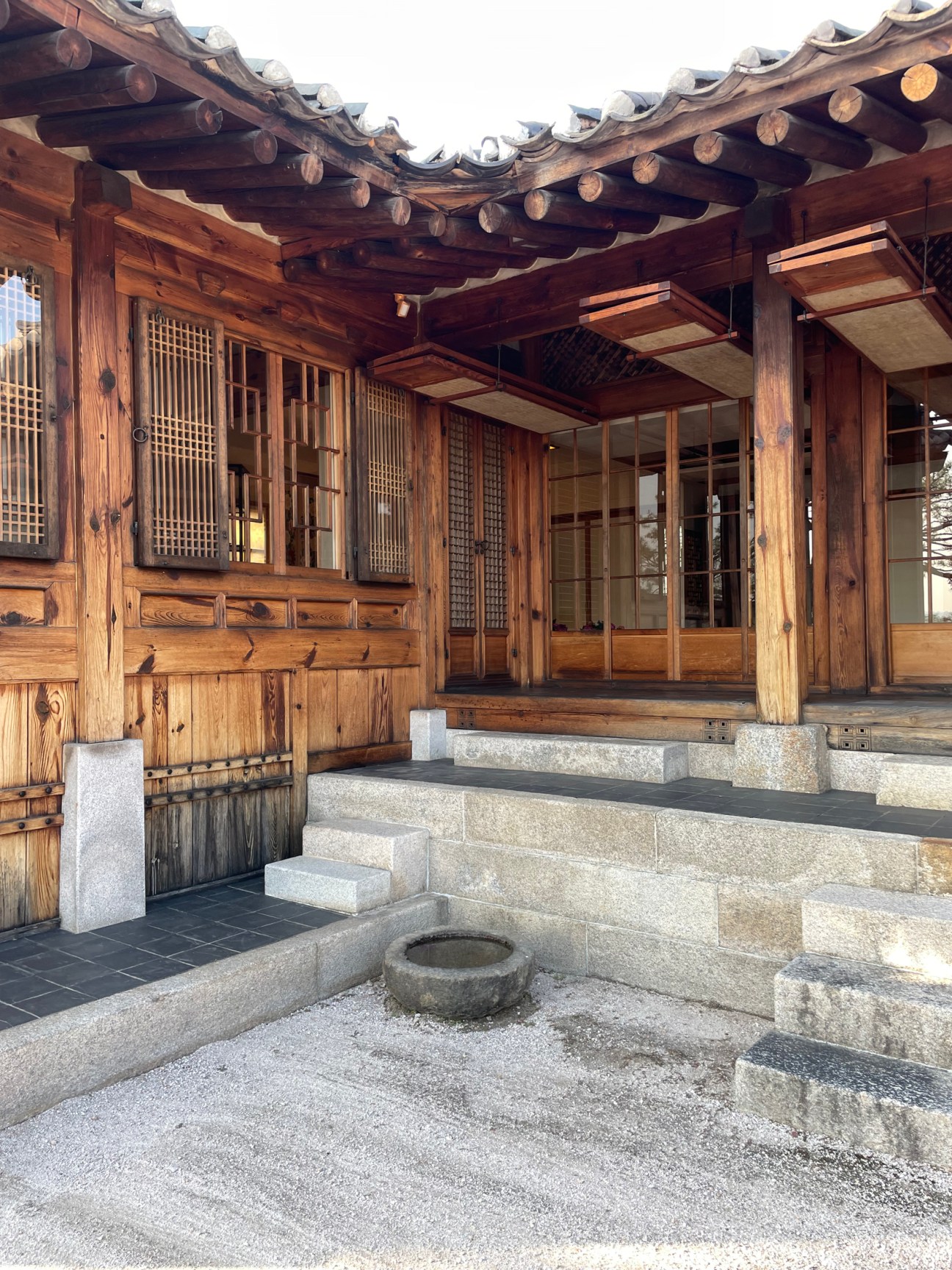
20.
Marie-Louise Høstbo
Creative design director, Fritz Hansen
Korea Furniture Museum, South Korea
“Located in a group of restored hanoks [traditional Korean houses] in Seoul, the atmosphere here is delicate. The details are meticulously crafted and the transition between the individual hanoks and the adjoining garden creates an astounding experience.”
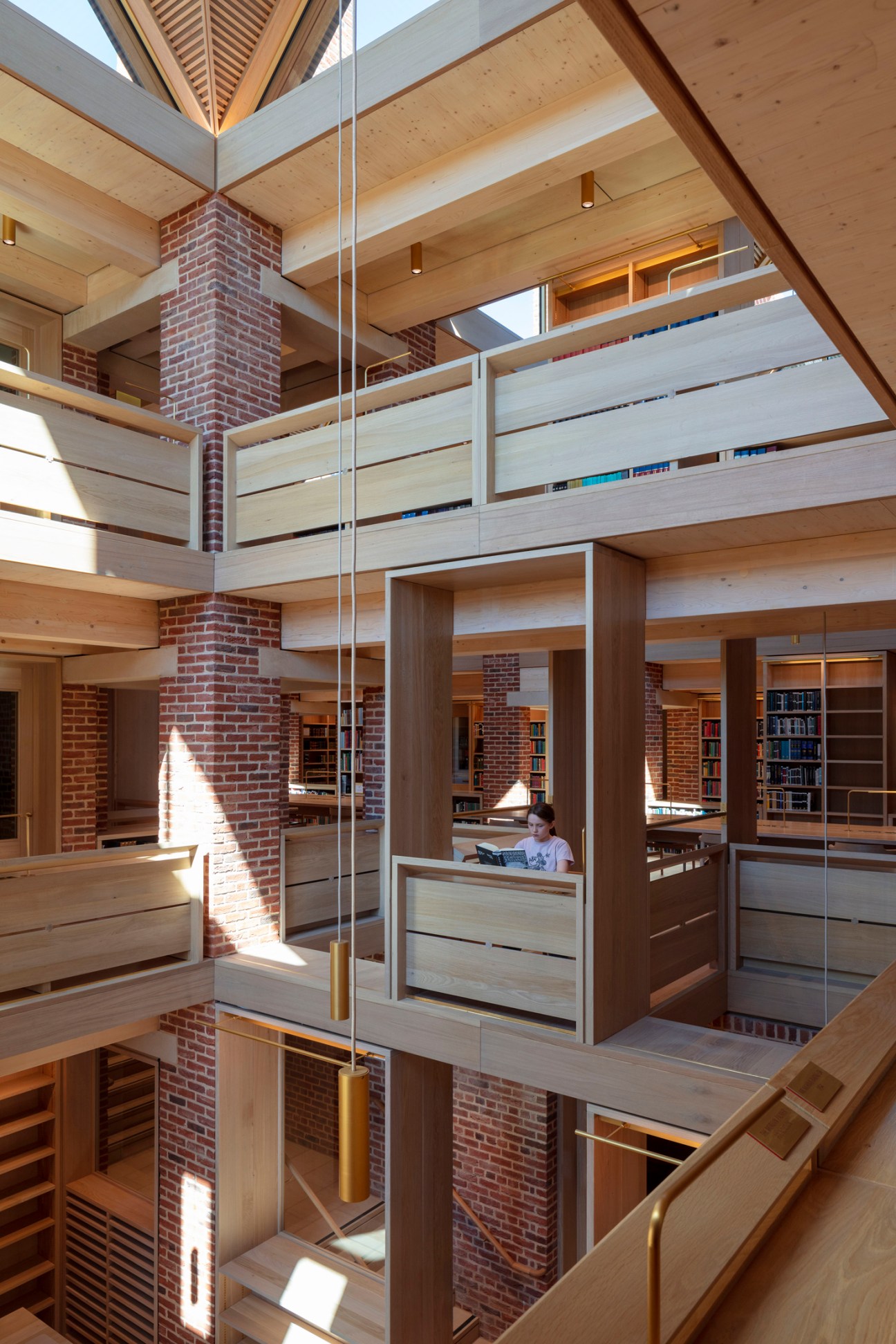
21.
Níall McLaughlin
Founder, Níall McLaughlin Architects
New Library, Magdalene College, UK
“This is a reading desk in the library that we designed in Cambridge. The reader is in a contained and framed space that overlooks a larger room beneath. It’s a nice, protected perch where you can feel both safe and open to the world.”
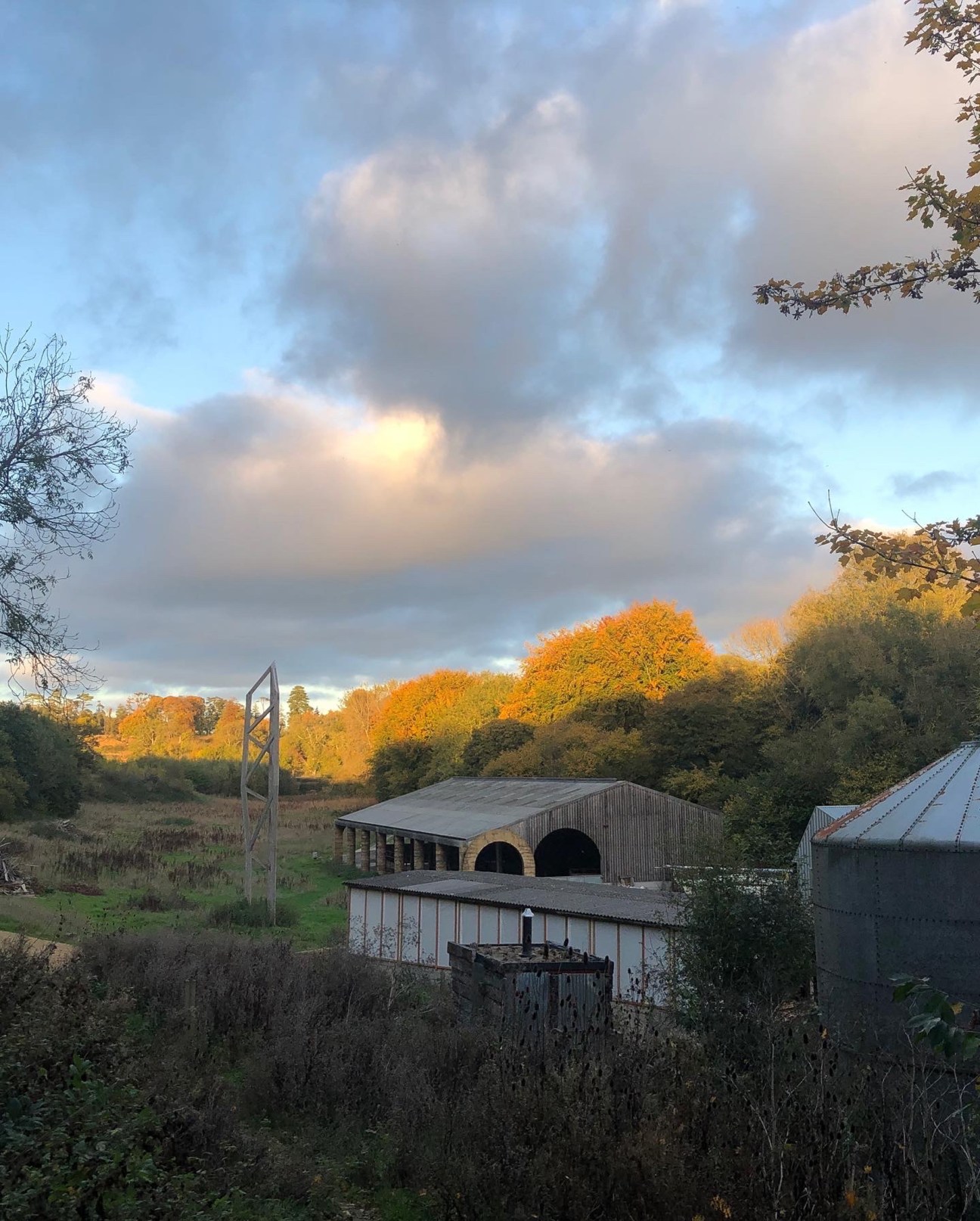
22.
Ilse Crawford
Founder, StudioIlse
Cowshed, Shatwell Farm, UK
“This colonnaded cowshed by Stephen Taylor Architects is one of several agricultural buildings at Shatwell Farm, Somerset. Housing up to 50 animals, it is essentially a civic building for cows. Its sensitive yet vigorous approach shows how architecture can elevate even the simplest building.”
23.
Jasper Morrison
Designer
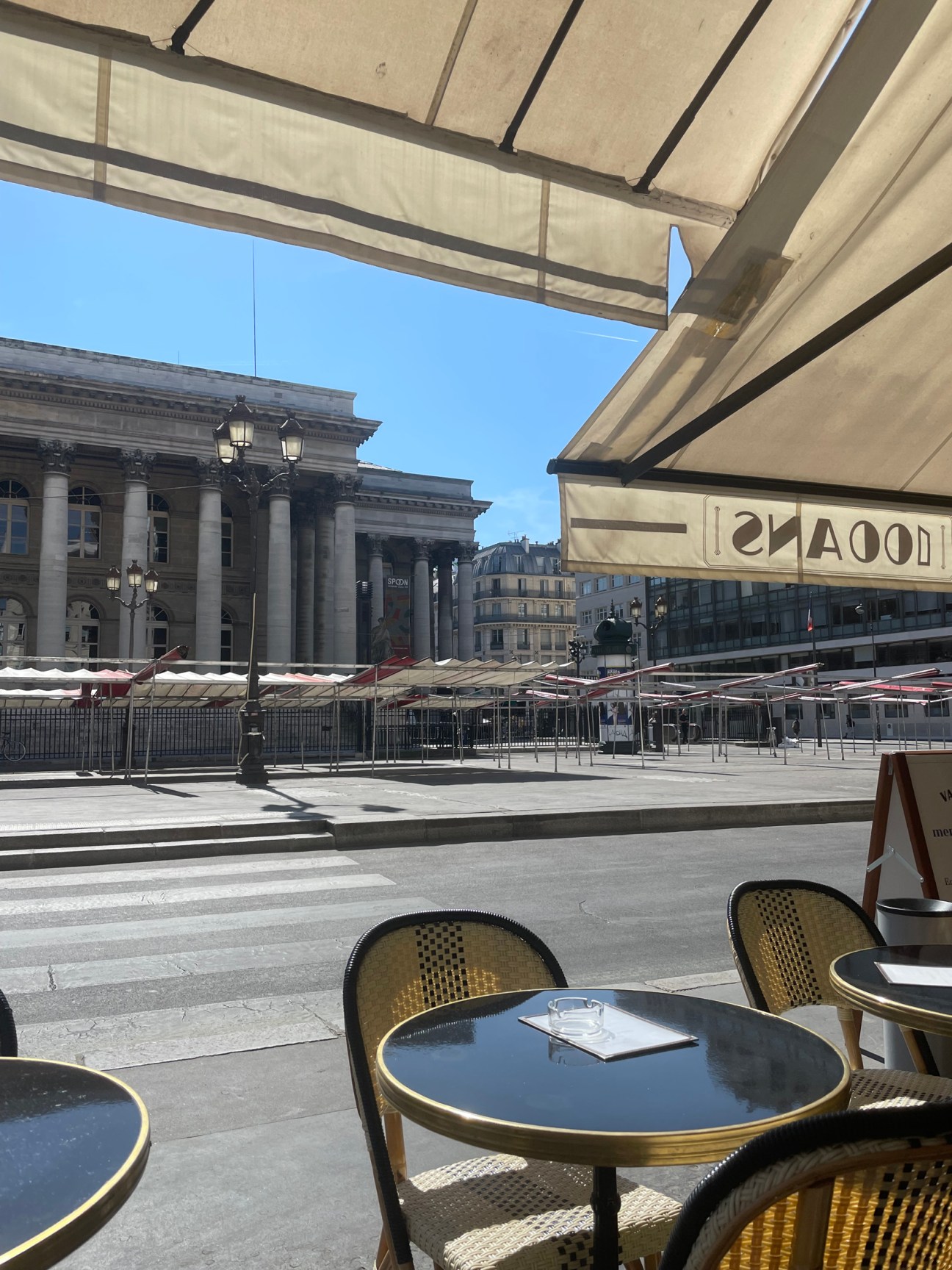
Le Vaudeville Brasserie, France
“There’s a fine view of Paris’s Place de la Bourse from the outside tables here. Nearby is the very appealing Agence France-Presse building, a modernist monument to pre-‘fake news’ days. The Place itself is a flat paved area in front of the bourse with some market stalls.”
24.
Mario Cucinella
Founder, Mario Cucinella Architects
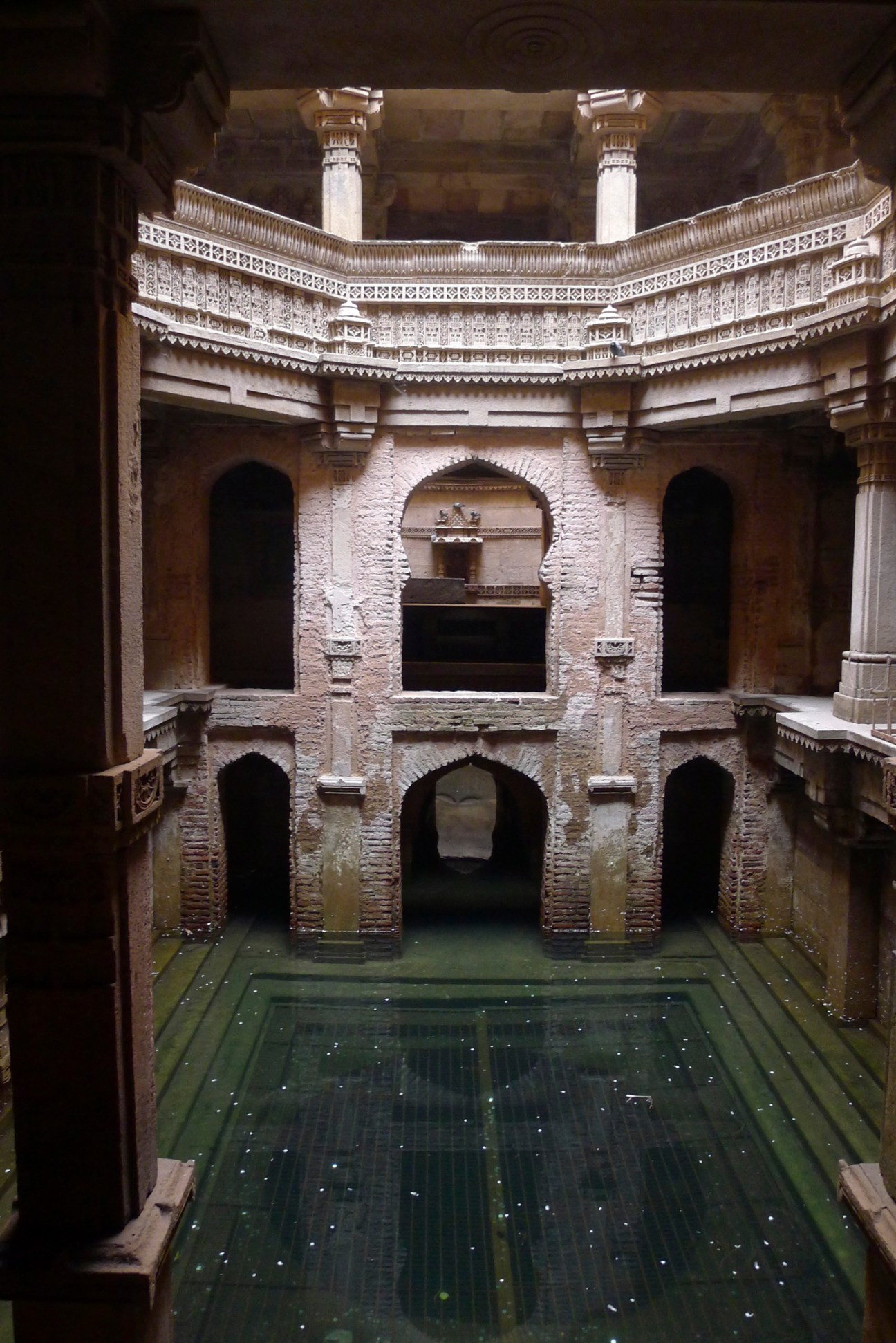
Dada Harir Vav, India
“Ahmedabad’s historic underground stairwell is an ideal place when thinking about alternative approaches to environmental architecture and the free cooling provided by subterranean floors. It’s built backwards.”
25.
Bernard Tschumi
Founder, Bernard Tschumi Architects
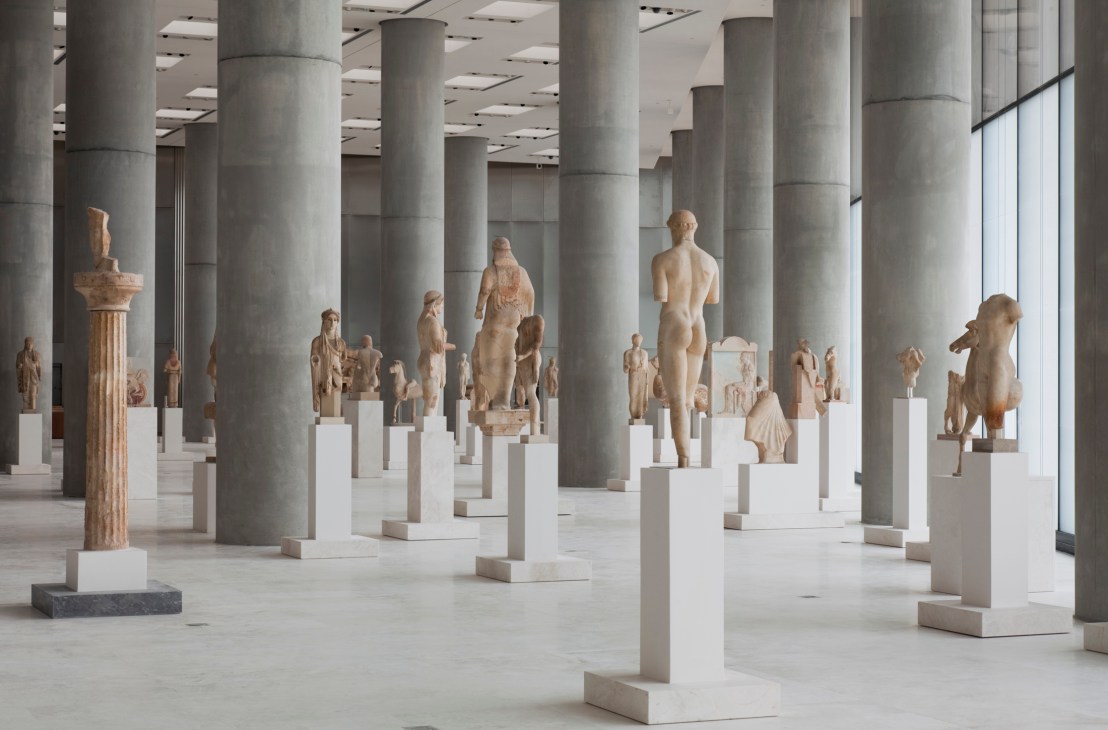
Acropolis Museum, Greece
“The structure’s raw concrete is juxtaposed with the polished marble statues; the concrete absorbs the light, while the marble reflects it. As visitors move through the forest of columns, the simplicity of elements generates an incredible effect.”
26.
Ambrish Arora
Founder, Studio Lotus
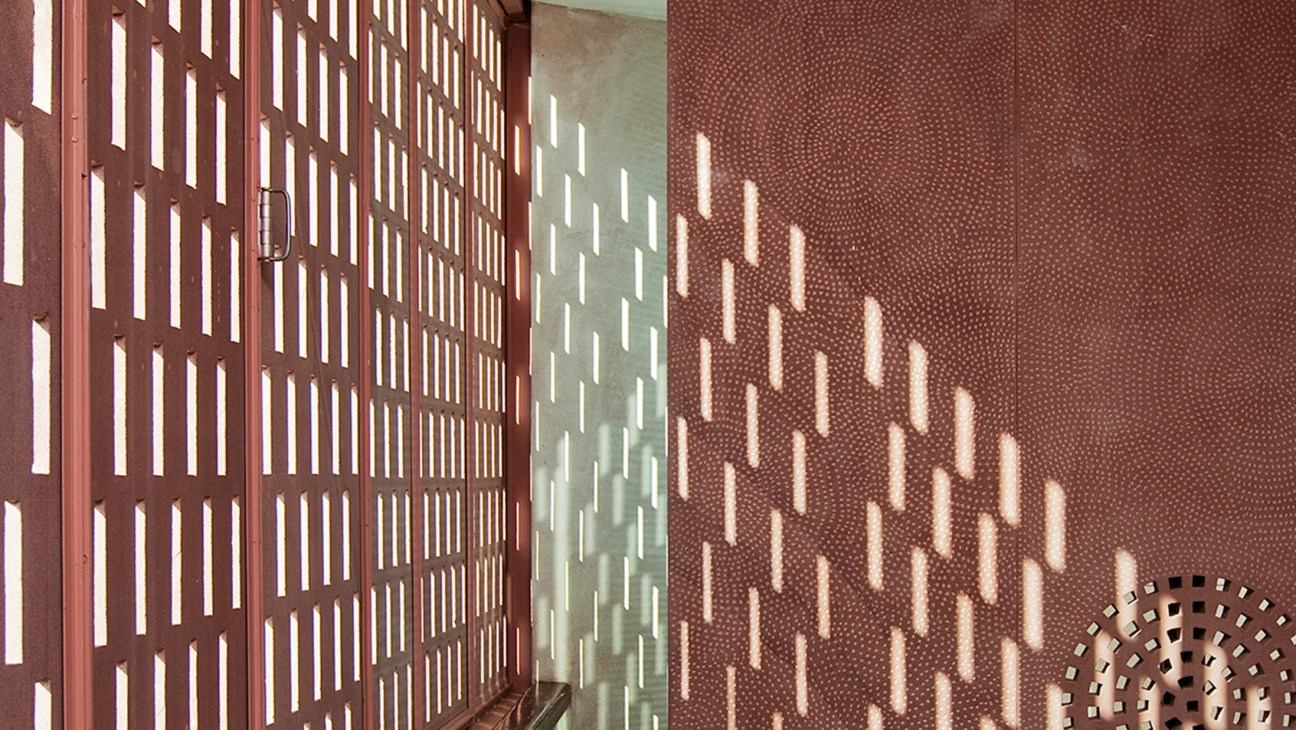
RAAS Jodhpur Hotel, India
“I love how the sun slices through the hand-cut movable stone screens that form the façade of the hotel, adding a layer of texture to the bush-hammered patterns on the red Jodhpur sandstone. Through the hands of a craftsman, an inert material is brought to life.”
27.
Wael al Awar
Principal architect, Waiwai
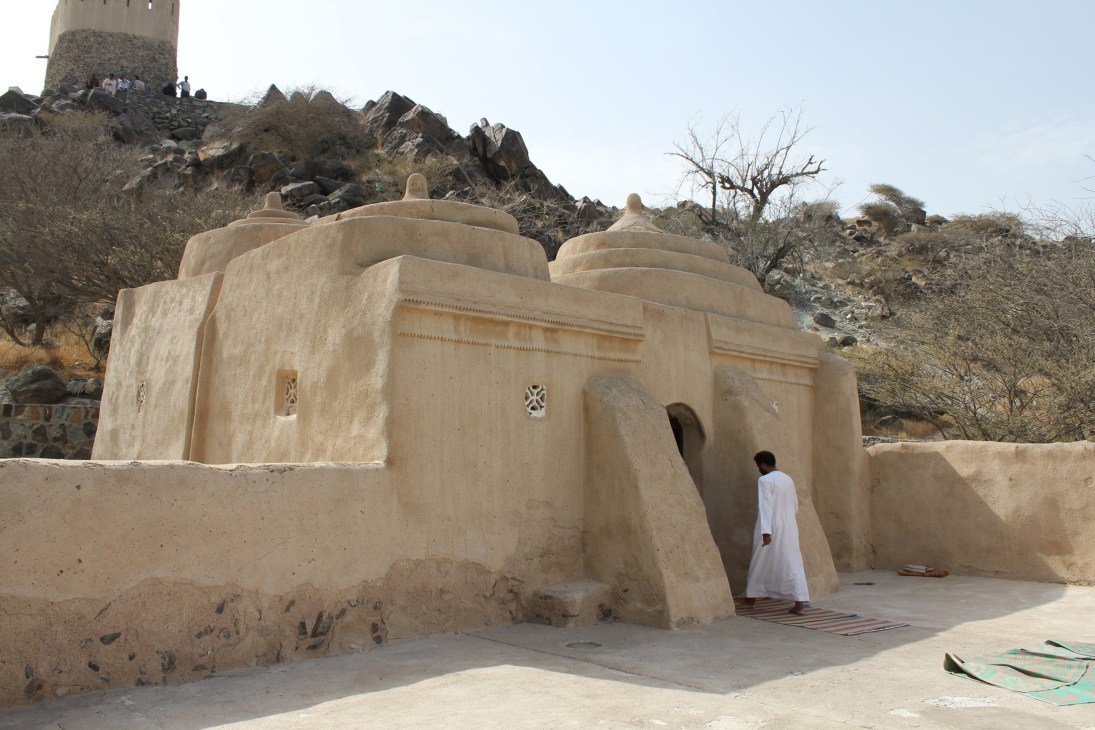
Al Bidya mosque, UAE
“Vernacular architecture involves using material from the local environment and this mosque in Fujairah is a sublime example. Dating from the 15th century, it is one of the uae’s oldest. It’s built from mud and stone mined from the surrounding cliffs.”
28.
Yves Béhar
Founder, Fuseproject
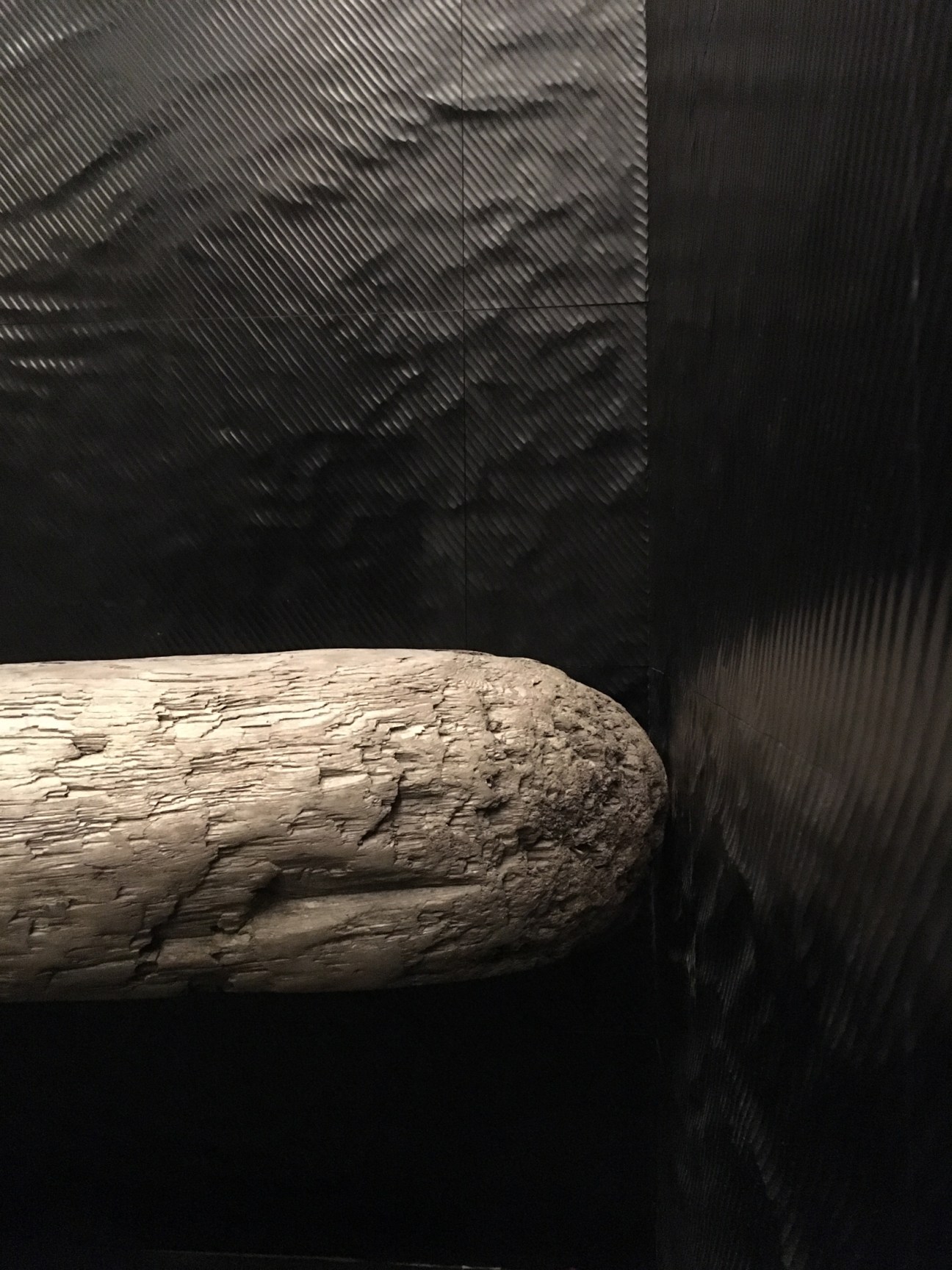
Home, USA
“This is a secret spot in my house in San Francisco, the convergence of a man-made machined aluminium room with a nature-made wooden bench that was found on a beach in northern California. This juxtaposition is a fantasy space that creates a world of its own.”
29.
Konstantinos Pantazis
Co-founder, Point Supreme Architects
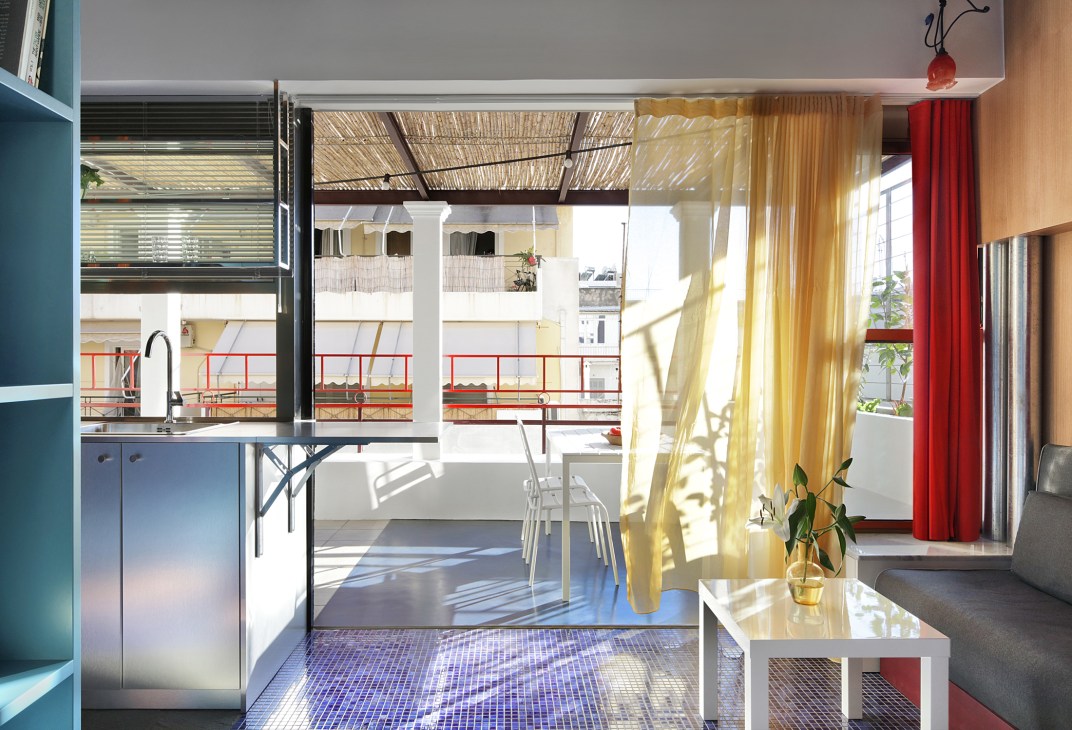
Veranda, Greece
“Verandas and rooftops are a favourite of my partner, Marianna, and I. We designed this Athens apartment on a rooftop, letting it flow out onto the veranda and making the small space feel almost endless.”
30.
David Marquardt
Founding partner, Mach
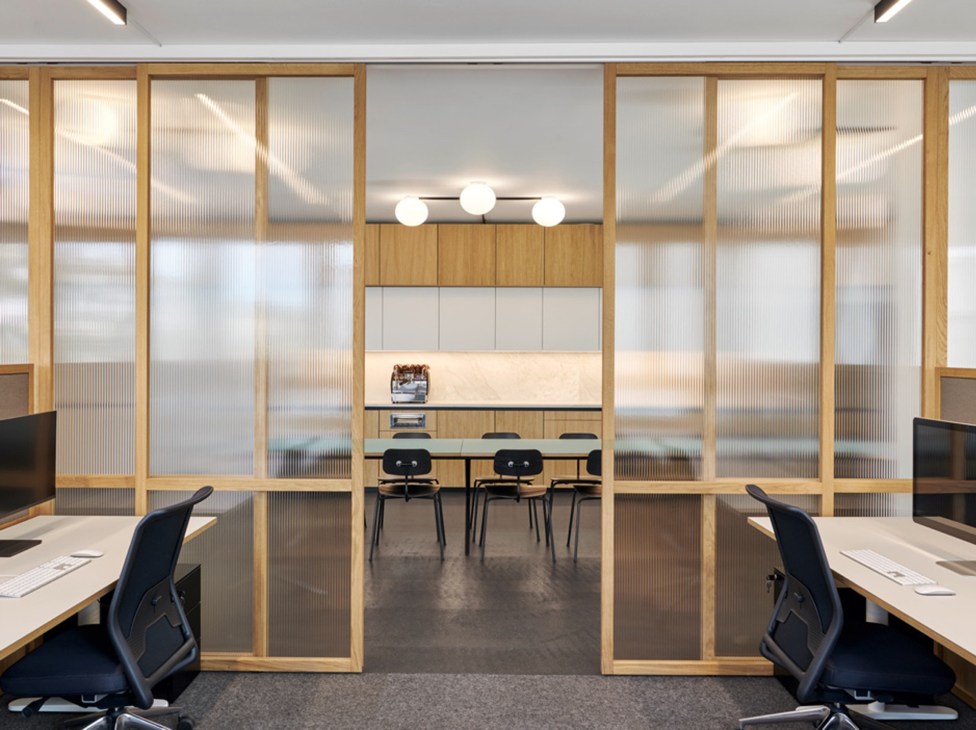
Mach office, Switzerland
“We’re familiar with the idea of the home office but we think of our Zürich space as the office home. It’s more than an office; it’s a place to be together. The space is pretty flexible: we have speeches and presentations here and even cook together. It functions like a canvas, a place where we can paint all these different pictures.”
31.
Michael Jones
Senior Partner, Foster 1 Partners
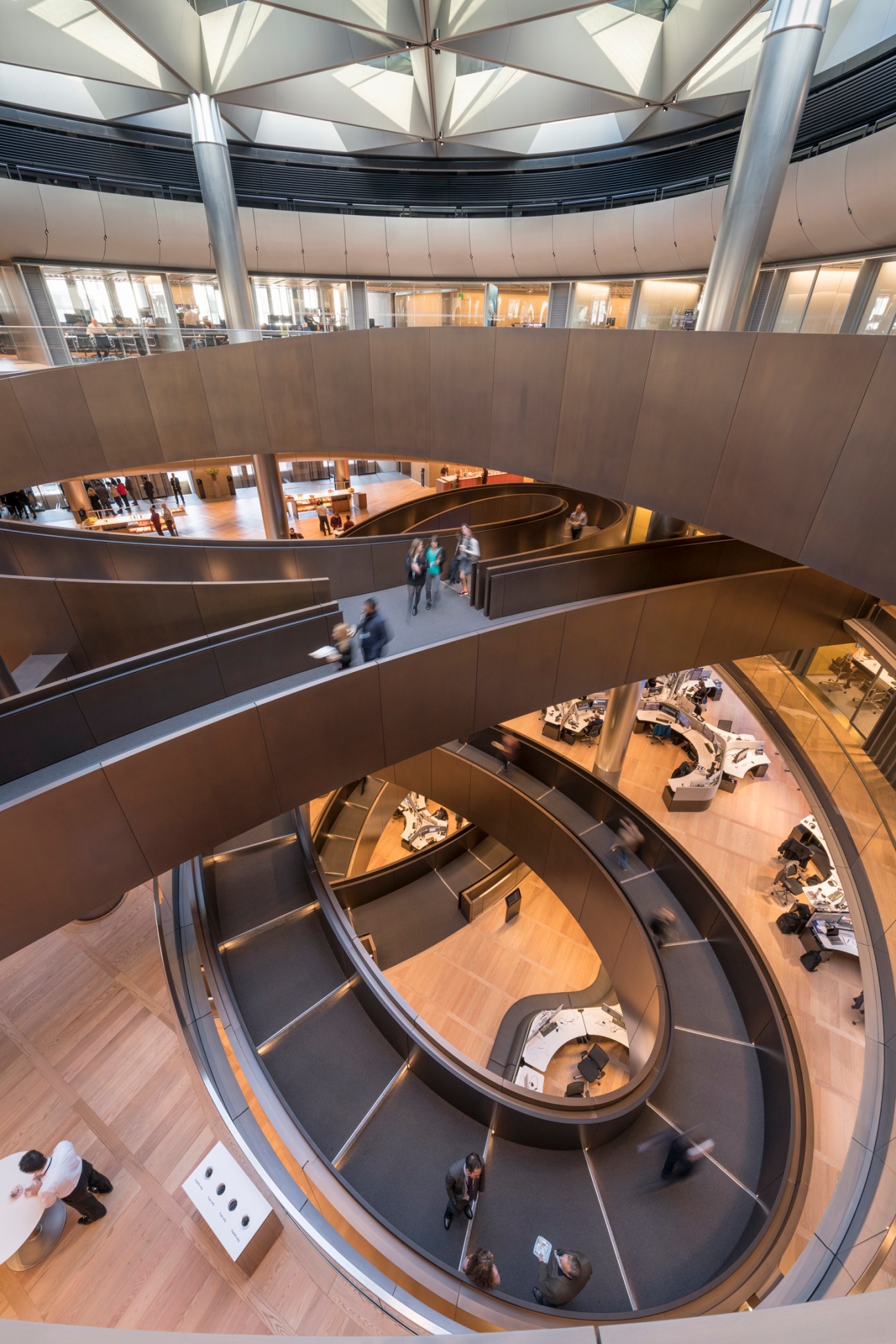
Bloomberg European HQ, UK
“When people ask what is the biggest meeting room in London’s Bloomberg European headquarters, my response is always the ramp. People meet by chance here and pause, speak and have interactions that might otherwise not happen, which is something central to the culture of Bloomberg’s business.”
32.
Keiji Ashizawa
Architect and furniture designer
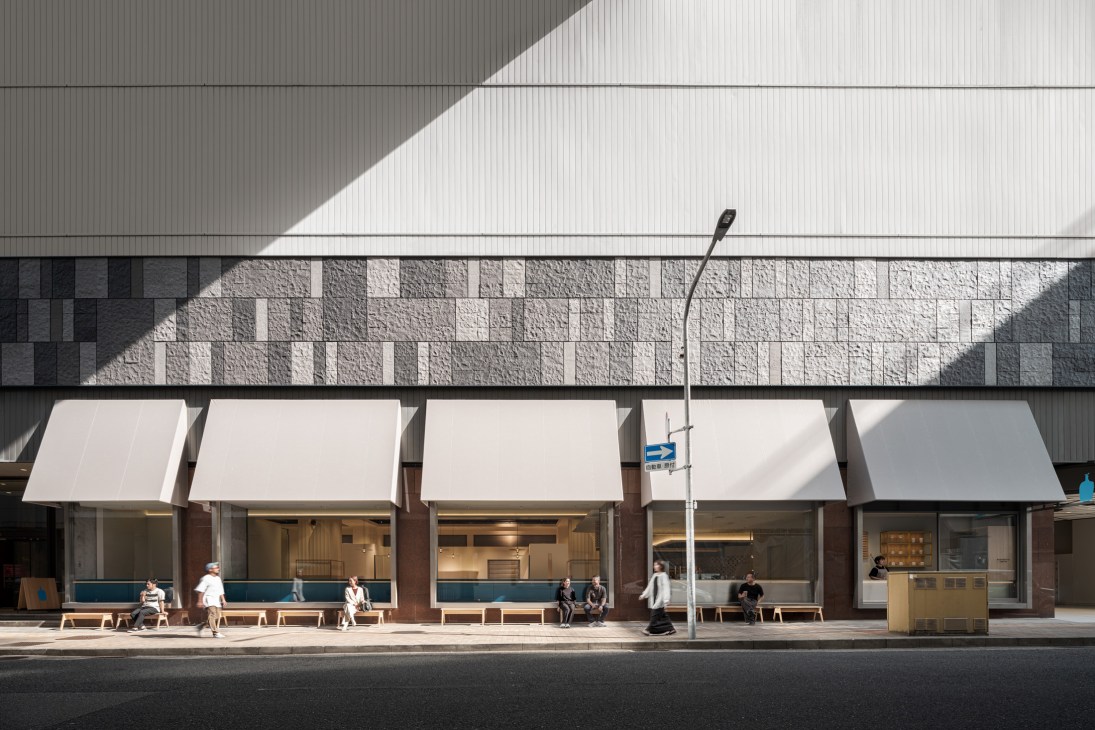
Blue Bottle Coffee Kobe Hankyu Café, Japan
“Connecting the inside and outside, the café has become an inviting space that is open to the public on a lively backstreet in Kobe.”
33.
Lina Ghotmeh
Founder, Lina Ghotmeh Architecture
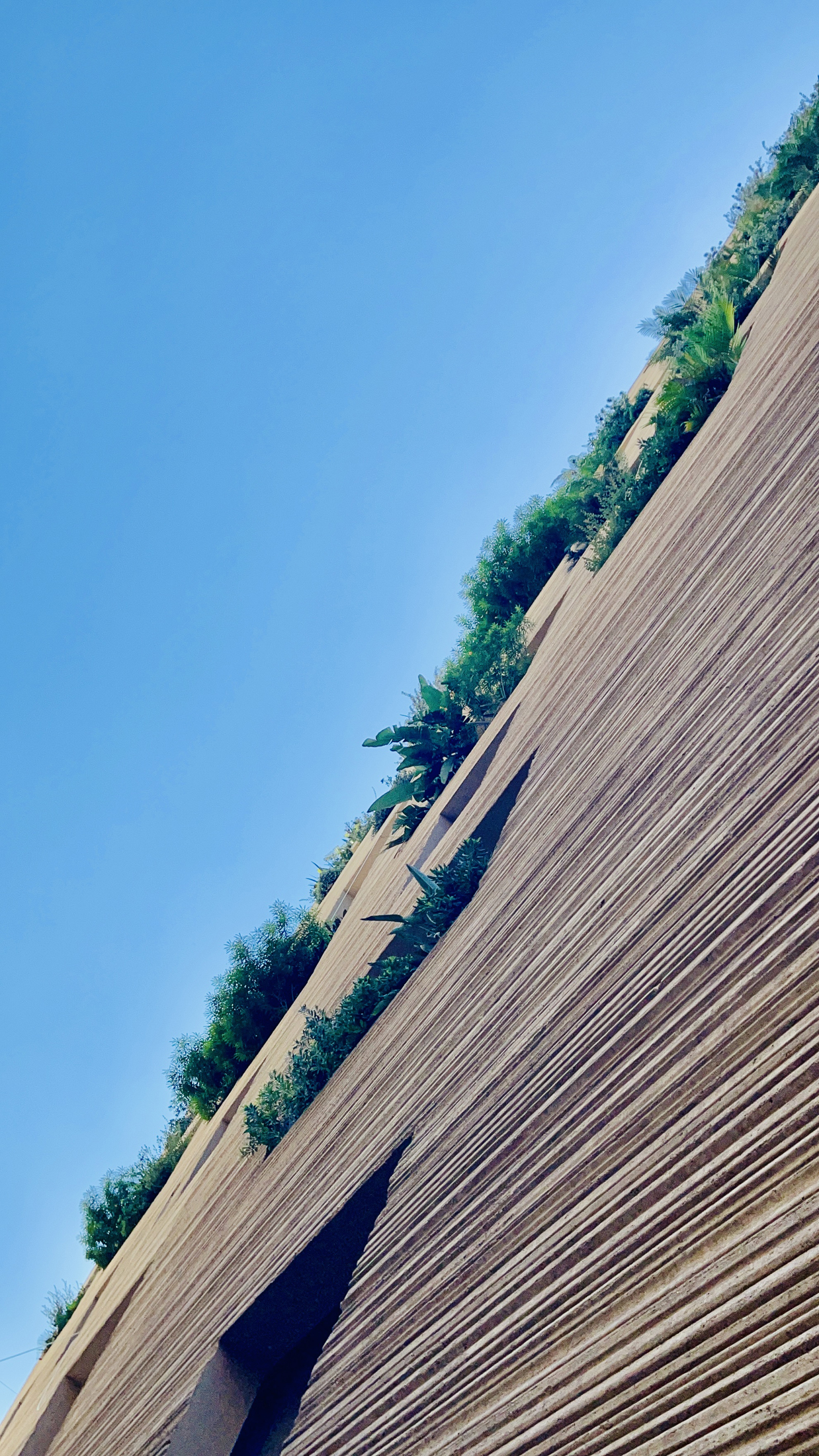
Stone Garden, Lebanon
“This building in Beirut leads its own life beyond architecture, as the limits of the ground and the edifice are blurred and nature is able to live alongside us, framing the space. There is freedom to grow, to change, to weather.”
34.
Camilla Block
Co-founder, Durbach Block Jaggers Architects
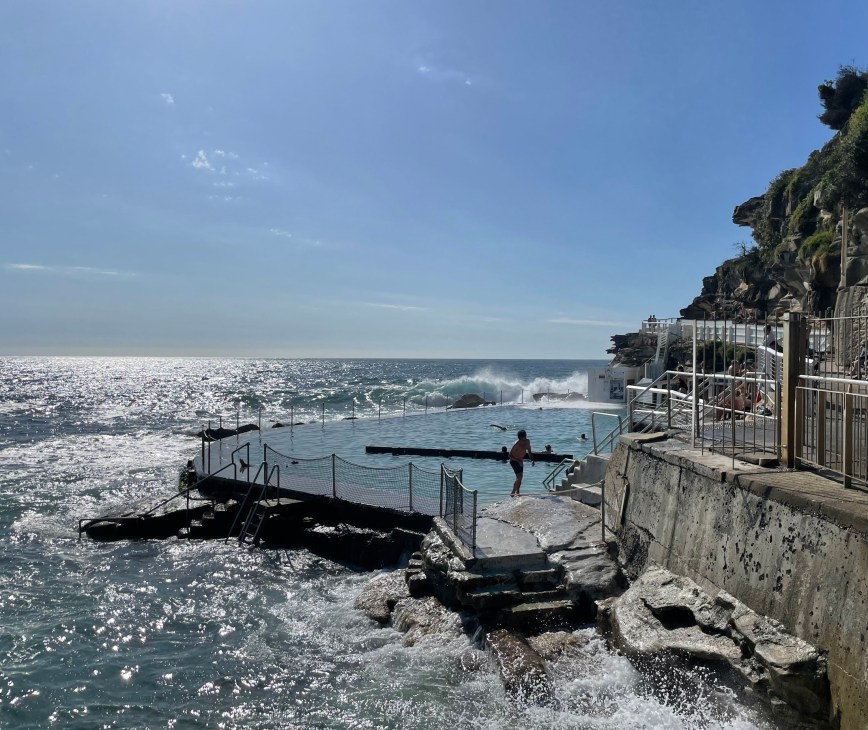
Bronte Baths, Australia
“This Sydney ocean pool is a beautiful fusion of natural and built landscape. It captures the sea water, brightening its colour and stilling its surface.”
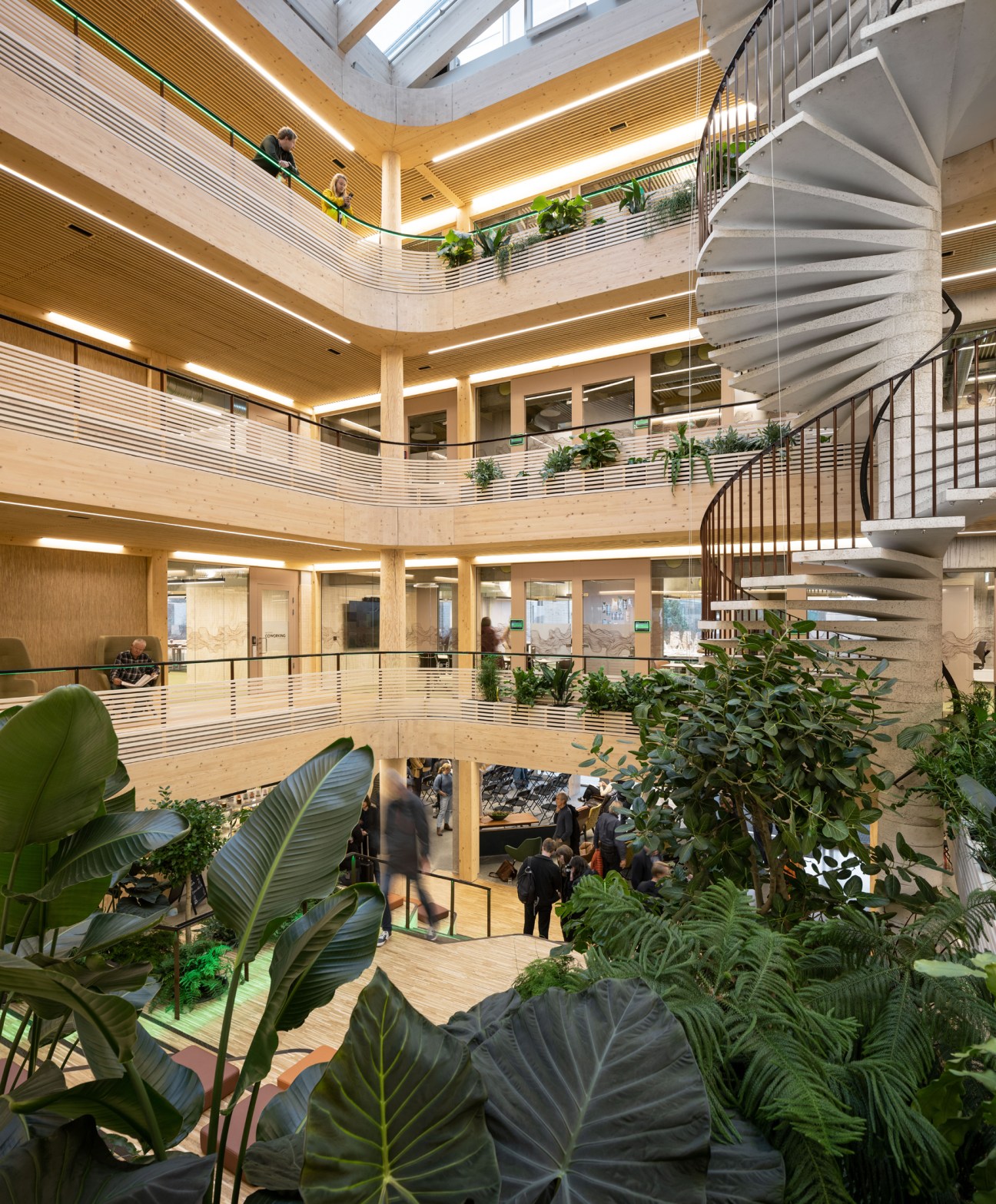
35.
Siv Helene Stangeland
Co-founder, Helen & Hard Architects
Innoasis, Norway
“We renovated this concrete building in Stavanger with an implant of timber galleries creating a new interior patio. Fir-tree stems, straw wallpapers, plants and the reuse of an old spiral staircase create a warm, natural atmosphere.”
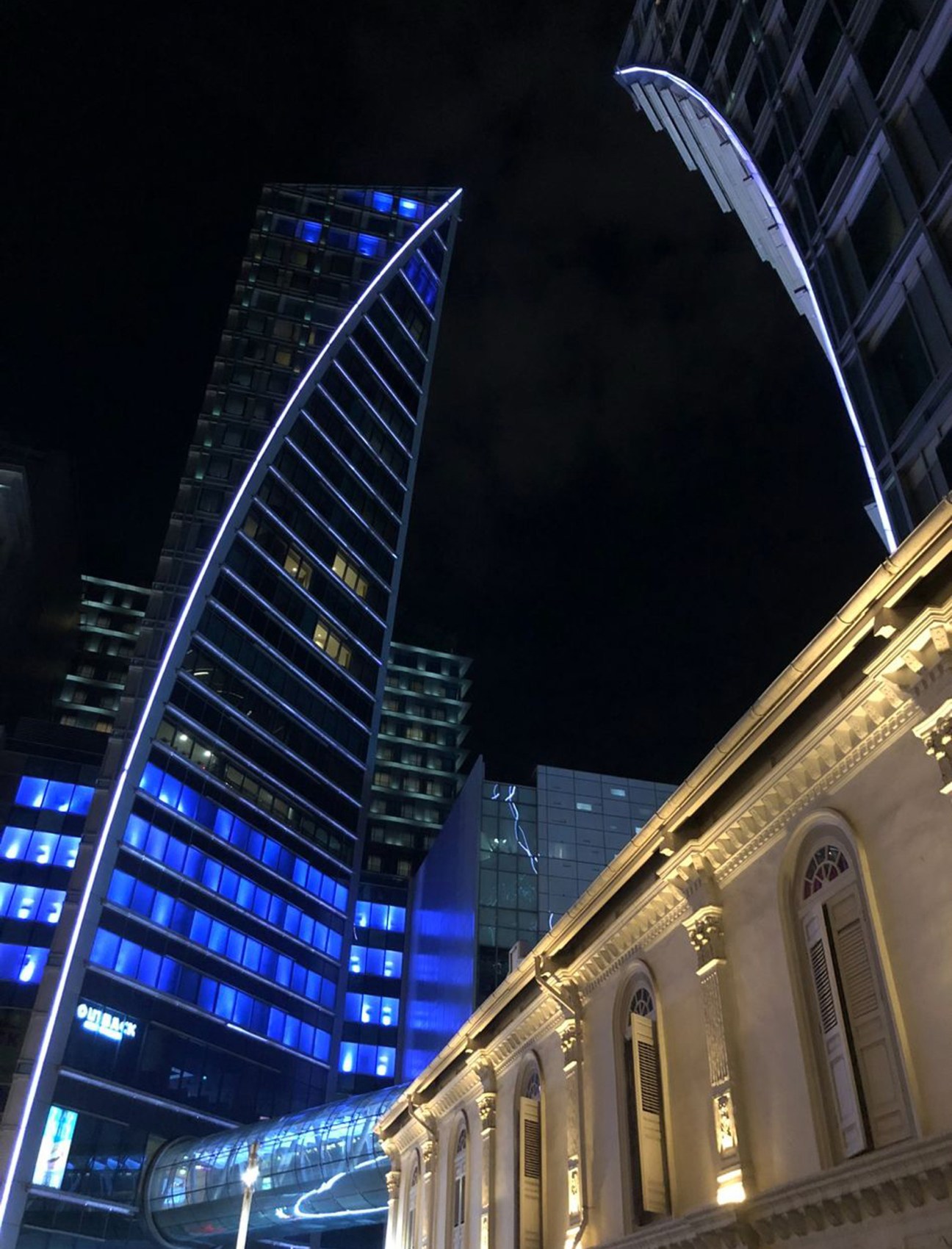
36.
Paul Noritaka Tange
Chairman, Tange Associates
Orchard Gateway, Singapore
“As they reach towards each other, the two towers of Orchard Gateway are connected not only visually but also physically by the first pedestrian bridge over Orchard Road. Rising among conservation buildings, they also connect old and new architecture in the Emerald Hill neighbourhood.”
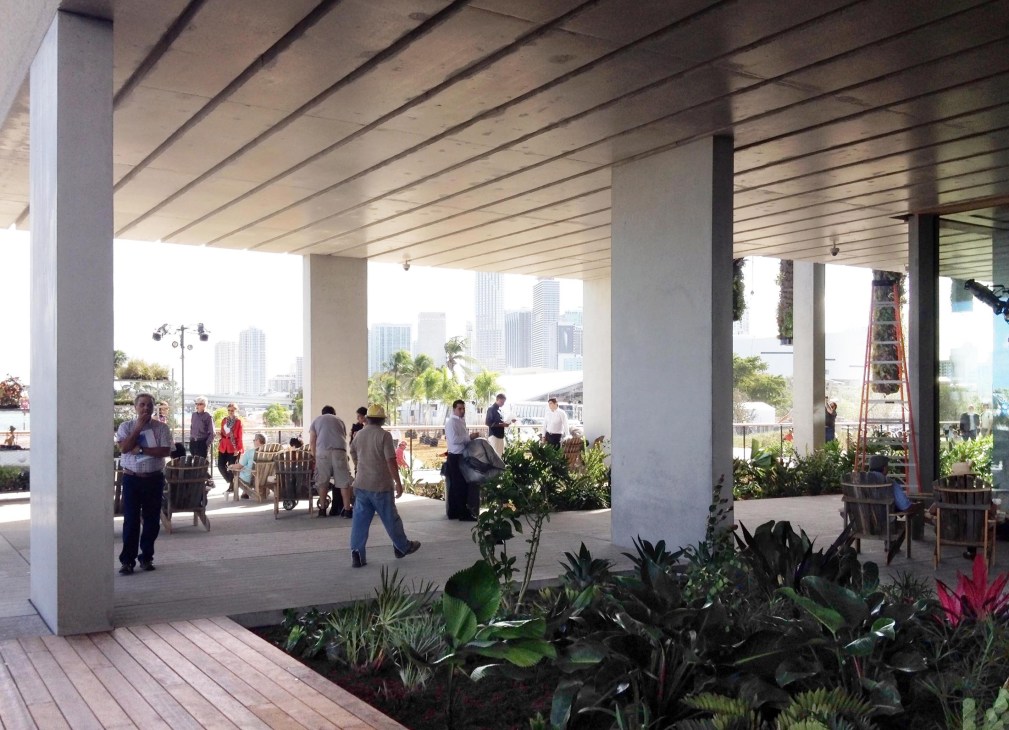
37.
Yuichi Kodai
Co-founder, Kodai and Associates
Pérez Art Museum Miami, USA
“An outdoor terrace filled with shadows creates a public space where people, art and architecture meet. The terrace is a distilled version of the greater environment of Miami; a mix of sea, park, jungle and urban city. You immediately relax when observing the joyful faces of people under the roof.”
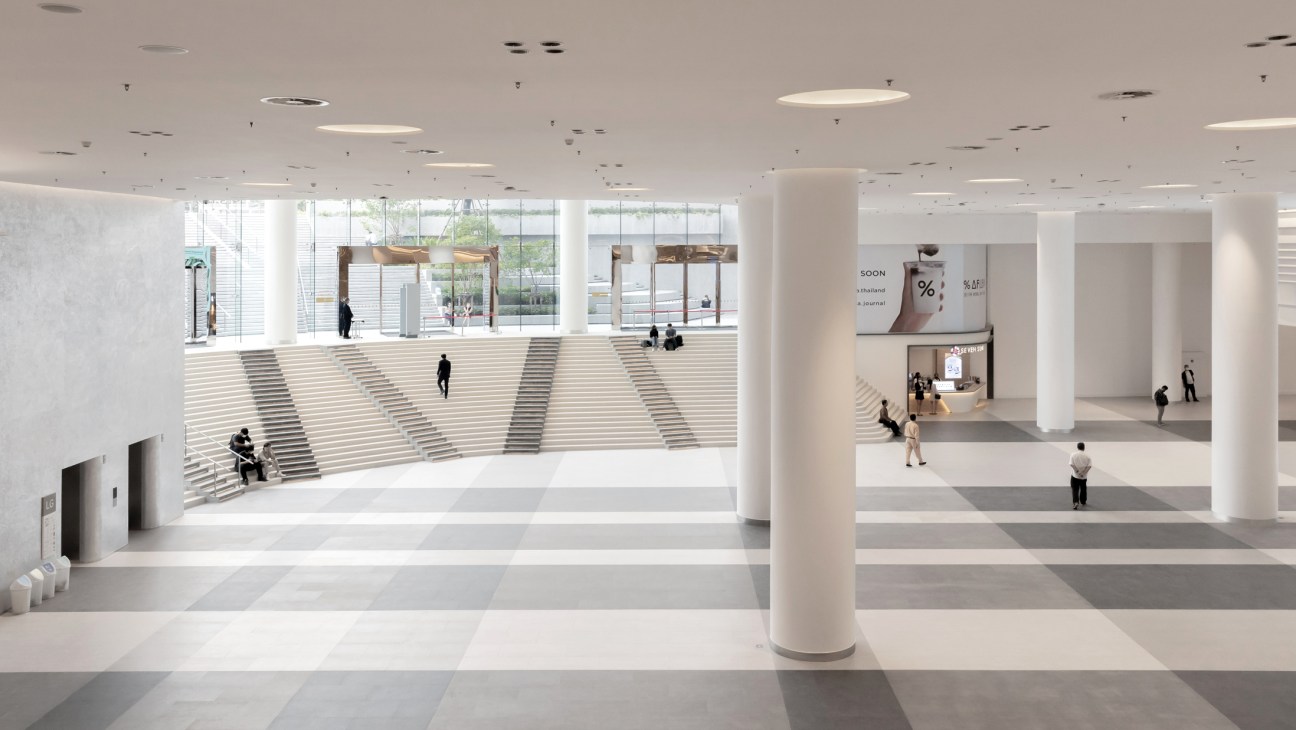
38.
Kamolthip Kimaree
Managing director, Art4d
Queen Sirikit National Convention Center, Thailand
“This centre and exhibition hall in Bangkok is open from early in the morning until late at night. You can start the day with coffee in the café, have lunch at the food court and then joke in the park outside.”
39.
Sumayya Vally
Founder, Counterspace
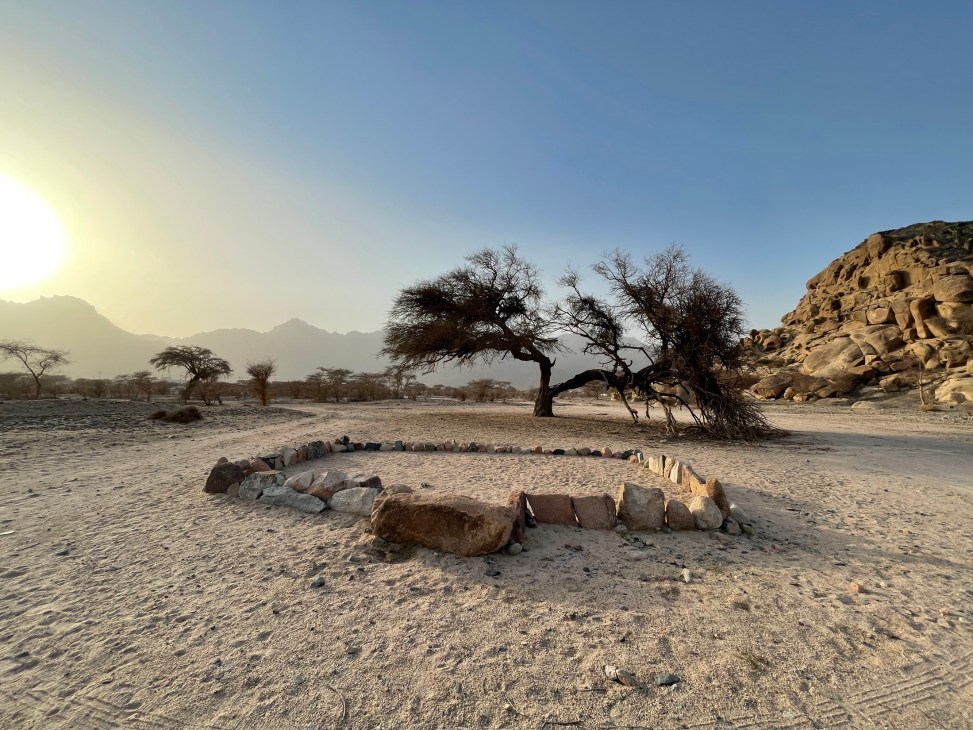
Roadside mosque, Saudi Arabia
“I observed this mosque on a road trip in the desert surrounding Medina with the artist Moath Alofi. I became interested in how the community of itinerant users were encouraged by the structures themselves to read them and make use of them.”
40.
Brigitte Shim
Founder, Shim-Sutcliffe Architects
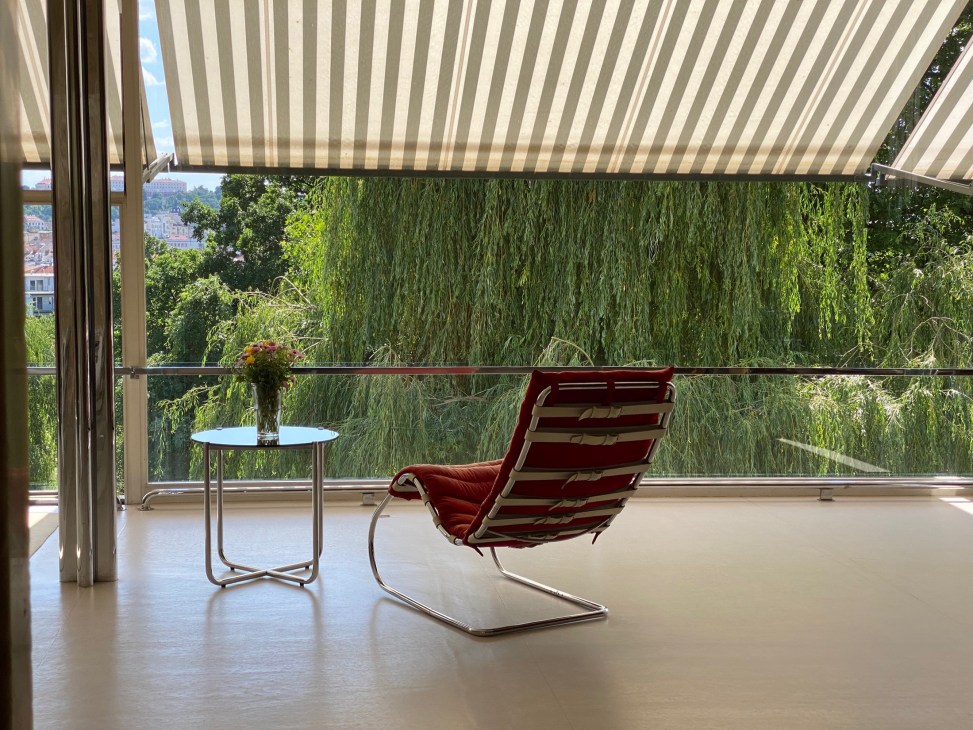
Villa Tugendhat, Czech Republic
“On a recent visit to this Mies van der Rohe house in Brno, I was struck by the intense relationship between the interior and exterior space. The living room felt like an exterior porch for viewing the verdant landscape beyond.”
41.
Ronan Bouroullec
Designer
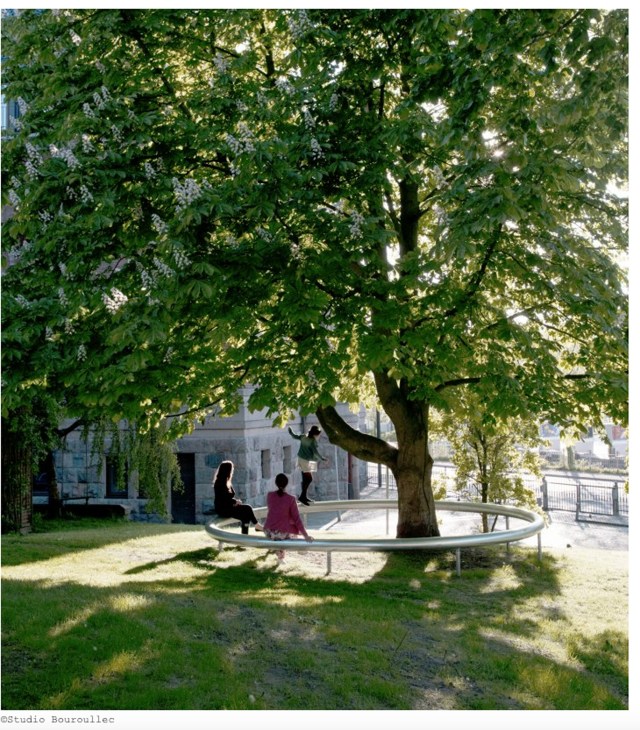
Oui bench, Denmark
“I like the way that this bench that I designed is positioned within this park in Aarhus. The relationship that it has to the gently sloping ground and the strong figure of the tree, encircling it like a ring, combines simplicity with a touch of wonder.”
42.
Tarini Jindal Handa
Founder, Aequo
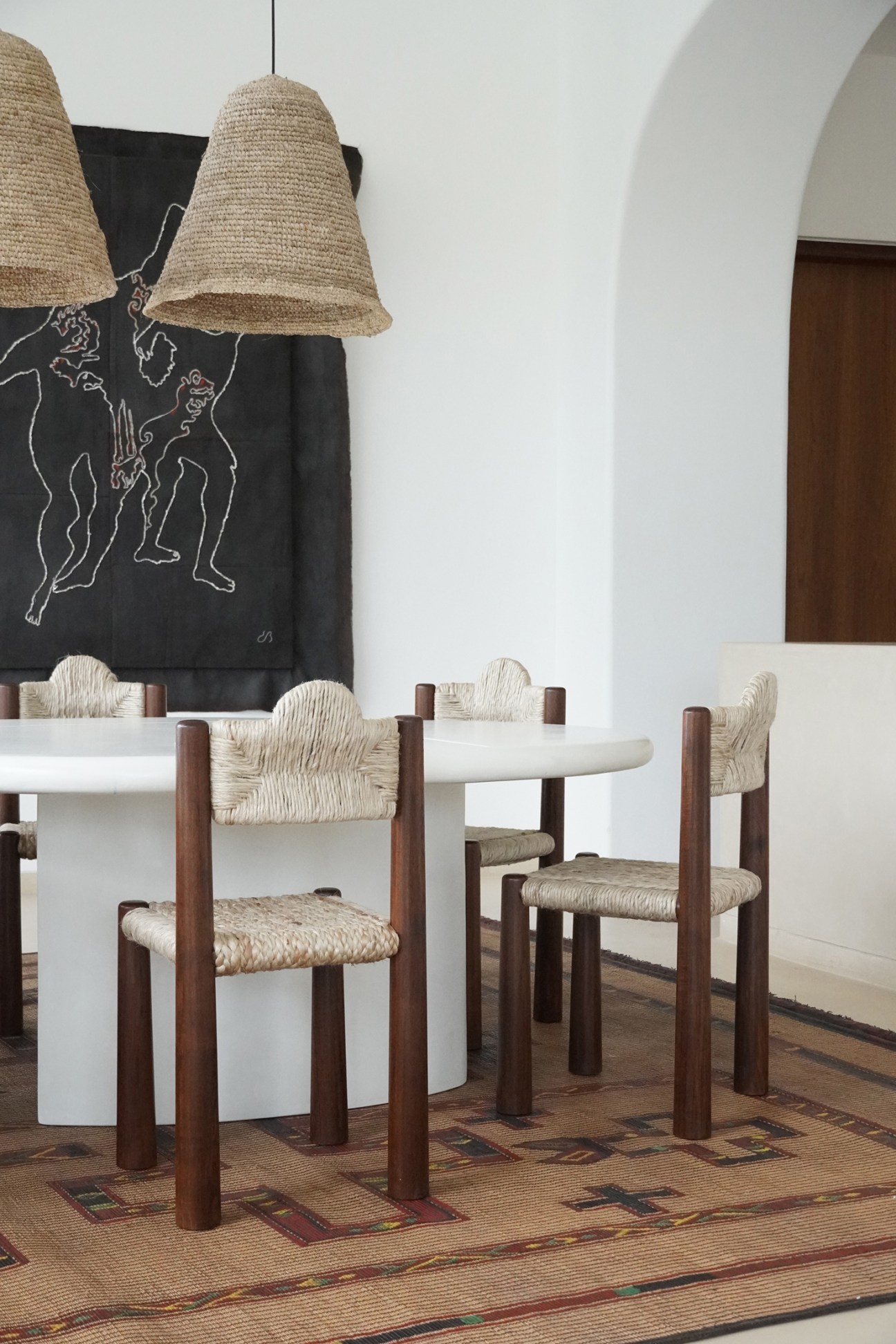
Home, India
“This is the dining room of my home in Karnataka, which is a mix of weaves: jute chairs designed by Florence Louisy and made in Mumbai; an embroidered Boris Brucher illustration by Vastrakala; banana fibre lights from Rangeela in Goa; and an antique Moroccan carpet. You can see the handmade qualities of each piece; they speak to each other in the language of global craftsmanship.”
43.
Iwan Baan
Photographer
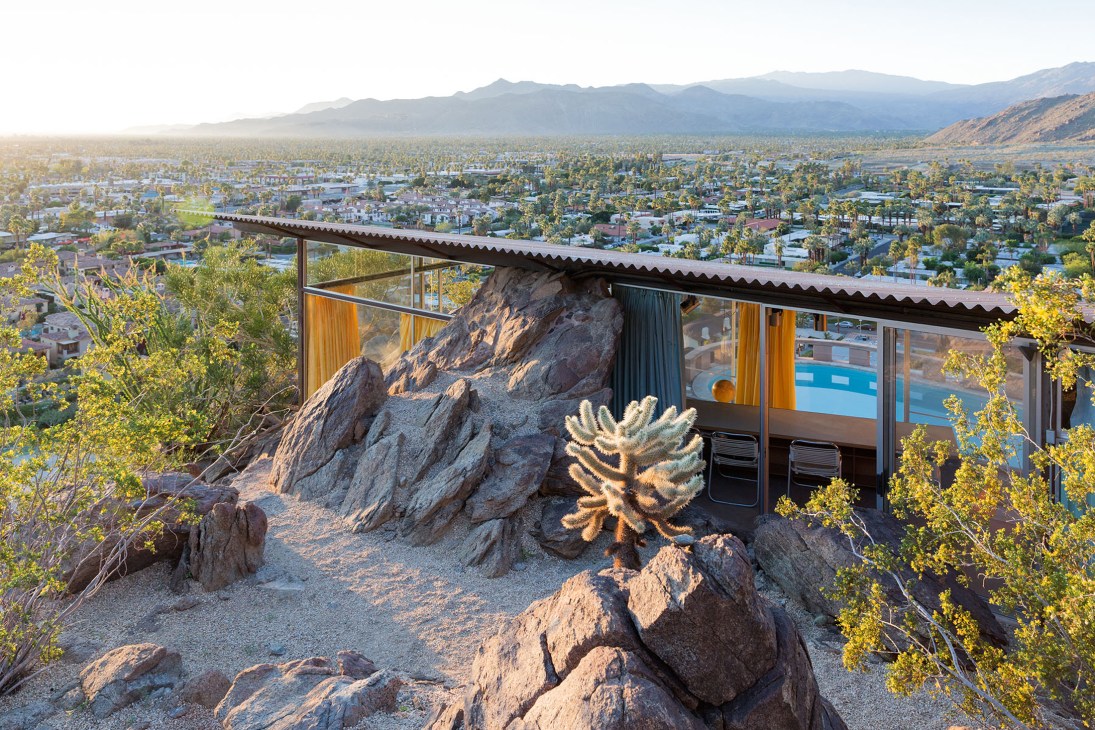
Frey House II, USA
“The house is lightweight but, at the same time, a giant rock is the division between the living room and bedroom. It’s the ultimate living in the landscape.”
44.
Stig L Andersson
Founder, sla
Al Fay Park, UAE
“Al Fay Park is a celebration of Abu Dhabi’s local nature and culture, as well as a prime example of how to use a nature-based design approach to maximise climate action, promote healthy activities, increase social wellbeing and life quality for all, and radically improve the biodiversity of an entire city.”
45.
Nicolas Bellavance-Lecompte
Co-founder, Nomad
Alekos Fassianos’ home, Greece
“When I went to Alekos Fassianos’ home on Kea for the first time, I discovered that the legendary painter had a little-known passion for furniture design. He created unique pieces and prototypes of every single object that he lived with.”
46.
Jeanne Gang
Founder, Studio Gang
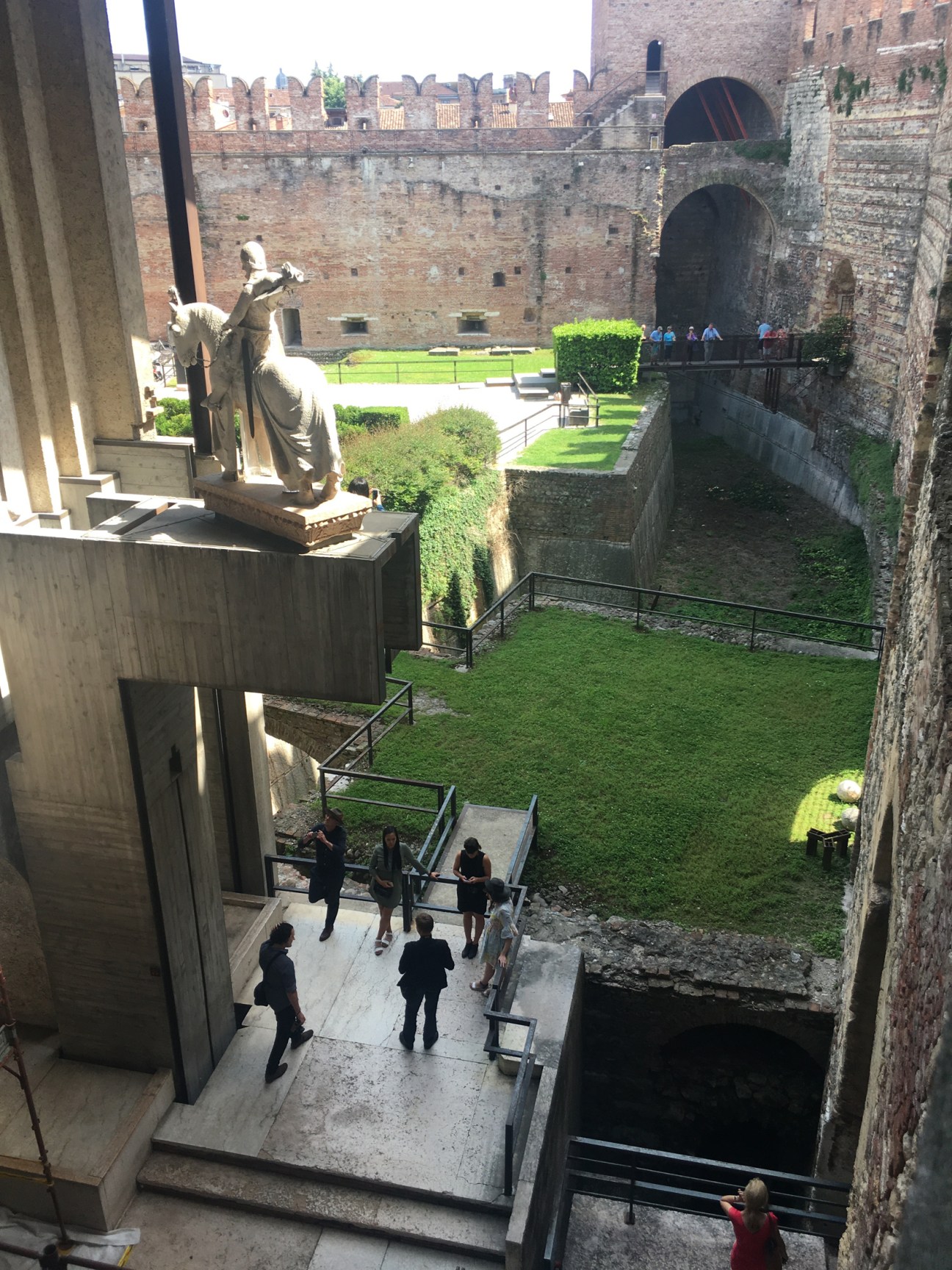
Museo di Castelvecchio, Italy
“Carlo Scarpa worked for many years on the transformation of the Museo di Castelvecchio, a medieval fortress-turned-museum in Verona. He expertly wove together the old castle and its ramparts with the modern elements. His careful positioning of the statue of Cangrande completes the composition here.”
47.
John Wardle
Founder, John Wardle Architects
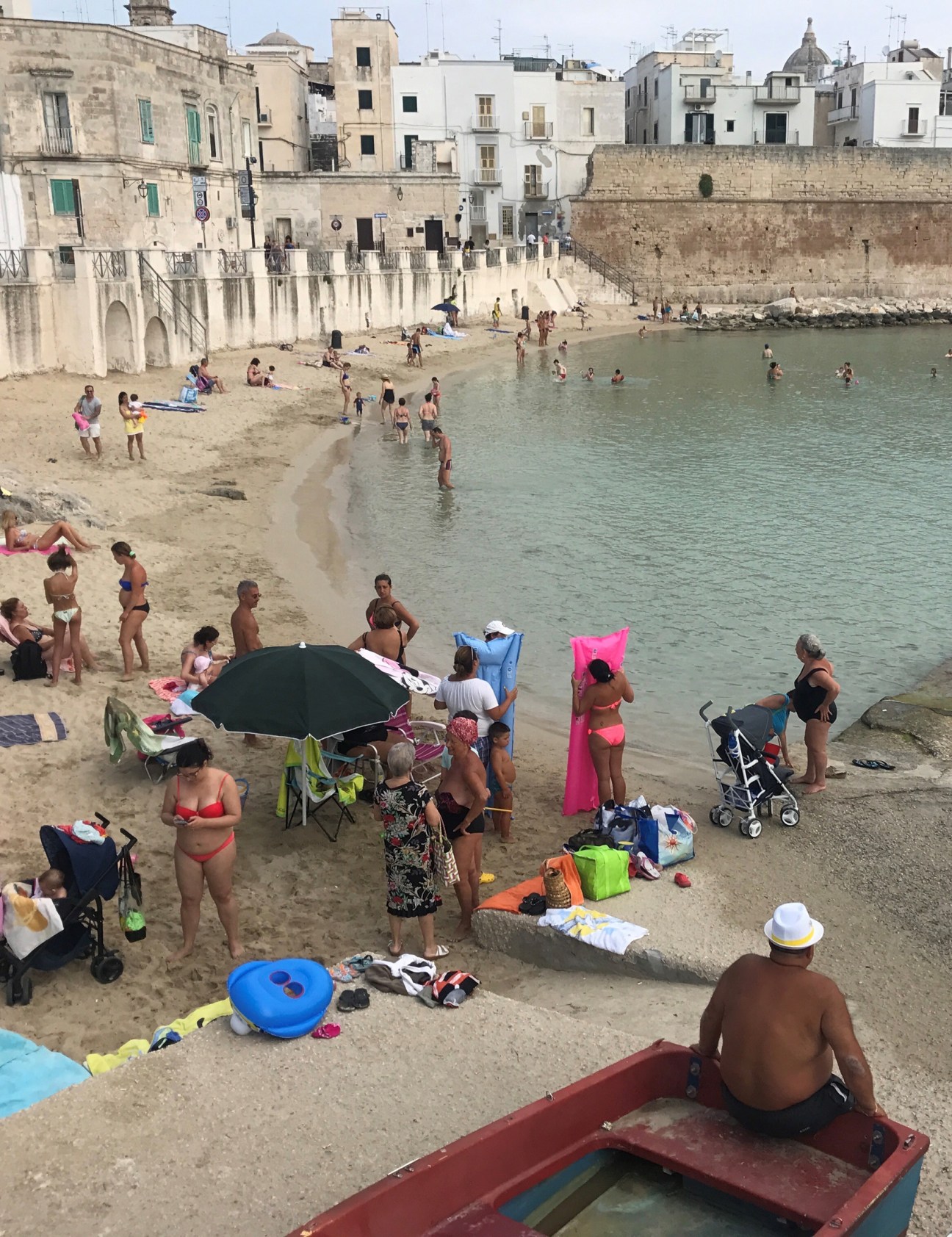
Puglia beachfront, Italy
“I enjoy the spectacle of Puglian towns that compress their surface right to the water’s edge, leaving just enough room for the important social life of the beach.”
48.
Kjetil Traedal Thorsen
Co-founder, Snøhetta
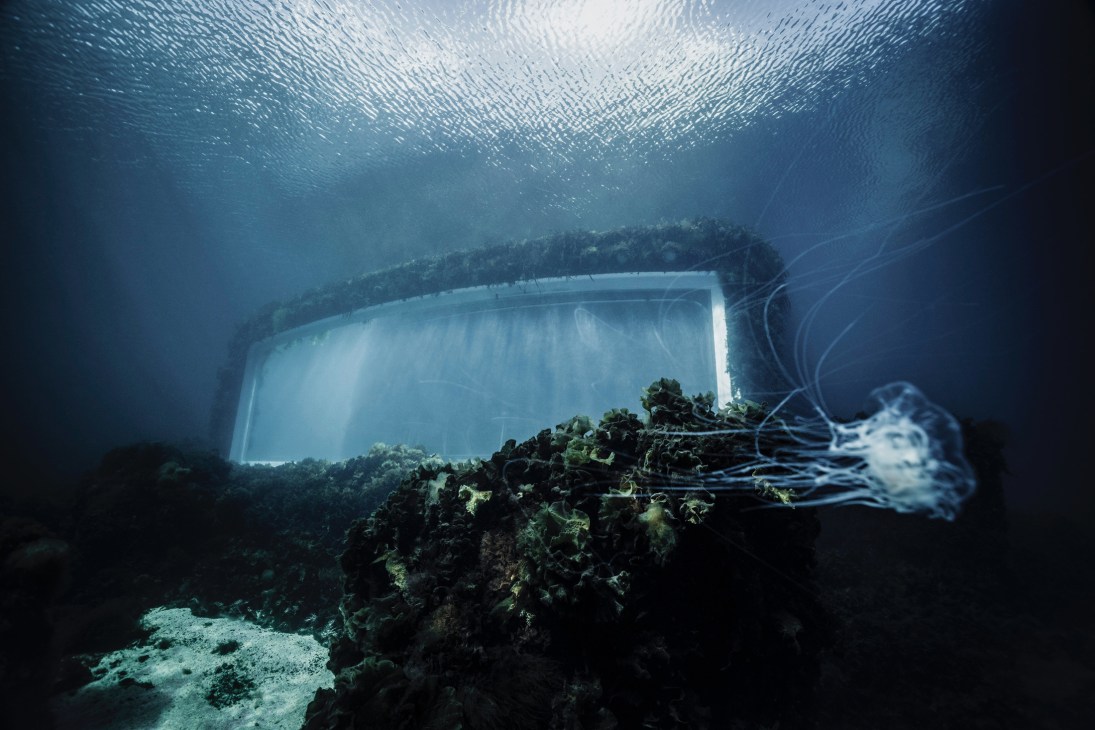
Under, Norway
“Under is Europe’s first underwater restaurant. When underwater, your senses emphasise different tonalities. Taste, sight, sound and touch are all influenced by this element that we are all developed from. The building creates a surface for sea life and a space for humans; they fulfil each other.”
49.
Harry Thaler
Founder, Studio Harry Thaler
Bolzano office, Italy
“The top floor of my office, in a former silo, is my favourite place to work. Sitting around this round table with my clients and collaborators while having a sip of espresso is how I start my day.”
50.
Federica Biasi
Designer
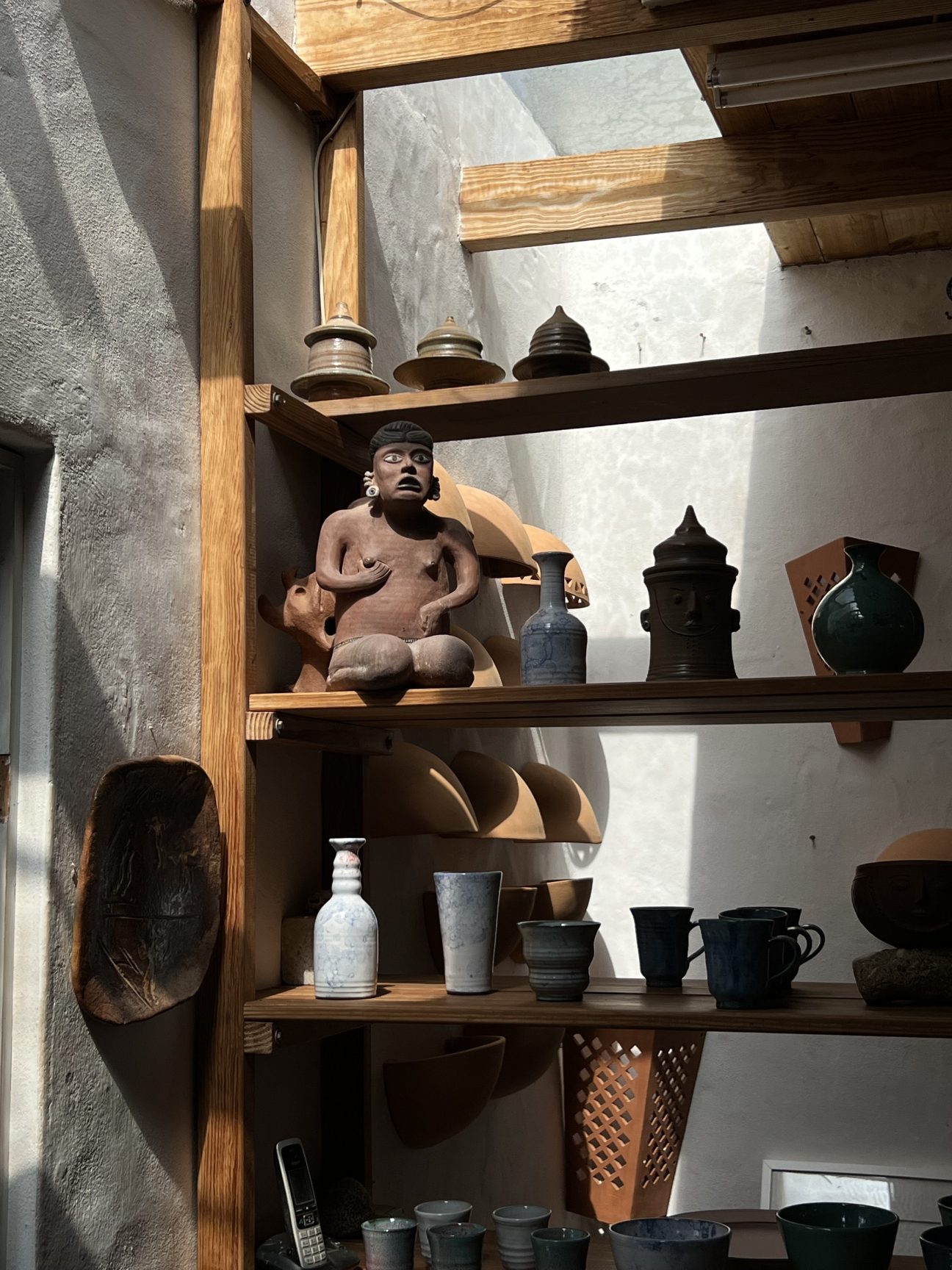
Galería Atelier Arte y Cerámica, Spain
“A couple of German artists, Stefan Schultz and Anneliese Guttenberge, moved to the island of Lanzarote in 1986. They started making ceramics and paintings in a laboratory house that is always worthy of a visit.”
images: Field Operations, Anders Fredriksén, Amariei Maiell, Mihail, Adam Mørk. José Hevia, Sam Noonan, Aryo Phramudhito, Jonas Bjerre Poulsen / Norm Architects, Jeremy San / Singapore Heritage Society Collection. Diana Aud / Kunsten.dk, Drawing Matter / Shatwell Farm, Nick Kane, Peter Mauss – Esto / Bernard Tschumi Architects, Torsten Seidel. Filip Dujardin. Sindre Ellingsen, Tomooki Kengaku, David Willen, Nigel Young / Foster 1 Partners. image: art4d: Ketsiree Wongwan, Florence Louisy, Studio Bouroullec. Timon Koch / Cinemarine.no, Davide Perbellini, Paris Tavitian / Alekos Fassianos Estate, SLA / Philip Handforth
Fresh start

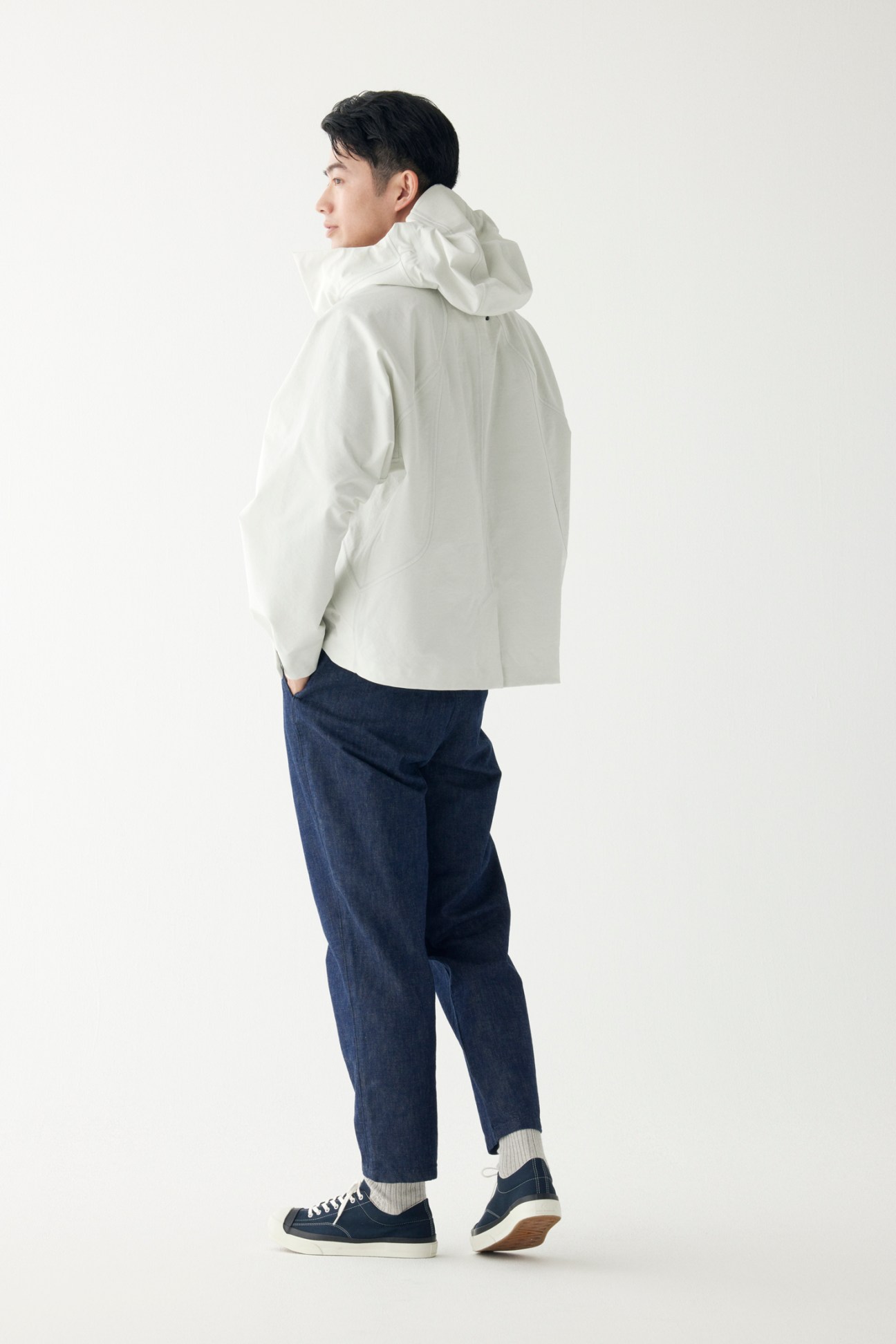
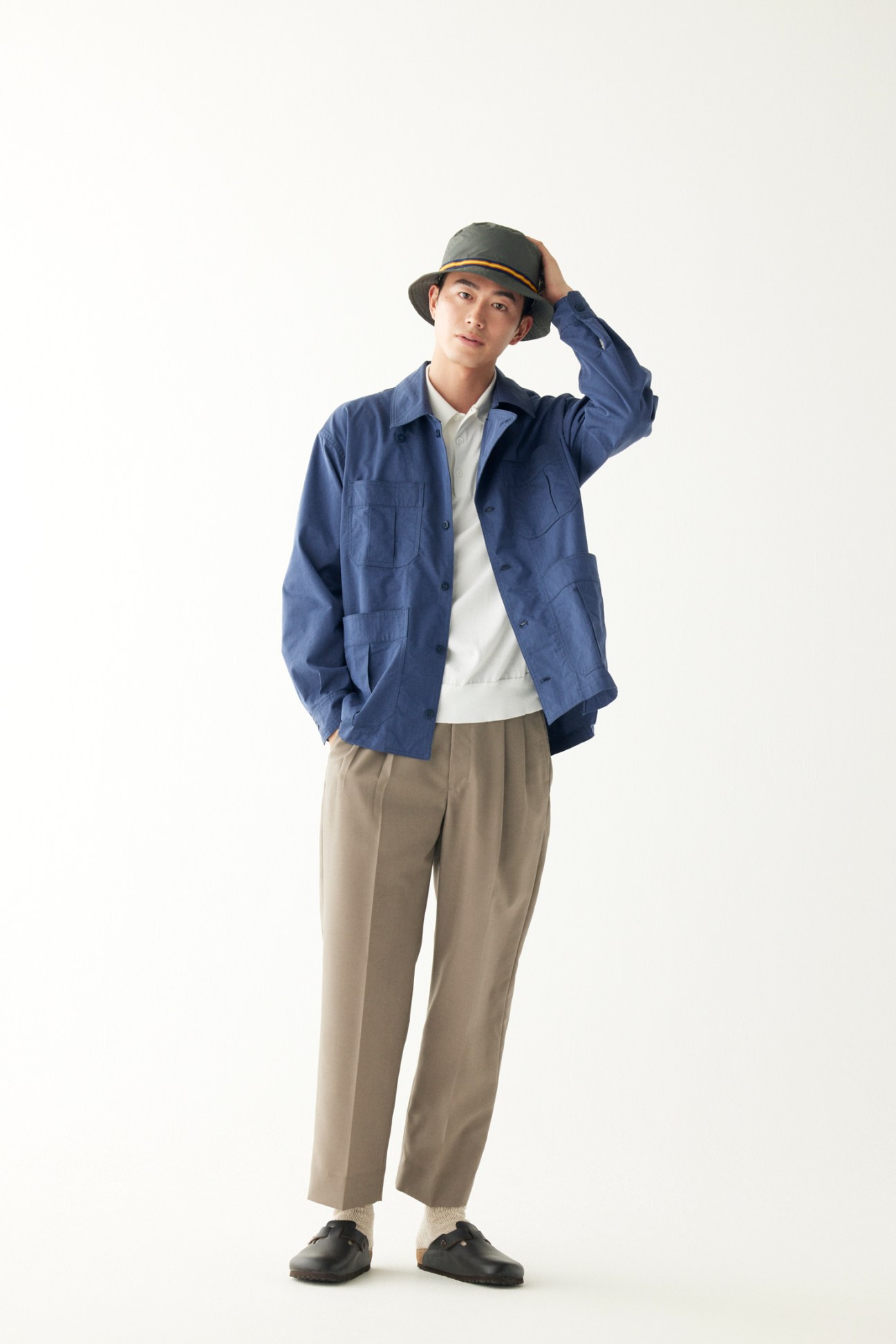
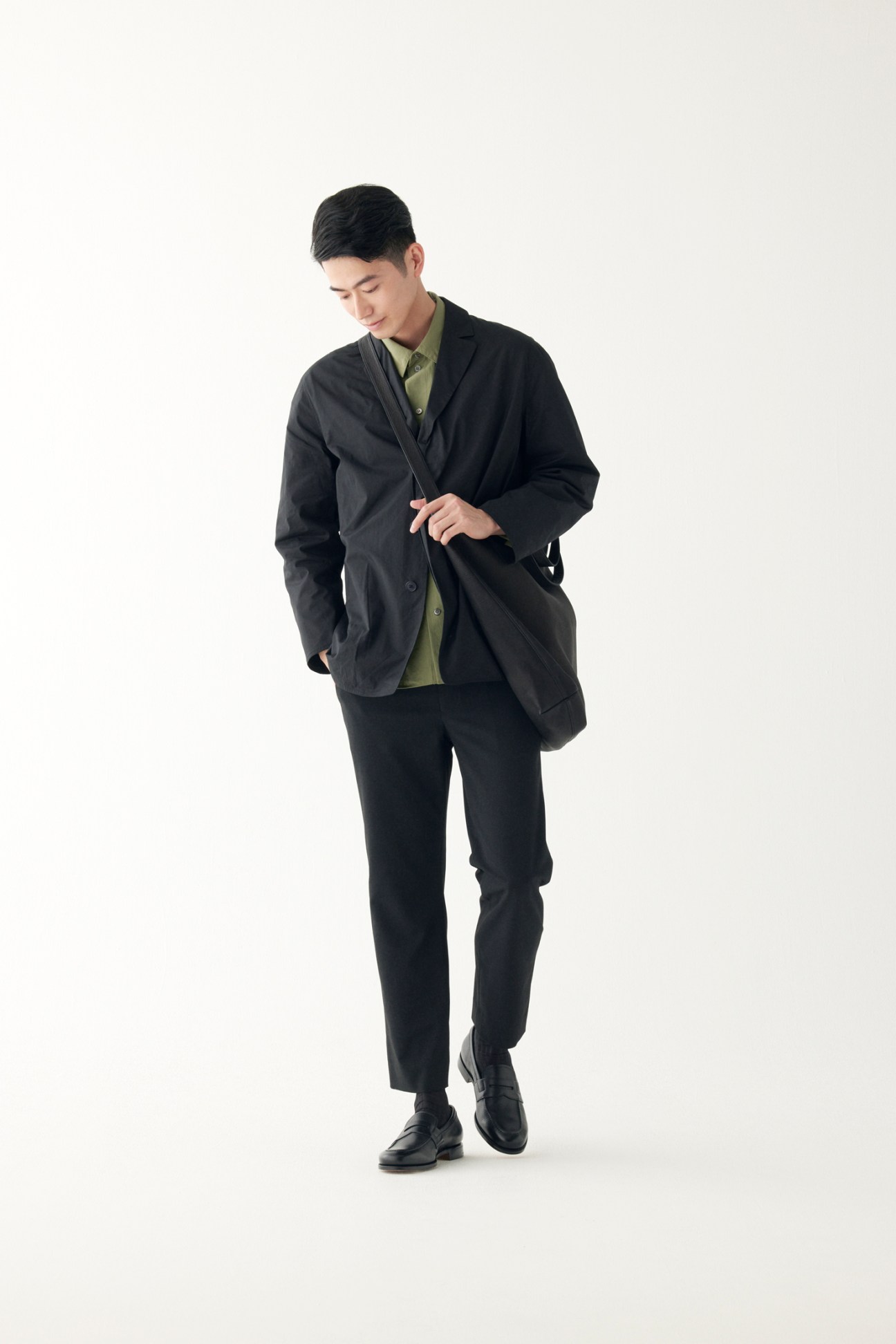
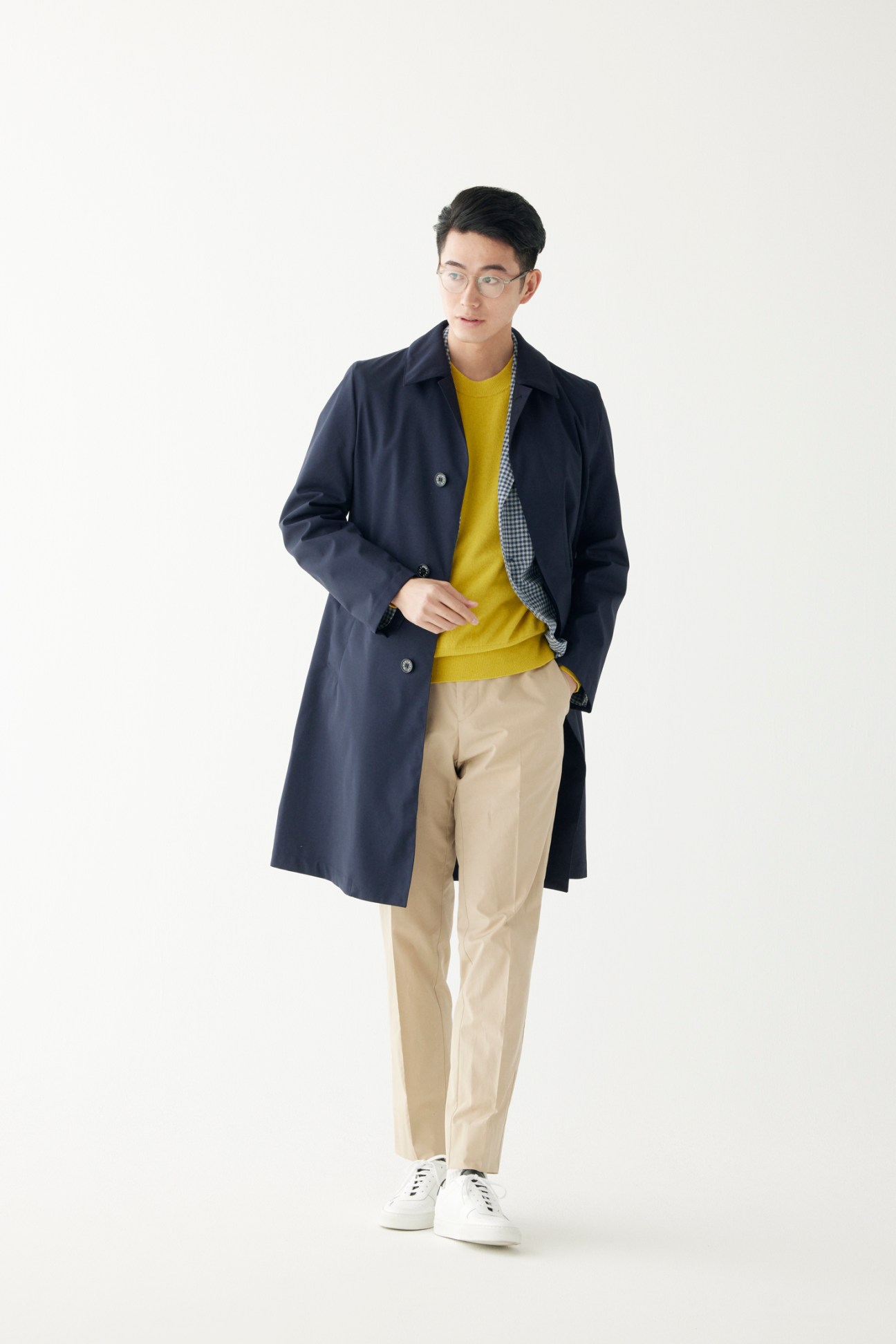
GROOMING: Eiji Sato. MODEL: Junya Nakashima. PRODUCER: Shinri Kobayashi
Business
Mobility
Lunar exploration
Nicolas Muron’s eureka moment came while he was at his grandparents’ home in the Alps during the winter of 2015. The French aerospace engineer was taking a break from his day job at Dassault Aviation, the company behind the Falcon family of business jets, when he realised the region’s paucity of low-carbon mobility options. The winter weather meant revving up a snowmobile – a mode of transport not without its drawbacks.
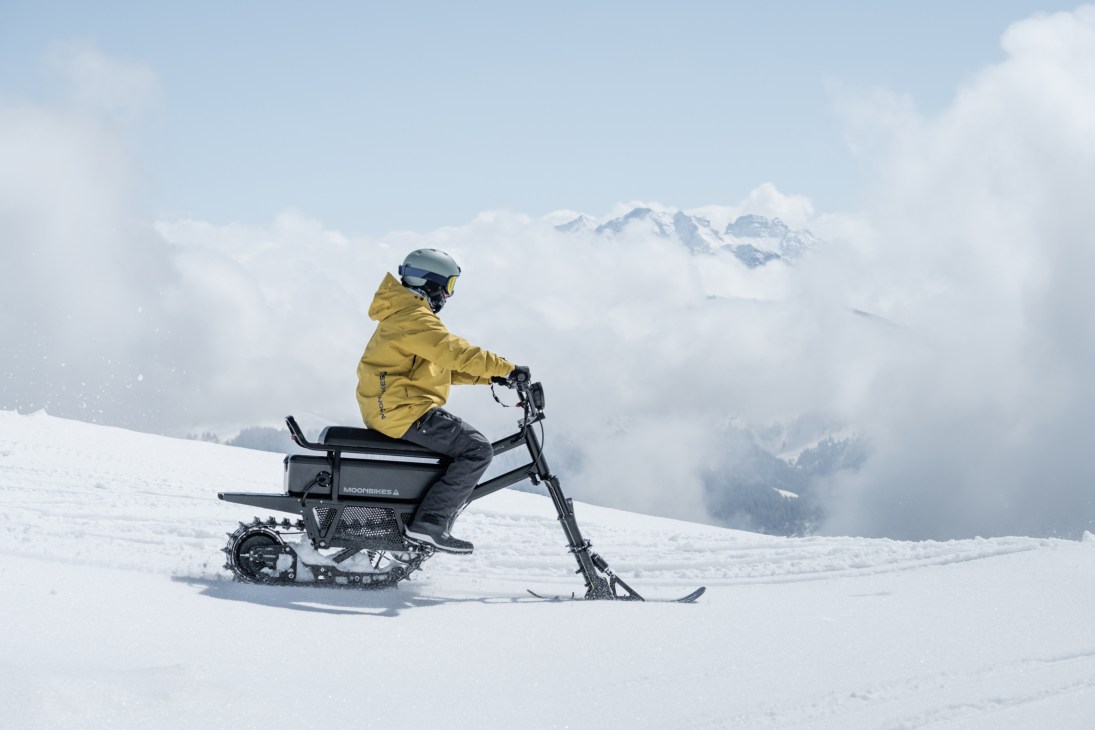

“Snowmobiles are big, fat, polluting, heavy, hard to drive, hard to transport and difficult to store,” Muron tells Monocle. “I wanted to create a new machine that is easy to use, silent, easy to transport and has no emissions.”
He spent three years in research and development to come up with a patented propulsion system and launched MoonBikes in 2021. With a top speed of about 40km/h, a MoonBike can zip around in the snow for 90 minutes on a single charge. A heated battery box keeps a MoonBike humming in temperatures as cold as minus 25C. Muron himself has ample opportunity to take a MoonBike for a spin from his current home in Annecy, which proved an ideal location for establishing an outdoors-focused business that has quickly grown to 35 employees.
With an €8,900 price tag, MoonBikes has sold more than 325 units in its first 18 months and generated €3.2m in sales. While the US currently accounts for 89 per cent of the €1.4bn global snowmobile industry, the vehicle’s popularity is spreading across Europe.
This winter, MoonBike can be tested in at least 25 different rental locations across the Alps, two spots in the Pyrenees and one location in Swedish Lapland. Muron recommends Le Sauze, where MoonBike riders have access to an ideal backcountry setting. “It’s in the middle of nowhere with tonnes of powder,” he says.
Stationery
House of paper
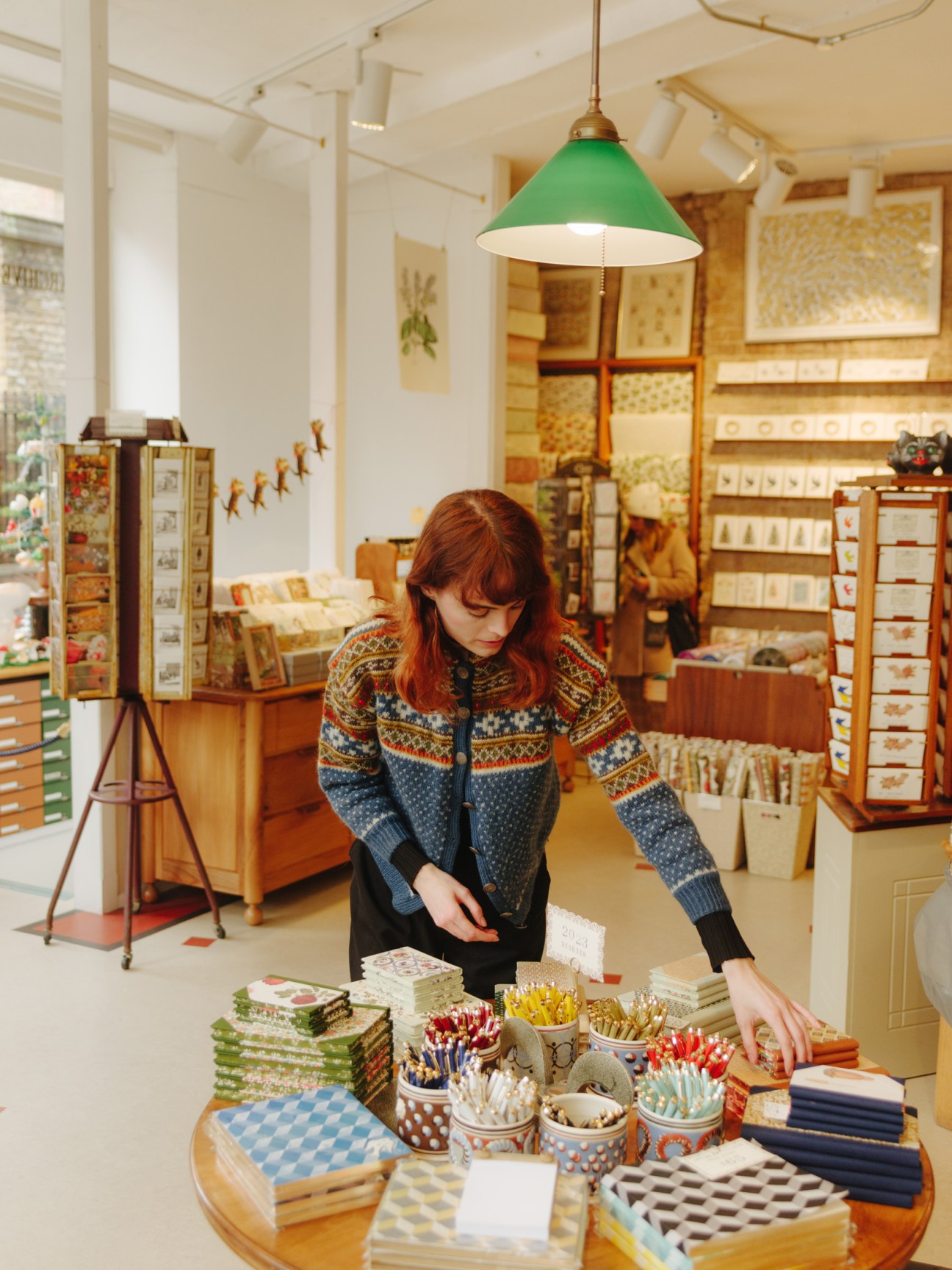
You could spend years walking around Seven Dials in London’s Covent Garden and never notice the stationers tucked away down a side road. But Choosing Keeping has been here since 2018, when it moved from its original east London location.
With its eclectic display tables bearing hand-covered diaries and printed archival boxes, the shop is an artfully curated shrine to the written word. “I grew up in Japan and I had a drawer of all my little paper items so I’ve always been stationery-oriented,” says founder and owner Julia Jeuvell. “I’m also French and at school we had our own fountain pens and I was really attached to them. I love to stock things that are really difficult to find and I’ve realised that I’m very suited to being a shopkeeper.”
One hand-printed paper depicting sumo wrestlers catches Monocle’s eye. “Those are Japanese and they’re single-panelled papers,” says Jeuvell. She points to two other examples (one €34, the other €68). “They have 20 layers. Everything needs to line up perfectly. It takes 10 years of training to be able to print like that.”
Almost everything in stock during Monocle’s visit is from smaller businesses, says Jeuvell, “and when you spend here, you’re choosing to put money into the livelihoods of a lot of companies in Europe”. It’s just as well that paper products are increasingly popular. “We’ve been in business for 10 years,” she adds. “We started with one employee and now we have 17.”
Trends that began during the pandemic, such as younger generations finding solace in journaling, are persisting. “In times of crisis, stationery has often been a safe haven for people’s feelings of insecurity about a world that is changing too quickly and technology that is too fleeting.”
choosingkeeping.com
Transport
Charging forward
Keeping an electric car charged in California can take you to some rather strange locations (writes Christopher Lord); I’ve scoured the eerie upper floors of many multi-storey car parks looking for a place to plug in and waited around more forlorn strip malls than I care to remember.
Right now, electrification in the US is having a Big Bang moment as new brands of electric cars, motorcycles and trucks enter the market. The means of charging this growing fleet, however, has simply not kept pace. In 2021, 608,000 plug-in vehicles were sold in the US – double the previous year’s number. And yet there are still only about 46,000 charging locations across the entire country.
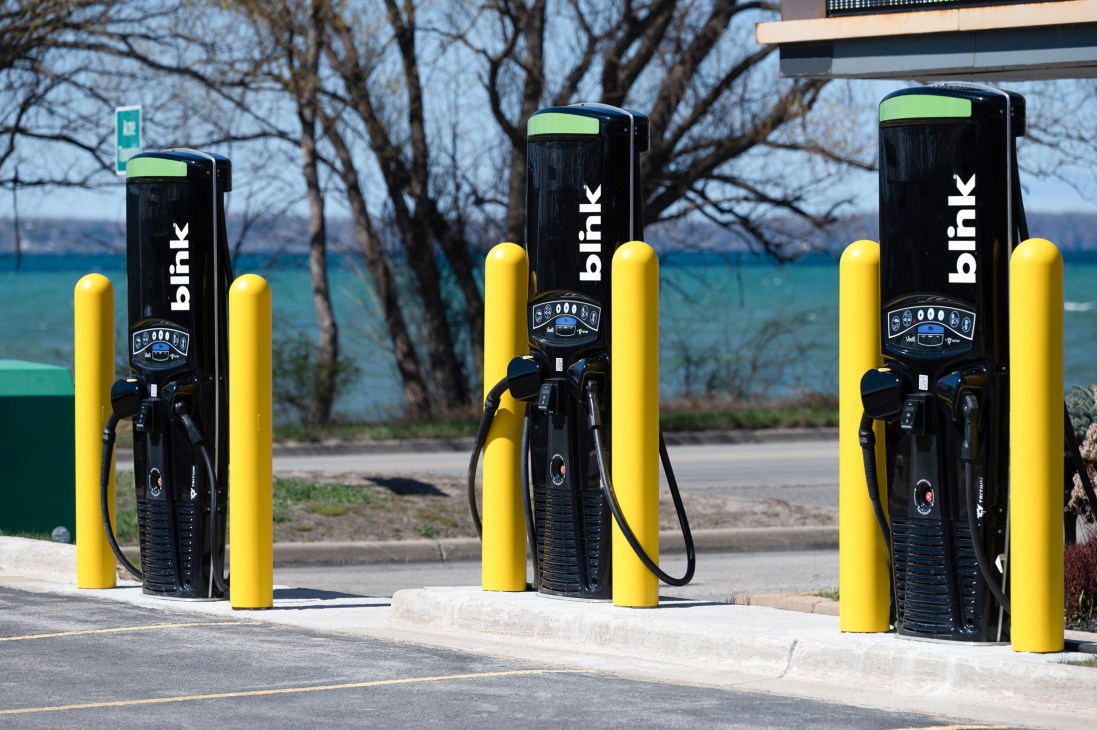
John Rossant, founder of US transport conference CoMotion, calls the proliferation of new electric vehicles (EV) a “Cambrian explosion” for the industry, referring to the evolutionary shift in life on Earth when innumerable variations of animals and species emerged. The charging industry is primed for a similar Big Bang.
“There’s no question about it: most charging in the future will happen at home,” says Michael D Farkas, founder and CEO of Blink, which debuted its fast home charger in November for $499 (€475) and can be easily rigged up to the same power outlet as a tumble dryer. Farkas believes that most people see the ease of plugging a car in overnight as the natural norm but Blink Charging’s home option requires a garage or carport that makes it unsuitable for many urban streets.
One smart solution comes from a young start-up in Brooklyn called Itselectric, which partners with homeowners to build a curbside charging point on their street at no cost to the resident. The company sorts out the permits and the connection; the homeowner stands to make a bit of money back as the charging point gets used too.
All of this, however, takes time and not everyone is convinced that at-home charging is the most effective way to entice more drivers to go electric. Norway is the poster child for an electric mobility revolution. In November, 81 per cent of new car registrations were all-electric and the government recognised early on that the best way to stoke demand was to reassure drivers about so-called “range anxiety”. To that end, it rolled out thousands of charging stations that are now a familiar sight on Norwegian roads.
The US government has taken a dose of Norwegian ambition, approving plans to build a charging station for every 50 miles (80km) of highway and allotting $1.5bn (€1.4bn) to deploy them. But getting to Norway’s level of EV adoption won’t happen on government funds alone; the case needs to be made for why companies and investors should be looking closely at this industry.
Farkas says that as more EVs have hit the road, the “heartbeat” of usage on his company’s public charging stations has jumped. This growth in customers and revenue has, in many cases, superseded the initial costs of building the charger station in less than a year. “When you look at the numbers, it’s not just a small group of chargers either,” he adds. “That is going to allow Wall Street to invest in this.”
Retail
Q&A
Hanna Struever
Owner, Retail Portfolio Solutions
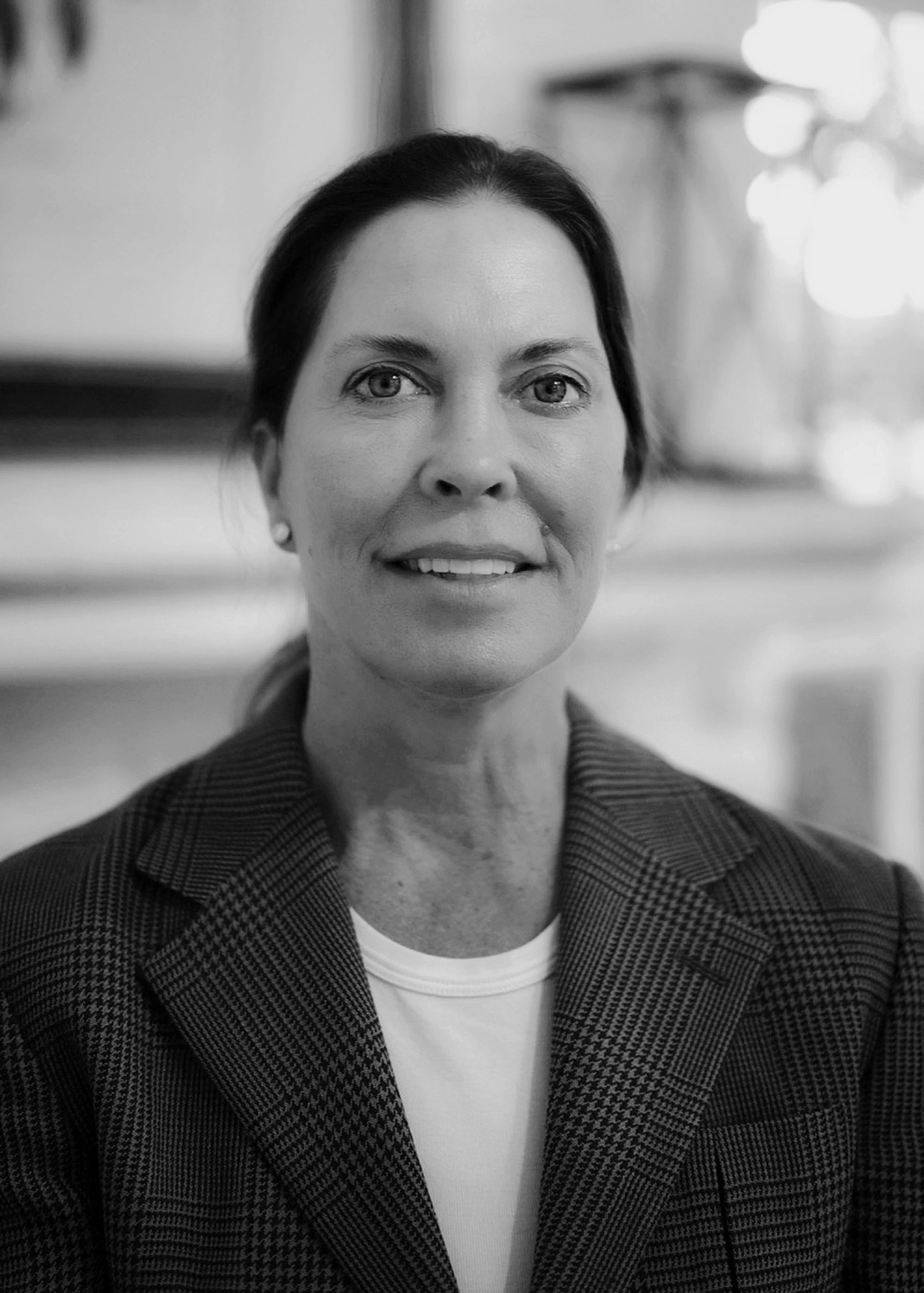
Hanna Struever set up Retail Portfolio Solutions, a strategy consultancy for retail developers, in 1999. After working on Highland Park Village in Dallas, Struever is currently revamping the Beverly Wilshire’s retail offering in Los Angeles and spoke to Monocle about the trends to watch in 2023.
How is the retail sector currently looking?
It’s changing. Before the pandemic, retail was becoming boring in the US. Now there’s a real opportunity to create a sense of place. People love to engage, so both the developer and the retailer are figuring out how to best communicate with their customer. It’s not one size fits all.
What does retail look like in the big US cities now?
There are seismic demographic shifts in US retail geography and coronavirus has definitely fast-forwarded them. Markets previously thought of as “no-brainers”, such as New York, Los Angeles, Chicago and San Francisco, have completely changed.
So which places are replacing them?
There’s something I call the “new frontier”: Dallas, Scottsdale, Miami, Palm Beach and Mexico City are top of the list. During the pandemic, people got a glimpse of how to live their lives differently. The shift is structural and long-term.
Images: Blink, Niels Saint-Viteux
Human values
When the Finnish parliament’s Annex building opened in 2004, many thought that it looked ordinary next to the grandiose 1930s Parliament House with its 14 Corinthian-style granite columns. Others believed that the new building’s glass walls, through which one could see MPs at work, were intrusive. But it didn’t take long for parliamentarians to fall in love with the Annex. “In a way, the new building is a better reflection of Finnish values of functionalism and humanism,” MP Mats Löfström tells monocle over lunch.
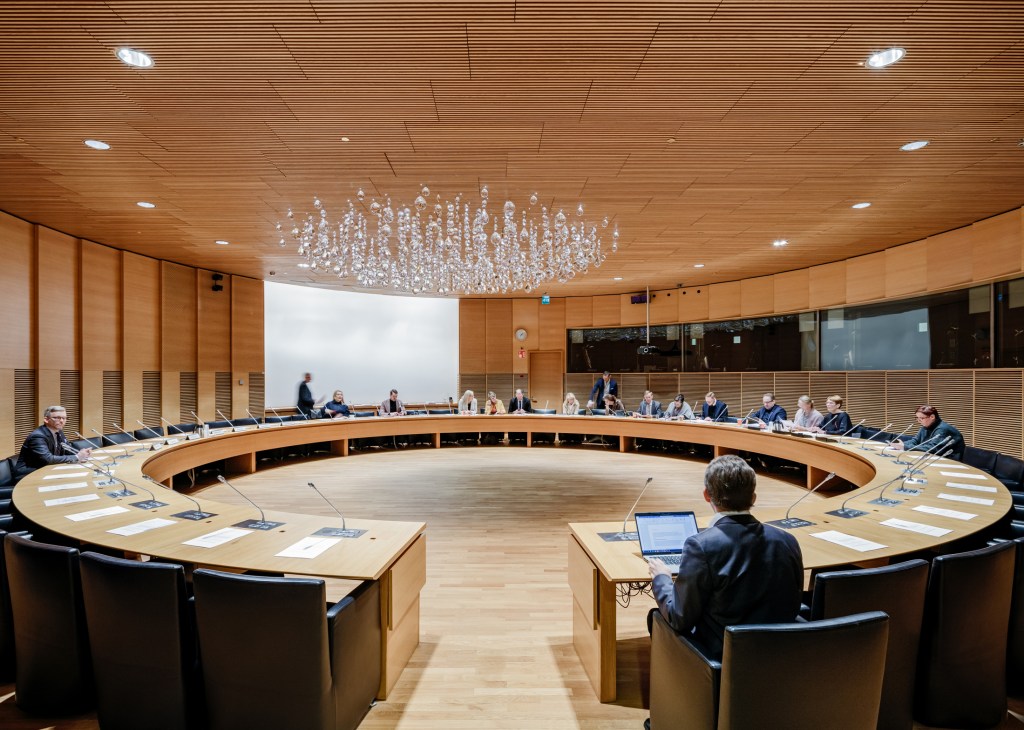
The main Parliament House is still one of the most iconic buildings in the country but it is in the Annex where much of the legislature’s actual work is done. This is where half of the 200 MPs have offices, where parties hold meetings and where deals are struck over lunch at the restaurant. It’s also where three of the parliament’s key committees, the Defence Committee, the Foreign Affairs Committee and the Grand Committee, which deals with all EU issues, have their meeting rooms. In addition, the Annex houses the Office of the Parliamentary Ombudsman and a visitors’ centre. It is connected to the Parliament House via an underground passageway.
“When we designed the building, we knew that it was not going to be just another office,” architect Pekka Helin tells monocle. “Old parliament buildings around the world emphasise power and might but I wanted this building to be something different: to manifest transparency and openness.”
Why it works
It was built with functionalist principles and human use in mind. Its materials – Finnish wood such as oak, ash and flame birch – as well as the use of ample natural light create a calm and pleasant atmosphere.
Hope floats
It’s one of those days in Rotterdam when the cold and grey seem to seep into everything: a damp North Sea wind blows across the harbour, creating murky ripples in the dull green water. This should be a terrible day to visit a floating building that’s exposed to the elements but behind its triple-glazed floor-to-ceiling windows, a sense of warmth and calm envelops you. Floating Office Rotterdam opened last September and serves as the headquarters of the Global Center on Adaptation (GCA), an international organisation launched in The Hague in 2018 by former UN secretary-general Ban Ki-moon and Mark Rutte, prime minister of the Netherlands, to work on climate adaptation. It is the world’s largest floating office.
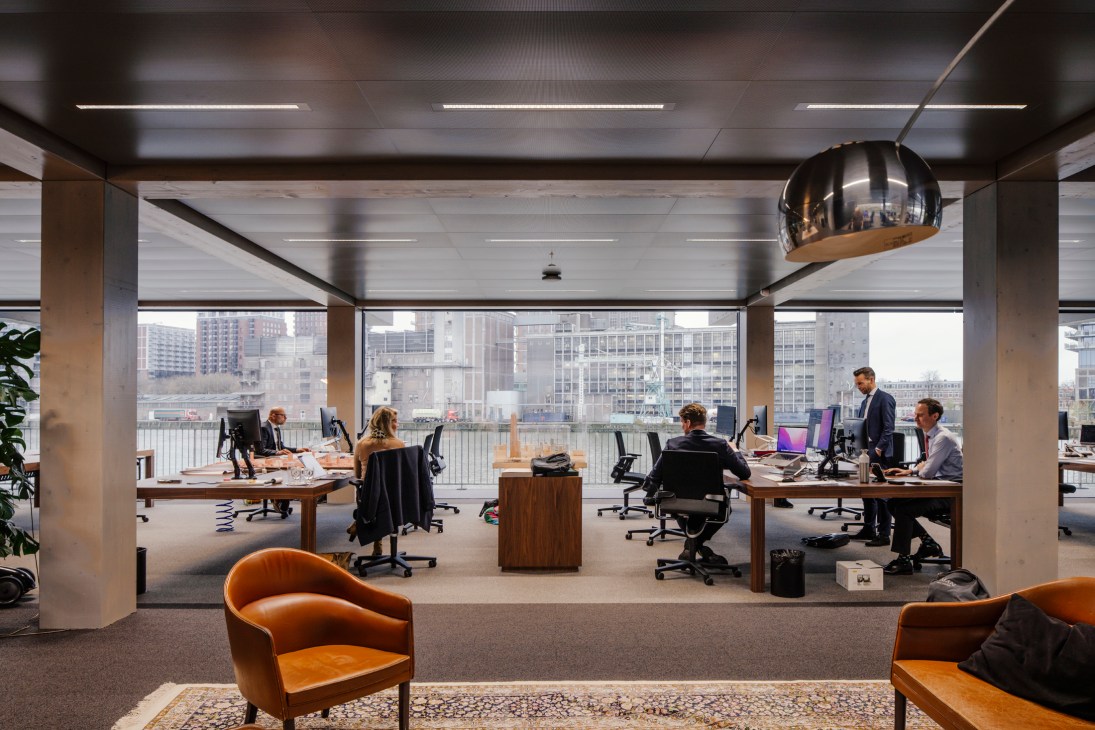
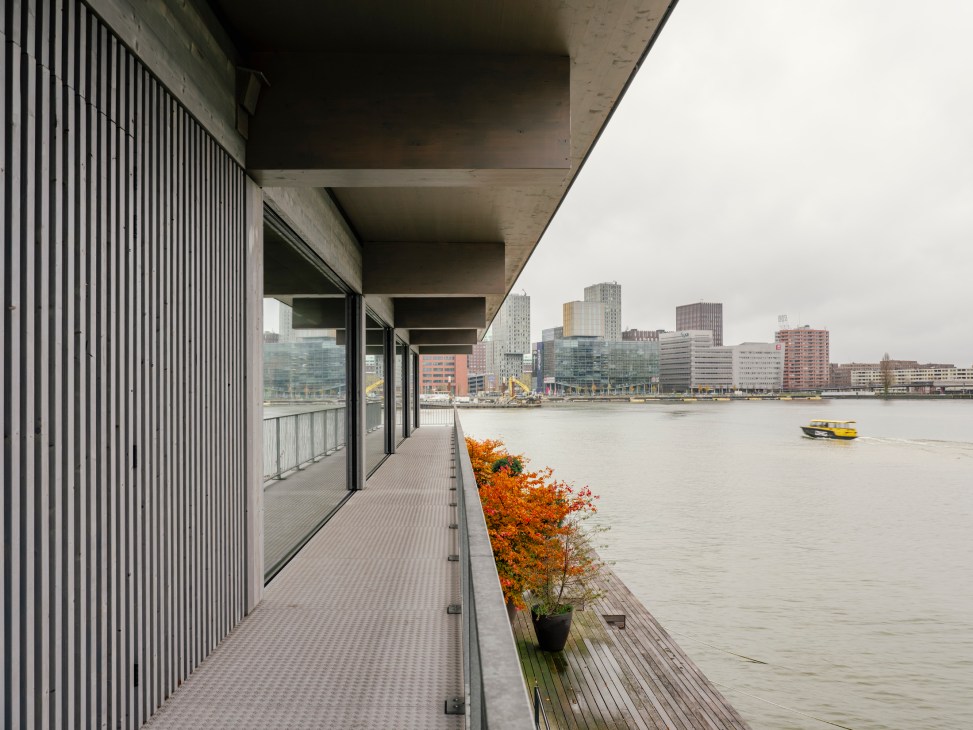
As befits its principal residents, Floating Office Rotterdam is a beacon of energy efficiency. Solar panels generate all of its power; a sedum-covered roof encourages biodiversity; its heat-exchange system uses water from the harbour to cool and warm the building. But its value goes beyond its ability to meet its own energy needs. Moored in the Rijnhaven port, which is undergoing extensive redevelopment, the building is designed to withstand rising sea levels and acts as a symbol of the innovative solutions needed to address the challenges of climate change.
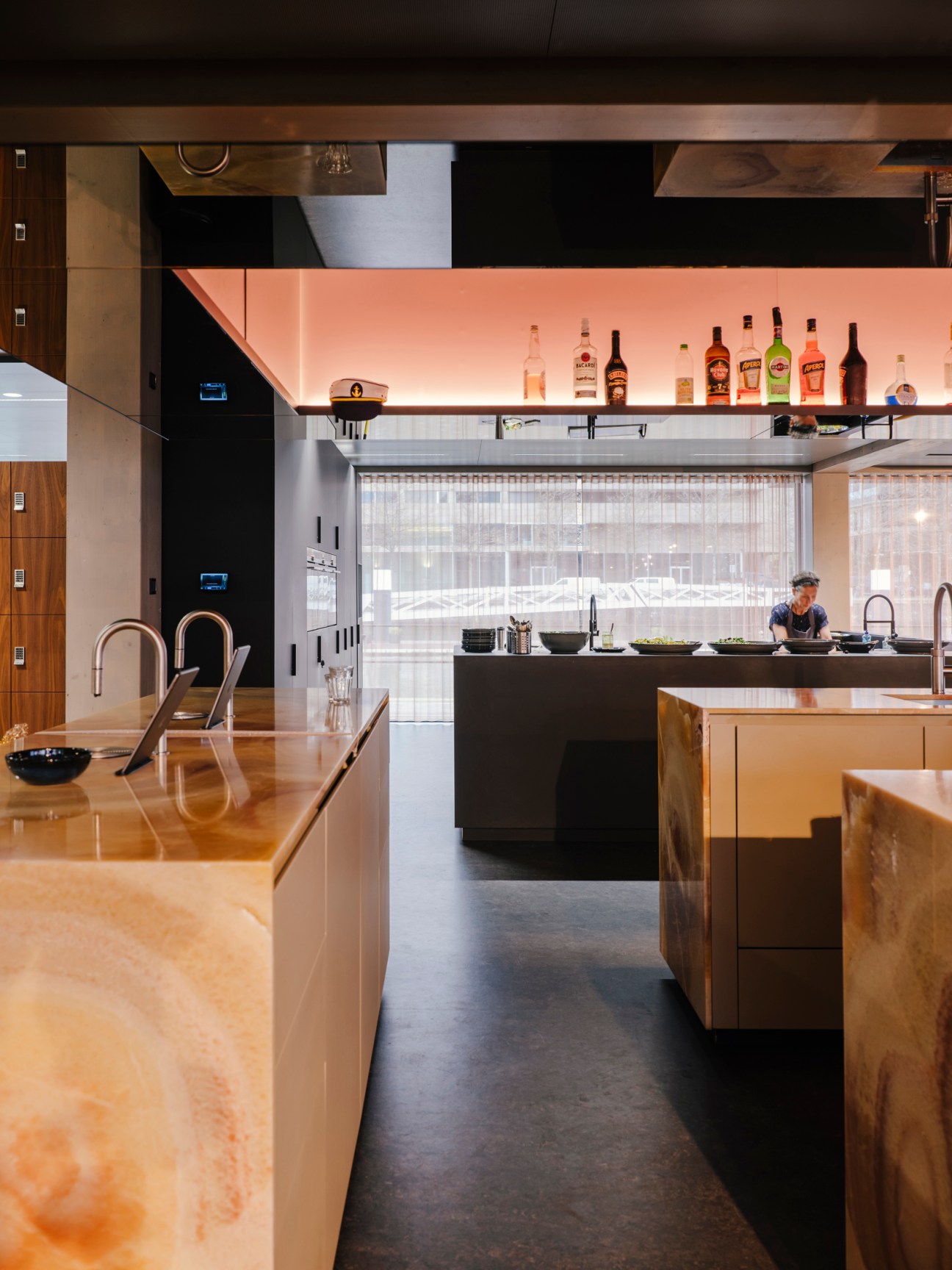
“We have a tidal effect here: on average we go up and down up to 2.2 metres a day,” Albert Takashi Richters, project architect at Powerhouse Company, the firm that designed the office, tells monocle. “We are moving with the tides. That’s adaptation happening as we speak.” The office is made from timber and sits on 15 concrete caissons connected with cables that create the floating foundation. Crucial to its ability to stay afloat is the symmetry of its design; a timber frame, visible throughout the building, forms a modular grid system for the structure. “In the design, everything has a double function,” says Richters. “Symmetry is a tool that is often used by architects to create something with a representative nature, something that has a presence. But, at the same time, it’s handy when it comes to ensuring that a building can float.”
The structure is reusable, recyclable and ready for the circular economy. It is designed to be towed through the Rijnhaven bridge so that it can be repurposed elsewhere. It can also be deconstructed and the materials used again, an innovation that its creators hope is scalable. “Our floating headquarters is a reminder of what is possible when the world’s brightest minds come together,” Patrick Verkooijen, CEO of the gca, tells monocle. “Adaptation can bring out bold ideas and inspire innovation far beyond what people currently think is possible.”
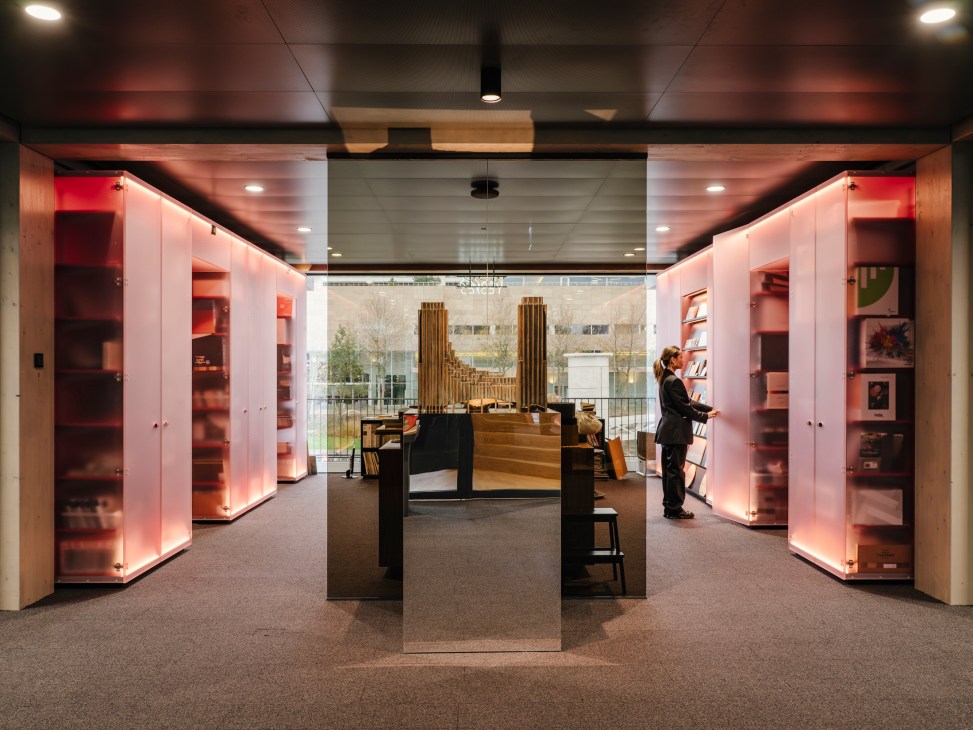
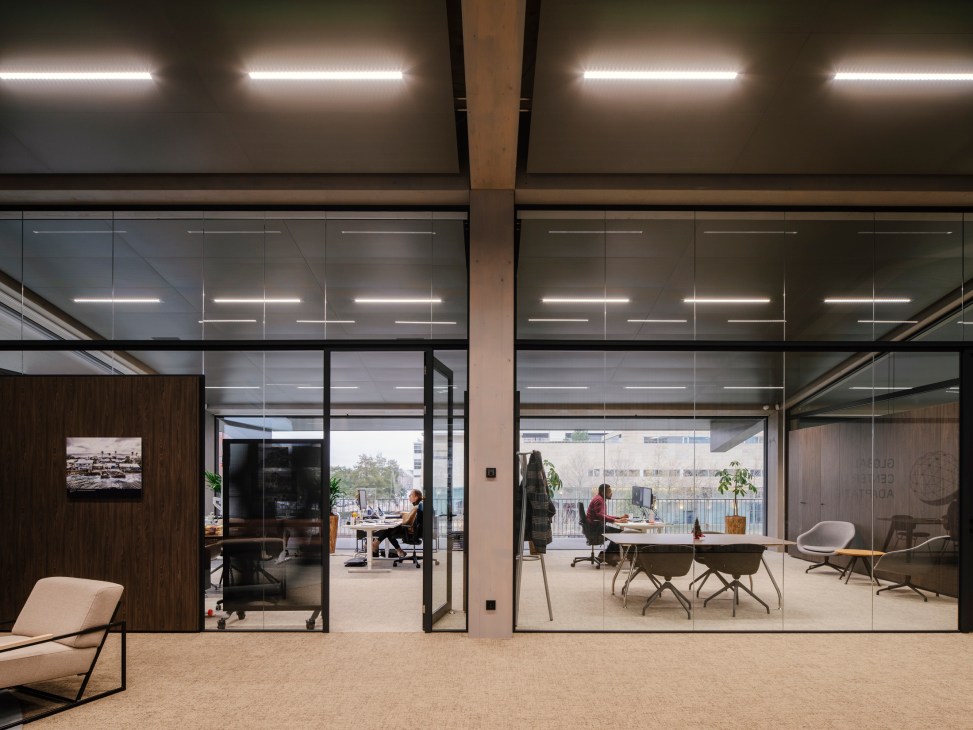
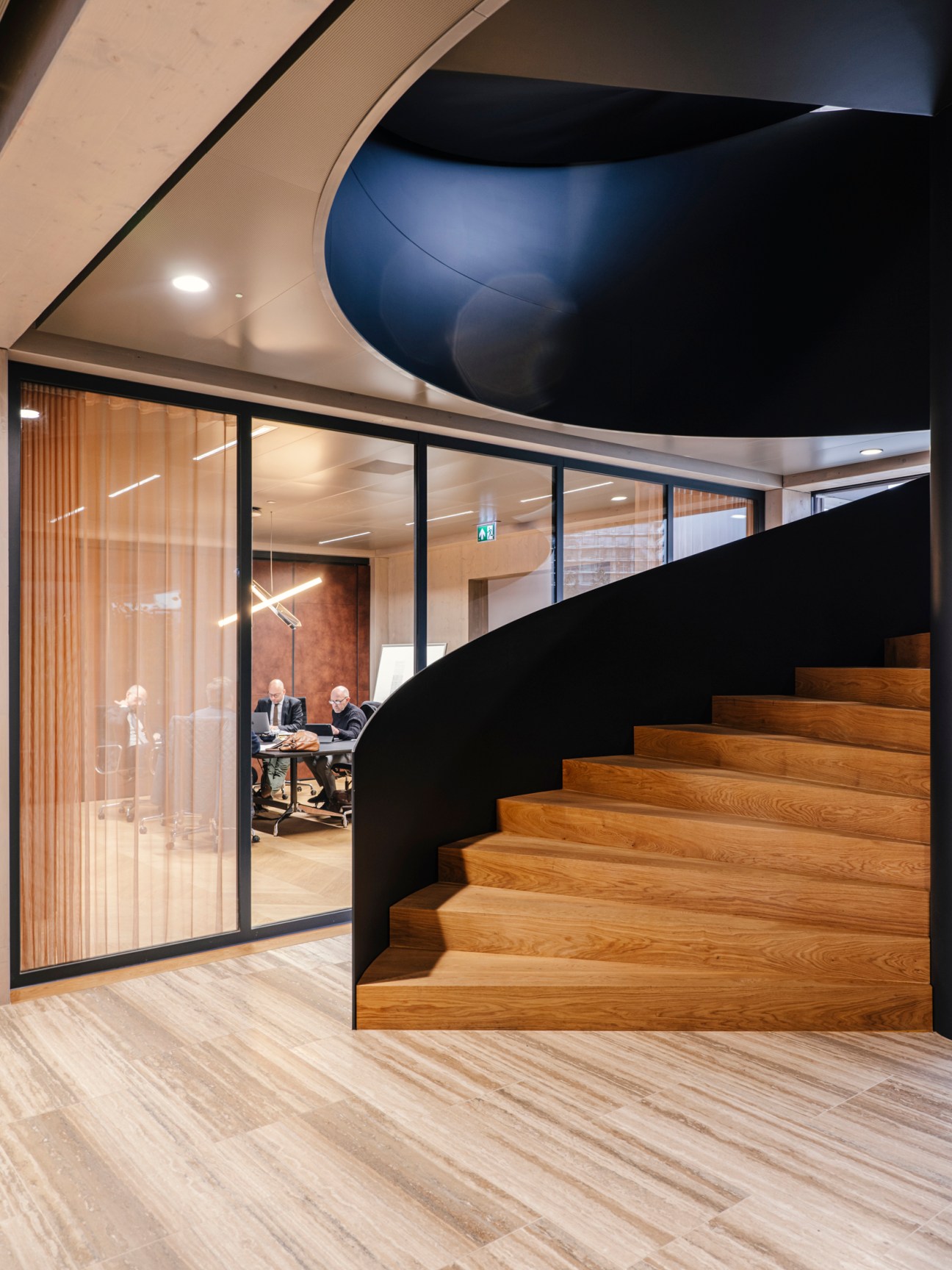
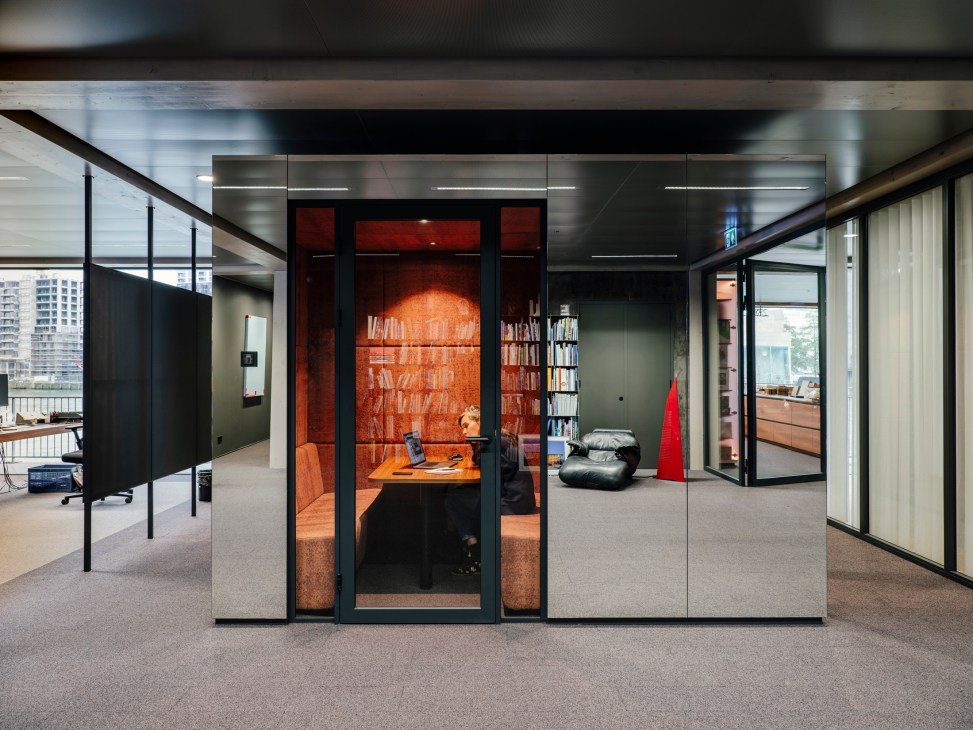
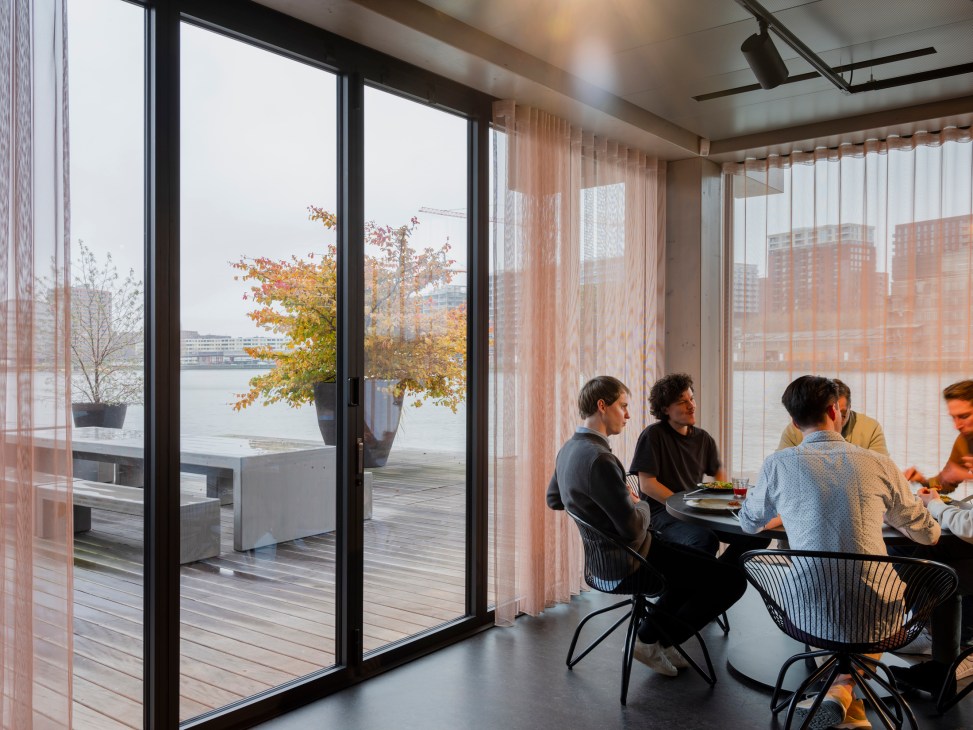
Of course, no one is planning to dismantle Floating Office Rotterdam just yet. The gca occupies the top floor, while Powerhouse Company was so taken by its creation that it moved into the first and second floors. Dutch bank abn Amro leases another office, while restaurant Putaine has a ground-floor space that spills out onto the waterside terrace. There is also a large communal terrace, wraparound balconies and a swimming area. Though the building’s occupants are divided on whether the port’s water is clean enough for regular dips, the interplay between inside and out anchors the office in its environment. “There is a very important human component in this design: the aspects of comfort and being in touch with the outdoors,” says Richters. “That’s what makes it work.”
Why it works:
That Floating Office Rotterdam barely bobs in the water, even in the unforgiving North Sea wind, is testament to the project’s technological achievement, while its warm and inviting interior spaces showcase the best in Dutch architecture and design.
Culture
Home is where the art it
Catherine Balston on a 1938 modernist cul-de-sac in São Paulo that is having a new go at the collaborative dream of its architect, thanks to an unplanned alliance between the street’s newest residents: art galleries.
Le Corbusier called him a “romantic revolutionary”. Others, a “utopian visionary”. Flávio de Carvalho’s legacy as an architect, painter, artist and writer has been dissected for decades across Brazil. When he moved to São Paulo in 1923, after studying in England, he injected modernist ideas into his architectural bids for new buildings. But the city wasn’t ready for his radical designs and most were rejected – all except one.
Vila América, also known as the Vila Modernista, is a cul-de-sac of 17 “built-for-rent” houses that De Carvalho designed and developed in 1938 in the upmarket Jardins neighbourhood of São Paulo. A mix of terraced and semi-detached houses, the project was unusual for the period as it included areas for socialising and incorporated some of Le Corbusier’s ideas of the house as a “machine for living”. Yet it was a flop: no one wanted to move in. De Carvalho ended up taking up residence by himself.
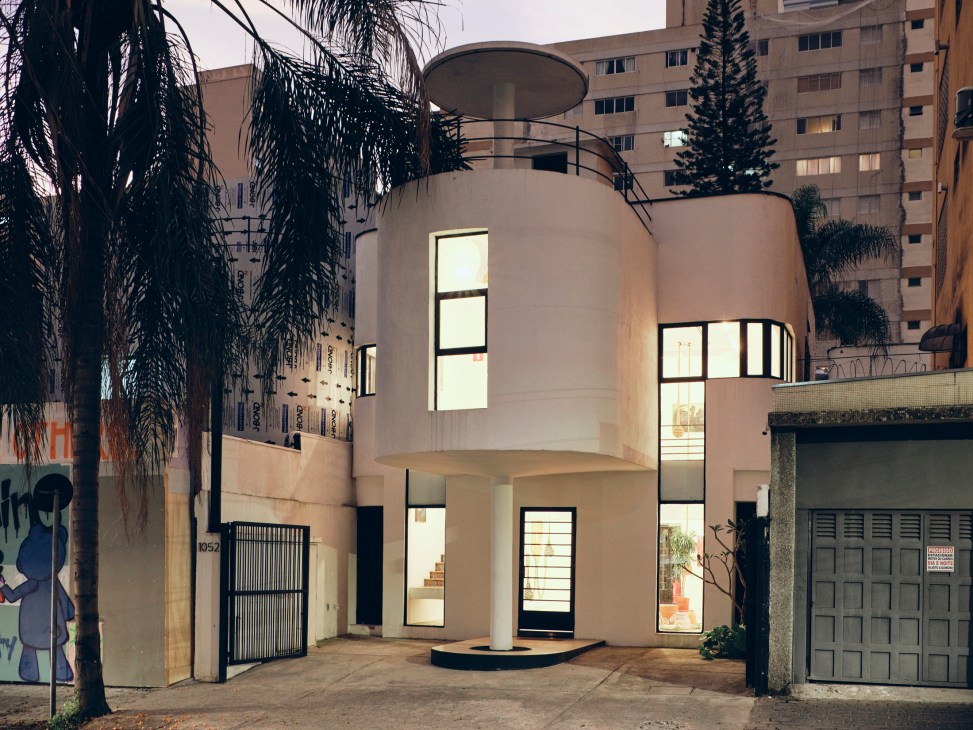
Today his ideals are having a second shot thanks to a group of art galleries that are embracing the street’s history. “When I found this house for rent and saw that it was by Flávio de Carvalho, I closed the deal on the spot,” says Maria Montero, artist and founder of experimental gallery Sé Galeria, who was the first gallerist to move in here, in 2015.
Soon enough, two other art spaces followed her lead. Four doors up, Espaço cama started out in 2020 as a collaborative venue shared by five galleries, 55sp gallery and Casanova among them. Gomide&Co, a gallery specialising in Brazil’s Concrete and splinter Neo-Concrete movements, is the latest arrival. It opened in 2021 with an inaugural exhibition by artist-architect José Resende, who created two site-specific works inspired by De Carvalho’s spirit: a curved brass pipe sculpture that appeared to float outside the gallery, drawing the eyes of passers-by up to the house’s quirky architecture.
The buildings’ structural features made gallerist Thiago Gomide fall in love with one of the spaces. “It’s crazy to think of a house from the 1930s with a double-height ceiling, where from every corner you see everything of the interiors – a 360-degree view,” he says. “It’s very daring, it fascinated me.” Gomide spent eight months restoring the house while also making it fit for purpose as a gallery.
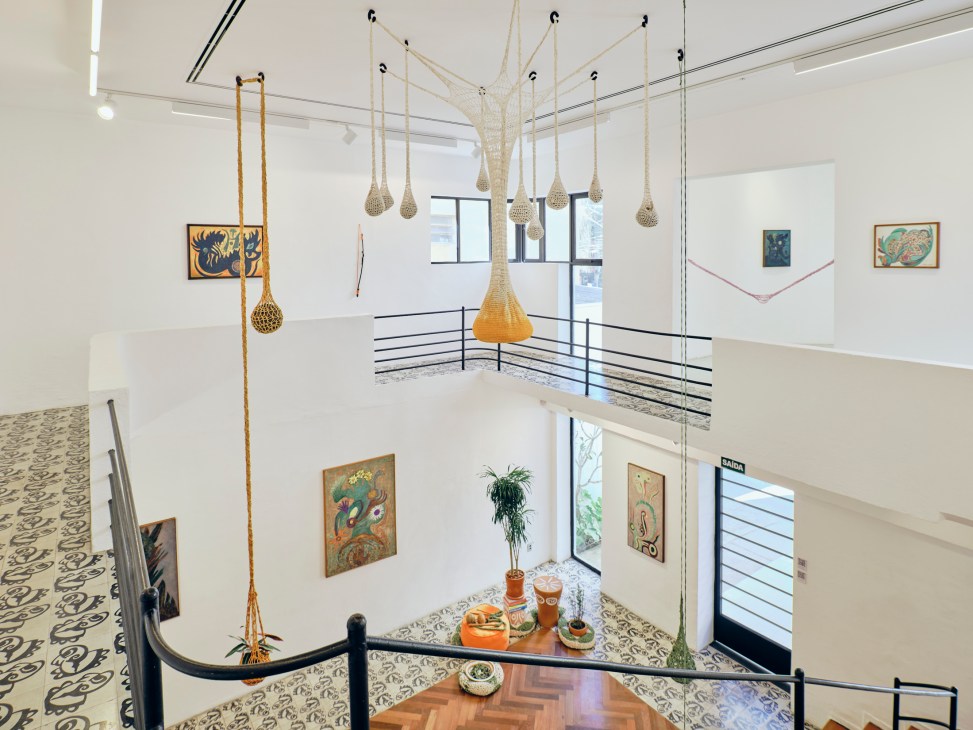
When we visit, woven droplet sculptures by Ernesto Neto hung down through the two-storey space and flower paintings by the late Niobe Xandó are also on show. The tropical theme is apt given Gomide’s plans for the street. “There’s an effort by some of the businesses to transform the Vila into a garden, with restaurants in the back; a small boulevard where people work and have lunch,” he says.
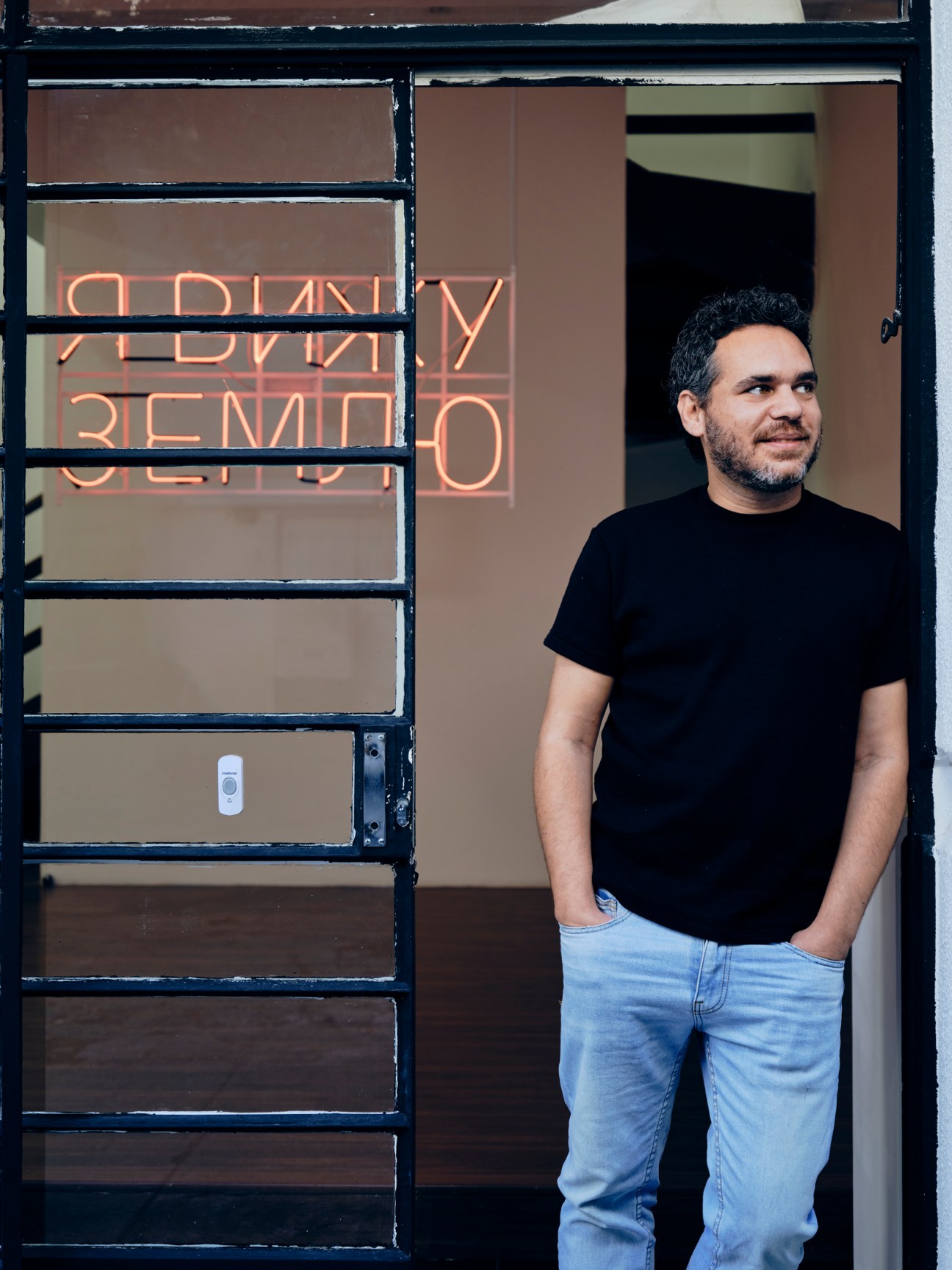
The galleries’ proximity in these shared digs has had an effect on the programming too: the spaces frequently co-ordinate their openings or host soirées together. “Doing events together makes us stronger,” says Adriano Casanova (pictured), founder of Casanova. Montero is also optimistic. “Being in a building that is part of the city’s heritage is a privilege without equal,” she says.
Efforts to give the Vila Modernista a protected status have been rejected by city hall in the past, due to the extent to which the buildings had been altered. It’s now down to people like Montero to help protect this architectural gem. “Urban architecture is successful when it’s occupied by people,” she says. “I’d like this to be an egalitarian place, where people feel comfortable visiting, not just from the art world. We need more spaces that serve the city.”
segaleria.com.br; gomide.co; c-a-m-a.com; casanovaarte.com
Mixed media
News — Sweden

Julia Agha is proud of providing Sweden’s 600,000-plus Arabic speakers with a reliable news source on the country’s political and social goings-on. As the CEO of Alkompis, the Nordics’ largest independent media platform in Arabic, she manages a 13-strong team of full-time employees from the newsroom in Stockholm.
“We try to reach our audience in a way that Swedish-language media can’t,” says Agha (pictured). Building trust among readers, mostly newcomers to Sweden, is key. “We don’t just translate the news; we provide context.”
The paper – which is printed monthly and counts millions of followers across its social media channels – was founded a decade ago by Agha’s father, a Palestinian immigrant from Syria. He feared that many like him would find it hard to integrate with Swedish society at a time when the country was welcoming thousands of refugees from Arabic-speaking nations. “Our purpose is to increase integration by filling the information gap in society,” she says.
Recently, much of Agha’s time has been spent on promoting Alkompis’s work beyond the Arab community. In a political climate that is increasingly hostile towards non-Western immigrants, she is busy penning op-eds for Sweden’s biggest newspapers and appearing on national television to cement her paper’s place in society – and dispel prejudice. “Arabic is now the second most-spoken language in Sweden,” she says. “Reliable and objective information in Arabic has become crucial.”
alkompis.se
Paint it green
Art — Zürich
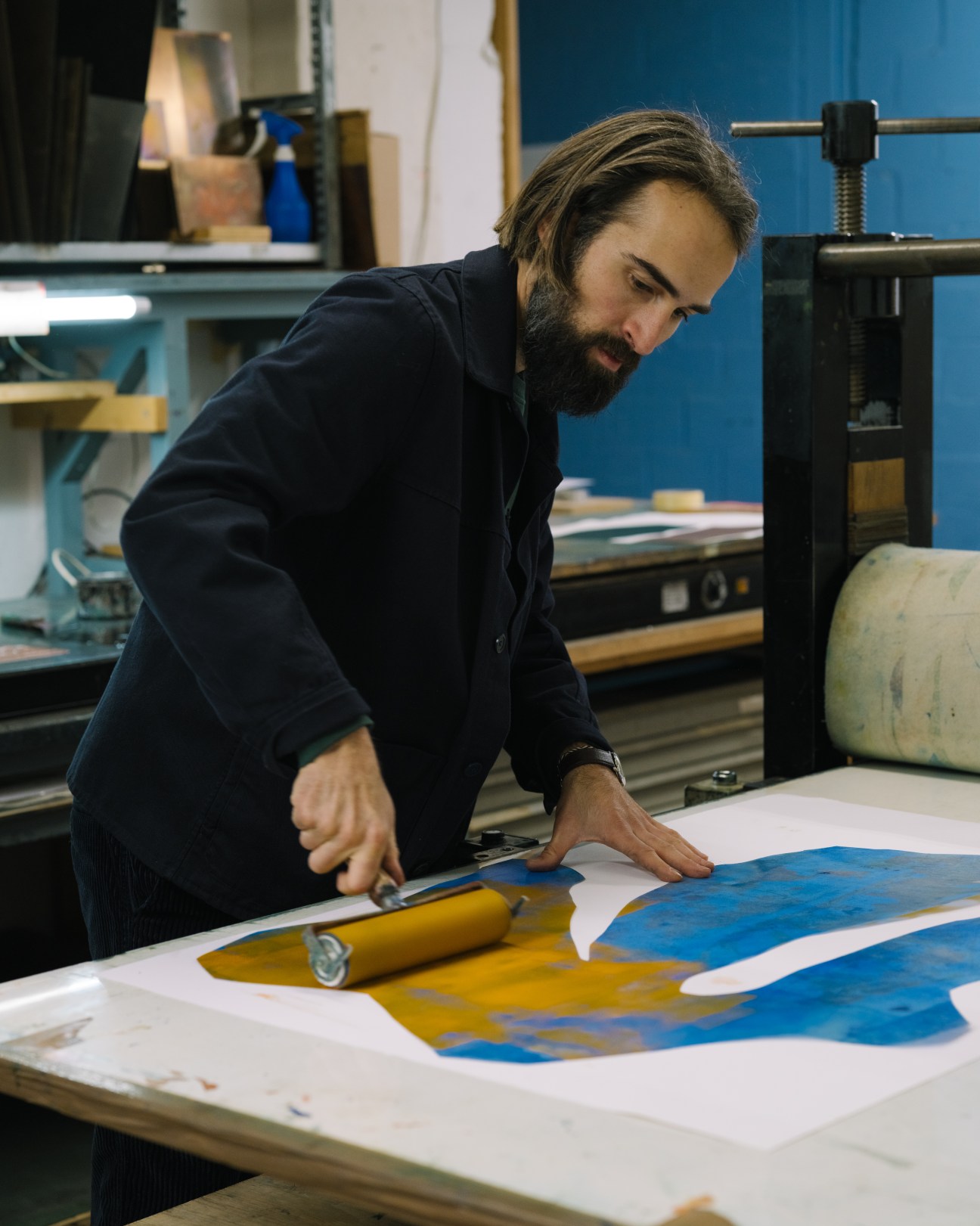
Swiss artist Simon Heusser is mixing shiny orange paint with a spatula in his Zürich atelier. Bright yellow, deep blue, lush green: the colours he chooses exude a life-affirming vitality. It might come as a surprise given that his work’s focus is the changing climate we live in. “We often hear about climate activism,” he says. “I choose climate positivity as my form of expression. It allows an outlook on what’s possible.”
His latest series, Sea Ground Forest, began life last summer after he restored a boat that he took out onto the waters of Lake Zürich, where he observed the submerged algae. Having long been fascinated by the plants’ forms and compositions, in 2020, he learned about a US biotech firm that makes printing ink using algae pigments. “It’s the deepest black-blue and a fascinating colour to work with,” he says. It takes about two months for the layers to dry on paper, which also gives him time to think. “My thoughts go towards: what happens when the glaciers melt? Could this be a new habitat for algae?” Bridging both seas and peaks is rooted in his biography: while his father comes from Los Angeles, his mother is from the Grisons mountains of Switzerland. The artist himself studied art in Zürich, Basel and Stockholm.
Heusser’s approach to tackling environmental issues focuses on opportunities. “I work when I am in a good mood,” he says. “It’s the only way I can transport the positivity into the work.” His attitude helps create pieces that have a calm, almost meditative aura. His work is also informed by his early training as a carpenter. “We live in a world where we make little ourselves. But a well-crafted product is forever; there is no need to recycle it,” he says. “That’s how I create my art. It should be timeless.”
ateliersimonheusser.ch
Shell yeah!
Venues — San Diego
Shell-shaped outdoor- performance venues always evoke a certain nostalgia. This architectural trope gained popularity across the US in the years following the Great Depression, as live music moved outside. From Jimi Hendrix’s legendary 1969 performance at Honolulu’s Waikiki Shell to the storied stage at the Hollywood Bowl – which has been graced by The Beatles, Elton John, Tina Turner and Fleetwood Mac since it opened more than a century ago – bandshells always make for striking venues.
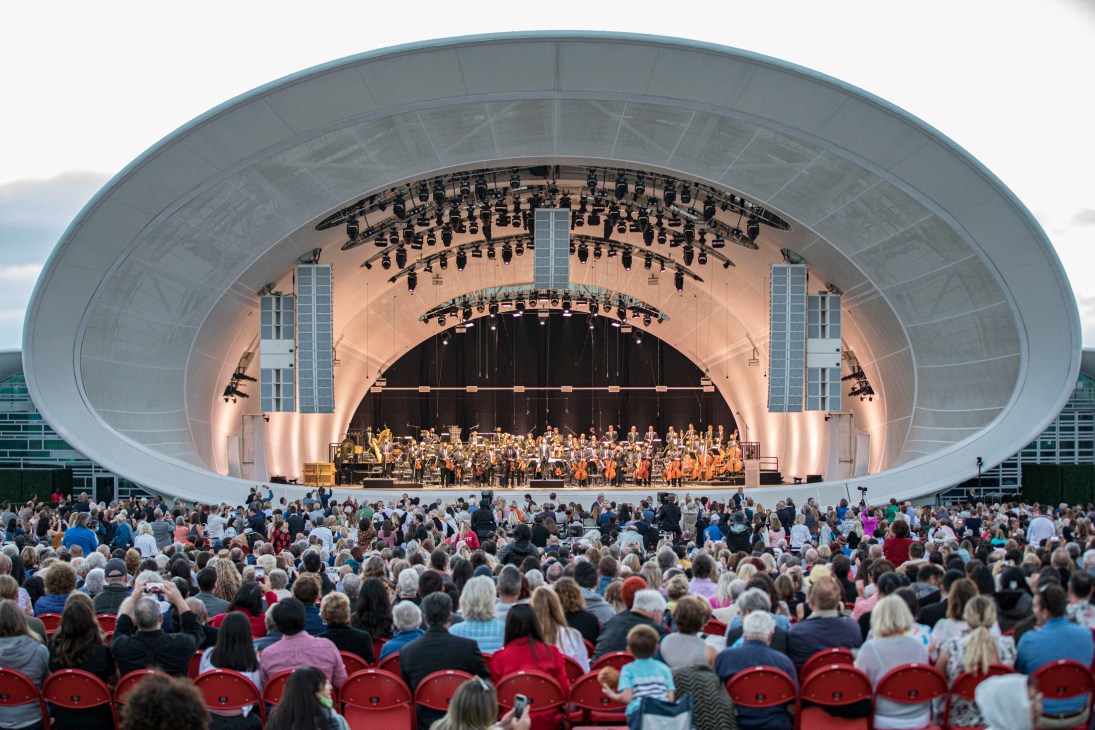
San Diego’s The Rady Shell is the latest iteration of the design. Inspired by pebbles and seashells, the new stage at the tip of Jacobs Park, a green space by the city’s picturesque marina, plays host to classical music concerts and occasional pop gig. The site’s master plan was designed by San Diego’s Tucker Sadler Architects. Its groundbreaking acoustic design came courtesy of the UK’s SoundForms, which created an updated version of the set-up it devised for the outdoor stage in the 2012 London Olympics. Two intricate sound systems – one inside the shell and one projecting the sound out to the audience – diminish the risk of reverb and allow for crystal-clear results. “The acoustics are comparable in quality to the finest indoor concert halls,” says the San Diego Symphony’s Kristen Turner. “It has become a place where nature and culture meet, a public park that has been activated as a cultural institution. Our audiences have been delighted, because every concert here is unique.”
Catch anything from Debussy recitals to singer-songwriter Maggie Rogers and Houston-born musician Keshi here in the coming months.
theshell.org
Image: Getty Images
Southern comfort
Double act
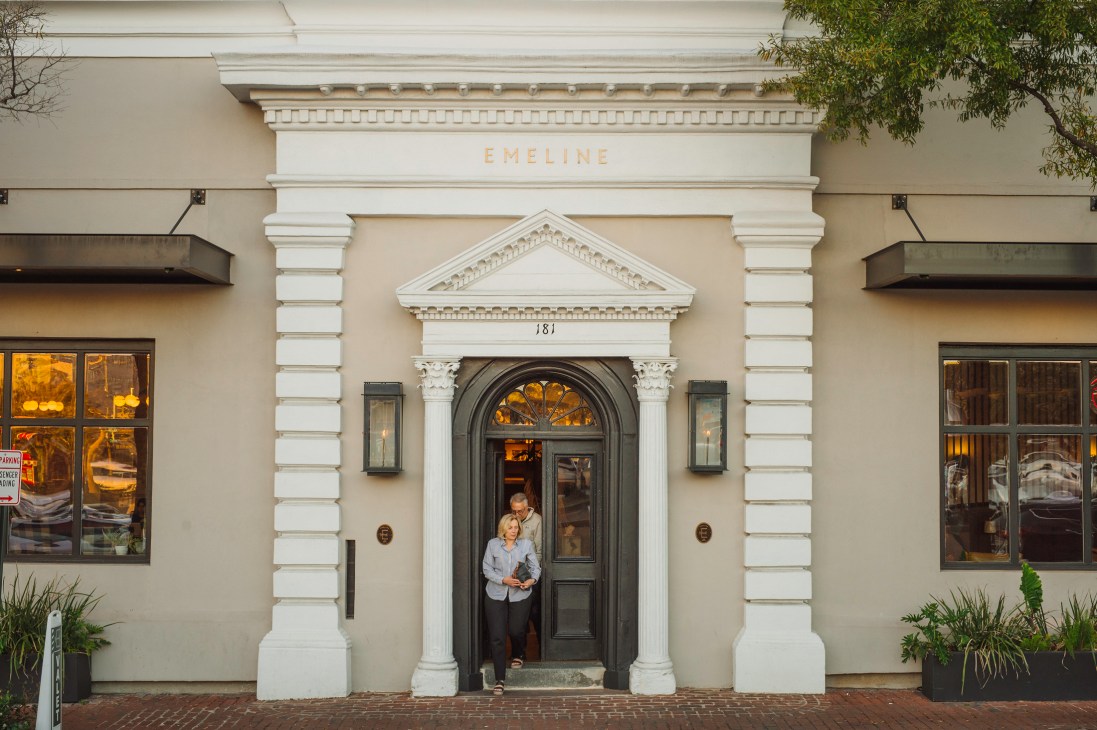
Emeline and The Ryder
Since Emeline and The Ryder hotels were acquired by Rockbridge – a developer with sites in Dallas, Maine, Denver and more – both sites have been significantly spruced up. While the hotels share an owner and are nearish neighbours in the old town, their styles are different. Emeline is possibly one of the buzziest spots here, with a modern, uncluttered lobby and a seemingly perpetual queue of guests waiting patiently to check in.
“Charleston’s seasonality is diminishing because it’s in such high demand,” says Shannon Hartman, director of sales and marketing at Rockbridge. The crowd is a mixture of holiday-makers and business travellers, who book into one of the 212 spacious rooms that have duck-egg blue walls, plush green headboards, mustard-coloured curtains and Crosley record players. In the shop on the ground floor, guests can snap up local goods, such as pieces by ceramicist Susan Gregory and tea from Oliver Pluff and Company.
Although the original building has evolved over time (it’s come a long way since being a Hilton DoubleTree and before that a grocery and a bank), this is a historic site that dates back to 1852. The main restaurant, Frannie and The Fox, has a glass atrium and spills out onto a vast courtyard. With rounded green booths and glossy cheese plants, it feels as Californian as it does South Carolina. The menu, however, takes its cues from Italy. “Why not?” says chef Tim Morton. “Everyone loves Italian.” The crowd seems to agree. The wood-fire oven churns out sharing plates including oysters with ‘nduja butter and charred octopus, alongside Neapolitan-style pizzas. Cocktails such as an aged- coffee negroni are shaken at the bar and sometimes served through a cocktail hatch behind it.
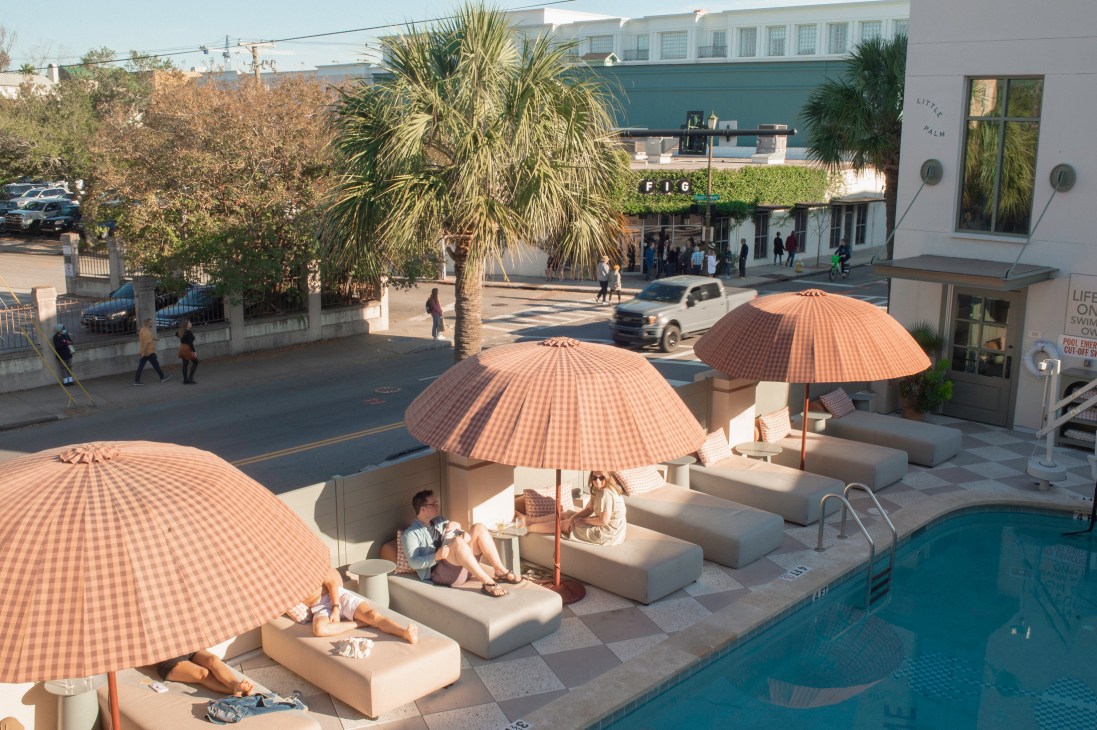
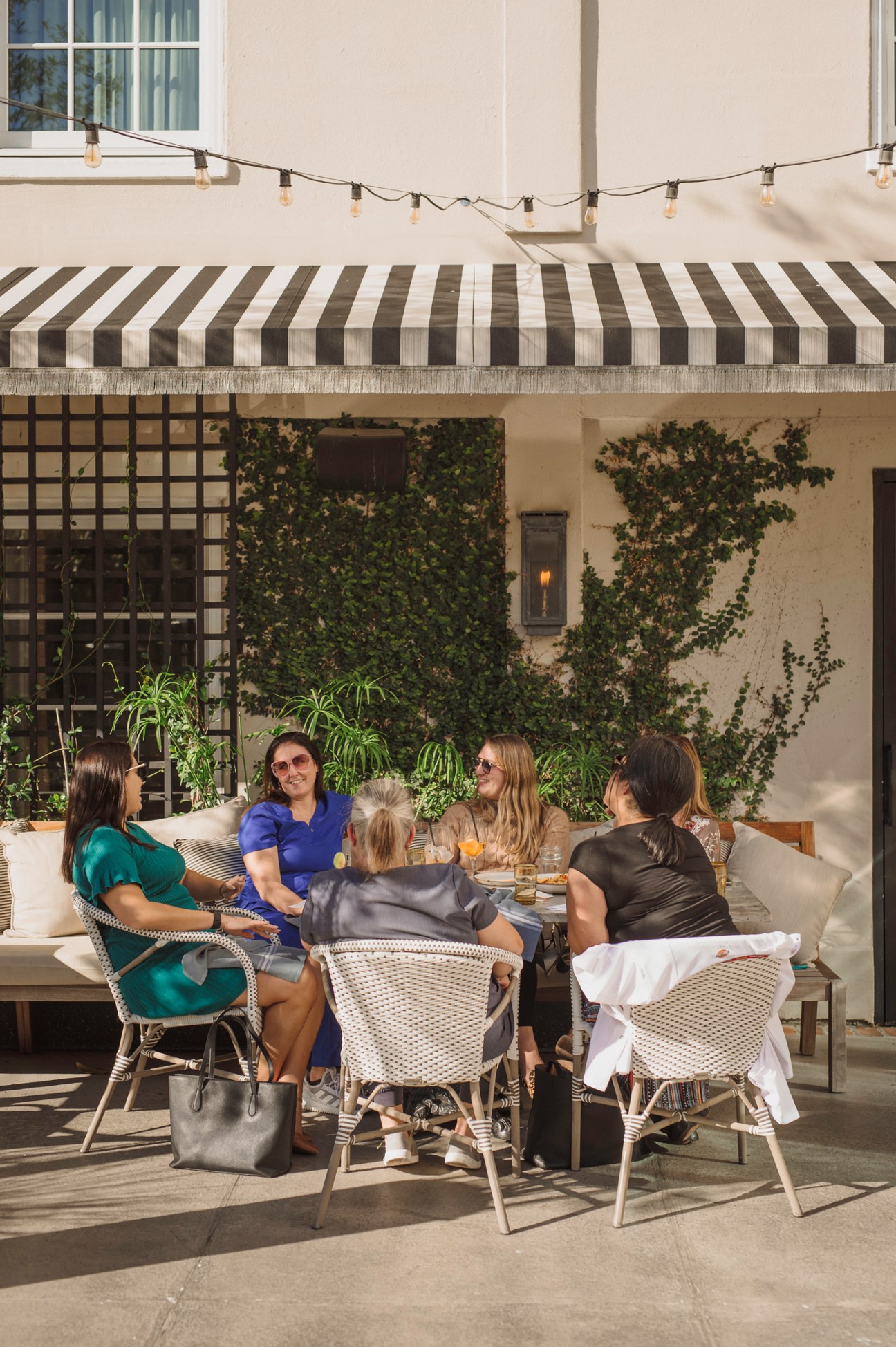
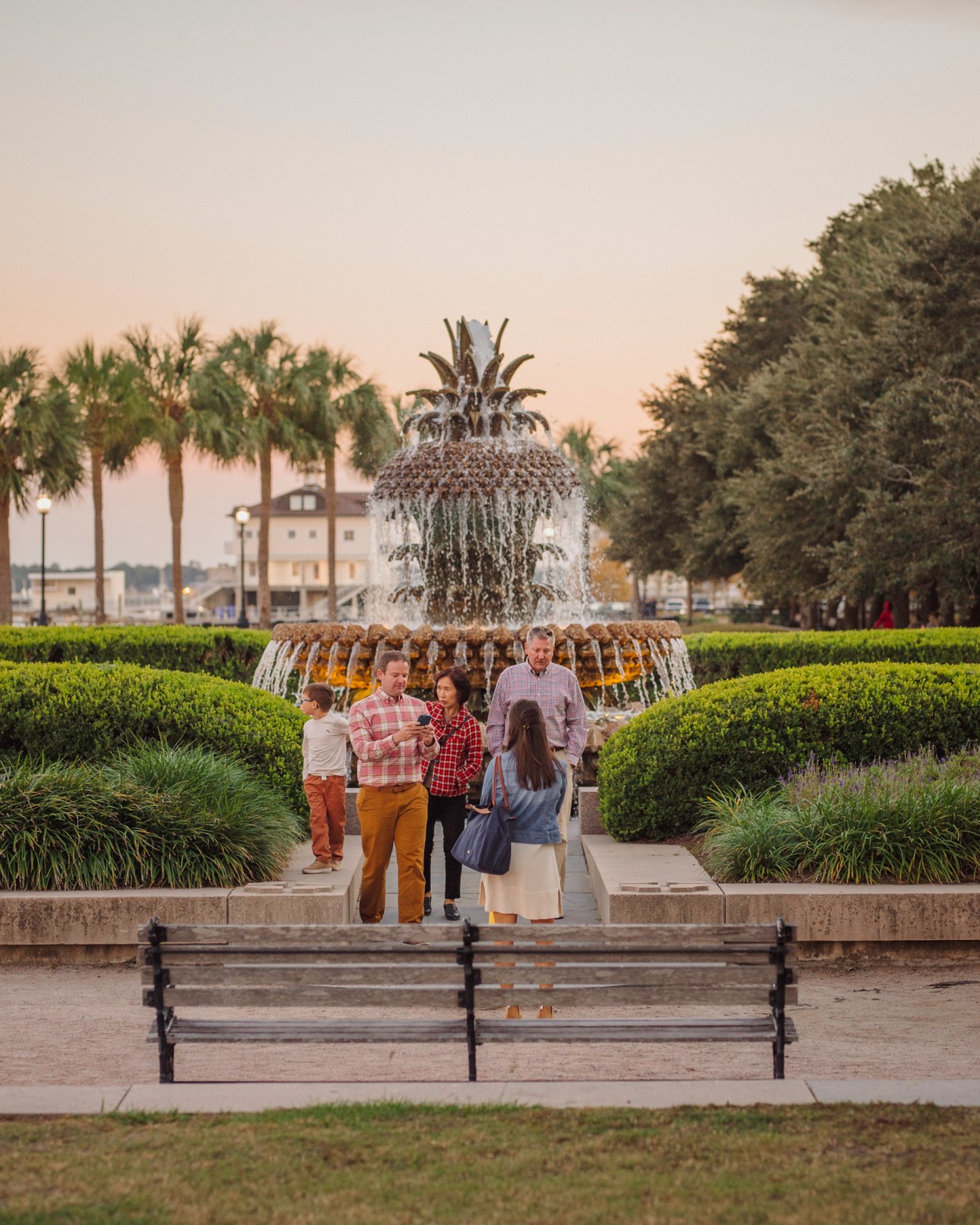
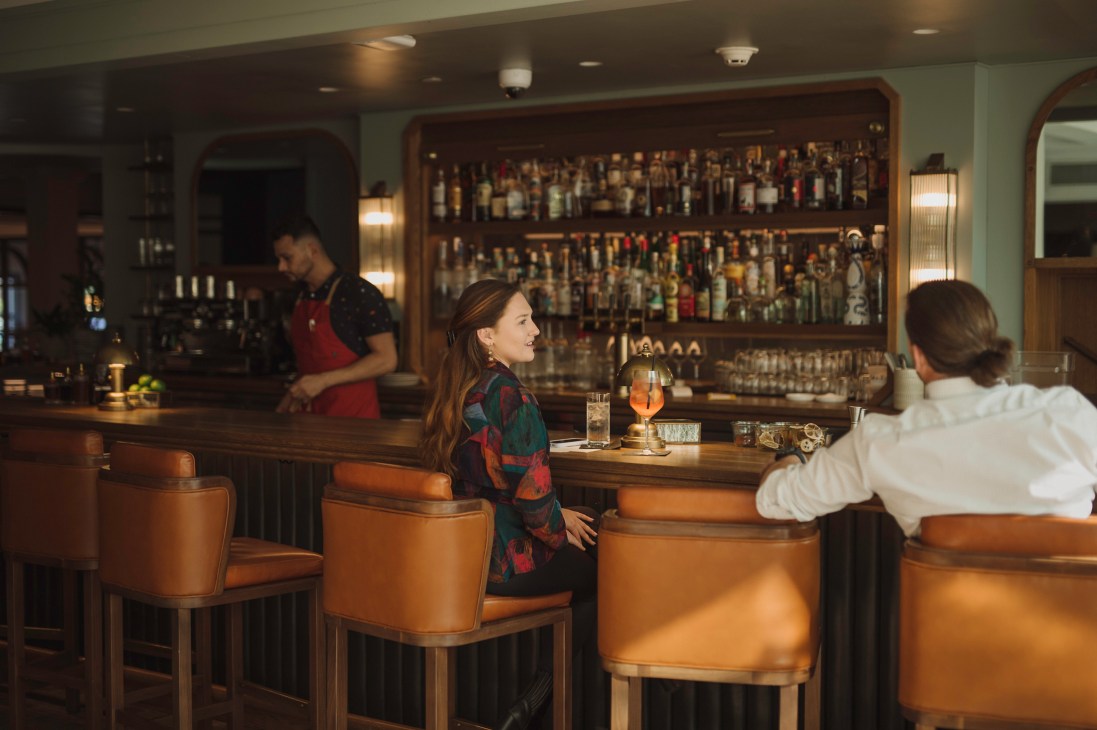
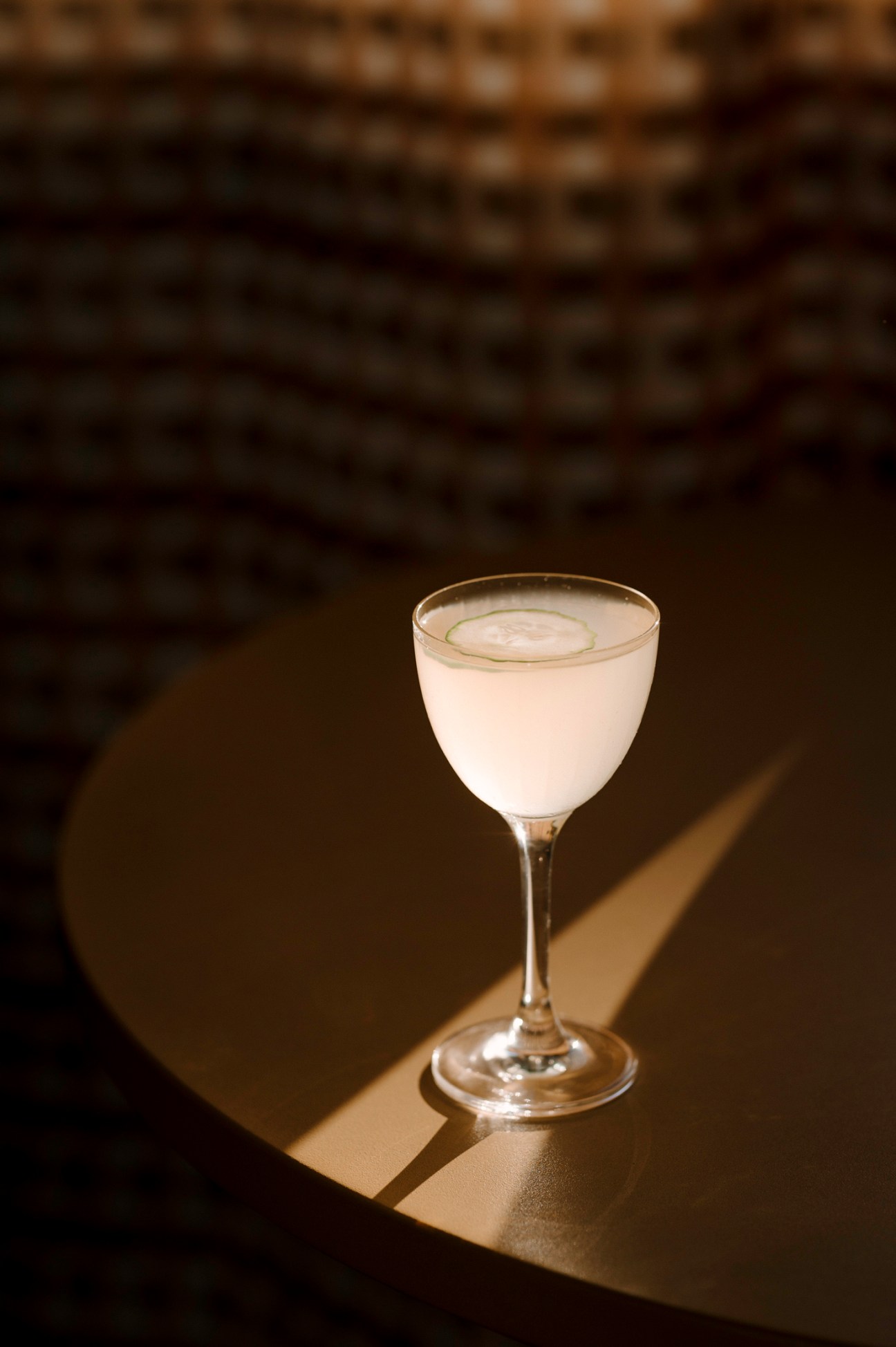
Down the road, the hotel’s sister property, The Ryder, is located on a busy thoroughfare and feels like something out of Palm Springs. The 91 guest rooms have a retro colour palette: light wooden floors, chairs and cabinets come in shades of dusty pink and pistachio green. On a sunny day, guests lounge under crimson umbrellas around the pool – a luxury that’s not easy to come by in Charleston. The bar and restaurant, which tumbles out onto the pool terrace, pops with pink and green wallpaper, and fringed lights over booths in a nod to the humble diner. The influences might be many but the effect is pure Charelston.
hotelemeline.com; theryderhotel.com
Alive and well
The Pinch
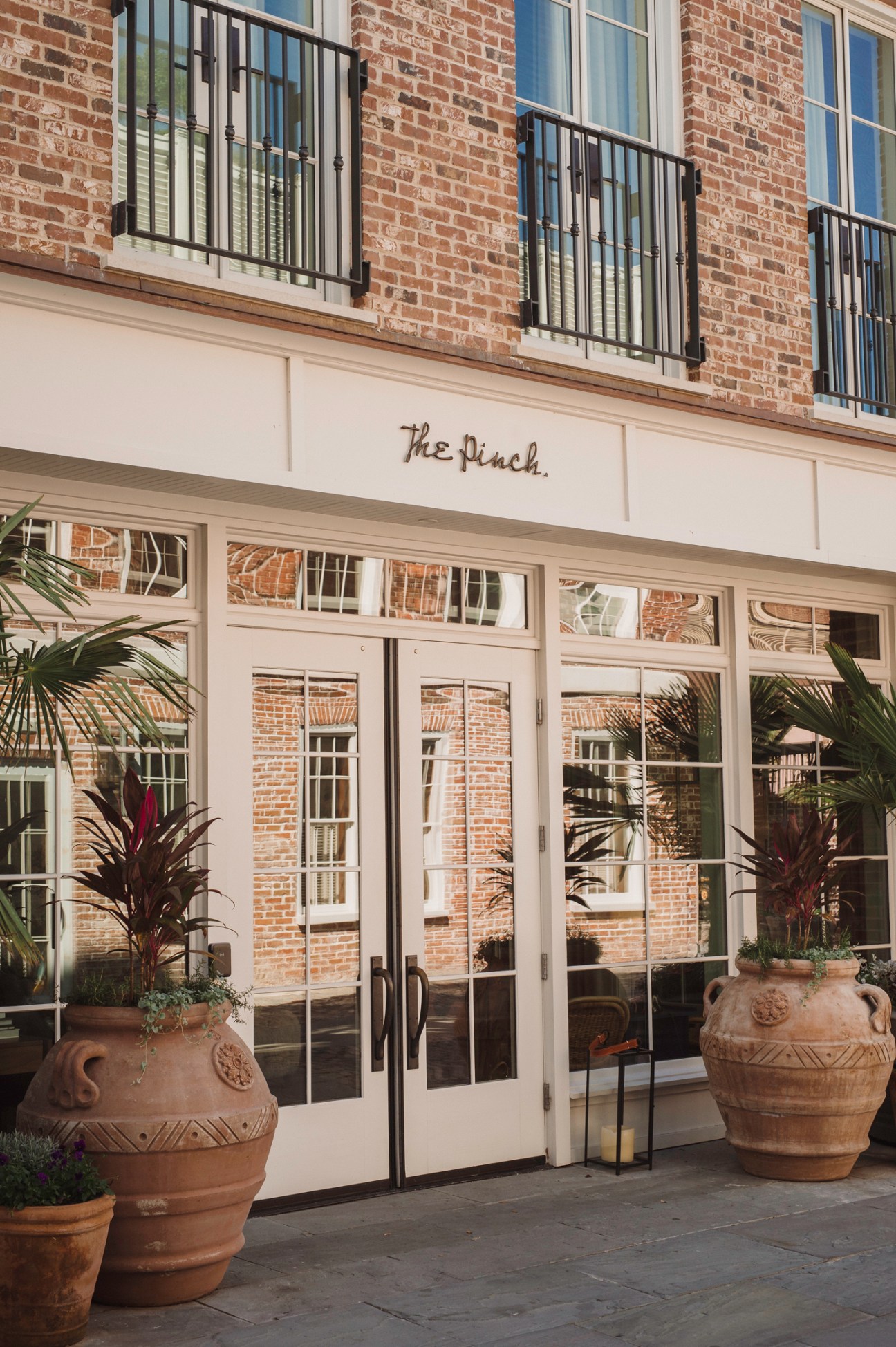
It was Charleston’s considerable charm that convinced Randall Cook, CEO and co-founder of Philadelphia-based developer Method Co, to open his latest hospitality venture here. “The city is pretty much unmatched in the US,” he tells Monocle with some excitement.
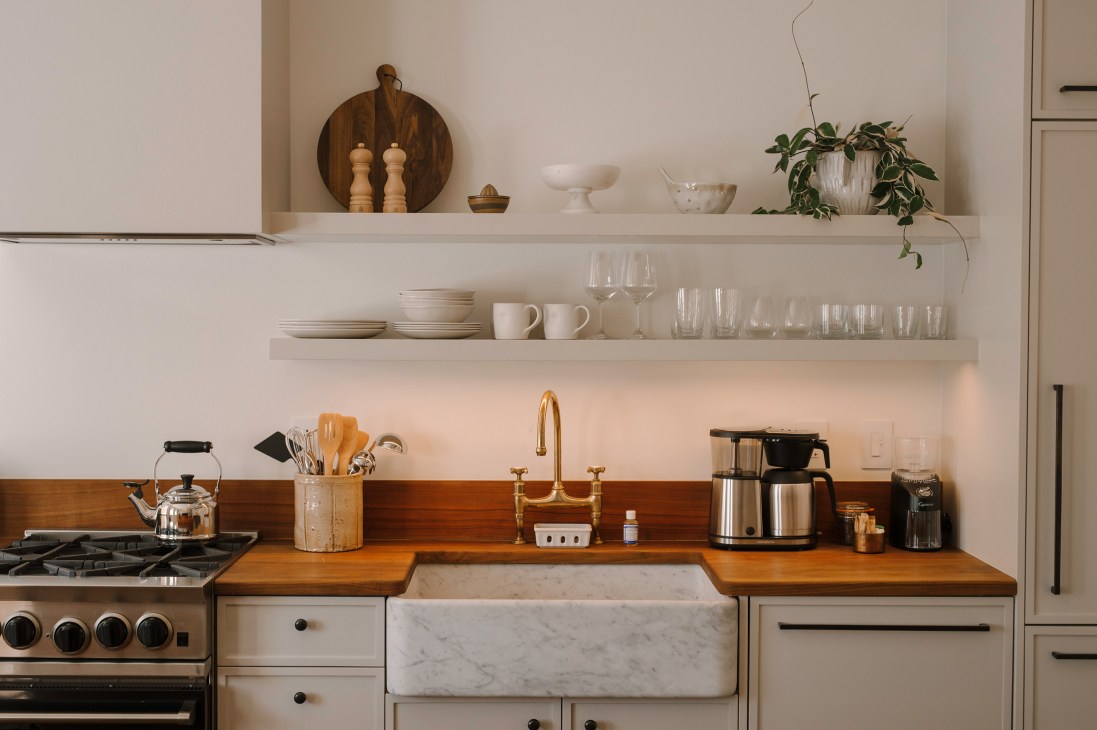
His company owns and operates several hospitality projects around the country, including The Roost in Philadelphia and The Quoin in Delaware. The Pinch is the group’s first property in Charleston. Located in the historic centre but tucked down a cobblestone alleyway off King Street, the hotel has a mixture of luxury rooms and residences intended for long-term stays. “We added kitchens [to some rooms] so our guests can enjoy the comforts that they would normally have at home,” says Cook, adding that he wanted to offer travellers the freedom to brew a pot of coffee in the morning or pop open a bottle of wine in the evening if they chose to.
The hotel is an assemblage of a new construction with a stucco façade by New York’s Morris Adjmi Architects and two original Victorian-style buildings. With wooden windows and French doors and an exposed-brick exterior, the new build is perfectly in keeping with the old-world feel of the place but adds a few contemporary pieces into the mix with marble and black walnut countertops and vegetable-dyed rugs. The hand-painted clay floor tiles and a Snoopy table lamp also caught Monocle’s eye. Leading off the small lobby, there’s a snug plant-filled courtyard with a giant fireplace and comfy couches.
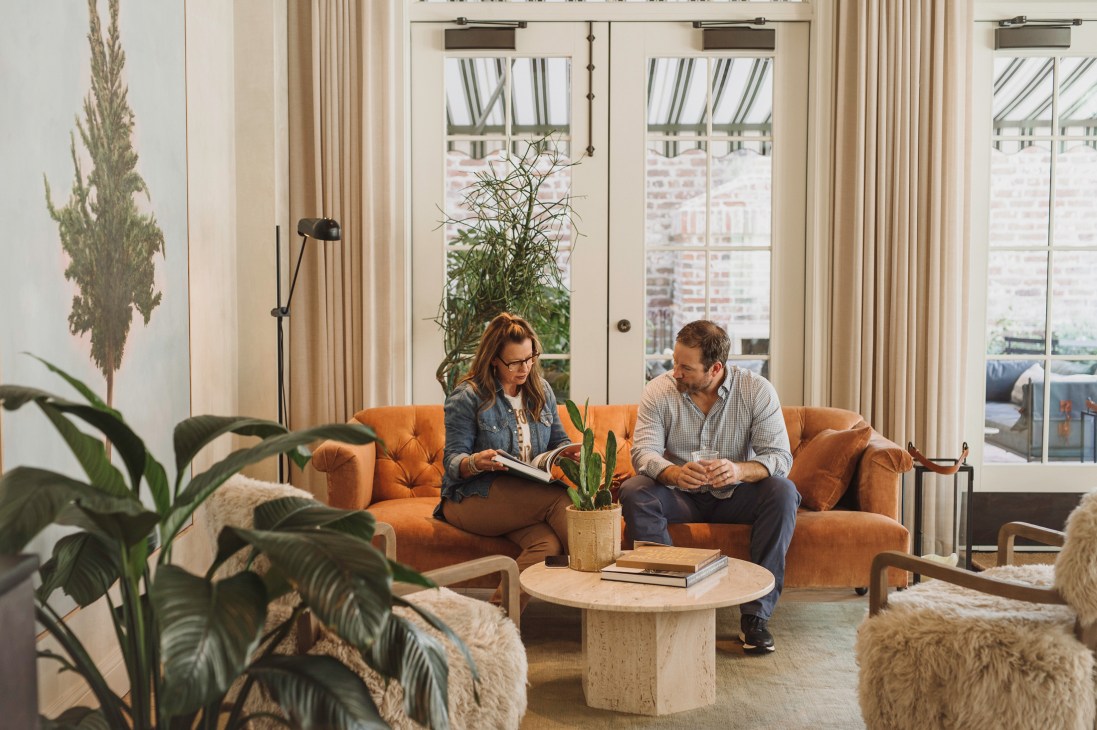
Method Co’s investment in no fewer than seven retail spaces along King Street shows the company’s commitment to livening up an area that suffered during the pandemic but is already feeling more lively. “We’re looking to bring vibrancy back to the neighbourhood,” says Cook. So far the efforts are succeeding.
thepinch.com
Home comforts
The Post House Inn
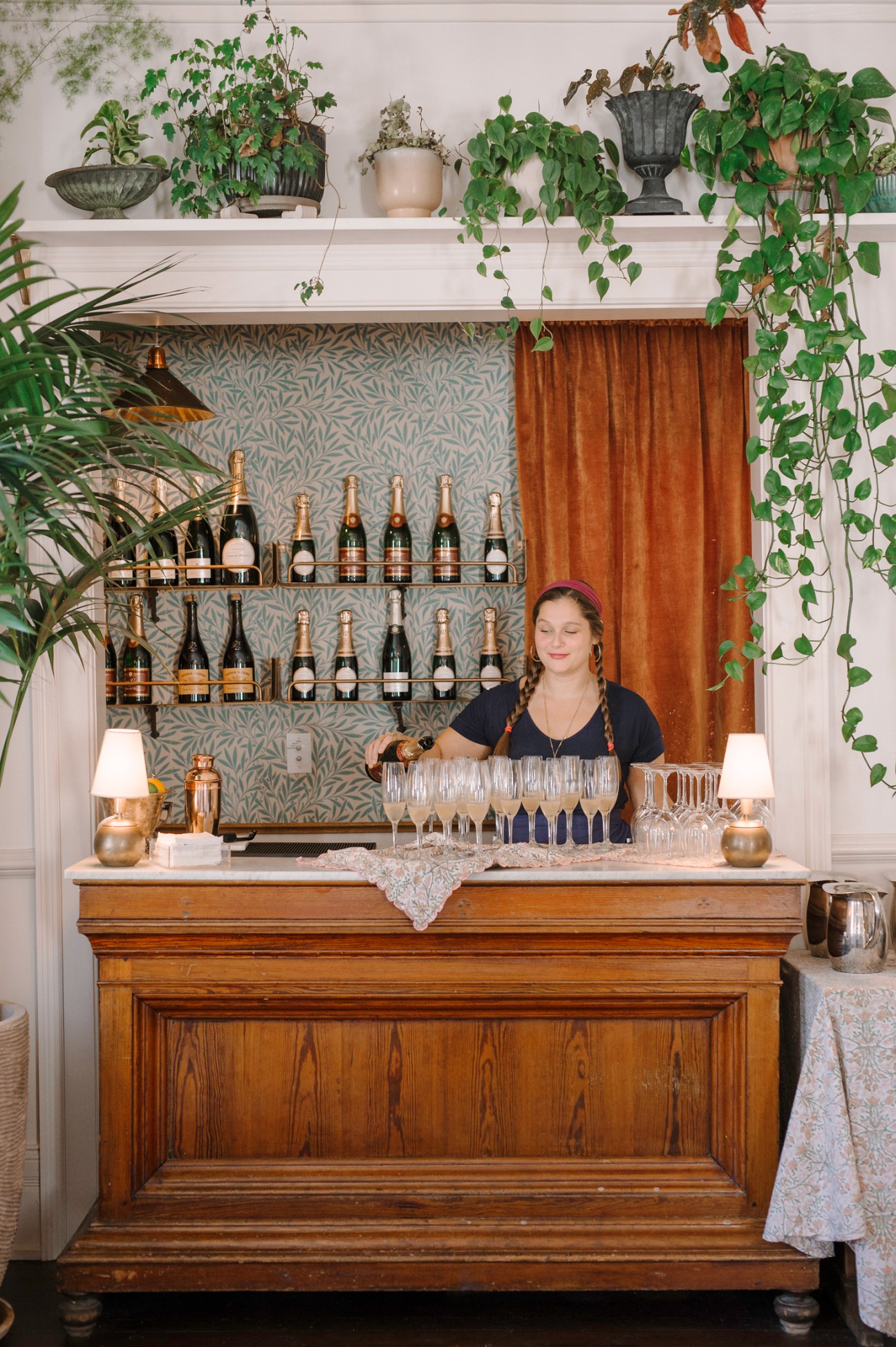
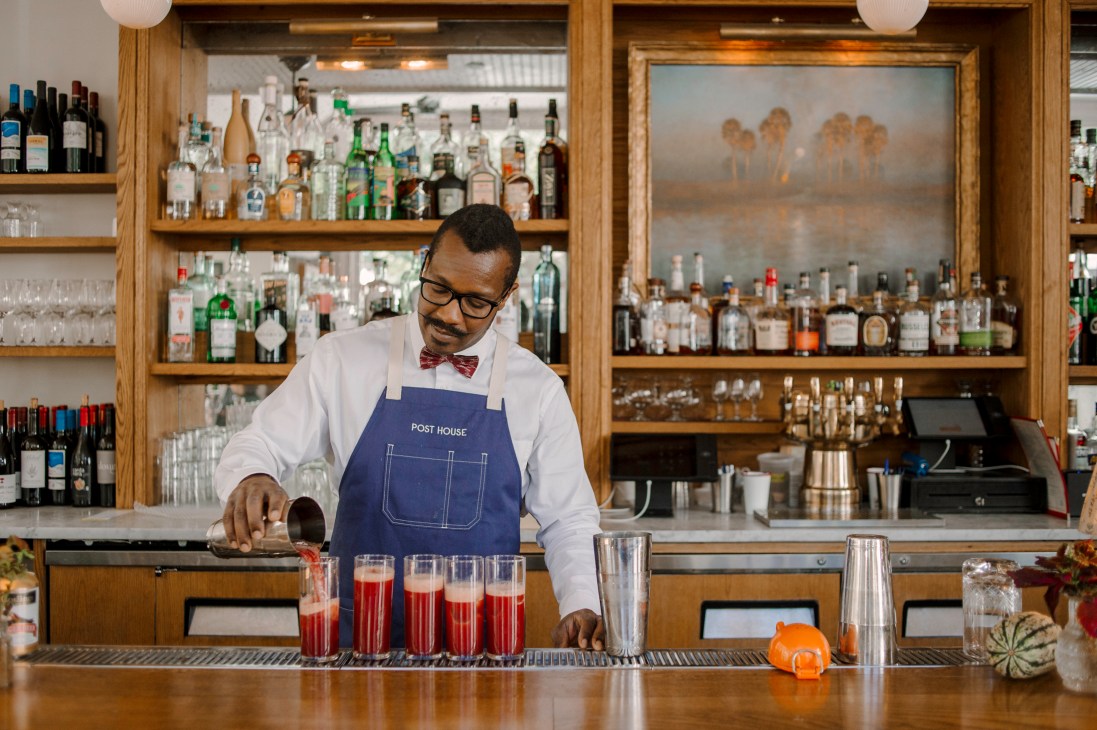
What was once a tired and unremarkable hotel has become a sparkling example of southern comfort. It was purchased by former New Yorkers Kate and Ben Towill, the couple behind design and hospitality firm Basic Projects, in 2019. They hoped to expand their footprint in Charleston following the success of their central restaurant, Basic Kitchen, which offers much more than the humble name suggests.
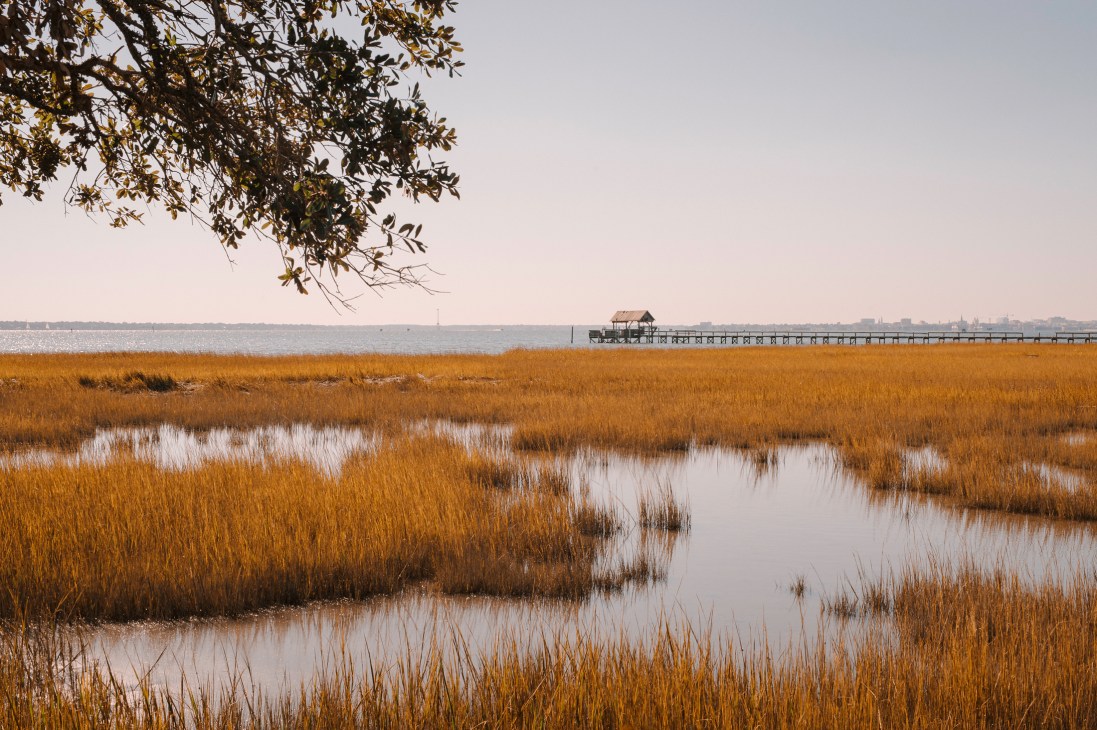
Across the bridge and a 10-minute drive from downtown in Mount Pleasant, The Post House Inn feels a million miles away from a busy city stop-off. The couple were true to the South Carolina vernacular but wanted to bring in the vitality of a village pub – Ben is an Englishman and was the chef and co-owner the fondly remembered New York staple The Fat Radish. “We decided to have a restaurant as the heart of the space,” says Kate. “The rooms are just complementary.”
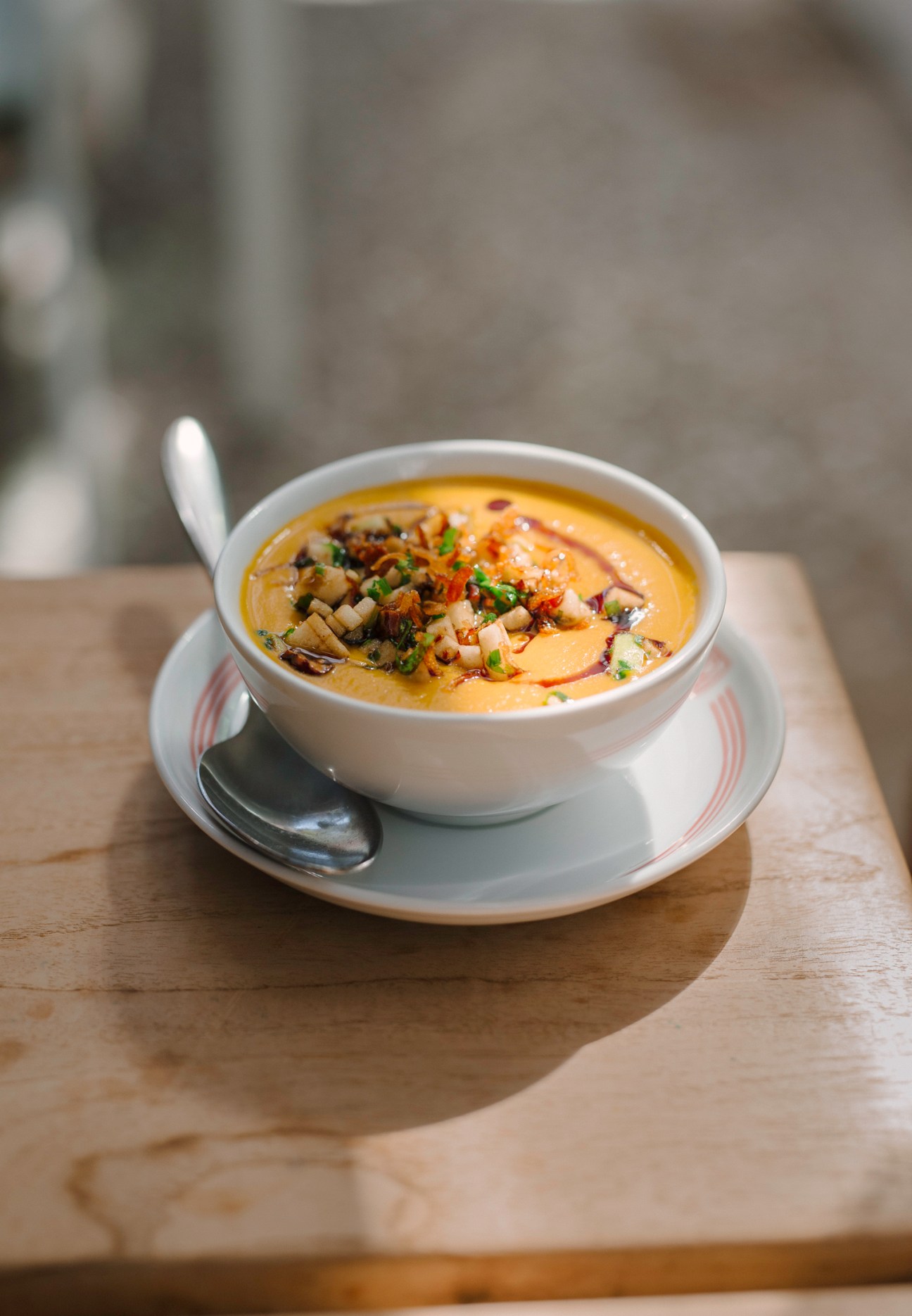
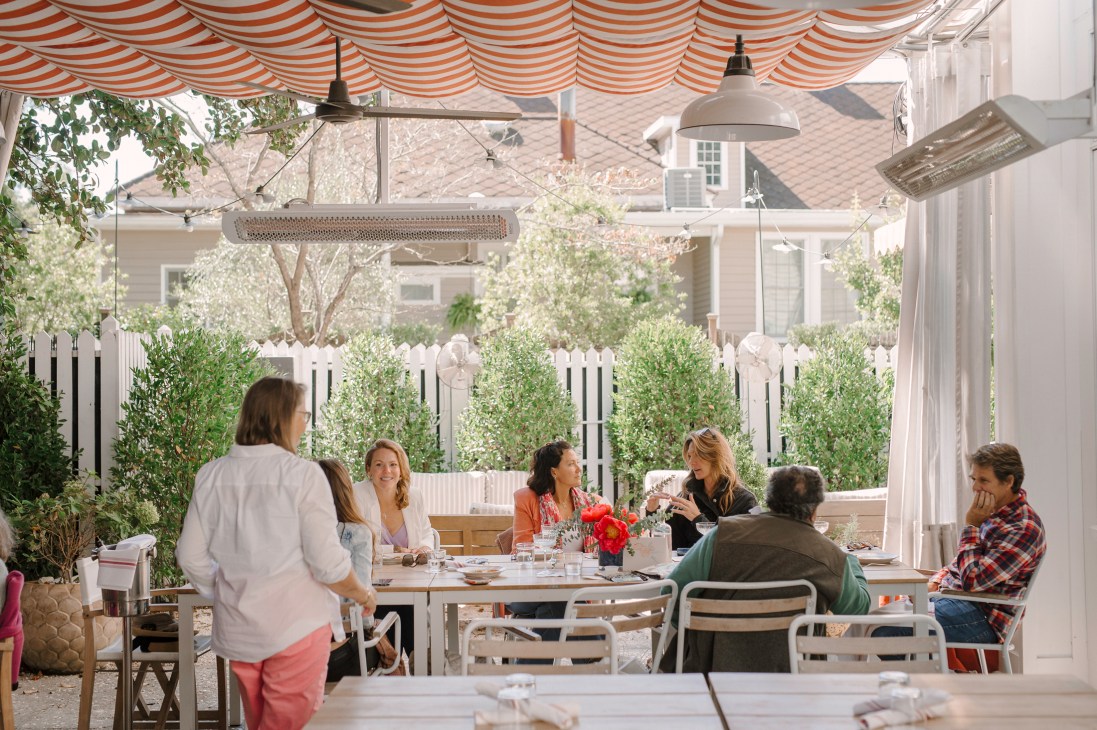
She is, of course, being modest about what the pair have achieved. Her background in film-set design clearly helped when it came to creating the evocative interiors here. What is true is that many locals and visitors come to The Post House Inn for the food. In the downstairs tavern, where light floods in through the street-facing windows, wooden tables are lined with unassuming pub-style chairs and inviting booths line the white, wood-panelled walls. On any given day, including when Monocle visits, the tavern heaves with diners enjoying the homely charm and elevated take on cocktails (one lively table takes to the pineapple-turmeric margaritas with gusto over lunch). The menu is filled with fresh coastal fare such as oysters, blue crab served on toast and fish curry with heirloom Charleston Gold Rice (a culinary discovery in its own right). There’s a burger, of course, as well as lighter options, including crispy salads with coriander and shallots.
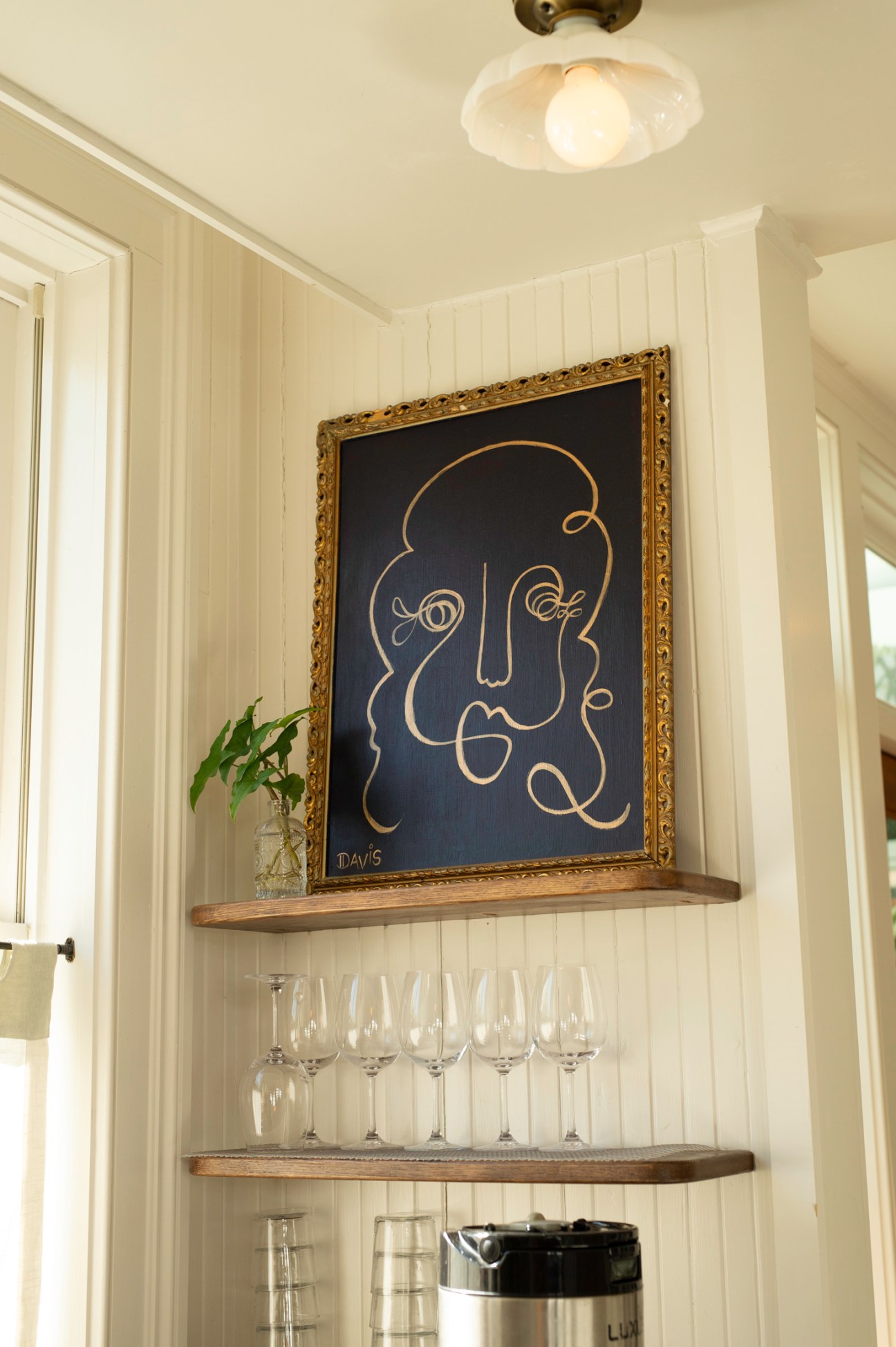
Despite the extensive and tasteful refurbishment, the three-storey clapboard structure has kept its old-school, homely, meant-to-be-here feel. Up the ornate wooden staircase, there are seven comfy guest rooms spread over two floors and trimmed with dove-grey hallways and antique rugs. Some have William Morris wallpaper, vintage lamps and wooden cabinets, which Kate snapped up from the Original Round Top Texas Antiques Fair. “I hate it when everything matches,” she says. In the nearby town of Sullivan’s Island, the couple also opened Sullivan’s Fish Camp, a seafood restaurant serving gumbo and fish and chips. People come to dine here from all corners but, says Kate, it’s the residents of Charleston, who have embraced it and kept the place going. “The community here is so great,” she says with a smile.
theposthouseinn.com