Currently being edited in London

Daily inbox intelligence from Monocle

Issues

Reality check

The vast leg of a Roman statue is slowly working its way across the warehouse floor. It’s hooked up to a pulley system, which stops the mighty limb from toppling over and flattening one of the workers slowly manoeuvring the metal trolley on which it sits. Proceedings are being watched over by Adam Lowe, co-founder of Factum Arte, who is dressed in a crumpled polka-dot shirt and has his reading glasses perched on the top of his head. To make matters more surreal, a canvas of Leonardo da Vinci’s “The Last Supper”, seemingly complete with Renaissance-era decay, is mounted on a wall above. “We used to have Michelangelo, Raphael and Leonardo – the three great masters – together,” says Lowe, almost nonchalantly, from the company’s warren of workshops in east Madrid.

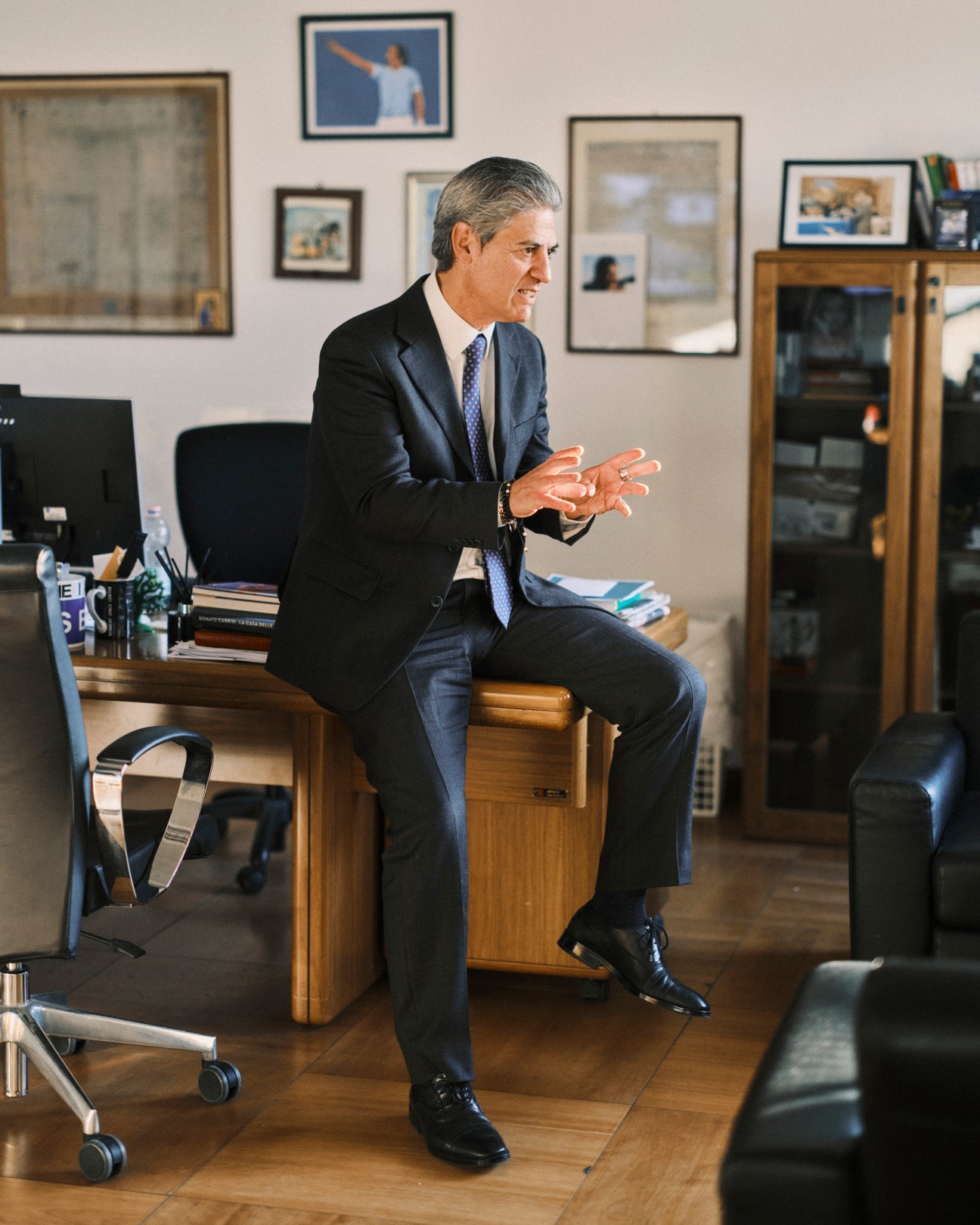
Rafa Rachewsky, head of printing at Factum Arte, sitting at his desk in the Madrid workshop
Rafa Rachewsky, head of printing
Ángel Jorquera, workshop craftsman at Factum Arte, operating chains and pulley system in warehouse
Workshop craftsman Ángel Jorquera

Neither of the works in question are real. The Da Vinci is a perfect facsimile, with added ageing effects thanks to having once been left out on a runway at New York’s jfk Airport during inclement weather. The hefty leg, meanwhile, is part of a towering recreation of a complete “Colossus of Constantine” (its real-life self is in incomplete bits in Rome) that will soon be shipped to Milan for an exhibition at contemporary art gallery Fondazione Prada about the reuse of Greek and Roman antiquities.

Workers applying finishing touches to large white statue parts in industrial workshop with scaffolding
Putting the finishing touches to the Colossus ahead of it being shipped to Milan
Collage of detailed photographs showing different angles and sections of a Roman sculpture reconstruction
Studying the tonality of the ‘Colossus of Constantine’

Companies such as Factum operate behind the scenes of the art world. Though they can often be discreet players, their influence and reach are huge. Factum Arte, which launched in 2001, started life making pieces for contemporary artists – the sort of specific, technically difficult work that could never be done alone in a studio. But it’s the subsequent addition of Factum Foundation – a non-profit focused on recording, preserving and at times reproducing cultural heritage pieces – that is shaking up how we view art, who gets to see it and what makes something authentic. The array of creatives who work here – from welders, sculptors and painters to 3D printers and computer modellers – and the breadth of work it covers, make Factum unique. “To me there’s no difference between art, science and technology,” says Lowe. “In a way, Factum is a great polytechnic.”

To really understand what the company is all about, you have to wander around the atelier and see the medley of pieces stacked up and spilling out of almost every available nook – something that Lowe calls “wonderfully anachronic”. The team’s output includes everything from a set of carved marble inscriptions by US artist Jenny Holzer for the Louvre Abu Dhabi to several of Anish Kapoor’s trademark reflective spheres, as well as a series of backlit alabaster works by Serbian conceptual artist Marina Abramovic.

Craftsperson carefully polishing and finishing the surface of the reconstructed Colossus of Constantine at Factum Arte workshop
Polishing up the Colossus

But it’s the foundation’s collection, either about to leave for exhibitions around the world or back to roost in the Madrid warehouses, that makes the place feel like a horde of pillaged booty – with a history stretching back to 1,000 bce and beyond. Among the bounty you’ll find a recreated cave from Mato Grosso in Brazil (complete with detailed petroglyphs), a reproduced set of Assyrian panels from the British Museum and the tomb of Tutankhamun stacked underneath the sepulchre of 16th-century Spanish cardinal Juan Pardo de Tavera.

Given the mesmerising breadth and range of work that Factum’s 60-strong team is involved with, it’s no surprise that employees tend to stick around for a while. Juan Carlos Arías, working near the giant torso of the “Colossus”, has been at Factum for 21 years. “It’s a tiring job but the rewards are enormous – that’s what hooks you,” he says, adding that he has travelled everywhere from Switzerland to Egypt with Factum. The company attracts an international bunch, too, hailing from countries including France, Italy, the UK and India. Greece-born Voula Natsi specialises in 3D prototyping and data processing, and has been with the firm for 10 years. “You can’t find a place like Factum anywhere else,” she says. “You can find parts but not all [of the activities] together like this.”

Natsi’s speciality is proof of the emphasis that Factum places on technology – something that has allowed it to carve out a niche in the industry. Factum Foundation focuses on the “recording” of artwork using cameras to capture all the data. One part of the work consists of intricately photographing a piece and then stitching the images together to get an accurate read on colour. But Factum’s most valuable apparatus is the Lucida 3D scanner, which spends hours (or even days) going back and forth a few inches from a work’s surface, mapping its precise 3D shape to create a sort of topographic rendering. “It’s a way at looking at the painting as though it were a sculpture or a landscape,” says Carlos Bayod, project director and head of the Lucida department. “You can learn about the artists’ techniques and measure the height of the brush strokes.”

All of this information allows a museum to fully capture the state of a picture before it embarks on a restoration, or to make a replica, produced using a combination of high-quality 3D and flatbed printing. It might also help a country to keep an eye on how its cultural heritage is being affected by the presence of tourists. To date, Factum has recorded sites from the tomb of Seti I in Egypt to the AlUla Unesco world heritage site in Saudi Arabia.

Whenever Factum gets involved in historical works – facsimile or otherwise – questions about authenticity arise. Lowe has an answer ready. “Is a heavily restored painting in the National Gallery more authentic than a copy made before a restoration?” he asks. We’ve moved to the loft apartment that he keeps above the workshop, an eclectic space that reflects his life, stuffed with artwork and crammed with floor-to-ceiling bookshelves. Lowe’s deep passion for art history is contagious, though it’s hard to keep him on course as the conversation spans ivory and bronze trading in Africa, Japanese woodblock prints and leather wall hangings from Italy.

When it comes to the debate about authenticity, Lowe likes to cite an example of an original work of art being placed side by side with a replica. “Very often making a facsimile slows you down to look and to see,” he says. “It forces you to confront your own prejudice about original versus replica, about whether a quasi-religious aura somehow wafts off the surface of a painting, meaning that you have an aesthetic experience – which is total rubbish.”

The works that Factum produce might not be the real deal, but the company’s work has allowed the public to see pieces that could never sit side by side in their original form. Whether it’s taking Factum’s wealth of data to create a mind-blowing virtual-reality experience for schools or bringing the golden age of Spanish art to northern England, Lowe sees endless opportunities for Factum’s combination of artistry and technological wizardry to democratise the arts. “We are at a point in time where culture can become universally accessible,” he says. Maybe a reconstructed Roman statue will help to do just that.

factum-arte.com; factumfoundation.org

Recreating the ‘Colossus’

Factum’s rendition of the 12 metre-high Roman statue, originally from the 4th century, might look like solid marble but it is in fact resin coated in gesso (a white paint often used as primer) and resin-coated polystyrene with marble powder, placed around a steel support frame. After being modelled by Factum’s 3D sculptor Irene Gaumé, it is then finessed by a team of sculptors, welders and painters who also cover it in a custom gesso mix. For the research, Gaumé drew on other statues from the period and Roman coins. The completed work has a sliding scale of colours, from white to dark grey, so viewers can see the difference between the original parts (such as the head) and the recreated ones, such as the cloak that hangs from one shoulder. “Every project is a challenge but they are all very interesting because you really have to get into documentation, research and history,” says Gaumé.

Factum’s full-scale reconstruction of the ‘Colossus of Constantine’ will feature in ‘Recycling Beauty’ at Fondazione Prada in Milan until 27 February

Personal space

In a nondescript residential area in the small seaside town of Atami, an hour train ride from Tokyo, sits a hidden architectural masterpiece. Built in 1977 to designs by the legendary Japanese architect Junzo Yoshimura, the house had belonged to the original owner until 2021, when it was sold to a lucky buyer: a Tokyo industrialist in his fifties.

Modern living room with yellow Joaquim Tenreiro sofa and armchairs, wood ceiling, and mountain views through large windows
Living room with Joaquim Tenreiro sofa

The two-storey residence is surrounded by plants and trees, enjoys stunning views over Sagami Bay and is, by Japanese standards, a mansion with 350 sq m of floor space. Despite this fact, the building is understated. Modest in height, it has aged gracefully as its red brick walls and oxidised copper roof have blended in with the surrounding nature. There is a sense of privacy as well as harmony with the environment around it. When Monocle visits, the gardeners, who have been taking care of the grounds for decades, bow politely while an orchestra of birds belt out a tune in the background.

A vintage rotary telephone sitting on a wooden desk surface with control panels on the wall and a window view
Vintage telephone

The handover was not only a property transaction but also a personal one. The original owner, who was close to Yoshimura, told the buyer of the family’s fond memories of working with the architect. Original blueprints and a family photo album featuring pictures of Yoshimura on site were included as part of the property sale. Such connections helped the new owner to draw up a refurbishment plan with his trusted creative friends, Aimi Sahara and Naoki Kotaka. Sahara is a designer and the founder of Tokyo fashion brand Tu es mon Tresor; the company’s communication director Kotaka also has a background in architecture. Together they inspected the house and discussed how to keep its heritage alive.

Sahara and Kotaka’s resulting transformation looked to retain the structure’s western appearance and Japanese detailing. The latter includes Yoshimura’s signature shoji paper screens, which can be slid into door pockets and completely tucked away from view, allowing the living and dining rooms to be used either separately or as one large space. Yoshimura did not place many lights on the ceilings but instead let the shikkui (lime plaster) walls reflect natural light. He had perfectly calculated the orbit of the sun and the locations of every window; a column of sunlight lands in an upstairs room through a skylight and gradually pours into the living room downstairs.

Modern bathroom vanity with wood cabinetry, integrated sink, illuminated mirror and white stool
An original dressing room
A dining room with wooden table, chairs, and pendant light, surrounded by large windows overlooking lush green trees
Dining room shrouded by trees

Furniture designed by Yoshimura, such as the dining table and the lighting above it, as well as some cabinets, were retained where possible. The carpet was refitted in the same original colours – green, blue and red – by Yamagata Dantsu, a heritage mill that worked with Yoshimura in 1977. Sahara and Kotaka also chose vintage furniture designed by contemporaries of the Japanese architect, selecting organic shapes to contrast with the orderly lines of the brick exterior walls and paper screens. Brazilian furniture designer Joaquim Tenreiro’s lemon-yellow couch and armchairs sit in the living room with a coffee table and bamboo light by Pierre Jeanneret. There are further pieces by the likes of Kenzo Tange, Le Corbusier and Charlotte Perriand but rather than turning it into a private museum dedicated to mid-century design, the new owner regularly stays in the space and wants private guests to experience this great architectural treasure.

A dramatic skylight casting natural light onto a vibrant red Yamagata Dantsu carpet below
Skylight illuminating the red Yamagata Dantsu carpet
Modern interior corner with gray swivel chairs, glass side table and wooden credenza near large windows
Corner aspect

Despite living in Tokyo, he visits this seaside retreat several times a month with friends and family – and, so far, it has been an eye-opening experience. He says that staying in the home helps you to appreciate the connection between nature and architecture: the red colour of the carpet makes the green moss in the garden look more vivid, while the colour of the lawn faintly reflects in the natural light that pours in through the paper screens.

While he doesn’t want to make the home completely public, the owner intends to host a few select gatherings; Tu es mon Tresor has already held a pop-up fashion event here. Fans of design and architecture will rightly be hoping for more – and the chance to enjoy this beautifully preserved residence.

Printed matters

Every Christmas shopping trip should include a stop at a bookshop. A set of well-stocked shelves allows you to cover a lot of bases in one go and will always yield gifts that feel more personal than any other last-minute solution. That’s why we have gone on a world tour of the best independent retailers, where staff can direct you to the perfect pick – and have come up with a few good recommendations ourselves too.

Cultural icons
Ona, Barcelona

After a few tough years in which many bookshops around Spain were forced to close, the tide is turning. For the first time in over a decade, more bookshops have opened than closed in Spain, with dozens launching since 2019.

Nowhere saw more new openings than Catalonia. Among them was Ona, a large, glamorous emporium of Catalan literature. “It’s more of a house of culture than a bookshop,” says Ona’s director Iolanda Batallé. As well as stocking 30,000 titles by Catalan writers, the shop hosts concerts, workshops, poetry slams and meditation classes. There’s a piano for visitors to sit and play, as well as sofas and a café for lounging. “We are trying to reach all kinds of audiences,” says Batallé.

Fourth issue of zine 'Psychedelic Dungeon' featuring person in black pants with chain detail
Fourth issue of zine ‘Cellophane Flag’

The first iteration of Ona opened its doors in 1962, while Spain was still under Franco’s rule. The dictator had banned Catalan in schools and public places but the shop persisted in selling books in the language and became a symbol of resistance. In 2010 financial woes caused the shop to close and move to smaller premises; in 2019, however, it was purchased by Tatxo Benet, co-founder of Spanish film and TV group Mediapro, who invested €1.5m. No expense was spared as Ona opened its new location.

Another remarkable recent opening comes in the form of Llibreria Finestres. Behind the project is entrepreneur Sergi Ferrer-Salat. The bookshop is spread across two grand buildings from the early 1900s with elaborately carved façades and balconies. Inside, the shelves are stacked with 40,000 titles on everything from dance theory to Afghan history. There’s also a café-cum-wine bar that regularly hosts talks and events, as well as an apartment above the shop where visiting authors can stay. Finestres also recently launched its own publishing arm to promote and support Catalan writers.

Small art and photography bookshop Terranova is one of the city’s most successful new ventures, beginning in 2013 as a production company founded by film-maker Luis Cerveró. “I knew a lot of artists and photographers in Barcelona who wanted to make books but there wasn’t a publishing house willing to print them,” says Cerveró. “So I decided to start my own.”

Golden yellow book cover with red artistic signature reading 'Miró i els poetes catalans'
Copy of ‘Miró i els poetes catalans’
Colorful art and design books displayed on white shelves including publications by Philippe Jarrigeon and Rob Pruitt
Shelves of Terranova bookshop
Interior of Llibreria Finestres bookshop with orange and black bookshelves filled with books and display tables
Quirky colours at Llibreria Finestres
Modern white bookshop interior with floor-to-ceiling shelves and central display table
Clean design at Ona bookshop

Playful pages
Livraria da Travessa, São Paulo

Charming independent chain Livraria da Travessa started life in 1975 when Rui Campos opened his first bookshop in downtown Rio de Janeiro under the name Livraria Muro. The company got its current name in 1986 and since then, its shops have become a mainstay for Brazilian readers.

Modern bookstore interior with floor-to-ceiling bookshelves, customers browsing books on wooden display tables
Livraria da Travessa

For its 12th outpost, the brand decided this year to expand its foothold in São Paulo, where it already had two smaller shops, by taking up a spot inside renowned shopping centre Iguatemi. Architects Bel Lobo and Bob Neri from studio Bebo, who have been working with the chain since its very first opening, were once again put in charge of designing the space: the result, set across two floors divided by a lithe mezzanine, feels much bigger than the floorplan suggests. Still, there’s room for about 50,000 titles on the shelves, ranging from fiction to philosophy and politics.


Engaging minimalism
Shinkenchiku Shoten, Tokyo

Architecture magazine Shinkenchiku is a household name in Japan. Now the publisher has decided to start its own bookshop: Shinkenchiku Shoten (or Post Architecture Books) opened in August in Tokyo’s prim Aoyama district. “We used to have a library space for the public in our old office,” says Asami Naito, the magazine’s senior editor, who also worked on the bookshop project. “We wanted to have a space to engage with architects and readers.”

To open the retail space, the team involved Yusuke Nakajima, owner of popular independent bookshop, Post. “This is a place to showcase the value of books as a printed physical object,” says Nakajima.

Christmas gift picks:
1.
Christien Meindertsma, Pig 05049
2.
François Halard, Saul Leiter (Second Edition)
3.
Justin McGuirk (editor), Charlotte Perriand: The Modern Life


Reading emporium
Rupture-Imbernon, Marseille

Wooden shelves filled with books and magazines at Rupture-Imbernon bookstore
Wooden shelves at Rupture-Imbernon

After the success of his Rupture-brand vinyl shop and bookstore in Paris, entrepreneur Alexandre Sap is expanding his network of cultural outposts to Marseille, in Le Corbusier’s Radiant City building complex.


Corking success
Todo Modo, Florence

Florence’s Todo Modo is an independent bookshop that has managed to create a community of readers around it. In 2013, when smaller booksellers around the world were folding under the pressure of behemoth retailers and online sales, founders Pietro Torrigiani and Maddalena Fossombroni travelled to Buenos Aires, where they saw bookshops – and their cafés – packed with residents. The trip inspired the format for their own venture.

Modern bookstore interior with wooden tiered seating, black bookshelves, and customers reading at tables
Todo Modo’s café area

“Everyone called us crazy but Buenos Aires gave us the vision of pairing books and wine,” says Torrigiani. Their popular café, named Uqbar after a story by Jorge Luis Borges, gathers book-lovers for lunch and aperitivo. Readers can linger all day at desks along large, blocky wooden stairs which double up as theatre seating during events.

Maddalena Fossombroni and Pietro Torrigiani sitting in the doorway of Todo Modo bookshop
Maddalena Fossombroni and Pietro Torrigiani

Esteemed writers such as Margaret Atwood have passed through the shop’s doors. Torrigiani and Fossombroni work to support niche publishing houses and their authors too, organising some shelves by publisher. They have also launched an independent book fair and opened a second location that is dedicated to children’s books, Todo Modo Dilà, as well as another tiny outpost inside an unused lift at mixed-use development Manifattura Tabacchi.

Christmas gift picks:
1.
Claudia Durastanti, Strangers I Know
2.
Ben Lerner, The Hatred of Poetry
3.
Mathias Énard, Zone


Centre of excellence
Seagull Books, Kolkata

Naveen Kishore of Seagull Books standing in his colorful home-like office space surrounded by books and artwork
Naveen Kishore of Seagull Books

In a city rich in libraries and bookshops, Kolkata’s Seagull Books is an institution. The Indian publishing house has offices in London and New York but its Kolkata HQ also functions as a retail space for its own titles, where the shelves are laden with works of hundreds of celebrated authors – several of whom are Nobel laureates, including Austrian writer Peter Handke and Chinese author Mo Yan.

Set inside what looks like an eclectic home, with colourful artworks and vintage posters lining every wall, the publisher also hosts events around art, theatre and literature here, as well as running education programmes to teach anyone who is interested about publishing.

When it was founded in 1982, the publisher focused on art, theatre and cinema mostly of Indian origin and for an Indian audience. Today it has a backlist of more than 500 books and an ongoing series of new commissions. There’s a roster of works Seagull Books translates and publishes in English and others it holds worldwide distribution rights for (by literary luminaries and stars-in-the-making, including William Kentridge, Alawiya Sobh, Ngugi wa Thiong’o and Hussein Barghouthi). Founder Naveen Kishore insists that Seagull Books’ success is the result of transforming into an international company that competes with publishing giants based in the West. “In a globalised world, your location ought to matter the least – as long as you deliver the books and ensure distribution,” he says.

Colorful decorative bird figurines and folk art displayed on wooden bookshelf above books
Chirpy display

Seagull’s most recent catalogue describes itself as “a manifesto for a more diverse, progressive, inclusive literary world” – and includes works by French philosopher Georges Bataille, influential thinker Hélène Cixous and Indian-American writer Gayatri Chakravorty Spivak.

Christmas gift picks:
1.
Ngugi wa Thiong’o, The Upright Revolution
2.
Monika Kompaníková, Boat Number Five
3.
Mahasweta Devi, Mirror of the Darkest Night


Novel idea
Graphic, Seoul

Seoul-based restaurateur and lifelong graphic-novel devotee David Paik decided to open Graphic, a four-storey shop dedicated entirely to graphic novels, so that like-minded people could share their love of the format. “I wanted to challenge the misconception that manhwa [Korean for comic books and graphic novels] is a lower form of art,” he says.

Nestled in the sleepy Gyeongnidan-gil neighbourhood, the building was designed by South Korean firm oonn and design agency U.Lab as a homage to the printed page. Display tables resemble an open book, while the walls and exterior feature vertical lines that imitate the edges of an old tome. There’s an entry fee but the bookshop provides coffee, tea and snacks – and there’s a whisky bar too.
33 Hoenamu-ro 39-gil, Yongsan-gu, Seoul


Bedtime stories
Under the Cover, Portugal

Smiling man with mustache in white t-shirt and dark pants standing in doorway of bookshop with blue frame

“The publishing industry in Portugal is definitely bubbling,” says Luís Cunha (pictured), who founded Under the Cover with Arturas Slidziauskas in 2015, after they moved to Lisbon from the city of Coimbra, leaving a career as health professionals behind. Today the pair are champions of all things print and are constantly on the lookout for new titles to stock on the shelves of their space, set close to the impressive Gulbenkian Foundation and its beautiful garden.

Their shop stocks both independent magazines and coffee-table books (including Monocle’s range and its latest release, Portugal: The Monocle Handbook), as well as hosting presentations and talks to encourage networking. “We get to be a part of this incredible community of independent publishers – meeting editors, getting to know their stories, and then being able to transmit those stories to our customers,” says Cunha. The titles they sell are down to intuition. “We are constantly on a treasure hunt, whether it’s by online research, crowdfunding platforms or by visiting other countries’ shops. We try to systemise it according to criteria: design, layout, quality of the paper, concept, content, originality and approach.”

Christmas gift picks:
1.
Phaidon editors, Inside: At Home with Great Designers
2.
Sarah Gerrard-Jones, The Plant Rescuer
3.
Viction:ary, Type for Type

Woman in cream cardigan and checkered skirt sitting on orange bench in library with floor-to-ceiling bookshelves

Q&A
Eslite, Taiwan

Has the pandemic had any lasting effects on the business?
We lost our uniqueness during the pandemic. When people can’t go outside to shop, the only thing that matters is the price and the discount. We must continue to strengthen the human touch in our shops, because that’s why people will come back.

What exactly do you mean by ‘human touch’?
This year we held two big events at our flagship Xinyi shop with different activities happening throughout the day. Everyone who came felt comfortable enough to share smiles with complete strangers. The human touch is that sense of warmth and generosity. Our customers feel that we are willing to give and make them happy, not just take their money.

How have you put your mark on the family business?
When your customers can’t find what they need in-store they naturally go online. I hope that our online shop satisfies their needs.

What projects are in the pipeline?
Next year we are opening our biggest-ever Eslite. It’s in New Taipei City. We plan to have some surprises from the interior-design point of view so when you go inside, you will go, “Wow!”

Will your 24-hour bookshop close its doors next year?
We aren’t sure whether we can renew the contract with the landlord but we will always have a 24-hour bookshop. That is my commitment to Taiwan.


Non-fiction
Unvarnished truths

Forget celebrity biographies, self-help titles or dry histories: there’s more to non-fiction than the predictable bestsellers. These smart titles are for the literary, creatively inclined people in your life, whether they enjoy the history of art, are planning an inspiring trip or are thinking of penning a book of their own.


Looking to Sea by Lily Le Brun book cover with orange background and blue square illustration

Looking to Sea
Lily Le Brun

Ten hallmark, water-themed artworks provide a key into reading the modern history of the UK and the 20th century.


Book cover of Novelist as a Vocation by Haruki Murakami with abstract geometric design

Novelist as a Vocation
Haruki Murakami

Why write? Haruki Murakami gives us an answer pulled together from notes that he made in the years leading up to 2015.


Blue book cover titled Some Reasons For Travelling To Italy by Peter Wilson

Some Reasons for Travelling to Italy
Peter Wilson

If you’re uncertain about an Italian holiday, architect Peter Wilson gives a learned account of the country.


A Horse at Night: On Writing by Amina Cain book cover

A Horse at Night: On Writing
Amina Cain

Writing about writing is a prolific genre, but here Cain reaches for bigger topics in a kaleidoscopic account of how to live.


Papyrus: The Invention of Books in the Ancient World by Irene Vallejo book cover

Papyrus: The Invention of Books in the Ancient World
Irene Vallejo

This history of books and libraries is a sprawling and spirited exploration of literary culture and traditions.


Children’s

Feed the imagination

The joy of buying books for your children is that you’re often buying them for yourself too. Pick a nice story or bed-time will turn into a recurring nightmare. These beautifully illustrated titles will do the trick – and there are also some engrossing options for slightly older, adventure-hungry kids.


Frozen Mountain book cover by Emily Hawkins and Ruby Fresson

Frozen Mountain
Emily Hawkins, Ruby Fresson

Illustrator Ruby Fresson brings her playful style to this game-in-a-book – complete with fortune spinner.


Books Aren't for Eating by Carlie Sorosiak book cover

Books Aren’t for Eating
Carlie Sorosiak

In this love letter to reading, a goat-cum-bookshop owner tries to find the right title for a tricky, and hungry, fellow ungulate.


Legendary Escapes by Soledad Romero Mariño and Julio Antonio Blasco book cover

Legendary Escapes
Soledad Romero Mariño, Julio Antonio Blasco

More than just Houdini, this account of the best escapes in history reads like a thrilling newspaper report.


Book cover showing illustrated figures of nomadic people from different cultures and regions

Nomads
Kinchoi Lam

A detailed anthropological dive into the lives of nomadic people, from the islands of Indonesia to the Sahara.


Fury of the Vikings by Dominic Sandbrook book cover

Fury of the Vikings
Dominic Sandbrook

A historian tells the true story of the Nordic explorers in this title part of the brilliant Adventures in Time series.


Cookbooks

Feast your eyes

Not only is a cookbook a beautiful object and a pleasure to receive but it also holds within its pages the promise of a fresh start for the new year. A repertoire of experimental recipes will help to shake up your routine in the kitchen, which is a great resolution to have.


Green cookbook cover with orange cooking pot illustrations and black text reading Jeremy Lee Cooking

Cooking
Jeremy Lee

Covering most bases, with chapters on anything from artichokes to salsify – and a useful “inpromptu suppers” section.


The Fast Five by Donna Hay cookbook cover showing stacked white plates with gold cutlery

The Fast Five
Donna Hay

From the best-selling Aussie cookbook author comes a collection of recipes focusing on cutting down cooking time.


Oren: An Eastern Mediterranean Food Story from Tel Aviv by Oden Oren cookbook cover

Oren: An Eastern Mediterranean Food Story from Tel Aviv
Oden Oren

The chef celebrates the flavours of the Mediterranean on a personal journey of food memory with his simple recipes.


The River Cafe Look Book cookbook cover with colorful rainbow text on white background

The River Cafe Look Book

The team at London’s best restaurant assembles uncomplicated recipes that children can try their hand at (though we suspect adults will be tempted to join in).


On the Himalayan Trail by Romy Gill cookbook cover

On the Himalayan Trail
Romy Gill

The Indian food writer and chef tells the story of Kashmir and Ladakh’s cuisine, sharing over 80 extraordinary recipes.


Blue book cover titled A World History of Women Photographers with black and white portrait photograph

Art

Picture Perfect

A World History of Women Photographers
Luce Lebart, Marie Robert

An international group of 160 female writers has contributed to this bold visual manifesto, spanning from 1850 to today.


Steven Klein: Steven Klein book cover

Steven Klein: Steven Klein

Edited by Mark Holborn Celebrating the fashion photographer (and provocateur) with images originally published in a variety of glossies.


Amor Mundi book cover by Marguerite Steed Hoffman

Amor Mundi
Marguerite Steed Hoffman

A selection of more than 400 works from the collection of philanthropist and entrepreneur Hoffman, in a beautiful edition.


The Fendi Set book cover featuring a dark portrait photograph

The Fendi Set

A celebration of Fendi’s spring/summer 2021 Couture collection, this book delves into the brand’s artistic director Kim Jones’s admiration for the Bloomsbury set.


Polaroid 54/59/79 by Dana Lixenberg book cover

Polaroid 54/59/79
Dana Lixenberg

This monograph is a remarkable collection of portraits that reflect American celebrity culture of the 1990s and 2000s.


Open book showing blue rhinoceros illustration with text 'I'M SPECIAL' on right page, red text on left page

Get Your Shit Together

David Shrigley

The largest-format book to date on Shrigley’s work, this volume celebrates the British artist’s absurd, deadpan sensibility.


Book cover of 'The Well' by Nigel Shafran showing black and white photography

The Well
Nigel Shafran

The photographer shows the world of the fashion industry – illuminating both its complexities and its glamour.


Love Lucian book cover by David Dawson and Martin Gayford with brown cover and simple drawing

Love Lucian
David Dawson, Martin Gayford

Reproductions of the young Freud’s letters, alongside rare photographs and insightful commentary.


Pink book cover with photograph of flowers in vase next to bed, titled Vanlige blomster

Vanlige Blomster
Ljå Forlag

The Norwegian author shares flowers’ wonderful and quirky qualities. With photography by Thomas Ekström.


Fiction

Flights of fancy

Lapvona by Ottessa Moshfegh book cover

Lapvona
Ottessa Moshfegh

The acclaimed author of My Year of Rest and Relaxation returns with another wry, bewitching and slightly dark novel.


Stella Maris by Cormac McCarthy book cover

Stella Maris
Cormac McCarthy

The latest of McCarthy’s novels following the grown-up children of a physicist who helped to create the atomic bomb.


The End of Nightwork by Aidan Cottrell-Boyce book cover

The End of Nightwork
Aidan Cottrell-Boyce

Eccentric Benjamin Button-esque tale about getting lost in a studious obsession – and the way it can skirt paranoia.


The Trio by Johanna Hedman book cover

The Trio
Johanna Hedman

A cross-country novel of a love triangle that shimmers with the nostalgia of youth and melancholy of lingering what-ifs.


Night Train to the Stars by Kenji Miyazawa book cover

Night Train to the Stars
Kenji Miyazawa

This short story collection introduces English-speakers to the late Japanese writer’s curious and whimsical world.

Retail therapy

Hair & Make-up: Sam Basham
Models: Timothé Echelard, Takayuki Suzuki
Stylist’s assistant: Eleonora Frattini

Material world


Material world

Tom Àdam
Berlin

Tom Àdam wants to encourage people to pay as much attention to the quality of their nightwear as the rest of their wardrobes. The label’s striped pyjamas are made using a soft Tencel Lyocell fabric and are adorned with buttons made from corozo nuts.
tom-adam.com

Blue and white striped pajama set with button-front top and matching shorts laid flat

Arket x Evelina Kroons
Sweden

Mustard and khaki graphic check pattern blanket made from soft lambswool by Arket and Evelina Kroons

Arket and Swedish artist Evelina Kroons have co-designed a new line of jacquard-woven blankets made from soft lambswool and manufactured by Swedish mill, Klippan. Our favourite of the graphic check patterns is this mustard and khaki version.
arket.com


Bulgari x Kazuyo Sejima
Italy & Japan

Titanium Octo Finissimo timepiece in grey by Bulgari designed by architect Kazuyo Sejima

Architect and Sanaa co-founder Kazuyo Sejima is applying her distinct aesthetic to watches. Tasked with reimagining Bulgari’s Octo Finissimo timepiece, she used only titanium and a grey colour to striking effect.
bulgari.com


The Square
Berlin

“Winters in Berlin can be pretty depressing,” says Emmanuel de Bayser, co-founder of concept shop The Square. “We wanted to create an oasis where people can sit down, have a coffee and browse, as an alternative to all the grey.” His newly revamped space in Mitte’s 18th-century Gendarmenmarkt square is a far cry from the raw, industrial aesthetic that Berlin retail is known for. Here, floor-to- ceiling arches frame the shop floor, which is bathed in natural light and filled with plush curved sofas, sculptures, homewares, perfumes and racks of luxury menswear.

Interior of The Square concept shop in Berlin showing curved sofas, arches, and luxury retail display

Paris-born De Bayser and his Austrian partner Josef Voelks opened their shop more than 17 years ago. They went on to add a menswear store nearby and a new branch in Charlottenburg but recently got the itch to redo their original locale. “We thought that it was the right time to move to something more elevated, after all these years of seeing the same aesthetic in Berlin,” says De Bayser, who worked with Parisian designer Pierre Augustin Rose to overhaul the interiors.

The refurbished space brings menswear and womenswear under one roof. Gents are offered a selection of pieces by Bottega Veneta, Jil Sander, Courrèges and Ami, as well as cashmere from Loro Piana. The homeware section is a new addition too: De Bayser, also an interior designer, looks after the line-up of limited-edition table linens and glasses from Venice, ceramics by David Chipperfield and vintage chairs by Pierre Jeanneret and Jean Prouvé. “This is like an apartment,” he says. “The owner just happens to have a lot of clothes.”
thesquareberlin.de


Marta Bahillo
Founder, Babaà

Portrait of Marta Bahillo, founder of Spanish knitwear brand Babaà

Madrid-born Marta Bahillo launched Babaà as a children’s knitwear brand in 2012 but when parents begged her to make styles in their sizes, she changed tack. The firm works exclusively with Spanish artisans.

What were you doing before Babaà?
I lived in Dublin for seven years and studied textile design there. After that I worked for a big company designing knitwear in Argentina and then returned to Madrid, where I did a master’s in textile design.

Why did you specialise in knitwear?
I’ve always loved it and learnt to knit while living in Ireland. I have fond memories of trips with my grandmother to Galicia, where we’d wear big wool jumpers on the beach.

How do you find the artisans you work with?
It’s a mix of research and word of mouth. The man who makes our yarns knew my grandmother; the people from her village would give him their wool to create traditional Galician blankets. I loved the rawness of his yarn and all the colours.

To find the best factories I travelled throughout Spain and Portugal until I found someone who accepted the challenge of working with our specific kind of yarn and had the capability to create really high-quality products from it.

What’s next for Babaà?
We’re working on a big project with farmers in Galicia, who produce a specific type of merino wool, which we’re going to transform into our own yarn. We organise events around the world to spread the word about Babaà: we’re going to Los Angeles, Mexico and New York next year.

I also want to open a showroom in Madrid, because more and more people are now visiting our city.
babaa.es


Fujito
Japan

Forest-green fleece blouson with satin front pockets by Japanese label Fujito

Inspired by a love of the outdoors and vintage styles, Japanese label Fujito’s new collection is filled with everyday winter staples, produced in Japan using the high quality fabrics that the brand has become known for. This FSB Fleece Blouson is a highlight: a pair of satin front pockets contrast with the classic forest-green fleece material, while the relaxed silhouette leaves just enough room for layering.
shop.gofujito.com


Paraboot x Drôle de Monsieur
France

Brown leather loafers with mustard calfskin details and wide brown soles by Paraboot x Drôle de Monsieur

Inspired by a shared appreciation for the work of Swiss architect Pierre Jeanneret, heritage shoe-making label Paraboot invited Drôle de Monsieur to design a pair of limited-edition loafers. Referencing one of Jeanneret’s classic Committee chair designs, Drôle de Monsieur’s design team added its own twist to Paraboot’s classic Reims loafer by mixing brown leather with a soft mustard calfskin. The shoes’ wide brown soles are designed to reflect the chair’s wooden frame.
paraboot.com;
droledemonsieur.com


Rowing Blazers x Luke Edward Hall
USA & UK

Green corduroy cap, striped scarf, and sweatshirt with Greek amphora embroidery by Rowing Blazers x Luke Edward Hall

British artist and interior designer Luke Edward Hall has designed a new capsule collection with American label Rowing Blazers. “I love Luke’s illustrations and how he riffs on the ancient world,” says Rowing Blazers founder (and archaeology graduate) Jack Carlson.

The new range includes Hall’s Greco-Roman-inspired illustrations embroidered onto corduroy caps and rugby shirts. Part of the proceeds will go to the American National Committee for Latin and Greek, an initiative to make the study of classics more accessible. “The preppy style has negative connotations but I like to twist it in unexpected ways,” says Carlson. “I collect old rugby jerseys but the key is to make it feel relevant today.”
rowingblazers.com

Global shopping guide: Monocle’s favourite independent boutiques and retailers

1.
Tokyo

After two and half years of closure, Japan is finally open and ready for business or a shopping spree for everything you might need this Christmas or the new year. Buyers and shopkeepers in the capital have stocked up on the best products, from stationery and shoes to craft and food treats. Here is a snapshot of new and established businesses not to miss. It might be wise to bring an empty suitcase or two.

Kyukyodo
Established in 1663 in Kyoto, the company’s Tokyo shop in Ginza sells silk screen-printed postcards and exquisite washi paper letter sets. If you want to go further to demonstrate your penmanship, it stocks handmade calligraphy brushes and ink stones too. Kyukyodo’s Japanese-made incense is not to be sniffed at either.
kyukyodo.co.jp

T-House New Balance
Located in Nihonbashi Hama-cho, T-House New Balance is a unique atelier-cum-shop from the US heritage brand. Here you’ll find exclusive clothes and bags developed by New Balance’s Tokyo Design Studio (TDS), which is based upstairs. TDS’s coveted collaboration trainers with the likes of Stone Island and Auralee are also sold here. TDS regularly hosts exhibitions and events featuring independent artists from around the world.
company.newbalance.jp

Interior of Kyukyodo stationery shop with wooden shelves displaying colorful paper products and books
Paper gifts from Kyukyodo
Man in brown suit standing behind curved counter in kitchen store with shelves of dishes and cookware
Lost and Found

Visvim General Store
Opened in July 2022, the charismatic Tokyo fashion label’s latest shop sells all brands run by Hiroki Nakamura, including Visvim for men and women and Contrary Dept, as well as Visvim’s magazine, Subsequence. Nakamura, who designed the interiors, commissioned craftsmen and carpenters to renovate a two-storey space, featuring handmade lanterns from Kyoto, hon-shikkui plaster walls and a small Japanese garden. Check out Visvim women’s shop next door too.
visvim.TV

Oonoya Sohonten
Visit this traditional tabi sock specialist, which has a great history. Established in the 1770s, the family business moved to this location near Ginza in 1849. Today, seventh-generation owner Shigeo Fukushima caters to actors specialising in traditional performing arts (kabuki, noh and kyogen) as well as geisha, florists and tea-ceremony practitioners. Everything is handmade at this shop-cum-atelier, which was rebuilt after the Great Earthquake in 1923. It takes a month for a sample to be produced if it’s bespoke but Fukushima also has ready-to-wear socks with plain and colourful patterns.
oonoyasohonten.jp

Idée Tokyo
Opened in 2020, Idée Tokyo is a new shop by Japanese lifestyle brand Idée. It sits inside Gransta Tokyo at Tokyo Station (after the gate). Idée has bigger shops across the capital but here it has teamed up with Naoto Fukasawa and carefully curated its inventory to offer everything from crockery and mingei folk craft to accessories. The gallery at the back showcases art and ceramic works by talents such as Samiro Yunoki. A great pit-stop before and after your Shinkansen journey. Just don’t miss your train.
idee.co.jp

Men's hair care products from Japanese beauty brand Uka displayed on white shelf
Beauty products at Uka

Lost and Found
This is a new shop by Nikko, a heritage porcelain brand from Ishikawa. The company supplies its dishes to hotels and restaurants in Tokyo and beyond. Check out the Remastered series, a 21-piece collection of classic plates with the double-phoenix logo printed on the base of the dish. The shop also sells a dazzling array of smart homeware sourced from across Japan.
lost-found-store.jp

Ippodo
Fine Japanese green tea is a great gift for which Ippodo remains a go-to institution (it started in 1717 in Kyoto). From easy-brew tea bags to the finest gyokuro (a shade-grown green tea), matcha starter kits and Japanese-made teapots, this branch near Tokyo Station has you covered. Ask the experts at the counter to see what you might fancy; they’ll let you try a line-up of teas. If you have time, sit down at the tearoom before plotting out the next leg of your itinerary.
ippodo-tea.co.jp

Kiya
Nihonbashi Kiya is a household name for all manner of kitchen knives. Its selection includes other kitchenware such as sharpening whetstones, hinoki cypress cutting boards and graters. The specialist in blades also offers smart nail clippers, grooming kits and scissors for sewing and gardening. It has a beautiful shop at Tokyo Midtown in Roppongi but also check out its main shop in Koredo Muromachi shopping centre in Nihonbashi.
kiya-hamono.co.jp

Uka
Uka is a Japanese beauty brand. This branch on a quiet alley behind bustling Omotesando has a shop at the front and nail salon at the back. It’s a small set-up but offers essential products you need for hair, skin, nail and body care if you feel like treating yourself or others to a pampering session this Christmas. Recently, Uka launched shampoos and scalp tonics for men. We fancy the GT series that smells delightfully of lime and juniper.
uka.co.jp

Miyashita Park
Located on Meiji Dori near Shibuya Station, Miyashita Park is a new shopping complex that opened in 2020. The ground floor is occupied by foreign luxury fashion brands but explore upstairs to find Japanese labels such as Hender Scheme and And Wander. The North Face also has its bag speciality store Backmagic where you can customise the colourway of your bags.
miyashita-park.tokyo

Tokyo address book

Stay: K5 is a small complex including a hotel, restaurant, café and bars. Stockholm-based architecture firm Claesson Koivisto Rune renovated a former bank building from 1923 into a cosy 20-room boutique hotel, utilising high ceilings and large windows. Its restaurant Caveman serves delicious food. Since opening in 2020, K5 has attracted small bistros and shops to the Nihonbashi Kabuto-cho area. 
k5-tokyo.com

Drink: Visit Nomura Shoten to sample a fine Japanese liquor or two. At this kaku-uchi spirit shop-cum-bar, you can try rare labels of distilled alcohol, such as rum from Okinawa and gin from Miyazaki. It serves natural wine and craft beers from around the world too.
r-k-k.jp

Eat: Kabi owner and chef Shohei Yasuda creates fermented dishes inspired by Scandinavian dining using seasonal Japanese ingredients: fresh seafood and foraged vegetables. He also serves saké and natural wine (a non-alcoholic option is available). Kabi is by reservation only. Book in advance – it’s rightly popular with locals.
kabi.tokyo

2.
Tallinn

There are few cities that put you in the Christmas mood the way that Tallinn does. With its chocolate-box Old Town, thick snow cover and one of the best festive markets in Europe, Tallinn is a winter wonderland. Estonia’s rich craft heritage and entrepreneurial soul make the city an excellent destination for those looking to fill up the stockings with great design, fashion and tasty treats.

Christmas tree with red and gold ornaments in modern bookstore with wooden shelving and exposed ceiling
Festive titles at Rahva Raamat
Modern retail interior with clothing racks, green tiled counter, and display tables in Telliskivi creative district
Shopping in Telliskivi

Pinwheel Shop
Pinwheel Shop in the Kalamaja district stocks a great selection of toys that are built to last. Owner Kristina Namavire sources them from smaller toy-makers around the world and many are not only fun but also educational. We recommend something from the Japanese brand Kiko + GG or the French Moulin Roty. “There’s a story behind every toy that I sell,” says Namavire. “I do this out of passion and love for children.”
pinwheelshop.com

Zizi
No trip to Estonia is complete without a visit to one of Tallinn’s many linen boutiques. Zizi in the Old Town is the pick of the bunch: it stocks wares from the country’s best linen producers, and designs and makes many of its products locally. “Our most beloved product is our bed linen,” says founder Priit Joala. “It’s a natural material that keeps you warm in winter and cool in summer.” Zizi’s red tablecloths and napkins are ideal for setting the Christmas table.
zizi.ee

Røst Bakery
The cinnamon buns at Røst, a small family bakery in the Rotermann quarter run by Sander Allmere and Kris Libe, justify a trip to Tallinn in themselves. Røst uses long fermentation, which is unusual in larger commercial bakeries as it is more time-consuming. Be sure to arrive early as things usually sell out before closing time. We also recommend trying the coffees – nicely packaged to take home – with a selection sourced from artisanal roasters across the Nordics.
rost.ee

Estonian Handicraft House
Estonia has a crafty culture and many artisanal traditions are still taught in schools. The Estonia Handicraft House in the Old Town sells products from more than 200 makers. We recommend colourful jumpers, mittens and socks made from Estonian lambswool and the wooden kitchenware made from local juniper wood, a material that lends it a distinct and pleasant smell.
crafts.ee

Gowri Style House
Gowri specialises in bespoke and made-to-measure suits, shirts and footwear. The family business was launched in London 27 years ago but has since relocated to Tallinn. The products are cut and sewn in-house and you can get a bespoke shirt made in a couple of weeks. Estonia’s generally low prices mean that at Gowri you can get the Savile Row experience for a fraction of the price. “We source the fabrics from some of the best makers in the world, such as Zignone and Alfred Brown, but everything else is made here in Estonia,” says CEO Gowri Grand.
gowri.EU

Chocolala
Estonians are the world’s third biggest per capita chocolate consumers and Tallinn has a few sublime chocolatiers. Chocolala in the Old Town is the pick of the bunch for its bean-to-bar work and use of local flavours. Our top picks for sweet stocking fillers include chocolates with birch sap caramel, spruce sprout, lingonberry and sea buckthorn. “And don’t forget about the champagne chocolates, our best-selling item,” says Kristi Lehtis, the CEO of the family-run business. Oh, we won’t.
chocolala.ee

Exterior of Røst bakery with stone walls, glass storefront, and chalkboard sign advertising sourdough bread and specialty coffee
Pick up a cinnamon bun (or two) at Røst

Baltic Station Market
Baltic Station Market is Tallinn’s best market hall with some 300 traders working across three floors. It’s the place for delicacies, such as smoked eel, and Estonian produce, such as suitsujuust (smoked cheese). The market also sells clothing and the work of craftfolk and has great street food options in case you need a quick refuelling stop in between all the shopping. Try the tseburek (meat pie) and pelmeni (filled dumplings).
Balti Jaam Market, Kopli tanav 1, Pohja-Tallinna linnaosa

Rahva Raamat
Voted as the bookstore of the year at the London Book Fair, the Rahva Raamat at the Viru Keskus stocks some 48,000 titles, many in English. Its soft lighting and comfortable lounge chairs make it a perfect place to linger. Rahva Raamat is an independent Estonian chain launched in 1912, which also stocks stationery, cards and wrapping paper.
rahvaraamat.ee

Interior of Gowri menswear boutique showing suits hanging on racks and shelves with folded clothing
Dress to impress at Gowri

Telliskivi
Telliskivi is Tallinn’s liveliest neighbourhood and it’s filled with independent shops, cafés and artists’ studios. You can easily spend an entire day here hopping from one shop to the next but our picks include leather goods by Stella Soomlais, Hansa beanies from Les Petites and the natural lambswool slippers from Toku. In between shopping, pop into the Fotografiska museum next door or try the festive cocktails at the Juniperium distillery.
telliskivi.cc

Tallinn Design House
The Tallinn Design House in the Rotermann quarter features clothing and accessories from more than a hundred Estonian designers. The friendly staff are always on hand to tell you the story behind each brand but we recommend scarves and home textiles by Kelpman, ceramics by Nüüd and knitwear by Mithio and Alpaka.
tallinndesignhouse.com

Tallinn address book

See: Tallinn’s Christmas Market is a must. Make sure to try roasted chestnuts and the local mulled wine called höögvein

Stay: The Telegraaf is Tallinn’s best boutique hotel. It is old-fashioned in all the good ways, has a world-class cocktail bar and a relaxing spa. If you prefer to save some of your budget for presents, l’Embitu is also excellent. telegraafhotel.com; lembituhotel.ee

Eat: Mantel and Korsten in the Kadriorg district combines Estonian and Mediterranean flavours, and serves visitors from a charming old wooden house. Try the monkfish. We also recommend Lee in the Old Town for some more traditional Estonian fare. mantel-korsten.ee

Drink: Skip the hoards of tourists in the Old Town and head over the more hip neighbourhoods of Nobblesner, Kopli and Telliskivi for drinks. If you want to stay in the Old Town, try Parrot or Whisper Sister for amazing cocktails. parrot.ee; whispersister.ee

3.
Istanbul

Istanbul does the festive season its own way. In this Muslim-majority nation, people here tend to celebrate New Year with similar Christmas trimmings. Many families decorate their homes with trees and sit down for a family dinner on 31 December. Street vendors sell paper bags of roasted chestnuts and if you’re brave you can try boza, a slightly alcoholic drink made of fermented grain. Here’s what Turkey’s biggest city has to offer in the way of seasonal shopping.

Fey

Fatos Yalin Arkun’s shop feels like a walk-in wardrobe that brims with smart outfits and glittering jewellery. This is where Istanbul’s sharpest dressers seek out their palazzo pants, trench coats, wide-brimmed hats or silk dresses, all beautifully hung amid mid-century furniture in upmarket Nisantasi. Arkun creates her wares with designers and ateliers across Istanbul and she finds rare items that show off her enviable taste. Everything here is for sale, from the bold vintage costume jewellery and sunglasses to a vast modernist lamp, found at a local flea market and refurbished. Upstairs is the new menswear collection: think sharp blazers and well-fitted slacks designed by Fatos’s husband, Ufuk Arkun.

fey.com.tr

Orange and white cat sitting on floor in front of tall wooden bookshelves filled with books
Gezegen Sahaf’s cat
Copper cocktail shakers and vessels displayed at Soy shop
Copper cocktail shakers at Soy
Colorful ceramic bowls and cups displayed on wooden shelves in a pottery shop
Ceramics at Bizon

Gezegen Sahaf

Istanbul’s antiquarian bookshops are great places to hunt for unusual souvenirs. Gezegen Sahaf, replete with its friendly tomcat, is one of the most atmospheric – a long, narrow place with shelves stretching all the way to its high ceilings. Gezegen boasts several shelves of English-language books as well as Turkish first editions, plus scripts written in old Ottoman in the Arabic alphabet. You can also dig through crates of old postcards and browse the historic maps, posters and vintage adverts for raki, Turkey’s fiery national drink.

16A Kamer Hatun Mahallesi Hamalbasi Caddesi, Beyoglu, 34435

La Cave

Turkish wine is having a moment and Esat Ayhan, proprietor of La Cave wine shop, runs the best place to discover beautiful bottles. He has been trading fine vintages since 1980 and there are dozens of varieties of native Anatolian grapes here, from the zingy narince to the tough bogazkere (“throat scorcher”); Ayhan’s knowledgeable staff can talk you through them all. Turkish brand Yaban is well worth a try; its pétillant naturel, or “pét nat”, is a sparkling wine made fizzy through natural fermentation. La Cave stocks a wide range of foreign wines and spirits, and if it’s quiet, Ayhan might show you the shop’s collection of rare old Turkish alcohol bottles.
lacavesarap.com

Karakoy Gulluoglu

No baklava brand is better known than Gulluoglu, which has been selling sticky chunks of pastry and honey to Istanbul’s residents since 1843. Today it serves trays of baklava in all shapes and varieties from glass counters in its new premises in Karakoy (Gulluoglu was kicked out of its former home a few hundred metres away during the recent redevelopment). Here you buy by the kilo and can have it wrapped up as a gift (or for the plane). If you fancy a nibble, you can buy a piece or two to savour with strong Turkish tea in the shop’s belle époque café. Try the cevizli with walnuts or traditional pistachio filling.
karakoygulluoglu.com

Kurukahveci Mehmet Efendi

There is something innately festive about this family-owned coffee roaster, which has been caffeinating Istanbul since 1871 and has occupied its purpose-built premises behind the Spice Bazaar for 90 years. Queue at the window to buy your coffee beans, weighed out and packed into paper parcels. Behind the glass you’ll see an army of workers in brown aprons on a frantic production line. Behind them, integrated into the fabric of the building, an industrial coffee roaster churns and thuds, pumping the rich scent of coffee into the air. Next door you’ll find a shop selling merchandise with the brand’s well-known logo. There’s also a small museum about the history of coffee in Istanbul.
mehmetefendi.com

Soy

Emir Ali Enc, Soy’s founder, learnt the traditional Ottoman copperwork methods from Syrian craftsmen and opened his workshop in 2011. His work, all handmade, blends hammered copper and silver into satisfyingly weighty homeware. The cezve – the small, long-handled metal pot used to make pungent and foamy Turkish coffee – is Soy’s most popular product but the real must-buy is the elegant two-tone cocktail shaker. Soy is due to open a second shop in the central Karakoy district in 2023 but the ambience of the original, overlooking a courtyard workshop on the fringe of the Grand Bazaar, is part of its joy.
soy.com.tr

Seven

Seven started life as a framing shop in 1959 – a service it still offers to exacting art lovers alongside its enviable maps, prints and photographs. There are extravagant gilt mirrors for sale here too and in Seven’s second shop next door is one the city’s best commercial art galleries, selling work by Turkish artists such as Devrim Erbil, whose sweeping Istanbul panoramas capture the pizazz of the modern city.
seven-sanat-galerisi. business.site

Bizon

In this backstreet studio in the Asian side’s Kadikoy district, Murat Gokce Yilmaz and Secil Abdisler cast tactile ceramics glazed in gloriously earthy hues. Yilmaz grew up in the Moda neighbourhood, which has a strong tradition of artisans and makers. He sells his creations in a shop just around the corner, where you can find the best of his collection – beguilingly imperfect plate sets, small bowls for serving mezze, vases and dinky espresso cups. Some pieces are dripped in iridescent glaze while others are painted in bold, graphic stripes: each is enchantingly unique. Yilmaz also runs regular workshops if you fancy turning your hand to throwing a pot.
bizonstudio.com

Fresh baklava pastries displayed in glass cases at Karakoy Gulluoglu
Fresh baklava at Karakoy Gulluoglu
Pastry chefs in white uniforms working behind glass counter at Karakoy Gulluoglu baklava shop
Karakoy Gulluoglu’s pastry chefs

Istanbul address book

Stay: The Pera Palace Hotel offers an unrivalled taste of Istanbul’s belle époque beauty. 

Eat: Turk Fatih Tutak is a treat but formal so pop on your blazer from Ufuk Arkun’s collection at Fey and you’ll fit right in.

Coffee: Kronotrop serves quality coffee from branches on both sides of the city.

kronotrop.com.tr

See: The newly renovated Basilica Cistern –  a historic landmark – gives an atmospheric glimpse of ancient Istanbul.

4.
Genoa

Genoa stands out from its Italian counterparts thanks to the city’s historic centre that still overwhelmingly favours independent retail. This port city on the Med has the highest concentration of long-standing shops in the country, several with a century or more of business under their well-made belts. Stroll its alleyways and admire shopfronts with original signage in a sea of enticing fonts. Here owners still close to take a lunch break and life seems to tick along at an enviably slower pace.

Pesce

Opened in 1933, Pesce carries a good cross-section of red, white and sparkling wines from across Italy. The enoteca also has seating for those eager to take a break from shopping. For gifts, look for a Ligurian red from the Dolceacqua appellation or select one of the region’s recently launched liqueurs, such as the Basanotto Ligure, with citrussy hints of the chinotto fruit from Savona, or Barzotto Foresto, with ingredients that include basil, mint and vanilla.
bottiglieriapesce.it

Ornate interior of Via Garibaldi 12 design shop with gilded walls, display cases, and modern sculptural seating
Family-run design shop Via Garibaldi 12
Colorful silk ties displayed at Finollo menswear shop in Genoa
New ties at Finollo
Sweet treats at Romanengo

Pescetto

With its fetching logo and interiors with teak detailing and 1930s custom furniture, Pescetto is the place to procure smart mens and womenswear, including plush sweaters in Shetland wool and Kiton suits. The real treat is the upstairs collection of never-before-worn vintage clothes – hidden away from prying eyes so be sure to ask – for sale from the likes of Drumhor, Hermès and Burberry. “Designers from Milan come to do research and television producers ring about buying pieces for period shows,” says fourth-generation owner Alessandra Pescetto.
pescetto.it

Romanengo

The first thing to grab your eye is the shop’s marble reliefs on the façade and attractive boiserie within. This storied confectioner, which has been running for more than 200 years, seduces the palate with an impressive assortment of sweets. For a festive gift, wrapped in the shop’s signature blue packaging, select a box of marron glacés or choose from demisucres, pastilles or candied fruit, whether apricots or figs.
romanengo.com

Finollo

Found on the stately Via Roma, Finollo has been the destination for the sartorially minded in need of button-down shirts and neckwear since 1899. It stocks a range of nautical-inspired silk ties with designs of sailboats or swordfish as well as foulards and scarves for women. Fourth-generation owner Francesca Linke oversees a team of Genoan seamstresses who do made-to-measure shirting and have perfected the Finollo collar, a special cut that allows the collar to stand up perfectly without starch.
finollo.it

Paccottiglia

This bijou concept shop from Silvia Pesaro and Stefania Bianucci takes its name from an old maritime tradition when crew members would bring merchandise aboard to barter or sell on long voyages. Here, you’ll find an eclectic mix of gifts from liquid soaps by to cute socks, plus a selection of tote bags, clothing and magazines.
paccottiglia.net

Lucarda

Tucked away under the porticos of Sottoripa near the waterfront in a historic palazzo, Lucarda is a destination for sailors and those in thrall to all things nautical. Founded in 1920, the establishment is a popular spot to procure striped mariner tops in a variety of colours – its Italian-made shirts sport traditional collars with the same height for front and back. To ward off the cold, be sure to try its pea coats in waterproof wool from French label Dalmard Marine.
lucardagenova.com

Via Garibaldi 12

This family-run design shop is on the piano nobile (principal floor) of a Unesco-protected Renaissance palazzo. Owner Lorenzo Bagnara has a prolific number of items for the home, from first-rate coffee table books and exquisite leather homeware from the family’s Genoa-based GioBagnara label to tableware and furniture from leading Italian and foreign brands. Be sure to peruse the selection of home bar accessories. For oversized purchases, Via Garibaldi 12 will arrange shipment.
viagaribaldi12.com

Commonplace

This urban gardening shop, run by Allegra Coen and Carlotta Tilli, caters to green-thumbed apartment dwellers with its collection of petite plants and easy-to-use self-watering planters in clay that come in a range of sizes and two colours. “We’ve designed the planters for time-pressed urbanites. They come with glass globes that you fill up and the pot sits in it to absorb the water,” says Coen.
commonplace-store.com

Milla in Bicicletta

Owner Caterina Panzini keeps children looking dapper thanks to her assortment of labels that hail from European brands, which focus on quality garments and natural fabrics. Choose a cosy jumper by Danish label Fub, wellies from Dutch brand Fresk or opt for organic cotton pieces from Portugal’s Laranjinha.
millainbicicletta.com

Antica Drogheria Casaleggio

This classic corner grocery shop sells everyday items preferred by locals. Buy traditional handmade soap from Marseille or one from Genoa brand Valobra, grab a box of locally produced Ligurian canestrelli cookies and liquorice from Amarelli, or pick up a bottle of Asinello, a fortified white wine favoured by Genoans.
6 Vico delle Erbe

Shop owner Alessandra Pescetto
Various potted plants displayed on shelves and hanging from ceiling in white arched interior space
Greens at Commonplace
Colorful children's clothing displayed on hangers in a boutique shop
Childrenswear at Milla
Shelves stocked with bottles, jars and packaged goods at Antica Drogheria Casaleggio grocery store
Items of desire at Antica Drogheria Casaleggio

Genoa address book

Stay: Palazzo Grillo, a 25-room design hotel, is housed in a Unesco-protected 16th-century palazzo in the heart of the city.

Eat: Under its red brick arches, dinner spot Bella Bu does tapas and fancier fare with natural wines.

Drink: Grab a stool at Cantine Matteotti, a cosy wine bar, and peruse the chalkboard for red, white and bubbly vintages by the glass.

4-6R Archivolto Baliano

Visit: Sip espresso at the bar of Pasticceria Liquoreria Marescotti and take home the traditional amaretti cookies and pandolce Christmas cake.

35R Via di Fossatello

5.
Hudson

Two hours north of New York City, the town of Hudson in the forested Hudson Valley has attracted its fair share of blow-ins over the past few years. While some have put down roots – buying homes and building businesses – others come for the weekend and the enviable shops. The riverside destination still has a small-town feel without compromising on good food or tasteful takehomes, mainly along the main drag of Warren Street. Here are a few of our favourite finds.

Design finds at Beam
Colorful ceramic bowls, vases and home accessories displayed on wooden shelving unit against textured wall
Pick up a lamp or colourful bowls at Beam

Minna

Founded by painter Sara Berks in 2013, Minna makes home goods that last. Inside the wood-panelled space shoppers will find everything from baskets and blankets to cotton tea towels, all made in small batches and mostly by artisans in Latin America. “We are committed to building a more equitable future for manufacturing, one rooted in transparency and respect,” says Manpreet Kalra, Minna’s chief impact and communications officer. Look out for the dining bundles: collections of tableware well suited to a festive feast.
minna-goods.com

B Sides

Founders Stacy Daily and Claire Lampert will stop at nothing to produce what they call “the imperfectly perfect” pair of jeans. Prior to launching the brand, the long-time friends ran a shop where they sourced vintage denim. This led them to B Sides, a denim collection of patchwork pieces and those that use new materials from family-owned mills in the US.
bsidesjeans.com

Beam

First founded in Brooklyn in 2013 by Ali Arain and Gregory Coccaro, this shop’s style is all about Brooklyn cool, mid-century classics and a dose of airy southern California. While there’s a solid collection of well-loved brands, from Louis Poulsen to Tom Dixon, there are plenty of lesser-known items that might surprise you, not least the playful colour-blocked pillows by Alex Proba, which caught Monocle’s eye.
beambk.com

Florist arranging dried flowers and botanicals in a rustic shop interior at the Quiet Botanist
Bouquets at the Quiet Botanist
Colorful sculptural candle holders displayed on wooden surfaces at Likeminded Objects design studio
Mindful design at Likeminded Objects
Regional wares at Clove & Creek

Likeminded Objects

This design studio teamed up with local businesses, including Catskills-based Clamlab for ceramics and Superior Merch Co for pantry staples, to provide a treasure trove of festive treats. “We stock other artists’ goods we love,” says founder Elise McMahon, who studied furniture design at Rhode Island School of Design. The studio is particularly interested in mindful design and prioritises natural materials, regional manufacturing and is dedicated to reducing waste.
likemindedobjects.com

The Quiet Botanist

Walking into The Quiet Botanist is like ambling into a rural nursery. Wild and dried flowers are arranged in every corner of the room, in vases set on sturdy wooden cabinets and dangling from the ceiling. Founder Rebecca O’Donnell, a New York-based Australian creative director, is inspired by sources as diverse as the Australian countryside and European cottage gardens to create seasonal bouquets. Shoppers can also pick up a selection of homewares, from candlesticks to incense holders.
thequietbotanist.com

Finch

Finch, started in 2013 by Andrew Arrick and Michael Hofemann, recently relocated to a brick building in the former Hudson Police Department. It stocks mid-century furniture, such as rosewood chests and 1940s Danish chairs, art and objects, from vases and candles to small sculptures, from all over the world. Two years ago, the pair expanded their inventory into men’s clothing and now there’s a womenswear shop too.
finchhudson.com

Talbott and Arding

What started as a narrow shop on the main street stocking cheese and provisions has expanded into a bigger industrial space with glass-lined deli counters and shelves jammed with crackers, cookbooks and charcuterie. Founded by cheese monger Mona Talbott and chef Kate Arding, this is Hudson’s go-to deli. Expect homemade soups, takeaway salads and fresh produce galore. The gift boxes loaded with cheese and local goodies are excellent.
talbottandarding.com

Clove & Creek

Clove & Creek’s second location (the first is across the river in Kingston) is a must-visit for regional wares. “We seek out handmade products inspired by natural beauty,” says Scott Neild, who launched the shop with Michael Cook in 2016. Their aim – beyond sales – is to foster a growing community of local makers. The Hudson location opened in 2020 and offers clientele plenty of delightful stocking fillers, from corduroy hats to fisherman blankets and Brooklyn-made candles.
cloveandcreek.com

Mid-century wooden furniture and home accessories displayed in an interior retail setting
Mid-century finds at Finch

Hudson address book

Eat: Pick up superb cortados and fresh pastries such as strawberry scones and buckwheat banana muffins at the Supernatural Coffee and Bakery. Then find  a spot in the snug wooden dining room of Feast and Floret to try the wood-fired ribs and steelhead trout by the roaring fire. Filled with tropical plants and pops of pink and marine, Lil Deb’s Oasis is as delightful thing: order the sweet plantain and whole fried fish before a drink at the bar. 

Stay: From Lev Glazman and Alina Roytberg, the founders of beauty brand Fresh, The Maker Hotel is the best option downtown. The 11 rooms are all different in style but none will disappoint. 

12 New Year’s resolutions


1.
Start an archive
January

The start of the year can be a time to look forward but an ambition to get your life in order should include gazing backwards too. Starting a photo archive will allow you to gather memories rather than leave them lingering on your phone. A good archive is one that’s built slowly and added to every year. Most importantly, it has to be physical. Canon makes a neat little printer that turns phone snaps into paper, while Kodak’s film scanner allows you to transform old negatives into digital duplicates. House it all in a canvas-lined box made by a specialist, such as London’s Silverprint, and start logging a visual journal of your life.

Photo scanning equipment and archive supplies arranged on white surface including printer and storage box

global.canon; kodak.com; silverprint.co.UK


2.
Change your commute
February

Man with bicycle standing on sidewalk in front of urban buildings

“If your ambition is to become more creative and innovative, you should continuously expose your mind to new and challenging situations, you must lead it off the beaten track,” says professor Philippe Schucht, an expert on how to keep your brain happy. Switch up your commute and electrify your day to change your life and your journey. Our tip is the Ampler Curt e-bike (no gears, no grease, no strides tucked into socks). Try heading on a different route once a week: pedal through a new neighbourhood, stopping off at a park, museum or restaurant you’ve never been to. Your calves and brain will appreciate the exercise.
amplerbikes.com


3.
Shake up your diet
March

Black and white still life of vegetables including artichoke, celery stalks, and gourds arranged together

Diets are miserable affairs – usually a forced attrition at the start of the year or a bout of panic-fasting two weeks before a summer holiday. But it can be liberating and prompt some culinary creativity. Changing up your diet can mean more than meat- or carb-free misery. It can be an exercise in eating, shopping, lunching and cooking differently. How about using just one cookbook for a month, picking up some unusual ingredients, or basing your dishes around fish at weekends? Three cookbooks to shake up your diet: Ottolenghi Test Kitchen: Extra Good Things by Yotam Ottolenghi and Noor Murad; Stagioni: Contemporary Italian Cooking to Celebrate the Seasons by Olivia Cavalli; The Whole Vegetable by Sophie Gordon.


4.
Find your fixers
April

Man examining photographic negatives with magnifying loupe in workshop setting

In most neighbourhoods, finding a good carpenter, cobbler or mender can feel like a chore, which might tempt you to bin your broken item rather than make the effort to get it repaired. The residents of central Vienna are lucky to have Philipp Cibulka’s woodworking atelier Werk-Stadt. “There’s a very positive feeling in the district,” he says with a smile. Cibulka also makes custom pieces such as tables and chairs and demand for his work is growing. Being part of a dedicated group of regular customers who appreciate the value of resilient objects could change the way things are made in your city too.
Wehrgasse 23, Vienna


5.
Go on an adventure
May

Two hikers sitting by a glacial lake surrounded by snow-capped mountains in Patagonia

Saving up your leave and heading on a proper adventure can change the way you think. Go for a whole month; don’t follow the pack. Open skies and awe-inspiring landscapes await in Patagonia. This huge plateau is divided by the Andes and cupped by two oceans, and spans both Argentina and neighbouring Chile. In the latter’s Aysén region, conservationists Kristine and Doug Tompkins have sponsored the creation of Patagonia National Park, a haven for species in the Chacabuco Valley. Kristine also recently opened her private three-bedroom hilltop home, Casa Butler, to guests through hospitality group Explora. Designed by architect Francisco Morandé Ruiz-Tagle and Tompkins’ late husband, the cosy lodge is a great base for trekking Patagonia’s stunning steppe – and going off-grid for a while.
explora.com


6.
Buy a reading light
June

Modern black reading lamp creating focused light pool on surface against dark background

Avid readers, put an end to your squinting and invest in a good reading lamp. Straining your eyes isn’t just uncomfortable but also prevents you from properly losing yourself in a book. Picking a directional light rather than just settling for an overhead bulb will make time spent in the armchair even more appealing – and set the tone for a restful evening. The Tripod lamp by Hvidt & Mølgaard, produced by Danish firm &Tradition, should achieve just that effect, by creating a pool of perfect light that transforms your reading perch into a cosy, private nook. Go for glow.
andtradition.com


7.
Dress to impress
July

Handheld clothes steamer producing steam

A little too much of the recent shift towards casual dressing has been about embracing the crease and the loosely-fitting jersey straight out of the wash. But a nicely steamed or pressed shirt isn’t just a good way to present yourself; it also makes you feel neater and ready for the day. Investing in a handheld steamer is an easy way to breathe fresh air over your wardrobe and keep it wrinkle-free. The Cirrus no.3 Iron Steamer by Swedish brand Steamery sits snugly in your luggage, can help rejuvenate a crumpled suit – and is gentler on cashmere, silks and delicate fabric. So set aside an hour of your weekend and start steaming.
steamerystockholm.com


8.
Find a festival
August

Musician performing on stage with guitar raised, arms up in celebration during live concert

Two years of cancelled gigs and postponed events might have got you out of a habit of booking plays, concerts or exhibitions that are months in the future. Don’t wait for them to sell out. Get yourself a ticket for a festival; commit – and start to get excited. Take a look at Flow Festival in Helsinki, Italy’s Ypsigrock or Telluride Jazz Festival in the US. Think of it as a personal pilgrimage: an annual voyage that honours your passions. Knowing that a fun music-fuelled weekender is on the horizon allows you to find new artists that will be on the bill that you might end up listening to on repeat. So leave time for discovery; stay until the last act; and make sure that all the anticipation pays off.


9.
Defy the numbers
September

Elderly man in white hat and dark blazer standing confidently on urban sidewalk

It’s time to give short shrift to that phrase, “I think I have left it too late.” While we know it makes little sense for a number to define our ambitions, our openness to change and our outlook on life, we still fall into the trap of allowing our age to determine what we can and should do. But as we live longer and our fitness levels increasingly defy old odds, we need to change our attitudes. So retrain in your fifties, ditch your dull partner in your forties, dance whenever you want to, wear whatever you fancy, run, play tennis, keep learning and enjoy your creases. You are more than a number.


10.
Make a reservation
October

Interior of Monkey Bar restaurant showing banquette seating, table lamps, and colorful mural wall

A reliable neighbourhood restaurant is something you need in life but so too is a moment of joyful indulgence. It’s difficult to match the sense of anticipation that comes from securing a hard-to-get reservation at a great restaurant. We’re not talking about the hyped places that top gastronomic lists worldwide, but a dining room that carries a sense of occasion and glamour, and delivers on satisfying dishes too. Monkey Bar in New York is one of them. Operating under various owners since 1936, it has become a staple of the Midtown scene. An intimate scale, banquette tables and Jazz Age décor combine to give it an old-school, charming atmosphere. The kitchen turns out American fare such as prime steaks, lamb chops and juicy salmon. Reservations can only be made up to 14 days in advance and are tricky to bag but that makes the experience all the more satisfying when you take the first sip of your aperitif. Pick the best bottle on the list, choose more than one side – and do order dessert.
nycmonkeybar.com


11.
Audit your tableware
November

Stacks of white plates and bowls with a kitchen knife on wooden surface

It happens to the best of us: you’ve invited guests over for dinner but as you begin to set the table, you remember your second cousin broke a bowl and now someone’s getting ice cream served in a tea cup. Ensure that all your crockery is in order and replenish the stock to a full set – even if you only use a couple of plates most days. Iittala’s Teema range is an understated choice that stacks beautifully. And while you’re at it, sharpen your knives too. A keener blade – particularly a British-designed, Japan-made Tog knife – will make you feel excited to get chopping (preferably on an ash board from David Mellor).
iittala.com; togknives.com; davidmellordesign.com


12.
Buy a calendar
December

Wall calendar with pages being peeled back revealing months underneath

Nothing is quite as symbolic of fresh beginnings as a print calendar. Quit simply inputting appointments in your phone or your laptop. Having a bird’s eye view of the months to come allows you to get properly prepared. Jot down your holidays, your friends’ birthdays – and yes, also the dog’s quarterly check-up at the vet. Stendig’s classic calendar, created by designer Massimo Vignelli in the 1960s, is a beautiful way to keep track of time. And if at the end of a month things haven’t gone to plan, there’s nothing like ripping out the page, tossing it out and starting again to make everything feel right. What are you waiting for?
stendigcalendars.com

Time to feast

For a wintry feast that makes the most of seasonal ingredients, we knew just who to call. Ralph Schelling is a Swiss chef who cut his teeth with top chefs from Ferran Adrià to Heston Blumenthal, including stints at kitchens from Zürich to Tokyo. Here he whips up an easy-to-imitate feast including a punchy cocktail, slow-cooked stew, zingy soup and indulgent dessert. It’s time to tuck in.
ralphschelling.com

Chef Ralph Schelling in white apron preparing seasonal vegetables including pumpkins in a modern kitchen

Starter

Beetroot soup with pumpernickel crunch

Serves 4

This borscht-like creation can be served hot or cold – and using pre-cooked beetroots will allow you to cut the final simmering time of an hour in half. If you’re feeling indulgent, add a dollop of caviar on top of the sour cream before serving. Enjoy.

Bowl of deep red beetroot soup garnished with white sour cream and dark croutons

To add:
150g sour cream
Pumpernickel bread, a few slices
Linseed oil, a glug


1.
Preparation

Peel onions and garlic. Peel beetroot and cut finely. Cut remaining vegetables and apple (including skin and core but minus the seeds) into smallish, coarse pieces.


2.
Sauté

Sauté the onions and garlic in half of the oil in a saucepan on a low heat until translucent, then remaining vegetables and apple pieces. Sauté lightly for about 5 minutes. Dust with paprika powder, add tomato paste and deglaze with wine before adding the stock. Add bay leaf and season with pepper.


3.
Simmer

Cover and simmer for at least 1 hour (or 30 minutes if using pre-cooked beetroots).


4.
Blend

Remove the bay leaf and finely purée the soup with a hand blender or in a food processor, adding the remaining oil. Season with a little apple cider vinegar and taste. Add a little more if necessary.


5.
Serve

Split the soup into bowls and garnish each with a dollop of sour cream, a glug of linseed oil and crumbled, dried pumpernickel bread for some crunch.

Cocktail

La Specialina

Serves 1

“On Calabash at Jumby Bay in Antigua I made something similar, but added fresh mace – the blossom of nutmeg,” says Schelling, who prefers larger, spherical ice cubes which melt slowly and can be made in moulds. “In the past, I also always added herbs and spices – or rose petals – into my ice cubes. But that is so yesterday.”

Golden cocktail in wine glass with large ice cube and orange garnish, bubbles rising from champagne

1.
Build

Easy. Put an ice cube or two into a highball and add the sherry, cardamom, amaro and bitters.


2.
Finish

Add champagne and garnish with the orange zest.

Starter

Barley risotto with roasted pumpkin
Serves 4

“I like to use wild quince with this dish; it tastes fantastic they can be used whole. The seeds smell like marzipan and are sour, which gives the dish a fresh kick,” says Schelling, who’s also partial to topping the dish with white Alba truffle when it’s to hand. “Barley needs a bit more cooking than risotto rice,” he adds. “I usually use a wholegrain barley from Grison.”

Creamy barley risotto topped with roasted orange pumpkin pieces in a blue-rimmed white bowl

1.
Roast pumpkin

Preheat oven to 220C.


2.
Prepare vegetables

Peel the pumpkin, remove the seeds and cut roughly. Cut the head of garlic in half. Massage the pumpkin pieces with the sage and half of the olive oil. Place it alongside the garlic and quince on a baking sheet in the oven for about 50 minutes.


3.
Cook barley

Finely chop and sauté the shallots. Add the barley and sauté for 30 seconds, stirring. Season with pepper, deglaze with wine and add the stock.


4.
Simmer

Simmer on a low heat, stirring occasionally, for 20 minutes (or according to packet instructions). If it gets a little thick, add a bit more stock or a few drops of water.


5.
Combine

Remove the pumpkin from the oven and add to the barley mix. Simmer for another 5 minutes.


6.
Finish

Remove from heat and add the butter and cheese with a ladle and stir. Serve warm.

Main course

Braised veal in marsala jus

Serves 4

If you don’t like veal you could try Pata Negra cheeks from acorn-fed pigs,” says Schelling. “You can also prepare the dish the day before by letting the veal cool in the liquid before straining the stock. The next day, reheat it, then thicken with butter. It becomes more aromatic if you let it steep in the stock.” Using corn starch also keeps the dish gluten-free. Serve with creamy polenta and a bitter-leaf salad.

Red wine being poured from a bottle into a large pot containing chopped vegetables for cooking
Creamy polenta topped with dark braised meat and mushroom sauce, served with a fork on a white plate

1.
Prepare vegetables

Cut carrots, onion, white cabbage and celery into small pieces.


2.
Sear veal

Heat oil in a roasting pan. Season veal with salt, pepper and corn starch. Fry meat on a medium heat for 2 to 3 minutes on each side until golden brown. Remove from pan and leave to rest.


3.
Build base

Now sauté carrot and onion in the dripping for about 5 minutes. Add tomato purée and stir to combine, then deglaze with red wine and port.


4.
Braise

Add stock, leek, celery, garlic, bay leaves, thyme and veal. Bring everything to a boil, then reduce the heat.


5.
Slow cook

Cover and simmer over a low heat for 2 hours until tender. If it gets dry, add a little stock.


6.
Strain and reduce

After this, remove the cheeks from the liquid. Pour the liquid through a fine sieve into a new pan.


7.
Finish sauce and serve

Put the strained liquid in a pan on a medium heat to simmer while you cut the butter into small pieces. Now stir it into the sauce with a whisk. Season the sauce with salt and pepper. Arrange cheeks with some braised vegetables on plates and pour sauce over them. Serve with buttery polenta and a lightly dressed bitter-leaf salad.

Dessert

Panettone French toast with orange and persimmon

Serves 4

The egg and milk mixture needn’t be sweetened: the panettone will do that,” says Schelling. “I also use the sauce for crêpes. I simmer it in a pan and warm it up, then flambé with orange liqueur for some theatre.”

Panettone French toast with orange segments and persimmon sauce on white plate
Chef Ralph Schelling plating dessert with orange segments and persimmon sauce in a professional kitchen

For the oranges and sauce


1.
Prepare oranges

Peel 8 oranges and set aside.


2.
Extract juice

Squeeze the juice from the remaining oranges.


3.
Make caramel

In a saucepan, cook the sugar to very dark caramel. Add spices and deglaze with some orange juice.


4.
Reduce

Reduce liquid to about a third of what you started with.


5.
Make sauce

Remove the spices and pour liquid into a tall container. Add the persimmon and blend in the olive oil with a hand blender. Season with salt to taste.


6.
Set aside

Set aside with the peeled oranges to be assembled later.

For the French toast


1.
Make batter

Whisk the ingredients for the egg mixture together.


2.
Prepare toast

Break or cut the panettone into pieces; more chunks than slices. Dip in the egg mixture. Wipe off excess and fry in the hot clarified butter for about 2 minutes each side.


3.
Assemble

To serve: arrange the oranges on plates, 2 per portion, then cover with the persimmon sauce. Add the panettone.


4.
Finish

Finish with a dollop of crème fraîche, if desired.

Ralph Schelling
Private chef

Ralph Schelling is a private chef whose recipes are featured in The Monocle Weekend Edition on Sunday. You can get his tips, recipes and ideas for free and straight to your inbox every week. For that, hospitality updates, top tables and Tyler Brûlé’s weekly column, sign up to The Monocle Minute today at Monocle.com/minute.

Bigger picture

For decades much of the world has perceived Baghdad as little more than the backdrop for endless wars. But a new dawn is breaking over the ancient capital once known as the City of Peace. The 2019 Tishreen protest movement didn’t just empower young Iraqis to demand their rights from a failing government; it allowed them to meet, talk and develop networks that have fostered a new kind of growth across the country. As the city finds increased security and stability, and money flows into the country, there’s a renewed space – and market – for the pursuit of the arts.

Scottish-Iraqi artist Haneen Hadiy
Traffic guard directing cars around a mural of German sociologist Max Weber in Baghdad's Waziriyah neighbourhood
Traffic guard directing cars around a mural of German sociologist Max Weber in Baghdad’s Waziriyah neighbourhood

That energy can be observed at The Station. This venue in the Karada neighbourhood started life as a co-working space but last year it expanded into the arts by opening the Creative Space. “The creative sector has been very neglected after all we’ve been through in the past 20 years,” says creative director Fahad Aldori. “We wanted to reactivate the arts community and bring back the beauty and the cultural identity of this country.” Like many working in the space, Aldori is a self-taught artist who found his passion after studying something more traditional – in his case, engineering. Softly spoken with long, wavy black hair pulled back in a ponytail and a monochrome dress code, Aldori has a warm smile ready for anyone who walks through the door and spends his days running from studio to studio supporting The Station’s young creators.

Wijdan al Majid's mural of Yazidi survivor and activist Nadia Murad
Wijdan al Majid’s mural of Yazidi survivor and activist Nadia Murad
The Gallery's curator, Riyadh Ghenea
The Gallery’s curator, Riyadh Ghenea
Nabil Ali in front of one of his works

Walking into the lofty steel structure, designed to resemble a cross between a warehouse and a shipping container, feels like entering a hive: inventors, entrepreneurs and intellectuals are hard at work everywhere. The Station’s creative wing contains studios and an exhibition space that’s constantly busy with classes, shows and talks to nurture young artists developing outside the confines of Baghdad’s traditional Academy of Fine Arts. Abstract paintings and intricate mosaic murals adorn the walls. “Artists in Baghdad have the talent and the ambition but they need proper space and opportunities,” says Aldori. Run on a non-profit, self-sustaining model, The Station provides tutorials, mentorship and studios to up-and-comers who would otherwise struggle to find the help they need to build careers.

One of the artists who has found the support at The Station is Mena Haddad. Until a few years ago, the diminutive 26-year-old doctor had a secret. Every night when she got home from university, she needed a way to express her feelings about the tumult in the country around her, so she turned to collage art. Her bold prints that speak of the suffocation of Iraqi women’s bodies, voices and rights soon gathered a devout following, so she gained the confidence to exhibit her work at The Station’s show for new artists last year. Her subject matter might be tough – many of her works deal with domestic violence – but she has a positive outlook on art’s potential to make a difference. “Women are becoming artists, actors, film-makers, photographers,” she says. “We’ve been through so much and we have to let it out. A lot of it is coming out as art.”

Artist Noor Ali Jaber wearing glasses and a teal top, holding colorful mosaic artwork with geometric patterns
Artist Noor Ali Jaber
Modern art gallery storefront with red and white sculptural head pieces flanking glass entrance doors
Entrance to The Gallery

For some artists, the creative boom is helping to find independence not just in emotional expression but finances too. Noor Ali Jaber came to art late. But the chic 27-year-old, showing off the modern side of Baghdad fashion in a neatly cut indigo shift dress and turquoise glasses, says that “the love of the handmade” was always in her. As a child, her grandfather taught her traditional carpet weaving. After getting married and having a child in her conservative community, she longed for a creative outlet. Classes at The Station gave her the skills necessary to make her art her profession. “My friends here are so open-minded and supportive,” she says, with a radiant smile. “Spaces like this give us the opportunity to show what young people in Iraq are capable of. Art is necessary for life; we need beauty.”

In just two years, Jaber has created a successful business, most recently selling two major mosaic bird sculptures – after learning the ancient Sumerian skill in a workshop – to a buyer in the US and being commissioned by the new branch of Baghdad’s trendiest coffee shop, Ridha Alwan, to design their sign and wall hangings. As we congratulate her on her recent sale, Jaber’s hazel eyes sparkle. “I’m so proud of myself,” she says.

“There’s so much potential, hope and dedication in the arts community here; it made me feel really emotional,” she says. “It made me realise that there are so many more opportunities in Scotland and yet there isn’t the same amount of optimism as there is in Iraq.” After an initial meeting, Hadiy was invited to put on a personal exhibition at The Station’s creative space: the show quickly became a hit with crowds of stylish young Baghdadis brimming with questions and keen to engage.

Through an exploration of home, belonging and loss, examining the connections between the Scottish Highlands and her Iraqi motherland – “the meeting points that make up me” – Haneen has found new inspiration. Now, she is sure that Iraq is where she wants to practise. “I’ve never felt so connected and at peace with myself as when I’m in Iraq,” she says. “The thought of being an artist here fills me with so much happiness. I have this huge spark of motivation because of the people I’m surrounded by. I’m constantly thinking, researching, discussing. You learn so much during one conversation. That’s why I see my future here.”

Art dealer Haider Hashem el Mussawi standing in white gallery space with framed artwork on walls
Art dealer Haider Hashem el Mussawi
Ghenea and The Gallery's chief assistant Mais Algayyar hanging a large colorful painting on a white gallery wall
Ghenea and The Gallery’s chief assistant Mais Algayyar

Renowned Iraqi artist Riyadh Ghenea embodies this expat trajectory. After leaving Iraq in the 1990s he studied and worked in Canada, building a name for himself as an artist of power and passion. But his home country always called and after 16 years it was time to return. In 2011, Ghenea returned to a Baghdad in chaos. Since then, he has created, taught and nurtured young artists. “People escaped but now they want to come back,” he says, readjusting his signature cravat under flowing black curls and an artfully waxed moustache. “Iraq is a surreal place; you can’t find this life anywhere else.” This spring, an exciting new opportunity to take his role a step further came up: he was offered the curatorship of a new exhibition space, The Gallery. Given a year of funding to allow artists to exhibit cost-free, the founders hope to build a strong commercial model in the long-term, attracting visitors and buyers to support the artists’ work.

The whitewashed brick walls of this converted warehouse offer a blank canvas. Ghenea’s first move was to select a group of artists – both up-and-coming and established – to create a piece in a medium they don’t usually work in, for the first exhibition of its kind in Iraq. The result was a roaring success. Baghdadis were intrigued by the new experience. Diplomats, leading businessmen and even the prime minister came to see the show. “Audiences were not used to art beyond traditional oils. But they connected more with materials that they know but might not be used to seeing in art,” says Ghenea, adding that he has big plans for the future. “I want more spaces like this to open, audiences to continue to challenge themselves. We need more of a culture of teaching young people to think freely and to open their minds. Young artists are excited; whatever you think you can do, this space is open for you.”

That’s why he’s working on an ambitious project, launched by gallery manager Arwa Alrawi: a large-scale exhibition of one of Iraq’s most famous artists, Fahar Al-Salih. As Ghenea and the gallery’s head assistant Mais Algayyar (also a recent returnee, who worked for years as a film-maker in Belgium) carefully unwrap the dozens of pieces shipped from Austria for a retrospective of his work, the excitement is palpable. “Fahar’s is such an important show – [it’s great] for young artists to be able to engage with such an established Iraqi artist who experiments with materials in a way that they’ve never seen before,” he says.

Colorful mural covering the side of a building in a busy Baghdad street with cars, pedestrians and birds flying overhead
Murals in a market square
Artist Wijdan al Majid
Adnan Shakir, who runs a gym and café adjoining The Gallery

As Al-Salih arrives, exhausted from a late flight, he surveys his pieces spread out across the gallery. His work is laden with meaning: candid shots of Baghdadi life taken at the height of sectarian fighting; abstract shelters in different colours evoking the constant search of the refugee for a home; painted kitchen sponges varnished to look like expensive mosaics, imbued with an understanding of the cracks that lie beneath the surface of Arab society. “I hope that by next year I’ll be able to open an atelier here too,” adds Al-Salih. “Iraq is so full of ideas and inspiration, and I want to be part of the change that’s happening.”

To sustain itself, of course, the art market needs money. Art dealer Haider Hashem el Mussawi has run a small showroom for “plastic arts” (as the visual arts are known in Iraq) in Karada for decades. He can see demand picking up as families start to earn well again amid the country’s fresh business boom and because of an uptick in construction, with buyers seeking large works to decorate their plush new homes. Foreign clients are increasing too: businessmen are flooding into the city and NGO workers and diplomats are given more freedom to roam the city and go shopping. “It’s hard for young artists to sell here but there’s hope that that will change as demand increases and buyers are looking for work outside the ordinary,” he says.

Wijdan al Majid's art studio with paintings on walls, easels, art supplies and a black office chair
Wijdan al Majid’s studio
Crowded street scene with yellow taxi and ornate archway in Baghdad's Al-Mutanabbi book market
The Al-Mutanabbi book market

As part of the visual arts’ push back into the public eye, some artists have taken to the streets. Baghdad has historically been a visual feast, a city intricately decorated for the public’s pleasure. The capital’s monumental sculptures are among the world’s most impressive; lofty mosaic gates on public parks hint at a grandeur gone by. But when the long stream of wars began, the focus turned to building cheap and fast, and art retreated inside, as a niche private experience for those with the time and money to afford it.

Classically trained oil painter Wijdan al Majid came from the most traditional of Baghdad art backgrounds, the Academy of Fine Arts. Well-known for her ability to paint large canvases, she started decorating restaurants and living rooms to earn a living. But when the mayor of Baghdad wanted someone to bring art back to the streets, she was the obvious choice. For nearly a year, Wijdan spent every day climbing over the walls of traffic islands in Baghdad’s Waziriyah district to create a monumental project honouring great Iraqi and international minds. Thirty murals connect Iraqi creatives such as Zaha Hadid and Jawad Salim with foreign minds like Pablo Picasso and Max Weber. “I wanted to educate people about their heritage, about great Iraqis,” she says. At first Baghdadis were mistrustful of the project. But slowly, seeing a woman hard at work every day, she became famous and eventually beloved. Now people understand the importance of having living artworks on the streets. “It’s a move away from political graffiti, with a focus on bringing back the real beauty of Iraqi artwork,” says Al Majid.

The murals were so successful that she then embarked on a city-funded project to recreate the art of legendary Iraqi artists across the walls of the busiest markets and thoroughfares, bringing battered buildings back to life. Next, she hopes to find a monumental canvas on which she can paint a piece of her own telling the story of Baghdad and its people. “After all we’ve been through, Baghdad is rising from the dust again, full of colours and life,” she says. “I want to add more beauty, vibrance and ideas to the streets.”

In a nod to the growing power of creativity, for the first time in years the head of the arts section of the Ministry of Culture is actually a renowned painter rather than a politician. Sixty-eight-year-old Fakher Mohammad’s first move when he gained the position this year was to invite artists to display their work in the ministry, to make it a space that belonged to them again.

“This city is alive with so much magic and it’s healing,” he says, his eyes clouding over with memories of Baghdad’s golden age. “It has suffered so much but there is still a taste of what was and what could be again. We have lived with death for so long. Now we’re looking forward to seeing our beautiful city living again.”

Design


Design
UK
True to type

Aside from during vernissage week, the Venice Biennale largely takes place on the city’s fringes. That presents a challenge for its organisers, who need to ensure that the event can compete with La Serenissima‘s almost infinite other charms in terms of attracting visitors. The most visible way for them to do so is to put up posters on walls, bridges and across the city’s water-taxi network. And if you visited Venice this year, you might have noticed pairs of wandering eyes following you around.

Venice Biennale poster with pink graphic design featuring stylized eyes on floating platform in Venice lagoon
Kirsty Carter and Emma Thomas, founders of A Practice for Everyday Life design studio

These graphics and their accompanying typography were the creations of A Practice for Everyday Life (Apfel), a London-based agency whose work is making waves far beyond Venice’s canals. Founded by Kirsty Carter and Emma Thomas in 2003, Apfel’s clients include Daunt Books, the Turner Prize and shoe-maker John Lobb. Its task when creating the identity for the biennale’s international art exhibition was to formulate a message that would encapsulate the theme of the event (“the Milk of Dreams”) while standing out among the crowds. It must have helped that Carter and Thomas have spent much of their careers designing posters for art exhibitions to be displayed on London’s busy Tube system.

“The joy of our creativity came through layout and the materiality of the object”

“We’ve always had to think about where posters will be placed and how they will work in those locations,” says Thomas at Apfel’s studio in London’s East End. “What we’ve learnt is to put artists at the forefront.” This way of working – staying true to a theme while creating something entirely new – has defined their practice ever since the two designers began collaborating as students at London’s Royal College of Art (RCA) in the early 2000s. “We studied communication, art and design, which encompasses illustration, video and graphics,” Carter says. The rca’s television and film department, where Ridley Scott trained, had merged with the illustration department, which meant that Carter and Thomas enjoyed the diverse instruction of tutors such as film scholar AL Rees, illustrator Andrzej Klimowski and letterpress practitioner Alan Kitching.

“Our examiner was the head of design collective Tomato, which did the graphics for [electronic-music group] Underworld,” says Carter. But rather than go down the monotone route associated with the early internet era, the pair embraced the modernist revival – something that’s evident in their popular typefaces viewable in their online Apfel Type Foundry. The practice initially focused entirely on print but today it mostly works digitally. “When we first started, the studio’s drawers were full of print ephemera. We redesigned the Architects’ Journal in 2005 and that doesn’t even exist on paper any more,” says Thomas.

However, as with their work for the Venice Biennale, making tangible objects still gives the duo the most pleasure. “The joy of our creativity came through layout and the materiality of the object,” says Thomas. Apfel’s forthcoming work for cosmetics company Aesop showcases their skill at transposing type onto various objects. “Online it’s much more about layout,” says Thomas. “But either way, type is our real master.” If you have seen their work up close, you’d be forgiven for thinking that it’s the other way round.


Cameras
Germany
Picture perfect

Ditch your DSLR or overhyped smartphone with its myriad photo settings because shooting on film is well and truly back. At least, that’s what German manufacturer Leica is betting on with the relaunch of its iconic M6 analogue film camera. The much-loved M6 made its debut in 1984. Leica went on to sell 175,000 of the model before ceasing production in 2002.

Leica M6 camera with Summilux-M 35mm lens viewed from above showing classic black rangefinder design
Leica M6 analogue film camera with Summilux-M lens showing classic rangefinder design and build quality

The camera is a masterful work of design. When it was first conceived, Leica’s in-house creative team decided to combine and streamline the chunkier silhouettes of the more traditional Leica M3 and M4 from the 1960s to produce a sleeker form. The result is a camera that, despite being designed in the 1980s, still feels contemporary today. As per Leica tradition, the new models will be handmade in Germany.

The company attributes the new demand for the M6 in part to a major resurgence in photographers seeking to switch to analogue and shoot on film. Some of the most iconic photographs ever created were taken on an M6: revered reportage and street photographers such as Bruce Davidson, William Klein and Nan Goldin have all championed the camera. Its appeal is simple: a sturdy build, pin-sharp lens and highly accurate focusing make it perfect for rough-and-ready shooting on the go. All of this, when combined with its compact size and quiet shutter, adds up to a perfect, discreet tool for documenting life on the streets of cities around the world.


Portrait of architect Moshe Safdie in contemplative pose

Print
Global
Q&A

Moshe Safdie
Architect
Boston-based architect Moshe Safdie rose to prominence in 1967 after his first project, a cubic housing development called Habitat 67, took centre stage at Montréal’s World’s Fair exposition. His portfolio has expanded to include Singapore’s Marina Bay Sands hotel and the Jewel at Changi Airport. It’s a career he’s documented in his new book, If Walls Could Speak, published by Atlantic Books.

Architects typically publish books about their careers but yours is semi-autobiographical. Why?
I felt that after 50 years, I had some wisdom to share. I didn’t write it as a personal memoir and whatever I’ve included that is personal is in there because I thought it was relevant to my approach and how I evolved as an architect.

What do you hope readers will take away from it?
Most people say that they don’t know anything about architecture and so they feel uneasy about judging it. By writing a book that’s personal, I hope it shows people they can make decisions about architecture and their environment, helping them feel a sense of inner security.

Are there any tenets that are key to your work?
It’s fundamental to my philosophy that every time I draw something, I completely identify with the people who are going to use the building.


On Design
Nic Monisse on…
Architecture as art

In the first phase of an architectural project, images of existing buildings, whose forms the architects think set useful visual benchmarks, will often make up part of presentations to stakeholders. The hope is that these architectural reference points will excite a client and show that the proposal is feasible. But the risk of turning to these works as precedents means that the final outcome can end up bearing the hallmarks of these structures that already exist. That begs the question: how can designers approach their work in a way that ensures it won’t be influenced by other projects?

Jacques Herzog, of Pritzker Prize winning studio Herzog & de Meuron, has a solution. Speaking to Monocle at the opening of a new showroom that he co-designed for office furniture and interior design company Unifor in Milan, Herzog explains. “When I was a student in the 1970s, postmodernism became fashionable, and design and architecture was very much inspired by its focus on eclectic decoration,” he says.

It was a trend that he claims he wasn’t particularly drawn to. “I realised I had to somehow swim against the stream and find other elements for inspiration [beyond the work of other designers].”

For Herzog this has meant, across his more than 40-year career, not looking to architecture or design for inspiration but art.

“I have looked to art because it’s based on not knowing,” he says. “As an artist, you get up in the morning and no one tells you what to do, whereas as a designer, you’re much more confined by programmes. I trained myself to not have clear rules like an artist, finding solutions for a design conceptually, rather than prescriptively.”

This approach has seen him create buildings that are freer from architectural influences than many contemporaries. The result is evident in his portfolio, which has a varied range of styles (there’s certainly no obvious signature that defines all Herzog & de Meuron buildings). Others looking to emulate the practice’s success would be wise to also think like artists.


Architecture
South Africa
Inside out

Covered outdoor space at Calling Academy extension with exposed wooden beam ceiling and perforated concrete screen walls

Set amid the vineyards of Stellenbosch, South Africa’s celebrated wine region, is Calling Academy, a non-profit school for children from low-income families. It has recently unveiled an extension courtesy of Cape Town-based design studio Salt Architects, comprising a new staff room, laboratory and an additional classroom, joined together by a perforated-concrete screen wall. “The glimpses of the adjacent landscape and the morning sun filtering in through the perforated walls make it a very special space,” says Gustav Roberts, director of Salt Architects.

The budget for the build was modest so Roberts and his team chose to make the most of simple and versatile materials such as concrete roof tiles and chipboard ceilings. They also had to be creative when it came to the school’s layout. “The main large space consists of a staff room and classroom that can be combined by opening a stacking divider to form a venue that can seat 100 people,” says Roberts.

Interior view of Calling Academy extension showing flexible classroom and staff room space

The result is a project that innovatively blends indoor and outdoor space and can be reconfigured to meet the ever-changing needs of its users. It’s an approach that’s ideal for any school that wants to build flexibility into its curriculum.


Images: A Practice for Everyday Life, Thomas Adank, La Biennale di Venezia, Carol Sachs

Monocle Cart

You currently have no items in your cart.
  • Subtotal:
  • Discount:
  • Shipping:
  • Total:
Checkout

Shipping will be calculated at checkout.

Please note: Orders to the United States may experience delays beyond the estimated-delivery window due to customs processing. Please refer to our FAQs for information on import duties and regulations.

All orders placed outside of the EU that exceed €1,000 in value require customs documentation. Please allow up to two additional business days for these orders to be dispatched.

Not ready to checkout? Continue Shopping