Issues
The Opener
How to live: where to go next
The list
Keep moving in 2023 with Tyler Brûlé’s rundown of the places to visit as the year gets going.
From time to time, this particular patch of the magazine offers tips about where you might want to spend a few hours, days or even weeks as you plot the months ahead. Given that we’re at the start of the year – and considering this issue’s theme – I’ve put together a list of a few places that are diversion-worthy as you pencil in the remaining gaps for 2023.
1.
You have until 1 May to make your way to Steven Meisel: 1993 – A Year in Photographs in A Coruña. For a trip down memory lane, it’s hard to top. From a celebration-of-beauty and artistry angle, you’ll leave Galicia wondering what became of magazines.
2.
Beirut. If you’ve been hesitating to return, this spring might be the time to show your support.
3.
In the run-up to Christmas, the Monocle crew spent some quality time in Dakar. If you want a speedy escape from the European winter, some outstanding mid-century modernism and good beats, it’s worth 72 hours.
4.
Fukuoka is going through a reinvention as Japan embraces remote working and multinationals seek sites outside China. Home prices are attractive, as are the city’s scale and climate.
5.
A few events on the Monocle calendar: St Moritz, Asheville, Washington and Milan are all on the horizon. Subscribe at monocle.com/subscribe for more.
Agency work
Australians contemplating the long rampage of their country’s property market have been saying “this can’t last forever” for, well, forever. However, the doom-saying Jeremiahs appear to be right at last. Australian property prices are declining – in some regions quite sharply. This means that, for the first time in decades, some might say that Australian estate agents are having to work for a living.
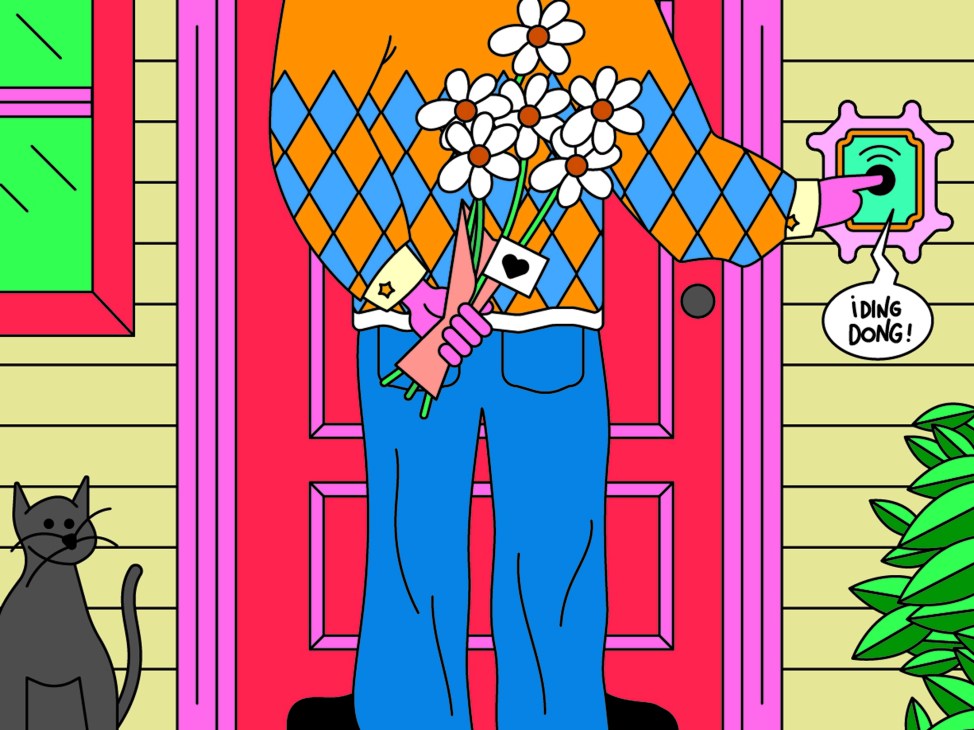
The agents are proving both inventive and determined. Handwritten letters (or at least printed missives intended to look as if they were written by hand) are being pushed under the doors of desirable properties. In some cases the notes are accompanied by recipe cards, flower seeds and similar such blandishments.
While one cannot fault the endeavour, it is possible that these property-mongers have not paused to consider the general opinion of their trade that has developed during Australia’s interminable property boom.
At this point, the country’s homeowners might be more receptive to offers on the part of estate agents to undertake grotesque public abasements on their doorsteps for the amusement of crowds of jeering neighbours.
Reporting from…
The news in brief from Monocle’s global bureaux includes an angelic US transit scheme, details of the festivities in Hong Kong and a move to help London’s residents to breathe easier.
Los Angeles
Subway angels
A new transit ambassador scheme aims to “create positive and compassionate interactions” on the Los Angeles Metro. Riders can purchase tickets, find their way and feel more assured on the network with the help of 300 unarmed ambassadors
Hong Kong
Let your hare down
Paper-cut rabbits replace tigers as revellers ring in the lunar new year at the first spring festival since Hong Kong reopened to tourism. With March’s Clockenflap music festival too, the Year of the Rabbit is shaping up to be a fun one.
London
Breath of fresh air
Mayor Sadiq Khan has announced that the Ultra Low Emission Zone, which charges a fee to polluting vehicles that are driven through central London, will be expanded to cover the whole city. Residents can breathe easier.
The interrogator
Crossing the line
USA
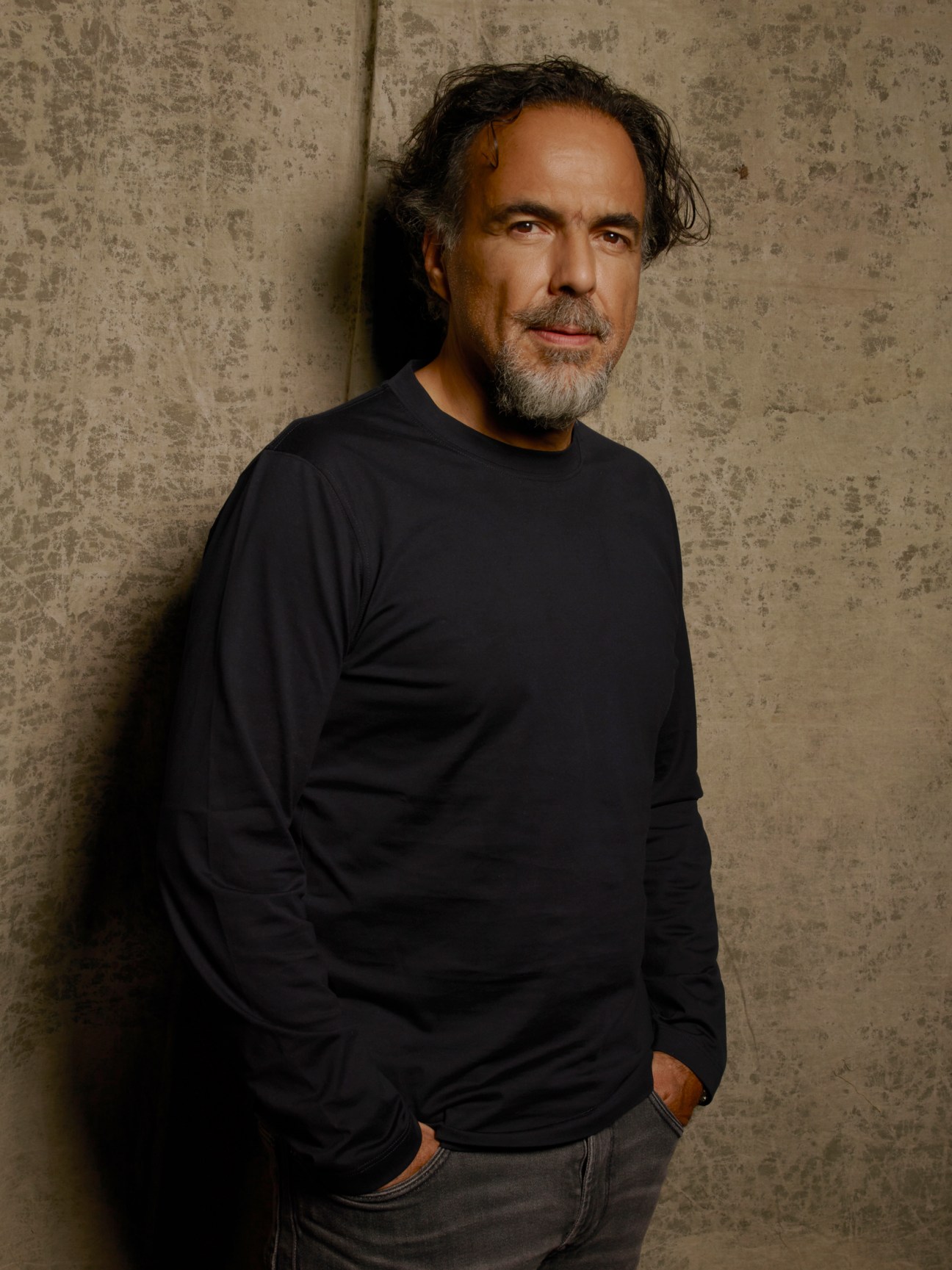
Oscar-winning Mexican director and screenwriter Alejandro González Iñárritu has a knack for telling psychological stories that explore the complexities of the human condition. More recently, he has dipped his toes in the art world too. Carne y Arena: Virtually Present, Physically Invisible, his touring installation currently on show at the Craneway Pavilion in San Francisco, invites viewers to put themselves in the shoes of someone crossing the US-Mexico border. Iñárritu tells Monocle about the joys of being a film-maker working in visual art and his plans for 2023.
How did the idea for ‘Carne y Arena’ come about?
Over the years I’ve seen a lot of films and documentaries that portray the realities of marginalised people very well but they were always just observing them. That was when the idea for Carne y Arena came together. It dawned on me that I didn’t want to observe these experiences but feel them too.
You are a film-maker and visual artist. What does one medium offer that the other doesn’t?
Visual art is everything that film is not. Film as an experience is just a little frame, a little hole in the door, selected by the director. The other 70 per cent of the reality when watching a film, you must imagine and build with your brain. So, the experience is very subjective because each person will take away something different, dependent on their system of beliefs; each person’s mind will interpret these images and virtual realities. An art installation like Carne y Arena breaks the dictatorship of the frame of cinema. We go into that hole in the door and possess the camera ourselves, deciding where to go. It’s a completely different emotional and intellectual process.
It sounds as if people have understood your films in radically different ways to you over the years?
I try to never chase an audience because that’s a delusion; you cannot please everybody. One of my films will come out and half of the people will hate it, another part will love it and the remainder won’t care.
Do you have any new projects coming up?
Life is more interesting than cinema so I take a long time between making films. I like to enjoy things, learn and grow during that time. It’s in that space between one film and the other that an idea starts growing in my mind. I don’t have any real plans in the near future but I’m going to live my normal life and see if another idea comes about.
Sorry not Siri
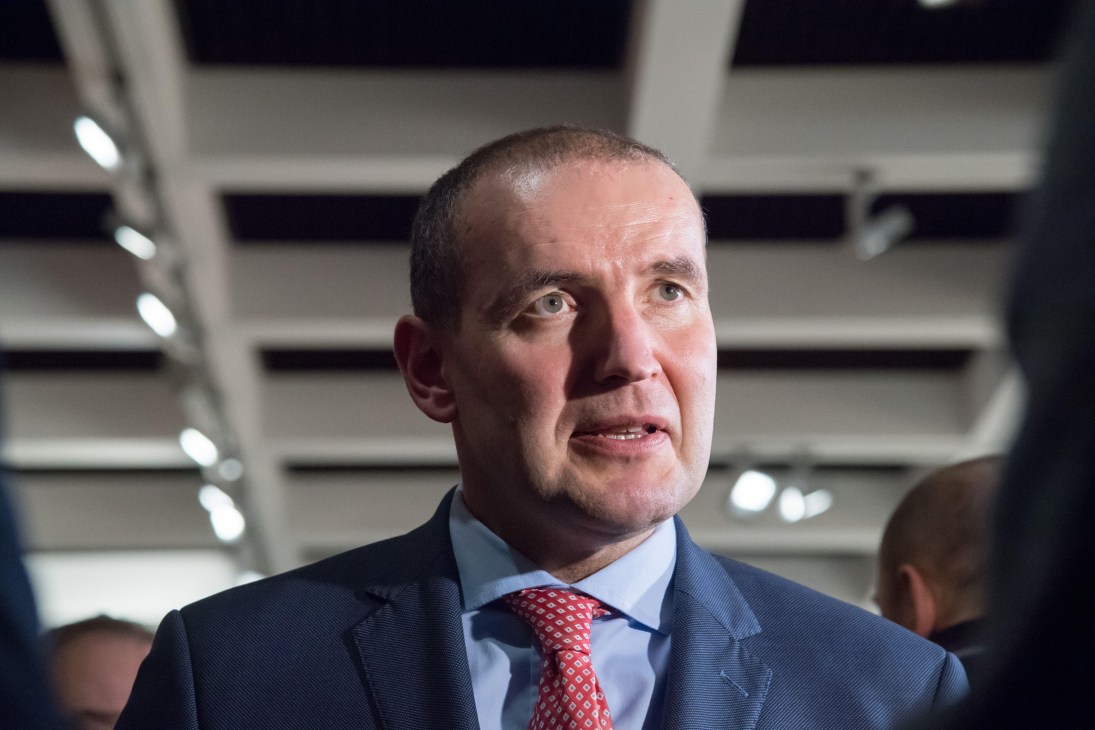
Studies show that Icelandic teens are using more English in conversation and president Guðni Thorlacius Jóhannesson believes that Siri is to blame. In 2020 an Icelandic app-based version, Embla, was launched as part of a broader move to preserve the language but the president wants Apple to formally embrace his native tongue. If learning a new language is never a bad idea, surely that applies to digital voice assistants too?
Bolsonaro’s aliens
Recently unelected Brazilian president Jair Bolsonaro was never likely to accept defeat – and indeed did not. However, his legal challenge to the results of 2022’s October runoff election accomplished little beyond landing his misleadingly named Liberal party with a fine for litigating in bad faith.
Some Bolsonaro fans have appealed to a higher authority. In the weeks following the election, the night skies above Porto Alegre were illuminated by lights, a not uncommon celestial phenomenon. However, Bolsominions perceived that help was at hand. They ecstatically beamed their phone torches heavenwards to signal to superior intelligence – which, where they are concerned, is almost anybody – in the hope that they might reinstall Bolsonaro as president. Why any passing Martians might be interested in such delusional grievances was unclear.

Skull-duggery
For a group of species that went extinct 65 million years ago, dinosaurs still manage to stir up scandal. Just ask British auction house Christie’s, which had to pull a four-metre Tyrannosaurus rex skeleton (known as Shen) from an auction in Hong Kong when experts discovered that the formation contained casts of bones from another dinosaur, Stan.
It’s far from the first time that a fake-or-fortune controversy has rocked the discipline. Here, we’ve rounded up three other palaeontological controversies.
1.
Fake on display
The skeleton of an aquatic ichthyosaurus dinosaur earned itself the moniker “iffyosaurus” after it was exposed as fake in 2000. It had been exhibited for more than a century at the National Museum of Wales before restorers stripped off layers of paint to discover an elaborate forgery.
2.
Headless decision
In 1887, New York-born palaeontologist OC Marsh discovered the headless skeleton of a long-necked dinosaur. Keen to bag the acclaim for his find, he made the amusingly bone-headed decision to add a skull from another fossil.
3.
Arresting discovery
The Tyrannosaurus rex that palaeontologist Peter Larson unearthed in South Dakota in 1990 might have been the real deal but it landed him in hot water nonetheless. The FBI claimed that he had stolen the skeleton from federal land, sparking a long court battle that ended with Larson spending 18 months in prison.
Images: Alamy, Frank Ockenfels/2022 Netflix, Inc.
Ring the changes
When Cyrille Vigneron took over as Cartier CEO in 2016, he embarked on a mission to refresh the French house’s stores. “Our shops had aged; they felt luxurious yet stiff,” says Vigneron. “The spaces were dark and most furniture had these harsh, pointed angles. For a brand focusing on jewellery, which is inherently feminine, you need pieces that are more rounded, more precious and comfortable, so that customers feel invited to come in and stay.”
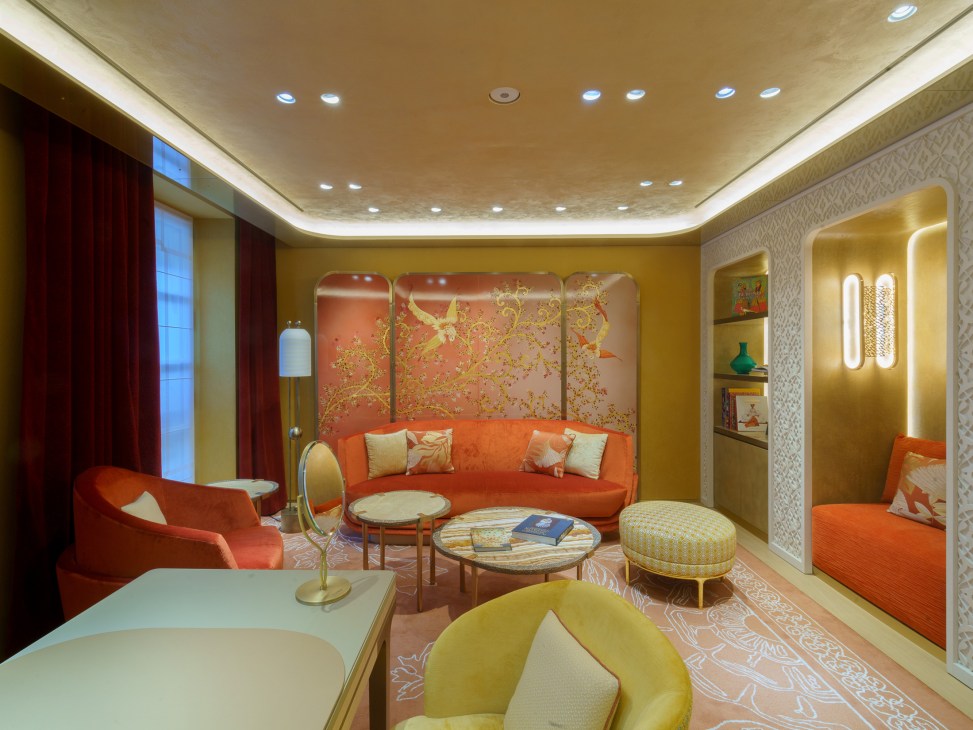
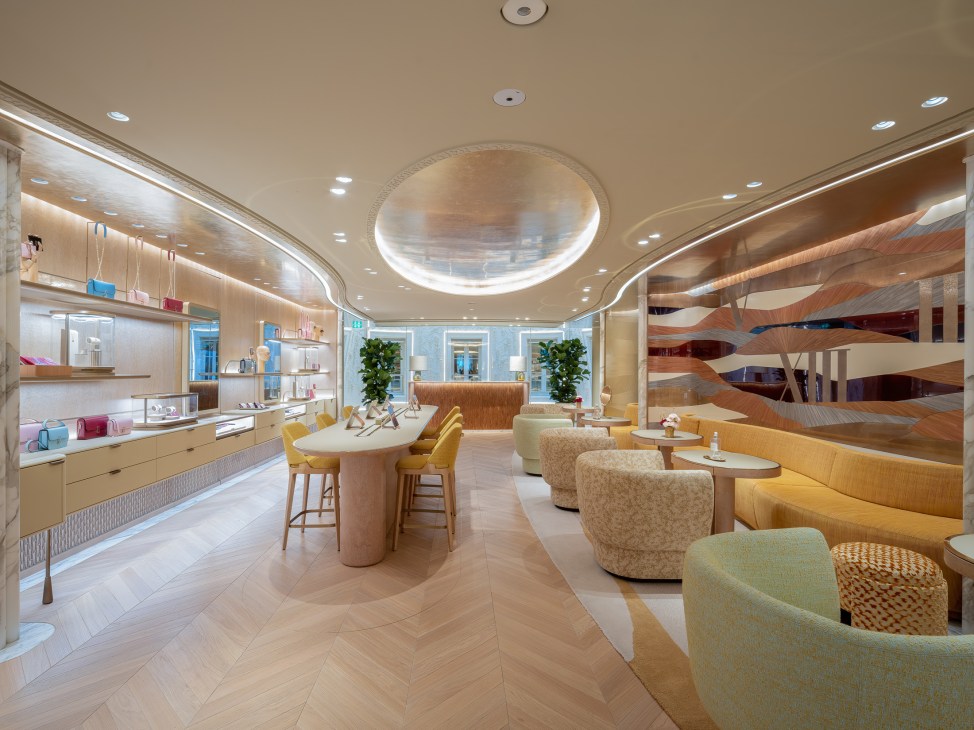
His aim was to go against industry norms that encouraged businesses to copy-and-paste the same design concept in every location and instead add warmth and personality to each Cartier boutique. “If you try to plug a concept into a city that has its own architectural character, it feels awkward,” says Vigneron. “Each shop needs to be anchored in the city or even the street it’s in and express its history.”
Over the past seven years the Richemont-owned company has debuted new concepts in locations from Via Montenapoleone in Milan to Fifth Avenue in New York and Cheongdam in Seoul. “We have reopened 24 boutiques in the past four months –that’s more than one per week,” says Vigneron, who remained unfazed by the lockdowns of recent years and continued investing in bricks-and-mortar retail. “The strategy just got reinforced,” he adds. “In a way, the pandemic gave us some extra time to mature our design plans and reach a level of sophistication that we’re satisfied with. It was time for Cartier to express itself differently.”
Most recently, the house reopened its historic Paris flagship on 13 Rue de la Paix, a location next to the Place Vendôme, chosen by Alfred and Louis Cartier as the brand’s first Parisian home in 1899. It crystallises Vigneron’s vision of what a flagship shop should look and feel like. There’s an ode to the building’s heritage: the original façade has been kept and there are private salons named after its famous creative director Jeanne Toussant, who worked in the building from the 1930s to 1970s. But otherwise the space underwent complete transformation, with three teams of architects working on the project. “It’s just like watch design,” says Vigneron. “You have to respect the constraints of the movement to ensure functionality but at the same time get creative and innovate.”
The boutique, selling watches, jewellery, perfume and leather goods, is spread across four of the building’s six floors. Yet each floor feels compact and plays with existing features to create an intimate feeling. “In luxury these days a lot of the flagships are starting to resemble department stores but we wanted to create something more cosy,” says Vigneron. It’s why, above the boutique, there is a private apartment, complete with a kitchen, dining area, lounge and winter garden, where vip customers can hang out or host dinners. “Hospitality is certainly important but we don’t want to approach it in the way everyone else is, by opening big hotels or cafés,” adds Vigneron. “We want to become involved in more cultural activities, which aren’t commercial, so these private spaces that can host talks and social gatherings, which are crucial.” But Cartier maintains an appropriate sense of grandeur. An atrium at the back of the building featuring hand-sculpted mouldings has been designed to do just that, alongside other precious details such as hand-painted wallpapers or glass enamel wall panels, created by mosaic artist Sika Viagbo. “We worked with more than 40 artisans, mostly located in France, meaning that the building has a lower carbon footprint and it honours the city it’s in,” says Vigneron.
The reopening has attracted customers from Europe, Russia and the Middle East, proving Europe’s resilience in a challenging market that’s yet to see Chinese visitors return. The company acknowledges signs of a looming recession, yet believes that investing in the right environments will pay off in the longer term. “It’s hard to make predictions, yet we plan to keep going,” says Vigneron. “We still have more than 100 locations on our plate.”
Why it works:
The renovated flagship offers a mix of public and private spaces, while the atrium gives people an excuse to wander and look up.
Brick’s blessing
Copenhagen will be Unesco’s World Capital of Architecture for 2023. And while there will be citywide events, to get to the essence of Danish design, head to the northwestern suburbs and stay perfectly still in a church.
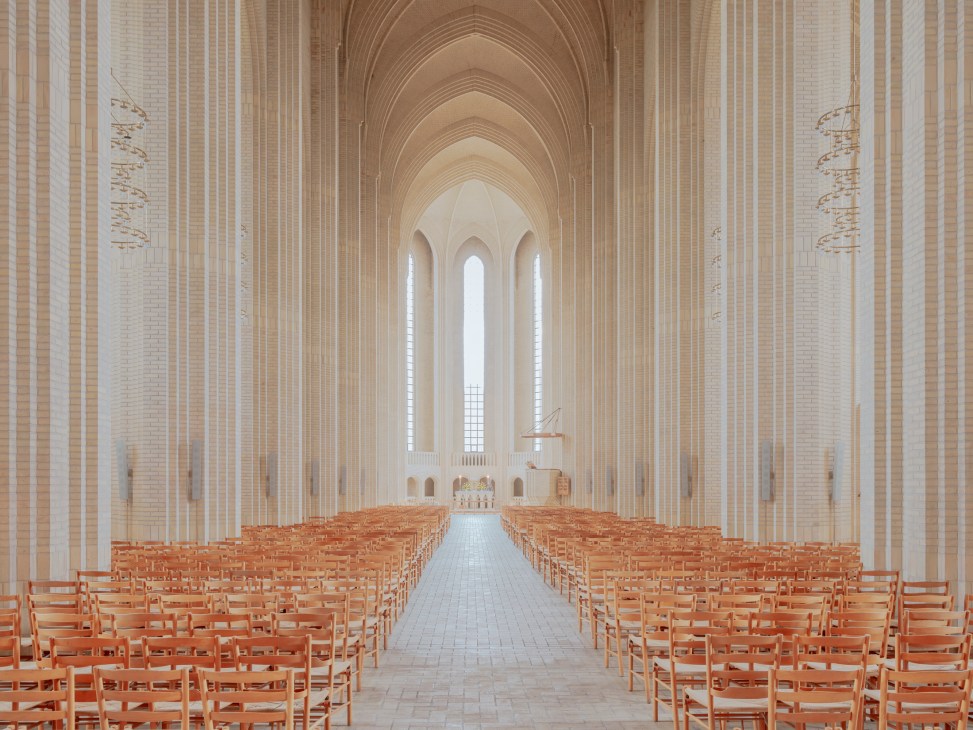
Grundtvig’s Church is named after a 19th-century bishop and poet who wrote Denmark’s hymn book and founded its public schools. When the time came to erect a memorial to him, a proposal to build an enormous cathedral from little-known architect Peder Jensen-Klint was picked. With the first brick laid in 1921, the soaring structure took 19 years to complete and involved three generations of architects. Mid-century master Kaare Klint took over construction after his father’s death in 1930 and designed the church’s now-classic chairs, while Klint’s son, Esben, created the organ and brass chandeliers.
Instead of stucco, frescoes or marble flourishes, Jensen-Klint chose to build only with cheap, exposed yellow brick. Every brick – there are about five million – was sanded by hand to diffuse light and create a soft, mesmerising air. “It was actually very brave of him to use that material, which is considered of lower quality,” says Camilla van Deurs, Copenhagen’s city architect. “He stripped back the detail to have this pure expression come out.”
Van Deurs places Grundtvig’s Church and the surrounding Jensen-Klint-designed housing quarter on her itinerary for visitors. “When you have architecture of that quality, the legacy is forever,” she says. “That’s a nice and sustainable ambition for whatever we build today.”
Why it works:
Despite its large nave, the contrast with the small-scale bricks creates a calming, meditative atmosphere – and a moment of awe.
Image: Lugwig Favre
Pit stop
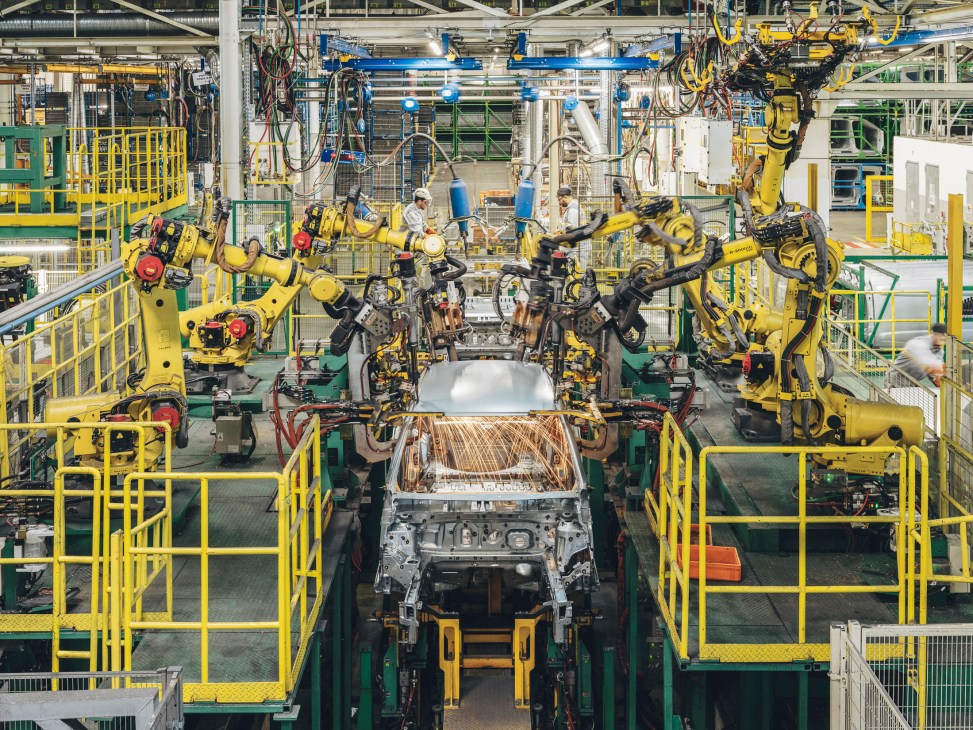
This year, Renault could build 17,000 of its tiny Duo electric cars at its plant in Tangier. The French automotive giant’s 10-year-old car factory is Africa’s largest, churning out almost a vehicle every minute, most of them for Renault’s reasonably priced Romanian brand Dacia. Together with a second smaller plant in Casablanca, the factory builds 11 per cent of all Renault Group cars. But why Tangier? “The plants are very close to Europe,” says Christoph Dridi, vice-president of Dacia. With lower labour costs than much of Europe, Tangier is a stone’s throw from Spain and Renault’s continental customers.
The battery-powered Duo might be the diminutive successor to Renault’s Twizy – a car so small that it was classified as a quadricycle – but it punches above its weight in significance. It will be the first electric car produced in Morocco, a country that has in recent years intentionally geared its industrial strategy towards combining investment in renewable energy with its mission of growing its car-making sector (Citroën-maker Stellantis manufactures here too). Ryad Mezzour, minister for industry and trade, tells Monocle that he envisions those two parts of Morocco’s industrial strategy combining to make the country a green power.
The minister explains that the government is in talks with major electric vehicle battery-makers to set up a factory in Morocco, which also boasts deposits of cobalt, the rare-earth metal integral in such batteries. Combining battery-making and car-making could put the country alongside Chile and Australia in the group of nations capitalising on the shift away from oil and gas. For car-makers, setting up a foreign industrial base is neither a decision to be taken lightly, nor one that can be quickly executed. “It’s like a 30-year marriage,” says Mezzzour. Within the next four years the country plans to double car exports to €19bn. “It’s a very important strategic sector,” the minister explains. “It employs 220,000 people.”
It helps that geopolitics are providing a fair wind for the country’s manufacturing sector. The link between the US presidential election of 2016 and Morocco’s car industry might seem improbable but the Trump administration’s trade war against China accelerated a shift away from Western companies manufacturing in politically problematic locations. Throw in a worldwide pandemic that ruptured supply-chains built for efficiency rather than resilience and companies are moving production to friendlier regimes and closer to customers. Morocco, with its strong relationship with France and its stable currency, is a natural beneficiary.
Production at the factory is “semi-automated”, Dridi says, meaning that workers and robots work side by side to make up to 340,000 Renault Group cars a year. “We have more than 8,500 people at the factory and there’s a training centre nearby, the Institute of Moroccan Automotive Industrial Training, that the authorities have invested in for the development of skills for the automotive sector.”
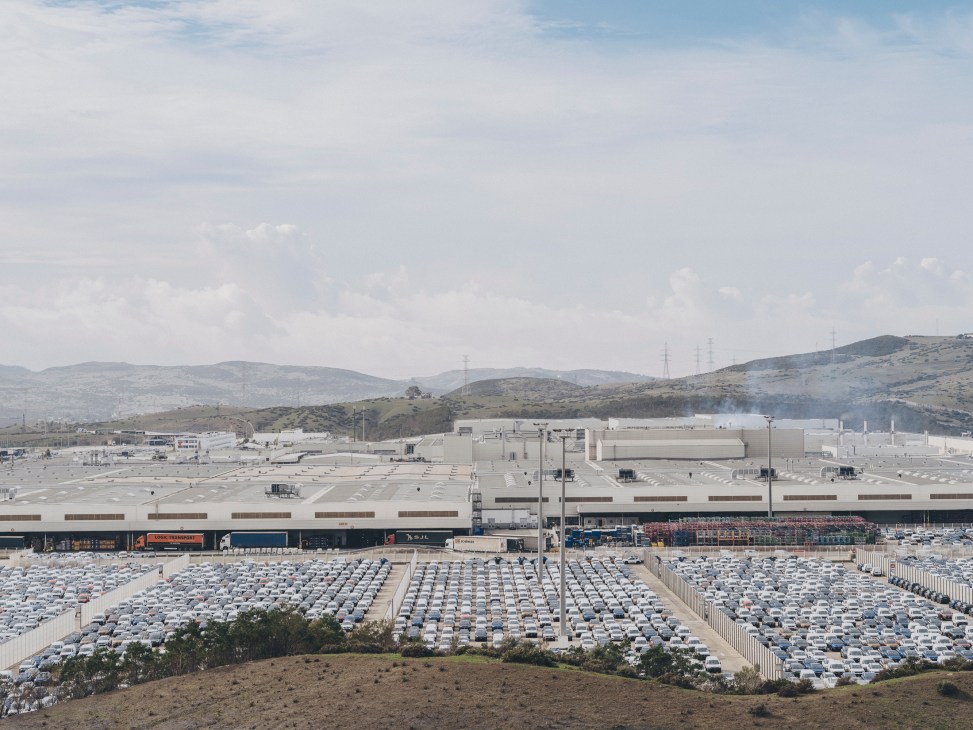
The Moroccan government may have foreseen the potential of manufacturing to grow its economy and the necessity of a well-trained workforce to achieve that goal but nobody predicted the outbreak of the Ukraine war, which has sent operating costs through the roof for manufacturers still using fossil fuels. Morocco’s bet on renewables years ago, however, has improved its energy security and kept costs down. “Morocco has made considerable strides in putting policies in place to attract private investment,” says International Energy Agency analyst Yasmina Abdelilah. “They were one of the first [countries in the region] to organise competitive tenders to allow private investment to come in.”
For Renault, Morocco’s foresight is paying off. “This plant is the only one that I know of in the world that has biomass technology,” says Dridi. “We burn discarded olive pits to heat the furnaces.”
Why it works:
The tide is turning against far-flung factories. Having a safe, modern and geographically convenient facility in a friendly country with a well-trained and relatively inexpensive labour force is a big win.
Team building
Under the watchful gaze of Chief Sealth, whose face adorns the municipal seal, the Seattle City Council convenes for the day. The docket is relatively light on the afternoon that Monocle visits – approving nominees for a handful of city commissions, a resolution supporting a citizen initiative to establish statewide universal health care – but this early- December session is the calm after the storm.
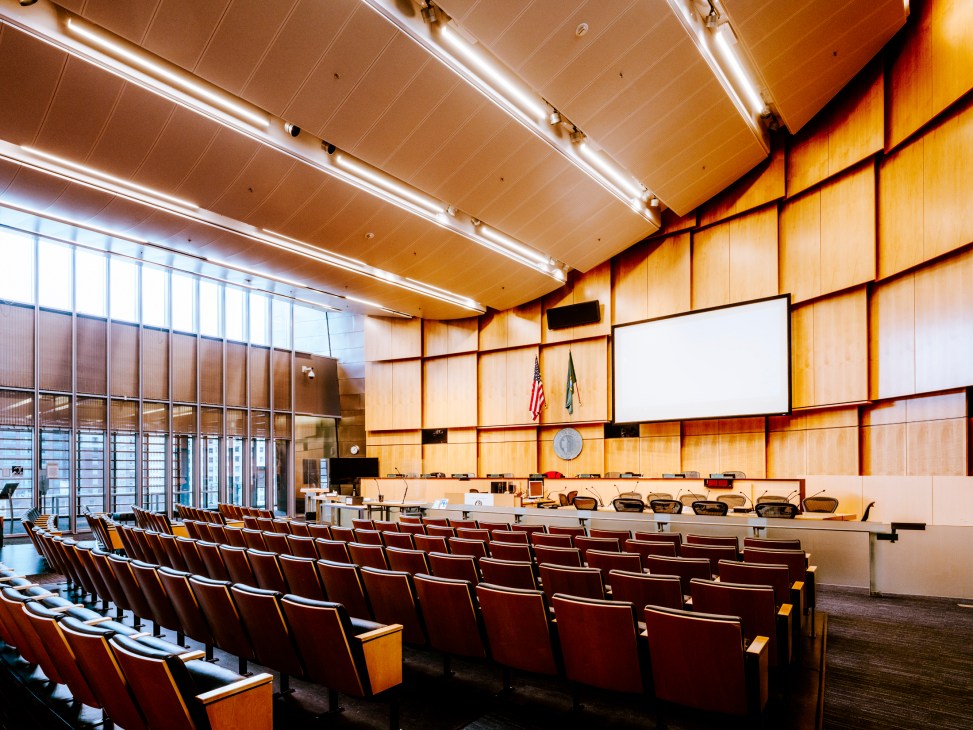
A week earlier, the council voted 6:3 to approve a two-year, $7.4bn (€7.1bn) spending plan after a bruising budget season. With an economic downturn sparking a revenue shortfall of more than $145m (€137.5m), the mayor and councillors sparred over how to balance the books while preserving their political priorities on matters such as policing and affordable housing. During the tense negotiations, one constant fostered the final outcome: City Hall itself.
The glass-and-steel building by architect Peter Bohlin has a streamlined design that keeps the most essential city functions under one roof. Neighbouring administrative buildings handle everyday bureaucracy such as construction permits and marriage licences, while City Hall is reserved for the conceptual work of crafting and executing public policy.
At the same time, the building provides nearly unparalleled open access for citizens with hardly a security checkpoint to be found. An entry staircase yields to an exterior plaza that is available for protests, an ample lobby encourages members of the public to linger and the basement even doubles as a severe-weather homeless shelter.
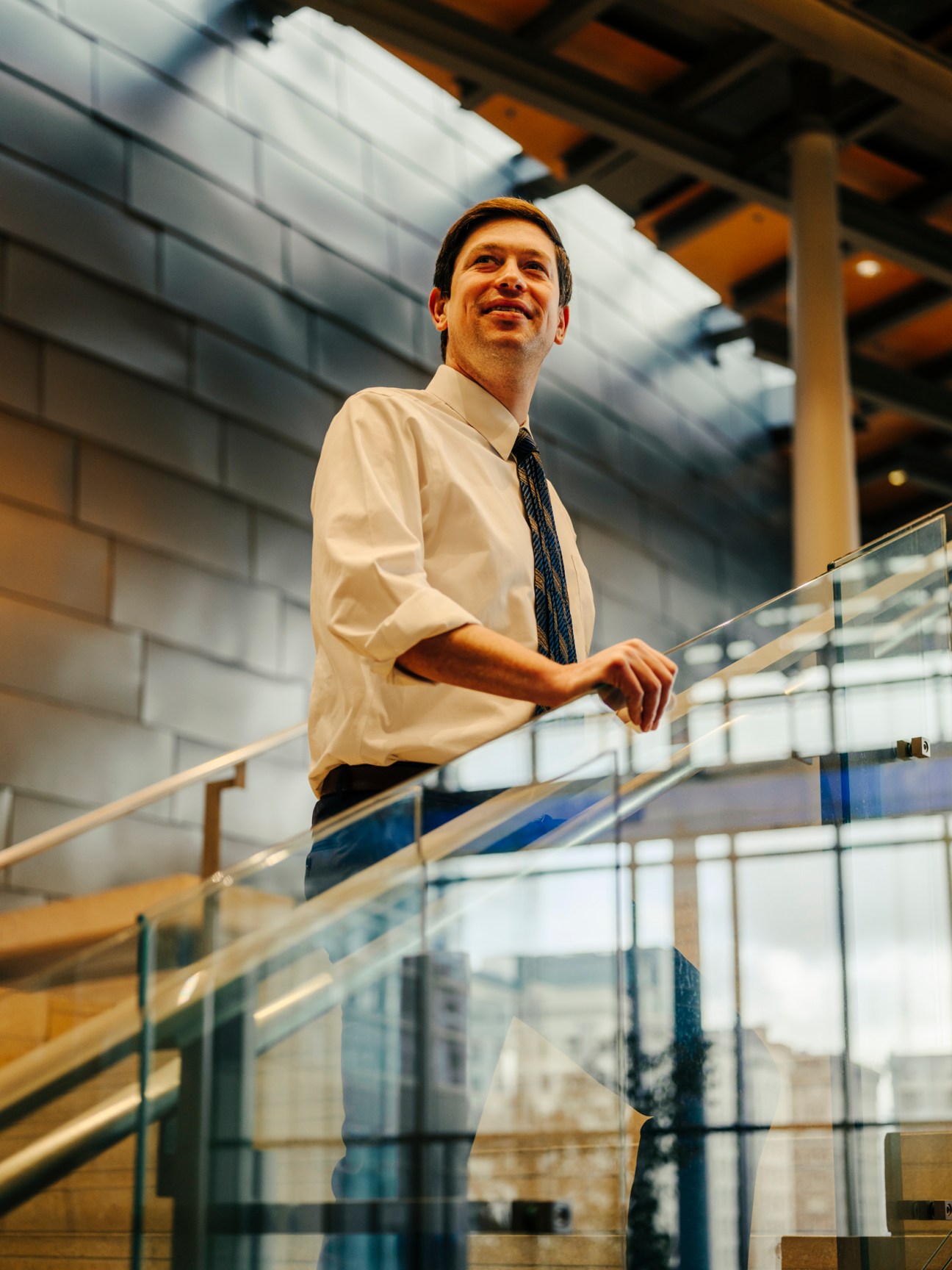
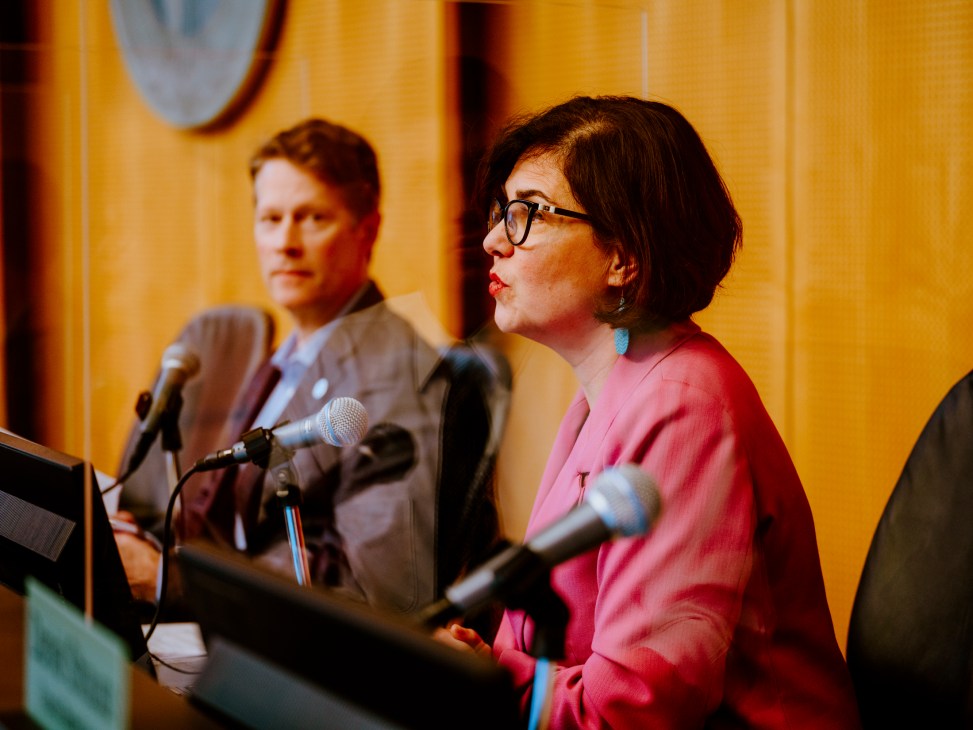
Council member Dan Strauss spends most of his time on the horseshoe-shaped second floor, where a blue-sky bridge over an airy limestone and quartzite atrium connects the titanium-walled council chambers to councillors’ offices. When the city budget office informed Strauss one morning that an issue that he was stumping for might leave insufficient emergency reserves – and he had a noon deadline to propose amendments – he kicked into gear as he shuttled from chambers to his office to staff financial analysts, all within easy reach. “Without the ability to walk down the hall and talk to someone, I wouldn’t have been able to get all that done in time,” he says.
In mid-November, with the budget deadline nearing, thousands of secondary-school pupils converged on the plaza in front of City Hall to demand more funding for mental-health counsellors in the wake of a school shooting. The rally worked: a last-minute amendment added $4m (€3.8m) for their cause. “We were able to pivot and work with council members on finding money to help the students,” says the deputy mayor, Greg Wong, who went out to meet with the petitioners. “When you have a building like this that feels very open and conducive to allowing for those types of interactions, then you can do the work of government better.”
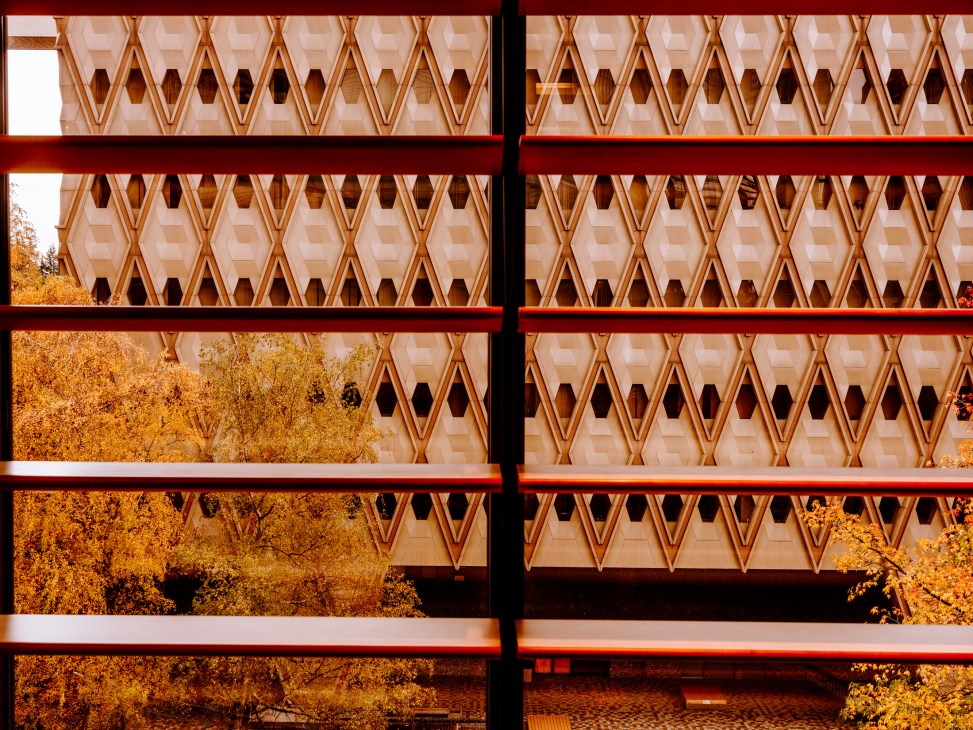

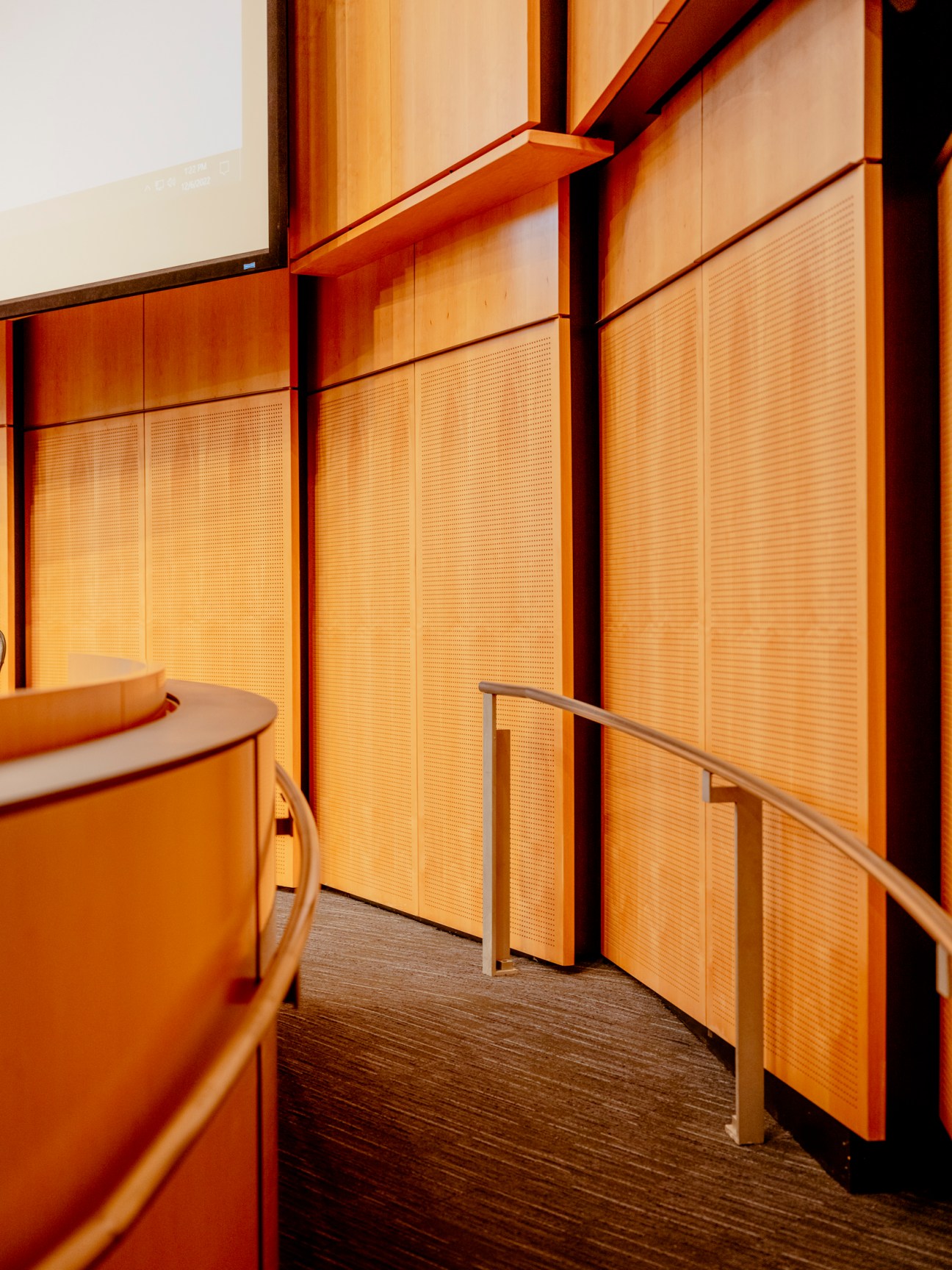
While the mayor, Bruce Harrell, occupies a prime office on the seventh floor with sweeping views of Mount Rainier and Puget Sound, there is no power-play gamesmanship in this egalitarian building. Harrell takes the elevator down to councillors’ offices on the second floor as often as anyone ascends to his lofty perch. Those offices, meanwhile, reflect councillors’ own taste. Mexican-American council member Tammy Morales’s walls pop with bright yellow and orange, and artwork by the likes of Seattle-based artist Alfredo Arreguín, part of the extensive municipal collection from which city officials can decorate their offices.
On the day that Monocle visits, she has just come out of a debate on the transportation committee about relaxing food-truck regulations, which she supported in order to grow business opportunities for immigrant entrepreneurs. But understanding the old regulations’ protections for bricks-and-mortar restaurants, adopted long before she was elected, required consulting the council’s central staff. Like Strauss, she relishes her office’s proximity to City Hall’s keepers of institutional knowledge.
As the day winds up, Harrell makes his way past the atrium’s babbling brook en route to the Bertha Knight Landes room, which is named after the first female mayor of a major US city, where he will sign the budget into law. There is a festive atmosphere with plates of jerk chicken and beef brisket, while a DJ spins funk and soul tunes. “We are in a functional piece of art,” says Strauss before heading into the budget-signing shindig. “Beauty gives people more space to think.”
Why it works:
Seattle City Hall gives true expression to the idea of open democracy, with spaces allocated to public assembly and participation. It is a place beloved by citizens and politicians alike.
Full of beans
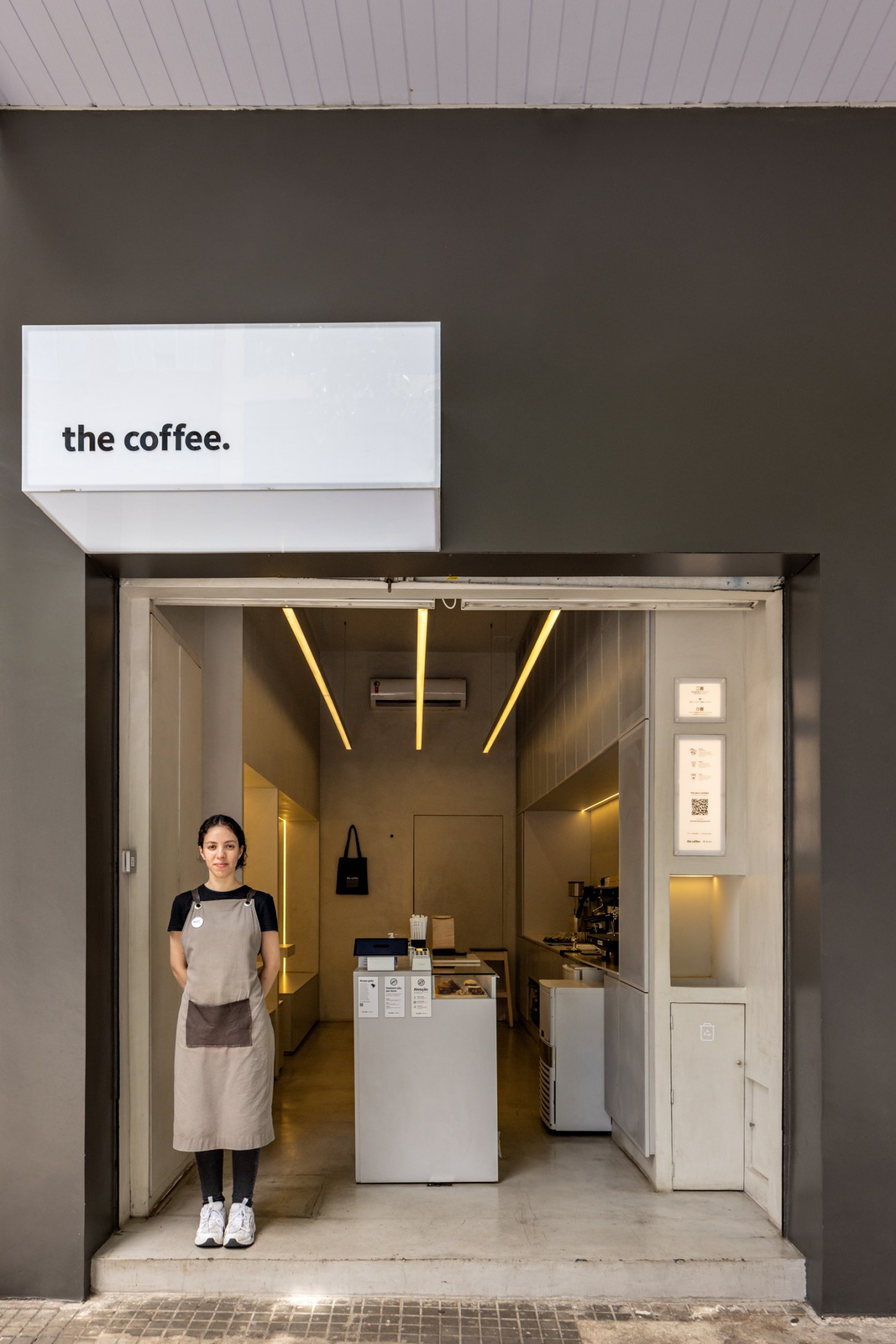
It’s a warm December day, the pavements are still glistening from a downpour and Mateo Garafulic is sitting on a busy São Paulo street sipping coffee with his mother. This morning they saw apartments for rent and now they are taking a break at The Coffee, a tiny hole in the wall shop on the hipster Rua dos Pinheiros. “It’s Japanese,” Garafulic says confidently. “The marketing is in Japanese and the website ends in .jp.”
He’s half-right. The sign above the door is written in both Japanese and English, and he’s not wrong about the domain extension but The Coffee is as Brazilian as samba. Garafulic’s misunderstanding is understandable but it would probably amuse Carlos, Luis and Alexandre Fertonani, the three urbane, coffee-loving Brazilians who founded the chain in the southern city of Curitiba. The brothers hit on the idea of a coffee chain after selling their former internet businesses because they couldn’t expand them quickly enough. They’ve not had that problem with The Coffee. The chain’s expansion rate stands at about two new shops a week and their portfolio includes 200 outlets across Brazil, Colombia, France, Portugal and Spain.
The Fertonanis wanted a venture that was scalable and a visit to Tokyo provided their eureka moment. Carlos was taken with the city’s tiny coffee shops, where the aesthetic was as important as the product. They decided that their new project should be enigmatic as well as cosmopolitan. “It is a bit mysterious,” says Carlos. “We imagined that people would ask if this was a brand that came from Japan or Brazil. We always wanted to be global so we thought we’d leave it international.”
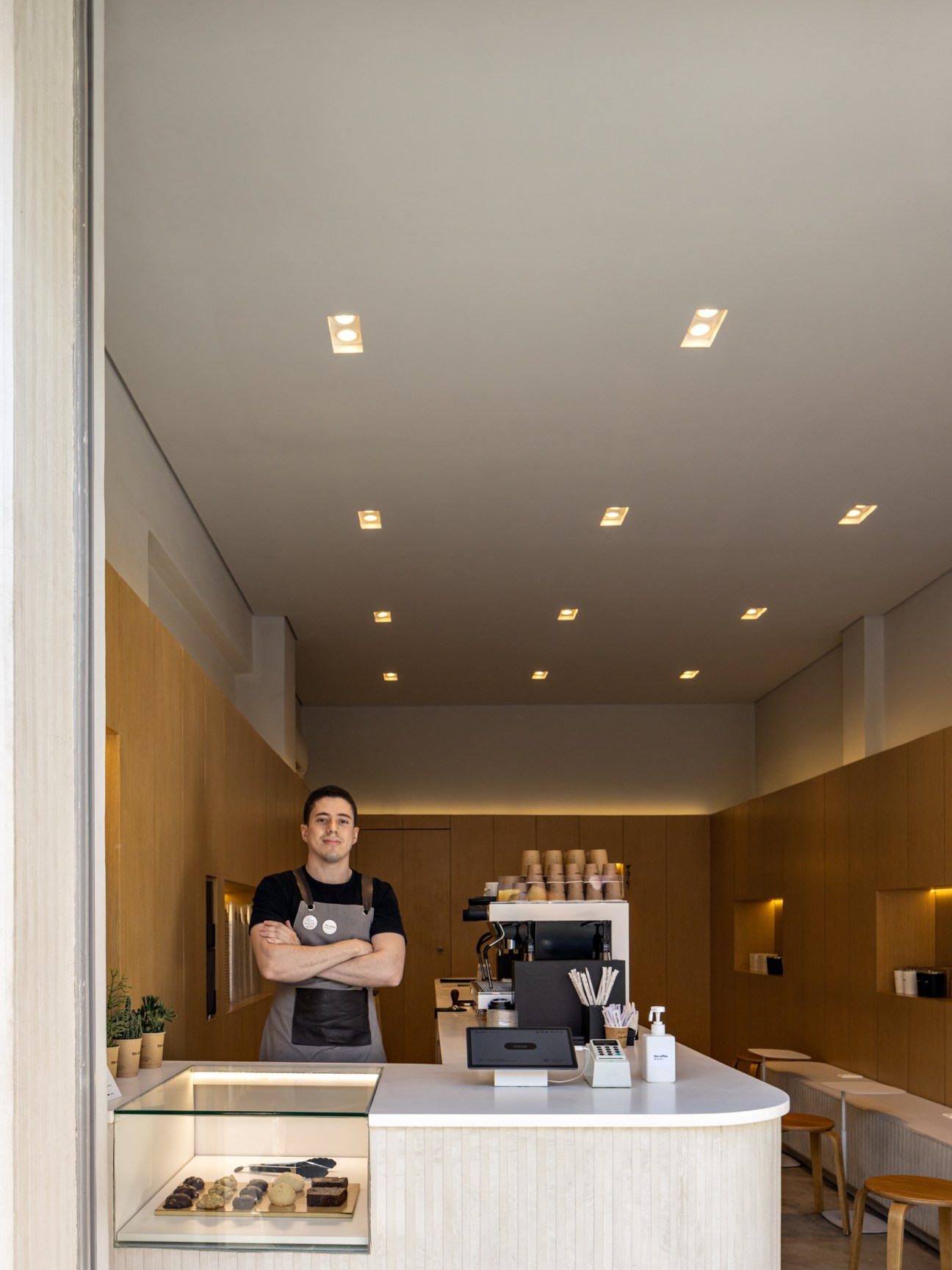
The unifying aesthetic between The Coffee’s branches is unmistakably Japanese. Some feature the wood and paper sliding doors known in Japan as shoji. Others have ceilings made from suspended wooden slats or blonde wood-panelling on the walls. Natural light is used whenever possible. All rely heavily on the same clean, minimalist design. The Fertonanis’ global aspirations are also reflected in the name, which is in English, and the accompanying logo, which spells out The Coffee in Japanese. The founders’ attention to detail even extends to the bespoke font designed by Luis Fertonani.
The concept has been a hit with consumers and investors. Of the 200 shops that have opened since their first in Curitiba in 2018, about 80 per cent are franchises. Impressed venture capital firms provided €4.73m in funding in 2020 and another €6.6m last year.
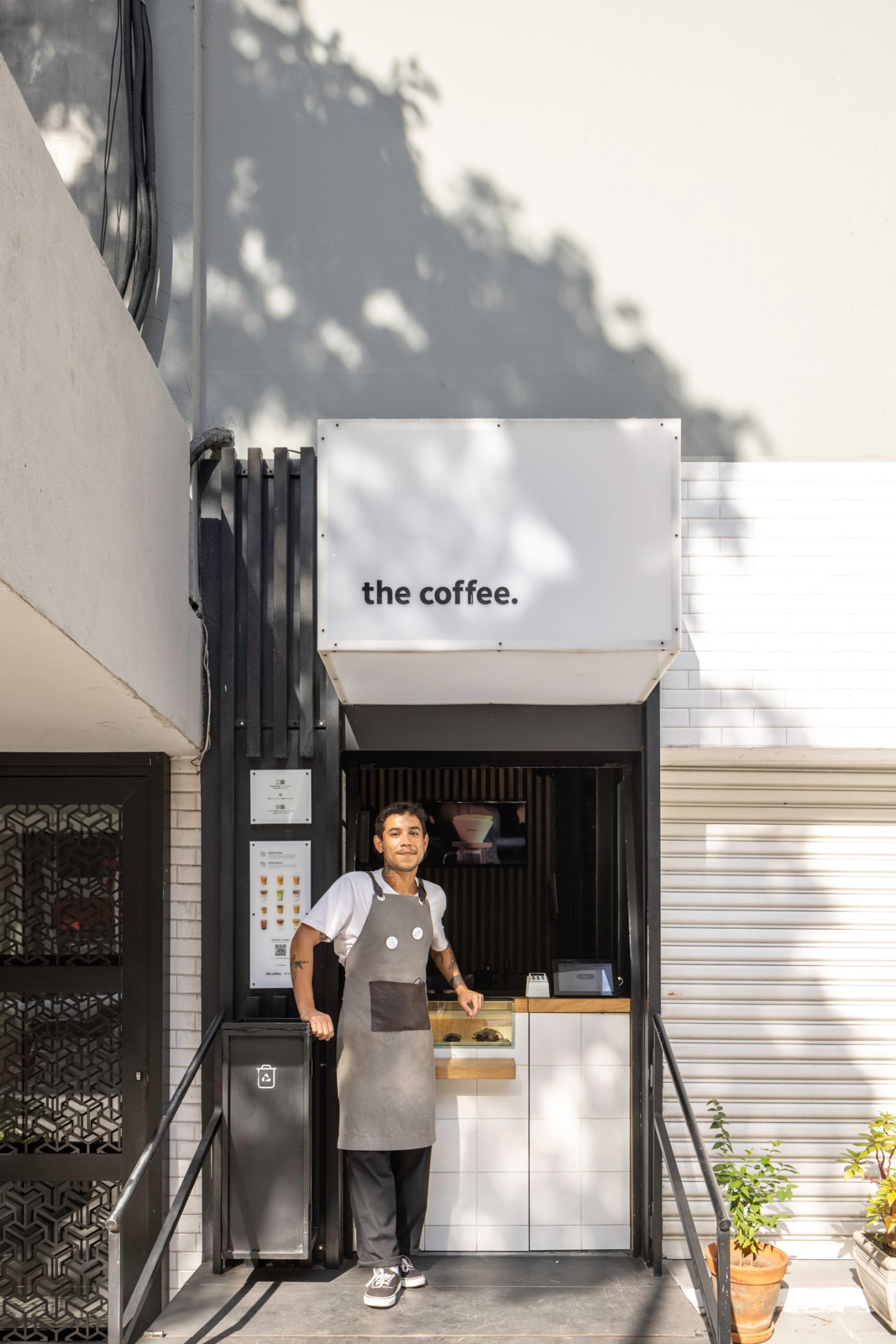
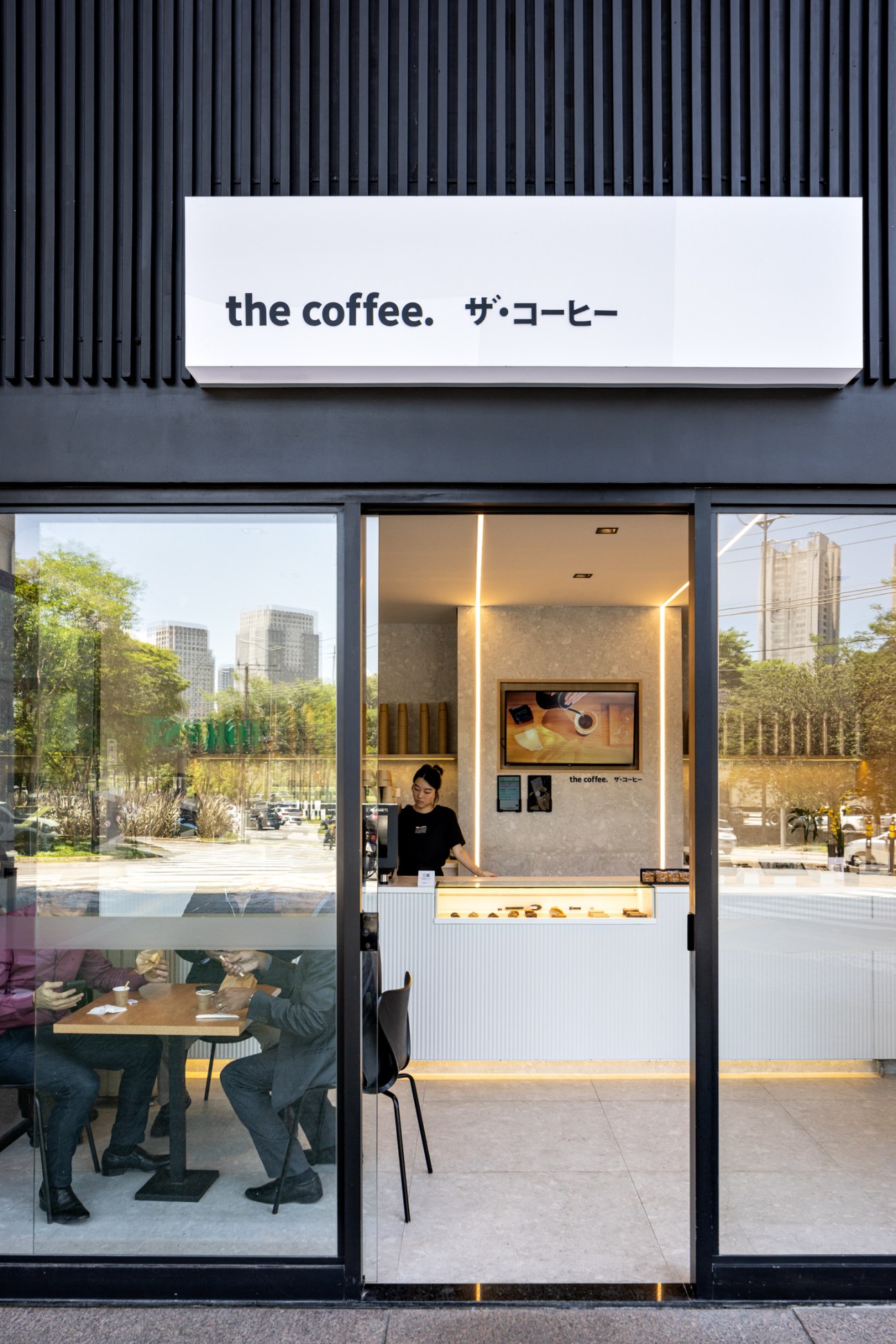
The Coffee’s Pinheiros branch is typical of its outward-looking world view. In one of the busiest and most cosmopolitan blocks in the neighbourhood – there are Nepalese, Iraqi, Portuguese, Spanish and Bahian restaurants all within a stone’s throw, as well as a boutique gelateria and an artisanal charcutier – it’s a snapshot of modern São Paulo, though The Coffee doesn’t so much stand out as sneak in: it’s a head sticking out at the back of the group, catching your eye with its cheeky smile.
One reason for that is its size. Carlos says that the brand’s three pillars are “design, technology and quality coffee”. But their early days have also been defined by space – or a lack of it. The Coffee does not encourage languor. Customers either order on an app and pick up their coffee when they arrive or fill out the order themselves on the counter-top tablet. They pay by tapping their card, reducing time spent dealing with baristas. Some of the shops are so small that the staff can almost touch either side of the store at the same time. Few have seats. A lucky one or two, like the one in Pinheiros, have a bench outside. The hole in the wall format is hardly new but it’s one that The Coffee has shaken up.
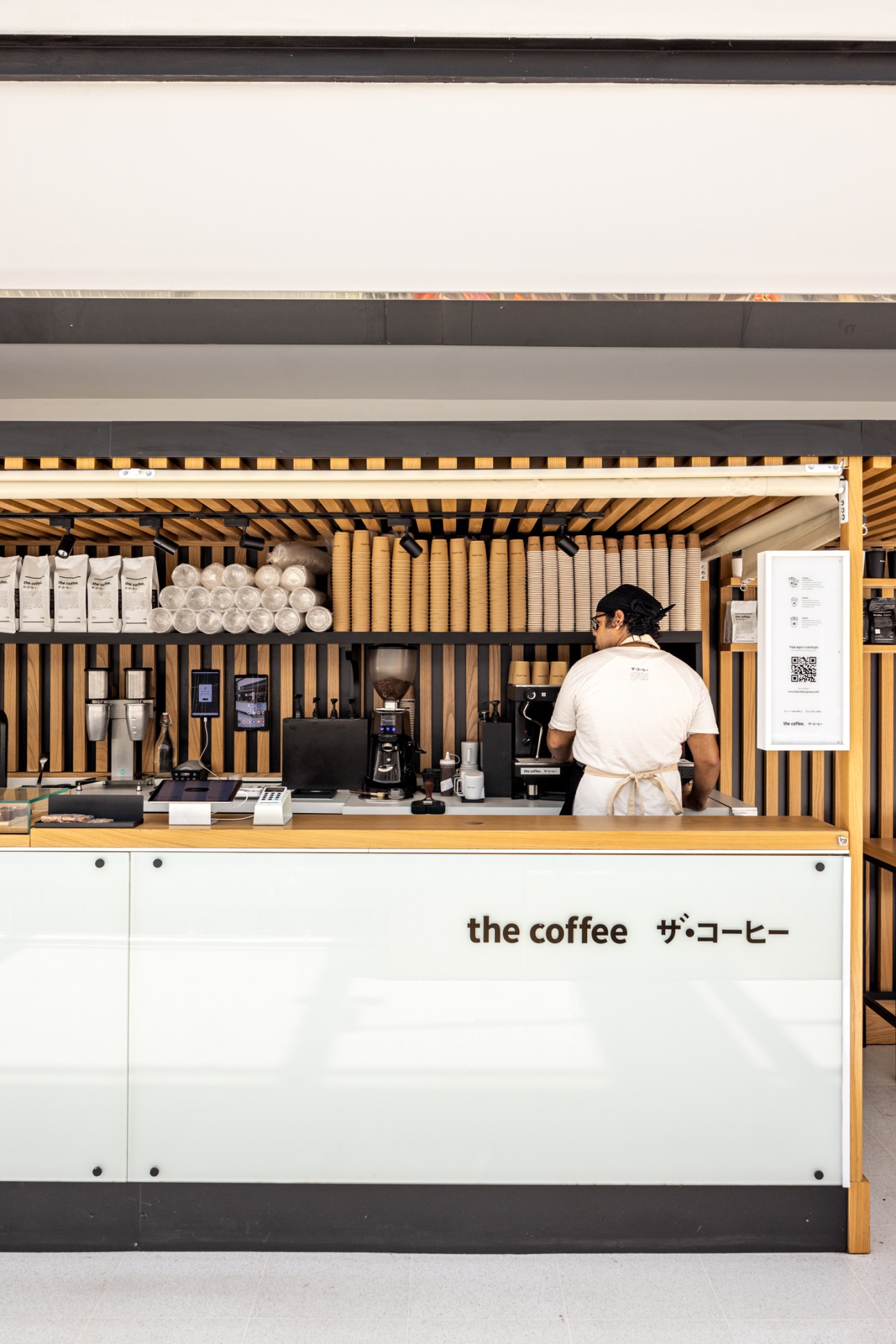
“We’ve always had coffee served at the counter but they were the first with these very small places that we call nanocafeterias,” says Giuliana Bastos, an expert in coffee trends at import-export consultants IBF Trading. “They’ve innovated with the system as well, ordering and picking up without even having to talk to anyone. I don’t know if that’s good or not but it’s a very agile format and it makes sense for people who want to pick up a coffee on the go. Now we’re seeing others copying them and using the same takeaway system.”
Brazil has long been the world’s biggest producer and exporter of coffee. And Brazilians are no strangers to coffee breaks – but for the longest time, the coffee that they drank was industrial both in quantity and taste. For decades the good stuff was exported and the Brazilian Association of Coffee Industries says that until the end of the 1980s a third of the coffee consumed in Brazil was adulterated.
That has changed as Brazil has modernised. Nowadays there’s plenty of high-quality coffee left over after export and a significant market willing to pay for it. The Coffee offers three kinds of gourmet coffee, all of them Fair Trade, but there is much debate over quite how good it is. The Coffee’s White line of beans is described on its website as having “notes of almonds, caramel and chocolate, with a low acidity and elevated sweetness” – there are also Kraft and Black lines. But arguing over the taste is missing the point.
The attraction is not just about what’s in the cup but what’s over the door, behind the counter and on the app. While most Brazilian coffee companies pay homage to the rolling hills and provincial fields where much of Brazil’s coffee is produced, it is The Coffee’s aesthetic, which fits neatly in a nation with the largest number of Japanese descendants outside Japan, that takes pride of place. Their microlots (small batches of single-sourced beans) have names such as Hokkaido and Sapporo, even though they are almost all produced in the Brazilian state of Minas Gerais.
Unlike many Brazilian businesses, The Coffee’s expansion was relatively unscathed by the pandemic. Almost 700,000 Brazilians died from coronavirus and almost a fifth of independent coffee shops closed, according to a report by Euromonitor. But the company’s friction-free model allowed customers to grab a brew without breaking social distancing rules. Now people are eager to get out and socialise again, especially if they work from home. Coffee shops are an obvious meeting place and despite its spartan beginnings, The Coffee is starting to open larger premises, with seating and more comfortable surroundings.
“Coffee shops are places where people can go to share good times; it’s a happy space for a lot of people,” says Bastos. “And with so many people working from home, they want to get out and take a break somewhere pleasant. The Coffee is starting to adjust to that.”
Carlos Fertonani says that the firm is in talks to open outlets in Peru, Mexico, Qatar and China and, while they are not going to challenge Starbucks just yet, he does not hide its expansionist zeal. “The plan is to have 350 shops by the end of next year and 2,000 in five years,” he says. “It’s ambitious but we think we can do it. We were born to be global.”
Why it works:
This company’s growth has been fed a double espresso. It’s no surprise; it has combined a lean business model with a detailed aesthetic.
Shared Vision
The exterior of Mohilef Studios, a nondescript industrial building in downtown Los Angeles, doesn’t give many clues about the extraordinary space that lies within. But the stream of creatives carrying art supplies into the building suggests that something is afoot. Up a small freight escalator lie five levels of buzzing art studios. Most are three-walled boxes connected by a long, window-flanked hallway. “The goal was to create something affordable for younger artists and something with a great community,” says Mohilef’s co-founder Canyon Castator.
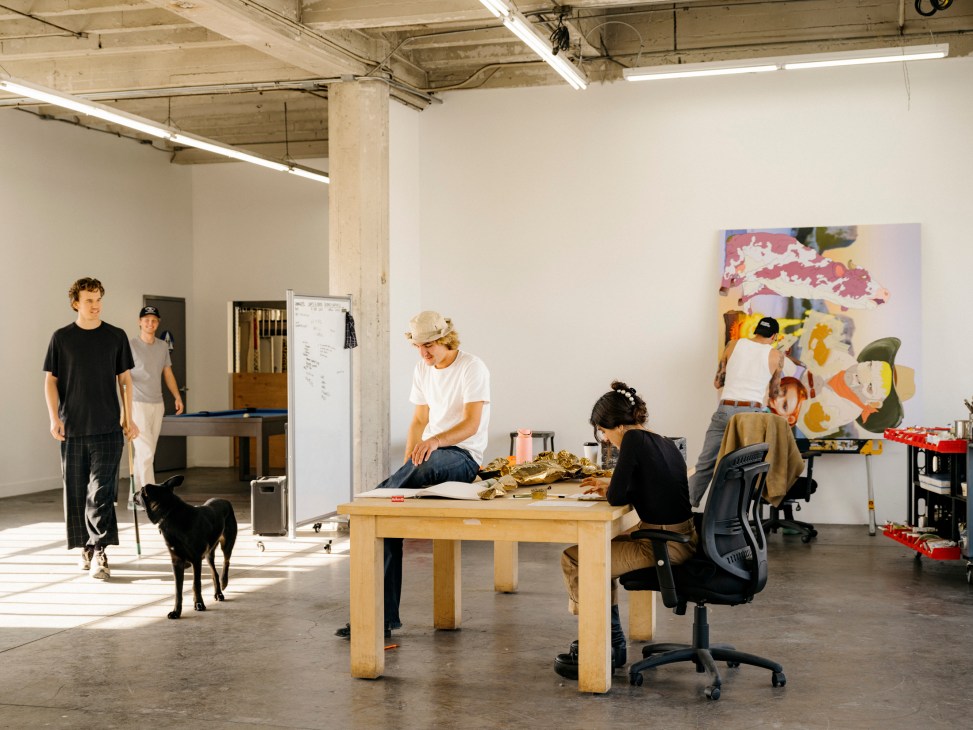
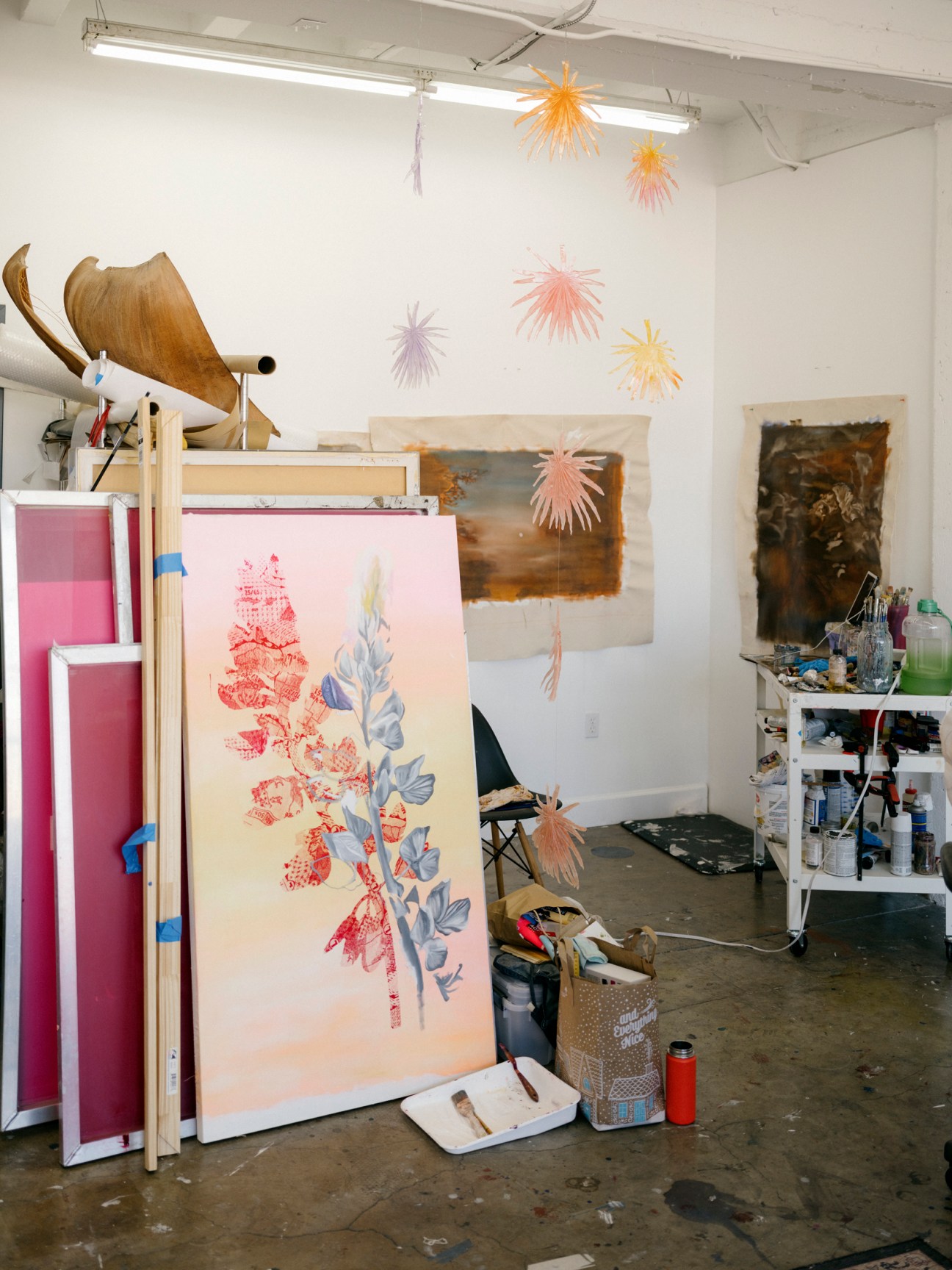

The studios are bright and airy even when packed with sculptures, paintings, art books and mismatched furniture. The connecting hallway is the main thoroughfare. Artists visit neighbours for a chat, to seek inspiration or borrow tools. “People often leave art school where community is everything and then find themselves isolated in some white cube,” says Castator. “This is the antithesis of that. People want to be here. We have 35 artists now.”
Six years ago hosting this many creatives here was a pipe-dream. At that time, Castator, a young artist himself, arrived in LA by way of New York. With no car, he decided to rent in downtown and look for studio space within walking distance. One day he passed a textile factory up for lease. “My father and I convinced the landlord that we were sane with our plan to create studios and to rent to artists,” he says.
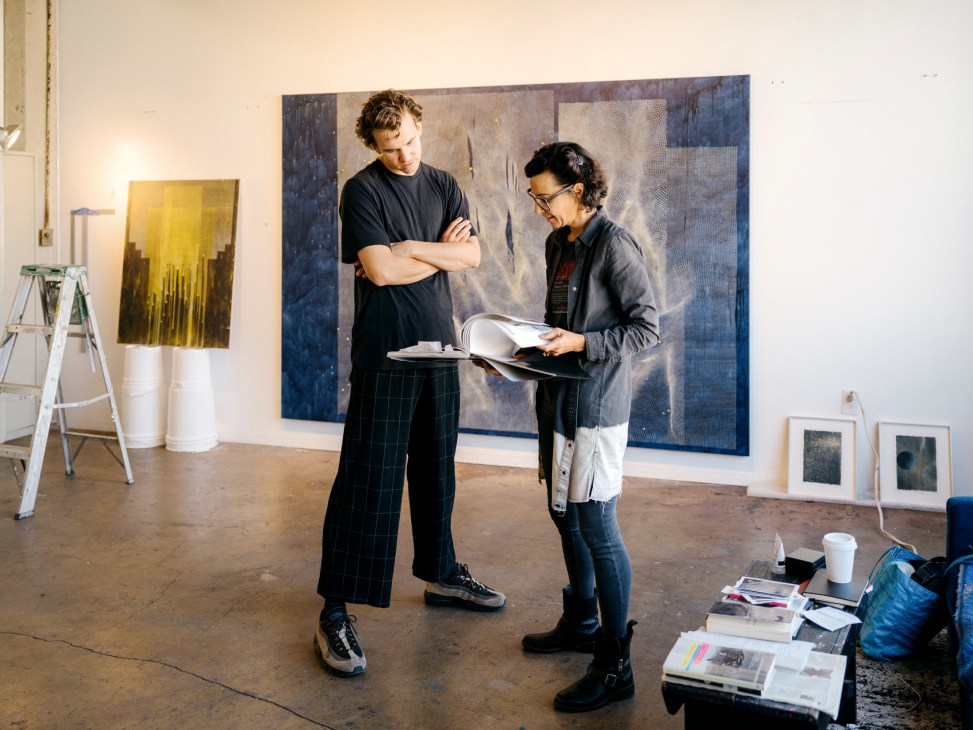
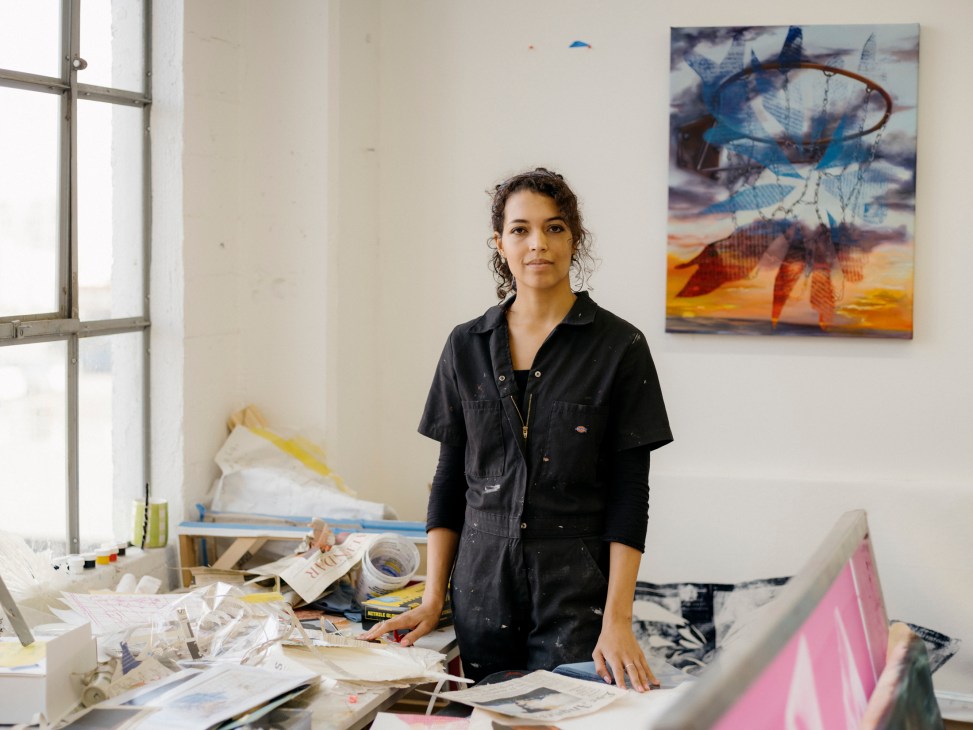
Castator and his father, Mark, oversaw the factory’s gutting and renovating. “We wanted to do it well but affordably, to keep the overheads low,” says Castator. A typical studio at Mohilef Studios goes for between $800 to $1,250 (€760 to €1,200) a month – a reasonable price considering the building’s central location and proximity to the arts district.
Artist Jess Valice has been at Mohilef since its inception. She credits it with boosting her creativity and advancing her career. “When you’re in this building, you’re not just paying for a space; you’re paying for access to a community,” she says. “I didn’t go to art school but here there are so many people who inspire you to be working on your craft.”
Every week the building plays host to dealers and collectors who come to have a meeting with an artist but often stay and peruse other studios. Gallerists Bill Brady, Niels Kantor and Carl Kostyal regularly check in on the happenings at Mohilef. Kostyal has started working relationships with at least half a dozen residents. “He trusts that whoever gets here is up to task,” says Castator. “He’s always asking who is new to the building.”
“I’ve met gallerists, collectors, you name it,” says Brea Weinreb, who relocated here from New Mexico. “Often it’s from other artists in this building saying, ‘Hey, you should walk over and check out Brea’s stuff.’ LA can be intimidating to get around, with galleries in all different areas, so it’s valuable that you can be here and the art world comes to you.” The best part? “It’s a real sense of camaraderie, which isn’t always easy to find in this town.” It’s something that Castator likes to hear. “The art world can be hyper-competitive, especially in the US,” he says. “But fellow artists are not the enemy. A rising tide lifts all boats.”
To secure a space, prospective artists – who usually find Mohilef through word of mouth – must apply to Castator and a board of resident artists. They receive about a dozen applicants a month. Mohilef has also expanded its footprint with a second outpost, about 20 minutes’ walk from its original location. That building, set across three levels, features private studios for more established artists who are willing to pay more for larger spaces. “The idea is that after a while, people might graduate from this building and go to the other one,” says Castator. “At the first building, it’s about finding your feet when you’re trying to get traction.” The expansion is also proof that the Mohilef model is working. “We’re this little outpost of artists working extremely hard, alone but together. There’s a market for that.”
mohilefstudios.com
Why it works
The support of other artists can help with inspiration, advice and networking. Creative scenes are always built on communities
Open kitchen
“We wanted to make something unique,” says Olivier Marty, co-founder of Studio KO, the architect and backer behind Marrakech’s smart new restaurant Sahbi Sahbi (“soulmates” in the Darija dialect). “It’s a place that could honour the two pillars of Moroccan tradition, art and gastronomy.”
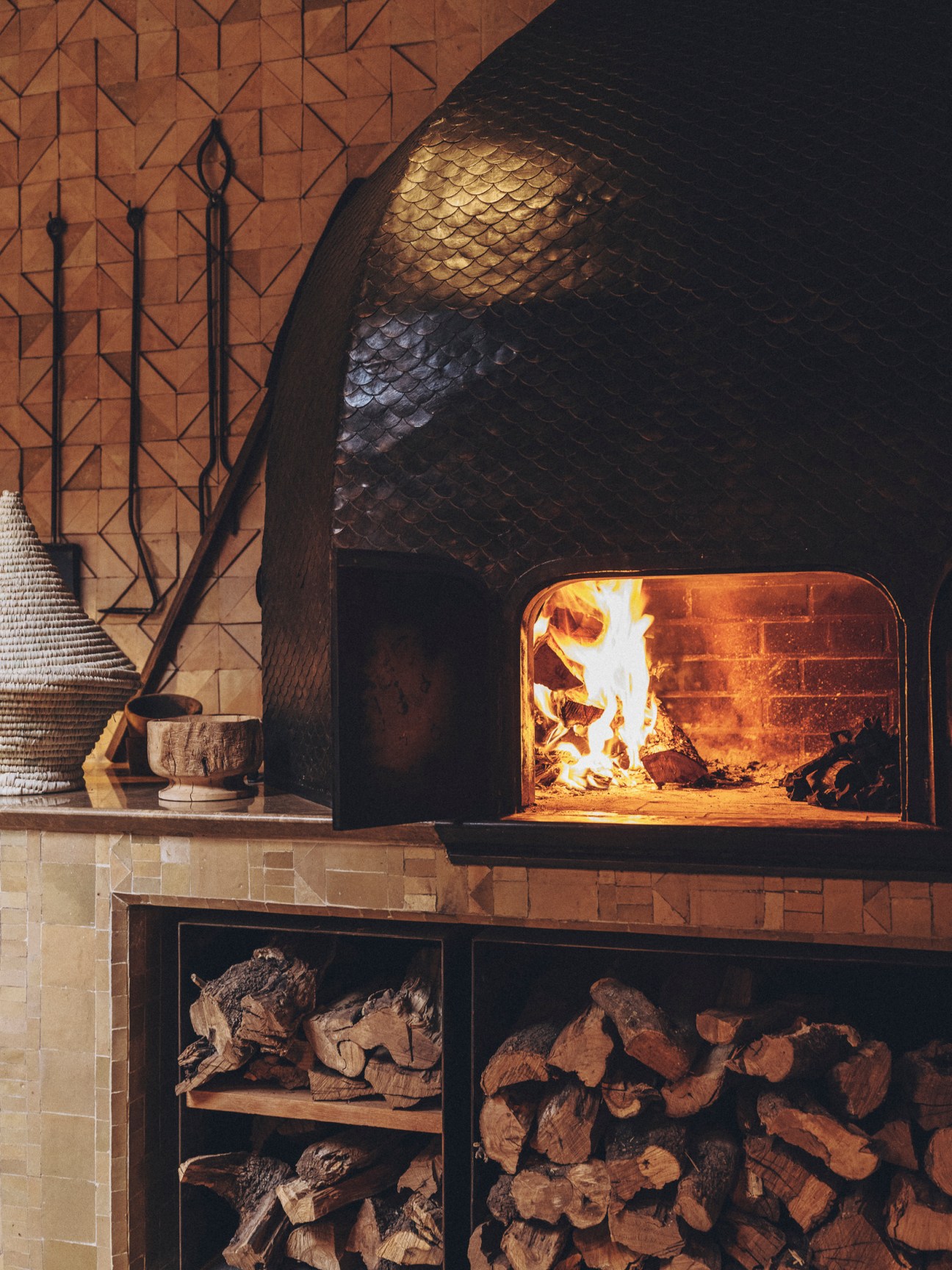
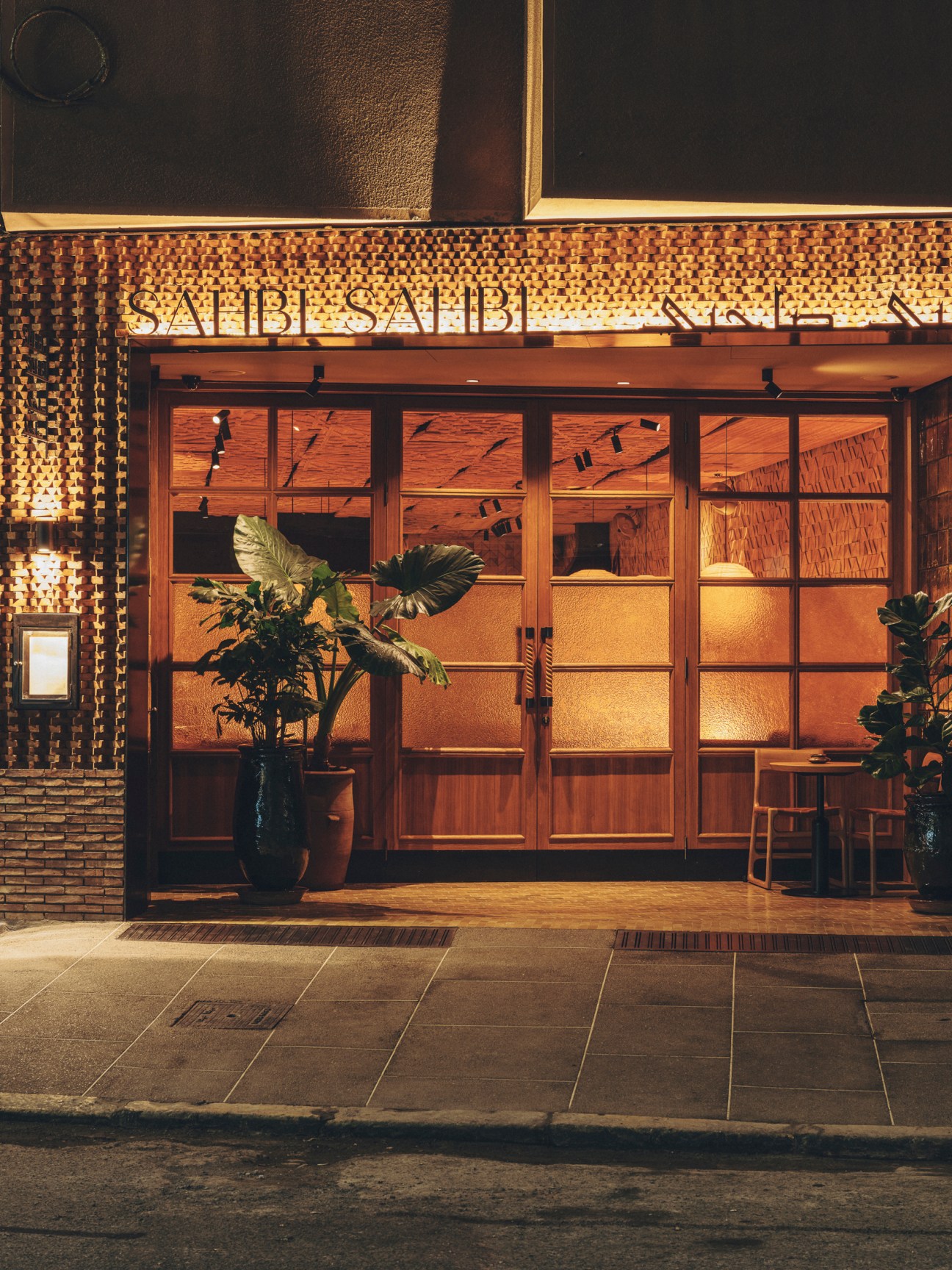
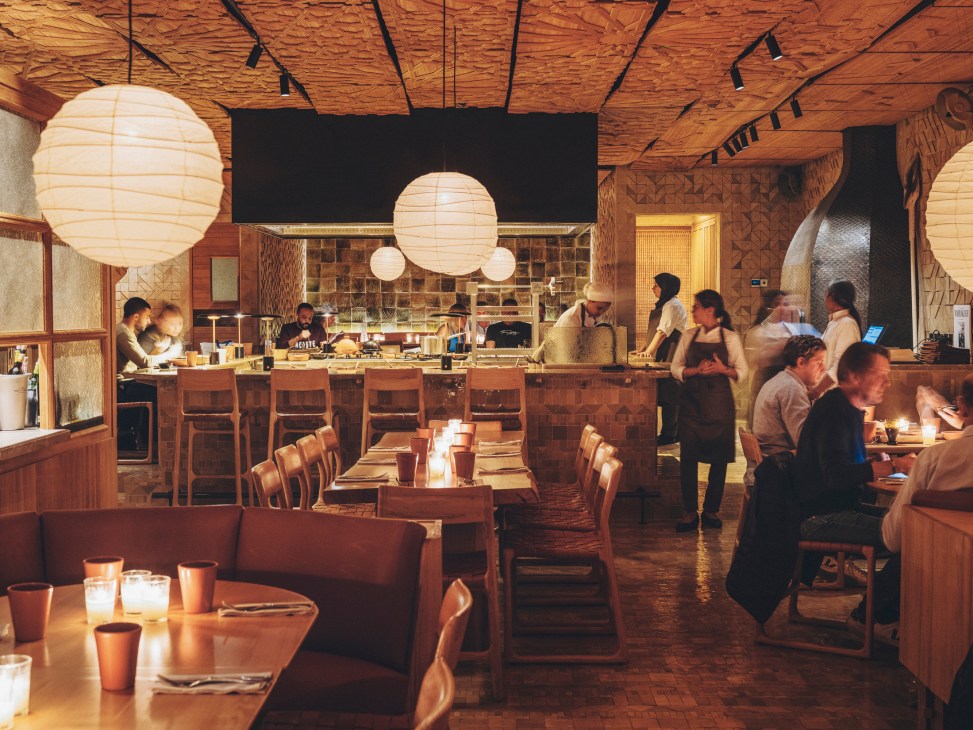
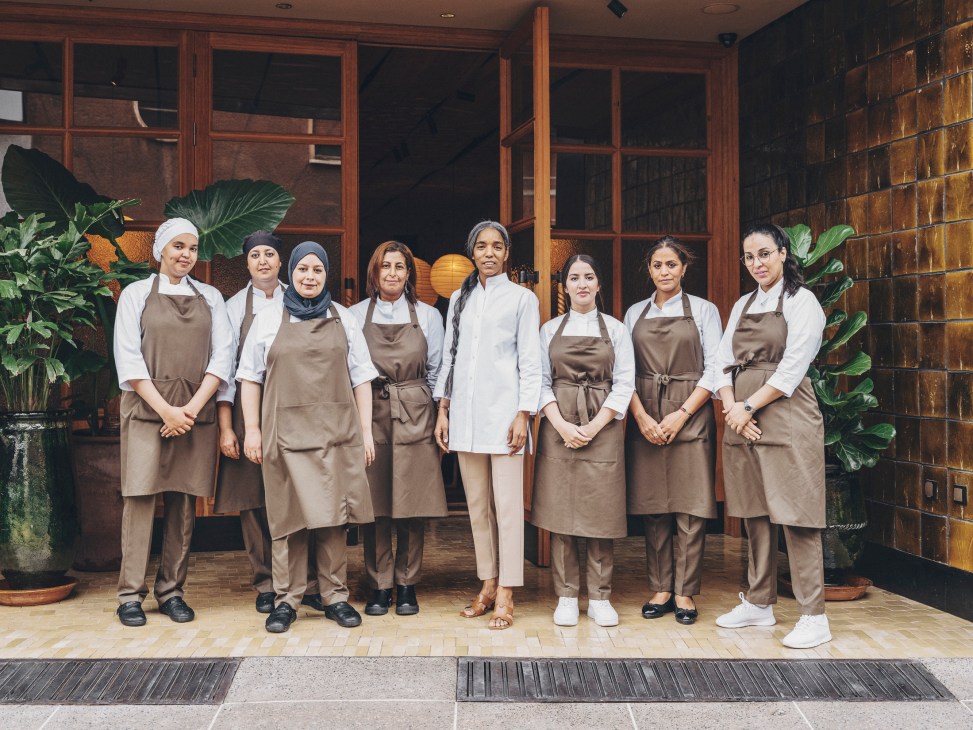
Marty and partner Karl Fournier are perhaps best known as the creative force behind the design of Marrakech’s Yves Saint Laurent Museum. Opening Sahbi Sahbi wasn’t just a culinary or aesthetic act. Kitchens in Morocco are mostly closed shops, often run by men and in which great secrecy surrounds recipes that are passed down through generations. “Sahbi Sahbi is our attempt to showcase both modernity and the past,” says Marty. “We wanted to use design as a backdrop for the menu.” The female-led kitchen is at the centre, turning out cumin-spiced lamb tagines, chermoula sea bass, various pastillas (pies) and herby, veg-heavy couscous dishes.
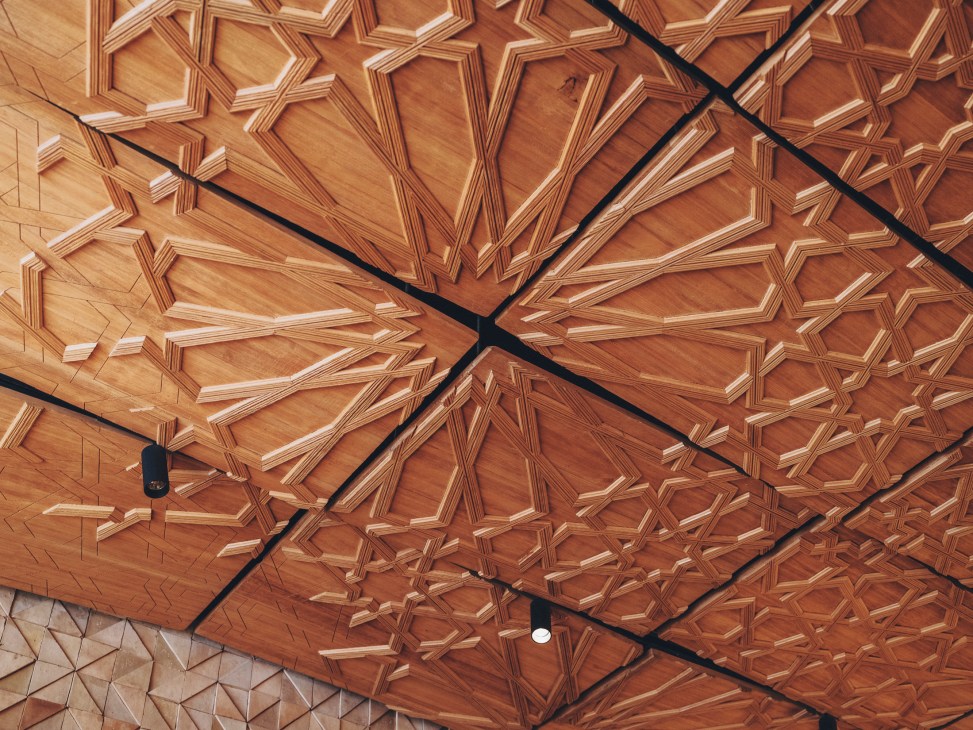
Everything in the restaurant, except for the bamboo lamps by Japanese designer Isamu Noguchi, is made by local artisans. “There’s an abundance of wood and earthy materials throughout, which both have infinite potential,” says Fournier. The duo employed a variety of textured surfaces, such as carvings, brick and cedar elements, and non-symmetrical wall tiles. “Perhaps it’s too early to say but we hope that Sahbi Sahbi becomes a rare and protected place of interaction and social gathering,” adds Fournier. “It’s a space where people are invited to discover the traditions of the Morocco that we’ve come to love.”
sahbisahbi.com
Why it works:
Placing the kitchen at the centre elevates the female-led team and banishes culinary secrecy
All in hand
For Kim Daechul, founder and creative director of fashion design studio Lerici, a well-made piece of clothing needs to evoke emotion. “If you wear one of our jackets and don’t get a certain feeling, it means that I didn’t do my job,” he says. Sometimes that’s an appreciation of a jacket’s hand-cut lapel or the warm embrace of a tailored woollen coat. Those small details make the difference for Kim.
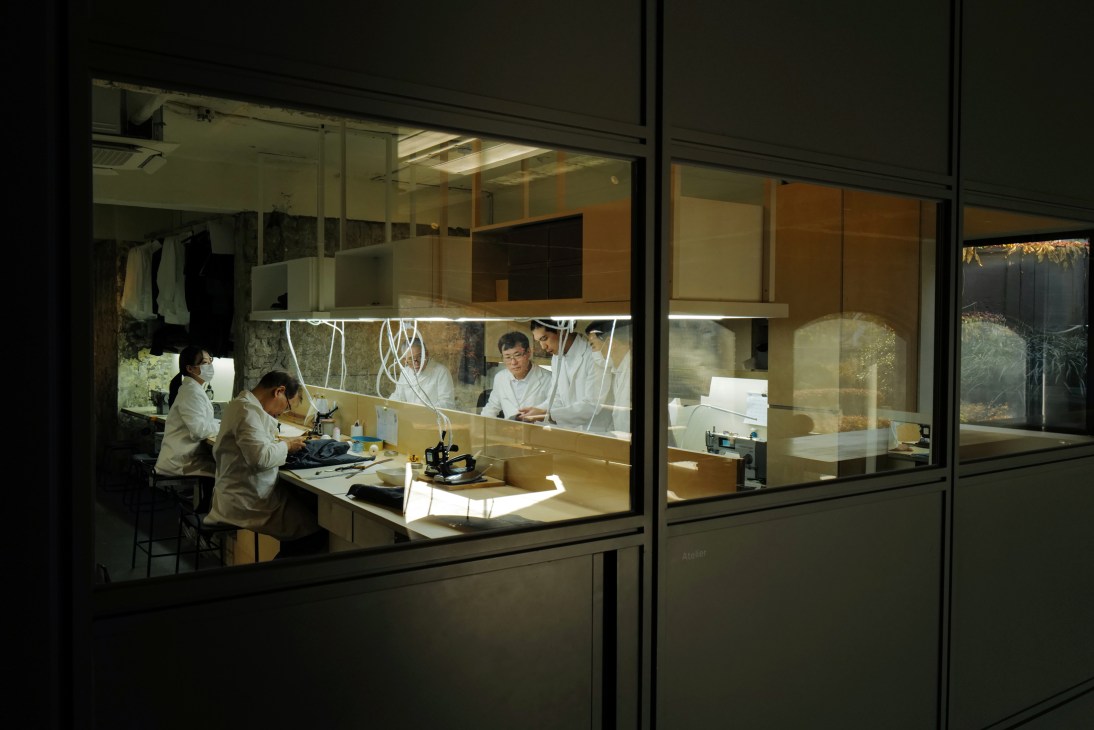
This appreciation for quiet luxury has translated to the way he set up the label’s design studio in a converted villa, next to one of Seoul’s inner-city national parks. Once clients reach the uncanny location, they need to go down about 100 steps on a winding outdoor staircase. It’s only after that stroll down the lush hill that the hefty wooden door to the Lerici atelier reveals itself.
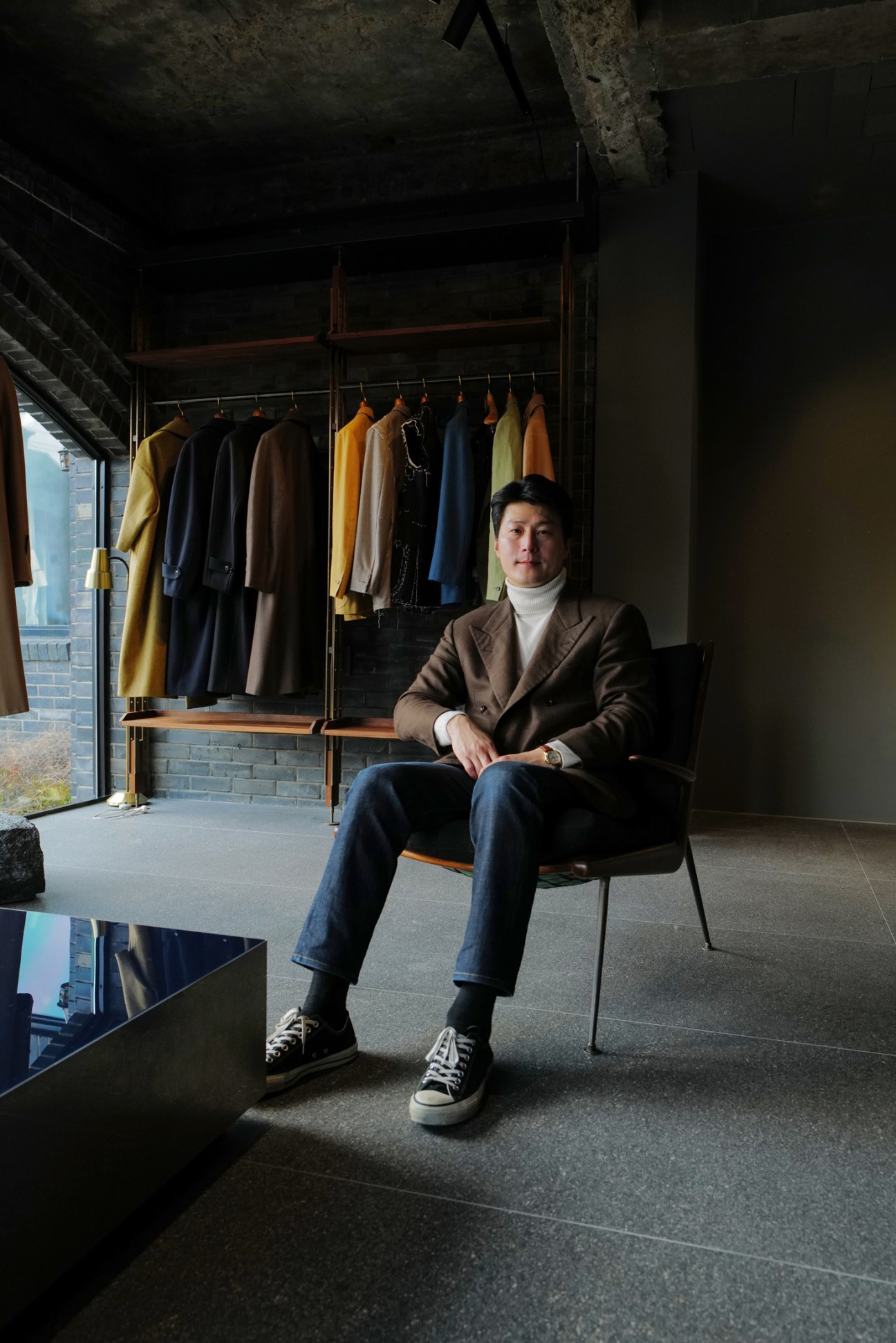
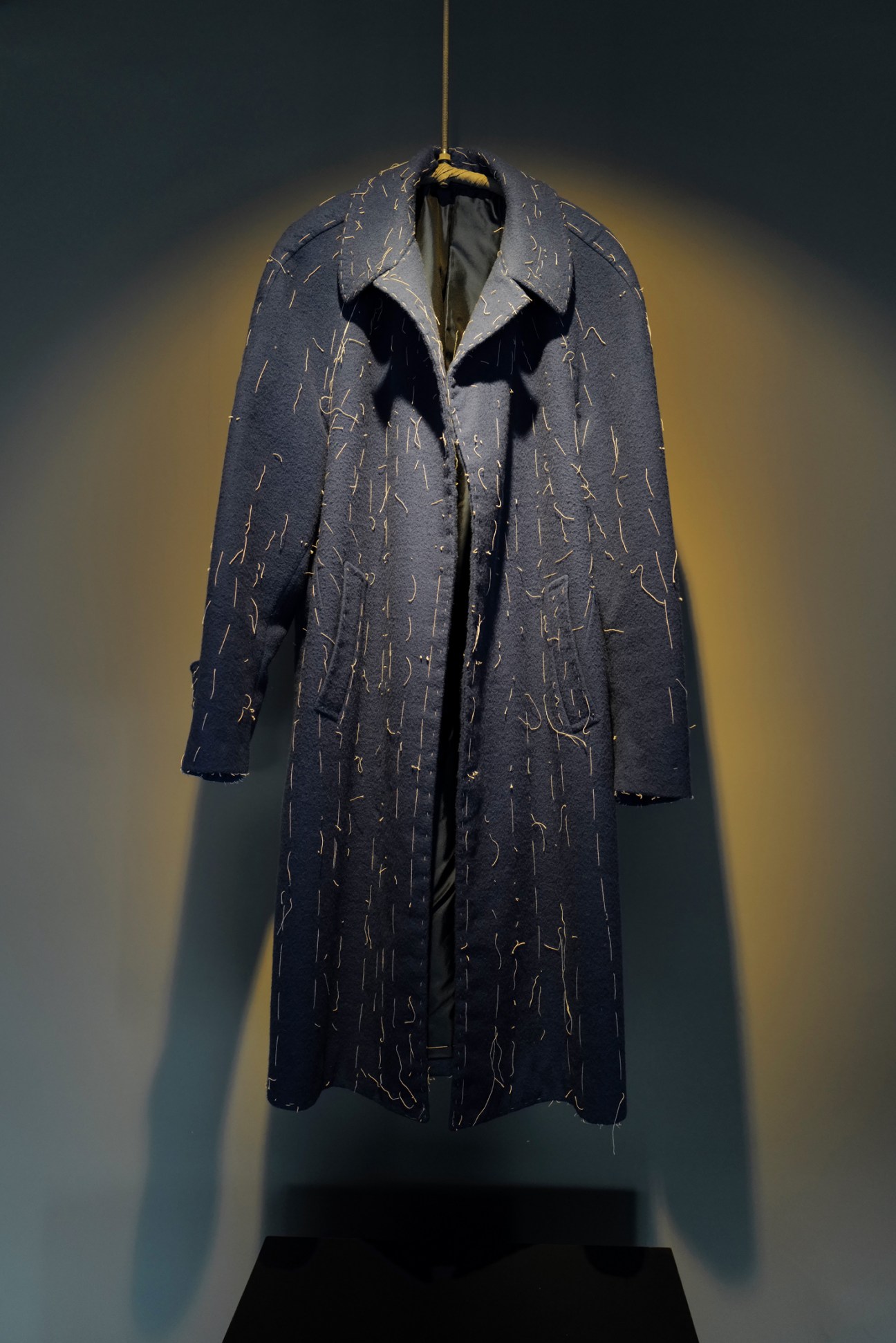
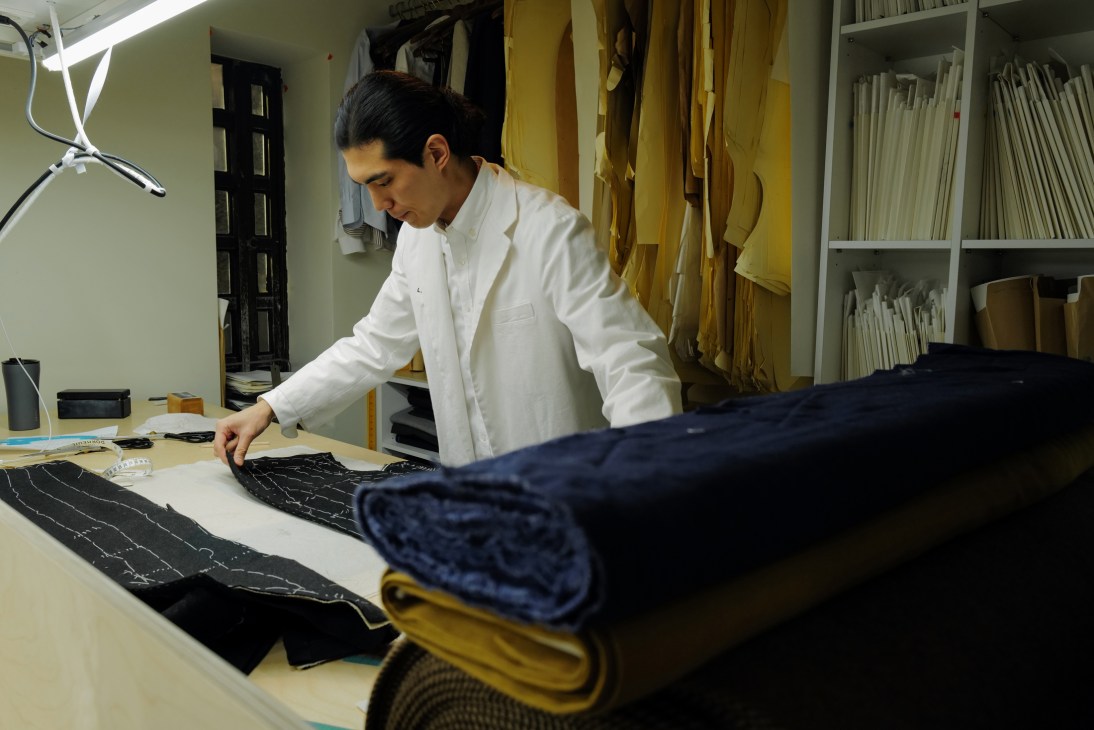
The loft space is all about understated elegance – commanding reverence, almost like a temple. There are exposed brick walls, few decorative elements and only a handful of jackets and coats on a rack. Every item in the room mirrors the artisanship of Lerici’s clothing, including the mannequins made from stone, carved by Kim himself (the industry standard is usually inexpensive fibreglass).
Kim believes that good design is about combining natural materials and the human touch – a topic he explores by staging biannual exhibitions in his studio. “We need to find those details that make us happy about wearing certain garments and nurture close relationships with each piece,” he says.
Even as Lerici gains more international recognition, Kim’s commitment to high-quality materials and handcraft is constant.
Urbanism
Harbouring talent
The Art Gallery of New South Wales’s new expansion is perhaps the most important cultural addition to Sydney since the opening of the city’s iconic Opera House 50 years ago. And after 10 years and AU$344m (€220m), it’s finally open. Sydney Modern, the nickname for this new building and extension to the gallery complex, has a broad and daring curatorial remit that showcases indigenous Australian art alongside local and international contemporary works.
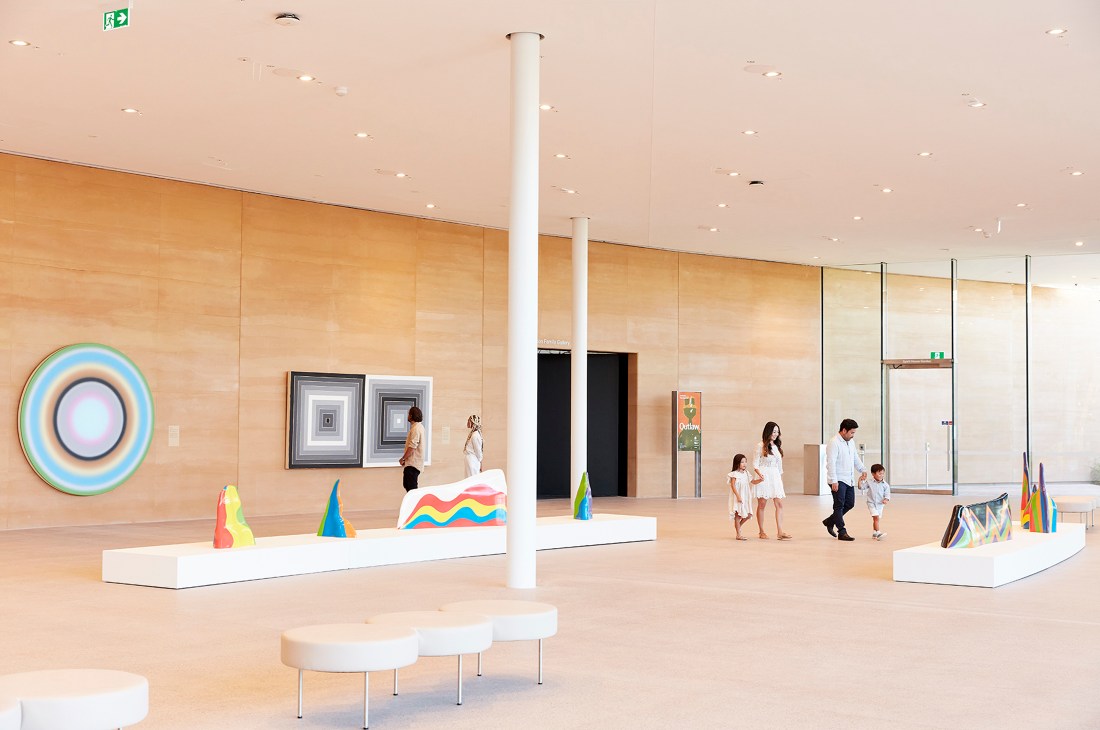
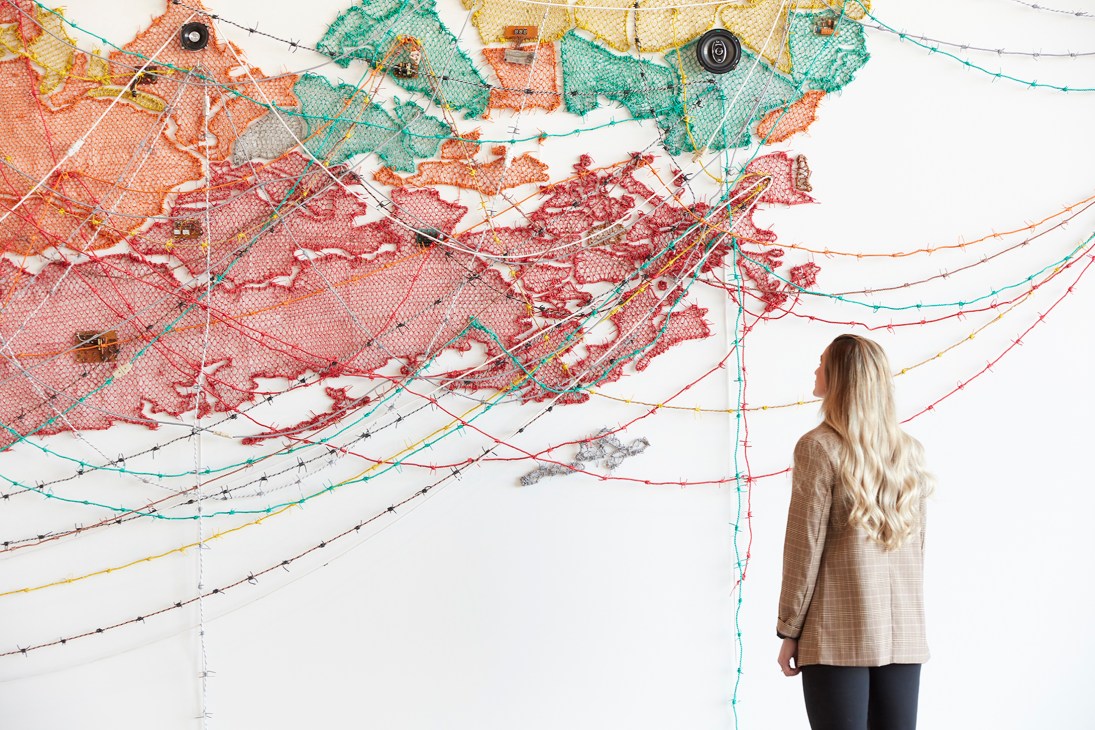
The distinctive structure was designed by Tokyo-based, Pritzker Prize-winning firm Sanaa with support from Australian studio Architectus and renowned landscape architect Kathryn Gustafson. They’ve created a sweeping campus that takes advantage of the gallery’s verdant position within the parkland that skirts Sydney’s harbour and city centre. From above, the building looks like an artfully tussled deck of cards. At ground level, the layers are revealed as a series of glass and limestone-clad pavilions and terraces that gently cascade downhill.
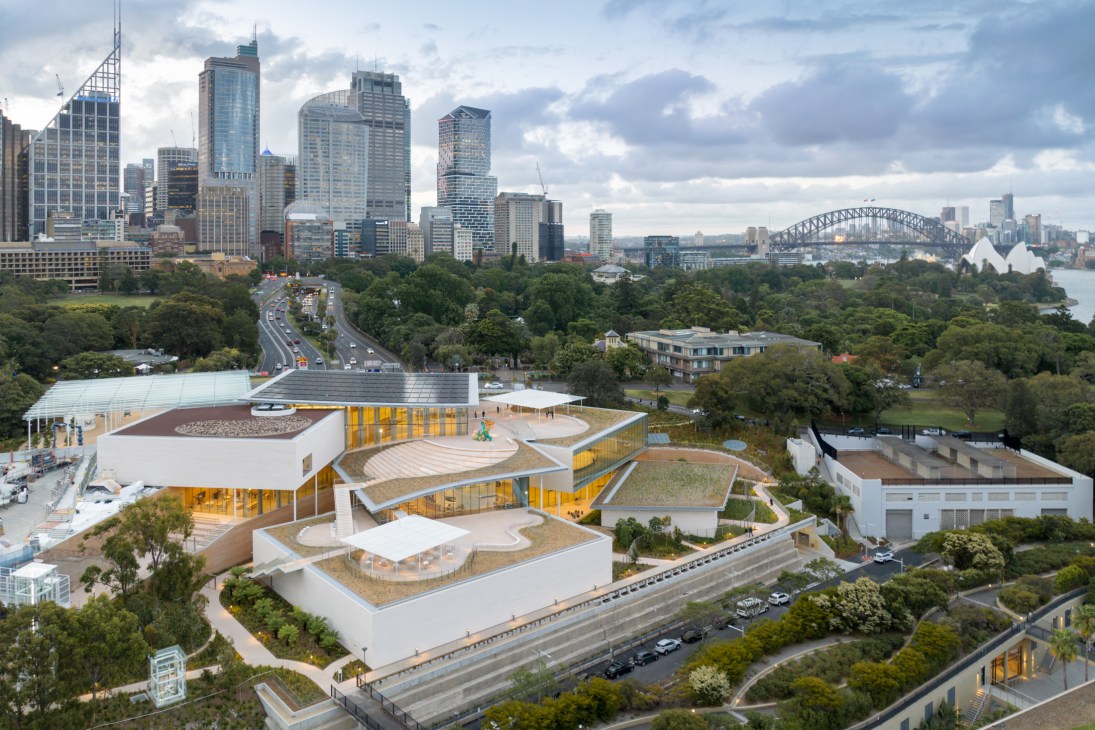
“We aimed to design an art museum that is harmonious with its surroundings, one that breathes with the city,” says Sanaa principal Kazuyo Sejima. “We hope it will be a special place.” If the first look is anything to go by, that aim is achieved.
Personal transformation
February. It’s the month when I stop automatically dating things 2022 and start writing 2023. It’s also the time of year when I become a little more reasonable about what I’d like to eke out of the months ahead. This is goal-setting time, after the giddy highs of Christmas holidays and New Year’s have faded and reality sets in.
It’s the same state that many design practices and studios find themselves in, particularly those based in Europe and North America, with clients still on holiday and construction slowing as the ground freezes in the northernmost cities and towns. Which begs the question: what goals should a studio set for 2023? My suggestion would be to spruce up your appearance.
Speaking to David Marquardt, founder of Switzerland’s Mach Architektur, for this issue’s Expo, which features 50 significant places selected by a host of different designers (see page 147), 2023 should be the year of giving one’s studio some much-needed love.
“All architects I know have the same office,” says the Zürich-based architect, who is renowned for his high-end retail work. “They’re practical and simple; they treat their clients very well and use nice materials but they never do that with their own studio. As an architect you build for others. So why not build for yourself?”
It’s a valid question and one that can no doubt lead to better outcomes for a designer’s team. Marquardt points to his own office, which was renovated in 2019, for proof: raw timber, warm lighting and readily moveable screens for sectioning rooms have created a beautiful environment for his colleagues to socialise and work in.
“What made it difficult was that I had to tell myself who I was, to design a space for me and my team,” says Marquardt. “It’s easier to tell others who they are and make design decisions for them.”
It’s clear then that refitting one’s own studio requires some self-reflection, making a workplace renovation the perfect resolution for architects and creatives as we kick off the new year.
Form follows function
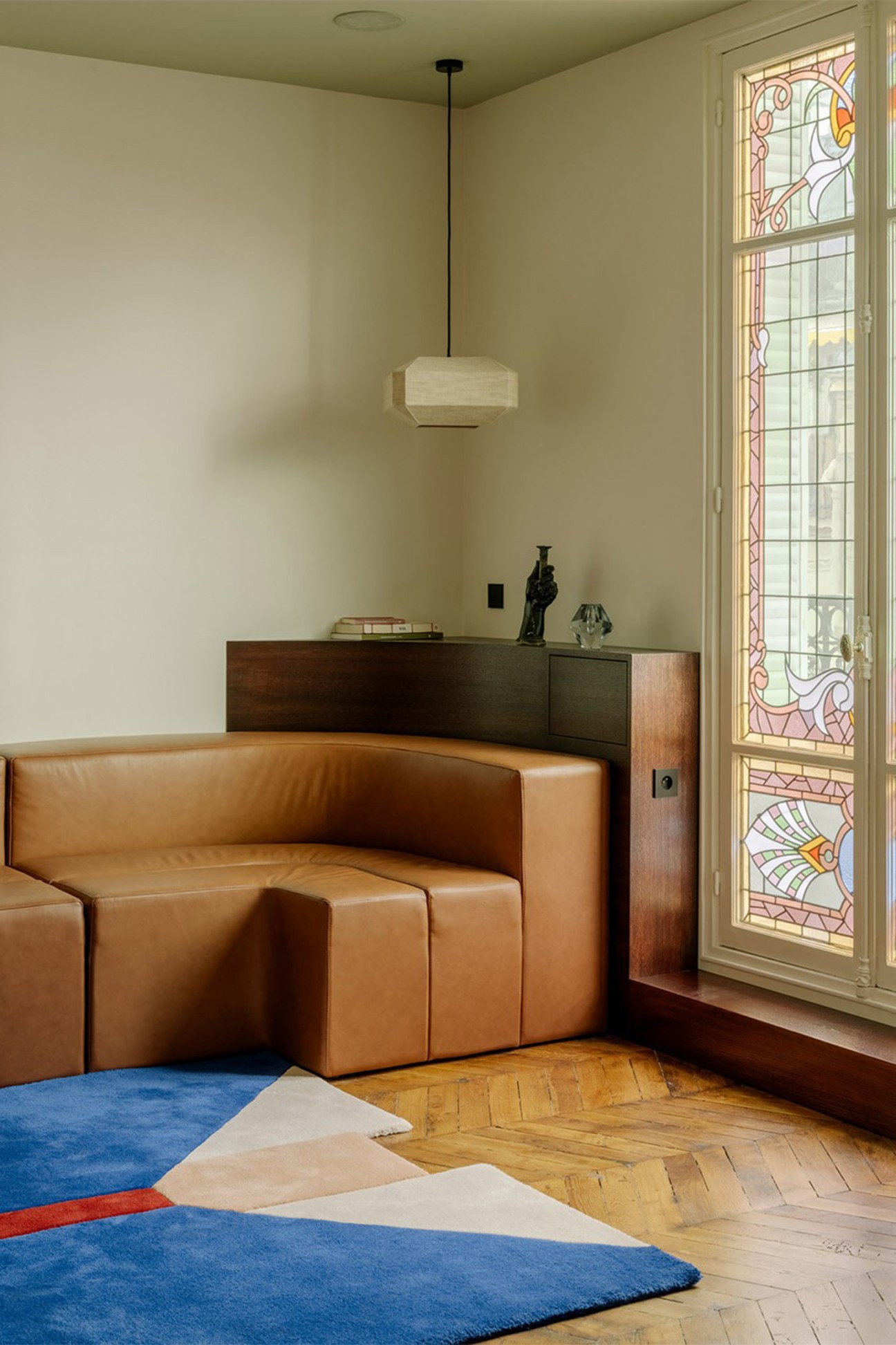
Giving a heritage building a contemporary interior fit-out is challenging: unusual architectural forms need to be accommodated, while a balance must be struck between a modern aesthetic and classic elements. For an example of how to do it well, look to Paris-based interior architect Louis Denavaut, who recently renovated an apartment called Lunain in an art nouveau-style building in the French capital’s 14th arrondissement.
Here, Denavaut was able to preserve the building’s distinctive curving walls and arched doorways by creating made-to-measure furniture. Key pieces include a black oak console table that wraps around a corner, a bowed sofa that matches the curvature of the wall and a dining table composed of a disc of white Carrara marble on an oak base. The apartment’s stained-glass windows have also been retained and enhanced by a grey-green ceiling, which plays on the hues found in the apertures. The outcome is a reminder of bespoke furniture’s ability to enhance any work of architecture.
For more inspiring residences
Subscribe to the Monocle Minute On Design newsletter at Monocle.com/minute.
Picture perfect
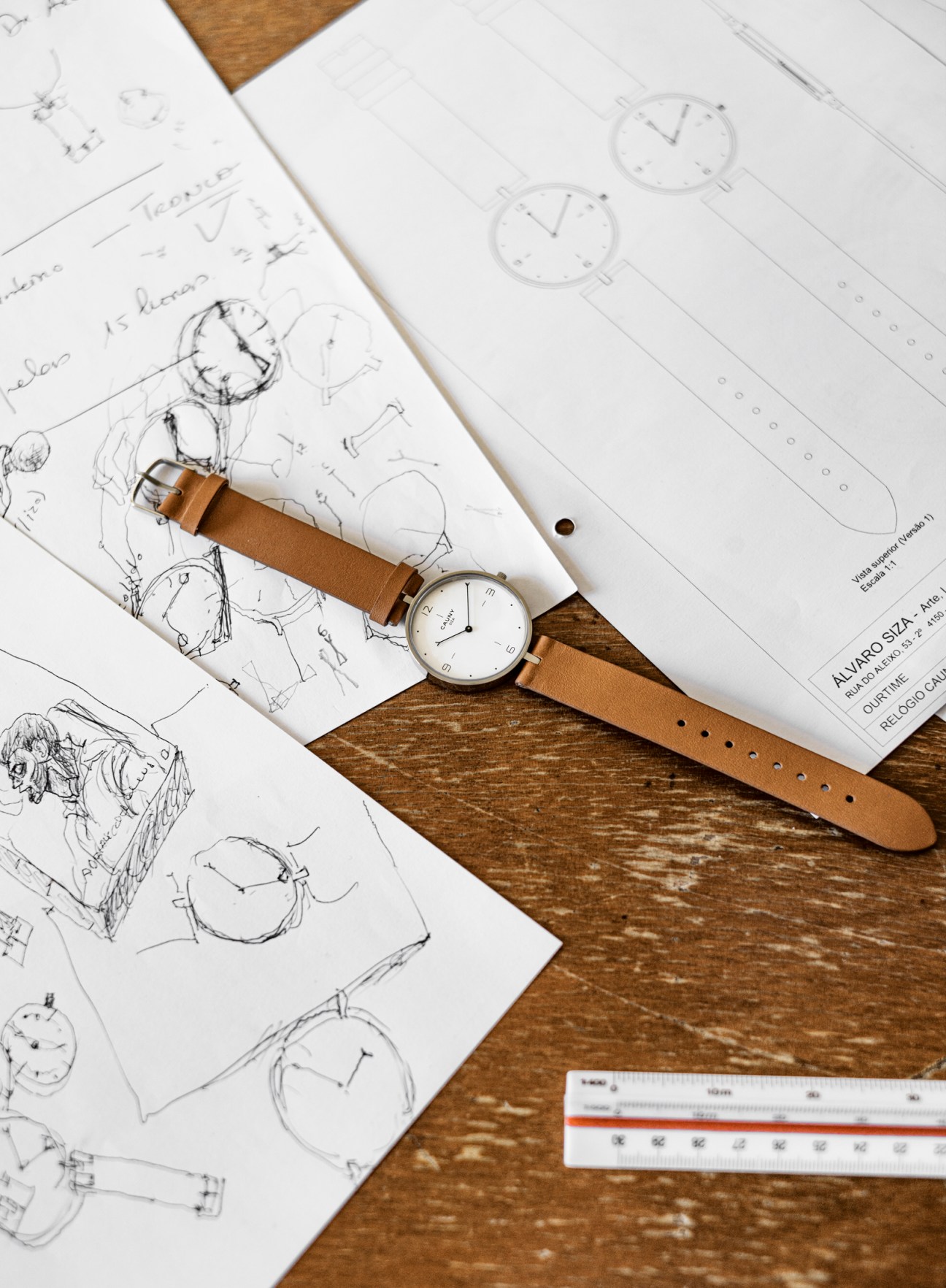
If your new year’s resolution is to arrive on time and look smart while doing it, then an investment in a well-made wristwatch is essential. A pick of the bunch? This new timepiece by Swiss watch company Cauny in collaboration with Portuguese architect and 1992 Pritzker Prize winner Álvaro Siza. The Cauny 3 Siza model is an impeccable timekeeping accessory that blends fine watch-making with architectural ideals.
For Siza, designing a first watch wasn’t about reinventing the wheel. “[I wanted to design] this watch to look like a watch, in the same way that a chair should look like a chair and a car should look like a car,” he says. And that’s exactly what he did. Cauny 3 Siza’s design fuses the architect’s clean lines and crisp curves with the tradition of the company’s wristwatches.
Founded in 1927 in La Chaux-de-Fonds, Switzerland, by three brothers who settled in the town after fleeing Poland during the First World War, Cauny is renowned for its commitment to attention to detail. For the Swiss firm, 89-year-old Siza’s creative process was enlightening. “We witnessed the enormous creative vitality, the speed of thought, the freedom in drawing, the incessant curiosity, the rigour with which he takes care of every detail,” says Cauny’s director Filipe Costa Almeida.
With delicate hands, a steel dial and an Italian leather strap, Cauny and Siza have created a simple, high-quality timepiece. The legacy of Swiss horology has been combined with Portuguese architectural prowess, making for a design that’s sure to inspire its wearer to be on time.
Q&A
Ron Arad
Industrial designer
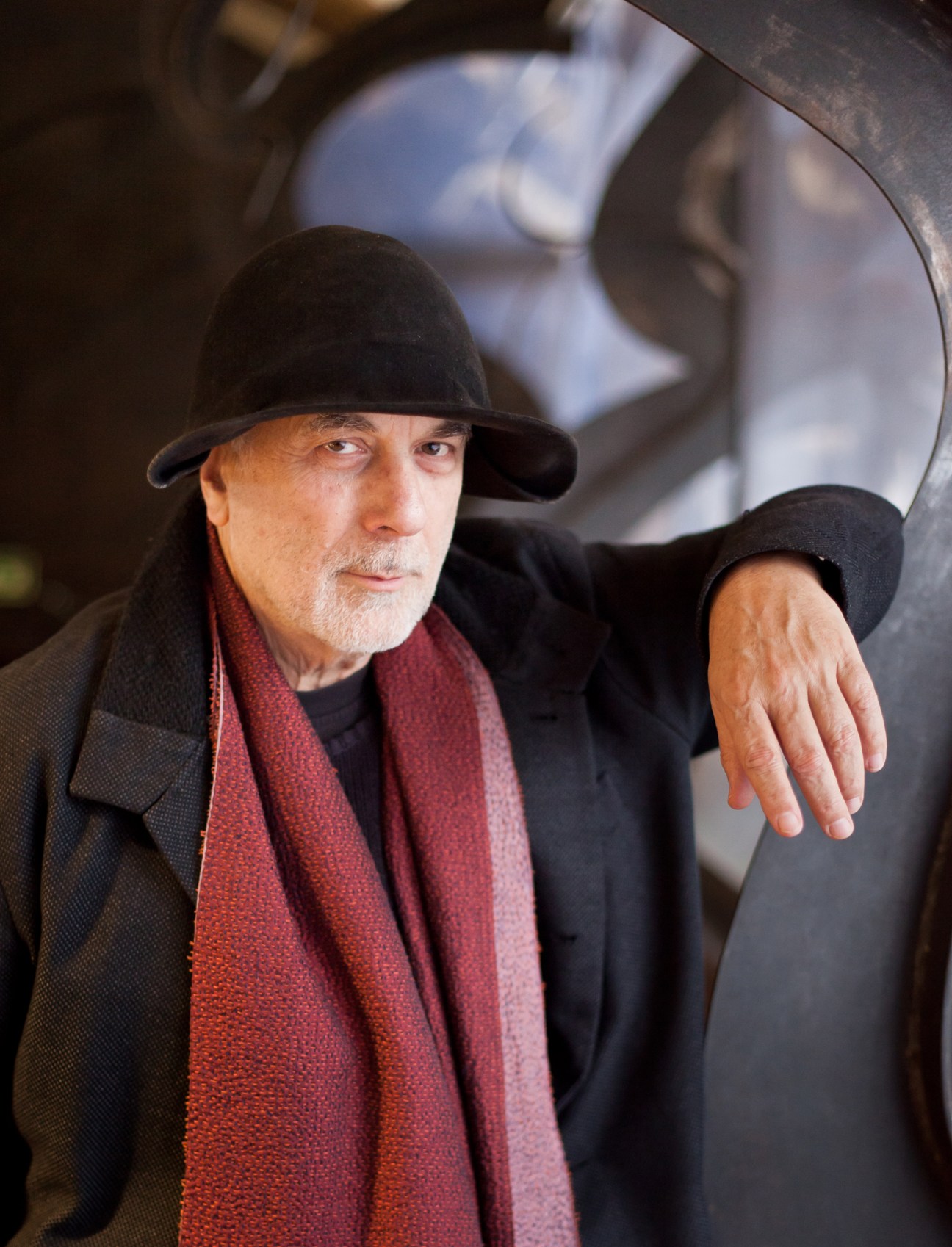
In the course of his 50-year career, Israeli industrial designer Ron Arad has collaborated with the likes of David Adjaye and Kathryn Gustafson. His latest partnership with Italian timber company Alpi has seen him reimagine some of his classic pieces.
This collaboration is all about exposing the interior structures of your furniture. What prompted this approach?
When it comes to joints or formwork, we often cover them up. But in the process of making, I have often observed that the armature of a structure can be quite beautiful. So why hide it?
Is there a particular method you use when determining when to expose these details?
No. I’m not saying that every structure is beautiful. But we do have a choice in how we look at things and you can determine when it is beautiful.
You have always worked with different craftspeople who specialise in different materials. Why do this?
When I started out, I learnt how to weld but the last thing I wanted to do was become a craftsman. I once had a show called No Bad Colours with the logic that all colours are good – it just depends on what you do with them. It’s the same with materials. There are no bad ones and I will work with them all.