Issues
Move closer
Film
Triangle of Sadness
Ruben Östlund
This year, Swedish film-maker Ruben Östlund became the third director to win the Cannes Palme d’Or for two consecutive films. Triangle of Sadness tells the story of an influencer couple who join a group of affluent yet morally bankrupt people on a cruise. Tensions rise after a shipwreck; soon affluenza turns into actual sickness in a sequence best viewed on an empty stomach.
‘Triangle of Sadness’ is released on 28 October

No Bears
Jafar Panahi
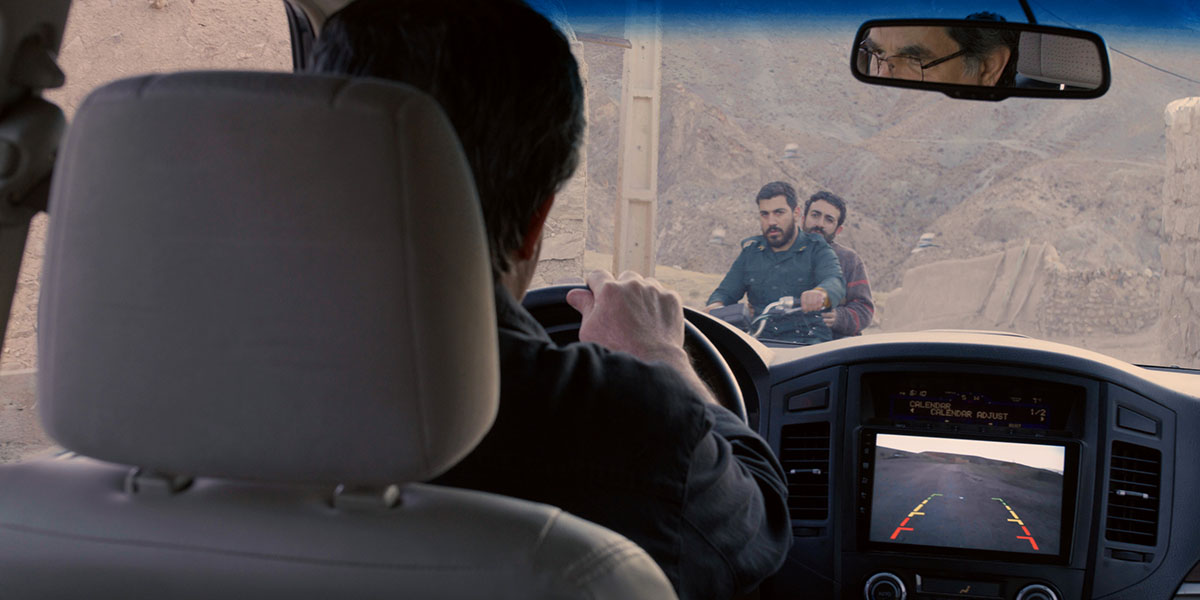
Iranian auteur and dissident Jafar Panahi was unable to receive the Special Jury Prize at this year’s Venice International Film Festival, having been sentenced to six years’ imprisonment for criticising his country’s government in July. His latest film, No Bears, was shot in secret on the Turkish-Iranian border and blurs the boundaries between fact and fiction. Panahi places himself at the centre of this complex story about cultural dogma, oppressive and regressive forces, and the often serious consequences of making art.
‘No Bears’ is released on 11 November
Utama
Alejandro Loayza Grisi
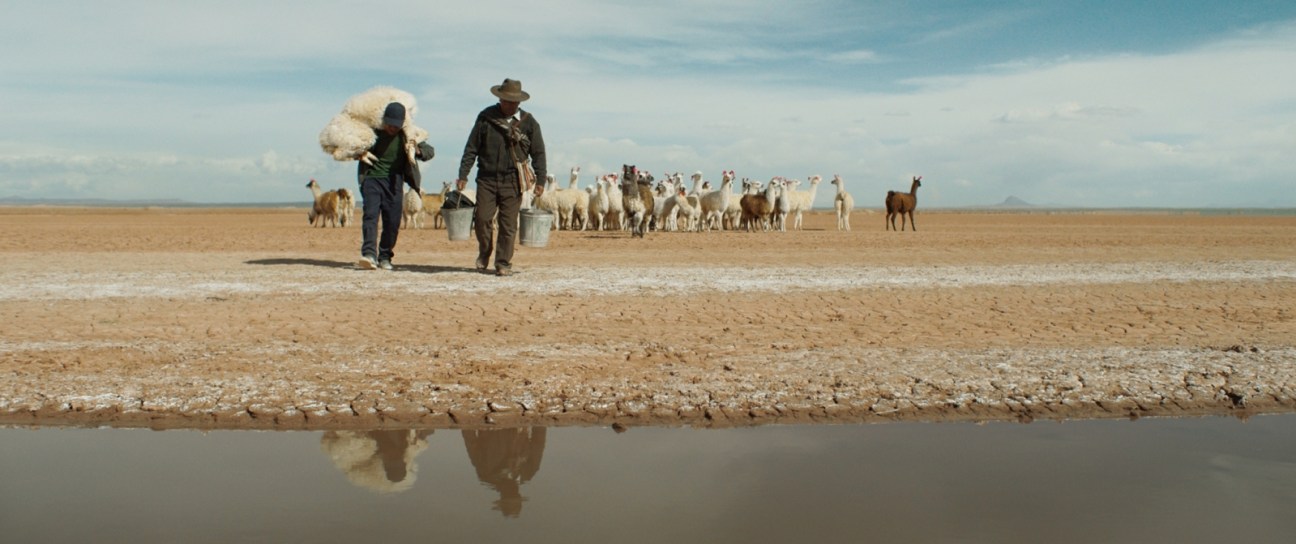
This contemplative debut by Alejandro Loayza Grisi follows an indigenous couple in the Bolivian highlands who must decide whether to leave their home as it becomes ever more inhospitable. Utama is a film about endings and the threat posed by modernity on older ways of life.
‘Utama’ is released on 11 November
Photo

Richard Mosse: Broken Spectre
80 The Strand, London
Irish photographer Richard Mosse has documented conflict in the Democratic Republic of Congo and followed the plight of migrants from Africa to Europe. In his film installation “Broken Spectre”, which fills the cavernous spaces of a brutalist former office block in London, he uses scientific imaging techniques to shed new light on the realities of the environmental crisis that we face.
‘Broken Spectre’ runs until 4 December
Art
Alice Neel: Un Regard Engagé
Centre Pompidou, Paris
US portraitist Alice Neel captured New Yorkers with a kindly eye but her work also had a political edge. This survey dives deep into the role of communism and the women’s rights movement in her work and includes a piece by Jenny Holzer based on Neel’s FBI record – proof that her art, even at its most aesthetically pleasing, was still somehow considered dangerous.
‘Alice Neel’ runs until 16 January 2023
TV
Hostages
Show of Force
In 1979 more than 60 Americans were taken hostage in the US embassy in Iran. The crisis lasted for 444 days, dominating the agendas of two US presidents. This HBO documentary, created by production team Show of Force, features interviews with both the hostages and their captors and explores the complex realities of the case.
The Playlist
Per-Olav Sørensen
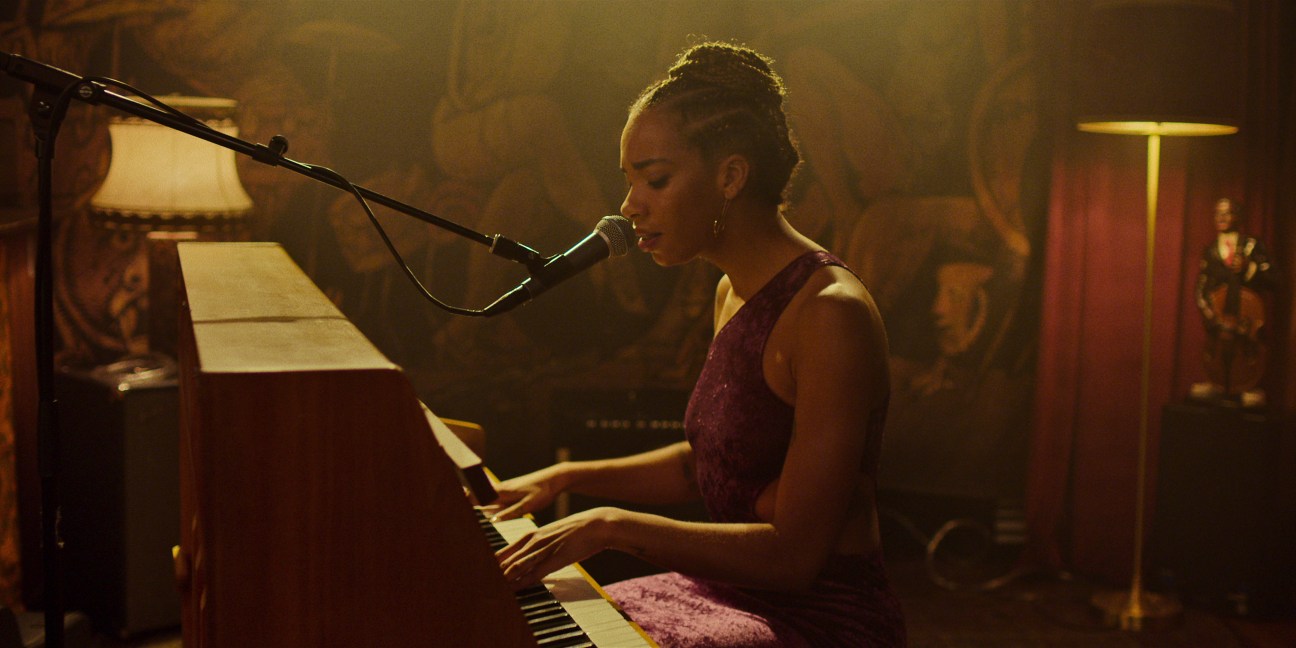
Norwegian director Per-Olav Sørensen’s Netflix drama tells the story of Swedish entrepreneur Daniel Ek (Edvin Endre), co-founder and CEO of Spotify, and how he changed the way we listen to music for ever – but not without making a few enemies along the way.
Books
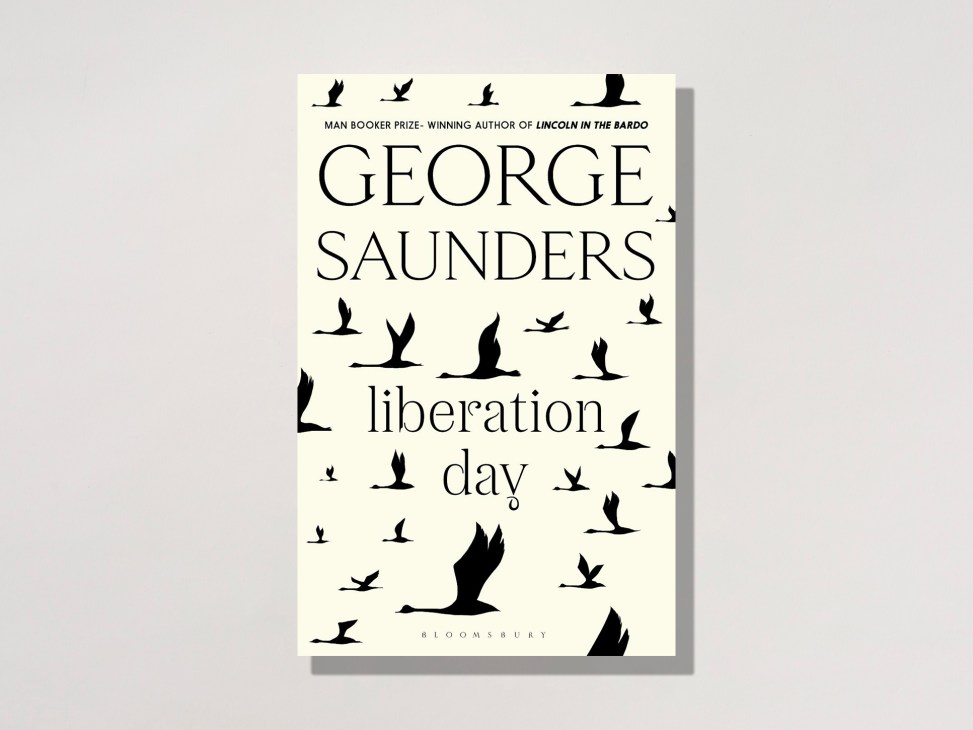
Liberation Day
George Saunders
US writer George Saunders, best known for his Booker Prize-winning experimental novel Lincoln in the Bardo, returns with his first short-fiction collection in 10 years. In stories such as “Love Letter”, a grandfather’s letter to his grandson in an unsettling near-future, and “Sparrow”, the tale of an unlikely relationship, Saunders masterfully creates rich worlds in the space of a few pages. The collection’s meditations on love, morality and democracy are often underpinned by a sense of dystopia. Liberation Day captures what it means to live alongside others while navigating our own complicated identities.
‘Liberation Day’ is out now
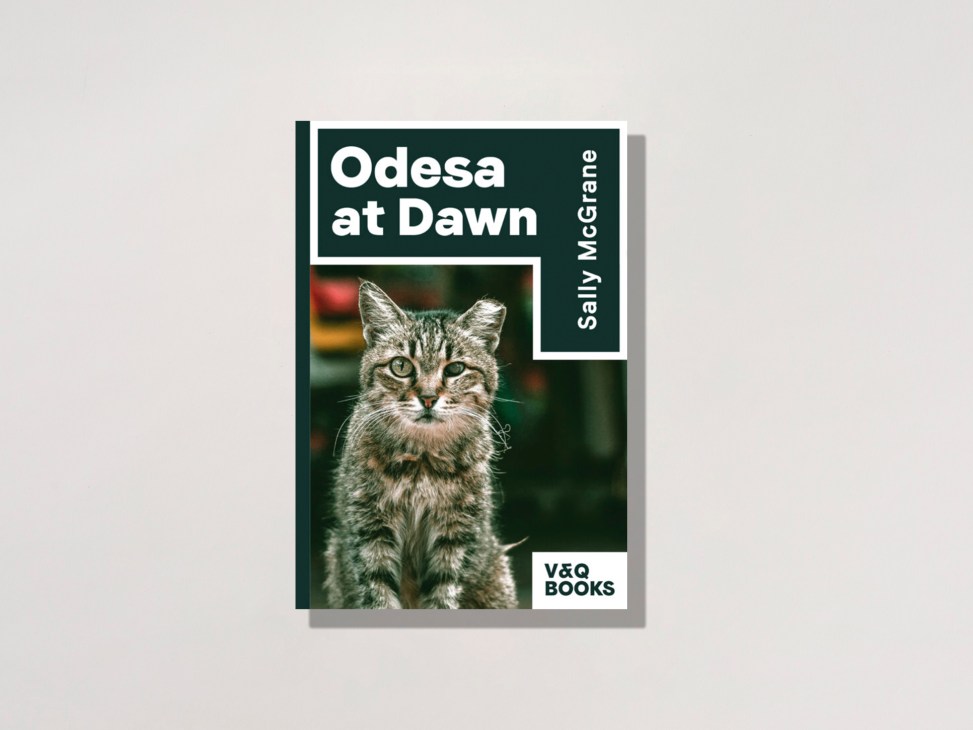
Odesa at Dawn
Sally McGrane
Berlin-based author Sally McGrane’s second book is a surreal twist on the classic spy thriller, set in the Ukrainian port city of Odesa against the backdrop of rising global political tensions. After the discovery of human remains, former CIA agent Max Rushmore finds himself exploring the city’s dark underbelly in search of answers. McGrane delivers a chilling mystery populated by a kaleidoscopic cast of characters, ranging from scientists and pastry chefs to corrupt city officials and murderers.
‘Odesa at Dawn’ is out now
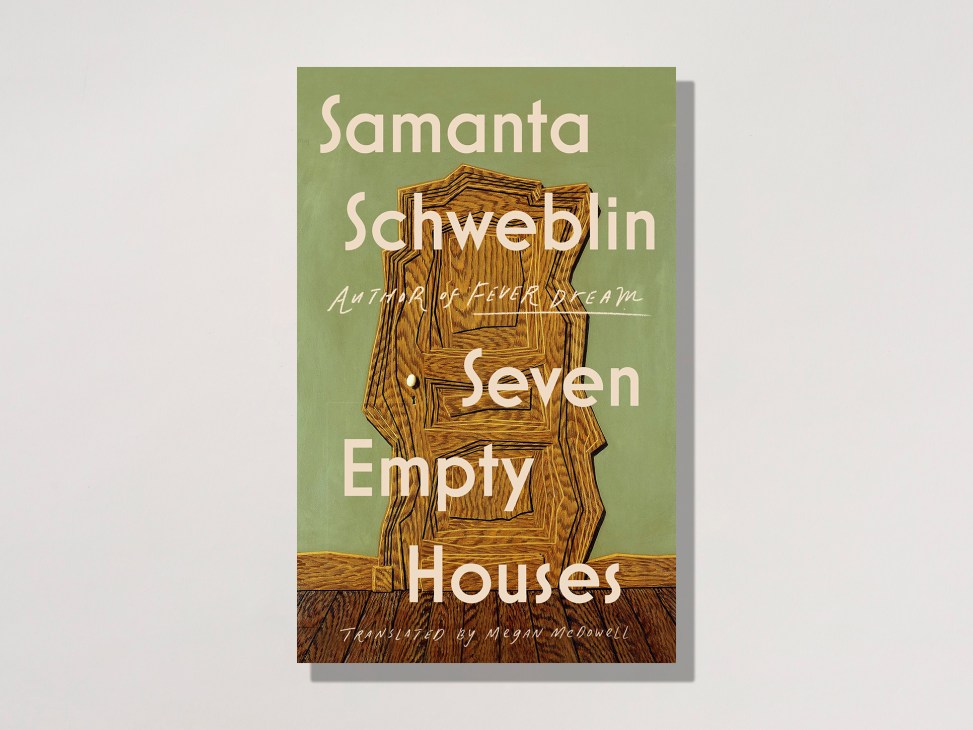
Seven Empty Houses
Samanta Schweblin
Haunted houses are a well-worn trope but this new collection of short stories by Samanta Schweblin takes the idea in surprising new directions. Set in Buenos Aires, Seven Empty Houses explores family, home and life’s everyday hostilities. Schweblin’s characters lose themselves in webs of greed, loss and violence, and their unsettling tales remind us that we are all shaped by the physical spaces that we inhabit and come from.
‘Seven Empty Houses’ is out now
Music

The Loneliest Time
Carly Rae Jepsen
It has been 10 years since her smash hit “Call Me Maybe” but Carly Rae Jepsen has managed to maintain a loyal fanbase and earn the respect of music critics. For her sixth album, she ventures into a mellower sound with songs such as lead single “Western Wind”, a surprisingly melancholic ballad. The Loneliest Time showcases the Canadian singer’s introspective side but she swerves the predictability of a boring “mature” album by punctuating the release with catchy pop bangers such as “Talking to Yourself” and the album’s highlight, “Beach House”.
‘The Loneliest Time’ is out on 21 October

La Marfée
Yannick Noah
French former professional tennis player Yannick Noah is among the few sportspeople who have managed to forge a meaningful music career. La Marfée is a chance to celebrate his 30 years in the industry and is a joyful testament to his success. The album’s title is a reference to a school in Yaoundé; Noah relocated to the city to succeed his father as the chief of a village of 5,000 people on its outskirts. Songs such as the emotional “Back to Africa” suggest that the move has influenced his music, while single “La vie c’est maintenant” is a hit of pure optimism.
‘La Marfée’ is out on 21 October
On my screen
Reemah Sakaan
CEO, Britbox International
Launched in the US in 2017, Britbox is a streaming service that was founded as a joint venture by the BBC and itv to export the best of UK television around the world. It is now available in countries from Australia to South Africa, as well as in the Nordics. Appointed as CEO of Britbox International last year, Reemah Sakaan is in charge of leading its global expansion.
What genres do best on Britbox?
We are in eight markets so tastes can vary. The programme type that we carry most of is scripted drama – in particular crime and mystery, both classic and contemporary. This ranges from Agatha Christie classics such as the recent Hugh Laurie-directed series Why Didn’t They Ask Evans? to true crime shows, such as The Pembrokeshire Murders.
How do you know when a series has global appeal?
In short, when we see universal themes such as love, crime, family, community, immigration or loss threaded through the story. We also look for recognised talent and familiar properties.
How has Britbox’s slate evolved?
We have listened to our subscribers and are representing contemporary UK voices with forthcoming series such as The Confessions of Frannie Langton, Three Little Birds and Stonehouse. UK content can no longer be pigeonholed and it’s important that we show its breadth.
Which productions are you most excited about?
We have the acclaimed Sherwood, a hit that has already been commissioned for a second series; Beyond Paradise from the creators of Death in Paradise; Stonehouse, starring Matthew Macfadyen and Keeley Hawes; and crime drama Karen Pirie. Further down the line, there’s Archie, starring Jason Isaacs, Lenny Henry’s Three Little Birds and Payback from Line of Duty’s Jed Mercurio.
Images: Alma Films, Netflix/Jonas Alarik, Plattform-Produktion, Richard Mosse, TIFF The Estate of Alice Neel and David Zwirner/Malcolm Varon, Bloomsbury, Carly Rae Jepsen/604/School Boy/Interscope, Penguin, Phoenix, V&Q Books.
In full flow
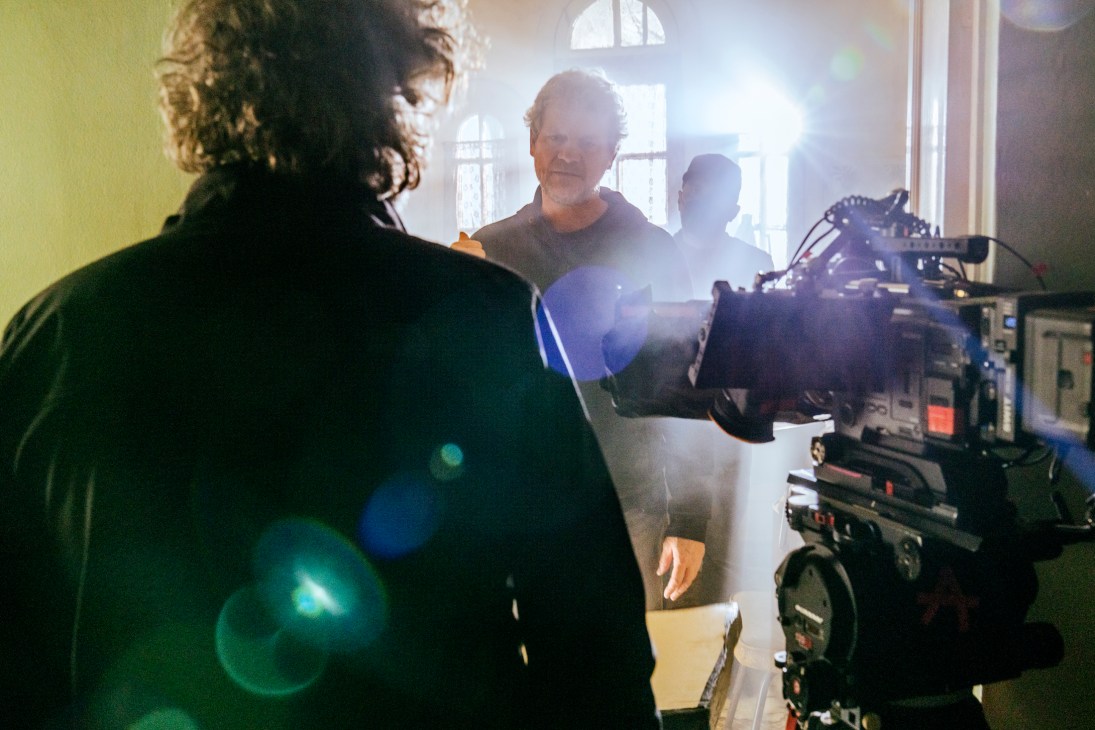
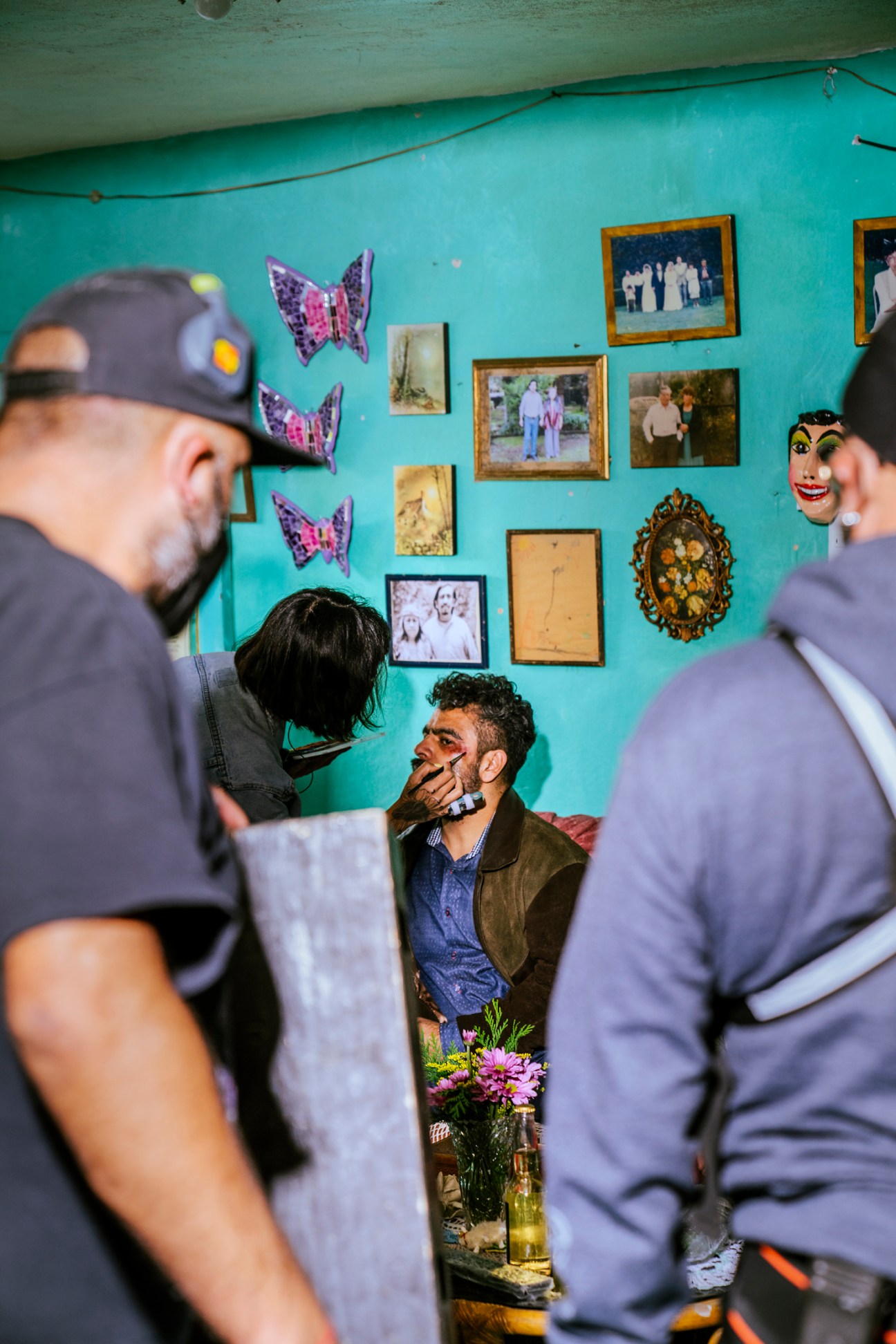
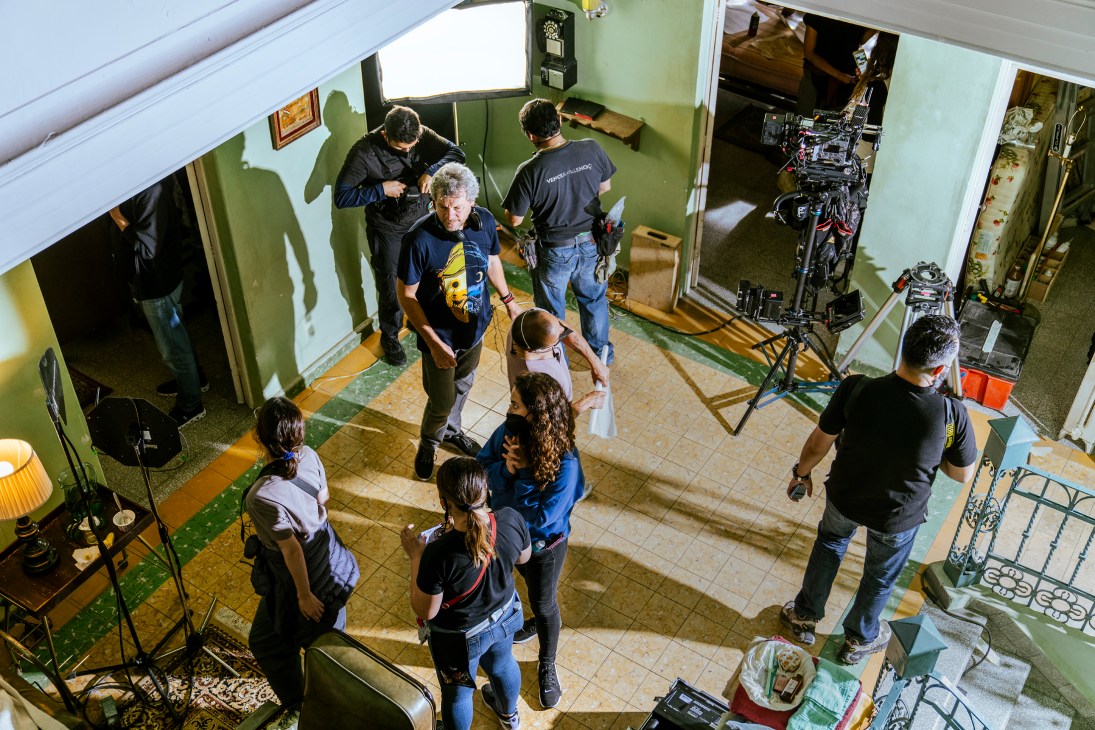
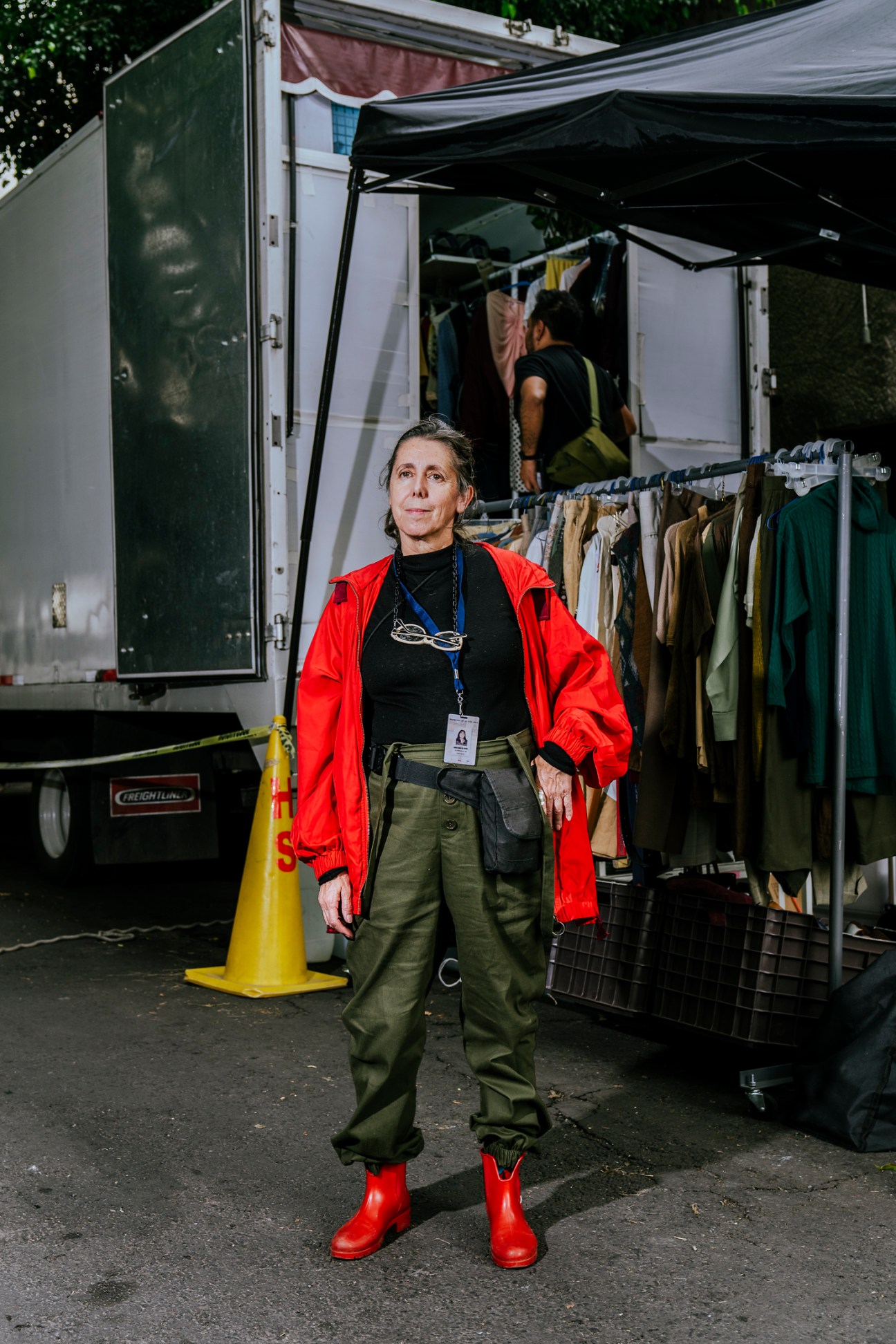
In a rambling, disused hospital in Mexico City, a film crew are readying for the next take and the air is thick not just with dust but also ambition. “I’ve just got myself a manager here in Mexico,” says Mariana Flores off-set. She plays a revolutionary from Peru in Travesuras de la Niña Mala (The Antics of a Bad Girl), an adaptation of a novel by the Peruvian Nobel Laureate Mario Vargas Llosa, which will debut as a series this year. Mexico-born Flores worked as an actor in Los Angeles for decades before opportunity knocked back home.

The crew have just returned here from shooting on the streets of Paris and, for the interior scenes, have transformed this eerie sanatorium into a rundown Parisian flophouse during the 1968 Leftist riots. Actors from all over Latin America with guerrilla-chic hairdos bustle about in the old examination rooms.
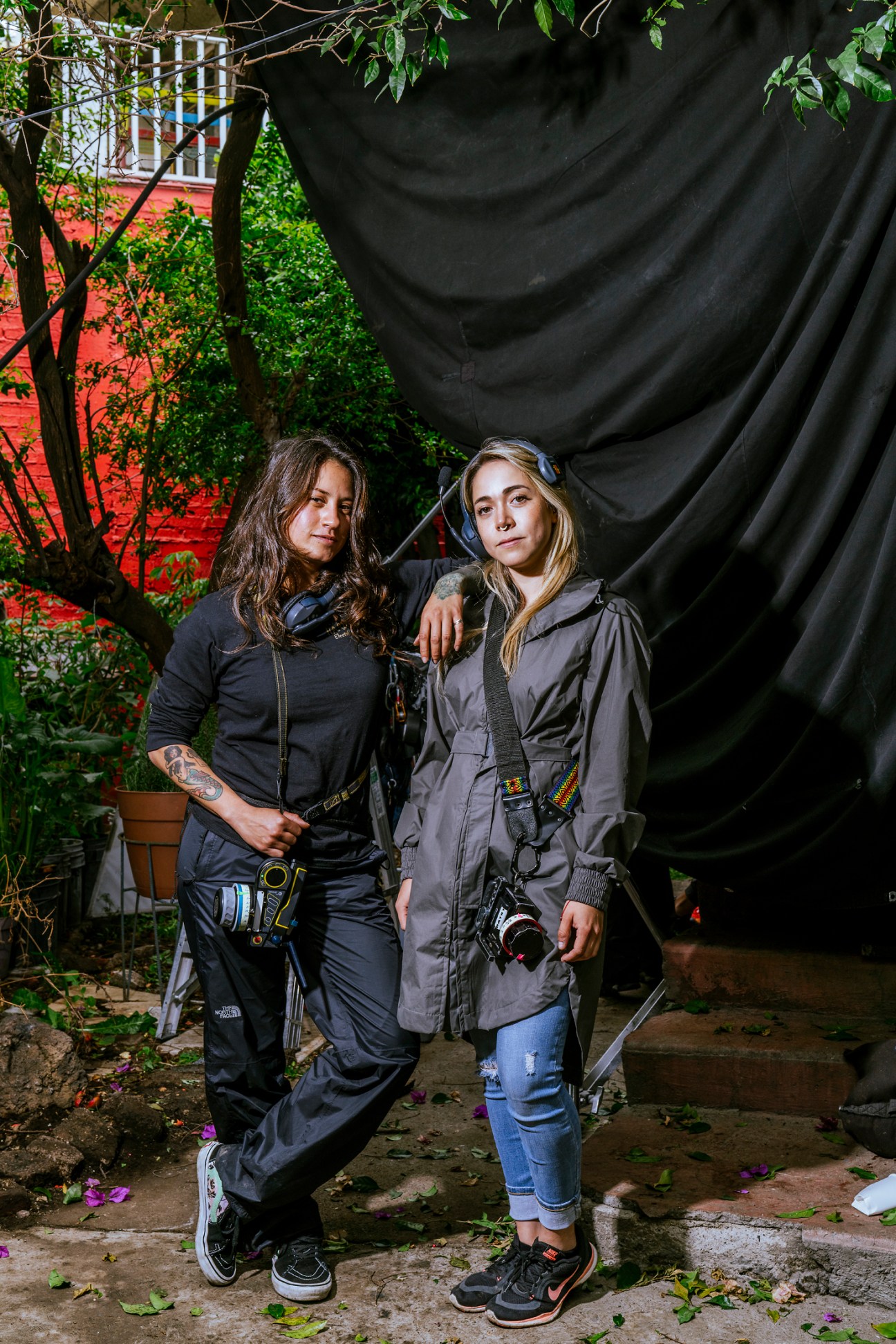
“Chicos, silencio!” shouts a set manager, causing the crew to scatter. People scramble to haul lights, cameras, and cables into position. There’s a hurried click of the take board and Argentinian actor Macarena Achaga emerges languidly from beneath the covers in one of the dusty bedrooms. In the closed constellations of Latin American celebrity, Achaga is a rocketing star: walking around Mexico City, her face stares out of every newsstand. Here, as she pirouettes in front of a mirror for the camera, all eyes are on her.
TelevisaUnivision in numbers
100 million: Spanish speakers use TelevisaUnivision every day.
$4.8bn: Reported value of the merger between the two TV giants.
10,000: hours of content available on Vix+, including telenovelas, scripted series, football matches and more.
57: US-based radio stations owned by the group
3: Emmys won by group’s news division Univision Noticias in September
Travesuras is a flagship production for a new global streaming service called Vix+, which launched over the summer. Pitched at Spanish-speaking viewers on both sides of the Mexican border – and from Montevideo to Medellín – Vix+ is creating original series in Mexico that it believes can rival those of Netflix, Disney+ and HBO, all offered for a monthly subscription costing just $7 (€7). (An ad-supported service, Vix, also launched in March.) It is buying up edgy scripts from across Latin America and hiring big talent and international directors.
Latin America is the second-fastest growing regional market for streaming services. It is expected to almost double in value to $851m (€878m) by 2025. The past decade has seen all the major streamers expand their offering in the region and compete to create bigger-ticket productions, far outstripping in writing, cast and scope much of the traditional TV that viewers expected to see in their language. The surge in quality programming is finding audiences outside of the Spanish-speaking world; Netflix’s Who Killed Sara? and La Casa de Papel (Money Heist), are often cited as breakthrough examples. TV execs wonder if the next global phenomenon – a new Squid Game – could emerge from the Spanish-speaking industry. Mexico, where Hollywood has long come to shoot on a budget, could be where that series is made.
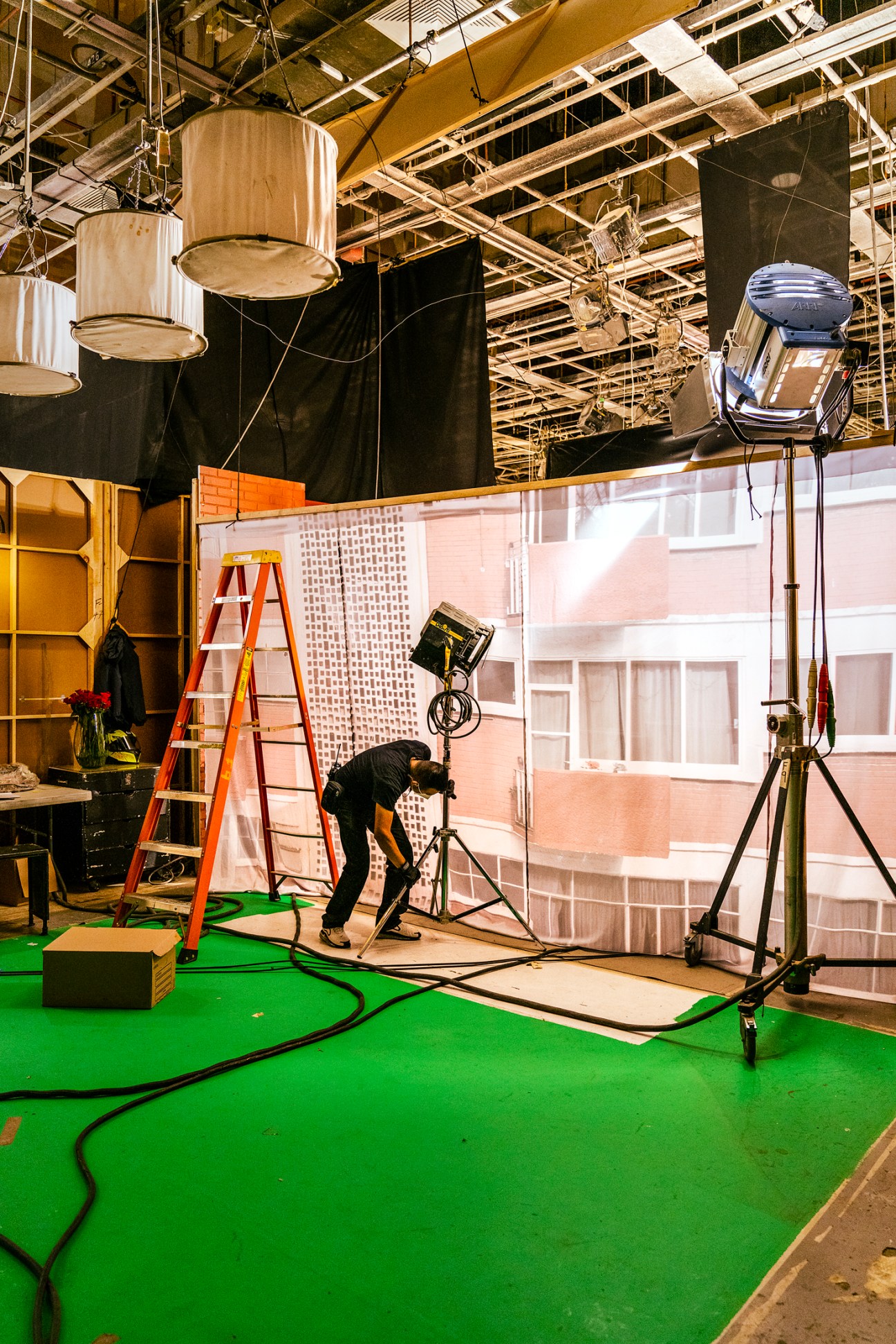
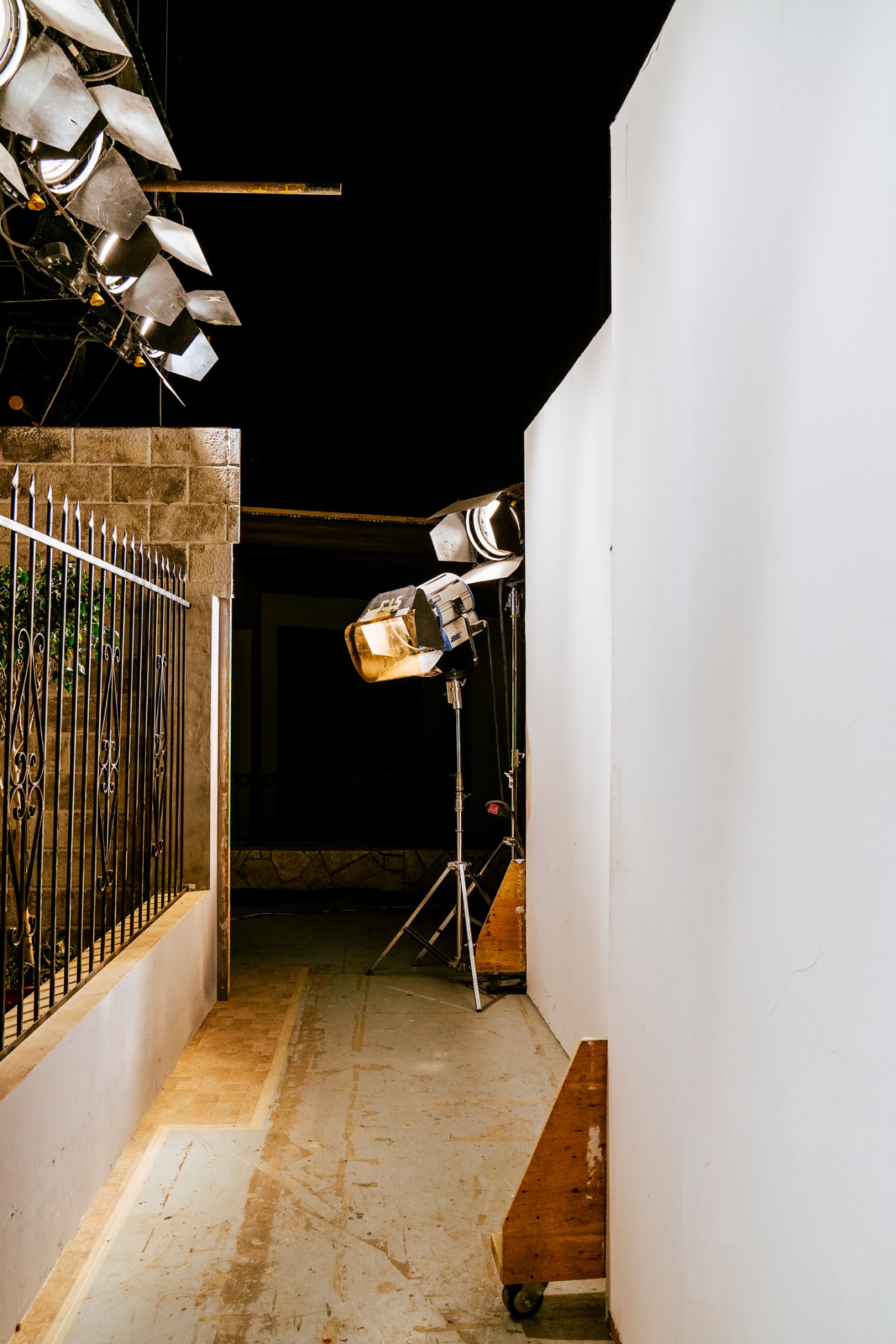
Vix+ is arriving rather late to the game, but it has the budgets and determination to make up for lost time. It is the brainchild of a new powerhouse of Latin American content, TelevisaUnivision, which formed in January from the merger of two media giants: Televisa, the Mexico City-based studio that powered the telenovela (soap opera) industry, and Univision, a huge news network and provider of Hispanic television content headquartered in the US.
“There are 550 million people in the world who speak Spanish as their first language, and not one global streaming streamer that is targeting them,” says Pierluigi Gazzolo, the president of the company.
For a decade, execs from both Televisa and Univision watched as viewer figures for their signature shows faltered; the Mexican telenovela, a major cultural export for generations, wasn’t attracting new audiences in the way it used to. Televisa churned out hundreds of episodes a year and the formula – some combination of love triangles, hot-head lotharios and tragic deaths, with intermittent face-slapping – was running out of mileage. Despite a bump in numbers during the pandemic, when people hankered for simpler forms of escapism, an overall shift in viewing habits continues across the region, as younger viewers who grew up on a diet of global streaming become more in tune with Black Mirror and Game of Thrones than with La Rosa de Guadalupe. Even so, the format of the telenovela isn’t quite dead yet, says Gazzolo, particularly among those who can’t afford streaming services. A show such as Vencer la Ausencia (Overcoming Loss), which runs every weeknight for about an hour, counts three million viewers in Mexico and is exported in 29 languages. “What people are tired of is the fake drama. You know – the maid who falls in love with the owner of the house, and he turns out to be her father,” says Gazzolo.
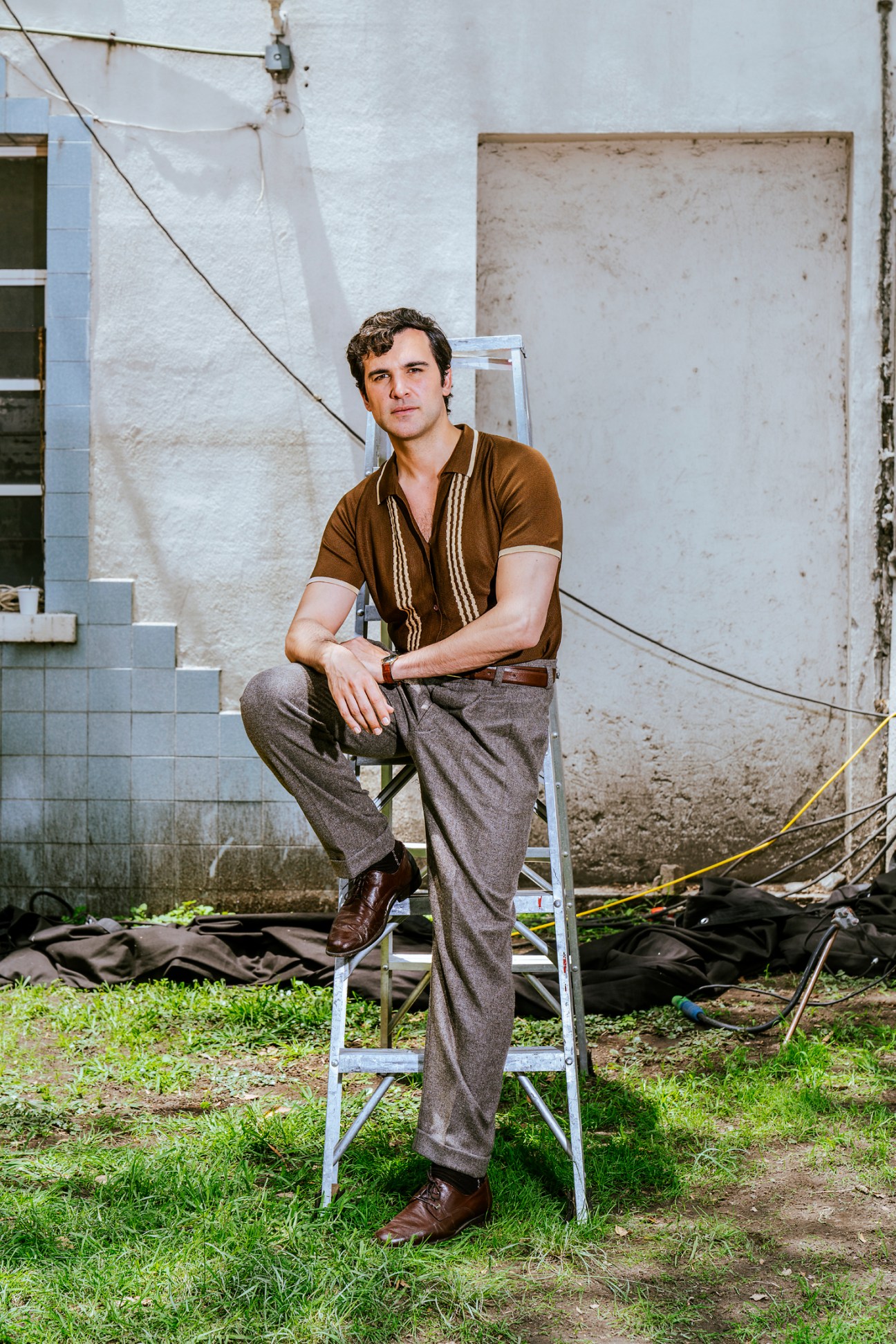
Travesuras, by contrast, is a complex, cross-continental story about never giving up on the one who got away. The male lead, who pursues the eponymous Niña Mala from Peru to Paris, is played by Juan Pablo di Pace. Originally from Argentina, he made his career in the UK and then on Netflix, and believes that like his lovestruck character, a lot of Spanish-language television was stuck in a holding pattern for a long time.
“I built my career in the Anglo-Saxon world because there was simply more diversity of roles,” says Di Pace, who has the chiselled jaw of a telenovela star but says that the only soap opera he’s ever been in was for BBC Scotland. “America gave me opportunity. The UK gave me opportunity. And now, it’s funny, Mexico is giving me that opportunity. This is quality scripting.”
TelevisaUnivision is throwing a lot at its new streaming service, with more than 70 original productions in the works in the first year. The company hasn’t released subscriber numbers yet, although CEO Wade Davis recently told a media conference that he would deliver a profitable streaming service by the end of the year.
The road is not without obstacles, however. Televisa’s former dominance in the telenovela industry might have granted it a large pre-existing audience and name recognition but the association with such old-school soap operas could equally make it harder to reach the young audience that the new streamer is after, even if its content has been rebranded under the Vix+ banner. Televisa is also known for being conservative in its outlook, which makes the eroticism of Travesuras de la Niña Mala a surprising choice. Long-held ties to Mexican politics have made the company shy away from making narconovelas, popular series about drug cartels, because they present an image of Mexico as riven with crime.
Isaac Lee worked as chief content officer for both Televisa and Univision prior to their merger and for years his job was to arrest the decline in viewing figures. The Colombian-born producer says that the schedule must be complemented by high-quality, fresh series. “It is not a matter of capabilities or talent,” he says. “It will be a matter of fighting the good fight with giants like Disney, Netflix, Amazon and Apple. If Vix+‘s content will be [available] and backed up by marketing, it will be successful.” In 2019, Lee created his own independent production house, Exile Content Studio, based in Los Angeles and says that the rush by big-name streamers to produce shows for Latin America is an opportunity. “In the US you have every possible producer in the world,” he says. “But not many people had the experience of managing and delivering on these budgets in these territories with these crews and talent. We didn’t want to miss that.”
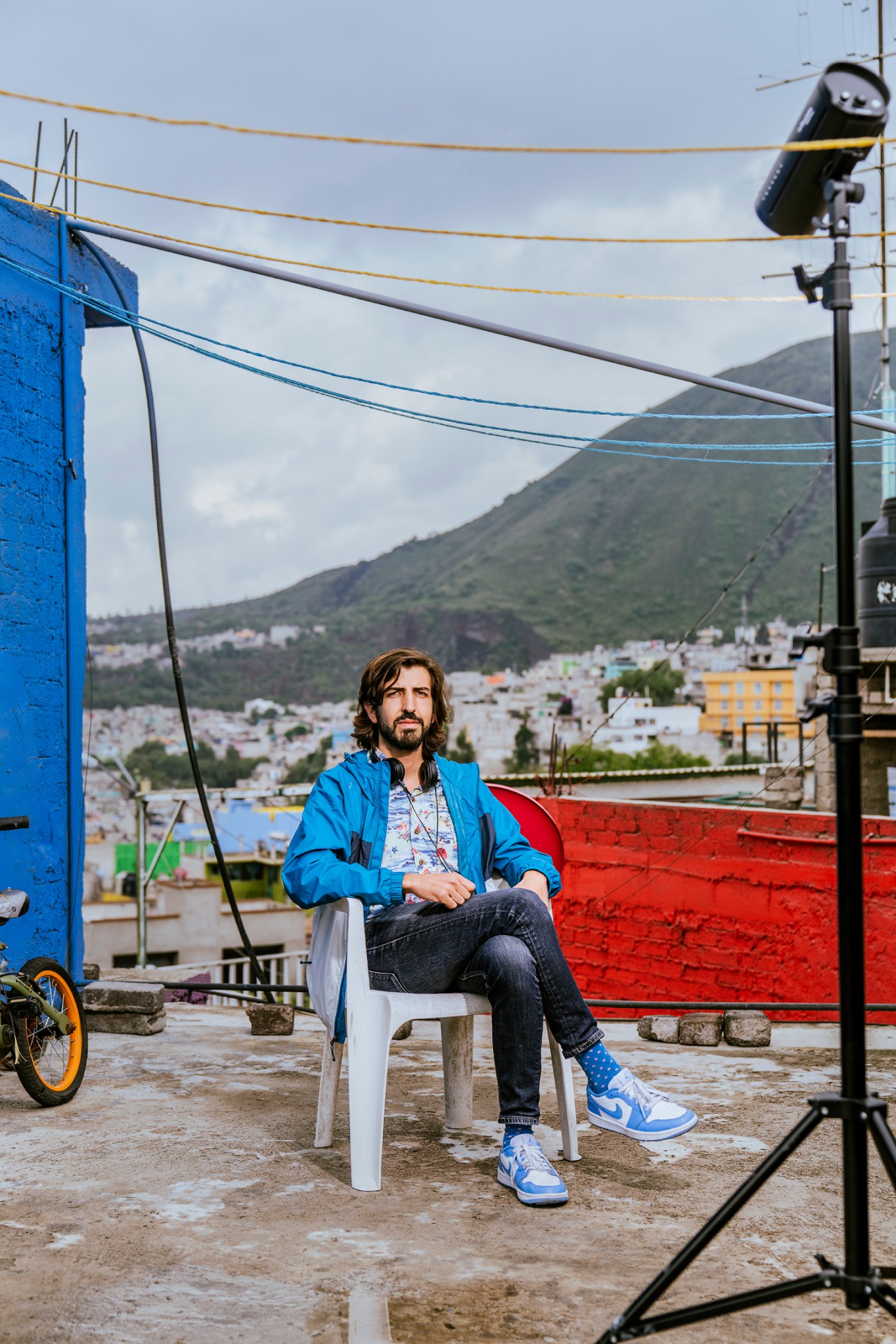
One production that has people in the industry excited is Pinches Momias (Damned Mummies), a dark comedy about a group of children who reawaken an ancient evil in the Mexican state of Guanajuato. Its 34-year-old co-creator and director Santiago Limón cut his teeth as the showrunner on a Netflix series and many of those familiar with the industry say that he has the chops to go far. Filming for Pinches Momias is happening in a neighbourhood on the outskirts of Mexico City, in the shadow of the peaks of Iztapalapa, where a mass of concrete bungalows hugs the surrounding hills. As we drive up to the set, the unmistakable glow of televisions, possibly tuned to a Televisa telenovela, can be seen through open doorways.
At $850,000 (€890,000) for each episode of 30 minutes, the budget for the series is tight but healthy, says Limón, who says that he had big-name streamers also vying for his work. But Vix+ felt new and offered more creative freedom. “They’ve been very hands off, really trusting the teams they’ve brought in,” he says. “Netflix was constantly giving feedback, which can be good, but they have a formula and are trying to make things fit.”
There are echoes of Stranger Things in his irreverent story about children battling the supernatural. We watch a scene being filmed between a pot-smoking grandmother and a dissolute and drunkard priest prone to dirty jokes – all a far cry from the traditional orbit of a Televisa production. Many of the lines have the crew bursting with laughter.
“When we do comedy in Mexico it’s broad and farcical, and when we do horror it’s dark and scary; there’s never a mixture of the two,” says Limón. “So here we’re trying to be sometimes dramatic, sometimes absurd. We try to include all of that.”
The show’s 17-year-old star, Rogelio Cruz, appears with hair dyed bright orange after recently filming a soft drink ad. He came to acting after appearing in a talent show called Pequeños Gigantes (Little Giants) and is from a neighbourhood similar to the one where filming is taking place. Cruz’s ambition, he says, is to be a star in one of the big telenovelas. It’s now for audiences to decide whether being in a Vix+ production can bring the same kind of fame and success – or even more.
Common currency
“Look at his stare,” says Antonio Ernesto Denunzio in a hushed tone, standing in front of what is generally agreed to be Caravaggio’s last painting. The director of the new Gallerie d’Italia museum in Naples is referring to the eyes of the artist himself. In the painting, Caravaggio is observing the grizzly martyrdom of Saint Ursula, a moment that gives this 1610 painting its name. “His gaze is one of a lost soul,” adds Monocle’s guide for the day. “It’s like he’s staring at death itself.” Caravaggio died in mysterious circumstances just weeks after painting this: the chilling prescience makes some on our tour shudder (or maybe it’s the gallery’s potent air-con). This world-famous masterpiece is just one work in an impressive collection owned by Intesa Sanpaolo, the Italian banking group behind the museum.

The connections between banking and the arts in Italy span more than 500 years. From the times of the Medici (a family of bankers, not noblemen) in renaissance Florence, financiers have historically been art patrons. Intesa Sanpaolo, like many banks around the world, has long had big ambitions of fashioning itself into a cultural player but this year marked a step-up in its efforts. In May two museums – this one in Naples, and another in Turin – joined pre-existing sites in Milan and Vicenza. All occupy grand former banking halls owned by the company and contain a vast array of marvels – new and old – that have been amassed during the centuries in the collections of the 250-plus banks that have merged into Intesa Sanpaolo. The bank’s commercial expansion has bestowed the group with a varied set of artistic treasures comprising about 35,000 works, with a total value of €850m. “We decided from the beginning that rather than open our properties sporadically, we would convert them into large permanent museums,” says Michele Coppola, Intesa Sanpaolo’s executive director of art, culture and historic assets – and the head of its museum network.
As well as these four large museums, which are always open to the public, Coppola’s remit also spans a multi- million-euro restoration programme. Gallerie d’Italia Napoli’s inaugural temporary exhibition, Restituzioni, showcased the magnificent results of an initiative aimed at restoring hundreds of pieces from churches and regional museums. The diversity of the display is striking; from a charred wood, ancient Roman larario (a miniature temple for the home) found at nearby Herculaneum to a 1913 painting by futurist master Umberto Boccioni.


Coppola also helms a team of about 500 colleagues in the bank’s cultural arm, as well as another hundred art historians contracted by the museums. Strikingly, the company has chosen to manage its cultural bounty without following the philanthropic model that’s the norm for many financial institutions. “Intesa Sanpaolo never created a foundation: here, we are looking at a business unit of the bank,” says Coppola. (The new Naples site charges €7 for entry but under 18s and Intesa Sanpaolo customers can enter for free.)

Italy is a country that is disproportionately loaded with cultural assets and yet it has often struggled to successfully capitalise on that. Private initiatives have long been fundamental in raising the art scene’s international profile – particularly when it comes to modern and contemporary institutions. The bank does not release spending figures for the Gallerie d’Italia but Guido Guerzoni, an economic and social history expert who teaches cultural management at the Bocconi University in Milan, thinks that there is a serious business strategy behind this generous cultural investment. “The decision to open and run four large museums was made by the group’s directors and shareholders,” says Guerzoni, brushing off any idea that tax incentives might have been another factor.
If nothing else, the galleries are an effective way to portray a set of values to potential customers. But Guerzoni argues that the vision is larger than that. “The Gallerie d’Italia is the largest multi-site, museum complex owned by a banking group in the world,” he says. “No other bank has such a quantity and quality of ‘true and proper’ museums.” Guerzoni believes that Intesa Sanpaolo is looking beyond profits alone. “It’s not just about future customers; it’s about future employees and future talent.”
The new museum in Naples is quite the compelling showpiece. It spans four galleries where that haunting Caravaggio hangs alongside hundreds of other works, from ancient Greek vases unearthed in Puglia to Neapolitan masterpieces from the baroque, fin de siècle and contemporary eras. All of this is housed in the imposing former Banco di Napoli in central Via Toledo, the original seat of the bank founded in 1463, which was absorbed into Intesa Sanpaolo in 2003. This monolithic fascist-era bulk of a building was designed by Marcello Piacentini and completed in 1940. Much of the fixtures and fittings remain – onyx, marble walls and floors, and brass signs in block capital lettering allude to the former function of the halls and lobbies.


There are also bold architectural interventions, with contemporary material choices, coming from lead architect Michele de Lucchi and his Milan-based studio amdl Circle. “The space where the bank used to meet its customers has been transformed into an avant garde stage for presentations of paintings, sculptures, video art and performances,” say the architects. In the cavernous entrance foyer, the iconic marble form of the Farnese Atlas stands under a dark wood dome suspended from the ceiling. Further in, the wooden panel fittings create an elegant cube-shaped museum bookshop. A 25-metre-long closed walkway, lined with brass-coated metal, crosses an internal courtyard and takes visitors to the San Giacomo wing, where Caravaggio’s masterpiece is displayed.

Inside another polished exhibition room, museum director Denunzio continues to demonstrate the deep connection between finance and the art world. “These were commissioned directly by the bank,” he says, pointing to four ornate baroque-era religious paintings in oval frames. “We have documents showing how the bank paid a Neapolitan painter named Francesco de Mura for four allegorical depictions of the pietà in 1759.” Other works came to be acquired in less virtuous circumstances: the museum’s now-famous Caravaggio came as credit for the repayment of one Neapolitan family’s debts in 1972.
On the second floor, in the museum’s ample 20th-century galleries, art historian Carla Cecere takes the lead of Monocle’s tour. Standing next to two striking Warhol screen prints depicting an erupting Vesuvius in bright colours, Cecere explains the pop artist’s love of Naples. It’s clear that she’s proud to show such masterpieces in the centre of her beautiful but often maligned hometown. Has she always had a connection to this site on the famous Via Toledo? “Well, even though this wasn’t actually my bank, of course we couldn’t be better placed,” she says jokingly. It looks as though she – and her city – have struck up a pretty good deal.
Where banking meets art
1.
UBS Art Gallery, New York
A longstanding partnership with Art Basel makes UBS a famously art-inclined bank. A public space inside its Midtown headquarters, the UBS Art Gallery in New York, launched in 2019. It features works by big names such as Sarah Morris and Frank Stella.
2.
Deutsche Bank Collection, Frankfurt
Set across 60 floors in the bank’s HQ, the Deutsche Bank Collection opened in 2011 and displays 1,800 works arranged by geography, with a special section dedicated to Germany and its up-and-coming creative stars.
3.
Collection d’Art Société Générale, Paris
Inaugurated after the bank’s move from the centre of Paris to the business district of La Défense in 1995, this collection brings together some 1,200 paintings, photographs, lithographs and more.
Glass half full
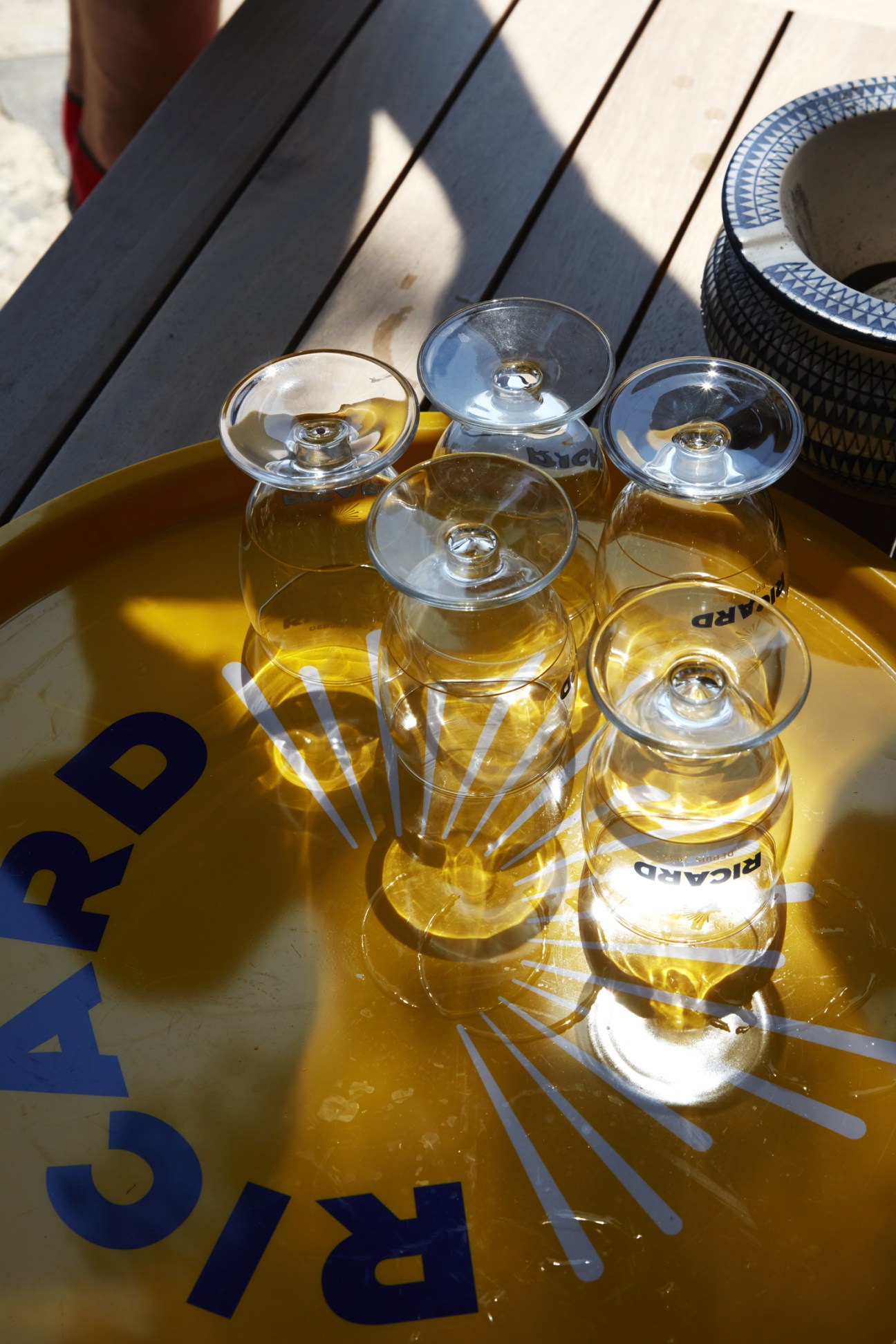
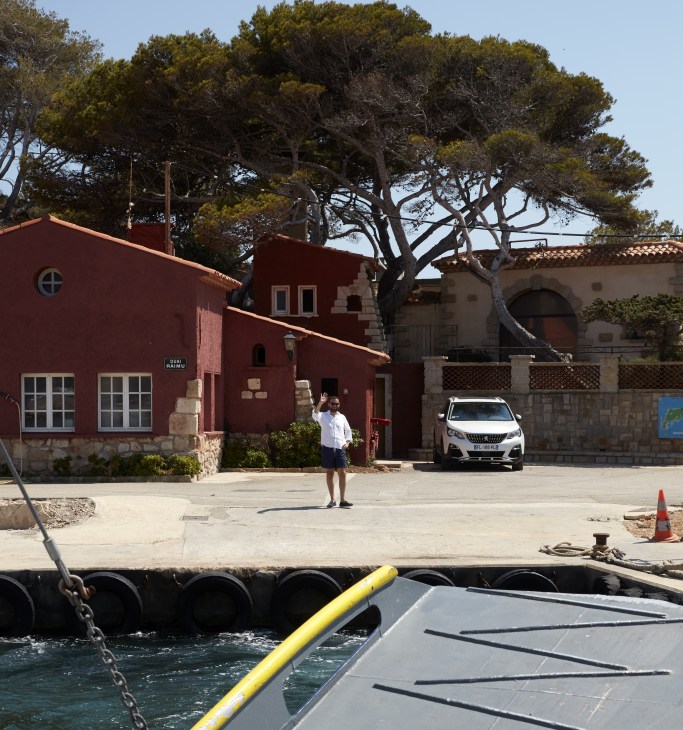
The bulletin boards aren’t the first thing that you notice when disembarking at Île des Embiez (for that, take your pick from the marina, the well-dressed French families, the verdant, sloping hills). But when you register one, you’ll soon realise that they’re dotted all over the island. They hold information about the life of Marseilles pastis-maker Paul Ricard as well as his sun-faded photograph. After co-founding Pernod Ricard, which is now the world’s second-largest wine and spirits company, Ricard bought the island in 1958.
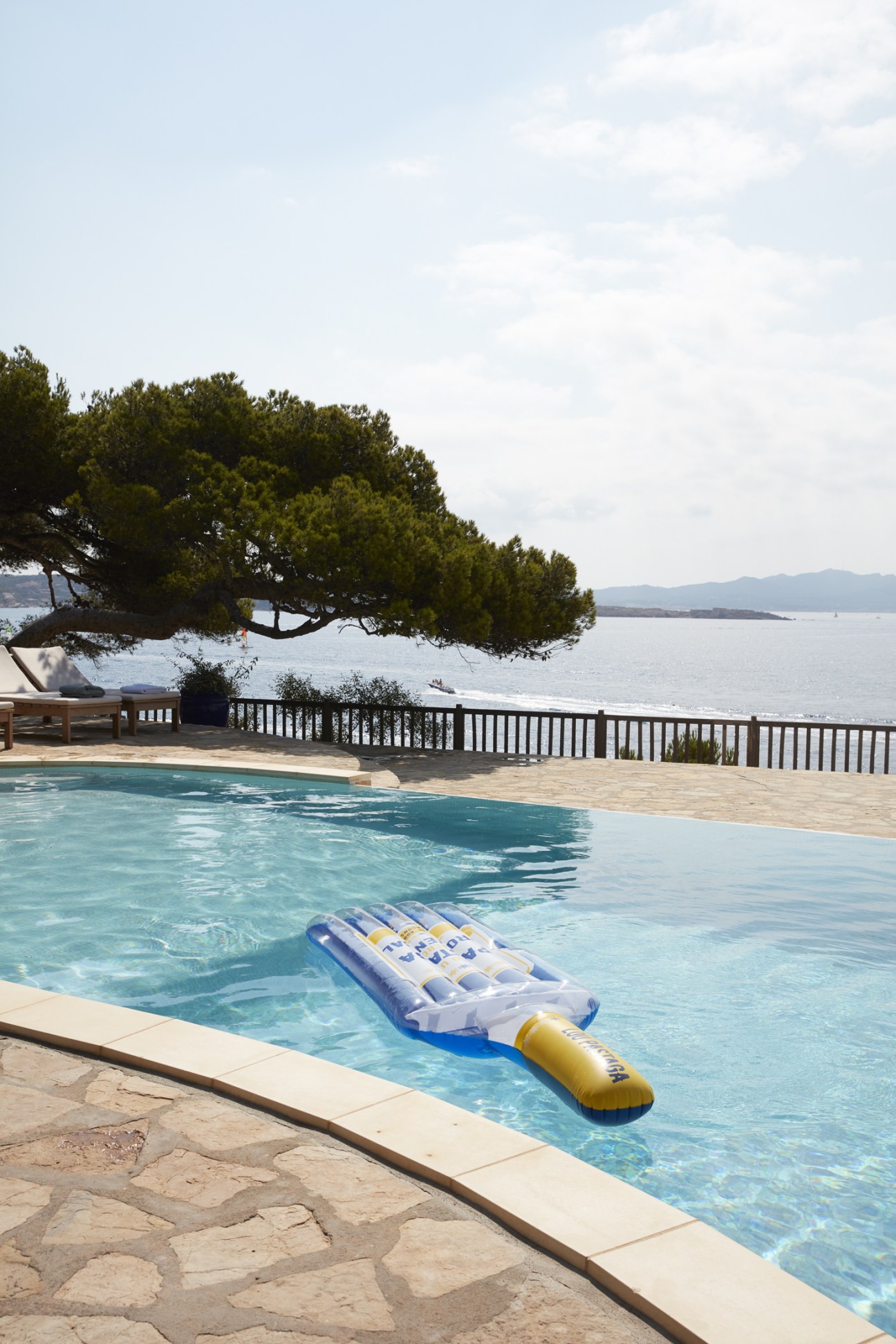
You can see why. On a sultry August afternoon, the dinky white-and-navy ferries that sail to the island from Le Brusc and Bandol on the Mediterranean coast slip by little coves where young families and life-jacketed dogs caper in the sea. Older visitors play pétanque. Ricard’s name is everywhere on Embiez and Bendor – the other outpost of Les Îles Paul Ricard and about a tenth the size of its neighbour.
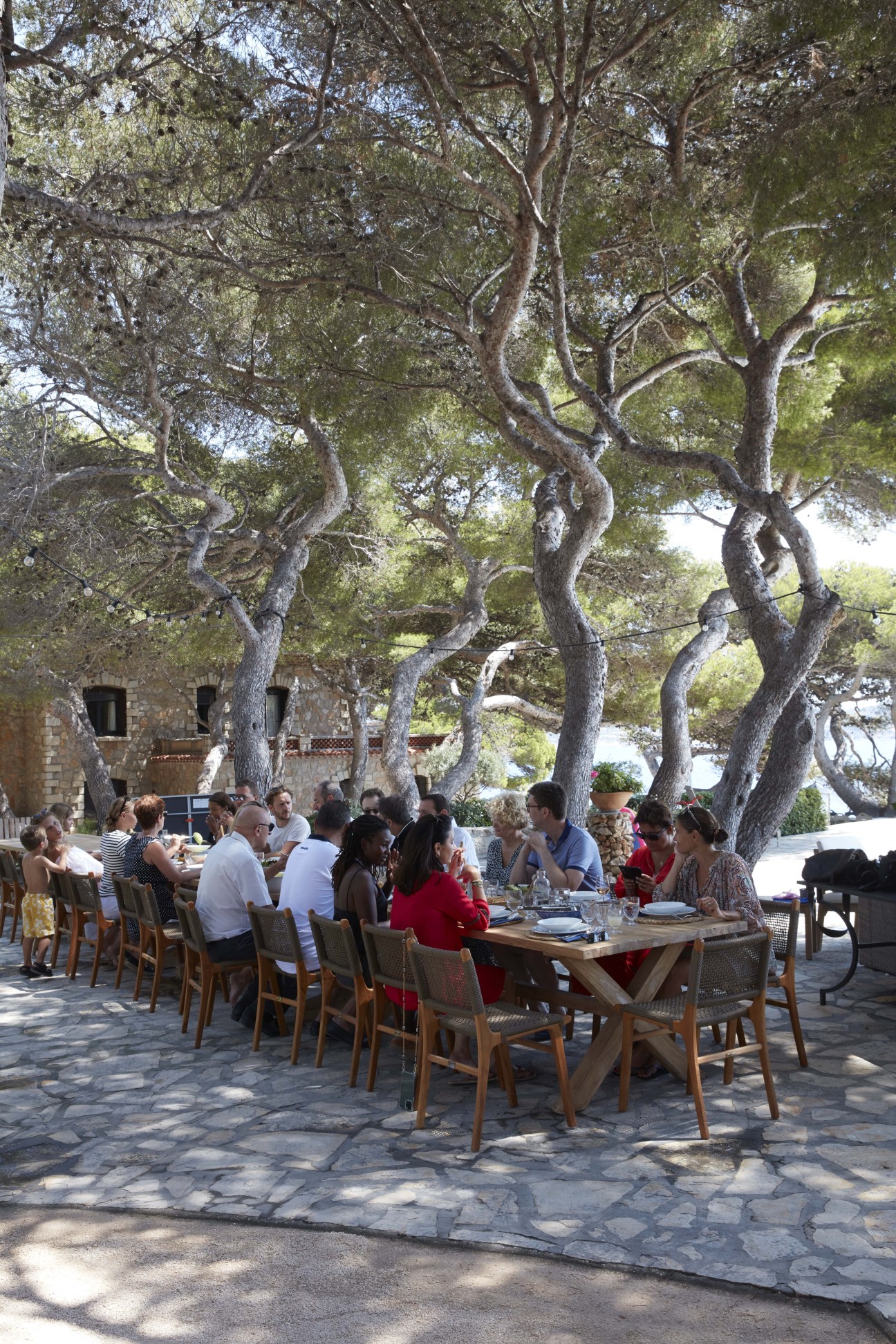
On Bendor, where the Ricard family have its summer estate, Monocle meets Alexandre Ricard – the third-generation CEO of Pernod Ricard and Paul’s grandson. The younger Ricard, who’s now 50, leads us uphill through a shaded garden and out towards a pool that overlooks the glistening Mediterranean. Family and friends splash around while Ricard sits down to answer Monocle’s questions. First, though, he shows us pictures of a dinner he recently hired Michelin-starred chef Mauro Colagreco to cook for 200 guests on the tarmac of Marseille’s Circuit Paul Ricard (home to France’s Grand Prix).
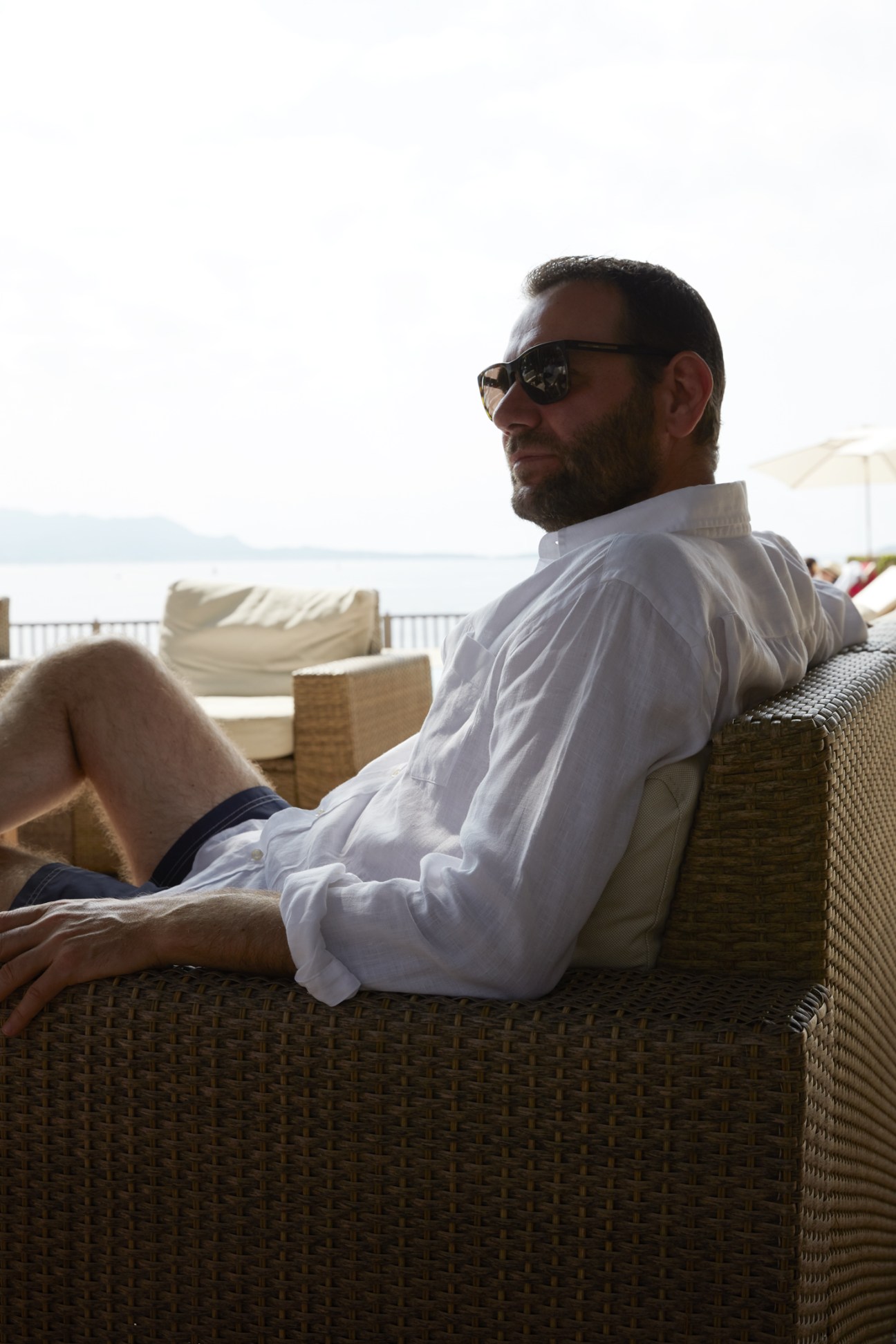

Reminders of his grandfather, who founded Ricard 90 years ago and merged it with fellow pastis-maker Pernod in 1975, are everywhere. Pernod Ricard now turns over almost €10.7bn a year and owns Absolut vodka, Chivas whiskey and Mumm champagne. Does that affect
how he runs the business? “Without a single doubt,” says Ricard. “It’s a job that requires huge discipline. Every single meeting is intense,” he says. That sobriety doesn’t stop on holiday. “Every summer I come here with family and friends but every day I invite one or two people who have a different perspective on the world – CEOs or researchers – and before aperitif time we’ll chat and I’ll write down a few notes to prepare for September.”
Life-long learning (another inheritance, he says) is something that the younger Ricard enjoys pursuing. He’s enrolled on a three-year executive-coaching programme and perhaps it’s helping him too. A few weeks after he hosts Monocle, Pernod Ricard announced full-year sales that, for the first time, exceeded €10bn – allowing the company to increase its shareholders’ dividend. Pernod Ricard’s results suggest that increasing e-commerce sales and consumers’ taste for drinking more at home aren’t going away any time soon. Consumers also showed few signs of downgrading to cheaper alcohol despite rising inflation.
It might be sunny on Bendor but the backdrop for much of the business world is somewhat gloomy. Western economies have been badly hit by a rise in the cost of materials, so Ricard has been seeking advice. “I call very, very old people and ask them about when they were CEOs during inflationary times,” he says. “If you don’t know something but you know people who have lived through similar experiences, try to learn from them.” Despite high inflation and its underlying geopolitics, September’s results capped off the recovery from a pandemic that decimated duty-free sales and is still, in some places, suffocating hospitality.
Alexandre joined the company in 2003 after eight years in consulting and finance. Twelve years later he became the youngest person running a company listed on France’s blue-chip cac 40 index (the family still controls a quarter of the company’s board votes). Ricard was forced to act quickly to keep the wolf from the door. Three years after taking over, he had to explain to shareholders how he planned to stop Elliott Management, one of Wall Street’s most aggressive activist investment firms with a reputation for forcing board changes, from waging an insurgency campaign in the pursuit of higher profits. How did the presence of Elliott, which has now divested its stake, shape the young CEO’s early leadership?
“We were coming out of a two-year period of zero growth,” says Ricard. “Elliott’s key focus was margin and it turned out that my key focus was profitable growth, which was about improving margin. I made a speech to the whole organisation saying, ‘Don’t worry about this, it’s my issue; just deliver on my plan.’” Even so, he bristles at the suggestion that he’d want to overtake London-based rival Diageo as the largest alcoholic-beverage producer in the West. “Do you want to be the biggest or the best?” he says. Why not both? “By being the biggest, you might not end up being the best,” he says, adding that reputation is his priority. “Money cannot buy what people will remember us for.”
Overall, Ricard has boosted Pernod Ricard’s growth, partly by snapping up smaller companies – more than a dozen since he took over. The company is also investing in the Chinese market, which is a relatively untapped area for Western companies because consumers there have historically bought alcohol from local producers. Every year, some 30 million people reach legal drinking age there and international brands comprise just 1 per cent of the market. Consequently, Pernod is starting to sell more locally made drinks, such as wine it produces in China’s northwest or whiskey from its Sichuan distillery.
And what if China invades Taiwan? Monocle stays for lunch and dines with Ricard, family and friends, a bishop (who occasionally visits to bless the island) and Patrick Castanier, VP Business Development of PR Asia. Castanier’s experience shows how quickly a market’s stability can falter. He was living in Myanmar during the 2021 coup and tells us about waking up one day with no phone service and eventually escaping as part of a French government airlift. It currently seems unlikely China will invade Taiwan but few thought that Russia would invade Ukraine or that companies doing business there would face sanctions. If the parallels have occurred to Ricard, he’s reluctant to say so. Pernod Ricard followed scores of other Western companies in suspending its exports in Russia but an exit from China would be a major blow to the company’s growth strategy.
Batting away a wasp, Ricard says that Russia, inflation and the pandemic and its effects are just part of doing business. “There’s a whole generation who was brought up in a world where they thought that the norm was visibility, predictability and calm. The real norm is what we know today: uncertainty, a lack of visibility, volatility.”
That said, on this bright day, the visibility is clear enough to see Embiez across the Baie de Sanary. At the larger island’s highest point you’ll find the graves of Paul Ricard and his son and successor, Patrick. Apparently, a bottle of Ricard aperitif is buried between them. With our interview done, Pernod Ricard’s current custodian wanders downhill with his young family to the rocky outcrop where he played as a child to watch the boats drifting by.
A Monocle panel debate: Is the way we work really changing?
The debate
Institutions and ideologies come and go but one thing has remained constant throughout history: work. If anything, it’s becoming more central to our sense of self. Children are implored to study subjects that might help them in their careers and nations are judged on their unemployment rate, productivity and GDP.
Debates about the future of work used to centre on how automation might affect the hours that we clock up, the initial prognosis being that these would fall. But while the average American is working fewer hours, the advent of the internet has resulted in a rise in extreme working hours (more than 70 a week) in some sectors. This increase in time spent working has not been matched by feelings of fulfilment. A major report published by the Bill & Melinda Gates Foundation, Gallup and others in 2019 found that less than half of US workers were satisfied with their jobs. Nor have more hours led to greater productivity, with the UK suffering particularly in this regard.

As with so much else, coronavirus accelerated the trend. Many began to work from home; some liked it, while others didn’t. At the same time, millions reappraised their jobs and found them wanting. The consequences of the “Great Resignation” are wide-ranging but most immediately have been felt as mass labour shortages. So where does all of this leave us? Is automation to be feared or embraced? What about remote working? And how do we prepare for the future?
The panel

Maya Gur
Business coach
Born in Tel Aviv, Gur is an executive coach and organisational consultant whose work focuses on helping managers to develop the emotional skills that they need to become true leaders. Her programmes, designed for technology organisations and global teams, aim to foster leadership qualities that drive better results for businesses.

Dr Jamie Woodcock
Academic
A senior lecturer and researcher at The Open University, Woodcock is the author of several books on modern work including The Fight Against Platform Capitalism (2021), The Gig Economy (2019), Marx at the Arcade (2019) and Working the Phones (2017). He is on the editorial boards of Notes from Below magazine and Historical Materialism journal.
Alison Brooks
Architect and business owner
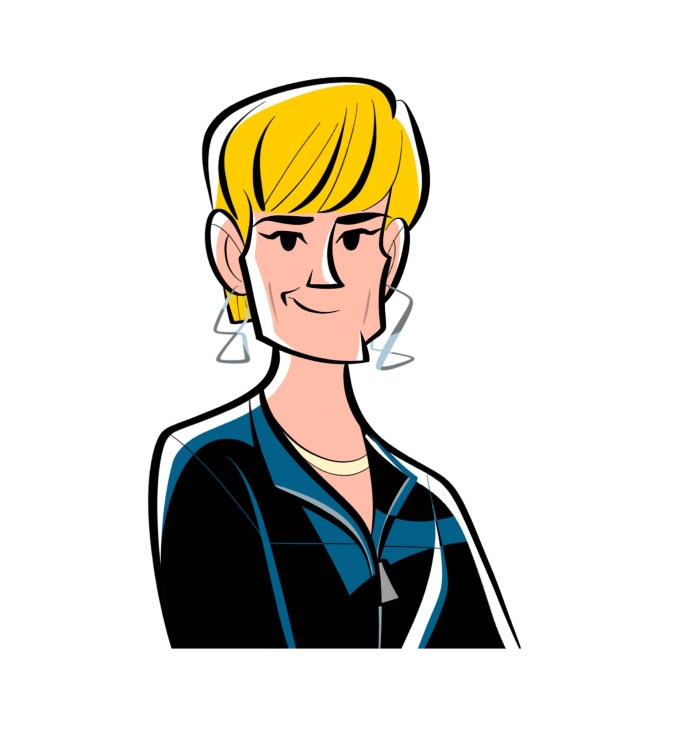
The founder and creative director of Alison Brooks Architects was born in Canada and moved to London in 1987. After starting her practice in 1996, she became the only UK-based architect to have received the profession’s four most prestigious awards: the Riba Stirling Prize, Riba House of the Year, the Manser Medal and the Stephen Lawrence Prize.
Let’s start with you, Maya. What has been the most significant change to the way that you work in the past few years?
Maya Gur: One of the most important experiences of the pandemic is that it proved that a complete revolution in the workplace is possible. Remote work definitely has the advantages of flexibility.
But many think that offices are still essential for work. Alison, you’ve designed plenty and run one of your own. Is their demise inevitable?
Alison Brooks: There are many intangible aspects to where and how we work. Most people work in teams and have colleagues they need to talk to and liaise with, especially in architecture. One of the great things about an office is that it gives you moments of difference in your daily experience of space and place: just the fact of leaving where you live, having chance encounters, seeing things that you might not otherwise see. You could look at it negatively and say that you have a terrible commute or say, “Every day when I ride my bike, all sorts of inputs feed into my consciousness and subconsciousness.” And when you’re at the office, serendipitous things happen. Conversations are overheard. There are unexpected events that are crucial for creative and social exchange. I don’t think that can be replaced by Zoom meetings.
MG: The most important thing to remember is that different tasks need different settings. It’s difficult to start a new role or join a new team remotely. The onboarding process is much harder because building trust takes longer.
What is the reason for the increase in remote working? Do people now feel that their jobs are less central to their identity?
Jamie Woodcock: For many younger people, work is less important to their identity. In part, that’s because they do not stay in the same workplace for a very long time. In most jobs people are earning much less than the previous generation. The treatment of many people during the pandemic has also shown that you can put in a huge number of hours but many employers are not prepared to reciprocate that commitment. Instead, they send you home, ask you to buy your own equipment and monitor you online or threaten to cut your wages if you don’t come in. So work is being shown to be a much worse bargain than it was. The problem is that there’s very little will from any of the major political parties in the US or UK to address this crisis. But what is inspiring is that there are plenty of young people who want to do things differently. That’s how we’ll see a future of work that is more optimistic and encouraging.
MG: Younger people are aware that they will have about eight careers in their lifetime – not just jobs but careers. That’s very different to my 73-year-old dad’s experience; he has had one career with several jobs. He’s terrified of the day that he retires because he was raised with the belief that his professional self is his most important identity. The younger generation is not aligned with this paradigm. They will have to adapt and change careers quickly. That’s why the most important thing for young people today is how much they’re learning. As long as they’re learning, they’ll stick with that job.
Discussions on the future of work used to centre on automation and whether it was a good or bad thing. Do you believe that greater automation is an issue?
AB: I am constantly surprised to hear about automation replacing manual labour in areas that you wouldn’t expect but there are limits to that. The production line is the place where automation originated and continues to grow. One could say that’s a good thing because it frees people from repetitive tasks that are often quite unhealthy or dangerous.

MG: When we talk about optimisation it reminds me of the stages of grief and I think that we are at the acceptance stage. There is an Amazon Fresh supermarket near where I live; there was a lot of fear about it a few years ago. Now it’s just a reality. There have been shifts in terms of who feels intimidated by AI. My partner has tried this new programme that uses AI to draw; he asked it to make a picture of Darth Vader in the style of Keith Haring and it did a pretty good job. Something like that affects a lot of people who once felt that their professions were untouchable: those in the creative industries or doing things with emotional intelligence. In my field, there are apps and start-ups that are dealing with online coaching and therapy. Are they a better option? I don’t know but they’re definitely cheaper.
Will anyone stick up for the vision of the future propounded by the technology industry – that of a utopia in which people no longer need to work and can focus on leisure?
JW: This is a dream that’s been sold to us many times. Quite famously, John Maynard Keynes argued this in the 1930s; he said that increases in productivity would mean that we would all be working less. But since he wrote that, people have been working more. We often talk about technology and automation in the abstract. What we actually mean is digital technology. And when we talk about automation, we think about manufacturing and robotisation. But what’s more important are the social relations that are creating different kinds of technology and automation. People often frame automation as a binary – something is either automated or it isn’t. So much of my working life is automated: I don’t have to write letters and I don’t have to take them to the post office. That is not often thought of as automation but it frees me from a lot of difficult tasks. The problem is that workers don’t always benefit from these forms of automation and technology. Instead, we’re expected to work harder and harder. So the question is, “How do we change the ways in which we relate to technology and use it at work?” And there is still a utopian possibility. But we shouldn’t start with the idea that technology will work it out; we should start with the economic and social relations that shape our world and then create the technology to improve them.
I want to talk about education. There’s a debate at the moment about which subjects are best suited to the workplace. How do we prepare children for jobs that don’t exist yet?
AB: Children should be educated across a broad spectrum of subjects: science, humanities and the arts. Specialisation at too young an age is a bad thing. There’s a strange disconnect in how society perceives design, for example – this idea that design is an art. People don’t realise that those who work in technology, industry, maths and science are designers as well, as they are writing code and algorithms. They’re designing how we operate in the world. The syllabus that young people are taught is stuck in the past. In primary schools, children should learn coding but they could also learn about urban design, art and poetry, and how to see everything as a potential future in which they could find their place and make a contribution.

MG: My son is learning to write and he’s really challenged by the “anticlockwise letters”, as they’re apparently now known. I was practising writing the letter S with him and I thought, “Do we need to do this?” This child is five years old. Is he going to write by hand? When I talk to people in the workplace, 90 per cent of the time their solution to career challenges is, “I’ll go back to school.” People feel that they need that certificate because it gives them confidence. But by the time they finish studying computer science, everything has changed and what they’ve learnt is far less relevant. There’s a professor at New York University, Scott Galloway, who said he believes that in the future, there is a possibility of people only applying to colleges and universities in order to receive a certificate and not actually following the programme. Because, at this point, the most useful thing that universities give you is that certificate.
What do you think, Jamie? Should children still be taught to write with a pen?
JW: As a lecturer I think that a well-rounded critical education is incredibly important. Many students I teach today mostly worry about the amount of debt that they’ve got into and what kind of job they will be able to find when they finish. This is becoming increasingly the case at school too – an anxiety about the future, a sense that we have to be training people so that they can secure a job. But the kinds of skills that really equip people are much more holistic and critical, things that don’t immediately have an economic value. I would prefer that people had the pressure taken off them so that they can spend time learning and thinking these things through. Those are the skills that will equip people to build a more utopian future, rather than skills that just teach people a particular coding language that might not even be useful by the time they graduate. You allow people to explore the theoretical ideas behind things. The problem is that this costs money and requires investment. As a society we need to think about why spending money on higher education isn’t a priority but things like weapons are. Education isn’t a commodity – or it shouldn’t be – because it has wider social benefits.
I want to ask you all the same question: in 10 years’ time, what changes would you like to see in the way that we work?
MG: Over the past year or so there has been a lot of talk about how cool the Great Resignation is, that there was this small percentage of people who decided to go surfing instead of going into the office. But the truth is that most of it was what is now being called the “she-cession”: Generation X women have been pushed out of work by caring commitments to both their children and their parents. As more knowledge workers go freelance and take on different projects for different organisations, this will allow more flexibility and ultimately an option to create more space between our personal identities and our professional ones. I believe that as younger generations begin to take more senior positions, we will see more acceptance of multifaceted identities, so that it’s not only the professional one that determines your value but who you are too.

JW: I would like to see an increase in unions and workers’ rights translating into real, substantive gains. The future of work is determined by a series of changes and decisions made in the here and now. Too often workers do not get or are denied a say in how they work. If they had more control, the future could be directed away from the current dystopian visions we face now.

AB: Everybody wishes that they could have work that has a clear purpose – not just working to earn money but doing something that has value, that helps you feel valued and valuable as a person, and that you’re making the world a better place. We need more ethical investment and social enterprise. These are growing sectors that are tapping into a different way of thinking about how to create value and how to address the many problems that we face. And this is a macro and micro economic question. It will take a lot of effort to ensure that a huge shift happens in the way that we think about work. It’s about tapping into a spirit of optimism and directing your labour towards the common good, while at the same time having a reasonably good quality of life.
Conclusion
Reports of the end of work as we know it have been greatly exaggerated. If anything, technology has left people working longer hours. Many are less satisfied too. The demise of the office hasn’t quite come to pass either. Now is the time for companies to woo talent with desirable spaces and staff perks. Rather than twiddling with the levers, governments need to invest in education and innovation so that the workforce of tomorrow is adaptable and optimistic.
Back on track
Upstairs in Berlin’s largest ballroom, at the back of the gallery, a waitress checks to see whether anybody’s looking and then flings herself to the ground and twists into a cartwheel. Moments later she’s downstairs on stage doing the same thing while her colleagues – similarly dressed waitresses and men wearing train conductors’ uniforms – are ululating and springing up and down.
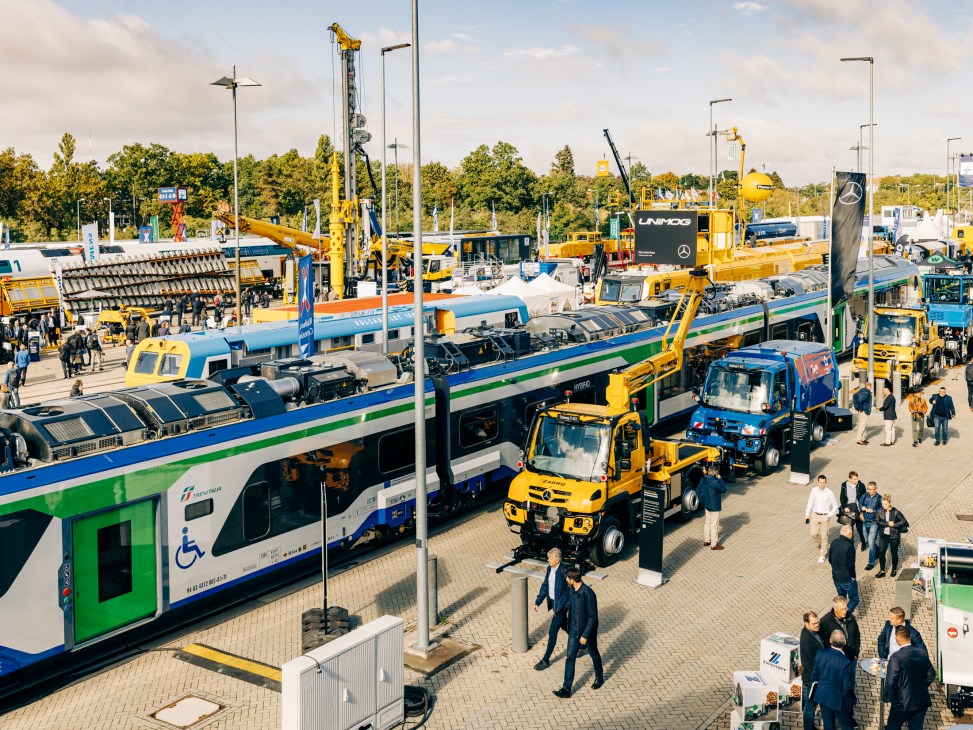
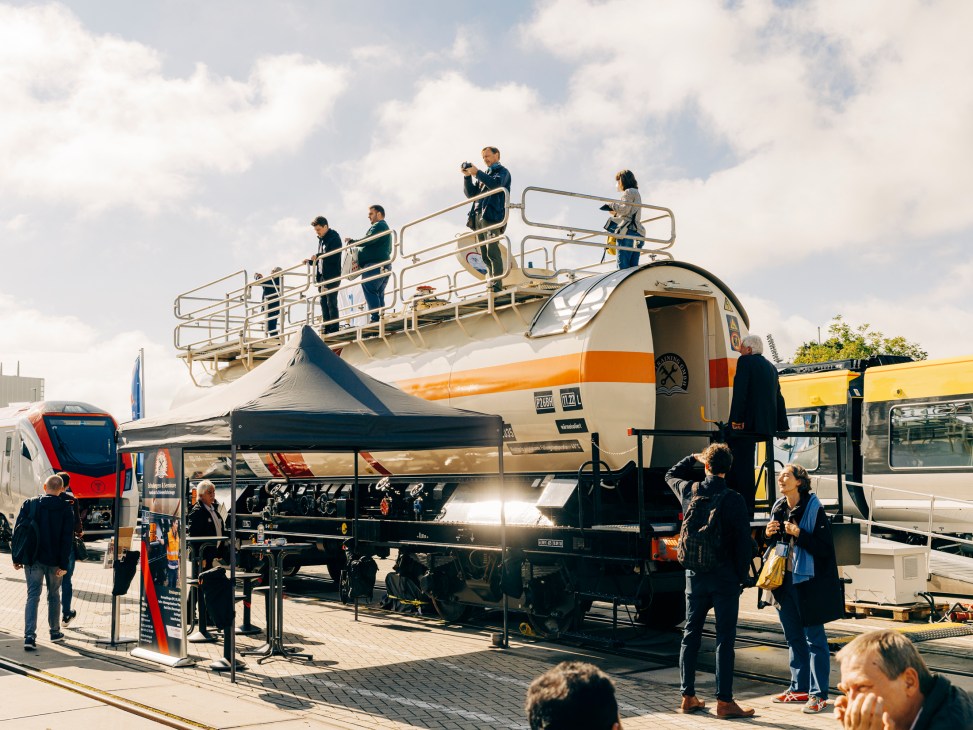
To stage left, an orchestra is performing Carl Orff’s “Carmina Burana”, a piece of music used to score TV talent shows, beer commercials and Hollywood films. It’s unlikely that the cellist in any of those performances was wearing a high-vis jacket. This, naturally, is the opening ceremony to Innotrans, the world’s largest rail transit trade fair, which usually takes place every two years at the Messe Berlin in Germany.
Like the first rain after a drought (and there’s plenty of it here), the post-pandemic return of trade fairs to the calendar has provided welcome relief to any business that relies on face-to-face contact to smooth wrinkles from deals and forge new connections. That’s the case for the rail industry at the first Innotrans in four years, according to Peter Jenelten, president of the Swissrail Industry Association. “Of course, you can organise video conferences but sometimes you need to be there in person,” he says. “Everybody wants to see their colleagues again and find out what other companies are doing.”
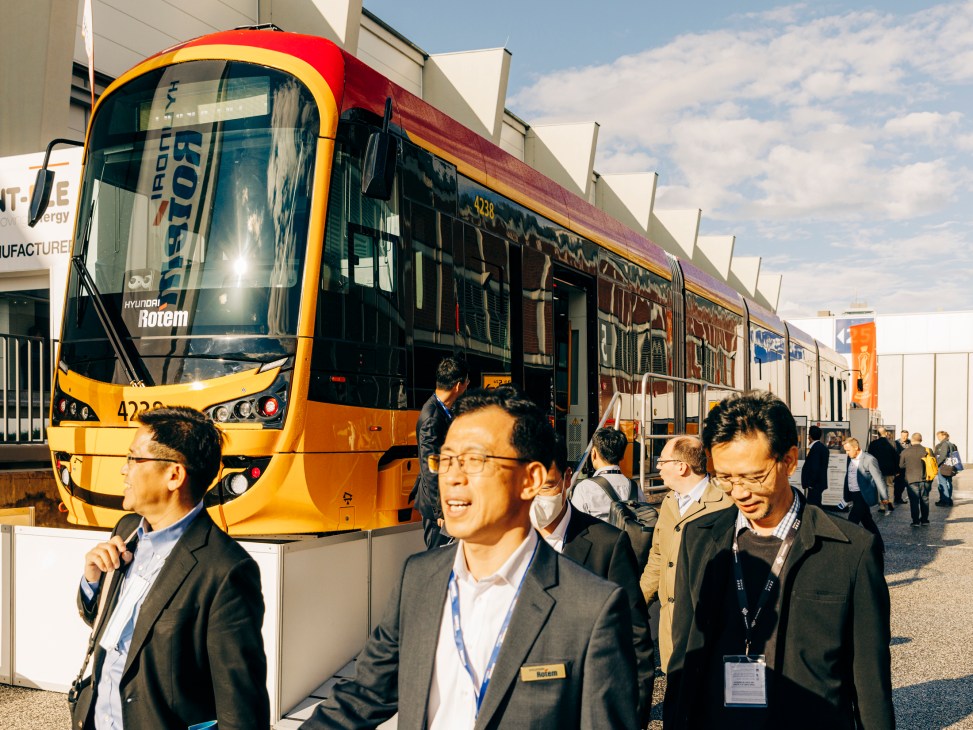
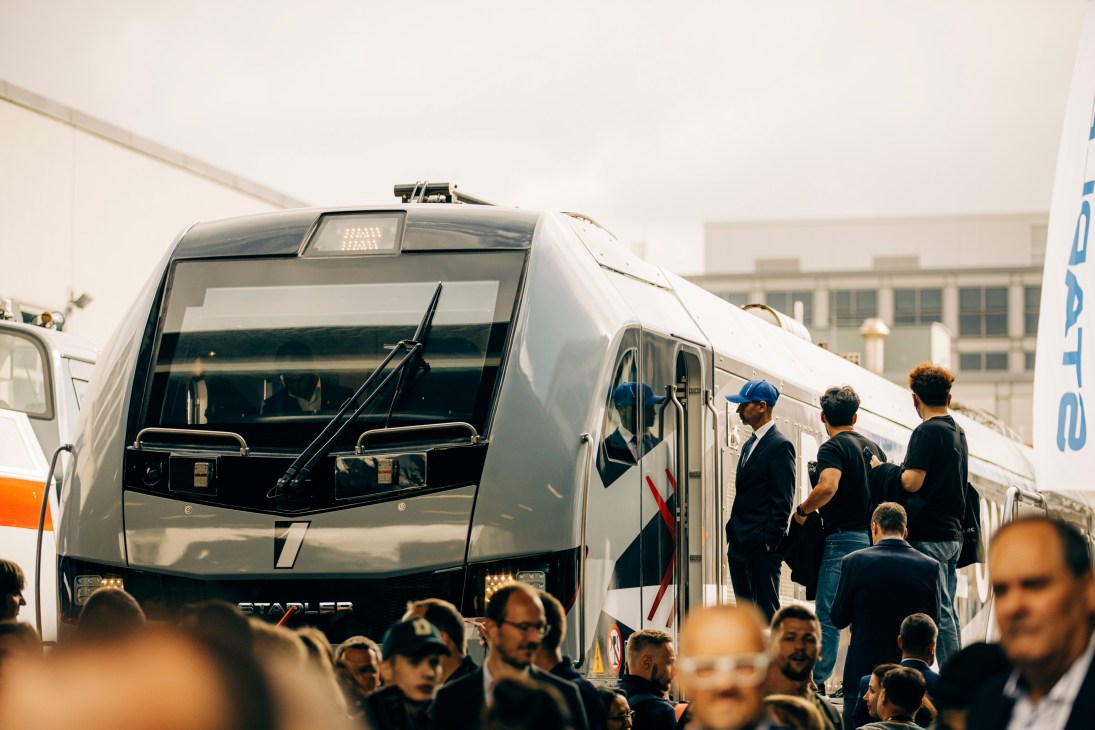
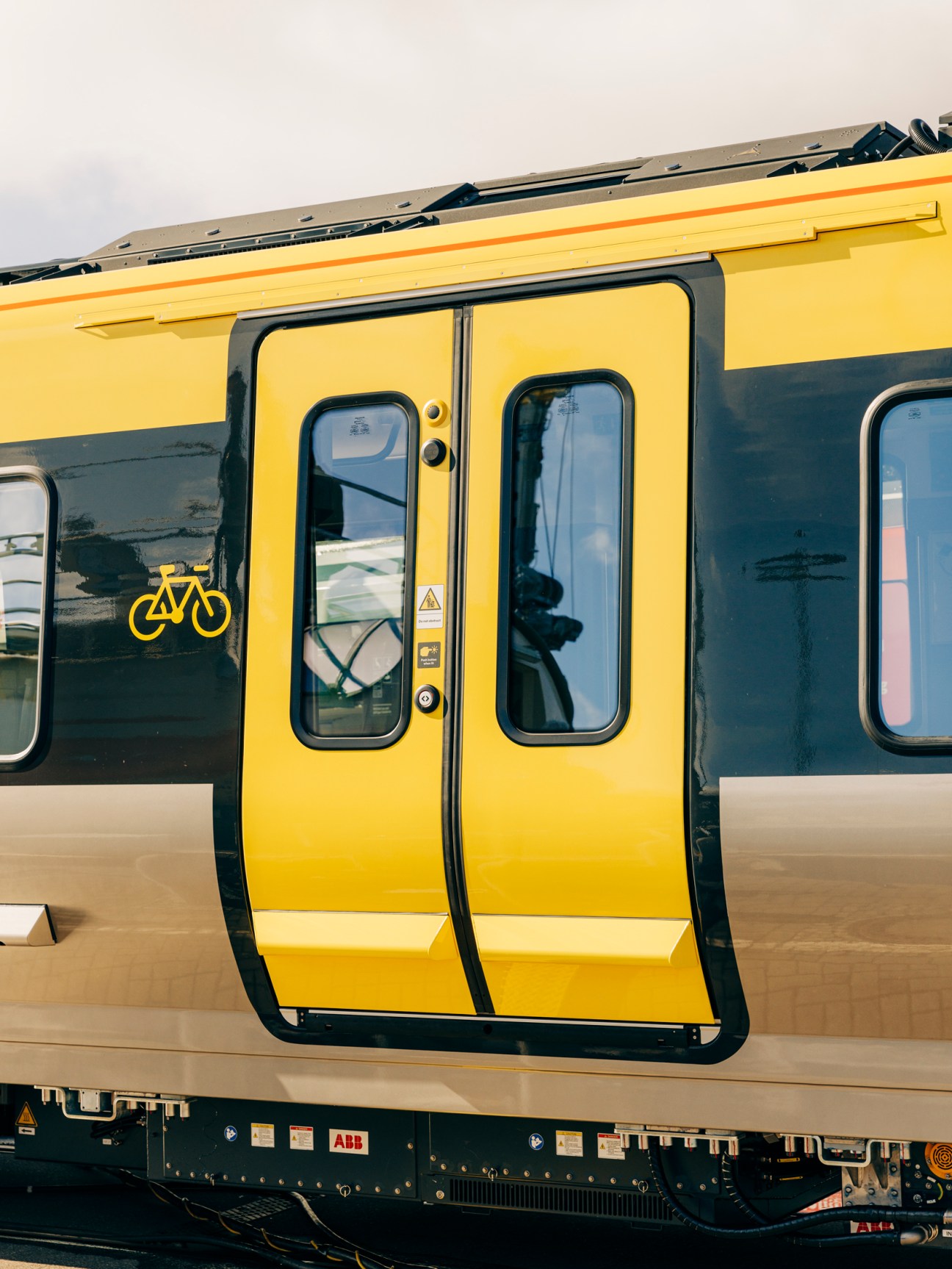
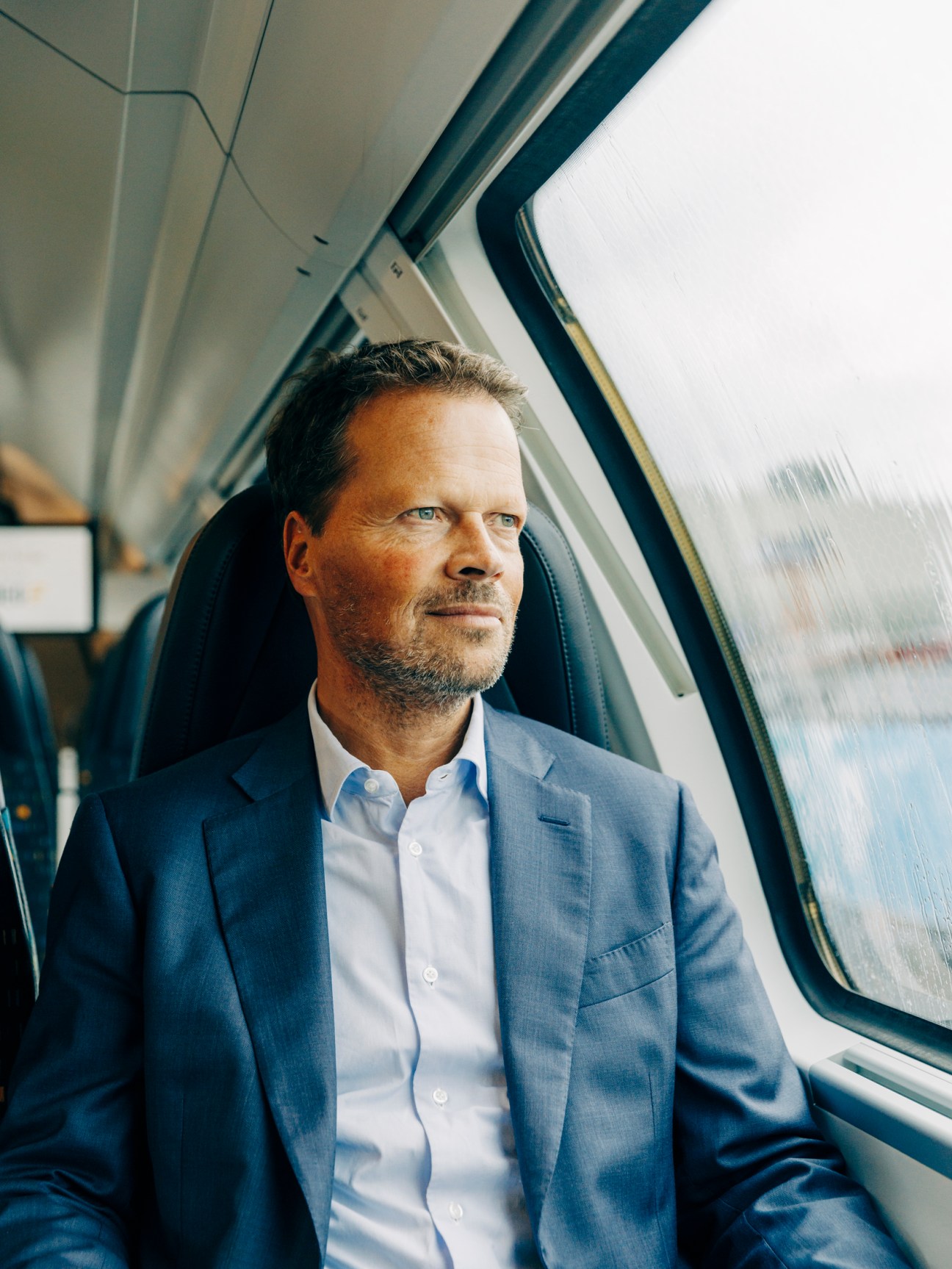
The context in which the rail sector is doing business has dramatically changed since the last Innotrans, in 2018. The pandemic has rocked global trade since then in ways that are still being felt. “Everyone we speak to has the same problem with electronic components: it’s a supply-chain issue,” says Jenelten. “That is the biggest concern.”
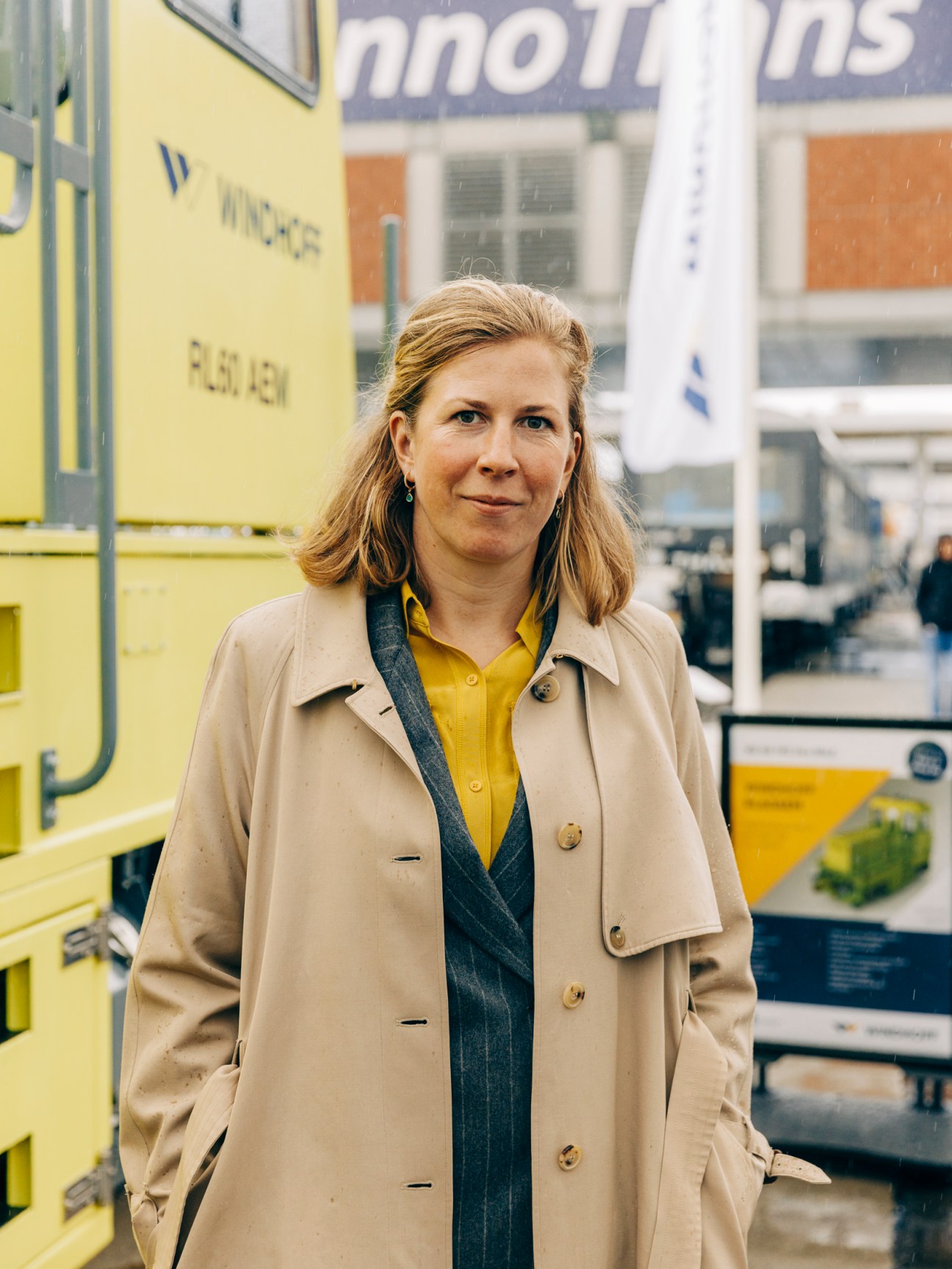
This year alone the energy fallout from the war in Ukraine has pushed up input prices for the manufacturers who supply the transit industry. gmh Gruppe, Europe’s largest supplier of forged-steel disc brakes for the railway industry, has certainly felt the effect. “We have insane energy costs, which do put certain steel producers out of production,” says Anne-Marie Grossmann, gmh Gruppe’s managing director. “But if we tackle these problems and have reliable green electricity, then we have a good base for sustainable mobility.” Despite high inflation, global rail is still pushing to transition away from fossil fuels. Most of gmh’s steel is made using electric furnaces, which are greener but can be more expensive to run. “On the one hand, there is the price,” Grossmann says as she sips coffee. “But on the other, there is the cost.”
Across the global economy, the collective focus of business leaders has shifted in response to the alarming rise in the frequency and severity of climate-change-related incidents. At the same time the global transit industry is practically buoyant at the chance to turn the lemons of the past few years into lemonade.
“This is a golden age when the train is the most attractive way for people and companies to move in Europe”
At Innotrans, almost 3,000 exhibitions sprawl over 200,000 sq m and 42 halls; 140,000 visitors from across the world have shown up – the second most ever. Though this is a trade fair in an industry focused on timetabling and navigation, there are last-minute cancellations and missed connections in the conference’s first days. Confusing fairground maps mean that Monocle ends up in off-limits freight elevators more than once.
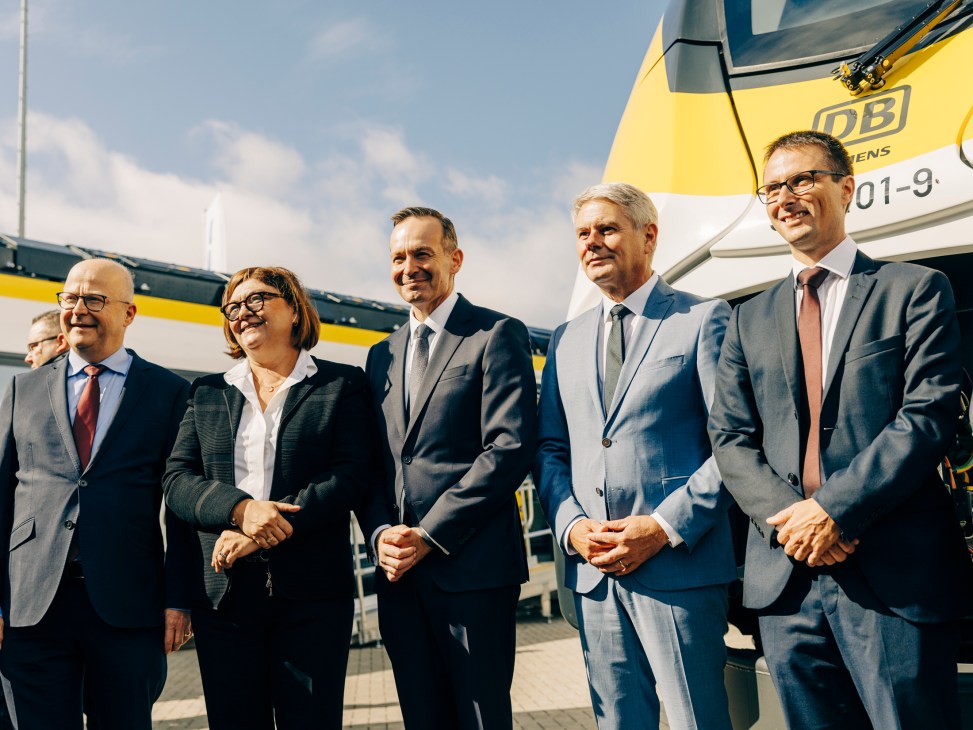
The conference begins, as has become common at trade fairs, with a fêting of Ukraine’s representatives, a move that’s starting to feel a little tokenistic. Alexander Kamyshin, CEO of Ukrainian Railways, speaks about rail workers’ efforts in shipping wheat after Adina Valean, Europe’s commissioner for transport, spells out her big dreams for the continent’s rail sector. “I’m trying to push everyone to offer us short-time, quality, high-speed rail connections,” she later tells Monocle. “And, by 2030, I want to increase the services of all the volumes of merchandise moved by rail by 50 per cent – and double it by 2050,” she adds. “This is a golden age in which the train is again the most attractive way for people and companies to move in Europe.”
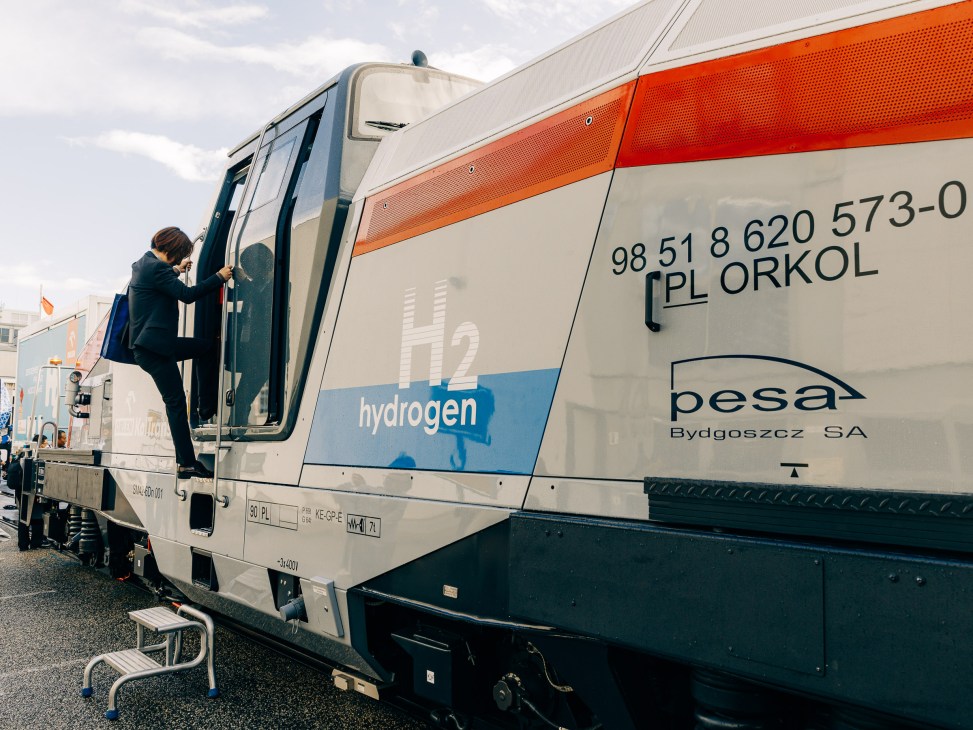
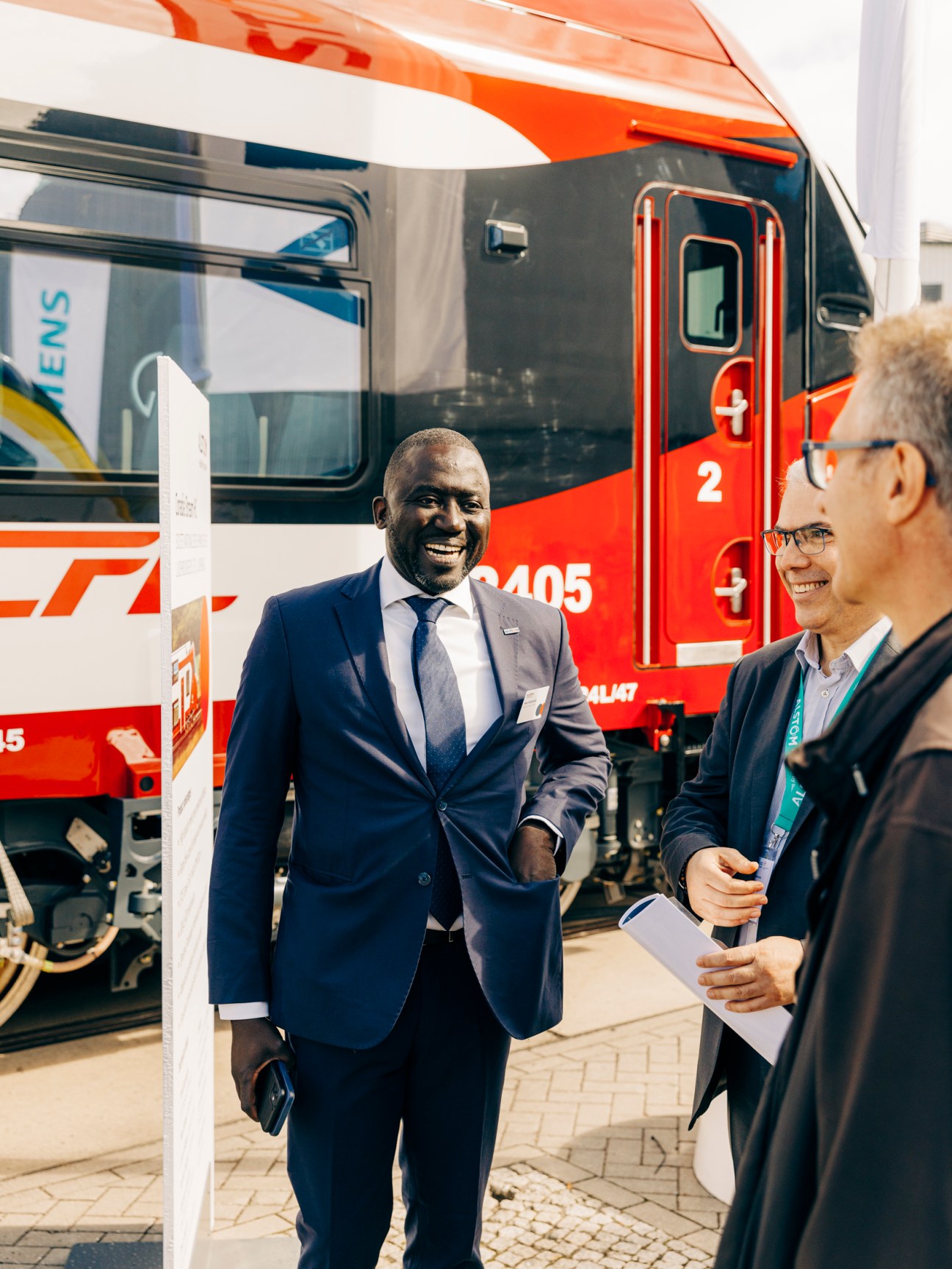
The transit giant is here to premiere its double-decker hydrogen Coradia iLint train and Marc Granger, Alstom’s chief strategy officer, is optimistic about the future of the gas. The war in Ukraine, he says, has focused minds. “One positive aspect of what we’re living through is that decision-makers are going to be more open-minded about needing to change the speed of deploying renewable energy,” says Granger. “Yes, to be more sustainable but an even stronger motivation is to not remain in the fragile situation of dependency.”
“We really need to accelerate the reduction of diesel and focus on new technologies, such as batteries”
Then there are batteries. Somewhere in the mess of display trains, Japan’s Hitachi reveals its offering, built in partnership with Italian state operator Trenitalia. The companies say that the Blues Train, arrow-shaped and painted in cobalt, white and neon green, will be Europe’s first three-way hybrid train, able to switch between the lithium batteries that sit on its roof, electric traction and diesel when necessary. Hitachi claims that the train releases half the emissions of previous models. “We need to really accelerate the reduction of diesel,” says Andrew Barr, CEO of Hitachi Rail. “Our intention is to remove it quickly and focus on new technologies – in particular, batteries.”
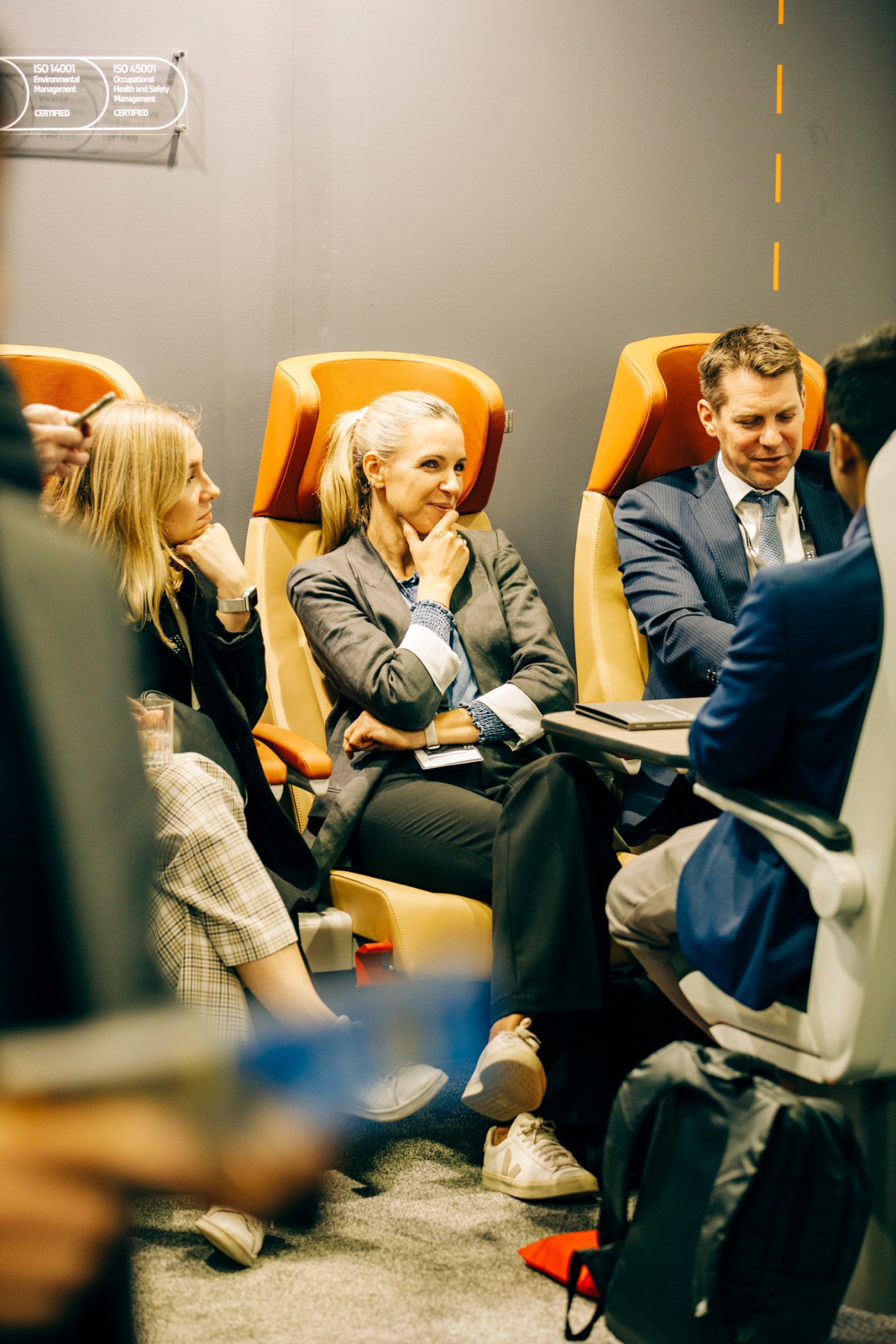
A look inside the new train yields unobtrusive grey and navy leather seats with the occasional pop of green. Even though the models on show here have been specced up for display, it’s pleasing to spend time in trains without gum on the floors or the waft of other passengers’ fast food. The same goes for the sparkling clean outsides of carriages that are free from graffiti. Germany firm Christ Wash Systems focuses its efforts on cleaning trains (doing the Lord’s work, if you will). “Just today I’ve had three or four meetings, every one discussing graffiti,” says Mirco Völkl, Christ’s head of sales for trucks, buses, trams and trains. “It isn’t just one company that has the solution but Deutsche Bahn has a working group and Switzerland wants to solve this, so that will probably be the target for 2023.”

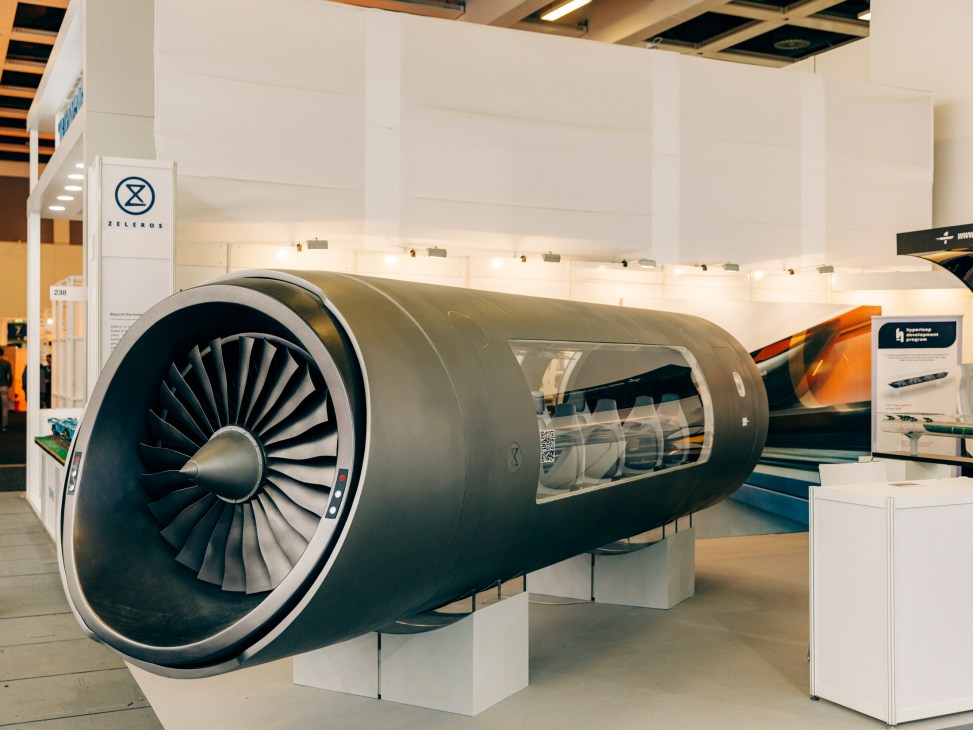
A drive for efficiency is the other part of rail’s efforts to cut out pollution. One man hoping to reap the benefits of those endeavours is Marko Kroenke, president of the International Monorail Association (IMA). Over some upsetting canapés in a dimly lit meeting room, he tells Monocle that elevated monorails require less land than other projects. “The effect on the city is very little and you can put them in high-density areas,” he says.
“You can even go through buildings.” He adds that monorails glide extremely softly. “We have examples from Japan that go over graveyards because they are so silent,” he says. With demand for quick-to-build monorail services rising in developing countries – Cairo is implementing two huge new lines and China several – the ima expects the world’s monorail lines to double to 1,200km over the next five years.
Elsewhere, the push for efficiency takes the form of the ever-mutating internet of things – in this case companies digitising rail travel to allow them to more effectively create timetables. Siemens Mobility, for example, is working with the Dutch and Spanish governments on fully integrating those countries’ transit systems and creating apps for what it hopes will become a seamless experience to rival driving. The company is also rolling out software that measures the weight of carriages, allowing operators to deploy more trains at peak hours. Other Siemens Mobility software has allowed French rail upstart Ouigo (see issue 152) to fill, on average, 97 per cent of its seats and take on Renfe in Spain, according to Siemens Mobility Software CEO Michael Frankenberg. The software is lucrative too. “We are talking about annual recurring revenue when offering those solutions as a service,” says Frankenberg from the monochrome seat of one of Siemens’s latest trains as the rain lashes down outside.
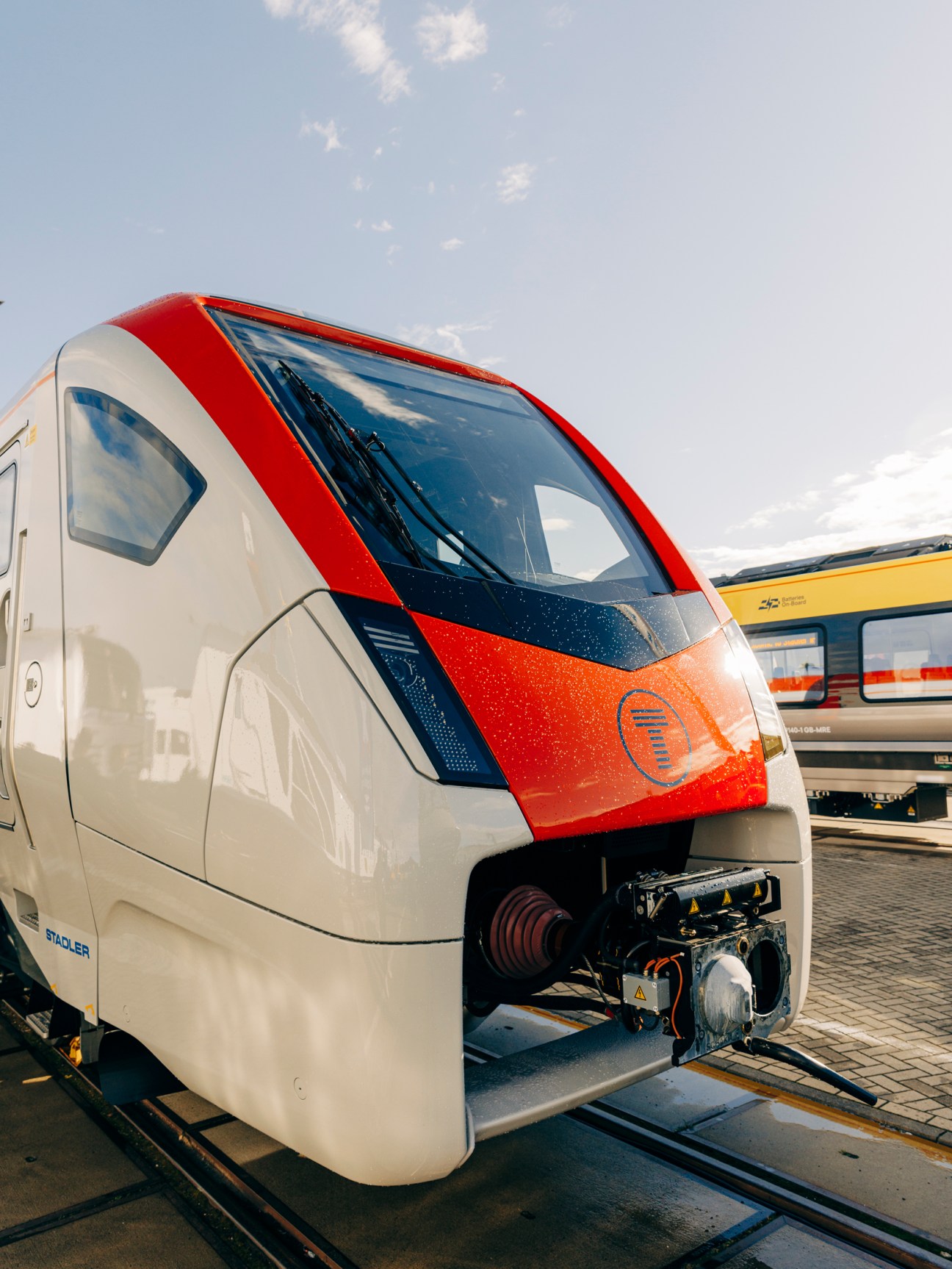
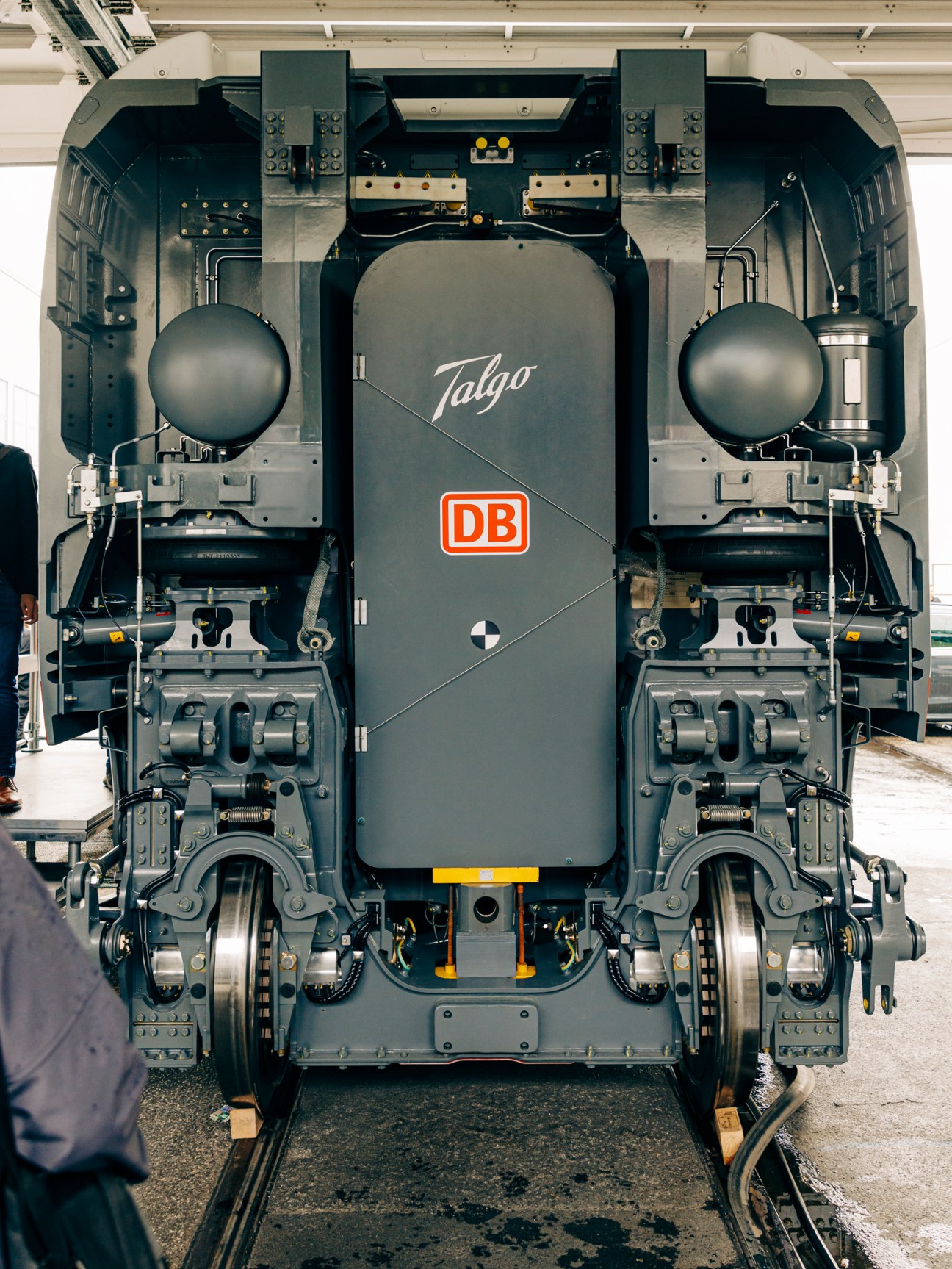
It might be wet and windy in Berlin but a few short weeks ago the nearby Tempelhof turned brown during an alarmingly hot summer that sparked wildfires across Europe. The prospect of worse to come could provide new opportunities for rail companies in warmer regions to share their expertise. “The uniqueness of Australia is its temperature range,” says Caroline Wilkie, chief executive officer at the Australasian Railway Association. “We’re introducing technology to some quite harsh environments and there will be interesting lessons for Europe as well.”
This year’s Innotrans feels like the beginning of a long journey to greener travel. Whether efforts to mitigate climate change take three years or 30, a new emphasis on the environment has given the rail industry a fresh sense of purpose. “Thirty or 40 years ago there was a perception that the railway was a dying industry, says Railway Gazette International’s Kingsley. “I don’t think you could say that now.”
Additional reporting by Markus Hippi and David Stevens
Up in the air
It has been 10 days since florist Kairo Gonzales received a fresh delivery of cut roses. His flower stall in the central business district of Quito, Ecuador’s capital, overlooks La Carolina park, which is dwarfed by a clutch of brand towers that have recently redrafted the city’s formerly low-rise skyline. Flowers are among Ecuador’s most lucrative exports but roadblocks set up by protesters have prevented them and other supplies from reaching the city.
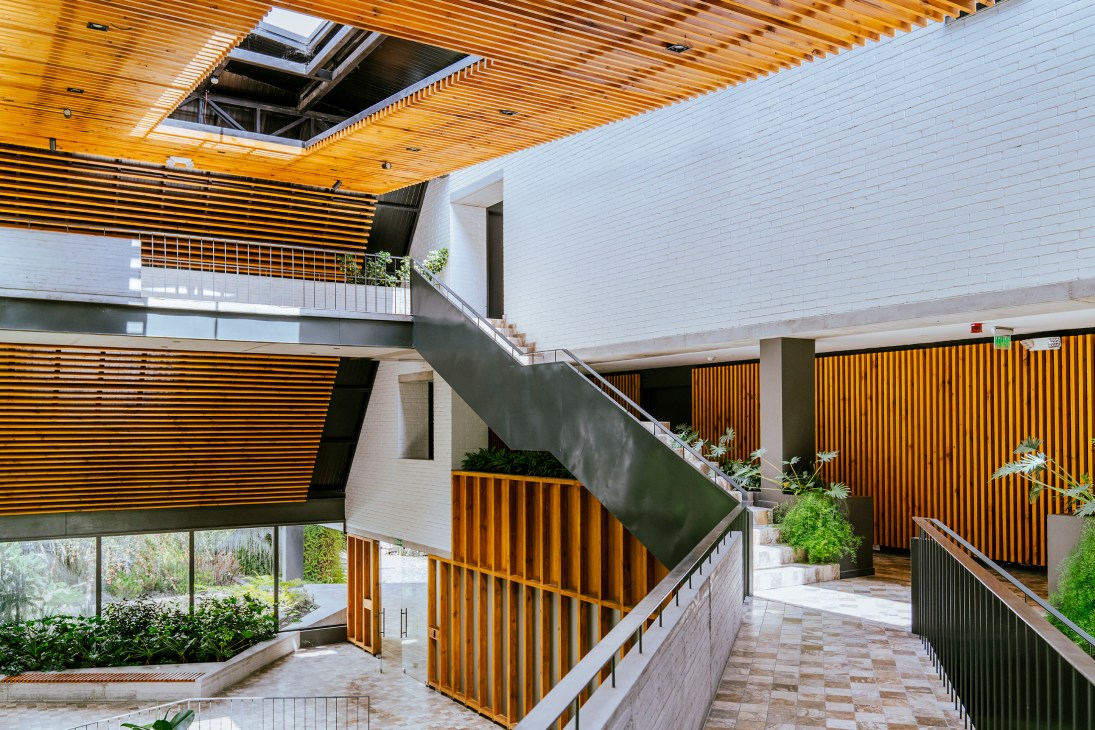
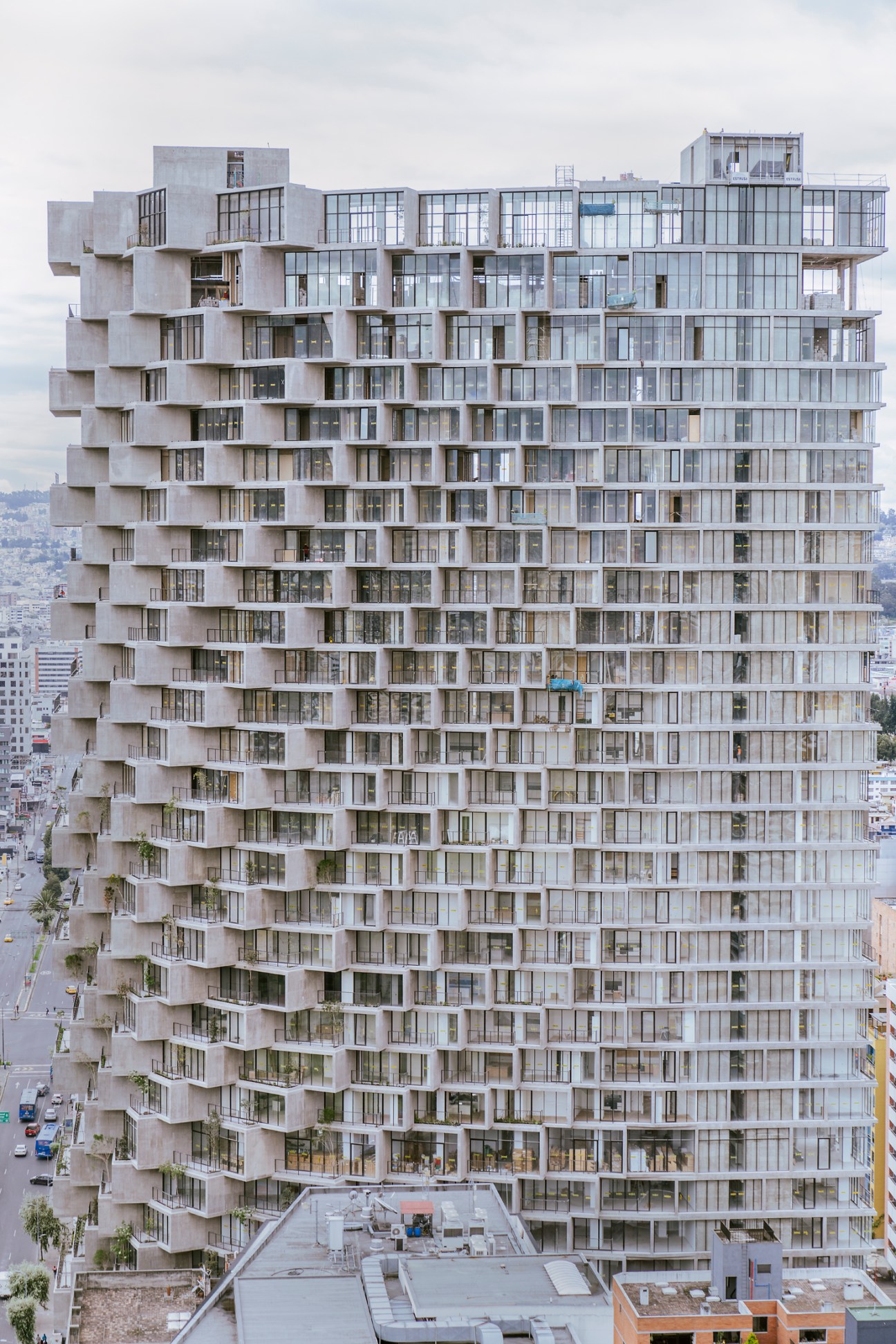
“We support the reasons behind the demonstrations,” says Gonzales, surrounded by wilting blooms in plastic buckets. “But we didn’t expect that they’d go on this long.”
Quito is in a moment of flux. The city of two million souls nestled in the foothills of the Andes is experiencing rapid growth in the form of a population boom but also through investment in both office space and new transport options. With such swift change comes some turbulence. In June the capital was paralysed by an eruption of public anger against widening inequality. Food and fuel prices have shot up precipitously across Latin America, squeezing the incomes of poorer citizens who are still struggling on the heels of the pandemic. Although the protest was urban, the movement was led by rural and indigenous communities, which are a powerful political force in Ecuador. Demands were presented to the centre-right government – with some eventually met –calming the simmering tensions for now and allowing supplies (of roses and much else) to return to the city.
The tallest tower visible from Gonzales’ stall is a concrete structure designed by Bjarke Ingels that is slated to open this year. Iqon is the Danish architect’s first project in South America and provides a rare 33-storey-high view of the surrounding mountains and active volcanoes. Along with a nearby residential tower from lauded Israeli-Canadian modernist architect Moshi Safdie, these new inner-city buildings on the edge of the park represent an important statement for Quito, both in the scale of its buildings and its ambition to become a modern Latin American hub.
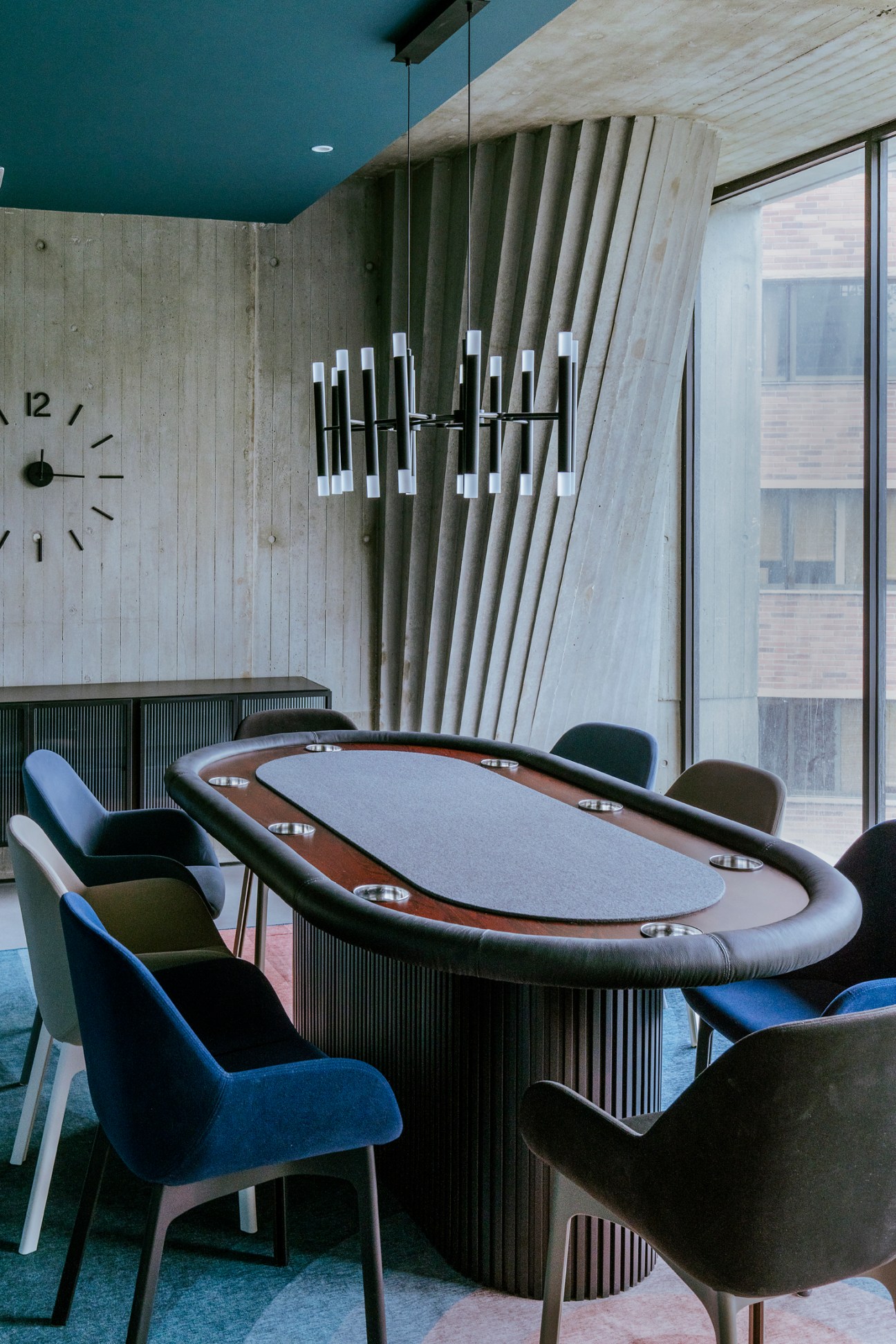
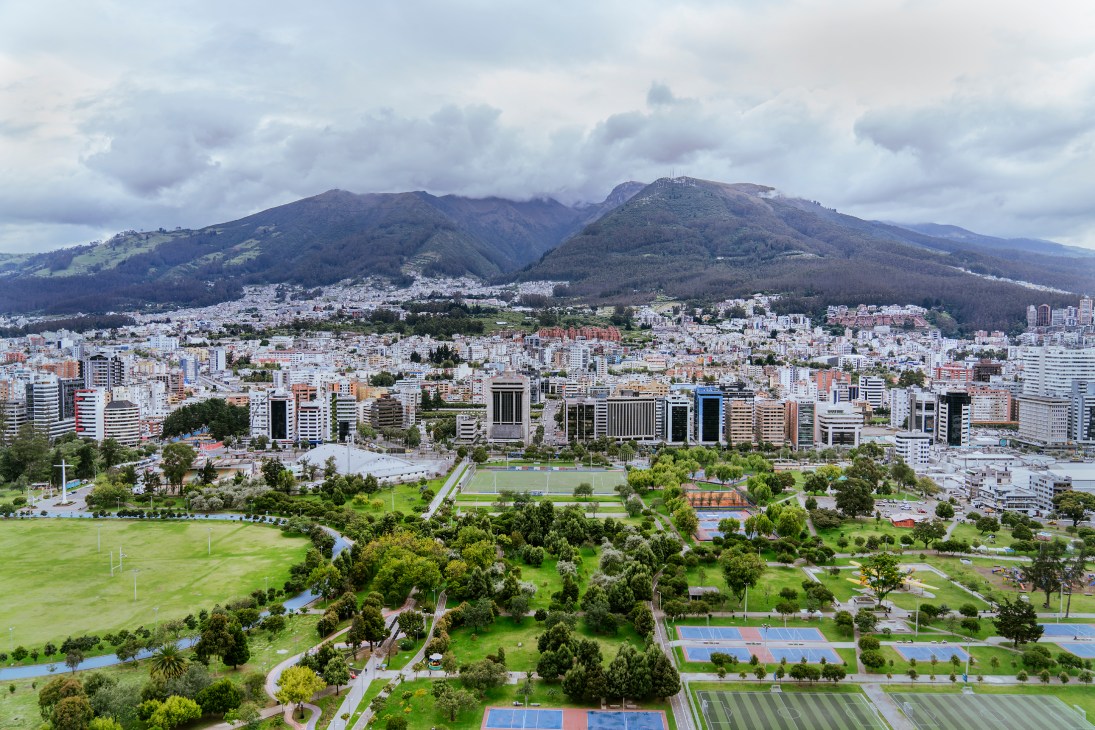
Quito itself is a long, narrow city. There are mountains on one side and the gentle slopes of the Pichincha volcano on the other. The valley, some 2,850 metres above sea level on the equator, has limited how the city could expand. As Quito’s population more than doubled in barely four decades to today’s two million, the only option was to build up.
Changes to planning laws helped and, in 2016, spurred a wave of investment in infrastructure and property in the northeastern district, with La Carolina park at its centre. Developers, once restricted to four storeys, can build up to 40 now that the international airport has been moved out of town. A gleaming metro line that spans 22km from north to south should help to alleviate road congestion along its central corridor when it opens to commuters. City hall is yet to secure an operator, although construction of the $2bn (€2bn) project by Acciona of Spain is complete and slated to open by December.
“You can see Iqon from every point in the city,” says Joseph Schwarzkopf with palpable pride. He’s the CEO of family-run property developer Uribe Schwarzkopf, which is one of the firms trying to tempt top architects to build here.
“The current trend in urbanism is just starting here,” he says, while comparing Quito to other Latin American cities. “We’re only beginning to see good public transport and good public space, so it’s important to learn from the wider world about how we can be successful.”
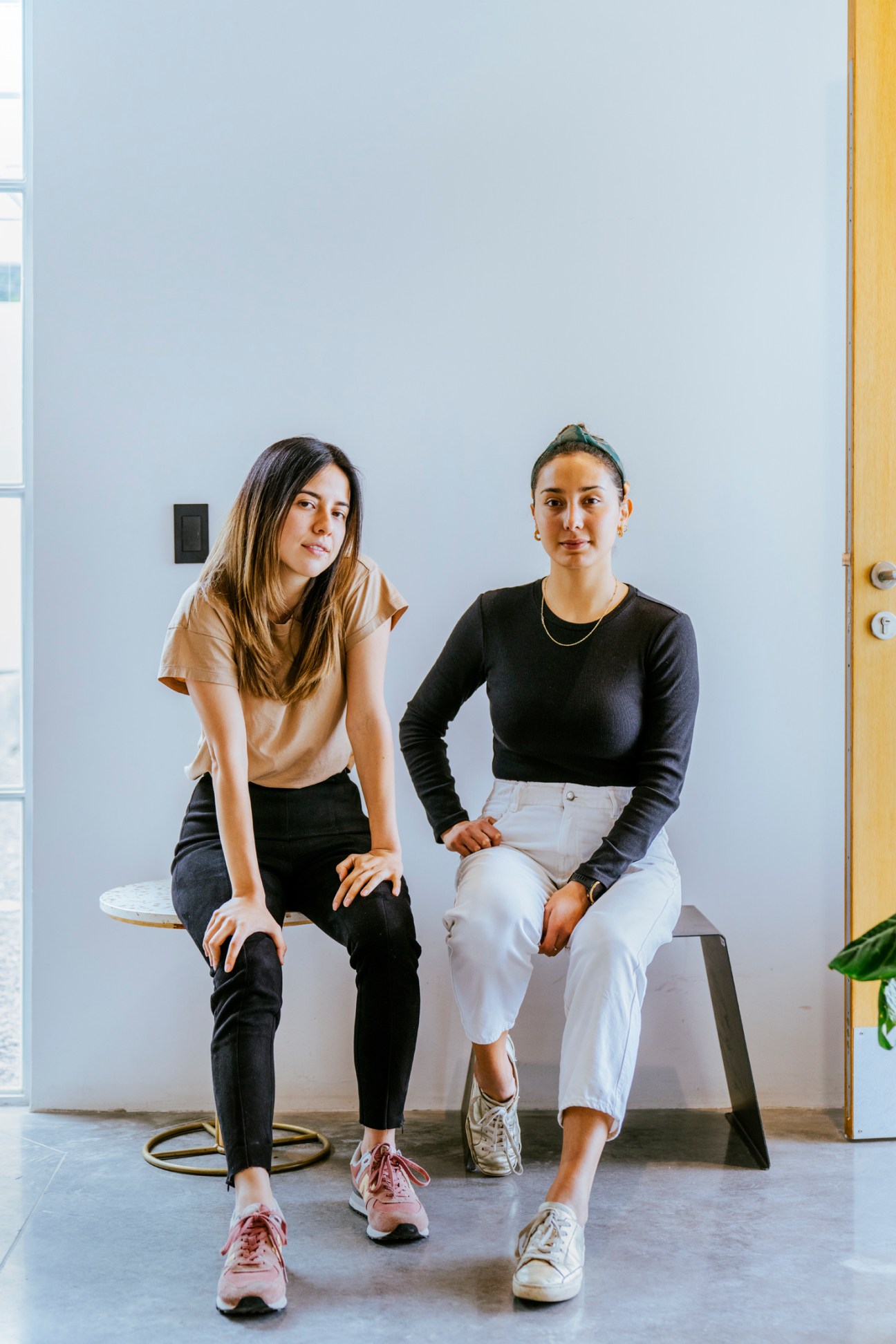
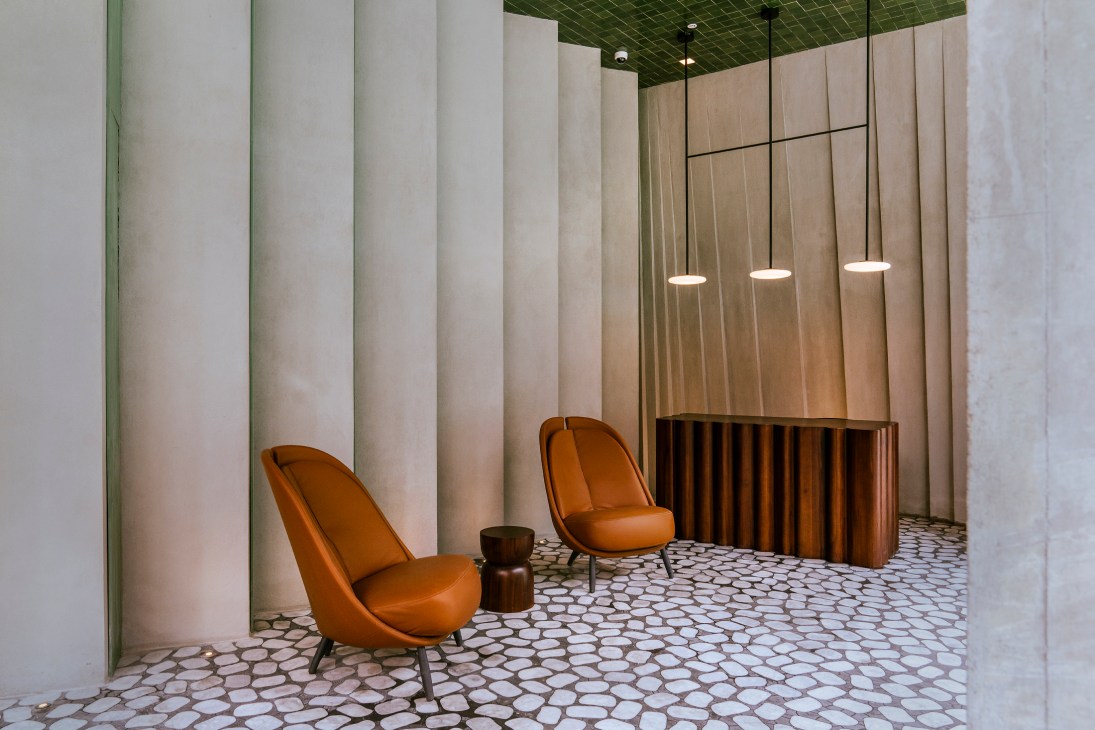
Defining success will depend on who you ask; few protestors are likely to be putting down deposits on these pricey new flats. Although the new buildings here are world-class in pedigree and execution, the longer-term task of helping these alien-looking structures feel as though they are part of the city – like the new towers themselves – is still up in the air.
Another reason why these new tower blocks are so striking is Quito’s distinctive and well-preserved architectural past. The historical centre dates but to the 16th century and was granted Unesco heritage status in 1978 – it was the first city to be added to the world heritage list. During the recent building of a metro station in Plaza San Francisco, every single paving stone in the square was removed and then replaced by hand to ensure that elements of the old town were preserved.
“Quito has been an island in the Andes stuck in time, with some important and powerful architectural interventions,” author and architect Rómulo Moya Peralta tells Monocle of the capital’s mid-century building boom. He has documented the city’s transformation for 40 years and tells us that architects from abroad first arrived in Quito in the mid-20th century; several of these had fled postwar Europe (Czech architects Carlos Kohn and Otto Glass being two of the first). Just as the private sector is driving change today, the state played a big role in updating the vernacular back then and new buildings, from banks to ministries, were commissioned from both émigrés and a few Ecuadorian architects. Subsequent economic booms and busts in the oil-exporting nation made it difficult for projects to secure financing, says Moya, until the spate of new towers fired the starting gun on a building spree. “When there are fewer you can come and be the first,” he says. “Quito is unexplored and that makes it attractive for international architects.”
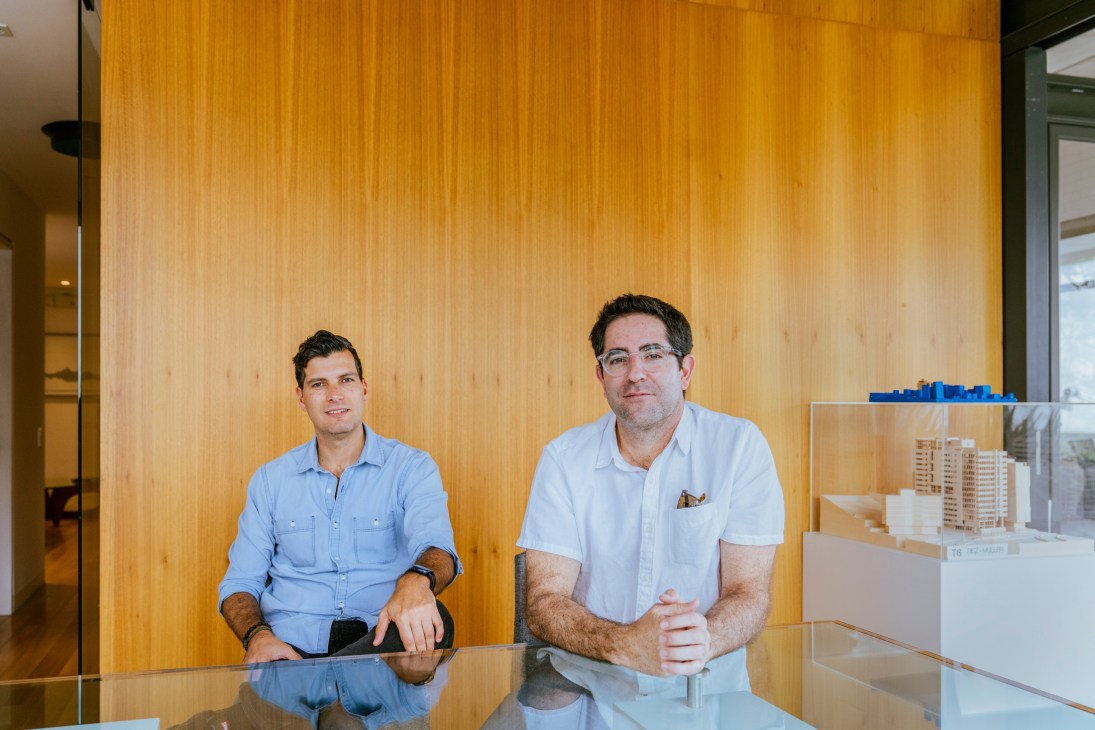
One hope among many here is that the plum jobs don’t just go to international architects flown in from abroad. Gonzalo Diez is part of the next generation of Ecuadorian designers looking to shape the city too. The snowcapped peaks of the Cotopaxi volcano are visible on the drive to his office in Cumbayá. Together with his business partner, Felipe Muller, Diez decided to put down roots in a verdant valley to the northwest of the capital, away from its modern urban area.
“For 30 years there was no real planning at a city level,” says Diez, sitting in Diez + Muller’s mixed-use office, where a central patio dotted with palms and succulents connects the various low-rise offices. “Things are slowly starting to change; people are beginning to understand the importance of thinking about how our city evolves.”
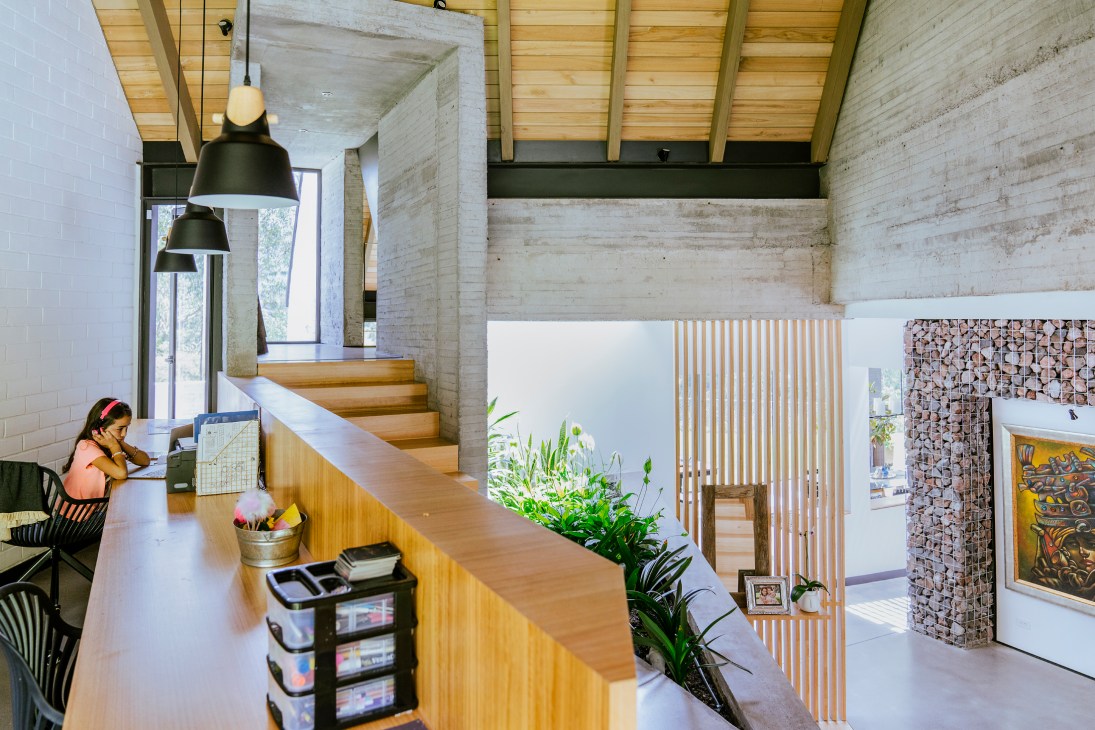
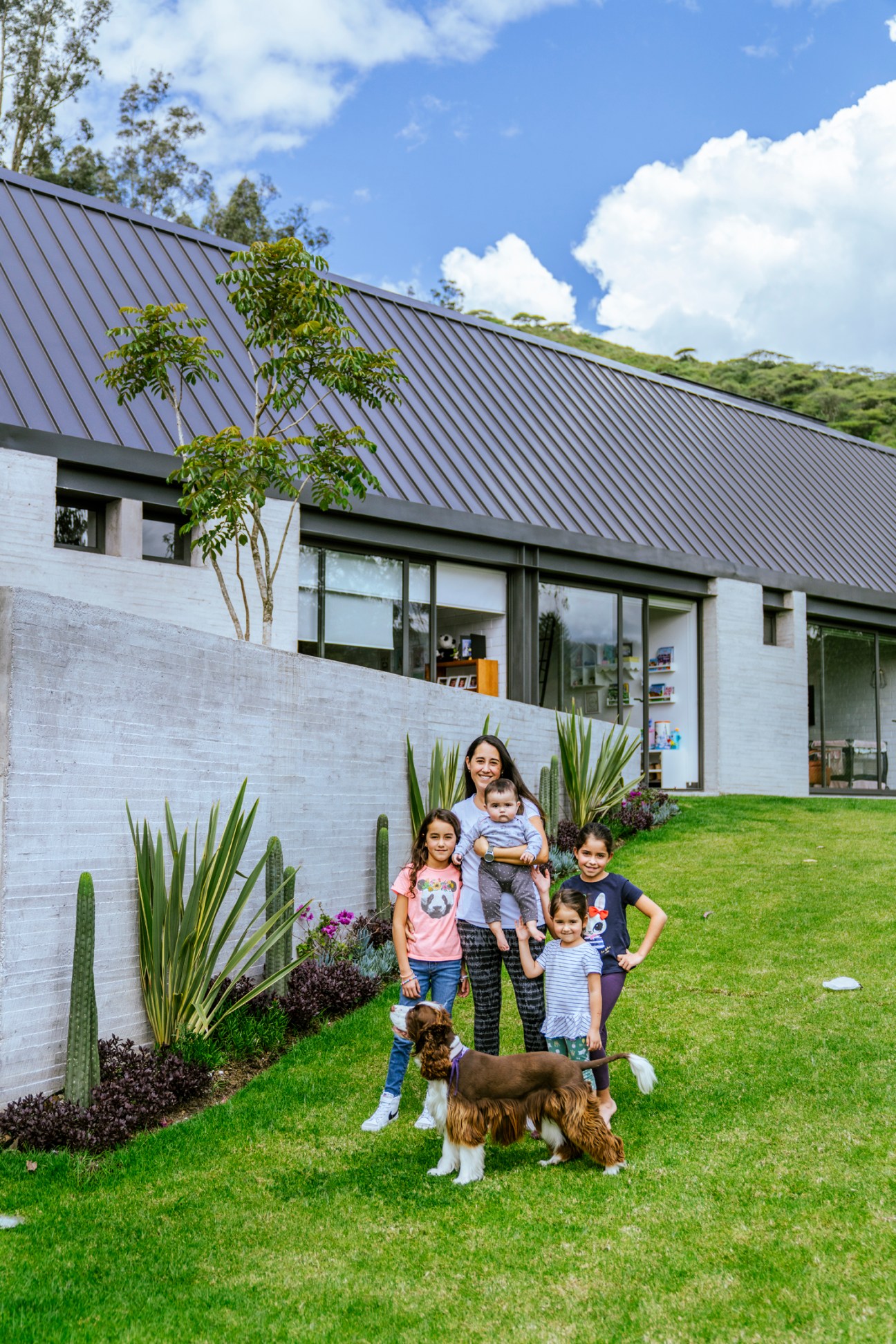
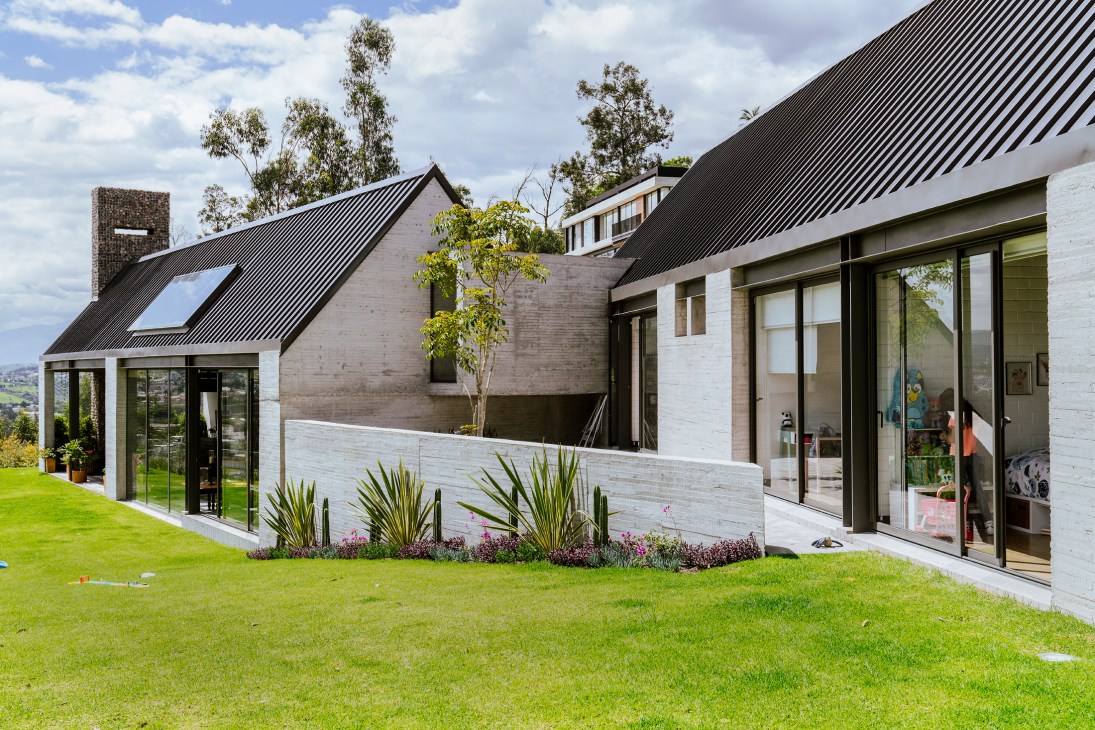
One notable thing about architectural practices in Ecuador is how few there are. Diez + Muller is one of just a total of 10 firms based in either Quito or the southern city of Cuenca. “That just shows how nascent the industry is,” says Diez. His latest project– a family home for a couple and their four daughters in Cumbayá – couldn’t be further from the large-windowed flats in the new towers. The barn-like structure is made using natural materials and surrounded by greenery that feels more like a Swiss Alpine pasture than a South American capital city. Today about 40,000 residents live in the valley, attracted by the space and short commute to town.
Like the attention now being paid to the city’s architecture, appreciation for Ecuadorian craft is also growing. Designer Ángeles Ortiz works closely with ceramicists and craft-folk, many from these remote rural communities. Together with her mother, sister and brother, she started Coffee Relief, a homeware store and café in the low-lying residential neighbourhood of Tumbaco.
“Ecuador is much better united,” says 29-year-old Ortiz of the recent protests, while making adjustments to a thinly-woven lampshade made from toquilla straw by weavers in the Azuay province.
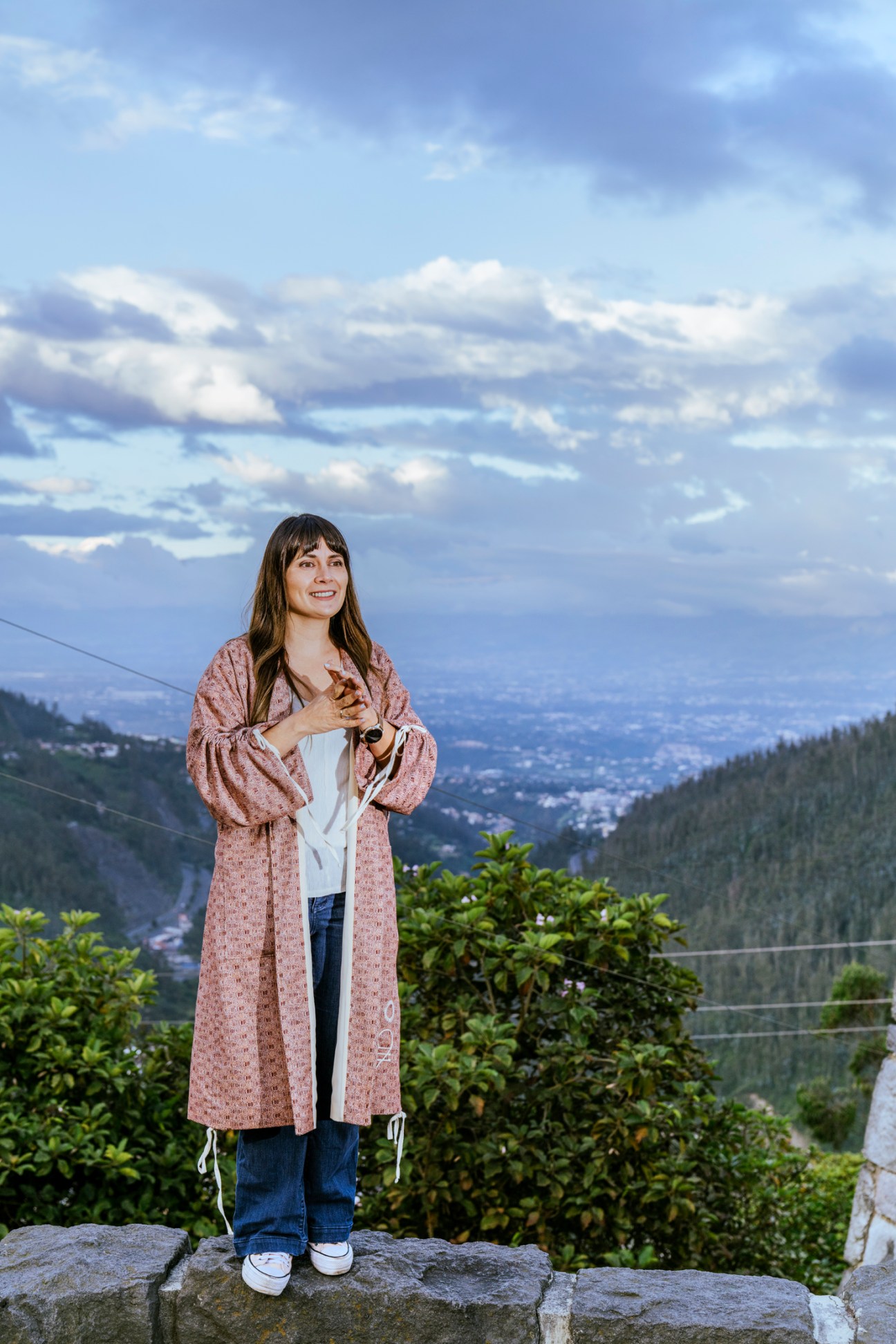
Despite the fast pace of change, both women say that Quito still feels neighbourly – like a “small society” – compared to their respective stints studying in Europe and the US. Quiteños, they tell Monocle, have a close relationship to their surroundings, so this modern way of life presented through high-rises still feels very new – not bad, necessarily, just novel. Areas such as Tumbaco, La Floresta and Guápulo, where houses sit side by side between green spaces, are becoming sought-after among younger generations.
“I’ve noticed more people returning to Quito because we can make a statement with our work, while honing our craft,” says Ortiz. Human capital, as well as infrastructure, will be the key to Ecuador’s success. Many here still remember the devastating financial crisis of the late 1990s that led many talented people to emigrate. At one point, Ecuadorians made up the biggest single migrant population in Madrid – a position that has altered as better economic prospects encourage people to return.
Many of entrepreneur Michelle Arévalo-Carpenter’s childhood friends have chosen to move back to Quito in the past decade. The four Impaqto co-working spaces she helped establish have welcomed a wave of smaller businesses working in industries from food to e-commerce. “Ecuador is a good test market,” says Arévalo-Carpenter. “It is big enough and diverse enough, yet costs are lower than Brazil or Mexico.”
Quito is at an inflection point and perhaps the city today is laying the tracks for where it sees itself in the future. Arévalo-Carpenter says that her generation recognises the need to put the capital on the map. Though there will be disagreements about how to do it – from the protestors to the developers and the designers – most seem optimistic about the city’s potential for change.
“We finally have a batch of young, top-quality architects for the first time,” says Moya before we part. “They are going to positively transform our city, whatever comes next.”
Ecuador: the politics
Today there are five major political parties in Ecuador’s parliament, which represents a population of 18 million. Left-leaning political coalition Union of Hope won the most seats in the country’s National Assembly in last year’s general election but the current president, Guillermo Lasso, has a minority status in congress is the first conservative leader of Ecuador in 14 years. He took office in 2021 after pledging (and delivering) a rapid coronavirus vaccination rollout and swift economic reforms. The former banker has struggled to forge political alliances and his ratings have taken a hit amid stagnating growth, a rising cost of living and high inequality – a story that successive governments before Lasso’s have failed to rewrite.
To many, however, Lasso still represents a clean break from the tainted legacy of leftist president Rafael Correa, who served between 2007 and 2017. Correa’s government poured money into social and public works programmes during its time in power but left the country polarised and heavily indebted to China. Chinese financing, worth about $18bn (€18bn) in loans since Correa took office, has drawn scrutiny from economists in Ecuador over high interest rates and loan repayments made with oil. The nation has long pursued a free trade agreement with China, that the current government hopes to sign off by the end of this year. Correa was one of the “pink tide” of leftist leaders in Latin America who rose to prominence early this century, following Hugo Chávez’s victory in Venezuela in 1998. Today he lives in exile in Belgium, having been found guilty of corruption.
High oil prices have helped spur periods of growth in Ecuador and finance ambitious spending, though the decision not to save some of the oil profits for a rainy day looks short-sighted. When the commodity boom ended in 2014, the government was forced to borrow from China and today Ecuador is one of only two countries in South America with an IMF loan; the other being Argentina.
Peru, Chile and Colombia have all turned to the left in recent elections, leaving Lasso’s government as the sole flagbearer for a small-state, pro-business, right-leaning government in the Andes. Time will tell whether that approach can pay dividends for the people of Ecuador.
Finding Nebo
It was on the morning of 15 August 2021, the day the Taliban seized control of Kabul, that I last saw my rescue dog, Nebo. The Afghan capital’s streets were choked with people desperately trying to access money, stock up on supplies and flee. Nebo lay quietly on my weeping housemate’s floor while packed her bags. I didn’t think it was safe to stay there alone, so I arranged to move into an apartment with a friend. Nebo went to an animal shelter. The idea was to let things settle and then the pair of us would return to the house. There are four animal charities that operate in Kabul and I would often send him to one when I was travelling for work.
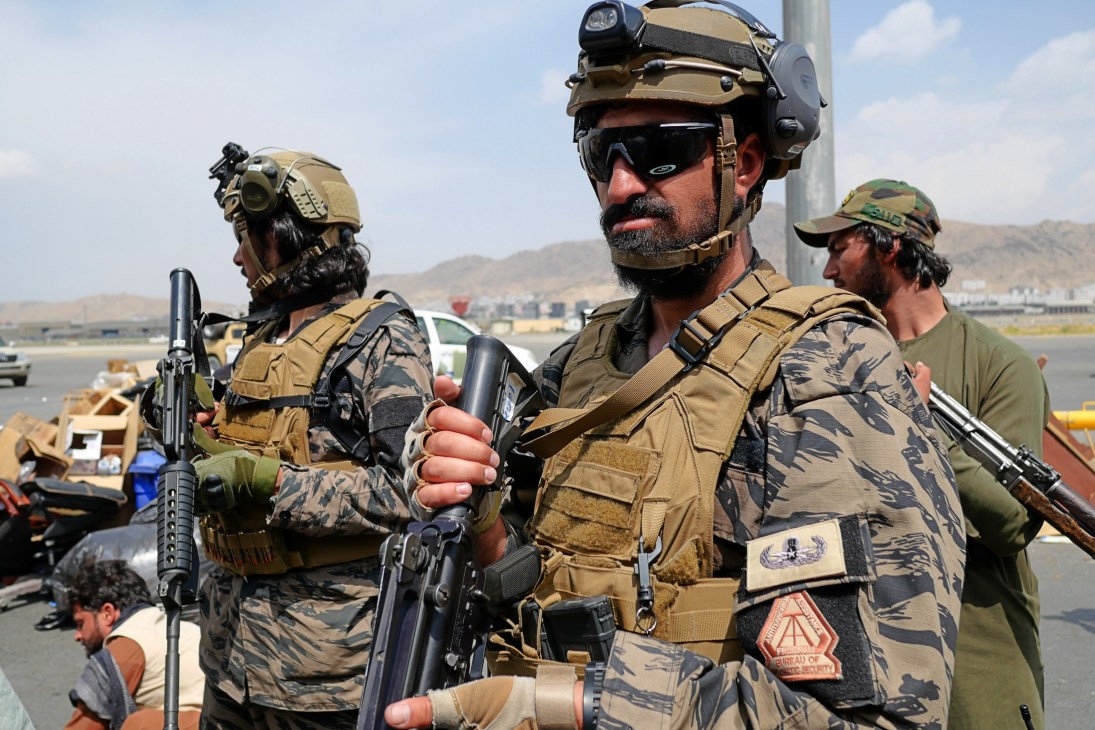
A few days after handing him over, the woman running the shelter called and suggested that I put Nebo on an animal evacuation flight she was organising. When the Taliban were last in power, they had strongly disapproved of dogs as pets and I feared what would happen to him. Would I still be able to live in my house and have a garden for Nebo? What if the animal organisations left? How would I find help if he ever got sick?
Nebo, named after a mountain in Jordan, found his way into my life at six months old, in Amman. I was only ever meant to be a foster owner but we quickly became inseparable. When I moved to Afghanistan at the end of 2020, there was no question that he would be coming with me. The three-bedroom house I found in Kabul was over budget and far too big but the garden – for Nebo – was the best I’d seen. While I worked on renovating the space, Nebo tried out different snoozing spots. At the time, tension was building across the country. In July last year, I visited government forces in Mazar-i-Sharif and Herat as they fought to hold back the Taliban. Then, at the beginning of August, a huge Taliban attack rocked Kabul. Even then, however, no one expected that they would be back in the capital so soon.
Sending Nebo to my friend at the shelter would mean knowing for sure that he was safe. I thought that I’d be able to make a final decision about what to do when the flight was confirmed. But it turned out that the animals were already at the airport. Then I got the call: he was lost. Sat in the back of my driver’s car, already overwhelmed by the heartbreak and despair I had witnessed over the past few days, I wept. Nebo was just one of 130 dogs that were supposed to have been evacuated on a chartered flight. But the plane never arrived and the US soldiers stationed at the airport got fed up. The woman leading the evacuation was forced to return to her house in Kabul and the soldiers let the dogs loose.
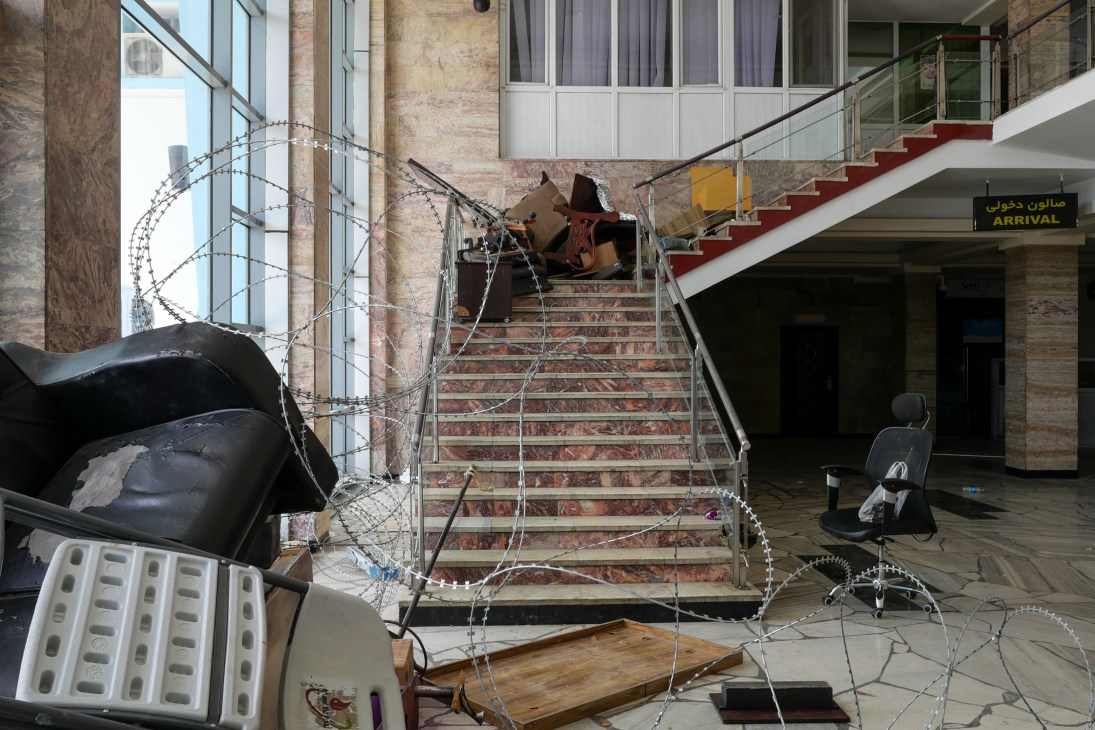
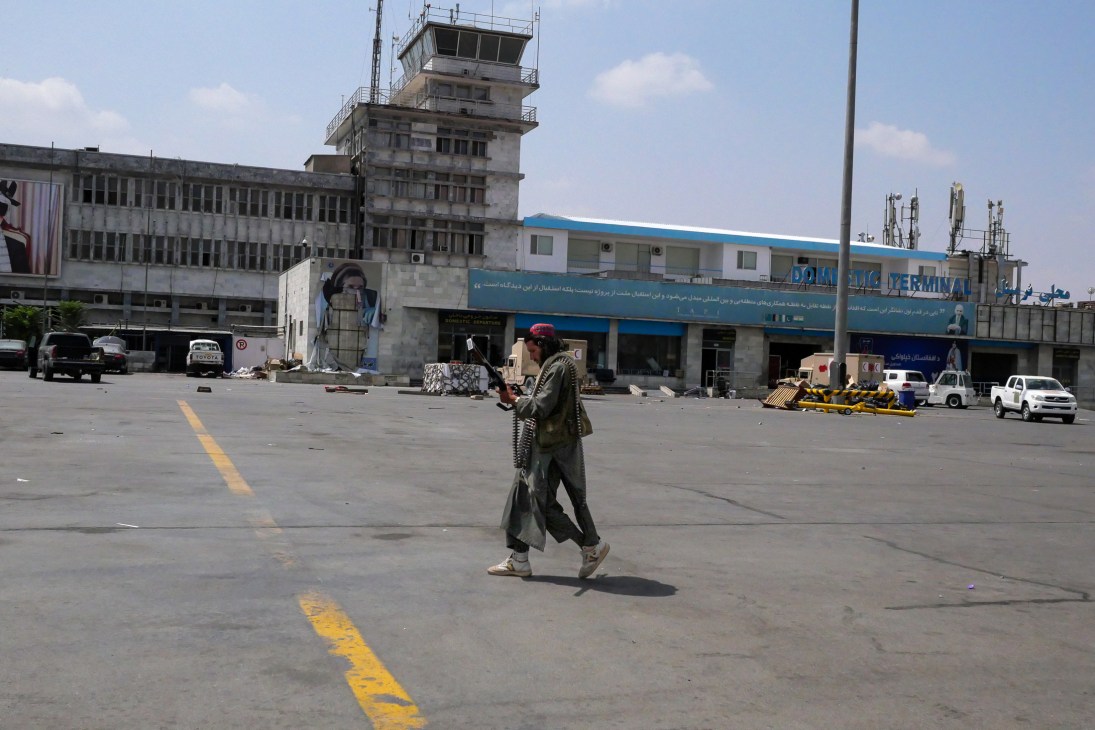
Access to the airport was impossible while foreign troops were still stationed there and, even if I could have got inside, the tragedy I was en route to report on had to take precedence over Nebo. Ten members from the same family had been killed in a US drone strike that had mistaken its target for an Islamic State car bomber. Among the dead were seven children. At the scene, a child’s finger was held up by a young man searching for body parts in the car’s scorched skeleton. A lost dog paled in comparison. That evening, just before midnight, the last US troops departed Afghanistan. The following morning, press were allowed into the airport. I went with a colleague; while he was working, I ran around the tarmac frantically trying to find Nebo. The place was a mess – huge posters of the deposed president, Ashraf Ghani, had been torn down, wrecked vehicles lay abandoned and the terminals had been gutted. Though Kabul Airport only has one runway, it’s 3.5km long and 50 metres wide, and houses more than a dozen aircraft parking spaces. I found a hangar with empty animal crates and dog-food bags. But the only dogs were three dead ones rotting on the tarmac.
Over the following months I traversed the perimeter of the airport with friends, spoke to Taliban officials and contacted people working there. I was never allowed back onto the runway. In October, six weeks after Nebo had gone missing, a dog handler at the airport said he’d seen him. His attempts to catch him had been unsuccessful and he said that the dog looked in very bad shape. He wasn’t convinced he would still be alive by now. My heart dropped.
From time to time, people sent me photographs of similar-looking dogs but they were never Nebo. I had accepted he was gone but missed him so much; many of my friends have left the city since the Taliban takeover and it has become a lonely existence. This August, nearly a year to the day since I had last seen him, a vet called a friend to say that he had found a dog that could be Nebo. Wary of getting my hopes up, he sent her the photos. But she was unsure; only I would truly know. I was sat on my bed when I received the pictures. “Oh my God,” I said. “I think it might be him.” It felt surreal. Half of me was filled with total joy at the thought that he could come home, the other half felt as though I’d let him down for not having found him sooner.
Our reunion was nothing like the movies. Was this really Nebo? He looked terrible: his fur was dry and dull, he had half an ear and teeth missing, and a broken tail. He didn’t seem so sure of me either. In the car, I kept staring at him; he looked so different and seemed a little wild. But when we got home, I began to see the old Nebo as he smothered me in kisses. Nebo still has a way to go before he’s back to full health and he has developed some new fears during his time living on the streets of Kabul but he’s on a better diet than me, so he’ll get there. Despite my apprehension, the animal charities remain in operation and the neutering programme in Kabul is still going, with the Taliban’s blessing.
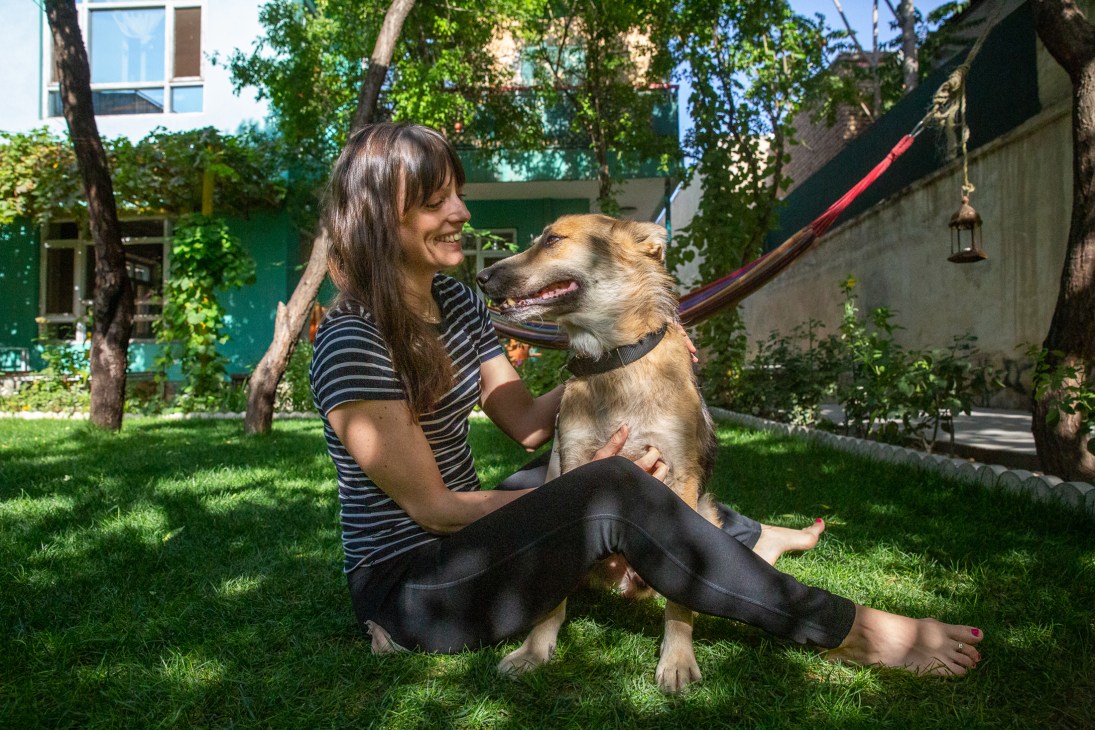
It was tricky to walk Nebo on the street even before the Taliban took control; it raises your profile as a foreigner, as few people in this city have dogs as pets. Kidnapping is still a big risk here – it used to be the Taliban but now it could be Islamic State or criminal gangs – so it’s best to keep a low profile. So my guard walks him at dawn, when the streets are empty, and I take him to international organisations’ compounds where he’s free to run around in much bigger spaces with other dogs.
Afghanistan is a bleak place now. Women’s rights have been severely curtailed, girls are banned from secondary education and the economy is in tatters, with many millions facing starvation. Journalists are under constant surveillance and some foreign correspondents have faced difficulty renewing their visas. Mine runs out in November and I’m worried. So I wait. In a few weeks’ time, Nebo and I will either be looking at another year in Afghanistan or we’ll be planning the next adventure.
Charlie Faulkner is a reporter for ‘The Times’, based in Afghanistan and a writer for Monocle.
Remote chance
Melbourne-based architect John Wardle is well versed in designing houses for challenging landscapes. Bass Coast Farmhouse, the latest project by his studio, Wardle, sits on the edge of Victoria’s treacherous Bass Strait in southeastern Australia. A rural plot of about 66 hectares is punctuated by a sandhill, buffeted by Antarctic winds and blasted by harsh sunshine (the ozone layer is especially thin here). As such, the house was designed with the most extreme elements in mind.

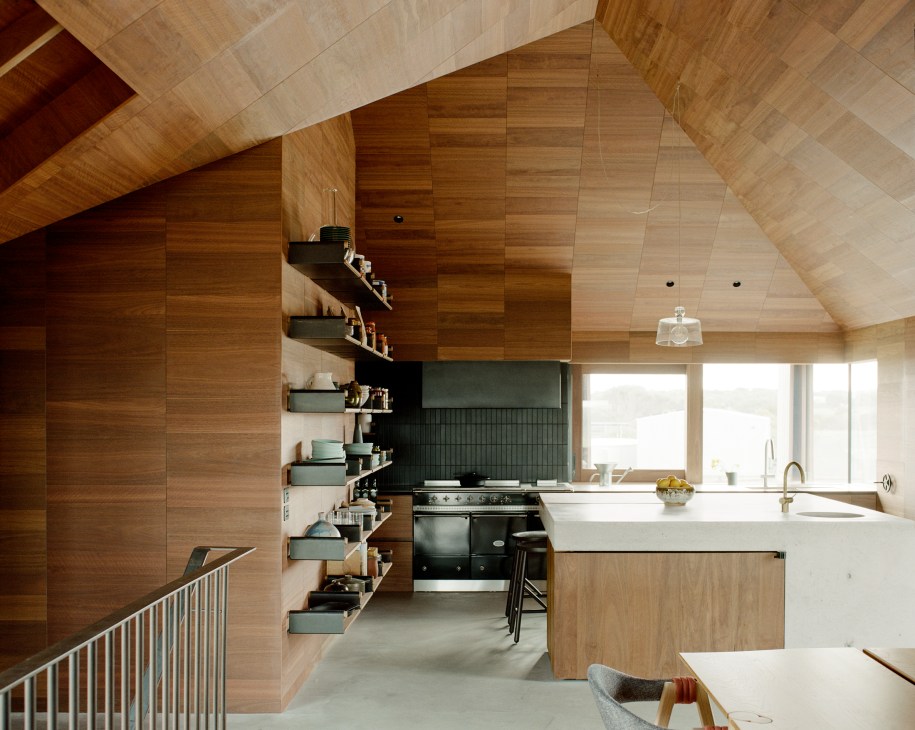
The commission, which was nominated for a World Architecture Festival award, is the home of a pair of Wardle’s long-term clients. It is their fifth project with the practice. “As clients, they give us a lot of leeway,” says Wardle. “They are deeply appreciative, so it’s always a joy to work on projects with them.” For Bass Coast Farmhouse, the brief was, well, brief. “Just a two-line email: ‘a place to go to escape with friends’ and the number of bedrooms for the people that they would like to be able to accommodate.” The request was for 14.
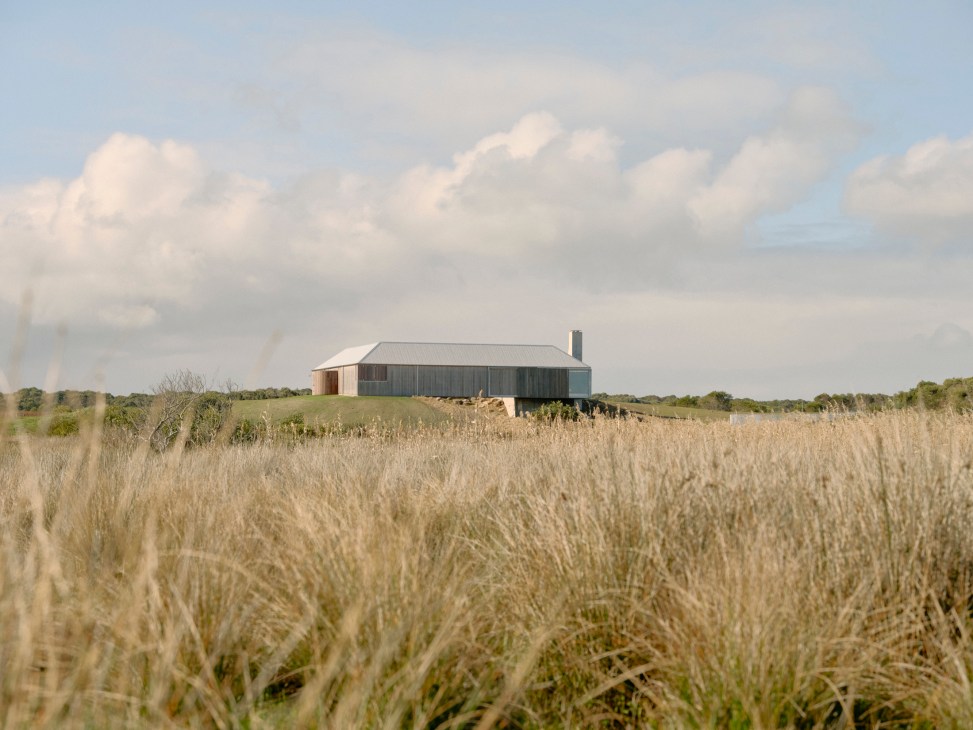
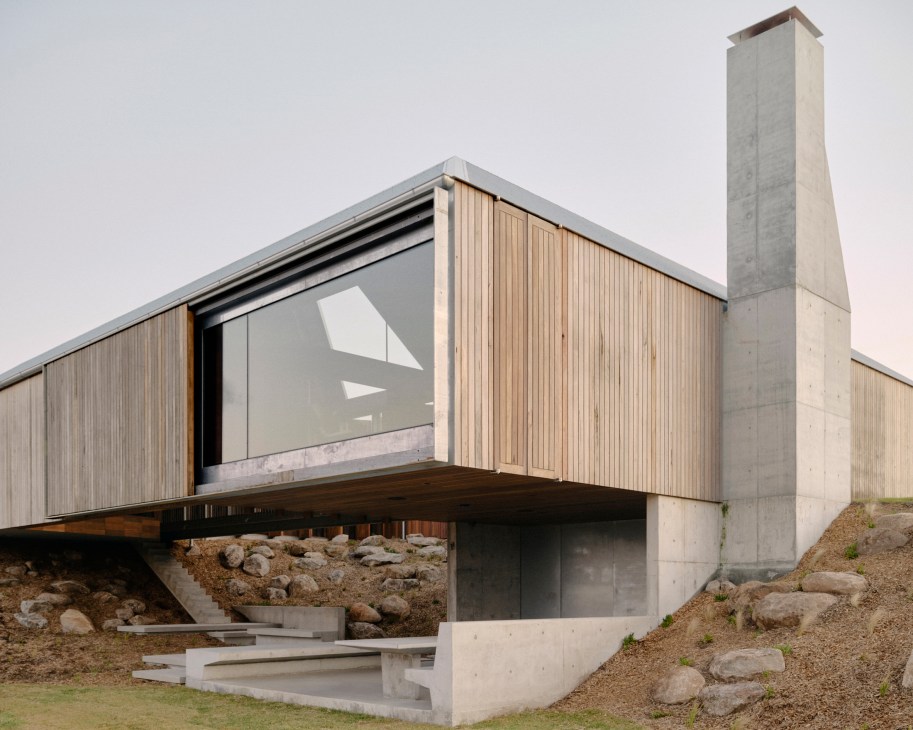
Upon arrival, the house, which is surrounded by wild native grass, appears tough: grey and stark with a corrugated-iron roof, pre-weathered retractable timber walls and a single imposing concrete chimney. “I like the way that the house is closed up when you arrive,” says Wardle. “Once you’re inside you need to physically open it up, manually turning a winding mechanism. It takes 88 rotations to then power the electric motors that open the shutters.”
Even with the shutters open, the house is still a little “cloister-like”, says Wardle. “The design is all about looking inwards. I wanted to give a sense of being cosseted in the space.” The walls and ceilings, lined with spotted- gum hardwood, use the same timber as the passageway that snakes around three sides of the building, leading you inside above a central courtyard.
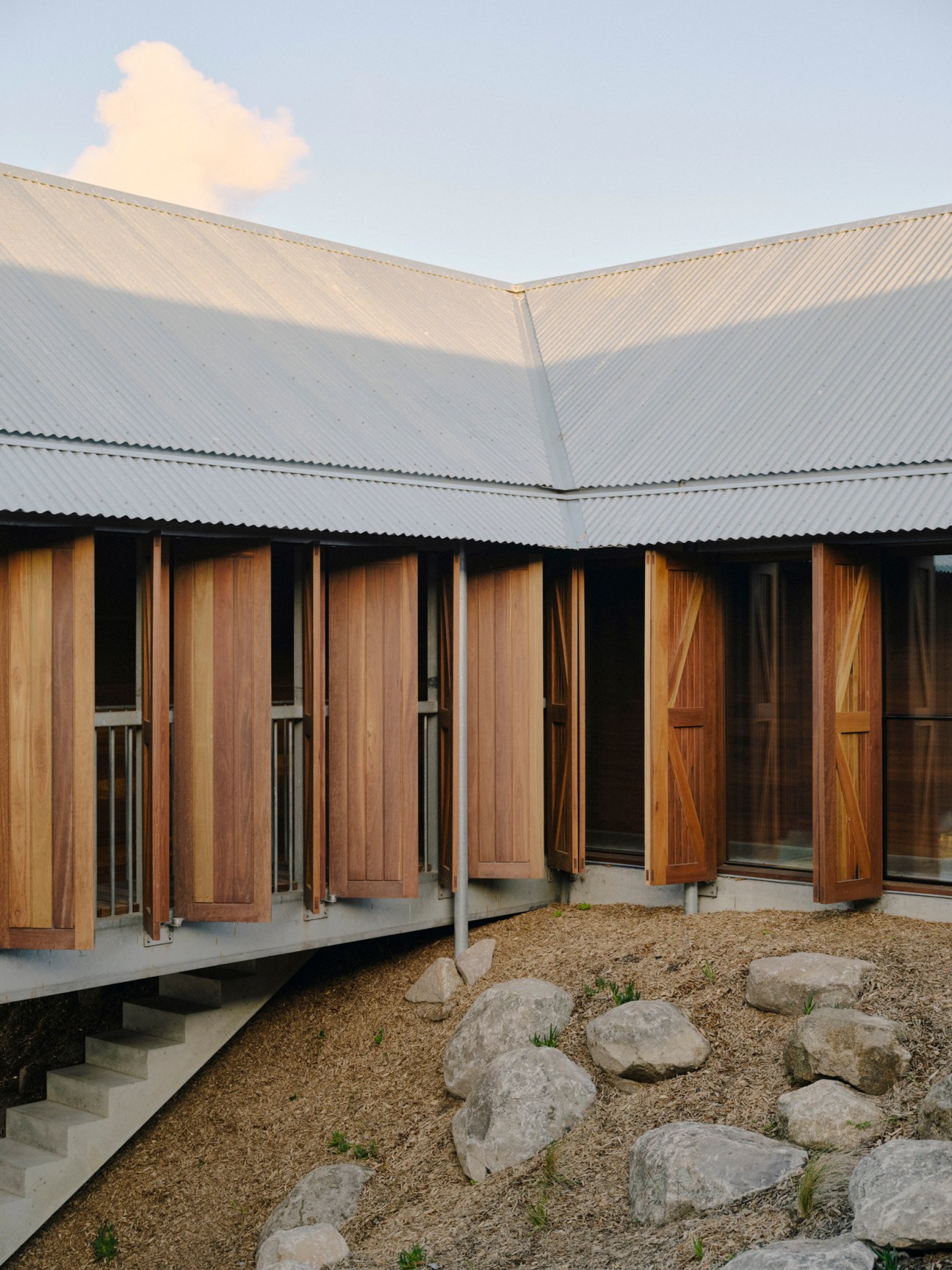
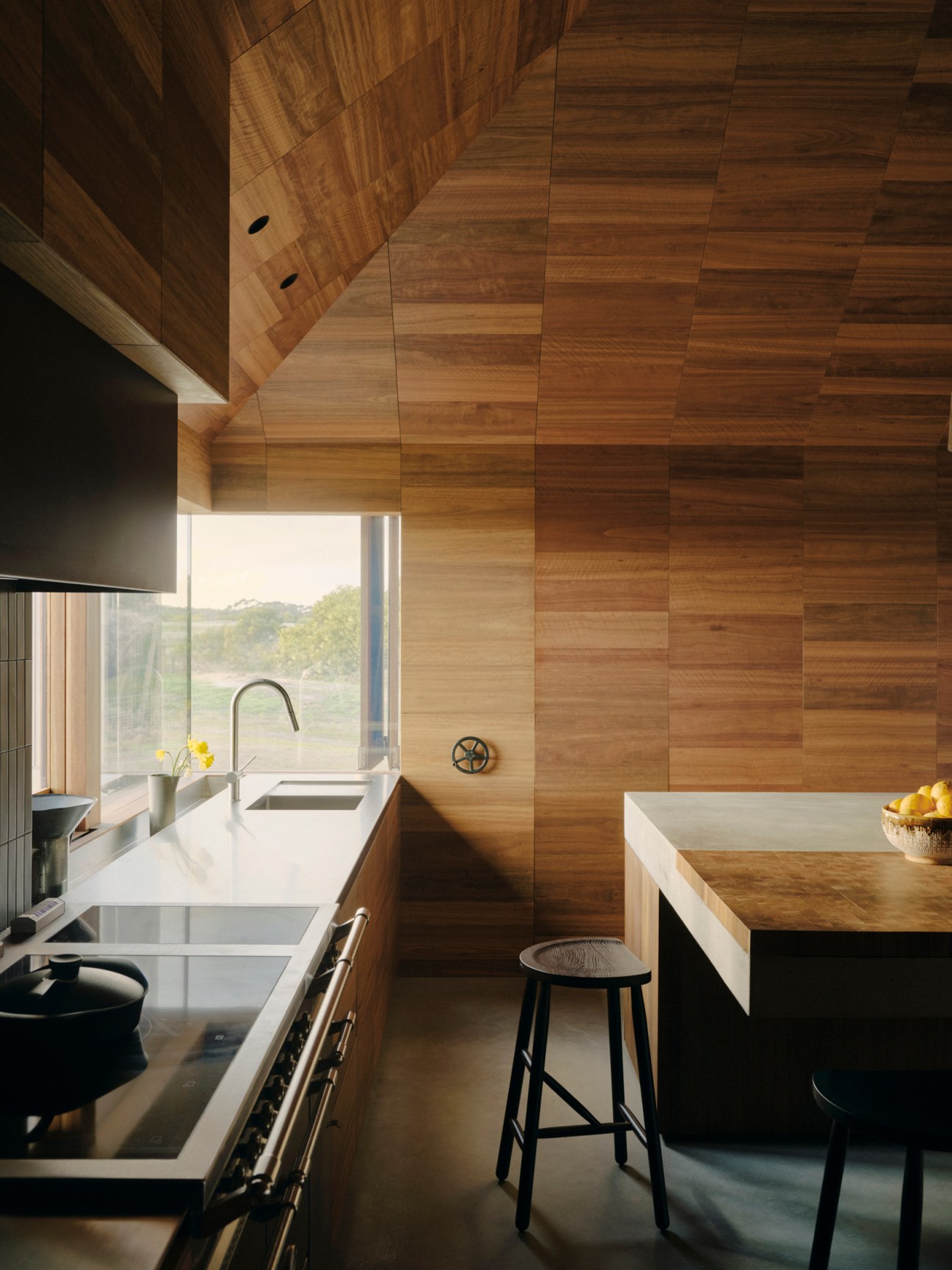
Inspired by the work of Brazilian architects Paulo Mendes da Rocha and Lina Bo Bardi while on a trip to São Paulo, Wardle was determined to give the property a subterranean room. “On the ocean side of the house, it’s as though the floor has fallen to earth,” he says, discussing a sunken, semi-outdoor area that is sheltered by the building. The sloping ground, strewn with rocks and boulders, and planted with grass from the area, brings a slice of the surrounding landscape into the building. “The roof and the walls remain constant around it but we have placed a series of concrete platforms [on top of this interior garden], as if they have just landed there,” Wardle says of the intervention.
Beyond what he describes as the “repair” of the landscape in and around the home (replanting the lush native flora, for instance), the residence also has a strong emphasis on sustainability. Completely off-grid, it is powered by a solar-panel system that feeds into an enormous battery store, which is housed in a nearby shed.
Water was a primary consideration, given the constant threat of bushfires. Rainwater is harvested from the roofs of the house and shed, and used for drinking, some irrigation and filling up the swimming pool, which is made from a repurposed water tank. It is also used in the property’s hydronic floor heating during the winter months and is stored in two 100,000-litre tanks fitted with firehose nozzles.
Not all of the commissions that come Wardle’s way are this remote. His practice now has offices in three cities – Sydney, Melbourne and Launceston – with about 110 staff. “We have undertaken some major urban projects in recent years, including the Melbourne Conservatorium of Music, university libraries and civic buildings,” he says. “I like working on projects that will affect urban life but the intimate engagement of a family house that you find here is truly wonderful too.”
wardle.studio
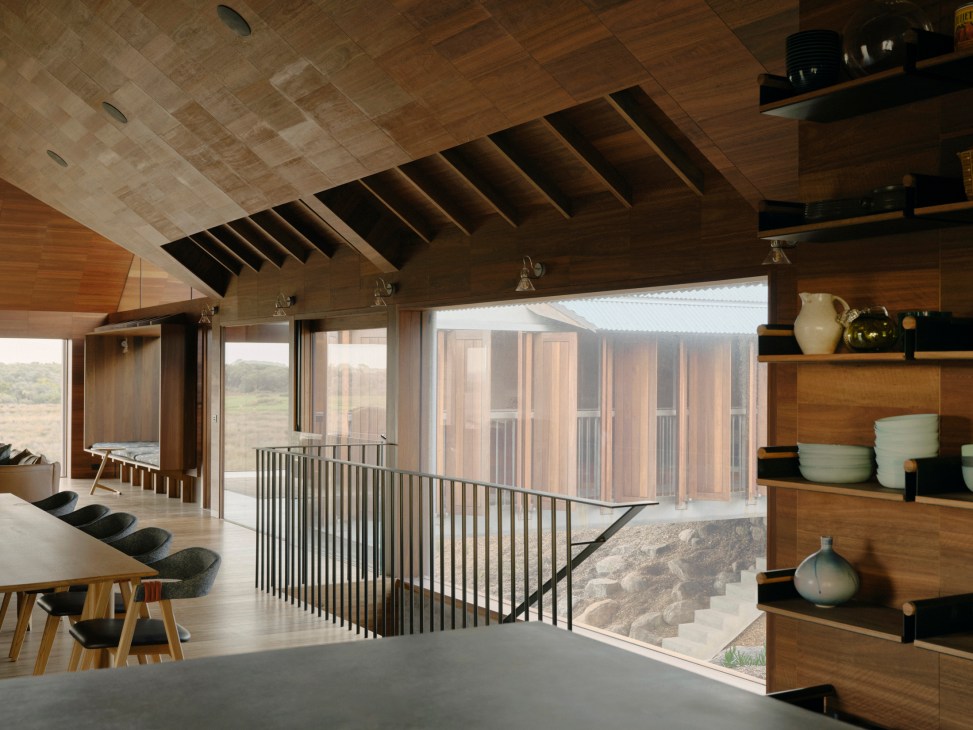

Hidden treasures
“The people of Kyoto value their privacy,” says architect Hiroshi Nakamura, discussing the forbidding façades of the city’s classic buildings – think austere walls of latticed wood that reveal nothing of the delights beyond the front door. It’s only when you step inside that you really understand what’s going on. “But once they let outsiders in, they want to entertain them properly and treat them well,” he says. Nakamura borrowed from this traditional style for the new house that he has built. “This is my modern interpretation of an old machiya [townhouse].”
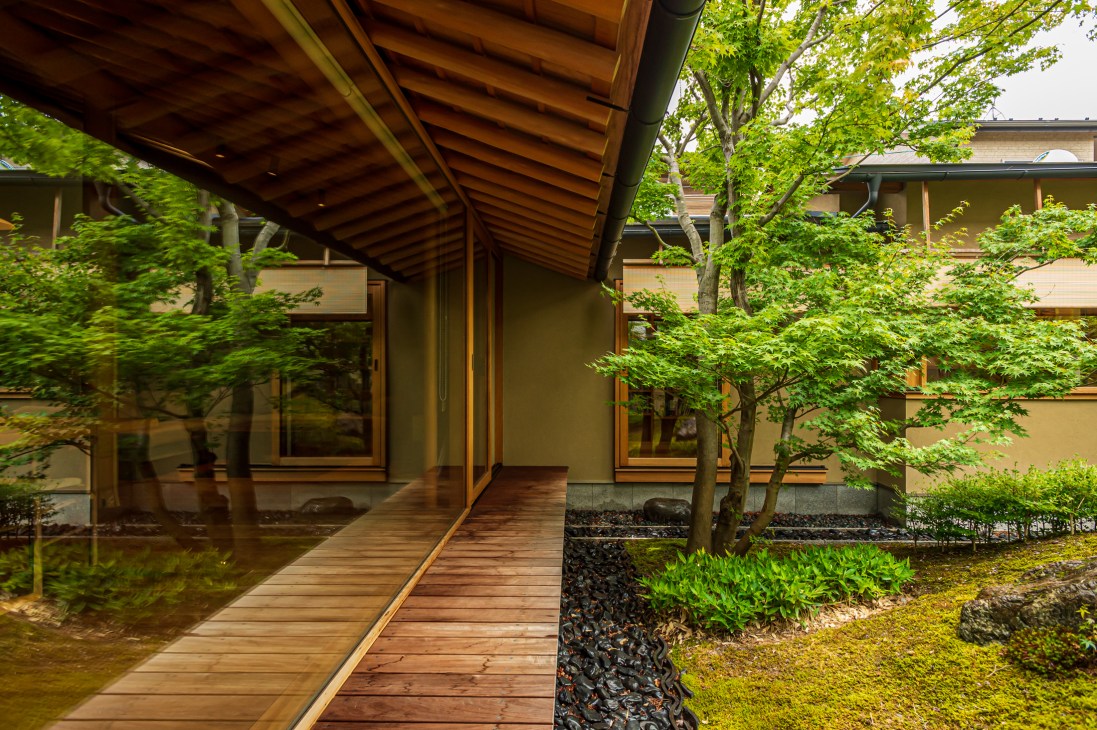
Iwakura House is a quiet presence on a residential street in northern Kyoto, where mountains including Mount Hiei, the powerful peak that has long been considered the city’s guardian, can be seen rising up in the background. Visitors enter through the front door and into a dimly lit hallway, before walking through to a bright living room that opens onto an internal courtyard. “I deliberately placed the pillar slightly to the left as you enter so that your eye would be drawn to the garden and the mountains beyond.”
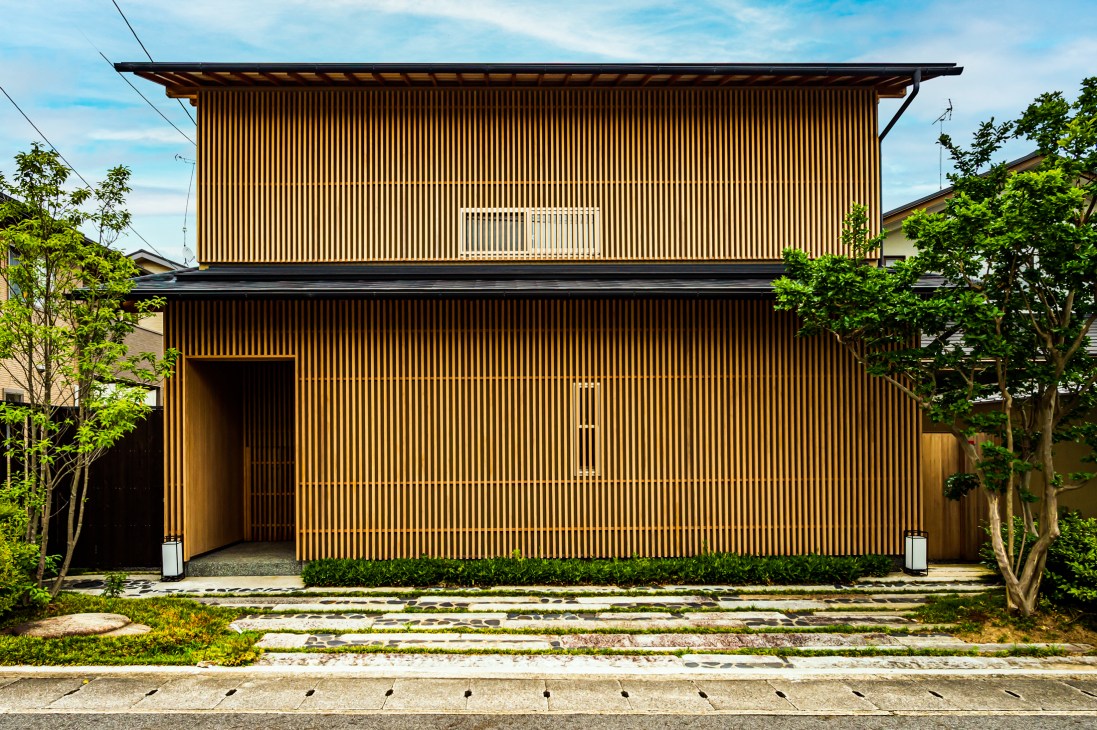
The rafters are made from red sugi cedar from the nearby Kitayama forests. A man for detail, Nakamura went to select his raw materials in person. He requested wood that hadn’t been treated with chemicals, preferring to let nature play its role in the ageing process. The pillar is another hunk of sugi, carefully cut to look as though its roots were intact and, again, treated naturally. Kyoto’s craftsmen have been peeling and working cedar trunks into kitayama migaki maruta (polished logs) for hundreds of years using a special technique. The wide oak floorboards, a subtly modern touch, were treated with a natural stain, rather than painted, to achieve their warm colour.
There isn’t much furniture here: a large ash table made in Hokkaido; a sofa designed by Nakamura and made by Asplund; dining chairs, also designed by the architect, that can be lifted up and rested against the edge of the table for easy cleaning; Louis Poulsen lights. A slim television covers one wall and shelves of books line the corridor.
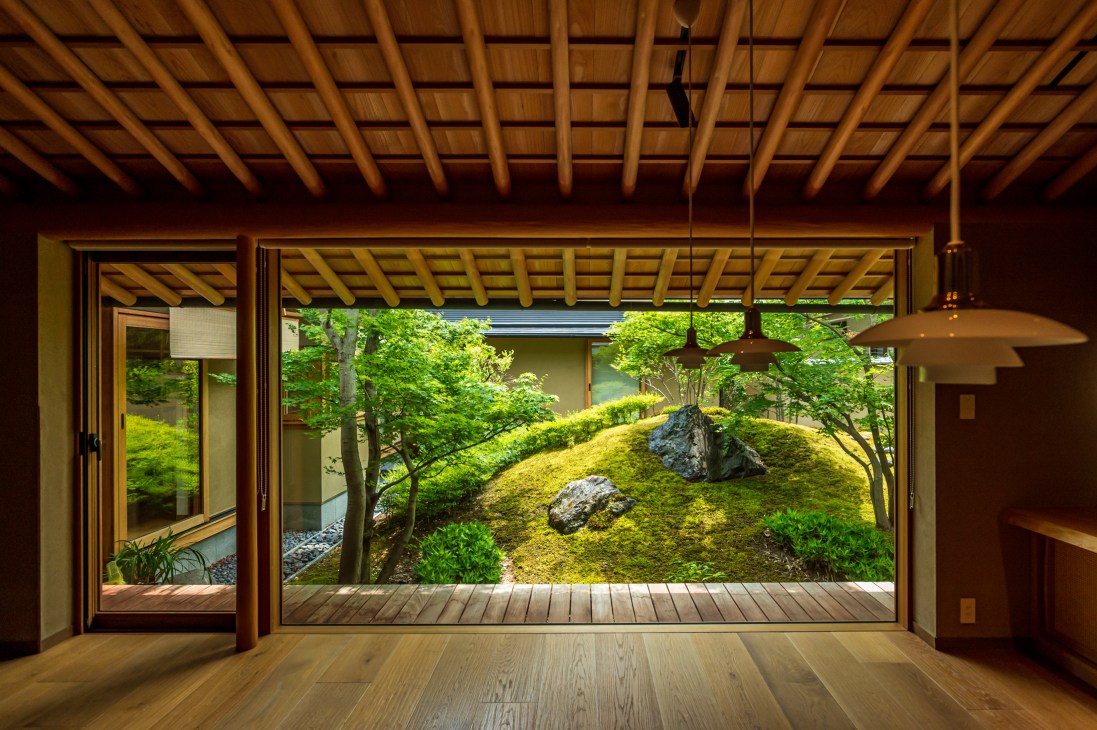
There are two study rooms and a guest bedroom on one side of the courtyard, partly shielded from view by the moss-covered mound in the centre of the garden. “We used the excavation soil to create it,” says Nakamura. “The idea was to make a mountain in miniature. The moss is like a cedar forest and the steps are laid in perspective to look bigger than they really are, as though you were walking to Mount Hiei.” The house is named after iwakura, the Shinto belief in sacred stones. A special rock was brought in as the centrepiece of the garden.
Upstairs is the traditional washitsu (tatami room), which is still a feature of many modern Japanese houses. Its sliding doors are covered with paper made in the region by hand, decorated with a faint pampas-grass pattern – a reference to the pampas fields that used to be in this area. The handle is shaped like the Japanese character for the word “moon”. No detail is accidental. The internal shitaji mado (lattice window) is an artwork of a kind that is more commonly seen in a ceremonial tea room.
“I want to make buildings that are right for the location. It’s not about surprising people but using regional methods and learning from local customs”
Anyone who knows Nakamura’s work will be familiar with his show-stopping structures, which are admired far beyond Japan: the swirly Ribbon Chapel in Hiroshima; the glass-walled, open-beamed restaurant on a hilltop overlooking the Seto Inland Sea; a family home on a busy city street that is completely hidden behind a towering wall of glass bricks; and cone-shaped bathhouses for a hotel in Hokkaido. “I’m not trying to make a statement when I design,” says Nakamura. “First and foremost, I want to make buildings that are right for the location. It’s not about surprising people but using regional methods and learning from local customs and behaviour. The chapel, for example, was built with shipbuilding techniques that are a speciality of that area. The glass house relied on local furniture- making skills.”
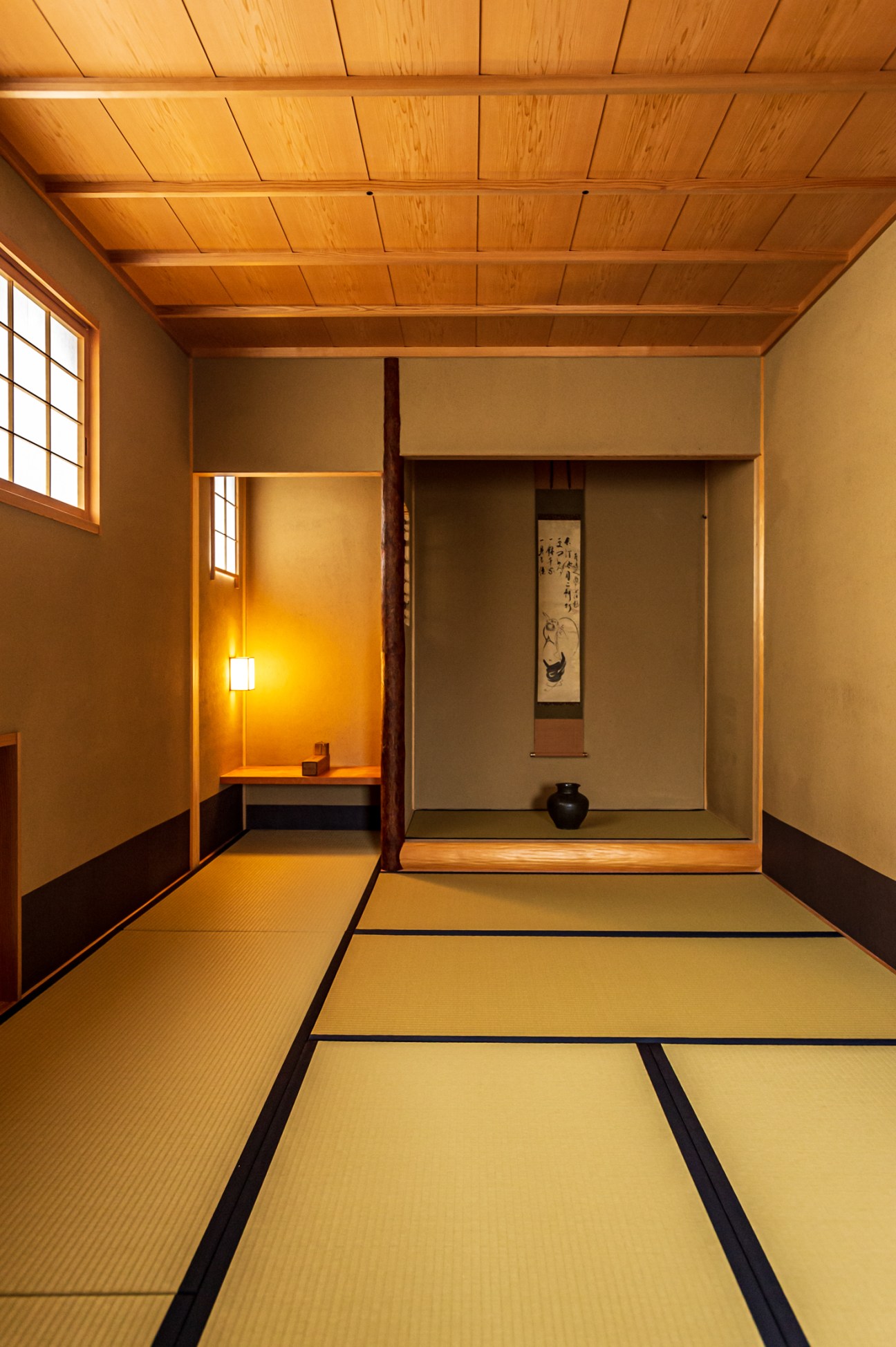
For all of its discretion, the house in Kyoto immediately improves the streetscape by referencing the city’s traditional architecture and not being another bland new home. “So many machiya are being demolished,” he says. “It’s another reason why we designed the house in the way that we did. It embodies my wish that the tradition of these old houses lives on.”
While he was creating the house, Nakamura was also working in Kyoto on an important project to update a 20th-century building that was designed in a traditional style by Togo Murano for what was then the Miyako Hotel. “I learnt so much from that project,” he says. “Restoration work is about preserving skills as much as the buildings.” The plasterers, carpenters and gardeners who worked on the Kyoto house are part of that ecosystem. “By commissioning these craftsmen, our intention is to sustain the tradition.” The off-site team, including those who handle the cedar, are important too.
Nakamura has worked on about 60 projects since he founded his studio in Tokyo 20 years ago. These days he is busy with hotels in Japan and Taiwan and is always in demand for retail and residential work.
“It can be frustrating when people come in with a picture that they have seen on social media but that’s the reality of our culture,” he says. He prefers to start each project by researching the local industry, climate and craftspeople, along with the behaviour of those who will use the building. “My ideal house is one that can change its expression. It might be the way that the light falls at different times of day or how a garden changes season by season. I always hope that people can find something new.”