Issues
Hammer time
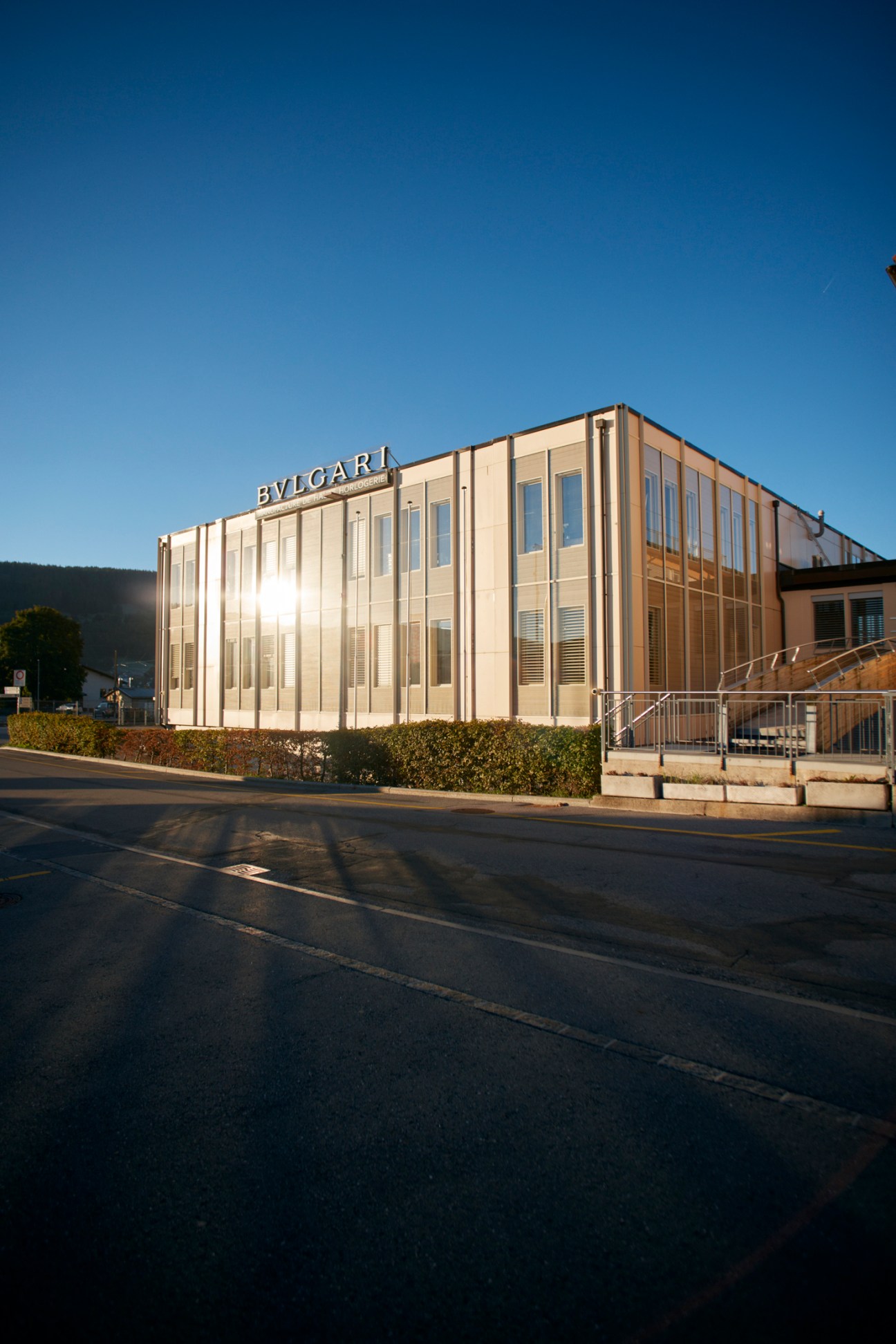
The headquarters of Bulgari’s watch-making division add a novel pop of colour to the quaint lakefront town of Neuchâtel, which sits in the middle of Switzerland’s famous horological valley stretching from Basel to Geneva. Amid a series of neutral buildings towers one painted burnt orange – a terracotta hue more commonly seen on the façades of Roman houses. And it is from here that the Italian luxury brand has, over the past 10 years, shouldered its way into the upper echelons of Swiss horology.
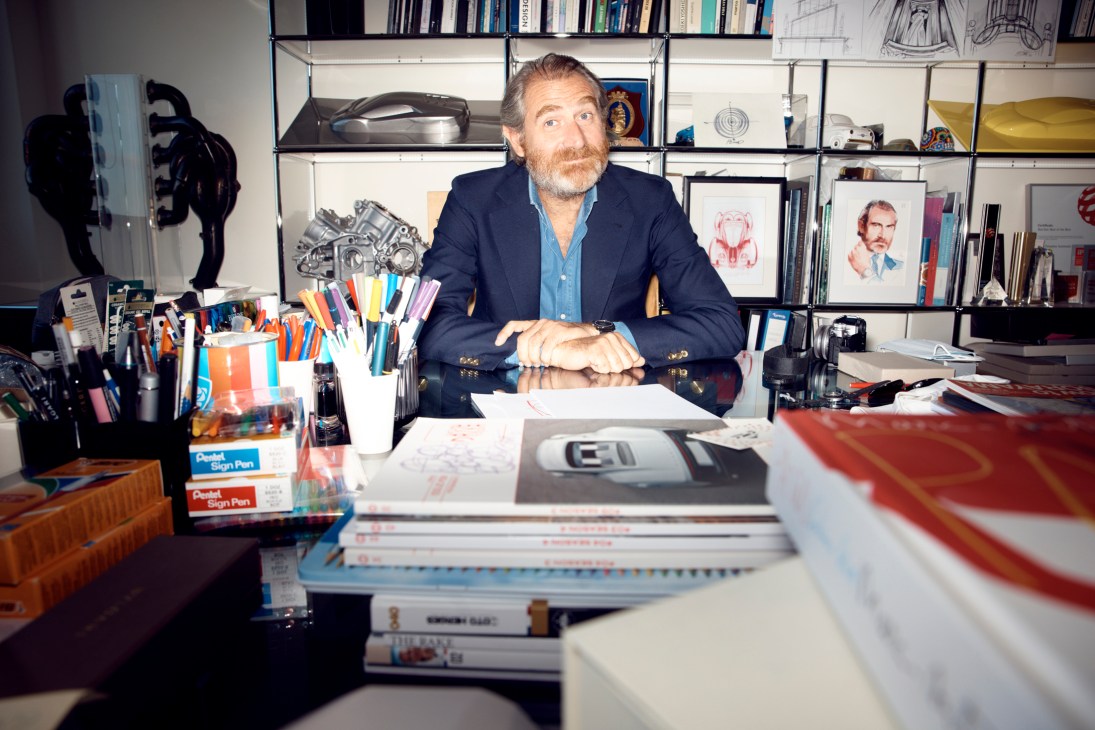
“We were a jeweller that made timepieces without any technical know-how,” says Fabrizio Buonamassa Stigliani, the Naples-born creative director of Bulgari’s watches. The designer, who sports a thick auburn beard, is standing in his office, which overlooks Lake Neuchâtel. The room brims with books, dozens of pens – all his ideas are born as ballpoint sketches – and at least six model cars (he came to Bulgari from Fiat). Stigliani is the person to thank for the brand’s game-changing watch model, the Octo Finissimo, which has broken eight world records since its first iteration – it was the world’s thinnest watch – and last year the Octo Finissimo Perpetual Calendar was awarded the industry’s top prize, the Aiguille d’Or. “Now the most important collectors are buying our watches,” he says.
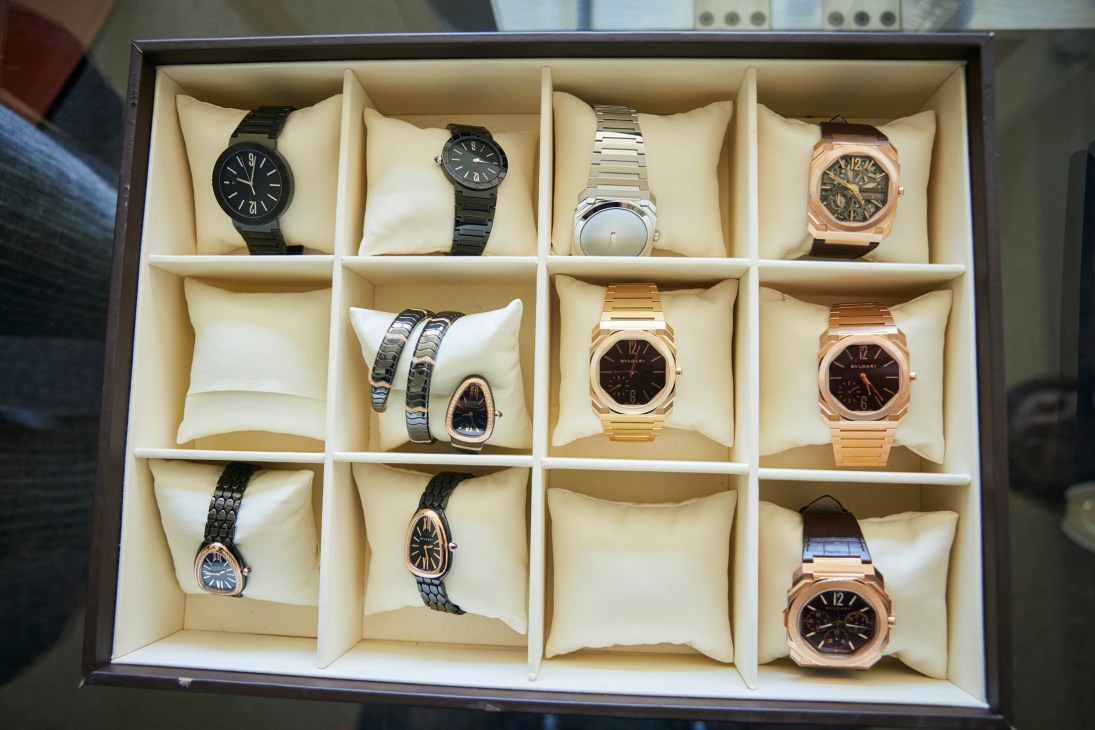
The world of Swiss watch-making is not an easy one to break into, even for an lvmh-backed luxury powerhouse. Bulgari was founded in 1884 and became a mandatory stop for the dolce vita jet set in the 1950s for its gem-encrusted jewellery. The atelier made watches too but it always used movements (the mechanism that makes a watch tick) produced by external suppliers. That is until 2000, when the company took over the factories and staff of two famed Swiss watch-makers, Daniel Roth and Gérald Genta, becoming one of the rarefied brands that manufactures and assembles every wheel and spring in-house.
“There are a lot of products that are ugly from an engineering point of view but with beautiful aesthetics,” says Stigliani. “And many that are amazing technically but old-fashioned in the way that they look.” To bring the two to the same level, he moved Bulgari’s watch-design team from the company’s Rome headquarters to Neuchâtel in a bid to bridge the gap between the Italian design and Swiss manufacturing sides of the business. “You need a blend between technical innovation and new aesthetics,” he says. Take the Serpenti, Bulgari’s most iconic design, that coils around a woman’s wrist like a snake.
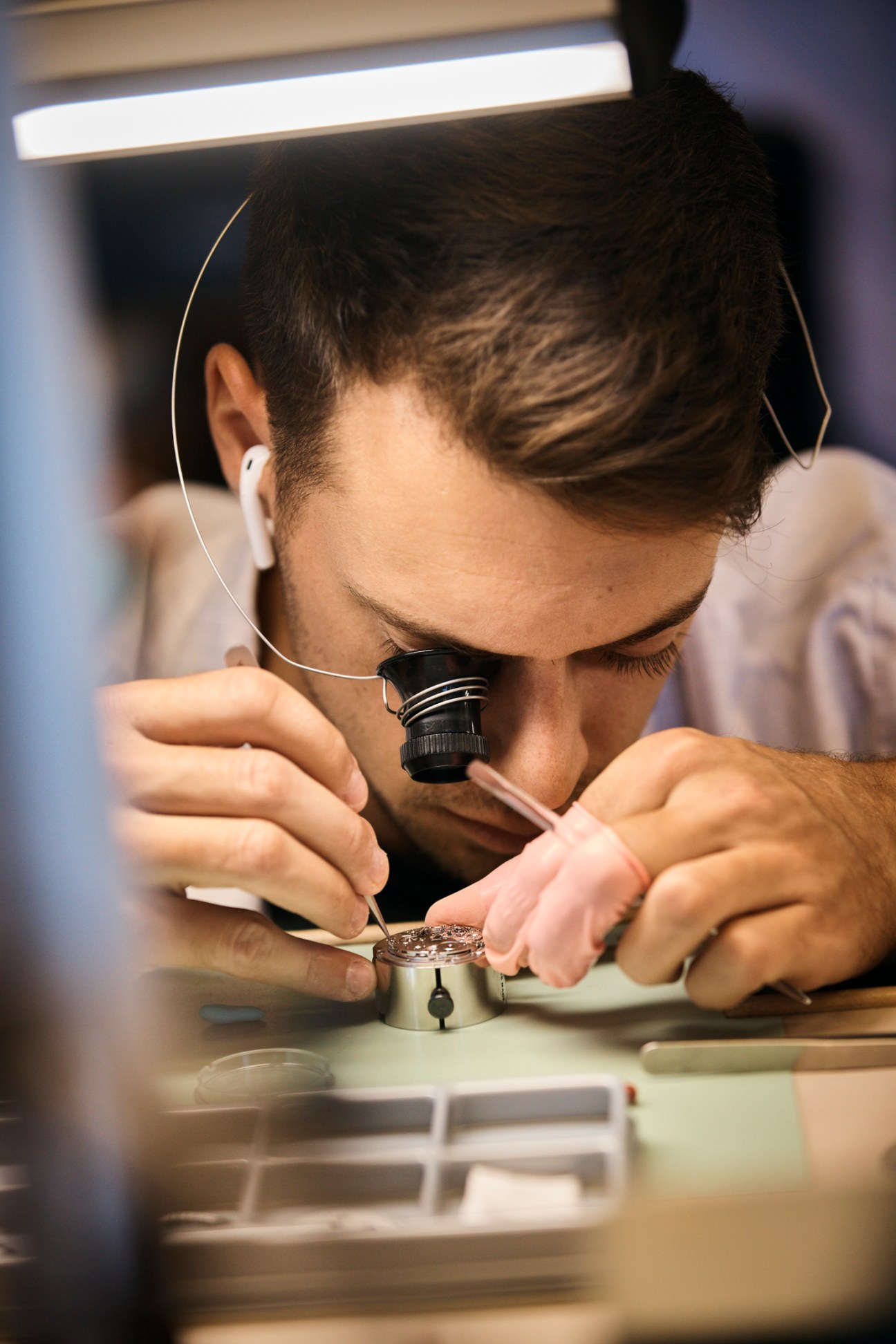
This January the brand announced the launch of the Piccolissimo, with a hand-wound watch movement smaller in diameter than a €0.01 coin that can replace the digital quartz technology previously used. Its 102 components are put together by hand (with the help of a microscope) in Bulgari’s factory in Vallée de Joux, while the case, shaped like an elongated snake’s head, is crafted at its jewellery-production site in Valenza, Italy. In the assembly atelier two floors below Stigliani’s office, the dial is then snapped to a bracelet made in the firm’s Haute Joaillerie workshop.
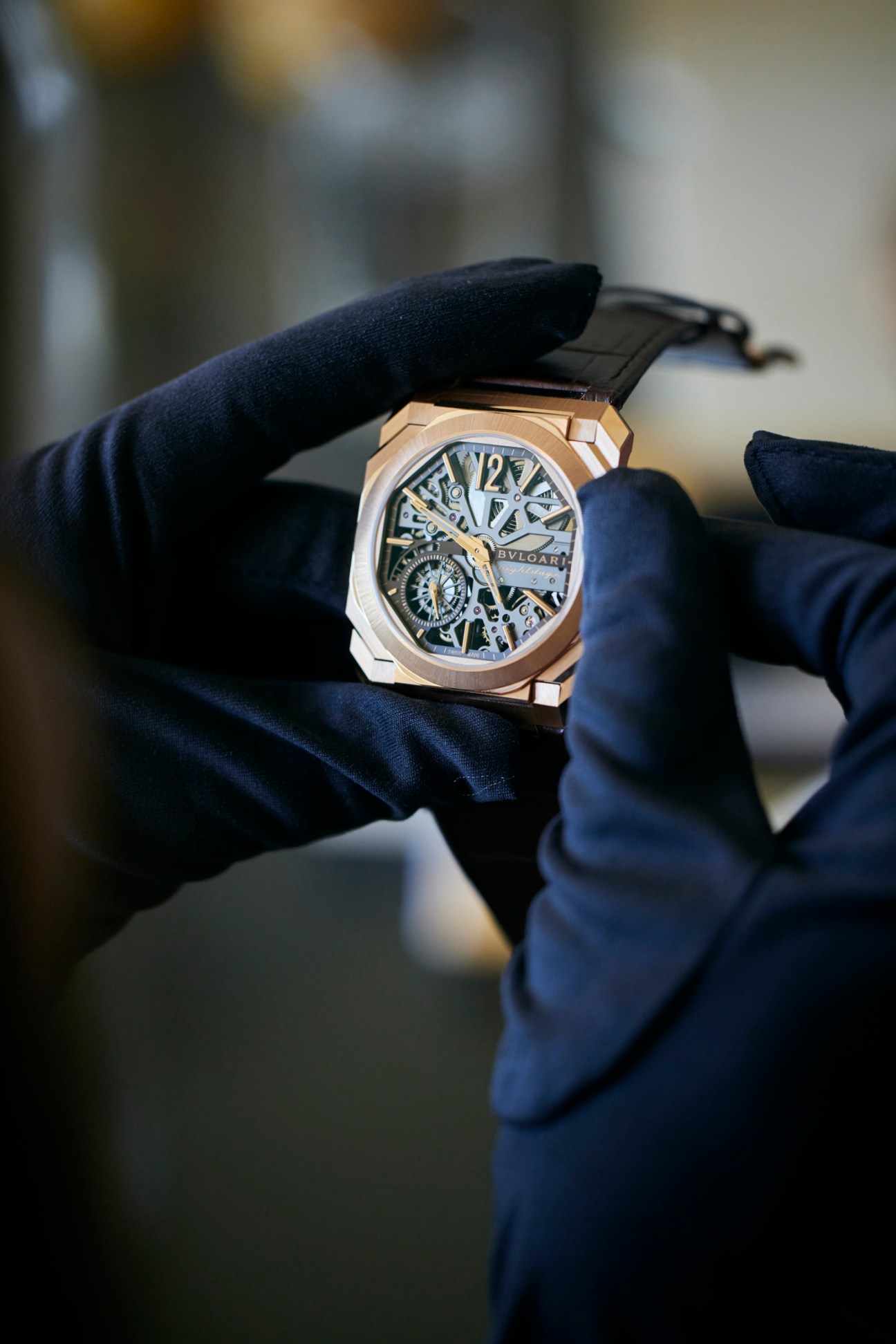
After Stigliani’s shake-up, the real breakthrough came in 2014 when Bulgari launched the Octo Finissimo, an ultra-thin version of the previously released Octo. Made from matte-grey titanium, the Octo was a sharp departure from the norm in Swiss luxe watches, where chunkiness tended to increase in proportion with the price tag. “It’s more discreet – more Italian,” says Stigliani.
Bulgari’s strategy of going ever thinner would not have been possible without its factory in Le Sentier, where all its mechanical movements are made. This mountain valley, an hour’s drive from Neuchâtel, is where the Swiss first started tinkering with timepieces in the 17th century. The most prestigious watch brands, including Jaeger-LeCoultre and Breguet, are all still made here. Bulgari’s Haute Horlogerie, housed in an ivory-coloured glass building in the centre of the town, is where Stigliani’s sketches land on the desks of the research and development team.
We are handed blue lab coats and led through the two manufacturing floors. One watch, depending on its size and capabilities, can contain anywhere from 100 to 1,200 parts. Each tiny component is sliced from metal rods, cut into the right shape, filed, embossed and decorated, and then assembled by hand by a diverse cast of expert horologists. To shave a few millimetres off a watch’s diameter, this mind-bogglingly complex process has to be re-engineered, which requires several years of design and prototyping.
The inner sanctum of the factory, which is found in a light-filled room where four watch-makers work at desks facing out over the valley. “We’re all a bit pig-headed here,” says master watch-maker Pascal Legendre, laughing. “This is a job that requires patience and passion.” Legendre has been at the factory since before it was acquired by Bulgari. He says that not much has changed, except that he now has access to the resources and equipment that only a conglomerate-backed, multinational luxury house can provide. “We are fortunate enough to have carte blanche,” he says. He has helped to assemble a Grande Sonnerie watch with four different tiny hammers that can imitate the melody of London’s Big Ben. Legendre can also lay claim to helping to make the world’s thinnest chiming watch, the Octo Finissimo Minute Repeater.
“First, they said that we couldn’t use titanium [for the case] because we need a very noble material,” says Stigliani, back in his office in Neuchâtel. “But I said, ‘Guys, we are not Swiss and that’s the great difference in our point of view.’” Instead, he let the functionality guide the design, choosing titanium for the entire exterior to achieve the best-sounding chime for the minute repeater. “It’s not just because we love the colour; it amplifies the sound,” he says.
Bulgari’s Italo-Swiss approach is clearly working. Though lvmh doesn’t break down profits by company, in its second quarterly earnings presentation this year it singled out Bulgari’s watch division as a star performer. This autumn, to mark the 10th anniversary of its Octo success story, the brand released a model that only needs to be wound every eight days, as well as a limited-edition version in steel, polished to a mirror-like finish, designed in collaboration with Japanese architect Kazuyo Sejima. But the house’s record-setting streak has been broken: only a few months after it debuted the 1.8mm thin Octo Finissimo Ultra in March, rival watch-maker Richard Mille came out with one that is 0.05mm thinner. “A lot of prestigious brands in the watch-making industry play the same game,” says Stigliani. “We are happy because, after 50 years, we are trendsetters again.”
After shaving timepieces down to paper-thin proportions, what is the next boundary that Bulgari watches will push? The success of the past 10 years means that whatever Stigliani sketches next, the manufacturing team will be much more bent on turning into reality. “In the beginning it was, ‘No, Fabrizio, this is not possible,’” he says, throwing up his hands. “Now they say, ‘It’s difficult but we can find a way.’”
Making history
You sense luxury in the air as soon as you pass through the red gates of Bottega Veneta’s headquarters in Milan, protected by security guards in perfectly tailored black suits. This grandeur is perhaps to be expected of one of France-headquartered luxury group Kering’s fastest-growing brands, whose revenues recently surpassed the €1.5bn mark.
But once inside the contemporary building, which holds more than 400 employees and is a stone’s throw away from Fondazione Prada, a less formal, more playful mood takes over. People walk up and down the light-filled corridors in laid-back denim and loose, white T-shirts; designers wheel around rails of knitwear and carry rolls of colourful fabric. Others take breaks at the espresso bar on the first floor or in the garden in the middle of the building, filled with lavender, basil and fruit trees.
This warm, welcoming atmosphere reflects the vision of Bottega Veneta’s CEO, Leo Rongone, who envisions the company as “an inclusive brand with exclusive products”. To Rongone, who came onboard in 2019 with the aim of turning Bottega Veneta into “the most elevated name in the industry”, this is what modern luxury should be about.
The company has grand ambitions: it seeks to enter the highest echelons of fashion where, for more than 100 years, only a select few heritage labels have been able to operate, from Chanel to Hermès. Yet Rongone, a seasoned executive who joined Kering in 2012 as chief operating officer of Yves Saint Laurent, thinks that Bottega Veneta is well on its way to achieving a similar status, partly as a result of his carefully conceived business strategy, which includes an end to all public markdowns and far more selective wholesale distribution.
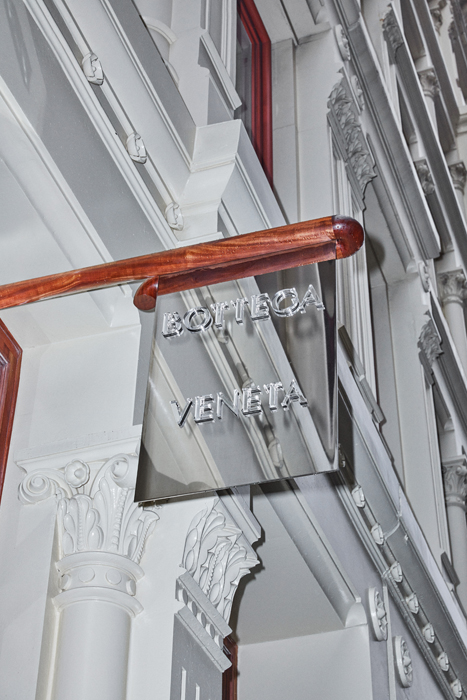
“We have closed a lot of doors that weren’t consistent with our image,” says Rongone, who has been turning his attention to the brand’s own shops and working to refresh their design. “I see them as beautiful expressions of Venetian architecture. They are where the magic happens, with customers being able to build connections with our team.”
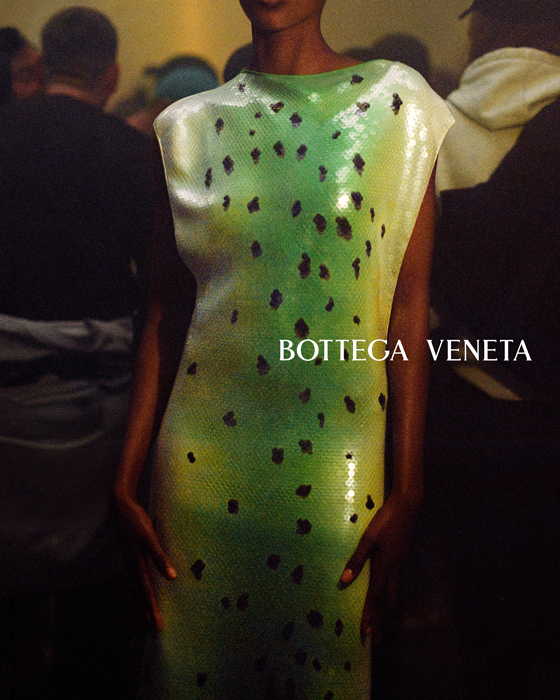
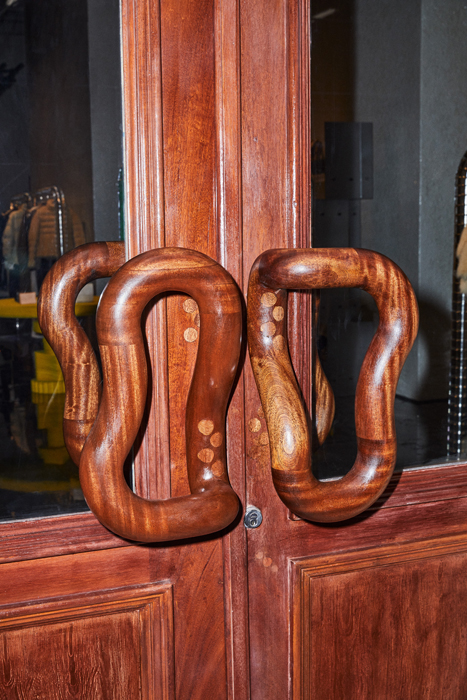
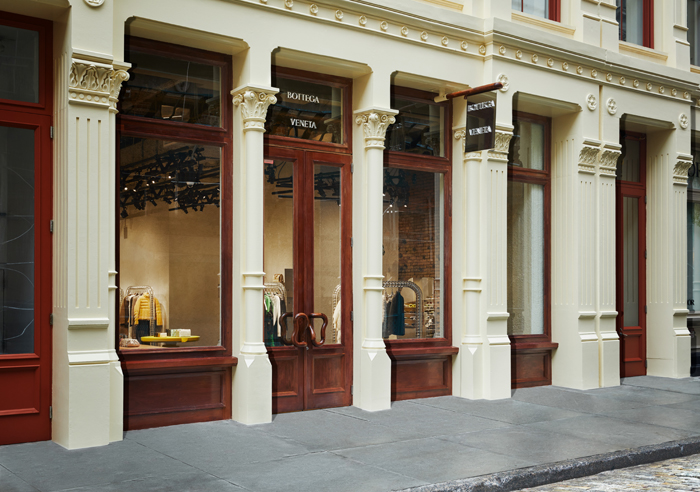
The new shop designs will combine brutalist elements with natural wood and sculptural door handles that recall the work of Romanian sculptor Constantin Brancusi. “Nothing is ever too literal – you need to have a sense of curiosity and discover these details on your own,” says Rongone, who will unveil the brand’s refreshed retail vision at its Zürich flagship in December. “Zürich is an extremely important city for us,” he says. “It is at the forefront of the art scene. We have been present there for more than 20 years and want to pay tribute to the local clients who have always been extremely loyal to us.”
Beyond business strategy, Rongone is giving plenty of attention to fostering creativity, doubling down on craft and establishing the company’s higher purpose. A passionate photographer and art collector, he seems just as interested in bringing in up-and-coming photographers to shoot the brand’s new campaign and supporting cultural initiatives as he is in hitting sales targets. “I see three pillars: craft, creativity and dreams,” he says. “Without the dreams, it would be impossible to carry on with the brand.”
In the past year, Rongone has also found the right talent to help him keep the Bottega Veneta dream alive and accelerate its luxury ambitions. Belgian and French designer Matthieu Blazy was appointed as the brand’s creative director at the end of last year, following a series of high-profile roles at Raf Simons, Maison Margiela and Celine. Blazy immediately won over the fashion industry with the quiet confidence of his designs, which place emphasis on style over passing fads and highlight the quiet confidence that Bottega Veneta has always been known for. His spring 2023 presentation, held in Milan this September against a colourful set by architect Gaetano Pesce, was heralded the show of the season thanks to his sophisticated approach to dressing and inventive use of leather.
“In a society that pushes you to consume more and more, we want to take a different approach and offer products that are designed to last for ever,” says Rongone. “That’s what makes us stand apart. We like to create objects that transcend trends and encourage our customers to buy less. That will also have a big effect in terms of our environmental footprint.” Rongone was awarded a sustainability award for promoting Italian artisanship by non-profit industry organisation Camera Nazionale della Moda Italiana at this year’s Milan Fashion Week.
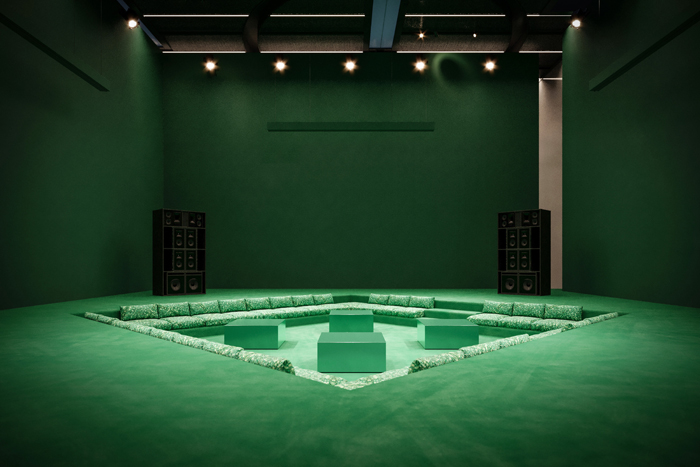
Blazy shares Rongone’s slow-fashion ethos and speaks of the brand’s “quiet power” and the importance of putting “style over fashion”. It’s why the two men were able to find common ground so quickly and are in perfect sync when it comes to leading the company into its ambitious, new chapter – a feat in its own right, given the conventionally strenuous relationships between ceos and creative directors in luxury houses.
“Matthieu is a lover of Italian culture,” says Rongone. “A few hours after we met he was speaking to me about the Agnelli family and Venetian architect Carlo Scarpa [see page 235]. Our relationship became very deep immediately because we have a lot of common values and probably pleasures too.”
The only brief that he set Blazy and his design team was to follow the brand’s philosophy of “craft in motion”. “Matthieu needs to be able to express his creativity without boundaries – that’s not my space to enter,” says Rongone. “He might sometimes set creative boundaries for himself but those come from an understanding of the brand’s culture.”
At the core of that culture is handicraft. After all, Bottega Veneta was founded in the 1960s by a group of artisans who dreamt of creating the world’s most beautiful bag. Their intrecciato (woven-leather) technique came as a refreshing alternative to the stiff, structured handbag styles of the era, instantly putting the brand on the luxury-fashion map.
Today its intrecciato bags and leather goods remain as desirable as ever and Rongone wants to honour the legacy of the company’s co-founders, Renzo Zengiaro and Michele Taddei, with whom he was able to spend some time post-lockdown. “We consider craft to be as important as creativity – that’s our origin,” he says, pointing to the company’s training programmes across Italy, which welcome both students and experts.
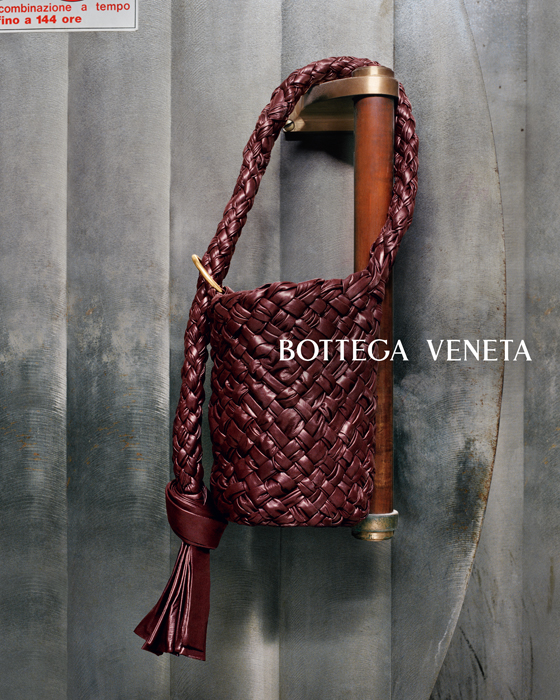
“We provide people with training, passing down techniques and secrets of the trade to ensure that they are able to create the most extraordinary products,” says Rongone. As an example, he cites a bucket bag that is made from 55 metres of interwoven leather, all without the need for a single stitch. “The curves are created by applying pressure by hand,” he says. “It’s rare to find this level of competence in the market, so we’re very committed to maintaining it. Where other brands count the hours that it takes to create a bag, we count the days.”
As it continues to grow, Bottega Veneta is aiming to “apply the same savoir-faire” to other categories. Its men’s and women’s ready-to-wear collections have already seen explosive growth in output over the past three years, according to Rongone, and more lifestyle categories are in the works. “‘Consistency’ should be the word here: we want to stay true to our founding principles and translate them across new mediums,” he says.
Rongone is dressed in a pair of buttery-soft blue-leather trousers from Blazy’s first collection. They look almost exactly like denim but are cut from a single piece of leather and feature no stitching. “It’s the same approach of extraordinary craft and exquisite design,” he says. “Unless you look closely, you would think that these are denim. We are proudly a no-logo brand. Our customers are confident people. They don’t need clothes or accessories that shout for attention.”
At Bottega Veneta, craft and artisanal quality replace the need for logos – another founding principle to which Rongone is choosing to stay true. It’s why the brand has recently revisited a campaign from the 1970s, featuring two blank pages and the words, “When your initials are enough”, produced for Andy Warhol’s Interview magazine.
Rongone is acutely aware of the importance of such creative projects, looking beyond product and helping to establish Bottega Veneta in the broader cultural landscape. Under his leadership, the brand has shut down its social media account and looked for new, more innovative ways to connect with customers and fellow creatives. During this year’s New York Fashion Week, for instance, it debuted a bag co-designed with the city’s much-loved bookshop The Strand in an effort to engage and support education.
Last Christmas its “Bottega for Bottegas” campaign put the spotlight on 12 Italian artisans, from wine-makers to paper-makers, while more recently the brand worked with Lebanese architect and musician Carl Gerges to design a public space in Dubai to host get-togethers, musical performances and film screenings. “That had nothing to do with product,” says Rongone, who has also supported Venice’s Biennale Danza and the Hyères festival of photography over the past year. “We simply created an environment that would facilitate dialogue. Our marketing is bold and direct but it also gives us a purpose. We have privilege and the power to influence, so we need to give back and create genuine connections with people, whether or not they can buy our products. The brand’s fan base goes beyond its customers.”
Bottega Veneta’s left-field marketing and its focus on limited artisanal products have been welcomed by both the fashion industry and the financial markets. “The brand has carved itself an enviable position in the luxury leather-goods market, complemented by a coherent ready-to-wear offering,” says Pierre Mallevays, partner at luxury advisory firm Stanhope Capital. “It’s playing with the best of them in the virtuous circle of high price points, high margins and high desirability.” Tom Andrews, general manager of Hong Kong Land, sees the brand as having “immense potential” under Blazy and Rongone. Its shops are prominently positioned in The Landmark, the property company’s main luxury shopping centre, and sales are now strong in spite of a slowdown in 2021 when former creative director Daniel Lee abruptly exited the company.
For Mallevays, the only potential weakness of the brand is its brief history compared to other premium luxury players, such as Louis Vuitton or Delvaux. “When you are selling timeless products, a long and established heritage gives you that extra bit of legitimacy,” he says.
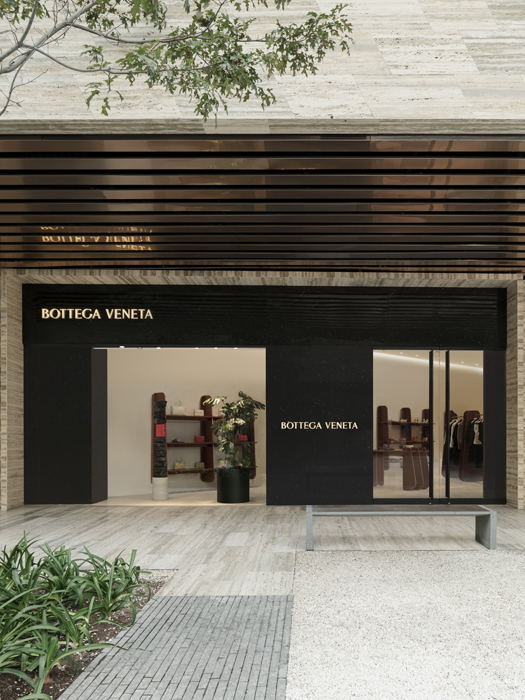
Yet the history of Bottega Veneta – which started as a collective of artisans in the Veneto region before moving to New York, where future creative director Laura Moltedo worked at Andy Warhol’s factory and opened the brand’s first shop on Madison Avenue – gives it a relevance and understanding of modernity that its competitors often lack. “The lives that they were leading, as part of this global jet set in New York, were so exciting,” says Rongone. “We want to bring those elements into the future.”
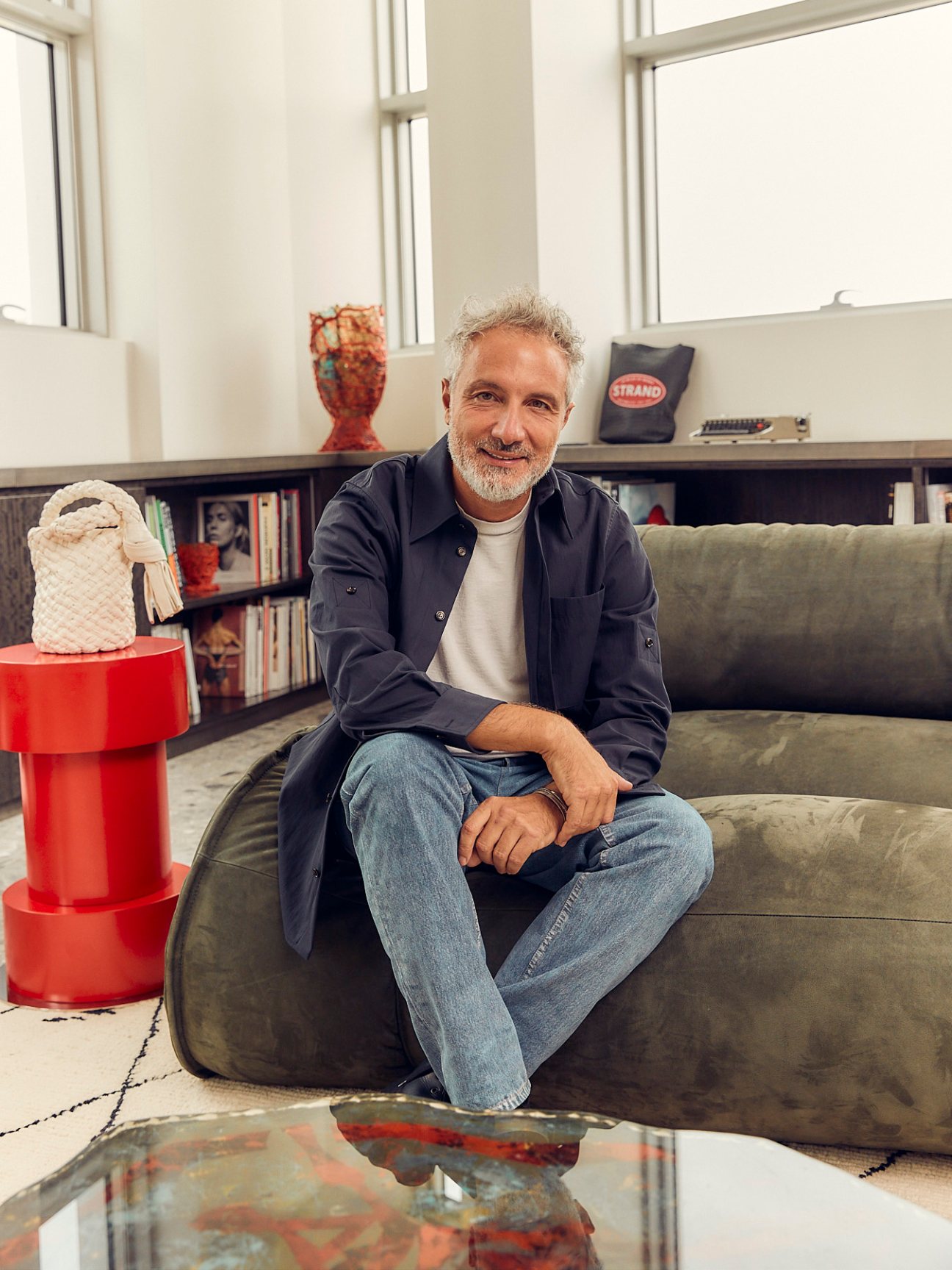
The future certainly looks promising for the Italian luxury house. Despite having to face a market clouded by inflation and complex supply chains, Rongone is taking the long-term view. “We never do anything for tomorrow: the priorities are value over volume and organic growth,” he says, lounging on an olive-green sofa in his elegant top-floor lounge.
Soon that space will be turned into an artists’ residency as Rongone and his team prepare to move to the Palazzo San Fedele in Central Milan, a 19th-century former theatre. “It’s an extraordinary expression of architecture,” he says. “It has history and a connection to the performing arts. That is the intersection that will allow Bottega Veneta to truly thrive.”
Layer up


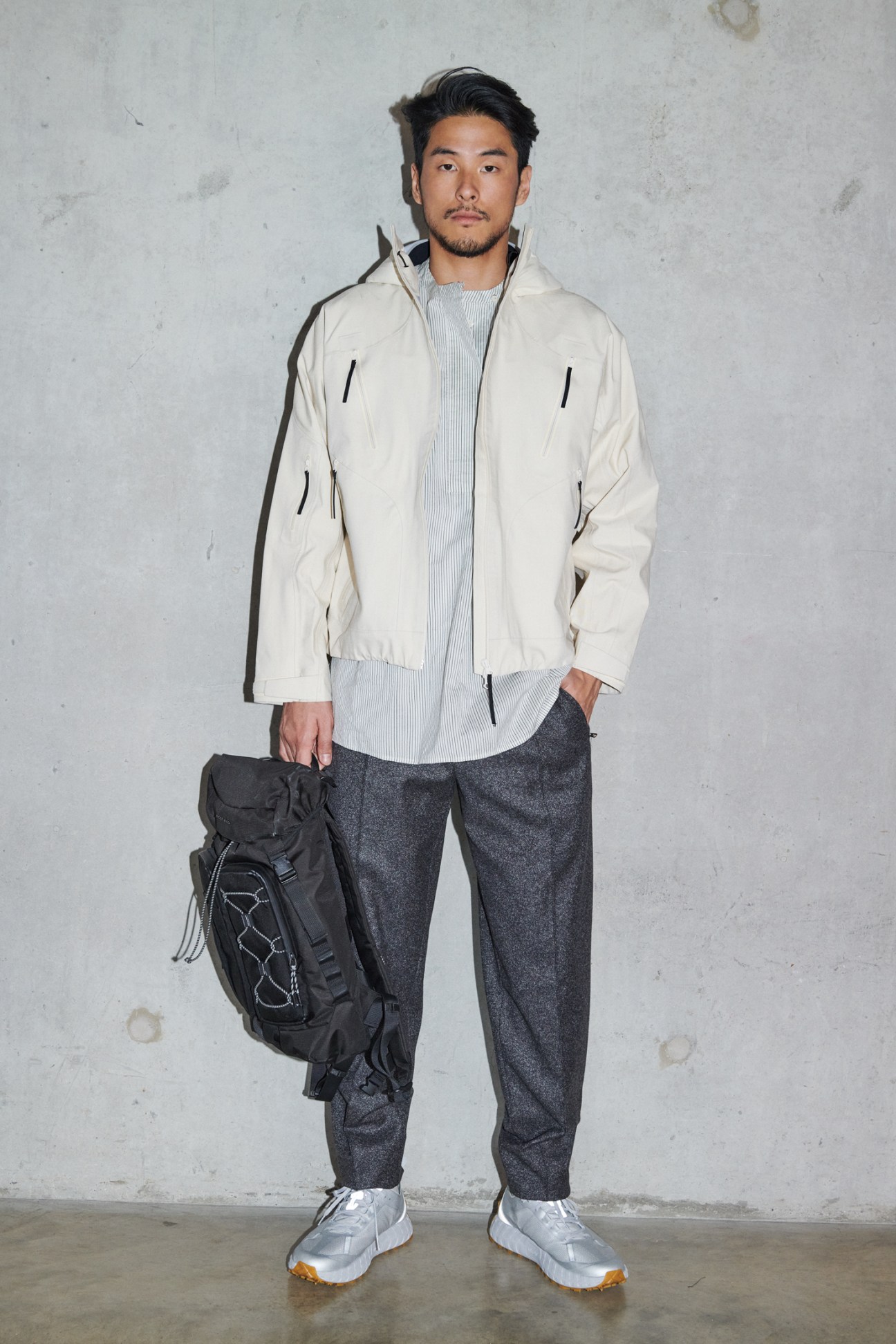


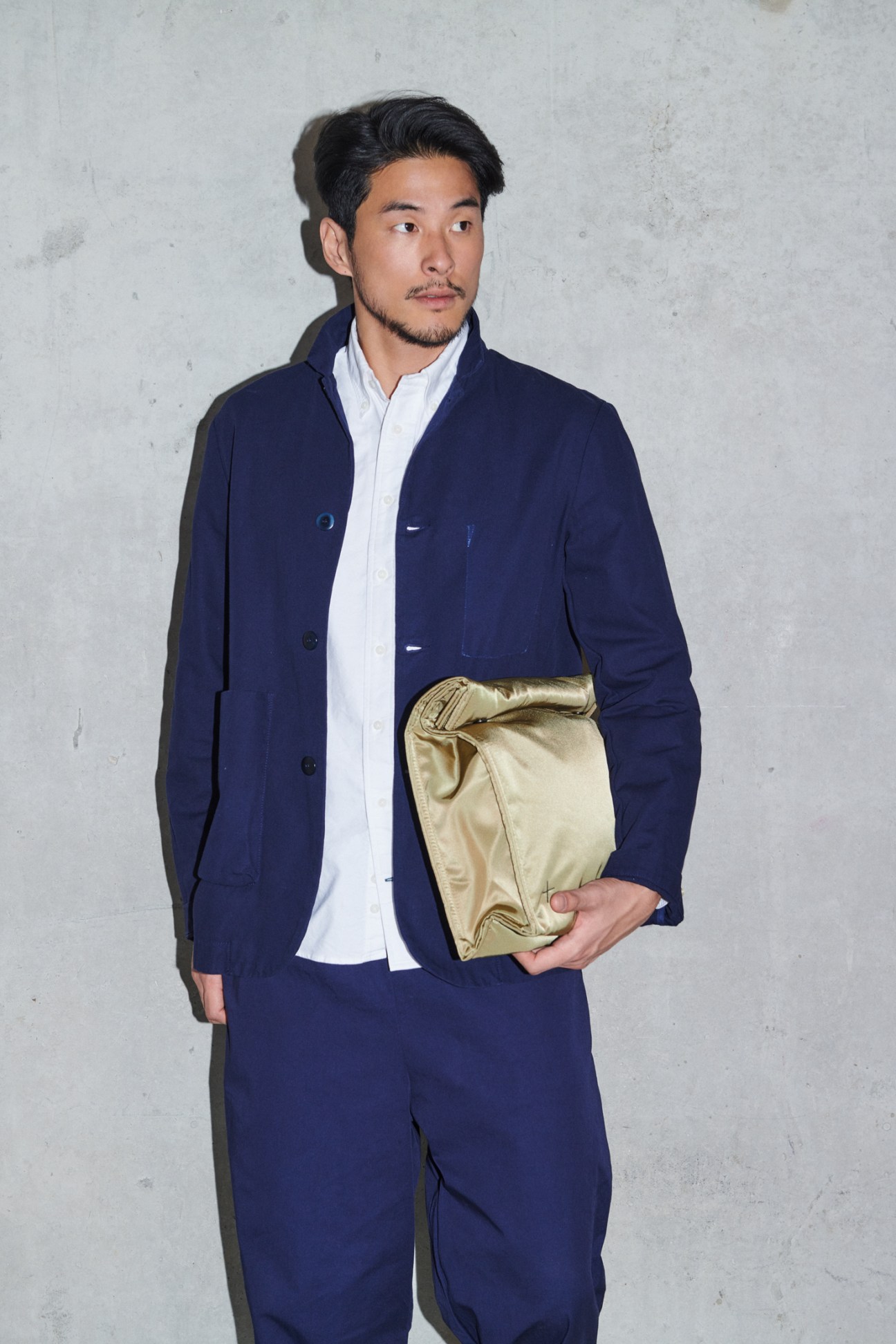

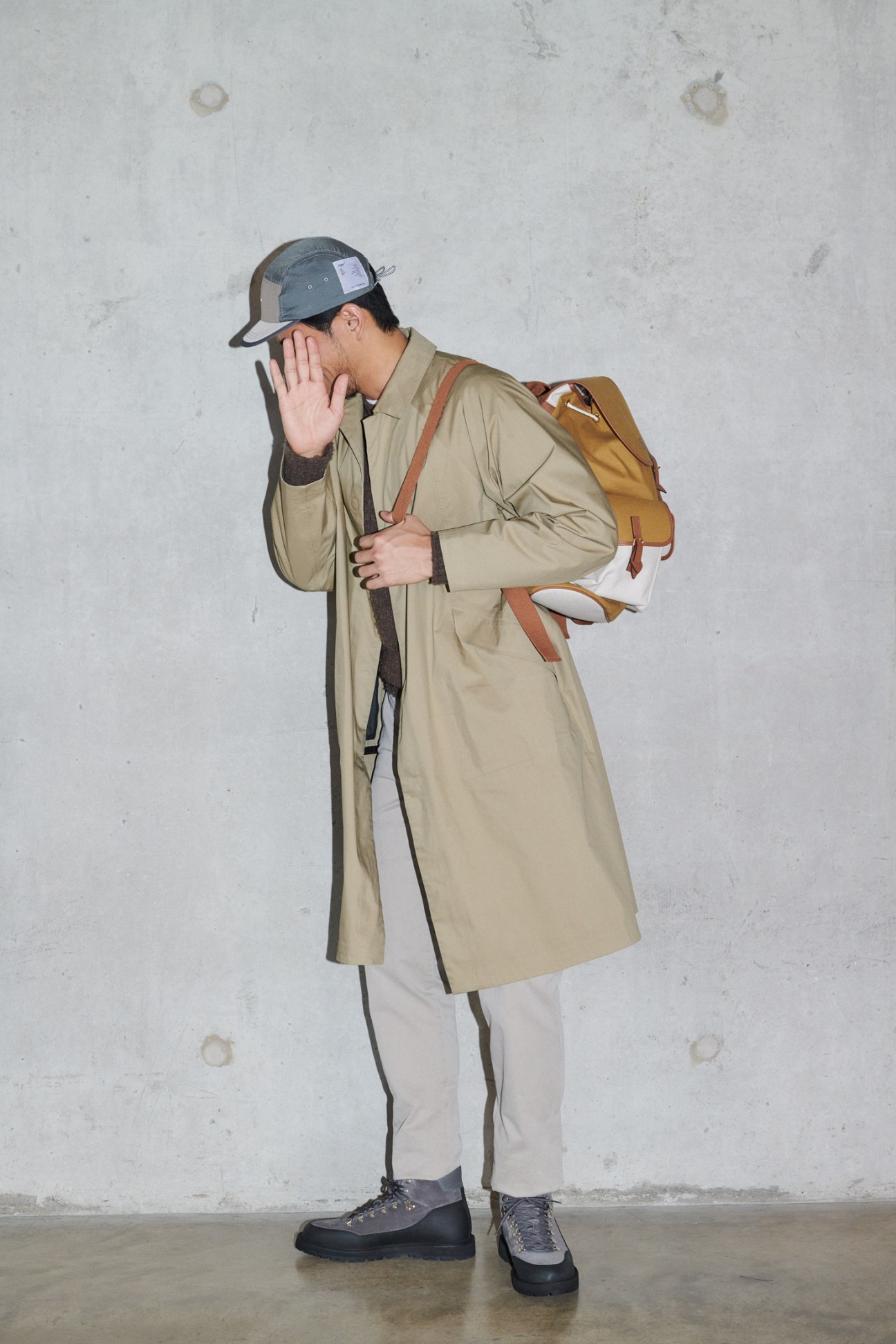



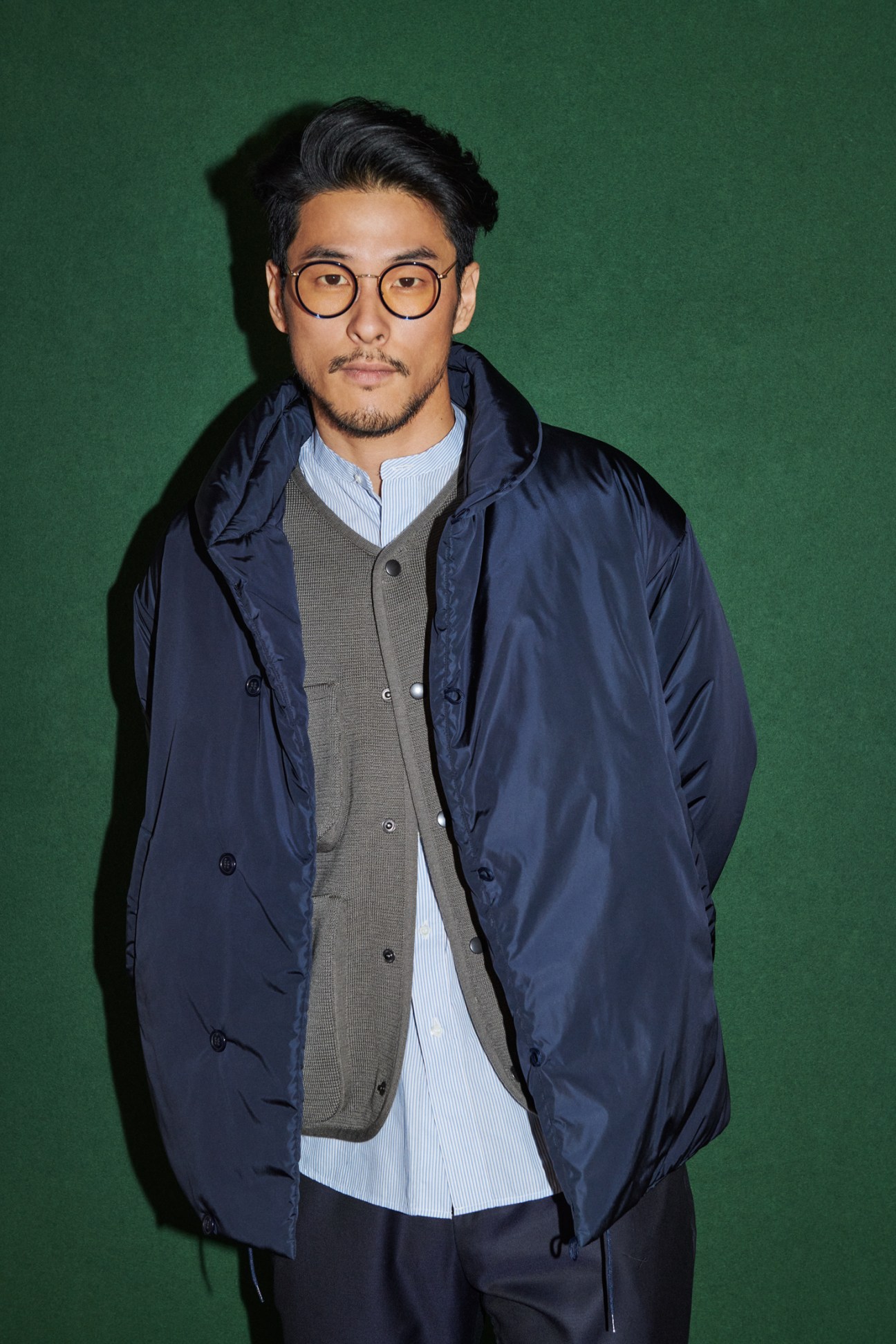
Stylist: Kyoko Tamoto
Grooming: Liz Daxauer
Model: Takayuki Suzuki
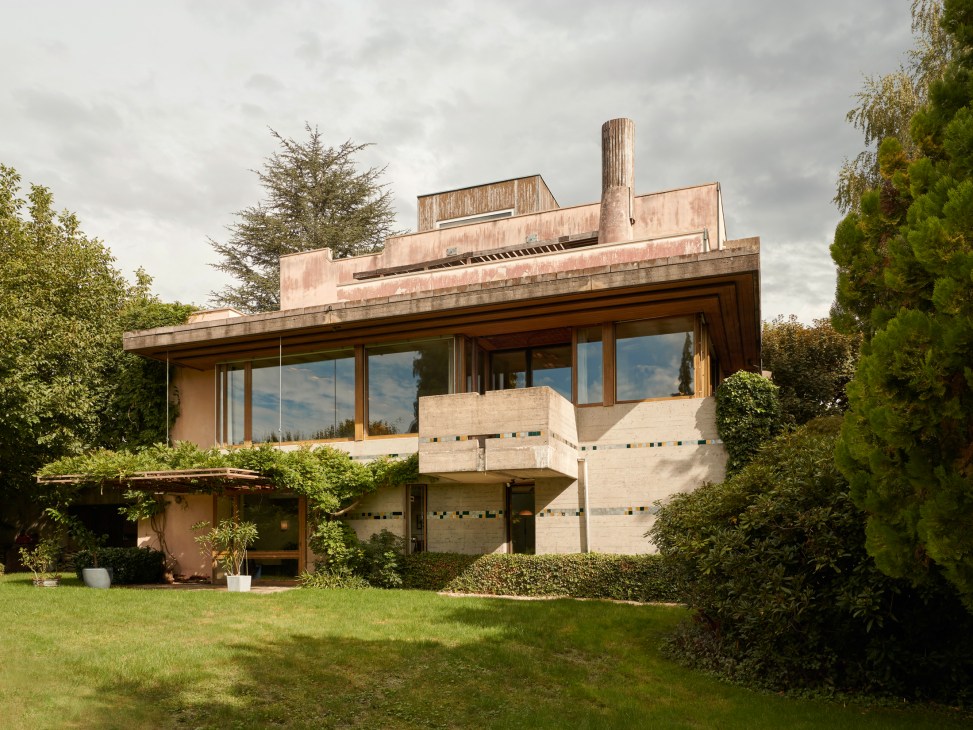
Carlo Scarpa’s Zürich masterpiece is a mid-century residence built friendship and tragedy
The tales that Edoardo Zentner, owner of this expansive mid-century residence in Zürich, tells about its architect, Carlo Scarpa, are as elaborate and charming as the home’s design. Yet the story of the property, commissioned by Zentner’s late parents from the maestro Venetian designer in 1963, is also steeped in tragedy.
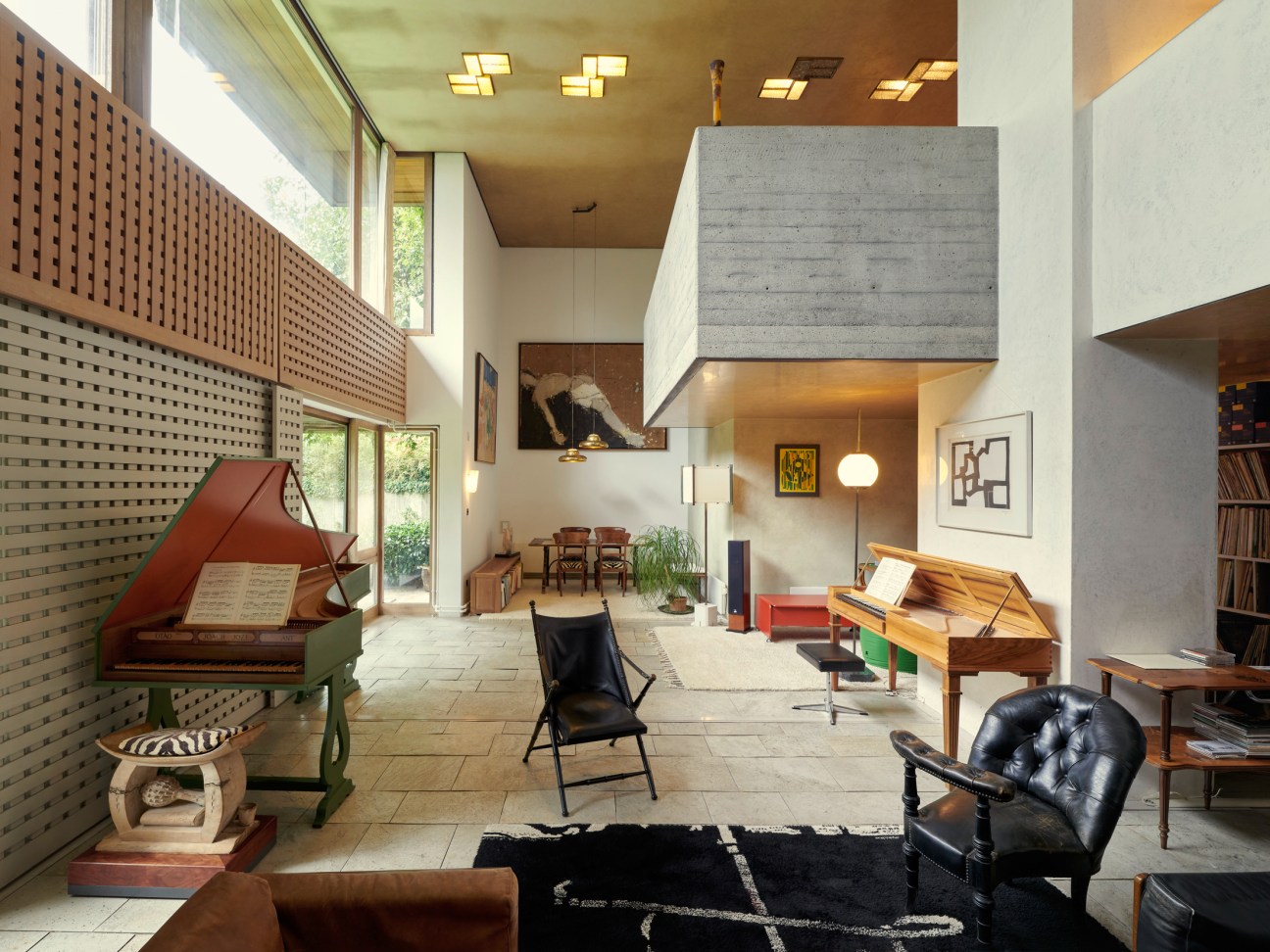
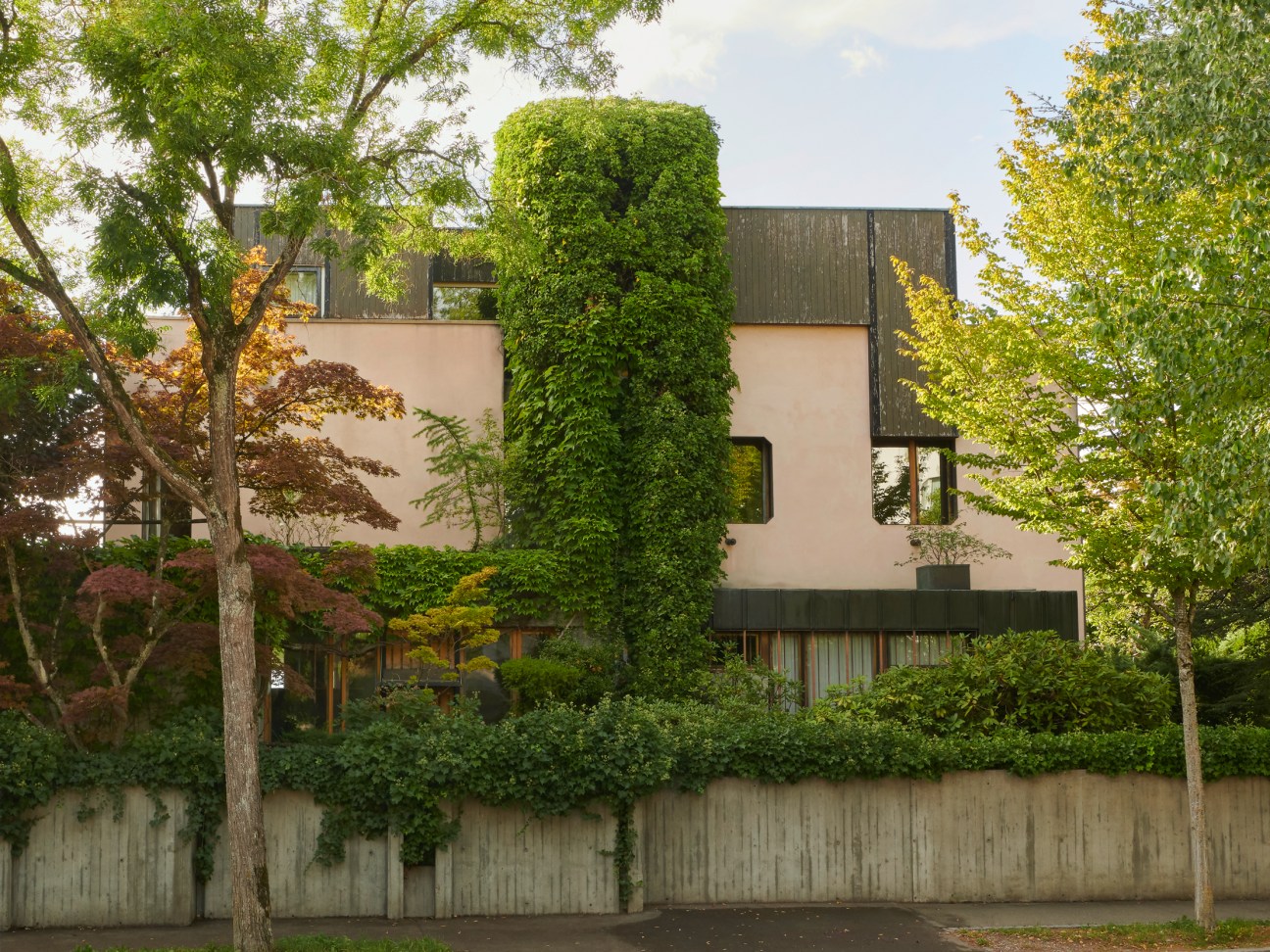
A magnificently preserved architectural masterpiece.
Zentner’s mother, Savina, was formerly married to Scarpa’s mentee and collaborator Angelo Masieri. On a trip to the US to meet master architect Frank Lloyd Wright, Masieri’s life was cut short in a car accident; he was only 32. A decade on and now married to a Swiss man, René Zentner, Savina called on her old friend Scarpa and asked him to design a residence that would bring a touch of Bel Paese modernism to a hillside above Zürich.
“The first time I met Scarpa, I was small enough to crawl onto his knees,” says Edoardo Zentner of the pioneering architect, who remained a friend of his mother until his death in 1978. A true eccentric who lived a frugal and sometimes penniless existence, Scarpa tested this friendship during the creative process of forming the voluminous multiple-storey residence. “Scarpa finished the house because of the friendship he had with my mother and the strength of my father,” says Zentner, recalling how his dad flew out to Japan, the only place Scarpa was famous at the time (and a place that inspired him), to force him to fly back to Europe to complete the job.
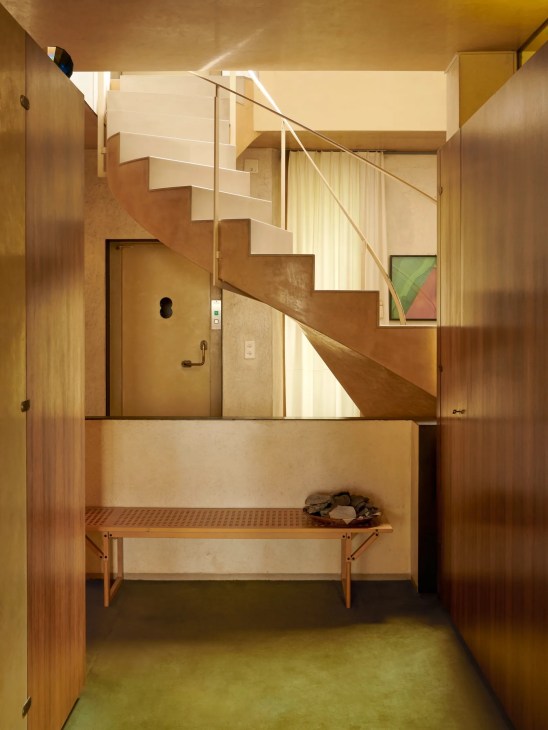
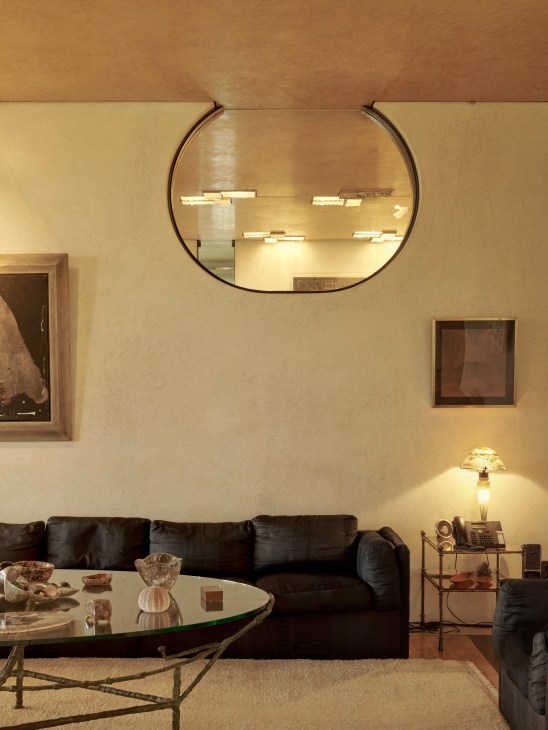
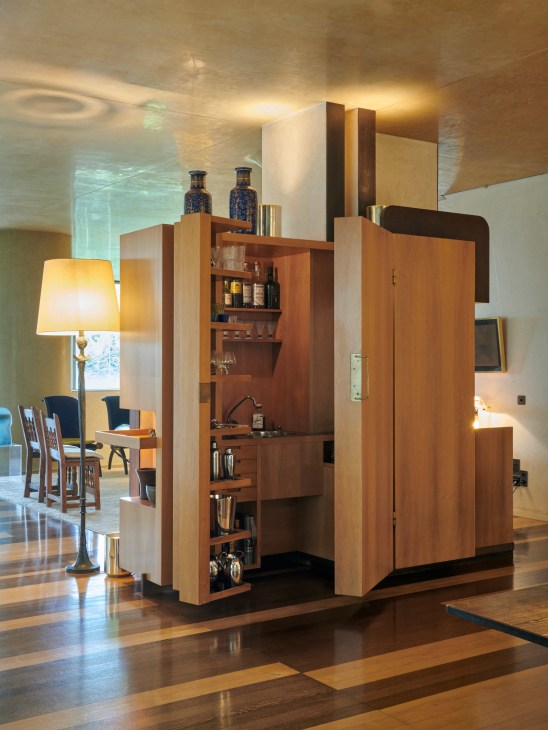
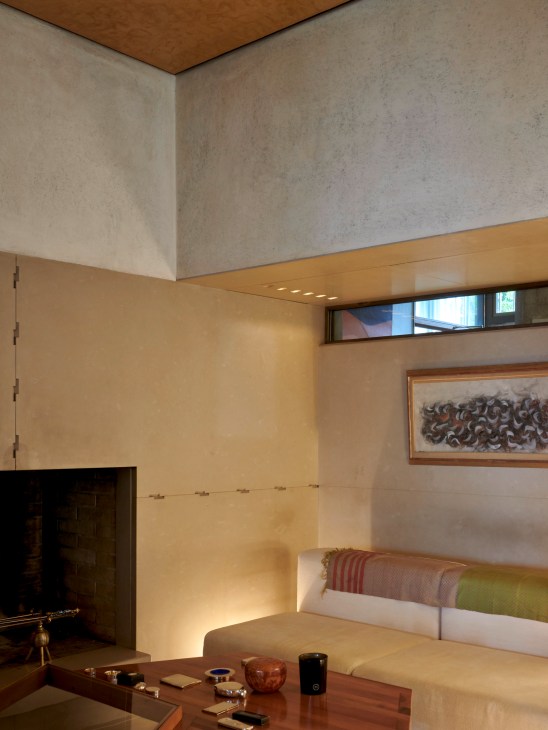
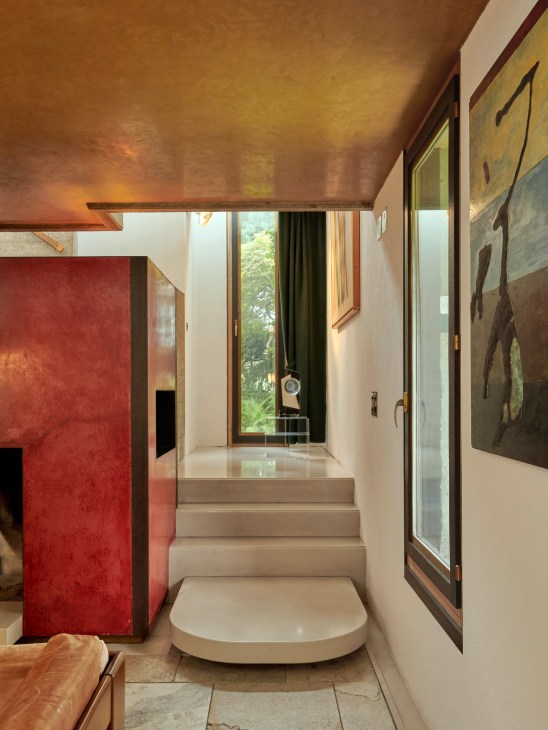
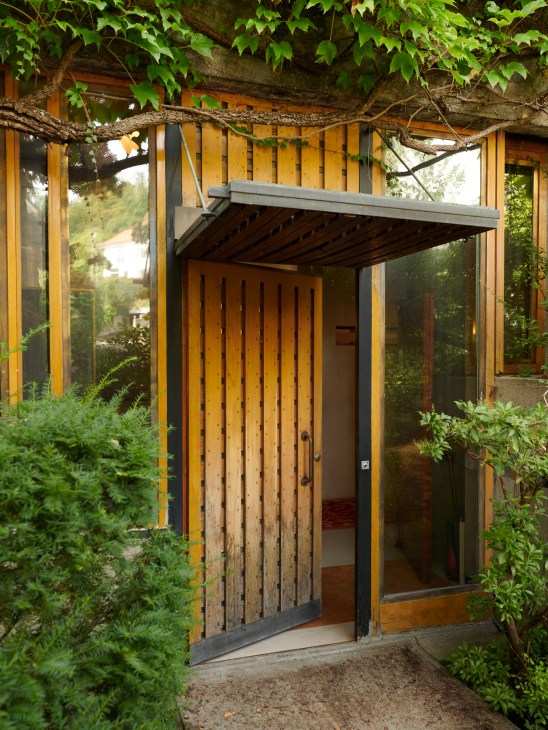
It’s a good thing that Scarpa got on that plane. Alongside a collection of built works in Venice, today beloved and frequently referenced by architects, this residence is a pristinely maintained masterwork. Scarpa’s only completed project beyond Italy, the Zentner home triumphantly combines quality materials and daring form. The latter is exemplified via a series of cascading internal open-plan spaces that tier down the sloped site and out onto its rear garden.
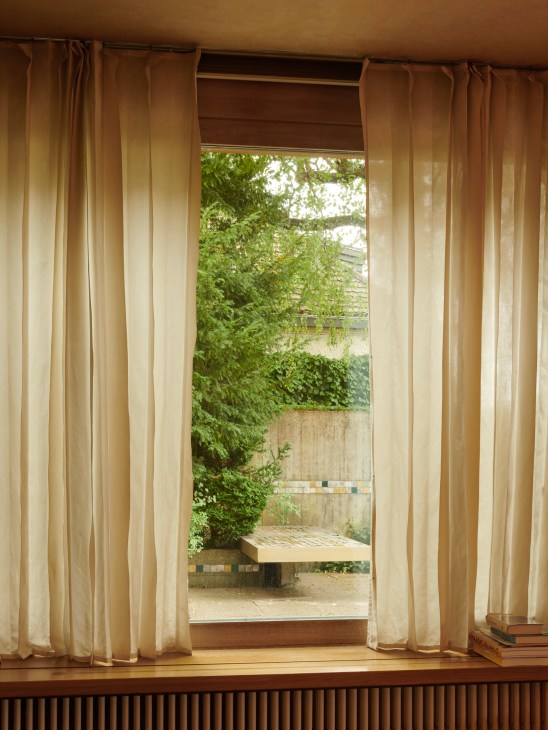
From the sun-drenched, quartz-tiled summer living room – the bottom step in this waterfall of concrete, stucco and timber – Zentner explains how the home was ahead of its time. “This opening to the garden was revolutionary back then,” he says, pointing to the timber-framed windows and matching pergola on the lawn beyond. While this appreciation of nature recalls the touch of Alvar Aalto, comparisons to other modernists stop there. With its internal balconies and soaring cylindrical chimneys between walls and staircases, the home has the hallmarks of a scaled-up cuboid sculpture. Yet a sense of domestic intimacy prevails.
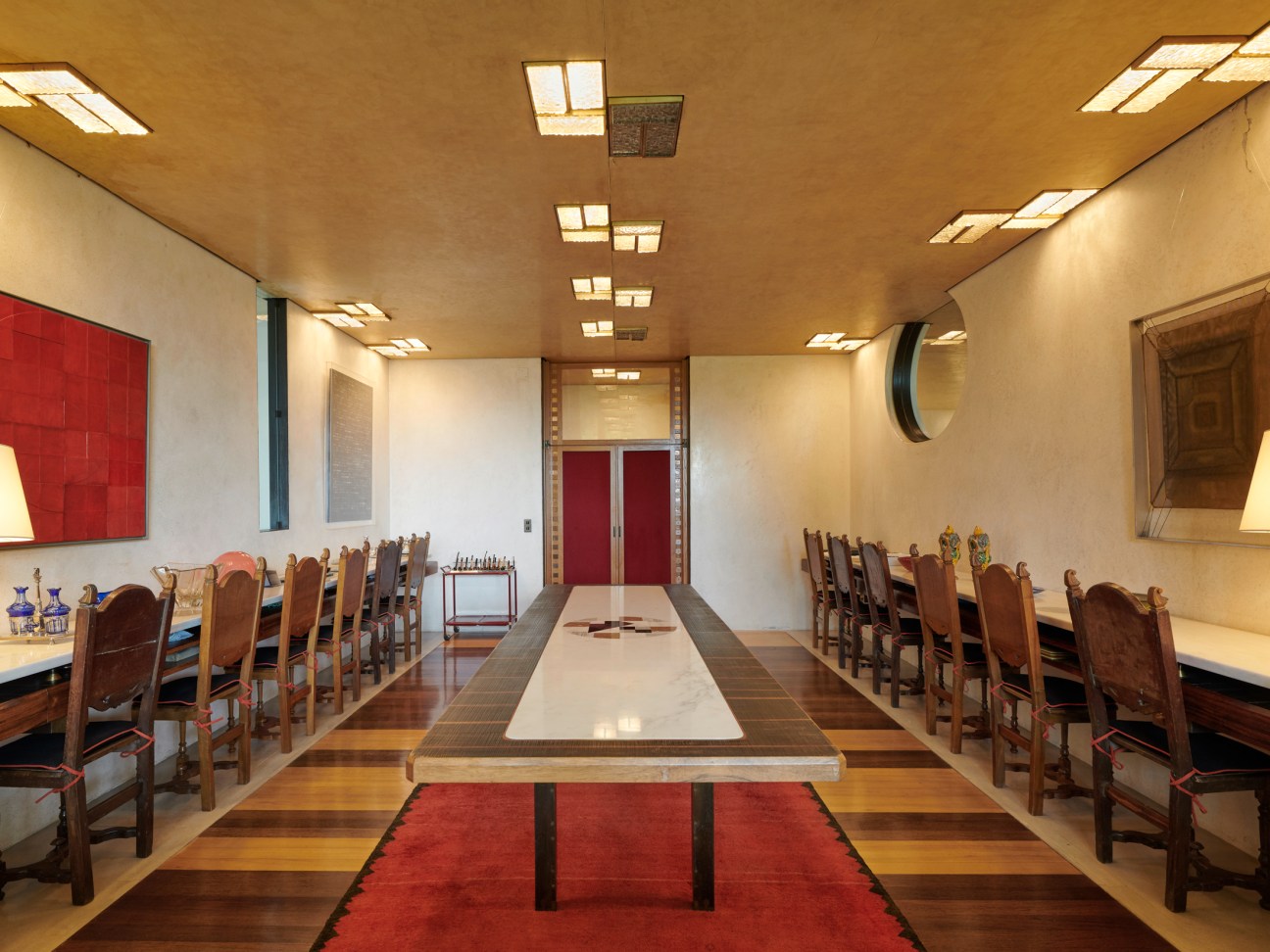
An early version of Scarpa’s ‘Doge’ dining table remains. It was on Scarpa’s request that the dining chairs were made to face away from the table when not being used, presumably to spotlight its fine design.
That feeling is something that Zentner struggles to explain. “I could never tell you how the mind of an architect works, especially Carlo Scarpa’s,” he says. “However, it’s perhaps not too dissimilar to the work of a great composer. With music there are existing rules but there are also opportunities to write new rules – as long as they fit. Here there are walls and spaces, like there are in every other home, but the way that they’ve been ordered to achieve certain functions is fascinating.”
Read next: The Monocle City Guide to Zürich, featuring the very best hotels, restaurants and retail spots
Baked good
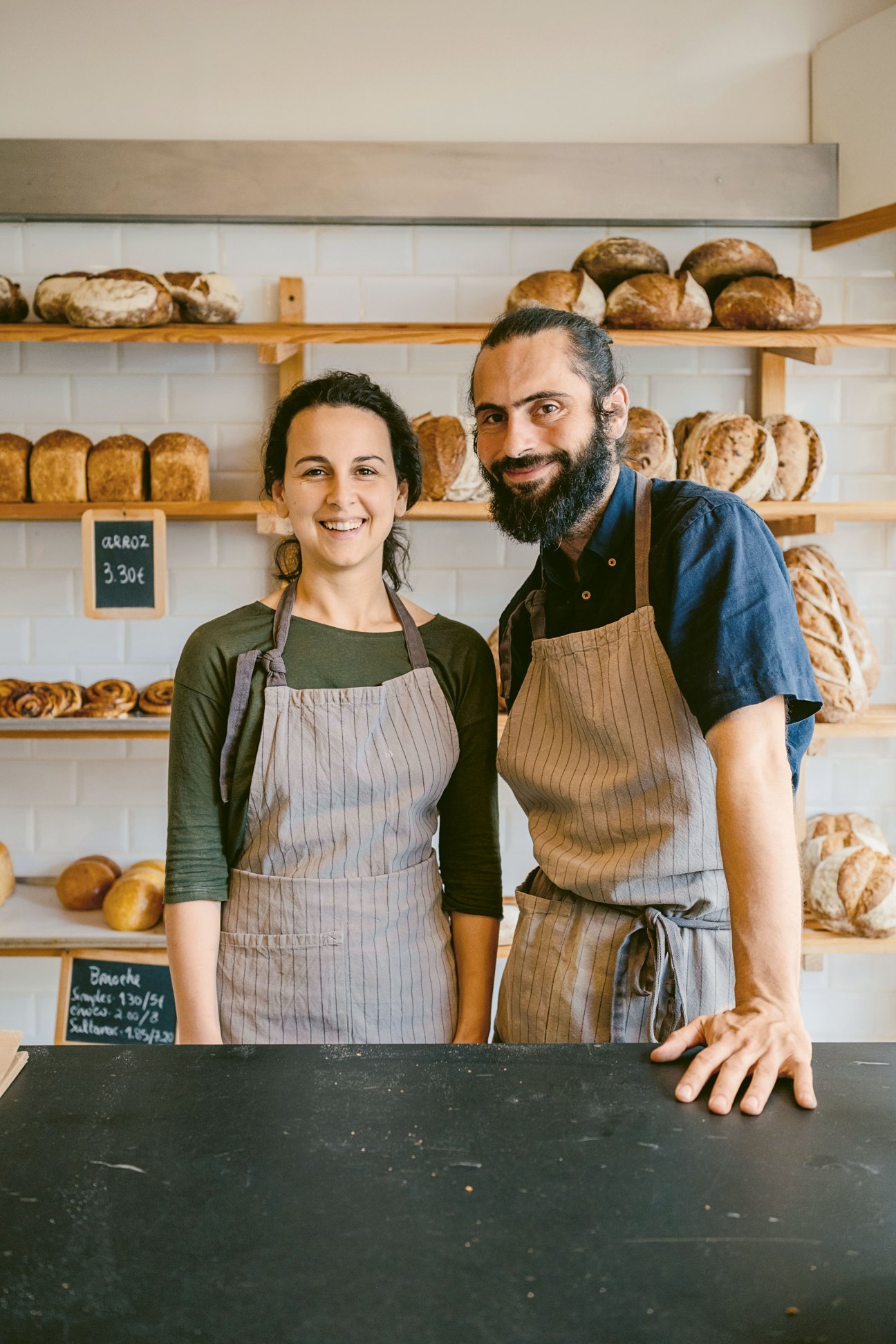
Porto’s Benedita Saavedra and Adriano Sequeira (pictured) launched their bakery Masseira in 2018. It specialises in sourdough and natural-fermentation bakes but to really make your day, it has a sourdough brioche filled with port-soaked raisins. Masseira’s story is one of many great discoveries in the brand-new Portugal: The Monocle Handbook, on sale from 20 October (order at monocle.com/shop). It’s as tasty as a Portuguese confection.
Who’s keeping the lights on?
Storming ahead with wind power
Denmark
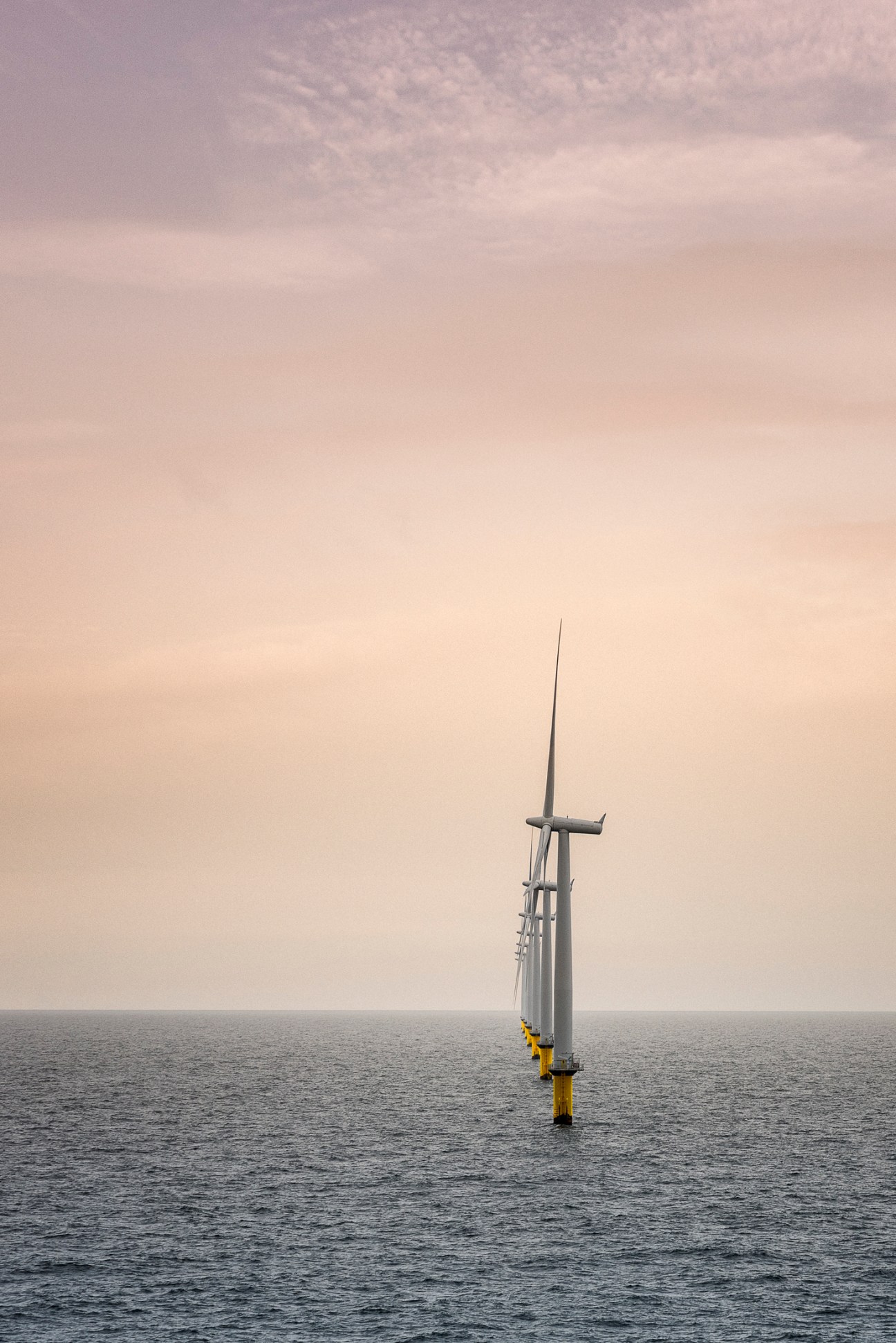
Denmark is home to the world’s largest wind-turbine manufacturer, Vestas, and the largest developer of offshore wind power, Ørsted. It also plans to build the first energy island to store and distribute the power generated by offshore wind by 2030. For the past two years, more than half of the country’s electricity has been generated by wind, a figure expected to increase to 84 per cent by 2035.
The current energy crisis, however, has focused minds on the short term. Historically, Denmark is a net importer of natural gas, most of which, until now, has come from Russia’s Nord Stream 1 pipeline via Germany. This source is now strangled and analysts have predicted that gas for industrial use will probably have to be rationed this winter. As the Danish energy minister, Dan Jørgensen, tells Monocle, “The Danish public sector has agreed to turn down the heat to 19c and reduce energy consumption where possible. And we encourage all Danes to do the same.” But such initiatives aren’t sustainable in the long term and if Europe is to innovate its way out of this crisis, it will be with the expertise and equipment of industry leaders such as Ørsted.
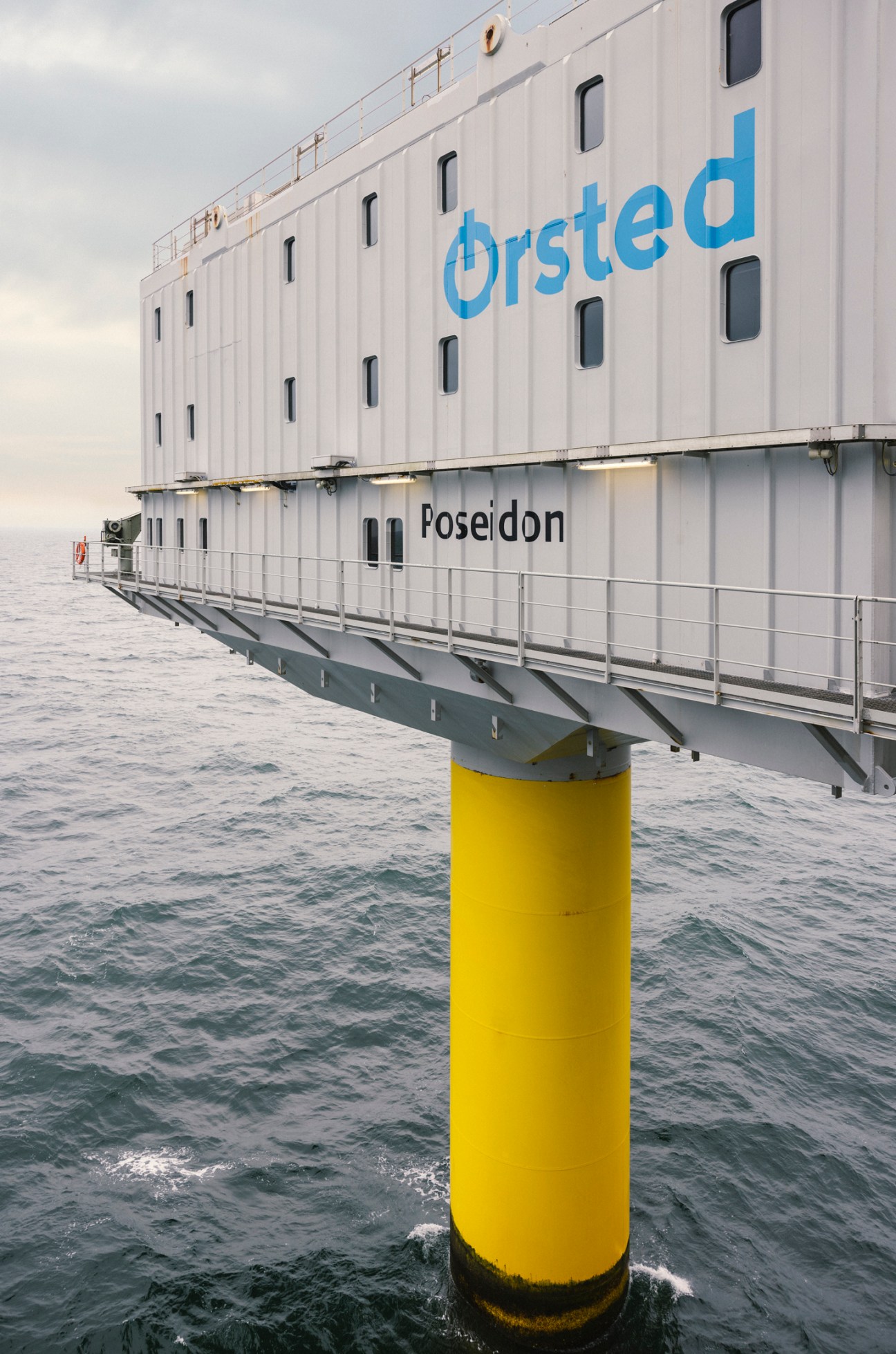
On 31 August the company inaugurated the world’s largest offshore wind farm 89km off the coast of Yorkshire in northeast England. Hornsea 2’s 165 Siemens Gamesa eight megawatt turbines provide power for than 1.4 million UK homes. A round trip to visit the farm requires two weeks aboard a maintenance and accommodation ship, so Monocle settles for the world’s 77th largest, at time of writing, instead. Horns Rev 2, on a North Sea reef 30km from western Denmark, was the world’s largest wind farm when it was built in 2009. As Jens Nybo Jensen, senior communications adviser at Ørsted says, “The technology is advancing so rapidly that the record keeps being broken.” Indeed, Ørsted has broken it five times since 2009.
Founded in 1972 to manage fossil-fuel extraction in the North Sea, Ørsted was, until 2017, called Danish Oil and Natural Gas (unfortunately acronymised as dong Energy). Renamed Ørsted, after the Danish scientist who discovered the link between electricity and magnetism, it has done a fairly good job of rebranding itself: this year it was named the world’s most sustainable energy company in research group Corporate Knights’ Global 100 Index.
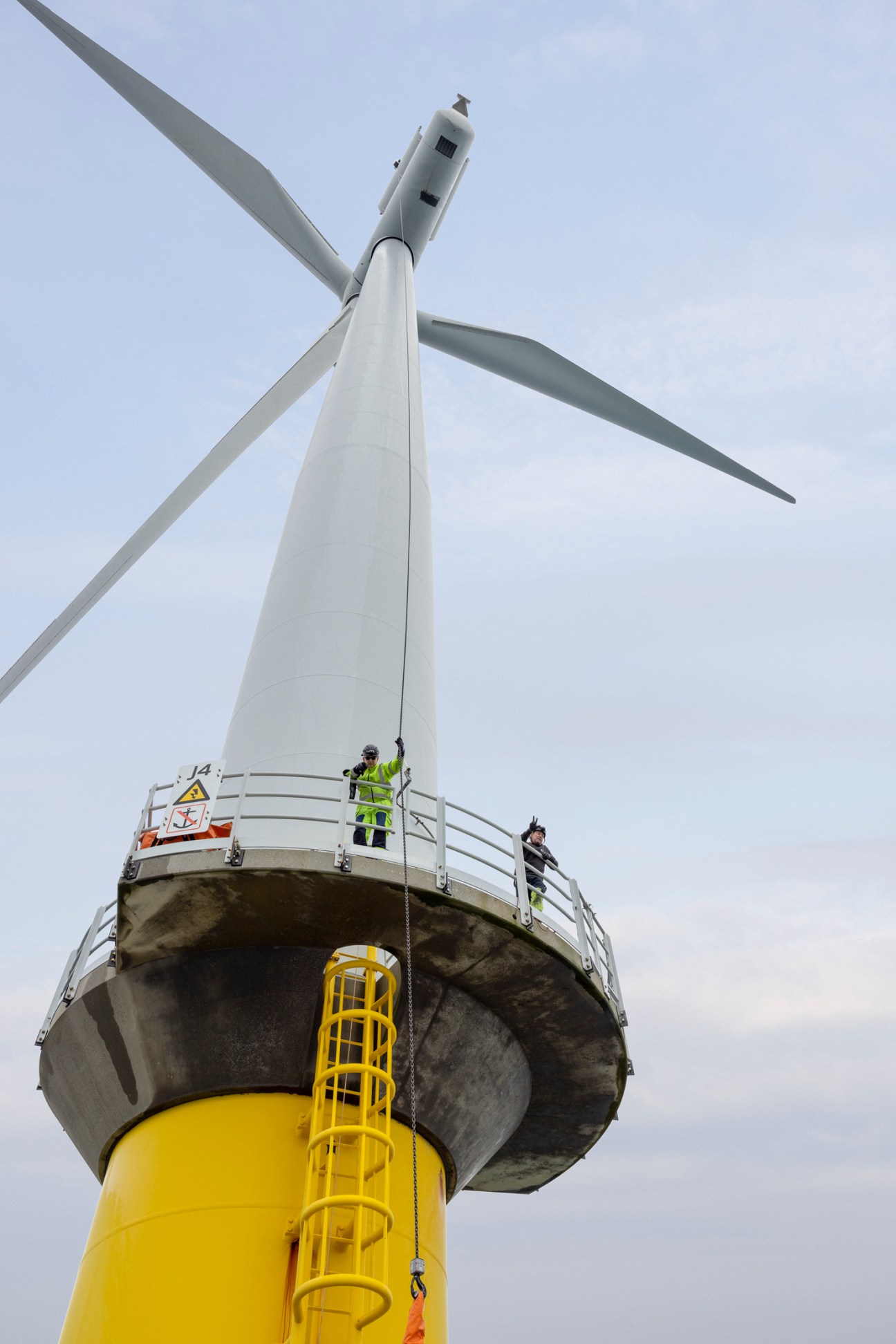
But even if the crew wear slick, branded cagoules to match the spruce, hi-tech ship, Ørsted hasn’t completely wiped the soot from its hands. A huge coal-fired power station owned by the company dominates Esbjerg’s harbour; Jensen says that it is due to be decommissioned in March. Ørsted has also been accused by some critics of “greenwashing” through carbon-quota trading, whereby companies buy and sell “credits” that allow them to emit more co2. Two years ago, it was revealed that, between 2008 and 2012, it had been involved in purchasing such credits from a fraudulent Russian company. After pressure from its majority owners, the Danish government, Ørsted has doubled down on its green transition, declaring that it intends to become carbon neutral by 2025 – a goal that its new CEO, Mads Nipper, insists is on track. This seems to be a profitable move: revenues in 2020 topped €7bn and if Ørsted can continue to turn wind into money, the future looks bright, even if today’s weather doesn’t.
Unaccustomed to the open sea, I’m surprised at how choppy the water can be on a relatively placid day. Thankfully, the boat’s toilet has well-fitted support grips. “People told us that we couldn’t do anything here,” says Horns Rev 2’s operations manager, Kasper Mikkelsen, gesturing towards his whirring charges. “But look at all this.” The wind farm sits on a sandy reef once considered treacherous by fishermen, who avoided sailing here, which is why the Danish government optioned it for wind-farm use in the late 1990s.
Our boat pulls up at a super-structure, named Poseidon, which looms out of the North Sea like a four-legged sea monster. This is Horns Rev 2’s three-storey, 750 sq m “hotel” – with a kitchen, dining room, TV lounge, gym and technical room, as well as 24 bedrooms – and it’s the only one of its kind in the world.
Winds of change
Blowing in: In 2020, 57 per cent of Denmark’s electricity production came from wind energy.
Gassing out: Denmark has seen the EU’s largest decrease in fossil-fuel use between 2009 and 2019 (from 83 to 64 per cent).
Today there are three Horns Revs, which together provide 9 per cent of Denmark’s electricity needs. Mikkelsen leads half of a 28-person team of technicians who work in two-week shifts between March and October. Outside these months the weather is too stormy. During the season, workers clock up 84 hours a week. Days begin at 06.00 with technicians spending 12 hours outside, buffeted by the North Sea winds. Mikkelsen, who was a technician before becoming manager, spends his day directing teams from the control room, where a large screen displays 91 icons lit up red or green, depending on whether the turbine is in operation. He is avuncular, with a dry sense of humour – two valuable qualities for someone who spends long stretches in a confined space at sea. I mention how clean the place looks. “That’s how we like it,” he says. “I’m the operations manager, the janitor, the hotel manager and the IT guy.”
Some of the technicians and sailors who work for Ørsted would have formerly been involved in oil and gas exploration. Their journey personifies that taken by the company and its hub in Esbjerg. This blue-collar port town, like many others around Europe, is being transformed by the winds of change. It was here in May that the leaders of Germany, Belgium, the Netherlands and Denmark, alongside the European Commission president, Ursula von der Leyen, signed the Esbjerg Agreement, a pledge to expand the four countries’ North Sea offshore wind capacity to 65 gigawatts by 2030 and 150 by 2050. Ørsted believes that they could go further. According to a 2018 study by the company, Europe’s northern seas could generate 600 gigawatts of power by 2030. One gigawatt of offshore wind produces the equivalent energy of approximately half a billion cubic metres of natural gas. In 2020 the EU consumed 394 billion cubic metres of liquefied natural gas – about the equivalent of 788 gigawatts. So with a few more North Sea wind farms may significantly reduce the entire continent’s fossil-fuel consumption in eight years. That will require serious investment: Hornsea 2 alone cost approximately €4bn. But a combination of governmental co-operation and private-sector innovation could blow European gas dependency out of the water. Hold on to your toilet handles.
The village that went off-grid
Germany
Monocle arrived in Berlin in late September as the leaves turned brown. The government had just nationalised Germany’s largest gas provider, Uniper, and the chancel- lor was negotiating an energy deal with a despotic regime. This time it was Olaf Scholz, not Angela Merkel, and Mohammad bin Salman, not Vladimir Putin, but the feeling was more of déjà vu than Zeitenwende. The changing of the seasons should bring fresh hope but the prevailing mood in the capital was one of impending doom.
On a bright Wednesday morning, Monocle jumped in a car and drove 80km south of the city to an area known derisively by Berliners as the Speckgürtel (bacon belt) due to its heavy agriculture and right-wing politics. In the 2019 state elections, the far-right Alternative für Deutschland party (notorious for its climate-change denialism) won 23 seats here, doubling its vote share and becoming the second-largest party in the Brandenburg legislature. And yet, nestled among the chocolate-box houses and dairy farms is a village that could become a prototype for how Europe’s largest economy and consumer of energy weans itself off fossil fuels. Feldheim is a community of 130 people that is completely off-grid and self-sufficient in renewable energy.
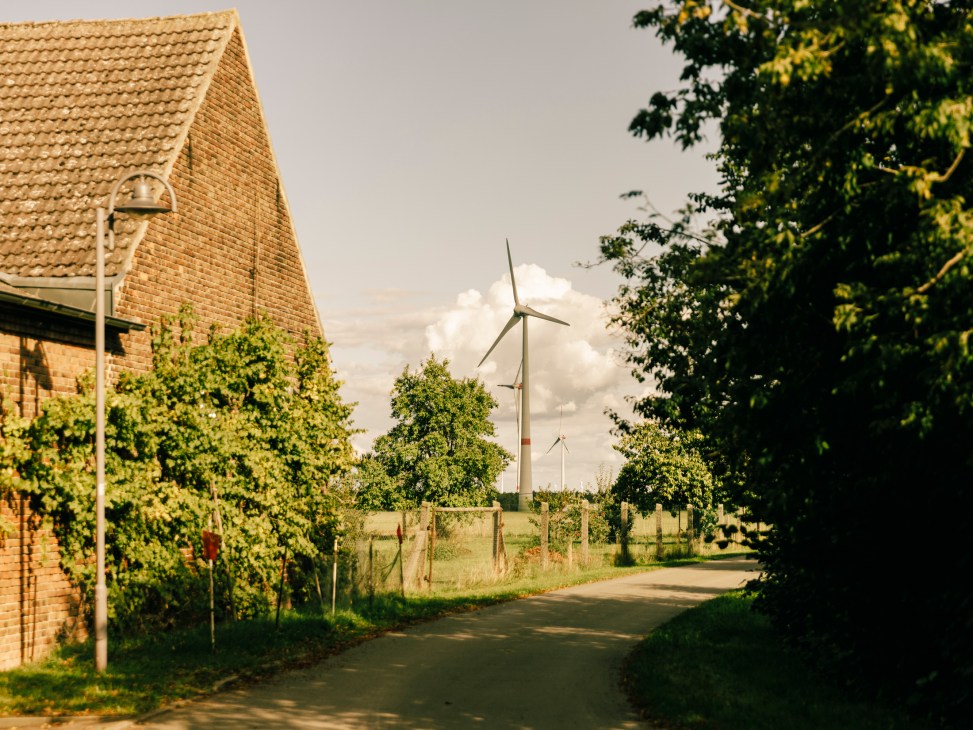
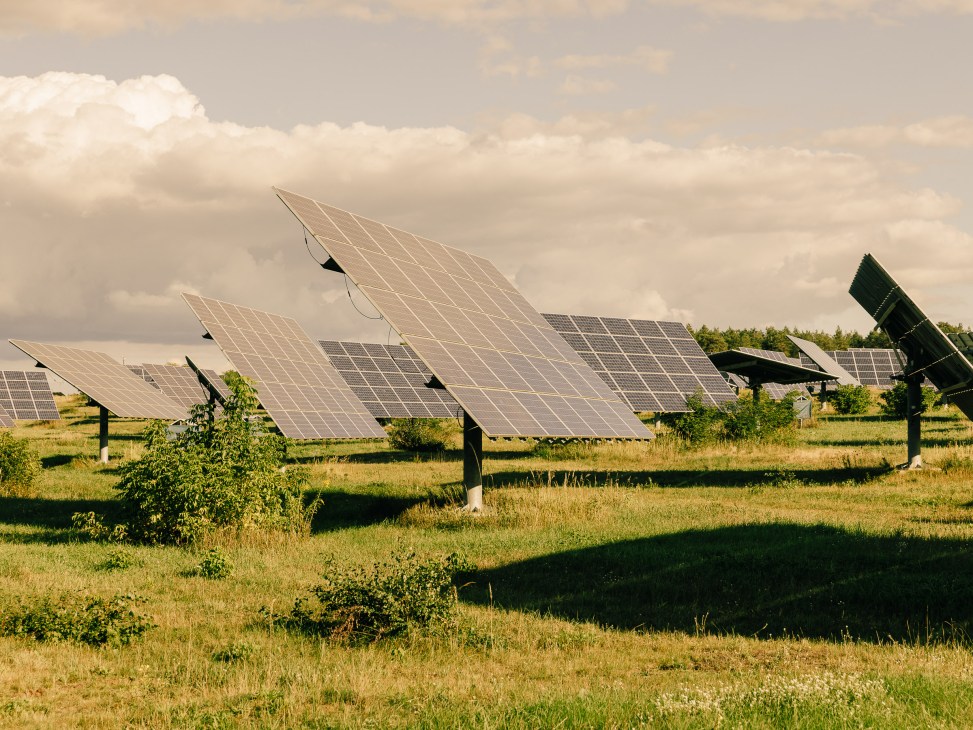
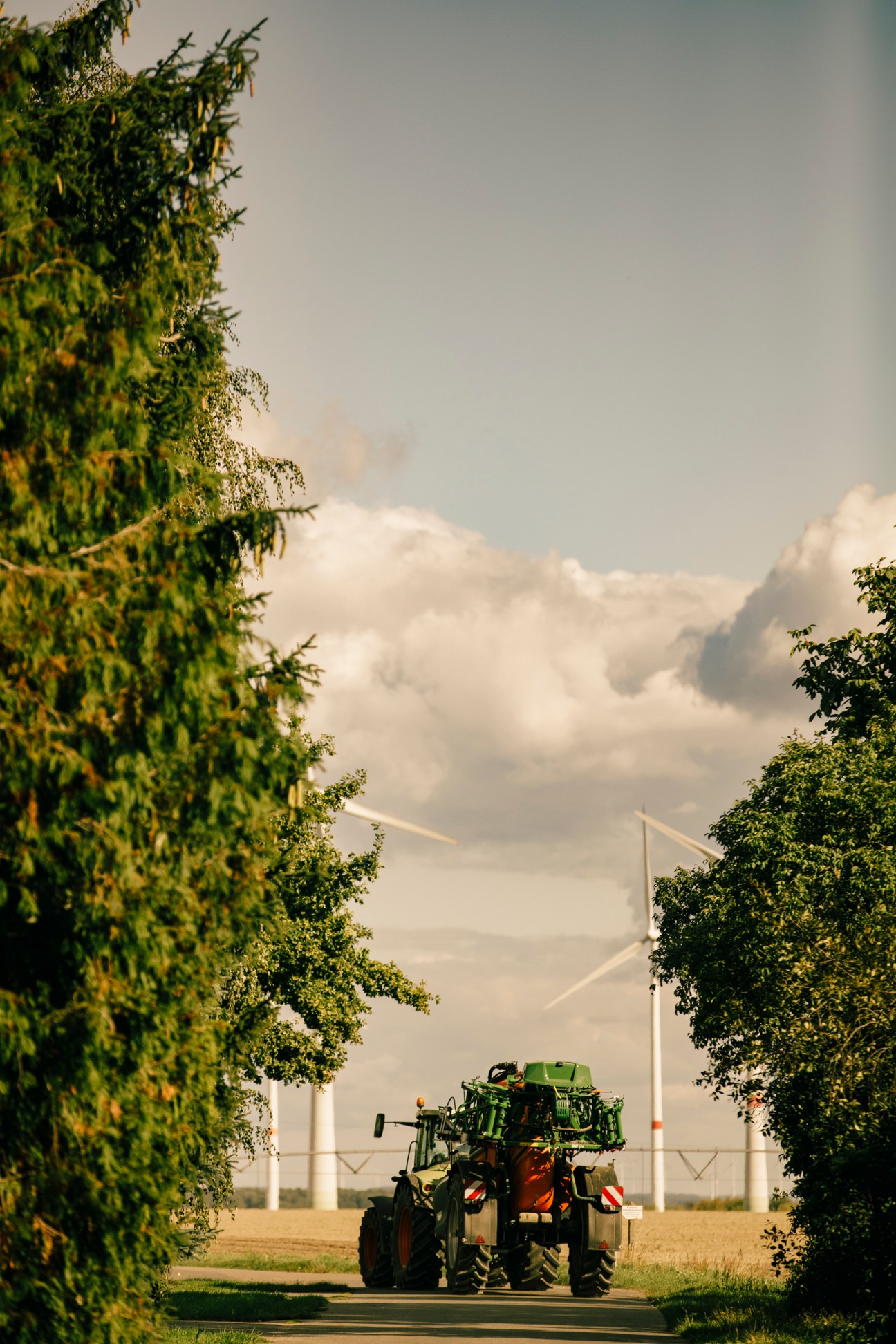
The first thing that you see is the turbines, 55 of them, some as tall as 90m, that provide electricity for 55,000 households. In the beginning there were just four, seed- lings planted by a young engineering student called Michael Raschemann, who arrived in this sleepy backwater in 1994 with a plan to harness its natural advantages. Raschemann had driven for hundreds of miles from his home in the west of Germany after hearing about an area of flat Brandenburg sitting 150 metres above sea level.
When he arrived in Feldheim, he contacted the mayor, who agreed to let him make his proposal to the villagers. A population well versed in the power of both wind and collective action didn’t need much convincing: Feldheim built its first windmill in 1912 and in the 1960s local farmers set up a 30-member co-operative. But Raschemann, who co-founded the renewable energy firm Energiequelle in 1997, was seemingly more concerned with making a profit than being considered a prophet: “Renewable energies are a treasure in every community,” he tells Monocle. “Using this treasure brings a lot of income to the municipality in the short and long-term”. Feldheim’s wind farm now produces so much electricity that 99 per cent of it is sold on the energy market.
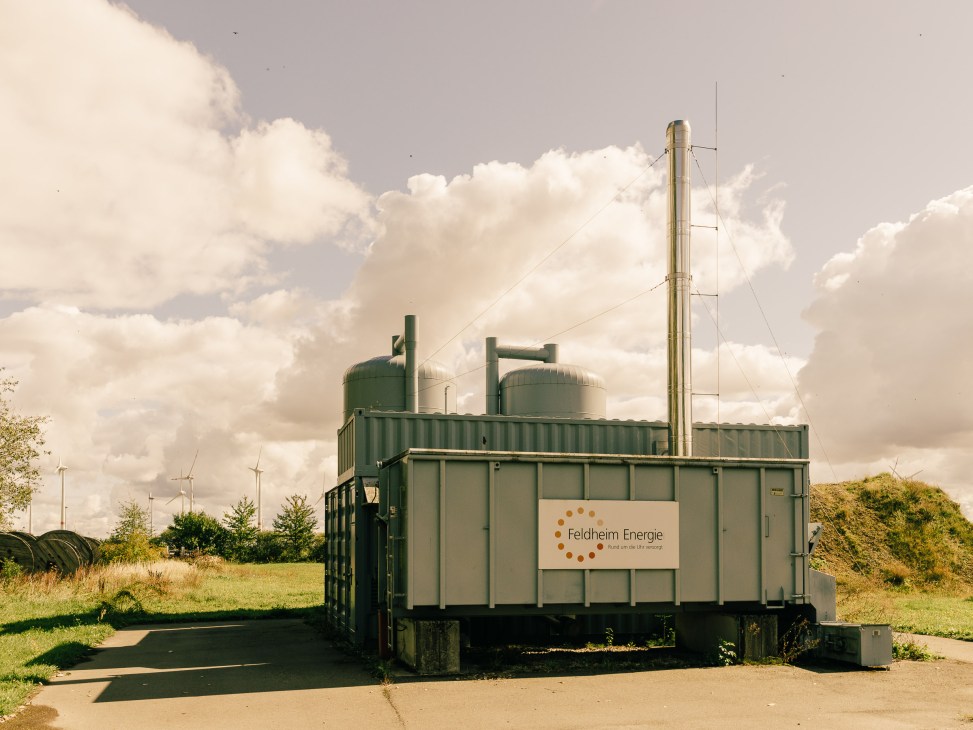
Between its first turbine and today, the village has embarked on an almost Promethean mission to become self-sufficient. The spark was Raschemann’s vision but it has been sustained by citizens’ co-operation. In 2004, Feldheim’s farmers realised that the liquid manure that they were spreading on their potato and sugar-beet fields was more valuable as an energy source than as a fertil- iser. Using a hybrid investment model, the co-operative and Energiequelle began construction on a biogas plant. It took four years to build and today converts 8,600 cubic metres of pig and cattle manure, 8,700 tonnes of maize silage and 190 tonnes of ground cereals into 4 million kilo- watt hours of electric power and 2.2 million kilowatt hours of thermal power a year – enough to take care of Feldheim and its farmers’ needs many times over.
Not content with those shit-hot figures, the village then built a biomass plant that uses woodchip, a by-product of local timber processing, to provide additional heating in very cold weather, when wind or manure cannot be relied on. Impressed by Feldheim’s success, a neighbouring village, Treuenbrietzen, sold Energiequelle a piece of land that was once used as a Soviet military base for €1. Today it is a solar farm made up of 284 trackers (solar-panel holders) and 9,844 photovoltaic modules that produce enough electricity for 600 households.
By 2009 the only thing preventing Feldheim from being able to declare complete self-sufficiency was that the village was still linked to the local grid, owned by energy giant e.on. So the villagers decided to build their own. The Feldheim District Heating Grid, whose 3km of underground pipes provide heat for 35 homes, four farms, two apartment buildings and one industrial unit, cost €1.7m to construct. Feldheim Energie, by then a limited company, provided €138,000 of this. In addition, it received €830,000 from Berlin and Brussels, with the rest of the cost paid by private investors keen for a piece of the action. The electricity grid, which cost €450,000 to build, was funded completely by the villagers.
Feldheim’s freedom cost each of its citizens €3,000. In 2010, after both grids were completed, they paid 31 per cent less for electricity and 10 per cent less for heating. Today, in the midst of an energy crisis, those savings are much higher. On average, the residents of Feldheim pay €5.95 a month for electricity, compared with about €50 nationally, and a €1.50 standing charge, far below German averages, especially in the current context.
Feldheim’s sagacity first came to national attention in 2012 when Angela Merkel, who was then Germany’s chancellor, announced a moratorium on nuclear power following the Fukushima Daiichi disaster in Japan. Soon visitors, including the wife of then Japanese prime minister Shinzo Abe, were arriving from all over the world. Later that year, Feldheim built a visitor centre in which to accommodate all these pilgrims. When Monocle asks 82-year-old Siegfried Kappert, who has lived in Feldheim all of his life, why its citizens are so keen to share their story, he gives me a rather predictable response – something to do with the need to save the planet. It’s easy to be cynical but Feldheim’s more useful lesson lies in its capitalistic success. If a small village can harness the profitability of local renewable energy, perhaps it can inspire countries to do the same.
Indeed, Feldheim is in the company of engineers, urban planners and project managers rather than politicians. They had come from, among other places, Saudi Arabia, Brazil and South Korea, as part of a group organised by Berlin’s Technical University (TUB), a world leader in renewable infrastructure and research. All were tub alumni who now worked for some of the world’s largest companies.
Michael Saleh is an environmental design manager for Orascom Construction, Egypt’s first multinational company. He says that his employers “have started to focus on the environmental aspects of building new cities” and he had come to see Feldheim because Germany is “the leader in this kind of construction”. Islam Zakzouk works in Saudi Arabia as operations and maintenance manager for Dubai-based water-treatment company Metito. He is involved in building desalination plants in a country that gets most of its water from the sea. “We need to reduce the energy that we are consuming to produce clean water,” he says, before praising Feldheim as an example of “multi- resource generation”.
Daniel Wagner, from Brazil, works as a project advisor for giz, Germany’s main development agency. “Brazil has recently passed some laws that allow individual consumers to produce their own energy and sell it back to the grid,” he says. “This, combined with the lower prices of photovoltaic plates, has really boosted the market for individual energy producers in the country.”
For these three, Feldheim is an example of how smart technological risk-taking in the pursuit of profit can lead to innovation on an impressive, though still relatively small, scale. The road to a future in which every village, town and city in Germany is 100 per cent self-sufficient on local renewable energy might be a long one but it does exist – the people of Feldheim have already mapped it out.
Hitting refresh
Origin story: In 2020, 75 per cent of Germany’s energy came from fossil fuels; 16.1 per cent from renewables, 6.2 per cent from nuclear.
Sun records: Germany is Europe’s leading producer of solar energy and makes up 7.9 per cent of the total world consumption.
Catching some rays – and lighting up Europe
Morocco
Morocco has long been a shining star in renewable energy. In 2009, King Mohammed VI set out a national strategy that pledged 40 per cent of energy production from clean sources by 2020. Although the country didn’t quite hit that figure (it reached 37 per cent), it has been ploughing ahead with constructing wind and solar plants, and has now targeted 52 per cent capacity from renewables by 2030.
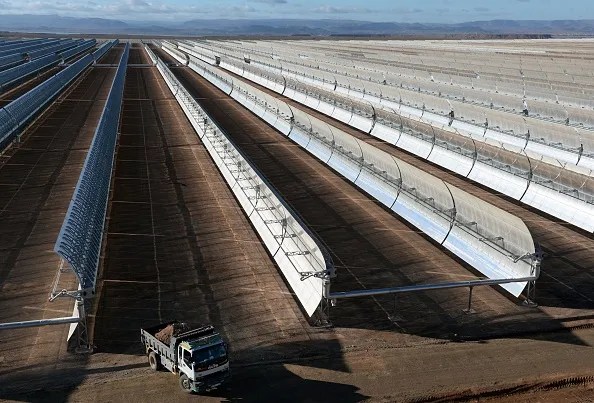
Morocco’s long hours of sunshine and high global horizontal irradiance (that’s the power of rays due to the position of the sun in the sky) make it a naturally strong solar player. The country has been positioning itself as a market-friendly renewables partner, aided by the minister for energy transition and sustainable development, Leila Benali. Its sparkling jewel in the crown is the Noor Ouarzazate solar complex in the south – the largest of its kind in the world. It contains four of Morocco’s seven solar plants and mainly uses concentrated solar power technology (CSP), which requires water for cooling. Perhaps the most impressive of these plants is Noor iii, a vast field of solar panels that form a circle facing a central tower. The sun’s heat is reflected towards the top of the tower and collected as energy. The newest plant, number IV, uses more standard photovoltaic panels that produce energy directly.
As well as upping domestic consumption, Morocco is also set to become a major provider for Europe (even if the likes of Italy have been chasing natural gas from Algeria in an effort to divest from Russia). In 2016 a road map was drawn up between Morocco and the EU nations of Germany, France, Spain and Portugal looking at ways to better interconnect renewables and trade energy. The UK also wants a piece of the Moroccan pie and has one of the most ambitious plans to harness its clean energy. A start-up called Xlinks is looking to run subsea cables from Guelmim-Oued Noun, where there are 1,500 sq km of solar panels and wind turbines, to the distinctly less sunny county of Devon in the UK. The aim? Nothing less than seven million homes powered by Moroccan renewables by 2030, meeting 8 per cent of the country’s electricity needs. In its bid to meet climate-neutral goals, Europe is taking a big swig of Morocco’s sunny delight.
States of dependence
Burning up: Malta, the Netherlands and Poland are the most fossil-fuel dependent EU nations.
Cooling down: Sweden, Finland and France are the least fossil-fuel-dependent EU nations.
The factory that goes with the flow
Austria
“We were lucky to have cheap energy running across the valley,” says Julian Riess, gesturing at the Ybbs river, which flows through the mountains of Lower Austria before joining the Danube near Linz. In the small town of Ybbsitz, a two-hour drive west of Vienna, family-owned company Riess has harnessed these Alpine waters to power its factory. Today it is a model for how more manufacturers might adapt to the energy crisis.
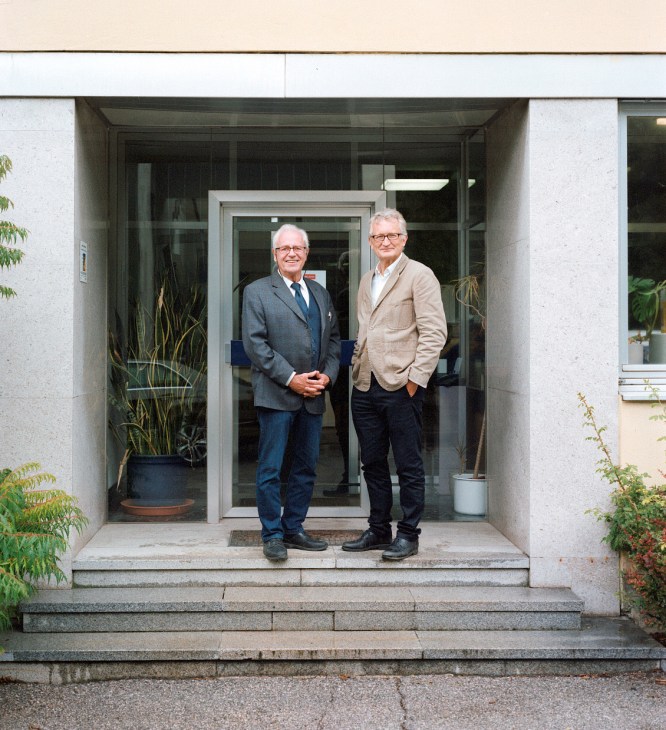
Originally founded as a pan forge in 1550, Riess is now Austria’s only producer of porcelain enamel kitchenware: glass fused onto steel at 850c, making it food-safe and rustproof. In addition to its vast catalogue of pots, pans and jugs, Riess makes enamel signs and industrial components. Since 2000 the company has been headed by Julian and his two cousins, Friedrich (pictured, on left, with Julian) and Susanne, all from the ninth generation of the family firm.
Austria gets more than 75 per cent of its energy from renewable sources, mostly hydro and wind power, and plans to increase this to 100 per cent by 2030. Yet despite its green credentials, the country has still suffered from the spike in energy prices since Russia invaded Ukraine. More than one million Austrian households use gas for heating, though the government has banned the sale of new gas boilers from next year. “Every gas heater we get rid of is a step out of our dependence on Russia,” said the country’s climate minister, Leonore Gewessler, in June. Since the war began, Austria had managed to reduce its dependency on Russia gas, which now makes up 50 per cent of total imports, down from 80 per cent.
Riess has been running on its own hydropower since the 1920s, when three fraternal directors, Julian, Leopold and Josef Riess, decided to build their own hydroelectric power plant to replace coal from the nearby mine (the factory’s remote location meant that gas was not an option). Hydro is a low-cost form of electricity generation, widespread in Austria and other mountainous countries such as Norway and Switzerland, that captures the energy of falling water to produce electricity. Today, Riess has four hydroelectric plants in Ybbsitz. Two are powered by the Kleine Ybbs, the small river that flows past its headquarters, while another continues to run on its original machinery, from 1926, and still bears a sign declaring “Gebrüder Riess” (Riess Brothers). The fourth and largest on the Ybbs was expanded in 2016, a €4m investment that brought its capacity up by 250 per cent to more than 1.97 million kilowatt hours. Last year, Riess generated a total of 8.7 million kilowatt hours of electricity from hydropower – an average household consumes 3,731 a year.
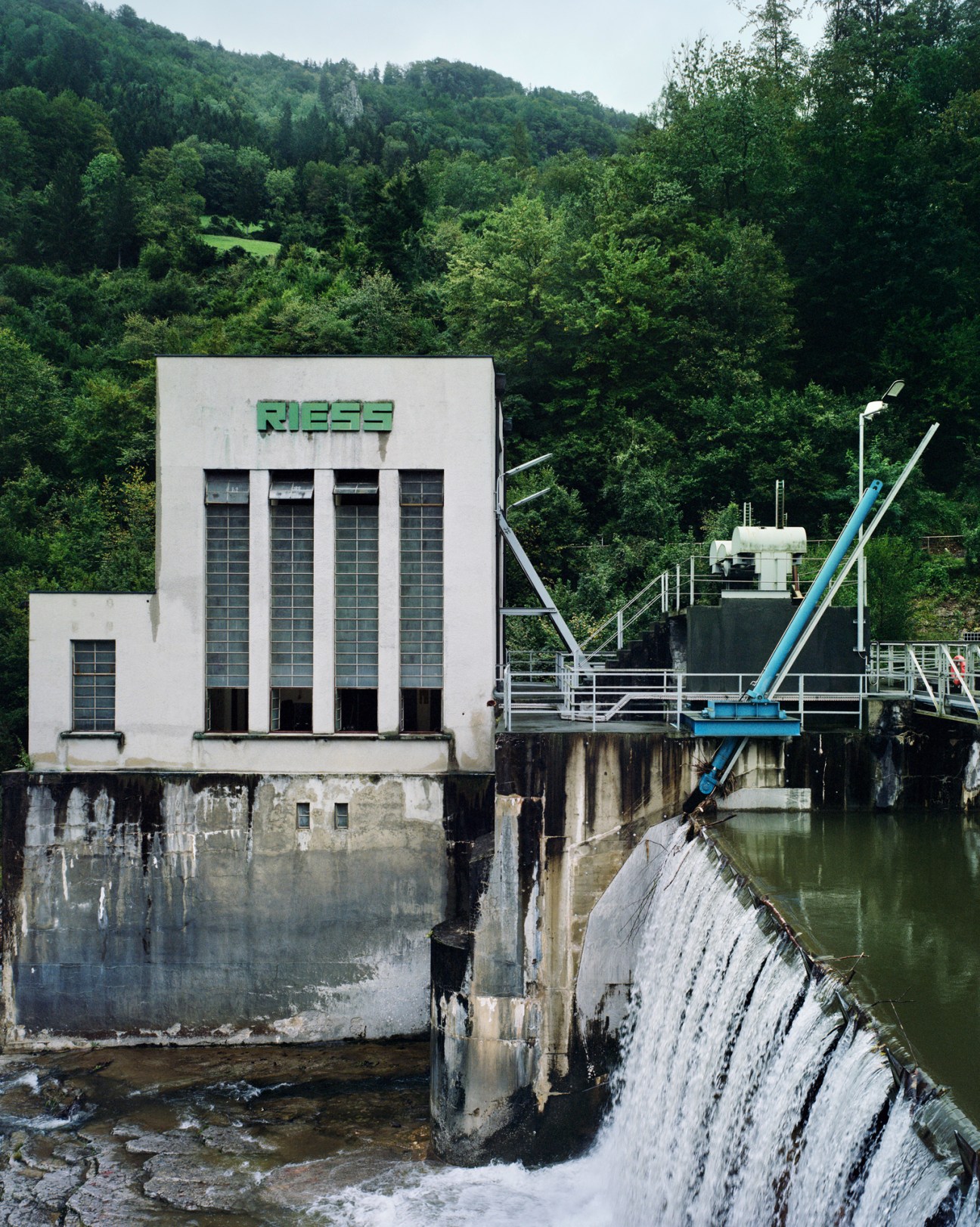
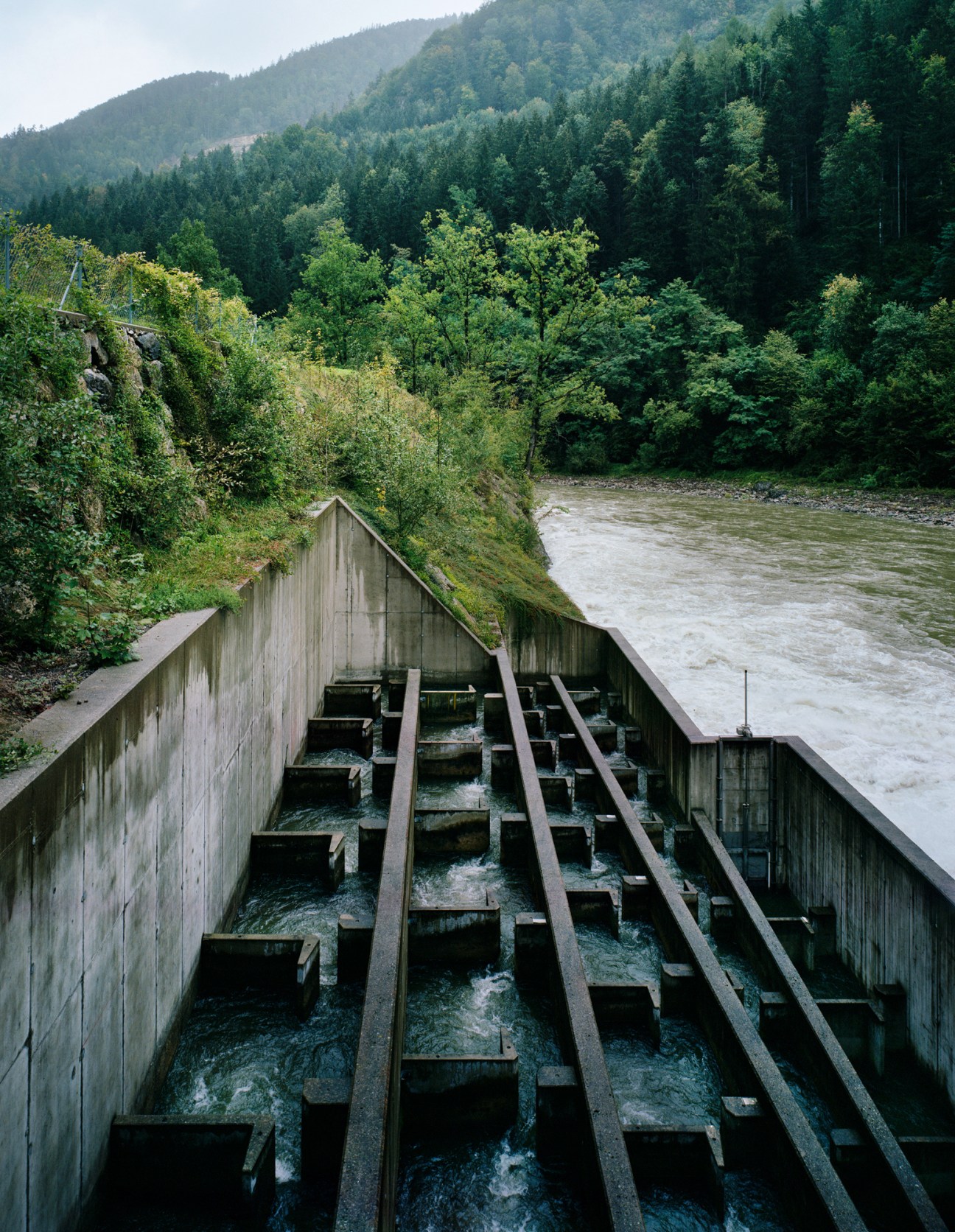
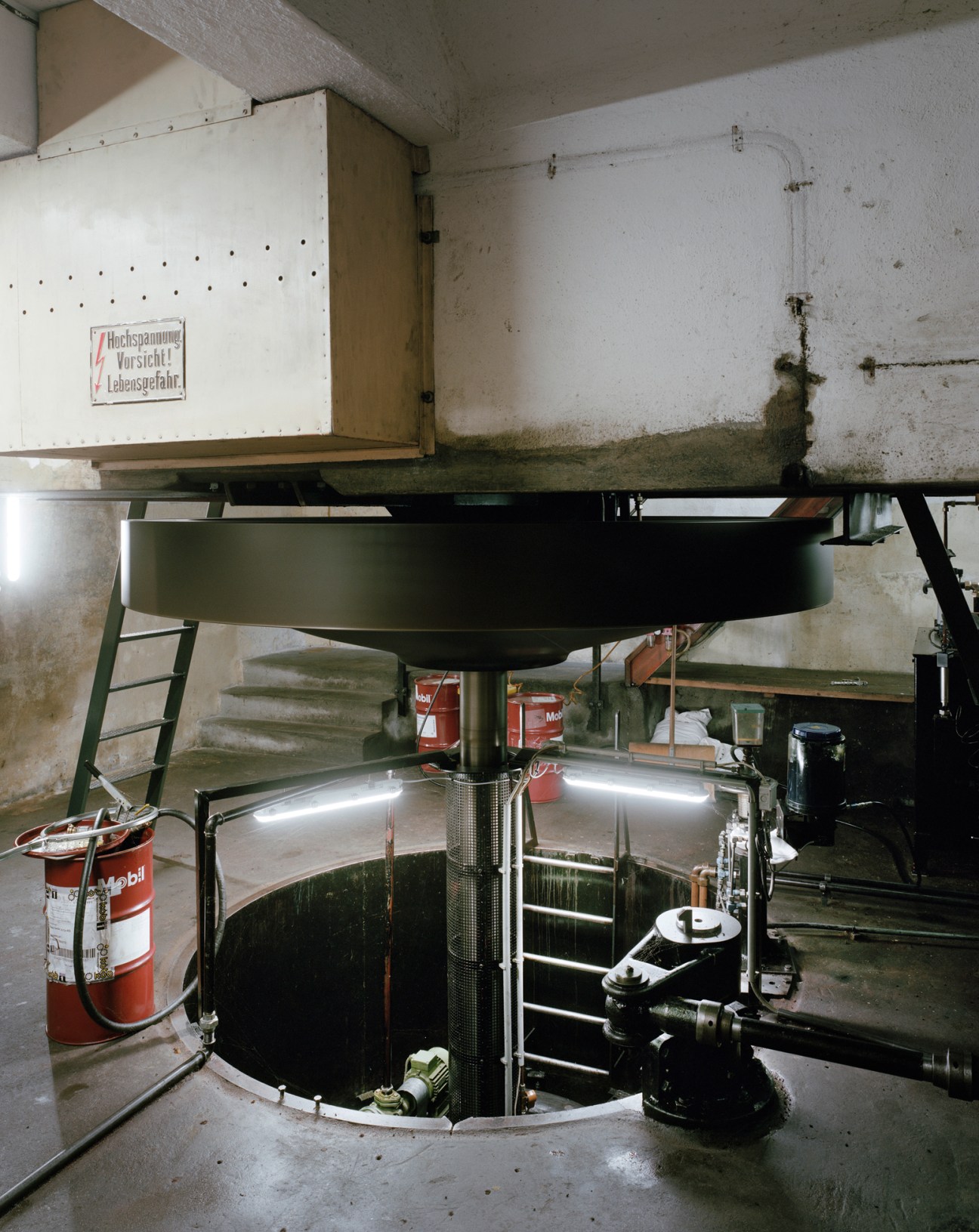
“This is absolutely clean energy, without rubbish or smoke,” Friedrich shouts above the thundering green river. “The water can be used before and after it passes through the power plant; it is not gone.” This elemental force powers the factory, which runs 16 hours a day split into two eight-hour shifts divided among 130 employees. The space reverberates with the sound of machinery, punctuated by the rhythmic thud of metal being melded. Steel sheets from Linz are stamped into shape and, after being coated in enamel by hand, the pots are fired in a kiln to fuse the materials together. Riess has taken steps to minimise energy use, employing a cold-forming shaping technique and reusing heat from the kiln to dry the pots and warm the factory. The products are also made with energy-saving in mind: the pots and pans are meant to be used on a low heat (including induction).
Yet not even Riess has been able to shield itself entirely from the energy crisis. Prices of the raw materials it uses, including steel, have risen sharply. And hydropower can be fickle, with output fluctuating depending on the weather. “In the winter we always hope for a lot of snow so that the water trickles down to our power plants in the spring,” says Friedrich. When Europe suffered its worst drought in centuries this summer, reducing hydropower output in Austria by a third, Riess was forced to buy electricity at a high price to make up for the shortfall. On the upside, after covering its own needs, it sells surplus electricity from its power plants to the public grid.
While few businesses or communities can switch to full Riess-style independence in the short term, they can follow its lead by preserving their natural surroundings and local workforce, using energy smartly, and investing in renewables. For some, especially in hilly regions, this might mean building a hydroelectric power plant. While this requires a high upfront investment, as well as ongoing maintenance costs, it offers long-term savings. “Even if the current energy crisis ends in a few months, it will be a lesson for manufacturers,” says Julian. “The most important thing is to diversify, in terms of energy sources but also suppliers of raw materials and customers.” To this end, the company is considering installing solar panels on its factory roof to supplement hydropower during dry summers.
One thing is definitely clear: Riess intends to remain in Ybbsitz. “You could move the manufacturing of a few products to another factory but the spirit of this cannot be transferred,” says Julian. As a family business, Riess can invest in solutions that further reduce its environmental effect or diversify its energy supply without having to worry about short-term financial results. “The problem now is that companies are thinking in terms of months or a year or two – there is no future in their plans,” says Friedrich. “We always say: if it is good for the grandchildren, then we will do it.”
Water works
Glass half-full: Norway is the EU nation with highest use of hydropower.
Glass half-empty: The European country with largest unexploited hydropower potential is North Macedonia.
Open to the elements
Serbia
Taking your home off-grid need not mean tea lights and eco-toilets. Avala House, located on a mountain near Belgrade, is both sustainable and attractive. It was designed by Studio Ten, a Swiss-Serbian architecture practice pioneering inventive environmentally conscious designs. Completed in 2020, it was built using crafts and materials from nearby. The construction process involved the owner carefully monitoring energy and water demands during all four seasons, then working with the studio’s lead architects to eradicate the residence’s already light carbon footprint.
Instead of relying on modern technology to generate energy, the house was built to take advantage of natural light, heat and cooling. Orientation of the living area towards the south guarantees maximum heat absorption in the winter, with the mineral floor trapping warmth during the day and then slowly releasing it overnight for an average measured temperature of 17c inside (as opposed to an average winter temperature of 0c outside).
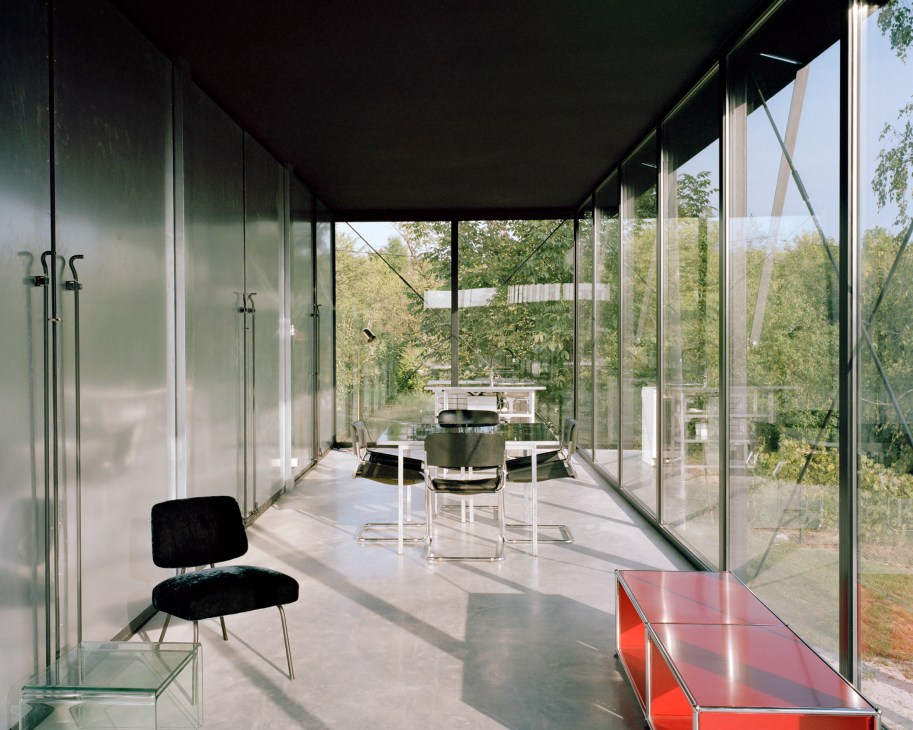
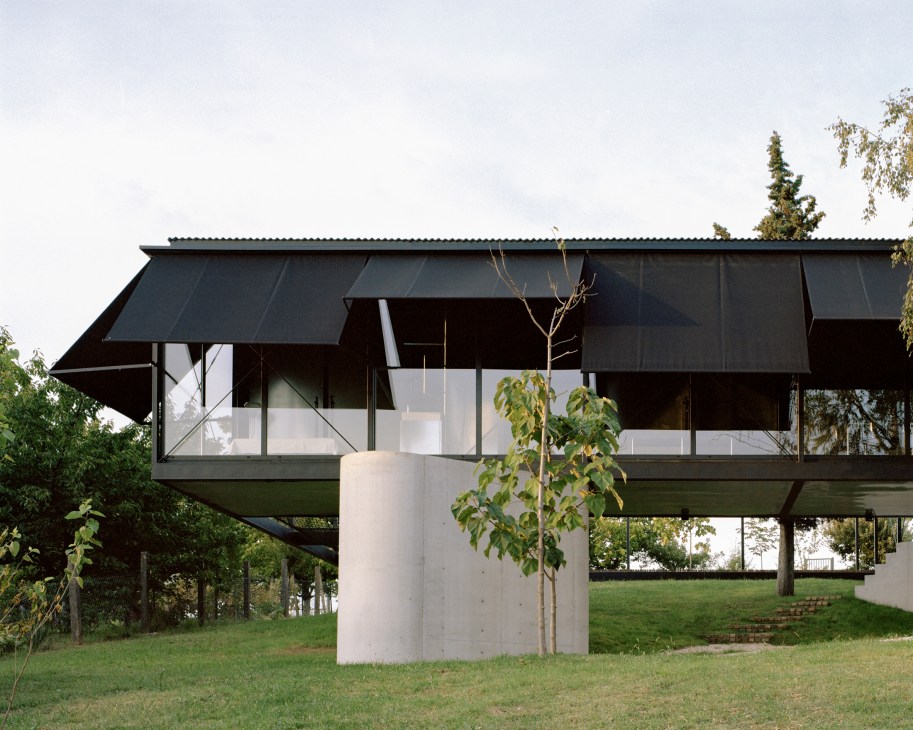
Most domestic energy consumption in this part of the world comes from heating or cooling. During the summer the house’s open front is protected by vegetation and a remote-control shading system. It has no air conditioning and, due to east-west cross ventilation, an entirely openable north façade and cooling and shading protection, it requires no system to keep the interior at a low temperature in summer.
Avala House’s electricity requirements are fully generated using solar panels on the roof. The number of annual sunny days in its location was calculated and the panels placed to gain maximum exposure. Its water supply comes from three wells in the garden that cover basic needs, with additional rain collectors at the top of the plot feeding a reserve tank for periods of low rainfall.
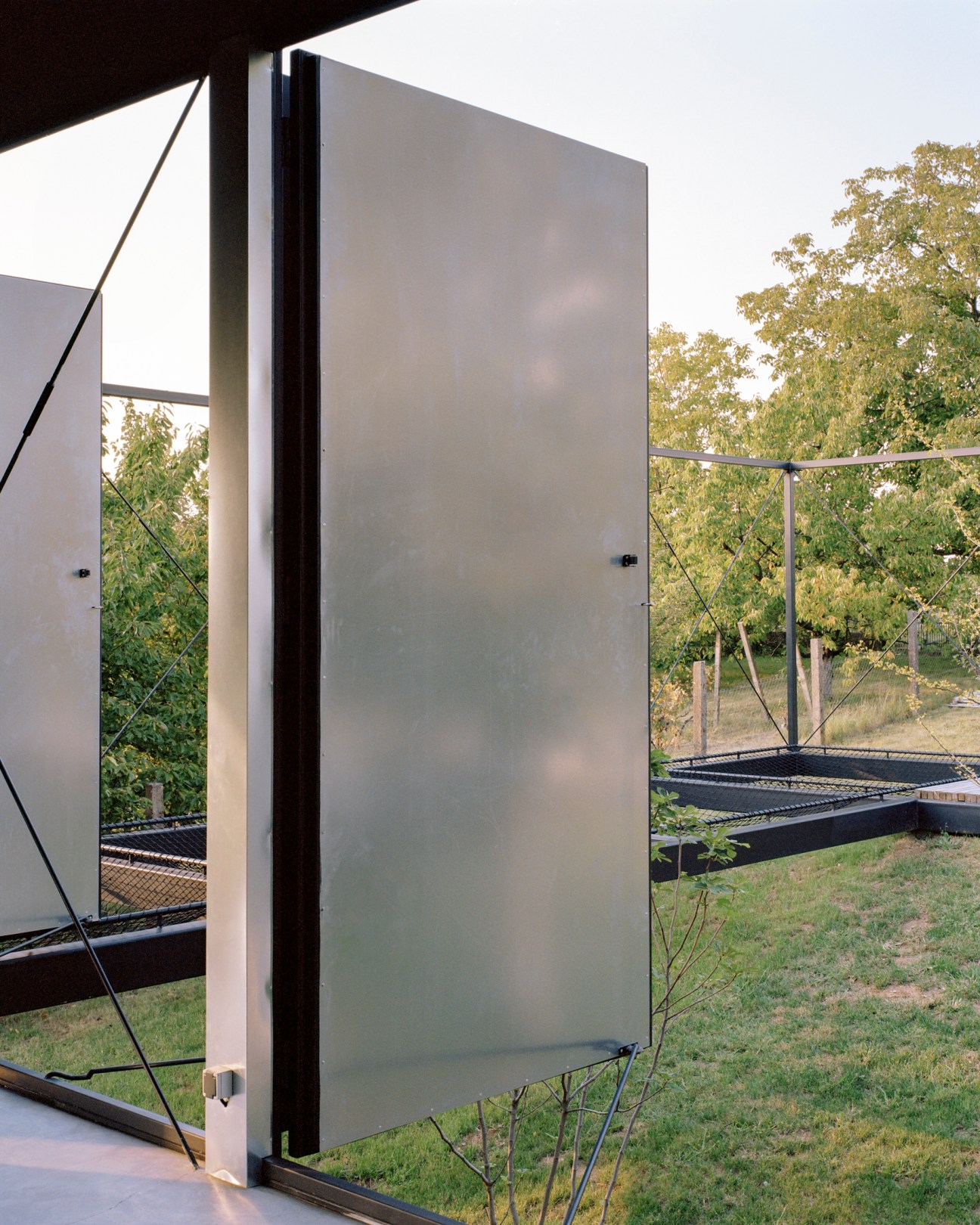
This house is a model for domestic design with low technology demand that combines with nature to reduce energy consumption. “There is something powerful about raw structures open to the landscape,” Ten’s Nemanja Zimonjic tells Monocle. “They are primitive and always tempting.” He’s certainly right on the last point.
ten.studio
Should you go solar?
As energy prices continue to soar, demand for solar panels has gone through the roof. While installers predicted a 15-year payback period before the energy crisis, the spike in costs this winter means that a domestic solar panel could pay for itself in about half that time. After the installation fees, which will set you back about €7,300 for a three-bed semi-detached house, the cost of running solar panels is very low. The catch? The exponential increase in demand has led to a global shortage, meaning that there are now long waiting lists which show no signs of easing. Norwegian company Rec Group is the largest European manufacturer but 90 per cent of solar panels are produced in China, which has created significant supply problems.
Images: Maxime Delvaux, Getty Images
Urbanism & Design
Development
Mexico City
Building hopes
In Mexico City’s Iztapalapa borough is a cement building designed by one of the country’s most highly esteemed architects, Fernanda Canales. On one side is a sign that reads “Pilares”, which stands for Points of Innovation, Freedom, Art, Education and Knowledge, a government-led programme consisting of community hubs in more than 200 buildings around the city. Canales’s structure is part of an initiative to create accessible spaces for Pilares’s activities.
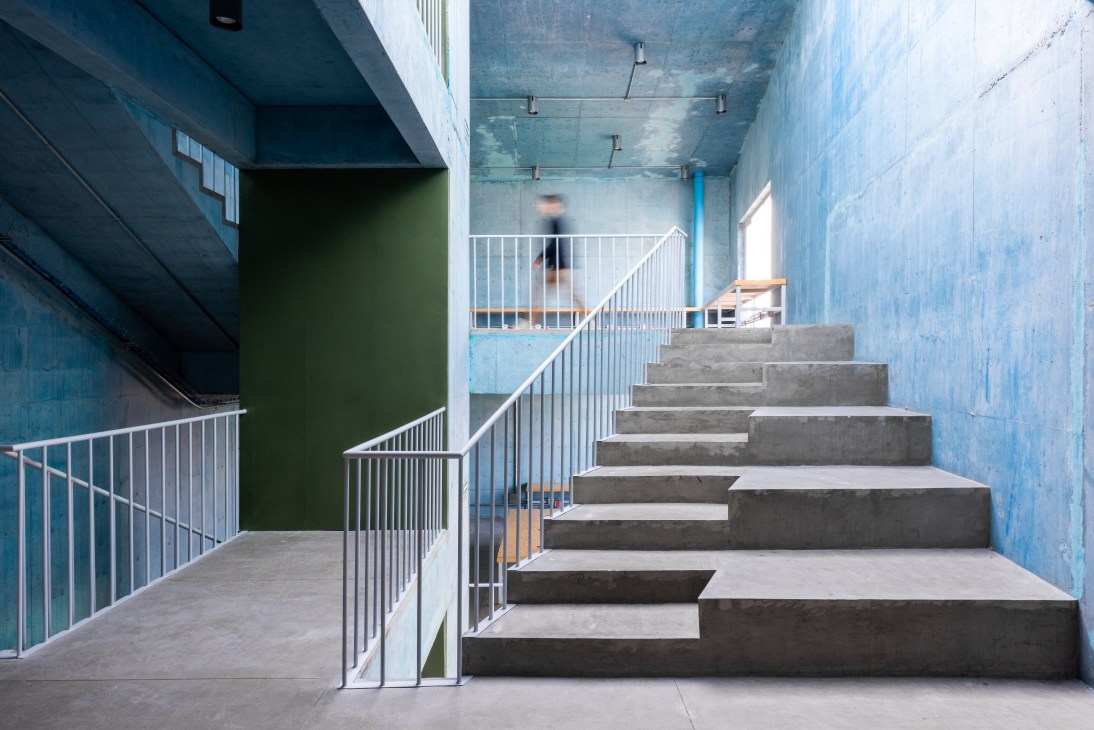
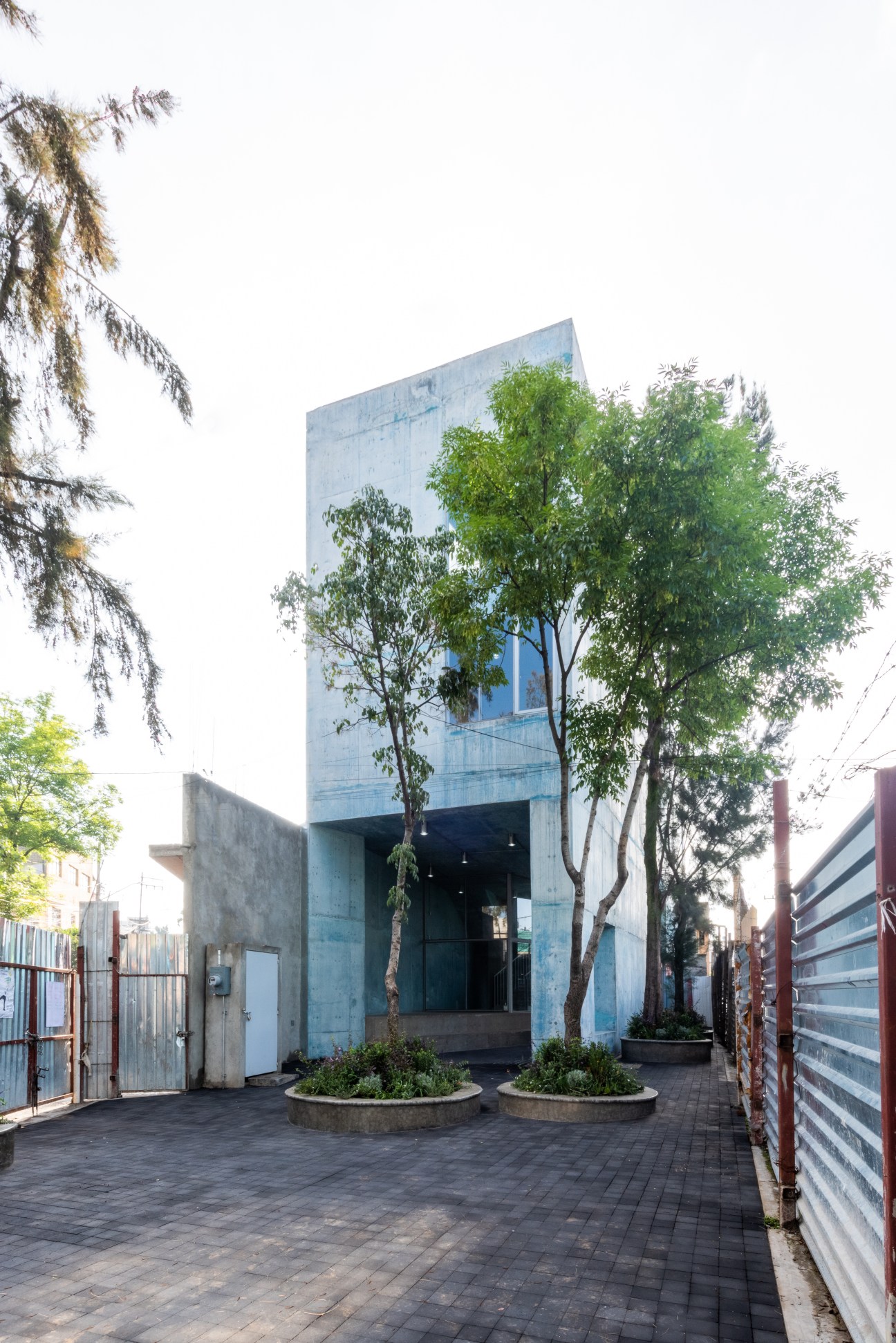
The city government has commissioned world-class architects such as Canales, Alberto Kalach and Tatiana Bilbao to design 25 buildings in its underserved neighbourhoods. For Canales, a key concern of her project in Iztapalapa, which is home to the capital’s prison population, was how to design “a place where everything is open in an area that lacks safety”. Her solution was to keep the building in sync with the local aesthetic by working with cement for the main builds and creating a terracotta-lattice façade. “The idea is to requalify those materials instead of providing something that comes from another place,” she says.
New York-based studio Workac partnered with Mexican firm Ignacio Urquiza Arquitectos to create two geometric buildings in the Álvaro Obregón and Azcapotzalco neighbourhoods. For Workac, it was a chance to collaborate with a local firm on what was, for the New Yorkers, a novel project type. “It’s an interesting typology that we don’t have in the US, a true community building,” says Dan Wood, Workac’s co-founder. Though some in the Mexican media have dismissed Pilares as a token gesture of improving communities, it could become a blueprint for other cities if run correctly. “I don’t know of many governments building community centres,” says Amale Andraos, another Workac co-founder, who once worked with Wood on a public library in Queens that took more than 10 years. “We should look at it as a model of what’s possible,” she says. “We need more collective infrastructure.”
Mary Holland is Monocle’s New York correspondent
Architecture
Qatar
Containing multitudes
About 10km east of central Doha stands a stadium that could disappear once the Fifa World Cup Qatar 2022 is over. Built from shipping containers and a modular steel structure, Stadium 974 – named after the number of units used in its construction and the country’s international dialling code – will “open up a whole new vision”, says Mark Fenwick, one of the architects behind the design.
Madrid-based practice Fenwick Iribarren Architects took inspiration from the concept of the circus tent, a huge structure that is designed to be moved to new locations, as well as the growing number of shipping-container structures around the world, from retail parks and hotels to refugee camps. Fenwick used Lego to experiment with modular forms.
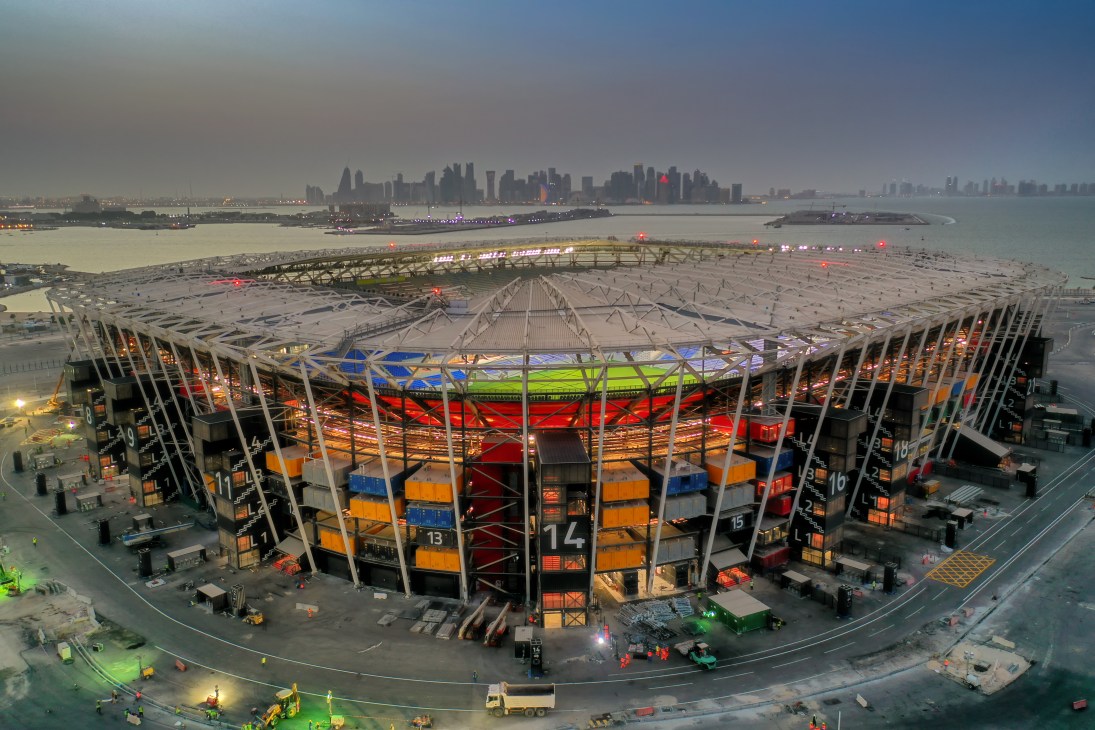
Despite the idea’s simplicity and its obvious appeal to organisers who are concerned about the legacy of the World Cup, the moveable stadium is an unprecedented achievement. Once the tournament is over, it is likely to be transported abroad, perhaps to a future World Cup host. Though Qatar’s authorities have yet to confirm where, the benefits are clear.
“A stadium costs more to run over its lifetime than it does to build,” says Fenwick. “I feel very strongly about the white elephants that are left behind after these events.”
Since the stadium is a stacked structure, built on shelves, there are spaces in its façade that allow cross- ventilation, reducing the need for artificial cooling. Its roof also provides partial cover from rain. Fenwick hopes that his design can start a trend. “The biggest compliment is being copied,” he says.
Furniture
UK
New skin
Otzi is a small leatherworking studio based in Norfolk, England. Chloé is a luxury French fashion house with more than 125 shops worldwide. Despite their gulf in size, it was the latter that approached the former seeking inspiration. After spotting some of Otzi’s furniture in The New Craftsmen design showroom in London, Chloé’s creative director, Gabriela Hearst, approached the studio’s chief designer, Otis Ingrams.
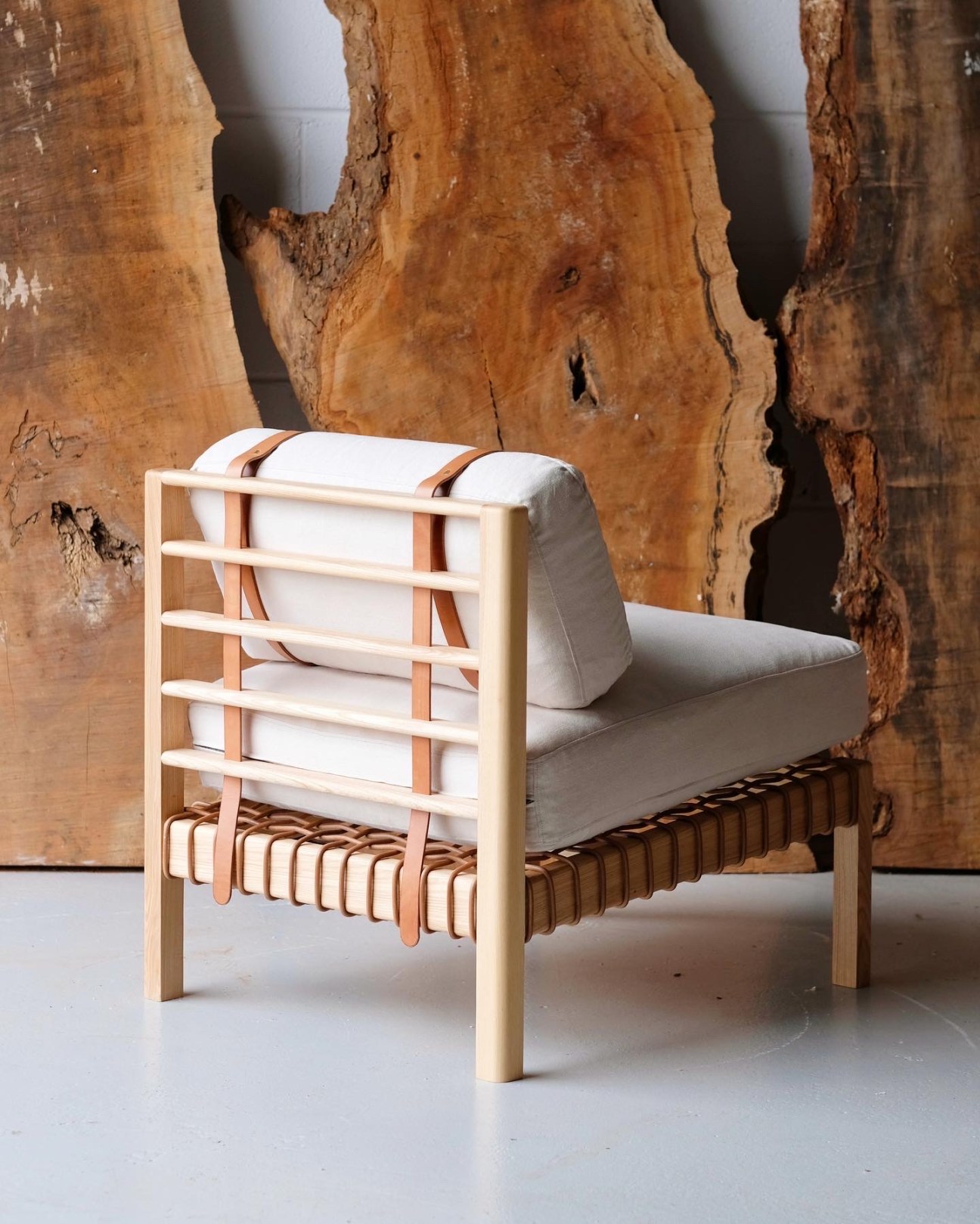
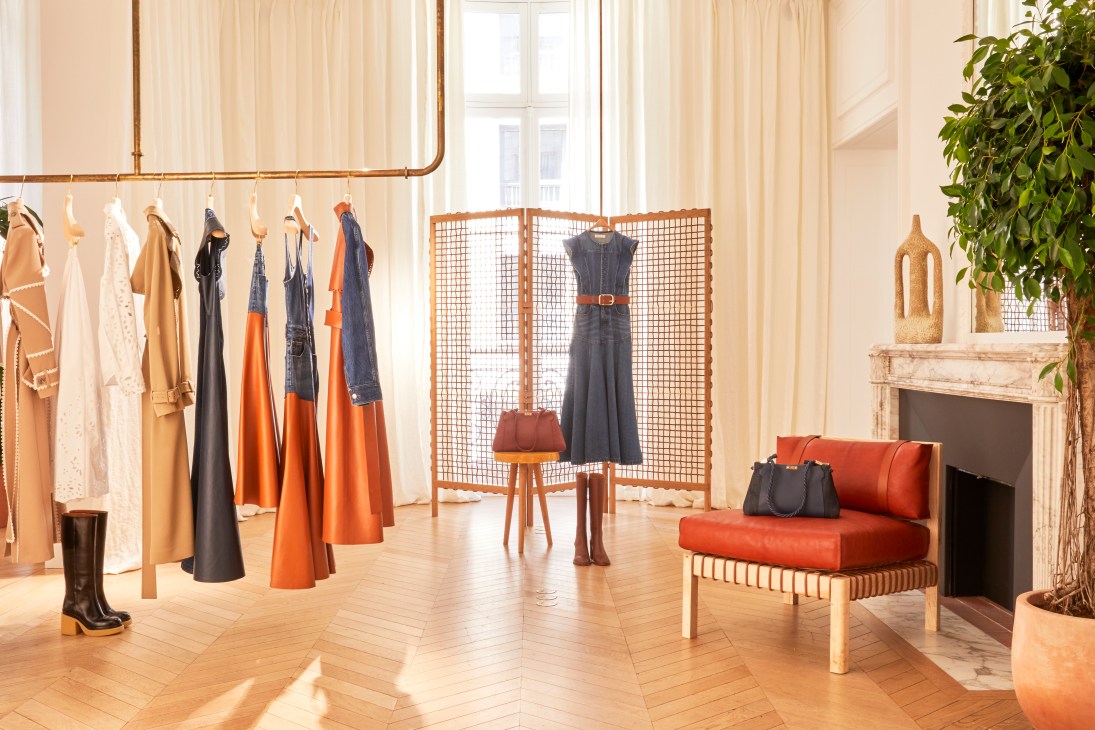
What resulted was a range of leatherbound chairs, tables, day-beds and screens that will grace Chloé shops worldwide. The wood is from British hardwood trees such as elm, plane and ash, and is bound with oak-bark bridle leather and traditionally pit-tanned leather cord from J & FJ Baker, one of the UK’s last remaining tanneries.
“Hearst and I have a shared interest in using upcycled and salvaged materials,” Ingrams tells Monocle. Otzi sells leather accessories directly to consumers from its website, as well as accepting bespoke commissions, so you can kit out your house like a Chloé boutique.
otzilondon.com
F&B
Hong Kong
Cool beams
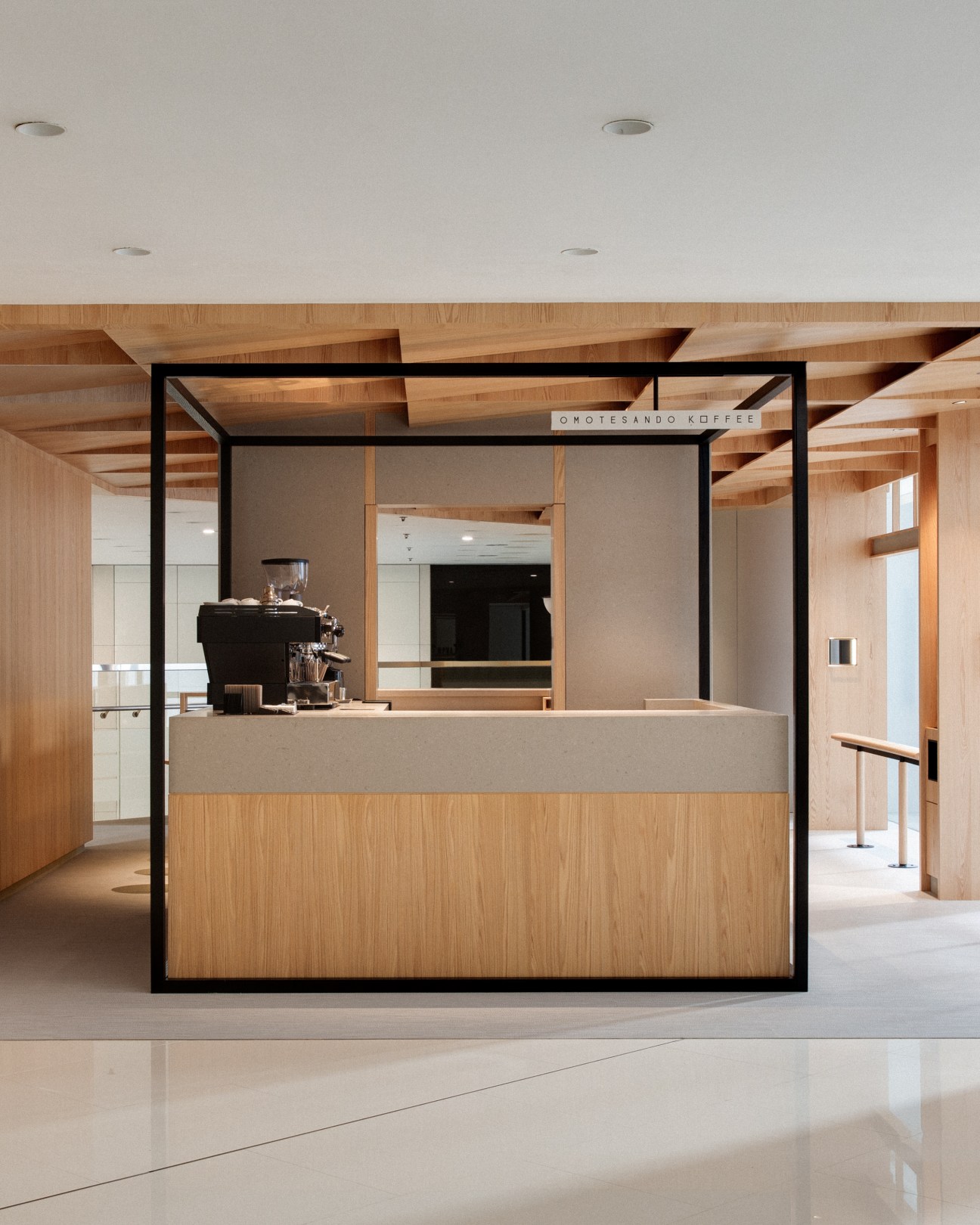
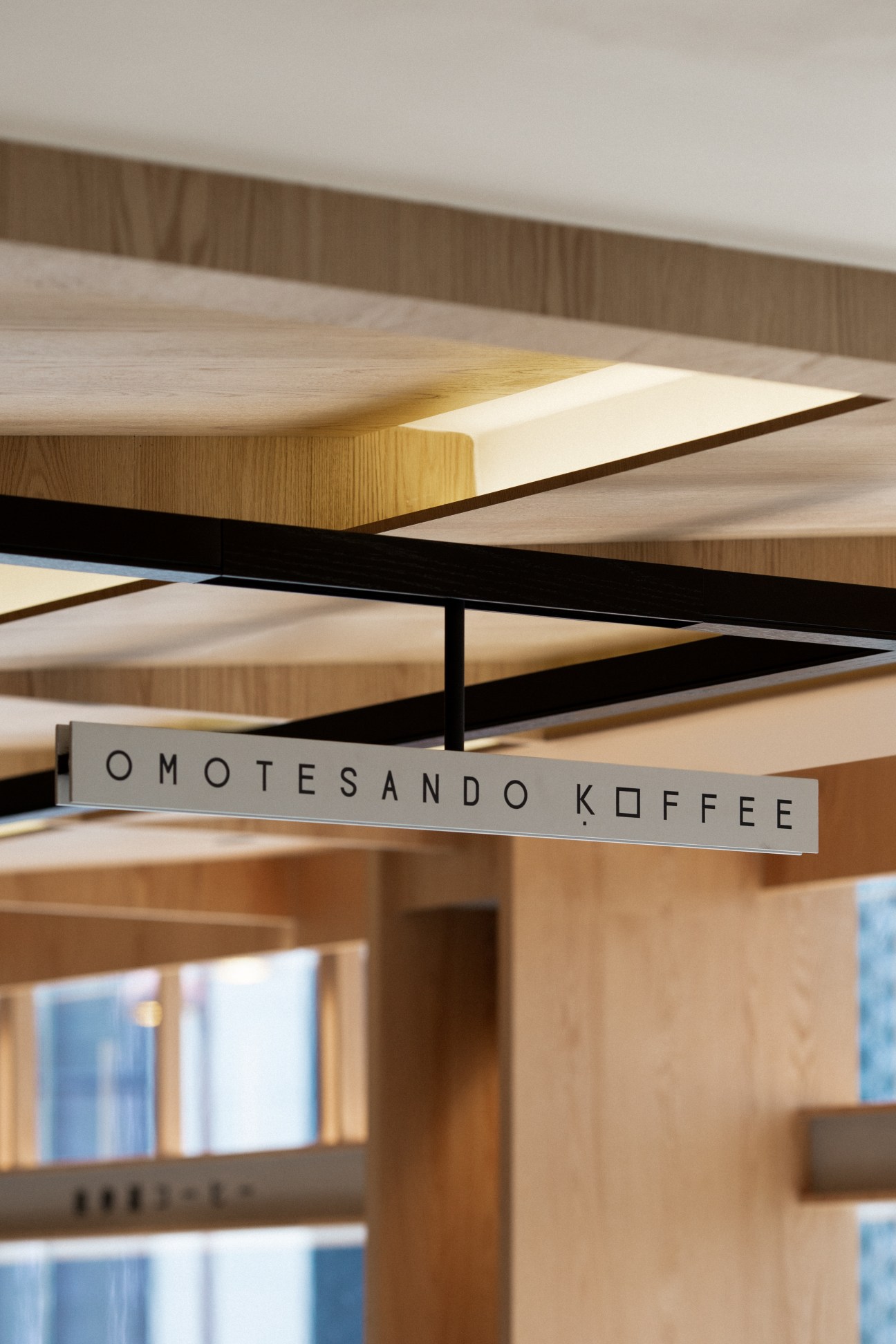
A generous deployment of timber marks the interiors of Omotesando Koffee’s new Hong Kong outpost, which features clever pull-out seating and black-coated steel elements. Commissioned by the Japanese-headquartered franchise, local practice Studio Adjective has placed the coffee bar at the centre of the space, highlighting the feature with a black oak and steel frame. Customers and staff can congregate in the buzzy central space where the coffee is prepared; those who want to have a more intimate conversation can retreat to the edges, plopping down on low-slung, Japanese-style seating or perching on window benches where they can take in the view of Hong Kong’s streets below.
ooo-koffee.com;
adj.com.hk
On Design
Nolan Giles on…
Being there
The best architecture is worth travelling for. Viewing pictures of a building on-screen doesn’t really compare to the experience of enjoying it in person. This point was recently hammered home to me as I made my way around the Musée Yves Saint Laurent in Marrakech, which was designed by Paris’s Studio KO and opened in October 2017. Five years later I found myself marvelling in surprise at a site that I had assumed I knew well from all of the articles that I’d read about it and the countless images that I’d seen online.
On arrival, I quickly realised that I had grasped very little of what this fine building was all about. It was far more compact than the lush photos that plaster websites and social media suggest. The museum’s cosy size doesn’t mean that its design lacks ambition – quite the opposite. Here, a small footprint has meant that Studio KO has had to be deliberate with every element of the architecture. And it is this expression of purpose through design that can only be properly experienced through an in-person visit.
As one walks towards the handsome facility, the ochre and terracotta colouring of the façade, which reflects the city’s vernacular, grounds it immediately in its setting. The sense of Marrakech continues as the high-walled entrance transports visitors into a riad-like central courtyard, immediately providing respite from the urban chaos outside.
From there the Musée Yves Saint Laurent’s interior materials and colours provide a subtle celebration of the fashion designer’s ethos, while the museum’s function as a place to showcase his work effortlessly reveals itself through smart architectural programming.
None of this can be captured in a photograph, no matter how artfully shot it is. And this is something that we design writers (and design appreciators) shouldn’t forget as we make our way out into the world to explore as much quality architecture as possible.
Images: Arturo Arrieta, Fenwick Iribarren Architects, Omotesando Koffee, Otis Ingrams
Culture
Art
Q&A
Clément Delépine
Director, Paris+ par Art Basel
The announcement that Swiss behemoth Art Basel will debut a Parisian fair this October, stepping on its predecessor Fiac’s toes, initially ruffled some feathers. But with Paris+ happening in the same month, the city feels energised and ready. Newly appointed director Clément Delépine tells us more.

How is Paris+ different from other Parisian fairs?
The difference is the excellence of service that we can provide to exhibitors and visitors alike. Fiac, our predecessor, had developed very interesting ideas, which we decided to continue but amplify them with new ways and infrastructure. There’s a dynamism, a renewed energy. We received 729 applications for 156 places available.
Why is there still an appeal for a massive occasion like this?
People might focus on the transactional part of art fairs but they are social events, so it’s important to maintain a physical footprint. Art Basel is a global group with four fairs and each is firmly anchored in its context. We’re not catering to the same audiences; we’re not giving visibility to the same galleries. Paris+ is happening in a context where it can build bridges with other creative industries, such as fashion, cinema, literature and music – and really activate the city.
Paris+ runs 20 to 23 October;
parisplus.artbasel.com
Cinema
Sparking an interest
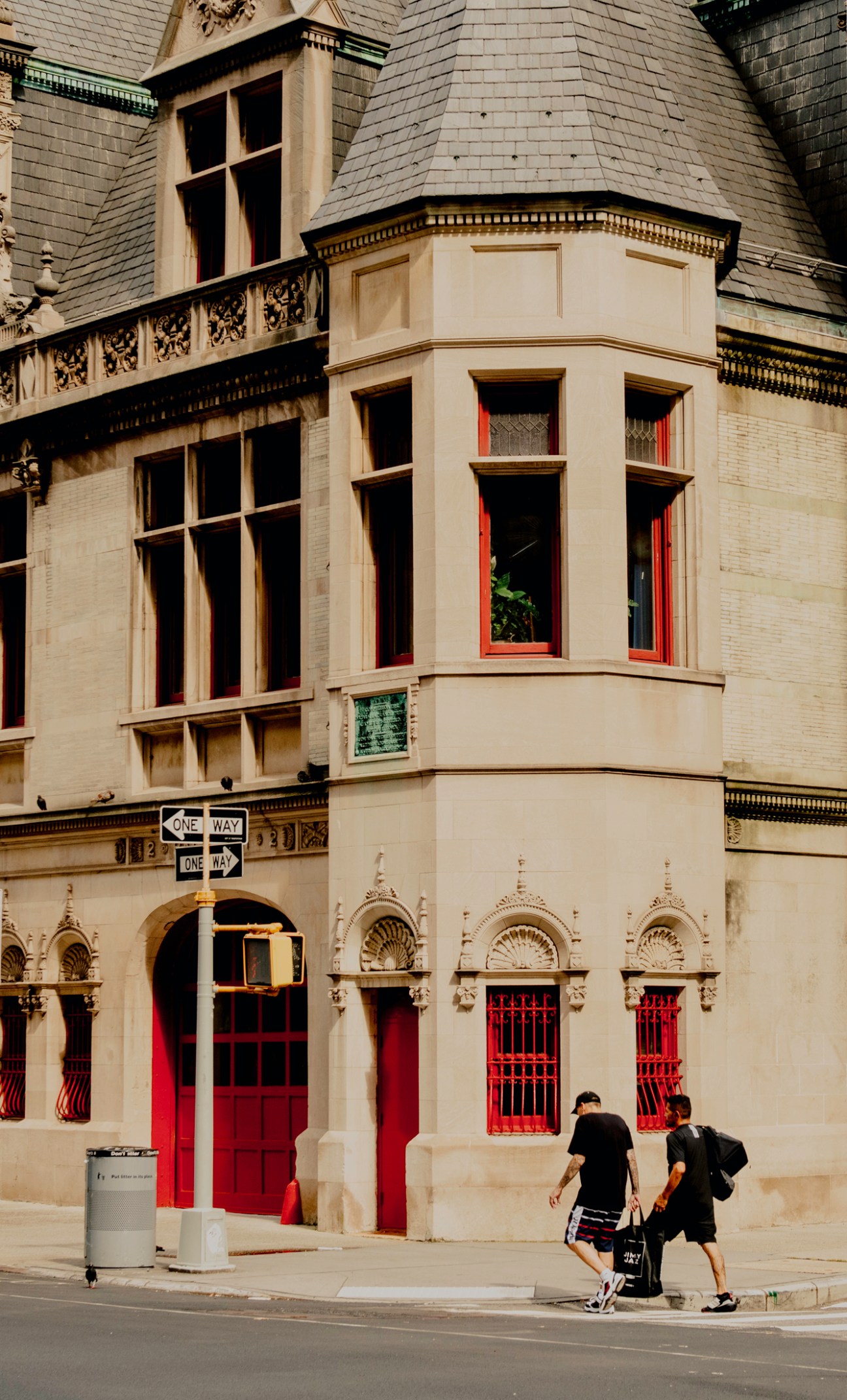
In 1972, documentary film-makers Jon Alpert and Keiko Tsuno started running film-based educational projects out of the back of a secondhand mail van on Manhattan’s Lower East Side. They called their project Downtown Community Television (DCTV). Fifty years on, with documentary film-making enjoying increased popularity worldwide, dctv has smartened up operations and opened a space dedicated to documentary film screenings. The Firehouse Cinema occupies a converted fire station that was built in 1895 to look like a 16th-century chateau in the Loire Valley. In the new 67-seat cinema, aspects of the original structure have been maintained, including wooden planks from the fire station’s historical stables.
The cinema is opening at an inflection point for documentary films in the US. In recent years, streaming services such as Netflix have reaped rewards from documentaries that cost relatively little to make and draw huge numbers of viewers. Series such as Tiger King became a sensation in 2020, helping to draw a new and more mainstream audience to documentary film.
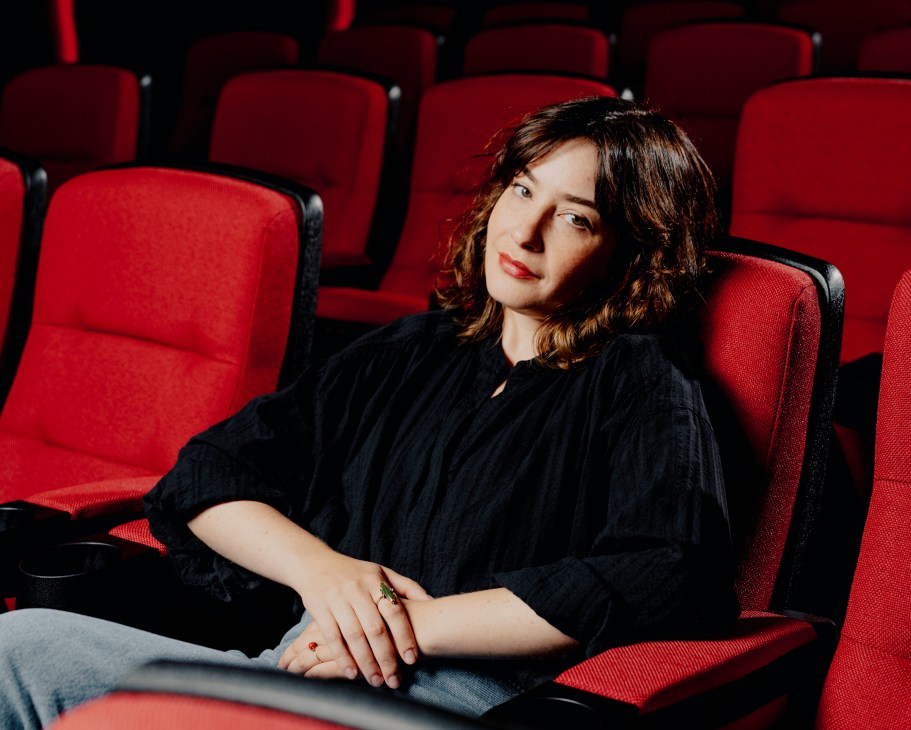
Dara Messinger (pictured), director of programming, is looking to build on this new interest to offer an expansive and experimental schedule. “We really want to dive in and give a broader sense of what film-makers are doing,” she says. “I’m less interested in the picture-perfect definition of documentary that people might see now and more in the nuance and the messy bits.”
Firehouse launched with the New York premiere of The American Dream and Other Fairytales, a film by Abigail Disney and Kathleen Hughes that examines the wealth gap in the US by looking at the operation of Disney’s own family company.
Firehouse will operate as more than just a cinema. As well as providing a physical base for dctv’s film-production operations, the venue will host low-cost education programmes too. “If you didn’t go to school for film-making, you can basically learn every aspect of production, from filming to budgeting to editing,” says Messinger.
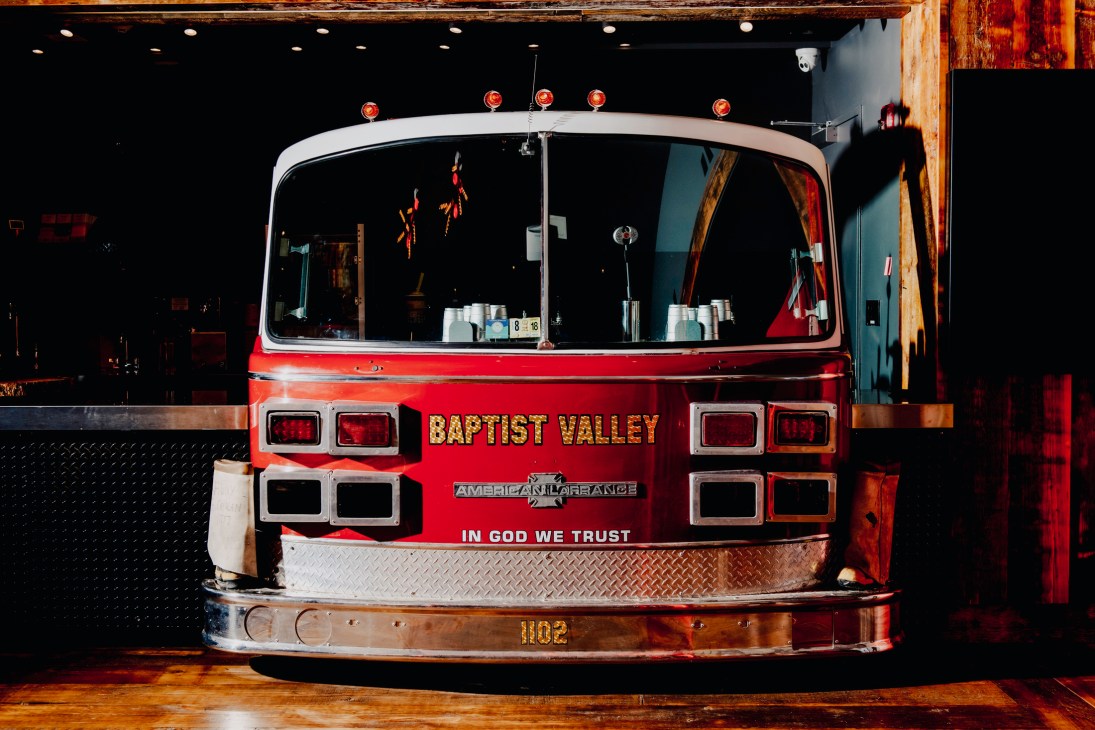
Funding will come from different revenue streams: letting a large event space adjoining the cinema, as well as ticket sales and treats from a concession stand with an old fire engine built into it. “The business model is to support passion, first and foremost,” says Messinger.
dctvny.org
Print
Design philosophy
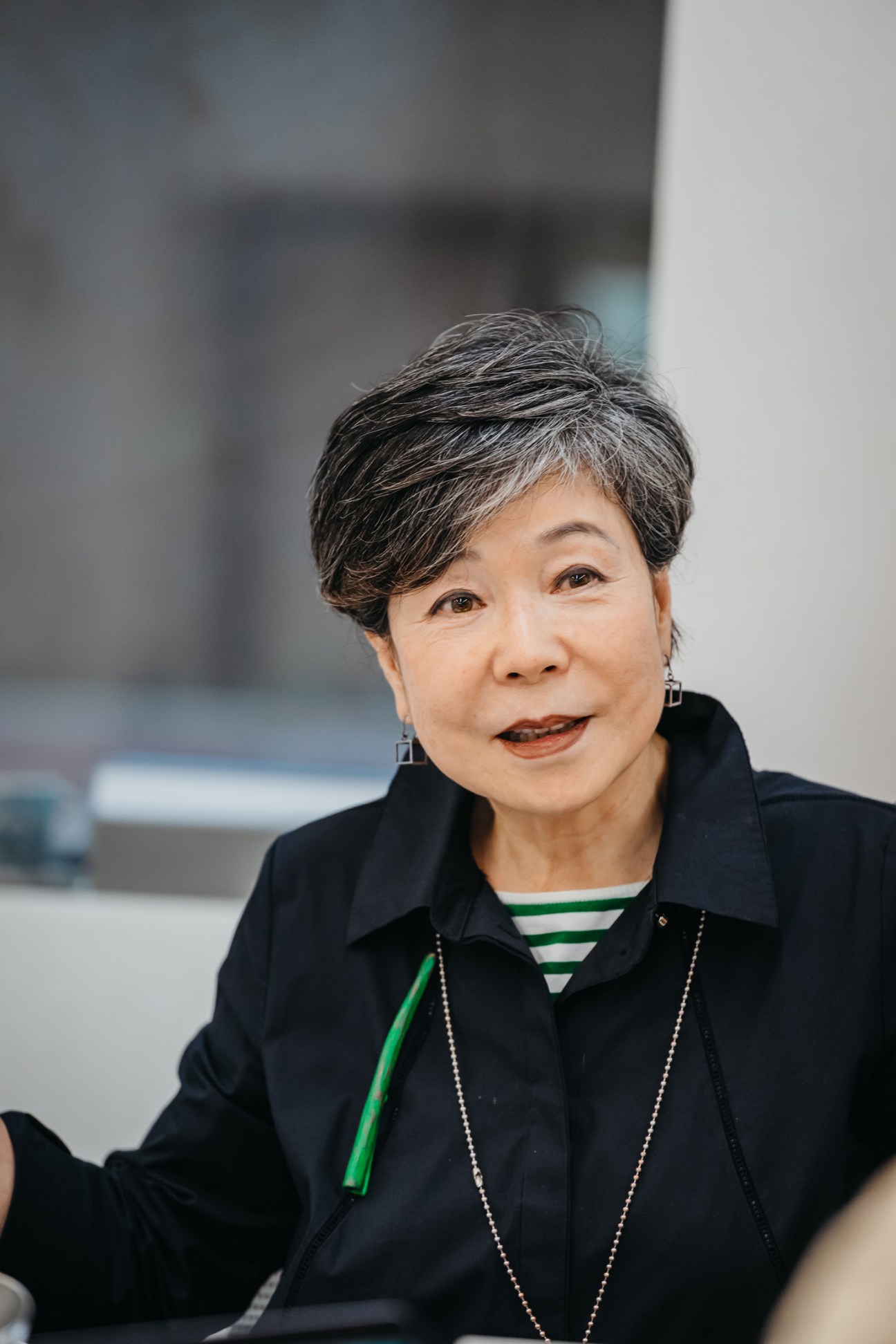
Running a design magazine in dictator-led 1970s South Korea was not an easy feat. Back then, the term “design” wasn’t in the popular lexicon: the state had restrictions on most forms of individual expression, including such unsavoury trends as donning a miniskirt and long hair for men. None of that stopped Lee Young-hye (pictured), then a 20-something cub reporter, from taking up the challenge. When her employer, the founder of the country’s first design magazine, mulled an exit from the loss-making venture shortly after its 1976 launch, she offered to buy it and take control.
Over the following 40 years, Design magazine grew into a publishing empire while becoming a leading taste-maker in South Korea’s art and design scenes. Publisher Design House also prints the country’s interior-design bible, Home and Living, as well as organising design fairs and exhibitions that attract thousands of visitors every year. “I had faith that design is indispensable in a country, in any industry, in any field,” says Lee. “It’s hard to verbalise the sense of duty I felt.”
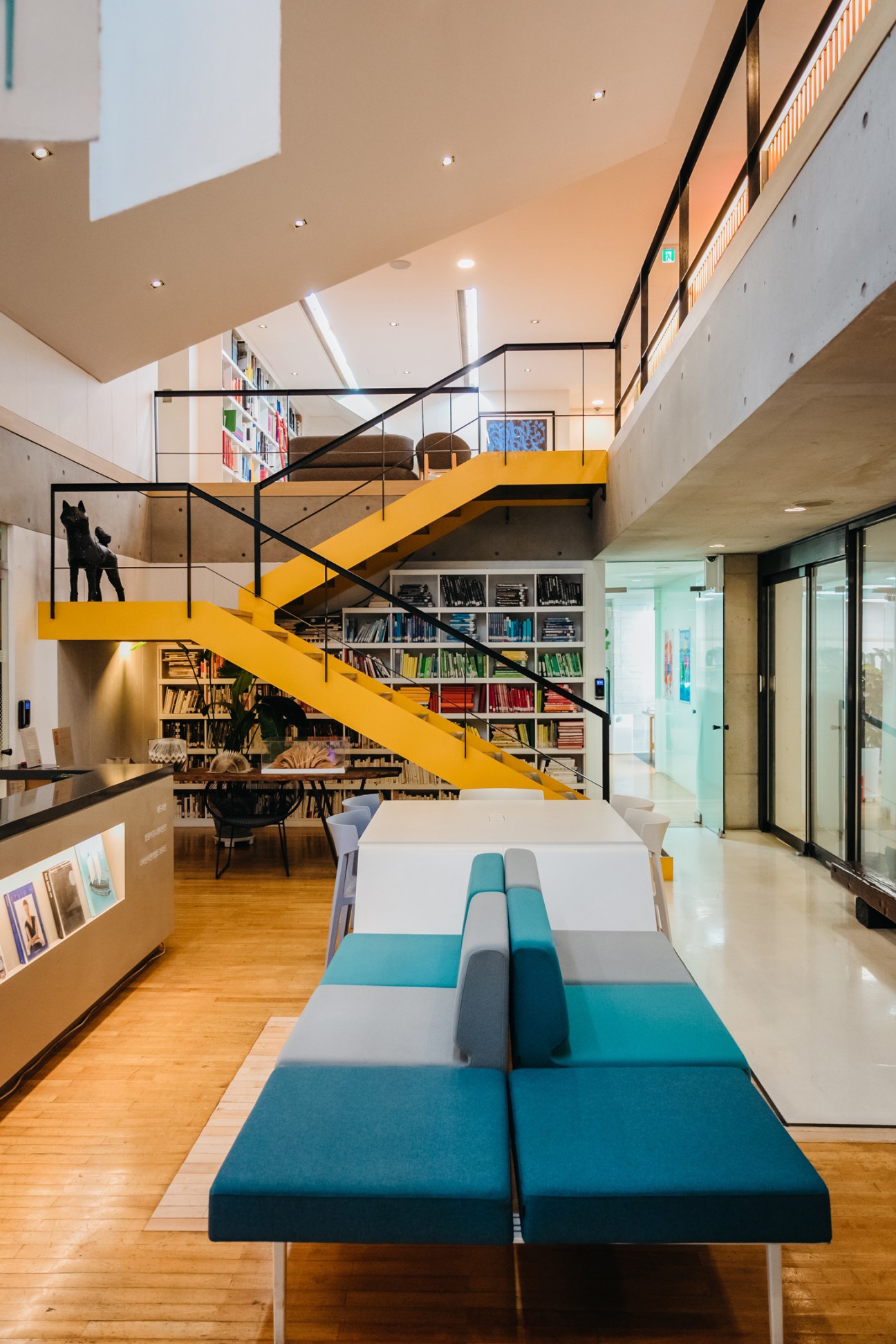
The veteran publisher has reached a few milestones in recent years. Just before releasing the 500th issue of Design at the end of 2019, it moved into a new headquarters in Seoul’s central neighbourhood of Jangchung-dong. The office is the first that the company has owned and functions as a showcase for its design philosophy.
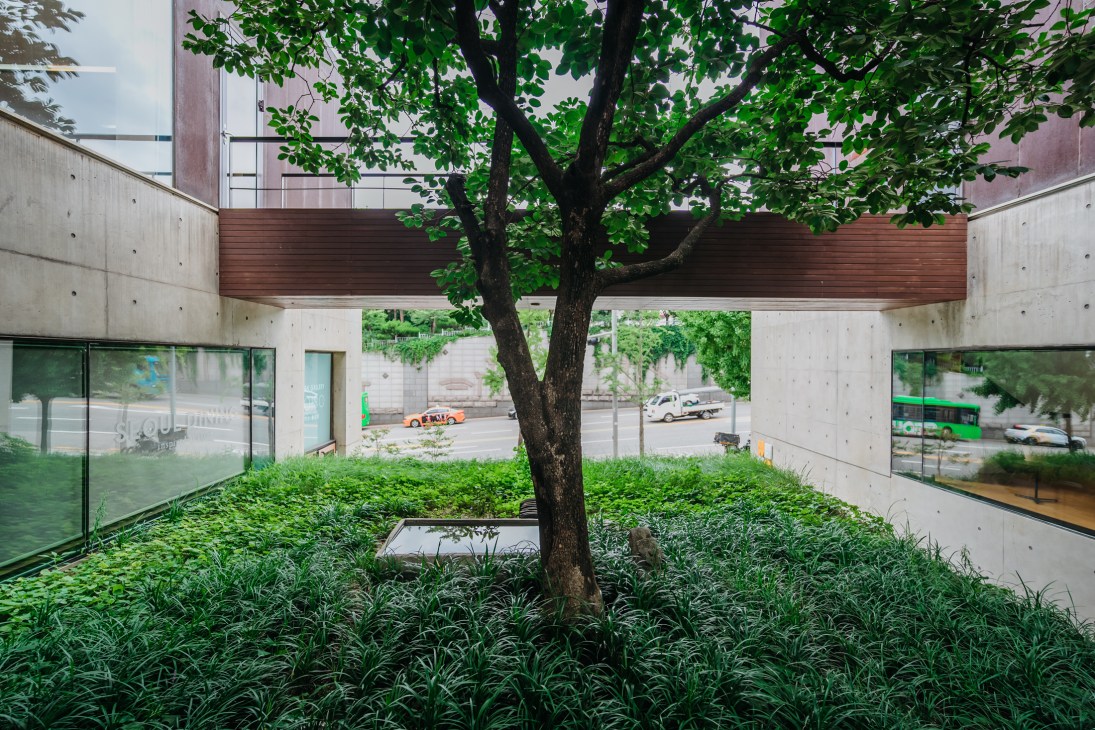
Completed in 2000 from a project by South Korean architect Seung H-Sang, the building has an unusual exterior made up of four weathered-steel boxes sitting on top of an exposed concrete base. Inside, Design House decked out the office with pieces by South Korean artists and craftsmen such as Nam June Paik and Choi Jeong Hwa. Concrete walls were brightened up with traditional white paper known as hanji and a small garden with a persimmon tree was created in the building’s inner courtyard.
As for the projects that lie ahead, Lee wants to spearhead a rural revival in the country by helping regional businesses to unearth their untold stories, and hopefully inspire more people to switch Seoul for the provinces. “My goal isn’t to be a mass media,” she says. “Our way forward is to be a ‘mini media’ that approaches a group of people who are interested in learning about design, culture – and a better life.”
designhouse.co.kr
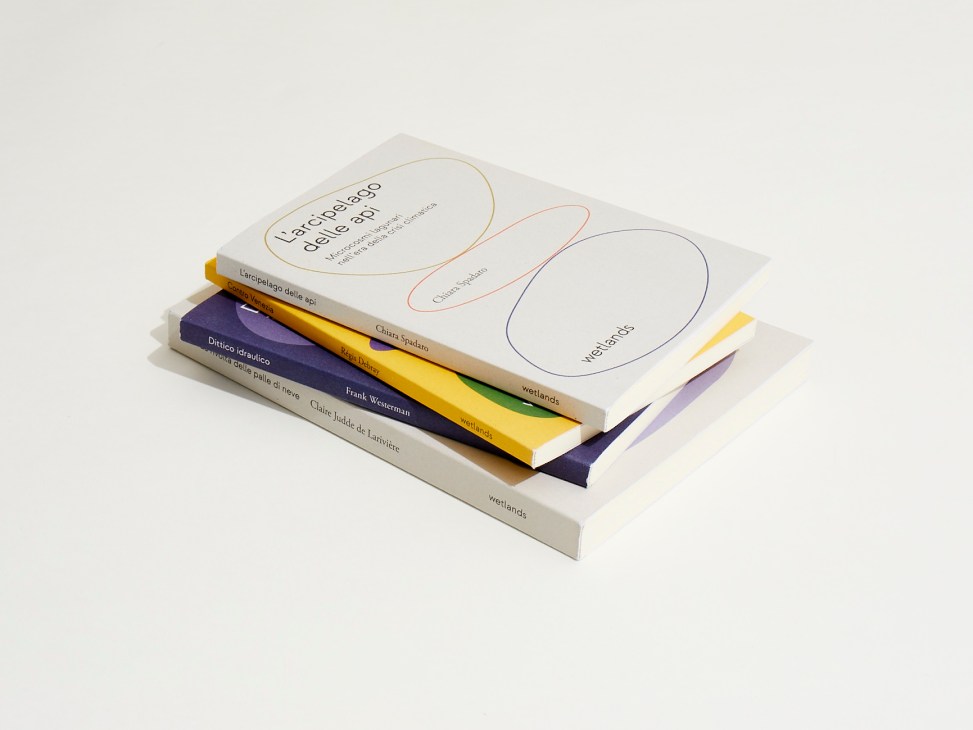
Publishing
Story tellers
Venice’s newest publishing house, Wetlands, was founded last year by a group of university professors, lawyers, bookshop owners, architects and doctors to spread ideas on the life and challenges of this timeless yet ever-changing city. “Venice is like a special observatory,” says Luca Cosentino, the publisher’s president. “Its uniqueness and fragility make it an accelerated time capsule. It’s the perfect place to start imagining global solutions and experiments.”
The imprint’s titles, which will start being released in English this autumn, deal with everything from urbanism to culture. “Wetlands are both land and sea, neither salt nor fresh water,” says Cosentino. “We wanted a publishing project that reflected the hybrid nature of our city.”
wetlandsbooks.com
Media
Q&A
Robert Love
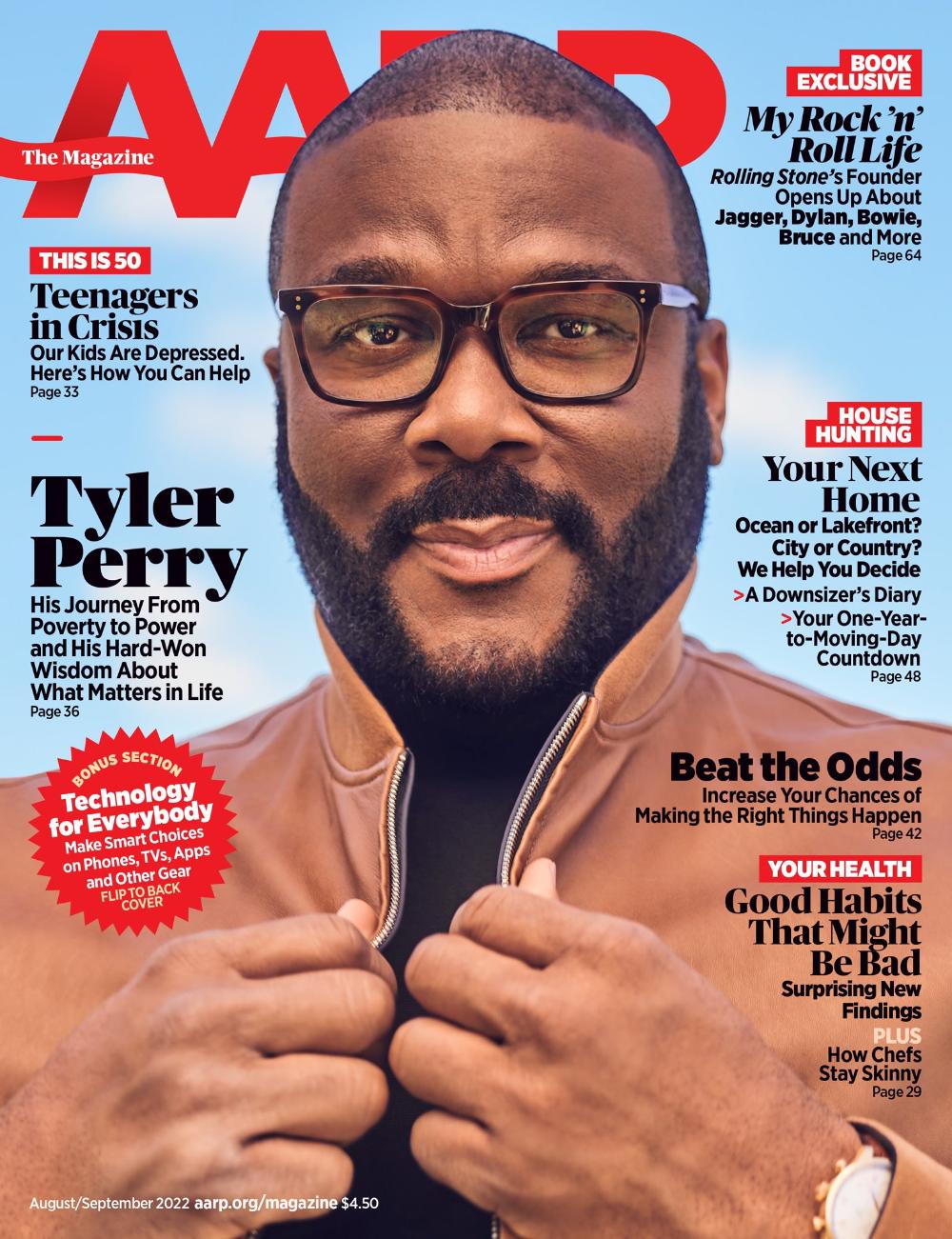
Vice-president and editor in chief, ‘AARP The Magazine’
AARP is one of the largest interest groups in the US, advocating for people over the age of 50. Since its founding in 1958, the organisation has produced a print magazine focusing on age-related issues. AARP The Magazine has an audience of nearly 37 million, making it one of the largest circulation print titles in the US. Robert Love is its vice-president and editor in chief.
What can readers expect from ‘AARP The Magazine’?
This is an aspirational magazine. It tells a story about what it’s like to live your post-50 years with grace, dignity and excitement. There’s a mix of entertainment, features and advice on topics such as health and finance. We tell our tale with bright, colourful photography.
How do you keep such a broad readership engaged?
The magazine comes in three versions. People in their fifties get one version, those in their sixties another and 70-plus members yet another. Two big plants in Indiana produce these editions in tranches – the fifties magazine is printed first, followed by the sixties, then the seventies. We tweak the content in each version, making hundreds of changes to make it as relatable and engaging as possible. The magazine is one of the leading reasons why people renew their membership to AARP.
aarp.org
Images: Ilyes Griyeb, AARP The Magazine
Still life: Tony Hay
Business
Watches
Geneva
Q&A
Nicolas Freudiger
Co-founder, ID Genève
ID Genève is bringing the circular economy to the luxury- watch industry. Its timepieces are made with steel scraps and compostable straps, reducing their carbon intensity, and shipped using biodegradable packaging. We meet co-founder Nicolas Freudiger.
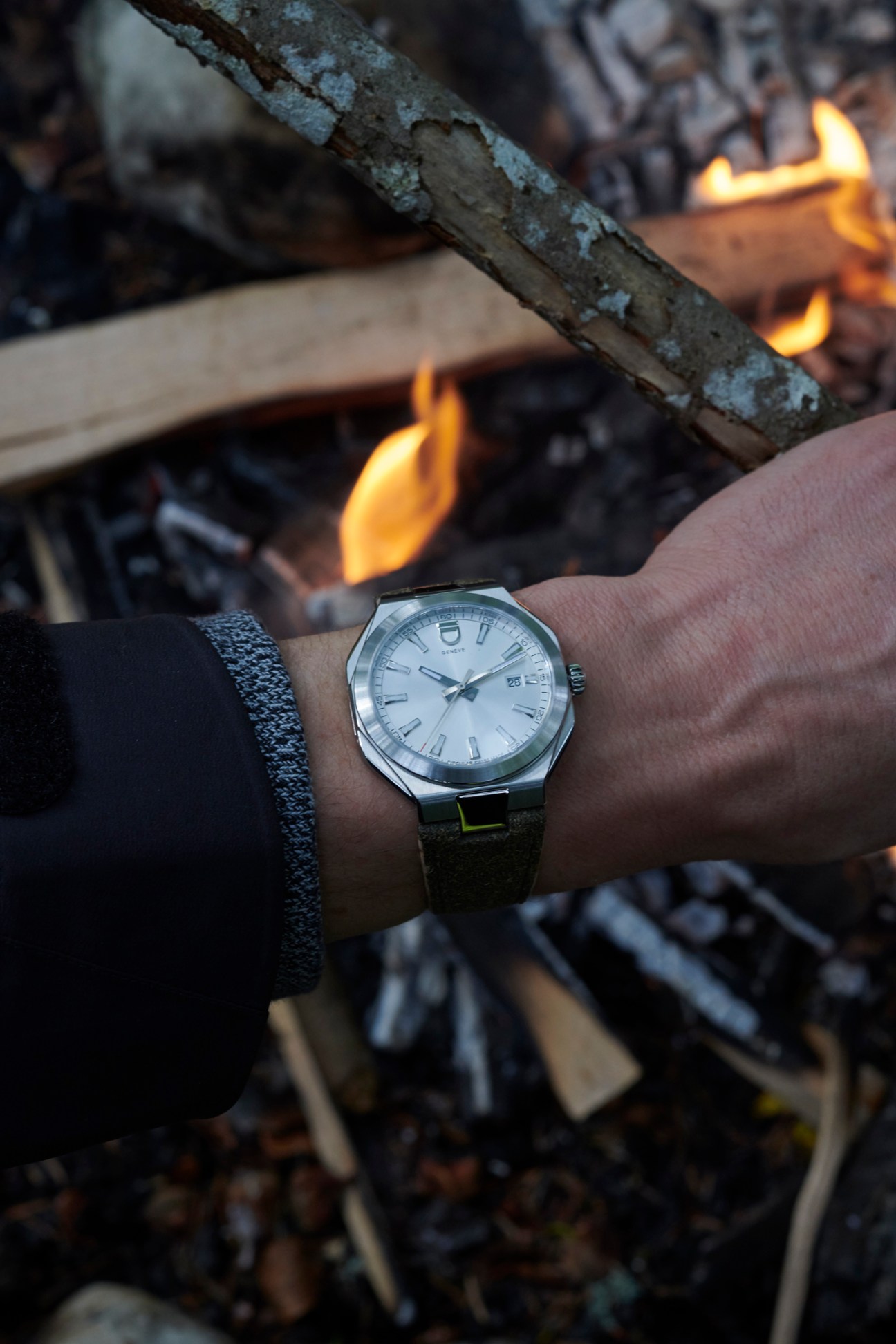
Why make a luxury product using recycled materials?
I quit my job in 2019 and went back to Geneva determined to leave a positive legacy. I ended up taking a class on circular economy; it stressed that you can have a product that is financially viable while at the same time minimising impact. That was revelatory.
How do you make the luxury industry more transparent?
Luxury today is largely characterised by exclusivity, mysticism and discretion. We wanted to turn that on its head, so we focused on transparency and traceability. We give you all the information about the suppliers, the recycling facilities and who works there.
What’s your philosophy?
Watches are about the ego of a person. We decided to transform that from ego to eco and build an ecosystem that was conscious of everyone.
Where are you on funding?
In pre-seed we’re looking to raise about €1.7m and in two years’ time it will be between €5m and €10m.
idwatch.ch
Transport
Sweden
Drive time
“No one believed in us when we started out, going head-to-head with traditional industry,” says Robert Falck, the founder of Swedish autonomous-electric-truck company Einride, about the long road that the firm has already travelled. “But it is possible to do things differently.”
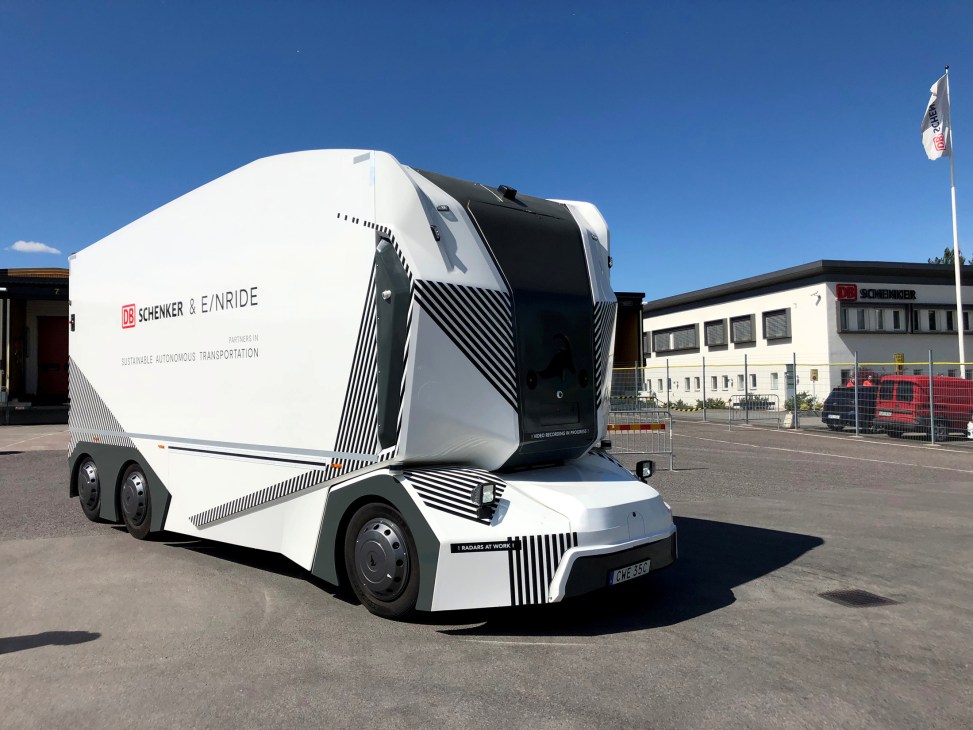
Since Falck set up Einride with his now-wife Linnéa Kornehed and Filip Lilja in 2016, the company has garnered attention as one of a growing fleet of truck start-ups aiming to do away with in-person drivers – several US states have piloted them and they’re legal in Germany and Sweden. Einride already has vehicles operating across Europe and Falck hopes that his electric trucks can help to put a dent in global freight emissions, which currently comprise 8 per cent of the world’s total. “It’s this generation’s challenge to reduce co2 emissions,” he says.
A trip to Einride’s production site in Gothenburg is a chance to look at the company’s snub-nosed and otherworldly looking “pods” (trucks) that can carry about 16 tonnes of freight. Falck says that he sketched the pod “in the vein of positive futurism”, and then developed the look with a team including designer Daniel Sjöholm. He adds that Einride offers a turnkey shipping solution for haulage customers who want to go electric in a cost-effective way.
Einride has won friends with its market entry on the other side of the Atlantic: Danish shipping giant Maersk is using the company to electrify its fleet in US cities and the truck-maker is also rolling out vehicles for Oatly, the alternative-milk producer. Einride now plans to open US headquarters in New York and regional offices in California as it keeps on trucking, autonomously.
Property
Canada
Taking place
On a recent sunny morning in Vancouver, Canada’s prime minister Justin Trudeau (pictured, on left, with First Nations leader Khelsilem) broke ground on a landmark residential and commercial property development. Senakw will be the largest Indigenous-led development in the nation’s history. The land on which it is being built is owned by the Squamish First Nation. Once built, the site will have 6,000 predominantly rental apartments, spread across 11 towers, built in partnership with Vancouver developer Westbank, which will share half of the expected CA$10bn (€7.5bn) future profits with the Squamish.
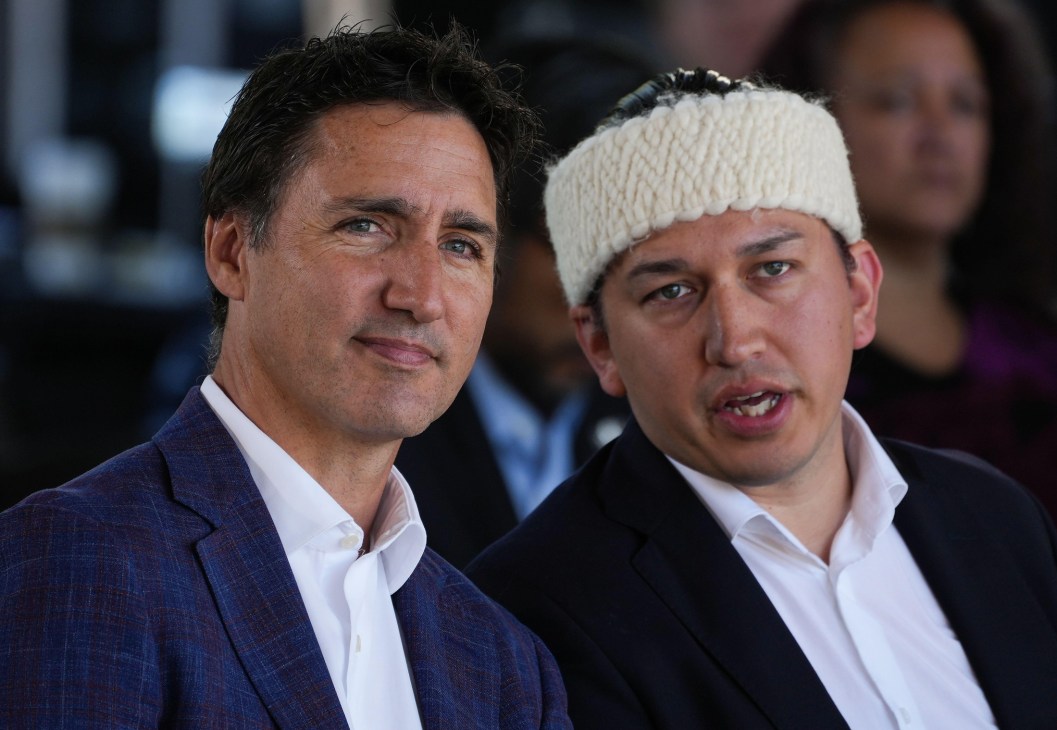
It has been hailed as a landmark development for several reasons. It will ease Vancouver’s notoriously squeezed rental market while facilitating Indigenous and non-Indigenous residents to live in the same neighbourhood. A longer-term benefit is economic growth on Indigenous land, where the primary beneficiaries will be the communities themselves.
Several other Indigenous-led projects are taking shape across the country. Taza, a vast development of three low-carbon urban villages on Indigenous territory in Calgary, is in the planning stages. And a proposal for Indigenous-designed houses on the Fort Severn reserve in northern Ontario has already won several design prizes. “We’ve been trying to promote the idea of ‘nothing for us without us’,” says Brian Porter, principle of the Indigenous-led Two Row Architect studio, who worked on the designs. “I’ve always considered it fundamental to the way that we work.”
Design
Japan
Setting the tone
Fiona Wilson on a team of Japanese colour consultants that is shaping the trends and tints of the near future.
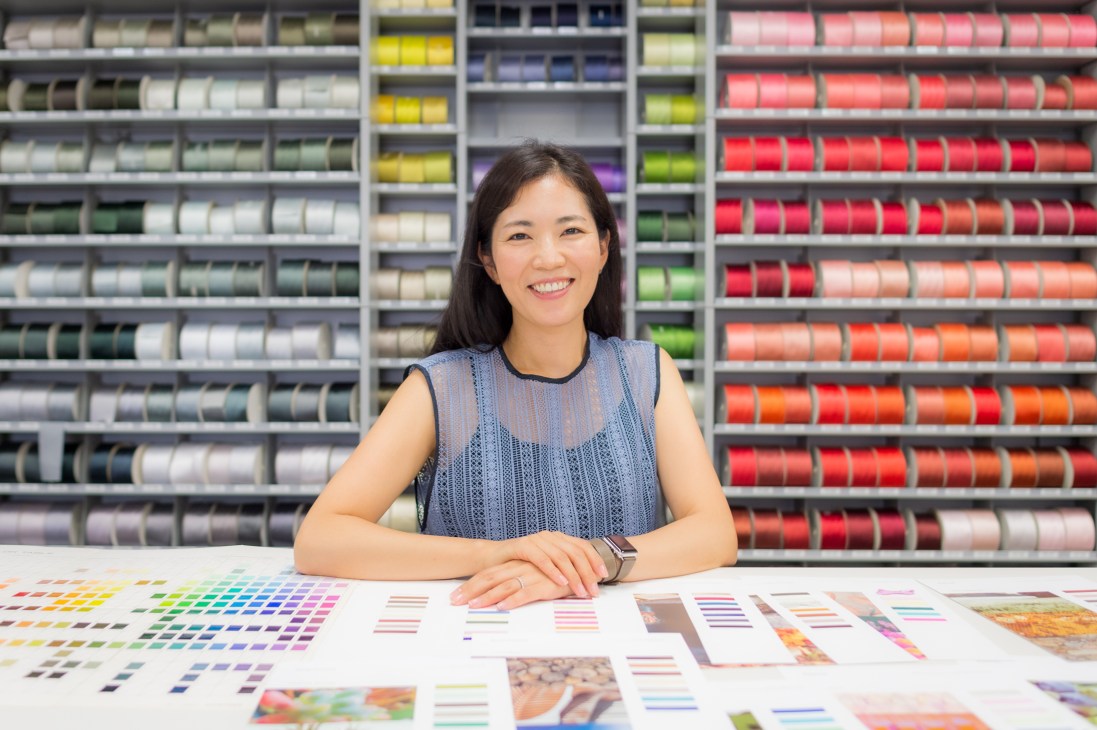
Bright-green trousers were all over Tokyo’s high streets this summer – a surprising development, given that the colour was long considered a no-no in Japanese women’s fashion. Who sent out the memo that things had changed? “Women’s fashion brands used to avoid green,” says Tamaki Ogiso (pictured), an analyst at the Japan Fashion Colour Association (Jafca). “It was said that it didn’t suit Japanese skin tones and didn’t sell. Then, a couple of years ago, grey-greens started to appear. Now we’ve moved on to these brighter greens.”
Founded in 1953, Jafca has spent decades quietly helping to shape the colour tastes of everything from cars to clothes. The organisation operates out of Kanda-Jimbocho, an old neighbourhood in Tokyo best known for shops selling books and woodblock prints. There, in a modern office, a small team pores over all aspects of Japanese life to forecast which hues and shades will strike a chord with the national psyche and score hit products. It was Jafca that spread the word that vibrant greens would be in this summer.
Jafca has about 800 members, most of which are companies. The fees that they pay (about €1,000 a year) support the organisation’s work and allow them to access its all-important seminars, colour forecasts and reports on products and interiors, womenswear and menswear. Like the US colour-forecasting agency Pantone, Jafca offers a “colour of the year”; for 2022 it was “jolly coral”.
Among Jafca’s members are industry leaders spanning car-maker Nissan and lavatory manufacturer Toto to big fashion players such as Uniqlo and Nippon Paint, one of the world’s largest paint-makers. “Our strength is in connecting people from different sectors who might never meet,” says Ogiso, who also teaches at Bunka Fashion College in Shinjuku. “I show my students the importance of colour and how to interpret the season’s mood,” she says. “It’s not about slavishly following a specific colour.”
The pandemic has affected both the colour selection and Jafca’s methodology; after all, discussions about colours are trickier when conducted remotely on-screen. The overall theme for the womenswear category this summer was “breathing”, reflecting what Ogiso says was people’s desire “to take a deep breath” after the trials of coronavirus. As Jafca’s summary puts it, “Green will continue to attract attention… a refreshing colour that makes you feel the movement of the air and cleanliness of a forest bath.”
It will be back next year too, says Ogiso. “Environmental issues are important to people globally and Japan is catching up.” Jafca’s picks for womenswear in spring/summer 2023 include a fresh lime, as well as “intense” and “sprout” shades of green. “At the heart of what we do is a belief that colour can make people happier,” says Ogiso. “We want to show them that it can improve their quality of life.”
Fiona Wilson is Monocle’s Asia editor and Tokyo bureau chief
Mobility
Milan
Riding high
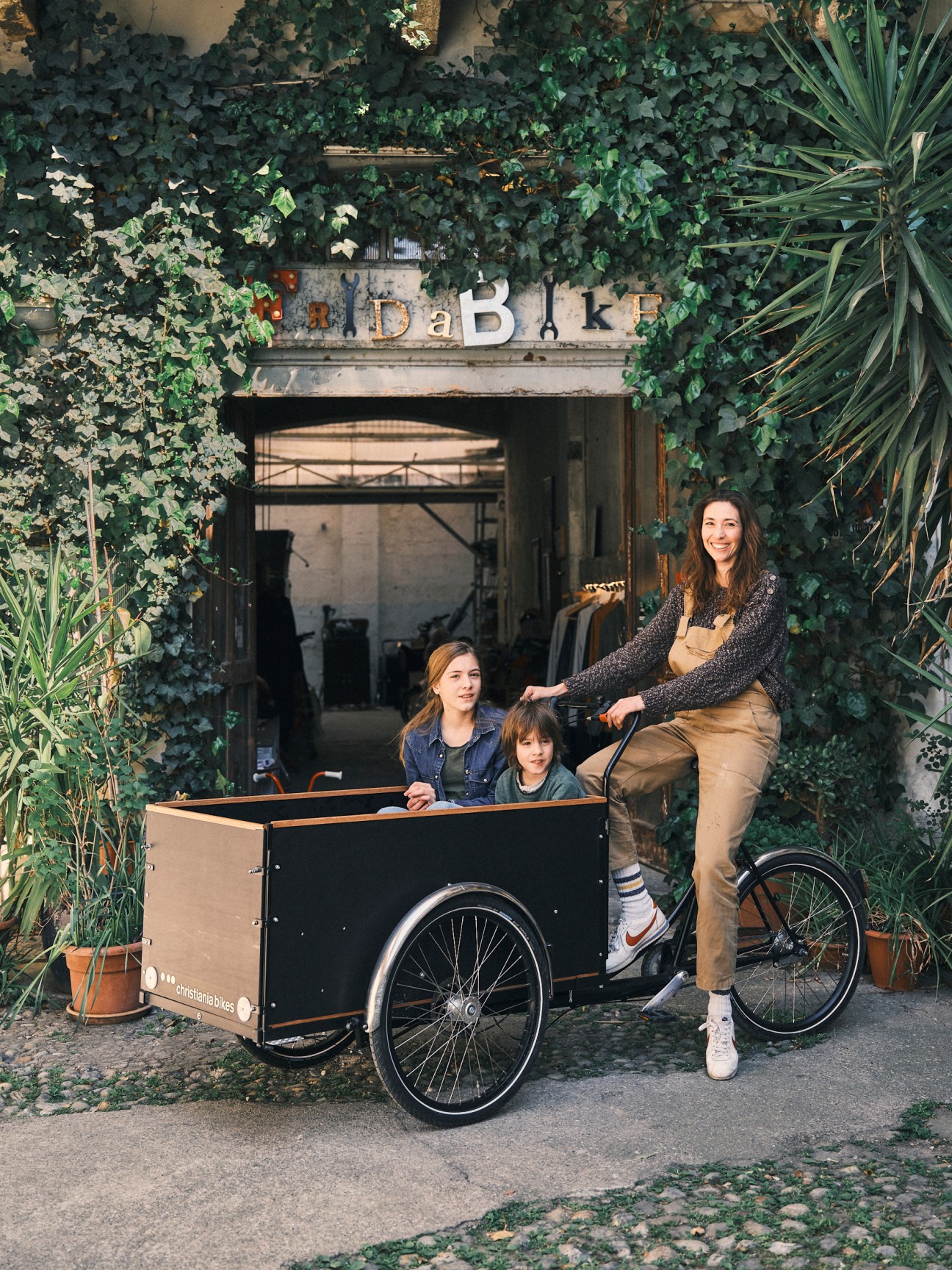
Milan isn’t Copenhagen yet. While its cycling infrastructure has come a long way, the city is hardly peppered with Christiania bikes, those cargo cycles used to transport young children in countries such as Denmark and the Netherlands. When Antonella Pesenti started cycling hers in Milan, people would stop her in the street. “They’d ask if I had made it myself,” she says. “So I thought I should start to sell them.”
Pesenti founded Fridabike in 2015. It’s located in northwestern Milan at the far end of an apartment building’s internal courtyard, where people’s washing hung from gallery balconies. Visiting it today feels like stepping into another age. She stocks a range of three-wheelers from European brands such as Winther and Nihola, plus accessories from Rains and Nutcase.
Though it has been hard work selling cargo bikes to a public that wasn’t already aware of them, she explains that Milan’s mentality is slowly changing. “Every bike that I sell goes around the city and is an advert for my shop,” she says.
She is already thinking about the future, including putting on more events. “This place is a bit magic,” she says.
fridabike.com
Images: Alamy, Reuters, Tonatiuh & Daniela
Affairs
Politics
Colombia
Friends reunited?
When the new Colombian ambassador to Venezuela, Armando Benedetti, shook hands with president Nicolás Maduro in August, it marked a shift in relations. In the years prior to that handshake, Caracas and Bogotá had traded insults and threats, inflaming tensions and decimating trade along their shared border.
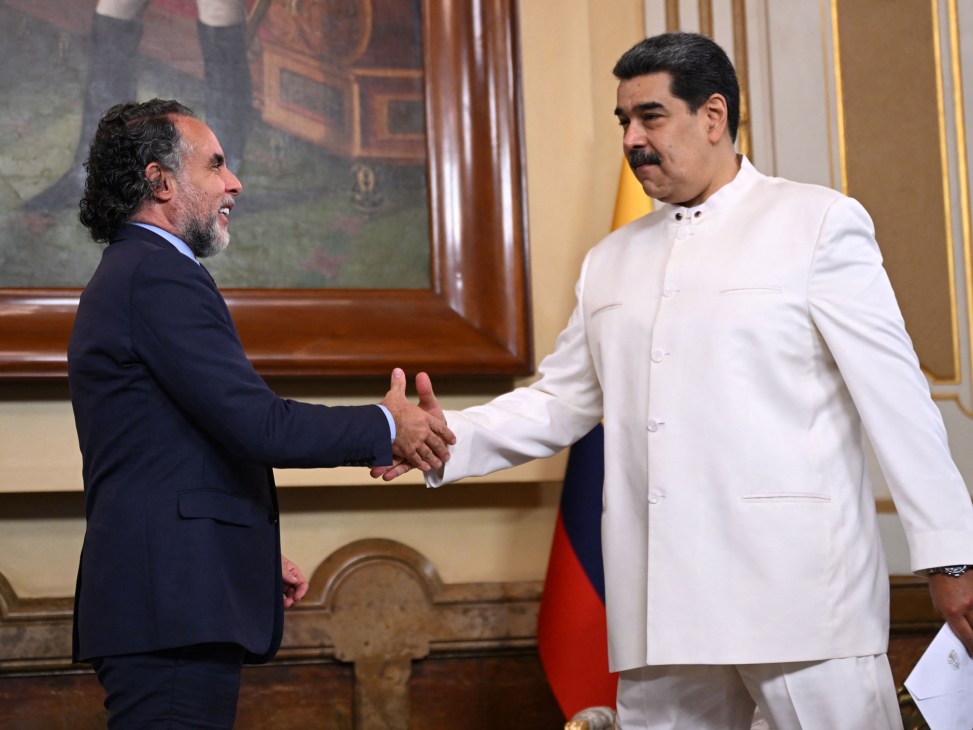
After he took office in August, one of the first actions of Colombia’s new leftist president, Gustavo Petro, was to restore diplomatic relations with Venezuela after a three-year freeze. His predecessor, conservative Iván Duque, refused to recognise the socialist Maduro as president, branding him a “dictator” and endorsing his rival Juan Guaidó as the country’s head of state. In this endeavour he was joined by the US, then led by Donald Trump. Having outlasted both Duque and Trump, Maduro’s position would seem to be stronger now.
Colombia and Venezuela are bound by deep cultural and historical ties. During the 19th century, the two nations were part of a post-colonial state known as Gran Colombia. “We are the same people,” Colombian congressman Gabriel Becerra Yañez tells Monocle.
But re-establishing relations was more than a nod to shared history. There has been a slide in cross- border trade from about €7bn in 2008 to €225m in 2020. The Colombo-Venezuelan Chamber of Commerce estimates that reopening the border could create at least 120,000 jobs for both countries, while the Colombian government says that trade with Venezuela could reach €1.2bn this year – an increase of 200 per cent when compared to 2021.
Colombian Felipe Díaz, who runs a business that manufactures shoes in the border town of Cucuta, hopes that he will now be able to get back on his feet. “Most business owners have been waiting for this to happen for years,” says Díaz. “We’ve suffered greatly. The border should have never been closed in the first place.”
Diplomatic Spat
Digital divide
Who vs who: Albania vs Iran
What it’s about: A series of large-scale cyber-attacks on Albania, which shut down a number of government websites and digital services – including the systems used by state police to monitor who enters and leaves the country. Albania determined that these attacks were orchestrated by Iran, and accordingly severed diplomatic relations. Despite Tehran’s indignant denials of involvement, Iranian diplomatic staff in Albania were given 24 hours to pack up and push off.
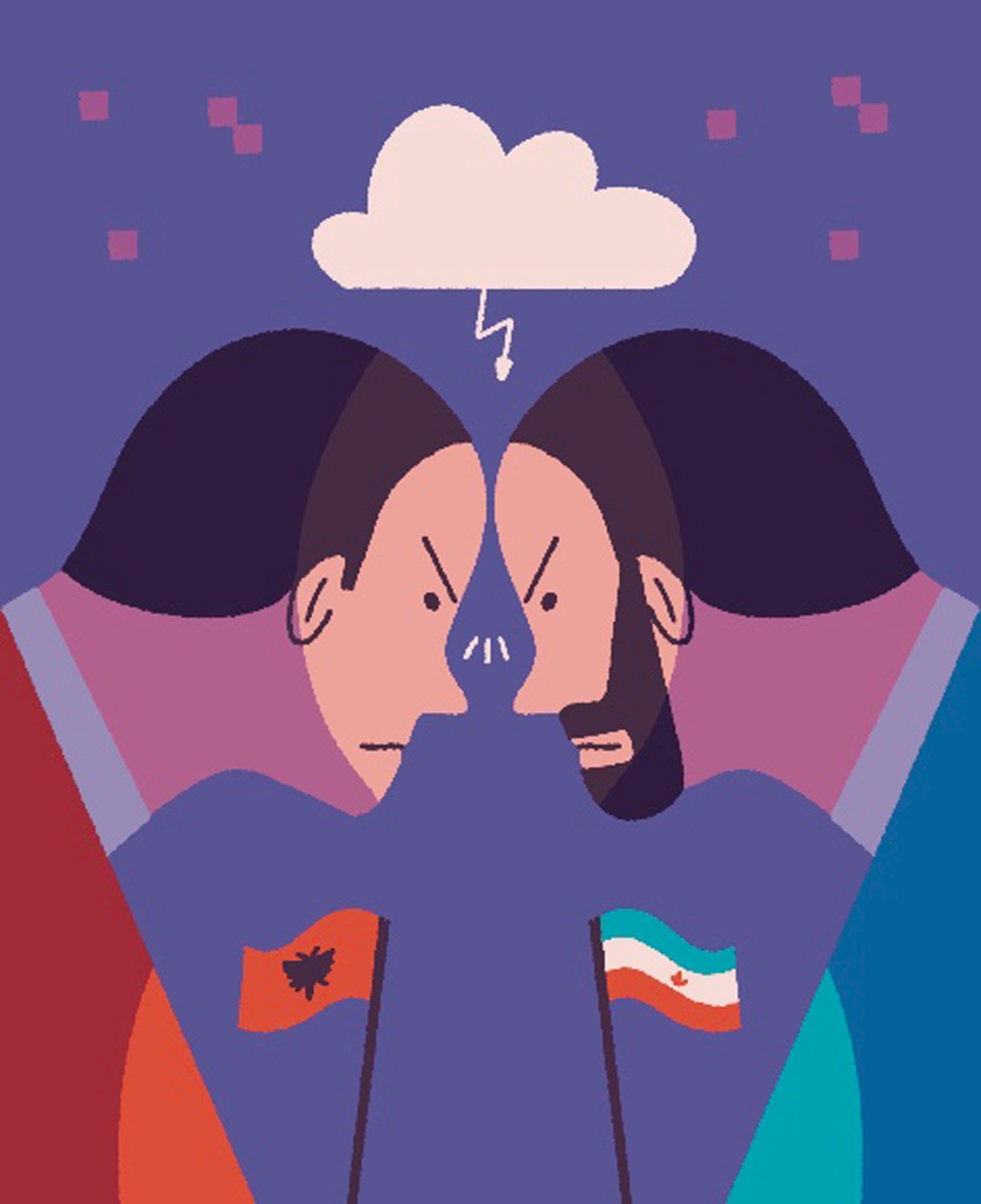
What it’s really about: Albania’s anger at Iran’s nonsense is real enough, and entirely justified. But Albania has for many years been something of a sanctuary for Iranian opposition group the Mujahideen-e-Khalq (MEK), a gang of ascetic Marxist-Islamist weirdos best imagined as a sort of cross between Hezbollah and the Moonies. Also, Iran seethes at Albania’s closeness to the United States, possibly more so because it’s a nominally Muslim country. In 2020, after Albania’s prime minister, Edi Rama, endorsed the US assassination of Iranian general Qassem Soleimani, Iran’s Supreme Leader, Ayatollah Ali Khameini, called Albania “very small and devilish.”
Likely resolution: It is not the first time something like this has occurred – Albania also threw Iran’s ambassador out in 2018, accusing Tehran of plotting terrorist attacks. If and when an Iranian ambassador is allowed back to Tirana, they would be ill advised to get too comfortable.
Mobility
Berlin
Q&A
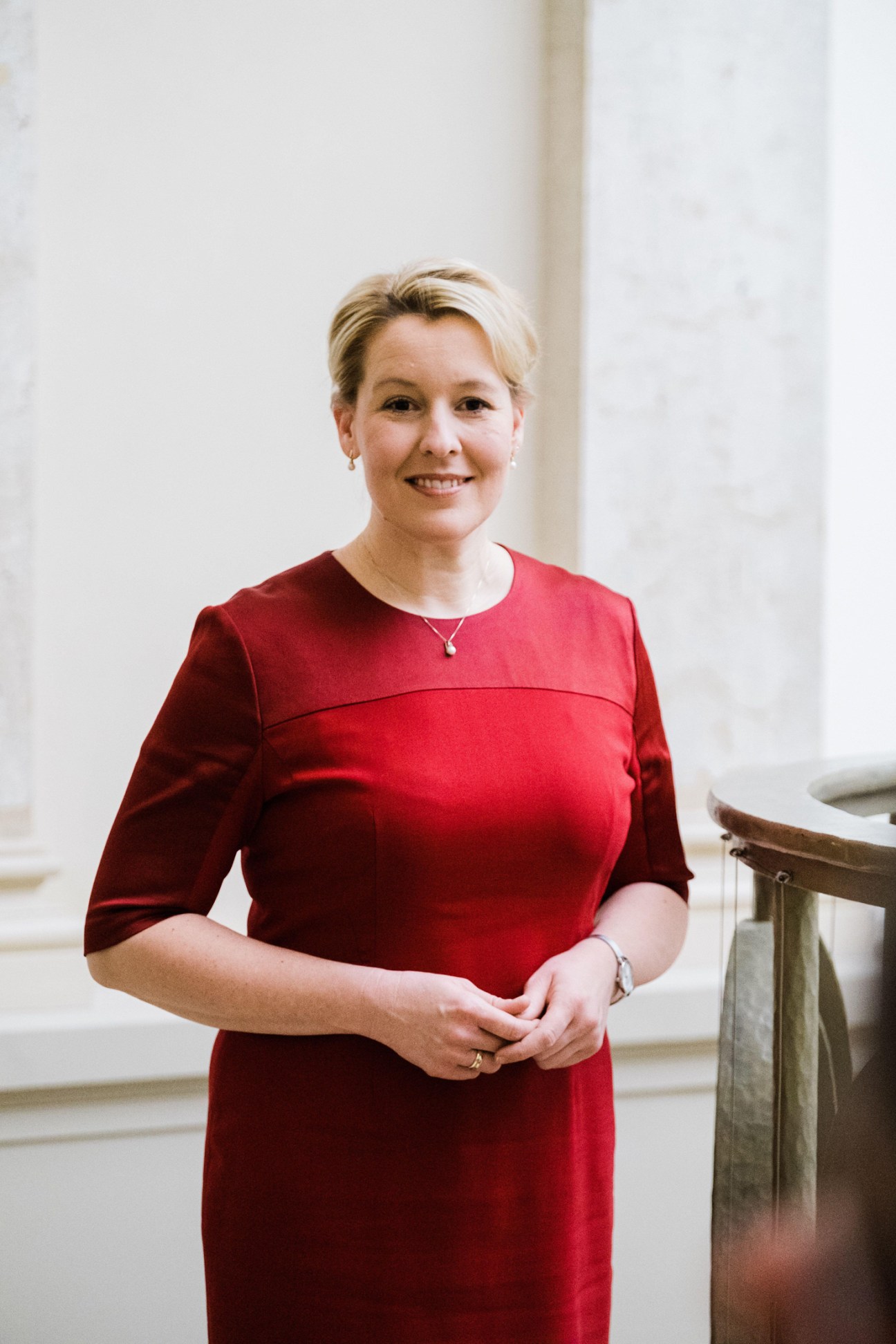
Franziska Giffey
Mayor of Berlin
Urban mobility has been at the top of the political agenda in the German capital in recent months. Berliners have pushed for continuation of the 9-Euro-Ticket, a nationwide policy where travellers could use public transport for €9 a month. And there could soon be a referendum on whether to make the entire inner city of Berlin car-free. Will the city’s mayor, Franziska Giffey, put on the brakes?
You’re not entirely in support of the initiative to make Berlin car-free. Why?
Social Democrats – and I am one – are always focusing on a balance [between] social, ecological and economic interests. I’m not convinced that in an extreme position, like a totally car-free city, we can have that balance. What happens to someone who cannot afford to live in the city centre but has to travel there to work during the night at a hospital? Everything we are doing to protect the climate has to have a social dimension.
What do you propose?
To make public transport more accessible. When they can afford it, people will leave the car and use public transit.
What’s standing in the way of that happening?
Our buses have to be electrified and we need more loading infrastructure. We are investing to improve it for pedestrians, bicycles and cars. You have to have balance – mobility in different forms.
Defence
India
All at sea

INS Vikrant is not India’s first aircraft carrier but it is the first that the country has built itself. Vikrant, from the Cochin Shipyard in Kerala, is an expression of national prestige as well as a guarantor of national security.
“Possessing a carrier is a statement of belonging to a small club of major powers,” says Alessio Patalano, senior lecturer in war studies at King’s College London. “Between military necessity and political utility, it’s not unfair to suggest that the latter wins the day.”
Vikrant, delayed and over-budget, has been compared with China’s new Fujian-class carriers. But, as Patalano points out, India doesn’t need to compete directly with China. “India’s maritime power is not a standalone asset but a tool within multilateral frameworks,” he says, “Access to valuable maritime allies is a luxury that Beijing does not possess.”
The Foreign Desk
Andrew Mueller on…
The new populists
It was tempting, for a moment there, to believe that the boil had been lanced. The boil in this metaphor is the carbuncle of paranoid, hyper-conservative, populist nationalism. In Germany in September 2021, Alternative für Deutschland lost 11 Bundestag seats. In France in April, National Rally’s Marine Le Pen failed for the second time against the centrist’s centrist, Emmanuel Macron. The Nordics were a solid bloc of centre-left social democracy, as was (and, in fairness, is) the Iberian Peninsula.
Well, not so fast. On 25 September, Italy elected a conservative coalition, of which the heftiest component is the Brothers of Italy – with roots tracing to the Italian Social Movement, founded by fans of Benito Mussolini after the Second World War. Two weeks before that, Sweden elected what will probably become a right-wing coalition government including the Sweden Democrats, whose history is scarcely more savoury.
It poses a challenge for the EU, of which Italy and Sweden are members. Before Italians voted, European Commission president Ursula von der Leyen warned that the EU has “tools” for dealing with member states that decide to be difficult. It’s not clear, however, that this is the case: the EU has not succeeded in encouraging co-operation from serial norm-defier and values-flouter Hungary, which has a population barely bigger than London’s and a GDP almost half that of Denmark. Italy is the EU’s third-largest economy; Sweden its seventh. The resolve of both has been key to Europe’s defiance of Russia. The EU and Nato have framed the conflict with Russia over Ukraine as one of values: Rome and Stockholm should be reminded which side of it they should be on.
The immediate aftermath of the Italian election presented lessons in how to do it – and how not to. In the former camp, Estonia’s prime minister Kaja Kallas, who referred neither to Italy’s election nor its winner but to Rome’s co-operation thus far in Ukraine’s defence. In the latter, UK prime minister Liz Truss, who tweeted delighted greetings directly to her new Italian counterpart, Giorgia Meloni. Europe’s other nations will have to deal with Italy and Sweden’s governments; they do not have to pretend to enjoy doing so.
Andrew Mueller hosts ‘The Foreign Desk’ on Monocle 24
Dating
USA
All right now

These days, nothing will sink a hot date quite like talking politics. But for Americans who look good in red, a new dating app aimed at matchmaking conservatives in the US promises to be a place where “you can connect with people who aren’t offended by everything”. The Right Stuff might sound like satire but, “We’re dead serious,” says co-founder John McEntee. It was created because, “other dating apps have gone woke,” says their website.
McEntee’s name might be familiar to Trump-watchers: he was made director of the White House Presidential Personnel Office, promoted from bag carrier, in the febrile final months of the last administration, just before the storming of the Capitol. Behind the scenes, he says, dating in Washington was less riotous. “One of our co-founders actually went on a date from an app, ordered the drinks, and before he could even finish his sentence saying he worked for Trump, the girl got up and left.”
But, McEntee says, it’s the system that’s the problem, and The Right Stuff will offer an alternative. “On the other dating apps out there, you can add a feminism tag or a climate-change tag to your profile but there is nothing for conservatives: no Second Amendment tag, no pro-life tag. So you’re in a space that doesn’t care about what you want or what you’re looking for.”
Ladies and gentlemen, please form an orderly queue.
daterightstuff.com
Images: Alamy, Getty Images