Issues
Ruling by consensus
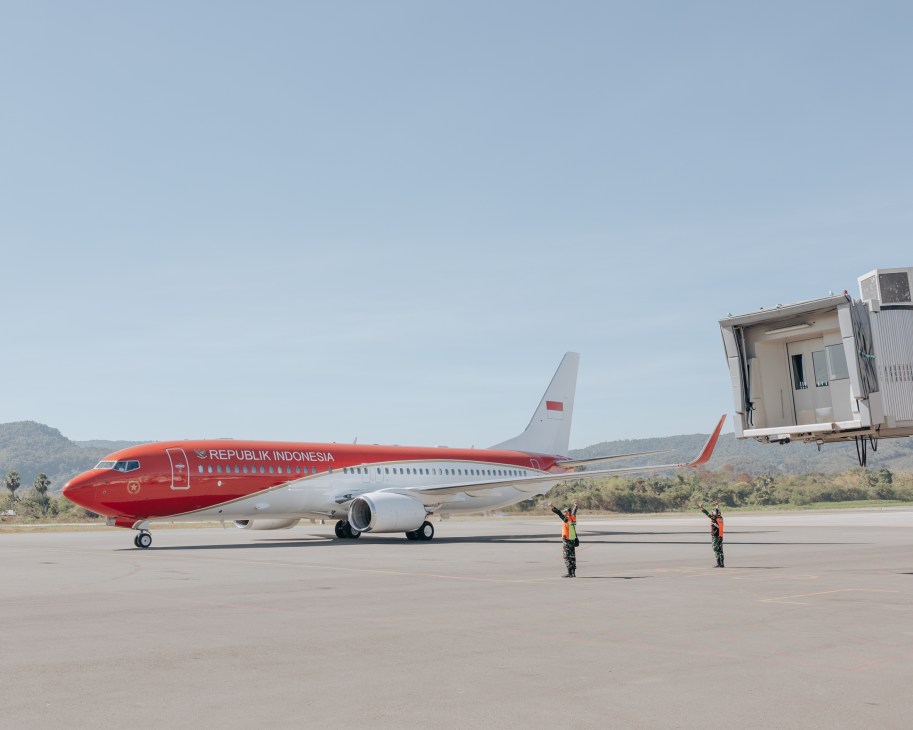
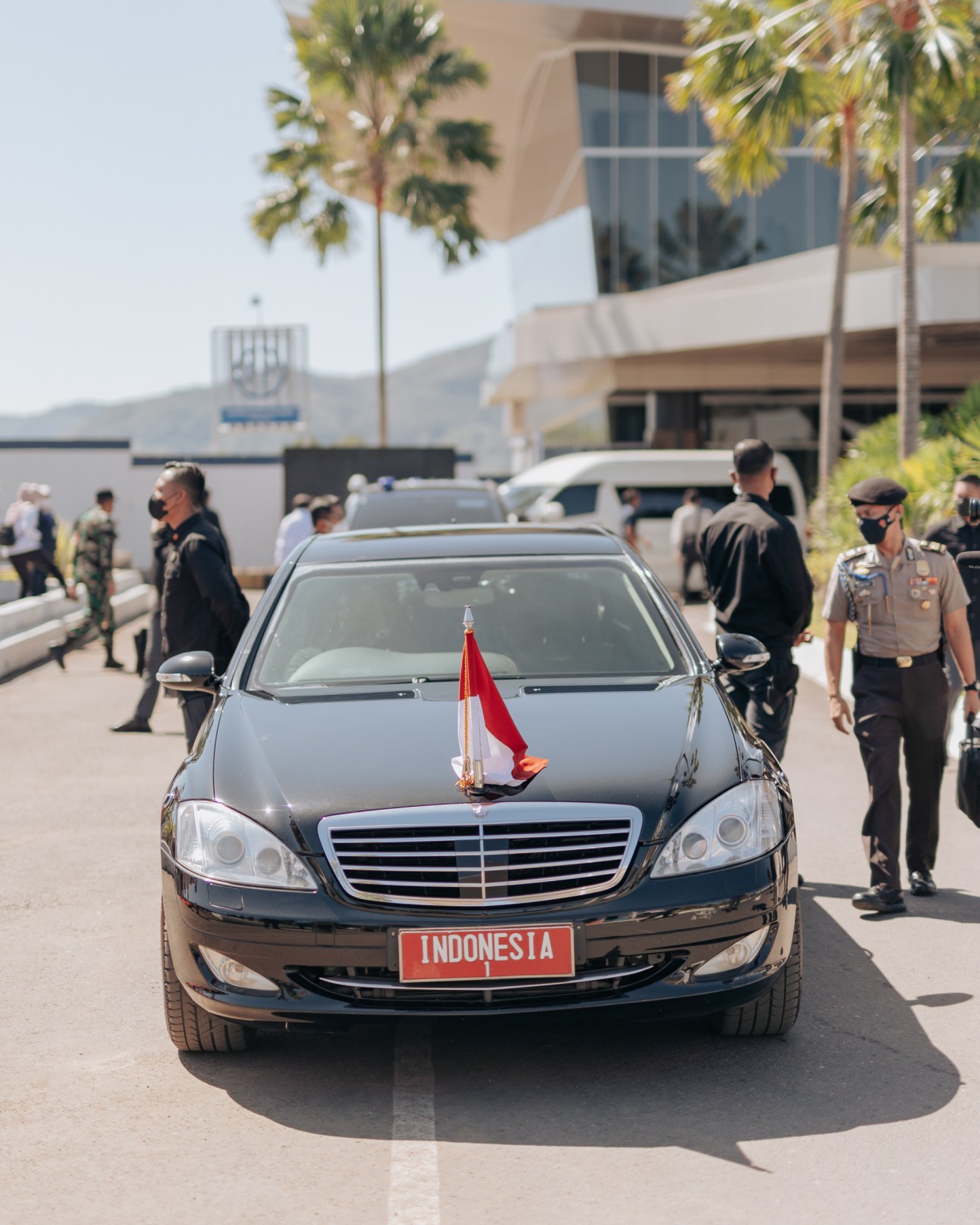
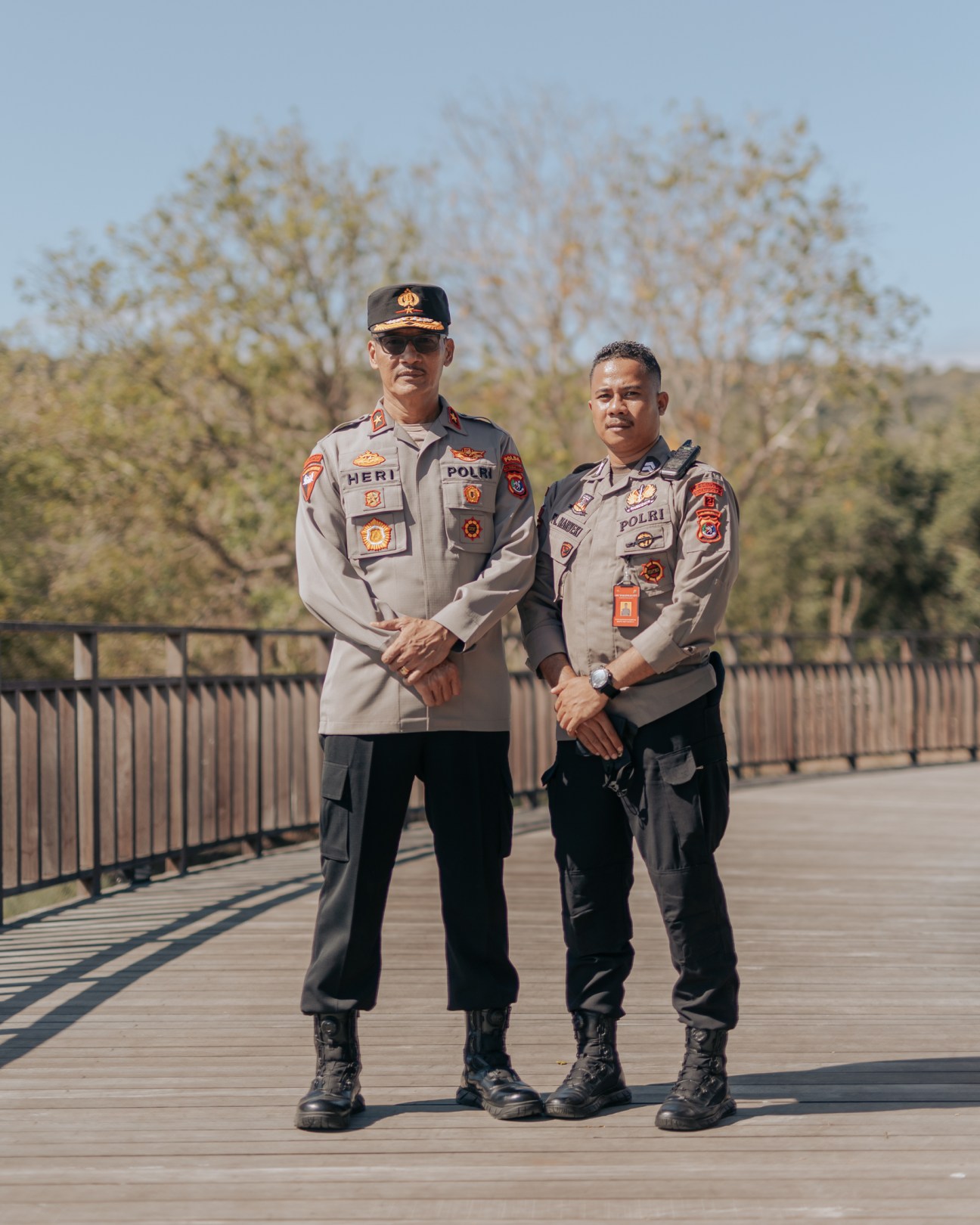
Just before 10.00 the presidential plane touches down in Labuan Bajo on the island of Flores, eastern Indonesia. Staff and security pour out of the red-and-white liveried 737 before President Joko “Jokowi” Widodo appears on the steps. His welcome party sports a sea of medals and spotless uniforms – this is a military operation rather than a signature Widodo walkabout and the perimeter around him has become tighter since the assassination of Shinzo Abe in Japan. Tighter by Widodo’s standards, at least: mobbed in the terminal, he poses for pictures and makes his way to the first stop on his two-day itinerary. “Tourism is key to bringing prosperity,” he says in a speech to open an airport extension, during which he bangs a ceremonial drum.
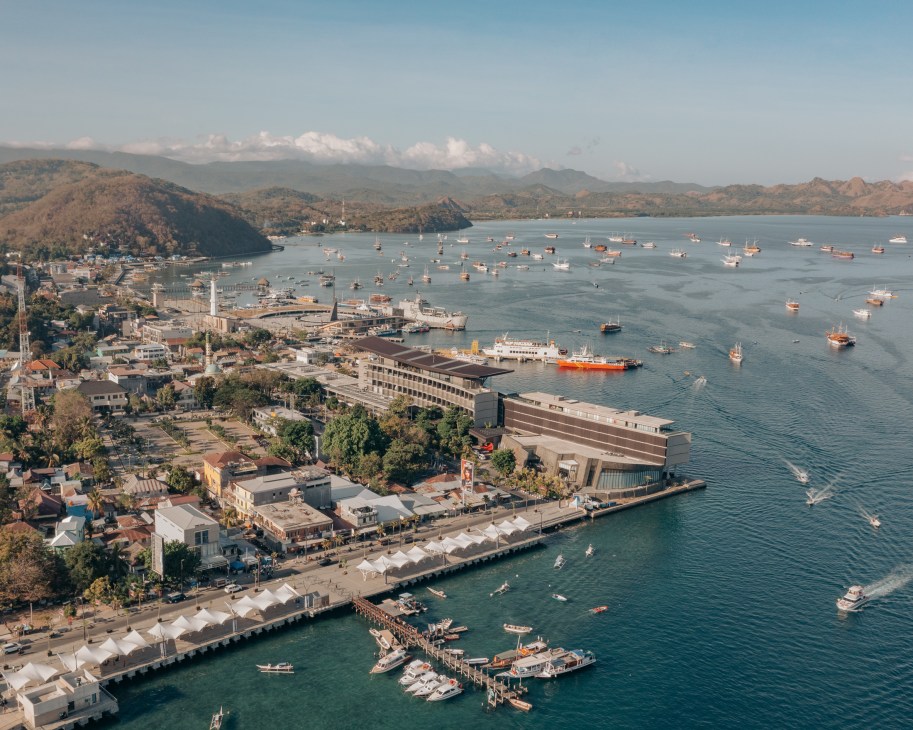
With its hilly terrain, dry climate and Catholic inhabitants, this small fishing town could pass for Cyprus. Most tourists come here to dive, island-hop or visit the nearby Komodo National Park. Widodo has come to build. The 61-year-old, who has visited 19 times since becoming president in 2014, has an ambitious plan to diversify the country’s underdeveloped tourism industry by creating “10 new Balis”. About 17 million international tourists visited Indonesia before the pandemic, an underwhelming figure compared to Thailand, which boasted closer to 40 million. Widodo speaks about Labuan Bajo with the pride of a local mayor and it was his first choice for hosting the g20 summit in November before the venue switched to Bali.
“When we calculated the number of hotel rooms here, we realised that it was not enough,” he says with a deep laugh. “If we can keep improving and attracting investment, we can be number one in Indonesia.”
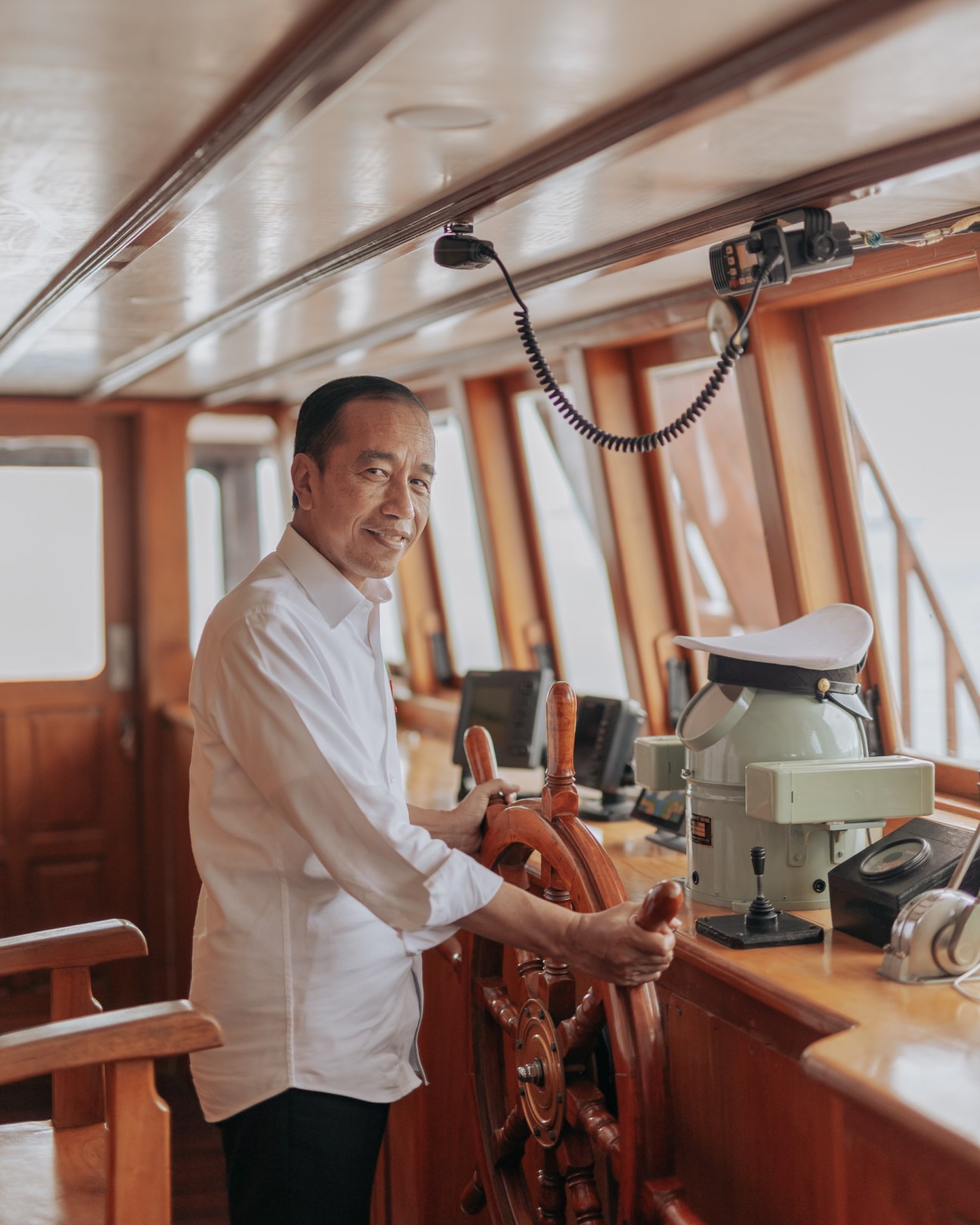
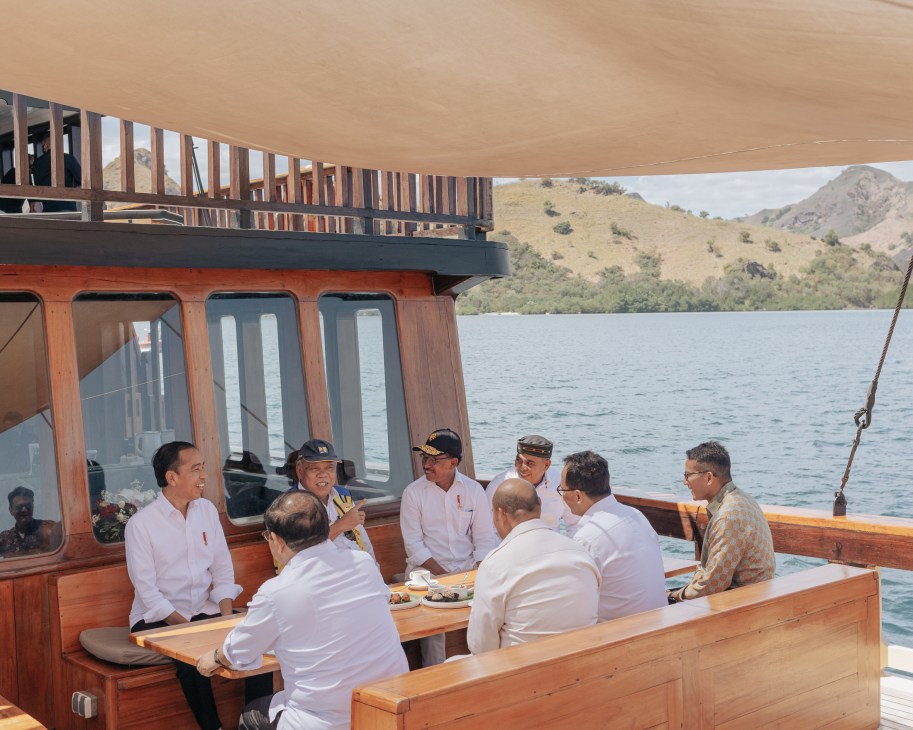
Sailing boats dot the harbour and the presidential party has commandeered a pinisi schooner for a trip to see komodo dragons. Standing on the deck of the traditional vessel, Widodo surveys the improvement works and points Monocle towards the new marina, which was once an uninviting point of entry for tourists. “That used to be a slum,” he says, clearly happy with how money has been spent there. Moving the seaport to a new site transformed the town centre and prepared it for the return of global tourism, if not the world’s top 20 leaders, this time. “By next year we will have enough runway to invite direct flights from Dubai, Singapore, South Korea, China and Japan,” he says. As the sun shines over Labuan Bajo, there is no better place to witness the Jokowi effect up close.
Widodo was re-elected for a second term in 2019. Voters handed him a larger mandate and he promised them that Indonesia would become one of the world’s five largest economies by 2045 – 100 years after the former Dutch colony won independence. The president’s plan begins with infrastructure and he has continued the frenetic construction of his first term. This year alone, his administration has commenced work on a new capital city in East Kalimantan province and it will start testing the country’s first high-speed railway. Two giant toll roads in Java and Sumatra would also have been completed had it not been for the pandemic. “It’s not easy to manage this country,” he says. “We have 278 million people and more than 17,000 islands. All of these islands need infrastructure.”
As fond as Widodo is of hard hats and high-vis vests, the former furniture manufacturer knows how to build projects with a purpose. Having more airports, he has suggested, makes it easier to land foreign money, while improved roads mean that it’s cheaper for Indonesian producers to export their goods at competitive prices. A national dam-building programme is shoring up water supplies for agriculture so that the nation can be better equipped to feed itself. Rice imports stopped three years ago. As other leaders worry about food security, Widodo expects to start exporting the staple grain by next year. He rattles off a list of numbers (another of his passions), all of which suggest that his investments are nudging the country in the right direction. Growth is humming along at a healthy 5 per cent, while inflation appears under control. Poverty is down, human development indicators such as longevity and earnings are up. “He has made the Indonesian people more comfortable,” says Firman Noor, senior political analyst at the National Research and Innovation Agency. “Everyone can enjoy the development.”
The idea of spreading opportunities around Indonesia is textbook Widodo and is one of the main reasons why he is pushing ahead with building the new capital, Nusantara, in the middle of the vast archipelago. Java dominates Indonesia politically, economically and culturally. The island is home to the current capital, Jakarta, and more than 150 million people. Almost every president has been Javanese, including Widodo, who started his political career as mayor of Surakarta (also called Solo) in 2005, before going on to become Jakarta’s governor in 2012. Whether or not the next president (elections are slated for 2024) continues or cuts the Nusantara project, the incumbent’s other initiatives have plenty of momentum. “Foreign investment outside Java reached 127.5trn rupiah [€8.4bn] last year,” says Widodo. “That’s 52.7 per cent of the total, so it’s now higher outside Java.”
Widodo’s political philosophy prioritises greater prosperity for all in the belief that social ills will improve as a side effect. “He is a populist but not like Donald Trump,” says Philips J Vermonte, head of the Centre for Strategic and International Studies, a Jakarta-based think-tank. “A huge amount of social and economic subsidies have been put in place during his term but at the same time he is pushing for investment from private companies.” Critics have attacked the president’s approach to development and his single-minded focus on infrastructure but he insists that the average voter is better off and is quick to qualify that with statistics. Indonesians now also have universal healthcare, better access to scholarships for overseas study and a sovereign wealth fund. Support for the president hovers at about 70 per cent, an astonishing figure in one of Southeast Asia’s most robust democracies.
Monocle asks the president what the people want now. “In 2014 they asked for corruption to be dealt with but in the past two or three years they have asked for employment, so we need investment,” he says. Ever eager to please, he is using the natural resources at his country’s disposal to tempt foreign manufacturers and reel in better-paying jobs. A ban on exports of nickel ore two years ago has resulted in overseas refineries being set up in Indonesia. According to Widodo, the country’s nickel industry is now worth $20bn (€19.5bn) a year, a 15-fold increase on its value when he took office. “Starting in 2022 we will stop bauxite exports so we can produce aluminium here,” he says. “In 2024 we will stop copper exports,” he says. The goal is to become a major production hub for electric vehicles and the strategy is gaining traction. Hyundai opened the country’s first such manufacturing plant this year and the president has been visiting car-makers such as Volkswagen, Toyota and Tesla. “I’m sure that we will be the biggest in the world because Indonesia has the biggest potential for nickel and the best quality,” he says.
The “omnibus law on job creation” is the carrot to this stick. Passed in 2020, it snipped red tape to make investing in Indonesia much easier, from getting a business licence to acquiring land for development. Almost 80 sets of regulation were consolidated into one in what is widely considered a legislative masterstroke, despite some concerns raised by the courts. What’s Widodo’s message for foreign investors? “Indonesia has already changed,” he says.
Jokowi on…
Chinese investment
“Having good relations with China is very important but we are open to all countries. A lot of investors want to be involved in building our new capital city, Nusantara: the United Arab Emirates, Saudi Arabia, South Korea, China. Russia wants to invest in trains – that’s something that came directly from Vladimir Putin.”
The new capital
“The original idea came from the first president of Indonesia, Sukarno. The location might be different now but I am only implementing it.”
Political opposition
“Opposition is very important but even if there isn’t any, there are still the media and social media. People in Indonesia are opinionated and their comments can be very hard. They bully the politicians.”
Radical Islam
“It’s getting better. According to our surveys, about 50 per cent of radicals are back to being moderate but the other 50 per cent of them are still hardliners. Education is the most important thing: informing people about the importance of unity and diversity.”
Boosting tourism
“Infrastructure is crucial and so are facilities. Once these are ready we need to come up with events. We have a lot of culture in Indonesia.”
Attracting foreign investors
“They need software engineers so they always ask me about human resources. I tell them that many Indonesian students study in the US and the UK. After we have built the infrastructure, developing our human resources is a priority.”
It takes two hours to sail from Labuan Bajo to Rinca in the Komodo National Park. There’s a jovial mood on deck that is far removed from the rough-and-tumble of Jakarta, where political manoeuvring is under way ahead of the next national election. Several ministers have come along and this mini-cabinet sits together, enjoying the sea breeze while cracking jokes. Widodo looks equally at ease. Eight years in office have added faint lines to his face but it’s not hard to imagine him diving off the boat into the sea; Indonesia’s seventh president since independence grew up in a humble house by a river and swam every day.
Widodo’s election in 2014 signalled a shift in Indonesian politics. He was the first leader to come from outside the ruling elite or military. “Jokowi changed how we view the presidency and showed us that it’s possible to be a leader without a political party,” says Vermonte. This part of his legacy is secure. Yet there’s a growing disappointment that he has not done more to disrupt a system in which the main political parties are vehicles for former presidents, tycoons and rich families to exert power. Analysts have called it an oligarchy government; under Widodo’s tenure the flaws in Indonesia’s democracy have at times looked stark. Some have even drawn comparisons with the Suharto era, between the late 1960s and 1998. Indonesia’s authoritarian leader was toppled by protests after 31 years, paving the way for democracy. “Jokowi enjoys power,” says Noor, who cites democratic stagnation as the president’s biggest black mark. “He can do anything now, including developing democracy, but there’s no interest.”
Unlike, say, Emmanuel Macron, who created an independent party before taking the Élysée Palace, Widodo was picked to be the candidate of the Indonesian Democratic Party of Struggle (pdi-p). It was founded and chaired by Megawati Sukarnoputri, a former president and daughter of the founder of modern Indonesia, Sukarno, leader of the struggle against Dutch colonialists. Under Sukarnoputri’s patronage, Widodo has assembled a coalition consisting of seven out of nine parties. “A strong coalition is required to support effective policies and implementation and to address global disruption,” says Widodo. His government enjoys 84 per cent of parliamentary support and little political opposition; the new capital, Nusantara, won the backing of almost every party. For him this is a realisation of Pancasila – Indonesia’s five founding principles – one of which calls for a democracy guided by consensus among elected representatives. What does he see as the biggest danger to democracy? “Hardliners and Islamists,” he says. That’s a quieter cohort nowadays, having been snuffed out or brought into Widodo’s big tent.
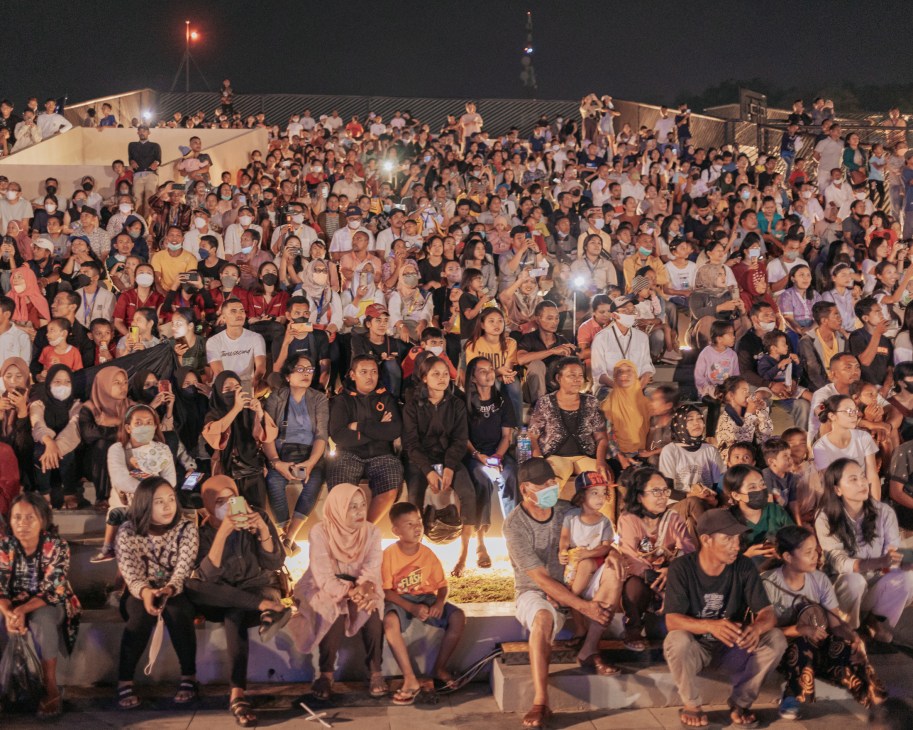
Coalition-building is not new in Indonesia. Widodo is just better at it – a testament, perhaps, to his pragmatism and outsider status. “Jokowi is doing what you do in Indonesia and he’s a very acceptable president for the elite,” says Max Lane, a visiting senior fellow at Singapore’s iseas-Yusof Ishak Institute. “He’s no threat because he doesn’t represent any party and the word ‘dynasty’ for the Jokowi family is ridiculous.” Lane calls Indonesia a country of no contrasts: a liberal democracy with a free media but no political opposition. “The reason why there is no political opposition is not that opposition is suppressed or that opposition is prevented in any way; there just isn’t any,” he says. “There are civil society groups that criticise policies but there is no one putting themselves forward as an alternative government.”
Lines of succession
With the next presidential election due in February 2024, Jakarta is full of talk about who will succeed Widodo. Here are the runners and riders.
Ganjar Pranowo
Governor of Central Java
An early favourite of the people, Pranowo must convince his party to give him the nod. Widodo is thought to favour him but his fate is in the hands of pdi-p leader Megawati Sukarnoputri.
Prabowo Subianto
Defence minister
Subianto is hoping that it’ll be third time lucky after losing to Widodo in the past two presidential elections. The ex-army general surprised many by joining Widodo’s cabinet in 2019. He polls well and has the support of his political party.
Anies Baswedan
Governor of Jakarta
Baswedan’s stint at city hall comes to an end in October, freeing him to focus on the election but depriving him of a high-profile platform. Many moderate voters remember how he won the gubernatorial election in 2017 by riling up religious hardliners.
Puan Maharani
Parliamentary speaker
Though a non-starter with most voters, Maharani has a big advantage: she is ex-president Megawati Sukarnoputri’s youngest child and is relying on her mother picking family over Pranowo.
Sandiaga Uno
Minister of tourism and the creative economy
One of Indonesia’s richest men, Uno is a dark horse. He entered politics as Baswedan’s vice-governor in Jakarta, before becoming Subianto’s running mate and joining the Widodo cabinet. His current role has given the media-savvy businessman a following.
The danger with unanimity is that legislation can be rushed through without sufficient scrutiny and politicians hold hands instead of holding each other to account. This risk became a reality in 2019 when all nine parties in parliament passed a law to clip the wings of the much-feared, highly respected anti-corruption agency Komisi Pemberantasan Korupsi (KPK). When Widodo signed the bill into law his supporters looked on with horror and student protesters thronged the streets. To his credit, Widodo continues to seem as clean as his crisp, white shirts, a fact that only makes his actions more baffling. Onboard the ship to Komodo his eyes fix into a steely stare. After three years the topic of the kpk law still stings. “This initiative was totally from parliament and the nine parties were 100 per cent agreed,” he says. “My government negotiated with them but it was very tough. This is politics.”
In 2021 an even more troubling idea emerged: to try to extend the president’s pandemic-affected tenure in office, either by postponing the next election or amending the constitution to remove the limit of two five-year terms. When the proposal, which came from Widodo’s circle, was tested publicly, protests broke out and it was put back in a box after several national surveys revealed huge opposition to the move. “Wherever this idea came from, Jokowi knows the people and he let it happen,” says Noor. “If he was a true democrat, he would have shut it down. The most important lesson that we learned from the Suharto era was to limit power, not to extend it.”
Quizzed on the topic countless times, the president’s circumlocutions never put the matter of his intentions to bed. “The constitution allows only two terms,” he says, making a “V” shape with his fingers. “We have 84 per cent in parliament but the constitution only says two terms.” At a time when regional democracy is in retreat, Widodo should be leading by example. Straight talk on this topic would bolster his international reputation, even if domestically his popularity remains sky high. Well-educated Jakartans were appalled by the prospect of constitutional reform but, despite this, most would still vote for him.
All across Indonesia, from the national monument in Jakarta to the harbour in Labuan Bajo, red-and-white g20 banners hang from trees and lampposts bearing the next summit’s official message: “Recover together, recover stronger”. November’s event is a national effort. Until Russia invaded Ukraine, half of the bloc sanctioned Moscow and commodity prices skyrocketed, the summit in Bali was meant to offer a shop window for a much-transformed Indonesia. “The g20 has become more complex,” says Widodo, who would much rather focus on the global economy than geopolitics. “We are trying to maintain the integrity of the g20 amid sharp polarisation and make sure it continues to be part of the solution to the global crisis,” he says.
Indonesia has stayed on the sidelines of the war, sticking to its founding policy of non-alignment. By inviting Volodymyr Zelensky and resisting Western pressure to exclude Vladimir Putin, Widodo is trying to be a friend to all and make room for consensus. Unlike his efforts in parliament, the stage could be set for a diplomatic disaster. That, or Bali could be the best shot that the world has of agreeing to a common path out of the political quagmire. Neutral Indonesia, after all, is in nobody’s pocket and few can build a consensus like its president. Widodo has been visiting the leaders of every g20 nation this year, sandwiching Monocle’s interview between trips to Putin in Moscow and an audience with Xi Jinping in Beijing. He describes these as opportunities to listen to what each country wants – a global version of his blusukan walkabouts, taking in Indonesia’s many islands, languages, cultures and ethnicities. A job as UN secretary-general could one day be in the offing if he can tear himself away from his beloved country.
The sun has set on Labuan Bajo and Widodo is at his hotel, reflecting on the twilight years of his presidency. Any regrets? “I only look to the future, not the past,” he says. Does that future involve tending vegetables in his garden? “Not for me,” he says definitively. “I want to continue to work for my people.”
James Chambers is Monocle’s Hong Kong bureau chief and Asia editor.
Sunny outlook
The Sardinian capital, a city of 154,000 that lies in a wide, sandy bay facing due south toward the coast of Tunisia, is physically closer to Africa than the Italian mainland. This remoteness has long made Cagliari, in the centre of the western Mediterranean, both a trading post and a melting pot – and is part of its enigmatic allure to this day.

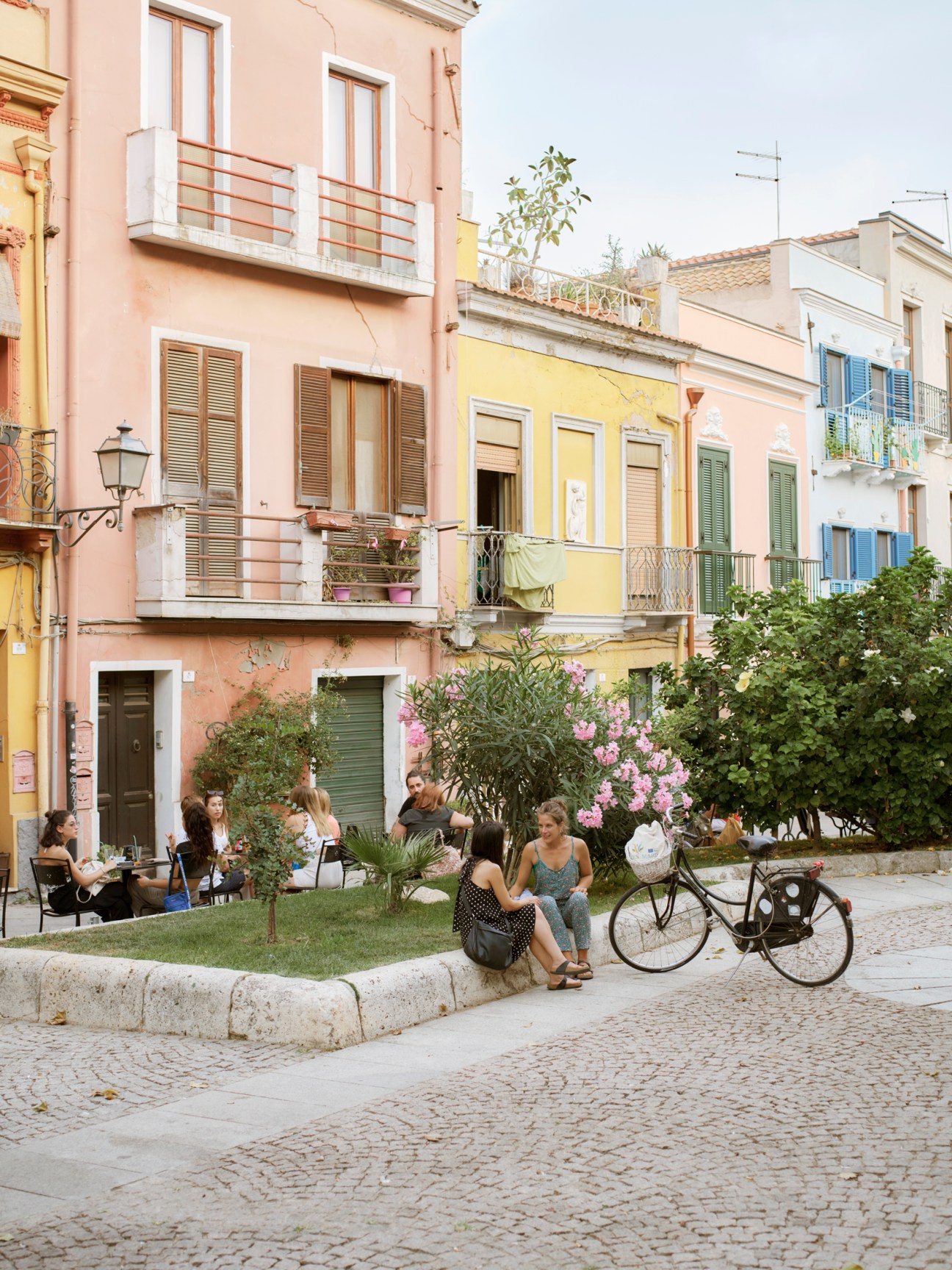

“Cagliari has always hosted many different cultures,” says Nicola Marongiu, one of three friends behind Pipette, a bar in the Marina district. The trio have set up shop a block inland from the Piedmontese arcades of Via Roma that give arrivals from the docked ferries and occasional mega-cruise ship a kind of Turin-on-Sea impression of the city. “We wanted to be part of the cultural mish-mash here,” he adds.
Pipette’s wine list is brimming with choice local vintages – a reminder of the fecundity of the surrounding countryside. One of the partners behind the restaurant also founded a superb wine shop called Sabores nearby. Sometimes, however, influences come from further afield, including those of chef Maki Taeko, originally from Tokyo.


Taeko spent years touring Italy’s food capitals and provincial hubs before settling on Cagliari in 2017. The clincher? “The fresh fish,” she says without hesitation. “And the vegetables are excellent too.” She mentions the San Benedetto market halls. “In fact, the meat is also very good,” she adds, laughing.

Sardinia’s varied geography and rich soil explain some of Cagliari’s cuisine. The city’s own landscape, though, is dominated by the medieval Castello neighbourhood, high up on a long craggy ridge. Up here, at the National Archaeological Museum, the displays tell the tale of a strong and defiant Sardinian heritage. The ancient Nuragic civilisation even produced statues and bronze figurines that seem to express the sturdy and resolute island spirit that can be found in Sardinia to this day.
Tall mountains rise east and west of Cagliari but to the north the fertile Campidano plain opens up to the centre of the island. It has its own language and an identity that’s hard to explain. Just as the island doesn’t feel very Italian, in some ways its capital doesn’t feel particularly Sardinian compared with its inland regions.


“The foreigners in my team had no idea where Cagliari was,” says Max Sirena, an Italian professional sailor who has been based here since 2014. He is the skipper and team director of Luna Rossa Prada Pirelli, a team in the America’s Cup sailing competition. With Cagliari’s rugged urban coast stretching out behind him, Sirena is standing in a windy spot by the Ichnusa dock, named after the Ancient Greek word for the island (Sardinia’s widely exported local beer is also called Ichnusa).
“We needed somewhere that guarantees the maximum number of sailing days,” says Sirena. With up to 240 a year, the island offers the Luna Rossa crew an ideal place to train. “Here you can choose the coastal conditions you want from one day to the next.” He turns from the sea to add that, “behind us there is a great city. Cagliari has a good lifestyle.”


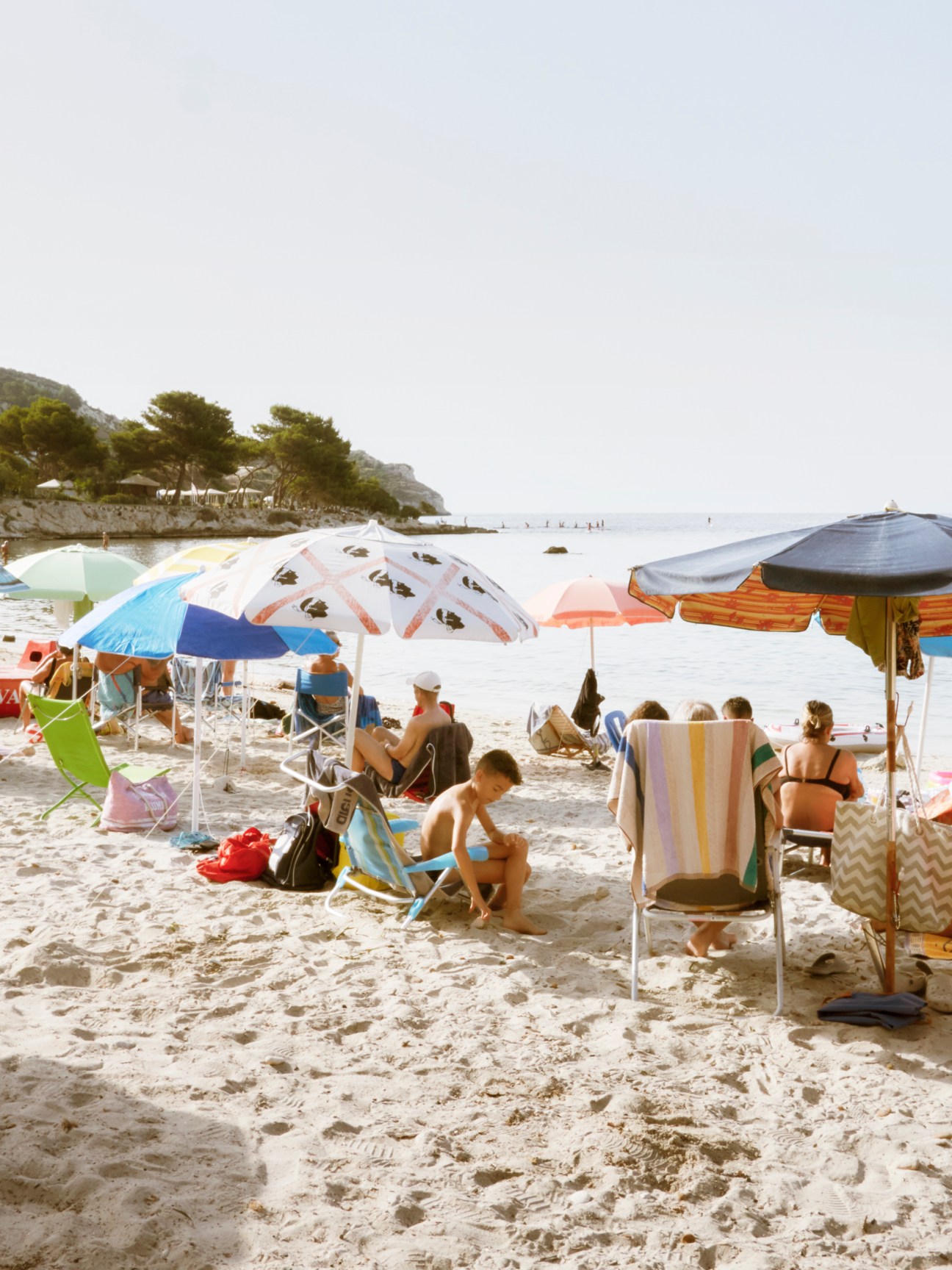
Lasting precisely six minutes, the train journey to Via Roma from Elmas international airport has to be one of the quickest transfers that Monocle has come across. Take a shiny hybrid bus or electric trolleybus in the other direction and you travel along palm-lined thoroughfares and past swanky apartment buildings overlooking lagoons that are home to hundreds of nesting flamingos. In no more than 10 minutes, you arrive at one of Cagliari’s prime assets. Stretching for nearly 8km, Poetto Beach is one of the largest within a European city. A century ago a tram would bring bathers to the various lidos along the sandy shore and much of its old-world charm remains. Despite the grand backdrop of the Sella del Diavolo mountain, Poetto feels like Cagliari’s living room.
At the bottom end of the Castello’s rocky spine is the graceful Bastione St Remy, a neoclassical 19th-century edifice that provides the city with a natural terrace from which to gaze out to sea. But in the other direction, the Campidano stretches northward. It’s there, a 30-minute drive away in Serdiana, that winery owner Valentina Argiolas helps to manage the business founded by her grandfather Antonio. After developing the L’Aquila lido at Poetto, Argiolas says her ancestor focused his attention inland, when he inherited some good quality terroir here in the place of his birth.


In the 1980s, the Argiolas family were a part of the first wave of growers to make fine wine in Sardinia. “We are on a constant search for varietals that preserve and improve the quality of our wine,” says Argiolas. We speak as northern Italy suffers an ongoing drought but, a glass of the family prize-winning turriga in hand, she is philosophical about her island’s future in the face of a warming climate. “There has always been a drought in Sardinia,” she says between sips. “We are resilient.”
Back in the Marina district, with a ferry rumbling its horn out across the harbour, music producer and graphic designer Simone Deiana is holding forth on his hometown. “There’s this perception that if you don’t live in Milan, you can’t do anything,” he says, noting how island life can be connected and fulfilling. “If you have laid the groundwork of your career, like to travel and are open to new ideas, then I don’t see any benefit in basing yourself in one of the big centres such as Milan.” He pauses and looks out to sea while he finds the right words to sum up what he’s thinking. “Cagliari is perfect; it really all starts and ends here for me.”
Cagliari address book
Stay
Hotel Regina Margherita
Don’t let the brutalist, bunker-style exterior throw you – this is a smart hotel in an excellent location.
hotelreginamargherita.com
Drink
Antico Caffè
A meeting point that’s a city institution, sat at the feet of the Bastione di Saint Remy. Open 07.00 to 02.00, for added convenience.
anticocaffe1855.it
Bar Florio
Part of the Villanova neighbourhood’s revival. Frequented by a fun crowd and great for an ice-cold beer.
Via S Domenico, 90
Eat
Pipette
Delicious contemporary dishes with Sardianian and global influences, with a wine list that includes many local bottles and fine finds from smaller producers.
pipette.info
Ristorante Pani e Casu
Traditional Sardinian cuisine made fresh and without the fuss.
Via Santa Croce, 51
Shop
Pretziada
A by-appointment showroom just outside town, stocking artisanal designs.
pretziada.com
Mercato di San Benedetto
The capital’s peerless fish market.
Via Cocco Ortu, 50
Expo: Building optimism
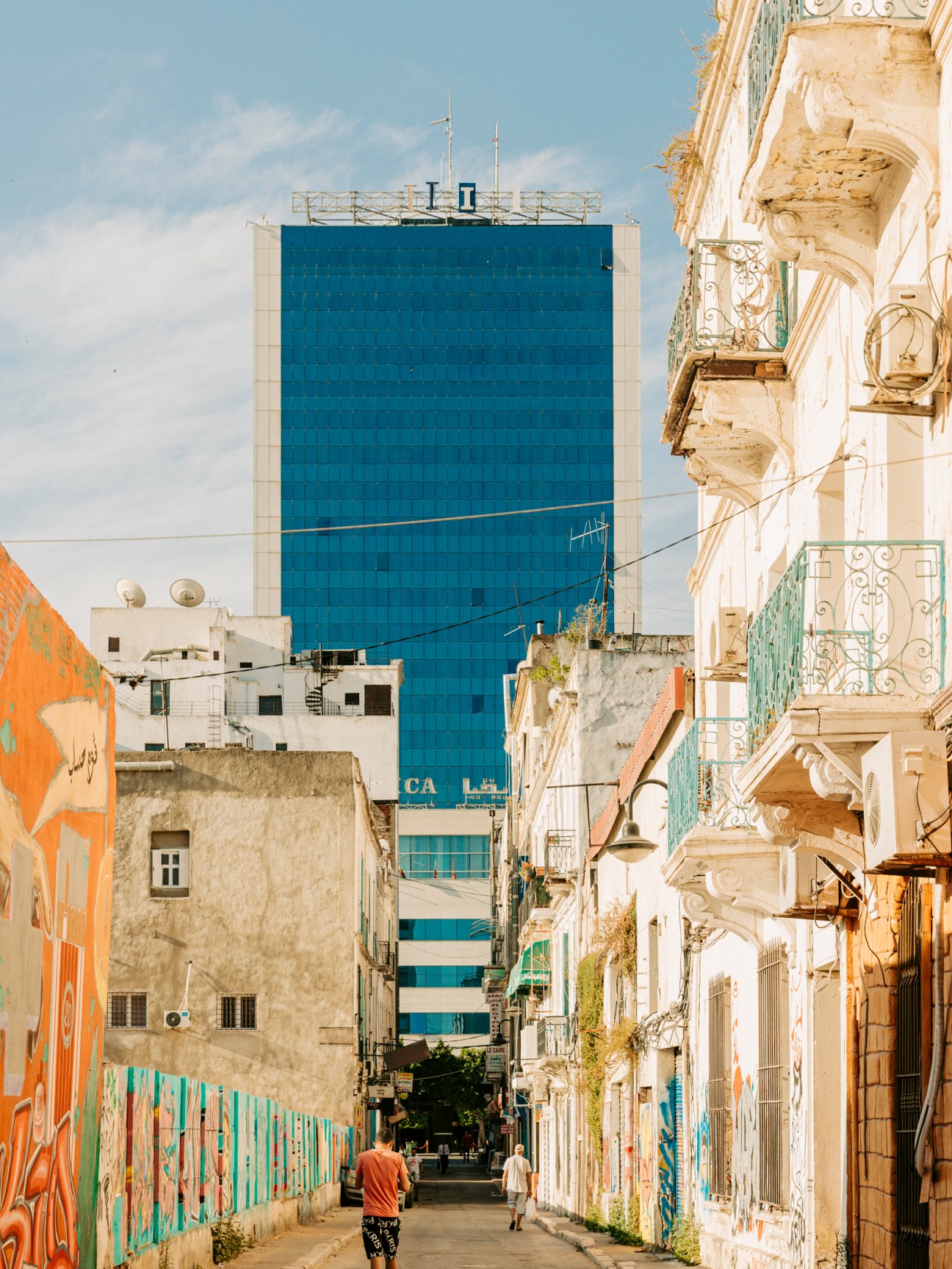
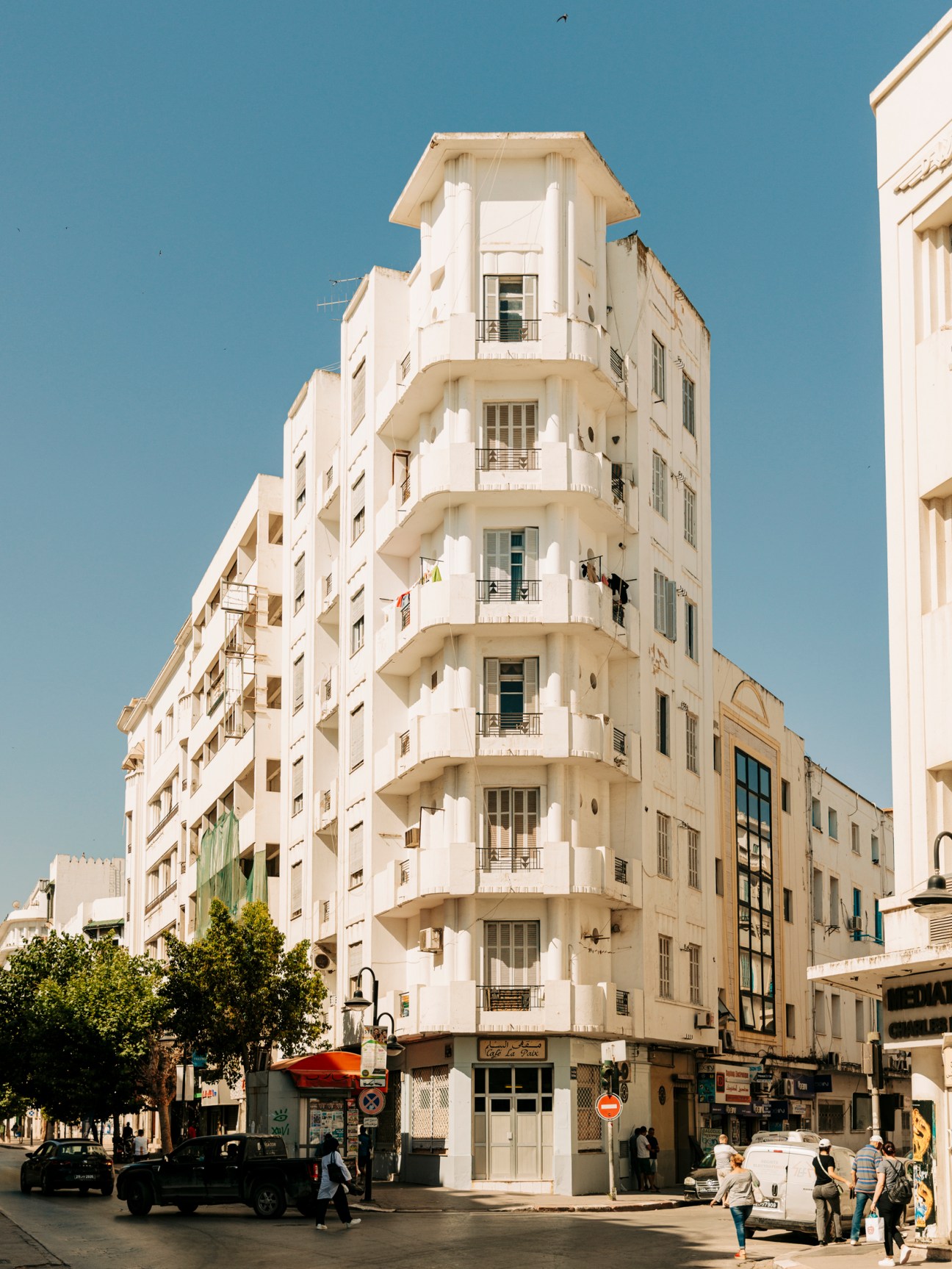
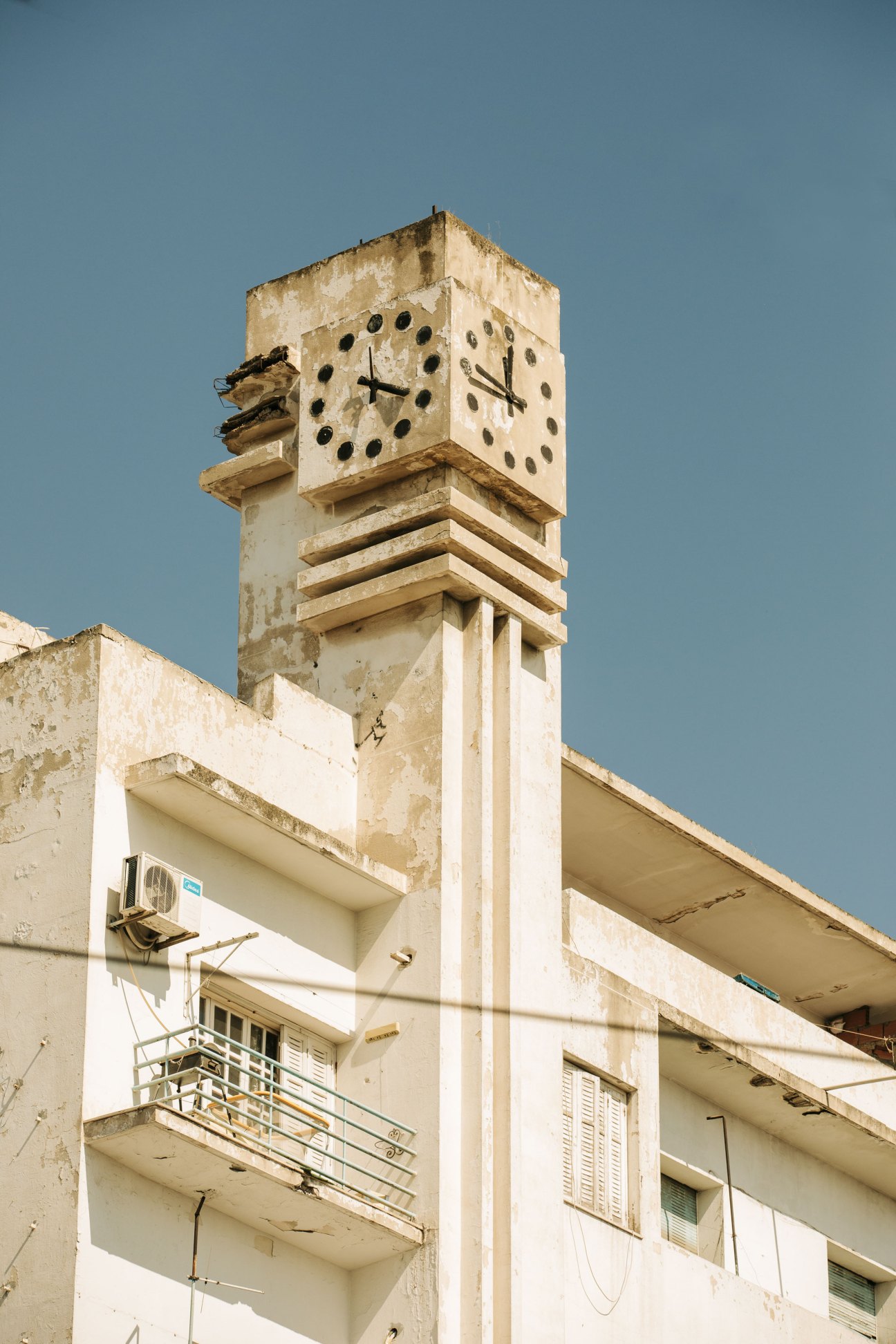
In Tunis it takes a matter of minutes to pass from the Middle Ages to modernity. Step through the arched city gate downtown and you’ll find a maze of medieval souks, melding into a grid of leafy avenues that were planned by the French in the late 1800s and then further developed after Tunisia gained independence in 1956. Across this time span Europeans brought their architectural styles to the city. There are ornate Haussmann-inspired façades, spired (and very French) advertising columns and a striking art nouveau theatre. The architecture is grand, evoking the Paris of yesteryear, but much of it is in dire need of repair. “We count more demolished historic structures than restored ones,” says architect Khaoula Stiti, vice-president of Édifices et Mémoires, a non-government organisation that holds cultural events and advocates for the preservation of Tunisia’s built environment. “As long as people don’t identify with this heritage, it will be difficult to preserve it.”
Touring the Mediterranean city, Monocle heads to the Mutuelleville neighbourhood, where a mother-and-son-in-law architect duo, Achraf Bahri Meddeb and Hassene Jeljeli, have tasked themselves with protecting part of Tunis’s modernist legacy. Welcoming us to a sprawling 1930s villa, which they bought in 2017 in a shabby state, they take us through the story of its restoration. While the exterior has stayed true to its art deco origins, with geometric railings and a flat roof, the light-flooded interior feels loft-like and contemporary. With concrete floors, exposed pipes and modular shelving designed by Jeljeli, it is as much Manhattan as it is the Med.
The architects’ enthusiasm for international flavours is reflected in the fashion design of Jeljeli’s wife, Anissa Meddeb. The showroom of her label, Anissa Aida, is on the building’s ground floor. Meddeb, who studied at the Parsons School of Design in New York, says that her work blends “the principles and colours of Tunisia’s traditional costumes with a Japanese approach to volume and shape”. This openness to cultural dialogue informs all of her designs. “Our country is a patchwork of cultures,” says Bahri Meddeb, bringing the conversation back to architecture. “In my lifetime I’ve seen so many buildings destroyed so this project makes me proud. But it’s a bit like with Tunisia’s stray cats: sadly we can’t rescue them all.”
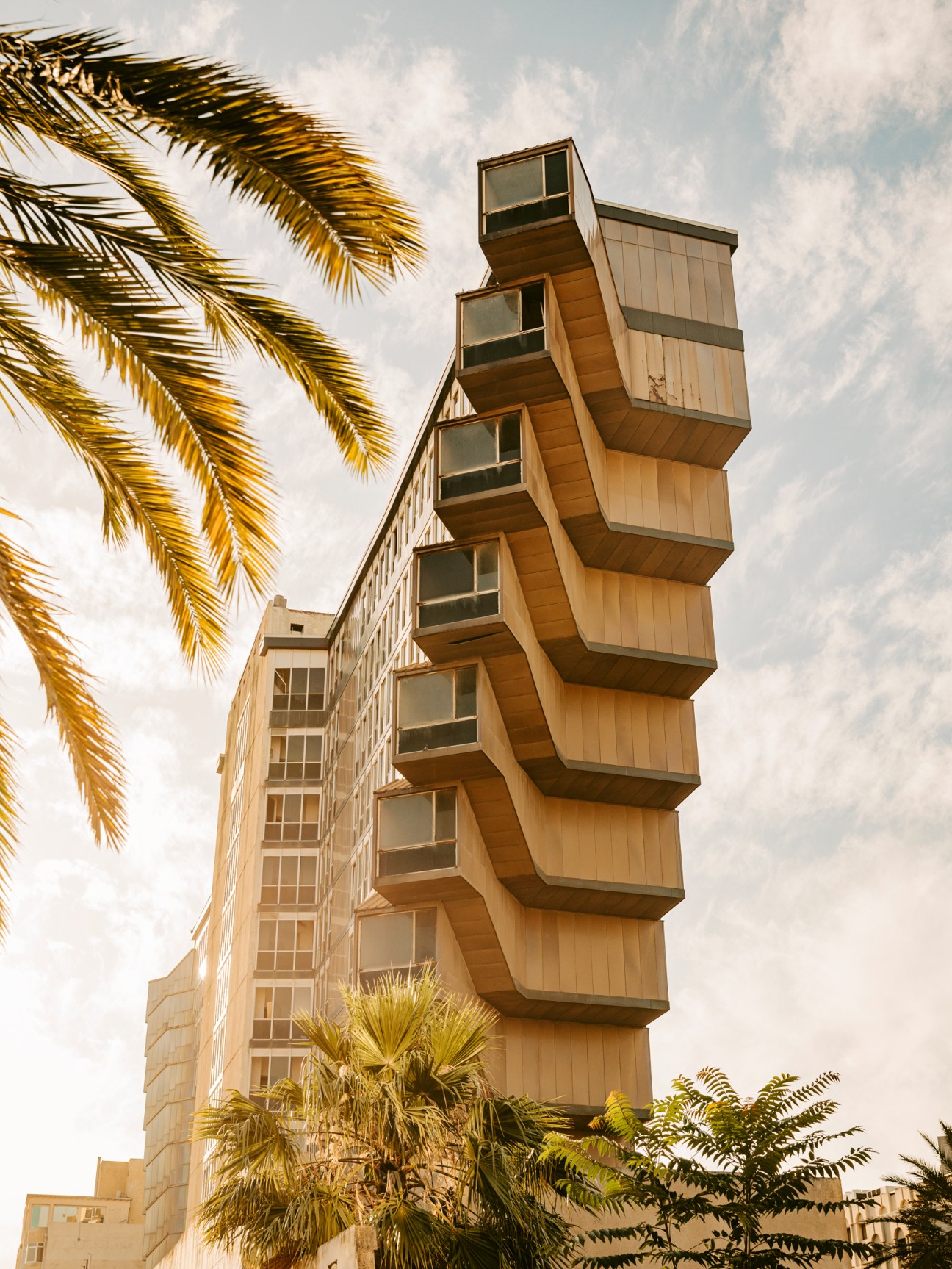
Another building that the city’s architects love but is at risk of demolition is the abandoned Hôtel du Lac. Despite its neglect, the inverted-pyramid-shaped hotel remains an impressive feat of engineering. Constructed by Italian architect Raffaele Contigiani in the early 1970s, the building has a deep underground support that allows its top floor to be twice as broad as its street level. Legend has it that the project’s distinctive architecture inspired George Lucas in the creation of the “sandcrawler” vehicle for his Star Wars films. “It’s an architectural icon that stands for post-independence modernity like no other,” says Franco-Tunisian architect Sami Aloulou. When news that the building would be replaced with a new five-star hotel broke in 2013, various architects, including Aloulou, campaigned until the demolition was put on hold. Goethe-Institut Tunis has occasionally held cultural events in the hotel but renovation plans have long been dormant.
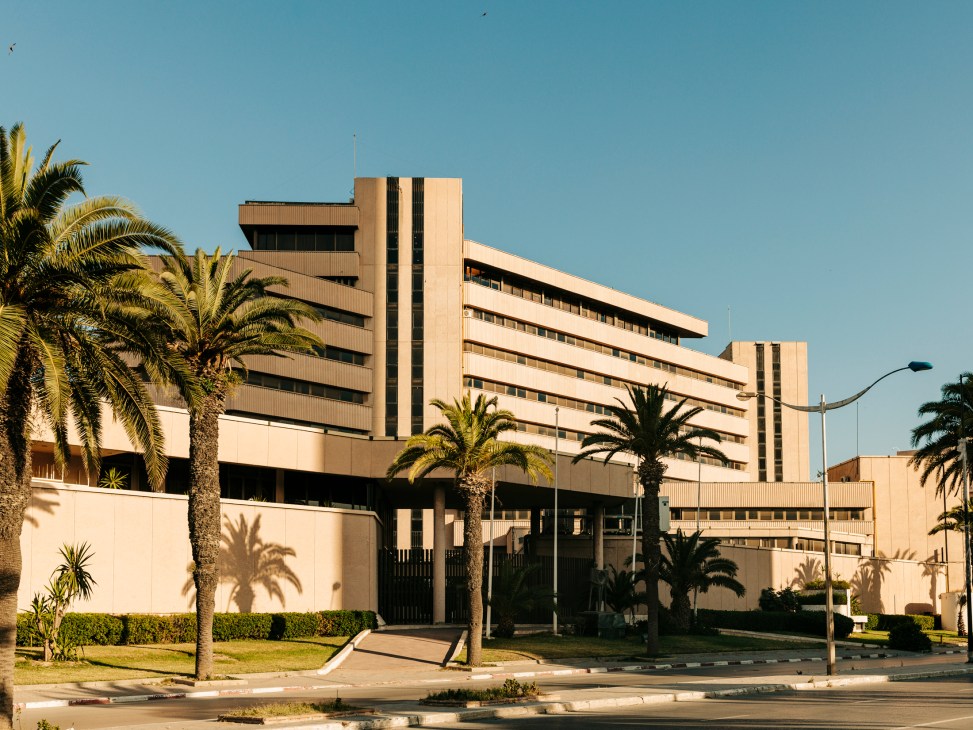
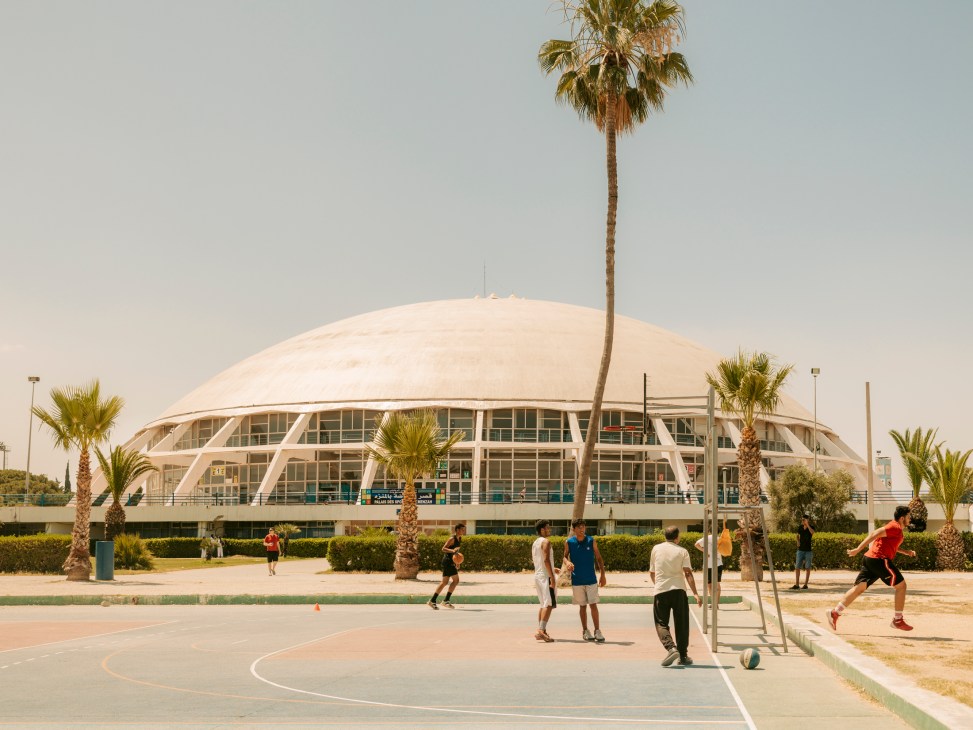
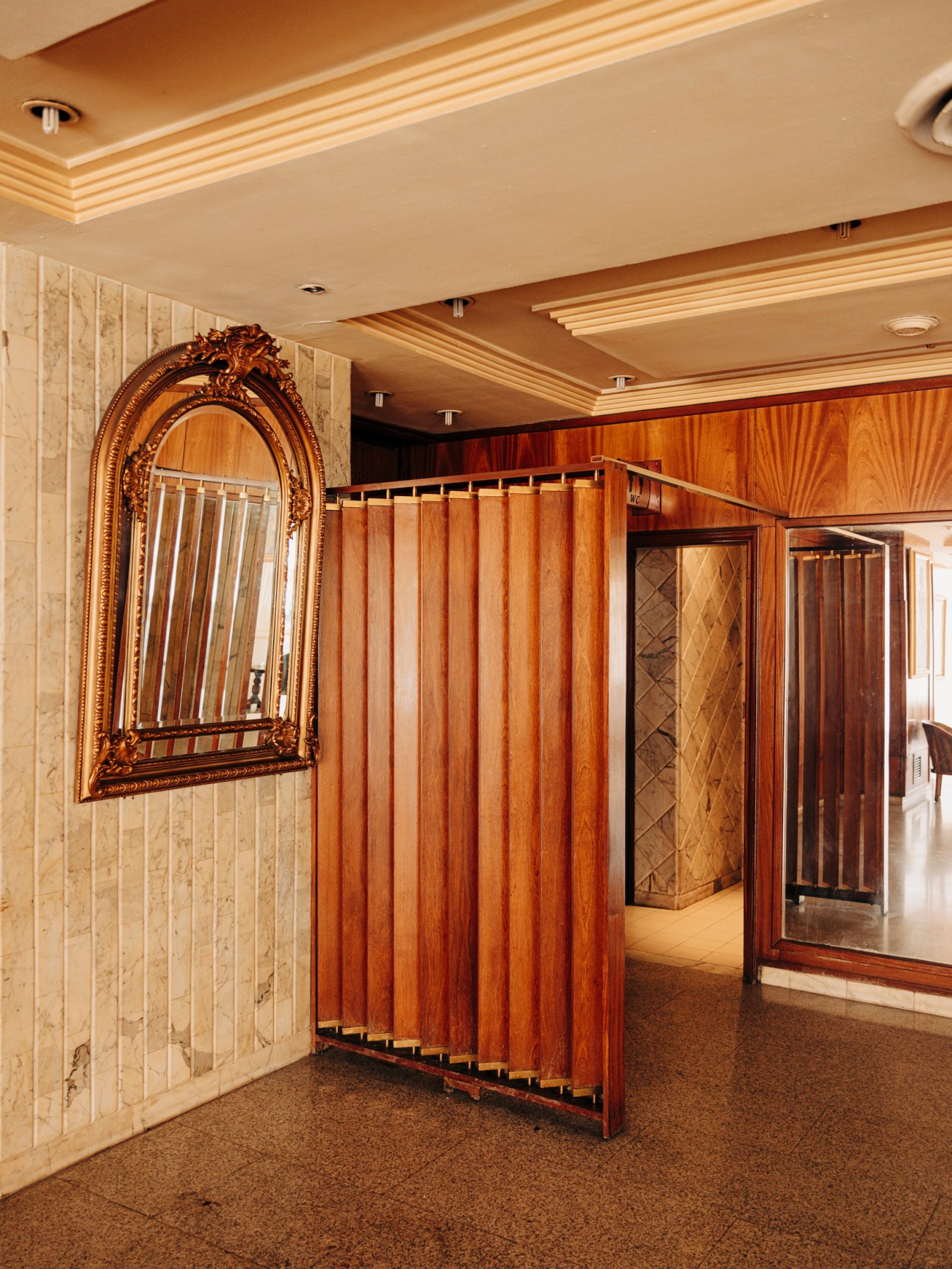
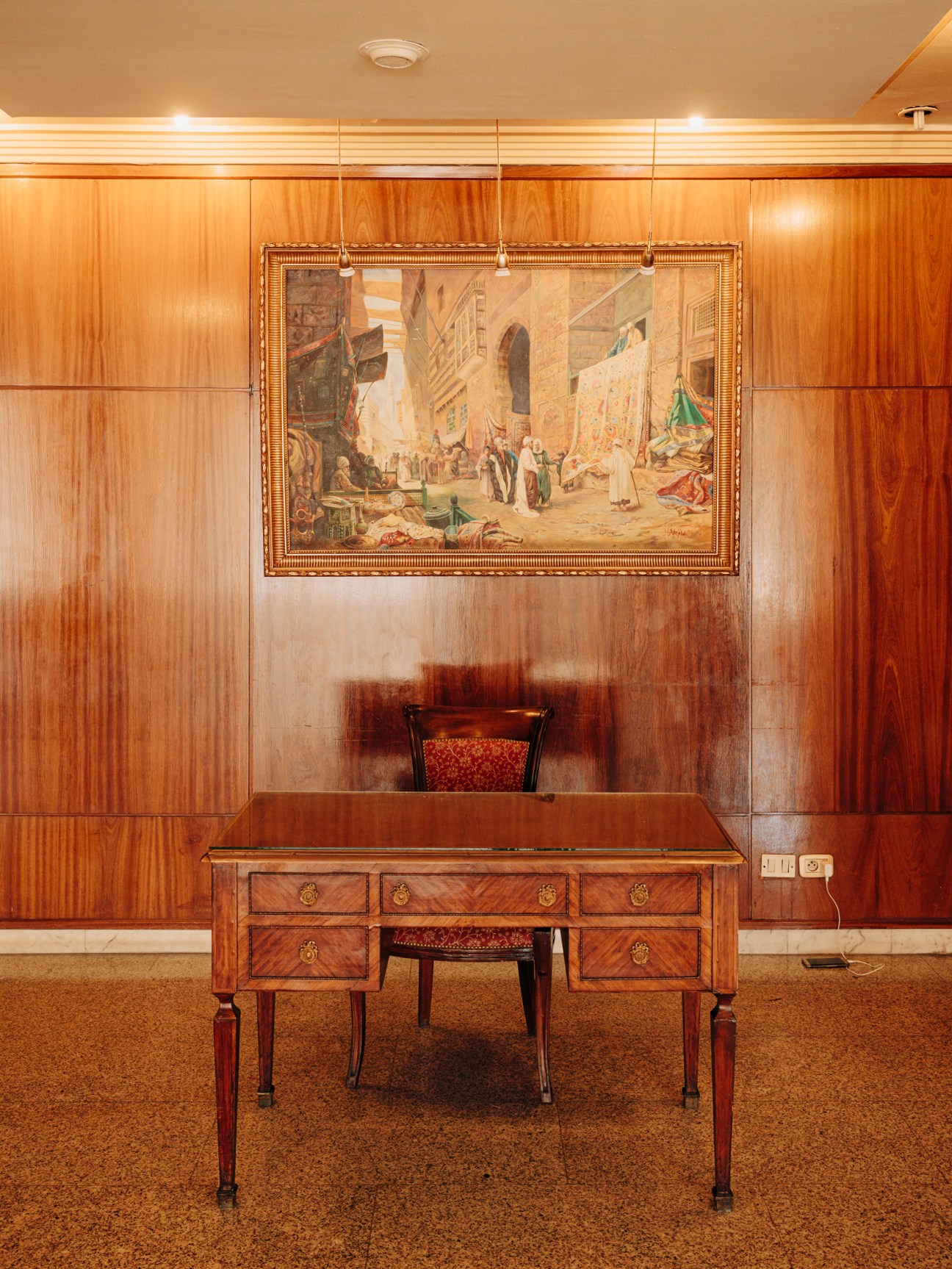
Other structures commissioned in the mid-20th century by Tunisia’s first president, Habib Bourguiba, who led the nation to independence from France, remain in a similar state. Along the avenue named after him there’s the glass-towered Hôtel Africa by Olivier-Clément Cacoub, who was once Tunisia’s unofficial state architect. When it opened its doors in 1970, it gave the city its first American-style skyscraper. Nearby is the 10-floor El Hana International hotel, whose rounded edges and neatly arranged windows, evocative of a check motif, enliven the building’s box-like form. Handsome still but in need of repair, these forward-looking and ambitious buildings are a vestige of how Bourguiba wanted his new independent state to be viewed by a chic set of adventurous holidaymakers.
There is some optimism for their revival. Architects and developers are already doing much to preserve and improve the characterful buildings in the city’s affluent seaside suburbs. In the coastal neighbourhood of La Marsa, where young families browse elegant bookshops and art galleries, discussions are under way about what should become of the abandoned Kobbet El Haoua casino. The site is a stunner: built as a grand home in the mid-1800s, it sits on stilts and is cradled by the sea on all sides. The people who lived here designed it to take advantage of the sea breeze and enjoy privacy from prying eyes when swimming. Though its future remains uncertain, the municipality has recently deemed it a national monument and the local community has launched a call for donations to restore it to its former grandeur.
In the neighbouring district of Carthage, a few minutes’ drive from the area’s Unesco-protected ancient ruins, Monocle meets architect Chacha Atallah at her home and studio. Upon entering through her laurel-framed gate, we are greeted by a scene reminiscent of a Slim Aarons photograph. Sandwiched between endless blue skies and a crystalline swimming pool is Atallah’s compact, mid- century villa, with sunshine-yellow awnings and breezy loggias. Despite its Californian spirit, the house is a typical example of 1960s Tunisian suburban vernacular. “This isn’t sophisticated architecture,” says Atallah of her home, which was erected as part of a housing estate for public-service executives. “There’s something very direct, almost minimal to it, which I love.”
Atallah runs her architecture studio and furniture brand, Slow Edition, from an annexe in her avocado- tree-dotted garden, while working on restoration projects and new builds across Tunisia and France. She has designed wineries, art galleries and offices, and is currently renovating the villa opposite her own house for a private client.
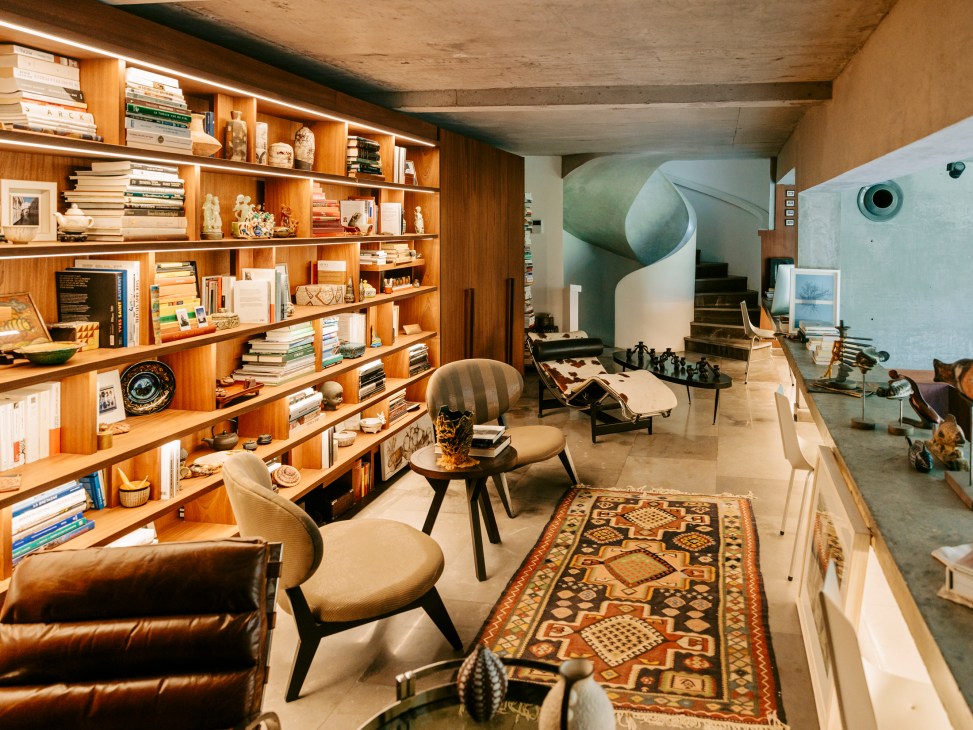
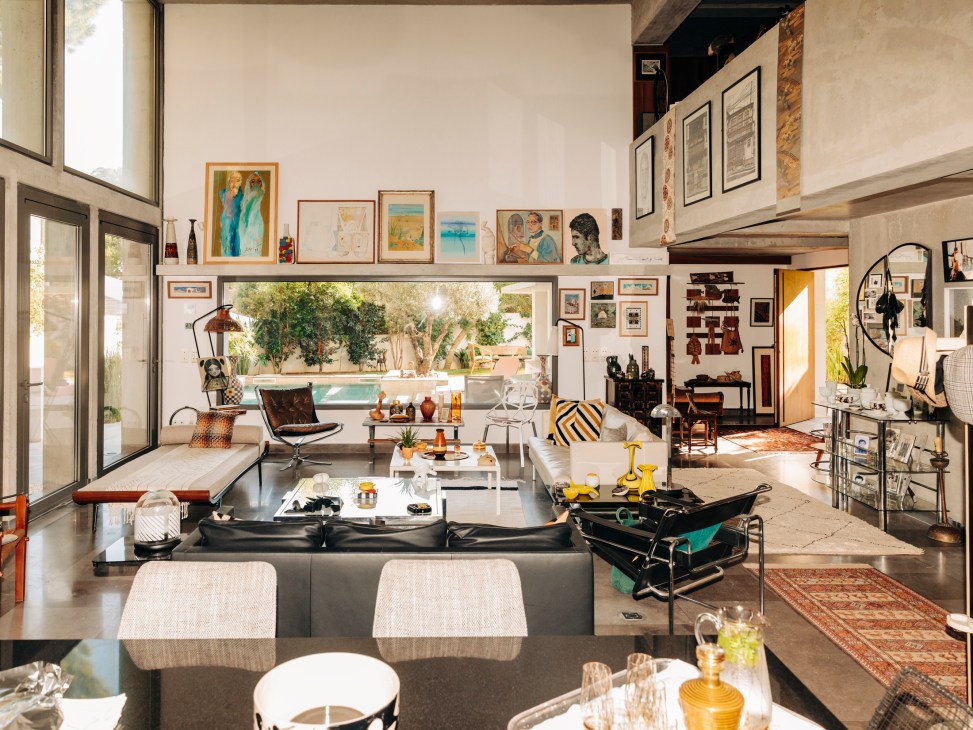
Among her completed residential work is a sleek concrete building amid a small pine forest in the otherwise densely populated suburb of Gammarth. The façade, a pattern of horizontal and vertical windows, is evocative of a cubist tableau but, inside, the starkness of the house’s exposed-concrete shell is softened by mahogany touches and a beautiful spiral staircase that connects the three floors. Though the owners joke that visitors keep asking them when they’ll get the painters in, they love the abundance of raw base material, which gives them a blank canvas for their collection of vintage furniture, travel trinkets and Tunisian craft.
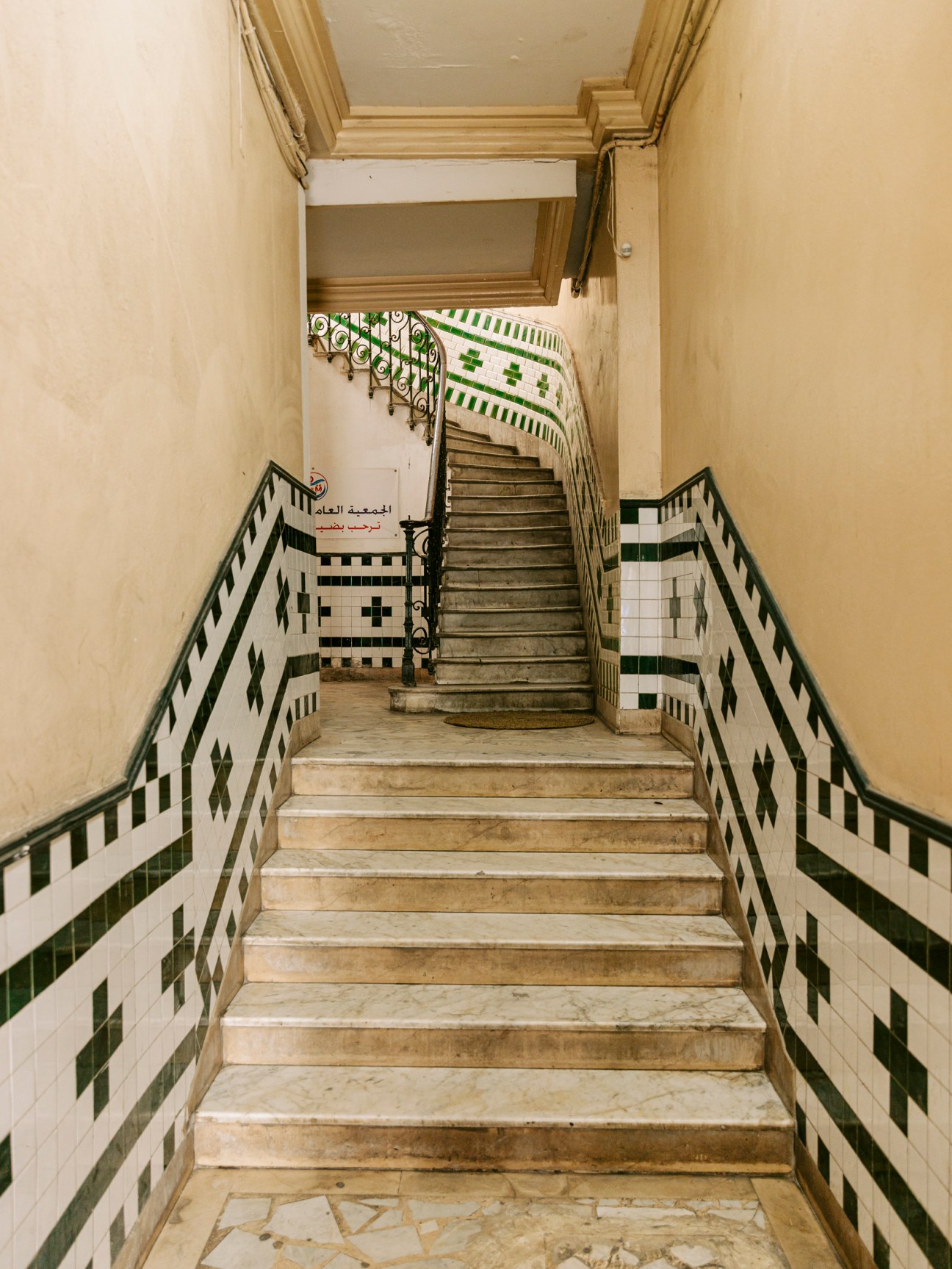

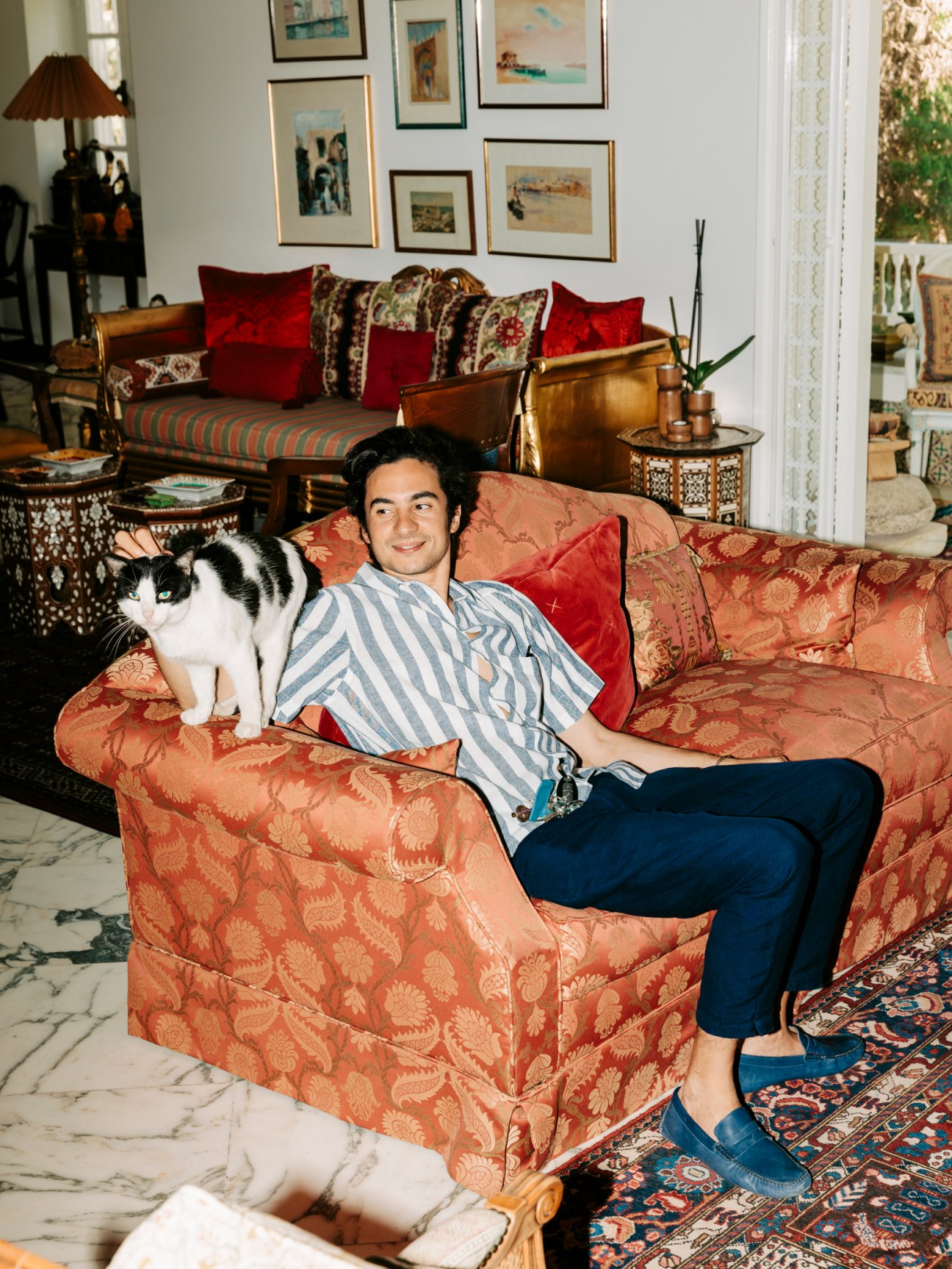
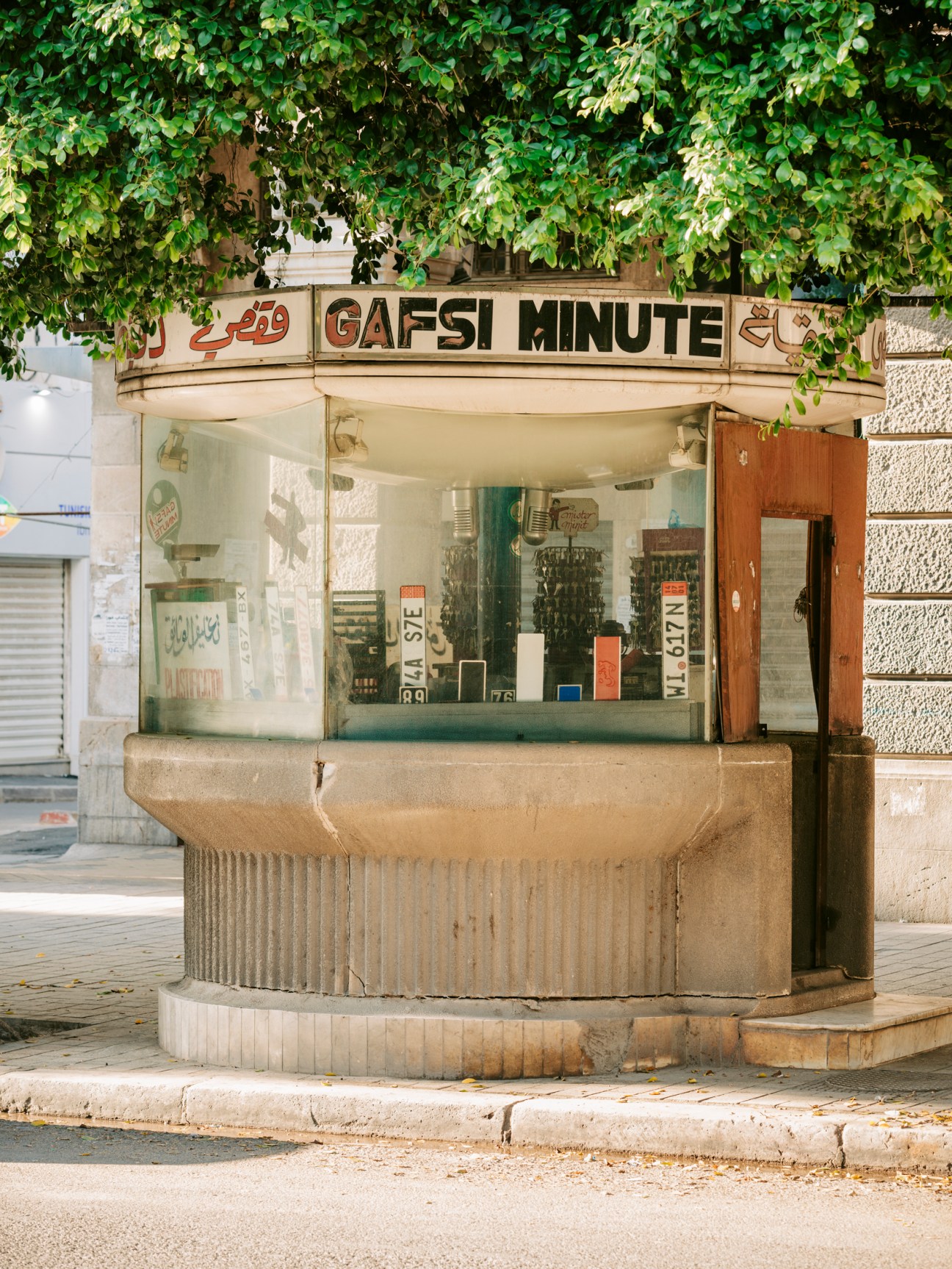
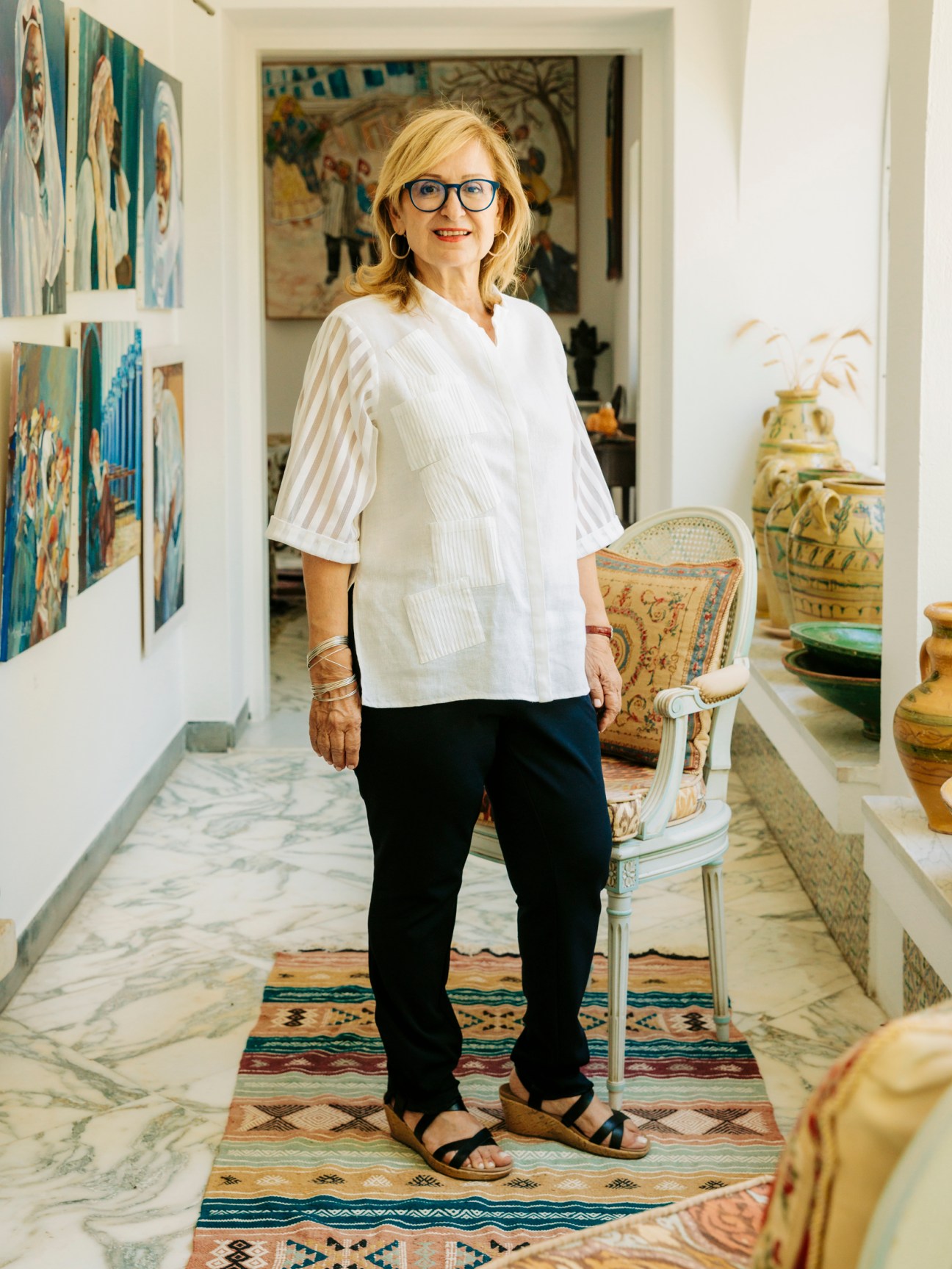
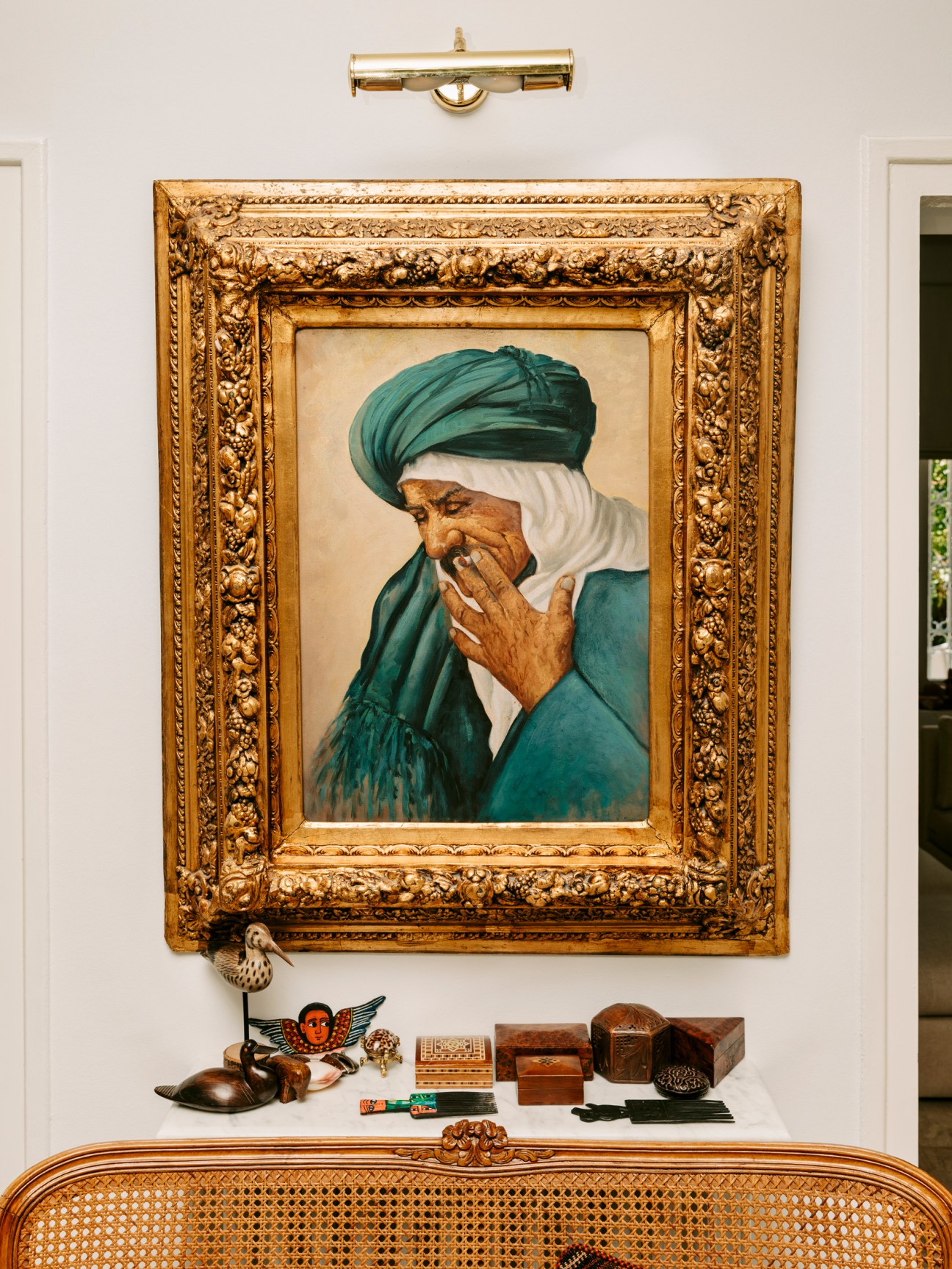
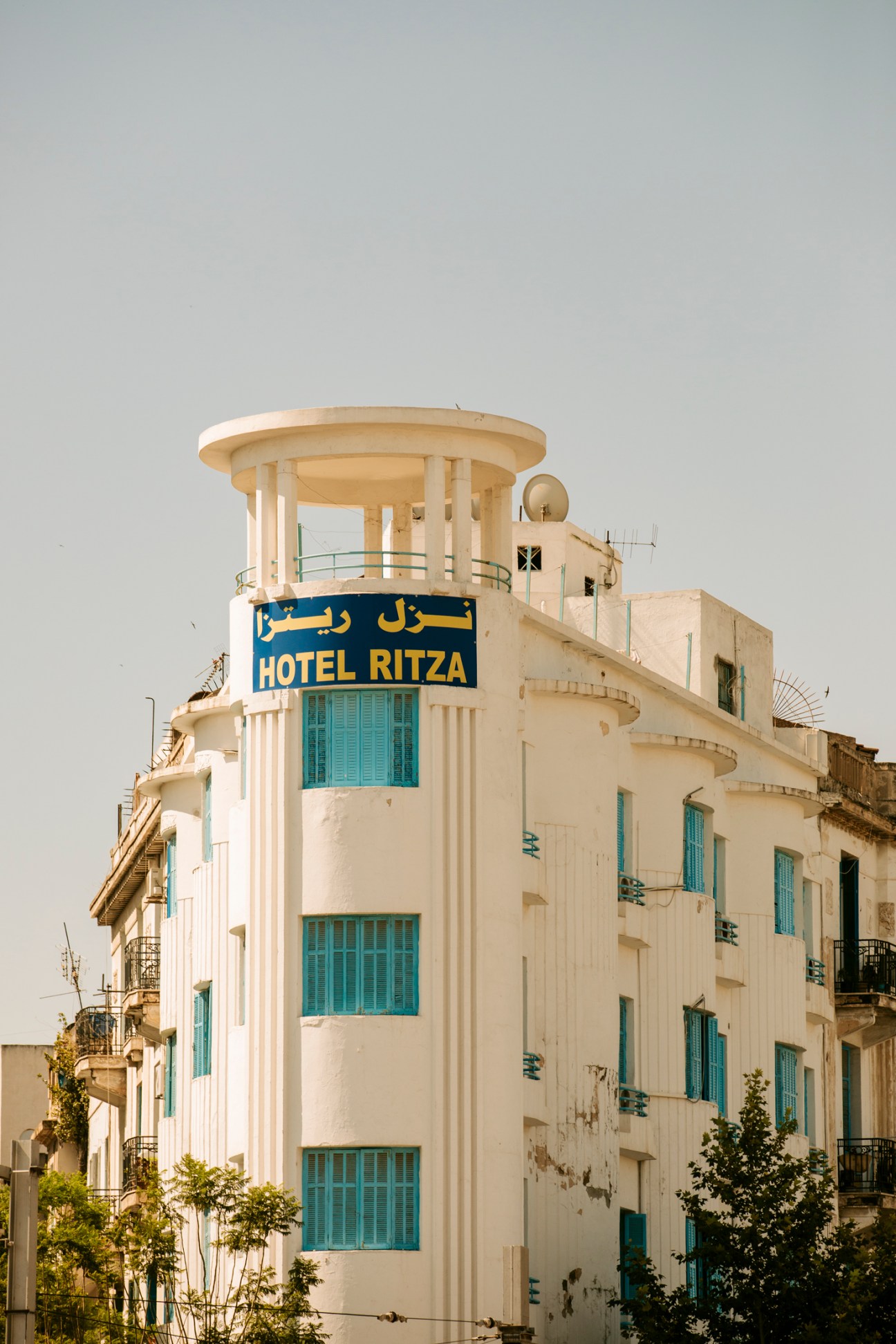
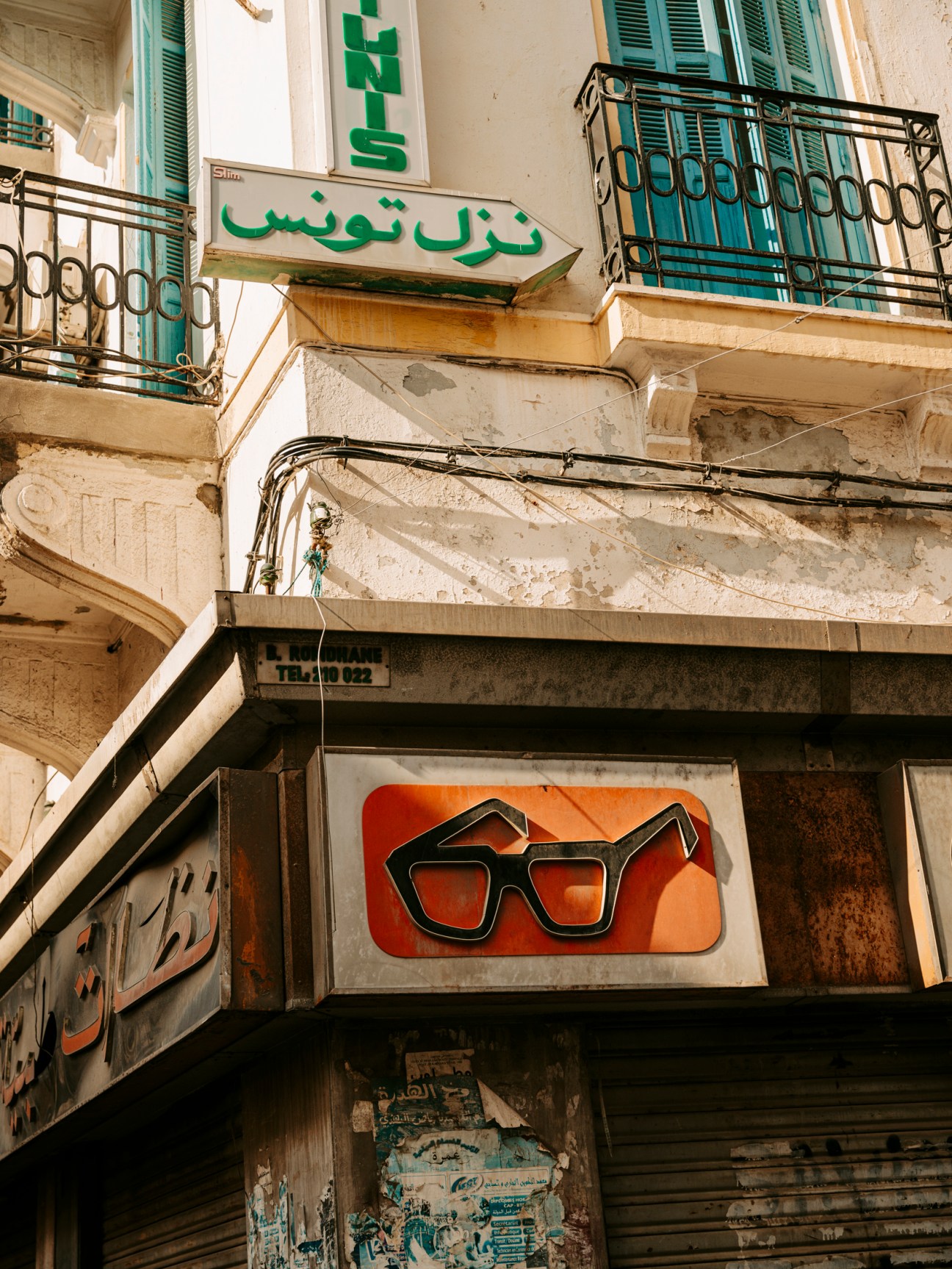
“It’s an interesting moment for architecture in Tunisia,” says Atallah. “We’re creating an identity of our own, one that’s rooted in the particular context of our country.” Though she previously lived and worked in Paris and Tokyo, she feels that now is the time to be working in her native Tunis.
Since the Arab spring of 2011, Tunisian creatives are increasingly returning home after stints abroad. Like Atallah, they want to rebuild their nation in their own image, making peace with its fragmented past while paving the way for a brighter future.
Living with war
In an odd twist of fate, 24 August, which marks six months since Russia invaded Ukraine, is also the anniversary of the country gaining independence from the Soviet Union in 1991. While that will probably result in a spike in international interest in the war, there has been a lull in global coverage. “What we’re facing is a natural decline in attention,” foreign minister Dmytro Kuleba tells Monocle. “It happens with every conflict – people get used to wars. But we’re making efforts to stay in the spotlight. We understand that the best things to put Ukraine back on the front pages are victories. That’s what we’re working on.”
We travel to Ukraine five months after Russian forces invaded. Listening to the stories of its people, seeing the destruction in Bucha and hearing air-raid sirens will inevitably change your perspective. But we witness something else too. It’s summer; cafés, restaurants and parks are open in Kyiv, Lviv and Chernihiv – even in Bucha. Ambassadors here marvel at this resilience but for Ukrainians it’s simply a matter of getting on with things. Why should everyday life and its little joys have to stop? Why shouldn’t this country rebuild and reopen?
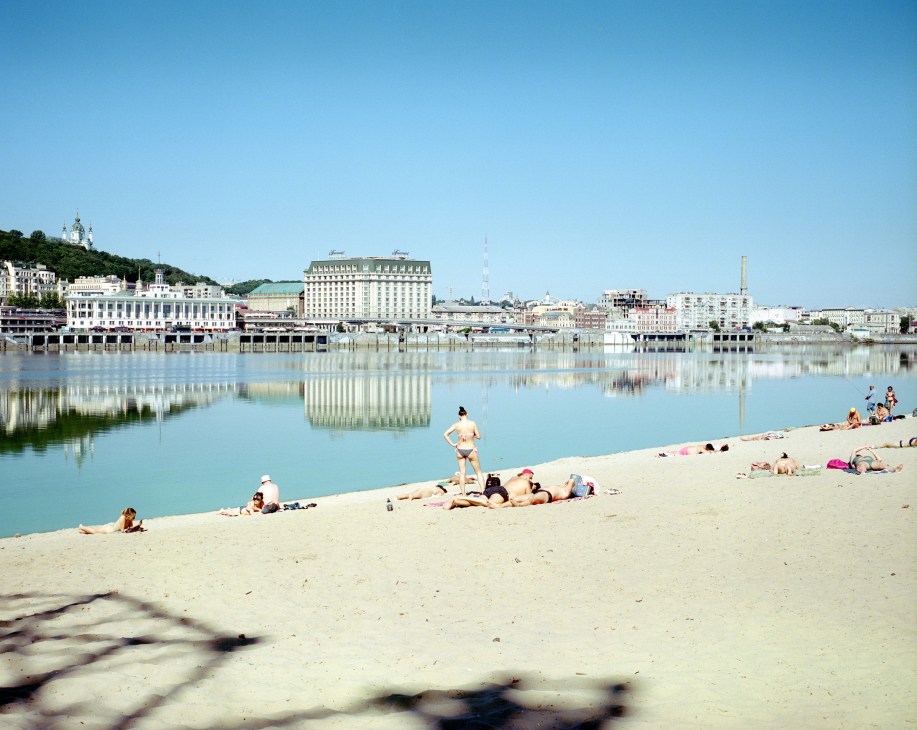
Even as Ukrainians fight a war, international visitors are welcomed. People are eager to share their stories. Our interview with the minister of digital transformation is the seventh of 14 meetings he is having that day; we are the fourth round of journalists seeing the deputy mayor of Bucha. The head of passenger rail meets us while organising a train for the foreign ministers of Austria and the Czech Republic. Other delegations in the week we visit include MPs from Warsaw and the first ladies of Latvia and Lithuania.
There’s tiredness in the eyes of many officials but also a determination to ensure that this war doesn’t fall off the front pages. The security of Europe and the world is at stake, they remind us repeatedly. “These visits by senior officials from other countries are game-changers – for them, not for us – because when you witness everything with your own eyes, you become more sympathetic to what is happening,” says Kuleba. “I’ve seen world leaders come here with one perception and leave with a completely different one.” On that, we can agree and we hope to give readers a small taste of our experiences in the following pages.
Additional reporting by Monocle’s Olga Tokariuk.
The night train
We take the Kyiv-bound No 82 train from Lviv to meet those on board and find out how a railway keeps running in wartime.
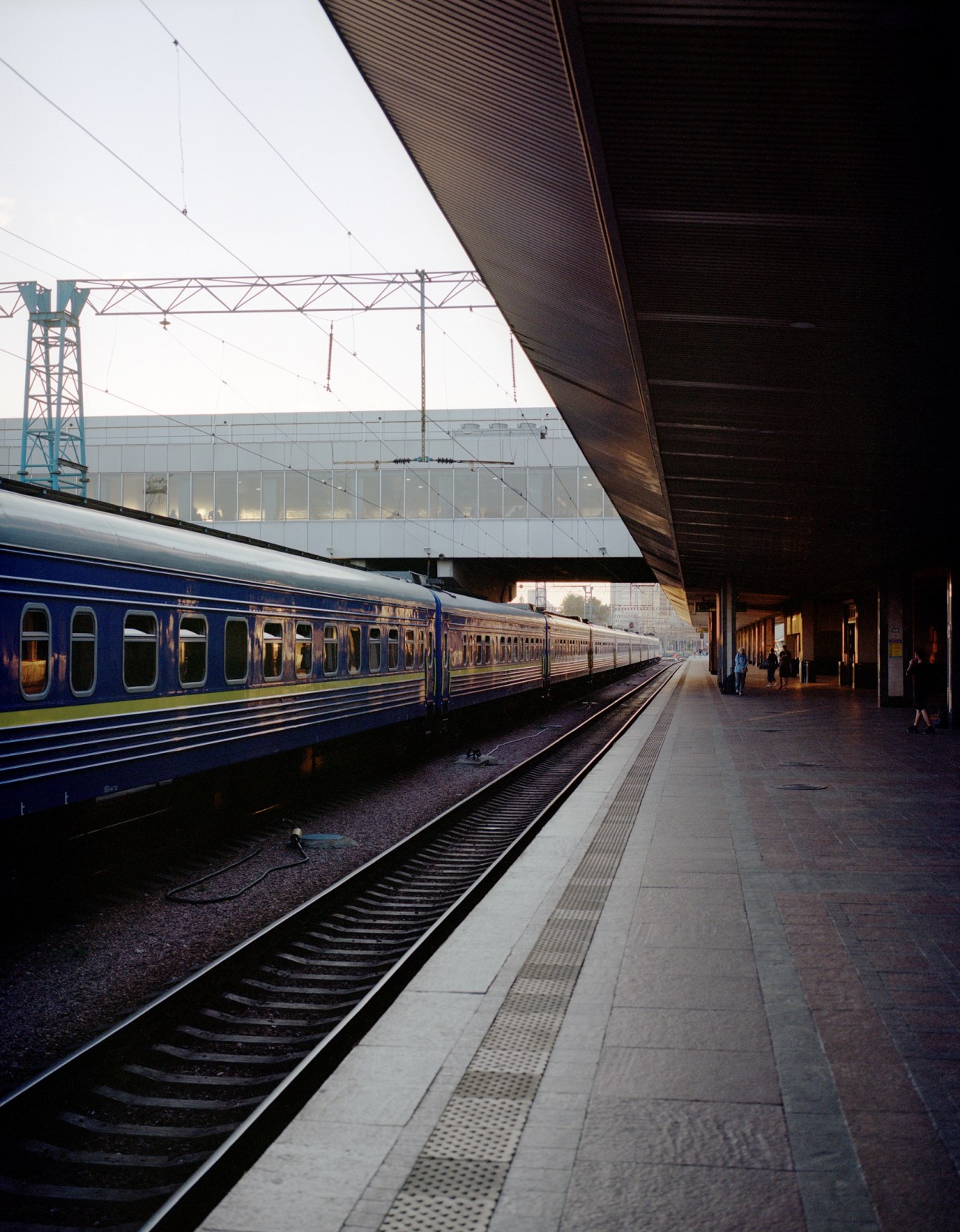
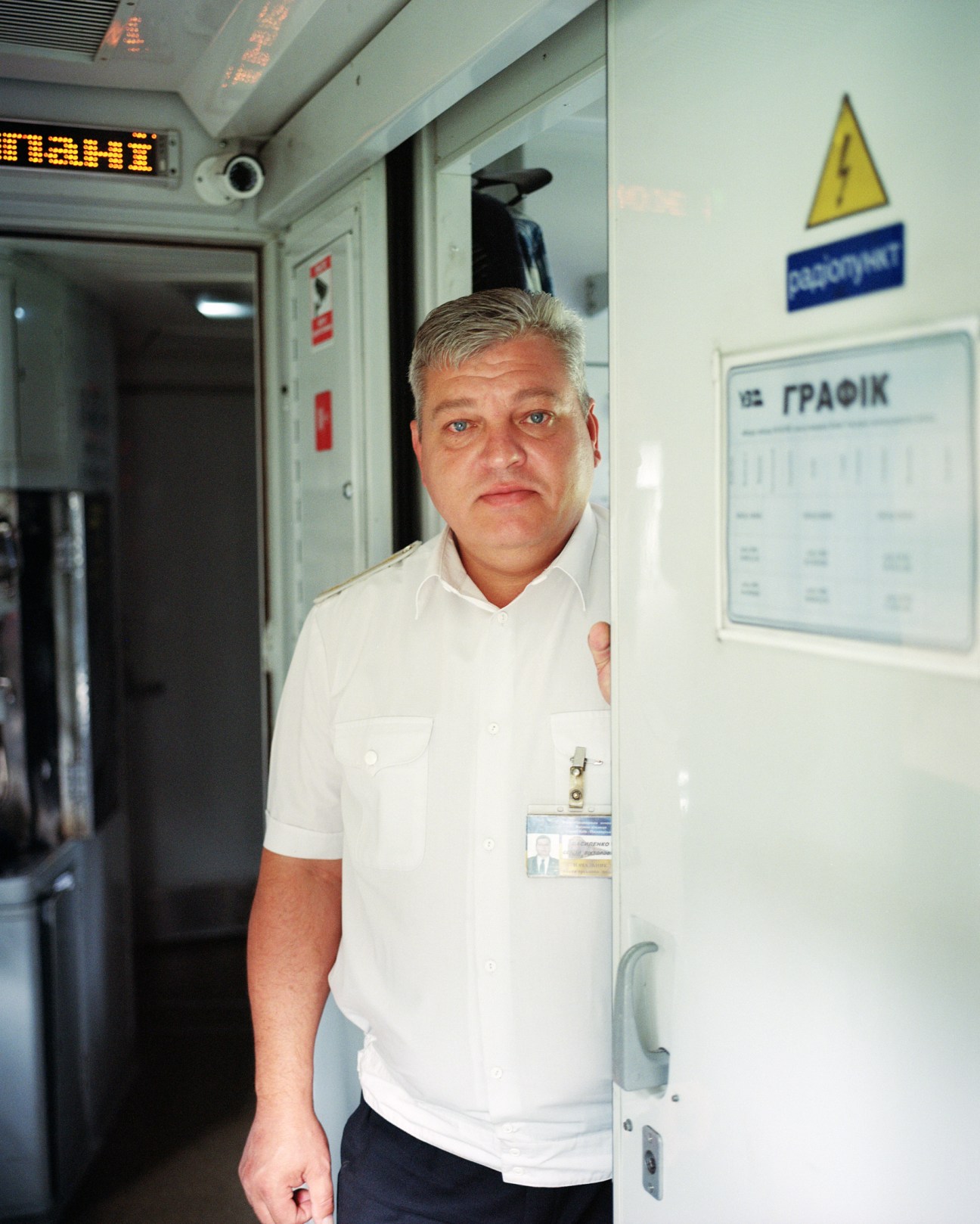
There are 541km between Kyiv and the western city of Lviv. That jumps to almost 700km when you take the night train: the war has forced routes to be changed and speed limits to be lowered to 80km/h. “At first our focus was to fit as many people as possible and get them out of the country,” says Oleksandr Pertsovskyi, head of passenger services at Ukrzaliznytsia (Ukraine Railways). This has now become one of the country’s most popular routes. “We cancelled ticketing, so people could travel freely. Railcars that would normally hold between 36 and 54 people have been filled with as many as 200 passengers.”
Ukrzaliznytsia has played a crucial role in keeping Ukraine moving. While in those initial days most passengers were heading west, now there’s a regular flow in both directions. “We’re coming back from a stay in the Carpathian mountains,” says a couple whose youngest son clutches a souvenir from the trip. “We wanted to get the kids away from the constant sirens and try to give them a sense of normality.” A few compartments down, we meet a young mother with her daughter, returning to their home in Bucha after spending time in Germany. “It is our first time doing this trip by train,” she says. “Let’s just say that I found out she prefers flying.”
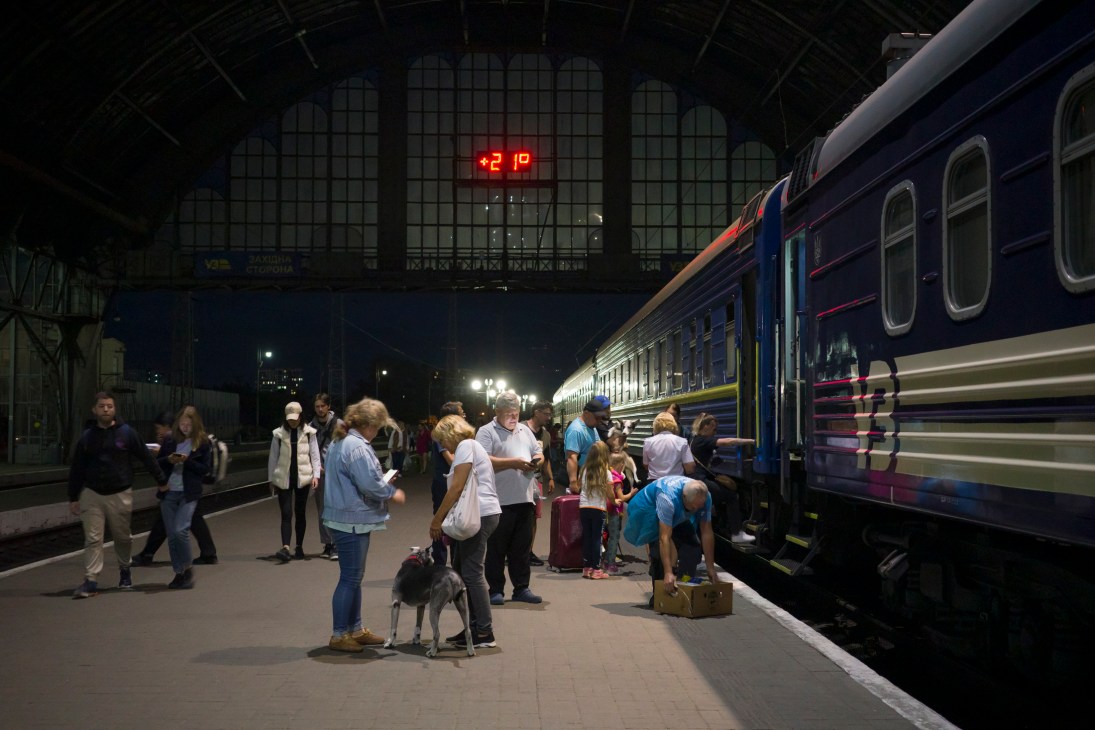
Carriage attendant Lyudmyla Shevchuk says that, in the early days of the war, she would sit with passengers to hear their stories and offer support. “I didn’t even think about fleeing – I came to work on 24 February [the day of the invasion].” Shevchuk has been working for the railways for 22 years; this isn’t the first time that war has disrupted her job. “My route used to be the Kyiv-Simferopol train in Crimea. That all changed after the annexation in 2014.”
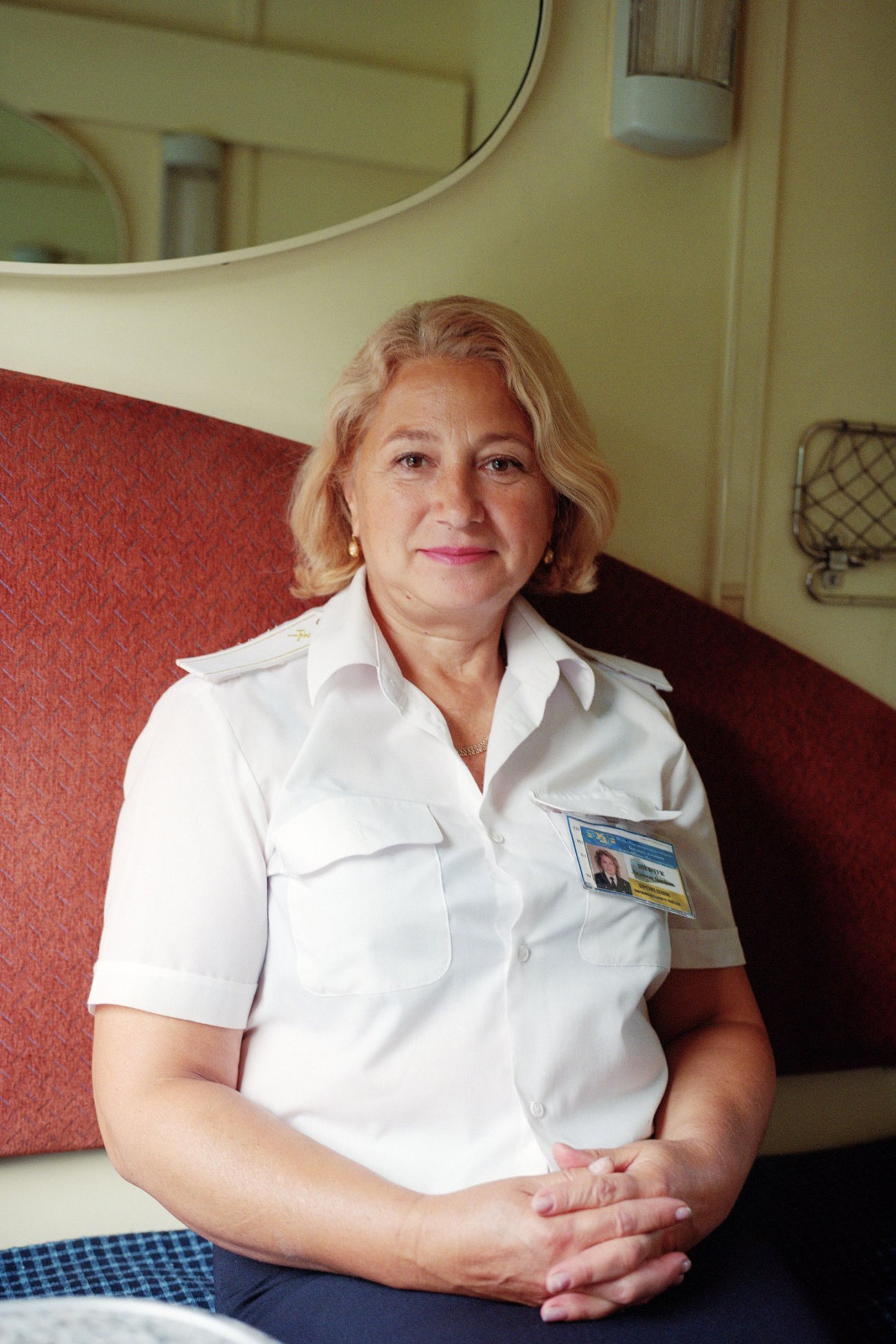
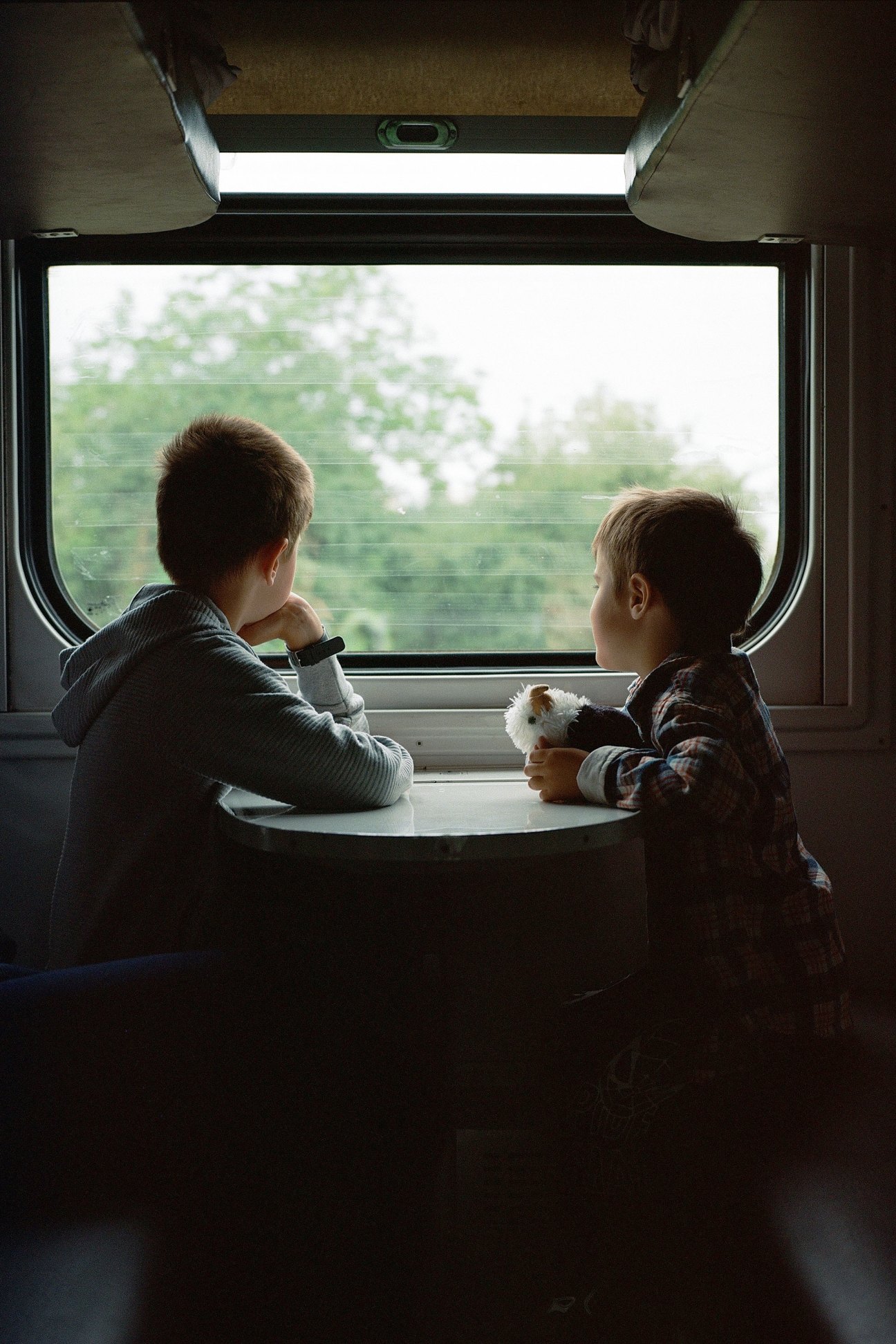
Outside the train, it’s pitch black. Staying out of sight of Russia’s missiles is crucial. “We have protection tape on all windows, blinds need to be down and we apply ‘light-masking’ – no lights on at night,” says Pertsovskyi. “The priority is to keep everyone safe.”
The sun rises and Shevchuk offers us coffee. Through the window, the sunflower fields have been replaced by houses; Kyiv is not too far. In the next carriage we meet Serhii Viktorovych, director of train No 82, who has been working for the railway since he was 18. “The job has changed a lot over the years but this war has made people respect us more,” he says. “I’m proud to wear our uniform.”
Meeting the mayors
The war has upended the already complex roles of Ukraine’s heads of municipal government. Two city mayors explain how.
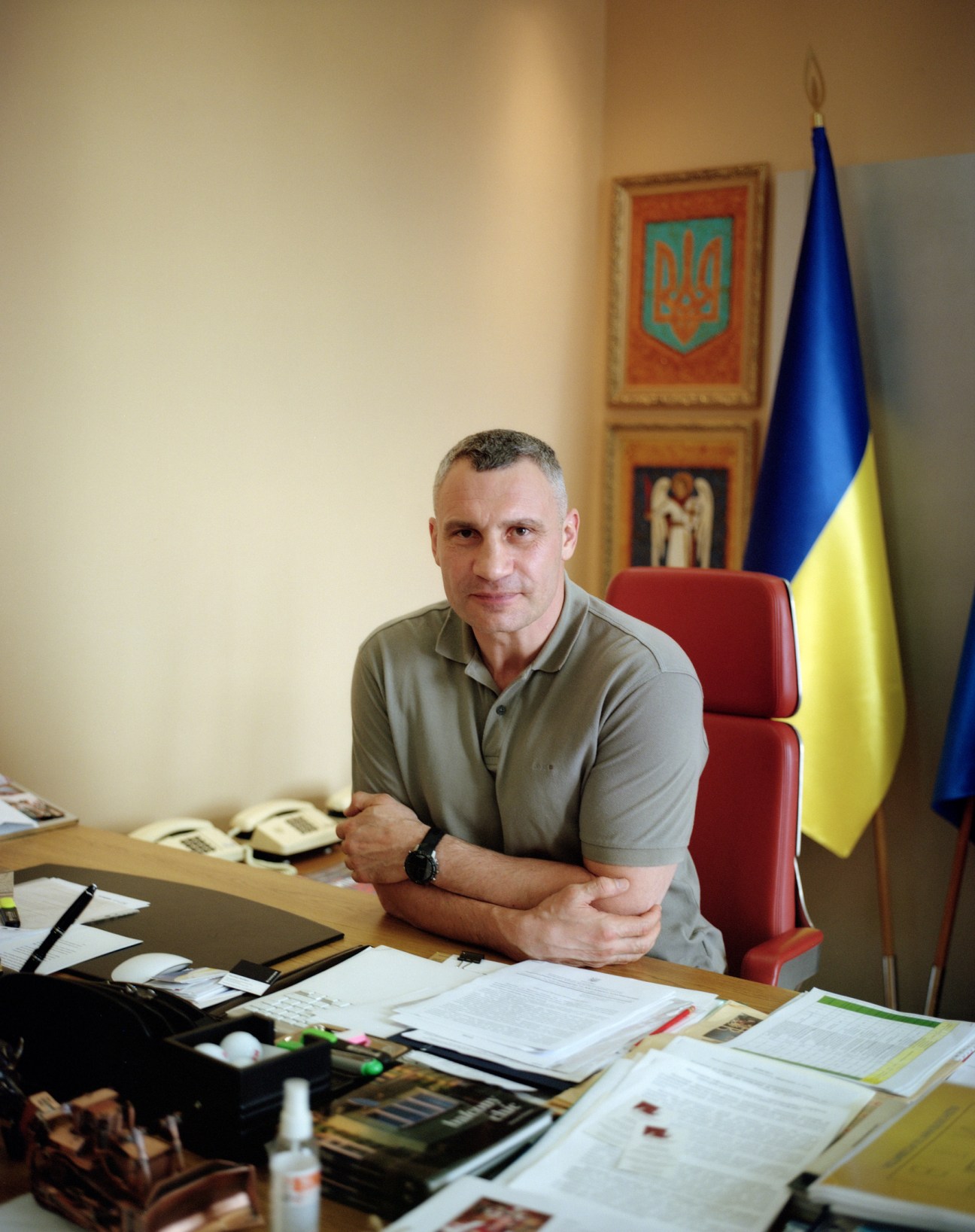
Vitali Klitschko
Mayor of Kyiv
Running a city is challenging at the best of times, let alone during a war. Kyiv’s mayor (pictured, top) tells us about the capital’s daily life, Russia’s failed attempt to take it over and plans that had to be put on hold.
How would you describe the mood of the city?
If you look outside, there’s a beautiful blue sky and this doesn’t feel like a country at war. But people are nervous: we could have rocket attacks from Russia at any moment. Everyone is asking the same questions: how long will this war last and how can they stay safe? Meanwhile, the economy has been destroyed; many people have lost their jobs and have no social support; petrol prices keep rising. We are looking ahead to the winter and wondering how we will heat our homes because we used to depend on Russia for gas but now have to be independent. There are a lot of questions and not enough answers.
How do you balance giving people a sense of normality with the need to avoid complacency?
On one hand, we try to give the community an ordinary life: studying, going to work, having businesses open and operating. But on the other, we must also follow the rules – there’s a curfew, military checkpoints, strict regulations. All of this has a huge effect on the lives of residents.
As the capital of Ukraine, Kyiv is a target. Because you’re its mayor, you’re a target too. How do you keep the city and yourself safe?
It’s not about me. Every Ukrainian is a target. Russia wants to occupy the whole country. This is a war without rules: they attack civilians with no explanation. I come from a military family; both my father and my grandfather served and they always said that the greatest honour of an army man was to be able to defend his country. That’s why every single one of us is doing it. Defending my city is my mission and there’s no time to think about myself.
You’ve been an effective communicator, making the case for Ukraine internationally. Why is it important for you to play that role?
Ukraine is one of Europe’s largest countries. If we go down, it will destabilise the whole region. This war could affect everyone if we don’t win. It has been more than 150 days since it all began. For me, it feels as though it’s been one long, long day. This feeling began in February and March when Kyiv was almost taken. Russian forces encircled the city and there were explosions all around. We could feel the buildings shaking, the air-raid siren kept sounding and people spent weeks living underground in bunkers. There are many stories from that period about Kyiv residents and their humanity. I am very proud to be Ukrainian. We would rather die than kneel down to Russia. It was this spirit of defiance that surprised a lot of people internationally.
Do you still feel support from the international community or do you sense fatigue?
It’s important for us to feel this support, that people understand what we’re going through. It’s why we have been receiving humanitarian help from the West and political support to help the millions of Ukrainian refugees across Europe and around the world. Our candidate status for EU membership is a huge step. Now we need weapons so that we can defend our country. We don’t want to live in a dictatorship. We are fighting for European standards, democratic values, human rights and press freedom.
Despite the destruction, there’s a lot of rebuilding going on. Tell us about the importance of this.
Rebuilding critical infrastructure is crucial for Kyiv. More than 600 buildings have been destroyed, about 200 of which are residential; over 120 people have been killed by airstrikes, more than 500 have been injured – and this is just the level of aggression here in the capital. So it’s my responsibility to bring these services and structures back as soon as possible. It’s not easy, because we don’t have a city budget right now; we’re working with a budget of survival.
Are you able to focus on the everyday bureaucracy of running a city?
Kyiv can’t be frozen. People still need roads to move around; they need water, electricity and public transport. The city is a big organism and it’s important to ensure that these services continue to operate. Before the war we had 3.6 million citizens. While many have left, others have moved in too. We have about 100,000 registered refugees from the east and they all need the city’s services. We were quick and started working on it pretty fast so right now, despite all the challenges, things are under control in Kyiv.
What do you love most about your city? What are you most proud of as its mayor?
I’m actually so upset because we had great plans for the city this summer. Behind me, you can see the plans for a great wave-like pedestrian bridge in Natalka Park, which is one of the most beautiful spaces in the Obolon district. It should have been open by now but the war put it on hold. We were planning to redevelop the main street of Kyiv, Khreshchatyk; we were revamping the parks. There were so many ideas about how to develop our city and this war has destroyed all of that. I enjoy my job and like being able to change my home city: build new schools, organise the streets or create new parks. Right now I can’t do these things because it’s all about stopping this senseless war and kicking Russia out. I’m a former boxer; I know that if you don’t fight, you don’t win.
Andriy Sadovyi
Mayor of Lviv
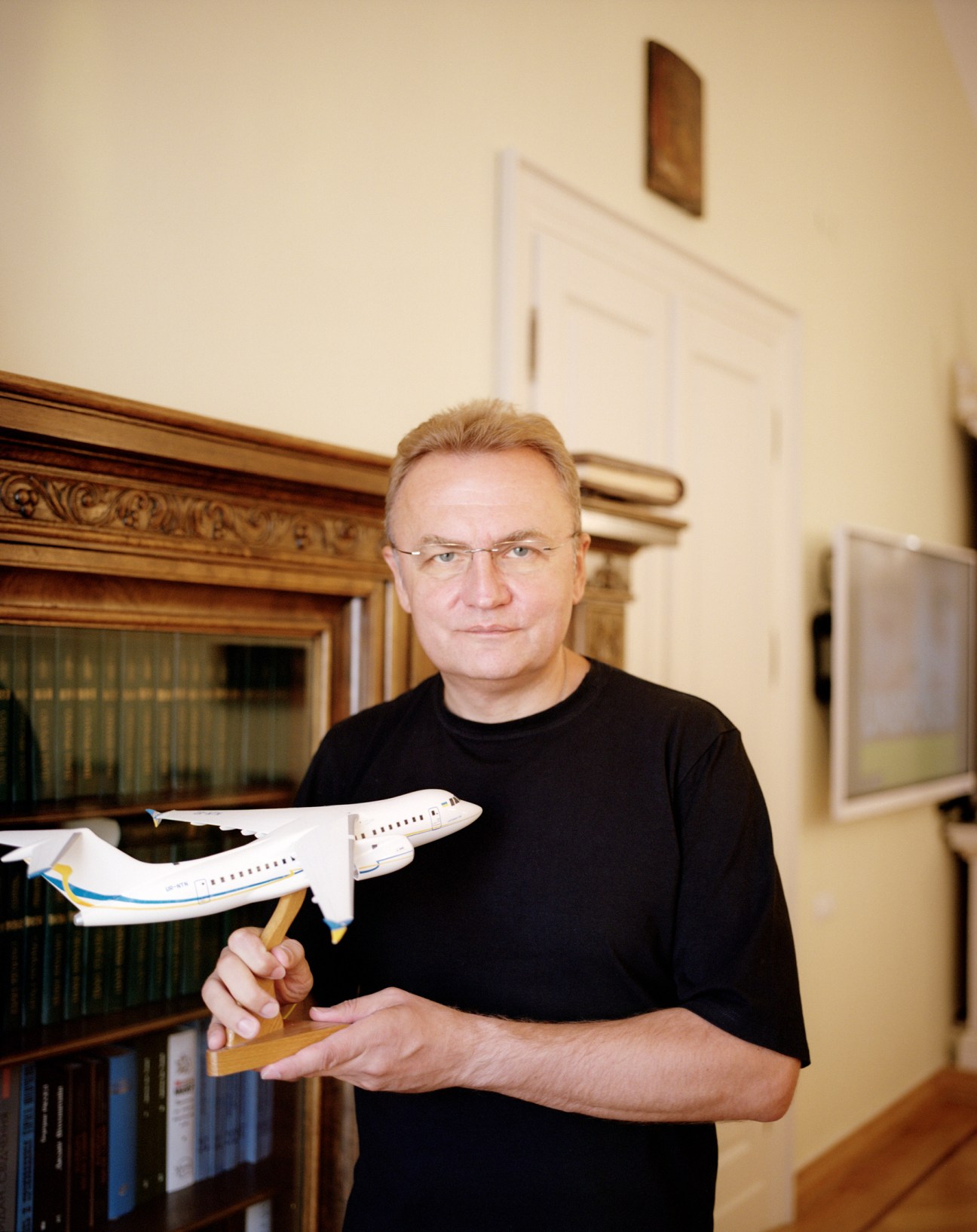
“My life has completely changed,” Andriy Sadovyi (pictured, bottom), mayor of Lviv, tells Monocle when we meet in his office. “There’s the part that existed before 24 February and my new life since then.” Just 70km from the Polish border, the largest city in western Ukraine has become a key entry and exit point since the start of the war, with as many as 60,000 people a day passing through its railway station in the conflict’s first weeks. Almost overnight, it transformed into a hub for diplomats as nearly 100 embassies temporarily relocated here. Today the city is home to one of the largest populations of internally displaced persons. “I feel a huge responsibility towards my city,” says Sadovyi. “We need to build territorial defence and support my new citizens as much as possible.”
Despite being one of the furthest cities from the front line, signs of the conflict can be found all around. In the inner courtyard of city hall, officials give civilians a regular briefing on what to do in the case of a chemical weapon attack. On the lower-ground floor, corridors that used to host the works of the municipal museum now serve as a bomb shelter for staff and citizens, complete with a makeshift mayoral office. “There was a lot of fear when it all started but today there’s an understanding of our new reality,” says Sadovyi as we look onto the balcony in his office with a view of the statues in Rynok Square, covered by sandbags.
But Lviv’s role during the war goes far beyond its strategic location. The city is home to one of the country’s top medical hubs that is treating many of those injured in the attacks. For Sadovyi, now is the time to invest in this expertise and prepare the city for when the war is over. “I need €77m to create Unbroken, Ukraine’s largest physical and mental rehabilitation centre,” he says. This plan includes a leading prosthetics centre, 3D-printing facilities, housing for patients in rehabilitation and an expansion of the hospital. To turn all this into reality, he is counting on international support from his peers; the cities of Wrocław and Freiburg have each pledged almost €1m for the cause already.
Sadovyi remains positive and offers a lesson before we part ways. “It’s very important to find some moments of happiness every day,” he says. “You have to keep living and find inner strength to be able to have a smile on your face.” Perched on top of a cabinet in his office is a model of the aircraft Antonov an-158 in the Ukraine International Airlines livery. Sadovyi smiles as he dreams of the day when his country becomes an aircraft manufacturer once again.
Summer in the city
Beneath the surface of a balmy evening on the town, danger remains an inescapable reality for Kyiv’s citizens.
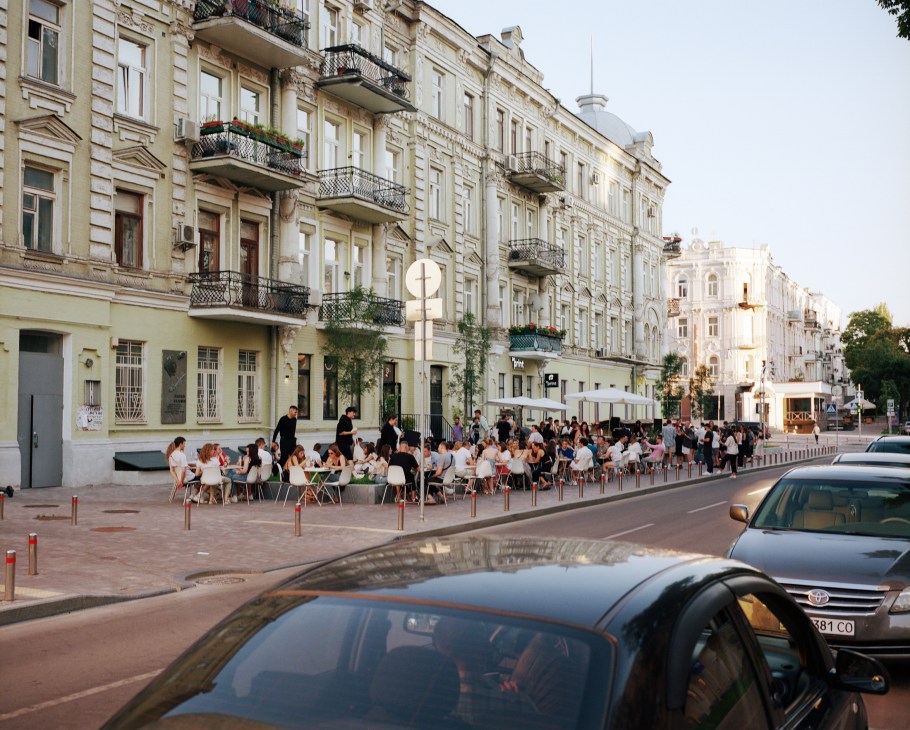
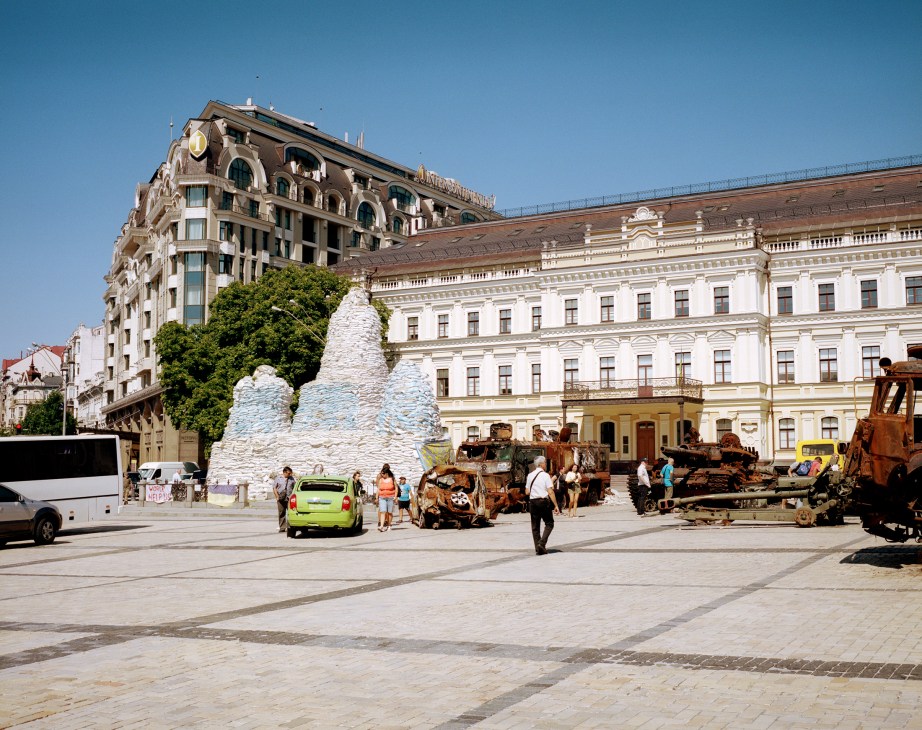
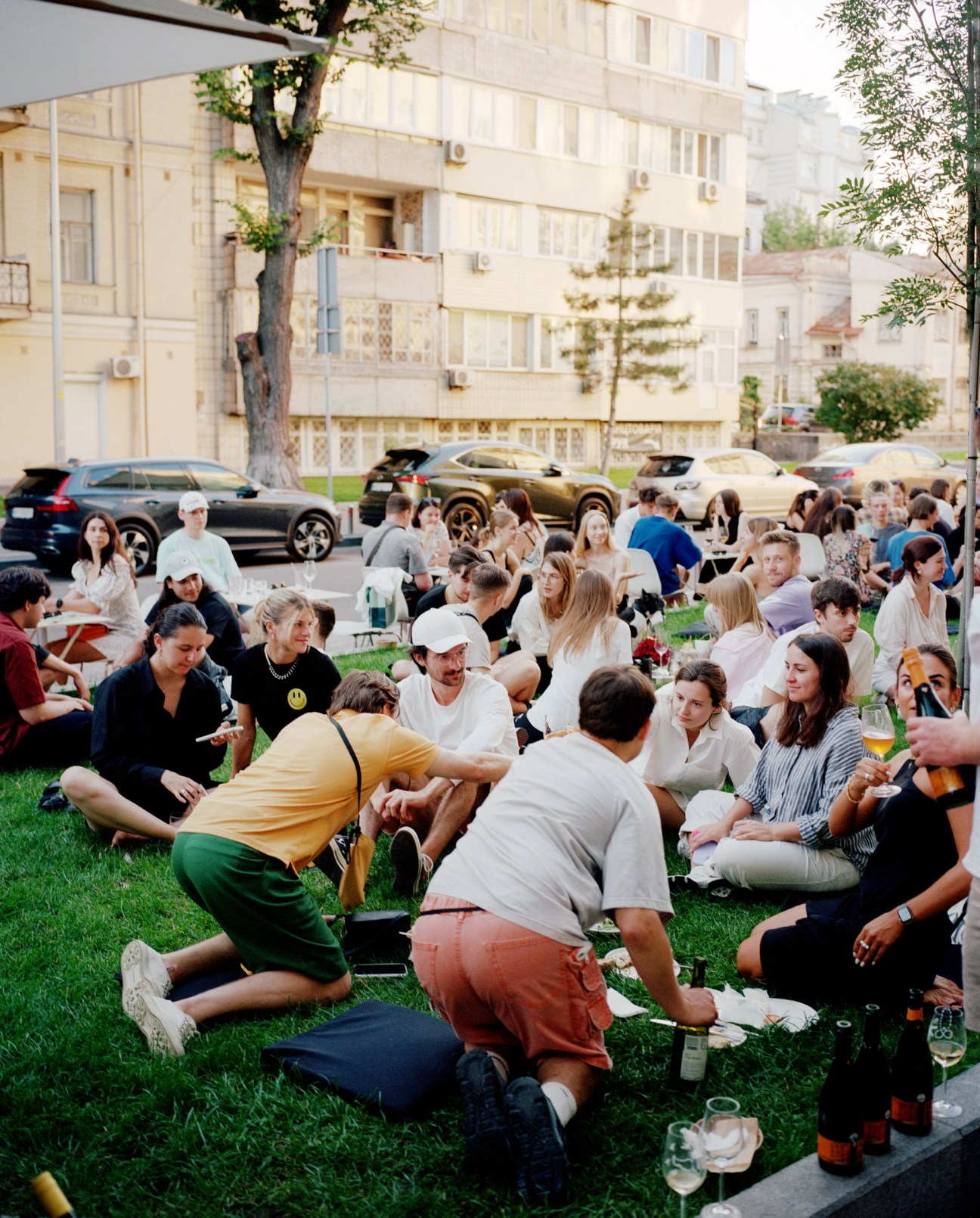
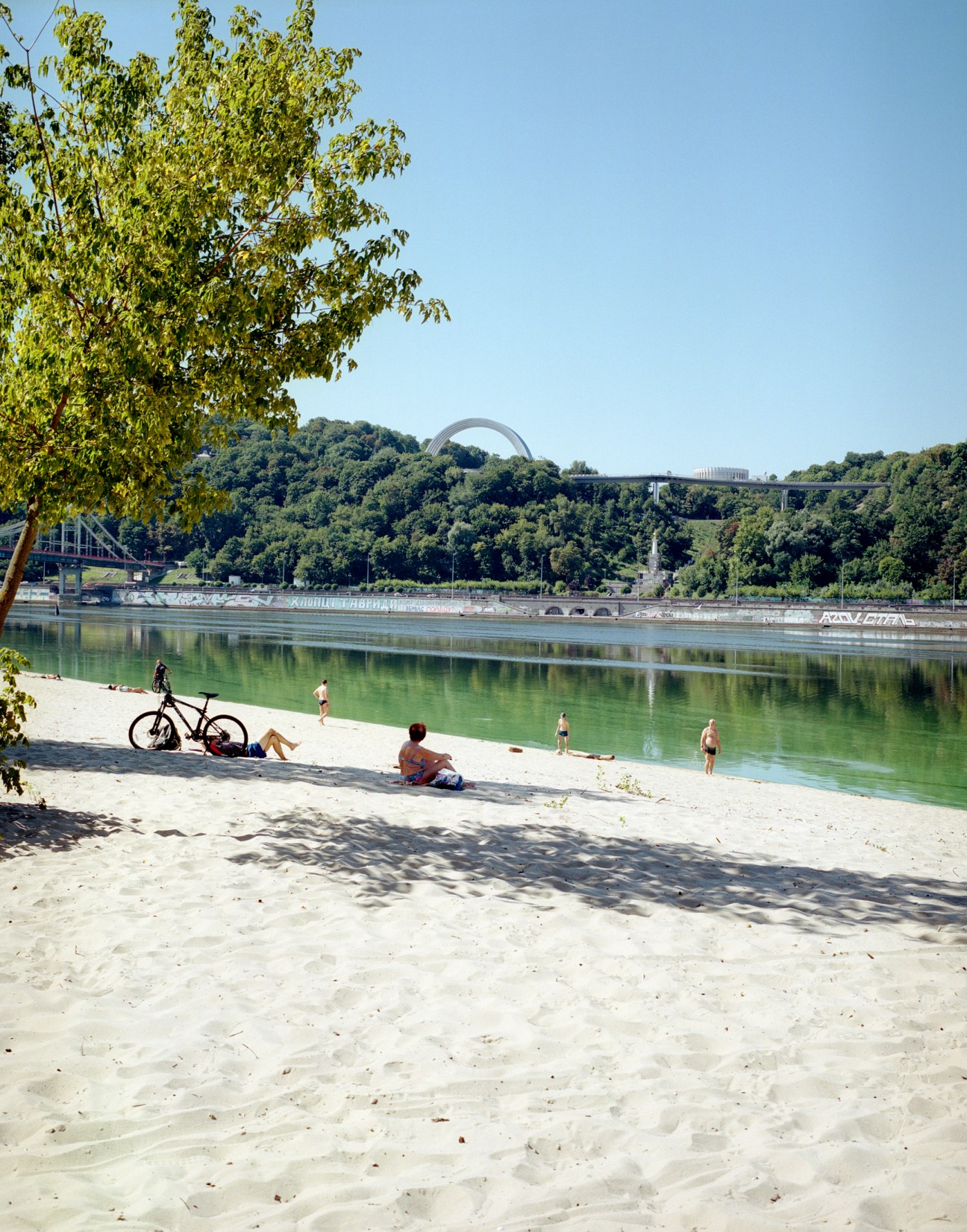
It’s a hot summer night in Kyiv as we make our way through the Zoloti Vorota district. In the distance, the joyful sounds of a crowd can be heard, muffled only by the techno-meets-disco music that two DJs are playing. We’re at Pure & Naive, one of the city’s many cool wine bars and restaurants, where a large group of people have gathered to celebrate the venue’s second anniversary. “This is a neighbourhood of artists, designers and even some engineers,” says Pavlo Huk, co-founder of the venue. “It’s a place for people who are open-minded.” On the surface this might seem like an ordinary night in any European city but the war with Russia remains a constant anxiety. “We’re throwing this party to collect money for our friends who are volunteering to rebuild three houses in the Chernihiv region,” says Huk.
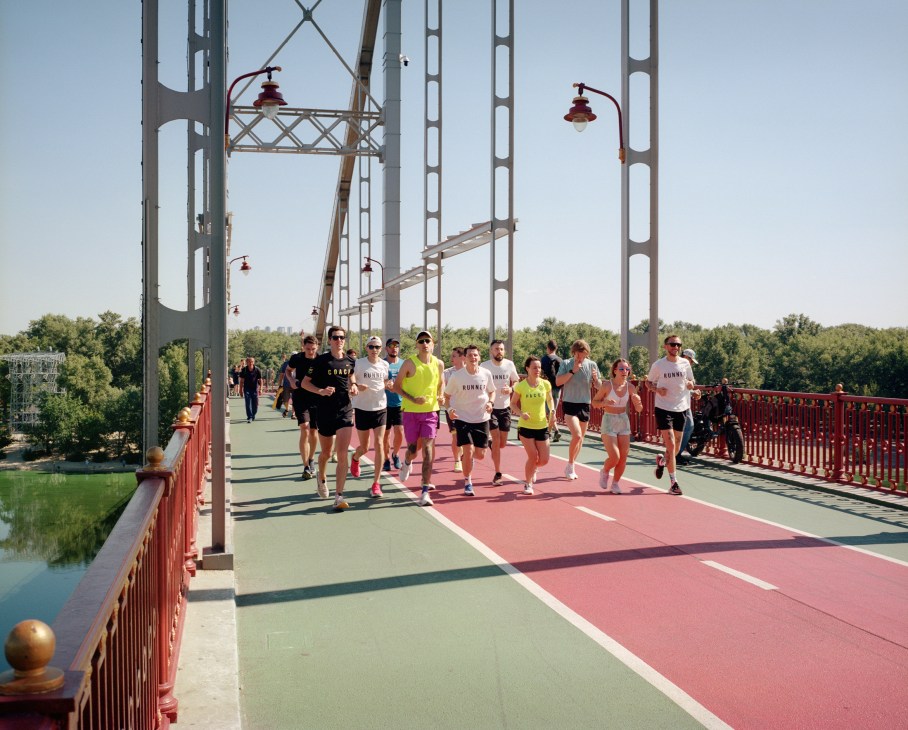
This duality has permeated life here over the past few months: learning how to unwind by the riverbanks of the Dnipro while ensuring that you know where the nearest shelter is; going for a jog across one of the many bridges but having your documents on you in case you encounter a military checkpoint. Parks are busy with children playing, people queue outside restaurants for tables and ride-hailing apps continue to annoy taxi drivers.
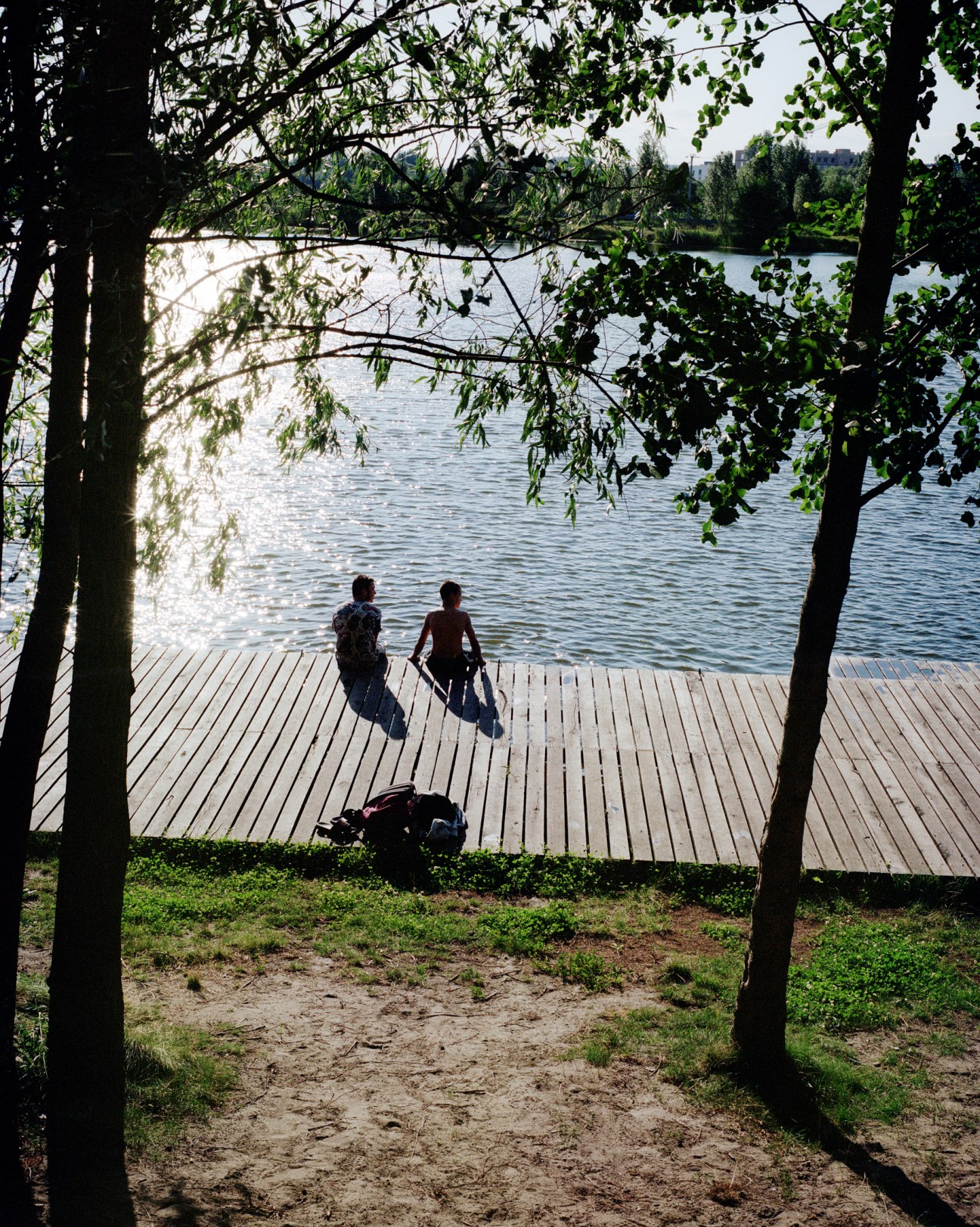
In the few years preceding the war, the nearby town of Bucha had evolved into a de facto suburb of Kyiv. Connected both by the highway and a fast urban electric train, this leafy area had become the go-to neighbourhood for young families seeking a home near the capital. This proximity placed it straight on Russia’s war path when tanks rolled in the direction of Kyiv from the north. When we visit, the scars are still visible – nearly 3,000 buildings were destroyed and more than 1,000 people killed in what became known as the Bucha massacre. Yet there’s a sort of defiance in the act of carrying on. “This is a sign of our recovery,” says Mykhailyna Skoryk-Shkarivska, Bucha’s deputy mayor, as she takes us to the local park and lake. “People are in the water; they’re enjoying the summer, the same way they did a year ago,” she says. “They are enjoying life. We are OK.”
Visiting the embassies
European nations have been resolute in reopening their embassies in Kyiv. We meet the diplomats who have returned to Ukraine.
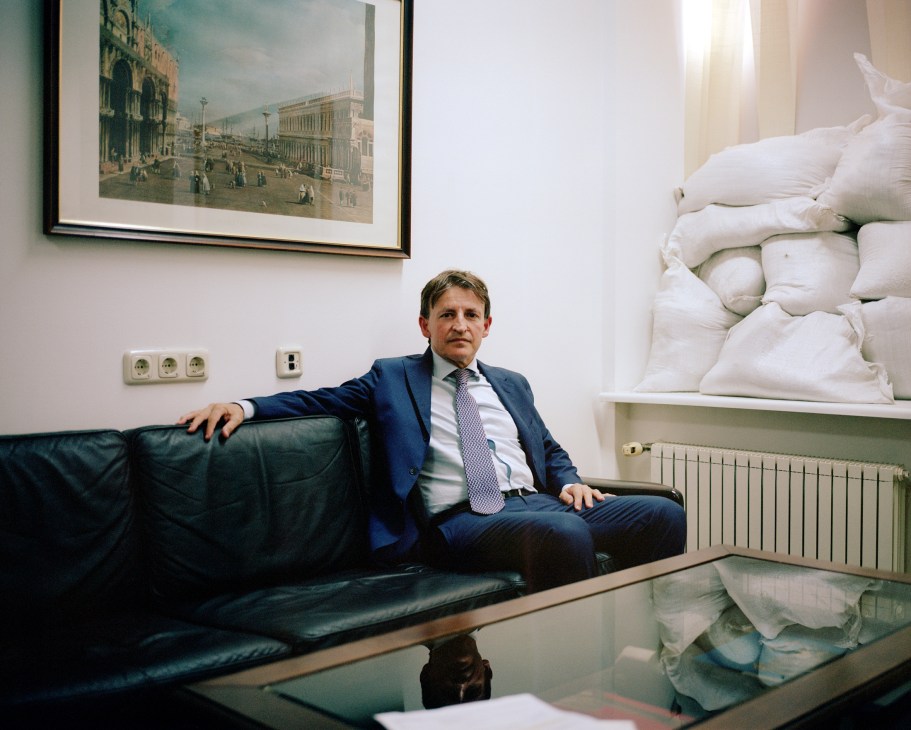
Italy had urged its citizens to leave Ukraine but few heeded the warnings. On the eve of Russia’s invasion “they were in the clubs, in the restaurants” in Kyiv, Pier Francesco Zazo, Italy’s ambassador to Ukraine, recalls. “For them it was a shock.” Zazo’s embassy jumped into action: more than 100 vulnerable Italians were brought to the ambassador’s residence until the embassy could organise convoys out of Kyiv. Hailed as a hero by Italian media, Zazo tells Monocle that he has “no reaction” to the praise. “Anyone would have done the same in my place.”
Zazo himself relocated to a temporary embassy in Lviv, from where he maintained communication with Rome and with Ukraine’s government. He was among the first to return to Kyiv, on 18 April. The return of embassy teams was a bold move. Though Russian troops had been repelled from Kyiv, Zazo says that the atmosphere was “very gloomy” in those first few weeks, with curfews, air-raid sirens and ongoing missile attacks. Zazo spent the first month sleeping at the fortified embassy rather than his residence. “Today it’s completely different,” he says. A level of normality has returned – even if there are still sandbags piled under the embassy’s covered windows.
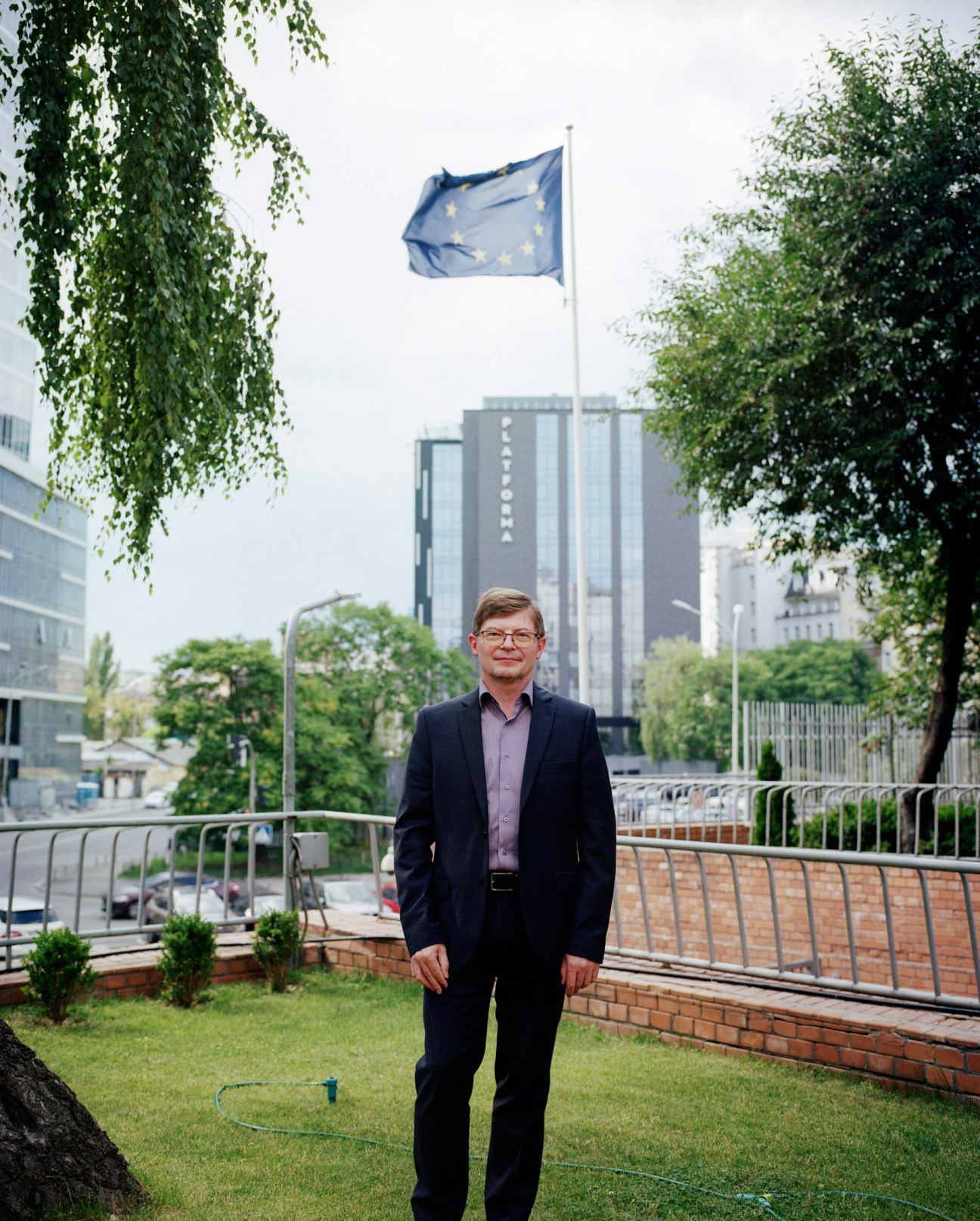
Rémi Duflot, chargé d’affaires of the European Union’s delegation, chose Kyiv as his first diplomatic posting in 2004. Now he finds his team in uncharted territory. The EU’s technocratic experts, who before the invasion were helping Ukraine to modernise its institutions, have been thrust into providing practical aid. “We have repurposed all of our projects,” says Duflot, who is helping to disburse more than €4bn in EU humanitarian assistance. And, for the first time, the EU is financing the provision of military weapons by member states; more than €2bn has been earmarked for lethal and non-lethal military aid.
The more lasting impact, Duflot believes, will come from EU membership, which he calls “perhaps the biggest weapon that Ukraine will ever receive from the bloc.” He describes 23 June, when Ukraine was granted EU candidate status, as a day of “immense joy” for him personally. And while he understands the doubts of many Ukrainians, Duflot rejects the idea that membership will never happen. The decision to move forward, he says, “was not a gift but something Ukraine has earned”. Though the war is a “catalyst”, Duflot believes that it shaved only a few months from the timeline. “We’re reflecting quickly on how we can help again,” to push Ukraine forward with institutional reform, even amid an ongoing war.
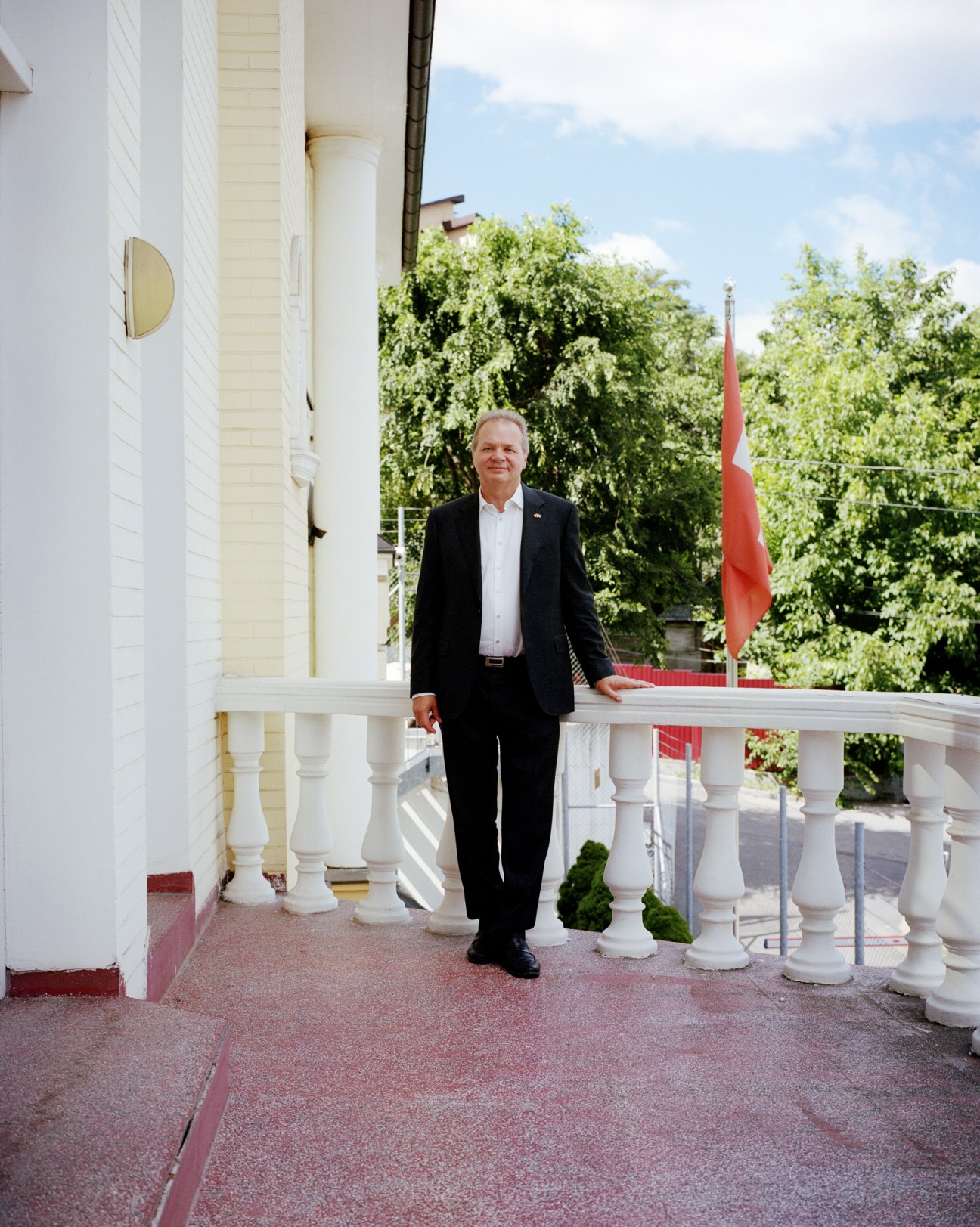
Claude Wild, Switzerland’s ambassador to Ukraine, was visiting the eastern city of Kharkiv when the invasion began; he heard three rocket strikes in quick succession, about a kilometre from his hotel. He says the decision to bend Switzerland’s neutrality and impose sanctions on Russia was a no-brainer. “By law we cannot send weapons into a war zone,” he says. “But on the rest, there is no neutrality. We are behind Ukraine and the respect for international law, which is being violated by Russia every day.”
While the Swiss debate whether their neutrality laws should be amended or abandoned, Wild says his country has been playing to its strengths on the ground – providing humanitarian aid, capacity building and aiding the rebuilding effort. Switzerland also played host to the Ukraine Recovery Conference in Lugano in early July that kick-started the reconstruction process. It is now exploring how to contribute to the rebuilding of Vinnytsia, a city in central Ukraine with ties to Switzerland – it runs on Zürich-manufactured trams – and which was struck by a rocket attack that killed at least 25 people in mid-July. Wild visited the city with 16 other ambassadors shortly after the attack.
Wild’s key message to those back home? “We cannot afford to let Ukraine fatigue take hold, as it normally does with a conflict after six months, when it’s far away,” he says. “It’s not far away; it has changed the paradigm in Europe. There is no more business as usual.”
Clubbing together?
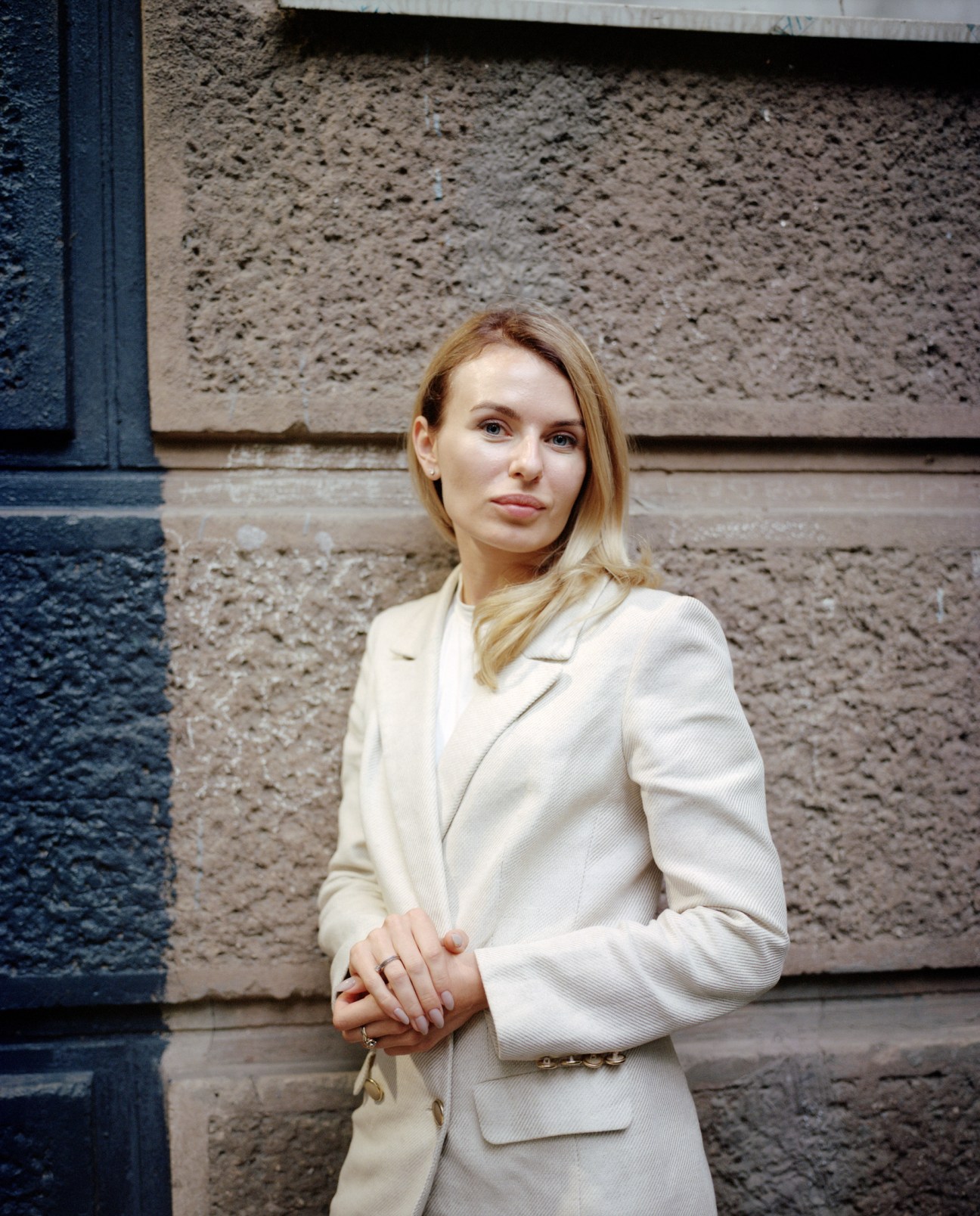
Many still question whether Ukraine being granted EU candidate status will actually lead to membership. “The Ukrainian people have paid – and keep on paying – a significant price for keeping up this European path,” Olha Stefanishyna, Ukraine’s deputy prime minister for European affairs, tells Monocle. And while Kyiv still needs to “do our homework” in this next phase of the process, her message to Brussels is “don’t wait too long; we are very impatient in these times of war”. She also urges the EU to release additional tranches of emergency financial aid. “This is a matter of survival,” she says. “We have political recommendations [for membership] and we will deliver on them – but we also need to survive to deliver further.”
Role of opposition
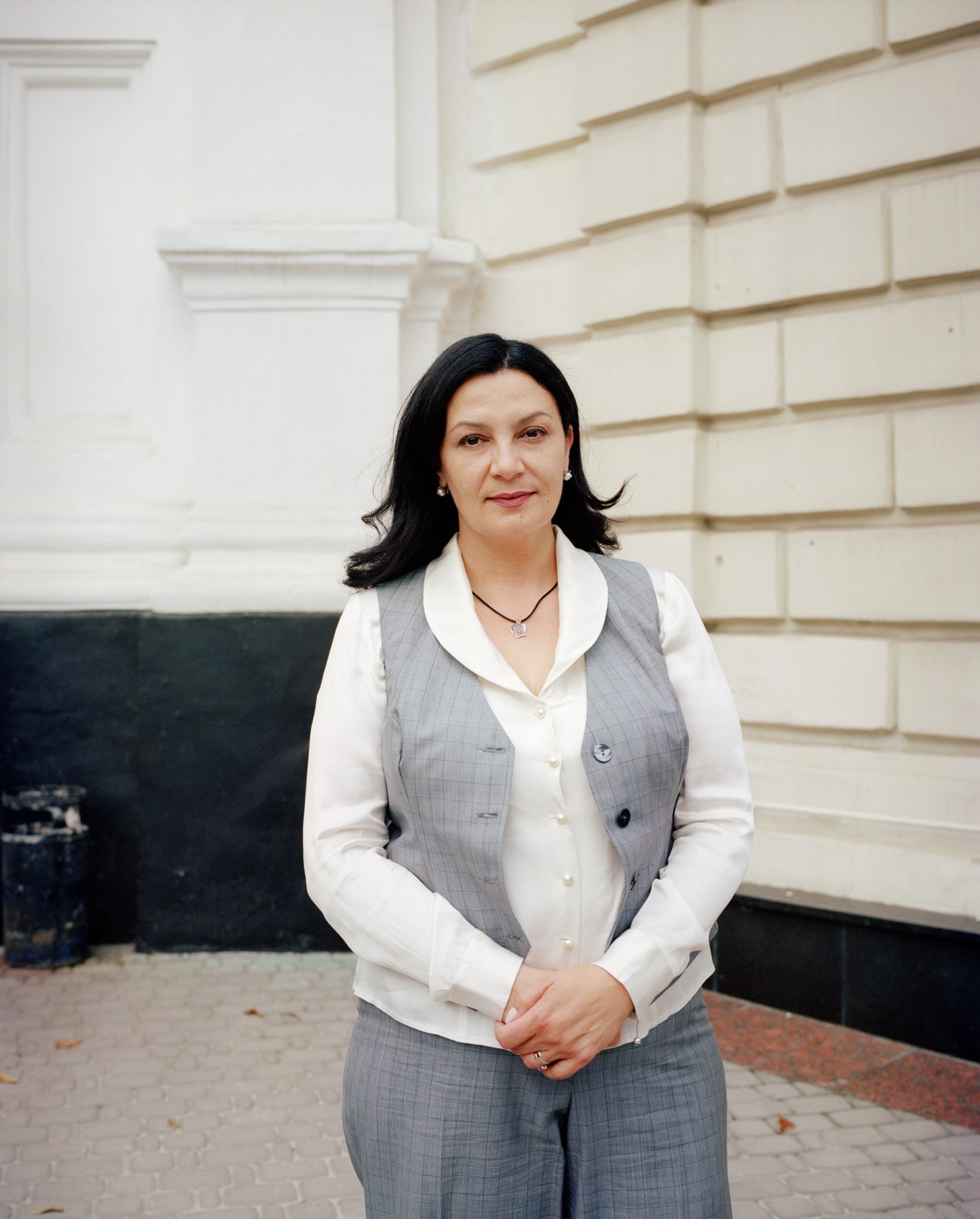
Ukrainians are known for their self-reliance, a trait that stems at least in part from a history of poor governance. In the aftermath of Russia’s invasion, this self-reliance has helped Ukraine to survive by prompting all citizens to play their part, whether on defence, aid or rebuilding. “Every one of us is having our own fight,” says Lesia Vasylenko, MP for the opposition Holos party. “The soldiers are out in the field; the nurses are nursing the wounded; teachers are preparing for a tough school year; families are rebuilding homes or starting new lives. We are all doing the best we can to keep living and fighting for Ukraine. We don’t have another choice.”
Speaking truth to power in times of war is a tricky balance. Opposition parties and even media outlets feel a responsibility to show unity. President Volodymyr Zelensky’s popularity has massively increased due to his effective leadership and communication skills since February. And yet, calls for greater accountability and transparency are growing in this still-young democracy. “Since the beginning of the full-scale invasion, the priority for all political forces has been to defend the country and speak with one voice,” says Ivanna Klympush-Tsintsadze, MP for the European Solidarity party. “But it’s very important to preserve checks and balances. At this moment, we see some hurdles to ensuring that we have the chance to carry out our control function as the opposition – but we will continue doing so.”
Rebuilding Chernihiv
Near the Belarussian border, the city of Chernihiv is being rebuilt by volunteers – even as Ukrainian soldiers prepare for futher attacks.
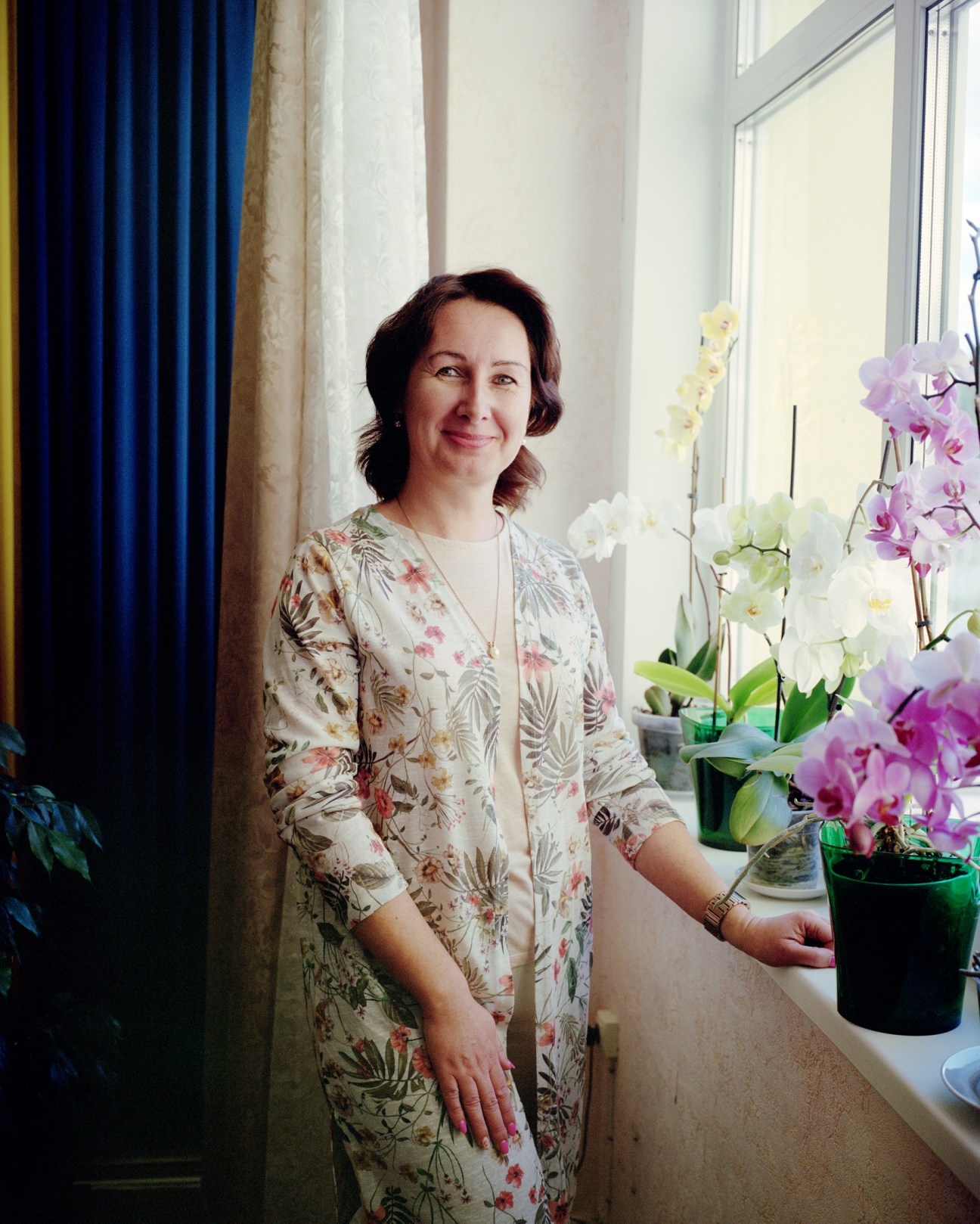
“I was afraid that my flowers would die,” says Nataliia Ivanytska, principal of school #35 in Chernihiv, as she points to the colourful orchids by her window, many of them gifts from teachers, students and parents. “When I came back to this office, I was very happy because all of this was alive.”
Chernihiv is one of Ukraine’s oldest cities; its origins date back to 907. It’s a picturesque town just 70km from the Belarussian border, which made it the first major city that Russian soldiers reached when they attempted to occupy Kyiv from the north on 24 February. Of the 35 schools in Chernihiv, just seven escaped undamaged from the shelling, which lasted six weeks. At Ivanytska’s school, a third of the windows were blown out by an explosion some 100 metres away. Yet summer school is in session when we visit and classes are expected to resume in September. “I am an optimist,” says Ivanytska. “I am a strong woman. I like life… and I like this school.”
Volunteers have flocked to Chernihiv over the past few months, many making the two-hour drive from Kyiv (longer when you factor in the many remaining military checkpoints). They’re helping to rebuild schools, homes and other critical infrastructure in their spare time – even as this city faces the threat of another invasion from Belarus. Serhii Dikalov, who is co-ordinating with subcontractors to rebuild schools, hopes to have three institutions rebuilt by September, complete with the now required bomb shelters. “The only limitation we have is the amount of money we receive – and time until September,” he says. Dikalov and the schools are soliciting donations via a fundraising initiative known as Angels of Freedom.
Among those helping to co-ordinate in Chernihiv is Prism, a Kyiv-based foreign policy think-tank that has retooled, like many other Ukrainian organisations, and is now spearheading relief efforts. Yevhen Romanenko, who normally organises foreign-policy conferences, is managing Prism’s humanitarian aid centre in the city. “I’m still a project manager,” he says. And it gives him “moral satisfaction” to help his city recover from its terrible losses.
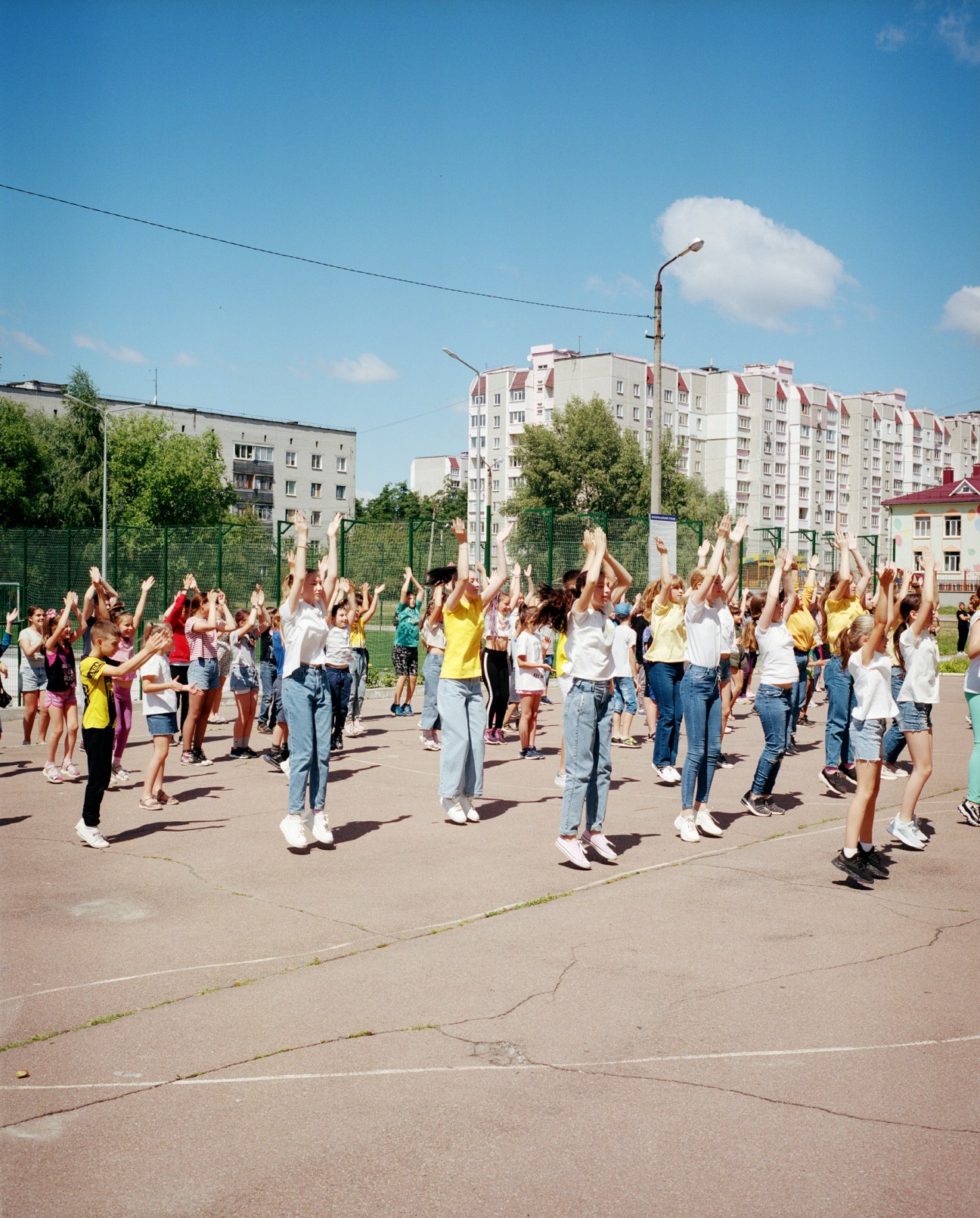
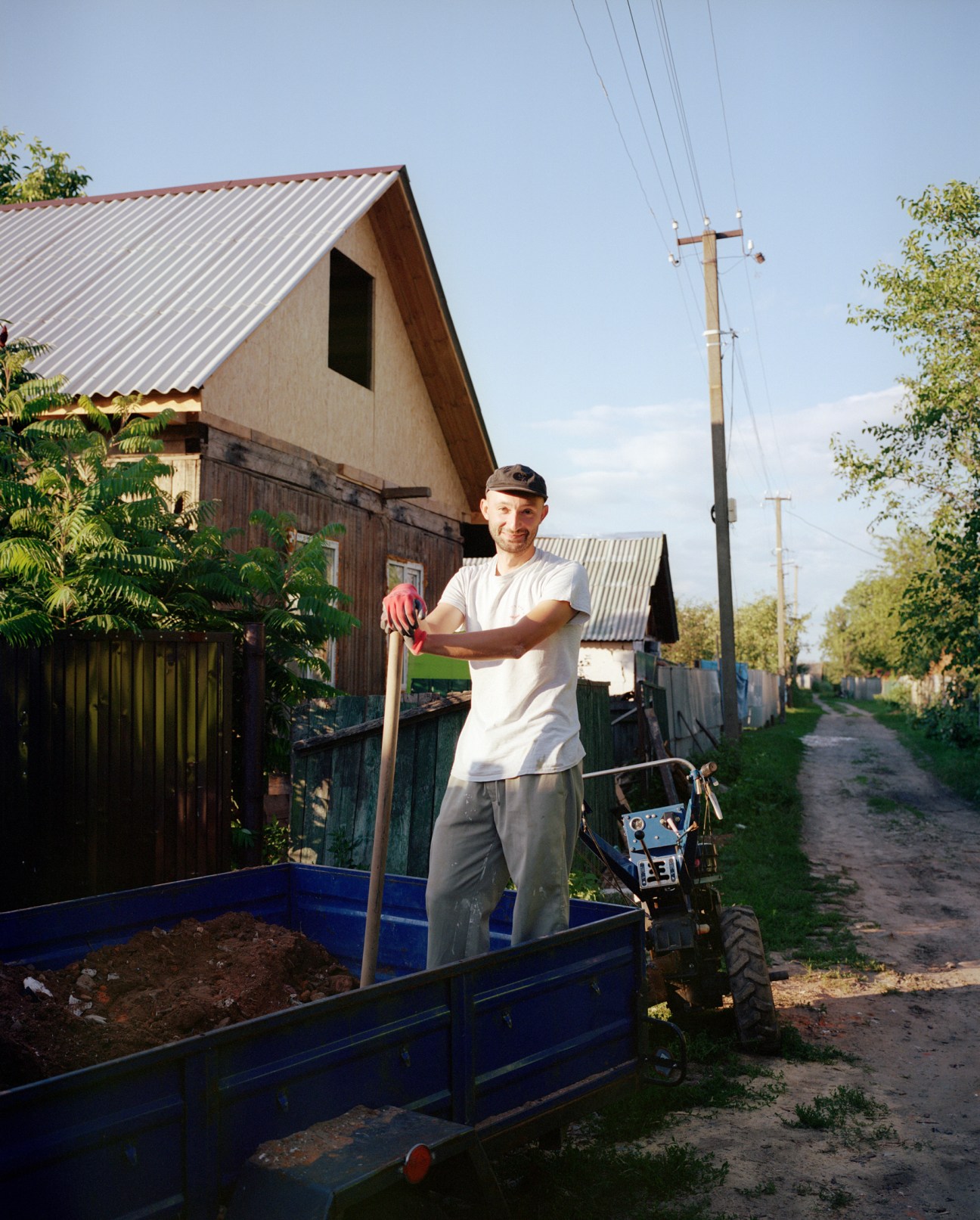
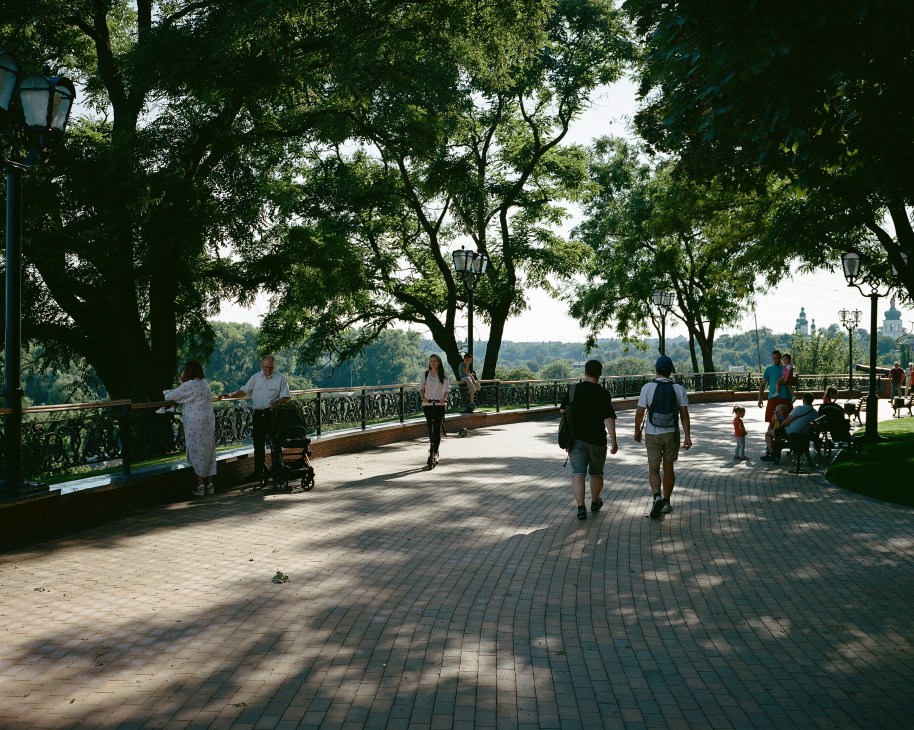
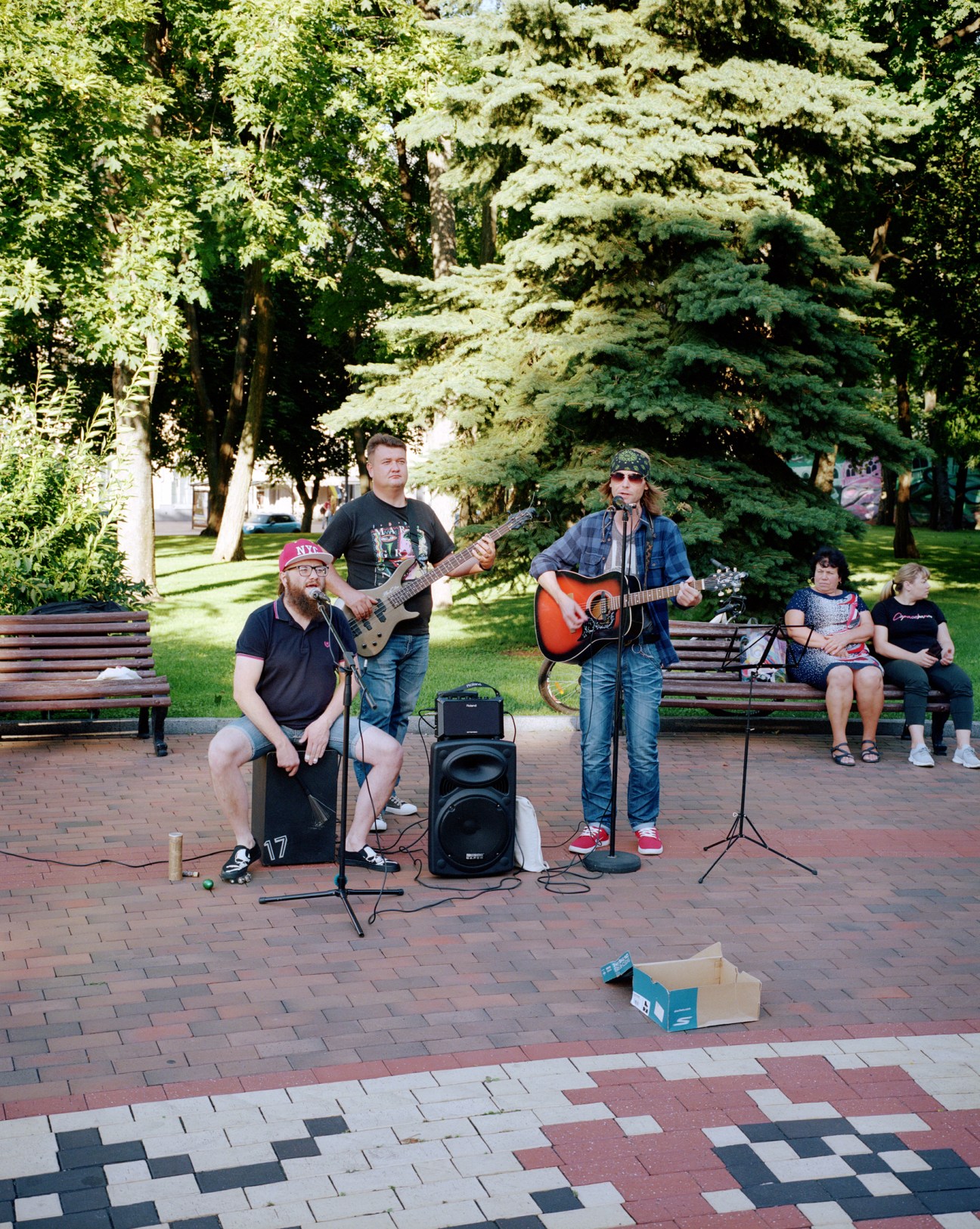
As the months passed, Prism’s warehouse moved on from supplying emergency needs such as food to longer-term items like bed linens and construction supplies.
Elsewhere, authorities are working to get public transport up and running again. Oleksandr Ryzhyi, head of Chernihiv’s department of transport and infrastructure, spent the invasion defending his city as part of Ukraine’s territorial defence force. Now back to his regular job, he says that public transport is operating at about 70 per cent of pre-invasion levels. One sign of the return to normality? Residents are filing complaints about late buses again, he says.
The city is also relying increasingly on bikes, supplied by an NGO, Eco Misto (“misto” means “city” in Ukrainian). Founder Sergiy Bezborodko has provided some 286 bikes donated from the Netherlands and Germany. With petrol prices doubled (when petrol is available at all) bikes are a useful alternative. “We feel that this is a historical moment,” says Bezborodko. “We can end the war better than it was before.”
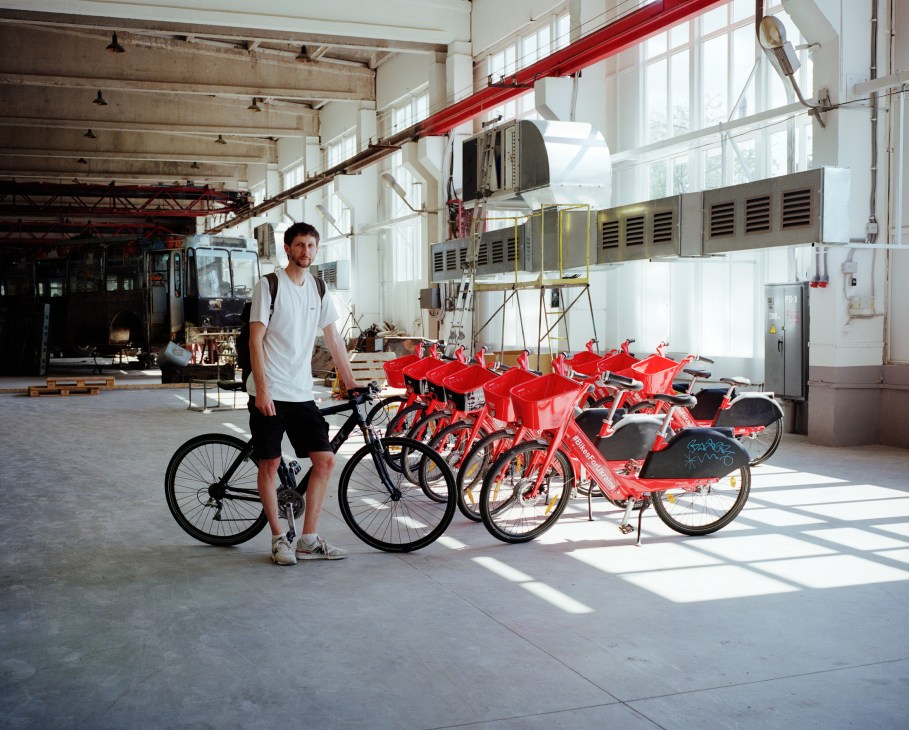
The city remains vigilant. Sitting at an outdoor café enjoying a rare day off, we find Yevhen Zhovtyk, a tour guide who had planned to take Ukrainians to Rome this summer and bring Europeans to Chernihiv; instead, he signed up for the army at 09.00 on the day of the invasion. Asked how it felt to have played a role in repelling Russian forces from his town, his demeanour sours, “I didn’t have any feelings,” he says. “This war is not over yet.”
The Agenda: Design
Public space – Sweden
Break from the norm
“Public space is complex, it can be extremely monotonous and is often designed for the idea of a ‘normative’ human,” says James Taylor-Foster, curator of contemporary architecture and design at Stockholm’s Arkdes museum. “But we believe that the city is for everyone.” Taylor-Foster’s taking Monocle through an exhibition that will sit within the garden of Arkdes, a globally renowned design and architecture institution, across the summer of 2022.
Created by Stockholm-based industrial designers Mira Bergh and Josefin Zachrisson, various delicately ribbed steel structures occupy the area. These inventive forms, acting as both public furniture and spaces for play and reflection, aim to highlight how democratically minded public spaces can draw in both young and old. “We’re always thinking about how we can create furniture that has social value that makes people interact,” says Zachrisson, leading Monocle through the space, where children crawl along tunnel-shaped benches while parents sit and natter above them. “We worked around the idea of pleasure gardens, with their manicured walks and various private spaces; we just did it on a smaller footprint.”
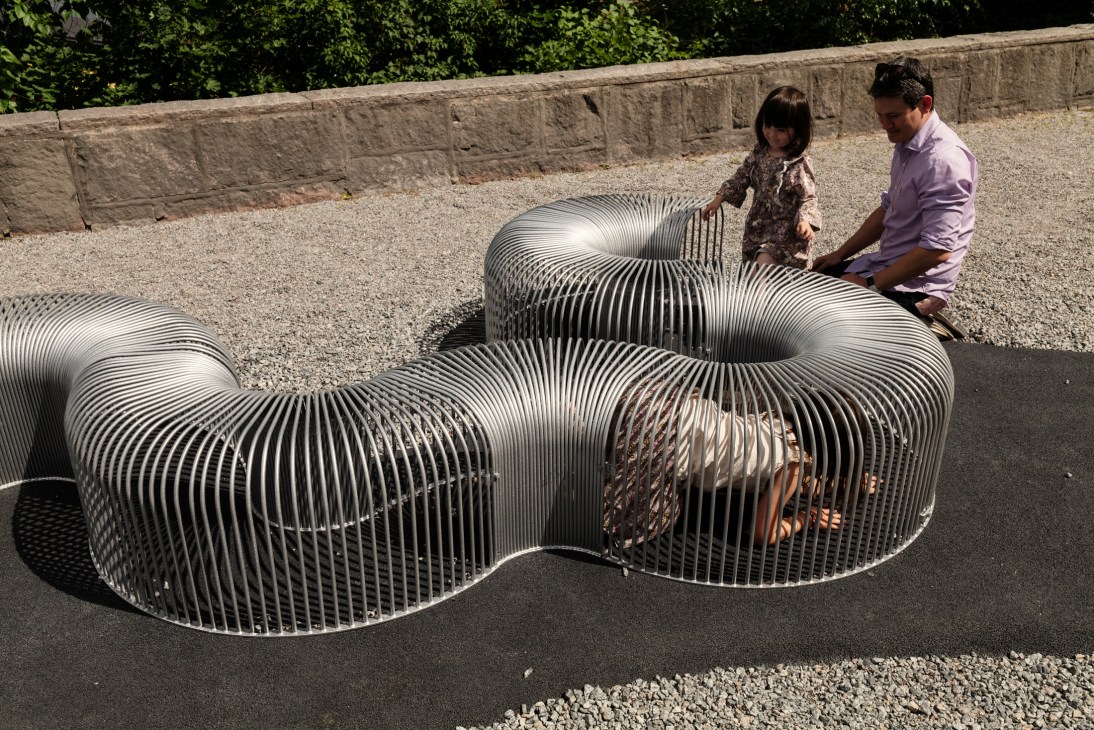
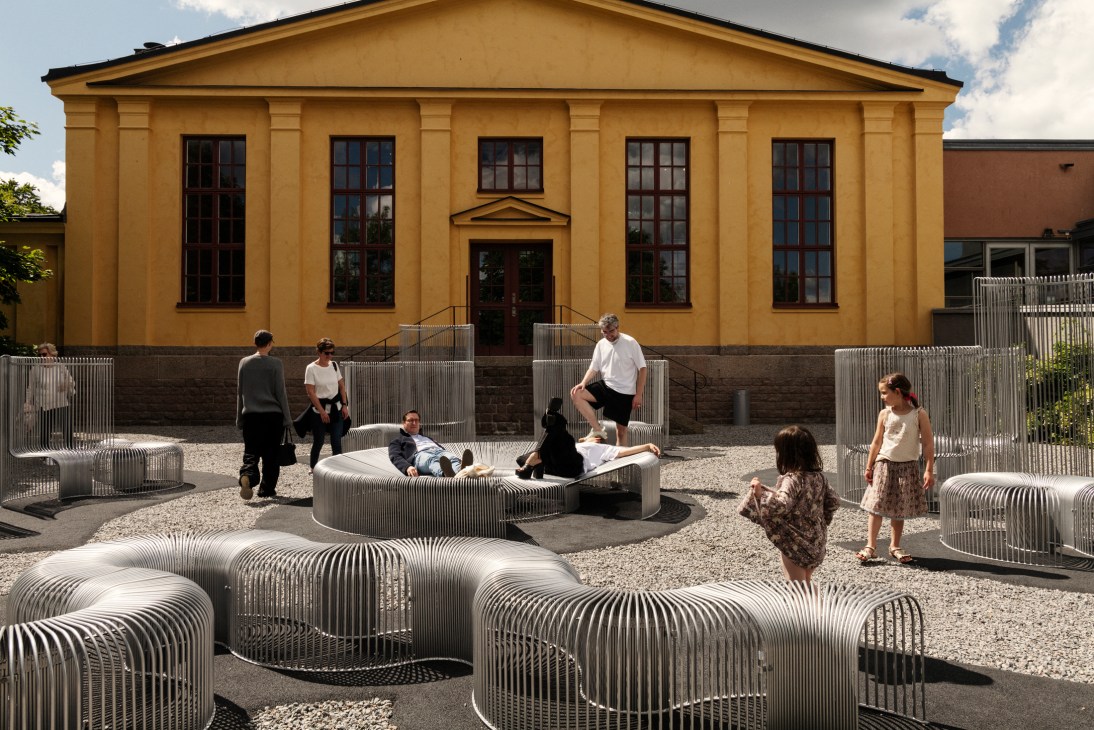
The exhibition will be moved on to a permanent location elsewhere in the city later this year. Before that, however, Taylor-Foster has ambitious plans. “It will move onto its next life on 11 September, Swedish election day,” he says. “But before that I want people doing political speeches from here; I want this to become a platform where voices from all disciplines come together.”
On Design
Nolan Giles on…
Architectural photography
There’s something that feels very different about architectural photography when it is shot on film. You’ll see the results of this in our exclusive report on the expansion of Ett Hem in Stockholm, which was shot by master Swedish photographer Felix Odell on his trusty circa 1970s German-made Rolleiflex. For this highly anticipated hospitality opening, it felt important to capture the first professional images of the remarkable venue in this way. With a limited number of shots per roll, every image produced was meticulously constructed before the shutter button was pressed. In the process, the project’s designer, owner, team and myself would all peer into the viewfinder, marvelling over a certain angle that Odell had laboriously uncovered before he made the satisfying “click” and froze the moment in eternity. Of course, this process could have been imitated on a digital camera (and wouldn’t have required someone to dash back and forth between the site and a local film developer to check advanced images) but it would not have been as special. Typical digital shoots in these settings tend to see quantity trumping quality: every good angle is shot multiple times, then the images are whittled down to the best selection off-site. Capturing a beam of sunlight when it perfectly hits a piece of furniture seems a more satisfying experience when done by a film photographer, who waits patiently for it, as opposed to a digital snapper getting lucky shooting the same spot multiple times.
Today architectural photography feels more like the production of a mass commodity rather than the making of a methodically thought-out visual moment. Our shoot with Odell renewed my respect for a craft that takes a lifetime to master. It reinforced my view that good architectural photography (on film or digital) should be considered as precious as the subject matter it depicts.
Urbanism
Pan Siripark on a new landscaped park that’s bringing one of Bangkok’s forgotten canals back to life. With lush greenery and spacious walkways, the Chong Nonsi Canal Park is a welcome addition to this bustling metropolis.
Canals
Thailand
Stretching the imagination
Amid transformative growth and relentless urban sprawl, Bangkok’s history as one of Asia’s most prominent canal cities is often forgotten. But with growing momentum to improve a deficit of public spaces and parks, the Thai capital’s waterways, for so long sidelined in favour of motorways and high-speed railways, are beginning to draw the attention of city planners, architects and urbanists.
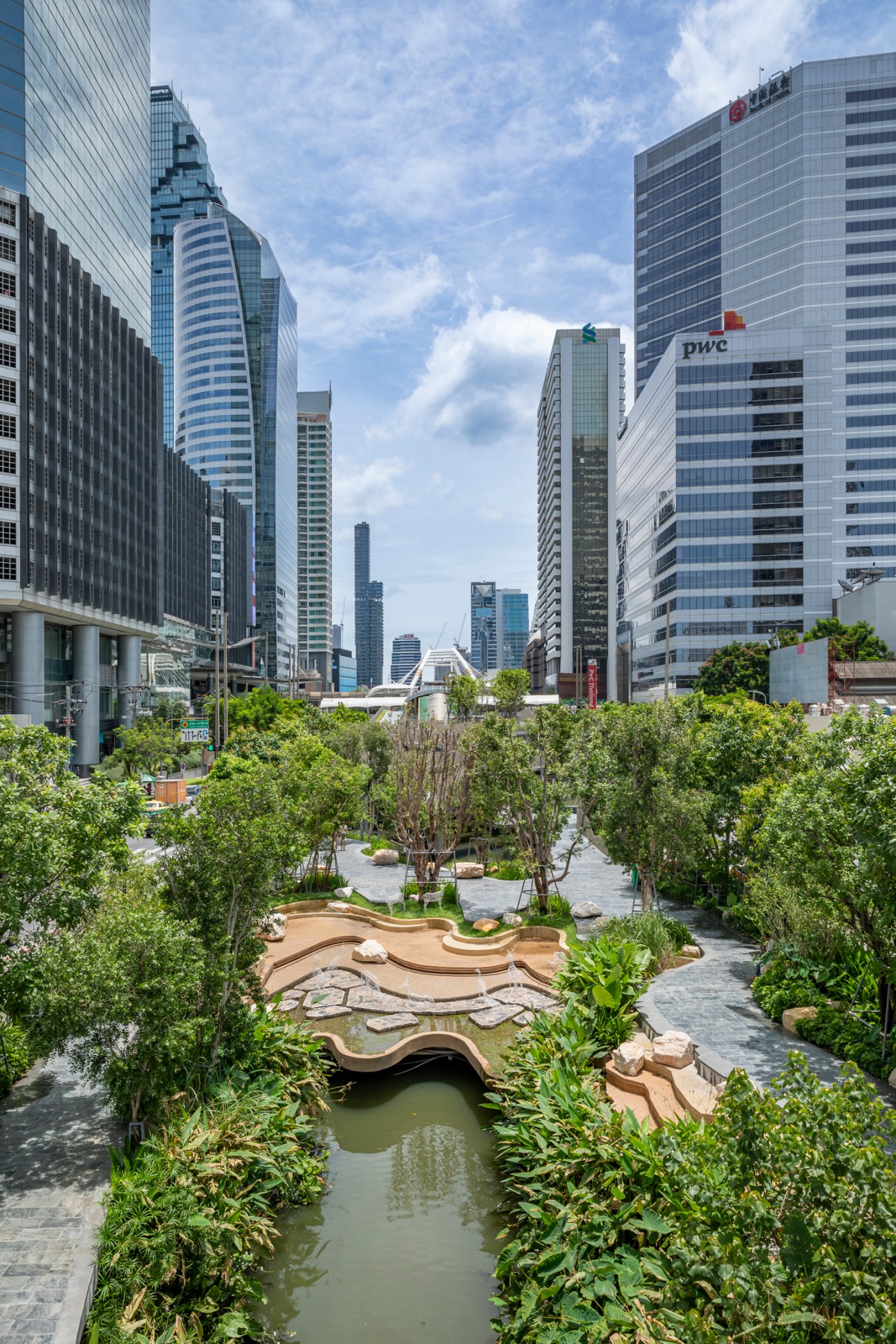
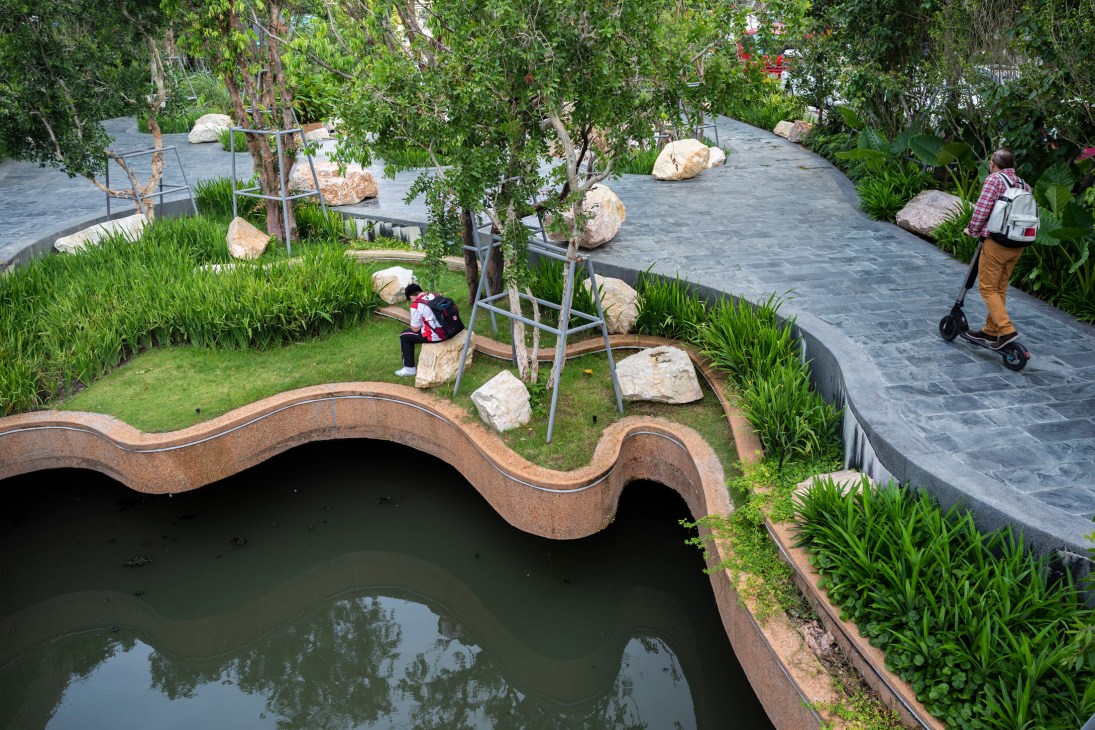
The Chong Nonsi Canal Park offers a glimpse into what rehabilitating Bangkok’s canals, known locally as klongs, might look like. Joining the project is Kotchakorn Voraakhom, one of Thailand’s most successful, and hippest, contemporary architects. “Most people forget that this city was called the ‘Venice of the East’,” she tells Monocle. “It’s sad that most Bangkokians are disconnected from the idea of klongs historically being our major urban arteries.” An alumnus of the Harvard School of Design, Voraakhom is CEO of the Porous City Network, a social enterprise whose aim is to strengthen urban resilience – cities’ ability to deal with environmental hazards – in Southeast Asia.
When city authorities decided to redevelop the Chong Nonsi canal, a long-ignored drainage waterway in the middle of Bangkok’s business district, Kotchakorn jumped at the chance to be involved. Stretching an ambitious 4.5km through several neighbourhoods and flowing to the Chao Phraya River, Chong Nonsi will be the site of Thailand’s first and longest canal park. “I’m most proud that I’ve seen such a high level of public and private sector co-operation,” says Kotchakorn. “Many Bangkok administration agencies work independently of each other so it’s great to see them work together on this project.” This sense of collaboration is deeply ingrained in the park’s design. The extensive walkway that connects it to the Skytrain station is a laudable effort to improve the city’s endemic accessibility issues. Sloped concrete banks aim to improve rainwater capture, minimising flooding as well as integrating hidden sewage pipes that transport an estimated 140,000 cubic metres of polluted water away for treatment. Plant life is not merely another box to tick, with lotus leaves, water lilies and other aquatic flora restoring a measure of biodiversity to the canal.
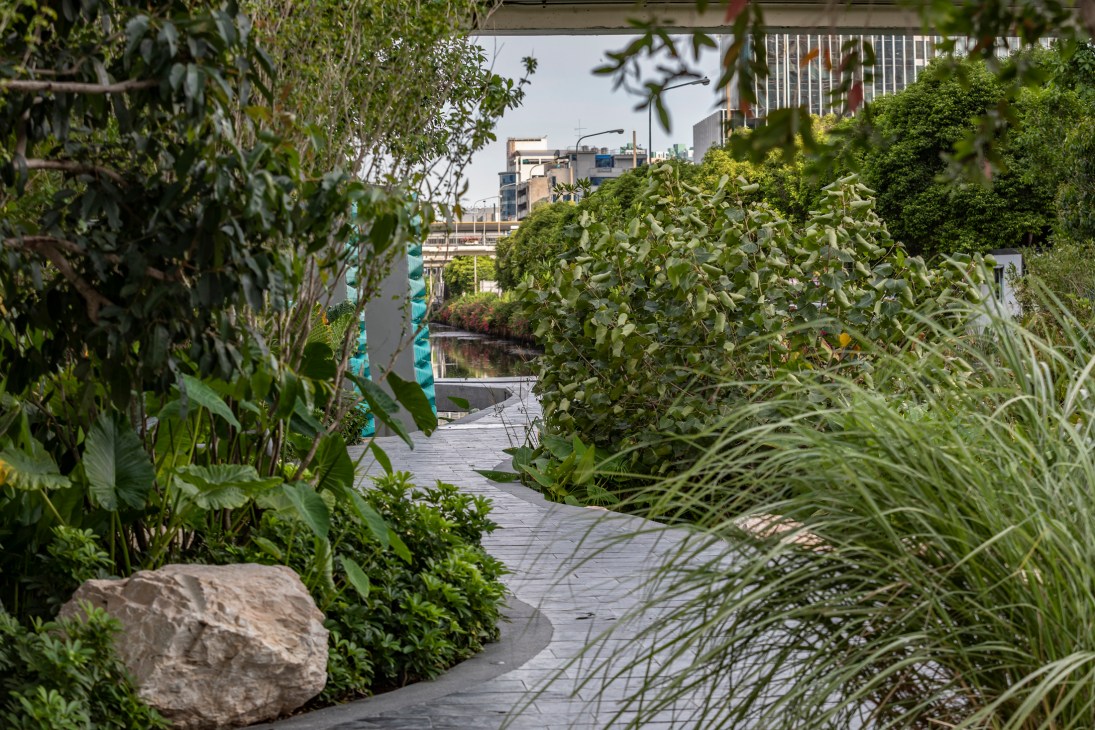
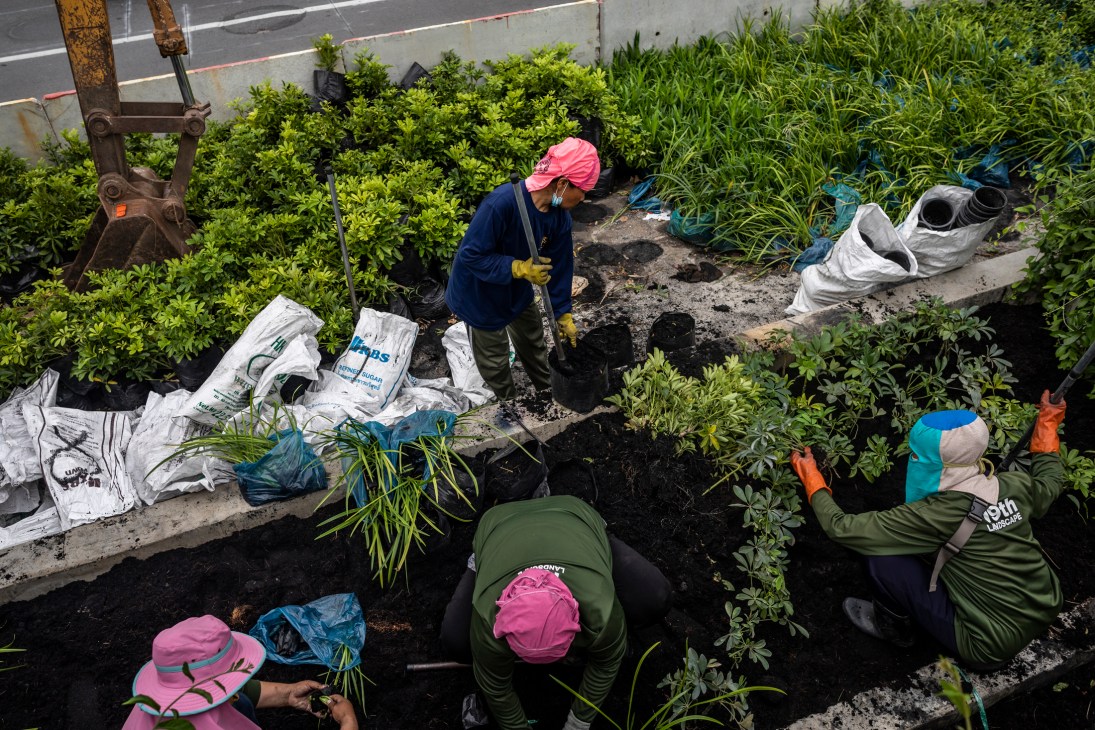
The construction of Chong Nonsi hasn’t been without controversy. In the period leading up to its opening, issues ranging from the canal’s location in an area low in footfall to negative reactions from residents during the pollution-heavy construction process, have threatened to jeopardise its existence. However, in a city that has only just begun to rapidly move from conventionally flat and artificial landscape parks, the vision behind utilising the canal as a way for Bangkok to improve its green spaces is a step in the right direction. And it’s all the more important as the city grapples with the ecological consequences of neglecting one of its vital features: drainage waterways. In 2011, more than 800 people died in Thailand’s worst flooding in 50 years. With alarm over Bangkok’s vulnerability to future disasters – estimates suggest that just 4mm of rainfall has the potential to inundate the city – anything that can both mediate this and improve quality of life for residents has to be celebrated.
The Comment
Transport — USA
Driving change
Louis Harnett O’Meara on how the likes of Robert Moses divided cities with aggressive highway projects – and why the Department of Transportation is now spending $1bn to bring people together again.
In 1950s America, new was good and old was bad. Driving this attitude was the car. Cheaper vehicles and rising incomes led to US automobile sales of almost 58 million over the course of the decade. Cars shuttled office workers between picket-fenced homes and concrete jungles. City planners threw up multilane highways to assist their commute. Sure, obstructive neighbourhoods were razed but it was for the greater good – or so the story used to go.
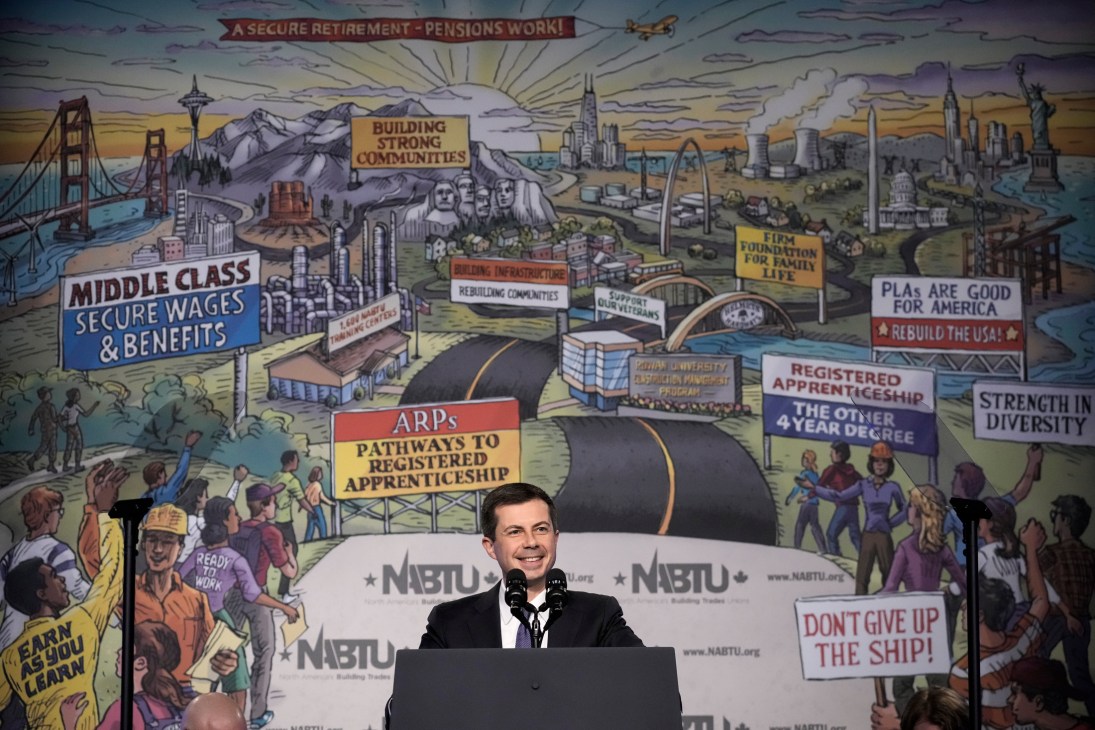
A US Department of Transportation programme now admits the problems with this narrative. At the launch of Reconnecting Communities on 30 June, transportation secretary Pete Buttigieg (pictured) said that roads and railways “can connect us to jobs, services and loved ones but we’ve also seen countless cases around the country where a piece of infrastructure cuts off a neighbourhood or a community”. The scheme intends to right such wrongs by handing out $1bn (€980m) of grants over the next five years to projects redeveloping divisive infrastructure. Walkways over busy roads and rapid-transit bus services will be part of the mix, as will environmental concerns. “This is a modest but significant turning point,” says Rick Cole, executive director of the Congress for the New Urbanism, an organisation that promotes walkable cities. “It’s the first piece of federal legislation that explicitly acknowledges the scars that were left.”
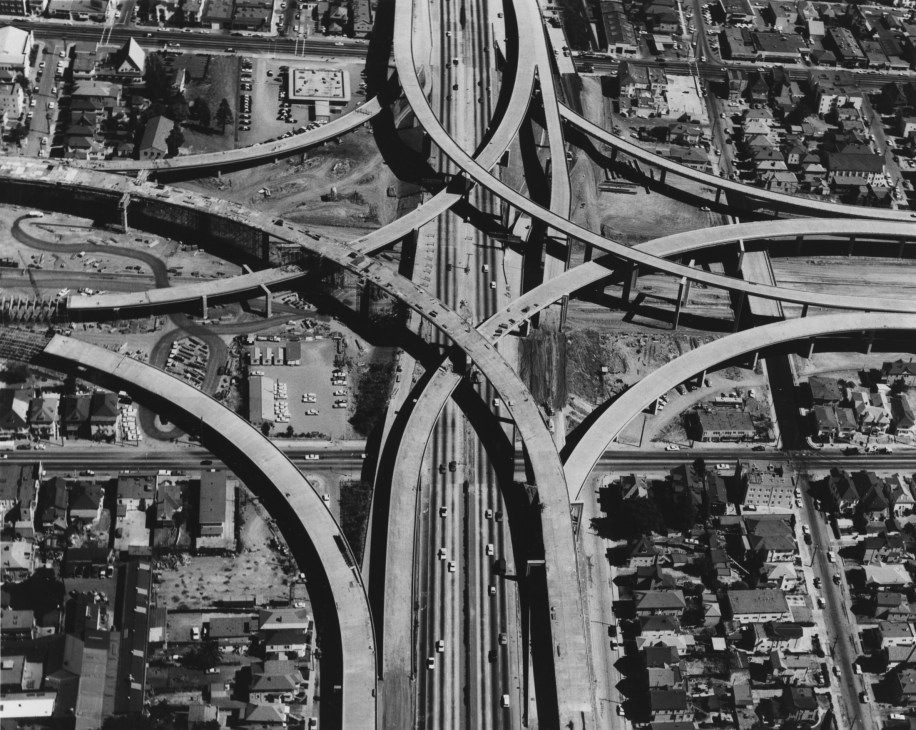
In the 1950s and 1960s, author and activist Jane Jacobs put the spotlight on these scars in arguments levelled against New York urban planner Robert Moses. He believed in ripping up and reshaping cities for cars, overseeing the construction of 35 highways to this end. Jacobs thought that cities should be walkable, tightly interconnected spaces that served the needs of their communities. During Moses’s tenure, Jacobs mobilised New Yorkers against what she called “the sacking of American cities”.
This wasn’t hyperbole. More than a million people were evicted for the sake of new roads in mid-century America. Most of those were from black neighbourhoods whose residents, on lower incomes, didn’t typically own as many cars. Highways often cut up towns along class and racial lines, drawing boundaries between impoverished communities and good jobs. While suburbs thrived, city centres decayed. “New York was nearing bankruptcy after Moses had finished with it,” says Cole.
After a decade-long campaign, Jacobs managed to halt the construction of a huge Moses-planned highway through Lower Manhattan. She prevented the displacement of 2,200 families and the destruction of Soho and Little Italy’s urban character.
Reconnecting Communities suggests that Jacobs has won the argument in the long run. With the programme, support for her community-oriented approach has reached a federal level. Though it won’t address every problem that Moses and others left behind, it will be welcomed by organisations nationwide.
“My father’s home in the 1960s was in a thriving black neighbourhood before Interstate 40 was built right through it,” says Harold Moses Love Jr, a state lawmaker in Nashville, Tennessee. Love is consulting residents on how the highway can be transformed into something that connects rather than divides. “We are hoping to apply for funding for a large public green space on top of the highway,” he says. “We hope that it’s a step towards rebuilding our world.”
Images: Getty Images
The Agenda: Culture
Printing – France
Nothing is impossible
The Imprimerie du Marais’s new printing factory in Paris has a beautiful letterpress in the same style as the ones used when Charles Przedborski established the studio in the early 1970s. Known for its artistic printing, hot-foil stamping, embossing and silk screening (used on the packaging for some of the world’s most famous fashion brands), the atelier occupied a building in the Marais for more than 40 years. During that period, fashion workrooms and premises dedicated to craft filled the area. But over the past few decades, most of this business has migrated to China. “The old craftsmanship and savoir-faire slowed down,” says Mélody Maby-Przedborski, one of the firm’s directors and the founder’s stepdaughter.
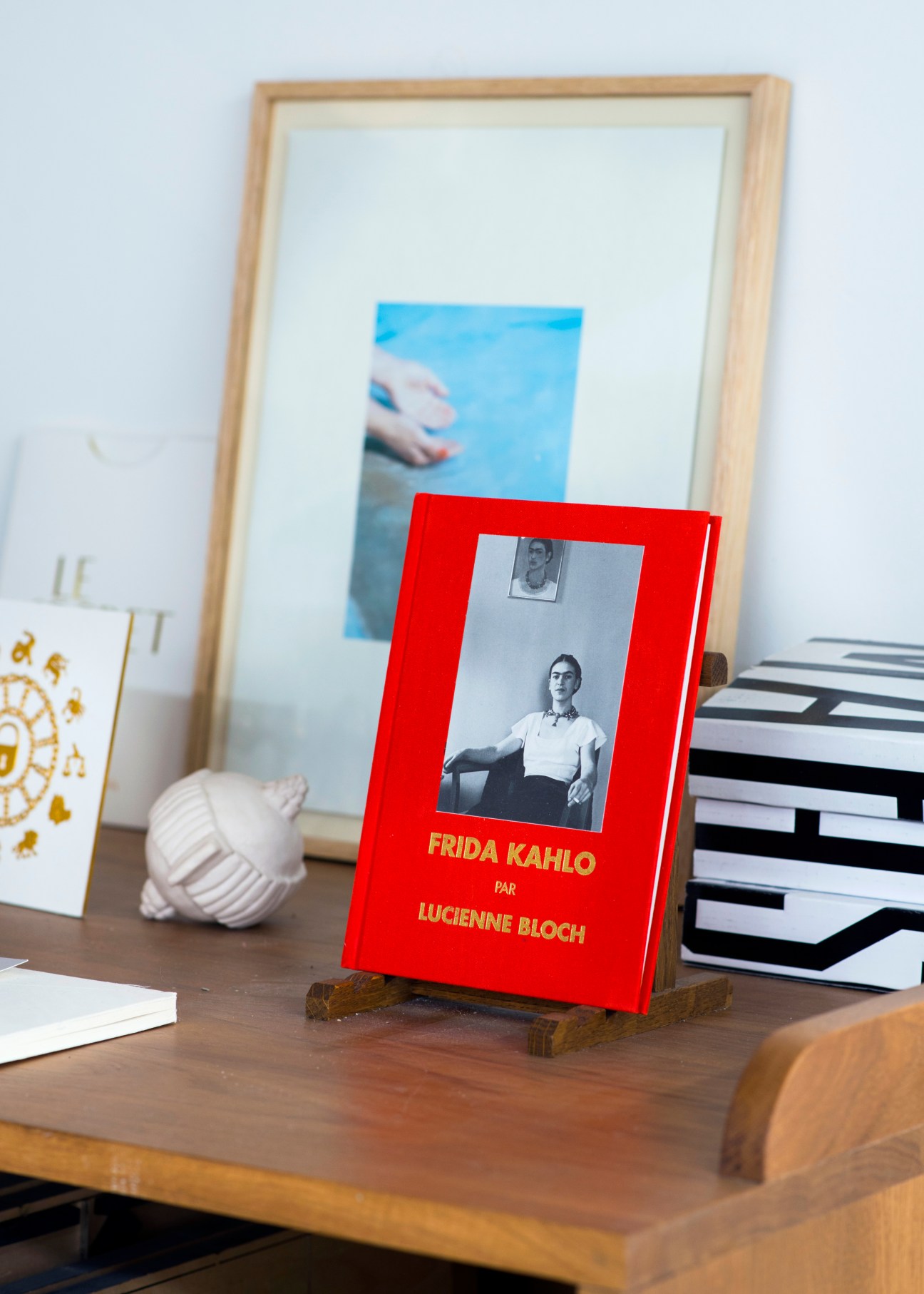
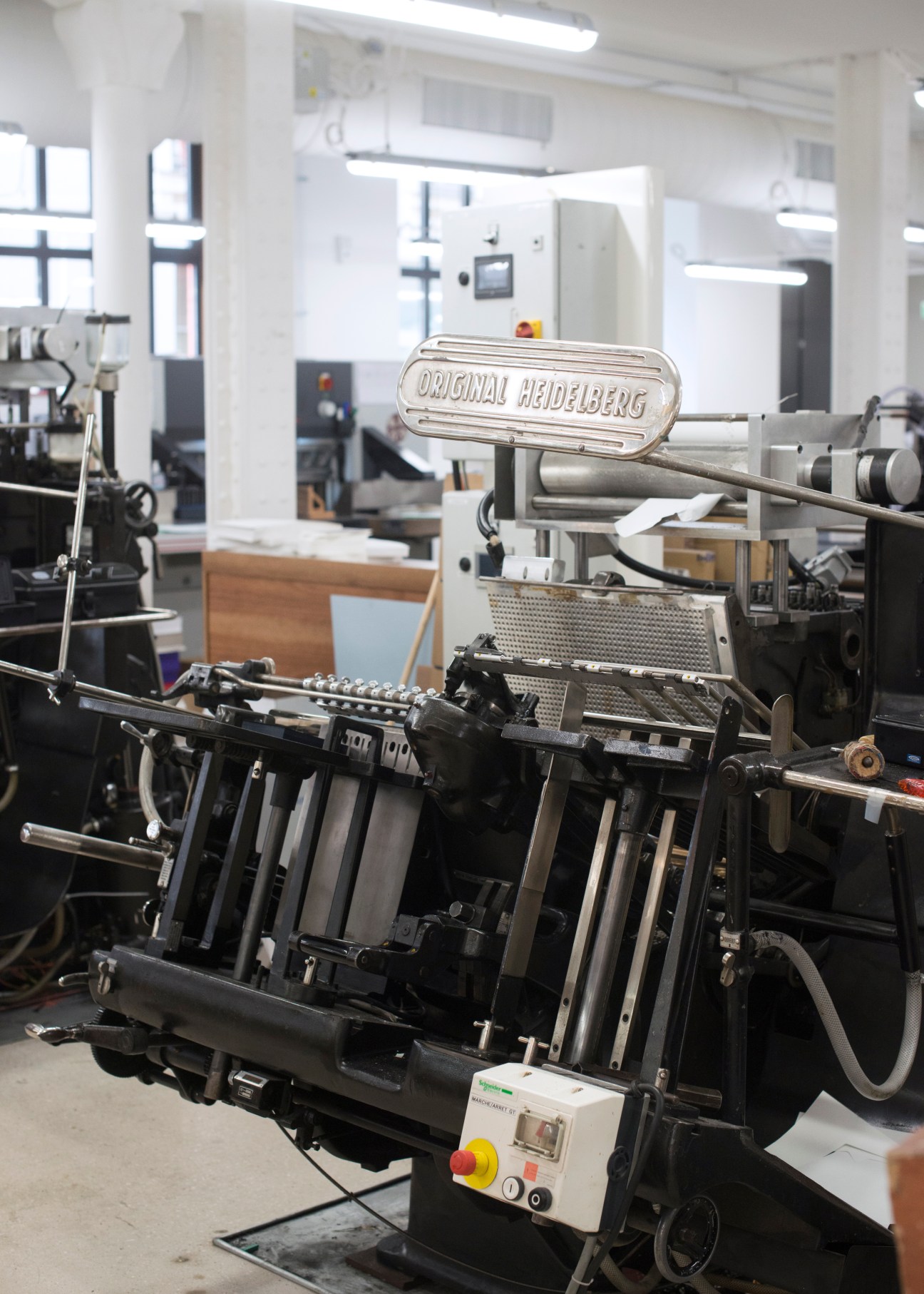
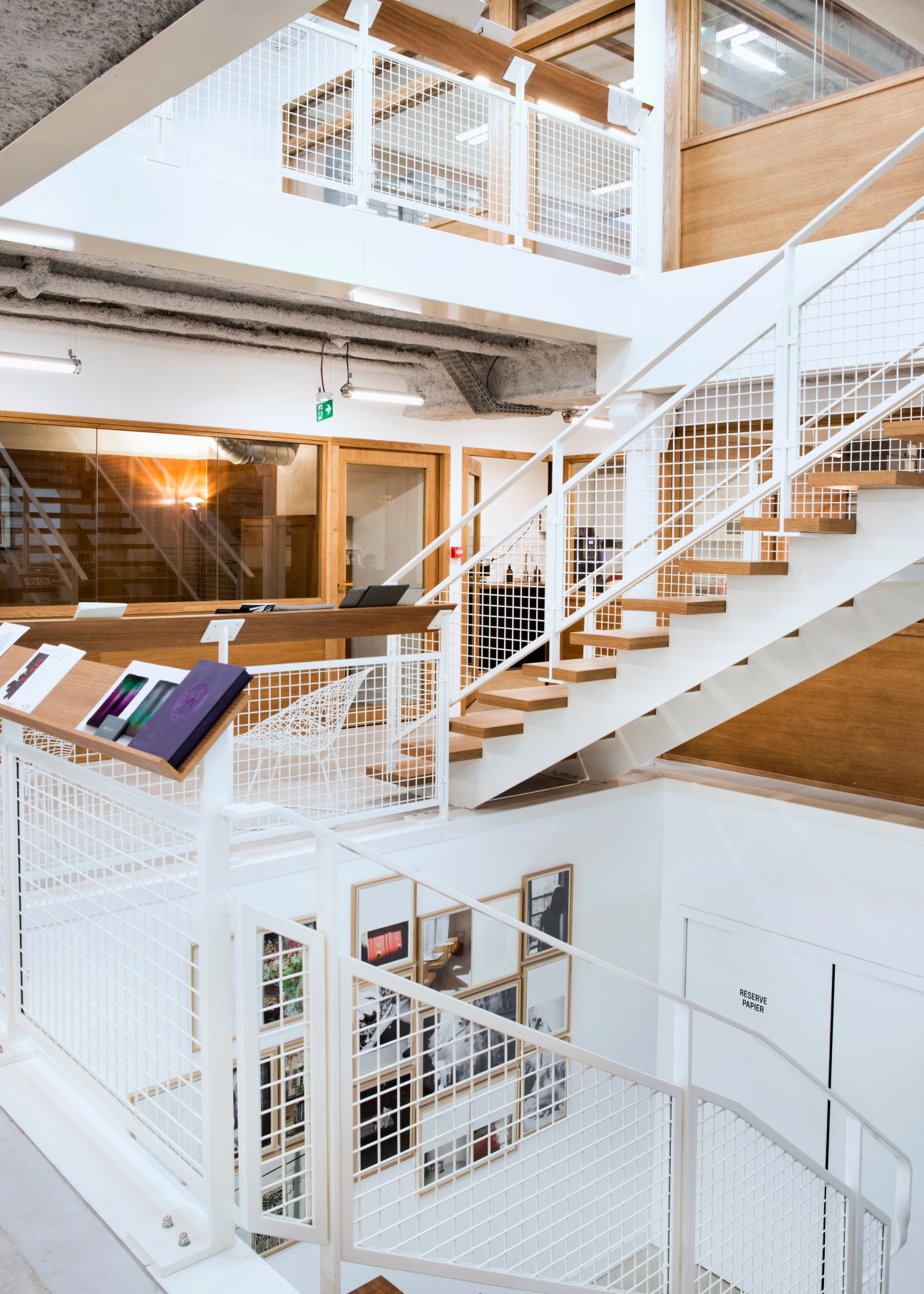
Eventually, Imprimerie du Marais also moved east – but not as far as China. Its new atelier, close to the neighbourhood of Belleville, was chosen out of a need to expand – and is proof that the presses show no sign of slowing down. A huge, multi-level former metal factory was overhauled by Paris-based design studio Les Ateliers Saint-Lazare. “It’s an old place with a spirit,” says Maby-Przedborski of the large brick building tucked down a narrow alley. Inside, sleek wood-and-glass offices look onto a workroom where printing machines roll and tick away all day. Some are snazzy new models but there are also antique versions that have been lovingly restored.
The team has expanded too. Finding employees with such niche skills may seem like a tall order but the company has seen rising interest in these professions. “They are passionate about print and art,” says Maby-Przedborski. That also explains why the brand’s tactile products – invitations, notepads and cards – have been in high demand since the pandemic. “It’s linked to the sophisticated sensation that paper gives,” she says. “More and more, print is becoming a system of gifting – it’s part of a ritual of opening.” For all its dedication to traditional techniques, the atelier is also mindful of modernising and on the lookout for more ecological papers. One of the new findings by the sourcing team is pulp made from seaweed. “We are also looking for a machine that allows us to do embroidery on paper,” says Maby-Przedborski. “The baseline here is ‘l’impossible‘.”
imprimeriedumarais.com
Journalism – USA
Eyes on the prize
Traditional print media might have suffered recent reputational damage in the US but its main source of garlands and gongs, the Pulitzer prizes, still enjoy high regard. Established in 1917, the 23 annual awards across journalism and the arts remain the most revered in American letters. As a non-partisan body, the administration that decides them is uniquely placed to counter the current lack of trust from the general public. “The country is so polarised and civil discourse is shrinking,” says the Pulitzers’ new administrator Marjorie Miller.
Miller took the helm in April, following a career as a foreign correspondent, foreign editor of the Los Angeles Times and vice-president and global enterprise editor of the Associated Press. Among this year’s Pulitzer winners, there was one category that stood out to her. “There was a lot of really strong local reporting,” she says, speaking from the organisation’s headquarters at Columbia University in New York. “It was inspiring.”
Her admiration for those working in smaller newsrooms is due to their resilience in the face of financial challenges. The Miami Herald was in such a position and still won a Pulitzer for its coverage of the collapse of the Champlain South condominium tower in Surfside. “That poor paper has been decimated,” says Miller, referring to the loss of 70 jobs and the closure of a major printing facility by its parent company, McClatchy, in 2020. “And yet, when it came to covering the biggest story of the year, it rallied and did an amazing job.” It’s a determination that Miller believes must be preserved and rewarded. “We need to make sure that this continues, despite the economics of newsrooms,” she adds.
Miller’s ambition is also to expand the Pulitzer name beyond its coveted awards: “To have conversations with people who are curious and open-minded but possibly sceptical of mainstream journalism, about what we do and why it matters – change some minds.”
Internet – Spain
Catch the sun
In a Barcelona flat sits a computer server that hosts the website Low-tech Magazine, which runs entirely on solar power.
Antwerp-born Kris De Decker launched this version of his publication in 2018 as a statement on the hidden environmental costs of energy usage on the internet. The website has no videos and only compressed images; there’s a battery meter that shows how much juice is left (the site does go down occasionally). Low-tech Magazine intends to highlight the energy requirements of the digital world and why making sustainable choices might be more complex than it seems.
solar.lowtechmagazine.com
Business
The Comment
Aviation
Up in the air
David Hodari visits Farnborough International Airshow and finds an aviation industry pondering the future.

At the Farnborough International Airshow, you’ll spend a day buffeted by global economic forces, bleeding-edge technology and military flypasts. Unfortunately, on what turned out to be the hottest recorded day in UK history, those crosswinds were only figurative. The heat lent a dizzying quality to proceedings and more questions than usual were unanswerable to my journalistic brain. Questions such as, why are there only a handful of café kiosks for thousands of delegates? What would everyone wear if the event’s organisers banned blue shirts and chinos? And when will the aviation industry finally go full throttle on climate change?
That last question nagged at me as I traipsed between the airless conference hall and scorching runways. According to the OECD, aviation accounts for 3 per cent of global carbon emissions and that figure is forecast to rise. This sat uneasily with the glossy optimism on show at every well-funded stand. The industry is making some progress: there’s an exciting electric flight school that recently opened in Sweden (see issue 154) and a slew of major airlines have signed well-intentioned net-zero pledges.
In contrast, a Boeing strategist with very white teeth told a room that airlines will need 20,000 new aeroplanes over the next decade. He gave me a pitying look when I asked where electric flight figured. The idea of anything more significant than tiny electric planes taking a couple of dozen passengers on short-haul flights seems fanciful in the short term. On a day when wildfires were breaking out down the road, this hardly felt fast enough.
One brighter note for the sector is the emergence of sustainable aviation fuels (SAF), synthetic and biological chemicals that mimic kerosene but produce a fraction of the emissions. But building production capacity will take years – iata expects sustainable fuels to meet just 2 per cent of the industry’s demand by 2025 – but they’re a potential bridge to zero-emissions flight.
Plenty of companies are making money from sustainable fuels. Zero Petroleum announced a partnership with the UK’s Royal Air Force (RAF) at Farnborough. Paddy Lowe, the company’s co-founder, told Monocle that Zero Petroleum’s fuel “can be made anywhere; it can be made in-territory, potentially, eventually in in-field operations”. “It’s also scalable,” he added before being drowned out by a nearby f35 taking off.
Meanwhile, supersonic business jet company Boom wants to produce an saf-fuelled Concorde with greater comfort and lower fares. Concerns remain that fuel-intensive supersonic flight could also waste limited saf and some attendees questioned whether Boom’s Overture business jet can compete with regular airlines’ Business Class prices. As with the industry line on the environment, some of Boom’s promises seem too good to be true.
Start-ups
Brazil
Brolly good
When sales director Nathan Janovich got caught in a rainstorm on the way home one day, a passing rental bike sparked an idea. Janovich and Freddy Marcos launched Rentbrella, a system that lets users borrow an umbrella from a vending machine for 24 hours free of charge, in their hometown of São Paulo in 2018.
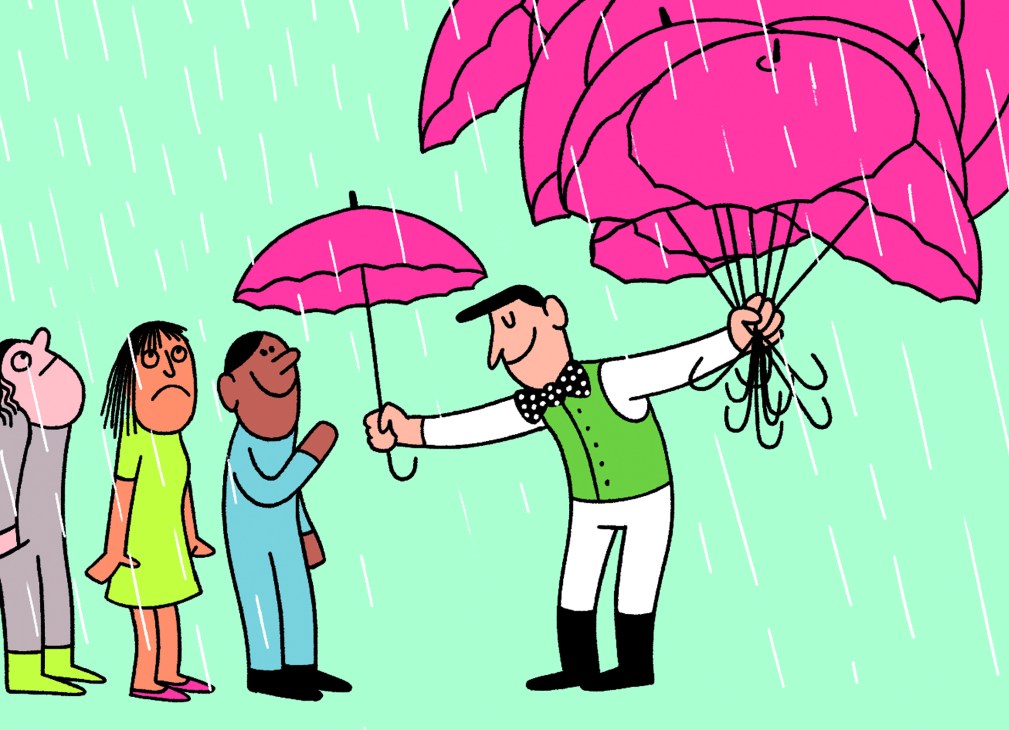
Rentbrella now has more than 400 stations across the city, with 40,000 umbrellas in circulation at any one time – and it’s expanding at a rapid rate. The Brazilian company launched in New York late last year and recently arrived in London, where users can withdraw brollies for free but accrue a small charge if they are not returned after a day’s use. Fuelling plans to launch in 10 other European countries over the next two years is the €7m the start-up has raised in private and venture-capital funding. Rentbrella also relies on sponsorship: in São Paulo, umbrellas bear the logo of Unimed, the country’s biggest healthcare provider, while Deutsche Bank was a recent sponsor in New York. “Imagine a rainy day and thousands of coloured umbrellas,” says Freddy Marcos, who co-founded the brand with Janovich. “They are like walking billboards.”
The company’s brollies, which are made from recycled plastic bottles, are designed to match each new market: UV protection for tropical São Paulo or wind resistance if its user is caught in the British drizzle.
rentbrella.com
Architecture
Global
Hot desks
As the world picks up where it left off, businesses bringing workers back to the office might have more luck if it’s an inviting, clean and well-lit space. Here are three of Monocle’s favourite new offices from around the world.
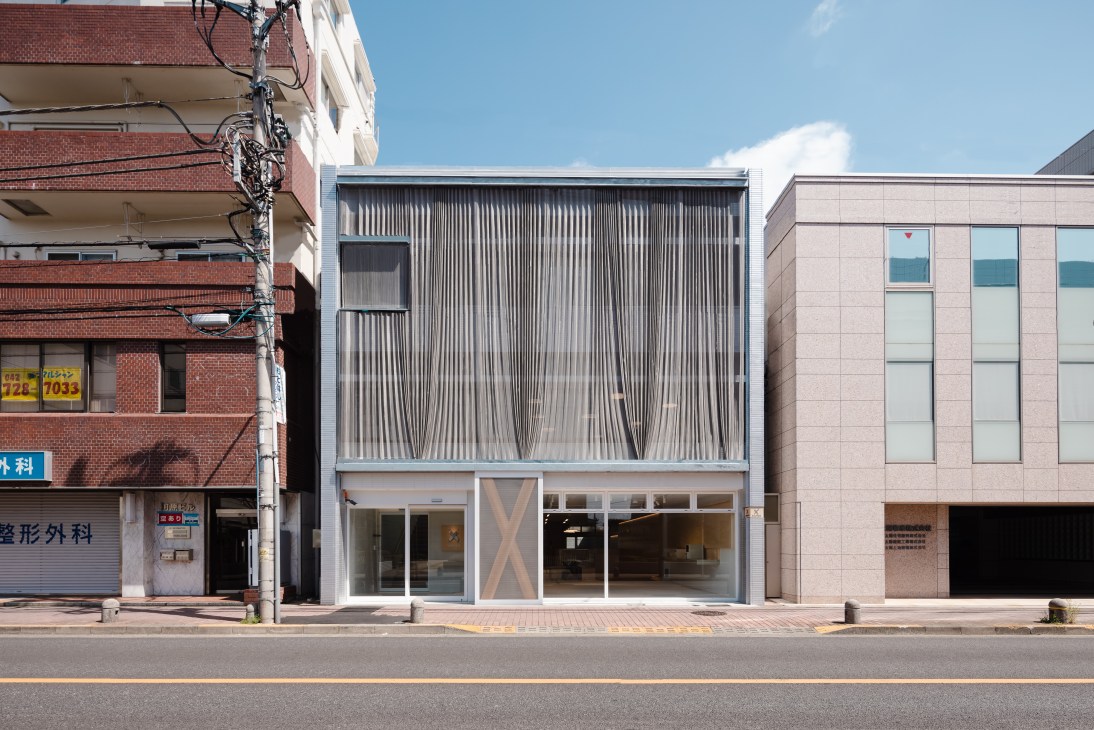
1.
Foster + Partners, Los Angeles
At the far end of Foster + Partners’ new Los Angeles outpost is a huge door onto a terrace above Venice Beach. “The space we’re brainstorming in can be just as important as the idea,” says senior partner Marc Guberman.
The office is already lined with maquettes for projects in the works, including the transformation of the area around the historic Beverly Hilton hotel. “Ninety-five per cent of our work is in California while the other 5 per cent is not on Earth,” says Guberman, pointing to a table of Mars habitat models. Their neighbours are mostly small businesses, including a fashion company and a team of graphic designers. “The office doesn’t have to be flashy but it does have to be uplifting,” says Guberman.
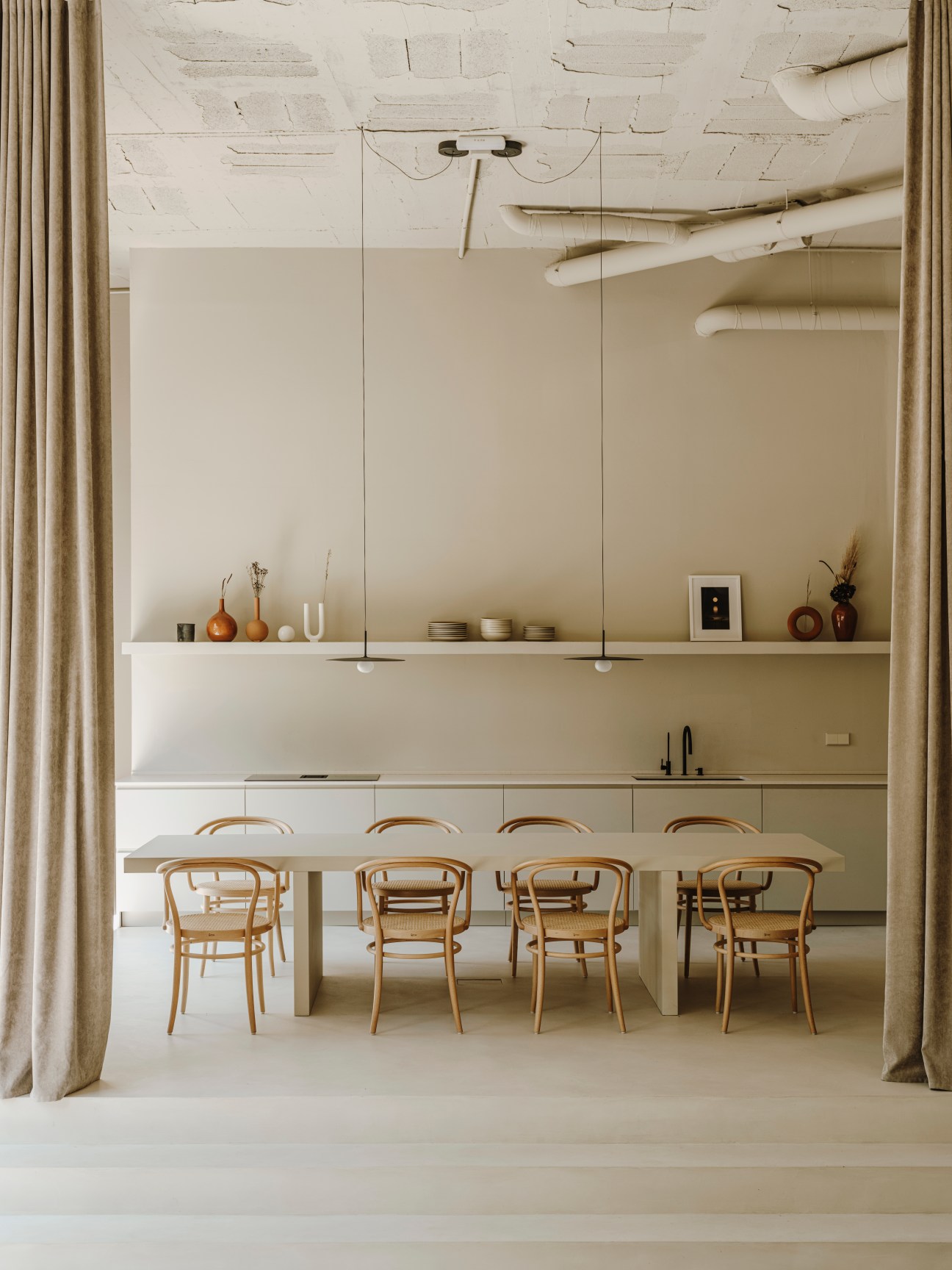
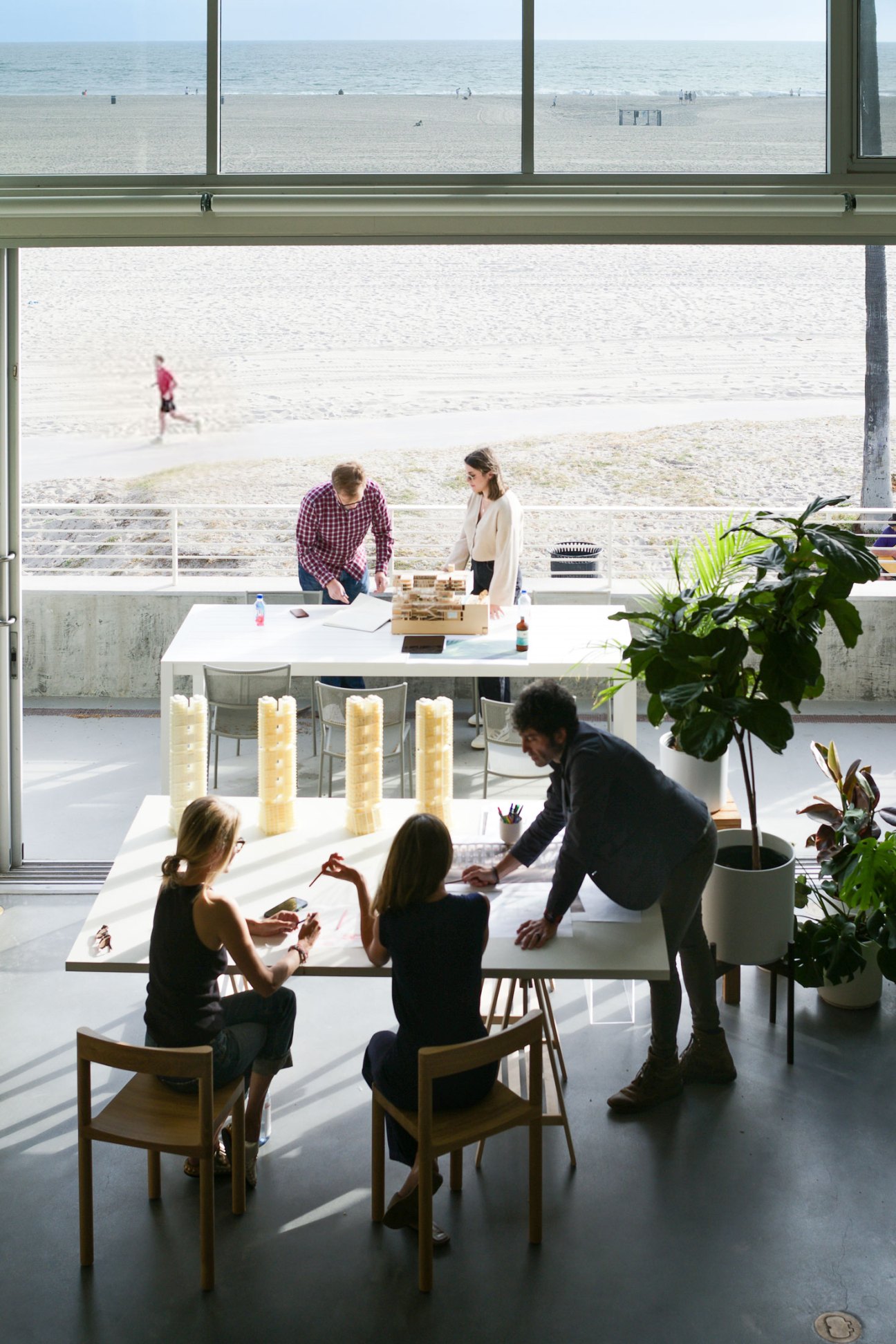
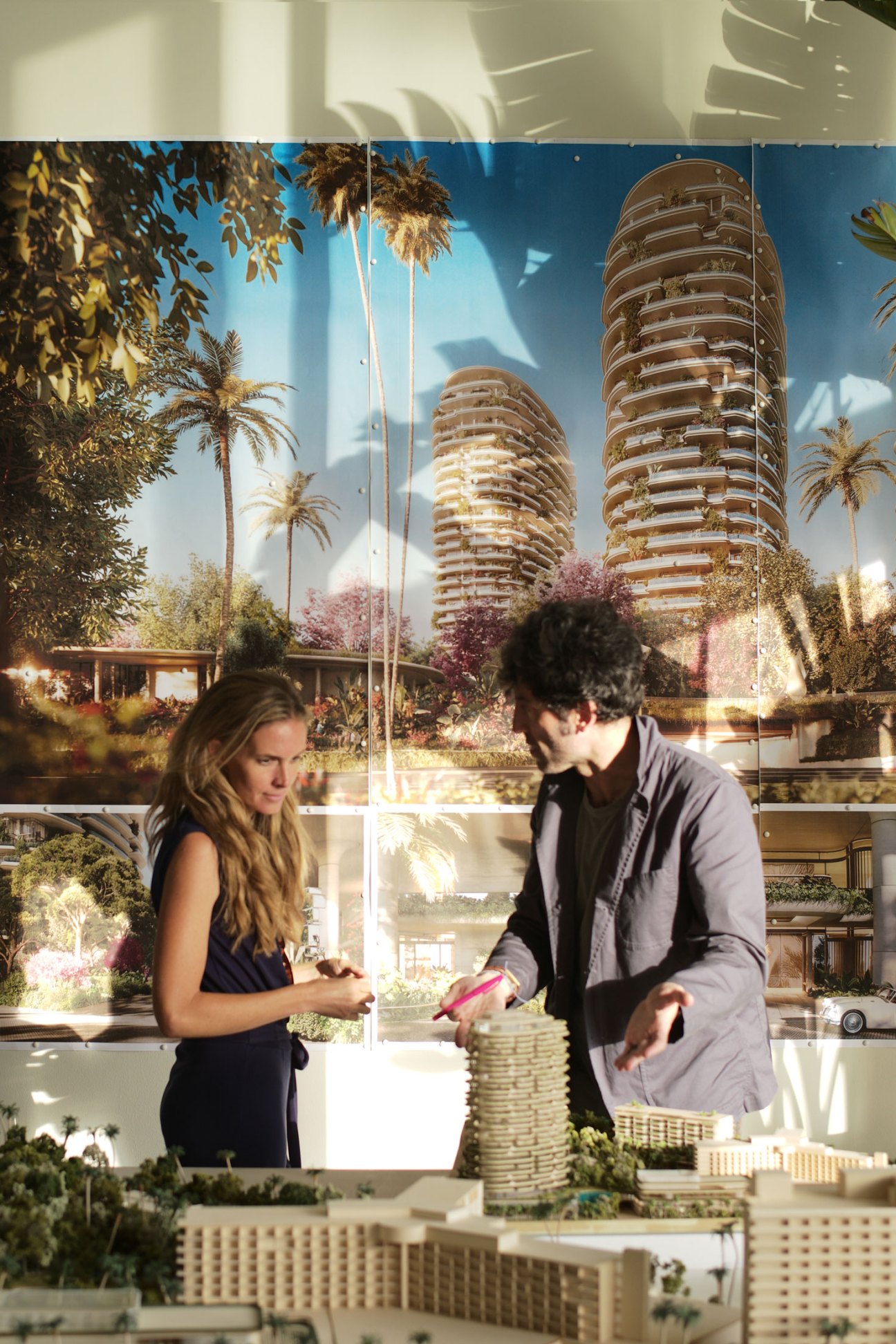
2.
Six N Five, Barcelona
A workspace created by architect Isern Serra is a calling card for any design-conscious young company. Serra has been hired by beauty brand Rowse and advertising agency Fuego Camino Conmigo to transform former industrial spaces into slick monochromatic offices. His latest project saw him create an HQ for design studio Six N Five.
“I love to host people, so I wanted it to feel welcoming as well as functional,” says founder Ezequiel Pini. A key part of this is the open kitchen next to the central workspace, with a table for informal meetings, staff lunches, hosting parties and client dinners. There’s also a small café at the entrance to the office, run by artisan roasters Three Marks Coffee, which encourages locals to drop by, giving the office the convivial feel of a neighbourhood hub.
3.
Unitex, Tokyo
Machida-based Unitex offers software, hardware and data storage. When Emi Kosugi took over the family company in April 2021, she embarked on a makeover of its headquarters. “I wanted our office to be open, warm and bright,” says Kosugi. Unitex’s engineers once worked upstairs behind closed doors but now they can also be found on the wood-lined, light-flooded ground floor.
t2p designed the desks and stools with Unitex’s “X” logo, while Kosugi selected furniture from Karimoku, Conde House and Ligne Roset. There is a bar to entertain guests and two basement floors were combined into a hall with staircase seating. “The open space stimulates conversations,” says Kosugi. “In life, the amount of time we spend at work isn’t short. I wanted to create a workspace that my staff are proud of.”
Images: Boom Supersonic
A second chance at work for Hong Kong’s former protesters
The Comment
Society –– Hong Kong
After the storm
James Chambers on an organisation trying to help thousands of former protesters locked out of Hong Kong society. The solution? Find them a job.
At the end of Revolution of Our Times, a documentary chronicling Hong Kong’s civil unrest in 2019, two protesters reveal their shared hope for the future: full-time jobs. “I’ve never wanted a normal job so badly in my life,” says one, his face almost entirely covered. Their admission reflects the intensity of that period as well as the present reality. Since the national security law, in effect, outlawed political opposition in 2020, protesters have either left Hong Kong or tried to rebuild their old lives.
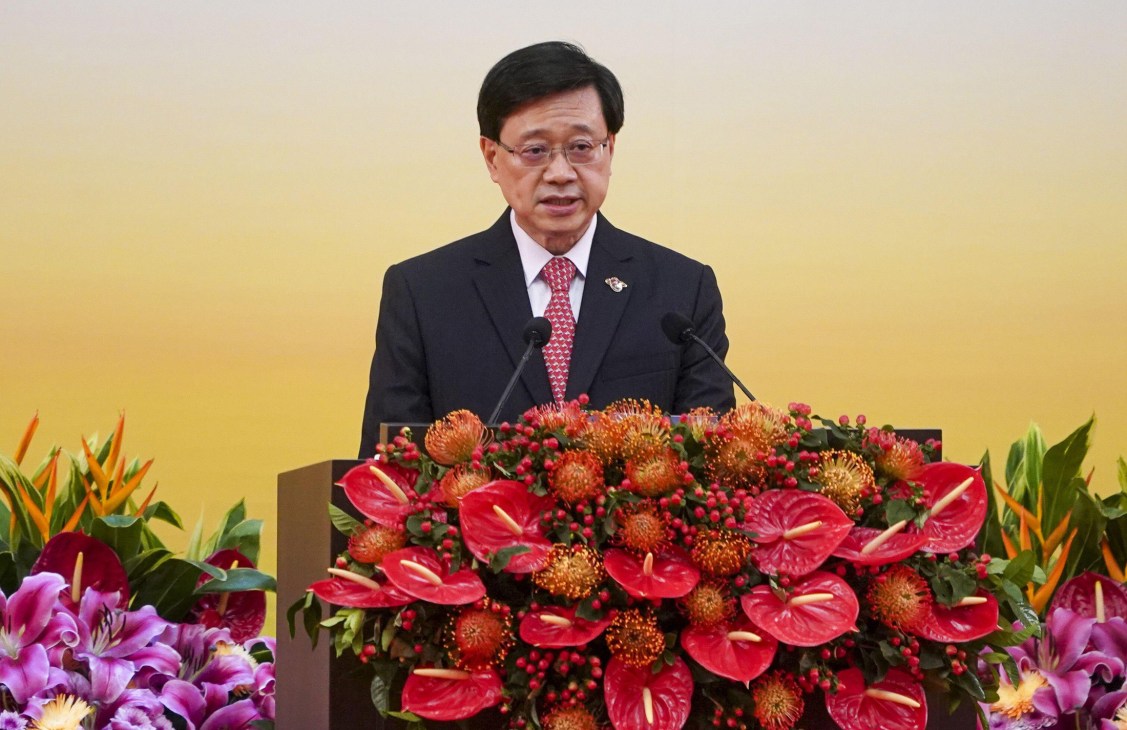
Ken (not his real name) was studying overseas when he flew back to Hong Kong to join the first protests. Arrested almost immediately, he was sentenced to four months in prison for “unlawful assembly”. Following his release, the 27-year-old has had a string of part-time jobs, including dog walking and food delivery. “There’s no space to develop and some companies won’t hire you with a criminal record,” he says. Ken’s CV is not unique. More than 10,000 people were arrested in connection with the unrest of 2019. Most were young and about 2,200 were, like him, university students with promising careers ahead of them. Three years later, their barriers to re-entering society range from half-completed degrees, background checks and psychological trauma to pending trial dates.
“I tell them, ‘We don’t mind what happened to you and won’t discriminate because of your background but this job is not your privilege’”
Project Change offers hope. The NGO is part of a small network of civil society groups quietly providing assistance to these young people. Established in 2020 to offer arrested students counselling and information, it started to help them return to education or find employment last year. “We have to face the issue of reconciliation,” says co-founder Pauline Sung. “We should give these people a second chance.”
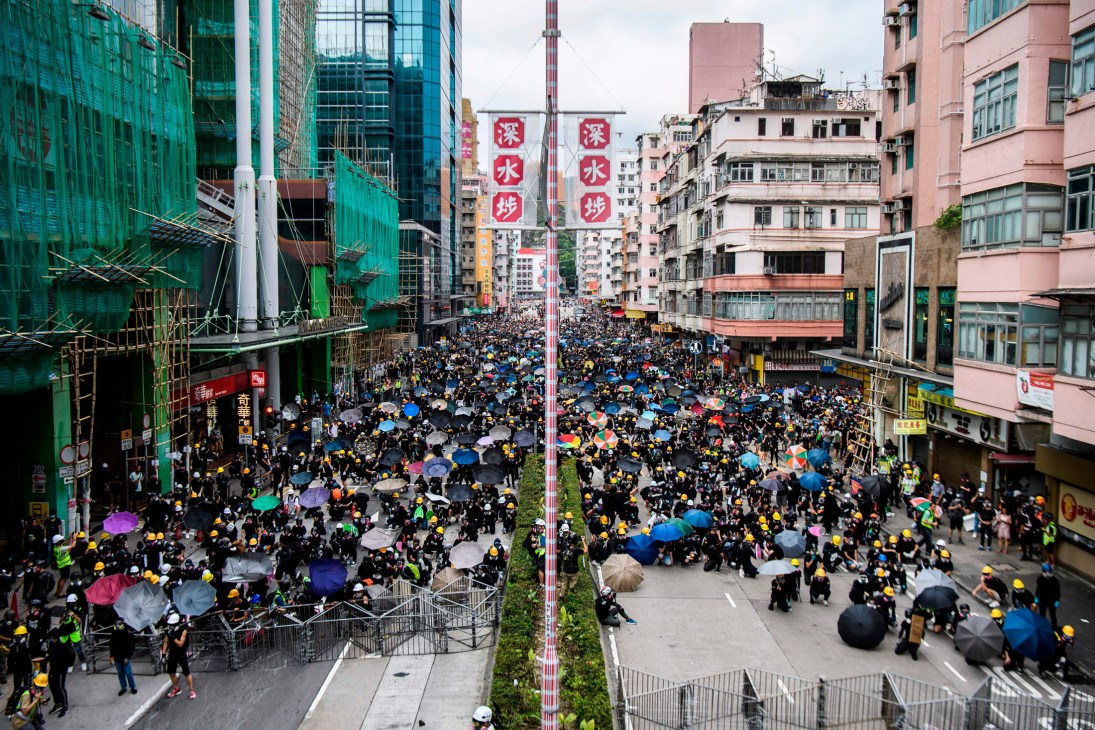
For Sung, neutrality is the key to navigating Hong Kong’s perilous divide. Project Change is apolitical and receives no government funding. Occupying this middle ground, she is remarkably calm at a time when the political crackdown in Hong Kong has spread to labour unions, the media, education and other similar groups. Her organisation is now ready to broaden its scope and encourage more companies to get on board. Convincing the business community to buy in has proved tough but some brave companies have been willing to lead by example. This summer a convicted protester started a two-month marketing internship at The Desk, one of Hong Kong’s largest co-working spaces, with the possibility of a full-time position at the end. It was part of a programme for which Project Change refers suitable candidates for interviews. Suzanna Lee, The Desk’s chief impact officer, says that allowing protesters to compete in the job market gives them the sense of normality that they crave. “I tell them, ‘We don’t mind what happened to you and won’t discriminate because of your background but this job is not your privilege,’” says Lee, who is lobbying other businesses to join the project.
A change of tone from Hong Kong’s new chief executive, John Lee (pictured), should boost recruitment. In May the former policeman, who bears some responsibility for what happened in 2019, expressed a willingness to give convicted protesters a second chance – something that he might well be hoping for himself from the residents of Hong Kong. Whether Ken will get his second chance has yet to be seen. His plan is to emigrate to the UK or Canada and join the thousands who have already left, fearing arrest. “I’m not happy staying to watch the direction that Hong Kong is going,” he says. “There is no freedom of speech here. Either you have to agree with the government or you have to be silent.”
Images: Alamy, Getty Images
Affairs
Military
Switzerland
Slick outfit
It’s not only the Swiss army’s knives that are looking sharp this year – like its schoolchildren, the country’s soldiers will be getting new uniforms in time for autumn. Switzerland’s high command has invested chf3,000 (€3,028) per soldier in upgraded clothing, including a new camouflage pattern. Tarnanzug (TAZ) 90, the current standard pattern, designed in 1990, is to be replaced with the more modish (looking, if not sounding) Multiumfeld-Tarnmuster 16. This updated pattern, which cannot be seen yet, has been created to keep in lockstep with the army’s operational changes. No longer are recruits spending their time deep in Alpine forests but are increasingly present in urban areas. So the new design is paler and includes flecks of black.
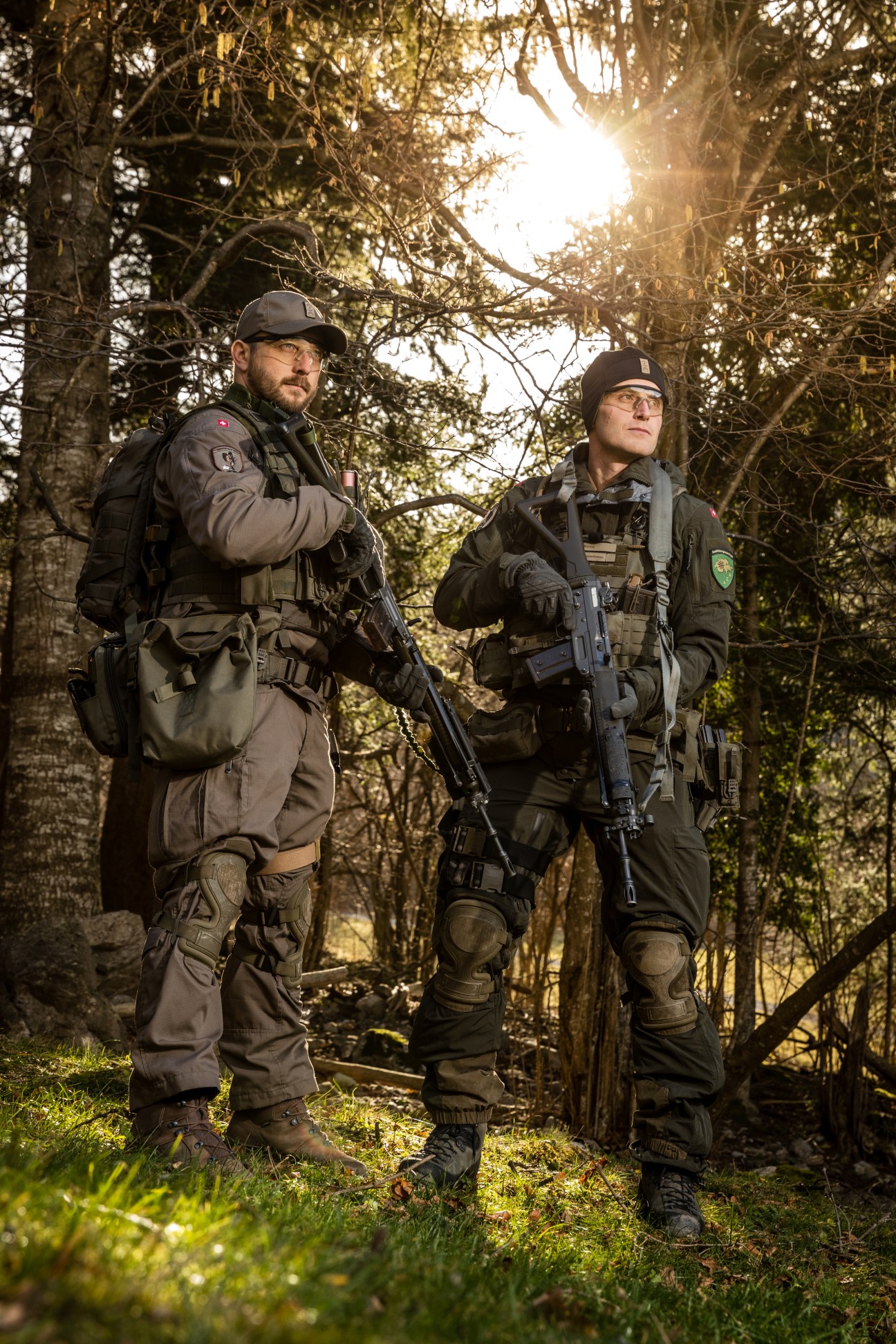
Contracts for the production of this fabric have been awarded to four Swiss suppliers. “We’ve made fabric for the US Army before but this is our first time working for the Swiss one,” says Urs Schellenberg, the third-generation owner of Fehraltorf-based manufacturer E Schellenberg Textildruck. “I was keen to take on this contract because camouflage is such a high-spec fabric to produce,” he says. “The project will force the company to introduce cutting-edge technological advancements that will help propel us forward.” It’s not just the pattern that is changing. “The old fabric was very heavy,” says Schellenberg. “The new ones are more advanced and suitable for the outdoors. They’re more stretchable and breathable, and lighter.”
Schellenberg has invested in a state-of-the-art digital printing machine from Austrian manufacturers Zimmer, the first of its kind to be created specifically for making camouflage. “It will allow us to print endlessly without repeating the same pattern,” he says. “With rotary printing, you normally have the same pattern every 64cm.” The company will be using the machine to create a million square metres of camouflage every year. Unfortunately for fashionistas, Multiumfeld-Tarnmuster 16 has been trademarked to prevent it from being produced by commercial suppliers – so it won’t be spotted on the runway anytime soon.
Education
Finland
Poor imitations
Cultural exports can be invaluable for boosting a country’s soft power but Finnish education minister Li Andersson (pictured) isn’t convinced that her nation’s world-leading curriculum can work elsewhere. “It’s quite hard to copy an education system and transfer it somewhere else,” she tells Monocle. “You have to have a very holistic approach.”
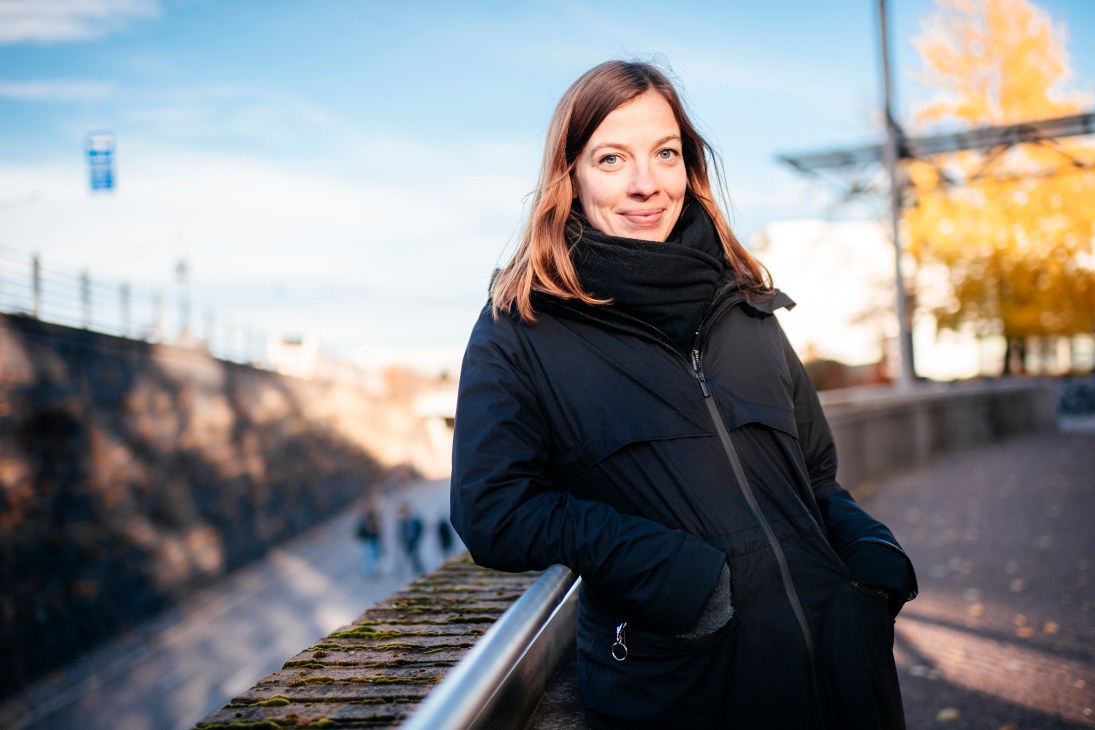
The Finnish approach entails a near total absence of standardised testing, a comparatively late school-starting age (seven) and an emphasis on wellbeing and play. Most teachers need pedagogical training and a master’s degree in education. The curriculum is reviewed approximately every 10 years and shaped by teachers not politicians. The results speak for themselves: Finland places consistently highly in the Programme for International Student Assessment rankings, which assess the skills and knowledge of schoolchildren in OECD countries, while inequalities between students are some of the world’s lowest.
Andersson’s comments come in response to the growing number of schools offering “Finnish education” as far afield as Peru, Brazil and the US. India, where standardised exams and government-mandated curricula are the norm, is home to the Nordic High International School in Indore, Pune’s Finland International School and similar institutions in Mumbai and New Delhi.
Most of these institutions are fee-paying (unlike the vast majority in Finland) and exploit the country’s educational cachet rather than being the result of a shift in policy or culture. “It’s not enough just to put up a sign that says your school is Finnish,” says Andersson. Finnish education is a product of “the overall values of society, such as how we view education, the teaching profession, wages and universities,” she says. “Many different things add up to what is the Finnish education model.”
In a bid to protect its reputation, Finland offers what Andersson calls a “quality guarantee” for schools overseas to earn the bona fide title of “Finnish”. It uses the same requirements on teacher qualifications and curriculum as apply to institutions in the Nordic country. But the scheme doesn’t prevent educators without the accreditation from cashing in on Finland’s name. While some imitators may well have noble aims, others have purely avaricious ones.
Defence
Japan
Jet setting
The unrealised dream of Japan’s late former prime minister Shinzo Abe was unshackling his country from its explicitly pacifist constitution – specifically Article 9, which renounces war as an instrument of statecraft (Japan’s military is formally known as the Self-Defence Forces). Abe believed it unfair that modern Japan remained bound by strictures imposed by its Second World War American conquerors.
In the election held two days after Abe’s assassination in July, the Liberal Democratic Party he once led increased its parliamentary presence, prompting talk that the government might consider his cherished ambition. If they needed a pretext, they have it: in the first quarter of 2022, Japanese fighter jets scrambled 235 times in response to approaches by Russian and Chinese aircraft.
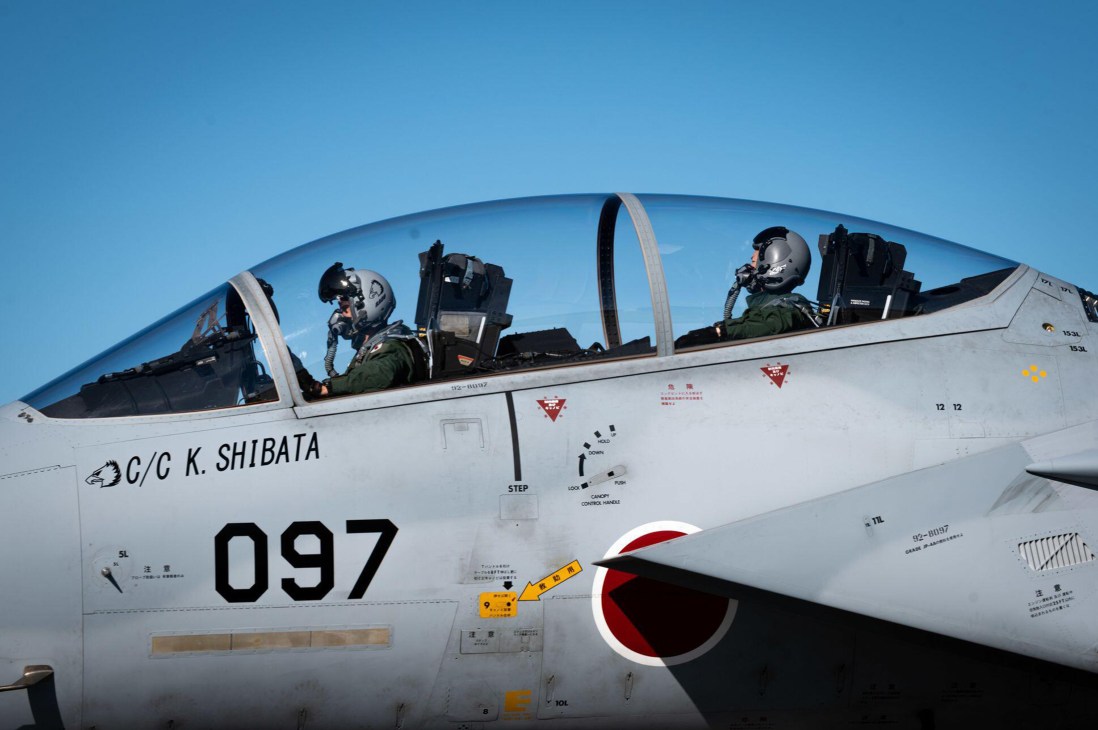
There remains doubt, however, that Japan’s current prime minister, Fumio Kishida, possesses the requisite political capital. “Constitutional changes are very hard,” says Alessio Patalano, senior lecturer in war studies at King’s College London and a specialist in Japanese defence policy. “I don’t think the Diet will make serious moves on this subject.”
Patalano notes that Japan can shift its defence policy without rewriting Article 9 – and that Abe’s years of agitation on the subject have expanded the idea of what seems reasonable. “Article 9 is at heart very contextual,’ says Patalano. “Its boundaries of what is acceptable are defined by the security context. As regional security deteriorates, the mandate of the Self-Defence Forces may very well expand without undermining the spirit of the constitution.”
The Foreign Desk
Andrew Mueller on…
The Nato summit
The headline of Nato’s most recent summit in Madrid, which The Foreign Desk team attended, was the accession to the alliance of Finland and Sweden. This is a big deal and a development that would have seemed utterly fantastical as recently as the beginning of this year. But there was an arguably even more intriguing subtext afoot at the conference: why stop there?
Attending the summit, along with the leaders of Nato’s 30 extant and two imminent members, were the prime ministers of Australia, New Zealand and Japan, and the president of South Korea. Not coincidentally, the same gathering also saw Nato, for the first time, specifically addressed the issue of a bellicose China. Speaking a few days later, as Finland and Sweden signed their accession protocols, the organisation’s secretary-general, Jens Stoltenberg, said, “Nato’s door remains open to European democracies that are ready and willing to contribute to our shared security.” But it is the non-European democracies that are most immediately concerned with the direction and manner in which China might choose to throw its weight.
Since the Madrid summit, there has been a lot of talk about what fine military and strategic assets Finland and Sweden will be to Nato and quite rightly – speaking to Monocle 24 a few weeks ago, the former Nato deputy supreme allied commander Europe General Richard Shirreff said that he used to “dream” of Finland and Sweden joining. But Nato has been keen to stress that the newcomers also buttress its “values”; that they will be defending an idea, not merely territory. That idea has been summarised by Finland’s foreign minister, Pekka Haavisto, as “the rules-based international order and the principles of democratic freedom and rule of law”.
Australia, New Zealand, South Korea and Japan are all certainly enthusiasts for such precepts. All four countries would certainly be considerable military assets to Nato: Australia and New Zealand in particular have been turning up for the western world’s conflicts since the Second Boer War, seemingly adhering to Nato’s Article 5 “All for one, one for all” creed long before the clause was even drafted. And Australia is already integrated, as of 2021, into the Aukus security pact with the UK and US.
Any expansion into the Pacific might necessitate a rejigging of the North Atlantic Treaty Organisation’s acronym (Napto? Panto? Maybe not Panto…). And China’s unhappiness would doubtless be spectacular. But if Nato – and the rules-based democratic world generally – should have absorbed one lesson from the past few months, it is that rules and democracy are vulnerable if not defended.
Defence
South Korea
In rotation

In the basket: 18 Boeing ch-47f Chinook helicopters
Who’s buying: South Korea
Who’s selling: usa
Price: $1.06bn (€1.05bn)
Delivery date: By 2028
It is 60 years since the distinctive twin-rotor Chinook helicopter first wobbled skyward. South Korea has been among its many loyal operators: this order of ch-47f Chinooks will be phased in as replacements for some of its current fleet of 43 ageing ch-47ds. Other recent purchasers have included Egypt, which is adding 23 more to its established contingent, and Germany, which is buying 60 to replace its increasingly antique Sikorsky ch-53g Sea Stallions.
Images: Alamy