

Issues
Alvalade, the 15-minute Lisbon neighbourhood offering the best of urban living and green space
The 15-minute city might sound like a contemporary idea but Alvalade has been living it for generations. At central Lisbon’s northern edge, this neighbourhood is home to quiet residential enclaves and bustling commercial streets, avenues lined with modernist buildings, as well as stretches of small, detached homes. There are schools, hospitals, post offices and markets and plenty of tree-shaded pedestrian streets in between. It’s hard to imagine that just 80 years ago this part of town was undeveloped, dotted with rural estates and manor houses.
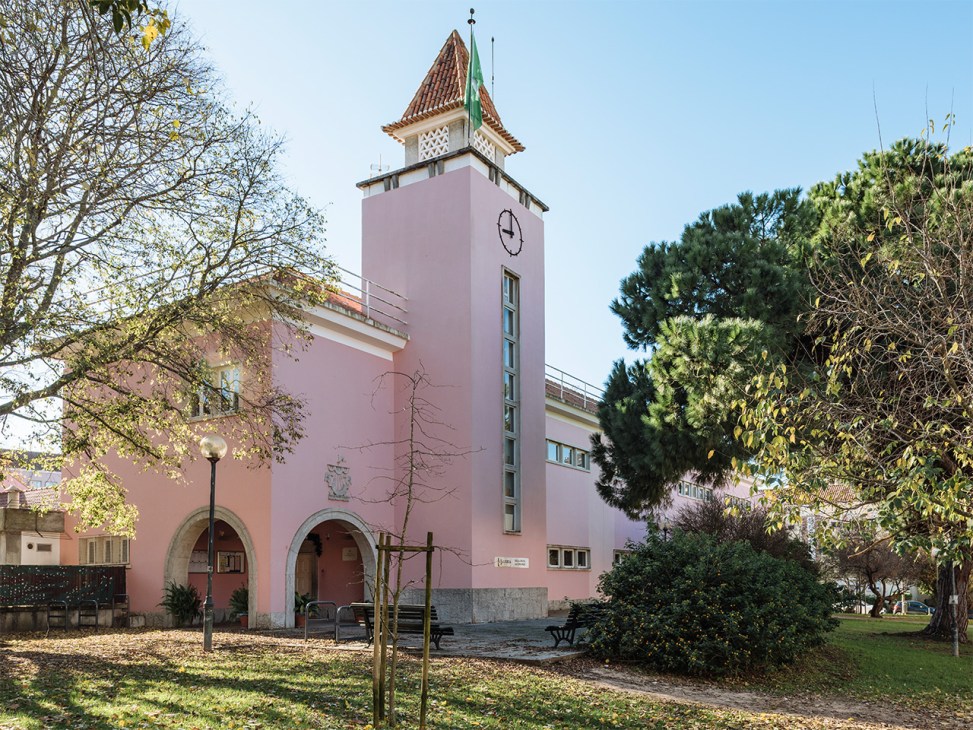
The 1945 urban plan that gave rise to Alvalade was an answer to a major housing crisis in Lisbon. In 1938 city mayor Duarte Pacheco commissioned Russian-born French urbanist Étienne de Groër to plan the city’s expansion northward into its peripheries but it was Portuguese architect João Faria da Costa who was later entrusted with shaping the 230 hectares that would become Alvalade.
Inspired by the garden-city movement, Faria da Costa conceived the neighbourhood as a low- to medium-density area with mixed land use. Large avenues were cut across the terrain, boxing in eight areas each given a purpose – residential, civic, industrial and commercial. “The plan took from a utopian urban ideal,” says Nuno Lourenço, an architect working in Alvalade who walks Monocle through the area. “The idea was that it would allow one to simultaneously enjoy what’s good about the city and the countryside so that there was a social and economic harmony of man with nature.”


Designed to house 45,000 people – newcomers from rural Portugal and those displaced by urban renewal elsewhere in the city – Alvalade was to offer a spectrum of affordable housing, from social units to rent- controlled apartments. To fund the development, the local town hall partnered with the country’s social security funds. Under the Estado Novo dictatorship, Faria da Costa’s plan was implemented swiftly: land expropriations had previously begun and construction started in 1947.
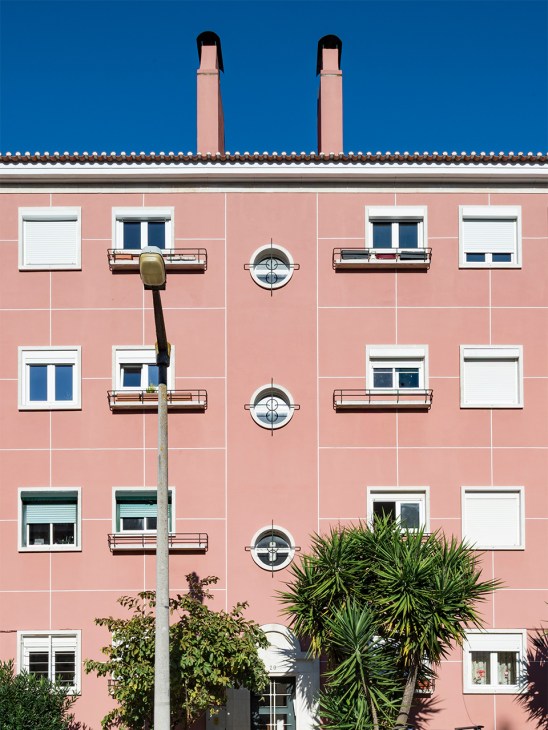
In the first residential zones, three- and four-storey buildings line tree-shaded streets. With simple salmon-pink or yellow façades, these model homes were designed with private backyards so that residents could cultivate small plots. Primary schools, accessed via pedestrian pathways, served as the gravitational pull. “We used to leave for school through the back garden, meeting children on the next street, until we arrived as a group,” says Fernanda Santos, who has lived on one of the U-shaped streets here since 1949. Though many backyards have since been converted into annexes and cars are now much more common, these early plots continue to offer a rare dose of tranquillity in Lisbon. “People still greet each other and when the tangerine tree in our garden bears fruit, it is shared among neighbours,” says Santos.
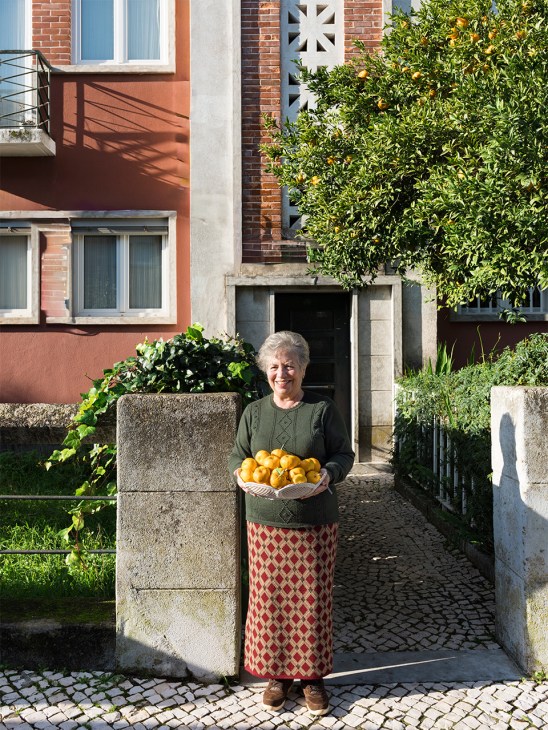
In a telling reversal, these homes, which once commanded the most affordable rents, are now sought-after addresses. “It shows just how relevant the garden-city principles have become again – urban gardening, walkability, proximity,” says Lourenço.
A stone’s throw away, the pace of the neighbourhood shifts. Walking across Avenida de Roma, the broad artery that cuts through Alvalade, Monocle arrives at its commercial core, with Avenida da Igreja as its boisterous high street. Stationers, hardware stores, florists, opticians and plenty of bakeries offer a diversity and density of brick-and-mortar retail.
“Even with plenty of supermarkets around, I buy all my fresh produce from specialty shops – the butcher, the fishmonger, the fruit vendor,” says Filipa Corrêa Mendes, a 35-year-old who moved across town to live on this busy side of Alvalade with her family in 2024. Some businesses, such as ice-cream shop Gelados Conchanata, have been here almost as long as the neighbourhood itself. Others, such as the fashion boutiques of Avenida de Roma, have given way to a more familiar landscape of franchise establishments.
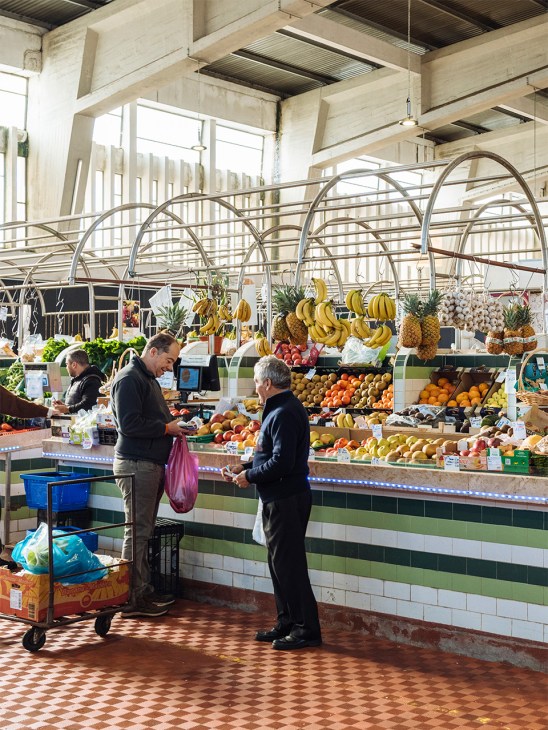
The market, foreseen in Faria da Costa’s plan but only built in 1964, still anchors daily life here. The original master plan also reserved a corner of Alvalade’s commercial zone for crafts and niche industries. Small warehouses, once home to typographers and carpenters, now house art galleries and even the newsroom of online daily Observador – the scale perfectly suited for modern-day industries. “There’s something of old Lisbon here,” says Corrêa Mendes. “But there’s also this lively cultural scene.”
If Alvalade’s conviviality seems to have been inscribed in a blueprint from 1945, part of the neighbourhood’s charm also comes from areas that deviated from the original plan, with successive generations of architects and residents reshaping the neighbourhood over time. A key turning point was the first National Congress of Architecture, which took place in Lisbon in 1948, marking a break with the traditional style of build associated with the Estado Novo regime. Modern architecture began to rise in Lisbon that embraced the principles of Le Corbusier’s Athens Charter – a blueprint for modernist construction.
In Alvalade, Avenida Estados Unidos da América remains one of the city’s most striking testaments to this era, with elongated apartment blocks raised on pilotis. “The plan’s original, more conservative rows of houses were reimagined by architects who were often in opposition to the regime,” says Aquilino Machado, who was born in Bairro das Estacas, a pioneering residential complex built in 1954 at Alvalade’s southern edge. Instead of private backyards, the gardens – designed by landscape architect Gonçalo Ribeiro Telles, who was later jointly responsible for the gardens at Lisbon’s Calouste Gulbenkian Museum – flow freely from one block to the next.
Shifting social and political tides in the years leading up to, and following, the Carnation Revolution in 1974 left their mark on Alvalade, as residents began to inhabit the neighbourhood in new ways. Boosted by the arrival of the Metro in 1972, Alvalade evolved from a quaint peripheral district into a vibrant hub, drawing visitors from across the Portuguese capital to its shops, cinemas and theatres. Local cafés emerged as cultural fixtures, frequented by filmmakers and intellectuals. Some remain, such as the iconic Vá-Vá, though its sleek, renovated interiors now cater to contemporary dining rather than heated political debate.
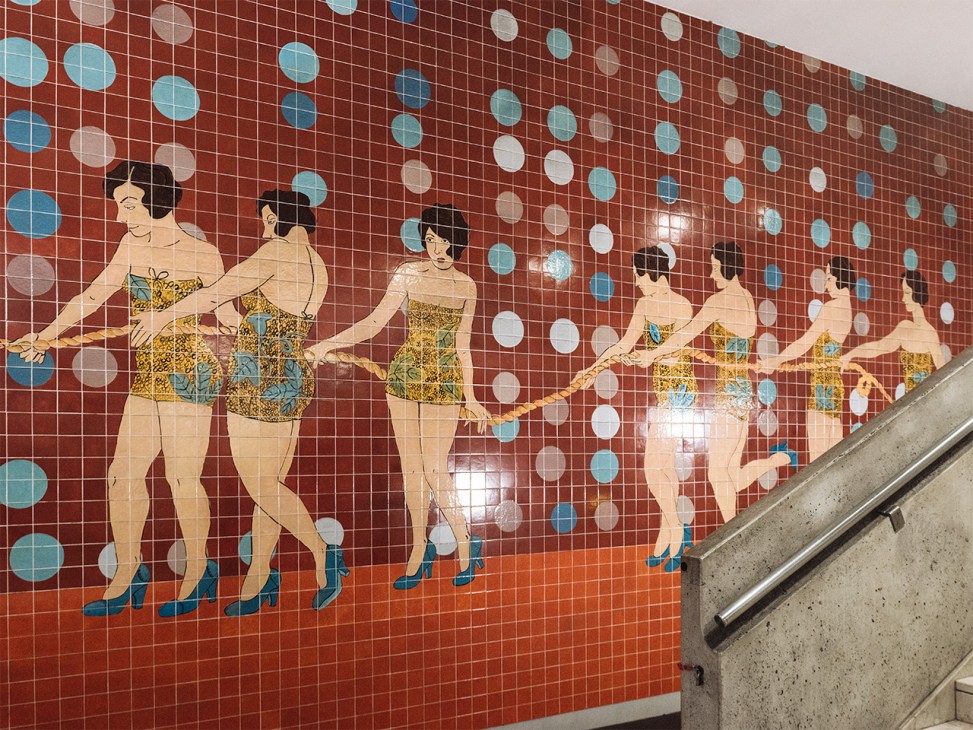
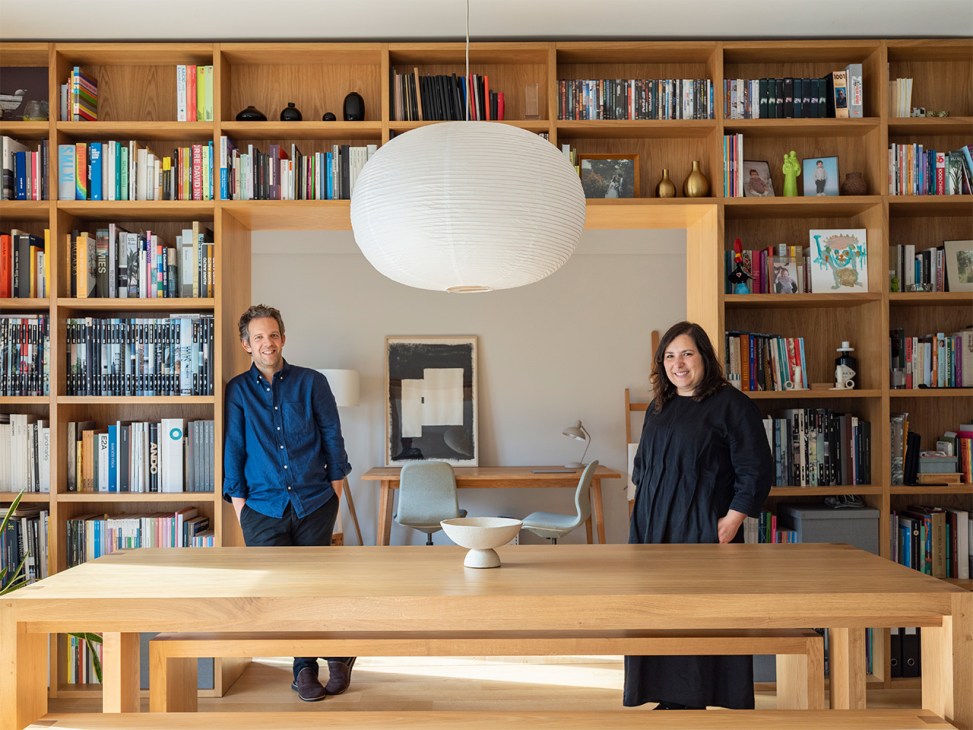
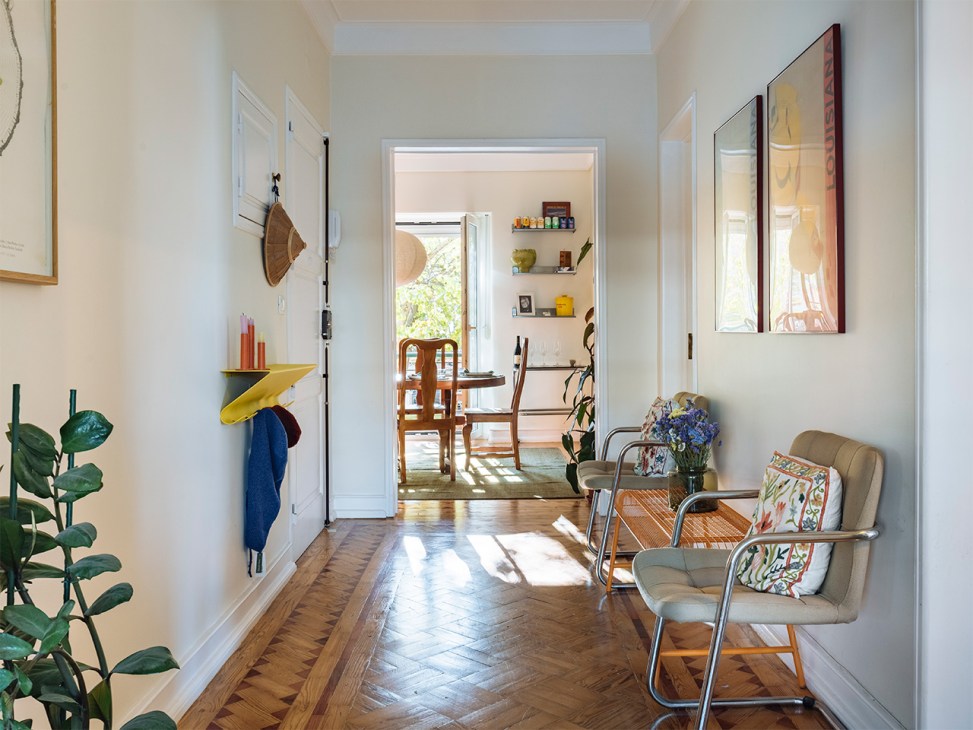
A social renewal is gradually taking place here, with young families living alongside established residents. “If we can, we try to buy homes for our children and grandchildren here,” says Santos. “They want to stay in Alvalade.” Mário Serrano and Margarida Fonseca, for instance, inherited their apartment on Avenida do Brasil from Fonseca’s grandmother. In 2021, the couple, both architects, renovated the space, removing walls to create a light-filled, open-plan apartment. “There’s not much reason for us to leave Alvalade. Our work is here, our children’s schools, the shops and restaurants,” says Serrano. “Everything is within walking distance.” A short distance from their home is José Gomes Ferreira Park, a large green space shaped in the 1950s by Ribeiro Telles but dating back to a time when Alvalade was mostly rural. “It’s a pearl within the city,” says Serrano.
An 18th-century palace stands in the heart of one of Alvalade’s first residential developments as a reminder of the land’s rural past. Today, it houses a library, where long-standing residents such as Santos regularly meet to work on a project that shares and safeguards the area’s memories. Surrounding it, the Ateliês dos Coruchéus – two town-hall-managed buildings – contain artist studios and host exhibitions. Children fill the adjacent playground, creating a generational mix that feels vital. Despite being conceived under a radically different social and political order, the life that continues here is a tribute to 80 years of design and construction for conviviality and community.
Utopian visions
Through the 20th century, plenty of architects dreamed up utopian schemes intent on improving quality of life. Initiatives such as Le Corbusier’s Radiant City (skyscrapers set in vast green spaces), Frank Lloyd Wright’s Broadacre City (decentralised communities) and Tony Garnier’s Une Cité Industrielle (the separation of residential, industrial and civic uses) never saw the light of day – but João Faria da Costa’s work at Alvalade did.
While site-specific, unlike visions such as Le Corbusier’s Radiant City, the Portuguese architect’s vision was defined by making primary schools the nucleus of each sector of the development. With the distance between school and home easily covered on foot, it put pedestrians and people, especially children, at the centre of an urban vision – a quality that helped bind together the community and has, no doubt, contributed to Alvalade’s longevity.
Village Green: The leafy Los Angeles neighbourhood that puts communities first
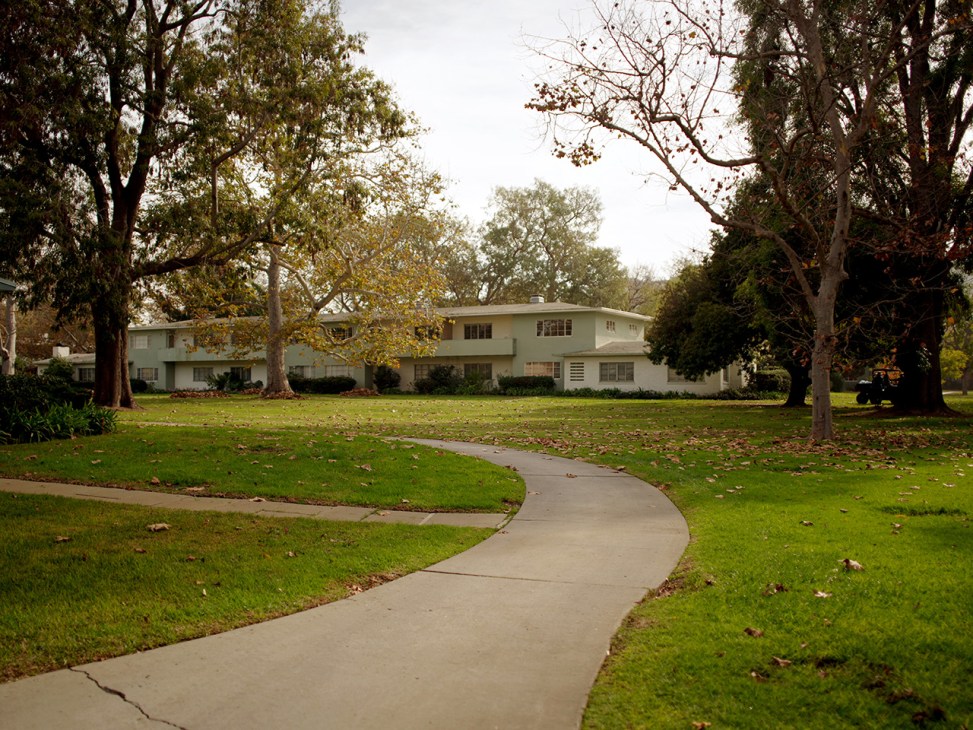
When a coyote appears on the lawn outside the window of John Florance’s home, neither seems surprised. “They’re a nightmare for the cats,” says the 63-year-old. “But it speaks to just how close to nature this place is.” This is life at Village Green, a car-free oasis of 629 homes in southwest Los Angeles. Here, across 28 hectares, a network of pathways and gardens lined with trees creates what feels less like urban housing and more like a small town that happens to be 15 minutes from downtown.
The development was born of early 20th-century ideas about how cities should be built. In 1898, British urban planner and social reformer Ebenezer Howard founded the garden-city movement, an approach to urbanism that placed space, light and nature at the heart of town planning. By the 1920s, US planners had begun emulating such developments across the Atlantic.
Among them was EG “Lucky” Baldwin, a developer who commissioned a team to create Village Green. Its design featured interconnected, light-filled apartments and park-like grounds, with more than half the development’s footprint dedicated to greens and garden courts. Opened in 1942, the project demonstrated the beauty of one of the defining features of the movement: the superblock. Here, cars were banished to perimeter garages. Soon after opening, the project won a distinguished award from the American Institute of Architects’ southern California chapter.
When the first residents moved in, they were middle-class professionals attracted to what the Los Angeles Times described as a “new and finer style of living” that resembled “the quiet and beauty of the country”. Today’s residents are drawn here for similar reasons.
1.
The Florence Residence
Love thy neighbours
John Florance moved to Village Green in 2009 after a friend invited him to visit. He had been living in a downtown loft and immediately noticed the contrast. “The temperature drops at least two or three degrees because of all the trees,” he says. “It’s our own little microclimate here.” His home has no air conditioning but Florance manages fine. “There are about two weeks out of the year when you’re kind of miserable but just turn on the fans and you’re good. It’s the leafy trees, providing shade, that are a blessing.”
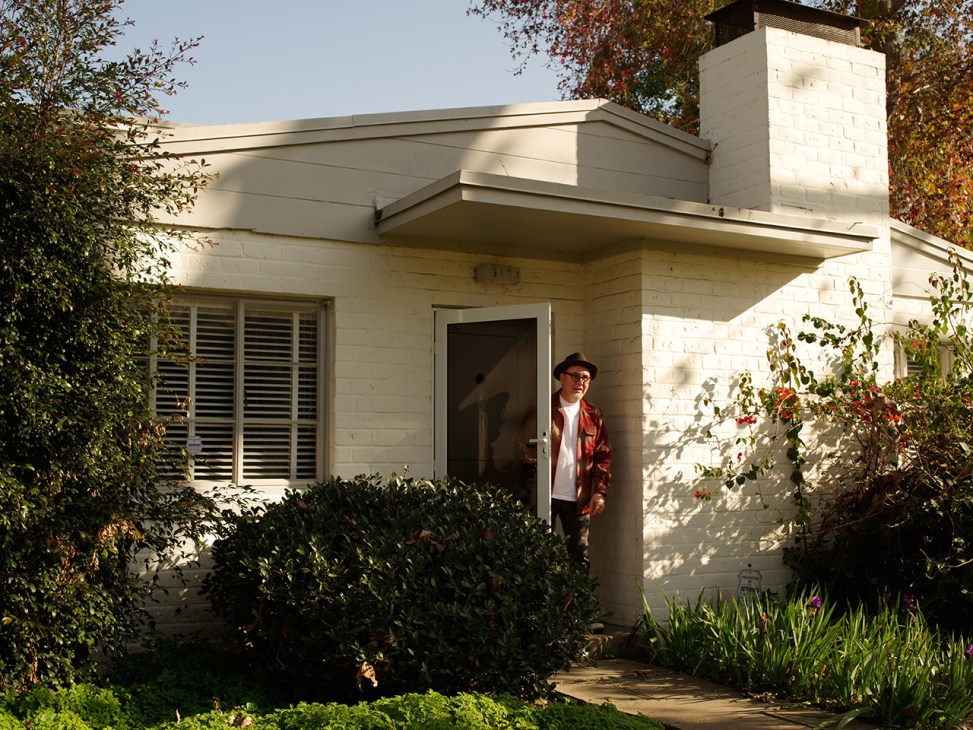
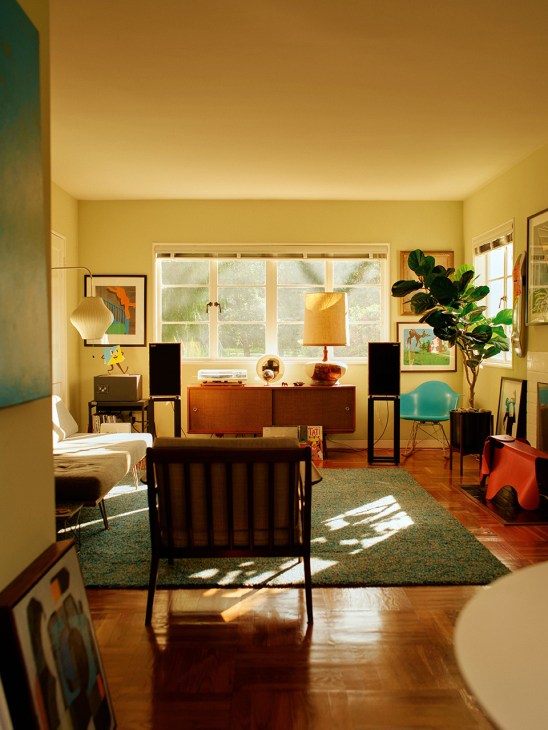
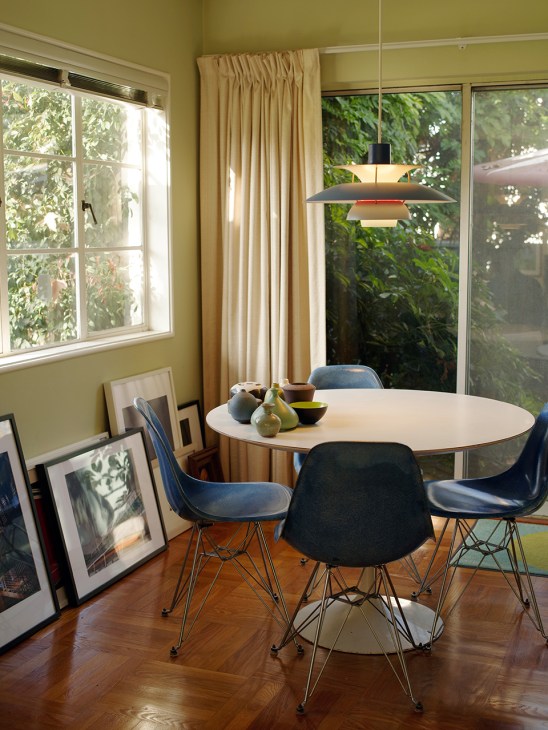
Inside his compact home, sunlight pours through metal-framed windows. In the living room he opens a closet to reveal a floor-to-ceiling record collection. “For such a small space, there’s a lot of storage,” he says, putting on a record. “It’s the details – the doors, the windows, the generous proportions – that show how much thought was put into the building. You wouldn’t get such details today.”
What keeps Florance at Village Green is the social element. “I’ve lived all around southern California and I’ve never known so many of my neighbours as I do now,” he says. “People are happier among trees and greenery and that is conducive to getting to know your neighbours.”
2.
The Creighton residence
Breathing space
Across a lush lawn is the entrance to the home of the Creighton family. Here, a pomelo tree heaves with fruit, its giant citrus weighing heavily on the branches. Scout, a miniature Australian shepherd, provides an enthusiastic greeting, as Heidi Creighton, 50, an architect and fellow of the American Institute of Architects, stands by the doorway. Inside is her husband, Robert, also 50, an industrial designer and professor, and their teenage children, Samantha and Alexander.
“We live in a two-bedroom townhome, which is cosy for the four of us plus our dog,” says Heidi, explaining that most of the development’s homes are compact. They range from 84 to 150 sq m, which was typical for the 1940s in southern California but small by today’s standards. “In this country, we’re obsessed with space and needing big things but it isn’t necessary. This house is more than enough. It’s about how it functions and how you use the space.”


The dining room opens onto a patio with a vegetable garden where lavender, passion fruit, lemons, blueberries, lettuce, tomatoes, beets and carrots are growing. “It’s special to have that connection to outside,” says Heidi. “We have the sounds of hawks calling during the day and owls hooting at night.”
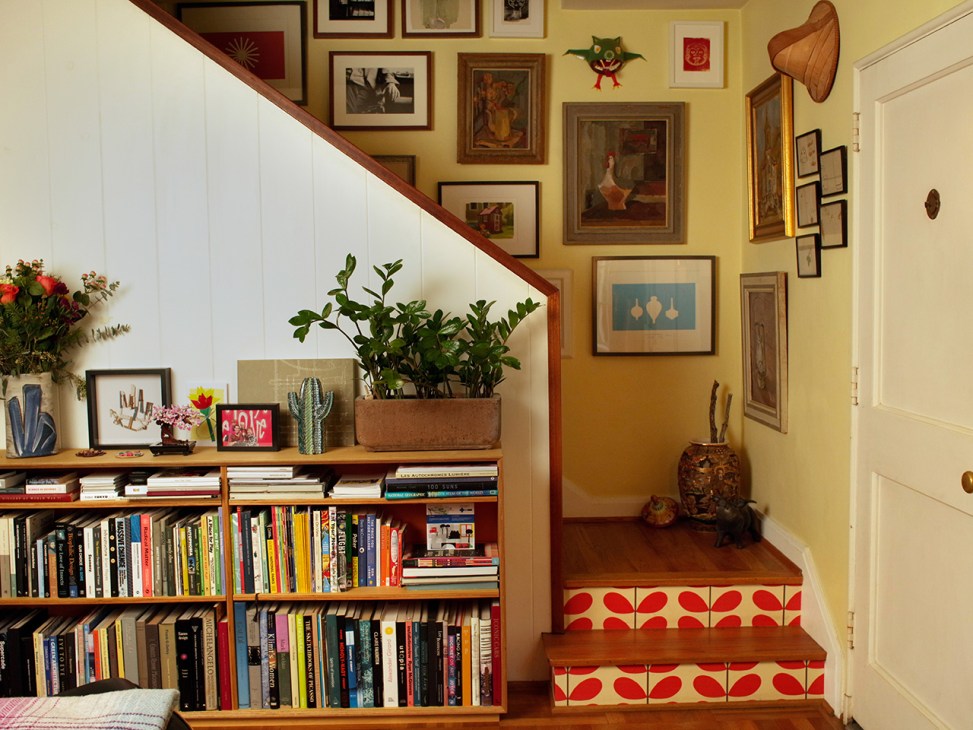
As an architect, Heidi’s favourite design element is the home’s stairwell. The architectural intervention creates a spacious void filled with art and photographs – much of it created by family members, including a large painting by Robert’s mother, Diana, who once lived in Village Green with her parents. “Technically, our children are fourth-generation Village Greeners,” says Heidi.
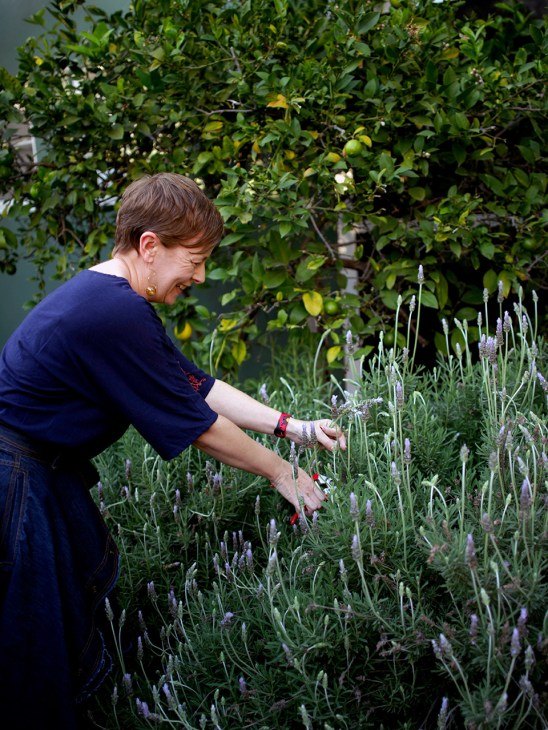
When the Creightons are asked about their favourite memories, each family member offers something different. For Robert, the charm lies in its sense of quiet. “I love how when I go for a morning run and walk through the Green, afterwards there are no cars or planes or helicopters – rare in this city,” he says. “What is left are the quiet sounds of nature.” Heidi recalls jazz concerts on the main green, Samantha remembers community pasta nights, and Alexander’s answer is simple: “It is everything, honestly.”
3.
The Hawken residence
Family values
Walking from the Creighton residence, past a pair sitting on a bench under a canopy of carob trees, Monocle reaches the Hawken family’s residence. Inside the 92 sq m home are Aidan, 50, a musician; his wife, Andrea, 43, a creative director; and their three children, Gabriel, Raphael and Anya. The couple explain that while their home might be small, its compact nature has shaped family dynamics for the better.
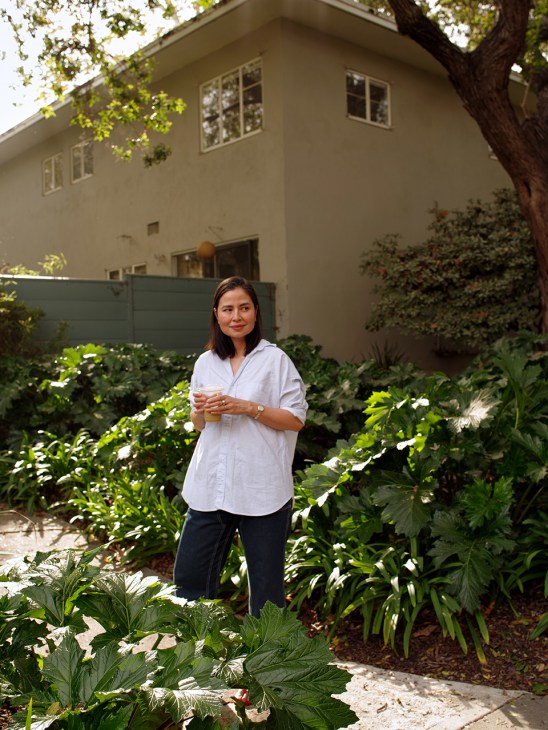
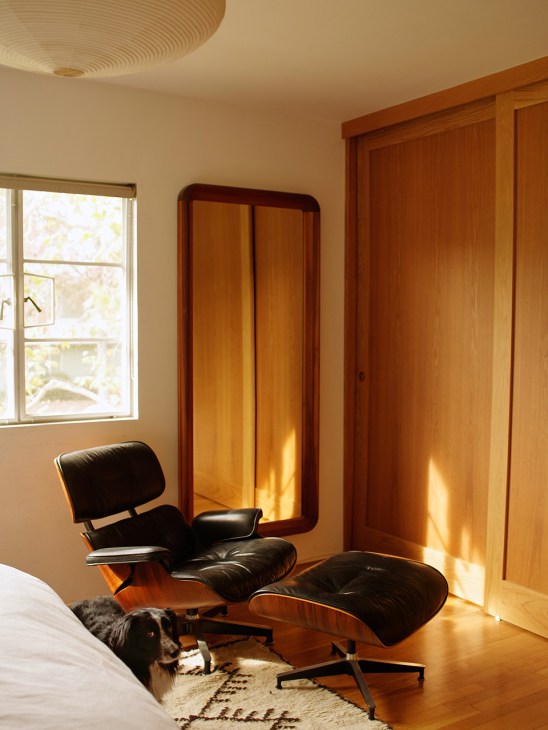
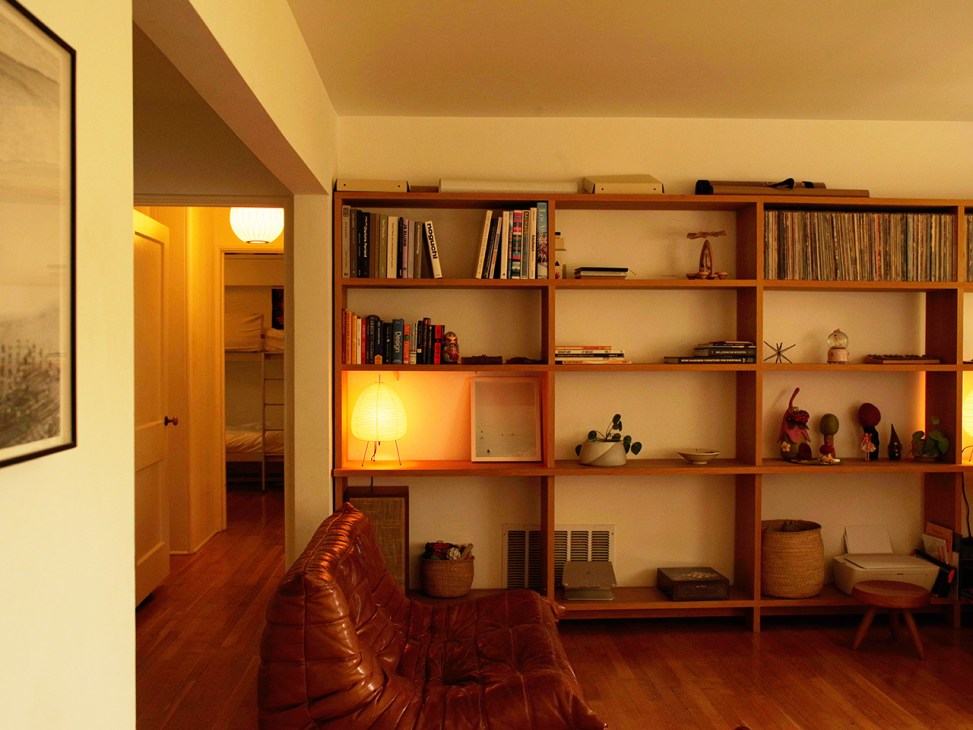
“Everything is close and privacy is limited but this has contributed to us being a close-knit family,” says Andrea. “Our children are used to sharing space, conversation and daily life. At the same time, our expansive outdoor environment gives them a sense of freedom and healthy independence. They feel safe roaming freely, experiencing a childhood that feels reminiscent of another era.”
The Hawkens moved to Village Green in 2012 and say that they would have left Los Angeles years ago without it. “The community we have built here has been pivotal to our thriving in the city,” says Andrea. “Los Angeles is a notoriously lonely place. The constant driving, traffic and physical distance between people make it difficult to connect. That loneliness is simply not present when you live within a true community.”
Village Green preservation society
Despite the love that residents have for the Village Green development, the challenges of maintaining this 80-year-old community are significant. Having been added to the National Register of Historic Places in 1993, there are, understandably, certain rules in place with regard to what adjustments, repairs and additions can be made to both the housing and landscape. Responsibility falls on the Village Green Owners’ Association, which is led by an elected board of directors who respond to requests from residents. Some would like modern amenities, such as air conditioning, but the electrical systems need upgrading; others would love solar panels but that’s not heritage approved. Despite this, the architectural spirit continues to stand the test of time.
“Village Green is the best built example of garden-city planning principles in the US, with its superblock site planning, massive greenbelt and the relegation of auto circulation and storage to the perimeter of the property,” says architectural historian Katie Horak. An adjunct associate professor at the University of Southern California’s School of Architecture, and a principal at Architectural Resources Group, a Los Angeles-based design studio with particular expertise in historic preservation, Horak is also a former Village Green resident.
“It’s a special place. It was an experiment in progressive social housing and it continues to inspire students, designers, scholars and residents as a successful model,” she says. “Eighty-five years after its construction, it still feels as relevant today as ever. Not only relevant but rebellious really in its prioritisation of creating a healthy, happy community over maximising profit.”
LA remains a city where the car is firmly rooted in both landscape and mentality. Yet for the residents of Village Green, there is a sense that they have found an oasis – a slice of southern California before the automobile, where the focus remains human and community-minded; where neighbours live in harmony with each other and the landscape.
The art of a career pivot: Three fashion professionals who strategically reinvented themselves
Moving doesn’t always require a change of place. You might choose to stay close to home, reshaping your life through a decisive professional shift. When do you know that it’s time to take the leap? For some people, the answer lies in an idea that has been brewing in the back of their mind for years. For others, it emerges through a hobby that is finally ready to be taken more seriously or a curiosity that’s sparked after selling the business that defined their early career.
Monocle speaks to creative entrepreneurs across Europe’s fashion capitals about the art of the career pivot and the delicate interplay of strategy and intuition required to navigate a professional reinvention.
1.
From jeweller to shopkeeper
Lauren Rubinski
Founder, Rubirosa’s
Until 2025 the name Lauren Rubinski was synonymous with chunky chain necklaces and diamond signet rings, sold in prestigious shops from Bergdorf Goodman in New York to Ileana Makri in Athens and Muse in Tokyo. Paris-based designer Rubinski launched her eponymous fine-jewellery label more than a decade ago and built a reputation among discerning collectors. But there was always another dream in the background: owning a neighbourhood shirt shop.
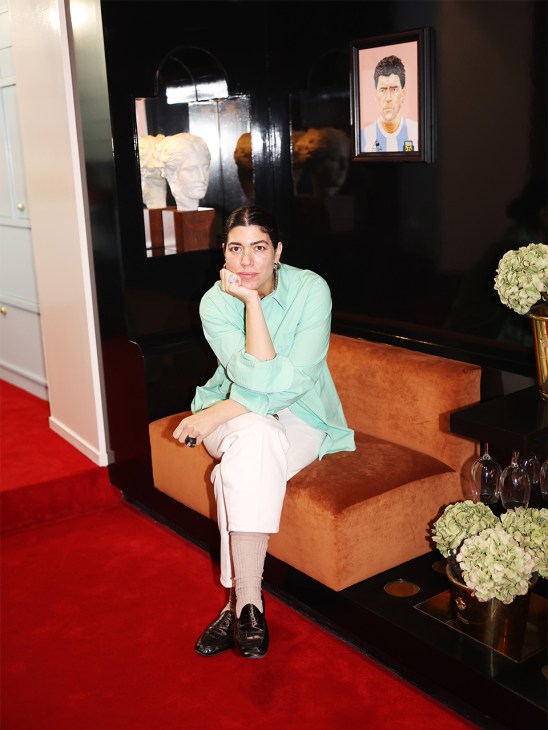
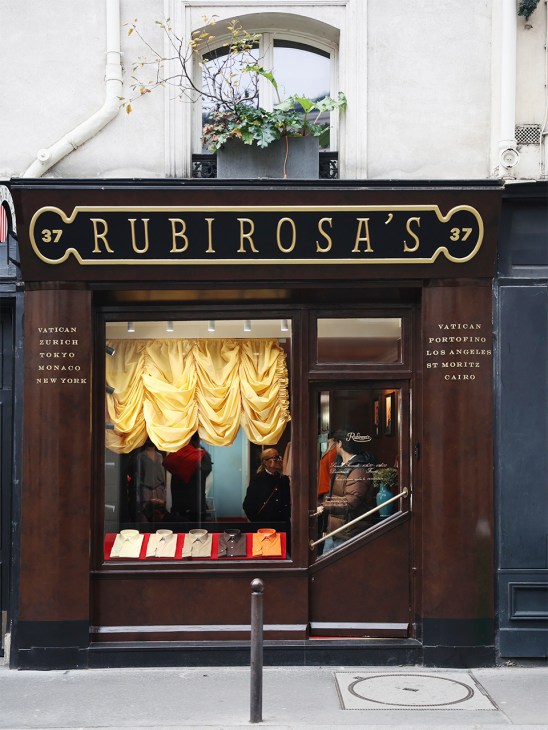
When the right space became available last year on Rue de Grenelle – one of Saint-Germain’s most elegant shopping streets – she snapped it up on a whim. There was no solid plan or strategy in place, just a good idea and an appetite for work. “It might be a small shop but it’s still a big project because I’m by myself – no one is investing in the business,” says Rubinski. “But I never doubted myself or the product.”
Less than a year later, Rubirosa’s has become a place of pilgrimage for those in the know, from Paris locals to fellow creative directors, actors and design enthusiasts who have been visiting the shop from Tokyo, New York and beyond. It is now almost impossible to attend a fashion industry dinner in Paris, London or elsewhere without spotting at least one guest in a sharp button-up shirt in Rubirosa’s distinctive hues (sorbet pink and bold red are favourites), finished with contrast piping.
What makes the success even more striking is Rubinski’s decision to steer clear of e-commerce and online fanfare. In her quest to create a true neighbourhood shop, she has built the business via word of mouth: the only way to acquire one of the her shirts is to make the trip to Paris’s Left Bank.
By taking a chance beyond the world of fine jewellery, Rubinski has changed her professional identity. While she continues to design jewellery for her namesake label, she has embraced her new role as shopkeeper, spending most days serving customers at Rubirosa’s. It is a full-circle moment, she explains. “My father had two shops selling bespoke shirts during my childhood and my grandfather was a poplin manufacturer who ran a workshop in Montmartre – I was raised with shirts,” she says, wearing a crisp cotton number from her own range, paired with jeans, a cashmere jumper loosely tied around her shoulders and textured leather loafers – another signature product of Rubirosa’s.
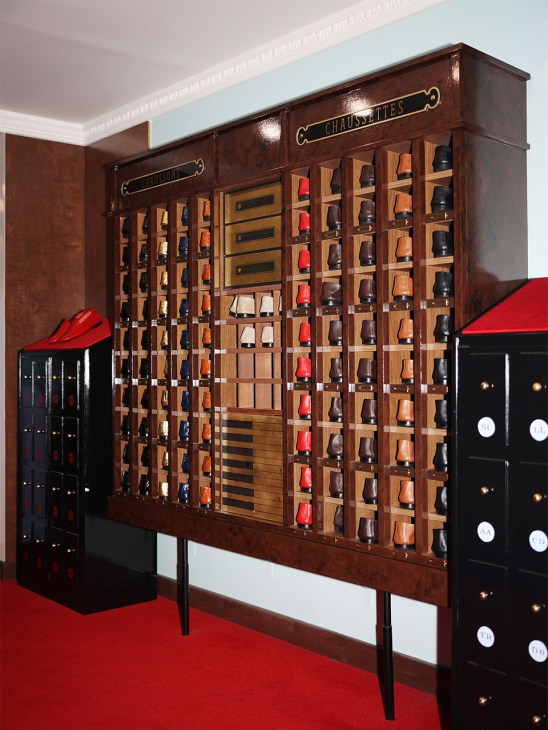
The simplicity of the offer is central to its appeal. Essentials such as poplin-cotton shirts, cashmere jumpers and pyjama sets are neatly stacked in wooden cabinets, while loafers line the room. Both the shirt and loafer ranges are unisex and offered in a broad palette from soft neutrals to vibrant yellows and striped greens. “It’s like a sweet shop for adults,” says Rubinski, who worked with art director Louis Charles Aka to translate that feeling into the interiors.
Eschewing the familiar formula of white walls and bright lighting, Rubirosa’s is fitted with dark mahogany joinery and ruby-red carpets. “All the furniture was made by French artisans but we also added [contemporary] art and a blue room [at the back of the store],” says Rubinski.
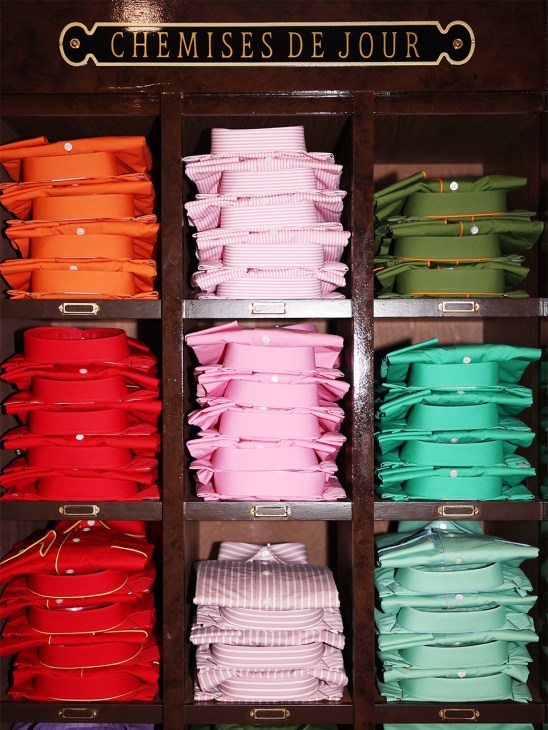
On arrival, a staff member in a rollneck and apron offers a warm welcome – a small detail that sets the tone. “We really want to focus on the human experience,” adds Rubinski. “We’re relaxed and just want to start a dialogue with people and exchange [ideas]. We’d never push anybody to buy a shirt or a pair of loafers. It’s not just about numbers but about reputation.”
It marks a departure from Rubinski’s first business, which operates with a broad network of e-commerce partners alongside its own online store. “Everybody told me I was totally crazy to open a physical shop,” she says.
So why take the risk, especially when she already had a successful brand? “I trusted my taste and my vision – and, at the end of the day, shirt-making is part of my heritage. The manufacturer of Rubirosa’s shirts is one of the people who made my father’s.”
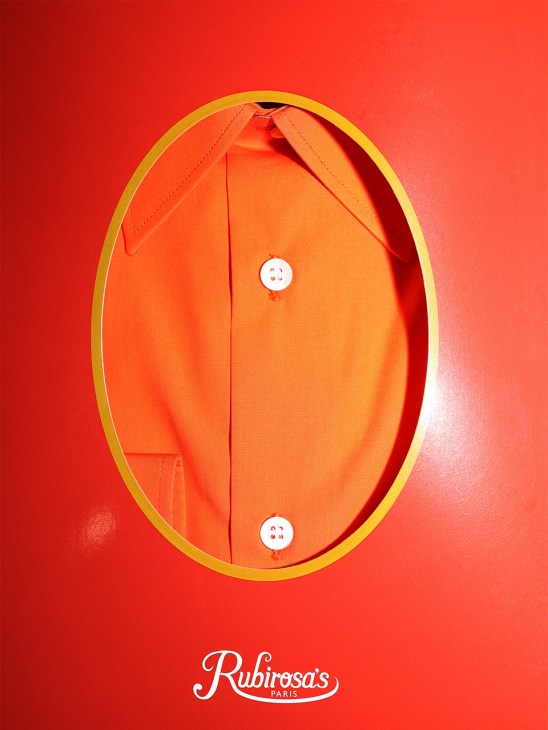
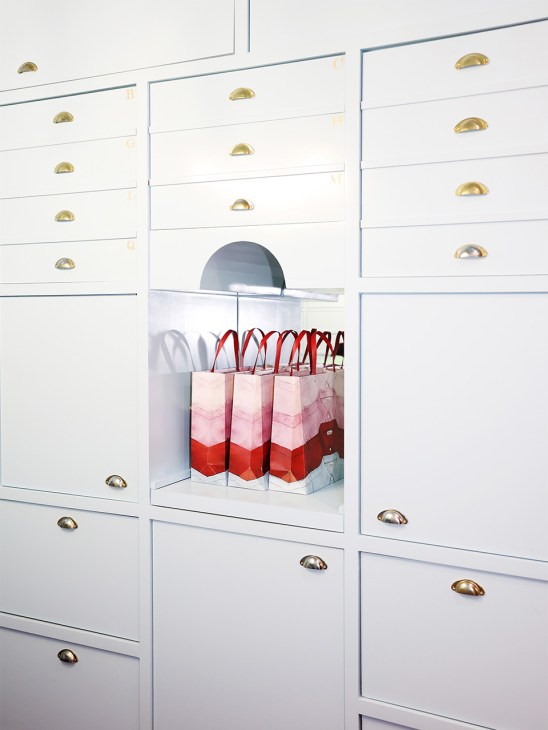
Today, Rubirosa’s offers a refreshing antidote to formulaic retail spaces and trend-led products. Rubinski’s main challenge now is keeping the shelves stocked. “We have managed to create that kind of old French shop that also feels a little bit modern,” she says, adding that her ambition is not to chase scale but to build a reputation as a neighbourhood destination that offers quality at sensible prices. “We welcome different personalities, different styles and different budgets. Ultimately, I’m the first customer. Every day when I come in, I’m so happy – I just love this shop.”
Her conviction and rapid success make a compelling case for pushing against industry trends and reinventing oneself – even for those already at the top of their game. “My parents told me that if it wasn’t going to be me, it would be someone else,” she says. “If I wanted that shop, I just had to make a run for it.”
2.
From streetwear to beauty
Davide De Giglio
Founder, D Capital and Eredi Zucca
Davide De Giglio looks slightly apprehensive. Sitting on a mustard-yellow sofa in a wood-panelled room in his central Milan headquarters, the fashion and beauty entrepreneur tells Monocle that he has only ever consented to a handful of interviews. But the man who helped catapult streetwear culture into the gated realm of high fashion – among the multiple pivots that he has made during his career – soon gets into his stride.
As jazz music floats across the room, what was meant to be a half-hour interview morphs into a 90-minute chat that touches on colourful characters and serendipitous moments. Monocle soon learns that the youthful-looking 50-year-old only stopped wearing boxer shorts by Manhattan-founded skate brand Supreme last year and that one of his defining moments was visiting the Ralph Lauren flagship on Madison Avenue as a nine-year-old. As for his successes? “I believe in destiny,” says De Giglio, dressed in a navy turtleneck and trousers. “When I meet someone, if they are good at what they do, I jump in.”
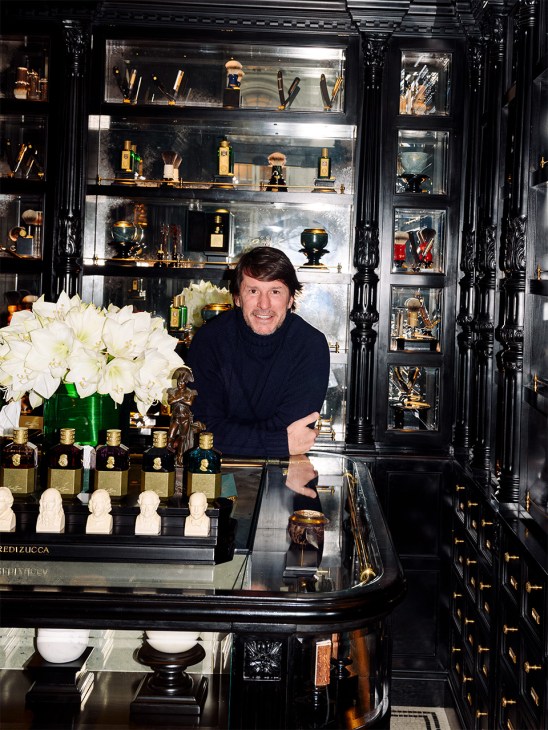
De Giglio has made a career out of jumping in at the right moment as an investor, mentor and strategist. He remains best known for New Guards Group, the holding company that he founded in 2015 that took stakes in a series of fashion start-ups such as Off-White, Palm Angels and Heron Preston. De Giglio advised on everything from pricing to distribution, helping lift these upstarts to the next level. “I always had partners,” he says. “There was always someone more important than me. And together we were something.” Off-White’s American founder, Virgil Abloh, who died in 2021, went on to become menswear artistic director at Louis Vuitton.
For every success, though, De Giglio has also shown a knack for moving on at the right time. When fellow partners Claudio Antonioli and Marcelo Burlon were ready for new pastures, the trio sold New Guards Group to the UK’s Farfetch in 2019 in a deal valued at $675m (€576m). De Giglio stayed on as group CEO for four years. He had what he calls “a five-year lock-up” that prevented him from doing anything else in fashion – but his non-compete didn’t include beauty.
So, just like that, De Giglio changed tack. In 2022, he founded D Capital, a new holding company with diverse interests that are still being defined and refined. One of its first ventures is a personal passion project: Eredi Zucca, a barbershop with old-world flair. It’s across the road from where we sit, on Via Bigli – De Giglio’s Milan fiefdom and the street where he also lives. When his plans to buy Milan’s oldest barber’s, Antica Barbieria Colla, fell through, De Giglio hired a historian and delved into the archives for inspiration. He discovered the Zucca family, who had owned a string of barbershops all over town in the 17th century, when the same multitasking gentlemen would cut your hair and pull your teeth.
De Giglio soon set about reviving the concept (minus the dentistry). The new space pays homage to the past through ornate, restored barbershop chairs imported from the US, as well as dark wood and intricate Murano glass. Regulars are given initialled cabinets near the entrance where they can leave their Eredi Zucca-branded shaving gear between visits. They can also peruse more than 40 house products, from beard shampoo to fragrances inspired by Milan.
Treatments are carried out in one of three private rooms. The idea is that, in today’s fast-paced world, visitors take their time rather than having a 15-minute lunch-break rush job. Back in his office, De Giglio confirms that Eredi Zucca is a concept that will travel. “We are going to expand globally,” he says. “It’s about having the barber store alongside the product.” He’s already looking into New York locations: Midtown and somewhere in lower Manhattan, such as Tribeca or Soho.
What’s striking about Eredi Zucca – which was developed with help from De Giglio’s friend Ramdane Touhami (the man behind the revival of Officine Universelle Buly 1803) – is its attention to detail. “I’m a maniac, in a good way,” De Giglio says. “I’m not obsessed with perfection but rather with the details.” He darts into a side room to retrieve a book about the power of details, Only the Paranoid Survive by former Intel CEO Andrew S Grove. He says that it changed his life – and insists on giving Monocle a copy.
Curious and with just the right dose of eccentricity, De Giglio has also invested in a series of other companies in his new life. He was, for example, an early backer in Hailey Bieber’s wildly successful cosmetics brand Rhode, which was sold to Elf Cosmetics in May 2025 in a deal valued at $1bn (€851m). He has also invested in Tuscan cosmetics and perfume powerhouse Officina Profumo Farmaceutica di Santa Maria Novella, as well as British make-up brand Isamaya Beauty.
So how has he backed so many winning horses? “Luck is part of it. But once you’ve done it three, four or five times, [you realise that] it’s more like a gift,” he says. “And you learn. I can tell when people have something in their eyes, when they talk a certain way.” From somebody else’s lips, those words might sound arrogant. With him, they just sound honest. He clearly saw something in Virgil Abloh, whom he met in Milan as this “shiny guy [who] was always saying the right thing”. It wasn’t long before they were having coffee in New York and deciding to work together.
Today, De Giglio’s eyes are on Umit Benan, a Milan-based Turkish designer known for his impeccable tailoring and branding. De Giglio hopes to turn him into a global star, marking D Capital’s first foray into fashion – and a new personal challenge to build a quieter, more artisanal brand, leaving behind streetwear. He met Benan during the New Guards era but didn’t think that he was “ready”. Clearly, his opinion has changed; he took a majority stake in Benan’s brand in May 2024.
De Giglio whisks Monocle down a corridor in his HQ – past a wall display of Nike X Off-White trainers designed by Abloh – that directly connects to Benan’s airy showroom. Across the road – but still in the orbit of Via Bigli – Benan has opened his first shop, with De Giglio’s help. The two are planning to open another in Los Angeles this year, followed by a third in Paris. “Trust me, it’s really important for me to have fun,” adds De Giglio. You get the sense that he’s not done yet.
eredizucca.com
3.
From fashion buyer to perfumier
Yasmin Sewell
Founder, Vyrao
In fashion circles, Australian-born Yasmin Sewell has long been known for her impeccable taste and instinct for what’s new, whether that be an up-and-coming designer, the colour of the season or the trend that no one else saw coming. This sixth sense helped her build an impressive CV that features companies such as British e-commerce giant Farfetch and institutions Browns and Liberty.
Away from the shop floor, however, Sewell was always nurturing other interests. From an early age, she explored the world of energetic healing and, in 2021, she launched Vyrao, a fragrance brand built around scents designed to shift mood and energy. Five years on, three investment rounds later and with 10 fragrances to her name, Sewell welcomes Monocle into her London office to talk about turning a personal vision into a thriving business.
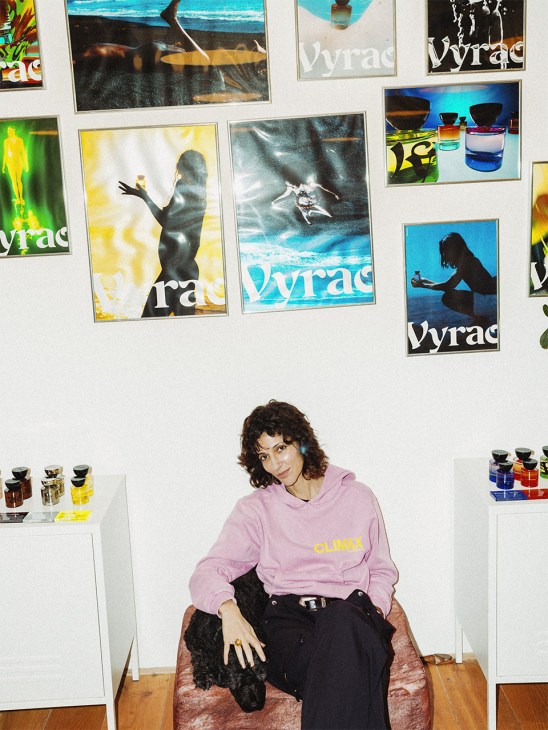
Tell us about your earlier career and how you decided to shift from fashion to beauty.
After my time at Browns, I worked as a consultant for 10 years. Even while I was the chief creative director of Liberty, I was doing other projects. I then took two big jobs, first at Style.com and then Farfetch. Neither were quite what I wanted to do. That encouraged me to really think about creating something that was truly mine.
At the same time, I was renovating my house and I think that process helped take me into a new chapter. The house is where the brand was born; the green colour of the walls became the colour of the brand. I was initially thinking about more typical wellness products, such as ingestibles, but I quickly arrived at scent because it’s one of the fastest ways to shift your energy and mood. Plus, it wasn’t totally new to me; I had already launched Frederic Malle at Liberty and Escentric Molecules at Browns. I didn’t know how the hell to do it but I knew that once I had the vision for it, I could find the right people, the right resources and the right support.
Did you have any sense of hesitation?
I’ve never felt that I’m over fashion. I’m still inspired by runway shows and still love going into retail stores, but I didn’t feel any loss when I left. I think that’s because there was such a clear intention of what I wanted to do.
I loved being in fashion all those years. But I was always aware that I’d move into the wellness industry at some point. I just didn’t necessarily consider the beauty industry. I’ve spent my life training in holistic practices and the intention was to move into the things I cared about and [offer] my take on wellbeing.
Why was it so important to you to take on this type of training outside of your main job?
I trained in reiki, integrative quantum medicine – which is the combination of energetic healing and quantum physics – and ayurveda. I used them to become successful in fashion. When you have to look at the future, you have to tune into your intuition. I used it in everything I did.
How did you start setting up Vyrao?
I found somebody who had made fragrances and could help me in terms of production and logistics. I also brought in [creative director and the founder of More or Less magazine] Jaime Perlman to work on the branding. We were both new to this and I think that it’s great to do things fresh because you have no preconceived ideas.
You launched in 2021, in the midst of the pandemic. Did that require further pivoting?
I began conceptualising the brand in 2019 and planned to launch in 2020 but, because of the pandemic, my investors pulled out and the launch was more humble. I brought in friends who believed in me and put my life savings on the line to scrape it all together.
Since then, I have gone on to raise money three times. Early on, there were a lot of investors who thought I was woo but I wouldn’t want to work with them anyway. If they don’t understand the core of the business it can be damaging in the long term. The partners we brought in are behind the wider purpose of the brand.
You’ve had a lot of success with this year’s launches, Ludeaux and Ludatrix, which promise to evoke flirtation and passion respectively. Why do you think that these scents were such a hit?
We probably had our best launch to date. In the past, we’ve launched fragrances for grounding, happiness and mindfulness – and, of course, people want to feel mindful and happy and grounded, but when you say sex, people just say yes. It was my intention not to shy away from the subject, to launch a series of campaigns and just have fun.
What does it take to create a bestselling fragrance?
It’s so creative. I could do it for the rest of my life. I start with the feeling that I want to channel and, from there, it starts to come together as a scent. We look at ingredients – some are backed by neuroscience, while others go back thousands of years and are linked to [ancient] rituals. Once I’m starting to finalise the formulation, we connect the scent to a colour and create the bottle. We then start to think about what the messaging is. It’s a good two-year journey.
What’s your advice to anyone who is looking to make a similar career shift?
Take a moment. If you’re too caught up in your life, you’re also caught up in the fear. When I took time off, I renovated my house, planted my garden and reflected on everything in my life. That’s when the idea for Vyrao came to me. Those times when you might feel a bit lost and you take a break can lead to incredible things.
vyrao.com
The five fashion collaborations and retail launches to know now
A new year calls for a style refresh. Whether you’re looking to upgrade your collection of cotton T-shirts, visit a shop with a selection that will inspire you or buy in to a collaboration worthy of the hype, here we round up the brands that are opening must-visit new outposts, as well as those launching innovative products that you should add to your wardrobe. Take your pick from high-performance cycling gear for your commute, top-quality jumpers made in Canada to keep you warm through winter or Japan’s most sought-after kimonos, reworked to suit modern-day dress codes.
1.
Y & Sons
Japan
Japanese kimono specialist Y & Sons has opened its third Japanese outpost in Omotesando, following those in Kanda and Kyoto. “As Japan’s centre of fashion, Omotesando was chosen to express the kimono as a fashion piece,” says Gen Hiramatsu, who has been involved with the brand since its launch in 2015 and now oversees Kimono Arch/Y & Sons in Paris.
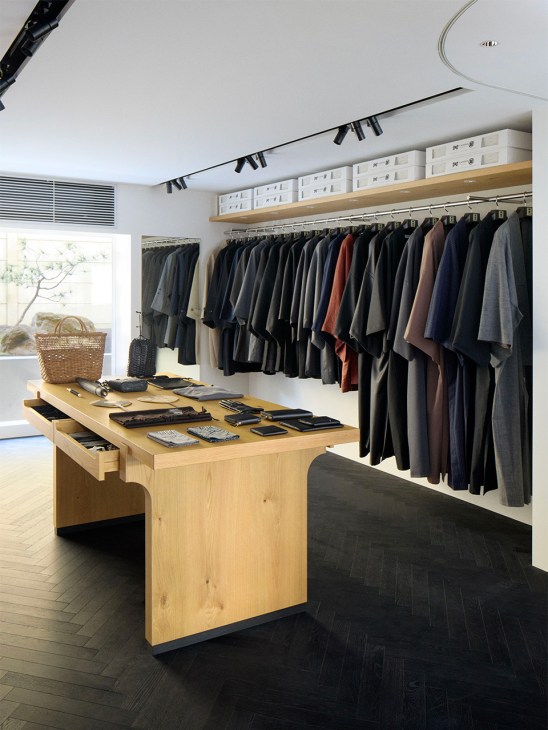
The shop is filled with ready-to-wear pieces and collaborations with the likes of Graphpaper and Norwegian Rain. There are also original fabrics from across Japan – the starting point for the label’s signature made-to-order kimono service. The line-up is composed, with a mix-and-match approach to styling in mind. “We believe that almost any item can be paired with traditional Japanese clothing,” says Hiramatsu. His top tip? Pair your kimono with a band-collar shirt and Middle English leather shoes by Aurora Shoe Co.
yandsons.com
2.
Maap
Australia
Melbourne-based cycling brand Maap is hitting the road and heading northeast to expand its presence in Australia with its largest retail outpost to date, the Maap Lab in inner-city Sydney suburb Darlinghurst. The shop’s sleek interiors are designed by Melbourne firm Clare Cousins Architects and feature swaths of stainless steel and terracotta that are offset by counters rendered in a vibrant blue reminiscent of the shade favoured by French artist Yves Klein.
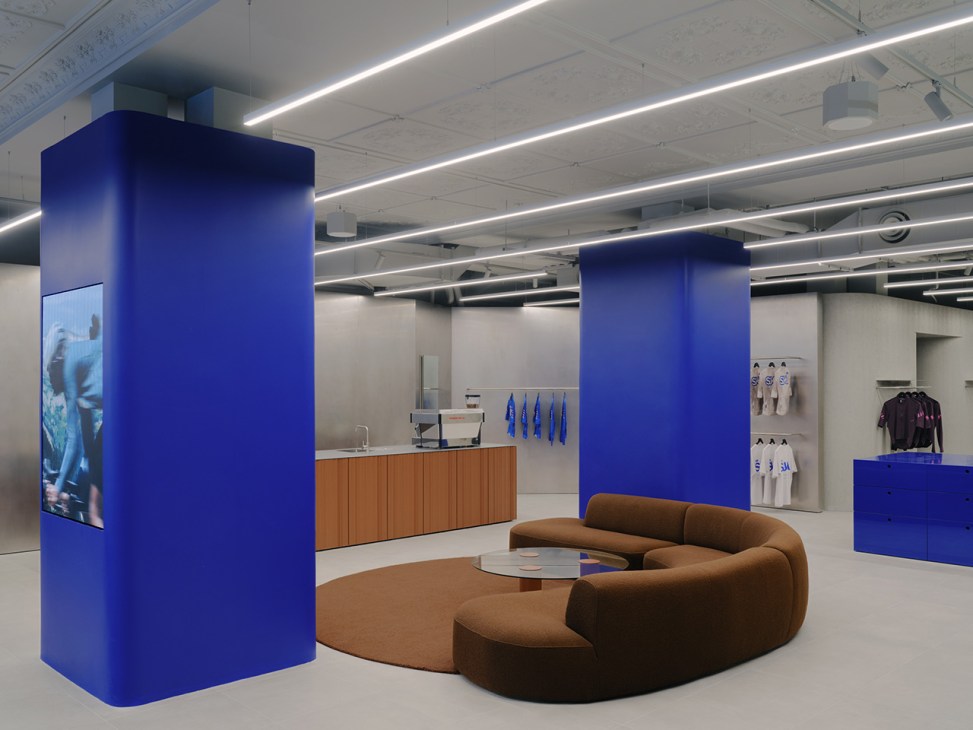
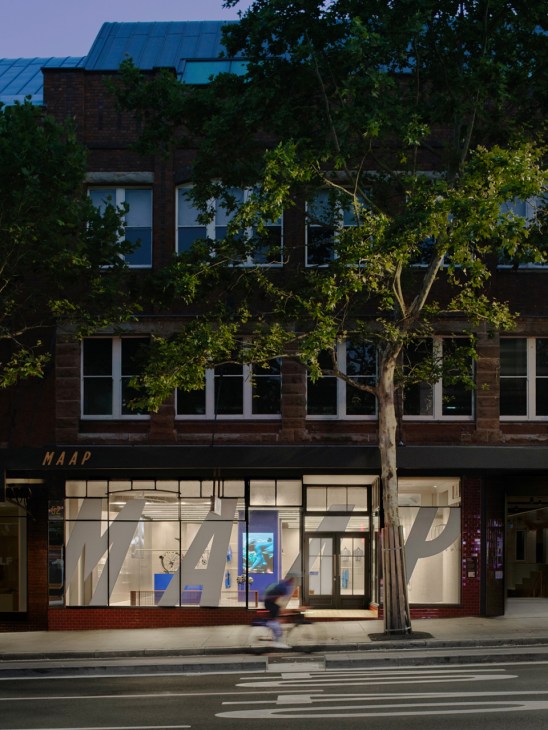
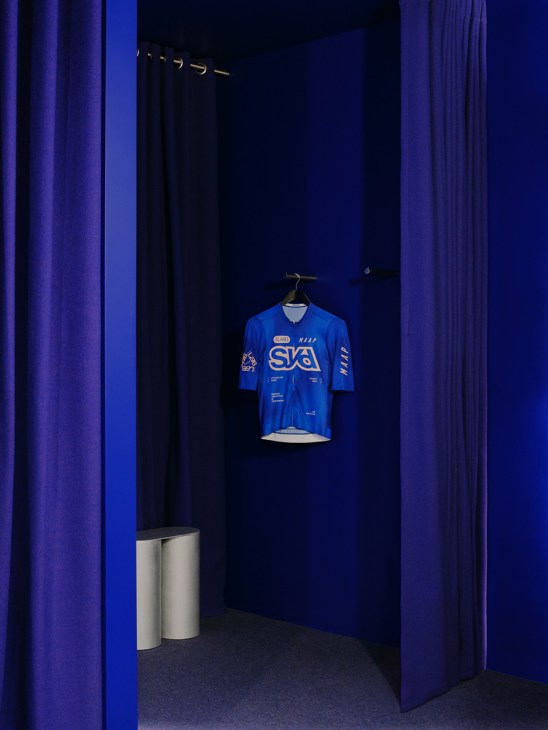
Beyond providing a one-stop-shop for cycling apparel – including bibs, vests and helmets – Maap’s ambition is to provide a space for Sydney’s cyclists to drop in for a coffee and attend events organised by the brand, including weekly group rides. This latest addition to Sydney’s thriving shopping scene is an exemplar of the way in which the Antipodean city is leading the way when it comes to retail. Stylish in its execution and unique in its proposition, the Maap Lab goes well beyond selling wares to propose a communal space for like-minded individuals to enjoy.
maap.cc
3.
JW Anderson
UK
In 2025, Irish-born designer Jonathan Anderson took over as the creative director at Dior, overseeing the label’s men’s, women’s and haute-couture lines. Simultaneously, he reimagined his own brand, JW Anderson, with a slimmed-down logo, a refreshed website and a new concept prioritising craft objects, artisan collaborations and fashion that can no longer be tied to a specific season or show. “It’s about things that I would like to have around me – and everything has a story,” says Anderson, whose latest collections remix signature fashion items (chunky loafers, workwear trousers and double-breasted coats) with ceramics, fountain pens and made-to-order wooden chairs.
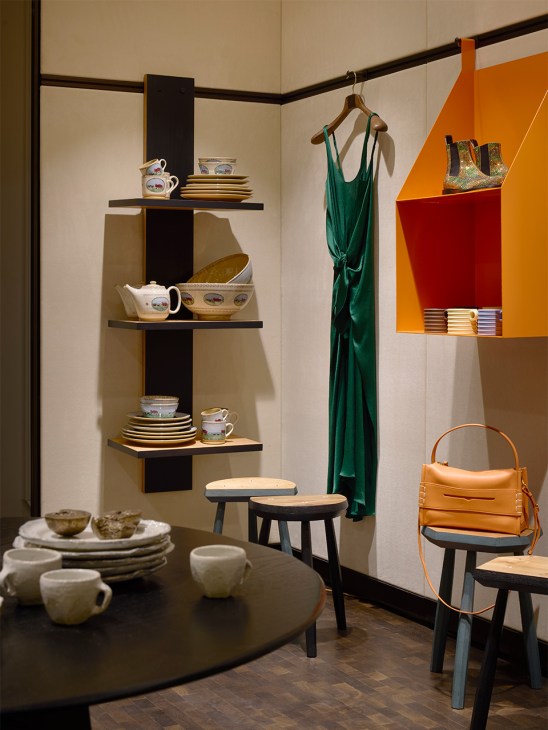
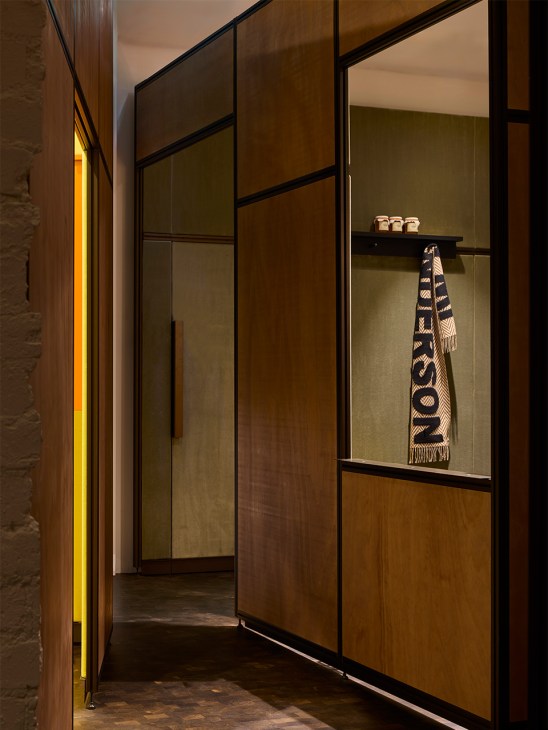
The brand’s new boutique in London’s Belgravia captures its renewed philosophy. The shop was designed by architects Sanchez Benton to highlight all things handmade, with wooden floors, velvet panels and warm colour palettes of greens and yellows. Here, you can shop the brand’s popular Loafer bags, alongside rare re-editions of Charles Rennie Mackintosh stools; and bronze Peach paperweights created with friend and film director Luca Guadagnino. Anderson’s aim? To help preserve traditional craft skills and encourage customers to think more like collectors than mere shoppers.
jwanderson.com
4.
Beams X New Balance
Japan & USA
US sports manufacturer New Balance, which turns 120 this year, has deep roots in Japan. The label appeared in the Japanese market in the mid-1980s, scoring a hit with the 1300 trainer, which is still a staple in many Tokyo smart-casual wardrobes. The love affair has continued since in many collaborations with Japanese labels.
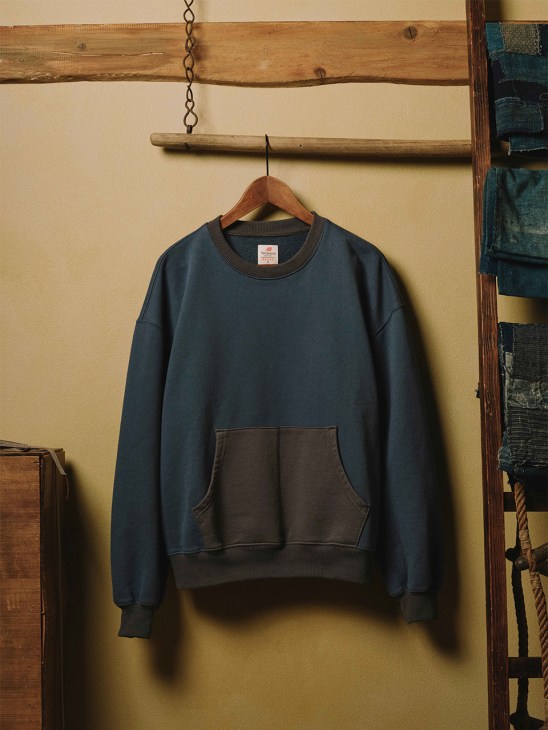
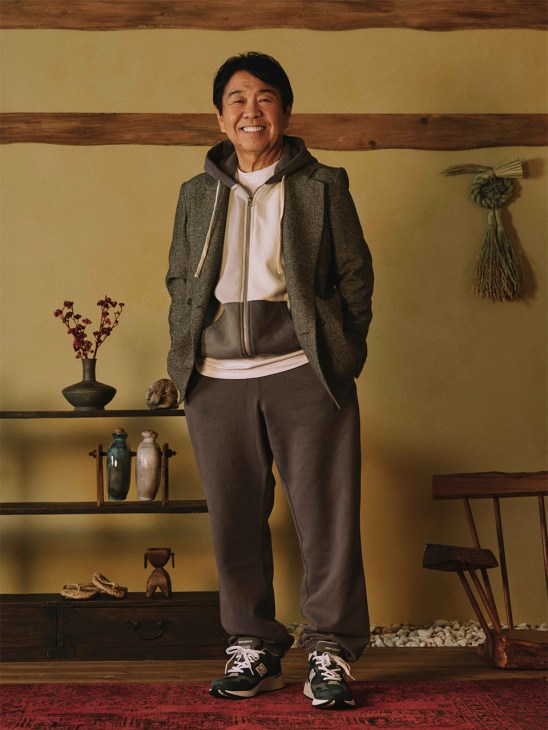
Its latest partner is fashion and lifestyle behemoth Beams, which in turn has its own ties to US culture – its original Tokyo shop was called American Life Shop Beams and styled like a UCLA dorm room. The two companies have teamed up for a special Made in USA apparel collection. Focusing on two classic models – the 990 and 1300 – this collection is inspired by the original blues and greys of those heritage trainers to create a line-up of sweatshirts, zip-up hoodies, T-shirts and joggers made with heavyweight cotton fabrics.
The sweatshirts come in a garment-washed French terry and all silhouettes have been given a Beams tweak with looser fits than New Balance’s regular sports line. We have our eye on the colour-block hoodies, modelled by owner and president Yo Shitara (pictured above) in the collection’s campaign.
beams.co.jp
5.
House of Blanks
Canada
The casual-wear market might seem extremely saturated but try to find a well-priced, high-quality T-shirt on the high street and you will find yourself lost among a sea of polyester fabrics and unflattering fits. This is where Canada’s House of Blanks, founded by father-and-son duo Amit and Nat Thakkar, comes in. The company, which describes itself as a “factory brand” offers breathable, slub-cotton jersey T-shirts, crewneck fleece jumpers and tracksuit bottoms.

Everything is made in Canada at the Roopa Knitting Mills, launched by Amit over 30 years ago to specialise in knitting, dyeing and sewing cotton fabrics. Being vertically integrated allows the Thakkars to offer competitive prices and raise the bar on what a healthy supply chain looks like. For logo-free, well-made basics, House of Blanks is your new go-to.
houseofblanks.com
Icebug, the cleverly studded shoe brand keeping Swedes on the go
Every winter, more than 30,000 people in Sweden have accidents caused by slipping on ice, costing millions in lost work hours and hospital care. The fear of falling also means that many Swedes – particularly the elderly – stay indoors when the streets turn icy. That’s the problem entrepreneurs and co-CEOs David Ekelund and Tom Nilsson are looking to fix. Their solution? Steel-studded soles on shoes sold under the brand name Icebug.
“We wanted to make a shoe that keeps feet warm and dry – and keeps people on their feet,” says Ekelund. He and Nilsson are discussing the evolution of their company (which is part-owned by Taiwanese shoemaker Vanbestco) at Icebug’s HQ in Jonsered, just outside Gothenburg. The duo explain how they complement each other: Ekelund is full of ideas, while Nilsson has a knack for seeing which ones are worth running with.
They brought the first Icebug studded running shoe to market in 2001 and then developed the design into an increasingly versatile range of footwear across three distinct categories: the “Bugrip” studded sole for icy surfaces, the year-round RB9X rubber sole for wet conditions and the premium-grip Nordic Traction, the company’s fastest-growing style, based on the same technology that’s used in winter tyres.

Ekelund began the company with his mother, who was then working for a Taiwanese shoe firm in Europe. A journalism graduate and newspaper reporter, he wasn’t planning on joining the footwear business full-time. “I was thinking that if we were smart about it, we could launch a company that would make us lots of money and allow me to retire to write books,” he says. “I said to my mum, instead of making money for other companies, why don’t we do it ourselves?”
But Ekelund’s get-rich-quick approach soon evolved and he began focusing on developing an advanced and long-lasting product. “Everybody around us was reducing prices and producing as cheaply as possible,” he says. “That’s when I realised that I needed to launch my own brand to be able to make something that I could be proud of.”
The idea of a sole with steel studs started as a joke before the team realised, “Wait a minute, what if we could actually do that?” The company trademarked the stud technology, developed with a Canadian triathlete, and tried getting Icebug into Swedish shoe shops. But no retailer wanted “the weird shoe”. In an unlikely turn of events, Japanese shoe giant Asics helped to turn Icebug from an obscure brand into a respected international business when it presented its own studded shoe at a trade show in Norway not long after Icebug’s launch. Despite market interest, Asics never manufactured that prototype and Icebug was ready to seize the momentum. “We would have had to pack up the business had it produced that style,” says Nilsson. “For us, that became the ticket.”
Eight years later, Icebug broke even and – aside from a pandemic-related dip – the company has been growing steadily ever since. Today it employs 50 people across Europe and North America, works with three factories in Vietnam and sells across most major markets. Last year was the company’s best so far, with sales exceeding €30m. At home in Sweden, Icebug boots have become so ubiquitous that, during winter, it’s common to see signs outside churches and libraries that read, “No Icebugs inside, please.” Thanks to the brand’s success, most footwear shops now also have dedicated studded-shoe sections, helping to prevent Swedes from falling on the ice.

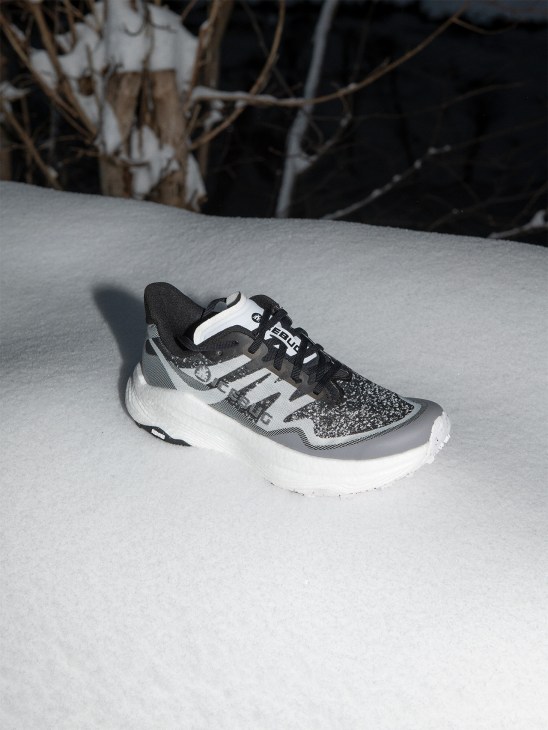
But there’s an issue: there is less ice on the streets. In recent years, there has been talk of “un-winters” in Sweden, with the southern parts of the country no longer seeing reliable snowfall. Swedes wistfully speak of bygone “wolf winters”, when the cold grew so severe and the snow so deep that even wolves were forced out of the forests in search of food closer to human habitation.
Ekelund and Nilsson are responding to Sweden’s un-winters by expanding into snowy North American markets and by becoming increasingly involved in climate action to help “bring winters back”. Shoe production does little to mitigate climate change, yet the duo aims for Icebug to be a brand that pushes for positive change. For instance, the company has installed solar panels at its factories in Vietnam and rolled out a blueprint for other manufacturers to do the same. Icebug is also a member of the 1% for the Planet initiative, donating 1 per cent of its sales to non-profit environmental organisations. “We choose the planet over short-term financial gains and, in the end, that’s also good for our brand,” adds Ekelund.
Back in Jonsered, the Icebug team continues to hone its core product, making it ever sturdier and more adaptable. Like its fantastical namesake, the brand’s latest styles grip even the trickiest terrain. That, says Ekelund, is what the company is all about: making a difference by raising the quality of outdoor life for everyone, whatever the season.
Three more cold-weather brands to know:
1.
Tarvas
Finland
Tarvas’s sturdy boots are made with snowy Nordic climates in mind.The Easy Hiker, co-designed with Danish label Forét, will handle mountain expeditions to city walks.
tarvasfootwear.com
2.
JL-AL
UK
Jean-Luc Ambridge Lavelle’s JL-AL blends handmade techniques, laser-cutting and 3D technology. We love the lightweight down jacket in burnt orange, developed with Japan’s Goldwin.
j-la-l.com
3.
Cordova
USA
Born in the slopes of Sun Valley, Idaho, husband-and-wife duo Jane and Cody Seim’s Cordova has become a go-to for high-performance jackets that work on the slopes and in the city. The Cortina jacket in a charming blue-and-white check is a season highlight.
cordova.co
Raising the bar in Bangkok: How Sitthan ‘Turk’ Sa-Nguankun reshaped the city’s drinks scene
When US comedy The Hangover Part II hit cinemas in 2011, the Bangkok-set debauchery played into the Thai capital’s reputation as a cheap destination to get drunk in. What Hollywood missed, though, were the subtle changes that were happening in neighbourhoods across the city.
About the same time, craft cocktail pioneer Sitthan “Turk” Sa-Nguankun opened a small bar in Thong Lo called Sugar Ray, You’ve Just Been Poisoned (a name that he had lifted from a friend’s skateboarding T-shirt). The 20-seat space quickly became a hit with Bangkok’s international crowd. “No one else was serving proper drinks at that time,” says Sa-Nguankun. “If you ordered a Manhattan, the bartender would ask you what that was.”
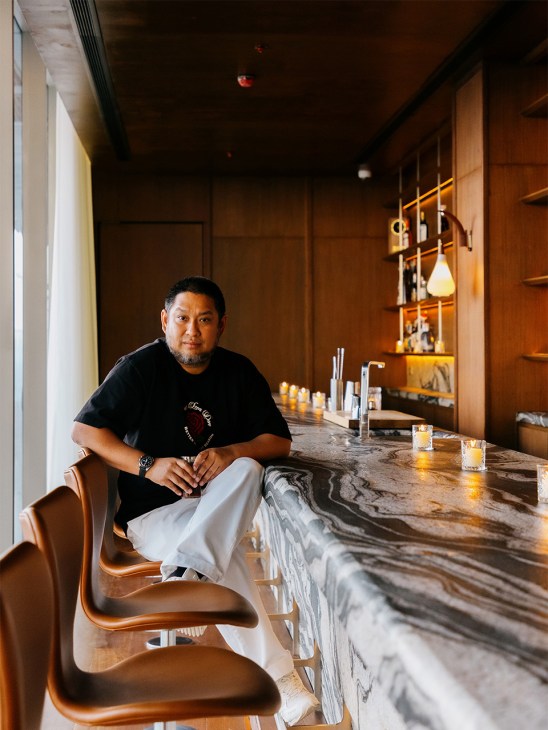
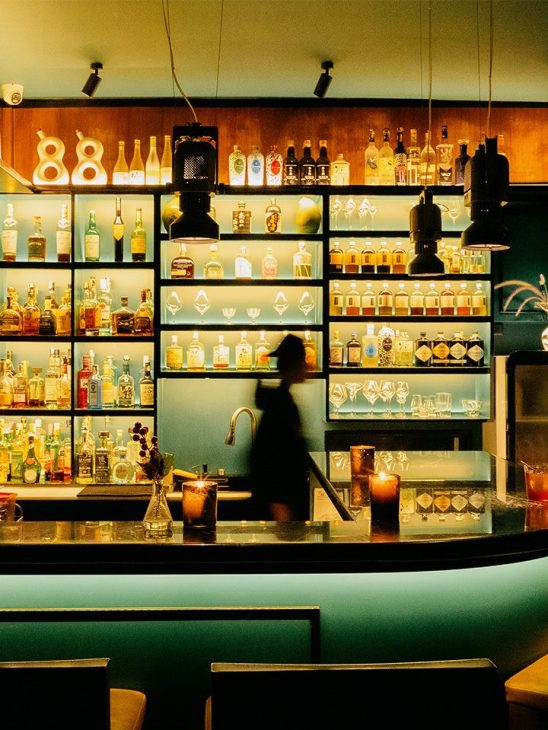
That’s no longer the case – thanks, in no small part, to Sa-Nguankun, whose group, Sugar Ray, is behind more than a dozen bars and clubs in Bangkok. Thaipioka on the first floor of the Salil Hotel appears on most lists of the city’s top watering holes, while jazz bar Alone Together is a Monocle must. “Every time I open a new bar, I try to create something different,” says Sa-Nguankun.
His lifelong penchant for bars was ignited when his family started taking him to the Mandarin Oriental, where they would have a drink at the beloved Bamboo Bar, Bangkok’s first jazz venue, which opened in 1953. After studying music in Bangkok and mixology in New York, Sa-Nguankun ran the bar at storied Bangkok nightclub Demo.
He quit after a few years to open his own place that served serious drinks and later opened a nightclub, Rim, a popular destination among the in-the-know party crowd. “I have friends who fly in from Seoul, Manila, Kuala Lumpur and Singapore just for the nightlife here,” he says.
Sa-Nguankun’s latest opening, his first rooftop bar, shows that he’s aiming higher than ever. The Norm is on the 42nd floor of Dusit Central Park in Silom, Bangkok’s business district. The new mixed-used complex includes the flagship Dusit Thani hotel, branded residences, a shopping centre and an office tower.
The rooftop bar offers views of the meandering Chao Phraya river, the Royal Bangkok Sports Club and the Skytrain gliding over traffic jams. A restaurant such as Zuma or Nobu would have been a fitting tenant here but Sa-Nguankun convinced the landlords to opt for a local.
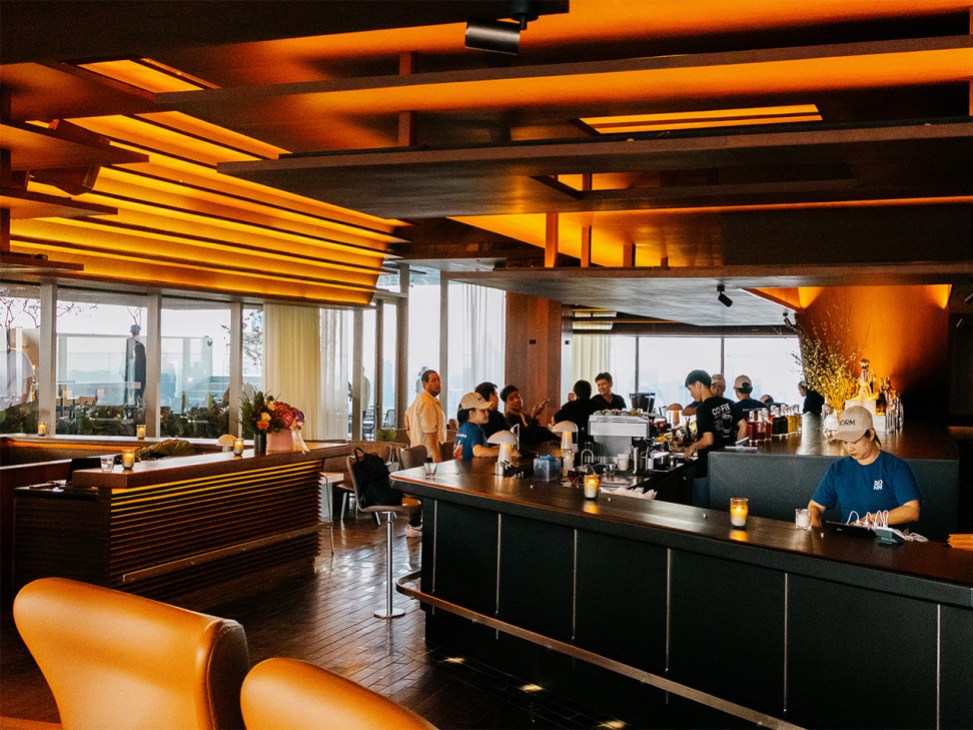
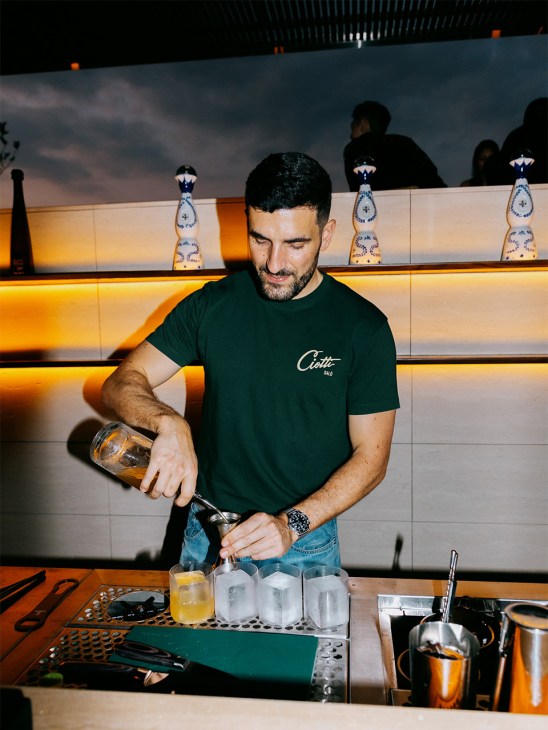
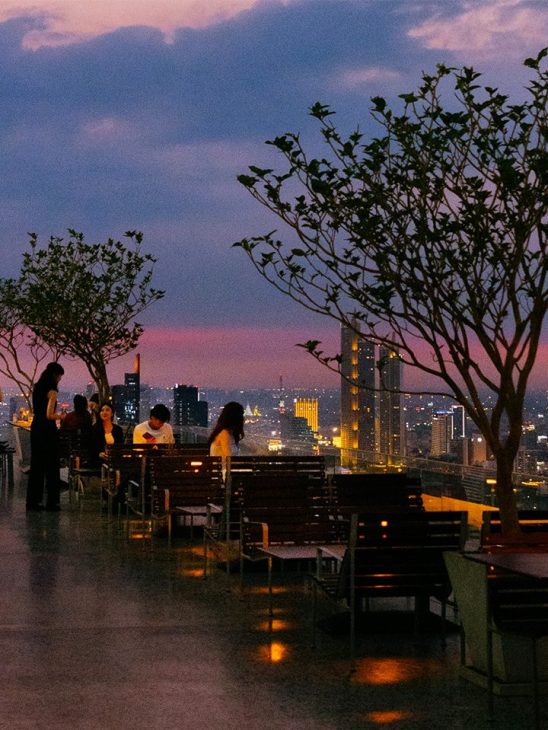
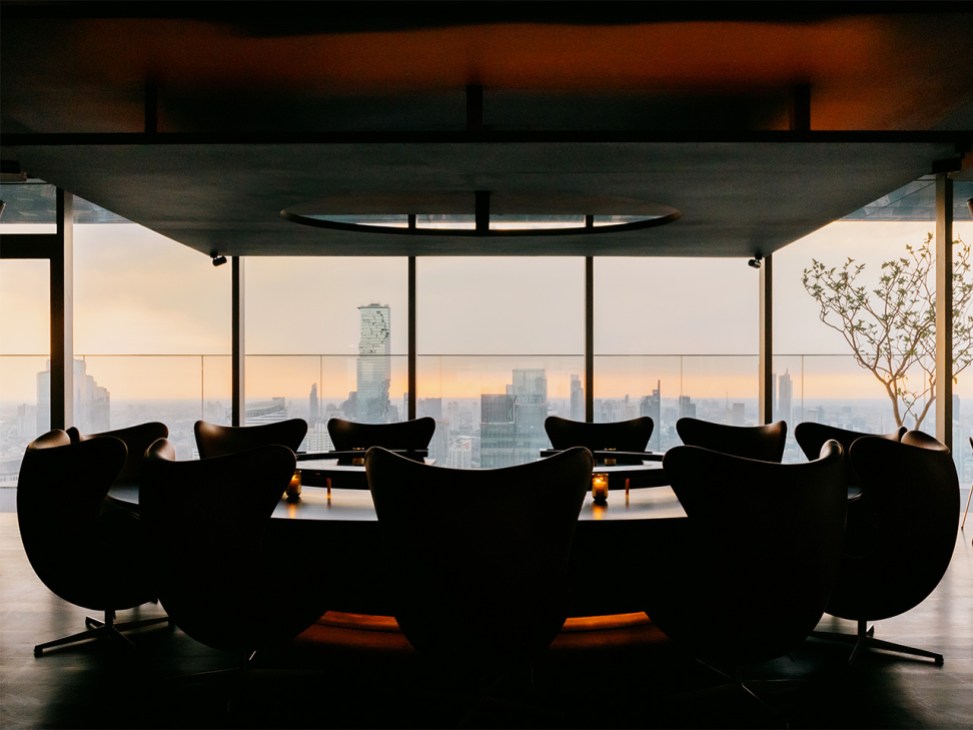
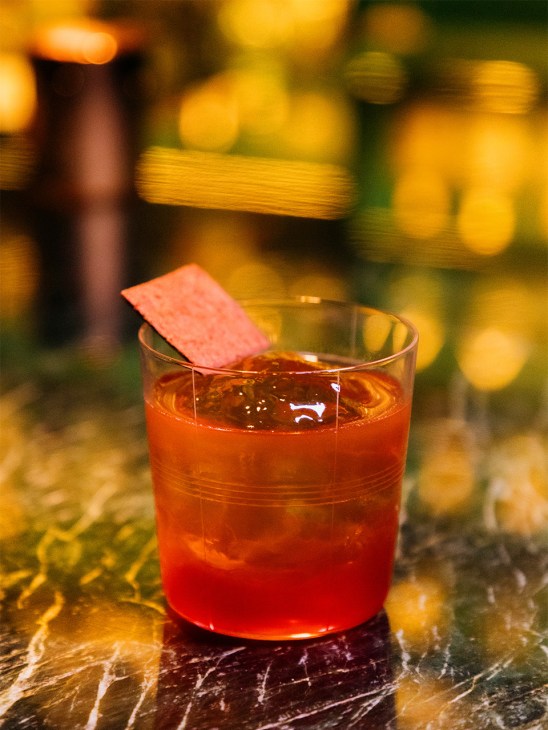

When Monocle arrives to meet him, he is deep in conversation with his team of DJs, huddled in the Whispering Room – a speakeasy that serves Japanese whisky and plays vinyl jazz. On big nights, there will be three decks spinning at once: one in the main lounge, a second by the outdoor spritz bar and a third inside the intimate, 60-capacity club that will open later this year.
Everything from the music to the dress code and the reasonable prices has been designed to make The Norm feel inviting. “We are in a super-expensive building but I don’t want this to feel exclusive,” he says. This cosy feel is reflected in the wood-panelled interior design by Thai architecture studio Ekar.
All of the indoor furniture, meanwhile, is by Fritz Hansen. A furniture collector, Sa-Nguankun describes his acquisition of a set of PK31 lounge chairs for The Norm as a dream come true. “A great bar is a place where people arrive in one mood and walk out feeling better,” he says. “We are not saving lives. Our job is to serve the soul.”
Dusit Central Park office, Rama IV Road, Si Lom, Bang Rak
Sitthan “Turk” Sa-Nguankun’s rules for better venues
1. Know your customer. I own bars, I run bars but I’m also a consumer so I create bars that people like me are happy to go to.
2. Be real. I have to feel that it’s genuine. I’m Thai so I’m not going to open an African-themed or a super-serious saké bar.
3. Dim the lights. “Lighting is one of the most important things for me, along with music and scale.
4. Invest in the sound system. I use Void almost all the time. They custom-made our speaker system at The Norm because I wanted a vintage look to match the Scandinavian-style interior.
5. And the people. Uniforms are important but not nearly as much as the personality of the person wearing them. Staff at some places can look nice but it’s no use if the clothes and charisma don’t match.
Read next: The Monocle City Guide to Bangkok, featuring the very best hotels, restaurants and retail spots in the Thai capital
Middle Child, the Dubai restaurant that’s a world of its own
“I have always loved the idea of places where food, culture and community intersect,” says Dubai-based chef Lynn Hazim. She is telling Monocle about her first restaurant venture, Middle Child, in the city’s Alserkal Avenue compound. The convivial spot combines a warm dining space with a retail nook that offers a selection of hard-to-find pantry staples and hundreds of cookbooks.
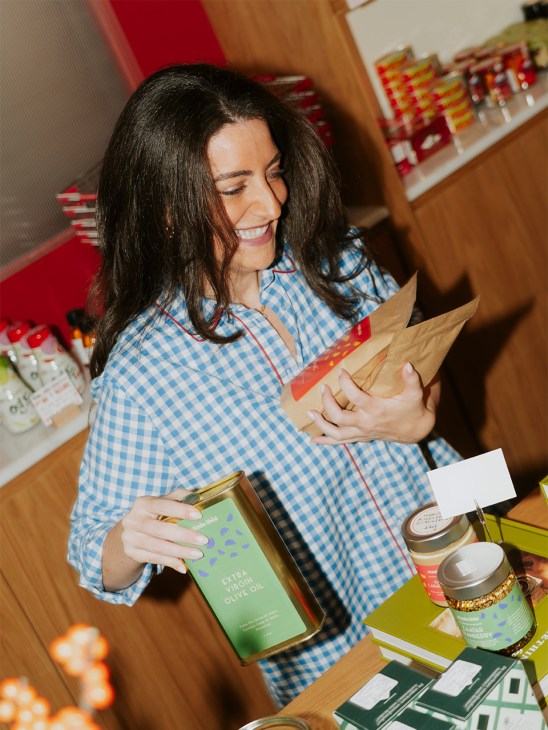
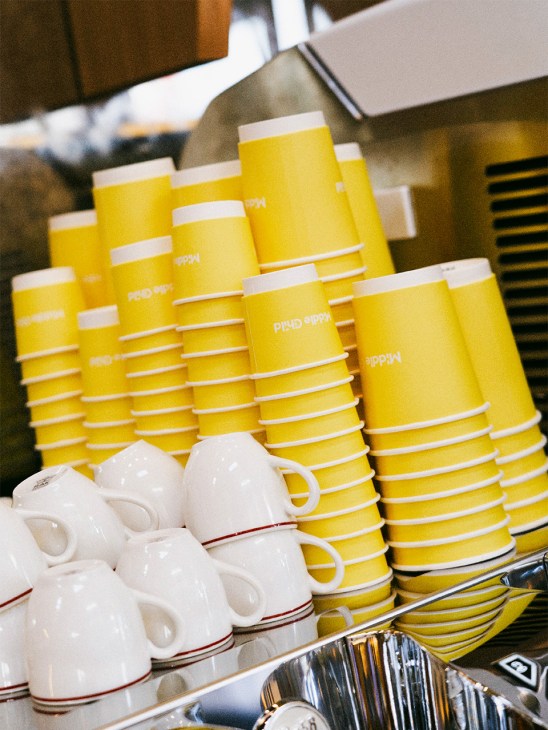

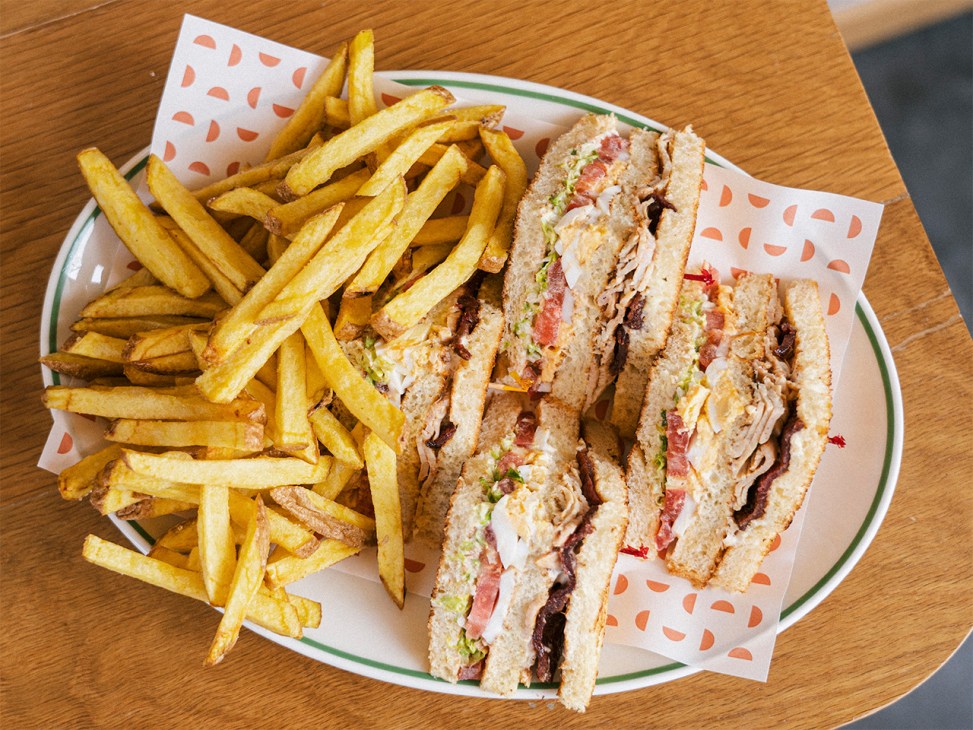
“It’s the kind of place that I have always wished existed in Dubai,” says Hazim, who drew on her Lebanese roots and wide travels to shape Middle Child’s simple yet satisfying menu, which features labneh yuzu kosho dip and cured sea bass, alongside nostalgia-inducing desserts such as banoffee pie and cheesecake.
Hazim, herself a middle child, sees the space as a nod to her upbringing. “Middle children tend to build their own little worlds,” she says. For her, that instinct has translated into a love for hosting in a place where diners feel that they truly belong.
AlSerkal Avenue, WH 13A, Dubai
Introducing Auberge Port-Gitana, Lake Geneva’s newest bolthole
Auberge Port-Gitana in Geneva was originally constructed in 1875 as a steamboat pavilion for passengers embarking on cruises on Lac Léman. Though boarding is now mostly done from lakeside piers, the historic structure still stands. After several decades as a cultural venue, it recently reopened as an 18-bedroom bolthole, complete with a lakeside restaurant and terrace.
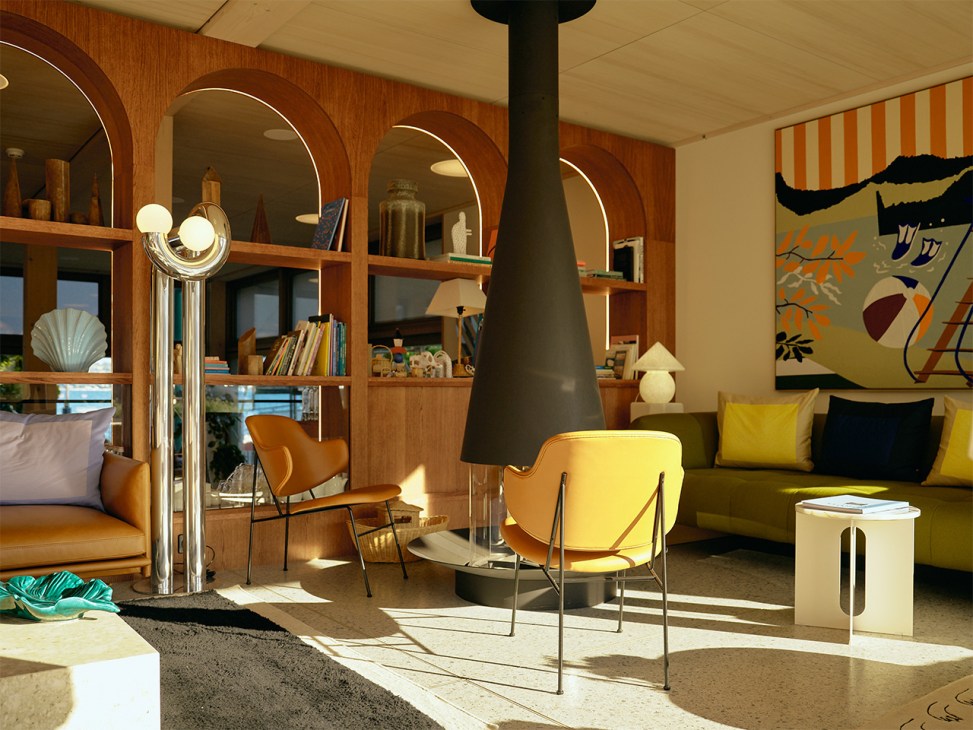
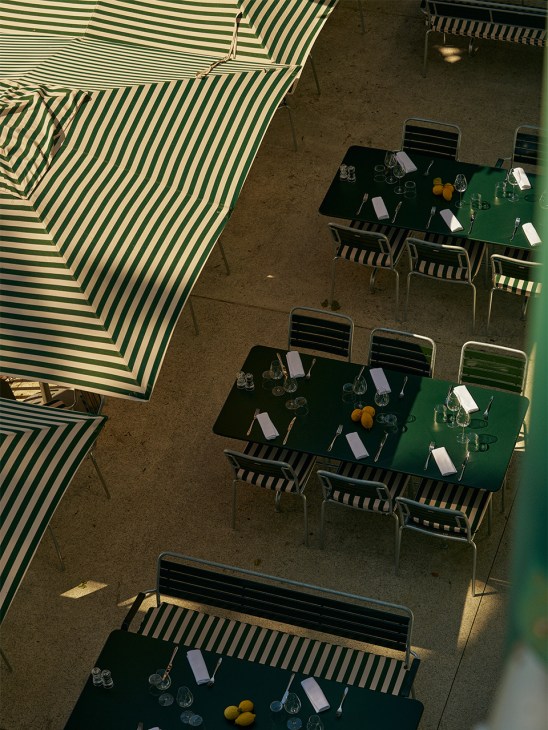
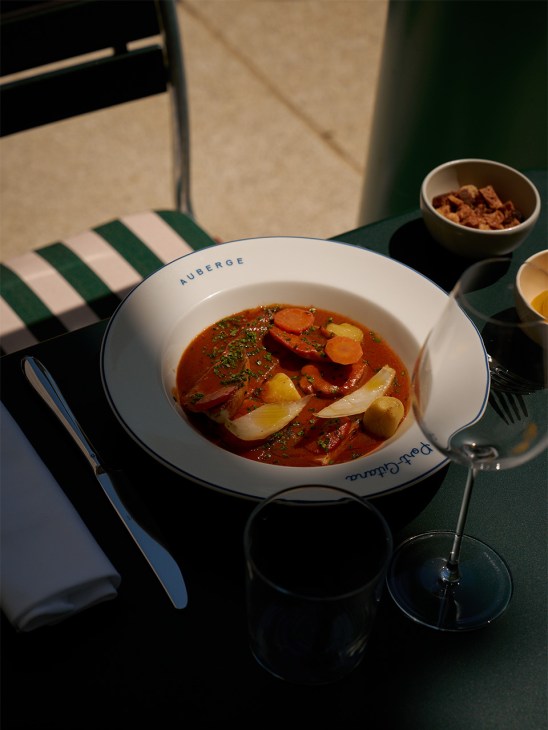
“We wanted to bring this legendary place back to life,” says Benjamin Luzuy, co-founder of Swiss hospitality group Gourmet Brothers, which renovated the property. The team ensured that every corner of the space respected its history, decking out the interiors with retro-modern decor that brings to mind the golden age of the Swiss Riviera. Think private balconies with striped awnings, powder-pink banquettes and marble tables. And the clear waters of Léman are just 20 metres away, with direct lake access.
portgitana.ch
At the Alpine hotel Le Sarto, the great outdoors are its best amenities
Founded by French brothers Thibaud Elzière and Robin Michel, Iconic House is a sharp collection of restored French villas and chalets. Its portfolio includes stays in Paris and lesser-known destinations such as Hossegor.
New to the family is Le Sarto, an Alpine chalet in Megève. Originally built in 1941 by art deco architect Henry Jacques Le Même, it has now been renovated by studio Claves. The seven-bedroom building is intended to feel like a home but with hotel frills: there’s an onsite chef, as well as a chalet manager who doubles as a concierge.


Steps from the slopes and within walking distance of Megève’s centre, it’s a well-positioned base for guests wanting to ski in winter, hike in the warmer months or try their hand at dog sledging and Alpine cheesemaking. Before arriving, they receive a beautiful guide highlighting the best places to eat, shop and explore in the town. With a gym, home cinema, outdoor and indoor pools, steam bath, sauna and Nordic bath, there’s plenty to keep guests engaged on the site too.
iconic.house
Iconic House’s portfolio
Le 1550, Courchevel
The French Alps meet luxurious Nordic amenities in this wood-panelled hideaway, which is complete with an in-house ski-fitting service, a private chef and a resort chauffeur.
Villa Junot, Paris
This 1920s hôtel particulier in Montmartre feels like a slice of old Paris. Found in the cobbled Avenue Junot, the villa offers a private garden, cinema room, hammam and a private chef on request.
L’Étoile des Baux, Alpilles
In the Alpilles Regional Natural Park in Les Bauxde-Provence, in the heart of Provence, you will find everything from a petanque field and an outdoor cinema to an electric car in which to explore the area.
The Park Hyatt Tokyo is back – here’s what’s new after the 19-month renovation
There was an air of anticipation after Tokyo’s Park Hyatt hotel closed for a refresh in 2024. Now, after a 19-month hiatus, it’s finally back. When Monocle stops by ahead of the reopening, it quickly becomes clear that the goal was refinement, rather than radical change.
There are familiar faces among the long-standing staff awaiting visitors on the 41st floor, home to the reworked lounge and bar The Peak and Girandole, which is now in the hands of Frenchborn Monégasque chef Alain Ducasse.


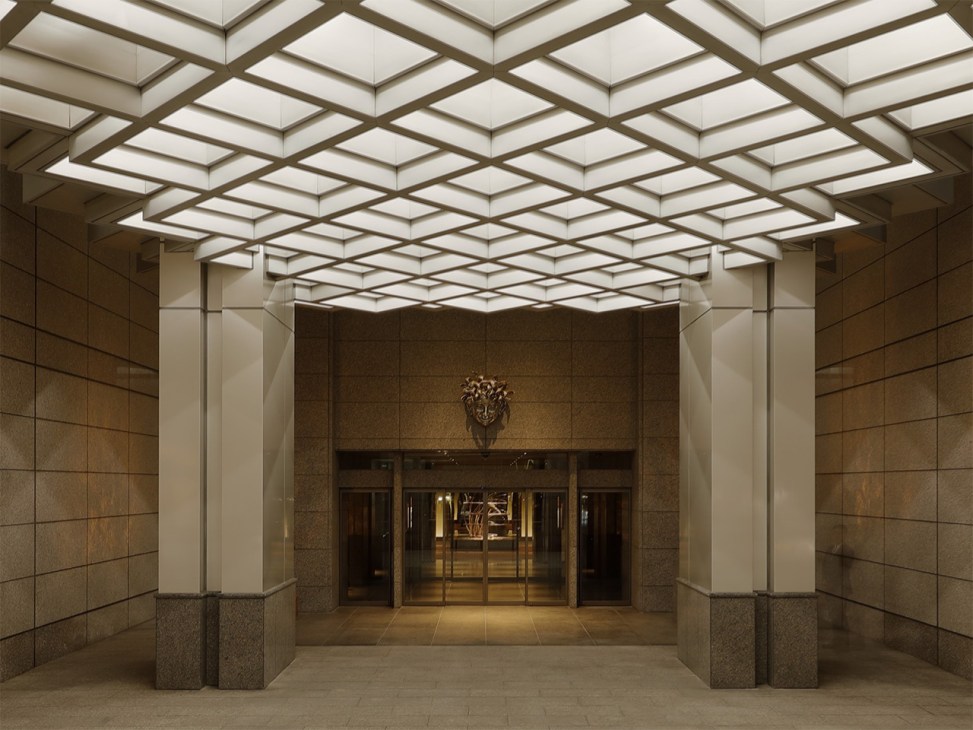
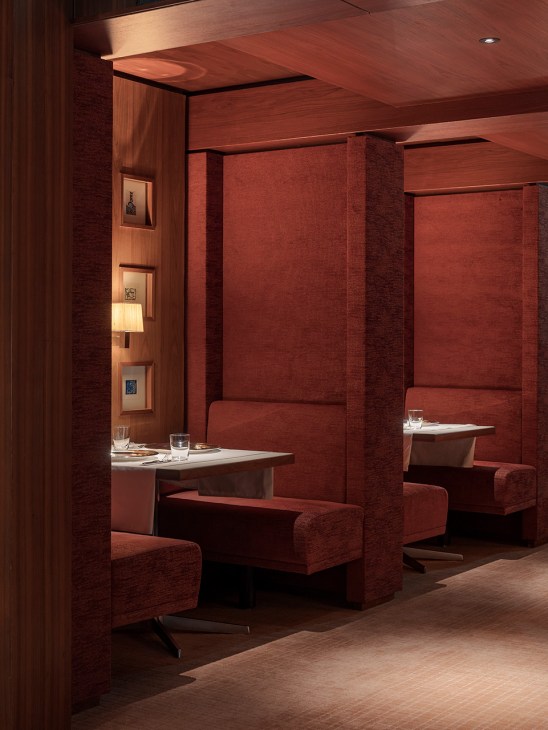

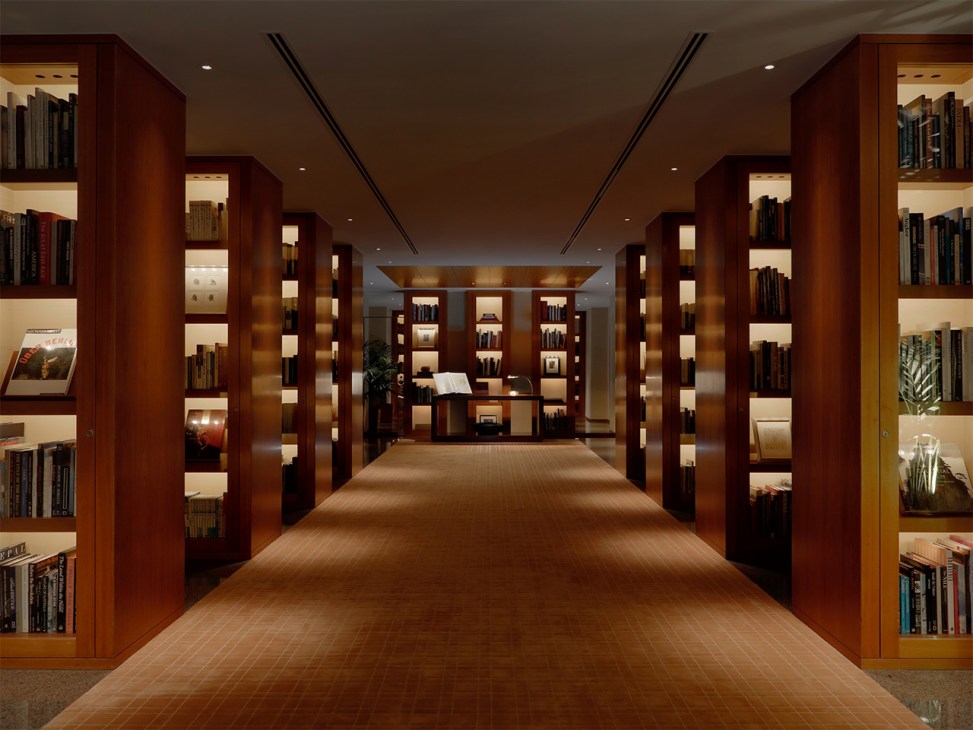
The guest rooms have received a modern update in the form of custom furnishings and a more open layout. And while numbers have been reduced to 171 rooms, there are some new additions too.
The Park Suite category offers separate sleeping and living rooms, walk-in closets and sweeping views towards Meiji Shrine’s lush surrounds. They’re part of a new chapter for a landmark hotel that, despite the changing times, proves that the value of heritage never grows old.
hyatt.com
Read next: The Monocle City Guide to Tokyo, featuring the best hotels, restaurants and retail spots in the Japanese capital