Issues
‘For smaller brands to win, they need to be able to propose something different.’ How Hermès Watches joined the watchmaking big league
Almost 50 years ago, French luxury house Hermès entered the world of high-end watch manufacturing. The company has since achieved legitimacy among collectors and surpassed growth targets (in 2023 sales shot up by 20.6 per cent), and is well on its way to creating a number of icons – from the Cut, a minimal unisex design, to the sporty, contemporary H08. It has also established a manufacturing facility in Biel, Switzerland, and bought a stake in movement maker Vaucher Manufacture Fleurier.
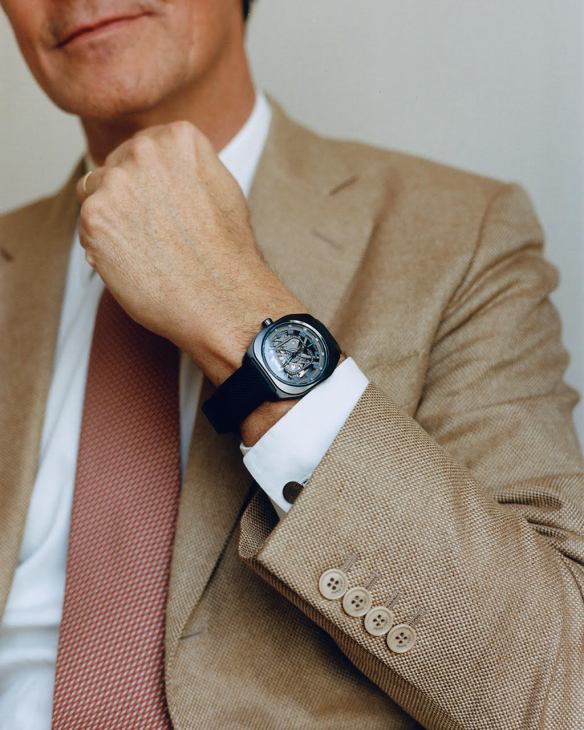
Laurent Dordet, the CEO of Hermès Watches, believes that surviving in the highly competitive watch market as a medium-sized brand means taking creative risks. He encourages his team to embrace humour and have fun with the concepts that they develop for Watches and Wonders, ranging from suspended time to mystery mechanics. As he prepares for this year’s fair, he sits down with Monocle at the company’s Paris HQ to outline his vision for the business, give us a preview of the H08 Squelette and tell us why the company’s latest skeleton watch has already made it onto his wrist.
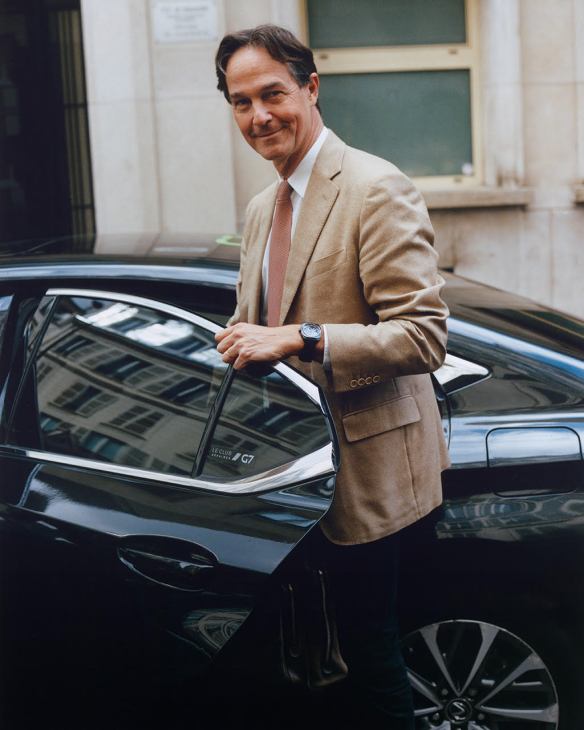
Since entering the watch sector, Hermès has steadily established itself and grown its business. What’s behind this success?
Since day one, we have always known that we have to be different. For this year’s Watches and Wonders, it’s all about mysterious mechanics – a story expressed through skeleton watches and the scenography of our booth, which allows visitors to dive into the magic of watch mechanics. Hermès has to be at the top and prove that, every year, we can keep moving forward in terms of quality, technique and innovation. That’s also why we introduced the concept of suspended time, our way of rethinking modern watchmaking.
Is creativity and storytelling becoming more important in watch design?
The market is becoming more polarised: if you’re not one of the top six brands, you’d better have something original to propose. Our revenues have been exceeding industry expectations because our work is respected technically and, above all, perceived to be original. Value is concentrated mostly in the top-six brands, which represent two thirds of the market – Rolex occupies a third. There are winners and losers. For smaller brands to win, they need to be able to propose something different.
Tell us about this year’s Watches and Wonders.
We always try to express a sense of continuity. This year we have developed our first skeleton watches in the Hermès H08 line, which involves working on the movement to make it more transparent, playful and technical. The H08 is the most important among them. We’re taking people on a journey inside the watch and introducing them to a new generation of movements. We have been investing a lot in this line with the goal of creating an icon. Why is it important for the house to be present at the annual fair? Watches and Wonders is the industry’s biggest annual rendezvous. And since we are part of this industry, we want to be part of the event and be in conversation with our peers. We are a medium-sized brand so it’s in our interests to participate and, until now, we have chosen to only be present at this fair. We don’t reveal all of the year’s novelties but we’re here to show that we are part of the watch community. For us, it’s a moment of communication. We have some wholesale partners visiting us but only a small portion of our sales is made through independent retailers. Notoriety is our goal.
You make a point of presenting a range of watches, from sporty designs to jewellery. Why?
Our range is quite vast – from relatively affordable to premium price points, from quartz to high-end mechanical movements, from everyday to jewellery watches. When you look at the majority of brands, very few of them are as diverse as we are. We decided to be present in so many segments because the house is extremely diverse and so is our clientele. I was in charge of bags and leather goods before becoming the CEO of Hermès Watches and the approach there was similar: we have both entry-level and high-end prices, simple and complex designs. Hermès was never about being super exclusive. We keep a range of products that are more affordable to allow us to attract younger customers.
How do you foresee the current geopolitical situation impacting the sector?
The industry has been facing headwinds for more than two years but everyone is proving resilient. Unfortunately, 2026 won’t be any better in this respect – we had high hopes in January and February but some people decided differently. It’s hard to predict the impact all of this will have. It depends on how long the war will last. Will it be a three-month story followed by a comeback or will it be two years? We know nothing about the leaders’ intentions.
Do you see opportunities for further growth?
We have had fantastic growth between 2018 and 2023 so have been able to expand our workshops. And there will be an extension of our factory in 2028 but its purpose won’t be to immediately increase our volumes. It’s also about improving people’s working conditions and integrating some additional know-how.
Despite the current challenges, we still think that there’s plenty of room for growth if we communicate to more people that Hermès has a presence in the watch sector, with designs that are both technical and playful. Our notoriety is still relatively limited among watch-lovers – so that’s what’s ahead for us.
hermes.com
Twelve creatives on the art of watchmaking and why horology will stand the test of time
1.
Yorgo Tloupas
Creative director,Yorgo&Co
The watch collection of Paris-based creative director Yorgo Tloupas features more than a few remarkable pieces. There’s the rare “Clack, clack, thud” from 2013, a watch designed by the artist Ryan Gander that is a metal mould of a Rolex, with neither watch face nor mechanism. Then there’s the titanium Space 3 by Bell & Ross from the early 2000s. Perhaps most special of all, however, is a Swatch of his own design, commissioned by Greek prime minister Kyriakos Mitsotakis in 2021 to celebrate the bicentenary of the country’s independence. “Only 200 were made and given to the guests of the commemoration in Athens,” says Tloupas, who as a child spent his summers in Greece, where his father was from. “King Charles III owns one – I’m not sure how often he wears it, however.” The blue-and-white stripes of the Swatch are a reference to the Greek flag, while the watch’s on-show golden mechanism evokes the Mediterranean sun. “I wear mine daily, proudly,” he says.


When did you first start wearing watches?
I had a few Swatches when I was growing up in the 1980s. When I first started earning money as an independent designer, in the late 1990s, I bought myself a basic Tag Heuer. I felt like I had reached the peak of luxury.
Are you often late or early? Or right on time?
In my line of work I’m obviously, like everyone else, constantly dashing from one meeting to the other. I’m always absolutely on time, down to the minute. But that comes from being a cyclist, knowing Paris inside and out – and running a lot of red lights.
What do you wish that you had more time to do?
Surfing. Interestingly, it’s an activity that still requires having a watch as a necessity. I often get asked what time it is by watchless surfers when we’re waiting for waves. Time can stretch dramatically when you’re in the ocean.
2.
Helena Puolakka
Chef-patron, Savoy
Helsinki restaurant with interiors by Alvar Aalto, Helena Puolakka’s uniform of chef whites is not complete without her Oyster Explorer II by Rolex. The Finnish chef acquired the timepiece in 2007 after receiving her first sizable pay cheque. “I had been dreaming of a Rolex for quite some time,” she tells Monocle. “After trying on most of the models in my budget, I knew straight away that the Explorer II was the one. Since then, my slogan has been, ‘My time is Rolex time.’” Puolakka spent 25 years working in kitchens in London and Paris – including at the three-Michelin-starred restaurants La Tante Claire and Pierre Gagnaire. In 2019, she returned to her native Finland to take up the role of chef-patron at Savoy and opened the Café Savoy, a more relaxed counterpart to the original restaurant, in 2022. As one of the most recognised Nordic chefs of her generation, Puolakka operates with the utmost precision – her Rolex ensures that service is seamless.


How does observing time matter in your profession?
Timing is everything in the kitchen. Serving several different dishes to multiple tables takes a lot of practice in timing. To time all the mise en place so that everything is ready before and during service is essential.
Are you often late or early? Or right on time?
In Finland, it is impolite to be late. If you expect to be even five minutes late, you send a message. Though I aim to be on time, I sometimes fail – especially since I have two restaurants across three floors. Unfortunately, there are times when I’m simply at the wrong end of the building.
3.
Tom Chng
Founder, Singapore Watch Club
After three years investigating financial crimes as a forensic accountant, Tom Chng decided to keep watch on horological complications instead. He founded the Singapore Watch Club, a collectors’ community, in 2015. It has since collaborated with leading maisons such as Vacheron Constantin and Cartier, as well as helping to grow the tiny island nation into the sixth-largest market for Swiss watches in the world. Through his work with the club and his collection of vintage Audemars Piguet pieces, Chng hopes to uphold watchmaking as a time-honoured art form. “The watch is a measuring instrument not much different from a weighing scale or ruler,” he says. “But watches hold so much sentiment because they measure a finite resource that is precious to us, one that nobody can buy or sell.”


What is the model of your watch?
My favourite watch in my collection is the Audemars Piguet Jules Audemars Grande Sonnerie Openworked. It took watchmakers centuries to miniaturise the clock-tower mechanism into a small gadget and the skeletonised movement is one of the hallmarks of the post-quartz crisis era in the 1990s.
How do you wear your watch in a professional capacity?
As a chiming watch, it acts like a tiny little clock tower on my wrist. It rings every quarter, so I wear it during important meetings to maintain eye contact with others while still knowing the time. The beauty about chiming watches is their ability to go unnoticed even when I’m having a conversation. You would hear it but your counterpart might not.
How do you perceive the value of timekeeping? Is it a lost art in the age of instant messaging?
Nobody needs a watch today. Time is everywhere, digitally. Always accurate. So, more than ever, the value of timekeeping is paramount. The more irrelevant mechanical watchmaking becomes, the more precious it is. Artisans preserve the savoir-faire and patrons buy into it to own a piece of history. It’s a delicate piece of human achievement carefully passed on from one generation to the next.
4.
Alexander Roth
Stylist
In New York-based stylist Alexander Roth’s family, timepieces are passed down as heirlooms. Having inherited his grandmother’s Cartier Tank Mini, he now wears his grandfather’s vintage Patek Philippe Gondolo from the 1920s. “It was originally purchased from Tiffany & Co – they were the first official retailer of Patek Philippe in the US,” says Roth. “The watch was then given to my dad and now it’s mine.” Roth perceives the act of wearing a watch as making something of a fashion statement. “It’s the centrepiece of any outfit,” says Roth. “The right watch can speak for you and speak to your entire look so that you don’t have to.” But he also points to the importance of holding on to a sense of timekeeping in everyday life, especially when working for fashion houses such as Dior, Calvin Klein and Saint Laurent. “Time management is the most important tool I have. If I can master that on set, I can accomplish far more than I had intended.”


When did you first start wearing watches?
I started wearing watches about five years ago when my nana gave me her mini Cartier Tank. She used to wear it every day but when she couldn’t wear jewellery anymore, she handed it to me.
How often do you wear your watch?
I try to reserve it for special occasions. That’s what my grandfather did as well. It’s my party watch.
Are you often late or early? Or right on time?
It depends who you ask. I believe timekeeping is relative to a person – and how important that commitment is to them.
5.
Rita Nakouzi
Head of marketing and content, Nahmad Contemporary
Rita Nakouzi has a predilection for discreet timepieces. “There’s a certain discipline to them,” says the Lebanese-American head of marketing and content for New York art gallery Nahmad Contemporary. These days, her watch of choice is a 1973 Rolex Lady-Datejust with a champagne dial and a two-tone steel-and-yellowgold strap. “Rolexes don’t announce themselves,” she says. “This one disappears and then, occasionally, it might get noticed.” Nakouzi was raised in Beirut. Her watch collection has been shaped by her experience with luxury fashion as creative director at the Realreal, a luxury resale platform for the likes of Chanel, Gucci and Prada. Nakouzi’s Rolex is on her wrist throughout her day, whether she’s attending a gallery opening at Nahmad Contemporary, at a backgammon tournament with her husband or enjoying a games night with her children. “I bought it for myself after closing something I’d been working towards for a long time,” she adds. “It is something that has been earned, not given.”


When did you first start wearing watches?
In high school. But the first watch that truly felt like mine was an Hermès Cape Cod that I purchased in my twenties. At the time I was really into [former Hermès creative director of womenswear Martin] Margiela and owning something even adjacent to that world felt like crossing a threshold.
How does observing time factor into your job?
I work with art, so time is the medium as much as anything else. A work asks you to slow down, to look longer than feels natural. A watch that resists immediacy suits that.
Are you often late or early? Or right on time?
Right on time. It’s a form of respect. Timekeeping has become rarer, which makes it more valuable. To give something your full time now is a statement.
6.
Dominique Paravicini
Swiss ambassador to the UK
Since taking office last summer, Dominique Paravicini has contributed to a diplomatic mission that has been in place since 1891. And as the man responsible for the interests, safety and security of more than 40,000 Swiss citizens based in Britain, he is a figurehead for the nation. It doesn’t hurt, then, to cut a dash: not least on the wrist, given Switzerland’s role as the historic centre of horology. Globally, Switzerland manufactures 95 per cent of all watches sold at a value of more than CHF1,000 (€1,095). When speaking of the international luxury watch industry, it’s almost exclusively a reference to the Swiss timepiece industry.


“The first watch I received was when I was 12,” Paravicini tells Monocle from the Helvetian embassy in Marylebone, with his dog Pasha at his side. “In Switzerland, it’s a common gift.” Being Swiss, it follows that he has a strong repertoire of timepieces. Today, his watch of choice is a gold-trimmed, 1950s Vacheron Constantin that has a sentimental value that goes far beyond national pride.
How did you acquire the watch?
It was my late father’s. I’ve been wearing it ever since he passed away.
How do you wear your watch in a professional capacity?
I like to wear watches. I have a couple of others and the choice depends on the mood, the day, the season. I think the wrist is a space where men can afford to show a little vanity.
How does observing time factor into your job?
Time is of the essence. In any job, you must cope with time restraints – mine is no different. But as a Swiss ambassador, I’m proud to say that I’m on time every time, even if I want to arrive late.
7.
Christopher Anderson
Photographer
The work of Canadian-American photographer Christopher Anderson has taken him across the world. From war photography in Iraq to gaining unfettered access to the Trump administration’s top team for 2025’s explosive Vanity Fair story, his work means that he’s a man on the move. But there is one constant to Anderson’s days: his Omega Speedmaster. Purchased in 2008, it is the only timepiece he has worn in his life and has become a permanent fixture on his wrist, including on shoot days. “I would not call myself a watch person but it has come to mean a lot to me because it’s with me all the time,” says Anderson. “I like it because it’s handsome without being flashy. I think of it as a piece of precision machinery that looks functional and rugged yet is still elegant.”
When did you first start wearing watches? I had never paid attention to watches before but around 2007 to 2008, I had an assistant who had the Omega Speedmaster – and I became obsessed with it. I set about trying to find one and it ended up being the most expensive thing I’ve ever bought for myself.


How do you wear it in a professional capacity?
I’m a photographer so I’m always measuring light and time. When you’re on a shoot with a crew, whether it’s for fashion or celebrity portraits, you have objectives to meet. You’re constantly keeping one eye on the clock so that you know where you are in the day and when the next shot needs to get under way – pulling out a phone on set isn’t the most ideal thing to do.
What do you wish that you had more time to do?
I wish I had more time to take photographs rather than doing my taxes or invoices or other administrative tasks. And I wish there were more hours in the day – to learn another language, cook new recipes and spend more time with my family and friends.
8.
Thomas Chatterton Williams
Author
What struck American author and cultural critic Thomas Chatterton Williams when he first came across a Rolex Milgauss 116400GV was its green glint. “It has a distinctive feature – its green sapphire crystal,” he tells Monocle from his base in Paris, where he spends his time when he’s not in New York. “From certain angles the light catches the face obliquely and it looks like there’s a thin green ring inside the bezel.” Since securing his own model in 2021, Chatterton Williams is rarely seen without it – be it in a professional capacity or at the sauna or on a swim. “This will change if I upgrade to precious metal,” he adds as a caveat. “But it’s a stainless steel model that looks fine in the gym, with jeans or dressed up with a blazer.”
The Milgauss is the writer’s second Rolex. His first model by the Swiss watchmaker was purchased to mark the end of a period of financial anxiety after moving to Paris and becoming a father. “When I had finally turned a corner and achieved a degree of stability, I walked from my apartment to the Place Vendôme and into a Rolex dealer to buy myself an entry-level Oyster Perpetual,” he says. “I loved that watch, which represented having survived here. There is something reassuring about wearing a Rolex. It’s a reminder that I’ve worked hard in the past and can and must do so again in the future.”


How did you acquire your watch?
I bought it for myself before turning 40. I mentioned wanting one to a friend who is something of a collector. One day he called me to say he could take me to the shop where he’d established a relationship and save me the usual two-year wait for a new model.
How do you perceive the value of timekeeping?
Is it a lost art in the age of instant messaging? I like a wristwatch in part for its gratuitousness in the smartphone era. It’s a little piece of perfect craftsmanship to glance at and to pull yourself out of the dizzying speed of the moment.
What do you wish that you had more time to do?
There is not enough time to accomplish everything I want to do or to enjoy slow, unscripted moments with friends and family. I no longer live full-time in Paris, so I’m constantly saying goodbye to the people that I most care about. I love to travel and feel grateful to have the work that makes it possible but I often find myself wishing that I could just stay but a moment longer.
9.
Aljoša Dekleva
Architect, Dekleva Gregoric
Aljoša Dekleva is not fond of complications. That goes for the watch on his wrist as well as the projects that he oversees with Dekleva Gregoric Architects, the Ljubljana-based studio that he and his partner, Tina Gregoric, founded in 2003. It is one of Slovenia’s leading practices, working in the US and across Europe, as well as passing on its philosophy to architecture students at universities in Toronto, Vienna and London. A key theme of Dekleva’s work is that design should serve its user – a principle that also influenced his choice of timepiece. “It’s about communication,” he says, referring to his Mondaine Sport Line Day Date – its layout could hardly be easier to decipher. “Too many watches now are created as jewellery, not design.” Dekleva bought the watch, which is inspired by Swiss railway-station clocks, at the Renzo Piano-designed Fondation Beyeler museum near Basel. The quartz movement is reliable, accurate and maintenance-free – a “tool watch” in every sense. Dekleva even bought a second, identical model.


Why is it important to observe time, as an architect?
We operate in a three-dimensional, spatially defined world filled with materiality, context and people who live in and use architectures and cities. In this already complex setting, the factor of time is often neglected and even overlooked. However, architecture does not become a finished product the moment it is built. In reality, the moment that a building is completed marks the beginning of its life, which is destined to evolve and adapt over time.
How do you perceive the value of timekeeping? Is it a lost art in the age of instant messaging?
Our constant digital availability and the immediacy of communication are intensifying our everyday interactions, and that allows us to do more and say more. However, time spent in effective, instant and direct communication is, in a way, also time lost for self-awareness and reflection on our actions.
What do you wish that you had more time to do?
I’d like to spend more time sailing in the Adriatic Sea or driving a sporty old-timer along winding Alpine roads.
10.
Fredrik Johansson
Diver, Hands 2 Ocean
For Fredrik Johansson, keeping track of time is a matter of life and death. His Mares Puck Pro diving watch, which shines brightly in murky water and calculates his depth, is a crucial tool for tracking pressure and the rate of oxygen expenditure. He co-founded river clean-up non-profit Hands 2 Ocean (H2O, for short) in 2018 and leads its 300 or so volunteer divers and rope-pullers into Sweden’s waterways every week – often in the Fyris river and occasionally in Lake Mälaren and the Baltic Sea. “For me, going beneath the surface is a form of meditation,” he tells Monocle. “To date, we’ve removed 462,000kg of trash from the riverbeds, including nearly 1,600 electric scooters,” he adds, wetsuit on, flippers in hand. “When you’re down there, you’re given time to think – and I often think about time. If the water has taught me anything, it’s about the importance of slowing yourself down, being in the moment and focusing on the task in front of you.”


When did you first start wearing watches?
I’ve been diving for 35 years and wearing versions of these watches for just as long. I have no plans to upgrade but a new watch with a brighter screen for these old eyes might be needed soon.
Do you wear a watch on land?
In my spare time I don’t wear a watch. It’s only in my profession – looking at my wrist, out of the water, would be disorientating now.
What do you wish that you had more time to do?
I wish I had six more hours a day to spend in the rivers. Cleaning these waterways can feel like an uphill battle.
11.
Simon Holloway
Creative director, Dunhill
Simon Holloway has exacting taste. As the creative director of Dunhill, he oversees the British menswear house’s collections of immaculate suiting, suede blousons and accessories for the gentleman on the move (think silver-plated lighters, driving gloves and walking sticks). When it comes to watches, Holloway considers one horological house a cut above the rest. “For me, the most stylish watches in the world are made by Cartier – it’s an art deco dream of elegance,” he tells Monocle from Bourdon House, Dunhill’s headquarters in Mayfair, a Georgian building that comprises a shop, tailoring atelier, restaurant and barbershop.
Today, his timepiece of choice is a yellow-gold Cartier Tortue, in a smaller size that he describes as having an “exquisite” proportion. “The Tortue is one part of the ultra-elegant triumvirate of art deco-era watches: the Tank Louis Cartier, the Tortue and the Tank à Guichets,” says Holloway. “I wear a watch every day,” he adds. “Usually wrapped over the sleeve of a shirt or a piece of knitwear. Just discreetly hidden, or half hidden by the cuff of my jacket.”


How does observing time factor into your work day?
Time is an extremely rare and precious commodity in my professional life. Usually, I have all manner of reminders and alerts to get me from one fitting or meeting to the next.
Are you often late or early? Or right on time?
I love being right on time. I find being early quite frustrating and I hate being late, even though I often am.
How do you perceive the value of timekeeping in the digital age?
Having grown up in a world where timekeeping was analogue, the sequence of events felt more important. I feel that things are left a little more last-minute and are looser now, not always with the best result.
12.
Luca Nichetto
Designer, Nichecraft
Italian-born Luca Nichetto is the founder of Nichecraft, a design platform that creates limited-edition pieces. One of its first was The Four, a watch made in collaboration with Milanese watch brand Unimatic. The timepiece is inspired by children’s educational tools that are intended to instil the value of timekeeping from an early age. “As a designer, there are moments when observing the time is important,” Nichetto tells Monocle from his Stockholm headquarters. “Deadlines and processes can help to achieve a goal: to deliver a project that becomes a product that will be put into production. At other times, when you’re doing research, you never know how much time something might take. You need to merge these realities.”


Are you often late or early? Or right on time?
Quite often late. I am Italian. We’re allowed to be 15 minutes late. But sometimes it’s not 15 minutes, it’s a bit more. In Scandinavia it is not accepted to be late. So I make sure to be on time when I deliver my kids to school.
How do you perceive the value of timekeeping?
It’s becoming the new luxury. Society is accelerating through technology and other things. This is one of the reasons why we designed The Four.
How second-hand platform Subdial built a community for watch collectors of all stages
“We have gone from being an online business to building a brand in a much more visual, customer-facing way,” says Subdial co-founder Christy Davis, sitting on a comfy sofa among the muted tones, velvety textures and warm lights of the firm’s new headquarters on London’s Farringdon Road. “That starts with the Clubhouse here.”
Founded with fellow EY alumnus Ross Crane in 2018, Subdial started as a software company that crunched the numbers and resale prices to create a fairer and less opaque platform on which to deal watches. In 2022 the pair teamed up with Bloomberg to build an index of the most-traded timepieces by value and offer more transparency in a market undermined by uncertainty. Something clicked. Today the firm has more than 1,000 watches on its books: from rare Swiss beauties fetching six figures to chunky sports numbers beloved by bankers. There are weird and wonderful one-offs, and, of course, the occasional only-a-collector-could-love-it carbuncle.
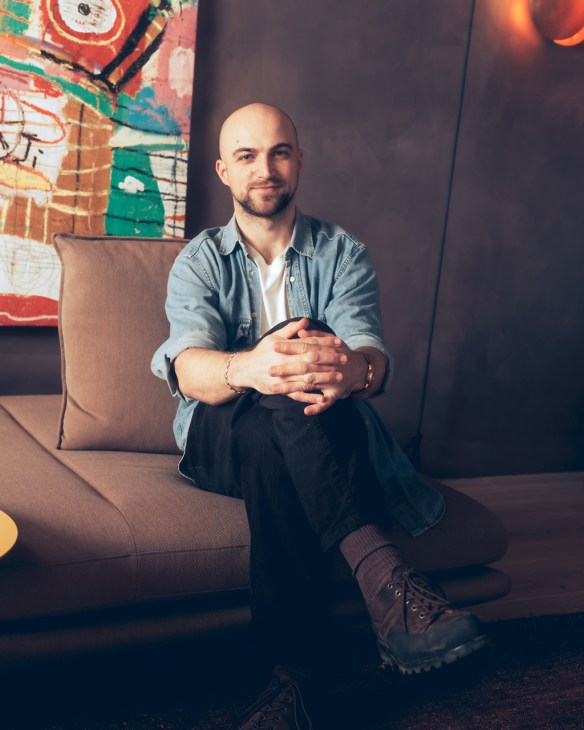
There isn’t one type of customer, says Davis, but for every detail-driven obsessive, he thinks that there’s also a more design-led audience that’s keen to learn. “There’s a movement towards a sort of quiet luxury: younger collectors are coming to the market and want a watch that says something about them,” Davis tells Monocle as we tour the office, past the woody salon, a Louis Poulsen pendant and tasteful interiors designed by his wife, Clemency Cartwright, a designer and set decorator for film and TV. “Watches are a tangible thing in an increasingly digital world. They can spark learning and interactions with people, and help you understand history. They draw you in, bringing you back down to earth.”
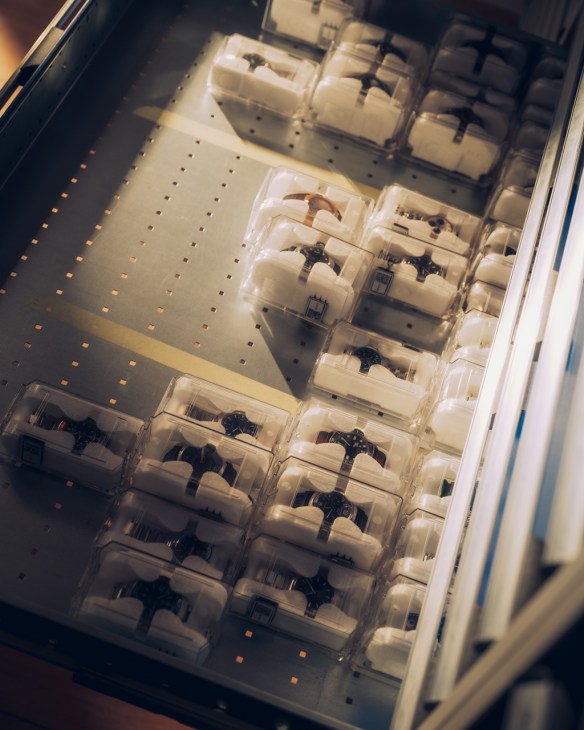
Since Subdial moved in to its new HQ, regular events, meet-ups and a daily stream of in-person valuations have been a bonus. Staying in touch with the market, though, means building online awareness first. When Monocle visits, a videographer is shooting the weekly “drop” for social media and Tim Green, Subdial’s head of commercial, is poring over a treasure trove of timepieces that will soon hit the website. It’s easy to forget that the watches packed unassumingly in tagged trays and plastic bags include some of the world’s most sought-after specimens. This week’s release features more than a hundred: including some 30 Rolexes, nine Cartiers, six Patek Philippes, an Audemars Piguet, an Urban Jürgensen and much else besides.
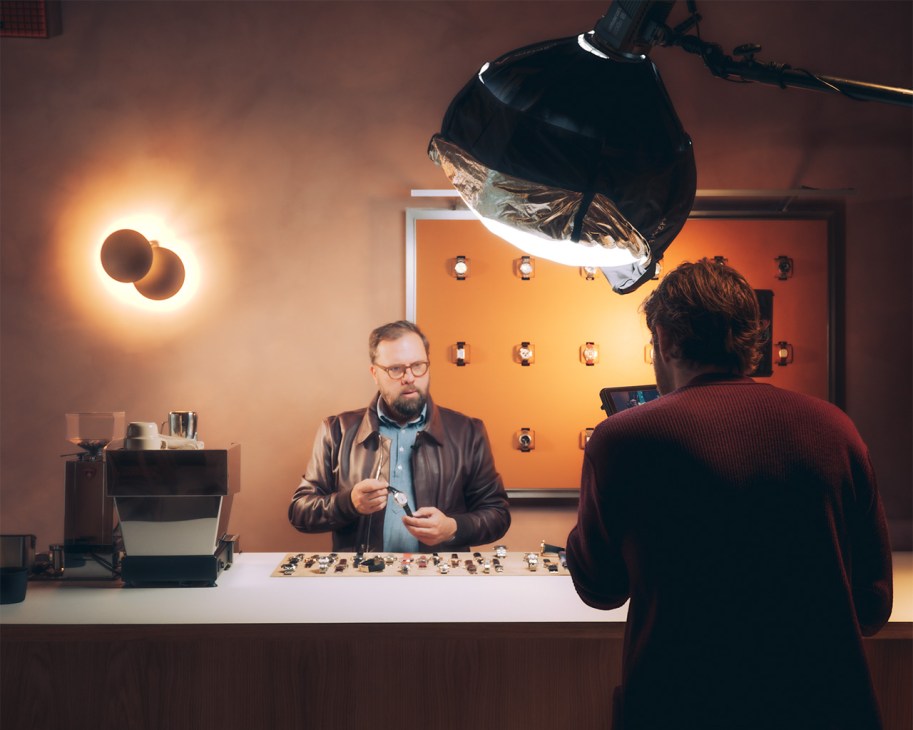
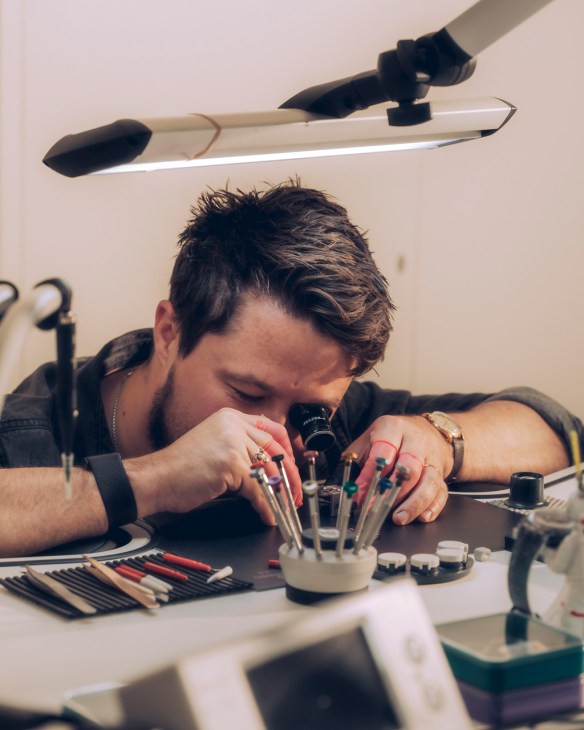
In an adjoining room with brick walls and concrete pillars, members of the sales and valuations team check monitors that display graphs and figures charting what’s for sale. They consult software that anticipates turnaround times and histograms that hint at the value of transactions. The valuations team of Ed Wright and Karl Boos share the assessment work, with AI automating 25 per cent of the task and growing. Does it work? Well, the writing’s on the wall – in this case, literally. It’s not yet lunchtime but a blue-hued screen is tallying numbers that suggest the team has already acquired four watches for more than £50,000 (€57,500) that day and sold five for just under £80,000 (€91,900): a worthwhile Wednesday by most measures.
Downstairs there’s a photography studio with flares and a rail of suitable sleeves for styling up the inventory before it lands online. Everything down here runs, as you would hope, like clockwork. Boxing and unboxing are filmed in case deliveries or send-outs are subject to claims (“If someone sends us a plastic bottle and says that it was a watch,” says Davis with a smile). There are rolling library-like shelving units packed with watch boxes and ownership papers, and a microscope for scrutinising scuffs and bumps up close. All of the certification, authentication, fixes, buffs and quality control are completed in-house.


The detailed appreciation – call it geekery, if you must – crescendos in the downstairs workshops. Security fobs, airlocks and concealed clearance systems take us to a room tended by loupe-wielding specialists scrutinising itsy bits and specialist components from deep within the movements of a rare Jaeger-LeCoultre or vintage Vacheron Constantin. In another room there are machines for pressure testing, sonic-cleaning baths and Vibrografs that measure for any imaginable horological imperfection.
“We’re on the lookout for super-fakes, counterfeits and Frankensteins,” says Aimee Cowhig, Subdial’s head watchmaker. She consults figures on a screen before pronouncing the watch under scrutiny as fit to pass to the next stage of testing. “A delightful amplitude,” she confirms breezily, perhaps hoping, more than expecting, Monocle might understand what she means.
What’s easier to comprehend is that Subdial has found a rhythm: a beat between seamless online transactions and leaving some space for human interaction. “The data and platform element are core to who we are,” says Davis, back on the Clubhouse sofa’s plush cushions. “What’s maybe changed is the way that we talk about ourselves and who our customer is. It’s a person who loves watches. They might have two watches or 200; they might be trading a vintage Seiko or a £500,000 [€575,000] Patek Philippe. What connects them is that it’s not just one watch on their wrist for 10 years; it’s about building a collection. They’re interested in who they’re meeting, in the history and the collectibility and the hunt – that’s our customer.”
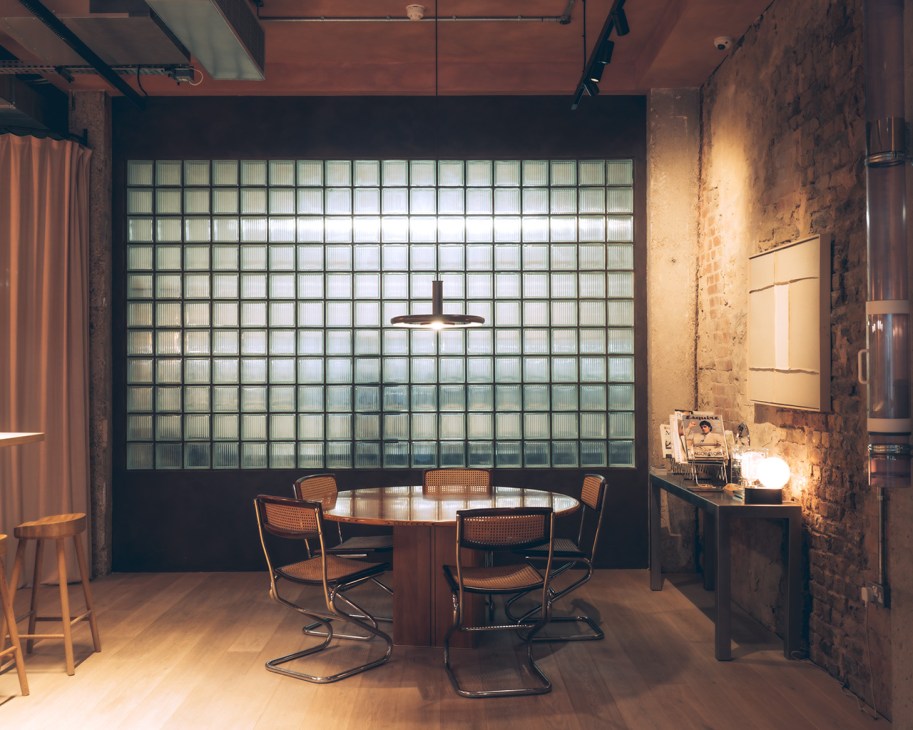
As the morning ticks on, talk turns to the future. Is there a ceiling to the secondary market? Where next for Subdial? Davis thinks that there’s more value left to unlock by building trust with collectors and making traditionally tricky trades easier. It’s not about windfalls or widening the margin but more metronomic: repeatable, reliable and reputable services that collectors can come back to again and again. “If somebody has a collection worth £100,000 [€115,000], it can be a faff [to get things valued and sold on], so you’ll maybe trade two watches a year,” he says. “But if you can make it genuinely enjoyable to manage your collection, see interesting things and discover stories, there’s a huge opportunity to grow the size of that market in the UK alone. I also think the US is going to be interesting for us.”
For now, our time is short. The first of the 20 or so visitors scheduled for the day pass through the tight but mostly inconspicuous security, peering down at the glass-ceilinged workshop and watchmakers beavering away below the entrance. The coffee machine whirs. Espressos arrive in tactile ceramics. “It can be enjoyable, a fun experience and attract a younger generation and new people into it,” says Davis. It’s true. Customers and collectors trust the software but they don’t come in to talk about it. They’re here for hardware. Talk in the office, Clubhouse or repairs room inevitably winds back to the matter at hand. The chamfering of a lug, the fluting of a dial or the pronouncement of a date-window bevel – these details are made to be discussed in person. Watches can tell the time – but Subdial seems to have captured the moment.
subdial.com
Five watches to watch
1.
Rolex
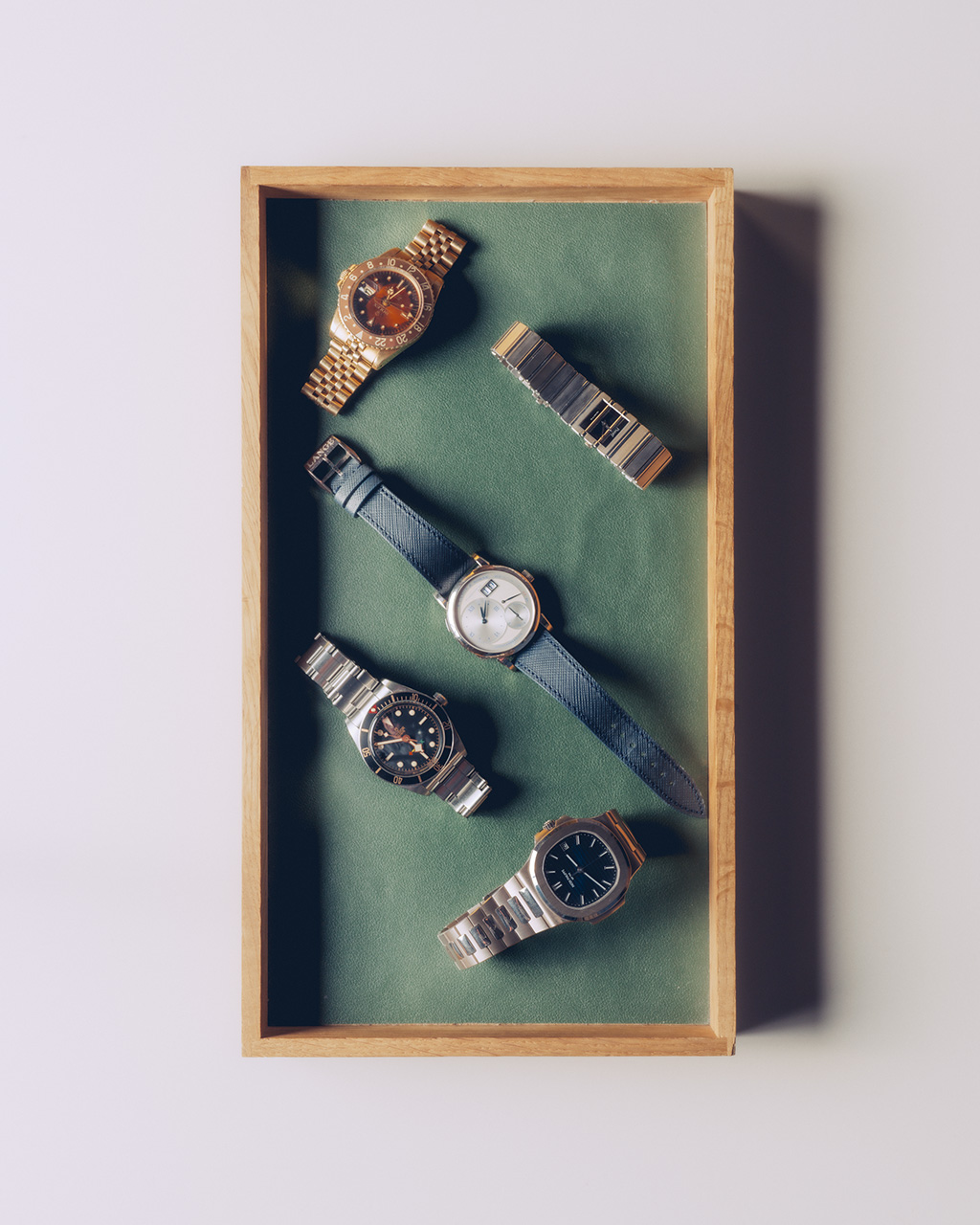
GMT-Master 1675/8
Circa 1975
“The dial’s discoloured, the bracelet has some life to it,” says Subdial’s senior marketing and editorial associate, Perth Ophaswongse. “It’s not perfect but that’s why it’s cool.”
Price: £29,950 (€34,612)
2.
Piaget
Polo Onyx White Gold 8131
Circa 1980
“Quartz was a luxury then. It might have once sold for £50,000 but five years ago people were melting them down for the gold. Now it’s back up.”
Price: £16,500 (€19,068)
3.
A Lange & Söhne
Lange 1, 25th anniversary 191066
2020, with papers
“You can see this three-quarter plate made using German Silver. It’s got a slightly golden patina unlike Swiss-made watches, which use rhodium plating.”
Price: £44,500 (€51,427)
4.
Tudor
Black Bay 58
2025, box and papers
“This is one of the 130 given by Ed Sheeran to the team that worked on his four-year Mathematics Tour. A story can turn a £3,000 watch into something that retails for more.”
Price: £24,950 (€28,834)
5.
Patek Philippe
Nautilus 5811/1G-001
2024, box and papers
“There’s speculation that Patek Philippe may bring one out in steel for its 50th anniversary.”
Price: £127,500 (€147,339)
Strong exhibitors and under-the-radar names emerging from Watches and Wonders 2026
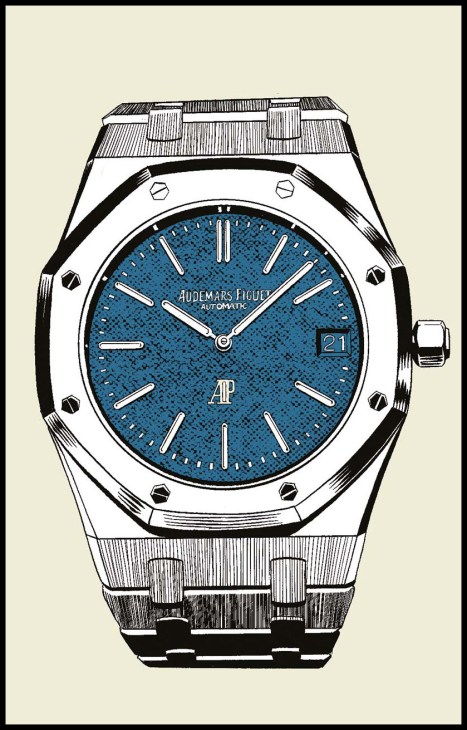
The 2026 fair brought together 65 watch brands – up from 60 last year. Perhaps the most anticipated of the additional entrants was Audemars Piguet, which returned to the fair after a six-year hiatus. Its new gold, turquoise and tiger’s eye Établisseurs Galets is part of its Atelier des Établisseurs initiative, introduced at Watches and Wonders.
The project is aiming to preserve the rare craft techniques of the Vallée de Joux, Switzerland’s famous watchmaking region.
Zenith, a lesser-known maison of the LVMH stable, is also gaining ground thanks to its illustrious history and ability to offer a mix of archive reissues and contemporary models, with strong ties to the design world. At this year’s salon, the house released its second GFJ, a watch that pays homage to Zenith founder Georges Favre-Jacot, with an 18k-gold case, bloodstone dial and guilloche pattern that nods to the brickwork of its manufacturing facility in Unesco-listed Le Locle, Switzerland. Romain Marietta, the chief product officer at Zenith, has great confidence in the maison’s direction. “Clients are becoming much more selective,” he says. “There’s less patience for products that feel overdesigned or overexplained. When a product is well designed, proportioned and coherent, you feel it straight away.”
Collectors and novices alike also kept a close eye on Vacheron Constantin and its new ultra-thin flagship Overseas model – a highlight of the salon, housing the maison’s new ultra-thin calibre 2550 movement. “Sport-elegant watches continue to appeal,” says Christian Selmoni, the heritage director of Vacheron Constantin and one of the fair’s best dressers, always standing out in his brightly coloured suits.
Collectors who are interested in names that are more under-the-radar headed for Czapek & Cie, a heritage brand revived by its CEO and co-founder Xavier de Roquemaurel in 2015. When asked about the house’s new Antarctique flying tourbillon titanium model, De Roquemaurel – a former marketing executive at Zegna and Louis Vuitton – says, “There’s no bezel, it’s extremely thin and the case is like a globe. There’s a beautiful symmetry with the alignment of the barrel at 12 o’clock, slender bridge and a flying tourbillon complication at the bottom. The trompe l’oeil effect on the dial gives the impression of a black hole – it sounds extreme but it’s too elegant to be that.”
Show of imagination
Unique and limited-edition watches highlight the industry’s ingenuity in difficult times, says watch specialist Kim Parker.
The watch community gathers at Geneva’s Palexpo exhibition centre to take in brands’ latest feats of ingenuity but also to sit around the lunch table and discuss the most important issues facing the industry.
Last year, in between marvelling at Rolex’s latest Land Dweller, watch experts were deep in discussion about US tariffs on Switzerland and the broader slowdown in luxury consumption. In 2026, discussions are no doubt continuing to revolve around the latest geopolitical turmoil, the skyrocketing prices of precious metals and the longer-term effects of the war in Iran. But the industry has proven its resilience time and again, always finding ways to safeguard the watchmaking craft.
This year is no exception: there are several milestones worth marking, including the centenary of the Tudor brand and Rolex’s groundbreaking Oyster case. “Whatever Rolex reveals is always worth celebrating because it sets the tone for the whole show,” says luxury editor Ming Liu. “The market is heading towards premiumisation, so I’m also looking forward to seeing all the gem-set, limited-edition pieces that houses such as Cartier will present.”
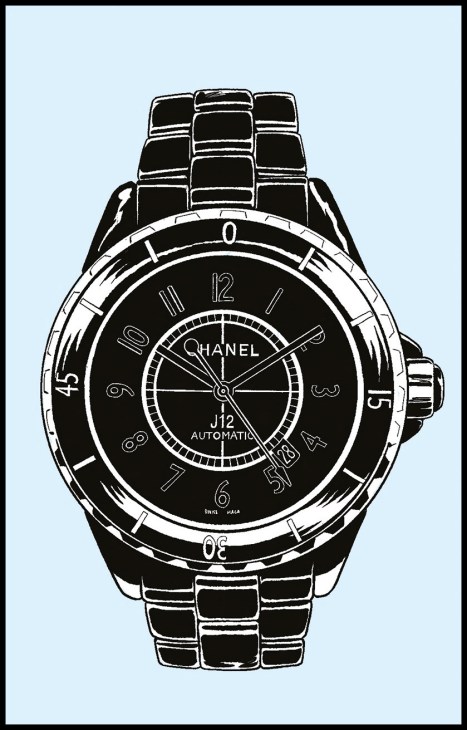
Van Cleef & Arpels always revels in ornate dials featuring pairs of kissing lovers or dancing flowers, minute gestures narrating poetry and emotion rather than simply the time. At Chanel, there was both sleek ceramic models that nod to its founder’s abiding love of sports (especially boating) and exquisitely detailed novelties that riff on couture, featuring ribbons, scissors, bows and, sometimes, even miniature versions of Coco herself. Keen riders made a beeline for Jaeger-LeCoultre, which produces novelties that often nod to the brand’s equestrian heritage, using ancient handcrafts such as wood marquetry, engraving or miniature painting.
These one-of-a-kind timepieces are wearable reminders that, come what may, the show does indeed go on and that human endeavour in a digital age is always worth celebrating.
Red signal
Every year at Watches and Wonders, a defining colour trend takes hold. In 2025, it was deep, oceanic blues. For 2026, however, the industry embraced bold, energetic reds, echoing fashion’s wider return to vibrant palettes. Leading maisons, including Vacheron Constantin, Chanel, IWC Schaffhausen and Montblanc, introduced timepieces with striking red dials, signalling a confident new direction.
Insights from Watches and Wonders 2026 – the world’s leading watch fair
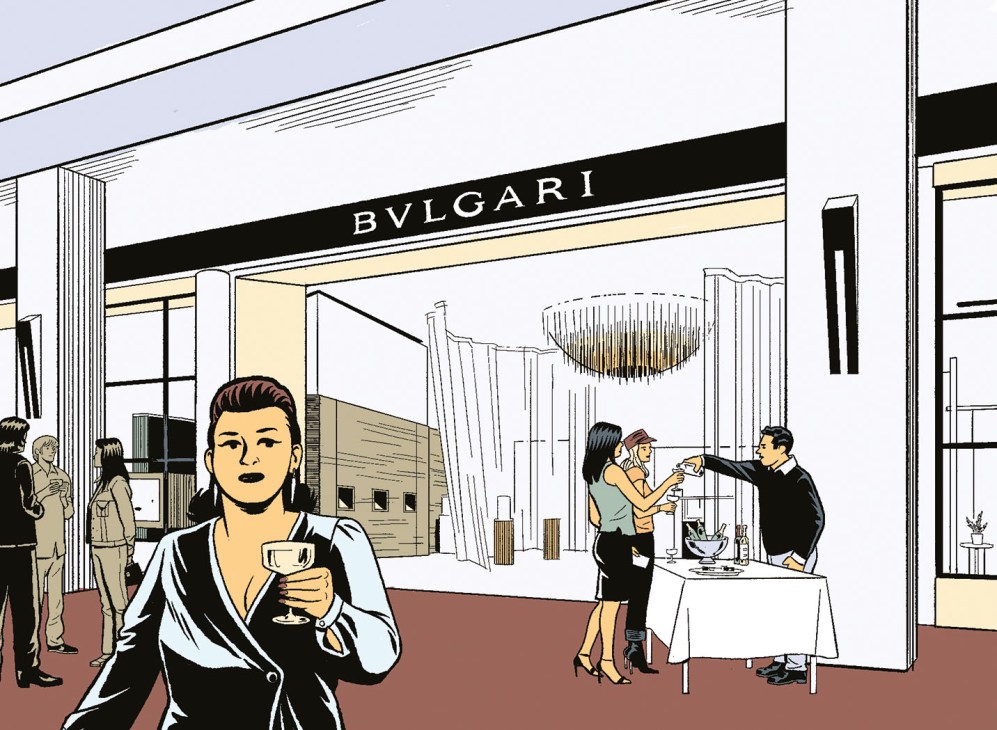
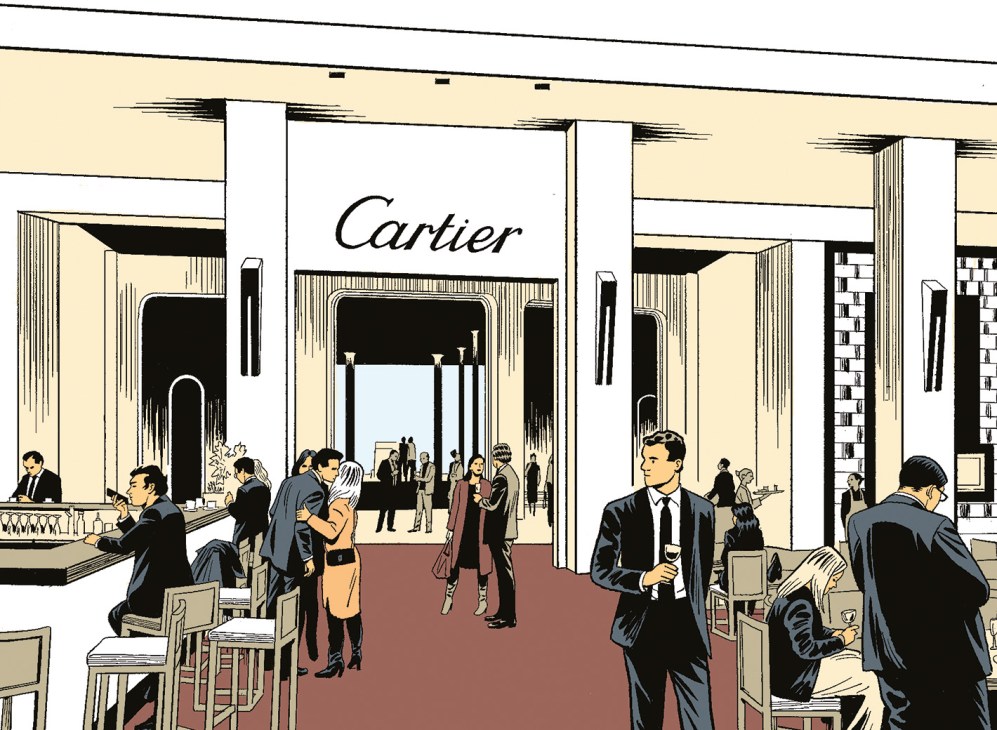
Since the demise of the Baselworld watch and jewellery fair, Geneva’s Watches and Wonders – the brainchild of luxury conglomerate Richemont – has become the industry’s most significant trade show. The fair has gathered momentum and the 2026 edition is continuing this trend.
With a record-breaking turnout of nearly 60,000 visitors (up from last year’s 55,000), 6,000 retailers and 50,000 overnight stays, this marks the salon’s most significant edition to date. Once a private industry event reserved for press and collectors, it has been expanding its public engagement, with ticketed access available since 2022. Organisers have reported a 15 per cent increase in ticket sales this year, a quarter of which were sold to under-25s, showing that high-end watchmaking is engaging the next generation. There were also significant takeover projects in Geneva city centre, including a watchmaking village and a partnership with Montreux Jazz Club.
“Even if geopolitical developments might be denting the limited revival we have seen so far, Richemont’s recent results hinted at 7 per cent organic growth for the specialist watchmakers’ division in the last quarter of 2025,” says Luca Solca, the managing director of global luxury goods at equity-research firm Bernstein SG. Watches are again doing better than expected, beating categories such as fashion during the challenging economic times. But Solca advises that the war in the Middle East could have a significant impact on the performance of this year’s show.
What’s on trend
This year’s models
The best in redesigns, skeletonised dials, calendar watches and more.
Like seasonal fashion, horology follows the beat of the times – and this edition of Watches and Wonders showcases a range of key trends.
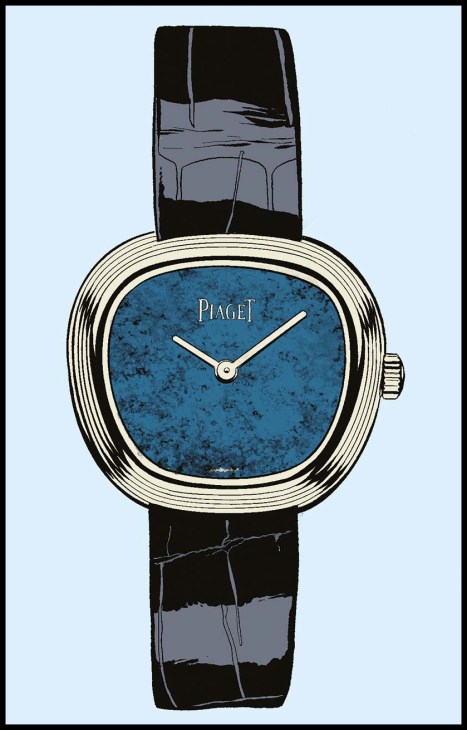
Vintage designs are always popular, with the 1960s and 1970s dominating in recent years. With its seductive shape, Piaget’s new cocktail hour Sixties is a fine example, while subtle hints of 1980s and 1990s styling are also creeping in, with softer lines and sleeker bracelet designs.
But some brands are looking ahead, such as IWC Schaffhausen, which debuts its contemporary Pilot’s Ventura Vertical Drive, in a departure from its classic codes. Parmigiani Fleurier is redesigning the chronograph, eliminating traditional subdials in favour of multiple hands.
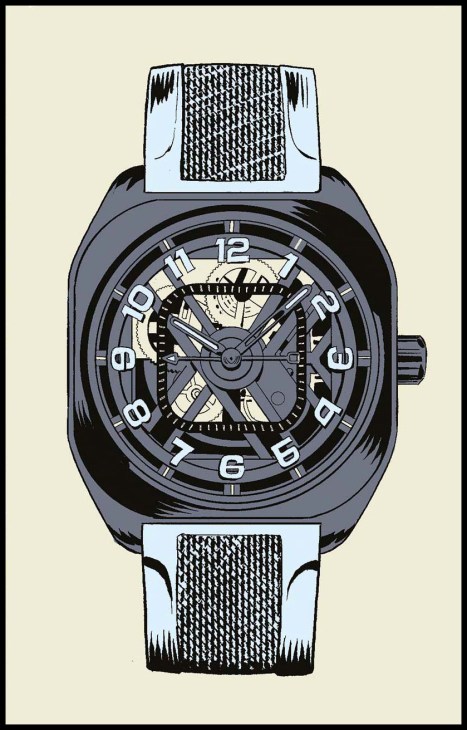
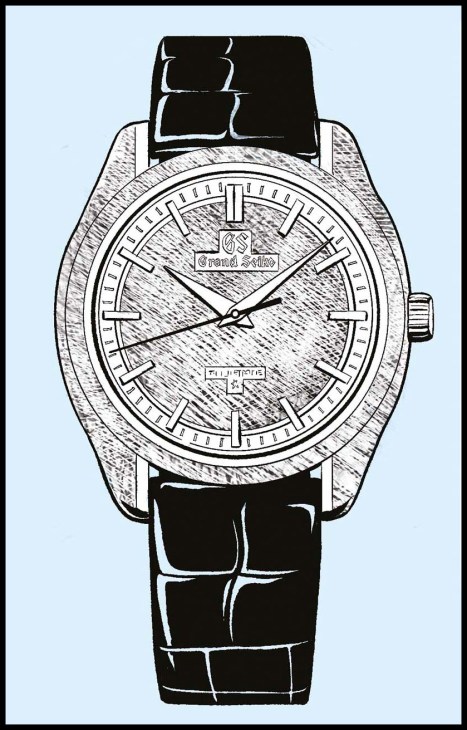
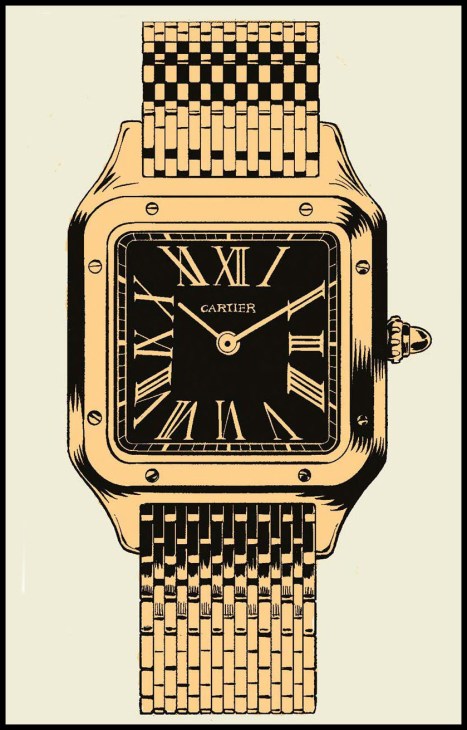
Brands are dialling up material alchemy and artisanal techniques. Exotic hardstones feature – take Cartier’s yellow-gold and obsidian Santos-Dumont tank or Piaget’s use of blue quartz. Grand Seiko shows its skill for precision metalworking with its Tateshina Otaki waterfall edition, with a platinum case and hand-engraved dial. Skeletonised dials are draws: Hermès, Panerai, Jaeger-LeCoultre and Tag Heuer all have reimagined signature models.
Calendar watches are a big deal too: Patek Philippe’s Annual Calendar and Audemars Piguet’s openwork perpetual calendars are all made with highly complex movements.
Q&A
Matthieu Humair
CEO, Watches and Wonders

What were your expectations for Watches and Wonders 2026?
This year is highlighted by the arrival of Audemars Piguet and 10 new brands. It’s great to have them at an event that’s just becoming bigger and bigger, while maintaining the level of service that makes the DNA of the salon.
Are there any new initiatives that are exciting you this year?
We are very excited about our new partnership with the Montreux Jazz Club in Geneva city centre, which showcases emerging talents from the international music scene, as well as new watchmaking talent. We also have the Watchmaking Village in town – with the Swiss Watch Industry Employers’ Association – to showcase professional opportunities and career paths.
A Danish icon returns: Inside Urban Jürgensen’s comeback to the watchmaking scene
Urban Jürgensen is not a name that readily comes up in conversations about the world’s great watchmakers. Outside specialist collecting circles, it has long lingered in relative obscurity – an outlier with a history that stretches back more than 250 years.
Now, a new ownership team is betting that this is precisely its strength. Relaunched in Los Angeles with a trio of high-end timepieces, the Danish brand is being repositioned at the top of contemporary watchmaking. “The high and low ends of the market are where the most interesting things are happening,” says CEO Alex Rosenfield, who runs the business alongside his father, Andrew, the Guggenheim Partners executive who acquired the brand in 2021. “We’re comfortable operating at that extreme.”
The relaunch centres on three limited-edition timepieces developed with master watchmaker Kari Voutilainen, who is widely regarded as one of the finest practitioners in the field. The most complex model is limited to 75 pieces and priced at CHF 368,000 (€400,000), placing the brand among the most expensive names in contemporary watchmaking.
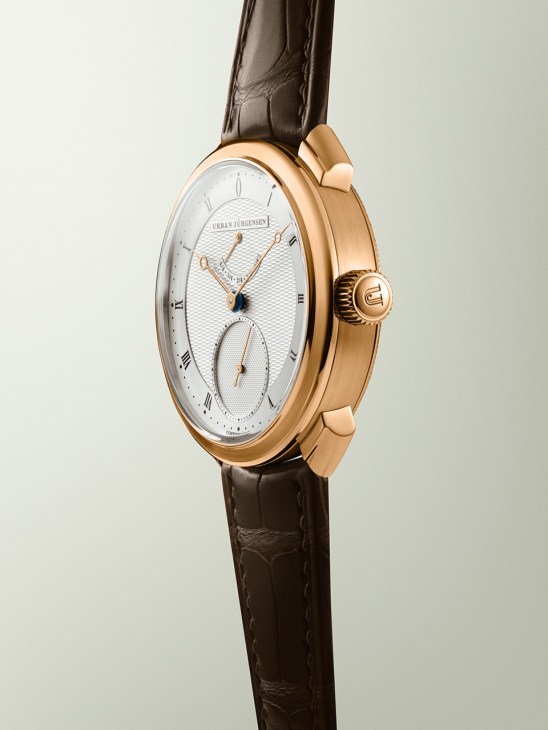
Rosenfield is clear about the strategy. “Companies that make things to the absolute highest standard, with love and care and the inherent limitations that kind of making requires, will always have an audience,” he says. That belief underpins the timing of the relaunch. Although the company was acquired in 2021, the new owners resisted moving too quickly. “Our view was always that when it is ready is when we will do it,” says Rosenfield.
If the business strategy is contemporary, the foundations are anything but. Urban Jürgensen’s history goes back to 18th-century Denmark, when the country relied on imported timepieces. That changed with Jürgen Jürgensen, who trained in Le Locle before returning to Copenhagen to set up Denmark’s first watchmaking workshop in 1773, producing thousands of timepieces and becoming royal clockmaker to the Danish court.
His son, Urban, further elevated the name. His marine chronometers supported the Danish navy, while his pocket watches were prized by the royal family. The business remained in family hands for generations but, by the early 20th century, had drifted away and gradually lost prominence. While contemporaries such as Abraham-Louis Breguet endured, Urban Jürgensen faded from view.
Interest was revived in 1976, when the Danish Clock and Watchmakers’ Guild marked the bicentenary of Urban’s birth. Watchmakers Peter Baumberger and Derek Pratt acquired the name and set about restoring it. From the 1980s onwards, the brand rebuilt its reputation, introducing its first wristwatches. A pivotal moment came in 1996 with the arrival of Voutilainen, who later completed Pratt’s Oval Pocket Watch, a decades-long project that sold at auction in 2006 for CHF3.7m. Even so, stability proved elusive. A private-equity consortium acquired the brand in 2014, before Rosenfields’ takeover marked a more decisive reset.
Working alongside Voutilainen, the Rosenfields planned the company’s relaunch with three distinct models aimed at collectors: UJ-1, UJ-2 and UJ-3. The UJ-1 reinterprets Pratt’s Oval Pocket Watch in wristwatch form with a one-minute flying tourbillon. The UJ-2 is a three-hand watch with a double-wheel natural escapement, and the UJ-3 adds a perpetual calendar and instantaneous moonphase.
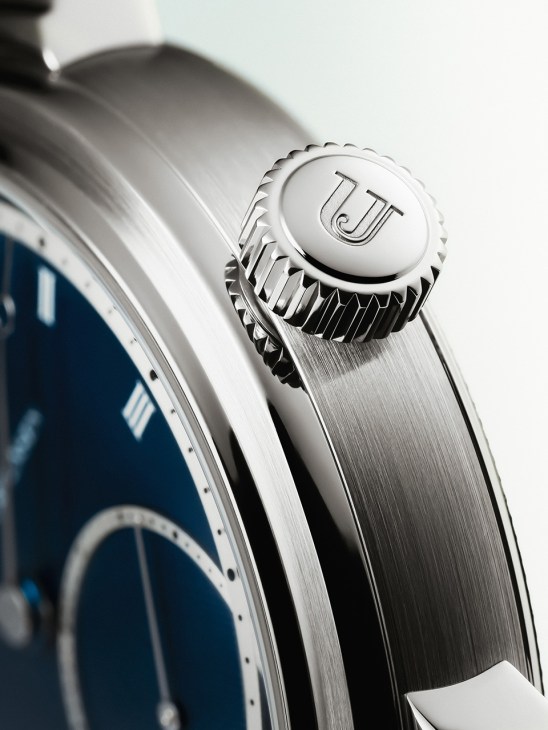
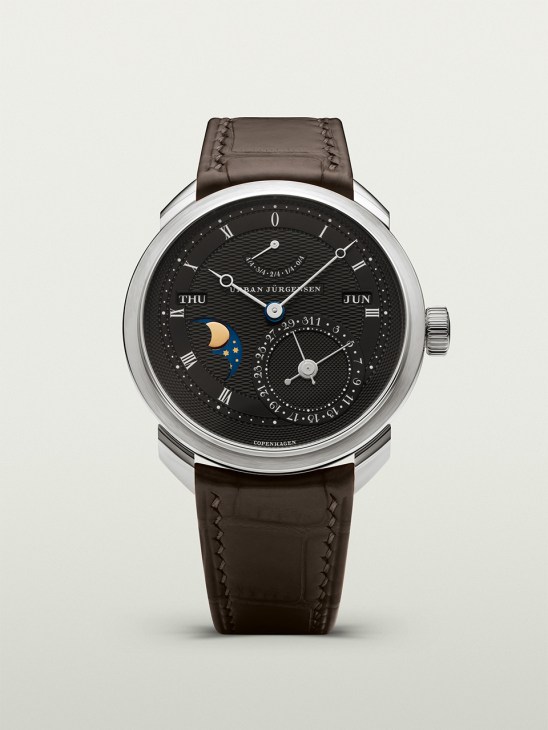
For Rosenfield, the product alone is not enough. “The product matters but an emotional connection is what gets you there in the long run,” he says, adding that the brand is aiming to establish a more cultural presence. The same logic applies to distribution. Urban Jürgensen is currently selling directly to clients through private appointments, with plans for showrooms in Geneva and New York. Rosenfield is also exploring ways to take the watches on the road. “We want to do trunk shows that aren’t like trunk shows,” he says.
That openness is underpinned by a slower approach to production. In Biel, the workshop prioritises precision over scale: watch decorator Stéphane Bastide spends up to 20 hours polishing the screws in a single watch – including heads that remain invisible once assembled. For Voutilainen, this reflects something more fundamental than technique. The workshop, he says, is defined as much by “horological savoir-être” as by technical skill. “There’s harmony inside but we must also be brave enough to break the rules.”
urbanjurgensen.com
How investing in staff wellbeing generated higher revenue at the Maldives’ Patina Hotels & Resorts
Where do hotel staff go after their shift? Too often, it’s a cramped, forgotten corner at the back of a resort, where fluorescent-lit quarters suggest how little thought has gone into their wellbeing. But some high-end hospitality players are looking to change that. “We ask our teams to create transformative experiences but they’re living in conditions that we would never show our guests,” says Evan Kwee, the vice-chairman of Singapore-headquartered Capella Hotel Group. “That contradiction troubled us.”
What is often at the heart of the decision to focus on staff’s quality of life is the ability to retain talent. Hospitality businesses have a notoriously high turnover with the annual rate in the US estimated at 70 per cent. As the mastermind of Capella’s Patina Hotels in the Maldives, which focus on wellness and renewal, Kwee embraced the opportunity to practise what he preached with the creation of Fari Campus in collaboration with URBNarc founder Gaurang Khemka. Based on a separate island in the Maldives, Fari Campus caters to employees of Patina and The Ritz-Carlton’s neighbouring outposts. “Hoteliers are realising that investing in staff wellbeing is about more than just goodwill,” says Dave Moore, the global CEO of WATG, the Hawaii-founded hospitality-design firm behind the Fari Islands’ master plan.
The benefits of Fari Campus are clear: at 13.3 per cent, Patina Maldives’ annual staff turnover is lower than all its competitors. A 15-minute boat ride away from their workplaces, staff have a clear distinction between work and leisure with a full-sized football field, volleyball courts, two restaurants, a private staff beach and even more at their disposal. “The staff feel like they’re really at home after they leave the [hotel] island,” says general manager Anthony Gill. “They know that they are not going to be called back; no guest or senior manager will be disturbing them.” Importantly, family members are granted access during certain seasons – a factor that is often overlooked in a demanding and anti-social industry.
The new standard set by brands such as Capella means that businesses in the sector will have to think more carefully about design beyond the guest quarters. “Engaged staff deliver better service,” says Moore. “This drives repeat guest visits, loyalty and, ultimately, higher revenue.”
Read more about workplaces that centre employee wellbeing:
‘The perfect kitchen is where there is no fear.’ Seven global chefs share their tips for running a successful restaurant
Five simple ways to seed change in your neighbourhood for greener cities
1.
Make the most of overlooked spaces
Have a balcony? Then create a bosco verticale (vertical forest). Cities are full of unlikely growing spots. In Paris, car parks have been turned into mushroom farms. In Tokyo, herbs and small crops grow inside repurposed office spaces; the main lobby of recruitment firm Pasona’s headquarters even contains a miniature rice paddy. Rethink where food can grow and forgotten corners of the city will bloom.
2.
Encourage biodiversity
“More habitats mean more species – and that means more biodiversity,” says Delamain. So make smart interventions, from building wet environments using diverted rainwater to creating mounds so that there are higher and lower areas. Complex soil structures, meanwhile, can improve water absorption and help to offset flooding.

3.
Plant an orchard
If your neighbourhood has a patch of land going spare, consider planting a community orchard. Fruit trees are generous; they provide baskets of apples, shade in the summer and a fun excuse for harvest gatherings. They’re also useful in terms of bolstering a nation’s food resilience and sovereignty. Bringing people together is also a good argument against automation. “If you can press a button and it all gets watered, you don’t really get to know and invest in your garden,” says Delamain.
4.
Think longer term
Children are naturally curious and surprisingly good gardeners. Every school should have a small jungle of pots and plants for them to explore. Give them a patch of soil and they’ll happily dig in. “Before you know it, you will have converted a whole generation,” says Delamain. The same goes for building community. A small act of gardening could have long-term effects. “I just don’t think anybody could leave a community gardening club without feeling a bit better about life,” says Delamain. Join a club, get your hands in the soil and trade a few tips over compost. It’s a heartwarming pastime – and, according to Delamain, “gardening clubs are full of the nicest people on the planet”.

5.
Create a microclimate
As our planet warms, consider planting trees in arid places to transform once inhospitable dry zones into lush oases. Even in subtropical megacities, you can still create the coolest place in town. Plus, it means you’ll have somewhere to lie down. “We’re designed to be in a natural environment, but now live in this very concrete world,” she says. It can be on the grass or on a bench, simply somewhere to properly immerse yourself. Sprawl in the middle of pots and planters, look at the canopy of trees, listen to the blackbird singing, sunbathe and enjoy your garden.
Read next:
Inside Paris’s secret gardens: How rooftop re-wilding projects are turning the city green
The commute: Travel into the city with Ingka Group’s creative director Marcus Engman
It’s 06.45 when Marcus Engman leaves his home near Helsingborg for his commute to Malmö. As the creative director of Ikea’s retailer, Ingka Group, Engman influences lives and living spaces around the world – and the ideas hatched on his scenic journey can shape his work, which is sold in 63 countries. Today we join him for the ride, stopping at his design studio, Skewed, before hopping on a train to Ikea’s Hubhult office.


Tell us about your commute. Can we set our watch by your movements?
I don’t stick to routines but the older I get, the more I have become a morning person. I live in the countryside by the sea and share a car, an electric BMW IX1, with my wife. When I’m going to Malmö, I leave before 07.00.
What’s your go-to work outfit?
Basics from Margaret Howell, Stone Island and Singular Society and some old Tricker’s footwear. I have a well-worn black Billingham bag that has been on a couple of tours around the world. Inside is a Leica Q3 28mm. I’m a camera geek.
We’re peckish – where can we stop for coffee and a bite on the way?
I like Solde Kaferosteri & Kafebar [on Regementsgatan]. It has the best cofee in Malmö.


What do you listen to when you’re on the move?
Swedish radio – but at home, a lot of jazz. I like Indian singer-songwriter Asha Puthli, who created music with one of my all-time favourites, Ornette Coleman.
Now we’re at Triangeln station in central Malmö, heading to Hyllie, near Ikea’s Hubhult office. How do you like train travel?
The overall look and feel of the train – the choice of materials – are, at best, practical. It would be fun to create an environment that invites people to socialise more: to get ready for a hectic day or wind down after one.
Comment
Sometimes the best inspiration comes from being out and about, noticing small details that could make a big difference to people’s quality of life – even better if they can be paired with stylish, practical design.
The delightful world of three multi-brand boutiques keeping independent, curated retail alive
Multi-brand boutiques are an increasingly rare sight these days, as luxury houses opt for tighter control over everything from merchandising to storytelling. Independent retailers have also grown more cautious about buying seasonal stock in a market where competition for customers’ attention has never been fiercer. Whether in Paris, Bangkok or New York, it’s becoming unusual to stumble upon a great shop that offers a mix of labels – some familiar and others less so. In their place, brand-owned flagships have multiplied. But along the way, the thrill of discovery has been lost. When Paris’s Colette closed its doors, only to be replaced by a single-brand shop, it marked more than the end of a beloved retail destination – it signalled a broader shift towards a more homogenised experience.
Yet a handful of retailers continue to defy this trend. Committed to the art of selection, they trust their instincts, invest in emerging talent and build spaces that reflect a distinct point of view. As shoppers seek more meaningful, in-person experiences, these boutiques have become destinations in their own right: places to not only find exceptional clothing but also to engage in conversation, linger over an aperitivo and enjoy carefully considered interiors. From established names in Berlin and New York to a fast-growing venture redefining menswear in Canada, we speak to the founders who are keeping the spirit of the multi-brand boutique alive.
1.
Murkudis
Berlin


In Berlin, Andreas Murkudis is more like a cultural institution than a clothes shop. Sure, the retailer, which occupies a former printworks in the Tiergarten district, stocks an unparalleled selection of fashion brands, from Dries Van Noten and Yohji Yamamoto to Durazzi, Carven and Hodakova, but its broader relevance stems from the regular events and exhibitions that take place in-store. These might be a modular-furniture showcase or a Carsten Nicolai art installation, and reliably draw a bigger and sharper crowd than most galleries.
Murkudis will mark the 25th anniversary of his namesake business next year and is currently lining up a yearlong celebration. “At the moment, so many retail stores are closing,” he says. “It’s important for us to do even more.” He plans to partner with some of his favourite brands to introduce a small, exclusive product capsule each week. Ideas include a sweater in 10 different colours, a special model of Ludwig Reiter shoes and a reissue of an archival Felisi bag. This year Murkudis is also throwing the fifth edition of the Charity Market, an outdoor fair selling donated or deadstock items that typically raises more than €100,000 for local charities. “Every brand we ask will give something,” he says.
In June, also keep an eye out for Murkudis’s first pop-up shop in Paris, which will be selling an edit of smaller Japanese brands – a lifelong dream of the seasoned retailer. While Murkudis might have global ambitions, shoppers still have to head to Potsdamer Strasse to browse the full selection. After almost a quarter of a century in the business, Murkudis still doesn’t see an online shop as a necessity.
andreasmurkudis.com
Andreas Murkudis’s shopping list
1.
Pillings women’s embroidered cardigan
“This cardigan is completely handmade. The embroidered flowers are ribbons in different colours.”
2.
Dressedundressed suit
“This is one of my favourite Japanese brands: suits, shirts and T-shirts of the highest quality. Each collection is just six pieces and all are unisex.”
3.
Norlha scarf
“Each of these scarves is made from 100 per cent yak wool from Tibet.”
2.
Neighbour
Vancouver


Fifteen years ago, Saager Dilawri quit his fashion job in New York and decided to fulfil a dream of opening his own menswear shop. At the age of 26, he moved to Vancouver, leased a courtyard space in the Gastown district and opened Neighbour. “Some friends gave me clothes to sell and then I sat there for two years in a fishbowl,” he says. “People walked past and saw a lonely, confused guy.”
It might have taken a while for Vancouverites to catch on but today Neighbour – which is run by Dilawri and his wife, Karyna Schultz – is a growing fashion empire, known for introducing some of the most in-demand, artisanal labels to the Canadian market.
Neighbour has since quadrupled in size, with standalone womenswear and home shops all within walking distance of each other. When a three-storey retail space became free next to the women’s boutique on West Cordova Street, Dilawri snapped it up. In the renovated space, a warm interior with wooden beams, exposed brick and matte aluminium details forms the setting for about 40 brands, many of which are exclusive to the boutique. Neighbour introduced Our Legacy and Norse Projects to Vancouver early on and stocks Japanese niche brands such as Maatee & Sons and Gorsch alongside local stalwarts such as Veilance. Dilawri gravitates towards unfussy clothes made with materials that improve with age. “I’m really into anything that feels better after a few years of wearing it,” he says. “It makes it less precious.”
Today, Neighbour ranks among Canada’s most influential fashion retailers. Does Dilawri have any wisdom to impart? “If you’re going to run an independent business, it has to come from within,” he says. “We are really into everything that we sell – and that makes it easy.”
shopneighbour.com
Saager Dilawri’s shopping list
1.
Unkruid gardening trousers in kelsch cloth
“These are not what I’d typically wear – they have a brown-white checkered pattern and a drawstring waist – but they actually work with a lot of what I own. The fabric is a kelsch cloth made by a small mill in Alsace.”
2.
Salon C Lundman double-collared shirt
“This shirt has a double collar that can be buttoned up or left undone. It’s a simple, well-made shirt but I like this fun detail.”
3.
Comoli zip cardigan
“Right now, I’m into longer cardigans that are closer to a shirt silhouette than a chunky sweater. This Comoli piece is a lightweight V-neck cardigan with a zip closure.”
3.
La Garçonne
New York


La Garçonne is nestled in quiet Greenwich Street in Tribeca. There’s barely any signage or products displayed in the windows, yet for the past decade the multi-brand boutique has become an essential stop for shoppers looking for collectible pieces. New Yorkers, who know the shop staff by name, drop by almost weekly, while those passing through the city make the trip to Tribeca to immerse themselves in co-founder Kris Kim’s elegant world – an all-white space with soft lighting and customised wooden cabinetry filled with clothing and accessories by houses including Dries Van Noten and The Row, as well as independents such as Tokyo-based Minä Perhonen or Tyrolean label Bergfabel.
“We have a pretty wide selection of The Row but it’s our interpretation – you’ll never find very dressy pieces,” says Kim. “I like to stay with brands, even as the market changes. Lemaire is another mainstay for us; I remember having appointments with Christophe [Lemaire] when he was on his own in a tiny showroom. Sometimes it’s just about finding practical pieces customers need; at other times it’s about discovery and giving them something to think about.”
While other fashion capitals are seeing their independent boutiques close, La Garçonne has established itself as an institution in Tribeca, opening a dedicated menswear store last year as well as an outpost in Amagansett in Long Island. Achieving longevity comes down to trusting your taste and committing to serving the customer, rather than the brands, says Kim. “Traditionally in retail, there was more focus on getting the vision right or having the right looks but when you have a shop you really have to know everything about your customer, right down to their names,” she adds.
As her business grows, Kim has found herself experimenting more. “I’ve grown up with the shop and I think it gets more fun as I get older,” she says, pointing to beaded necklaces by Greek jeweller Ileana Makri and colourful socks by Italian label Maria La Rosa. “It’s important to offer customers some colour and pattern.”
Kim says that shops need to “keep up with the times” and she’s always keeping an eye on what her teenage children are wearing or researching the trends that are shaping youth culture. “We’re at a moment where we’re craving things that are old and have stories [behind them],” she says, adding that no matter the direction fashion takes, she makes sure that any item she picks up fits her own taste and identity. “It’s a commitment to run your own boutique. I’ve been asking this from the beginning, ‘Why can’t a shop be a beautiful brand in itself? A space that you want to walk into, to experience and discover?’”
lagarconne.com