Issues
Keep cool
Running up from the sea, dissecting the town, is Paseo Mallorca, the smartest avenue in Palma, Mallorca’s capital, where wealthy residents have rambling old-school apartments. There was once an ancient wall here but when most of it was removed on this flank of the then- bursting-at-the-seams city in the late 19th century, it made space for new, desirable housing.
Today the paseo has a water course running down its centre, a rather busy road on the western side of this stream, a more pedestrian and al fresco dining vibe on the other. With the bridges that skip across the water, it’s picturesque, if a little architecturally strait-laced.
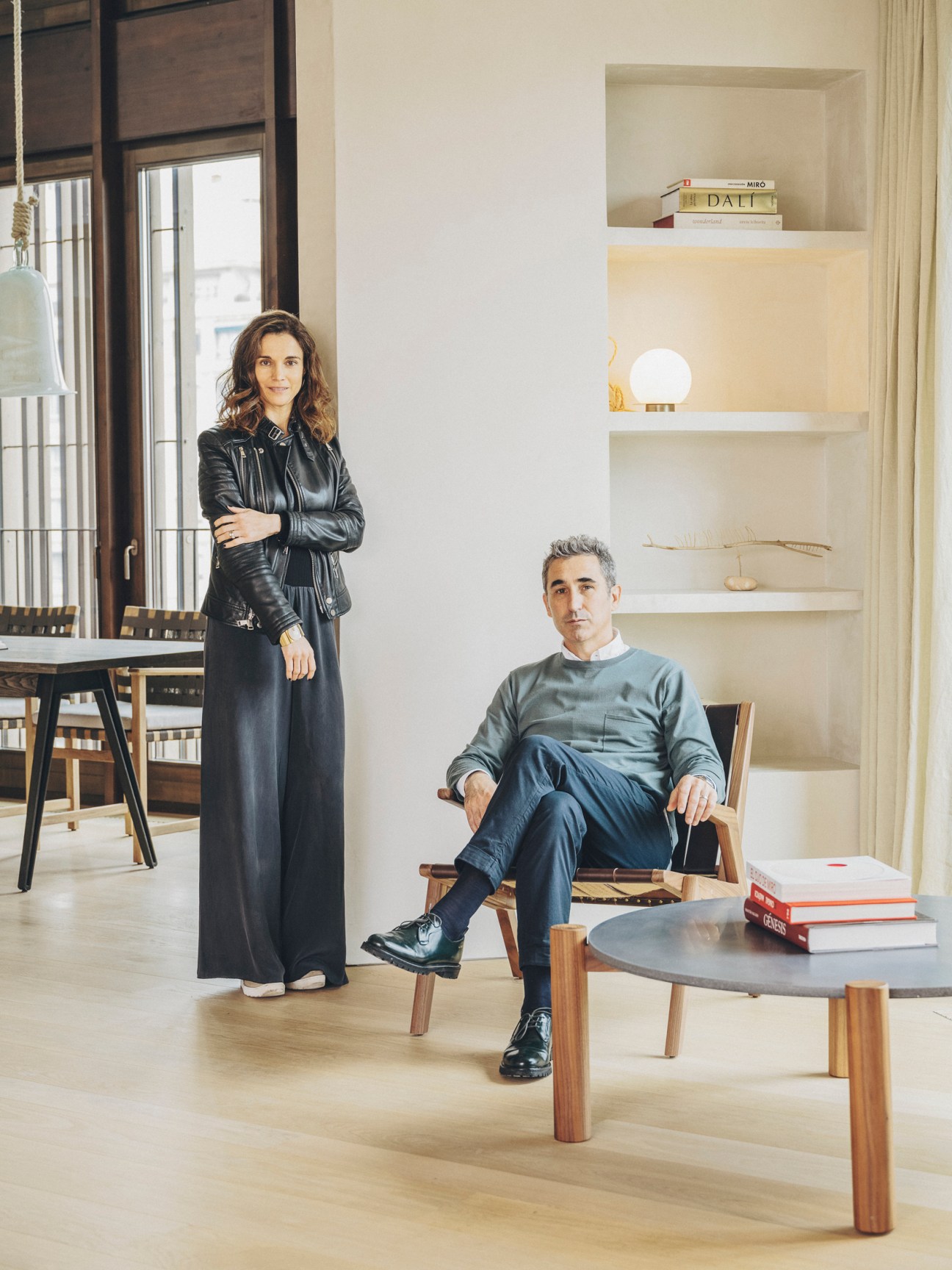
But now a new 10-apartment block – Paseo Mallorca 15 – has been completed here by local architects Ohlab and it has the potential to shake things up; be a cooler guest at the urban party. Ohlab, run by husband-and-wife team Jaime Oliver and Paloma Hernaiz, as made a name for itself with a series of buildings that sit at ease with their environment, limit the need for air-conditioning and heating, and use modest tactile materials and muted colour palettes in extraordinary ways. The outcomes of this considered approach have won numerous plaudits: a compact home, the MM House, that they made in 2016, when starting their practice, for a retired teacher and doctor has already been given listed status by the island’s government.
Mallorca, like many parts of the Mediterranean, is taking a hit from global warming. This year the spring was oddly cold but then May brought a blast of heat of an intensity that would be more normal in August. So wise architects and clients know that not only are shade and cooler inner sanctums needed but buildings should be designed to be less energy-hungry, to do their part to fix this problem and cope with seasonal uncertainties.
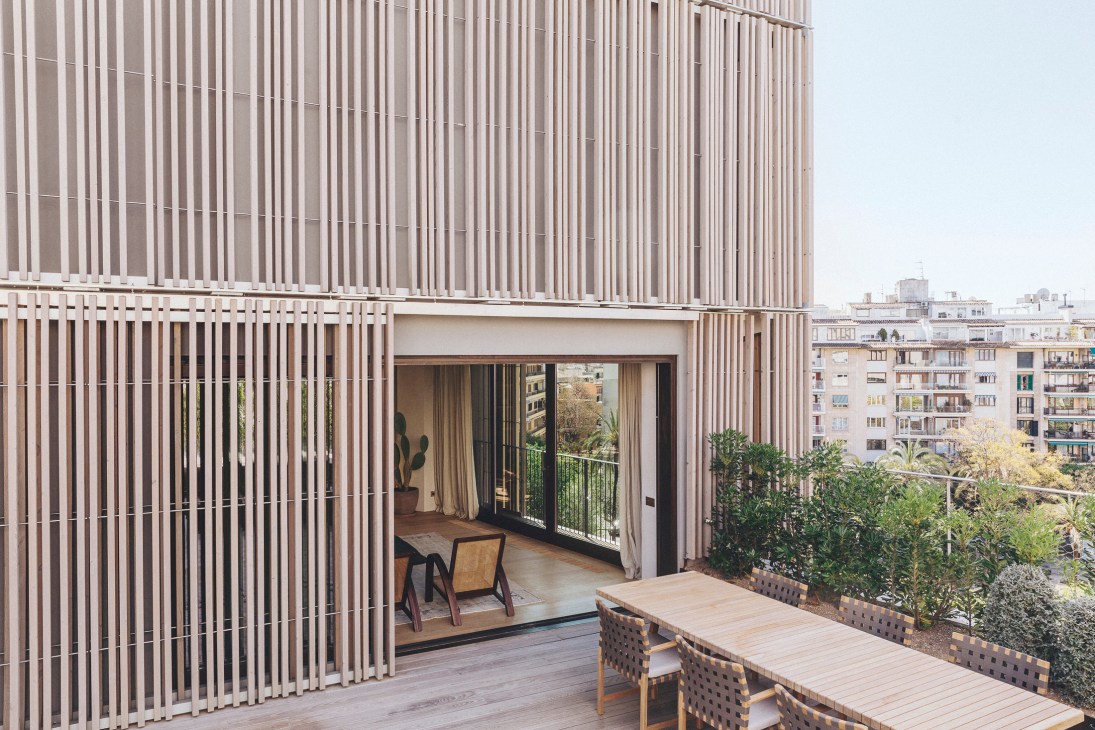
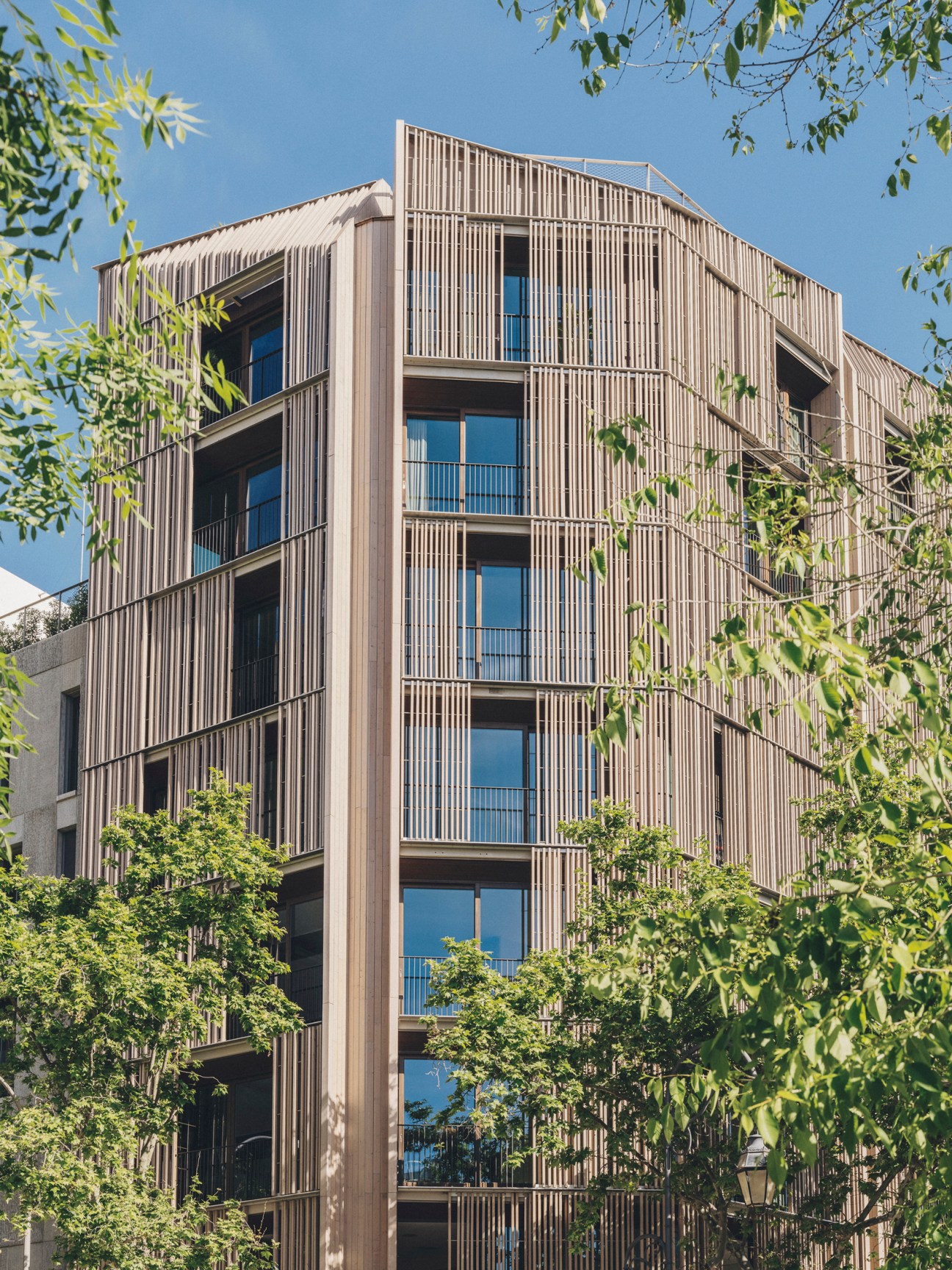
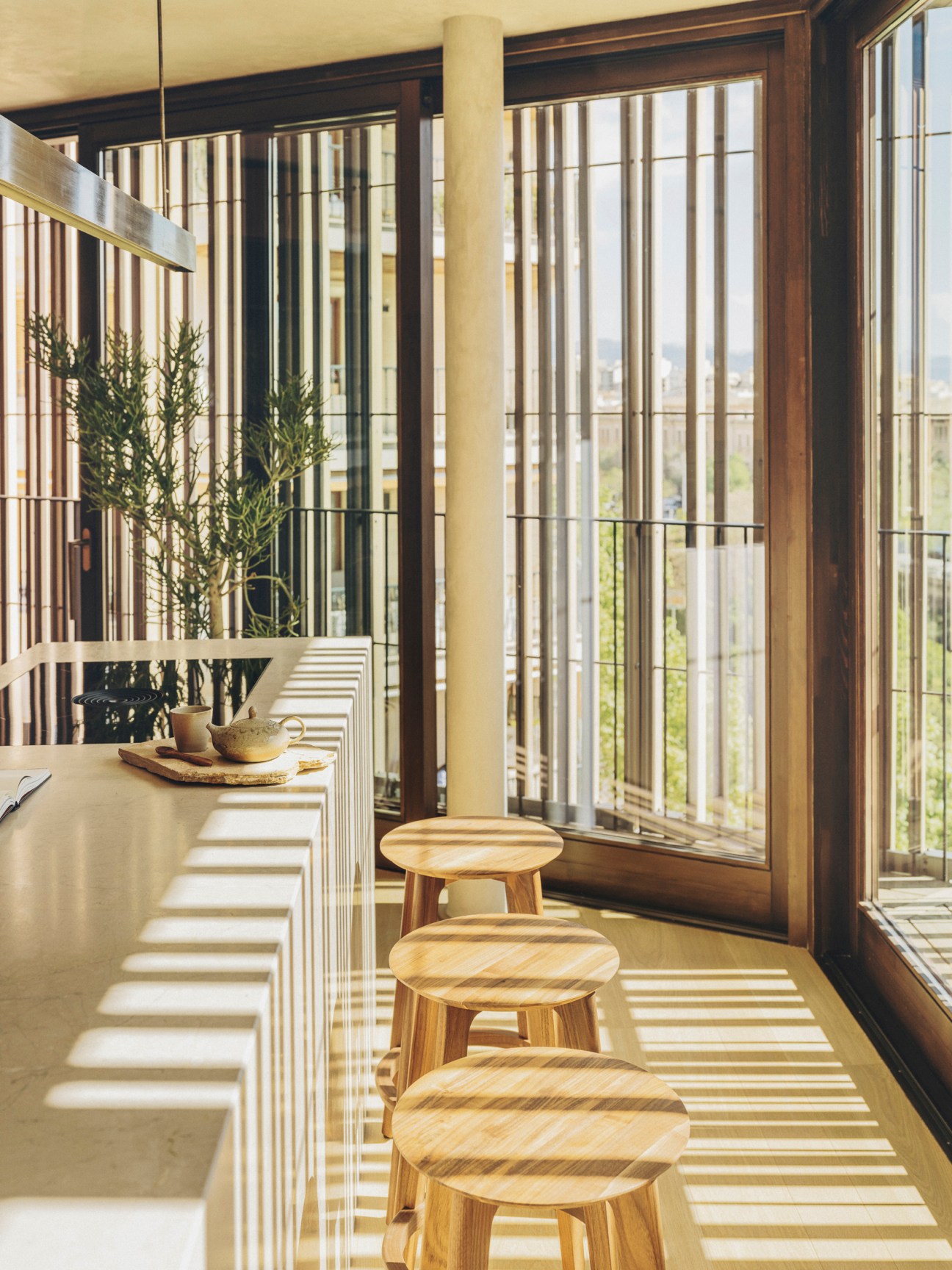
Like that small MM House, Paseo Mallorca 15 has been built to meet Passivhaus standards; a set of criteria that can lower energy consumption by up to 90 per cent. One of the ways this has been achieved here is with the addition of sliding timber-slatted panels – inspired by those seen on island homes – that help slice and soften even the harshest summer sun and give the building a striking and dynamic façade.
“We feel a responsibility to use less energy and to convince clients that this is important,” says Oliver. “When you live on an island, you are even more aware of the scarcity of resources and the need to protect them.”
Hernaiz stresses that being sustainable does not mean sacrificing beauty; over the past decade they have become more radical in their choices of materials and been clearer about the benefits of using products that help cut energy consumption. “And we learn more with every project,” she adds.
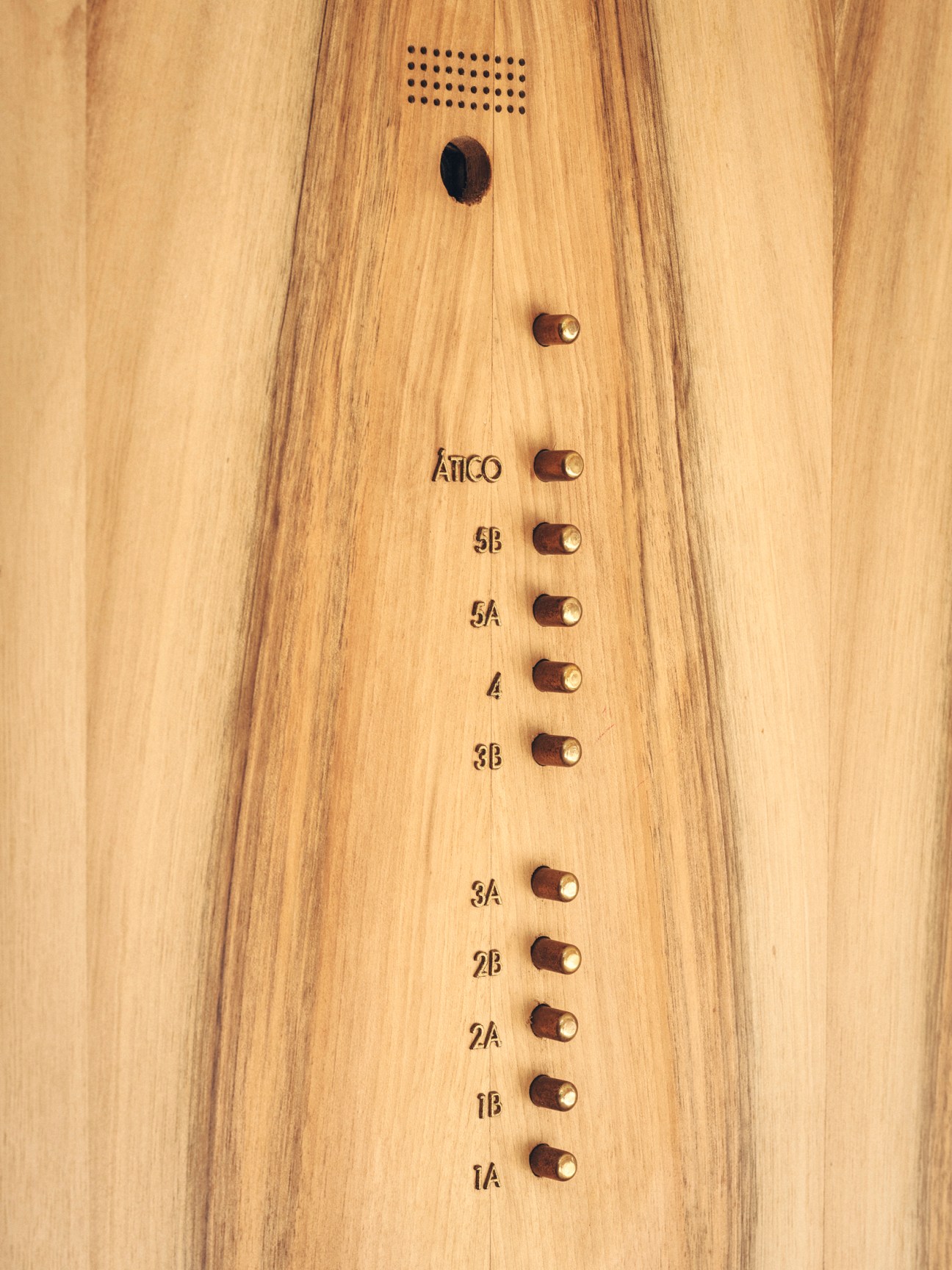
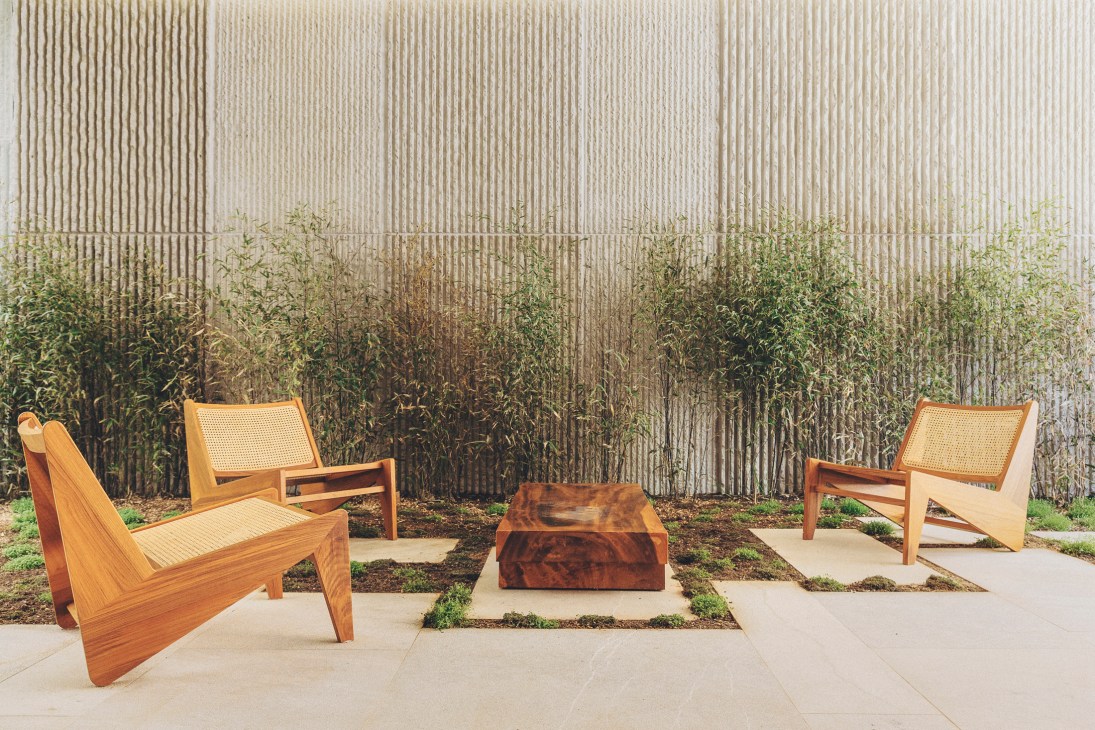
But let’s get Jaime and Paloma to walk us through. At the entrance they ask Monocle to note the detailing of the postboxes and brass-buttoned intercom buzzers, before opening the door and guiding us into a small lobby within. There’s a trick of the eye at play here because the modest lobby garden extends to a shaggier outdoors one – and you barely notice the glass wall that divides the two spaces. The grounds are the work of the British landscape gardener Jonathan Bell (known for his collaborations with John Pawson) and provide shade to mediate the heat. We linger a moment while Oliver looks at every branch and stem to make sure all the foliage is in fine fettle. Hernaiz points out the central void that runs throughout the building, giving the apartments more
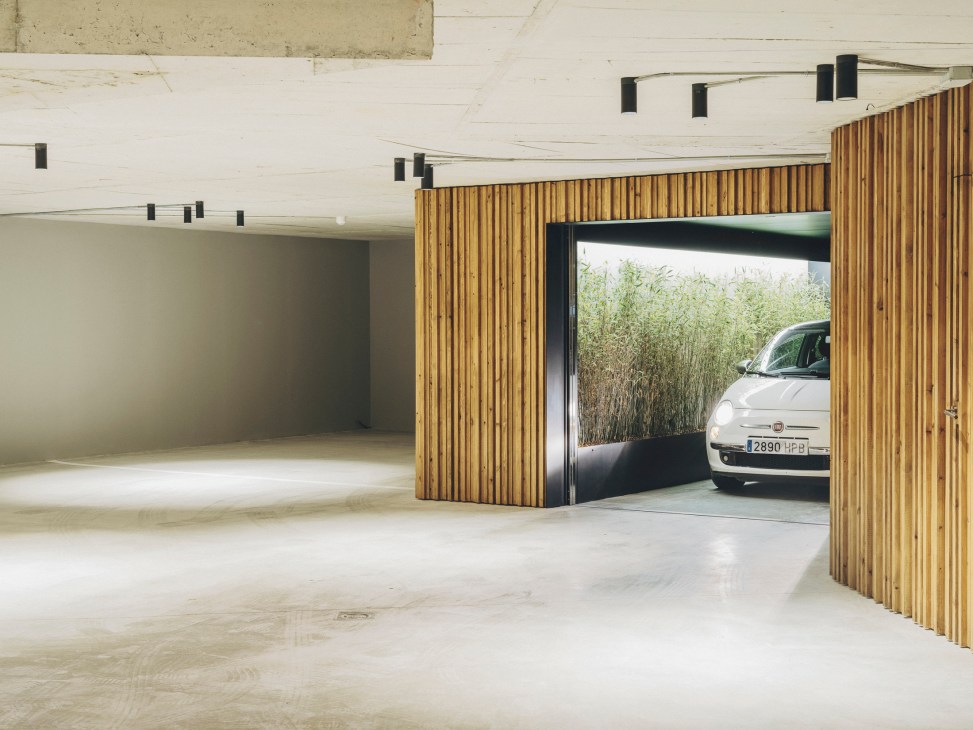
filtered light, and explains how the greenery also descends – alongside a cooling, cascading water feature. At the base of the void is a gym and stone-lined swimming pool that has Peter Zumthor-levels of calming asceticism. And hidden below all of this are three subterranean levels of parking, reached by a glass car-lift at street level that’s lined with a wall of cane. It’s a Bond-like twist – being virtuous in your design choices doesn’t mean ditching all the fun stuff.
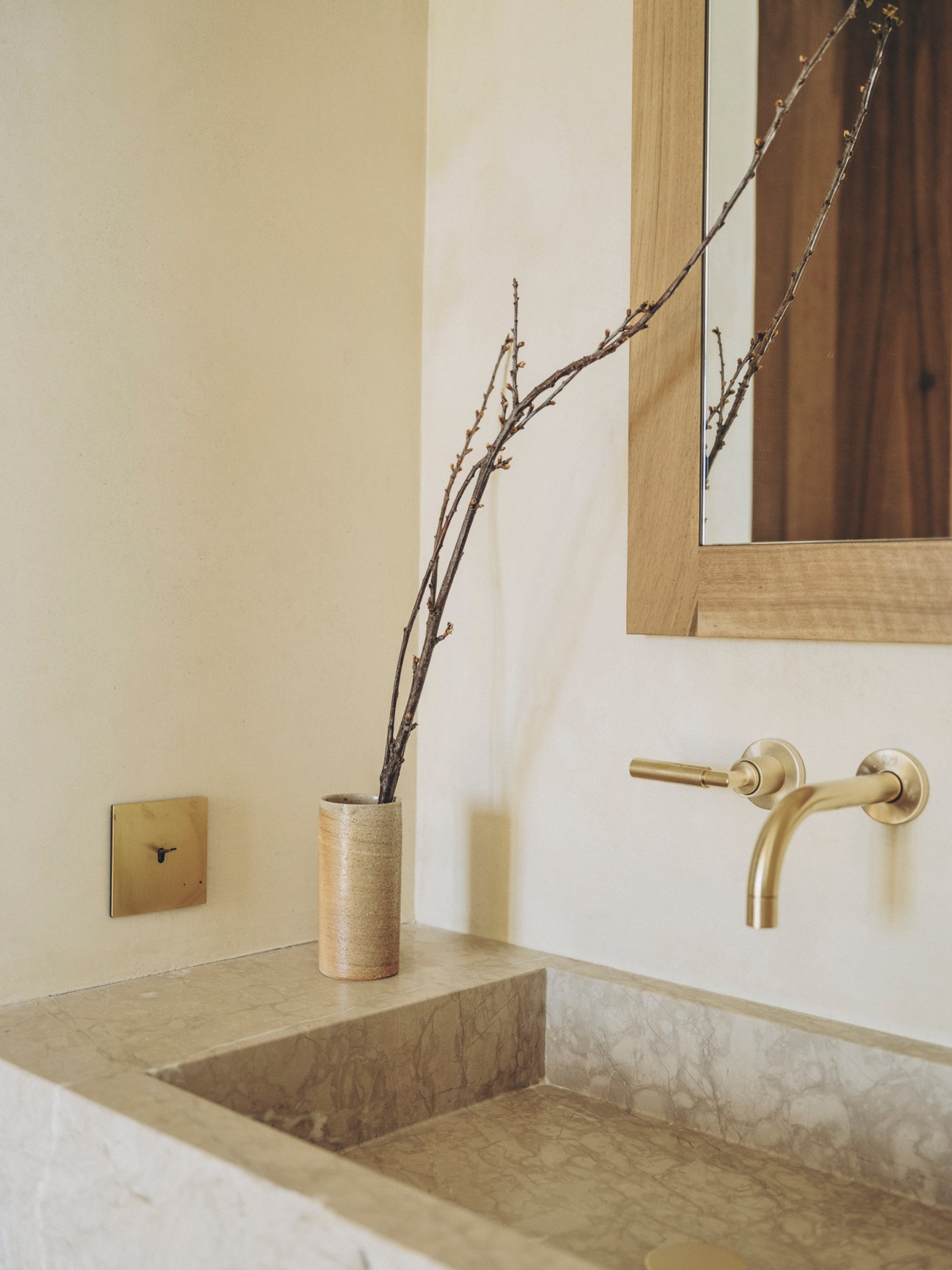
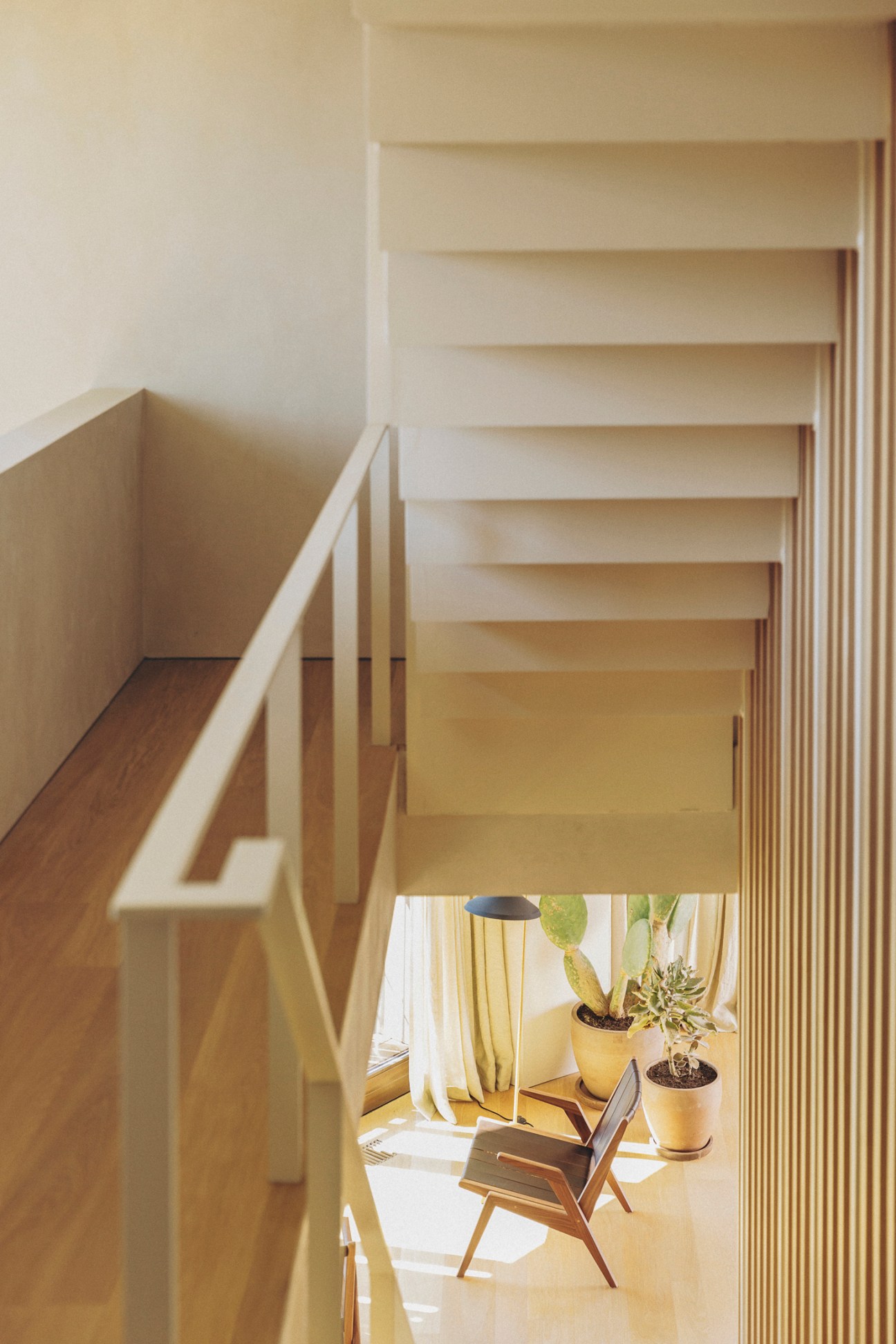
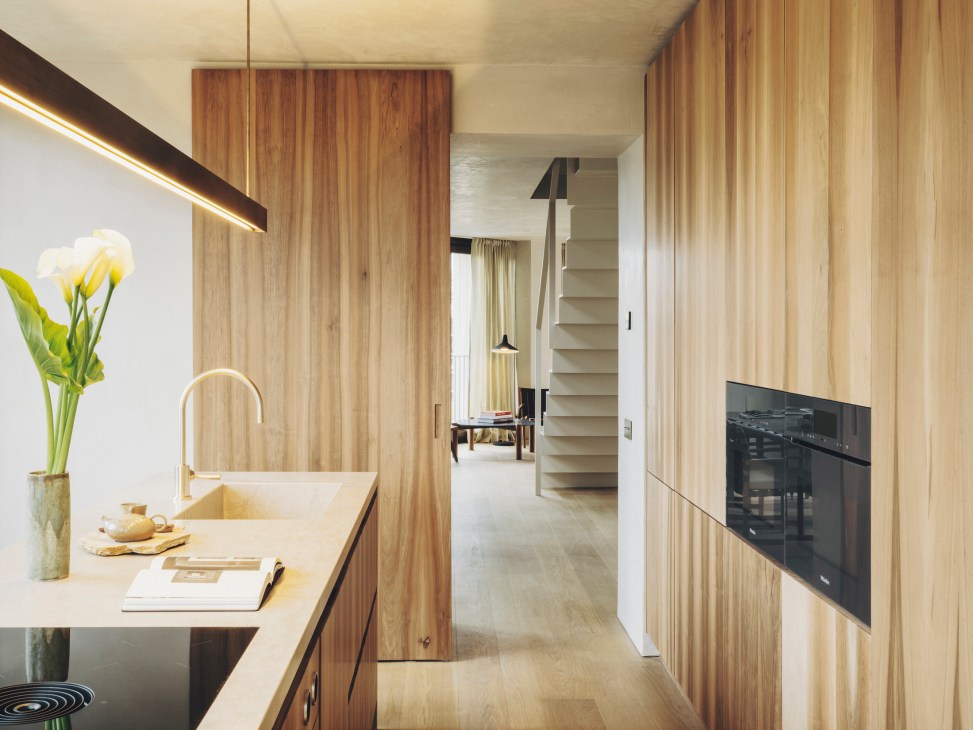
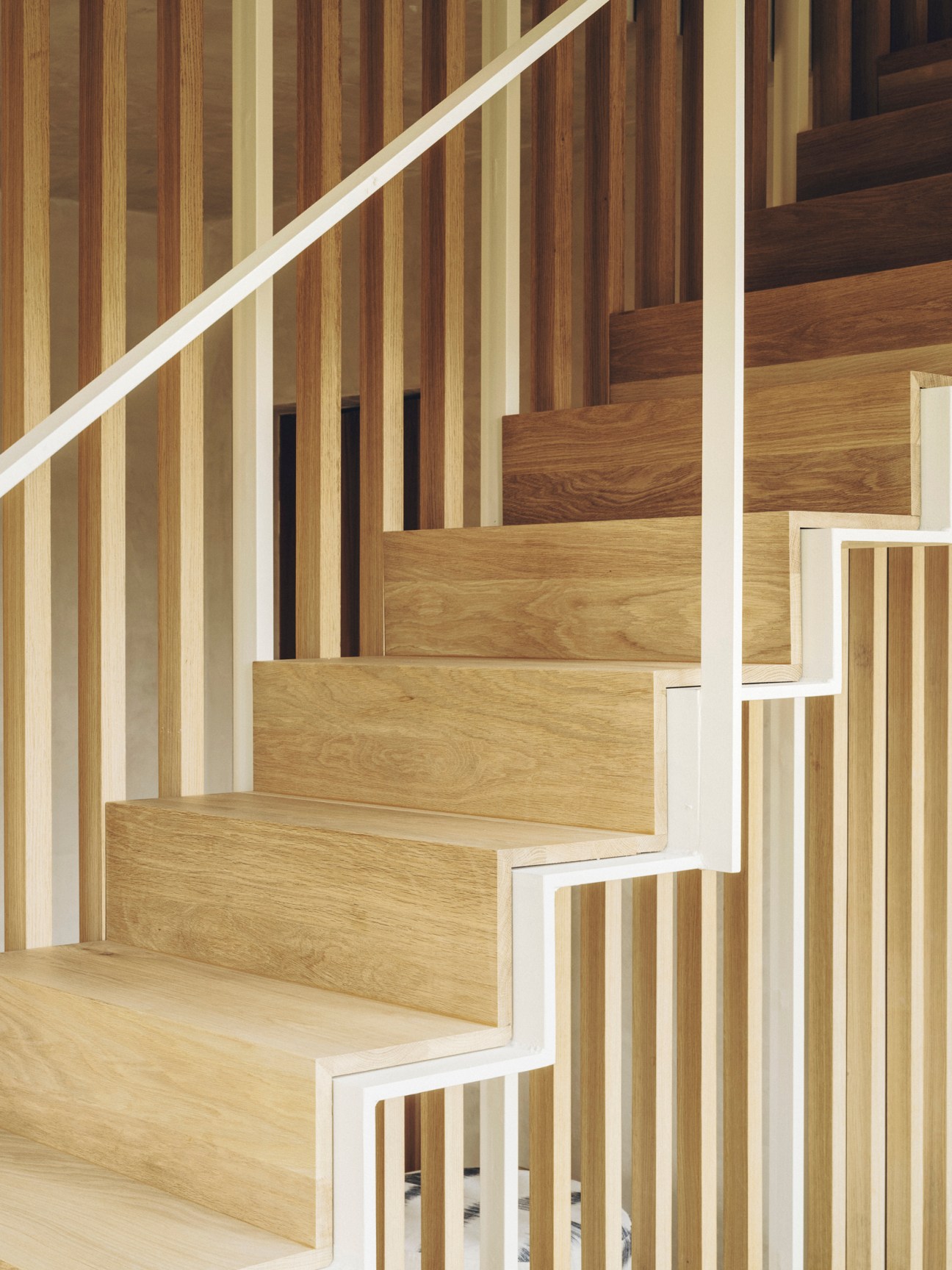
The apartments are shaped and informed by the same materials as the exterior. While on the external façades stone has been gauged and grooved to sit alongside all the soft-looking slats, inside bathrooms have stone washbasins that look as though they have been heaved directly from the mountain (there’s a lot of hidden metal work preventing these heavy beasts crashing to the ground). And the use of timber internally includes impeccable cedar cabinetry, with shelves manoeuvred up and down using a series of simple grooves – all made by island carpenters.
“We want to use materials that show their age but still look great,” says Hernaiz while Oliver explains how they placed lime mortar on the walls, which not only smells great but means that no toxic paint was used. “These are materials that are about timeless techniques,” he says.
Ohlab had as their client on this project a passionate developer, José Miguel Ramis, who comes from a long line of builders on the island. He has been deliberately slow to market the homes, not wanting them released until they were finished to his exacting demands (he hopes that most of these residences will be occupied full-time by the same sort of people who have always settled on the paseo). “He’s a great client,” says Oliver. “He wanted to build something remarkable, and we entered this positive loop where we were pushing each other to do ever better things; to build to the highest standard.”
“With food, people understand that you have to spend a bit more to eat healthily,” says Hernaiz wisely. “We need the same attitude in architecture if people want to be part of this sustainability story.”
It might just be a 10-apartment building but it’s clear that this project has the potential to shake things up in a world where white walls, plate glass and dodgy art too often define the Mediterranean vernacular of grand residences. Paseo Mallorca 15 offers the city an alternative vision: a groundbreaking residential development that moves away from old tropes to focus on environmental needs, craft with restrained beauty – building that plants a flag for change.
Best in town
Urban development is hard work. Getting your city’s infrastructure up to scratch, maintaining it and, importantly, creating a place that citizens enjoy living in takes many minds and multiple skills. That’s why we’ve provided something of a cheat sheet for smart mayors and property developers to help them build, beautify and preserve the perfect city. Who you gonna call? Let us tell you.
1.
Offer the perfect kiosk
Germany
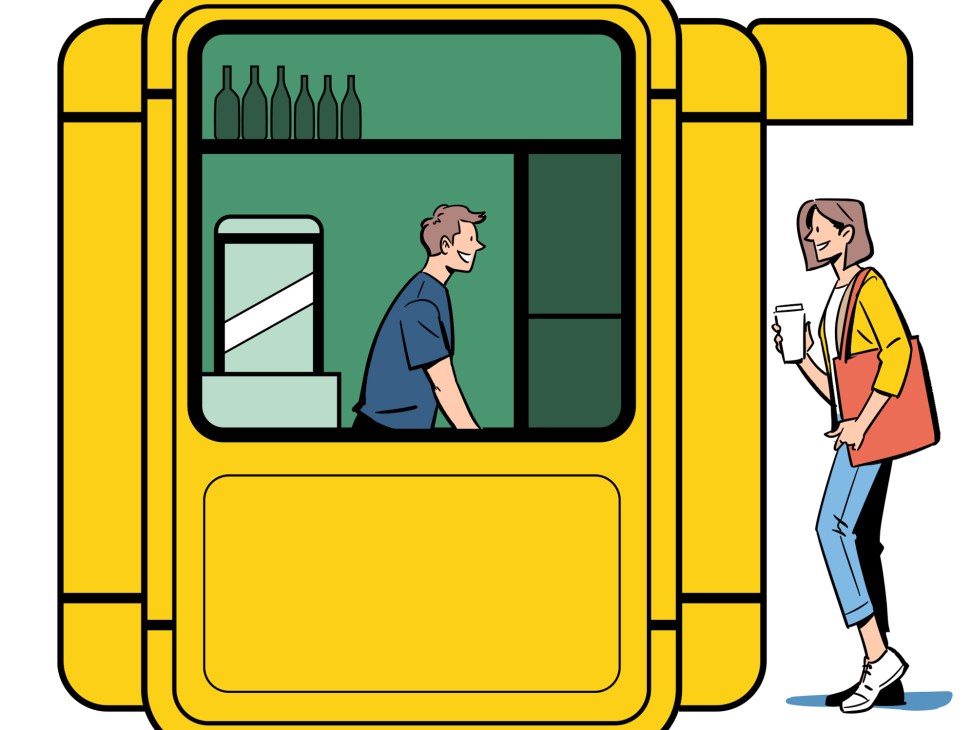
The k67, designed by Slovenian architect Saša Mächtig in 1966, was sold as an affordable, prefabricated structure to be used by newsagents or as parking-ticket booths. Many have been abandoned and fallen into disrepair but Berlin couple Ann-Marie and Martin Ruge von Löw, who operate their own café from a k67, provide businesses with a refurbished kiosk.
kioski.berlin

2.
Jazz up your public transport fleet
Switzerland
Swiss firm Nose uses creative design to add personality and efficiency to transport networks. Its latest concept is the self-driving electric Yumo Shuttle Bus, which plugs the gap by shuttling between remote areas and the closest commuter station.
nose.ch
3.
Masterplan your neighbourhood
Denmark

Bringing character to a neighbourhood is no easy task, which is what makes the work of Danish design agency BRIQ so impressive. Since 2017 the studio has been engaged in projects in Copenhagen’s Carlsberg City District, a former industrial area built around the brewery’s iconic former headquarters. BRIQ has transformed it into a buzzy residential neighbourhood, where historic buildings sit happily next to modern blocks and towers. Through a smart zoning strategy, a strong retail and hospitality mix, and an emphasis on imbuing new venues with characteristics inspired by the area’s heritage, BRIQ is forming a global benchmark for placemaking.
briqgroup.com
4.
Make your city more playful
Chile
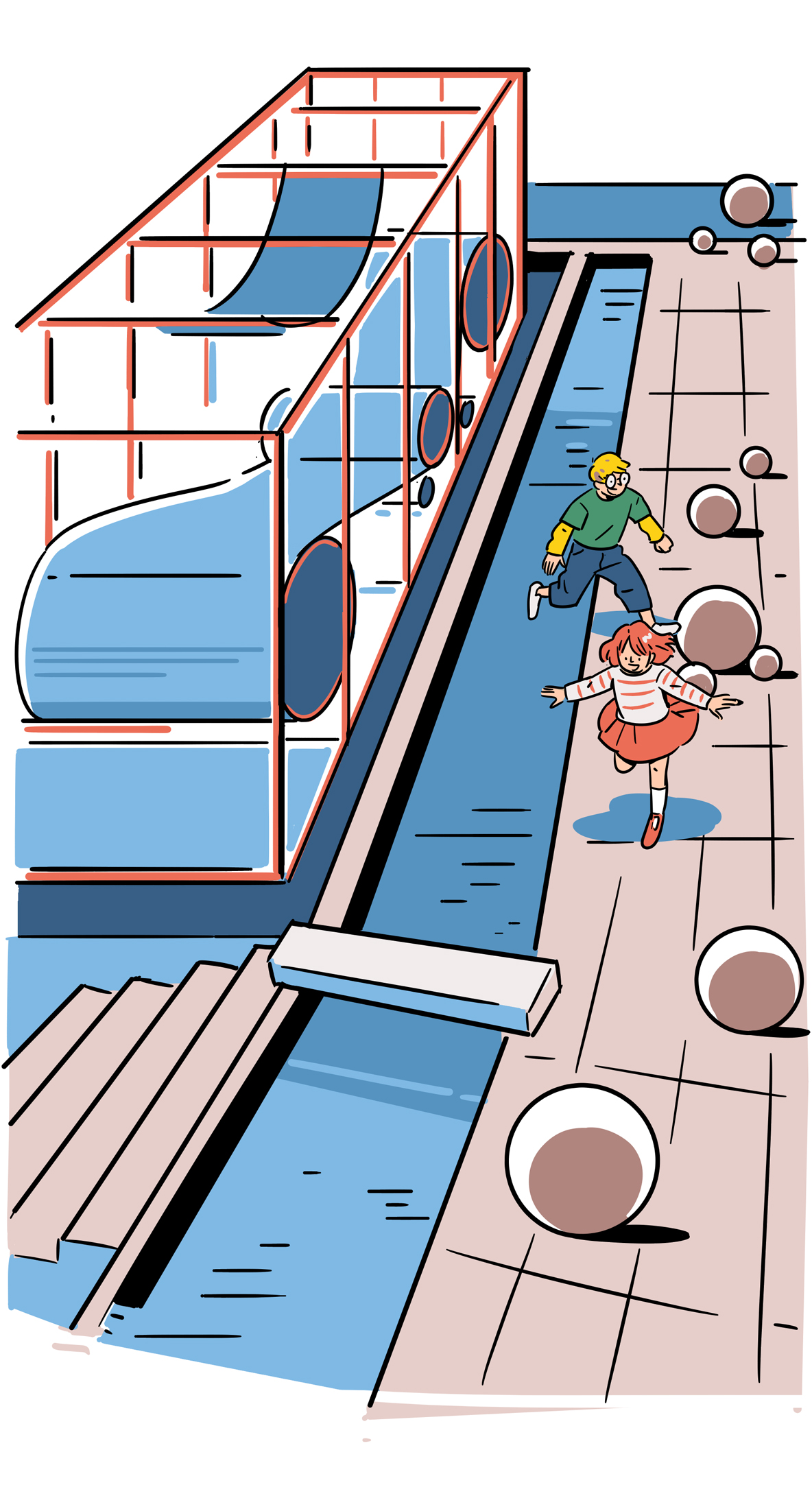
If you don’t have children you might not notice how many playgrounds your city has. But providing safe spaces for children to socialise and play in is fundamental to any urban environment.
The Bicentenario De La Infancia park is a clever project by Chilean architecture firm Elemental, headed up by Alejandro Aravena, to provide a haven for children from all walks of life in Santiago’s northern suburb of Recoleta. An urban walkway on San Cristóbal hill was repurposed with more than 60 slides, fountains, timber huts and a funicular to address a dearth in the city’s high-quality public spaces.
In the face of the nation’s growing economic inequality, the park is a rare communal area for children from different backgrounds to meet on a level playing field. Parents, meanwhile, will be relieved to know that safety was a priority throughout the development, making the playground as accident-proof as possible. Our favourite features? The perimeter is enclosed by an adventure course and an amphitheatre has been included to host shows for the young chilenos.
elementalchile.cl

5.
Scoop up those scooters
USA
San Diego’s Scoot Scoop is taking e-scooter sharing giants to task for littering our cities. E-scooter operators leave it to customers to park correctly after their ride, which is why scooters are often strewn across footpaths. Scoot Scoop impounds two-wheelers left on private property and charges the operators to retrieve them.
scootscoop.com
6.
Green solutions
Brazil
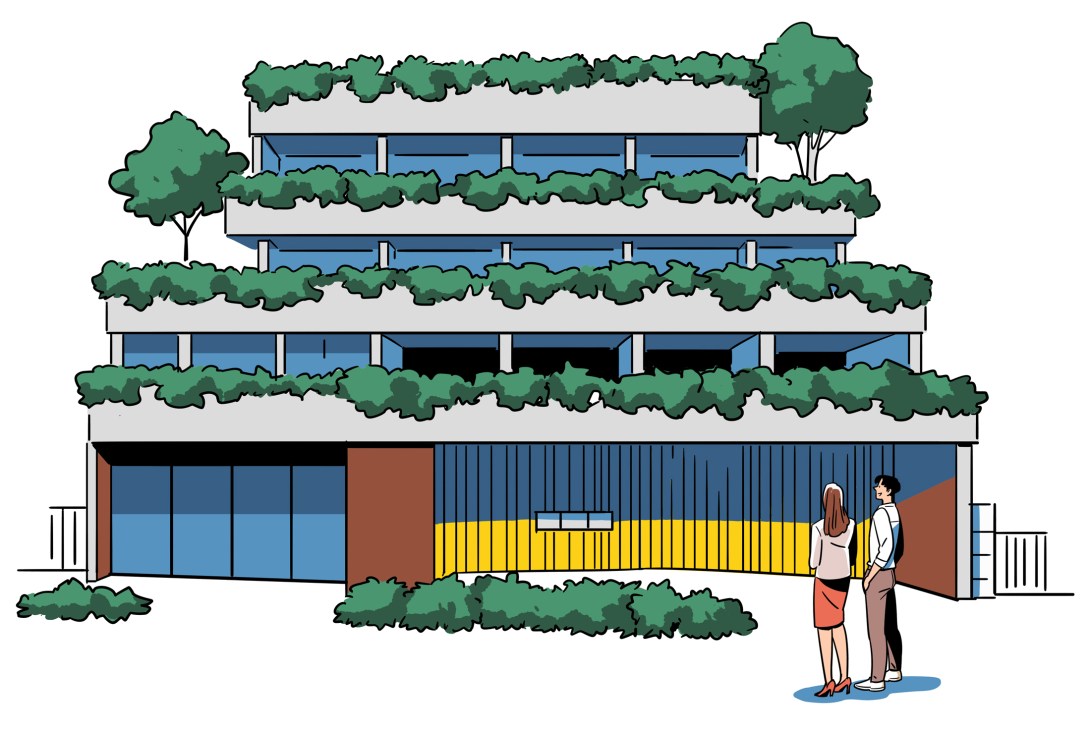
São Paulo has deployed greenery in recent years as a strategy to tackle the spray paint of urban graffiti vandals. The city mayor commissioned a 3.5km (11,000 sq m) vertical garden along one of the city’s main traffic corridors, Avenida 23 de Maio, in 2017 to cover up the graffiti. Residents also use the technique, covering their walls entirely with creepers.
Landscape architect Ricardo Cardim is an expert in incorporating plants into commercial and residential buildings in the city, from office towers to shops and schools. He exclusively uses native Atlantic Forest vegetation in a peaceful protest against invasive foreign flora.
His Floresta de Bolso project is also part of his mission, gathering groups of volunteers at weekends to help plant patches of native forest in the city on degraded land as small as 15 sq m.
cardimpaisagismo.com.br
7.
Bring farming to the city
Japan

Projects imitating New York’s elevated linear park, the High Line, are old news. For a fresher benchmark for regenerating an under-used and under-appreciated part of town, city planners would be wise to turn to the work of Paris-based Japanese architect Tsuyoshi Tane.
In Shibuya, Tokyo, he’s transforming a 2.6km stretch of the Tamagawa josui, a waterway constructed in the Edo period and later covered over, into a linear park reserved for urban farming. The now-derelict space will become a place where locals can meet, socialise and leisurely grow vegetables that they can sell at farmers’ markets.
“It will have urban kitchens and urban markets,” Tane tells Monocle. “We even want to form rivalries between different farming groups along the river, competing over who is growing the best tomatoes.” Truly a multi-purpose project, Tane’s farmlands add precious green space to the city, offer leisure areas for citizens and shorten the supply chain in the selling of fresh fruit and vegetables.
at-ta.fr
8.
Shade with care
Thailand
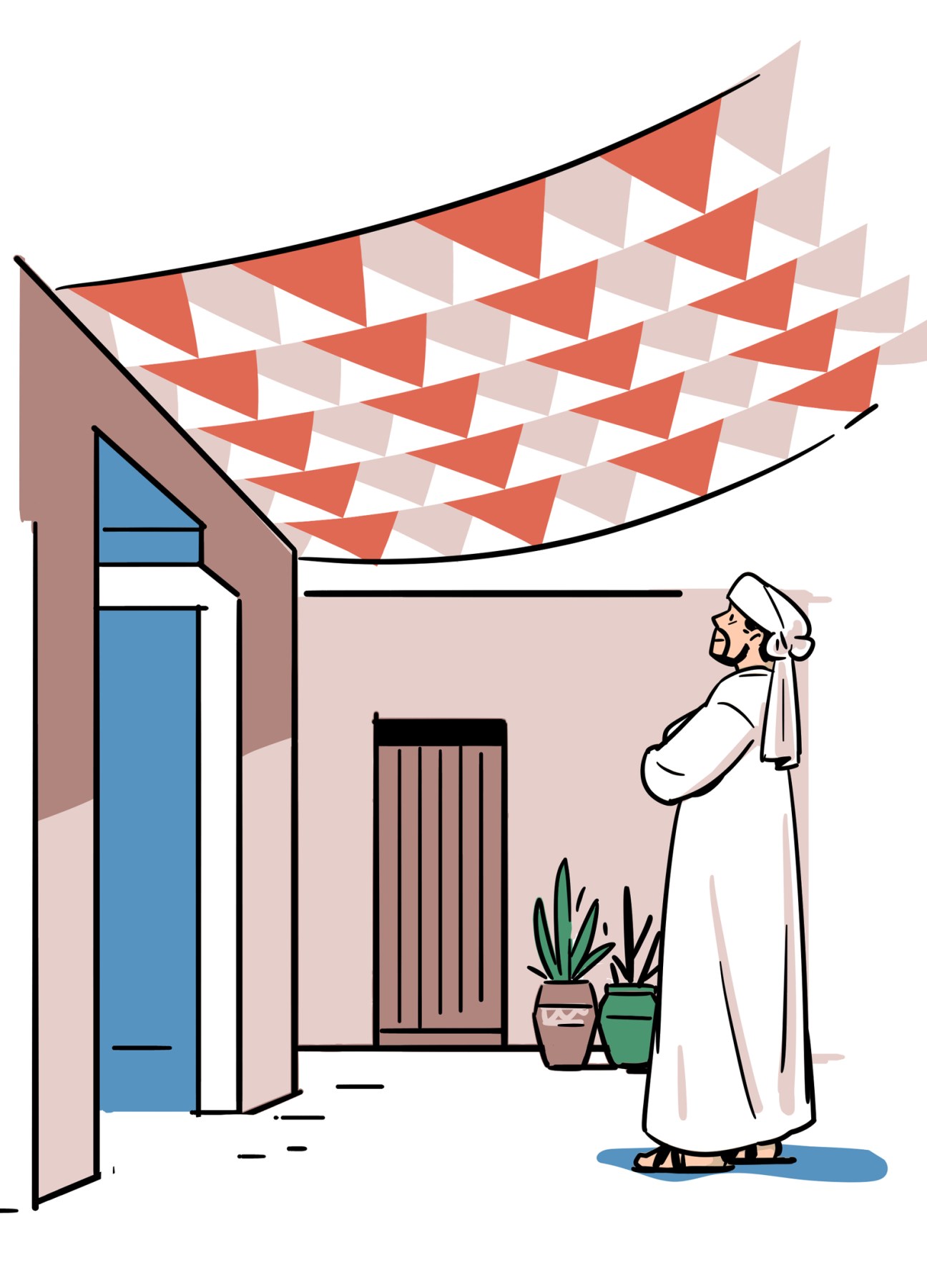
Thai architectural design studio Allzone, founded by Rachaporn Choochuey, is turning to smart shading solutions to keep cities cool. For a recent project in the uae, it created a porous fabric roof over a courtyard. It repels heat from the ground during the day and transfers it up into the air at night.
allzonedesignall.com
9.
Give public spaces to the people
Australia
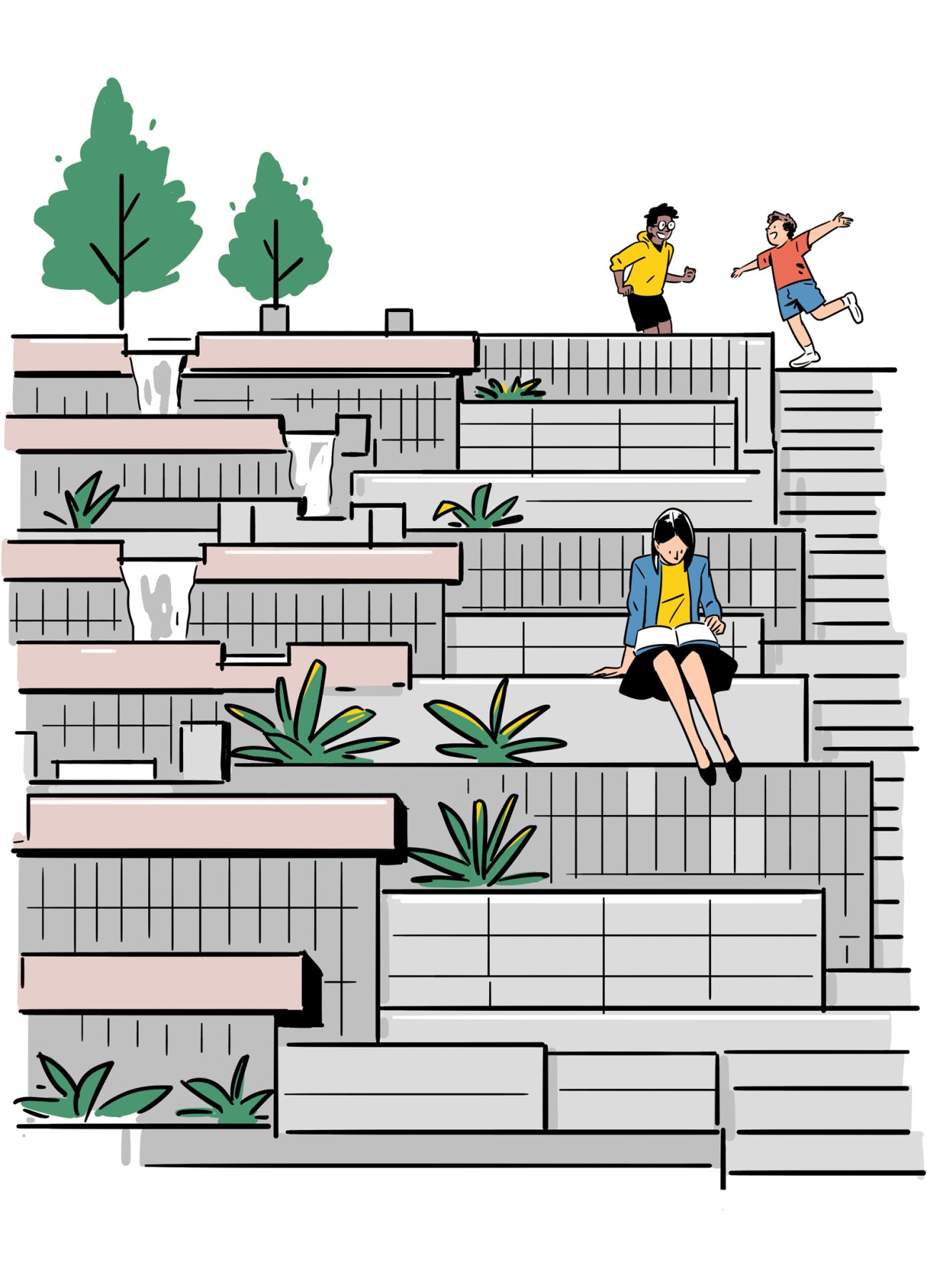
Aspect Studios has mastered the art of public space design. The firm’s projects invite people to interact with a space but lets them choose how to use it. Its new precinct at Sydney’s Macquarie University has water flowing through a terraced seating area. Children splash about, while elderly couples sit back and relax.
aspect-studios.com

10.
Give the best directions
Singapore
Applied Information Group is a London-based firm that specialises in way-finding, creating attractive, clear signage in cities from Singapore to Rio de Janeiro. In the former, an intuitive colour-coded signage scheme was deployed on the city’s Sentosa Island, keeping walkers, joggers and cyclists moving in the right direction.
appliedinformation.group
11.
Provide the perfect retrofit
Luxembourg
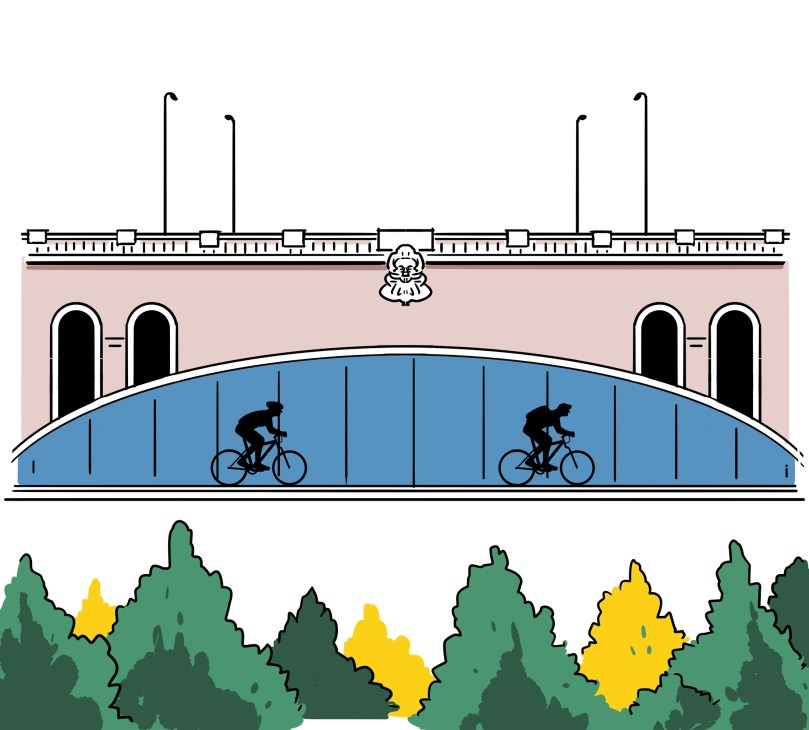
Cities frequently face a dilemma when it comes to ageing infrastructure, from bridges to buildings. Knock them down or fix them up? In cases involving characterful structures, we’re in favour of retrofitting to suit contemporary needs. And to do this, we suggest CBA, a Luxembourgian architecture practice led by Christian Bauer, whose portfolio of retrofitted works is outstanding.
In recent years CBA has transformed an old factory into a smart hotel, refurbished an 18th-century listed building, and turned a dilapidated warehouse into its own office space. The standout, though, is the recent retrofit of Luxembourg City’s Pont Adolphe bridge. Built in 1903 the structure has, for more than a century, served as a key route for vehicle and pedestrian traffic but its capacity couldn’t keep up with modern demand. Rather than build a new bridge, the city commissioned CBA to design a new, lightweight platform for pedestrians and cyclists to sit subtly beneath the vehicle deck. This protects the structure’s heritage, while ensuring that it meets today’s transit needs.
cba.lu

12.
Light your city at night
Spain
When it comes to combating light pollution in cities and making them more enjoyable in the evening, we turn to Santa & Cole’s urban lighting and furniture arm, Urbidermis. The Spanish brand’s products are designed so that light is diffused and directed towards the ground, ensuring that it doesn’t obtrusively light up the night sky – or your date’s face.
urbidermis.com
13.
Make buildings to bring people together
Dubai

Dutch architects OMA’s projects include a new performing arts venue in Taipei that draws street life into the centre, a historic former post office in Houston transformed into a culture, food and shopping venue, and an inviting pavilion (replete with a park on its roof) for a Los Angeles temple. In Dubai, the firm cleverly applied wide, foldable polycarbonate doors onto a transformed
warehouse, which now operates as a cultural centre named Concrete. The flexible design means that when the walls fall away, the building becomes something entirely different. A public forum opens up outdoors for events such as performances and talks, with the backdrop being the beautiful interior of the arts building itself.
Flexible architecture is increasingly needed in cities where space is tight and this Dubai building’s ability to morph for many purposes makes it a meaningful benchmark.
oma.com
14.
Host a festival
Spain

The Spanish city of Logroño didn’t come up much in urbanism conversations until 2015, when Javier Peña Ibáñez launched Concéntrico, a yearly festival that allows designers and architects to take over the city with installations.
While putting Logroño on the design map, the festival is also an opportunity for residents to see their hometown through fresh eyes and think more critically about the spaces around them. “We want to give the tools to help understand how cities can change,” says Ibáñez. The result? Citizens care more about their hometown’s development and good urban planning can be better appreciated.
concentrico.es
15.
Give cyclists security
Switzerland

In almost any city, locking your bike outside a train station can be risky, leaving it vulnerable to both the elements and people with sticky fingers. A secure, smartly designed bike garage can help, something that Swiss architecture firm Amplatz is particularly adept at creating.
We suggest taking to two wheels and pulling your own cycle into one of the 570 parking spaces at its recently completed garage in Winterthur. Located outside the city’s main station, a gently curving ramp carries bike riders from the street into the colonnaded, pavilion-like structure, ensuring smooth transport connections and safety for cycles.
amplatz.ch
Force of nature
Florence is not known for its modernist landscape architecture. The Renaissance city and rolling hills around it are teeming with grand, heritage-protected homes and any new construction has to clear a thicket of bureaucratic hurdles, if it is not blocked outright. But in among this mix are multiple modernist gardens created by Pietro Porcinai, Italy’s greatest landscape designer of the 20th century. One example lies in Fiesole on the grounds of Villa Rondinelli, the former guesthouse of a neighbouring Medici villa. Tucked in to the hillside are two glass-walled greenhouses, camouflaged by vines and a roof garden. They were designed in the 1960s and are officially limonaias, winter storage spaces for lemon trees. In practice, they were Porcinai’s personal studios.
“He was always critical of the inhumane aspects of modernism. He argued that nobody can live well surrounded by cement and that greenery needed to be part of any built environment.”
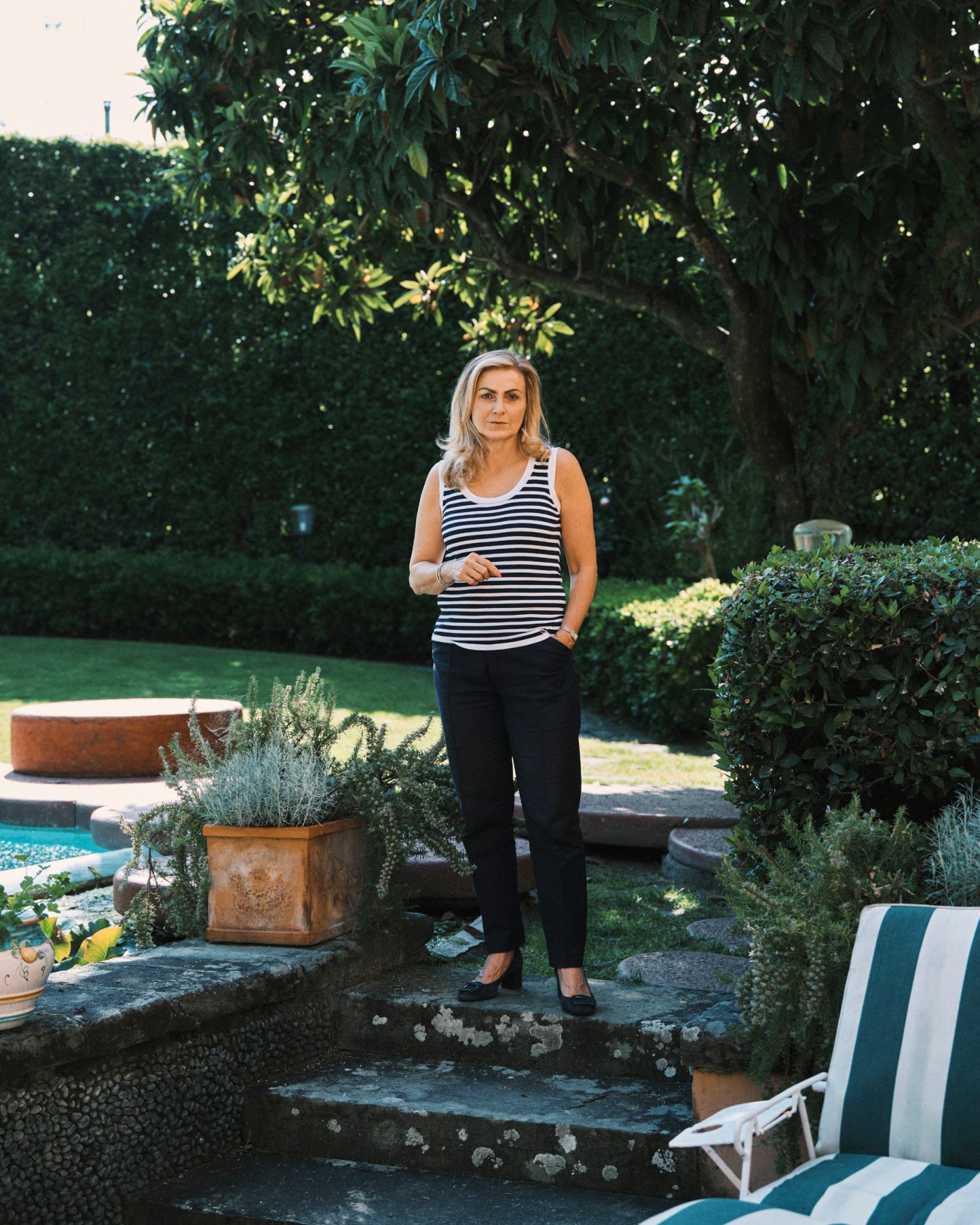
“Landscape architects didn’t exist in Italy before my father,” says Pietro’s daughter, Paola Porcinai. It is an unseasonably warm May day and she is sitting outside one of the greenhouse studios. “He was the only one working in the field at the time and he single-handedly established the profession.” Up until his death in 1986, Porcinai employed more than 50 people who worked in the main house of Villa Rondinelli and helped draw up designs for gardens, parks, piazzas, industrial areas and even highways. Injecting modernism into traditional garden design, he carried out more than 1,000 projects in his career, including 200 in Florence alone.
Paola explains that her father developed his green fingers during a childhood spent in Villa Gamberaia, an opulent Tuscan estate where his dad was a gardener. “From an early age he lived around this paradise of a formal Italian garden,” she says. After studying for an agriculture diploma in Florence, the 18-year-old Porcinai hopped on a motorbike and spent a year visiting leading landscape architects in Belgium and Germany, where the profession was more established. Once back in Italy, Porcinai got to work designing what he – quite ambitiously – thought of as earthly paradises. “He would say that the ideal garden was that of Adam and Eve, the garden of Eden,” says Paola. “But his design methods were always avant garde.” Many of Porcinai’s creations are still in use by the families that commissioned them. On a typical weekday at Villa La Terrazza on the southern edge of Florence, members of the Rangoni family while away the afternoon in their garden working, studying or swimming in the pool. From the iron terrace furniture to the custom-designed stone lamps, the garden has remained essentially unchanged since Ugo Rangoni, founder of a shoe-making business, commissioned Porcinai to design it in 1952 before moving into the house with his wife. “As far as I understand, they gave him carte blanche,” says their daughter-in-law and current owner Elisabetta Rangoni. “They knew he was the best one, so they trusted him fully.”
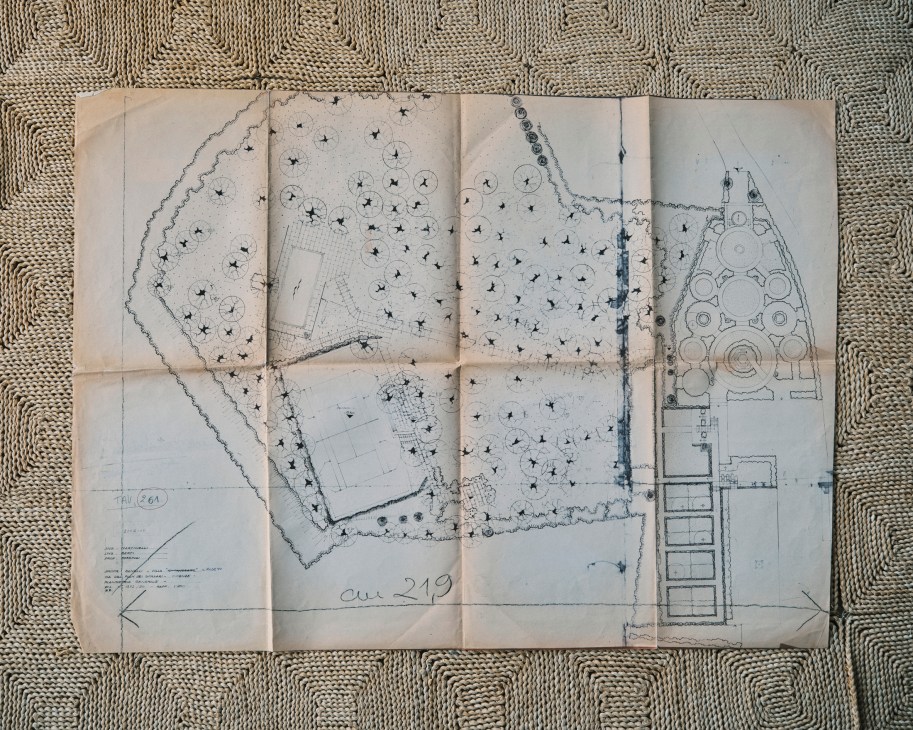
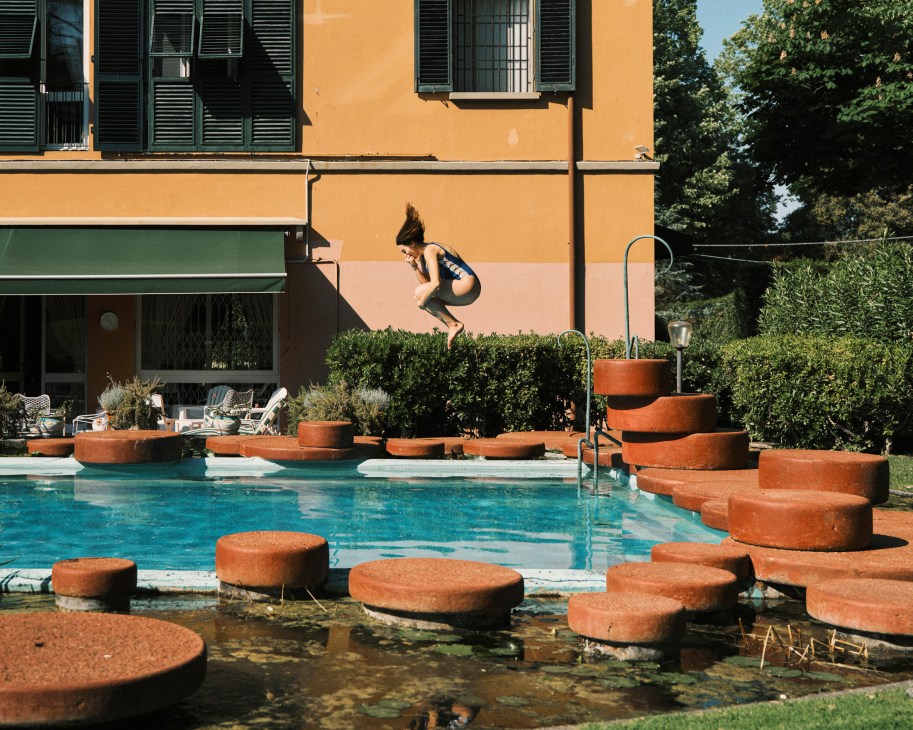
The centrepiece of the garden is the swimming pool, which is separated from the house only by a terrace, almost becoming a continuation of the living room. It is bordered by round slabs of red Verona marble that are balanced around a water lily pond surrounding the pool. Circular shapes, inspired by Japanese gardens and the paintings of Russian abstract artist Wassily Kandinsky, are repeated in the stepping stones on the lawn and red marble terrace. A tall hedge wrapping elegantly around the garden continues this theme. The impeccable state of the landscape is thanks to Elisabetta, who learned the ins and outs of looking after each plant from her mother-in-law. “We sometimes tried to switch out the plants in our greenhouse or create a new flower bed but they would always die,” says Rangoni. “We always had to bring back the plants chosen by Porcinai.”
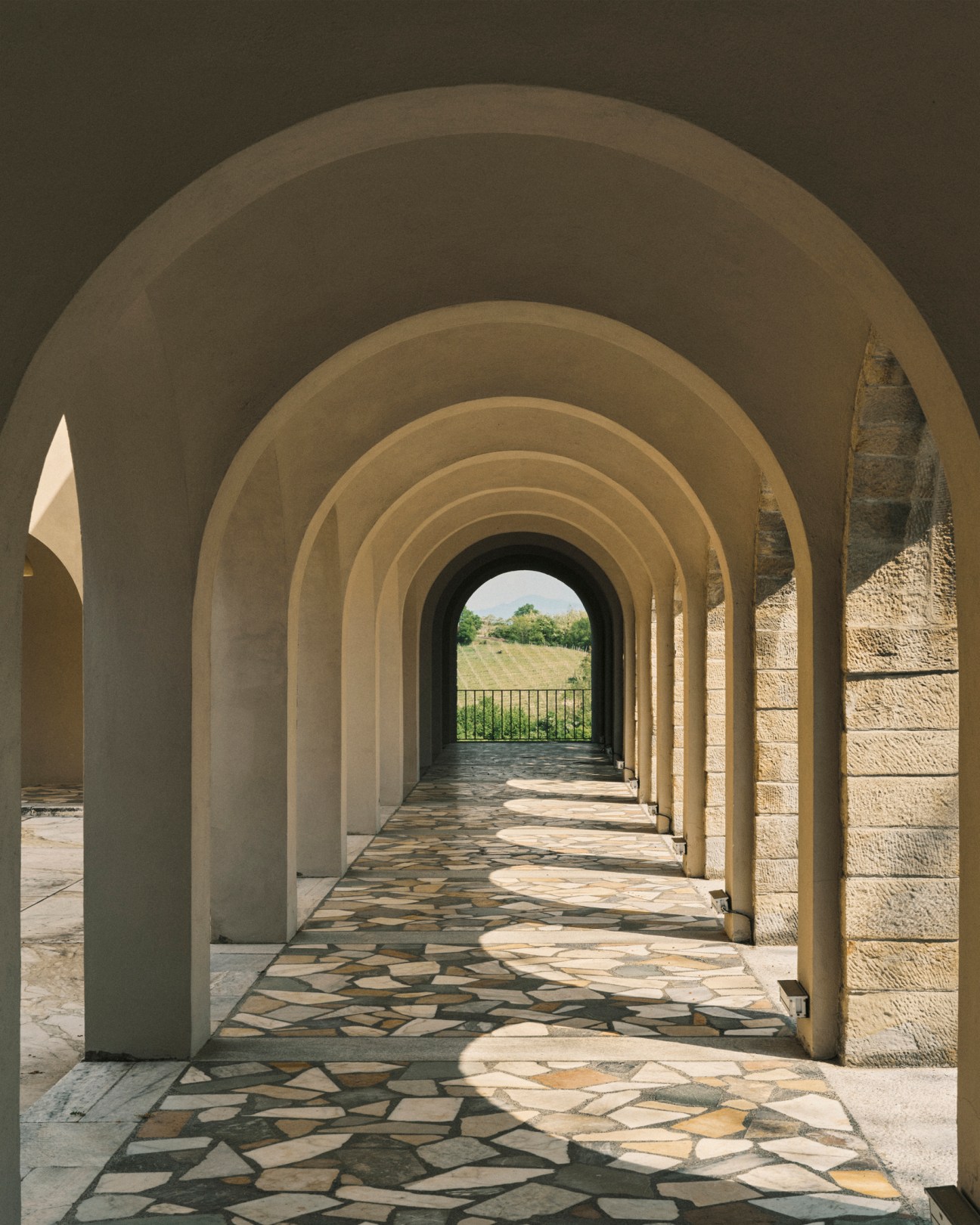
Three years after starting works on Villa La Terrazza, Porcinai was commissioned to design the gardens of Villa Ottolenghi, a 1920s estate perched on a hilltop by Acqui Terme in Piedmont. The estate, which now serves as a wedding venue, restaurant and hotel, includes two swimming pools, a Japanese garden and a curved terrace overlooking vineyards and the city below. All over the lawn grows wild mint, which was planted to cover the sweeter smell of the wisteria overhanging a covered walkway. “The scent gets so strong that it feels like walking in a mojito,” says tour guide Chiara Fogliati.
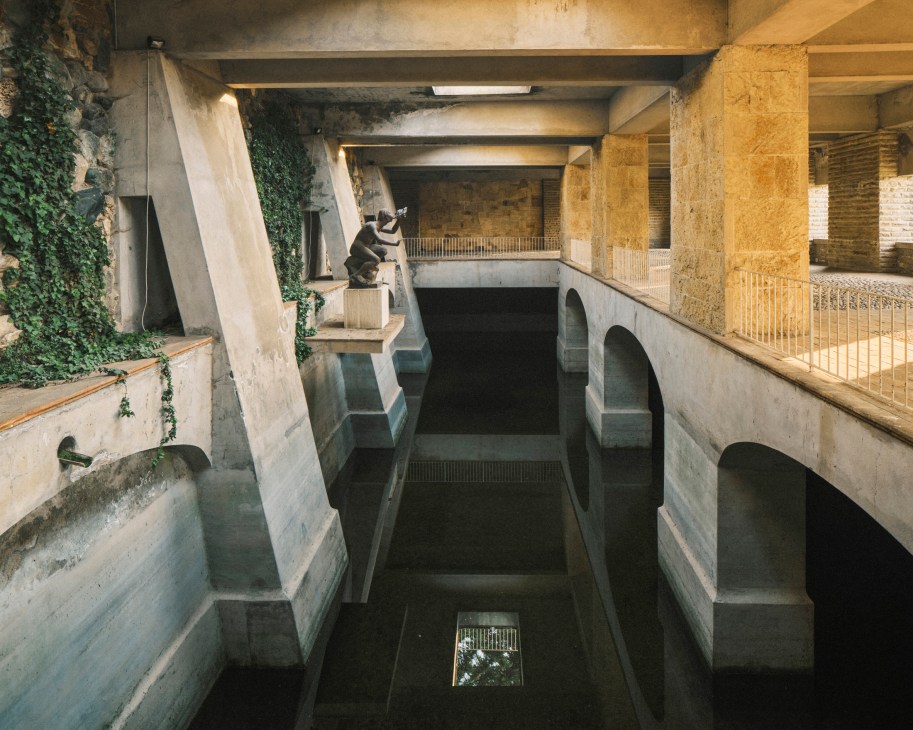
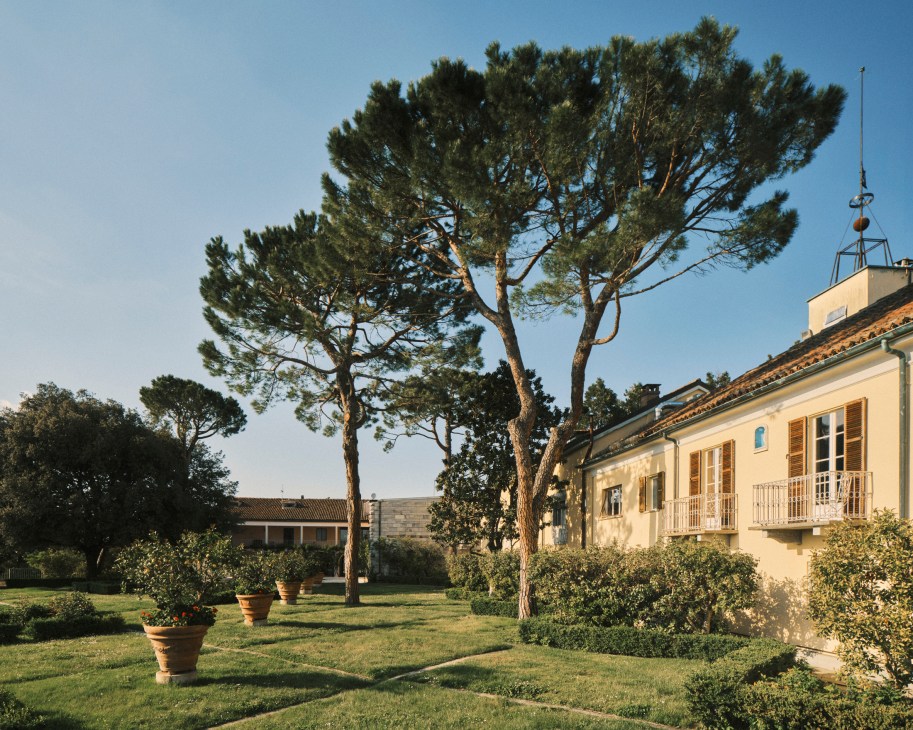
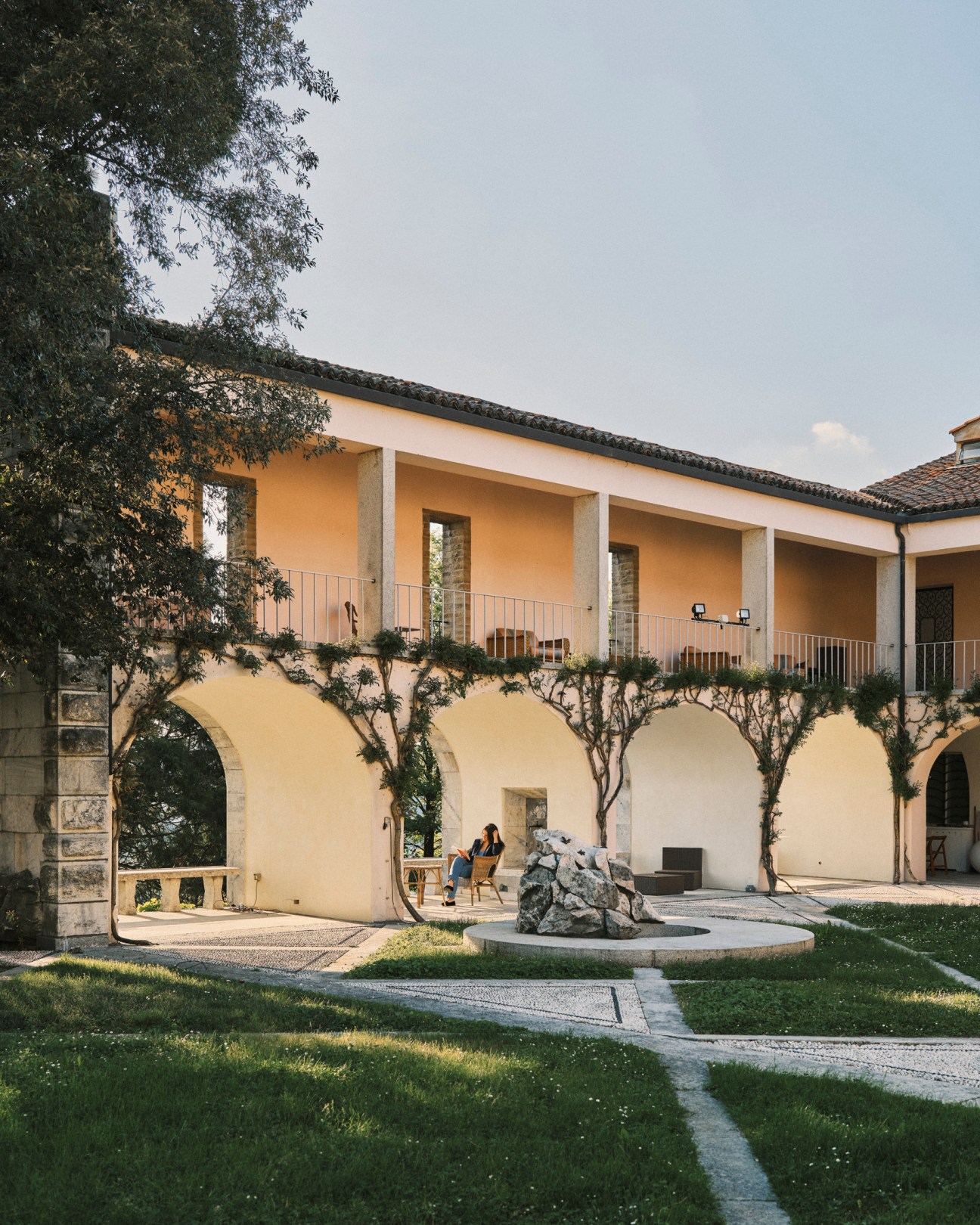
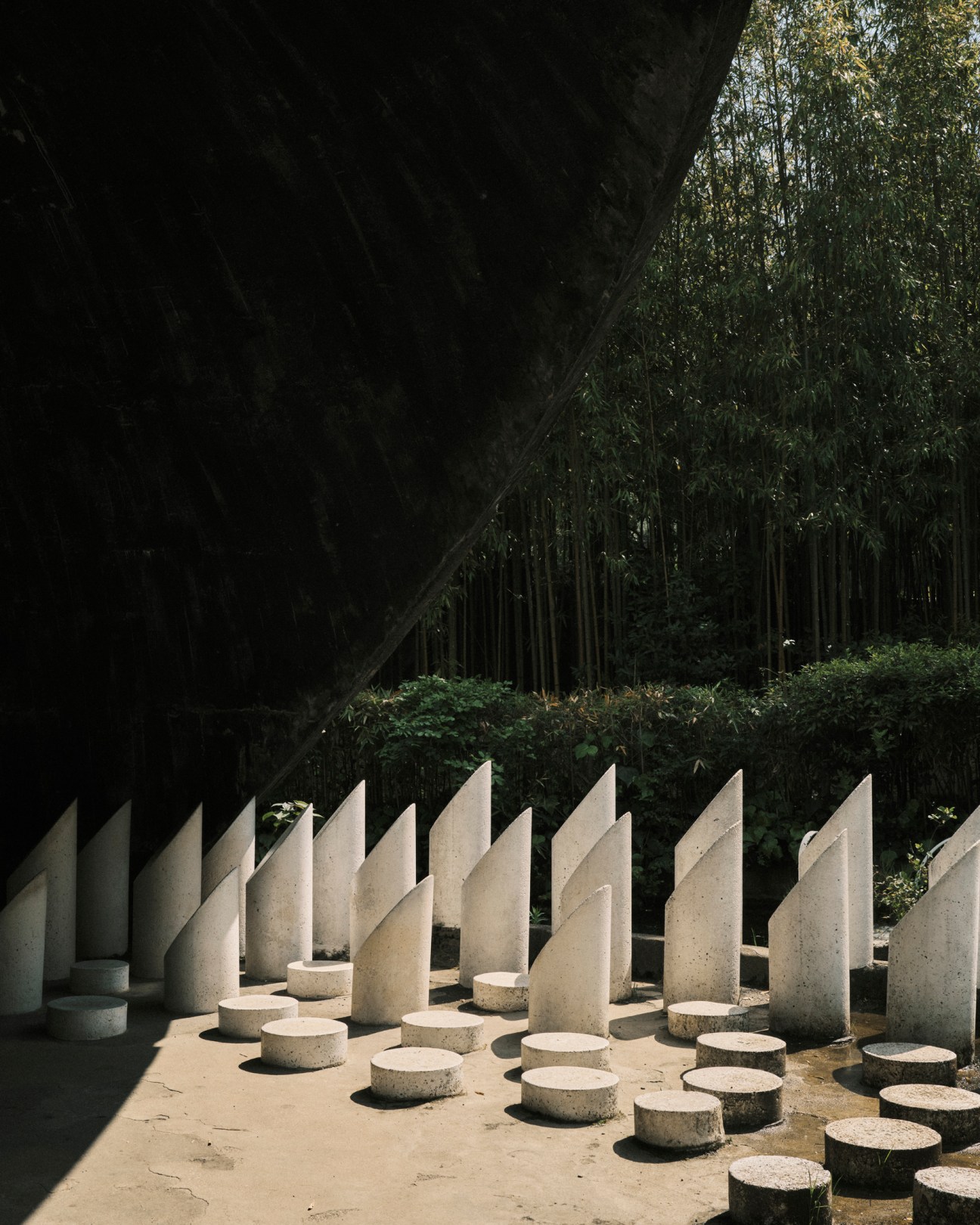
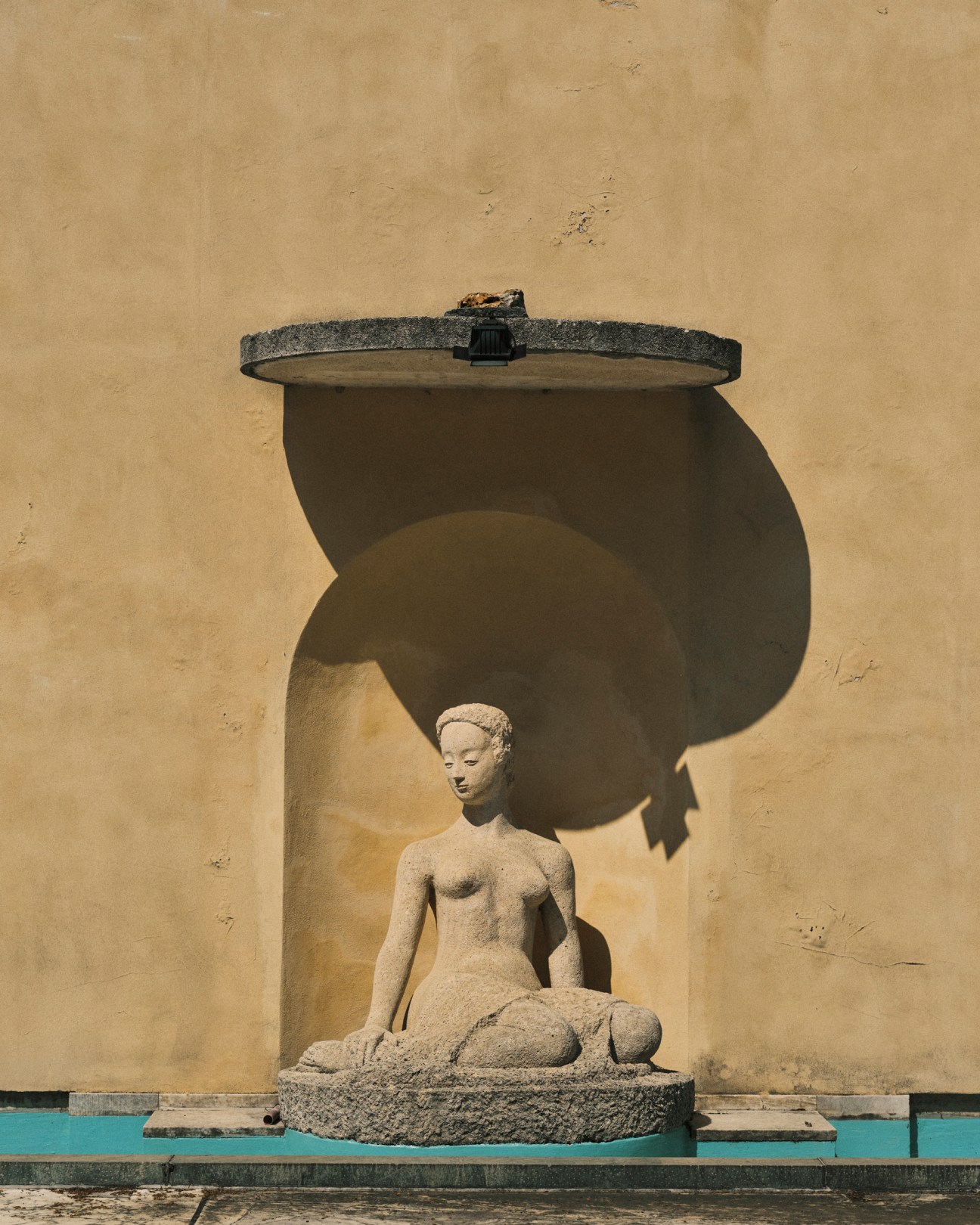
In the summer, the garden is a favourite spot for locals to cool off and enjoy Porcinai’s eye for design detail. The base of the shallow pool is covered in rounded river pebbles that massage the feet and aid blood circulation. On the lawn are dotted sculptural stone chairs that face the afternoon sun. Few are lucky enough to own a Porcinai-designed garden but many Italians are likely to have unwittingly visited one. In the 1960s, together with architect Marco Zanuso and sculptor Pietro Consagra, he designed the second half of Parco di Pinocchio in Collodi, near Florence. Here, winding paths among foliage, bamboo and a labyrinth of hedges are dotted with sculptures drawn from the popular Italian children’s story. Porcinai also designed the landscaping around dozens of factories and offices of Italian companies such as Olivetti and Mondadori, providing both white and blue-collared workers access to green space.
Porcinai advocated a design philosophy that he described as “propaganda of the green”. He dropped out of architecture school in Florence because he believed that the teaching ignored the importance of nature in design. “He was always critical of the inhumane aspects of modernism,” says Paola. “He argued that nobody can live well surrounded by cement and that greenery needed to be part of any built environment.” During his career, Porcinai was a regular contributor to Domus and other architecture publications. He also co-founded the International Federation of Landscape Architects and persistently lobbied Italian universities to start offering courses in the field.
Today, Porcinai is not a household name but his legacy is felt in the Italian design world. “Italian universities now host Masters and PhD courses related to landscape design and it’s thanks to him,” says Stefano Boeri, founder of Stefano Boeri Architetti. “Before Porcinai, the realms of architecture and botany were considered separate and it was a tremendous effort from Porcinai to change that.”
Boeri explains that his practice – which is known for the Bosco Verticale, two foliage-covered skyscrapers in Milan – is based on the same ideas as those advocated by Porcinai. “When we design a green façade, we first invite botanists to help us select plants that are adaptable to the specific climatic conditions on the site and only then do we start on the architecture,” says Boeri. “This idea of a landscape that is not just a decoration but a fundamental part of the design comes from Porcinai. We’re always considering this delicate threshold between a natural and artificial settlement and we try to produce an osmosis between the two.”
Porcinai’s idea to blur the lines between architecture and nature, between indoors and outdoors, is evident at his Villa Rondinelli studio, now Paola’s home. A climbing fig has nearly outgrown the hole drilled in the wall through which it reaches inside, covering the entire living-room ceiling with verdant leaves. “It spreads and latches onto everything,” says Paola. “I’m always picking up leaves from the floor. Here, you can’t forget about nature because it’s everywhere – inside and outside – and you’re constantly maintaining it. You’ll never reach tidy perfection but that’s not the point. Taking care of plants brings happiness in itself.”
Best of the rest
While many of the landscapes designed by Porcinai have been either lost or are still in private ownership, there are some that are open to the public and well worth a visit. In Italy, take the children to Parco di Pinocchio in Collodi, near Lucca, or head for a relaxing meal and afternoon swim at Villa Ottolenghi in Acqui Terme (call in advance).
When you’re passing through Paris, take a closer look at the sloping plaza outside Centre Pompidou, for which Porcinai was a consultant to Renzo Piano and Richard Rogers.
The city of Milan is also currently working on restoring a section of the central Parco Sempione, which Porcinai designed with architect Vittoriano Viganò
A renovated Geneva City Hall aims to make government feel visible and welcoming
“We want it to be a place where people will feel at home because the idea is that this is a ‘house for everyone’,” says Julia Zapata, co-founder of Geneva-based design studio Bonhôte Zapata, as she leads Monocle through the newly renovated Geneva City Hall. “What we really wanted to give this building is a feeling of solemnity – to represent the activity taking place here – but also a feeling of comfort and a sense of domesticity.”

Zapata and her team have just finalised the update to the 16th-century building, which has endured a hodgepodge of largely uninspiring alterations over the years. The latest efforts are the most ambitious, with a brief aiming to make the government building a place that goes beyond setting policy for the Swiss city of more than 500,000.
The project is about opening the space up, which is felt most profoundly in the main council chamber. In the lofty hall, Bonhôte Zapata added an eye-catching multifaceted, oak-slatted structure, which covers the space. It reaches up towards the roof, where a new skylight fills the room with natural light, a glow that is complemented by an elaborate lighting system from Lebanon’s PSLab hidden within the oak structure. The theme of transparency continues with the removal of existing windows – stained-glass numbers, which, while beautiful, didn’t allow for much natural light to flow in. They’ve been moved to another state building and replaced by translucent panes that now allow the deputies to look out at the metropolis that they’re responsible for, while allowing their electorate to look into the building when the parliament is in session.

“We wanted to create a strong visual connection with the city,” says Zapata. “When there’s a sitting here, people on the streets and by the lake can feel like they’re in session.” The personal responsibility of every deputy is also enhanced by the fact that, rather than sitting along a bench – as is typical in many parliaments – each has their own desk and chair: a Finn Juhl FJ 51 walnut armchair. Upholstered with blue fabric (such a perch is only found in one other location, the UN headquarters in New York), the stately pieces have been exclusively supplied to the Geneva council by Denmark’s House of Finn Juhl. Significantly, the chamber was also reconfigured into a semicircular seating plan, a much friendlier layout than the previous face-to-face seating, which placed politicians opposite each other.
Moving beyond the main hall, the Bonhôte Zapata team also revitalised a number of other rooms in the building, including the welcome chamber, where it uncovered and restored the room’s original shape, and the parliament’s café, chancellery and administration offices. They also renovated the parliamentary restaurant, transforming what was once a dining hall catering to diplomats into a popular, public-facing spot.
Each room has distinct characteristics and, says Zapata, “each of these rooms has a whole history of its own”. And now these different spaces are beautifully united by a consistency of materials. A robust selection of green marble, brass, oak and walnut has been deployed throughout. “We very carefully selected a small palette of materials,” she says. “We decided to work with them in a modular way, using them throughout the building to give the spaces continuity.”
The result is a cohesive environment that’s representative of good government: open and transparent, efficient in the use of resources and built with the long-term in mind. But it is also a place that, thanks to the abundance of natural light and the warmth of the oak and walnut, feels incredibly welcoming, calming and set up for dialogue and diplomacy. This is the kind of intuitive design that allows for good governance – something we hope that the politicians sitting here respond to with enthusiasm.
Artistic intake
Arik Levy Sculpture Park
St-Paul de Vence, France
Nestled between the French riviera and the Préalpes d’Azur mountain range, Saint-Paul de Vence is a small village that has been on the map for art lovers since Calder, Chagall and Miró first flocked to La Colombe d’Or hotel. Artists Arik Levy and Zoé Ouvrier are taking appointments for visitors and collectors to tour their bright studio and expansive, verdant garden. “They come to see the dialogue between sculpture and nature,” says Levy. “Collectors imagine how a piece would look in their own garden. In the white space of a gallery it takes a lot more convincing that it could work.” Levy leads the tours himself.
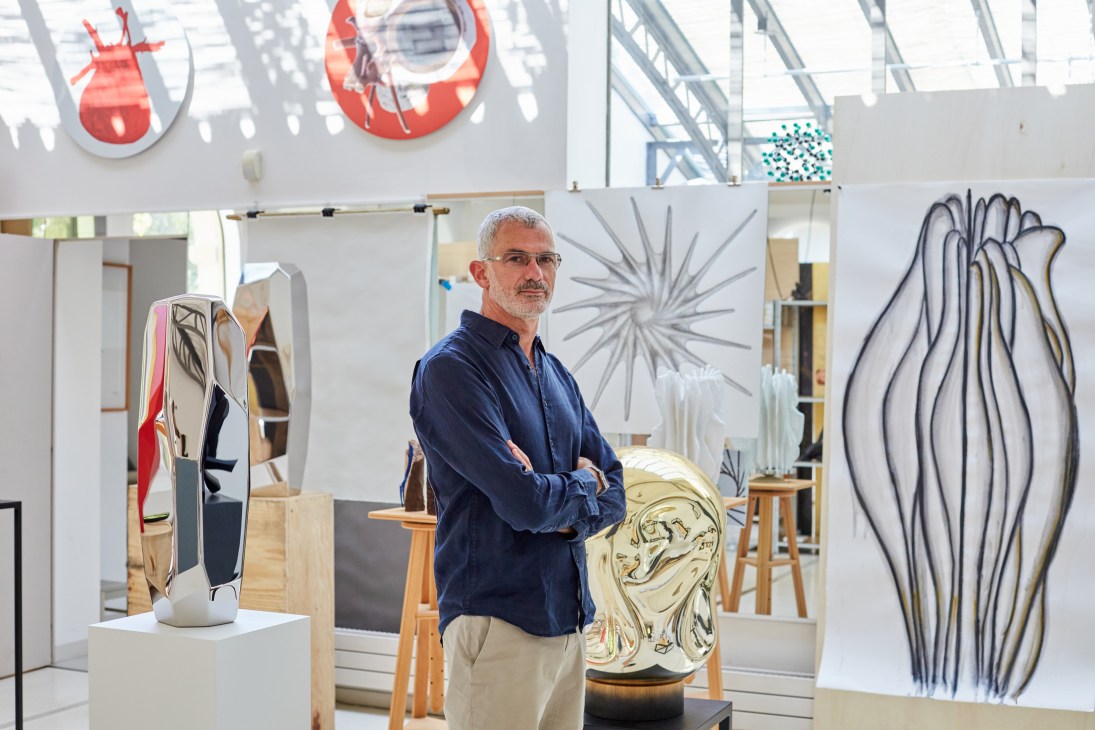
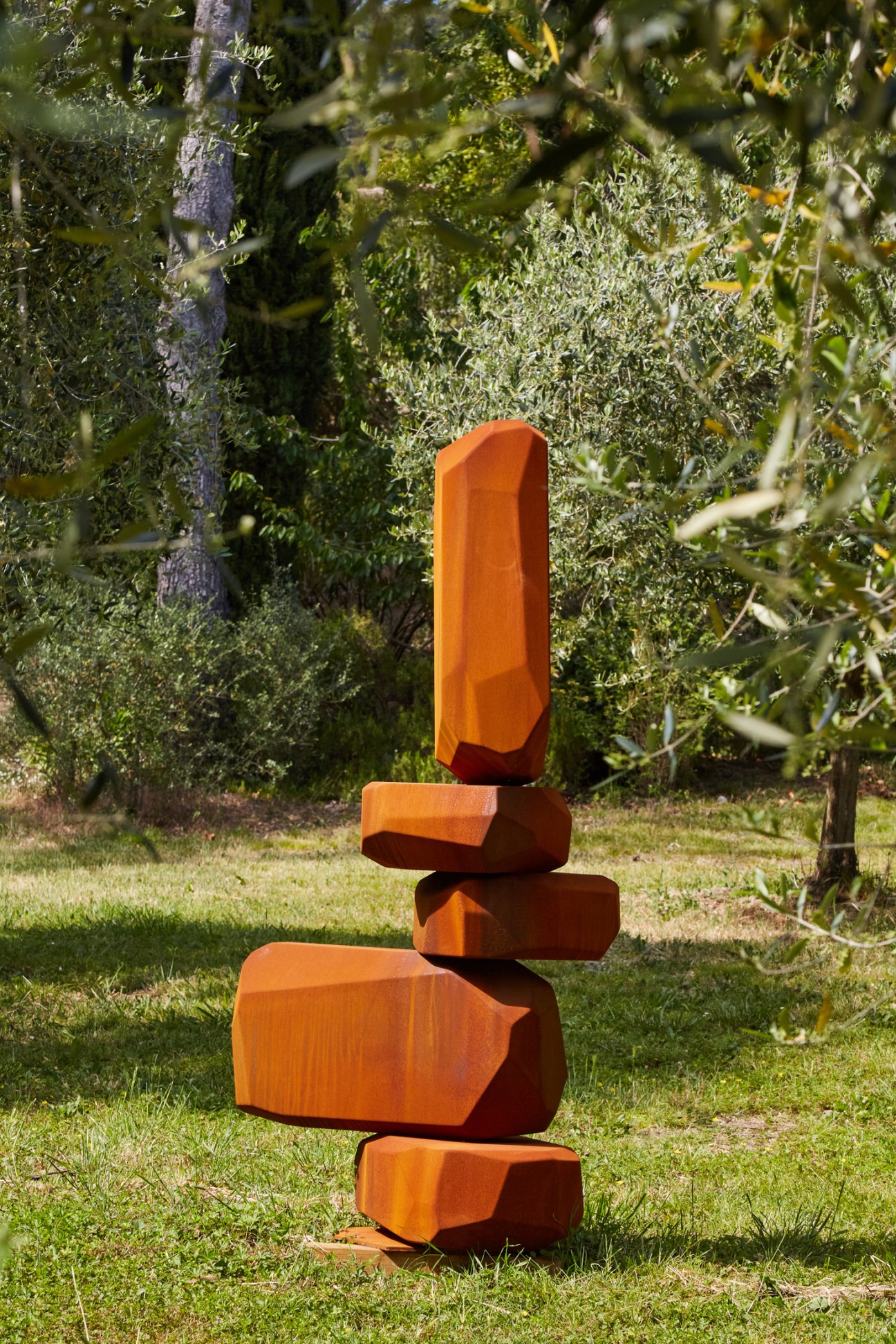
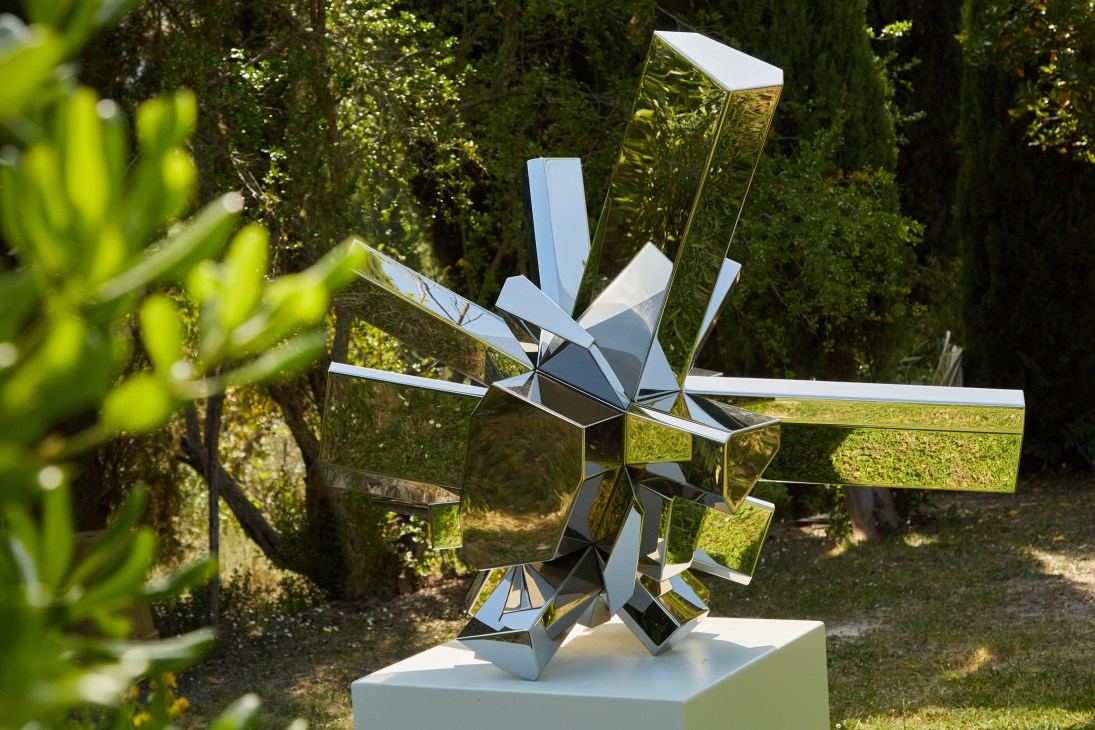
The house previously belonged to French ballerina Sylvie Guillem and her photographer husband Gilles Tapie. Her dance studio has now been repurposed as a space where Ouvrier can focus on her wood-based paintings and engravings and Levy on his geometric metallic sculptures. “It’s a dream for any artist to have this space, with 7 metre-high ceilings and windows that never end. It’s practical and inspiring,” says Levy. The house sits on a huge expanse of land, where Levy’s pieces, such as the towering “Micro Rocks Copper” and star-shaped “Rock Growth”, pop up between cypress, lemon and olive trees.
Levy and Ouvrier moved here two years ago, leaving Paris in search of a warmer climate and proximity to the sea. A self-professed beach bum from Tel-Aviv, Levy started his career painting and sculpting, then started using surfboards as his canvas and designing wetsuits. Today, other than working on his art pieces, he carries out design commissions for the likes of Swiss company Vitra, US office-furniture firm Coalesse and Spanish lighting brand Vibia. “I learned a lot from design,” he says. “Structural materials, physics, technology – I implement it into my art because it’s a tool. And vice versa, I enrich design with art.”
ariklevysculpturepark.com
Artipelag
Värmdö island, Sweden
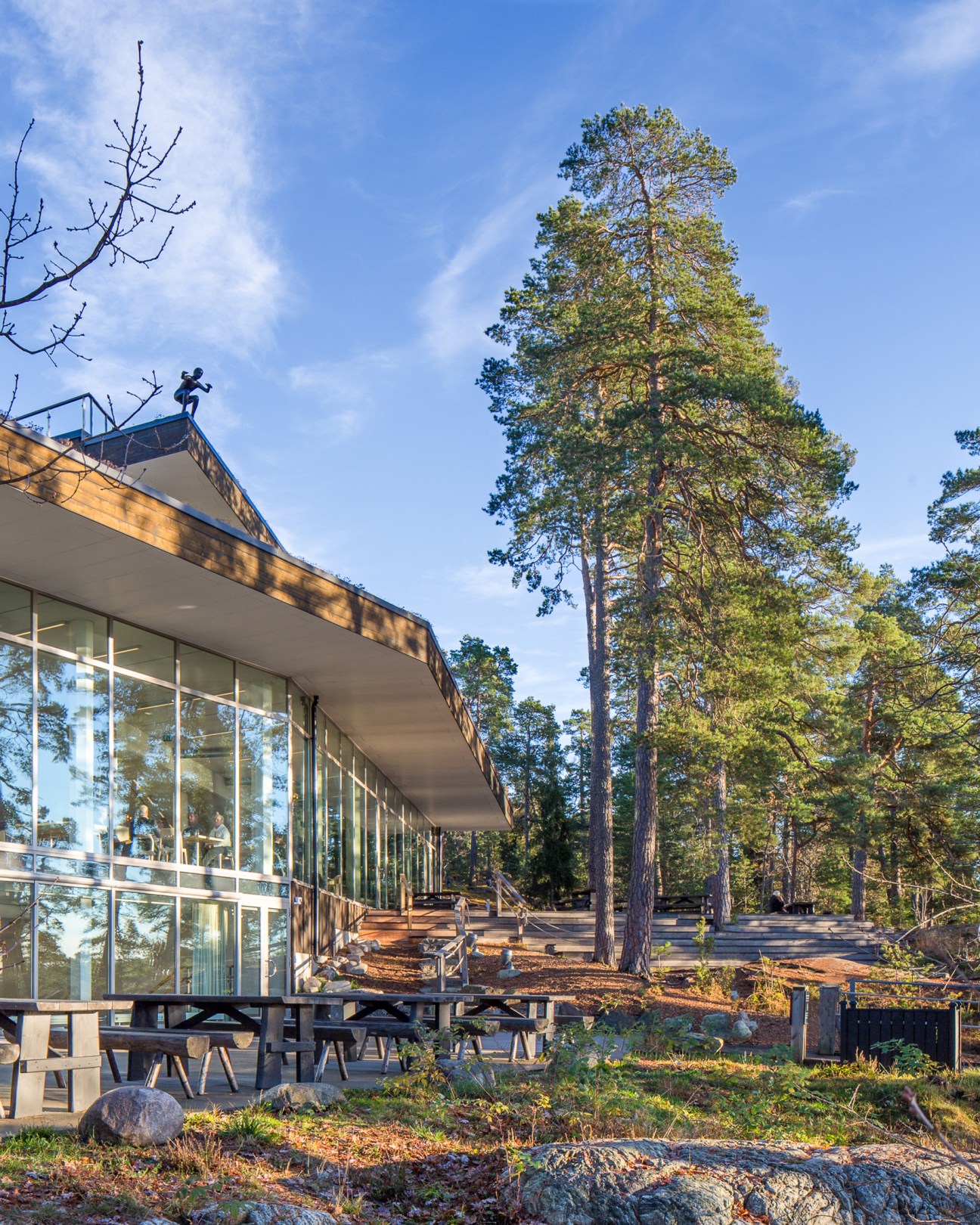
Just as its name suggests, Artipelag is an art institution set in the middle of an archipelago; its main venue sits on the island of Värmdö, in Baggen’s bay, a 90-minute boat ride from the centre of Stockholm. The building is embedded in a landscape of pine trees, granite rocks and rugged coastlines.
The works displayed inside are chosen because of how they explore people’s relationships with their natural surroundings. “We prefer to showcase art that has a connection to nature in one way or another,” says director Bo Nilsson. “Normally you refer to a gallery as a white cube but we call Artipelag the ‘green room’; nature tends to ease up the art experience for visitors.”
This summer, Artipelag is opening its largest exhibition so far. Essence-Eksistence, a solo show by German artist Anselm Kiefer, will coincide with the museum’s 10-year anniversary and will present paintings, sculptures and an installation that all reflect on German history and its effect on the environment. “Kiefer is obsessed with the destruction of the landscape. As he was born in 1945, he never experienced the war but as a child he experienced a ruinous landscape in Germany that was slowly turned into a new industrial society,” says Nilsson.
Besides an exhibition and event space with stunning views to the sea outside, there is an outdoor sculpture park which includes the recently added “Solar Egg” by Stockholm-based artist duo Bigert & Bergström: a huge, multi-faceted golden egg-shaped sculpture right by the waves. “It guides visitors to the museum like a lantern,” says Nilsson.
artipelag.se
Offtrack
Singapore
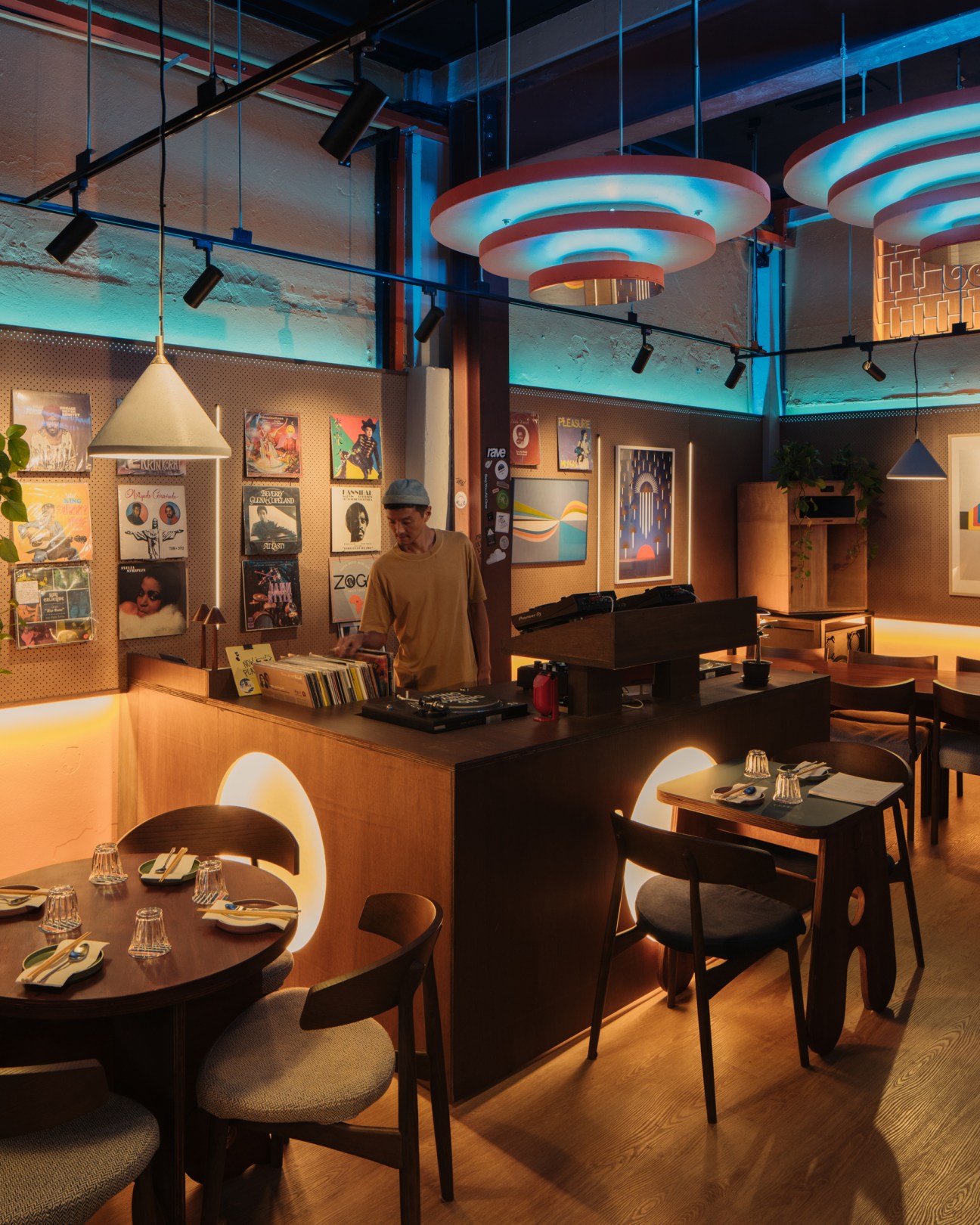
DJ Dean Chew and fellow audiophile Daniel O’Connor opened their listening bar-cum-restaurant Offtrack this year inside a shophouse that used to house a karaoke lounge. On this Friday evening, the free jazz of Alice Coltrane is drifting out of a restored set of hulking La Scala speakers made by US sound specialists Klipsch.
At the heart of this 40-seater venue is a DJ booth, backdropped by an eclectic, genre-bending collection of records; it reflects the wide range of music played by guest DJs and vinyl collectors who come and perform from all around the region. “We are community-centric,” says Chew. “This is our version of a social club without being members-only. It’s a space for people to meet and get inspired.”
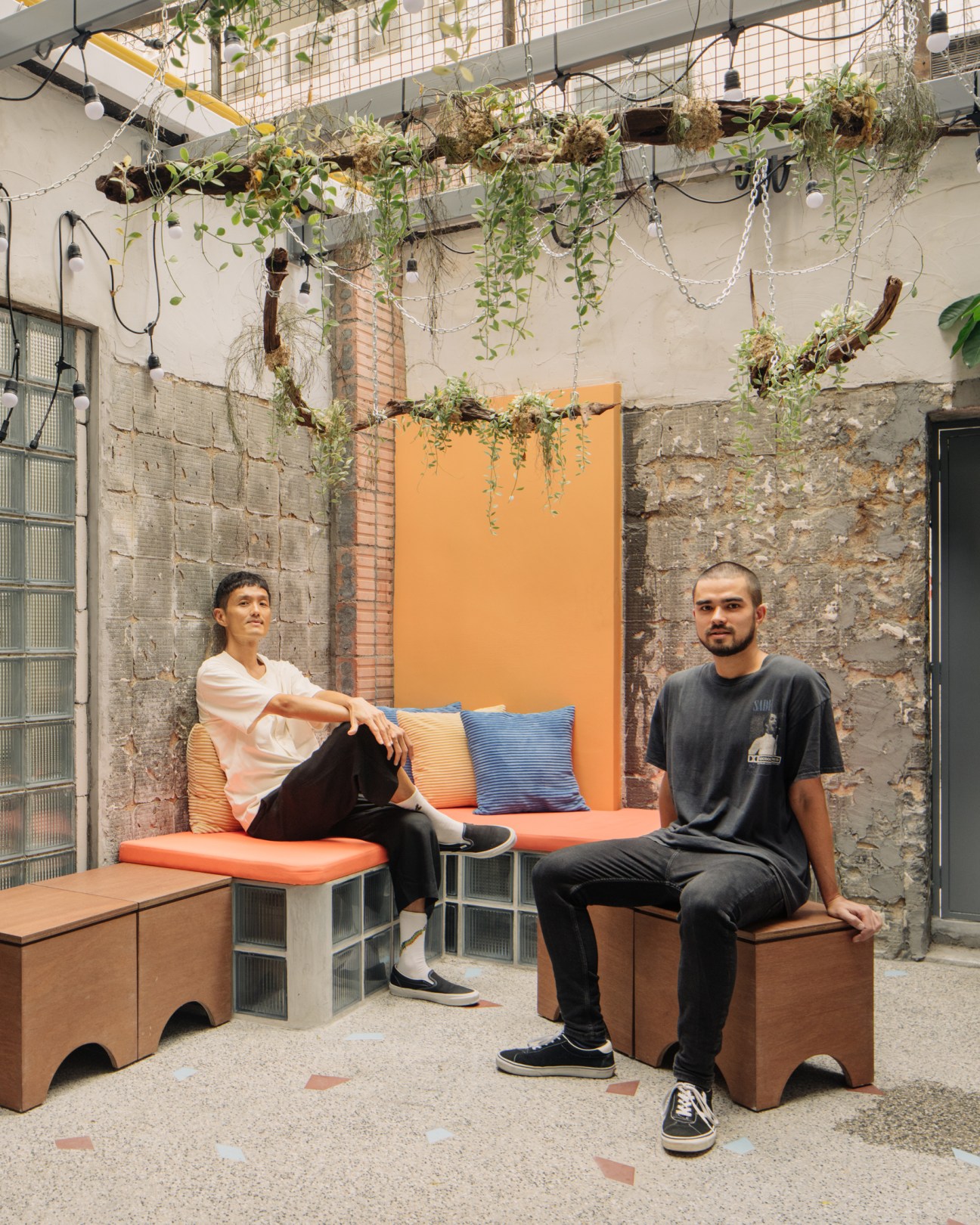
It’s a full house tonight. Many of the customers are friends: Chew and O’Connor have built a dedicated following over the years through their own independent ventures. While Chew is co-founder of electronic music label Darker Than Wax, O’Connor is behind Ice Cream Sundays, a music collective known for organising crowd-pleasing daytime jamborees. The pair have previously collaborated on gigs and parties, many of which were pop-ups. Having their own venue now feels like a dream come true.
“We want to use this space as an incubator,” says Chew. The plan is to bring together people who work across different disciplines and give them room to experiment and share their expertise; bartending and creative workshops are in the pipeline. The team is also working with curator Tulika Ahuja of Singaporean art consultancy Mama Magnet. “It is about expanding the community so we engage people beyond our own circles,” says Chew.
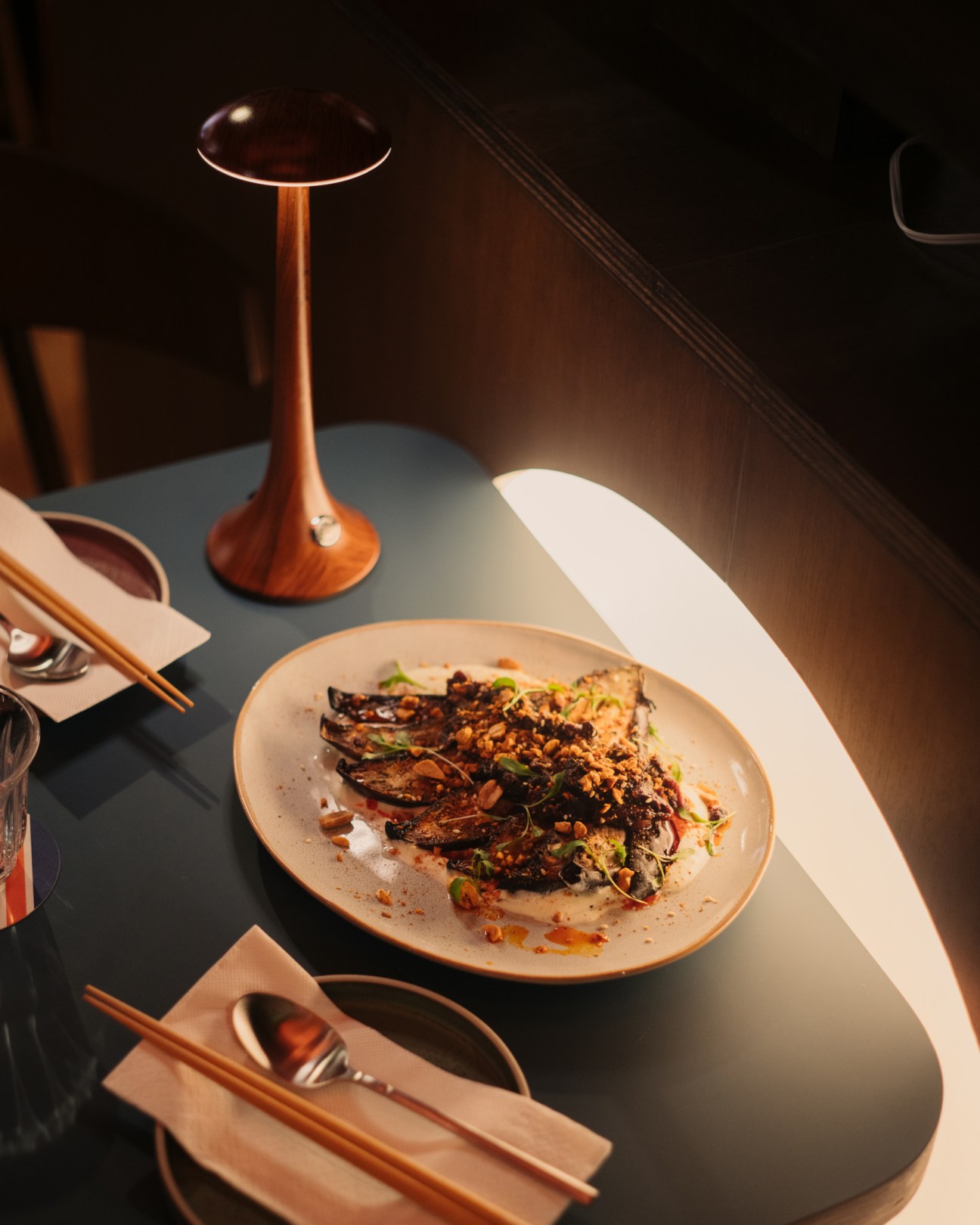
The kitchen at Offtrack whips up pan-Asian dishes such as charred aubergine with red-pepper sambal. Chew has designed the interiors so that the restaurant side of the venue doesn’t overshadow its artsy credentials. Japanese screens and custom furniture create an intimate space that encourages people to hang out. “We don’t want to become another typical F&B outlet,” he says.
offtrack.sg
Lusophonica
Cascais, Portugal
When Pedro Avillez Costa returned to his native Portugal in 2016 following a six-year stint in New York’s music industry, he had an idea: to launch a radio station that promoted the music of the Lusophone communities (something the acts in our report on Lisbon’s multicultural music scene on page 144 will be pleased to hear). “We wanted to connect Portuguese-speaking countries – compare musical tastes, discover new genres and create a platform for people to interact with,” says Costa, who co-founded Lusophonica Web Radio in 2020 with his long-time friend and DJ Nuno Rodrigues. The pair set up base beside the striking Santa Marta Lighthouse by the sea in Cascais. “It’s the perfect location – very close to Lisbon but not as urban – and the artistic community here is always developing,” says Costa.
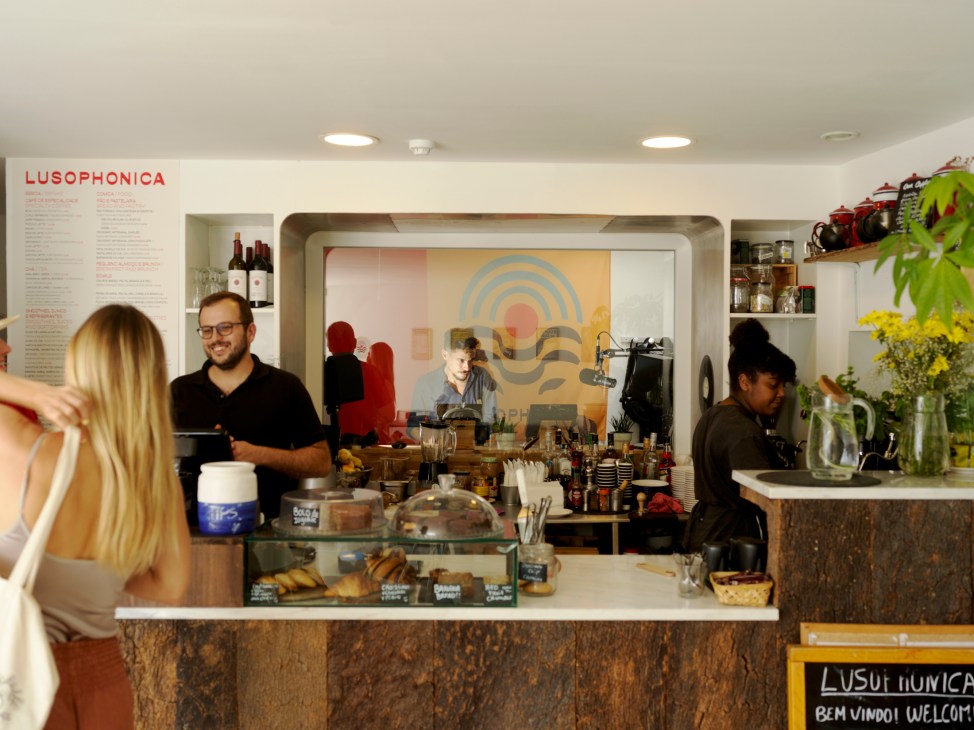
The small radio studio is also home to an airy café and, on sunny days, the Lusophonica beats can be heard across the forecourt, where visitors enjoy views of the Atlantic ocean while they sip coffee. “The main idea was always the radio but we had to figure out a way to pay for it,” says Costa. “We wanted to learn from each of the countries directly and give them a voice. I’m proud that we’re helping the community thrive.”
lusophonica.com
Rupture Records
Paris
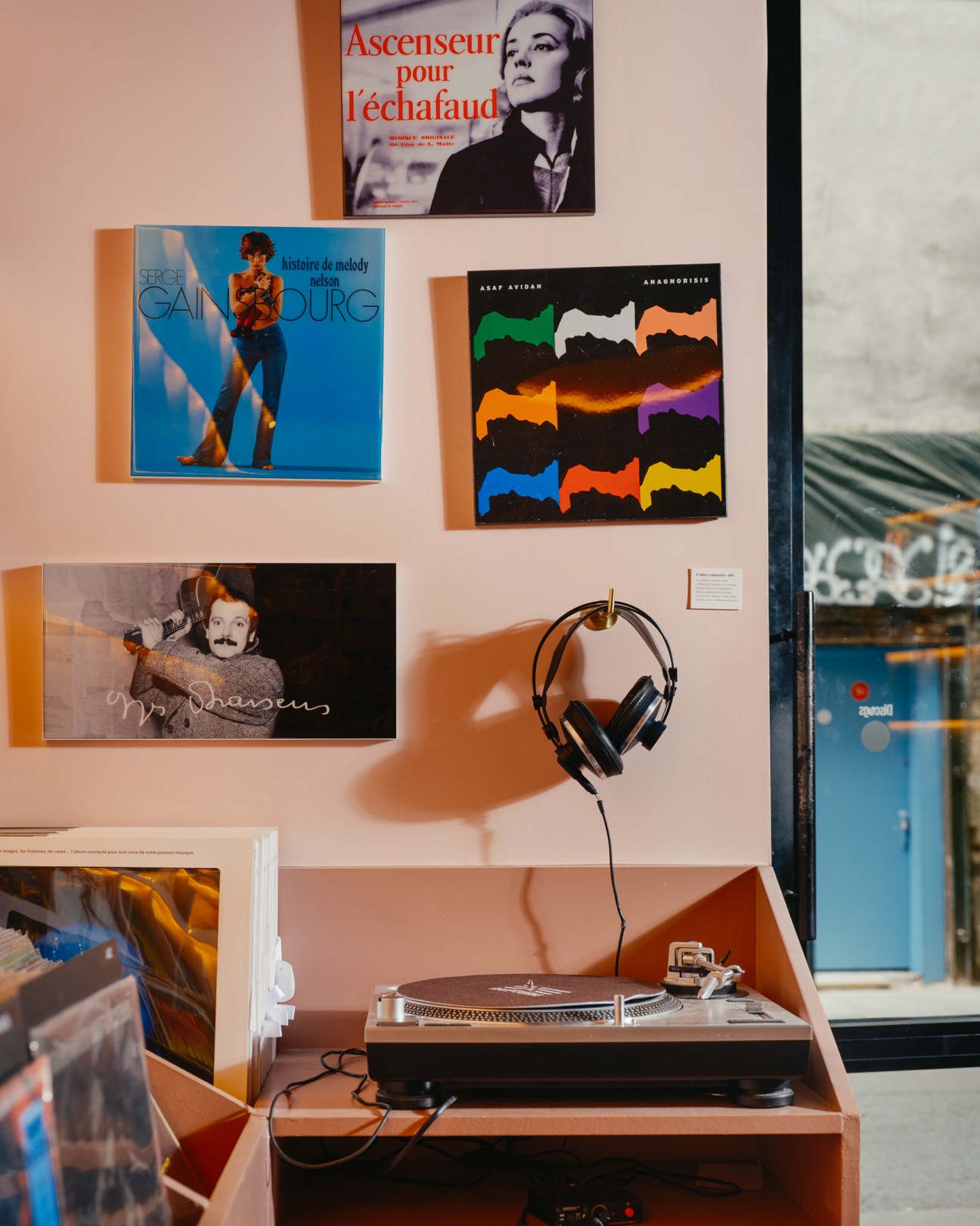
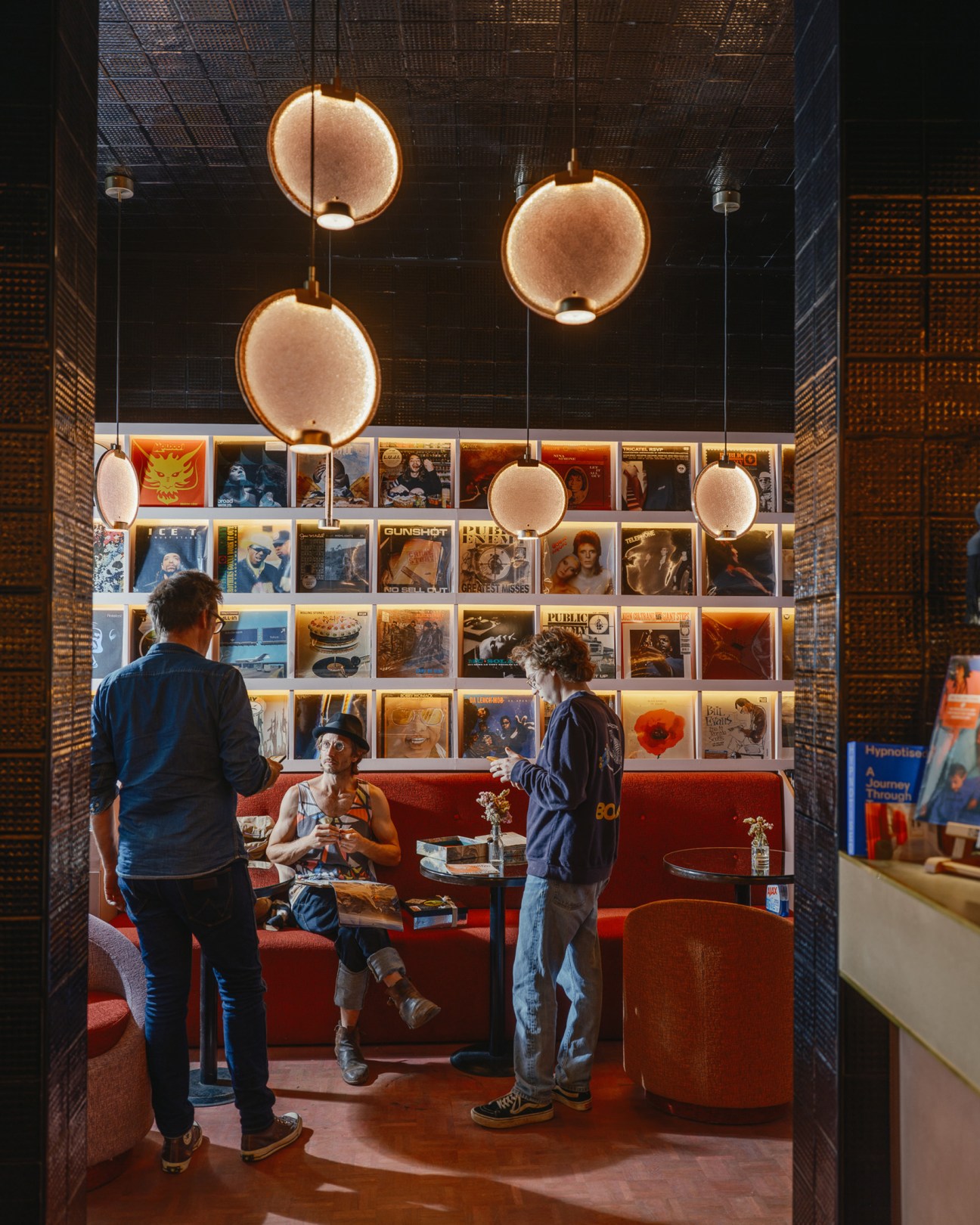
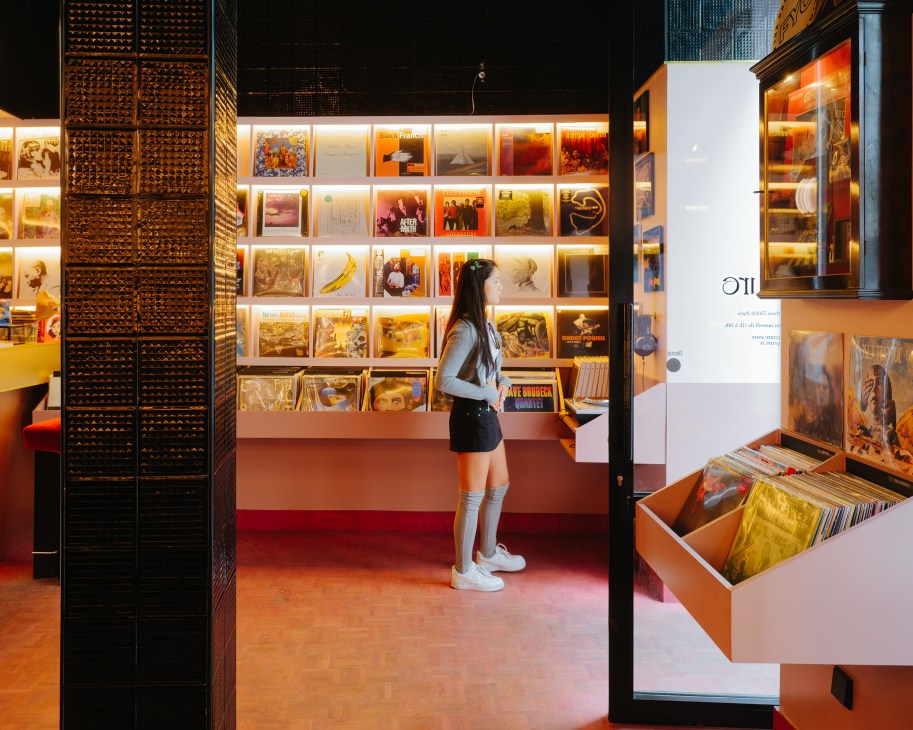
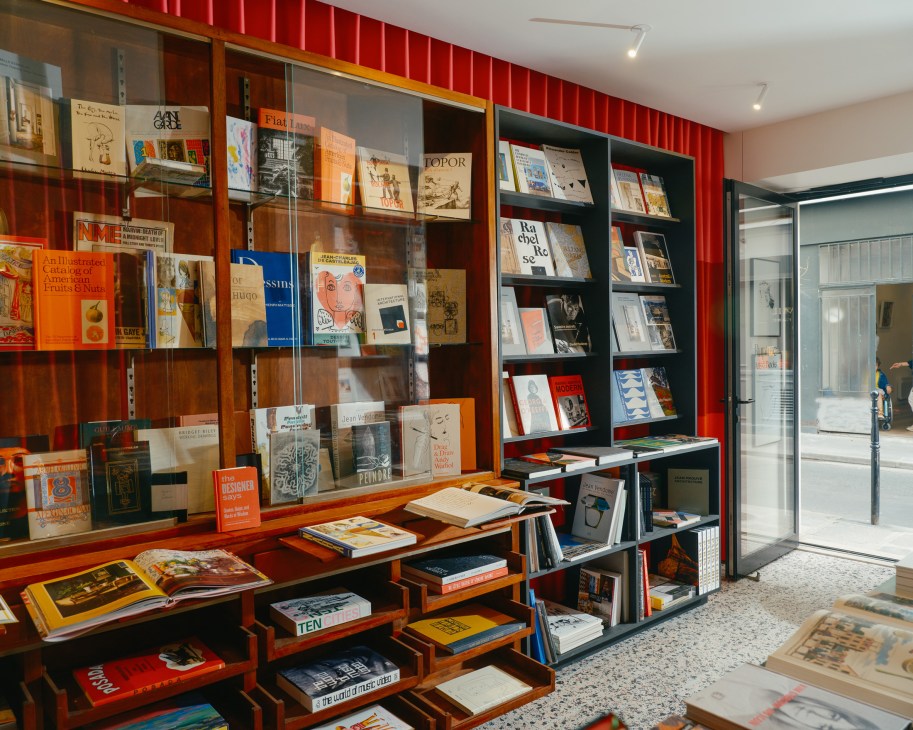
Last year, entrepreneur Alexandre Sap gave fellow Frenchman and architect Pierre Gonalons carte blanche to execute his vision for a vinyl shop in Paris’s chic Haut Marais neighbourhood. The result is decor inspired by the luxurious general goods shop Drugstore Publicis in Saint-Germain-des-Prés, with pink parquet, velvet Paradisoterrestre chairs and rich textiles from Hermès’s textile division Métaphores, evoking 1970s Paris. “There’s a touch of Serge Gainsbourg in the black glass tiles,” says Sap. “My record shop might not be the biggest one in Paris but it is the most beautiful,” he adds proudly. Rupture is also a café, bar and office for Sap’s communications agency and music label, where he receives clients and musicians for an apéro. “Instead of having a boring corporate office, why not create a lifestyle?” he says. Visitors can browse vintage vinyl rarities alongside the latest releases while sipping on a rosé and requesting records to be played on the speakers. Across the road a Rupture bookshop has swiftly followed and Sap has expanded to Marseille, with a location in Venice opening later this year. “I want to make people discover new things,” he says. “I don’t treat people like algorithms and I can’t track them beforehand. I feel a social responsibility to create a link between people and culture.”
rupture.TV
Deep
Marseille
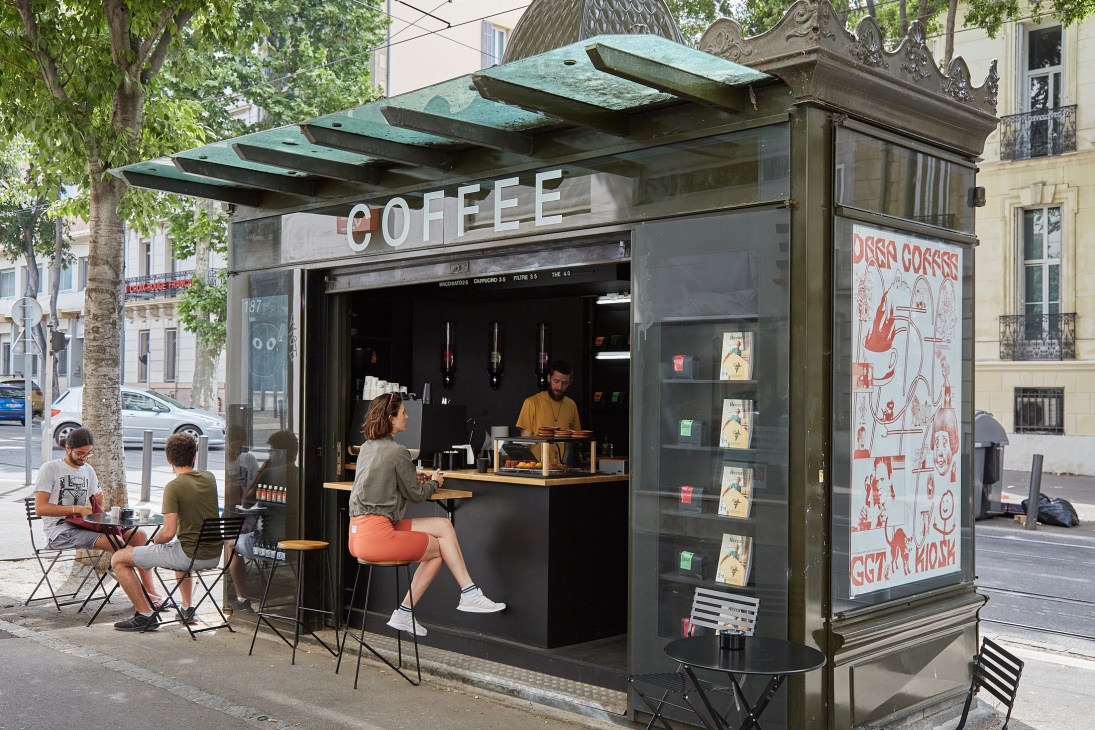
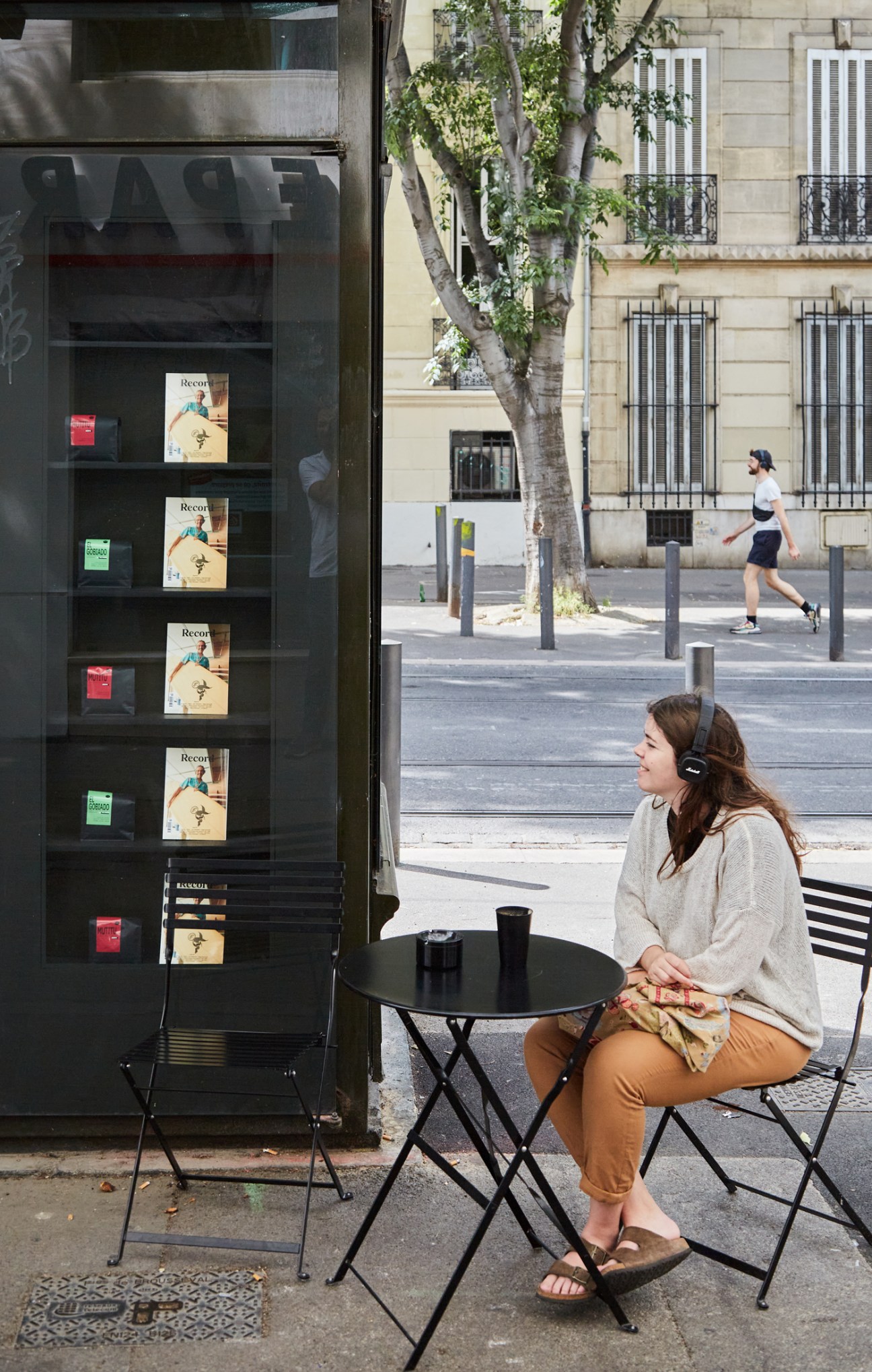
“When we had the idea to turn an old newspaper kiosk into a coffee shop, we wanted to stay true to the DNA of the venue,” says Tony Collins, co-founder of Marseille-based coffee roaster Deep. Since March his kiosk, the small sister to Deep’s main café near the city’s Vieux Port, is supplying the Camas neighbourhood with speciality coffee and independent magazines from France and beyond, including South Korea’s surfing magazine Stoned, Canadian food title Serviette and, perhaps unsurprisingly, the coffee-themed Drift. Unlike most newsagents, Deep’s kiosk spotlights a different title every month, selling its entire back catalogue (stock permitting). “This gives our customers the chance to get their hands on rare and difficult-to-find past issues,” says Collins. This July, French travel magazine Les Others is taking centre stage, followed by UK photography journal Off the Rails. Pick up a cup of Deep’s own cold drip and take your print bounty down to the corniche.
deep.coffee
Paperground
Madrid
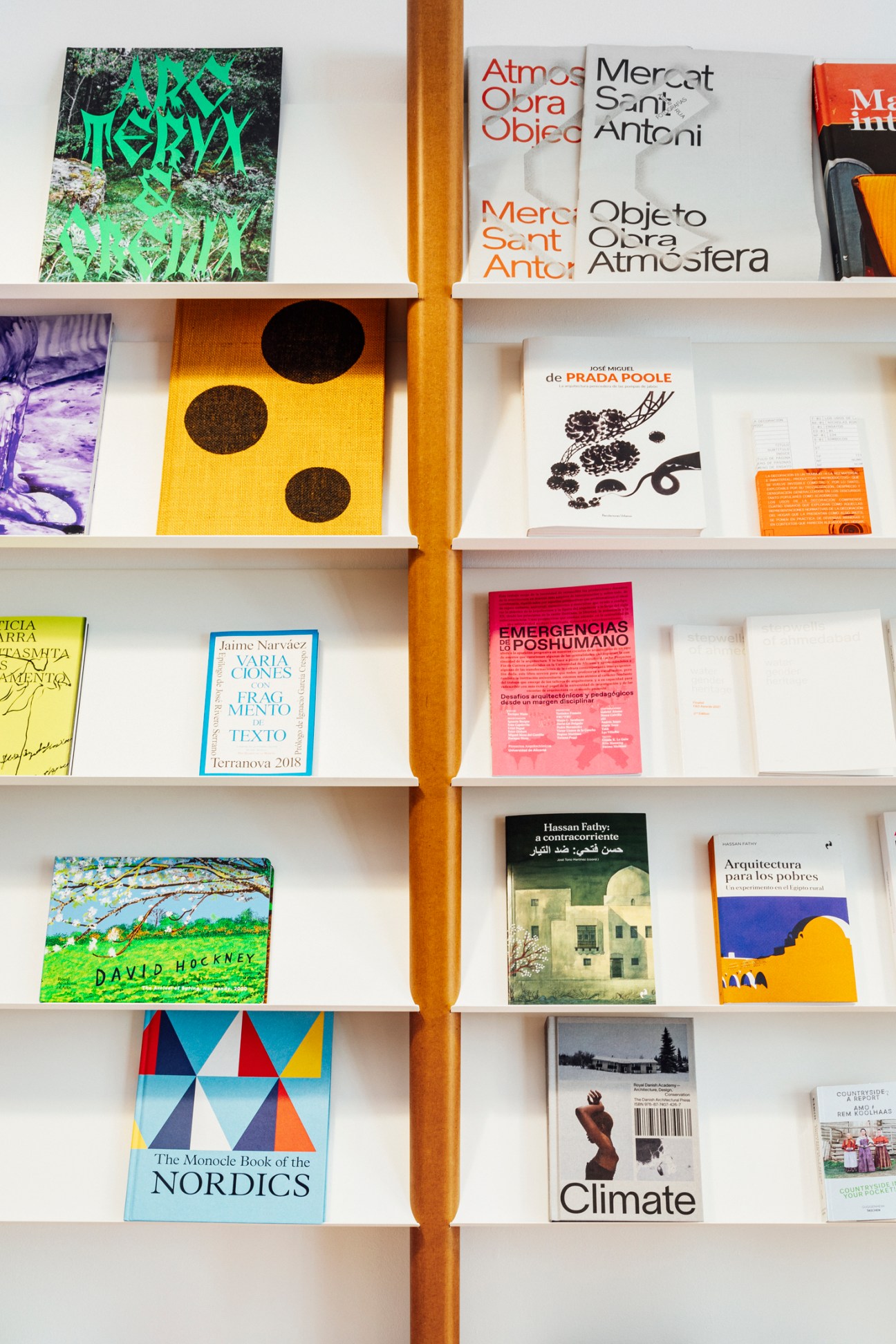
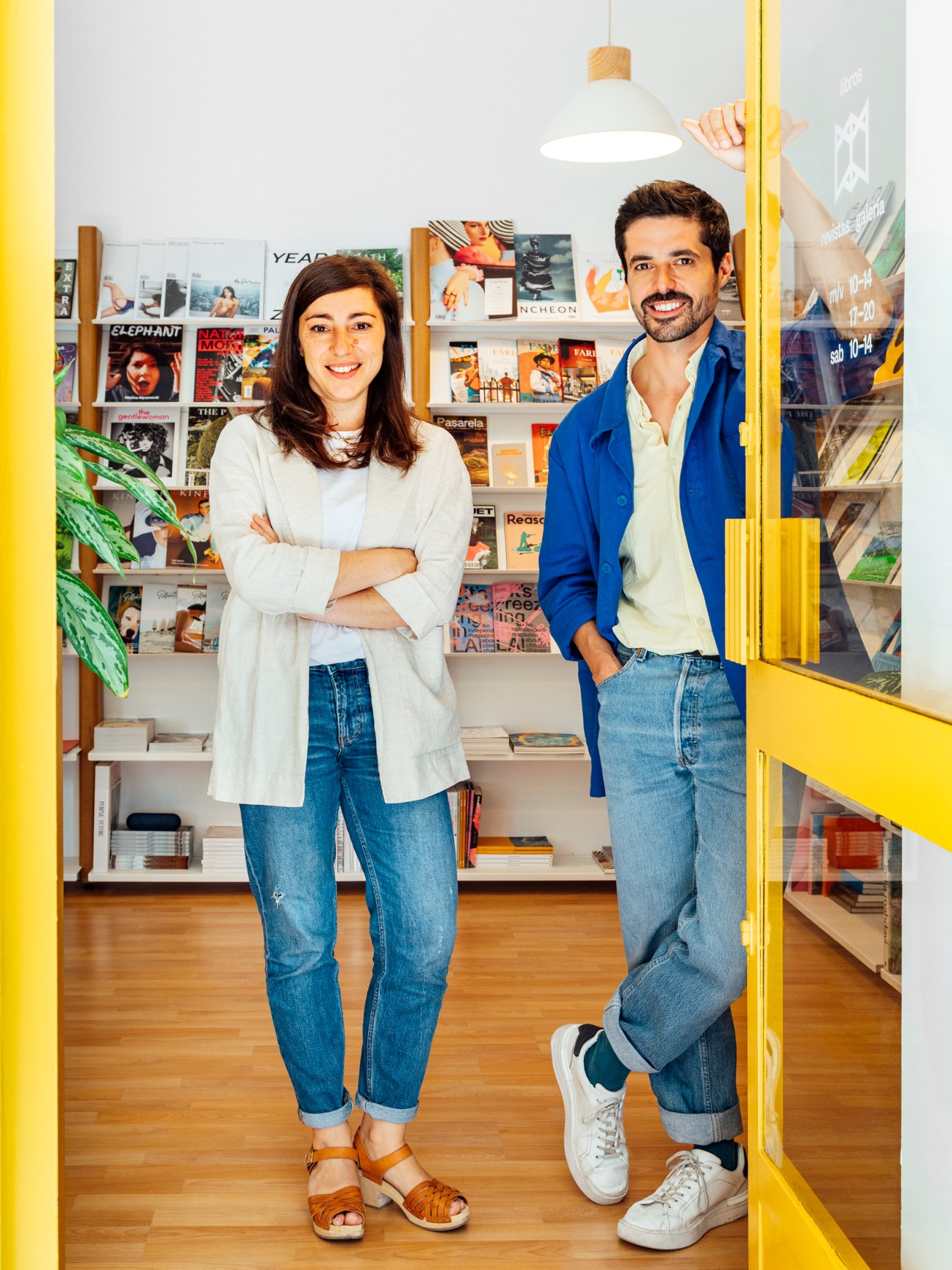
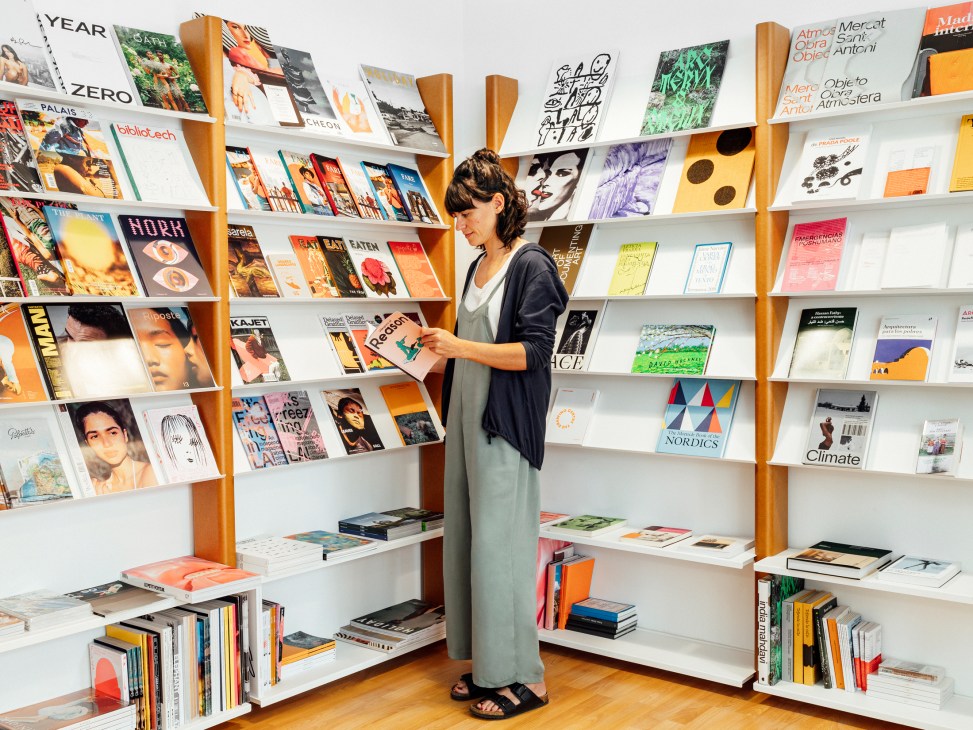
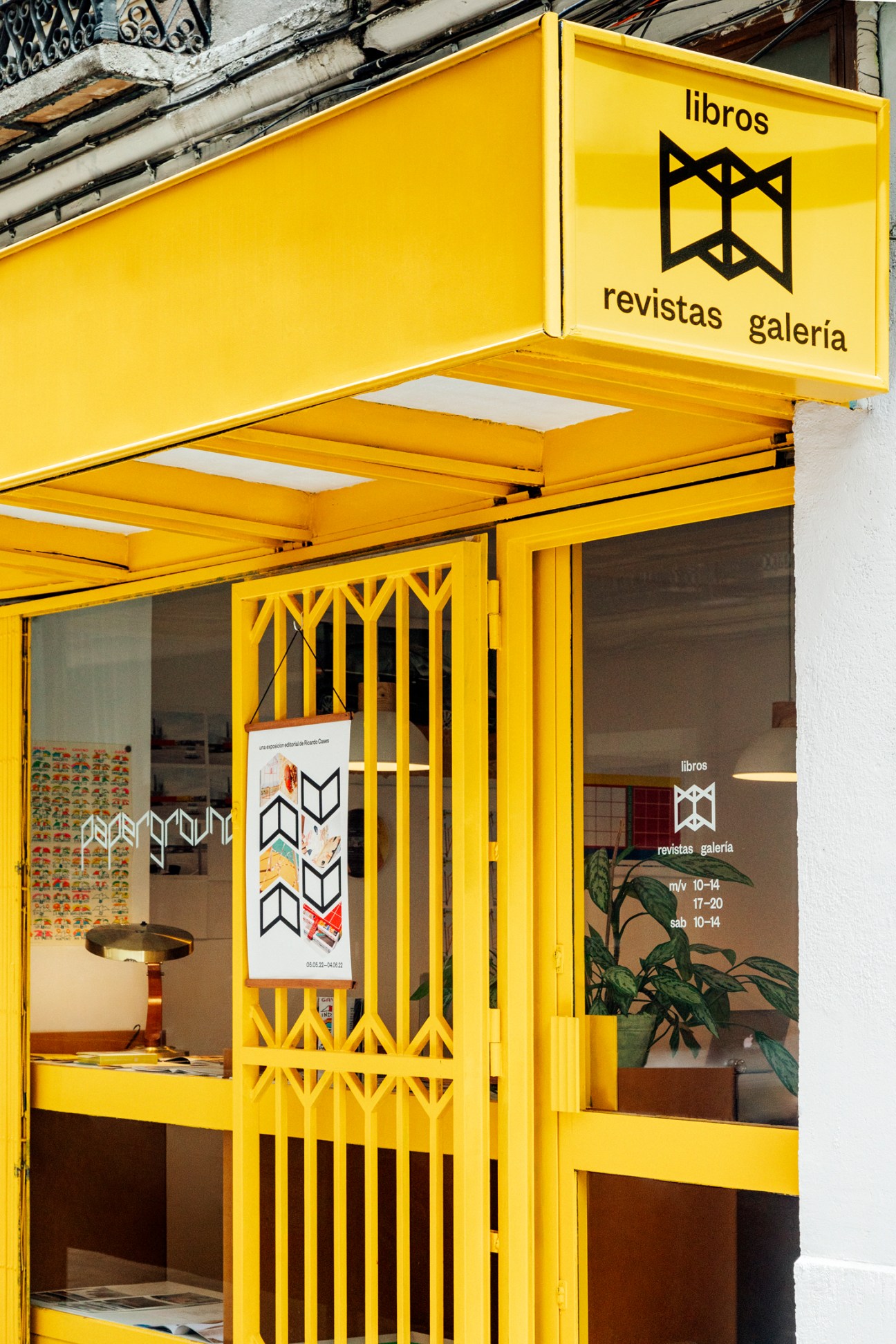
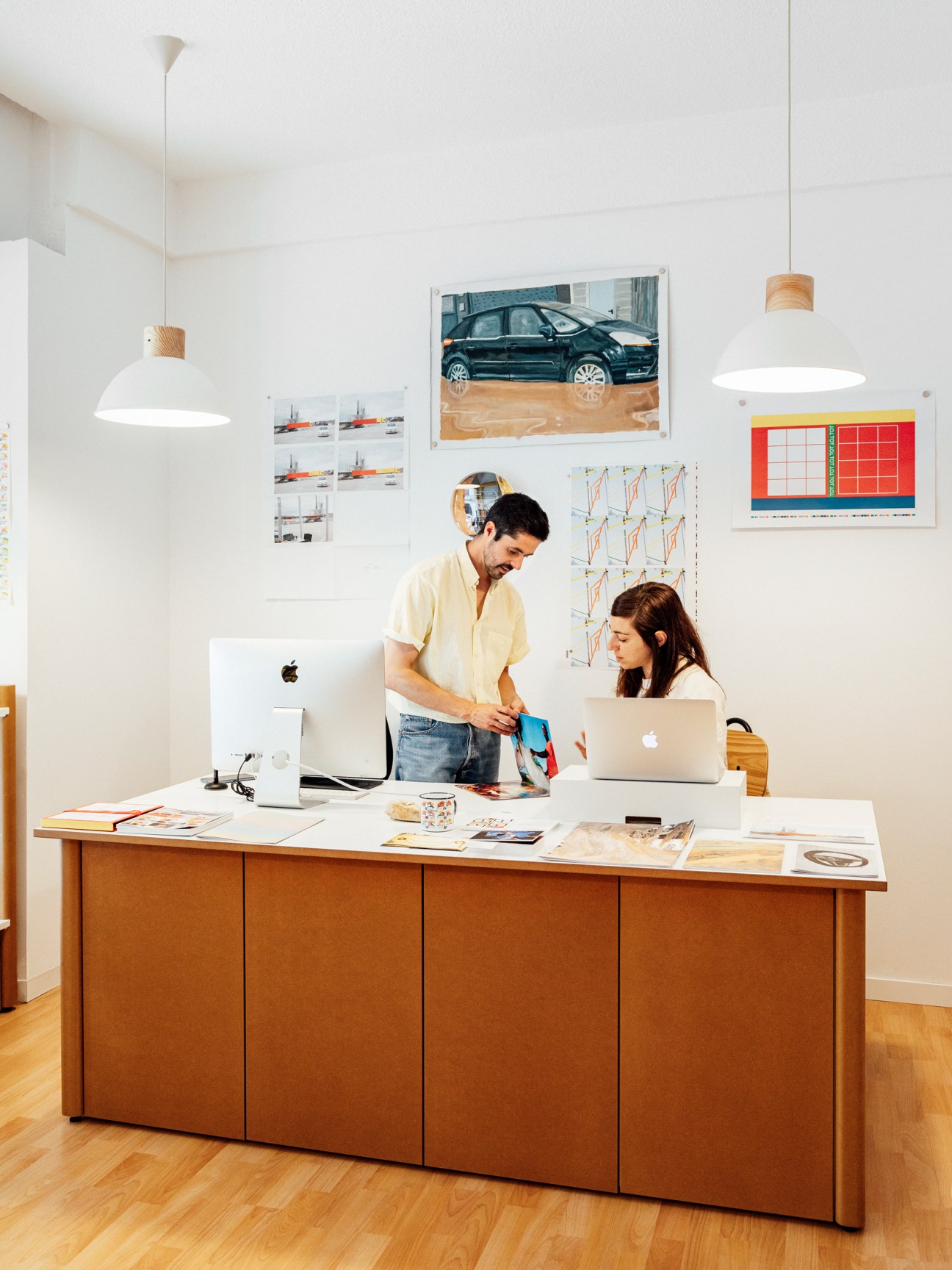
Paperground, an excellent new addition to the independent retail scene in the northern Madrid neighbourhood of Chamberí, opened its doors in May. Inside the striking yellow-fronted magazine and book shop, shoppers can choose from global publications such as Turkish bathing magazine Hamam to British slow-news quarterly Delayed Gratification. There’s also a selection of books focusing on art and design that showcases young Spanish publishers such as Terranova and Dalpine. Behind the shop are Margherita Visentini, a journalist and editor of Polpettas on Paper magazine, and Asier Rua, a photographer who also runs his own publishing business, Rua Ediciones. “Spain’s independent publishing scene has really grown over the past few years,” says Rua. “Paperground is a way of celebrating that.”
Calle de Medellín 4
Ypsigrock
Sicily
Ypsigrock, a small but exciting Sicilian event set in the medieval hilltop village of Castelbuono, is celebrating its 25th anniversary this year and is holding on to its reputation as a place to discover the best, cutting-edge independent acts from Italy and beyond. Co-founder Vincenzo Barreca reveals what’s on the cards for this year’s event.
What makes Ypsigrock special?
As well as the artists’ quality, Ypsigrock mixes an intimate atmosphere with a historic location. All of the performances are within walking distance of each other with ice cream or bowls of pasta in between. The early-morning stage is in the mountainous pinewoods overlooking the town.
What can visitors expect?
A warm welcome, outstanding gastronomy and stunning surroundings.
What are this year’s highlights?
We’re particularly excited to welcome The Flaming Lips, 2manydjs, Self Esteem and Anna B Savage. We also have some of the most interesting up-and-coming Italian acts. Over the years, we have welcomed artists from Iosonouncane to La Rappresentante di Lista and many more. This year we’re also teaming up with UK independent record label Bella Union, who are celebrating their 25th anniversary as well. So it’s a double 25th: a Festa Bellissima!
Ypsigrock runs 4-7 August;
ypsigrock.it
Screen time
1.
Cool for cats
Cinema Neko, Tokyo
Yasuhiro Kikuchi is standing in the sunshine, surveying the unusual duck-egg blue exterior of his 63-seat cinema in the far west of Tokyo. “The building is a registered historic property, so we had to stick with the original colour,” he says. Cinema Neko (Cinema Cat) opened last summer in an old silk factory in Ome, a town once famed for its lively movie scene. During the postwar years, there were three cinemas close to the station and the streets were plastered with hand-painted film posters by billboard artist Bankan Kubo.
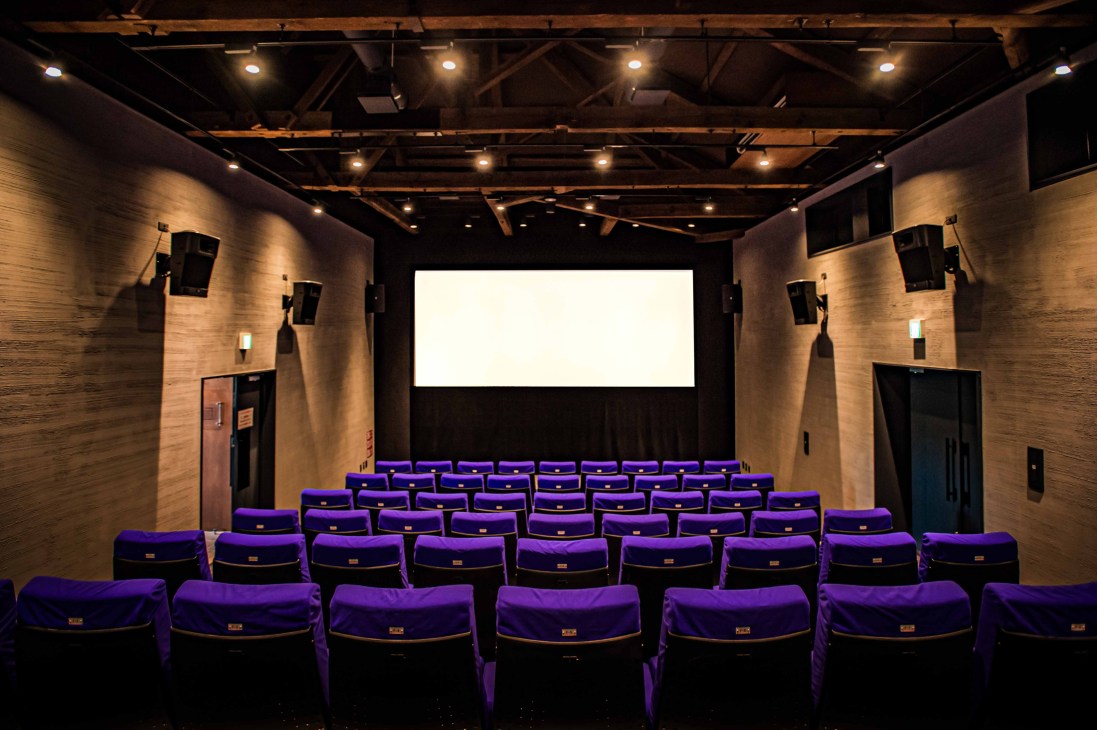
Kikuchi had his heart set on giving his hometown a cinema worthy of its history. The old wooden building had been given a lifeless interior makeover. With architect Ao Ikegami on board, the new project started coming to life.
The bill for the renovation and equipment was ¥100m (€760,000); Kikuchi invested his own money, bolstered it with crowdfunding and the rest was covered by a government subsidy. Ikegami ripped out the plaster ceilings and exposed the roof beams; he made a feature of the old wooden panelling and let the light pour into the café and lobby through high windows.
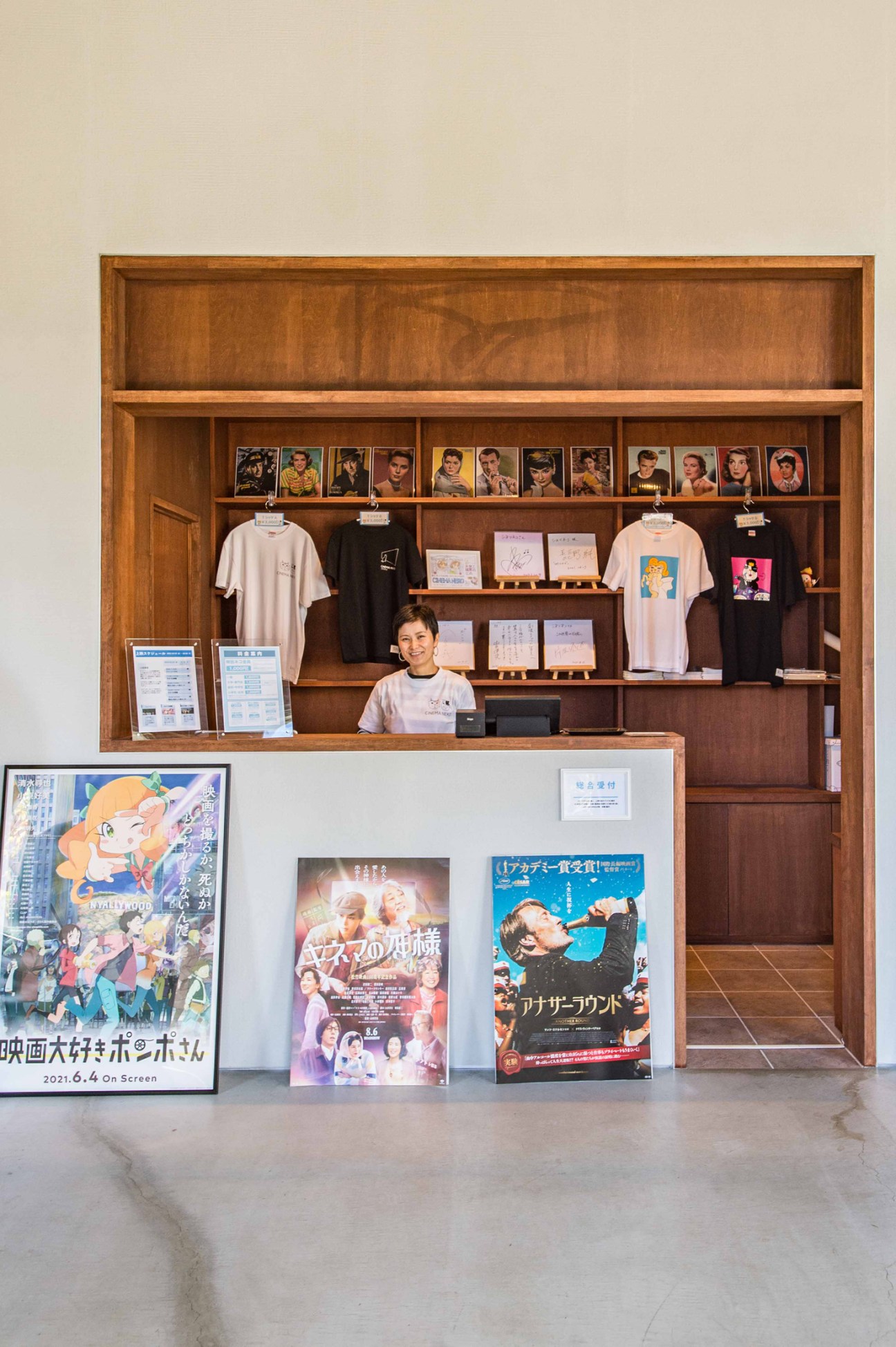
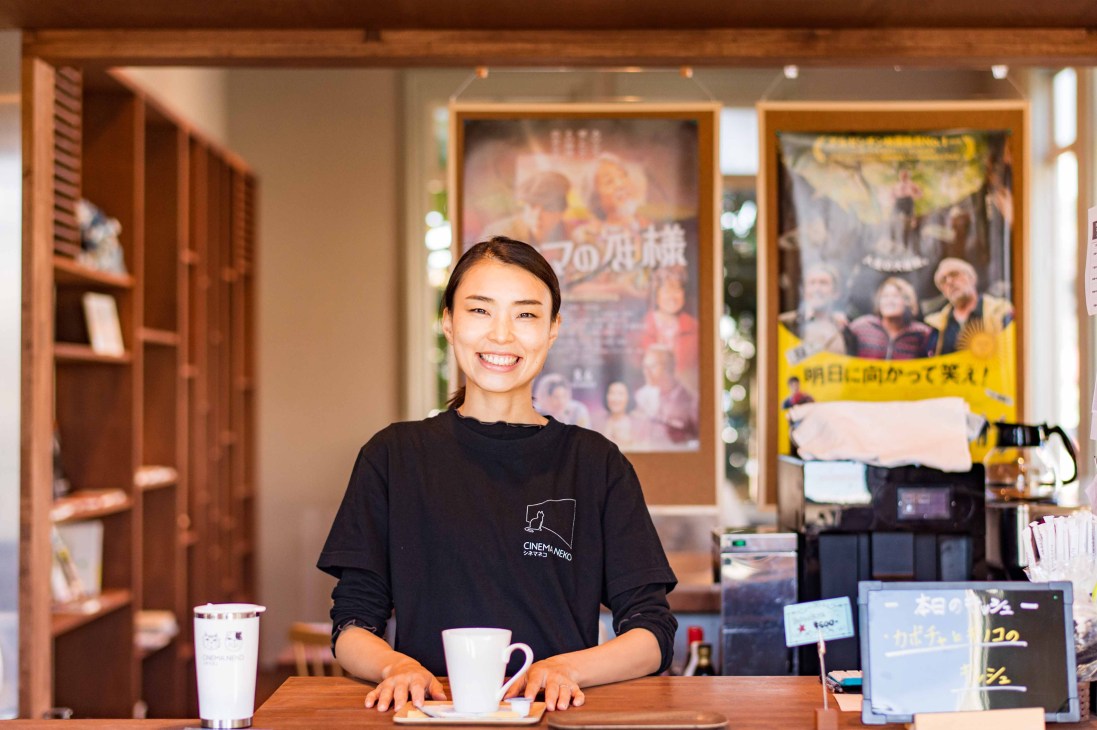
The cinema has been greeted with open arms: 700 people have signed up to become members. Kikuchi welcomes school parties, introducing them to the pleasures of cinema. The schedule changes fortnightly with three different screenings a day. The roster is a mix of classics, documentaries, new releases and European arthouse fare. Visitors are also encouraged to make suggestions.
The cinema’s name comes from another former feature of Ome: cats. They used to be everywhere, keeping tabs on the rodent population that was attracted by the silkworms. Kikuchi pulled off a coup for the official opening with a screening of Studio Ghibli’s classic The Cat Returns. “Everyone said it would be impossible to get permission to show it but I wrote a letter to Hayao Miyazaki [Ghibli co-founder] and he said yes.”
Kikuchi is passionate about the power of cinema. “We live in an age when you can see films whenever and wherever you like but going to the cinema is a special experience that is detached from everyday life.”
cinema-neko.com
2.
Collective impact
Alhambra, Marseille
Could there be a more fitting address for one of Marseille’s most storied movie theatres than Rue du Cinéma? Generations of Marseillais have discovered the magic of cinema at the Alhambra. Built in 1928, its façade with ochre-yellow accents is unchanged. The Alhambra was the childhood haunt of film director Robert Guédiguian, whose movies about his hometown have won international acclaim. Retrospectives of his work, as well as showings of films by French directors such as Hafsia Herzi, drew crowds who swelled with local pride.
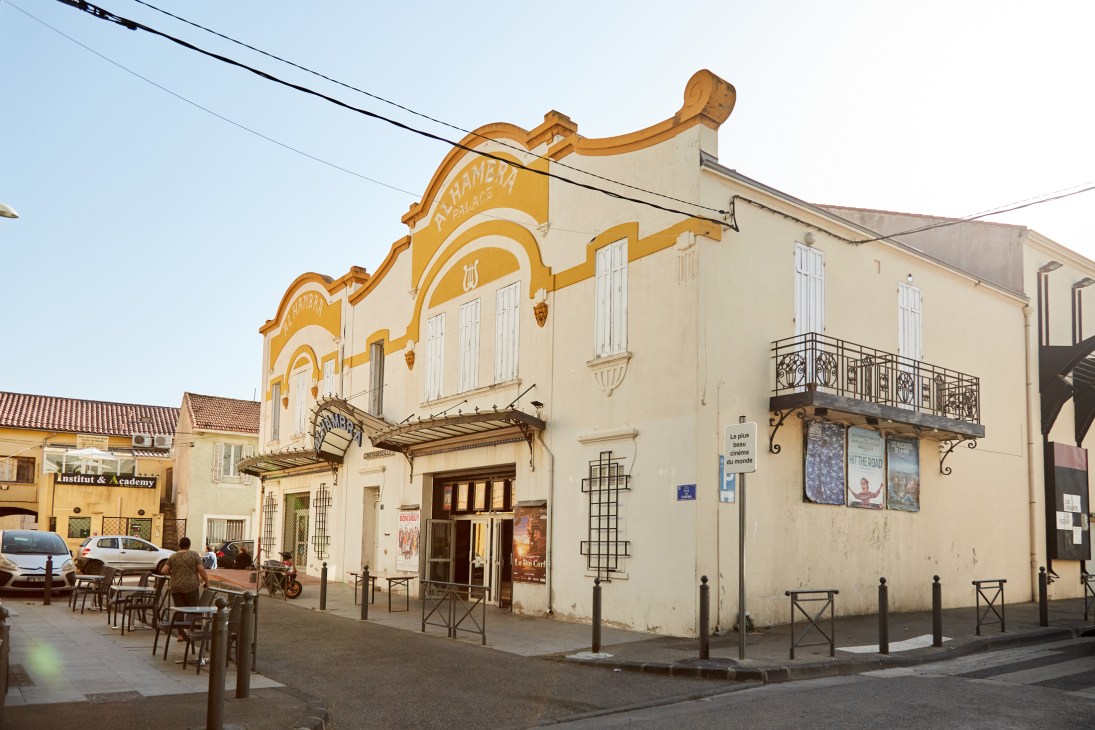
After closing down in 1980, the theatre reopened in 1990 and is today owned by the city and run by a non-profit organisation. “We see this as much more than a cinema,” says its director, William Benedetto. On summer evenings, audiences spill out onto Rue du Cinéma, having an apèro at the bar opposite. Sometimes there is live music or karaoke – and often that means dancing.
Convinced that cinema can change lives, Benedetto has reached out to nearby schools, some of which are in France’s most deprived neighbourhoods. “I believe that the collective experience of discovering a movie in a room with other people is even more essential in a world where people, particularly the younger generation, spend more and more time alone,” he says. “Young people can discover movies they might not otherwise encounter, including films about their own city.”
Cinema can play an important role in fostering social cohesion – and the Alhambra can be a model for communities in Marseille and beyond.
alhambracine.com
3.
Independent means
Sine Pop, Manila
Ancestral houses in Metro Manila are typically refurbished into trendy cafés but Carlson Chan had a different idea when he acquired a 1948 home from its longtime owners of almost 70 years. He opened a cinema.
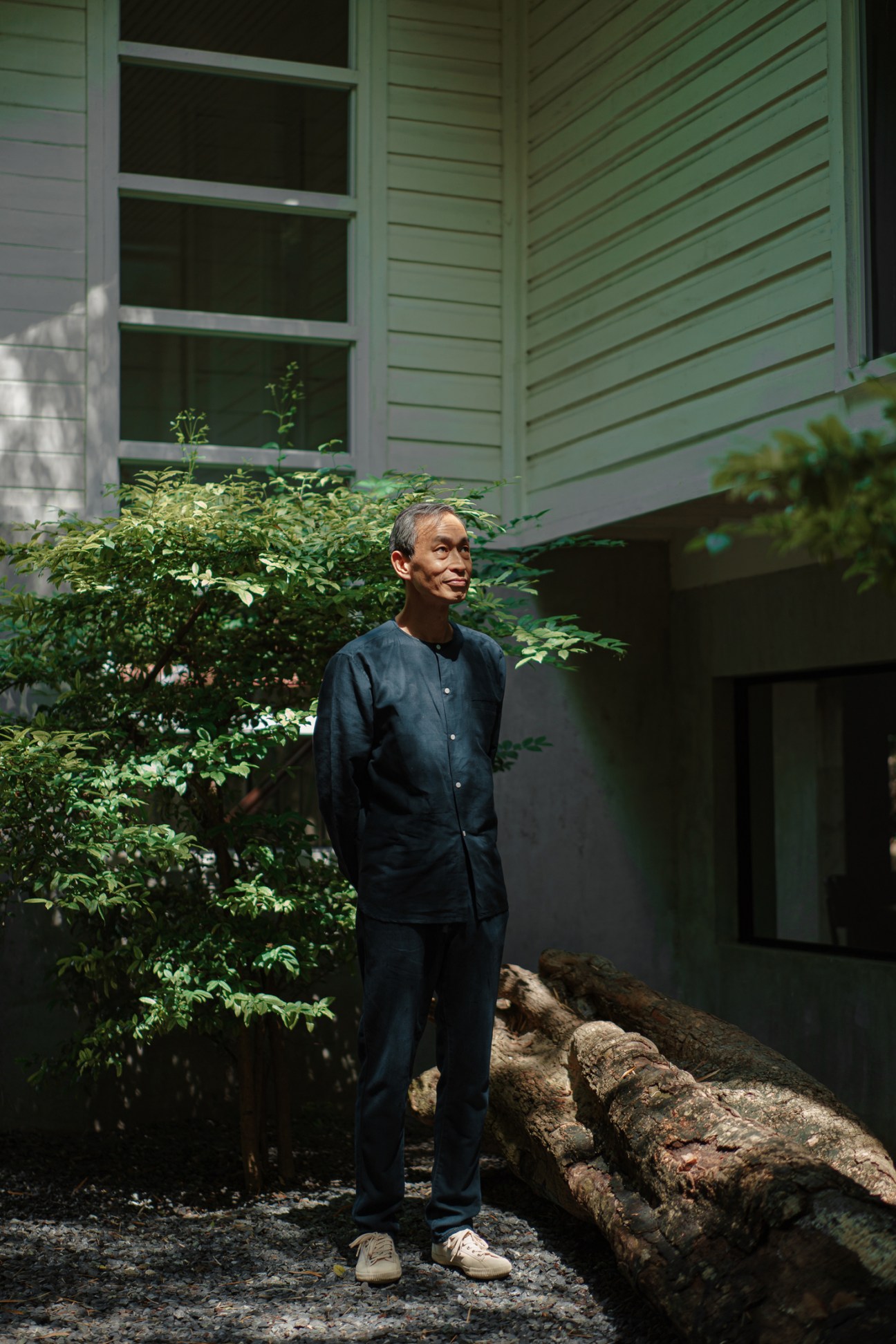
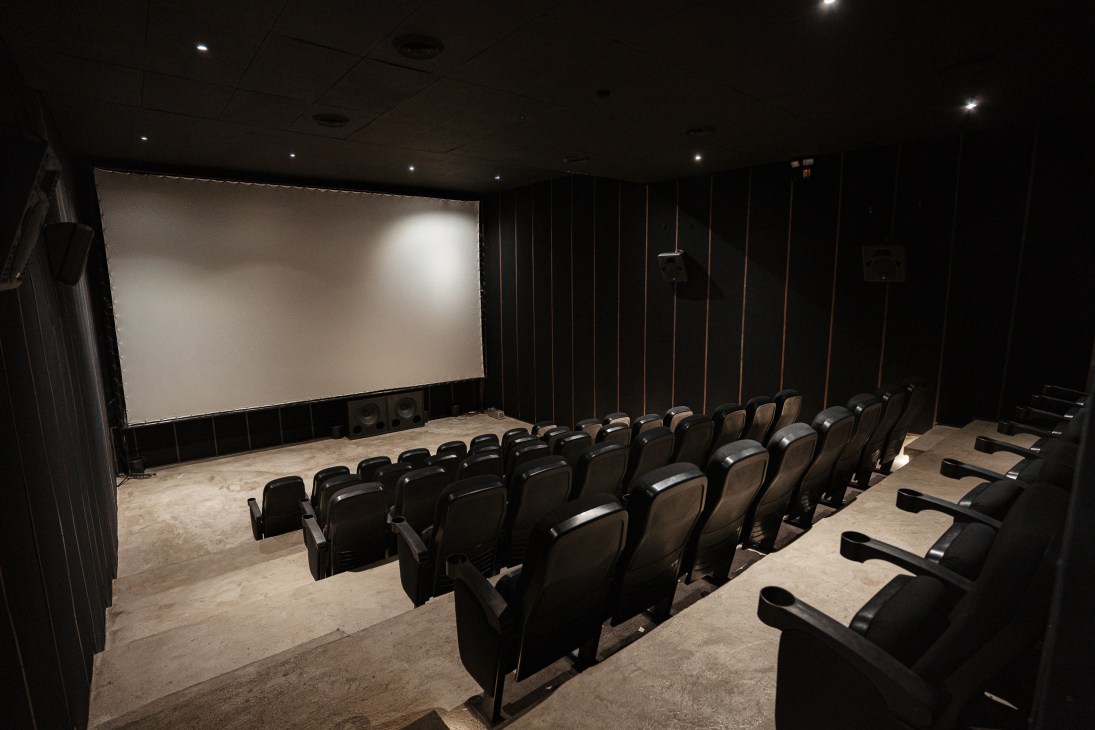
Micro-cinema Sine Pop blends the old with the new in its minimalist design, which maintains most of the house’s original structure to preserve its storied past but Chan has also added a lush bamboo garden to bring a touch of greenery to the venue. The cinema’s austere simplicity is inspired by the Japanese wabi-sabi philosophy of purity and deliberate imperfection (though budget constraints also played a role in its sparse aesthetics).
“We want to show that heritage conservation doesn’t need to be expensive,” says Chan. “We splurged only on the concrete works and cinema equipment.”
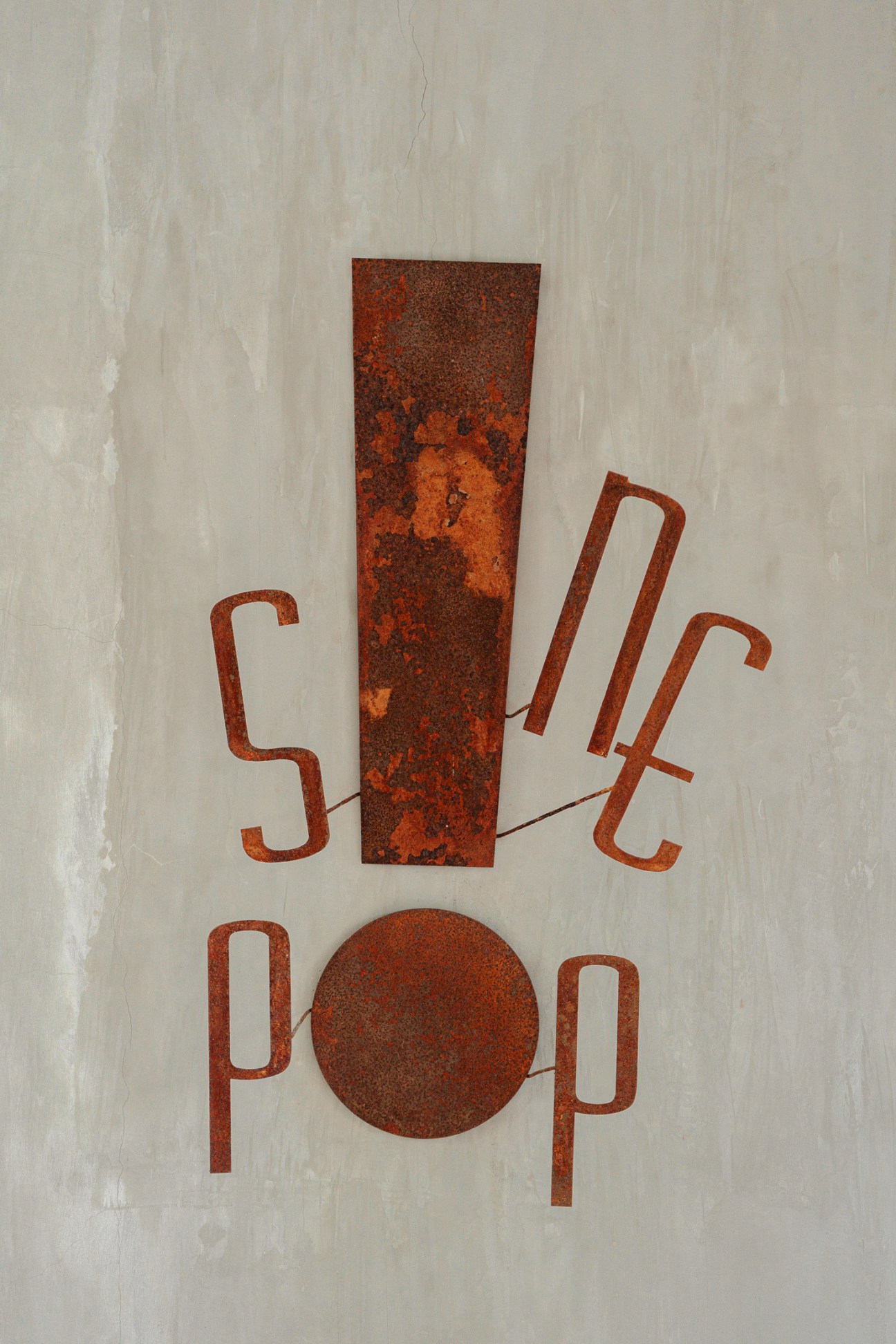
Sine Pop had its first screening in 2020, showing Norte, The End of History, a psychological drama by critically acclaimed Filipino director Lavrente Diaz; the 48-seater cinema makes a point of supporting independent films.
“Micro-cinemas are necessary to maximise the reach of independent local films,” says Chan. He is also realistic and resourceful when it comes to keeping the business healthy. “For a cinema our size to survive, we cannot rely on ticket sales and food-service income; we cater to the private-events market, while continuing our advocacy for free public screenings too,” he says.
14 St Mary Street, Quezon City, Manila
Follow your art
“Marseille has always sparked an interest in artists,” says Véronique Collard Bovy, the CEO of Fræme, which produces the city’s contemporary art fair Art-o-rama. We are sitting on a terrace at the Friche la Belle de Mai, a former tobacco factory turned cultural hub where her show takes place every year. From this spot, with its bird’s-eye view of the city, it’s easy to see why. France’s grittiest and most multicultural city might have long-standing issues but it’s a place of stunning beauty with a white limestone coastline, turquoise waters and jaw-dropping sunsets. In the past decade a wave of businesses – in sectors ranging from food to hospitality – has helped to turn its reputation around. Now there is a widespread feeling that it is reaching a tipping point in matters of art too. According to the national statistics bureau of France, about 10,500 young creatives move to the city every year, mainly from Paris, seeking low rents and a slower pace of life.
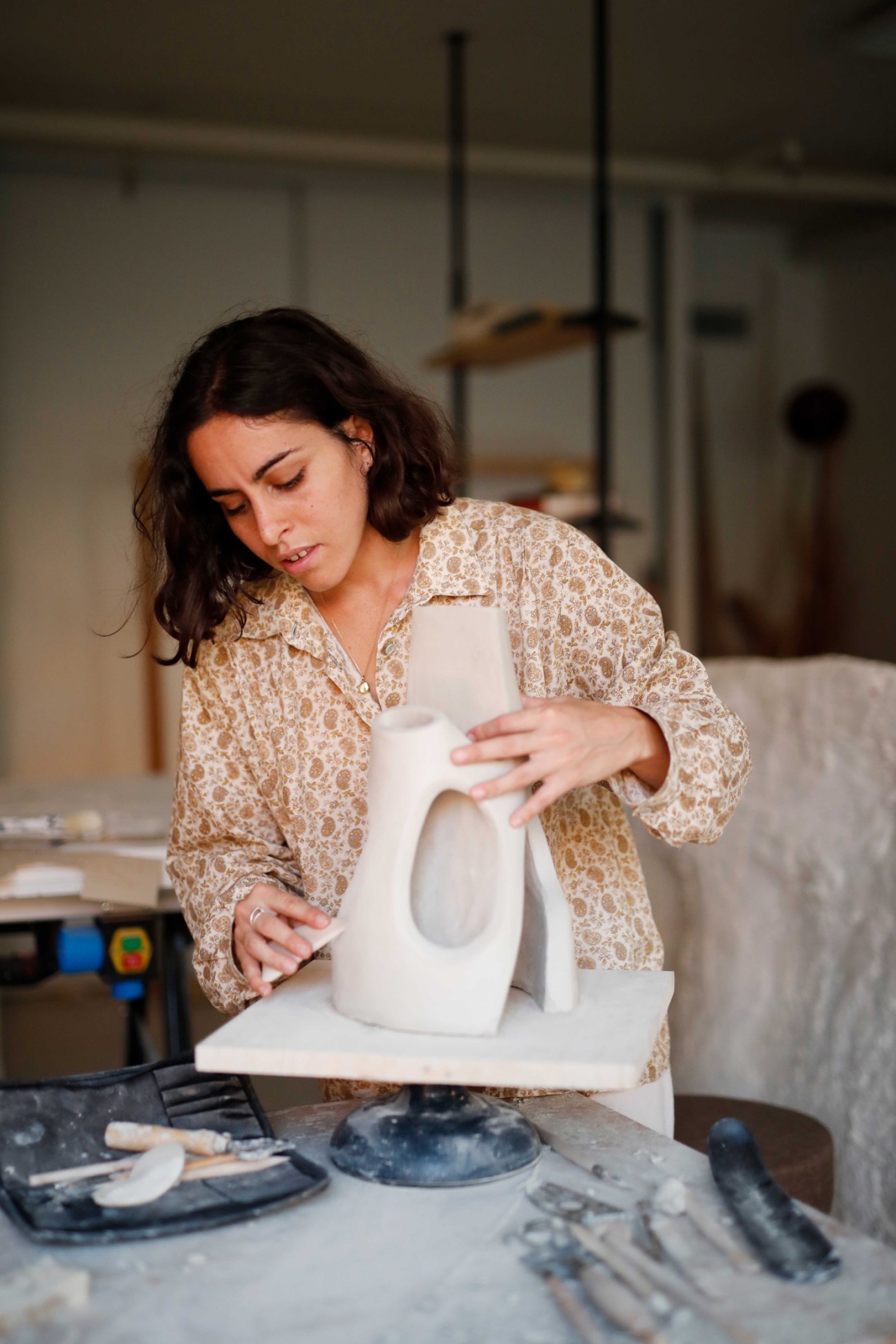
“In the past two or three years, entire classes from art schools across France, such as Nice’s Villa Arson, have shown up in Marseille straight after graduation,” says Nicolas Veidig-Favarel, the young director of Double V Gallery, which he founded in 2016. “It’s very fertile territory for creation because the city is affordable and a pleasant place to live,” he says. “At the same time, it’s the second biggest city in France and a Mediterranean capital.”
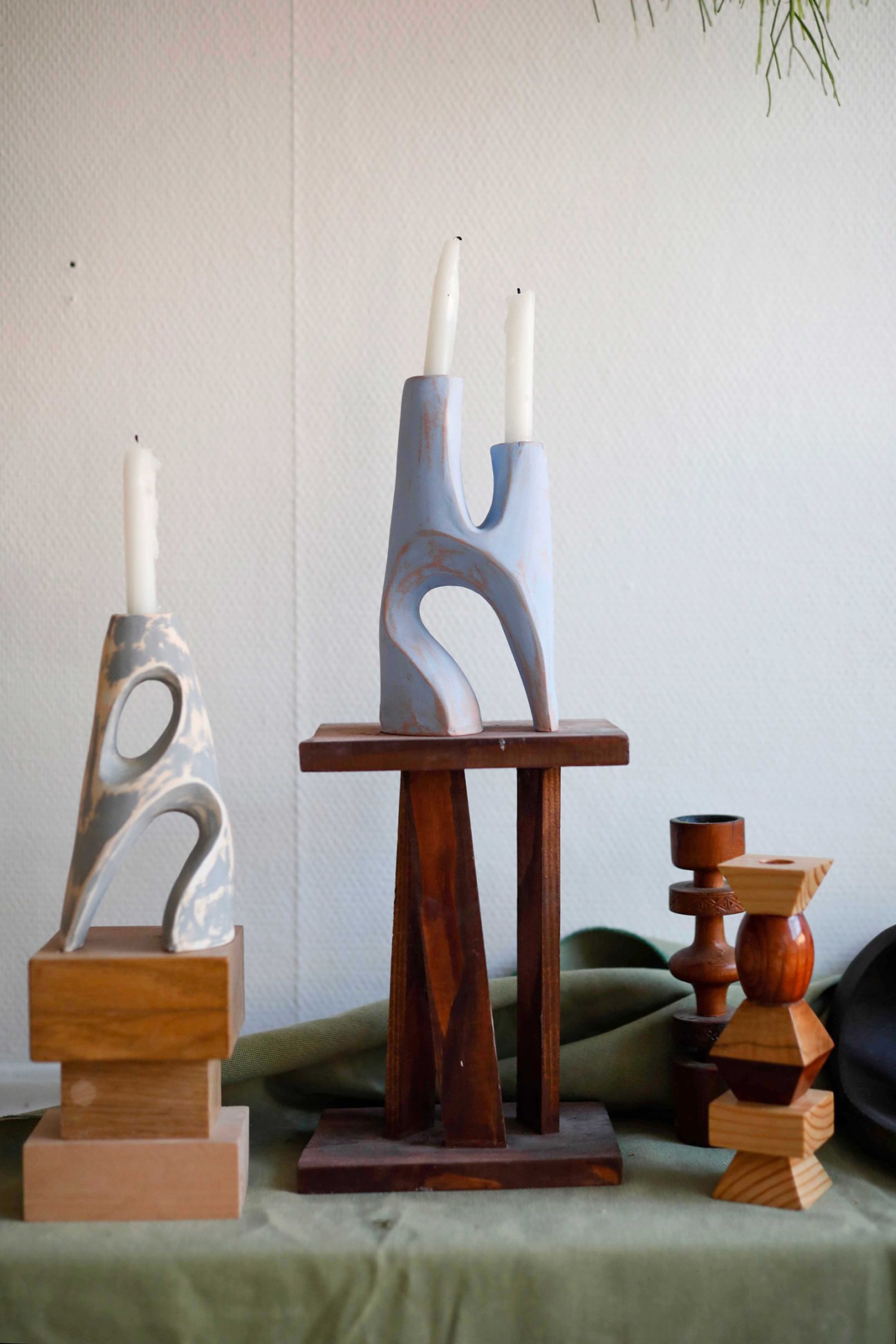
Almost a decade since the city served as the European Capital of Culture, the boost that title carried with it is still in the air. In 2013 smart new buildings were erected to house cultural ventures and spruce up the city centre, including Rudy Ricciotti’s filigree-clad Museum of European and Mediterranean Civilisations (mucem), the Frac Paca art centre, with its Kengo Kuma-designed chequered glass façade, and the Villa Méditerranée, a building designed by Stefano Boeri to host multilateral summits on Mediterranean co-operation. Despite being held in a tough year, Marseille’s staging of nomadic biennale Manifesta in 2020 helped cement the city’s arts reputation, with exhibitions taking over landmarks and lesser-known buildings across the city. An ambition to revamp major cultural venues continues today: the cutting-edge Museum of Contemporary Art (MAC) is expected to reopen this year after a much-needed facelift.
Meanwhile, Art-o-rama has steadily grown since its beginnings in 2007 and has taken on a crucial role in promoting the city’s art scene on a global stage. Held on the final weekend of August at the Friche la Belle de Mai, the opening brings together about 50 galleries from 18 different countries. This year’s edition will also include a new design section with 22 exhibitors.
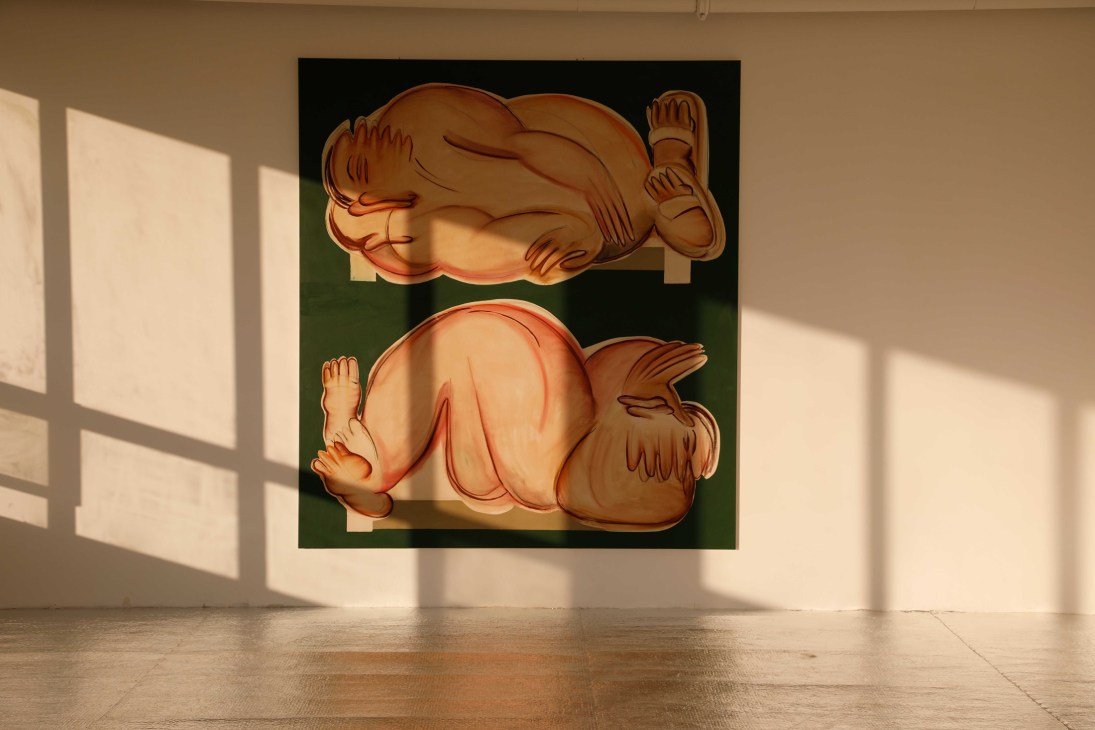
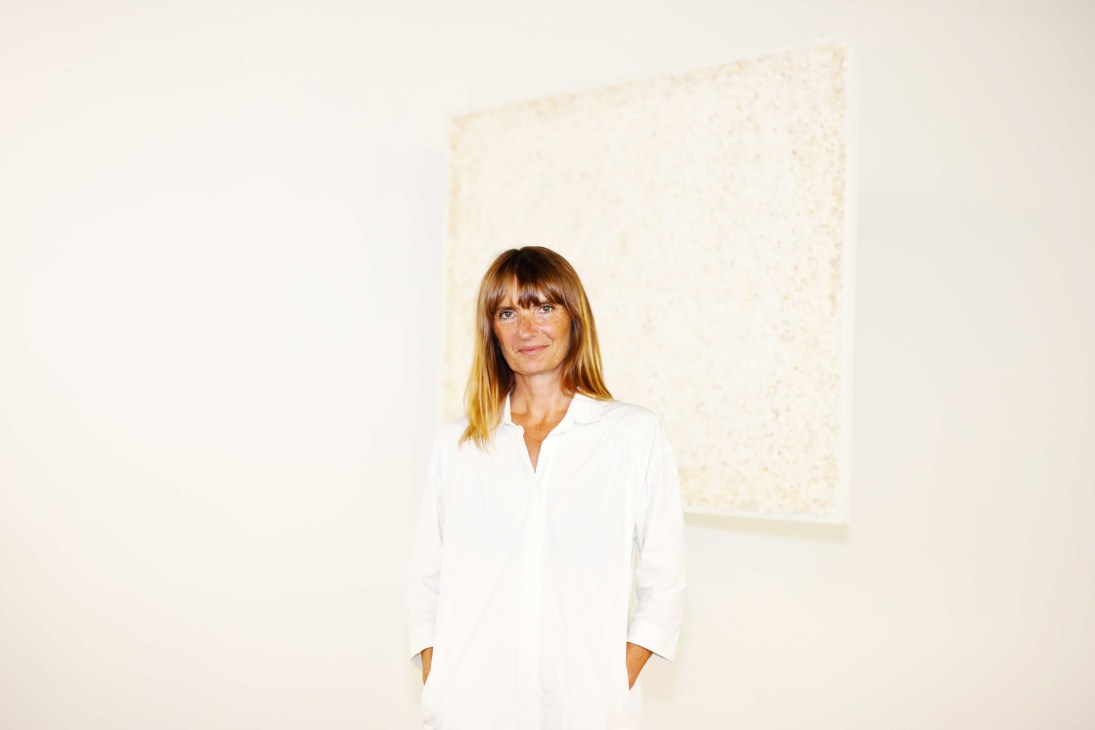


“[Much of France’s art scene] is unfortunately very centralised in Paris, so it was very important for us not to become a regional fair but to establish ourselves internationally in order to exist,” says Bovy. Other than hosting far-flung players, the event also acts as a springboard for local artists, with initiatives such as the Région Sud prize – awarded every year to a young graduate from one of the region’s art schools, who gets to showcase their work in the fair the following year. Last year’s winner, Flore Saunois, stood out with an installation featuring a pink satin curtain that played with the viewer’s desire to find out what’s on the other side.
With artists and galleries leaving the grey skies of Paris for a spot on the Mediterranean, the demand for exhibition venues and residencies has boomed. Artist-run spaces such as Belsunce Projects, Atelier Panthera and Sissi Club have sprung up across the city to showcase emerging talent and Parisian non-profit Artagon launched a Marseille outpost inside an old Ricard pastis factory to house 25 resident artists. Seeing a rising demand for studio space, last year Marseille-based non-profit Yes We Camp launched Buropolis, a temporary transformation of a nine-floor office building into 253 affordable artist studios. Though the project is not permanent, its success has demonstrated that there is plenty of room for these kinds of experiments in the city – and Yes We Camp are looking for more opportunities for similar ventures.
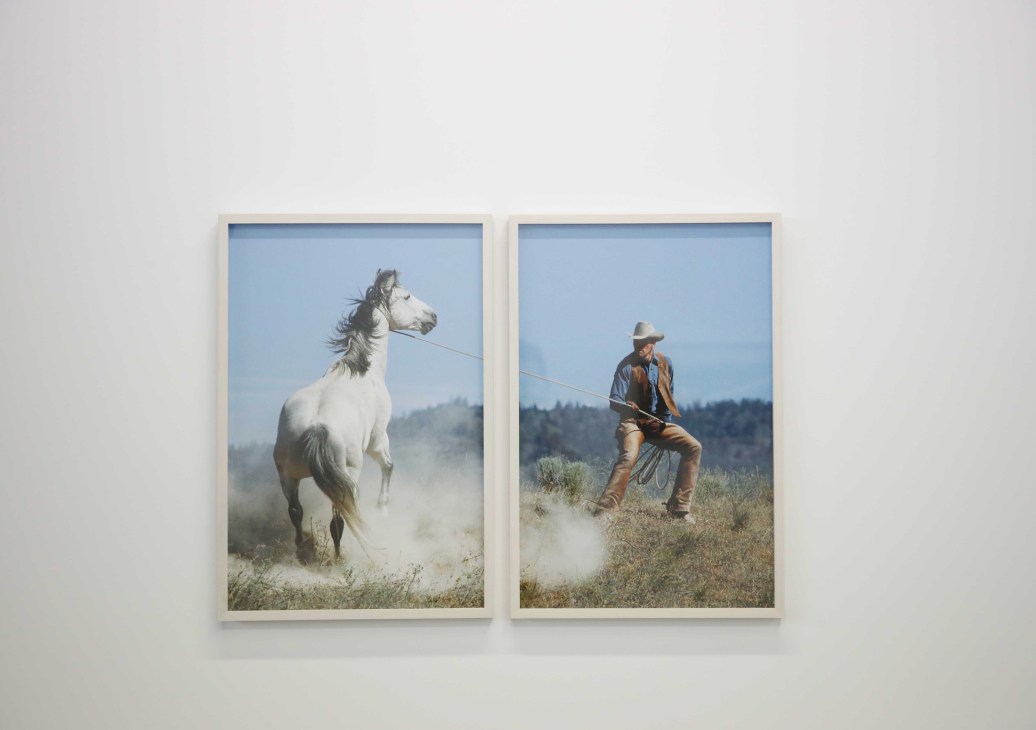
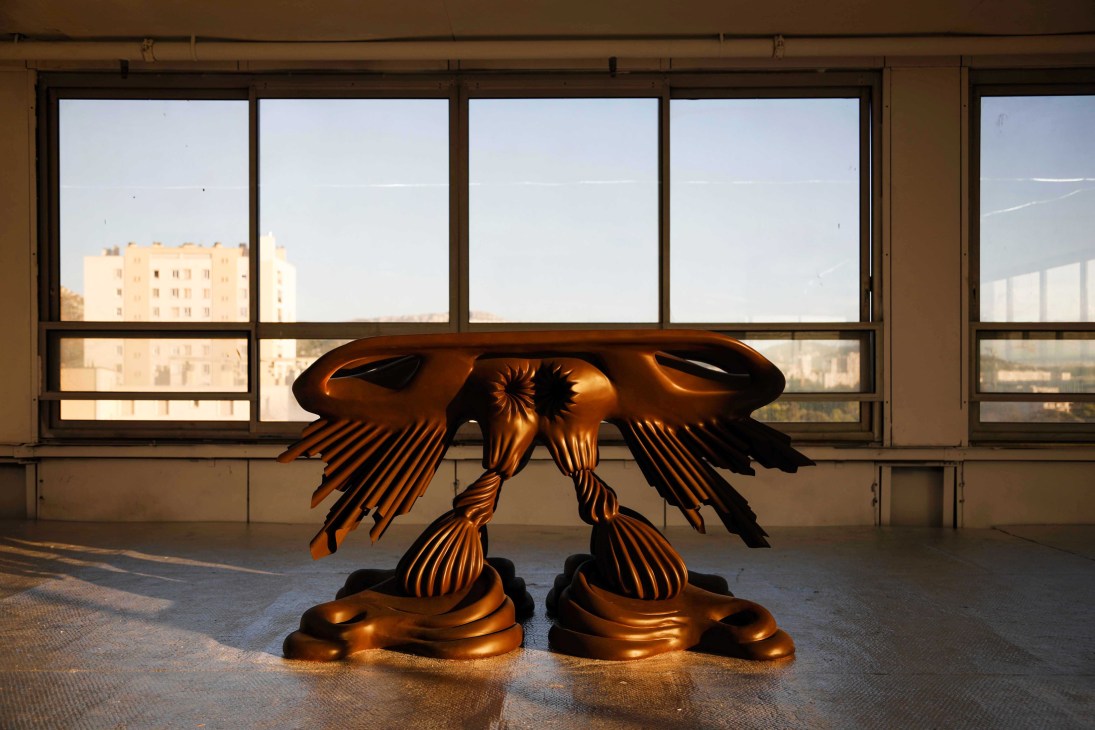
Places to visit:
Artagon
Founded in 2014 by Anna Labouze and Keimis Henni, Artagon is dedicated to promoting emerging artists. After opening their first space in Paris in 2015, the duo launched their Marseille space in 2021 in the former Ricard factory north of the city. Here, they house 25 artists and host exhibitions.
artagon.org
Pavillon Southway
Former curator Emmanuelle Luciani opened the Pavillon Southway in a 19th-century house in Mazargues. An artist residence and a gallery, it showcases decorative art by collective Southway Studio.
southwaystudio.com
Voiture 14
This space hosts regular exhibitions and events by the city’s emerging talent, whether it’s art, music or fashion. It was founded by Myriam Mokdes, who graduated from Marseille’s school of fine arts and sought to remedy the lack of central exhibition spaces for its students.
14 Rue des Héros
Double V Gallery
Double V Gallery is a respected presence in Marseille, representing emerging international artists while supporting the local scene. Its founder, Nicolas Veidig-Favarel, worked at Art-o-rama before setting up his gallery in the trendy 6th arrondissement.
double-v-gallery.com
Le Cabinet d’Ulysse
Just around the corner from Double V, this gallery opened by Stéphane Salles-Abarca in 2019 offers a sharp selection of artists across diverse disciplines. This summer, it is showing paintings by Marseille-born artist Philippe Fangeaux.
lecabinetdulysse.com
Maëva Tobalagba is one of the artists who took advantage of the programme. After studying in Lyon, she moved to Marseille where she works as an illustrator. She also co-founded design collective La Rallonge. “Being in Marseille is a big advantage. It’s a dynamic city where making connections is very easy,” she says. “It’s like a village.”
Fellow artist Thibaut Caesar, a sculptor who has also directed music videos for British electronic music group Metronomy, lived in Paris, Brussels and Berlin before arriving in Marseille three years ago. “There isn’t any space to do anything in Paris,” he says. “And I don’t mean just physical space. Someone else has already had the same idea as you and done it, whereas here, there is still a lot to be done.”
Réunion-born artist Léa Bigot, who spent a decade in Paris before moving to Marseille three years ago, agrees. “It feels like you can do anything, that everything is possible,” she says, surrounded by her curvy black and white ceramic sculptures. “It’s easier to find your voice here. Not like in Paris, where you’re among thousands of artists who are all doing interesting things.”
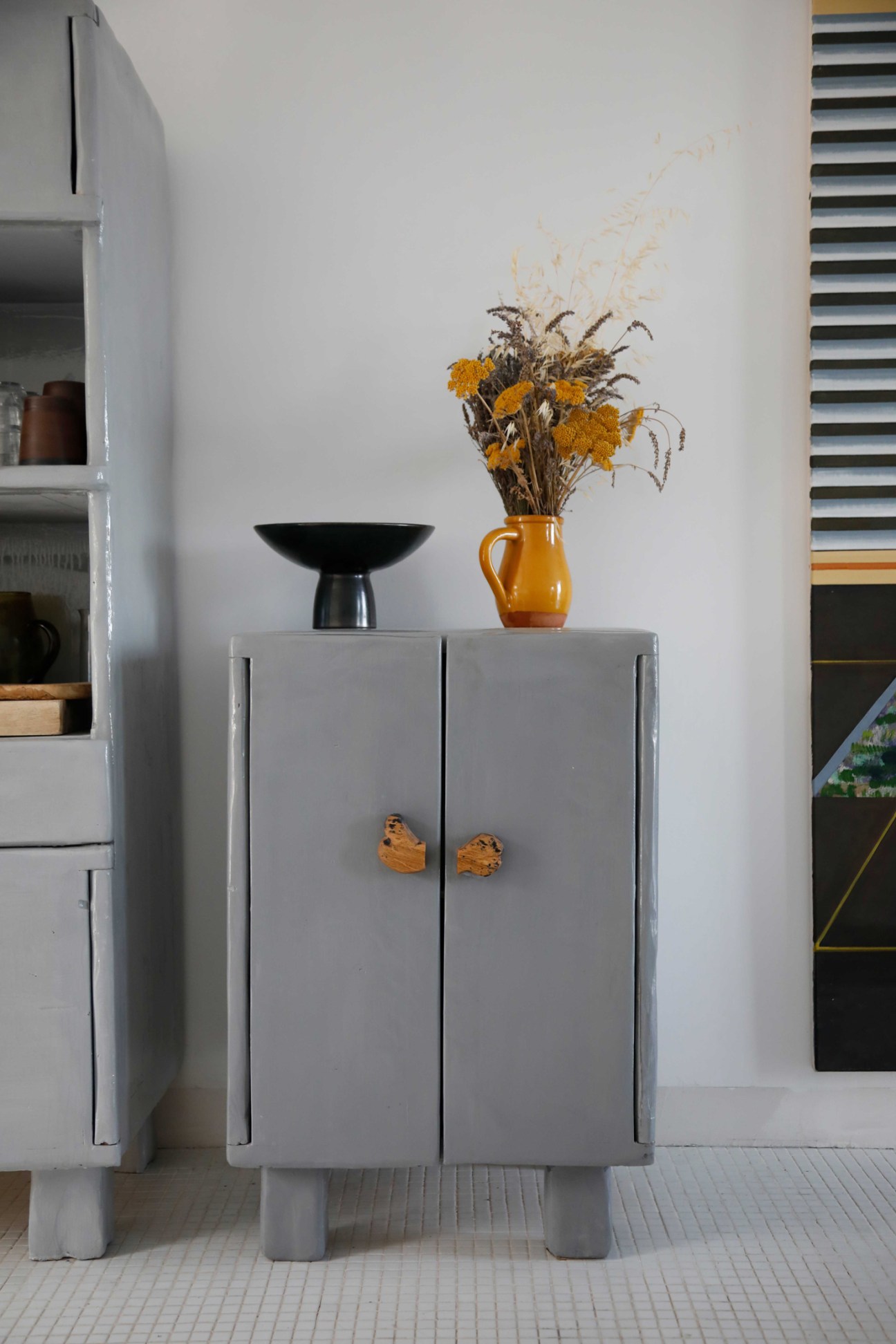
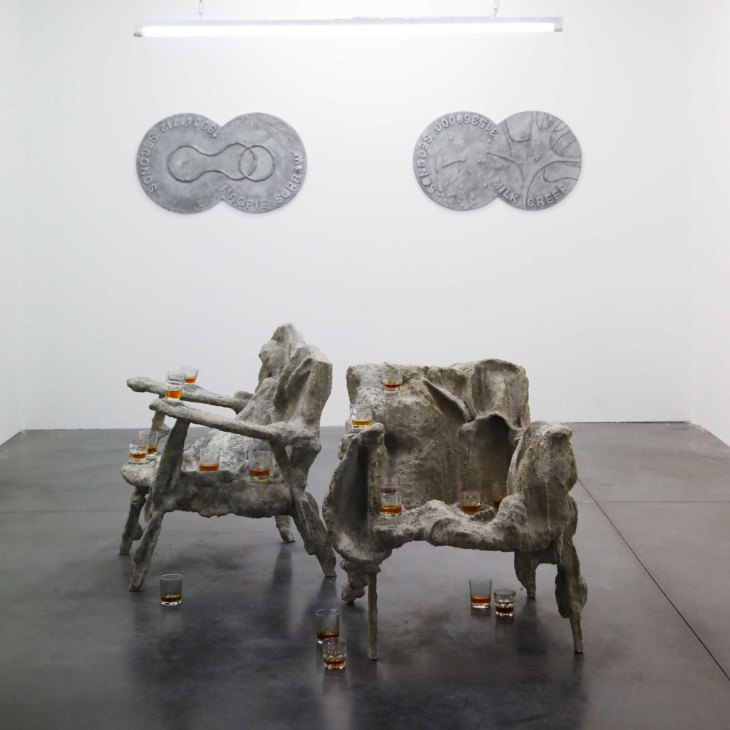
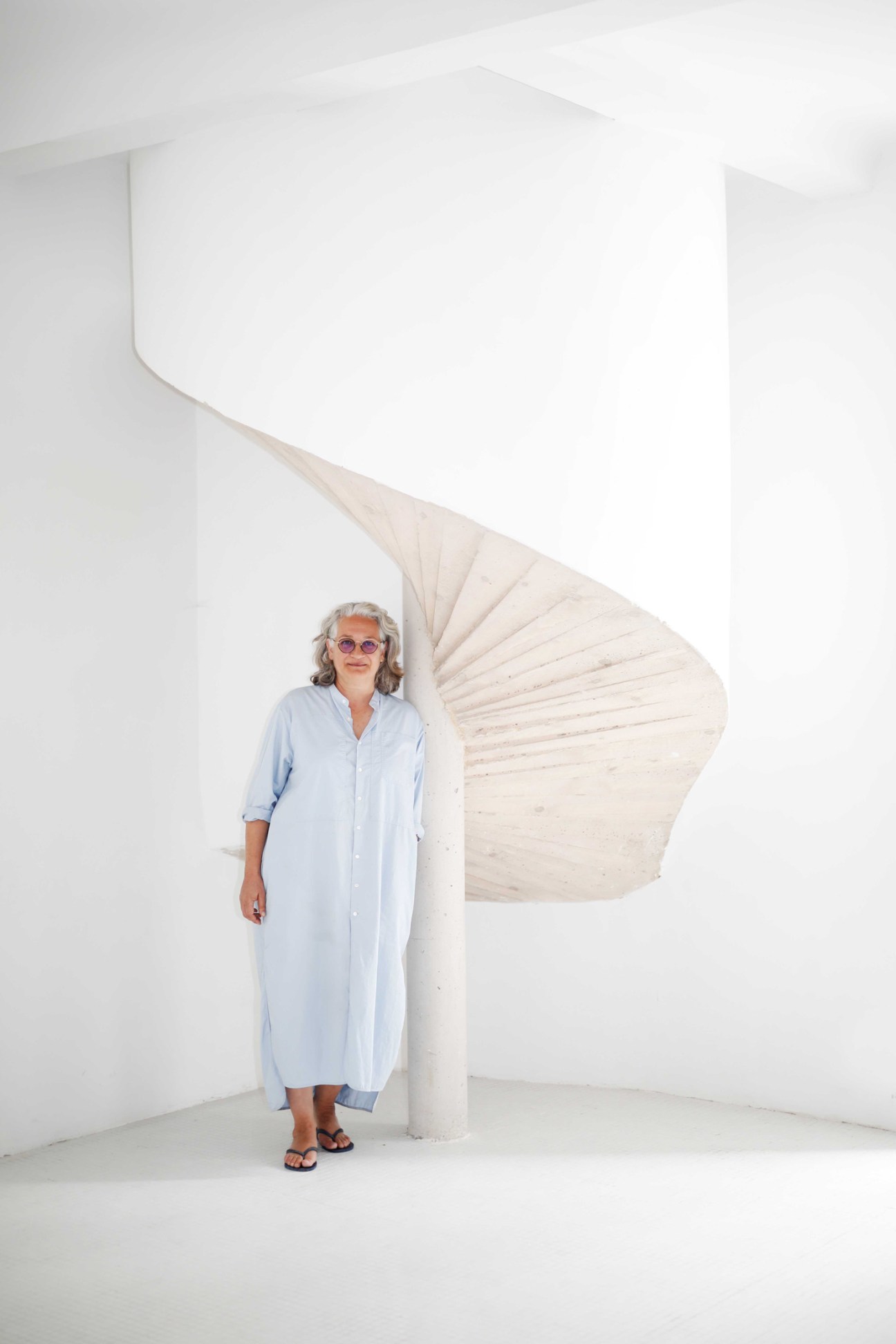
This sense of possibility is echoed by many creatives in town. But others worry that the arrival of so many affluent Parisians is pushing Marseille-born artists out of their home city – which, despite everything, remains one of the most disadvantaged in France. Marseille-born Sol Cattino feels that there is a disconnect. “Art should coexist with the city, not just land for a short time and then leave,” says the painter, whose work explores femininity through the southern French stereotype of la cagole – or bimbo. “When you’re an artist in Marseille, it’s important to not forget the inhabitants.”
But Marseille-born collector Sébastien Peyret, who inaugurated a location for his project space Atlantis in the northern neighbourhood of La Rose in 2021, believes the arrival of a new wave of artists is helping boost the city’s confidence. “There is definitely a renaissance happening. Marseille is becoming more uninhibited,” he says. As well as being a collector, he is a pharmacist and the president of Triangle Astérides, a contemporary art centre based in the Friche la Belle de Mai. “I never really believed in myself or my city because from a young age you are told that to be successful, you have to go to Paris. But now we see people moving here and we realise that it’s not the case.”
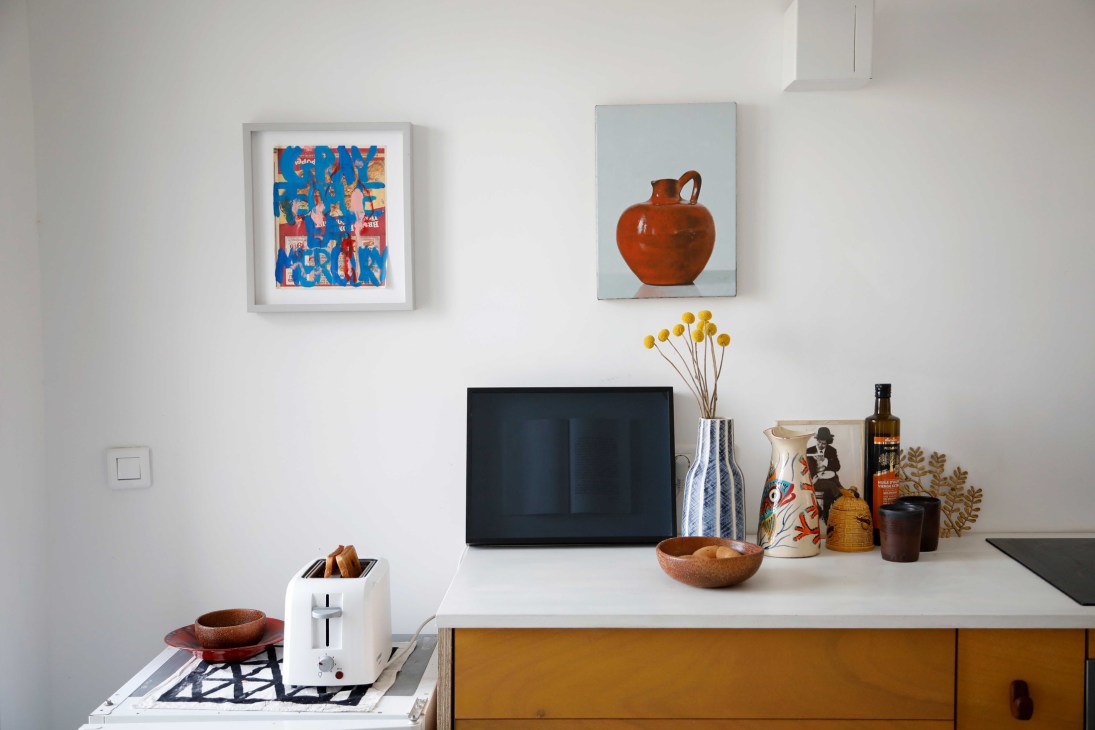
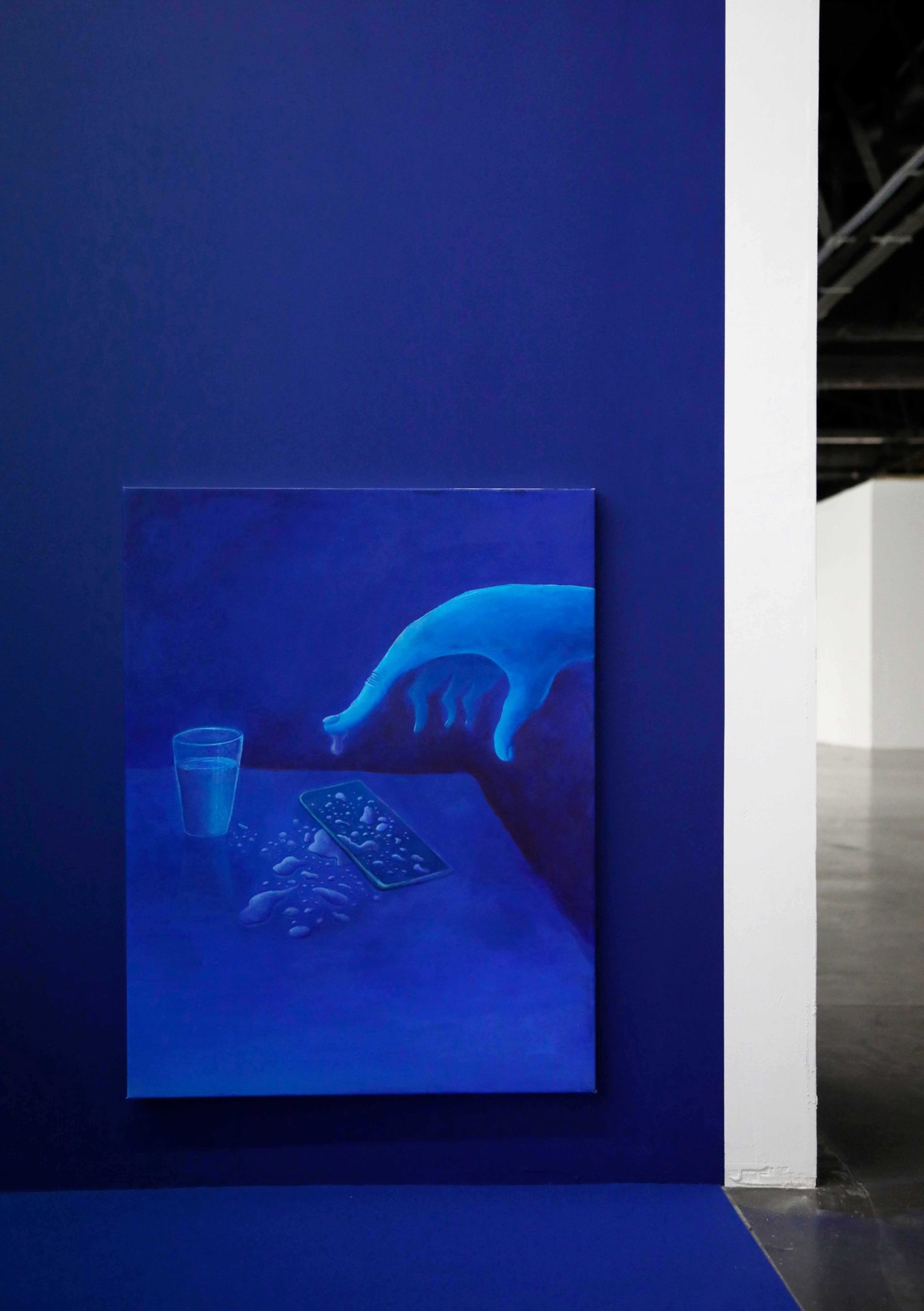
Still, there is some way to go before Marseille’s art market catches up with the might of Paris’s commercial power. But that doesn’t seem to scare or dissuade the city’s galleries too much. That’s why Veidig-Favarel’s Double V Gallery, the first Marseille-based gallery to participate in Art-o-rama, recently opened a second, satellite outpost in the capital. “I try to spend most of my time in Marseille and I go to Paris only when it’s necessary,” he says. “But I don’t see this as an obstacle; it just means that we need to work within this context.”
For others, the solution lies in building a wider, more international customer base. “I don’t think that I could run a gallery with an exclusively local market,” says Frédéric Bonnet, talking about his sales trips to Mexico and Japan. After 20 years in Paris as an art critic and curator, he moved back to his home city to set up Nendo, a gallery specialising in ceramics. His space on the central Rue Sylvabelle, inaugurated in April, showcases sculptures by the likes of Pep Gomez and Claire Lindner.
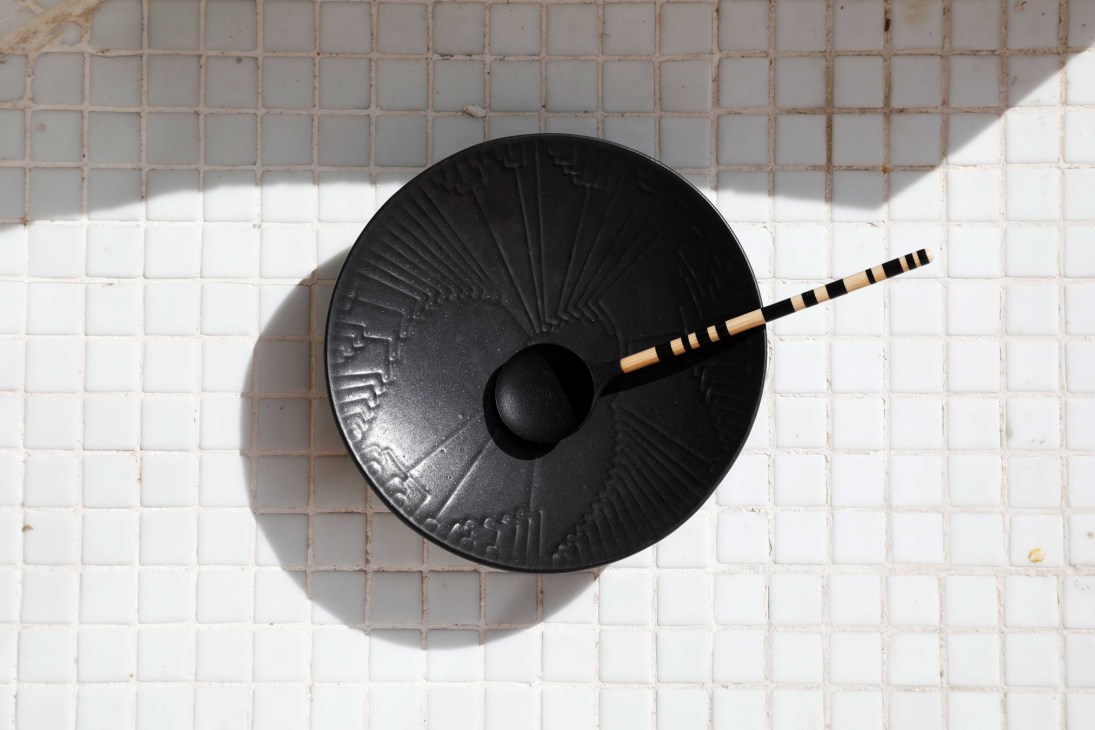
After working as a gallerist in Brussels for 20 years, Avignon-born Catherine Bastide also ended up making the journey south. She has poured a lot of energy into revamping La Traverse, a house overlooking the picturesque bay of Anse de Malmousque dedicated to fostering dialogue between various creative disciplines. In its rooms, furnished with designs by artist Régis Jocteur Monrozier and Marseille collective Laissez Passer, Bastide hosts exhibitions, artist residencies as well as dinners with local chefs.
This recent swell of creative energy might feel new and exhilarating but for Veidig-Favarel, all of this is simply a manifestation of Marseille’s character. “What has been happening for the past few years is quite exciting,” says the gallerist. “But the city has always been this way; it’s always been a terre d’accueil – a welcoming ground.”
Strawberry yields
The offices of Oishii, located in a former Anheuser-Busch distribution facility on the industrial outskirts of Jersey City, just across the Hudson River from New York, resemble those of any other hi-tech start-up. There are whiteboards decorated with the fevered scratchings of nascent corporate strategies, an automated control centre where data points scroll across screens, a robot patrolling a brightly lit clean-room environment and twenty-somethings grazing on healthy snacks. Oishii produces, for the moment at least, precisely one thing: strawberries.

The product in question sits eight to a pack on a conference-room table, where Hiroki Koga, Oishii’s Japanese-born CEO and co-founder, offers a lesson in how to eat them properly. “The sweetness in strawberries is concentrated toward the bottom,” he says. “So if you start eating there, it gets less and less sweet.” Eating from the side, he says, offers the proper sensory balance. The fruit should also be at room temperature. Oishii’s berries appear uniform and absent of any visible flaw. By American standards, though, they’re slightly strange. Instead of the usual bright red, they are almost roseate and their surface, rather than being flecked by visible seeds, is pockmarked by recessed holes.
Eating them reveals more striking differences. The strawberries are remarkably sweet and aromatic, rivalling, if not exceeding, that rare specimen procured from a summer farmers’ market in that fleeting window of ideal ripeness. “These typically contain two to three times the sweetness of what’s available here traditionally,” says Koga. This isn’t just taste perception but empirical fact, per the fruit’s Brix score, its value on a scale of sweetness obtained by refractometer measurement. The sweet taste is made more jarring by the berry’s pale hue. “We wanted to prove to everyone that it’s not how it looks,” says Koga. “Everything in the US is engineered to be red.”
This is a Japanese berry, a varietal that, like some secret algorithm, can’t be disclosed but is typically grown in the country’s northern alps. The ones on Koga’s table were produced a few dozen feet away from where they sit, in a setting with climatic parameters that have been tuned to a location 11,000 km away. “These berries still think they’re in Japan,” says Koga. Next to them are the raw materials of Oishii’s process: a small shoot grown via in-vitro fertilisation and suspended in a clear nutrient-rich gel; and a larger plant resting in a proprietary growing medium.
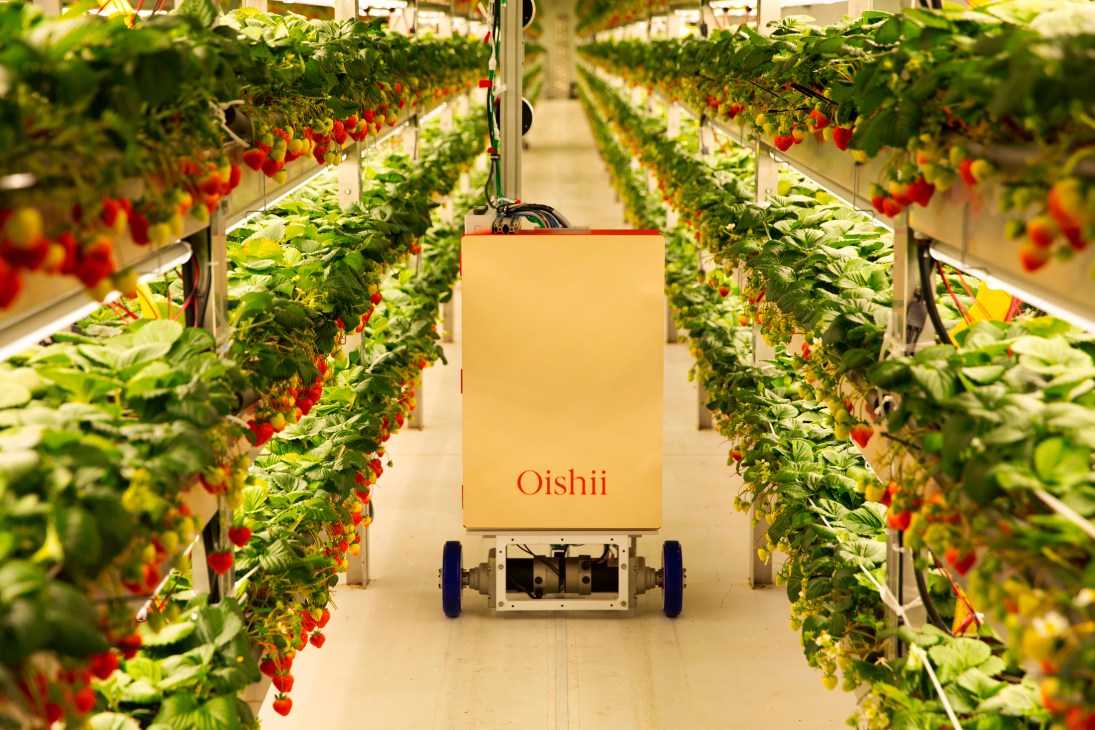
Oishii, which means “delicious” in Japanese, is a rare success story in the world of vertical farming for two reasons. First, Oishii cracked indoor pollination. “Bees were known to not operate well in an indoor farm environment,” says Koga. “We figured out how to make them believe that they’re in nature.” (The method is also proprietary.) Pollination by hand is possible, Koga notes, but not efficient at scale. Second, Oishii was able to create a product for which people are willing to pay $50 (€47) for a tray of eight. That’s not unusual in Japan, where high-end purveyors such as Sembikiya elevate fruit to the status of luxury goods.
In the US, where strawberries are sold by the kilogram, it was a novel proposition. Oishii treated it that way, slowly introducing its berries via collaborations with restaurants, including Manhattan’s three-Michelin-starred Chef’s Table, where a single berry, unadorned, comprised the dessert course. Soon a mix of social-media-driven novelty and scarcity kicked in: the berry became a viral Veblen good, in demand at least partially because of its price. Word crept out and a waiting list was set up. “We’d give people 24 hours’ notice to come to the World Trade Center subway station the next day at 18.00,” says Koga. “It was like a drug deal,” he adds, laughing.
The global vertical-farming market was a $3bn (€2.8bn) business in 2021, according to researcher Fortune Business Insights. Koga admits that, compared to traditional agriculture, the sector’s size represents a “rounding error”. But its expansion graph is up and to the right, with varying forecasts of up to 25 per cent annual growth over the next decade. Against a challenging backdrop for traditional agriculture – disrupted supply chains, an increasingly volatile climate, rising fertiliser and labour costs – vertical farming, which offers year-round growing, less water consumption and no reliance on pesticides, looks increasingly attractive. But it depends on technological advancements and requires huge start-up costs. It can also be tricky to execute it at any meaningful size in the urban locations where it’s most attractive.

Oishii’s strategy is starting to bear fruit. The company, which has secured $55m (€51m) in financing from investors including the Toyota-backed Sparx Group and the Sony Innovation Fund, says that it is profitable on a “per facility” basis, adding that, like many start-ups, it’s ploughing funds back into R&D. It has farms in New Jersey and near Los Angeles, an R&D site, 125 employees and plans for domestic and international expansion.
Among Oishii’s US competition are two well-funded technology-forward start-ups, Aerofarms and Bowery Farming. Both are within walking distance of Oishii’s first facility in Jersey City, New Jersey. In Denmark, Europe’s largest vertical farm is churning out 1,000 tonnes of greens and herbs a year – enough to fulfil 5 per cent of Danish consumption. In 2021, Aerofarms broke ground on a 5,000 sq m R&D centre in Abu Dhabi, which hopes to increase domestic food production (the emirate imports 90 per cent of its food). But for all the recent energy, vertical farming took off in earnest several decades ago in Japan, where multinationals such as Panasonic and Sharp entered the arena. They were driven less by a green interest, Koga suggests, than technological prowess. “They just wanted to invent something cool,” he says.
In early investor pitches, Koga, along with co-founder Brendan Somerville, a former Marine intelligence officer he met at business school, made two broad points. One – the founding principle of all vertical farms – is the need “to revolutionise agriculture sustainably through vertical farming,” says Koga. The second point? “We don’t only want to be a sustainable company; we want to introduce something that is better than what’s out there.” Koga points to Tesla. “It didn’t just introduce any electric vehicle; it had a Roadster, which was faster than a Porsche.” People went crazy for it, not because it was more sustainable, “but because it was a superior car”. Just as the original Roadster was a six-figure car with an inherently limited audience, a $50 (€47) tray of strawberries is destined to be a niche product. But Oishii has launched a $20 (€18.60) package of the fruit, which will be sold by the taste-setting US retailer Whole Foods. Is this Oishii’s Model 3 moment?
Before coming to the US in 2015, Koga had been researching and working with Japan’s vertical farming industry as a consultant for Deloitte. The problem he found was that the companies couldn’t diversify their products. “There was just no demand for vertical farm leafy greens that had to be sold at a premium,” he says. “Shortly after, he enrolled in an mba course at the University of California, Berkeley while consulting on the side for investors looking at vertical-farm start-ups. What struck him, in the middle of a California drought, was the increasing volatility of agriculture’s inputs. “Stable weather conditions, access to water and land, cheap labour – all of these things were getting harder and harder to source,” he says. Pesticides were increasingly being regulated and the cost of fertiliser went up. The new breed of start-ups was talking about sustainability but the problem was that they hadn’t moved past “commoditised” technology and leafy greens. Despite heavy investment, he says, their greens weren’t sufficiently better than those consumers could already access.
There was one product, however, for which Koga thought the juice was worth the squeeze: strawberries. They already come with prestige: they’re one of the few fruits or vegetables to have brands attached (in the US, Driscoll’s commands nearly a third of the market). But as a crop, they’re notoriously difficult; producing them indoors at any scale has tormented any number of companies (French start-up Agricool, which grew strawberries in repurposed shipping containers, recently declared bankruptcy). Unlike short-cycle leafy greens – the butter lettuce or micro rocket sold by competitors including Bowery Farming and Aerofarms – they need to be kept alive longer to turn a profit. This generally requires a lot of chemical intervention – strawberries are at the top of the so-called “dirty dozen” list of fruits and vegetables containing the most pesticides (spinach and apples also rank highly). Then there’s pollination. Koga thought that bees held the key to an entire new range of indoor agriculture. “If we could figure out how to fly bees and manage disease, that gives us a shortcut to almost every other flowering crop: melons, peppers, aubergines.”
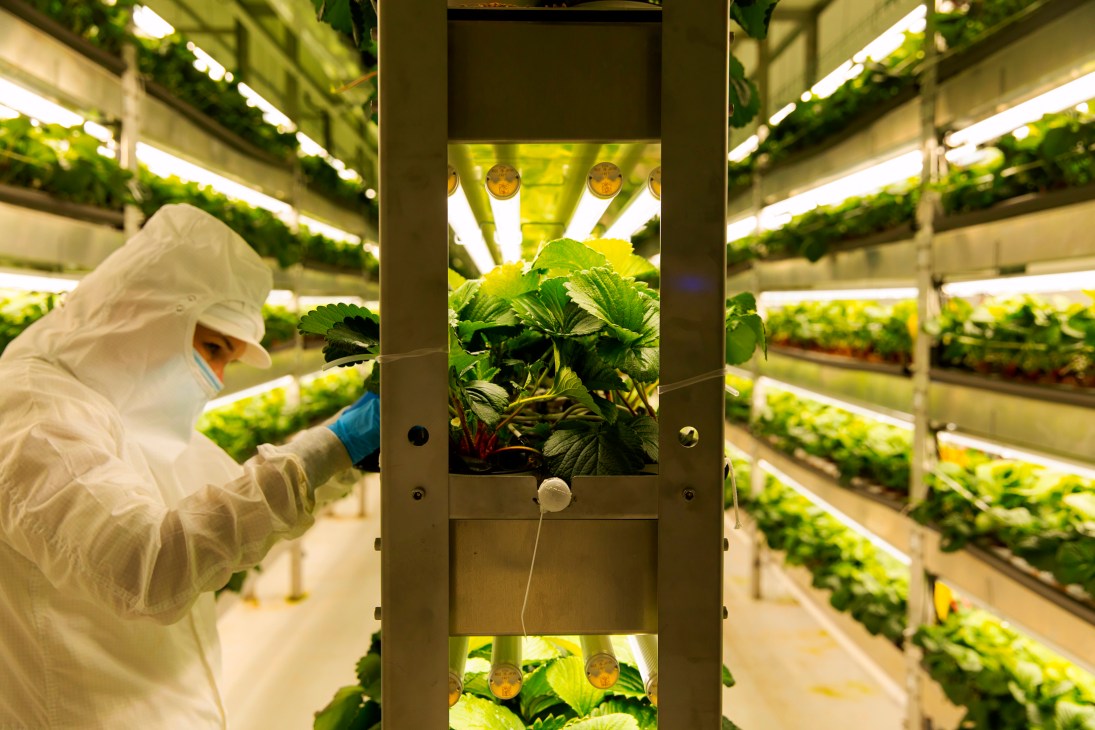
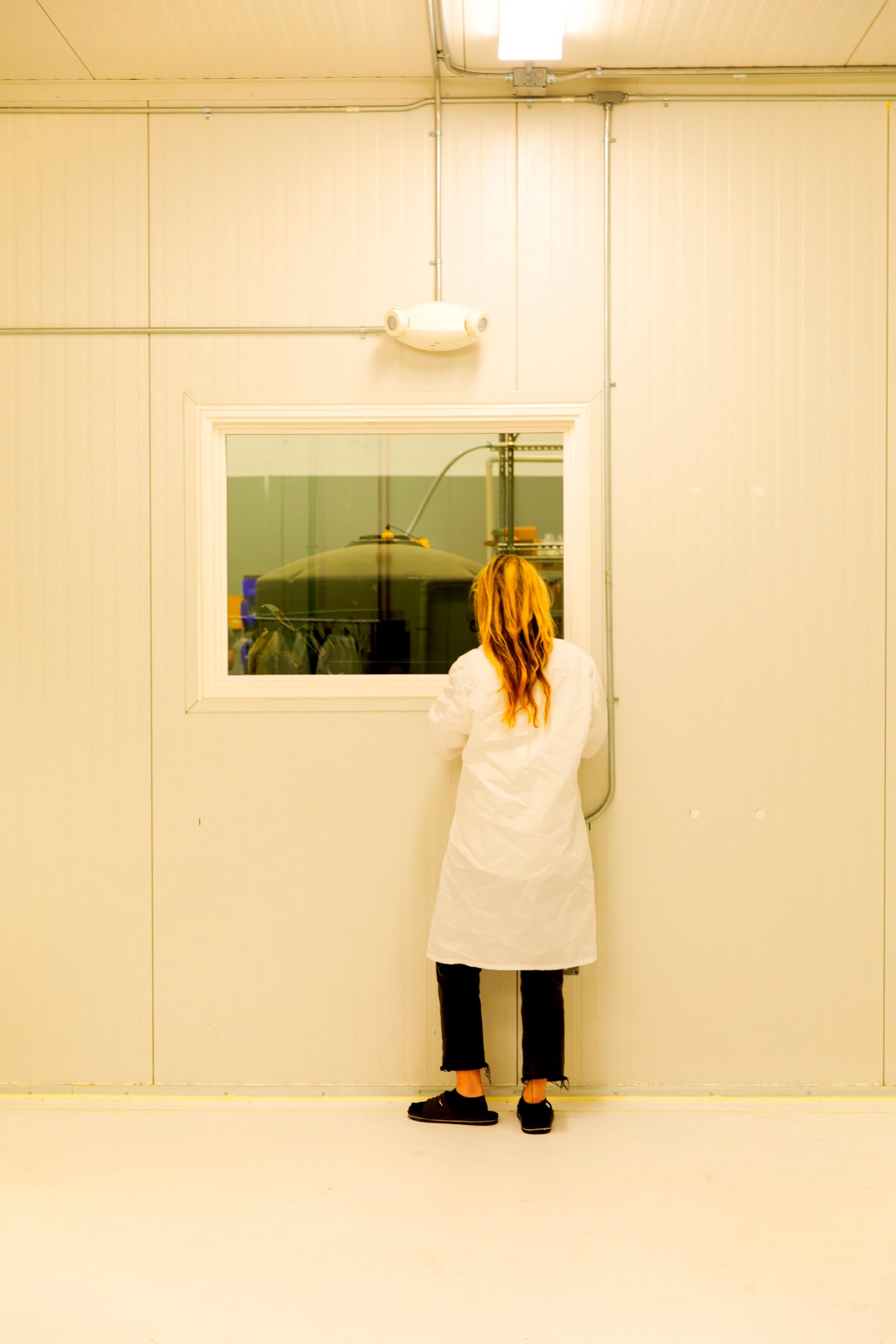
To keep its strawberry plants disease-free without pesticide, Oishii relies on an exacting set of hygiene protocols. Moving from room to room requires repeatedly exchanging shoes for sandals and donning hairnets, masks and gloves. Jumpsuit-clad “farm operators” are cleansed by an “air shower” to enter the growing facilities, where no visitors are allowed. Julie Noyce, who manages Oishii’s indoor farms, has no agricultural experience: her previous job was at a start-up that robotically produced human handwriting. “Whenever I hire one of our operators, I tell them no one’s ever done this before,” she says. When Monocle visits, only robots and bees move around the production room. “Even people who are skittish of bees really do start to appreciate them as our best co-workers,” says Noyce, adding that the clean environment ensures plants’ longevity. On an ordinary farm, the cultivars that Oishii uses would last for about a year before dying or developing a disease but “some of the seedlings in our R&D facility have stayed alive for more than two years”.
Oishii’s farm might depart from the “romantic notion” of agriculture, says Somerville, the company’s chief operating officer. But, he argues, consumers increasingly recognise the value of indoor farming. “It’s the cleanest strawberry we’ve ever had,” he says. “It has the highest concentration of sugars in the US and it’s the freshest. We deliver those things because it’s grown in this controlled environment.” And rather than being shipped 3,000 miles from California (the origin of more than 90 per cent of American strawberries) it’s a 30-minute trip to the country’s biggest market.
Having pioneered scalable production of indoor strawberries, Oishii won’t be alone for long. Rival Bowery Farming is introducing two indoor strawberries (“Garden” and “Wild”), while San Francisco-based vertical farm start-up Plenty, working with Driscoll’s, is said to be moving close to market. Koga is already thinking ahead. He envisions an Oishii-branded section in the supermarket. He’s recently been working on melons and tomatoes, and the latter are already at Oishii’s R&D farm. For Somerville, a broadening indoor strawberry market means heightened competition but also growing mainstream relevance. “This is an industry that can truly transform how we eat and our ability to feed the world in the future,” he says. “We will continue to decrease the cost of production and add new crops. It’s really just the beginning.”
Upward growth
Global farming faces plenty of challenges: supply-chain interruptions; a blockaded Ukraine and a sanctioned Russia (both are major food suppliers); record-high fertiliser prices; and an ongoing La Niña weather event that’s cooling the Americas. Vertical farming offers localised distribution and seemingly less resource-intensive farming. It’s growing. Deals in the sector in 2021 were worth €900m, double 2019’s value, says McAlinden Research Partners. But “in feeding the world in a resource-efficient manner, very often scale is required,” says Tracey Allen, agricultural commodities strategist at JP Morgan. “Certainly in very wealthy markets, consumers have the bandwidth to make choices over products,” she says. “But choices aren’t very widely available to consumers in emerging markets.” To make a difference, vertical farmers need to go beyond niche markets.
Talking point
The travel industry boosts the economy of desirable places but all too often it can produce sterile experiences that hermetically seal tourists off from their destination. Fortunately, there’s a gentler world of business that teaches people languages away from screens and deepens encounters. We spread the word about the courses that bring drawing, dancing and aperitivos into the conversation.
1.
Community spirit
Il Sasso, Montepulciano
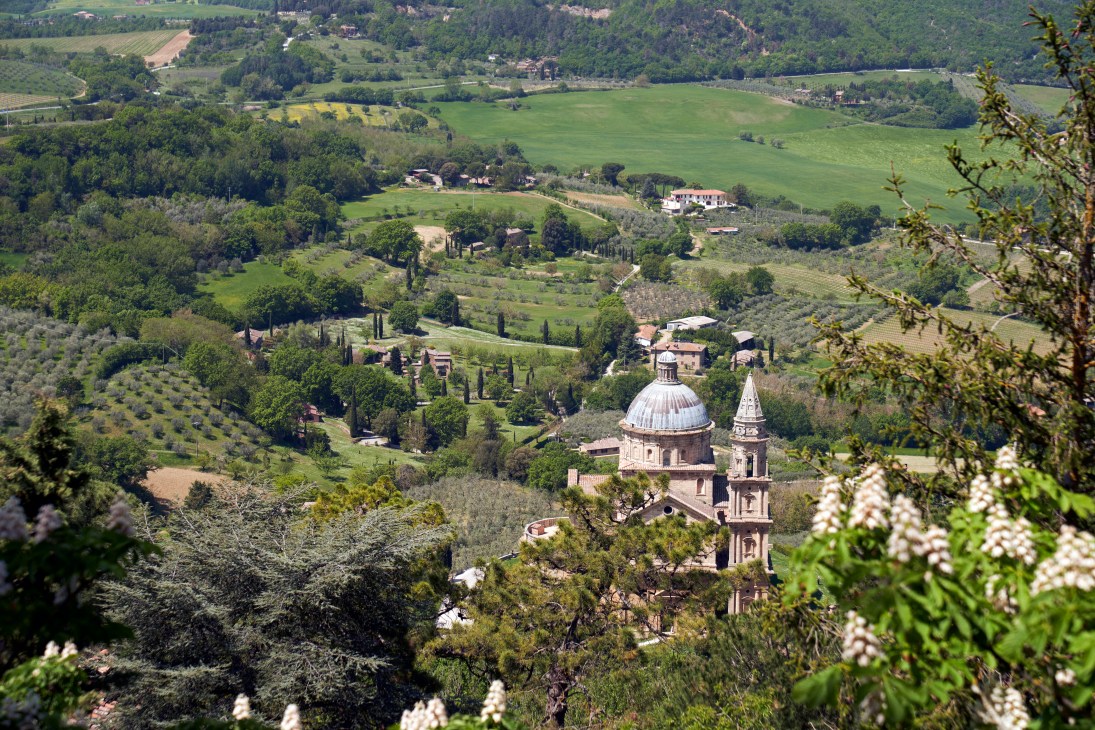
Montepulciano’s Piazza Grande is home to a palazzo designed by architects sent to the hillside town by the Medici family. Across the square, though, is the town’s relatively unremarkable- looking cathedral. The church’s backers spent so much money on its ornate interior that they had none left for the outside. Like the church’s builders, the students of Tuscany’s Il Sasso language school have arrived at the conclusion that it’s what’s inside that matters most. They’re prioritising learning over gilding their façades on a beach.
Rebecca Mason made the bold move of quitting her technology marketing job and moving to Italy to improve her language skills. “I realised that I had this amazing job and I had everything going for me back in Sydney but is that all there is?” she says. After a long pandemic, Mason, 30, wanted to reset. “I thought, I can’t just keep climbing the corporate ladder, taking that next promotion and that next pay packet,” she adds. “Now I’m at a language level where I can get by awkwardly; it’s in the immersion that the magic happens.”
Founded in 1983, Il Sasso initially catered to German and Austrian tourists, although most of the students that Monocle meets are from the Anglosphere. The school charges €779 per person for a four-week group class and takes in about 500 students a year, rarely exceeding 45 at any given time. Private classes are also on offer, however, and not just for the business leaders, ambassadors and one Hungarian ex-president who have all studied here before.
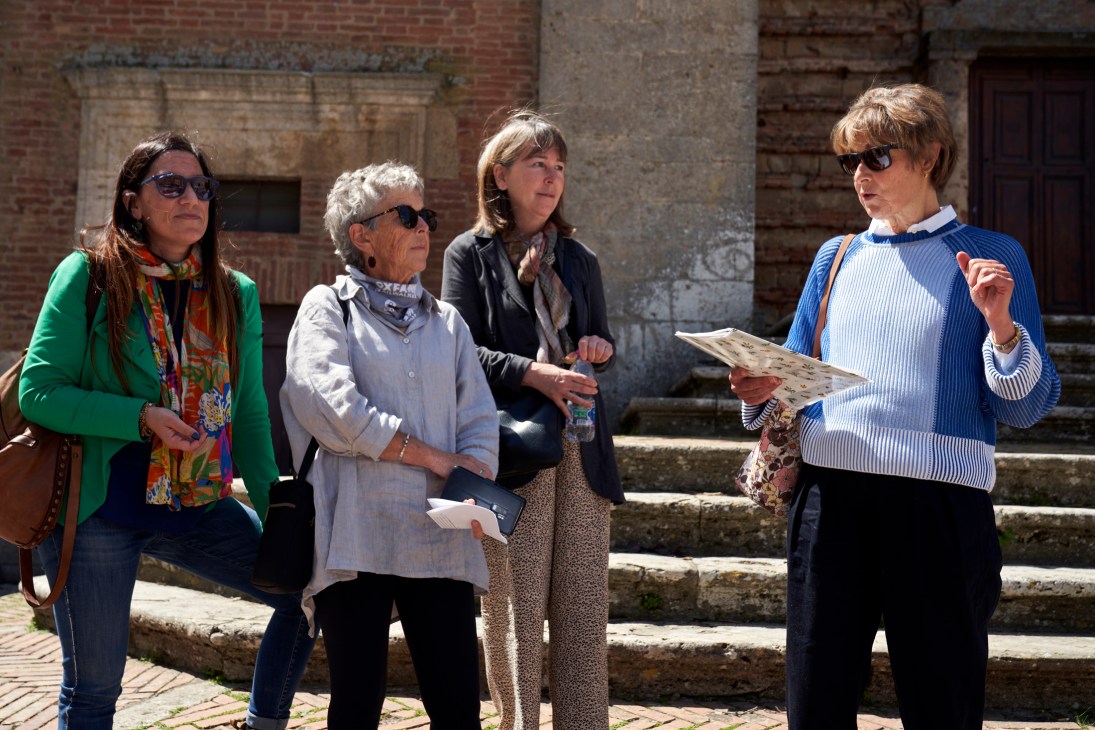
Some classes take place in the cool, high-ceilinged classrooms but owner-director Silvia Celli prides herself on Il Sasso’s place in the Montepulciano community. Classes regularly involve visits to farmers’ markets where students take it in turns to play the role of tour guide around town. “We do not have a vending machine here because we want you to spend as much time as possible outside talking,” says Celli. “That way you feel part of something bigger.”
Celli found herself here during her previous career in publishing, when looking for a rural place to work on revising the Italian dictionary. “I wanted to write in a beautiful setting,” she says as a breeze disturbs the wind chimes in her office. “A friend of mine was working at the school and asked whether I could help.” Unlike many of its competitors, Il Sasso survived the pandemic with a temporary pivot to online lessons.
Now that in-person classes are back, there are a number of reasons why people enrol. Husband and wife Michael Roesslein, 41 and Mira Danysh, 34, relocated permanently from California’s Bay Area after the stress of being a nurse during the pandemic aggravated Mira’s autoimmune disorder. “We wanted to assimilate as quickly as possible,” says Roesslein. “For the first two weeks, though, I was too scared to try to buy anything at the market. But my teacher took me to order stuff and then I felt confident enough.”
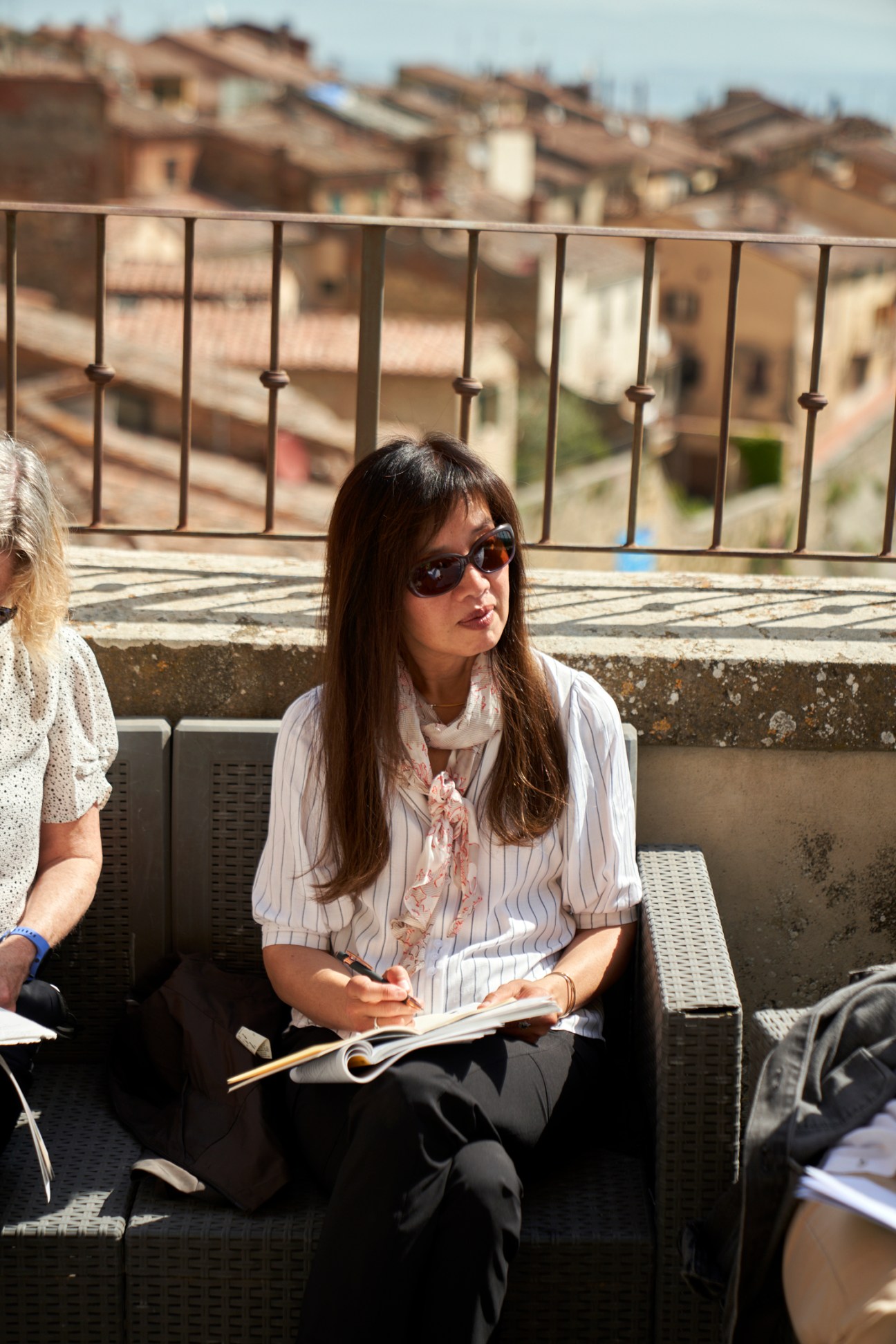
Most students are here temporarily, though. American constitutional law student Ned, 29, wants to access Machiavelli untranslated and Judi, 25, from Leipzig, is here to supplement her local internship. Jet-lagged 64-year-old Bruce Johnson has just flown in from Calgary but started his years-long love affair with Italian in his former career as a fashion buyer. “The experience of meeting people from all over the world is enriching in itself but my hope is to start thinking about winding down work; my three weeks here are my mini-sabbatical,” he says.
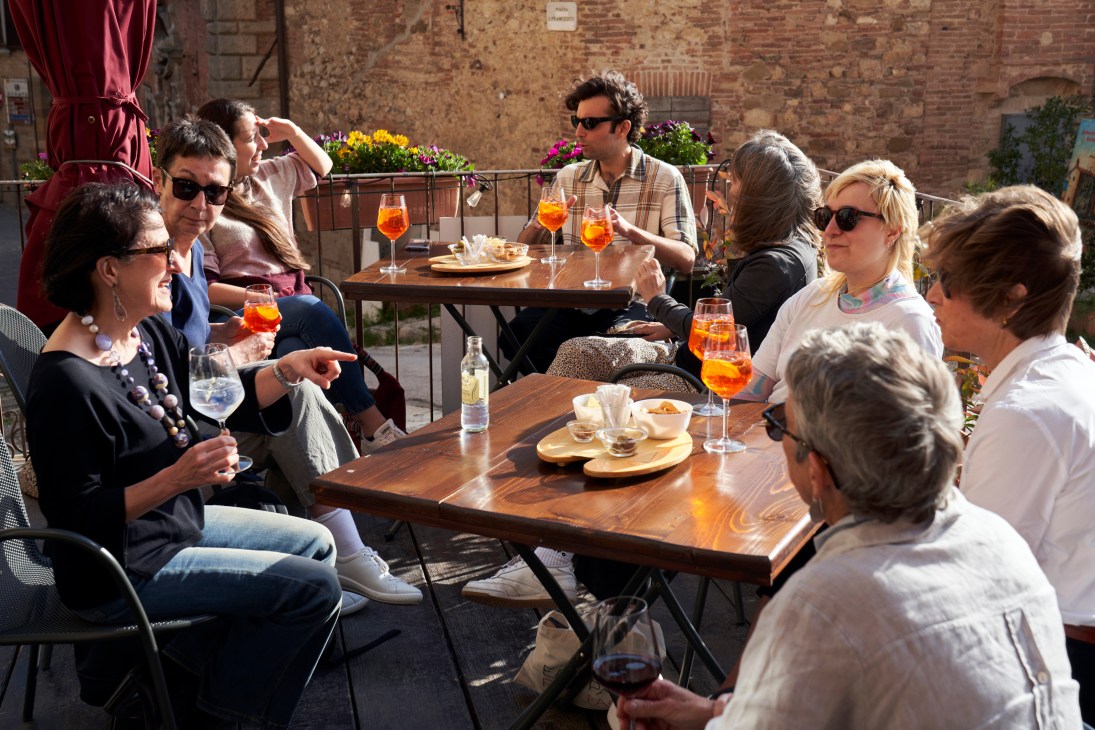
The programme, which includes perfecting one’s coffee order at the local café and colloquial Italian practice sessions over aperitivos, would be sumptuous enough in any context but when muddled with Montepulciano’s setting – vineyards and cypress trees carpet the rolling Tuscan hills that stretch out below the town – it’s hard to think of a more intoxicating place to watch the sun slowly melt the ice in your Aperol spritz.
ilsasso.com
2.
French connections
CESA, Aix-en-Provence
Most people learn to tell their passé composé from their imparfait in a classroom near home but a lucky few get to study verb tenses in the south of France. At the cesa school in Aix-en-Provence, students come from far and wide to hone their language skills – and have a glass of Provençal rosé while they’re at it.
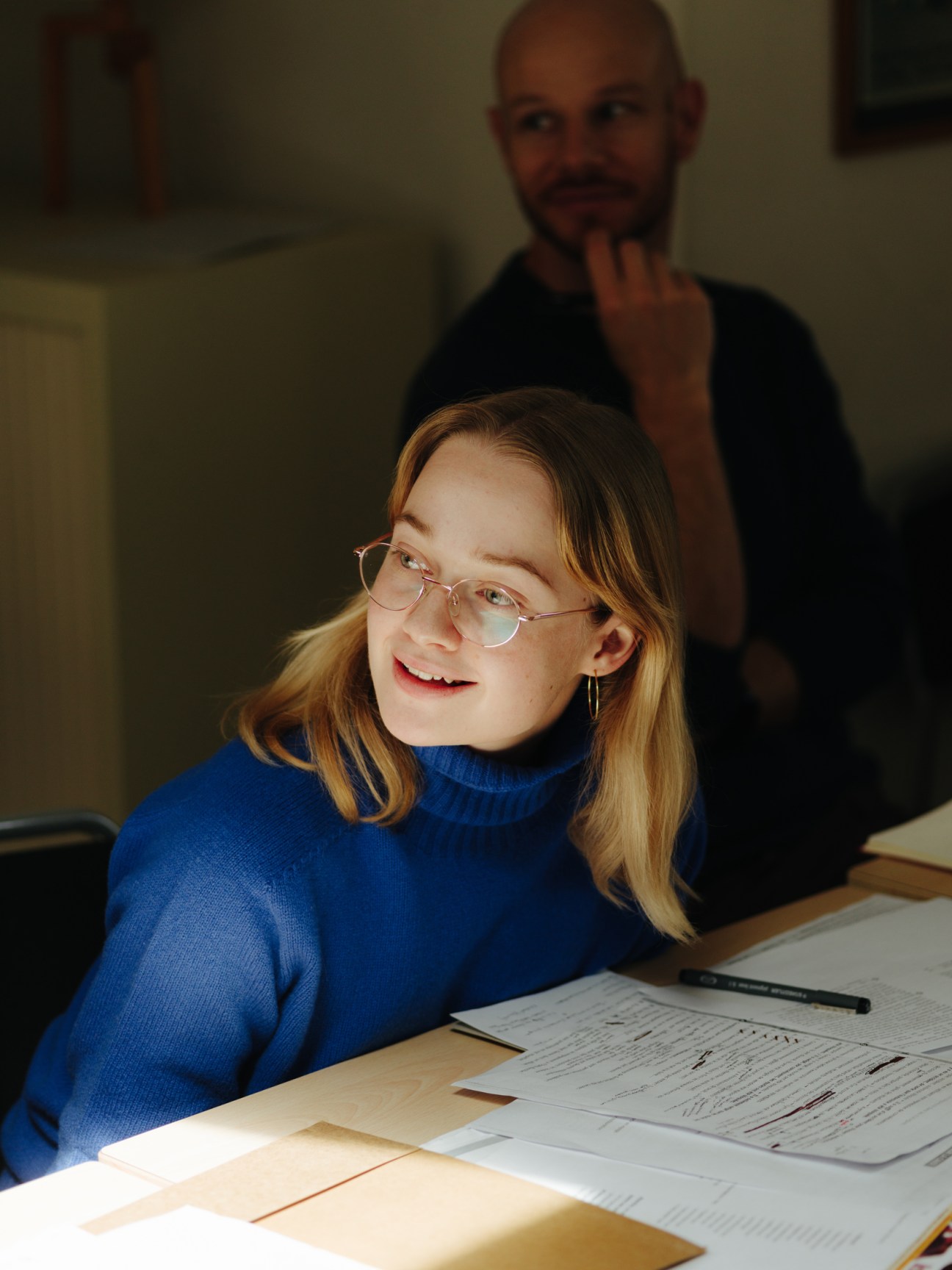
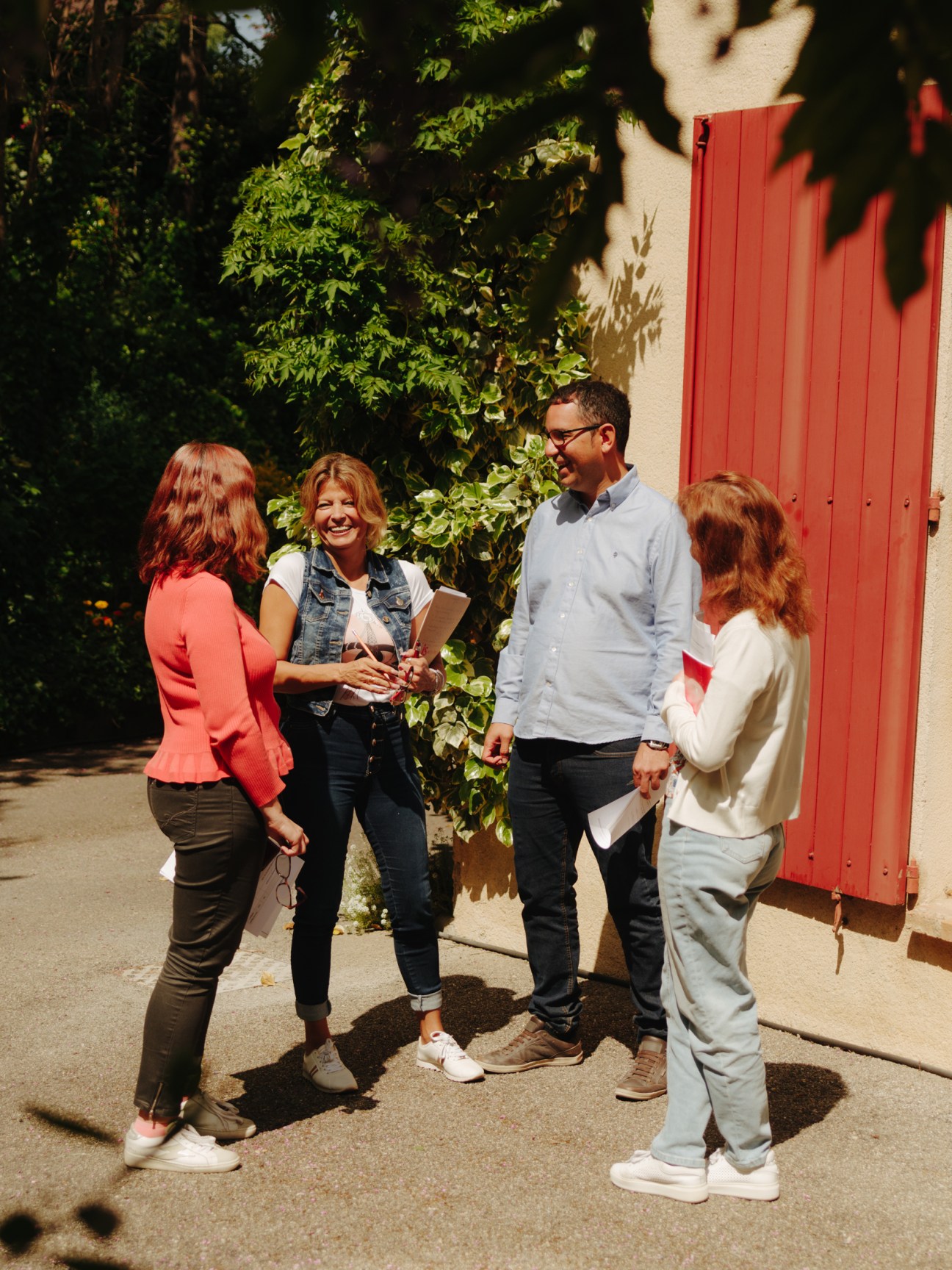
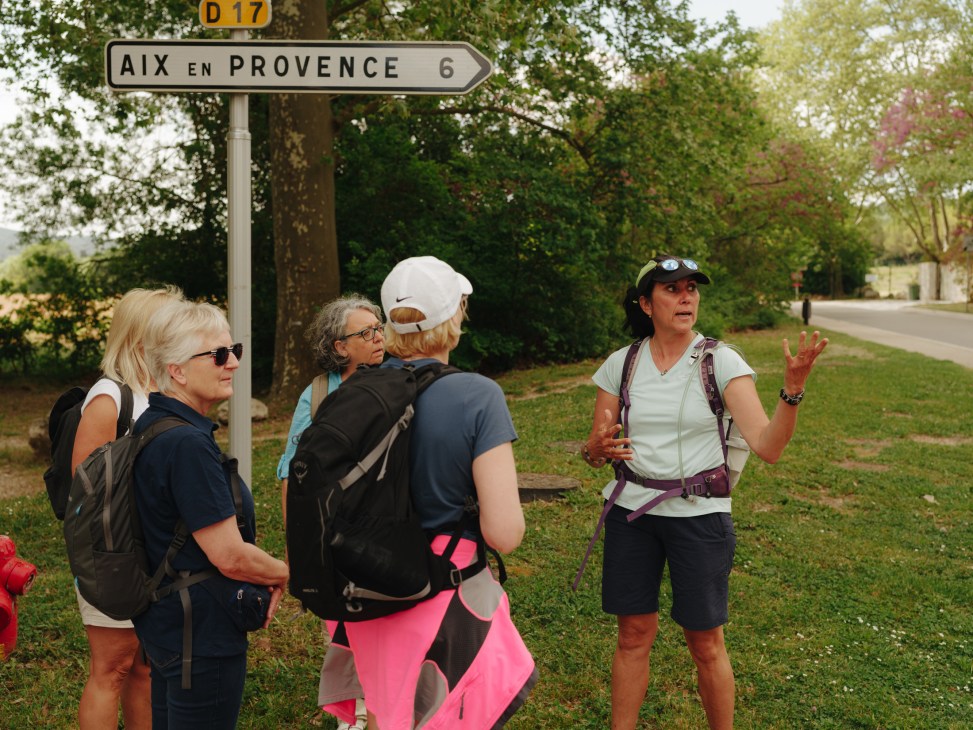
Founded in 1972, cesa’s Aix-en-Provence branch began as a language centre geared towards Swedish students looking to learn French in the region. But as the school broadened its services to include more people, it soon became clear they would need to widen their remit too. These days, cesa combines traditional language classes in the classroom with a number of hands-on activities, including wine tastings, hiking, yoga, pétanque and drawing. The twist? Every conversation, from reading a map to discussing mourvèdre grape varieties, must happen in French. “We see the activities as a complement to learning the language,” says the school’s director Anna Díaz. “They present students with the opportunity to meet other people and become more familiar with the culture.”


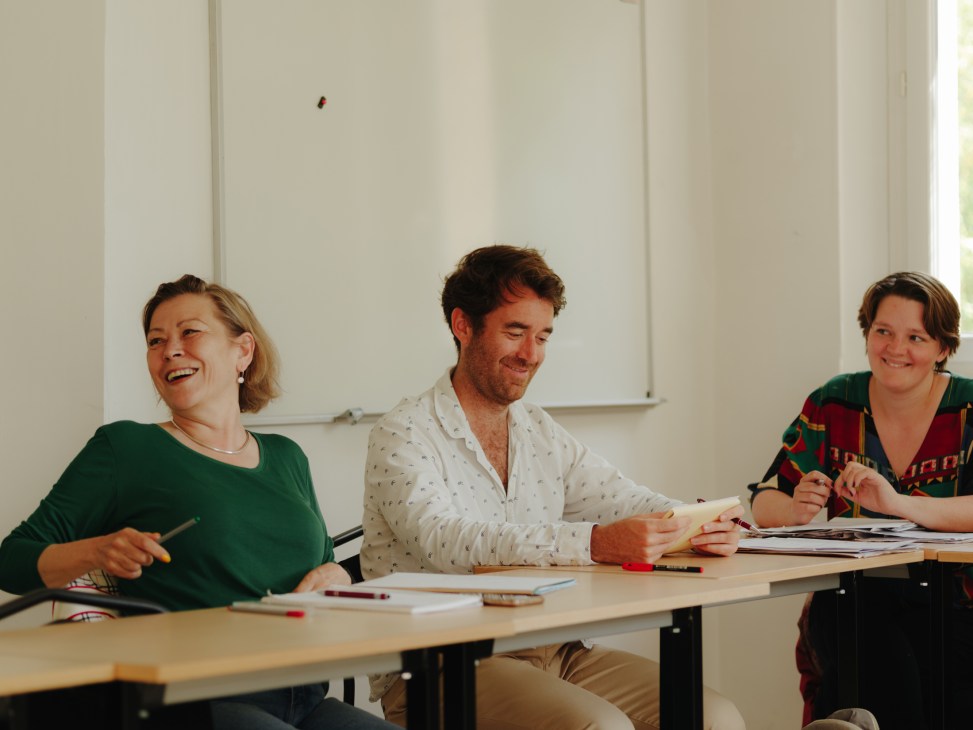
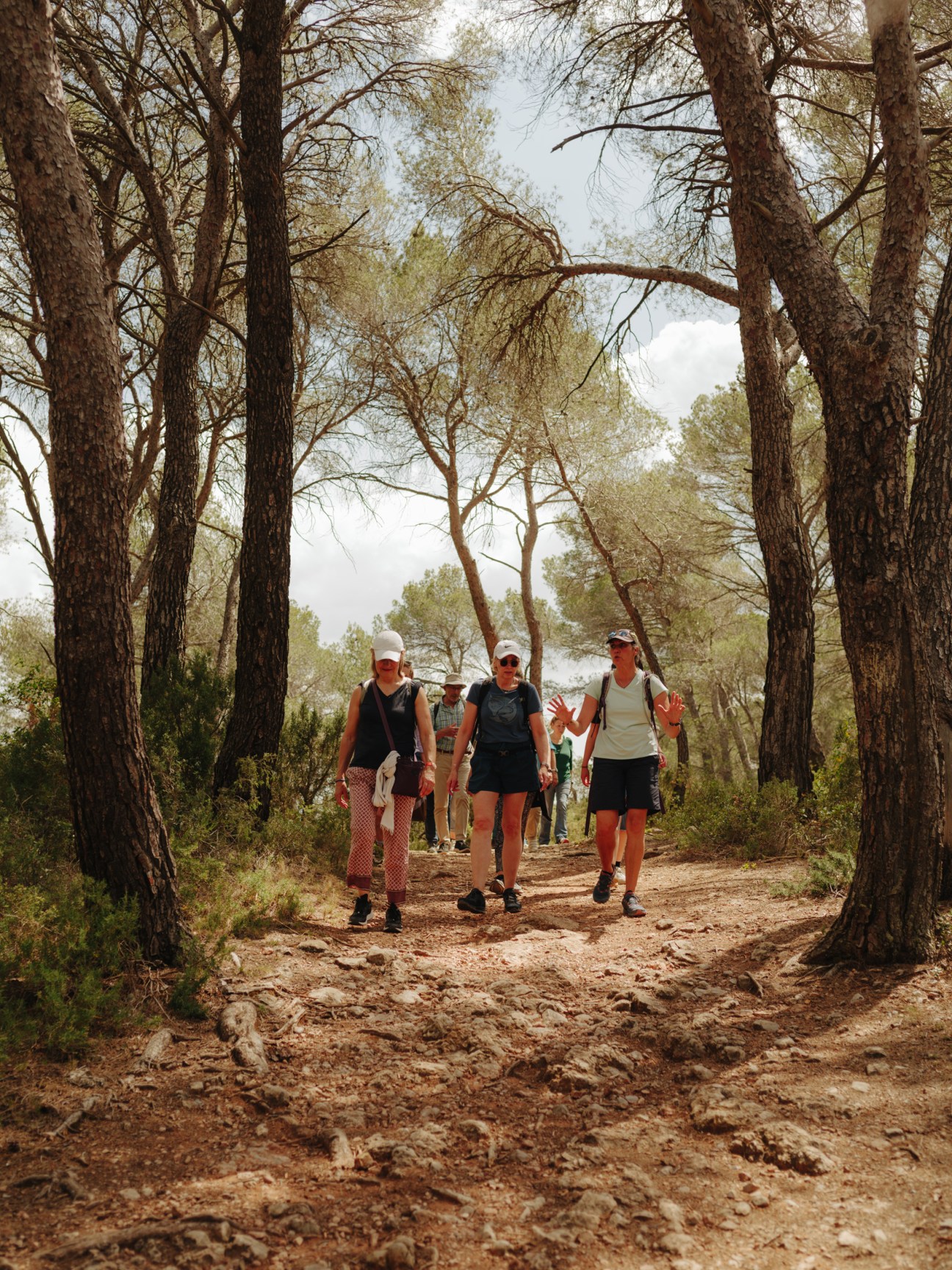
Díaz, who is originally from Stockholm, is no stranger to the art of language learning. She agrees that for her school, choosing to offer a more holistic approach was a smart decision; as post-pandemic travel ramps up again, spots on language programmes like cesa’s have become increasingly sought-after. “We’re not the cheapest school but the people who come here come looking for quality,” says Díaz. “We have small groups in classes; the city is beautiful. Lots of people like that small-town charm.” It’s easy to see the appeal. Nestled in a sunny villa overlooking the mountains, the building has a rustic appeal. “Back in the day, women used to come down here and wash their clothes in the river,” says Díaz.
When Monocle visits cesa, a group of young Swedish students is gathering outside for a break. “They’re here to study for their exams,” says Díaz. “But people come here for many reasons.” Claudia Rodriguez, a Colombian massage therapist based in Mexico City, says that she wanted to learn French for her clients, who are often francophone. “Plus, she’s here for love,” says her classmate, Leonardo Cavalcanti, a professor at the University of Brasília. Rodriguez’s partner is French and she has always wanted to speak his first language.
For most of the staff, being able to interact with different types of people is the best part of the job. “I once taught the CEO of a huge Brazilian company basic French,” says Mathilde Couderc, a new hire who, at the time, was just out of university.
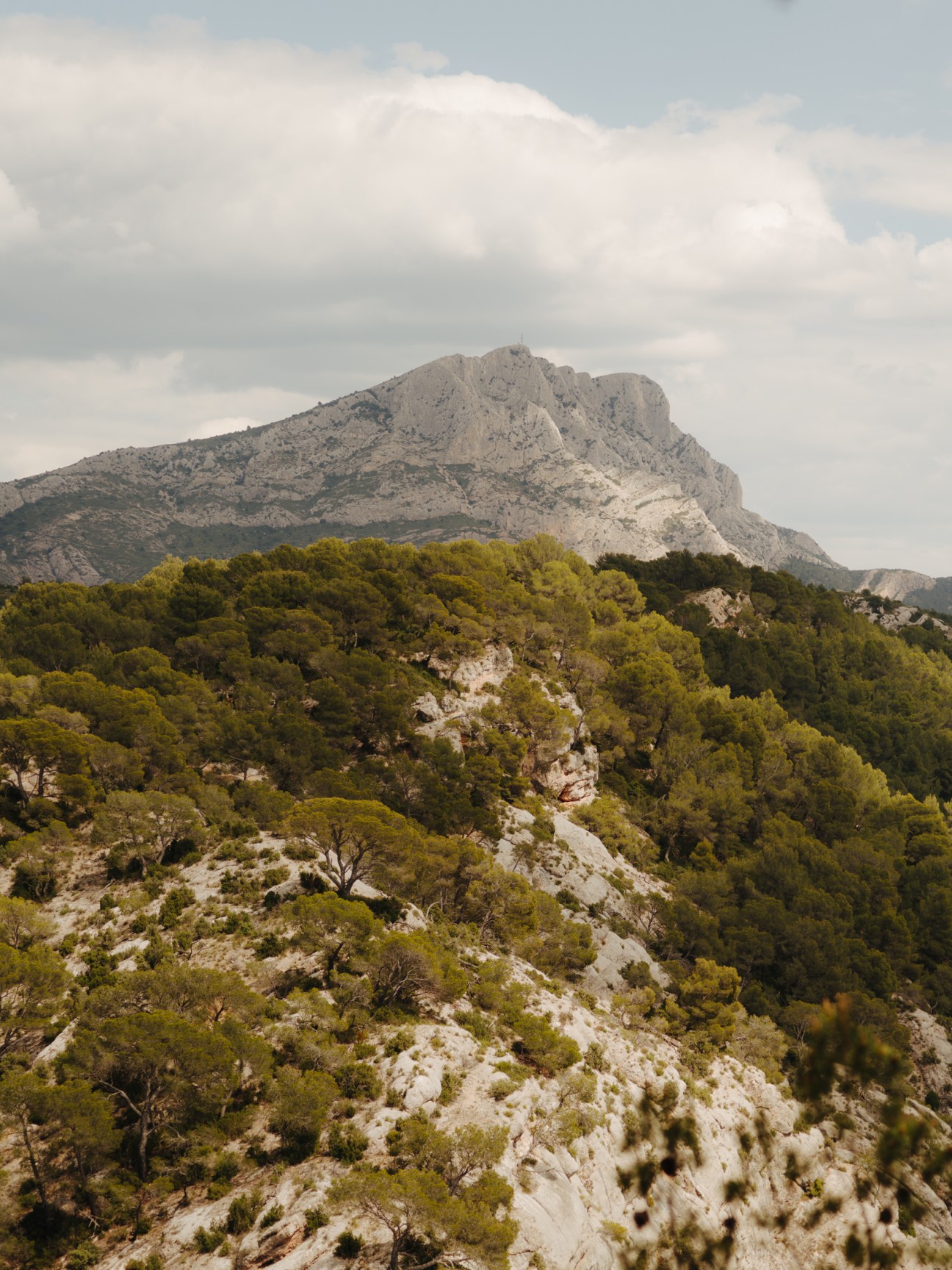
Later that day, a group of students gathers around the foot of the Sainte-Victoire mountain for today’s activity. Here, no English is allowed and, as the students chat and hike up a hill, it’s clear that they are following the rules. It isn’t always easy, though. Jennifer Edson, a New York-based creative director, is still figuring out what makes the language tick. But while she has found the learning curve difficult, the experience has been immensely rewarding. Being in Provence is, of course, half the fun. “I’m in heaven,” she says.
Learning a new language can be a daunting experience. But, like Edson, many have found out that jumping off the deep end often yields the best results. As more businesses realise that people are willing to spend their money on experiences, language-learning schools have the opportunity to increase their marketability – that is if, like cesa, they play their cards right. “Things have started picking up in the spring and we’re headed towards a busy summer,” says Díaz. “Hopefully a good winter too.”
is-aix.com
3.
K-pop performances optional
Rolling Korea, Seoul
During Korean class, Lisa Scholer, a pink-haired 23-year-old from Luxembourg, sings a K-pop ballad. She’s at the Rolling Korea language school, which integrates K-pop vocals and dance into its Korean classes, in Seoul’s hip Seogyo-dong neighbourhood. “Everything comes back to its place,” Lisa sings, following the Korean lyrics from musician Taeyeon’s “11:11.” The teacher observes her closely, commenting on breathing, rhythm and pronunciation, while accompanying on the keyboard.
“We don’t just teach regular grammar; we combine education with entertainment,” says Lee Junmi, co-founder of Rolling Korea and a bts fan. Lisa, whose Korean is intermediate, double majored in Japanese and Korean Studies at university in Germany. “I didn’t know a lot about Korea until I looked more into the language and culture; then I really started getting interested, because it’s so different from what I’m used to.”


At Rolling Korea’s weekly dance class, the teacher speaks mostly in Korean, “which helps a lot,” says Lisa. It’s her third time participating in the school, each time spending a month or two here. Today the school offers Korean language packages – with or without the K-pop options – costing anywhere from less than $1,000 (€933) to more than $3,000 (€2,800) a month. Most students come from North America and Europe but before the pandemic it was Japan.
Pre-pandemic, the institute averaged 100 students per month; it’s now around 50. Lee is no stranger to hard times; when she and her husband founded the school in 2012, they only had two students: a Japanese couple in their sixties with family roots in Korea. “The first time I came to Rolling Korea,” says Lisa, “I was the only student here because nobody got a visa during the pandemic.” She says she likes the school as there’s less pressure and more fun. “It feels like a second home.”
rollingkorea.com
Read all about it
When former journalists Fong Min Hun and Elaine Lau opened Lit Books in Petaling Jaya in 2017, they fielded “a lot of scepticism” about the prospect of running a bricks-and-mortar bookshop. Critics speculated that it was a sunset industry, and that people were only interested in e-books now.
“But no,” says Lau. “People still read physical books.” And so the husband-and-wife team rented a shop with high ceilings and ample sunlight. The cashier desk doubles as a counter where guests can sit with tea or coffee and flip through a novel. Bookshelves have wheels so that they can be easily moved aside for a jazz performance, author reading or literary quiz.
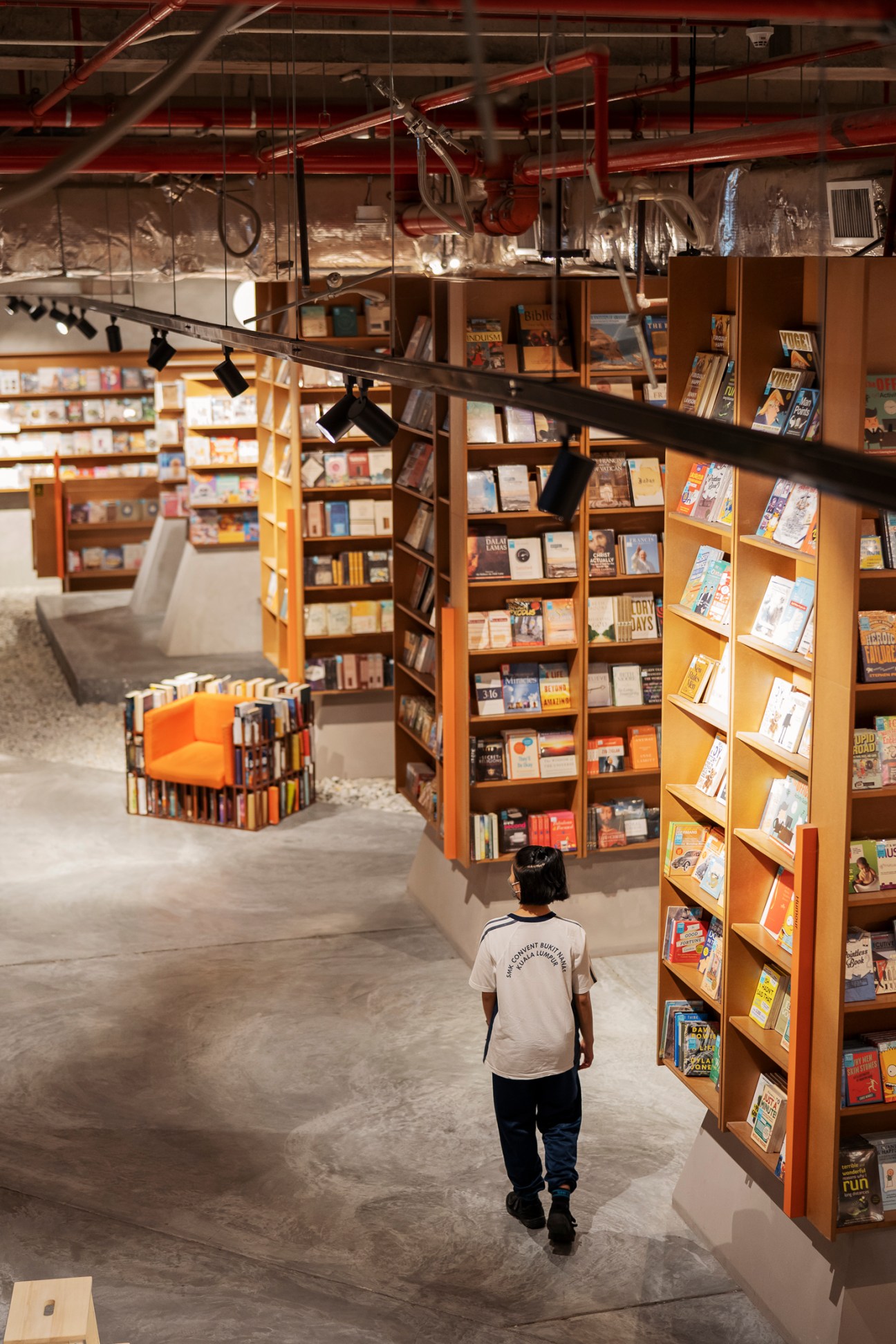
Malaysia boasts one of the world’s highest literacy rates but a 2016 report found that among Malaysians who read regularly, just 3 per cent picked up a book, most preferring to read a newspaper. It’s why the pre-pandemic book industry here was suffering from closures and shrinking revenue. Two years of lockdowns also hurt retail and forced booksellers online. But when people were stuck at home, they began to read more: according to the National Library of Malaysia, demand for digital reading material more than doubled in 2020 compared to 2019.
Now KL is experiencing a resurgence of bricks-and-mortar bookshops. Independent sellers are betting that the pandemic-era pick-up in reading will sustain and translate into in-store sales. They are finding ways to boost physical retail, from befriending customers and stocking niche paperbacks to opening cafés and curating the shelves of boutique hotels.
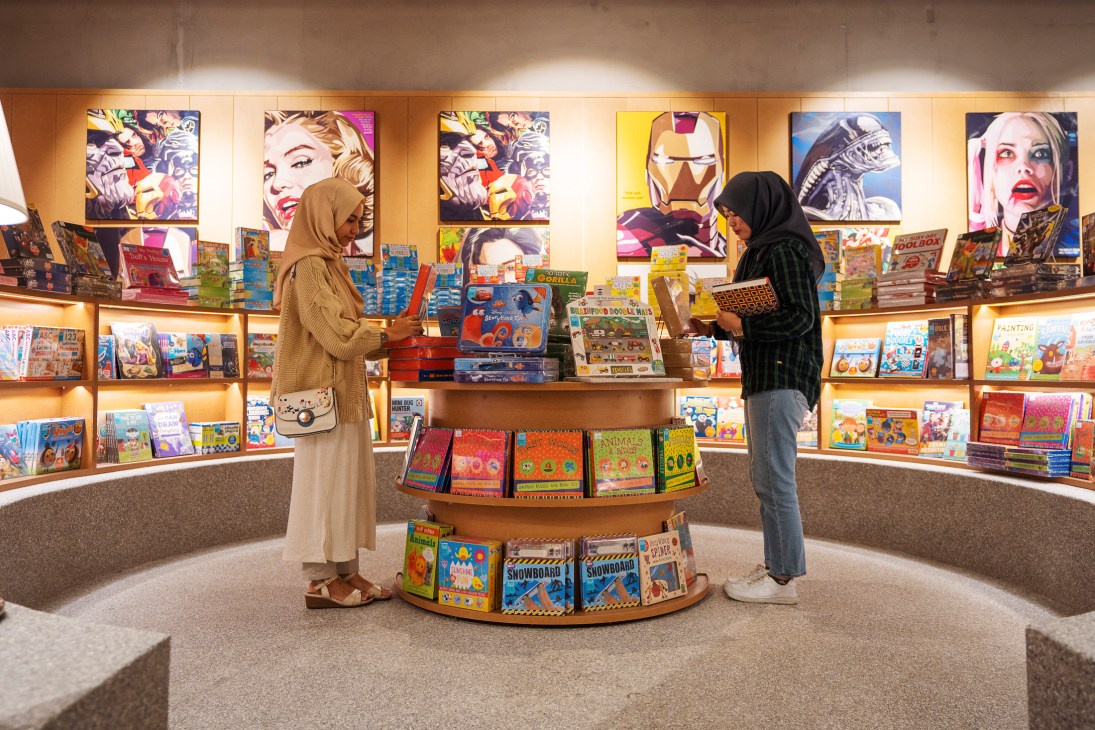
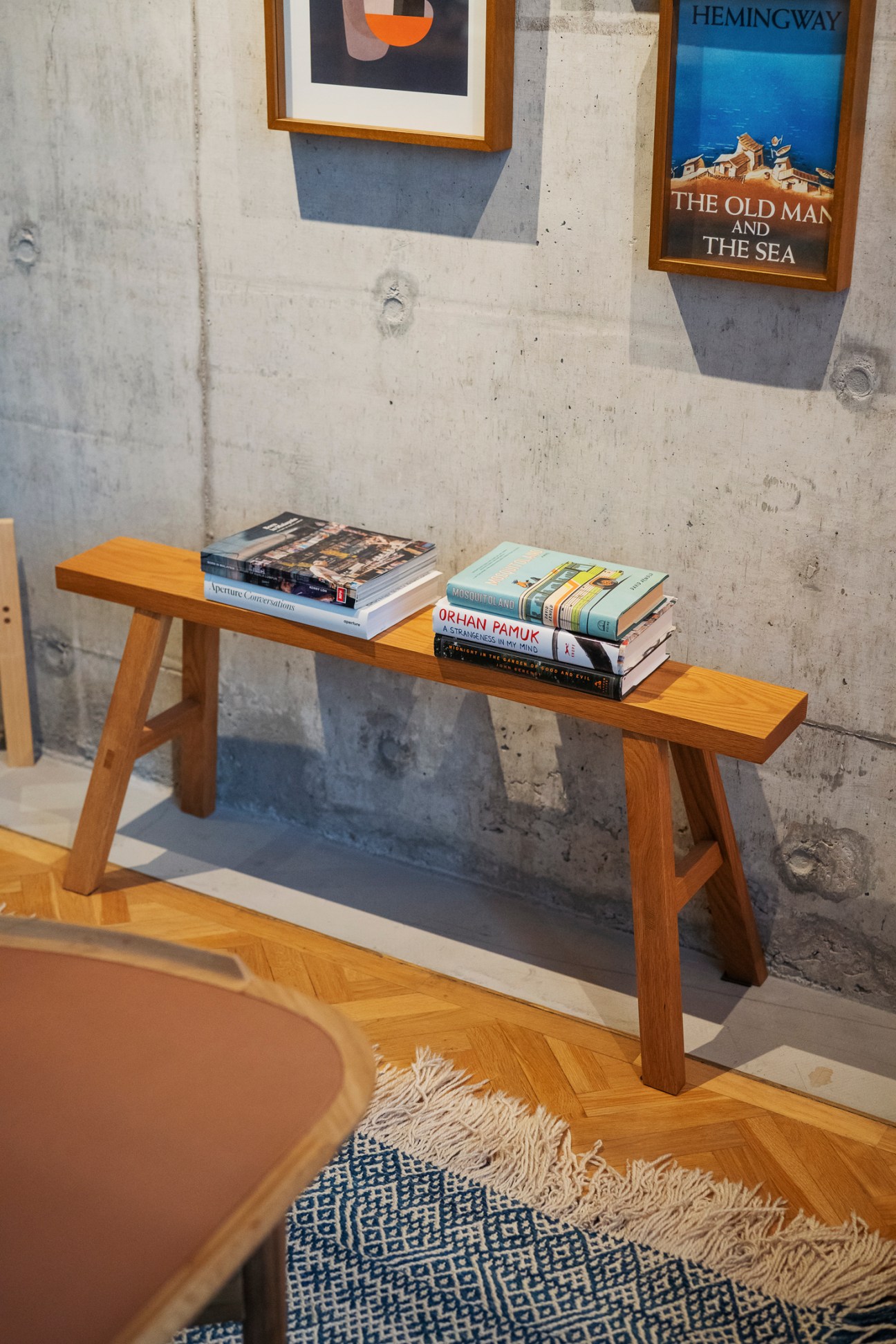

In 2020, Malaysian book retailer MPH closed scores of shops and shifted to e-commerce. Malaysian chain Bookxcess faced a similar crisis. “We were literally going to go bust,” says Bookxcess co-founder Andrew Yap. Most sales came from the international Big Bad Wolf Books fairs that Bookxcess runs, which sell remaindered books at steep discounts. The pandemic rendered the fairs impossible and Yap went online, which kept the business afloat. But the moment he could, he doubled down on bricks-and- mortar. The stores are designed to lure customers in. Each has a different, eclectic design: one is housed in an old cinema complex; another has an ice-cream bar; and many are in malls, a popular weekend destination guaranteed to bring foot traffic. Bookxcess has gone from eight shops before the pandemic to 19 in July 2022.
It’s not just chains that are bouncing back. Independent seller Monsoon Books opened in 2021 in Petaling Jaya and caters to Malaysia’s Chinese-speaking population — around two-thirds of its books are in Chinese. The selection is diverse and tends toward the highbrow; readers can purchase a treatise on Beethoven’s piano sonatas or the latest issue of Malaysian indie publication Process Magazine.
“People come to our shop and say, ‘Wow, I never expected to see these kinds of books in a Malaysian bookshop’,” says store manager Gan Han Lin. Gan left his job as a schoolteacher to run Monsoon. He hired a local designer to build shelves and a clean, cosy interior. Visitors can relax and read inside or buy a drink at the café downstairs to enjoy on the plant-filled balcony.
“We want to establish a little bit of a niche market,” says Ng Kok Heong, a retired timber salesman who invested in Monsoon as a passion project. “If you go into the big chain bookshops you’ll see that most of the shelf is all books about wealth management and how to make money. We don’t want to sell those books. It’s not about simply making money; it’s about enriching your own thinking, your life and your mind through knowledge.”
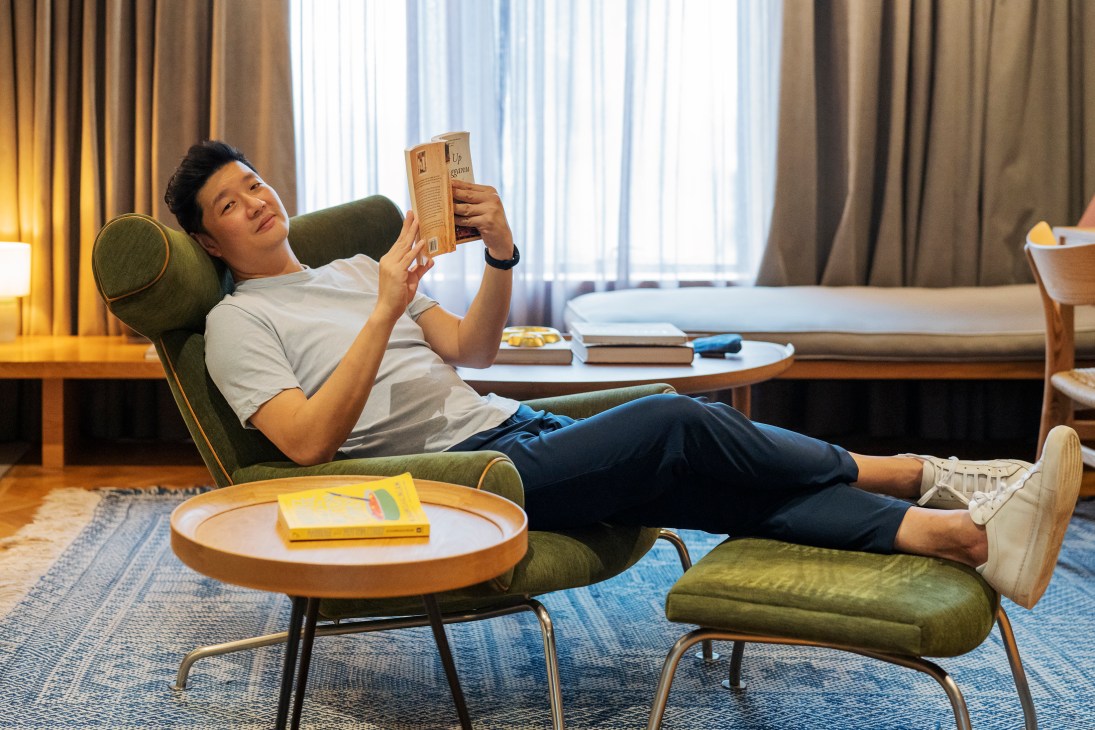
Abdul Nazir Harith Fadzilah amassed a huge collection of books as an engineering student in Melbourne and wanted to bring his favourites back to Malaysia. In 2006 he opened independent bookshop Tintabudi in KL and began selling from his personal library alongside publishers he discovered at book festivals. Fadzilah has expanded Tintabudi’s business model, publishing a local author’s poetry collection and collaborating with the Kloé Hotel to curate their “room to read”, one of five culture-themed suites on offer at the venue. Some Kloé guests have become Tintabudi patrons.
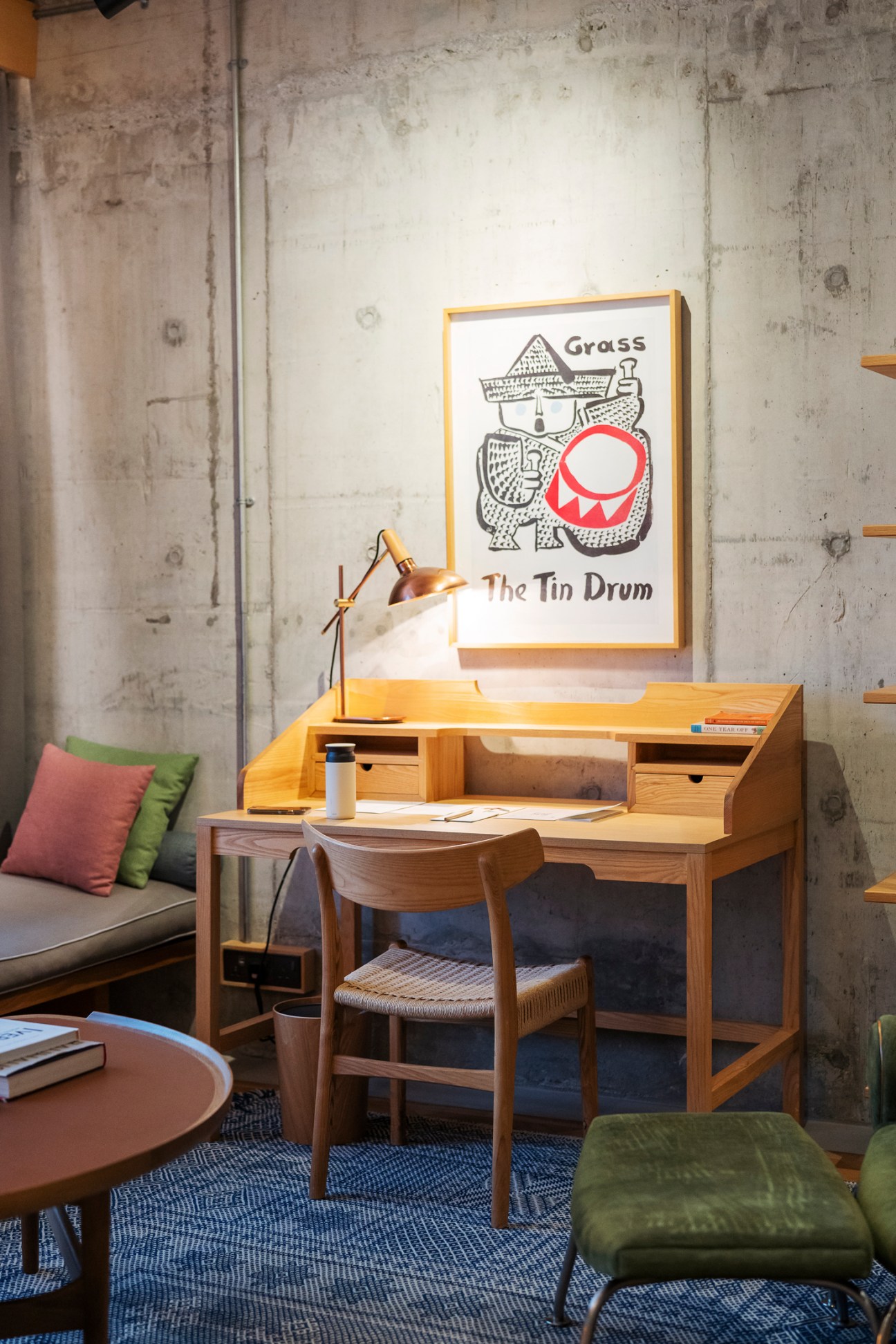
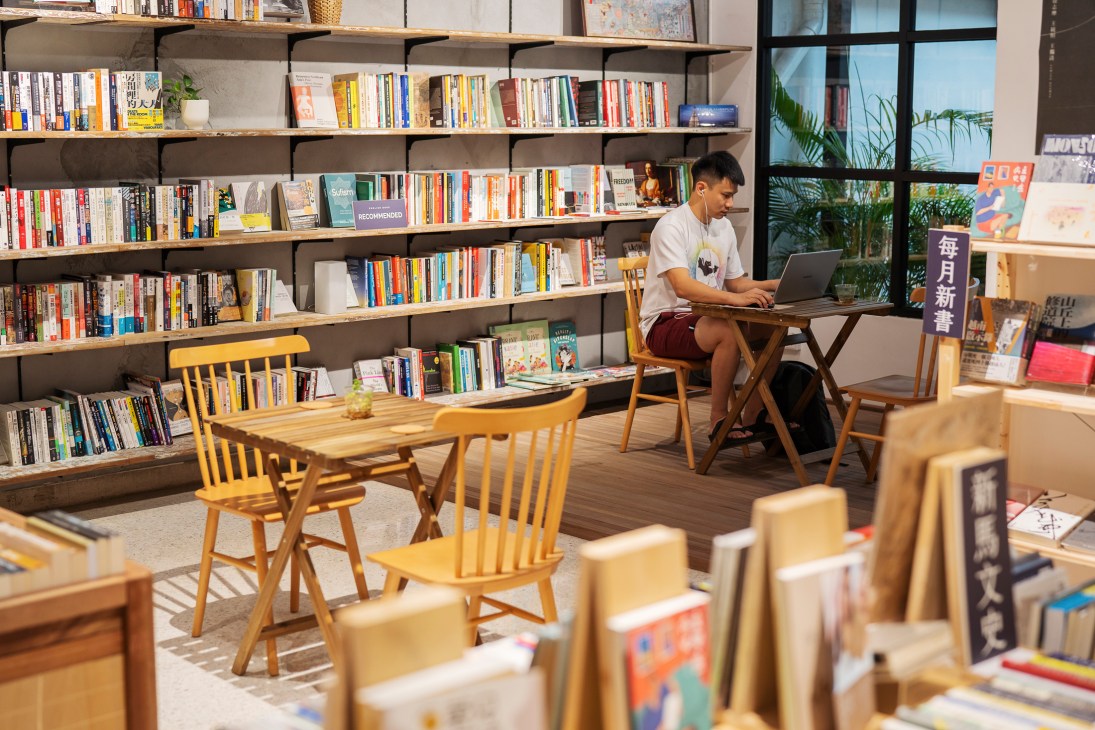
Fadzilah has seen interest in printed books grow in the years since he opened Tintabudi, especially among younger readers. “There is a movement [away] from the internet and back to books,” says Fadzilah. “It’s an exciting progression.” For independent bookshops, customer relationships are the cornerstone of their business, a trump card over chains and the best part of the job. The vast majority of Lit Books’ sales are from repeat customers and shelves are lined with a mixture of owners’ picks and regulars’ favourites. Much of what they sell is available in bigger shops but people seek them out because they feel a connection to the business.
“We meet every single person,” says Elaine Lau. “We do spend a lot of time just talking and it doesn’t always convert to sales but the relationship is set and people appreciate that. We have people who didn’t buy something the first time but they’re back here now to purchase today.
Book bargains
In 1992, American author Kathi Kamen Goldmark founded a rock band called the Rock Bottom Remainders. It grew into a literary supergroup of sorts, with Stephen King, Barbara Kingsolver, Amy Tan and other writers as members. The name is a tongue-in-cheek reference to remaindered books, which are books deemed unsellable after languishing on shelves for too long. Bookshops return the unsold volumes to the publisher and many are pulped and recycled or discarded. Some publishing companies, however, sell the books at vastly reduced prices to shops such as Bookxcess, which can then offer customers very high discounts and still make money. Such cheap books can rattle the market and some governments have instituted laws to prevent the practice. In France, for instance, it’s illegal to sell new books with any more than a 5 per cent discount on the cover price. France’s parliament passed that law in 1981 to protect independent booksellers from chains that could afford to sell with bigger discounts; other European countries have similar fixed-book-price laws. For customers, lower prices can mean more accessible reading material. But buyers should beware, as rock-bottom prices aren’t always a signal that a book is remaindered: some cheap books in online marketplaces have been illegally photocopied and distributed. E-books have also made book piracy even easier.