Issues
Electric valley
The route to the future
Greenwashing might have diluted the word “sustainability” but transportation still comprises 37 per cent of the world’s carbon dioxide emissions, the OECD’s watchdog says. Fortunately, there’s a slew of companies racing to edge out rivals and corner the low-carbon transport market. There’s money to be made, whether in manufacturing or training, and much to be lost too – not just from delayed public projects or needlessly buying shiny new bikes. This Mobility Special offers a glimpse of the future of transport.
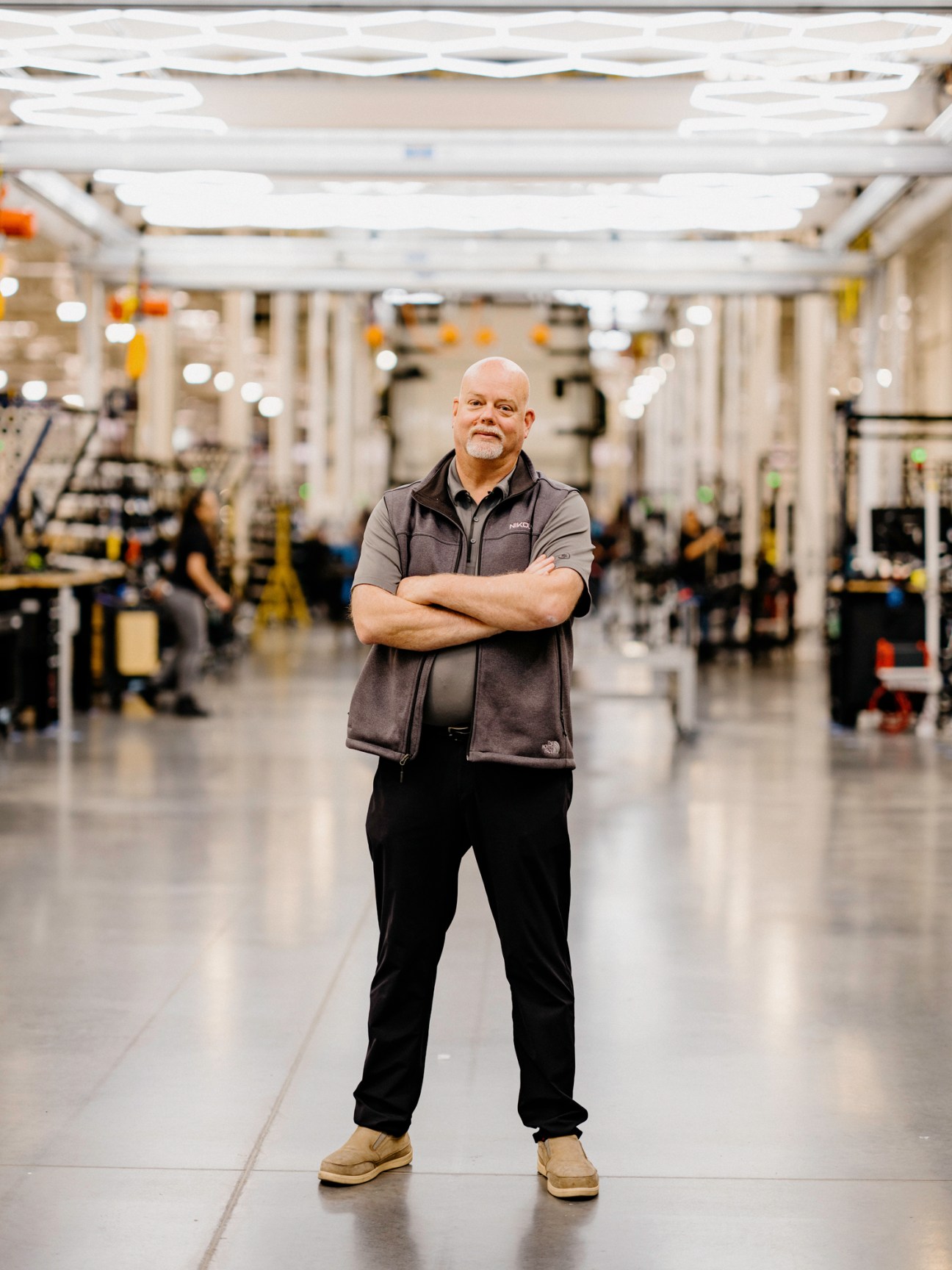

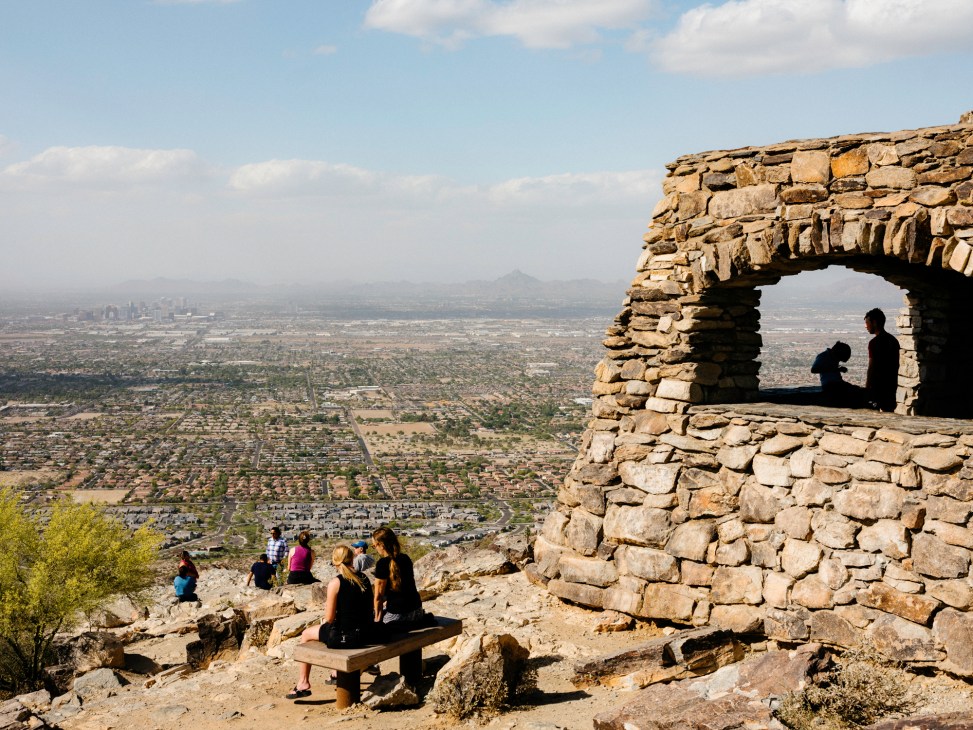
“I call that ‘the vertical Central Park of Phoenix’,” says Mark Russell, CEO of electric- vehicle (EV) manufacturer Nikola, as we admire the view from his office of the cactus-studded Camelback Mountain, which lies to the northeast of Arizona’s state capital. Three times a week, Russell runs up that hot rock to keep fit – and he’s a man who knows a thing or two about gruelling climbs.
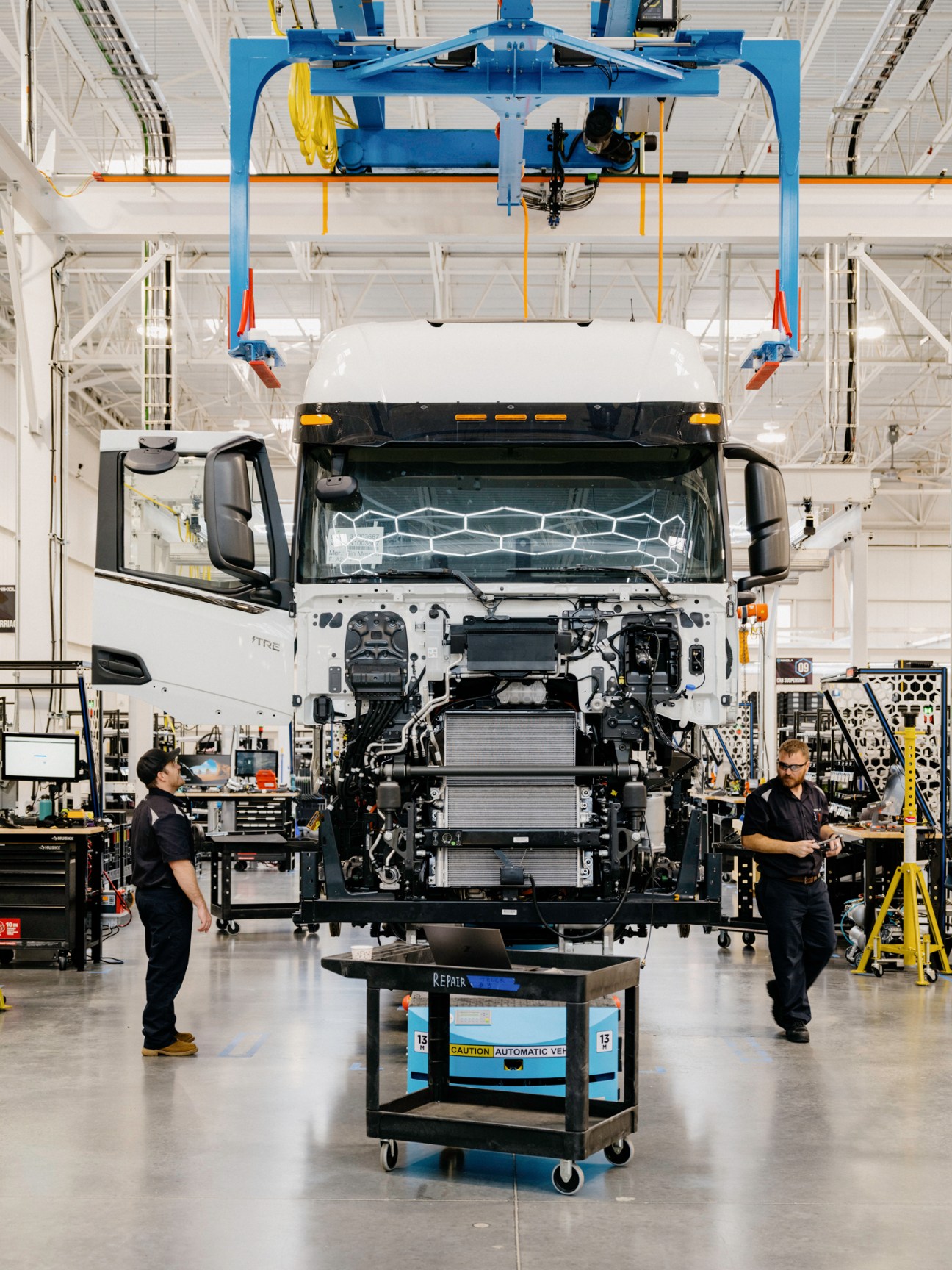
In March, Nikola’s first electric-powered haulage lorries, capable of covering about 560km at full charge, rolled out of its new factory in Arizona. Getting the company to that point, however, was a test of endurance that would have had most chief executives heading for the hills. Last year, US federal prosecutors charged Trevor Milton, Nikola’s founder and executive chairman, with lying to investors. This sent the company’s share price into a tailspin and Russell, who came on as CEO in 2020 and provided a reassuring antidote to Milton, has spent the past year trying to convince the world that Nikola really can make what he calls the “truck of the future”.
“We had to get over that controversy while making sure that our work was still going on,” says Russell. “Anybody who has come here, met us and reviewed the technology knows what the real deal is.”


Part of Nikola’s challenge is that the boom in EVs has brought with it bucking-bronco markets and cowboys making wild promises (the industry adage “liar, liar, battery supplier” refers to the grand claims about how far some batteries can make a vehicle go). Several EV manufacturers are shifting their production to Arizona so it’s fitting that this Wild West industry would take root in a landscape straight out of a western. Vast factories are rising and the gears of industry are turning to make what many now whisper is becoming America’s newest Motor City, the Detroit of electric vehicles.
Local and state governments are offering incentives, tax breaks and softer regulations than neighbouring California to burnish Arizona’s case. There’s an interstate highway to Los Angeles, the country’s biggest market for electric vehicles, and it’s easy to bring in parts from across the Mexican border, where machinists have been operating for decades.
Phoenix’s EV-makers might be the new kids on the block but they’re poaching from the old centres of the automotive industry. Former Ford designer Erik Tuft moved from Detroit in 2018 to lead Nikola’s design department. “A bit of love in the right places goes a long way,” he says, running a hand along the rounded cab of the Tre fcev lorry, powered by hydrogen fuel cells, which Nikola plans to begin manufacturing next year. It already has an order for 800 of them from brewing giant Anheuser-Busch. “The landscape here is a great inspiration,” says Tuft. “We sent our materials specialist on a tour of the state and she brought back all of this red sand and brambles, so we’ve based our vehicles on the colour palette of Arizona.”



Phoenix, the fastest-growing major city in the US, is also in one of its fastest-growing counties. In the affluent neighbouring city of Scottsdale, the rodeo band at the Rusty Spur Saloon plays nightly, hollering for “tips or tiddies” between songs – but the crowd is changing. Now best known for sun-seeking snowbirds, the city is a magnet for people from across the US seeking a low-tax place to settle with a resort-town ambience and high-paying jobs in technology, defence and EVs. Eli Kogan, who runs the Otto Car Club, where members pay to have their prized Porsche 911s and impeccably restored race cars maintained, says that more than 75 per cent of his sign-ups in the past 18 months are newcomers.
Every Friday night, luxury and exotic vehicles cruise the roads in front of the W Scottsdale hotel. “We have seen so many independently wealthy people in their thirties and forties buying our cars in cash,” says Rebecca Lombardo, general manager of Sanderson Lincoln, which has sold stately American automobiles in Phoenix for decades. “The whole demographic of the city is shifting and that was accelerated by coronavirus.”
The mayor of Phoenix, Kate Gallego, believes that her city’s future is electric and is aiming for 280,000 EVs on its roads by 2030, up from about 29,000 currently across the state. Surging petrol prices have turbocharged the Biden administration’s EV push in its Build Back Better plan, offering significant subsidies for Americans who make the switch.

To capitalise on this accelerating market, Polestar, a Volvo-affiliated Swedish EV-maker, opened a shop that sells cars in Scottsdale’s Fashion Square mall in April. “With the inflow of the population from southern California to greater Phoenix, the market was seeing a 99 per cent year-on-year increase of EV registrations,” says Gregor Hembrough, head of Polestar usa. Californian firm Lucid Motors also has a showroom in the mall; regarded as a potential challenger to Tesla, Lucid took its entire production to Arizona in September and its sleek, electric-powered Air Dream Edition car goes for a cool $157,000 (€149,000).
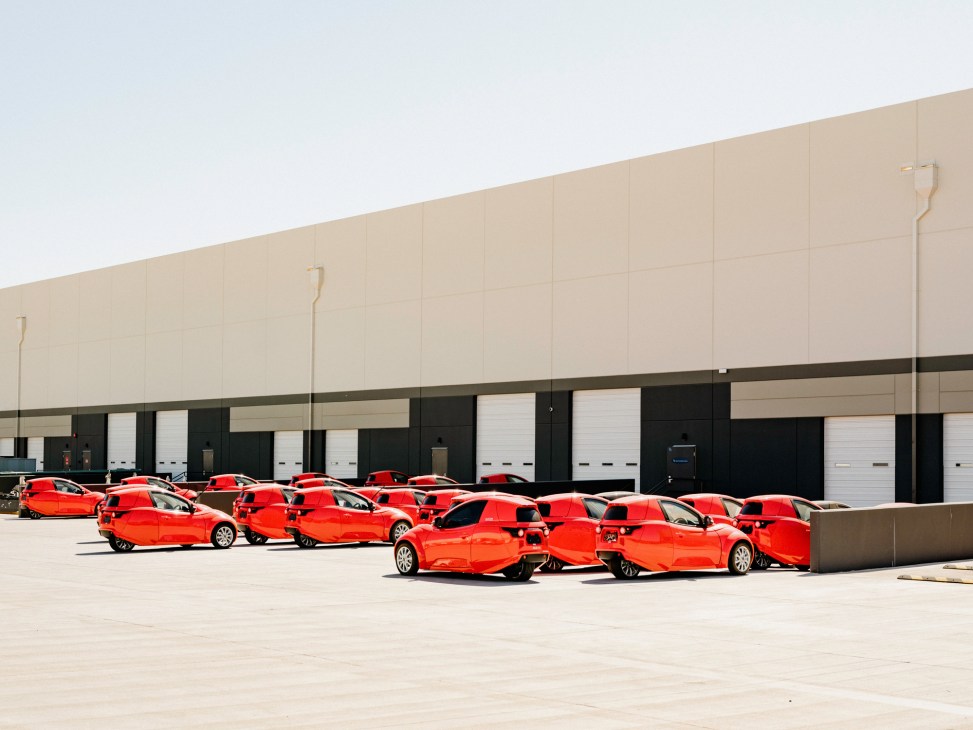
Every week seems to bring another grand announcement. South Korean battery-maker LG Energy Solution will break ground on a gigafactory in Phoenix; Electrameccanica, headquartered in Vancouver, is putting the finishing touches on a 21,832 sq m factory next to the airport in Mesa, on the same industrial estate where Boeing is making its ah-64 Apache helicopters. “A year and a half ago, this was all grazing land,” says Electrameccanica’s CEO, Kevin Pavlov. By the end of December, he says, his company will have the capacity to turn out 20,000 of its single-seater, three-wheeled Solo vehicles in a year.
The Solo, which resembles a stylish Italian hatchback sawn in half, is currently shipped in from China for sale in the US but trade-war tariffs have bolstered efforts to reshore manufacturing in North America. “I’m not saying that you should get rid of the family car for those camping trips to Tahoe; just drive this thing to work,” says Pavlov. “We’re solving urban-mobility challenges.”
We take a Solo for a spin. Three-wheelers don’t have the best rep, conjuring images of once-futuristic inventions that never quite took off, but we put this one through some hard turns and never career into cactus. It’s a nimble drive that will need to be a bit roomier when they do the US build. The team is also talking about making space for pets and a surfboard rack. “This place has all of the elements that Michigan had,” says Pavlov. “Talented folks, great training, multiple car [manufacturing] lines moving in. Maybe the US has two Motor Cities – or maybe there’s a race on.”
Elsewhere, new mobility ideas are being put through their paces. Alphabet-owned Waymo chose Mesa to debut its fleet of about 300 fully self-driving electric cars and has extended service to downtown Phoenix. When Monocle gave it a try, we ended up waiting for 45 minutes in the midday sun. Without a driver to call and rapidly turning Arizona-sand red, we gave up and booked an Uber.
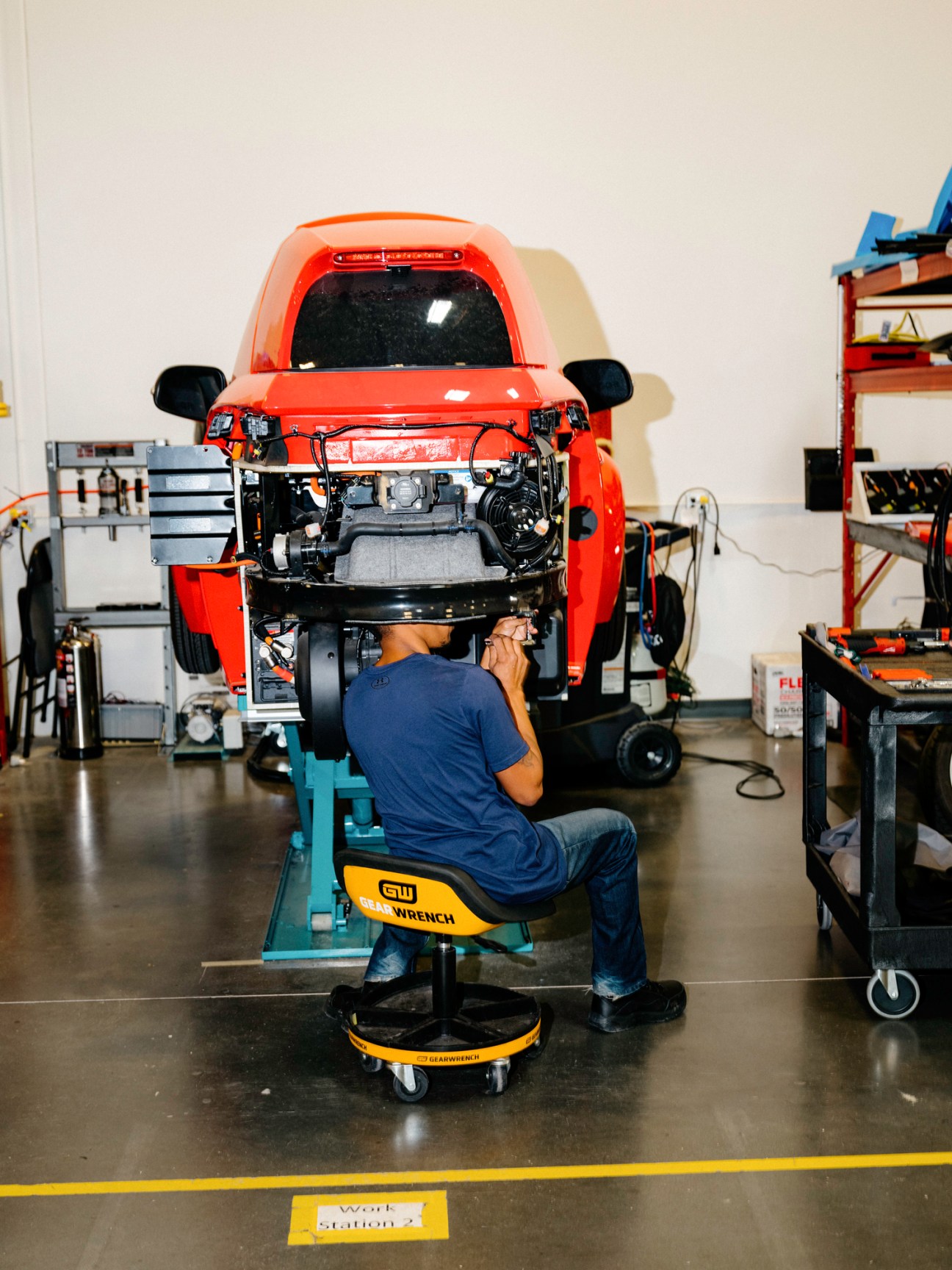
Perhaps such hiccups come with the territory. City hall believes that welcoming innovators such as Waymo will help to diversify Phoenix’s economy and sustain it beyond the current EV boom. The US might be in a period of reshoring industry but the spectre of Detroit – and the desertion of manufacturers moving overseas – looms large. Mayor Gallego also regards transitioning from petrol as a priority for a city that was the first in the US to appoint a heat officer. The challenge is to get more charging stations and persuade more Americans to go electric. Many, especially across the Sun Belt, are deeply wedded to their conventional trucks.
Michigan-born Mark Hanchett, CEO of Atlis Motor Vehicles, believes that he has a solution. Atlis’s pickup has an electric battery that the company says fully charges in 15 minutes – a claim that has had seasoned manufacturers scoffing. “Our biggest challenge right now is overcoming doubt,” says Hanchett. Yet investment is pouring in: $26m (€24m) overall and $8.2m (€7.6m) crowd-sourced since January, all without putting a single truck to market.
In Atlis’s start-up environment, where people tinker with anodes and cathodes in a home-built dry room, it’s clear that the rules of the road for this new industry are still being written. The bigger EV players “think they can just buy [a battery] and shove it in there”, says Hanchett, a one-man hype machine who is confident that he’ll be manufacturing at scale by 2024. “My point is this: what value are you bringing? Are you changing the world or are you just trying to play in the sandbox with everybody else?”
Pivot to the Pacific: How the US military is training in the jungles of Hawaii to prepare for war with China
One peaceful Saturday morning in 2018, residents of Hawaii awoke to the text message that many had long feared: “Ballistic missile inbound to Hawaii. Seek immediate shelter. This is not a drill.”
Christine Lonie, a retired naval officer who lives on the island of Oahu, was at the gym. While most islanders were bracing for impact, some putting their children down storm drains, Lonie and her husband, Chris, who is also ex-military, suspected a false alarm. “Still, we decided to shelter in place and mix up mai tais,” she says.
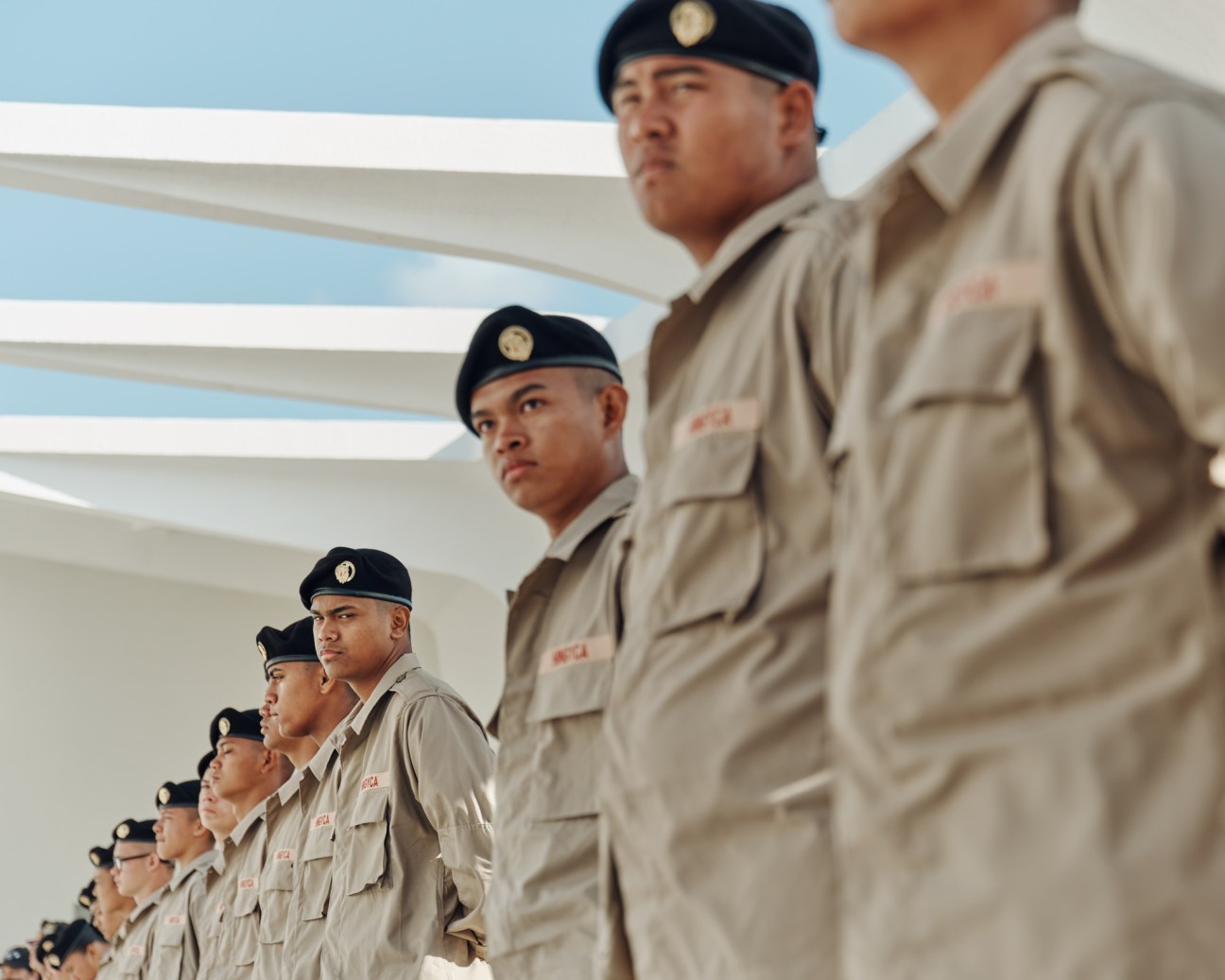
The error, caused by someone clicking “the wrong thing on the computer”, according to authorities, has had a long-term effect on the psyche of Hawaiians. It was a reminder that if a missile were fired at the US from Asia, these islands would be the first in line. “Everyone has the perspective of Pearl Harbor,” says Lonie, referring to the 1941 air attack by Japan that propelled the US into the Second World War.
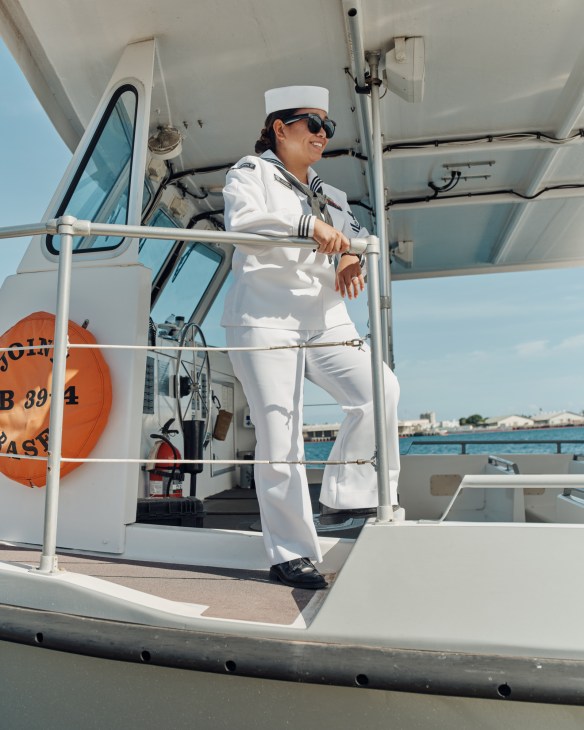
Hawaii is once again a port in a storm. In April, China signed a security deal with the Solomon Islands that could result in Chinese units and ships stationed on the Pacific archipelago, which is closer to Honolulu than Beijing. The most senior US admiral in the region has warned of a new “boldness” about China’s threats towards Taiwan and that the war in Ukraine shows that such an invasion could be possible. Some analysts say that the US has already lost the balance of power in the Pacific. A long-delayed US pivot in strategic focus is under way and the 50th state has renewed its role as a crucial staging post for the military. The Department of Defense administers about 80,000 hectares of Hawaii, representing almost every branch of land and sea warfare. Most sunseekers on a stretch of Waikiki probably don’t realise that they’re laying their towels on military land or that the brutalist balconies of the Hale Koa resort are only for veterans and serving soldiers seeking r&r. Likewise, most are oblivious to the sheer number of bases, which have their own police and shopping malls. The islands of aloha and surfing are also an important training ground for what could be the next theatre of war.

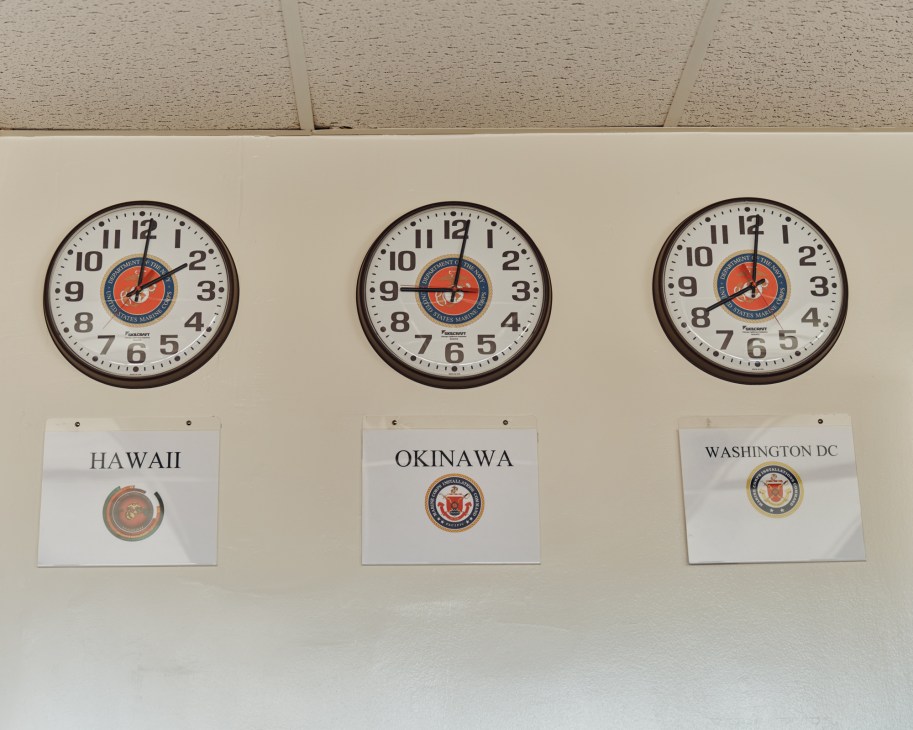
“We are really in the business of deterrence,” says Major General Chris McPhillips, director of strategic planning and policy at the US Indo-Pacific Command (Indopacom), a strategic nerve centre at the top of a hill in Oahu that co-ordinates 375,000 naval and land personnel over a vast area from India to just off the coast of California. Under Indopacom’s direction, the military has embarked on “forward-deploying” thousands of troops across the Pacific. In Darwin, Australia, scores of US Marines are in place; US Army Pacific has stepped up training in the Philippines, Japan and South Korea; and in June, Hawaii will host the Rim of the Pacific exercise, bringing together allies for what is both a joint training drill and a show of force.
McPhillips gives Monocle a whistle-stop tour of China’s nefariousness. “There’s a long-term strategy to create an environment where violations of the rules-based order are normalised,” he says, pointing to spots on a map of the Asia-Pacific region in his office. “Look to India and the line of control where there is armed aggression by the PRC, or east to Vietnam where dams are being built by China and water is being diverted. Every day the pressure on Taiwan is ratcheting up, in terms of ship presence and air incursions.”
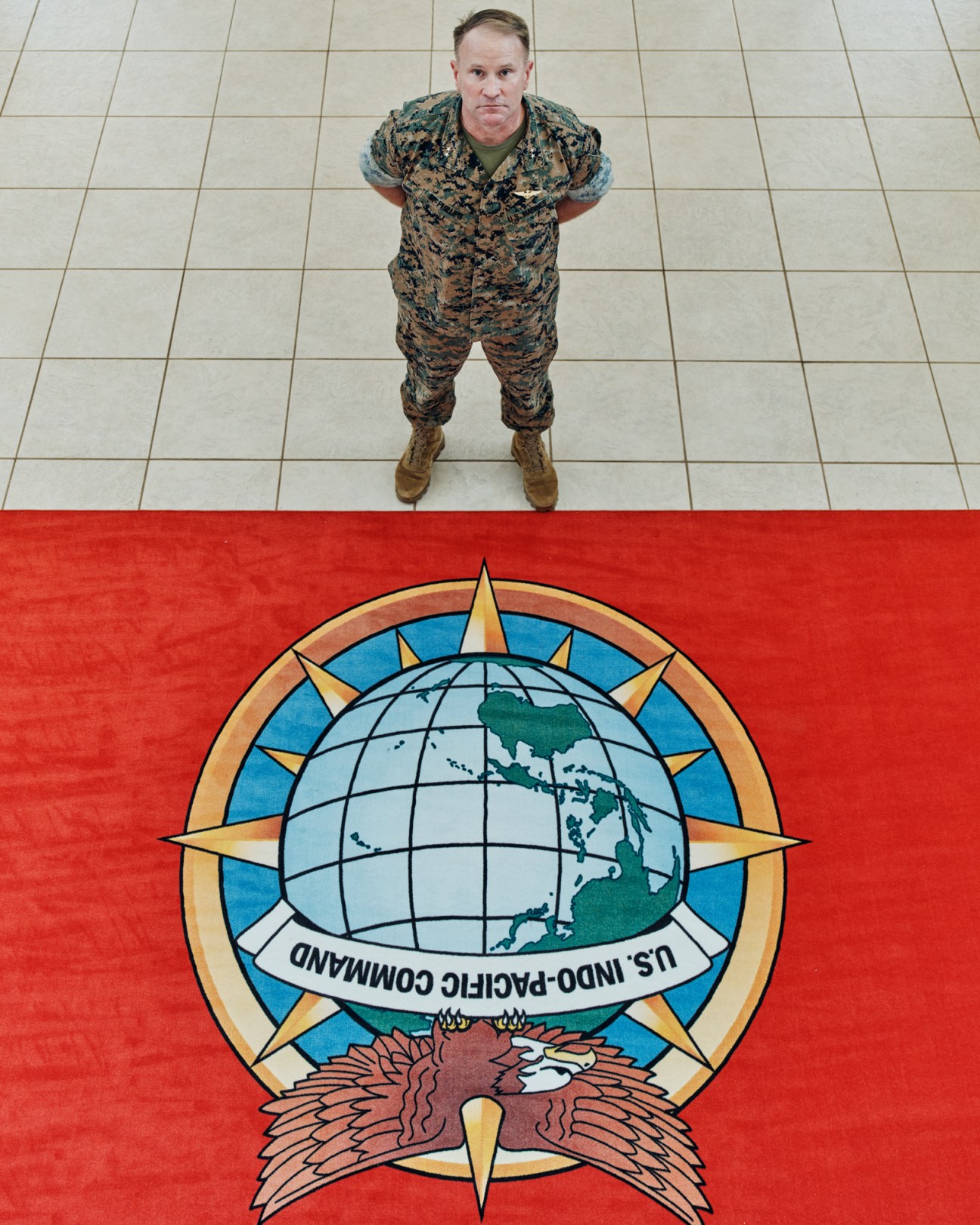
McPhillips talks about the “tyranny of distance” – in essence, the problem of how to get US forces across the ocean in the event of a flash outbreak of violence. If China were to suddenly rain down missiles on Taiwan or if US and Chinese ships collided in the South China Sea, which Beijing has peppered with military runways, it could take hours or days simply getting US troops there from far-flung bases.
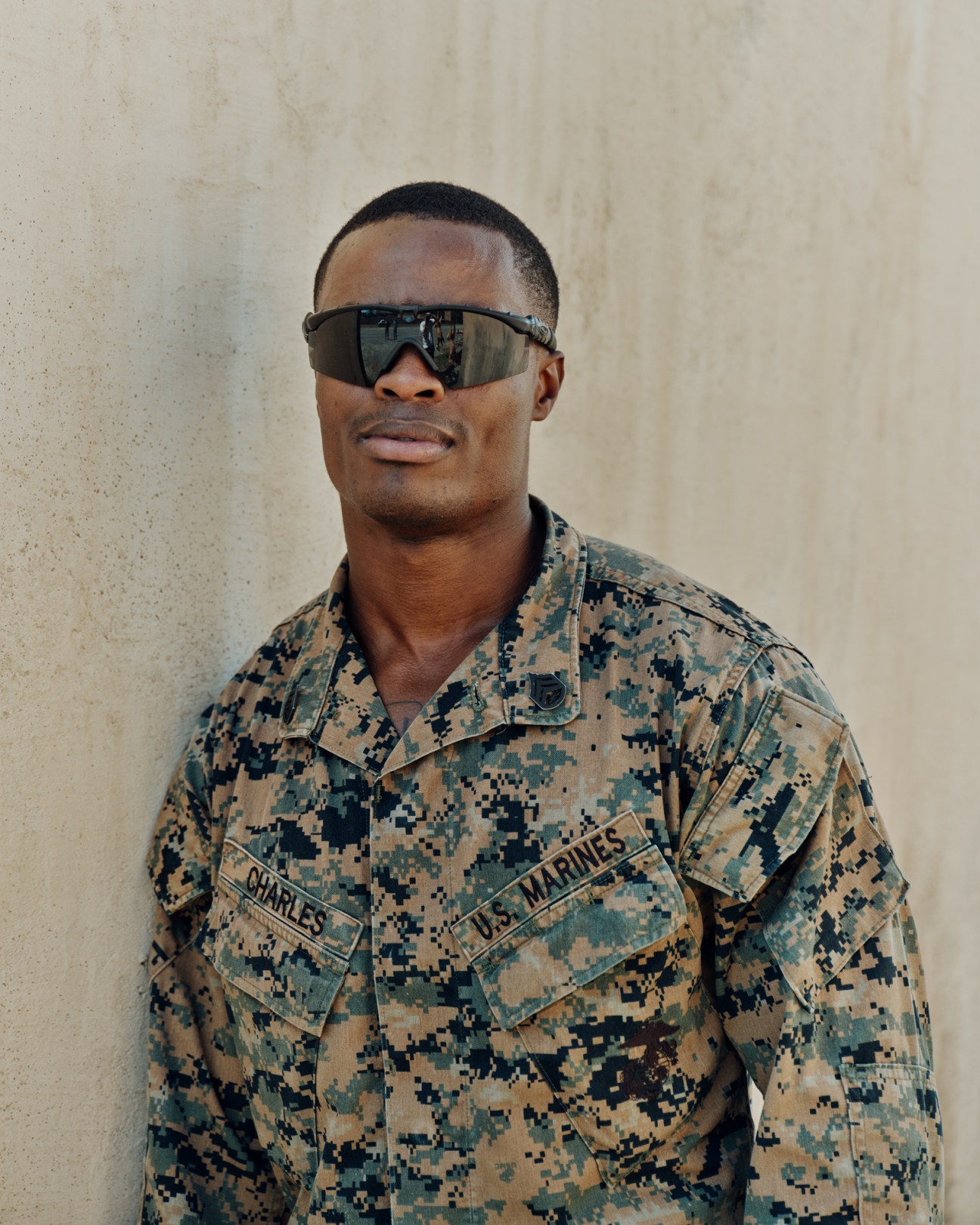
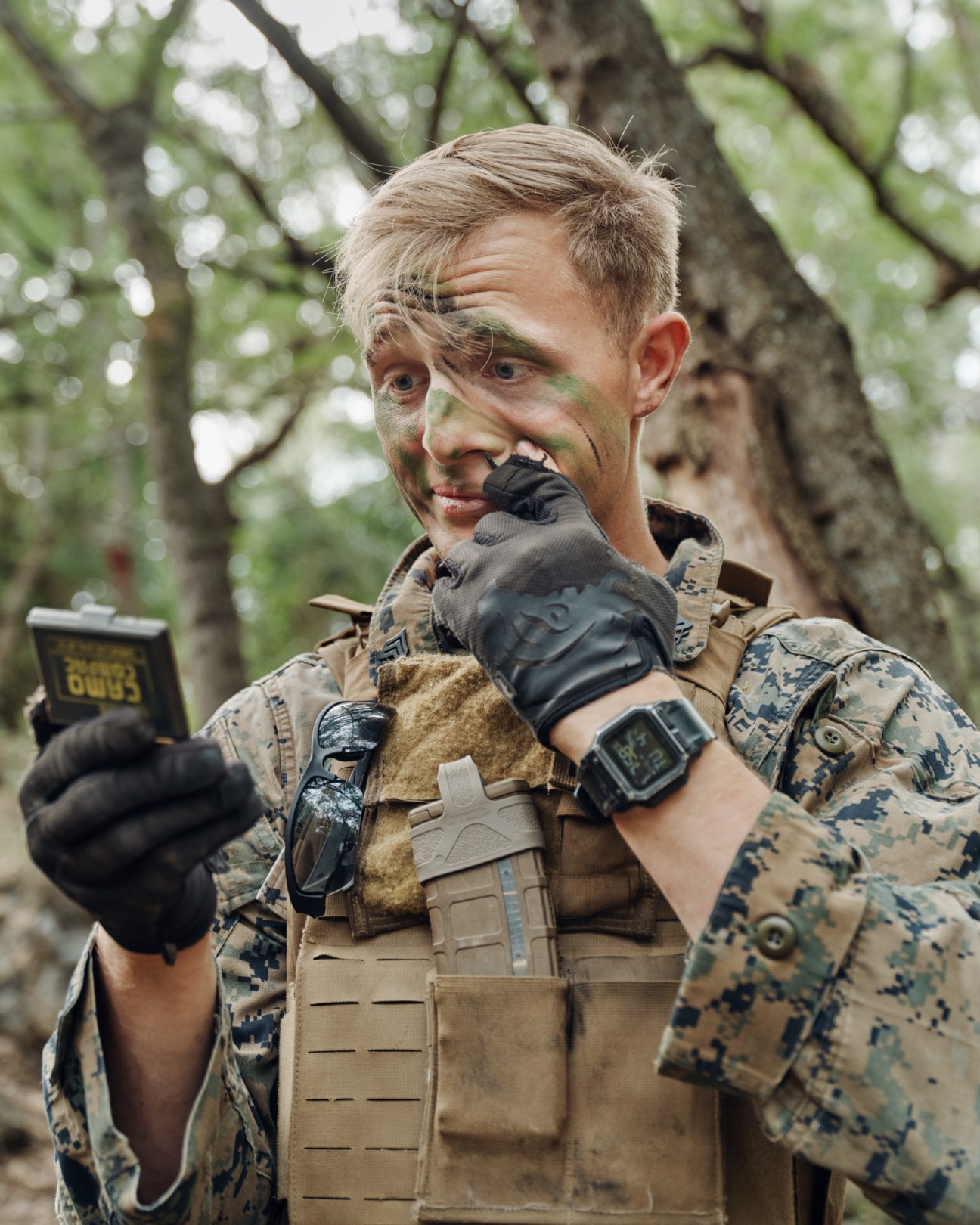
“What we are trying to do out here is to posture the force across the region so that we are more forward, more of the time,” says McPhillips.
At 07.46, on the other side of Oahu, 24 young US Marines are daubing their faces with camouflage paint beneath a banyan tree. Hawaii’s balmy trade winds don’t penetrate into this thicket of jungle and sweat rolls down the faces of two soldiers carrying rocket launchers, which are filled with sand to simulate being fully loaded.
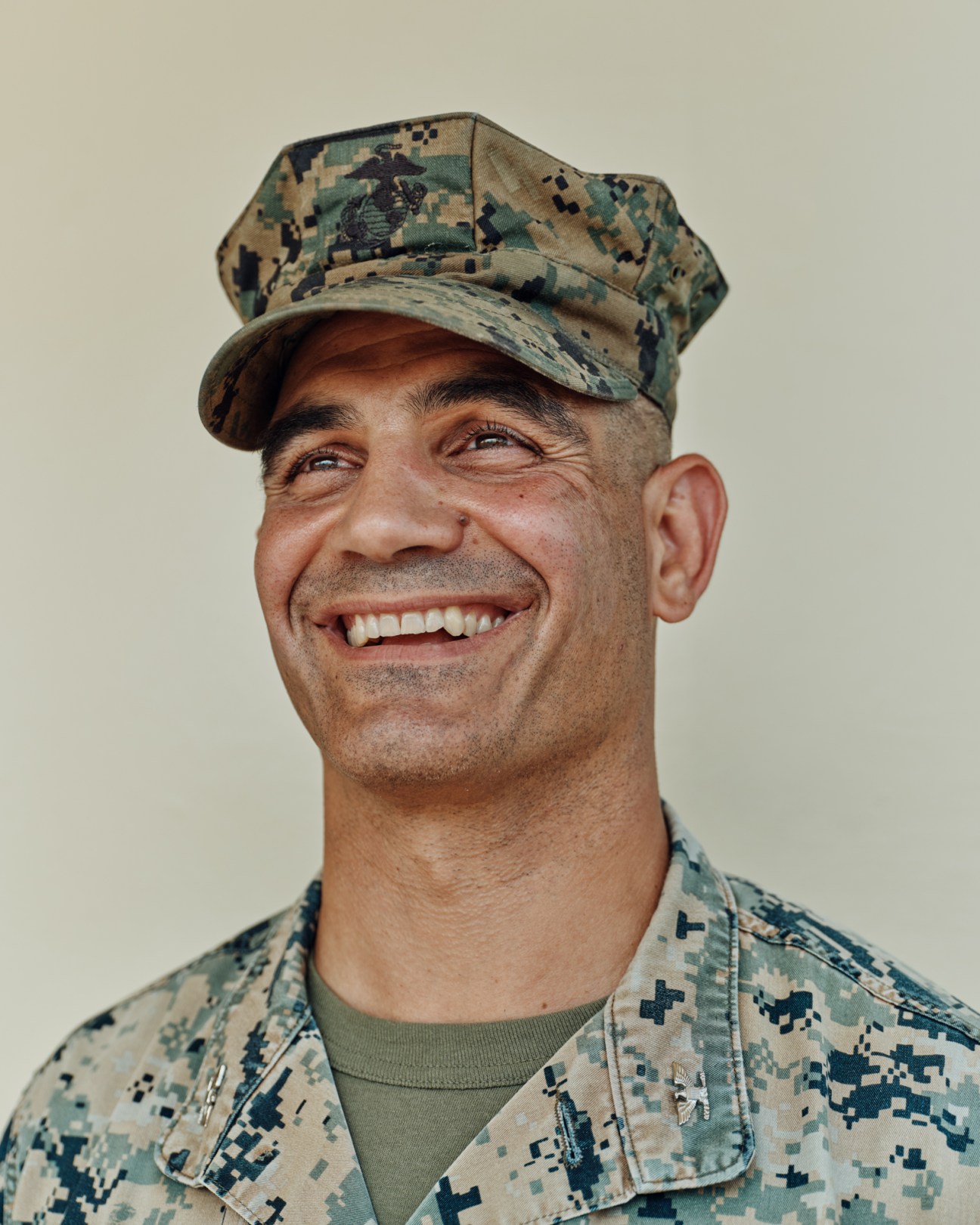

The squad is in a gruelling three-week scenario that pits them against a Chinese enemy. They will sleep in the open and track their opponents through the undergrowth. Their sergeants say that, unlike in Afghanistan, they will be up against a “pure adversary” of comparable might and preparedness, which is indicative of how much China’s forces have modernised over the past decade.
Occasionally there’s a peal of gunfire in the distance or the shudder of a helicopter overhead. “Everyone thinks that Hawaii is a paradise,” says Staff Sergeant Kevin Cassara, squatting on an ammunition box filled with blanks. “But out here they get biting centipedes and wild hogs.”
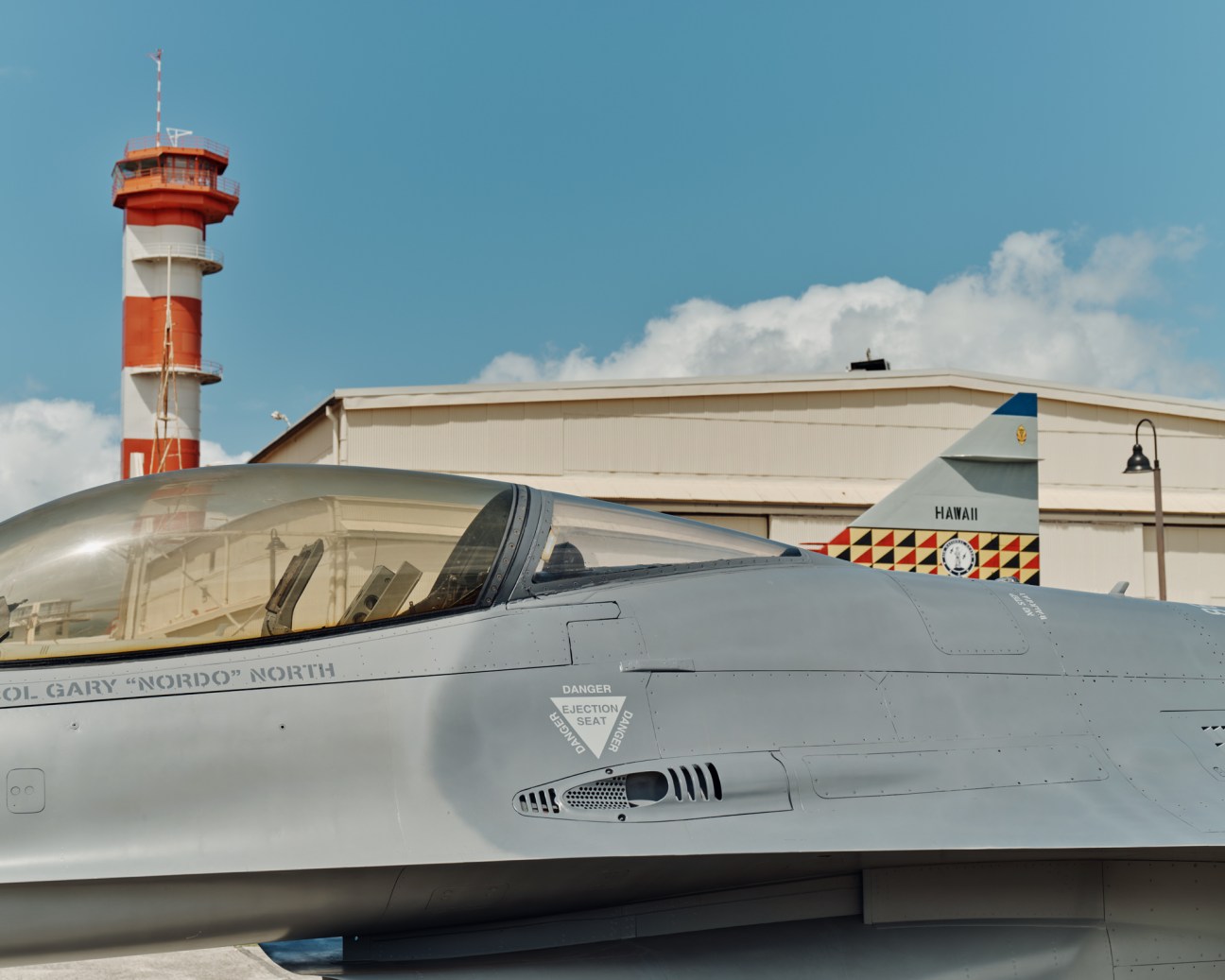
For more than 20 years the US Marines served largely as a counterinsurgency force in the Middle East. These 24 soldiers have so far trained mostly in the deserts of California or Australia; the jungle can be bewildering. “The Marine Corps is going back to its amphibious roots,” says Cassara. “We’re shifting to be a light-infantry, island-hopping force – and Hawaii is essential for this. We can mirror what they’ll face in the South China Sea.”
The platoon halts at the side of a dirt road. Corporal Stefan Murillo kneels beside his gunner, who is lying prone with his weapon trained on a gap in the foliage. “We’ll set an ambush and wait for the enemy to come by,” says Murillo, whispering and sniffing back sweat. “The next wars might take place on islands just off China – hot, humid places like this. So it’s about getting Marines ready for this kind of climate, this vegetation, so that they are more lethal.”
Would the US directly intervene if China invaded Taiwan? Indopacom will not say. Australia’s former prime minister Kevin Rudd argues in his book The Avoidable War that the lack of clear consequences if such red lines are crossed, agreed between the US and China, only raises the risk of a confrontation. “Since 2017, Washington has increasingly come to believe that a Chinese military takeover of Taiwan – and especially one that the US did not resist – would effectively be the end of the US-led rules-based order in Asia and perhaps the world,” Rudd tells Monocle.
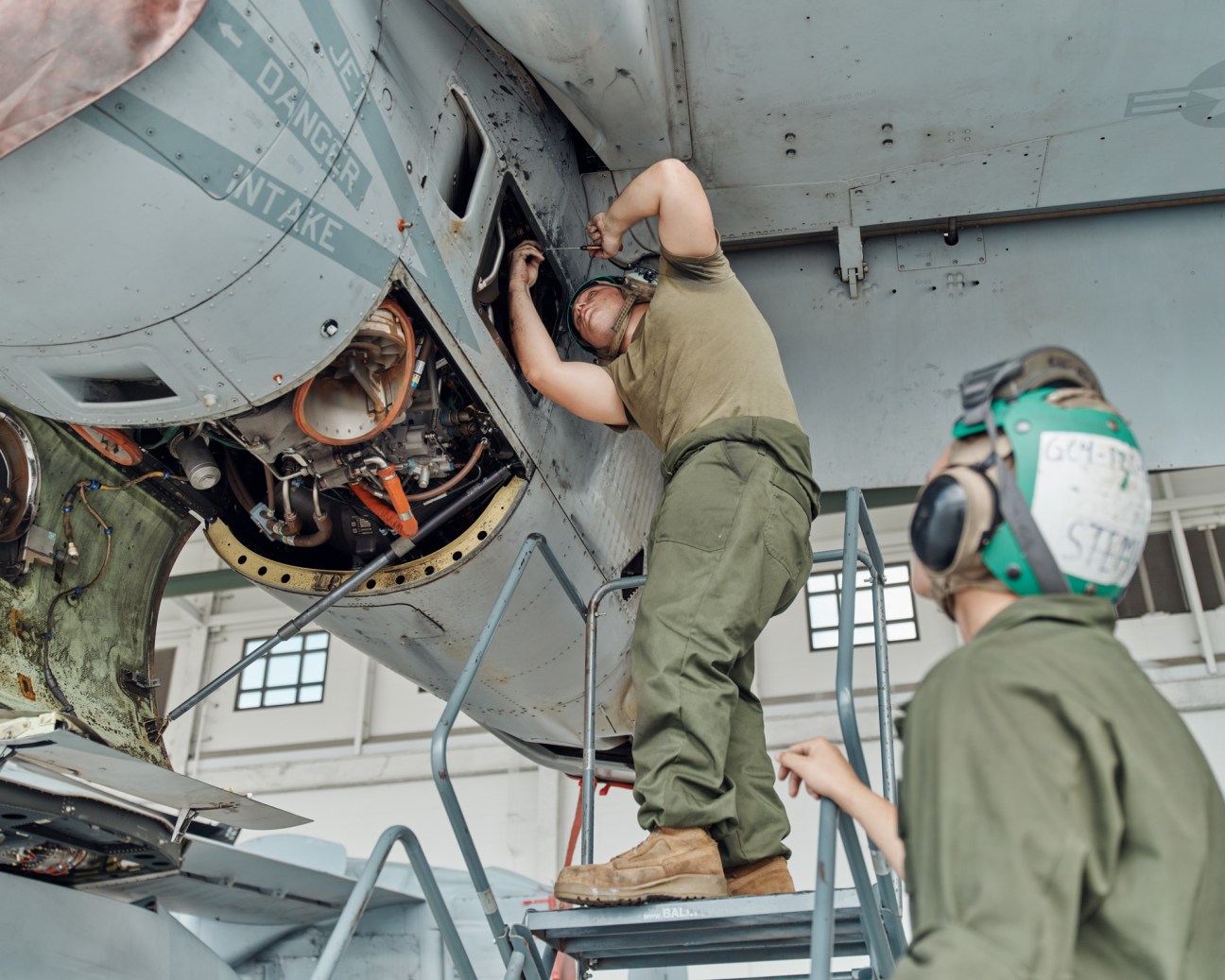
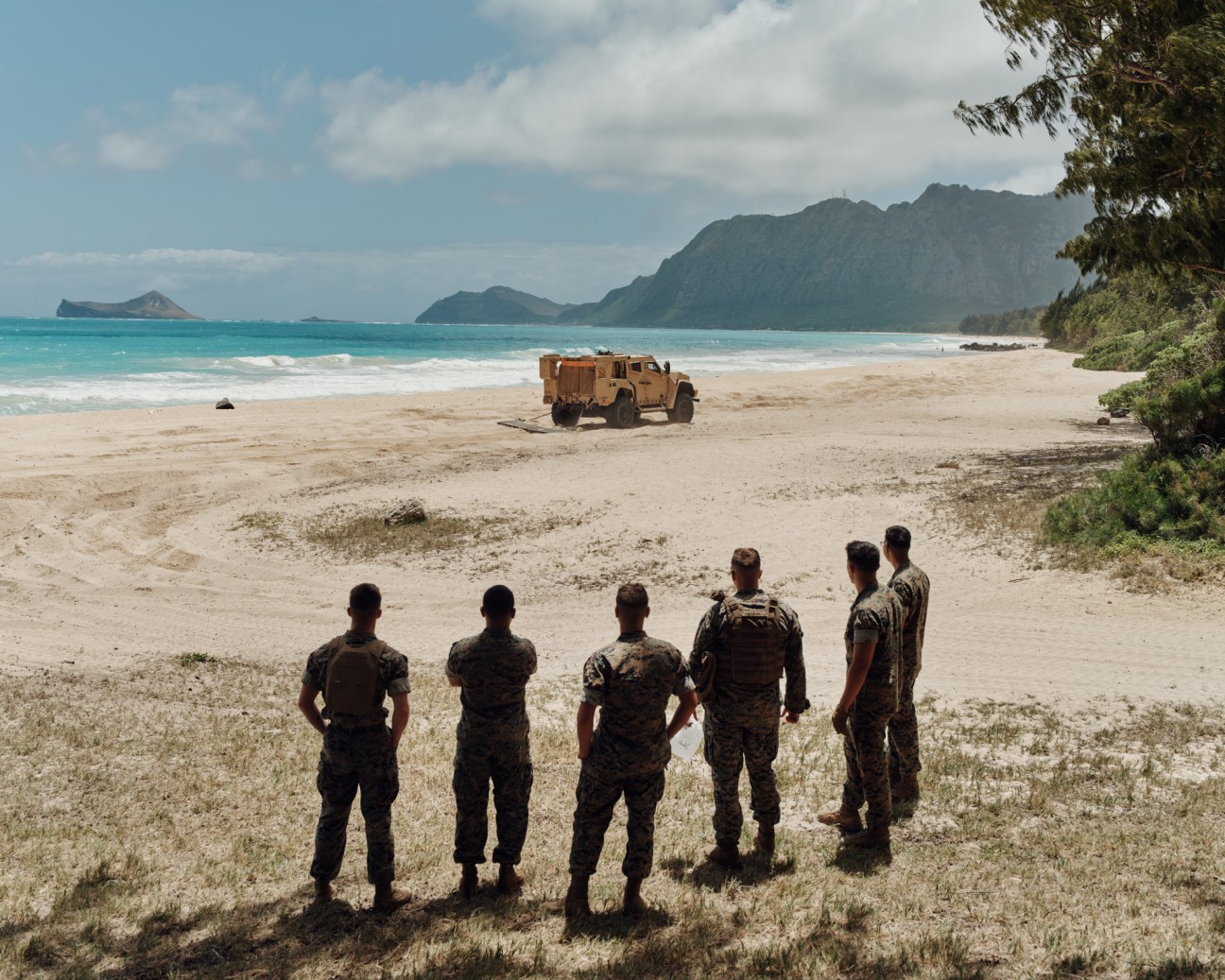
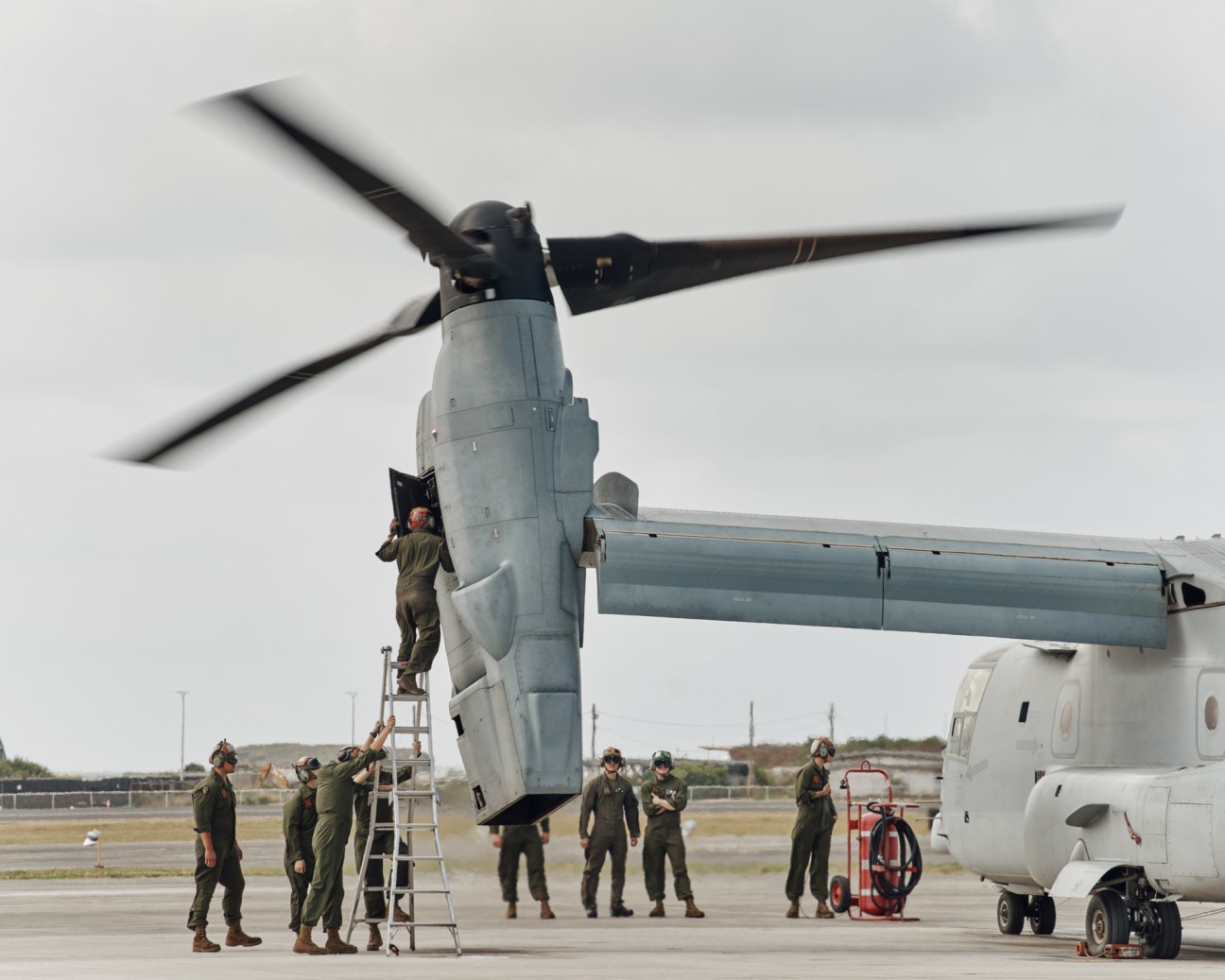
In Hawaii, the pivot to the Pacific that Barack Obama’s administration announced a decade ago is now happening in earnest. At Bellows Beach on Oahu, Marines are being taught how to drive new light tactical vehicles rather than the armoured Humvees employed in Iraq. (At one point a staff sergeant has to usher a few errant sun worshippers from the sand.) And on the flight line at Marine Corps Base Hawaii, crew members are testing the MV-22 Osprey; part helicopter, part plane, it can land vertically and is superceding the Cobra and Huey attack helicopters that were a mainstay of Marines operations.
“The threat isn’t always the enemy – it can be logistical supply lines and the Osprey can be a connector,” says Lieutenant Colonel Geoffrey Blumenfeld. “As the situation deteriorates in the region, being able to rely on our allies and relationships will be paramount.”
The US has traditionally relied on friendly atolls and archipelago nations to island-hop its forces across the Pacific. China’s deal with the Solomon Islands, which have been a US thoroughfare since the Second World War, has everyone spooked because it shows that Beijing is now seeking to do the same. While the US hunkered down in Iraq and Afghanistan, then navel-gazed about what role it should play in the world, China handed out grants and loans in strategic outposts around Asia-Pacific, reaching a peak of $287m (€272m) in 2016, according to Australia’s Lowy Institute. In Vanuatu, it has paid for a port expansion that many fear could be turned to military use. It has curried favour in Fiji, Kiribati and Papua New Guinea, and is accused of funding infrastructure to ensnare developing countries in a debt trap. Beijing has said that its investments are welcomed in the Pacific, while the prime minister of the Solomons has hit back at criticism of the deal, saying that his country can manage its own sovereign affairs.
“I’m concerned that, left unchecked, many of the countries in the region will fall prey to the Chinese,” says Major General McPhillips. “That is an authoritarian, dictatorial and closed society.”
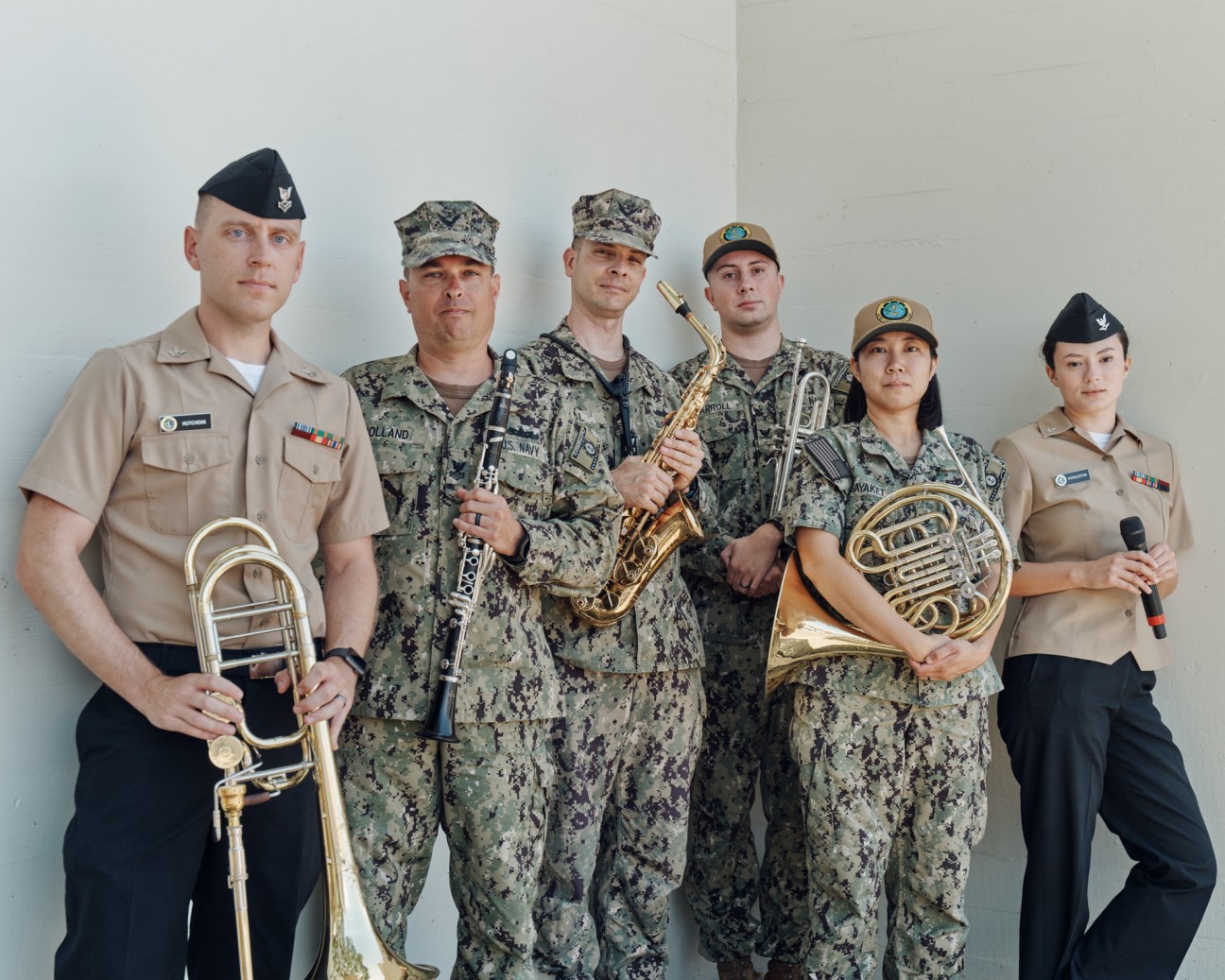
It is all a question of resolve and whether the US and the West are truly committed to competing with China in the Pacific. The US will open a new embassy on the Solomon Islands after years without one. At Pearl Harbor, the Pacific Naval Fleet Band is tuning up for a grand summer tour, taking in Palau, Vietnam and the Philippines, among others, as they accompany the USNS Mercy on its medical aid mission through the region. “We’ll hit strategic countries where we want to maintain relationships,” says the band’s leader, Lieutenant Luslaida Barbosa.
There’s certainly a new sense of focus but the US’s allies wonder whether it will last while war rages in Europe. At Fort Shafter, the “Pineapple Pentagon” and the oldest US military outpost outside North America, US Army Pacific General Charles Flynn (brother of Michael Flynn, who was briefly Donald Trump’s national security adviser) is just back from a five-nation tour. “In the questions being asked by think tanks, policymakers and military leaders, the undertone was, ‘Are you committed out here?’ My response was, ‘Absolutely, and there’s plenty of work for all of us.'”
Others aren’t so sure. “The line that I’m getting from US government officials is, ‘We’ll just deal with Ukraine and then we’ll get back on track with China,'” says Oriana Skylar Mastro, a fellow at Stanford and the American Enterprise Institute, who has advised the US military on strategy and speaks to us in a civilian capacity. “But we are already behind the curve on our ability to compete militarily with China.” For the past 20 years, says Mastro, the forces at Indopacom’s disposal have been significantly less than what it was assigned. McPhillips’s team will not say how many forces are “ready to go”.
Numbers do count, says Thomas Fargo, former admiral and commander of Indopacom. “We still field the finest ships and aircraft, and the quality of our people is second to none,” he tells Monocle in his office in Honolulu. “If you look at the force we have in the western Pacific, it is no greater than it was 30 years ago, whereas the Chinese order of battle has gone up by a factor of three to five.”
Hawaii’s importance is expected to grow in the years ahead and the US Department of Defense must keep Hawaiians on board about sharing their islands with so many soldiers. Last year military families on Oahu found that their tap water had a whiff of petrol: a historic naval fuel reserve called Red Hill had leaked into the supply.
“This was the boiling point for the relationship,” says Esther Kia’aina, vice-chair of Honolulu City Council, who has campaigned for greater land rights for Native Hawaiians. The Pentagon has since said that Red Hill will be closed. “If they hadn’t taken us seriously, you would see a whittling away of the overall military operations in Hawaii,” she says, referring to renegotiations in 2029 for several key leases of military land.
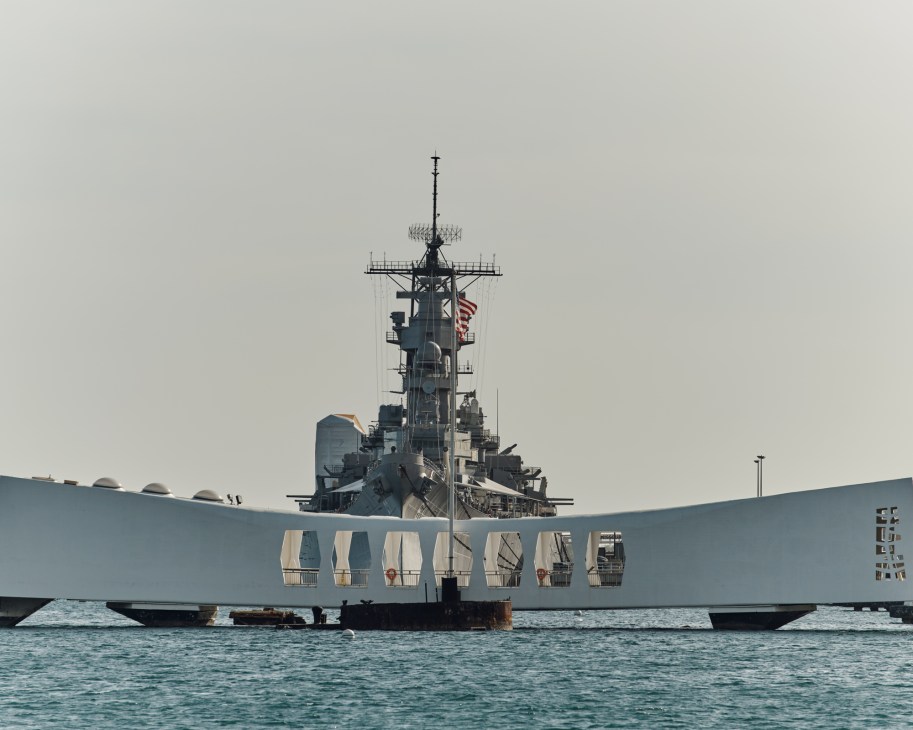
There is no greater mark of this fractious co-existence than Pearl Harbor. Prior to the pandemic, 1.8 million tourists a year visited the site and yet it’s still an active military base housing Indopacom’s war-gaming centre. (By most accounts, the US keeps losing when it plays out a Chinese takeover of Taiwan, though the military says that finding failures is the point of the exercise.)
Pearl Harbor’s importance in the national story of the US can’t be underestimated. For some, it’s a potent symbol today of how a war in Europe that is left to fester – a prolonged disturbance of the rules-based order – can eventually come knocking at the US’s door.
“What happened in the Second World War was that a couple of powers weren’t receiving any resistance and, almost too late, the Western world rose up and challenged them,” says James Neuman, a naval reservist who leads tours to the memorial of the USS Arizona, a battleship that sank with 1,102 men onboard. “This is a reminder that America can’t be in isolation as a country,” adds Neuman, peering into the sunlit harbour where the hull of the Arizona can be glimpsed on the seabed. “We need to be vigilant and prepared at any time to stand up for our values.”
New direction
Until the start of the year, Lithuania’s 40-year-old centre- right foreign minister, Gabrielius Landsbergis, presided over the diplomacy of a small European power whose stability kept it largely out of the international headlines. That changed when the nation suddenly found itself in a trade dispute with China over Taiwan. The Baltic nation had allowed the island to open a de facto embassy in its capital, Vilnius, and to call itself the “Taiwanese Representative Office” rather than the “Taipei Representative Office”, as its outposts elsewhere in the world are normally named. The wording was enough to irk China, which regards Taiwan as part of its own territory. Beijing reacted by blockading Lithuanian goods and complicating trade moving in the opposite direction.
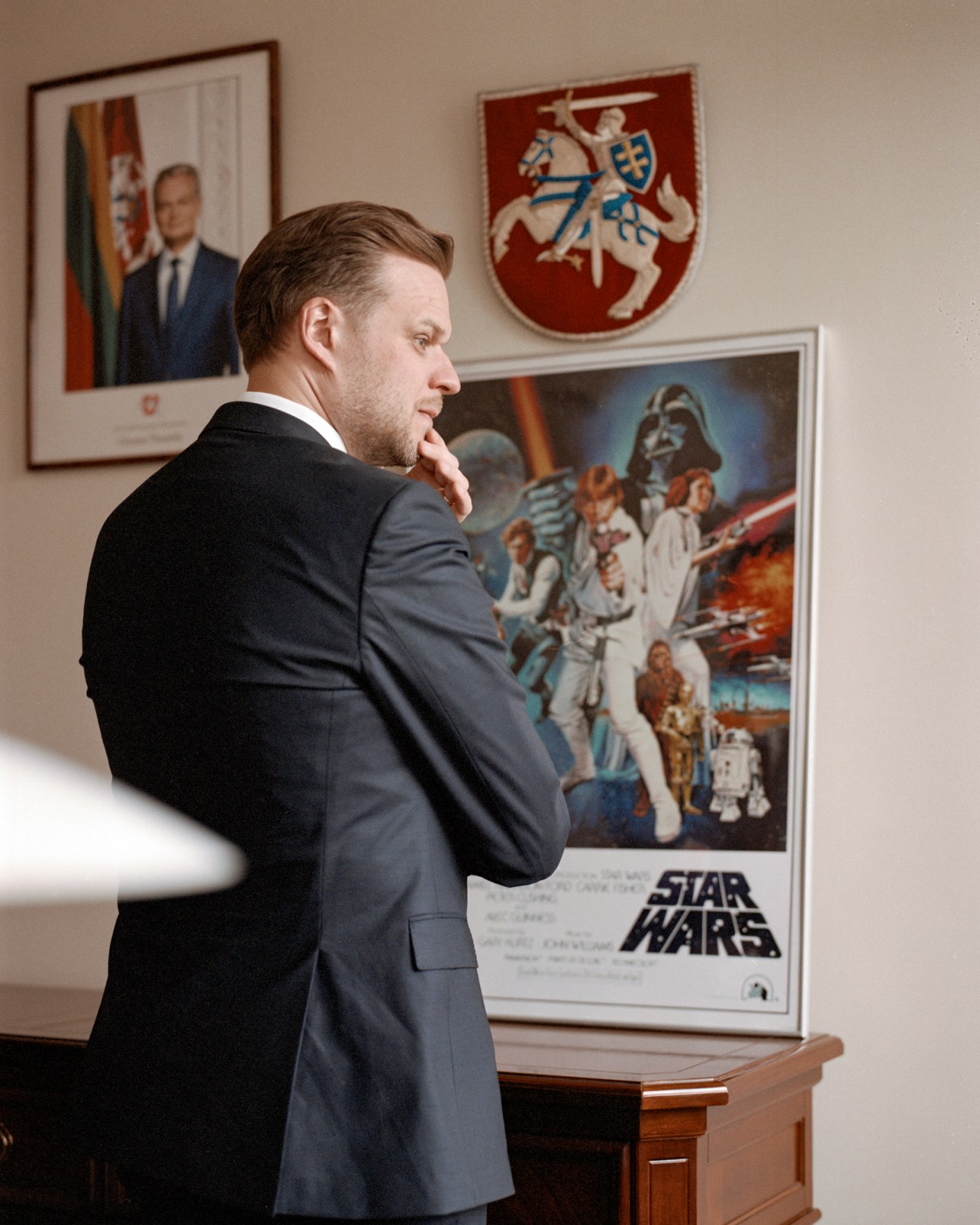
The China dispute was economically costly but it pales in comparison to the existential threat that Lithuania, a former member of the Soviet bloc, has long felt to the east in the form of Russia. Although it doesn’t share a border with Ukraine (it does with Moscow-supporting Belarus), Russia’s invasion in February brought the theatre of war much closer to Lithuania’s door and revived fears about its safety, despite it being both an EU and a Nato member.
Landsbergis, though, refuses to be cowed. In fact, the trainer-wearing minister, whose grandfather, Vytautas, was the first head of parliament following Lithuania’s declaration of independence from the Soviet Union in 1990, is on a mission to strengthen what he calls a “rules-based global order”. While talking to Monocle, once before Russia’s invasion of Ukraine in Vilnius in February and then again in April, he sketches out his frank blueprint for 21st-century diplomacy. It involves nations disentangling themselves from undemocratic actors and showing larger countries that disingenuous realpolitik isn’t the only way of doing business. Lithuania’s current attempts to diminish its reliance on Russia have been in the works for a while. In 2014 it opened a liquefied natural gas terminal – essentially a floating storage ship that stops the need to pipe the fuel from Moscow – in the port of Klaipeda.
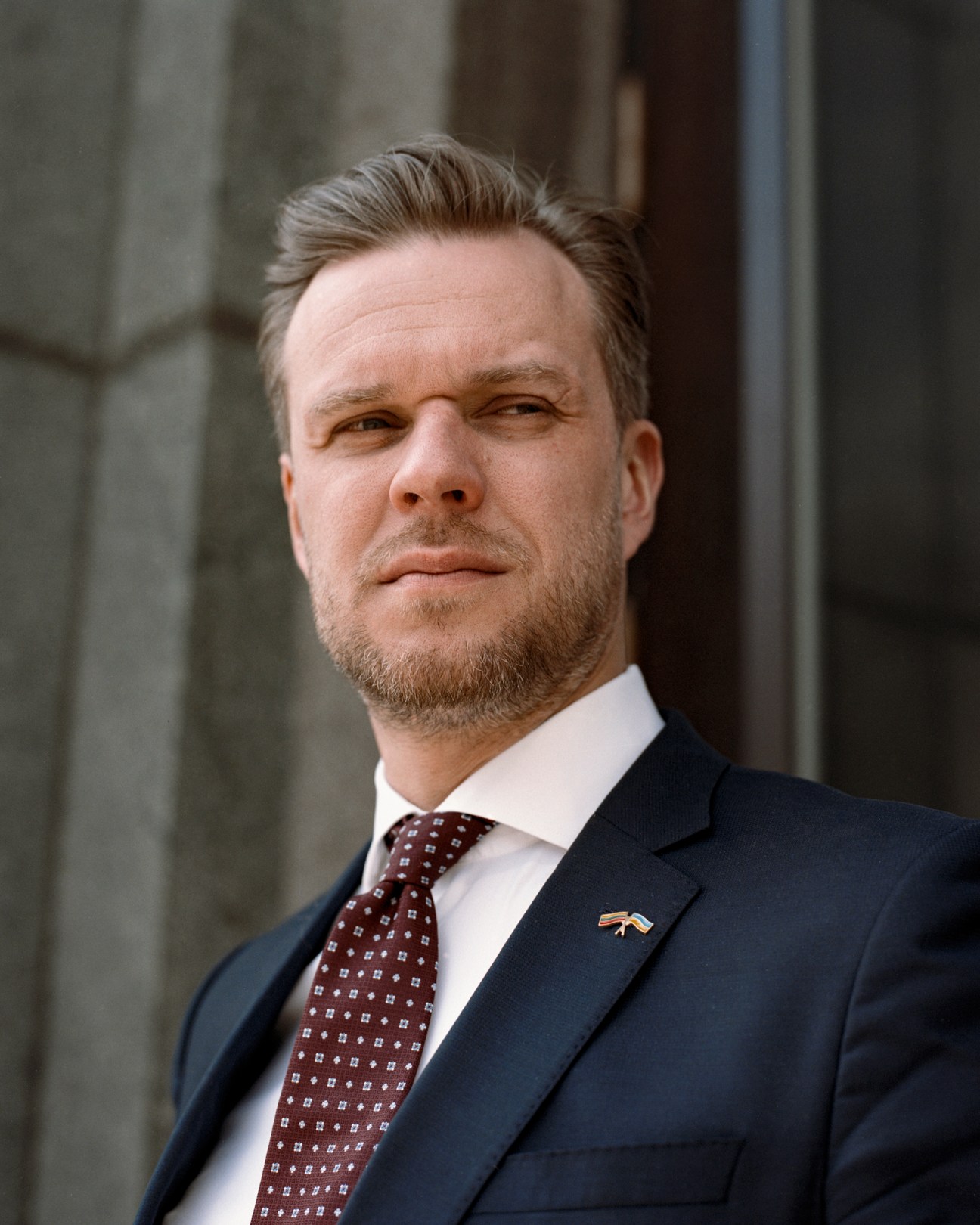
Moving away from China for trade, which accounted for just 1 per cent of its pre-spat exports, and Russia for energy means making fresh alliances. Last year, Lithuania opened an embassy in South Korea, and another in Australia in February. An embassy in Singapore will open and a trade office is coming in Taiwan too. “Making a first step you always have to be prepared for a rough ride,” says Landsbergis. “And China and Russia are making that ride as rough as possible.”
What’s the Lithuanian message as you travel the world meeting leaders from other nations?
The security situation in the region has changed dramatically since February and it needs to be addressed. That means that there has to be a strategic change in Nato’s planning of how the Baltic states could be defended. We’re talking to our partners and allies about additional troops and equipment in the region. We’re very much looking forward to the Nato summit in Madrid [at the end of June] that will address these issues. On a broader scale, we’re seeing the whole rules-based security order being challenged. In the case of Ukraine being forced to capitulate, that order would be ruined for a very long time. And we, as a small country, depend on that order.
Does the arrival of additional Nato troops on the so-called ‘eastern flank’ help allay your fears?
We’re grateful to our allies. We think that the statement made by the US president and other leaders that not an inch would be allowed to Russians inside Nato territory – and especially in the Baltics – is a very strong statement. Because an inch is not so much. And Russia has the means to test that inch. So if we want to stand by this formula, it has to be strengthened with practical means. It’s not only troops but the whole strategic attitude towards how to defend a country like Lithuania, which has Kaliningrad to its west and Belarus to its east.
You are sandwiched between a Russian puppet state and a Russian European enclave. How does the threat from east and west dictate your foreign policy?
If Russia were to try anything within Nato, it would be exactly in this area between Belarus and Kaliningrad that we call the Suwalki Gap. It’s a vulnerable spot and I would say that it might be tempting for Russia to see how we react. So this has to be calculated into this new strategy that we’re asking for so much. You know, there was a strategy during the cold war to defend West Berlin. And we need to blow off some dust from the old books and see how that works.
In April, Lithuania ended natural gas imports from Russia for domestic consumption. How does this affect your decision-making?
We have always seen Russia using leverage to limit the West’s foreign policy towards it. We’ve consistently warned our allies that this is actually happening – with us as the example. Unfortunately we have not been heard. So the only thing that we’ve managed to do is build our own independence; since 2014, Lithuania has built up its capacity to import liquefied natural gas from anywhere globally. Now we feel much freer when it comes to our foreign-policy decisions. We have much more space to react adequately. The issue is that we are a small actor – but we offer a good example, even for a bigger country.
Why do you think other European countries have been slower to grasp the importance of energy independence from questionable actors?
I have no easy explanation for this. For us here in Lithuania, it’s so obvious that building dependency on aggressive, non-democratic actors is a path not to nowhere but to disaster. There’s a lot of similar thinking when we’re talking about China because there it’s the supply chain. The question is: when will we arrive at a situation where we’ll say, OK, our foreign-policy options are limited because we’ve built so much dependency on another country that we cannot move and our hands are tied?
What other dependencies do you still have on Russia? What about oil and the energy grid itself?
We have switched off gas, we have switched off oil. We will switch off electricity as soon as technical possibilities allow us because we’re building a second power line to Poland that will be finished quite soon. And trade-wise, the major changes happened after 2014 and the first invasion of Ukraine [on the Crimean peninsula]. Our businesses adapted; they started looking elsewhere.
Will gas flowing through Lithuania from Russia to Kaliningrad be stopped?
Kaliningrad is a specific issue. Things like passenger crossings from Russia to Kaliningrad are a subject of trilateral agreements between Russia, the EU and Lithuania. Therefore there is no possibility of thinking about any unilateral actions. In principle, the same goes for the goods that travel through Lithuanian territory to Kaliningrad from Russia. The fifth sanction package was adopted quite recently by the EU and it had an exemption for goods going from Russia to Kaliningrad.
Where do the roots of your values-based foreign policy that you often talk about come from?
We still have very fresh memories of what it is like to be a country under occupation. And what it is to break away and recreate your democracy and your institutions and build up your country. So there’s this vivid feeling of what it took us and therefore we’re very keen to defend it. And this is where our visions about values-based foreign policy come from: limiting our exposure to non-democratic actors who could use our dependencies against us.
With Ukraine dominating the headlines, is China still exerting pressure over the Taiwan dispute?
Even though our dispute was more trade-based, there’s a resemblance in what these big international actors are doing. I don’t think that China particularly wants to be in a situation where countries are trying to find similarities between it and Russia. But Lithuanian goods still find it very, very difficult to reach Chinese markets.
Is the focus right now on making new alliances?
A big part of my diplomacy will be focused on the Indo-Pacific region. We want to establish ties with countries that are standing in defence of this rules-based global order. There is also a practical need to diversify our supply chain.
Inside Koko: London’s landmark music venue playing host to a private members’ club
“We’ve called this jazz bar ‘Ellen’s’ – a nod to Ellen Terry,” says Olly Bengough, CEO and creative director of London music and culture venue Koko. He’s talking about the maverick British actress who opened this site’s first iteration, the Royal Camden Theatre, in 1900. Some 122 years on, and in what were once the bowels of the theatre’s backstage, Bengough is finalising a lengthy overhaul that sees the addition of a sprawling members’ club attached to a fully refreshed concert venue.
An upbeat, if tired, gang of staff greet him to show off a beautiful new piano that they have acquired for the bar. “It’s great but the position is not quite right,” says Bengough. “If it were a little lower, then it would fit in.” There’s a small discussion around placing it in another spot in the room. “Or we could return it and get a lower piano. It’s me being fussy but the space would breathe much better if we did that.”
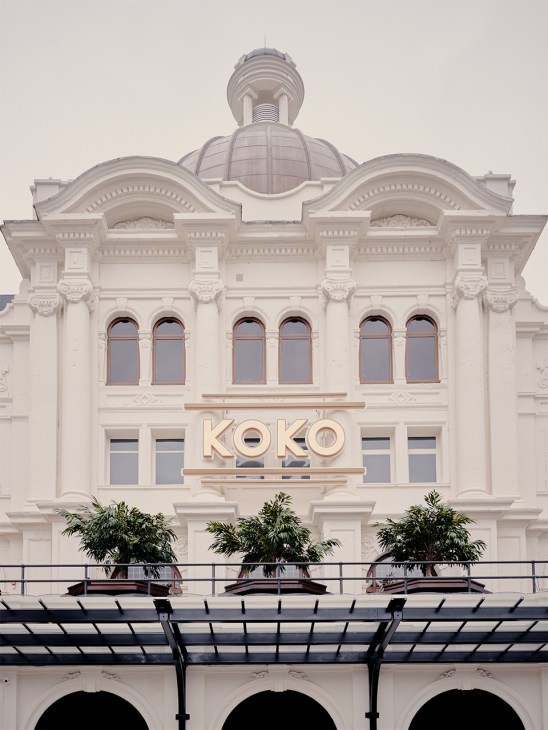
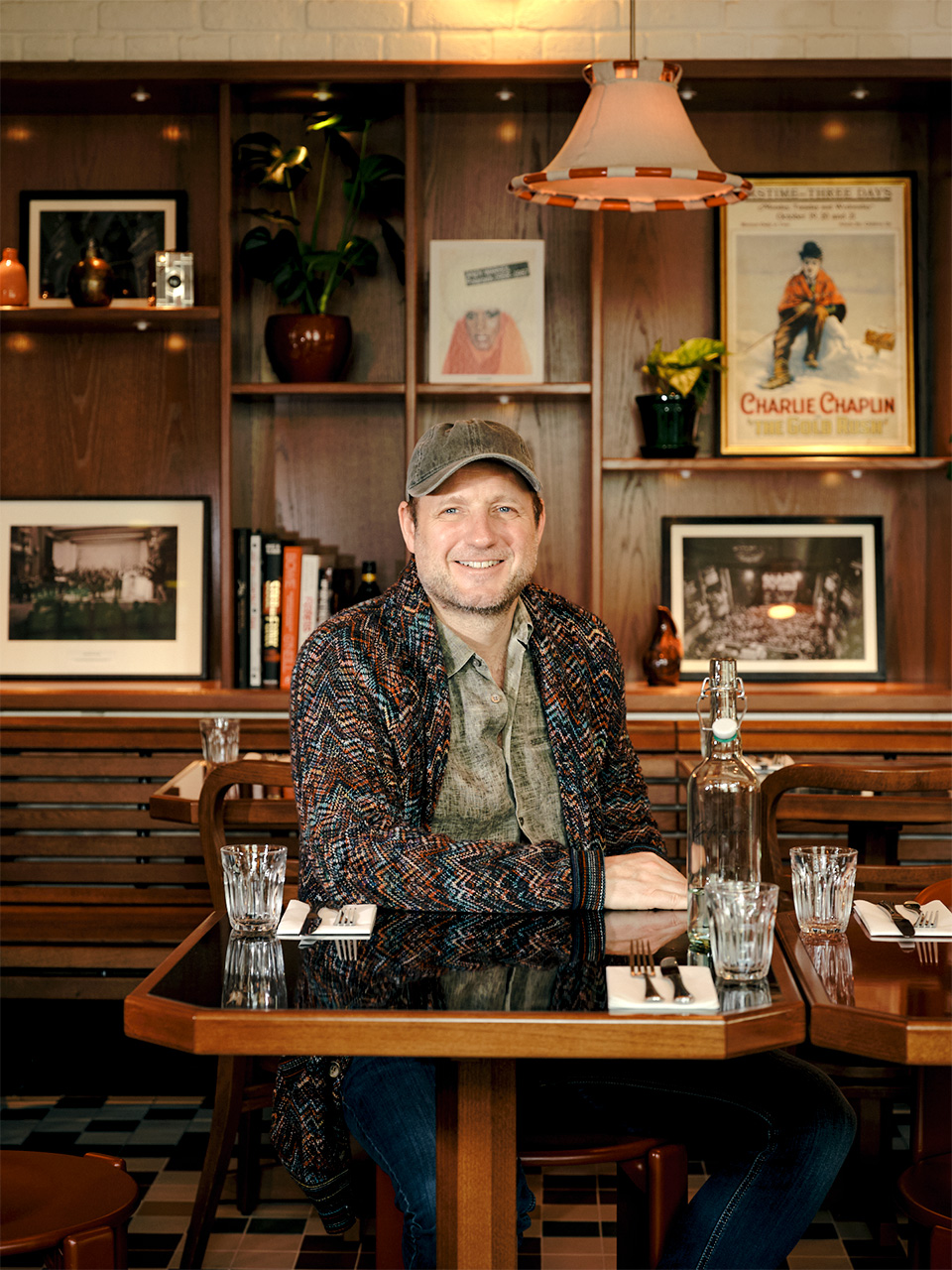
This reflects the level of care and attention to detail that the entrepreneur has applied to every aspect of the revamped Koko. It’s a continuation of his transformation of the theatre that he took over in 2004 and which quickly became a celebrated haunt for Amy Winehouse gigs and the spot where Kanye West organised a “secret” concert with just a few hours’ notice in 2015. “I’ve signed off on more than 2,000 furniture and finishing samples,” says Bengough of the arduous redevelopment process. “Nothing was actually allowed to be built or furnished without me seeing a sample, so we could have near-perfection. And that’s why this all took so long.”
The project is huge. At an estimated cost of £70m (€83m), Koko’s transformation sees the introduction of multiple performance and hospitality spaces for paying members of a new club, a roof-terrace restaurant, a broadcasting suite and a penthouse recording studio for visiting acts. There’s also the overhaul of the original theatre and the opening up of a recovered fly tower, where stage props were moved around on a clever pulley system when the venue was a theatre before the 1940s. And, finally, there has been the small matter of restoring a burned-out original roof dome, which went up in flames in 2020, midway through the overhaul.

“We basically woke up in Saudi Arabia and saw Koko on the news; nobody wants that to happen,” says David Archer of Archer Humphryes Architects, who led the project alongside partner Julie Humphryes. “Bizarrely, we’d recently been in Florence cathedral looking at the structure of the dome and joking about how you’d never get to design one of those these days.” Referencing some of the original iron cleats that were pulled out of the wreckage, the pair worked hard to re-establish a new dome that was as historically accurate as possible. A pine timber inner-shell today sits below a new metal top, in a reworking that allows the space underneath it, which is now home to a cosy cocktail bar, to perform well acoustically for small-scale performances.
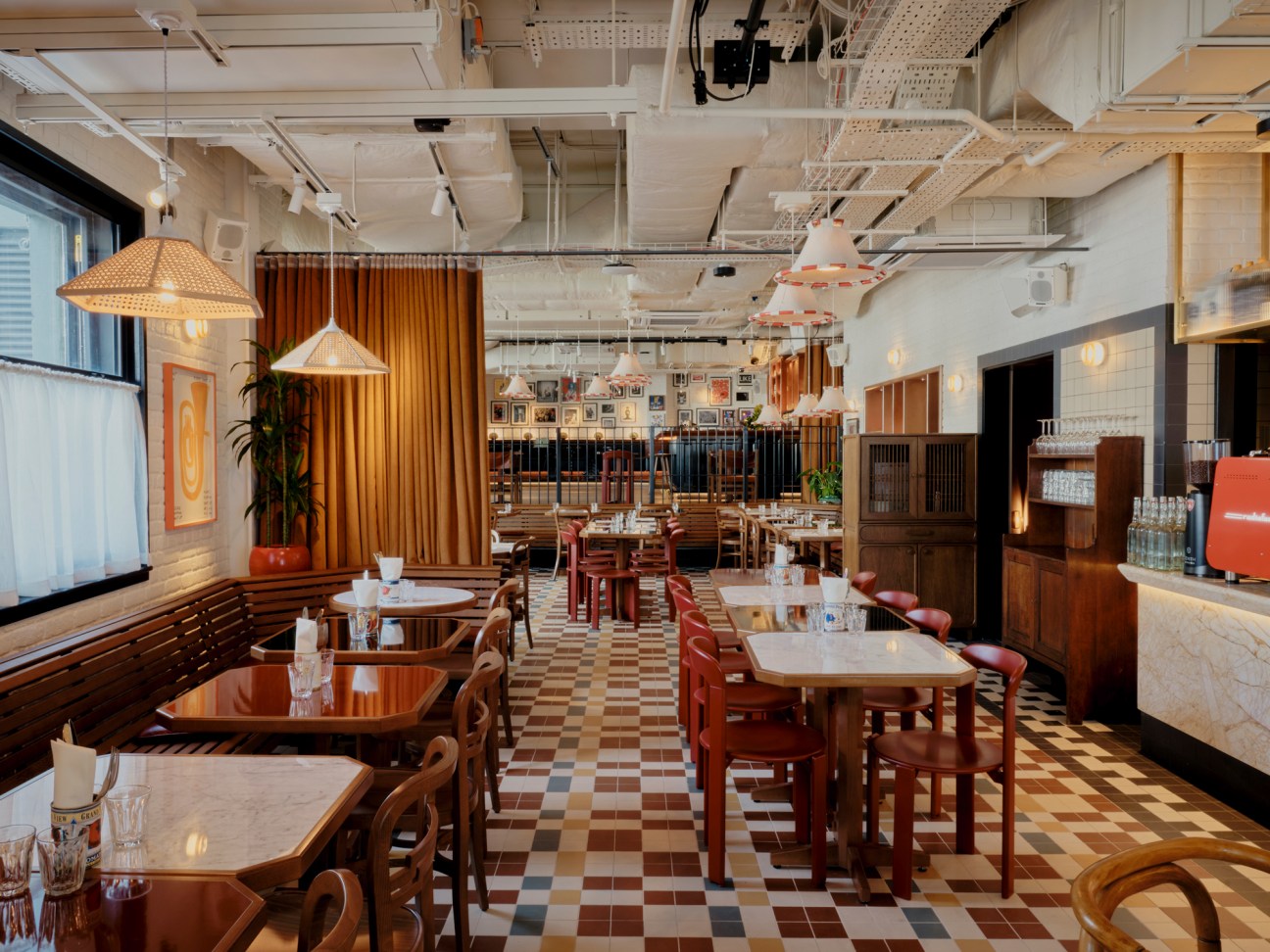
While Archer Humphryes Architects led the master-planning of the project, turning a cavernous collection of adjoining buildings into an easily navigable, multi-functioning venue, the interior design was looked after by London-based firm Pirajean Lees. “The brief was an ambitious one, to create something that has never been done before – something organised around an existing theatre that offers a new, broader experience to members and the general public,” says Clémence Pirajean, co-founder of the firm alongside James Michael Lees.



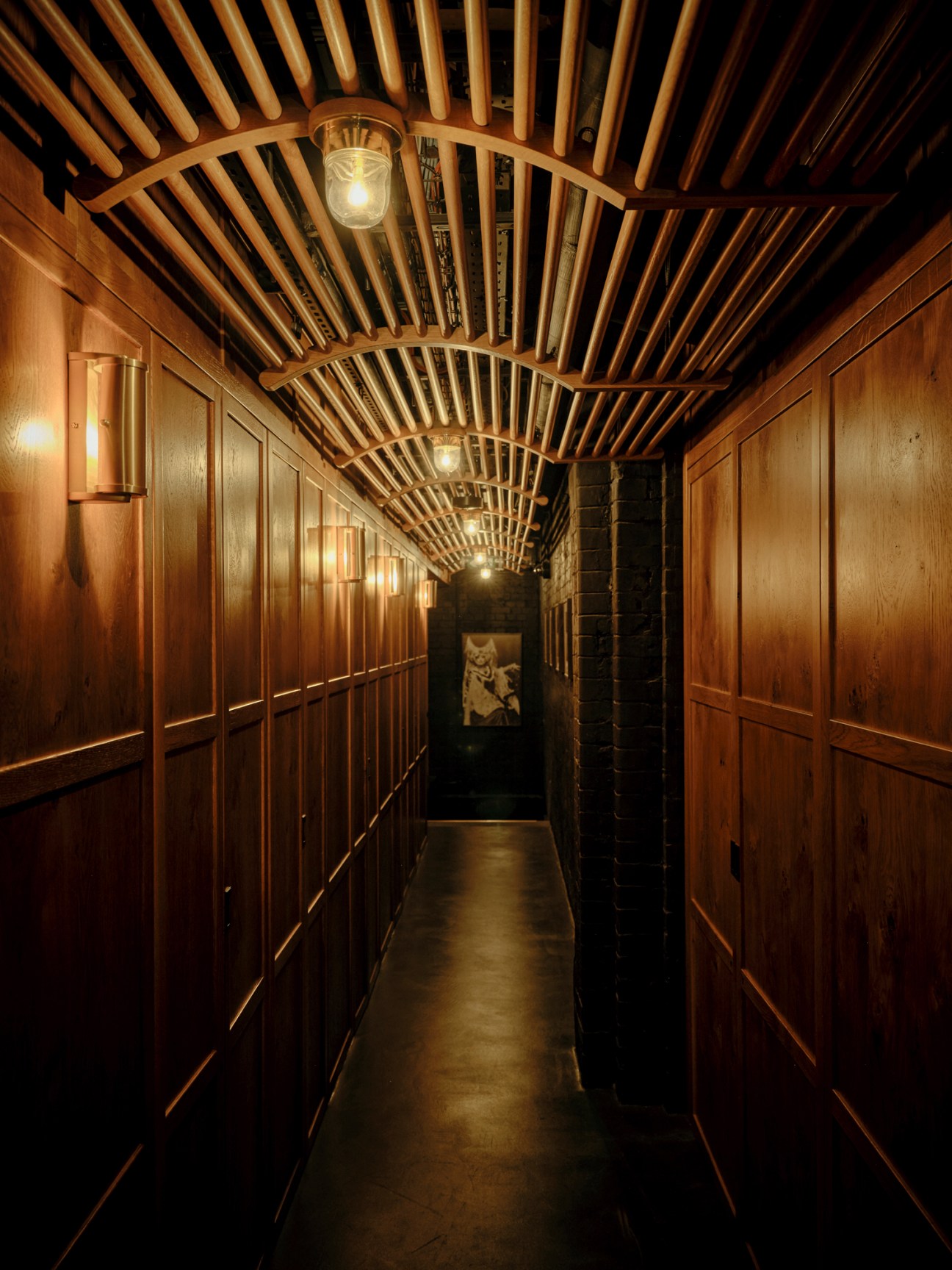
Lees, a self-proclaimed “music geek”, says that forming the themes for the various spaces across Koko involved a deep interrogation of the building’s past, which is rich in performance history. Through doing this, he says, the creative team could also dream up a unique future for the venue. “If you look at Manchester’s Haçienda nightclub, you can see how it changed music,” he says. “It started the acid-house and techno movements. You could say that what we’re doing at Koko could have that same effect and start a fresh music movement. It’s so vast and the people who will meet here could create new music – and that’s really exciting.”
From a technical standpoint, this meant working with British speaker manufacturer Funktion-One to provide a sound system in the members’ club that creates an ambience without overwhelming conversations around bars and tables. And then there are more creative additions: the cascading leather lining around one of the club’s bars pays homage to the punk looks of the Sex Pistols and The Clash; both bands performed here in the 1970s when it was known as The Music Machine. “You wouldn’t usually get an onyx-topped bar lined with leather curtains,” says Bengough. “But this is about the interior design being inspired by the theatre.”


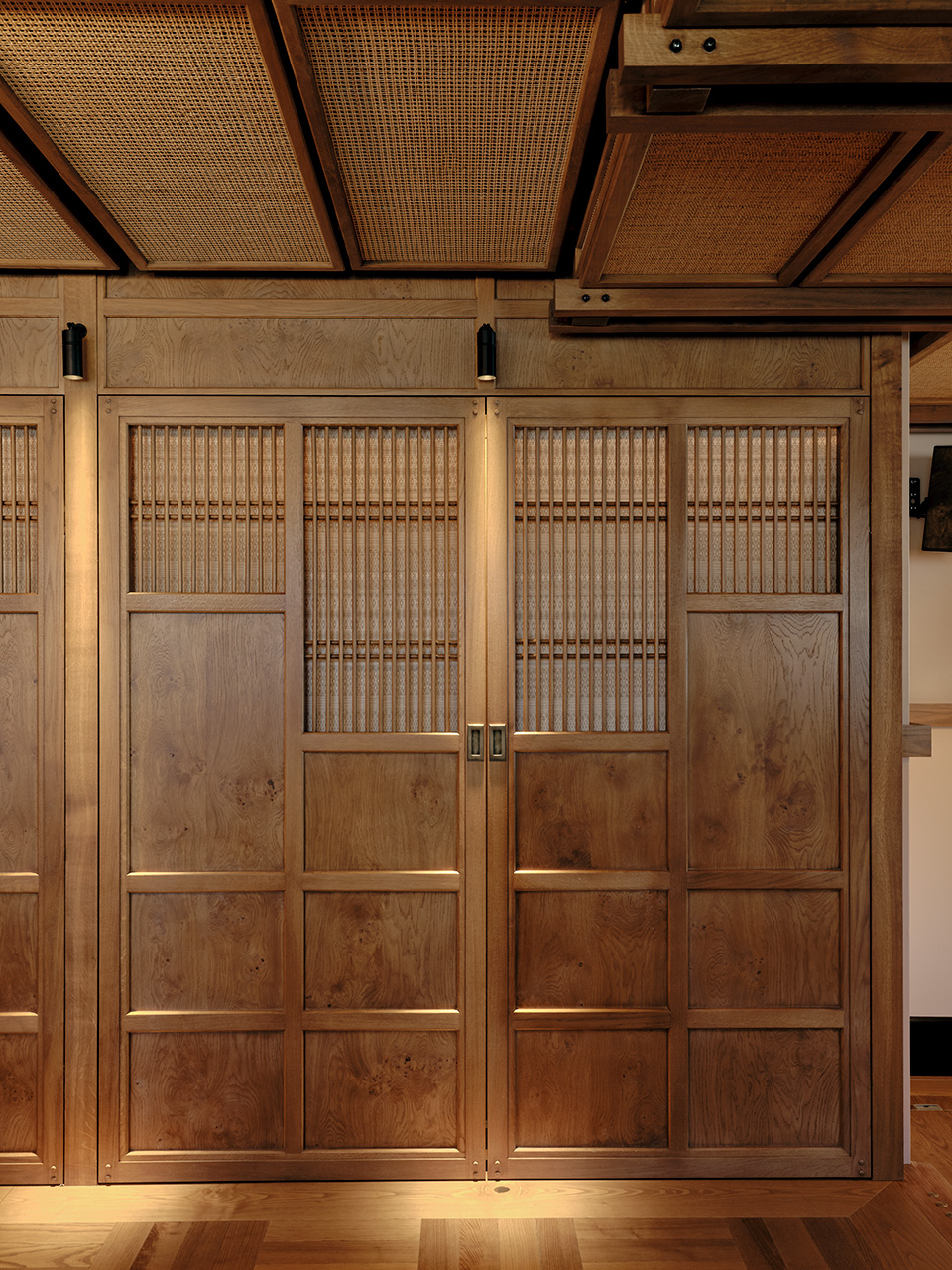

Pirajean Lees were given the freedom (and the budget) to create a wealth of custom designs from furniture to fabrics. “We did a lot of research and the narrative we created with Olly gave us guidelines and then we could start to imagine moments of comfort within the venue,” says Pirajean of workshopping process alongside the CEO. As an example, a conversation around cigarette-puffing 1960s musicians backstage in hair and make-up rooms influenced the ladies’ bathroom. A smoky semi-translucent glass window allows passersby to see the outlines of guests fixing their hair and make-up at built-in vanity stations.
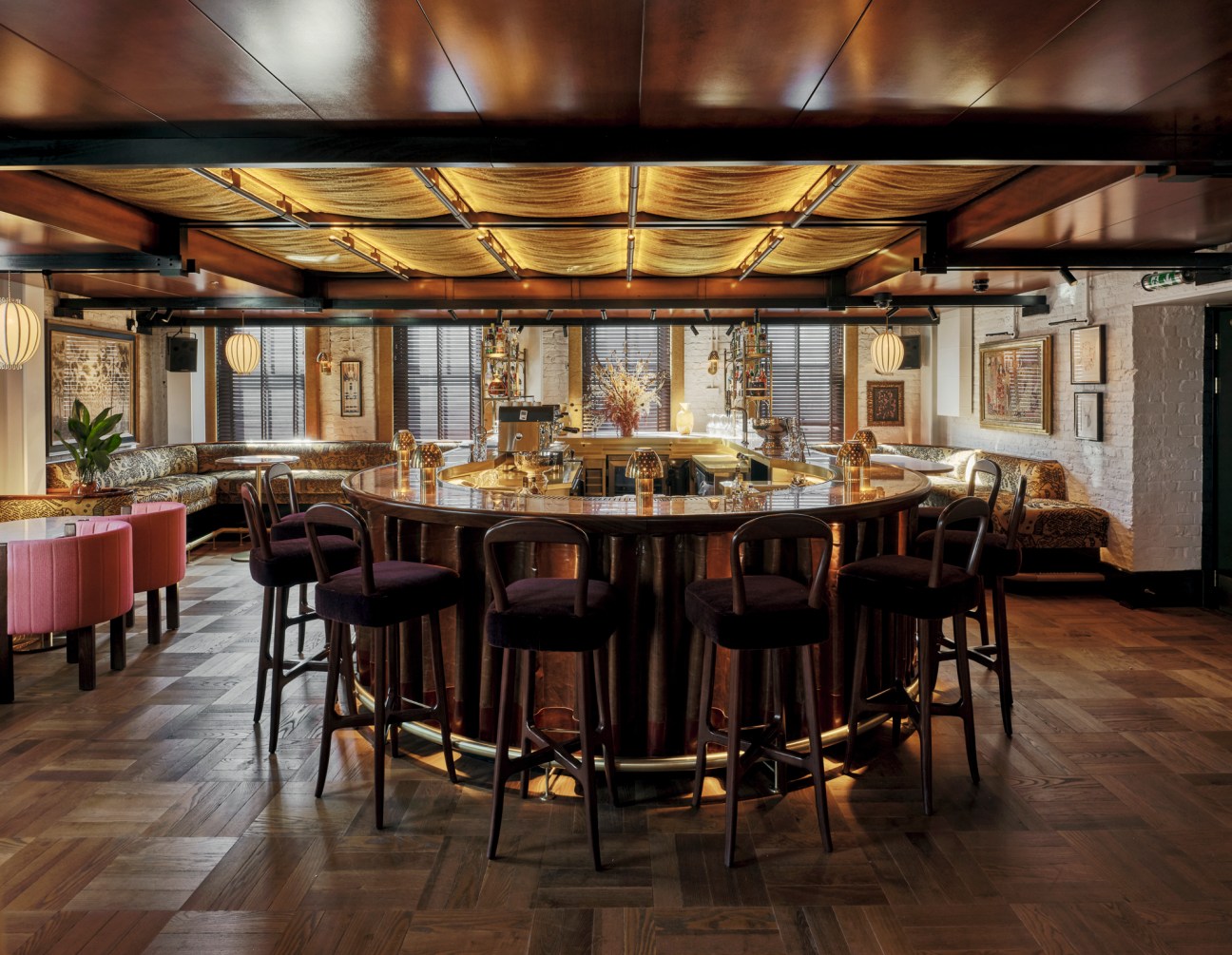
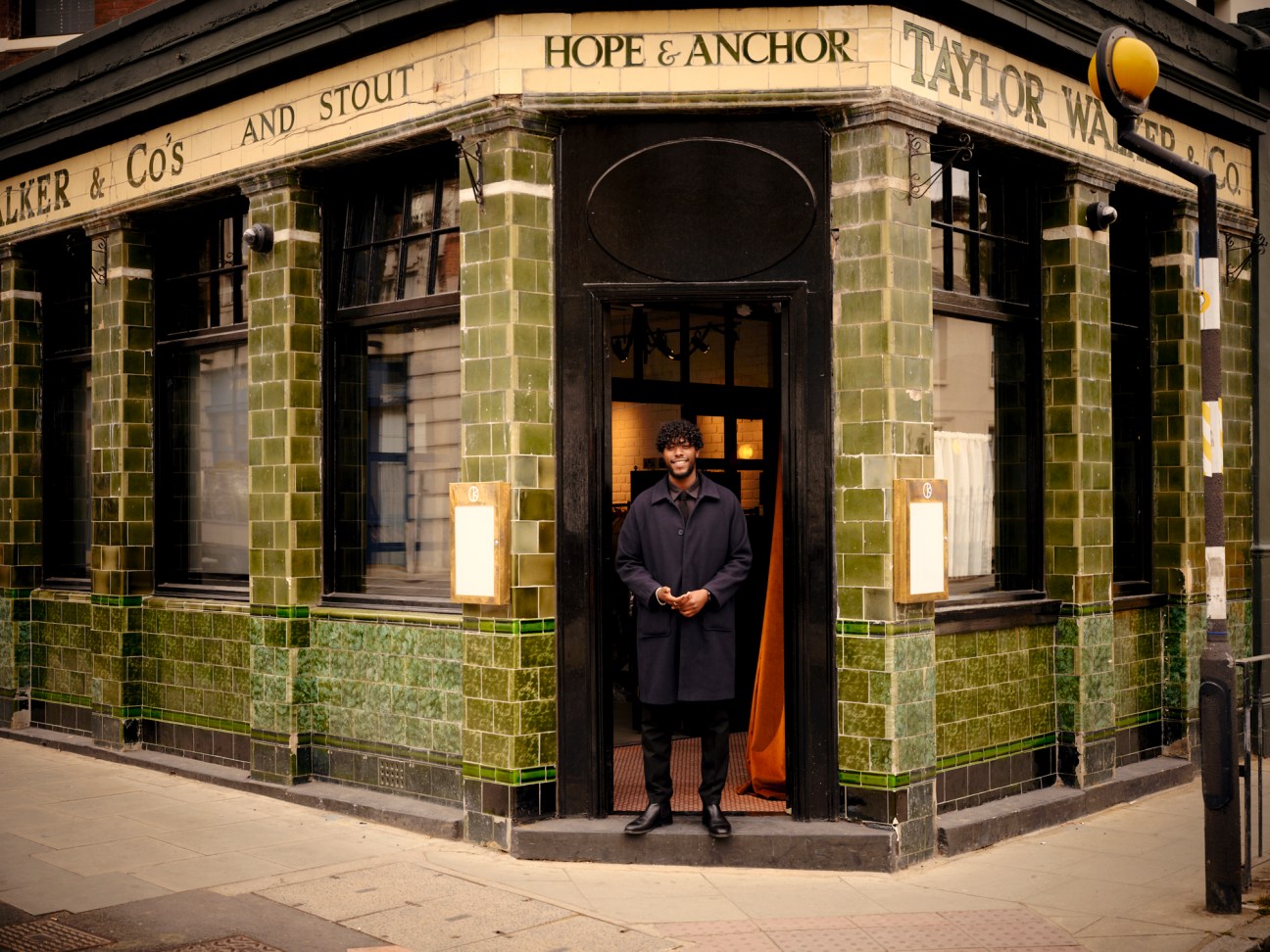
Koko kicked off its relaunch on 29 April 2022 with a performance by Canadian rockers Arcade Fire. Bengough has a busy schedule of gigs lined up in the main 1,600-capacity building for the summer but it’s in the new members’ club where the most creative programming is happening. Here, some memberships are available to artists in exchange for performing. Impromptu gigs for smaller audiences by emerging artists will be provided for members – many of whom are industry professionals. It’s a spot for doing business but in a rock ‘n’ roll manner.
After surveying the roomy penthouse studio atop the members’ club, itself inspired by a freewheeling Rolling Stones recording, attention turns to the fly tower. Here, architecture and performance come together in a compelling way, reflective of the broader building’s achievements. Essentially, the rear of the main stage is in view of the members’ club, where they can take in gigs and see the action unfolding in a unique way.
The flexible design means that more intimate concerts can be achieved by blocking what is conventionally the front of the stage from the main concert hall. “It’s about allowing different types of music to be performed in different areas and leaving an audience thinking about how those various experiences make them feel,” says Bengough. “Only the architecture of Koko can allow this to happen.”
Koko timeline
1900: Actress Ellen Terry opens The Camden Theatre designed by theatre architect William George Robert Sprague.
1913: The building is renamed Camden Hippodrome Theatre, with an emphasis on screening films.
1945: The BBC take over the theatre to use it as a recording studio for national radio shows such as The Goon Show.
1964: Rock’n‘roll begins to seep into the building’s legacy, with The Rolling Stones recording a radio broadcast.
1972: The BBC leave the building, but it is spared from demolition when it is awarded a Grade II heritage listing.
1977: The theatre re-opens under the name The Music Machine where bands such as The Clash and The Jam performed.
1982: Renamed the Camden Palace, the venue became a haven for the New Romantic scene, before becoming a hotspot for raves in the 1990s.
2004: Olly Bengough buys the venue, booking concerts with global acts such as Coldplay and Madonna.
2019: Koko closes for redevelopment.
2020: The dome burns down during a major fire.
2022: Koko reopens in April.
This article was originally published in Monocle’s June issue of 2022.
Out of the rubble
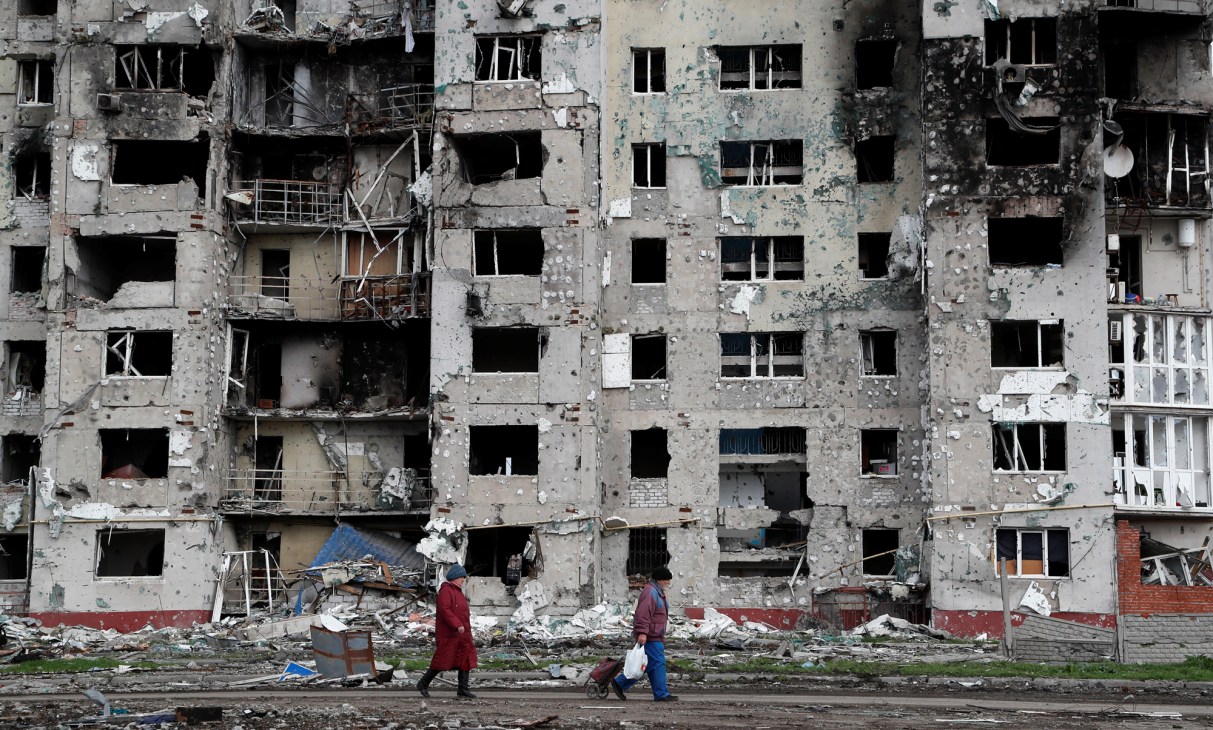
Oleksandra Sydorchenko’s flat in the Kyiv suburb of Irpin was destroyed when a Russian shell landed on the four-storey building. Luckily, her family had escaped to Lviv in western Ukraine and no one was hurt. “Our building is the most damaged in the block,” says Sydorchenko. “The roof has fallen in, one of the external walls is missing and a fire started in there too. My husband went back to Irpin after its liberation from the Russians at the end of March. When he entered our flat, he saw that it was totally destroyed. No furniture, household appliances or clothes were left. Everything had been burned.”
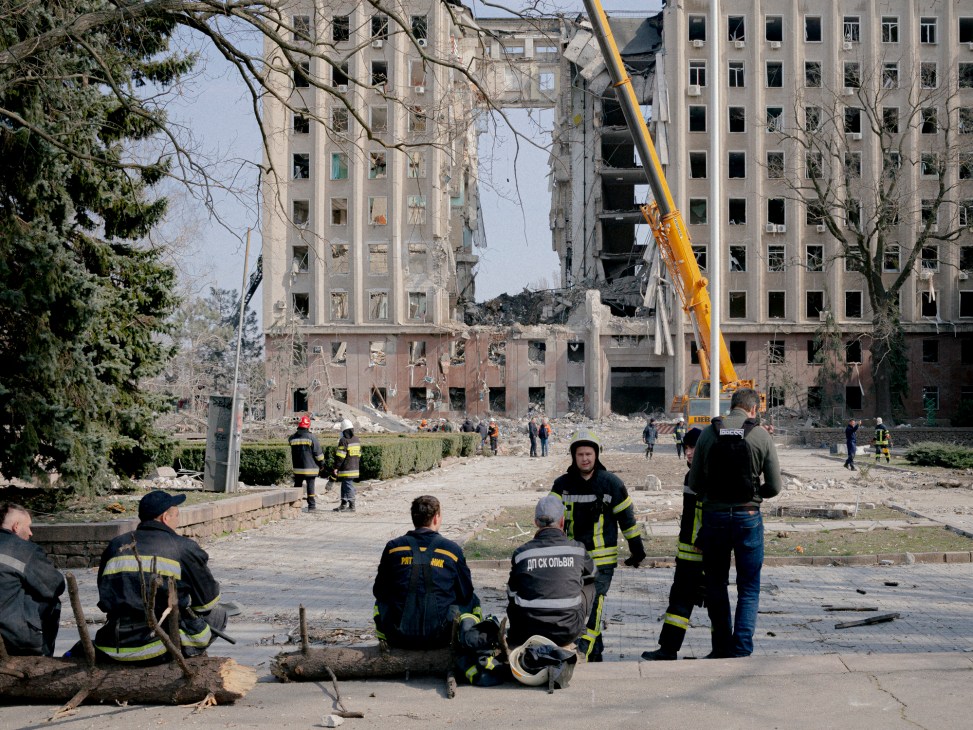
Sydorchenko won’t return to Irpin any time soon. She had planned to sell her flat to furnish a new one that is under construction in another suburb southeast of Kyiv; though the area hasn’t been affected by the fighting, the construction company has stopped all work on it because of the war. With no idea when or if her home will be completed, she has registered on Diia, a mobile app that Ukraine’s president, Volodymyr Zelensky, launched last year as a new way to access many public services. Now the state is asking all Ukrainians who have lost their homes to register on the app to receive compensation. “I have doubts that we will receive any sort of reimbursement or that our flat will be rebuilt,” says Sydorchenko. She cites a song by Ukrainian band Odyn v Kanoe, “I Have No Home”, which has become something of an anthem here. “I feel like I’m in that song,” she says.
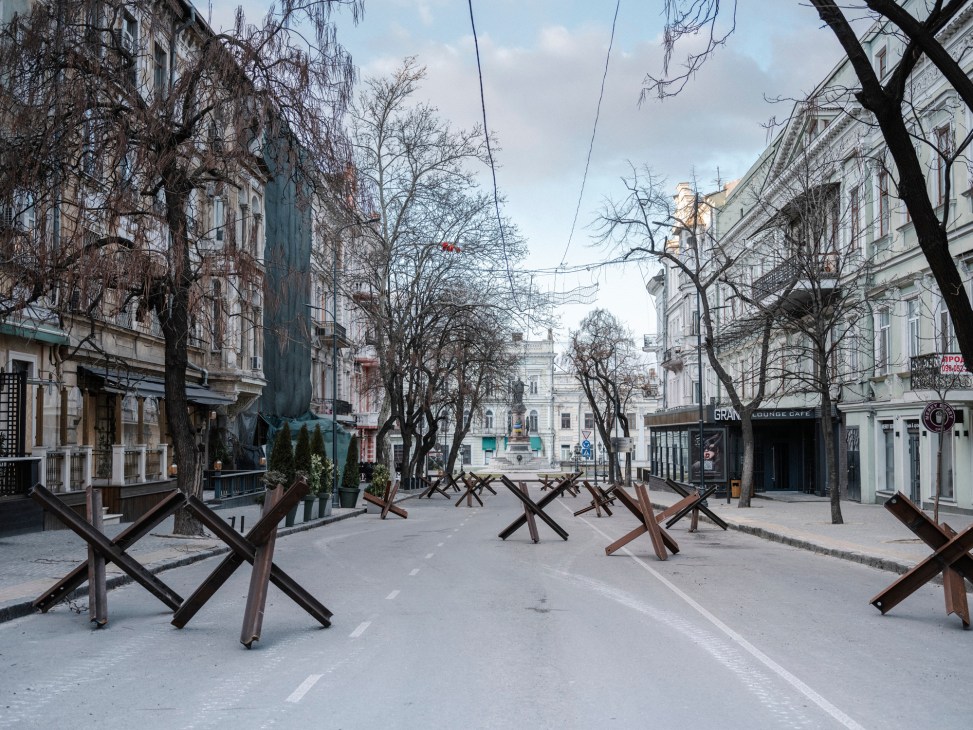
So who will rebuild Ukraine? The country’s infrastructure minister, Olexandr Kubrakov, says that all Ukrainians who have lost their homes and registered with the state will receive assistance in the form of property repairs or help finding new accommodation. At least 329,000 Ukrainians have already registered with the Diia app. But Kubrakov says that the project to rebuild the country is, for obvious reasons, in its very early stages and that ahead of working on homes must come restoring damaged logistics and supply lines. “Currently our focus is on establishing connections between oblast [regional] centres,” he tells Monocle from Kyiv. “We need to make sure that the postal services work properly and that food can be delivered,” he says. “We need to rebuild roads, railways and about 300 bridges that have been destroyed. For now, we are making temporary bridges, clearing up the debris and burnt military equipment.”
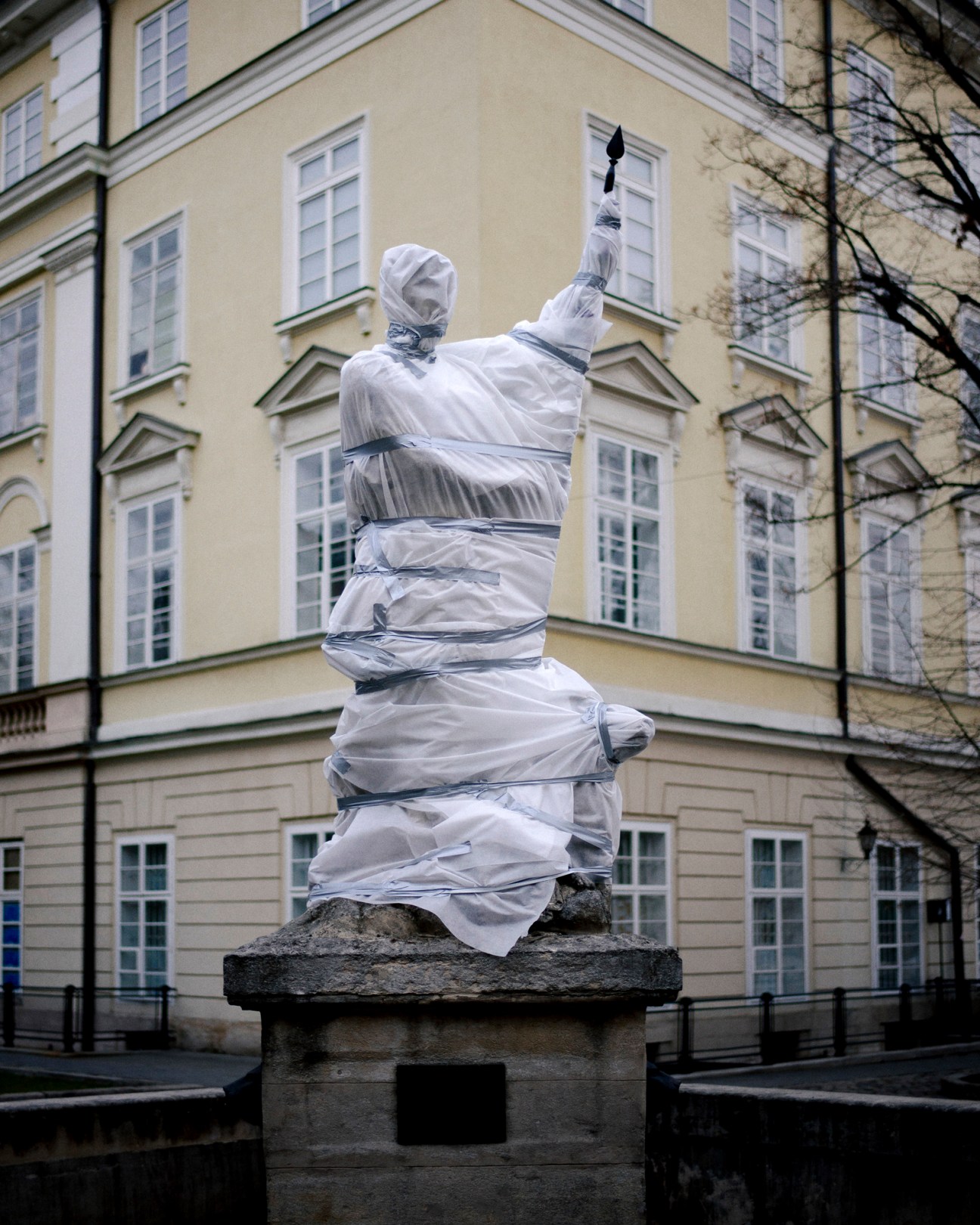
No Ukrainian port or airport has been spared by Russian bombing. Kubrakov estimates that the losses to Ukraine’s transport infrastructure alone amount to about $88bn (€80bn). The next step involves rebuilding homes in northern areas that have been liberated from Russian occupiers, such as Kyiv, Chernihiv, Sumy and Zhytomyr. “We plan to build temporary housing so that people can return soon,” he says. “We are in constant touch with the Ukrainian military and it will give us clearance to go ahead when it’s safe. Of course, the risk of a new escalation remains. We will have to get used to it.”
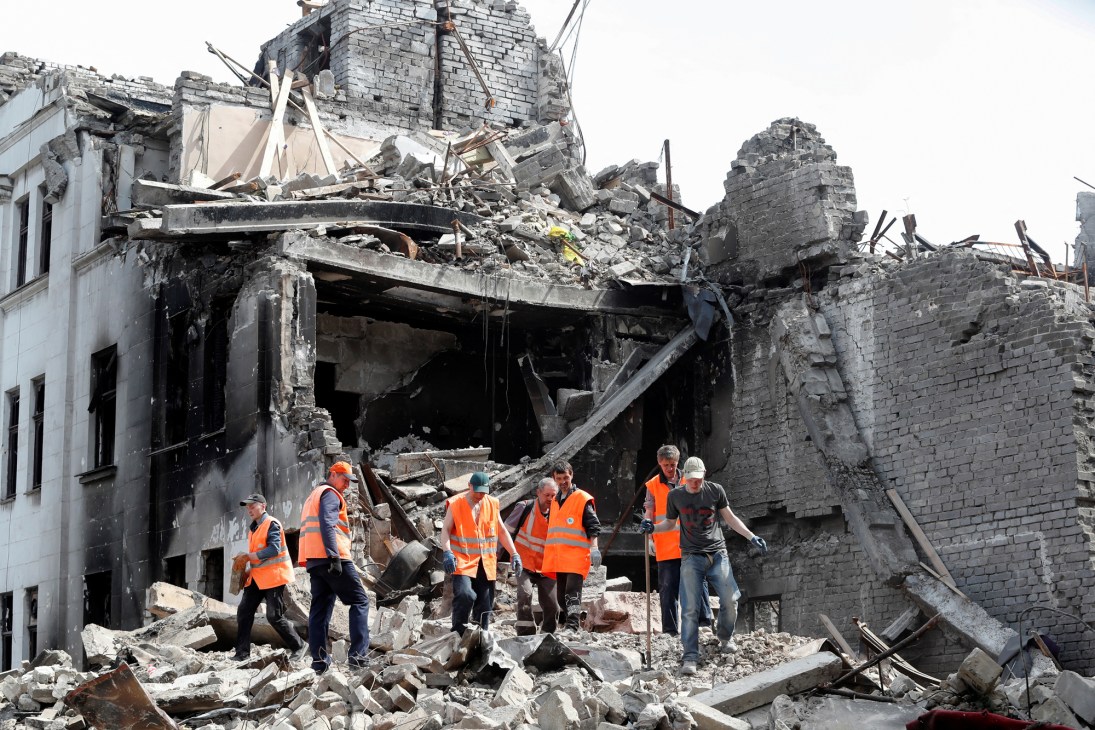
The rebuilding process will inevitably start with “temporary aesthetics”, says Slava Balbek, Ukrainian architect and founder of Balbek Bureau, a design studio that employs 75 people in Kyiv. Balbek has been busy creating a platform, Re:Ukraine, of architectural designs culled from across the world for temporary but comfortable housing solutions that can be implemented in Ukraine. “I’m not thinking like an architect right now – I’m worrying about the people,” he says. Balbek explains that most Ukrainians he has spoken to are not only determined to stay in the country but are seeking shelter near their shattered cities. “They want to be close to their homes and to their friends,” he says. “All of the people living in these damaged cities right now, down to the butcher, are working every day. They’re rebuilding, repairing and cleaning up the streets. That’s the connection between Ukrainians. They’re helping each other.”
Ukraine’s economic output is likely to contract by 45 per cent by the end of 2022 and the sums that it will require for the country to rebuild are already staggering. In April, Zelensky told global finance ministers that his country needed about $7bn (€6.65bn) in foreign aid each month just to keep afloat, while estimates of what will ultimately be required to rebuild are in the region of $600bn (€570bn) and climbing. The figure is nearly four times that of Ukraine’s annual economic output.
Ukraine’s Western partners have been quick to respond to the country’s appeals, says Kubrakov. “The UK has committed to help with rebuilding Kyiv. That is very important because Kyiv and the wider region used to produce about 30 per cent of Ukraine’s GDP. We need to restore normal life as soon as possible.” The EU has also promised to take responsibility for the country’s reconstruction; nations such as Italy and Greece have pledged to rebuild the port city of Mariupol on the north coast of the Sea of Azov, should it be recaptured or handed back by the occupying Russians. Barry Eichengreen, a US economist and former senior policy adviser to the International Monetary Fund, compares the scale of what is needed to the postwar Marshall Plan for western Europe. He recommends creating a dedicated EU-led reconstruction agency to manage the endeavour, just as the US did in the mid-20th century. It is crucial, he says, to secure global funding commitments to rebuild now, “because attention fatigue will set in sooner than we think”. An annual reform conference on Ukraine, which has been running since 2017, will probably be refashioned as a Ukraine reconstruction conference when it is held in Lugano, Switzerland, in July.
Most Ukrainian companies aren’t thinking about rebuilding just yet. They are too busy helping to ensure that supplies keep flowing to support the war effort. The construction giant Kovalska, a major concrete and building materials manufacturer, has lost one of its production plants in the Kherson region to Russian occupation but another of its plants in Chernihiv could be operational again soon. Its CEO, Sergii Pylypenko, says that Kovalska has donated more than $1m (€950,000) worth of building materials that were stored in its warehouses. He also speaks proudly of Kovalska’s sand being used in the bags now protecting landmark monuments in Kyiv and across Ukraine. The company has given away concrete slabs and reinforced blocks; it has lent people concrete mixers to build roadblocks to impede Russian forces. “We opened our warehouses to the Ukrainian armed forces and territorial defence units,” says Pylypenko. “One week into the war we launched the production of anti-tank ‘hedgehogs’.

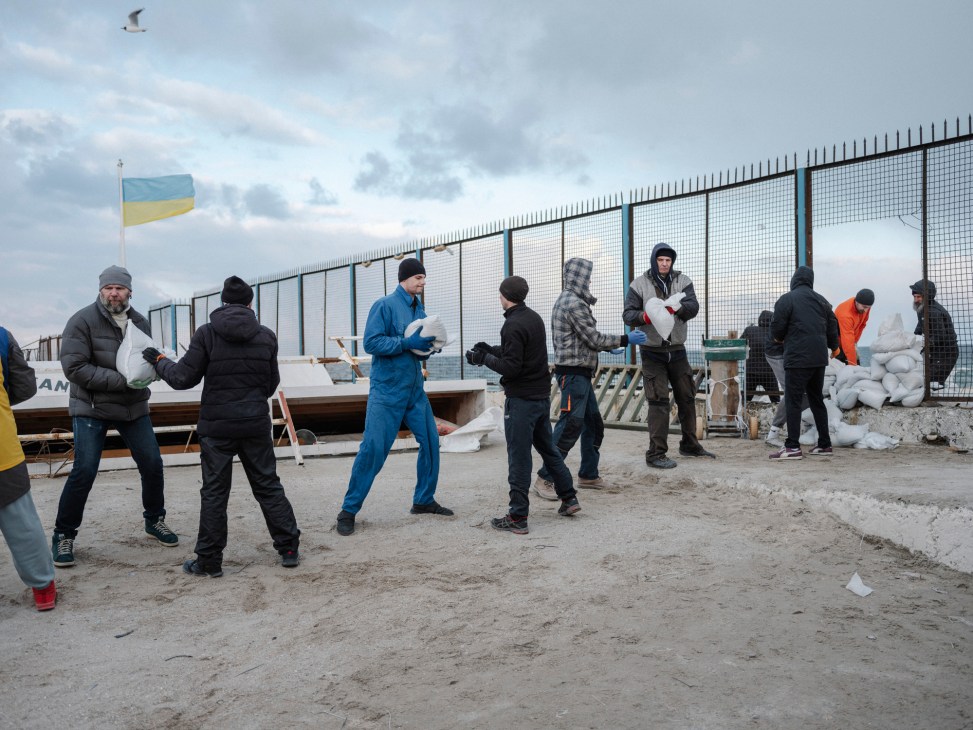
Our employees were literally living at the plants, sometimes under shelling.”
With fighting still ongoing, Pylypenko says that it’s too early to launch a large-scale rebuilding effort in Ukraine but he hopes to eventually be a crucial player. “Our manufacturing potential is preserved and we can restart our plants at any time,” he says. “Our priority is to become a key pillar in the rebuilding of Ukraine. We can provide building materials and ready-to-implement solutions. We would like to participate in the state-led effort of housing reconstruction when the time comes. Unfortunately, it hasn’t come yet.”
Domestic companies have taken the lead in delivering humanitarian and military supplies to the front lines and, with Ukraine’s ports blocked, creating new land routes via Poland. They have done far more than international humanitarian organisations that were wrong-footed by renewed conflict in Europe, according to Roman Waschuk, Ukraine’s business ombudsman and formerly Canada’s ambassador to Kyiv. “It’s mostly indigenous networks that are keeping things going,” says Waschuk. “That’s why they are the ones that are likely to be able to pull off parts of the next phase.” Some international firms that decided to stay in the country despite the invasion – Polish or Turkish construction companies like Onur, for example – will also reap the benefits, while foreign companies parachuting in with solutions after the fact can expect to be closely watched. “What I would expect to happen in the early recovery and reconstruction phase is that there will be a change in the relationship with the state, both from the point of view of citizens and business,” says Waschuk. “Obviously, engagement with the international community will be very important; we have already seen some announcements of funding commitments in different configurations and formats. But you will see a Ukrainian state, society and business community that will not want to be talked down to by internationals.”
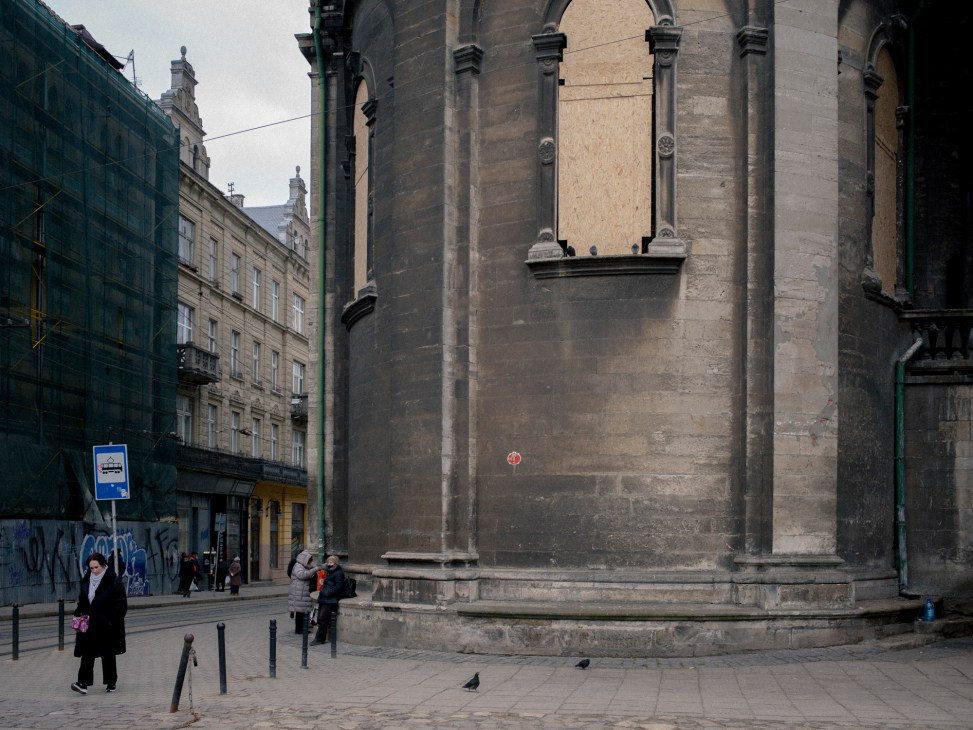
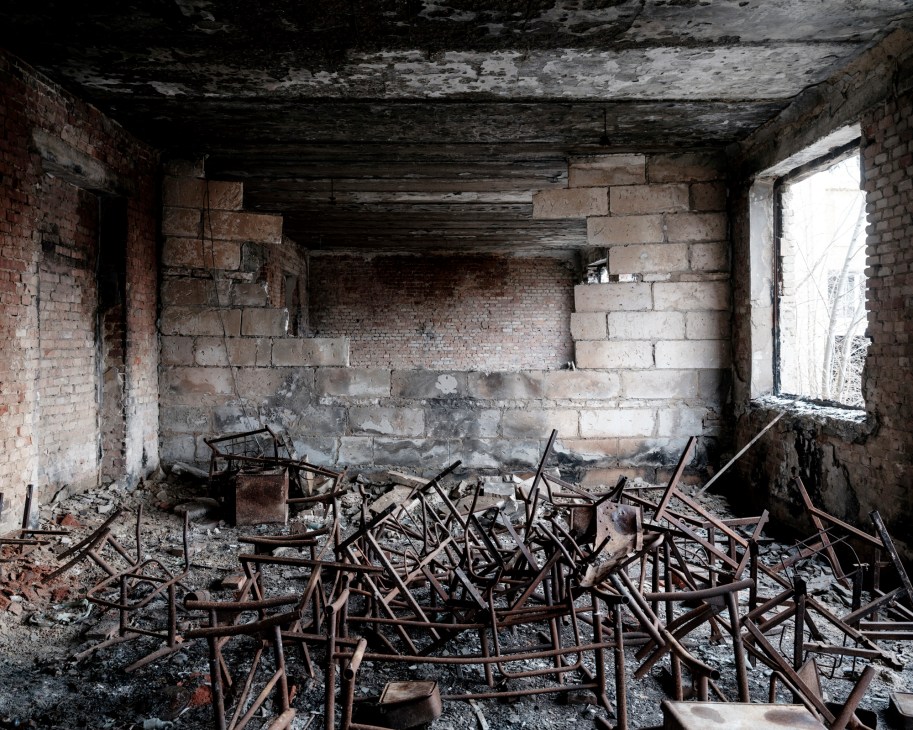
The complexity and scale of the rebuilding that lies ahead have left some in Ukraine cautious about gestures from foreign design and construction firms. And it’s not just a matter of who manages the effort; it’s about setting out a clear plan for the country’s future. “We not only want to restore what has been destroyed,” says Kubrakov. “We want to revamp the country, to make it modern, to make our cities comfortable and safe. These are the priorities. We will need to build bomb shelters and to introduce additional safety provisions on public transport and in civilian infrastructure but it should be a complex endeavour. We cannot rebuild part of the city and leave other parts unchanged.”
Beyond the practical steps, it’s also about delivering on a vision that suits the country and its future. “Ukraine is still in a transition period from a post-Soviet state into something new,” says Iryna Matsevko, deputy vice-chancellor of the Kharkiv School of Architecture, the country’s first private institution of its kind. “We don’t even want to use this word ‘rebuilding’. We can’t rebuild the past – that would be the wrong way.”
What’s important, says Matsevko, is to keep intellectuals in the country. That’s why the architecture school relocated to Lviv when the war began rather than going further afield, despite receiving several offers to move the campus abroad. Classes returned virtually within about a week of the invasion. Matsevko says that it’s crucial that Ukraine discovers its own architectural identity. Kharkiv, once the heart of Soviet modernism, reflects both the country’s architectural traditions but also what needs to be reshaped. “We are trying to get rid of one form of colonial thinking – the post-Soviet kind – but the danger is that we could just become part of another if people from abroad who don’t know Ukraine come to us with solutions.”
Above all, Ukraine must take its time. “It’s very, very hard to instantly have a vision of our future,” says Matsevko. “For me, it’s important not to hurry when the war is over,” she says. “We’ll need to make some decisions that are urgent and temporary but this is a chance for Ukrainians to rethink ourselves: who we are, where we are, where we want to go. This is a long-term process. It’s a big challenge but it’s also a chance for us to build our new identity.”
Lessons from Beirut
Don’t let profit trump the people
After 15 years of fighting the Lebanese capital emerged from civil war in 1990 with urgent questions. What should be reconstructed and how? And who would do it? Several studies were conducted to address the issue and only one thing seemed certain: that the Lebanese government couldn’t foot the bill. After much back and forth, then-prime minister Rafic Hariri founded a company called Solidere in 1994 to manage the reconstruction and development. It was handed the daunting task of rebuilding 191 hectares of Beirut’s city centre. Solidere was conceived as a public-private partnership but many bristled at the idea of a private company taking the reins – and likely the profits – of the rebuild. Nevertheless, parliament approved a master plan in which Solidere would design and build public infrastructure, from roads and sewage systems to drainage, electricity and telecoms. The payoff? It was allowed to develop prime real estate, which could be sold for profit.
What followed were decades of planning, excavations, restoration and construction that continue in fits and starts to this today. While the investment has rebuilt much, the company’s need to generate profits has pushed real-estate prices higher and alienated many of the people who need essential services the most.
Roiling civic conflicts and dissatisfaction with politicians led to an uprising in November 2019 that took place in downtown Beirut. Vandalism and destruction made clear the animosity towards the way in which the reconstruction was being handled.
The success of the rebuild to date is dubious. Beirut today is at a standstill, plagued by a corrupt government, the collapse of the banking system and a devaluation of the Lebanese lira. The Beirut Souks, designed by Spanish architect Rafael Moneo, sit empty. The 298 restored French mandate buildings have been emptied by the political insecurity. The site of Renzo Piano’s Beirut City History Museum on Martyrs’ Square – where the Green Line once divided the largely Christian East Beirut and the predominantly Muslim West Beirut – is desolate and bare.
The lack of a truth and reconciliation committee to put the city’s fabric in context and let the city heal seems to be an obvious failure now, as does the futility of simply commissioning a new city from scratch without consulting communities and leaving space for spontaneity. But none of these factors needed to mark the shortcomings of the rebuilding project.
The lesson is that no plan can succeed without sound and legitimate governance and community participation. A trusted body must be in place that can collect international aid and negotiate loans. Postwar reconstruction is a long process that goes beyond the built environment into how residents feel about the place they live, the people with whom they share the city and those who run the show.
Lessons from Sarajevo
Remember to rebuild memories too
This April marked 30 years since the beginning of the siege in which Serbian nationalist forces held Sarajevo, the capital of Bosnia and Herzegovina, for four years – the longest siege of a European city in modern history. Residents lived under a barrage of artillery, mortar and sniper fire that caused the deaths of more than 10,000 people. If hosting the Winter Olympics in 1984 is the city’s proudest achievement, then the shattered bobsleigh track on Mount Trebevic is a symbol of its continued anguish.
In some significant ways, Sarajevo’s reconstruction was remarkably rapid. The siege ended on 29 February 1996. Initial assessments found that almost two thirds of the city’s buildings had been damaged, as well as 80 per cent of its water and electricity infrastructure. But by the end of 1998, the city was, in effect, fully functional.
“I was surprised how quickly it happened,” says Sarajevo resident and journalist Aida Cerkez, who covered the siege for the Associated Press. “I remember people crying when they came back. They saw that the city had been destroyed and there weren’t even any trees. But the world somehow got together to fix it – and the Japanese brought some fantastic trees.”
The international effort brought in billions of dollars in donations for reconstruction, with the World Bank, the US and the EU among those chipping in. The initial priority was glass: replacing shattered windows in government buildings and offices, before moving on to residential buildings. The lights went back on in parallel. By the end of 1998, two years after the siege ended, the electricity network was running at close to its pre-war capacity.Though this concentrated period of reconstruction restored Sarajevo as a liveable city, some of the sites that were most important to its residents remained in ruins for years. The city hall only reopened in 2014 after a 12-year restoration process and the cable car up Mount Trebevic finally started running again in 2018.
For Cerkez, that was the moment when Sarajevo truly rose from the rubble. “When the cable car reopened, it was as though our souls had been reconstructed. Something inside of us slipped back into place. It’s one thing to reconstruct roads and infrastructure. But this reconstructed people’s memories.”
That, perhaps, is one lesson of Sarajevo: it takes more than bricks and mortar or concrete and glass to rebuild a city.
Flying start
The airport at Skellefteå, in the northern Swedish county of Västerbotten, seems to be a sleepy place. Just a few planes a day arrive here, most days only from Stockholm – and once that sas a320 takes off towards the south there’s just stillness and miles of spruce forest.
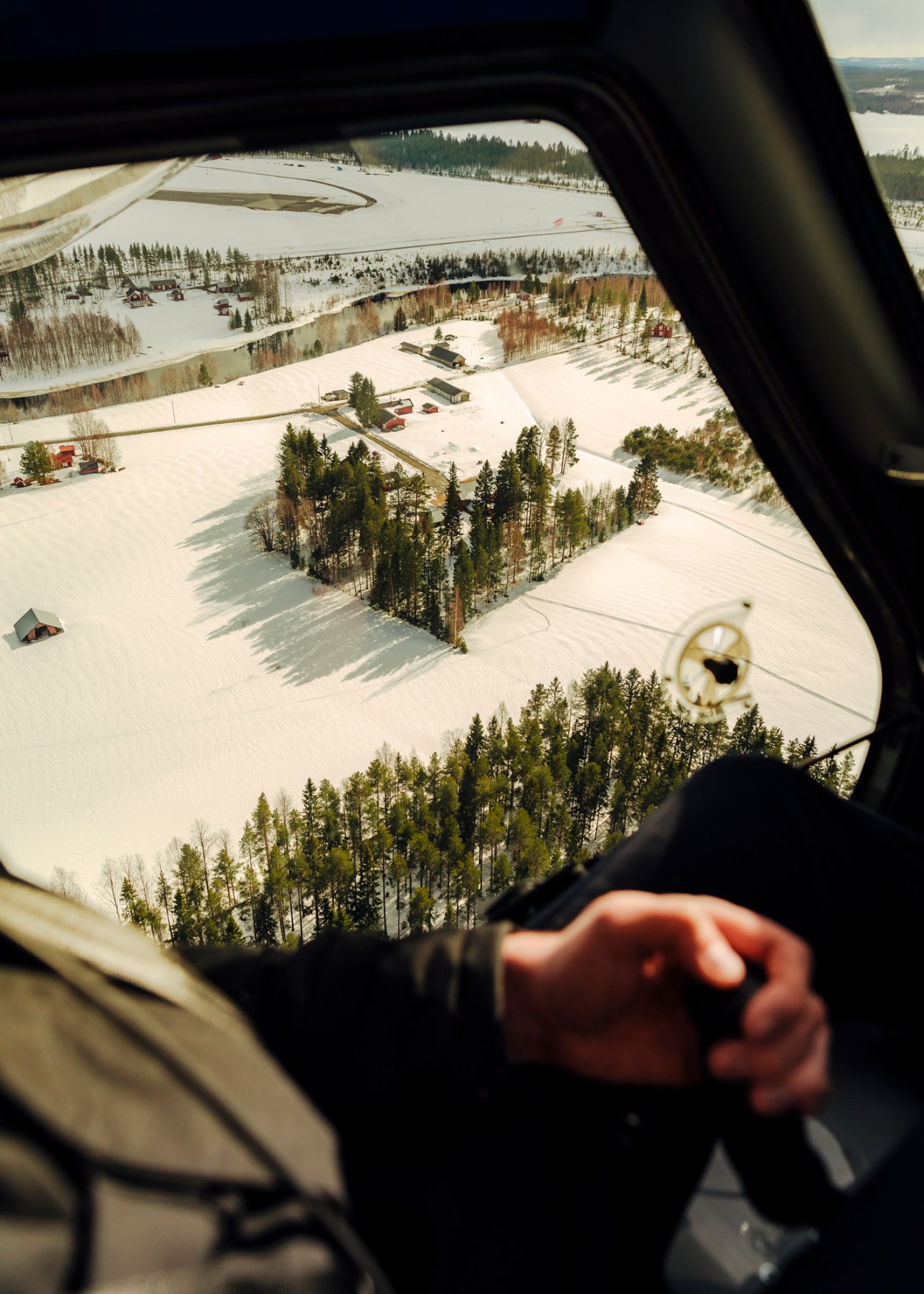
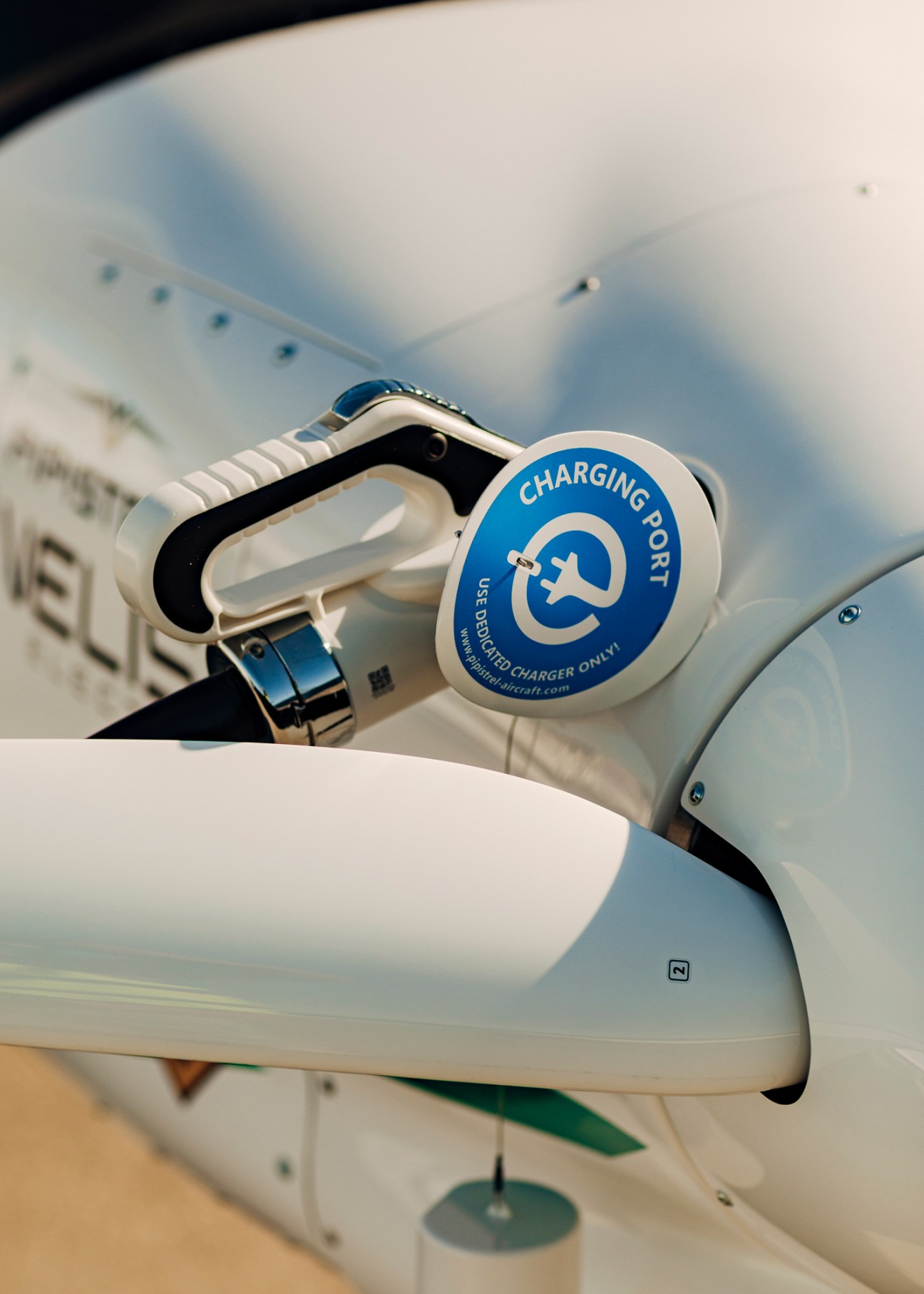

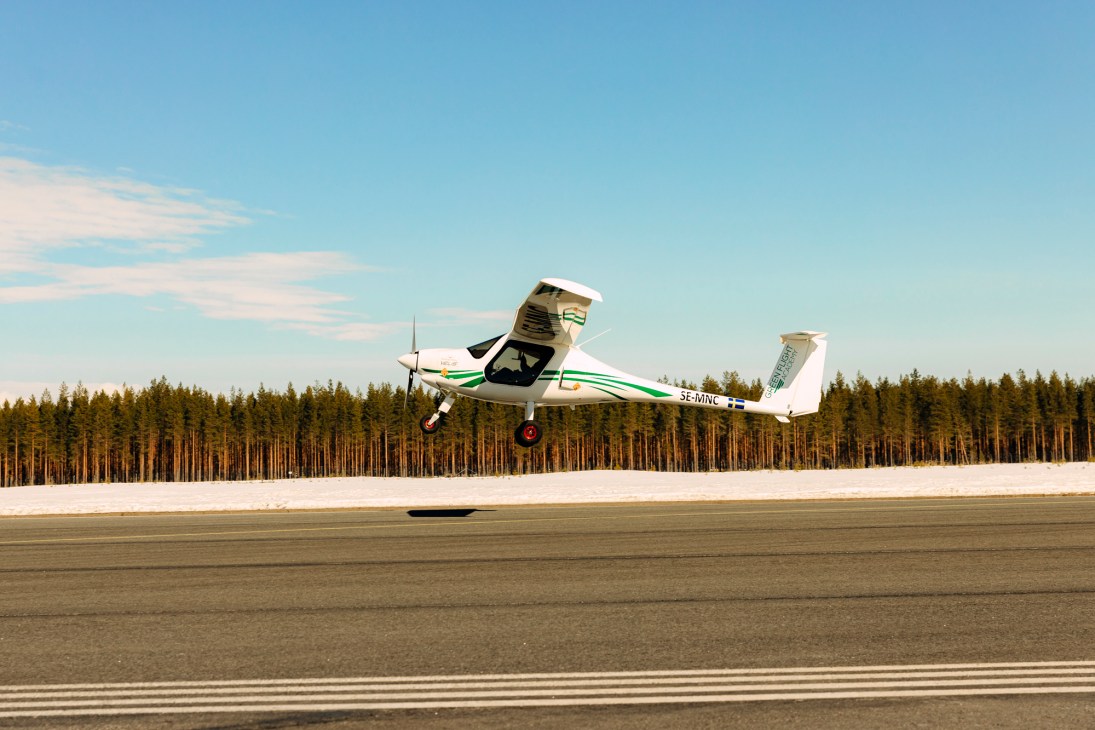
But listen closely and there’s a new and notable (though still near-silent) sound that’s being heard increasingly often: the gentle whir of an electric-powered propeller plane. In a small hangar just a few hundred metres from the terminal, we find the source of that sound – three shiny new Pipistrel Velis Electros, the first electric-powered planes to be approved for use by European flight regulator easa. We’re in luck as we stroll across the tarmac to the small hangar that houses them. After a week of April snowstorms, it’s bright and sunny with almost no wind. That means we will be able to fly.
It’s here and with this aeroplane that Green Flight Academy is launching. It’s the first professional flight school to offer training on electric aircraft and likely represents the most eco-friendly way to nab a pilot’s licence. Dozens of firms around the world are working towards building airliners that fly without jet fuel but battery-powered flight range is still very low – about 45 minutes of flying time before it’s time to land and plug in again. Still, you have to start somewhere and Green Flight Academy has decided that the technology is advanced enough for it to forge ahead. The academy is a homegrown company, backed by Skellefteå businessman Petter Mikaelsson and aimed at riding the wave of green energy and electrification projects in this small city and the broader region. The corporate group behind the academy, npb Invest AB, has legal and accounting companies in its broad portfolio and an annual turnover of €50m.
Until recently, Green Flight Academy’s head of training, Johan Norberg, was flying Twin Otter seaplanes in the Maldives. He is originally from Piteå, about an hour away, and left at 17 to attend aviation college. He has returned at a time of rapid change in Skellefteå. The highest-profile project in town, the Northvolt battery factory, which is expected to be Europe’s largest when it’s ready, should create thousands of new jobs. It’s also driving investment across the area. House prices have nearly doubled and most of central Skellefteå is a construction site as new buildings are thrown up to accommodate the influx.
Huge investments in renewable energy, including in wind farms and green hydrogen production, mean that Sweden now outperforms its EU colleagues with 56 per cent of its energy consumption coming from renewables, as of 2019. This is inspiring big projects, such as Northvolt, but also smaller start-ups. It’s no coincidence that Green Flight Academy is one of the slew of sustainability-focused businesses springing up across the home of flygskam or “flight-shaming”.

The transition is not without its challenges. Norrland has traditionally been the energy and raw-materials producer for Sweden’s more populated south. Some of the country’s most productive hydropower installations are here, as is one of the world’s largest iron-ore mines, and the high-quality steel that it produces is sent down south as well as across the world for manufacturing. But as the green energy boom gathers speed, the region needs more of these resources, especially electricity, for itself. The conundrum of generating enough sustainable power and sourcing raw materials for batteries without harming the environment in new ways is certainly not unique to Sweden but it will be acutely felt here because of the boom in energy-intensive projects.
Norberg says that Skellefteå’s sustainability boom is creating a snowball effect. “It’s a totally different vibe here compared to when I was growing up,” he tells Monocle. “You can tell that there are many more people here in the city than even just a couple of years ago, which is amazing. You want to live in a city where something’s happening – and that attracts certain kinds of people too.”
Steering the flight school’s launch alongside Norberg is CEO Olov Hultdin, who is also a local. Hultdin cites the electrical-charging infrastructure installed by Skellefteå Airport as a big part of the draw to launch here because rapid charging means that the planes can spend most of their time in the air. “We understand that to be able to fly in the future we need to lower the environmental footprint of flying and that’s really the reason for us to start,” he says. “A big part of this is the ecosystem here in Skellefteå, with the wind and water power, the charging infrastructure and Northvolt.”
The school’s opening comes at a time when aviation-industry analysts are predicting an acute shortage of pilots in the coming years. While the company expects the first intake of students at the academy to number somewhere between six and 10, it plans to then accept 25 new students every quarter, eventually reaching a total enrolment of 200. The 20-month course is aimed at giving those with no flying experience the skills to gain their air-transport pilot licence: the qualification needed to get an entry-level flying job with an airline. The full course, including housing, costs just shy of €100,000. In town, the academy has leased a portion of a building at the university campus to house a few classrooms and a simulator. The prefab housing where students will be assigned single rooms is just across the carpark.
The Pipistrel is the star of the show, of course. It’s a tiny two-seater that weighs in at just over 400kg and costs about €200,000 when new. Everything has been pared down to be as light and aerodynamic as possible – and it looks like it. The tail is svelte, the cabin minimal. Getting into the thing is a bit of a challenge and it helps if you are reasonably limber and not too tall.
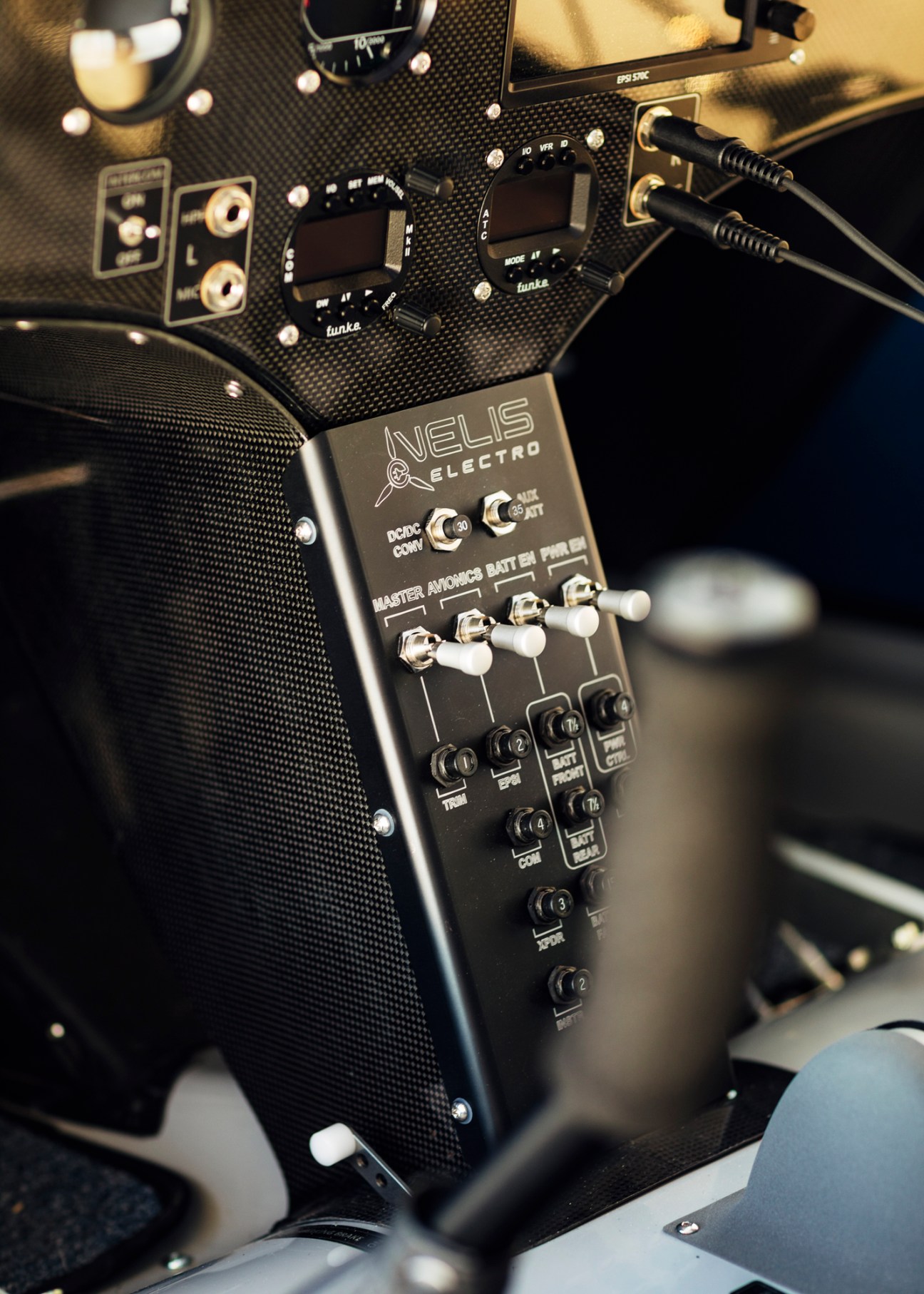
Starting up the engine, the prop spins with just a whisper. For anyone who has been in a conventional single-engine piston aircraft, the difference is stark. A simple dashboard shows all of the standard flight information and, alongside this, one screen is dedicated to battery levels and power consumption.
Taking off, we feel small on a runway that’s designed to handle commercial jets but the test flight is surprisingly relaxing. Though the cabin is tight, big side windows give a broad view out, like in a helicopter. At full thrust, the prop makes a little noise but the complete absence of motor roar is remarkable. The little plane boasts some decent power too, and we lift off effortlessly over the evergreens.
The rate at which the battery-charge level is dropping, though, is notable. This is very much a technology that’s still in its infancy; no doubt we’ll look back on these early electric aircraft and remember how laughably low the range was. Norberg says that getting used to it is similar in some ways to going from a petrol to an electric car. He points out that it flies almost like a glider, cruising along effortlessly. “When it comes to handling, it flies exactly the same as any other aeroplane,” he says. He lets me take the controls: they feel light and responsive.

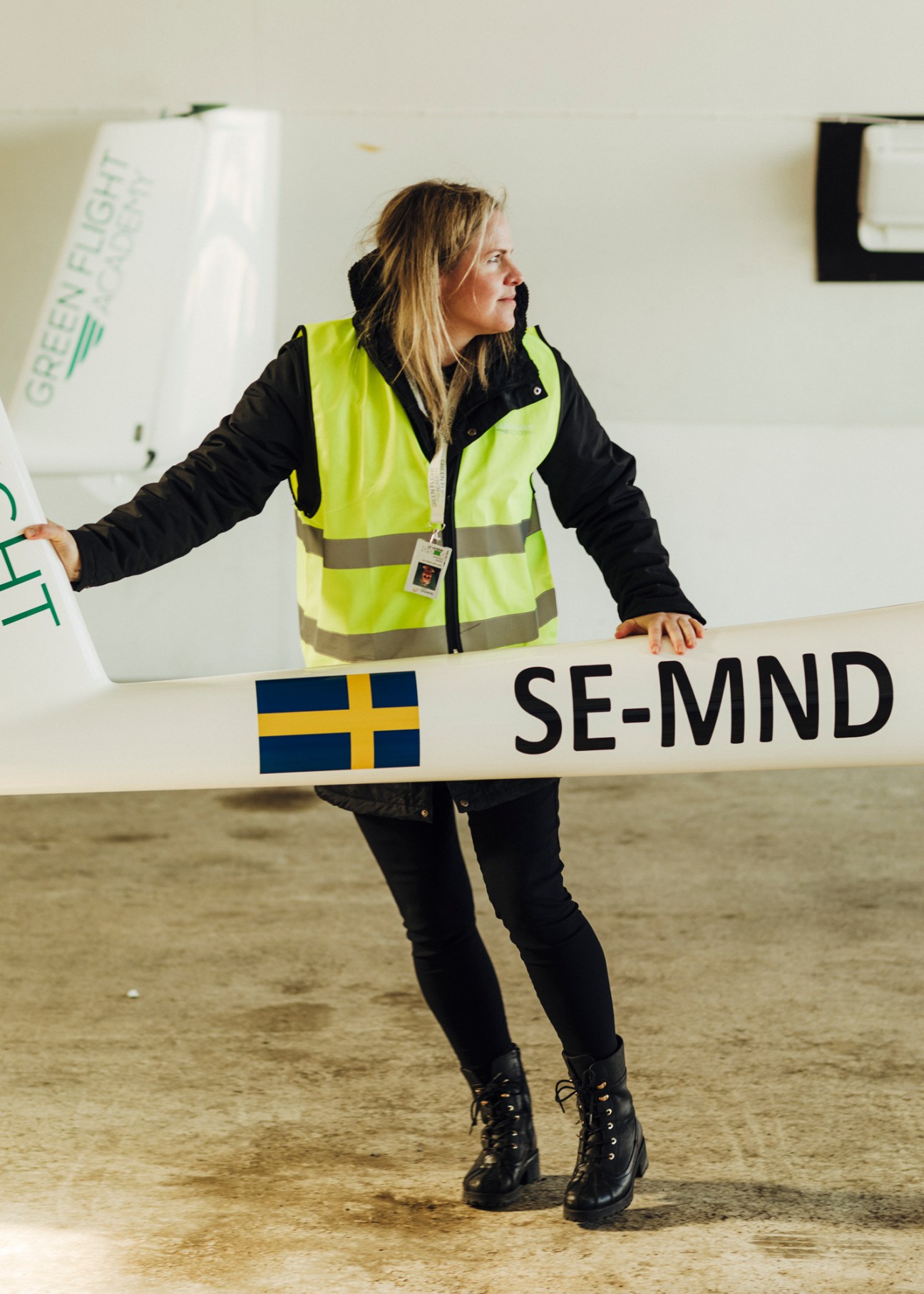
Time in the air goes by quickly: for extra safety the aircraft will sound an alarm telling you to land when the battery drops to 30 per cent. It’s also limited to flying during the day for now. So for longer or night-time flights, the academy also has a conventional Piper Archer aircraft, which costs double the price of the Pipistrel. For that you get four seats and a five-hour flying range. The school is currently looking to source a twin-engine prop as well, for the multi-engine part of the training programme, but it is putting off deciding which to buy as technologies could mature in the coming months, making it possible to source a hybrid. Green Flight Academy hopes to make its whole training fleet free of fossil fuels when it becomes possible.
It’s something of a risk to launch the first flight school using an all-electric basic trainer such as the Pipistrel. It has not yet proven itself to be a reliable workhorse for a training programme. However, those in charge at the Green Flight Academy see it as a risk that is worth taking, especially now. “It’s really exciting with all of this developing technology,” says Norberg. “That’s what drives me and that’s why I said yes to this job. You only get one chance in life to do something like this and be part of it.”
Business
Buses
All aboard Tokyo
An electric bus service has injected a new playfulness into a borough of Tokyo in need of a revamp.
“When I’m designing a vehicle, I try to keep in my mind: is this fun? Is this something a child would want to draw?” Eiji Mitooka, Japan’s foremost train designer, is sitting in his Tokyo studio talking about his approach to transport design. He has designed everything from boats to bullet trains but we’re here to talk about Ikebus, the community bus that he created for the Tokyo borough of Toshima. Ikebus is certainly a traffic stopper: a 10-wheeled, bright-red electric box with a cheery face and eyelashes that spell out the bus’s name. Sitting on top is Ike-chan, a red owl that is the bus’s kawaii (“cute”) mascot. Whenever the bus pulls into one of its dedicated stops, children yank their parents’ arms, eager to board first.
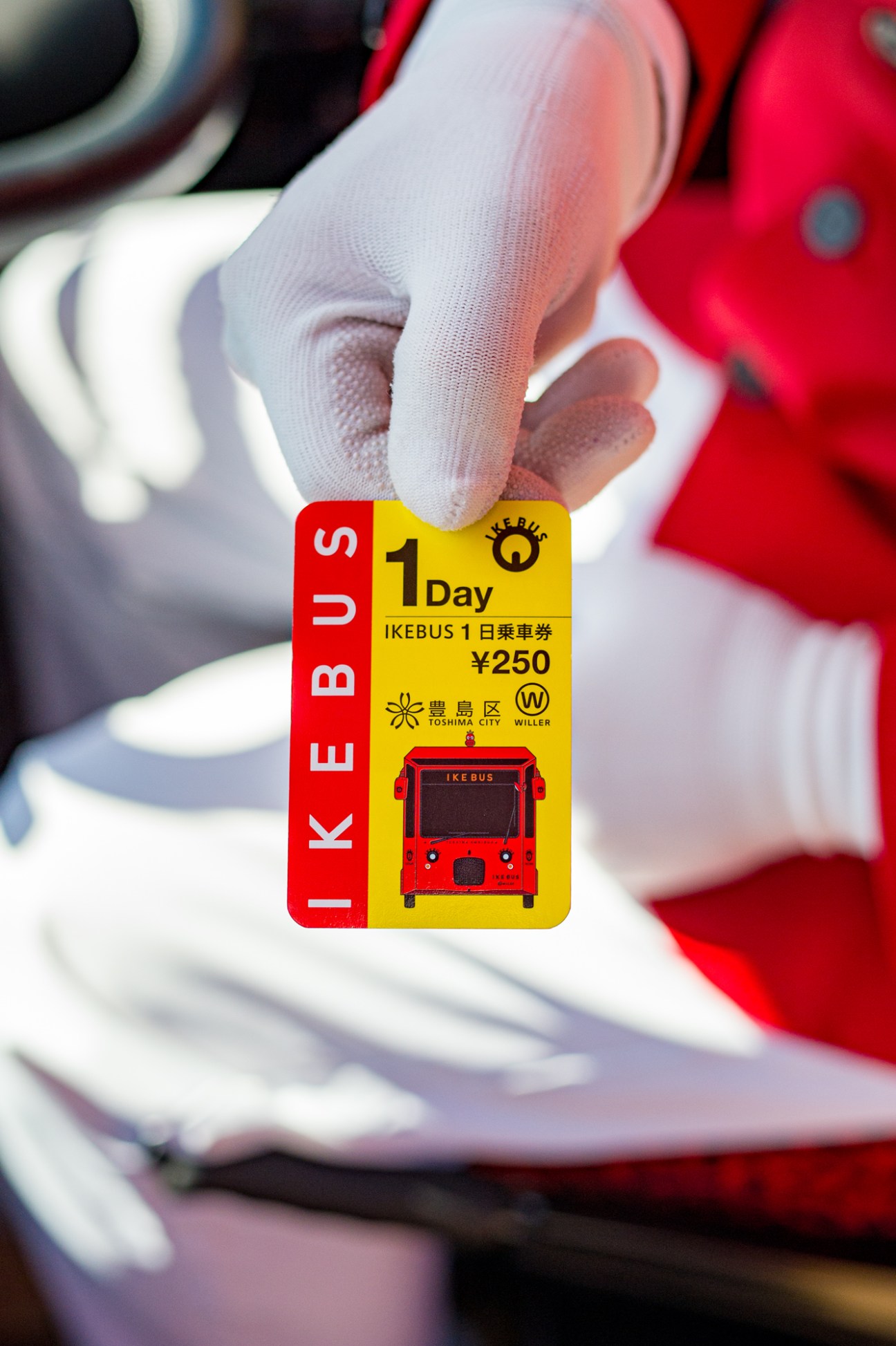
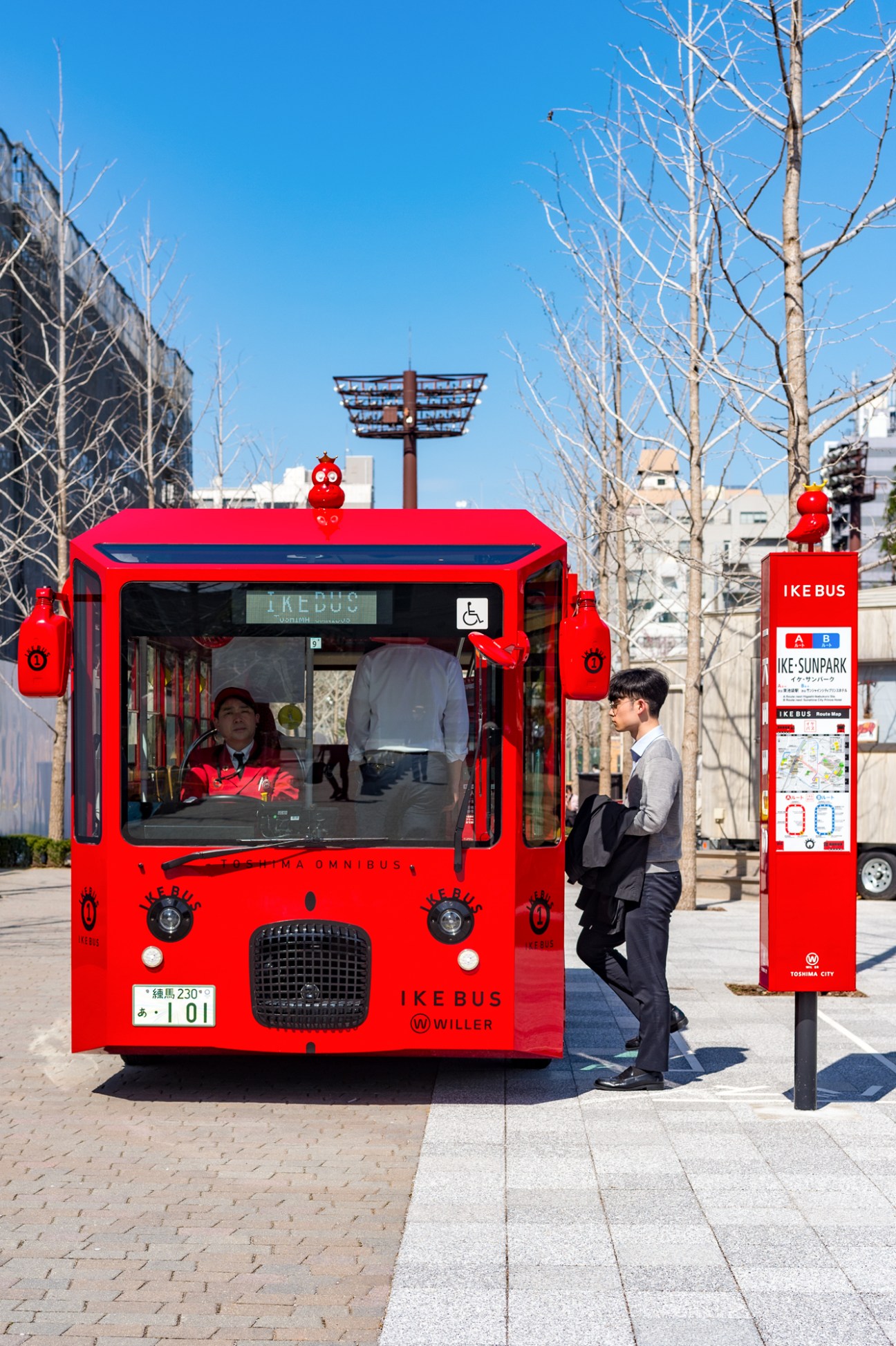
Ikebus was born out of a curious problem facing the local government. While Ikebukuro Station, the area’s main transport hub, was seeing an astonishing 2.68 million people pass through its portals every day, few people strayed beyond the confines of the concourses and the two department stores that bookend the tangle of lines and platforms. “We looked at the foot traffic and the only thing that drew people out of the station was Sunshine City [a 1970s tower with shops and an aquarium],” says the Ikebus project leader Takehiro Ozawa. “We realised that the local government had to take the lead in reshaping the area.”
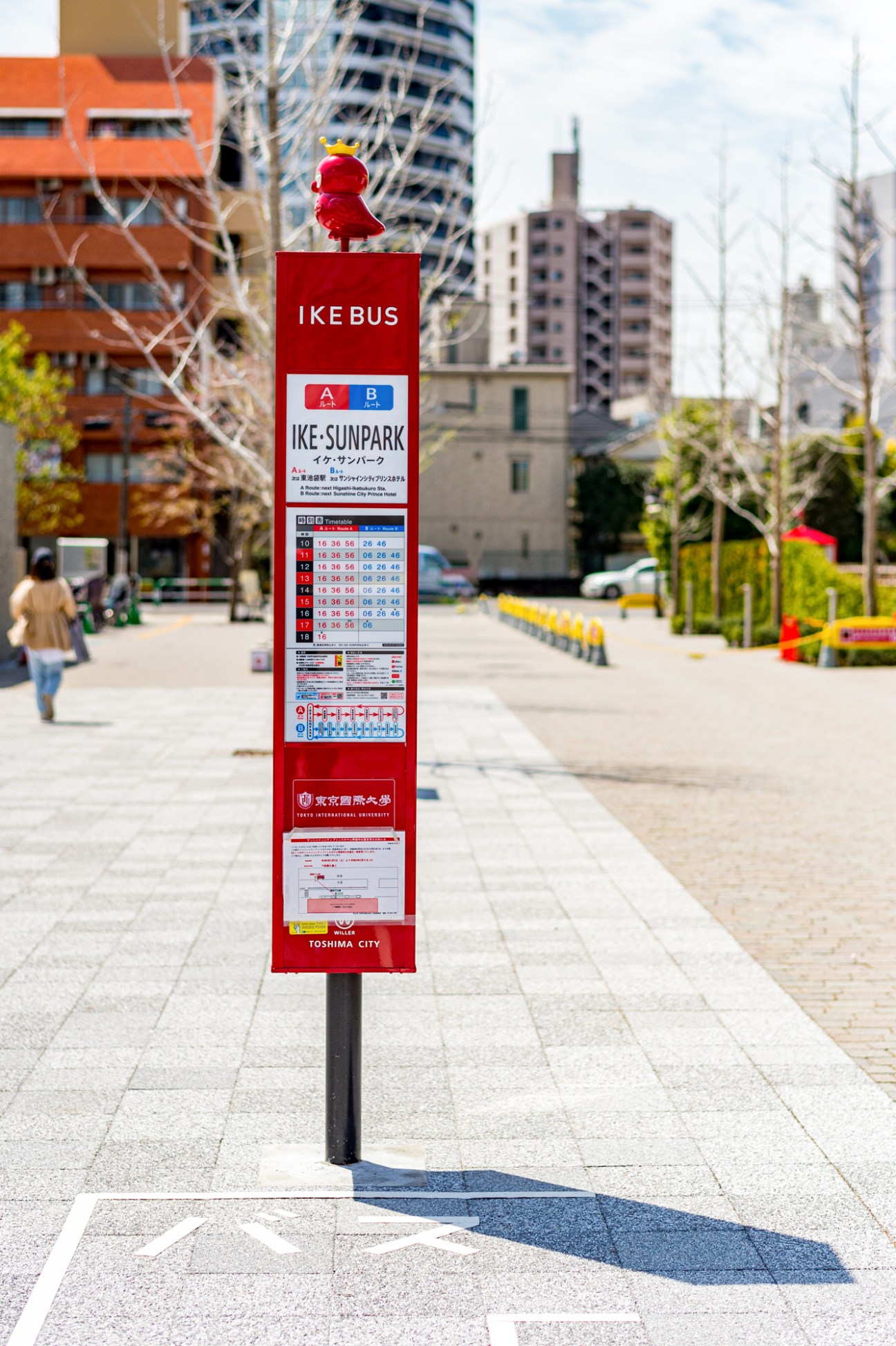
In a bid to increase Toshima’s appeal, mayor Yukio Takano enacted a ¥45bn (€330m) series of improvements, including an overhaul of the public parks and new attractions, such as a manga museum and an arts centre. When it came to the community bus, which was also part of the makeover, the government decided to go big: hire one of the best-known names in transport design and create a bespoke fleet of 10 electric vehicles. At ¥30m (€220,000) for each 22-seat bus, the costs were substantial but the return was deemed to be worth it. An ordinary bus would have been cheaper; a 79-seat Hino bus, for example, would have set the government back ¥26.8m (€195,000). But simply moving people from A to B wasn’t the purpose of the exercise.
“What we do is a complete project: the vehicles, uniforms, bus stops and branding,” says Mitooka, who is also updating the Seven Stars luxury sleeper train that he designed for JR Kyushu in 2013. Inspired by the Orient Express, the train, which tours the island of Kyushu in stately fashion, will be relaunched in October. For Ikebus, the designer called on the team that he usually collaborates with on his train designs for JR Kyushu.
Ikebus is a work of craftsmanship. Each bus is made in Japan with a different handmade interior featuring yosegi parquet floors, moulded plywood seats and colourful fabrics designed by Mitooka. “If I had asked a bus company to build Ikebus, they wouldn’t have made seats or floors like this.” There are nine red Ikebuses and one in yellow. “I’ve been a big fan of the London bus for years,” says Mitooka. “I love the way that the colour pops against the greenery and the grey and brick architecture.” But the London bus’s specific red didn’t work as well in Tokyo, so the team developed a new shade that is “darker than a Ferrari but lighter than a London bus”.
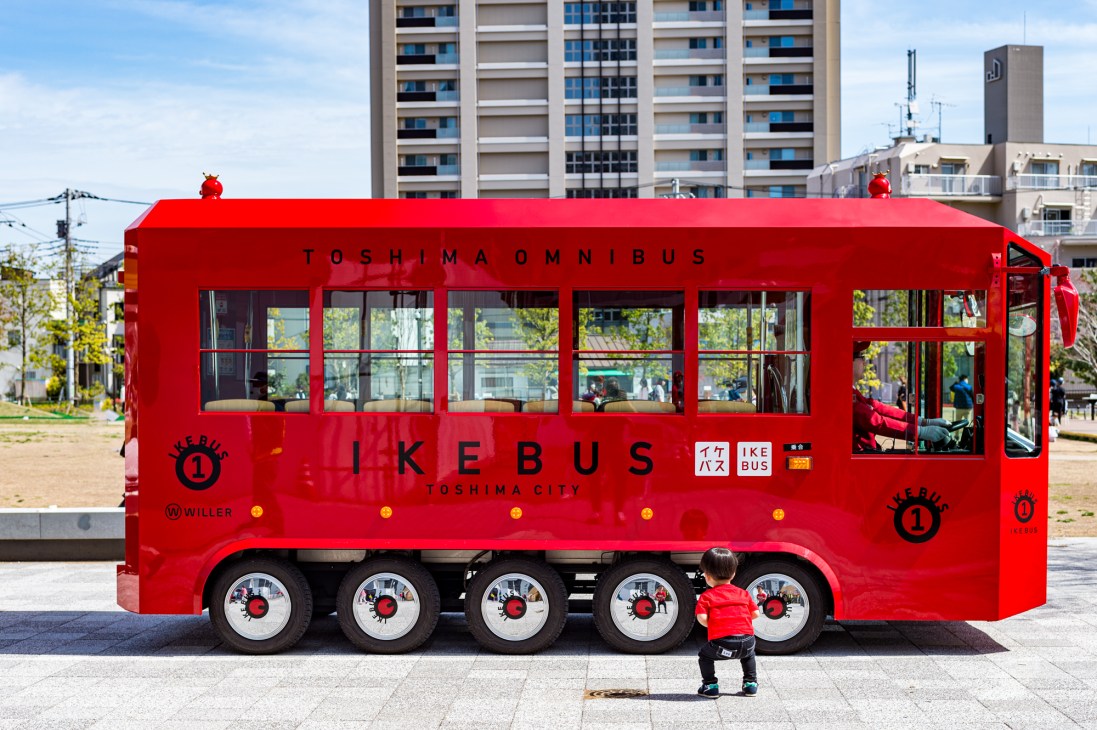
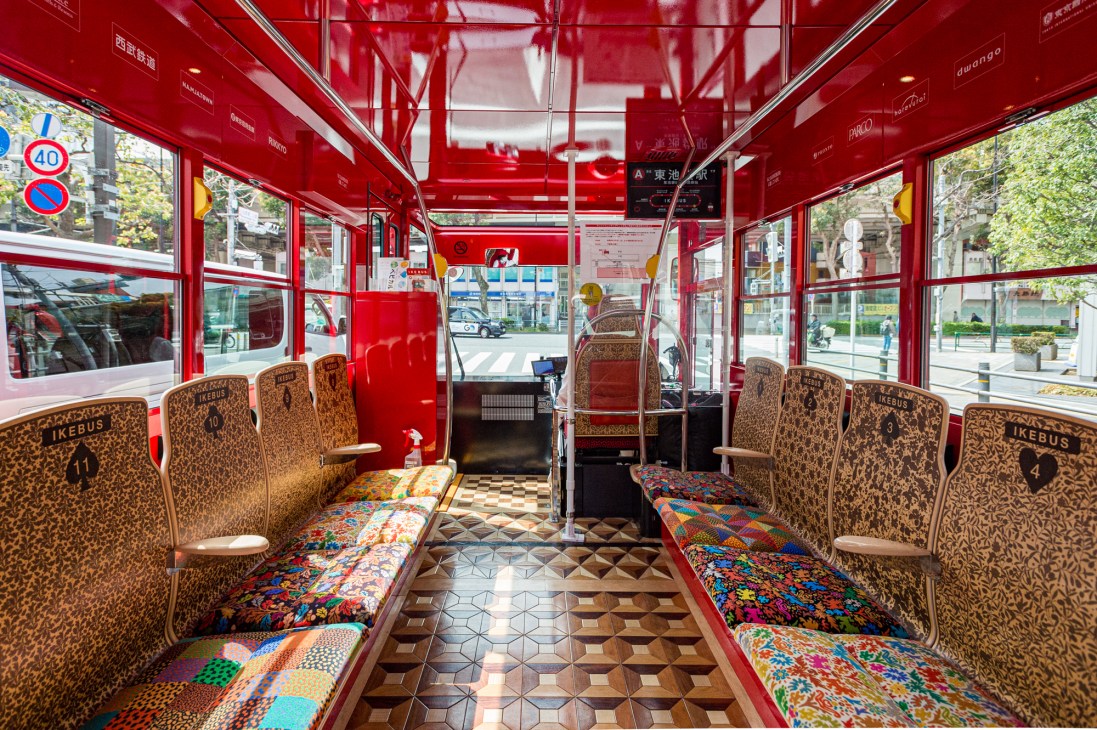
The vehicle’s electric technology made air-conditioning too much of a drain on the battery, so it relies on open windows for a breeze. That Ikebus launched during the pandemic, during which wide-open windows have been a must, has also been timely.
“We always knew that this would be an electric bus,” says Ozawa. Ikebus is run by the private operator Willer (better known for long-distance buses around Japan) and has two routes that take in the parks and other local landmarks. Tickets are at standard Tokyo prices – ¥200 (€1.50) for adults and half that for children – although everyone will pay children’s prices until September. Subsidies came from the Tokyo Metropolitan government and the national government, both of which are pushing the move to electric vehicles. Advertising from local businesses and hotels contributes about €220,000 to running costs.
An eight-hour charge sets Ikebus up for 60km of travel and Ozawa points out that it could also be used as a giant charging spot in an emergency (fully charged, it could power more than 2,000 mobile phones). One of the 10 buses is also available to hire for weddings and kindergarten outings for ¥50,000 (€366). Revenue projections for Ikebus have been skewed by the pandemic but the team is optimistic that tickets, events and sponsorship will eventually cover more of the ¥200m (€1.5m) in annual costs; they currently bring in about ¥60m (€440,000).
With a top speed of 19km per hour, this isn’t the bus for commuters in a hurry. “We consulted with the police to ensure that it wouldn’t hold up the traffic,” says Ozawa. “They pointed out that with all the traffic lights, the bus wouldn’t be much slower than regular traffic anyway.”
Ikebus, says Mitooka, is “both new and nostalgic”. Even the “omnibus” name recalls an older mode of transport and passengers sit in two rows facing each other. And just as he hoped, the bus brings a smile to the faces of passengers and passers-by. “After the Second World War, Japan had to prioritise economic growth and convenience,” says Mitooka. “Now it’s time to bring back the fun.”
travel.willer.co.jp
Design
Transport
Zagreb
High-wire act
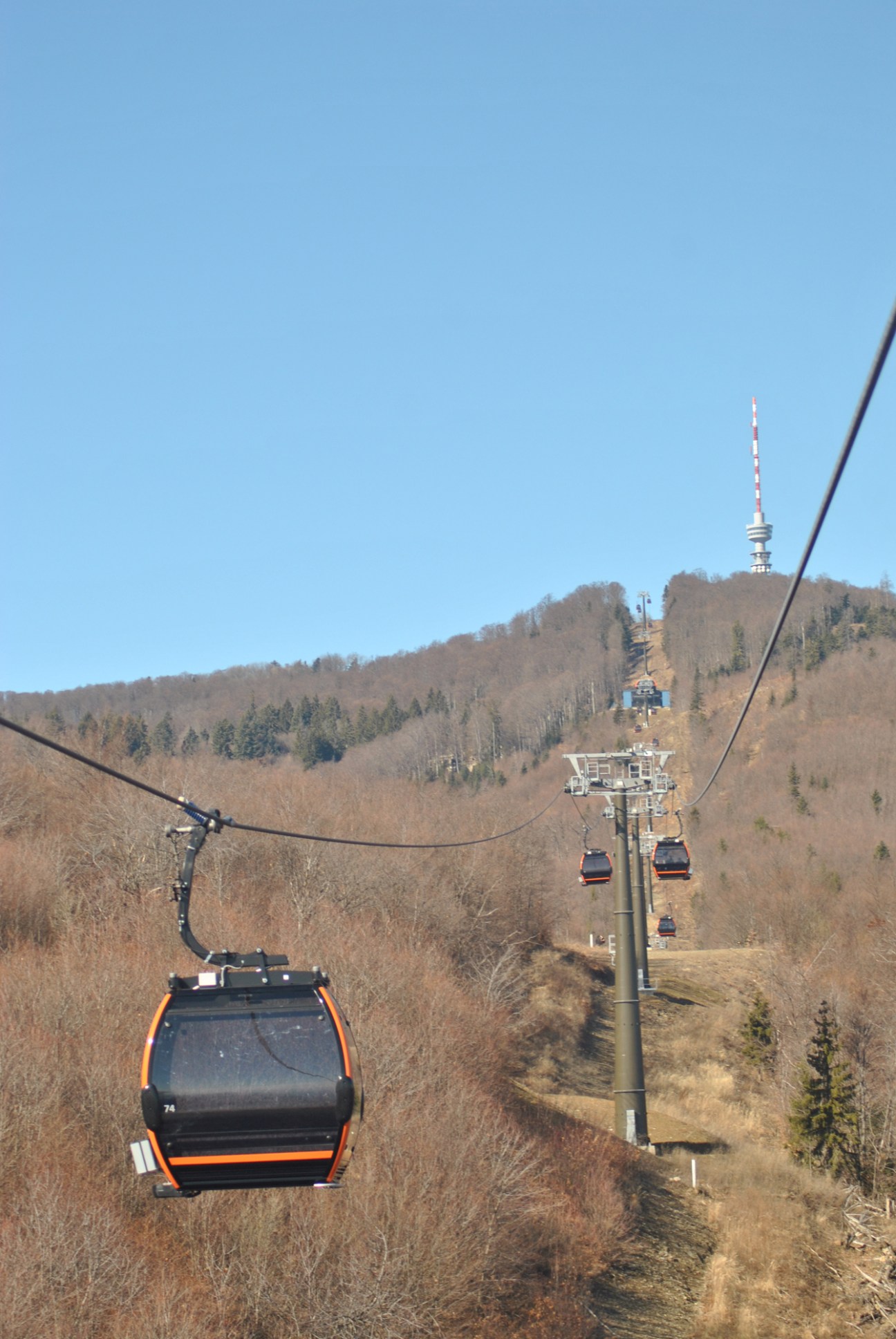
Zagreb’s Sljeme cable car endured a rough ride before it finally opened to the public in February. Legal challenges, arson attacks and the death of the larger-than-life figure who championed the project all threw spanners in the works. But now, 15 years after the previous service closed for business, residents of Croatia’s capital have a swish new way of reaching the top of Mount Medvednica, more than 1km above the city.
The first departure of the black-and-orange gondolas received a send-off that was pitched somewhere between muted and grudging. At the opening ceremony, mayor Tomislav Tomasevic described the new cable car as “an inherited, megalomaniac project” that “will never return on its investment”.
Tomasevic took power last year, after the death of Zagreb’s long-serving former mayor Milan Bandic. He left behind a mountain of corruption allegations and unfinished court cases, and cleaning up the mess has fallen to the green-left Mozemo! (“We Can!”) coalition that Tomasevic leads. The completion of the long-gestating project was among the most pressing items in his in-tray. It’s fair to say that he could think of other ways to spend the €72m that it cost.
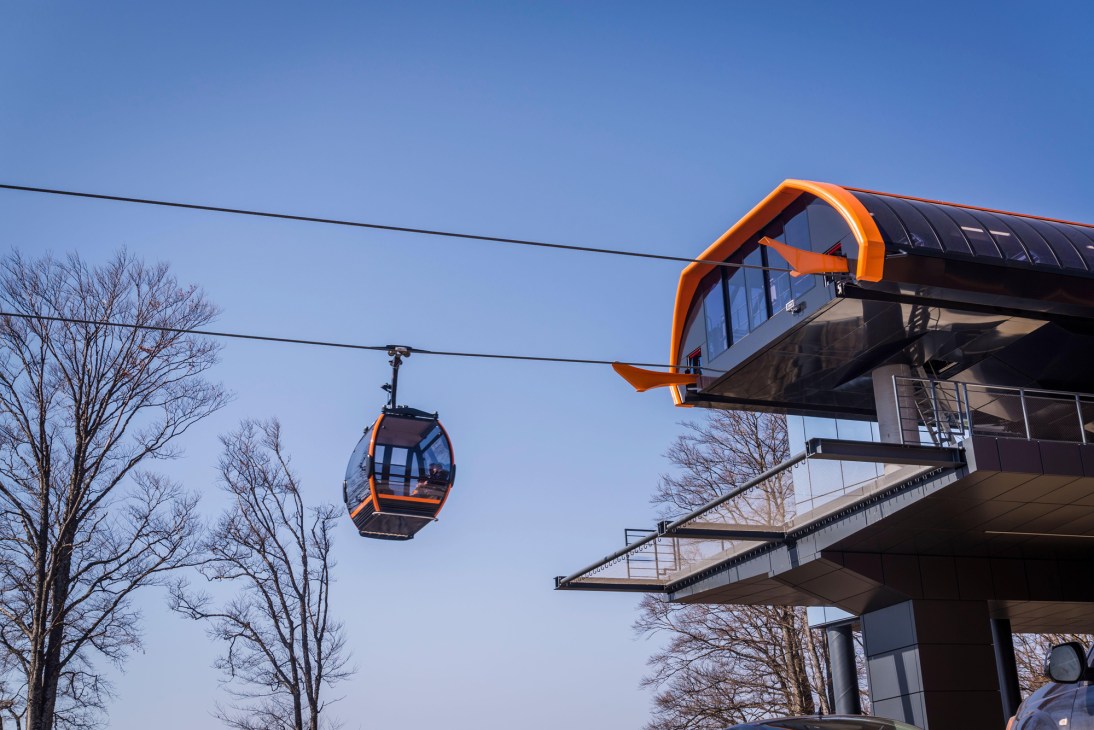
But judging by the smiling faces of school parties, elderly hikers and foreign tourists at the base station on a sunny spring afternoon, those concerns will not trouble the cable car’s users. After all, the full fare for a one-way 5km ride, which lasts about 20 minutes, is just €4. And regardless of the costs and delays, the new facilities are impressive. The roomy, 10-person gondolas are a far cry from the cramped old pods that only had room for four. The base station is now lower down the mountain, with the ride taking an entertaining left turn before dipping, then rising, to the magnificent summit at Sljeme.
Crucially, the airy new terminus is part of a transport hub with a direct connection to the number 15 tram, in the hope of encouraging Zagreb residents to ditch their cars and embrace the cable car as part of the city’s public transit network.
Marko Bogdanovic, the new boss of municipal operator zet, is happy that the gondolas have joined his fleet of buses and trams. “We need this service,” he says. “It will bring a lot more in the future than we can imagine today.” Even now it brings passengers from the smog of Zagreb to the mountain cafés, forest trails and ski slopes of Sljeme. For these leisure-seeking city dwellers, it’s just the ticket.
On Design
Nolan Giles on…
Manufacturing change
By the time you read this column, my bags will be packed for a busy month on the road assessing the state of the design industry. In June the world’s pre-eminent design weeks and fairs in Basel, Copenhagen and Milan intersect, sandwiched between industry events in New York and London. It’s the first time in two years that designers, architects, property developers and journalists from across the globe (notwithstanding those from Russia and the still locked-down parts of Asia) will be able to get a proper sense of where the industry stands today. Expectations are high.
After enduring two years of restrictions and reopenings our view on what the modern workplace should be has changed significantly, while many have finally realised the value of equipping their homes with furniture that improves their quality of life. The latter point has not been missed by the high-end European furniture companies that lead the design narrative. Many of these capitalised on high demand and sailed through the pandemic largely unscathed, selling comfortable pieces in quality materials to enhance our enjoyment of life at home. But I worry that amid the chaos of the past two years, these big brands have been too stretched to collaborate with designers and architects on new products. I fear that it might be more of the same: pieces that sell safely and don’t push the envelope in terms of design.
What these companies will be conscious of – and what will almost certainly affect their showcases at Milan’s Salone del Mobile, Copenhagen’s Three Days of Design and Basel’s Design Miami – is that the way they manufacture needs to change. Consumers are considerably more conscious of the carbon footprint of the products that they buy, from emissions to the longevity of the materials and whether they can be recycled. Big furniture-makers are also dealing with major supply-chain issues. It’s a unique conundrum: buyers want cosiness and comfort, while producers need to be smarter, more thrifty and environmentally focused in the way they make their wares. Monocle will be reporting on how they have fared in the weeks and months ahead, so stay tuned.
Images: Alamy, Goran Keki
Culture
The COMMENT
Nightlife ––– Eastern Europe
Missing a beat
Matt Unicomb on how he world’s electronic-music scenes are organising against Russian aggression.
In March, while companies such as Disney and Netflix were suspending their Russian operations in response to the invasion of Ukraine, similar moves were being made in a less-watched corner of global culture: the electronic-music scene. Some of the world’s biggest DJs, including Swedish House Mafia and Jauz, denounced the invasion, while ravers in cities from London to Los Angeles hit the dance floor to raise funds for Ukrainian refugees and the Red Cross.
And there were places where the rhetoric went further, particularly in Eastern Europe’s former-Soviet states. “This is our war too,” declared Bassiani, a popular techno club in Tbilisi, in late March. Earlier that month some Russian clubbers were allegedly turned away from the venue after staff saw their passports. I spoke to two Russian Tbilisi residents who claim that they were denied entry for this reason; one of them, Sasha Diskoteka, is a regular at other Tbilisi clubs and has lived in the city since October. “They didn’t say anything except, ‘Sorry, you can’t come in,’\” she says.


Their alleged treatment at Bassiani is in keeping with an open letter from about 90 signatories in Kyiv’s once-flourishing club scene, which calls for a boycott of Russian artists, organisations and promoters who do not “explicitly take action” against the invasion. Some have applied this to Russian clubbers too. Until February the Russian and Ukrainian club scenes were closely linked but many artists in Kyiv say that they feel betrayed by the silence from Russian counterparts who haven’t condemned the war or even checked in to ask whether they’re OK.
“I know some DJs from Russia who went to protests and I respect them so much,” says Alisa Mullen, a press officer for several Kyiv nightlife organisations. “But that’s just 1 per cent of them. This boycott is an answer to ignorance.” The electronic-music community is no stranger to collective action: many artists boycott Israel and campaign against global injustice. With its roots in black and gay communities in the US, the genre has long attracted those with progressive ideals. That extends to scenes in Eastern Europe, where clubs strive to be safe spaces for victims of discrimination and advocate for them in street protests.
In Tallinn, this music has long helped to connect Estonian speakers with Russian speakers. “Our club was a place where you could feel post-Soviet trauma healing,” says Elena Natale, co-founder of dance mecca Hall. “But because of this war, what we have achieved over years of uniting young people is crumbling.” Natale points to a renewed hostility towards Russians in wider Estonian society. Leading universities, for instance, have paused future enrolment for Russian and Belarusian nationals.
Eastern European scenes also fostered connections with those who lived beyond their borders. In the years leading up to the invasion, Kyiv and Tbilisi in particular became popular destinations for “techno tourists”, who would fly in for weekend-long raves.
Venues such as Tbilisi’s Bassiani and Kyiv’s Closer, in a former ribbon factory, became symbols of a new kind of youth culture. Georgians and Ukrainians no longer had to look westward for cutting-edge music because now they had their own. And along with the beats came politics. Bassiani mobilises demonstrators for gay pride marches and has supported Georgia’s drug-decriminalisation movement. Many clubbers say that they aren’t surprised by its tough stance on Russia.
But shutting the doors to Russians, especially those who are outside their home country, is going too far, says Natale. Among the 30-odd people employed by her club are Estonians, Russians and Ukrainians – an uncommon mix in Estonian society, which, like those of its fellow Baltic states Latvia and Lithuania, is watching its large Russian minority with increased suspicion.
“It feels as though we are back in the 1990s,” says Natale. “There’s so much hate, even in this new generation.” Yet across the region there’s chance for music to bring communities together, just as it has for decades.

Television ––– Saudi Arabia
Playing with time

Jameel is gazing out the backseat window of her taxi when she spots a glamorous brunette cruising along in a roofless mustard-yellow sports car. “Wow. Even women can drive now?” she says to herself, looking on in amazement.
Jameel is the main character in Jameel Jeddan, a new, critically acclaimed Saudi TV series about a young woman who wakes up after five years in a coma to a transformed kingdom, where the power of ultra-conservative clerics has waned. The comedy-drama is the first Saudi TV show to be written by and star a Saudi woman.
“I wanted to write about this girl who comes back to a society that she’s so not familiar with,” says Sarah Taibah (pictured), who plays Jameel. The series follows her return to high school alongside her quest to track down her father, Asem, whose whereabouts her mother, Afaf, refuses to disclose. During the six-episode run, Jameel breaks a number of taboos in Saudi Arabia: she leaves home without telling her family where she’s going, hectors a boy named Nour into a quasi-romance and strikes her harassing stepbrother Fouad with a chair.
“I wanted to break all these stereotypes because I became very sick of how women are portrayed on television,” says Taibah. “I hadn’t done a badass role until Jameel.”
That boundary-pushing extends to the lead characters’ names. Jameel is the masculine version of Jameela – the result of a typo on her birth certificate. Nour, which means “light” in Arabic, is used among men and women.
“I wanted both main characters to be very alike in the most Saudi-appropriate way,” says Taibah. “She is not the typical, sensitive, cute kind of girl. And he is not the typical masculine boy. He is very sensitive and very open to his feelings and she is very suppressing of hers.”
Taibah says that there has been no backlash to the show from conservatives. The series airs on Shahid, a streaming service owned by Saudi Arabia’s state broadcaster mbc.
“The fact that it did really well on Shahid is just a nice reminder that there is hope, you know?” says Taibah. Although the kingdom’s authorities have increasingly clamped down on dissent, they have also liberalised social mores – moves that have been popular with many Saudis.
Politics aside, much of the show’s success is down to how it plugs into the cultural interests of younger Saudis. The series, for example, is dotted with references and cut sequences to Japanese anime, which Taibah says is because “the younger generation has this crazy obsession with anime and Japanese stuff”.
The lingering question is whether Jameel Jeddan will return for another season – and how many more taboos can be prodded. Taibah says that she has an idea where the show would go from here – and there’s certainly an appetite from fans. When Taibah announces anything online about the show, she jokes that “all the comments, non-stop, to an annoying extent, are, ‘We want season two. Shut up. We want season two.’\” It’s hard to imagine Taibah keeping quiet after this.
Cycle of life
First, some gentle advice: don’t come to Milan’s Ciclofficina Stecca hoping to indulge in a spot of conventional consumerism. In fact, were you to bring your busted bicycle here in the hope of quickly handing over some cash and vanishing until it was fixed, the workshop’s volunteers – in the words of one – might “send you to the devil”. The gloriously evocative Italian expression essentially means that you’d be told where to stick it.
“I send anyone away who says, ‘Can you repair my bike?’,” says silver-haired Micol Dell’Orto, who is on the board of 1BC (“More Bicycle”), the association that runs the workshop. “We’re not just a repair shop; we’re something else.”
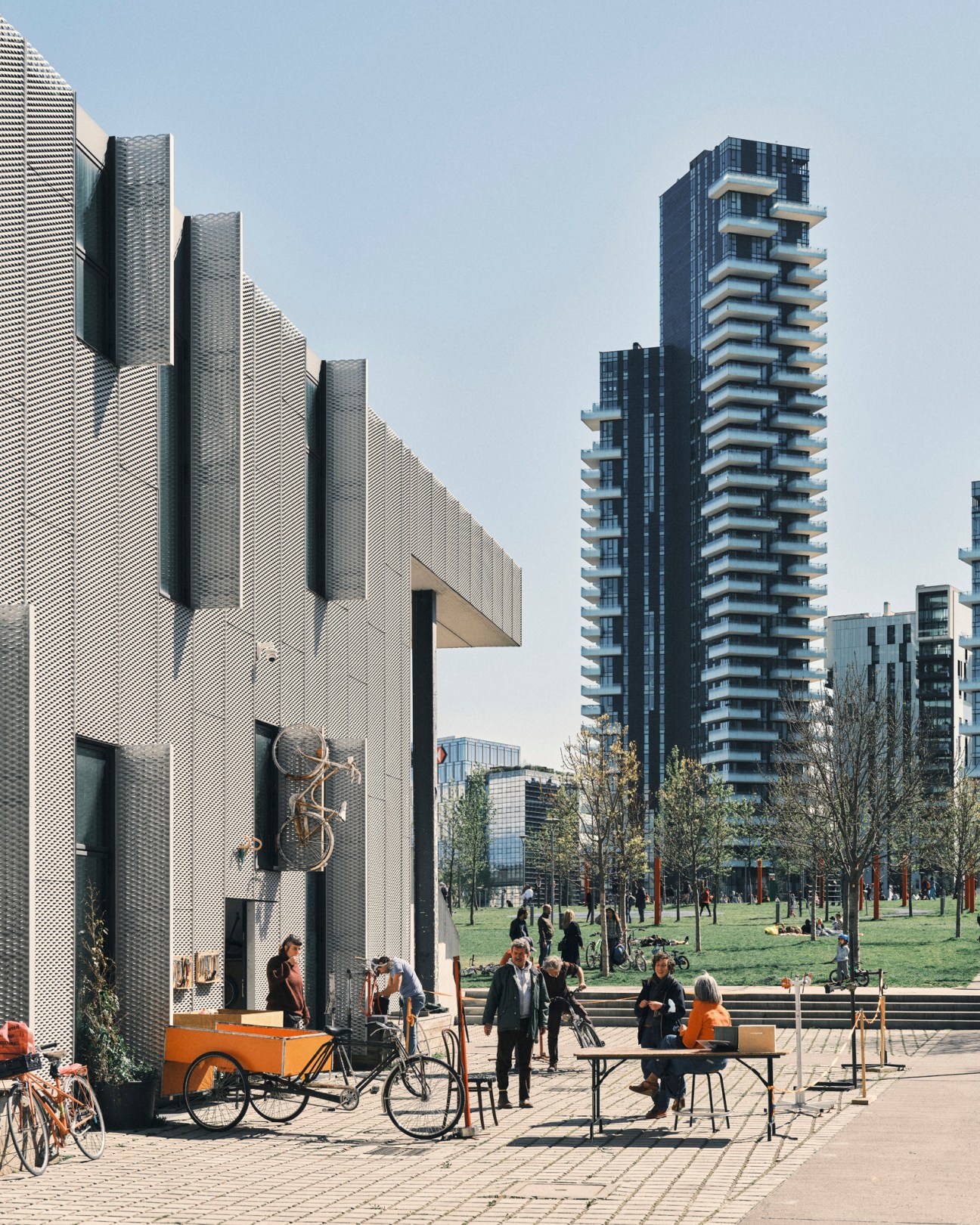


Sitting at an outdoor table in the spring sunshine, Dell’Orto goes on to explain that Ciclofficina Stecca was in fact the first of its kind in Italy – one that is truly popolare or “of the people”. It’s built around the ideals of community, collaborative learning and shared knowledge rather than paying someone to do the work for you. The mantras here, repeated throughout the day that Monocle visits, are reuse, circular economy and saving resources. In other words, you don’t need the newest, shiniest bike when you may have a perfectly good one sitting at home gathering dust that’s simply in need of a tune-up. And even if you thought your ride was ready for the scrapheap, maybe a part of it can contribute to a new bicycle. Here, bike parts are either salvaged freebies or new ones sold at cost price. But Ciclofficina Stecca at least has the bare bones of a business model. The table Dell’Orto is sitting at serves as a station for checking and issuing membership cards. Anyone who wants to come and use the association’s services needs to pay a token annual fee of €10. Although one gets the sense that bookkeeping may not be its forte, the non-profit association looks to generate funds in other ways, such as through donations from mechanics’ courses and an auction of some of the best bikes that have been given to it. Dell’Orto says that although the rent Stecca pays the city is discounted, it remains expensive. Although Ciclofficina Stecca now occupies a space in a building that has been nicknamed “The Grater” due to its latticed metal façade, the workshop actually has anti-establishment roots. The seeds of the association were planted 20 years ago when the Critical Mass bike-activism group first came to Milan, it has operated out of several occupied buildings in the past. And while Ciclofficina Stecca, like the shifting Isola neighbourhood around it, may have become more mainstream, the old timers here are still attached to the original ideals. “If you think about mobility, you’re being political,” says 66-year-old volunteer Adriano, who doesn’t want to give his last name. He has been nicknamed l’Orco (“the Ogre”) by his peers anyway due to his dishevelled look.

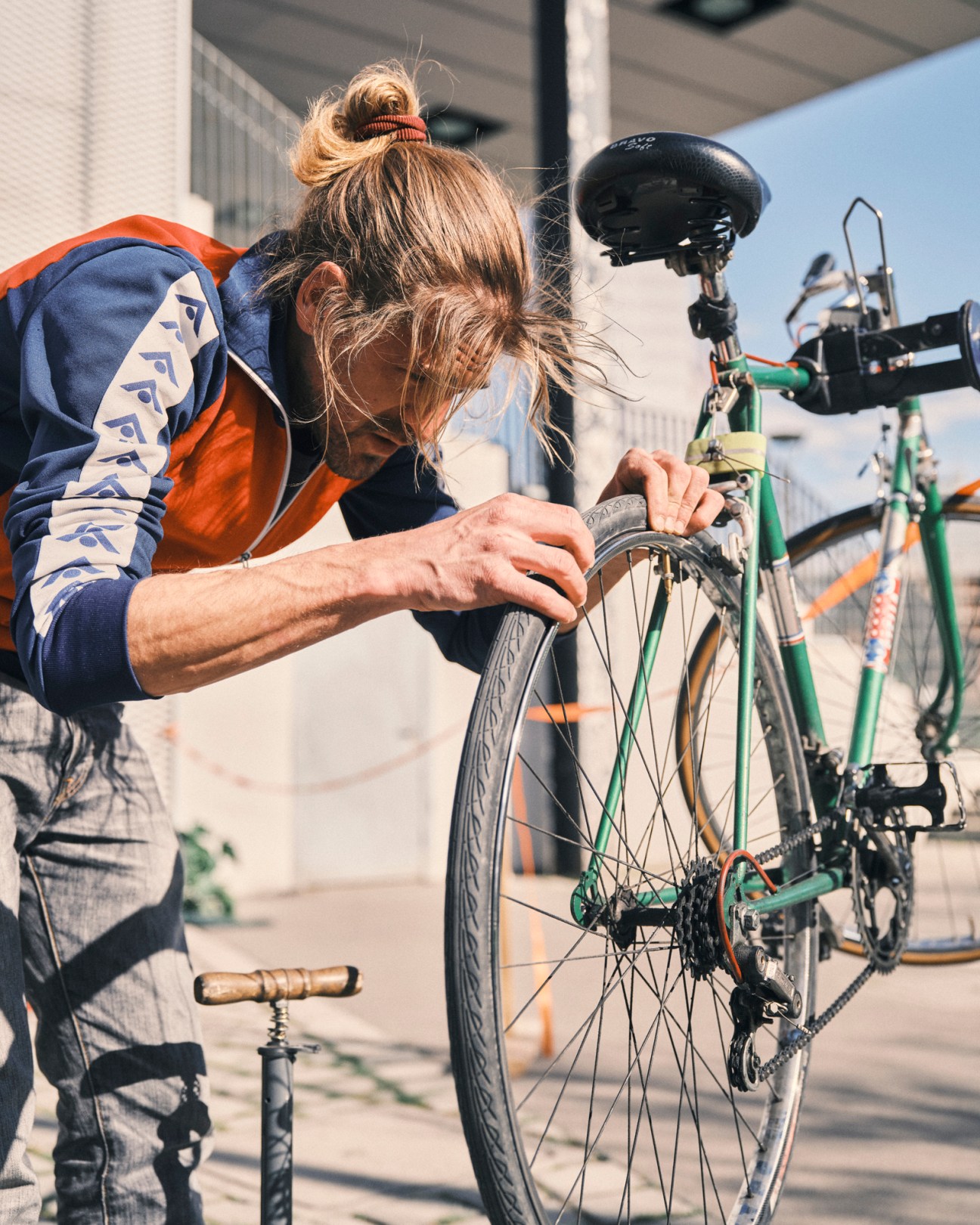
Sporting sunglasses and a moustache, 25-year-old Hungarian Nagy Hunor is eyeing up his orange Cinelli bike that he’s preparing for a race in eastern Milan the following day. During the week he works for a 3D printing company but on Saturdays he is often here, tweaking his ride and helping others. He first heard about Ciclofficina Stecca through someone he met on a riding holiday in Puglia. “It’s a cool social place,” he says. “I like the idea: we’re not fixing directly but showing people how they can do it themselves in the future.”
What makes Ciclofficina Stecca special is the cross-section of society that it attracts. Today there’s a middle- aged couple working on their vintage red Tarocco short tandem. Nearby, Loris Garda is learning how to clean his bike. And on the edge of the outdoor space, which looks out onto Milan’s Biblioteca degli Alberi park, a food-app delivery driver has ambled over for a chat. Later, a burly gentleman by the name of German will turn up to collect a bike made from one half of an old frame (the saveable part following an accident) grafted onto a new metal structure that has transformed it into a cargo bike.
As with all of Ciclofficina Stecca’s projects, the cargo bike was a collaborative effort – in this case between German and the association’s president Rocco Guarna, who has been helming operations (not that there’s much of a hierarchy) for six years. Dressed in an orange boiler suit adorned with the words “Rocco solders the world” – a reference to both his blog and his passion for joining bits of metal – he’s described by many as the best mechanic and the creative force behind Ciclofficina Stecca. In the middle of the workshop, which is dominated by tools and spare parts, is one of his contraptions: what looks like an exercise bike with its back wheel set perpendicular to the norm so that cycling it makes you go around in circles. Fittingly, it has been christened “la Vomitella”. “I always liked taking things apart, putting them back together and inventing new things,” says Guarna, grinning. “The Ciclofficina is the right place for me.”
In a city that has become infinitely more cycle-friendly in the past few years, this place may just be its unsung hero, breeding a new crop of cycling enthusiasts and two-wheel mobility campaigners.
piubici.org
Lined up
It’s mid-afternoon at Tottenham Court Road, one of London Underground’s busiest stations. Young mothers and school-uniformed teenagers meander across the main concourse while the busked strains of Johann Strauss II’s The Blue Danube waft from the corridor that leads from the Central line. Meanwhile, past concertinaed builders’ gates, down an escalator and deep in the bowels of the station, Andy Byford stands on an otherwise empty platform admiring the architecture. “Doesn’t it feel like you’re in 2001: A Space Odyssey?” London’s transport commissioner asks. It does but hopefully without the killer machines.
The platform is pin-drop quiet save for the ghostly coming and going of trains. They’re empty not because of any pandemic restrictions but because the Elizabeth line hasn’t opened yet. Unlike the test trains arriving every five minutes during our interview, the new railway is late – almost four years late, to be precise – and almost €5bn over budget. But delays to the line, which will appear on the network’s maps in what Transport for London (TFL) calls “a bold and assurant purple”, might have been worse without the influence of a man who relishes a challenge.
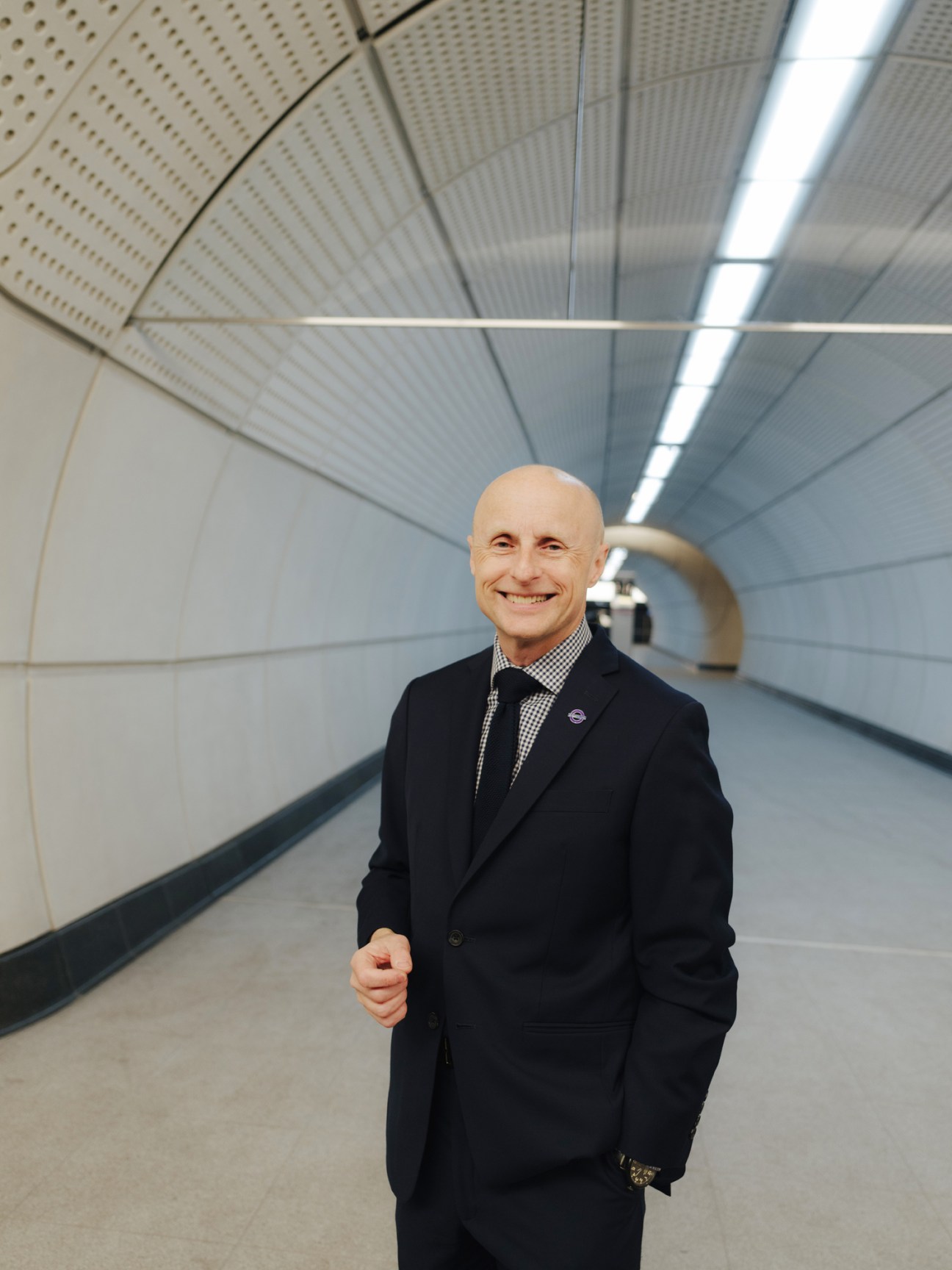
“You could go somewhere like Hong Kong or Singapore but there’s not a lot of room to get better,” says Byford. “I’ve made a bit of a niche of going into transit organisations that, for one reason or another, are in trouble,” he adds, with the caveat that he hasn’t inherited as big a mess in London as elsewhere. Even so, aside from the Elizabeth line (which he says has been hamstrung by politically squeezed budgets and timelines), the challenges facing London’s transit system are historic and potentially existential – and it requires more than €700m a month to function. London’s mayor, Sadiq Khan, hired Byford in May 2020, deep into the UK’s first coronavirus lockdown. The city’s network relies on ridership fees for 72 per cent of its revenue – about double that of New York and Paris – and while Byford’s predecessor had built a sizeable war chest of more than three months’ operating costs, tfl blew through it to pay staff when pandemic ridership plunged by 95 per cent. The last time so few people rode the Tube, men wore top hats and the underground trains belched coal smoke. Even after almost €6bn in government bailouts, ridership – and therefore operating revenues – might not fully recover until at least 2023, says Byford.
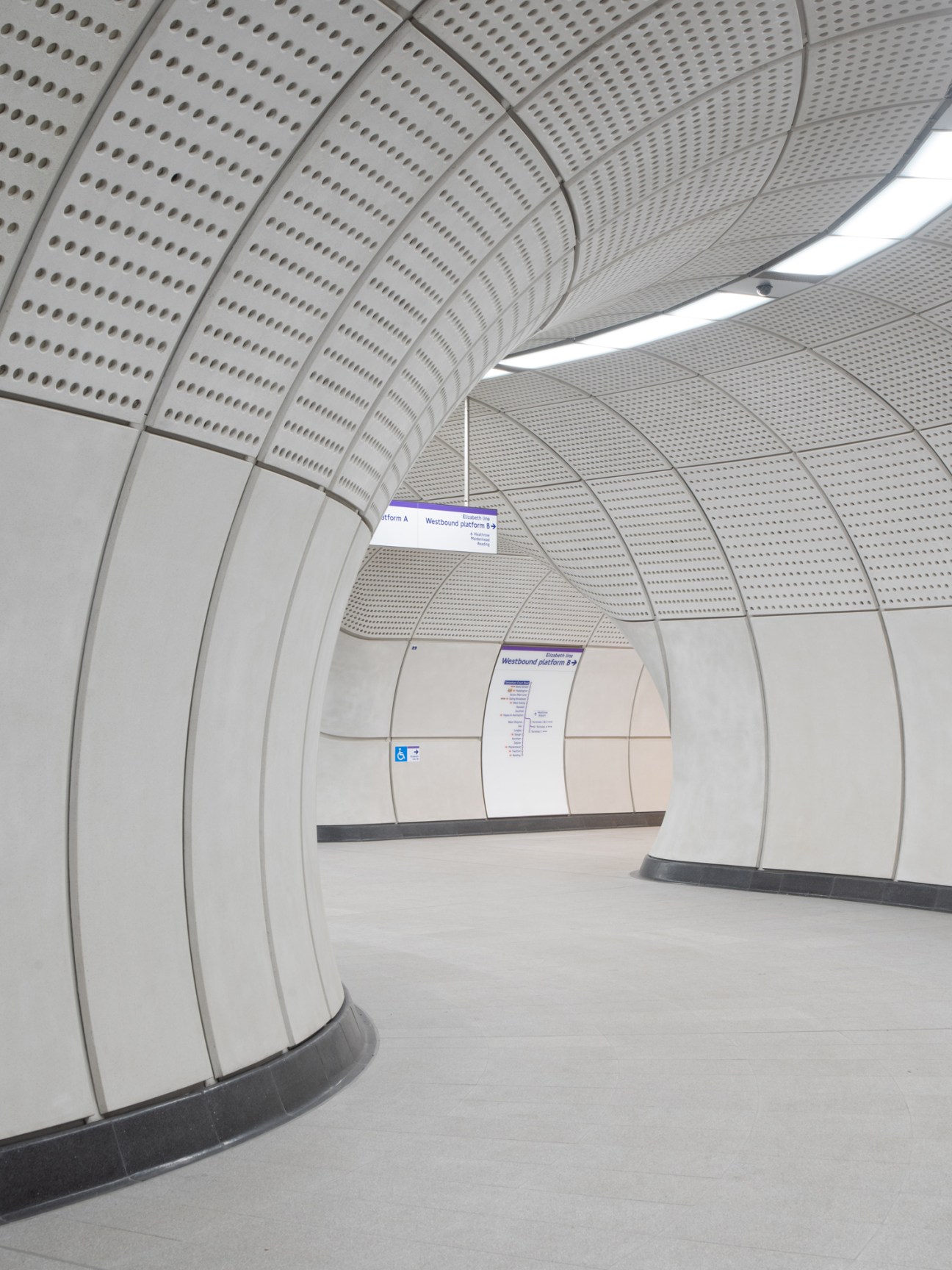
Transit the Byford way
Bring staff with you
“If they’re not happy that will come across. I want them to know I have their back, despite the inherent suspicion of management.”
Free them up
He shields Crossrail CEO Mark Wild from scrutiny so he can focus on opening the line.
Know your experts
He coaxed construction expert Mike Dunham (a Toronto colleague) out of retirement. “We’ve commissioned 11 stations in a year, which is unheard of.”
With the UK government low on patience and prioritising funding areas other than London as part of its “levelling up” ambitions, negotiations have stalled. But without further funding to keep western Europe’s biggest city moving, “We would have to start closing assets,” says Byford. “That would lead to a downward spiral of worsening service, leading to lower ridership, lower revenues – so cuts beget cuts.”
Still, there’s more light at the end of the tunnel when it comes to the Elizabeth line. The line (known for decades to Londoners as Crossrail) will cover about 100km and, at a stroke, increase London’s rail capacity by 10 per cent. That’s no mean feat considering that the project has had to navigate an ancient megacity whose excavation has unearthed jawbones of mammoths and Roman hats.
Byford is used to challenging work. He got his start in London and then spent time as the Sydney transit network’s operations chief, before taking a similar job in Toronto. He had only been there a few months when he was made head of the city’s transit organisation during the chaotic mayoral term of the late Rob Ford. Byford’s success in modernising Toronto’s transit – he improved customer service and updated signalling – turned heads south of the border. In late 2017, he was asked to run New York’s Metropolitan Transit Authority. He initially did well, speeding up trains and making stations more accessible, so New Yorkers gave Byford – a polite Englishman from Plymouth – the nickname “Train Daddy”. A New Yorker profile followed, plus an appearance on cbs News’s 60 Minutes in 2018. Not everyone was happy. The attention irked now-disgraced former governor Andrew Cuomo, Byford’s ultimate boss, and, “I had my wings clipped partly because of that,” he says. He eventually resigned in 2020, citing micromanagement and a reduced role.
But the US left its mark on Byford. New York also taught him to manage his superiors, not just his employees. Having come full circle, he’s now standing on Tottenham Court Road’s 250 metre-long new platform, which is more than double the length of a typical Tube concourse. Like his grandfather, a bus driver, and his father, the commissioner’s career began on London transport as foreman at Regent’s Park Tube station. His predecessor in that role “was this distant, scary being that you might see getting into a limo”.
Nowadays, Byford makes a point of chatting with every member of staff he passes; those studied manners are part of his management style. Byford’s leadership in customer and frontline-worker satisfaction has sparked a culture shift in the transit world, says Mohamed Mezghani, secretary-general of the International Association of Public Transport. “In most cities, public transport is seen as an engineering service, dominated by engineers,” he says. “Andy uses engineering as an answer to people’s expectations.”
By the time it finally opens to passengers, the Elizabeth line will have cost taxpayers €22bn. Does London even need it? “Were it proposed now, then the business case would look somewhat different,” says Byford. “But should we regret having built it? Absolutely not.” He expects the new line to safeguard London’s appeal. “You can go from Canary Wharf to Heathrow in 40 minutes,” he adds. “That is a game-changer. Try going from Manhattan to LaGuardia [Airport] in that time,” he says, as a train slips in so quietly that he doesn’t raise his voice. “I give you the Elizabeth line.”
Eventually, more people will return to London’s transit system. And when tfl’s finances recover, shelved plans might be dusted off. For now, though, summer is near and so is the opening of the Elizabeth line – “the proudest moment” of Byford’s career.