Issues
Business
Fashion
Paris
Waxing lyrical
The bustling, multicultural neighbourhood of Château Rouge in Paris’s 18th arrondissement – best known for its shops catering to the city’s African community – isn’t where you’d expect to find an outward-looking clothing and lifestyle brand. But for 32-year-old entrepreneur Youssouf Fofana, a child of Senegalese immigrants, reframing the conversation is what Maison Château Rouge was founded to do.
“The idea was always to showcase a different urban Parisian identity from what people usually see in mainstream media and fashion, as well as to highlight the cultural richness of a community that has often been looked down upon,” says Fofana, who co-founded the business with his brother, Mamadou. To that end, Maison Château Rouge’s clothing range combines original, youthful streetwear designs with bold, African wax fabrics to create what Fofana likes to call a distinctly Parisian label “with an African soul”.
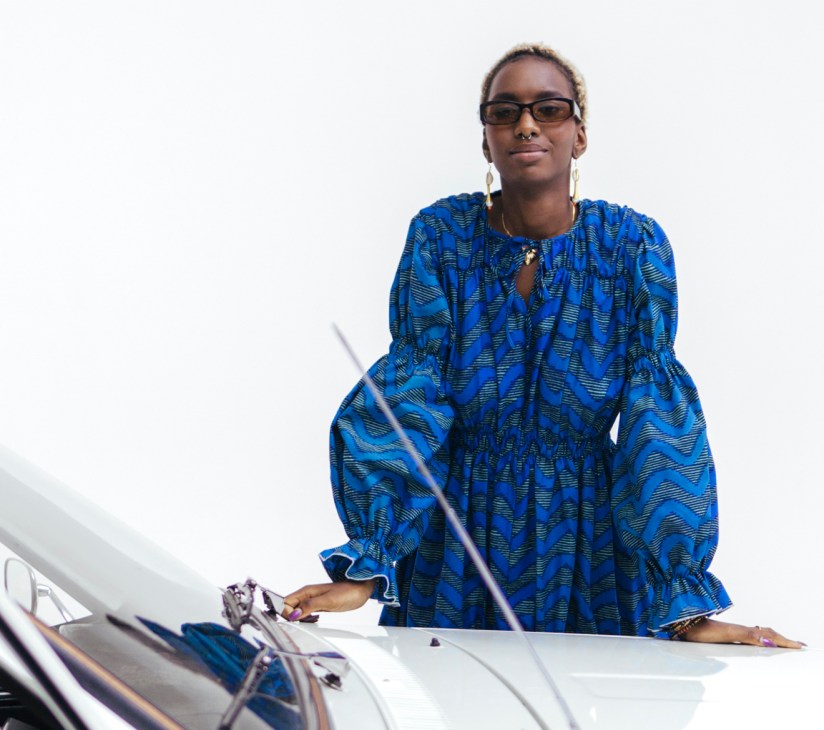
In a city whose fashion has often been built on monochrome palettes, this blend has attracted an eclectic client base, both at home and abroad. Maison Château Rouge’s production has expanded from an initial run of 100 T-shirts, sold on social media in 2015, to more than 8,000 items a year, distributed to 14 different countries. It’s a formula that has also yielded lucrative partnerships with labels such as Nike and French retail chain Monoprix; the latter has helped to triple Maison Château Rouge’s in-store sales. The company’s annual turnover has increased fivefold since it began operations to more than €850,000 and is expected to surpass €1m this year.
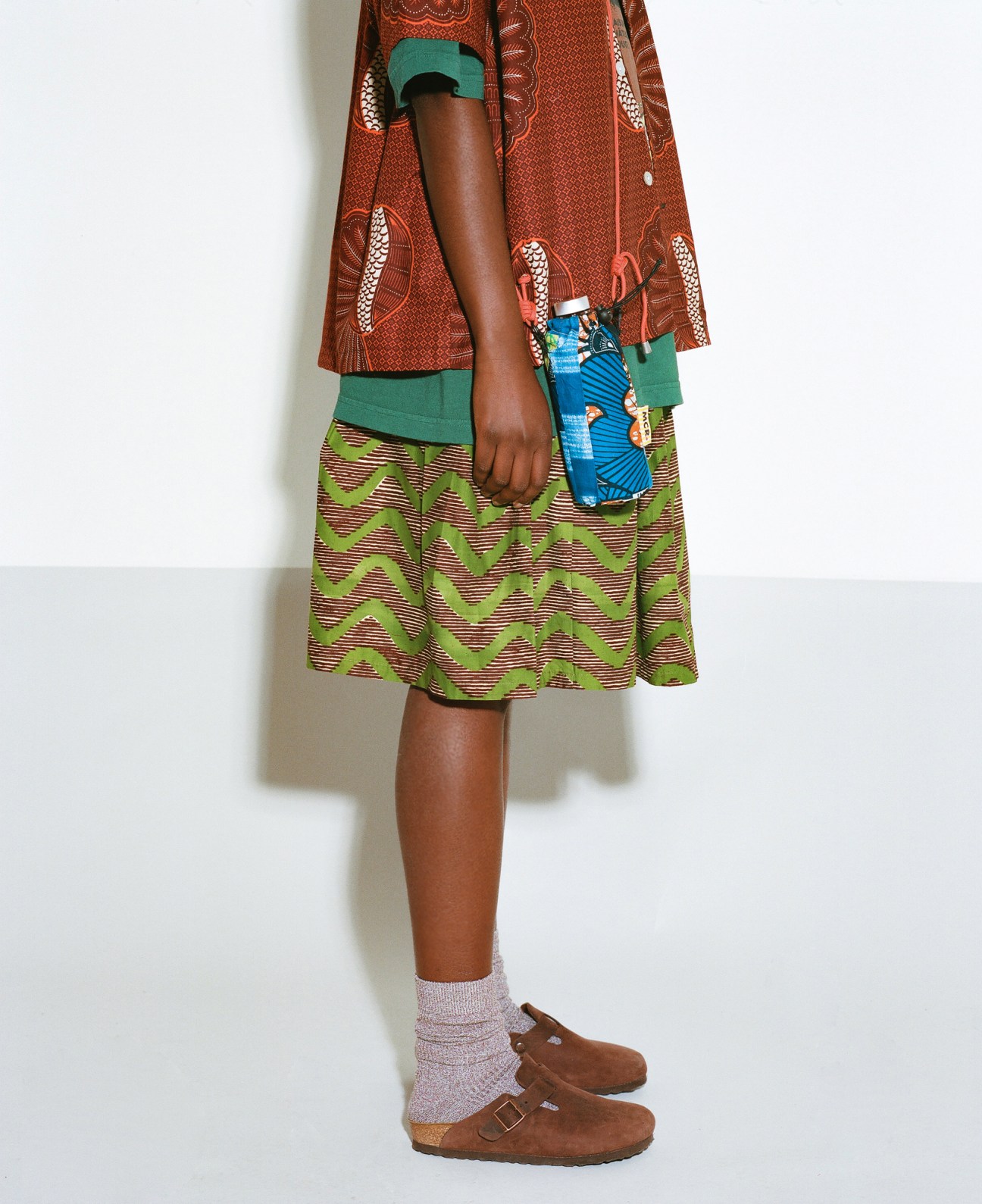
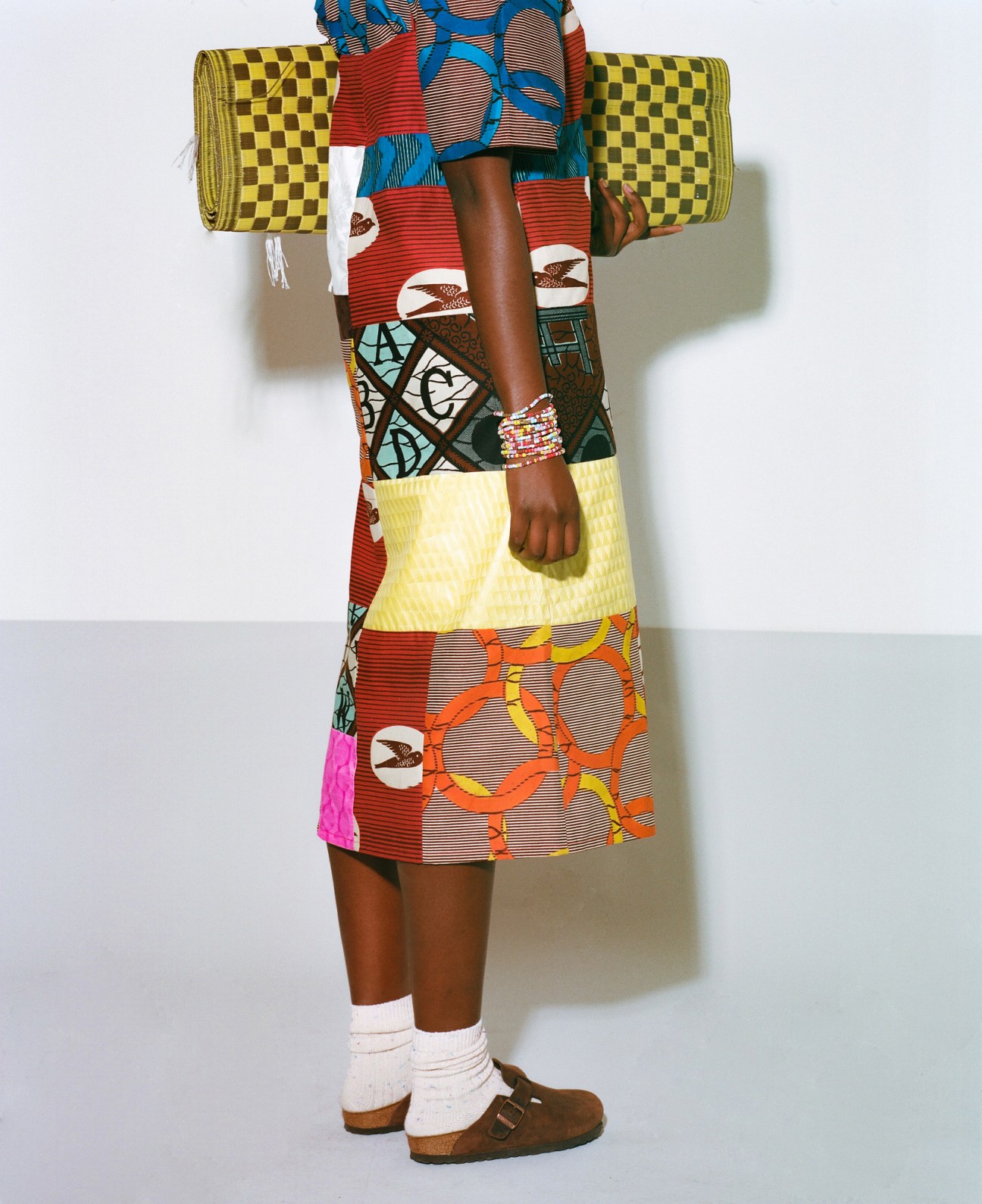
Despite the label’s rapid rise, it has stayed true to its roots, with most of the wax fabrics that form the basis of its designs sourced from independent vendors within Château Rouge. “For us, it’s important that the whole chain of production is as authentic as possible and that we also bring value to this neighbourhood more broadly,” says Fofana. Maison Château Rouge has social enterprise at its core. It works in tandem with Les Oiseaux Migrateurs (The Migratory Birds), an association that the Fofana brothers founded in 2014 to link manufacturers and artisans in Africa with European markets, fostering new and more empowering connections between the continent and its ever-expanding diaspora.
“The primary objective of everything that we do remains to elevate and valorise African culture,” says Fofana. It’s not just about selling a product, he adds, but promoting an “African way of life” that both represents and inspires a new generation of Parisians.
maisonchateaurouge.com
Stationery
UK
Q&A
Taymoor Atighetchi
London, UK
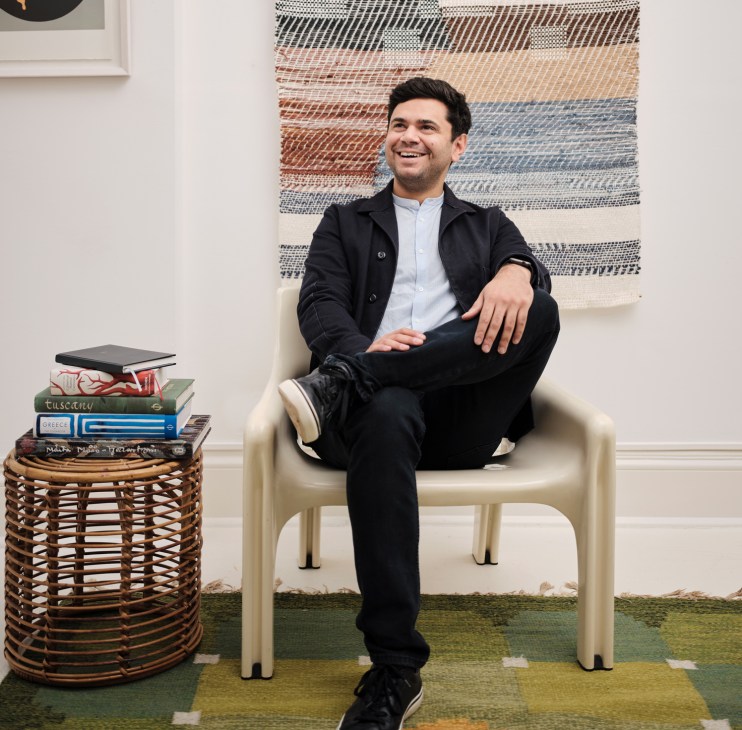
Papier works with artists and brands to make personalised journals and invitations cards, sold directly to the consumer. The company recently raised €45.5m in additional funding to expand. We talk to founder and CEO Taymoor Atighetchi about what’s next for the London-based stationer.
What are these funds for?
We’ve opened an office in New York where some of our operations and marketing teams will be. We’ll be hiring locally. Most people know Papier for our paper-based products. We’re now expanding into everything from desk storage to writing utensils.
Who are your customers?
If you’re someone who takes notes with pen and paper, you are a “paper person” and you’re a Papier customer. If you believe in the impact of sending a handwritten card, you are our customer. There are millions of people who write a journal because that’s how they switch off. Younger generations have been brought up in a world that is dominated by digital; the only thing that they want is to detox. That, I think, is driving a resurgence in analogue products.
Are you sustainable?
We use paper from sustainable forests that are expanded at the rate of a couple of football pitches a day. Also, we only produce products at the point where the customer orders them, which means that we have very little waste.
Images: Otman Qrita, Liz Seabrook, Yagooz
Inside Russia Today
An anonymous reporter recalls their experience working for Vladimir Putin’s propaganda machine.
When I joined Kremlin-funded broadcaster RT (then called Russia Today) in its New York bureau, I had almost no journalistic experience. I did have a conviction to fight injustice. I wasn’t alone in this regard. The newsroom was full of impressionable young people eager for a job with a decent salary and perhaps the opportunity to travel.
Our relationship quickly became a marriage of convenience. We knew that Russia wasn’t a progressive state but it had enough of a gripe with the West that they were happy to amplify radical voices like mine. For me, this was an avenue to reach more people. I jokingly called RT “Revolutionary Television”.
I became a producer, and found that huge effort went into finding “clickbait” stories. According to my boss, people had attention spans of five seconds, so we had to hook them in with shocking images. For every serious story I worked on, I covered six or seven micro-penis pageants (yes, that’s a thing), alien worshippers or baby pandas. It seemed obvious to me what was going on: people would be snared by the silly stories, then force-fed political content.

These political stories offered Russia’s perspective on global affairs. This meant covering far-right European parties that represented the opposite of my own politics. When asked to cover the 2014 European elections in the UK, I spent three weeks following Nigel Farage, leader of the Brexit-supporting United Kingdom Independence Party. There were also times when my colleagues claimed that they were asked to “create” stories. One who had been in Crimea before its annexation in 2014 was told by his manager to “translate the signs the pro-Russian protesters are holding into English”. Confused, he asked what was meant by this. “Well, if you can get some more posterboards and write them in English, it would look good on camera.”
“During four years at RT, I learned a lot about how to be a journalist but I learned more about how not to be one”
These “suggestions” were made in an environment built around intimidation. Most people were so nervous they barely spoke to each other. On several occasions, I was awoken at 03.00 by my boss phoning me. I would be quizzed about why I couldn’t get to an airport that was an hour away for a flight that left in two hours. I was apparently urgently needed somewhere and my inability to get there was compromising our entire operation.
Then there was feedback. If your work was not judged as up to par, a normal criticism session with editors – almost all of whom were Russians with years of experience in state media – could drive people to lose every last bit of remaining confidence. Many left not only RT but journalism altogether. I remember the most generous feedback that I ever received: “You’re still pretty bad, honestly – but you’re better than most of the others.”
During four years at RT, I learned a lot about how to be a journalist but I learned more about how not to be one. Even before the invasion of Ukraine, my time there had become a black mark on my CV, prohibiting me from moving to most other outlets. Today, on top of that, I feel ashamed. There were aspects of the way it was run that were sinister but I don’t believe it was a sophisticated propaganda machine, more a Potemkin one. Positions and stories were decided on the hoof; my colleagues and I had to run around trying to make sense of them or suffer a tongue-lashing from those petrified of their superiors.
And now, in Europe at least, RT is no more: its broadcast licences mostly revoked due to its role in spreading Putin’s propaganda. I disagree with this ban, believing it runs counter to the tenets of free speech. That said, it’s unlikely that the network will be much missed, except by the organisers of micro-penis pageants.
Soft power icon
Margarita Forés
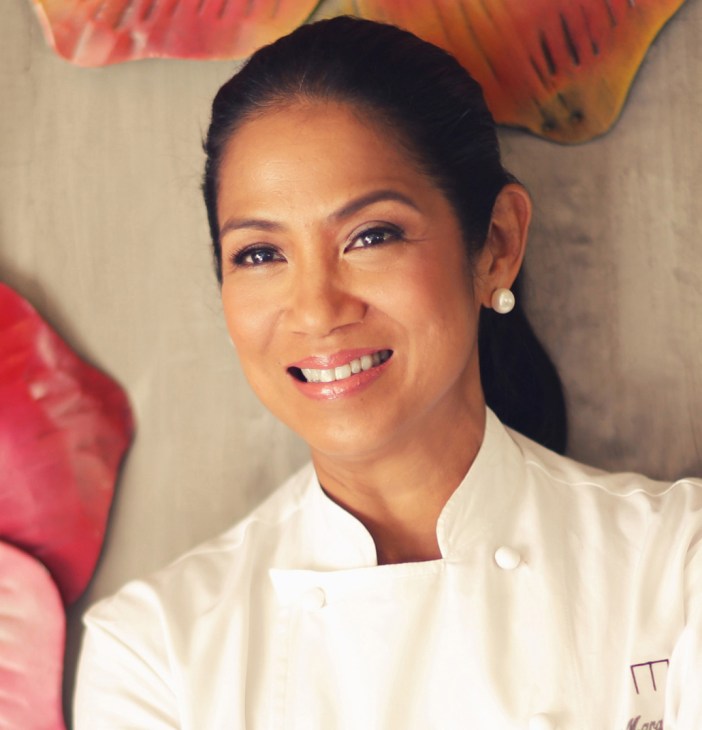
Few words garner as big an eyeroll in the culinary world as “fusion” but Margarita Forés is a legendary proponent of the hybrid menu and, as such, is a soft-power icon twice over. Her achievements are lauded in both her native Philippines and Italy, whose cuisine she has celebrated during her 35-year career. She heads up several restaurants, including 16 outposts of the popular caffè-paninoteca Cibo, as well as a catering company that has tingled the taste buds of Barack Obama, Prince Albert of Monaco and Emperor Akihito.
Jappy Afzelius, executive chef at Manhattan restaurant Tsismis, says that she has “surpassed cultural boundaries through her cooking”. At her restaurant Grace Park in Manila, she makes Italian dishes with ingredients from the Philippines.
It was in New York, where her family moved after fleeing the dictatorship of Ferdinand Marcos – whose son Ferdinand “Bongbong” Marcos Jr is the frontrunner in presidential elections on 9 May – that she was introduced to Italian cooking. Choosing home cooking over cookery school, she received instruction from hallowed signoras in Florence, Milan and Rome.
Such is her connection to both cultures that she was named Asia’s best female chef in 2016 and two years later became an honorary knight of the Ordine della Stella d’Italia, which rewards those who have promoted relations between Italy and other countries.
Forés has created dishes greater than the sum of their parts and shown how food can bring cultures together.
Politics
Winds of change
Italy
Despite Italy’s sparkling image abroad (the country took top spot in Monocle’s latest Soft Power Survey), the sight of dozens of male senators cheering as they shot down an anti-homophobia law wasn’t exactly a great look in 2021.
“The opposite of a good one,” says Democratic Party MP Alessandro Zan (pictured), referring to a clamorous October vote that saw the rejection of proposed legislation tackling lgbtq1 discrimination. But Zan, who is gay, is not giving up, with discussion of the bill restarting in parliament on 27 April after a six-month embargo.
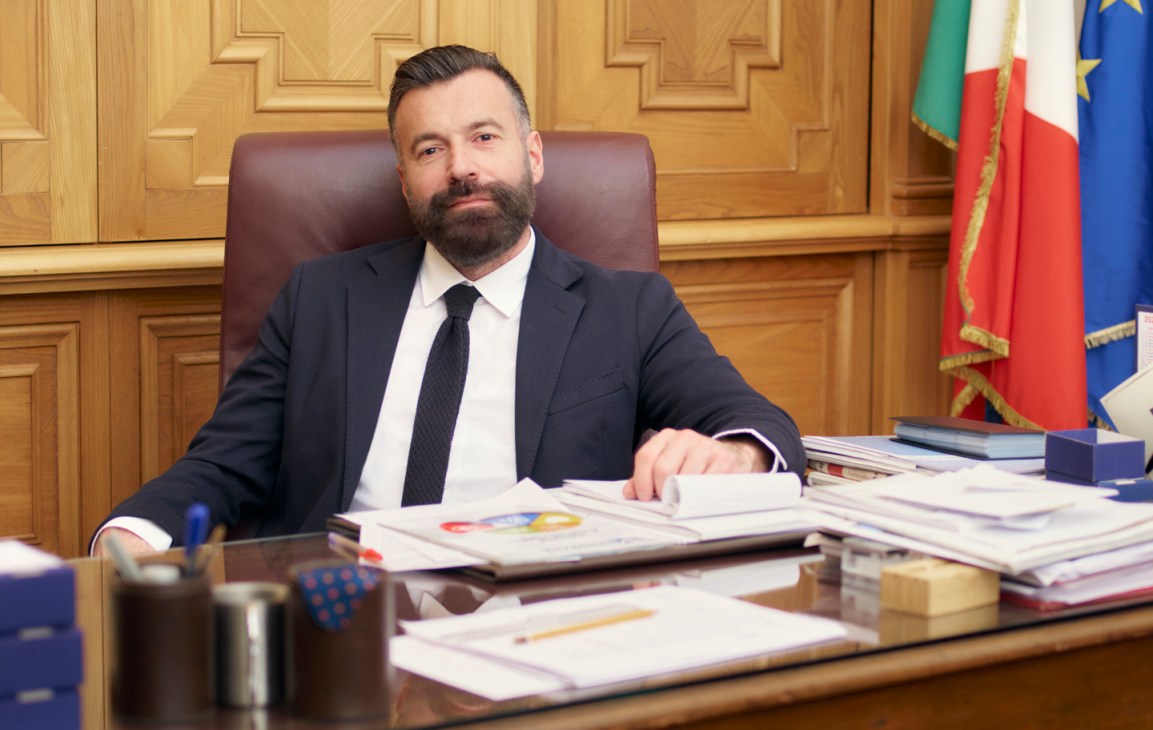
The campaign for ddl Zan, as the law is known, began in 2020 and was approved by the lower house. “It got through with a big majority,” says Zan, as we chat in his elegant parliamentary office, located in the grand Palazzo Montecitorio that dominates the Renaissance rooftops of central Rome. His campaign had picked up momentum in 2020 and polls showed that most Italians backed the legislation. But in February 2021 came the most frequent spanner in the works for Italian politicians: a change of government. Zan explains that the Senate felt more empowered to block the law as the grand coalition government now included right-wing parties such as Matteo Salvini’s Lega.
“The senators we saw cheer are all cis-gender men of a certain age,” says Zan. “They have an outdated idea of Italian society,” referring to his colleagues in the upper house, in which members are elected only by voters aged 25 or over.
“I see those cheering senators like people who try to stop the wind with their hands. You just postponed it; you can’t stop it”
Zan, who is 48, strikes an energetic and welcoming figure. He espouses a certain political tolerance as “there are sensitivities in parliament that represent those present in Italian society and mediation is part of democracy”. He is referring to traditional and religious elements in Catholic Italy and the fact that the Vatican lobbied senators to vote against Zan’s legislation.
But patience has its limits. “We will not go beyond what is the recognition of the dignity and rights of people,” says Zan. “We are talking about human lives and human stories.” According to Transgender Europe, a member-based international pressure group, between 2008 and 2021 Italy had the largest number of trans murders in western Europe.
But attitudes are changing rapidly in Italy, in no small measure thanks to Zan and his parliamentary team’s efforts. From fashion to pop and social media, Italian lgbtq1 communities are becoming more visible and outspoken by the day. Zan, meanwhile, is pressing ahead, on tour at ddl Zan “agorà” town hall meetings in Milan, Florence, Taranto, Palermo and his hometown of Padua to rally support should the bill make it to the Senate again.
“I see those cheering senators like people who try to stop the wind with their hands,” says Zan. “You just postponed it; you can’t stop it.”
Diplomatic spat
Office space
Who vs who: Ghana vs Bulgaria
What it’s about: A property dispute. In 2017 the Bulgarian embassy on Kakramadu Road in Accra, Ghana’s capital, was demolished by a private developer, whose goons allegedly also broke a bunch of Bulgaria’s stuff and roughed up the honorary consul. The row has now come to something of a head as Bulgaria’s latest ambassador, Yanko Yordanov, has sought a resolution: one excitable Ghanaian MP, Samuel Okudzeto Ablakwa, has spoken of fears that it could lead to a sundering of relations between the two countries and perhaps even to war.
What it’s really about: It is really, believe it or not, about a property dispute. Bulgaria holds a lease until 2033 on the contested site, where the developer has stepped up building work despite another recent instruction to desist. The underlying problem appears to be ambiguous and/or haphazardly enforced building regulations in Ghana. Incredibly, this is not the only such case. In 2020, Ghana’s president had to apologise after buildings in Nigeria’s high commission compound in Accra were knocked down in similar circumstances and the chargé d’affaires chased from the premises. Ghana is now paying for the rebuild.
Likely resolution: The Ghana-Bulgaria War of 2022 seems a pretty remote prospect, not least because Bulgaria, miffed though it may well be, can probably see that the dispatch of an expeditionary force to Accra would be something of an over-reaction. A diplomatic agreement well short of bloodshed seems likeliest, though cement may inevitably be spilt.
Defence
Stuff of legend
Ukraine
In the basket: Baykar Bayraktar tb2 drones
Who’s buying: Ukraine
Who’s selling: Turkey
Price: About $1m to $2m (€900,000 to €1.8m) per unit
Delivery date: Ongoing

Ukraine began buying Bayraktar tb2 drones from Turkey in 2019 and first used one in combat in late 2021 to destroy a separatist militia position in the Donbas. Since Russia invaded Ukraine in February, the Bayraktar has enjoyed notable success thwarting the advance of Russia’s tanks and destroying its surface-to-air platforms. It has accordingly entered the mythology of Ukraine’s resistance: a folk song written in the drone’s honour was an online hit and a lemur pup born in Kyiv’s zoo in March was christened Bayraktar. It has been quite the ad campaign for the weapon, which is built by the family firm Baykar Defence (Bayraktar is, indeed, the family name). The drones are cheap and clearly effective. Even before their deployment by Ukraine, they had been ordered by Morocco, Pakistan, Iraq, Niger, Poland and Qatar, among others, and used in combat by Ethiopia, Azerbaijan and Libya. They won’t be the last.
The Comment
Elections
Magic number?
Colombia
Anastasia Moloney on former rebel Gustavo Petro’s third bid for Colombia’s presidency – and whether the region’s ‘Pink Tide’ will wash over the longtime US ally.

Even from afar, it’s easy to spot Gustavo Petro, the 62-year-old leftist frontrunner in Colombia’s May presidential election, when he is approaching. He tours the country in a caravan of bulletproof cars. At an election debate that Monocle attended, Petro was flanked by armed bodyguards carrying riot shields. The caution is understandable. In the 1980s, Petro belonged to guerrilla group m-19 and he is reviled by Colombia’s political and military establishment.
If a majority backs Petro (pictured), he would become the first left-wing president in a country that has long been the US’s closest ally in the region and had, until 2016, waged a 50-year war against leftist rebels. If none of the candidates, including conservative Federico “Fico” Gutiérrez, secures more than 50 per cent of the vote in the first round, there will be a two-person run-off on 19 June.
For months the former m-19 rebel, Bogotá mayor and opposition senator has crisscrossed the Andean mountains, addressing crowds in city squares and parks across Colombia, from northern coastal areas and eastern plains to central coffee-growing regions, southern rainforests and the often-ignored San Andrés Caribbean island. Speaking in slow, pronounced syllables, Petro rouses audiences with promises of “social transformation and justice”. “We need change,” says Jefferson Díaz, a 30-year-old who has struggled to find work amid a job shortage and is waving a flag bearing Petro’s face at a rally in downtown Bogotá. “There are no opportunities for young people to work or study.”
For many, Petro represents a shift in direction. Their demands for better healthcare and education came to the fore last year during weeks of violent protests against the unpopular conservative president Iván Duque. Come election night, millions will tune in to see whether the country becomes the latest example of Latin America’s “Pink Tide”, in which several leftist presidents have taken power, including Chile’s Gabriel Boric in March. Petro has twice made a bid for the presidency before. There’s good reason to believe that the third time’s the charm.
Image: Getty Images
The Agenda
Dispatch
Tbilisi
Lost souls
Alexis Self meets some of the many young Russians who have fled to the Georgian capital.
“It’s a special Russian feeling. You feel a bit empty and lonely, and you look out the window and there’s a lot of snow.” I’m sitting in the café of the Georgian Museum of Fine Arts in Tbilisi listening to a 24-year-old Youtuber explain the Russian soul. To be fair, Anna Vilenskaya isn’t your typical Youtuber: she makes humorous videos about classical music that have won her thousands of fans across the Russian-speaking world. Fearing that Vladimir Putin was about to declare martial law, and that her husband would be drafted, in early March she fled St Petersburg, travelling first to Istanbul and then here, to the Georgian capital, where she hopes to continue making videos that will “inspire my fans, especially those living in Ukraine”.
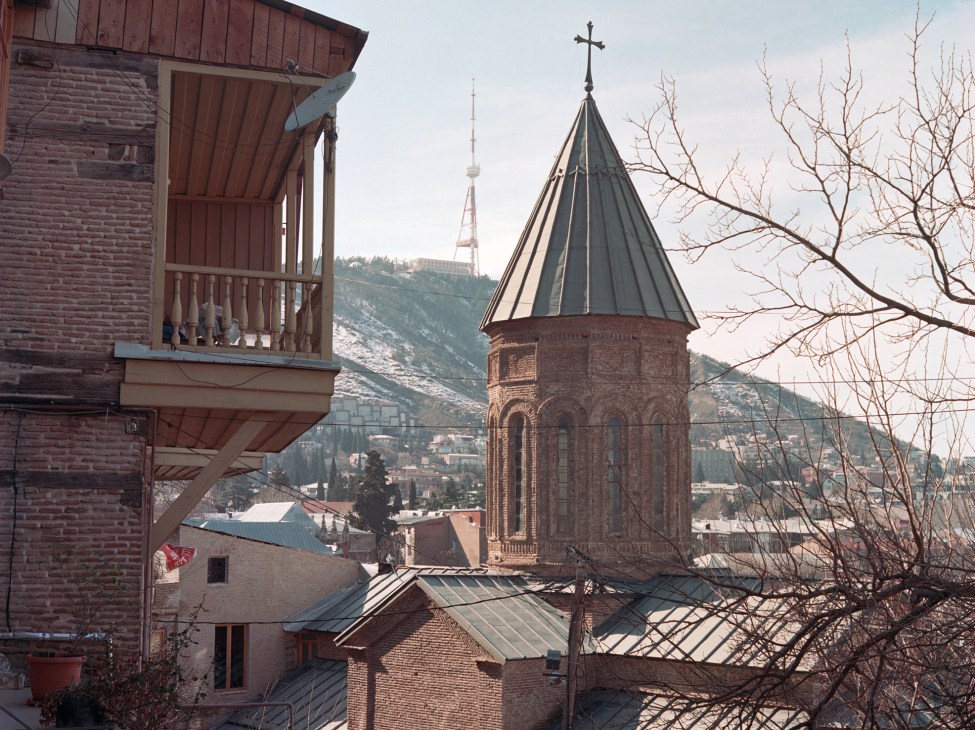
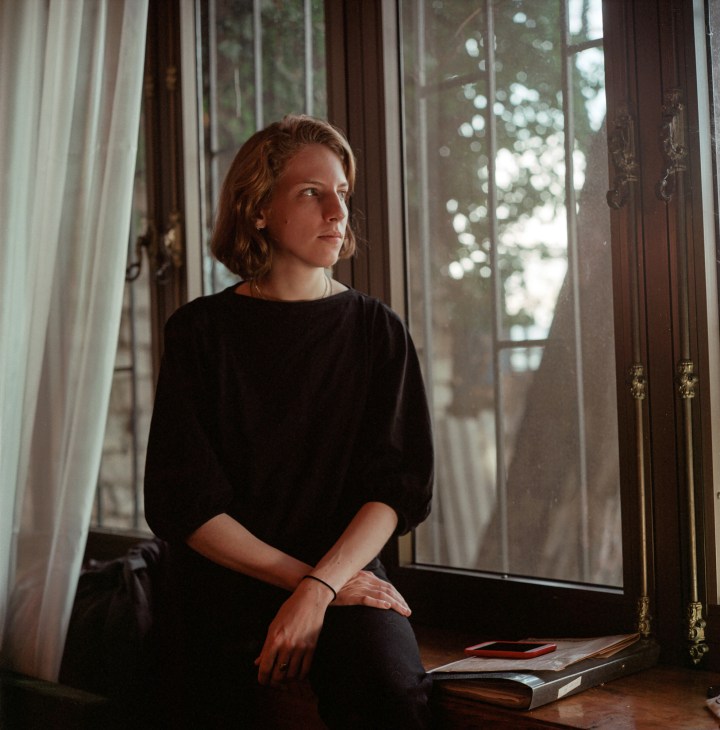
Vilenskaya is just one passenger on the philosophskiy parokhod or “philosophical steamship” – so called because many of its constituents are members of the intelligentsia – that has left Russia since the war began. Hundreds of thousands of them arrived in cities such as Istanbul, Yerevan and Tbilisi. In March, Georgia’s finance minister, Levan Davitashvili, said that about 30,000 Russian citizens had entered his country in the first two weeks of the war. Recent estimates put the figure at two or three times that amount. The world’s attention is, rightly, on Ukrainians fleeing the violence but Russia is also haemorrhaging souls. On 22 March I left a London reawakening to the colours of spring and landed in Tbilisi at 04.00 in a snowstorm. Slaloming into town, my taxi driver, Alex, joked that – along with pets, children and wads of hastily withdrawn dollars – the Russians had brought the weather with them. Some have received a welcome in tune with the frosty climate. “You have the war and the last war but also the price of everything – rent, food, even a taxi – is going up,” Tornike, another cabbie, told me. You don’t need a degree in economics to work out what happens when tens of thousands of affluent homeless people suddenly move to a city of 1.1 million.
Russians have been heckled in the street; while Bassiani, the techno-mecca nightclub that put Tbilisi on the hipster map, temporarily banned them from its hallowed dancefloors, introducing a stamp for entry that read “Russia is an occupier”. Putin’s war has made his countrymen pariahs across Europe but especially in Georgia, 20 per cent of which is still occupied by Moscow’s troops following the 2008 invasion. If they weren’t already feeling unloved, these new émigrés must make their way through streets daubed with anti-Russian graffiti (“fuck Russia” is a common one) and plastered with protest stickers (a white, blue and red pig with the word “occupier” on its back). All are trying to make sense of where they’ve come from and where their country is going to. Hence all this talk of soul.
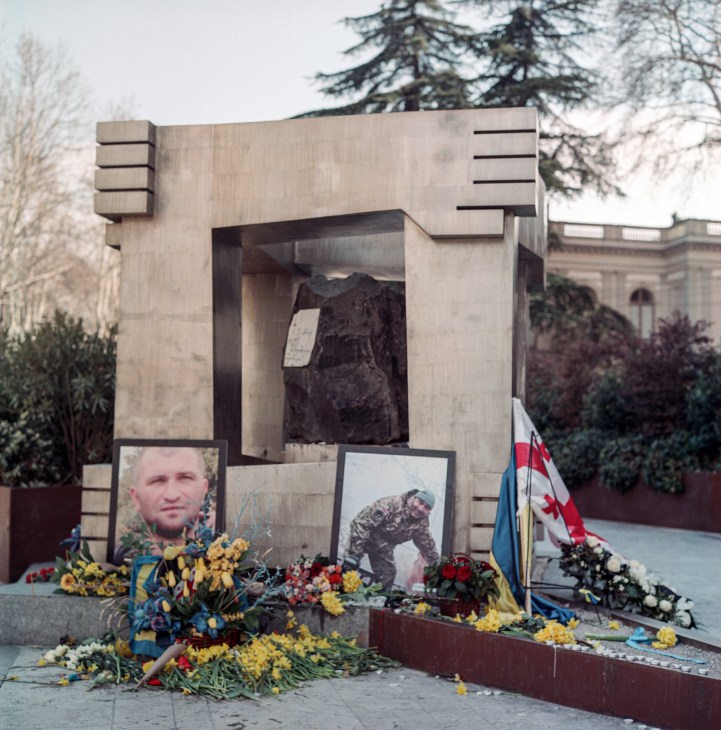
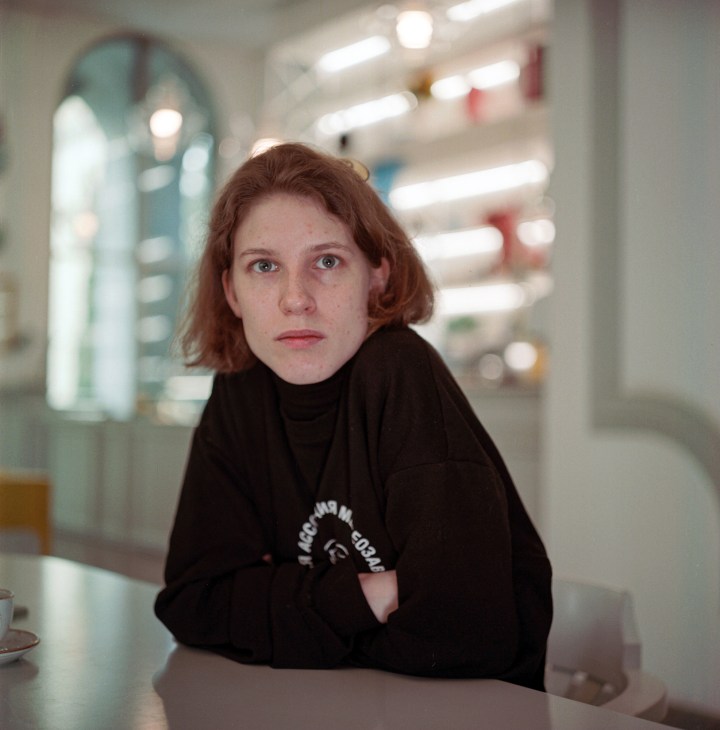
Or, more precisely, Russkaya Toska, a term familiar to every Russian, which Vilenskaya is trying to explain. Toska roughly translates as ennui or melancholy of a type particular to Russia. It is attributable to the country’s vast size, hostile weather and dark history. These interminable factors have been compounded by more than 20 years of Putin. Most of the Russians I meet in Tbilisi came of age in a country backsliding towards dictatorship, where people are “scared to ask police for directions”, special agents “search your house for literature like it’s drugs” and donos (snitching on your neighbours) is back in fashion.
For many, 24 February was the final straw. “I woke up at 05.00 because my phone was going crazy with messages and calls from friends saying it had begun,” 27-year-old artist Schwarz tells me. “After walking around Moscow in a daze, on 26 February I decided to leave.” Schwarz has been active in opposition circles for years and recently created a series of illustrations titled The Alphabet of Modern Russia, in which each Cyrillic letter is represented by an object ubiquitous in the country (“A” stands for avtozak: “paddy wagon”). Russia’s police state has recently taken on new dystopian proportions; using the word ‘war’ to describe what’s going on in Ukraine can now earn someone a 15-year prison sentence.
At the end of February, St Petersburg became a focal point for opposition protests against the war. This, as Vilenskaya told me, is partly due to its architecture: “There are lots of narrow lanes and courtyards for you to hide from the cosmonauts [police] in.” On Moscow’s grand boulevards, protestors didn’t even have a chance to make a stand before being arrested. V, a 30-year-old film-maker, who asked to remain anonymous, travelled to Moscow’s Pushkin Square on 27 February to attend an anti-war protest with her partner and a friend. As she stepped out of her taxi, wearing a mask printed with the words “No War”, all three were arrested. “They said we needed a permit to protest,” she says. “I guess in Russia, three’s a protest.” A few days later, V, her partner and a friend got into a car with their dogs and drove non-stop for three days until they reached Tbilisi. She feels guilty about leaving: “I still have the urge to run back and try to do more.” But, she concedes, “It was unclear where we could continue the fight – whether it was better to stay there getting arrested or try to change things from the outside.”
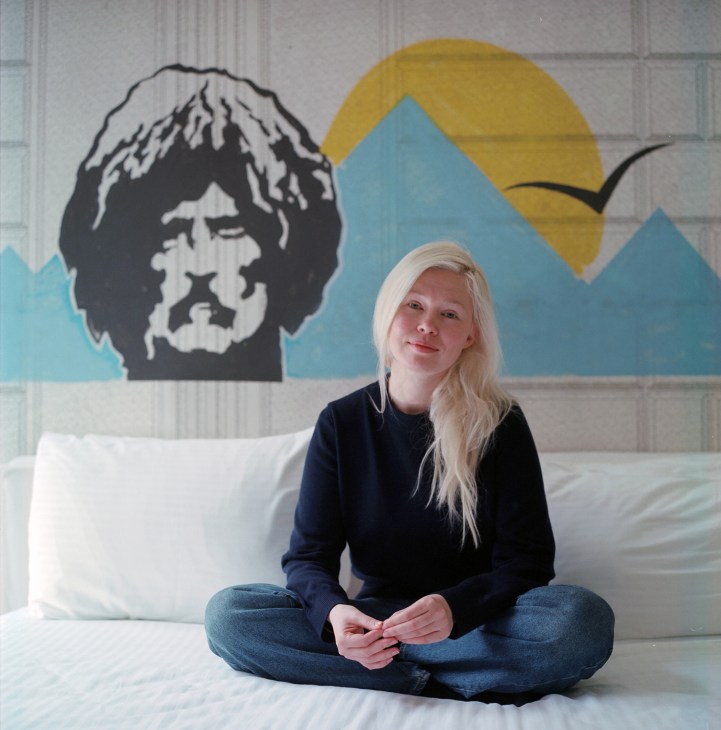
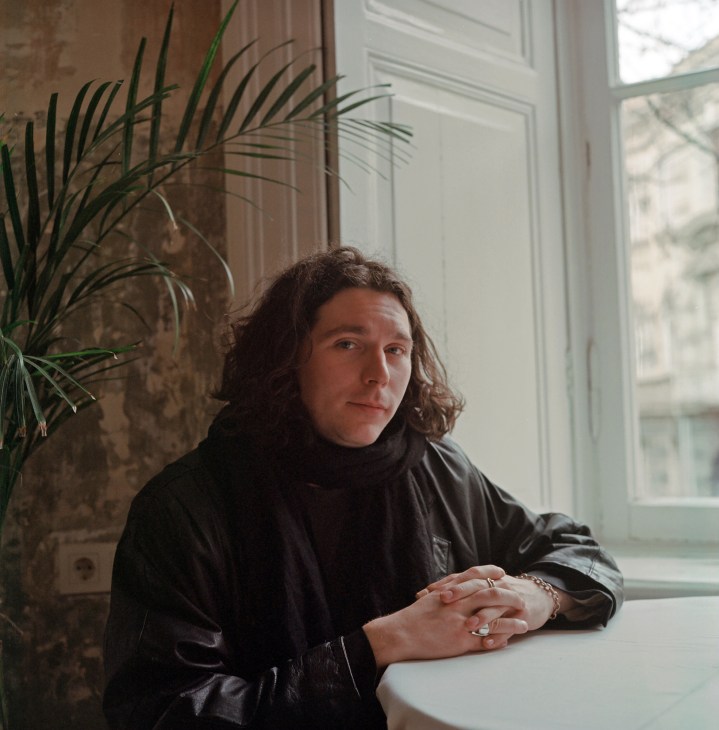
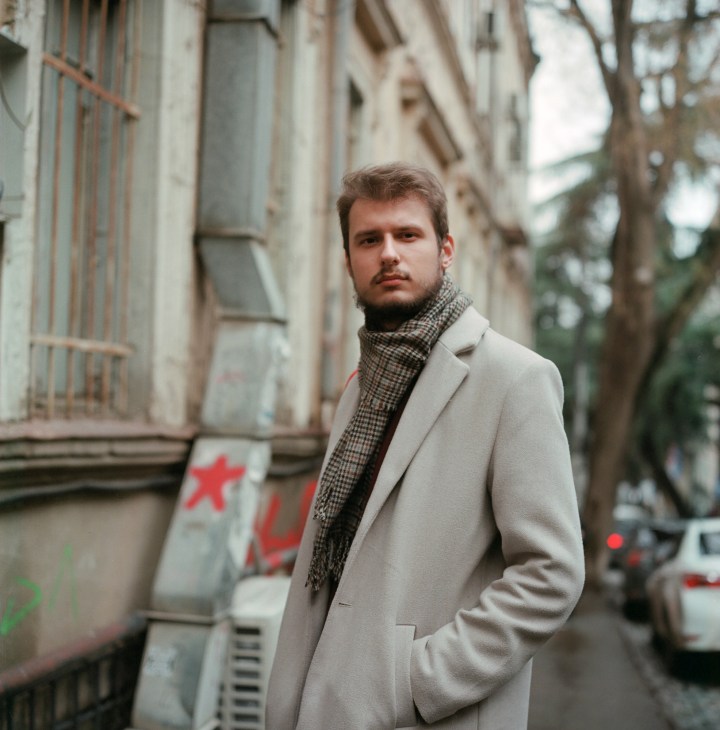
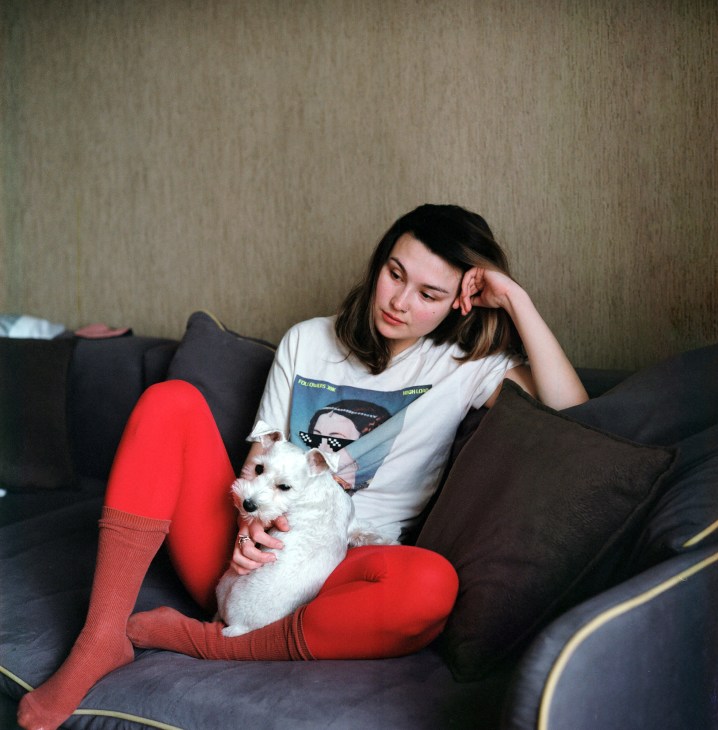
Mikhail Pletnev, a 20-year-old student at Moscow’s Academy of Choral Art, also found it difficult to express dissent. Since 2019 he helped to organise protests on the outskirts of the city, to show it wasn’t only affluent liberal Muscovites who were anti-Putin. When the war began, Pletnev organised a demonstration inside the academy but the police were called and he was arrested. It was then made clear to him that he would be expelled from the institution. “Most of my teachers and professors are against the war but they are afraid they will lose their jobs, so they didn’t say anything,” he says. “The head of the university is very pro-Putin; he even wanted to add a ‘Z’ to the school’s insignia.” It’s difficult not to associate the ubiquity of this ominous symbol, which has become indicative of pro-war sentiment due to its use by Russian forces in Ukraine, with an almost cartoonishly Orwellian state. Well, difficult for me at least.
In a restaurant with Talking Heads playing from the speakers, 25-year-old Denis Klimov, a producer from St Petersburg, shows me a photo that his friend sent him of a coffee cup that was bought from a Lukoil petrol station with a black “Z” printed on it. Klimov and three of his friends drove for six days with a white alsatian called Rus, bribing border guards in Abkhazia en route to Tbilisi. Why did they leave? “The first reason: not to fight.” They now live with seven other young Russians in a three-bedroom ground-floor apartment. On my last morning in Tbilisi, I walk up the steep slushy streets that fringe the Georgian capital to discover a familiar scene: young people sitting around, drinking coffee and working on laptops. They are full of coy vigour – especially when the camera comes out – and thinly veiled trauma.
Tolstoy’s toska-soaked masterpiece Anna Karenina begins, “Happy families are all alike; every unhappy family is unhappy in its own way.” But my Russian interlocutors all describe families unhappy in very similar ways. The war has entrenched the country’s already deep generational divide. Kseniia Shabalina, a 31-year-old creative director from Pskov, had to stop talking to her Ukrainian-born mother about the war. “My mother says, ‘The government in Kyiv is fascist but everything is OK because Russia will fix this,’” she says. There is a neologism for those who unwaveringly support the war: vatniki. Their fervour is mostly attributable to government propaganda from the Kremlin’s media machine but also a remembrance of the 1990s: a time, immediately post-communism, when the state had collapsed and violent crime was endemic. For those old enough to remember, Putin, who restored order while leveraging energy exports to raise the standard of living, is a saviour.
However, as so often in their country’s history, Russians were sold a false dawn, and Putin has turned out to be a pretty bog-standard tyrant: vain, paranoid and hubristic. In a cruel irony, by attempting to aggrandise Russia and degrade Ukraine, he has achieved the exact opposite. The Russians I met in Tbilisi are members of a lost generation, in every sense of the word: their future now as solid as the steam from a metaphorical ship. While Ukraine’s post-Soviet identity has been galvanised by the blood of its people, Russia’s has been dissolved by it. The only question now is, how will it end? “It’s not quite good to say but I hope he will die,” says 29-year-old scriptwriter Aislu Baisova, with a flash of her doleful brown eyes. A more frightening alternative is proffered by Klimov: “The last time a country was so consumed by a cult of suffering was 1930s Germany.”
On the floor
Colourful, lively and easy on the eye, Nani Marquina’s rugs reflect the character of her hometown of Barcelona. “It’s a city that breathes creativity and has long been a pioneer of Spanish design,” she says.
The Catalan designer has been a leading figure on the city’s creative scene for more than 30 years. She launched her own brand in 1987 after finding a gap in the market for stylish, contemporary rugs, and used her experience as a pattern designer to create striking products.
“Spain had an economic boom in the 1980s, so a lot of brands were launching,” says Marquina. “Most designers were establishing furniture brands and homeware collections but nobody was making rugs so I spotted my opportunity.”
And she capitalised on it. Now working with skilled artisans in India, Pakistan and Nepal, Marquina has combined her design nous with ancient weaving techniques to craft rugs and carpets that are adored the world over. Today the brand works with an impressive array of designers: it has just launched a new range with Catalan artist Clàudia Valsells and past collaborators include the likes of Ron Arad and Jaime Hayon.
Operations are run from the third floor of a former textile-weaving factory in Barcelona’s Gràcia neighbourhood, which was recently expanded to include a new design studio courtesy of architect Stefano Colli. Here, vast windows illuminate a gallery-like archive of samples, while bright splatters of paint across the floor point to the premises’ past life as an artist’s studio. It’s a fitting venue, then, for a brand continuing the city’s rich creative heritage.
The Cabinet
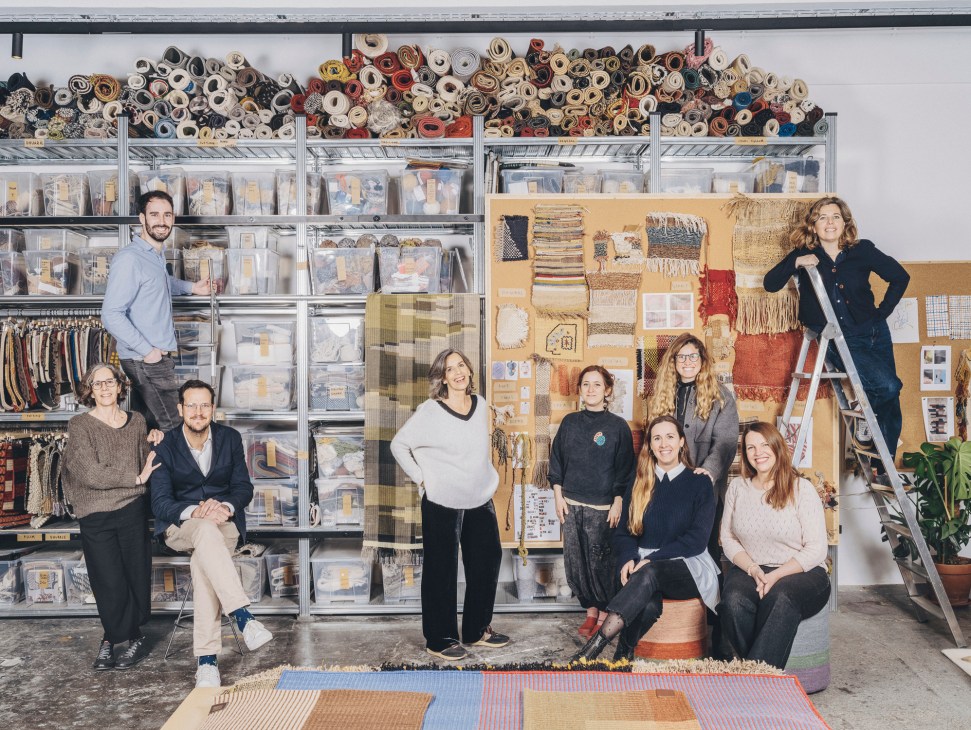
(From left to right)
Carlota Marquina
Art director and graphic designer “Aims to inspire people to imagine Nanimarquina rugs in their own homes.”
Jaume Borràs
Quality and technical manager “Makes sure the quality of products is always as high as possible.”
Pau Rojas
Sales and marketing director “Listens to customers’ needs and helps showcase the brand.”
Sara González
R&D manager and product development “Develops the designs and does research on new materials and techniques.”
Nani Marquina
The daughter of famous designer Rafael Marquina, Nani Marquina studied industrial design before launching her brand. Her focus has always been on using traditional craftsmanship to create contemporary pieces. It’s an outlook she now shares with her daughter, Maria Piera Marquina, who is now the firm’s CEO, ensuring the family’s design legacy.
Clara Navarro
Contract specialist and product designer “Works on contract projects with architects and interior designers.”
Carolina Rojas
Communications and marketing “Plans, creates and spreads the brand’s message across different platforms.”
Cèlia Sánchez
Operations director “In charge of production, logistics and warehouse operations.”
Maria Piera Marquina
CEO “Keeps an eye on the future without losing sight of the day to day.”
Glowing for gold
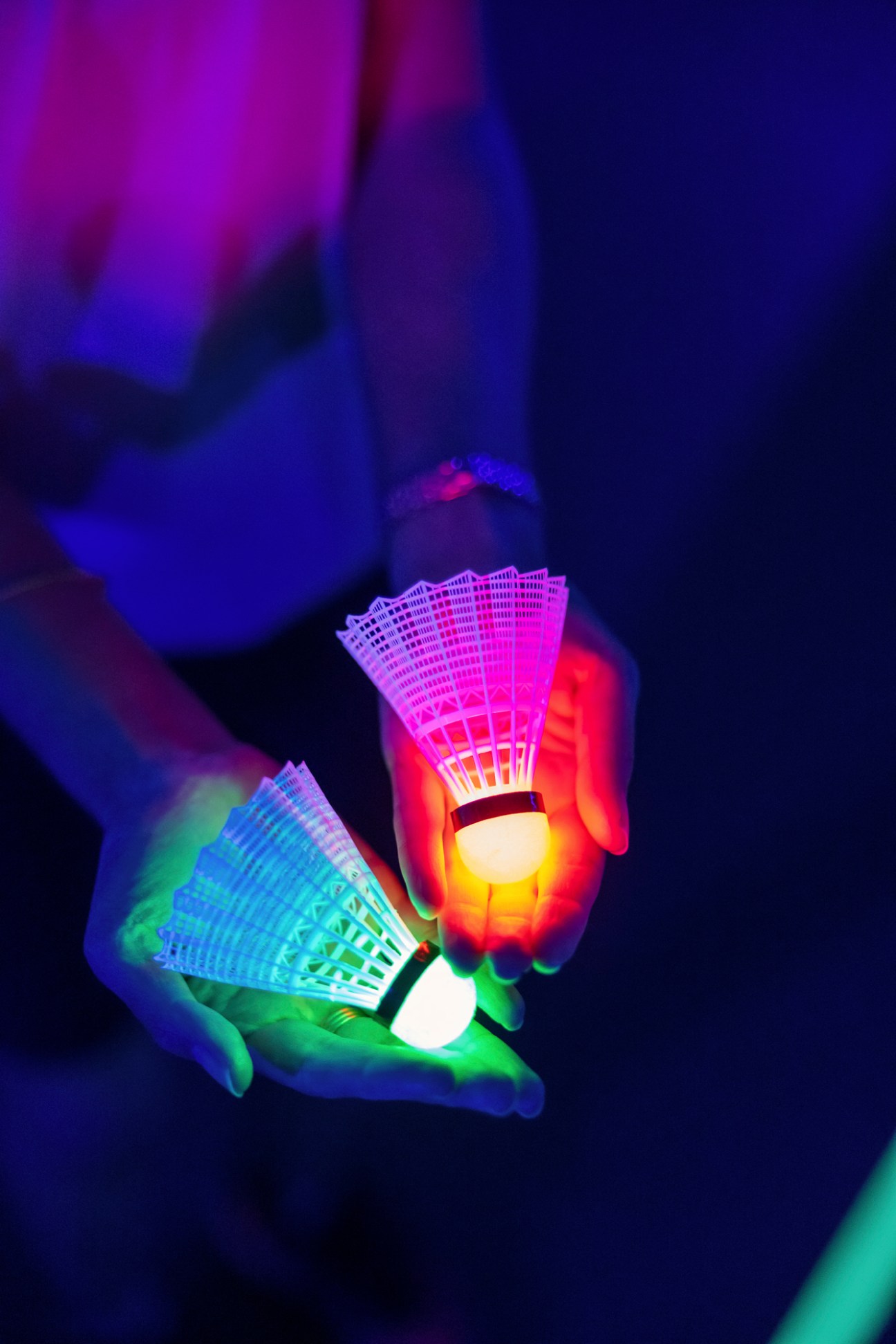
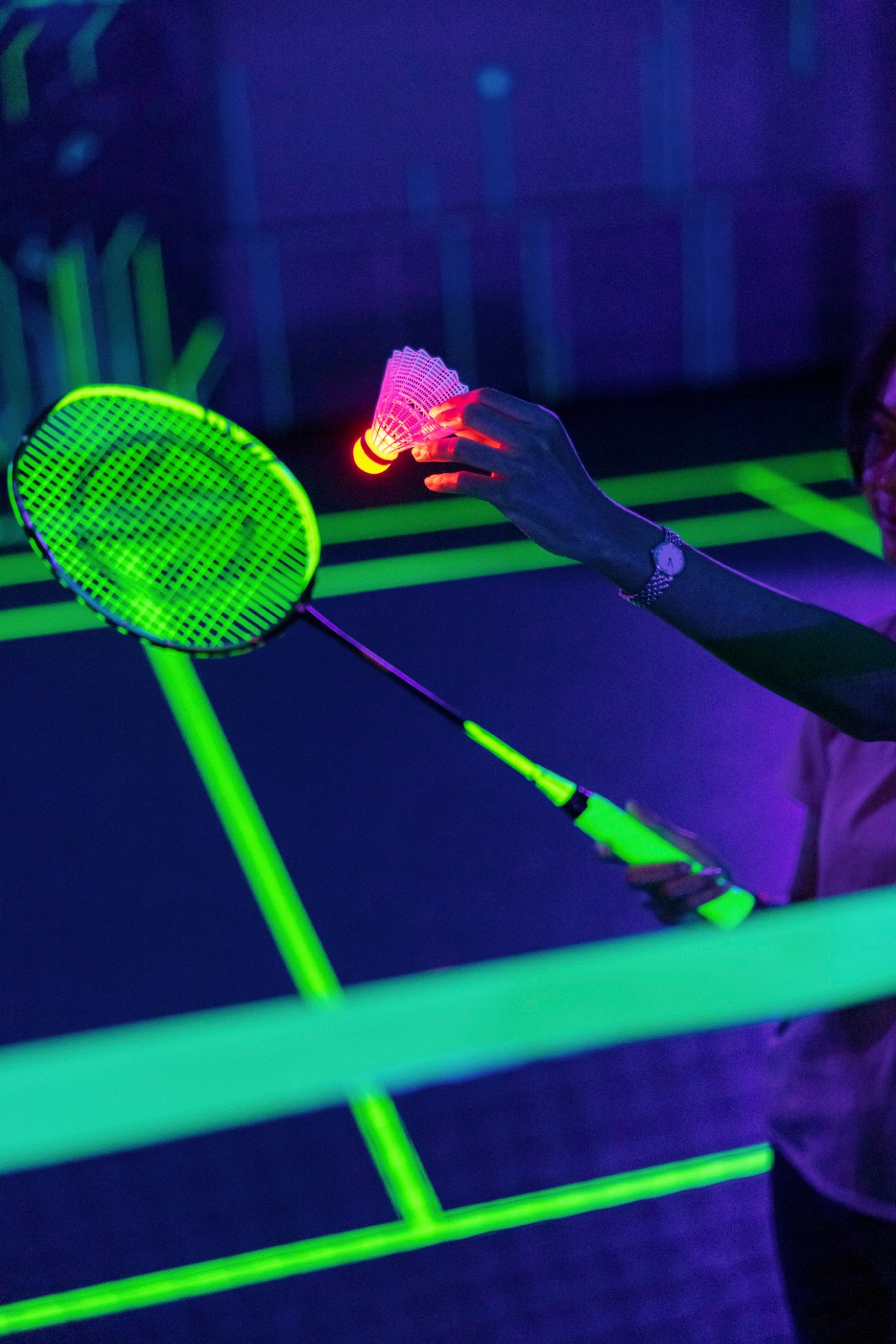
A voice booms from the speakers, giving a stern “three, two, one” countdown. The lights go out and the court is transformed into what looks like the arena for some futuristic tournament. I have the creeping sense of being in a dystopian scene from Squid Game. Luckily, this is Shuttle in the Dark, a new badminton club in Kuala Lumpur’s Petronas Twin Towers. Here, the nation’s most beloved sport is played on a glow-in-the-dark court, complete with neon-accented equipment (including mats and nets that are Badminton World Federation tournament grade) and accompanied by thumping music.
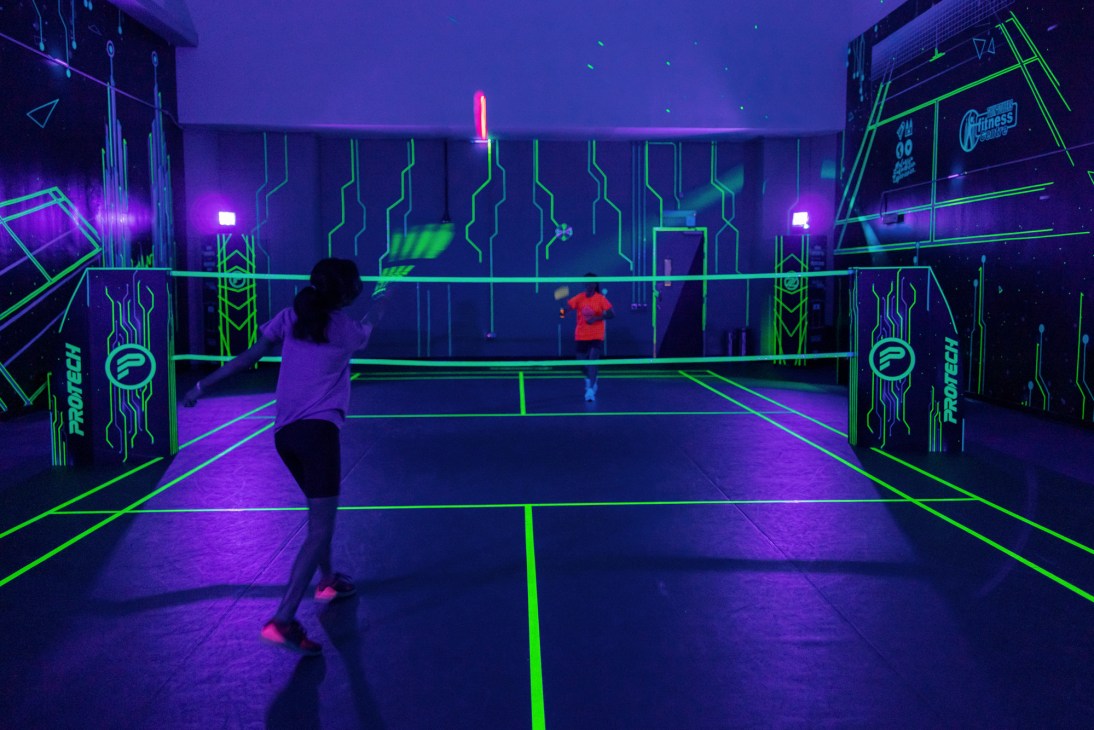
“This isn’t like regular badminton,” says Irina Inozemtseva, the club’s co-founder and a former professional player who has lived in Malaysia for 12 years. “We want people to come out of their comfort zones,” she says. “Here you forget about your problems.”
Malaysia regularly takes home the top prizes in international badminton competitions. Heroes here include the Sidek brothers, Lee Chong Wei and rising star Lee Zii Jia, all of whom have played their part in boosting the sport’s image and inspiring a new generation of players hoping to emulate their successes.
Both friendly and more serious matches take place just about anywhere, from backyards, parks and pavements to swish indoor courts.My friend Sarah has kindly agreed to be my opponent for a session and, for us, thoughts of global greatness are far from our minds. That’s why we’re the ideal audience for this fun iteration, which takes a modest activity and combines it with upbeat music and the atmosphere of a rave.
And while the whole endeavour sounds childishly simple, this business model appears to work: with a little branding, that is. New York-based fitness firm Soulcycle had almost 100 studios before the pandemic struck, while the wildly successful Aussie-founded firm f45 has about 1,750 locations in 45 countries. Might badminton in the dark also catch on with the fitness crowd beyond Malaysia? Inozemtseva hopes so. “Our big dream is to expand to other states and if that goes well, to hopefully go into countries such as Singapore and Thailand,” she says. “People will remember that the first-ever Shuttle in the Dark was here in Malaysia,” she adds, channelling something of the athlete’s competitive spirit as she talks.
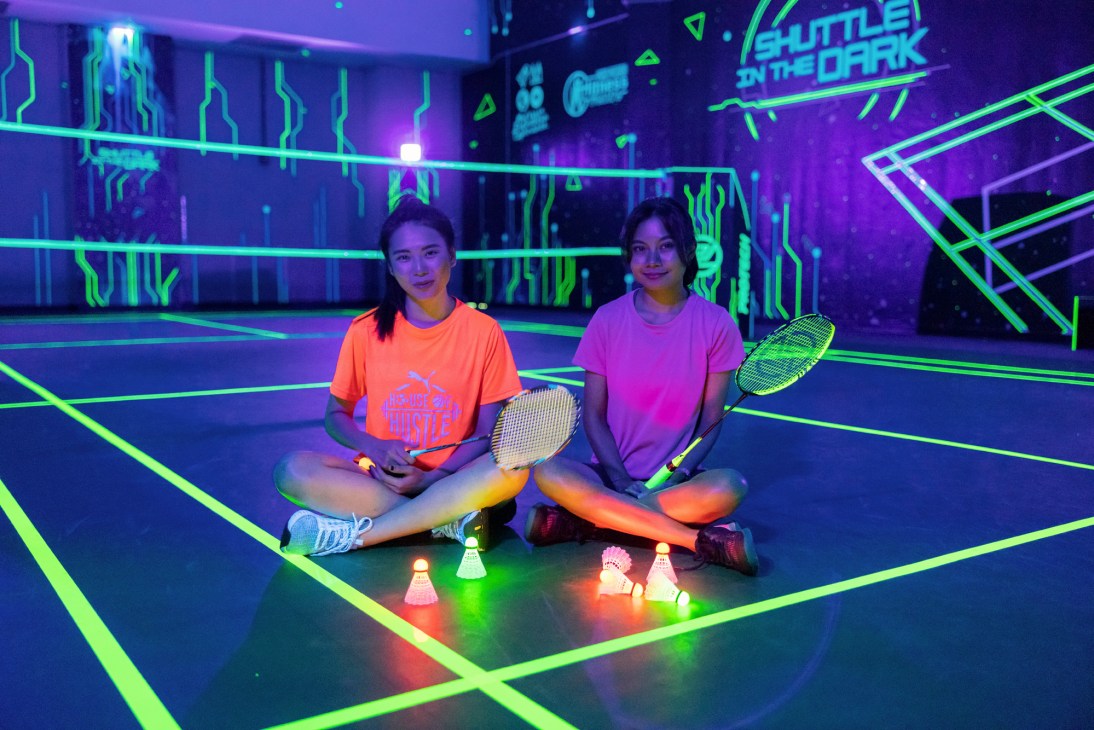
As our match begins, high-tempo music blasts through the speakers and a projector casts stars onto the ceiling. The dim light is actually kinder on the eyes than the harsh leds found at most indoor courts. As Sarah and I bat the luminous shuttlecock over the net, it leaves a light trail as it floats through the air, making it easier to plan my next move. “That helps to train your reaction,” says Inozemtseva. And she’s right about this format helping you to forget the worries of the world outside. Who knows, perhaps more sports could turn the lights out – although archery might be a little dangerous.
Book smarts
Frith Kerr’s west London home is packed with books that span genres and decades. On the shelves in her studio you can find copies of Ovid’s Metamorphoses, a 1960 translation of ancient poetry by Rolfe Humphries, 1986’s Hollywood Husbands by Jackie Collins and Cocaine Nights by JG Ballard, from 1996. For those who know Kerr, it’s not at all surprising.
“As a teenager, I didn’t listen to music – I just read and read because I was interested in exploring other worlds,” she tells Monocle. But rather than pursuing writing after she completed her studies – as her passion for literature might suggest – the graphic designer took a different tack. “I wanted to find a place where I could explore and build worlds for people. And it seemed to me that art school would allow that to happen.”
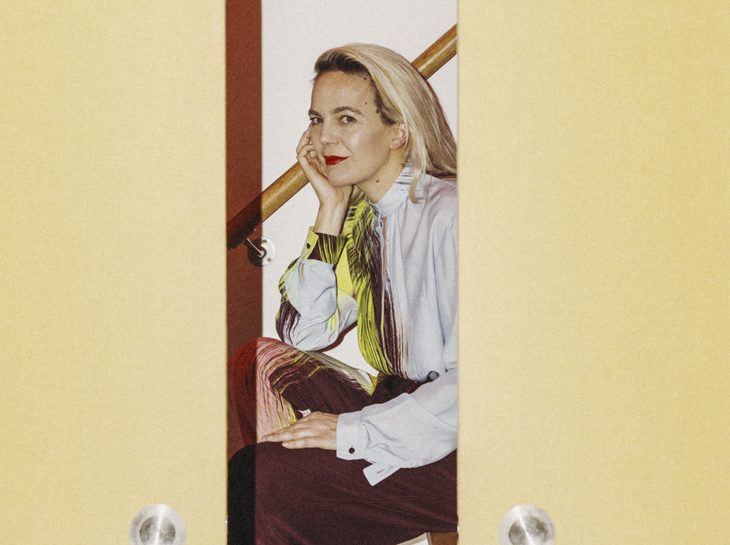
Born in Surrey, she moved to London in her teens, studied graphic design at Camberwell College of Arts and then completed a master’s degree in communication design at the Royal College of Art. “The books that I loved, and still love, are built on a foundation where you go on a journey and make a connection,” she says. “And design is about looking outward and connecting with other disciplines and industries. That was true when I started art school and it’s true working as a designer now.”
Upon graduation, Kerr immediately struck out on her own, establishing the studio Kerr Nobel with a classmate in 1997, before setting up Studio Frith. Her approach has stayed the same: like the books she read in her youth, Kerr looks to make connections on behalf of the clients whose story she is telling. Today that includes fashion designer Anya Hindmarch, Tuscany’s Hotel Il Pellicano, publisher Rizzoli and the Guggenheim Museum in New York.
To build worlds for these brands and people, Kerr goes through an intensive research process. “It’s about going in deep and exploring the subject matter,” she says. “Doing the research and building a really solid foundation and depth of understanding allows us to go further creatively.”
This means that Kerr gets to know her clients inside out – and the subject matter that they’re interested in. For her work for Roksanda, this meant unearthing the Serbian fashion designer’s passion for architecture and using it to design bags made from materials at builders’ merchants. For Frieze Art Fair, it meant getting on the ground at its location on Randall’s Island in New York and birdwatching – this led Studio Frith to develop an advertising strategy that used these birds as a metaphor for people flying into the art fair. From this level of detail, it’s clear that Kerr cares about authenticity. “As designers it’s important to communicate that care,” she says. “You do that with the materials you use, your tone of voice. Every detail of what we do communicates that you are taking care. That’s not explicit but it’s something that people feel.”
That consideration doesn’t just come with material choices. Kerr says that it also comes with the job. And, as expected, she uses books to explain her thoughts to Monocle. “As designers, we care about the future,” says Kerr. “One of my favourite authors, Rebecca Solnit, has written a wonderful book called A Field Guide to Getting Lost, where she talks about creating work that frees up your future. And I really feel like that’s what designers can do for people: we create the future and we can change how people feel about that future.”
“Designers can change how people feel. That’s the most important lesson that I’ve learned – and what I hope to continue to do.”
The CV
1973: Born in Surrey.
1992: Begins studies in Graphic Design at Camberwell College of Arts.
1997: Establishes Kerr Nobel after graduating.
2007: Works with Design Museum on an exhibition about Gio Ponti
2009: Establishes Studio Frith.
2014: Works with Frieze Art Fair.
2022: Clients include Perfumer H and The Drawing Center.
The Opener
How to live: Tokyo itinerary
The list
From behind a wall of arduous bureaucracy, the bright lights of Tokyo beckon, writes Tyler Brûlé.
As the ink was hitting the paper for our May edition I was winding through the streets of Bern on a tram. My destination? The Japanese embassy. It has now been more than two years since I took off from Tokyo’s Narita airport on a jal flight, just as the pandemic was taking hold. I was sure that I’d soon be back but here we are 25 months later and now I have to apply for a business visa to enter Japan. The form has seemingly been designed to put off as many people as possible from making the journey but, thanks to my colleague Yuko, we wade through the bureaucracy and I should be winging my way to Tokyo in time for the release of our June edition. Yuko asks me, “What will you do when you land?” Excellent question. In no particular order, it’ll go something like this.
1. I’ll check into my usual room (4701) at the Park Hyatt Tokyo.
2. Then I’ll have a run around Yoyogi Park.
3. Weather permitting, I’ll walk to the monocle bureau in the Tomigaya district.
4. For coffee, I’ll stop by Camelback café.
5. Lunch will be at Shiseido Parlour.
6. I’ll stock up on stationery at Itoya.
7. Around the corner from the office is Cut Salon Ban, where I can get the best shave in Asia. The best in Europe is in Geneva (see here).
8. Dinner will be at Appia with a genki group of friends.
9. In the wee hours I’ll swing by Daikanyama T-Site.
10. Day one will wrap with drinks at a new discovery. Karaoke in Ginza will be saved for evenings two, three and four.
Correspondent’s view: Los Angeles
Pedal power
Los Angeles’s mayoral race is well under way and the in-tray at city hall is already stuffed: rocketing rents, entrenched homelessness, residents nervy about crime. It’s clear that regardless of who gets the job, the more urgent question is, “Where to begin?”
I’d start on a bicycle. Since moving here in December, I’ve crisscrossed LA on two wheels and it’s a white-knuckle ride in a city where the car is king. Most Angelenos look aghast at the notion. I recently heard one flowerchild holler as I sped by: “Where the fuck are we, Paris?” But cycling here has offered a fresh perspective, especially for anyone learning a new beat.
Otherwise, the city whizzes past the car window in a dazzling, palm-tree blur. At a pedal’s pace, both its quieter beauties and grim realities come into focus: every morning, I creak past the pavement encampments that tell the desperate tale of a local government that looked away.
In Culver City, where monocle’s bureau is located, they’re proud of their lovely if lonely bike lanes. But the picture is different in Beverly Hills, where you pedal for your life in a Tesla throng.
It’s the job of the next mayor to smooth these disparities between LA’s cities and, ahead of the Olympics in 2028, get more Angelenos onto trains, buses and of course bicycles – however unpopular they are with drivers right now. To that end, I say to the runners and riders in this race, “On yer bike.”
In brief…
From the Zürchers sending themselves to jail, to the cruise ships returning to Canada’s ports, Monocle’s writers across the globe give you their bureau updates.
Toronto
Smooth sailing
Toronto is becoming a major hub for cruise ships once again, with several of the biggest lines steaming ahead on plans to reinstate voyages across the Great Lakes. It’s good news for an industry emerging from two years of choppy waters.
Los Angeles
Holding the fort
Hearst Castle, the fabulous folly of pools and pleasure gardens built in 1919 by publishing magnate William Randolph Hearst, is set to reopen after a two-year closure. Hearst’s zebras, we’re assured, still wander the grounds.
London
On track
The Elizabeth line, which will connect London’s East End to Heathrow by train in 40 minutes, is entering the final phases of testing and will open this spring. First mooted in the 1970s, any further delays will be but a blip on the timeline.
Zürich
Holiday in the can
Zürchers are sending themselves to jail at the new Zürich West prison, with 832 people having signed up to test the facilities. Participants must pass a security clearance and hand over their phones but the strip-search is optional.
Hong Kong
Food for thought
The South China Morning Post is searching for a new food and wine editor following the retirement of 25-year veteran Susan Jung. The paper’s trusted restaurant reviews carry the same influence here as its iconic horoscopes and horse racing tips.
Tokyo
All that jazz
Japan’s longest-running jazz cafe, Chigusa, has played its last record and is set to be turned into a museum and live music venue. Founded by jazz fan Mamoru Yoshida in 1933, it was once burnt to the ground in a 1945 air raid.
Paying the price
It’s a common enough mistake: half-awake while on your online bank account, paying the plumber instead of the florist. Some functionary of the Taliban has committed a similar yet grander blunder, accidentally wiring $800,000 (€720,000) to Afghanistan’s embassy in Tajikistan, which is still held by emissaries of the government overthrown by the Taliban last year – and refuses to return it.
Invoking this mishap might ease some heat on Joe Biden, who has been criticised for using some of the $7bn (€6.3bn) of Afghanistan assets held in the US to compensate victims of September 11 – a crime for which few, if any, living Afghans bear any direct responsibility. He is possibly entitled to retort that the Taliban could clearly not be trusted to not misplace it, misdirect it or spend it on magic beans.
The Taliban’s theocratic inclinations mean that a gag about “clerical errors” is, also, right there.
Masked crusaders
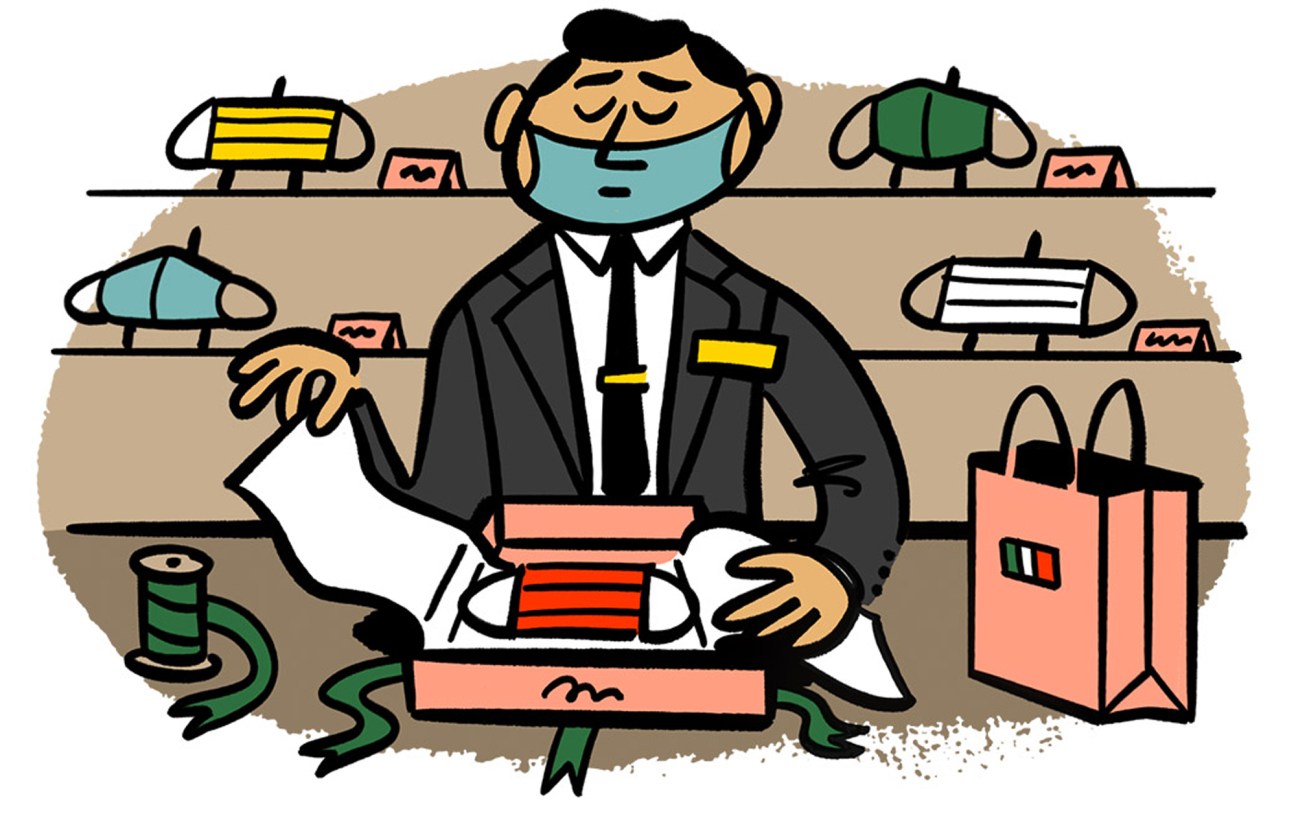
What’s not to love about “Made in Italy”? As a country brand it has serious clout, having shown the world the power of good food, fashion and design as soft-power totems. So what next, you might ask? Italians, still quite attached to their masks (even with mandates relaxed), are currently being offered the chance to buy “Made in Italy” face coverings. Cynics may say that this is just a trick to get consumers to part with more cash. But one pharmacist in Milan’s Porta Venezia neighbourhood was quick to back the idea. He assured that the Italian versions were of superior quality. So much so, he went on, that you don’t have to worry about changing them every four hours. “You can wear these for a few days,” he adds. Whether there was scientific rigour behind his claims remains to be seen.
The interrogator
Coming together
Italy
Italian curator Cecilia Alemani has never shied away from difficult projects. Over the course of her impressive career she’s provided creative direction for Art Basel and Frieze Art Fair as well as overseeing New York’s High Line Art programme. This year she is curating the 59th Venice Biennale, the world’s biggest art event. She is responsible for choosing a theme for the main International Exhibition and setting the brief for artists from 58 countries. Undaunted, Alemani settled on The Milk of Dreams as the show’s title, a name that invites artists to explore the feelings that are often associated with change and transformation. Alemani sat down with monocle to speak about her approach to the event and what she hopes people will take away from it.
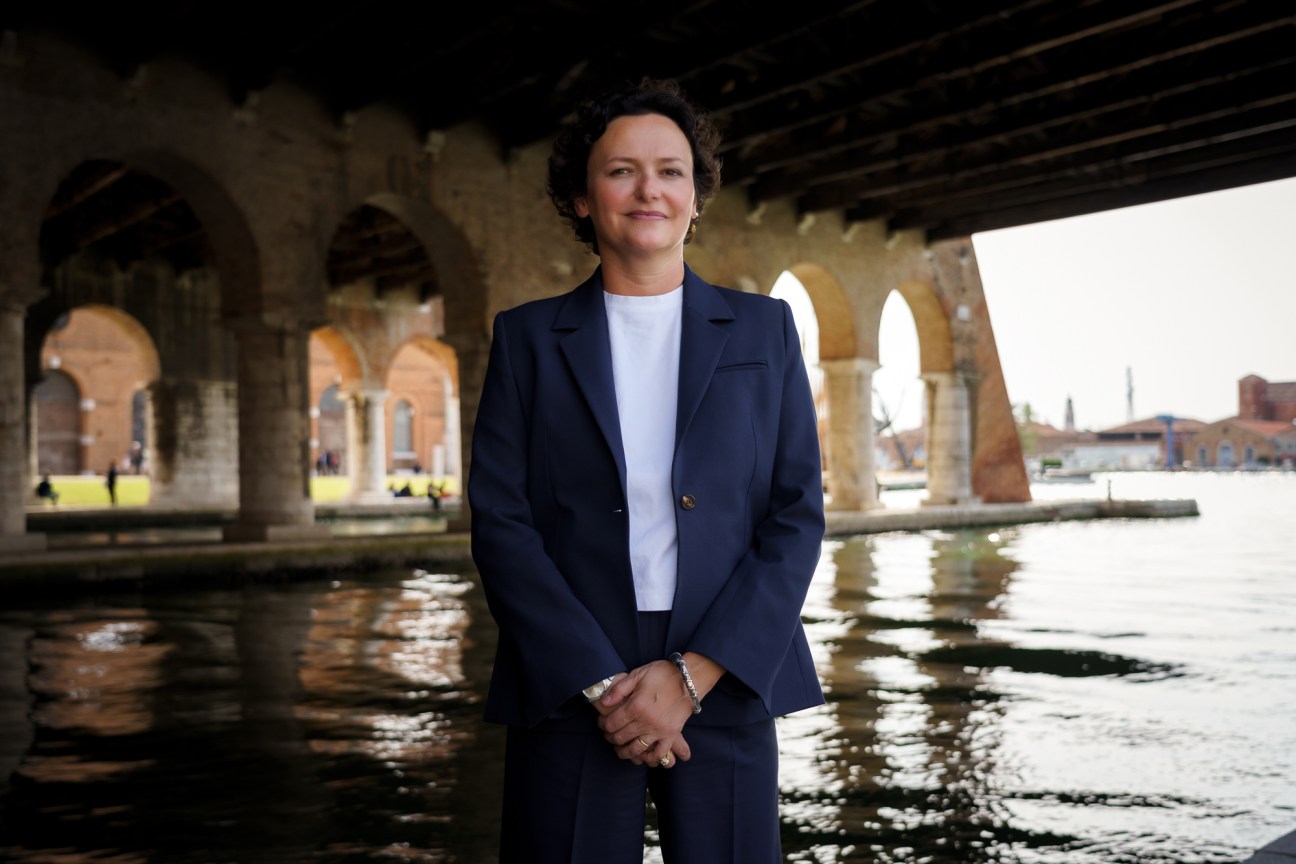
When did you first get involved in the 59th Venice Biennale?
I was invited by the previous president, Paolo Baratta, to curate the International Exhibition just a month before the pandemic began. The Venice Biennale has been going for 127 years and, in that time, it has seen wars and revolutions. This is a moment that will be inscribed in the soul of this exhibition. The Milk of Dreams is not about the pandemic but it does absorb the unique anxieties and concerns of this time we’re living in.
What kinds of conversation did you have with the artists?
They were less about the artworks and more about the world we’re living in: what kind of relationship do we have with nature and the planet? Is it possible to imagine a different relationship with what’s around us? Artists absorbed conversations such as these and made them very real in their work.
How did you pick the title of the exhibition?
Leonora Carrington, the wonderful [British-Mexican] painter, was also a writer. I took the name from a collection of her children’s stories. Carrington told tales of hybrid creatures and beings that fluctuated between human, animal and machine forms. I wanted to take that idea and use it in an exhibition about bodies and transformation.
What artists are you excited about showing?
It’s always hard to name names when you have 213 people in the show but I will say I’m excited about how the exhibition will bring together contemporary names and artists from hundreds of years ago. It’s extremely transhistorical.
What will people take from the event?
I hope it will be a moment for togetherness. We have seen so much art through our screens these past few years. It would be great if people felt this was an occasion to gather and share what they love the most: being in the physical presence of art.
Return to sender
A court has paused construction on Amazon’s enormous new African headquarters in Cape Town. This comes after descendants of the country’s earliest inhabitants said the land that the campus is being built on is sacred. While a win for those with spiritual leanings, it could also be good for South Africa’s most creative city. Amazon’s arrival in Seattle led to surging rents, traffic congestion and an influx of “tech bros” at odds with the city’s creative counterculture: a situation many in the Cape Town are hoping to avoid.

About time
The US Senate has approved a bill which could put the country on daylight saving time all year. What’s the situation elsewhere?
1.
Brighter days
Europe
There is no reason to endure darkness at 16.00, so the whole of Europe should adjust to permanent gmt12. OK, it might mean lunchtime sunrises in parts of Scandinavia but that could give the rest of the continent a chance in the global happiness index, which the Nordics have sewn up smugly for years.
2.
Fasting favours
Africa
Almost nowhere in Africa enjoys daylight saving, but in 2018, Morocco permanently moved its clocks forward one hour – except during Ramadan, when they come back an hour, as nobody wants to be hungry that long.
3.
Clocks and curtains
Australia
Queensland abjures daylight saving, which means it lags an hour behind other states in the summer. Australians joke that Queenslanders fear the extra hour of daylight fading curtains.
Image: Andrea Avezzù.
Pictures of life’s other side
For this issue’s Expo (see here) we are in Venice, a city whose good looks, palazzos with secret gardens, Renaissance riches and canal-laced neighbourhoods have seduced generations of visitors. But those good looks come with a big downside: they pull in vast, selfie-stick-swishing hordes who spend little on local businesses and swarm around the most social-media-postable sites. It’s why many believe that Venice is at risk of turning into a theme park – one that its denizens don’t want to spend time in.

But when the pandemic hit, almost overnight, the city was cloaked in a silence unknown for decades; a silence some days punctuated only by church bells, the slap of water from a passing aquatic taxi, a kid kicking a ball in an empty square. The visitors who, as restrictions eased, finally made it back were often entranced by this hushed Venice. Would it be possible, some wondered, to stop the cruise-ship crowds from ever returning? Could the numbers of people allowed to visit the city each day be limited? A few modest controls on cruise ships have been enacted but Venice finds it hard to wean itself off mass tourism. So what will happen?
To catch this fork-in-the canal moment, we dispatched photographer Andrea Pugiotto and writer Laura Rysman to Venice to meet the chefs, craft workers and hoteliers who want to create a different city. Of course, there’s a paradox here: look at Pugiotto’s pictures of a mellow, spring-lit Venice and you’ll want to go. You’ll wish you were there. But there’s also a bigger debate to be had about how Europe sees itself today and how it should offer up its past.
This is a key theme of Dutch author Ilja Leonard Pfeijffer’s best-selling book, Grand Hotel Europa, which is just out in English. It’s a love story and a celebration of his adopted hometown of Genoa but also a novel that looks at how tourism can buckle our cities, with Venice the saddest example. Georgina Godwin interviews Pfeijffer in this issue (see here). But back to Andrea Pugiotto.
Pugiotto is one of a long line of great photographers who have been commissioned for Monocle’s Expo assignment, a unique gallery space in the magazine where it’s often the photographer, not the writer, who leads the way. These powerful visual stories form the backbone of our new book The Monocle Book of Photography: Reportage from Places Less Explored. This glorious print outing looks back at the city of Aleppo before much of it was destroyed by the war in Syria; it takes you to meet Greek naval cadets who signed up to represent their country even as a political crisis threatened the nation’s identity; and it also takes you to crazy festivals in Thailand and Switzerland. It’s a celebration of the power of the image and the subtlety and nuance that a photographer can add to a story (to buy a copy, head to monocle.com/shop).
This issue is also once again shaped by the war in Ukraine. Helsinki correspondent Petri Burtsoff, working with photographer Juho Kuva, gained access to Nato’s Cold Response exercises in Norway (see here). Though planned long before the Russian attack on Ukraine, they took on a renewed significance and symbolism after it. Burtsoff looks beyond the impressive kit to ask some bigger questions about Nato’s role and future.
To get more perspectives on what’s unfolding, we also travelled east. First we went to the Antalya Forum, a diplomatic and policy-wonk gathering, to assess Turkey’s efforts to be an honest broker between the Russians and Ukrainians (see here). Our other trip east was taken by Alexis Self, who headed to Tbilisi to meet young Russians who have sought refuge in the Georgian capital (see here). Their plight, as they all stress, is nothing in comparison to that of Ukrainians; yet it’s another of the endless ripples spreading outwards from this barbaric war.
As always, we also want to look at simple fixes, benchmarks of quality and ideas that are worth adopting. It’s vital that we stay engaged with the world. The Monocle Design Awards (see here) reveal our pick of the 50 best projects and most inspiring people in the design world. Elsewhere we look at the rise of French manga (see here), the future of the newspaper (see here) and how the Dutch are exporting their cycling know-how (see here).
This richness of debate and reporting is something that we like to see happening off the page too. Our Quality of Life Conference for 2022 will be at Le19M, a new craft and innovation centre in Paris that is home to some of Chanel’s finest creative partners. There’s a welcome reception on Thursday 2 June; the main conference day is Friday 3. To find out more, visit monocle.com/conference. And, as ever, thank you for reading Monocle. Feel free to write to me at [email protected].
Talking shops
What does the future of retail strips and high streets look like around the world? After two years of stay-at-home orders and lockdowns the answer is – “not good”. Vacancy rates remain obstinately high and there’s a limit to how many pop-ups any neighbourhood can cope with (let alone the conversion of endless shops into miniature ugly warehouses for app-based delivery firms that promise to get your beer order to your door in 15 minutes). But don’t be glum. New formats and formulas are promising to turn things around, as are ambitious folk who understand how to make shopping appealing.
Over the following pages we look at how cities have fought back and how simple things, such as dedicated owners, good food and going back to your roots, can inject some magic into stuttering retail zones. And why does any of this matter? What’s wrong with just ordering everything online? Well, a thriving high street creates jobs, becomes a community builder, and provides a place for people to rub shoulders with all sorts of folk. A humming strip can offer a space for people to become entrepreneurs, lift the mood on a dreary day or just encourage you to try things for the first time.
We are firm believers that retail matters – and at every level, from luxury to corner shop. Yes, there’s a place for clicking away online but unless you want even more delivery drivers clogging the streets, then a trip to the shops can be a virtuous thing to embrace. So come on, grab a tote – we’ve got shopping to do.
Staying power
1.
Healthy appetite
Los Angeles
Case study:
Erewhon
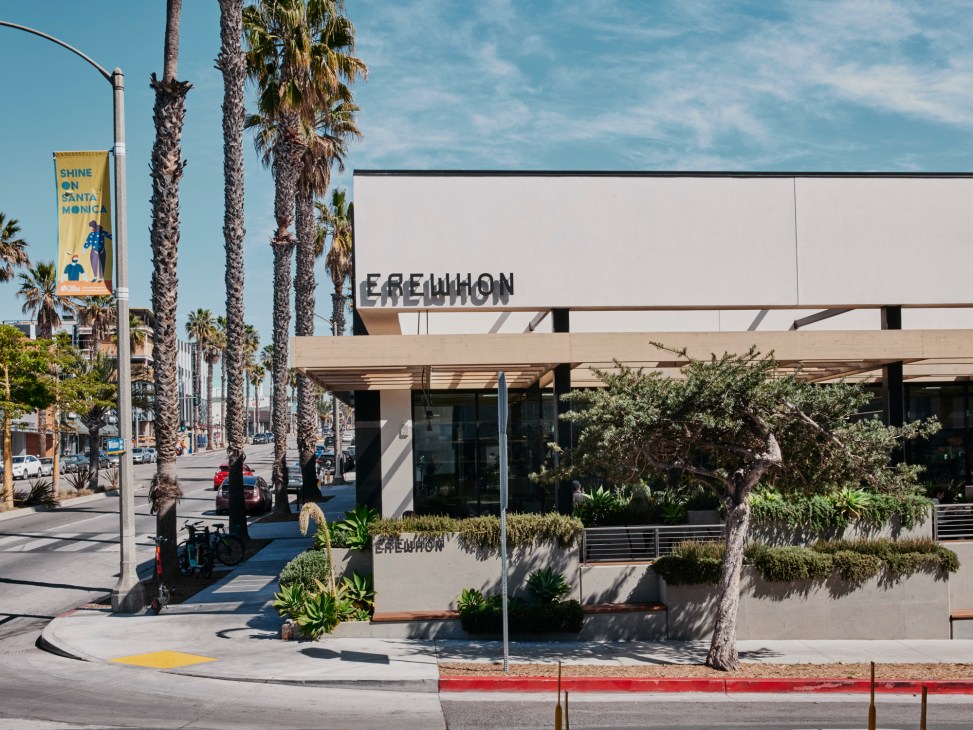
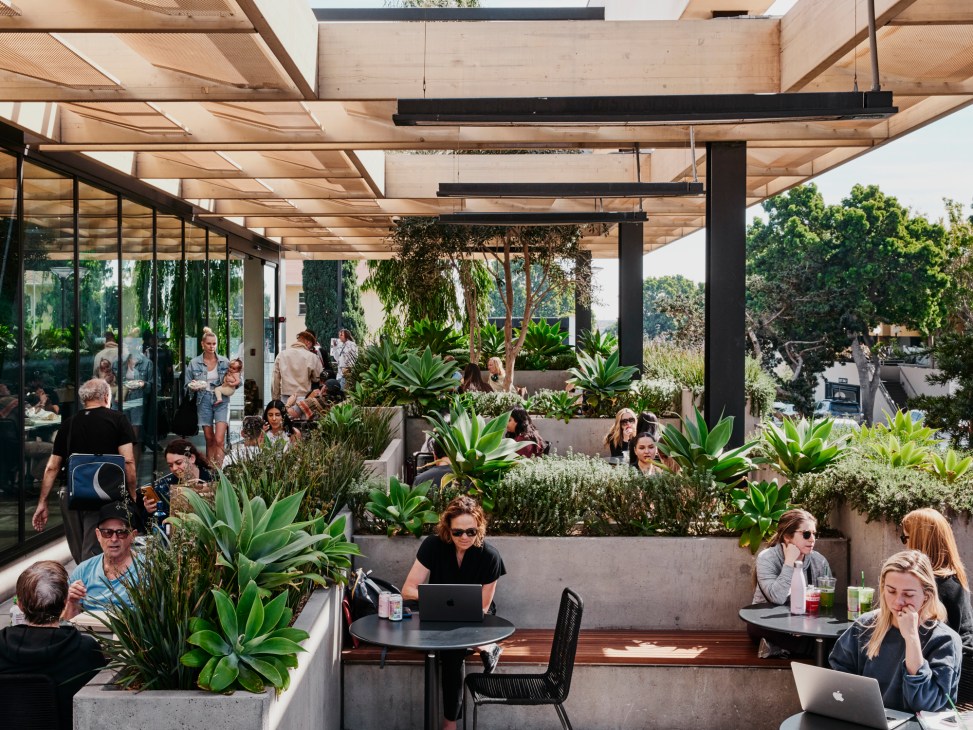
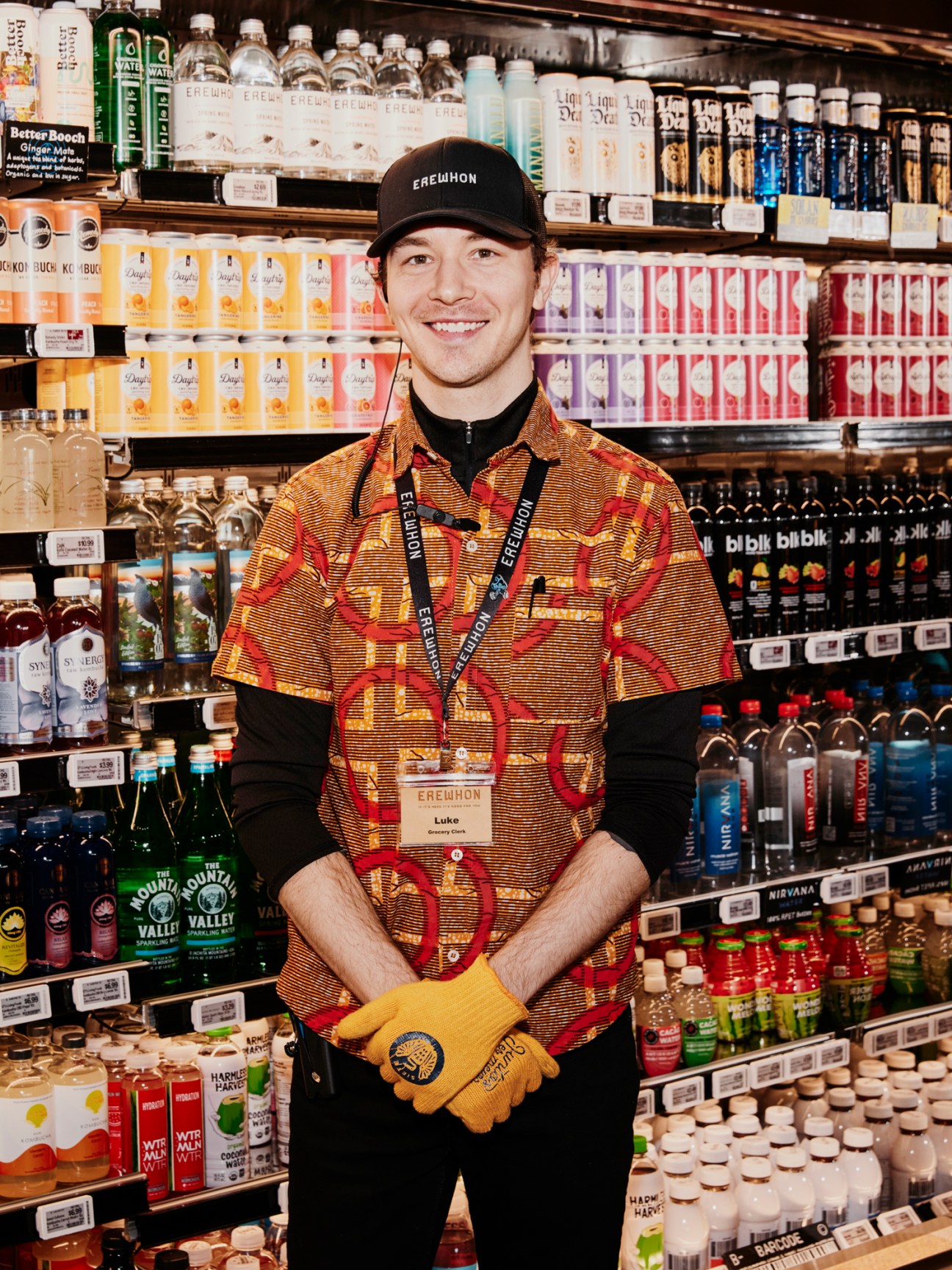
It’s 11.00 on a sunny morning at Erewhon, an airy, luxury grocery shop in Santa Monica that’s bustling with a post-yoga crowd. Shop director Mike Bowen takes a moment to admire the latest batch of sea-moss gel. “You can eat it just as it is,” he says, holding up a pot of beige, which we’re told is a hit with shoppers and goes well in a salad.
Only in Los Angeles could a niche grocery shop named after a satirical utopia from a Victorian novel become a retail sensation. Michio and Aveline Kushi set up Erewhon in 1966 as a stall in Boston selling macrobiotic and organic foods. The brand expanded to LA and was just one shop when it was snapped up in 2011 by entrepreneurs Tony and Josephine Antoci, who caught the broader consumer wave of “eating clean”. There are now seven Erewhons around Los Angeles, with three more shops due to open by next summer. “I’m inundated with calls from mayors who want us in their cities,” says Yuval Chiprut, its head of development.
Many of Erewhon’s customers come for its prepacked daily meals and its meticulously sourced ingredients. The grocer’s aisles are festooned with hand-painted signs detailing, for example, exactly where a certain kombucha came from. It can be easy to smirk at the LA-ness of Erewhon. But for all that, it feels like a proper grocery store, suitable for the weekly shop, and not just a fad health food outlet.

Strong foundation
2.
Back to the future
Bangkok
Case study:
Central: The Original Store
Today, Thailand’s Central Group, owned by the Chirathivat family, is a powerful player in retail, hospitality, property and much more. Before the pandemic, the company hired Belgian architect Vincent Van Duysen and Japanese studio Tripster to go back to basics and reimagine the company’s first-ever shop on Bangkok’s Charoenkrung Road.
The building is a modest five-storey shophouse but it is still seen by the company as a reflection of its core values, boasting quality design, a well-curated tenant mix and a surprising concept. The project was overseen by Central Embassy’s managing director Barom Bhicharnchitr. While the space has been updated to encompass a restaurant, café and music lounge, the heritage of the business (Barom’s great-grandfather Tiang Chirathivat and grandfather Samrit Chirathivat established the original business in the middle of the last century) plays a key role.
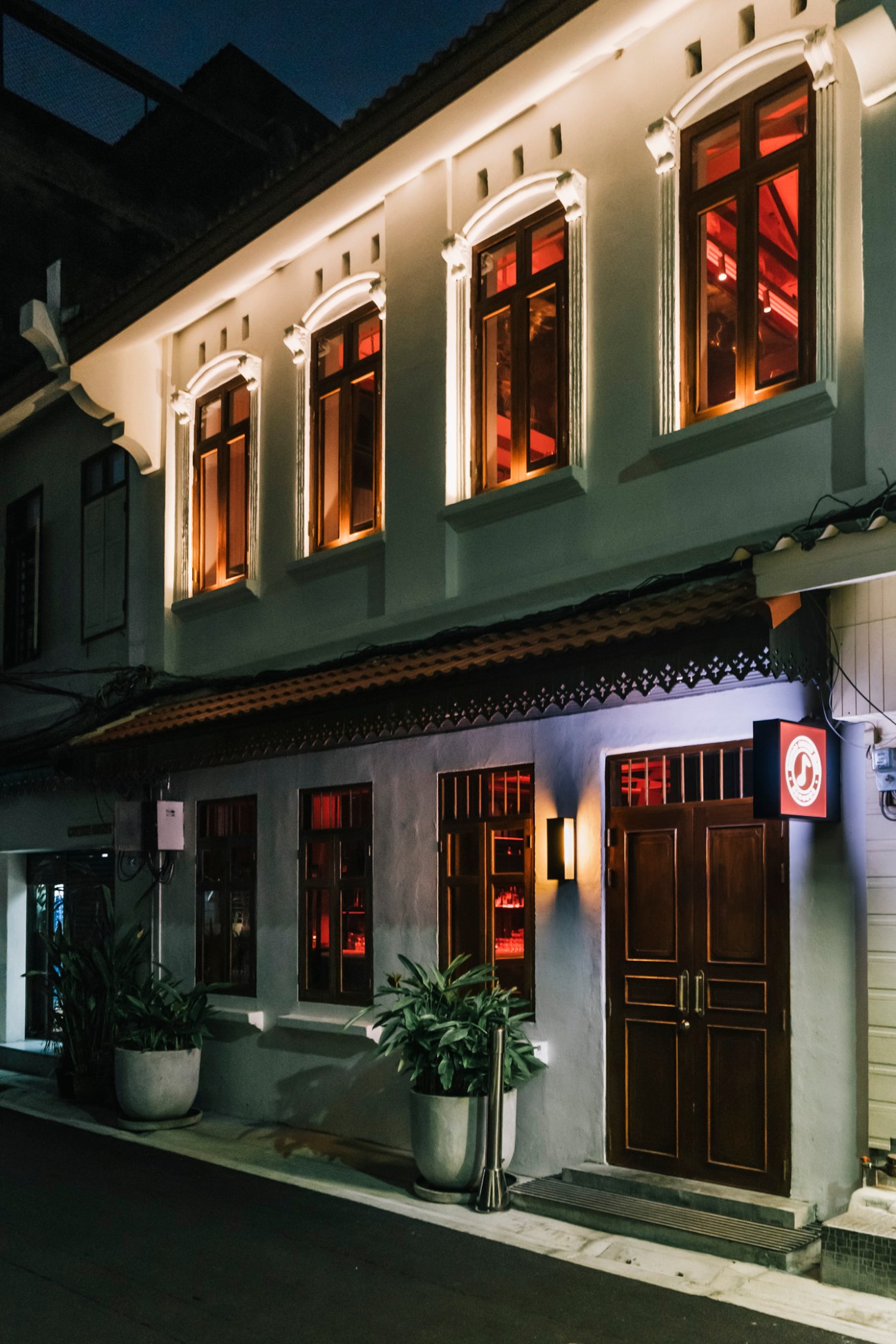
“The building’s rich history offered plenty of inspiration,” says David Thompson, a Michelin-starred chef who champions Thai food in restaurants across the city. Here he operates Aksorn, a busy spot serving classic Thai dishes. Other links to the past include Kolophon, a unique and beautifully designed library, which holds books from Thailand’s postwar period. The ground floor is reserved for retail, selling everything from vintage issues of Time magazine to T-shirts sporting monochrome photos of Bangkok’s bustling streets in the 1950s.
Good neighbour policy
3.
Local heroes
Melbourne
Hospitality and retail in the world’s most locked-down city suffered dreadfully during the pandemic. Melbourne’s shopping thoroughfares lost foot traffic and thousands of businesses closed down. With residents mandated to stay inside or within a few kilometres of their homes, “destination” venues began to cater more specifically to locals, cultivating a true spirit of community born of necessity.
At a time when outdoor exercise provided the only reprieve and takeaway (no matter how gourmet) became essential, restaurants and retailers offering click-and-collect services performed well. This is where the independent nature of Melbourne’s hospitality and retail scenes shone through. Premium restaurants sold diy kits of their most cherished dishes and many brands decided to avoid Uber Eats, asking existing employees to deliver products directly to the doors of customers.
Case study:
King and Godfree
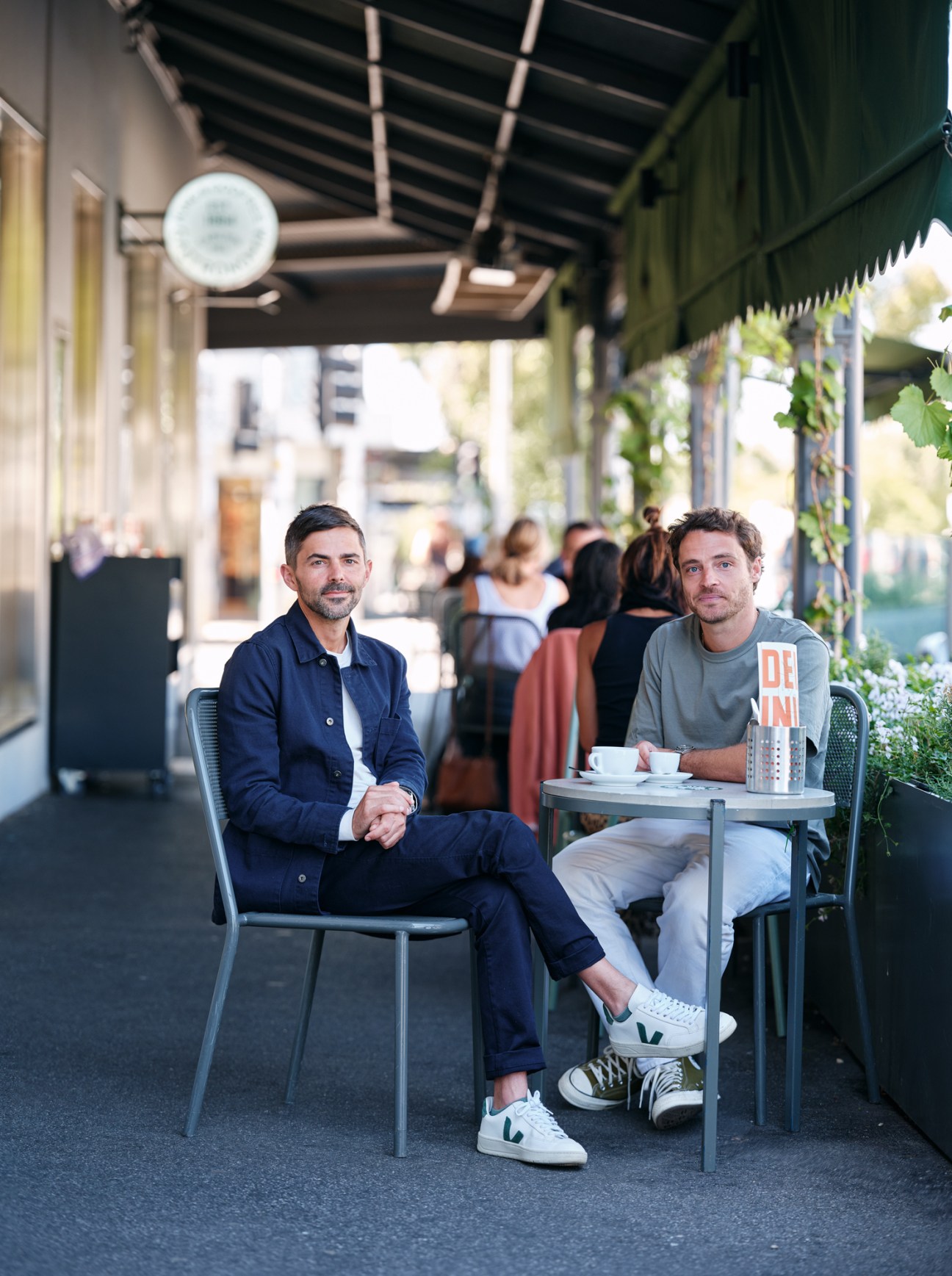
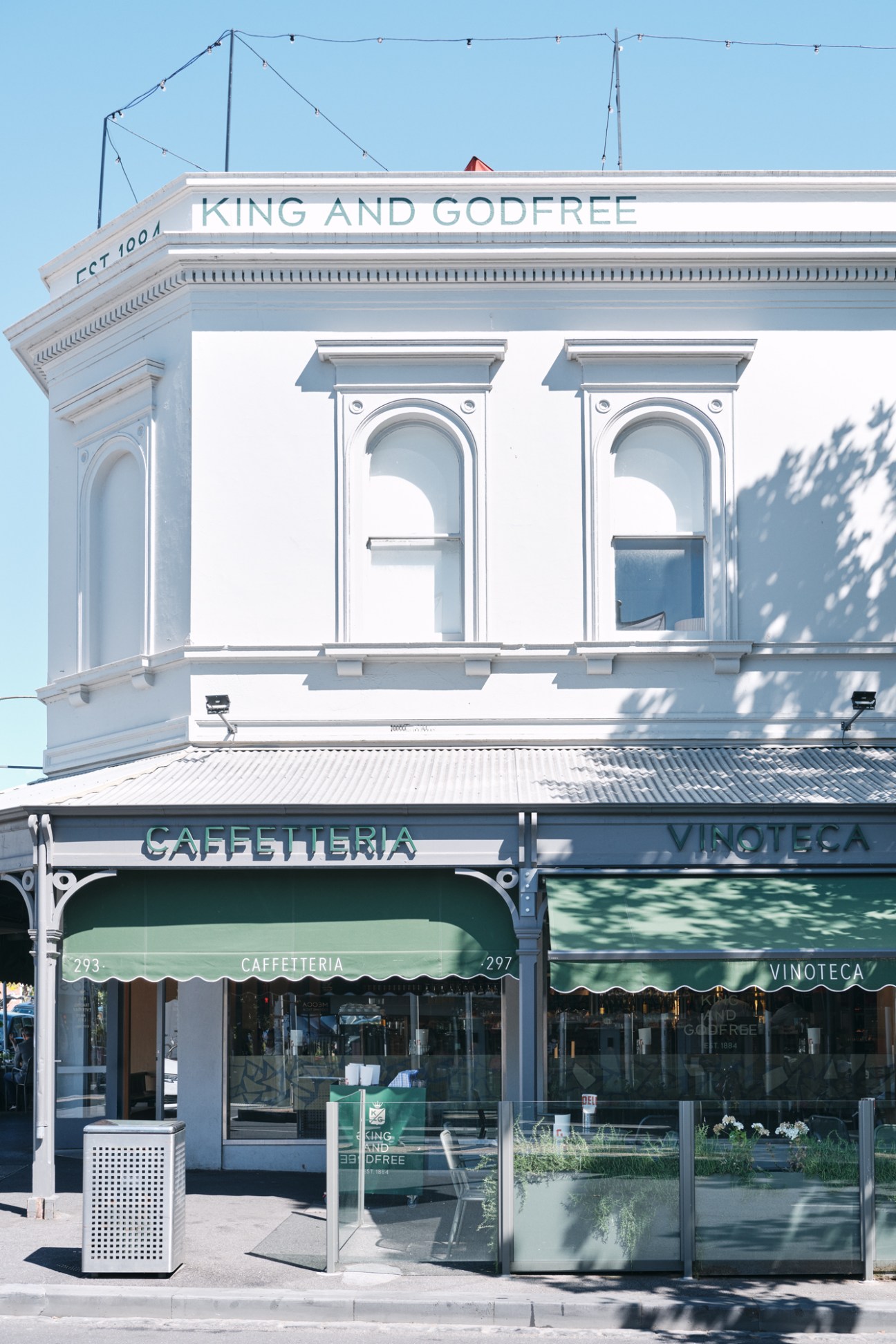
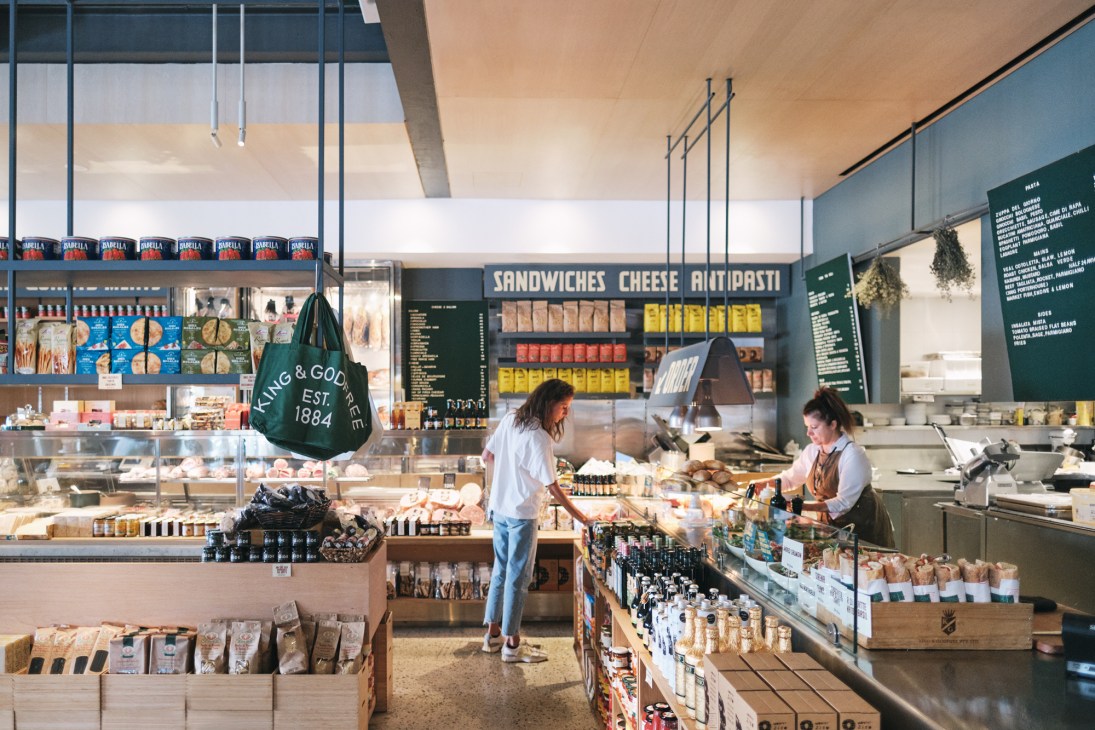
In 2018 cousins Jamie Valmorbida and Luca Sbardella completed the transformation of the King and Godfree building in Melbourne’s Little Italy into a busy retail and dining precinct. The heritage building belonged to their Italian-born grandfather, Carlo Valmorbida, who ran it in the 1950s as a humble grocery shop that served the immigrant population and helped to introduce delicacies such as parmesan cheese to the city’s palate.
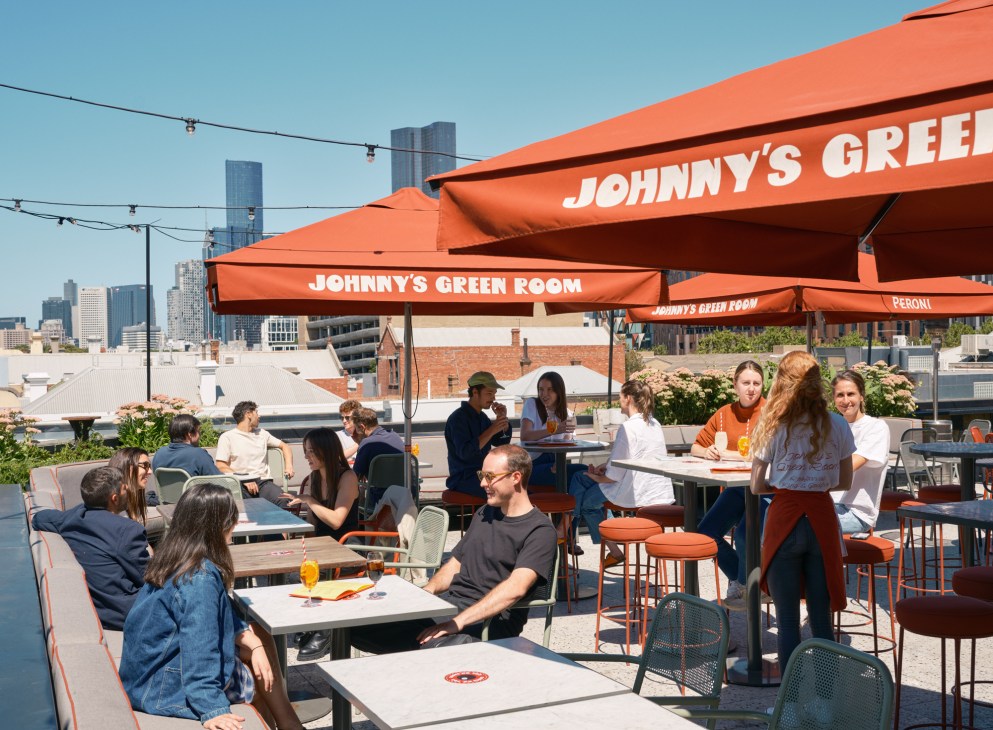
Today the building houses a rooftop bar, wine shop and cellar, gelateria and café-deli hybrid. Sitting on the corner of two busy roads, it is the centrepiece of King and Godfree precinct, which is accessed through a web of tucked-away paths. “When it comes to hospitality, Melburnians love an adventure,” says Sbardella of the design concept. “They don’t want it to be too easy to find.”
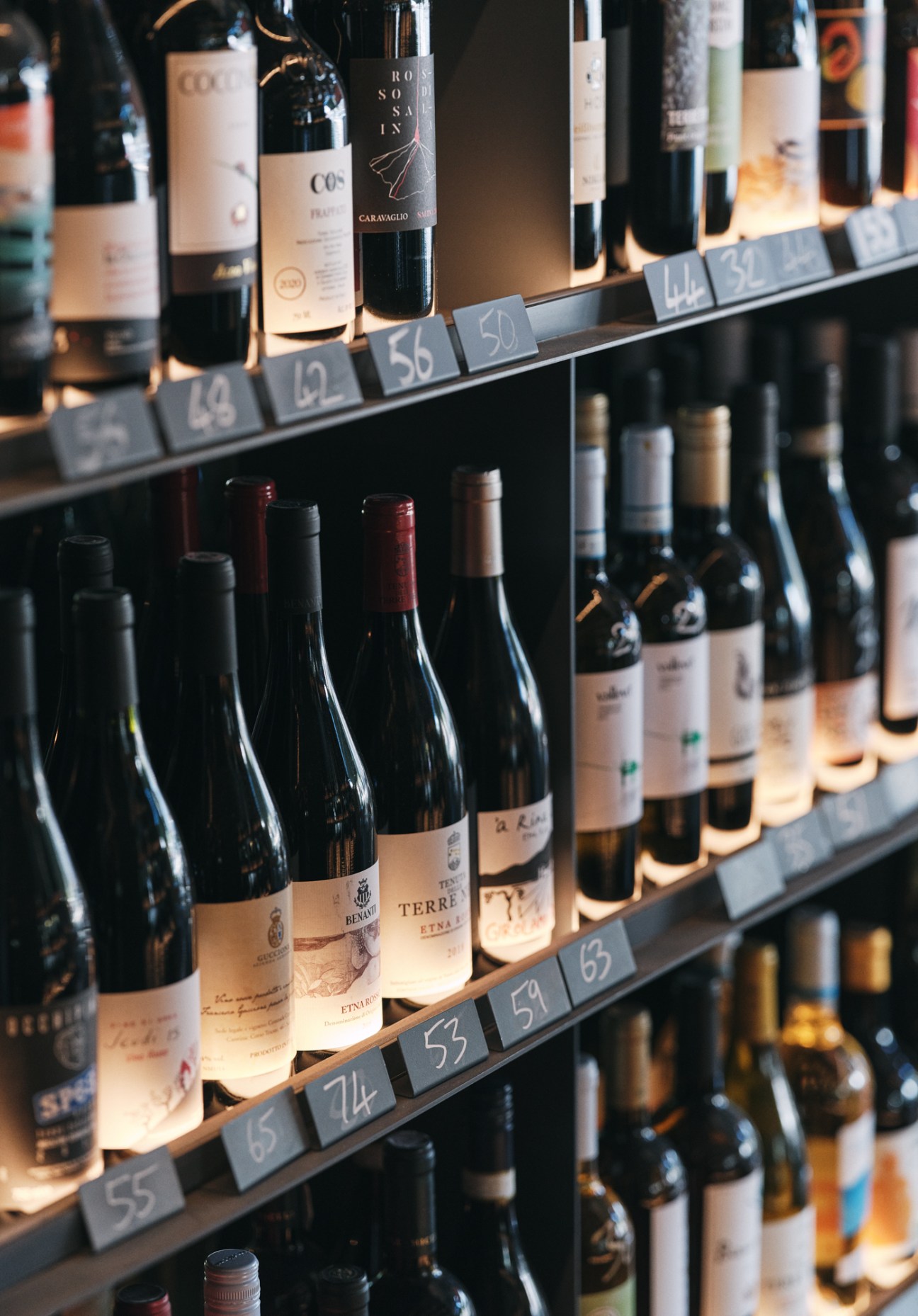
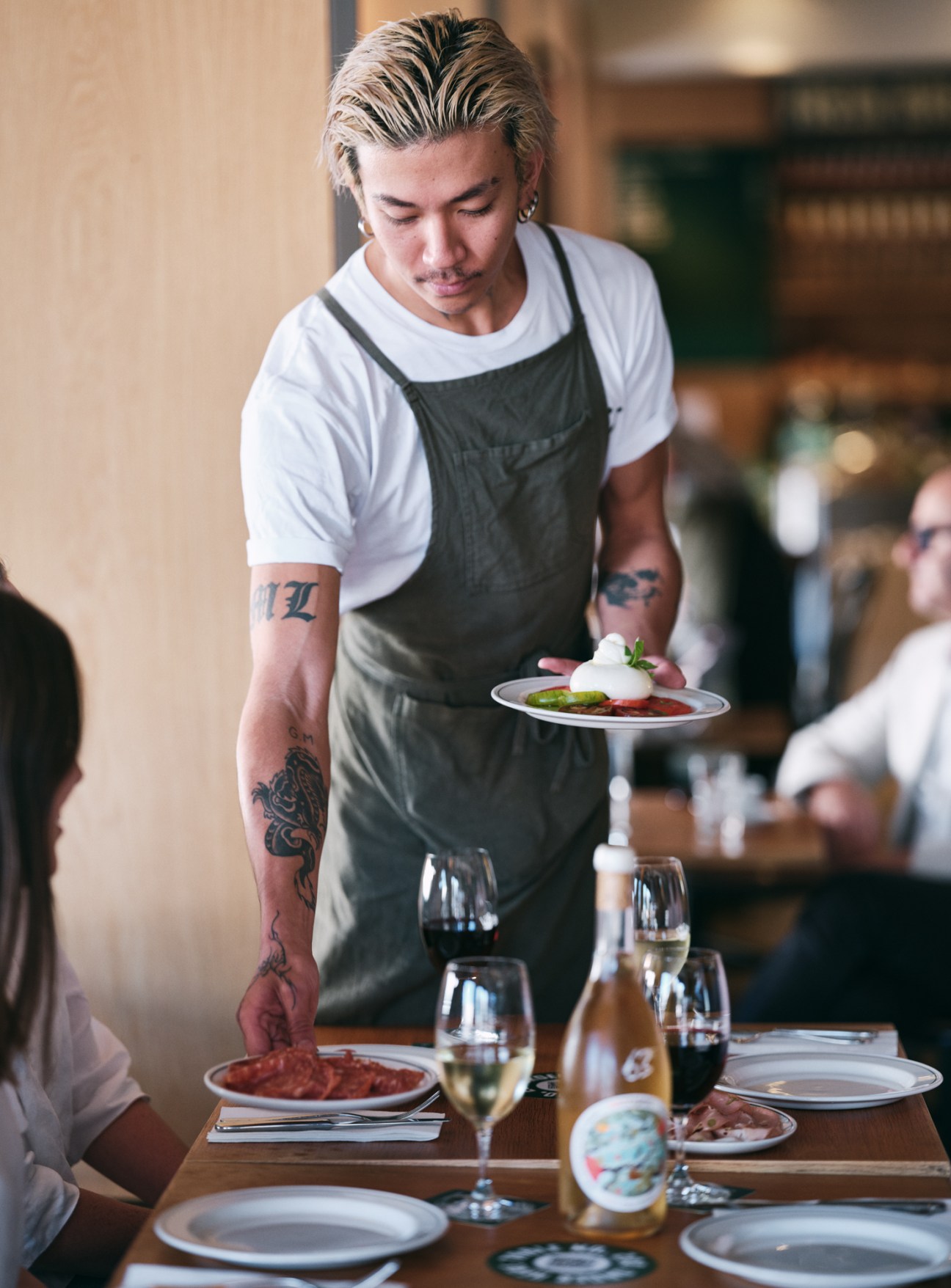
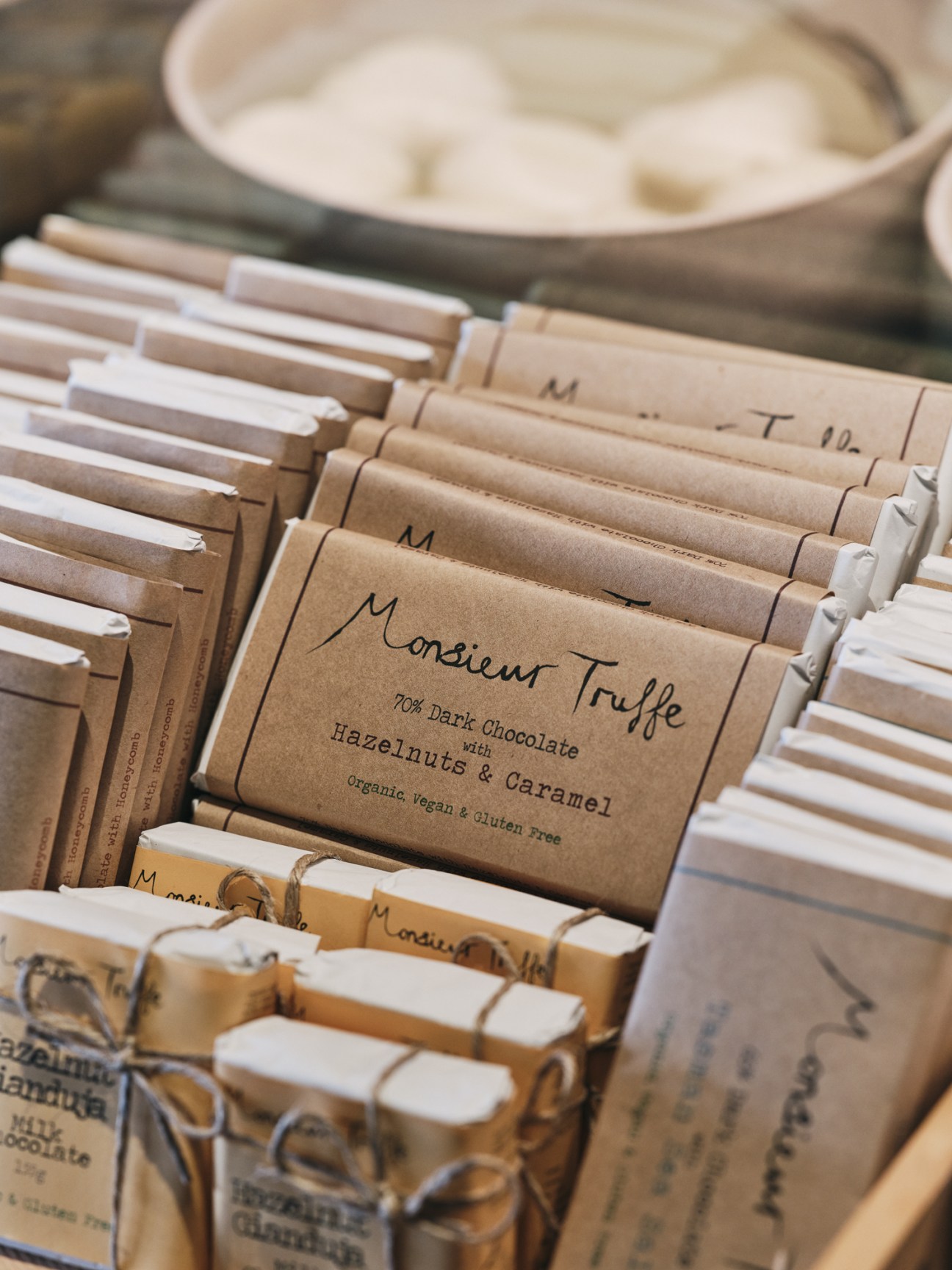
When the pandemic began and dining inside was no longer permitted, the cousins reverted to Nonno Carlo’s model, trading on the ground floor as a light-filled, spruced-up grocer, stacked with Italian supplies. Now a permanent fixture, the offering includes fresh pasta, tinned tomatoes, olive oil, coffee beans, fresh sourdough and produce from Victorian farmers. “In the long-term we were always very focused on reviving our deli,” says Sbardella. “It was a fundamental part of our history and it’s important for the community to have somewhere to shop other than the major supermarkets.”
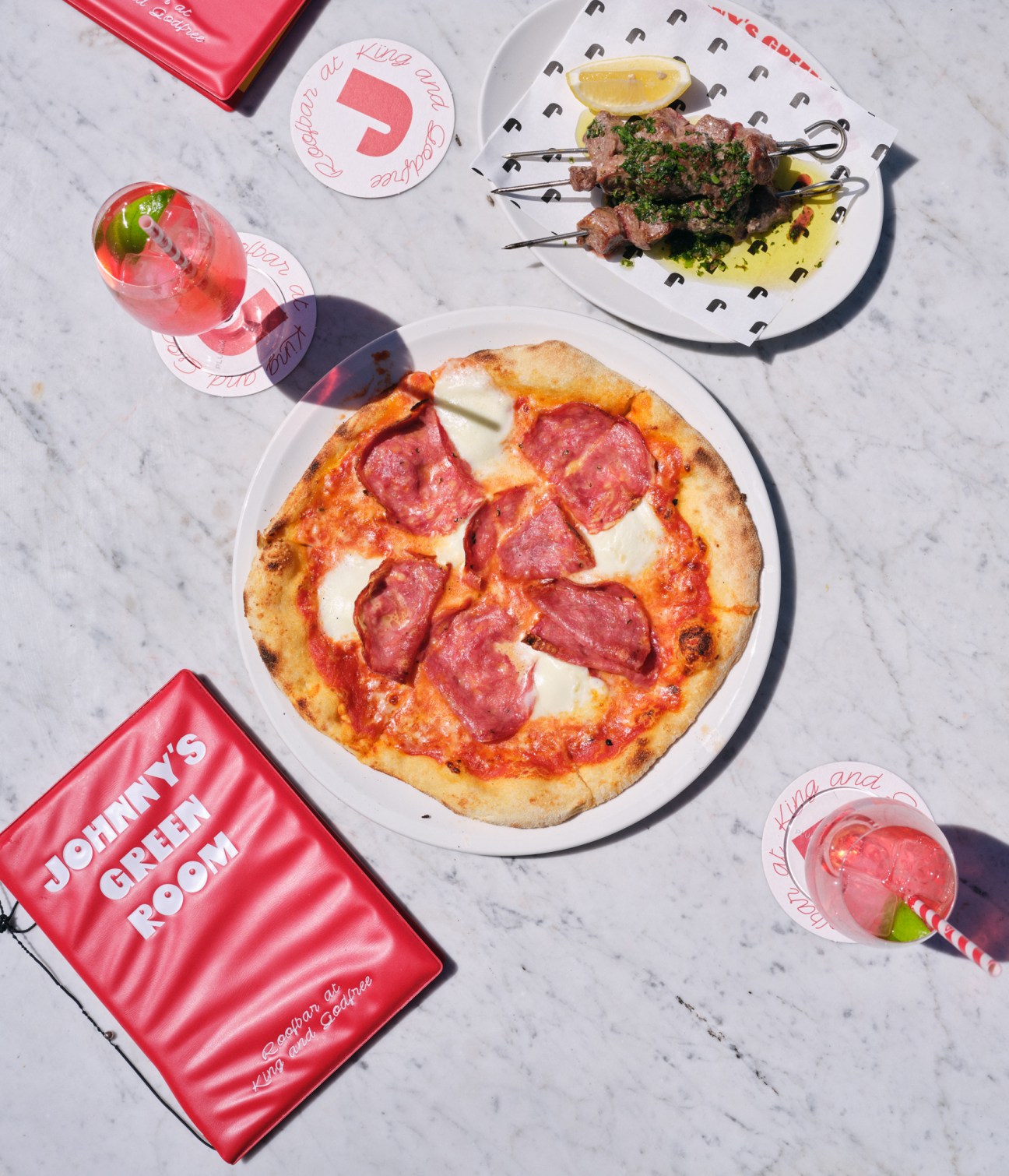
Though Valmorbida and Sbardella own and operate almost all of the hospitality venues, their idea was for each to have its own Italian-accented identity to attract a different demographic of patrons and widen their appeal. While the vibrant red graphics and DJ sets at rooftop bar Johnny’s Green Room pull in students from nearby Melbourne University, the downstairs coffee bar with its classic awnings takes its cues from Milan and attracts a distinctly older crowd of customers, many of whom have been coming to King and Godfree for the past 70 years.
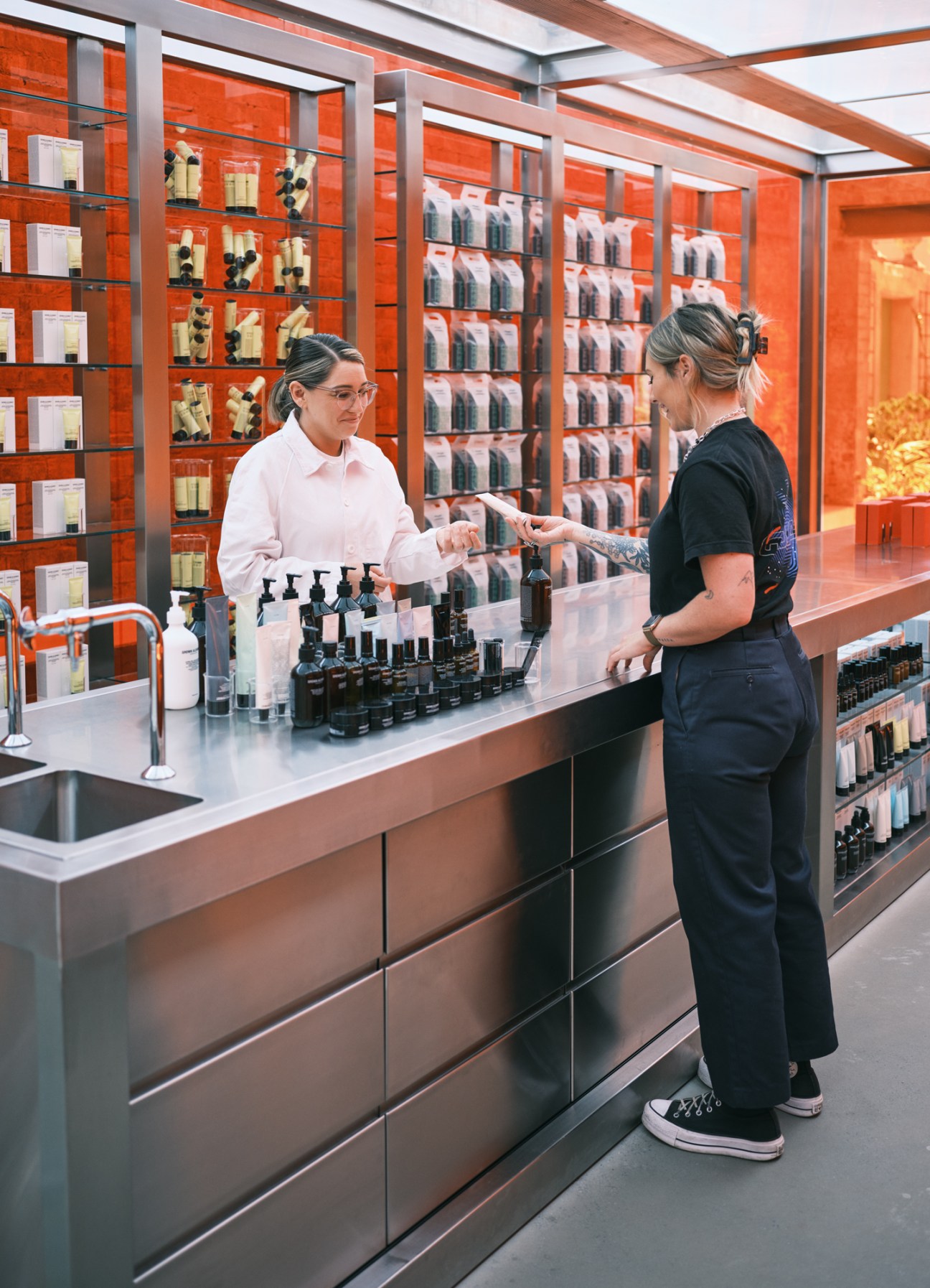
Renting out spaces in the adjoining Faraday House building are a design practice, music promoters and Australian skincare retailer Grown Alchemist. With a view to sustainability, King and Godfree also cultivates a large vegetable garden to service the kitchen and reduce waste. “Today the building has something for everyone, from a morning espresso and pastry in the deli to an evening of cocktails and snacks on the rooftop,” says Valmorbida. “Every venue complements rather than competes with each other and offers the community something new and unique.”
Why it works
Melbourne’s hospitality venues became retailers during the pandemic, providing essentials in the form of takeaways and focusing on people in their neighbourhood, rather than depending on visitors travelling in from distant lands. As these restaurants reopen, retailers should look to their example.
Local heroes
4.
Home investments
Madrid
Historically, Madrileños have done a good job of supporting independent family businesses. But while you’ll still spot shops that have been around for centuries selling buttons and baskets, they are disappearing at an alarming rate. The pandemic sounded a death knell for many and rents have been creeping steadily upwards, to a level that’s practically unattainable for anyone but chains. The city’s oldest bookshop, Pérgamo, and iconic record shop Cuervo Store both closed recently.
But it isn’t all doom and gloom. The creative scene is booming, with galleries, design shops and fashion boutiques attracting visitors with cash to spend. Today, footfall on Gran Vía is second only in Europe to London’s Oxford Street. The city has also invested vast sums into making over its centre and there’s hope that the retailers that give the city its character will gain a new lease of life.
Case study:
Homeware shops
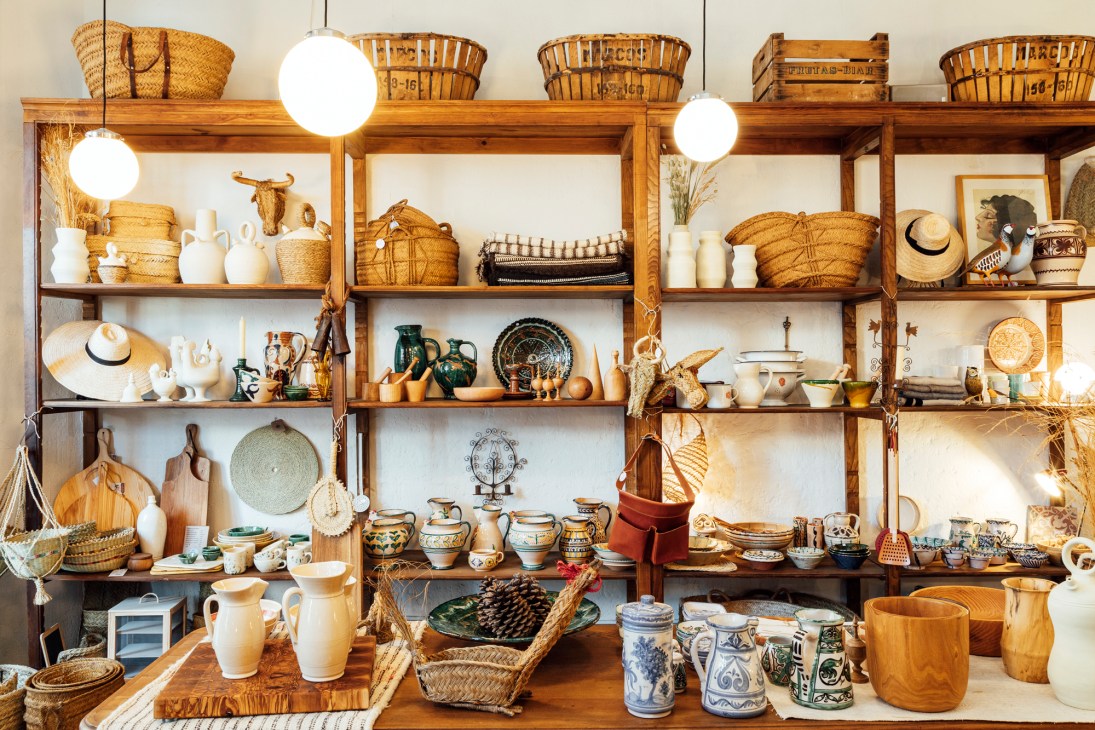
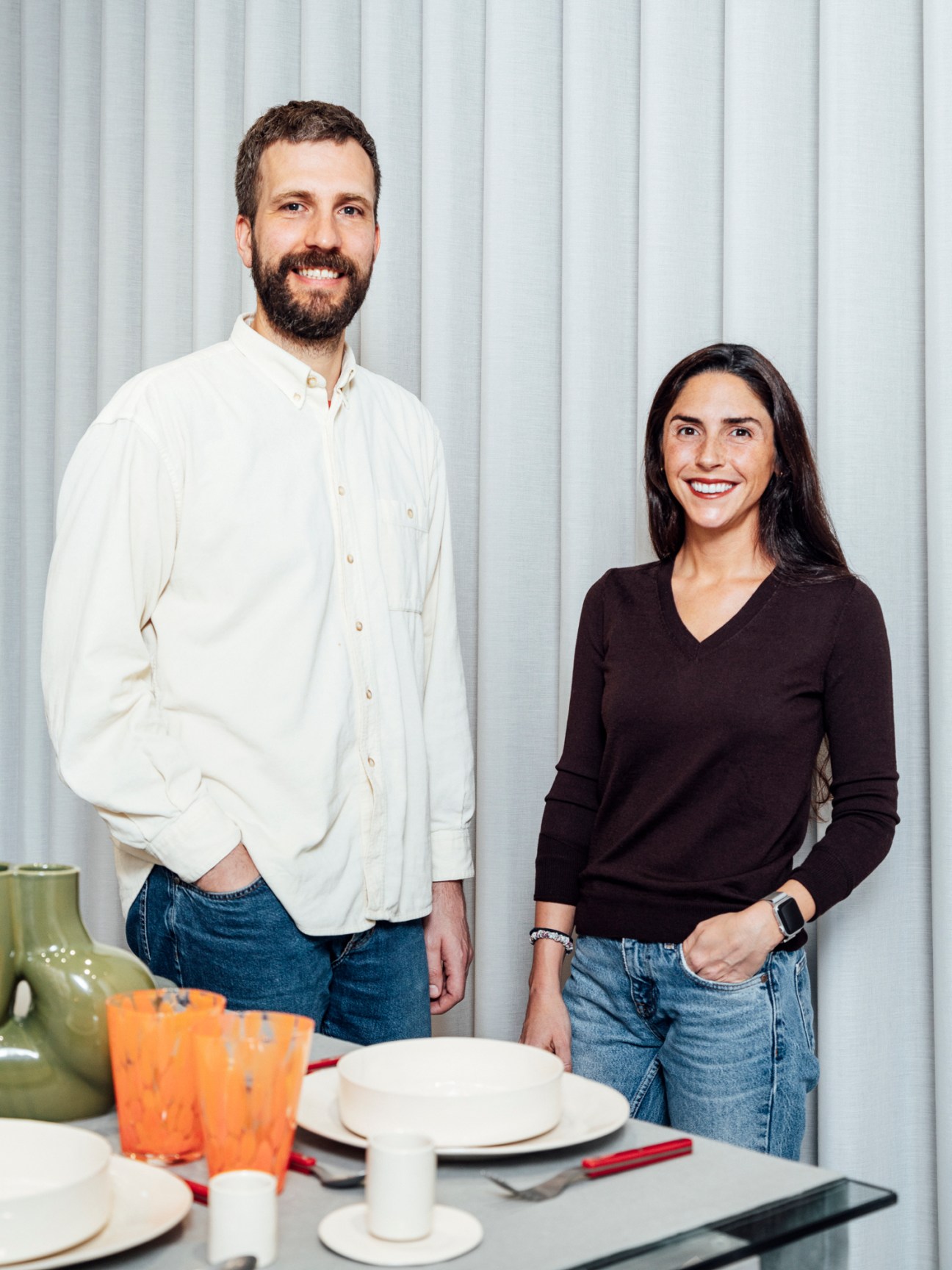
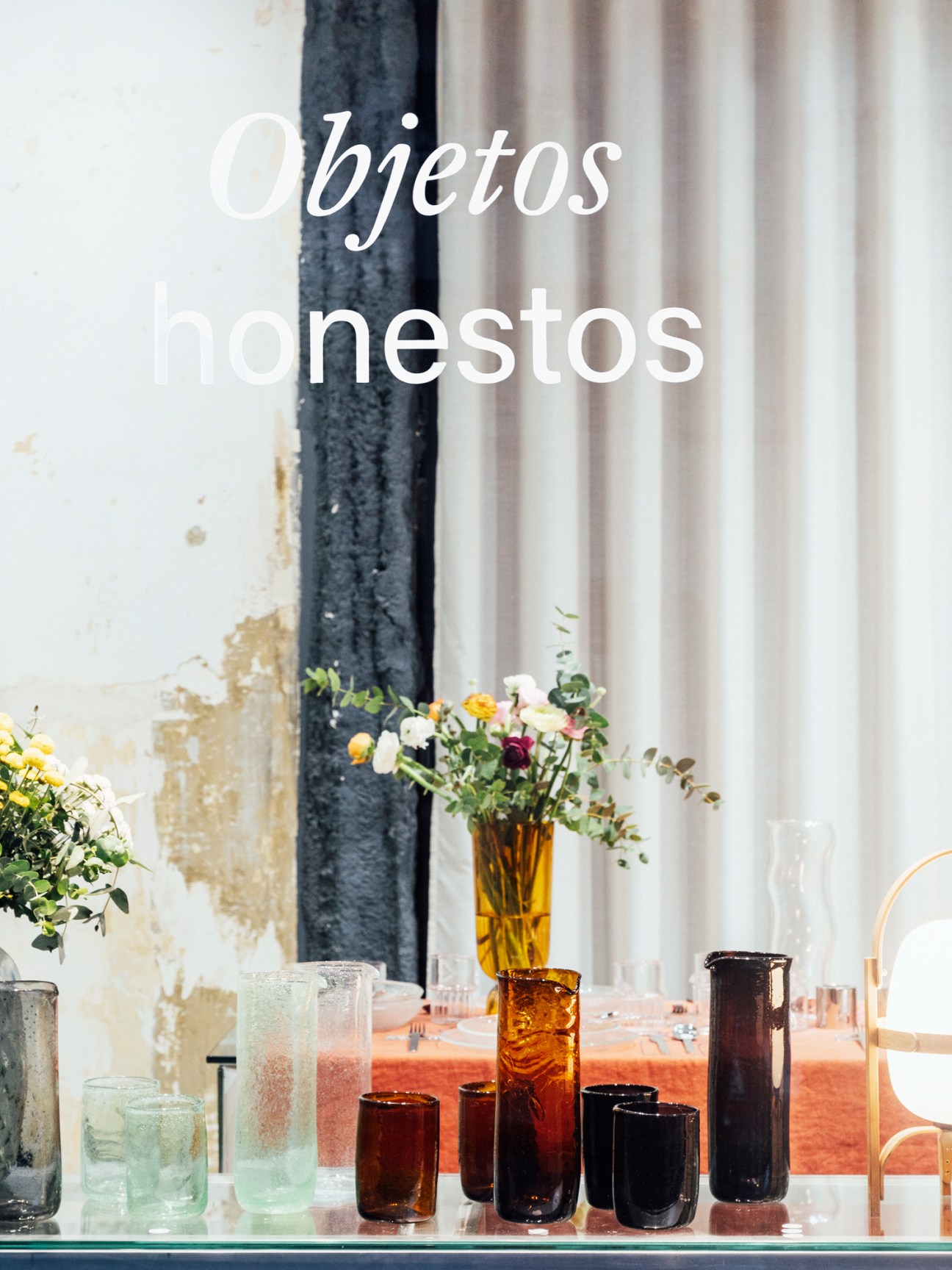
Plaza de Olavide is the beating heart of Madrid’s Trafalgar neighbourhood. It’s about as postcard-perfect as the Spanish capital gets, with a fountain at its centre surrounded by tree-shaded restaurant terraces. On a side street adjoining the square sits Hecho, a homeware shop that was launched last spring by a team of six architects and designers. The shop is attached to the studio space shared by the founders and stocks a mix of big international names, such as Hay and Ichendorf Milano, alongside homegrown brands including Santa & Cole. Hecho also collaborates with small Spanish makers to produce collections, including hand-embroidered tablecloths and textured glass dinner plates.
“For us it was really important for people to be able to come into the shop so they can see and touch the objects,” says co-founder Enrique Ventosa. “Everyone was telling us that we should open an online shop first, but we decided to do it the other way around. And so far it has been great; we sell much more through the [physical] shop than we do through our website.”
For Ventosa, changing consumer habits in the wake of the pandemic have helped boost business. “Before Covid, Spanish people lived their lives in the streets and didn’t pay much attention to the inside of their homes,” he says. “The pandemic changed that. After having spent so much time at home, people are much more focused on filling them with beautiful objects that are ethically produced.”
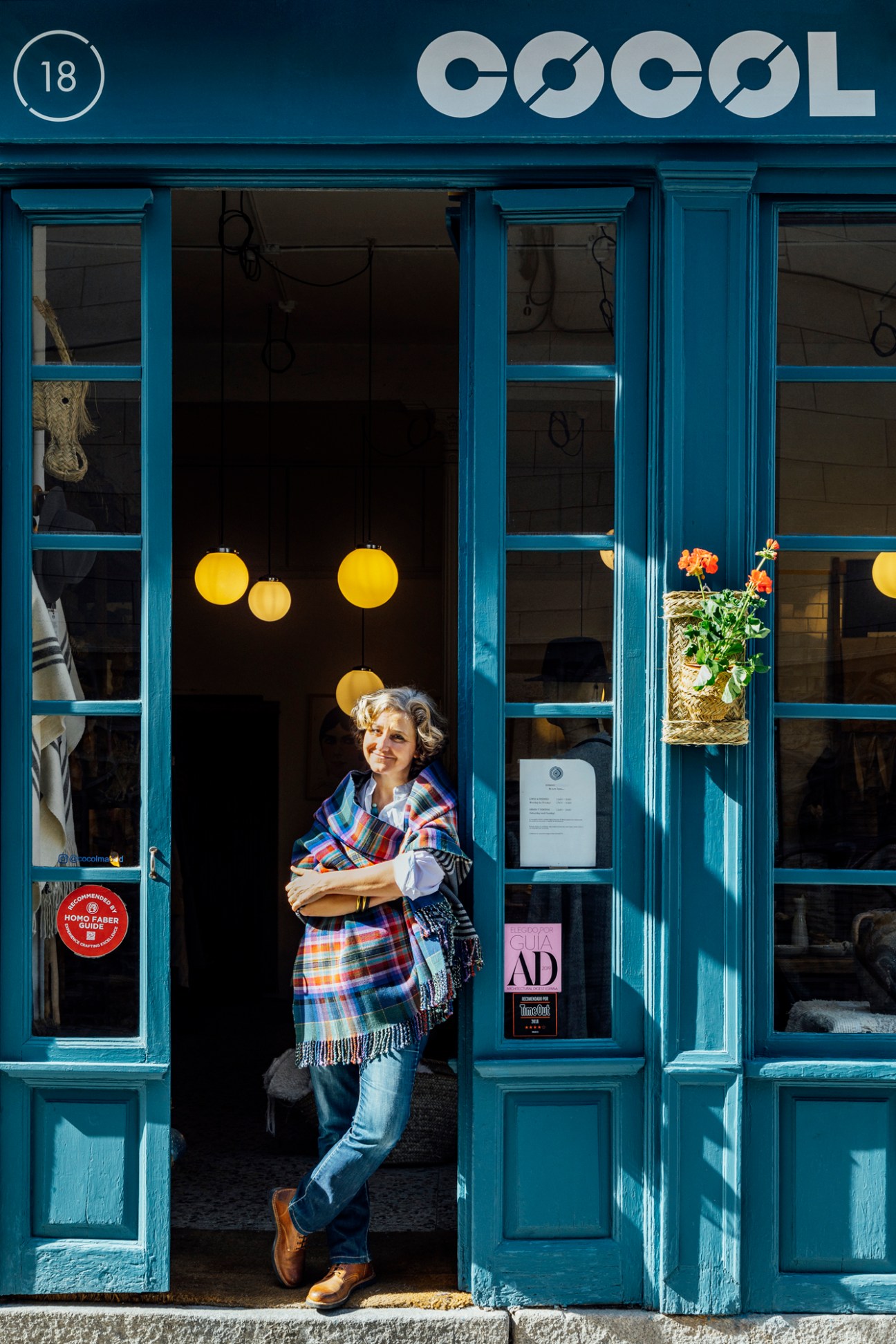
An increased interest in provenance is also something that shopkeeper Pepa Entrena has noticed. She founded homeware shop Cocol in 2017 on the edge of another of Madrid’s most idyllic squares, Plaza de Paja. The shop is a celebration of traditional Spanish handicrafts, stocking everything from woollen blankets from Cádiz to ceramics from Jaén. “People have started questioning more where things were made and who made them,” says Entrena. “Rather than having six identical glasses from Ikea, they’d rather have one hand-crafted piece.”
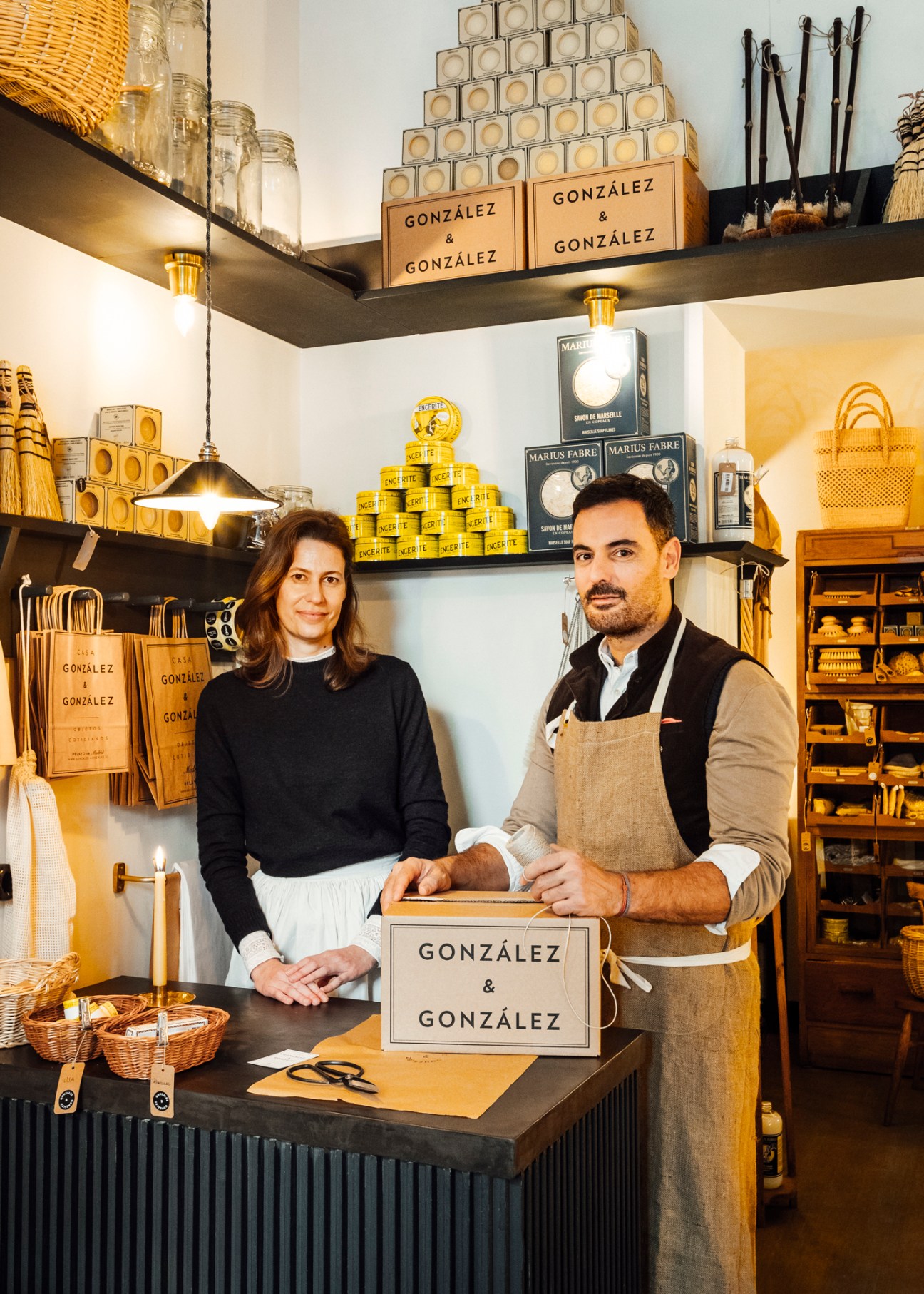
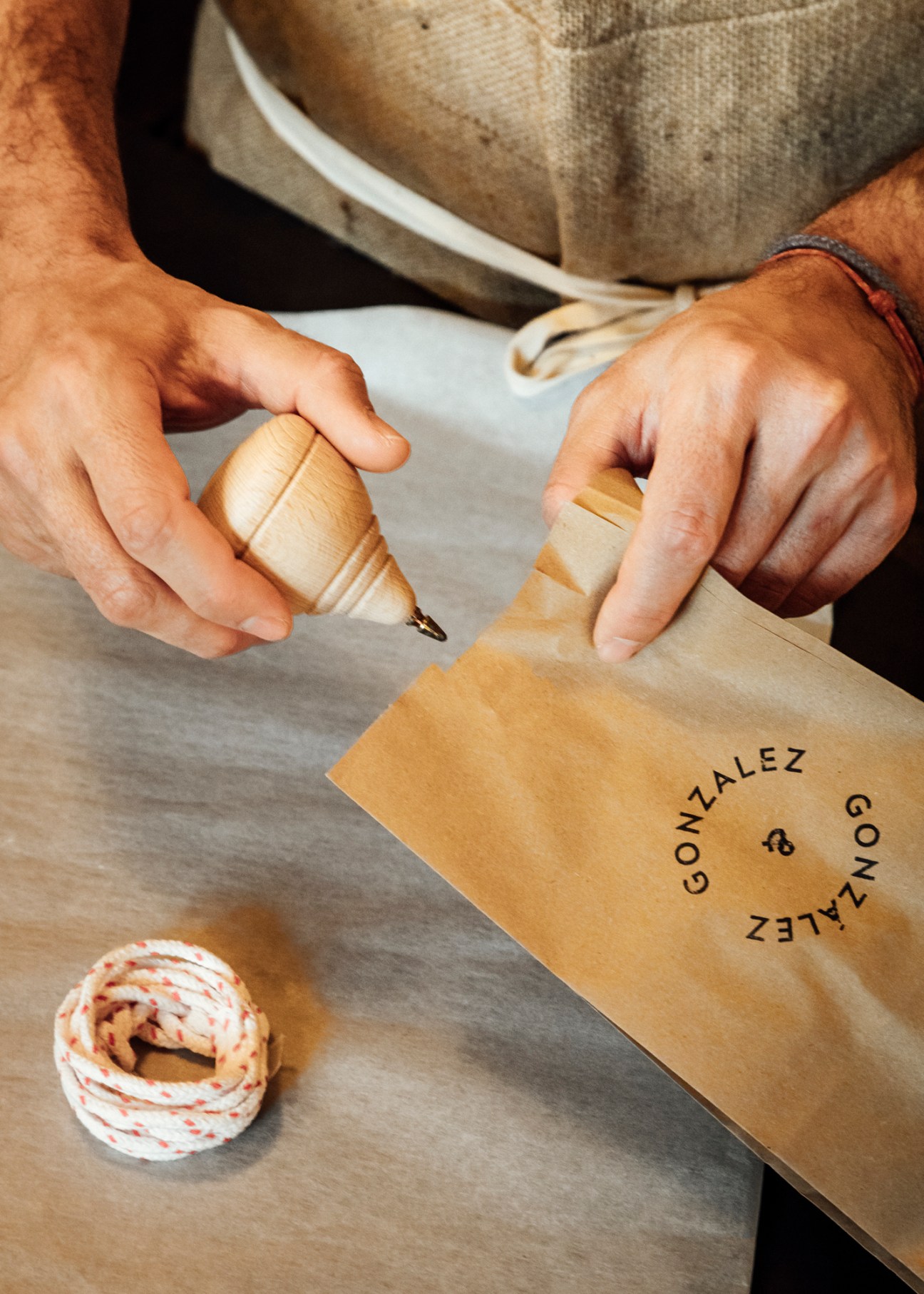
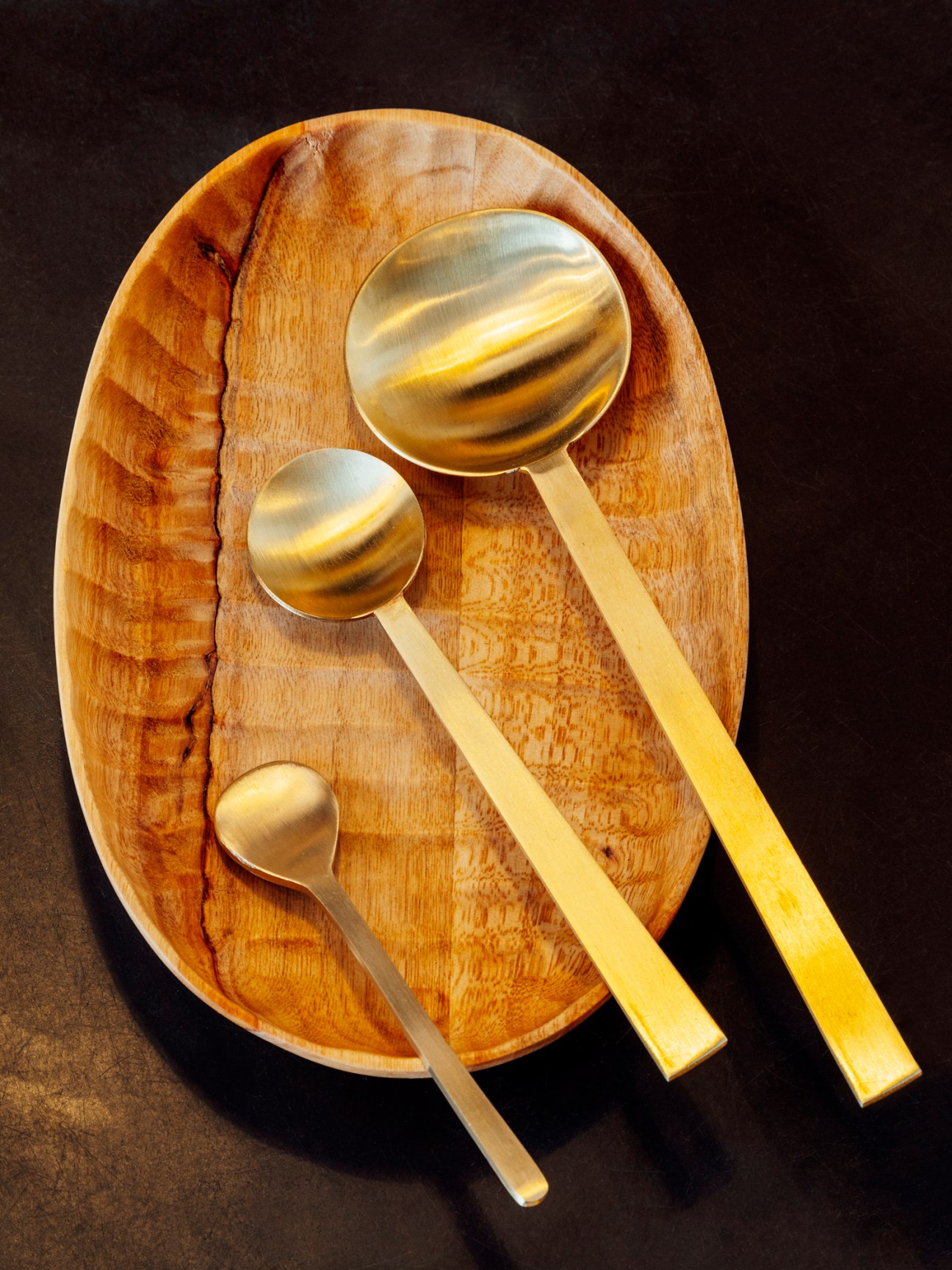
Another of the city’s most successful homeware shops is Casa González & González. From Japanese zinc buckets to ostrich-feather dusters from South Africa, every product in the shop is labelled with its country of origin. “Our stock is both utilitarian and aesthetically beautiful,” says María Rosa González, an art historian who founded the shop with interior designer Javier González in 2017. “What really keeps us going as a bricks-and-mortar retailer is that people enjoy visiting the shop and having us explain the stories behind the products.”
Metrics
Prime retail rent per sq m: 2019: €275 per sq m/month 2021: €245 per sq m/month
High street footfall: Gran Vía daily footfall: 60,800
Number of independent shops in the city: Unconfirmed
City retail vacancy rate: Current: 10.7 per cent, 2019: 7.6 per cent
Retail winners: Clothing shops: sales growth rates of more than 47 per cent compared to 2020 Jewellery shops: sales increased by more than 69 per cent compared to 2020
Retail losers: Shops selling electrical goods: year-on-year 10.7 per cent decrease
Department store rethink
5.
Telling stories
Zürich
Case study:
Jelmoli
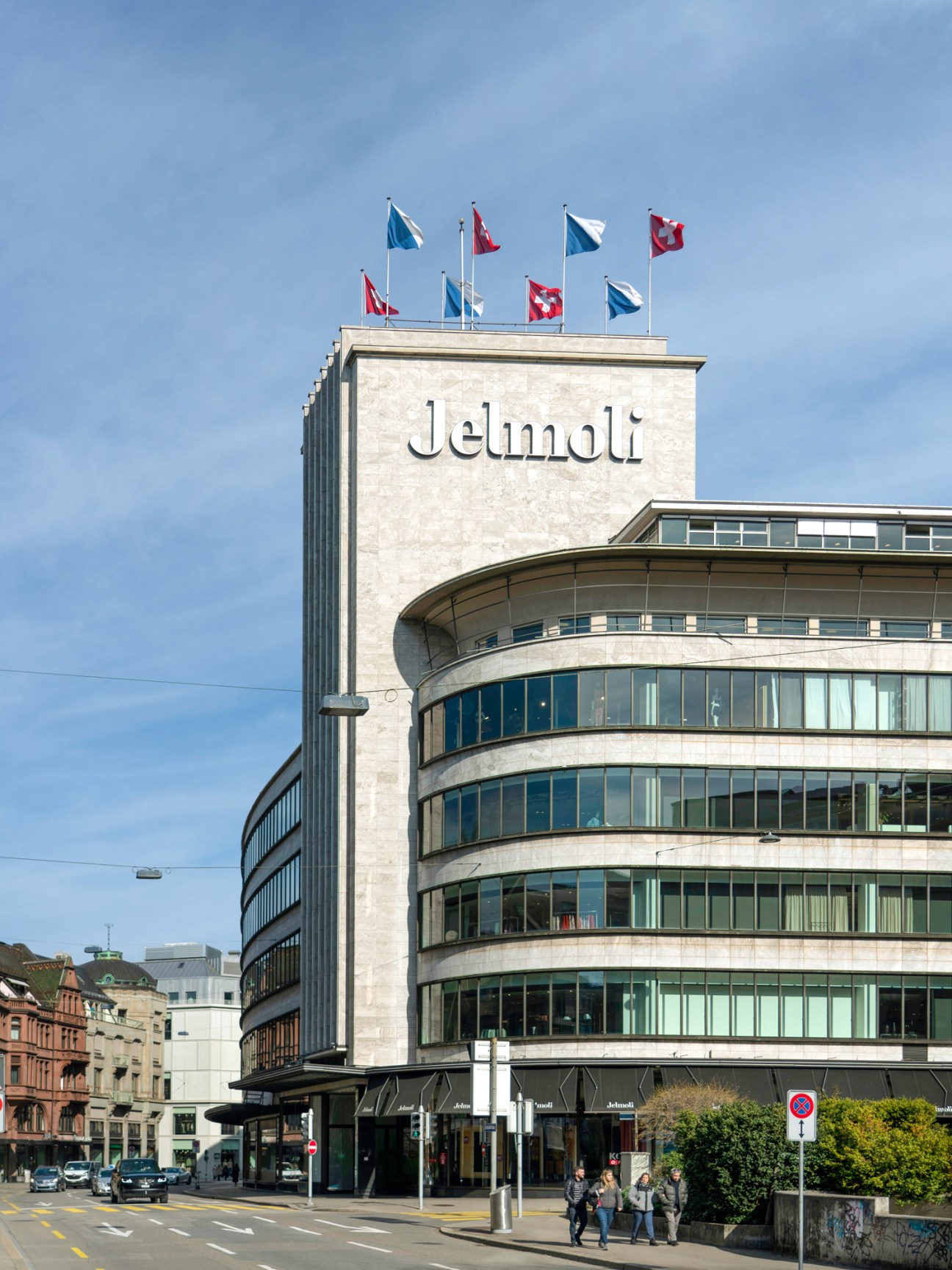
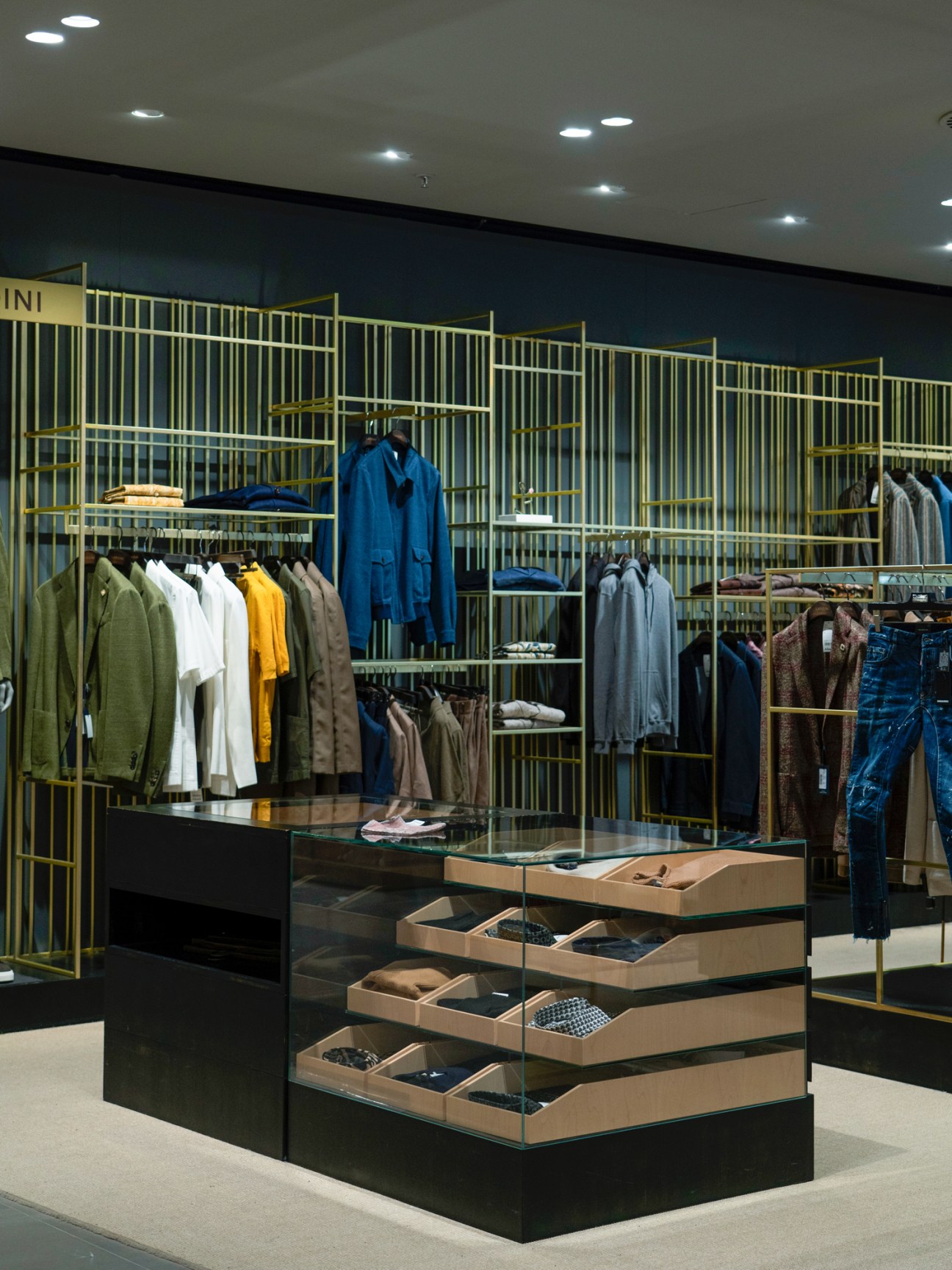
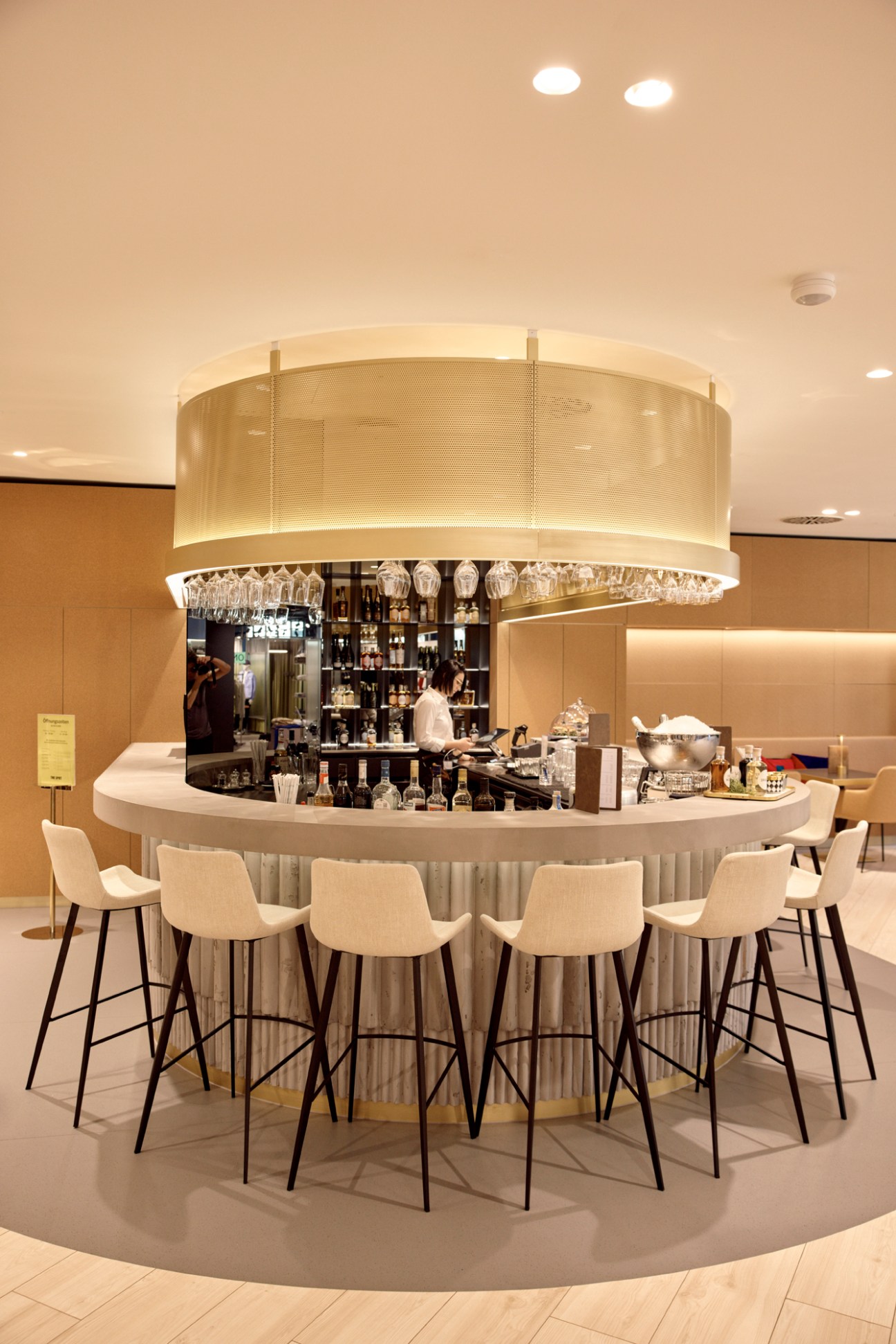
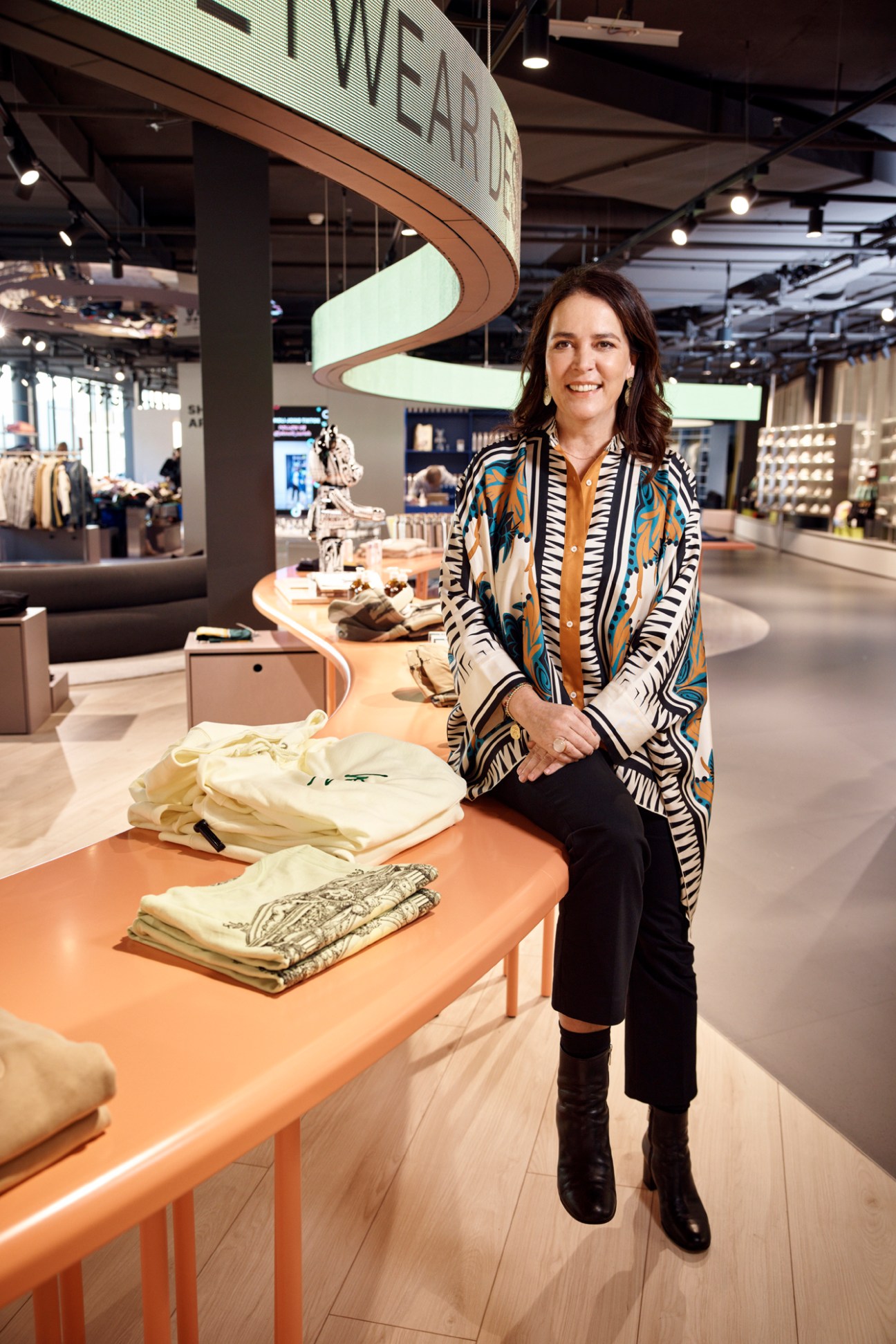
While operating a storied Swiss department store would be a dream job for many in retail, taking this on during a pandemic might seem daunting. But Nina Müller, who became CEO of Zürich’s Jelmoli in 2020, is an optimist. That has paid off when transforming a local favourite into a retailer with a sense of place.
Rather than benchmarking foreign department stores that are looking increasingly uniform, Jelmoli has become a stage to showcase the best of Zürich. “Our approach has been about changing the space and getting people to bring in different stories,” says Müller, reeling off a list of successful partnerships – both commercial and social – that take the shape of pop-ups and more long-term collaborations.
One example is the introduction of Reawake, a pre-loved fashion shop, into the retail mix, first as a temporary showcase and now as a permanent fixture. Flexible arrangements will continue: Monocle now has a smart kiosk in Jelmoli’s sprawling food market. “It’s all about personality here,” says Müller. “We’re proud to be a department store unlike anything you’ll find elsewhere.”
Neighbourhood revival
6.
People power
Paris
Case study:
Village Popincourt
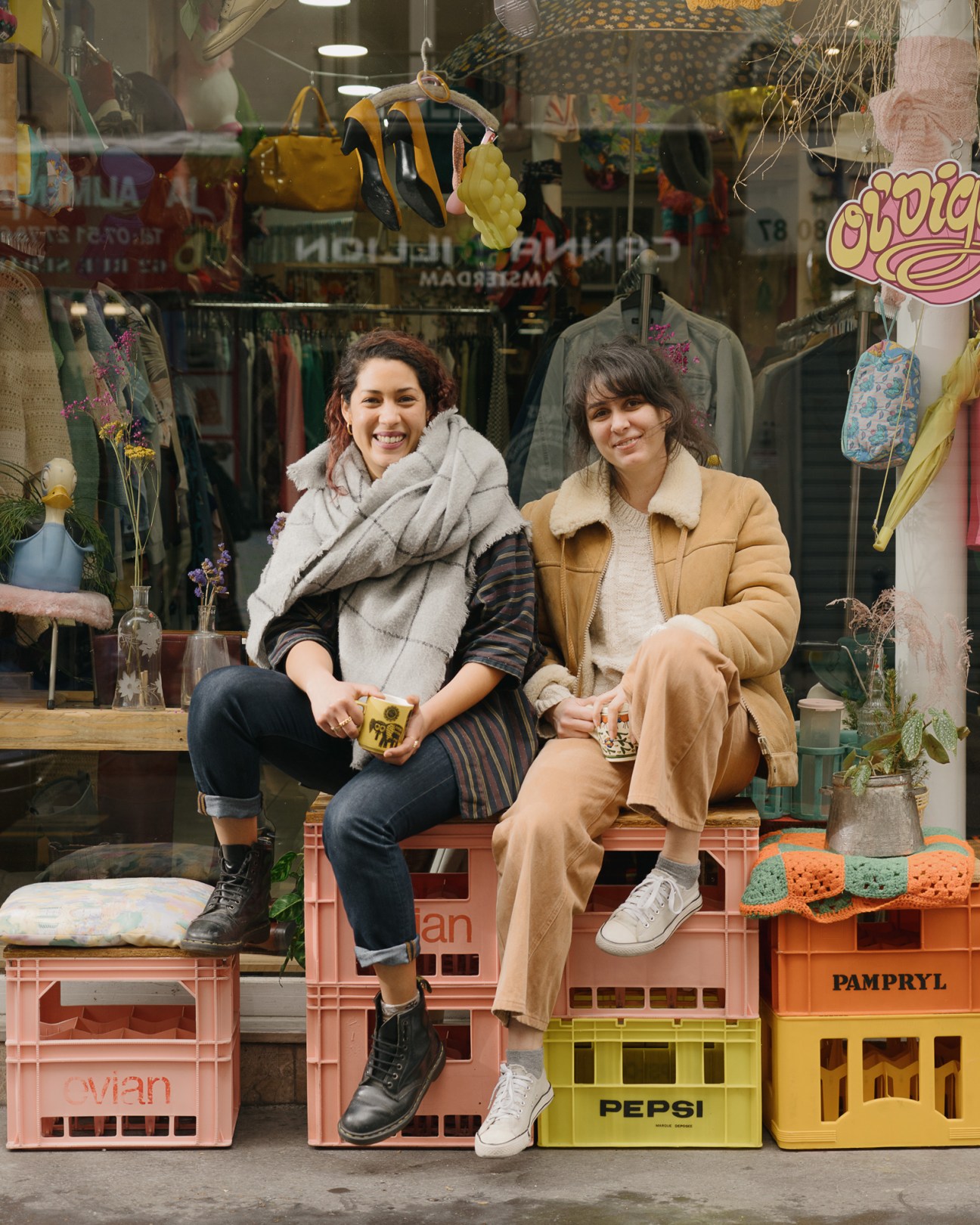
It’s a sunny morning on Rue Sedaine in the 11th arrondissement and people are stepping out of La Briée pâtisserie with fresh brioche and coffee. Further down the street, greengrocers, butchers and vintage shops are pulling up their shutters. Until recently, this was not a common scene in Popincourt. The neighbourhood was traditionally home to clock-makers and cabinet-makers but in the mid-1990s it was taken over by textile wholesalers. The area was left with few shops and too many delivery trucks. “You could say that it was put on hold for 20 years,” says Jeremy Derny-Bousquet, the owner of bookshop L’impromptu, which opened in late 2018.
In the past few years, independent shops have been making their way here. In 2017 the area’s artisans and business owners founded Village Popincourt, an association encouraging a retail revival encompassed by Boulevard Richard Lenoir, Boulevard Voltaire and Rue de la Roquette. “The purpose is to create a synergy to bring this whole neighbourhood to life,” says Derny-Bousquet.
Recent arrivals include organic greengrocer Biomood and wine shop Sémélé. Déborah Sitbon Neuberg, founder of clothing brand De Bonne Facture, opened her first shop on Rue Sedaine in September. The atmosphere of Village Popincourt drew her here and she now regularly involves her neighbours in events. “When we launched our latest capsule collection, we served cheese from [neighbouring] Laiterie Gilbert and biscuits from the patisserie La Cave à Desserts,” she says. “This network helps make the neighbourhood more lively and to animate our shops in a collective way.”
The association has worked to get two roads pedestrianised on Sundays as part of the Paris Breathes campaign. “Running a small business can be lonely so having neighbours who experience the same thing is important,” says Derny-Bousquet. “We need to support each other, especially after two very difficult years.”
Metrics
Average rent per sq m: €11,074 (2022)
High street footfall: Champs Elysées: normally 300,000 (fell to 45,000 per day in December 2021)
Independent shops: 46,000
Retail winners from 2018 to 2021: Bicycles (for sale and rent): up 47 per cent Delicatessens: up 57 per cent Discount shops: up 115 per cent
Retail losers from 2018 to 2021: Bedding/mattress shops: down 40 per cent Shoe shops: down 24 per cent Household appliances: down 20 per cent
Growing footfall
7.
In full swing
London
Case study:
Carnaby Street
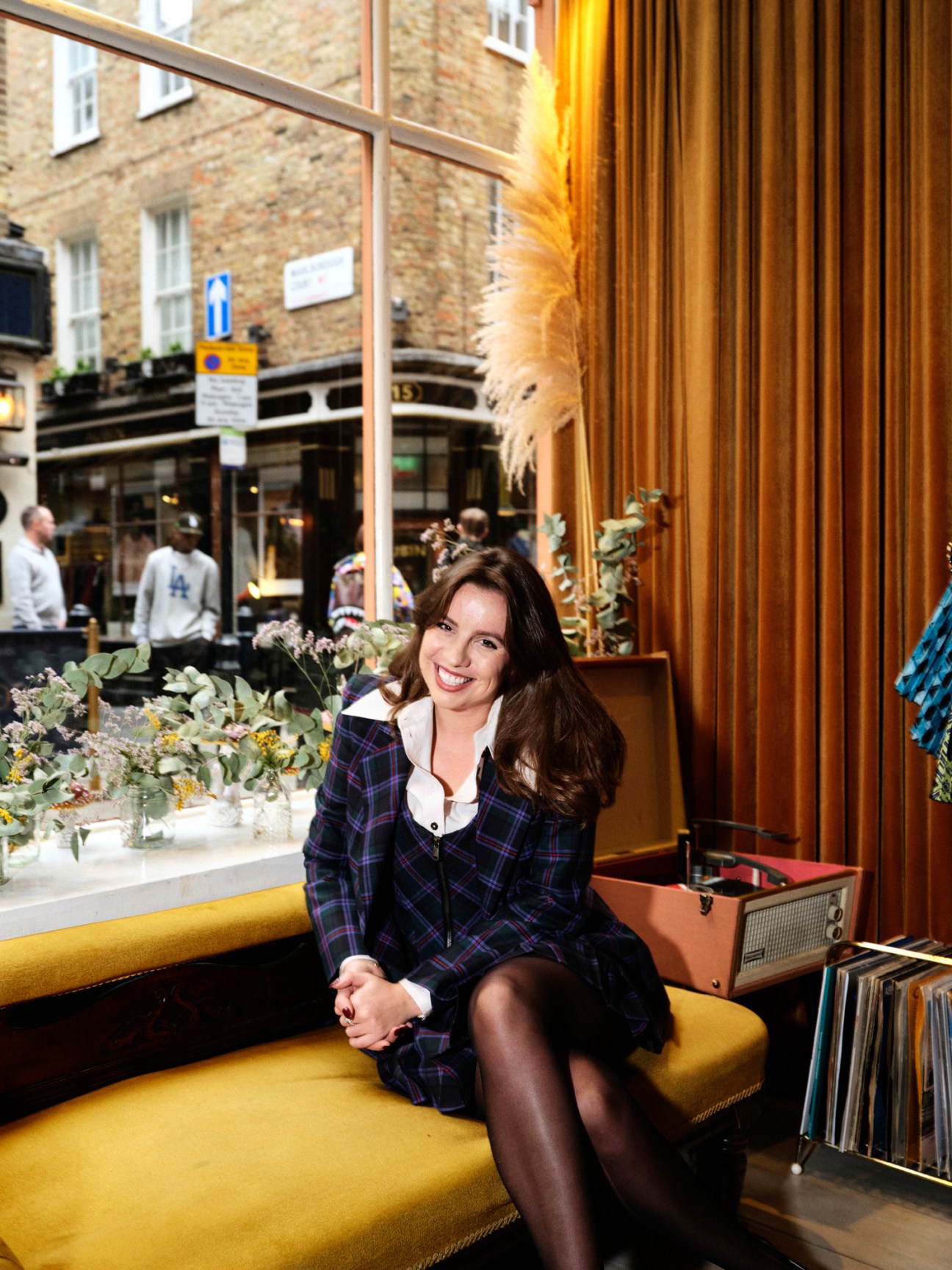
Despite being in the centre of the city, Carnaby Street has a neighbourly feel (it still has its 1930s swimming pool). But camaraderie alone is no guarantee of economic success. That requires efficient planning, smart entrepreneurs and responsible property initiatives – and it’s lucky that the landlords and shopkeepers here understand this.
The street first emerged as a retail destination in the mid-20th century, when it became indelibly linked to the Swinging Sixties but it then lost its way for decades. In recent years there has been a shift that’s seen an influx of better retailers. This is down to Shaftesbury, the real-estate trust that owns the majority of the neighbourhood. “We love working with our tenants,” says retail director Samantha Bain-Mollison. “And by making sure the mix is interesting, we increase footfall and spending.”
“At our shop I style every customer personally and everyone who comes in leaves as a friend,” says Annie Doble (pictured), founder of Annie’s Ibiza, which sells pieces by emerging designers alongside vintage dresses. Doble’s Newburgh Street outpost is a treasure trove of unconventional finds. “It’s an old-school way of shopping,” she says. Doble set up shop here in 2020 after Shaftesbury asked if she would bring her Ibiza-based business to London. It seemed like an odd choice at the time but the shop is thriving.
Winning concept
8.
Adapt and survive
Tokyo
It has been a tough couple of years for Tokyo retail. Risk-averse consumers spent more time in their local neighbourhoods and less in central shopping areas such as Ginza and Shinjuku. Retail developments that had been built to cater to tourists or armies of office workers were suddenly quiet, as borders closed and footfall dropped.
Fashion retailers have had to be agile to meet the increased demand for casual attire. Product ranges were quickly adjusted to suit the changes in lifestyle. Department stores, many already struggling before the pandemic, had to grapple with sporadic short-notice closures and low spending on formalwear. They’ve worked valiantly to find new concepts, such as the Isetan-Mitsukoshi “I’m Green” idea of reselling customers’ unwanted “vintage” goods. Department store operator J Front Retailing has opted to diversify, saying that although physical shops will continue to remain at the heart of its business, it will now also focus on developing hotels and apartments. E-commerce has grown, unsurprisingly, while home goods proved as popular in Japan as they did elsewhere.
If 2020 was a year of survival mode for many businesses, 2021 showed that, given half a chance, the Japanese economy can rebound. As Japan starts to emerge from hibernation, there are some encouraging signs. Homegrown fashion giant United Arrows reported year-on-year sales increases of almost 15 per cent in January; Uniqlo’s parent company Fast Retailing announced record profits (while warning of uncertain times ahead). Luxury watches and bags were popular with shoppers who haven’t been able to spend money on overseas travel and international labels are competing once again for prime locations in Ginza and Omotesando.
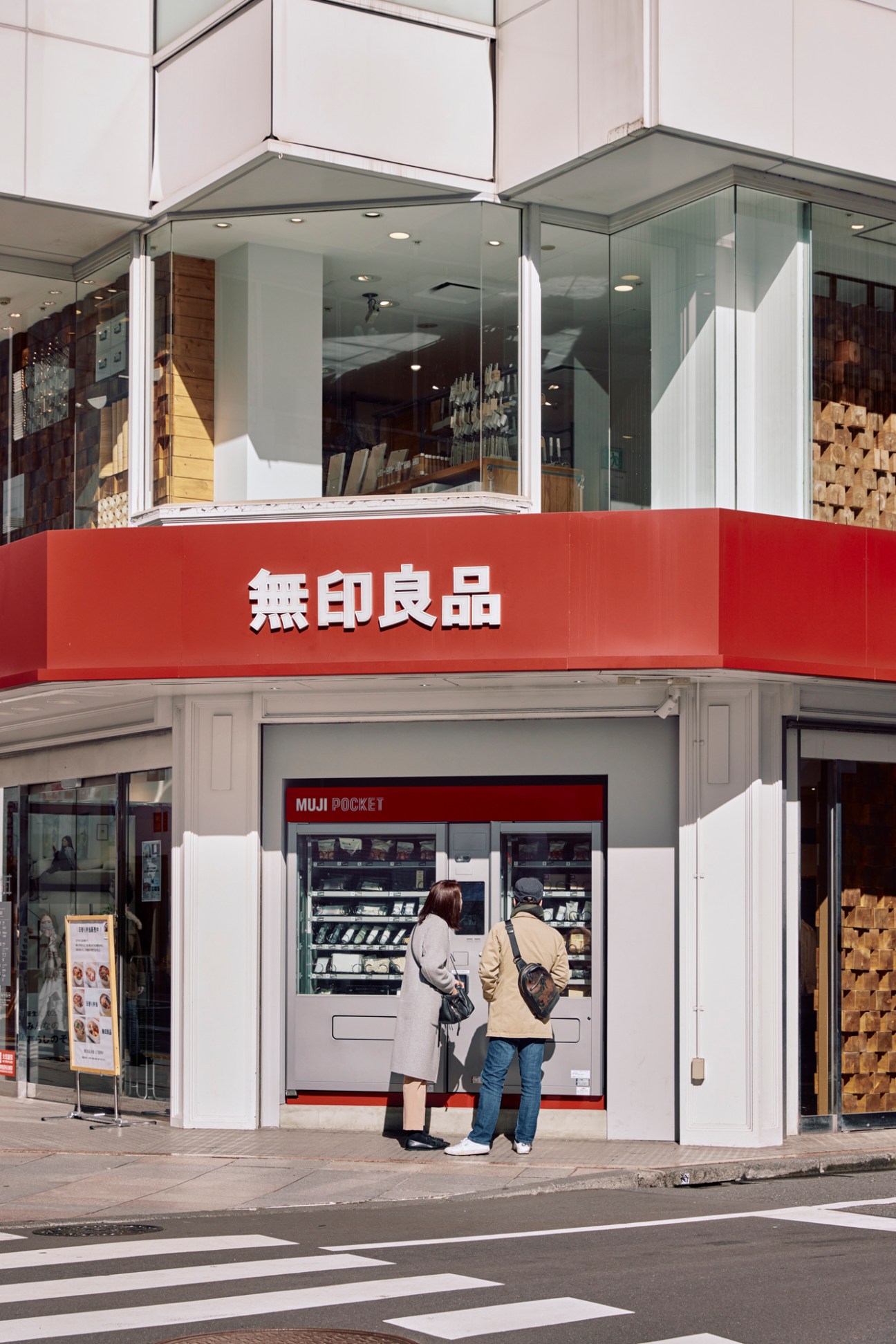
Case study:
Muji reinvented
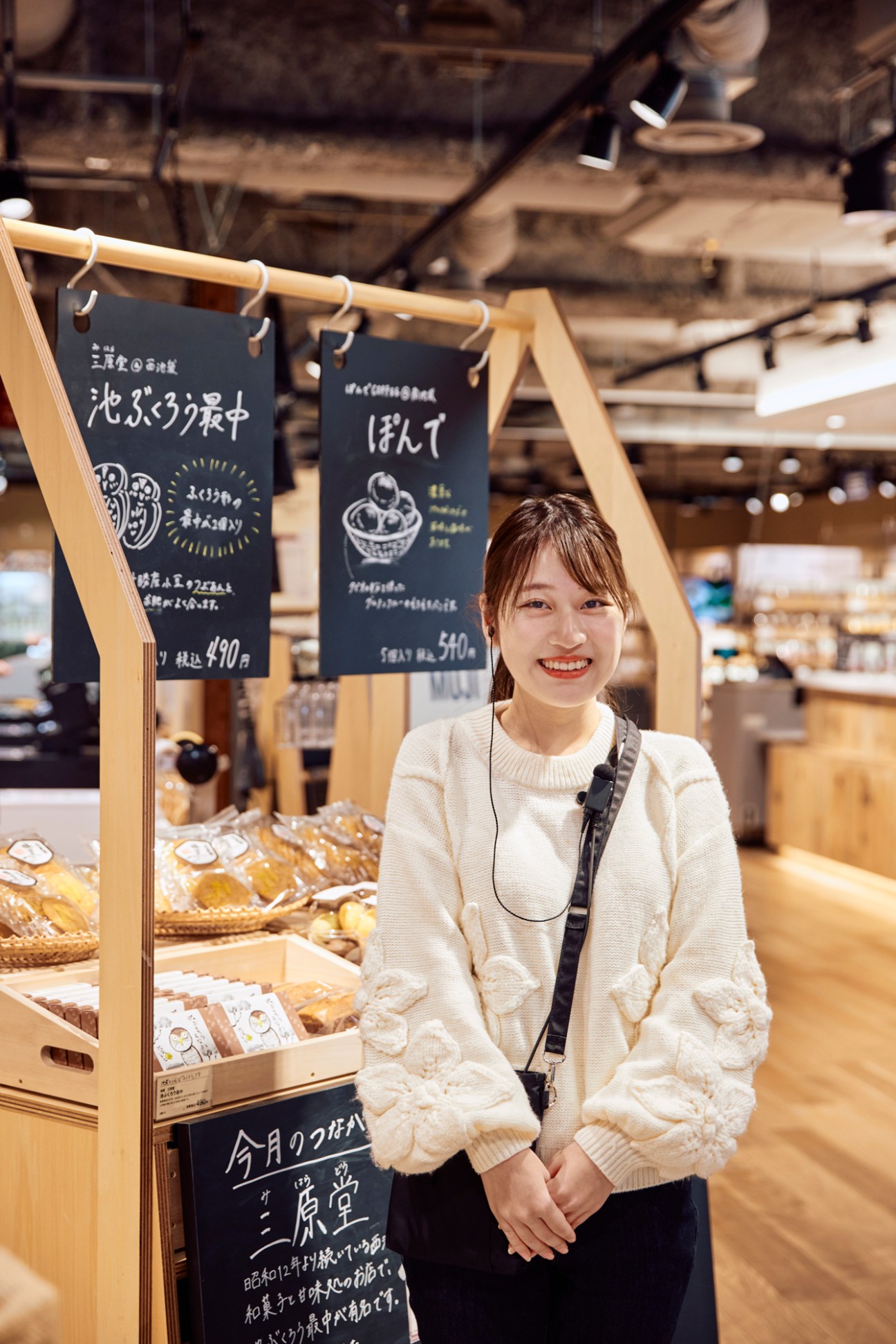
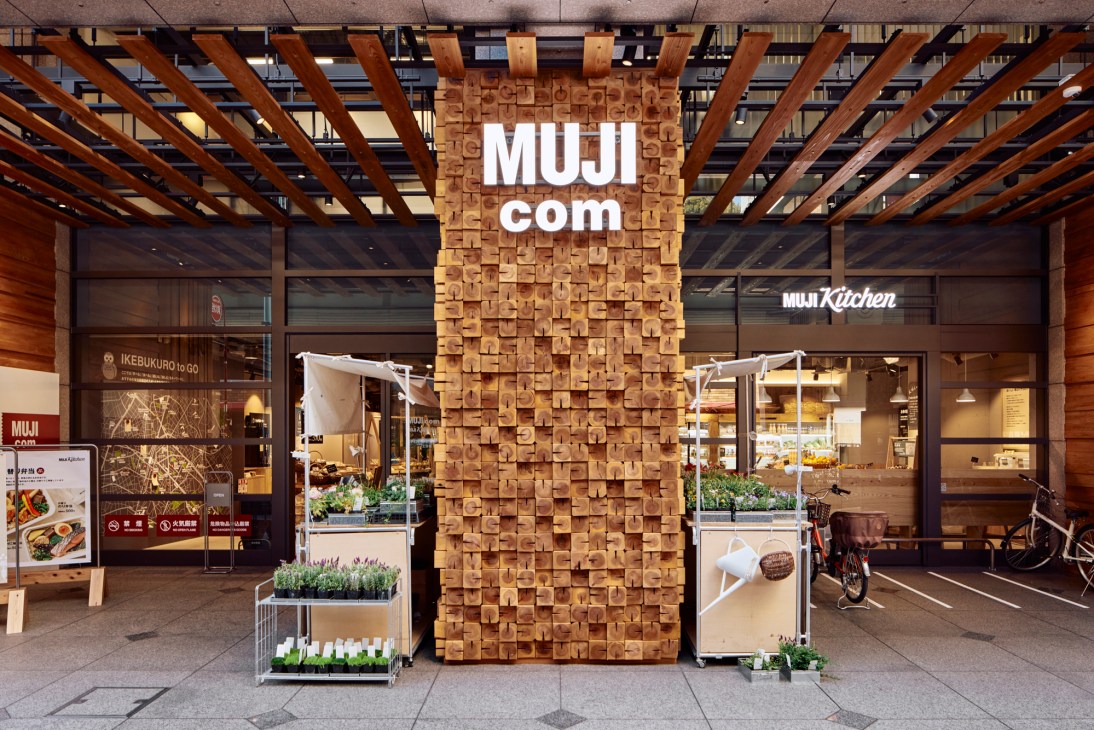
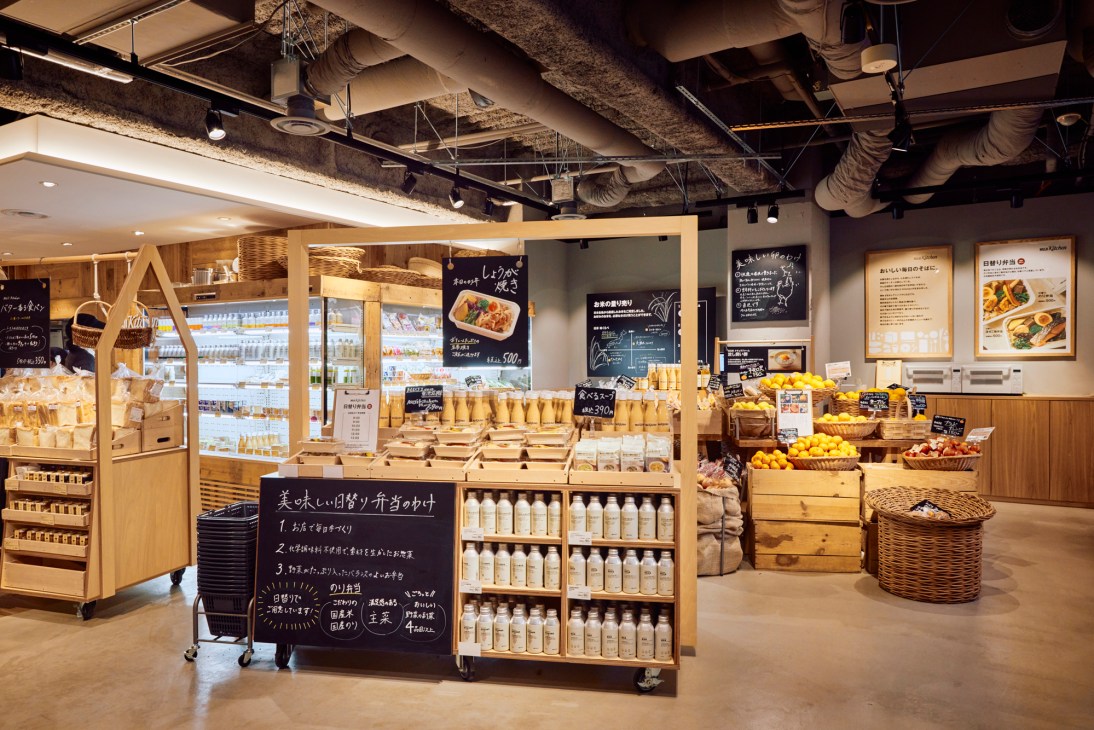
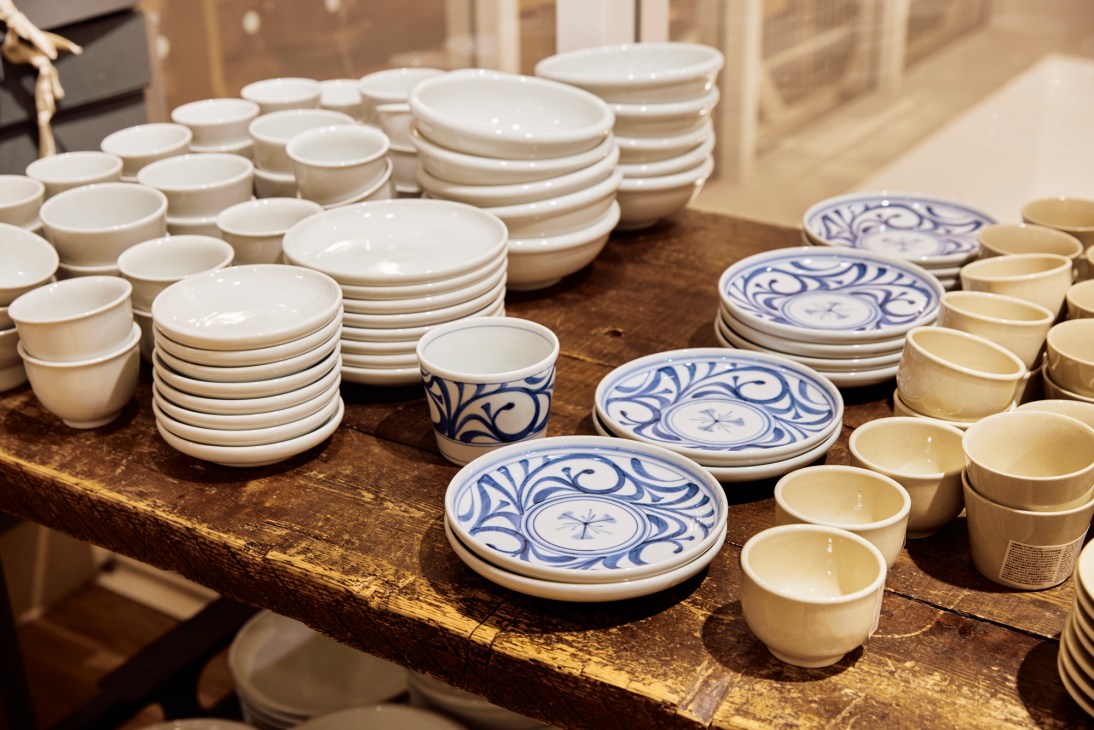
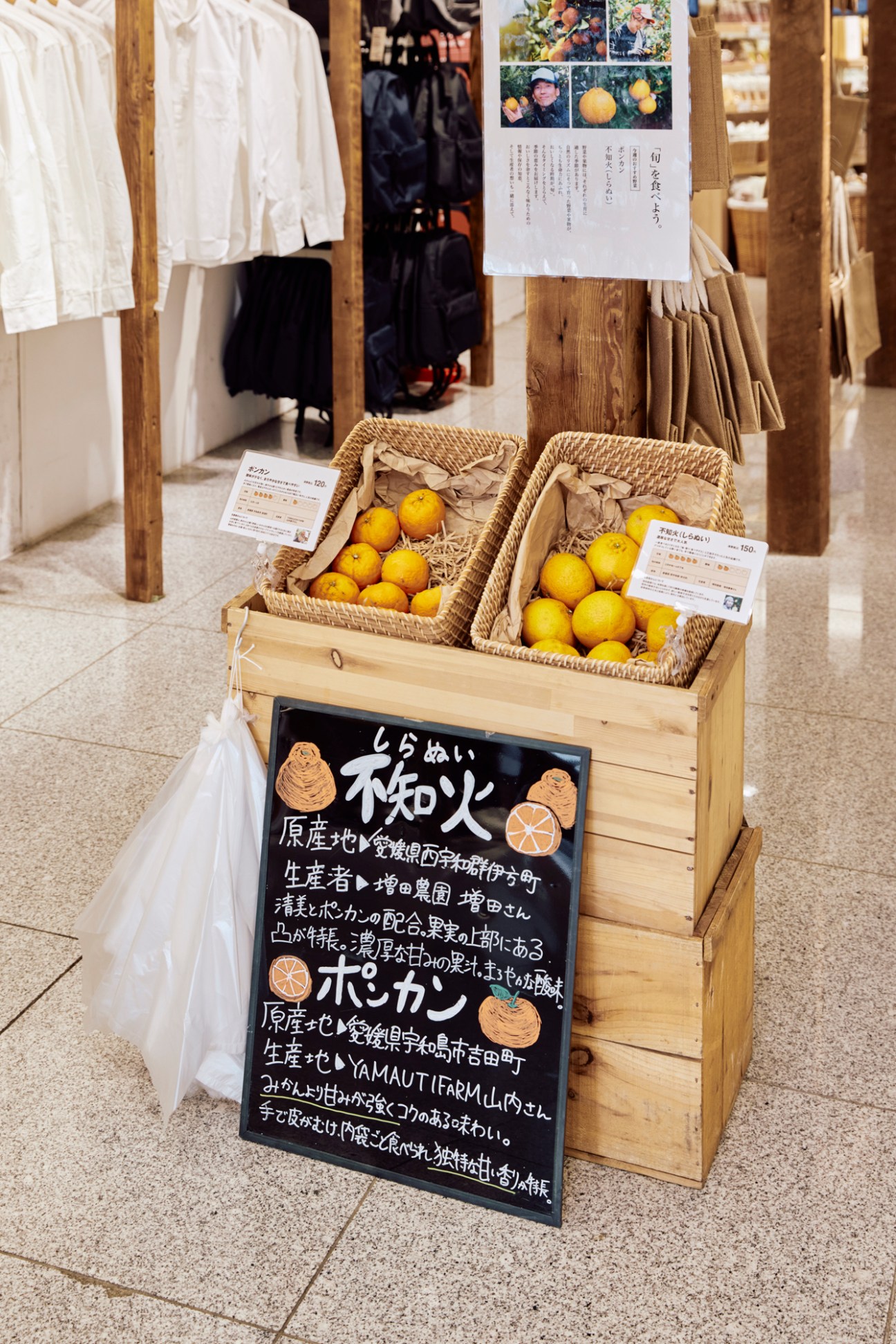
At first glance, the new Mujicom shop in Higashi Ikebukuro, central Tokyo, has all the familiar elements: the red and white logo, blonde-wood interior and jaunty music. But something is different: instead of the usual white appliances and linen shirts, this Mujicom (Muji’s small-scale community-based concept) sells fresh produce and has a deli counter. Citrus fruits are piled high alongside pictures of the farmers who grew them. Chilled lockers store online orders, while a map highlights small local businesses.
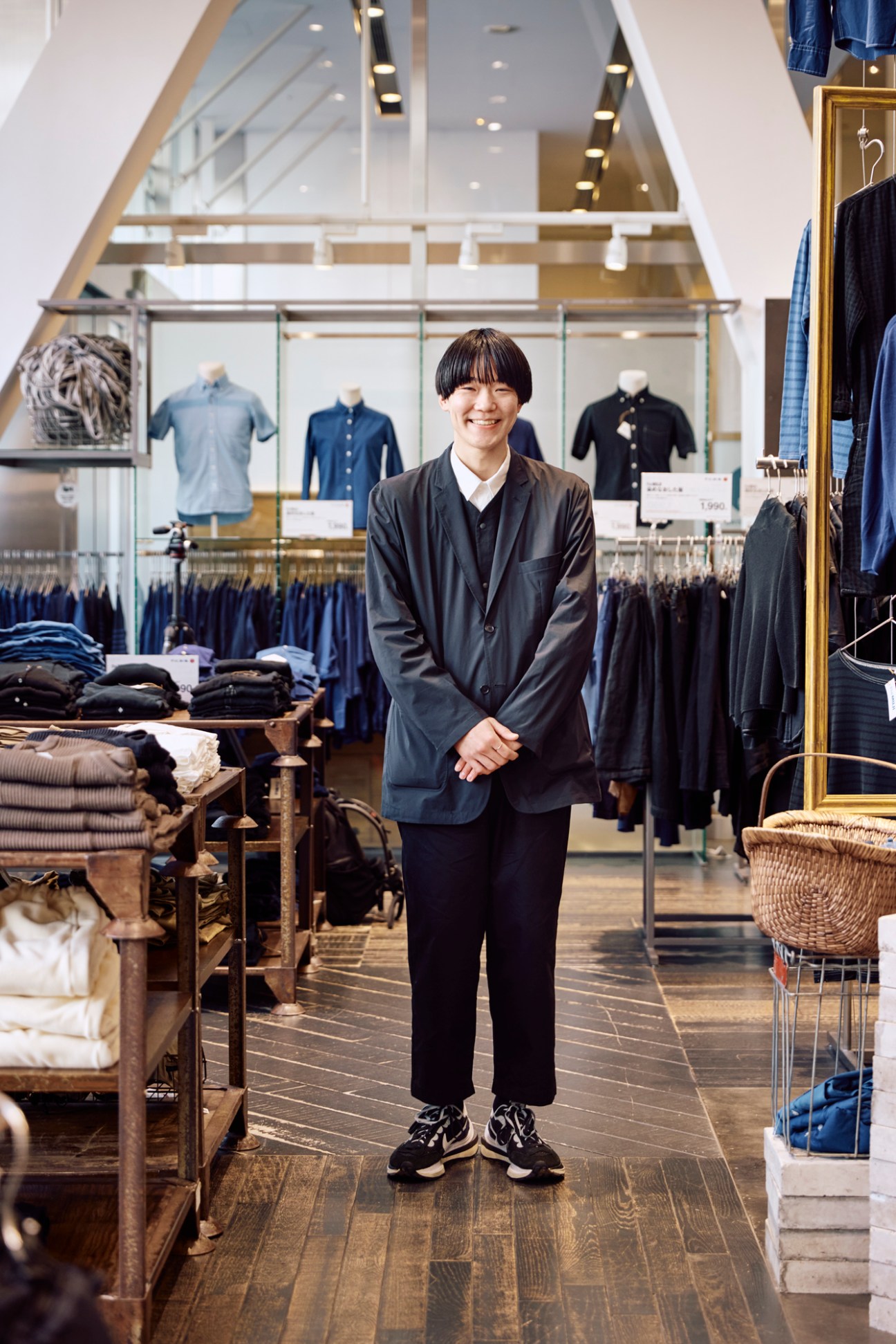
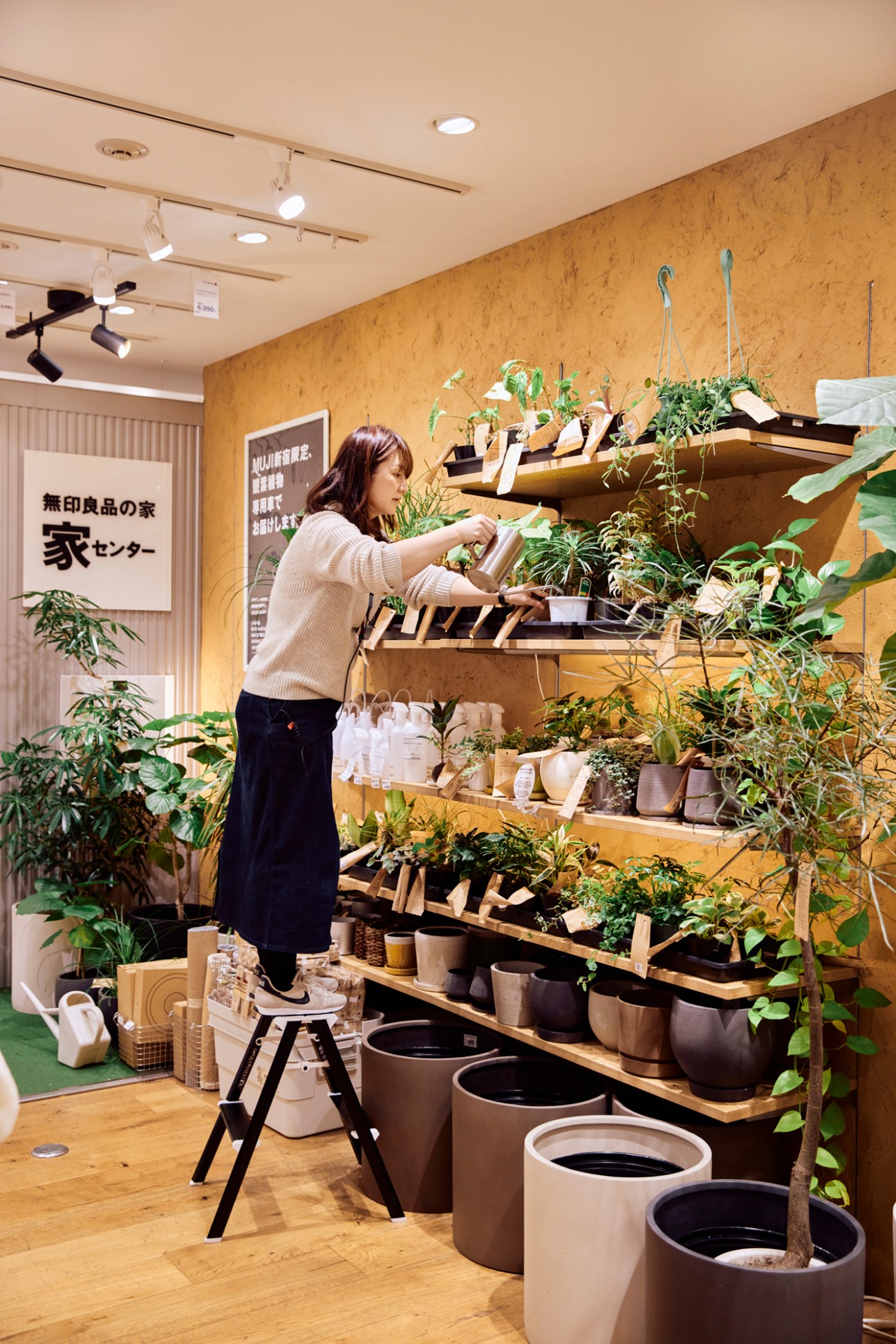
The Muji juggernaut – 469 shops in Japan; 561 overseas (more than 300 in China) – has shown itself to be adept at adjusting to the new retail landscape. “We’re realising that the Muji shop doesn’t have to be a one-size-fits-all model,” says Nobuhiro Matsueda, who is working on Muji’s future strategy. The new approach is localisation, working out what’s needed in each shop.
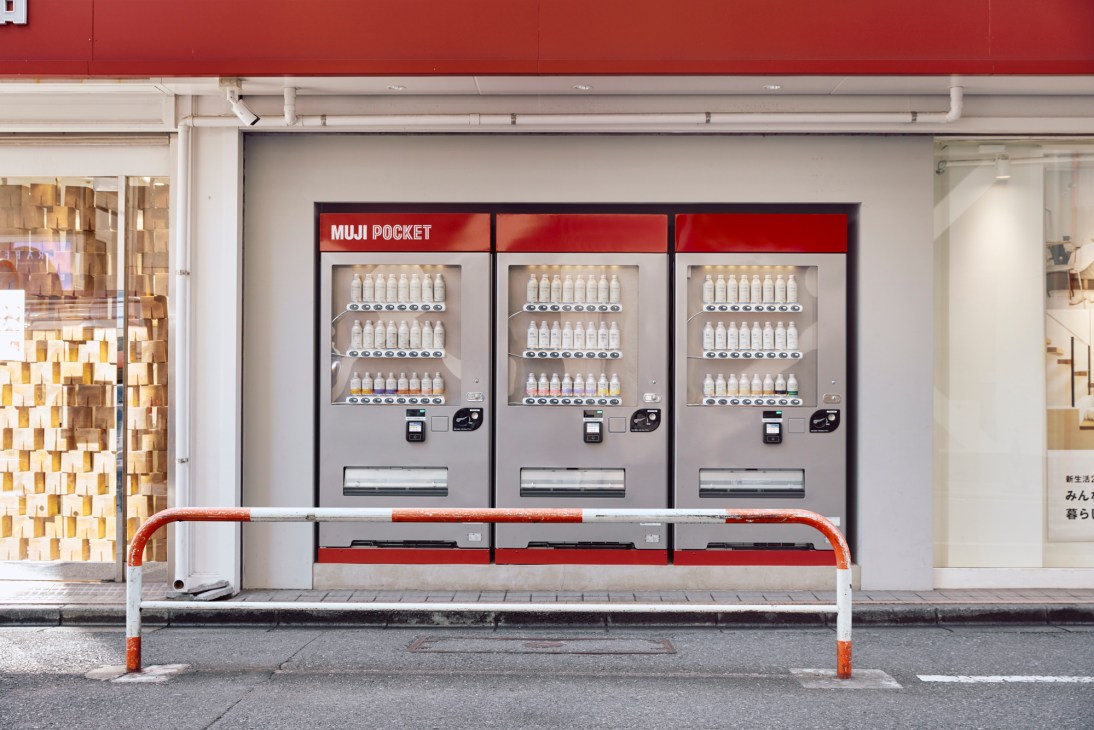
In a rural area that might mean linking with farmers to sell fresh food. In Higashi Ikebukuro it’s a kitchen to cater to workers. In sleepless Shinjuku it includes vending machines selling necessities for the late-night crowd.
Everything is up for discussion. Instead of shops becoming redundant, Muji sees them taking on a different role, particularly in residential areas, where they can host events. “Muji isn’t just about making and selling products; we’re about community too.”
Why it works
Muji’s new locally focused strategy shows that even giant retail operations can benefit from fresh thinking and a more flexible approach. And outposts that pick up on local themes are also more interesting for travellers, who can get a flavour of the area from their favourite brand.
Independent spirit
9.
Style revival
Milan
Milan’s main attraction for shoppers is fashion. Lockdowns not only forced runway shows online but kept potential visitors at home, resulting in losses in retail tourism amounting to some €2bn. Between 2019 and 2021 the city endured a 12 per cent drop in fashion sales.
But travellers are now returning and independent retailers, which account for 45 per cent of the city’s shops, are hustling to increase footfall. Smaller businesses, such as Dictionary in Piazza Sant’Eustorgio or Anaclè, which does a tidy trade in summer and winter scarves, are enticing customers with smart curation.
Sporting goods shops had better luck, with government incentives nudging residents to switch to two-wheeled transport. Among those that were inundated with orders was Rossignoli, a fifth-generation family bike-maker, which also found time to spruce up its shop with a less cluttered layout.
Opportunity seekers have emerged in the crisis too. Restaurant owners and chefs with a substance-over-style approach opened additional locations, notably urban winery Cantina Urbana, which is rolling out two new wine bars in the city this year.
Metrics
Average annual rent in Via Monte Napoleone shopping district: €7,750 per sq m (2021)
High-street footfall: 7,189 pedestrians per hour on Galleria Vittorio Emanuele II (weekend afternoons)
Number of independent shops: 17,918 (2021)
Months for which shops are vacant (Via Monte Napoleone): Four to six months on average
Retail winners: Sporting goods shops (36 per cent growth in employees between 2019 and 2021)
Retail losers: Home textiles shops (sales down 10 per cent since 2019); fashion (down 12 per cent)
Case study:
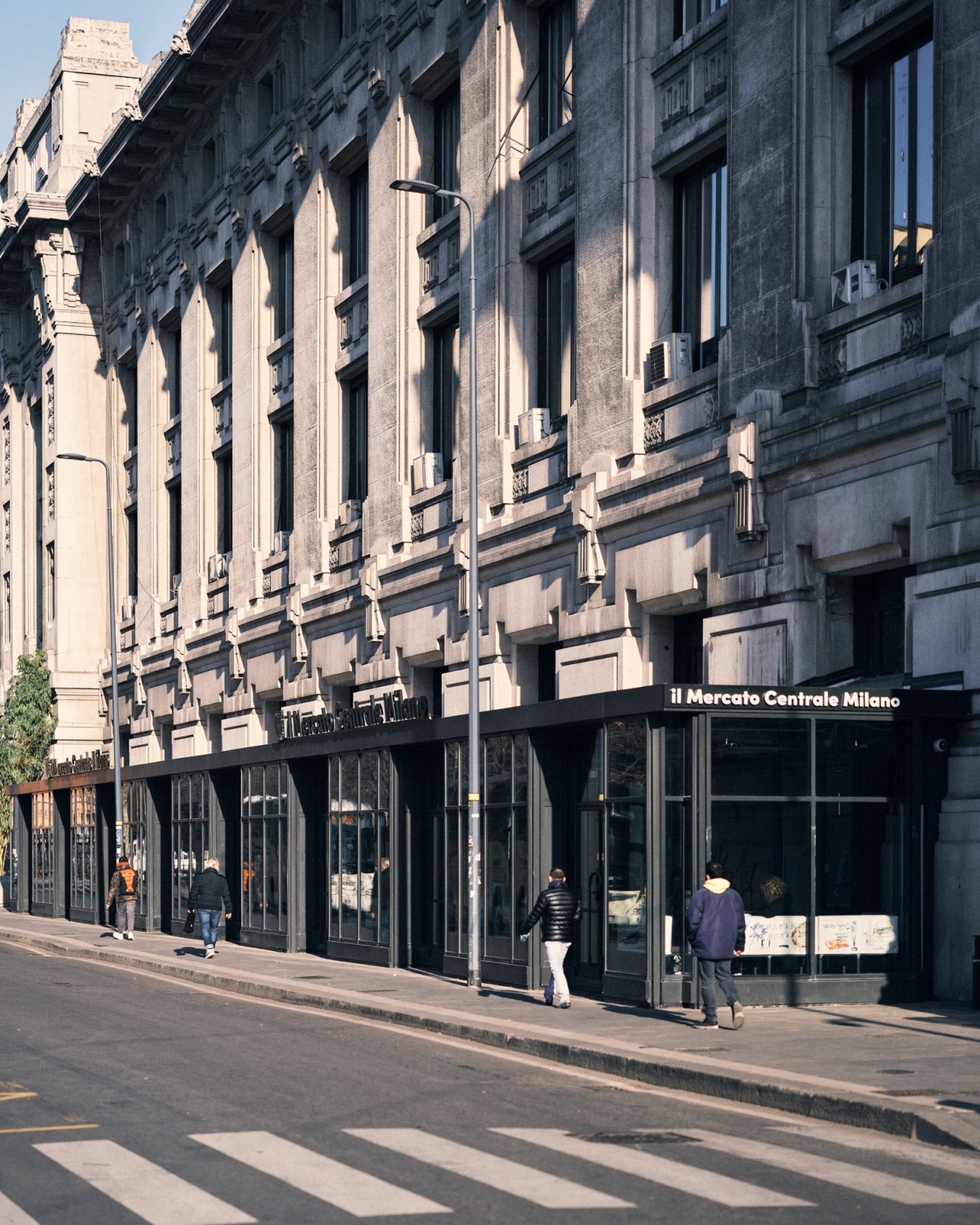
Mercato Centrale Milano
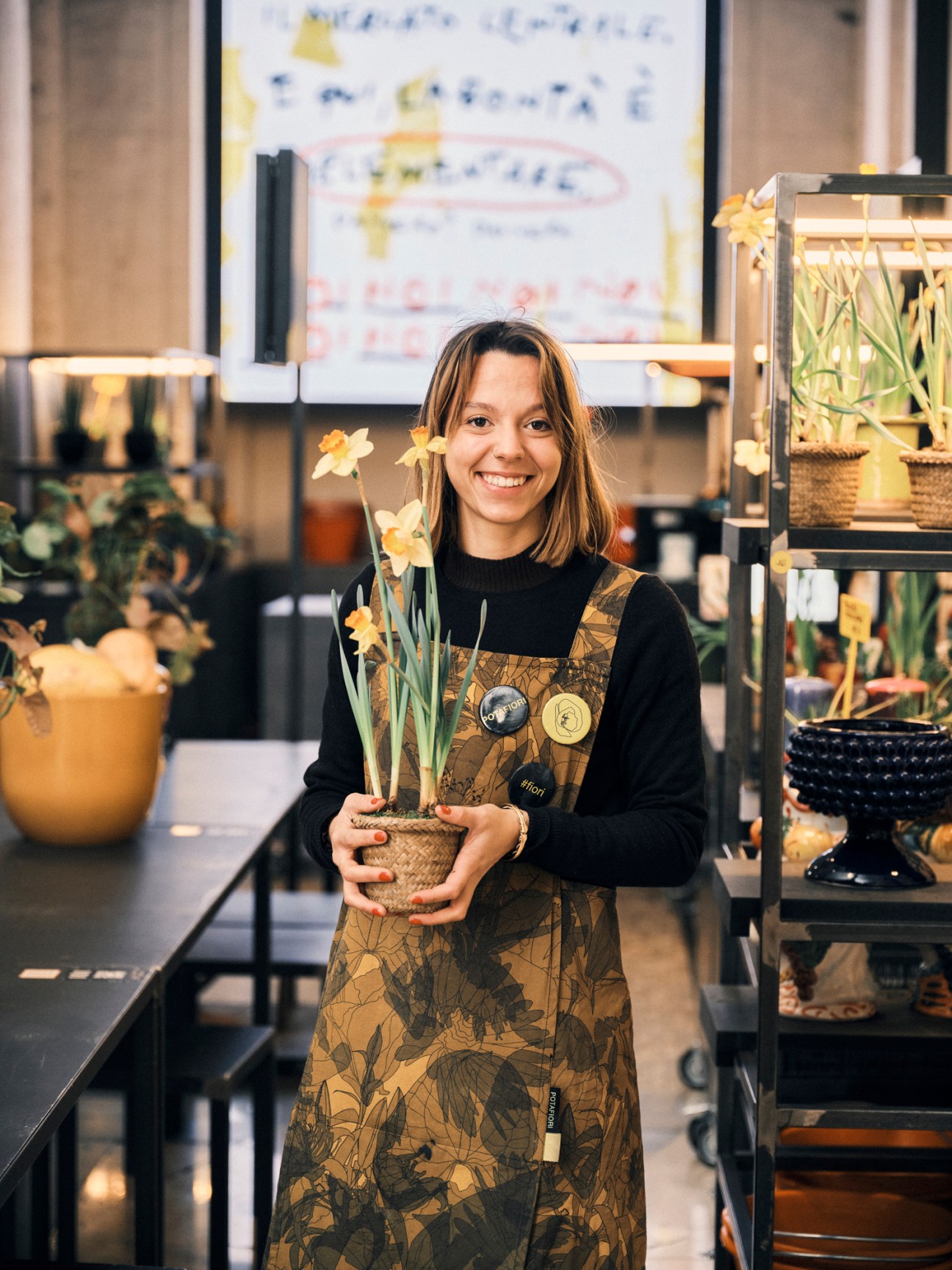
Italians place great importance on food but of equal importance are spots where they can eat and share regional delicacies. An awareness of this was the driving force behind the new Milanese addition to Mercato Centrale, an Italian network of city-centre food destinations, which opened last September in the city’s main railway station.
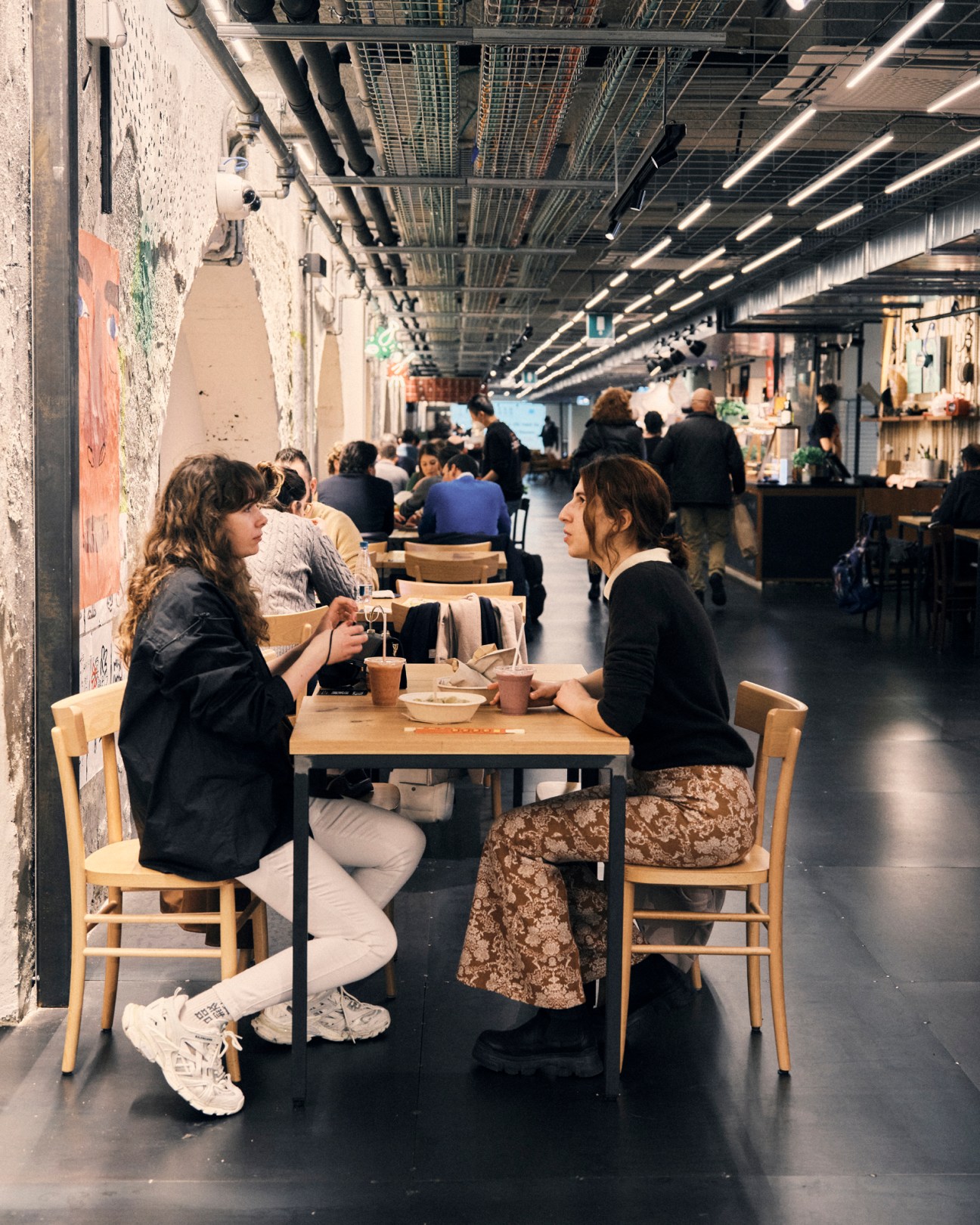
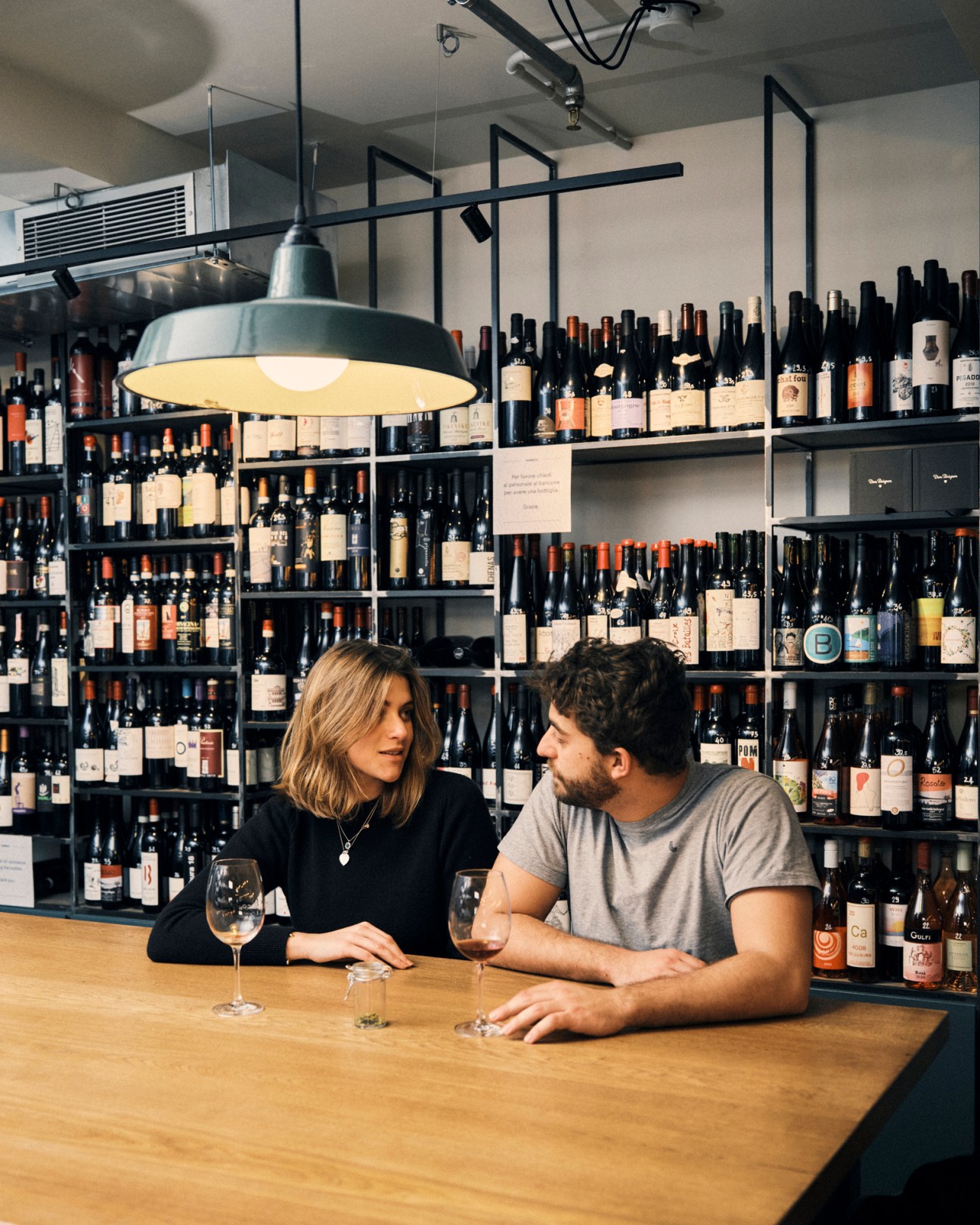
The concept, which was first unveiled in Florence in 2014, is simple. “It’s about creating places where people can be face to face,” says Umberto Montano, Mercato Centrale’s chairman and co-founder. “Humans are social beings. We can’t live in virtual spaces.”
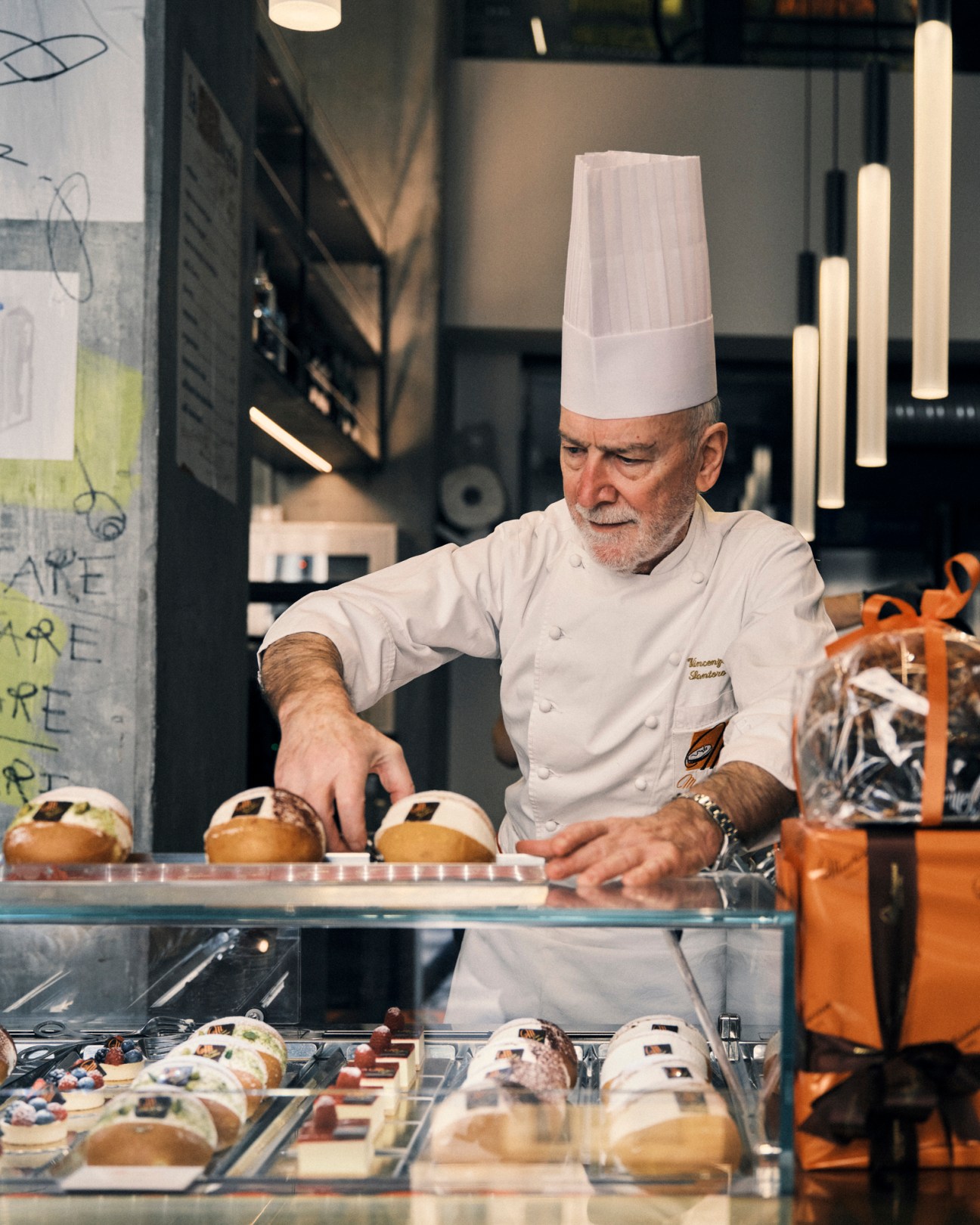
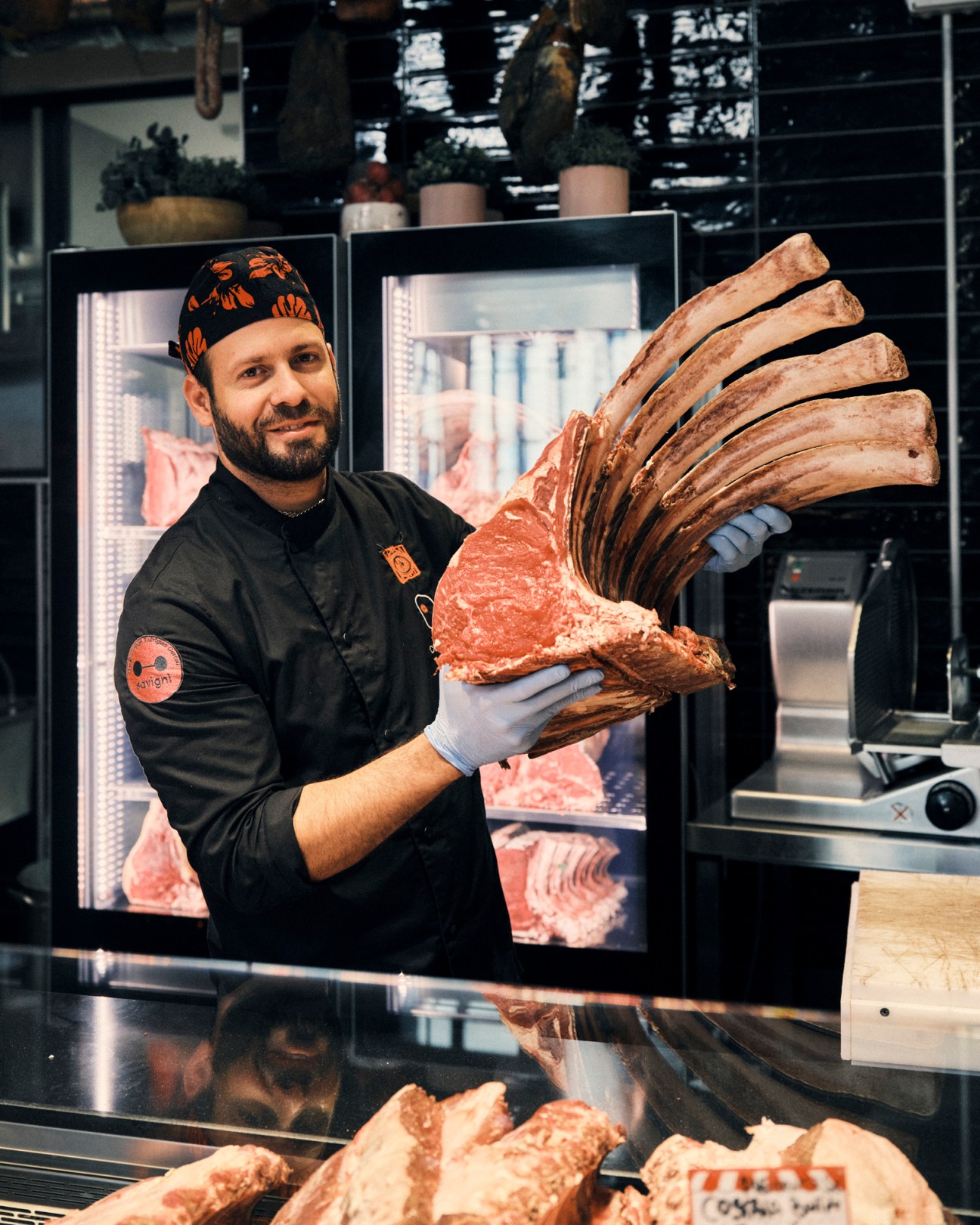
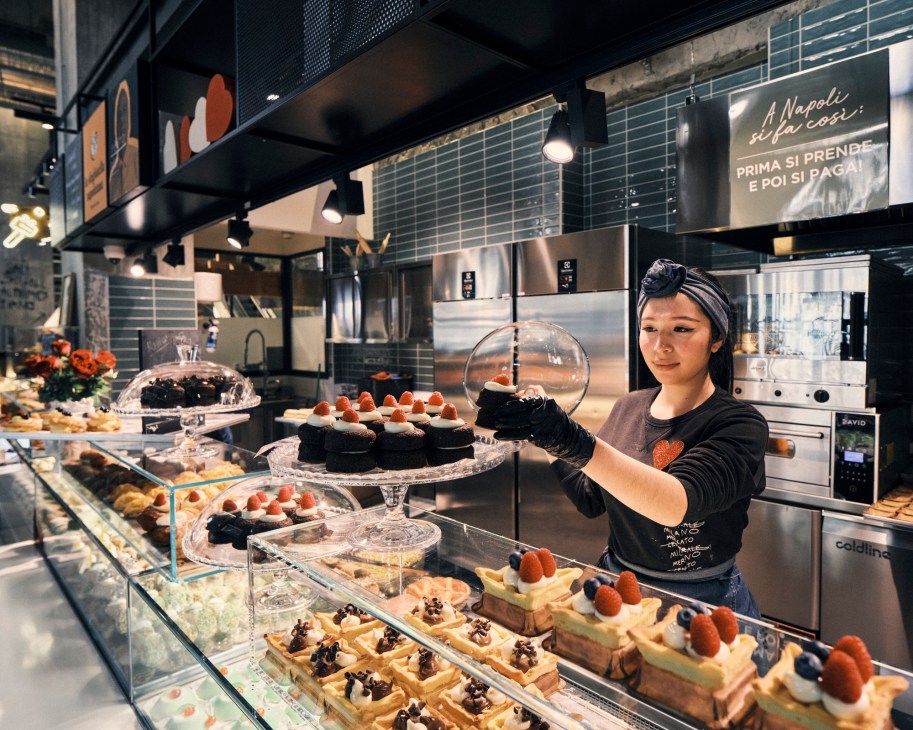
Crucial to the project are the producers and restaurant owners who provide tasty items for visitors to eat or take home. In Milan, more than 20 restaurants and shops were given a slice of real estate inside the 5,500 sq m Mercato Centrale, which has given a welcome boost to a food scene hit by a 7 per cent drop in employment.
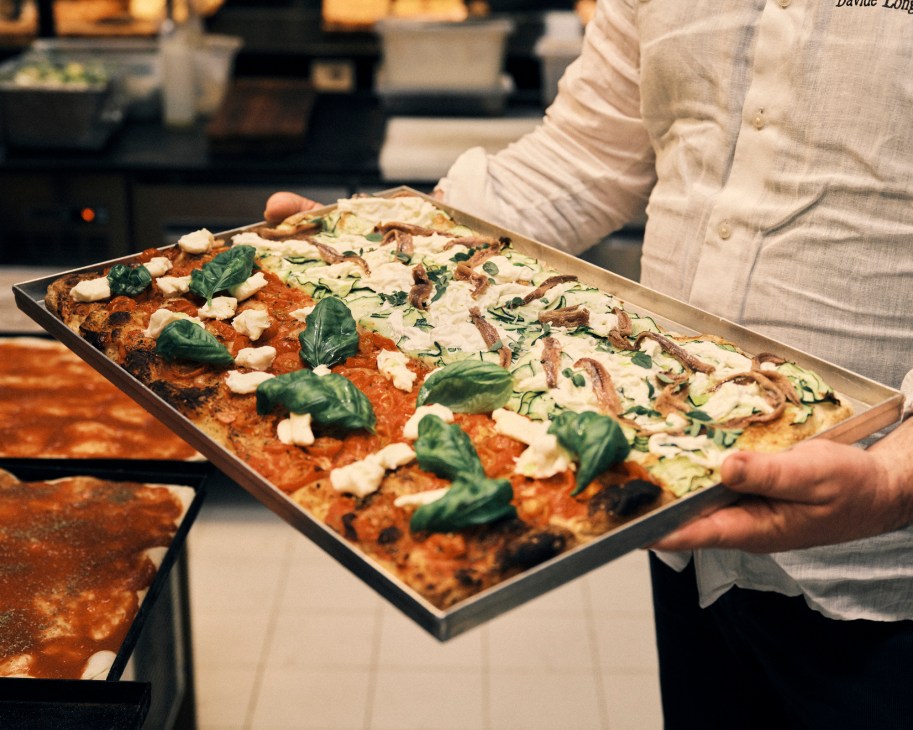
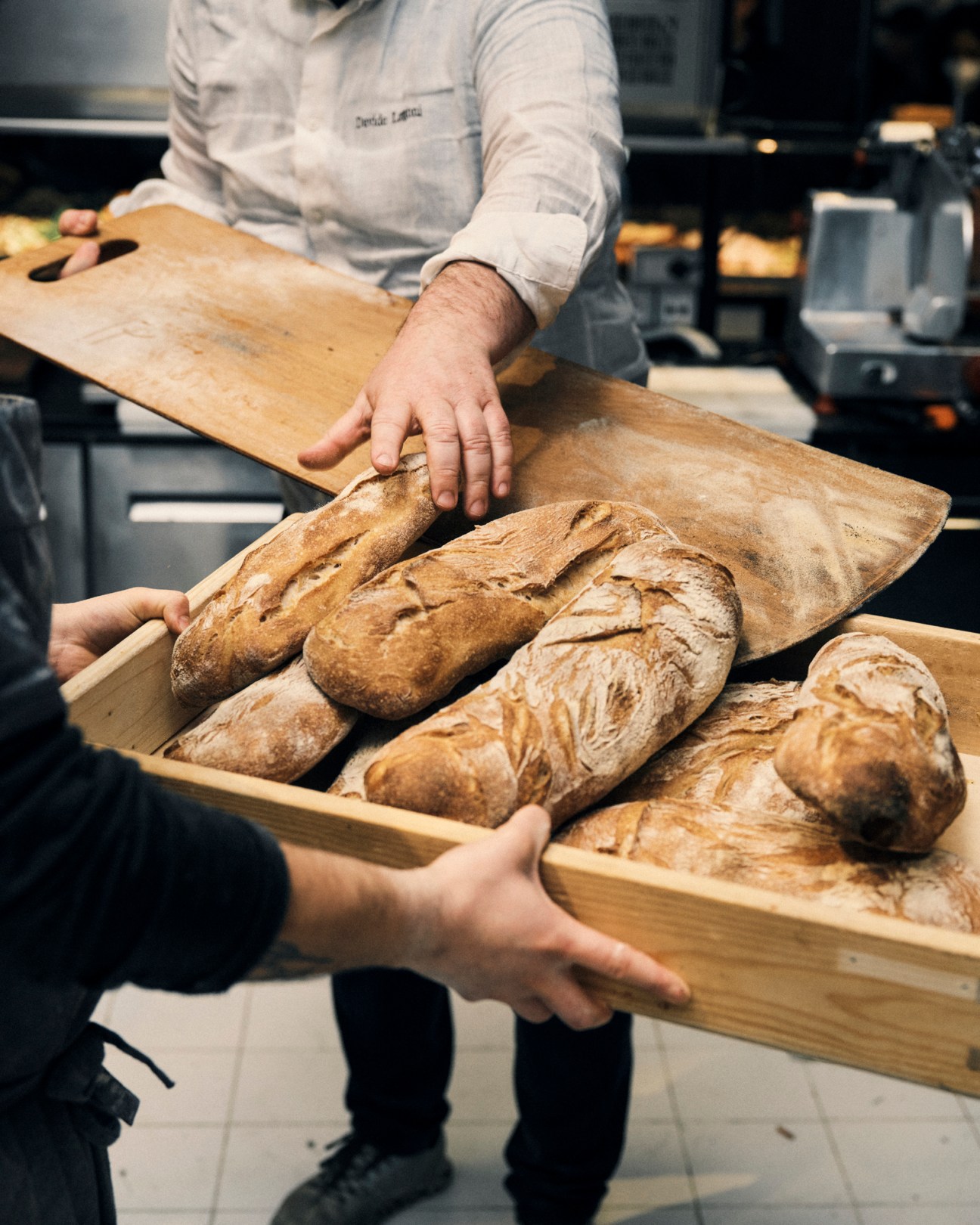
The decor is a combination of sleek and gritty, with exposed air-conditioning ducts and graffiti-like markings on the walls. At the main entrance is a display of round loaves from baker Davide Longoni, a connoisseur of traditional grains who uses natural leavening and stone-ground flour in his bread. Marco Bruni, owner of Ligurian restaurant U Barba, is on hand to serve some focaccia di Recco. For home cooks there is a butcher, as well as a fishmonger. Milan, Italy’s most cosmopolitan city, has a vibrant Chinatown; Agie Zhou of Ravioleria Sarpi has been brought in to make hand-rolled dumplings.
So far only 5 per cent of customers are train passengers but that should improve as travel picks up. “What makes this place special is that these entrepreneurs show their face here during the week,” says Montano. “Their stands aren’t just extensions of their existing businesses.”
Vendors here are upbeat. “It’s vibrant and convivial,” says Simone Lombardi, co-owner of Milan’s Crosta restaurant. “We believe in bringing people together with food.”
Sharing is caring
10.
Collaborative sales
Copenhagen
Case study:
Frederiksgade I
While recent showroom expansions and openings from the likes of Hay and Design Holding have bolstered Copenhagen’s spot as Scandinavia’s design capital, there’s a smaller, unsung hero making a significant contribution. Frederiksgade 1, in a heritage building on the edge of the centre, is a collection of showroom-studios leased by high-quality Danish brands. Customers visit by invitation or by ringing the doorbell.
Opened in 2015, the enterprise is managed by the Holger Kvist Foundation, an organisation chaired by Ingrid Heltberg Hjerresen. “Typical Danish furniture retail was – and still is – struggling, with good design sold at discounted prices,” says Hjerresen. “The purpose of the foundation is to support the country’s design scene.”
Frederiksgade 1 is home to more than 25 companies whose offerings complement, rather than compete with, one another. Its oldest tenant is File Under Pop, which specialises in floor and wall finishes. Please Wait To Be Seated, a furniture brand, joined soon after. The two share a floor – and customers. It’s part of the collaborative strategy encouraged by the building itself, which is kitted out with the wares of its tenants. Sales are encouraged by the fact that the building functions as a destination. “We’ve talked about having a “normal” retail space where you just walk in off the street,” says Please Wait To Be Seated founder Thomas Ibsen. “But when people come here, they’re serious about being a customer. They’re not going to go online to find a cheaper product elsewhere.”
This is in stark contrast to the struggles of more traditional retailers. “A lot carry the same brands,” says Christian Elving, founder of furniture brand Karakter. “They’re fighting for clients by offering discounts or only carrying bestsellers.”
In Frederiksgade 1, brands don’t fight for attention. They work together, cross-pollinating customers. It’s a model that’s good for business – and it’s helping build an even stronger Danish design scene.
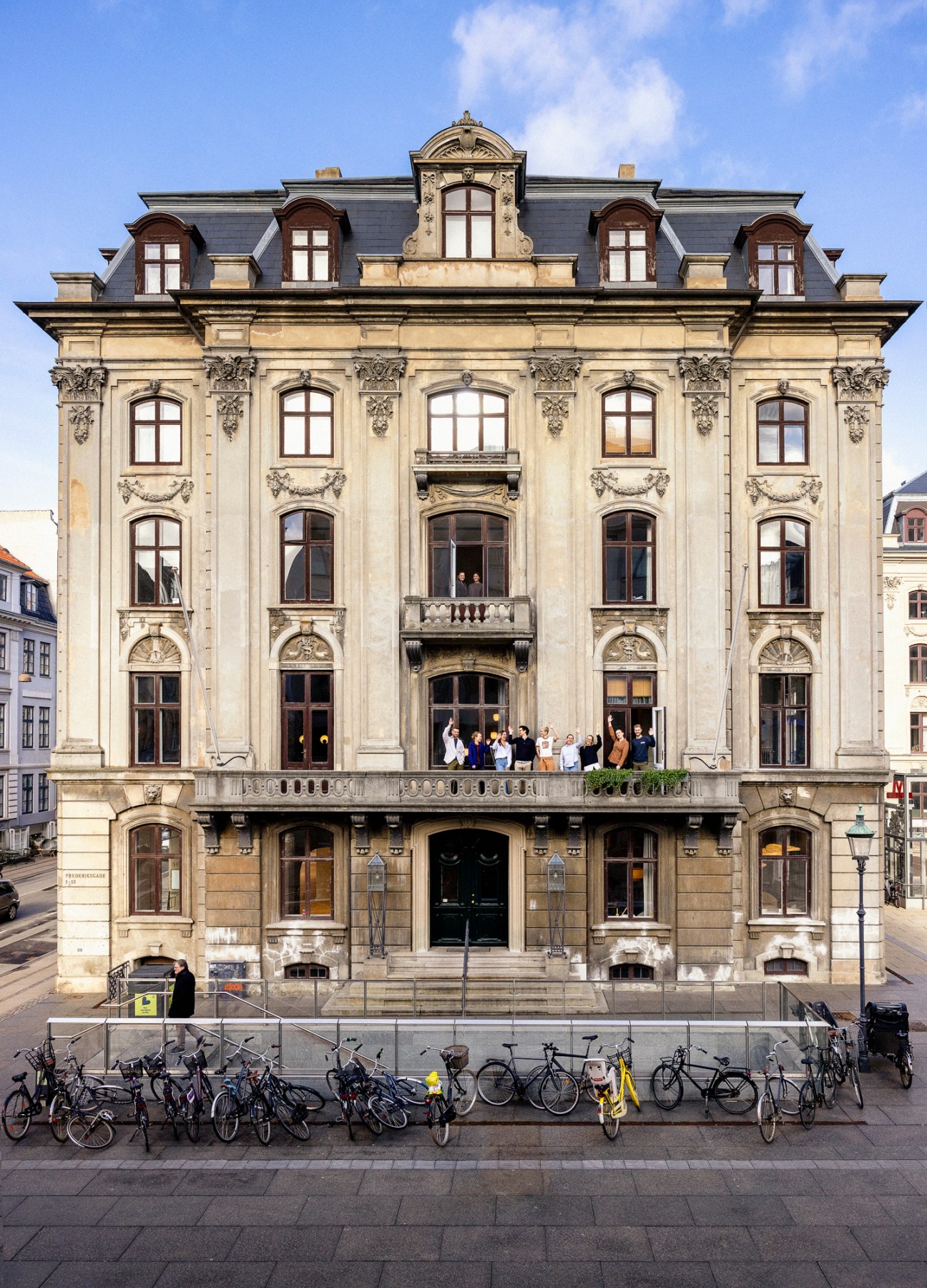
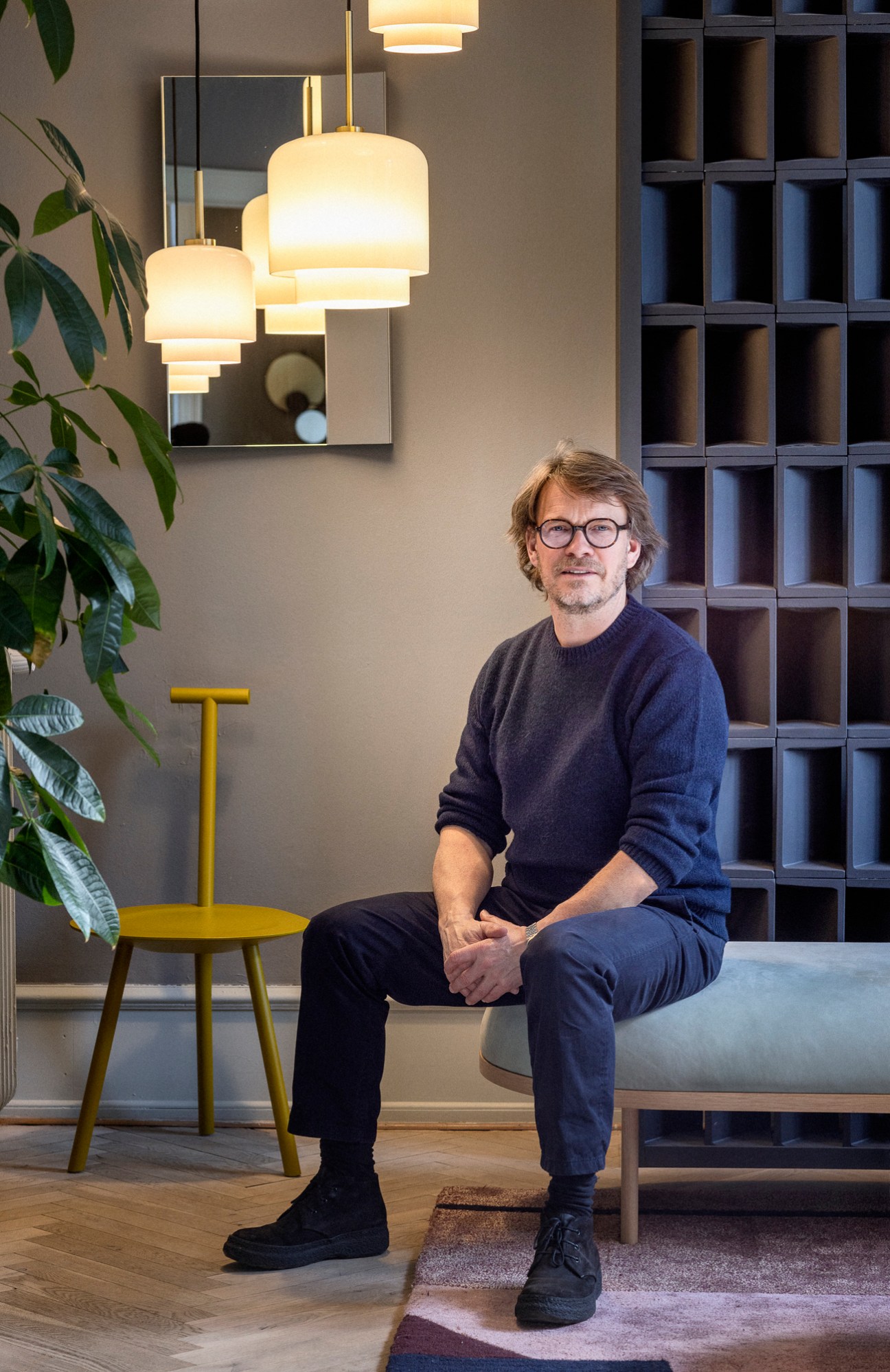
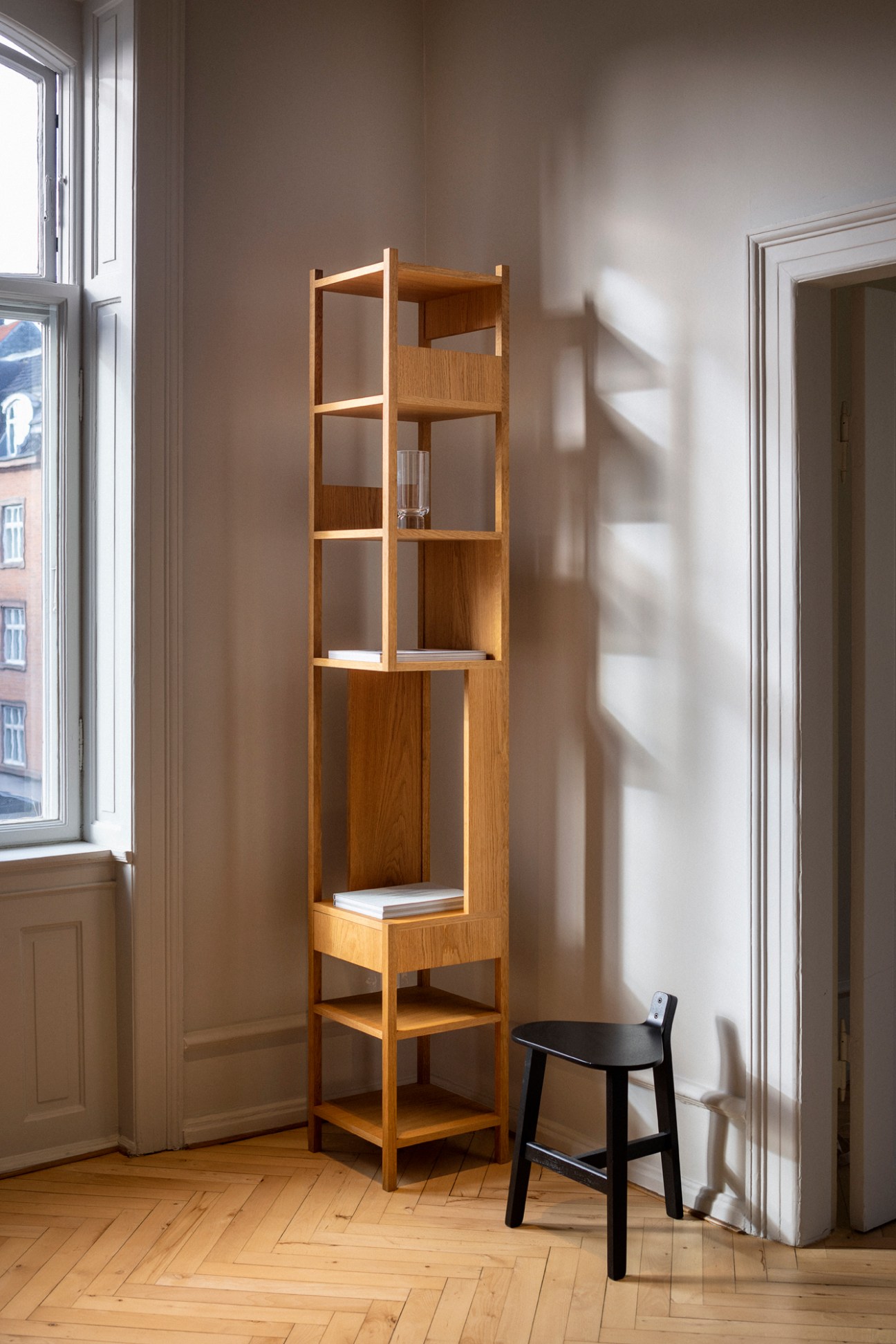
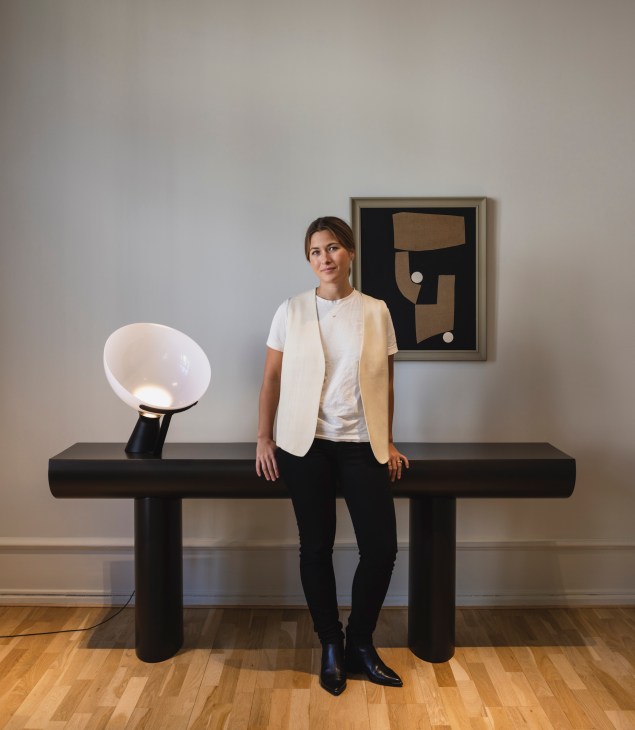
Why it works
There’s always strength in numbers. By creating a cluster of complementary businesses, smart operators can help drive the sales of neighbouring brands – and vice versa. And Frederiksgade 1 is a welcoming place where you’re sure to discover something new.
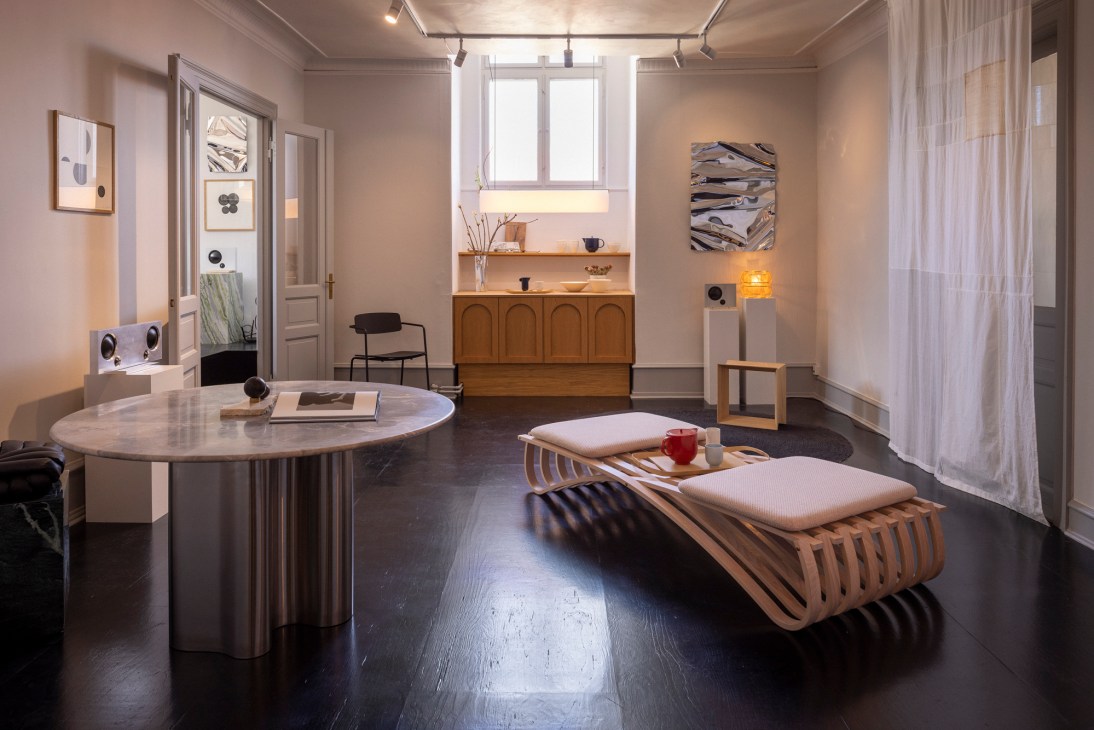
Market value
Thriving on the high street has been a tall order for retailers over the past couple of years, with many having to switch to survival mode to stay afloat. Business models have been tested, lessons learned and tweaks made. And while there were insolvencies, there were also success stories.
Over the following pages we look at real-life examples, from across the globe, that illustrate this. Our rules for resilient retailing provide concrete evidence that urban streets can remain an arena for high-quality shopping, and that there’s plenty of room for innovation in bricks and mortar.
1.
Mix it up
Man-tle, Australia
Why would you visit a Perth retail shop selling Japanese clothing, Korean homewares, its own fashion line and crates of vintage records? Because this is a shop that surprises, with customers coming back to see what the Aussie founders are into next. From finely woven blankets to beautifully branded jars of chocolate spread, Man-tle’s team allows their ever-changing tastes to define what ends up on the shelves.
2.
Elevate your supply chain
Depanneur, Denmark
Depanneur, a Copenhagen-based grocery shop and bagel bar, founded by creative agency Barkas, helps Danish producers by using the company’s in-house design tastes to select beautiful products and present them to clients in a most appealing manner. Of course, with great-looking (and tasting) products on the menu, the Barkas team has also applied its talents to producing the perfect tote to take home the goods in.
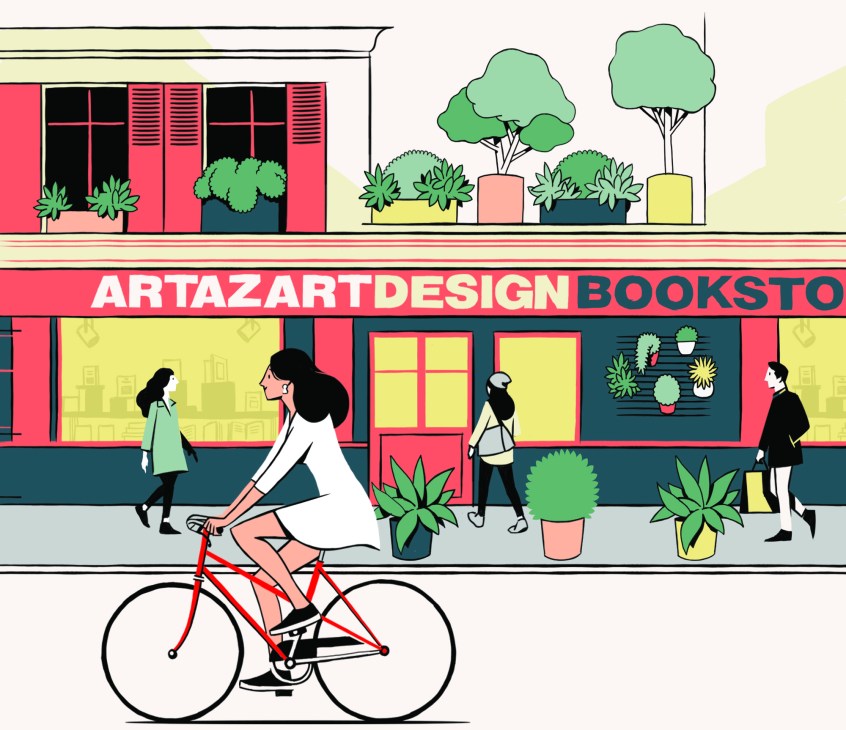
3.
Find your niche
Artazart, France
While we love Paris for its many independent book shops, those that have a specific focus tend to garner the most loyal audience. As the name on the handsomely lettered sign suggests, Artazart specialises in art books, providing a world-beating selection of photo editions and children’s titles. Illustrators are frequently in-store for signings, window takeovers and drawing classes, with the shop floor remaining busy across the week. With its connections to all of this creative talent in Paris and beyond, Artazart also does a tidy business selling prints and limited-edition photographs.

4.
Be a home improver
Cover Story Paint, Finland
Many shops have capitalised on demand from homeowners spending money improving their digs but few have done it to the level of Helsinki’s Cover Story Paint. In a pared-back environment, both the paint and the beautiful container cans it comes in take centre stage, while a tasteful team are on hand to provide advice on colours and act as peace-keepers between couples arguing over what works best on their walls.
5.
Be the best in the class
Maison Empereur, France
Since 1827, Marseille’s Maison Empereur has weathered pandemics and a good few wars to boot. That’s all thanks to its comprehensive and ever-inspiring inventory of household goods. From handmade ceramic coat hooks to a seemingly endless array of kitchen knives, tourists flock here to browse the brand’s impressive curation but residents also rely on it for their everyday needs.
6.
Use architecture to create identity
Cornerstone Stores, Australia
Australian architects Richards & Spence are the go-to name in ensuring retail neighbourhoods work harmoniously with its surroundings. One such endeavour is retailer outpost Cornerstone Stores, which references a neighbouring suburb’s vernacular in an inspiring manner. Indie retailers moving in here have taken advantage of this place-making exercise to boost their businesses.
7.
Bank on a showstopper
Louis Vuitton, Japan
Midway through the pandemic, Louis Vuitton rolled out a funky flagship building in Tokyo that got the world’s attention, even if many were only viewing it online. A grand gesture of architecture from Jun Aoki and Peter Marino, the glimmering tower proved that a brave commitment to bricks and mortar in tough times shows that a brand is most certainly here for the long haul.

8.
Be a good neighbour
Tuck Shop, UK
Bringing a neighbourhood together, Tuck Shop – a grocery shop, butcher and café in East London – is a winning example of being a good neighbour. A husband-and-wife team opened up the business to focus on an underserved market and became a neighbourhood staple due to their personal service and quality offering. Local producers drop by to sell their wares and nearby breweries offer their drinks.
9.
Make room for markets
Markthalle, Switzerland
Connecting retail developments with markets where both stallholders and produce change with the seasons creates excitement, adding to the attractiveness of the permanent shops adjoined to it. This tactic has been deployed at Zürich’s Viadukt precinct, which occupies a formerly disused space under a railway bridge. At the centre is Markthalle, a semi-permanent market that attracts shoppers throughout the week.
10.
Join a diverse crowd
Coal Drops Yard, UK
London retail development Coal Drops Yard has become a runaway success thanks to the smart way it curates the brands it works with. Smaller independent British retailers – including those selling clothes, records and flowers – are placed in an environment that surrounds them with larger, international brands that attract footfall. The result is a shopping arena that consistently surpasses customers’ expectations.
11.
Coax in the cyclist
Cranks & Coffee, Denmark
The use of bikes to get around our cities increased greatly during the pandemic, and wise retailers rose up to service the boom. Cranks & Coffee, which sits on the outskirts of Copenhagen, cleverly splits its business into three services: bike repair, cycling apparel retail and a buzzing café. All contribute to a winning one-stop-shop for anyone passionate about getting around the city on two wheels.
12.
Create an atmosphere
Holzweiler, Norway
The founders of Norwegian fashion brand Holzweiler decided to adopt a mixed-use concept for one of its outposts. The plan was to form a sense of community around the clothes on offer at its shop in a busy spot on Oslo’s harbour, which has proved a success. Plates clattering, diners laughing and fresh faces coming in and out all add to a cheery atmosphere across the retail environment, with smiling shoppers likely to spend more.
13.
Invite your customers back
Graanmarkt 13, Belgium
Graanmarkt 13 is respected in Antwerp for selling premium clothes and home accessories. Young shoppers lust after costly pieces but can’t afford them, while a wealthy clientele also might only wear a piece for a few seasons. With all this in mind, Graanmarkt 13’s “buy-back” events allow customers to sell worn garments to a savvy set of shoppers for a lower cost. In return, they get vouchers to spend at the shop.
14.
Revive the kiosk
News & Coffee, Spain
The pandemic has made us appreciate our neighbourhoods in a more intimate manner, with smartly run kiosks bolstering foot traffic that might have typically gone elsewhere. It was this movement that Spanish brand News & Coffee capitalised on, taking over failing kiosks across Barcelona and beyond, converting them to busy neighbourhood gathering points, selling the best print media and tasty coffee.
15.
Think thrifty
Ginori 1735, Italy
Ginori 1735 is a much-loved Florentine brand selling high-end homeware. During the pandemic it opened up a flagship in its home city, with its interiors championing a concept of “rough beauty” that proved to be attractive and cost-effective. The shop showcases the brand’s fine porcelain in a room that evokes serious artisan workshop vibes, with the retail atmosphere enhanced by a cool studio-like feel.