Issues
Life’s a beach
Copacabana in Rio de Janeiro was once a quiet fishing village. But that changed at the start of the 20th century, when it was connected to the city by tram and residents started flocking to its beach. “We were one of the first here,” says the Copacabana Palace’s general manager Ulisses Marreiros, of the fêted hotel that opened in 1923 and quickly became popular with the city’s well-heeled residents.
Almost all cariocas, young and old, have a story to tell about the grand art deco building. Why? With its two poolside Michelin-starred restaurants, spa, theatre and live music events, it’s also an important cultural institution. “We have international and Brazilian musicians perform,” says Marreiros. “Oscar-nominated actress and Rio-native Fernanda Montenegro got her start here in our theatre.”
Keeping the Copacabana Palace running smoothly is Marreiros’s 450-strong team. Every morning, the hotel’s chefs, engineers, florists, cleaners and pool guards ensure that every aspect of the building meets the high expectations of its visitors; every night, a different team does the same. “It feels like a mini neighbourhood,” says the general manager. “We need everyone to make it work.”
Marreiros, who was born in Portugal’s sunny Algarve, is a fan of nautical metaphors. From the poolside, he tells monocle that overseeing the hotel often feels like steering a boat. And while being able to weather storms comes with the territory, the past two years have been especially challenging. “Ships are supposed to move,” he says. Despite the ups and downs, it’s clear that the team at the Copacabana Hotel aren’t afraid of changing tack.
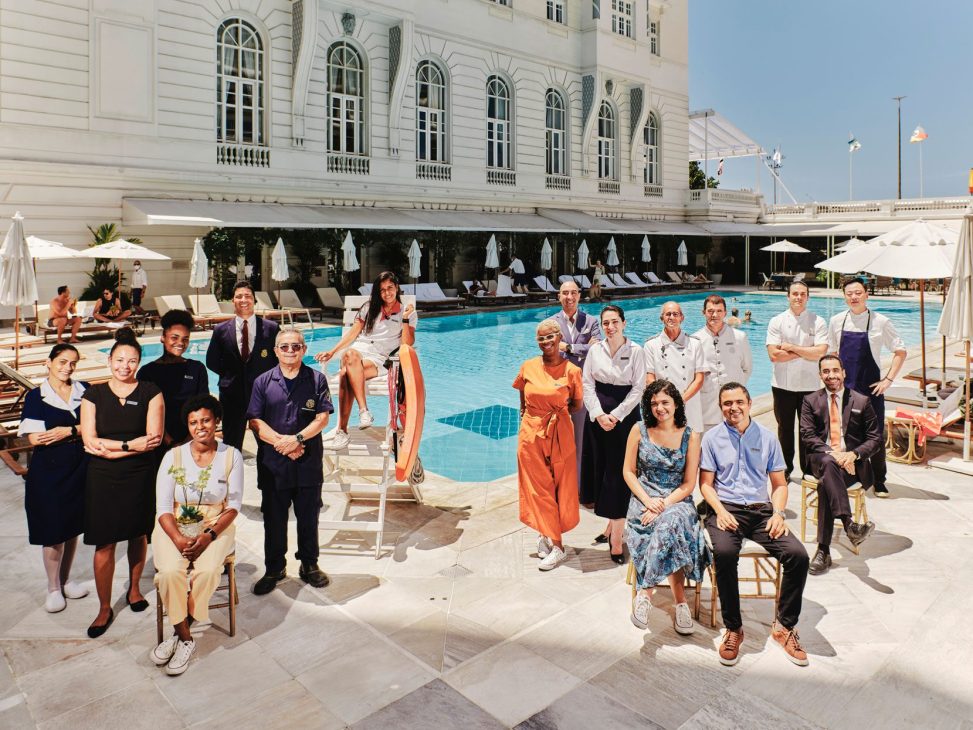
Marreiros got his start in tourism with a summer job at Portuguese airline Tap. After stints in a number of renowned hotels, he moved to the Copacabana Palace in 2021. Though he has years of experience of hotel bars, restaurants and front desks, he believes that as general manager the most important thing he can do is listen to his younger co-workers. “It’s always helpful to hear from people who have different stories,” he says.
The Cabinet (From left to right)
1.
Ana Paula de Oliveira
Cleaner
“Makes sure everything is clean and tidy.”
2.
Daniela Lima
Floor supervisor
“Maintains standards.”
3.
Thalita Pimenta
Butler
“Creates a personalised experience in the bar.”
4.
Luciana Gonçalves
Florist
“Makes our beautiful flower arrangements.”
5.
Diego Barcelos
Security Guard
“Ensures everyone’s safety.”
6.
Regino Alves de Araújo
Theatre technician
“Looks after the theatre.”
7.
Jéssica Rodrigues
Lifeguard
“Keeps an eye on the two most famous pools in Rio.”
8.
Vitoria Greice
Spa guest relations manager
“A real relaxation expert.”
9.
Amanda Martins
Chief concierge
“Knows the city’s secrets.”
10.
Letícia Lavor
Hostess
“Will help you find a table.”
11.
Jorge ‘Cafú’ Freitas
Head doorman
“Has welcomed people here for more than 50 years.”
12.
João Herdy
Porter
“Knows the value of our guests’ belongings.”
13.
Antônio Santos
Manager’s assistant
“Takes care of the pool and restaurant areas.”
14.
Nello Cassese
Head chef, Cipriani
“Manages our Michelin-starred restaurant.”
15.
Filipe Eloy
Guest relations
“Anticipates guests’ needs.”
16.
Cassio Hara
Head chef, Mee
“Curates an omakase-style dining experience.”
Splash for trash
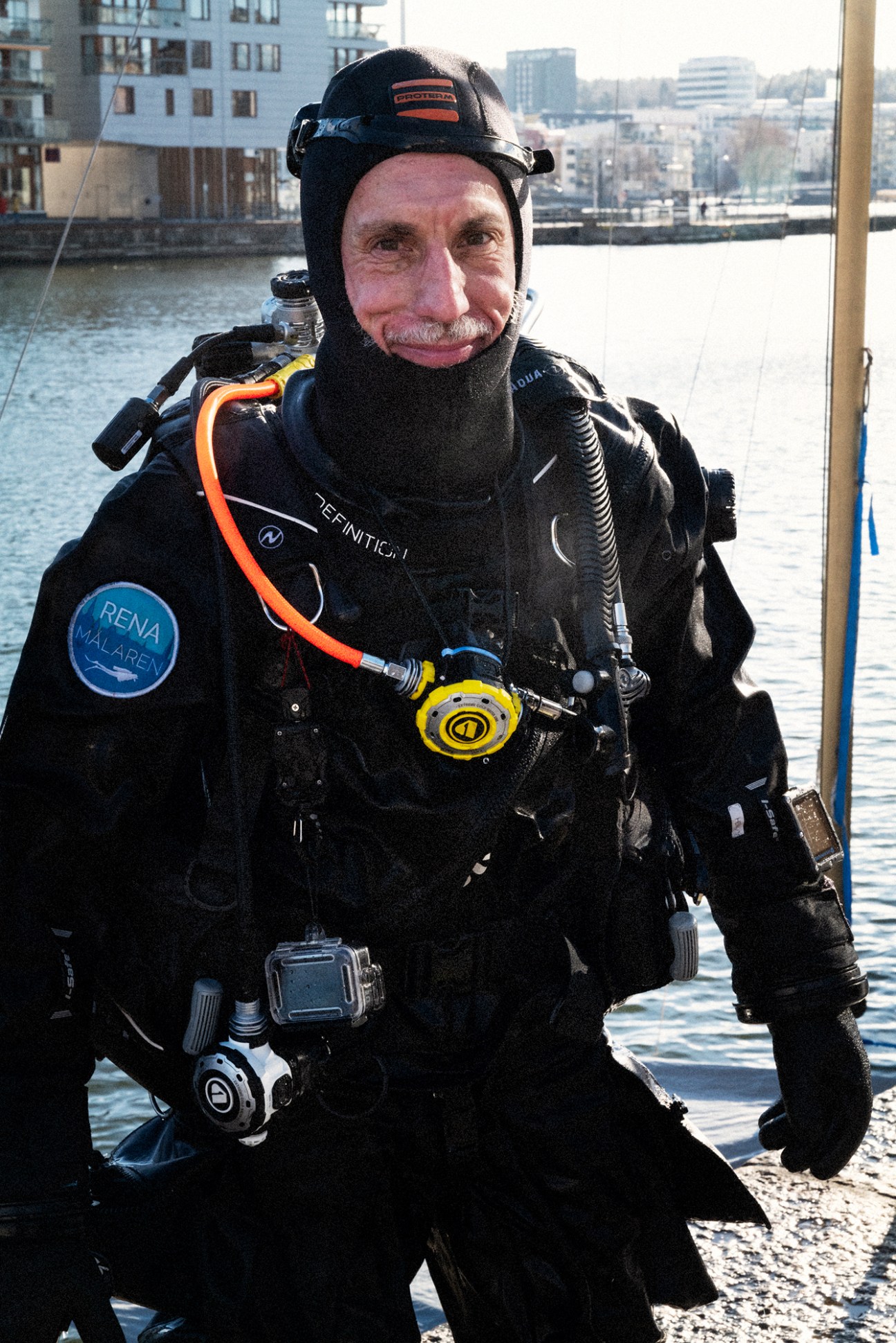
It’s a crisp morning in Stockholm. The thermometer reads minus 4c but it’s expected to rise to just above zero. Fredrik Johansson is standing beside the Hammarby Canal briefing a group of 25 people dressed in diving suits and heavy jackets. “The water is six metres deep so there shouldn’t be any problems but always stay attached to your rope. Don’t ever let go of your rope.”
It’s a speech that the military diver-turned-social-worker has given repeatedly over the past four years as founder of Rena Mälaren. The name, “Clean Lake Mälar”, refers to the freshwater lake that surrounds the 30,000 islands, rocks and skerries of the Stockholm archipelago. He and a team of divers and on-shore volunteers complete this mission every Sunday.
Johansson asks new recruits to raise a hand – Monocle’s is one of four that goes up – and he addresses us with a smile. “We have two goals: to get as much trash out of the water as we can and to make people aware of how we’ve been treating this planet.” The group eagerly splits up and gets to work.
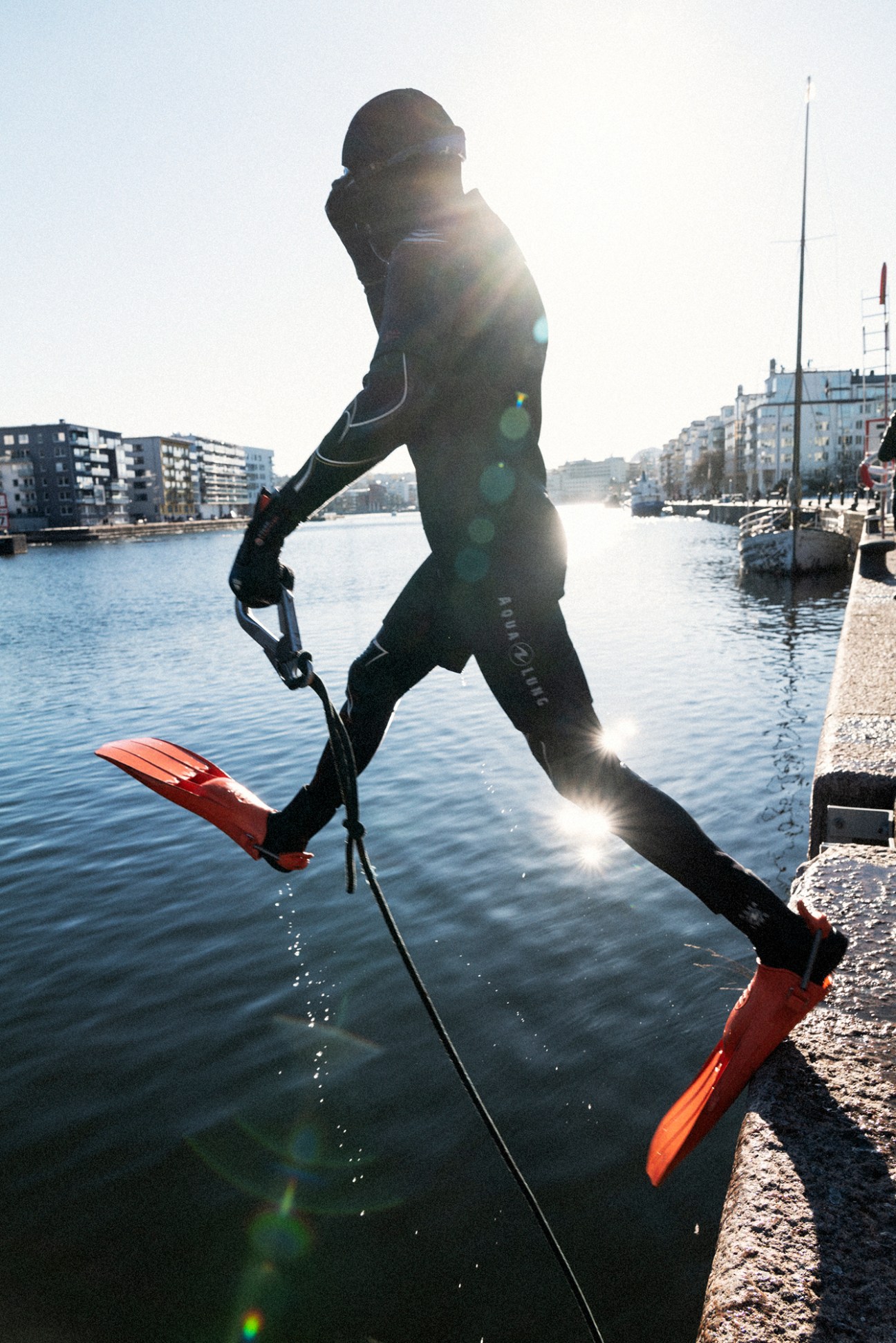
There are 10 divers, each accompanied by one or two assistants handling the guide ropes. “I’ll dive down, using the rope so I don’t get lost and then hook it to the trash I find,” says restaurateur and 25-year dive veteran David Berggren, who has two oxygen tanks strapped to his back. “I’ll then come back up, give a thumbs up to the person on the other end and they’ll start pulling the rubbish in.” He steps off the canal’s wall, disappearing beneath the murky surface. Air bubbles, the rope and a small “dive flag” are the only signs that someone is below the surface. Ferries glide past, as do small chunks of ice.
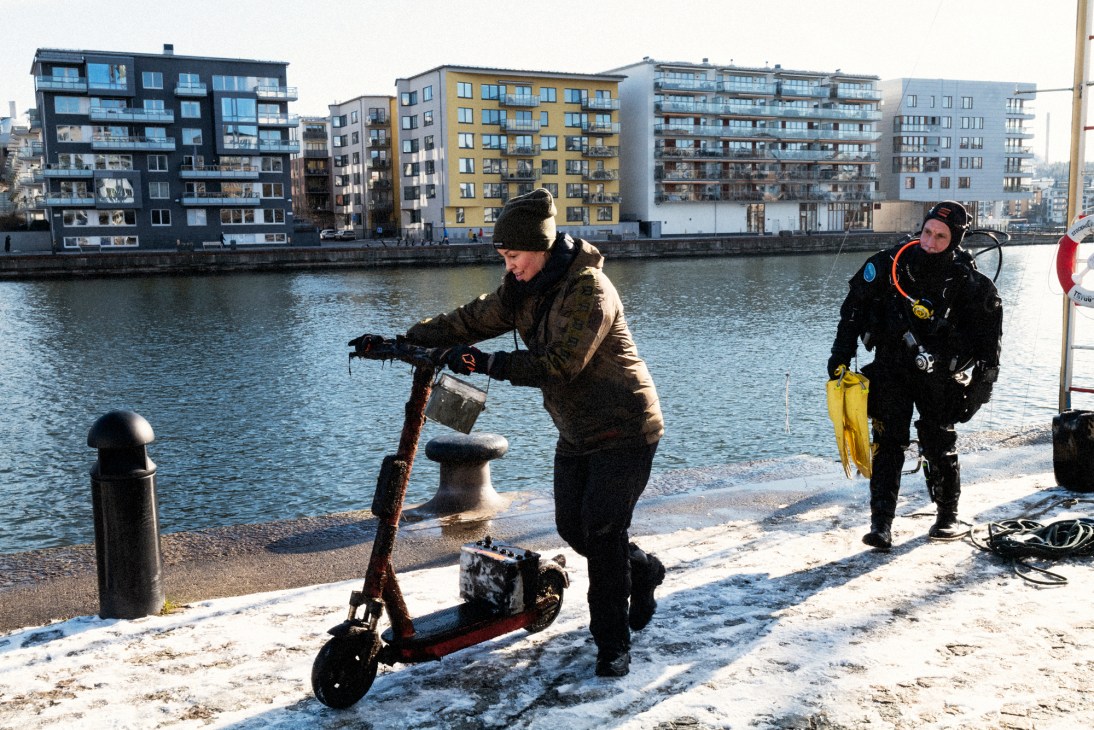
A couple out for a walk stop to ask rope bearer Tobias Lundqvist about the most interesting thing Rena Mälaren has found in the water. “There was a photo album with naked pictures of a couple, which had clearly been thrown in the water so that no one would find it,” he says with a grin. “When we pulled it out, the images were still intact. This shows the way that people see the water – it’s so dark that once you throw something in, it’s out of sight, out of mind.”
I’m roped in to help haul out a tyre that diver Anna Sjöman has found. This involves me donning a neoprene hood and wetsuit then holding a rope and jumping off a wall. Visibility in the frigid water is poor and I can’t see the bottom (or even my own bottom). Sjöman tells me what I’m missing: “All that’s down there is litter breaking up barren patches of sand.” But things are nowhere near as dire as they were a few years ago. “I’m noticing a difference in the harbour’s seabed,” says Sjöman. “Near the city hall, for instance, where we dive and clean regularly, it used to be dead. Thanks to our ongoing work, we’re noticing seaweed sprouting and fish coming back.”
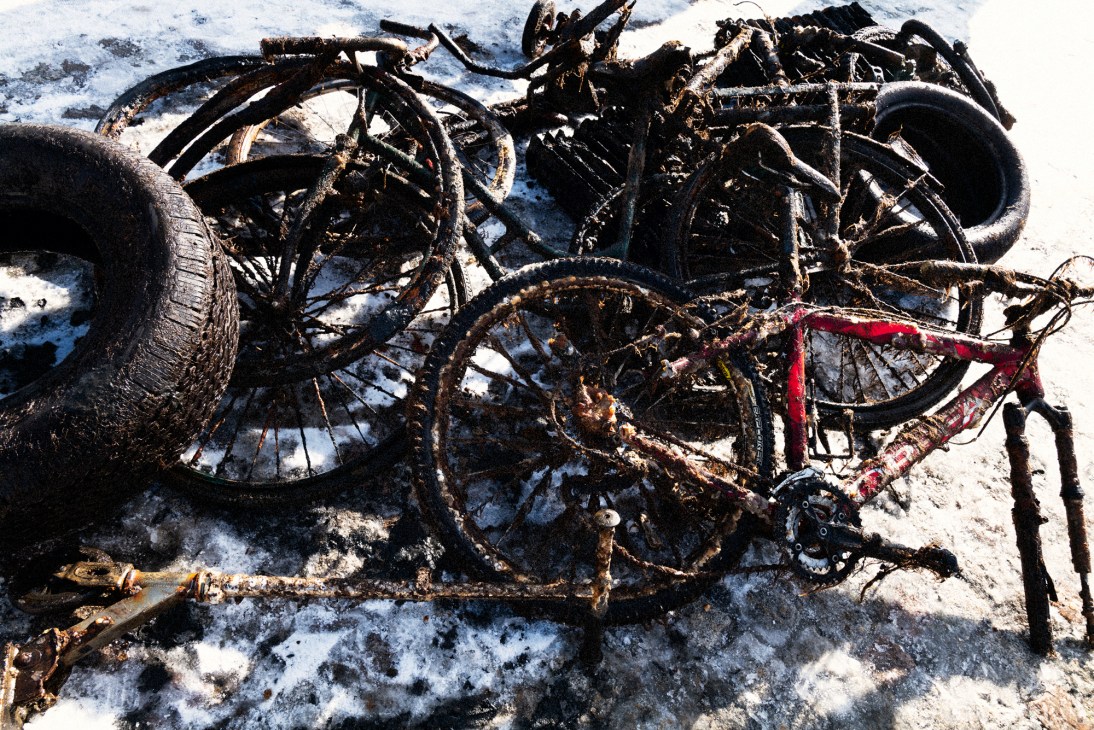
Three hours later, 13 e-scooters, eight bikes, seven car tyres, five radiators, a balcony balustrade, a parking metre and 160kg of lead batteries have been fished out of the water. These items are added to the 174 tonnes of rubbish that have been picked up over the past four years, piled up on the lakeside for collection by the city council.
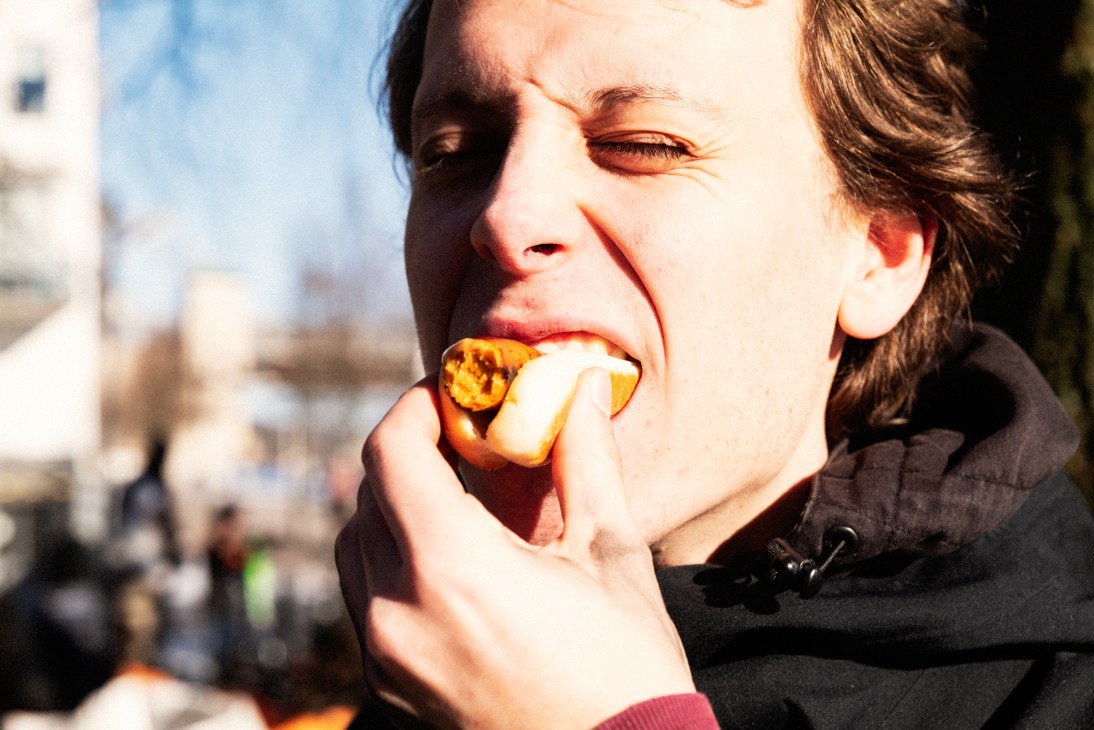
When we finish for the day, a barbecue – not retrieved from the depths – is fired up. “We have hot dogs after every dive,” says Johansson. “No one gets paid, so it’s important to show my team some love.” And rightly so. Johansson’s helpers have certainly met both of his goals today.
Style leader
How does an American end up as the creative director of a brand that defines the style of Milan? Take a look at Lawrence Steele and it’s easy to understand. Wearing a smart rollneck and billowing white canvas trousers that he designed for Lombardy’s Aspesi, matched with well-trodden Doc Martens that the 58-year-old has worn since college, he pulls off the art of Milanese style better than the Milanese themselves, with the perfect tailoring and subtly playful details that make Italian dressing so enviable.
“I’ve been entrusted with something that’s sort of a national treasure,” he says of his appointment as the creative director of Aspesi. “I’d put in the time and the elbow grease here and worked alongside Alberto Aspesi, the former owner of the brand, so it was more like returning home than being handed a task,” he says, while standing in front of images showing his latest designs at the company’s showroom in Milan.
“I couldn’t find clothes that were different so I got Vogue patterns and started sewing them and then tweaking them – that’s how I became a designer”
Steele’s history with Aspesi is long. After initially taking roles with Moschino and Prada, he started a 13-year tenure as a consultant for Aspesi in 2004, followed by three years when he went over to Marni as associate creative director to Francesco Risso, his long-time partner and the fashion house’s creative director since 2016. He returned to Aspesi as creative director of the entire brand in 2020 and his first collection hits shops this spring. It’s a demurely unisex medley of timeless Italian basics where most items – trench coats, field jackets, wide-cut chinos, rugby tops, pocketed button-downs – are sized for men and women, with some pieces even miniaturised for children.
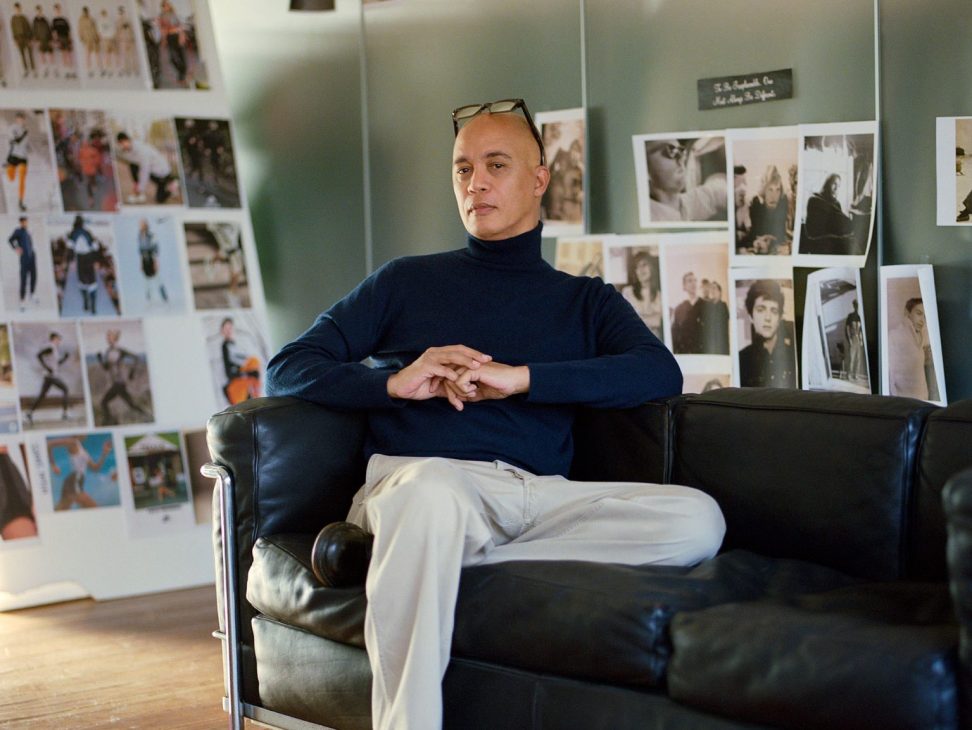
“Clothing is an alphabet of identity,” says Steele. “But rather than imposing a voice, mine are quiet clothes that allow a person to let their identity show.” Steele sees his work as outfitting different generations. “It’s for a grandparent in a tailored blazer and the teenager who borrows that blazer but transforms it into something more radical,” he says. “It’s also an extension of something fundamental that’s been going on in fashion: the breaking down of codes between men and women.”
As the son of a military dad, Steele moved frequently in his youth – Germany, Spain, Japan and then midwestern America – and he used fashion as a tool of survival. “I was so shy as a kid that the easiest way for me to make friends was to be particular [in how I dressed] because that would start a conversation,” he says. “I couldn’t find clothes that were different so I got Vogue patterns and started sewing them and then tweaking them – that’s how I became a designer.” In high school, he says he started off as a nerdy outsider but by graduation he had earned the popular vote of “most likely to succeed”. “That was thanks to the power of suggestion that our culture puts into costume,” says Steele, smiling.
Arriving in Milan in the 1980s, he felt like an anomaly: American, black, and gay, in a country that was then still very homogeneously Italian-born and still very Catholic. But he found ways to be embraced by a society that retained fond memories of US assistance in the war and of the industrial boom that followed. He adopted a look derived from American culture: in Milan, it was the era of the paninari – the so-called “sandwich eaters”, who were embracing the casual food habits and sportier daywear of the US with Levi’s jeans, trainers and puffer jackets. Steele, already well-versed in the American art of sandwich- eating, easily slipped in among the paninari with his beloved Aspesi down puffer – a signature product then as now. “Clothing has always been a secret way of talking,” he says. “When you take a wardrobe, anybody’s wardrobe, it tells the story of that person.”
The CV
1963: Born in Hampton, Virginia.
1985: Begins apprenticeship with Franco Moschino.
2004: Begins work as a consultant for Aspesi
2017: Takes role as associate creative director at Marni.
2020: Returns to Aspesi as creative director.
2022: Launches first collection with Aspesi.
The Opener
How to live: Look to the East
The list
Want to support business in eastern Europe? It’s easier than you think, says Tyler Brûlé.
At a recent launch event for The Monocle Book of the Nordics, a reader asked the best thing she could do to support the economies in Europe’s eastern flank. According to a fellow attendee who works in the Swiss financial-services sector, the way to keep up morale and turnover is to “buy Hungarian, buy Estonian, buy Polish”. Our reader said that she didn’t come into contact with many brands from the Baltics but the finance worker suggested that, with a bit of research, it was easy to find them. “Poland is a huge production partner, so there’s a good chance that wooden items will have been made there,” he said. “And a lot of luxury-goods firms have been shifting production from Asia to Slovakia, Hungary and Lithuania.” For our part, Monocle has also been moving production to the eastern edges of the EU.
1.
Bulgaria: We recently moved the bulk of our sizeable production of tote bags from Thailand to a factory that also supplies various Nato forces with duffels, packs and other materials.
2.
Estonia: You will soon see a new collection of products made by some of the best linen producers in Europe. Think good towels for post-sauna dips, table runners and placemats.
3.
Poland and the Baltics: Much of the paper for our magazines, newspapers and books comes from forests in the Baltics. We are committed to keeping all of our printing in Europe and will soon be looking at quality presses in Latvia.
Correspondent’s View: Montevideo
Close to home
At the height of every summer, wealthy city dwellers from Buenos Aires escape the stifling temperatures and cross the river to Uruguay. With its long pristine coastline and laid-back attitude, Argentina’s neighbour has become the preferred holiday destination. But as the season comes to an end this year, something feels different.
Walking around the capital Montevideo, flashy cars with foreign plates are still parked outside homes in neighbourhoods where Argentine coffee and restaurant chains have opened concessions. The city’s marina, meanwhile, is so full of new arrivals that boats have been forced to park further away to the east. Porteños, it seems, are now committed to living in Uruguay year-round.
School enrolments and the central bank are two solid indicators of this trend. Bank deposits at the start of 2022 in Uruguay were almost double those in Argentina, despite the country being a fraction of the size. Meanwhile, the number of students enrolled in private schools is up by as much as 50 per cent.
More interesting is how Uruguay is subtly, yet effectively, transitioning from a traditional tourist destination to a place that’s worth establishing yourself in. Argentines are becoming residents, opening accounts and businesses, and buying property. As for the locals? Well, these new faces are a welcome boost to finances, even if they could learn to tone down the noisy Maserati exhausts.
Virtual indemnity
It seems like companies think it might be prudent to begin engaging with the metaverse, so as to avoid the rush. Take JP Morgan, which has opened what it is pleased to call the “Onyx Lounge” in the virtual world Decentraland. Touted as the first metaverse bank branch, the Onyx Lounge offers such attractions as a hovering portrait of JP Morgan CEO Jamie Dimon, and a meandering tiger, for some reason.
But the lounge is not intended as a mere gimmick: JP Morgan believes that the trade in virtual property could become a trillion-dollar sector. It remains to be seen whether any of the investment bank’s rivals will sense a competitive advantage in avoiding the metaverse entirely and instead concentrate on employing sufficient operators to handle customer enquiries in the real world.

Protest songs
As authorities in Canada have recently learnt, even a relatively small protest can be a major nuisance if the participants are equipped with big trucks.
When police in New Zealand confronted a so-called Freedom Convoy, they got creative. Protesters were berated with the worst music the cops could compile, heavy on Barry Manilow, also featuring Los Del Rio’s “Macarena” and a version of Celine Dion’s emetic “My Heart Will Go On” tooted on discordant recorders.
Mystifyingly popular British dirgewriter James Blunt tweeted New Zealand police that they were welcome to give his works a spin. The speaker of New Zealand’s parliament, Trevor Mallard, thanked him but wondered whether it was fair on the officers who would also be damned to endure Blunt’s whining.
There is another flaw with this tactic. The kind of people who believe that New Zealand is an oppressive tyranny might also actually enjoy the racket broadcast at them.
Reporting from…
Monocle’s HQ and bureaux span cities across the world. Here we raise a glass to extended drinking hours in Zürich and a new neighbourhood in Toronto.
Toronto
Smart move
The world’s first “smart” neighbourhood by Sidewalk Labs was shelved early on in the pandemic. Unveiled this February, a new plan looks cannier, with homes by David Adjaye, a park by Denmark’s SLA landscape studio and Canada’s largest timber-framed building.
Los Angeles
Welcome facelift
The Conrad hotel, a mixed-use monolith designed by Frank Gehry, is set to welcome its first guests in June, marking the debut of the long-delayed Grand Avenue Project, first mooted in 2004. But it will take pizzazz to entice some reticent Angelenos back to the city’s core.
London
Hot under the collar
London has launched the latest phase of its Cool Streets and Greening programme to mitigate rising temperatures in its CBD. The plan is to plant more trees to provide shade for the area’s workers. Let’s see if the city’s less salubrious but more populous areas will follow suit.
Zürich
Prost!
Switzerland’s largest city is close to cresting its highest-ever population as residents have chosen to stay rather than decamp for the countryside. Proposed new laws that would extend restaurant and bar opening times beyond midnight would keep the crowds happy.
Hong Kong
Hold the phone
Stalls selling phone cards will soon fade away as a new law came into effect requiring prepaid Sim cards to be tied to a name. Registration will kill demand for burner phones. Authorities cite a rise in phone scams while privacy advocates fear that surveillance is the real reason for the call.
Tokyo
Out of time
It’s time to say sayonara to a Tokyo landmark: Kisho Kurokawa’s 1972 Nakagin Capsule Tower. This stack of prefabricated capsules is the ultimate expression of metabolism, an architectural movement that compared buildings to living organisms. Demolition is already underway.
The Interrogator
Patrice Wagner
Paris
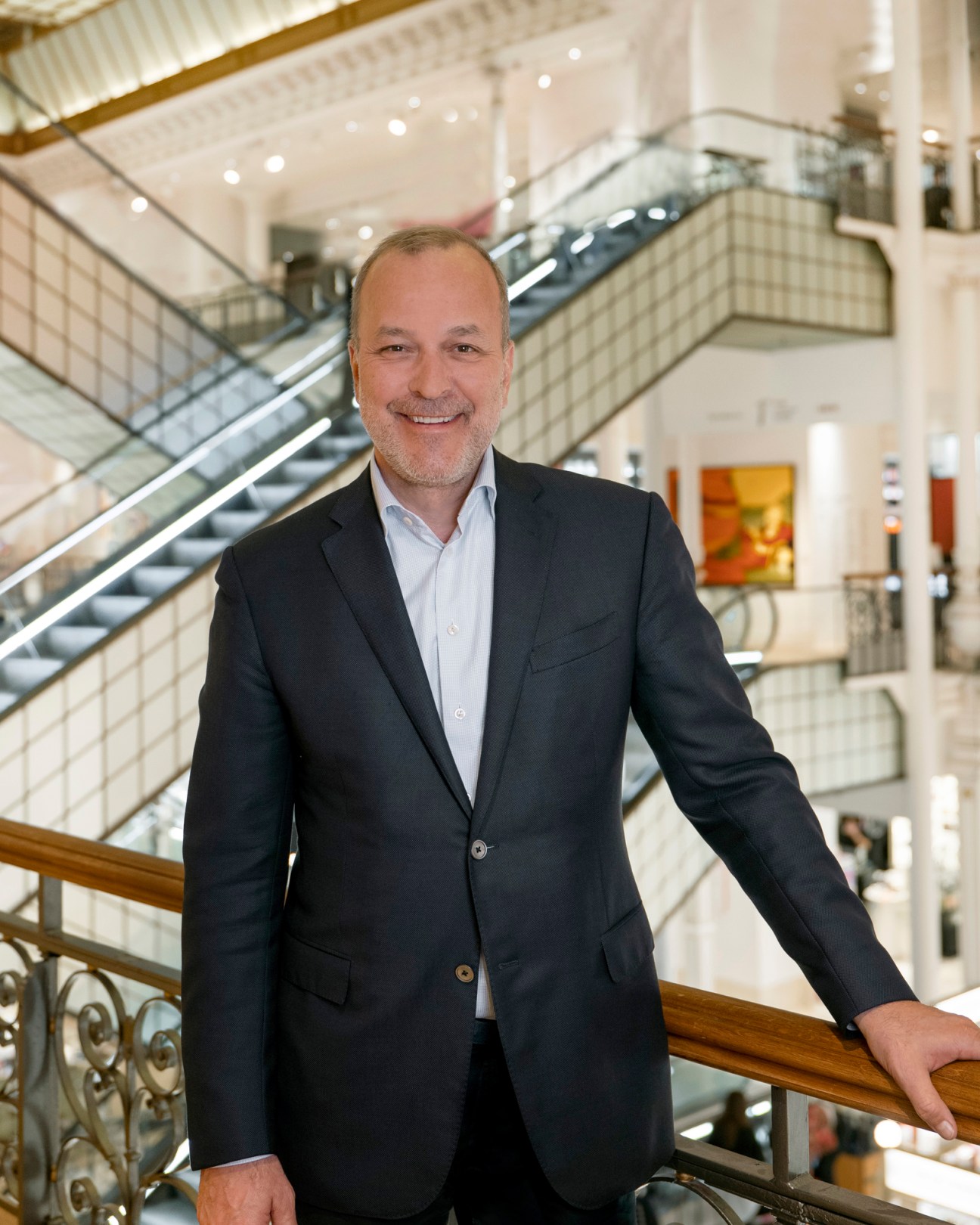
Celebrating its 170th birthday this year, Paris’s Le Bon Marché can lay claim to being the world’s oldest and longest-running department store. Opened in 1852, its founders, Aristide and Marguerite Boucicaut, created a new style of shopping by introducing the rather modern-sounding notion of free delivery to customers (alongside the less cutting-edge but rather practical suggestion of fixed prices for products). Significantly, the pair also turned their flagship into a cultural and social destination with live concerts, reading- and billiard-rooms and a salon for food and refreshments. Today the iconic Left Bank shop is part of the LVMH group. Its current chairman and CEO Patrice Wagner tells Monocle how exclusivity can save shops, why digital transactions can’t trump physical ones and what to expect from the next 170 years of business.
Tell us about Le Bon Marché’s approach to retail?
We strive to be different, with installations and exhibitions that surprise our clients. This preserves our uniqueness. Our aim is to enrich through intellectual or artisticexperiences. Once we set up electric-guitar lessons and you would not believe the number of people, me included, who scratched a guitar for 30 minutes before buying one, hoping to unlock a new hobby.
You’re hosting an exhibition called X to foster collaboration between Le Bon Marché and its brands. What’s on show?
We approached Philippe Katerine – a singer, actor and artist who is adored in France – to be our main collaborator and to create installations. Porsche is collaborating with Tag Heuer and has provided electric cars to taxi around clients. It will also be possible to test-ride electric bikes courtesy of Cowboy teaming up with K-Way and a cocktail bar has been dreamed up by [nightclub] Castel and [perfumery] Kilian. We want to encourage liveliness.
Why are collaborations important in retail?
They create exclusivity, not necessarily because of price but because of how much fun a product can be. A Scholl sandal can be bought anywhere. But a Scholl sandal made with swimwear brand Eres, available only at Le Bon Marché, is an exclusive.
You’re celebrating your 170th birthday. What will the next 170 years look like?
I am not arrogant enough to predict that far into the future but over the next couple of decades there will be a shift from the old retail model to “retail-tainment”. Physical shops need to offer something human, an oasis of joy that cannot be experienced digitally, because our niche is social contact.
lebonmarche.fr

São Paulo’s municipal fruit market isn’t usually the place for financial scandals but a widespread “fruit scam” proves that white-collar crime can happen anywhere. In February, visitors accused vendors of coercing them into buying extortionately priced trays of strawberries and custard apples for RS800 (€144). The scammers’ strategy involved giving customers a free sample before demanding that they pay for the produce. Thankfully the market is cracking down before other salespeople, such as car dealers, employed the trick. If that had been the case, taking a Porsche for a test drive could have turned out to be a very expensive mistake.
Case of bad timing
While celebrating its victory in the Africa Cup of Nations, Senegal striker Sadio Mané missed the outstretched hand of president Macky Sall. Who else has been left hanging?
1.
Hands off
Germany
Collecting his Champions League runner-up medal in 2012, German footballer Bastian Schweinsteiger didn’t see president Joachim Gauck extending his hand in commiseration.
2.
Cheers?
UK
Barack Obama raised a toast to Queen Elizabeth while God Save the Queen played. The monarch didn’t reciprocate as she’s prohibited from doing so while the anthem plays.
3.
Sofagate
Turkey
In 2021, Recep Erdogan strained relations when two chairs were left out for his meeting with Charles Michel and Ursula von der Leyen. The latter had to sit on a nearby couch.
Prepared for anything
In the run-up to Christmas it was clear that a war between Russia and Ukraine was becoming increasingly likely. So we asked Artem Chekh to write the lead story for our February issue about his home city of Kyiv and about how you live with the constant threat of everything being snatched away – the places you love, your home, your friends. We turned to Chekh because of his 2017 book Absolute Zero, about his time in the Ukrainian army, including months on the frontline in Donbas, and his story caught the moment perfectly. “Last spring my wife and I bought an apartment in a nice part of the city,” wrote Chekh. “But it’s impossible to enjoy it without reservation. Our son is 11 years old and traumatised by a war that has lasted two thirds of his life. He can just about remember when I went to the front. The other day he asked me and my wife, ‘If the Russians want Kyiv so much, why would they bomb it?’”
As I write, Chekh’s family have left the city and he has stayed to fight. On a dime the world spins: things we took for granted vanish, new world orders emerge, threats that moved in the shadows are suddenly in our faces. And people – all of us – are left wondering, “Where next?”
For this issue, Alexei Korolyov, our Vienna correspondent, and photographer Stuart Franklin, have journeyed along southern Ukraine’s borders with Romania and Moldova, speaking with refugees, security chiefs and local leaders to see how these small countries could cope if all of vast Ukraine falls and they have Russia as a neighbour again. And also how they can help the stream of people seeking refuge.
In these pages, we have also looked at everything from Europe’s Russian energy dependency to Kyiv’s media. If you want to get a sober, global assessment of all that’s happening, in real time, I also encourage you to listen to our news shows on Monocle 24 (all available as podcasts) and sign up to our free newsletter, The Monocle Minute, where our team has been delivering some great analysis and giving voice to people in Ukraine.
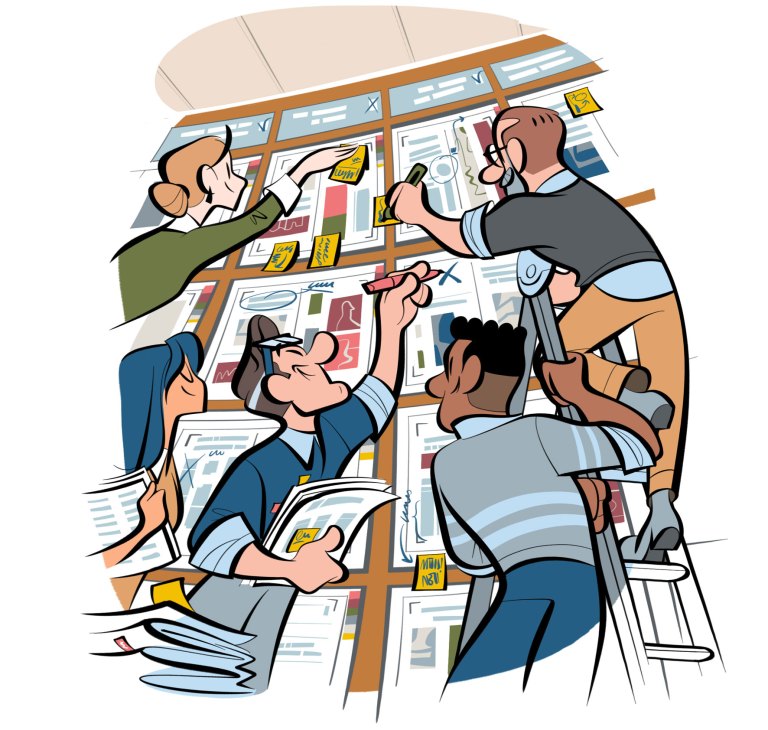
The need to be prepared is a theme that comes up in other guises across this issue. Christopher Lord, our new US editor, has headed to Montana, which has become a thriving base for aviation companies building aircraft to tackle wildfires (see here).
Over in Turin, meanwhile, our writer Jessica Bridger meets Fiat CEO Olivier François as the company pushes towards an all-electric future and attempts to reignite the industrial ambitions of its home city (see here). And then there’s our retail survey (see here).
Retail is something that’s easy to think of as a frippery when you have seismic world events in play (although even here, the decision of Ikea to cease its operations in Russia garnered global headlines). But good retail can do wonders. It can provide places where people come together, create jobs, build community, offer space for young entrepreneurs and help cut the number of delivery vans on our streets. And it can be fun too. So we asked writers in 10 cities to look at projects that proved resistant to the pandemic’s economic punch, people reviving high streets and good design turning around neighbourhoods.
Another standout this month is the Expo (see here), which looks at the strange, elusive notion of value. How can antique glassware be cheaper than modern knockoffs? Why does the allure of a good story add so much value to a piece of furniture? Why is an artwork that only exists as a contract so cherished? At a time when people get so overexcited about nfts and the roller-coaster values of digital currency investments, we felt that it was the perfect moment to ask, “What do you really value?”
This is Monocle. We bring you stories from the frontlines but, even in the most adverse moments, we will regroup, think ahead and deliver some hope and direction too. And see the world from every angle.
Finally, some house news. If you would like to be part of a bigger, in-person conversation about everything from newsgathering to architecture, you should come to The Monocle Quality of Life Conference in Paris, that we will be hosting with Le19M, a prestigious new craft and innovation centre that is home to some of Chanel’s finest creative partners. There’s a welcome reception on Thursday 2 June, the main conference day is Friday 3, and there are special tours of the best of the city on the Saturday. To find out more, visit monocle.com/conference.
Until next month, thank you for reading and if you want to contact me, send story ideas or know more about Monocle, you can drop me a note at [email protected].
Nation buildings
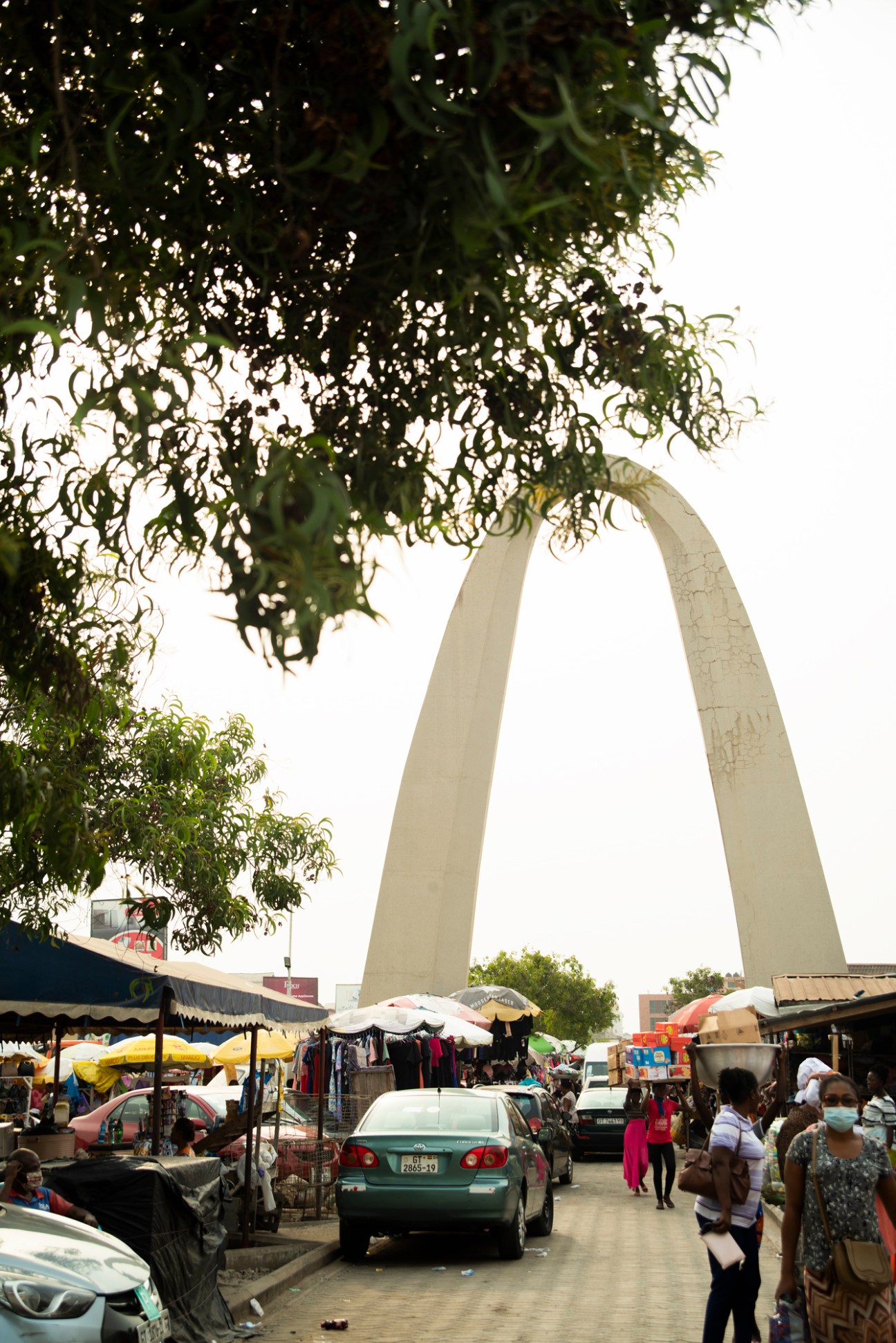
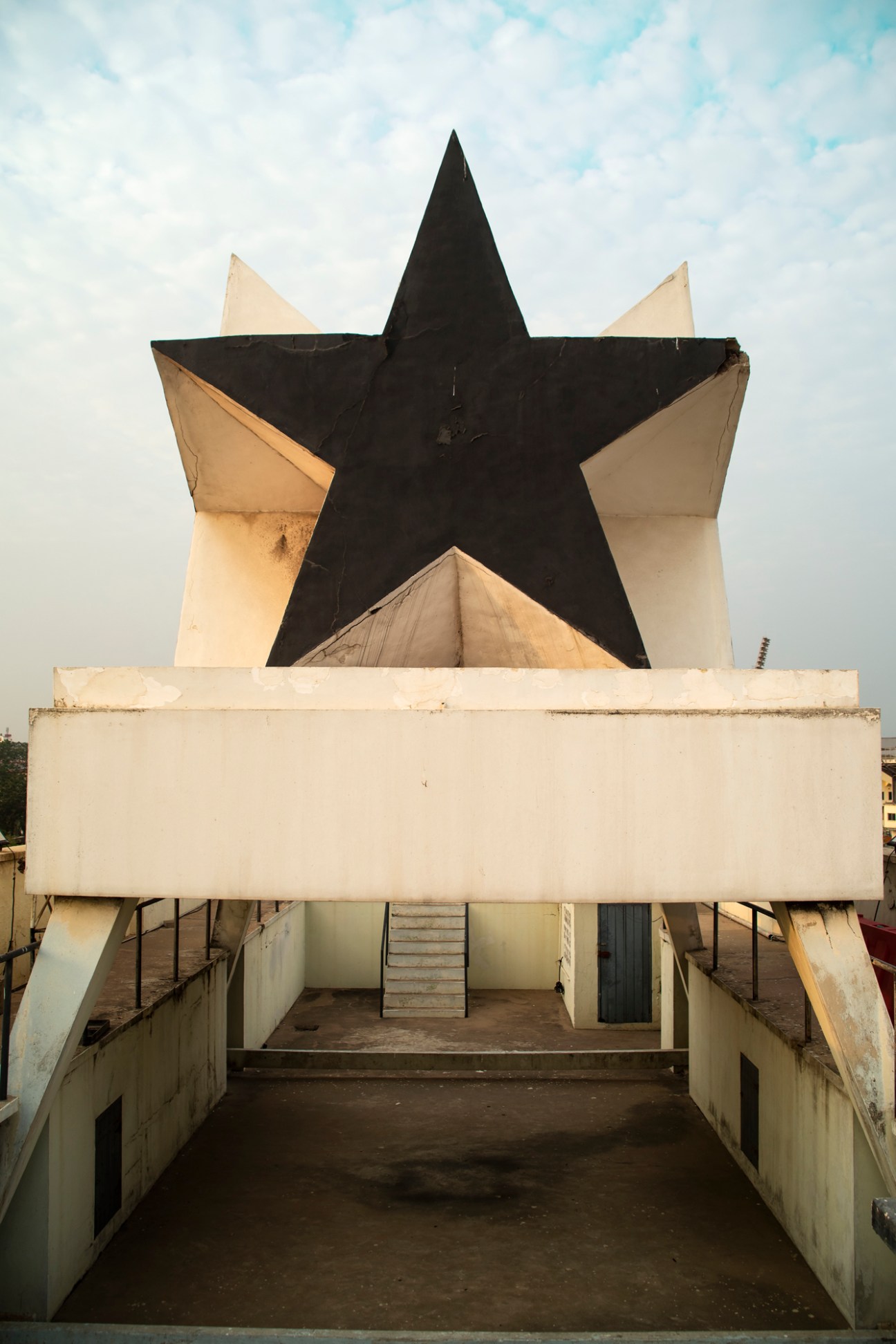
It’s golden hour in Accra and amateur photographers have their phones at the ready. The backdrop is the Ghanaian capital’s Black Star Square and the modernist curve of Independence Arch. As a breeze drifts in from the Atlantic, those who are about to be snapped raise their arms and jab their fingers towards the cameras. The stance is a reference to the rallying cry of Ghana’s first post-independence president, Kwame Nkrumah: “Forward ever, backwards never!” In 1961 his government completed this flag-lined gathering space, where people now lounge on seats near the arch. As statement architecture, it remains highly effective.
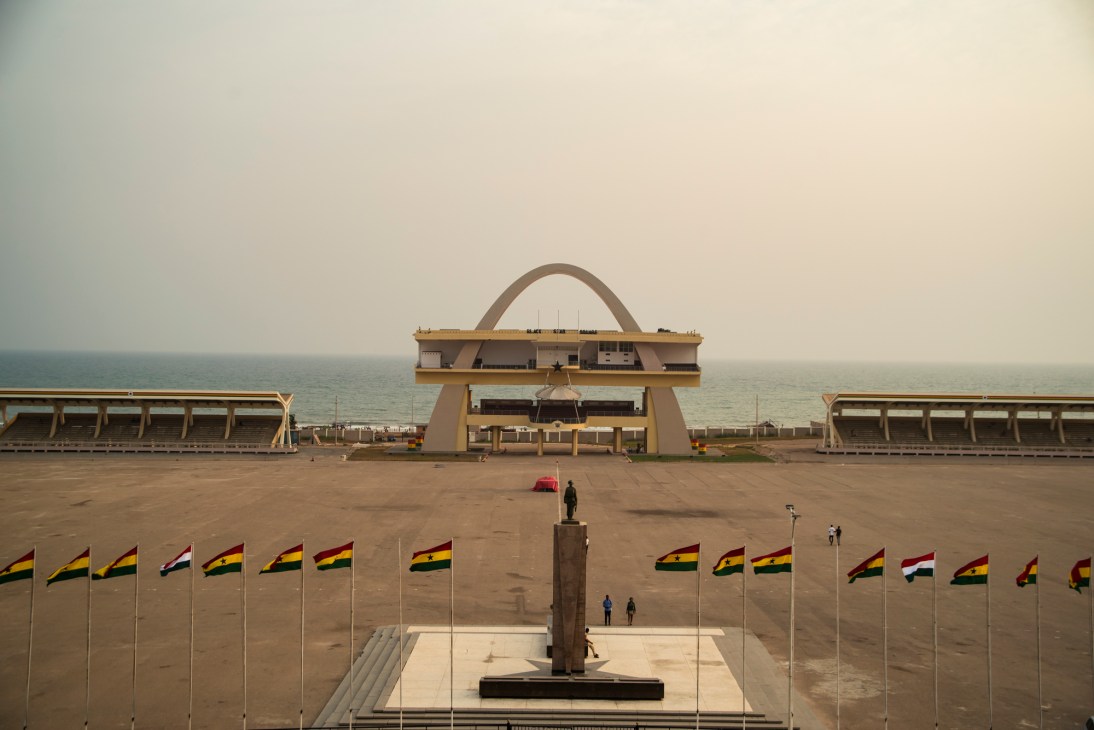
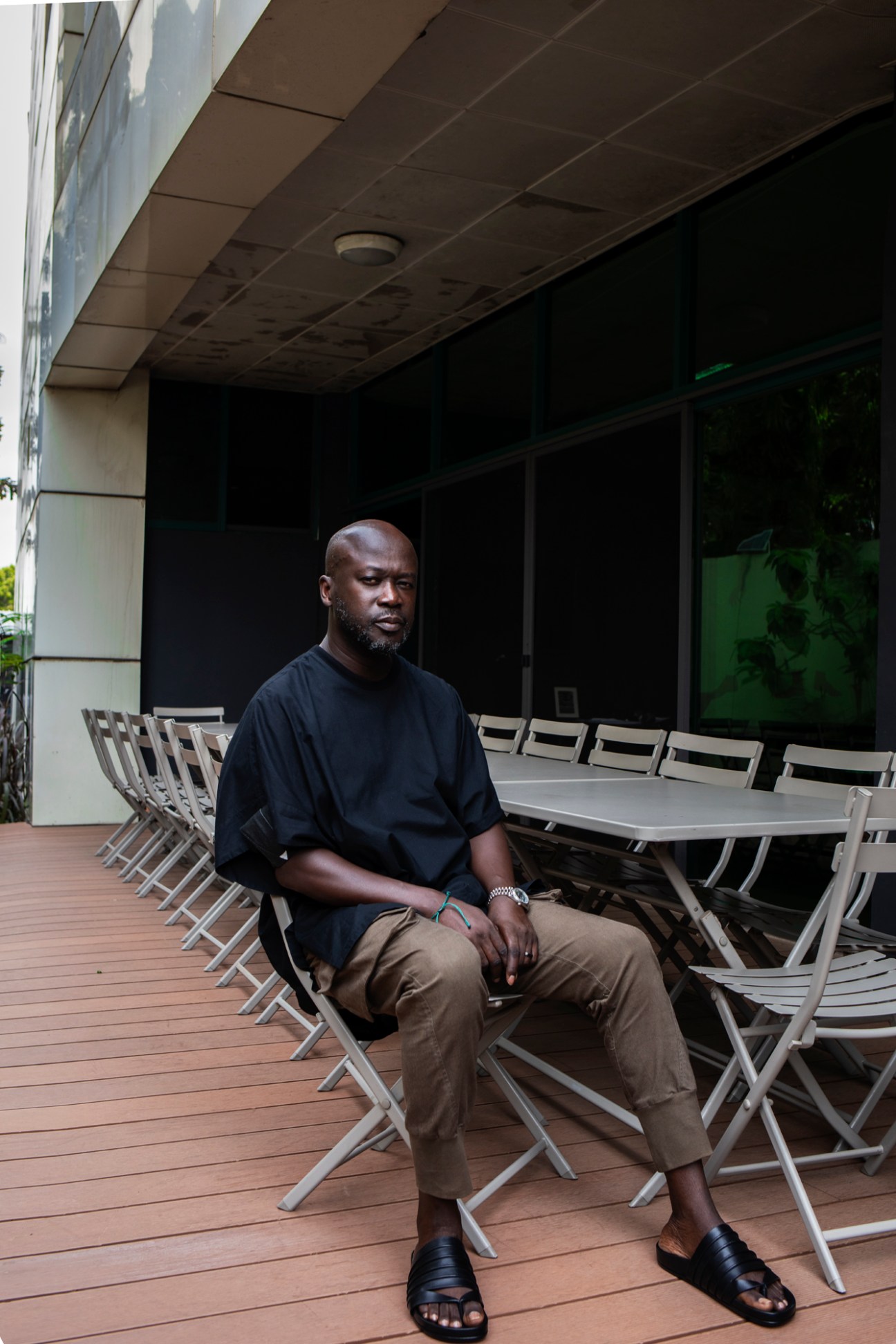
“It’s still the heart of the nation,” says Ghanaian-British architect David Adjaye, in a flowing T-shirt cut low at the back, at his studio in Accra’s Airport Residential Area. “Black Star Square is where the idea of the nation is defined,” he says. “That doesn’t even happen in parliament. It’s all to do with the energy of a nation-building agenda.”
Adjaye is among the world’s most in-demand architects. The son of a Ghanaian diplomat, he set up his practice in London in 2000, later adding offices in New York and Accra. He was knighted in 2017 for his services to architecture. Yet the man behind Washington’s National Museum of African American History & Culture, the Moscow School of Management Skolkovo and other international landmarks chooses to call Accra his home. It’s where his children go to school and the city in which he has chosen to base the headquarters of his global company. His team here is nearly 80-strong.
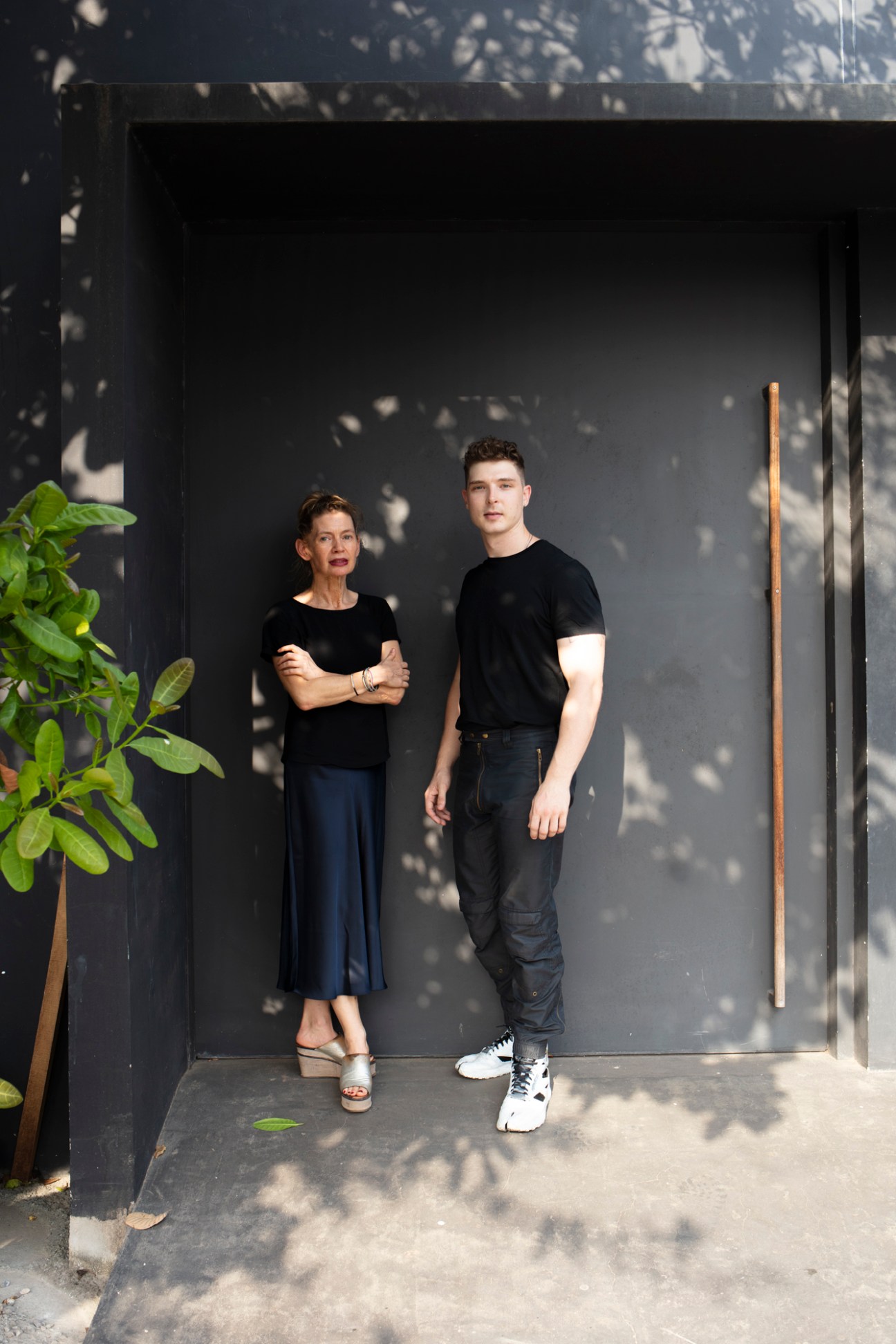
Architects
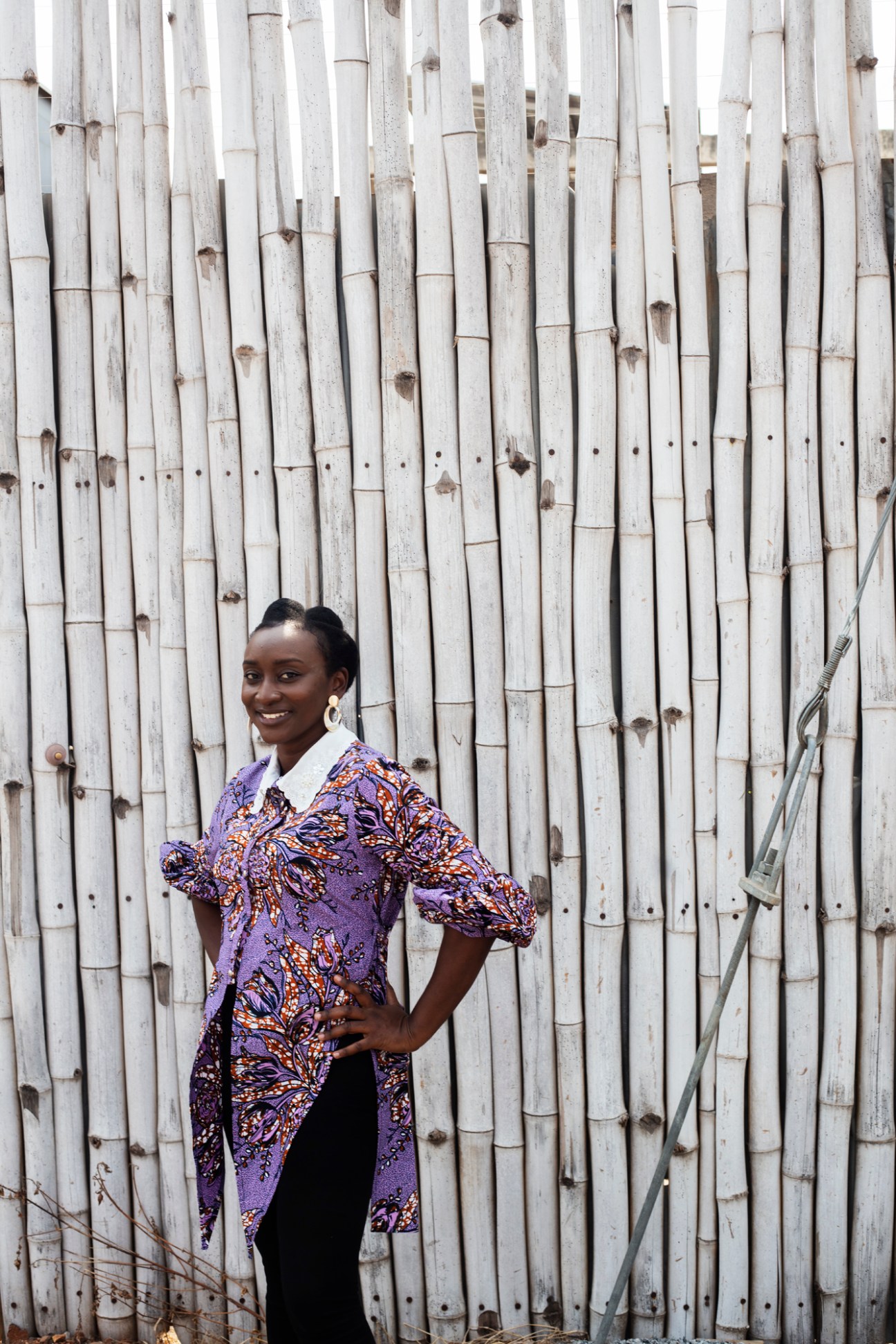
Architect
Adjaye is talking about architecture’s power to “ignite the ambition of a nation” because he has the chance to do just that. He has taken on a set of commissions that are, by his own admission, not without risk. It all began when Ghanaian president Nana Akufo-Addo asked him to build a new national cathedral. Currently in the early stages of construction, it will include gardens, a music school and a 5,000-seat auditorium, blending Christian and animist traditions in its concrete design. Adjaye says that though the lack of a tender – “normal house rules” – gave him pause, the chance to be involved in what he calls a “new reset” for the nation was too good to turn down.
The work doesn’t stop there. Adjaye Associates is redeveloping Accra’s 1967 International Trade Fair building, which was co-designed by two Polish architects at a time when the country was gazing East. The studio is also planning to develop a shoreline promenade called Marine Drive and the new Amoako Boafo Gallery. Furthermore, Adjaye has agreed to design more than 100 hospitals for the Ministry of Health. In a place where funds can quickly disappear or a handover of power can lead to legacy-dismantling and project cancellations, it is perhaps unsurprising that most of these projects are slated for completion by or before 2025: the next general election will be held in December 2024.
A socially engaged architect (he is designing a mega-tower that will house US civil rights organisation NAACP’s headquarters in New York and a museum in Nigeria for the Benin bronzes), Adjaye is not shy about wading into politics. “It’s a myth that architecture isn’t political,” he says. “Even when you’re doing commercial work, that is political – it’s the liberal-capitalist agenda to use the private sector.”
If he pulls it all off, Accra’s urban landscape will change significantly in a city that is crying out for better buildings. Adjaye doesn’t believe that bold projects should be avoided just because Ghana has problems. “There isn’t a linear path for architecture and development,” he says. “You don’t say, ‘Oh, we have to build all the roads first, then all the houses, then all the high-rise buildings.’”
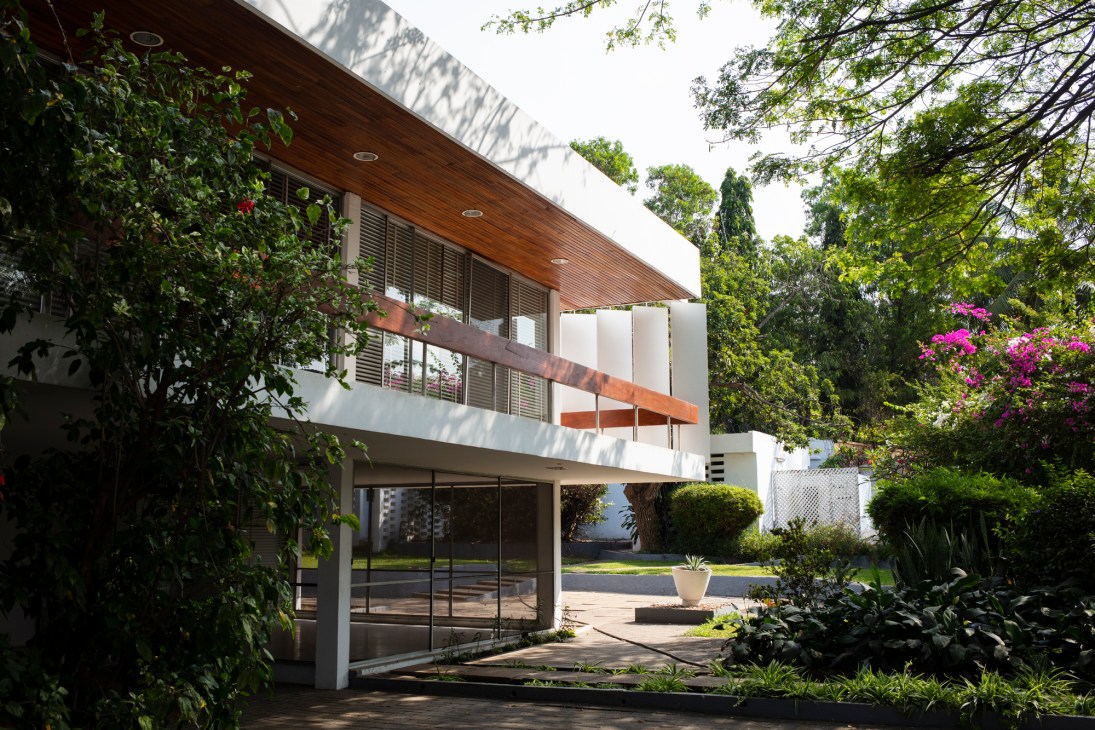
While part of the cityscape is dominated by shiny glass boxes, it’s the mid-century examples of Ghana’s tropical modernism that stand out. You can marvel at the Children’s Library and its tower, designed to resemble a stack of books; or Chicagoan architect Harry Weese’s former US embassy building, now a government ministry, which is held up on concrete legs. Perhaps most impressive is a former residence of Australian-born architect Kenneth Scott, with its white slats to guard against the sun. It was used for a successful cultural showcase in December.
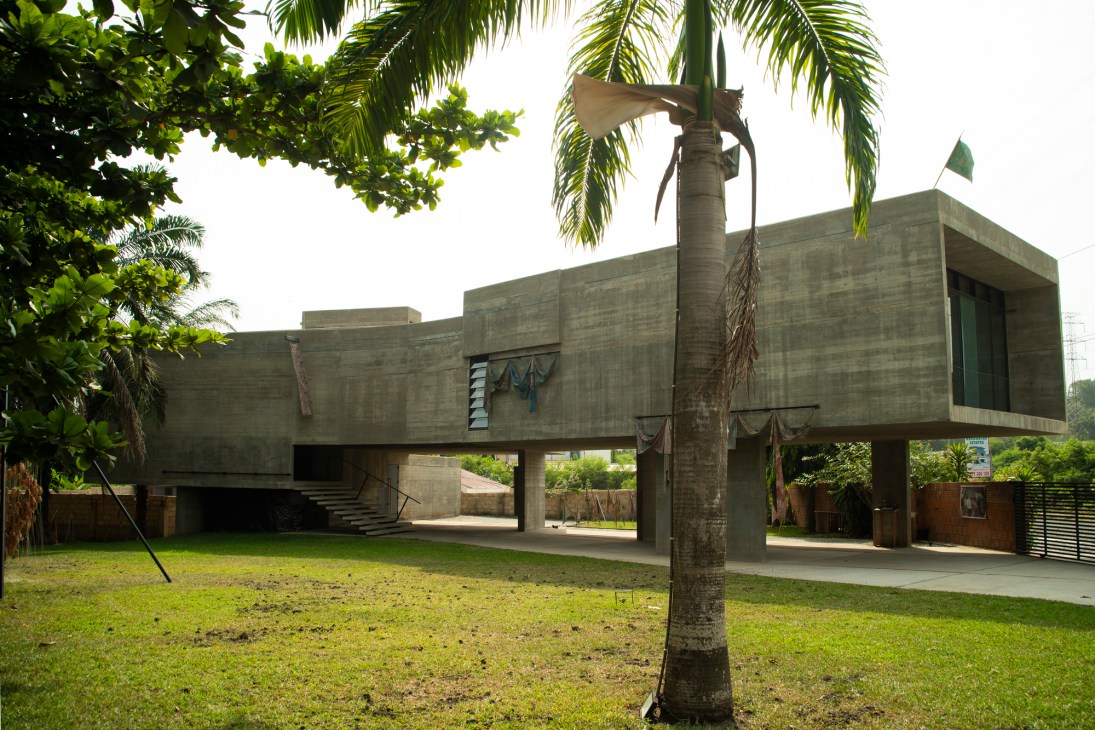
The repurposing of Scott House for such an event is one example of the city’s thriving creative scene. “The art world is a catalyst,” says Accra-based Austrian architect Juergen Strohmayer, as he sits at a table on the grounds of the Nubuke Foundation alongside his German colleague Baerbel Mueller. Behind them is the foundation’s main building, which they co-designed; it was completed in 2019.
A concrete structure that Strohmayer says is the first bespoke building for the contemporary art scene built in Ghana, it stands on legs that allow the garden to flow underneath it, while the front of the building is dominated by windows that can be opened for cross-ventilation. Others might have chosen a more conservative option but the foundation’s director, Odile Tevie, took a punt because she felt that it was what “Ghana’s art ecosystem needed”.
While the construction industry and contractors still largely dominate how buildings in Accra turn out, Strohmayer is positive about the city’s architectural future. “One exciting thing about working here is how daring you can be,” he says. “There’s an opportunity to do things differently. The people I work with all want that.”
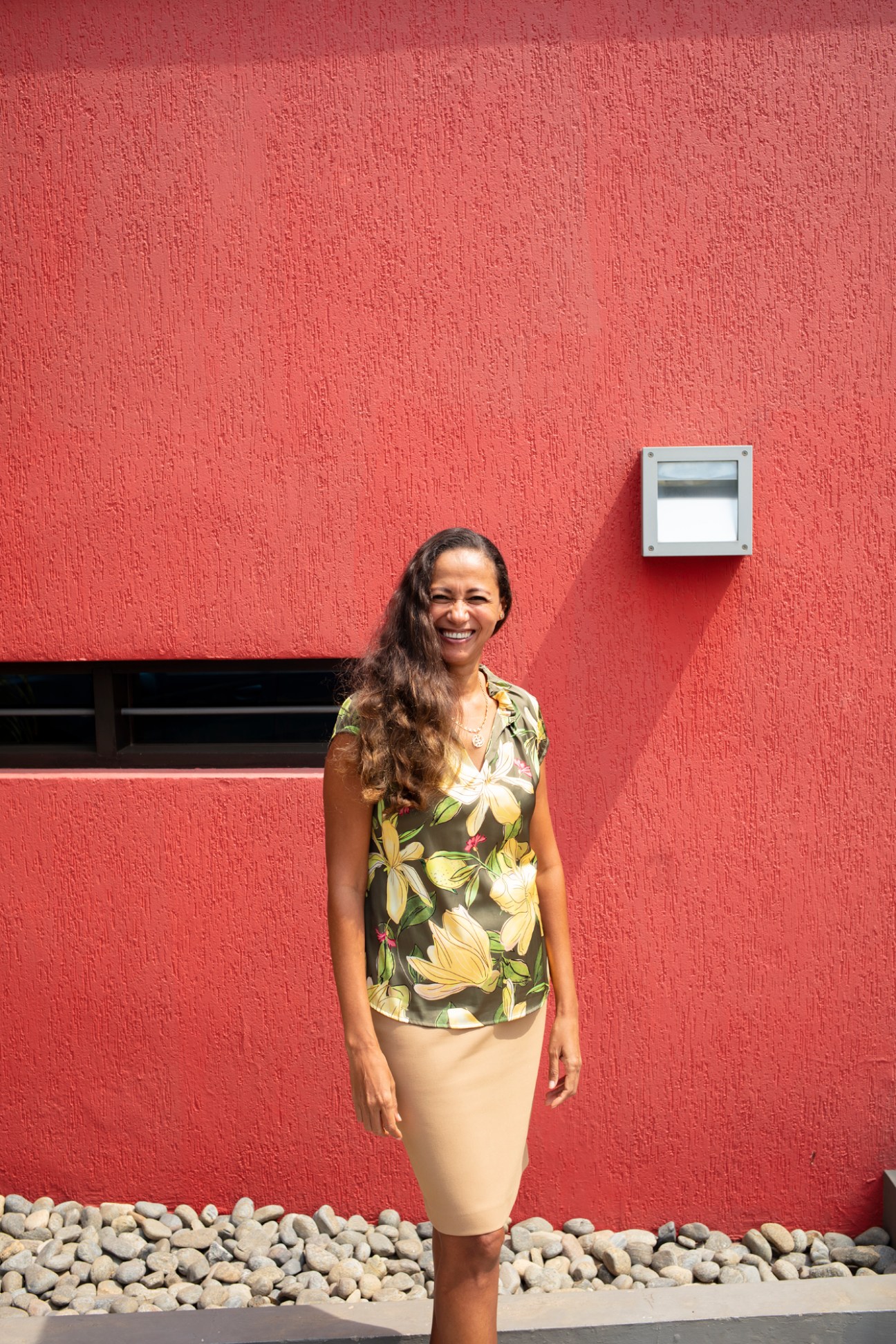
Architect Rosemary Orthner of Accra-based practice Orthner Orthner & Associates agrees. “Some people ask if this is really in Ghana,” she says, about the reaction that she sometimes receives from people who see her studio’s work. “They’re figuring out now that it’s not that you can’t do this; it’s more about having the right team.” Orthner speaks to Monocle from a home-cum-office that was built by her father, a contractor. There’s a pole flying an Austrian flag in the garden and a consular insignia on the outside wall. Alongside their architectural work, Orthner and her husband, Martin, run the Austrian consulate.
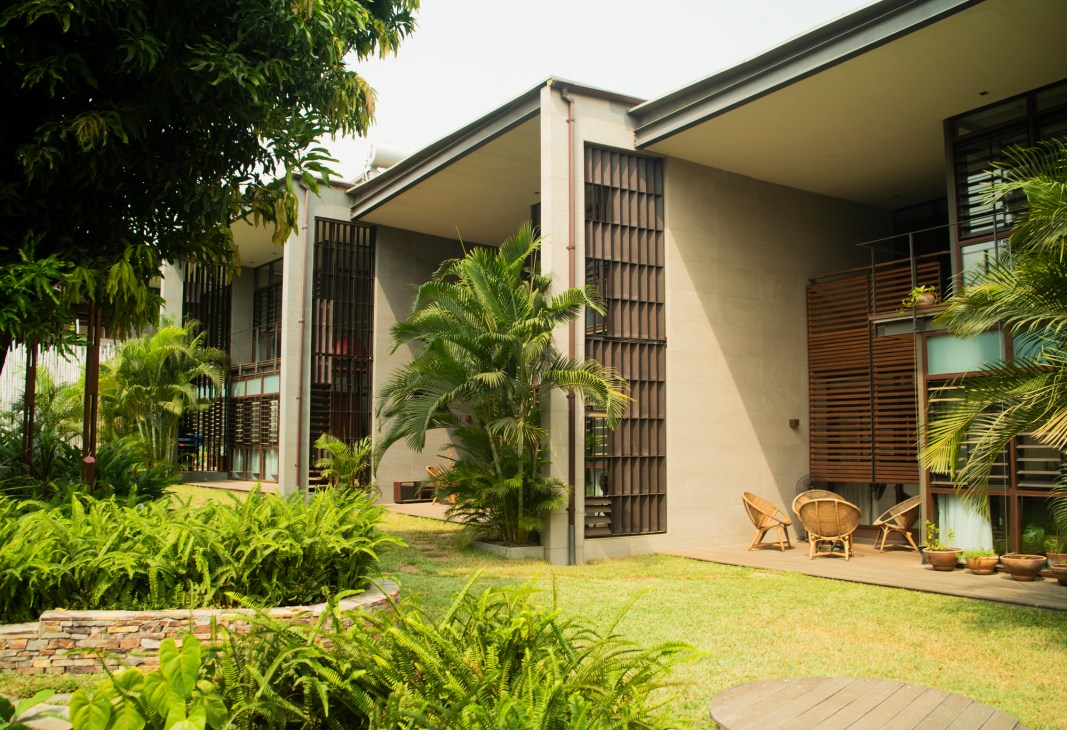
Orthner Orthner & Associates was founded in 2000 in Austria and relocated to Ghana a few years later. The pair say that they want to challenge norms by tuning in to their environment. That harmony with their surroundings is apparent at the studio’s Legon City Lofts: four private residences that (unusually for Accra) share a communal garden. While rammed earth is used to create a swirling pattern on the external wall, the main structures are dominated by glass, steel and Ghanaian hardwoods. Cement is used only to divide the houses; palm trees dominate. “Ghana is so tropical,” says Martin. “Within six months you have a forest on your site and nobody is using it. [With Legon City Lofts] we wanted to create a tropical retreat in the city.”
Architect, Orthner & Associates
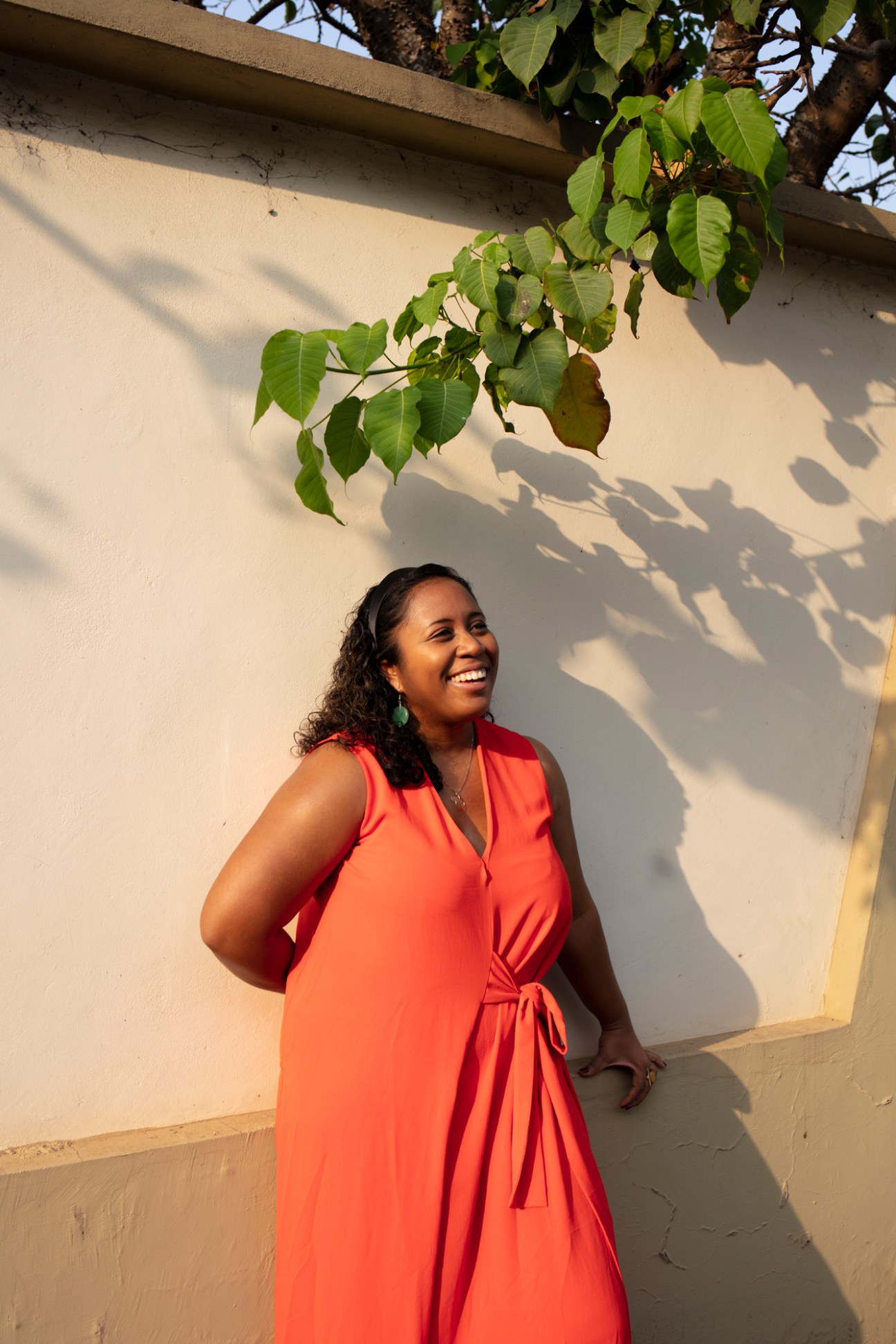
Architect, academic and founder of Willow Technologies
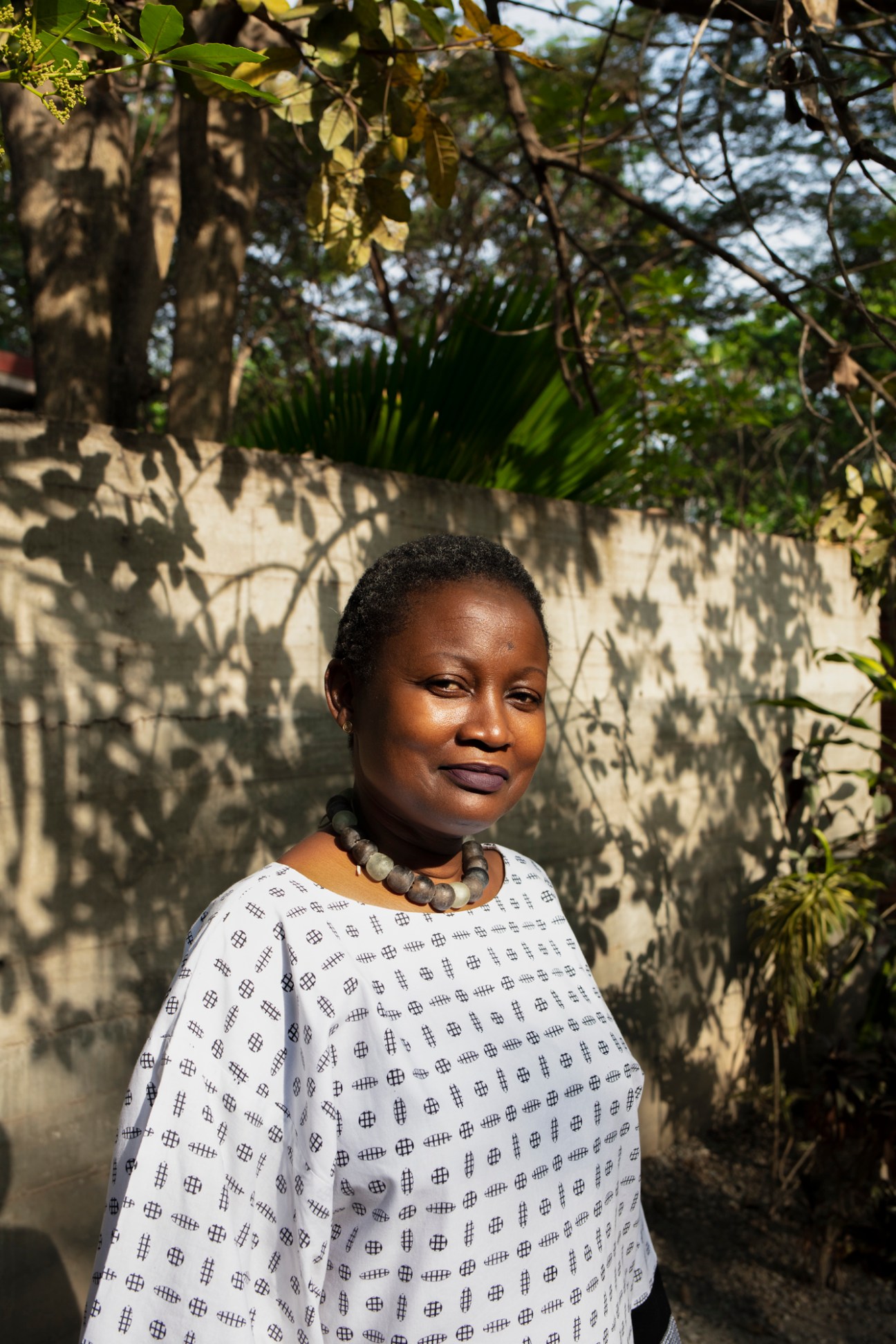
Director, Nubuke Foundation
Accra’s increasing architectural maturity relies on changing attitudes. That involves convincing more people to value architecture and demand more from the industry. “The role of the architect as a problem-solver has been neglected,” says Ruth-Anne Richardson, who has her own practice called Studiored. She says that a combination of advocacy, public engagement and education could help to ensure that architecture in Ghana can formulate its own narratives and become part of the country’s cultural identity.
Richardson also collaborates with Scottish-Ghanaian Lesley Lokko’s research, events and education platform the African Futures Institute, based in Accra and founded last April. Monocle was expecting to meet Lokko there but her world was flipped upside-down in December when she was named the curator for 2023’s Venice Architecture Biennale. Instead of tropical sunshine, she speaks to us from the rather more temperate climate of Edinburgh, where she is preparing for the release of her curatorial statement in May.
An academic who founded the Graduate School of Architecture at the University of Johannesburg and headed the architecture school at New York’s City College, Lokko says that she has only ever built three buildings and hated the process. “We teach architecture as a profession,” she says. “But it’s much more of a way of thinking about the world and less about making buildings.” Her hope is for Accra to become a regional hub for architecture debates and events – and it’s starting to happen. “If you can get developers, contractors and patrons in those discussions, the level of discourse goes up. So rather than going to a roadside contractor and saying, ‘Build me a plan from houseplans.com,’ we as a discipline have managed to engineer our own value.”
Lokko also says that she plans to start running courses in Accra by next year, with the first focused on architectural criticism. She says that students – half of whom will be Ghanaian and another 25 per cent from elsewhere in Africa – will be the “foot soldiers” of change to Accra’s urban environment and beyond. But Lokko also recognises that education continues after school. That’s where people such as Adjaye come in. Mae-ling Lokko, an architect and academic researching alternative building materials, points to the leg-up that Adjaye has given start-ups such as Hive Earth, which focuses on clay and sand. Contractors have also been upping capabilities by forming co-operatives to meet the needs of Adjaye Associates. “David is incredibly inspirational,” she says.
Back at his Airport Residential Area studio, Accra’s resident starchitect is keen to point out that he hasn’t just parachuted in an external team of international polymaths. He is hiring locally and, like Lesley Lokko, has the long game in mind. “What I can do is ensure that we’re employing interesting young architects from the continent and putting them in the front of these major projects,” he says. “These people are going to have incredible knowledge when that building is finished. And that knowledge will help them become something.” Accra, a city on the front lines of some of the 21st century’s most pressing issues, from urbanisation to climate change, clearly has a story to tell. Soon it might have the architecture world’s ear.
Measuring up
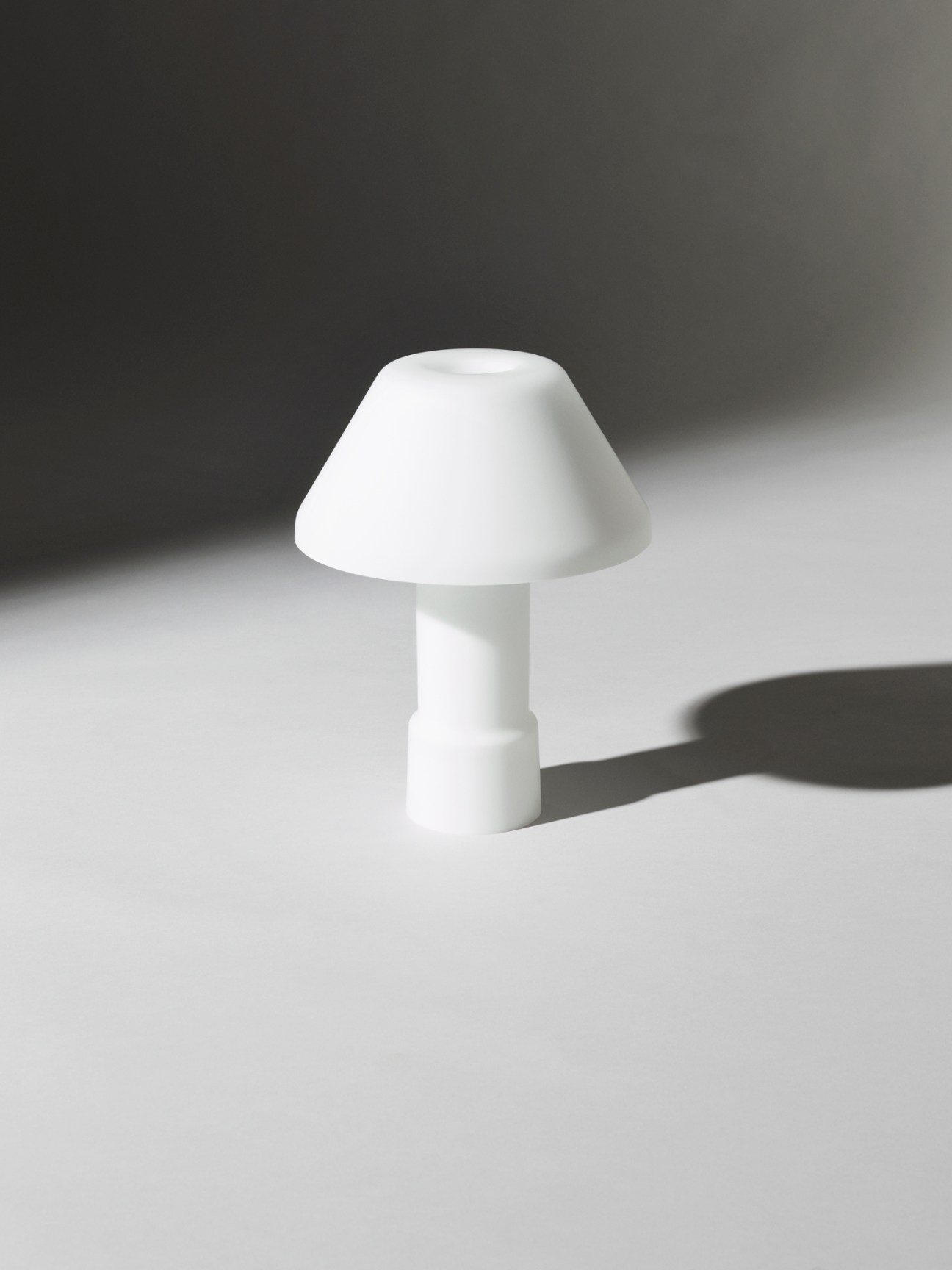
W163 Lampyre
Wästberg, Sweden
In collaboration with French designer Inga Sempé, Swedish brand Wästberg has crafted a lamp made almost entirely of mouth-blown, white opal glass. Taking its name from the French word for “glow worm”, the W163 Lampyre has a soothing gleam, whether it’s dimmed or turned all the way up.
wastberg.com
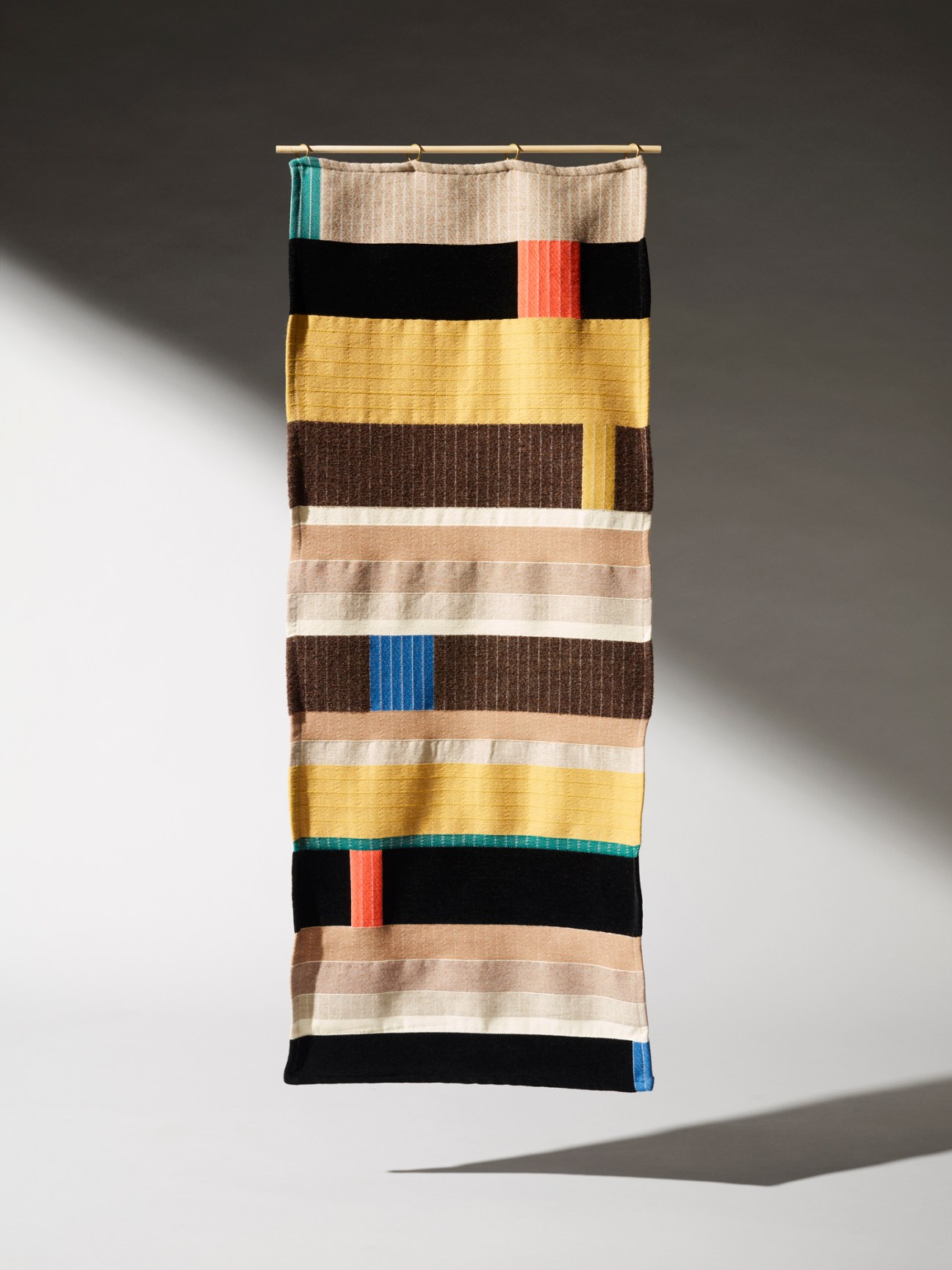
Wall hanging
Twenty Twenty One, UK
The Anni Albers wall hanging, designed in 1925, is a prime example of the renowned designer’s unerring eye for textile colours and textures. Its historic pattern has been reissued using surplus yarn from Yorkshire, which has been carefully matched to the original.
twentytwentyone.com
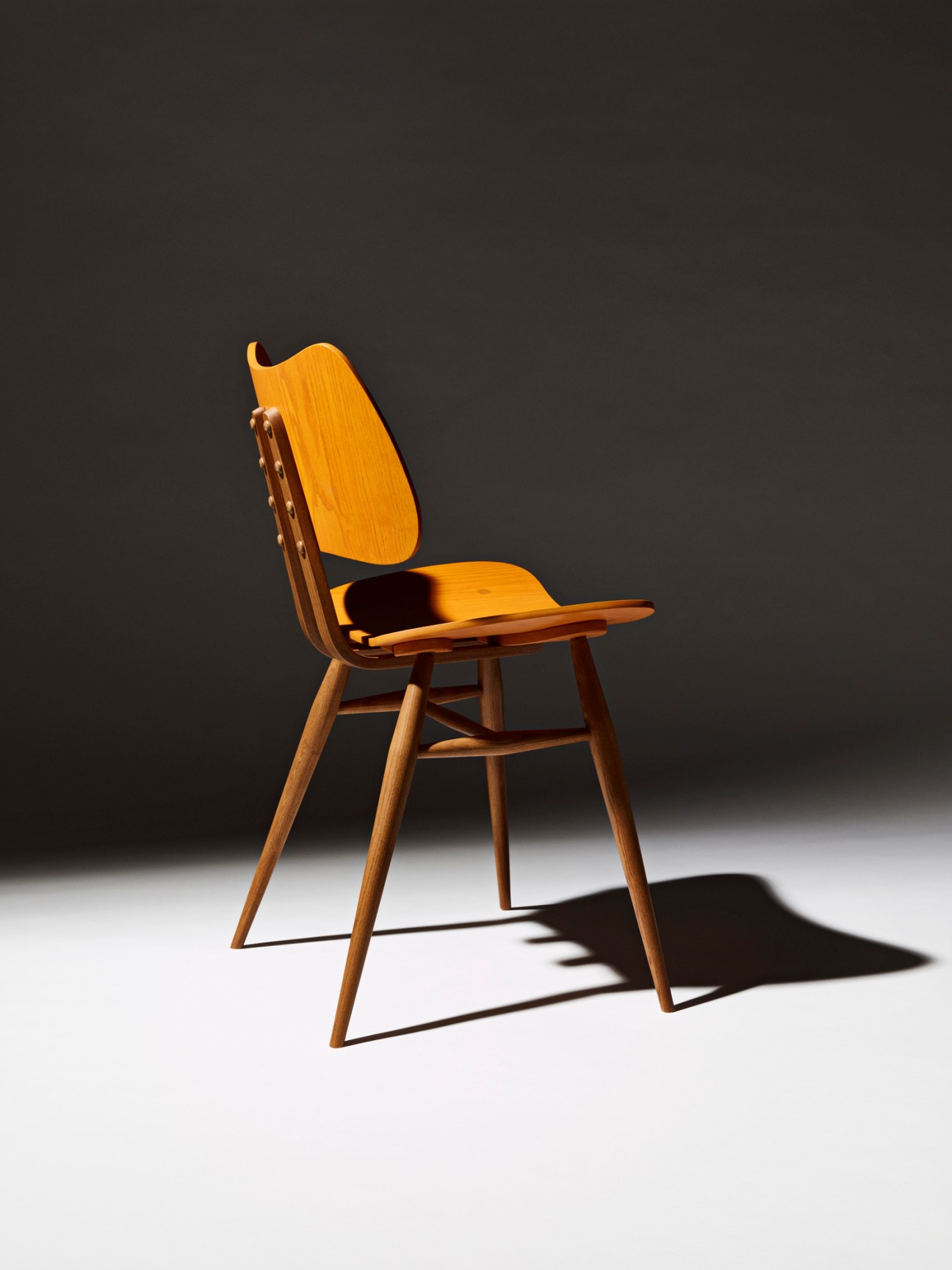
Butterfly chair
L Ercolani, UK
Producing furniture that prioritises function but is still beautifully designed, Italian-born Lucian Ercolani revolutionised mid-century British design as founder of Ercol. Launched in 1956, the Butterfly chair is a refined piece that defined the company’s output. Today it is made from ash timber with a steam-bent ply seat and comes in a range of new finishes.
lercolani.com
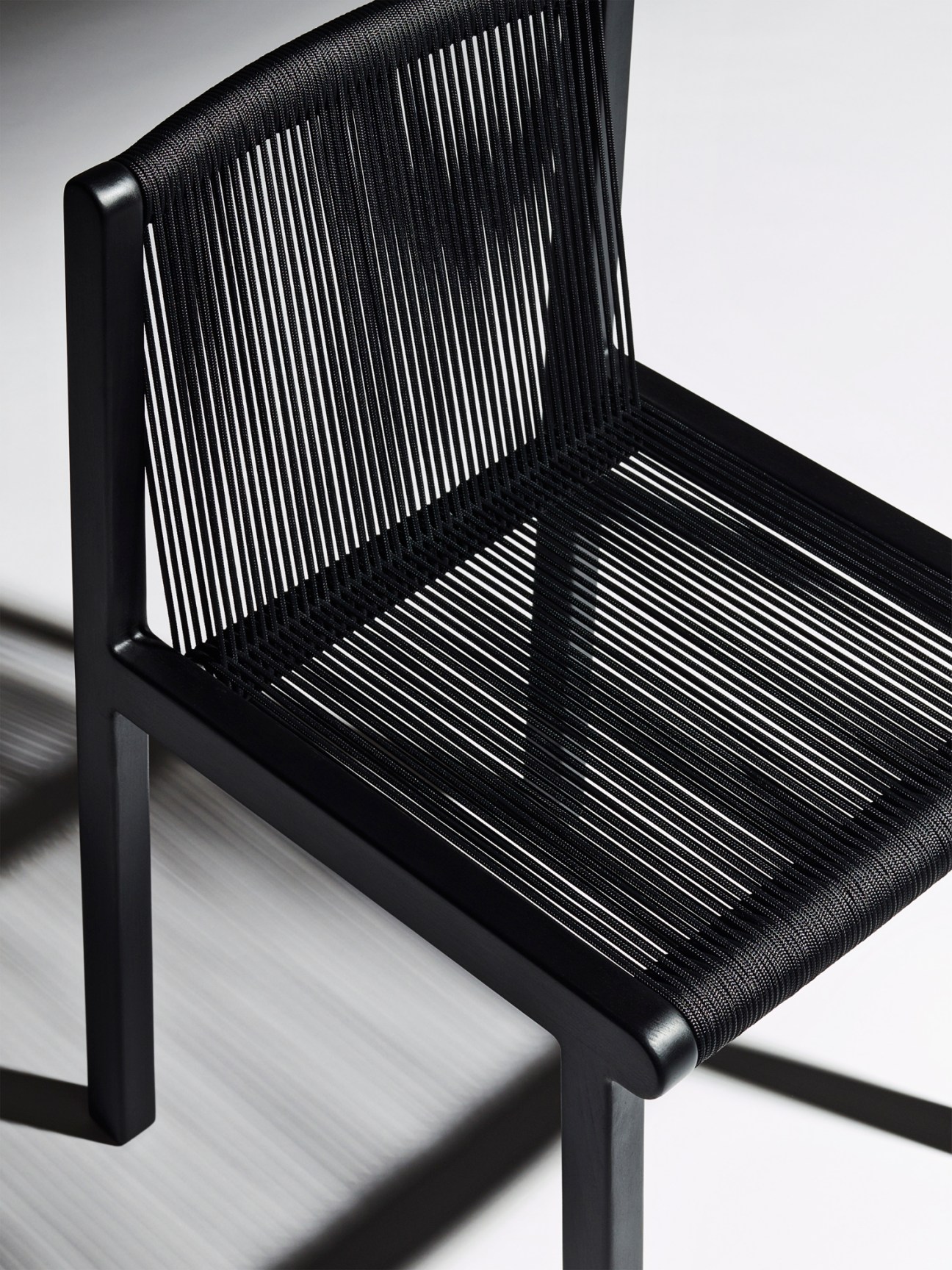
MC 22 Filo chair
Mattiazzi, Italy
The handsome Filo chair, designed by brothers Ronan and Erwan Bouroullec, stands out for its graphic sensibility and minimal environmental footprint. The solid-wood frame is made from European beech and the seat is fashioned from strong fabric cord.
mattiazzi.EU
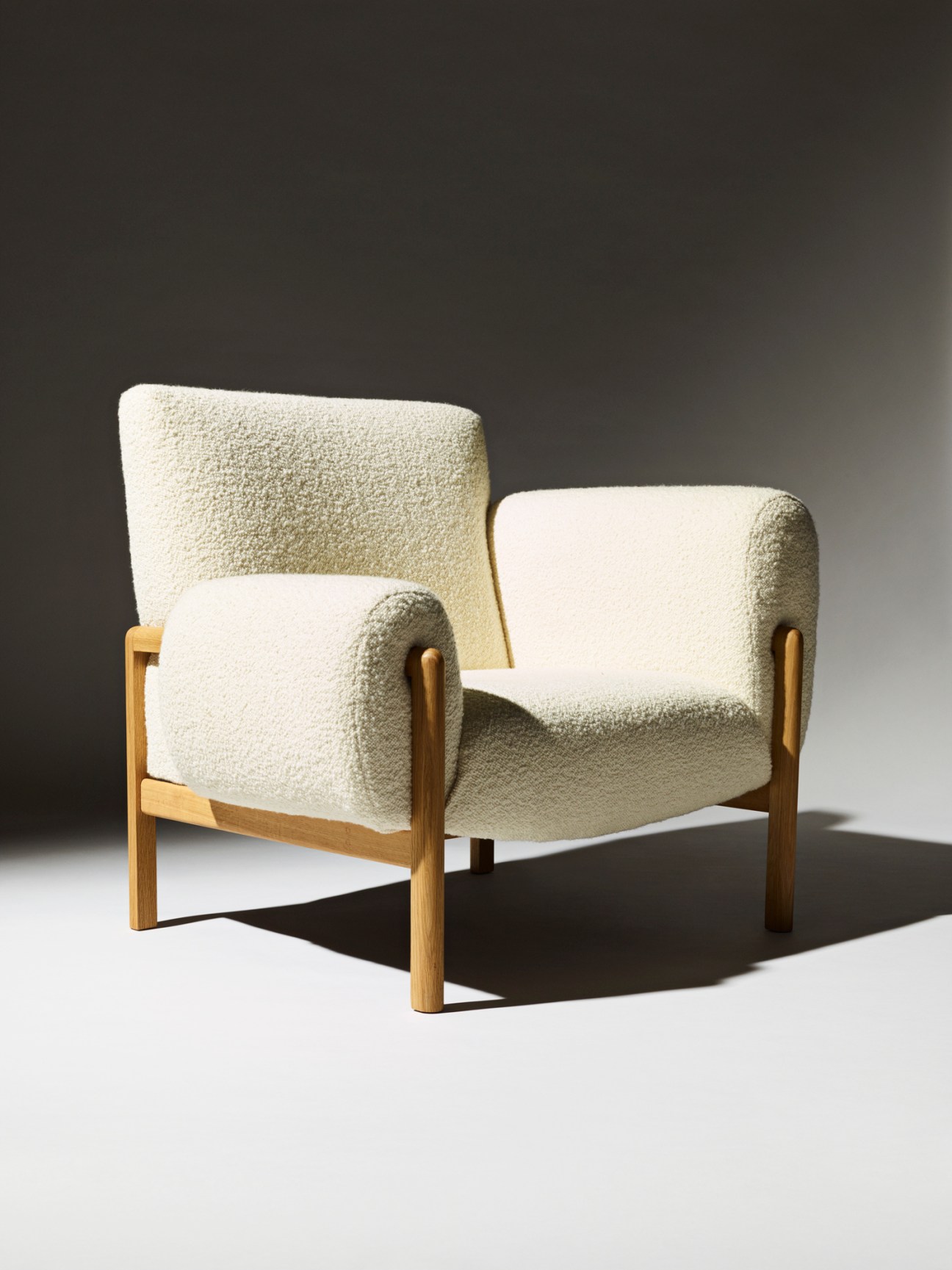
Bruno armchair
SCP, UK
This snug armchair has been conceived by London’s Studioilse to allow for a more personalised and relaxed way of sitting. The frame and armrests, one higher than the other, are wrapped in plump upholstery, offering the cosiness of a sofa on a handily compact footprint.
scp.co.uk
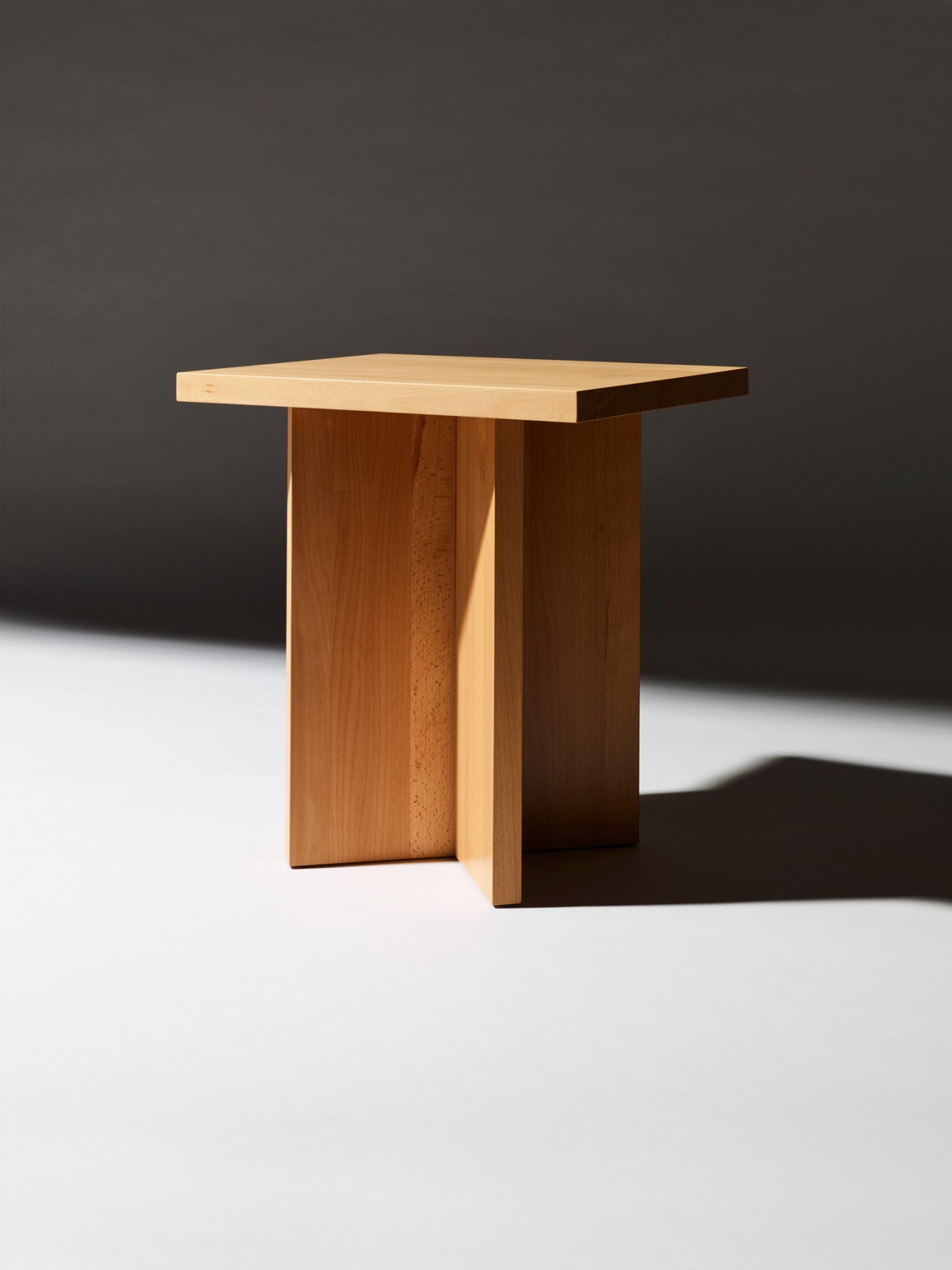
Corinth side table
Loehr, Germany
Berlin-based design company Loehr takes inspiration from architecture and its products have a sophisticated form that brings their function to the fore. The Corinth side table, made from solid beech slats, is modest in size and impact, which makes it a welcome addition to any kind of interior.
loehr.co
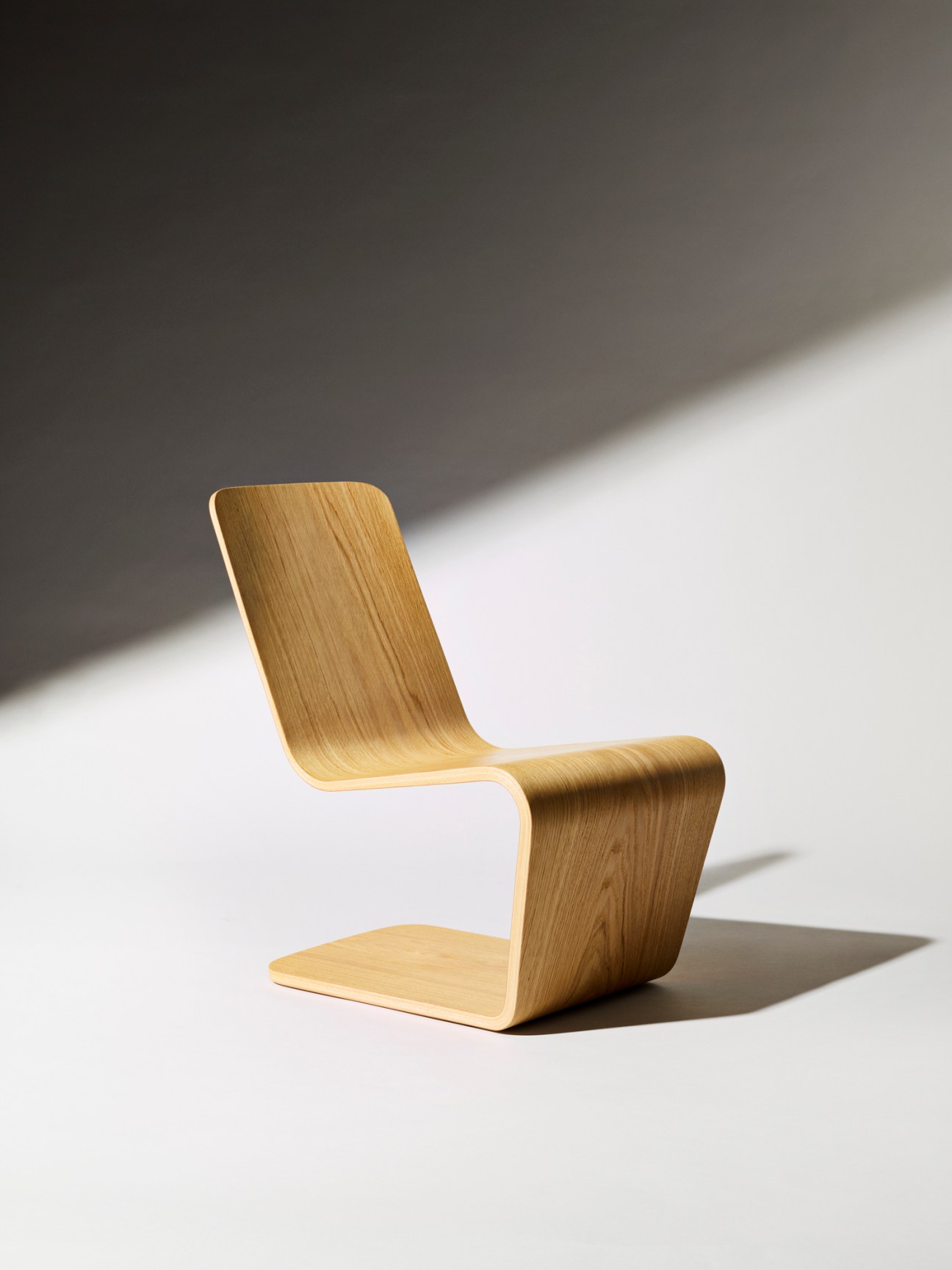
Iso-Lounge
Isokon Plus, UK
The Iso-Lounge chair is the first collaboration between Isokon Plus, which is renowned for its pioneering work with plywood, and designer Jasper Morrison. It is sleek and lightweight but reassuringly sturdy too; Morrison played with plywood layering to make it flexible and responsive in all the right places.
twentytwentyone.com
Remaking a masterpiece
Brazilian architect Felipe Hess was certainly pleased upon completing the renovation of the 1957 São Paulo residence he and his family today call home. But he didn’t grasp how special the project was until he heard from the building’s original designer. “The grandson of Rodolpho Ortenblad [the architect] is around my age and also an architect, so throughout the renovation process I would send him pictures,” says Hess, whose eponymous 15-staff firm is one of São Paulo’s most respected. “When Rodolpho, who is almost 100 and unable to visit, saw the photos of the completed house, he wrote me a thank you letter. Receiving it was an amazing experience.”
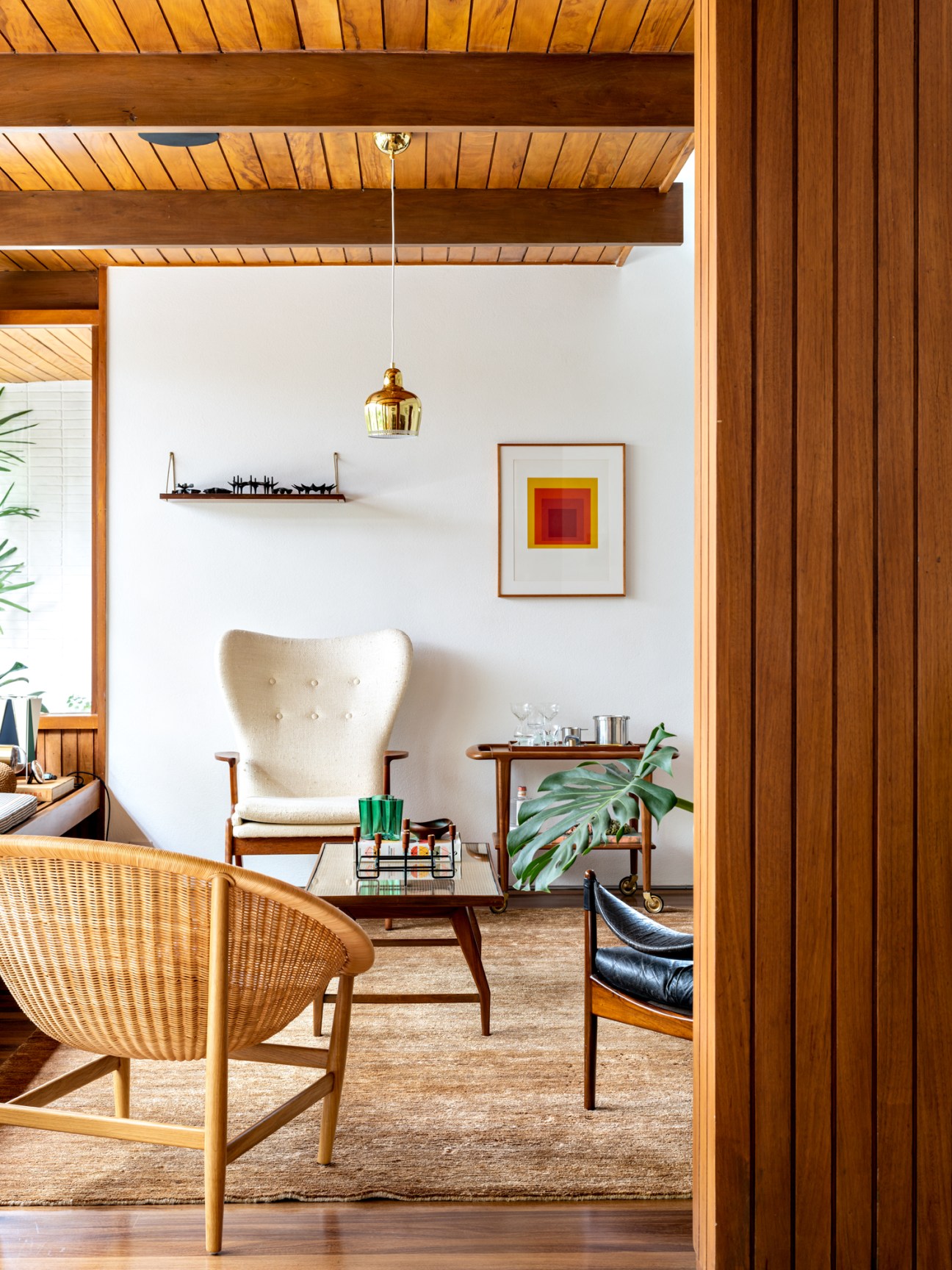
Ortenblad’s residence in the central, but still leafy, Jardim Paulistano neighbourhood of the Brazilian metropolis is remarkable in many ways – the first being that it remains standing today. As an architect operating at the top-end of the market, Hess knows too well the fate of many of the fine mid-century buildings that sprung up when development boomed here after the Second World War. “Before we bought the building in 2018, I would walk my dog past it nearly every day and I would think, ‘One day I’m going to live there’,” he says. “I knew that if someone else bought this place, they would simply tear it down and build a box: something that looks like every other contemporary house.” Thankfully, the day that Hess’s wife spotted a “for sale” sign in front of the low-slung home’s gates, Hess was ready to make an offer and the residence was quickly snapped up.
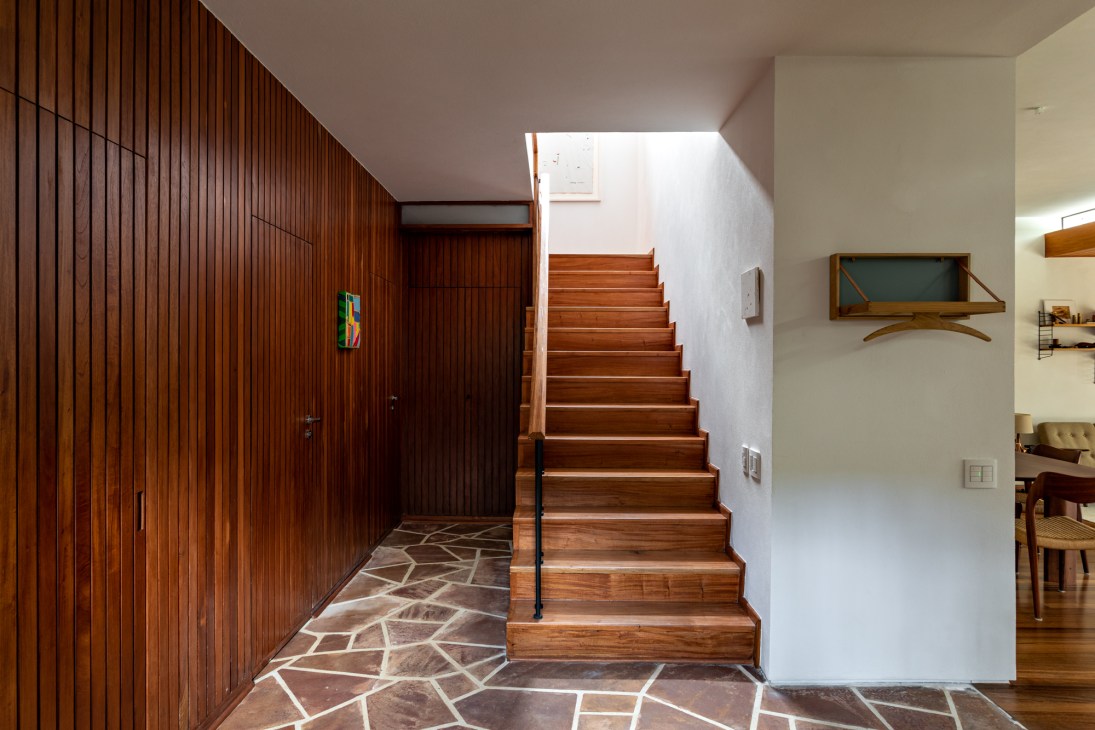
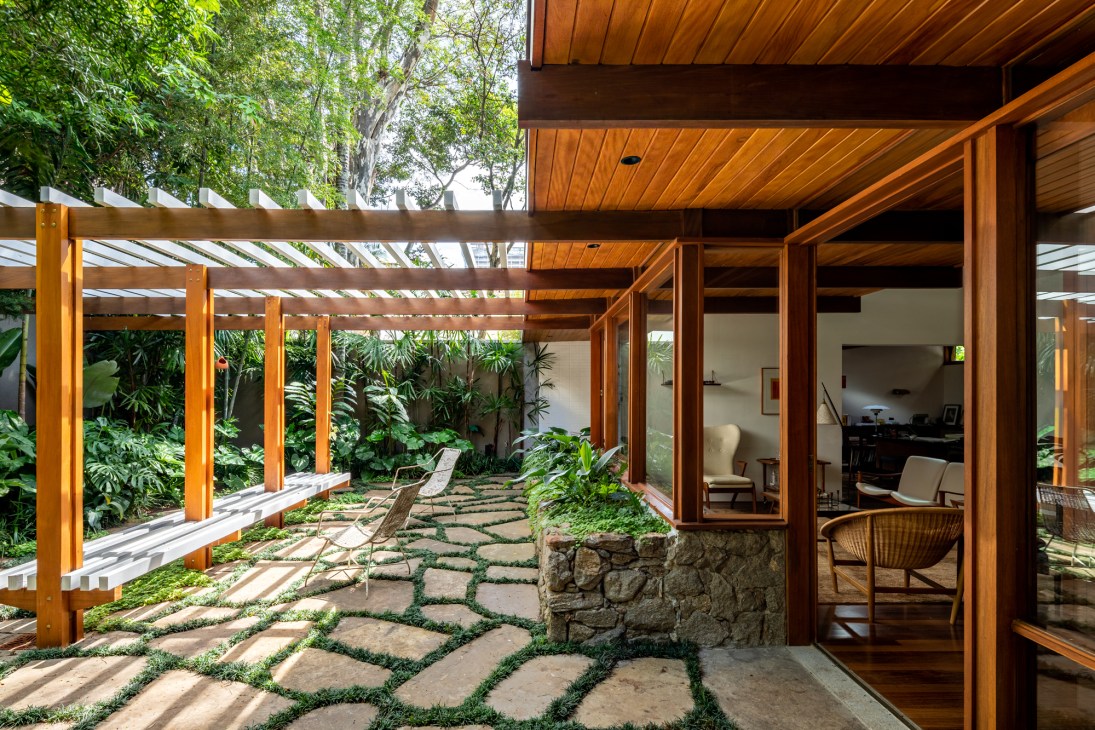
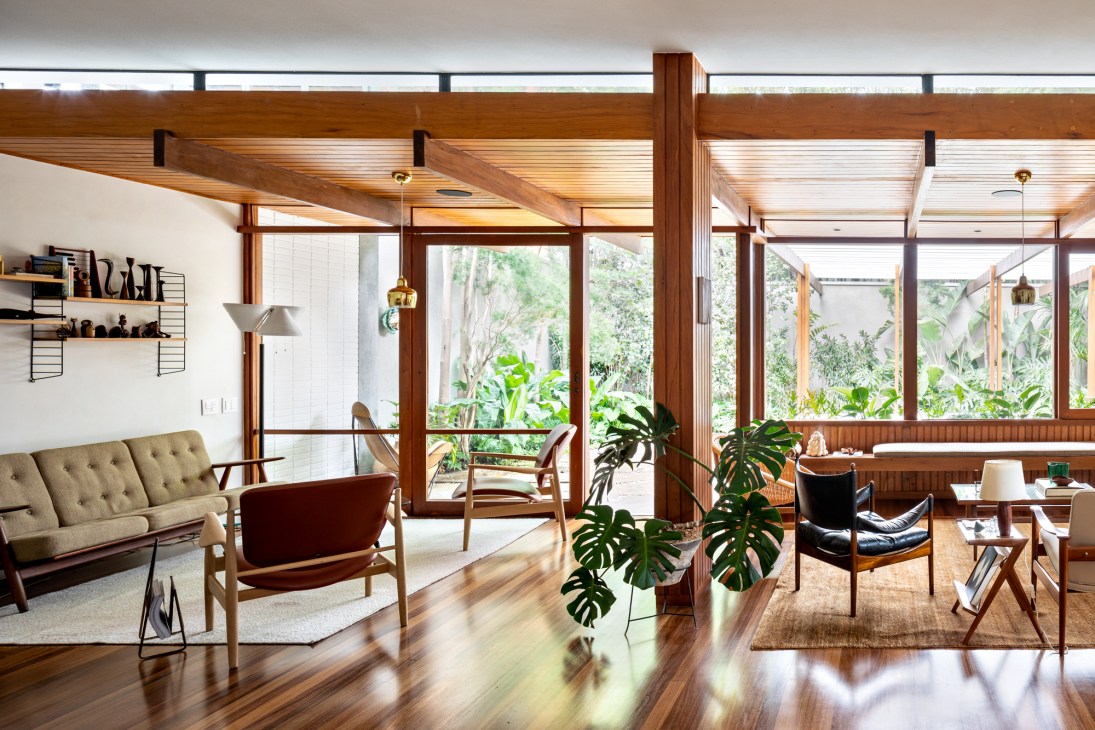
What the couple bought was not quite the homage to Brazil’s golden mid-century era of design that exists in this plot today. Yet, despite dodgy past renovations (and a shocking decision from prior residents to paint the home’s many timber elements white), a lot of Ortenblad’s original architecture stood the test of time. “It comes from a period of architecture that I love, where the materials and proportions came together to create a very relaxed house,” says Hess.
“It also has lots of elements that reference the American mid-century movement and architects like Richard Neutra,” he says, pointing to a handsome, and classically modernist, timber pergola outside. It’s an addition he commissioned but one that matches an original element he discovered in old photographs and which had been long removed from the house.
The architect’s approach to working with the original building has focused on revitalising its best aspects as well as getting rid of all that white paint from the timber (a task that left one Brazilian builder looking like a snowman). One of the highlights of the restoration is a beautifully finished built-in bench that burrows into a windowed alcove. A honey-coloured timber structure frames the bench, clambering up to the ceiling. “This is one of my favourite elements because the structure leaves space just below the ceiling to allow sunlight to filter into the house in such a beautiful way,” says Hess.
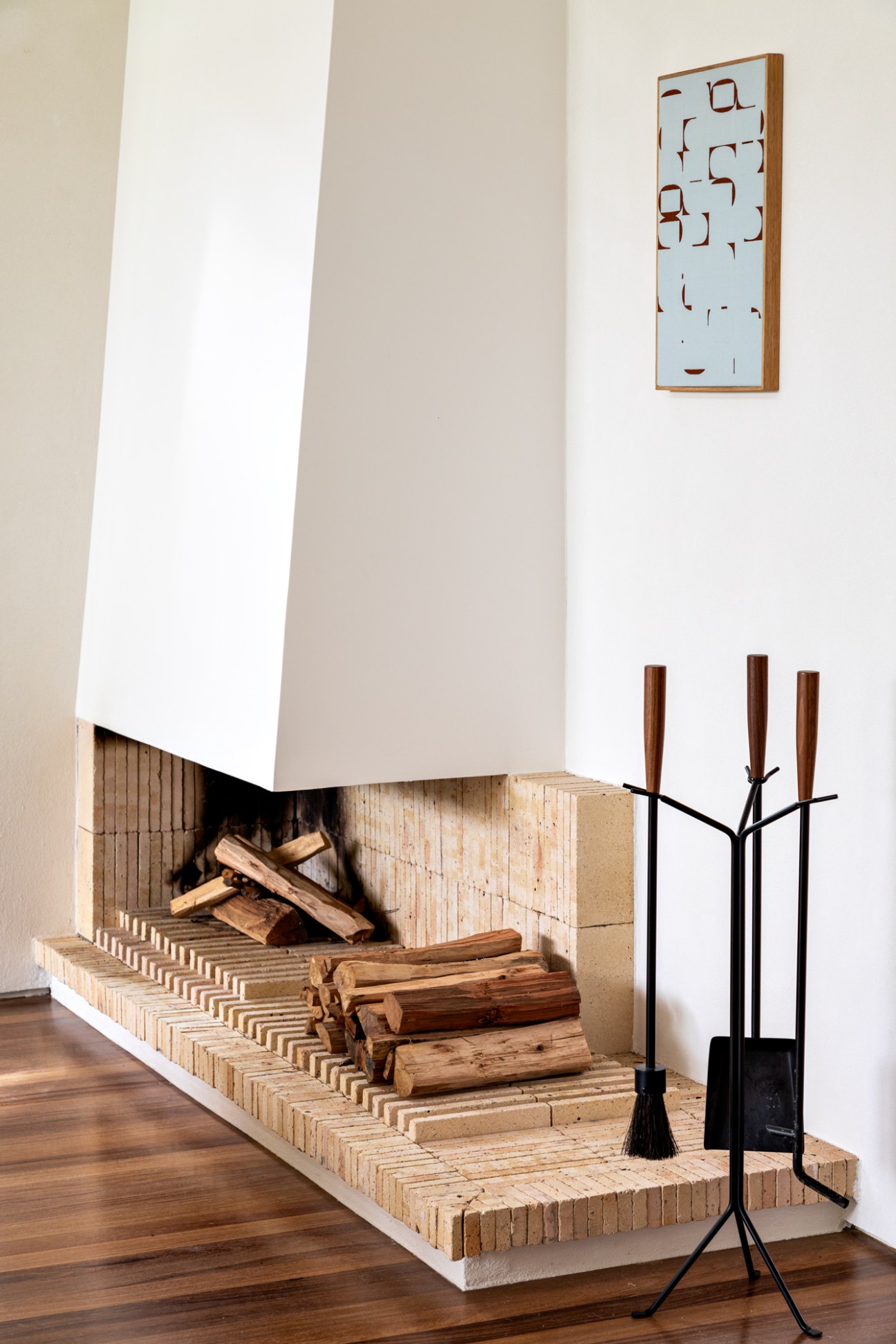
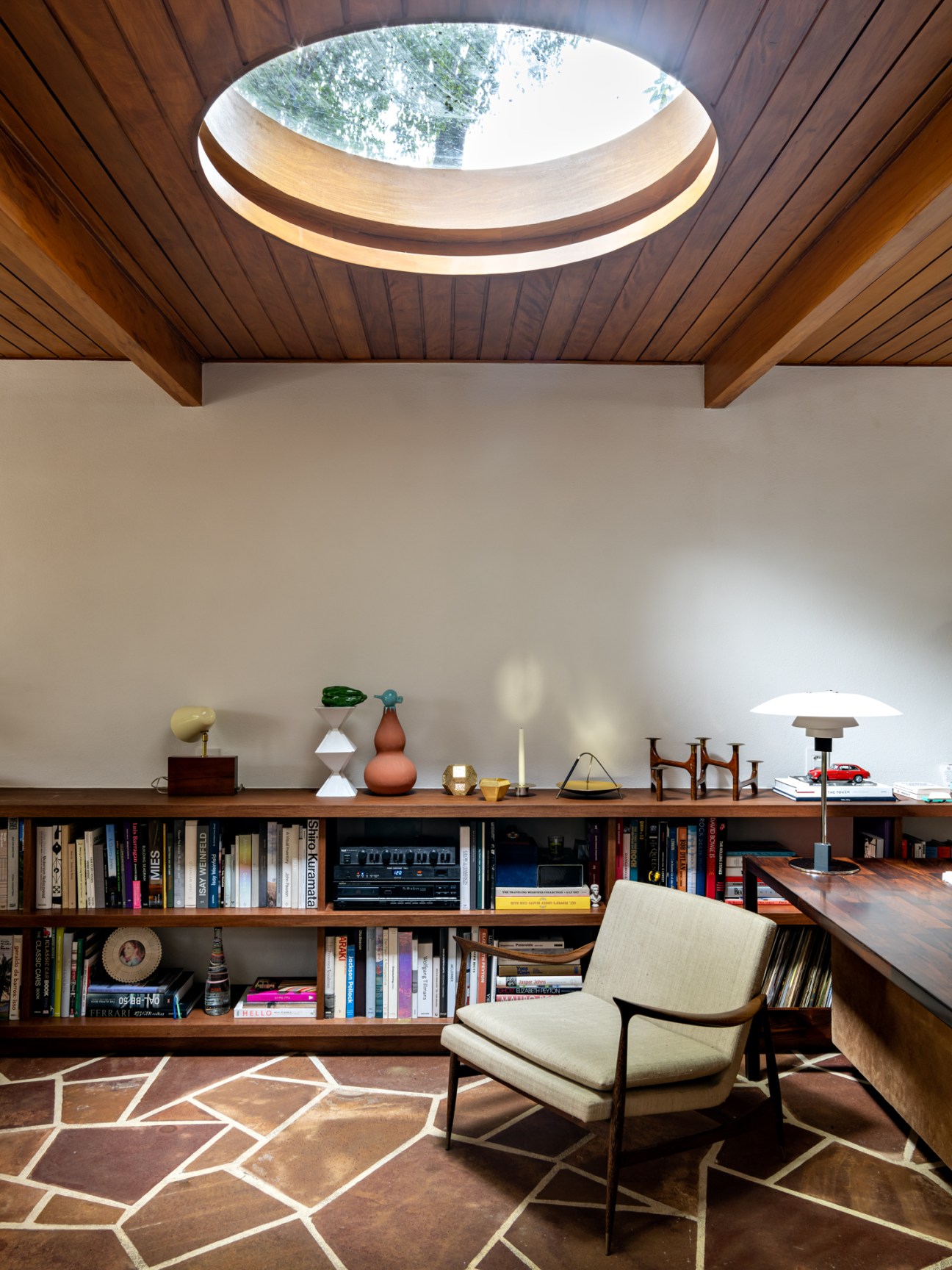
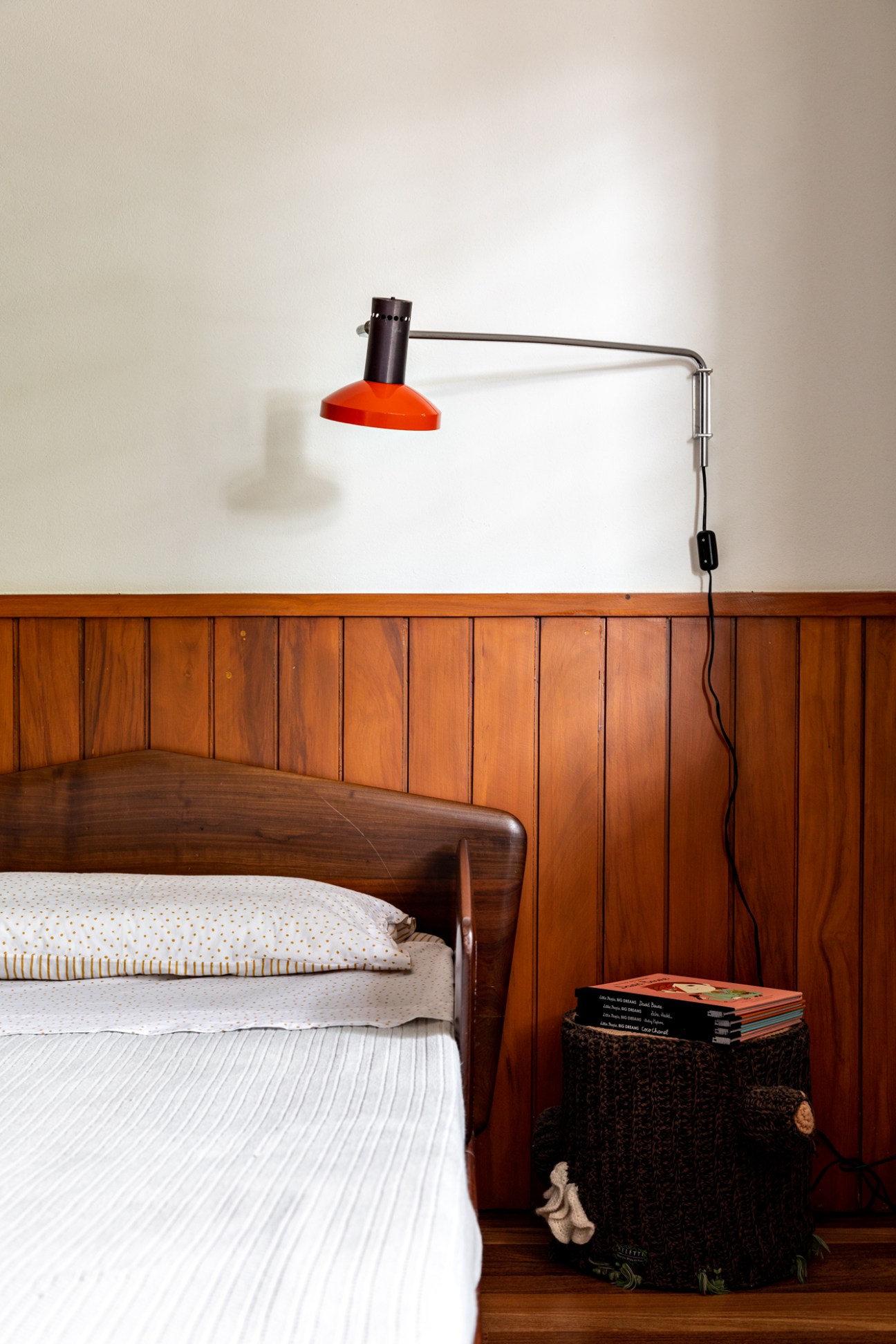
For new additions, Hess took inspiration from the Louisiana Museum near Copenhagen: a masterpiece designed in 1958 by architects Vilhelm Wohlert and Jørgen Bo. “When we started the renovation we’d just come back from a holiday in Denmark where we’d visited the museum, which was one of the most beautiful things I’d ever seen,” says Hess. “Being built around the same time in the modernist style, our house actually has a lot of details that are similar to those in the museum.”
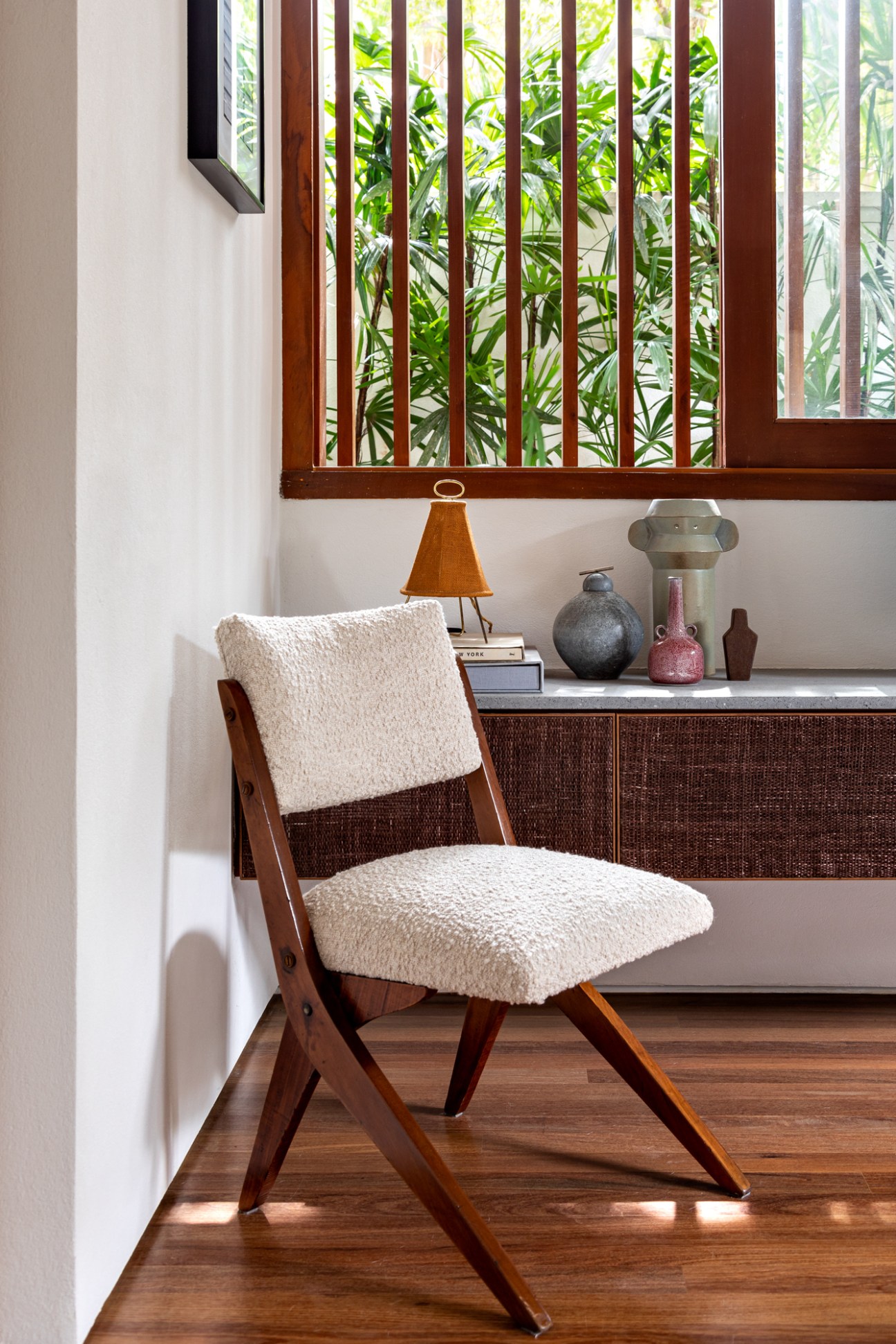
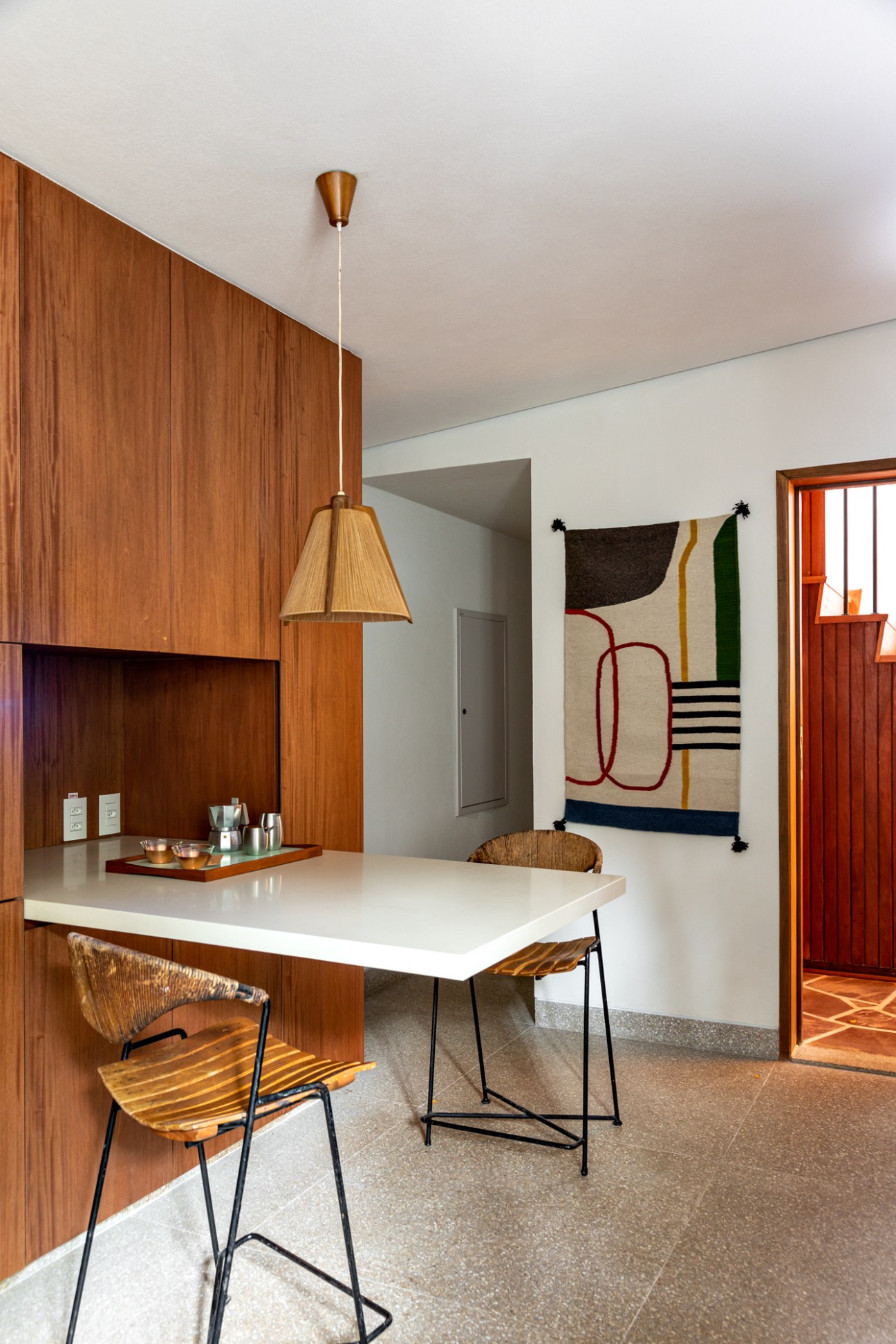
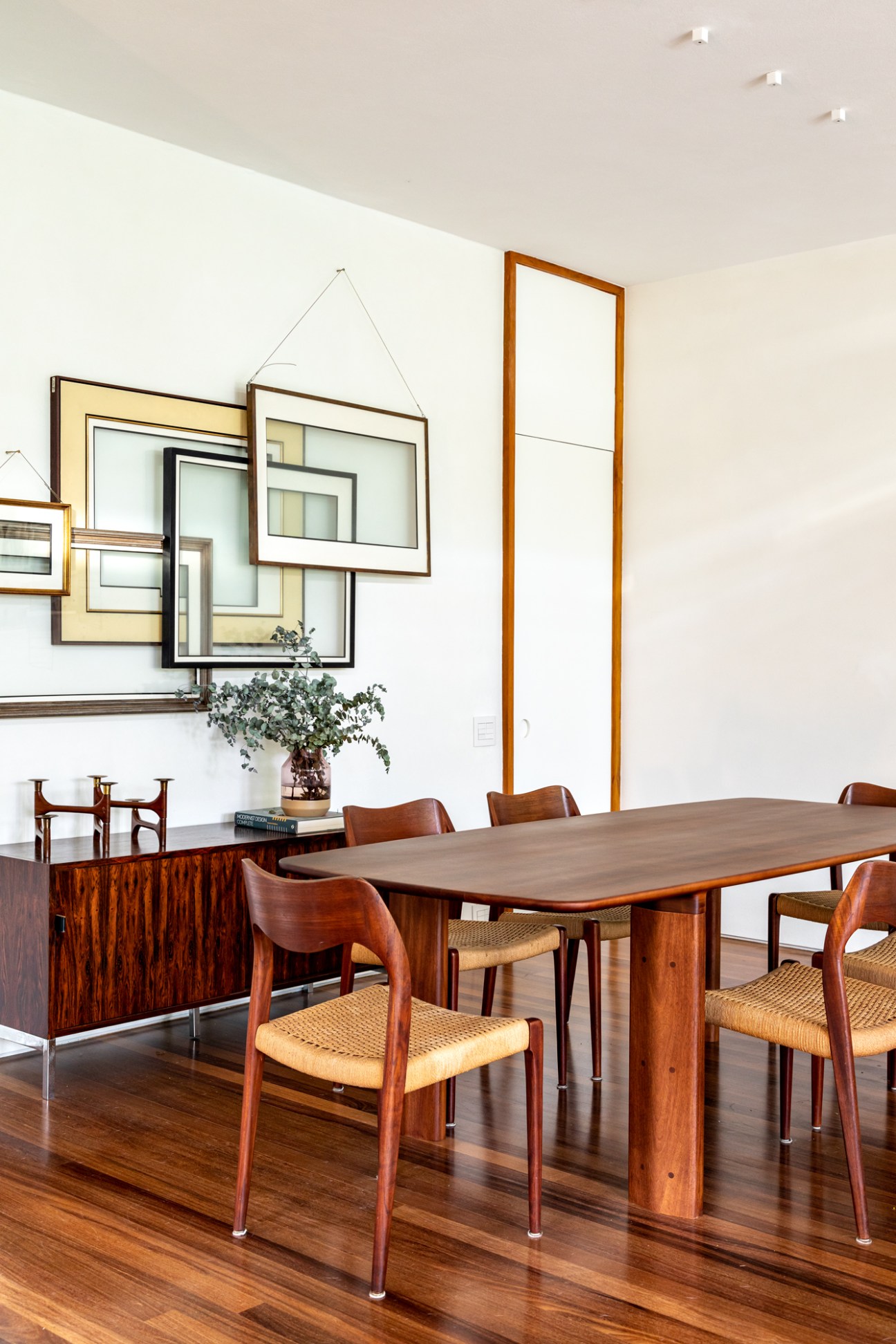
Hess added further built references to the museum, such as latticed white-brick feature walls and the tile-surrounded fireplace. To complete the look, an enviable collection of Scandinavian furniture, much of which is vintage, adorns the home. There is a Louis Poulsen lamp, a Børge Mogensen credenza, a Danish wall-mounted coat hanger and a classic comfy couch designed by Fredrik Kayser. The pared-back stylings of the wares live harmoniously with Latin American art pieces and antique furniture from Brazil. Alongside tropical pot-planting, it all feels perfectly at home here in the timber-heavy setting, benefitting from the bright Brazilian sunlight and cooling afternoon breeze that pours in from the home’s large windows.
Reflecting on the life that he, his wife and young son enjoy at home, Hess notes that he’s glad to have reinforced another architect’s ideas about good living through the project, rather than expound his own. “I could never design a house for myself from scratch,” he laughs. “I have lots of references and things that I like but my tastes change. So if I created something new, I’d probably get tired of it pretty quickly.”
In modernising Ortenblad’s modernist masterpiece, Hess has managed to avoid this problem, while bolstering the legacy of an architect little known outside Brazil. “I really appreciate his architecture; I just put my own touch on it and I feel like it works.”
Rodolpho Ortenblad
On completing his architecture studies in 1950, Brazilian-born Rodolpho Ortenblad ventured to the US to learn about the modernism movement, which was popular at the time. Beyond the many homes he designed in São Paulo that referenced the lessons he learnt from the great mid-century American architects, he also served as director of the locally loved Acrópole architecture journal.
Going the distance
Finnair’s ambitious refit of its long-haul aircraft, which rolls out in the coming months at a cost of €200m, is a big bet for a brand that is largely known for its Nordic conservatism. “It’s a bold move,” says Finnair CEO Topi Manner. “But it’s bold in the right way.”


The addition of a premium economy cabin is notable, banking on an industry trend towards leisure travellers who are willing to pay a little more for extra space. Economy class is also getting a rejuvenation that will improve comfort. But it’s in Business Class that Finnair is making its biggest statement, reimagining what a world-class seat should be. “You can choose the way you sit,” says Manner. “You can choose the position to sleep in. You can even choose to do yoga if you want.”
Unlike a standard Business Class seat on major airlines, Finnair’s new version has no option for reclining. The interior of the shell is padded on two sides and the seat comes with two oversized pillows, so you can make yourself comfortable in a variety of ways, instead of always facing in one direction. A leg rest pops up to create a continuous padded surface, giving it the feel of a small living area.


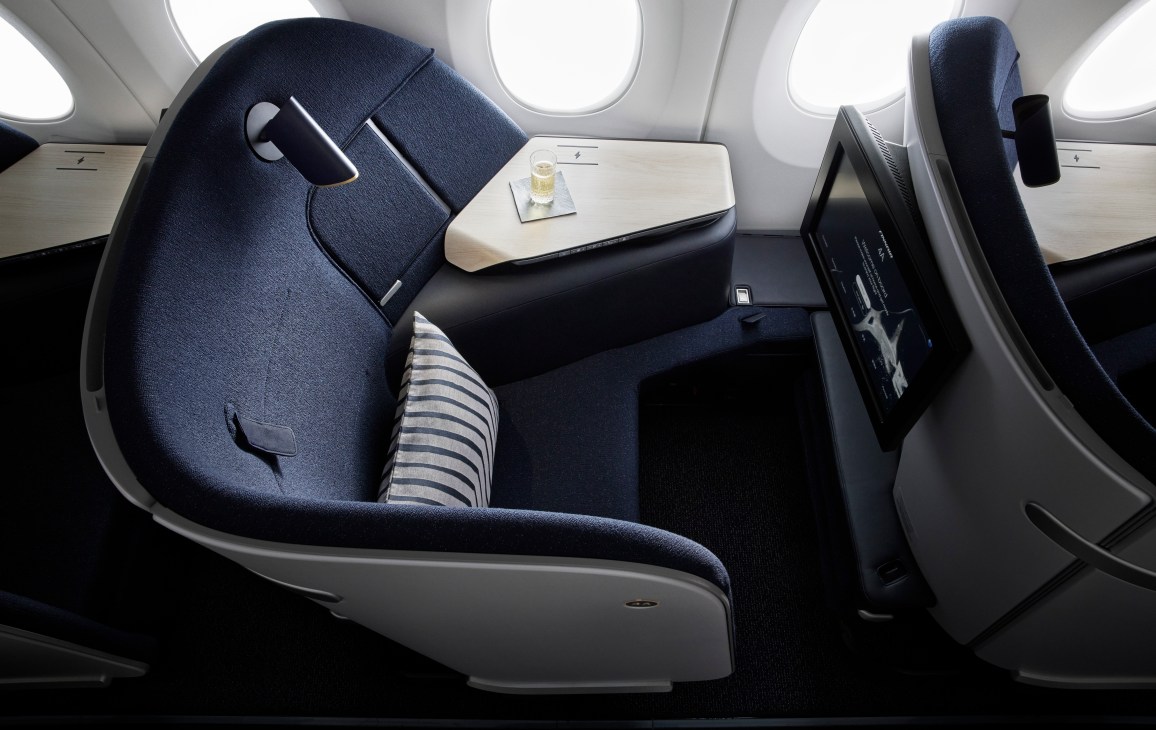
“The idea is that it’s a living space more than an aircraft seat,” says David Kondo, who led the design process in collaboration with Collins Aerospace and London-based agency Tangerine. In terms of engineering, bulky recline-powering motors were not needed, saving weight and space, and allowing for more creativity in the layout.
Rethinking lighting was another aspect of the upgrade. The Business Class seat comes with a small dimmable lamp as well as lighting in the footwell. “We wanted to make it a lot more subtle,” says Kondo. He adds that while feedback from the firm’s Asian clientele was important, so too was reflecting Finnair’s Nordic heritage in the overall aesthetic. The result is compelling design that champions functionality, quality materials and innovation. “We want to position ourselves as a modern premium airline,” says Manner. “To us that’s about being authentic; it’s about the Nordic experience and, in this case, Nordic design.”
Springing to life
Along with the new seats and cabin fittings, Finnair is rolling out an entirely new, very Finnish-feeling set of tableware and other “soft” products, including a revamped meal service. The name of the new tableware is Kuulas, a Finnish word that evokes the feeling of a cool, crisp spring morning, when you wake up and think how wonderful the air and light is. If any dish or glass evokes this feeling, we’re sold. And with top Finnish design brand Iittala making the pieces, they might just pull it off.
Back to business
Finnair is a popular choice for long-haul business connections between Asia and Europe. Its rollout of refurbished aircraft is a show of confidence in travel between the two continents re-emerging in 2022. “This is in some ways the rebirth of Finnair,” says Manner. “The pandemic has taken a big financial toll but we are committed to improving the customer experience. That we have made this investment amid the pandemic speaks volumes of the degree of our commitment. And we feel that the timing is right.”
Dream team

Robyn Holt
Was: Managing director
Is: Interior stylist
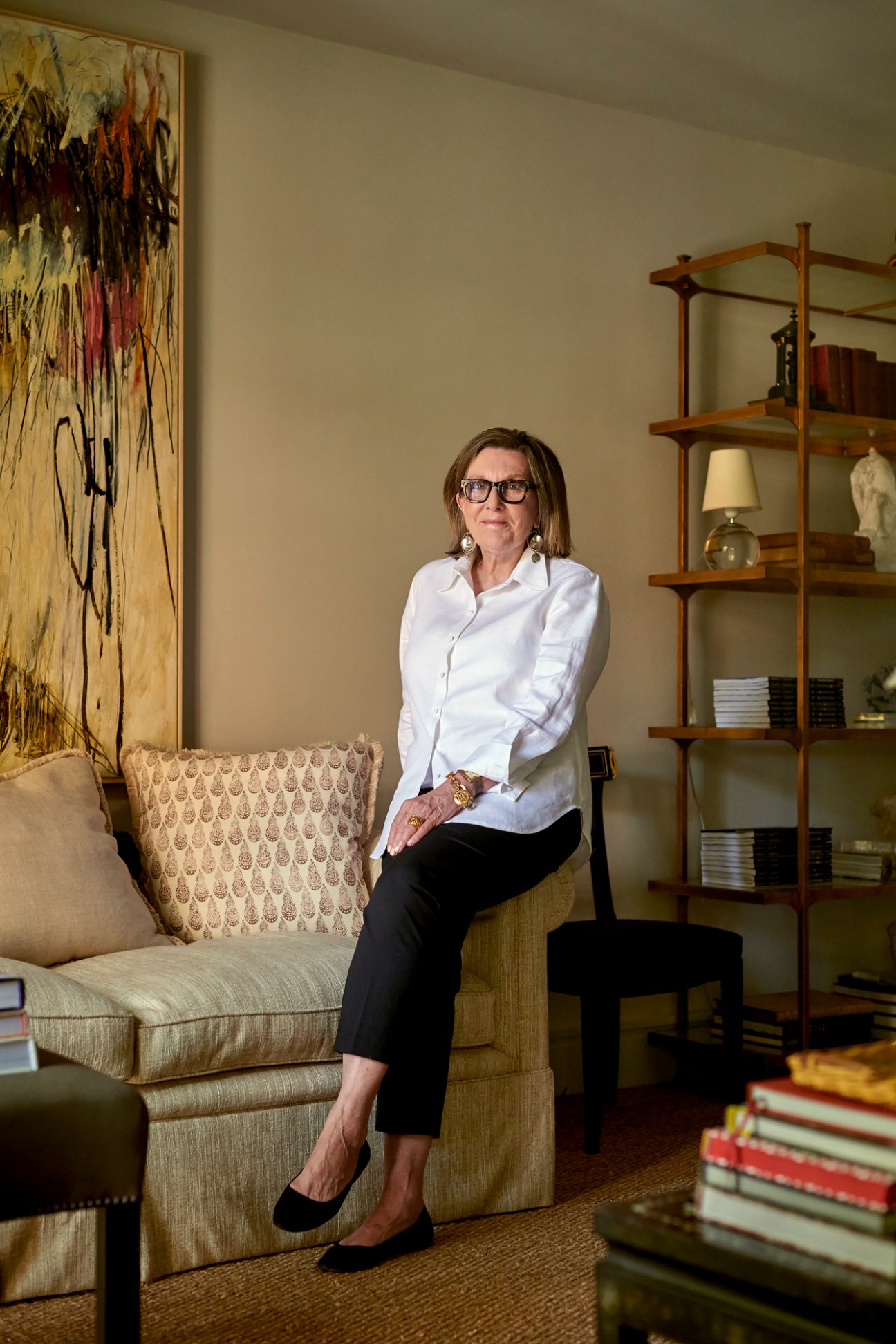
“I was working in Moscow in 2006, heading up Condé Nast in Russia. I took a call from Monocle founder Tyler Brûlé, who said he had an idea for a new magazine that could speak to a well-informed global audience. I remember saying, ‘Is this the time to start a magazine?’ Tyler put together a brilliant presentation in a fabulous office in London and then we hit the road to raise the finance required. I recall one phrase well: ‘Reading this magazine will be like being lucky enough to sit next to the most interesting person at dinner and leaving it feeling well informed and at the same time having your thinking challenged.’ I remember looking at my shelves at the end of the first year and seeing the issues stacked side by side. I knew that Monocle was on the way to making a difference to the magazine universe. Eventually I came back to Australia and now work in interior design with Cameron Kimber Design. My passion for design is still satisfied by being a Monocle reader.”
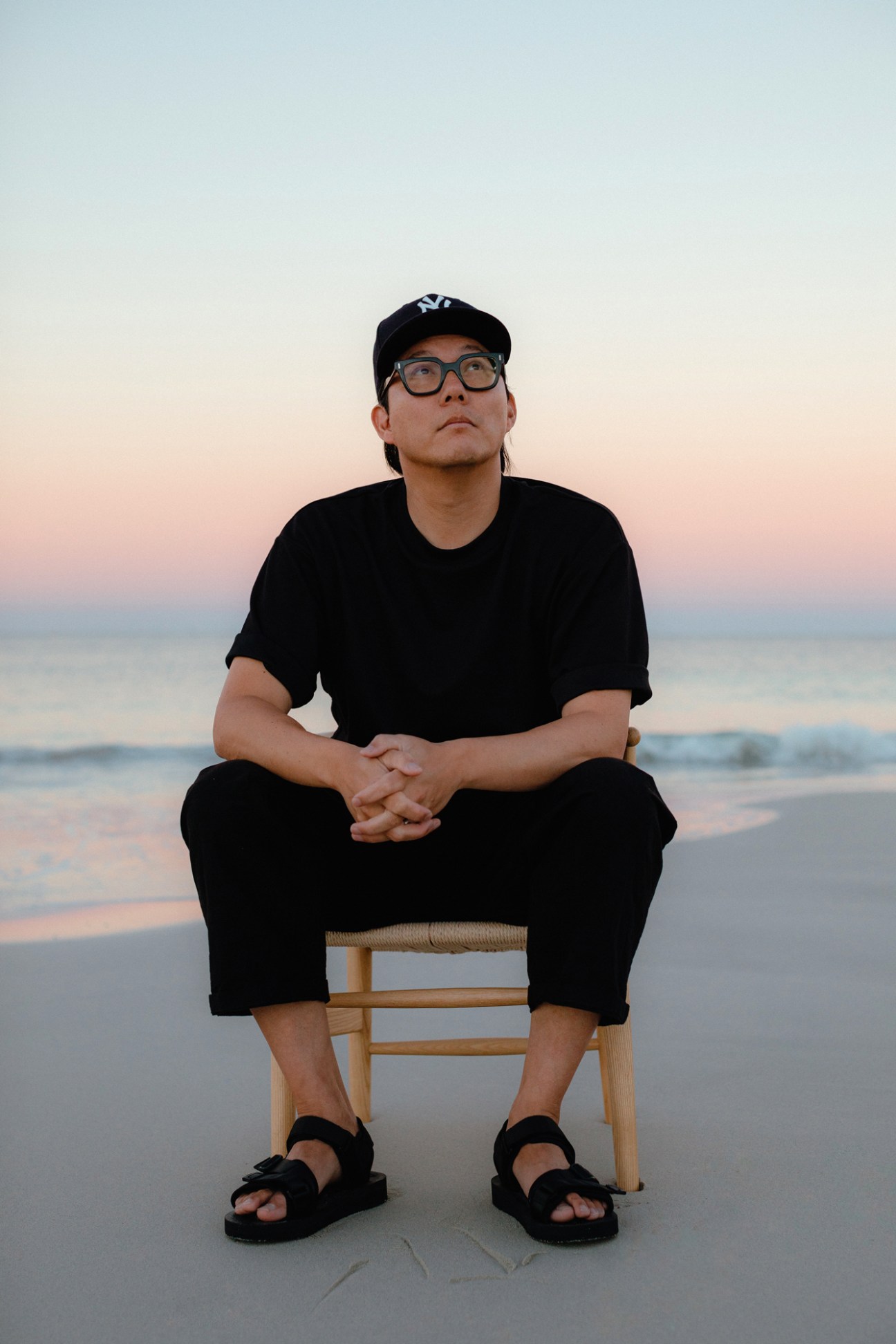
Ken Leung
Was: Art director
Is: Founder of creative agency Studio Parádisô
“I had just arrived in London from Australia when I reached out to Tyler. He initially brought me on at [sister company] Winkreative and when Monocle started developing, I asked to join the team as art director. I have fond memories of developing Monocle’s brand language – studying Graphis annuals, classic infographics and travel ephemera. It was some of the most natural and intuitive work of my career. We set out to create a sophisticated and timeless brand and, 15 years later, I’m really proud of what we achieved. The best memories were definitely the parties. No matter the city, we always ended up at a karaoke bar singing “Moon River”. After Monocle I moved to New York, where most recently I was global creative director at Uniqlo, overseeing collaborations with Jil Sander, Roger Federer and the Louvre. Working for a brand that touches so many people worldwide was amazing but when I returned to Australia to renew my visa I fell in love with my home again. There’s a connection to people, place and lifestyle that I never realised I missed. Now I live by the ocean in Perth and have a creative agency called Studio Parádisô, working with global brands. I have more time and space to be creative and the luxury of working on projects I’m passionate about. It truly is paradise.”
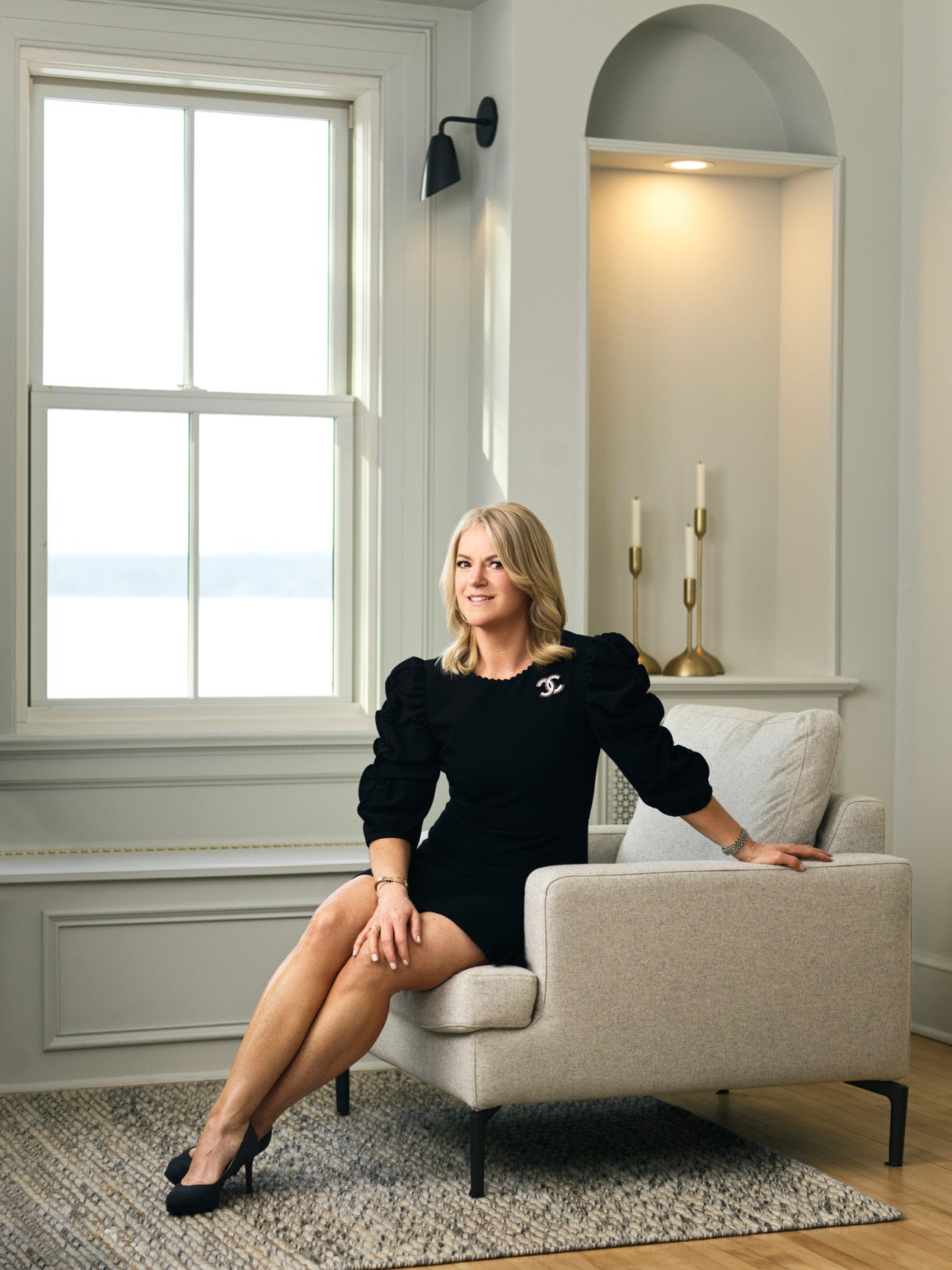
Pamela Mullinger
Was: Publisher
Is: Co-founder of The Maritime Edit
“When I moved from Toronto to London in 2000, I worked at Vanity Fair. Not long after, I went to work for Tyler at Wallpaper* and ended up working with him for 14 years. I was at Monocle until 2014 and we hit so many milestones: we added The Monocle Weekly, launched Monocle 24, The Monocle Café in Marylebone, the retail side and the collaborations, the website – it all had a special place in the business. With so few people, we were able to take on such huge tasks, and make it work – that’s how I learnt to be able to launch a business on my own and multitask in a way that is enjoyable.
“If I hadn’t spent so much time with Tyler, I wouldn’t have learnt all these things – from how to find a distributor to how to talk to companies and brands, find out what opportunities are out there and create something that didn’t exist. That’s testament to Tyler’s work ethic and the fun he brings to it, despite how hard everyone works.
“After moving back to Canada, I co-launched The Maritime Edit in 2017. It started as a quarterly, proving what Atlantic Canada has to offer, and we’ve grown to launch a fortnightly digital edition, two series of TV shows, podcasts and events. We have six full-time staff members working for the magazine and up to 30 contributors travelling through Atlantic Canada, doing interviews, recommending places to go and things to see.
“Moving to a small city in Canada couldn’t be more different to London but we work here in the way that I worked in London: we have created a life that’s as good as London.”
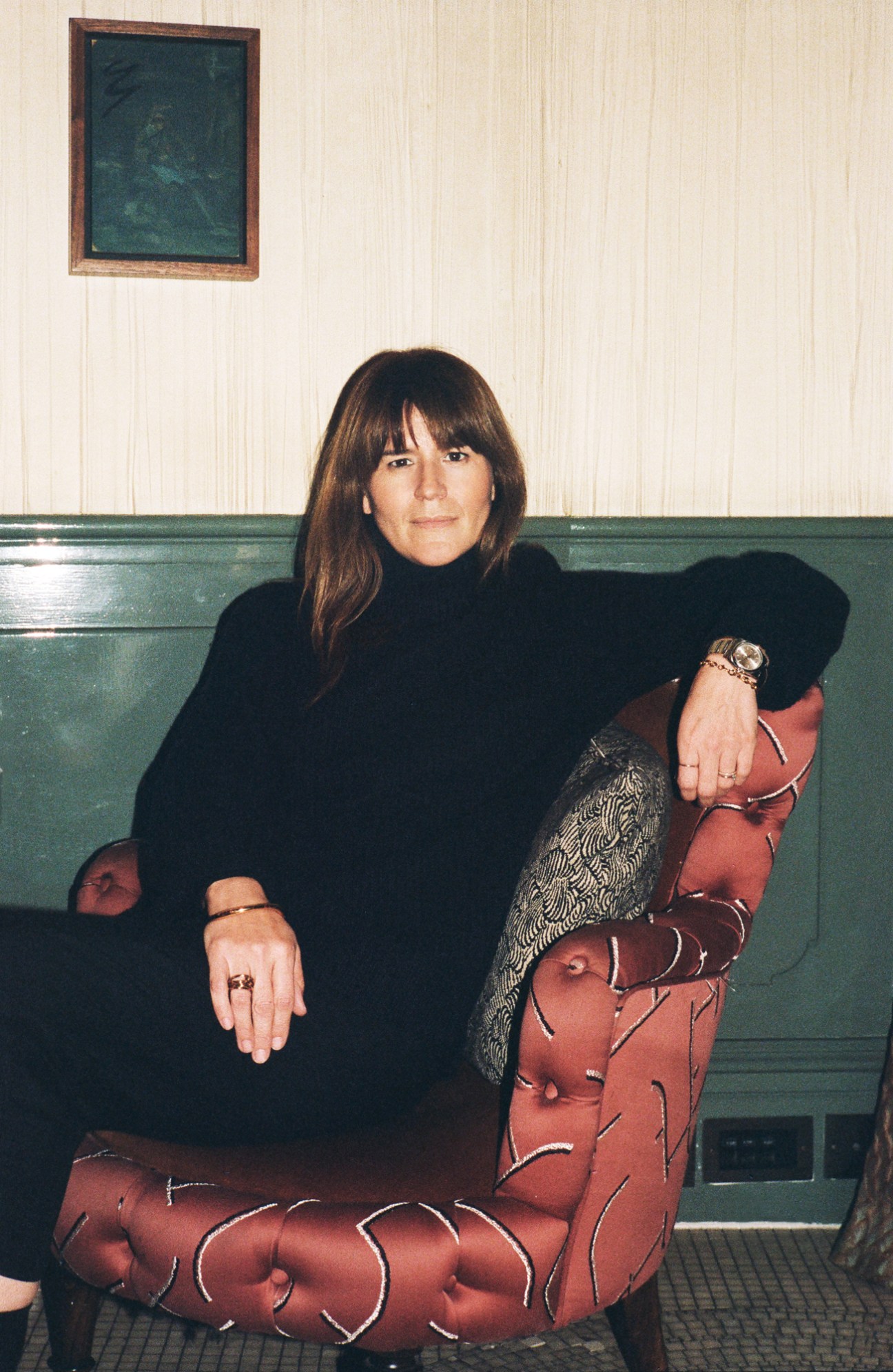
Rose Percy
Was: Photography director
Is: Runs own production agency
“I was on the founding team back in 2007 and joined when Tyler asked me to be the photo director. There were about six or seven of us at the time. It was a really small team: I ended up working in the photo department for four years, with Poppy Shibamoto (see page 156), who is still a dear friend.
“After leaving Monocle, I wanted to have more of a focus on fashion. When I was there I was working very closely on the fashion spreads and styling with the art department, so I stuck to that route. Later, I went on to work at some big London advertising agencies as a creative producer and eventually I became head of production at Burberry, running a team of producers that oversaw all of the content that you see as a customer for the brand (yes, every single image and every single global campaign).
“I’ve now left Burberry to set up my own production company, Percy Works, but over the years I’d say the main thing I’ve taken with me from my time at Monocle is that anything is possible. There’s always a way to get someone to a remote island on the other side of the world; there’s always a way to get access to a crazy place. As a producer, that’s an amazing skill to have – and I still carry that with me today.”

Ann Marie Gardner
Was: Bureau chief, Americas
Is: Journalist and entrepreneur
“The early days were so exciting; the world was our oyster. Because of the way Tyler thinks, there were no limits to the stories we could do. I remember one time he asked me, ‘Do you think we could get into Hugo Chavez’s palace?’ And I remember thinking, ‘He’s either insane or he isn’t.’ He just makes you think that much bigger.
“I was the second editorial hire after [current editor-in-chief] Andrew Tuck. I used to write for Tyler when he was doing Wallpaper*, and we stayed friends. One day he called me and said: ‘I got the funding, meet me on Monday. What job do you want?’ And that was it. He needed someone who could interpret the US so I used to split my time between London and New York.
“Those early days were so special. We knew we were doing something really original and fresh. It was quite a ride when I was in the New York bureau. I know that Tyler and Andrew would sit in the London office thinking where they could send me: they sent me to Alaska in January during a blizzard and on a mail ship for 10 days off the coast of Cape Town to St Helena, which was one of the strangest stories I’ve ever done.
“Wherever I would travel I kept seeing trends. Whether it was Iceland, Brazil, Argentina, everybody was fascinated to find out where their food came from; they wanted to be closer to nature. So I launched Modern Farmer, a magazine about the new food culture. Because we had so many stories about how closely the food system is related to weather and climate, I became a bit of a weather nerd. I created a weather brand called Tempest, which I sold to a company that makes weather stations that you put in your garden. Now I write a lot about climate and extreme weather, and I’m currently working on a book called User’s Guide to Catastrophic Weather: How to Redesign Your Life for the Decade Ahead. I’m always at the edge of the next thing. When you’re on deadline, you’re moving fast; you just feel like you’re engaged in the world.”
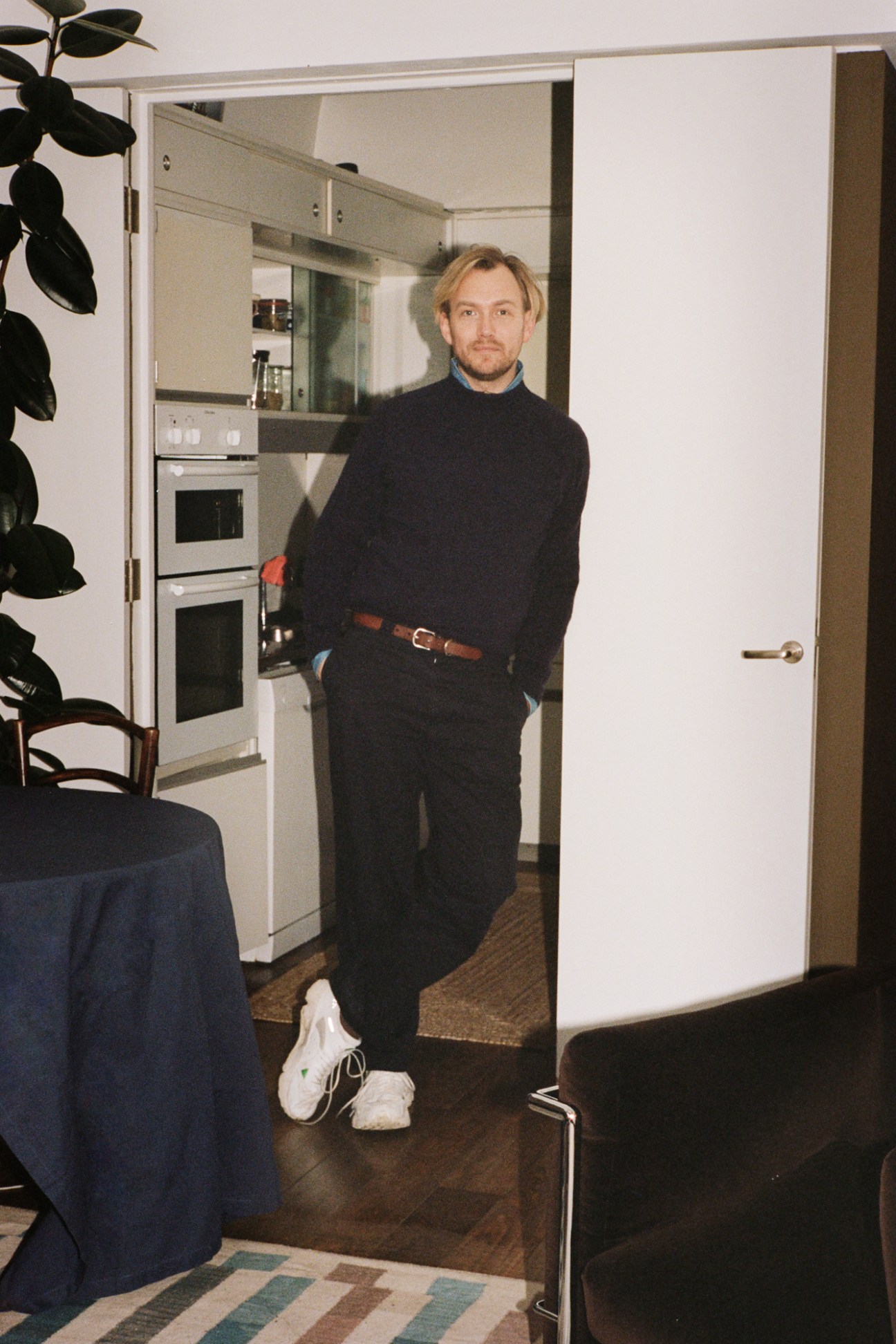
Tom Morris
Was: Front of house
Is: Director of interior design firm Morrisstudio Ltd
“I met Andrew when I was doing an internship with The Independent on Sunday. I did a few little bits and pieces for him before my work experience came to an end but a few weeks later I was reading the Evening Standard on the Tube, and I saw that Tyler Brûlé of Wallpaper* was creating a new magazine with Andrew coming over as editor. Andrew gave me a call about a week later and said, ‘We’ve got a month to put this magazine together and are looking for researchers and writers to help. Will you come in?’ My interview lasted about five minutes and then it was just go, go, go. A favourite memory is from the Fridays when we went to press; it would always be really hectic and we would put on Amy Winehouse’s song “Rehab” but change the words, and sing “they tried to make me go to repro but I said no, no, no.” For those not in the industry, ‘repro’ is one of the last stages before it goes to print.
“I took a circuitous route to become design editor, which gave me such a breadth of knowledge. I travelled a lot and was exposed to a lot of people in the industry, including designers and manufacturers; that’s where the interest in running my own interior studio started and how, several years after leaving Monocle, it came to be.
“Now I design a room as I would put a magazine together, asking questions such as, ‘Does this actually need to be there?’ It also extends to the people I work with. Whether that’s craftspeople or someone in textiles, I’m choosing people and products that have a story behind them; we had such a defined point of view at Monocle and I still carry that through to this day.”
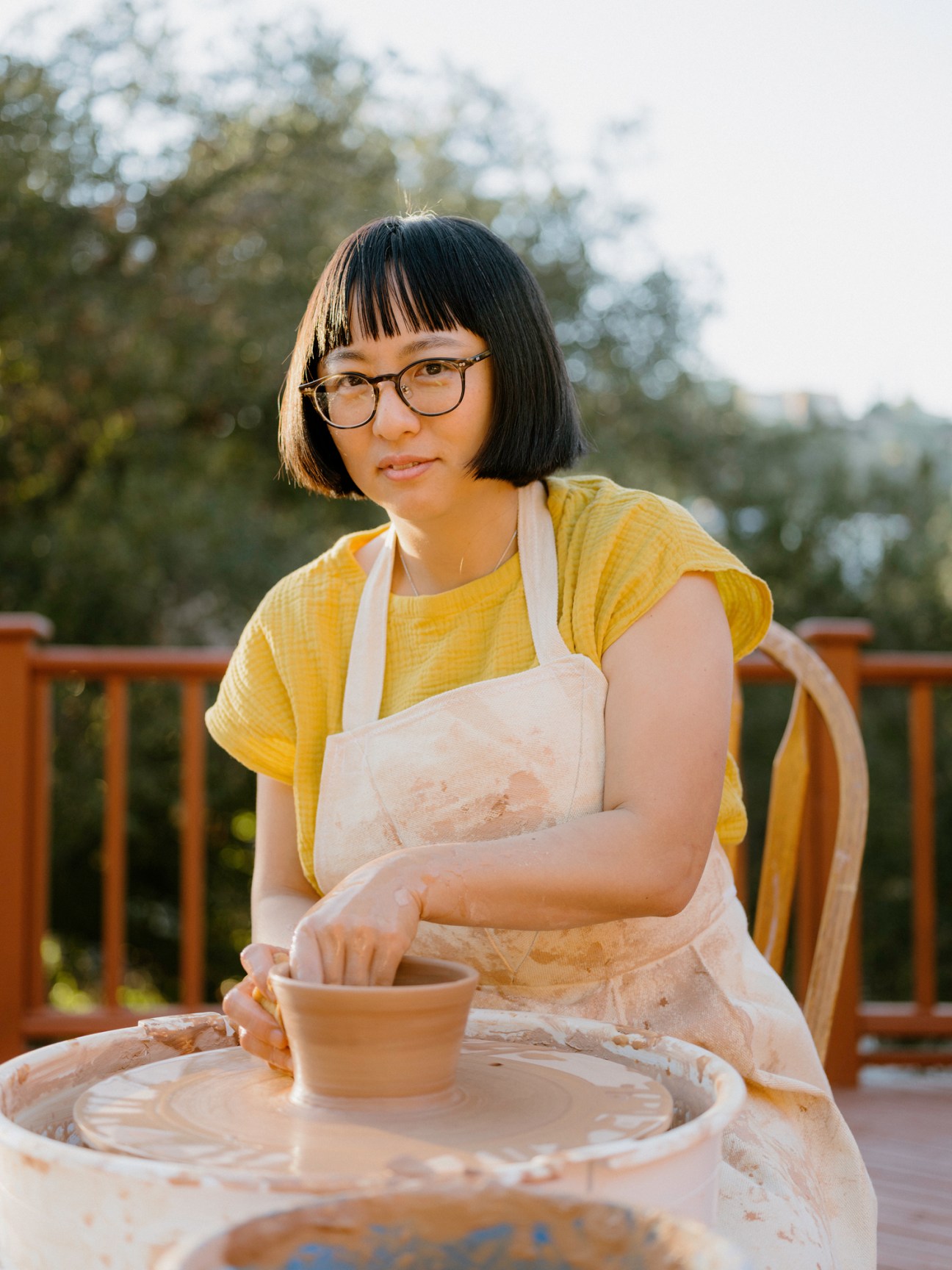
Poppy Shibamoto
Was: Photo assistant
Is: Ceramic artist
“In 2006, I had just graduated from Central Saint Martins. I got a reception job for Winkreative; Monocle didn’t even exist. But there was an empty space downstairs that was always meant for Monocle. One day [photo director] Rose Percy asked me if I wanted to assist her; I had no idea I wanted to do photo editing. From there, I ended up staying nine years.
“My favourite part of Monocle? Travelling was great, but also dressing up and partying – and growing up, because they trusted me with such big tasks.
“I remember when the first issue arrived from the printers – there was this excitement, like it was Christmas Day. We’d been working towards it for so many months and suddenly there was this tangible thing. And I also remember the dread of realising that we had to produce the second one so soon after. We had spent months discussing the first and suddenly we had two weeks to make another.
“When you’re making the issues, the photos feel so current. You never think that the images will turn into history. But in just 15 years, so many things have changed. I feel lucky we did take those pictures, and we have those stories.
“After Rose left, I became photo director. Monocle gave me the confidence to be able to achieve whatever it is I want to do. I moved to California because my husband got his dream job here; I felt like I had my dream job for nine years, so it was his time to do his thing. Since moving here I started doing pottery and we had a child. It’s so different because the focus is not on ambitions: as long as I’m happy, it’s OK.”
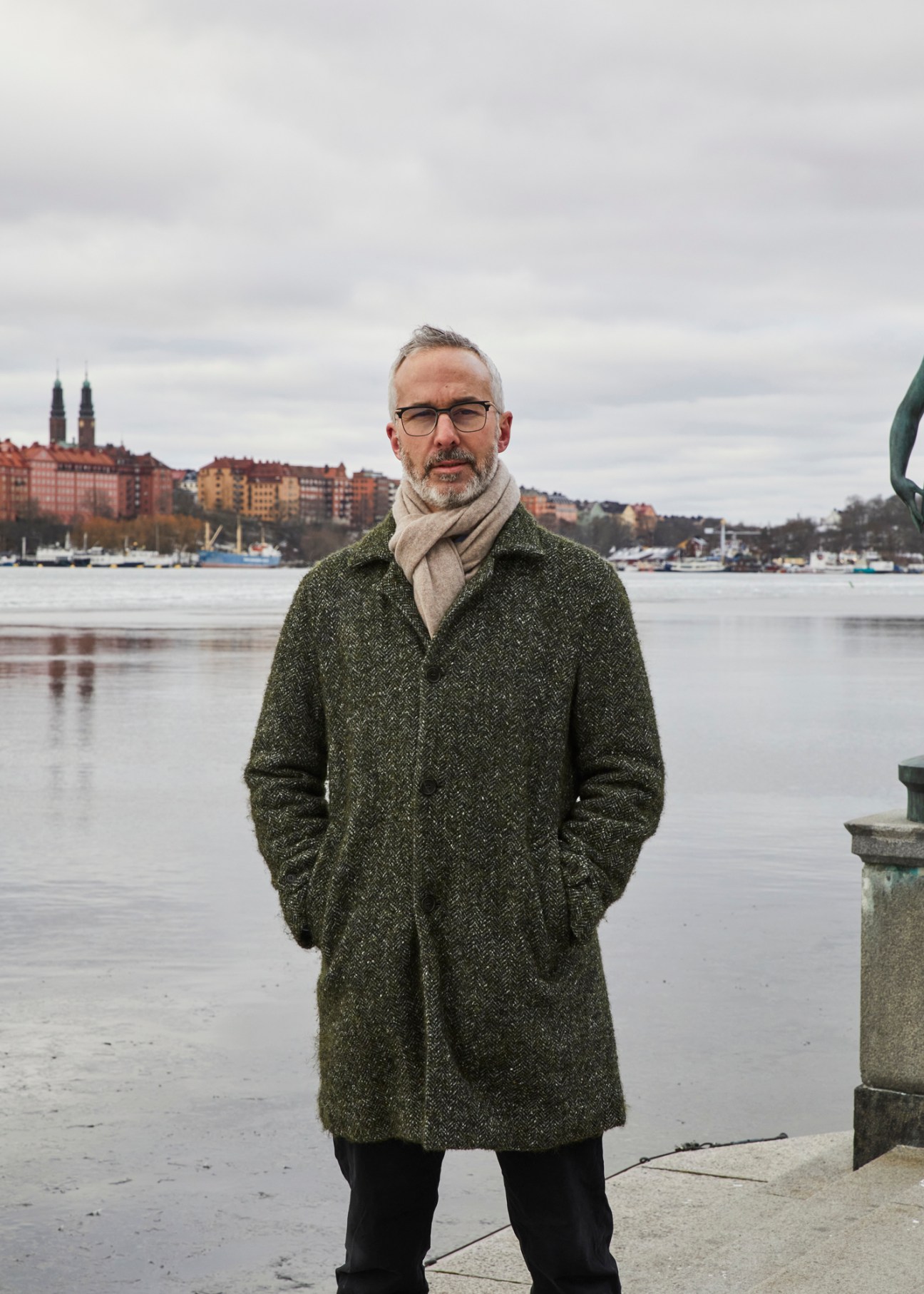
Dan Hill
Was: Web and broadcast director
Is: Director of strategic design at Vinnova, the Swedish government’s innovation agency
“By the time I joined Monocle, I already had two sides to my career. I worked on urban regeneration in Manchester then made websites for the BBC, working as a design lead for its iPlayer streaming service and on podcasting. I’d been there for six years when I went to a summit near Helsinki about new media and the future of cities, where I met Tyler. I remember thinking, ‘Well, the BBC’s been great but wouldn’t it be interesting to go from an organisation of 30,000 people down to one of 15 and start something from the ground up?’ So I did.
“My role was very much about the website and broadcasting side, setting up what would eventually become Monocle 24 and establishing the approach to film with Gillian Dobias. We were literally in a broom cupboard at one point, recording the first video and audio for Monocle. I had talked to an audio engineer at the BBC, who told us how to soundproof a room like that; we did it with foam and then bought some Røde mics. It was the early days of podcasting and Youtube, a world of scratchy video and audio. At Monocle, we wanted to set the bar high and say, ‘You can be a small independent player in this game but still have quality.’
“My work since leaving – particularly at Arup, Sitra and Vinnova – was massively informed by the way that we worked at Monocle too; conveying ideas that cut through and give people something engaging to hang on to. And I’ll bring that to my forthcoming role as director of Melbourne University’s School of Design.”
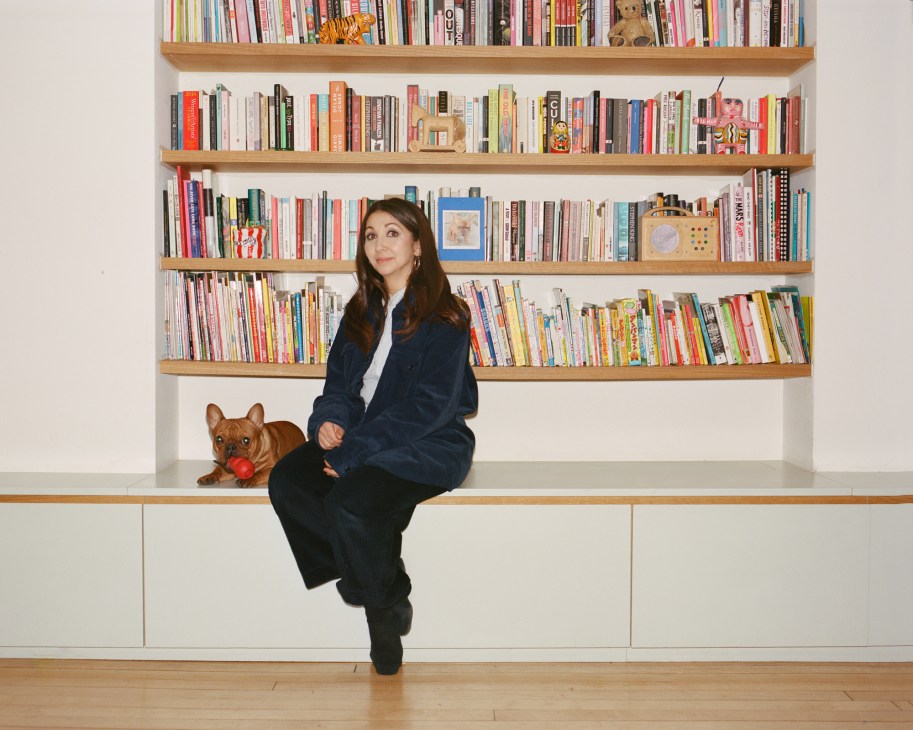
Alicia Kirby
Was: Researcher
Is: Writer
“Before I started at Monocle, I’d just left university and had been living in Japan, where I was interning at Harper’s Bazaar and making a documentary. When I came back to London, I saw an advert for Monocle. And because I was really interested in what Tyler had done with Wallpaper* and the Japanese element (I’m half-Japanese), I decided to apply.
“The friendships I ended up making there were amazing. We would have dinner together every time we went to press – Chinese or Lebanese or Thai. The hours that we worked were intense but we were all equally dedicated to it because there was a real appreciation for our work and we believed in this new magazine. There wasn’t anything like it. It was around that time that other news outlets started spending less money on journalism, and we were going against that tide.
“Monocle was also my first editorial job. I started as a researcher – and what better way to learn? My time there taught me how to get to the bare bones of the story, and not decorate it with fluff. These days I’ve changed tack and have been working on a fiction novel. It’s a psychosexual love triangle set against the backdrop of a mysterious, utopian Tokyo nightclub with ties to the Japanese underworld. I’m going to finish it this year.”
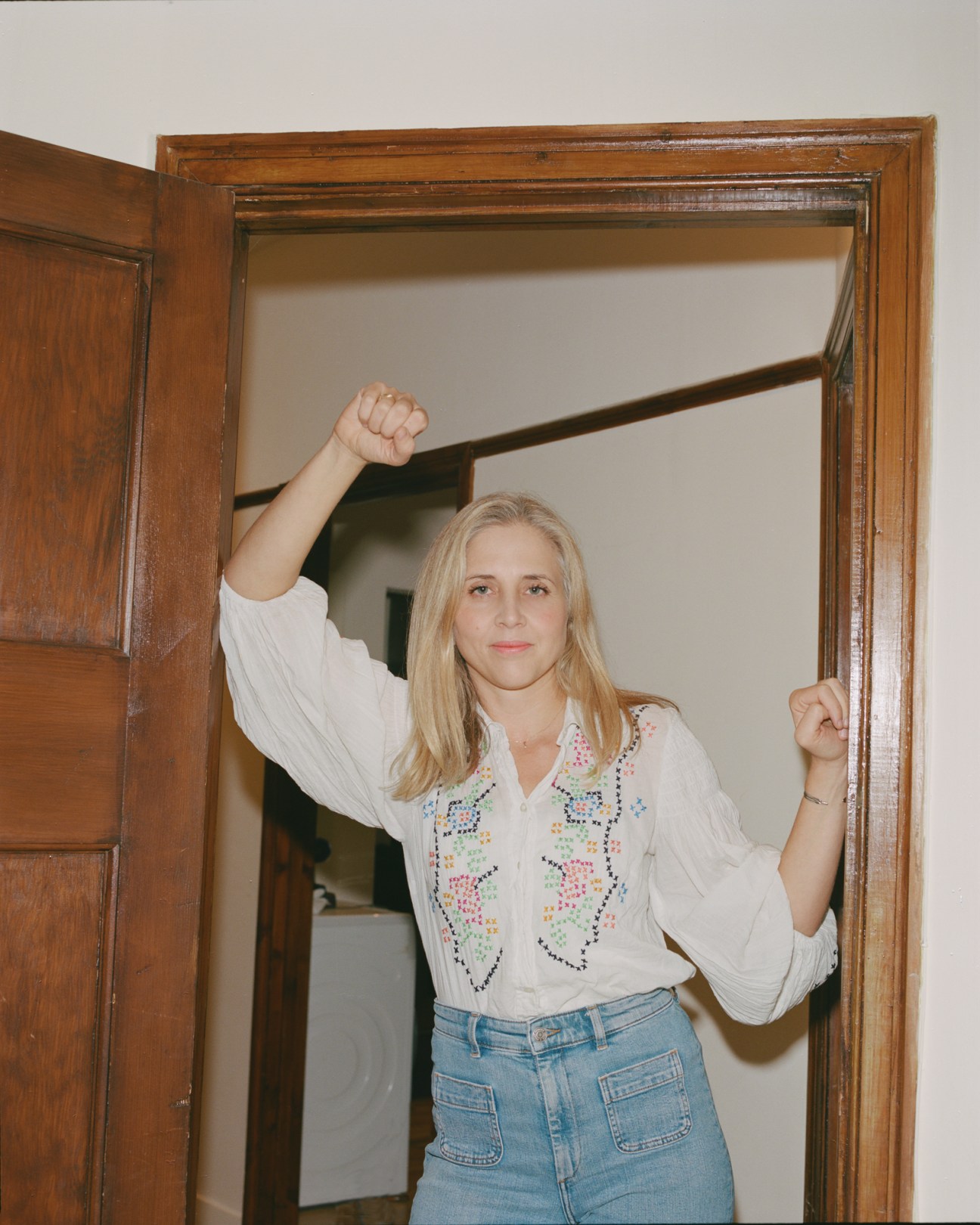
Sarah Balmond
Was: Design editor
Is: Director at Balmond Studio
“I first met Tyler when I was working as a reporter at Design Week. I’d gone to an opening at the Serpentine Pavilion, which he was attending, and, being a young person in my twenties, I went up to him and told him that I loved Winkreative, his agency. Some time passed before I saw an advert in the paper for the researcher position at Monocle. I had an interview with Tyler and he remembered me – and I got the job.
“The team as a whole was quite young but we were doing important jobs – quite quickly, I was promoted to become Monocle’s first design editor. Andrew and Tyler were giving us direction, obviously, but there was a sense of trust in us and because of that it felt very much like a family – and that we were growing something special together.
“When we reached milestones, we would do things like go out for dinner, which might sound like ‘team-building’ but it wasn’t cheesy or forced. It was amazing that we were global too and that we were travelling and going to trade fairs like Salone del Mobile. We worked hard and played hard.
“Seeing what we could achieve, along with Tyler and Andrew’s vision, gave me the confidence that I could start something too. I set up a design studio – Balmond Studio – with my dad, who’s a well-known architect and designer; my time at Monocle gave me an insight into business and team building, and taught me that you can find a way to make things happen. Now I’m consulting on different projects for the studio, teaching yoga and writing a novel.”