Issues
How can Tashkent become an art city?
You are not in Tashkent long before you notice that nearly every car on the streets of Uzbekistan’s capital is a Chevrolet, invariably the same Ravon model, usually in white. The (made in Uzbekistan) Chevrolet monopoly underscores what an archaic, isolated place of eye-watering import tariffs it is. Shipping things in is also complicated by the country being one of only two in the world that is double landlocked – none of the countries that neighbour it have access to the sea either; the only other example is Liechtenstein. The nation is shaped by a heady mix of cultural influences: the traders who arrived along the Silk Route, Russia and then the Soviet Union, which incorporated the nation into its empire.
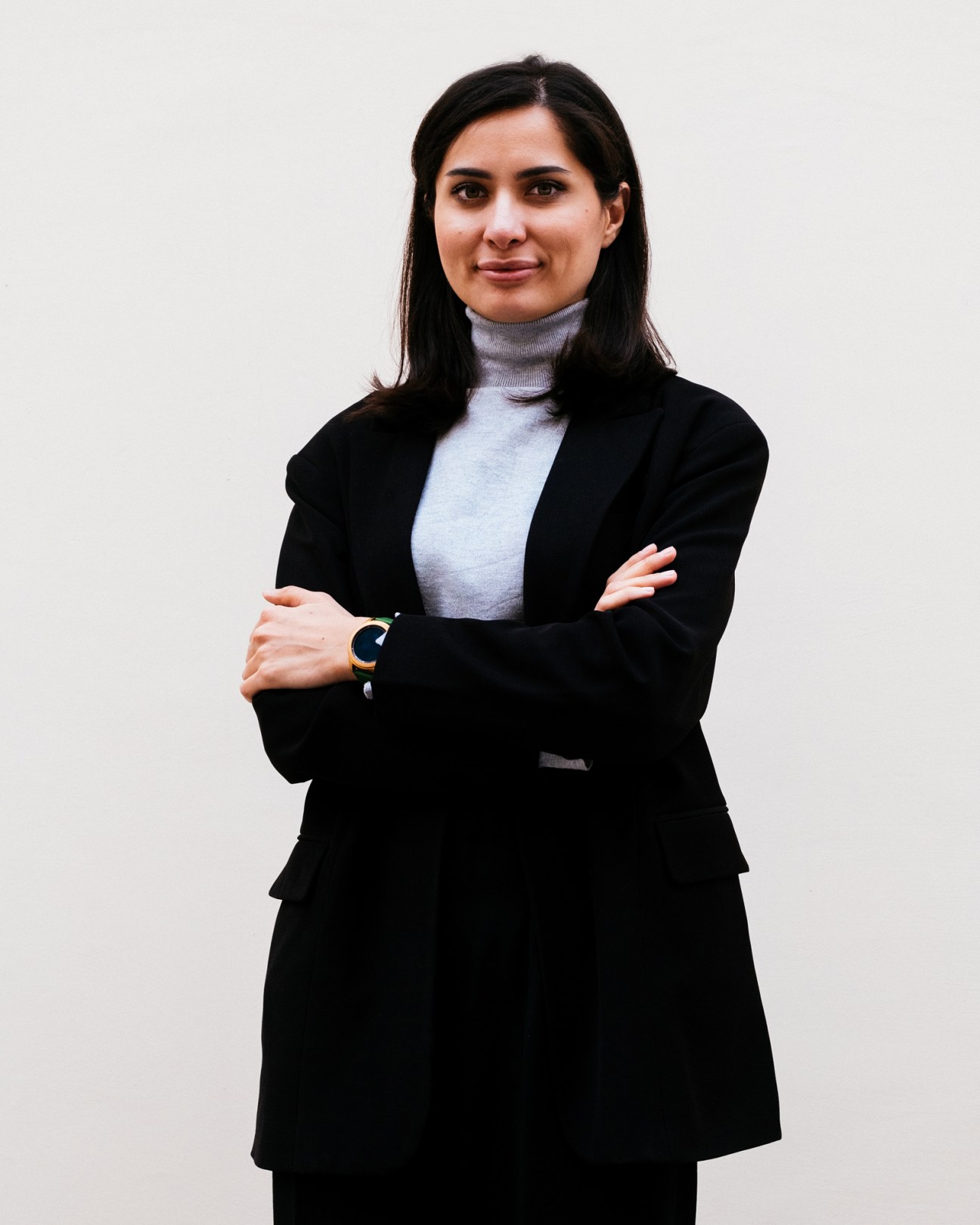
Now as the country emerges, slower than some of its neighbours, from the post-Soviet thaw, it has to decide how to present itself to the world afresh, seeing culture as the best way of building a new international presence. But it wants to do this in its own unique way, according to Gayane Umerova, executive director of the Art and Culture Development Foundation (ACDF), an organisation launched by the country’s Ministry of Culture in 2017.
In Moscow, Astana, Baku, Yerevan and Tbilisi, gleaming new museums and galleries have been erected, often with unusual silhouettes dreamed up by starry architects. But in Tashkent, a subtler approach is being tested. The Centre for Contemporary Art Tashkent (CCAT) is an unassuming structure set back from the city centre, surrounded by civic and university buildings. Madina Badalova, who is the head of education and inclusivity at the acdf, as well as the coordinator for the CCAT’s current exhibition Dixit Algorizmi, believes that the new venue is an exception in the region, where cultural advancement often means demolishing what’s already there and rebuilding from scratch.
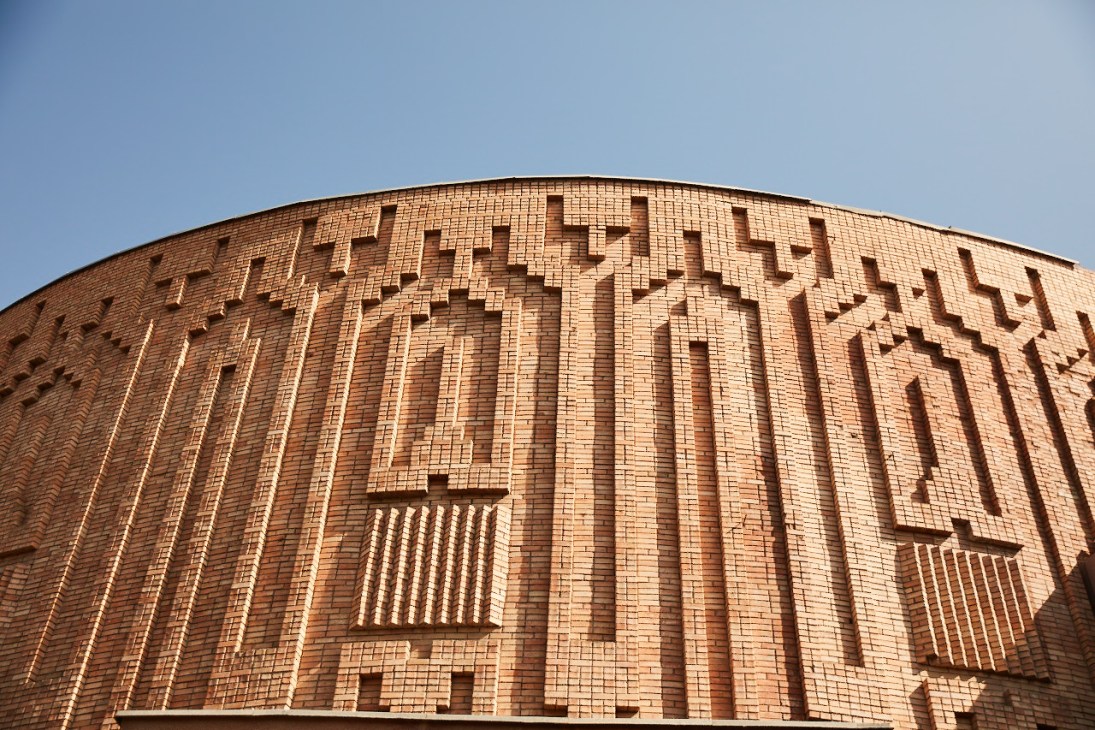
“Here, we want to promote the reuse of old buildings, as they hold the essence of our culture,” says Badalova. With its distinctive, turreted brick exterior, the cavernous space was designed in 1912 by German architect Wilhelm Heinzelmann as a power station to fuel Tashkent’s first tram line. “We wanted to preserve it, to reuse it, but without any sense of museumification,” she says. Still, the CCAT won’t be left in its raw state: Paris-based architects Studio KO (designers of Marrakech’s Musée Yves Saint Laurent in 2017) will spruce up the original structure.
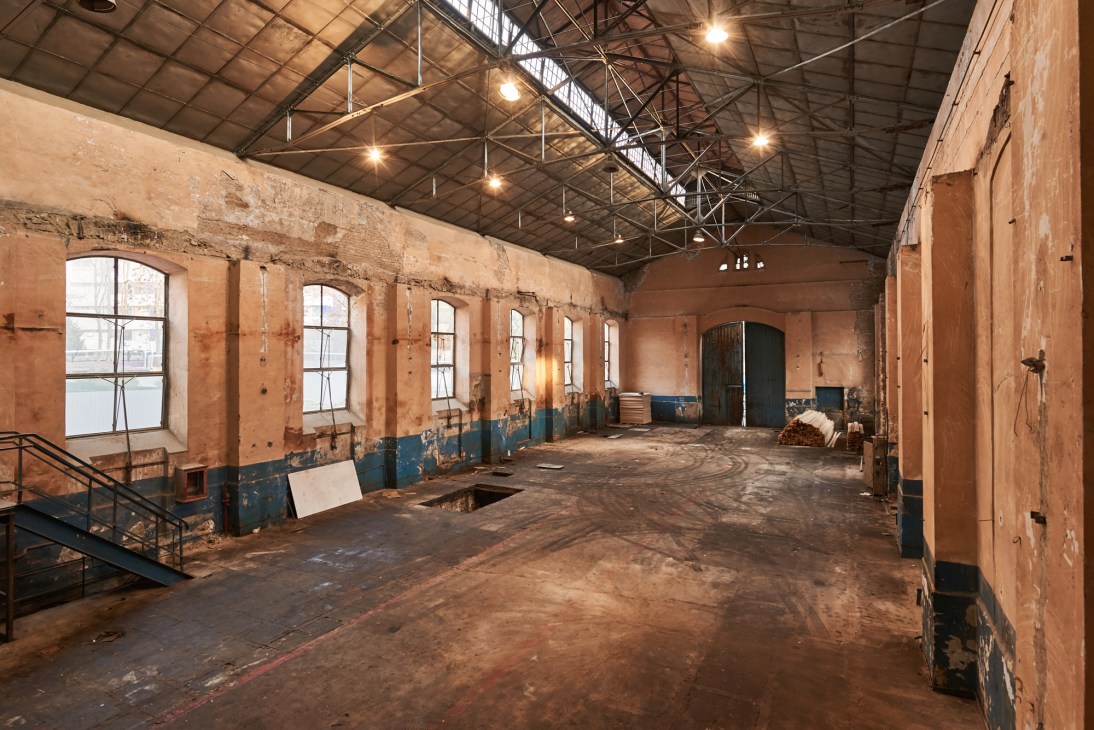
“We have lost a lot of historic buildings and now we must learn from what we have,” says Umerova on the show’s opening night, surrounded by a well-dressed young crowd of arty types drinking the free-flowing sparkling wine. “Finding a building like this was a blessing, and we want it to be a place for a new generation of locals; somewhere they can connect and use as a resource,” she adds. Umerova hopes to repeat the trick by rescuing more venues across town. For instance, her foundation is working with the French Foreign Ministry to create a French cultural centre in a striking modernist structure that used to house the former Soviet tourism ministry, as well as an adjoining cinema. Then there is the complete restoration and overhaul of the Tsarist-era Romanov Palace, as well as the modernisation of the ornate brutalist State History Museum nearby.
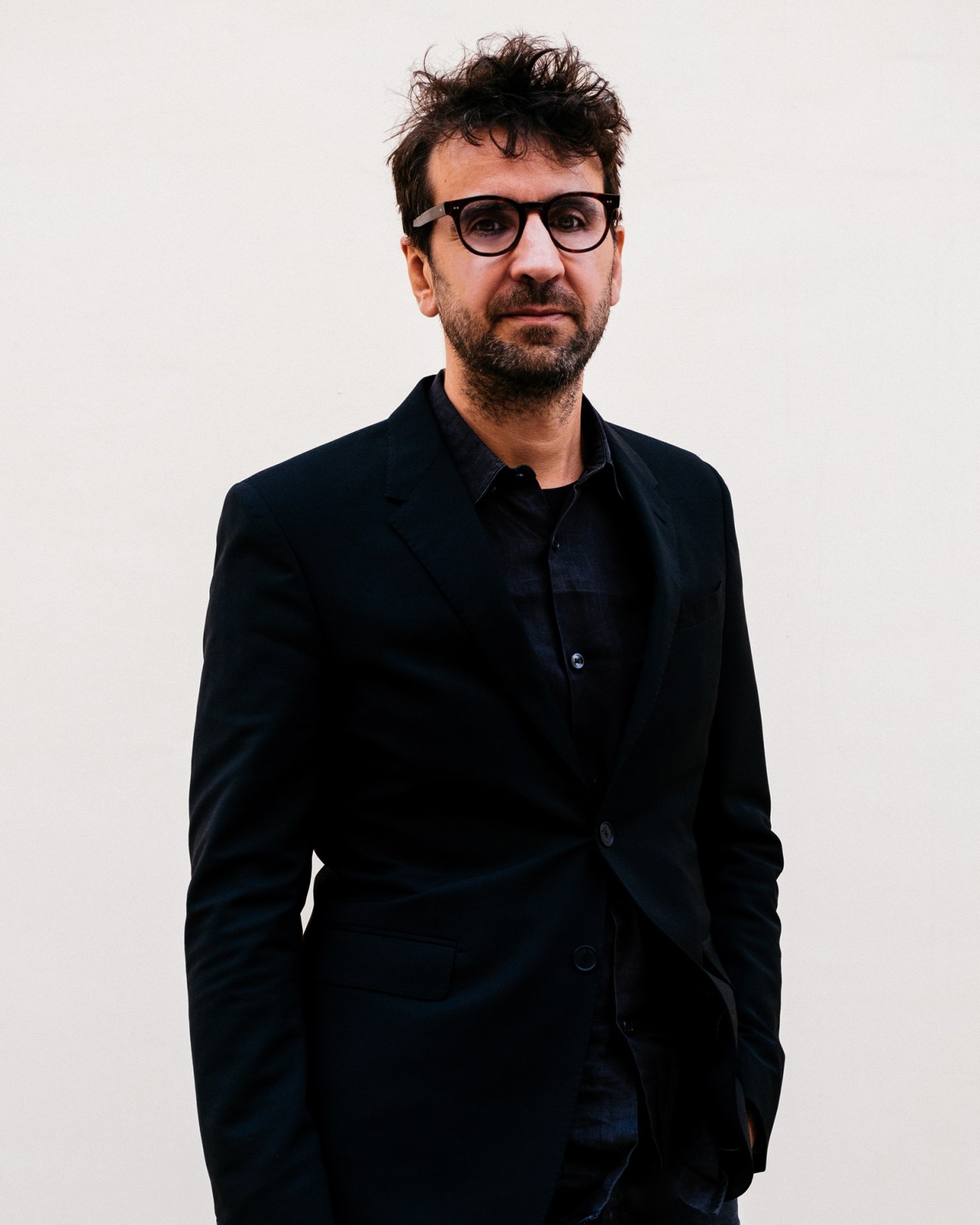
Despite its well-meaning aims, for an initiative so focused on energising the city’s art scene, the acdf is still reliant on international input. The new venue’s debut exhibition was curated by London and Milan-based design studio Space Caviar. Dedicated to eighth-century mathematician Muhammad ibn Musa-al Khwarizmi (the father of the algorithm and algebra), this display of multimedia art by both Uzbek and foreign artists is intended to show the world a new narrative around technology, away from the assumption that the roots of computing lie in Western nations. The gallery maintains the programming is aimed at Tashkent’s residents and not just foreign eyes but there’s a deliberate push to attract attention and resources from beyond the borders too.
Still, Badalova insists that the ultimate goal – and the key to creating lasting soft power – is to find ways to foster talent at home, perhaps with some external help. That’s why the idea for the country’s first pavilion at the 2021 Venice Architecture Biennale, which involved a recreation of a mahalla, a traditional low-slung neighbourhood, was co-created with up-and-coming creatives who were part of CCA Lab, an initiative consisting of 20 graduates running research projects and workshops with youngsters in Tashkent. “When you are taking a project abroad, the people here can be left out of the process,” says Badalova. “There has to be something behind the exhibition. It has to make sense here first. Then we have to introduce our people out there.”
Ruslan Yuldashev, a software developer who works at the Tashkent College of Information Technology across the street, has become a fitting example of community collaboration. “I was walking by and saw that there was an upcoming exhibition about the polymath Al-Kwarizmi,” he says. He decided to get in touch; today, his school works with the centre’s educational programme and has set up a class examining the relationship between the Arabic alphabet and QR codes. Rather than feeling excluded from the gallery’s global roster of curators and creatives, Yuldashev sees it as an opportunity. “I like seeing international artists bringing their vision and standards to Uzbekistan,” he says.


State-run initiatives such as the Center for Contemporary Art and its foundation might be trying to salvage at least some of Tashkent’s historical buildings but they can’t stop the overall tide of aggressive construction across the city. This is the largest capital in Central Asia – and with 34 million inhabitants, Uzbekistan is by far the region’s most populous country. The nation’s economy might be increasingly dynamic but an Uzbek’s predicted annual per capita income was still a paltry $2,000 (€1,700) in 2021.
But there are also people making plenty of money in this resource-rich country; Uzbekistan exports gold, copper, uranium and gas. As oil is furiously piped to nearby China – and wealth for some flows in the opposite direction – developers are racing to build luxury apartments and vast shopping malls. Much of this is encroaching on the historic architecture of Tashkent, including the labyrinthine mahalla that the Biennale honoured.
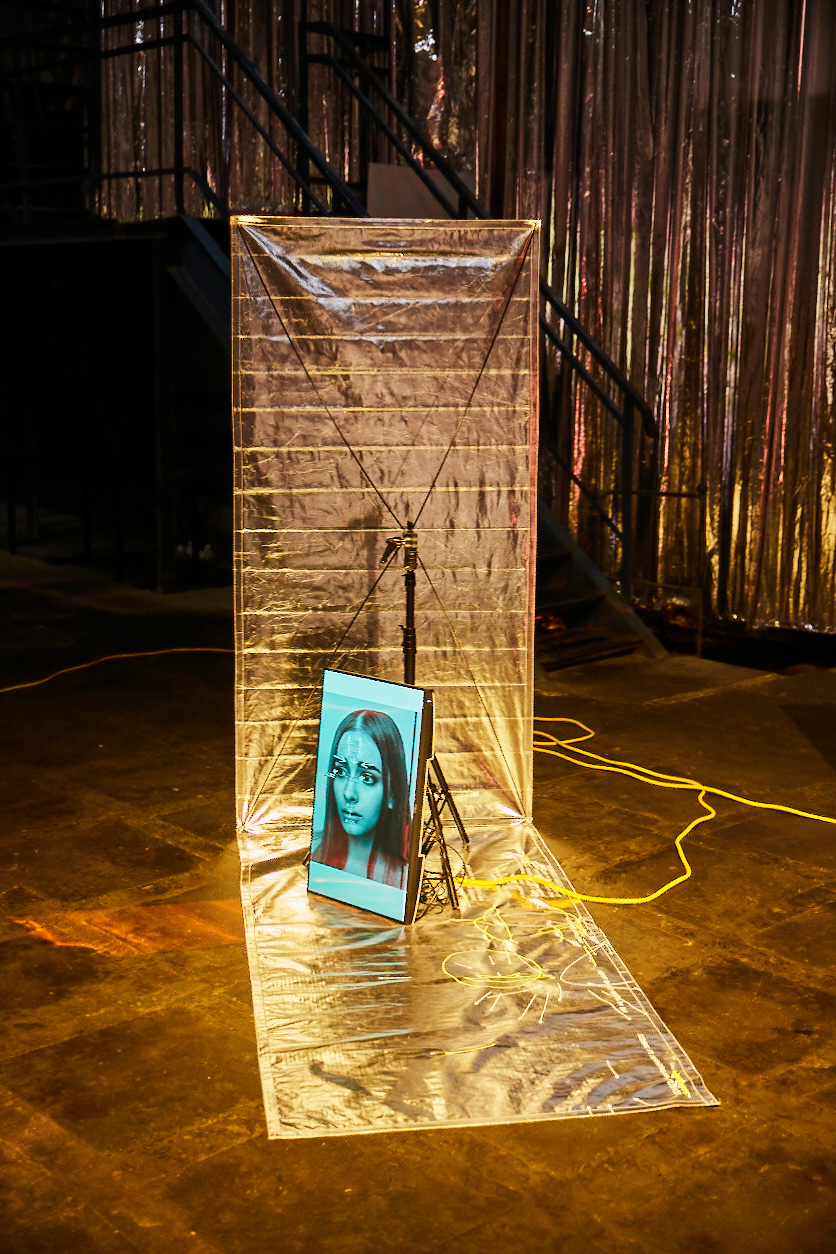
That’s why people such as documentary photographer and activist Timur Karpov are sceptical. He founded his independent multidisciplinary space, 139 Documentary Center, in the east of the city, running a mixed programme of exhibitions and events from inside a largely disused, Soviet-era agrotech factory. The centre has also shown several projects examining the rapidly disappearing mahalla, predating the acdf’s display by several years. “The mahalla that surrounds us here is set to be demolished very soon,” says Karpov, pointing to some old buildings down the street. “The mahalla is trendy right now so [the government] is pushing it hard but they are the ones killing it.”
Next up in the 139 Documentary Centre’s programme is a show exploring the difficult history of Uzbekistan’s cotton industry; Karpov has spent six years investigating forced labour during the post-Soviet era. Despite the controversy surrounding president Shavkat Mirziyoyev’s re-election in October, a landslide win against government-appointed opposition candidates, the politician’s mandate has largely coincided with an opening up of the country in the past five years. Recent economic reforms such as the liberalisation of the currency market and a shake-up of the tax system have led to considerable outside investment, which in turn has created opportunities, particularly in the capital. But freedom of expression is also concentrated in Tashkent; elsewhere in the country, clampdowns are still a frequent occurrence.
Still, Tashkent’s changing fortunes have managed to lure citizens such as Timur Azimov home. A part-time film producer who also works for an online marketplace, 26-year-old Azimov lived in Kazakhstan’s Almaty (known as Central Asia’s most easy-going city) for four years before moving back to his hometown. He is enthusiastic about Tashkent’s nightlife of underground parties and speakeasies, all of which would have been unthinkable a few short years ago. One of the city’s best spots is Sila Bar, an underground venue beneath an Italian restaurant. As strobes light up the revellers dancing to techno, Tashkent is beginning to offer some of the thrills of other cities.

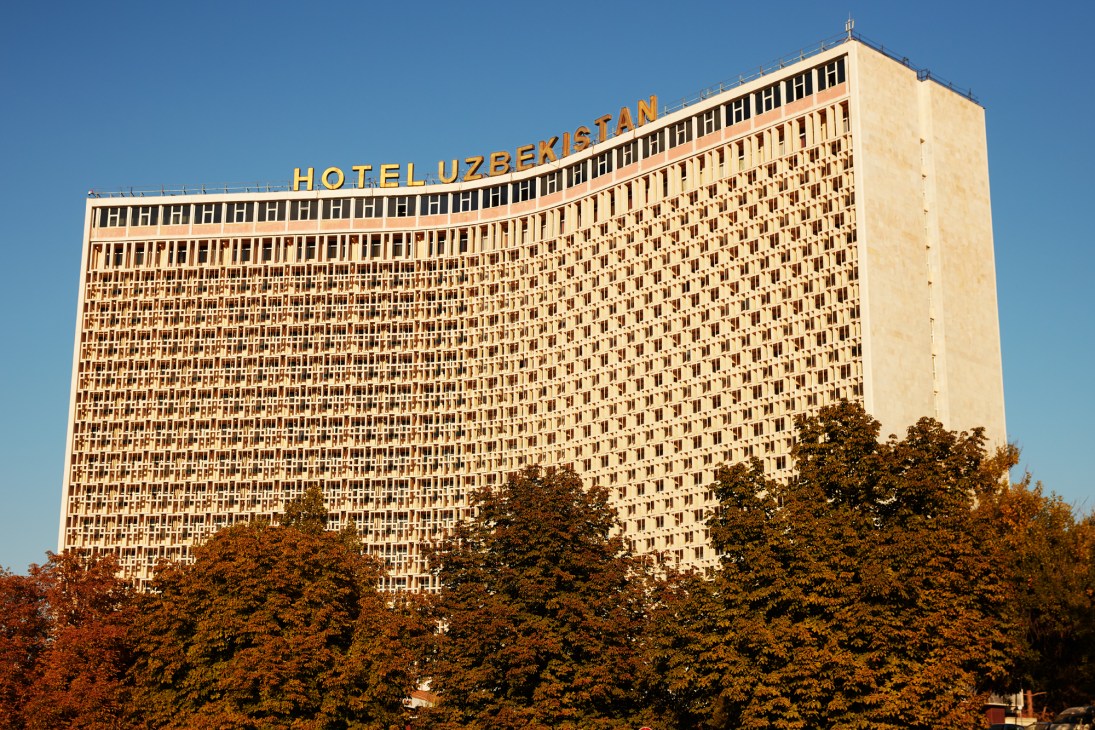
High above ground on the 17th floor of the Hotel Uzbekistan, overlooking the sprawling city below, the hotel’s bar is another of the city’s fascinating places. Sitting atop a 1974 building that has become a poster child of concrete brutalism, this panoramic bolthole, with its plentiful cigarette smoke and faded modernity, is an evocative post-Soviet gem that feels deeply cool. “Tashkent is now at the edge of a renaissance,” says Azimov. “There’s enough to keep young people from leaving nowadays; in fact, I don’t understand why more people aren’t making the move.” Perhaps in time they will.
Those hesitant to return might be biding their time. The culture sector is making promising steps but still faces structural problems, particularly the fact that the grassroots scene remains fragmented and lacks the skills needed to get projects off the ground. That’s why Azimov will become part of moc: a creative organisation of more than 100 artists, musicians, designers and producers. Originally founded in 2019 by young producer Odil Mukhamedov as a “society of creators”, moc hosted its first festival in March. It gathered Tashkent’s freshest talent across all artistic disciplines in a format sponsored by the British Council, which has been on the ground in Uzbekistan for 25 years and also runs a film-maker programme that facilitates networking with professionals in the field. Staged over 10 days, moc Fest featured performances, seminars and exhibits, as well as sound and light installations, exploring themes from the importance of cultural heritage to the emotional effect of art.
moc operates independently of the Uzbek government, though it collaborated on individual commissions, such as the Stihia electronic music festival. But Mukhamedov is optimistic about the acdf’s internationally minded programme. “I hope that as we Uzbek creators continue to flourish, the culture foundation will engage more and more with us,” he says. “We are just at the beginning of a process. There is so much space to fill in the cultural sector.” Let’s hope that more projects like his will be those that pack it.
Choice cuts
Film
We meet a French director whose poised, evocative work often explores the liminal period between childish innocence and adulthood – and recommend some titles to both thrill and comfort you this season.
Profile
Céline Sciamma

Ever since she broke through at Cannes in 2007 with her debut, Water Lilies, Céline Sciamma has become one of the most original, compelling and technically adept directors in French film. Despite its pithy 72-minute running time, her fifth feature, Petite Maman, might be her most impressive work to date. This tender magic-realist tale of an eight-year-old who meets and befriends her own mother as a child, delivers considered, compassionate meditations on growing up, grief and solace.
How did you make a film that is so short and yet feels so complete?
My job is about carving time; crafting it. Just because the film is short, it doesn’t mean it’s designed as a short experience. Petite Maman is a 24-hour experience because it includes the night and your dreams. I wanted it to be narrow and go straight to the heart but also to blur the feeling of time by telling a lot in a short window.
Your films always have a lingering resonance but they never veer into overt tragedy.
If you put a lot of sadness into a film and it gets melodramatic then it will protect the viewer. I have cried at films that were hijacking my emotions but I don’t value them; they didn’t have an effect on my emotional life. The film is not about the characters and the story – they don’t exist. You’re the hero of the film; it’s about your emotions.
Many of your films draw this emotional depth out of childhood. Why the interest in that period of our lives?
We look at childhood as though it’s a dead part of ourselves but we’re the same person. In Petite Maman, I wanted to abolish the frontier between the adult’s and the child’s body. I’m amazed at how children aren’t respected. As I do with women, I want to give them a whole range of emotions, possibilities and opportunities – give them perspective; give them the lead.
‘Petite Maman’ will be released on Mubi. Do you think that the shift towards home viewing benefits more intimate films such as this?
For the first time, I designed this film to be seen on small screens. We have to reconsider what makes cinema; it’s a special intimacy between watcher and film. If it’s only linked to the room that it’s being seen in, then it will die.
Reviews
Screen grabs

Lamb
Valdimar Jóhannsson
If asked to imagine an alien world, you would probably picture an expansive barren terrain shrouded in an eerie mist that dampens all colour and sound. In short, you’d be thinking of Iceland, which has doubled for various planets and mythical realms in dozens of sci-fi blockbusters, including Interstellar, Star Wars and Prometheus. But in the past few years, a crop of acclaimed Icelandic features – including Woman at War, A White, White Day and The County – has resulted in the country becoming a home for original cinema, and not just as a shooting location for big Hollywood projects.
The latest film to reclaim Iceland’s stunning landscape for domestic storytelling is the dark fantasy Lamb, the debut film by director Valdimar Jóhannsson. A modern-day Norse fable, it follows a grieving couple living on an isolated farm who raise a hybrid creature born to one of their flock. More unsettling than the premise, which broaches the theme of nature versus nurture with an unexpected tenderness, is the general atmosphere of foreboding that hangs over the film; it’s not often that glacial film-making elicits such a quickening of the pulse.
The Lost Daughter
Maggie Gyllenhaal
An adaptation of a novel by critically acclaimed and popular author Elena Ferrante, starring the equally acclaimed and popular Olivia Colman, Gyllenhaal’s debut film, which has already won best screenplay at Venice, isn’t just Oscar-bait. Instead, this story of a middle-aged woman who becomes fixated with a young mother and her child on a seaside holiday has been praised for its psychological depth and emotional rawness. That’s not to mention the performances by Colman, Dakota Johnson and Jessie Buckley.
Memoria
Apichatpong Weerasethakul
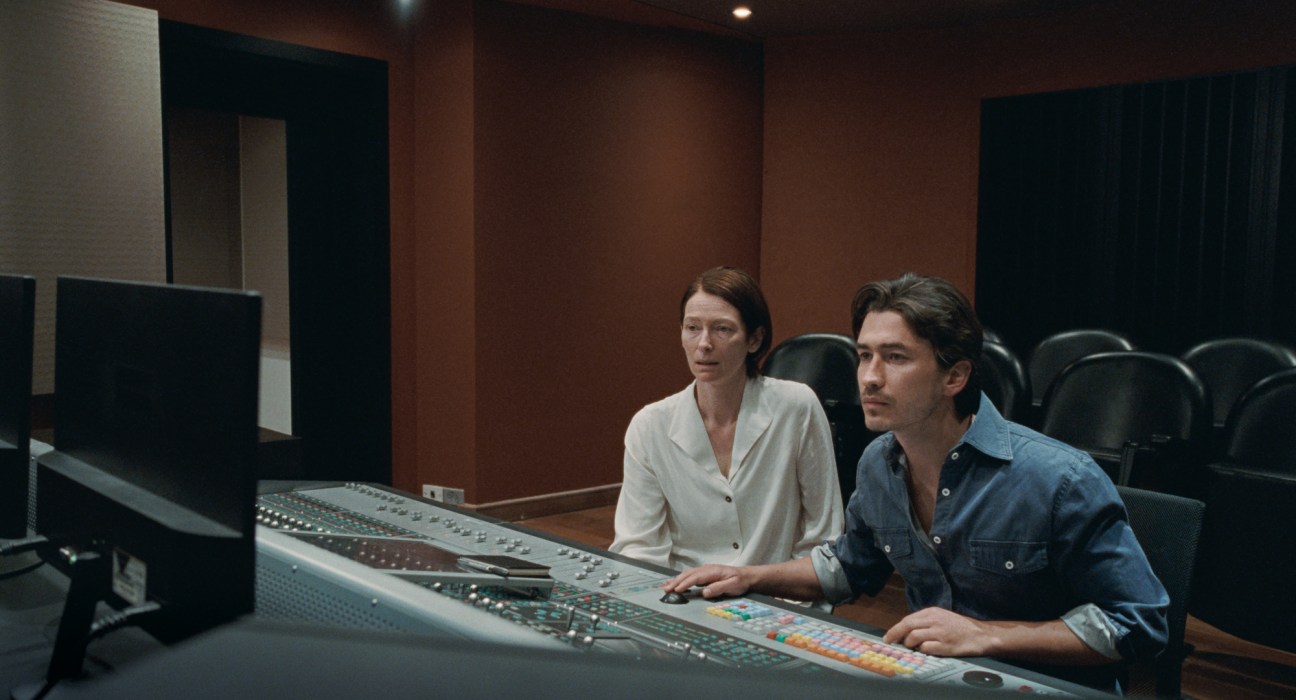
With its shots of lush Colombian forest and modernist architecture, this slow-moving film rewards patience. Tilda Swinton cuts a ghostly figure as a British expat haunted by loud noises that she alone seems to hear. Memoria was inspired by Thai director Weerasethakul’s own sleep disorder that causes auditory hallucinations. This eerie film lingers long after the credits roll.
A Hero
Asghar Farhadi
In this curious cautionary tale, a prisoner returns a dubiously acquired bag of gold to its owner, despite desperately needing the money himself. Iranian film-maker Farhadi puts trust in his audience to navigate the tale’s ethical ambiguities and arcane social codes. The result is an absorbing feature that considers the arbitrary distinction between heroism and self-interested callousness.
Art
Profile
Alicja Kwade

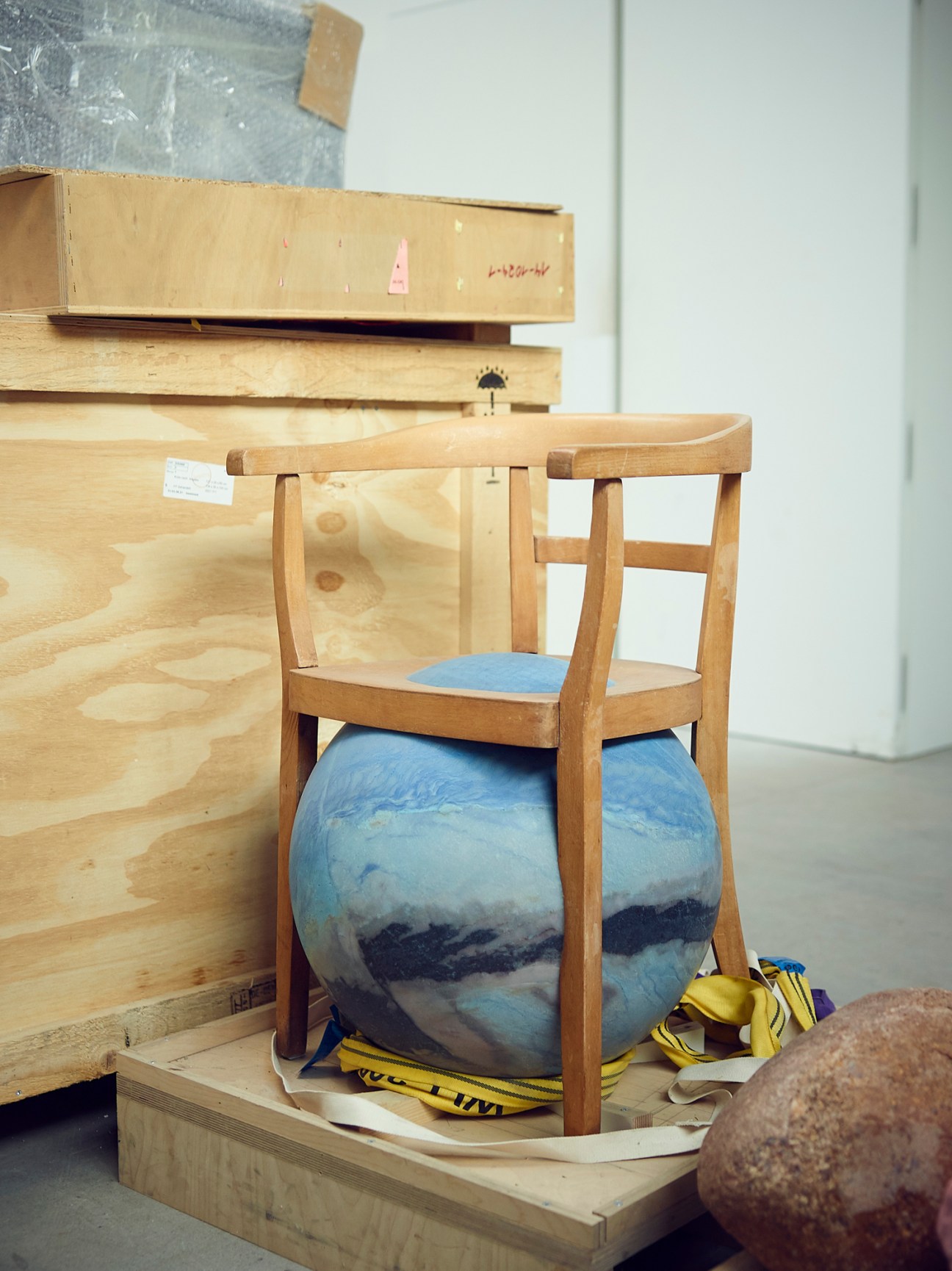
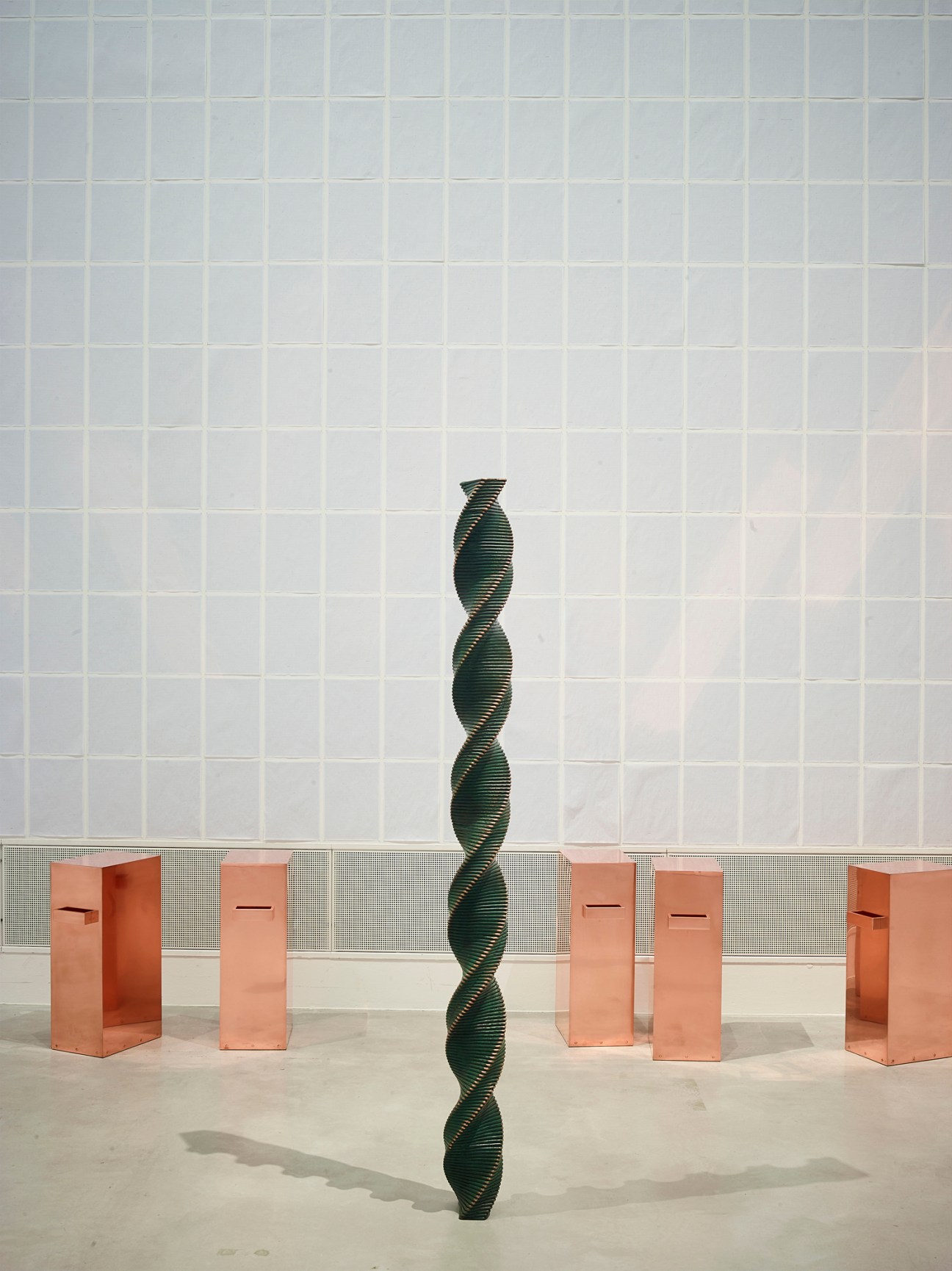
Given that she has just created a show presenting the beat of her own heart as a symphony broadcast on 24 loudspeakers and also made representations of people as vials containing the 24 elements that compose us all, it’s hard to believe Polish-born artist Alicja Kwade when she says, “I’m not interested in the human body at all.”
But then In Absence, the exhibition she has put together for the Berlinische Galerie museum, is about more than flesh and blood. It’s a series of works reaching for people’s common essence, without the minor variations and social denominators that some employ to justify “almost funny, just stupid” hierarchies.
“I wish we could be body-free people; I wish we would have more awareness of our equality rather than our differences,” says Kwade. In the museum, the artist’s own genome sequence is typed to fill 314,000 pages. In the small text is the occasional bold character: the codes for traits that differentiate Kwade from the reference genome of the human species. But they are very hard to spot because people are 99.9 per cent identical at a biological level.
“It’s my body but it stands for everyone’s body,” she says, while seated in the model-making room of her sprawling warehouse studio in the riverside Oberschöneweide neighbourhood of Berlin. “Who cares about melanin or gender? What we should see in our make-up is that we are deeply connected to all humans and creatures – to nature, our planet and all the planets in space.”
Kwade has galactic ambitions: she hopes to erase borders, not only between people but between them and the universe. Her elemental reinterpretation of the human body suggests that our basic building blocks are the same as space rocks; that we share common ingredients. “We should all be aware that we are here for a very brief moment, which we are sharing on Earth with eight billion similar people,” she says.
In Absence, her second show in a major Berlin institution since her 2008 exhibition at the Hamburger Bahnhof, was postponed three times as museums remained closed in Germany due to lockdown. By the time the exhibition finally opened in September, Kwade felt that the experience had dilated her sense of time and fed into her own exploration of this slippery subject. “When we now speak of 2019 we seem to be conjuring an era that occurred 10 years ago,” she says. “We all know that time is about perspective.”
Even if she is sceptical about people’s arbitrary way of measuring time, Kwade is still excited about the new year. “It’s the only tradition that I appreciate because I always like new things to come,” she says. “I’m a future optimist.”
‘In Absence’ runs at the Berlinische Galerie until 4 April 2022.
‘Wearing Masks’
Guggenheim New York
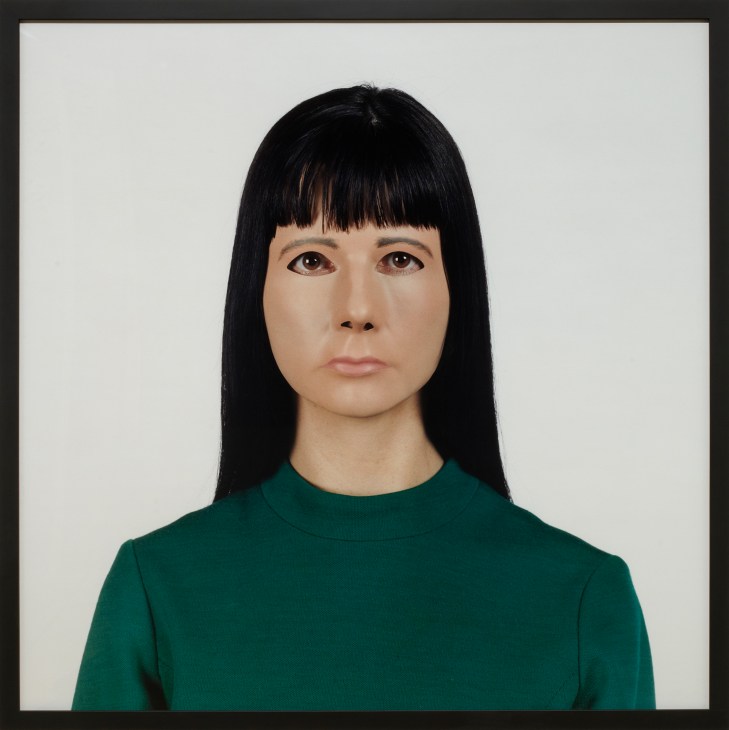
Gillian Wearing has built a career by wearing masks. From early polaroids to recent self-portraits, the UK artist has appeared as her brother, mother and even her younger self, all by wearing unnervingly lifelike silicone masks. But in a world where masks have become so commonplace, Wearing’s work is about much more than health and safety; it is about exploring identity as a performance.
Gillian Wearing: Wearing Masks’ runs until 4 April 2022.
Skarstedt
Paris
As Paris’s reputation as the post-Brexit European art capital grows, Skarstedt is the latest major international gallery to set up shop there. The new space takes over the former Hopkins Gallery on Avenue Matignon and has been renovated by French designer Jacques Grange. The inaugural show is of paintings by US artist Eric Fischl, with forthcoming exhibitions of work by the late Martin Kippenberger and Francis Bacon.
Skarstedt Paris is open now.
L’Image en Mouvement
Geneva
Centre d’Art Contemporain Genève has created uncanny corridors leading to unexpected set-piece rooms, each displaying new moving image works. “Technology is destined to add something fruitful to our expressive possibilities, not to take something away,” says the centre’s director, Andrea Bellini.
Biennale de l’Image en Mouvement runs until 30 January 2022.
Meet the collector
Nish de Gruiter

Dutch collector Nish de Gruiter’s latest purchase, by California-born artist Hugo McCloud, at first looks like a painting but is in fact made using plastic bags. Ever since he started buying art seven years ago, De Gruiter’s focus has been on works that go beyond simple paint on canvas. However, an emotional connection is still the first prerequisite for any new acquisition. “There’s something about McCloud’s series, The Burden of Men,” says De Gruiter. “He makes images of people carrying heavy loads on their shoulders, or oversized things on their bicycles. It’s so expressive.”
Born in Sri Lanka, De Gruiter was adopted at a young age and grew up in The Hague. His family often took him to the Netherlands’ best museums, such as the Rijksmuseum and the Stedelijk. Having studied at Amsterdam’s fashion school and worked for the likes of Brunello Cucinelli in Italy and Suitsupply in New York, he didn’t return to his country of birth for many years. “In Sri Lanka I saw all these people making something out of nothing,” he says. “They use everything they can find to create and express themselves with reused items. That’s something close to my heart.”
Today, De Gruiter has moved to San Francisco to work for homeware brand RH and his house is filled with colourful art. “Lots of people hire an art adviser to tell them what is cool,” he says. “But if something doesn’t move you, there’s no point hanging it on your wall. If you have a piece in your home and never get bored of it, you made a great purchase.”
Sean Kelly displays Hugo McCloud artworks at major fairs; find his work on artsy.net too.
Music
Reviews
Albums to note
Smothered
Oberhofer

LA-based Brad Oberhofer’s first album in nearly six years is full of wistful 1950s-style harmonies. He coos about professional struggles and romantic woes in this masterclass in dream pop. On standout track, “Sunshiine”, The Strokes’ guitarist Nick Valensi and singer-songwriter Shamir lend a surf-rock feel to proceedings.
‘Smothered’ is out now.
Candy Racer
Kyary Pamyu Pamyu
On the 10th anniversary of her debut album, Japanese pop icon Kyary Pamyu Pamyu has released her fifth full-length effort, which shows she still deserves the title of “Harajuku Pop Princess”. The album shifts from bubblegum pop to electronica with songs such as “Kamaitachi” and the title track. But there are examples of the singer going beyond her usual style too: “Natsuiro Flower” has a captivating, more mature sound.
‘Candy Racer’ is out now.
Nonante-Cinq
Angèle
On her second album, Belgian singer-songwriter Angèle’s sound takes on a more refined direction, featuring upbeat dance tracks and sophisticated slower pieces. Lead song “Bruxelles je t’aime” is a feelgood hymn to her city that might just take over dancefloors across Belgium. Tracks “Démons” and “Solo” are also highlights.
‘Nonante-Cinq’ is out on 10 December.
Um Gosto de Sol
Céu
Céu’s plucky take on Brazilian pop is a fixture on the country’s music scene. But her latest record breaks new ground. Um Gosto de Sol is the singer’s first covers album, fusing the work of big Tropicália and samba names with songs by Fiona Apple and Sade. First single “Chega Mais”, an acoustic version of Rita Lee’s 1970s hit, softens the original’s peppy disco into a slow burner.
‘Um Gosto de Sol’ is out now.
Phantom Island
Smile
Björn Yttling has written for the likes of Lykke Li and Primal Scream (and played in Peter Björn and John), while bandmate Joakim Åhlund has worked with Giorgio Moroder and Charli xcx. The duo’s first collaborative LP as Smile spans dance music and synth-heavy pop. “Call My Name” and “Eon” are delights.
‘Phantom Island’ is out now.
TV
Reviews
Home entertainment

The Summit of the Gods
Netflix
Were George Mallory and Andrew Irvine the first men to scale Mount Everest in 1924, decades before Edmund Hillary and Tenzing Norgay’s attempt in 1953? This is the question that drives The Summit of the Gods, an anime feature by French director Patrick Imbert, based on Jiro Taniguchi and Baku Yumemakura’s manga. Seventy years after the mountaineers were last seen some 200 metres away from the summit, a camera in the hands of outcast climber Habu Jôji might hold the answer to whether they made it to the top. Japanese reporter Fukamachi Makoto is determined to get to the bottom of the mystery in this elegant ode to alpinism.
‘The Summit of the Gods’ is on Netflix now.
Nona et ses Filles
Arte

Film-maker Valérie Donzelli brings her poetic lens to television for the first time with Nona et ses Filles, a mini-series scripted with Clémence Madeleine-Perdrillat. Miou-Miou plays Nona, a woman who has had an eventful life as an activist on the frontline of the 1968 student protests and as a single mother to triplets. Now that she is 70, she is looking forward to living a quiet life – until she finds out she is once again pregnant. This is a funny and yet moving take on how we earn the freedom to choose for ourselves.
‘Nona et ses Filles’ is on Arte now.
Simple as Water
HBO

Filmed over the course of five years, this new documentary from Academy Award-winning director and film-maker Megan Mylan focuses on Syrian refugees around the world. Here, Mylan hones in on telling the story of a few families spread across multiple countries, separated from their loved ones. The intimacy and tenderness that emerges as they attempt to contact each other is an affecting way to remember the human emotions behind numbers and headlines.
‘Simple as Water’ is on HBO now.
Light the Night
Netflix
Taiwanese TV production has seen a huge boost in recent years, as streaming services double down on growth in Asia and seek to make Mandarin-language series while not being able to operate in mainland China. Light the Night, a suspenseful new drama set in 1980s Taipei, explores the link between a brutal murder and the growing friction among several women and their boss at a bar in the city’s red-light district. Be prepared to reconsider your assumptions on what working in such an establishment is like.
‘Light the Night’ is on Netflix now.
Profile
Patrícia Sequeira
Portuguese band Doce are an important part of the country’s pop history. One of the first girl groups in Europe, the four-member outfit helped to break taboos in the country’s ultra-traditional society of the 1980s.
Having already directed a film about the quartet, Bem Bom, a big hit at the box office, Patrícia Sequeira has expanded that glittery universe into a seven-episode series on Portugal’s national broadcaster rtp. “After 48 years of dictatorship, when patriotic songs reigned, the country wasn’t ready for the impact of Doce,” says Sequeira. “They shined on colour TV in a country still in black and white.”
Doce’s amazing outfits were radical at the time. “The Doce phenomenon helped to break the idea of female submission,” says Sequeira. “It was all about transgressing the patriarchal norm in society. Musically they revealed an artistry never before explored; not only because of the lyrics, which alluded to female pleasure, but because of their looks, choreographies and melodies.”
For research, Sequeira spoke at length to the group’s members as well as the band’s creator, Tozé Brito. “The interesting thing about making fiction based on reality is that we already know the characters a bit,” she says. A starry group of actresses have taken up the roles: Ana Marta Ferreira is the sensitive Laura Diogo; Bárbara Branco the smart Fátima Padinha; Carolina Carvalho the irreverent Lena Coelho; and Lia Carvalho the maternal Teresa Miguel.
Judging by the ratings, Doce are again capturing the nation’s attention and global viewers won’t be disappointed either. After all, European audiences already had a taste of Doce when the group entered the 1982 Eurovision Song Contest.
‘Doce’ is on rtp Play now.
Books
Reviews
Reading digest

Harsh Times
Mario Vargas Llosa
Nobel prize-winner Vargas Llosa’s new novel traces the story of the CIA-backed coup in Guatemala that toppled Jacobo Árbenz’s left-wing government in 1954. Conspiracies and conflict take centre stage but there’s also a focus on the human element. As characters get caught in webs of their own weaving, Vargas Llosa explores how the lies we tell, however small, have larger consequences.
‘Harsh Times’ is out now.
O Caledonia
Elspeth Barker
First published in 1991, Barker’s dark and funny novel tells the story of Janet, a wild young woman with only a pet jackdaw as a friend. The setting is an austere gothic castle in a harsh landscape, the prose rich and poetic. A classic coming-of-age tale and love letter to literature and nature, O Caledonia, now reissued, is as sharp today as it was 30 years ago.
‘O Caledonia’ is out now.
Matrix
Lauren Groff
Cast out from the 12th-century French royal court, Marie de France – youngest of a “famous family of viragoes” – is sent to Angleterre to become prioress of an impoverished abbey. Over time she transforms this “dark and strange and piteous place” into a sanctuary for those who live there, creating a proto-utopian society of strong, independent women. A work of impressive literary imagination inspired by historical fact, this story celebrates a heroine ahead of her time.
‘Matrix’ is out now.
Free: Coming of Age at the End of History
Lea Ypi
Author and professor Ypi’s frank and absorbing memoir charts growing up in a time of great political upheaval and historical change. Drawing on her own personal experience in Albania before and after the fall of communism in 1990, Ypi questions the meaning of oppression, freedom, ideals and reality for both a family and a nation. It’s a masterful blend of the personal and political.
‘Free’ is out now.

Today a Woman Went Mad in the Supermarket
Hilma Wolitzer
Published with a foreword by American novelist Elizabeth Strout, Wolitzer’s 15th book brings together a poignant new tale, written during the pandemic, with timeless pieces first published in the 1960s and 1970s. It is a frank and wise collection about women’s inner lives and the highs and lows of friendship, family life, marriage and motherhood. Highly recommended.
‘Today a Woman Went Mad in the Supermarket’ is out now.
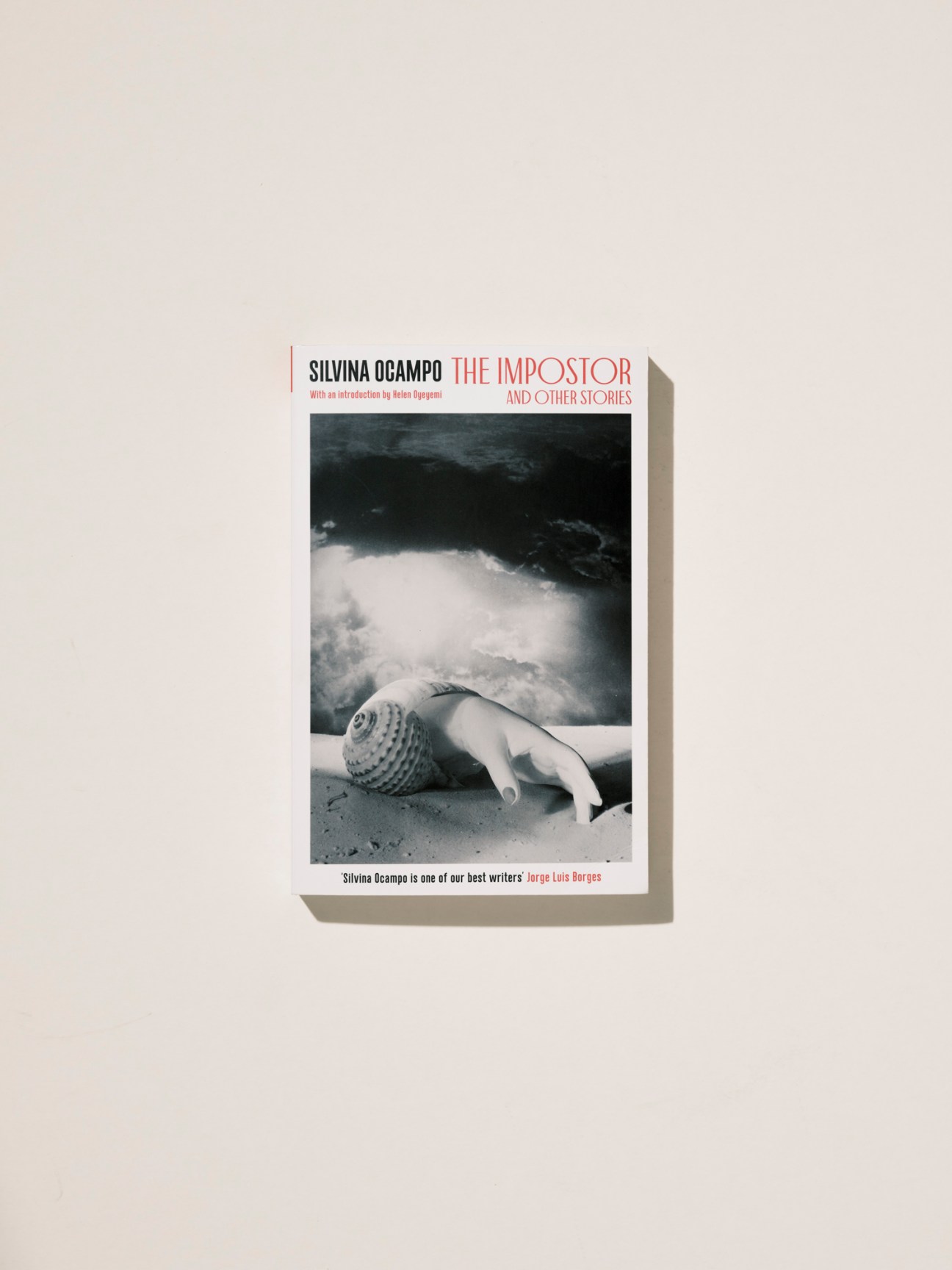
The Impostor: and Other Stories
Silvina Ocampo
Argentine writer and artist Ocampo captures mundane events in a whimsical, slightly sinister style. Her stories centre on unlucky characters: a thief breaks into a house with disastrous consequences; two men switch destinies for a change of pace; and a bride’s personality gets taken over by a spirit. This is an overdue set of short stories from a woman who is often overlooked in modern South American literature.
‘The Impostor’ is out now.
Chouette
Claire Oshetsky
This striking debut novel reads like an unsettling fairy tale. It’s the story of a woman named Tiny, a cellist who has always been an outsider, who finds her life turned upside down when she becomes pregnant with an “owl-baby”. When the creature is born she inspires fear in most people, so Tiny is left to care for her alone. As wild and feral as the little owl-baby herself, this novel is raw, ferocious and pulsating with energy.
‘Chouette’ is out now.
Retail
The Margate Bookshop
Margate
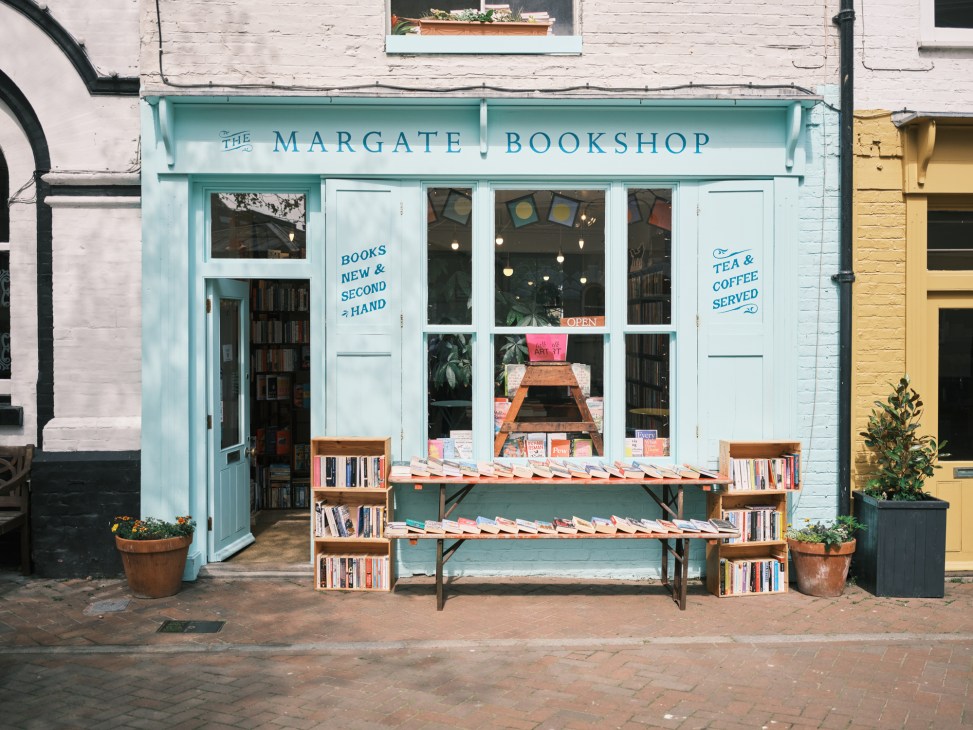
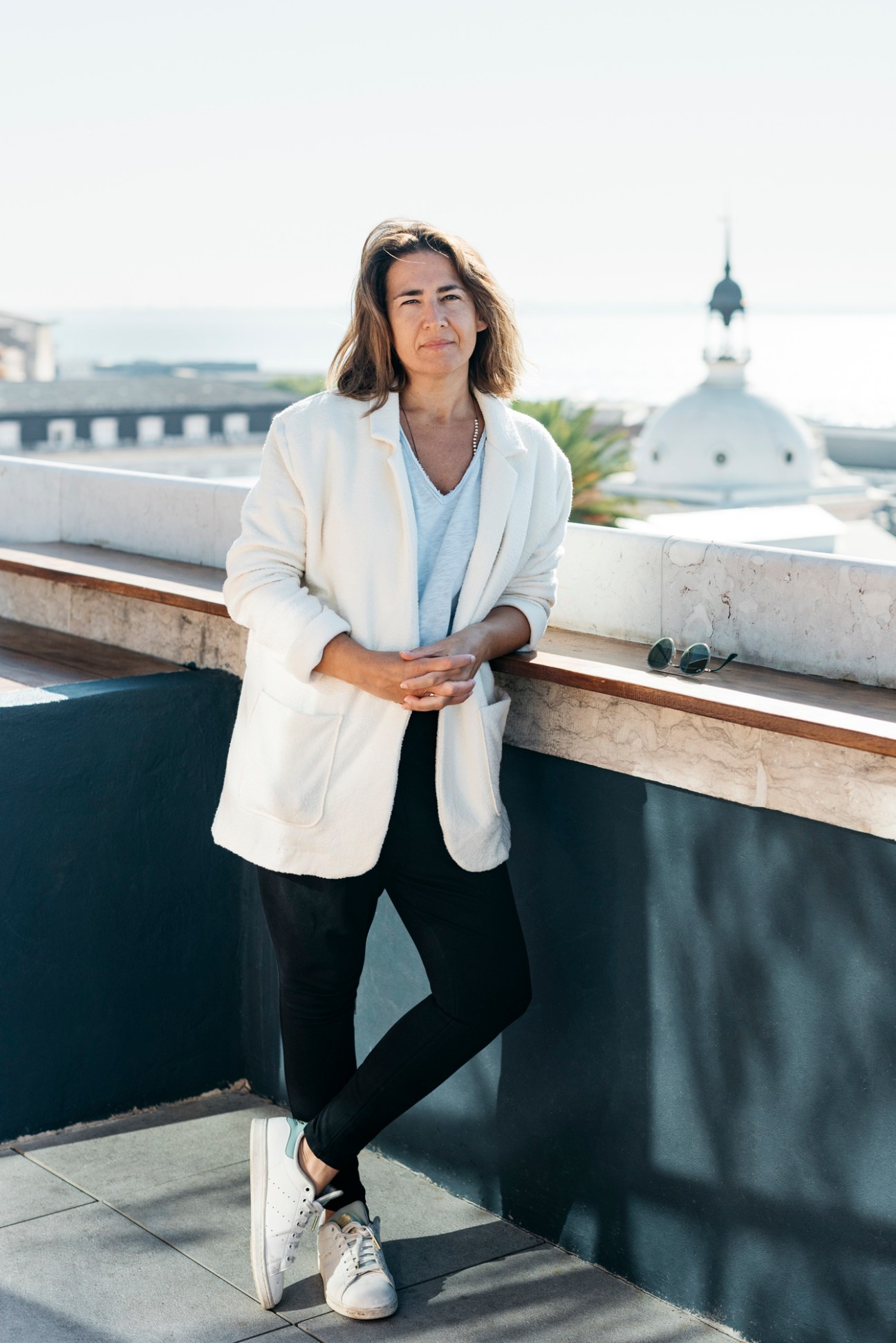
Francesca Wilkins (pictured) had been sitting on a business plan for almost five years before opening her aquamarine bookshop in the UK coastal town of Margate in 2019. “I was waiting for the right space to become available,” she says. When this one did, she traded London for a spot by the sea.
Nestled in Margate’s old town, with a pub and a museum for neighbours, the shop attracts a mix of people. “Everyone knows each other,” says Wilkins, who herself became acquainted with the town’s many secondhand shops when she was sourcing odd bits of furniture. On the shelves are old and new books, and you’ll also find titles by local authors.
themargatebookshop.com

Wilkins’s gift picks:
The Painter’s Friend by Howard Cunnell
A moving novel about community, gentrification and the role of art.
In the Country of Others by Leïla Slimani
Captures the atmosphere of 1940s Morocco, with its arid heat and melancholy.
No One is Talking About This by Patricia Lockwood
A woman navigates celebrity status and life on social media.
Underground
Barcelona
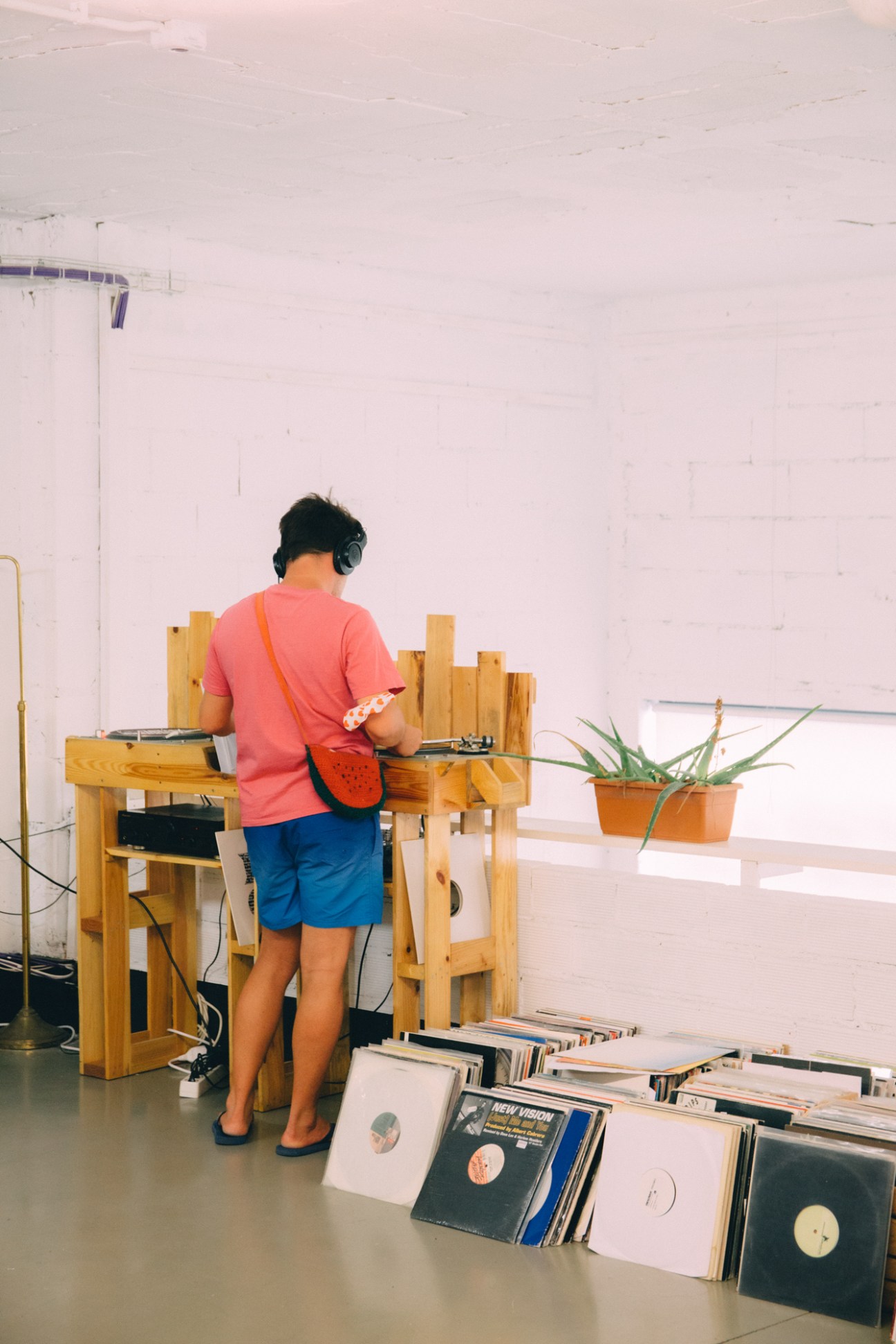
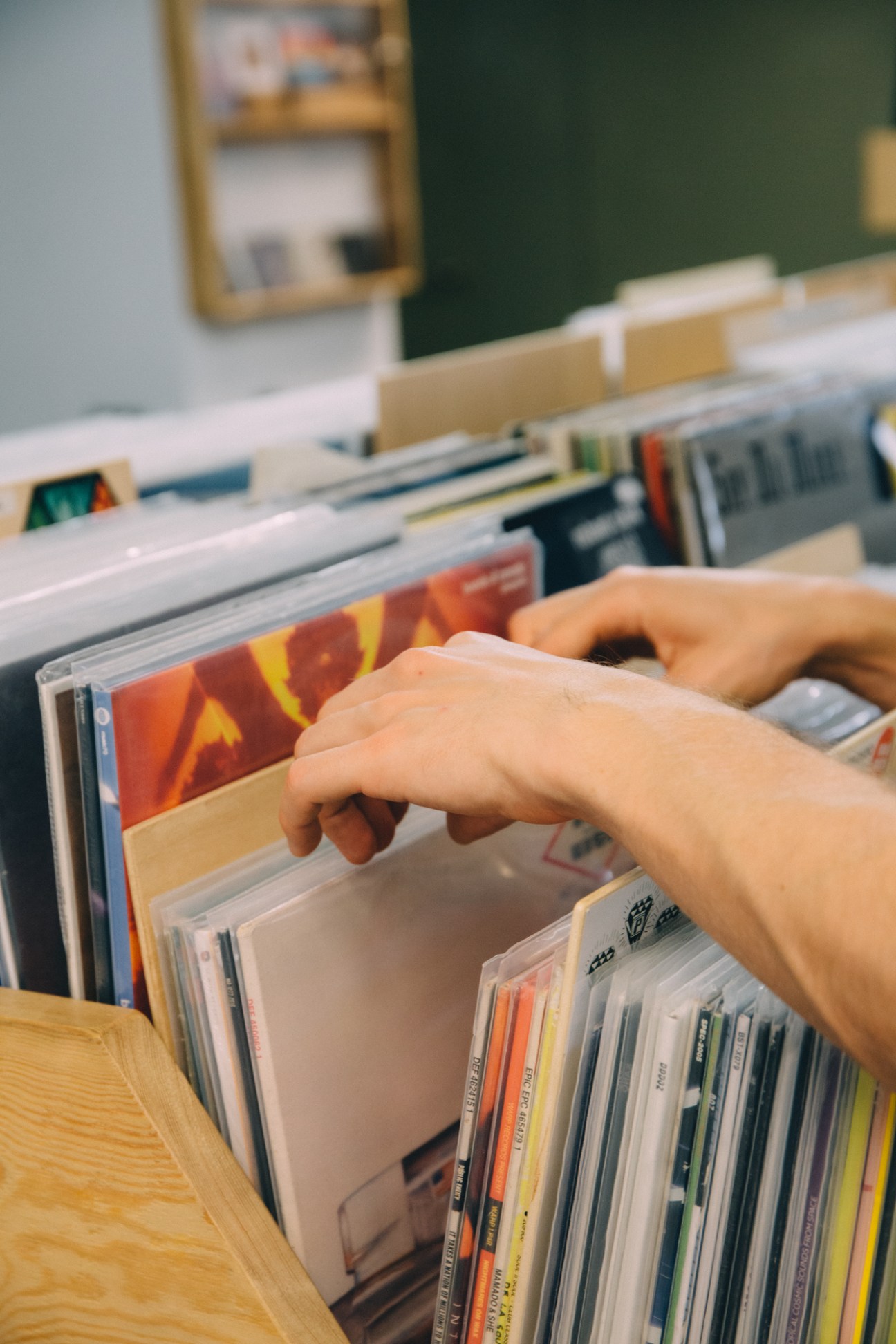
A former call centre in Barcelona has found new life as the Underground Music Network record shop. Behind the project are Ramon Espinosa and Jimi Disko, who worked together on label and vinyl shop Subwax. The duo set their sights on a new challenge when they came across the vacant space in El Raval, near the city’s Museum of Contemporary Art. “Subwax was like our baby that grew up,” says Espinosa. “We wanted to try something new.” The shop stocks a range of genres but is more than a place to buy records: there’s a music studio and workshop space for musicians to have equipment repaired or built. Plans are in the works to launch a radio station and café inside the two-storey space, as well as a programme of live events. “We want it to be a hub where people can come together,” says Espinosa. “We’re building a community.”
Big Little News
Seattle
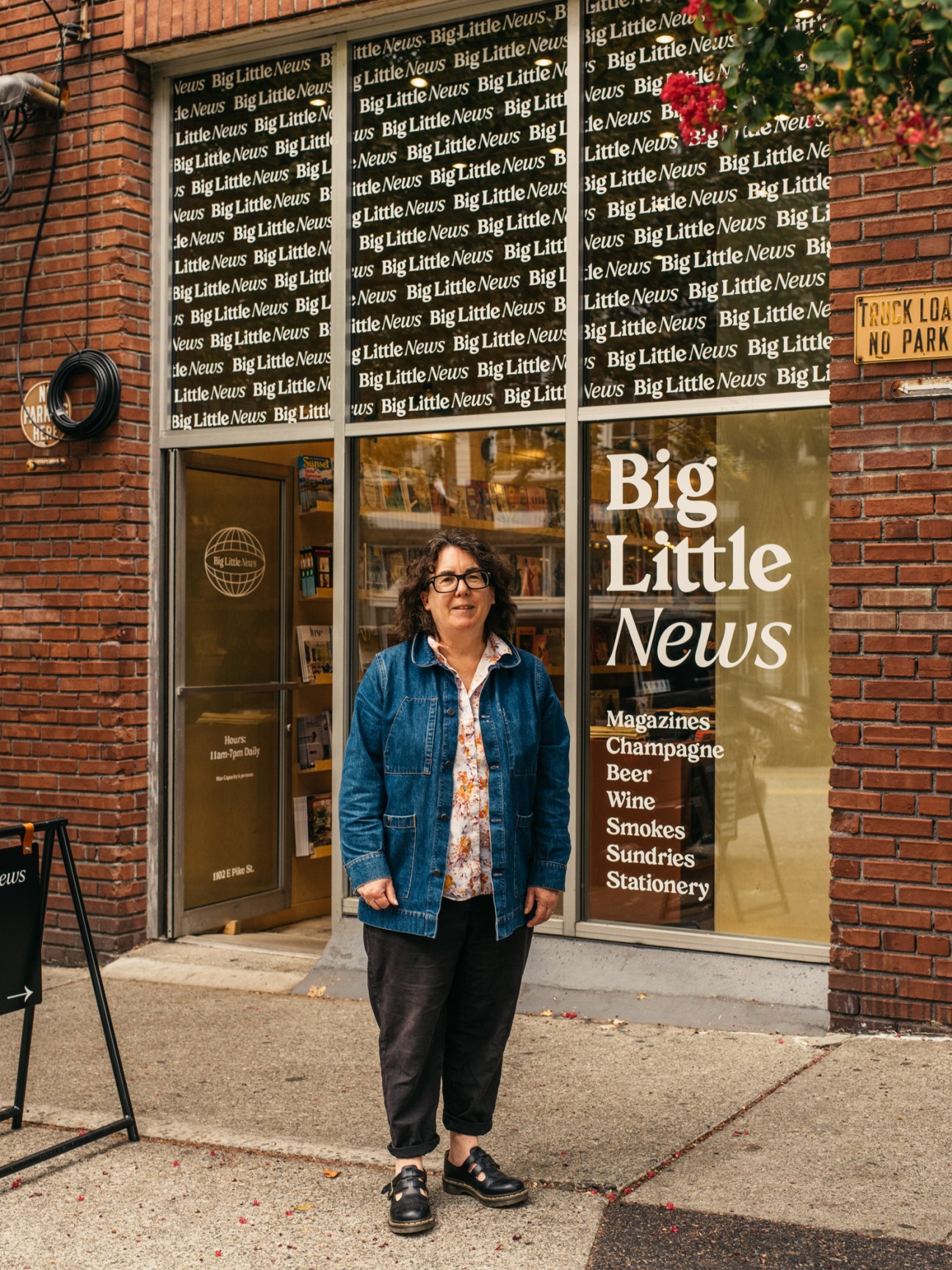
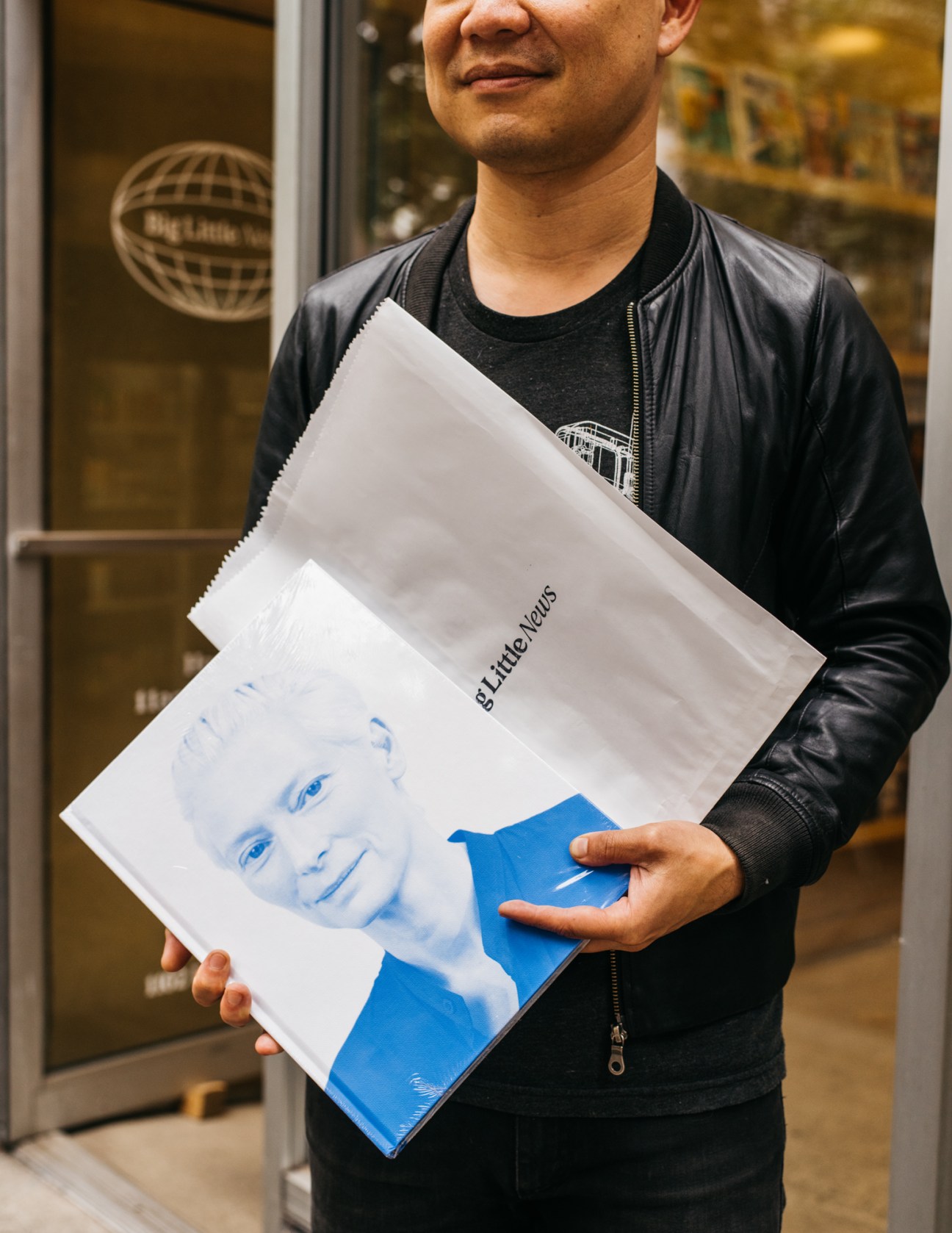
When a sliver of a shopfront became available on Pike, a busy high street in Seattle’s bohemian Capitol Hill district, long-time bookseller Tracy Taylor (pictured) pounced on the chance to move in with her rethought version of a newsstand. Big Little News opened in March, stocking more than 250 titles alongside art books, beer, wine, stationery and gifts. Sales have been robust so far. “One of my favourite things to do is to look at individual transactions,” says Taylor. “Every one tells a unique story: Skittles and champagne; Adventure Journal and kombucha; Bon Appétit and Boone’s Farm wine.” Big Little News’s subscription boxes have gained plenty of praise but it’s the bricks-and-mortar space that’s closest to Taylor’s heart. “Creating another space for print in Capitol Hill reinforced my passion for retail,” she says.
biglittlenews.com
AZ Discos
Buenos Aires
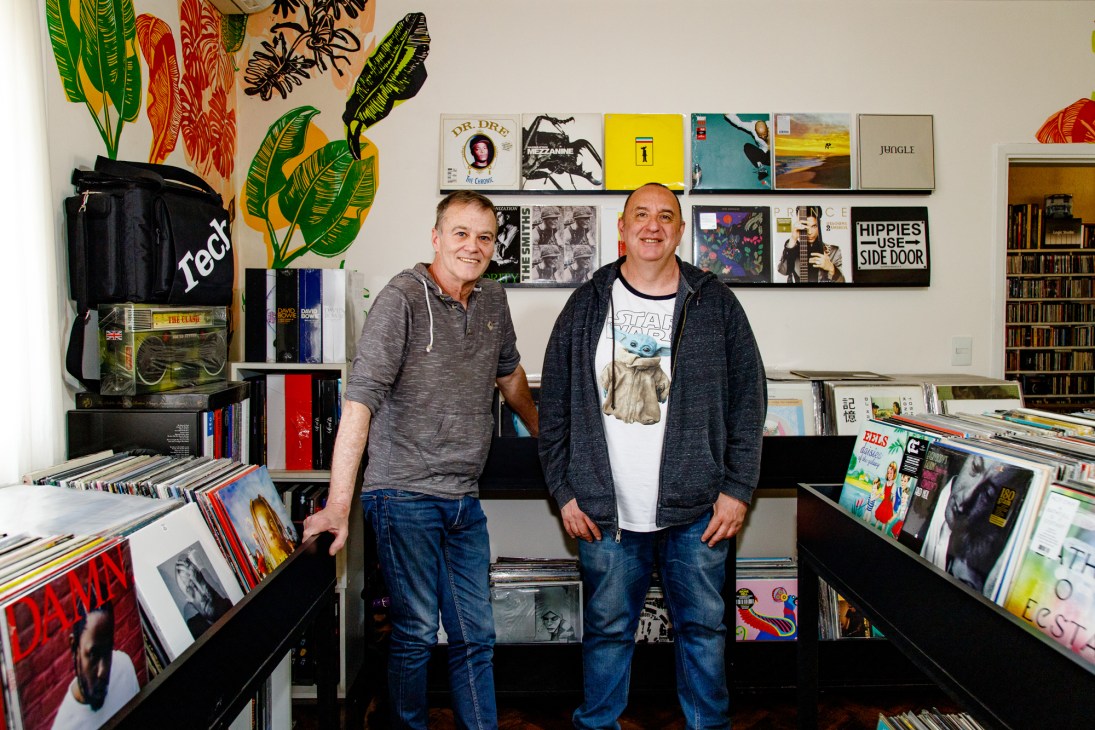

In an inconspicuous building in Buenos Aires’ Villa Crespo neighbourhood, AZ Discos is an appointment-only record shop that houses two of Argentina’s largest vinyl collections. Founders Carlos Alfonsín and Javier Zuker (pictured, Alfonsín on left), two djs, met in 1994, building a career in the city over the decades. The duo have now decided to bring together 15,000 lps under one roof – and sell them to the public. Here you’ll find anything from Argentine singer-songwriter Fito Páez to Prince, Air and Hole. Deciding which albums made the cut was no easy task. “Much of my collection had been in storage for years, so I spent six months listening to almost all of it,” says Alfonsín. AZ Discos also provides a record washing service that spruces up dusty grooves.
Atlas Stationers
Chicago
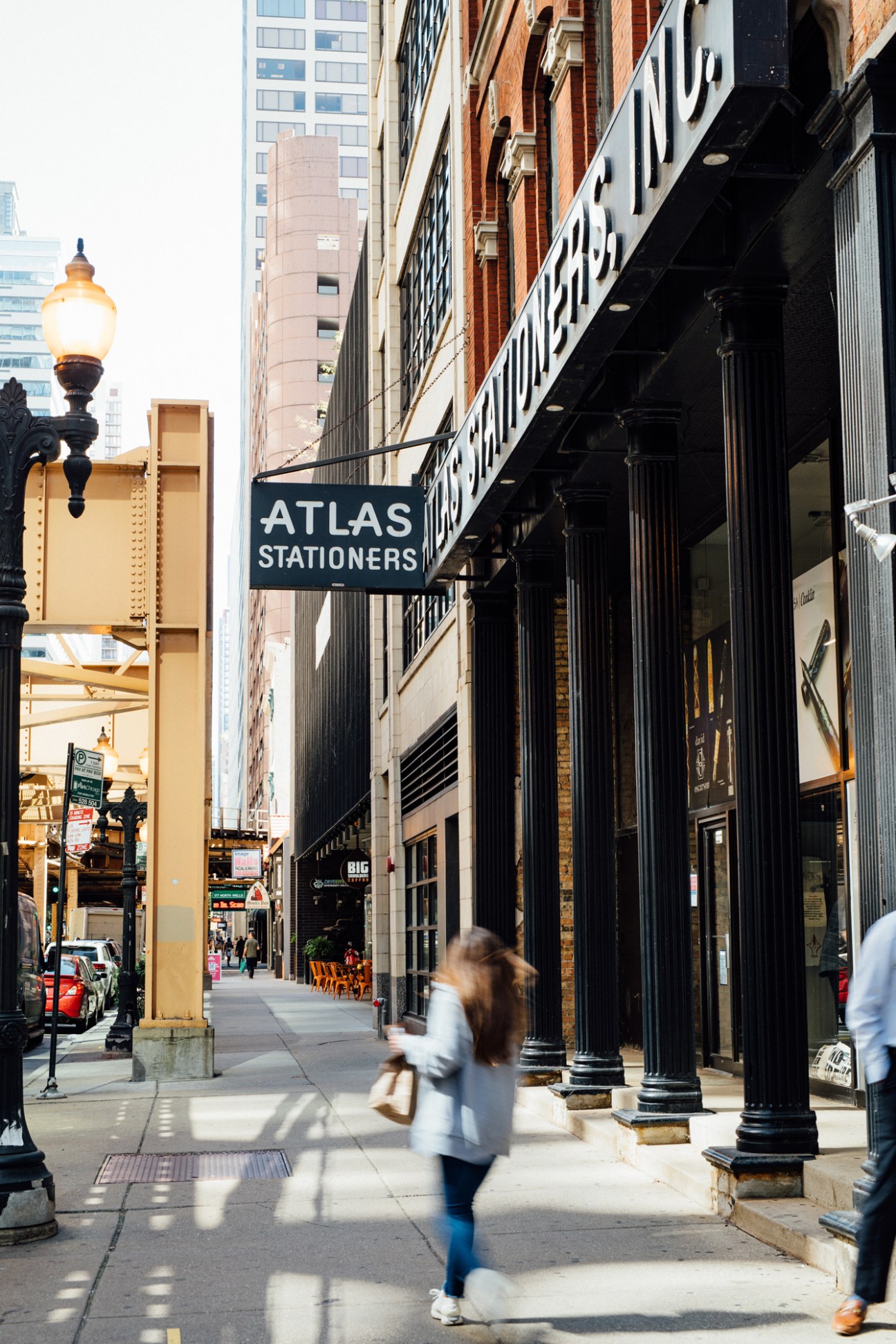
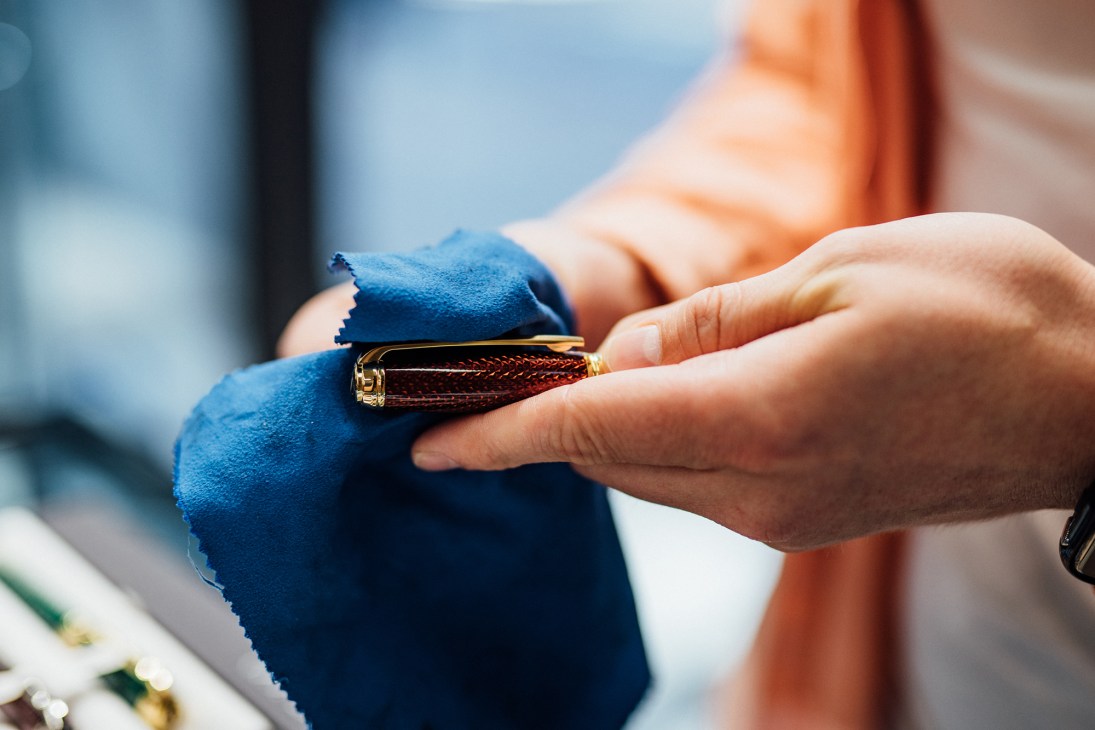
Aloysius Schmidt founded Atlas Stationers in 1939 when seeking a foolproof business to see him out of the Great Depression. “Times are good, you have black ink; times are bad, you have red ink,” says Aloysius’s great-grandson Brian Schmidt, fourth-generation co-owner of the company. Schmidt views his commitment to personalised service as the key to his shop’s success. For instance, after listening to customer suggestions, Atlas pivoted to focus on fountain pens in 2019. He lets customers test any pens in stock, including high-end Pelikan and Visconti models. “Even if you’re not going to buy that next-level pen, trying it is an experience,” he says. “We’ll send you off with a smile on your face.” The approach is working: sales are higher than ever. “We love interacting with people from all over the world.”
atlasstationers.com
Megafauna
São Paulo


Megafauna opened in late 2020 as a space to discuss books as much as to buy them. The team behind the project includes some of the brightest stars in São Paulo’s literary and publishing circles, including Maria Emilia Bender, former director of publishing house Companhia das Letras, and Irene de Hollanda (pictured), erstwhile co-ordinator of Paraty’s international literary festival. A monthly schedule of events includes book launches and debates with authors and critics, some of which will be hosted from 2022 in the vast upstairs art gallery, Pivô. Megafauna’s floor-to-ceiling shelves stock titles from about 150 publishers, covering literature, humanities, arts and science. The modular space is tucked into one end of the Copan building, a curved architectural behemoth by the late Oscar Niemeyer. A glass façade floods the space with natural light and invites passers- by to come in. Most enjoy their new read over a cup of coffee and a bite to eat at the shop’s Cuia Café e Restaurante, run by talented chef Bel Coelho.
livrariamegafauna.com.br
Images: Go to Sheep, Amirhossein Shojaei, Manuel Moutier
Revving the engine
Some of the world’s best emerging art scenes can be found in struggling cities; low rents and loose regulations attract creatives who don’t have money to spare. But not all cities manage to move beyond that scrappy stage and create a solid art market. When Detroit filed for bankruptcy in 2013 after decades of mismanagement, corruption and racial segregation, what was once one of the richest cities in the US became a case study for post- industrial decline. But the city’s fortunes are changing – and its cultural scene is a central part of the comeback.
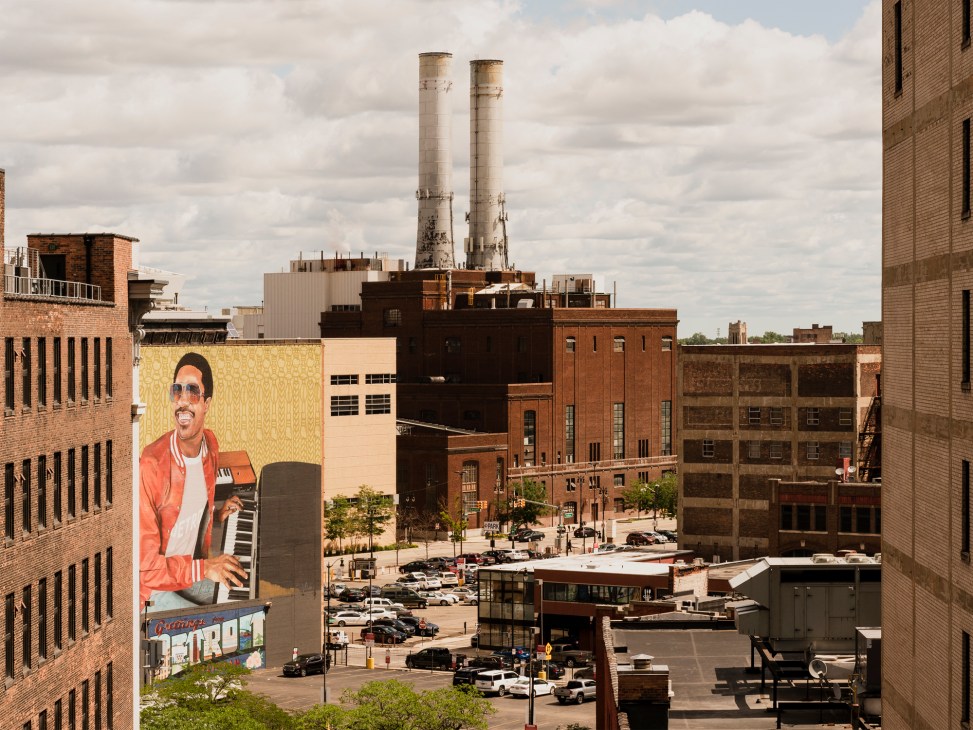

“Detroit has felt so undervalued,” says Bridget Finn, partner and managing director of contemporary gallery Reyes Finn. The gallery, in an old bank building in Corktown, exhibits local and international artists. When Finn moved to New York 16 years ago, the appetite for art in Detroit was different. “There weren’t a lot of jobs in the art world,” she says. She subsequently took up a post as director of contemporary art at renowned gallery Mitchell-Innes & Nash in Manhattan.
Meanwhile, the scene grew and the collector base expanded. After years in New York, Finn felt motivated to move home and do her job in a city that she loved. “I wanted to see what was possible,” she says. Taking that risk has paid off. “Whenever we arrive at an art fair, people are so genuinely curious about what’s happening in Detroit.”
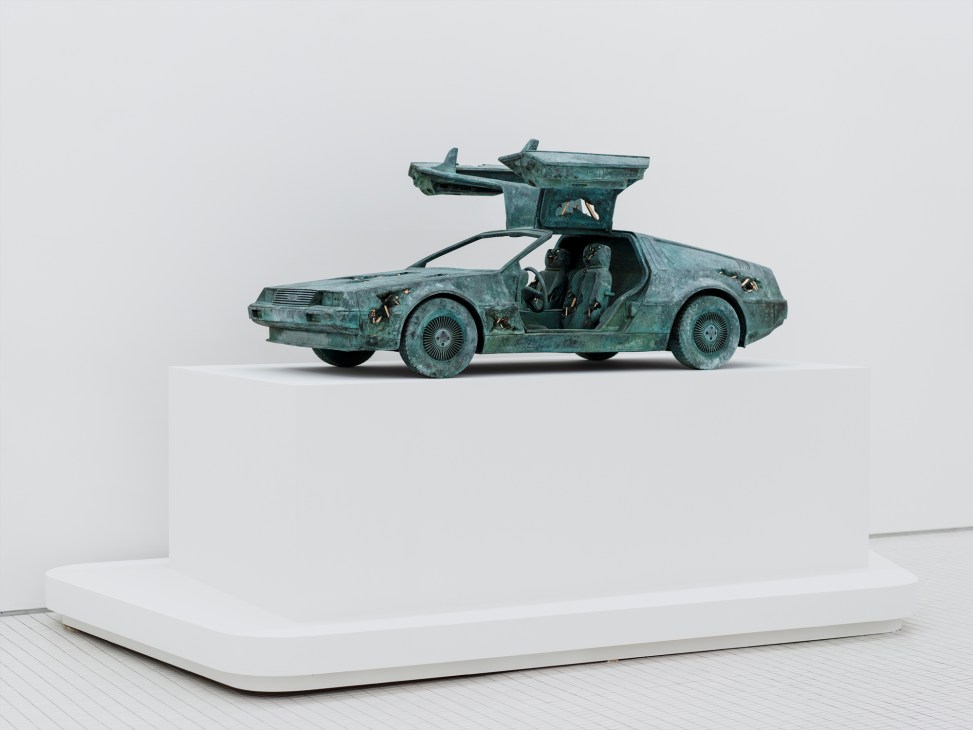
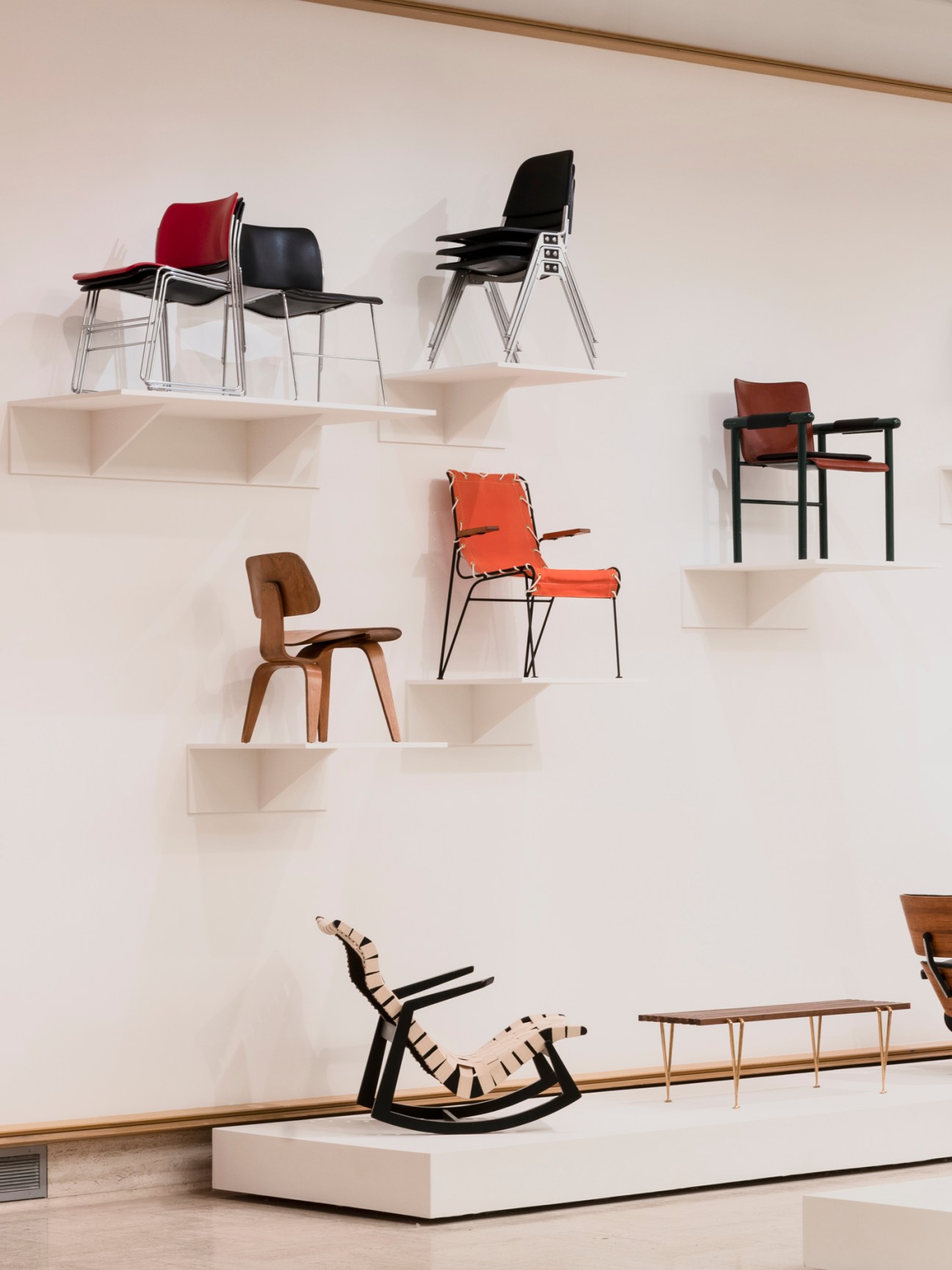
She wasn’t the only one to embrace the city’s potential: M Contemporary Art gallery opened in the Ferndale neighbourhood to represent Detroit-based artists, while David Klein Gallery took over a building on the central Washington Boulevard to make space for larger, ambitious commissions. Library Street Collective also set up shop a few blocks away in a transformed corner of Downtown.
What all these spaces share is an interest in growing a self-sustaining scene that makes championing local voices commercially viable, which increasingly means giving more room to black creatives. Despite being home to venerable institutions such as the Detroit Institute of Arts and the Museum of Contemporary Art, Detroit has historically given little space to the black community in its traditional venues, which is remarkable, considering the city’s population is 78 per cent black.
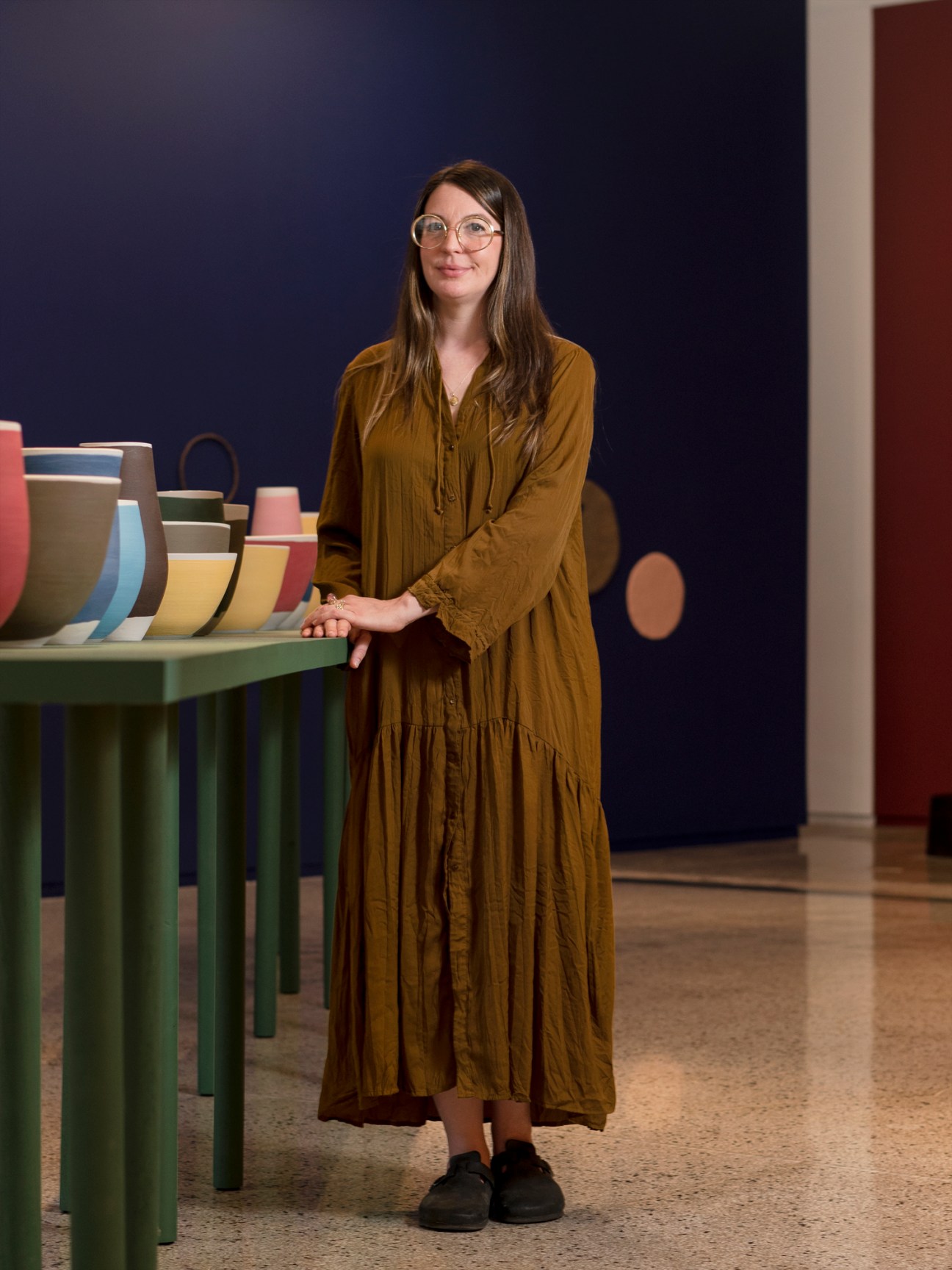

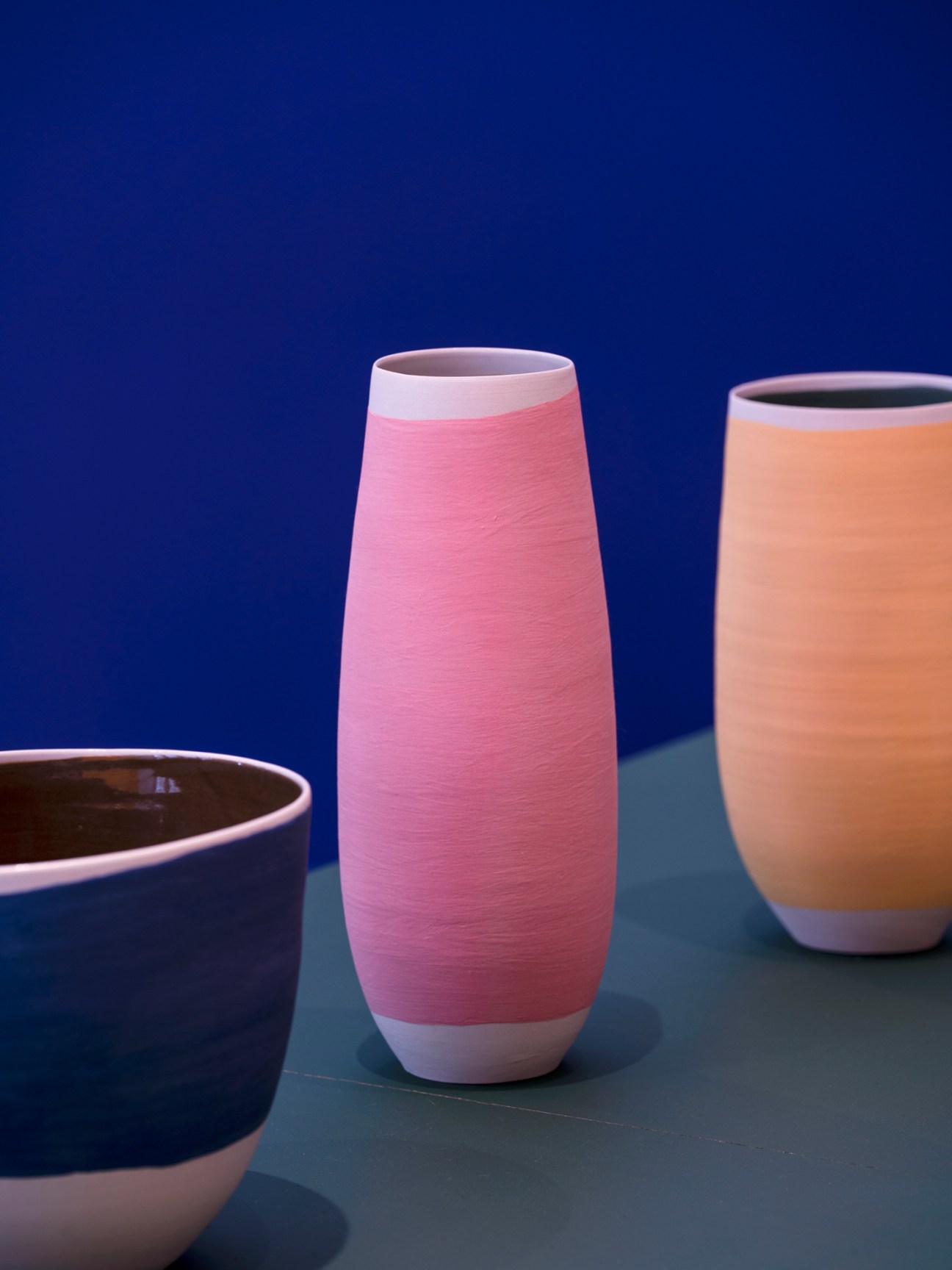
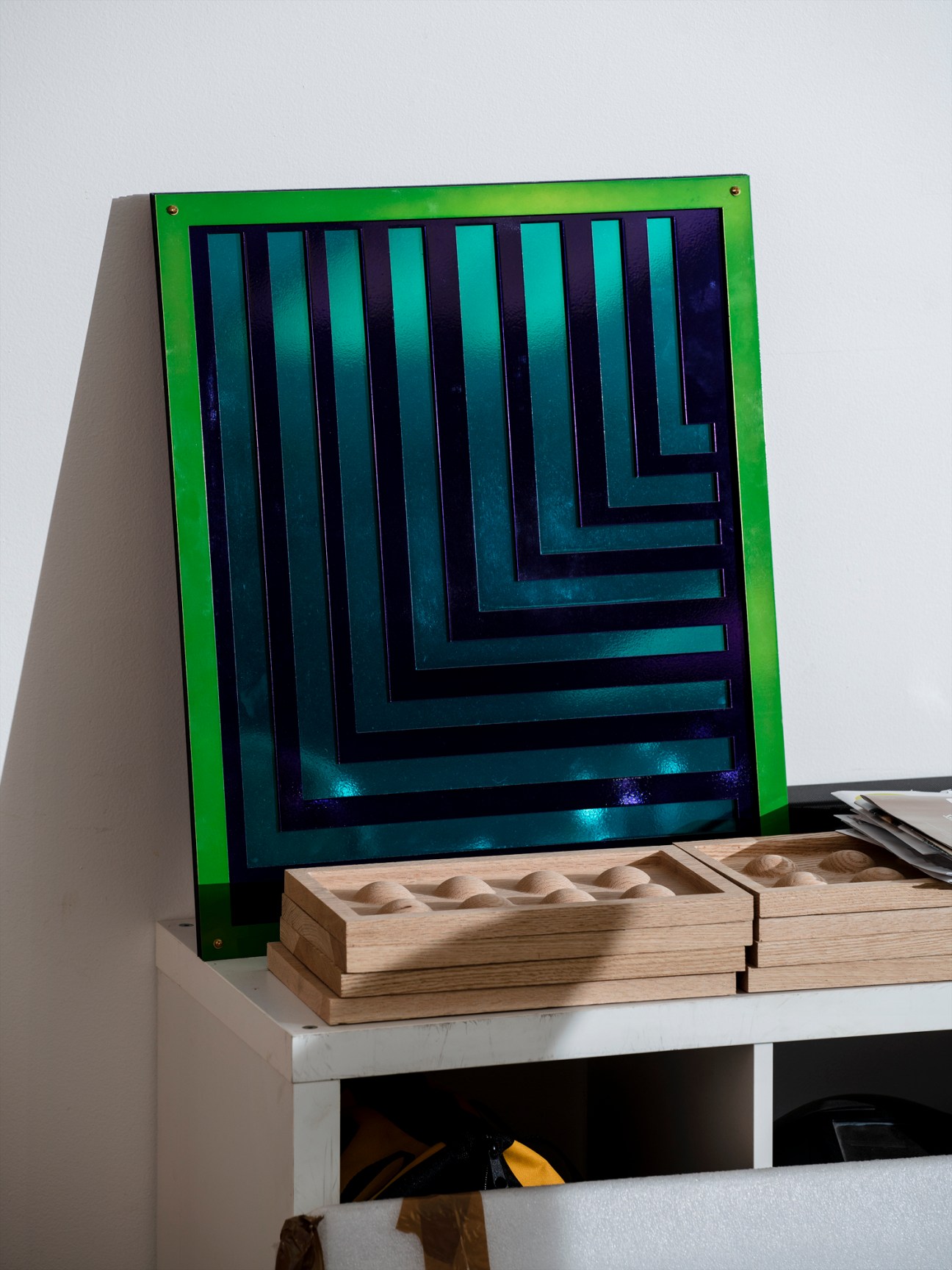
That’s why initiatives such as Bulk Space are important: this collective – housed inside a large, barn-like building – provides marginalised artists with residencies and exhibition spaces, as well as tools to expand their skills. “These include applying for grants, doing budgets – all those things artists have to learn on a whim,” says executive director Jes Allie. Only through a platform that provides such resources, from financial support to business workshops, can many creatives forge feasible careers.
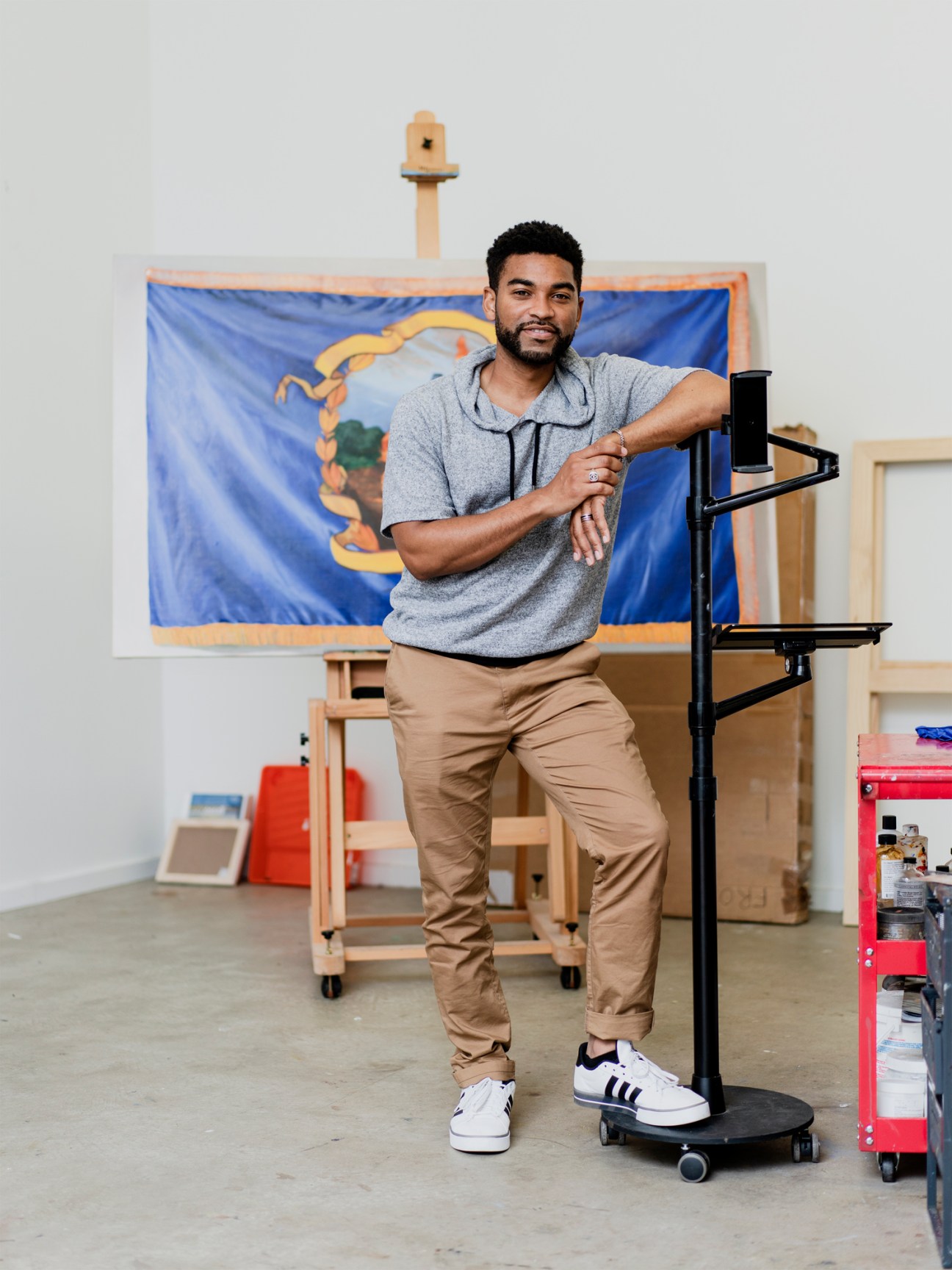
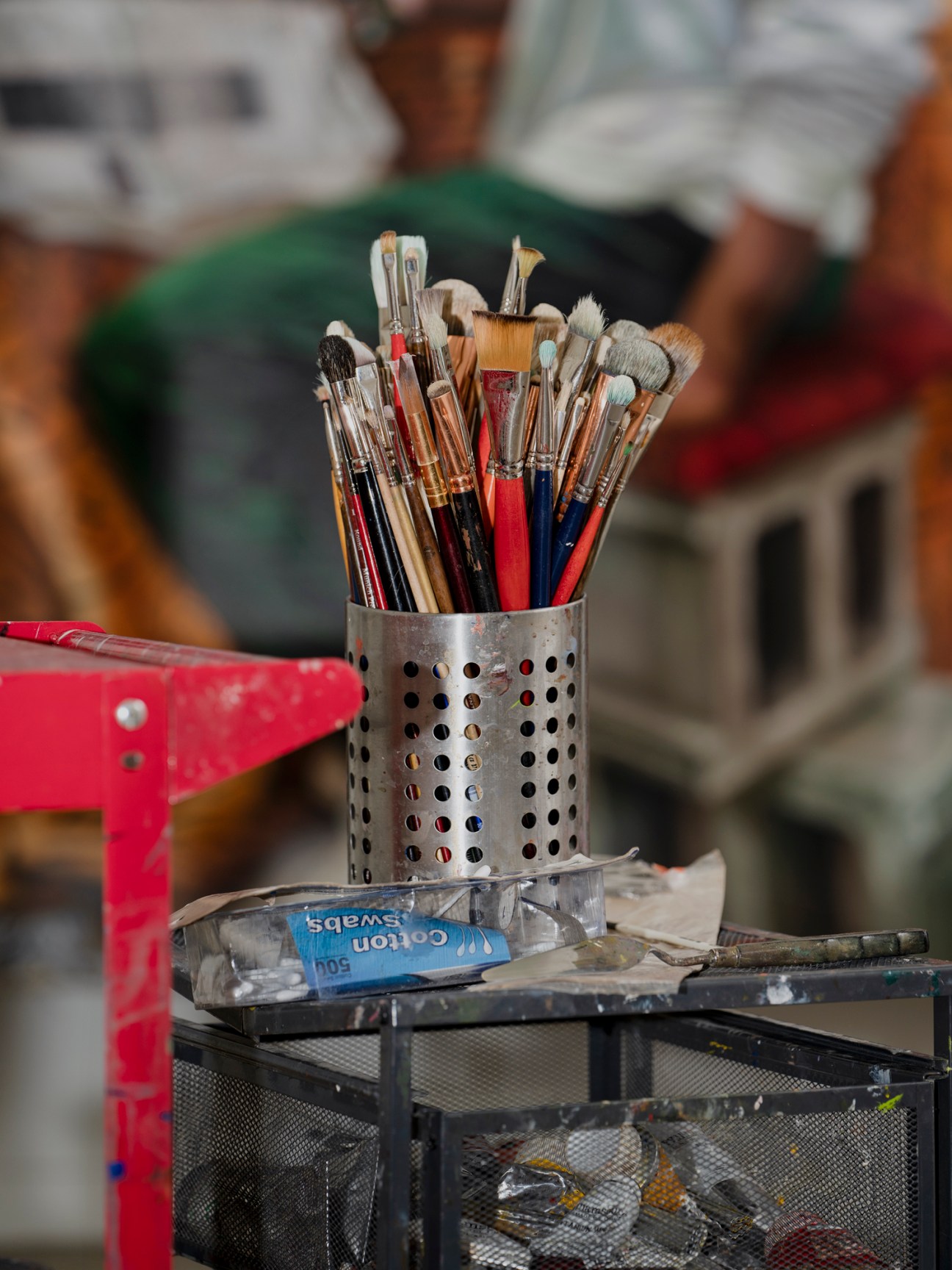
Established artists are also putting in the effort to lift up the scene around them. “The art world in Detroit is really supportive,” says Mario Moore, a painter known for his portraits. After studying at Yale, he left New York to make his way back to his native Detroit, in part so he could have more space. “This is my first studio with a kitchen in it,” he says, walking around his roomy workshop in Core City. Not only is rent in Detroit affordable but artists like Moore, whose mother is also an artist here, are keen to become part of the city’s new narrative. His ambition to open an art support space for people who might not otherwise have access to the creative industry was a big influence on his decision to return. “I know so many talented artists in Detroit,” he says. “They didn’t go to Cranbrook or Columbia or Yale. But they need to be seen and heard.”
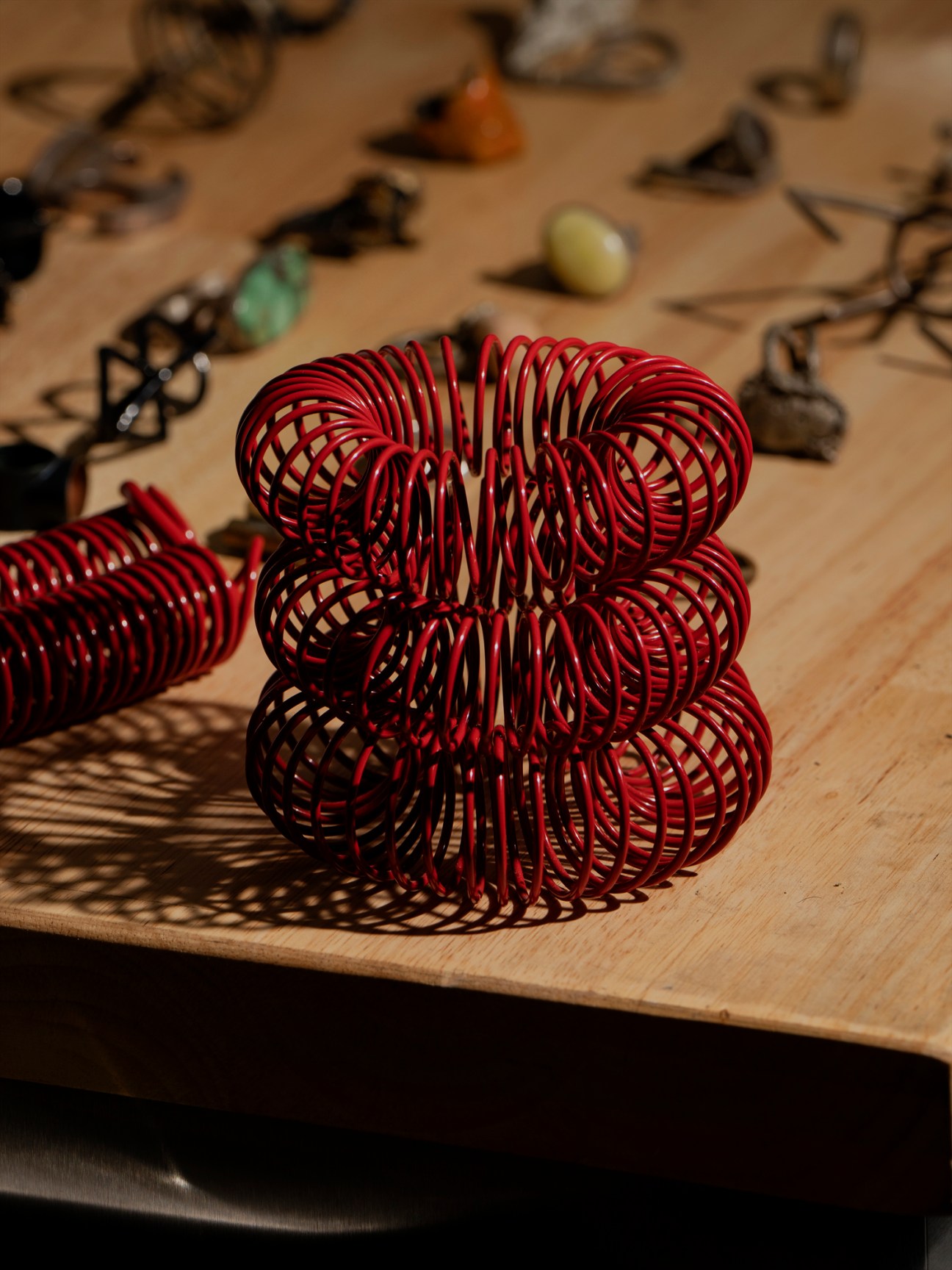
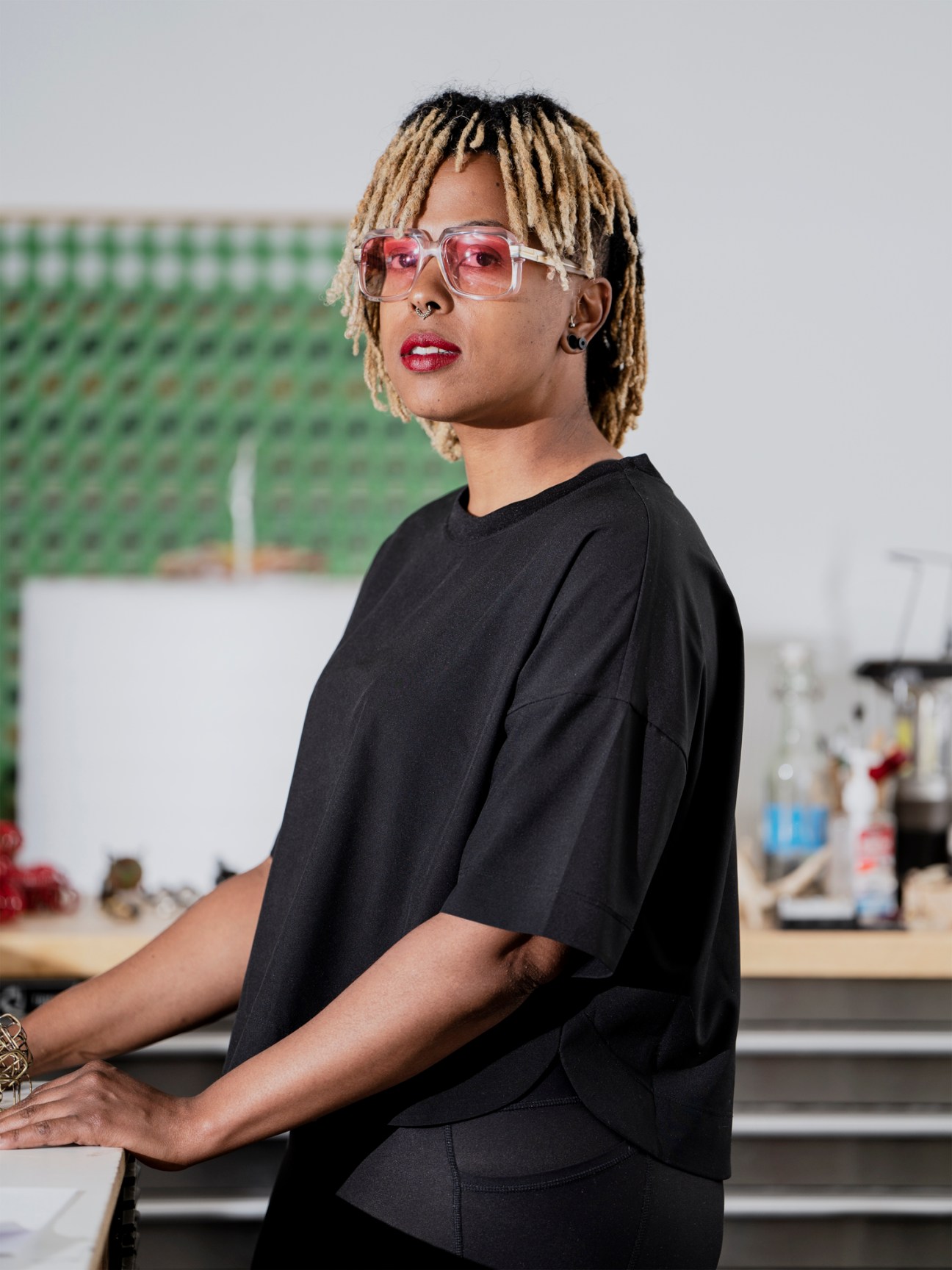
This sense of personal responsibility in contributing to everybody’s success is fundamental for many who are based here. Tiff Massey, an interdisciplinary artist who graduated from Cranbrook and has exhibited her work globally, has turned her attention to developing properties in places where she intends to host artist residencies in the future.
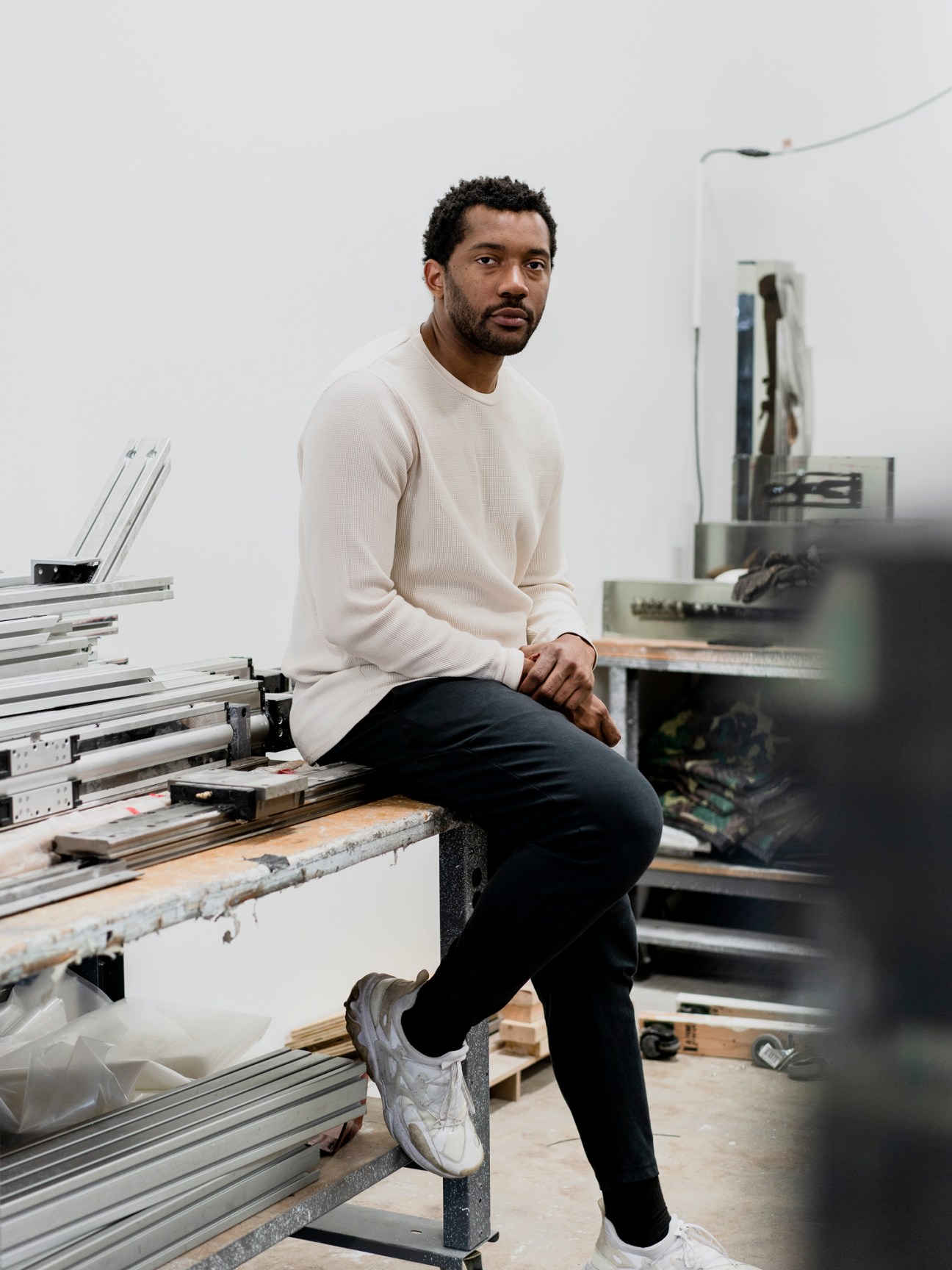
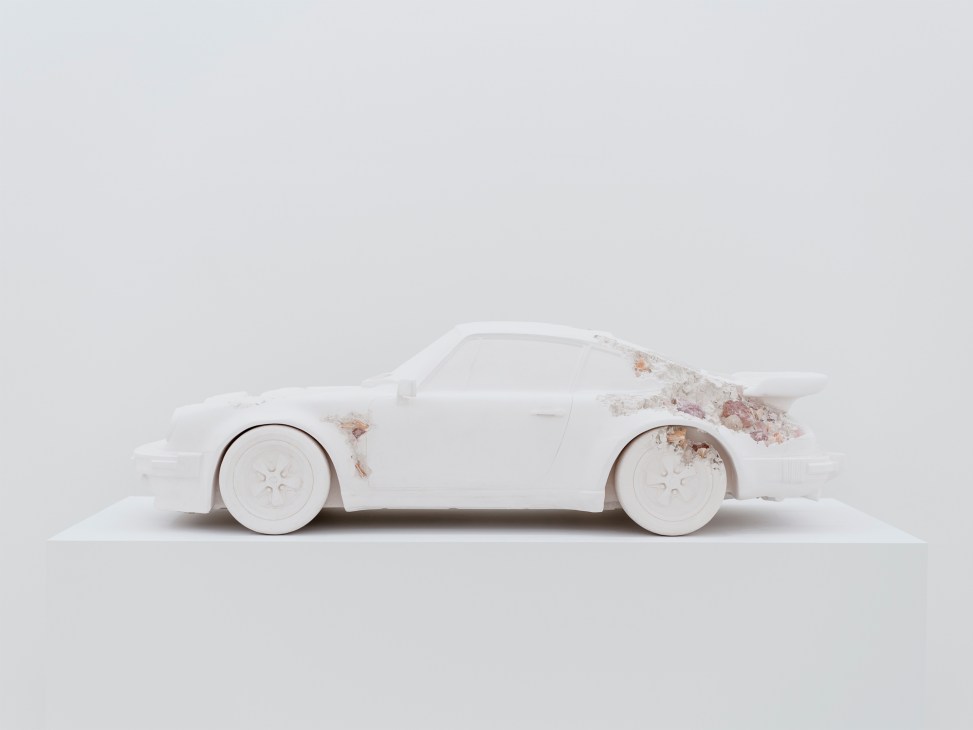
“It’s about making sure that people who look like me have access to mentorship,” she says, as she guides Monocle through the building she recently bought – an old clinic on the outskirts of Downtown. “If you’re not seeing anybody who looks like you doing these things, you don’t know that it’s accessible.” Similarly, acclaimed artist Matthew Angelo Harrison, who previously worked in the prototyping department at the city’s Ford factory and today uses 3D printing, resin and robotics for his pieces, wants to create more space for younger artists. “What you do with your platform is really important,” he says from his factory-like studio.
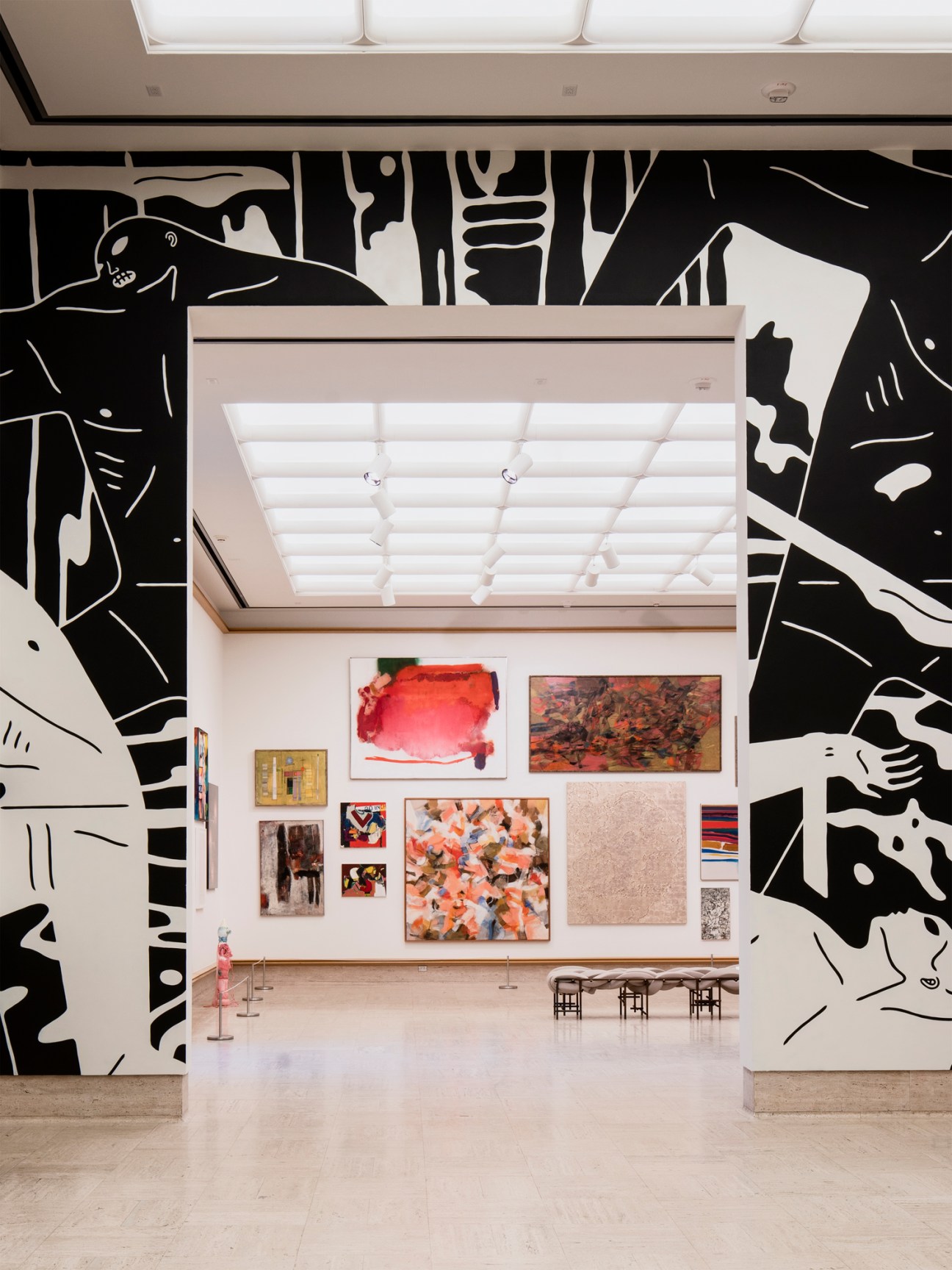
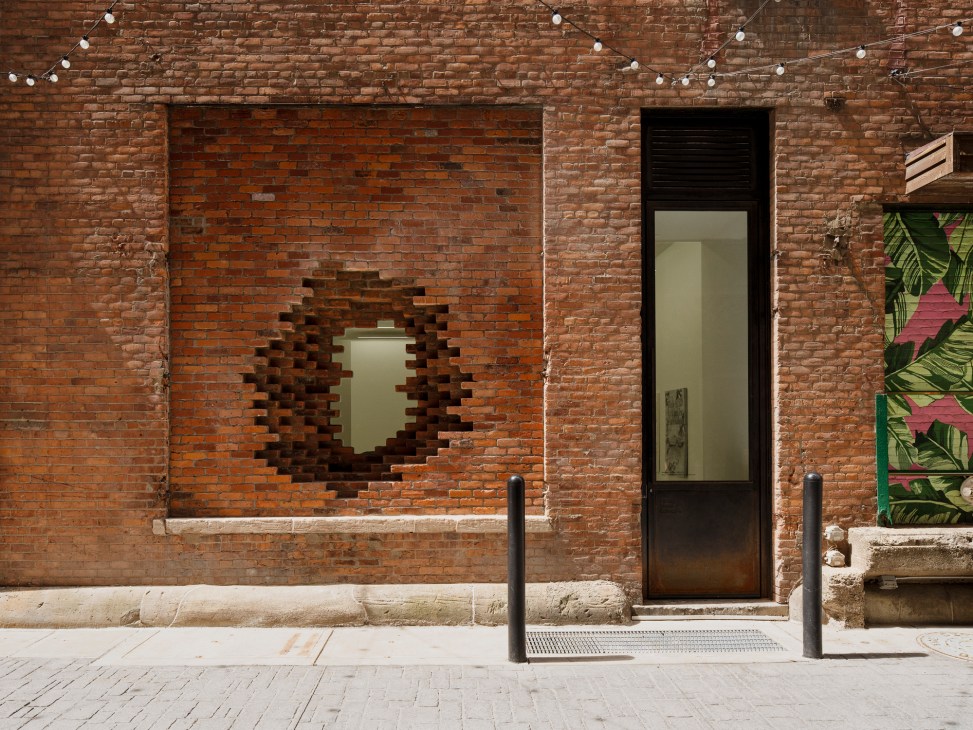
However, what’s perhaps going to give Detroit’s art scene its biggest boost is the commercial interest drummed up by a sizeable art event, such as the new Art Mile. Specifically intended to highlight Detroit-based artists, the show was launched during the pandemic, when travel wasn’t possible. “We wanted to do something that was a cultural, city-wide event platform but that could live on the internet too,” says gallerist Finn, who is also co-founder of Art Mile. “If I have a client in New York, they might see something from a gallery they’ve never come across before.”
The event, which gathered about 80 exhibitors in its maiden online edition, will evolve into an in-person occasion that will encourage people to visit shows taking place across the city. It has already been successful in drawing a broader audience to Detroit’s galleries; Finn has seen a noticeable uptick in younger collectors. “Since the pandemic, I have met a number of people who have moved here,” says Finn. “Being able to direct these people to find artworks, or support an artist or art space, is an easy thing to do.”
Could this spirit of camaraderie be the secret to Detroit’s newfound cultural success? Up-and-coming art scenes should take note: playing nice with your neighbours really does pay off.
Crest of a wave
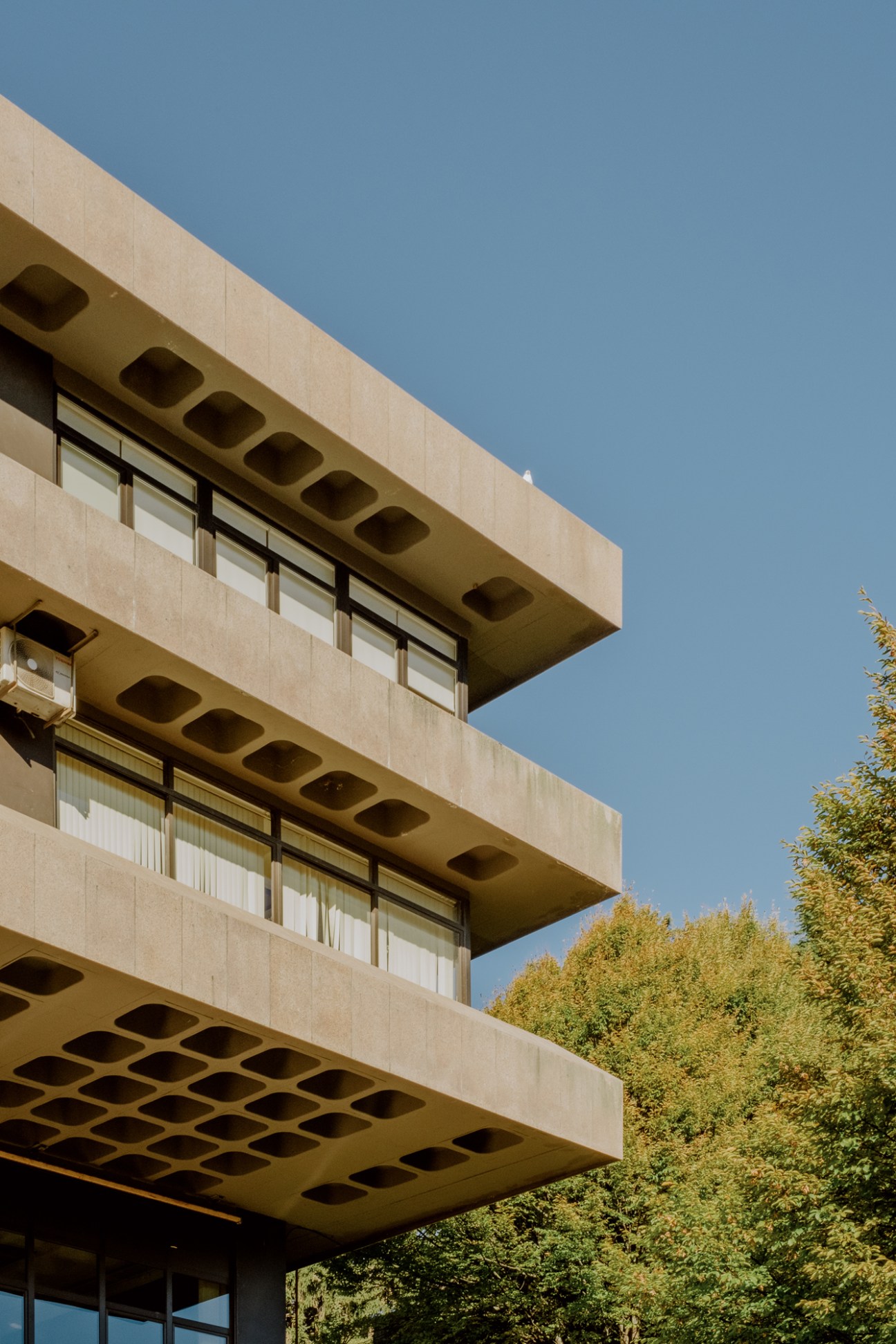
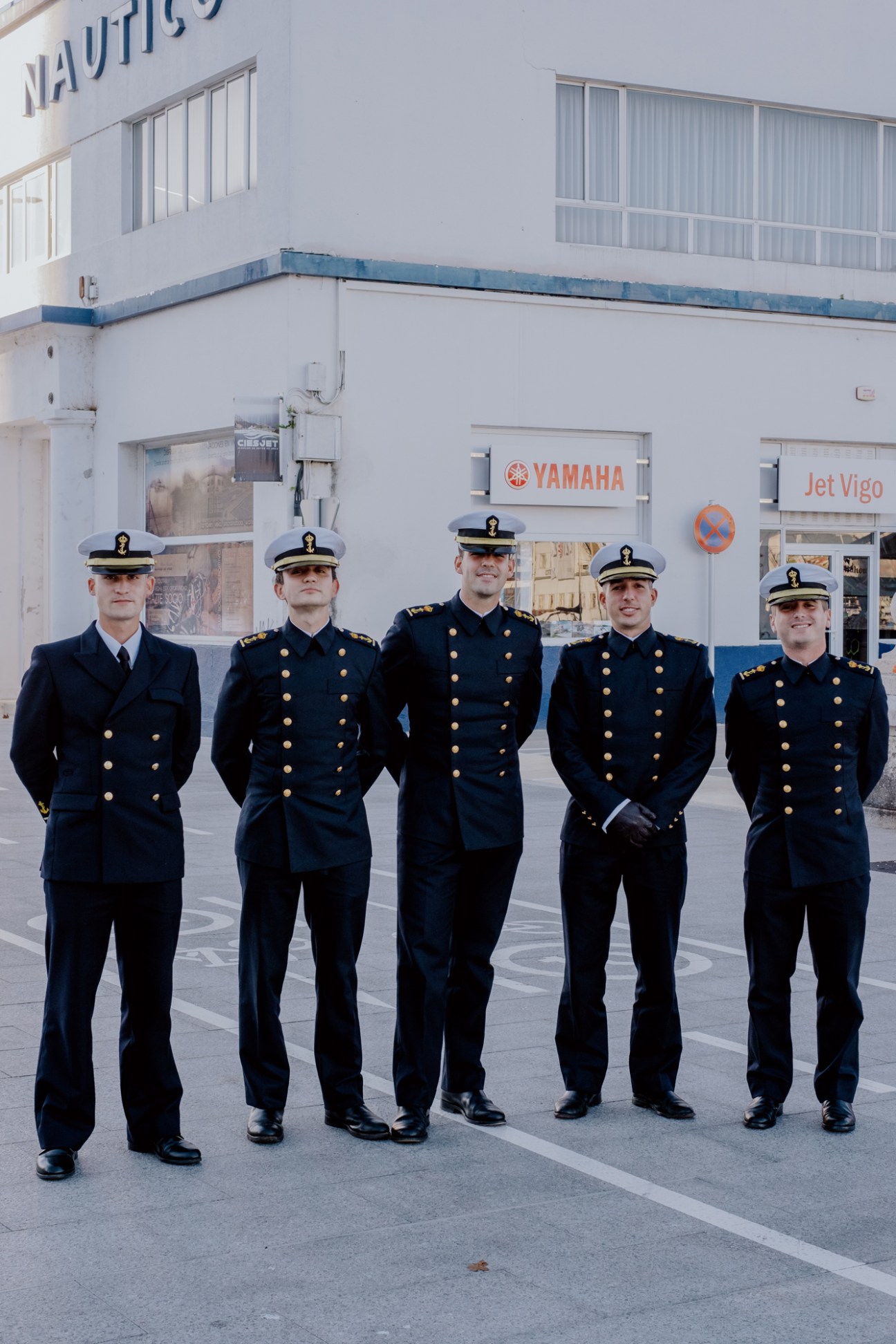
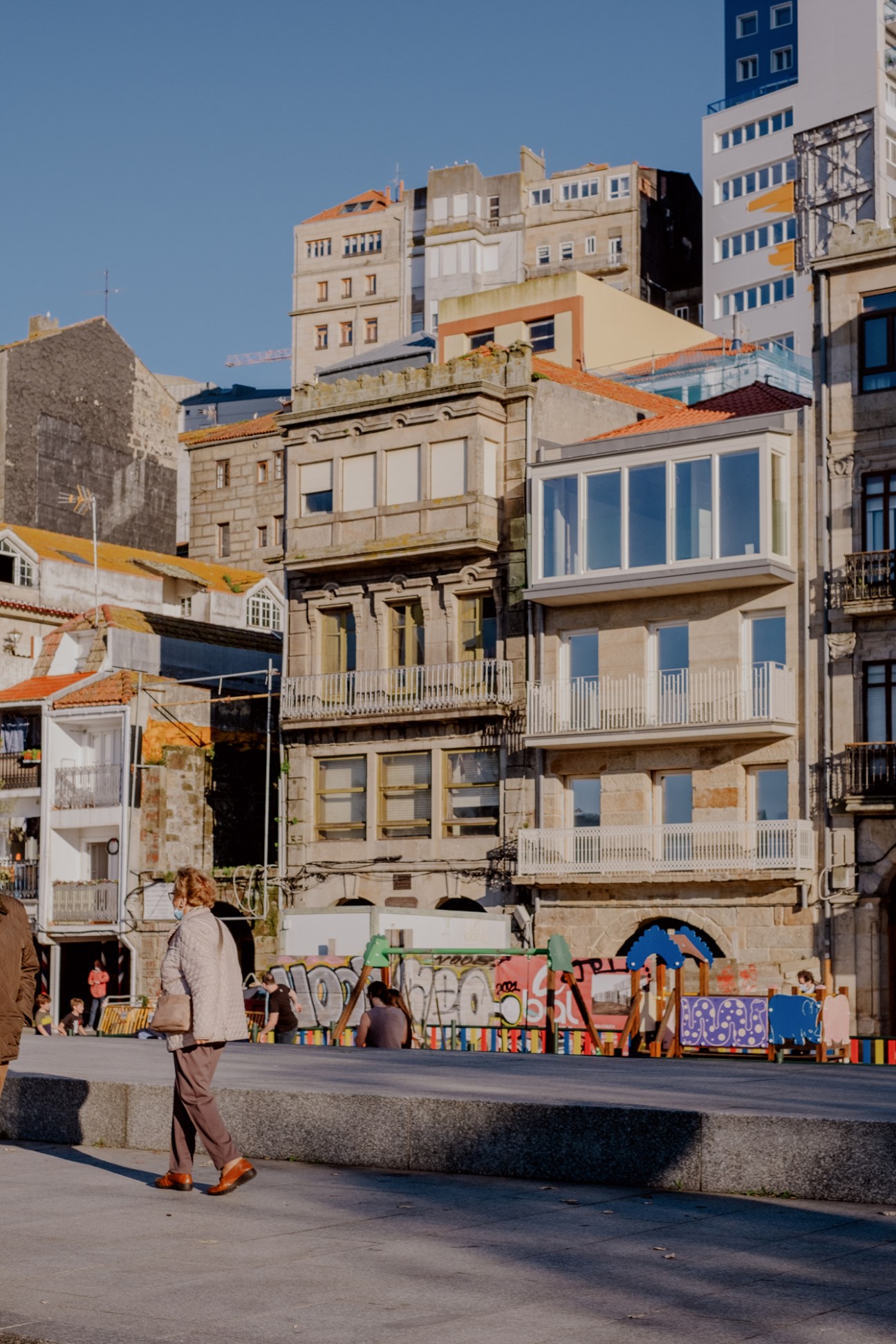
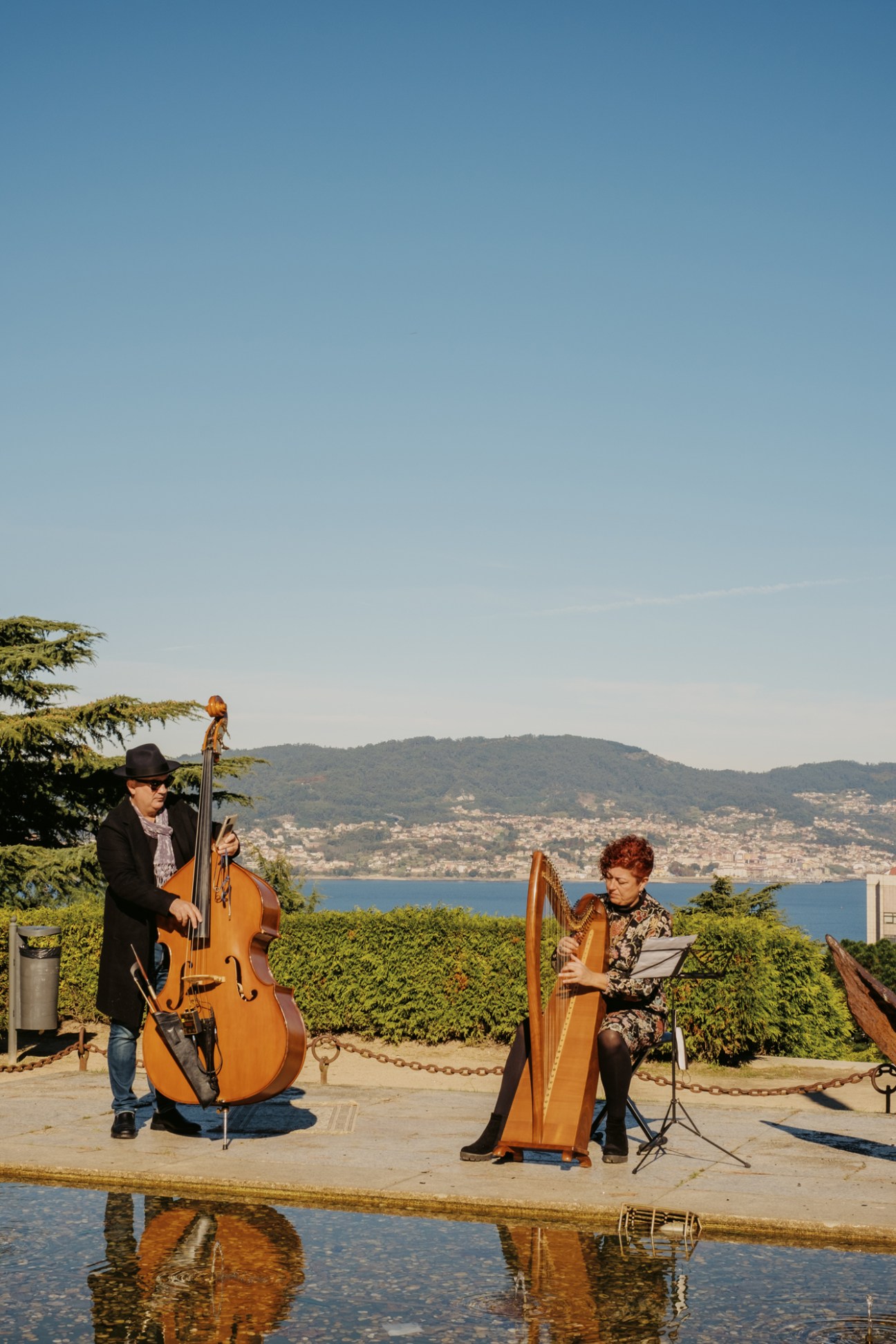
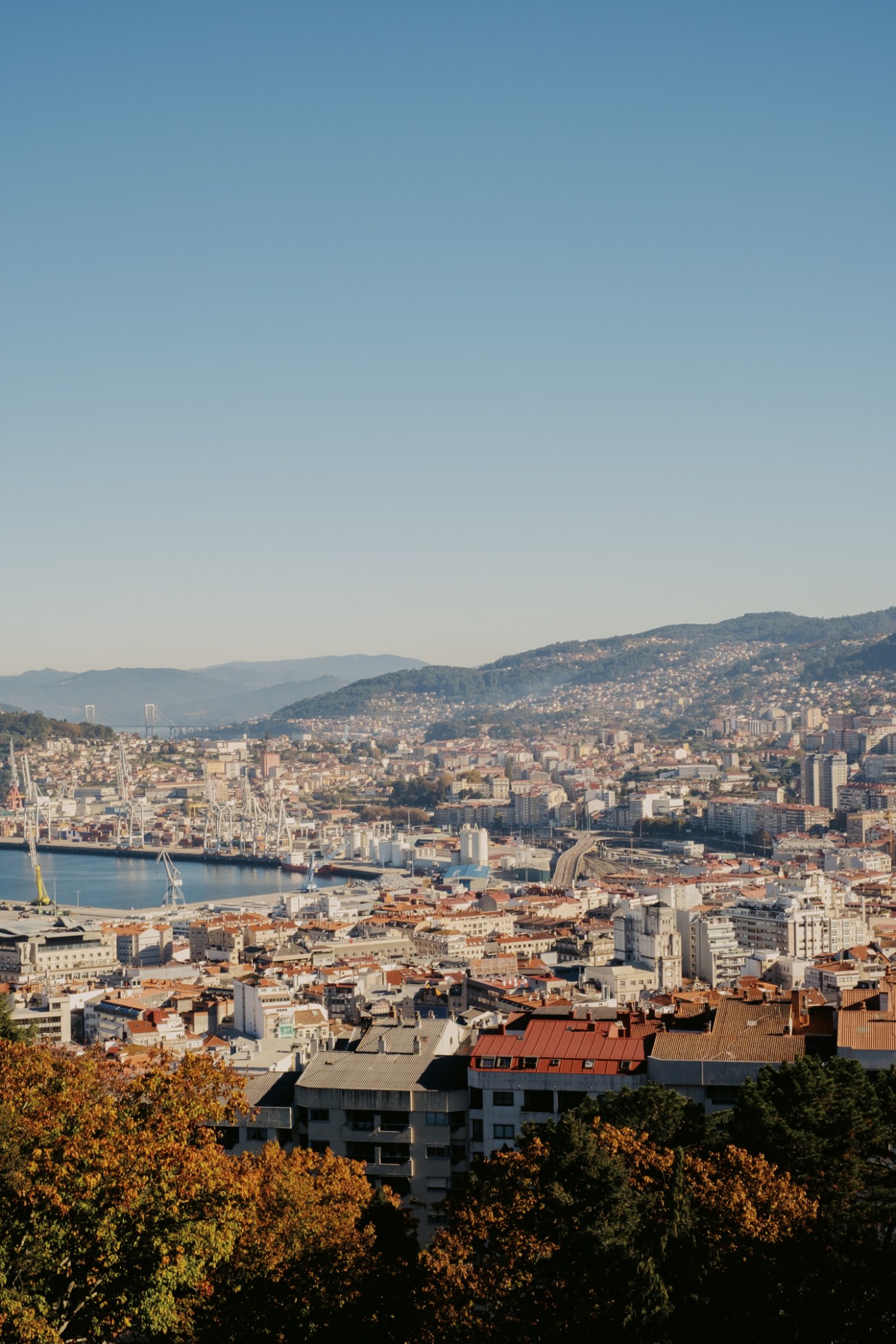
One of the most popular ways to arrive into Vigo is via a railway link that runs across its estuary. Sheltered by the Cíes islands in the northwest of the Iberian peninsula, Galicia’s biggest city – home to nearly 300,000 inhabitants – has always been shaped by its strong connection to the water. Vigo’s international harbour and commercial port have turned the city into a world-class trading point, housing the planet’s largest fishing port and the EU’s European Fisheries Control Agency. “The port has always been the city’s greatest asset and economic booster,” says journalist Marián Fernández. Vigo’s economy, however, is no longer solely reliant on the port’s activities and Fernández is just one of the many entrepreneurs who have opened businesses in the city over the past decade.
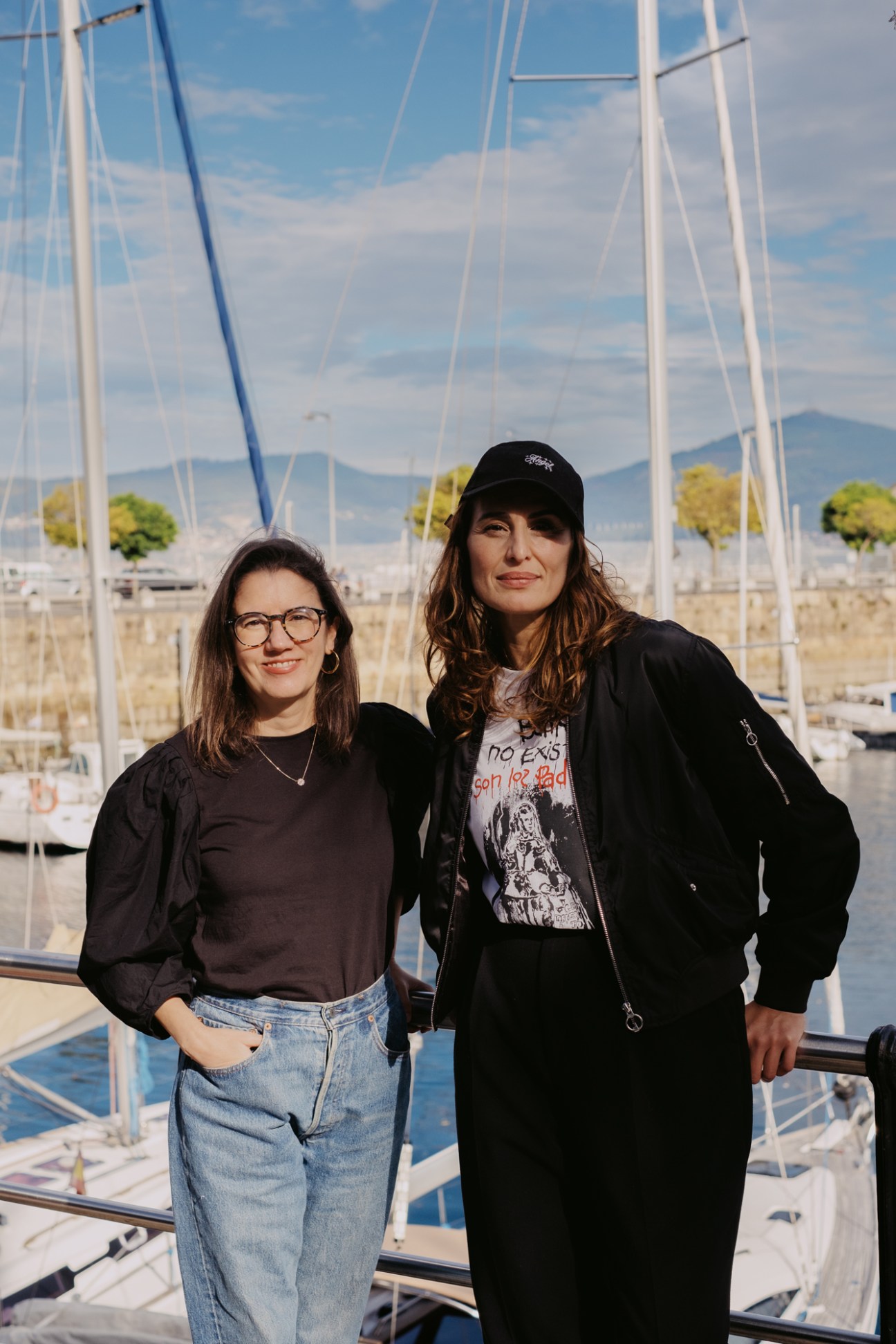
Together with two partners, Fernández launched the O Cable Inglés co-operative to showcase how culture can be a profitable avenue for business. “We found a gap in the market because there wasn’t a company in Vigo that was able to deliver a 360-degree approach to a cultural project,” she says. The co-op’s work is varied and since its founding in 2012 it has been behind projects that include Galicia’s music awards and Pont-up Store, a fair promoting entrepreneurship. “Vigo has always been a great metropolis that has huge relevance for world trade,” says Fernández, who goes on to explain the origins of the company’s name. “It comes from the Eastern Telegraph Company, which established itself here in the late 1800s to lay the first underwater communications cable connecting Europe with the rest of the world. Telegrams would arrive in Vigo first and then they would be distributed to their destination.”
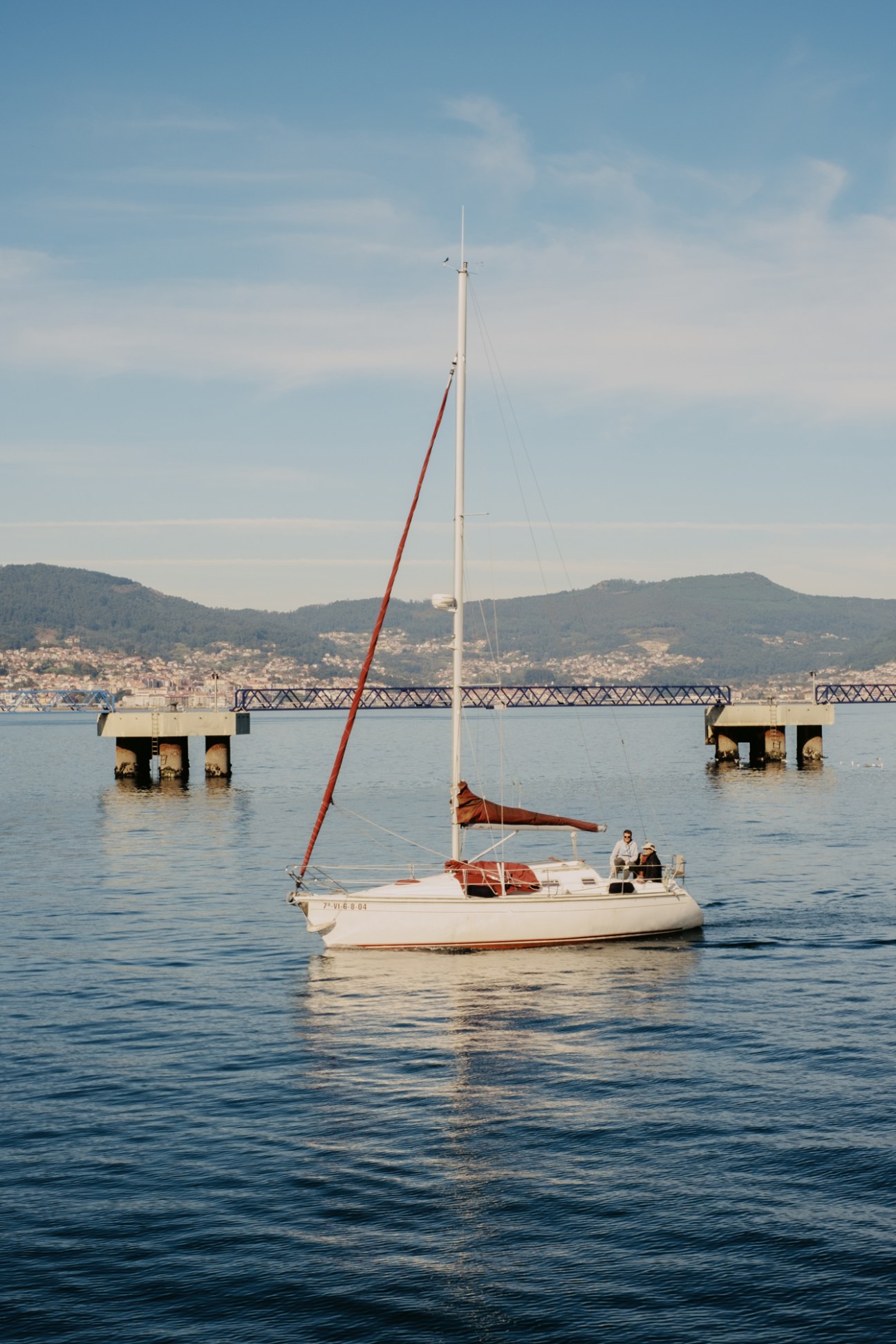
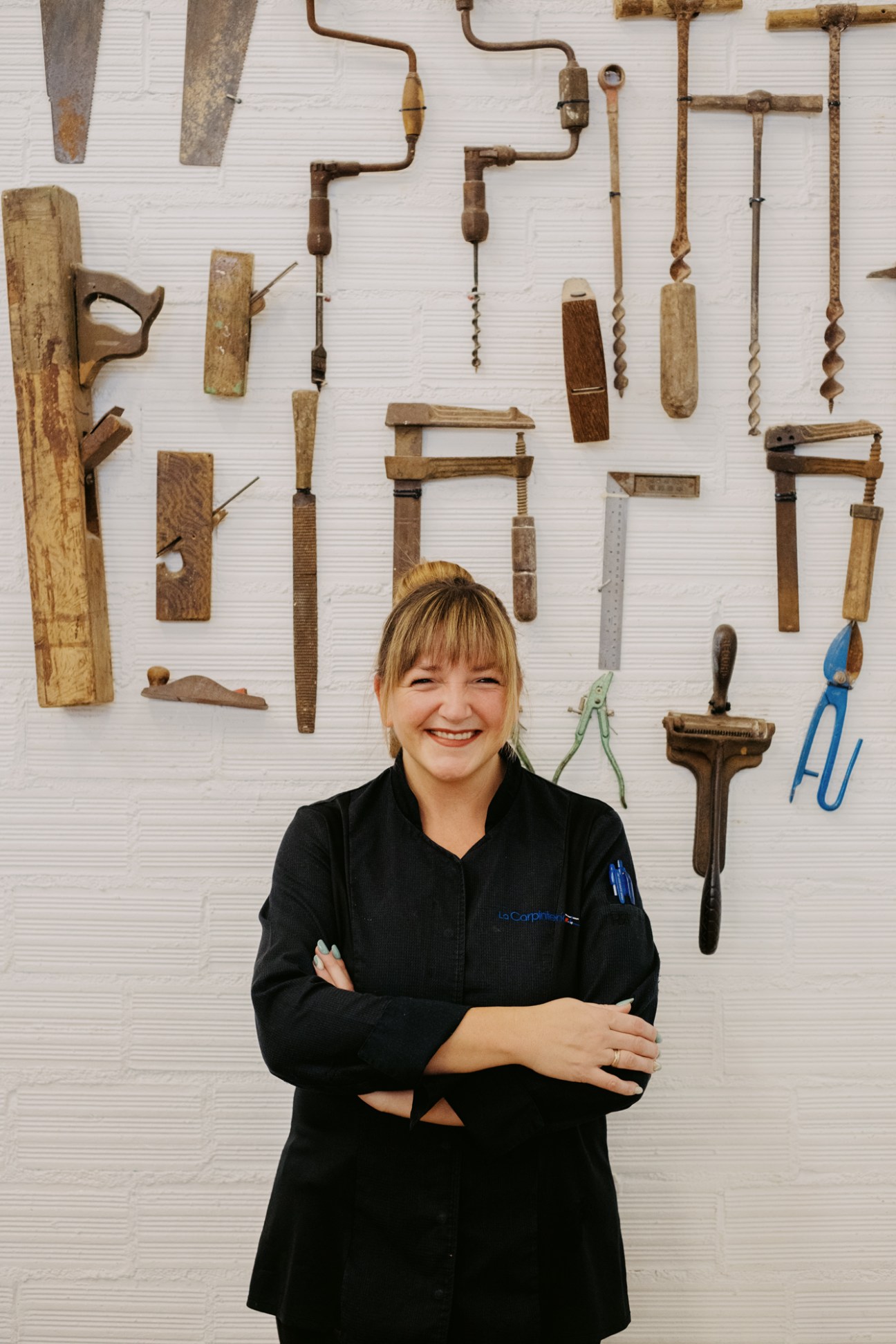
This international outlook was a calling card for husband-and-wife duo Rafael Pérez and Elena Garmendia. Originally from Bilbao, the chef and pastry chef set their sights on opening their own restaurant, La Carpintería. “We wanted to have more creative freedom,” says Garmendia. The couple were drawn to Bouzas in the west of the city, a historic quarter that has traditionally been home to fishermen and workshops. “Our restaurant is in an old carpenter’s shop that was used to build and repair boats,” says Garmendia. “So there’s always a strong connection to the water.” Their menu uses the sea as its source, serving oven-baked hake, monkfish rice, grilled squid from the Ría de Vigo estuary and even a take on tiradito, the Peruvian raw-fish staple.
Today, Bouzas is no longer off the beaten track but a destination; the opening of La Carpintería in 2014 played a big part in the neighbourhood’s recent urban renewal. For Garmendia, there’s no doubt that setting up in the city was the right decision. “The quality of life in Vigo is excellent,” she says. “And the restaurant scene has grown, which is very important for us. The more quality places around us the better; everyone wins if we enhance Vigo’s offering.”




Insider knowledge
1. Who lives here?
Entrepreneurs, families and remote workers hoping to take advantage of the sunshine.
2. What businesses are booming?
Technology is having a big moment in the city and urban lighting company setga continues to represent Brand Galicia abroad.
3. Where could I find the proverbial gap?
Vigo’s tourism sector still hasn’t reached its full potential.
4. How welcoming is the city to entrepreneurs?
Very. City hall has programmes dedicated to entrepreneurs, as do many private institutions.
5. Will my quality of life improve?
Sandy beaches are a 15-minute bike ride away and the whole city faces the water. Urban bliss.
6. And what about the cost of living?
The average rent is €609 per month. Lunch (which includes a main, a drink and a coffee) costs about €13 and every bus journey is €1.34.
7. What’s the average salary?
€27,477.
8. Can I escape the city at weekends?
Drive south for 30 minutes, crossing the bridge over the river Miño to reach the border with Portugal. Or head north for an hour to visit Santiago de Compostela, which has an international airport.
9. What about a fun night out to finish the week?
If the dance floor is calling you, head to Beiramar. Many of the city’s nightclubs skirt the bay.
10. Tell me honestly: should I move here?
If you like the idea of getting to Vigo before the rest of the world discovers its true potential, now is your moment.
While business is vital to improving an area, it’s testament to a place’s community spirit when a customer decides to take over a heritage establishment. That’s what happened with Confitería El Buen Gusto, a bakery that first started selling cakes and sweet delicacies from Uruguay, the home of its founders, in 1914. Last year a rare opportunity arose when the space came up for grabs. “It was actually my father who came up with the idea of us taking over,” says manager Luigi Dutto Acuña. “He was a regular customer and one day saw the sign saying that it was available.” The young entrepreneur has always believed in the project, despite opening in May 2020, at the height of the pandemic. “It was actually good to have the lockdown; it meant that we could take things slowly and ensure that everything looked great before welcoming customers.”
Acuña co-owns the space with his father and is responsible for the daily handling of the business – a role he has grown into seamlessly. “This is a good place to be an entrepreneur,” he says. “It has everything and is in a good moment of expansion. Vigo will be a city to watch over the next few years.”
Yet it’s not only in the urban core that new entrepreneurs are thriving; the entire metropolitan region of Vigo has become a hub for new ideas and business ventures, thanks in part to the many conferences, international trade fairs and business-accelerator programmes that are being promoted by local government and institutions. According to the region’s chamber of commerce, more than 18,000 new companies have been registered since January 2020.
Vigo is a city with a strategic position on the edge of the Atlantic coast. The border with neighbouring Portugal is only a 30-minute drive away and nearby Santiago de Compostela provides the crucial link with an international airport. “This is a privileged location; we have connections to the whole world and people are starting to learn how to capitalise on that,” says Ramón Suárez, the founder and CEO of iVigo, a cross between a co-working space and business school founded a couple of years ago. “There are too many co-working spaces; it was important to have somewhere where vital skills can be taught, from technology and IT to business planning.”
In the beginning, most of the people at iVigo were from the city but today it welcomes digital nomads from around the world. “It’s an interesting phenomenon; it seems as though the world has discovered Vigo,” says Suárez. “We have entrepreneurs as well as employees from big corporations based in San Francisco, New York, London or Paris.” As the project grows, so has its vision and iVigo is now working on international expansion. “We’re already in talks to open a space in Latin America to capitalise on our shared culture.”
Despite the many entrepreneurs in the city, Vigo will need foreign investment and international business opportunities to take it to the next level. Its big hope lies in a new high-speed railway that’s set to be completed in 2022, which will reduce the time it takes to reach Madrid by 39 minutes. The new station opened to the public in September and includes a shopping mall and two new public plazas, fostering that connection with the city itself.
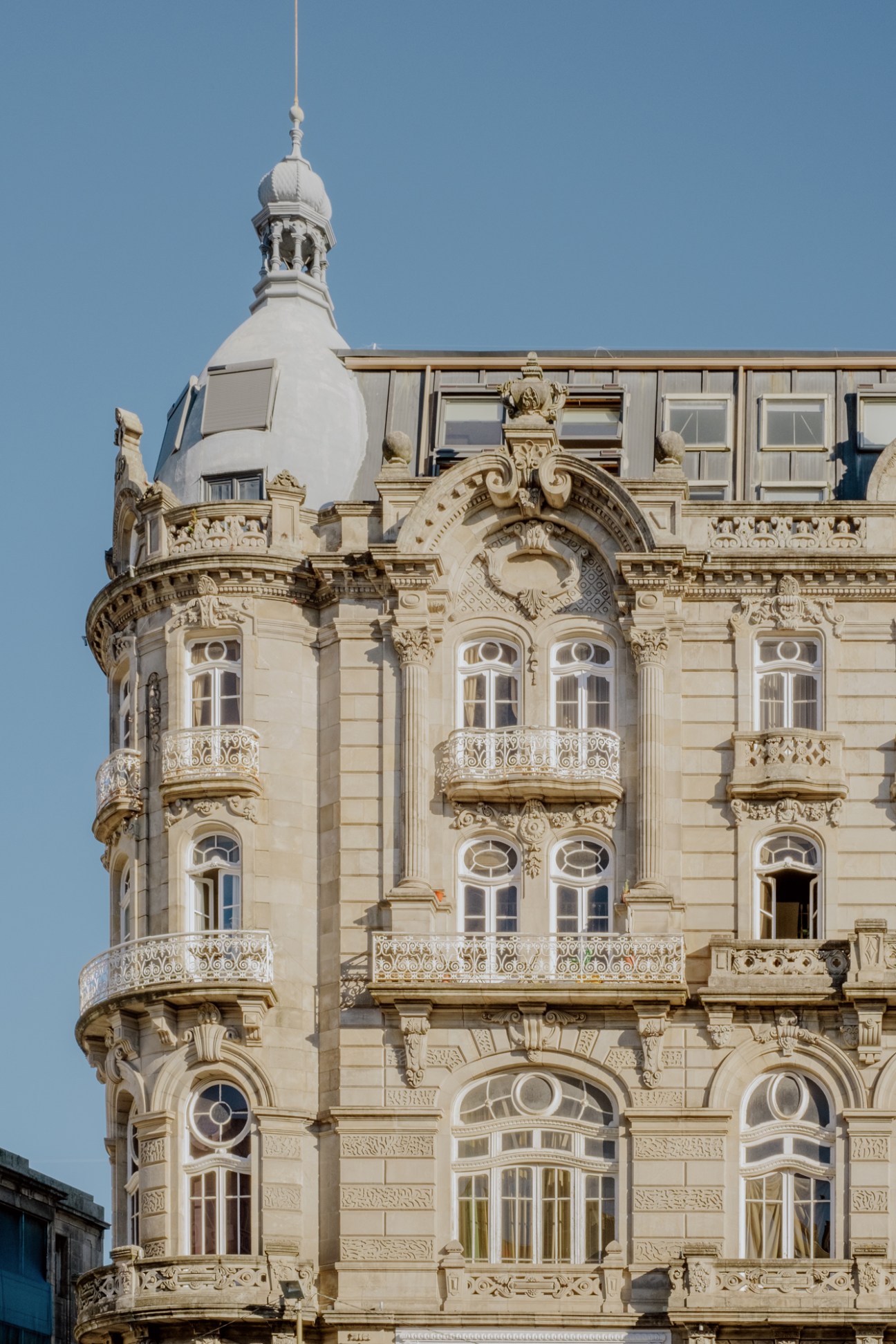
“It’s a pretty incredible opportunity from an urban standpoint,” says Brandon Welling, project director and a partner at Morphosis, the Los Angeles-based global architecture practice behind the Vialia Vigo tgv station. But more than an urban-renewal opportunity, the project has huge potential to change the way that the city attracts new businesses. “What’s exciting about the project is the potential it brings for a place the size of Vigo,” says Welling. “It’s exciting for what it can do to its economy from a business standpoint and for tourism. Connectedness and accessibility are key to growth here and all this hope manifests itself in the project.”
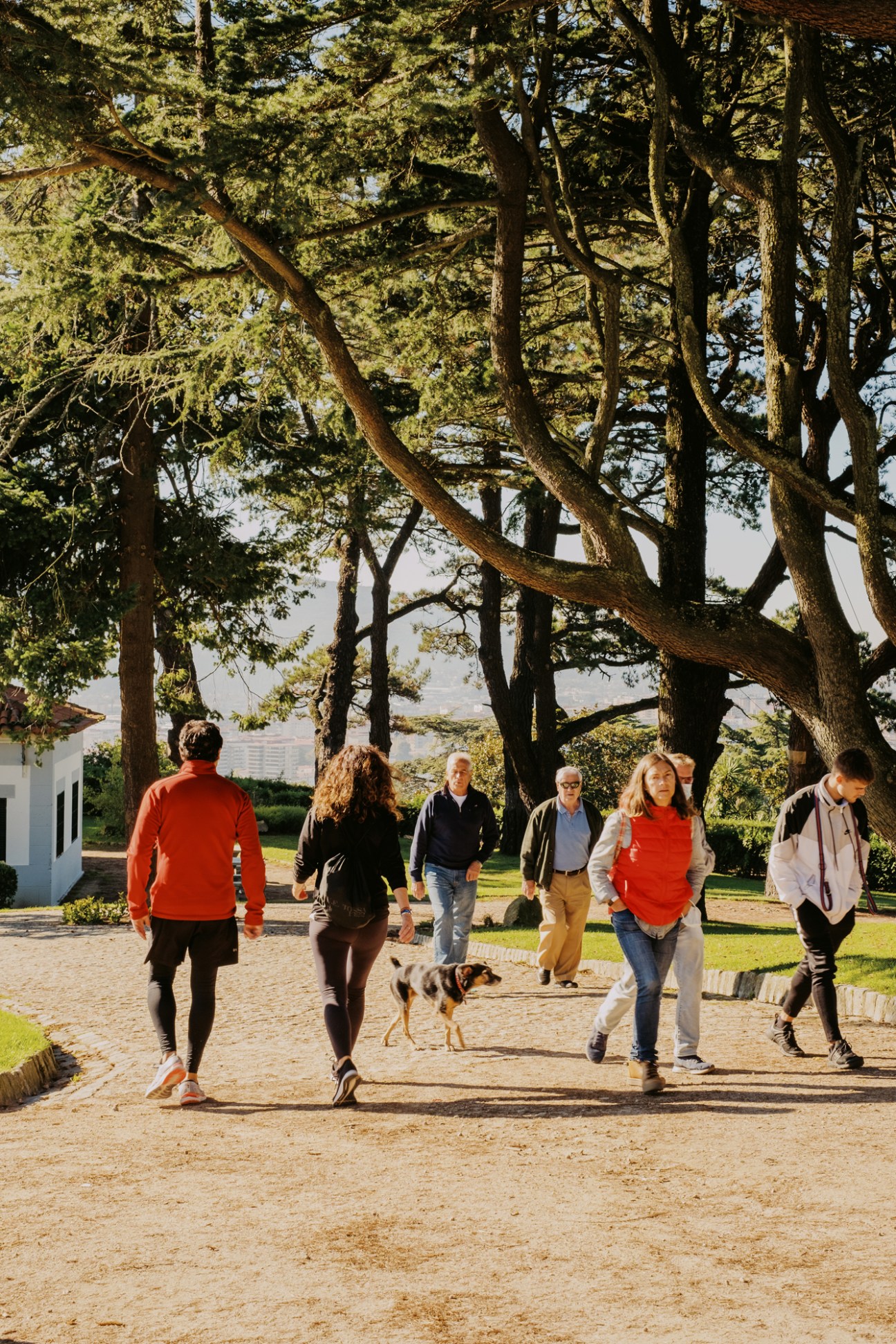
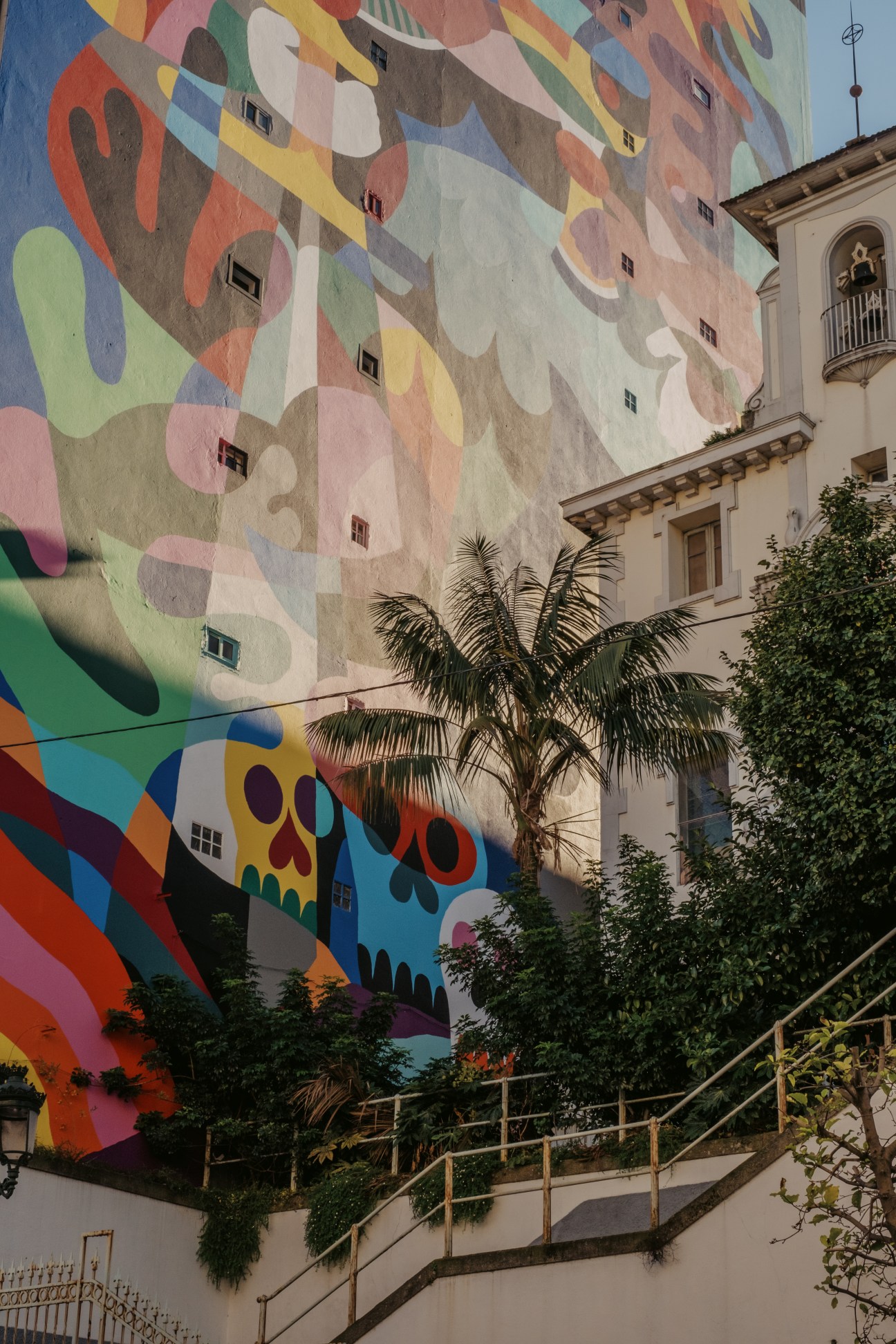
Vigo has outgrown its industrial label and today can proudly call itself a true business city, on a par with the world’s great metropolises. “We have excellent weather; it’s always sunny here,” says iVigo’s Suárez. “I like to call it ‘Galifornia’ – Galicia meets California. We’re just 15 minutes by bike from the beach and connected to the whole world. What’s not to love?” It seems that business and pleasure do mix after all.
Core values
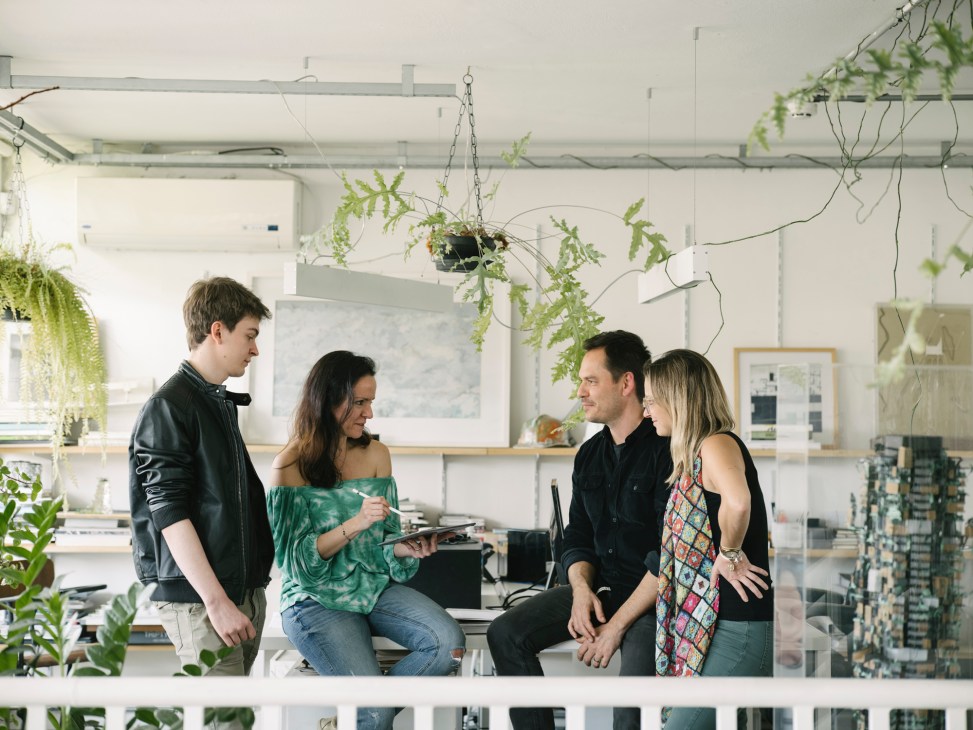
The future of São Paulo’s architecture can be found within its old, breezy modernist buildings. At least this is the impression that you get when touring the megacity’s downtown district with the team from São Paulo architecture practice Metro. “For so many years investors were afraid to touch this area,” says Gustavo Cedroni, who runs Metro alongside its founder, Martin Corullon. “Then came one brave investor – and suddenly there were 20 more.” The pair are giving Monocle a tour of this once downtrodden but now rapidly regenerating area. Here, modernist buildings from celebrated architects such as Oscar Niemeyer and Franz Heep add flair to a monolithic concrete environment, while a diverse crowd of office workers, students and the odd tourist meander around the busy bars, shops and cafés at street level.
As we stroll away from Metro’s office, which is set on an airy open-plan floor of a 1950s concrete tower, towards a major renovation project that the firm is undertaking nearby, we weave past the calling cards of downtown’s design. There’s Niemeyer’s giant, wave-like 1966 Edifício Copan housing block, home to some 5,000 people and a wealth of businesses, as well as Heep’s shutter-laden Edifício Itália tower.

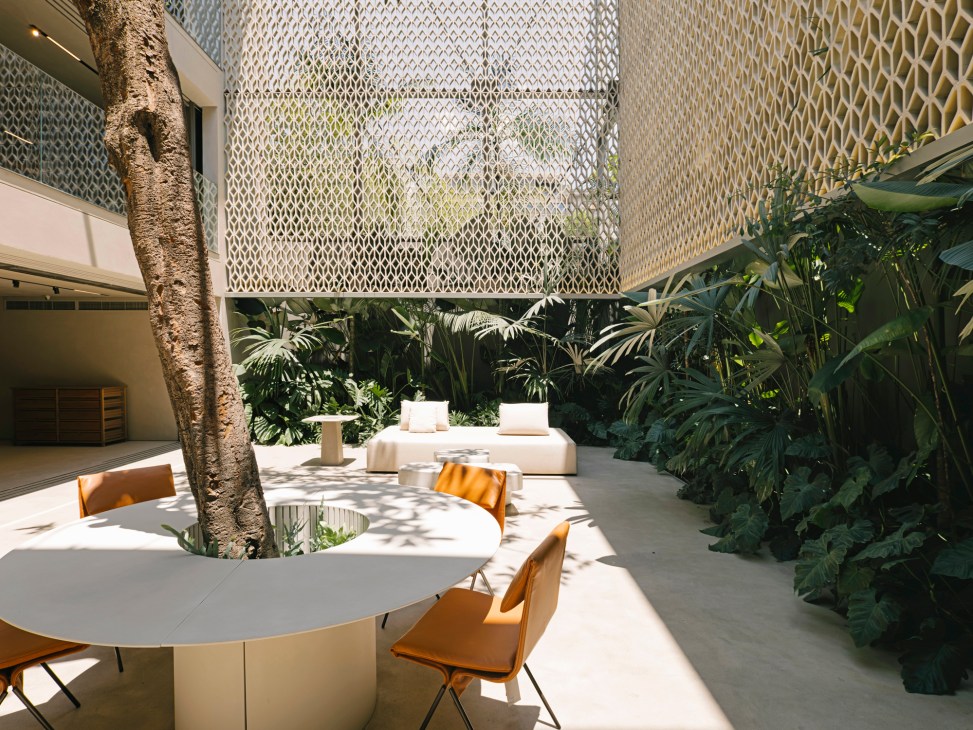
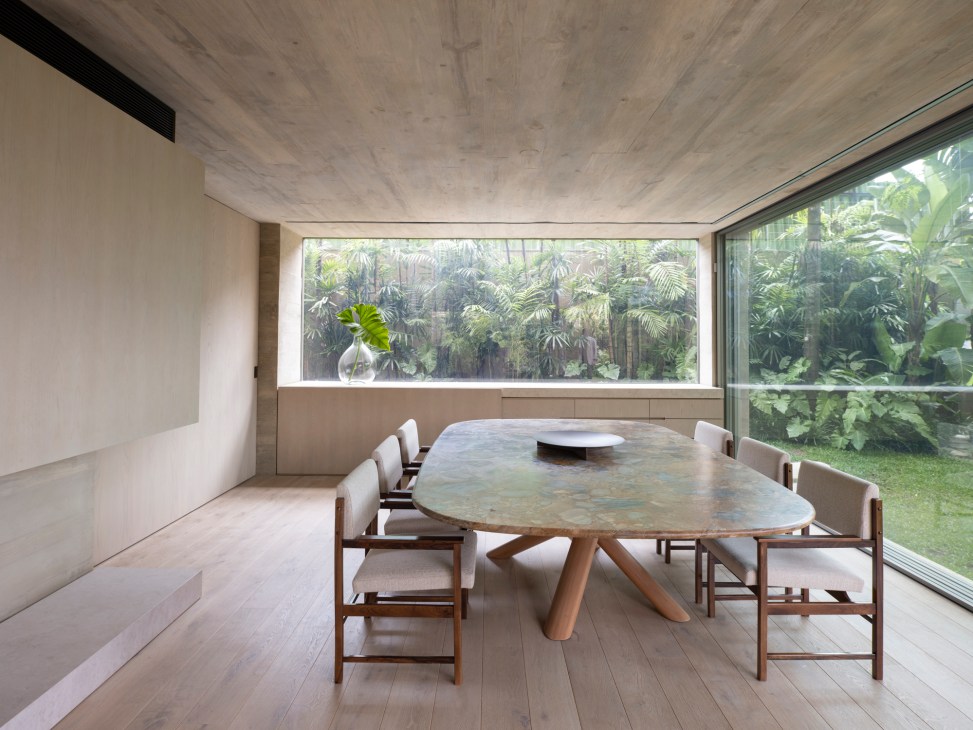
From the lively conversation on the journey, it appears that Metro’s team has both a business and emotional connection to many of the finer buildings here, which were built in the middle of the 20th century. Their architecture, while being easy to love, is designed to shun artificial cooling and promote natural breezes through shaded openings and generous ceiling heights. This brand of modernism used materials that were meant to last, such as steel-reinforced concrete. Metro, alongside able-minded private developers, is reinvigorating many modernist buildings here, including a disused commercial block that’s being turned into a shopping centre, and a new timber- lined retailer, selling furniture designed by the firm, that’s housed in a wonderful open-air mid-century mall.
The final destination is also impressive: a gigantic perforated concrete façade and shading system, or cobogó, hangs perfectly preserved against a tall, elegant, soon to be renovated 1956 office block. Edifício Renata Sampaio Ferreira was designed by Oswaldo Bratke, a pioneering architect in the Brazilian modernist style that arose in the nation’s golden era of design, the 1950s to the early 1970s. “Our real heritage is modern architecture and this is unique,” says Corullon, noting that Brazil is not a country of grand historic buildings but of dense urban environments, the best parts of which were formed during an ambitious moment in time after the Second World War. “A cultural shift and a business shift is combining right now, in which younger people want to live in the city centre again and business people are relearning the value of modernism,” says Corullon, noting that, not too long ago, this downtown area was in disrepair and unsafe. During the 1980s and 1990s the area lost favour with city workers who moved away en masse to bigger suburban homes. Downtown was left deserted in the evenings, allowing it to fall prey to urban crime.
Edifício Copan
São Paulo
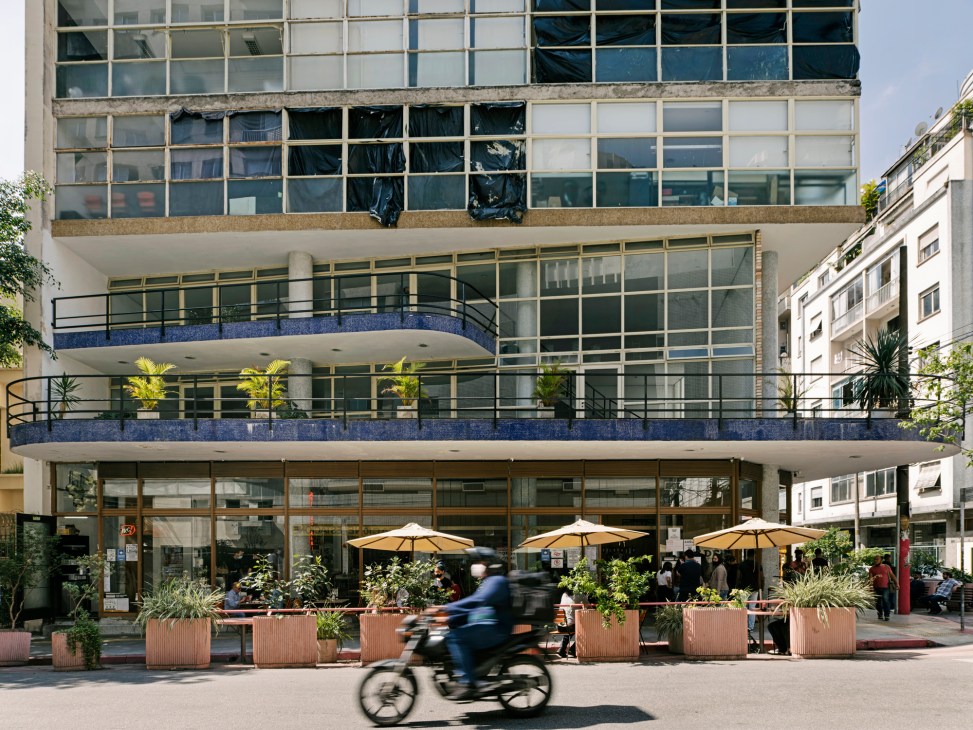
It was only in his later years that famed Brazilian architect Oscar Niemeyer started to speak fondly of the sprawling building that he designed for São Paulo’s downtown in the 1950s. Finished in 1966, its developers ran out of money in the 1960s and the tenancy of the building tends to act as a microcosm of the downtown district beyond its walls. After inhabiting a dirty and dangerous place in the 1980s and 1990s, Edíficio Copan has become a highly sought-after apartment block for young people, creatives, working families and pioneering business owners whose operations are housed in the vast commercial spaces at the building’s lower levels. Today, Edifício Copan is draped in gigantic blue nets while a huge renovation project, which took 10 years for the city and developers to agree upon, gears up to restore Niemeyer’s vision.
Metro’s sensitive transformation of Edifício Renata Sampaio Ferreira into a mixed-use building will be a crowning moment in the district’s comeback. New apartments will occupy the building’s upper floors, while a boutique hotel, with a swimming pool on a greenery-laden terrace, will sit below. The ground floor will give back to the neighbourhood as a place of independent shops and cafés, as well as a public lobby for the hotel. “This project is totally aligned with what we think of as our role in this city,” says Cedroni. “That of not necessarily building new stuff but transforming what exists.”
Metro does build, however, and at an impressive clip. The appetite for projects in São Paulo, a city of 12 million people, and the industrial areas beyond it – as well as Brazil’s many other heavily populated cities – has resulted in the firm’s staff of 12 working furiously throughout the pandemic to keep up with demand. “I have architect friends in Europe and they work on one project over two years and maybe build five nice projects over 10 years, while here we’re building five or 10 a month,” says Corullon. His firm’s growing portfolio includes a “city for happy chickens” – a sprawling organic farm in the countryside – and a lengthy extension project for São Paulo’s famous masp museum, originally designed by Lina Bo Bardi.
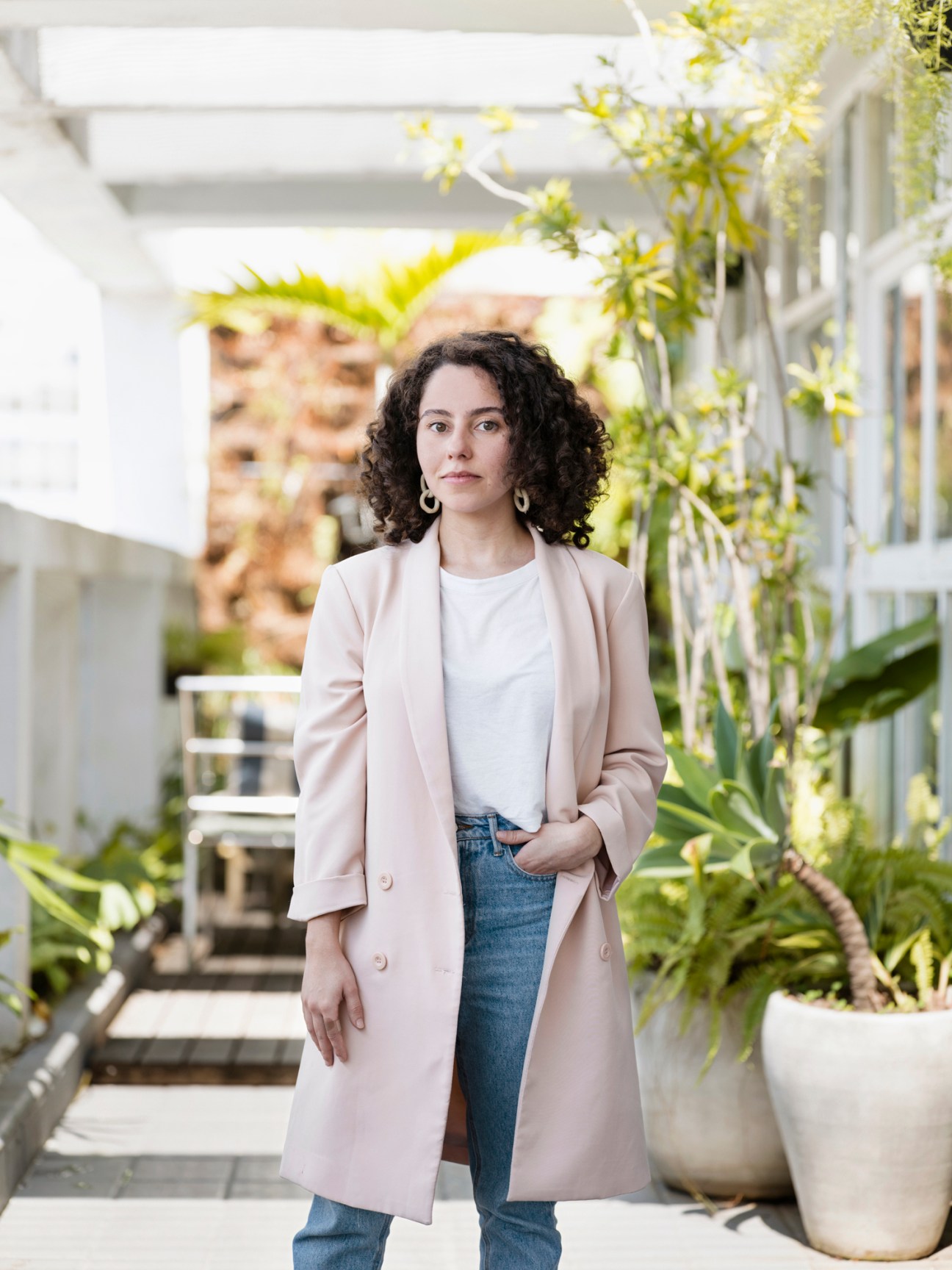
At Edifício Renata Sampaio Ferreira, some tenants joke that they’re not so happy with how quickly Metro moves on its projects. On the building’s most striking floor, featuring a massive balcony where the pool will soon be located, we meet celebrated photo-artist Sofia Borges. Here she’s formed a workplace of effortlessly cool cosiness with her bold works displayed haphazardly alongside big leafy plants and low-slung lounge chairs. Borges has been encouraged by the building’s owners to run this space as her own interim artist’s studio and by-appointment gallery, right up until renovation. Despite being given little more than a concrete shell, she has formed an inviting den that’s now favoured by the developers themselves, who use it as a meeting spot to discuss the building’s works. “It’s changing a lot, and quickly,” she says of the downtown neighbourhood that she has no intention of leaving after vacating this space next year. “This idea of developers helping artists to move here, to be the at the forefront of the change, is like how it was with Soho in New York. You can change an area by bringing culture to it – it works.”
The top two floors of Edifício Renata Sampaio Ferreira are occupied by Architects Office, a new design studio that founder Greg Bousquet recently spun off from successful Brazilian-French practice Triptyque, of which he was formerly a partner. Architects Office’s inevitable relocation might involve taking on commercial space at Niemeyer’s Copan (another building with an exciting transformation agenda) but the 80 or so members of staff, who’ve only recently returned to the office after working remotely, will miss the bond that they have with this building. “We like to throw parties here on the balcony in the evening and then head across to the karaoke bar across the street,” says Giovanna Melo from Architects Office’s marketing team. “We have staff from everywhere here: all the states of Brazil as well as Portugal and Paris, and we all meet here on this famous balcony.” Melo tells us that although the nightlife and being part of a young and ambitious team are perks of the job, being based in São Paulo’s urban core, with its diverse population, has a deeper importance for downtown architects.
Confronted by such a varied mix of people and witness to the economic hardships of life only a few blocks away, the designers who are close to the action can tap into the mood of the city’s people. Its population, from disparate backgrounds, has endured social inequality and political failure. The architects who talk to Monocle acknowledge that the city and the country beyond face challenges including wealth disparity and a feeling of uncertainty under the rule of controversial president Jair Bolsonaro. Brazil is also at the forefront of climate change, and the depletion of the Amazon rainforest is a frequent topic of discussion. However, there’s also an acknowledgement that when it comes to development, much of the money for new work is being channelled in the right direction.
“Market demand for sustainable projects has driven the private sector to accept them,” says Architects Office’s Bousquet, whose firm is breaking down barriers when it comes to building in Brazil. Emphasising the use of sustainably sourced timber architecture (a largely novel concept here), it aims to promote wellbeing through good design. This, says Bousquet, appeals to switched-on developers and a more eco-conscious middle class.
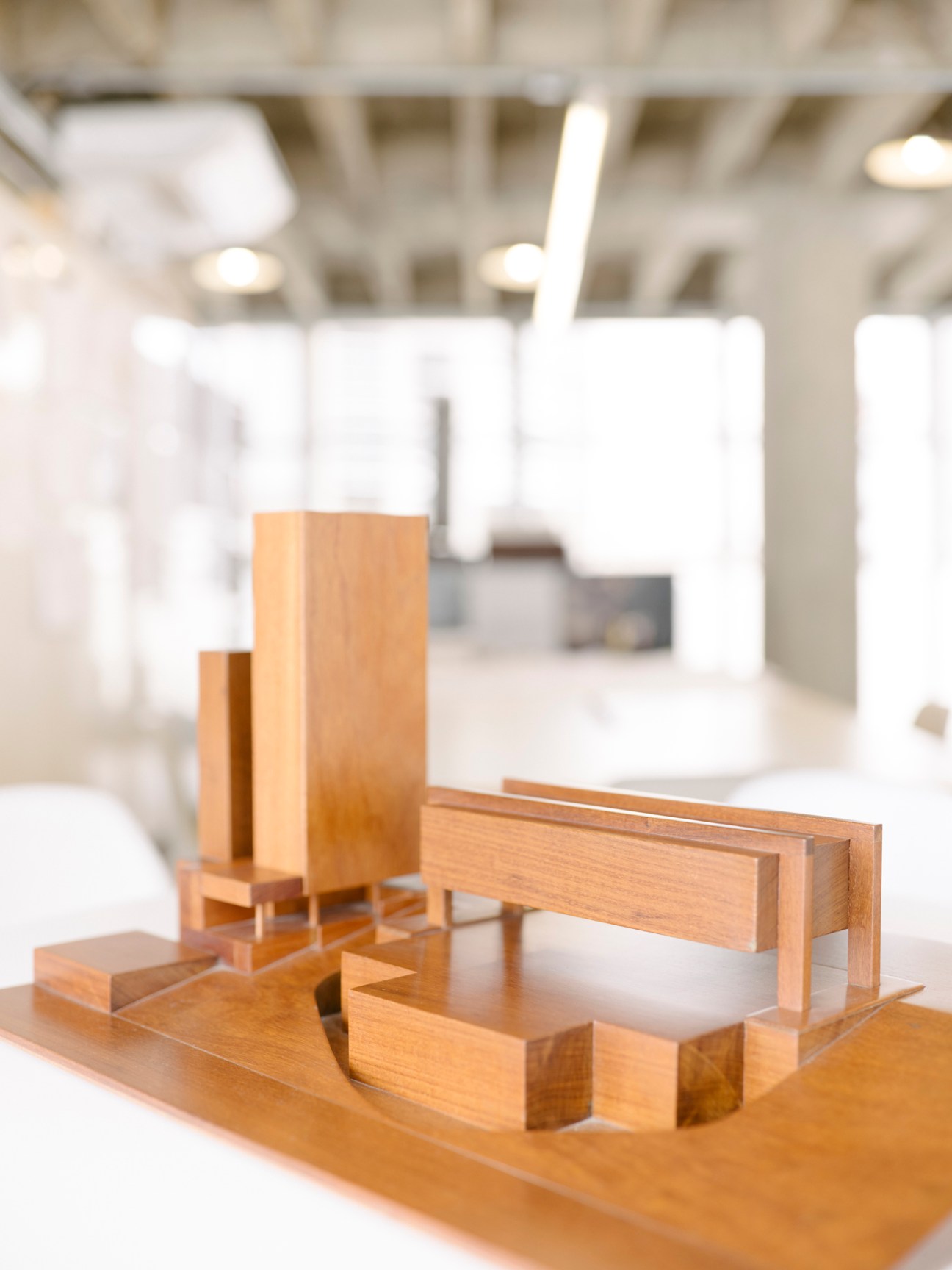
Plastered onto the main wall of Bousquet’s studio are dozens of architectural plans – of 33 ongoing projects, to be precise – ranging from new mixed-use developments that effortlessly flow into existing neighbourhoods to full-blown urban masterplans. Cohaut 2, a proposed building in the city of Recife, might be the most impressive design on the agenda. A mixed-use high-rise comprising staggered levels and blossoming green balconies, its organic form has the appearance of a mossy rock that sits naturally on the side of the beach. It offers the city what Bousquet brands as “gentle urbanism”. Bousquet, whose firm works in 13 Brazilian states as well as overseas (the company has established a second base in Lisbon), says that he has been developing a holistic approach to sustainable design for years, which clients today are finally ready to grasp. “It’s not just the ecological requirements that are now being considered as part of sustainability but also the social side of urbanism,” he says.
A short drive away, São Paulo’s loud urban rhythm lulls to a softer tempo in the well-heeled district of Jardins. Here, Felipe Hess, one of the country’s brightest talents in design and architecture, occupies an upper level of a smart modernist building with his team. He also sees the change in design and development in São Paulo and Brazil, particularly in the realm of high-end commercial and residential projects, the likes of which he tends to work on. “If you look at the houses and the interiors that we do, the projects are very different because people are very different and sites are completely different,” says Hess, noting that while he respects the legacy of the nation’s current, big-name, top-tier firms, they tend to offer an old-school take on luxury: a one-size-fits-all approach. This, he believes, is problematic. “They create brands so that clients know exactly the type of house they are going to get,” he says. “If the client is comfortable with that, it’s fine but the work will cost them a fortune and they will end up with the same house as the neighbour, who also went to the same architect. The people who come to me are those who can’t stand this culture any more.”
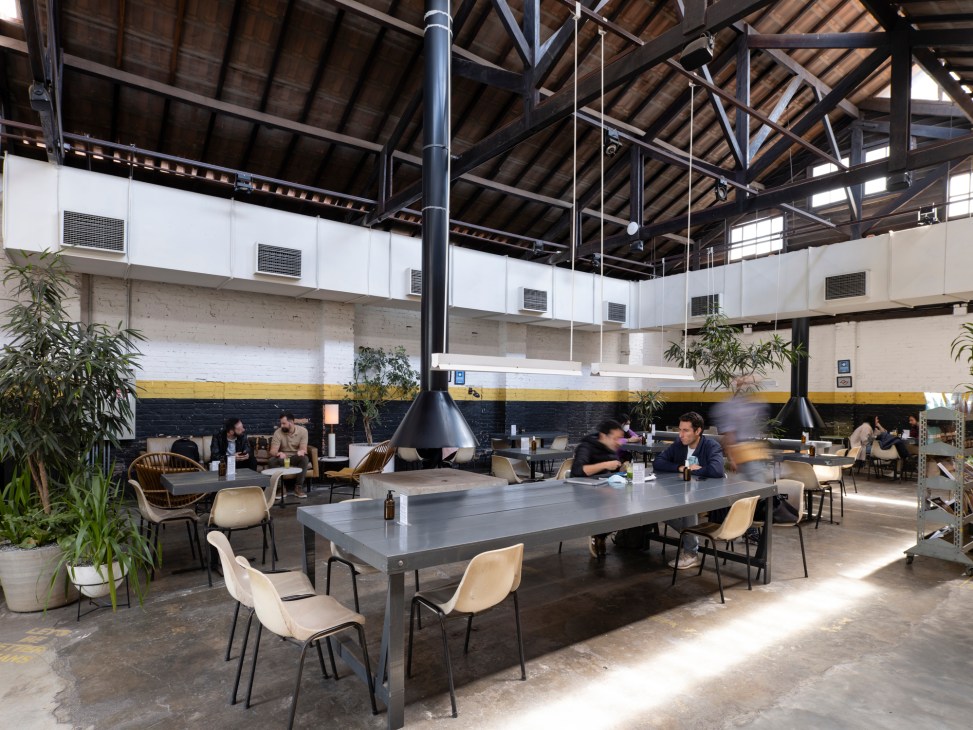
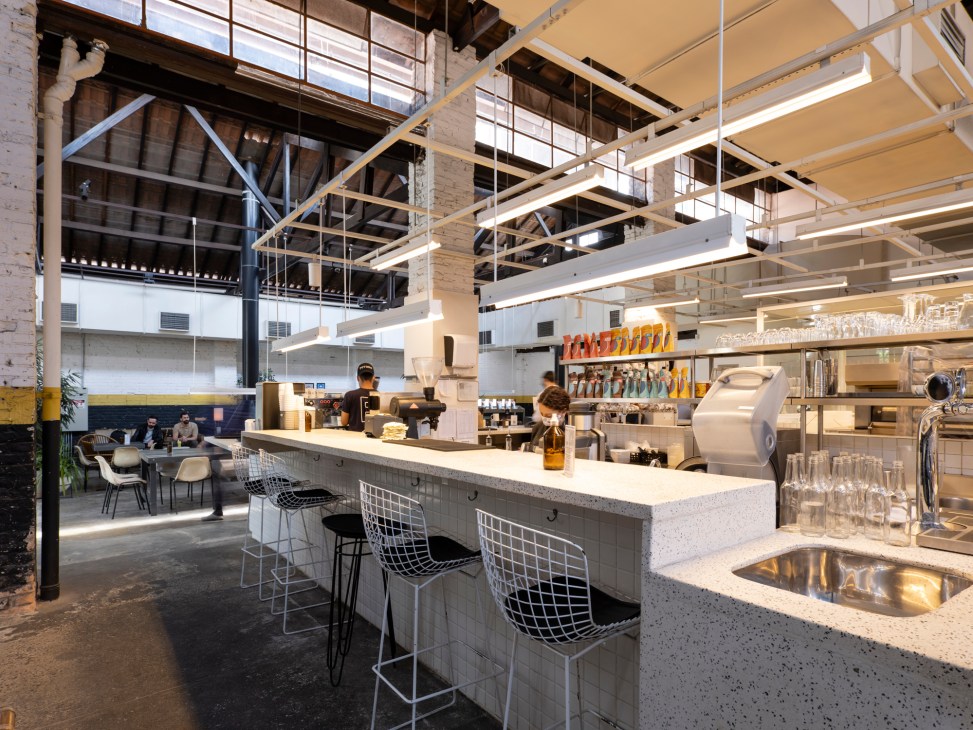
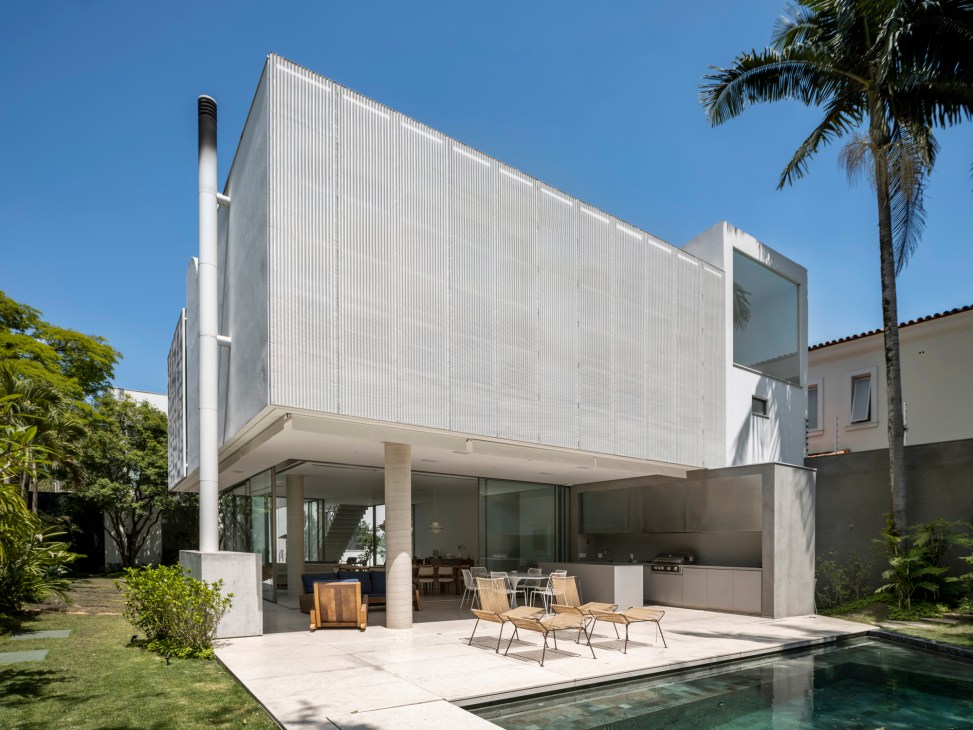
Hess is working hard to not establish a “look” for his output and takes on projects accordingly. Futuro Refeitório, a renovated factory turned popular café in the nearby Pinheiros neighbourhood, is one of his more edgy successes. Hess worked with the existing space to maintain a pared-back feeling, elevating its industrial charm with a new open kitchen and adding cosy indoor firepits for customers to gather around in colder months. Hess’s residential work is more polished – but not always. He pulls up photos on his computer screen of a rural project that he cites as memorable. It’s a humbly constructed concrete brick countryside retreat for a client on a very small budget. “Every single decision we had to make on this was vitally important,” he says. Other works are grander. We’re invited to make the short walk from his office to a luxurious new home for a couple and their family, where a lush tropical garden is framed by gigantic glass doors that slide open to put Hess’s design into context. Like the work of the Brazilian modernists that Hess deeply admires, it effortlessly brings the outdoors in; the light touch of the architecture is unimposing and aimed to facilitate quality of life.
A former student of downtown São Paulo’s Escola da Cidade architecture university, Hess says that the unique culture of the city is what makes the work of his studio, and other designers here, so empathetic to their surroundings. “I studied when the university was just beginning, which actually became the seed of change for the downtown district,” he says. “We had no kitchen or photocopier, so as students we were forced to integrate into the community, which we loved.” Running an operation today with 15 architects, many of them graduates from Escola da Cidade, Hess says that he enjoys the challenge of creating change in a place where he feels passionate to practice. “I couldn’t live or work anywhere else, even with all the problems that we have here,” he says.
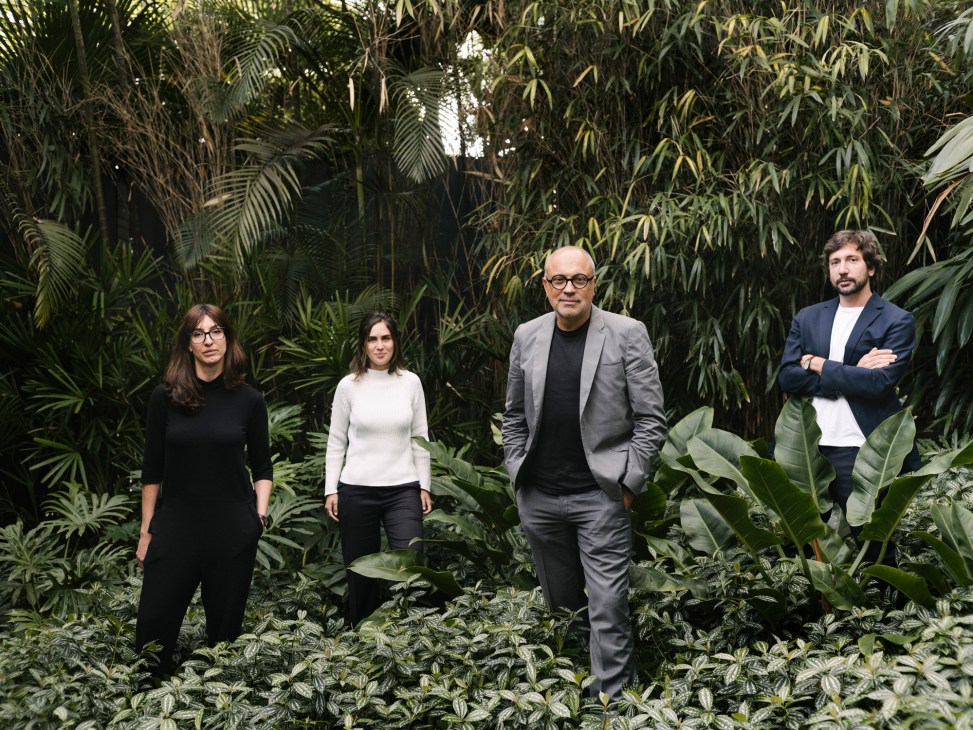
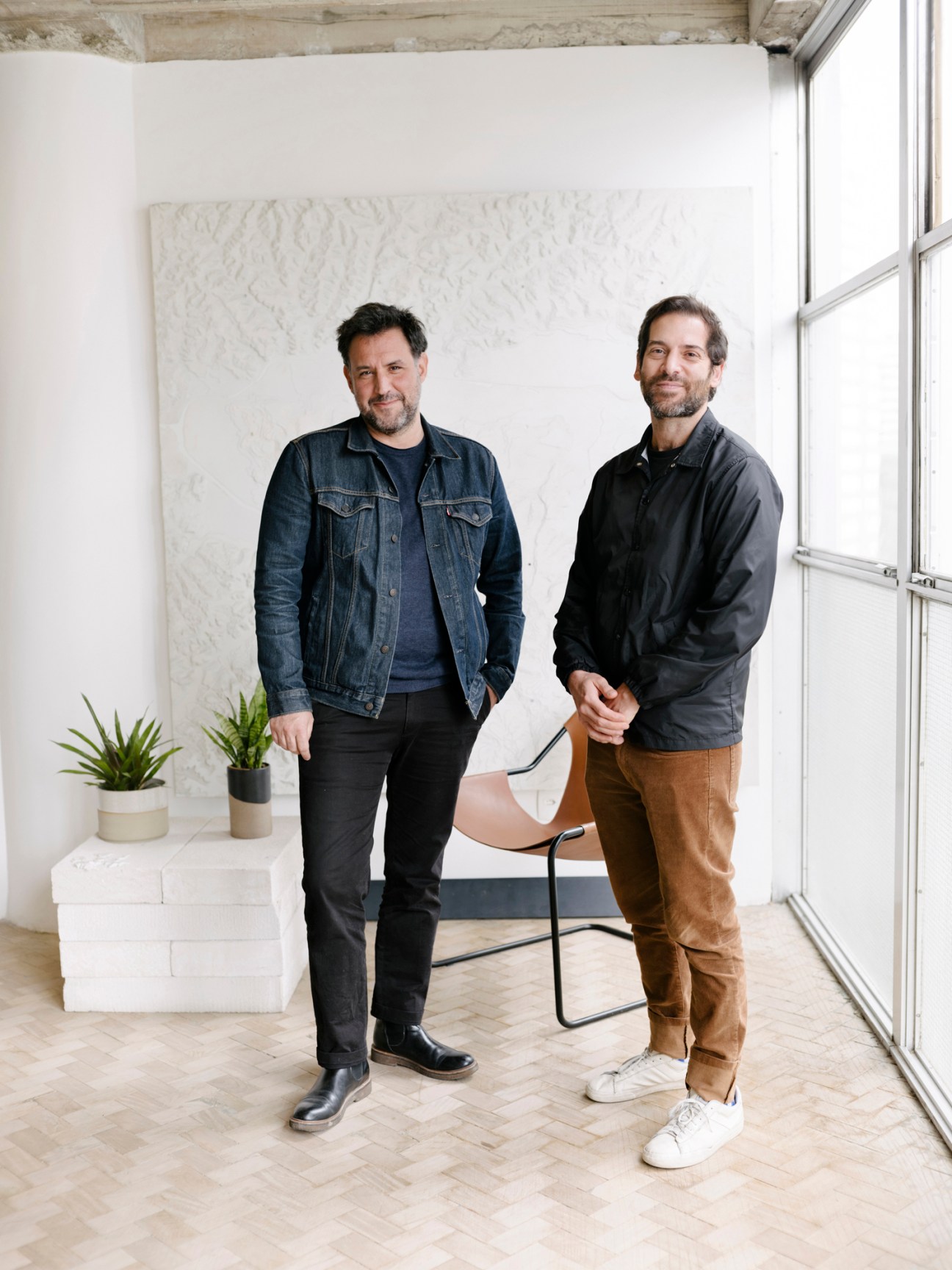
In a similar vein, architect Arthur Casas, whose 22-year-old eponymous São Paulo practice rose to prominence alongside the famous firms of Isay Weinfeld and Marcio Kogan, never gets bored with the urban landscape of his home city. Known for breezy Brazilian beach pads and sleek urban developments, all imbued with an artful amount of minimalism, he’s increasingly turning his attention to the role of mentor in his busy international studio. “I always used to want to do everything myself but today it’s my team bringing me a lot of fresh ideas,” he says. “I don’t want to get into the habit of copying myself.” Casas greets Monocle at his base in the leafy foothills below the neighbourhood of Higienópolis, with his three young partners in tow. They chime in intermittently as he outlines the lay of the land, enlivened with his frank and charming Brazilian humour. “We do work for rich people who live in beautiful places,” he says. “But we’re also involved in making a better environment for everyone in São Paulo.” Alongside proposals for rehabilitation projects downtown, where the recent rapid regeneration has caught him by surprise, his firm tries to maximise the public benefit from private commercial developments.
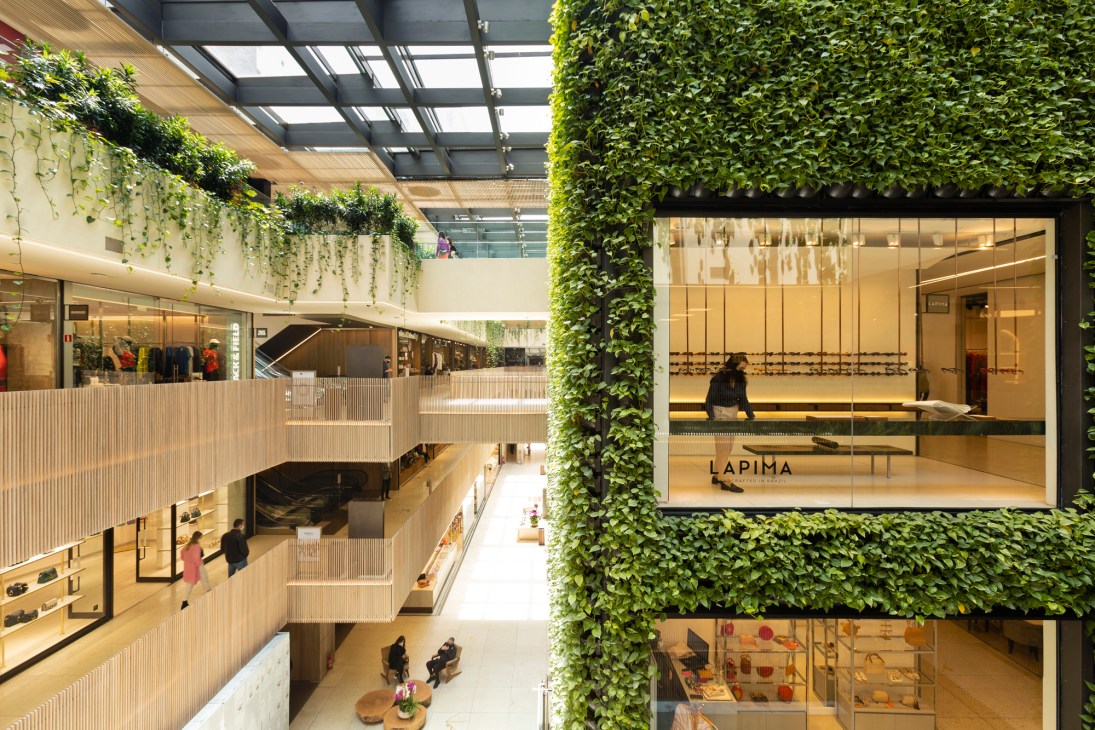
“Greening is friendly, it brings happiness to people – it’s easy to do and it’s a mood changer,” he says, discussing The Shops, a recently completed upscale mall in Jardins. Shopping centres in São Paulo act as public safe havens from the sometimes dangerous streets of the metropolis and its occasionally brutal tropical weather. The Shops, which features a glass roof but is open to the elements from all sides, is a natural space within urban limits, where shoppers are encouraged to linger, whether they’re spending money or not. Inspired by the city’s stylish multi- storey, mid-century open-air malls that were erected before today’s more enclosed, air-conditioned equivalents, the space includes a profusion of tropical flora, clambering over green walls with clever irrigation. Elevated walkways lined with Brazilian timber provide immersive sightlines and add to the building’s green agenda. “We’re trying to break open the concept of the mall,” says partner Nara Telles. “This is a place for everyone.”
Our journey winds down in a similar fashion to how it began, as we view buildings from the past while having a conversation that’s focused firmly on the future. “Le Corbusier came to this very street in 1929 to visit the opening of the house of our first modernist, Gregori Warchavchik, just around the corner,” says Casas, pointing up the road from his studio to the perfectly preserved Casa Modernista da Rua Itápolis. “This was the first international showcase of modernism in Brazil. The house went on to inspire our greats, such as Vilanova Artigas and Paulo Mendes da Rocha, who inspired those who came after them.”
As well as all the good times, there have certainly been some bad moments for Brazilian architecture over the years. In acknowledging that, Casas and his team joke that “selective vision” is needed to best appreciate their city. But the future looks better, they concur. “We are having a very good time for architecture in the city again,” says Casas. “We’re seeing some incredible new buildings from São Paulo’s architects.”
Building new talent
São Paulo
Architects in São Paulo have endorsed a state-backed initiative to increase diversity within industry ranks. “We’ve had a very interesting shift in the profile of the architectural student,” says Martin Corullon, founder of the Metro practice. He notes that a policy put in place by the former Workers’ Party government, which aimed to increase access to public institutions by offering 30 per cent of places at universities to people from lower-income backgrounds, is paying off. “It’s amazing to see this shift,” says Corullon. “It’s not just related to race but gender as well: women are starting to fill more powerful positions.”
Collecting the set
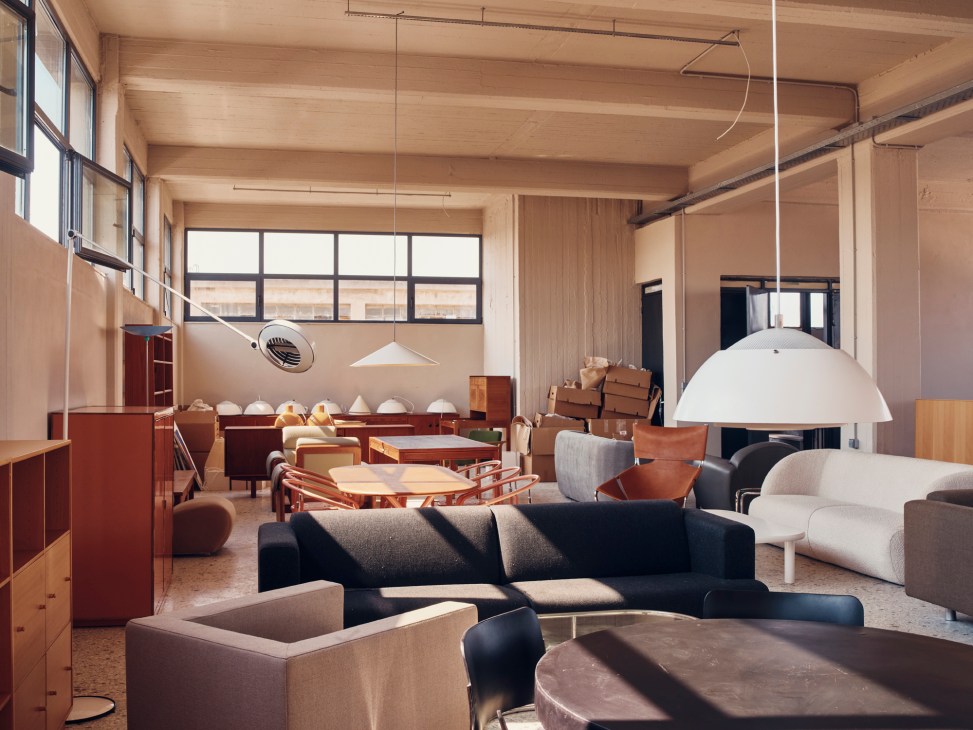
When Alketas Pazis began collecting mid- century furniture 15 years ago, his native Greece was an untapped gold mine. To salvage items, he would hop from island to island visiting buildings where the original interiors were being ripped out in favour of glitzy new designs. Greeting Monocle in Athens, where his business, Temporary Showroom, is based, Pazis’s eyes light up as he remembers his greatest find. “In Rhodes there was a hotel built by a Danish architect,” he says. “He filled it with furniture by Arne Jacobsen. When the hotel was sold and renovated they tried to throw away all the old furniture. I bought 100 Arne Jacobsen chairs that were about to be sold as scrap metal.”
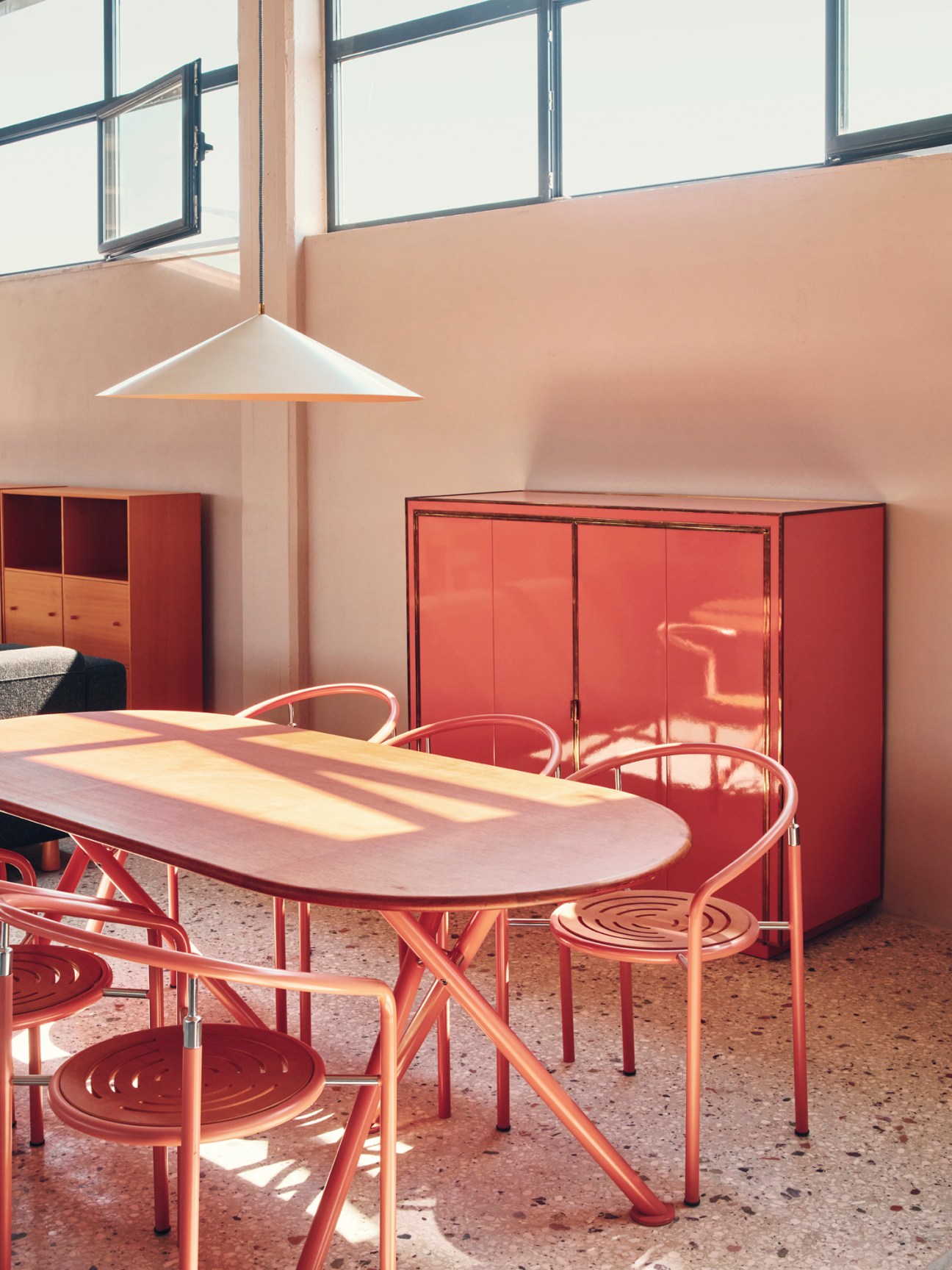
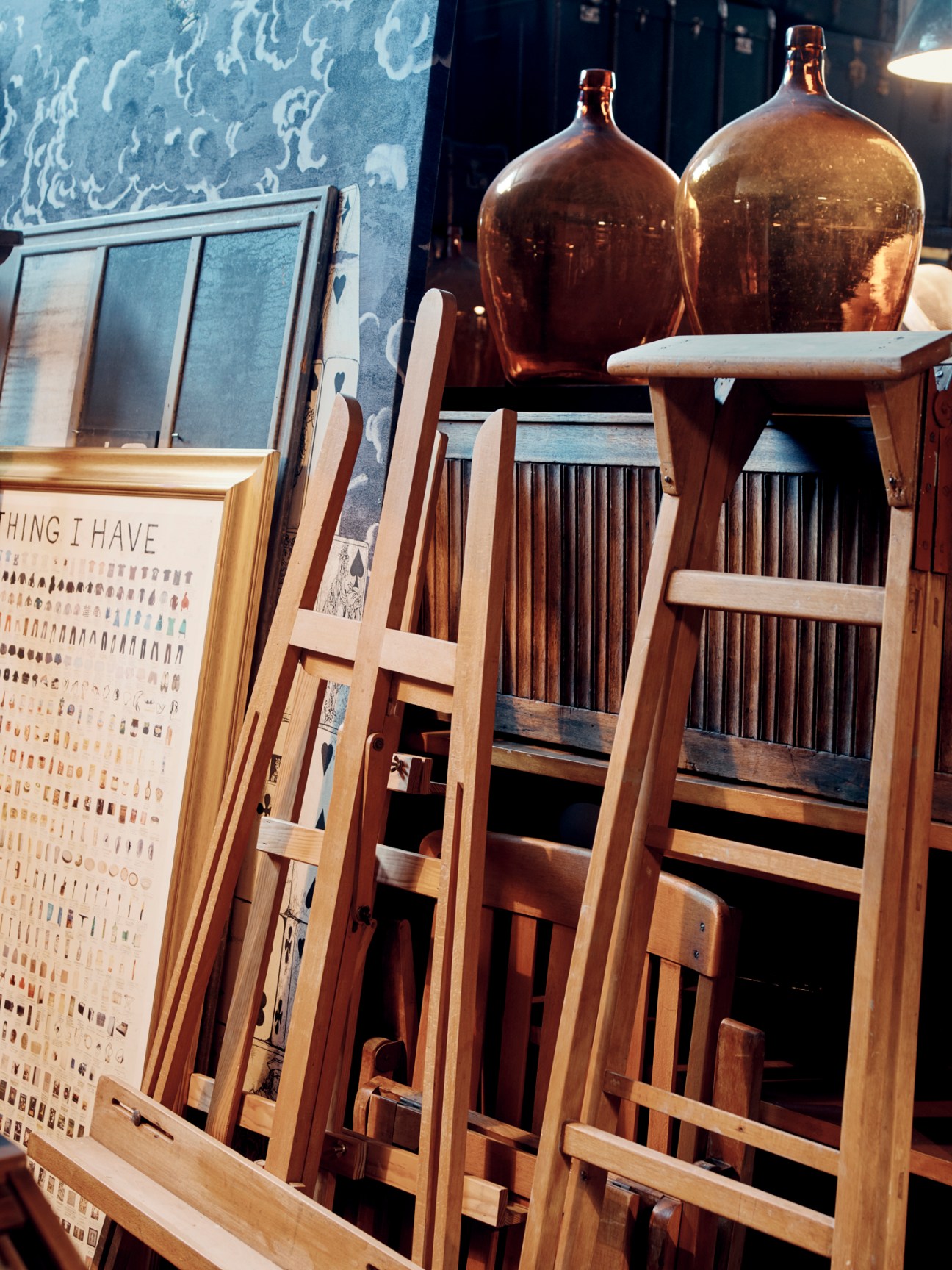
Pazis auctioned some of these chairs, while others remain as part of his vast collection that spans three storeys of a former zip factory on the fringes of the Greek capital. The space has the feel of a museum archive with perfectly preserved pieces from all the biggest names of mid-century design, sitting side-by-side with more obscure finds that caught Pazis’s eye on salvaging missions. As well as classic Louis Poulsen lamps and Eames chairs, there are sculptural, horse-shaped lamps that Pazis picked up when the Hilton Athens hotel was being gutted, and gleaming walnut desks that once furnished Greece’s national bank.
When Pazis’s own home began to overflow with his collection, he came up with a canny plan that would allow him to indulge his passion without breaking the bank. He began lending pieces to commercial and film shoots under the Temporary Showroom name. What began as an informal side hustle quickly grew to become a profitable business as word spread among the country’s art directors.
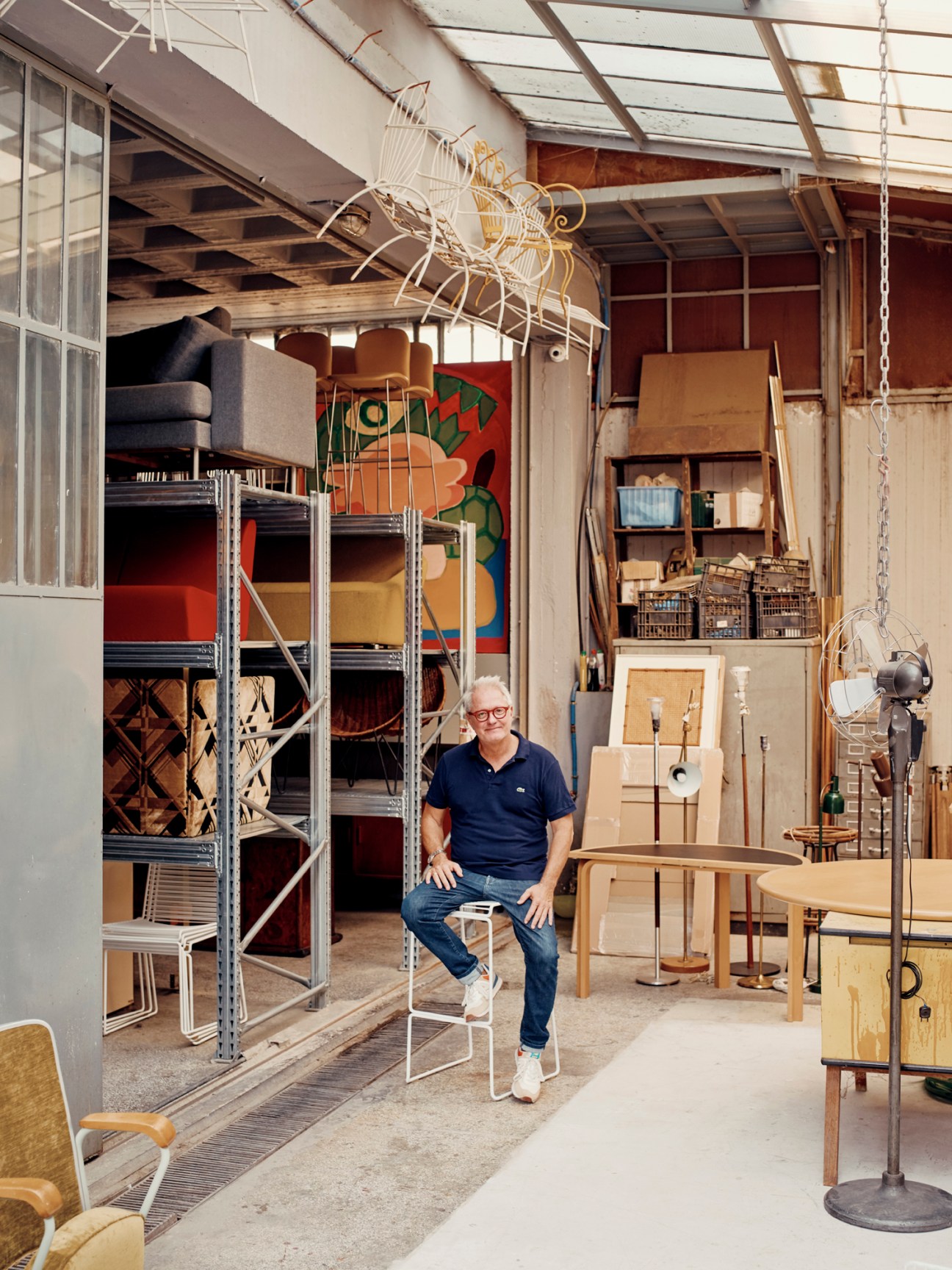

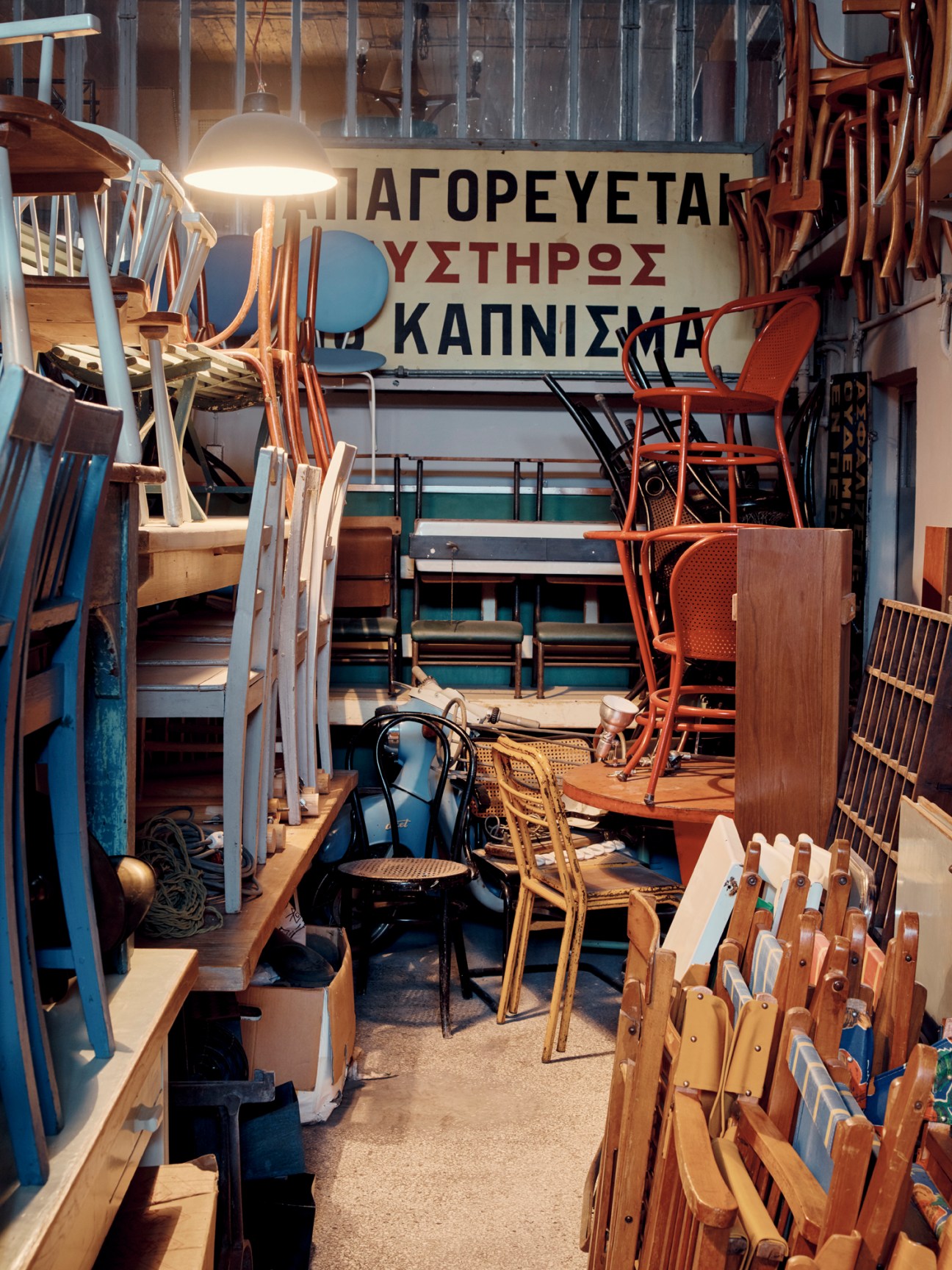
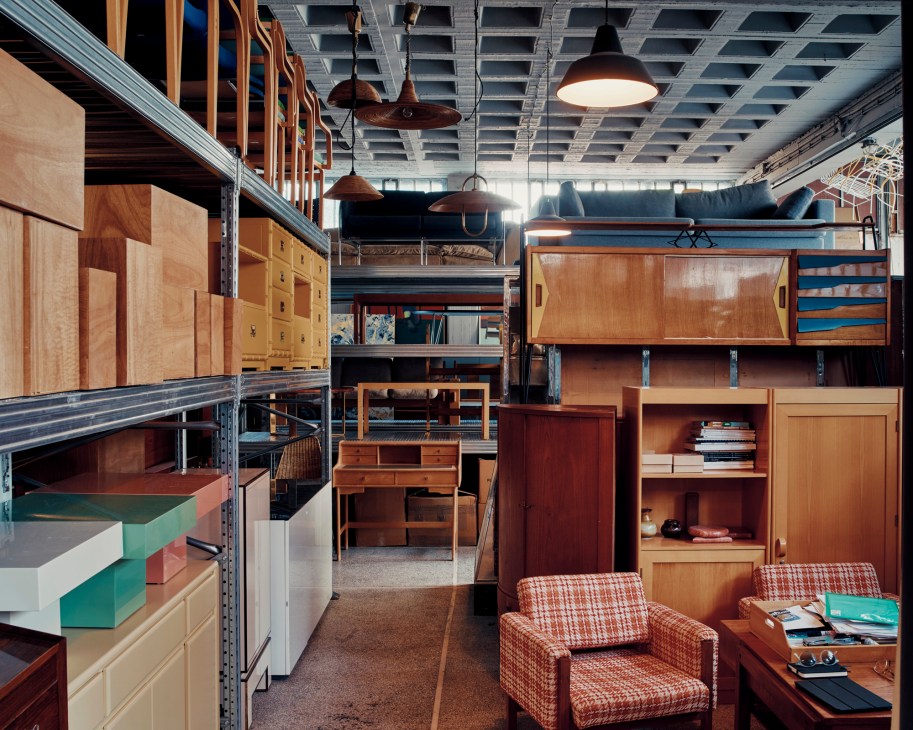
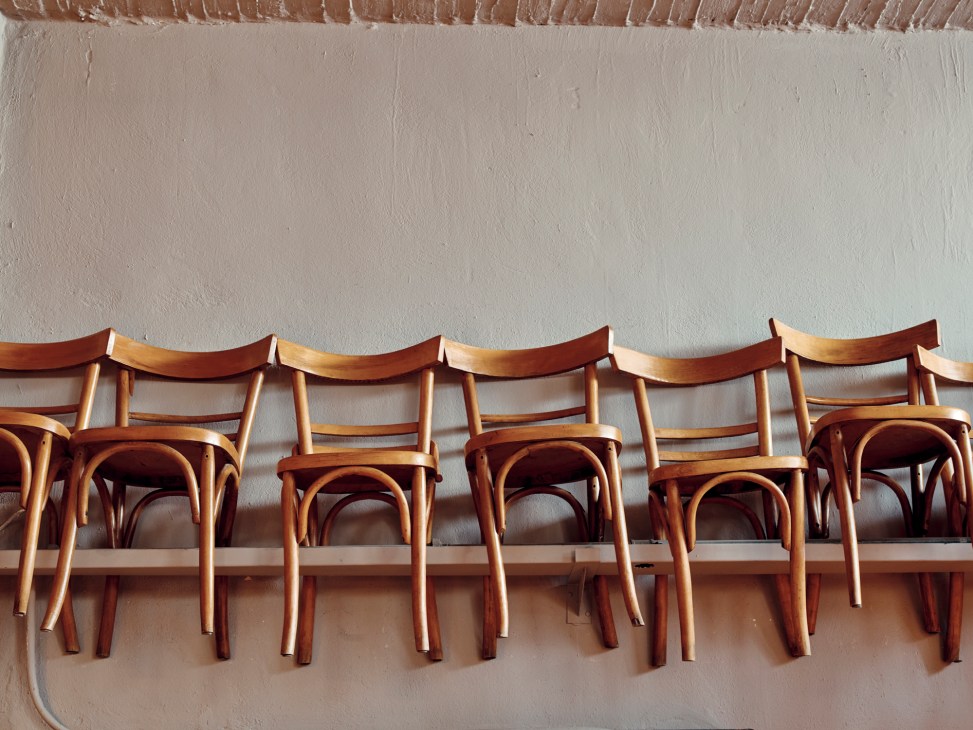
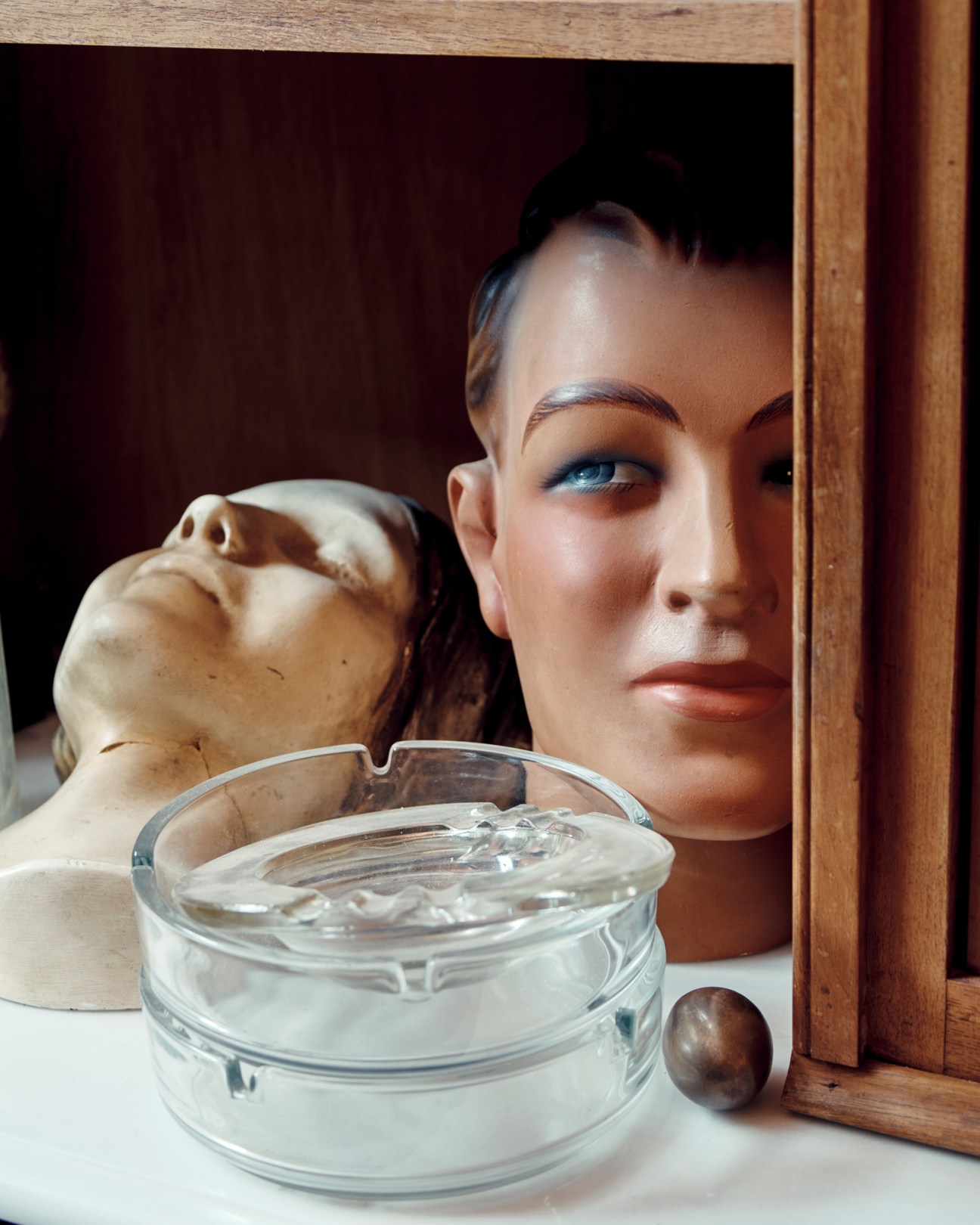
“This is not a typical prop house,” says Pazis. “Usually they have a lot of reproductions. This is unique worldwide because it’s a personal collection that happens to be a prop house and everything here is original. I buy something based on whether or not I like it, not whether it will earn me money.” Trusting his own taste has worked well for Pazis so far, as proven by the hectic schedule that kept him on his toes this summer. As well as various Greek productions, Temporary Showroom loaned pieces to a series of international blockbusters, including new David Cronenberg horror Crimes of the Future and the sequel to 2019’s hit whodunit Knives Out.
As the Greek cinema scene gains traction and the country increasingly opens up to international film-makers, Pazis’s business looks set to grow. For years, Greece banned large-scale productions from filming in the country for fear that it wouldn’t be able to cope on an infrastructure level and heritage sites would be damaged. “Even Mamma Mia! had to be shot in Croatia,” says Pazis. This is now changing and Greece is even offering tax incentives to those who choose to film there.

As well as capitalising on this growth by expanding his collection in Athens, Pazis is keen to open a branch close to a new studio currently under construction in Thessaloniki. But when it comes to bolstering his furniture offering, Pazis is now forced to look further afield. Although he still undertakes the odd salvaging mission, the value of the furniture that he’s searching for is now widely recognised. Most of the latest additions to the collection have been picked up at the fairs he visits around Europe. Pazis also keeps a keen eye on auction houses, particularly in Denmark. “Fifteen years ago, appreciation of modernism didn’t exist in Greece,” he says. “The country was a big playground just for me. But now everyone is looking.”
Generating change
You might not think of Denmark as an oil state in the mould of Qatar or Venezuela. But the Scandinavian nation we know and admire today – with its free education and healthcare, and enviable work-life balance – was to a large extent financed by the oil and gas extracted from the North Sea by Maersk and managed by Dansk Olie og Naturgas (known by the unfortunate acronym Dong) during the 1970s and 1980s.
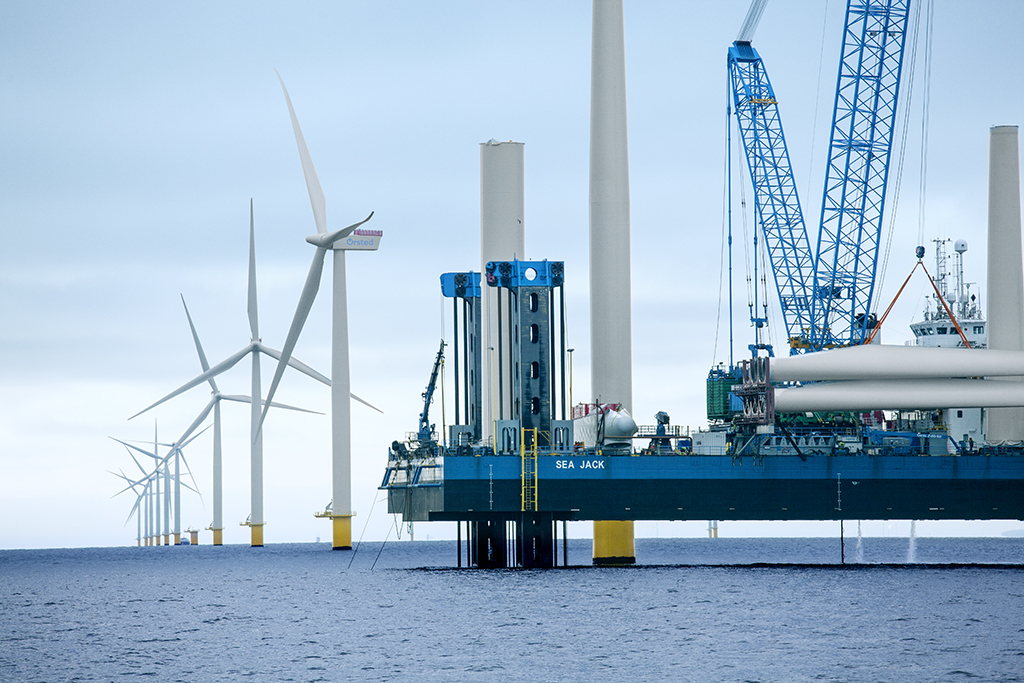
Today, Denmark enjoys a global reputation as an environmental frontrunner, aiming to achieve carbon neutrality by 2050. It’s also home to the world’s leading offshore wind-power company, Ørsted. But Dong and Ørsted are actually one and the same – an indication of just how much Denmark’s energy policies have changed over the past 30 years. The name switch happened in 2017, inspired by Hans Christian Ørsted, a Danish scientist who first discovered the connection between electricity and magnetism. It marked a transformation as one of Europe’s most carbon- intensive energy firms became one of the greenest. This year it came second in business magazine Corporate Knights‘ global sustainable companies list.
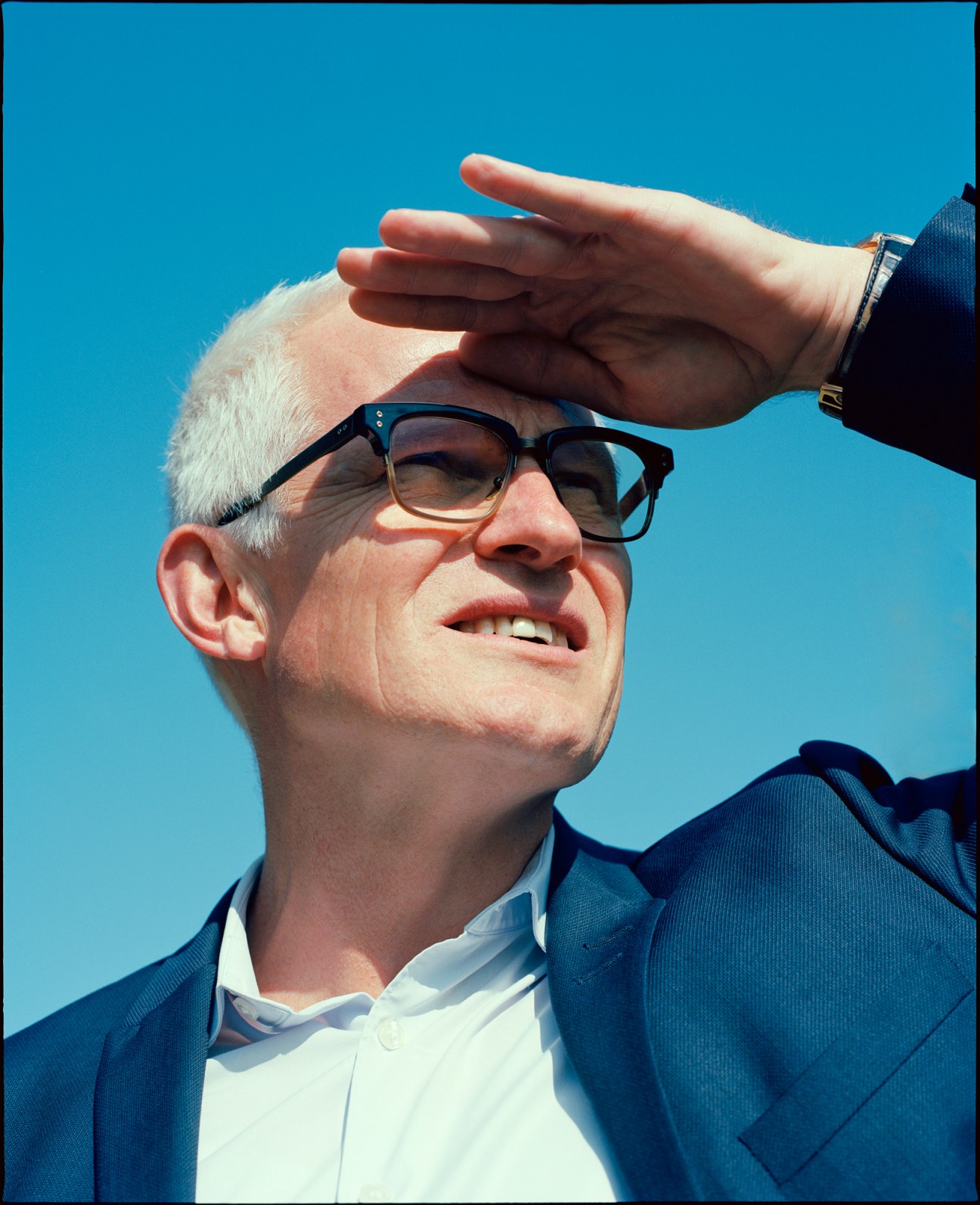
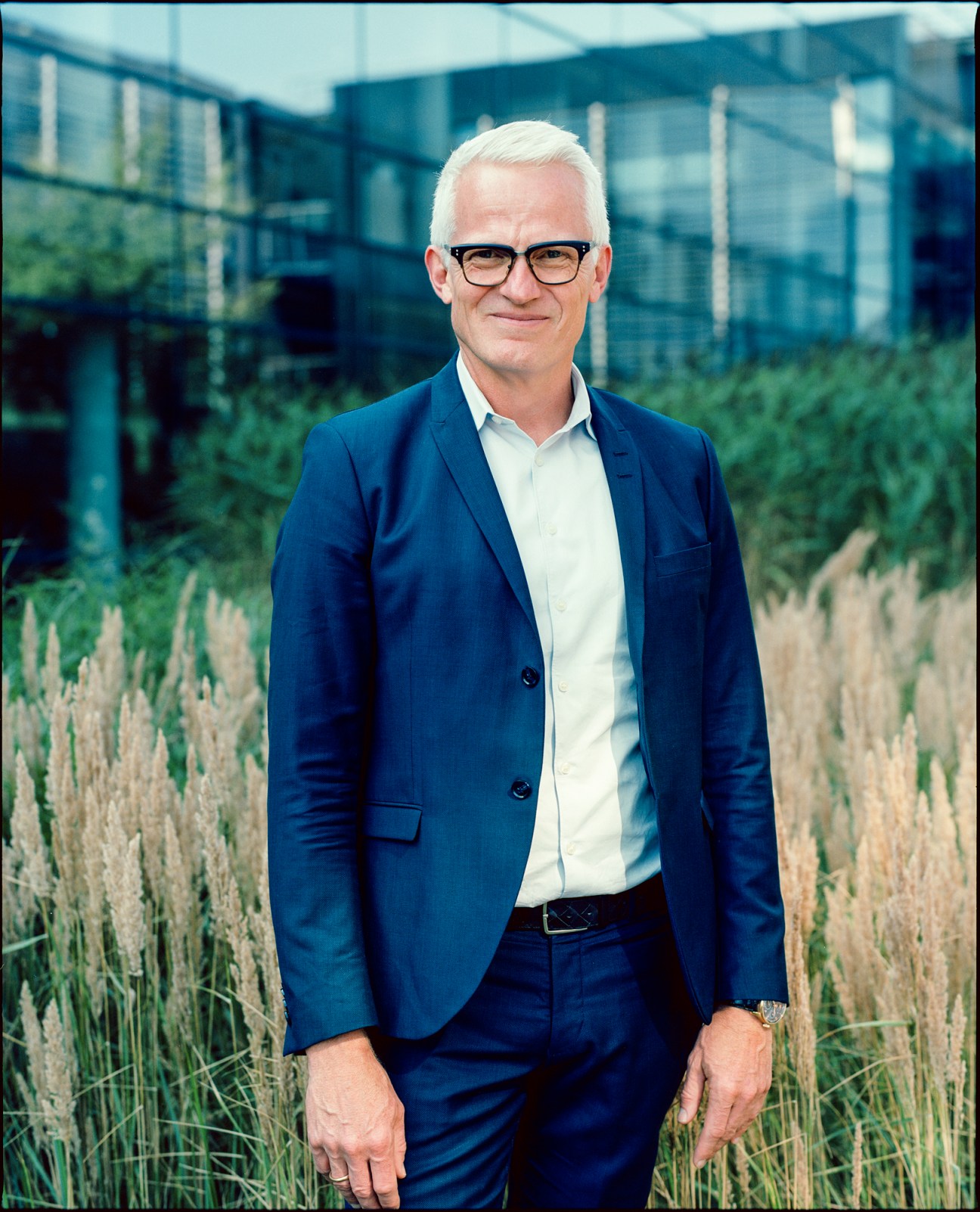
When Monocle catches up with Ørsted’s CEO, Mads Nipper, he’s in the firm’s vast, glassy Copenhagen office in the suburb of Gentofte, which he has worked from since taking the helm in January 2021. His predecessor, Henrik Poulsen, oversaw a 10-year metamorphosis of the utility business. “What’s been most impressive is the pace that this company moves at,” says Nipper. “It has been quite mind-blowing how fast we are passing strategic milestones. We announced that we wanted to secure three gigawatts of offshore capacity in a year – and we did it in six months. We’re entering into offshore floating wind farms and we’ve commissioned our first combined solar and storage project. So many things are happening.”
Nipper, who previously worked at Lego and water-pump company Grundfos, admits that when he took up his current position, he had to ask one of his 6,600 new colleagues to explain the basics of electromagnetism. “But that gives you an incredible humility as a CEO,” he says.
Ørsted is in the unusual position of being a listed company that is 50.1 per cent state-owned. But might that be the worst of both worlds, ensuring both political meddling and stakeholder pressure? “Being state-owned gives us a full credit rating – and the cheaper capital that brings is important,” says Nipper. “The Danish state is actually very good at letting us run on market terms. It thinks very long-term. I see it is an obligation to get people to see that there is no trade-off between sustainability and commercial enterprise.” However, Ørsted is likely to face tougher competition in the future. Under pressure to go green, oil giants such as Total, Shell and BP are now competing for tenders to develop the seabeds in numerous territories for their own offshore wind farms. Industry insiders believe that Ørsted will struggle to match Big Oil’s bottomless wallets as seabed options are already being awarded at what are widely considered to be inflated prices.
“We still want to be the undisputed leader in offshore,” says a bullish Nipper. “And our target of 50 gigawatts by 2030 is already fully funded.” He points out that
Ørsted’s share of the market might fall in the coming years but the market itself is predicted to grow seven times by the turn of the decade, which means that the company can continue to grow in absolute terms. He cites recent moves by the business into Japan, Taiwan, South Korea and Vietnam, as well as continuing growth in the US as positive signs for future global expansion. In terms of technology, Ørsted is betting on floating wind farms as the next major offshore development: turbines are still growing in scale and output, while the transmission and storage of the energy they generate are becoming more effective.
But some factors are beyond even a CEO’s control. Since Nipper took charge, Ørsted has been buffeted (or rather, not buffeted) by unusually low winds in the first half of 2021, resulting in DKK1.7bn (€229m) of lost revenue. Combined with warranty claims on malfunctioning offshore cables, it resulted in the company’s share price dropping by about a quarter over the past year. But that might not be such a troubling indicator. “Market sentiment has overpriced a lot of green shares, including Ørsted’s,” says Steen Vallentin, academic director of the Sustainability Centre at the Copenhagen Business School. “But life is definitely going to get more difficult, with the oil companies bidding for offshore tenders.”
The son of a shipbuilder, 56-year-old Nipper grew up in Skagen, the north Jutland town that’s popular with Copenhageners during the summer. In winter it’s a windswept place of fishermen known for straight-talking and driving a hard bargain – useful qualities for a CEO. Today, Nipper is one of a handful of Danish business leaders with a public profile. He’s a bit of a rockstar, according to those who follow the corporate world here. And yet he remains “a safe choice after the transformation under Poulsen,” according to Vallentin. Indeed, Nipper fits the image of a conservative Danish corporate leader, which will no doubt help as he continues to try to persuade his fellow countrymen and women to renounce their carbon-emitting habits.

As wealthy consumers with a penchant for nice cars and foreign travel – not to mention a high-emitting agriculture sector – the Danes have, per capita, one of the world’s highest carbon footprints. The country remains one of the EU’s largest oil producers, although it has pledged to stop fossil-fuel extraction by 2050. Ørsted itself still generates a small proportion of energy (less than 10 per cent) by burning coal, which it will cease to do by 2023. But the day after monocle speaks to Nipper, the front page of Danish daily Politiken leads with allegations of suspect carbon-quota trading by the company. Might allegations of “greenwashing” be justified? “Overall, the company’s transition to wind power has been amazing,” says Claus Ekman, director of Green Transition Denmark, an NGO. “But there are other things in its portfolio that I am less happy about. It still has plants running on biomass, for instance, which we don’t believe is fully sustainable.”
Ørsted has pledged that all new projects will have a net-positive biodiversity impact by 2030. By then it will have installed 30gw in offshore capacity. To put that into context, it has currently installed 7.6gw, while Total is aiming for nearly 100gw/h during the same time frame.
“As a nation we consume too much,” says Nipper. “So we have an obligation to decarbonise faster than others.” Danes seem willing to pay the price for this green transition: they bear the highest energy costs in the world, largely due to taxation. “We can afford it,” he says. “Especially if the tax revenue is spent wisely on accelerating things for the future.” It’s easy to pay your fuel bills when you are on a CEO’s salary, you might think, but Nipper’s is capped at dkk15m (€2m), plus performance-related bonuses of up to 30 per cent; Vallentin points out that he could potentially earn double that in the private sector. But Nipper sees his mission at Ørsted as long-term. “Put it this way, I do not plan to have another full-time job before I retire,” he says.
Ørsted in numbers:
Revenue (2020): DKK52.6bn (€7bn)
Operating profit (2020): DKK18bn (€2.4bn)
Market value: DKK369bn (€50bn)
Employees: 3,900 (Denmark); 6,600 (globally)
Total offshore wind turbines globally: 1,500 plus
Bringing it all back home
Long synonymous with luxury fashion, Fendi extended its prowess to home designs conceived in the same key of high craft in 1987. Yet for decades the line, the first of its kind from a high-end clothing maison, existed as a minor licensing project. Now Fendi Casa is embarking on an ambitious new chapter as it joins forces with Design Holding, a major investment group that is attempting to reinvent the field of interiors.
Fendi, owned by lvmh, is poised to bring the creativity and strategy that it has lavished on fashion to design through this joint venture with the biggest luxury group in the European furniture sector. Design Holding, which was founded in 2018, has worked hard over the past few years to unite such interior brands as b&b Italia, Flos, Arclinea and Louis Poulsen. With a host of sleek new furnishings by a stable of international designers, Fendi Casa will release the first collection of this new era and inaugurate a flagship boutique in Milan at the beginning of 2022.
Fendi has undergone significant changes in recent years. Designer Kim Jones, artistic director at fellow lvmh brand Dior Men, joined the house in 2020 as artistic director of couture and womenswear after the death of Karl Lagerfeld, who was the company’s womenswear designer for more than 50 years, in 2019. Silvia Venturini Fendi, the long-time menswear and accessories designer of the fashion house, is now also taking the role of creative director of the Fendi Casa line.
Serge Brunschwig became CEO of Fendi in 2018. The Arles-born executive’s long tenure at lvmh has included many years at Louis Vuitton and Dior. At Fendi’s Rome headquarters, he explains what the luxury group model can offer the design world and what’s next for Fendi interiors.
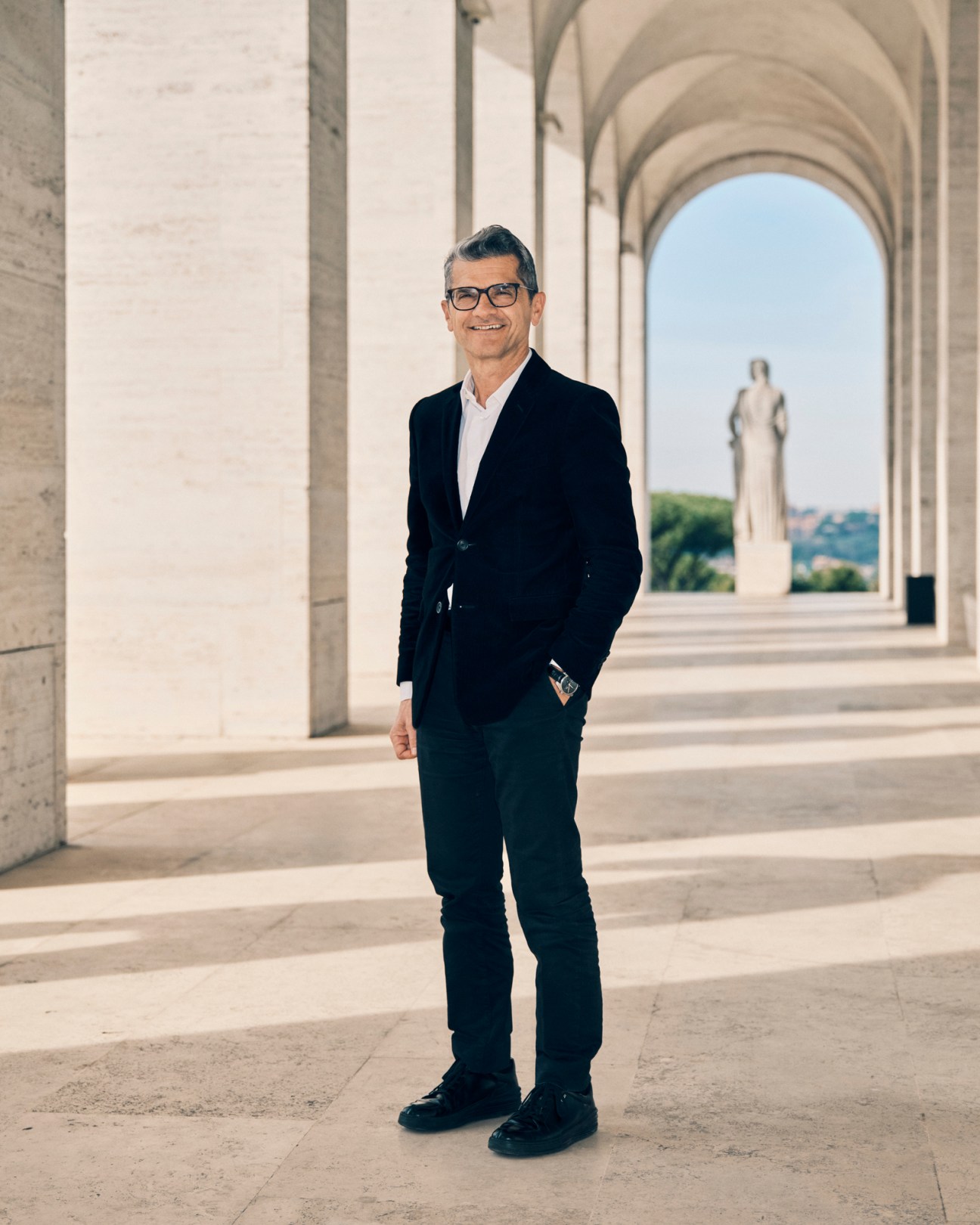
Why focus on Fendi Casa with this new partnership now?
Anna Fendi created this project more than 30 years ago. It developed into a successful licensing venture for us and it expresses an important part of Fendi. As we approached the end of our contract with our previous collaborator, Club House Italia, it seemed like a chance to grow rather than halt the collection. With Design Holding, we found a partner that is at the top of the design sector, working with the biggest names in Italian and Danish interiors. And it was willing to go into a joint venture with us to continue Fendi Casa and make it better.
Better in what way?
This time we’re partners. We have named the venture Fashion Furniture Design [FF Design] and it belongs to both Design Holding and Fendi. It’s well beyond a mere licensing project. Design Holding has the majority stake but we’re part of the management and we have Silvia Venturini Fendi’s creative guidance. She has inherited from her mother, Anna, fantastic taste and a talent for fashion, as well as for design. Silvia has chosen the designers who are collaborating with Fendi Casa: Thierry Lemaire, Marcel Wanders, Cristina Celestino and other important creatives. She also decides and ultimately controls everything. The result is very Fendi, with strong roots in the creativity and dna of the brand. It’s not about increasing the volume of sales but about strengthening the image of modernity that defines Fendi.
What does the new partnership offer Fendi Casa at the business and production levels?
We have taken a step forward with production. In Brianza, where b&b Italia manufactures its sofas, Design Holding has dedicated a site to Fendi Casa for product development and fabrication. Previously we manufactured in Forlì but now most of our furniture will be made in Brianza, the centre of Italian furniture craft. At a technical level, we’re able to access the skills that these other companies in Design Holding have, so our own sofas can now be made with the same advanced methods as b&b Italia’s and our lights can be made with the savoir-faire and technology of Flos’s.
Artisan craftsmanship has always been a crucial part of Fendi’s luxury offerings. Will growing the home brand lead to production that is more industrial and less craft-focused?
No. And why would it? We will do what we have always done, which is strive to make the collection as luxurious and high-quality as possible. That’s it. If we have to make greater quantities, we will organise production to make those quantities but always using methods that are fully adapted to creating luxury furnishings. That is what we have done with bags, with clothing – with everything. Fendi Casa shares the same simple philosophy: we make the best. It’s not a question of using machines or not using machines. Modern artisans do use some machines where the technology offers superior results.
We’re sitting here today at Fendi headquarters. In the next room, we have Hand in Hand, a special project with artisans from every region of Italy creating a Fendi baguette bag using their own speciality technique. Take the artisans from Emilia-Romagna: they have developed a new way to employ their mosaic craft and attach micro-mosaic ceramics to the bag. This is a beautiful example of how we work: artisans are always inventing ways to push the limits of craft with inventive techniques and innovative uses of materials in order to create something new and distinct. This is the spirit of Fendi.
What lessons from your experiences with LVMH can you bring to your partnership with Design Holding? And what do luxury fashion groups have to teach the design world as such groups make inroads in this sector?
We have spoken already about our philosophy for our products. They are not Fendi products for lvmh; they are developed as products in the spirit of Fendi only, which is how things will continue with our furnishings. But lvmh has its own philosophy of developing the brands; the group understands how to make them flourish with a long-term vision of 30 years or even 100 years, so a brand remains strong and desirable.
This is very important. With lvmh, it’s never about the short term. It’s about putting all of the necessary resources and personnel behind a solid plan. And as you can see, that’s gone quite well, no?
Another beneficial aspect of the lvmh group is its veneration of a brand’s heritage. At Fendi, Silvia is the third generation of the founding family. With Delfina [her daughter who heads up Fendi’s jewellery line] now we have the fourth and they collaborate closely with Kim Jones, who came to us from the lvmh group. To have this bond between the family and this kind of designer nearly 100 years after the founding of Fendi is extraordinary for the brand. With lvmh, there’s always a great alliance between tradition, creativity and investment.
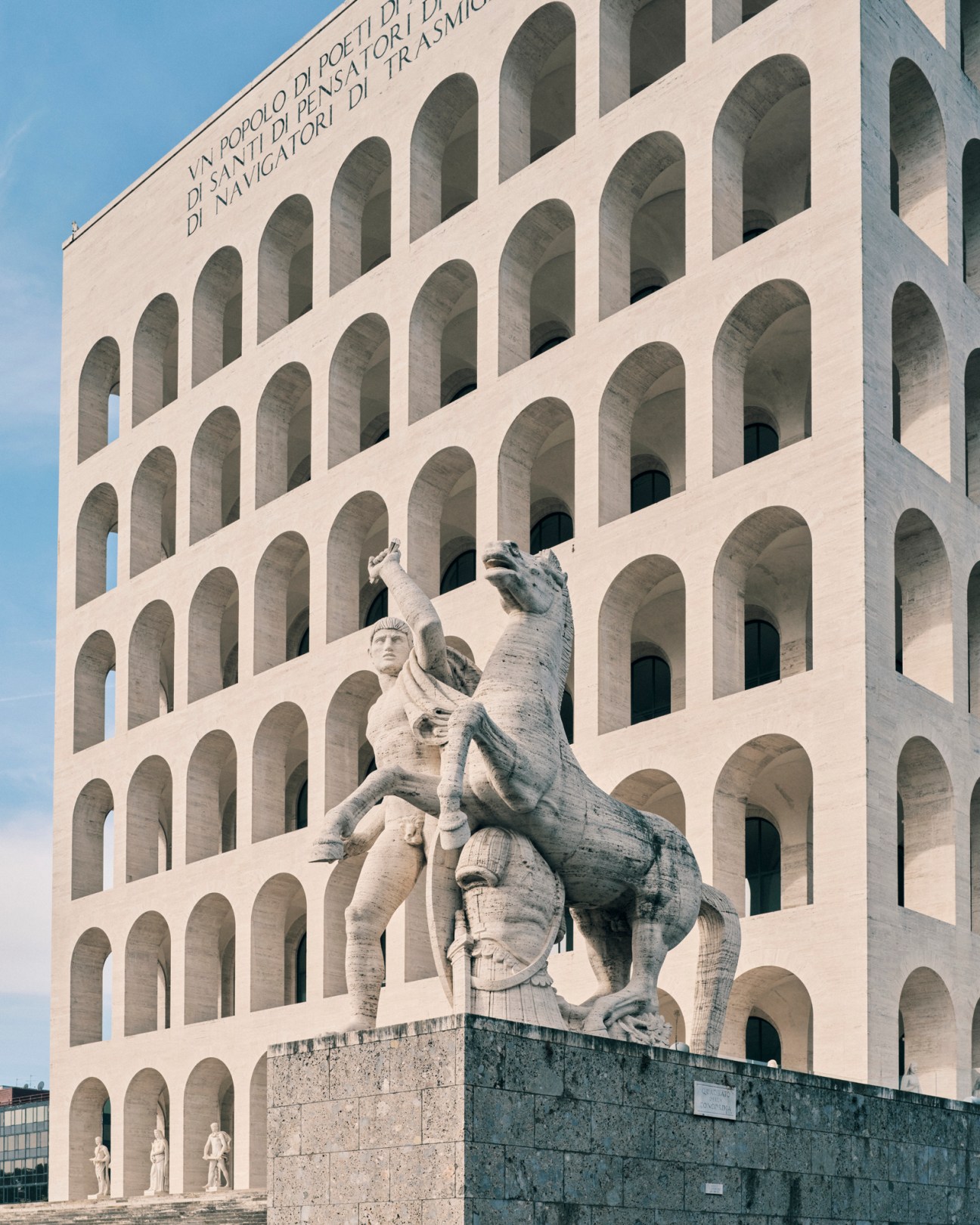
Can Design Holding offer the same sort of opportunities?
We will see. We have to align ourselves with a philosophy that benefits both partners. But it will be us who will protect the brand and the guiding principles of development.
In the long run, do you think that consolidation among design brands is a positive step for these markets, for these companies and for the employees and talents involved in them?
It’s an opportunity for Fendi, which has already been very successful in this direction in the past. Now we can strengthen Fendi in interiors and we’ll see how it goes for Hermès, Louis Vuitton, Dior and the others that are all heading in the same direction because it’s a very logical extension for a brand.
Who’s the new Fendi Casa customer?
Fendi is already extremely strong worldwide: in the Middle East, in China, in Japan, in the US. And where there’s a Fendi buyer, there’s an opportunity for Fendi Casa. We are at an interesting point for design because, post- coronavirus, we are all paying more attention to the home. So it’s the perfect moment for a new project like this.
Flip the stitch
The Gentleman in the Parlour (GIP), which is exclusively sold at L’Echoppe in Tokyo and on the brand’s own website, is a traditional menswear brand from Tokyo with a progressive attitude. Launched in 2020, its first collection of six blazers caused a stir among menswear devotees, helping the label to establish itself quickly. This is a serious feat in a country that takes fashion seriously, particularly when suit sales are declining sharply.
Yet gip is carving its niche at the top end of the market thanks to the nous of its founders. The trio consists of Hideaki Miyahara, chief pattern-cutter of celebrated Tokyo label Scye; Keiji Kaneko, a major player in Japan’s retail scene; and Motofumi “Poggy” Kogi, a style icon and fashion curator. monocle sits down with them to discuss Japan’s unique relationship with tailoring and the future of the suit.
Who are the founders?
Hideaki Miyahara
The 55-year-old Tokyo native is one of the finest pattern-cutters in the capital. A keen Anglophile, Miyahara started Scye with designer Hisayo Hidaka in 2000. Together with Hidaka, he has built the brand into a smart Tokyo staple for men and women with a discerning eye. In 2017 the duo also opened their first stand-alone shop, Scye Mercantile, in Tokyo’s Sendagaya neighbourhood.
Keiji Kaneko
Keiji Kaneko is one of the most influential figures in the Japanese fashion retail scene. He opened multi-label fashion retailer L’Echoppe in Tokyo in 2015 under the Baycrew’s Group. His sharp eye helps him to find great brands from all corners of the world. His talent goes beyond buying: he relentlessly pioneers exclusive L’Echoppe collaborations with the likes of Mackintosh and Heugn.
Motofumi ‘Poggy’ Kogi
Kogi is a style icon like no other. His playful looks attract fashion journalists and photographers in Florence, London and New York. From traditional three-piece suits to double-denim combos with wide-brimmed hats, there is nothing he can’t pull off. The 44-year-old left United Arrows in 2018, where he started his career, and today works independently as a fashion curator.
Take us through the history of the suit in Japan.
Hideaki Miyahara: We can rewind the clock to the Taisho era [1912-1926]. Japan still had a strong kimono culture, so people were not wearing suits or jackets as a fashion statement back then. Then, in the Showa period [1926-1989], especially during Japan’s rapid economic growth, it became normal for salarymen to wear suits to work. In the 1960s, mod fashion came from the UK, followed by the “ivy look” from the US. Japan had its moment with what we call “DC”, which is short for “designers and characters”. DC saw the rise of brands such as Yohji Yamamoto and Comme des Garçons, which made their own suits. The soft, unconstructed outfits of Giorgio Armani also inspired many Japanese designers. Japan had its own interpretation of this, making wide-shouldered, roomy suits.
Motofumi Kogi: The ivy movement was a major entry for fashion suits into Japan but, if you dig deeper, you go back to the UK. That’s how people in the Japanese fashion industry discovered traditional British [menswear]. What we called “classico Italia” in Japan was actually about British-inspired clothes that were made in highly skilled factories in Italy.
Keiji Kaneko: It was from the late 1990s to the early 2000s. Every multi-label retailer, from Edifice to United Arrows, Beams and Ships, was pushing classico. Some buyers might have added something different to the mix but Italy had total dominance. I saw nothing else at the time.

In 2005,the Japanese government launched ‘Cool Biz’, a summer initiative to ditch jackets and ties in offices to keep air conditioning at a level that is friendlier to the environment. How has this affected the sale of suits?
KK: Sales are massively down. I work next to the Edifice team [a retailer under the Baycrew’s Group] in the office, so I see the suit division and displays in the shop shrinking. Only the minimum is on offer. Simply put, the supply diminished as the demand declined. But I love suit culture regardless. From a fashion perspective, it’s heartbreaking to see things disappear just because they aren’t needed much. On reflection, Cool Biz was sort of a catalyst in forming our brand.
HM: gip has the potential to inspire the younger generation, triggering a ripple effect and affecting other brands in the big picture. Stylist Atsushi Okubo is doing the same with his suit brand, Stylist Japan. I believe that suits still hold a strong position in men’s fashion. We started this because we didn’t want to let the fire go out. We want people to know more about suits.
KK: What’s most disappointing about the current situation is that fashion retailers didn’t start selling suits just to cater to salarymen. The suit was important by itself. But as their businesses grew, the fashion-oriented direction was replaced by a market-driven approach. So this project is also about going back to the origins.
How did you all come together and form this idea?
KK: I met Kogi-san in August 2020.
MK: We’d met once before but it was the first time that we had the chance to properly talk over dinner. I said that we should do suits now because we live in a difficult time for formal menswear and that we should go against the grain. He had the same vision and things started rolling.
KK: I had been wanting to do something about the decline of suit culture. Suits might be losing their relevance in society but we wanted to challenge the status quo.
HM: Then Kaneko-san asked me to join and it was lightning-fast from there. We chose the items, fabrics and details, and launched the first collection in December 2020. Funnily enough, while many brands, including Scye, are struggling to sell suits, gip’s items are selling out. They’re not cheap. We’re grateful that people are appreciating the value. Some customers buy the whole collection.
Take us through your creative process.
KK: Kogi-san and I can always think of things we want to make. But we needed someone who can create them. Our standards are high. When we wondered who we could trust unconditionally, we could only think of Miyahara-san. This project confirmed that the pattern-cutter is such a critical player in the design process. Miyahara-san is also a designer in a sense that he has his own opinions.
HM: Usually, pattern-cutters simply produce the works that they are assigned. But at Scye I work together with designer Hisayo Hidaka, adding my own flavours into the fashion. It’s about playing to the strengths of specialists. Kaneko-san is a pro in buying and directing while Kogi-san is a style leader. But making is different. When a buyer tries to make clothes, he might only be able to realise about 30 per cent of his vision. I can’t do the buying but I’m an expert in making. My role is to understand their creative ideas and realise them perfectly.
KK: That the three of us share similar values is key. We all have different tastes but agree on what we think is cool. It’s a smooth collaboration. gip is about showcasing and promoting what we think is great, as opposed to what the market demands, so it’s important that everyone, including the production team, is on the same page. I was confident that, if we could build a strong team, we could make something that would speak to people in a time when everyone says that suits don’t sell. gip is a small community but it’s an ideal one.
Where did the unique name come from?
MK: Kaneko-san came up with the name from a novel by W Somerset Maugham, who was well-dressed. I also drew design inspiration from a four-button suit that the Duke of Windsor [King Edward viii of the UK] once wore. People such as them were muses for the brand.
KK: I had a lightbulb moment with the name. I knew that everyone would love it.
HM: You can picture a group of gentlemen talking when you read the name. It’s a delight for clothes-lovers like us to have deep conversations about what we make. After all, having fun is the most important element in creative work. It’s a thrilling experience to discuss, design and then wait for the samples. I can be a child again in the process.

Any personal memories with suits?
MK: My father was a quintessential Japanese salaryman with the salaryman haircut and suit. I couldn’t dislike it more. I joined United Arrows but I often went to Beams because they were strong in casual fashion. In my late twenties, I had more social occasions, such as weddings to wear suits. I enjoyed styling suits in my own way nobody else did. I’m a contrary person, so I want to do unconventional things. I find the fact that fewer people are wearing suits today as a positive opportunity.
KK: People had to wear suits to work until now. The custom is decaying but if there are good suits, why not wear them? Also, people used to care about the rules strictly; we want them to relax a bit.
MK: But authenticity remains important. You’d have no problem with gip garments when the dress code is formal.
KK: It’s handy if you have a proper jacket. Something like [the double-breasted jacket Kaneko-san is wearing] makes a big difference and takes you anywhere.
MK: And you can wear it for many years.
HM: People in 100 years from now may find our suits in a vintage clothes shop. I have a collection of garments from Savile Row that are about a century old.
What is the future of GIP and suit culture more broadly in Japan?
HM: gip’s third collection will be out in December. There are suits, shirts and a tweed jacket. It’s all made in Japan. We want to promote homegrown quality.
KK: We want to do it at our own pace. But we’d jump at the chance to sell gip to, say, the UK or Italy. Expanding can be a catalyst for change.
MK: Absolutely. I’d like to share my style tips with younger audiences too. I want to help them discover the joy of dressing down because you can actually do it with suits.
HM: Our plan is to grow organically, one step at a time. I wish someone like Michael Caine would wear our clothes. We want to showcase this quality to people around the world.
KK: We don’t want men to feel as though they have to wear suits. We want suits to be a positive choice for all sorts of occasions.
MK: Exactly. We don’t want to force anyone; we just want people to have fun.
HM: Fun is the key element. You don’t have to wear a two-piece suit; you could just put on a jacket. If we can help people to find their own ways of enjoying suits, we’ve done our job.
GIP is sold at L’Echoppe in Tokyo and its online store.
Should museums heed calls for restitution?
The debate
In October, Jesus College, University of Cambridge, became the first UK institution to return one of the Benin bronzes to Nigeria. The sculpture was among thousands of pieces looted by British soldiers in 1897 and then scattered around the world. Germany has agreed to return more than 1,000 items to Nigeria.
These bronzes are just one front in a global debate about the repatriation of artefacts. The most prominent among these are the Elgin or Parthenon marbles, created 2,500 years ago as part of a frieze decorating the Athenian temple. In the early 19th century, they were shipped to the UK by Thomas Bruce, seventh Earl of Elgin, who had been British ambassador to the Ottoman empire, of which modern Greece was then a part. Elgin intended to use the marbles to decorate his stately pile but, financially stretched, he sold them to the UK government. The marbles have since been a star attraction at the British Museum and a bone of contention between the UK and Greece.
The Parthenon was a ruin when Elgin took the marbles; the argument that he rescued these treasures for posterity is not without merit. But since 2009 there has been a beautiful museum at the foot of the Acropolis with space awaiting the marbles’ return. Greece’s prime minister, Kyriakos Mitsotakis, considers this a priority: he has offered a deal under which Greece would send other valuables to the British Museum on loan. Is it time to send the marbles back?
Meet the panel
Alex von Tunzelmann
The historian
Alex von Tunzelmann is the author of books including Blood and Sand, a history of the Suez crisis; Indian Summer, about the partition of India; and Red Heat, exploring the Caribbean during the cold war. Her latest book, Fallen Idols, is a history of statue-toppling. She also wrote the screenplay for the 2017 film Churchill.
Tiffany Jenkins
The writer and broadcaster
Tiffany Jenkins is the host of podcast Behind the Scenes at the Museum. She presented the BBC Radio 4 series The History of Secrecy and frequently appears on other programmes. She has written for The New Republic, Foreign Policy and The Observer, among others, and is the author of Keeping Their Marbles, a defence of leaving treasures where they are.
Stathis Kalyvas
The political scientist
Stathis Kalyvas is the Gladstone Professor of Government at All Souls College, University of Oxford. His previous appointments include associate professor of political science at the University of Chicago, assistant professor of politics at New York University and co-director of the Hellenic studies programme at Yale University. He is the author of Modern Greece: What Everyone Needs to Know.
What is the case for returning the Elgin Marbles?
Stathis Kalyvas: The marbles are outliers when it comes to this type of case because they’re artefacts that were detached from a monument that still stands. Another thing to consider is that a museum has been built [in Greece] to house them. If there were one case to be made for repatriation, this would be a strong one.
Alex von Tunzelmann: The acquisition of the marbles was always controversial. We now have the idea that everyone was fine with this and that it’s just woke people who want to send them back. But Lord Byron, for instance, objected very strongly to it. He wrote in Childe Harold’s Pilgrimage about how awful it was that the Parthenon had been “defaced” by British hands. It was even debated in parliament.
And what is the argument for leaving them where they are now?
Tiffany Jenkins: The crucial question is, “Where is it best for these artefacts to be on their own terms?” There are two reasons why the answer is The British Museum. First, think of how they were acquired. It was the early 19th century; when the marbles came to the UK, they transmitted classical principles throughout the country and beyond. Second, [in the British Museum] you can see them in relation to other cultures. There is that point in the museum where you see Assyria to your right, Egypt to your left and classical Athens straight ahead. In terms of understanding ancient Greece and its effect on other civilisations, the status quo is quite good.

AVT: Tiffany is right to delineate that there’s a legal case and then there’s a heritage and history case. The legal case is a red herring. When Boris Johnson was asked about it, he referred to how the marbles had been acquired legally. There’s a lot of dispute about that; Elgin claimed that he had received a certificate from the sultan but that doesn’t exist any more. Though that’s not really the point. The legal case isn’t the aspect from which we should be approaching this question. We should be looking at this as a question of history and heritage.

How is this viewed in Greece today? Is the presence of the marbles in the UK an open wound?
SK: At one point it was a personal quest of Melina Mercouri, an actress and culture minister under the first socialist government in Greece, when the nationalism of the Socialist Party was emerging in Greece. There was a strong sense of grievance and it fit nicely into the narrative of the time; then it stuck around. It’s interesting to highlight the extent to which this demand, which had a strong nationalist undercurrent, actually motivated the Greek state to do two important things that otherwise probably wouldn’t have happened. The first was the restoration of the Parthenon. A powerful argument for the UK keeping the marbles was that the Acropolis stood in the middle of a city where the air was extremely polluted. So there was a big effort to clean the air, which was achieved, then this fantastic Acropolis Museum was built. So even though I didn’t find the demand to be very credible at the time, in terms of its intrinsic value, it was productive. It allowed Athens to make important changes.
It would be bold for the UK to argue that this has been for Greece’s own good.
SK: I am very much in line with Tiffany’s point that until now, the British Museum has been a very good host for those rocks. But there is no argument that these things have to remain constant over time.

Where do you stand on the argument that if one museum had to return artefacts, they all would?
AVT: The “slippery-slope” argument is a fallacy. What its proponents are saying is, “You see this one reasonable case? Would it be the same if we took a totally different case and made it unreasonable?” No, it wouldn’t.
What about protection and security? Is there any sympathy for the idea that if, say, the Pergamon Museum in Berlin had returned Babylon’s Ishtar Gate to Iraq, we might not still have it?
AVT: Most art is destroyed, looking at the whole of history. In recent years we’ve seen awful vandalism in Iraq, Syria and Afghanistan. As a historian, I have conflicted feelings. I’m glad that some of these things have been saved because they are wonderful and enrich humanity. Yet there’s a part of me that believes that destruction is as much a part of human history as construction. Still, it’s hard to detach that from my feeling of, “Thank God, this thing is safe.”
Is it odd that such intense contemporary political feeling gets attached to objects created so long ago?
TJ: Political claims have always been made through heritage. What you had with the birth of museums was a sort of national idea. What claims are being made through culture in the present – when, say, Emmanuel Macron talks about repatriation? There’s a process of reauthorising going on through the politics of apology. When Macron says that something no longer belongs to France because of the way in which it was acquired, it may be an assertion of Frenchness. Rather than saying, “We’re brilliant and all of Rome will be in the Louvre,” which is what the French said under Napoleon, they’re now saying, “We were bad. We’re going to send it back.” It’s a very different little legitimising narrative, isn’t it?
SK: It’s difficult not to see a parallel: in the past you had a very open sense of superiority, whereas now you have the superiority of being able to make the claim that we should return something because we are the good guys.
Are there any hard and fast rules of repatriation?
AVT: Probably not, as these items are so diverse. Objects in museums can be so wide-ranging, from the Parthenon Marbles to crisp packets, which inform material culture. We can’t apply the same standards to all of these items. We need to be flexible in our thinking; conditions change and one doesn’t make decisions for all time.

Should we think differently about artefacts that still have a religious or spiritual significance, such as the ‘Toi moko’, mummified Maori heads, some of which have recently been returned to New Zealand?
TJ: The question is, “Who decides and on what basis?” Can one group override the claim of another? What we’re seeing is competition over authority. In the 18th century, Enlightenment institutions such as the British Museum had an ideal of truth and beauty that is now subject to revision. And with the priority that we now place on historic wrongs, a different authority is on the rise: identity. This has demoted the Greek case for some, because we now look at colonisation as being higher up the scale.
Is it more straightforward when the objects aren’t on display? The British Museum has prayer tablets looted from Ethiopia in 1868, which because of their sanctity, have been kept in a vault ever since.
SK: It’s different because these objects have a contemporary value as part of activities that affect people’s everyday lives in a way that heritage issues do not, in spite of their emotional weight. So they should be dealt with in a different way.
TJ: When Neil MacGregor was the British Museum’s director, he made a big thing of how he wasn’t allowed to see them either. What are they doing there? I know that they’re meant to be available to believers. But it’s a little awkward if you have to go to a museum. Another big question is: where do they go back to? In the case of the Parthenon, it’s obvious: the Acropolis Museum. But there isn’t always a home, a shelf in a pristine place.
And if you look at cases involving human remains, they haven’t always been straightforward either. Sometimes there isn’t anyone to care for them.
AVT: There’s a similar controversy over the Koh-i-Noor diamond, which, I think, should go back – but to who? Afghanistan, Pakistan, India and Iran all have good claims.
SK: The criterion could be the use of the object: a Byzantine icon that was produced by a painter to be sold, then bought by a museum and displayed, is very different to one that has been taken from a church where it was worshipped. You can make a case for restitution on religious grounds for the latter but not the former.
Are there any examples of British items held elsewhere that the UK has wanted back?
TJ: There’s the Stone of Scone [repatriated from England to Scotland in 1996]. But repatriation is a political claim: by returning something, you’re distributing sovereignty. It’s a political relationship being rebalanced.

AVT: I can’t think of anything offhand. We have so much stuff. It’s probably not a thread that we want to pull.
TJ: When you look at the beginnings of the British Museum, you notice that there was no British culture in it. The narrative of Britishness was more about order and the Enlightenment perspective. It wasn’t necessarily about having British things.
AVT: Destruction is part of the historical story. You see that with the Edward Colston statue in Bristol [pulled down by protesters in 2020]. It is now on display in a museum, surrounded by placards and covered in graffiti, and it’s a much more interesting object. It tells us more about the history of Bristol and modern attitudes than it did as a rather undistinguished piece of statuary. It’s now an object with real resonance. The Parthenon is a site that has been through so many periods of history. We need to consider that destruction might be part of the story.
If it was up to you, would you return the marbles?
SK: I can see the case to be made. But I wouldn’t call it a return. It would have to be part of a broader rethinking of how we deal with heritage pieces. I can see an opportunity, as opposed to the end of a debate.
TJ: The status quo is a good position. You can see half of the remaining Parthenon that’s not on the Acropolis in the Acropolis Museum, in the context of that monument and of the pre-classical sculptures that you see as you walk through it – and in London, where you see the marbles in relation to other cultures and times.
AVT: That’s what we need to look at: where do these belong in heritage terms? Tiffany makes an interesting argument but the stronger case is that they probably belong in the place where they originally stood because that monument is depleted without them.
Conclusion
If any country has a strong case for the restitution of its plundered treasures, it’s Greece, where the Elgin Marbles are concerned. Yet it is unlikely to happen any time soon, certainly as long as the UK has a government whose answer to almost everything is to launch a flag-waving culture war. In the meantime, the marbles will continue to serve a valuable role as a focus of discussion about what certain items mean to us and why.