Issues
Brazil’s big cat
Rio de Janeiro-born Glória Maria means a lot to the history of Brazilian journalism. In 1977 she became the first reporter to present a story live in colour on the country’s main news show, Jornal Nacional. Her compatriots have grown up watching her cover the world’s most important events. “Although Brazil’s image took a turn for the worse more recently, during my 40 years travelling for work, people always smiled when they found out where I was from,” says Maria. “We were synonyms of good character, good people, good energy.”
As a host of variety news show Fantástico between 1998 and 2007 (a programme that was a Sunday evening staple for Brazilians), Maria would hit the road every week. “I used to host the show live on Sundays, then travel Monday to Friday,” she says. “We had a quick edit turnaround from my reports then we were back in the studio on Sundays.”
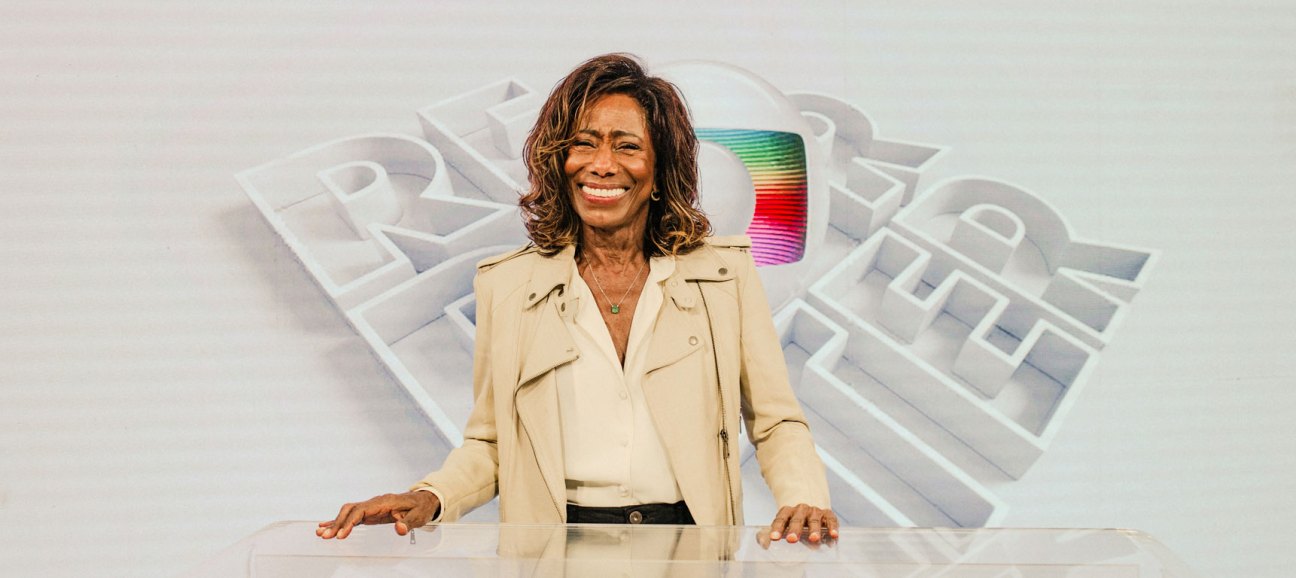
Today, however, as anchor for Globo Repórter – a weekly news programme for the country’s main broadcaster, which explores often-overlooked topics through in-depth investigations – her job involves much less on-the-ground reporting. But setting up shop behind a studio desk – from which she speaks to monocle – has made her no less respected by her audience. Always impeccably dressed in glamorous outfits, Maria remains a joyful TV presence, always delivering the news in a sharp and often emotional tone – her deliciously soft Carioca accent resonating well with Brazilians. All of this has certainly made her much more than just a journalistic voice that can be trusted; she is nothing short of a national icon.
But, despite this sterling reputation, Maria’s career has come with challenges. As the country’s first black television reporter, she has been a trailblazing anti-racist figure – something that is just as important now as it was at the beginning of her career. “I come from a time when there were not many black people on TV but racism today is stronger than ever,” she says. “My way of fighting it is like a lioness – with no fear, without letting anyone subjugate me.”
She also refuses to be sidelined because of her age. The fact that nobody knows how old she is has become something of a running joke: she staunchly refuses to reveal the secret in interviews. The gossip press thought that they would finally crack the mystery when she received her coronavirus vaccine but their sleuthing was unsuccessful. “This age thing never really worries me,” she says with a laugh. “I feel great, I go to the beach, put on a bikini, wear a mini skirt. My life is mine, nobody will dictate how I should live it.”
So what does concern her? “Brazilian journalism is following changes worldwide, a more immediate and instant journalism, with information and findings coming faster because of new technology,” she says. “And while this unites us, it also divides us. It’s the biggest challenge and threat to journalism.”
Maria says that it’s why journalists must work as “conductors of the news”, delivering an objective, critical take. The key to doing this? “Humility and understanding that journalists don’t exist; what exists is the news.”
The CV
1971: Starts work at Globo TV
1977: Becomes first person to present live news in colour on Globo TV
1998: Appointed host of Brazilian weekly news programme Fantástico
2010: Begins co-hosting of Brazilian documentary show Globo Repórter
2021: Returns to Globo Repórter after an almost two-year long absence due to a health problem, surviving a brain tumour.
Flake news
“Every 300 years a cake is born,” says Ciro Scognamillo, chef-proprietor of Neapolitan bakery Pasticceria Poppella and inventor of the fiocco di neve (snowflake), a delicious confection taking the city by (snow)storm. Since arriving here at 10.00, and despite his suggestion to the contrary, a cake has been born at least every minute – I’ve seen to the demise of three of them myself.
It’s nearly lunchtime on a sunny Friday in Rione Sanità, a lively neighbourhood even by Naples’ standards. As I sway, cake-filled, in my chair, Scognamillo tells me his story. He’s the son and grandson of bakers, and grew up on the same streets on which his grandfather Raffaele (nickname: Papele) and grandmother Giuseppina (aka Puppnella) once pushed their bread cart. People would cry, “Puppnella… Papele…” These names eventually became one: “Poppella”. When, decades later, their grandson started out on his own, this is what he called his bakery.
Neapolitans have a healthy respect for tradition, especially in culinary matters. There is a right way of doing something and a million wrong ways. This absolutist approach is rarely questioned, not least because it is born from such rich gastronomic heritage. But it sometimes makes Italian cuisine, however revered, feel like a closed book.
In Naples, bakers stand on the sugary shoulders of giants. This city was home to the creators of sfogliatella, a flaky shell-shaped pastry, and babà, a local “correction”, as Scognamillo puts it, of the rum-soaked French cake. Both have been sating sweet teeth for centuries. With such stalwarts, Neapolitan bakers can be forgiven for being conservative.
Nevertheless, Scognamillo began experimenting in his small, white-tiled kitchen on Via Arena della Sanità. Eventually his research gave birth to a light-as-air brioche filled with marmoreal sweet ricotta. It was christened il fiocco di neve.
He had his cake but no one to eat it. After traipsing around Naples like a rusty plough, failing to shift snowflakes, Scognamillo gave some to a friend organising an event for children. A few weeks later, the same friend asked if he had any more. Just months after that, when he opened his bakery one Sunday morning, there was a queue around the block.
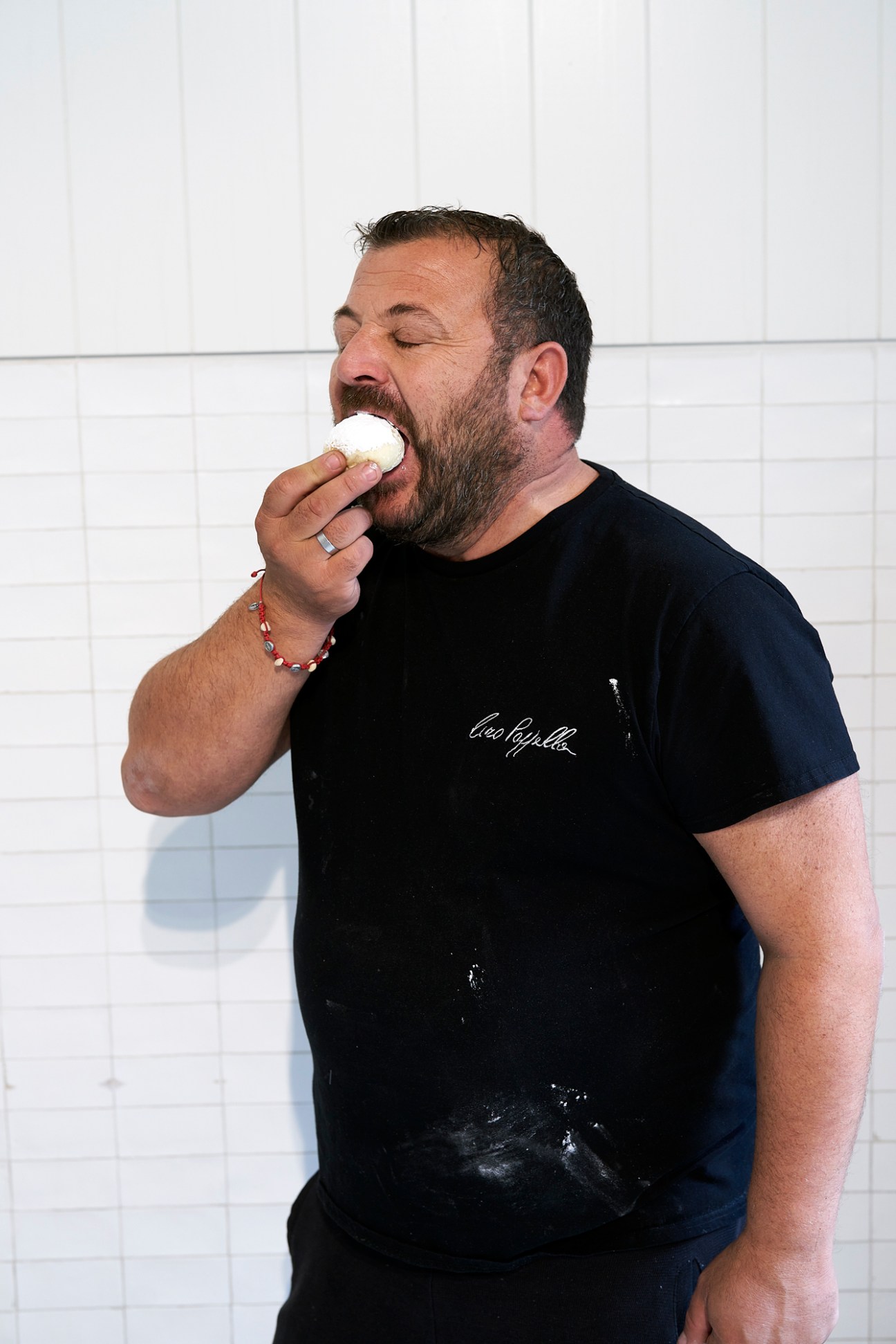
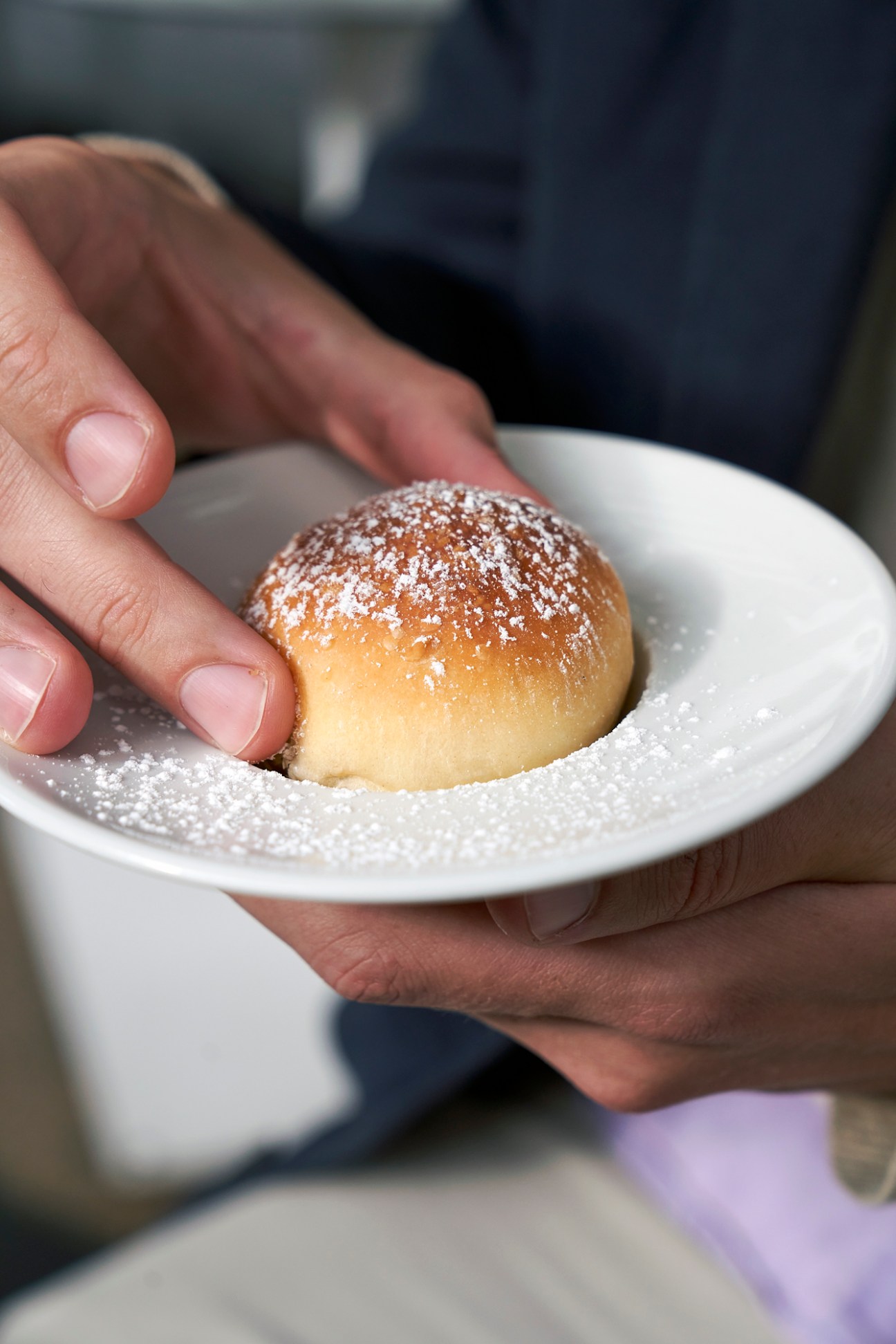
Today his confectionery empire stretches down a street whose pavement is guarded by striped Poppella stanchions. Every two minutes people stop the baker to smile, embrace, seek assurances. But it’s not all hugs and kisses: with great success comes great envy. Those early queues contained not just punters but scheming rivals. Soon, knockoff fiocchi began appearing all over town. His jaw clenches. What did he do? I ask, with trepidation. “I did what any respectable businessman would… trademarked the name.” And did they stop? “They started calling them ‘clouds’.” Imitation is the highest form of flattery, I whimper back.
Still, originality has cachet: on his phone, Scognamillo has pictures of himself with former Roma football captain Francesco Totti and the patron saint of Naples, Diego Maradona. Inside, on the wall, there is one of Italy’s president Sergio Mattarella visiting Poppella: “When he ate a fiocco, he grasped my arm.”
After the presidential squeeze of approval, what other heights can one baker scale? “I want to invent more,” says Scognamillo. “I have an idea; people might like it, it might sell – but it’ll never be the same as the fiocco.” Wiping the remains of a fourth from my face, I beg for more information. What is it, the new cake? “Don’t make me tell,” he says, the fire of a million melted snowflakes in his eyes.
The Opener
How to live: screen burn
The list
Rise above digital distractions and make 2022 the year of sticking to your mission, writes Tyler Brûlé.
These days meetings with communication officers often turn into therapy sessions for the client. They used to go like this:
1. Small talk and the pouring of drinks.
2. Warm-up chat.
3. Media owner discusses the landscape and the opportunities it offers.
4. Comms team takes notes. In Japan there’s a lot of mooing and grunts of agreement; in Finland no one speaks.
5. Someone delivers a condensed version. More coffee and small talk. “Next steps?”
But today they run more like this:
1. “Where did the past 21 months go?”
2. Discussion about the state of the world as your agenda spins out of control.
3. Beverages are finally served while the comms team talks about its battles with climate activists, inclusion militants, work-from-home lobbyists et al.
4. “This used to be an exciting job,” says someone in the travel industry. “Now I’m glued to a screen and one small comment can become a crisis.”
Therein lies a lesson for 2022. Smart companies need to look up from their screens, engage in person and stick to their mission rather than trying to please everyone. When a clever CEO was recently asked why his women-focused brand didn’t do genderless clothes or menswear, he said, “We’re a feminine brand. We make clothes and accessories for women, period. Strong brands make choices and don’t need to do everything. They know their market.”
Correspondent’s view: North Africa
Out of the margins
Want to get the most out of your new year’s celebrations? Then head to North Africa, where there’s twice the party. Here, the celebrations on 1 January are followed by a second, known as Yennayer, which takes place about 11 days later (depending on the country), marking the first day of the Amazigh agricultural year.
The Amazigh people are the indigenous, pre-Arab inhabitants of Africa’s northern belt. Often called Berbers, a name that the ancient Greeks and Romans gave them and is now considered pejorative, they are today scattered across Libya, Morocco, Algeria and Tunisia, with substantial populations in Europe, particularly France.
Unlike the Gregorian or the Islamic Hijri calendars, Imazighen (the plural of Amazigh) anchor theirs in an agrarian system used since ancient times. It was revived in the 20th century by activists who set year zero as the estimated date of the ascension of an Amazigh ruler to the Egyptian throne; for Imazighen, next year will be 2972.
Yennayer celebrations are just one sign of how the Imazighen have become more assertive following decades of marginalisation. Activists are pushing for greater recognition of their language and culture. In 2018, Algeria declared Yennayer a national holiday and Imazighen in Morocco are pressing for the same to happen there. With this in mind, it looks like 2022 could be a happy new year – or assegas amegaz – in North Africa.
Our man in…
From a Canadian family feud that’s riveting residents to China’s ever-tightening grip on Hong Kong’s politics, find out what’s new in Monocle’s Swiss HQ and bureaux.
Zürich
Sunday trade-off
Zürich’s parliament is debating whether to allow trading on Sundays, which it could do by declaring the city a tourist centre. The loophole would allow shops to open seven days a week, which would be a boon for businesses but is firmly opposed by trade unions.
London
Riding down
Central London’s streets should become more peaceful with a bill regulating pedicabs likely to tidy up the industry. At present these pedal-powered taxis play loud music with flashing lights as they drop partygoers off in Soho. We think it best to keep the club in the club.
Toronto
Bad blood
A Succession-esque drama is unfolding at Rogers Communications, one of Canada’s largest family-owned companies, with Edward Rogers battling his mother and sisters in court to keep control of his late father’s business. Residents are reaching for the proverbial popcorn.
Los Angeles
Talking the walk
Los Angeles is awash with marketing materials for the 2028 summer Olympics, showing how pedestrian-friendly it will be by the time of the opening ceremony. That’s a good thing for the car-centric city – but getting there certainly won’t be a walk in the park.
Hong Kong
Fully loaded
As Hong Kong prepares for December’s legislative council elections, three people have been arrested for sharing an online post urging others to cast blank ballots. In the first big race since Beijing’s overhaul of Hong Kong’s electoral system, pro-democracy voters can’t even shoot blanks in protest.
Tokyo
Dog dreams
Mitsubishi Estate has bought a significant chunk of the British embassy compound in Tokyo. Luxury flats are the likely outcome of the deal but we suggest something more loveable: how about a year-round outdoor pool or a dog run for city pooches?
Sounds of the city
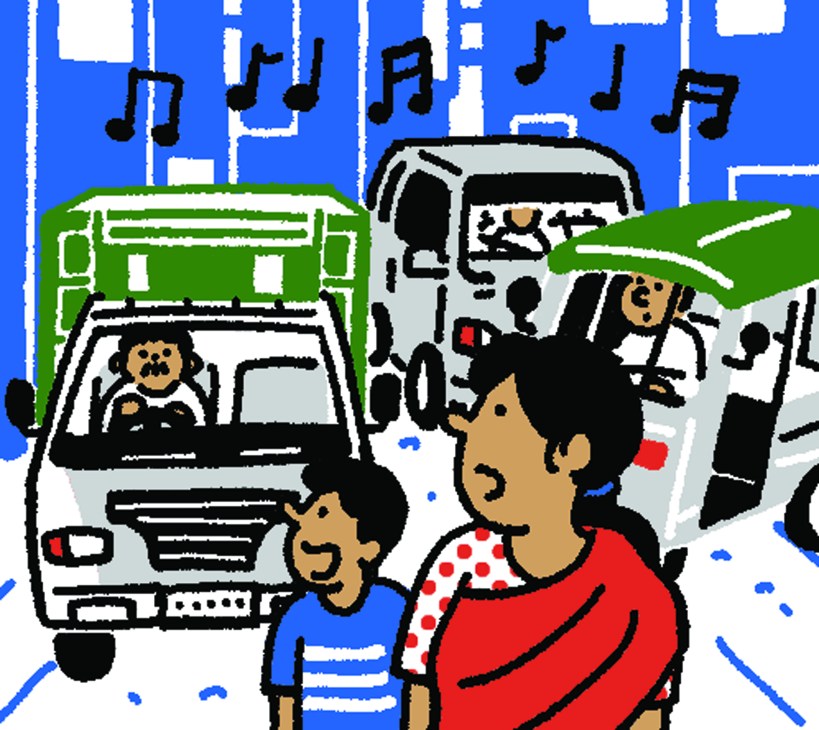
India’s main roads are notoriously clamorous: a cacophony of roaring engines, dinging bicycle bells and honking car horns. This noise might resemble some of the more outré strands of modern jazz but Nitin Gadkari, India’s minister for road transport and highways, wants to make it more explicitly musical. So he has proposed the mandatory replacement of the prosaic car horn with devices that broadcast the sounds of Indian instruments, from the tabla to the harmonium. More bewilderingly, Gadkari also suggests that emergency vehicles should swap sirens for more pleasant melodies. He complains that the urgent wails are “irritating” – but surely that’s the point?
Will BTS go AWL?
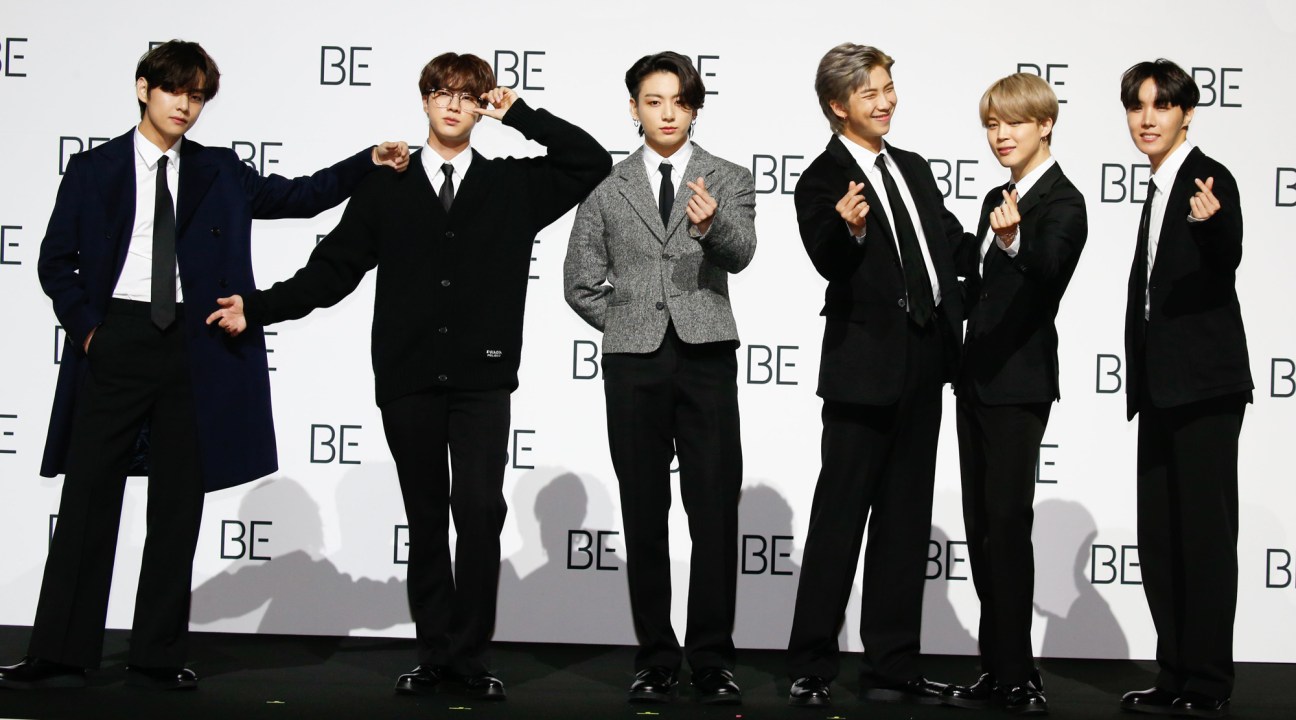
All South Korean men must do about 20 months of military service by the time they’re 28 – unless, perhaps, they’re members of K-pop group bts. Because of the boy band’s role in boosting the country’s international profile, the National Assembly is considering letting them skip conscription. Should the very specific bts Military Service Exemption Act not garner enough support, music fans can at least count on the South Korean army having the world’s best military band.
Bigger, better, merrier

Envy will put you on Santa’s naughty list but that hasn’t stopped cities competing to out-Christmas each other. Last year, Alicante in Spain built the world’s tallest nativity scene, topping out at 18 metres, 13m higher than that of previous record-holder Monterrey, Mexico. Dubai can claim to have the world’s biggest bauble, with its 1,100kg orb – but don’t be surprised if a ballsy municipality breaks that record this Christmas.
Mixed messages
Much coronavirus-related public messaging has assumed that most people will do the right thing if the reasons for rules are sensibly explained. But the pandemic has also been a reminder that messaging is most effective when consequences are made clear.
Good: France
Things changed for this vaccine-sceptical country when it was announced that the unjabbed would be barred from cafés, cinemas and so forth. France is now among Europe’s most vaccinated nations.
Indifferent: UK
Posters and announcements remind passengers on London’s Underground that masks must be worn. But with little enforcement, it feels like a hollow gesture.
Bad: US
The messaging here has been muddled by populist politicians and yahoo media to score culture-war points against an indifferent force of nature. The consequences have been furnished by the virus.
The interrogator
Emile Mosseri
USA
Los Angeles-based composer, producer, singer and pianist Emile Mosseri is best known for scoring soundtracks to films including Miranda July’s crime comedy Kajillionaire and Lee Isaac Chung’s Golden Globe-winning Minari. His latest work, however, is music created in collaboration with American composer Kaitlyn Aurelia Smith. Released as two EPs, the initial part, I Could Be Your Dog (Prequel), is out now, with its sequel, I Could Be Your Moon, due for release in early 2022. Here Mosseri tells us about his process, a new movie and his favourite Christmas tunes.
How did this project come to be?
Kaitlyn and I met during the belly of the beast of the pandemic. We would go on walks but we couldn’t be in the same room, so when she left Los Angeles last year, making music was a way for us to continue our friendship. We started with one song, then that turned into two and three, six and seven, and then a record, I Could Be Your Dog. The label, Ghostly International, then wanted us to make a B-side for it so that we had enough music to fill a vinyl LP. So that was the catalyst to make I Could Be Your Moon.
Was there a benefit to making two collections in quick succession?
Because we had just made a record together, we had learned each other’s musical language and we got to take it a step further sonically and spiritually with I Could Be Your Moon.
What do you like about releasing work in this gradual way?
It’s like when you get a ticket for a concert: the night itself is one thing but the months leading up to it can change your mood and your feeling.
Can you tell us a little about the new film that you’re working on with Jesse Eisenberg?
It’s called When You Finish Saving the World. I got involved before they started shooting because it’s a film about a musician; I had to write songs with Jesse early on in the process because a lot of the music had to be dialled in before they shot. The songs in the score are also connected to the songs that the characters sing. It was an exciting challenge for me and a new type of project to write not only the score but the music that the characters were hearing and playing in the film.
What’s your favourite holiday tune?
I grew up in a Jewish family but I’m a sucker for Christmas music and the holiday spirit and all that stuff. I like “O, Holy Night” and “Silent Night” in particular. I know that they’re not exactly deep cuts but it doesn’t get any more beautiful.
Image: Shutterstock.
Pride of place
What a mad – and also kind of amazing – year we have had. As I write this editor’s letter, in a happily busy Midori House, it’s hard to remember how impossibly shaky the world looked 12 months ago. In the UK, one of the first countries to start a coronavirus vaccination programme, it would not be until 8 December 2020 that the first person was offered a jab. Today, in most developed nations, everyone who wants to be vaccinated has been.
But vaccines have also become part of a complex set of diplomatic manoeuvres. Countries including China and Russia have seen opportunities to win friends and gain influence with nations in need or, in some instances, attempt to scupper a country’s hopes of taking care of its citizens – China was accused of doing all it could to ensure that Taiwan was denied the doses it needed.
More altruistic donors have funnelled their contributions via Covax, the organisation attempting to make global access to the jabs more equitable. And the willingness to share, to behave with some benevolence, can be a good move for your nation’s diplomatic kudos. This is why we have added vaccine donations to the list of metrics that we used to judge this year’s soft-power superstar nations – a checklist that covers everything from a state’s foreign-aid budget to the charting prowess of its pop acts.
But another striking thing about this year’s rankings is how many previously glowing practitioners have been tripped up by the pandemic. If your nation pulled up its drawbridges, even when it meant stranding its own citizens overseas, then it lost influence (sorry Australia). You can’t win at the soft-power game if you are not fielding players, whether they are your sports stars or politicians. In short, it’s made for a fascinating ranking that will no doubt irritate some, delight others. But, as we said, it has been a topsy-turvy year. The survey starts here.

Somehow, while Colonel Gaddafi was still in control, I had a mini-break in Tripoli, staying in a hotel that was filled with an eclectic mix of oddball characters. I went to a museum dedicated to the great man, travelled into the desert, visited the Roman city of Leptis Magna and had coffee in the old Italian colonial-era cafés. It made a connection. Ever since, I’ve followed the twists and turns of the country’s often brutal history and wondered how this resource-rich nation could become the economic success that seemed so possible following Gadaffi’s demise.
As part of the redesign and refocus of Monocle this autumn, we decided to let reports run longer where we have great access and a new story to tell. I am pleased that this month Libya is the focus of our long read (page 76). Mary Fitzgerald has been covering the country since the fall of Gadaffi. She used to live in Tripoli and for this issue she returned to discover a nation trying to get on with life, with business, even while so much lies in tatters and the threat of violence breaking out is never far away. Her account and the amazing photography of Rena Effendi capture this strange time but also suggest that there is a way for Libya to come together, even now.
In the aftermath of the Cop26 talks in Glasgow, we run two fascinating interviews with people at the forefront of the climate debate: Mads Nipper (page 99), the CEO of Ørsted, the Danish firm that’s the world’s biggest operator of offshore wind projects; and President Alvarado of Costa Rica (page 89), a country that has managed to protect its environment and grow its economy. Alvarado has a clear message: it’s time for bigger nations to up their game.
But there’s plenty of seasonal fun this month too. Our Inventory section (page 227) has you covered for Christmas and there are some very nice gifts on our fashion pages (page 210). And make sure you read Alexis Self’s report on a snowy battle of the buns in Naples (page 34).
Finally we’d like to say a huge thank you for all your support and feedback. Monocle will celebrate its 15th anniversary in March and, thanks to our readers and partners, it’s set to be a great celebration. But for now, have a fun Christmas and, hopefully, an easy start to 2022.
Please send feedback, ideas and comments to
[email protected].
Will Russia ever play nicely?
The debate
Russia is geographically vast and astonishingly beautiful. Blessed with natural resources, it is the world’s second-largest producer of natural gas and third-largest producer of oil, exporting colossal quantities of coal, nickel and wheat, among many other commodities. It has bequeathed an incalculable bounty of literature, art and music. Its people comprise a fortune in human capital. There is nothing stopping Russia from being a constructive member of the global family of nations.
Nothing, perhaps, except itself. In the decades since the Soviet Union collapsed, Russia has refused to follow the path taken by the nations that it once held captive. While it might have been optimistic to expect Russia to clamour to join the EU and Nato, it could – and should – embrace a destiny as a functional European country.
Instead, Russia glowers across its western frontier. It has invaded two of its neighbours, Ukraine and Georgia, and meddled with the politics and institutions of many others. It has dispatched hitmen to murder its enemies on foreign soil with weapons that risked – and took – the lives of civilian bystanders. Its diplomatic discourse is often conducted more in the language of the Twitter troll than the ambassador. That its government is crooked and authoritarian is beyond doubt.
Did it have to be like this? And does it have to be like this? Basically, why doesn’t Russia get with the programme?
Meet the panel
Mark Galeotti
The academic
Mark Galeotti is the director of the consultancy Mayak Intelligence, a senior associate fellow at the Royal United Services Institute and Honorary Professor at the ucl School of Slavonic and East European Studies. He is the author of A Short History of Russia and We Need to Talk About Putin, among other books.
Leonid Volkov
The politician
Leonid Volkov is chief of staff to Russia’s most prominent opposition leader, Alexei Navalny, who was poisoned with a nerve agent on a domestic flight in Russia in 2020 and evacuated to Germany. Navalny returned to Russia earlier this year and was arrested and imprisoned; he is now held in a penal labour colony.
Ekaterina Kotrikadze
The journalist
Ekaterina Kotrikadze is a journalist and presenter for independent Russian television network TV Rain, which covers everything from news and politics to culture. It is one of several media outlets classified as “foreign agents” by the Russian government. Prior to joining TV Rain, she was deputy editor in chief and primary anchor of international Russian-language broadcaster rtvi.

Was Russia’s current situation inevitable? Was there a fork in the road that you couldn’t return down sometime after 1991?
Leonid Volkov: During the 1996 presidential election, political predictability was preferred over institutions and those around Boris Yeltsin got the idea that money is the most important thing in politics – more important than ideas, institutions, whatever. Everybody learned about money and television propaganda, how they let oligarchs achieve whatever they want. This is what [oligarch] Boris Berezovsky learned and elected Putin with.

Given a clear choice, would Russians rather be a normal European country or are they pretty happy with what they have?
Ekaterina Kotrikadze: It’s really hard to say. There are millions of people who watch national television channels and trust the propaganda, which is massive. It’s always being said that Putin was the man who had a victory over the 1990s, when everything was terrible and frightening and people had very little sense of security in their lives – and that if we didn’t have Putin, that’s what we’d go back to, which is ridiculous. I agree with Leonid that 1996 was when things changed: that was the moment we lost democracy in this country.

Do you think Vladimir Putin is happy with Russia as it is? Is there no part of him that wouldn’t rather stride the world stage as an affable and admired figure?
Mark Galeotti: He’d be fine if he felt that Russia’s interests – and that means his interests – were being respected. I don’t think he has some kind of ideological commitment to trying to bring down democracy; he doesn’t care. It is about self-preservation. It is about projecting Russia’s strength as a way to make him feel good. And it’s about his historical legacy.
LV: The best job in the world is probably to be a dictator who also enjoys popular support. You can pose half-naked on a horse; you can do whatever you want. But now, for the first time in 20 years, Putin has to exercise some politics because stability doesn’t sell any more and neither does this idea that we are a besieged fortress.

Is that narrative now less entrenched than it was? And what might a tipping point look like?
LV: I don’t agree that something has to happen to make change. It already happened. The landmark importance of the [2021 Duma] election – well, quasi-election – we just had is that it was a clear demonstration that stability doesn’t sell any more. We could talk a lot about the 2016 Duma election and the 2018 presidential election – there was a lot of fraud [committed] in both of those. But even if we consider the results cleaned up from that we would still have to accept that United Russia and Putin won. That wasn’t the case this time. In terms of perception of legitimacy, it’s quite a cornerstone. Legitimacy is a complicated political concept. You can’t measure it. It will take time. More than a million people are members of local electoral commissions; that’s pretty much every schoolteacher in the country. And everyone knows a few teachers. So people will talk to people – one million people who know perfectly well how it was all done.
Could the regime overreach itself? Authoritarians often do, out of complacency or hubris, and it can be quite a small thing. Maybe like making media organisations declare themselves as foreign agents, which I notice TV Rain doing in an amusingly large font on its homepage.
EK: And in pink, which is nice to me – the colour of TV Rain. There is concern among experts that the regime doesn’t understand what’s going on. A new generation of Russians are using Youtube and social media; they are English speakers who can communicate with friends in London or wherever they like. We know that Putin doesn’t have a smartphone and he doesn’t use a computer. He’s not aware of the processes of the new technologies or the lifestyles they’ve facilitated. TV Rain is very active on Youtube and so are Navalny’s team. Civil society wins on the internet. That’s why the regime is now making some moves against it. We can feel it.
On that front, what’s with the online trolling and baiting by various Russian state organs?
MG: There is a sense, I think, within the Kremlin, that Russia is engaged in an existential struggle for its political survival as a sovereign nation. And these people might be paranoid, authoritarian kleptocrats but that doesn’t necessarily make them morons. They are aware that the West is vastly stronger on almost every index of power, whether it’s military power or soft power, let alone economic power. Therefore, like any good geopolitical guerrilla, they shift the field of battle away from their enemy’s strengths and towards areas where they feel they have an advantage. And their advantage is precisely, “We have will, we have the capacity to break the rules and do things that you’re not comfortable with – but tough luck!” They actually regard it as a mark of pride: that they are the ones who are smart, sneaky but strong enough; that they will defend Russia’s interests above notions of following other people’s rules. In the long term, it’s monstrously counterproductive. Most of their meddling does not actually work.
When people try to defend or contextualise Russia’s hostility to the West, they often float this idea that the country is haunted by a history of threats from that direction. Is there a way for Russia to be talked down from this or do the people in charge genuinely believe that France or Germany is gearing up for another crack?
MG: Are we talking about Russians? Or are we talking about the sort of increasingly ageing cohort of people who run the country? There is a huge difference. This is one of the reasons I am obscurely optimistic about Russia’s long-term future: if one looks at Putin and the people around him, they’re pretty much in the same age band. They’re all of that Homo Sovieticus generation – members of the old Soviet elite – and they didn’t just have their childhood and educational experiences; they’d all started their careers. They thought they knew the way the world was going. And then, almost literally overnight, this grand empire collapsed. They have that classic post-imperial syndrome, not unknown to the UK or France. First, you think, “What have we lost?” Then, after a certain point, it’s, “Who took it from us?”
LV: He’s not able to sell this any more – like everyone is an enemy and we are a besieged fortress and so on.
MG: It’s something that they have tried to use for political purposes at home unsuccessfully but it’s also something that they genuinely feel – people like the Security Council secretary Nikolai Patrushev, a deeply scary man, who is in effect Putin’s national security adviser. This is someone who genuinely seems to believe that there is a conspiracy in the West to at best marginalise Russia and at worst bring down the regime and maybe even dismantle the country to get at the Siberian resources. I’ve encountered a lot of people who have worked with Patrushev and asked them, “Do you think he actually believes this stuff?” And they’ve said, “Yeah, he probably does.” But this is not something that I encounter in Russia more broadly.

Has the West been too indulgent in its dealings with Russia? Would anything have changed if, say, after a certain point, the West had said, ‘That’s it, we’re done dealing with you?’
EK: There was tension on the border with Ukraine in April, before Putin and Biden met in Geneva. And the White House and its partners in the EU were really concerned about the prospect of war. And that’s why Putin was the winner in that situation. He has shown that he could start this war again. Biden mentioned Navalny’s poisoning and he mentioned human rights in Russia. But after that, nothing happened. I’m not saying that we are waiting for sanctions. Not many people in Russia do because they’re always a problem for regular citizens. Brute sanctions are problematic for the economy of the country, which is already not in good shape. But there were some expectations of the White House after Biden came to power and these expectations were false. They don’t care, honestly. Leonid said to me a couple of days ago in an interview that no one is responsible for us; we are responsible for ourselves, right? And this is true. We are the citizens of the Russian Federation. We need to build our future. But after so many statements from Western democracies, we need to understand that statements are all they can do.
Has the organised opposition ever considered establishing a government in exile – especially since so much of the organised opposition has been exiled? And was Navalny going home a mistake?
LV: We never needed a discussion about Alexei’s return to Russia. It is clear to everyone who knows him that he had no other choice. And it’s clear to everyone who is involved in Russian politics that it’s not possible to operate efficiently from abroad. Alexei didn’t do the right thing or the wrong thing. He did what he had to do – and we’re not considering stupid things like government in exile or shadow government. We are a Russian political organisation and we are capable of operating in Russia. We just turned the most important electoral event of the past five years into a full-scale Kremlin-versus-smart-voting battle. They had a million polling station workers, a 60-billion-rouble propaganda budget and all of the courts. We are a group of 40 people with our leader imprisoned in Russia and the rest of us based around the world on Zoom calls. It was a battle that the Kremlin could only win with unprecedented falsifications.
Is the appearance of this European Russia that we’ve been talking about just a matter of time?
LV: The key idea of our political activity is to make Russia a regular European country. It’s where Russia belongs historically, politically and culturally. It’s nonsense, what Putin and his gang did to our country. The Kremlin does a lot of anti-Western propaganda. Our polling has shown that the anti-American propaganda has been quite successful but America is very far away, while Europe is very close. People have seen it with their own eyes. There have been 20 years of propaganda saying if you land at a European airport you will be immediately forced into gay marriage. But people don’t buy it. And in the Russian market, if you want to sell a car, you say it’s a German car; if you want to sell furniture, you say it’s Swedish.

EK: I was walking around St Petersburg recently and people are so young and smart. Everything is so European. I cannot imagine that this is the city that Vladimir Putin came from. Sooner or later, this country will be free, democratic and part of European society.
Conclusion
In very few periods of Russian history would you have lost money betting on things getting worse. But it is just about possible – if perhaps counter-intuitive – that this might be one of those moments at which cautious optimism is justified. Russia’s previous isolationist tyrannies have depended hugely on Russia’s people having little idea of alternatives and that is no longer the case. Tyrants and the tyrannised alike are often surprised by what turns out to be that one oppression that proves one oppression too many.
Building bridges
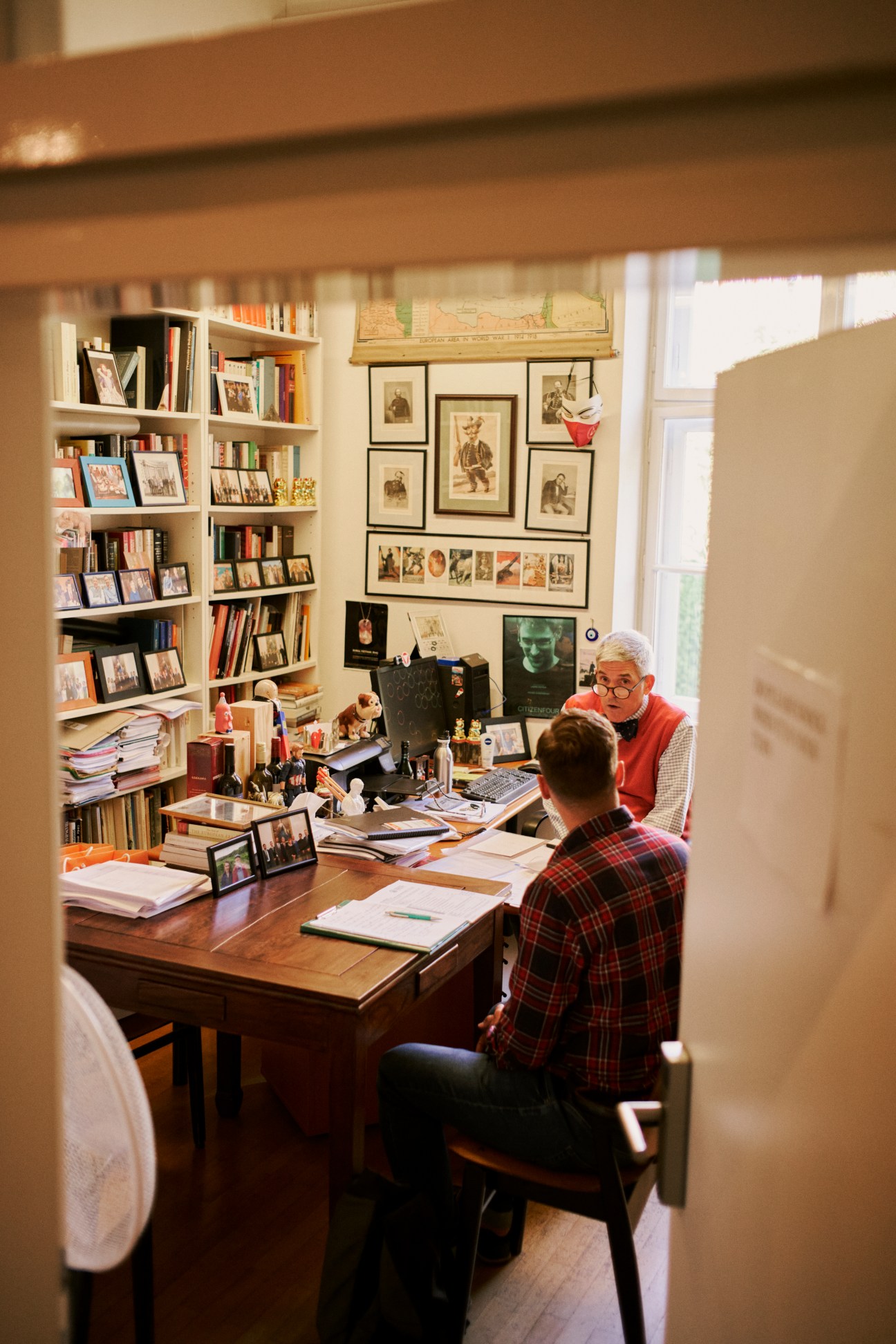
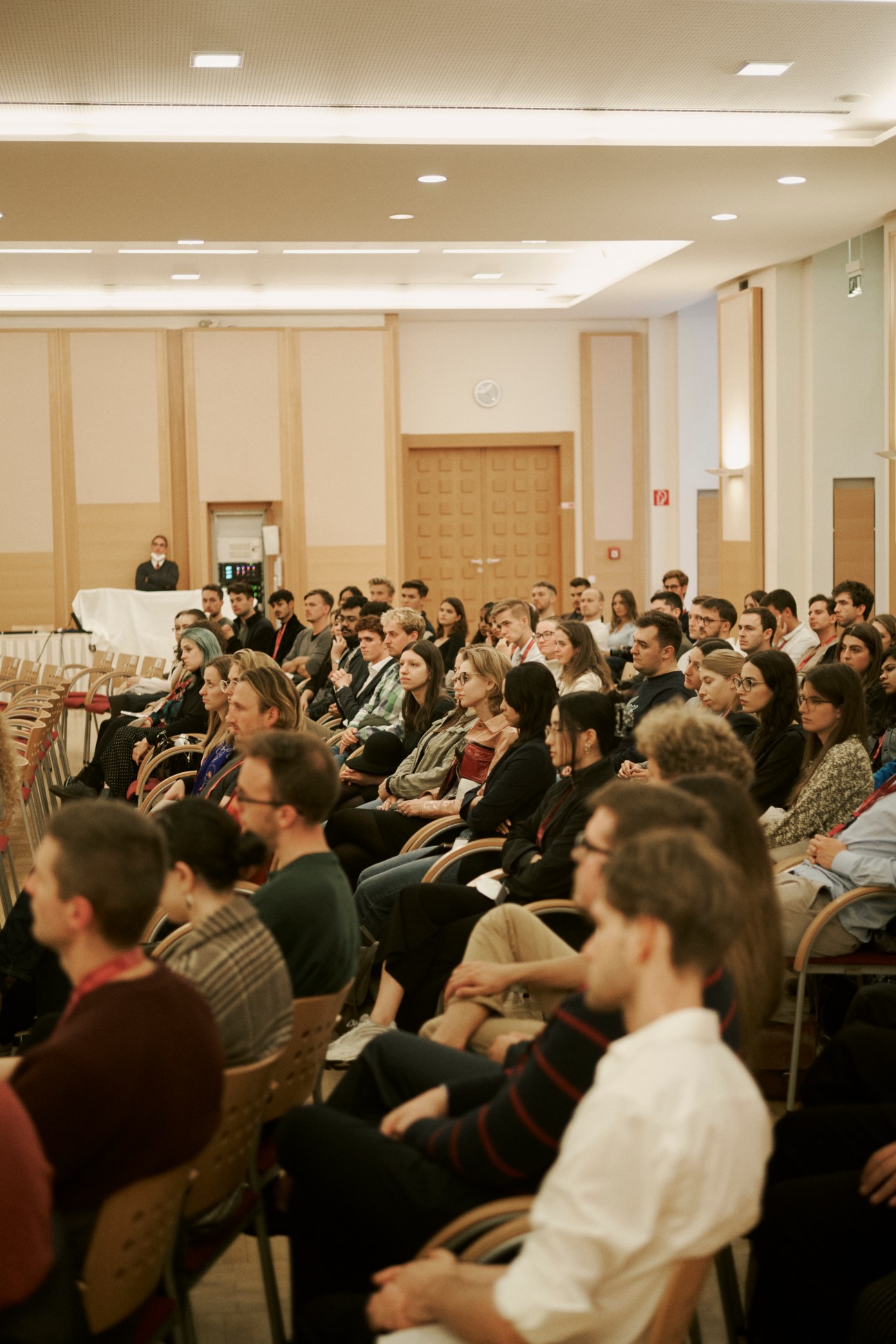
Thomas Row is fond of saying that all history is contemporary – you can’t teach diplomacy and international relations without it. “Analysis without any historical dimension is, by definition, shallow,” he tells his students sitting in the Festsaal, the main lecture hall of the Vienna School of International Studies (also known as the Vienna Diplomatic Academy), which is in the middle of an orientation week for a new batch of aspiring diplomats. “We don’t do history for its own sake. Understanding the living present is the reason why we study history.”
Every year during orientation week, Row introduces his students from around the world to Vienna by hosting a screening of The Third Man, a film with which there is an enduring fascination in the Austrian capital. The Burg Kino in the city centre still plays the 1949 film starring Orson Welles two or three times a week; there’s a dedicated museum and a walking tour and you can even climb down to the sewers where the final chase scenes were filmed. Row, an American, connects the film to Vienna’s cold-war-era history as a city of diplomats and spies. Alexander Korda, the Hungarian-born, British-based co-producer of the film, comes from a family connected to the Habsburg monarchy. “You can’t understand the British film industry unless you understand the Habsburg monarchy and this world of Central and Eastern Europe,” says Row.
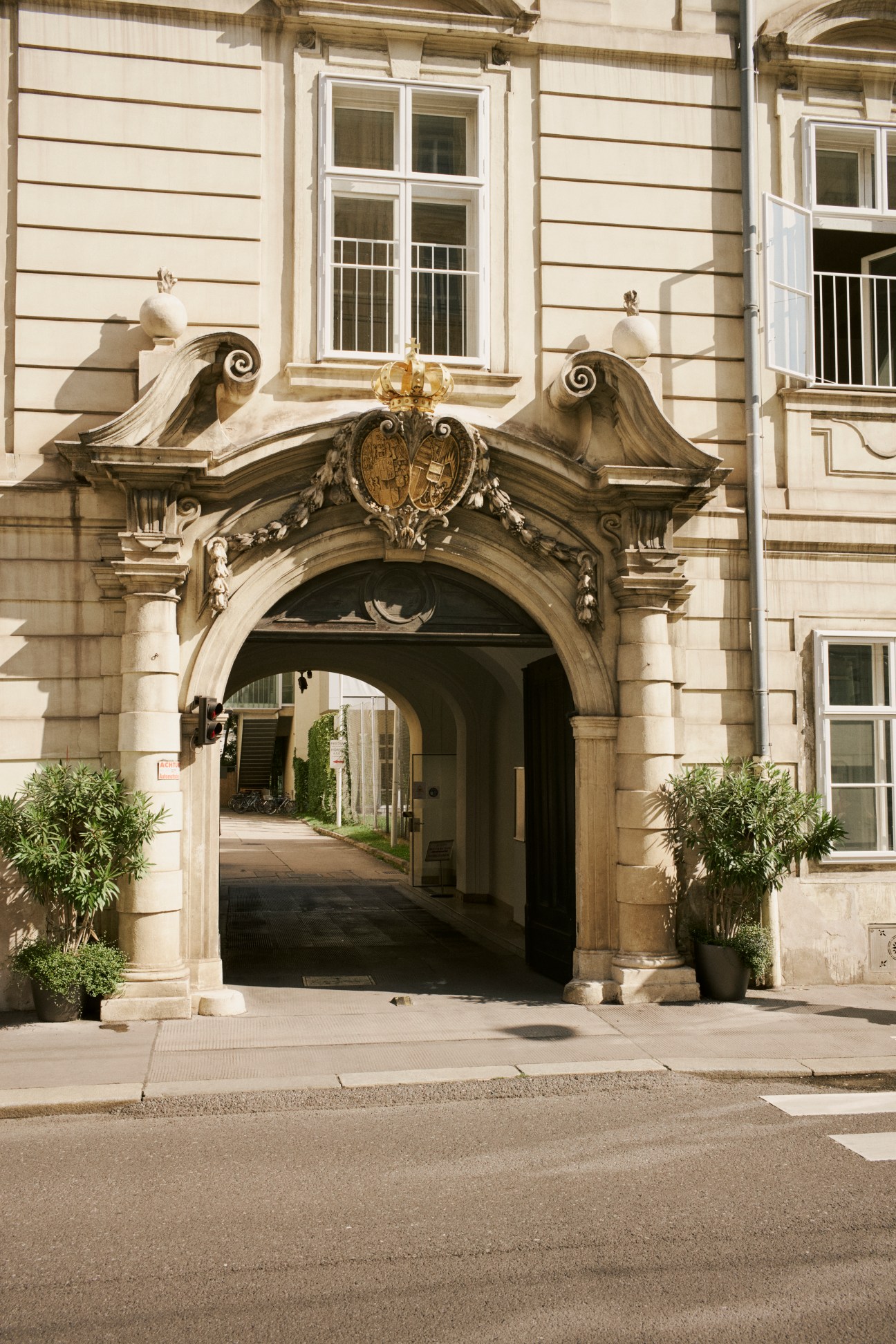
That said, visiting the Vienna School of International Studies as an outsider today isn’t a particularly filmic experience. The school teaches some 200 students every year and the inside of the building is plain; one professor describes its feel as resembling that of a small liberal-arts college. There’s a smattering of portraits of Austrian monarchs and colonial-era artefacts in glass cases (including a fetching military-style uniform worn in the 19th century) but it’s not ostentatious, especially by Viennese standards. However, make no mistake: this institution derives its power and reputation from Austria’s august past. From a city of spies to the capital of a colonial empire that once dominated Europe, it’s Vienna’s own history that explains the presence of the world’s oldest diplomatic academy.
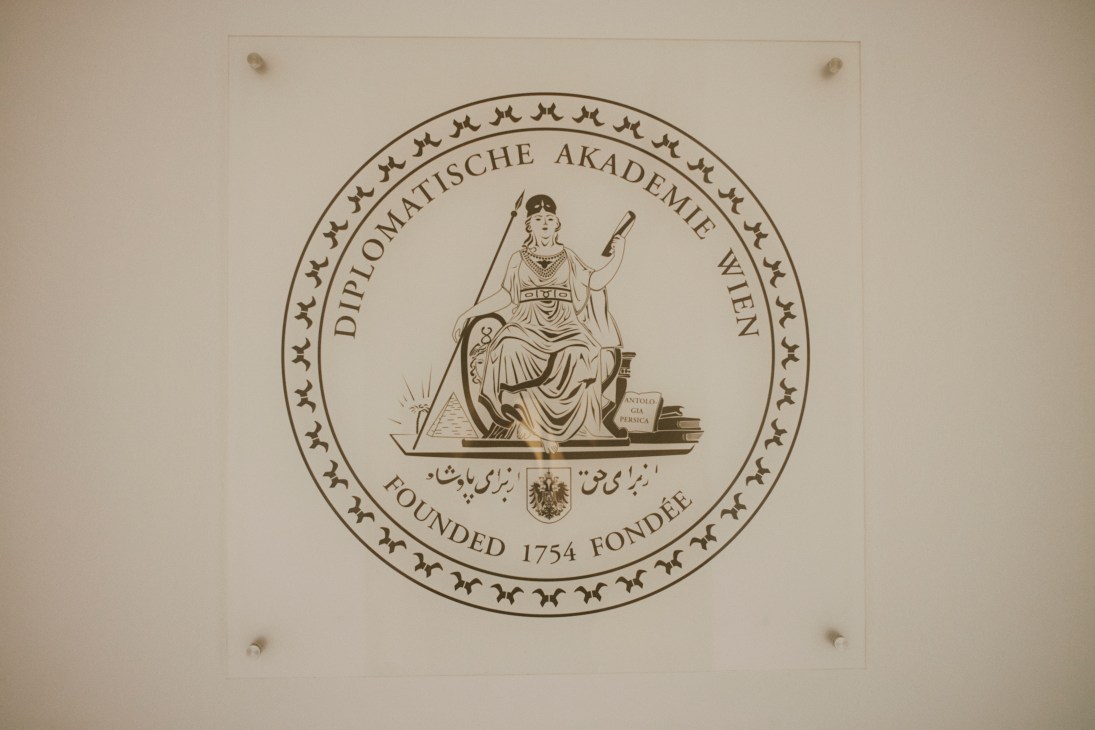
Founded in Vienna in 1754 by empress Maria Theresa, an earlier iteration was opened in Constantinople to educate Austrian diplomats about their neighbouring rival, the Ottoman empire. “Students then had a very good time, didn’t study much and partied quite a lot, so they were relocated to Vienna,” says Markus Kornprobst, dean of the master’s programme in advanced international studies. After moving several times over the next few hundred years, the academy was revived in its current form in 1964, counting Henry Kissinger among its first professors. It now sits in what used to be Maria Theresa’s summer residence, a sprawling, imperial-looking complex on Favoritenstrasse in Vienna’s fourth district. The complex is home to a number of education institutions, including a school and a technical university.
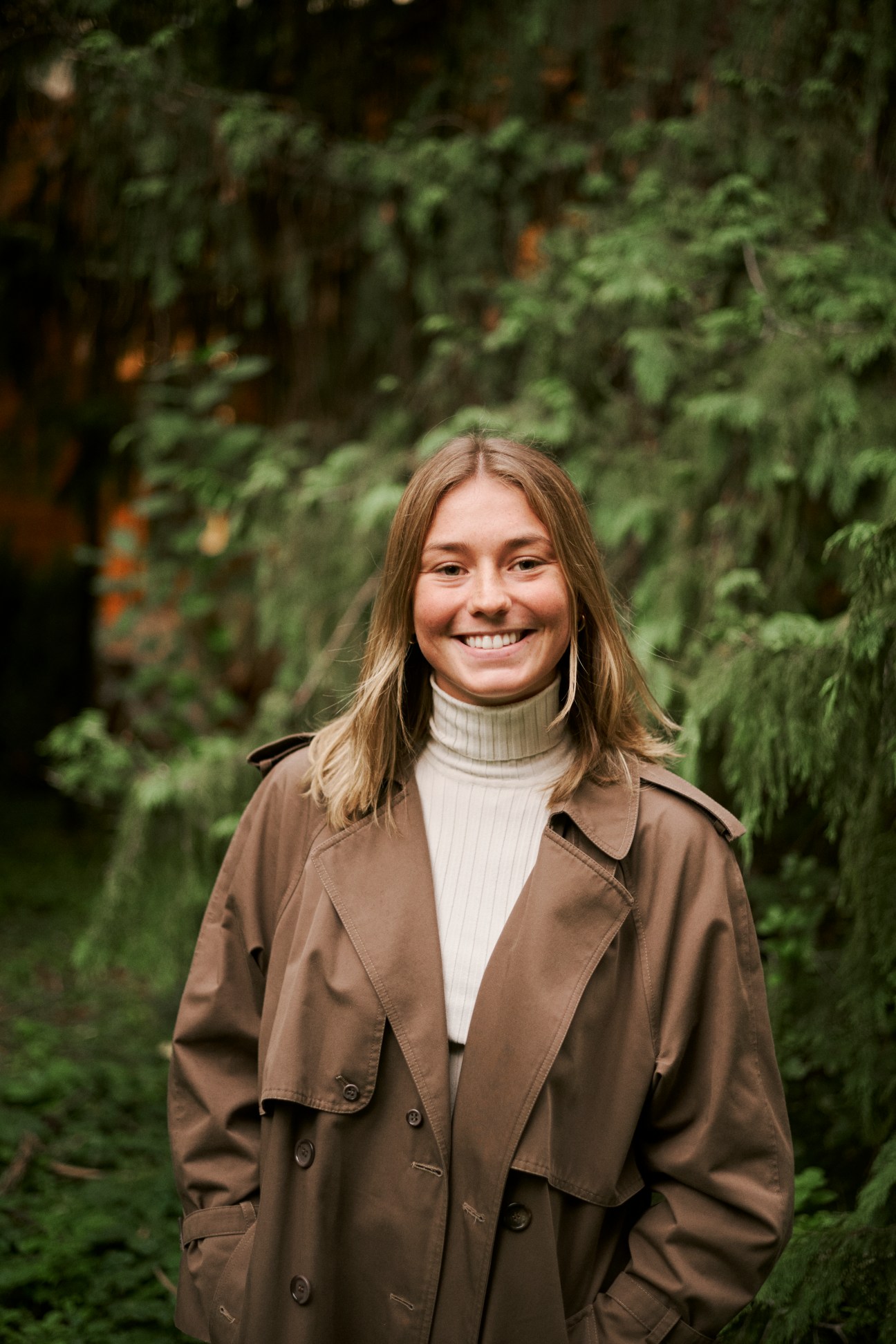
“What drew me to the school was its small scale. Also there’s a UN office on drugs and crime here in Vienna.”
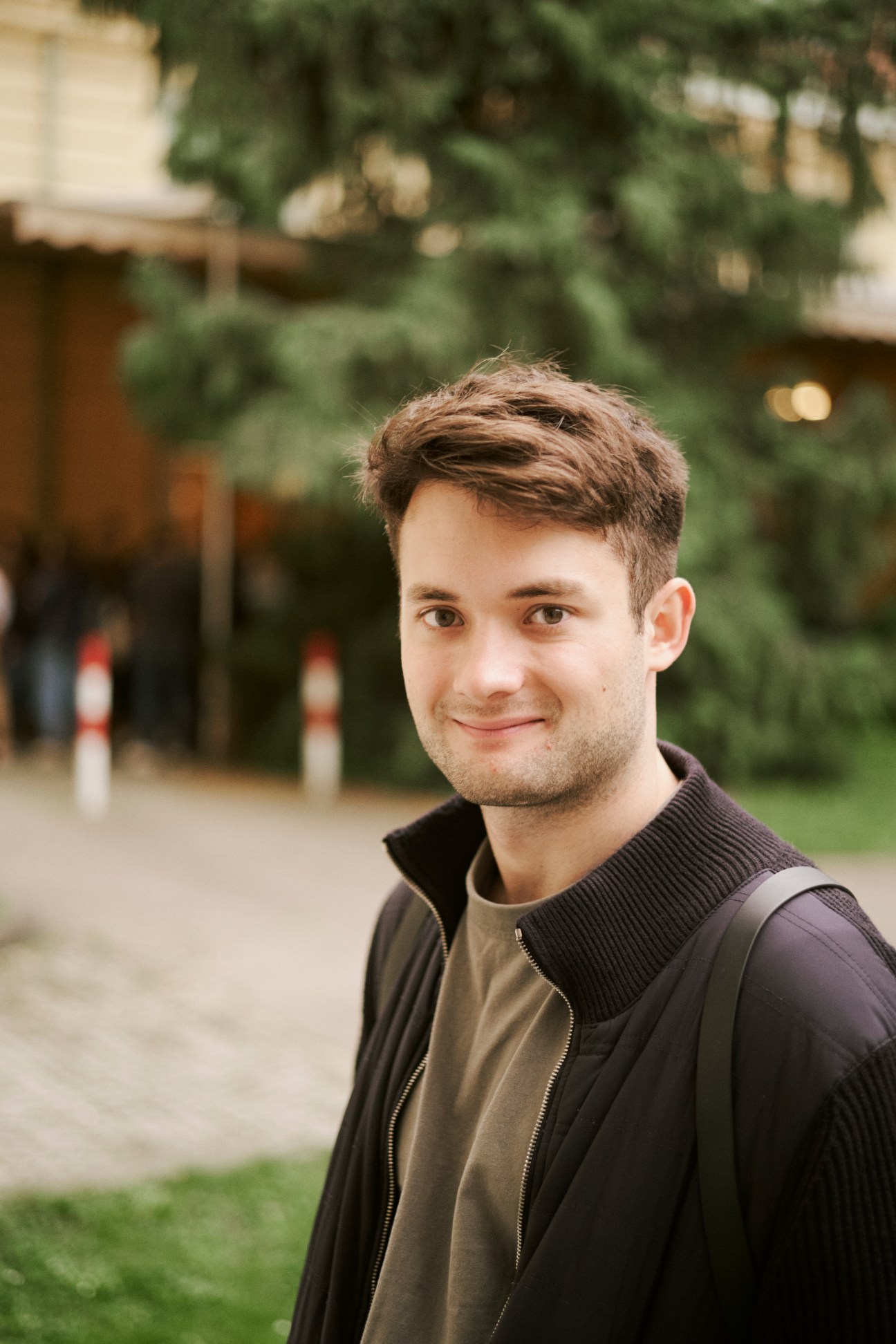
“It’s interesting to see diplomacy from the Viennese perspective. There’s a different cultural approach.”
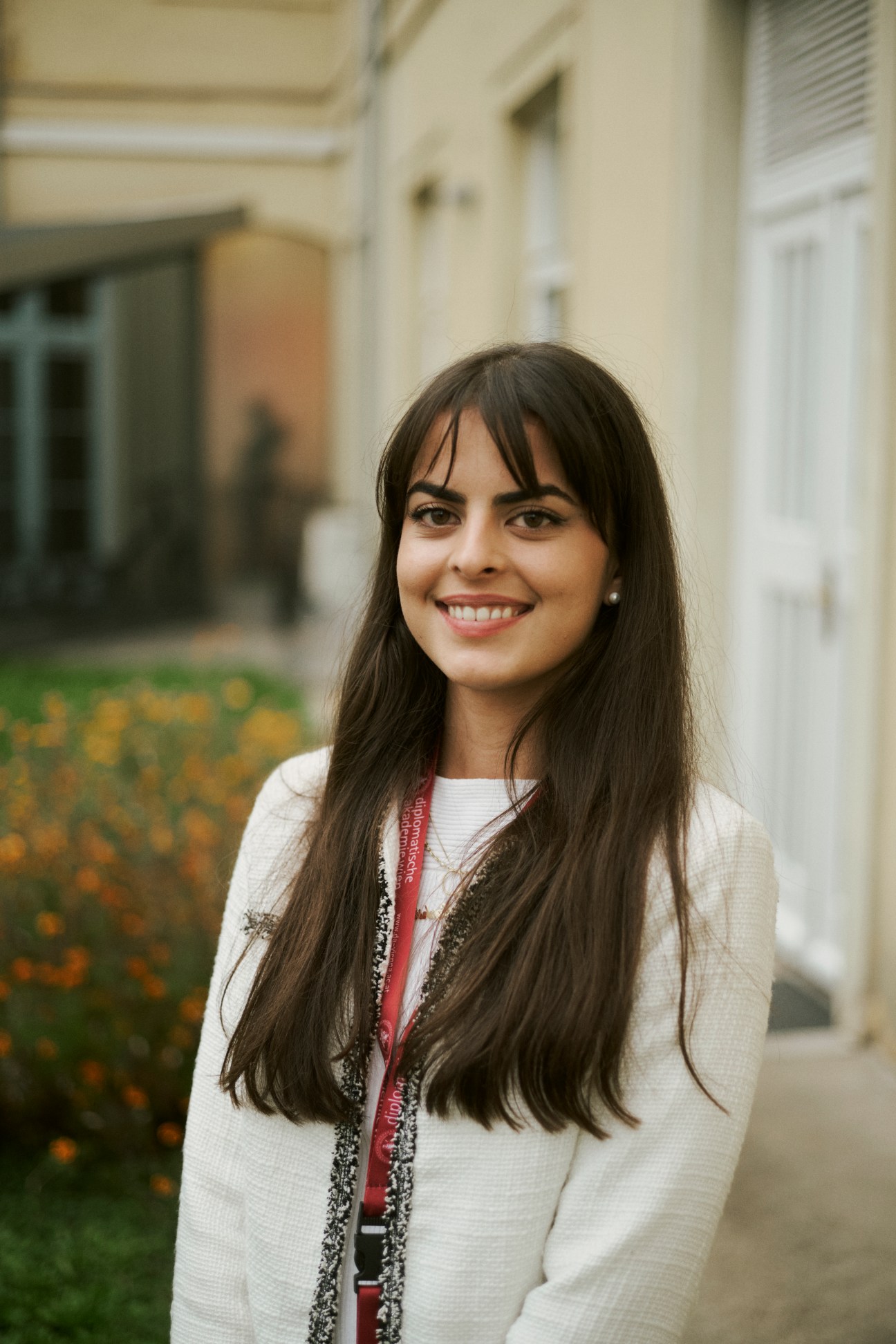
“After an internship at the UN in Vienna, I got to know this international world of diplomacy and learned of this school.”
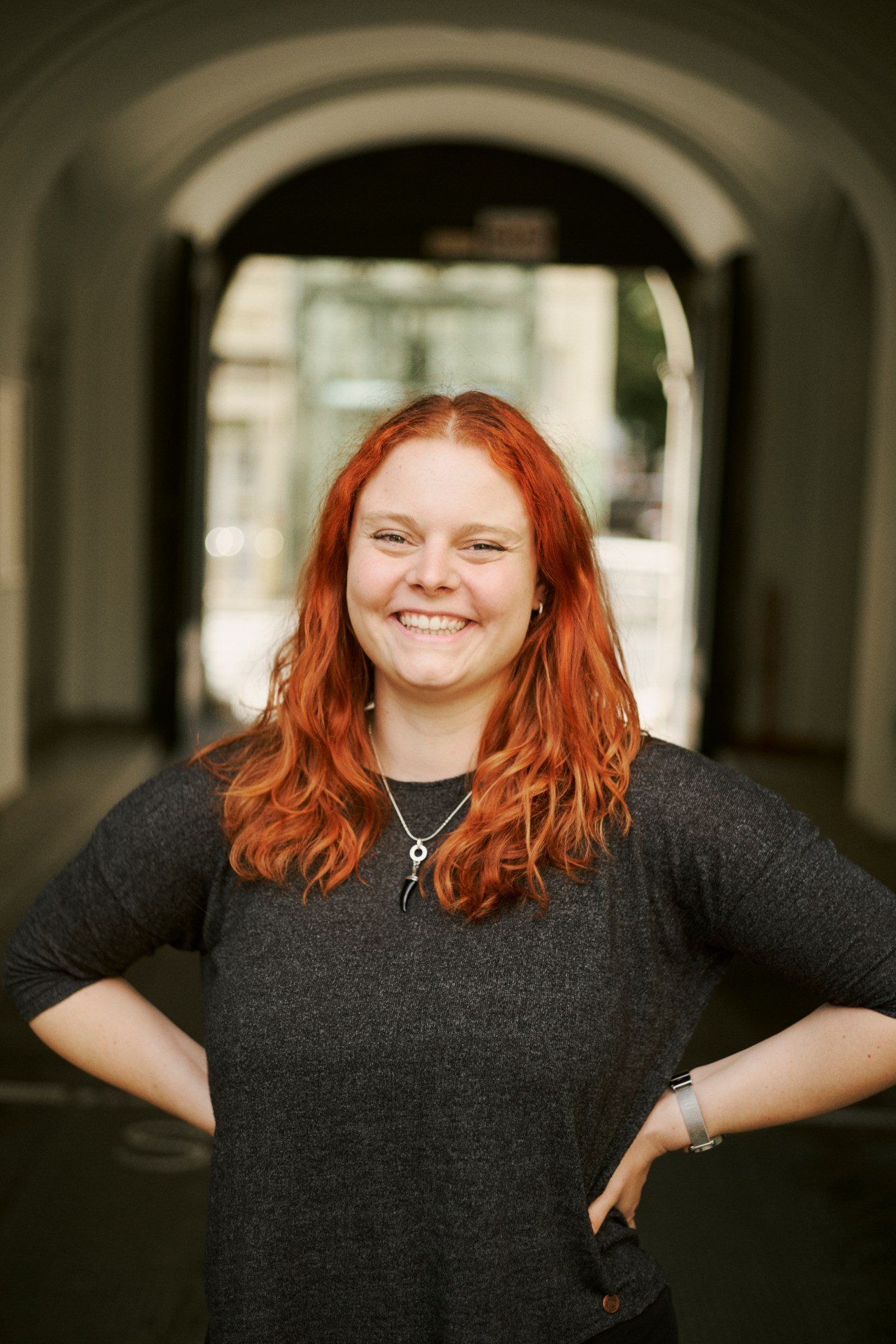
“My dream job would be EU commissioner for equality. I’d like to be in a position to have a say and truly change things.”
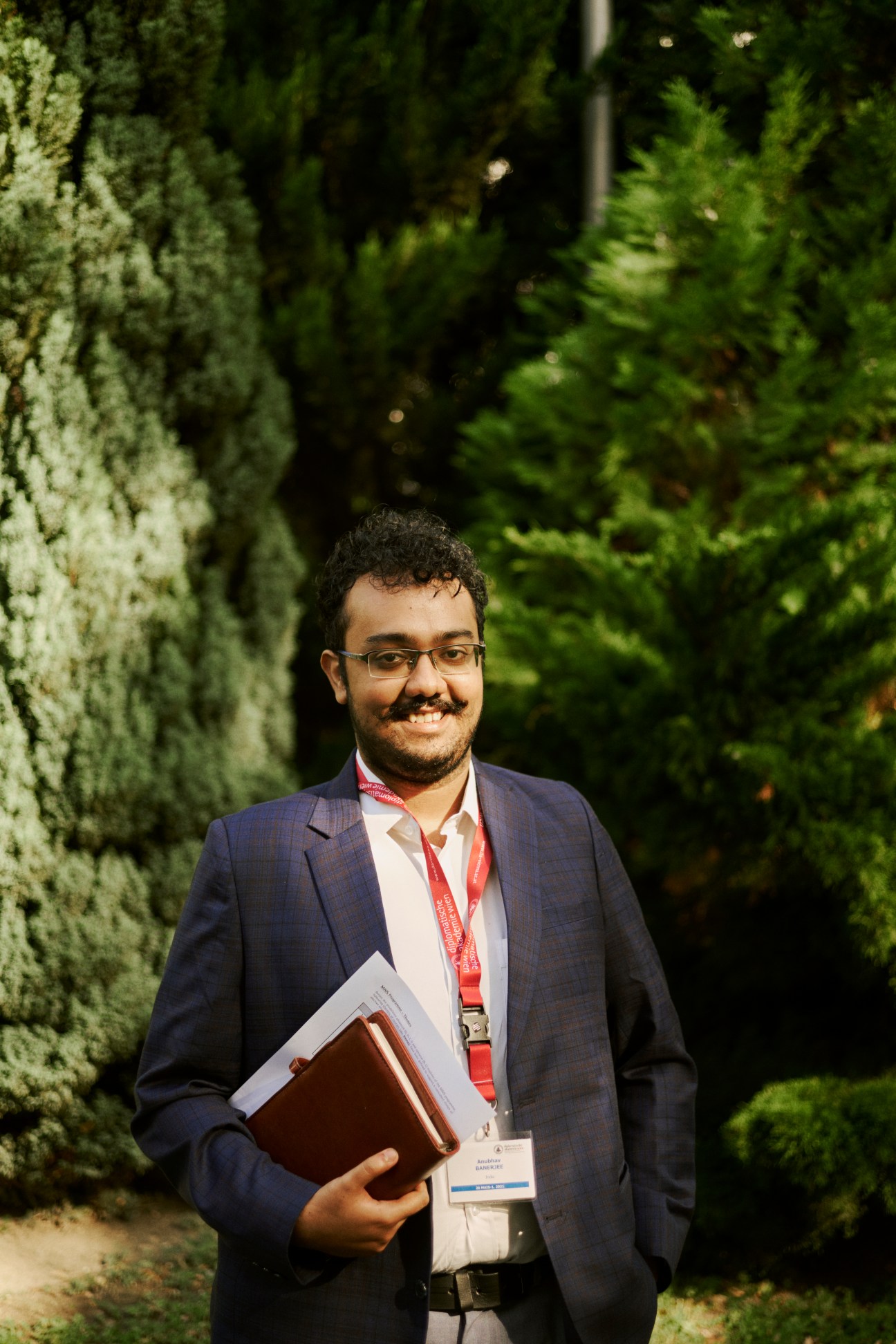
“I want to pursue international law as a career, working in public institutions or international organisations.”
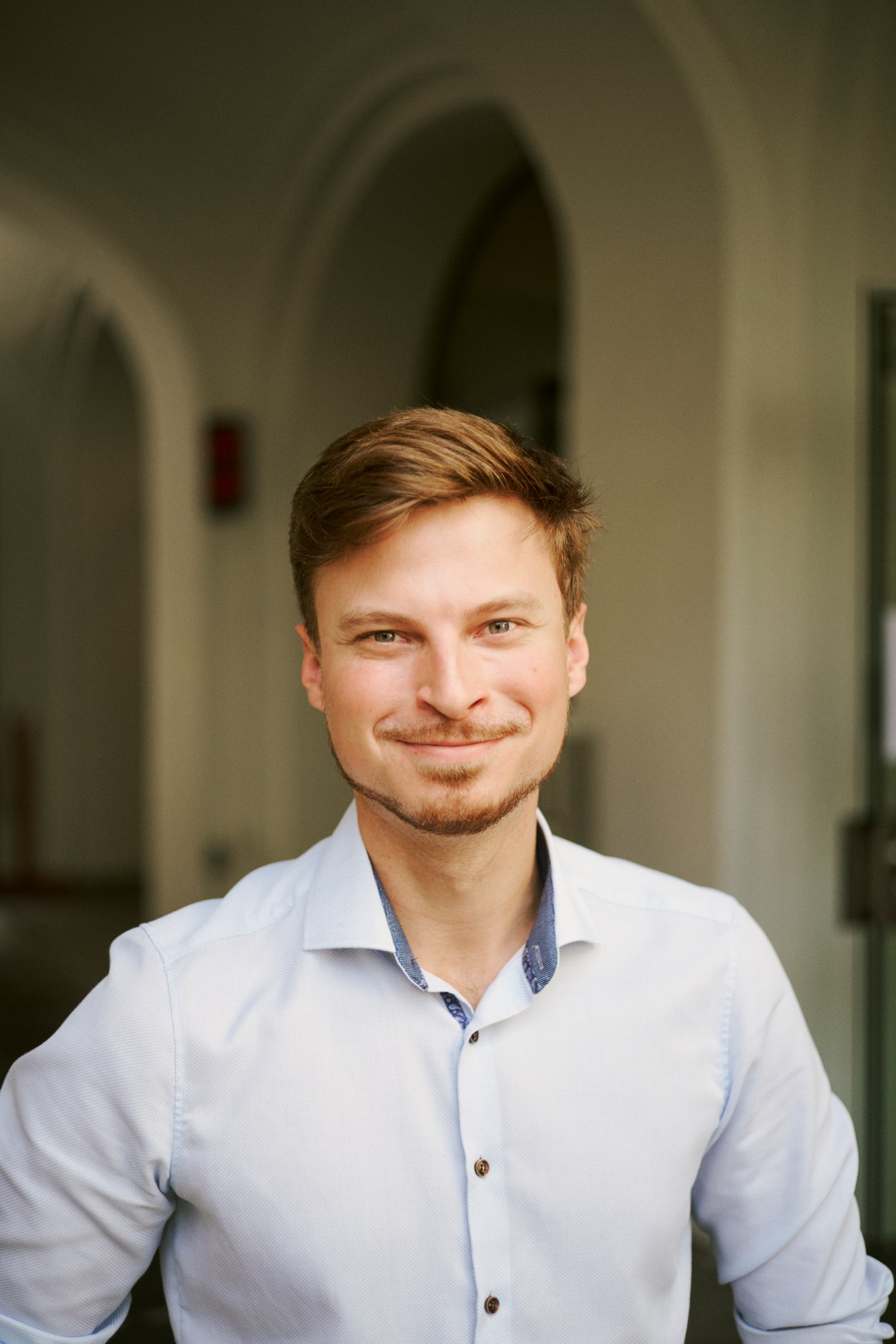
“Most assume that the diplomatic academy leads to foreign service. It’s an option but it doesn’t have to be that way.”
Until 1996 the diplomatic academy was an arm of Austria’s foreign ministry that served as a feeding ground for foreign ministries and international organisations, such as the UN. Since then it has become an independent public institution, though a third of its funding comes from the Austrian government. That has allowed it to expand its programmes; it still offers a one-year diploma that serves as preparation for entering the foreign ministry but its flagship course is now a two-year master’s in advanced international studies, which welcomes a more international crowd.
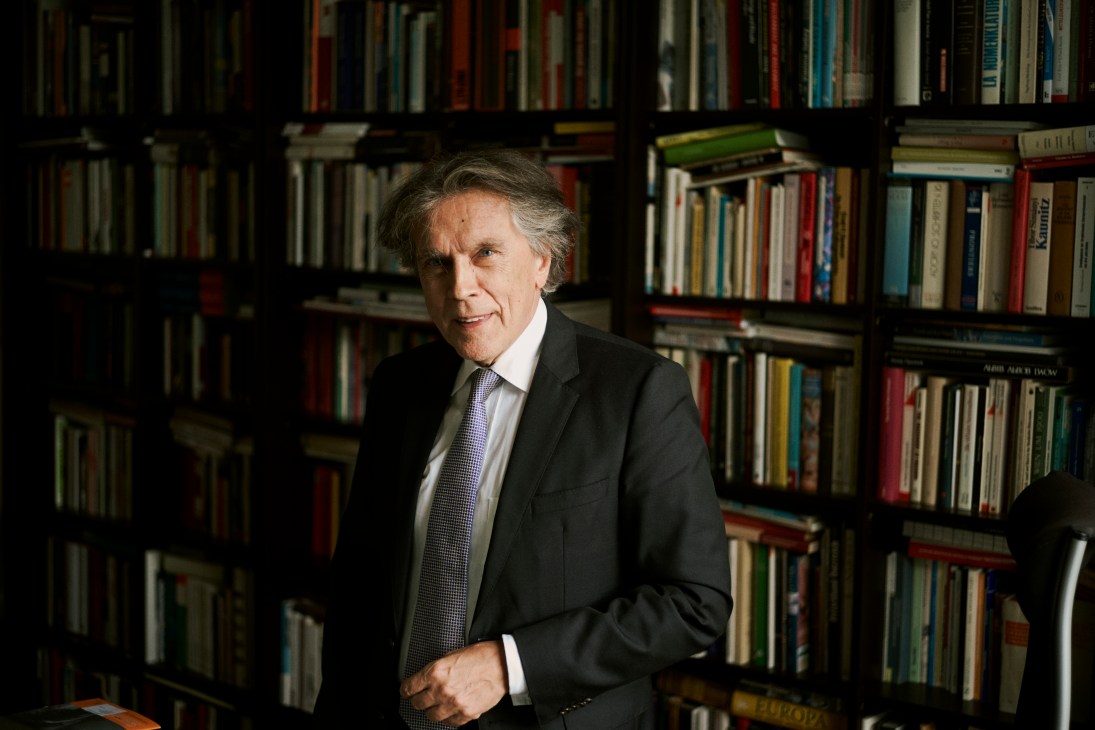
Emil Brix, a former Austrian ambassador and current director of the academy, takes pride in this shift. While most diplomatic academies around the world serve, in effect, as HR departments for their own country, the Vienna School of International Studies has branched out and other academies are now visiting “to understand how we did it”, says Brix. Nowadays that means the student body is mixed: there’s still the odd aspiring diplomat but also the would-be lawyer, economist, private-sector worker and those who are still unsure of what they want to do but hope to receive a good education.
“The idea was to make it possible for students from different backgrounds to enter the diplomatic service, taking a little bit of the nobility away from diplomacy”
Despite expanding over the past two decades, it remains a small school that offers three programmes. It counts about 2,500 alumni from more than 120 countries, ranging from Kenya and India to the US. “I’ve never taught at a place that was as international as this one,” says Kornprobst, who came to the diplomatic academy from Oxford University. About two-thirds of those enrolled in the master’s programme are from outside of Austria; many hope to join the foreign services back home, while others focus on the presence of UN offices, the Organization for Security and Co-operation in Europe and other international institutions in Vienna. “Become a diplomat,” John Galba, a self-assured 24-year-old student from Slovakia, says flatly when asked what he intends to do with his training. Galba notes that the school has a draw for Central and Eastern Europeans. It’s that vantage point that attracts other students too. “In the Netherlands we’re very focused on what is west of us – the Anglo-Saxon world,” says Dutch student Onno Dickhoff, who is also 24 years old. “So it’s interesting to see this more Central European perspective on international relations. Brexit has kind of forced us to look more to the European continent.”
The student body ranges from people from wealthier families to those of more modest backgrounds. The school’s annual fee of more than €13,000 isn’t cheap but financial aid and scholarships are available. Miriam Gruber, president of the academy’s students association, insists that most people she meets here are supremely talented – “geniuses” in one field or another – but she adds rather delicately that they sometimes lack the social skills to match. That might be where the academy’s training comes in. There are courses in how to behave as a diplomat.
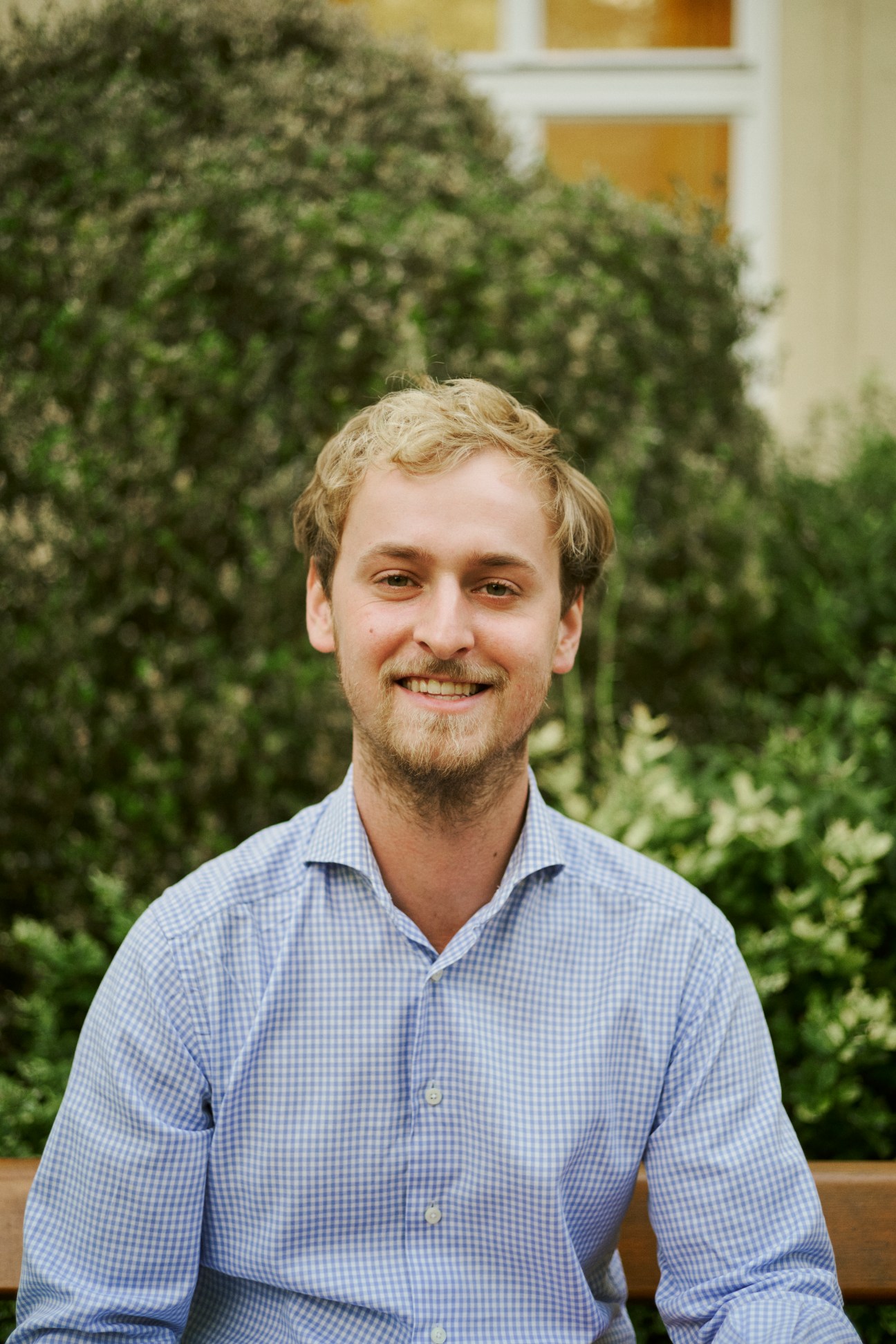
“In the Netherlands we’re very focused on what’s west of us so it’s interesting to see a more Central European perspective.”
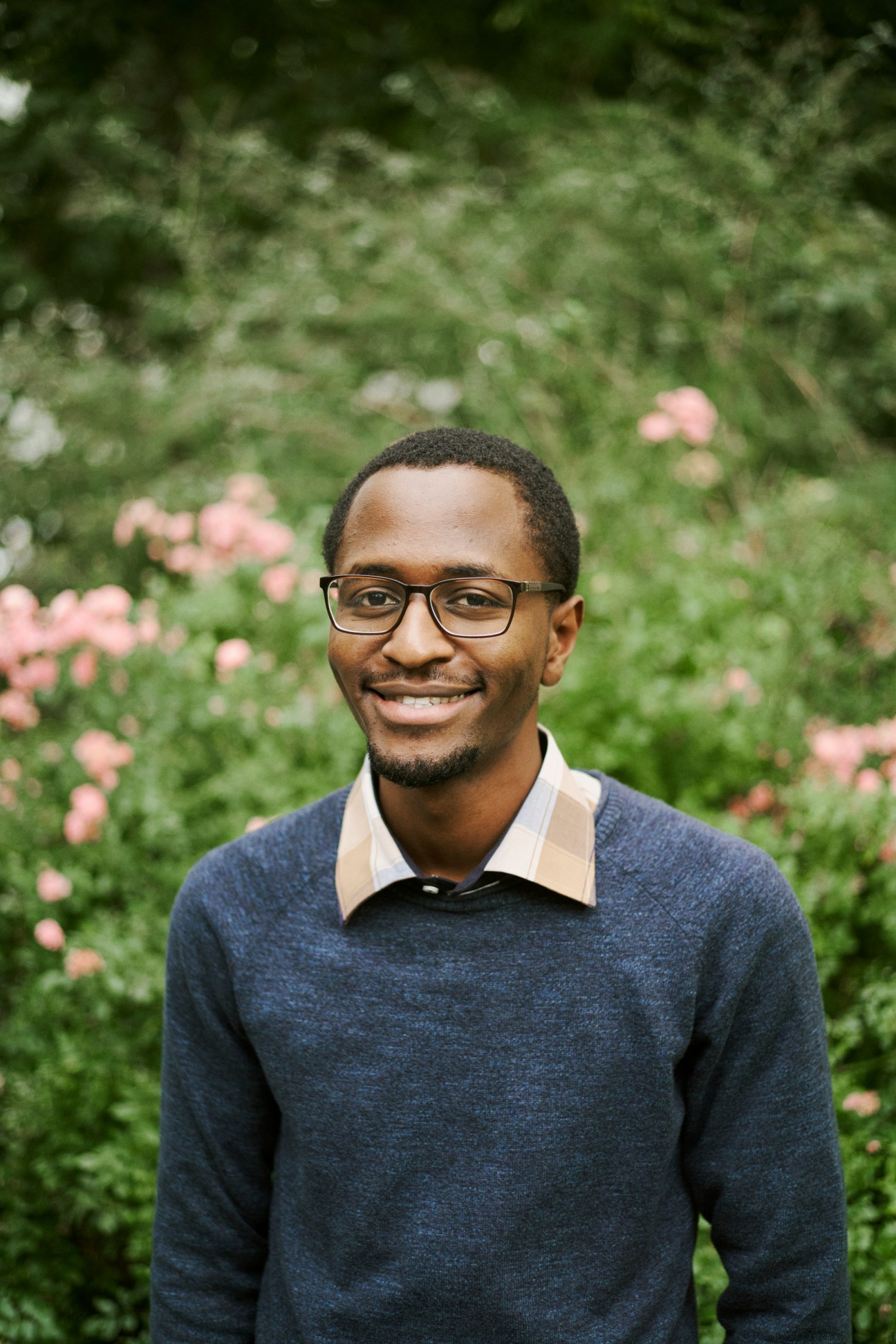
“My main focus is on international law and international affairs. This is one of the best places to further my interests.”
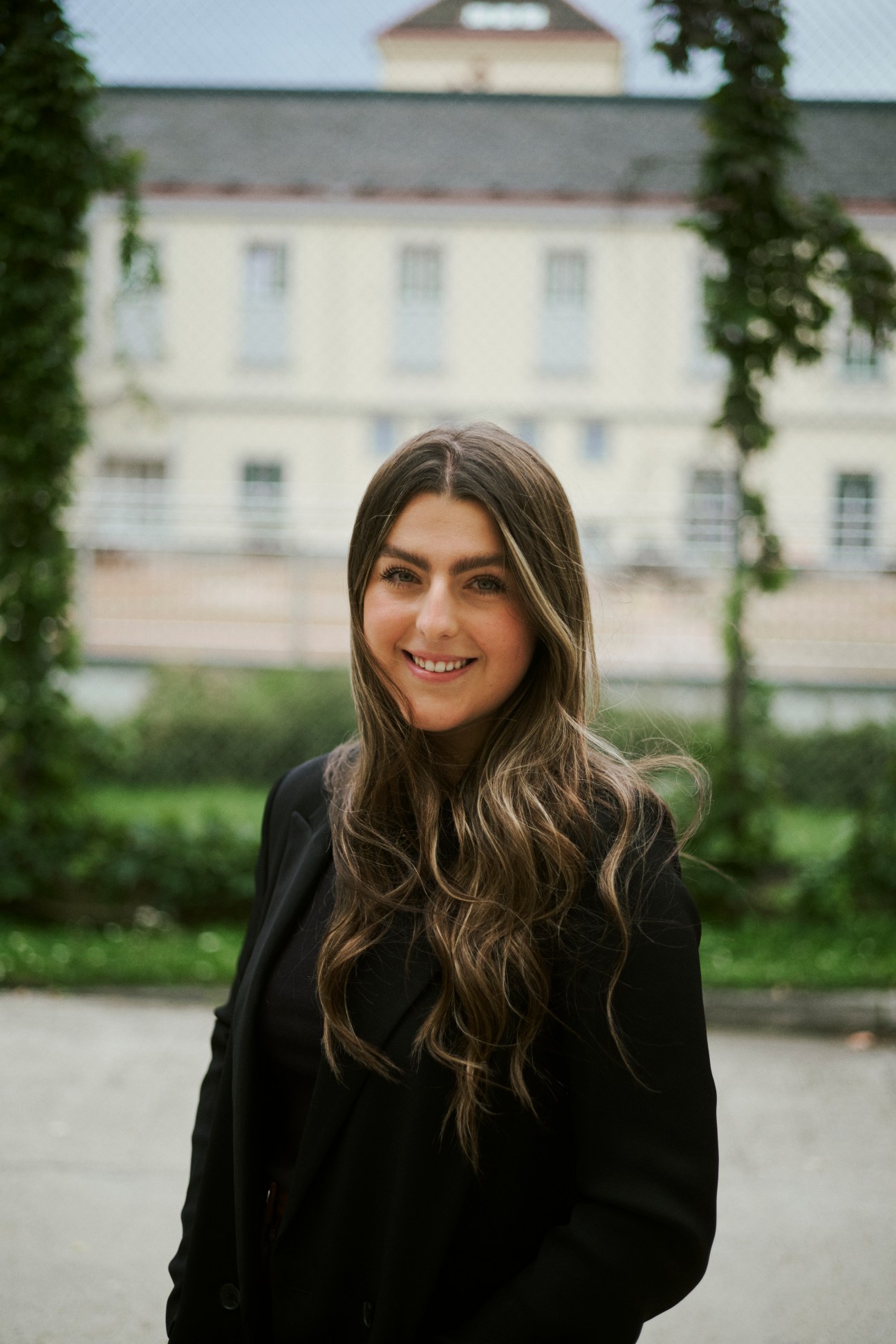
“I want to do international law and work at the UN. This school has a large alumni network and great career support.”
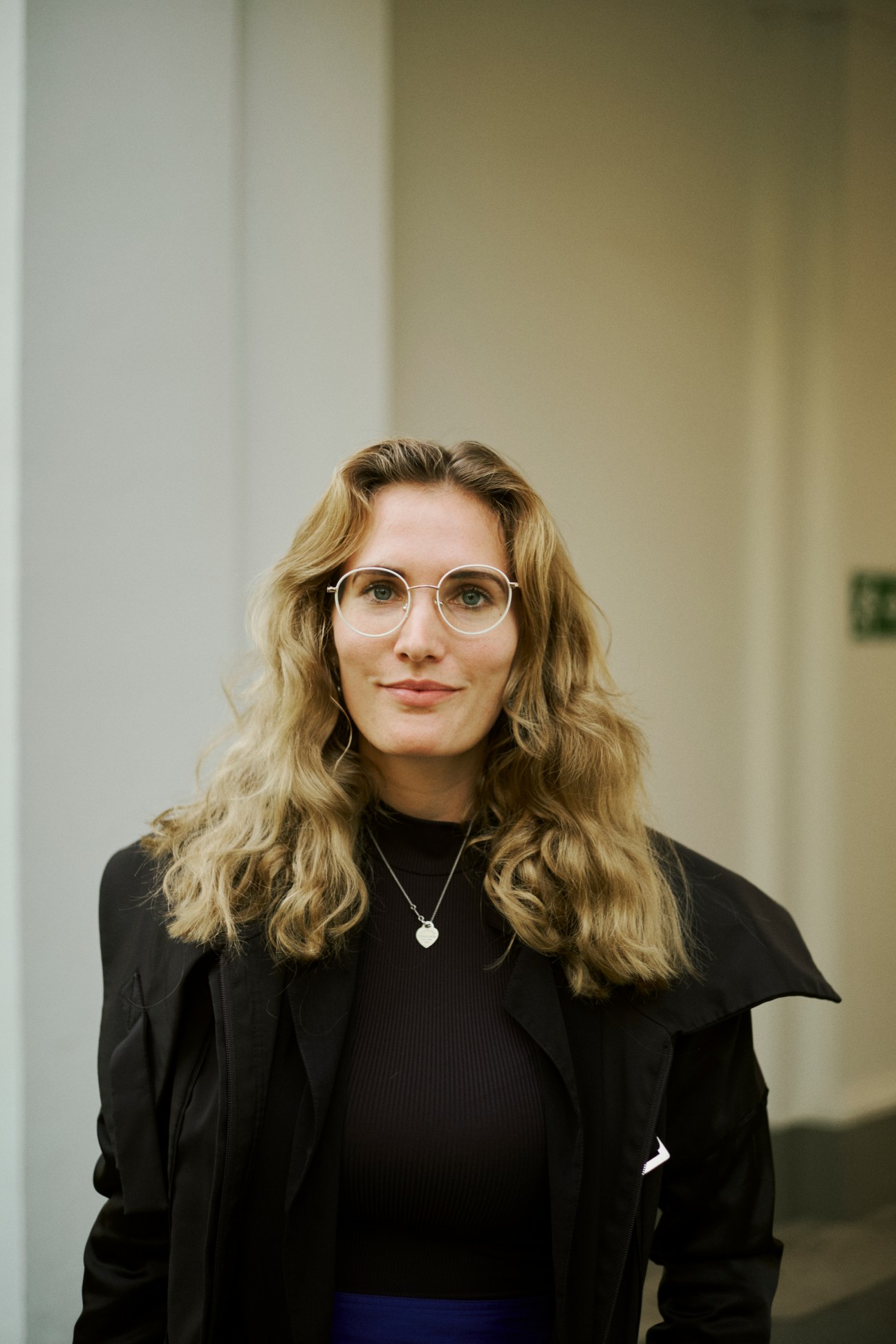
“I’d like to work on relations between Austria, Europe and Latin America and try to have a positive impact.”
Austrian chancellor Bruno Kreisky, who remade the academy after the Second World War, said that the goal was to create diplomats “who will know how to pick up a knife and fork”. However, there was also something meritocratic about Kreisky’s reinvention: his objective was to bring more ordinary Austrians into the foreign service.
“The idea of Kreisky was to make it possible for students from different backgrounds to enter the diplomatic service, taking a little bit of the nobility away from diplomacy,” Kornprobst says. “That’s important.” It meant, for example, introducing an entrance exam to join the Austrian foreign ministry, rather than having to rely on connections. The diplomatic academy in those early postwar days existed to prepare students from all walks of life to take that entrance exam.
At that time diplomatic training included lessons in how to behave. You would be expected to wear a suit to meals and an administrator would monitor your comportment. These days the school and its dress code have become less formal and Brix says that much of the education involves teaching “public diplomacy” and instilling more public self-assuredness. While diplomats used to operate behind the scenes, Brix says they are now more front-facing than ever. “When they enter the foreign service, they can be more self-confident,” says Brix. Sometimes that means going against governments and politicians; Brix notes that his academy teaches “the value of open borders at a time when many governments around the world, including our own, advocate closed borders”.
In other words, the game of diplomacy is changing and the teaching too. Today, diplomacy is less about competing ideologies and more about competing values – less cold-war-era spying and more of a public role in the domestic political affairs of other nations. Though diplomats are technically bound by conventions of non-interference, they are more likely today to “link up with the civil society of an opposing state and hope that there will be enough pressure from the bottom” to change policy, says Kornprobst.
Diplomacy today is also about “flexibility”, adds Patrick Müller, professor of European studies. With many governments shifting away from multilateralism and universal values, even in Western societies, diplomats often have to decide how much of a change they can accept – what their red lines are in terms of values, both in negotiations with other nations and even within their own governments. Müller points to the professional diplomatic services in Poland and Hungary, which are ardently pro-European and have been quietly acting as a bulwark against their more nationalist governments.
Austria’s historic connection to Central and Eastern Europe also remains a focus here. Towards the end of students’ second year the school organises a study trip to the western Balkans, where they have the opportunity to meet with senior political officials. The school also has a steady flow of guests and speakers from the region. Kosovo’s president visited the school earlier this year and, after a particularly spirited exchange, invited the students to Kosovo for their next trip.
And while the colonial legacy of some European countries engenders negative ties with their former occupiers, “It doesn’t feel the same with Austria,” says Madalina Dobrescu, a Romanian postdoctoral fellow of European studies at the school. “Somehow Austria has emerged out of this imperial past in a much more uncontroversial position. Austria really has managed to consolidate its position, also in terms of perceptions as a neutral country and as a potential mediator and bridge between the East and West.”
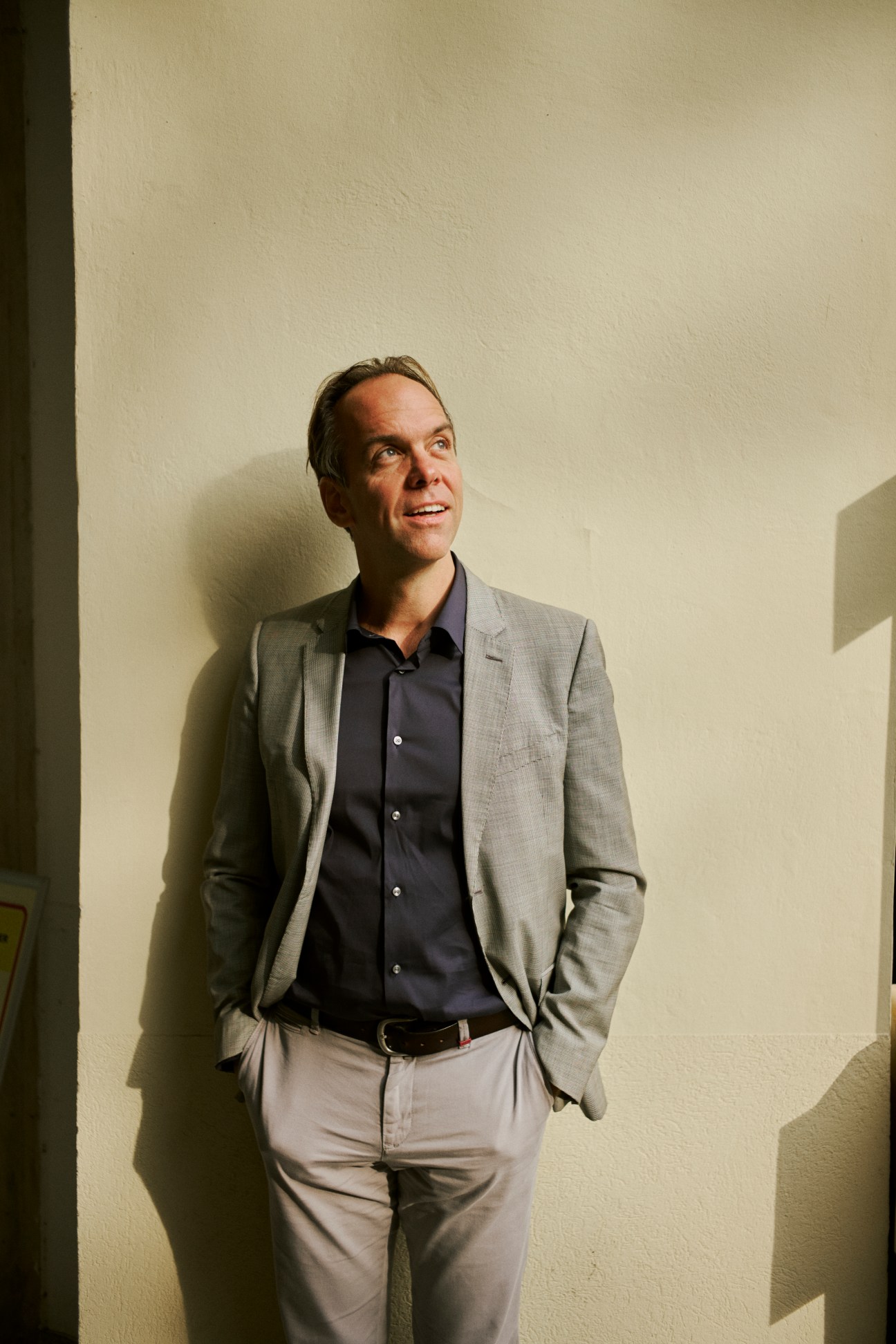
Beyond those international connections and contacts, ask most students here what drew them to the Vienna School and they are likely to bring up its “multidisciplinary approach” – the term that everyone seems to use to refer to its breadth. Thomas Row’s history course is one of four core disciplines taught at the academy; the other three are international law, political science and international economics. In effect you get four degrees in one here. Kornprobst says that students here get slightly less depth in exchange for more breadth – but then the idea is that diplomacy isn’t about any one discipline. To negotiate a UN treaty it helps to have knowledge of legal texts; to mediate a diplomatic conflict it helps to understand the economic undercurrents. “But it’s not always easy,” Kornprobst says. “An international lawyer runs a class differently from a political scientist.”
As the role of diplomats changes, so does the role of the academy. In addition to its master’s in international studies, there’s a master’s in environmental technology and international affairs; Brix notes that climate change is one of the biggest diplomatic challenges of our time. There are also plans for a master’s in digital diplomacy. With the latter, perhaps Vienna will come full circle. After all, spies these days operate in cyberspace rather than in the back alleys of the Austrian capital.
Western promises
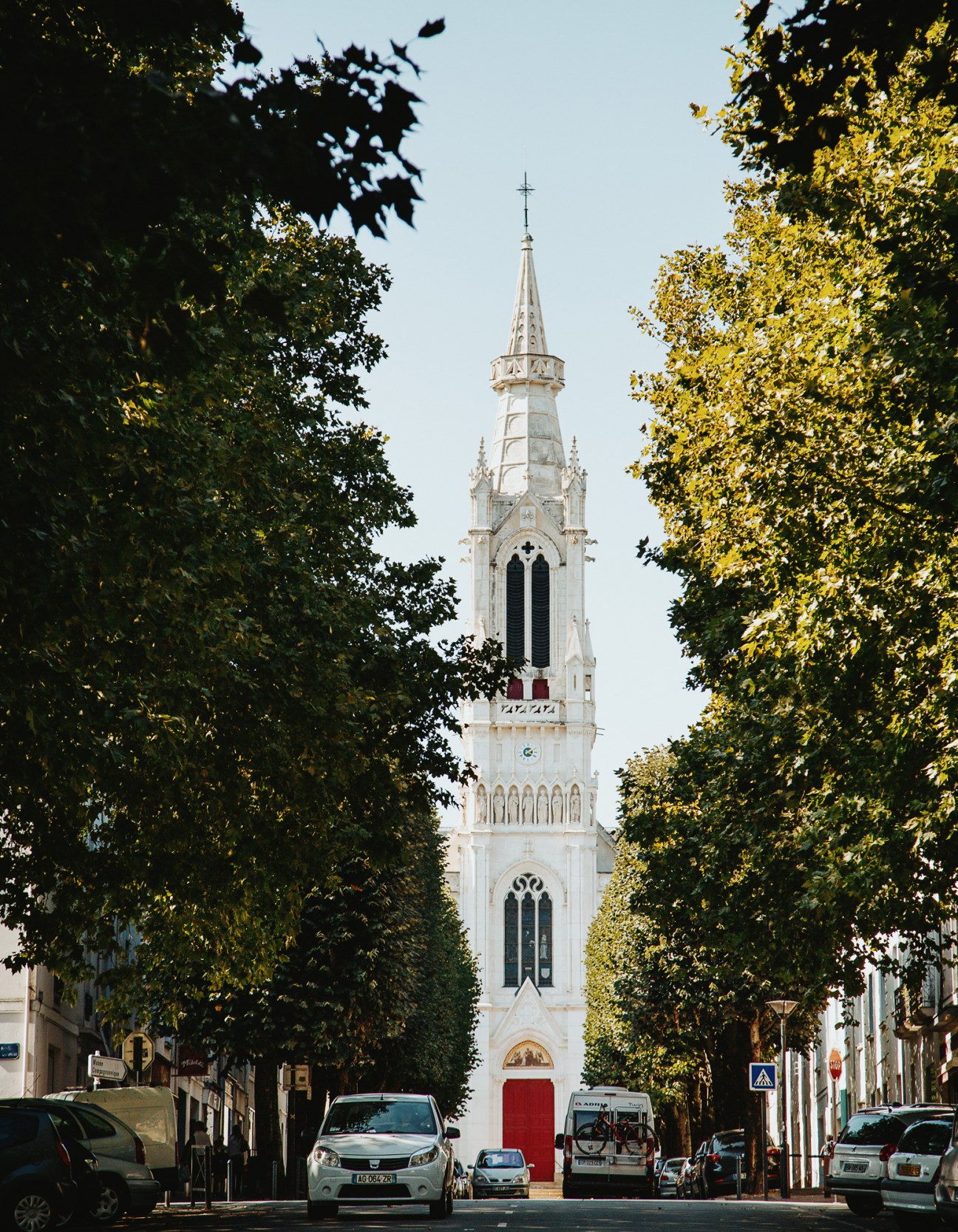
Spend some time in Nantes, just an hour’s drive from France’s windswept Atlantic coast, and there’s a sentence that you’re likely to hear more than once. “It’s the city of the future,” says resident and architect Benoît Sanson, echoing the thoughts of many Nantais. And with the metropolis growing by more than 9,000 inhabitants a year, houses can’t be built quickly enough, which is no bad thing if you’re in the business of designing them. “It’s a dream for an architect,” says Sanson, speaking from an office that he shares with other creatives in Madeleine-Champ de Mars, an up-and-coming neighbourhood that is scattered with independent restaurants, boutiques and bars.

Setting up a branch of London-based 31/44 Architects in Nantes was a way for the firm to keep a foot in Europe after Brexit. “It would be hard to work in France without a studio here,” says Sanson. The city’s open-minded spirit and approach to city planning, as well as its bilingual schools for their two children, drew Sanson and his German wife, Michaela, to Nantes. “We are a deeply European family and living in the UK didn’t make as much sense to us any more.”
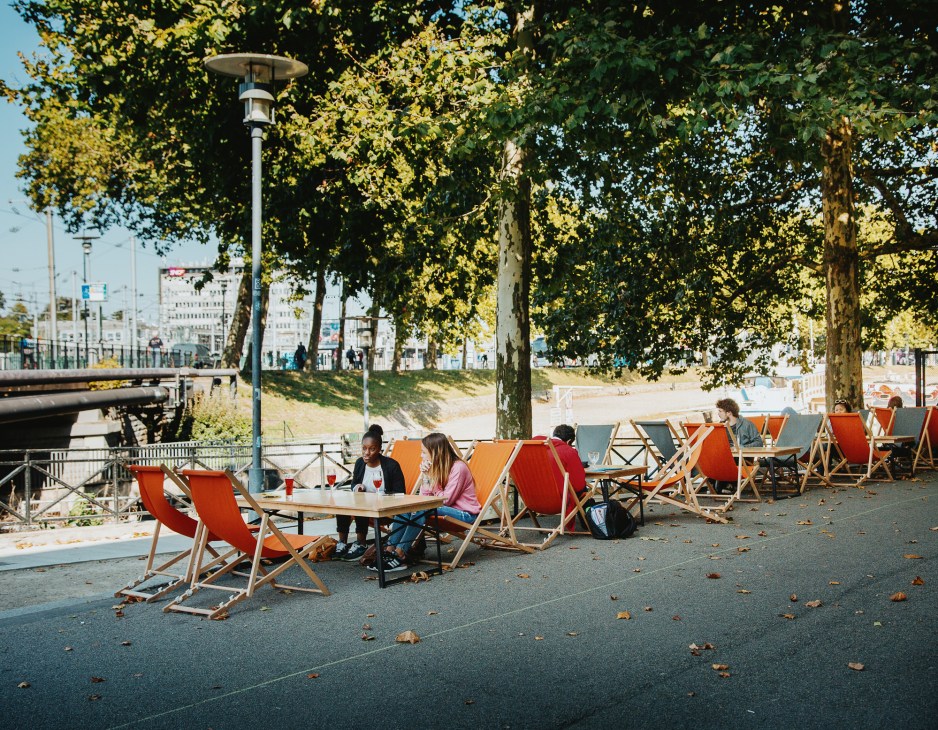
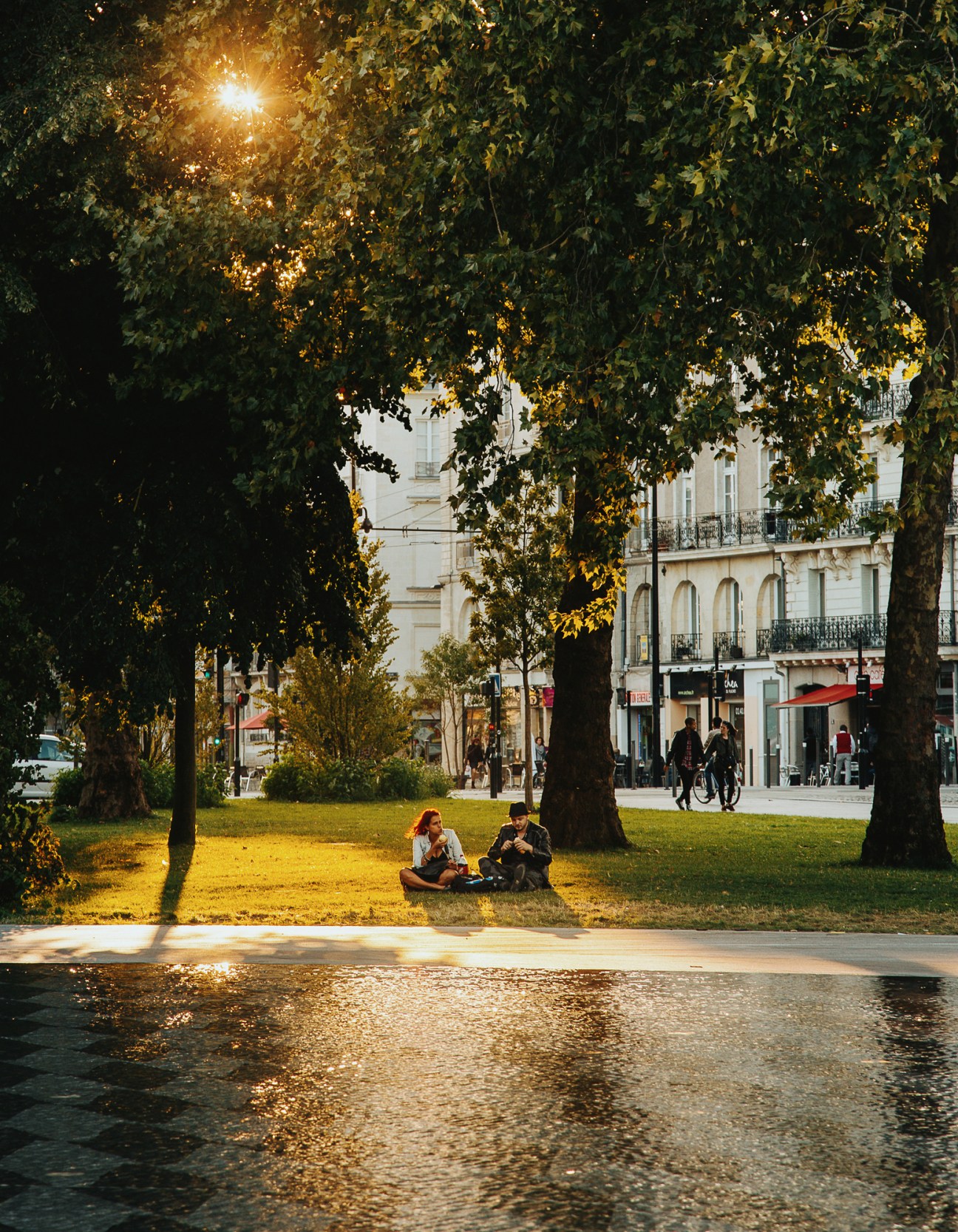
France’s sixth-largest city has turned from a quiet provincial town into a thriving metropolis of more than 685,000 inhabitants in less than 20 years. Clustered on the banks of the Loire, it has a small, cobbled centre that is dotted with squares and anchored around a medieval castle. You can be in London in an hour and a half by plane and Paris in two by train, making it a strong contender for career-minded big-city transplants who want a place where job prospects are plentiful but life moves at a slower pace.
A lot has changed since the city’s shipyards, its historical lifeblood, were shuttered in the 1980s. “When I first arrived, the town felt like it had gone to sleep,” says Jean Blaise, founder and director of Le Voyage à Nantes, the city’s tourism body. “We had to bring it back to life to give people a reason to want to live here.” Often credited as the force that jump-started the city, Blaise and then-mayor Jean-Marc Ayrault helped to foster an arts scene that today rivals larger hubs and is still a key reason why people choose to settle here.
In 2015 the Nantes Saint-Nazaire Development agency was created to help business owners set up or relocate by finding office space, jobs for their partners and schools for their children. One company that has benefited from all of this is Faguo, a retail brand that makes clothing from recycled materials. Faguo relocated its headquarters from the French capital to Nantes two years ago. Founded by Nicolas Rohr and Frédéric Mugnier, the brand offsets its emissions, planting a tree for every item made, so moving closer to where much of this happens – the company has planted more than two million trees in France so far – felt necessary. “Our location needed to be in line with our brand and what we believe in,” says Rohr.
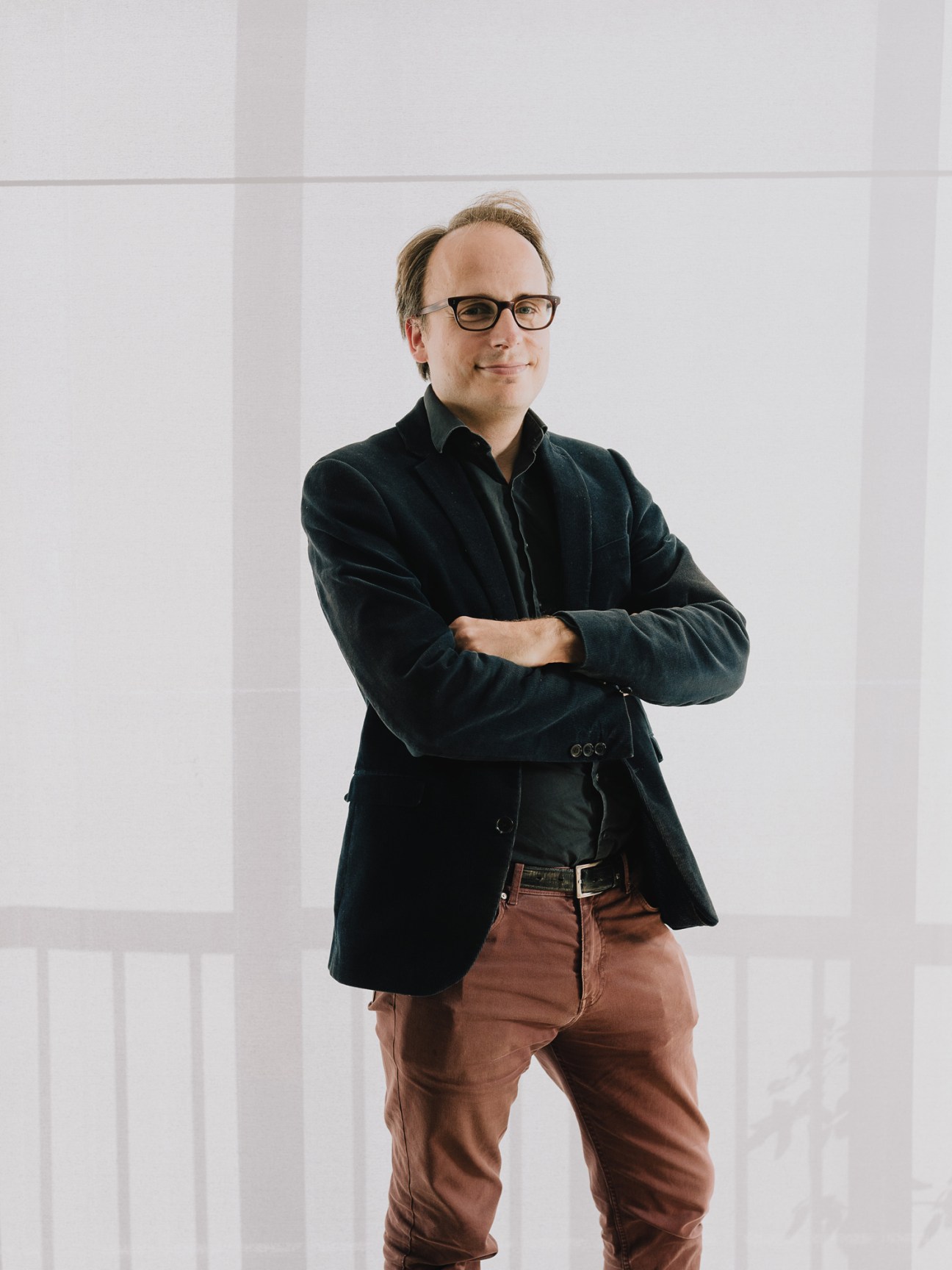
Architect, 31/44 Architects
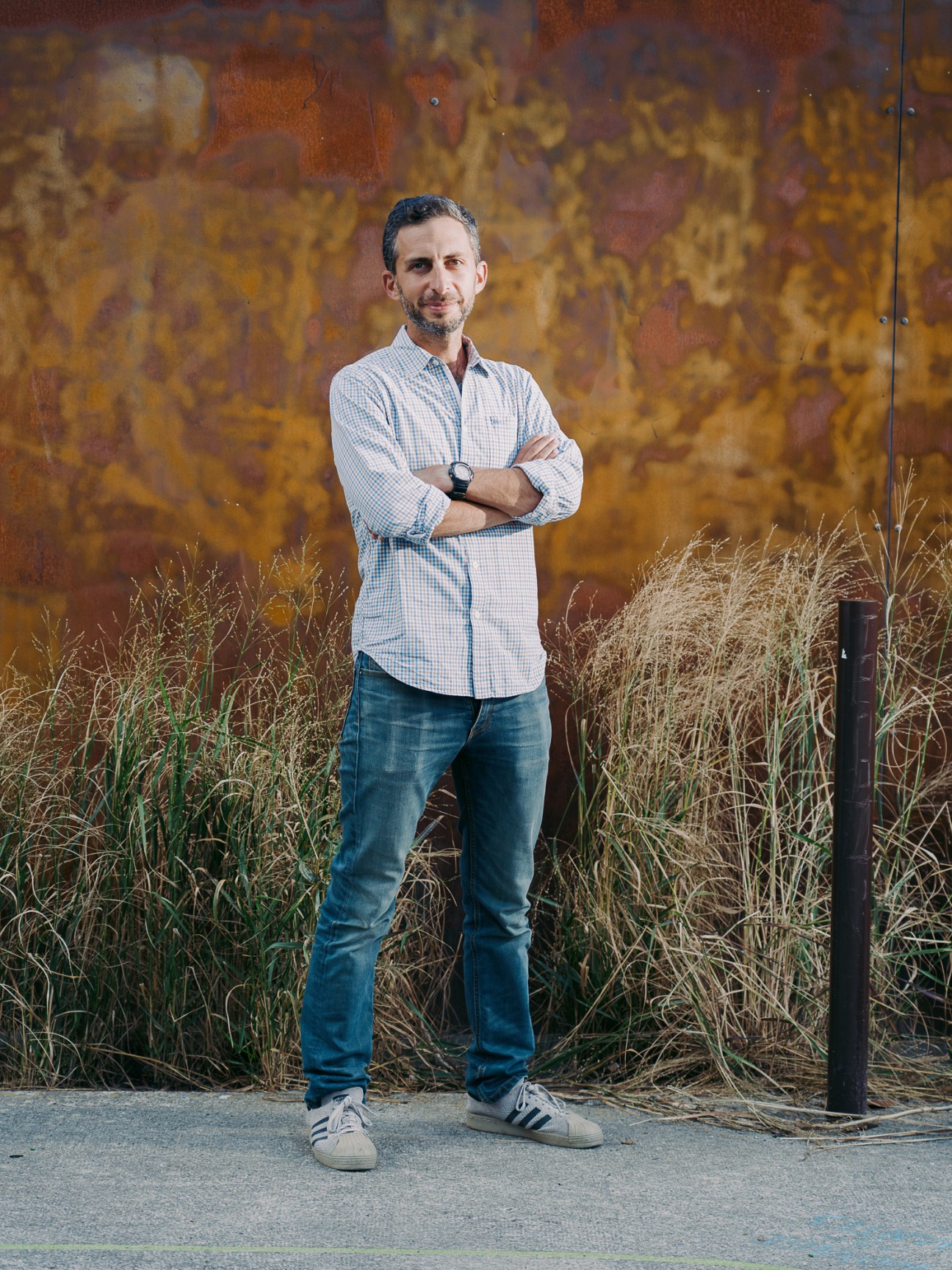
Founder, Imagination Machine
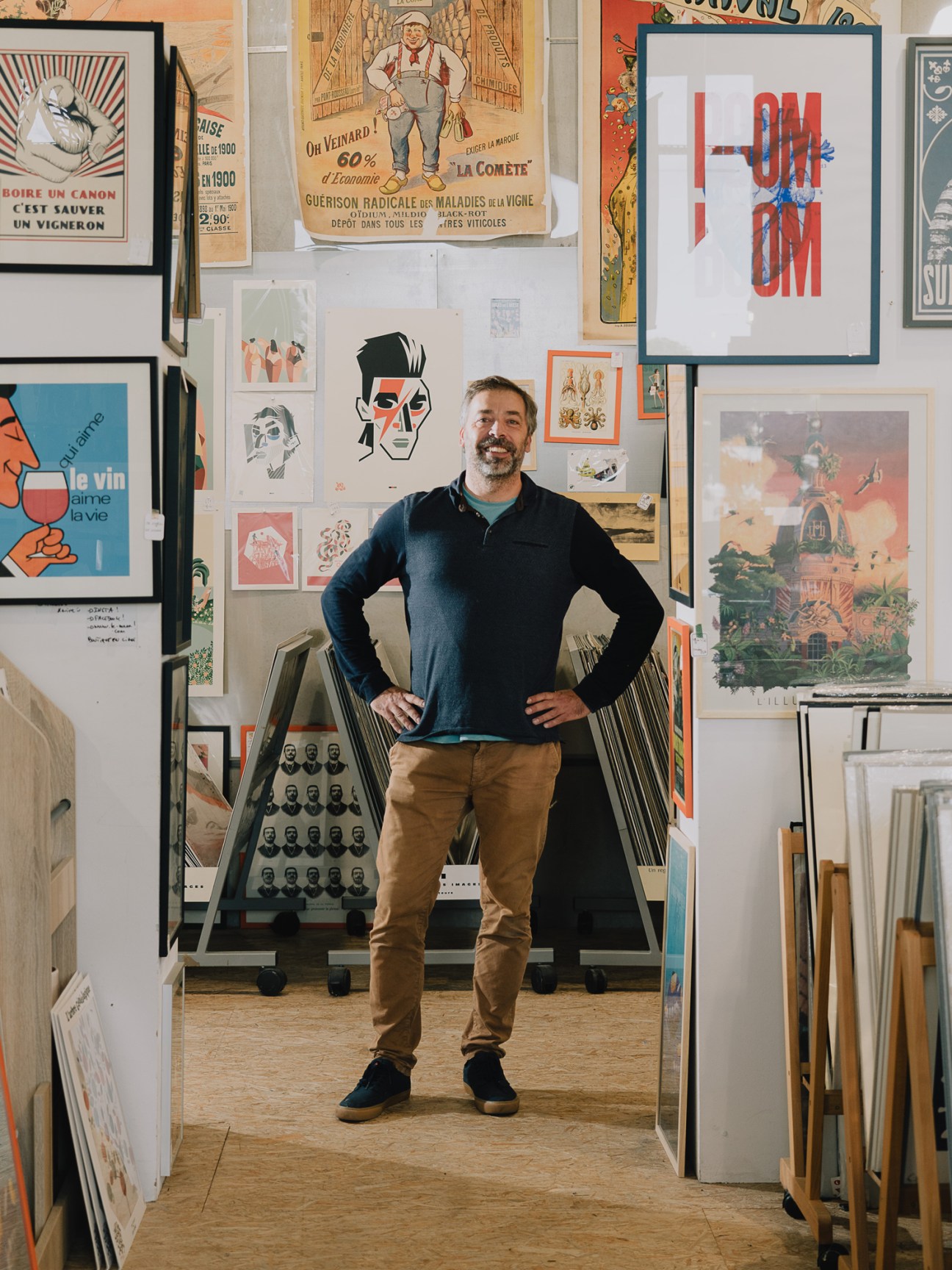
Owner of Le Mana shop
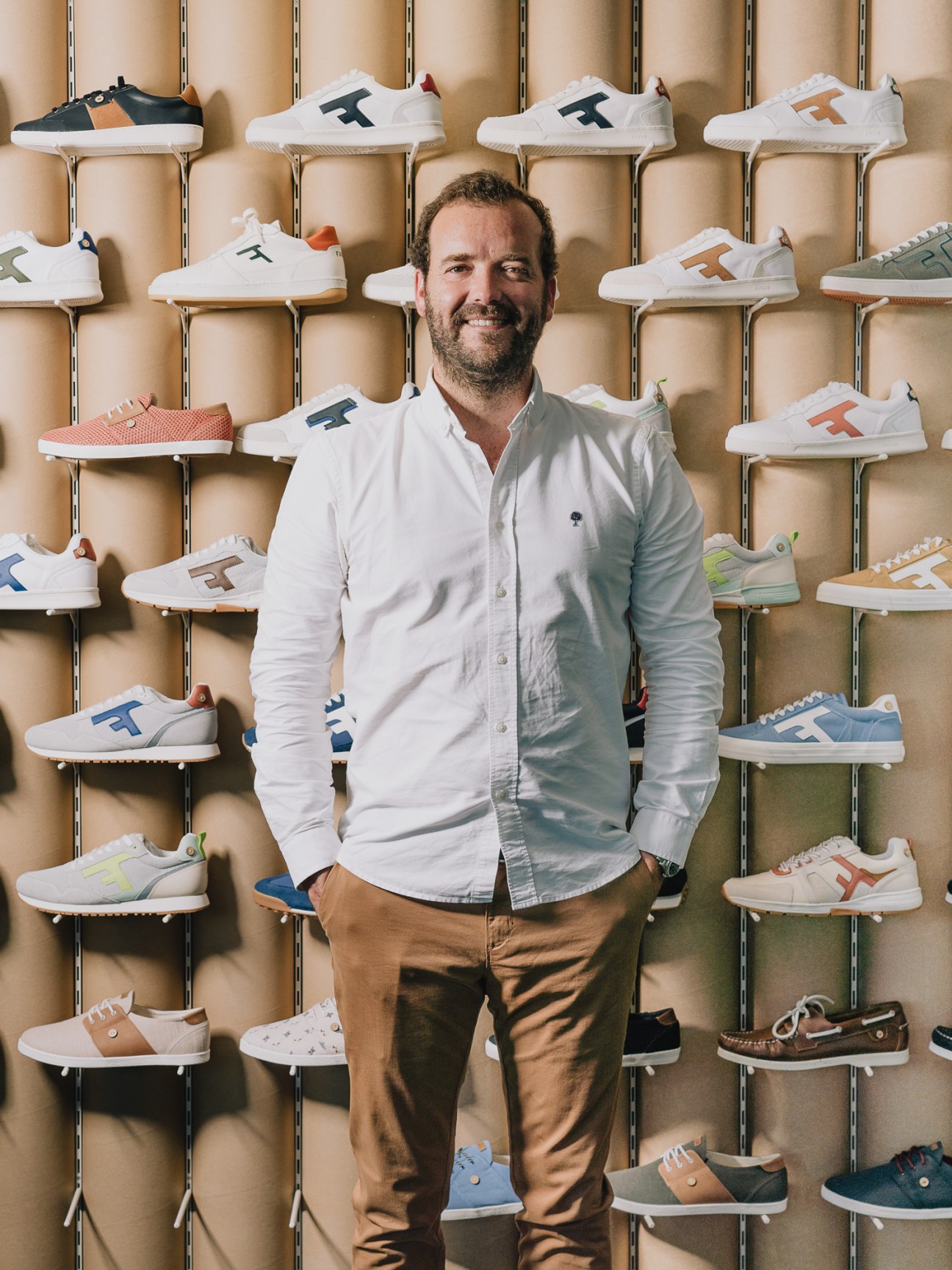
Co-founder, Faguo
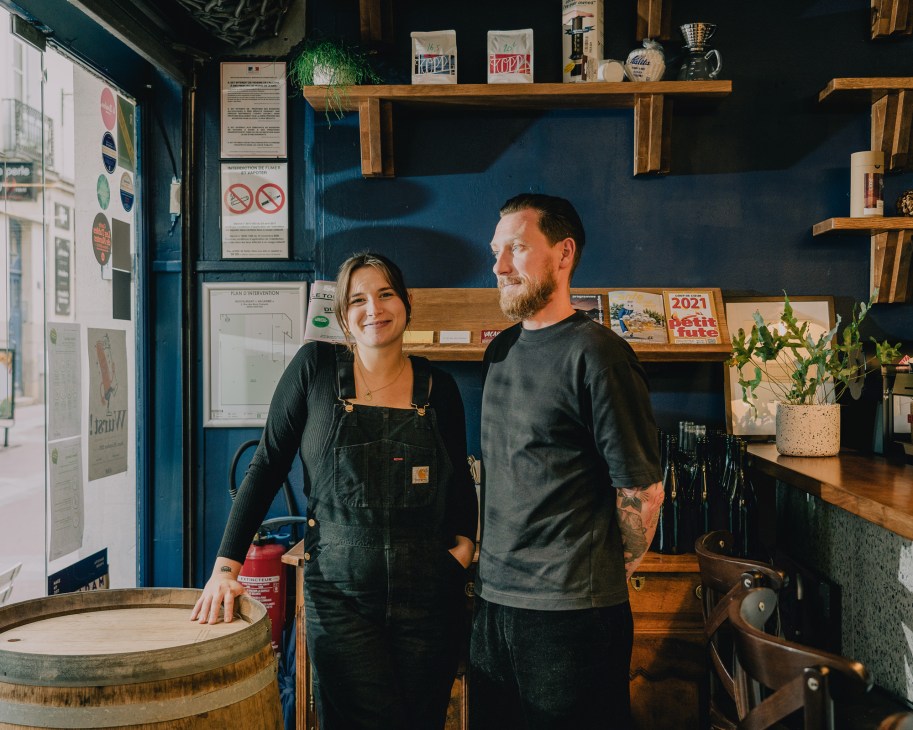
Owners, Vacarme restaurant
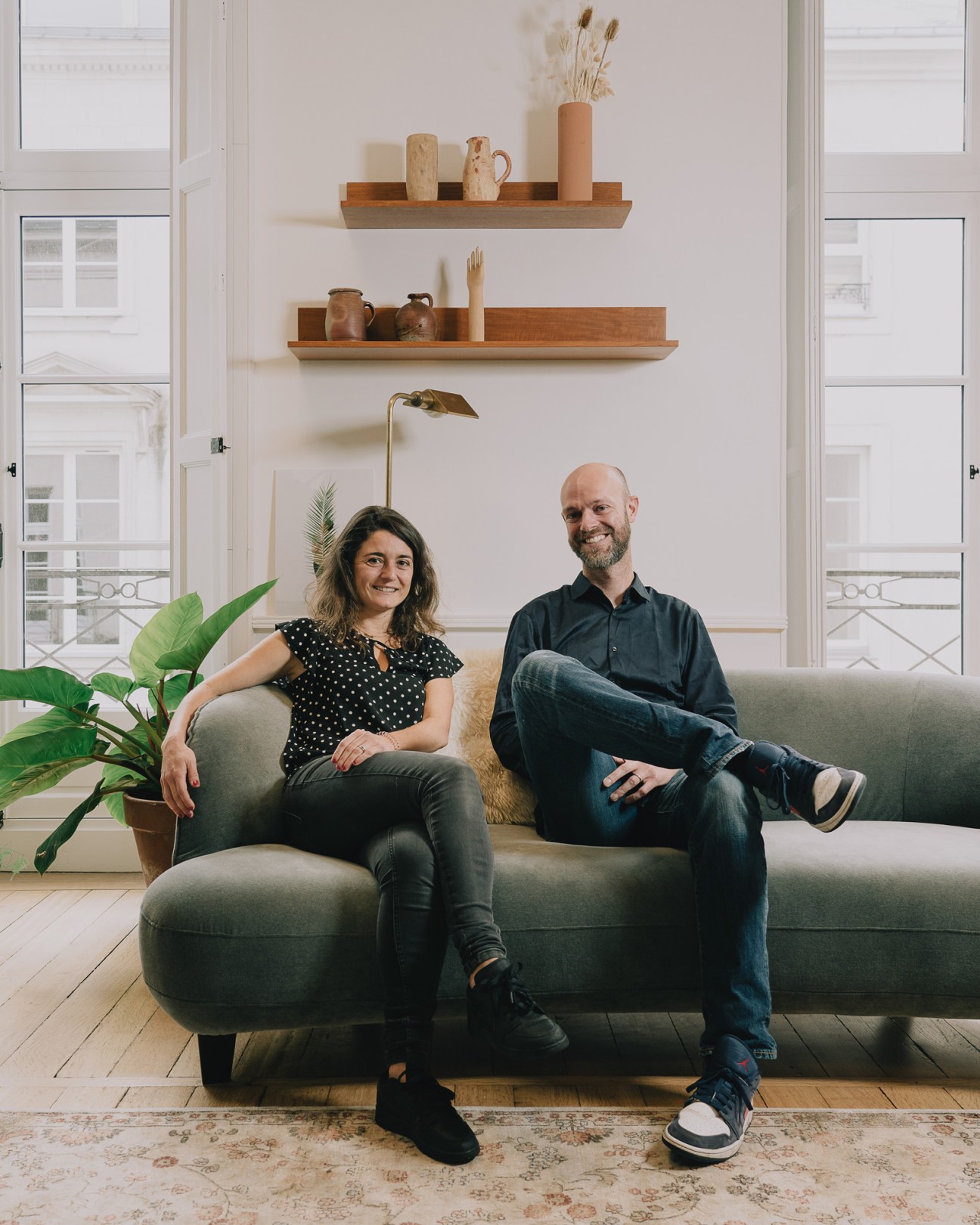
Co-founders, Lhyfe
Part of Nantes’ appeal is that it is incredibly family-friendly. There are parks and playgrounds all over the city. Rob Spiro, a Silicon Valley transplant who sold his previous company, a social search engine, to Google, was looking for a city where his daughters could grow up with a high quality of life and where his career ambitions wouldn’t be dented. Nantes, with more than a dozen incubators and hundreds of start-ups, seemed like the perfect fit.
“It was important to us to live somewhere that has a culture of caring about quality family time,” says Spiro. “I like that a lot of people live in Nantes on purpose.” After leaving the Silicon Valley rat race, Spiro found direction, moved out to a village on the coast and launched start-up studio Imagination Machine, which creates businesses that have a positive effect on society and promote sustainability. “The impact-for-good idea is one that a lot of entrepreneurs in Nantes share and I love that about the city. There’s a community spirit between business owners.”
One of the city’s most notable start-ups is Lhyfe, a green-technology company that extracts clean hydrogen from water, powered by offshore wind power, and is vying to use this to replace fossil fuels in the transport and manufacturing sectors. In the past two years it has raised €58m. And with the Loire-Atlantique region ranking first in France in terms of offshore wind power, deciding to set up shop here was a breeze – even if this wasn’t what initially drew Lhyfe’s founders to Nantes. “More than anything, we all wanted to stay here because this is a dynamic city to live and work in,” says co-founder Nolwenn Belléguic. “We all cycle to work and there is a lot to see and do. It’s ideal for attracting new talent, which we’re going to need to do in the coming year.”
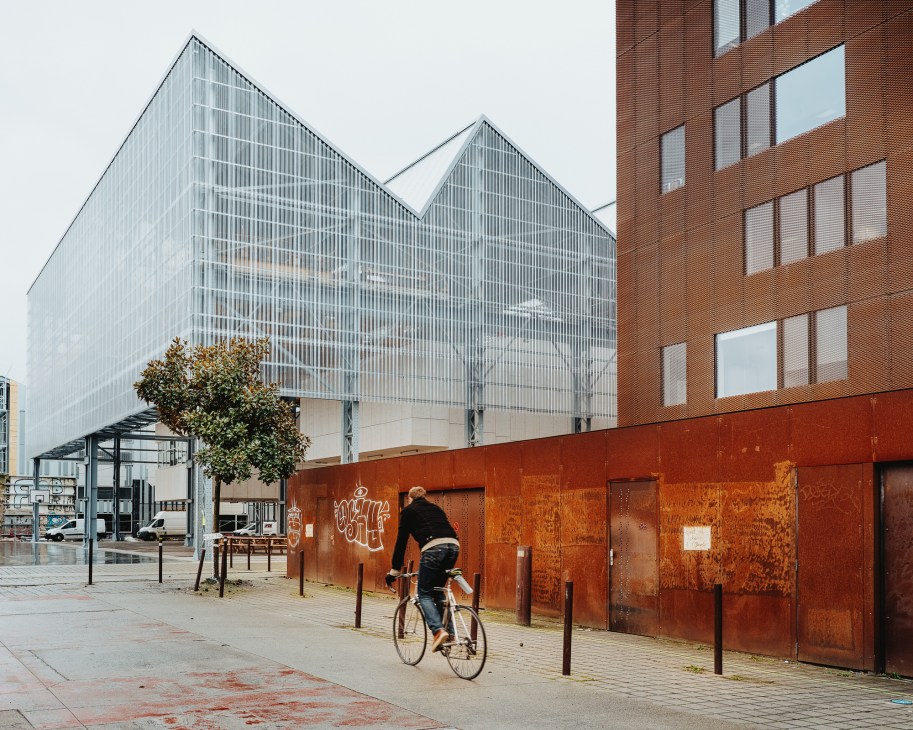
Nantes is expanding quickly with new districts being built from scratch. The most visible development, however, is the Île de Nantes on the water. Once a derelict patch of warehouses, a remnant of the old port, it has been home to a theme park called Les Machines since 2007 (the park’s giant mechanical elephant remains Nantes’ unusual city mascot). The space around it is now regenerated with river-view apartment blocks, as well as restaurants, bars and craft coffee shops lining the green banks.
The Île de Nantes is the base for many of the city’s thriving next-generation companies, including Faguo and Imagination Machine but also smaller businesses such as Xavier Thébault’s Le Mana, a shop that sells artwork and vintage-style posters. “When we opened in 2019, this part of town was a bit of a no-man’s-land,” says Thébault. The former banker decided that he needed a career change at the age of 40 and let himself be swept along by the creative energy of Nantes.
While new entrepreneurs may be flocking to the city, it has also managed to retain its existing talent. One of its heritage brands is Andrée Jardin, a maker of internationally sold home goods that was founded in 1947. Overhauling his grandfather’s company with his brother François-Marie, engineer Jean-Baptiste Julio expanded Andrée Jardin’s market beyond industrial customers to home consumers. “The change over the past years has brought a wave of creative people to the city, including customers for what we wanted to make,” he says. Today the company still operates from the old town but in a new, light-filled showroom and a small workshop on the outskirts, where a team of craftspeople drill, shave and shape the wooden handles of the brand’s smart brooms and dustpans.
The city’s dining scene is also evolving, thanks to the influx of people craving variety. Among the new eateries is Vacarme, opened by Sarah Mainguy and Damien Crémois two years ago in the Bouffay neighbourhood. “We’d had enough of Paris, where it feels like everything has been done,” says Mainguy. Inside, the exposed-brick walls provide a backdrop to the restaurant’s selection of natural and biodynamic wine. Nantes made sound business sense for the pair but they also fell in love with the city for other reasons. “We’re able to live in an apartment double the size of the one we had in Paris for the same cost,” adds Mainguy. “And Nantes has a more underground scene and a lot of old rocker bars, which I love.”
Life in Nantes chimes with a certain freedom of thought and creative spirit. There’s a feeling that there is still plenty of opportunity here and a chance to contribute to shaping an evolving city. “Nantes is so different to most cities in France,” says poster-shop owner Thébault. “It’s like a constellation with lots of moving parts and two beating hearts – the city centre and the Île de Nantes. It’s a place where you feel that you can take a risk.”
Insider knowledge
Who lives here?
Creative types, entrepreneurs, families who want to make their euros go further and shipbuilders commuting to Saint-Nazaire.
What businesses are booming?
Those having a positive effect. It’s also hot on technology with businesses ranging from health-care booking giant Doctolib to smaller companies such as Les Mini Mondes, a children’s toy and magazine start-up.
Where could I find the proverbial gap?
The Nantes food scene could do with more diversity and international influences.
How welcoming is the city to entrepreneurs?
Very. The Nantes Saint-Nazaire Development Agency has a 28-strong team that is dedicated to helping entrepreneurs to relocate here.
Will my quality of life improve?
If you live in a top-tier city, yes. Office space comes in at €165 a square metre compared to €620 in Paris. Homes cost €4,500 a square metre to buy compared to €13,000 in the capital. Sandy beaches are less than an hour away and the arts scene is thriving.
What’s the average salary?
€34,600 a year.
And what about the cost of living?
Nantes is almost 14 per cent more affordable than Paris and 8 per cent less expensive than the national average.
Can I escape the city at weekends?
Head an hour west for beaches in Saint-Brévin-les-Pins, Les Moutiers-en-Retz or La Baule. Push further and you can be on Guérande’s salt planes. Head east and you’ll be in the Loire wine territory, scattered with castles. Drive north for some of Brittany’s most beautiful beaches in the Morbihan Gulf.
What about a fun night out to finish the week?
Places such as Little Atlantique Brewery, which serves its own beer, and Vacarme restaurant in town are redefining the nightlife.
Tell me honestly: should I move here?
If the prospect of contributing to building a city with a promising future appeals to you, then get packing.
How Greeland aims to unlock new economic opportunities with a smart airport expansion
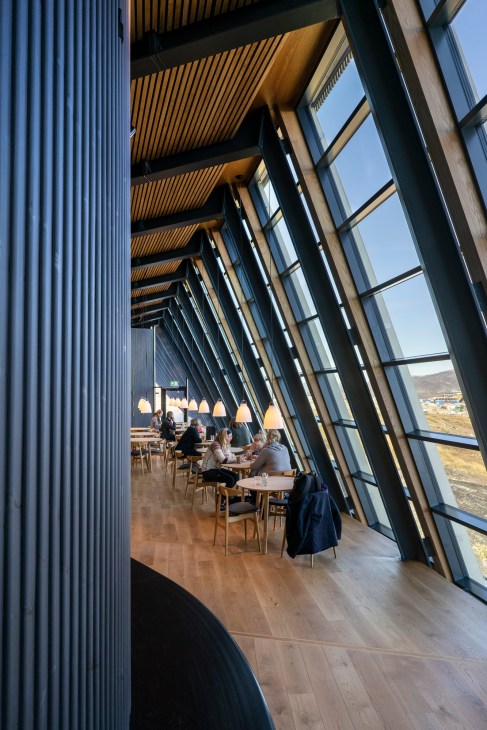
Descending over the Greenland ice sheet, en route to Kangerlussuaq, the Air Greenland captain points out Navigator’s Rock straight ahead. It was a landmark used by Second World War pilots based here to confirm that they were on the correct course. As the ice sheet comes to an end, we fly low and close to the mountains before making a series of right turns over the Sondrestrom Fjord as we prepare to land. There are a handful of buildings dotted around the long runway; beyond them sits the empty Arctic landscape stretching for as far as the eye can see.
It is one of Greenland’s many quirks that the largest airfields, with the most reliable weather, were built by the American military during the Second World War when strategic locations for missions rather than proximity to centres of population were the priority. So this one wide-body A330 that Air Greenland owns, referred to by most simply as “the Airbus”, flies daily from Copenhagen into Kangerlussuaq, with its lengthy runway, before turning straight back around again. This is also pretty much the only regular connection to the outside world. Most passengers connect onward aboard the small Dash-8 planes that can land on shorter strips. It makes air travel (and cargo deliveries) inefficient and expensive.
But the experience of landing on a transatlantic flight in the middle of nowhere might only have a few years left to run. Greenland is in the midst of an ambitious construction project to expand runways and renew the airports in at least two of its busiest towns, including the capital, Nuuk. When this project is completed in 2024, Air Greenland, and anyone else who cares to enter, will be able to fly directly from its population centres to Europe, North America and beyond.
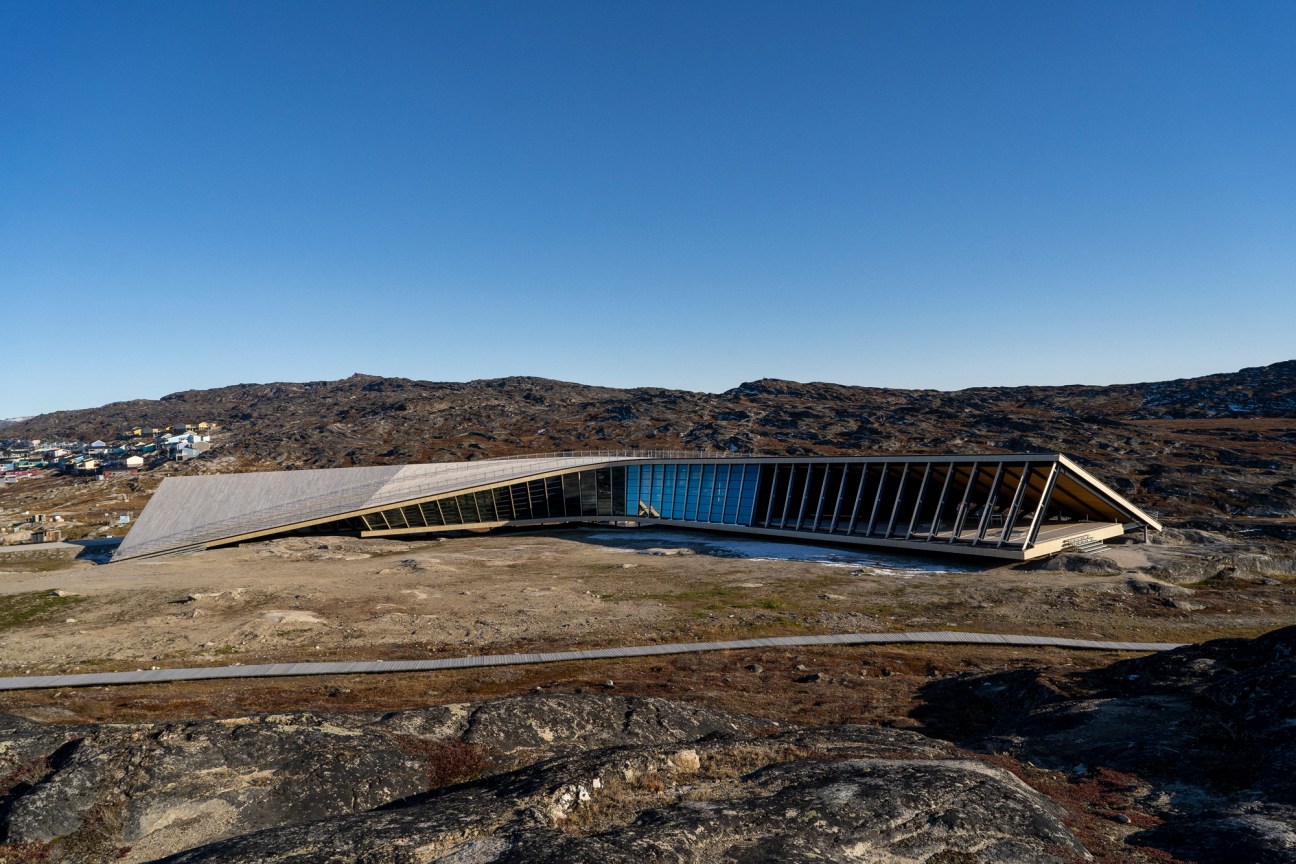
This will have ramifications far beyond increasing tourism – though that is a goal. It stands to diversify trade, bring investment and, in symbolic and tangible ways, broaden Greenland’s horizons beyond Denmark, whose kingdom it is part of. “This is really the key for the next step in developing Greenland,” says Aviaaja Karlshøj Knudsen, executive project director at Kalaallit Airports, which is tasked with building and operating the new terminals in Nuuk and Ilulissat. “We have a real opportunity here. The world’s eyes are on us. And we should think that everything you want to make happen here, you can.”
Still, says Knudsen, this won’t mean dozens of new air routes overnight. “It takes time to build up these things; you don’t just fill up an airplane like this,” she says with a snap of her fingers. “There’s a lot of interest in Greenland but in reality it would be a success for us even if we got just one new operator in.” The airports project made its way into international headlines briefly in 2018, when Denmark swooped in to offer cheap funding for their construction after it appeared that China might be on track to win the tender. The Americans, who still operate the Thule military base in the north of the country, also made clear that Chinese infrastructure in Greenland would be a no-go.
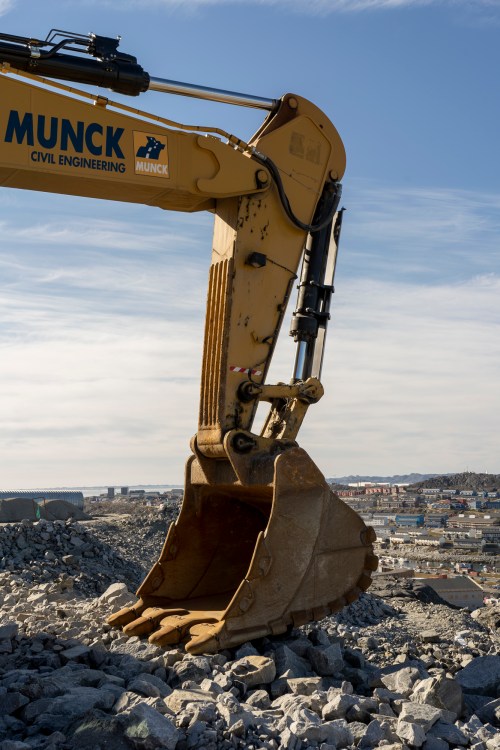
Now the project is well underway. When it’s finished, the runway in Nuuk will be 2,200 metres long and capable of handling larger aircraft such as the a330. A similar project on a smaller scale is underway in Ilulissat, the main tourist town in Greenland, which is known for the dramatic icebergs that float along its coast all year. There are also plans to build a third new airport in the southern town of Qaqortoq, currently accessible only by scheduled helicopter or ferry, if the government can agree on an acceptable price.
Jacob Nitter Sørensen, CEO of Air Greenland, says that they can’t wait to get started on growing the flag carrier’s reach. We meet Sørensen at the airline’s HQ at Nuuk Airport. The plan is to join him onboard a company helicopter to visit some of the mining operations they support – one of the variety of missions the airline undertakes in addition to scheduled flying. Sørensen hopes to have a direct route to North America by 2025. Charter flights from the US and Canada do occasionally come in but a regular service has never been feasible. Sørensen thinks that will change, though he acknowledges that there’s work to do. “Getting more aircraft is the easy part,” he says. “The difficult part is establishing a new market because the market is basically non-existent today.”
Sørensen says that the airline is in discussions with airport authorities in cities such as New York, Washington and Toronto. There is also an agreement with Canadian North to look into the feasibility of service to Iqaluit, a town in Canada that’s just a two-hour flight away from Nuuk. “The Scandinavian market has matured, so growth will have to come from other markets,” says Sørensen. “That will help Greenland diversify and bring more money into our economy. The proceeds will go straight into Greenlandic society and its economy. That’s what we’re working for every day.”
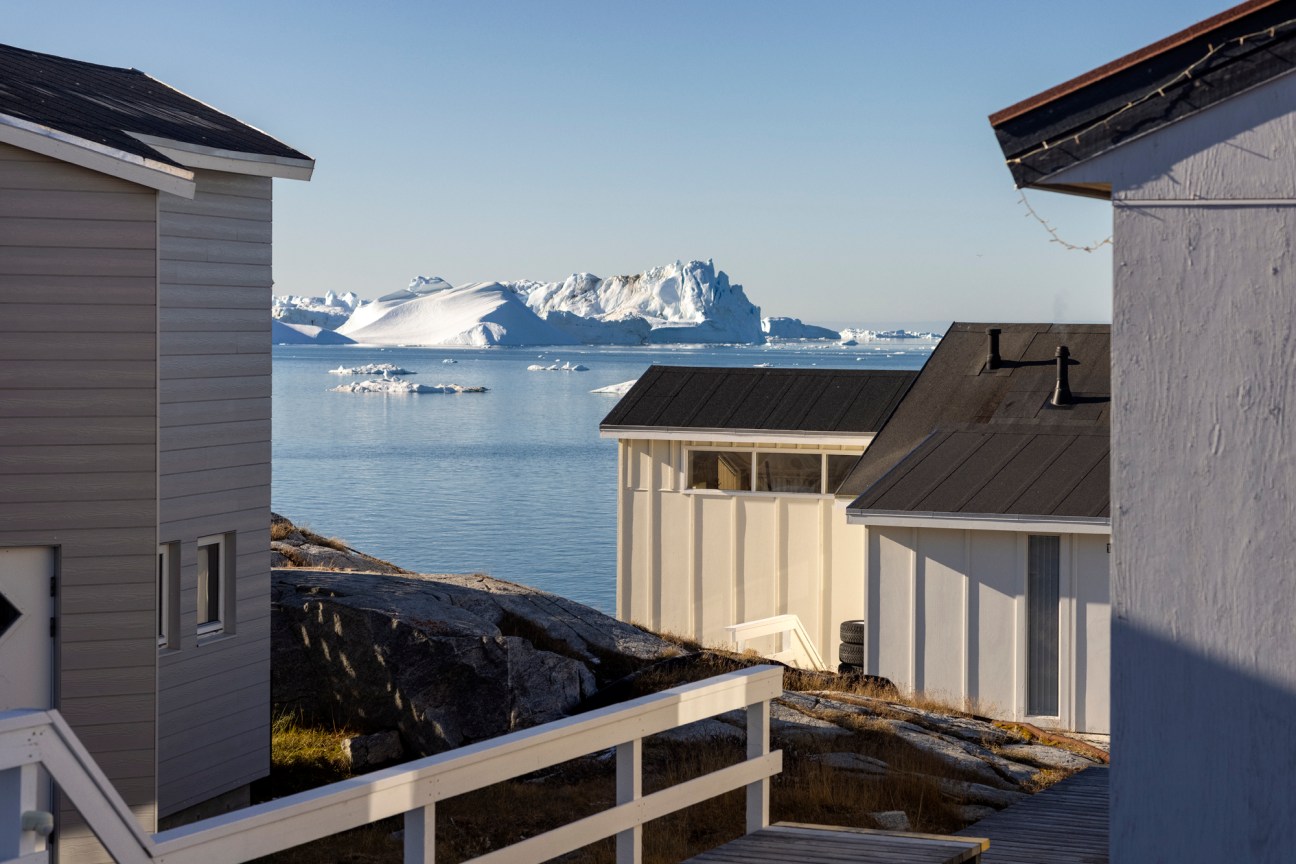
Nuuk these days already has the feel of a boom town, even without a major influx from abroad. Construction cranes abound in this small city that sits on a headland at the edge of a large fjord system. Dozens of new apartment buildings dot the rocky outcrops. And the colourful wooden homes flecked along the hillsides overlooking the sea, framed by the Sermitsiaq mountain towering behind, are enough to make one start dreaming up excuses to decamp here. It’s only September and already the aurora is shining bright green every night; there’s freshly caught seafood; the otherworldly fjords are just minutes away from town; and everybody owns a little boat. There is a rawness and a sense of possibility here because it’s so lightly developed – something that’s hard to find in most of the world.
Fishing is by far the main industry in Greenland, accounting for more than 90 per cent of exports in 2019. And the Greenlandic government would very much like to shift this single industry dependency. Among the more promising sectors, tourism and mining stand out. Tourism is the low-hanging fruit, with the least politically challenging ramifications – before the pandemic Greenland had about 100,000 visitors a year, half of them cruise passengers. Those working in tourism in Greenland think that the demand is there if travelling becomes easier. They feel they have an opportunity to build a better tourism industry, avoiding pitfalls that others met; Iceland often comes up as a case study.
“It’s a unique opportunity to be a part of developing tourism almost from scratch and in times where we’re rethinking tourism in the world,” says Hjörtur Smarason, the new CEO of Visit Greenland, who is Icelandic. He says that they are focused on growing in a measured way and making clear that Greenland would never want to be a mass-tourism destination even if that did become possible.
But it’s not as easy as opening the new airports and letting the world in. For starters there is a shortage of hotels. Staying in one of Greenland’s towns tends to involve overpriced, low-quality inns; mid-range hotels can easily run to €300 a night. This is changing with the arrival of upscale spots such as Ilimanaq Lodge to the south of Ilulissat and a new eco-hotel being built by Air Greenland in the ice fjord outside Nuuk. But the pace will need to quicken significantly if the goal really is to create a tourism boom here.
“To put it into context, one extra flight a day with a full plane would mean a 100 per cent increase in tourism,” says Smarason. “So what’s important is that we manage to spread out the growth. We need to build a strong brand for Greenland that attracts the people we want and maybe keeps others out. What we want to avoid with the new airports is suddenly getting a bunch of cheap flights and people arriving without plans. That won’t work in Greenland.”
Then there’s mining. Among a number of prized resources, Greenland is thought to hold vast quantities of rare earth minerals that are in demand for hi-tech devices and battery production. This could be lucrative, of course, but a push for more extraction poses difficult questions for the left-leaning government in Nuuk that recently took power.
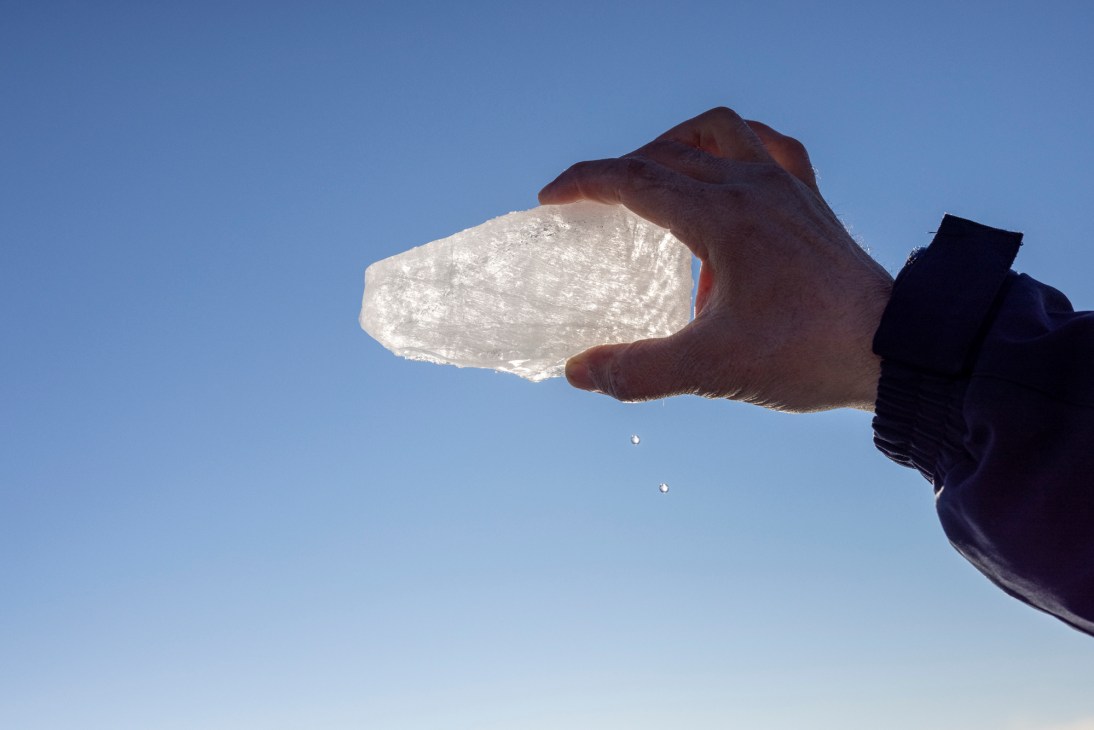
Premier Múte Bourup Egede and his Inuit Ataqatigiit party came in on a platform that included cancelling a mining contract held by an Australian company (with minority Chinese backing) to explore a mountain thought to contain massive reserves of rare earth minerals and uranium. Greenland also recently declared that it would stop exploring for oil and gas, citing the environmental costs. There is strong backing for this, sitting as Greenland does at one of the frontlines of climate change (scientists have said that in 2019 the Greenland ice sheet lost about one million tonnes of ice a minute – and the pace has probably quickened). But more mining is still being discussed.
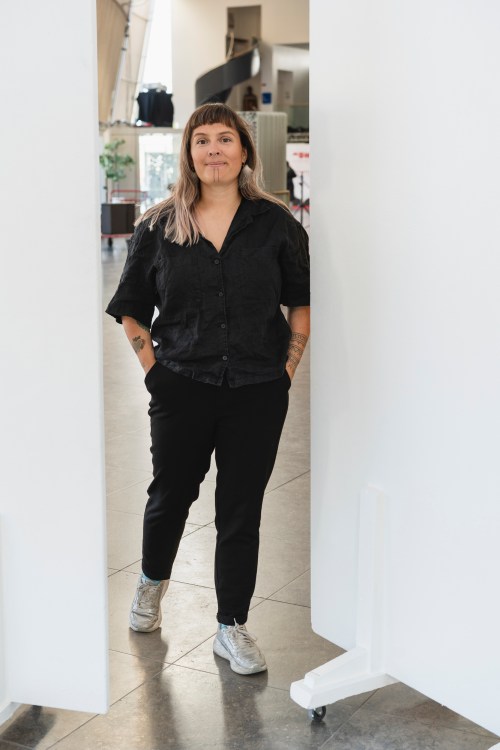
“We are onboard and we are open about that issue,” says Naaja Nathanielsen, minister of a rather eclectic line-up of responsibilities, including housing, infrastructure, minerals and gender equality. In her corner office in one of the newer towers in Nuuk, partly occupied by the government, she comes across as confident and optimistic. “The extraction industry could possibly be seen as some sort of opposite to the tourism industry but Greenland needs to have both in order to exist. And I find that they can coexist nicely.”
“Public consultation to determine, ‘Are we willing to have mines in this area? How does it fit into the story of our nature?’ We need to have those debates early on.”
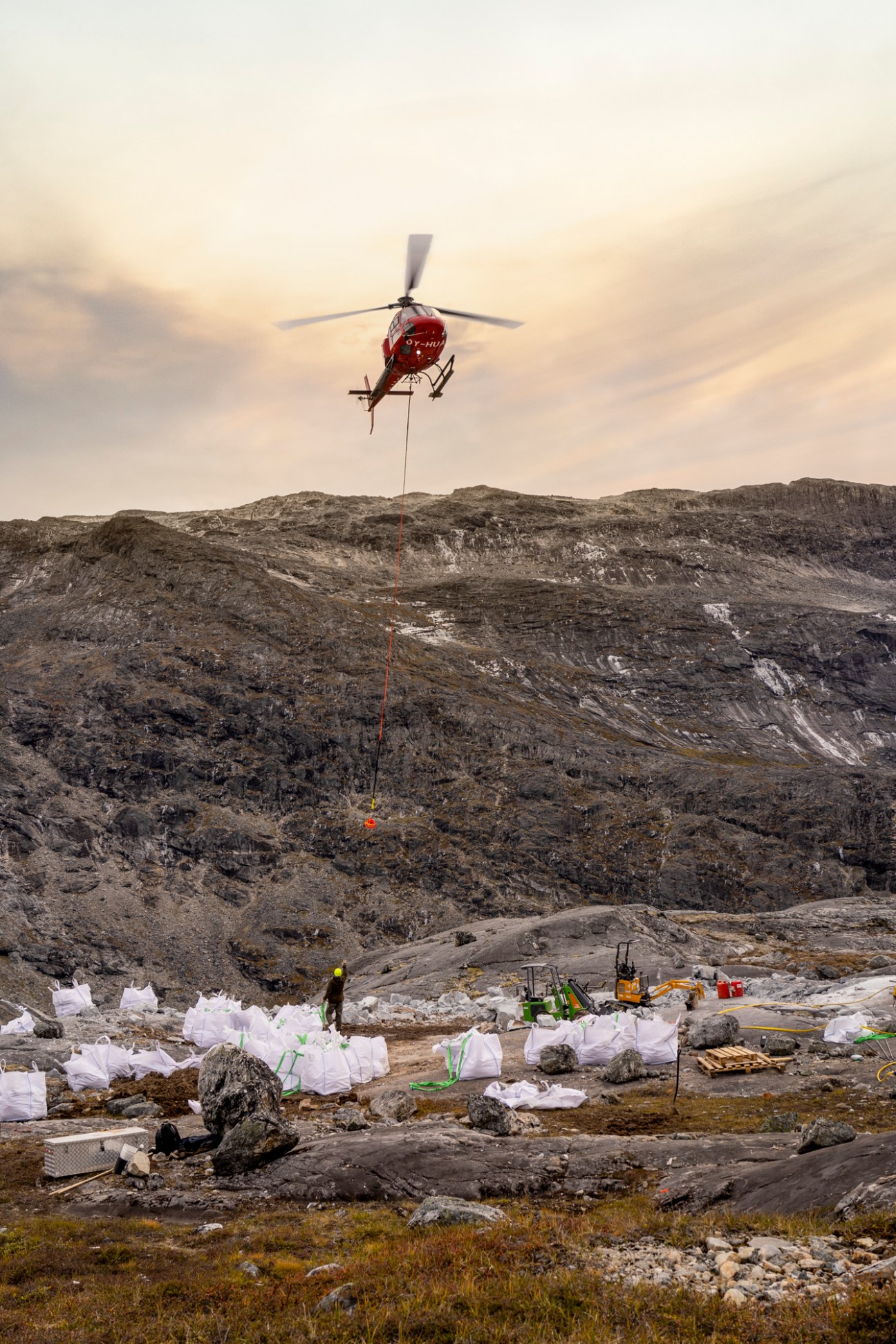
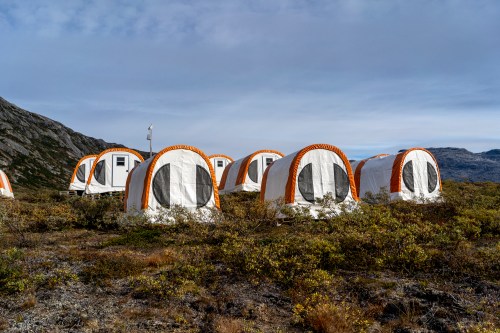
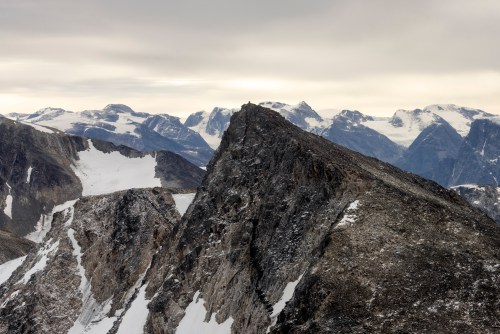
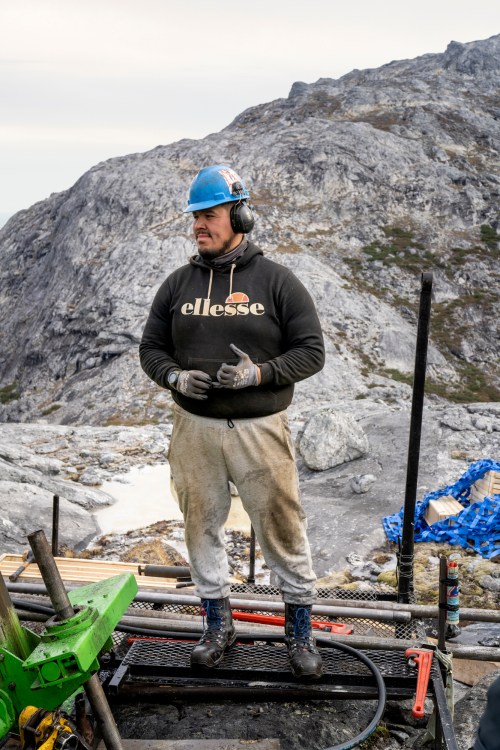
On our helicopter flight south out of Nuuk it takes just a few minutes before the dramatic landscape dominates the view below. One fjord leads to another and one glacier leads to the next; the water a variety of shades from deep blue to powder green. We land at a small base camp set up by a company called Greenland Anorthosite Mining. It’s just a handful of workers, a cook and a couple of Air Greenland helicopter pilots who are based here to fly big bags of rock and equipment up and down the valley, linking the drilling site with the base station just a few minutes away by plane.
The site is headed up by geologist Anders Lie, a co-owner of the company. Lie is a Dane who’s been working in Greenland since 1991 and he looks every bit the part of the weather-worn Danish mountain man, complete with lumberjack-style flannel shirt, as he sits and sips a coffee in the small mess tent. This is still just a prospecting venture. Lie says that there are significant deposits of the mineral, anorthosite, which has a variety of specialist applications, such as building high-end fibreglass.
It can be complicated and difficult working in Greenland but Lie says that it’s worth it. “It’s untapped, the last frontier,” he says. “You could go to Africa but the problem is that the mining industry is focused on the security of your licence. In Africa you never know what government you will have next year or what war will break out here or there. Greenland, this is the western world. It’s just next door. You have regulations, you have laws. And you have a population that’s eager to see something happen.” We hop back into the chopper to take a look at the drilling site with Lie, who cracks jokes with the pilot as he directs us around a massive rock face to a suitable landing spot. Lie says that there are strict environmental regulations in place as well as structures designed to ensure that the value generated by mining stays in Greenland, meaning mining no longer has to be a dirty word. “It’s a remote place so in the past nobody would have cared,” says Lie. “Nowadays you have to consider that there are people living in settlements just 25 miles away. Of course when you’re mining, you’re hurting nature but it’s possible to do it in a sensible way, doing no more harm than is needed.”
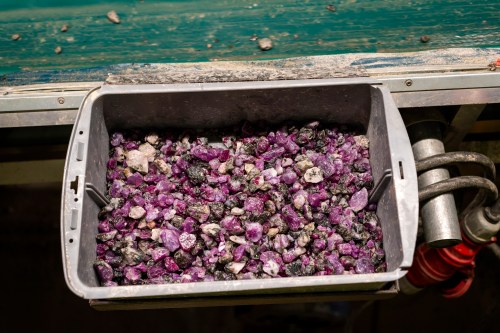
We say our goodbyes and get back onboard the helicopter to fly another 10 minutes south to a ruby mine. The riches of this land are on display here. Not only the boxes full of deep reddish-purple rocks being plucked from the machines in a seemingly endless stream but also what might just be the finest dining set-up you could hope to find in a mine’s cafeteria. On the menu today is snow crab, whale-skin bacon, smoked salmon and reindeer cold cuts.
This year is the 300th anniversary of Danish-Norwegian settler Hans Egede’s arrival in Greenland and on first impression it would appear that he remains an important figure. The capital’s main hotel is named after him and a towering statue of the missionary stands in the older part of town. But authorities decided not to celebrate the anniversary because Egede’s brand of colonialism is not currently popular in Greenland. Someone recently threw red paint on the statue and tagged it with the word “decolonise”. Then again, Egede’s statue has been beheaded in the past, so the paint job seemed mild.
A recent referendum, however, revealed that a majority do support keeping the statue in place – a clue to how complicated the old colonial relationship with Denmark is. Even as Greenland now holds a fair degree of autonomy and even runs its own government, the Danish relationship is woven through just about every aspect of life.
Aka Hansen is a young film-maker from Nuuk who has been one of the more active pro-independence voices here in recent years. She says that when she was quoted suggesting that the statue of Hans Egede be thrown in the ocean, it got her disinvited from several kaffemik events, the Greenlandic tradition of opening one’s home to anyone and everyone when there’s something to celebrate. “There has been a passive politics in how to gain independence,” says Hansen. “The time is actually now to become independent. That would be good for the nation. But I don’t think there has been much of a long-term plan for that.”
Now, though, the government is looking at more active ways to develop a self-sustaining economy – and the majority of the Inatsisartut (Greenland’s Parliament) have stated a desire for independence. This has not escaped Denmark’s attention, says Hansen. “They’re trying to keep the bond with Greenland as much as possible, so they’ve become softer, saying ‘I want to include you’ and ‘Tell me more’. Just what happens when the wife comes to the husband and says I want a divorce, and the husband starts to think, ‘OK, what can I do to keep this marriage?'”
Joint Arctic Command
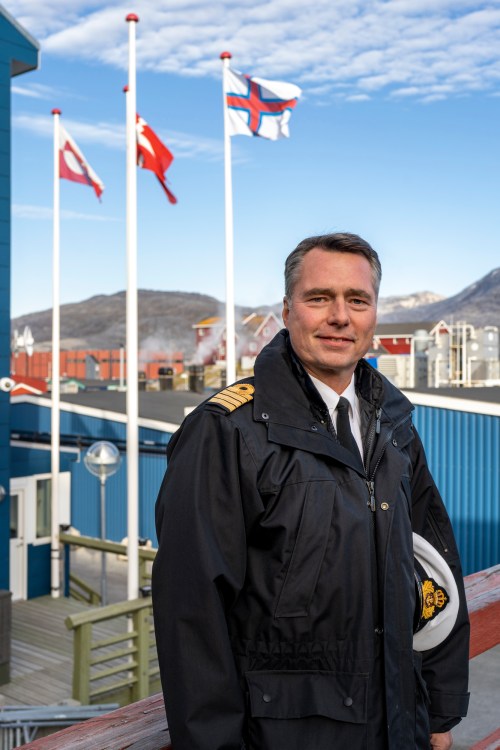
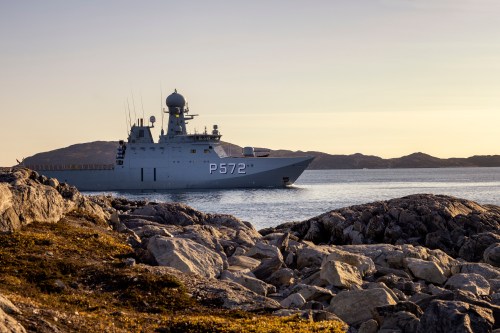
Greenland’s government has taken on responsibility for many aspects of life and policy but Denmark remains in charge of defence. Looking after the country’s security is a special contingent of Danish defence known as the Joint Arctic Command, which also looks after the Faroe Islands and much of the sea in between. It has about 300 people in Greenland at any given time – two thirds of them are usually at sea.
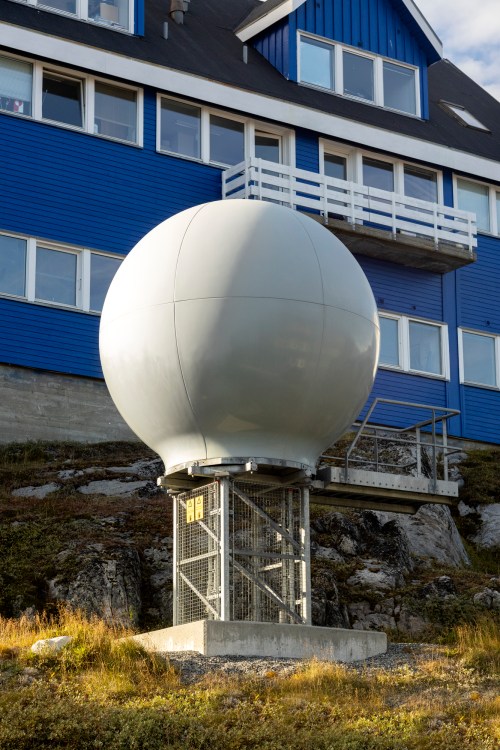
The Command is tasked with protecting the sovereignty of the Kingdom of Denmark and conducting search and rescue missions. It’s a specialised unit with extensive Arctic experience and a fleet to match, including covert ships with heated superstructures. Denmark committed €200m to upgrade its equipment including coastal radios, drones and satellite surveillance, as well as radar in the Faroe Islands, covering a blind spot where aircraft can currently fly undetected.
“In the Arctic, there are challenges with communication; logistics are difficult,” says Deputy commander Dan B Termansen. “We’re near Canada, Alaska, Russia and Norway. And we’re seeing more interest in learning how to operate in the area between Iceland, the UK and Greenland, just like we saw in the cold war.”
Denmark sends about €525m to Greenland every year, a figure that accounts for about two thirds of the national budget. It oversees the island’s defence and security, ensures its territorial sovereignty and inspects fisheries, among a number of other things. Many Greenlanders have entirely Danish-sounding names; they and their parents went to Danish schools; nearly everyone speaks both Danish and Greenlandic.
These days it’s not just about Denmark. Russia has been building Arctic air bases not far away. China is eager for a way in. The US has been making overtures as well in the form of a new consulate in Nuuk that opened just last year. It caused some consternation in Denmark when the US pledged $12m (€10.3m) in financial assistance to Greenland. Who could forget when Donald Trump stated that he’d like to buy the place? While the comment was characteristically indelicate, there’s real interest from the world’s powers to hold sway in Arctic territories as they become more strategically important. And, as the ice melts, the geopolitical jockeying in the region will only get louder. But, as Nathanielsen says, what else is new? “Greenland has been of interest to the superpowers for many years, so for us it’s not a new thing,” she says. “We have great relations with the US, China and Russia. We are not naive but we have a good position as it is right now.”
At the very least, it seems that the right debates are being had – and with a handful of new airports on the way, a range of possibilities is opening up. For a place facing so many difficult questions – from the economy to the climate to its relationship with the outside world and what that says about its identity – Greenland’s future looks remarkably bright.
Changing lanes
It might be surprising that storied companies from Levi’s to Lego have had to change tack to pull themselves back from the brink of financial ruin. But a pivot is more common than you might think. In fact, changing direction is something healthy businesses should be doing all the time, according to Mark Hart, professor of small business and entrepreneurship at Aston Business School in the UK. “Pivoting means thinking about where the future growth of the company is going to come from,” he says.

But when is a good time to make that all-important move? Do it too soon and you might not have had time to consolidate your initial offering; leave it too late and your company might not be salvageable. “It’s important to understand what has changed in the marketplace,” says Hart. “Customers are the key drivers; listen to what they want.”
It’s vital, though, not to get carried away. A new idea for a product might suddenly strike or a golden opportunity might pop up – but it pays to do market research then test and test again. “The first step when considering a pivot is to evaluate the opportunity,” says Douglas Hannah, assistant professor of strategy and innovation at the Questrom School of Business in Boston. “Is it real? What are the assumptions or forecasts that need to be true for it to be viable and how can those be validated? Low-cost tests at this stage can reduce a lot of heartache later on.”
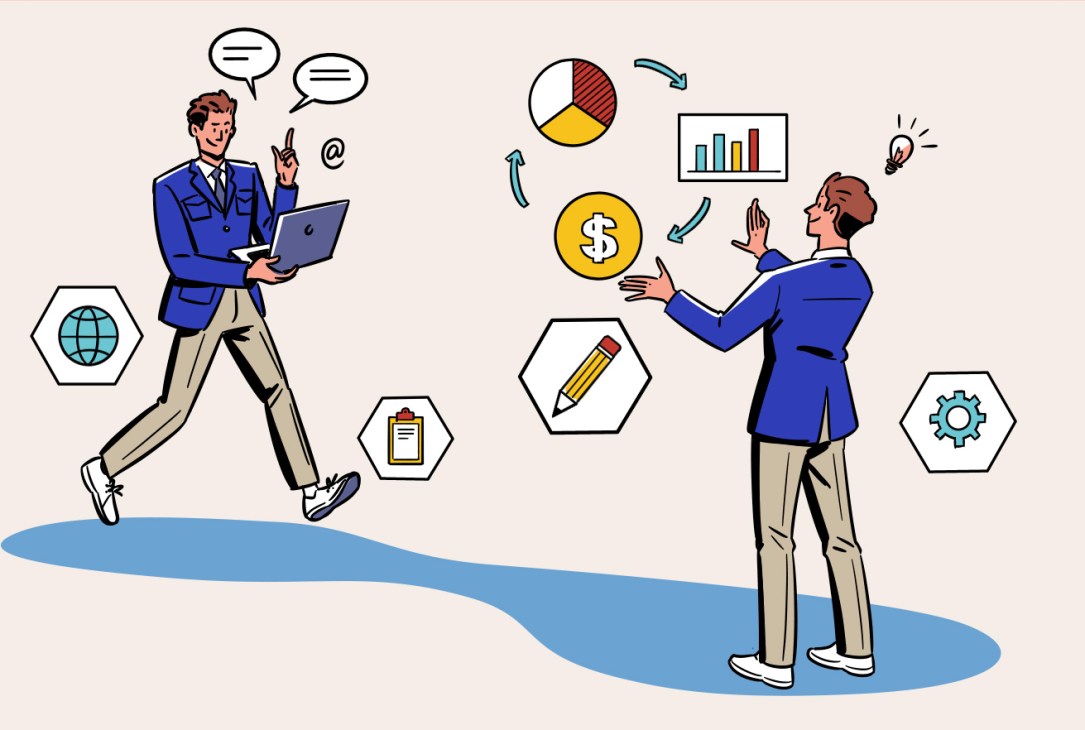
What if a bright idea is still not taking off? Don’t give up too quickly, says Hart. Make sure that you are part of a trusted network where other entrepreneurs and business leaders can offer new insights and suggest a way to change direction. A little flexibility can go a long way too. “Effective leaders need to be able to commit to a new vision, while also remaining flexible in the details of its implementation,” says Hannah.
What’s more, a total rethink – or even starting over – should never be considered a failure. Most entrepreneurial souls have several non-starters under their belts. “I don’t call a change of direction or scrapping an idea a failure,” says Hart. “I call it a ‘business exit’. Maybe you’ve misadjusted your idea, maybe the market just isn’t there – you’ve made an exit and you’ve learnt from that.”
And as the world continues its economic recovery, it will surely be the plucky newcomers who are best positioned to quickly adapt to new realities. But there is space – and economic necessity – for larger businesses to make smart moves too. “They are being forced to become more entrepreneurial to avoid being disrupted,” says Hannah. “But this also means that they are discovering new opportunities and novel ways to connect with and bring value to their customers.”
Monocle meets three bosses who have steered their companies in new directions: by diversifying, capitalising on their design heritage or with a radical makeover.
1.
Novetex
Hong Kong
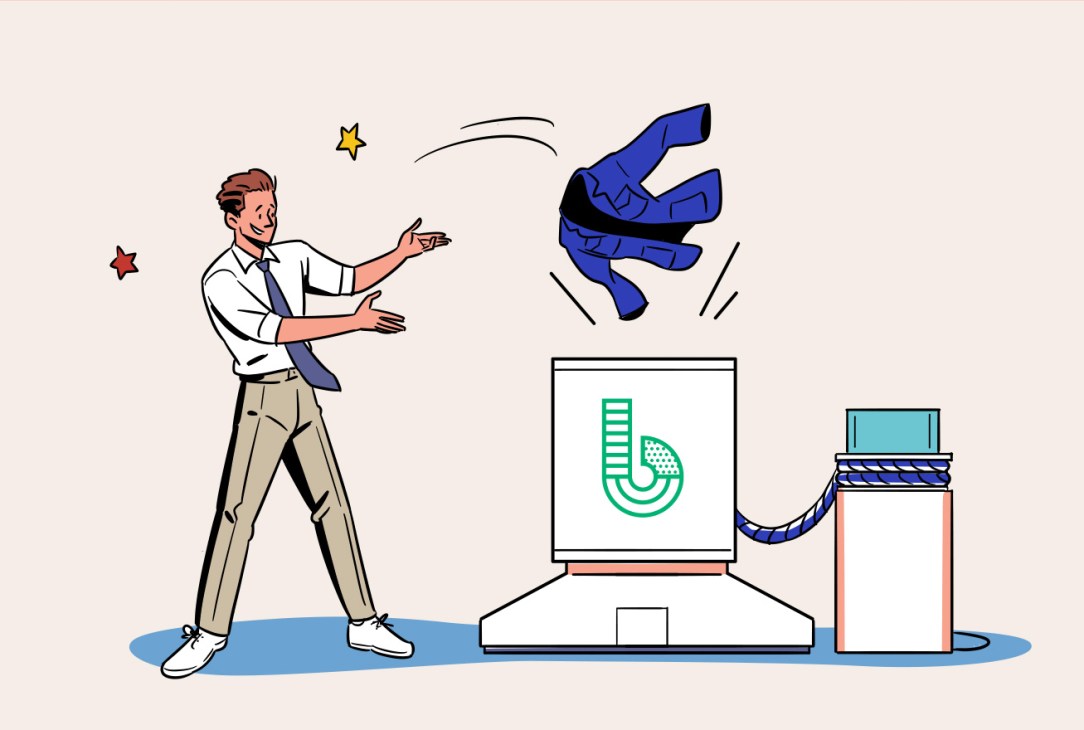
Change of direction: The textile industry is notoriously wasteful with fabric (about 390 tonnes of textiles are sent to landfill daily in Hong Kong alone). To combat its own textile waste and deadstock, yarn spinner Novetex developed The Billie System, which recycles old fabric into yarn without using water or producing any chemical waste.
Results: The Billie System has been so successful that it has now been rolled out to work with external clients, such as high-end fashion houses and hotels, including The Peninsula, to recycle their linens, turning them into yarn and then various textile products, such as new sheets.
Chairperson Ronna Chao: “Collective wisdom is always better than one person trying to figure things out by himself. Innovation and change require not only vision and courage but also patience and persistence.”
2.
Kotipizza
Finland
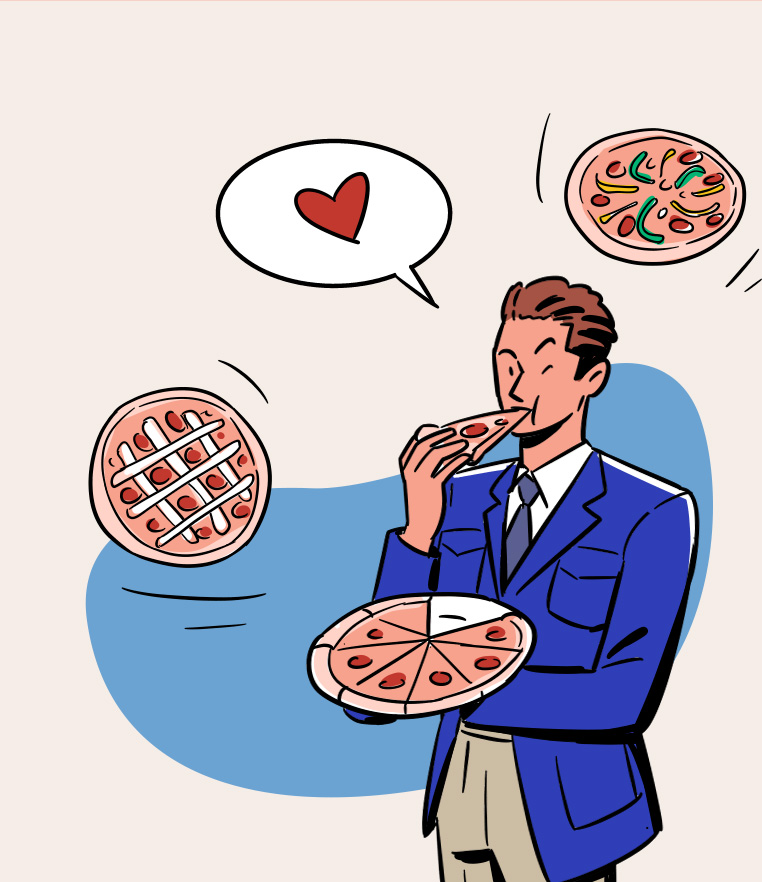
Change of direction: In 2013, when Tommi Tervanen took over as CEO of Finnish pizza chain Kotipizza, the largest of its kind in the Nordic countries, it was in dire straits. Profits were sinking and product development had stagnated. A pivot was introduced, with the visual identity and restaurants being spruced up and the workers being given stylish new uniforms. Tervanen worked with top chefs to develop new flavours with high-quality, fresh ingredients.
Results: Twenty-six quarters of uninterrupted growth – and an almost 500 per cent growth in market valuation, as well as a doubling of its sales under Tervanen’s stewardship.
CEO Tommi Tervanen: “The world is changing rapidly and business leaders need to identify changing customer needs in advance. The key is to change direction before it becomes necessary.”
3.
Vipp
Denmark
Change of direction: Vipp founder Holger Nielsen crafted his now-ubiquitous pedal bin in 1939. It has been a beacon of functional Danish design ever since. The company is now a family affair, run by his daughter Jette and her children, Kasper and Sofie. In 2011, the V1 steel kitchen was launched to match the bin.
Results: A whole design universe of accessories, furniture and kitchens followed. Everything has the functional aesthetic of the Vipp bin. Vipp has grown to 55 employees and now offers more than 100 products.
CEO Kasper Egelund: “It’s about the art of finding that sweet spot between being both daring and humble. The Vipp Pencil Factory, where we are hosting Vipp Supper Clubs, is a great example of this. While the online universe is growing, we’re entering and ramping up the world of experiences.”
Evolution theory
Can you describe the position that Gucci now occupies in luxury but also in retail and popular culture?
That’s a very big question. I always start with how nobody has a crystal ball. When I joined Gucci in 2015 the thing that I had in my mind, together with Alessandro [Michele, Gucci’s creative director], was that I was seeing fashion like an old lady who was getting a little bored. There was a kind of a detachment to this industry, especially from the younger generation. And therefore there were big opportunities for a brand such as ours that has been up and down over the past 30 years.
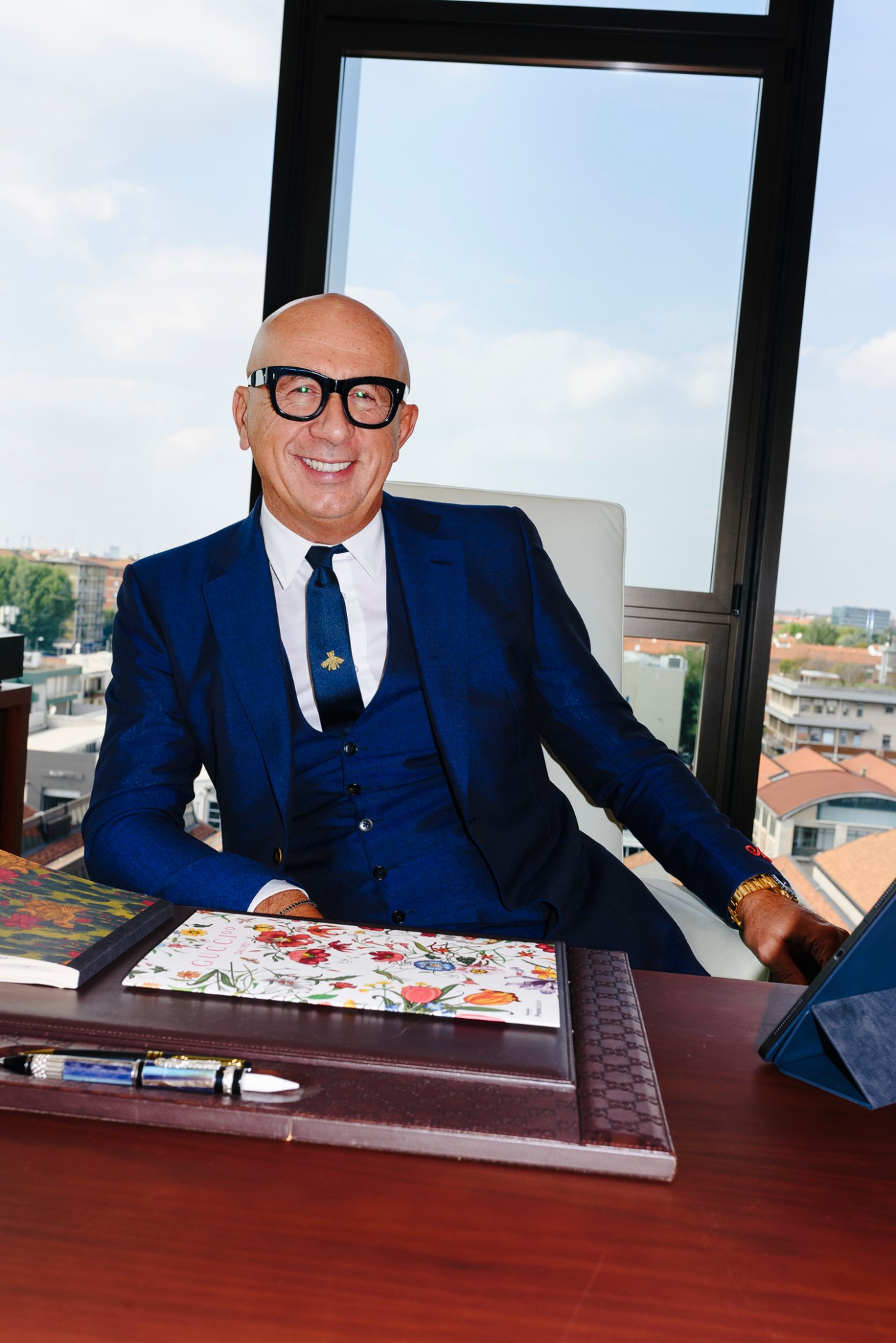
This brand has a characteristic of reinventing itself very, very often. So it’s different to other players in the industry that tend to be more consistent through the years. Though this can be a weakness, it can also be a great opportunity because flexibility allows you to think in different ways and reinvent yourself whenever you want to. It doesn’t necessarily mean that what you do is going to be successful but there’s certainly a possibility. This is very much in the mind of the people working for Gucci. With Alessandro, we wanted to make a big change and we were successful.
We would like to maintain this kind of success for longer than we have in the past. And we’re doing a good job. This is due to the protectiveness that we feel for the brand and the fact that we’re not aiming for short-term results. For this to be the case, you need to have people around you who think in the same way as you and are willing to take risks.
The aesthetic evolution of Gucci since Alessandro’s arrival has been quite dramatic, with references to the past but constantly thinking about the present. We are always on our toes at this brand. We cannot be complacent.
When you’re looking at your brand’s communication strategy and at where your collections are going, do you have one core customer in mind?
Our core customer is – and don’t laugh about this – the human being. It’s not a matter of age, it’s not a matter of mindset and it’s not a matter of gender, sexual preferences or geographical provenance. Our core customer is very much someone who wants to be himself or herself in his or her own way. What I mean is that we want to enhance the capacity for self-expression that is in every one of us. So that is why we were able to resonate with different segments at the beginning. But frankly, to be extremely honest, we didn’t really plan to address Generation Z or millennials when we started. We wanted to do something that was consistent with the values of Gucci as seen through the eyes of Alessandro and that pulled together what was happening in the streets.
The other day Alessandro was saying something that I found extremely interesting to hear, which is that at certain points he introduced the message of gender fluidity, especially in the first show in January 2015. And what he said was, “I didn’t invent anything. I was just walking the streets and I was watching what was happening with people who don’t want to be framed by any kind of rule about what they can buy. Men and women have a right to wear what they want, independent of the gender they come from.” It was something that was happening in society; it was not a matter of us inventing anything. The fact that we were able to match the values of the company with what was going on outside is what, in the past, all of the marketing gurus were calling “positioning”. But for us this is coming in a more natural way.
And the changes that Alessandro is making now with the Aria collection, with the aesthetic of Aria, reflect the same kind of thought – not too many focus groups, not too much of asking consumers what they want. For the most part, consumers don’t know precisely what is going to happen, what the future holds. So you need to innovate and propel yourself to try to intercept things in advance to get a competitive advantage. And, of course, there needs to be a little bit of risk. When you do something that maybe nobody has done in the past but the bet is good, the reward is very high.
How do you see the state of the market right now? How does the landscape look to you from a recovery point of view?
Among ceos I’m on the optimistic side. In fact, you cannot be a pessimistic CEO – you should change your job if you are. In 2021 the industry has been experiencing a remarkable rebound. Europe, of course, slowed down because of [the decline in] tourism but there was a rebound in local consumers. China and the US are flying with data that is quite incredible. So what we have learned from this is that flexibility and elasticity are important values that you need to have as a business. And then how we manage our warehouses and supply chains becomes absolutely crucial. Another key point is that this situation just accelerated trends that were already happening. Think about all of the recent digitalisation, not just in terms of e-commerce spending but also of people who prefer to have more digitalised work arrangements. The move to smarter working set-ups was already happening.
To go back to the Gucci journey, starting in 2015, we were benefiting significantly from the flows of tourists. So we didn’t have to create long-term value or long-term relationships with certain clients, whereas after the virus kicked in we were obliged to do so. It is great for the future to create this kind of relationship and an attachment to the brand. So personalisation, selling one to one, is becoming increasingly important.
There has been a lot of press about Gucci’s collaboration on a suite at the Savoy hotel in London. Are such collaborations primarily about marketing the brand? Or do you plan, for example, to eventually expand into a whole hotel chain? How far can you stretch the brand?
The collaborations that we have been involved in until now were all very authentic. And they were all driven by an attachment that we felt to the values of a company, brand or artist that we were working with. To me, the possibilities of expanding the collaborations and the ways in which the brand can be perceived are endless. There is no limit whatsoever. That doesn’t mean that there will be a business case in many instances but they could just create curiosity, generate attention for the brand or change the way in which it approaches the industry.
From the beginning that has been the way in which Alessandro opened up the brand to artists. He has brought about many collaborations with different artists and brands in order to make sure that there was this kind of open-minded approach at Gucci.
What brands do you most admire in any sector? You can’t say Apple.
Apple, for sure! A man I greatly admire is [author James] Patterson because he created a brand in books. He is incredible: he’s essentially writing a book every 15 days. I also admire Hermès, because what it has done in recent decades has been extremely coherent. I like that it plays the game without compromises. We’re not playing in exactly the same area and our values are different but what it has been doing and what it has done are extremely good.
Is Italianness – that is, ‘brand Italy’ – still vital to Gucci? You’re a global brand but your creative set-up is largely based in Milan and Rome. Is that important?
The fact that we are Italian is like oxygen for us. You don’t realise how much you need oxygen until you start to have problems breathing. In a similar way, being Italian is absolutely key for us. We have 95 per cent of our production in Italy; that 5 per cent happens elsewhere because, for example, we make our watches in Switzerland.
We got lucky as a company and our Italianness is a big part of the values of the brand. The company was born in Florence in 1921. That makes this the year of our 100th anniversary. In Italy we are surrounded by beauty. There is a passage of information, of knowledge, from artisan to artisan and to all of the laboratories that surround Florence – not just Florence but Italy as a whole. That is something that cannot be replicated anywhere else.
The fact is that products can be copied but they cannot be invented in the way that things are in Italy because the knowledge required has been stratified here since the Renaissance. This kind of capability, combined with the creative minds that we have in Gucci and in the country as a whole, can’t be reproduced anywhere else. So to answer your question: we are Italian, we are proud to be Italian and we will never move anywhere else. The energy and the fuel that we have from being part of this territory are why we continue to be at the edge of innovation in our industry.
Monocle 24 radio
‘The Chiefs’ with Tyler Brûlé
To hear a longer version of this interview, tune into ‘The Chiefs’ on Monocle 24 radio.