Issues
New landscape
A gallerist’s role is that of curator, merchant, champion of artists and sometimes much more. At a time when some of the usual art-sales channels are still closed, it is also a gallerist’s responsibility to come up with new ideas. “We realised that instead of waiting for the reopening of art fairs and our normal circuits, we needed to invent new possibilities,” says Michele Casamonti, head of Florence’s Tornabuoni Art. Alongside more than 60 galleries of antique, modern and contemporary art across Italy, he is part of Italics, an unconventional new alliance that has the goal, he says, of “conveying the vitality of our country through the eyes of curators” in order to defy the frustrations of the pandemic. Originally born as a digital platform, this collection of Italy’s lesser-known art marvels has also taken physical form in its first event: Panorama, a weekend-long art festival in Procida, a small fishing island in the Bay of Naples. The organisation’s aim is to make this group exhibition an annual event; next year’s location has not yet been announced but will take place in another awe-inspiring Italian landscape.
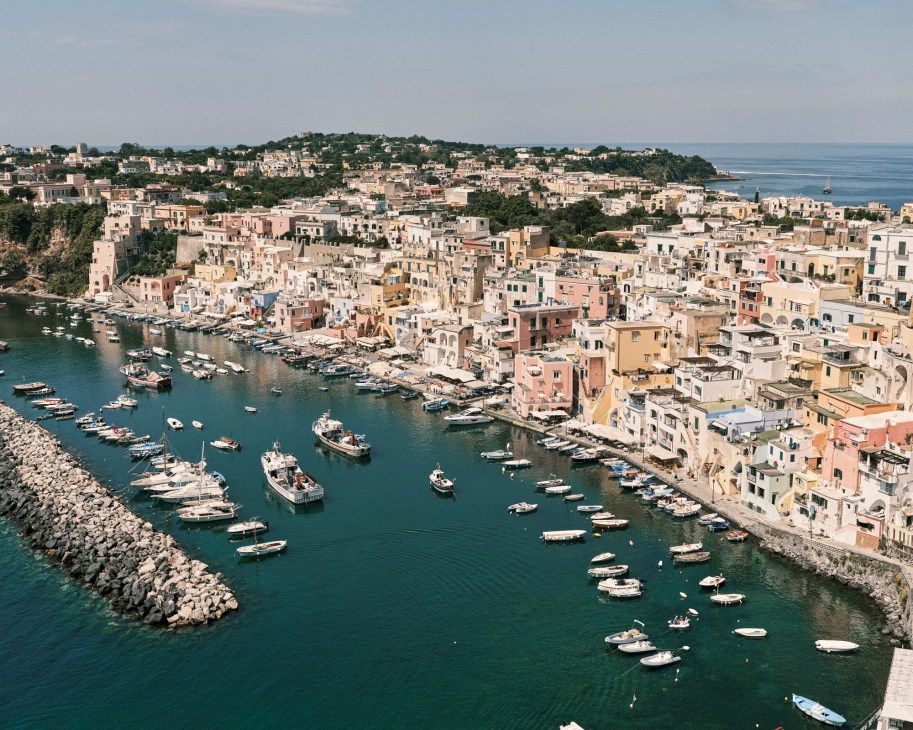
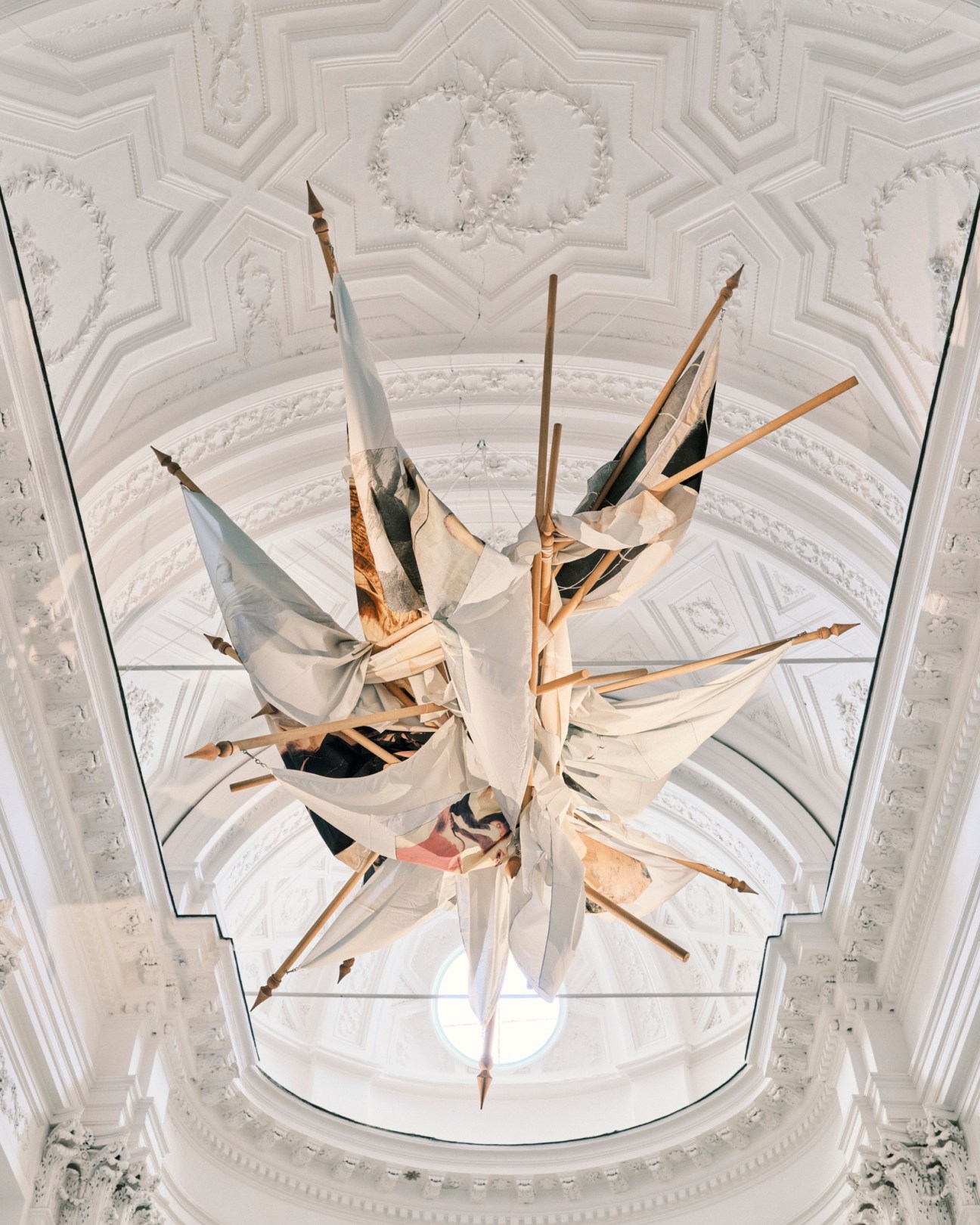
Procida is a humbler destination than nearby Capri or Ischia, and its connection to the art world has, until now, been slight. The island’s new status comes down mostly to the presence of contemporary artist Daniel Buren, who spends a few months of every year in his house here and who was a major presence in the festival, with his strings of striped pennants hung house-to-house throughout the island. That Procida was relatively uncharted art territory didn’t put off the organisers or artists. “Art needs to be decentralised,” says Marinella Senatore, a Rome artist whose “Luminaria”, a structure decked with colourful lights that’s typical of southern Italy’s street celebrations, festooned a dilapidated former prison. “We need to address ordinary people.”
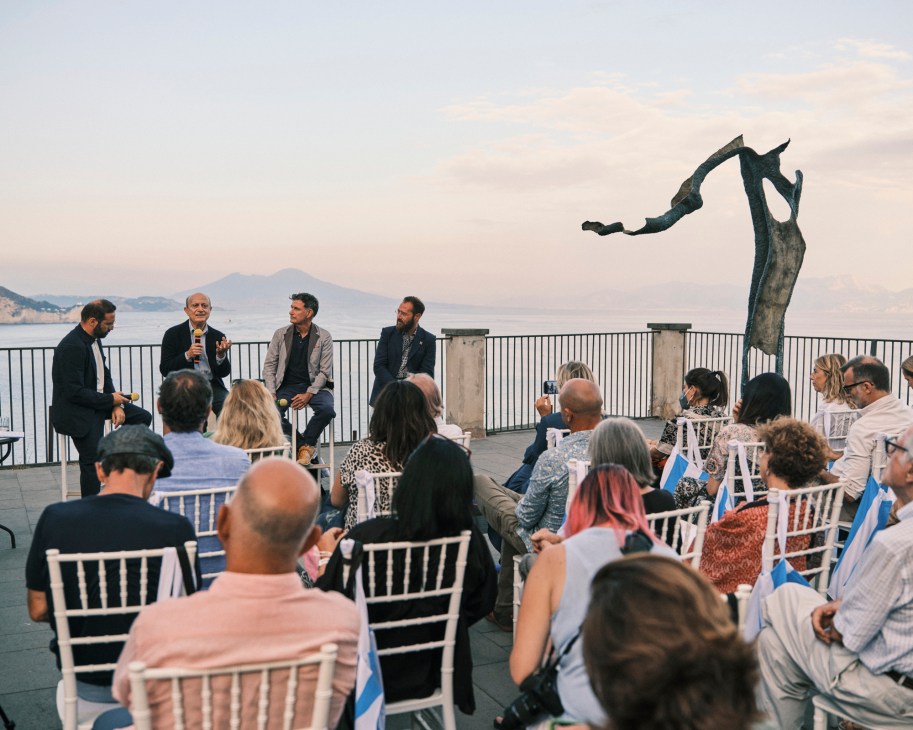
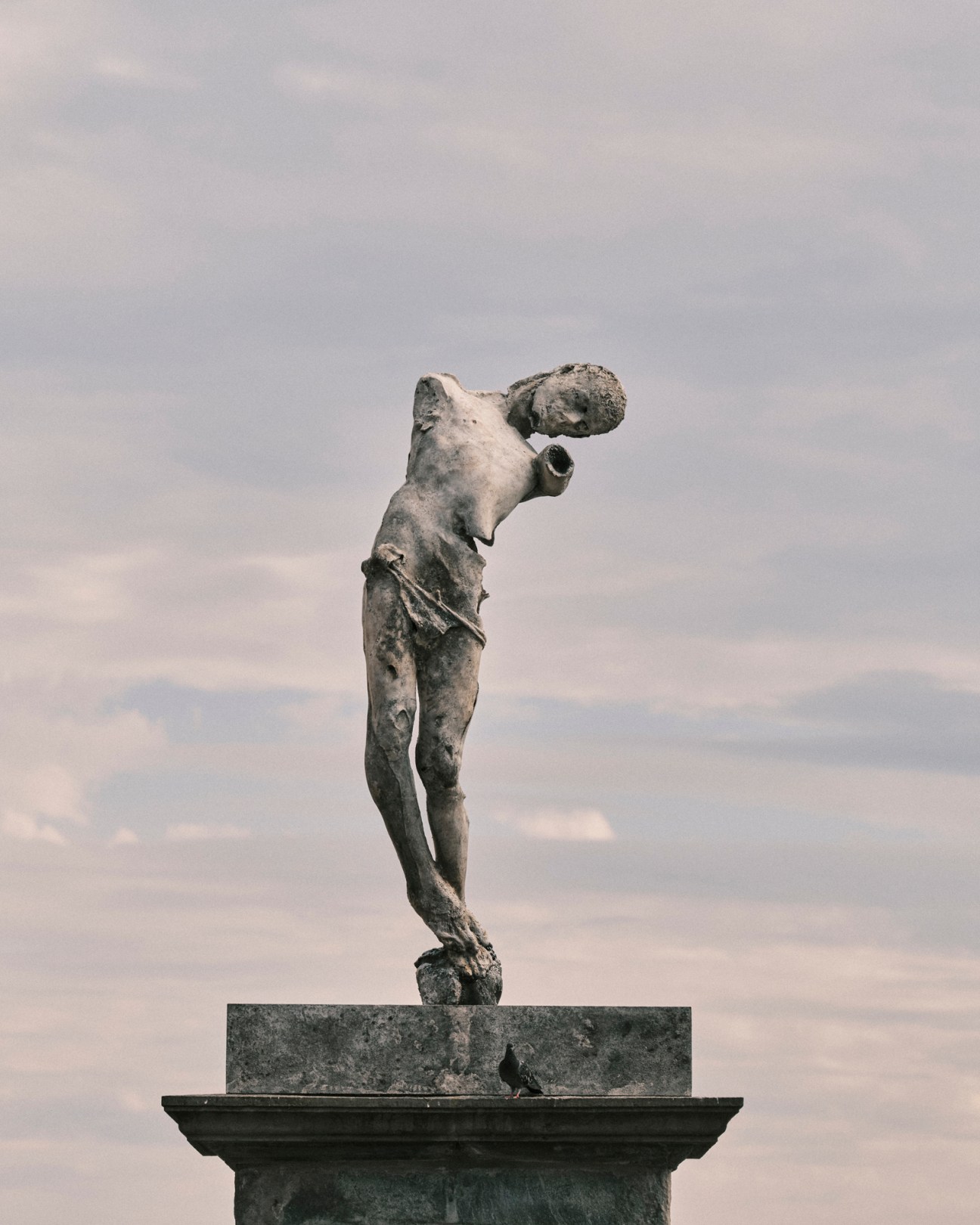
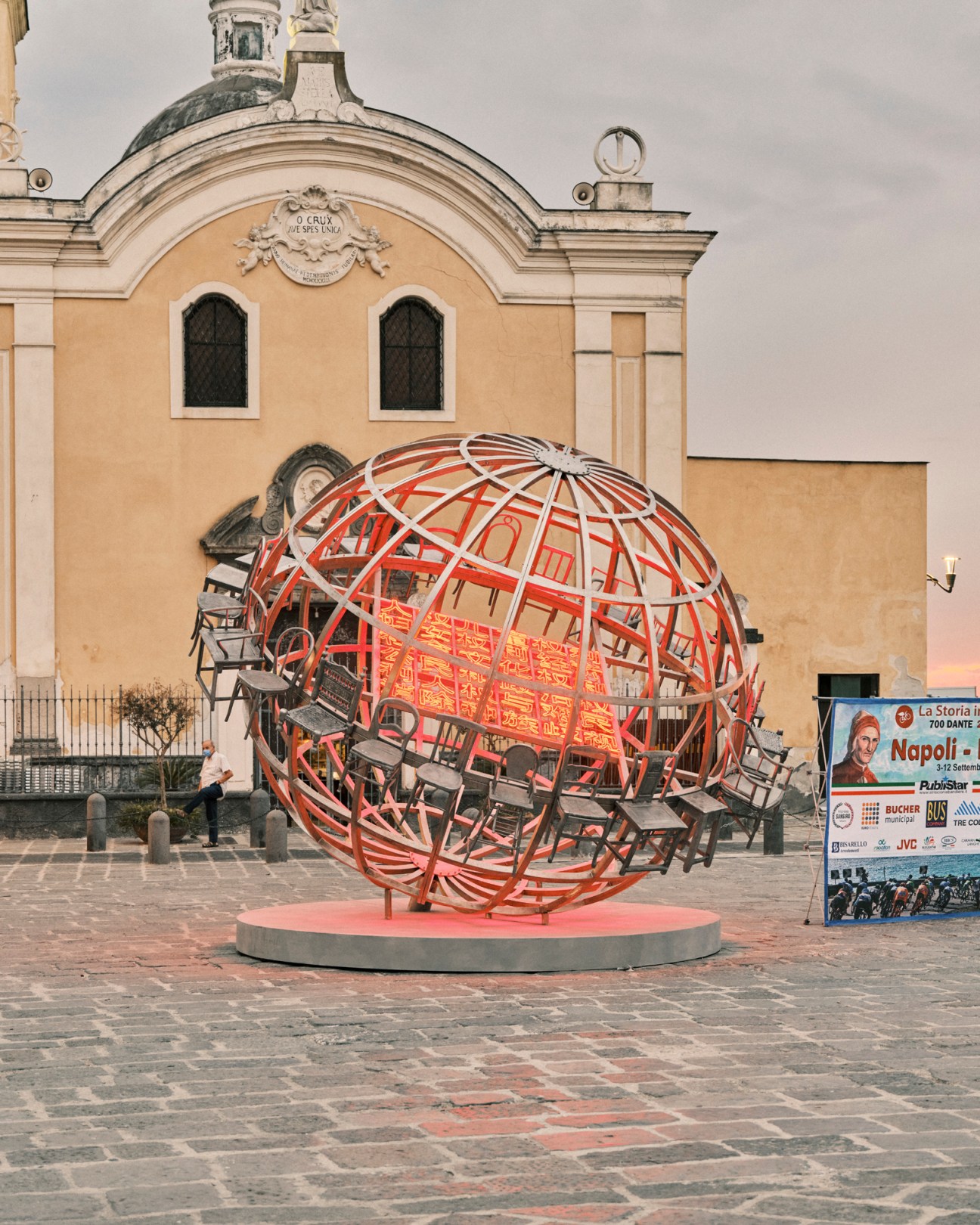
Attracting a new public – not the traditional art crowd – was key. “The most important thing is to take art beyond the galleries so that we can imbue more people with an appreciation for it,” says Lorenzo Fiaschi, the man credited, along with Pepi Marchetti Franchi, with coming up with the idea for Italics, as he stands under a steel globe by artist Chen Zhen. Galleria Continua, which he founded in 1990 with two friends in San Gimignano, Tuscany, has already been running its own programme to bring contemporary art to remote Italian towns for 25 years. “We need art in these places to introduce it to people who might not have discovered it otherwise,” he says. “We’ve never made our choices based on profit but always on humanity.”
Such idealism is unusual in today’s high-revenue art market but for Italics it could be key to achieving a refreshed mission. “Without our fairs and shows we found ourselves in a difficult position,” says Marchetti Franchi, vice-president of Italics, who runs mega-player Gagosian’s outpost in Rome. She is sipping a granita as she stands next to a Giuseppe Penone bronze sculpture. “We were all hurting for Italy as it became the [early] centre of the pandemic,” she says. “So we decided to create a way to promote italianità – the essence of Italy.” The project would require galleries (even if they were already financially struggling from the protracted halt in activity) to help pay for staff and the site, and to unite in this pro-Italian goal.
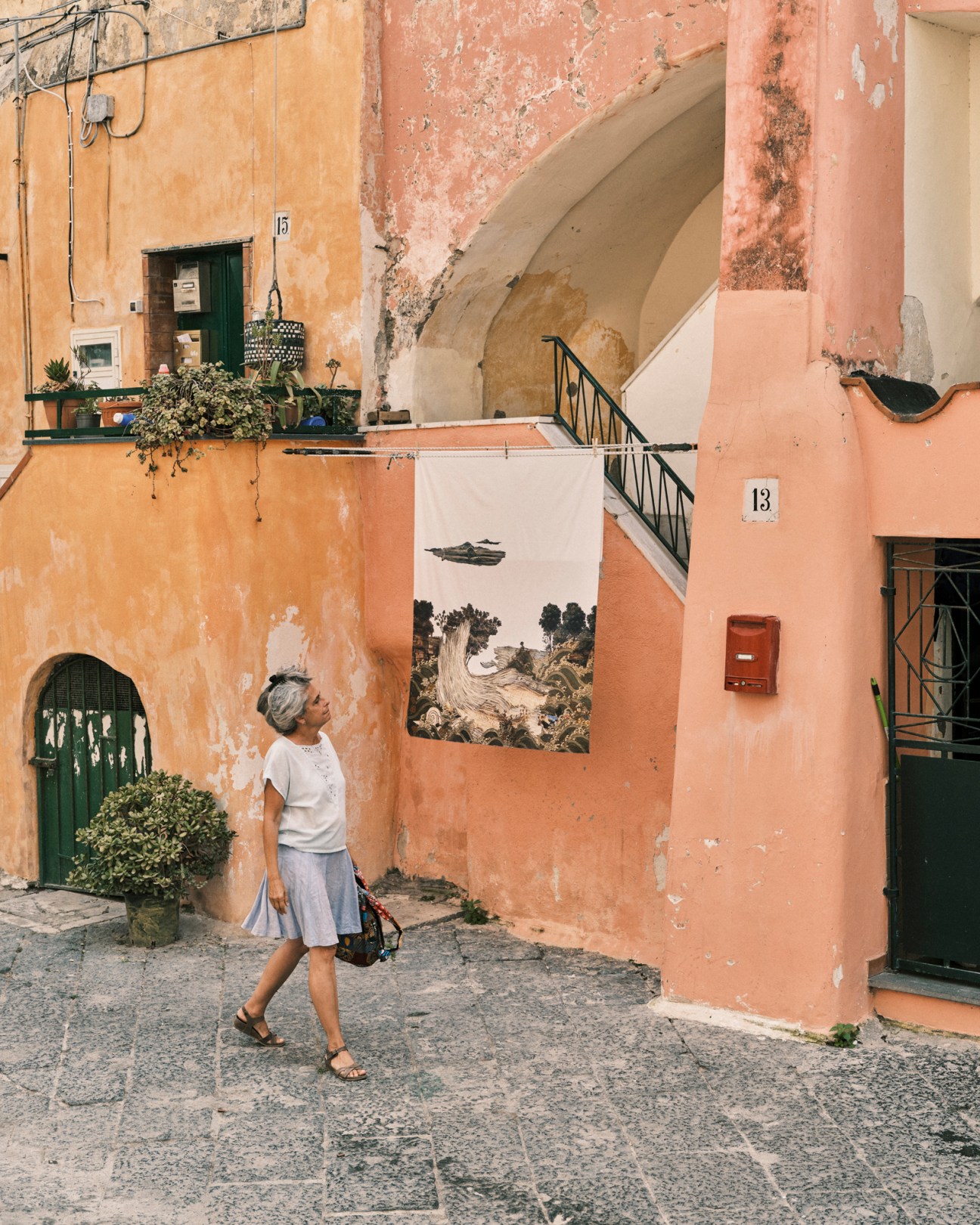
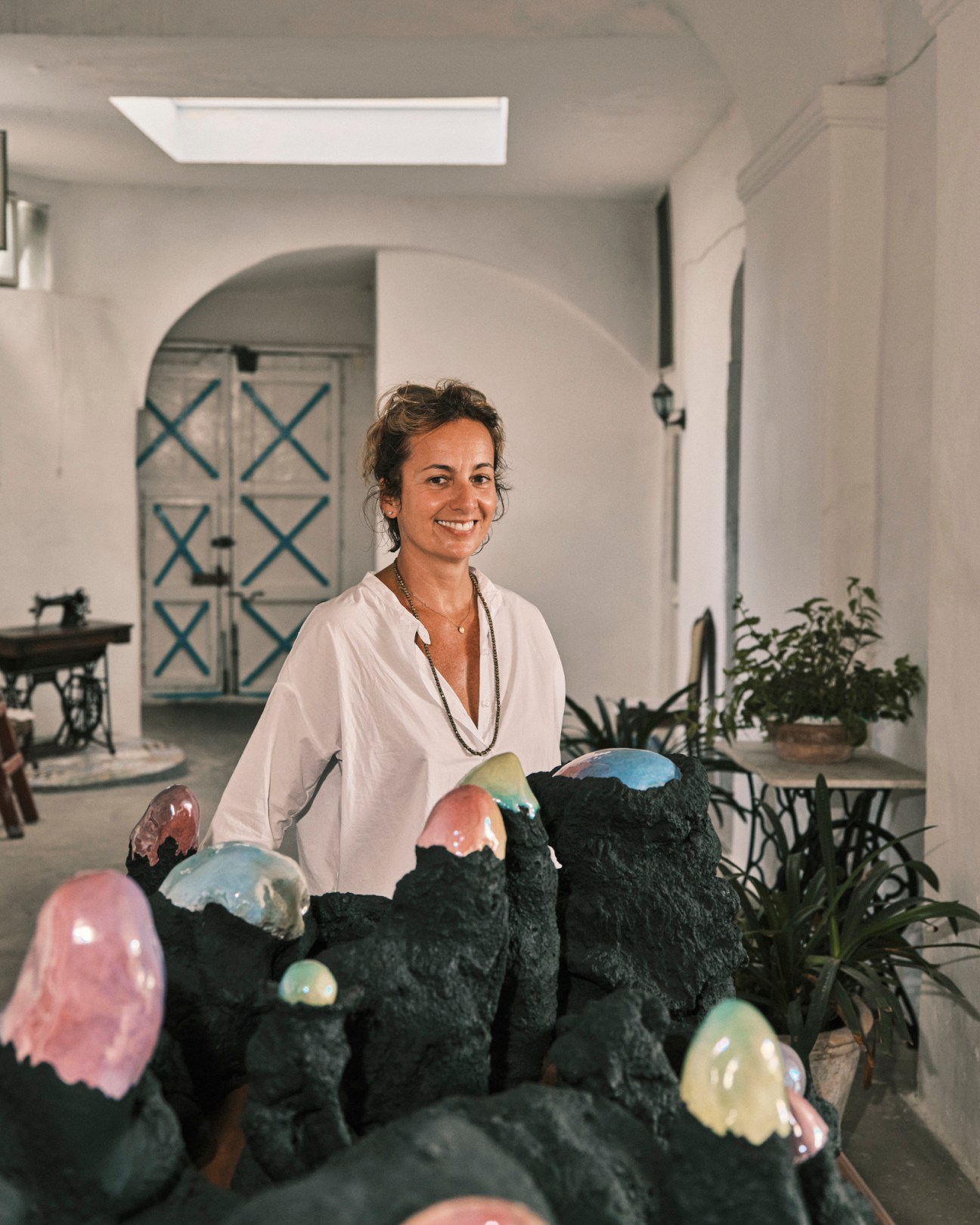
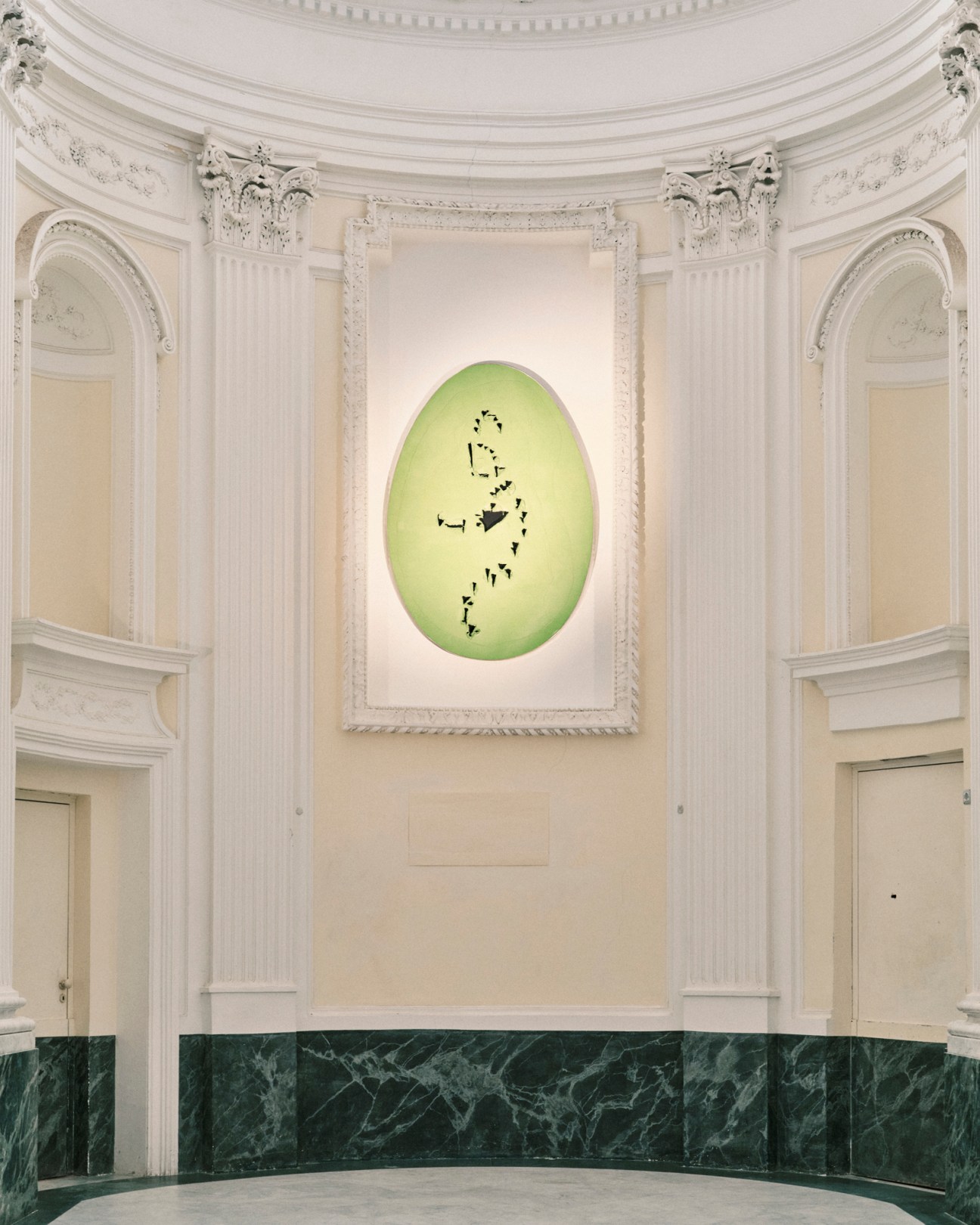
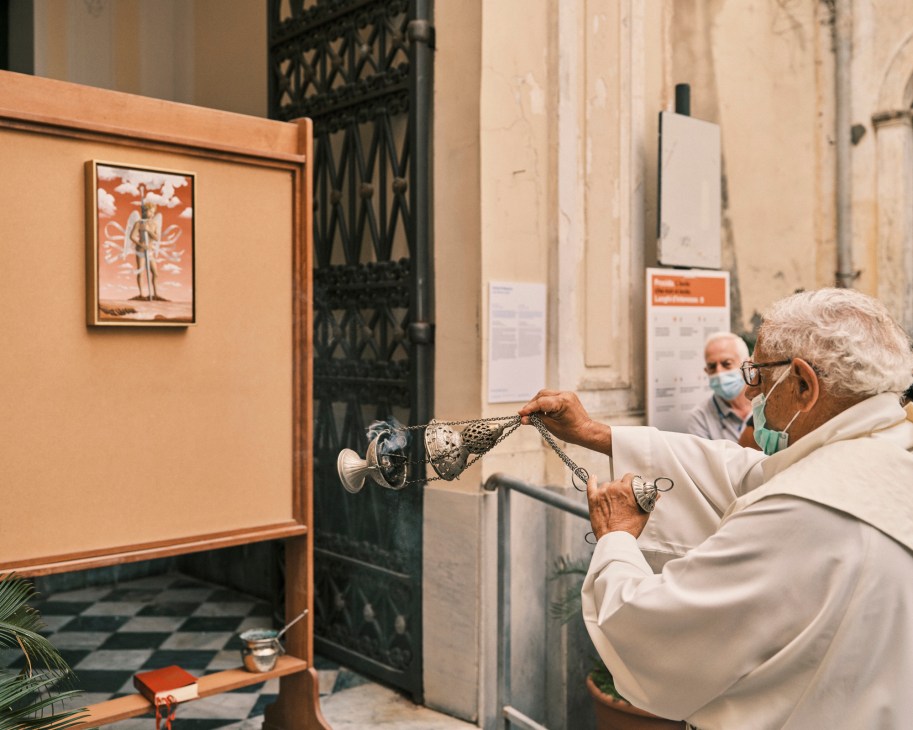
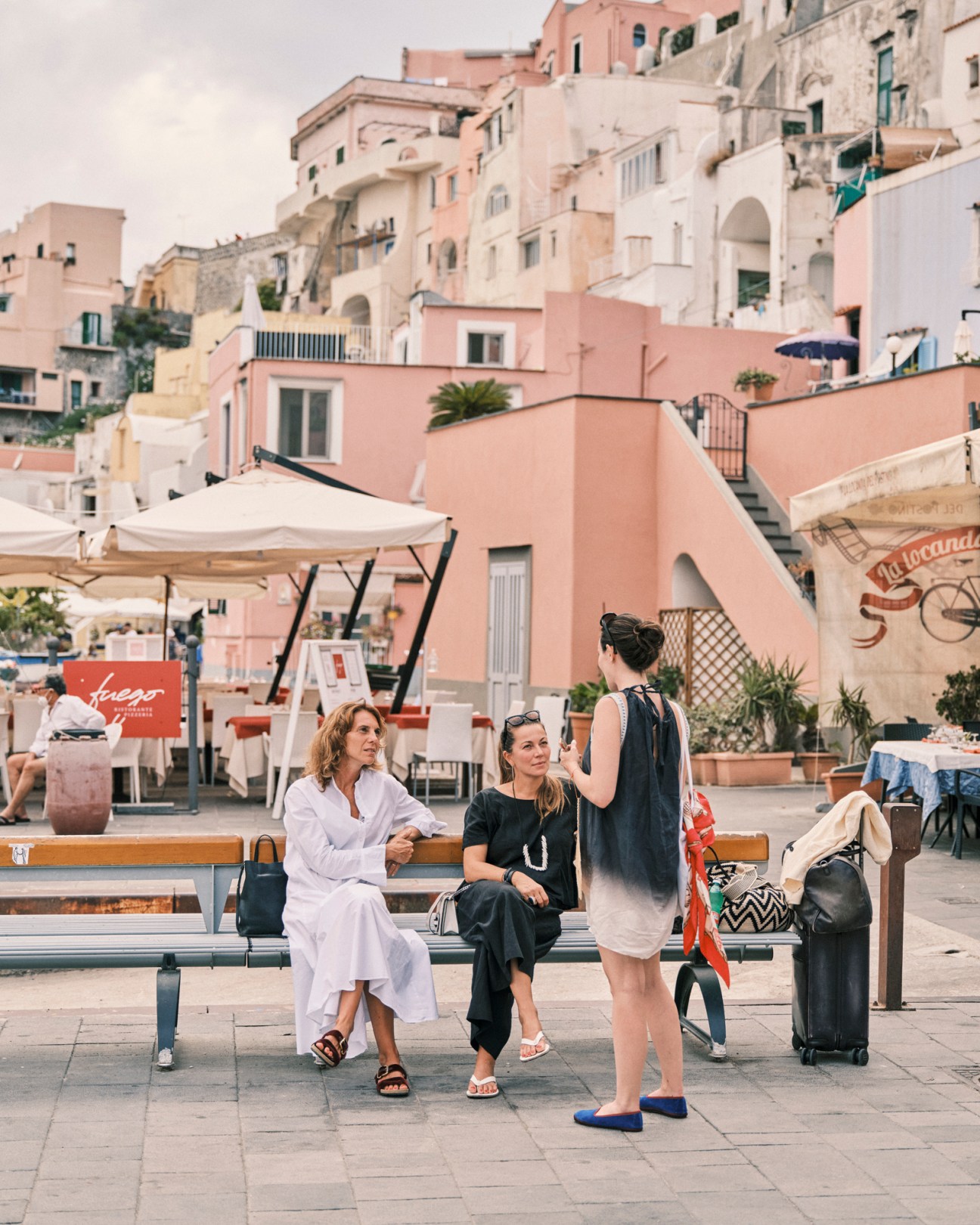
On Procida, this unusual partnership seems to have succeeded beyond expectations; the festival brought in day-trippers from Naples, many curious visitors from further afield and a host of collectors delighted to see (and buy) artworks in a setting so unlike a customary white cube.“This is a difficult place to show art,” says Vincenzo de Bellis, the Puglia-born curator of visual arts at Minneapolis’s Walker Art Center, who curated the festival. Still, he managed to install screen-printed sheets by Franco Simeti between some neighbourhood laundry lines, put on a live performance by Adrian Paci in a small square in the town and hang an apple-green Lucio Fontana painting inside a 17th-century church. Other works were shown inside newsagents, hairdressers, shops, on public noticeboards and by rubbish bins. “In the end, people appreciated the idea of creating a magnet for culture rather than just tourism,” says De Bellis. They were also helped by the team organising Procida’s role as Italy’s 2022 capital of culture – an award announced after Italics had already chosen the island for its event.
“We’ve all made a big commitment to make Italics work,” says Federica Schiavo, the group’s spokesperson and co-founder of Milan-based Schiavo-Zoppelli gallery. “During lockdown we were on the phone with each other all the time, asking ourselves what would happen afterwards and what wasn’t working well beforehand. The art world had become hysterical and superficial, with all the mania of the fairs and shows. But we realised we could create a more intelligent approach through co-operation,” she says, walking around a temporary gallery in Procida. In the months before next year’s edition of the festival, the galleries will continue to work on this alliance. “On the part of Italians, there’s always been scepticism when it comes to collaboration, but in the end, building a network lifts all of us up.”
italics.art
Bright sparks
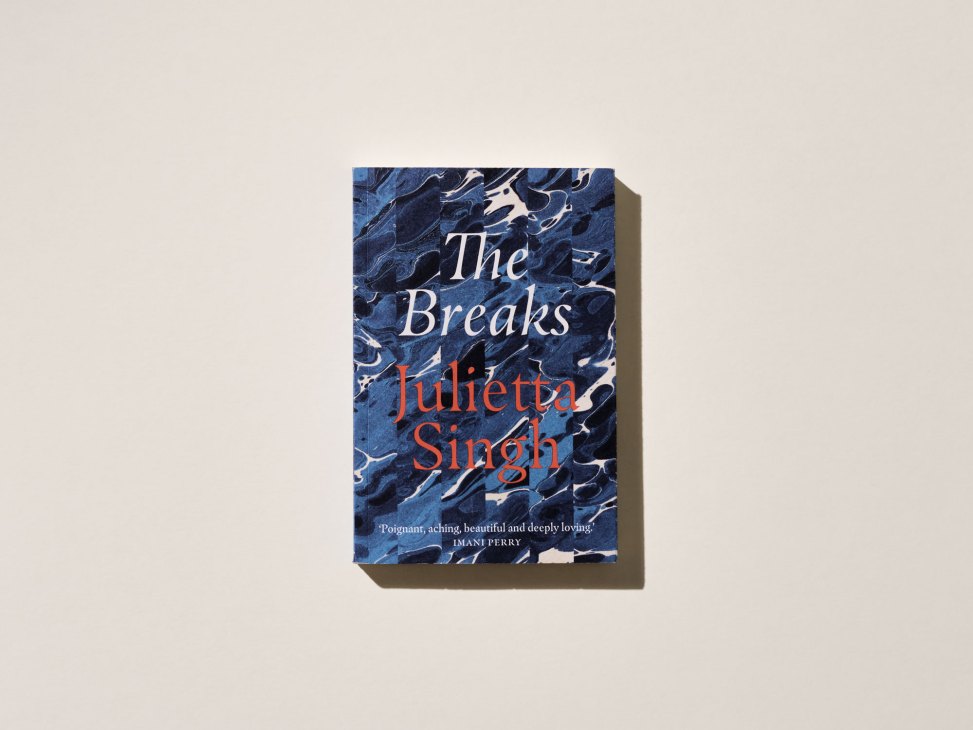
The Breaks
Julietta Singh
Academic and author Julietta Singh’s meditation on how to survive a patriarchal, capitalist world amid an environmental crisis is written in the form of a letter to her six-year-old daughter. The Breaks is an essential toolbox to navigate life and the challenges of a system that Singh wants to see “toppled and reborn”.
‘The Breaks’ is out now.
Memories from Limón
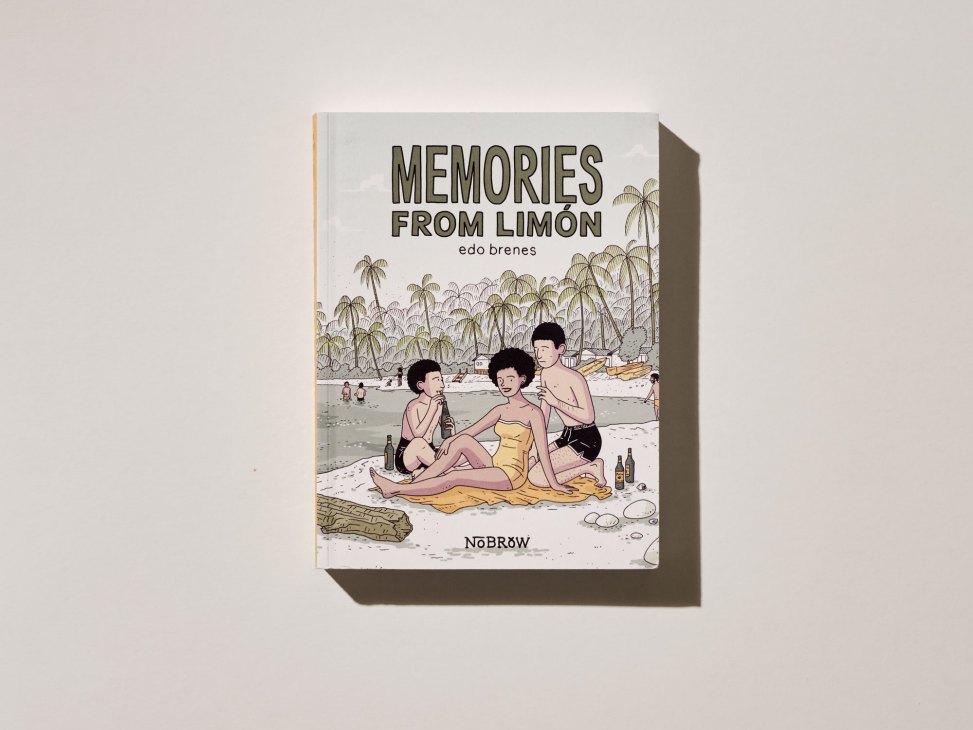
Edo Brenes
Costa Rican illustrator Edo Brenes was living on a tropical beach when he wrote Memories from Limón, a graphic novel inspired by photographs from the 1940s and 1950s. Brenes unravels the stories of three generations of his family but it’s not all granizados in the sun and bike rides along the Caribbean coast. He digs deep into family secrets, revealing affairs, superstitions, a failed football career and memories of the 1948 civil war in this charmingly illustrated collection.
‘Memories from Limón’ is out now.
Peaces
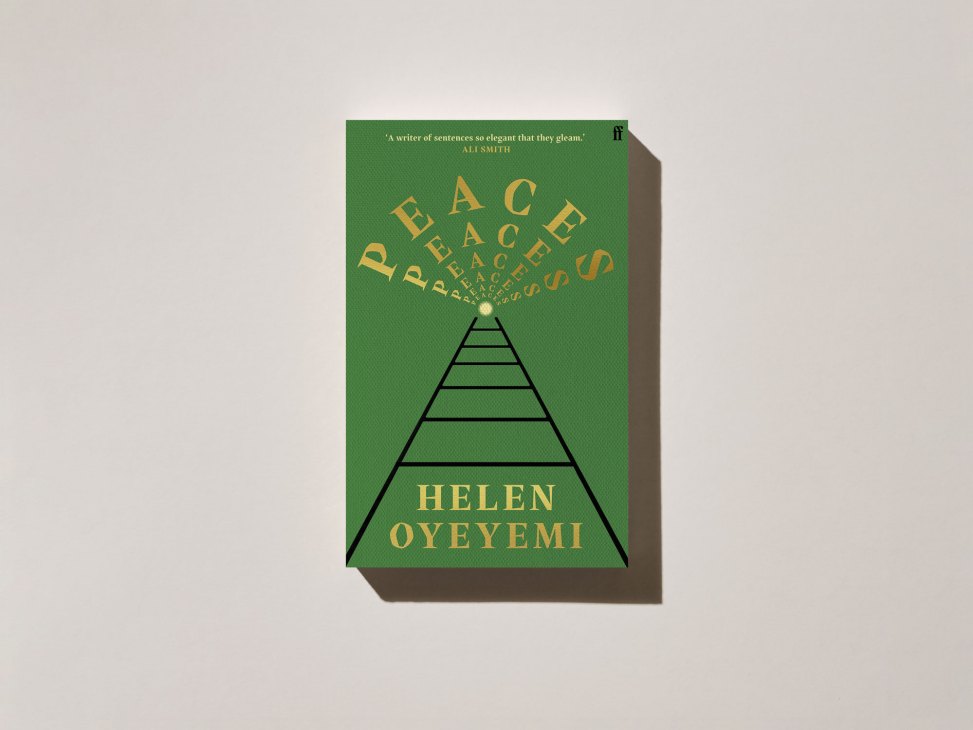
Helen Oyeyemi
British-Nigerian author Helen Oyeyemi’s sixth novel tells the story of Otto and Xavier Shin, a couple who embark on a mysterious train journey from Kent. The tickets are a gift from a wealthy aunt for the pair’s “non-honeymoon honeymoon”; though unmarried, they now share a surname. With wit and ingenuity, Oyeyemi conjures a cast of eccentric characters: who are the other passengers and where will the tracks take them? Surrealism meets Agatha Christie.
‘Peaces’ is published on 4 November.
Screen
The Hand of God
Paolo Sorrentino
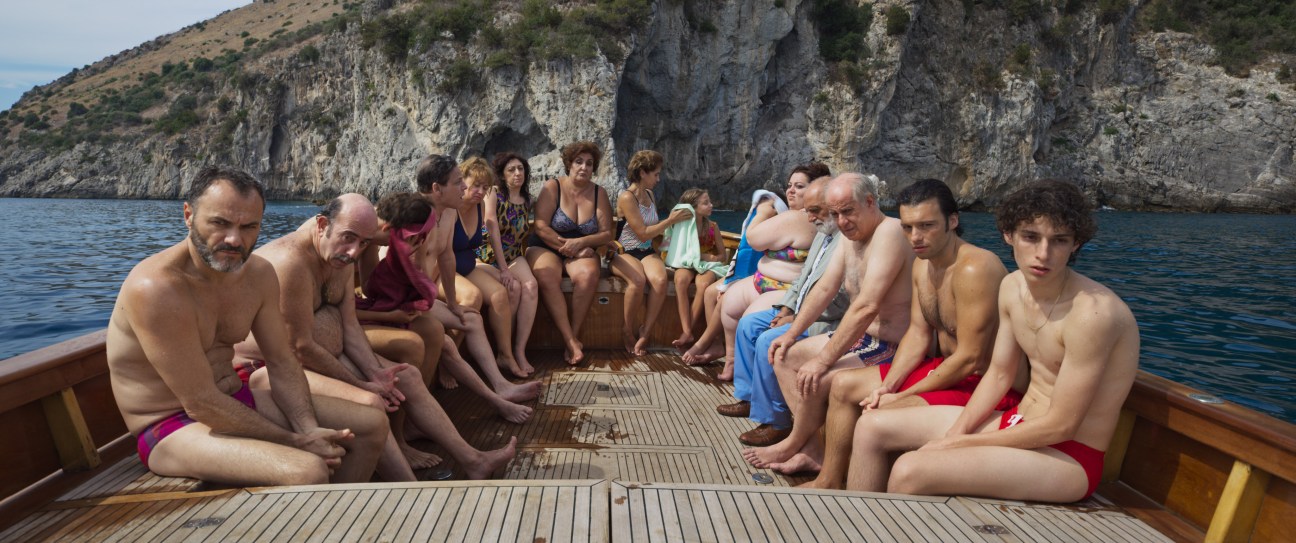
Despite its title, Italian director Paolo Sorrentino’s latest feature is not a biopic about Diego Maradona, though it does take place in Naples, a city well known for its obsession with the Argentine footballer. This semi-autobiographical story revolves around the formative experiences of a teenager in the 1980s as he negotiates two of the film-maker’s grand themes: sex and mortality. As with all of Sorrentino’s works to date, The Hand of God is provocative and at times excessive. Yet it is also his most emotionally open work and is anchored by strong performances by veteran actor Toni Servillo and newcomer Filippo Scotti.
Paris, 13th District
Jacques Audiard
Few directors can move as seamlessly between genres as Jacques Audiard, whose previous two movies were a drama about Tamil refugees and a sombre western. Now the French director returns with an erotic urban drama, adapted from an American comic book about the lives of four young Parisians, playing out in an arrondissement that hasn’t traditionally been a prominent part of the city’s on-screen iconography. Shot in black and white, the film draws out the French capital’s beauty while eschewing outdated romantic tropes in favour of an unjudgemental take on dating and sex in the City of Light.
Anne at 13,000ft
Kazik Radwanski
Twentysomething Anne is a daycare worker who is as prone to tantrums and misbehaviour as the children whom she cares for. Uncomfortable in her own skin as well as around others, she finds a sense of release by taking up skydiving. A lesser film-maker might have used this premise as the starting point for a trite tale of self-realisation but Canadian writer-director Kazik Radwanski instead provides an unflinching and moving portrait of genuine sadness. The claustrophobic camerawork rarely leaves lead Deragh Campbell’s face and imbues her daily life with poignancy.

New Gold Mountain
Corrie Chen
The story of the Australian gold rush in the 1800s might be familiar to many but those of the thousands of Chinese workers who travelled Down Under hoping to find their fortune are far less well known. Directed by Corrie Chen, this ambitious drama series by the Australian broadcaster sbs is mostly acted in Cantonese and provides viewers with a vivid history of the era, all while delivering an engrossing murder-mystery tale.
Audio
Day/Night
Parcels
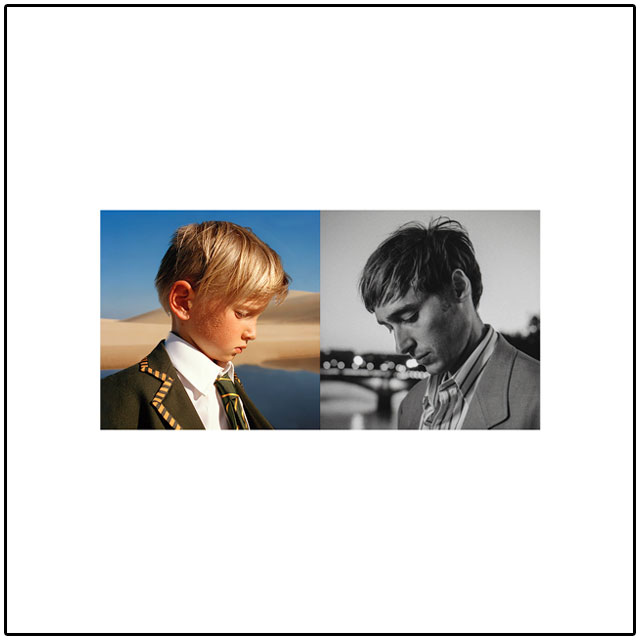
Berlin-based quintet Parcels make a welcome return with their second album. Conceived in a forest house that they hired in their native Australia, Day/Night is a mild-mannered, easy-listening collection. “Somethinggreater” is a melodic, smooth pop piece with soft background beats, while the infectious and aptly titled “Comingback” will have you returning for more.
‘Day/Night’ is released on 5 November.
Time to Melt
Sam Evian
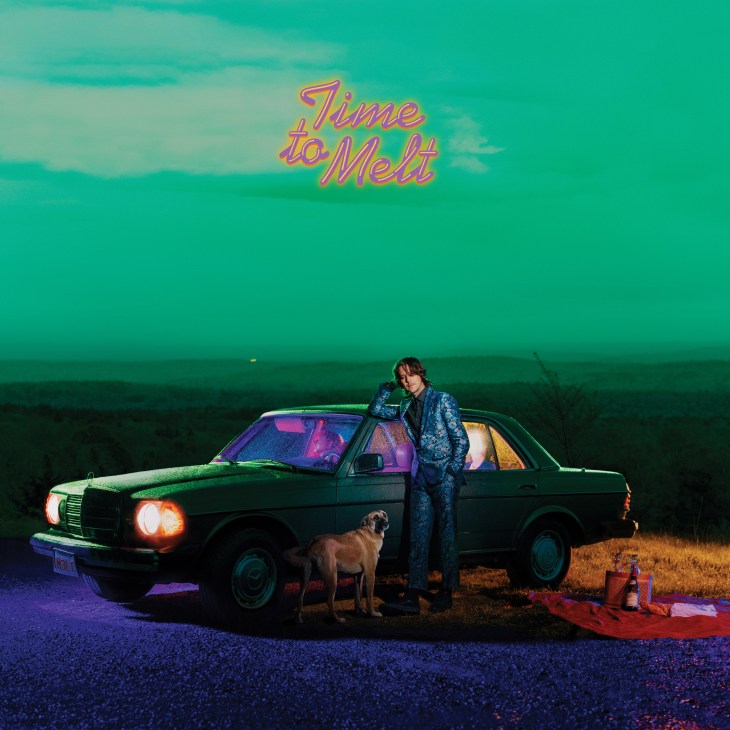
After deciding that he’d had enough of New York, Sam Evian moved upstate to the Catskills with his partner, musician Hannah Cohen. There they built a recording studio and started a fresh life. It’s no surprise, then, that his latest album is a joyous ode to new beginnings. If you’re an urbanite, it’s hard not to feel slightly targeted when Evian sings of his friends crunching numbers in the city while he basks in the beauty of nature but his uplifting, brass-accompanied songs are impossible to resent.
‘Time to Melt’ is released on 29 October.

Live! At the Apollo
Daptone Records
In 2014 some of the world’s greatest soul singers performed a raucous, sold-out, three-night live show at Harlem’s Apollo Theater. The concerts were organised by beloved Brooklyn-based record label Daptone, which had long been home to some of the world’s best funk and soul music. To celebrate the label’s 20th anniversary the Apollo shows are being issued as a stomping live album, featuring late singers Charles Bradley and Sharon Jones. This music was created to be listened to on vinyl so make sure you get yourself an LP.
‘Live! At the Apollo’ is released on 1 October.
Art
Roni Horn: When You See Your Reflection in Water, Do You Recognize the Water in You?
Pola Museum of Art, Hakone, Japan
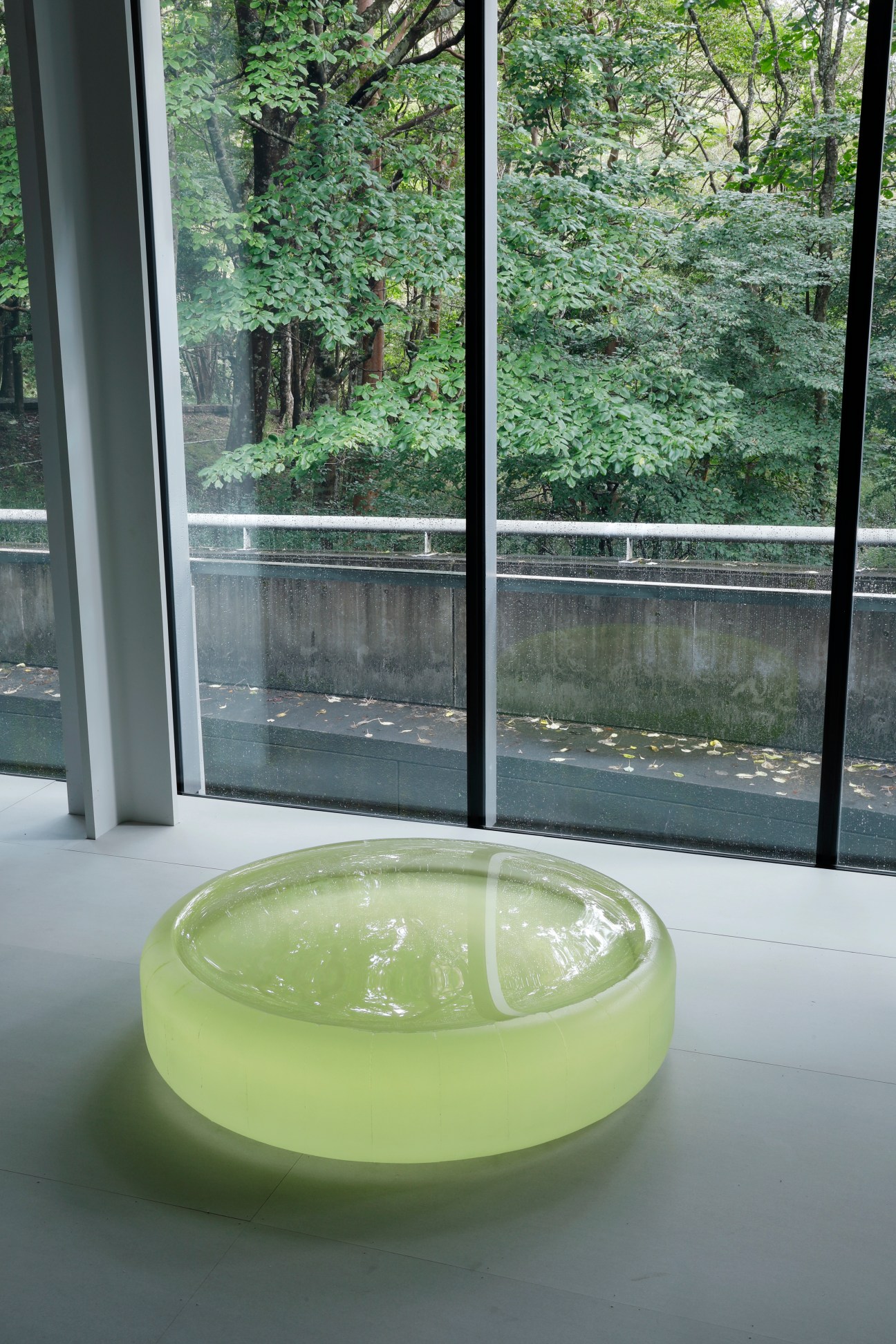
US artist Roni Horn’s first Japanese solo exhibition is a greatest-hits tour of her oeuvre, surveying her major works from the 1980s to the present. The show is full of her signature glass sculptures: huge, almost liquid-like structures in pinks and blues that require a prodigious amount of self-control not to touch. The sculptures, which look as light as air but are enormously heavy, helped to make her one of the most prominent American contemporary artists working today. The show also features Horn’s series of close-up portraits of an Icelandic woman, taken over the course of six weeks and showing subtle shifts in the subject’s mood, alongside monumental drawings, books and experiments with text.
‘Roni Horn’ runs until 30 March 2022.
Photography
Bamako Encounters – African Biennale of Photography
Various venues in Bamako, Mali
An international team has been assembled to lead the return of Mali’s Bamako Encounters, one of Africa’s biggest photography biennials. Curators from cities including Marrakech, Cape Town and Toronto have come together to create a festival under the Bambara title “Maa ka Maaya ka ca a yere kono” (“The Persons of the Person are Multiple in the Person”). The event explores ideas of identity and heritage in a globalised world, with 25 artists gathered from across Africa. Before the arrival of the pandemic, the continent was fast becoming a hotbed of international art exhibitions, with biennials and fairs popping up ever more frequently. This 13th edition of Bamako Encounters is the surest sign yet of a return to that trajectory.
Bamako Encounters runs from 20 November 2021 to 20 January 2022.
Venue
Fondazione Merz at Cantieri Culturali alla Zisa
Palermo
Founded by arte povera pioneers Mario and Marisa Merz, the Fondazione Merz is one of the best contemporary art spaces in Turin. Now it is spreading its radical approach to programming all the way south to Palermo, where it will take over a second location inside what was once a sprawling factory. This new project will be the latest addition to Cantieri Culturali alla Zisa, a former furniture-making district in the centre of the Sicilian capital. Here it will rub shoulders with more than 38 cultural institutions, including the Goethe-Institut and the Institut Français, with shows featuring artists such as Chilean-born photographer Alfredo Jaar, veteran performance artist Joan Jonas and video artist Lida Abdul.
ZACentrale opens on 26 October.
Images: Courtesy of Cinema Guild, Goalpost Television, Fat Possum Records Courtesy of the artist and Hauser & Wirth and Koroda Takeru
Wood times
Furniture and joinery company Young & Norgate is in the business of making beautiful things. In its Bristol workshop, the team crafts custom furniture for some of the UK’s biggest architecture studios, making and installing handcrafted designs for shops and homeowners around the country. “Our job is to take architects’ and interior designers’ projects and make them functional from a woodworking point of view,” says co-founder and technical director Ross Norgate.
Norgate and his business partner, design director David Young, started their operation in an old cider press in Devon in 2010, before relocating to Bristol as demand for their products and a need to be closer to their clients grew. Now, as part of their new venture Husk, they’ve started selling cupboard fronts, doors and handles that can replace the standard ones found on kitchen cabinets from the likes of Ikea. “We want to offer quality products to more people,” says Young.
In the busy workshop, wood, tools and computers sit side by side. From a product’s initial design concept to 3D modelling to sanding and spraying for a perfect finish, everyone has a role to play. “We try to make sure that all of those involved feel a sense of ownership to be a part of the overall effort,” says Norgate. “People aren’t just cogs in a machine.”
Good craftsmanship is at the heart of the operation and this human element remains a constant even in the firm’s most technically demanding designs. “I know that we make physical things and help people to create their dream homes. But when I look at a piece of really complex furniture, I think of the months of emotion and all the time and challenges that went into it,” says Norgate. “When it’s over, it’s almost as though we’ve given birth.”
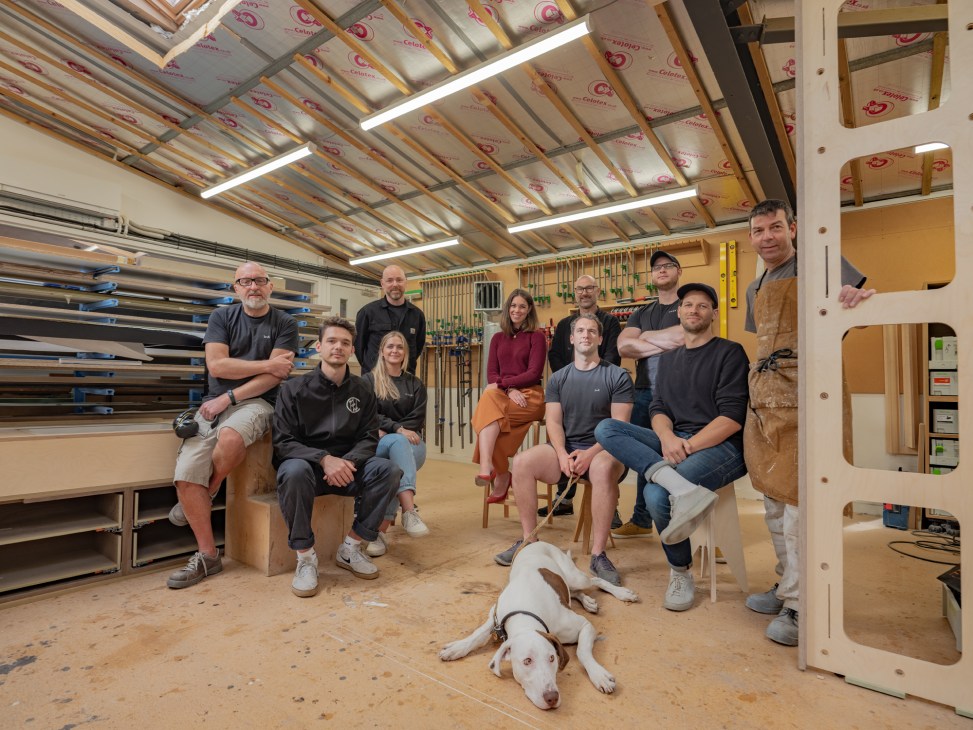
The Cabinet (From left to right)
Nigel Bull, Workshop manager, “Link between design office and the makers.”
Joe Thompson, Local coffee roaster, Triple Co Coffee, “Keeps everyone in the business well fuelled.”
Millie Teden, Marketing head, Husk, “Drives the development of our new brand.”
Ashley Smith, Architect, Smith Maloney, “He’s a frequent collaborator.”
Maddie Difazio-Wright, Brand manager, Make construction firm. “Collaborator from a company who is on a mission to build extraordinary homes.”
Norman, Morale co-ordinator, “Makes the place much livelier.”
Will Manaton, Head of design, “Taking the vision of the architects and interior designers we’re working with and turning it into something we can actually produce.”
David Young, New Zealand-native Young met co-founder Ross Norgate while they were studying furniture design and cabinet-making in 2009. Now, as design director, he “makes sure that everyone is happy with what they’re doing, and that clients’ needs are fulfilled”
Tony Pugh, Production manager, Husk, “Orders the materials for the jobs and programs them into the CNC.”
Ross Norgate, Co-founder Norgate also serves as the brand’s technical director. A joiner by trade, he is adept with tools. And with an emphasis on making rather than manufacturing, you can be sure he “follows the project right down from the start to the installation”.
Chris Chinnery, Sprayer, “The last pair of eyes on the items.”
Faithful to the cause
More than 80 years have passed since enterprising US businessman Hans Knoll and his designer wife Florence founded the furniture company Knoll Associates in New York. And, as you can imagine, much has changed in both the business and the industry since then. Although the couple clearly had grand aspirations for their firm – quickly making it an international brand via subsidiaries in Europe, while also becoming the go-to name for good office design in the US – they couldn’t have imagined what Knoll would come to represent by 2021. Earlier this year another industry giant, Herman Miller, acquired Knoll for $1.8bn (€1.5bn), bringing two of the biggest names in design under one mega umbrella going by the name of MillerKnoll.

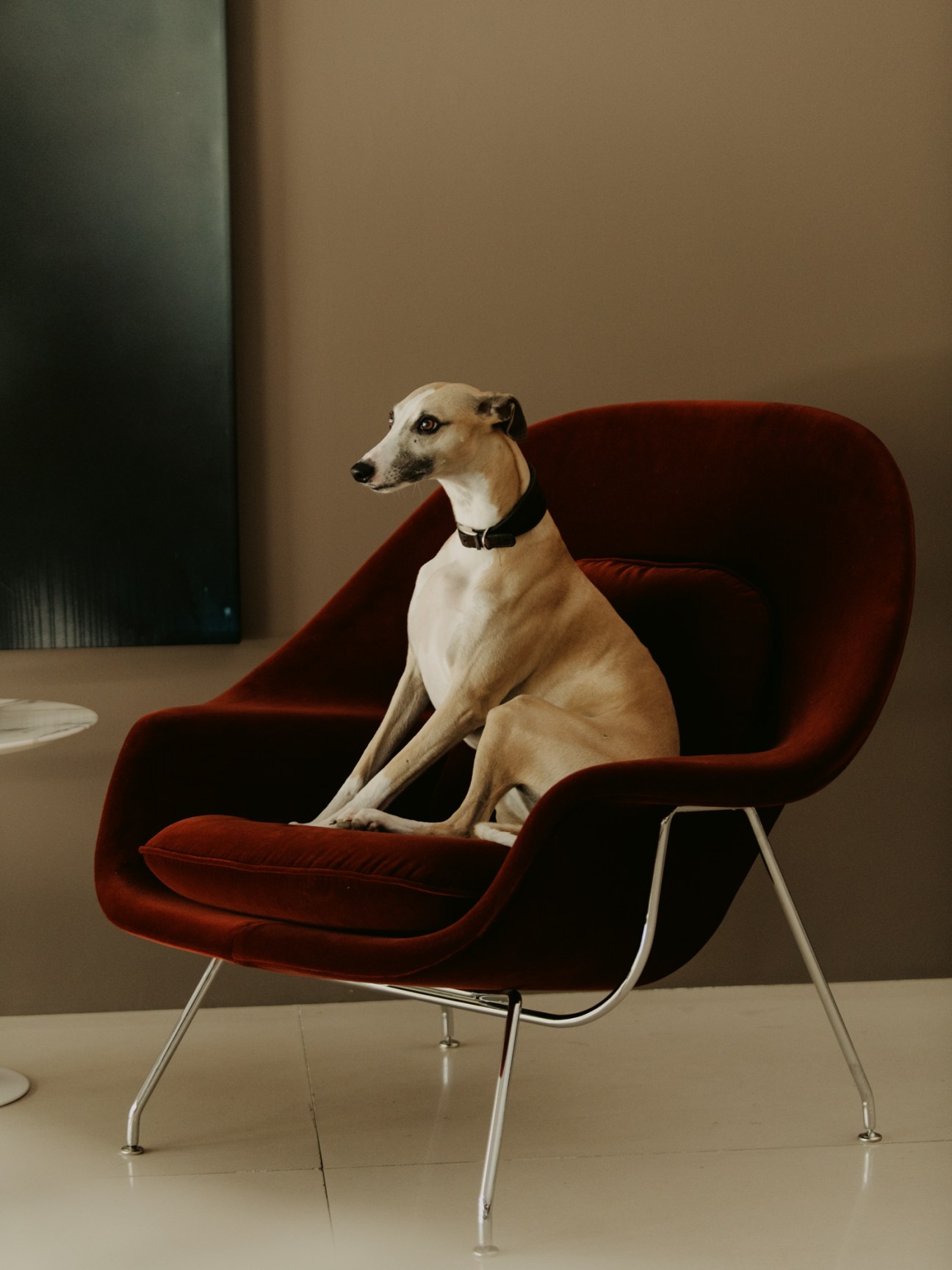
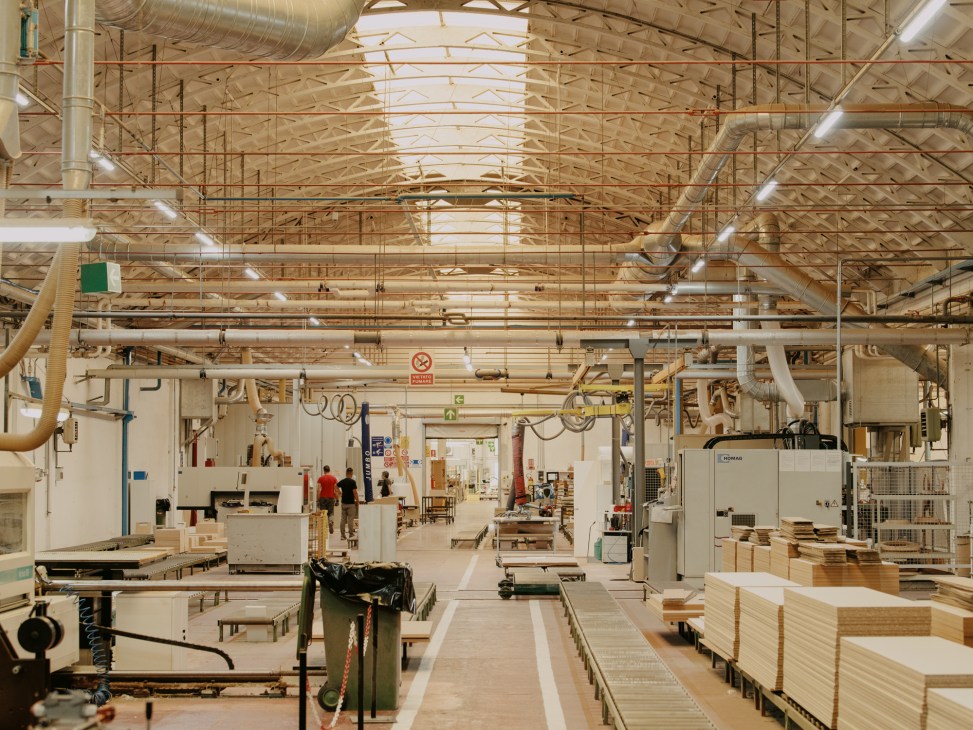
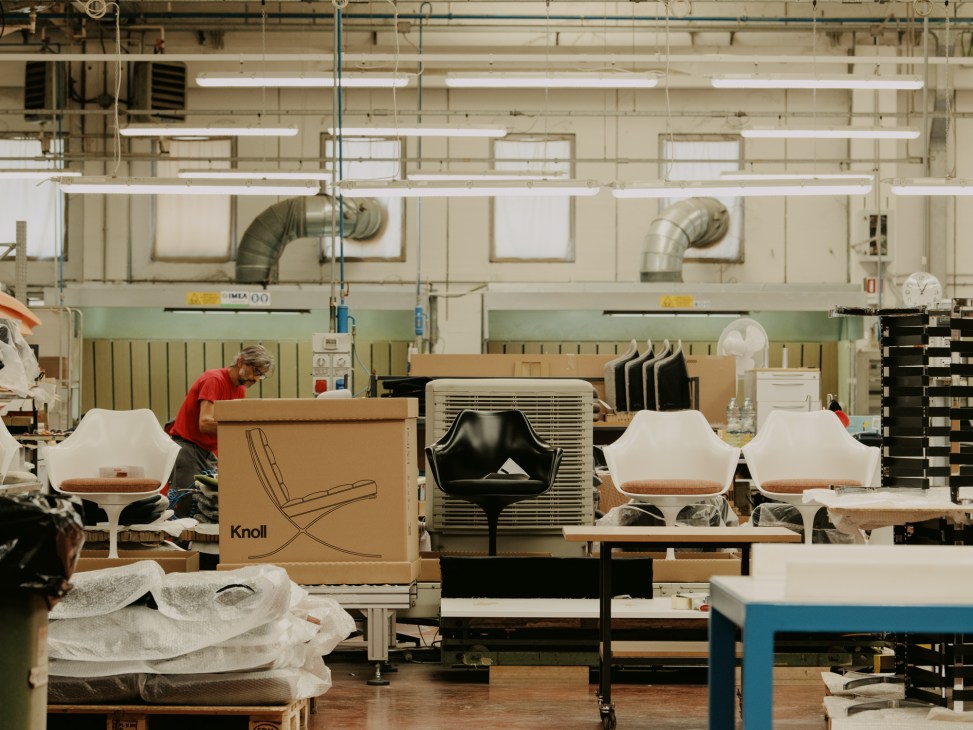
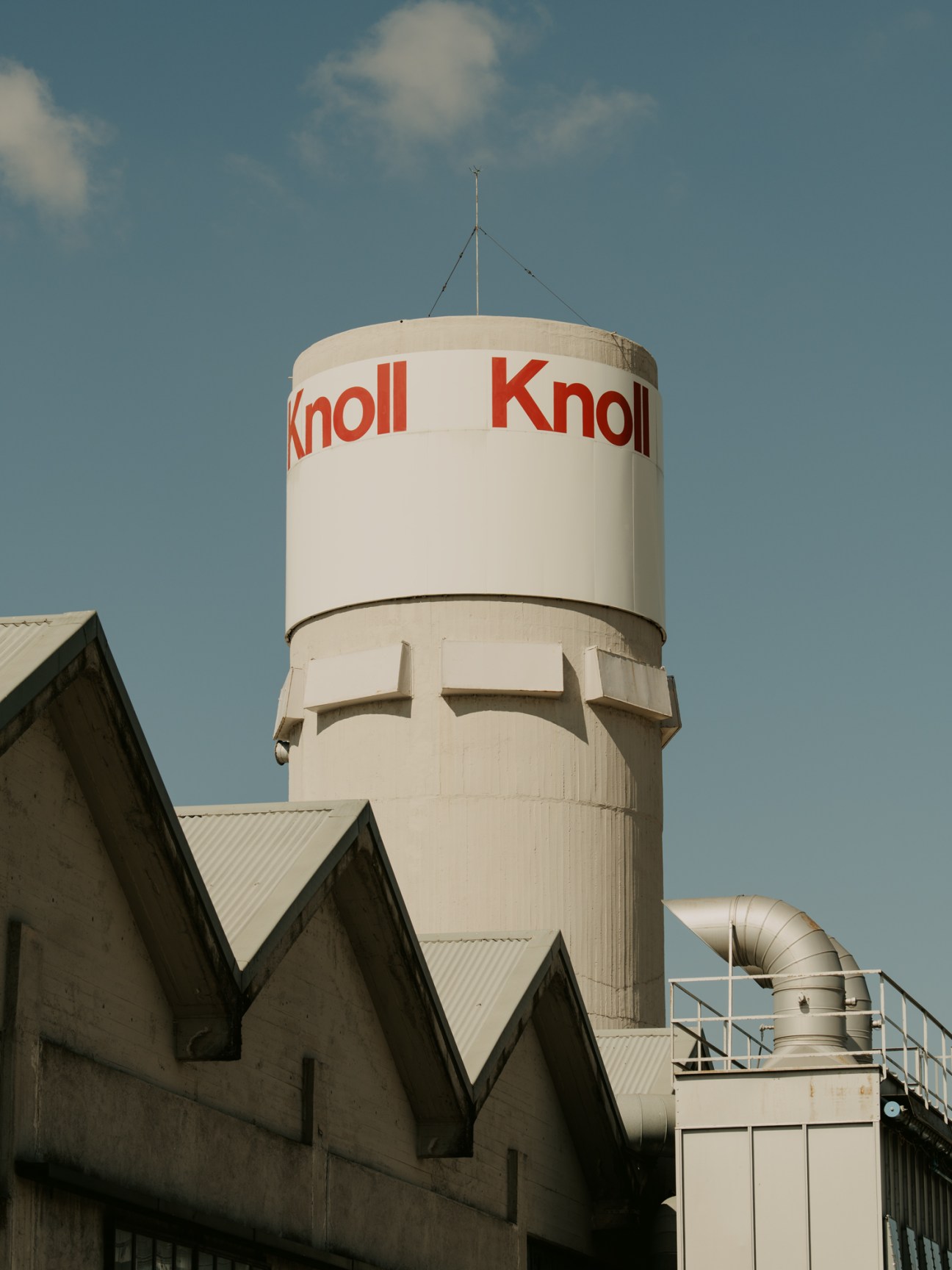
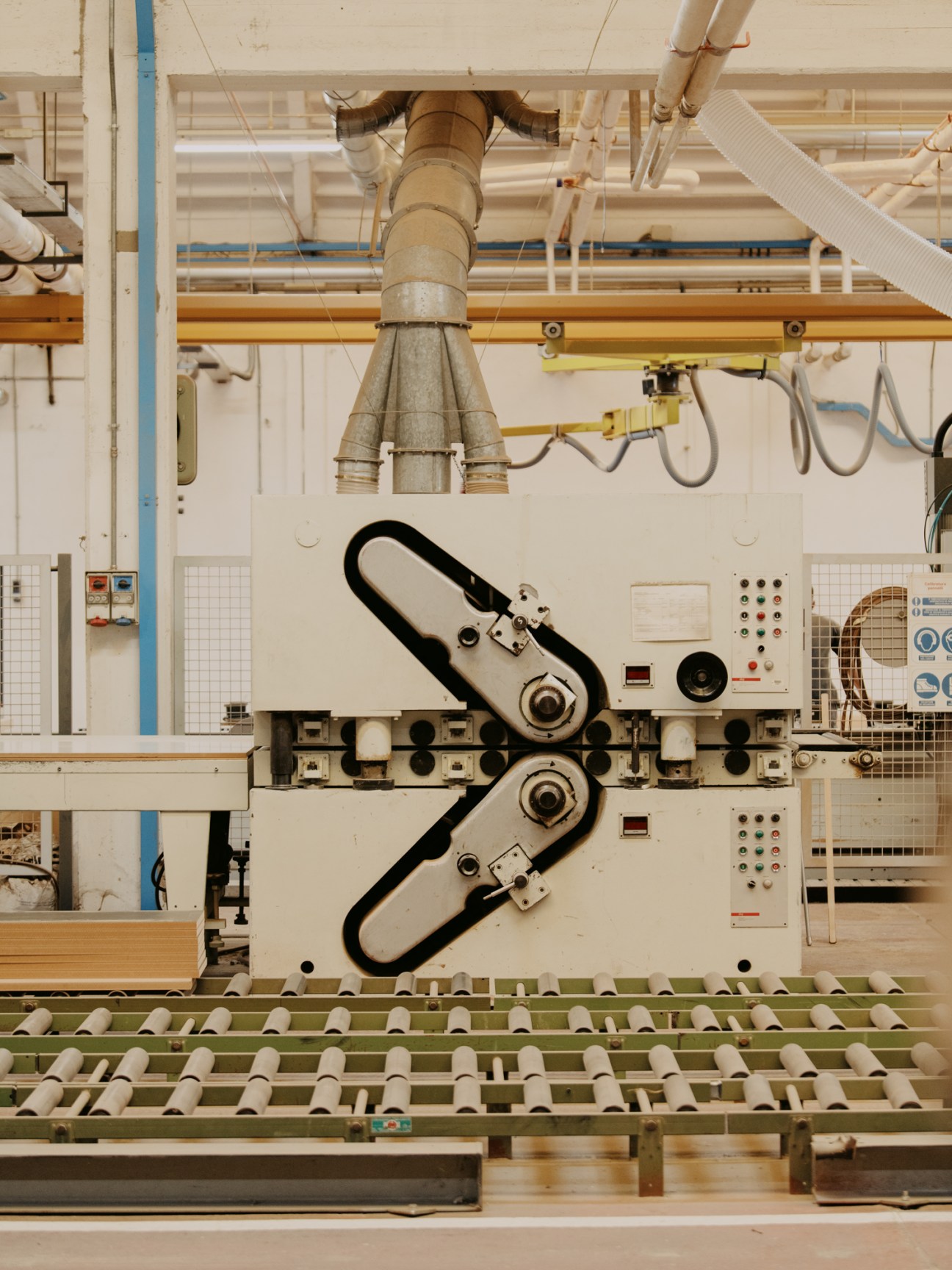
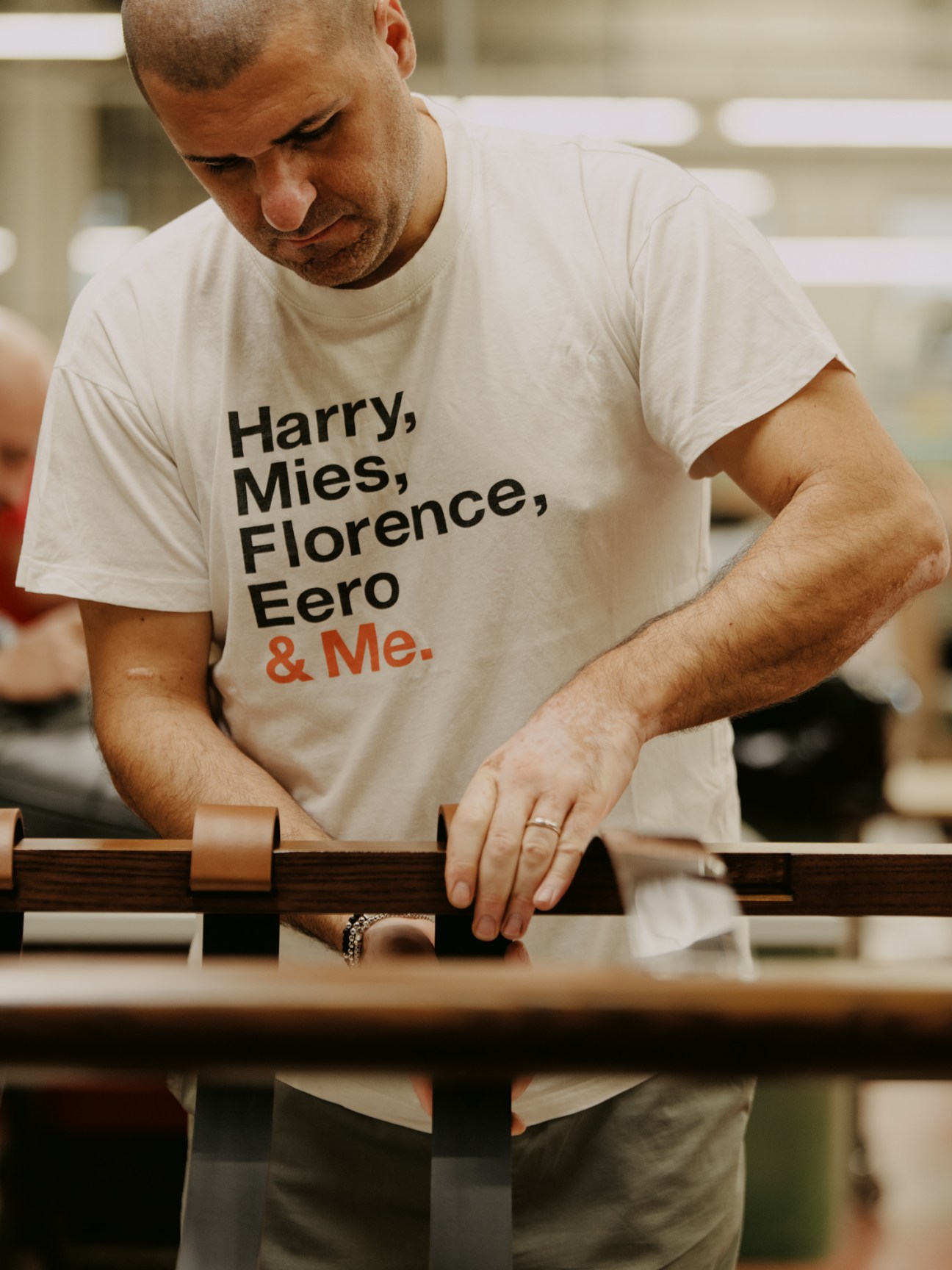
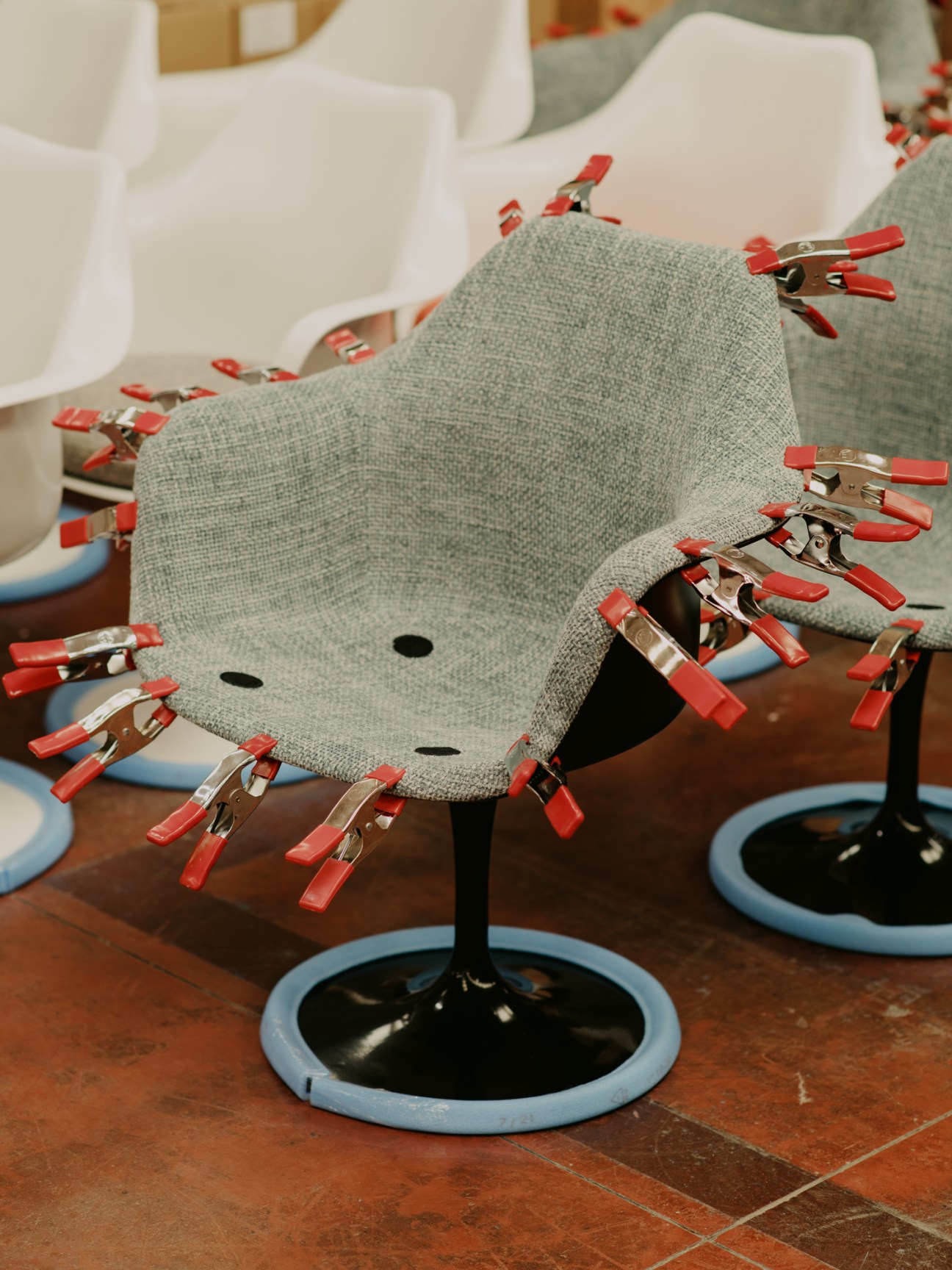
Yet when Monocle inspects the production lines at Knoll Europe’s plant in Foligno, Italy, which is operated by the company’s European subsidiary retaining the Knoll name, the days of Hans and Florence don’t really feel all that long ago. As we tour the factory with Demetrio Apolloni, president of Knoll Europe, seat cushions are being hand-stuffed and mid-century-era chairs gently upholstered nearby. “I look at my work from an educational point of view,” says Apolloni. “Knoll has an incredible heritage. To be able to talk to our customers every day about Ludwig Mies van der Rohe, Eero Saarinen, Florence Knoll and Marcel Breuer makes my job very enjoyable.”
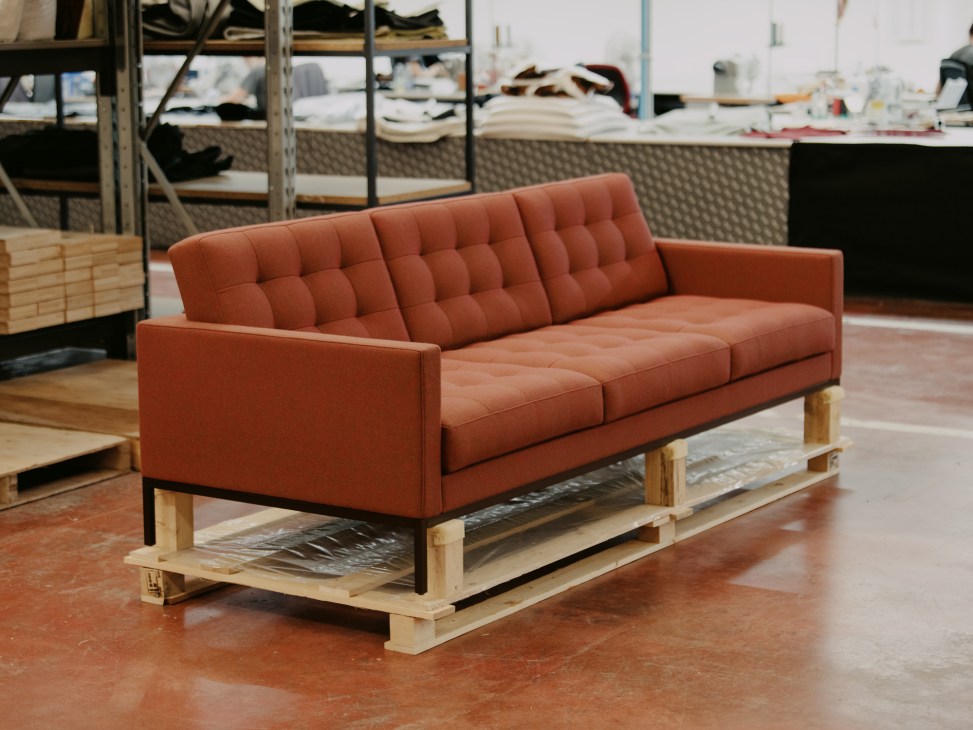
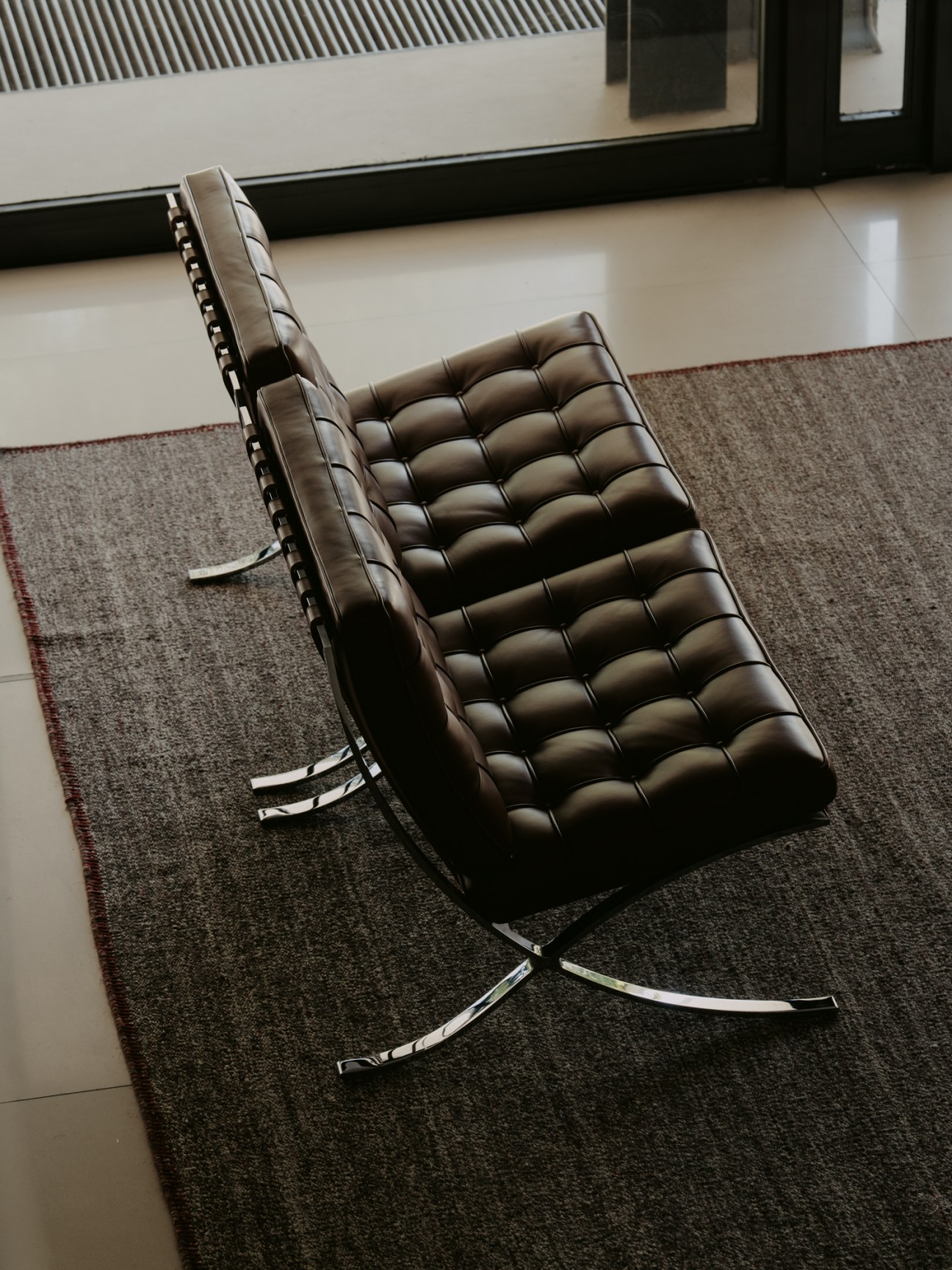
Here in the Italian province of Perugia, iconic designs, including Mies van der Rohe’s Barcelona chair, the Florence Knoll sofa and Saarinen’s Tulip chair and table, are made by both hi-tech machinery and hand. Many of the designs manufactured here were commissioned by the company’s founders. And unlike pieces produced at Knoll plants in the US, which tend to be sold into large offices and major interior-design projects, the items made here in Europe are more likely to be enjoyed in domestic settings.
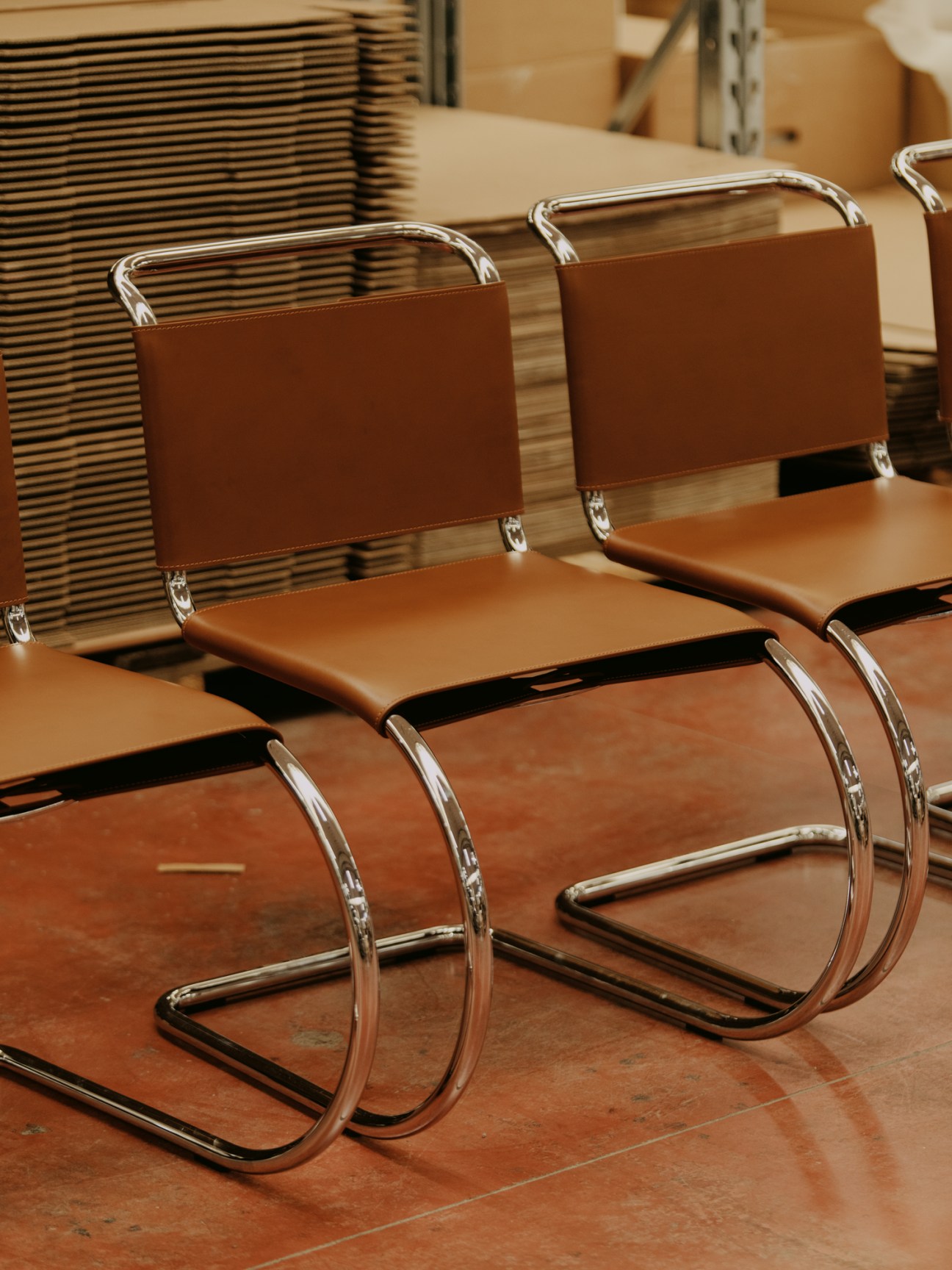
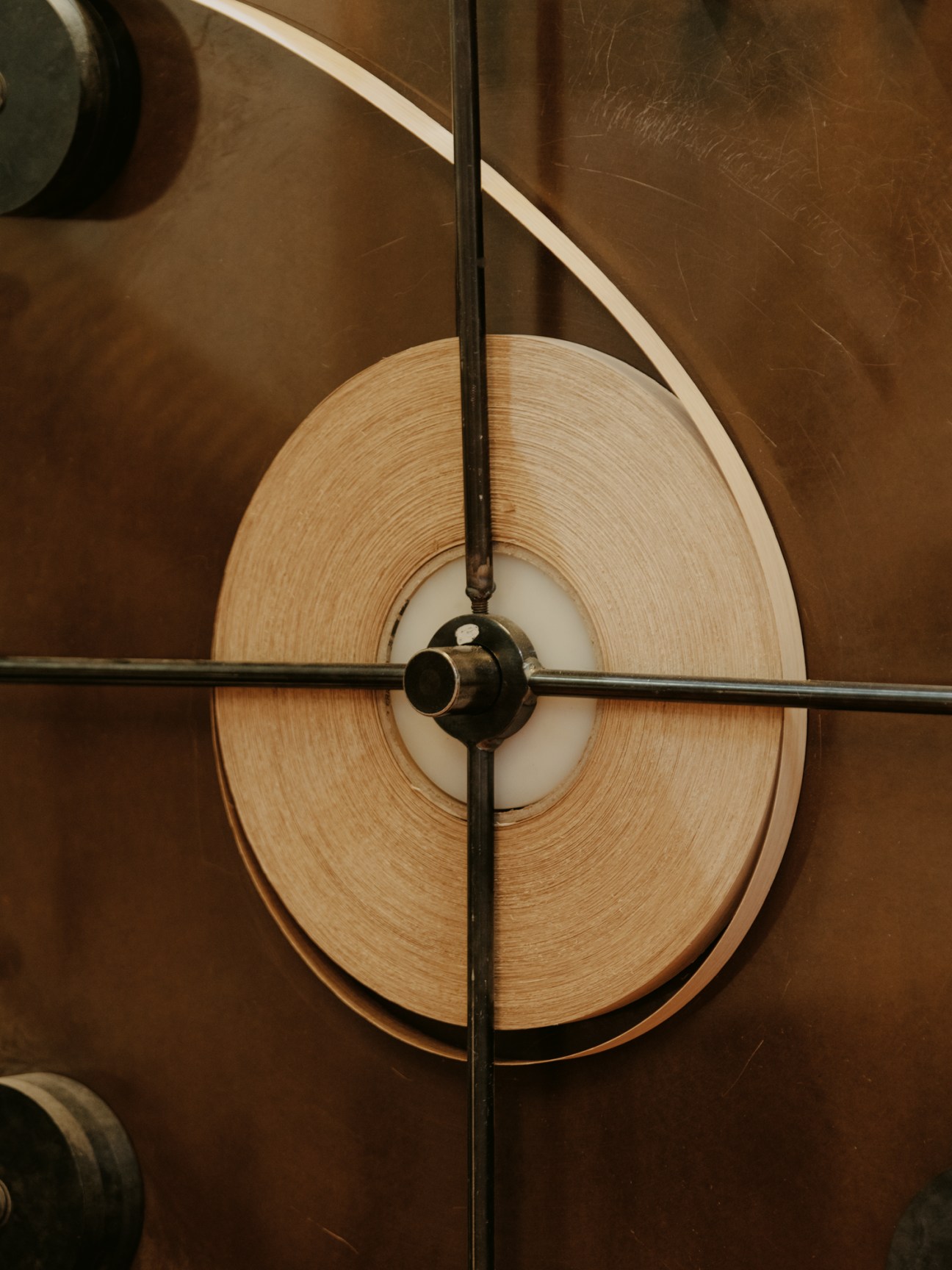
This is largely due to Apolloni’s efforts to make classic design more appealing to those furnishing homes in Europe today. As a former mentee of Rolf Fehlbaum, erstwhile director of Swiss-German furniture giant Vitra, Apolloni learnt that it was possible to sell classic furniture to the owners of very modern houses. Gaining knowledge from Fehlbaum, who successfully crafted a new European appreciation for the mid-century American Eames designs, Apolloni has worked hard to highlight Knoll classics in showrooms across Europe, in a manner that he calls contemporary. “I arrived in 2008,” he says. “And I immediately wanted to modernise the language of how we presented our products, from catalogues to showroom designs.”
These ambitions have been bolstered through the work of Milan-based architect and artistic director Piero Lissoni, a long-standing Knoll collaborator. He works with Apolloni to add new designs to the brand’s collection. The commissioning of Lissoni’s work, including the expanding KN Collection of chairs, means that Knoll showrooms in Europe are stocked with more than just works from the mid-century era. In these environments, customers see how a Barcelona chair can live alongside contemporary works from Lissoni. These designs, enhanced with pleasing Saarinen-like curves, nod to the past but are perhaps more empathetic to the way that we live today. “The newer designs always have a link to the past; a link to Knoll’s history,” says Apolloni, demonstrating how the chrome elements of Lissoni’s sofas harmonise with the frames of Florence Knoll pieces from the 1950s. “They share materials. Our customers recognise the link and the design language – they appreciate this balance.”
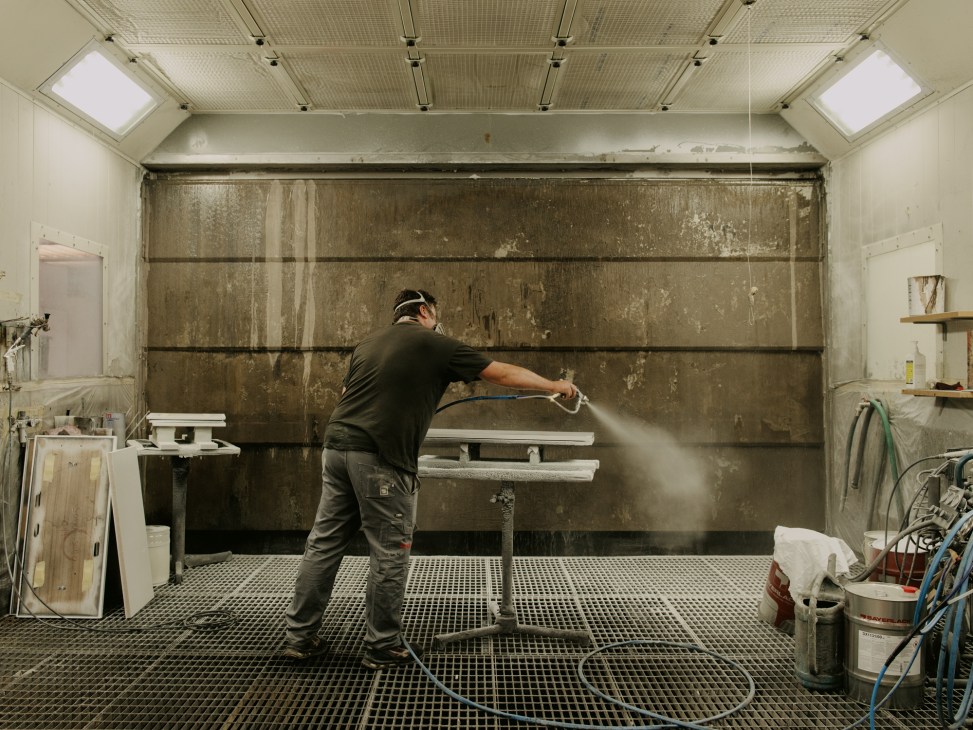
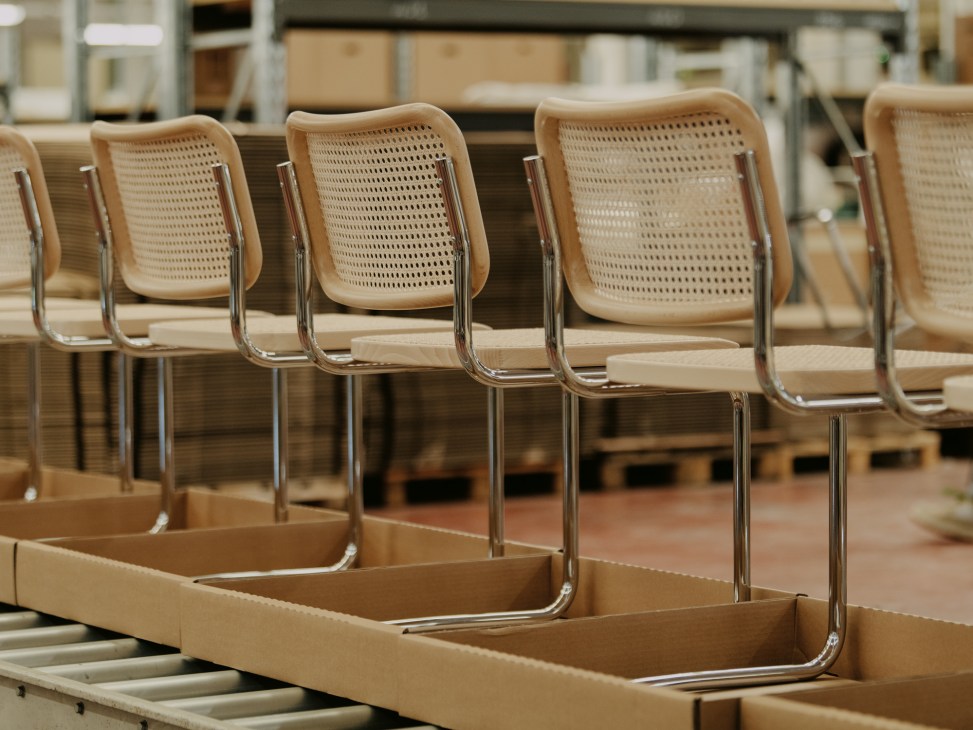
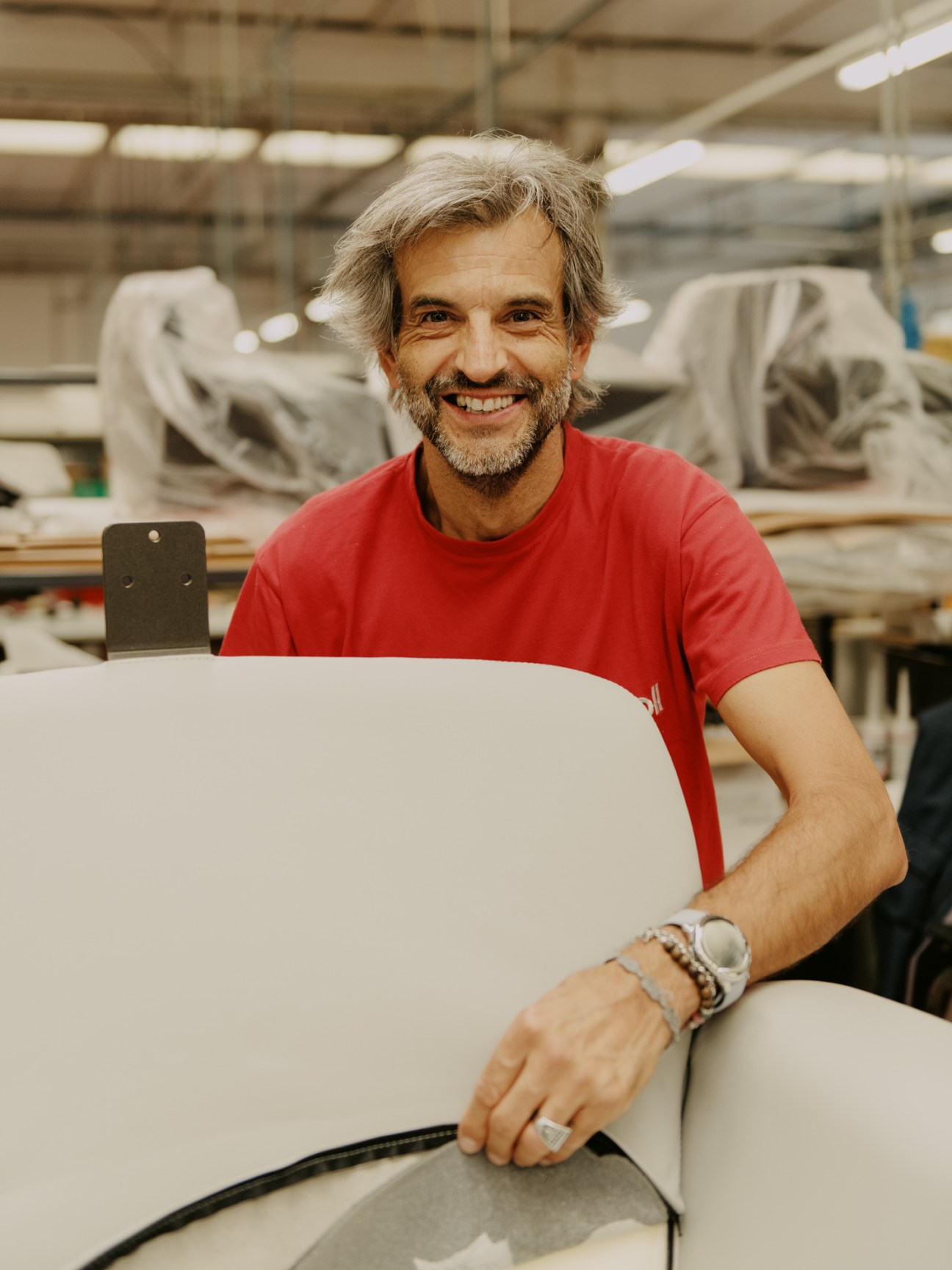
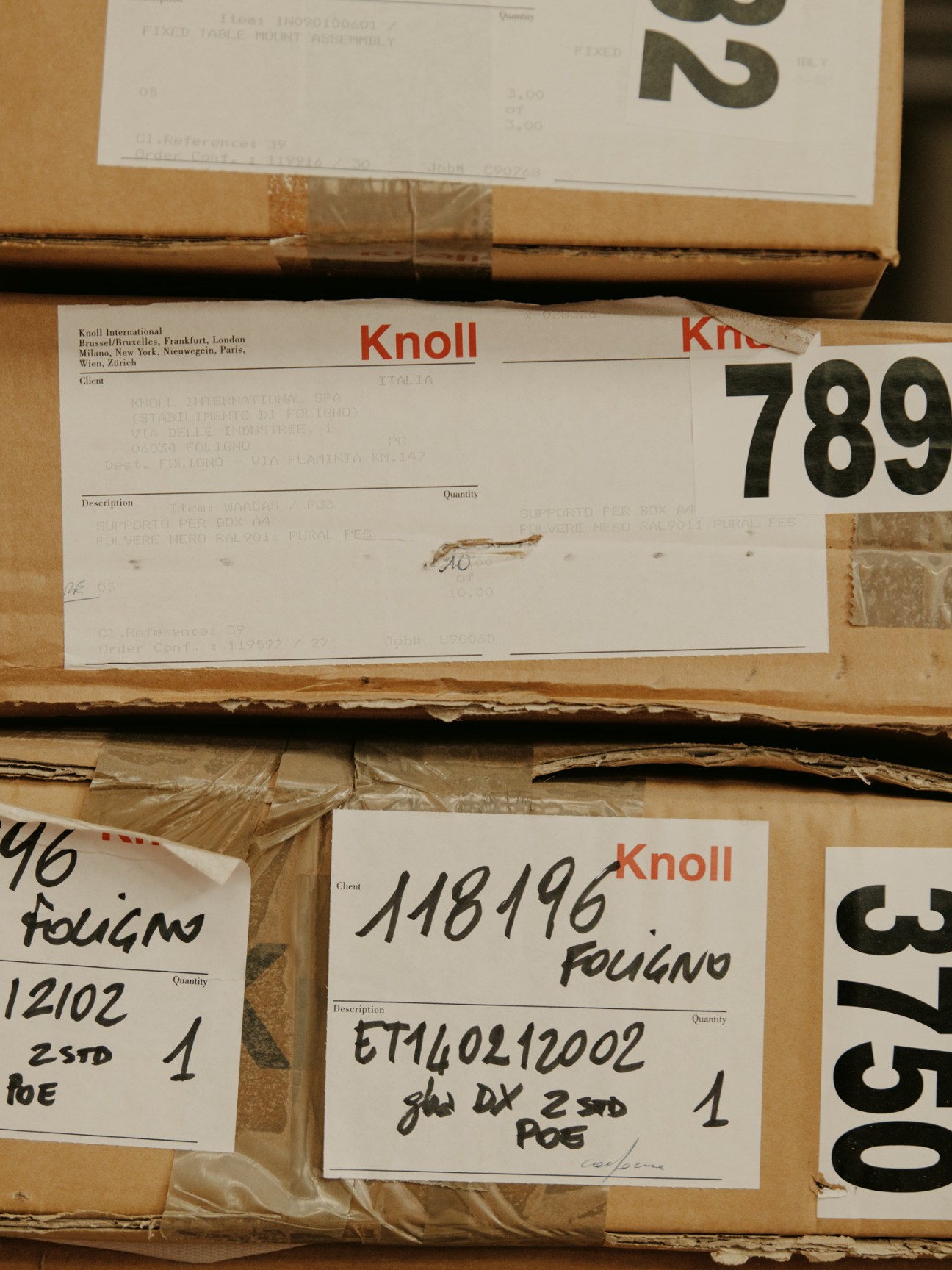
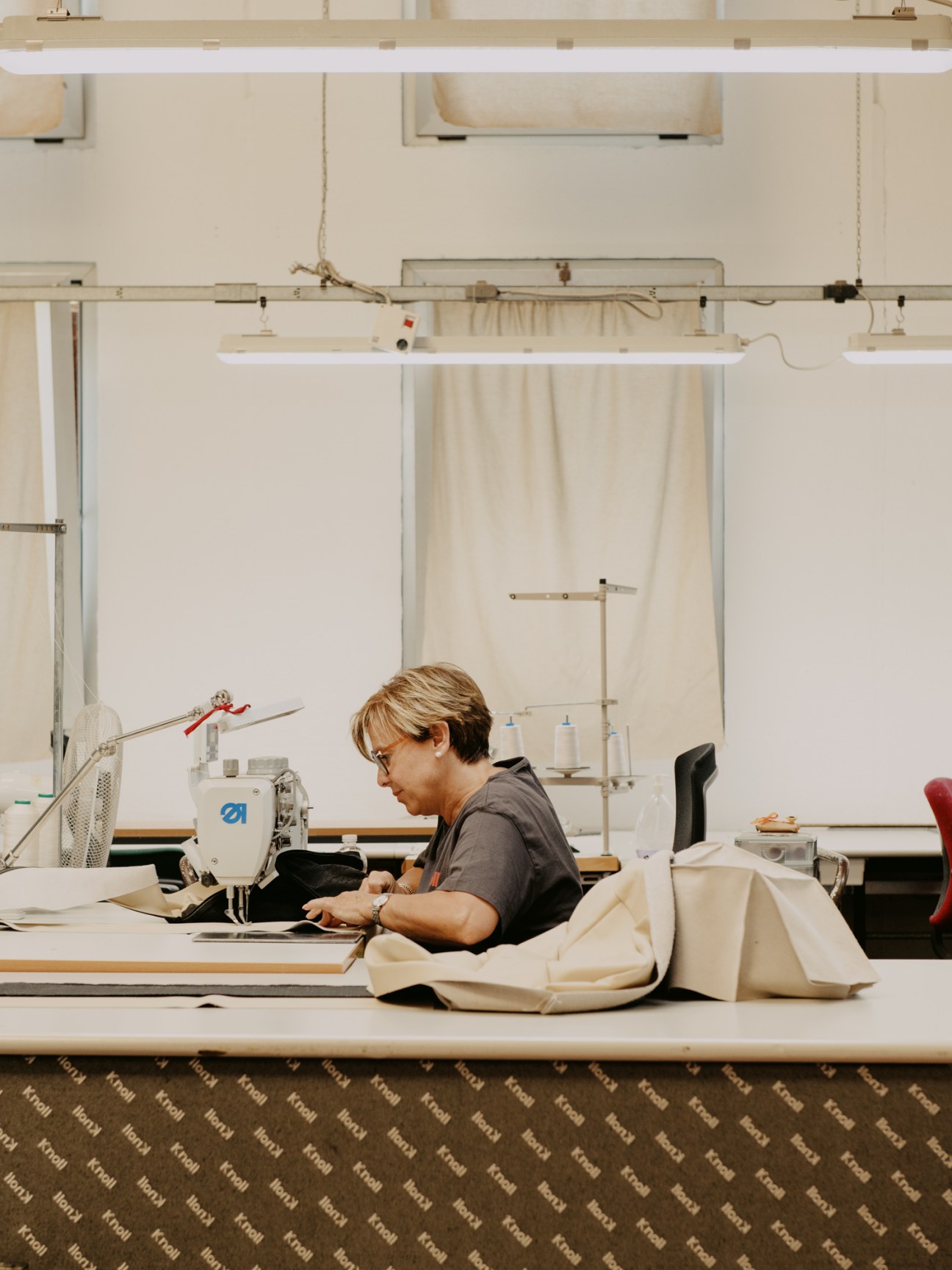
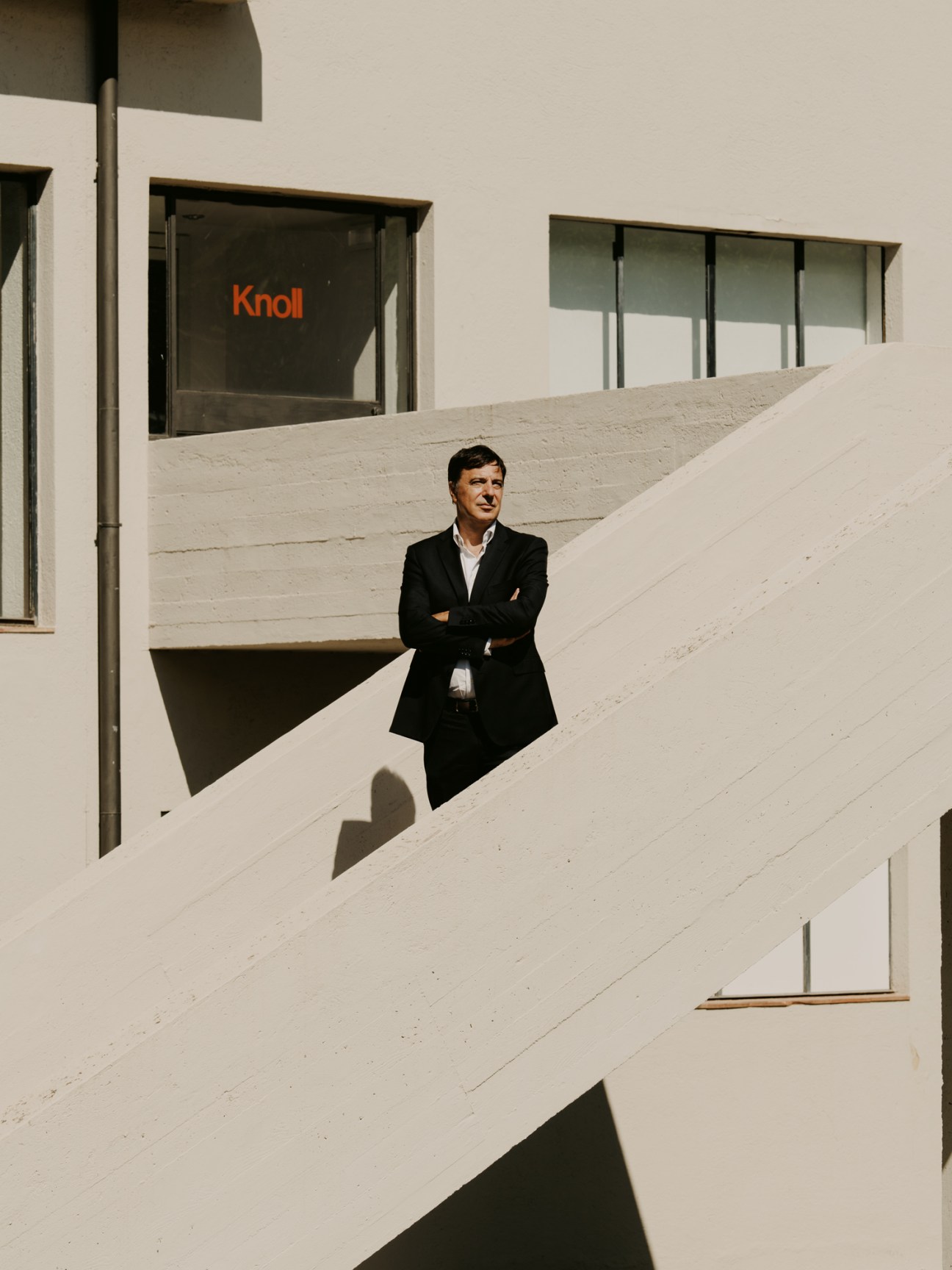
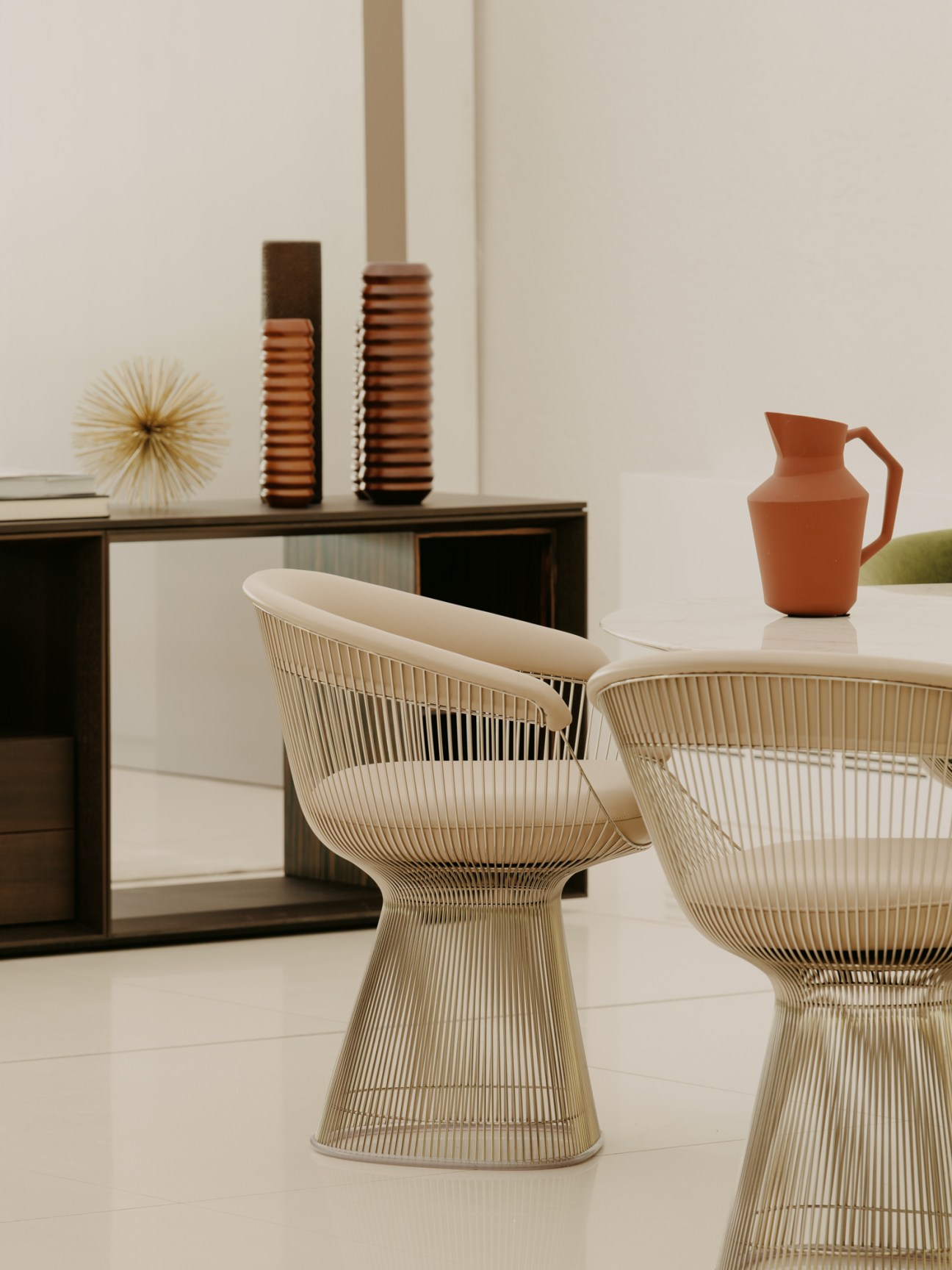
Knoll Europe’s focus on the residential market has paid dividends during the past 18 months, with office commissions and major architectural developments having stalled during the pandemic. “We have grown more than 15 per cent compared with 2019,” says Apolloni, noting that many people have chosen to renovate their homes and are willing to part with more money for furniture designed with longevity in mind. Although Knoll’s merger with Herman Miller is bringing many changes, there’s a comfortable celebration of the past on the production lines in Italy – and much excitement about what the future will bring.
Meet the architects racing to make concrete more sustainable
It takes real optimism to envision a sustainable future for our built environment. “It is an extremely slow industry and we need to move fast because we are major, major, major polluters,” says professor and architect Philippe Block, head of the Block Research Group at the Institute of Technology in Architecture at eth Zürich. At the core of the building industry’s problems is its most essential material, concrete. The creation of concrete from water and earth aggregate mixed with cement (produced by baking limestone, clay and sand in huge fuel-hungry ovens), and its use in our infrastructure, accounts for some 7 to 10 per cent of all annual global co2 emissions. Concrete is also by far our most-used building material. In fact, besides water, concrete is humanity’s most-used material, full-stop.
Building with concrete, as opposed to materials that are trickier to deploy but less harmful to our environment such as bricks and timber, has allowed designers to dream big. As the world emerged from the Second World War, improved construction techniques meant that massive social housing projects could be erected at speed in concrete. Towers that literally touched the clouds rose in our cities and massive motorway projects were realised at pace in this magnificently malleable material. With its ability to be cast in many ways and span and stretch in gravity- defying designs when reinforced with steel, concrete is the material that can do it all. As Pritzker Prize-winning Swiss architect Peter Zumthor puts it, “Architecture has its place in the concrete world. This is where it exists. This is where it makes its statement.”
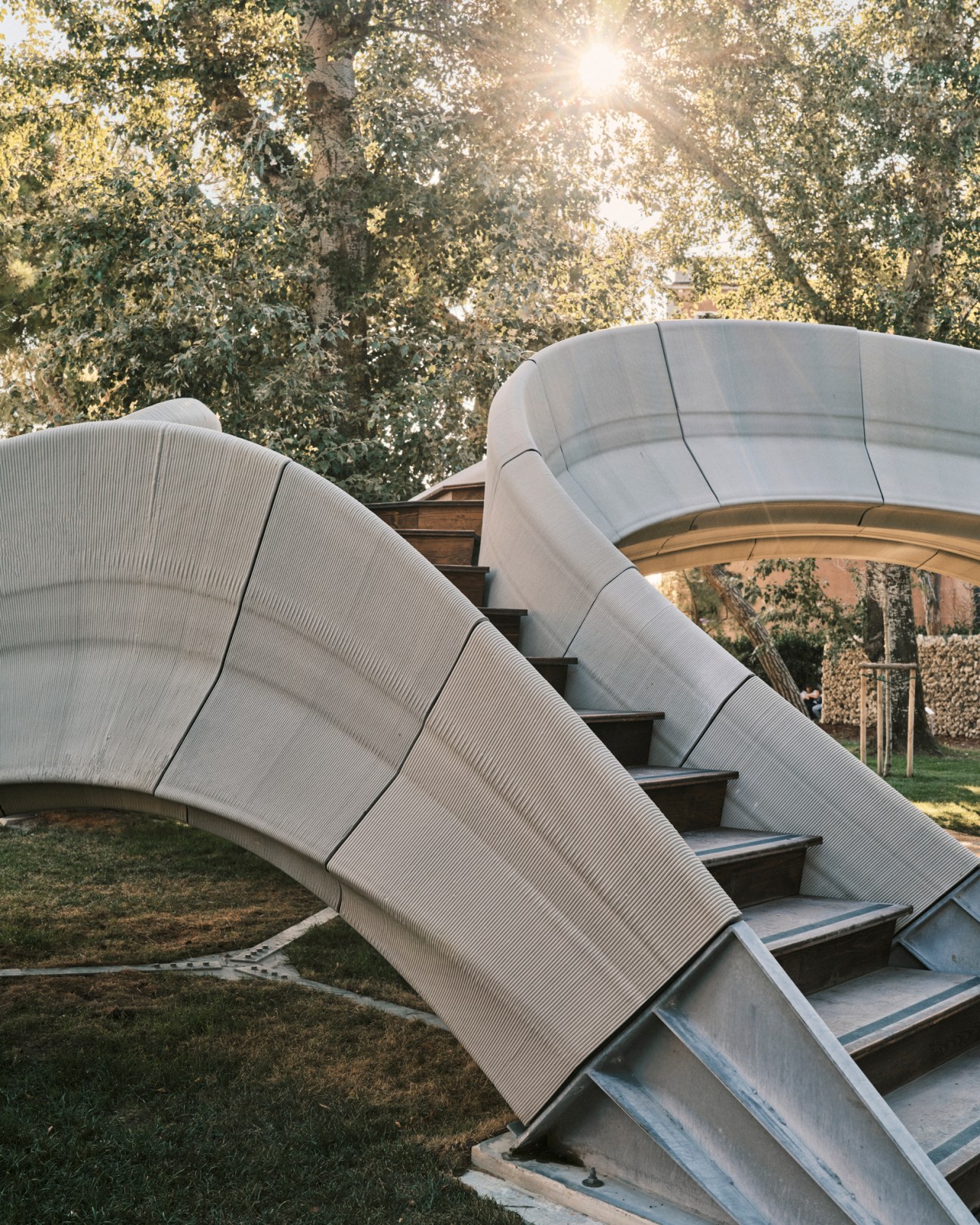
However, when discussing where the construction industry is heading today, the man driving one of the planet’s most pioneering academic programmes on building technology, Philippe Block, is proposing a revolution. He greets monocle on a sunny day in Venice at Striatus, a new bridge that he and his university team have completed in partnership with London’s Zaha Hadid Architects and several other collaborators. Comprised of 3D-printed concrete blocks, joined without the use of adhesives, the project aims to show that even the world’s most environmentally damaging building material can enjoy a low-impact future. Using a new process, liquid concrete is pumped through 3D printers to create millimetre-precise components that fit together like a jigsaw puzzle.
Standing on the Striatus bridge, Block outlines the complications surrounding the material beneath his feet. Referencing the Bill & Melinda Gates Foundation, he says that to cater to the world’s growing population we will need to build the equivalent of “one New York City every month for the next 40 years”. Meeting this demand in the way that we currently build would almost certainly contribute to a climate catastrophe.
Although dinky in scale, this concrete bridge in a leafy public park adjoining Venice’s Giardini and some 10 years in development, offers serious solutions for improving the use of an increasingly maligned material. Besides being beautiful (the surface sports a natural, brushed look, from the 3D printer’s linear layering), the design of Striatus illustrates that when concrete blocks are compressed together as “artificial stones” they can support some serious weight. It’s old-school engineering: a bridge formed in the same manner as vaulted stone ceilings in medieval cathedrals. If this construction approach was to be used in larger projects, it would allow buildings to contain 70 per cent less concrete and 90 per cent less steel than the reinforced slabs that are typically used.
Block’s technology takes aim at what might sound like a banal feature in architecture: floor plates. But in a typical urban high-rise building, these elements account for about 40 per cent of its mass. Combining the Gates Foundation findings and his own calculations, Block believes, “We will have to build about 300 billion square metres of flooring by 2060.” So applying the ideas pioneered in Striatus at scale offers an opportunity for an incredible reduction in concrete usage.
Backed by one of the world’s biggest building materials suppliers, multinational Swiss-headquartered behemoth Holcim, it’s a project that shows signs that the business players behind our concrete problem are gearing up to change their act. “We want to be part of the solution,” says Holcim CEO Jan Jenisch. “It has to be sustainable, circular and we have to build a lot more with a lot less.” But even with companies such as Holcim promoting a sustainable agenda, the reality is that the concrete and cement industry is worth some $333bn (€287bn) a year to our global economy. And those at the top have little to gain and a lot to lose if demand decreases.
Thankfully, pressure from those creating concrete buildings is increasing too and it’s aiding change. Brazil, with its architectural legacy dominated by concrete buildings and sprawling megacities, is in the vanguard. While incredibly beautiful, the curvaceous concrete engineering feats of Oscar Niemeyer in Brasília and expansive brutalist-style concrete ceilings and vast slabs of exposed raw concrete of João Batista Vilanova Artigas, are no longer what’s needed.
“We like concrete because we’re Brazilians and – for good and for bad – today’s architects here are inspired by the modernist movement of the past, where concrete was the most-used material,” says lauded São Paulo-based architect Arthur Casas. “But the way we used to work with it was very dirty, using tonnes of water and manpower; it was the wrong way to think about construction.” Casas adds that contemporary Brazilian architects, including himself, who work on apartment blocks, malls and private residences across the country, are interested in pioneering pre-fabricated concrete components. Using pre-cast, steel-reinforced blocks of concrete and assembling them on a building site, almost like Lego, can reduce the carbon footprint of a construction. “Pre-cast wherever possible is my philosophy,” says Casas.
The link between the Brazilian architects and the Venetian bridge is efficiency. Less material equals less cost and less work needed on a building site, reducing its carbon footprint. A multi-storey project, currently being constructed using Block Research Group’s technology in Brussels, will soon demonstrate how such innovation can aid our built environment. Doing this at a scale that will help a developing metropolis such as São Paulo, however, still seems far off.
Concrete will remain a key ingredient in homes, transport infrastructure, schools and hospitals for years to come. While the governments of developed nations start to enforce stricter legislation on the carbon cost of construction, the developing world might not be ready to join the movement just yet. Why would a country deprive itself of an ever-ready cheap construction material that can dramatically improve society by boosting infrastructure?
While the design media has lauded the recent rise of timber towers in cities and highlighted how rammed earth can be deployed in sustainable architecture, concrete remains king. “We build all these beautiful timber buildings and the thing we trip up on with sustainability is always these huge concrete floor plates,” says architect Stian Alessandro Ekkernes Rossi of Norwegian design giants Snøhetta. Founded in Oslo in 1989, the firm is perhaps the world’s most progressive when it comes to building at mass-scale in a sustainable manner. It has already completed a number of “carbon-negative” “powerhouse” buildings: office blocks that draw upon solar panelling and passive cooling to essentially take more carbon out of the environment than they put in. Here, in a nation rich with the profits of its oil and gas industry, Snøhetta is working at the cutting edge of redefining not only the way we use concrete in buildings but the way we make the material itself.
Rossi, who has made chairs from recycled sea plastics and homeware from crushed mobile-phone glass, is now dedicated to an initiative called Saferock, a “construction material of the future”. “In 2016 I became really interested in materials, because I don’t think that designers and architects know enough about the materials they are using,” he says. “So in my work I tried to raise attention, first around sea plastics, making the first 100 per cent recycled chair here in Norway, and now my interest has grown into Saferock.”
Saferock, which replaces some of the damaging ingredients used in concrete with geopolymers sourced sustainably from mineral waste on mining sites, has incredible potential. It emerged through a collaboration with the University of Stavanger when the Norwegian oil and gas industry asked researchers to develop a concrete replacement that could be poured into large pipes in the sea to seal gaps. From the success of the developed material, Norwegian mining industry players have gone on to fund one of the world’s most advanced concrete labs. Snøhetta became involved in a bid to attempt to take this innovation and apply it to the built environment.
“The beautiful thing is that most countries have mining industries, so we don’t need to export materials,” says Rossi, noting that Saferock can be created on site, reducing the need for the big cement ovens that cause so much of the industry’s environmental damage. “We will export the science and technology around this to other places. Just look at a place like the drc; here we can teach and show how to use mining waste to build not just architecture but major infrastructure, in a better way.”
Snøhetta plans to showcase Saferock in the most testing of settings: the North Sea. Here it will be used to create sea-defence infrastructure, to prevent coastal erosion. But even if this is a success, the fact that this technology relies on a different production process to that used by traditional industry means that it could face a reaction from powerful forces at the top. “I feel like the game is about to change but we’re not here to challenge the concrete industry; we are here to find a way to collaborate on new terms,” says Rossi. “They also feel the pressure and it’s not like it is us, the architects, who are against them. The best thing we can do right now is launch this product, get it out there and let everyone discuss it. The more we talk about it, the harder it’s going to be to ‘shh’ our problems away.”
Concrete examples
Buildings that will stand the test of time
While there are sustainability issues around concrete, this adaptable material still makes for eye-catching buildings. When applied well it can change our lives in a positive manner. There are plenty of longstanding examples of concrete architecture that were designed to add value to the urban fabric and this gallery sets out to show some of our favourites. When well-maintained, good concrete design will not crumble or rot. After all, some of the infrastructure that the ancient Roman Empire developed, using their version of concrete, remains intact and loved thousands of years after it was built.
Not only is concrete is one of the most durable materials, it’s versatile too. As illustrated in the gigantic, emphatic sails of the iconic Sydney Opera House designed by Danish architect Jørn Utzon, concrete can be used to create poetry in form. An architect’s most ambitious visions can be realised in it: concrete is the key ingredient in the world’s tallest building, Burj Khalifa in Dubai, and it was the material that brought inspiration to modernist Le Corbusier’s béton brut canon, in turn inspiring a global movement.
Today’s more sustainably minded architects might look at concrete with hesitancy but most know that when applied with care, it still has a role to play.
1.
Inagawa Cemetery, Japan
By David Chipperfield Architects

Concrete architecture need not be all grey. Here in the Japanese countryside, pink-pigmented concrete softens the blocky form of this structure, allowing it to harmonise with its surroundings and maximise its purpose as a place of contemplation.
2.
Under Restaurant, Norway
By Snøhetta
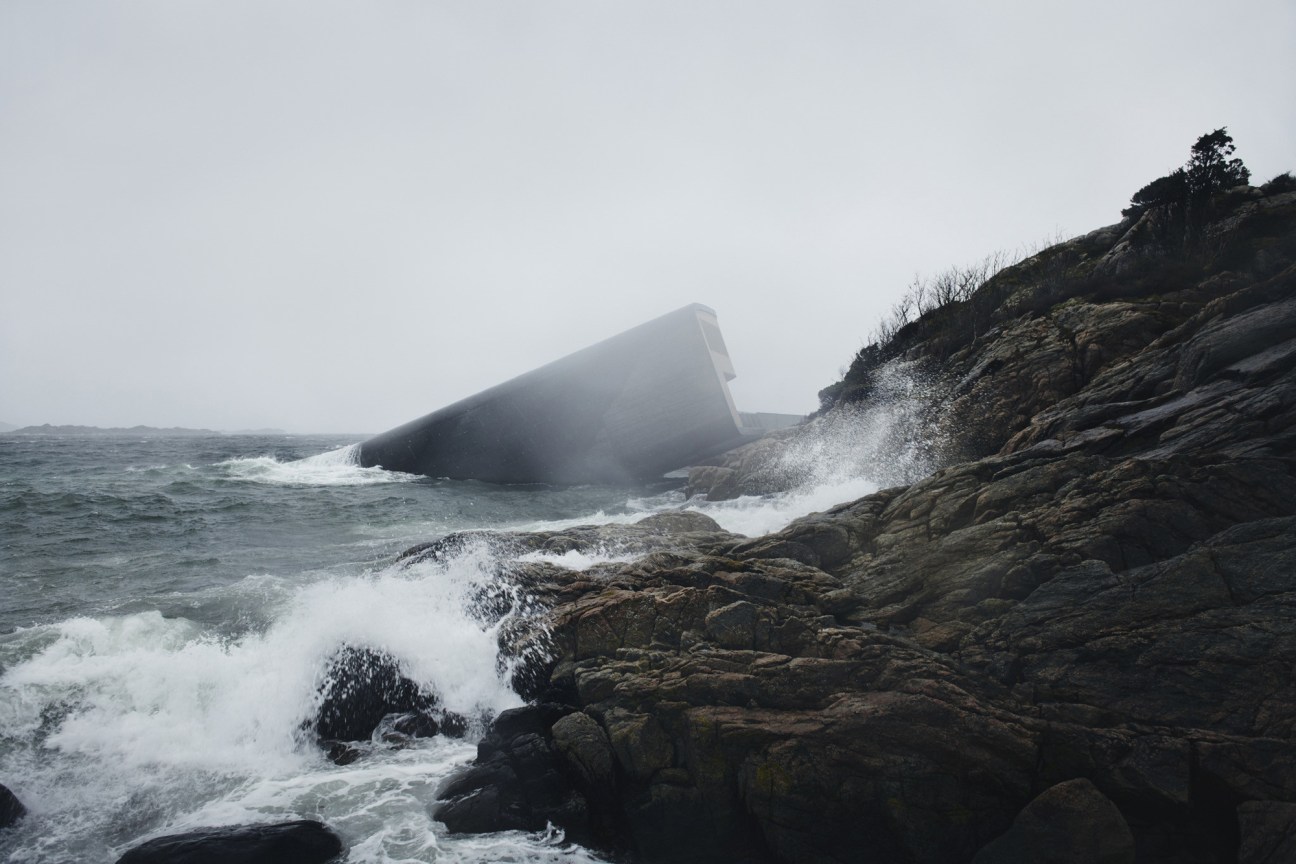
While masters of forming timber towers and low-carbon design, Snøhetta still views concrete as a necessity, particularly when submerging half of a restaurant into the North Sea. Part of the restaurant is 5.5 metres beneath the surface.
3.
Swiss Ambassador’s Residence, Mexico City
By FHV Architectes
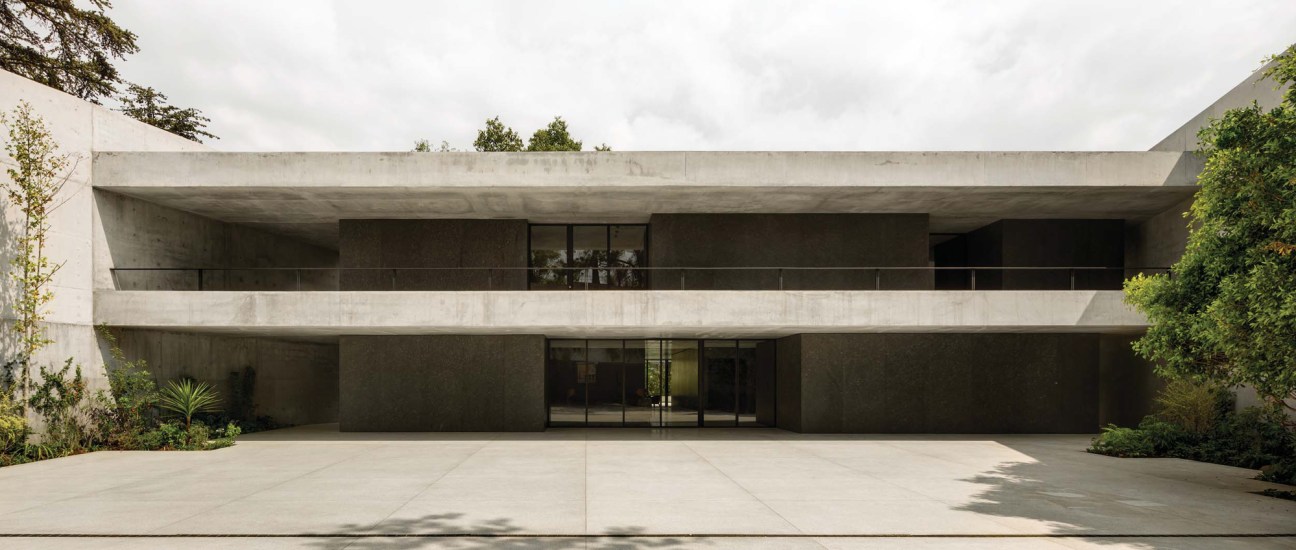
Concrete defines Switzerland’s architectural character and has been applied to reflect this in a tropical setting. The striking walls of smooth concrete also serve the purpose of blocking out the noise of the city, providing a calm and serene atmosphere in the home.
4.
London Aquatics Centre, London
By Zaha Hadid Architects
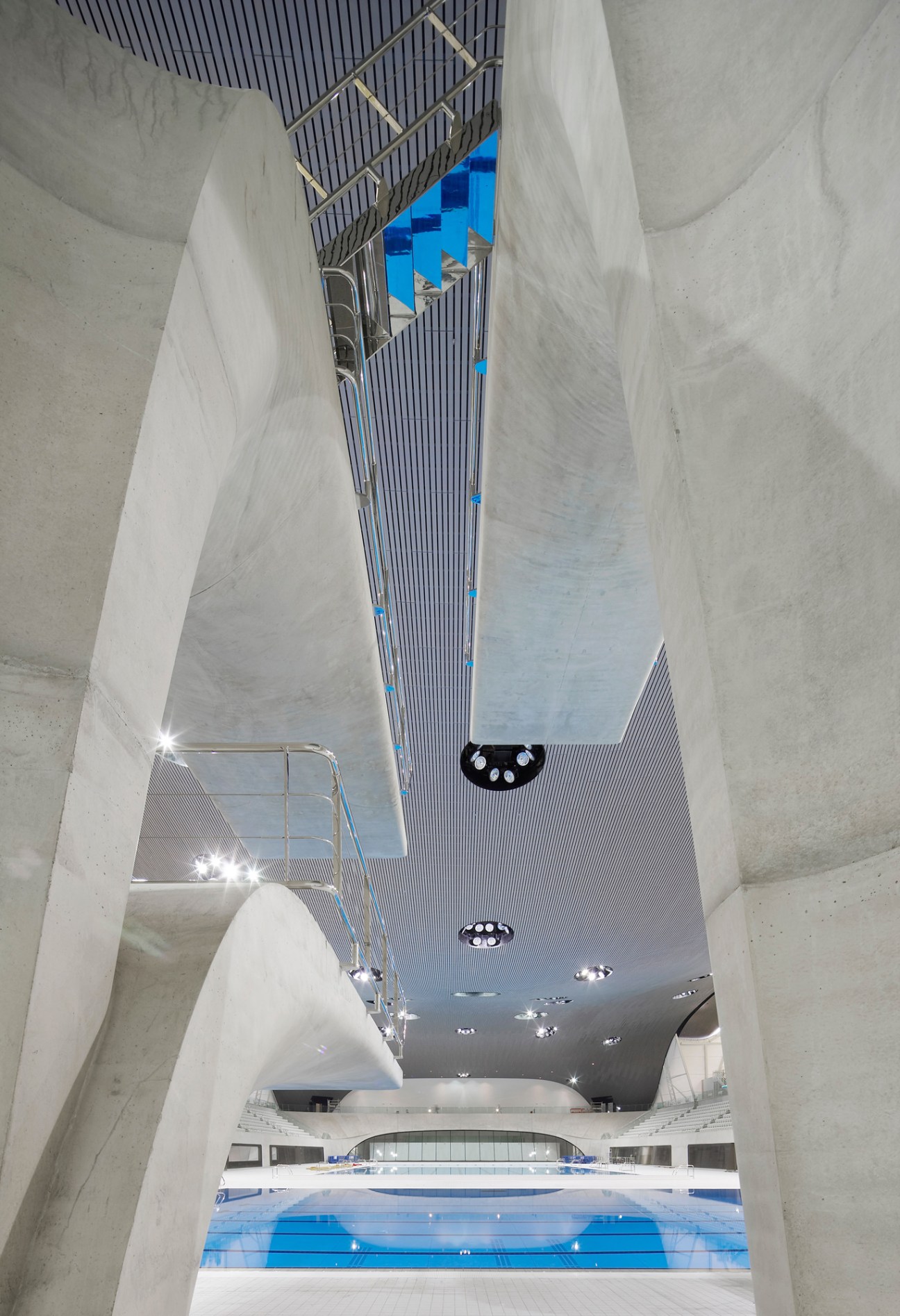
The curved concrete diving boards are the most impressive ever to grace an Olympic Games. The project pioneered the use of recycled concrete, reducing the building’s carbon footprint.
5.
Krematorium Baumschulenweg, Berlin
By Schultes Frank Architects
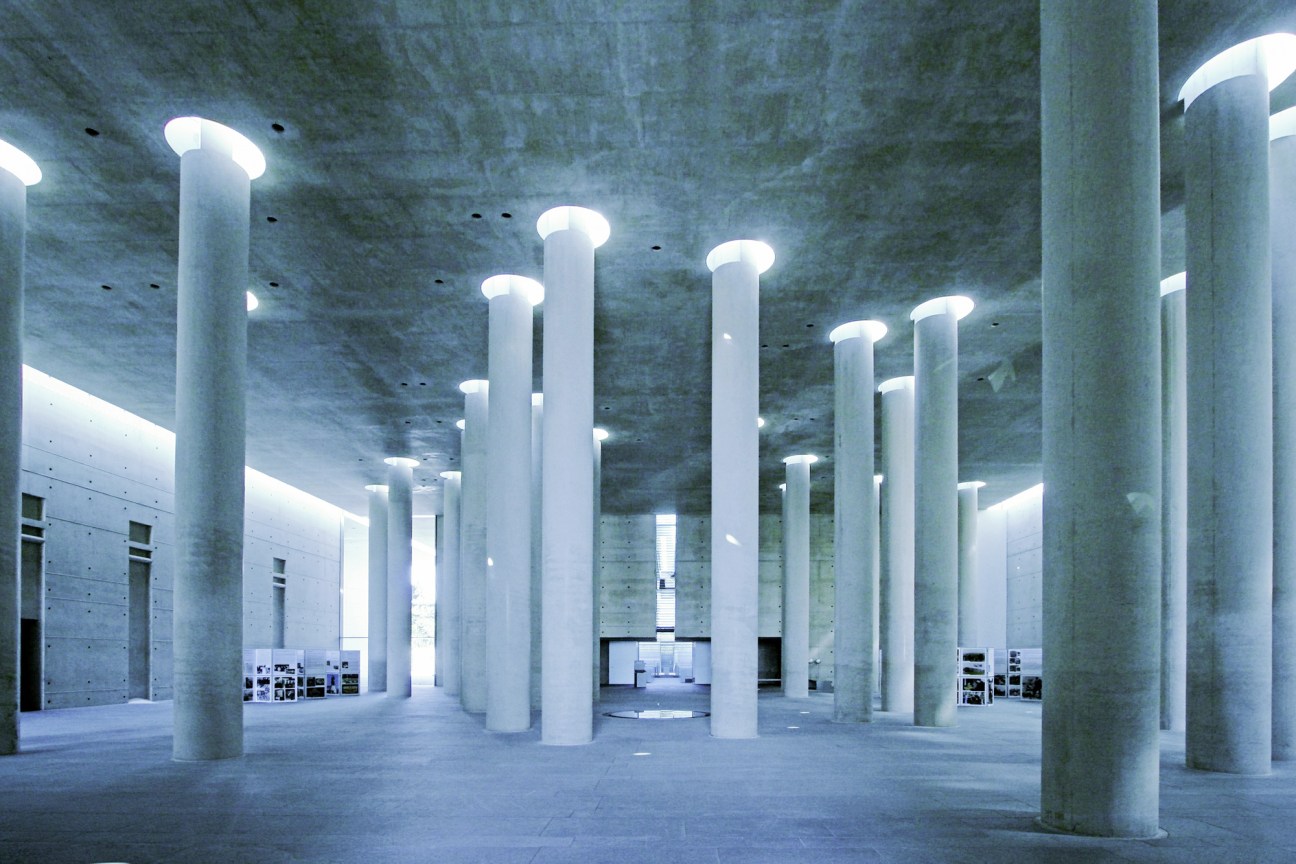
The departed are remembered here in a square hall with 29 symbolic concrete columns that soar up to circular skylights and support the expansive ceiling.
On the margin
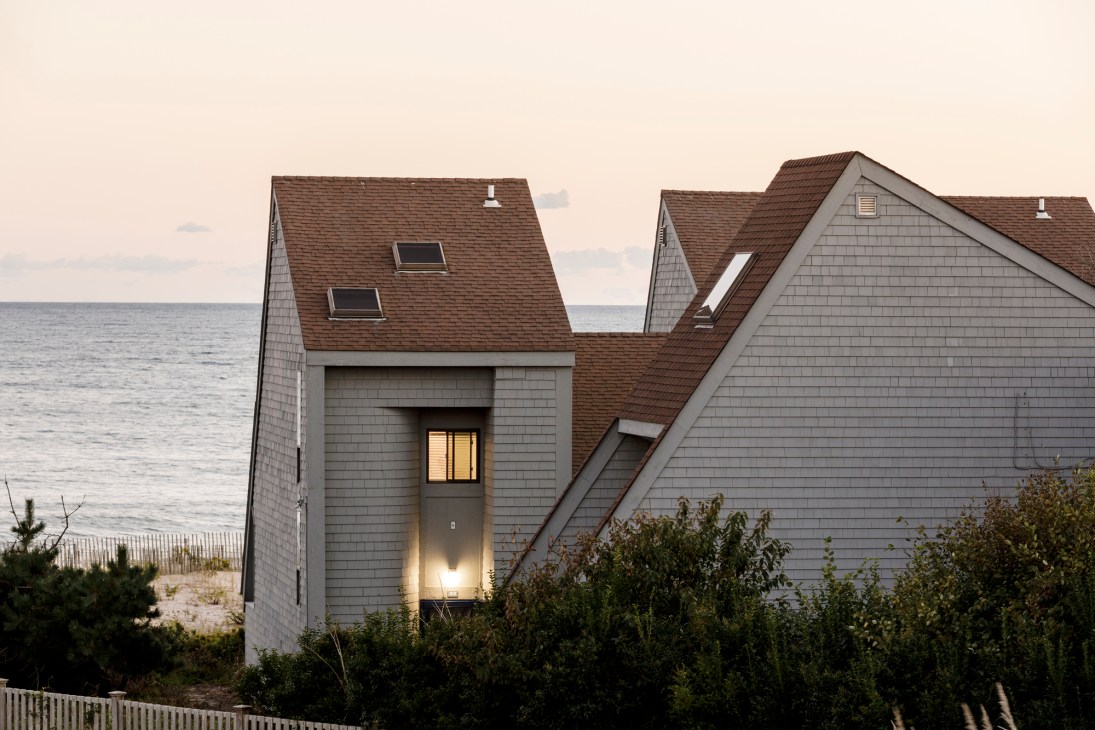
For New Yorkers, Montauk is known as “The End”. Situated on the outer reaches of Long Island’s South Fork and at the terminus of the Long Island Rail Road, the hamlet has the distinction of being the easternmost point of New York state. And, as places at the end of things tend to, Montauk has developed a culture unto itself. Because no one simply passes through on the way to someplace else, the people who end up here do so deliberately. Over the years this has included fishermen, surfers, artists, bohemians, owners of second homes and those just looking for an escape. In keeping with this, various architectural styles have found their way to this rugged and beautiful slice of coastline since the late 1800s, when a wealthy Brooklynite, Arthur Benson, began commissioning grand holiday homes here.

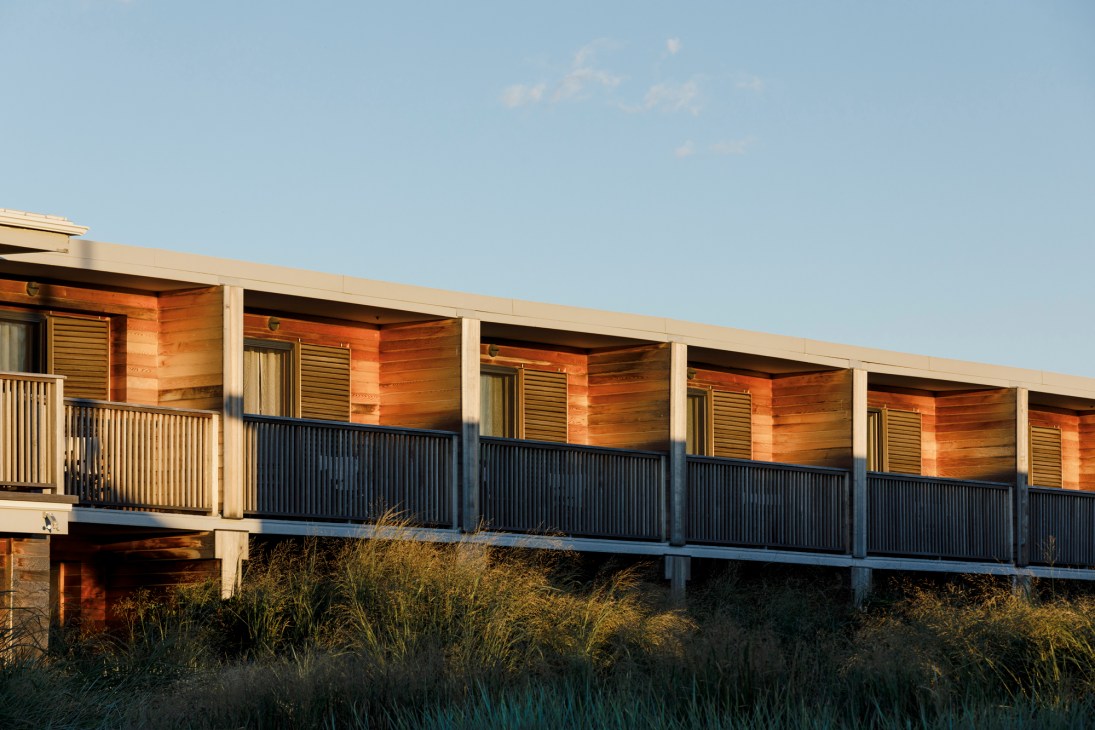
“The history of architecture in Montauk happened in episodes,” says Robert Young, an architect who has studios in New York City and Montauk. His work is part of the area’s most recent instalment, drawing upon timbers common to the region and far less ostentatious in form than the Queen Anne and Tudor Revival-style buildings from earlier years that dot the town.
The ideas behind Young’s portfolio – featuring new timber homes with low-slung roofs, and sensitive renovations of gabled vernacular residences – chime with the breezy buildings that sprung up here in the 1960s. For a project in 2000, Young climbed a tree on a property, finding views of the ocean. Following this site visit, he designed a new interpretation of a type of modernist building commonly found around Montauk: the upside-down house. Replicating the vista from his treetop perch, Young’s creation arrays most living spaces on the upper level, where his clients enjoy those superlative ocean views.
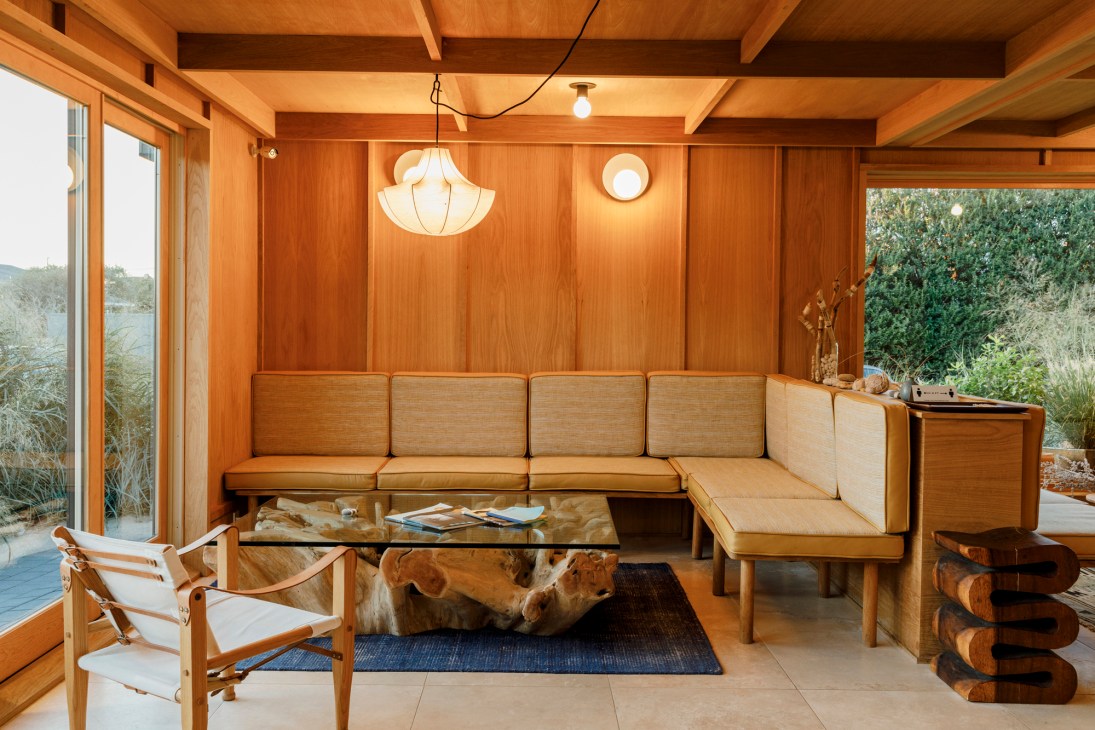
Montauk is mostly a village of small structures – fishing and surf shacks – so I wanted this residence to maintain that scale,” says Young, as he takes Monocle to visit a home he designed next to Montauk Lake, where he drew from history again. Rather than design a single grand structure to impose itself on the site, he created the home as an assemblage of multiple pitched-roof, cedar-clad buildings, in keeping with the forms and materials so prevalent across Montauk. He stitched the volumes together with modern glass elements. By including full-height sliding doors on adjacent sides of the main house and nearby guesthouse, he ensured that its residents could enjoy cross-ventilation from the lake’s breezes.
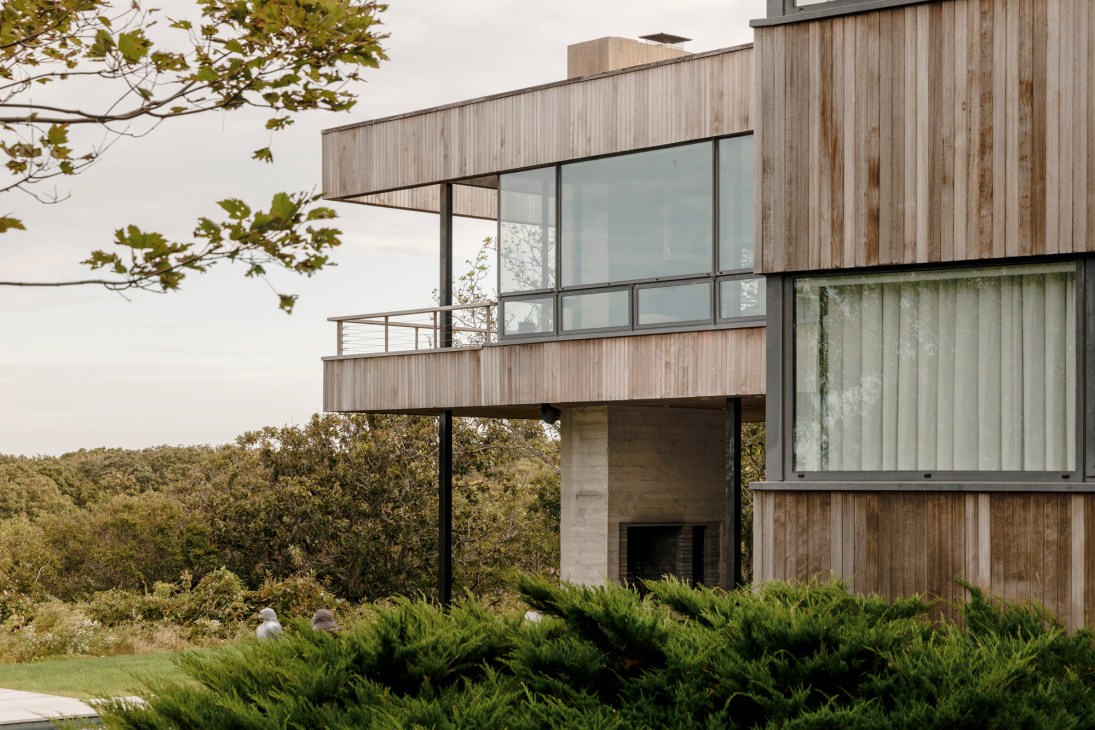
Making the most of the elements is what defines the designs of Young and his contemporaries in Montauk. Architects here are attempting to work with the land’s unique ecology – coastal dunes, grassland, shrubland and a patchwork of freshwater, saltwater and brackish wetland – rather than fight against it. When New York architecture firm Desai Chia started work on a house in Montauk’s Hither Hills neighbourhood, it took into account a wetlands area to the south.
“We positioned the house as far north as possible to avoid issues with storm water run-off to the nearby wetlands,” says Katherine Chia of her firm’s sensitive approach. The home’s final design features a huge overhanging element that creates shady outdoor areas and shelters the interior from the sun, enabling the residents to avoid using air-conditioning. Charred-wood cladding across the property is a shade of grey that references aged cedar, prevalent in Montauk. The façade is tough enough to withstand Montauk’s dramatic weather conditions, which range from scorching sunny days to fierce storms that batter the coastline.
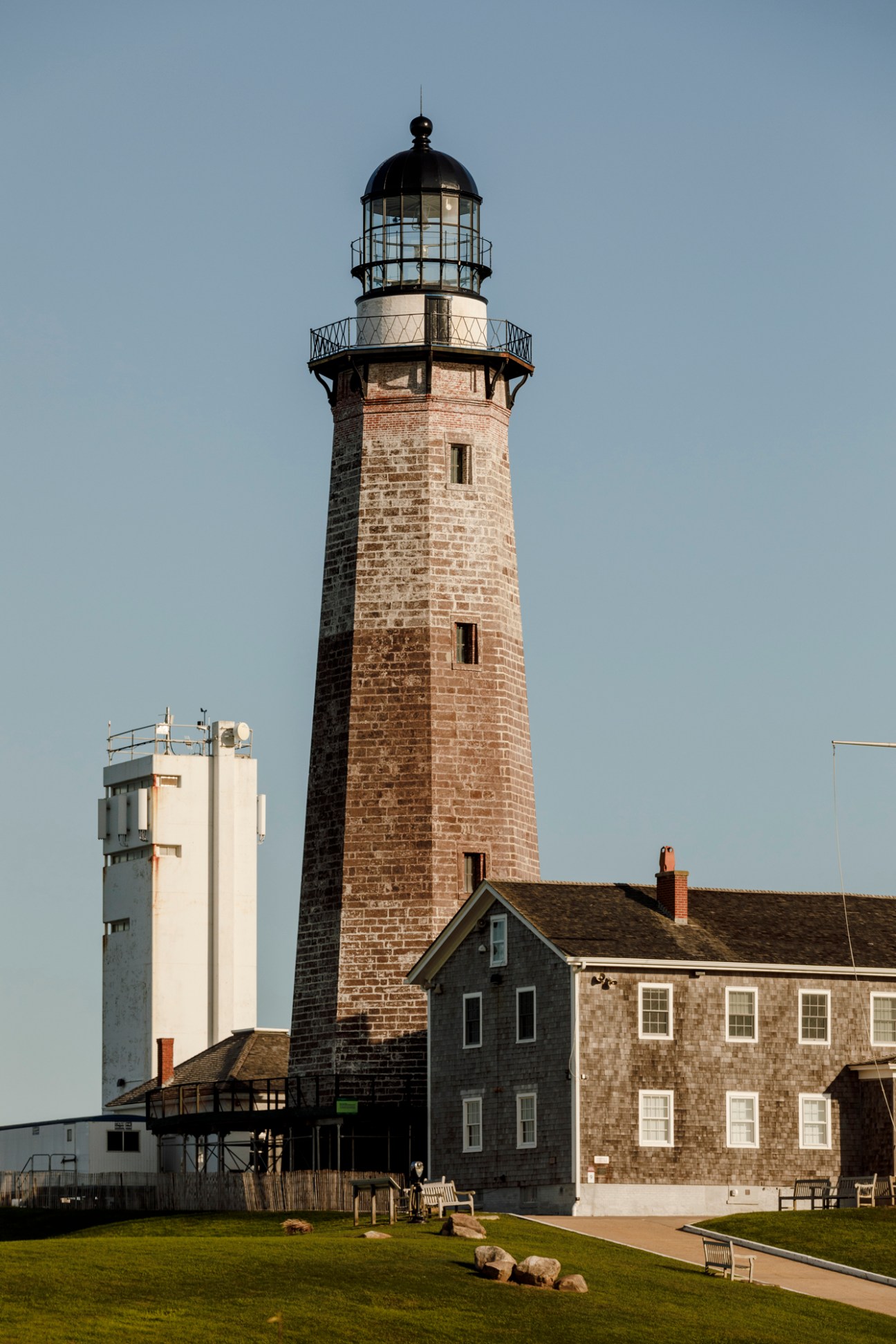
The urgency to design with nature in mind is a pressing one in Montauk. For example, when the Montauk Point lighthouse was built in 1796, its engineers positioned it nearly 100 metres away from the shore. Today, erosion has shaved that distance down to 30 metres. Meanwhile, to counter the high tides and storm surges causing flooding in the downtown area, the US Army Corps of Engineers is planning what it calls the Downtown Montauk Stabilisation Project, which will result in the construction of reinforced dunes along the most vulnerable shorelines. As Young puts it: “I tell my clients that they aren’t buying the land – they are borrowing it.”
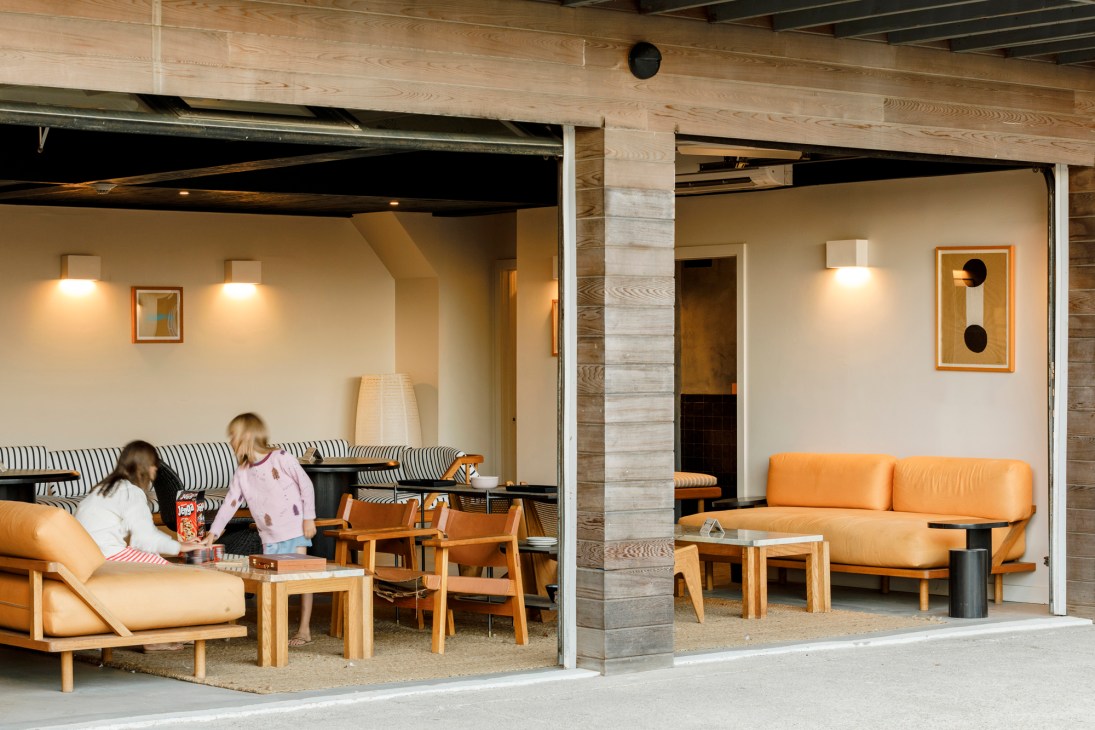
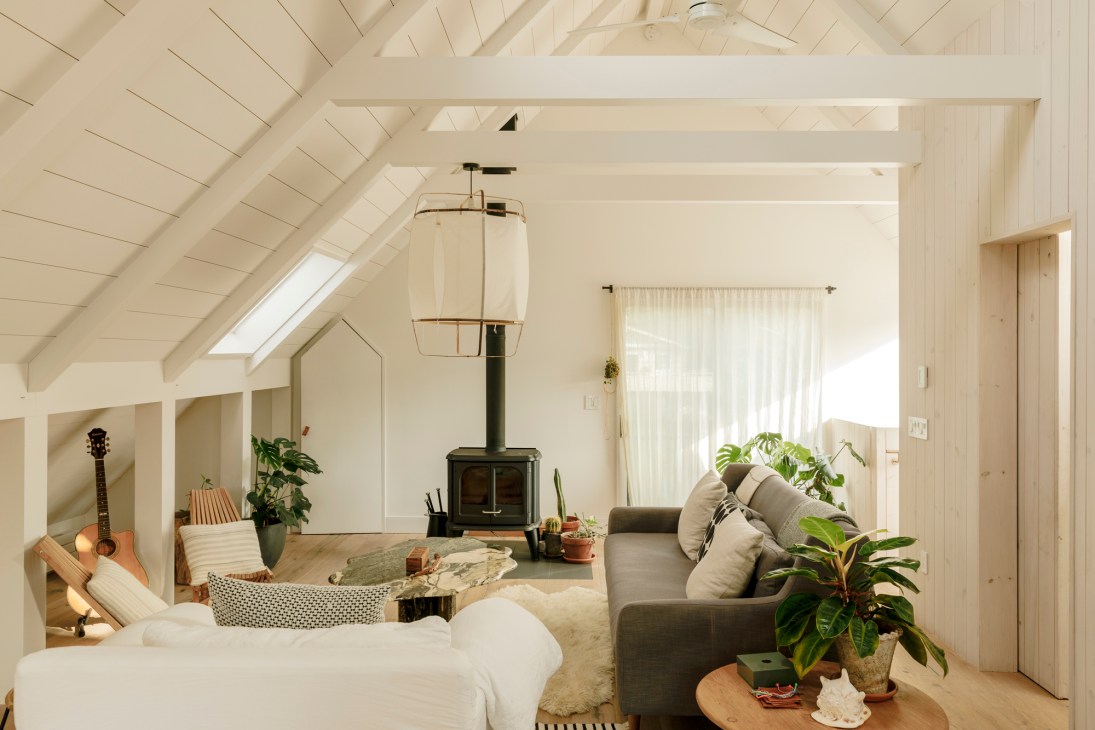
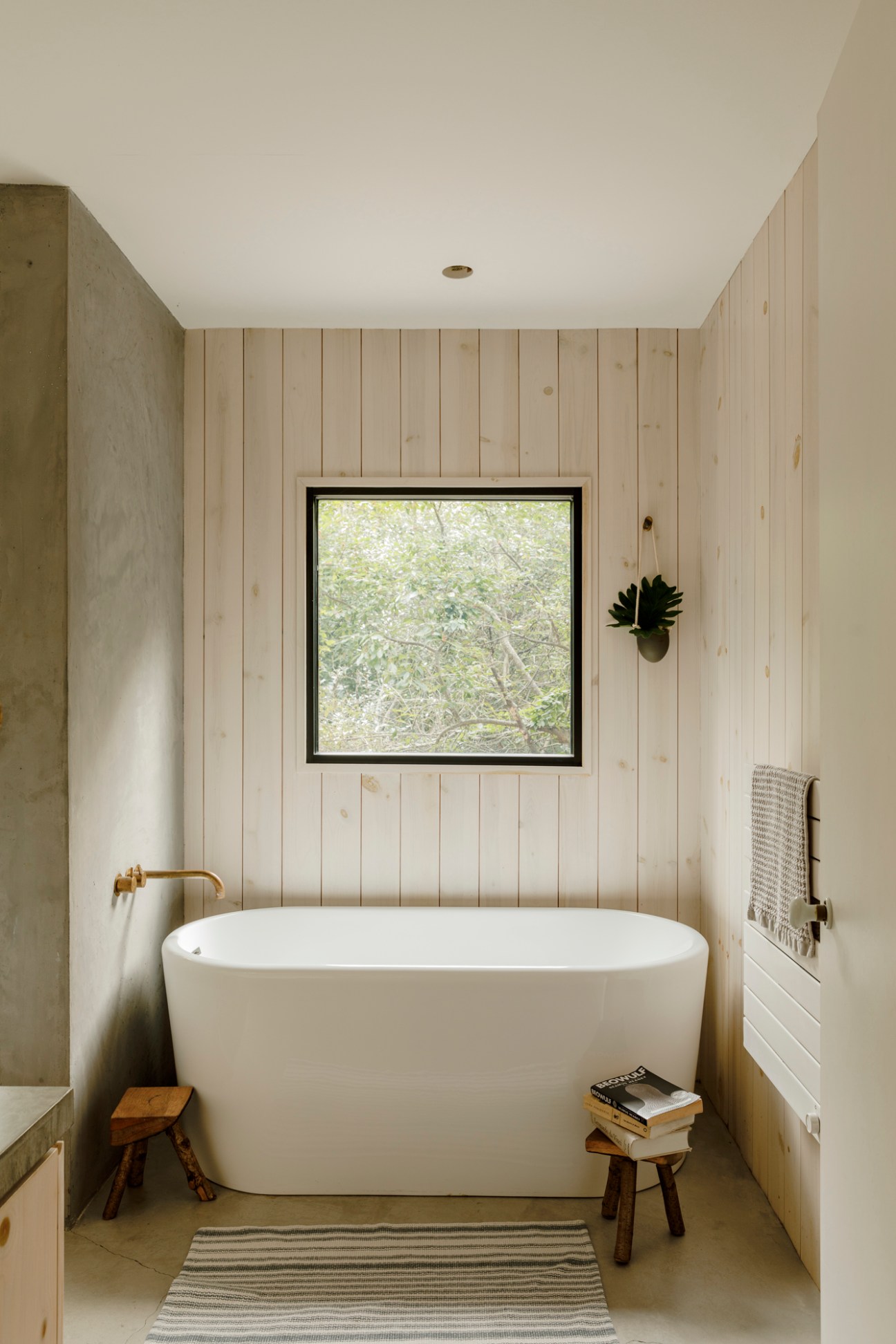
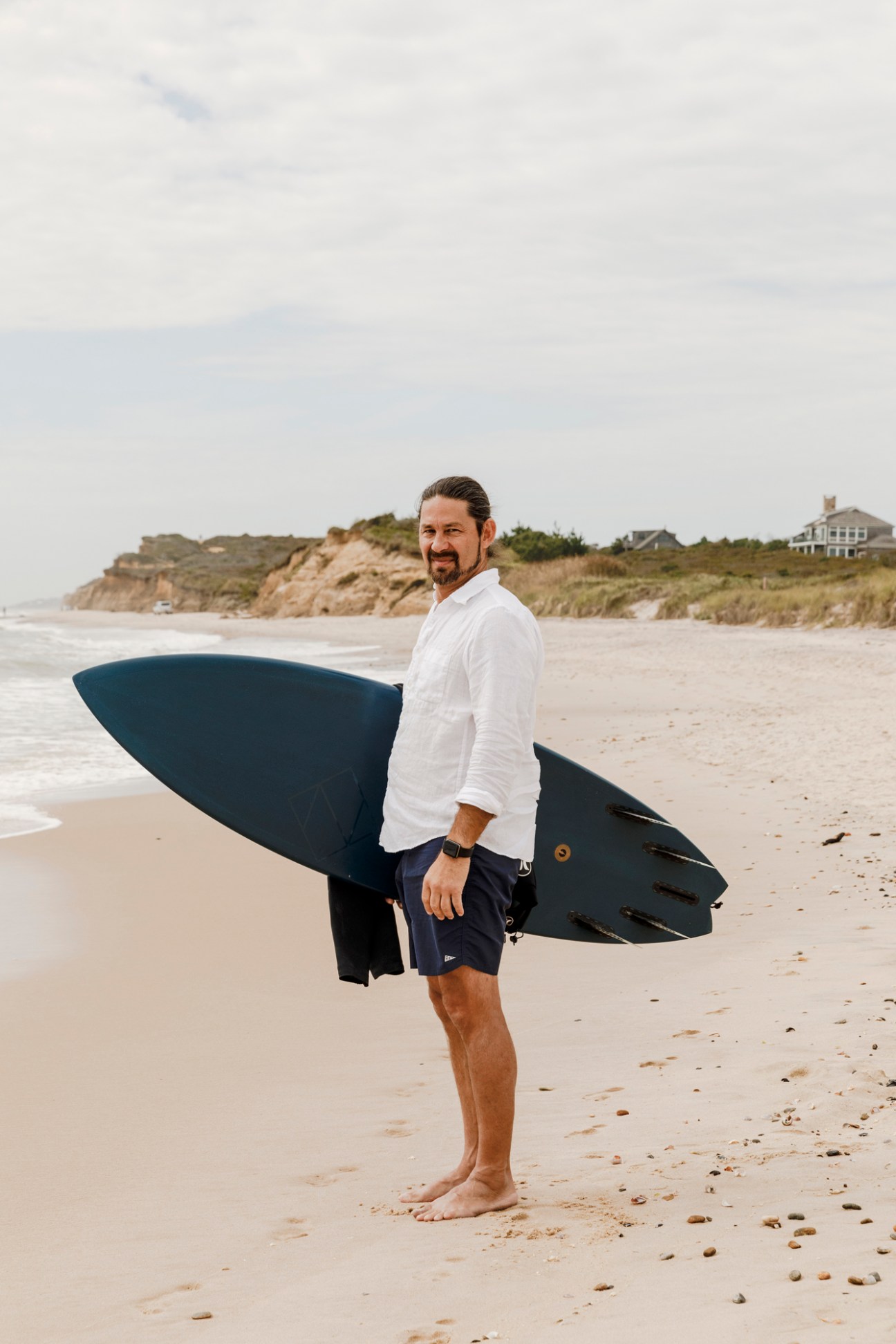
But this precious land is increasingly coming at a premium cost. Property prices are surging in Montauk, threatening to undo the social mix that has been so central a part of the area’s story. As we wrap up our tour we meet architect Tommy Zung, who started coming to Montauk more than 20 years ago as a relaxing counterbalance to the grind of New York City. He has designed and constructed several houses here, while also producing a line of surfboards shaped for the nuances of Montauk’s surf, using references that are drawn from interior design and art.
“People tend to think about Montauk for the summer season but you really have to consider the full year and the community of people who live here,” says Zung. “There are surfers, artists, fishermen and quasi-degenerates – Montauk has all of them living together. Now it has more people from finance, yes, but there should still be room for everyone.”
Labour of love
Gio Ponti is best known for his Milanese apartment buildings and his lightweight Superleggera chair. But the prolific Italian architect and designer also produced several villas, one of which sits in the leafy Paris suburb of Garches, between the centre of the French capital and Versailles. Built in 1928, L’Ange Volant (The Flying Angel) is his only building in France and has gone mostly unnoticed for decades.
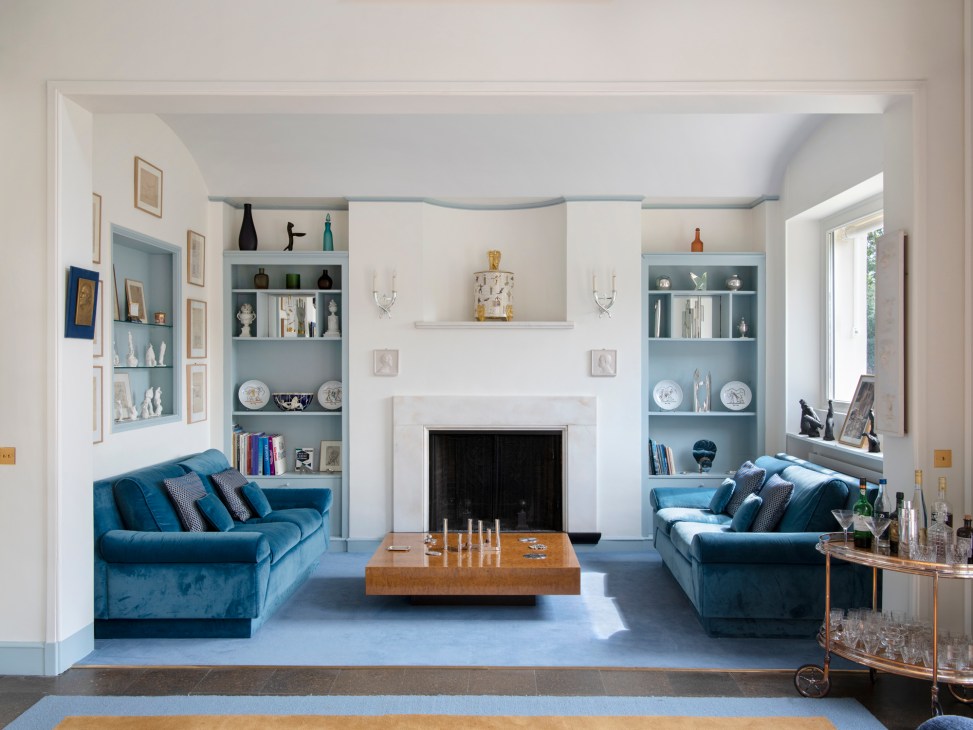
Concealed on a quiet residential street, down an alley lined with boxwood, the house was built for Ponti’s friend Tony Bouilhet, then at the helm of French goldsmith and tableware company Christofle, and has remained in the family ever since. In 2019 Bouilhet’s granddaughters Sophie Bouilhet-Dumas and Marie Bouilhet, who grew up in the house, decided that it was time to give it a new life and undertook a careful restoration, which was completed in 2020.
When Monocle visits, preparations are underway for the first big event, taking place in the third week of October. Genius Loci, an exhibition curated by author and journalist Marion Vignal, will provide an immersive experience highlighting Ponti’s little-known villa by decorating it with work by contemporary artists and designers. It comes three years after an extensive exhibition at Paris’s Musée des Arts Décoratifs, directed by Dumas’s husband Pierre-Alexis, helped to renew interest in Ponti. “He was already well known in design and architecture but had also been forgotten quite a bit,” says Bouilhet-Dumas, who co-curated the display. “With this big exhibition highlighting his work, suddenly there was also a rediscovery of L’Ange Volant, which people didn’t know existed.”
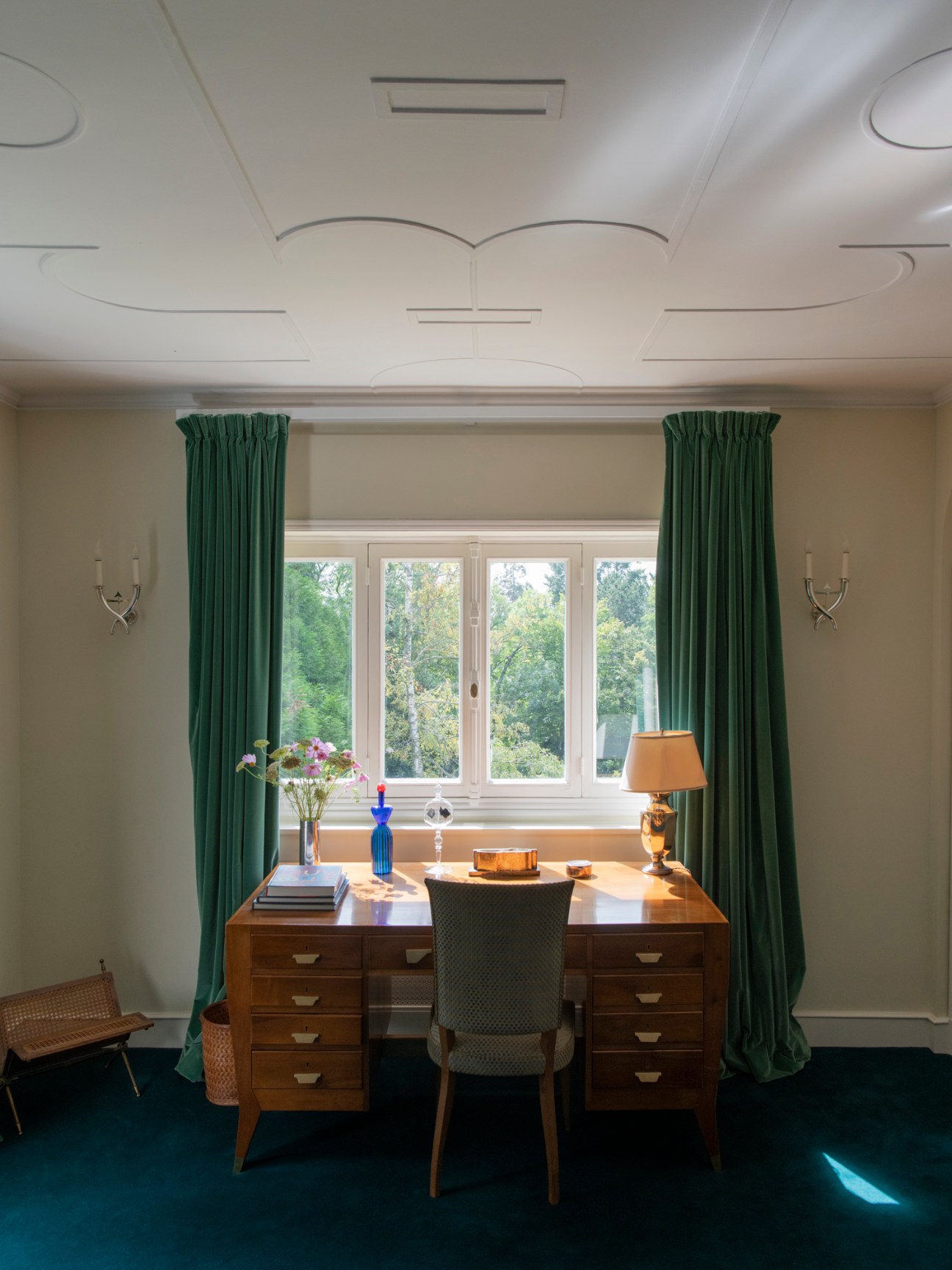
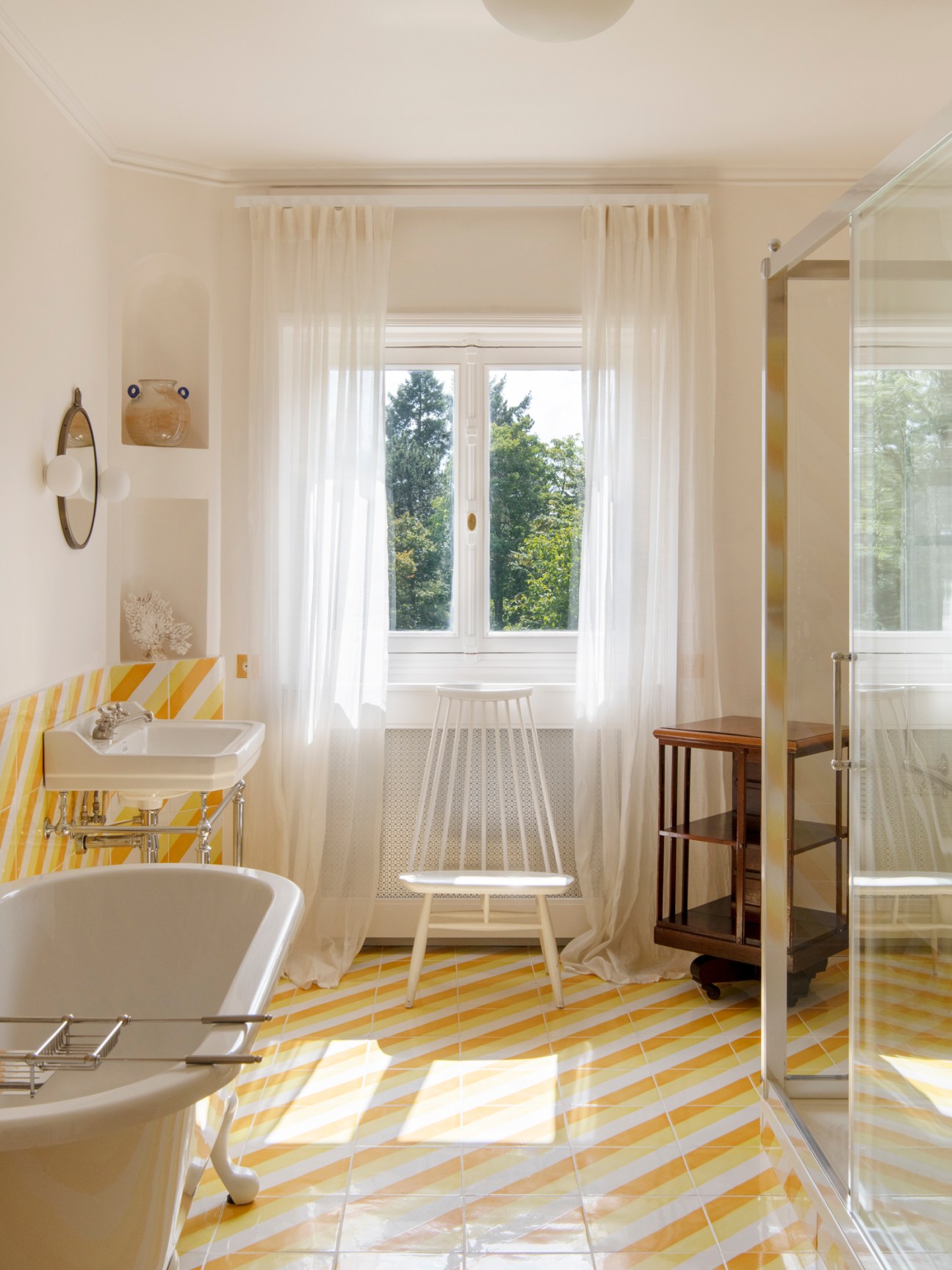
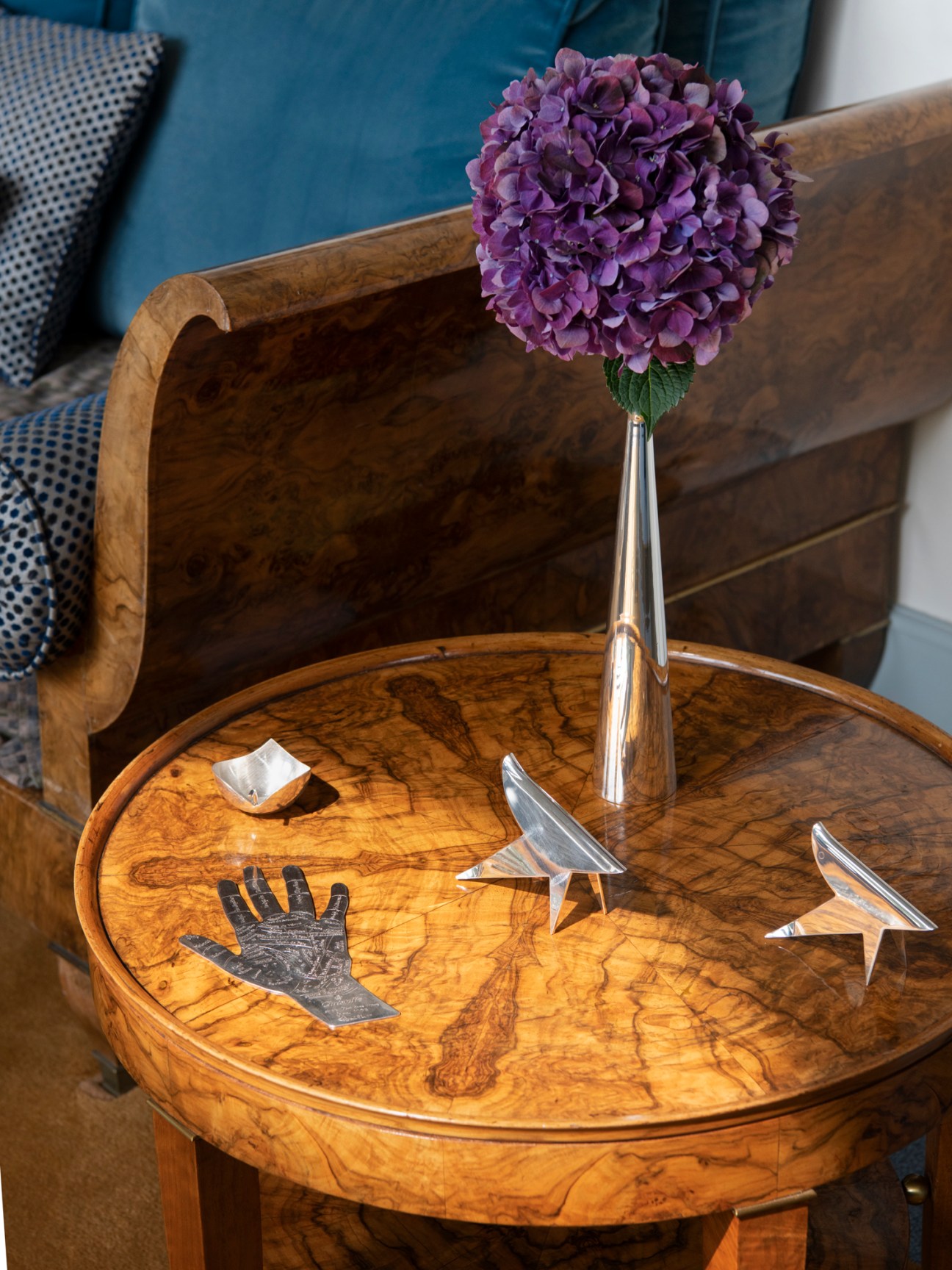
Born in 1891 in Milan, Giovanni Ponti was one of the most influential and prolific architects of the 20th century, designing more than 100 buildings. But these only included a handful of villas and the story of L’Ange Volant is one of the most intriguing. It all started at the 1925 International Exhibition of Modern Decorative and Industrial Arts in Paris, which Ponti attended as the artistic director of porcelain company Richard Ginori. There he met the man who would become a lifelong friend, Tony Bouilhet. “Ponti was dressed in a blue suit that matched his eye colour perfectly and made him look very striking,” says Bouilhet-Dumas. “My grandfather saw that there was someone who seemed to be a bit like him.”
The two men turned out to have a lot in common, not least a shared taste for parties, and they were soon rubbing shoulders with Jean Cocteau and Man Ray at the Boeuf sur le Toit cabaret bar, which was a favourite hangout of the surrealist crowd. When Bouilhet’s parents mentioned that they had plans to build a country house outside Paris, Ponti emerged as the obvious man for the job. During its construction, Ponti also introduced Bouilhet to his niece, Carla Borletti, and the two married soon after. L’Ange Volant, a reference to Cupid, became a heartfelt gift from Ponti – the matchmaker – to the couple. It was also a way for Ponti to be able to explore architecture beyond Italy’s borders.
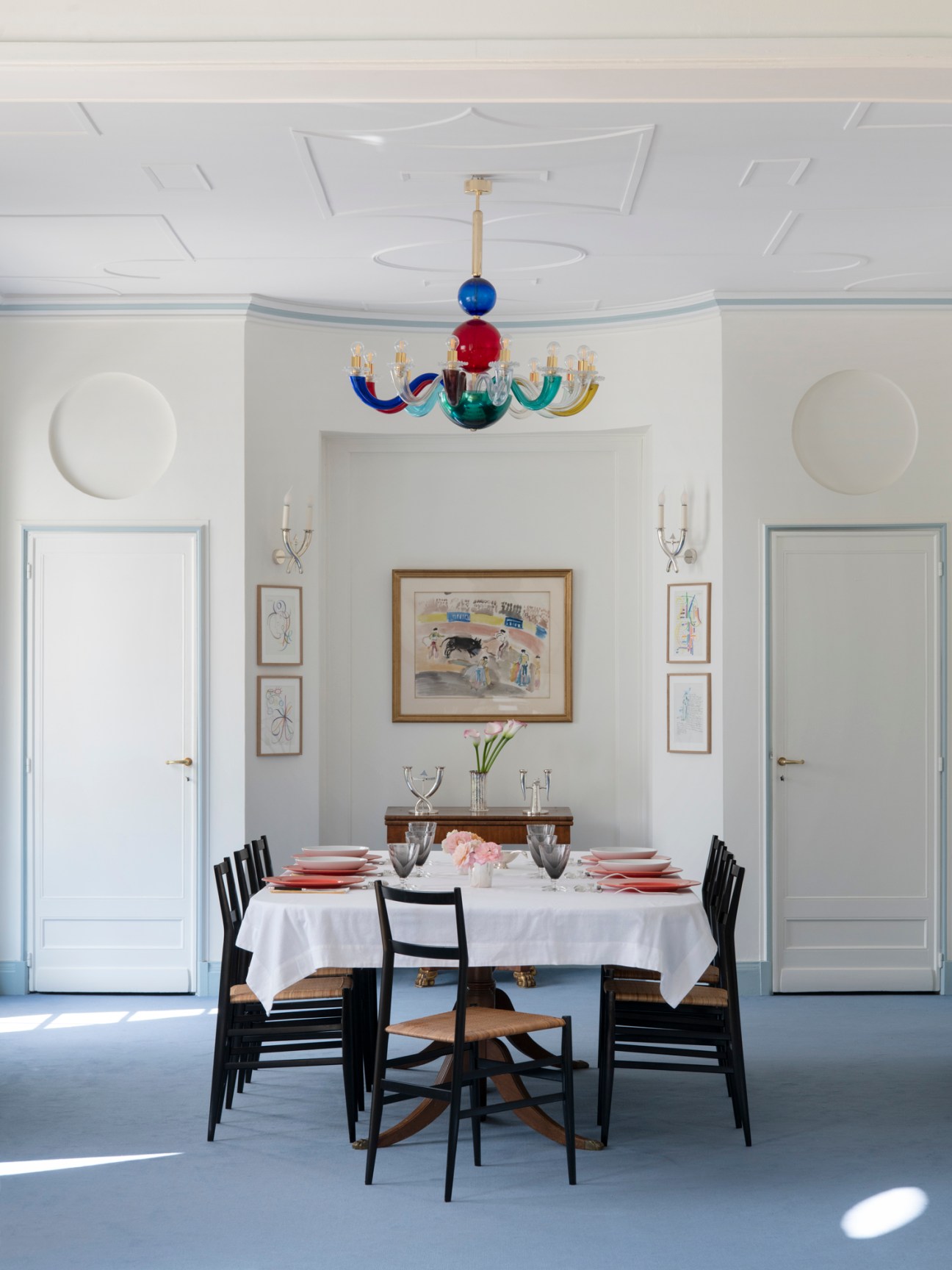
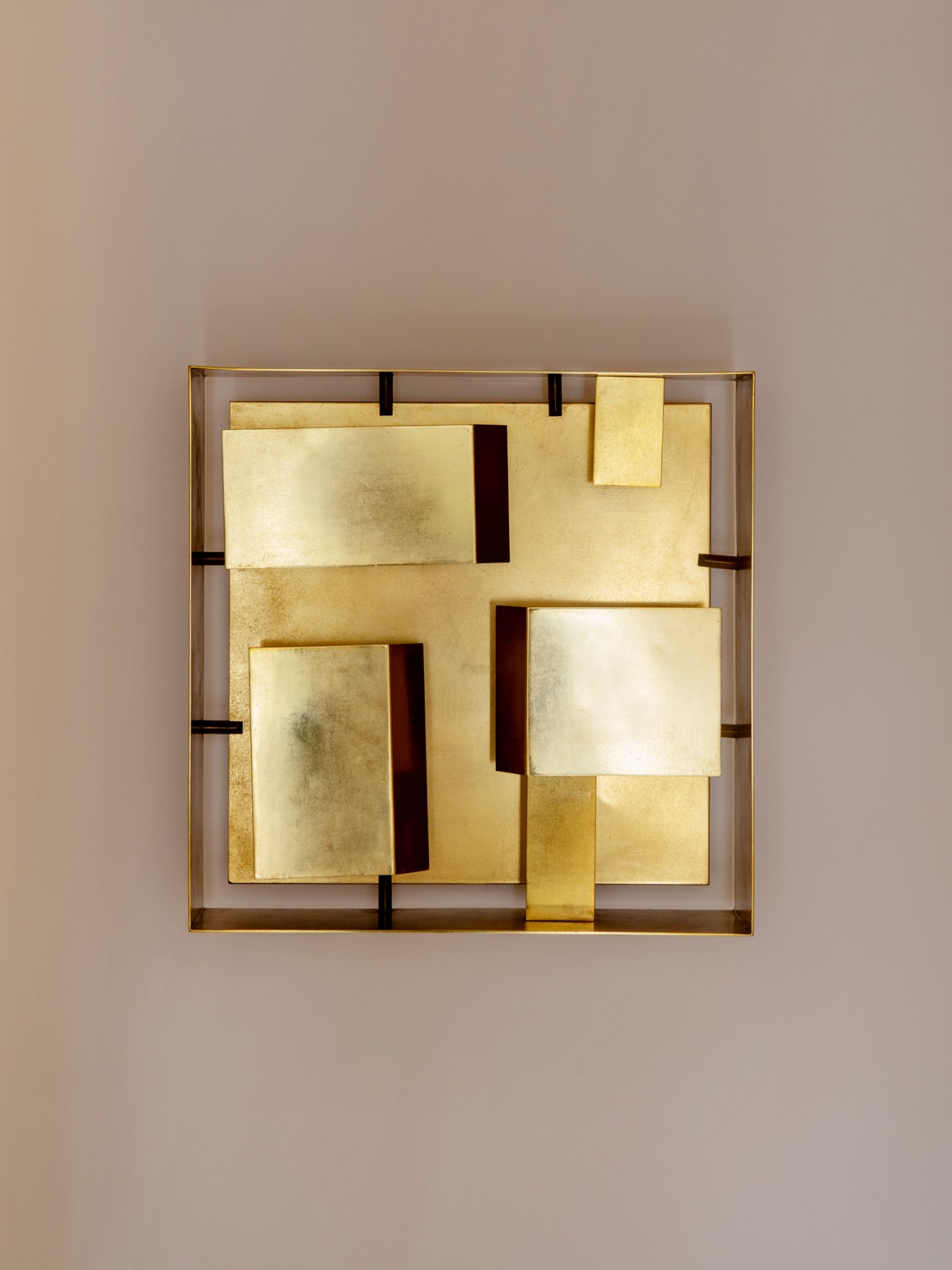
“L’Ange Volant was a way for him to lay the foundation of his architectural style,” says Bouilhet-Dumas. At this point, Ponti had only designed buildings in Milan but here he could show off his talents to the Parisian elite. Coco Chanel had bought a house nearby and Le Corbusier was building a luxurious villa down the road for US art collectors Michael and Sarah Stein. “The French upper classes would spend their weekends around here riding horses in the Bois de Boulogne or playing golf at the Saint-Cloud golf club,” says Bouilhet-Dumas. “It became a sort of architectural manifesto for Ponti, which he later theorised about in his 1931 book La Casa all’Italiana.”
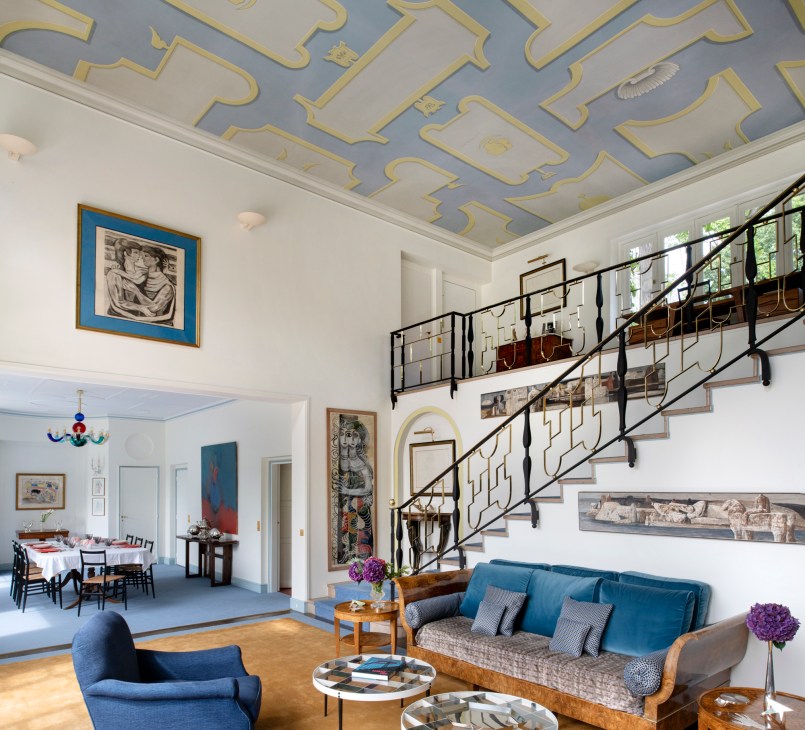
Partly influenced by the stately Palladian villas of northern Italy, the capacious house spreads across two floors and looks out onto a vast lawn leading down to a swimming pool. The centre of the house is the double-height living room, flooded with natural light through a large window and reflected on several mirrors. In the middle, an elegant stairway (with a banister by Christofle) leads up to a mezzanine that separates the parents from the children’s bedrooms. Meanwhile, downstairs is the entrance, study and kitchen, which are all connected to form more intimate spaces for relaxing and entertaining.
The recent meticulous restoration, done with the help of architects Mathieu Barroux and Mariangela Zanzotto, focused on the houses’ most characteristic details, such as the ceiling, which is painted with a Palladian-inspired motif in yellow and blue – colours that feature heavily through Ponti’s work in general. Venetian artisans were called on to restore the marmorino walls in the entrance, while a French stonemason helped to reveal the terrazzo tiles that had been hiding beneath the carpet. All four bathrooms have been updated but still maintain Ponti’s original yellow and blue painted tiles. “We were careful to stay in the same direction that Ponti followed in his projects,” says Bouilhet-Dumas. “He always said that all his creations ‘came from the same mind and the same hand’. So we focused on finding a 100 per cent Gio Ponti immersion.”
The friendship between Ponti and the Christofle family led to many design collaborations, most notably the intertwined silver “arrow” candelabra that hang on either side of the fireplace. Also hanging on the walls around the house are several colourful illustrated letters that Ponti sent to the owners over the years. An attentive eye will notice the recurring symbol of the angel in sculptures and engravings but the most meaningful detail is a minuscule one: on the mantelpiece sits a ceramic vase from Ponti’s 1925 Richard Ginori collection, covered in neoclassical figures including one of an architect holding a tiny drawing of the villa. Below it, Ponti’s handwriting reads, “To Carla and Tony from Gio Ponti, 8-ix-1928”.
While the family still uses the house occasionally, art and design lovers can hire it to spend time immersed in Ponti’s world. The Genius Loci exhibition, which will showcase work by designers such as Sophie Dries, Damian O’Sullivan and Nao Matsunaga, honours Ponti’s dedication to showcasing creative talent. “With his magazine, Domus, he became a great promoter of 20th-century art and design,” says Bouilhet-Dumas. “It’s rare for someone to promote their own work and highlight others as well. We hope that this house will also be a bit of generosity à la Ponti.”
angevolant.com
Making better
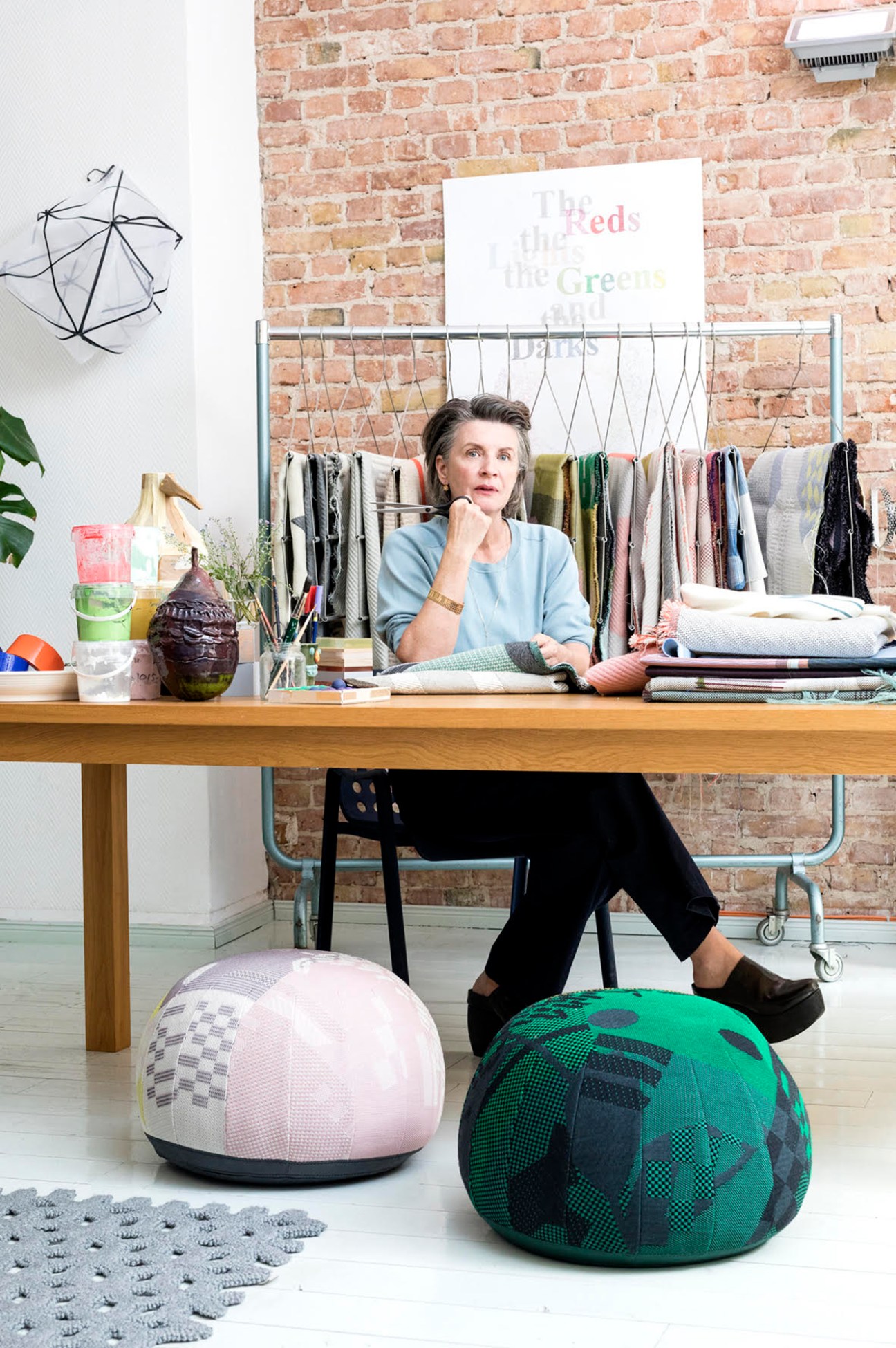
Parents often want their children to find sensible, well- paying jobs, rather than pursuing “risky” careers such as art. Hella Jongerius’s folks, however, didn’t need to worry. “My friends were going to art academies,” says Jongerius from her Berlin studio. “But I was very much afraid because of the freedom and lack of boundaries in the art world.” This, explains the veteran designer, was driven by growing up on a farm in the Dutch countryside, where pragmatism and economy were not only encouraged but essential to her family’s livelihood. “I was too practical.”
As a result, and driven by high unemployment in the Netherlands in the late 1980s, Jongerius spent her years after leaving school picking up a range of hands-on skills through courses on everything from carpentry and plumbing to bicycle and house repairs. Then, at the age of 25, she “discovered” industrial design. “It’s a discipline that is practical and connected to the market so I could easily understand it.” Graduating from Design Academy Eindhoven in 1993, she immediately struck out on her own, establishing Jongeriuslab, an industrial design studio that fuses craft and industry, bringing a human touch to hi-tech production methods. “I wanted to bring imperfection and traces of human scale back into industrial production,” says Jongerius. “It was gone from the industry in the 1990s.”
The result? Products such as the B-Set porcelain crockery made for Royal Tichelaar Makkum in 1997. Deliberately fired at too high a temperature, the clay would buckle slightly, giving every set its own unique and imperfect form. It proved a hit, with other designers soon copying the process. And it wasn’t long until big players came knocking: Swarovski first, then Vitra. Her works are found in the collections of Moma, Amsterdam’s Stedelijk, Centre Pompidou and London’s Design Museum. All of this has meant that over the past 28 years, Jongerius has developed a reputation that is respected across the industry. So where does she see the design world heading next?
“The big topic that has changed in recent years, and what I’m focused on, is designers realising the role they play in overconsumption,” she says. It builds on an issue that the designer has been talking about for the better part of a decade: that designers are stuck in an endless cycle of making new products of poor quality, prompting consumers to buying more and more. “We don’t know how our products are produced and are quick to throw them away,” says Jongerius. “We have a sick relationship with them as a result.” Which begs the question: if we’re sick, how can we heal?
It’s a quandary that Jongerius has set herself the task of answering, resulting in a career shift to focus less on making and more on research-driven exhibitions, including a recent show at Berlin’s Gropius Bau. “I want to understand why some objects are sticky, why we want to keep them and not throw them out.” Her initial diagnosis? That the “sticky” quality comes from consumers seeing a human element, such as a slight and deliberate “imperfection” in a clay vase, or understanding how a product fits together, so that they are able to maintain and repair it easily. This, Jongerius says, will be key to limiting overconsumption; the market, it seems, is starting to agree.
“For a long time, designers were not briefed to account for maintenance and repairs. Now, you have to design for maintenance and so it can be repaired.” All of this makes Jongerius hopeful. “You see young designers and they all have this goal to design our way out of this shit.” So if designers are enlightened, maybe all that’s left is to get consumers up to speed when it comes to maintenance. If only we’d all had the same hands-on upbringing as Jongerius – then we’d be moving faster in the right direction.
The CV
1963: Born in de Meern, The Netherlands
1993: Graduates from Eindhoven Design Academy and sets up Jongeriuslab in Rotterdam
1995: Work first shown at New York’s Moma
2008: Moves Jongeriuslab to Berlin
2013: Designs interiors for klm’s business class cabins
2021: Woven Cosmos exhibition at Berlin’s Gropius Bau
Riding the waves
Chilean architect Guillermo Acuña has long been inspired by the region of Chiloé, an archipelago to the south of Chile made up of fjords, islands, rolling hills and volcanoes, and defined by the sea. An avid sailor and fly fisherman, the region appealed to his personal interests. But over the past 15 years, he has also been developing a body of work on one of the archipelago’s small islands, Isla Lebe. “I didn’t find the island as much as the island found me,” he says, taking us through his careful artificial additions to this very wild place.

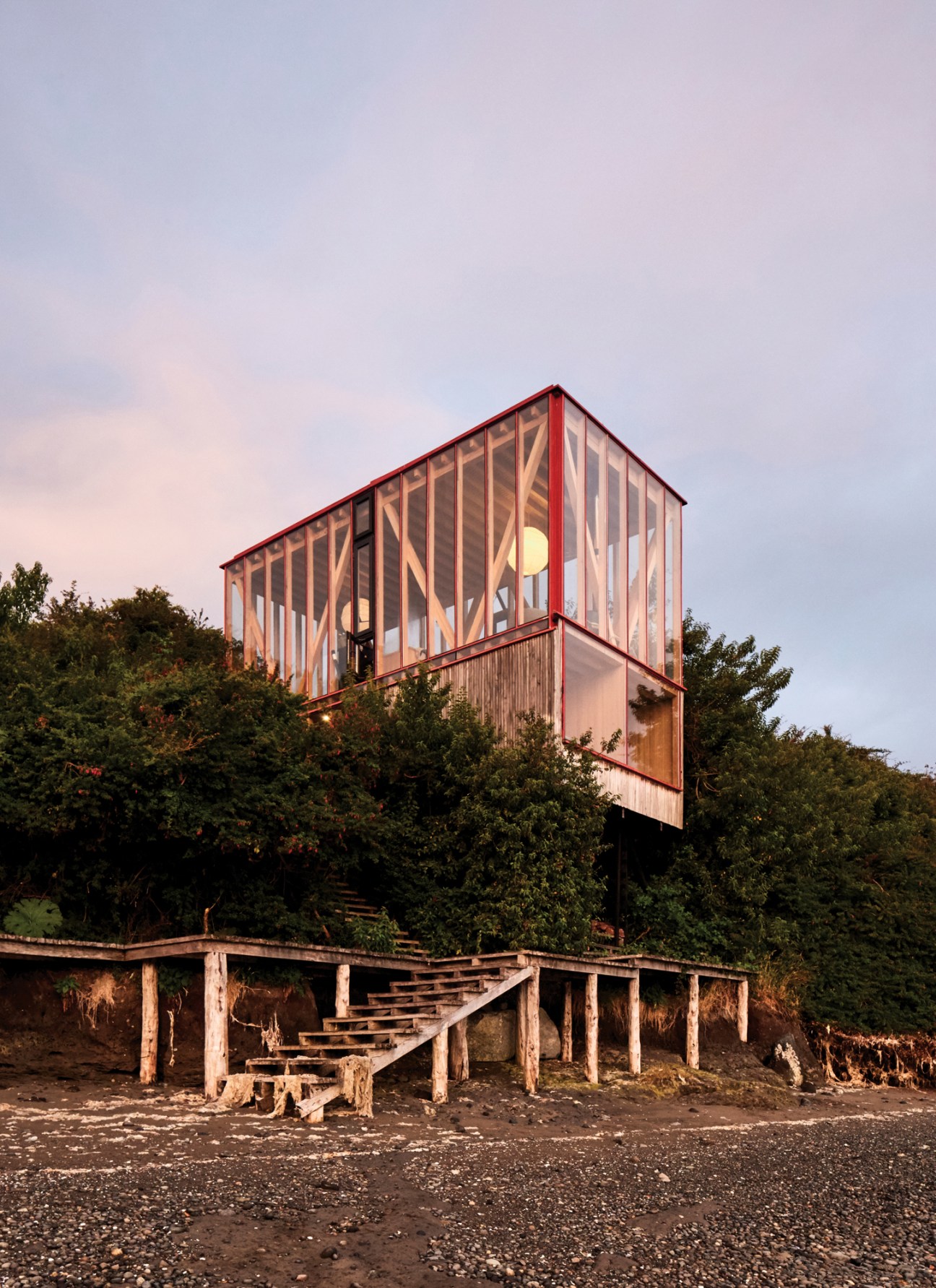
Acuña came across the island by accident in 2005, when the weather turned inclement on a sailing trip around the Chiloé region and his main sail broke. In urgent need of a place to lay anchor and make repairs to his boat, Isla Lebe was the closest option. Acuña spent the night there and when the sun rose, he was amazed by the setting. “One of the most beautiful places in the world is this island after a storm,” he says.
After tracking down the island’s owner and buying the land in parcels, Acuña set out to build a series of structures with the aim of creating a retreat where he could fish and sail. It was also important that he could divide his time between Chiloé and Santiago, where his practice, Guillermo Acuña Arquitectos Asociados, is based. He first built a shingled structure that included two upper-level guest suites. On the ground level, he created communal living areas in a room of red-painted timbers that opens up onto outside space. When members of his team now visit Chiloé, this communal area doubles as a design studio and workshop.
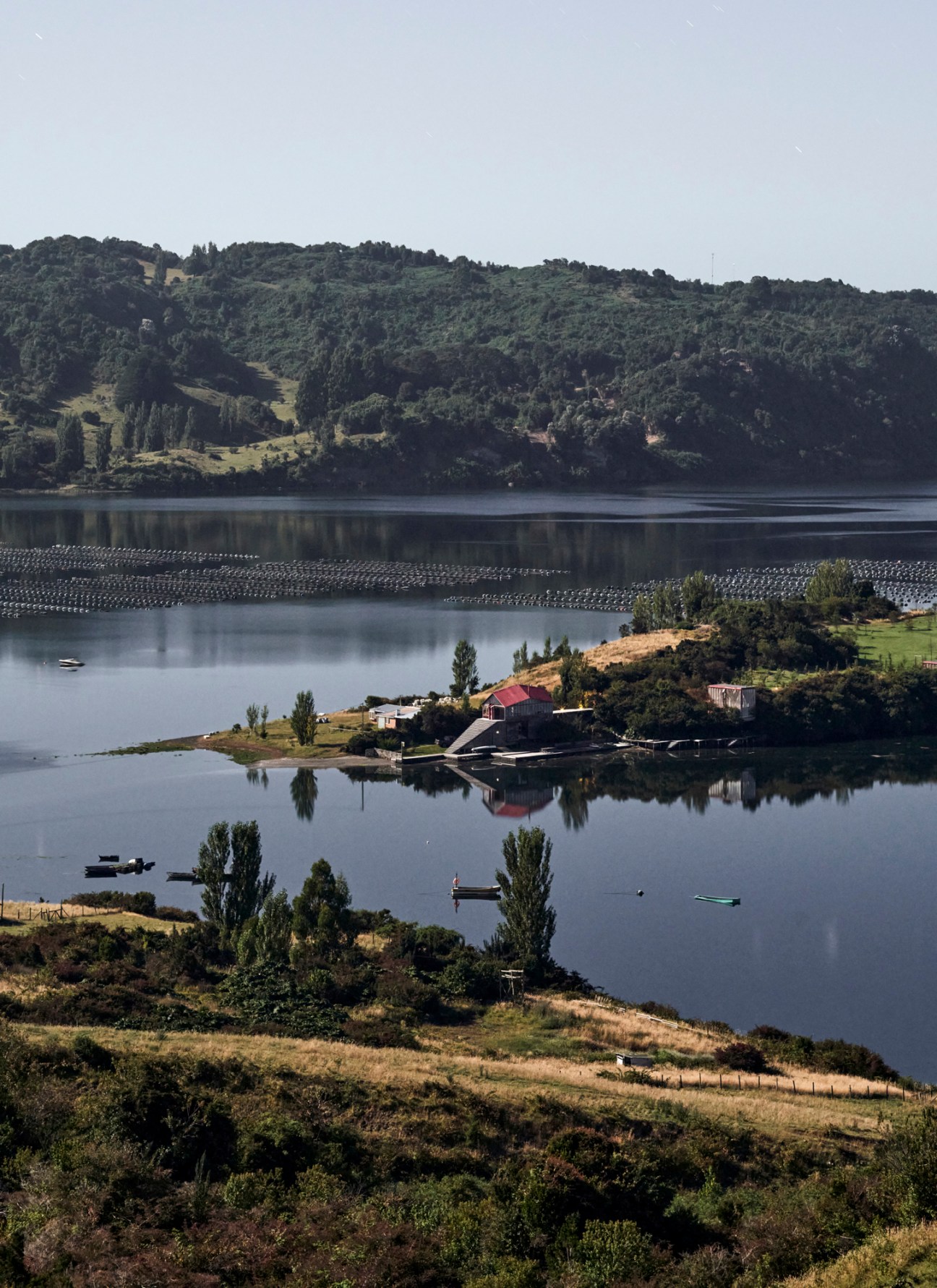
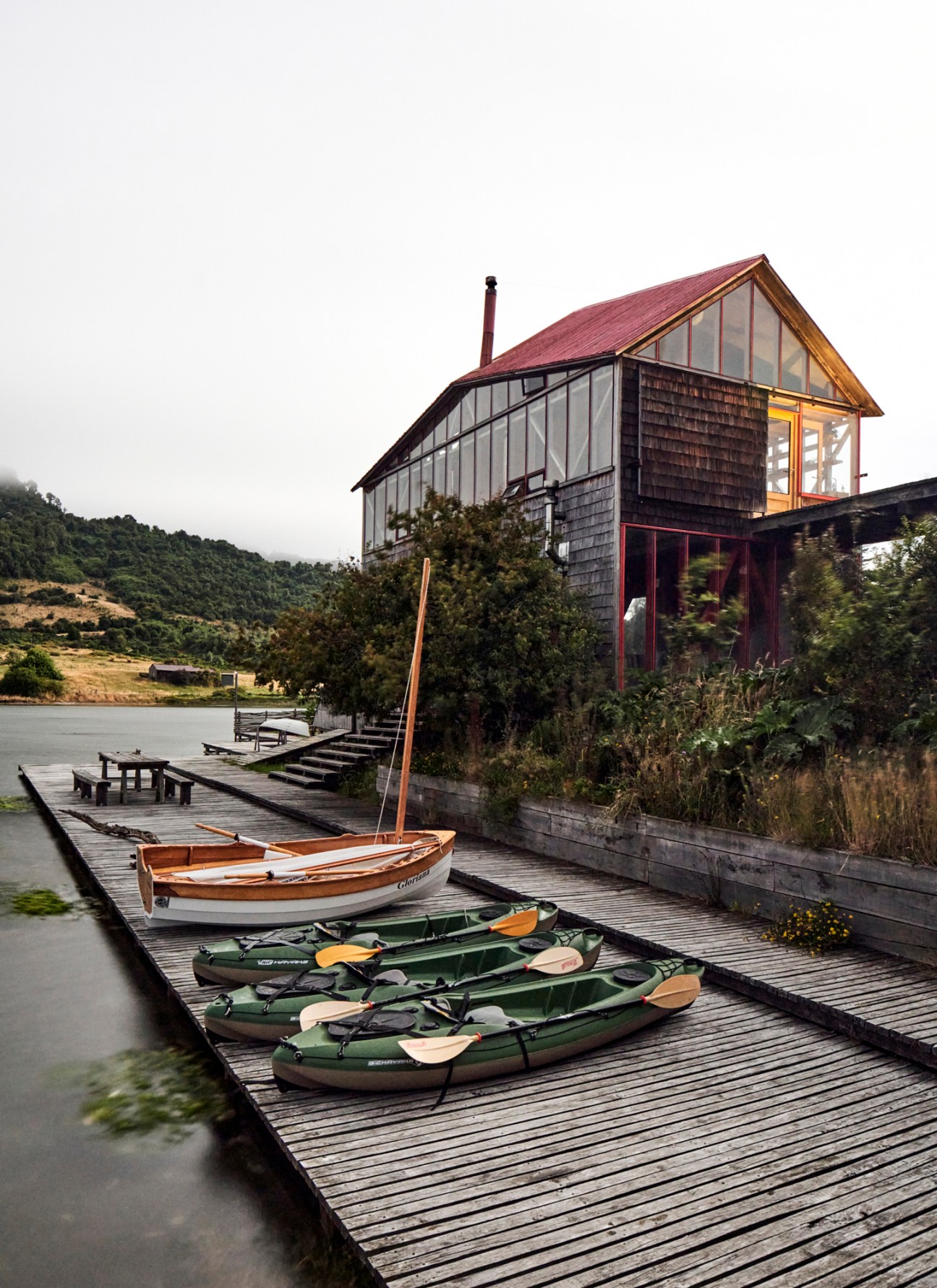
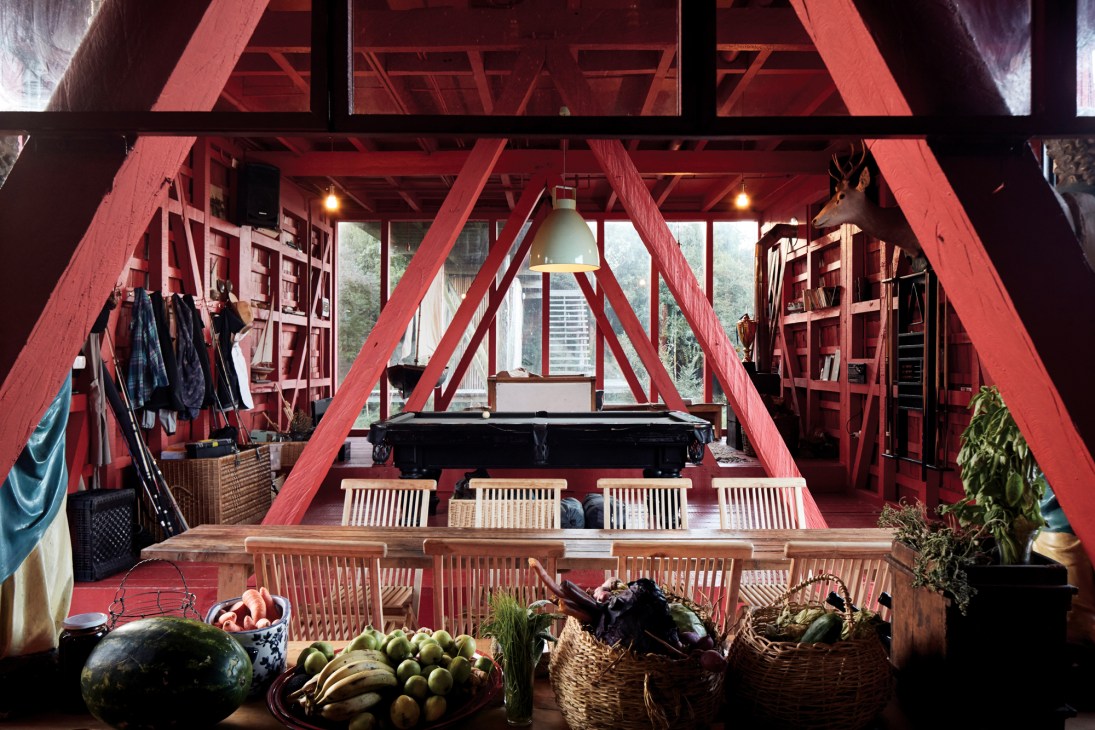
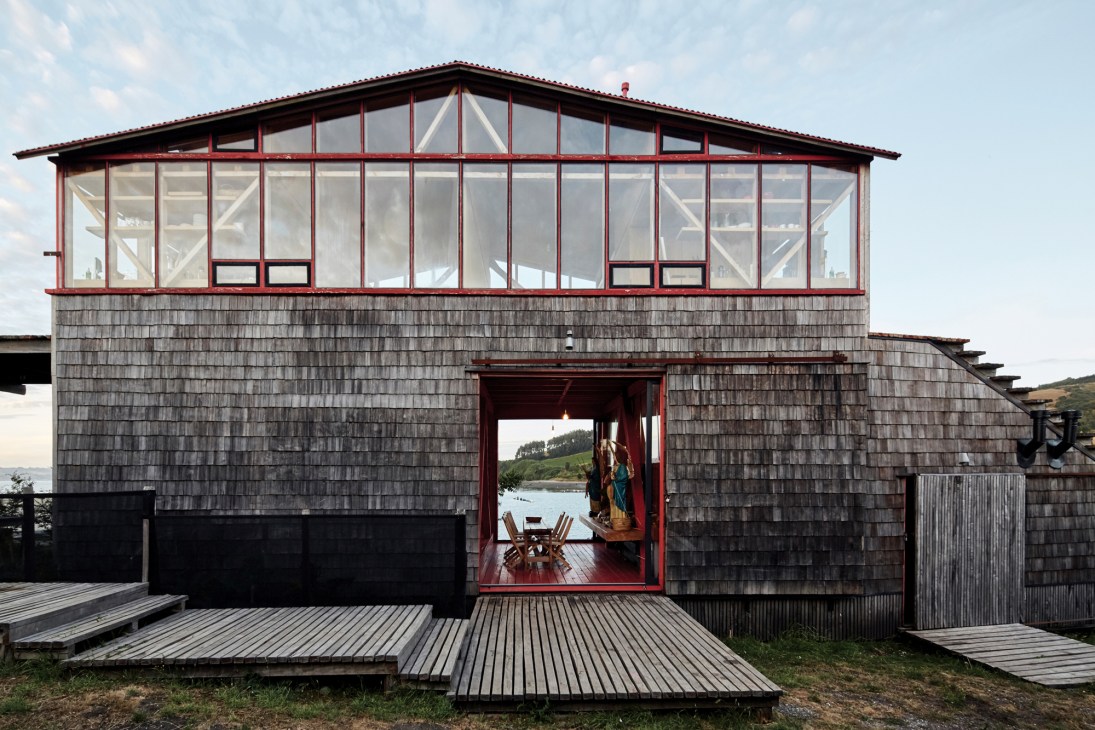
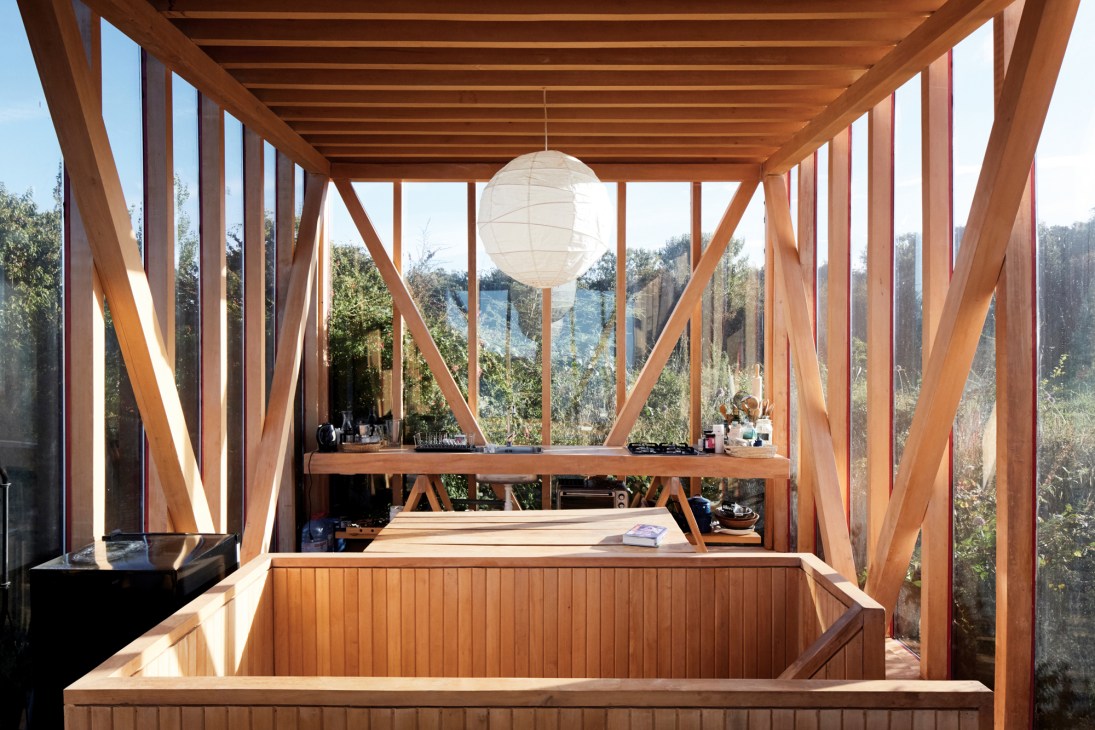
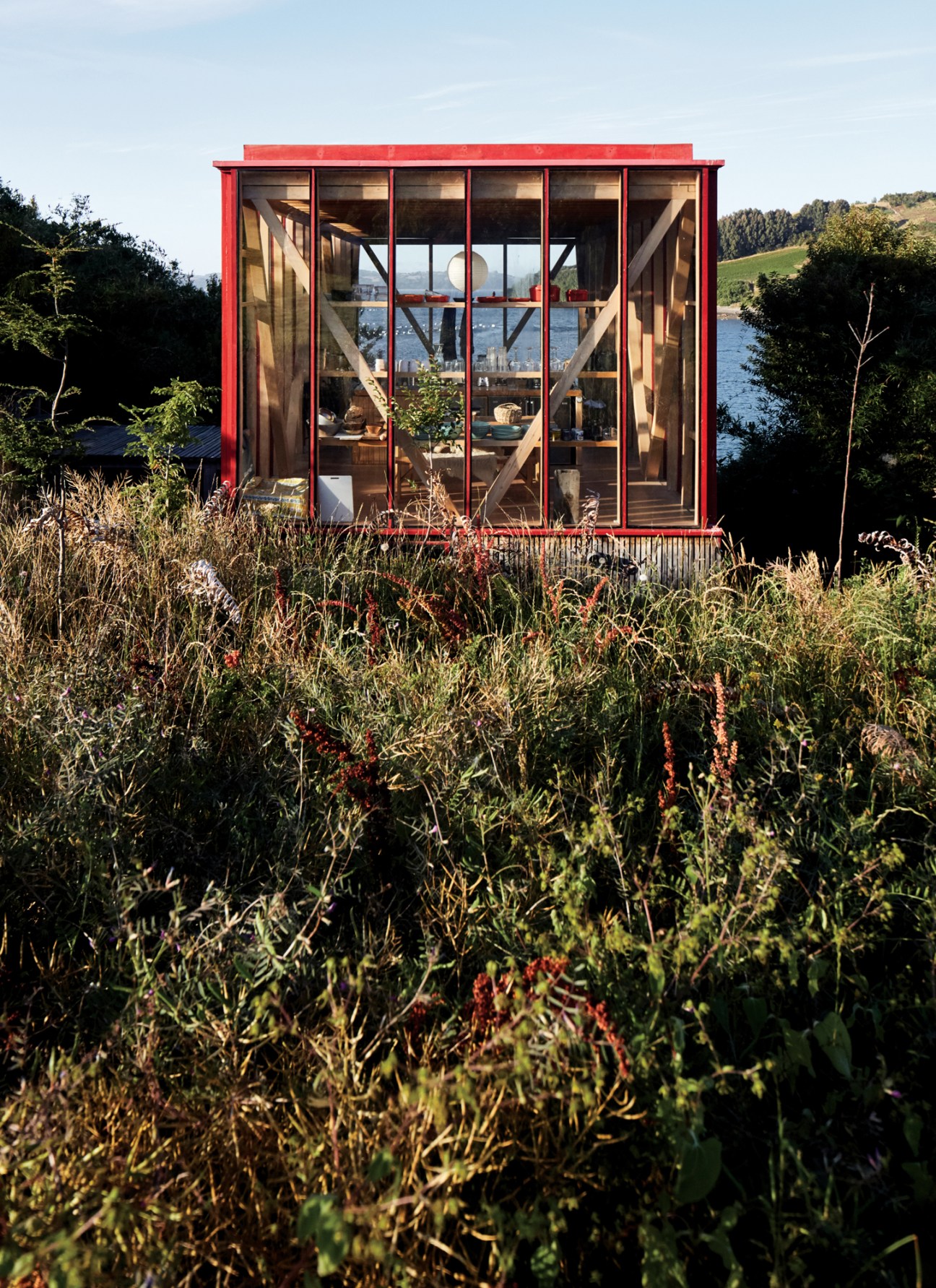
He then set about building a house for himself. For this, he designed a 21st-century adaptation of the stilt-supported housing that’s traditional in this area and is typically positioned on the water’s edge. For his version, Acuña used glass to form something of a transparent timber treehouse that blends snugly into a shoreline canopy. And, like many houses in the region, its location directly on the coast allows the drifting tide to majestically sweep back and forward beneath it. At low tide, a narrow spit also connects the island to land, while at high tide Isla Lebe becomes a proper island that is accessible only by boat. “It’s so amazing how the landscape changes from high tide to low tide,” says Acuña.
The architect designated the lower floor for his family’s private bedrooms, calling that area “hermetic and really functional”. Above those, he created a glassy environment for shared spaces – living room, kitchen, and dining room. Peeking out over the tree canopy, this upper level provides 360-degree views of the surrounding land and seascape. Wood finishes throughout the interior – all sourced nearby – add a sense of warmth to the spaces. In keeping with the local building tradition, he painted the exterior a vibrant colour. For that, Acuña, a gardening and botany enthusiast, turned to the colour of Fuchsia magellanica, a flowering plant native to Chile.
Acuña’s project on Isla Lebe is not only architectural. When he first came to the island, the once-lush landscape had become arid and deforested. “Seeing the devastation on this island, I wanted to give back energy and not just make a series of architectural refuges,” he says. Less interested in laying down grass or pursuing farming, he decided to make a forest. “I wanted to try to restore the place back to its original condition.”
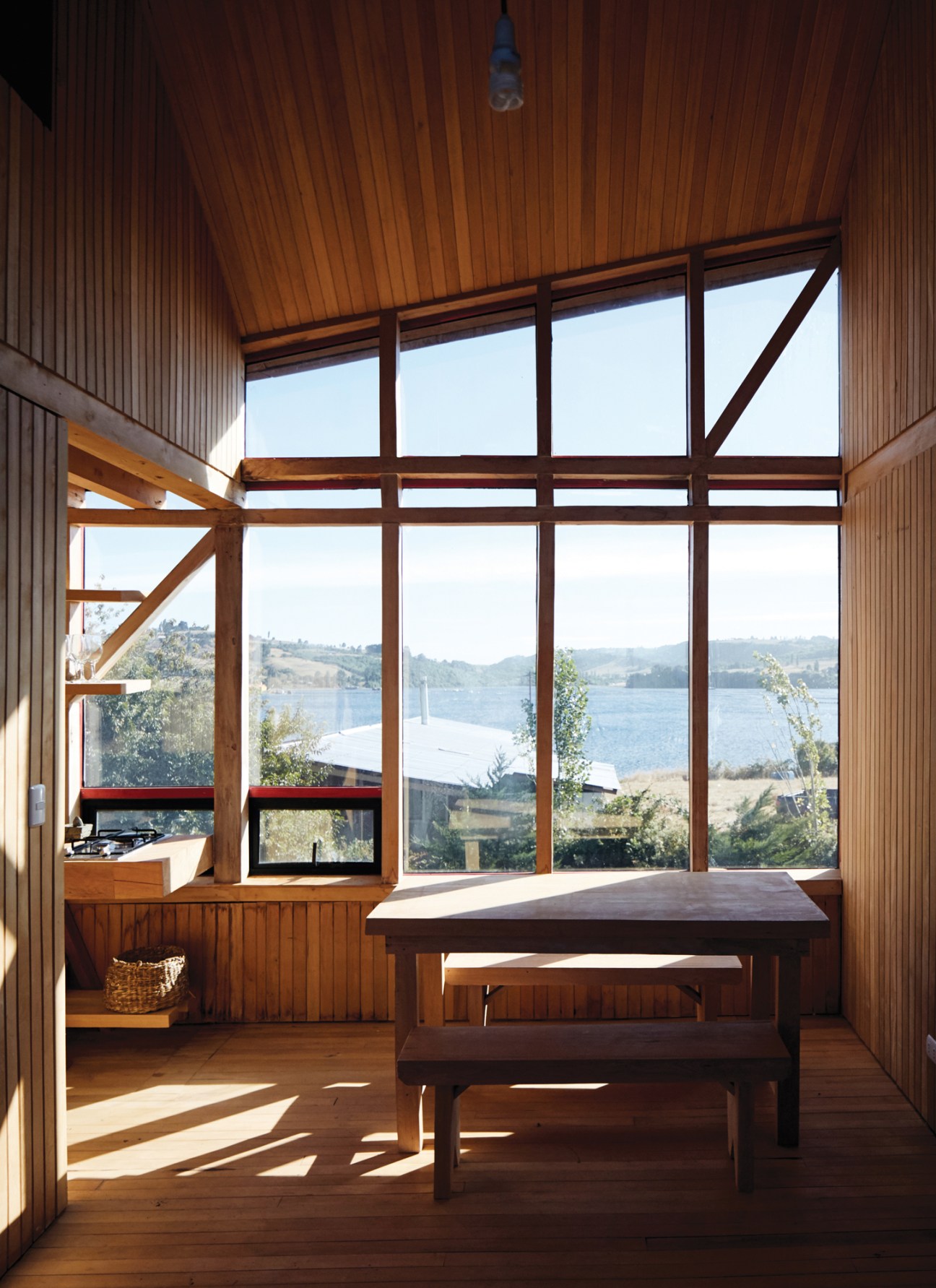
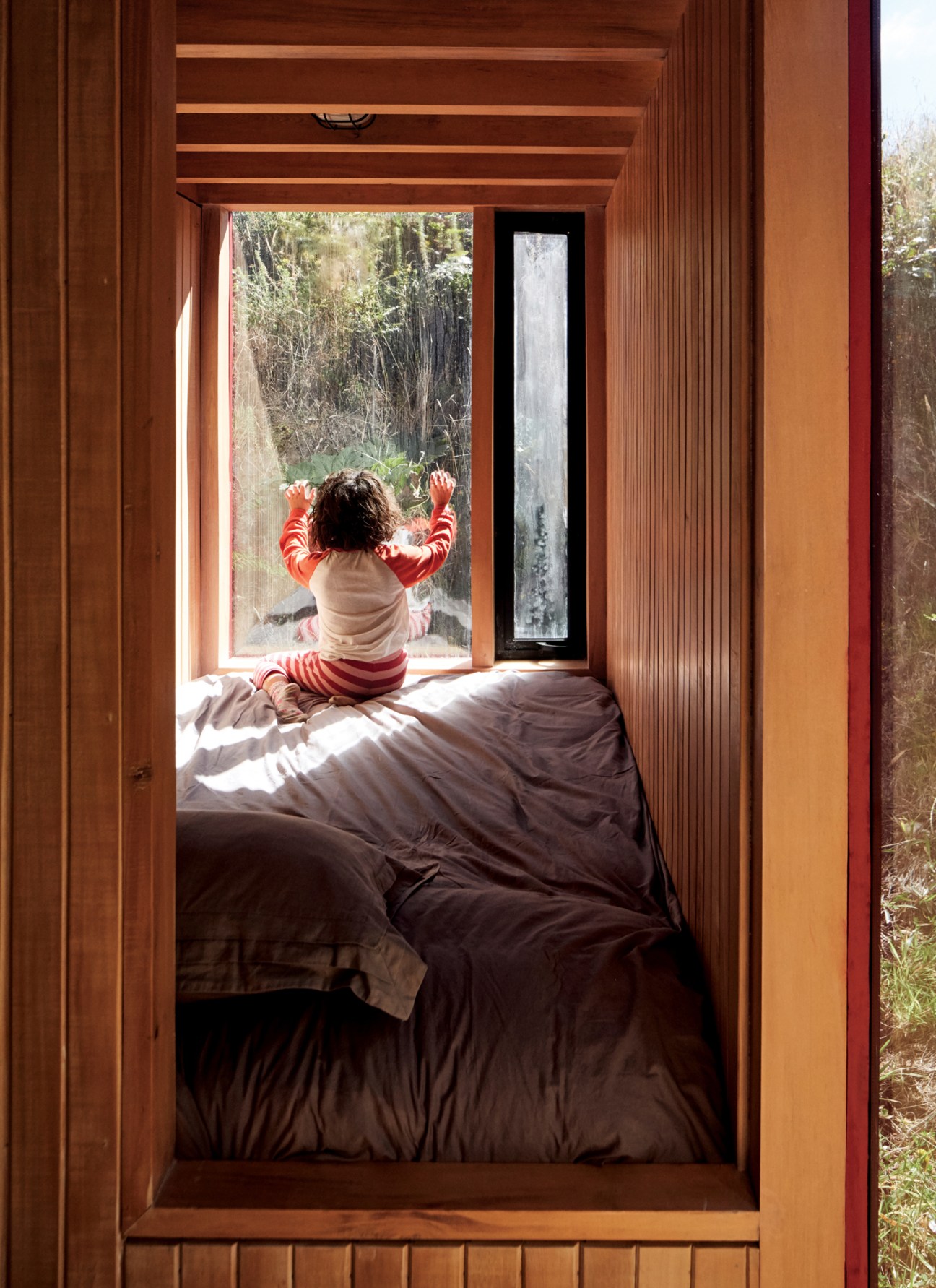
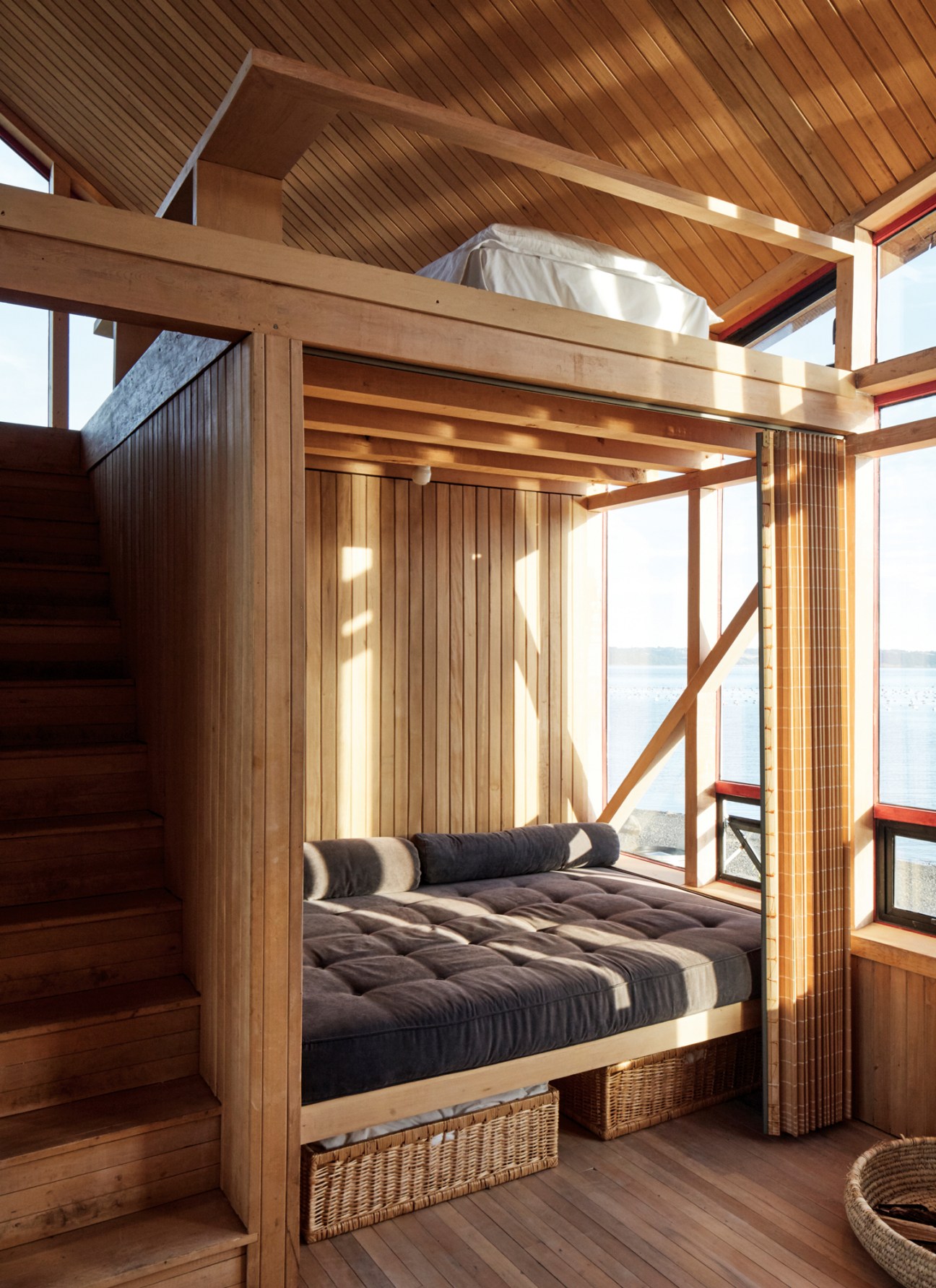
To do so he committed to environmental research: “I read, read, read a lot,” he says. Then he embarked on an ambitious reforestation project. Using only species native to the area, he created a plan to plant trees in focused clusters every year, aiming to blanket the island with a healthy forest. Over the past seven years, he has planted more than 9,000 trees. “The reforestation has brought a huge ecosystem of insects and birds, and it has modified the immediate climate,” he says, pointing to the way the forest captures fresh water and how conditions in the warmer months have cooled.
When the budget for this reforestation project started to escalate, Acuña sold a parcel of the island to one of his close friends (and one of his fellow sailors on that fateful first visit to Isla Leba), using the funds from that sale to support more planting. For his friend Roberto Pons, who has become a partner in the operation, he designed a house, making a slightly larger adaptation of the cabin he had designed for himself. Like Acuña’s, it is painted red, perched on stilts and crowned with an upper-level living space clad in glass. To support the complex construction operations in a remote location, as well as reforesting an island, Acuña also designed a series of modest support buildings: a boathouse, a storage shed, and a maintenance garage.
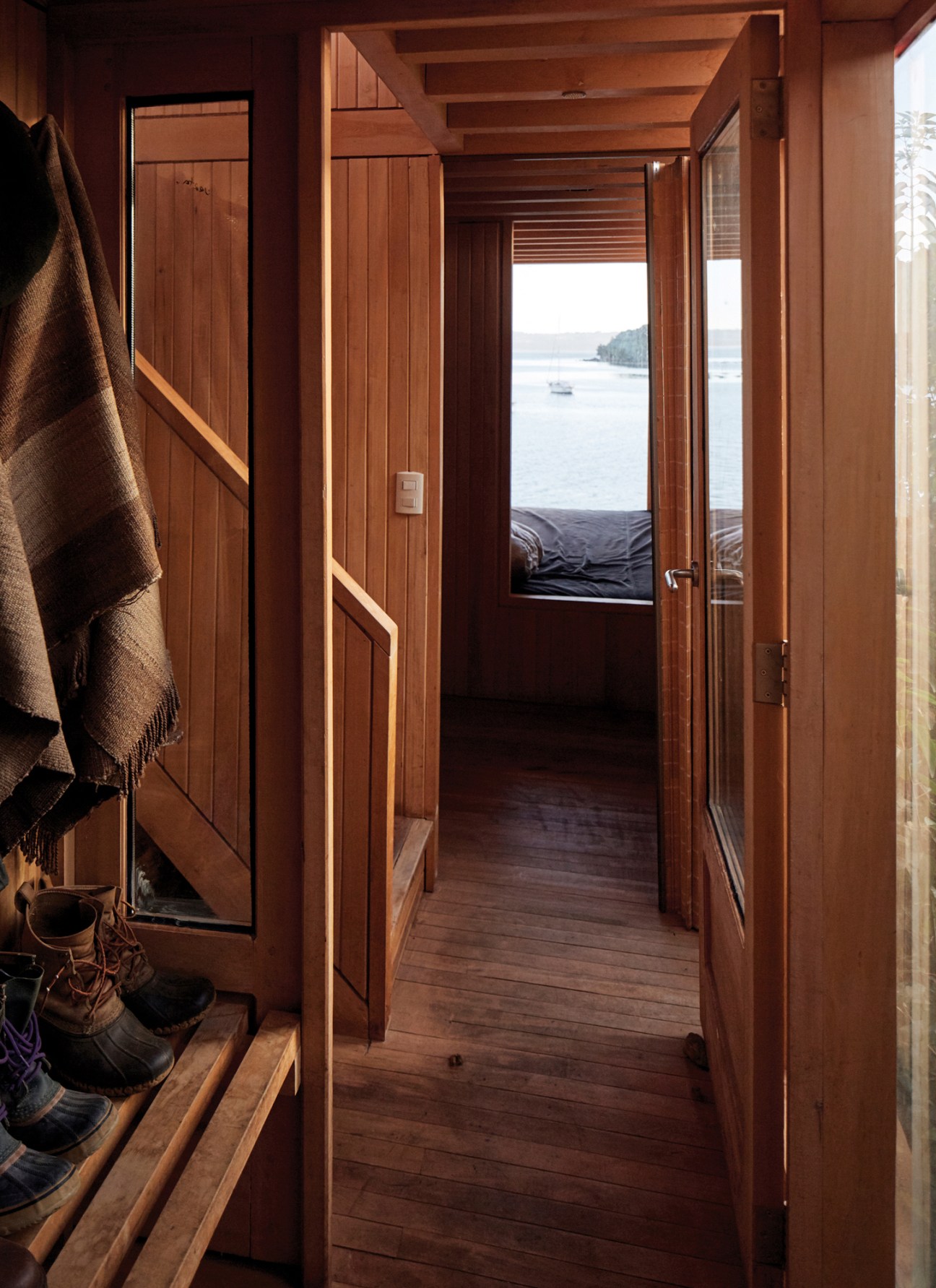
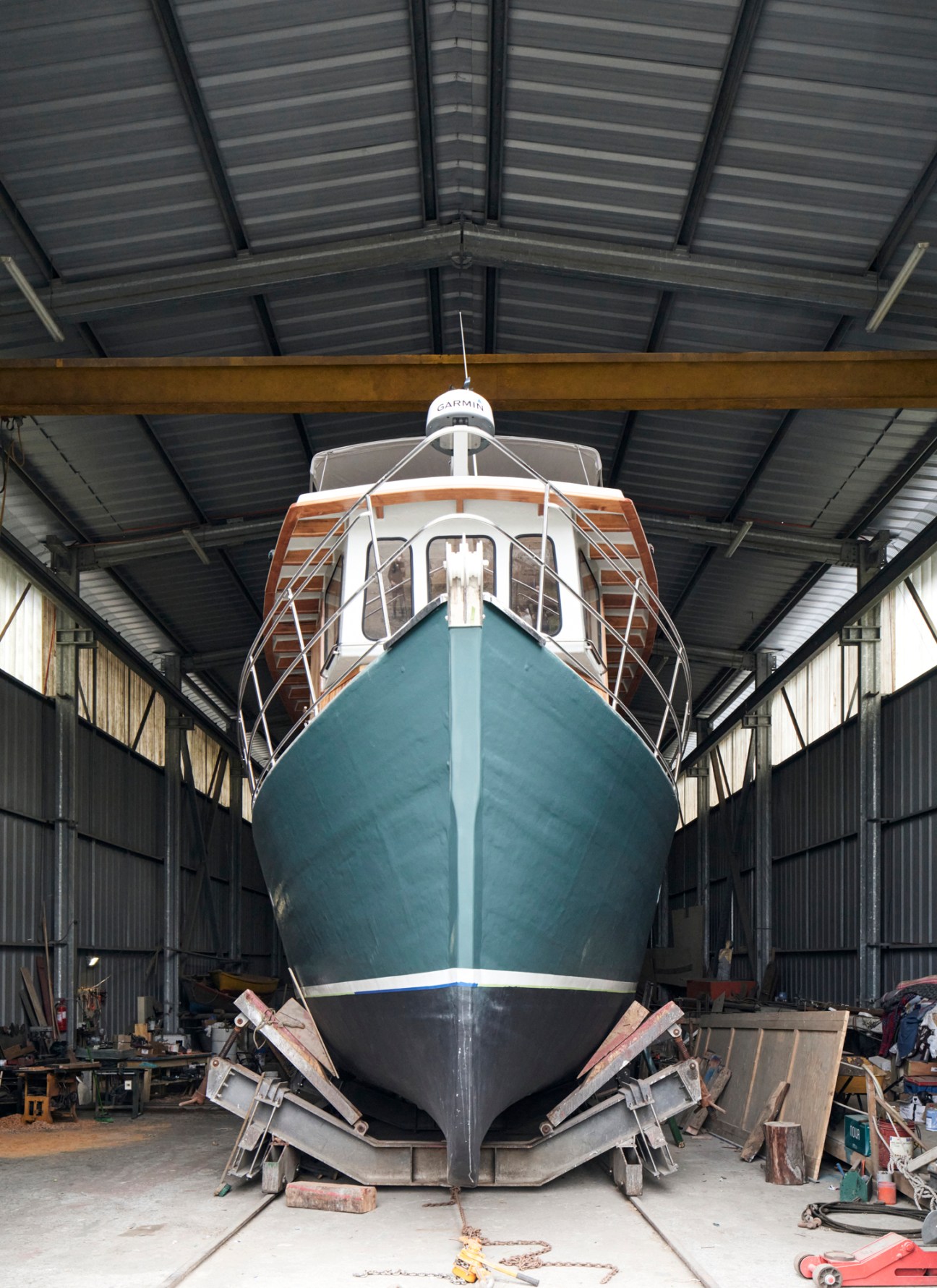
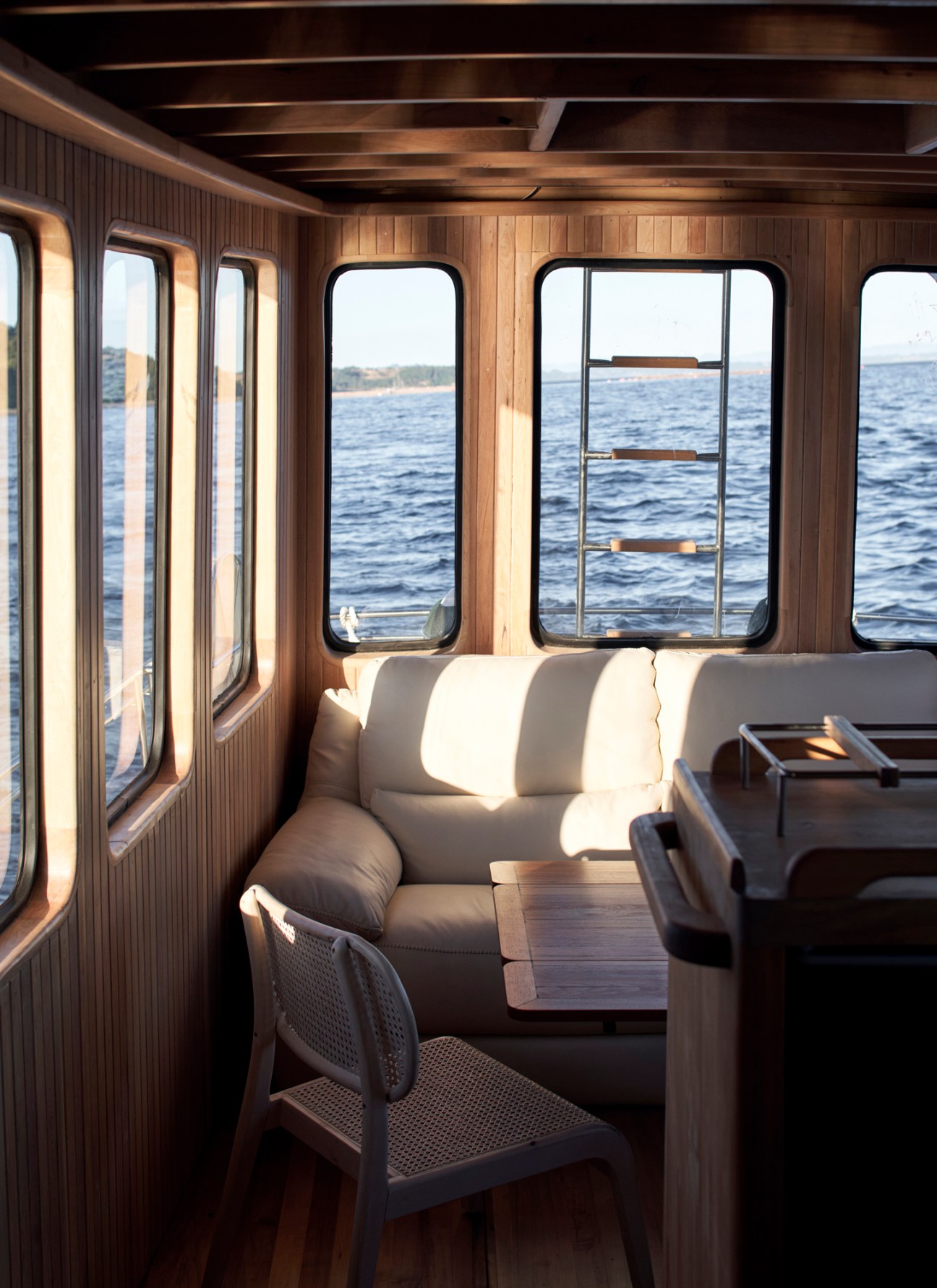
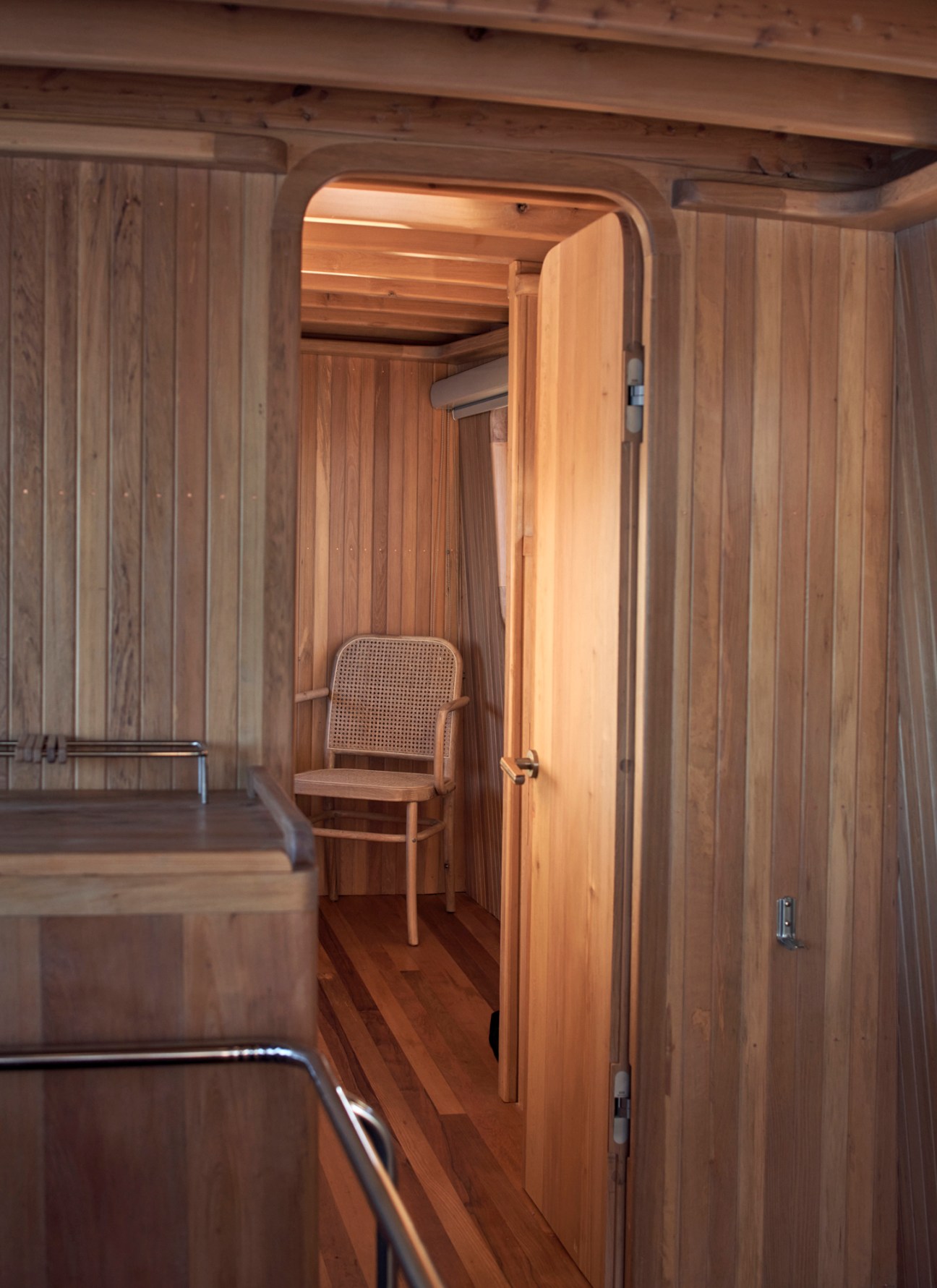
For his latest project, Acuña’s went a little further afield. Two years ago, on a visit to Chiloé, his uncle bought a diesel fishing boat that was nearing the end of its seaworthiness. He hired his nephew to restore it, making this boat the latest entry in Acuña’s Isla Leba oeuvre. The Kon Tiki, as the boat was named, underwent a meticulous restoration. Like the structures he masterminded on the island itself, Acuña designed custom interiors that were finished with local wood.
Always drawn to the environment, Acuña chose the boat’s distinctive deep blue-green colour to reflect the palette of Chiloé’s atmosphere. As the island is so far south, the sun hangs particularly low in the sky. Thick cloud tends to hover overhead and for much of the year they are illuminated from below by the sun’s low light. In such moments the water becomes a shade of deep blue-green – the exact colour that Acuña used to paint the hull of the Kon Tiki.
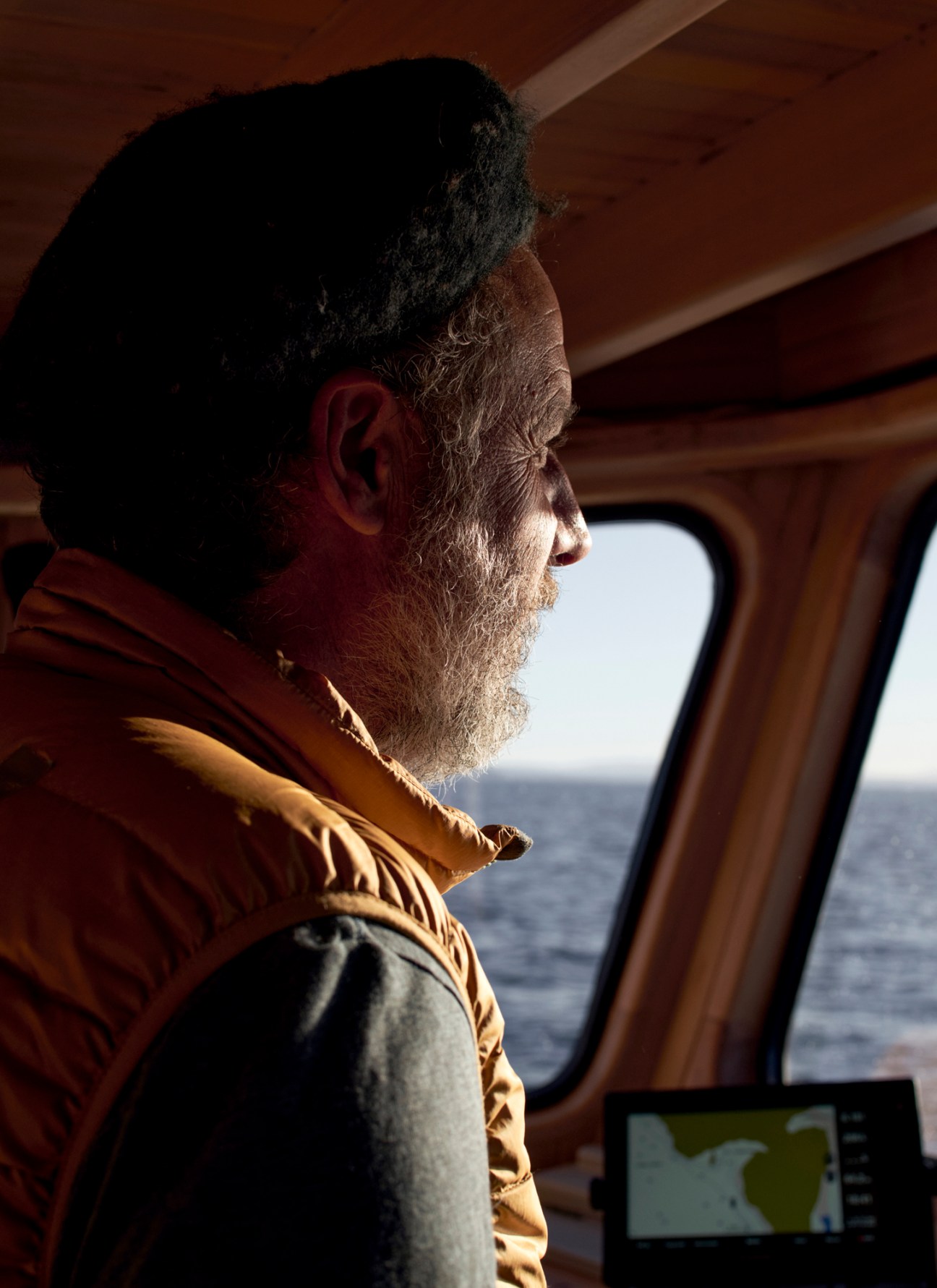
Earlier this year, Acuña and his family had a barbecue at the guest house on Isla Leba and took the Kon Tiki to sea. “A boat is a very good mechanism to explore the territories of Chiloé,” says Acuña. “And the most amazing way to get to know this place.”

For the record
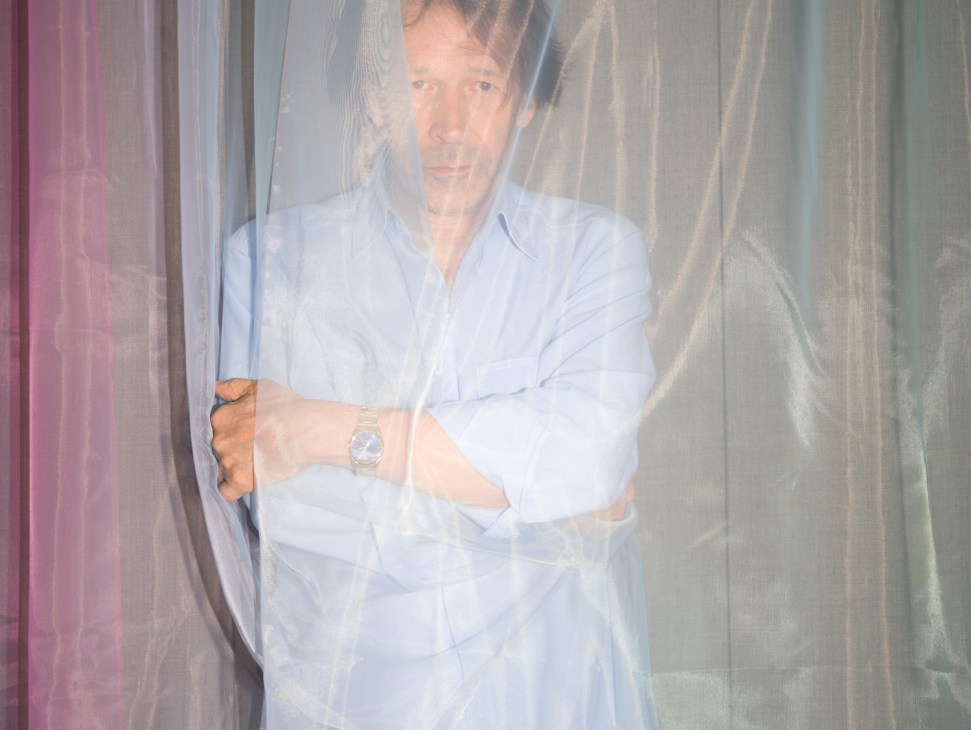
Art director Peter Saville first made his mark designing record sleeves in the 1970s and 1980s as co-founder of Manchester-based label Factory Records, home to Joy Division and New Order. He went on to work on a prodigious range of projects, from football kits for England’s national team to logos for fashion houses, such as Burberry. Now he is making his foray into the world of textiles with Danish brand Kvadrat. We caught up with Saville to talk about late-career learning curves, the importance of stepping back from your work and why his design sensibilities today are influenced by his music tastes as a teenager.

How have you found a balance between artistic direction and design?
It baffles me but I understand how it happened. I had 10 years at the beginning of my career when I was doing something I wanted to do. I went to art school at 18 to learn how to make record covers, not to be a graphic designer. The record cover was almost the only medium of contemporary visual culture that I saw as a middle-class teenager in the north of England in the 1960s and 1970s. It connected me to people in other towns, cities and countries. We saw it as a medium and an art in its own right. I wanted to be part of the art that I knew.
So you went to art college to study it?
Yes. And I understood quite quickly the profession of graphic design but I didn’t go to art college to be a graphic designer. I went to be part of something and hopefully to make a contribution. And record design allowed me opportunities to make that contribution and gave me a very high degree of autonomy, particularly at Factory Records. So in the first five to 10 years of my career I was very happy. I was saying what I wanted to say to an audience that was there because of the music. I branched out from music to working with cultural institutions and then with fashion.
But the next 20 years, from about 1990 to 2010, were very difficult. By that time, in the 1990s, the discipline of graphics had blended into branding in an unholy hybrid of design and advertising. I learned how to do it, because needs must, but it was not something that I wanted to do. I realised that it really wasn’t the job I wanted anymore.
But now it seems that you have far more freedom and you’re making the contributions that you want to make. Can you tell us what you’re working on at the moment?
I’ve done a textile collection for the first time in my life – I’m 40 years into my career. It’s with Kvadrat, a company that I’ve worked with for more than 15 years as a kind of consultant. We had talked over the years about doing some fabrics but it had never happened; I wouldn’t have known what I was doing. And one of the things that I’ve learned over my career is to know when you don’t know and to be respectful of other disciplines. It is always very easy to be critical about fashion, film or architecture. But then if you put yourself on the spot and challenge yourself to do something in one of those disciplines, you’ll find that it’s a steep learning curve.
It was the sight of colourful sheep with their spray-painted markings that inspired you to do this collection with Kvadrat. You mention a steep learning curve – what gave you the courage to throw yourself into textile design? And how can outsiders approach a new medium?
Young people often innovate because they don’t actually know the rules. One of the worst things is that by the time you have learned the rules, you can feel as though you’re in a straitjacket created by them. So it’s good to break them. Equally, it’s also good to learn to have some respect for the rules and to know why they exist in the first place. We see a lot of products, clothes, furniture and architecture these days that are different and break rules but don’t quite work. And you think, “Who let somebody do that?”
There is a fine line between progress and simply challenging convention. Genuine progress happens when innovation actually takes things further and creates something different or better. But just as often we see something that is hailed as “progress” but that takes us backwards.
So is balancing what you want to make as a designer with what a client wants and needs a good approach to design?
That is applicable to every discipline. There’s a strong desire to be artistic and to be creative but occasionally people seem not to step back and look at what they’ve done. I do try to make a little time to step back. But graphics is a very fast profession and I’m not particularly suited to it. Most graphic design has to be done while I’m still thinking about it and I have never wanted to make disposable work. Record covers were not disposable. You didn’t just listen to a record and then throw it away; you kept it. And that attitude is what my sensibility was shaped by. Records were things to keep. They were not fast-paced communications. It was a nightmare in the music industry, however, because as soon as the record was finished, somebody wanted the cover done overnight. And I was often holding up the process. And the only justification is that people still cherish those covers. After all, we’re still talking about them today.