Issues
Modern classics
If you want to know where men’s fashion is going, just ask Michael Bastian. Now with dashing grey hair and a healthy tan, the US fashion designer’s career took off in earnest in 2000 as menswear director of luxury retailer Bergdorf Goodman. In 2006 he launched his own line, which quickly established itself as a leading light in the trend for high-end menswear classics with a twist. Last December, after working for a slate of heritage labels, Bastian became creative director of Brooks Brothers, the oldest existing US clothing brand, which owes its continued existence to Authentic Brands Group and Sparc Group, who acquired it out of bankruptcy.
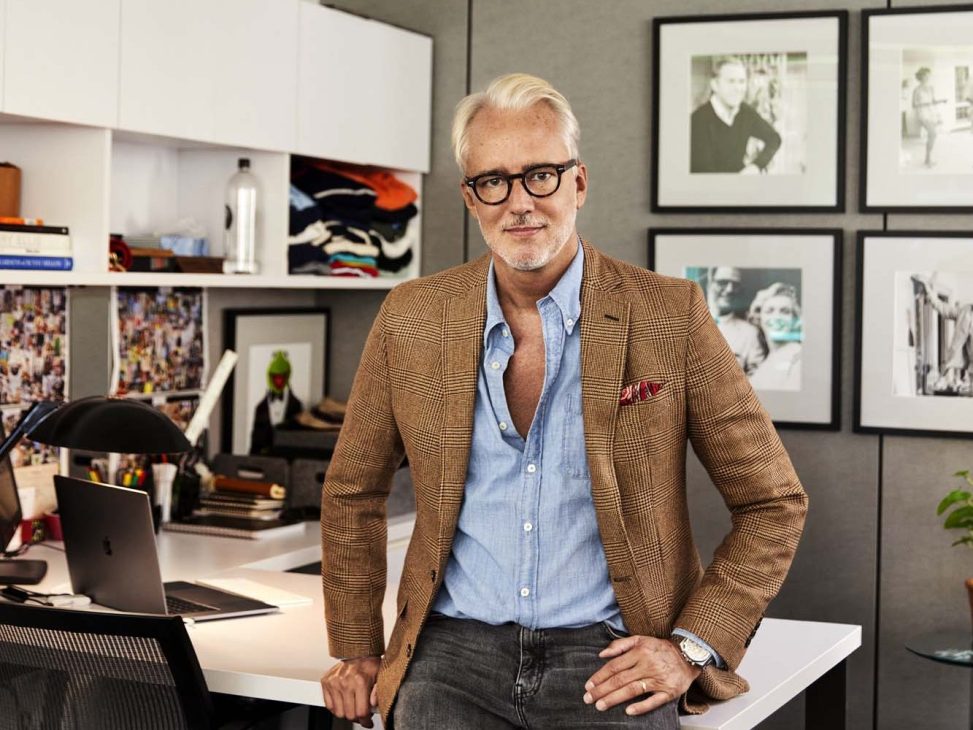
Brooks Brothers, which has more than 600 shops around the world, is starting its second life in a turbulent time for fashion labels and retailers. Bastian’s ability to predict what is next for menswear will be a decisive factor in whether the brand succeeds. So what does he foresee?
In front of a rack of clothes in his new Brooks Brothers workspace, he thinks over the question. “It’s one of the few times I’ve been in an office since last September,” he says. He believes that people’s return to the workplace will have a significant effect. “After sitting around in a T-shirt and pull-on shorts for a year, men are ready to dress up.” But that doesn’t mean more tailoring. “The tailored world is where the hat industry was in the 1960s,” he says, laughing. “Back then men decided, ‘I don’t want to wear a hat any more.’ Today people can dress for work in a million different ways.” Wearing tailored shorts and an untucked striped shirt with the sleeves rolled up, Bastian is living proof.
How should companies synonymous with suits adapt to these less formal times? “There are all these innovations,” he says. “For example, the Italian mills are good at making something that looks like heavy Harris tweed but is very light.” Bastian believes that such developments will appeal to younger customers. “There’s a generation that has never had to wear tailored clothing. For them, it’s this interesting fashion choice.” He sees “the neo-preppy thing” as part of the vogue for playfully updating old codes. “It’s a new way of looking at prep, coming from younger people who didn’t wear it the first time in the 1980s and 1990s,” he says. “They’re playing with proportion, colour and branding in a manner that feels like a bellwether of what’s to come.”
After the dominance of streetwear and big logos, men’s fashion will become “less about labels and much more about personal style”, he says. To that end, his first full collection provides plenty of options, from pieces that blur the line between tailored and casual to full athleisure in the form of cable-knit hoodies. In parts, the line-up nods to Hermès, evoking a country gent who never gets his shoes muddy.
Bastian is also a retailer. What’s next for shops? “There’s something Hermès does that I admire: every shop feels slightly custom-made for its town,” he says. “The Hermès in Milan feels like Milan; the one in San Francisco is weirdly quirky. That’s an interesting way to entice the customer. The reality is that online is going to be everyone’s flagship. That’s where you’ll find the highest expression of a brand and the full range, so the shop has to fulfil a different function: not that you have to go there, but that you want to.”
Bastian is innovating but he says that heritage brands also need to remember what made them popular in the first place. At Brooks Brothers, “putting all the icons of the brand back” is part of his role. “I’m making things that I wanted but couldn’t find for a long time,” he says. “Someone very smart at Bergdorf Goodman once told me that if you care about style and you’re looking for something, a bunch of other guys are looking for it too.” Whatever’s next for menswear, he says, “You have to trust your instincts.”
Michael Bastian’s CV
1965: Born in Lyons, New York
2000: Becomes director of menswear for Bergdorf Goodman
2006: Launches his own acclaimed line, which becomes a key part of the #menswear movement
2011: Wins Menswear Designer of the Year at the Council of Fashion Designers of America awards
2020: Becomes creative director of Brooks Brothers after the company is rescued from bankruptcy
Side effects
Sporting a helmet, goggles and a grin, I hurtle down the winding roads of Nara prefecture, tucked into the sidecar of a motorbike with the driver beside me, á la Wallace and Gromit. It’s my first time in such a vehicle and I’m surprised by the spaciousness of my quarters. Being so close to the ground, I can also feel the power of the machine’s 749cc engine, cruising at 60km/h while the road whips beneath me. As the sidecar lifts off the ground I laugh a little nervously, as I am also recording the interview for radio.

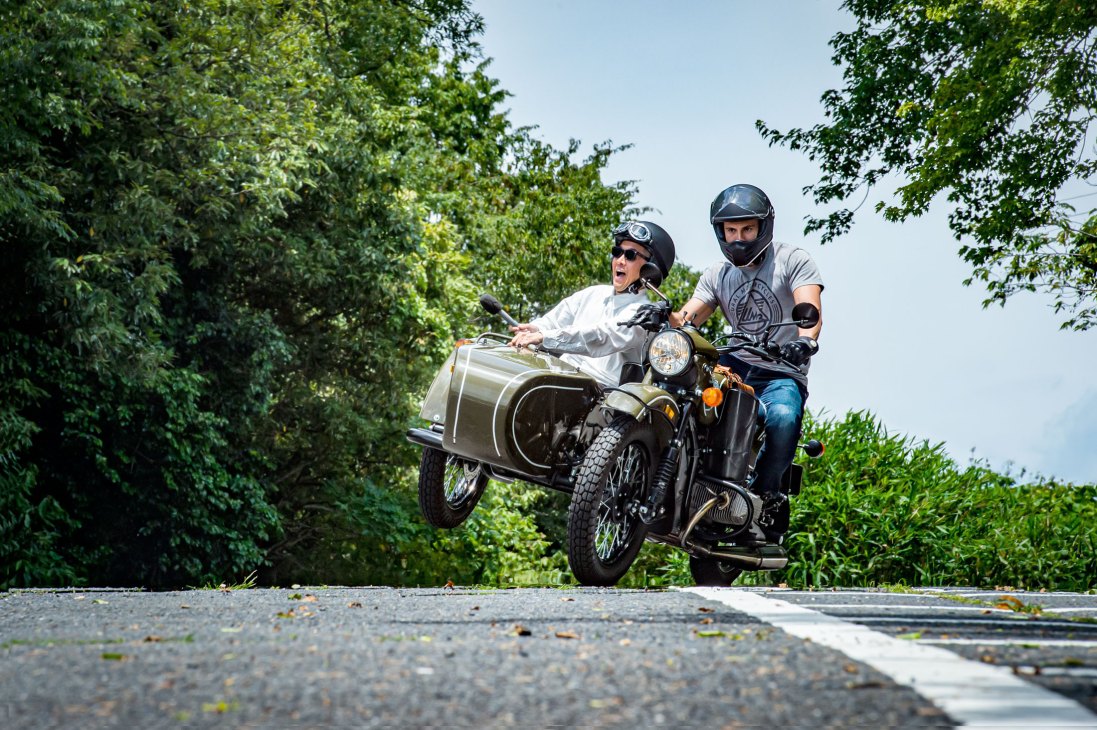
I am on assignment to learn about Ural Motorcycles, the Russian automotive brand with a history. Now a niche favourite among petrolheads across Japan, its roots go back to the 1940s in the Ural mountains, where sturdy sidecar-fitted bikes for the Soviet military were built during the Second World War. Though production continued for civilian use after the war ended, it wasn’t until the 1970s and 1980s that exports really picked up. It now sells 1,500 a year around the world. And, according to my driver, that number is growing.
“Eight years ago, our main customers in Japan were men in their sixties,” says Vladislav Volkhin, Russian president of Ural Japan, after sitting down for some lunchtime soba. “Now, many people in their twenties and thirties are getting into it too; they often buy a Ural to go on camping trips.” But it’s not just adventurous gents investing in the three-wheelers. “More and more women are becoming attracted to Ural,” adds Volkhin. Today, with an 82-litre load capacity in the boot and room for two passengers, a full bike-and-sidecar package is from ¥2.4m (€19,000).
According to US-based agency Expert Market Research, the global market for motorcycle sidecars is projected to enjoy a compound annual growth rate of 6 per cent between 2021 and 2026, reaching a sales volume of 62 million units. And the burgeoning Asia-Pacific region is a key force behind that expansion.
But despite all this, Ural has an awkward profile in Russia. “People still have an image of the brand as it was in the 1960s, when Ural was for those who couldn’t afford a car,” says Volkhin. “They think of them as beaten-up old rural bikes. But recently we’ve taken them around the country and people couldn’t believe that they were made by a Russian company. They said: ‘It must be Japanese!’”
Nonetheless, when the vehicle faces bracing, snowy conditions, it’s clear that it was originally engineered for Russia. Masaru Horiuchi, an employee of Ural who joined the company simply for the love of the bike, tells me that he has traversed Cape Soya in Hokkaido while it was minus 10c. “Urals are built robustly and for long distances,” he says “They haven’t changed.” Every model can be customised to the buyer’s specifications, allowing them to choose everything from the colour of the bike to the windscreen and suspension.
Volkhin and I slurp up the last of our noodles and put our helmets on again for a final ride. As I’m contemplating a potential purchase, our photographer Take-san leans in. “Can you carry a surfboard on this?” he asks. “It can easily carry my camera gear but because I surf, I’m wondering…” It seems they might have two new customers.
Savoir faire
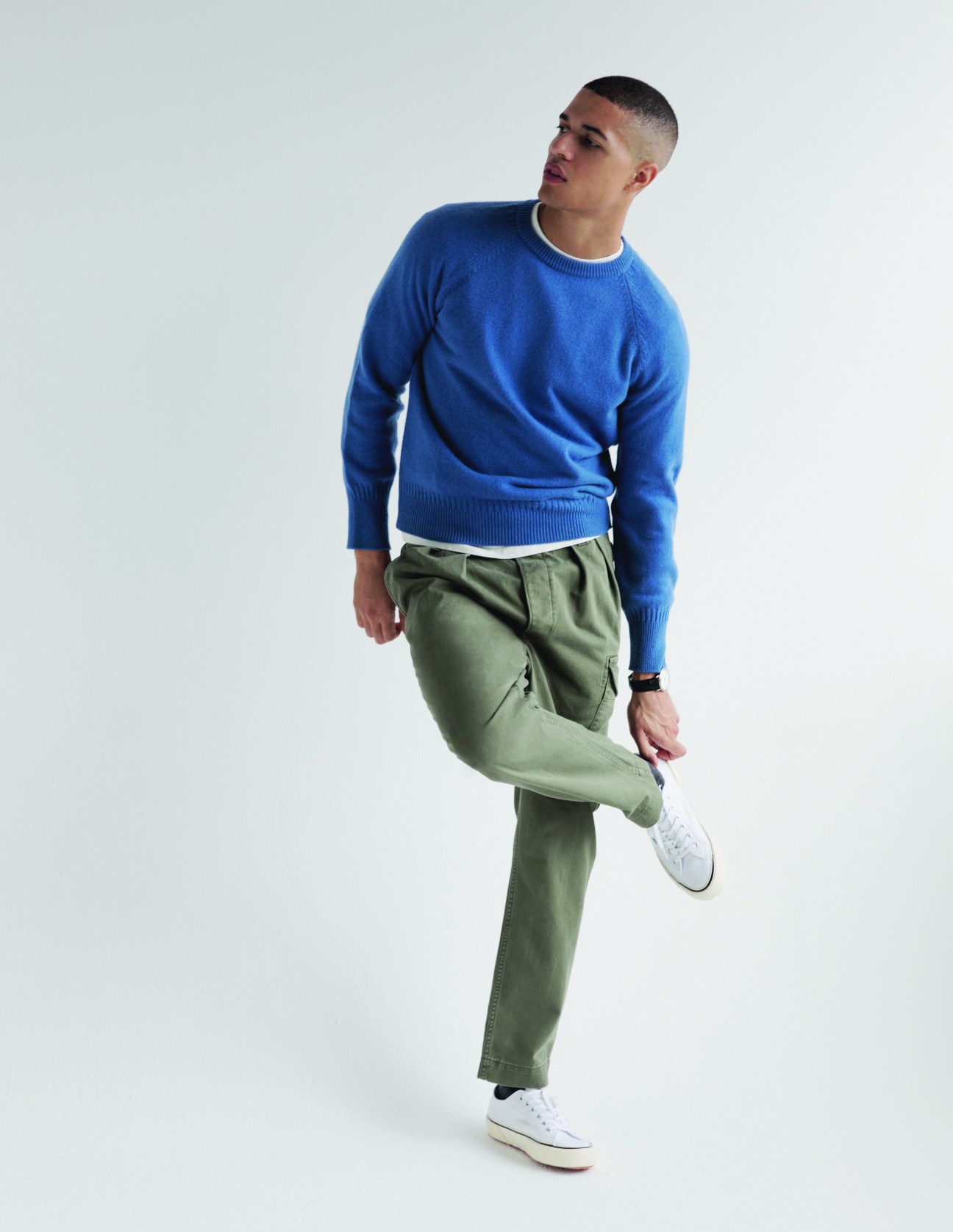
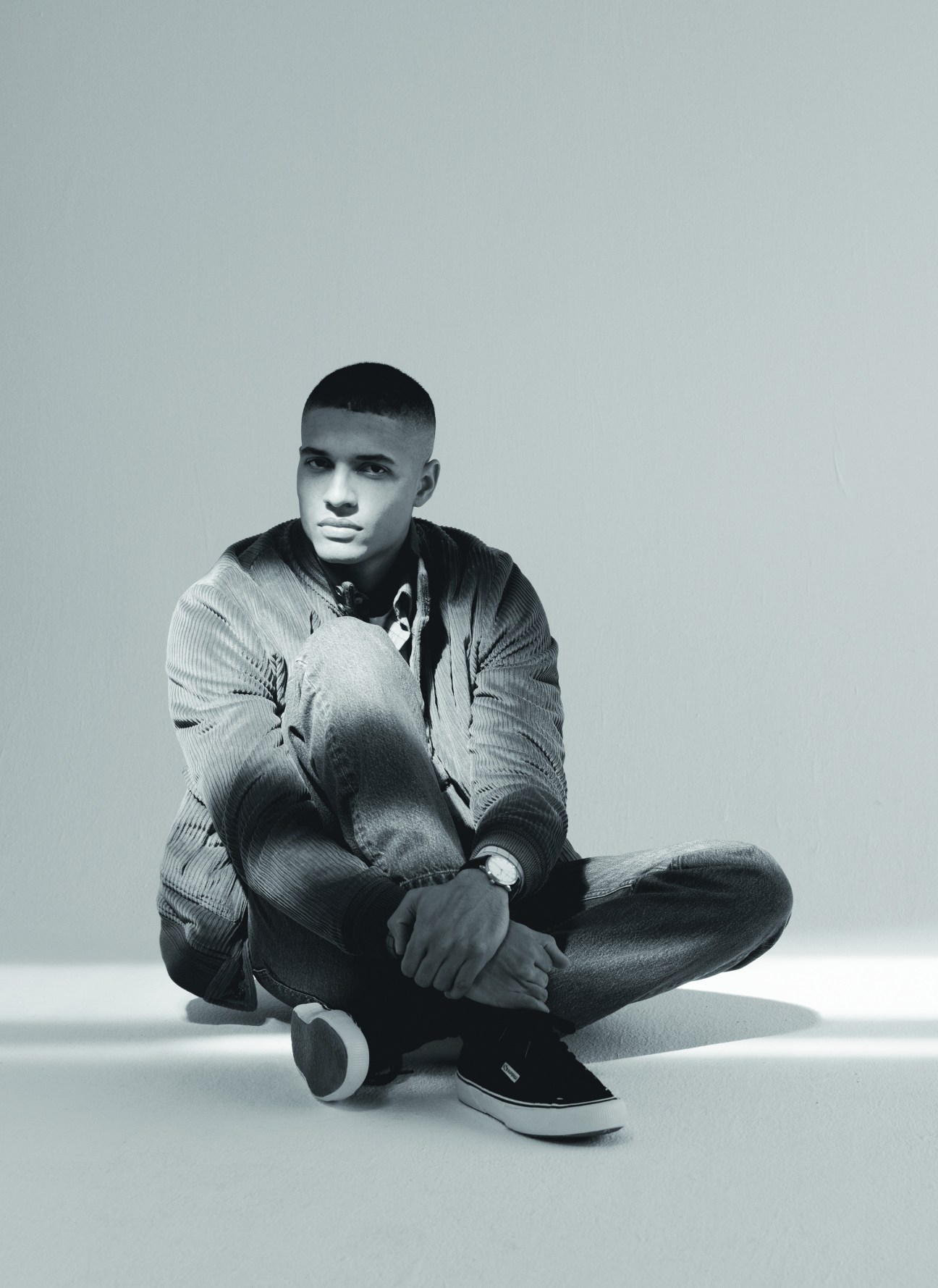
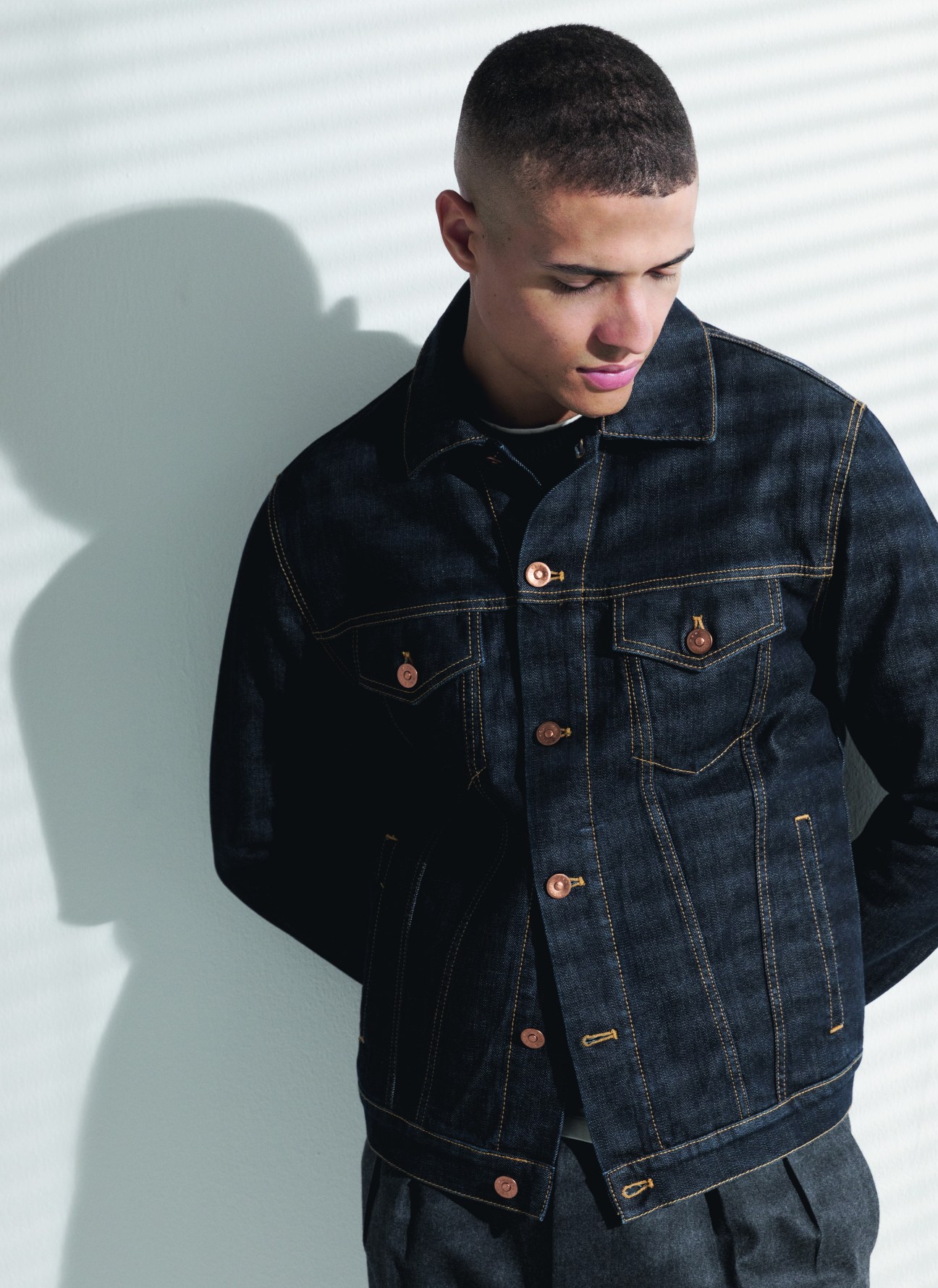
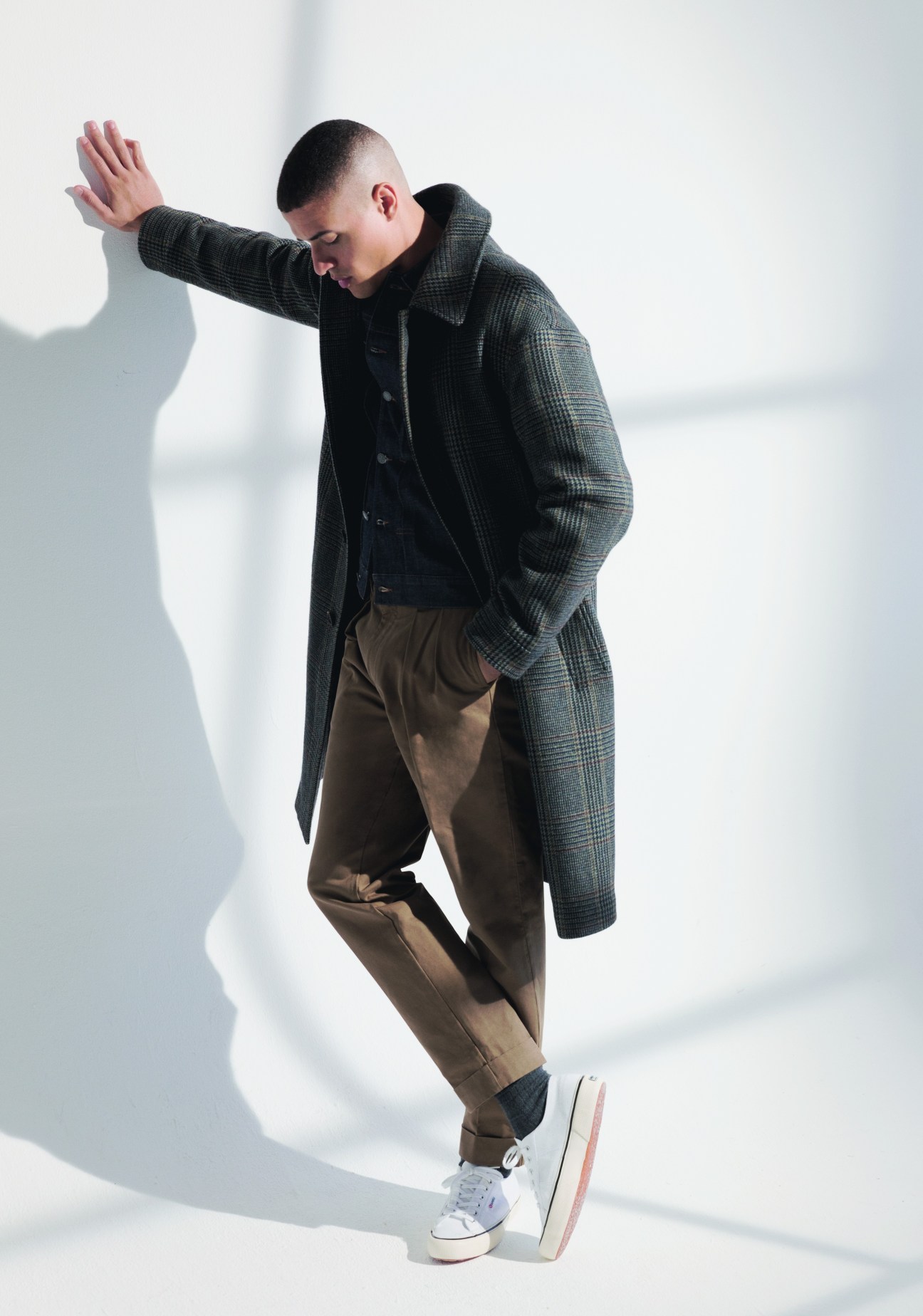
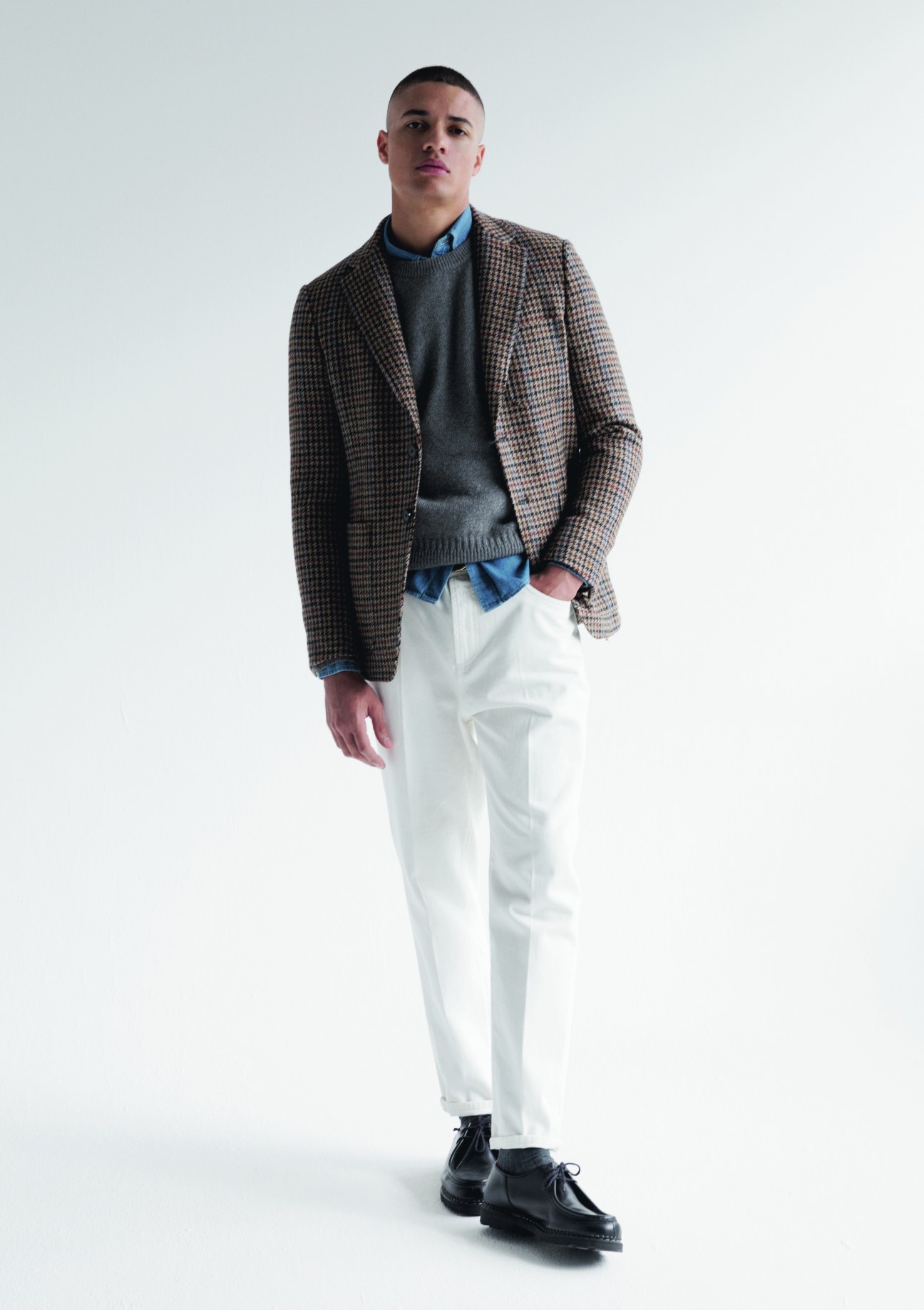
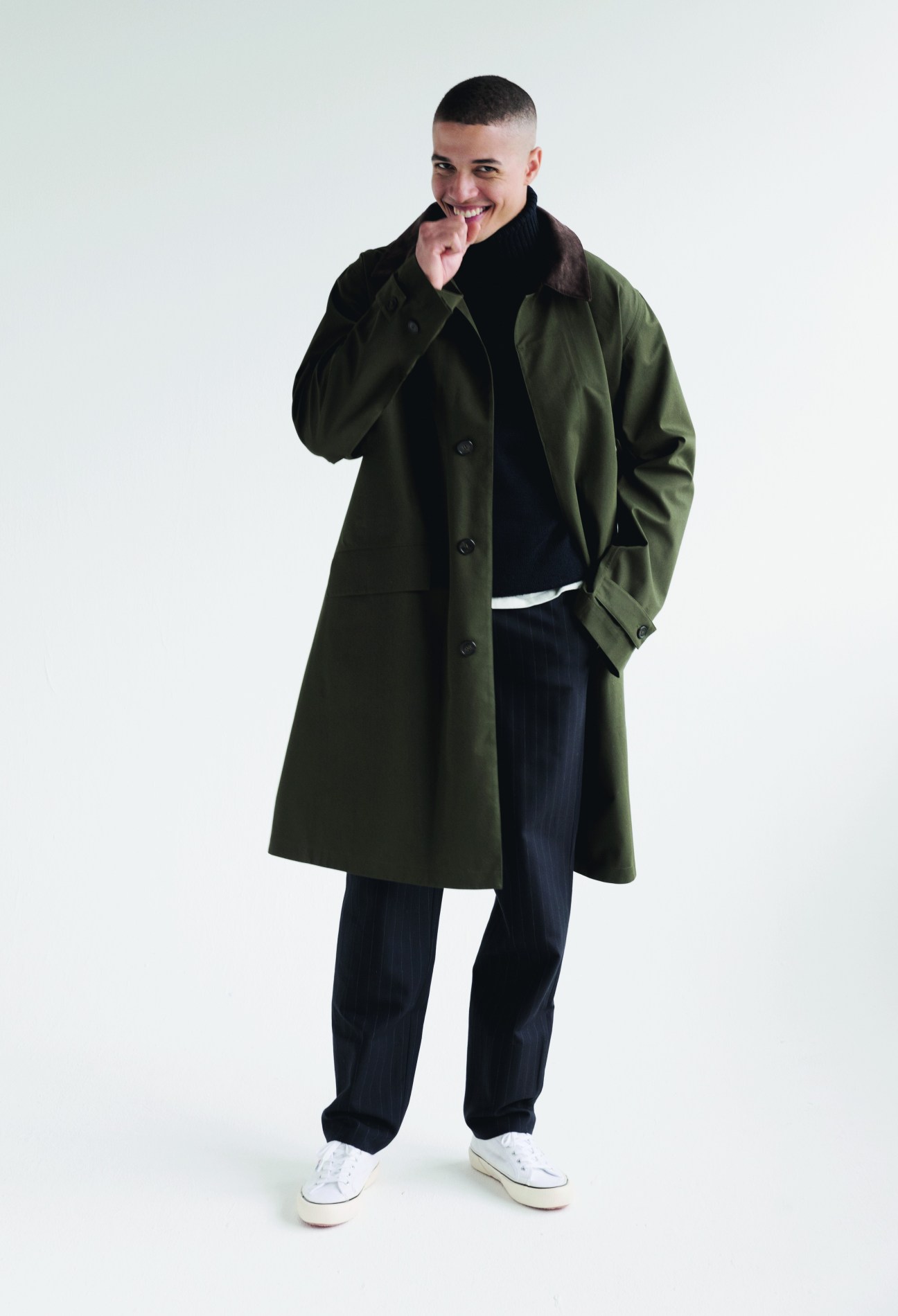
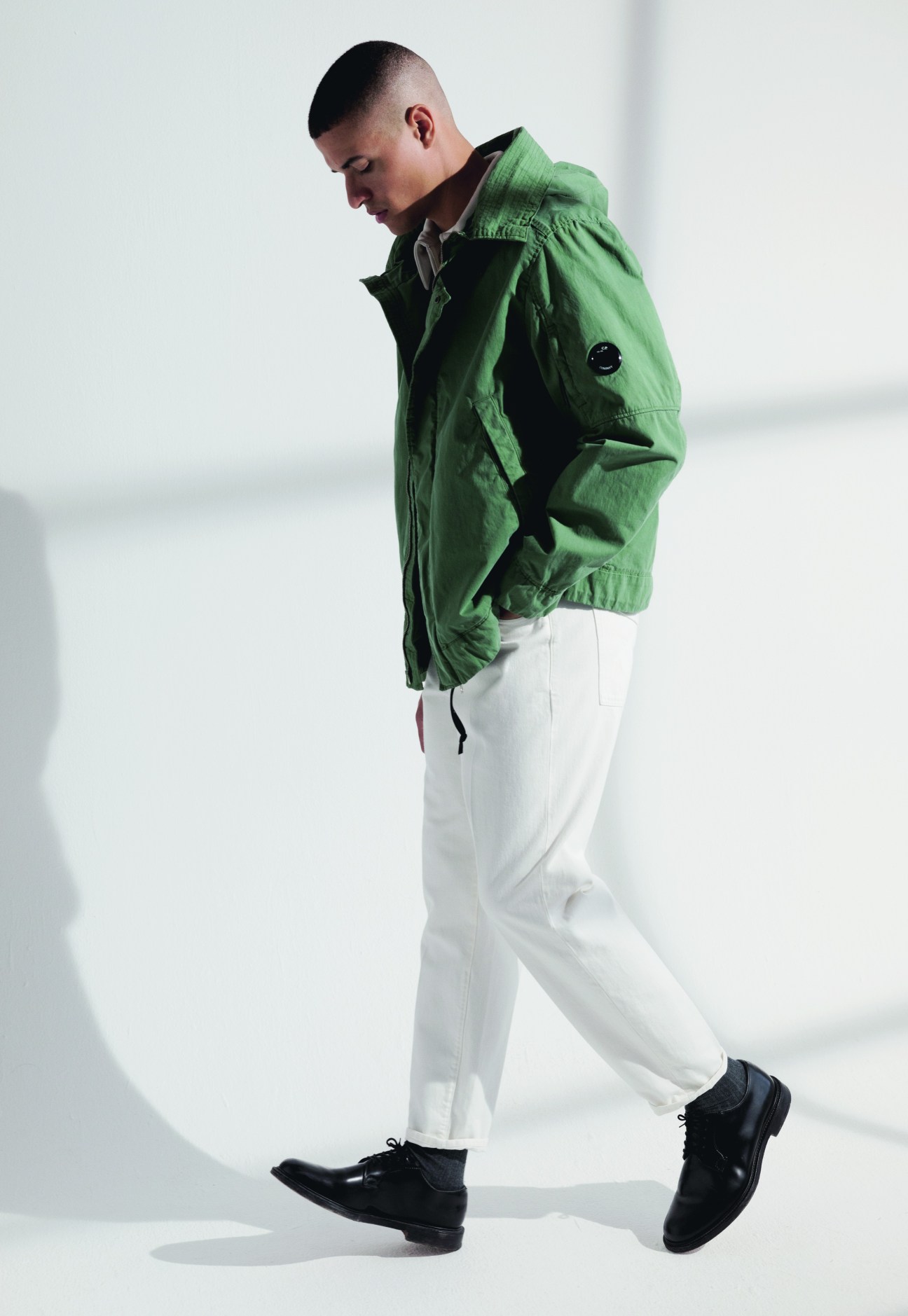
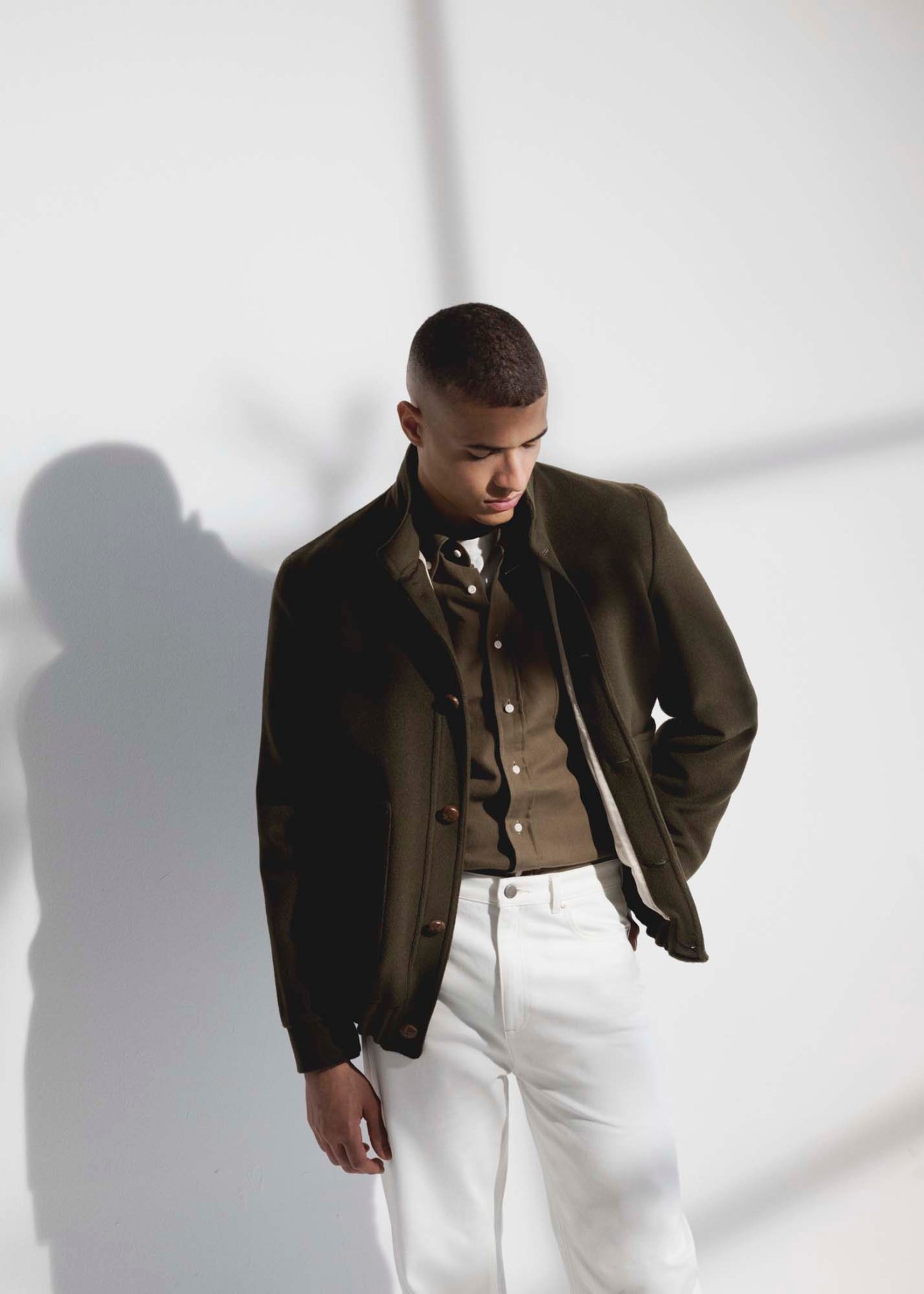
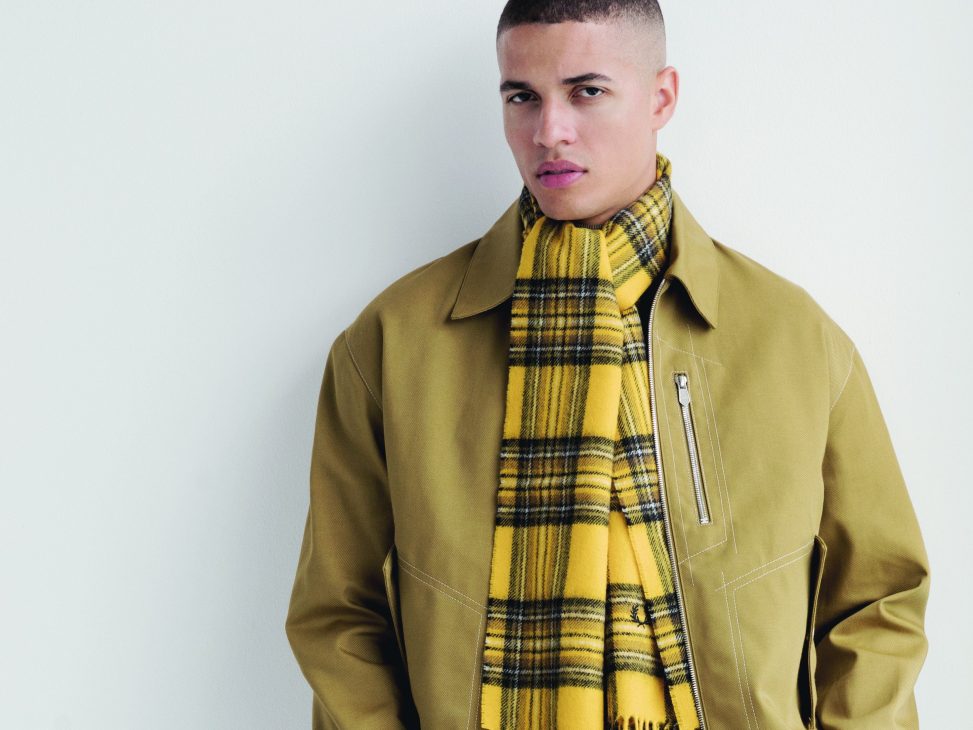
Model: Vincent Forite
Grooming: Charlotte Dubreuil
Assistant photographer: Arturo Astorino
Assistant stylist: Laura Sar Bailly
Tread lightly
Behind the oversized tortoiseshell frames, there is a look of exasperation in Sébastien Kopp’s eyes. Monocle has just asked him what a “sustainable brand” looks like. “I don’t know, I don’t know,” says the co-founder of Veja, sighing, his mouth curling into a frown. “I was saying in a conference in Paris, ‘Sustainability is a bag of vomit: you put in lots of different things and nobody understands what you’re talking about.’ We’re not at ease with this term; it doesn’t mean anything today.”
Frankly, Kopp can say what he likes about sustainability, the fashion industry’s most talked-about topic. He knows his stuff. In 2005 he launched trainer brand Veja, headquartered in Paris, with his childhood friend François-Ghislain Morillion. Their raison d’être was clear: “to build a different kind of sneaker”, as Kopp puts it, by working directly with Brazilian farmers, producers and factories. Veja was an ecological and social project in the guise of a shoe brand. From the outset the duo have remained as committed to ensuring transparency throughout their supply chain as they have to creating trainers with an unfussy, slightly retro aesthetic.
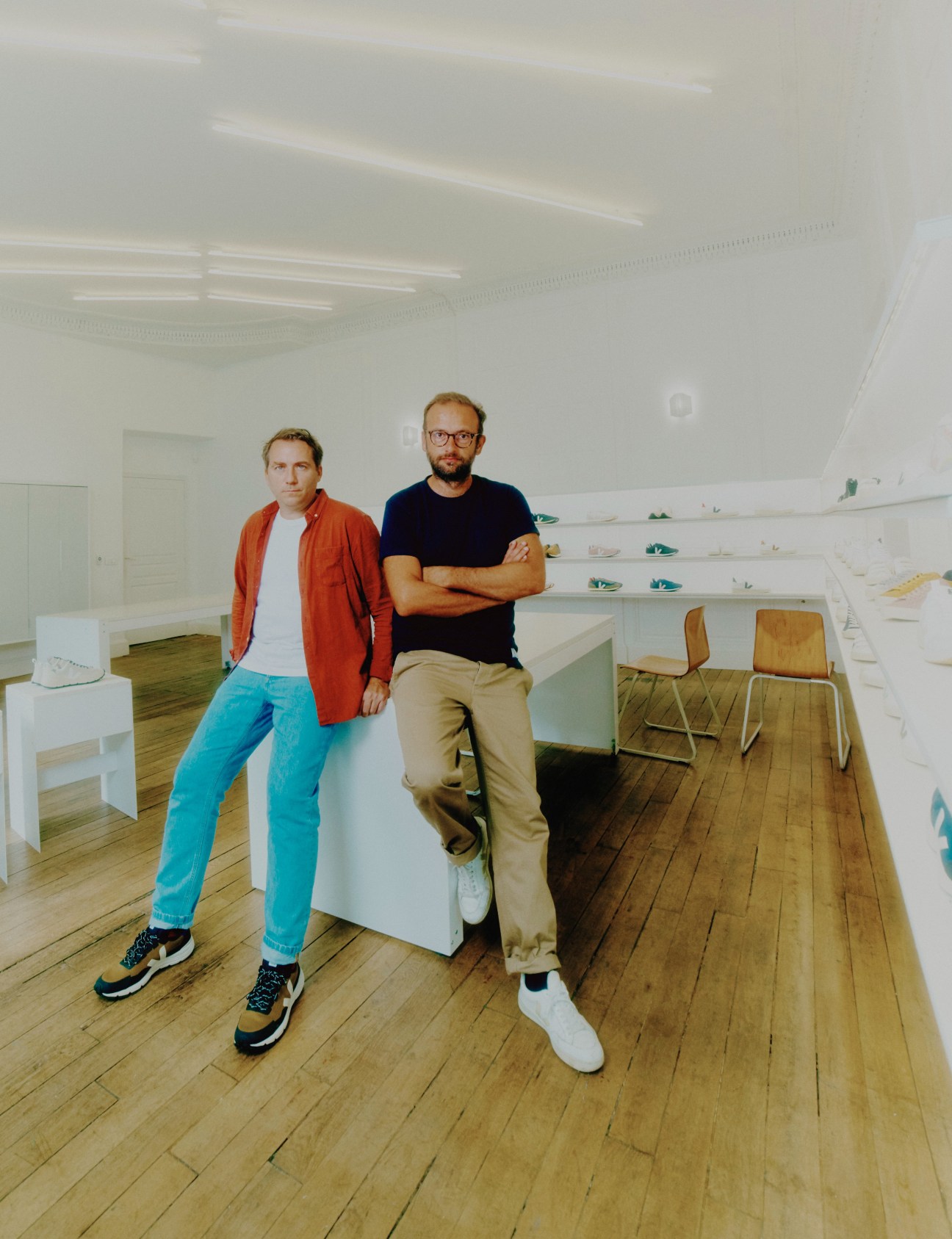
Rather than rhapsodising about sustainability, Kopp and Morillion prefer to focus on knowing exactly what Veja is doing. “Know where the cotton comes from and who is planting it,” says the 43-year-old Kopp, speaking from his office near the Gare du Nord in the 10th arrondissement. “Know how much the organic-cotton producer and the Brazilian factory worker are earning. Our work is like investigative journalists going after the supply chain. That’s our only interest.”
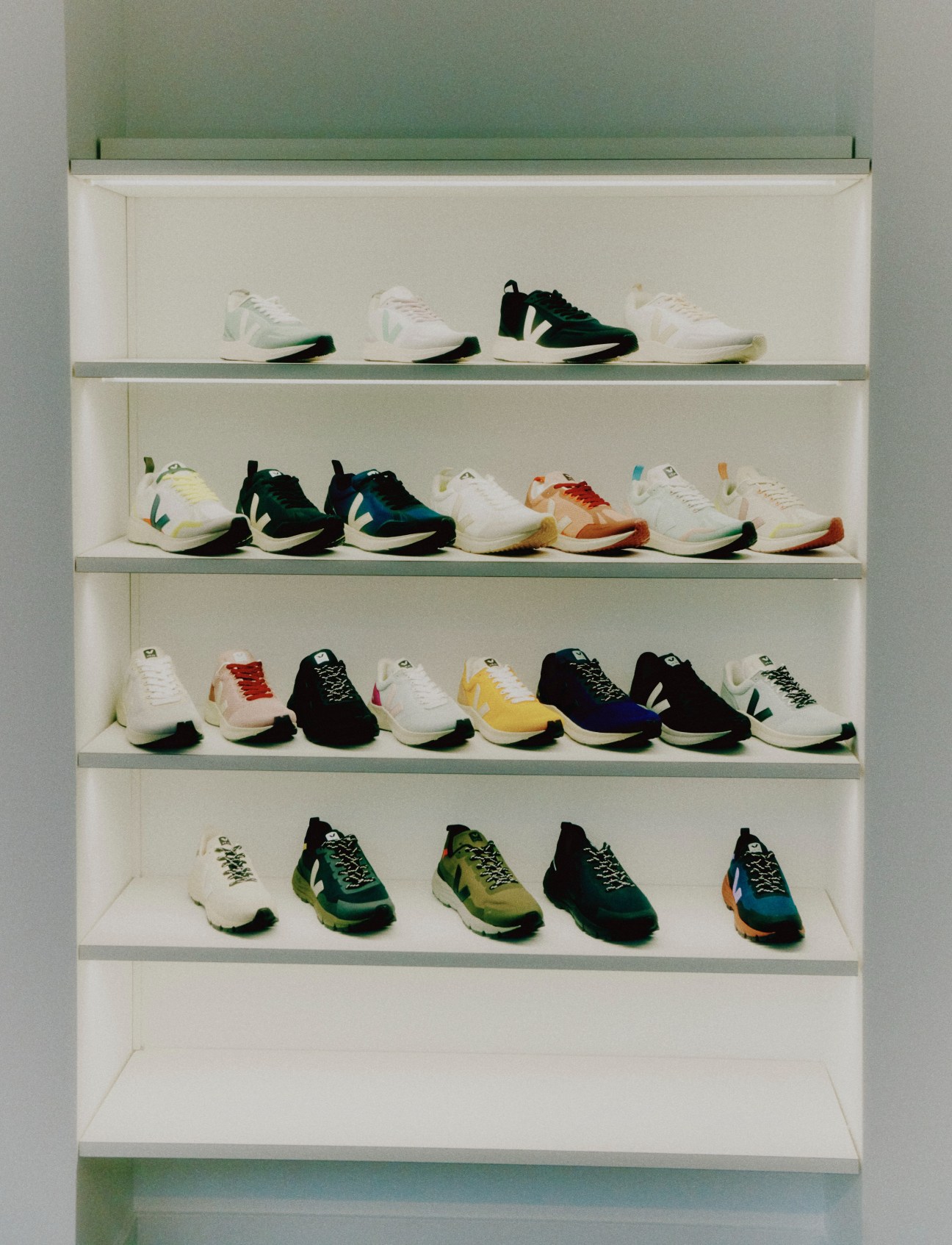
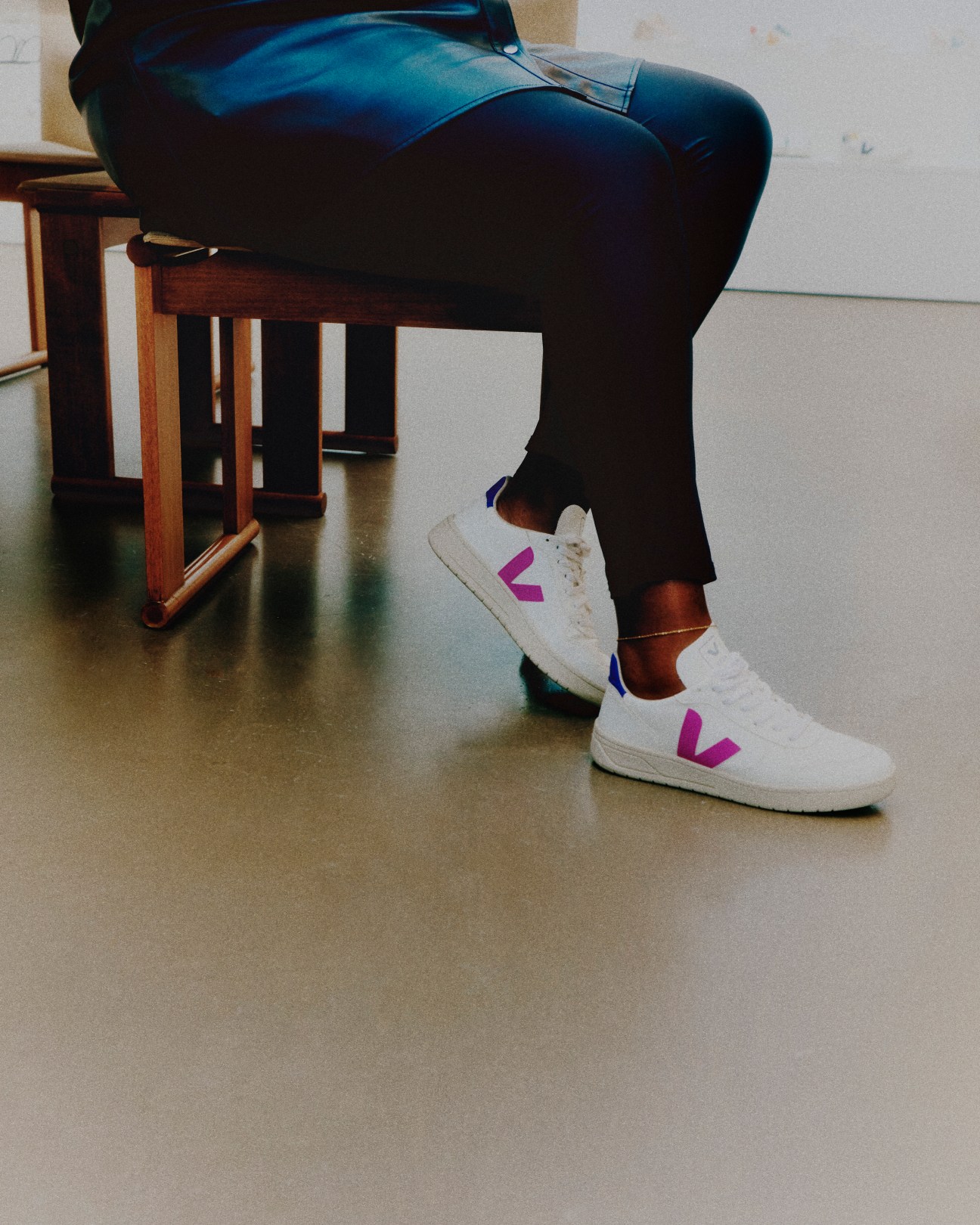
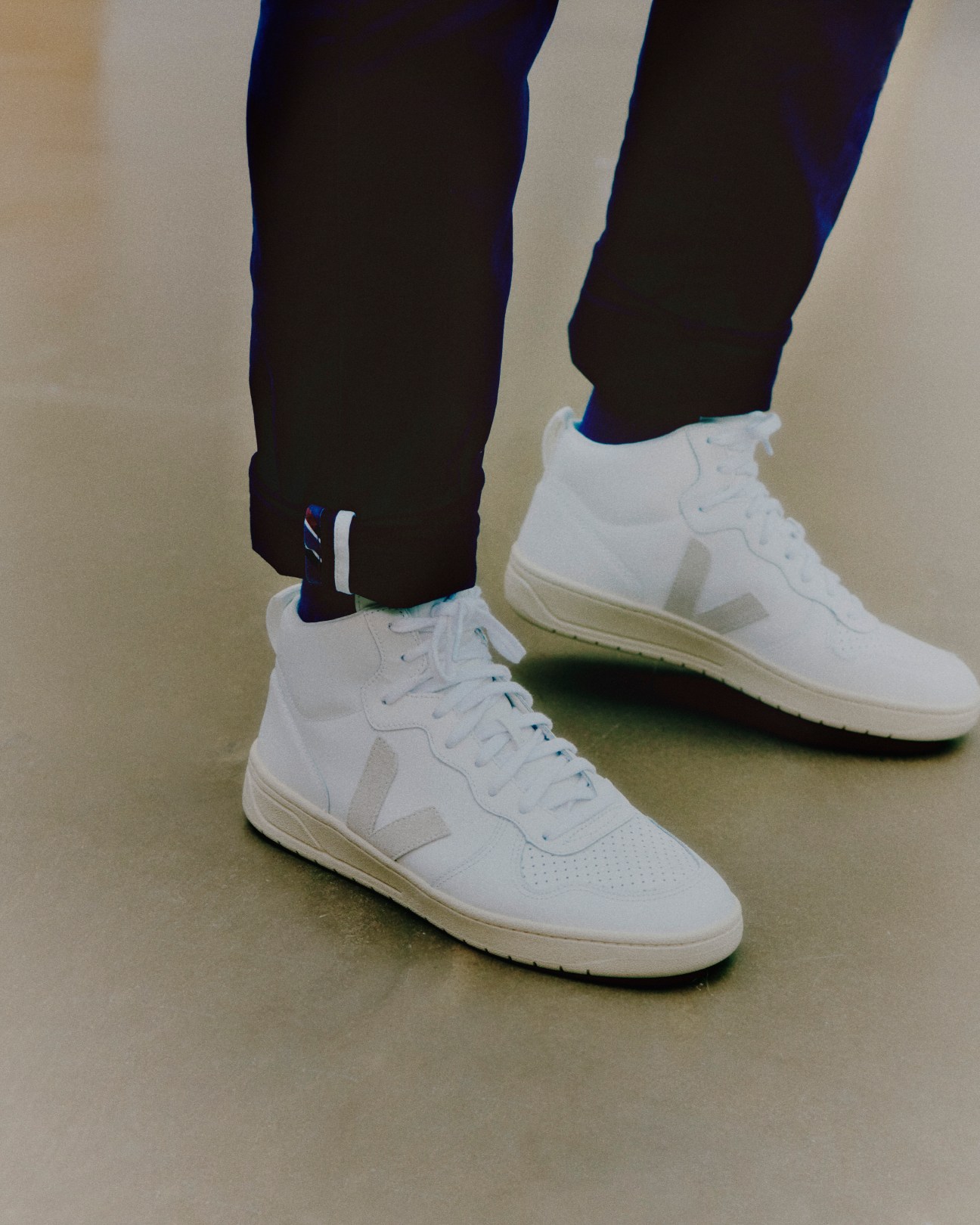
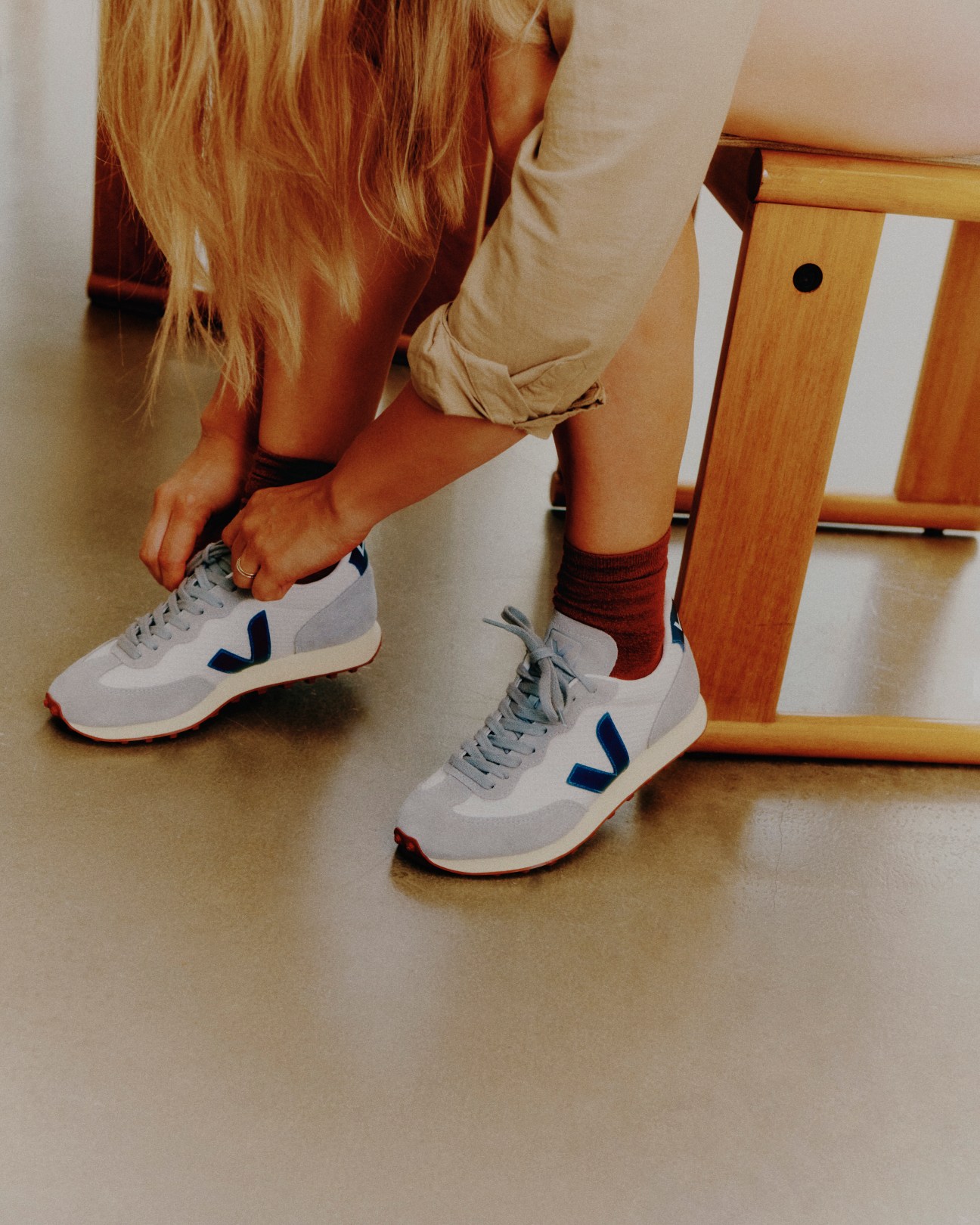
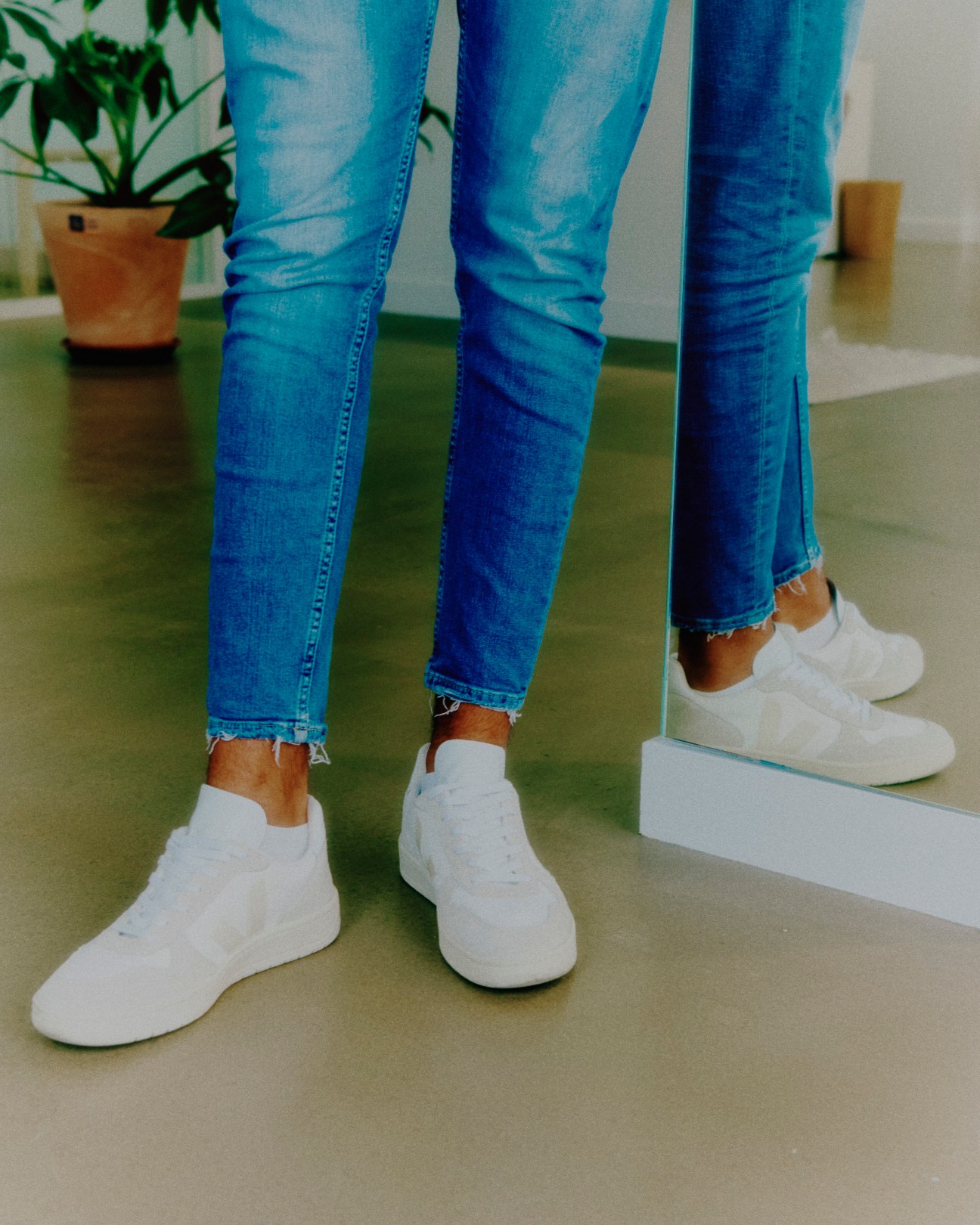
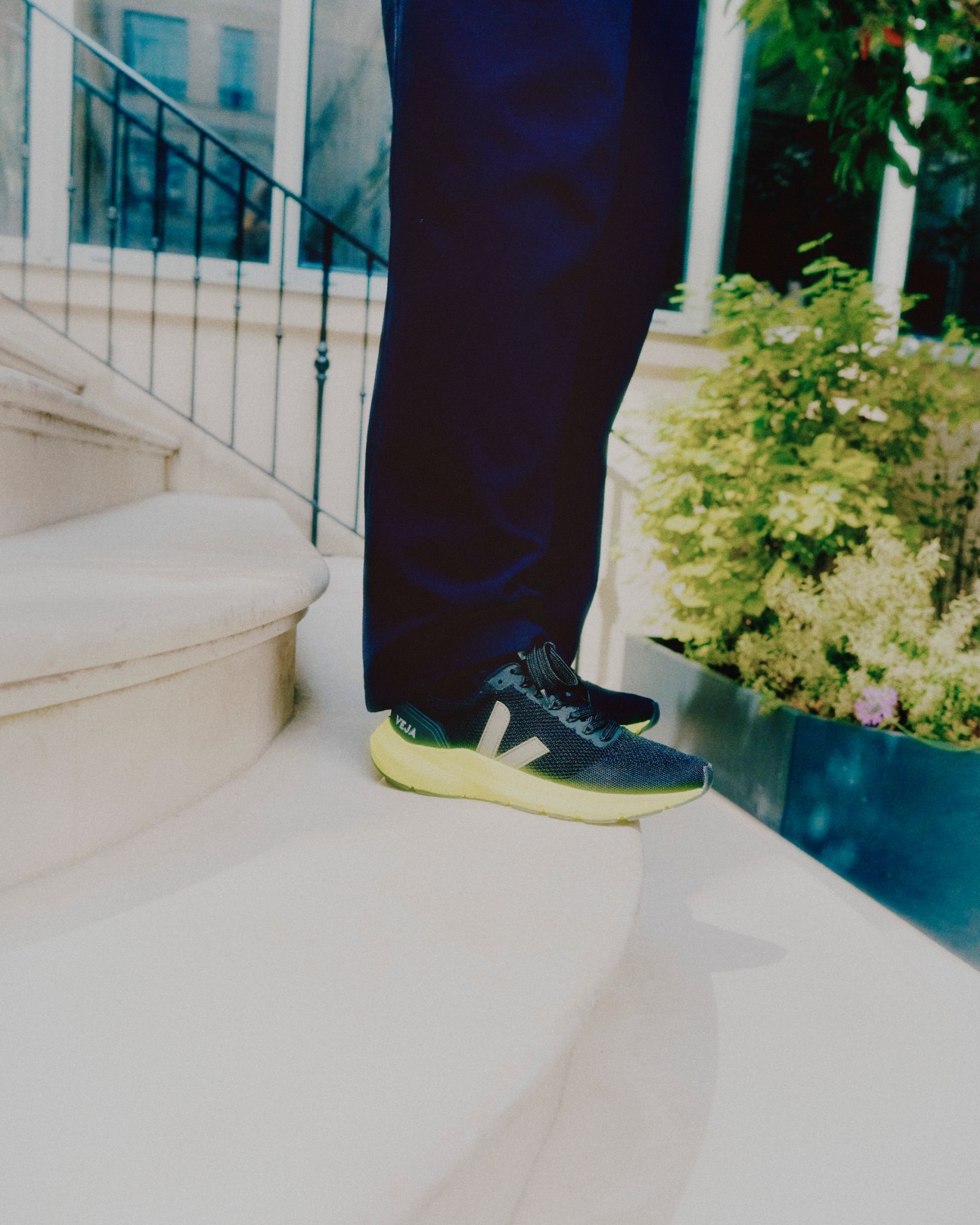
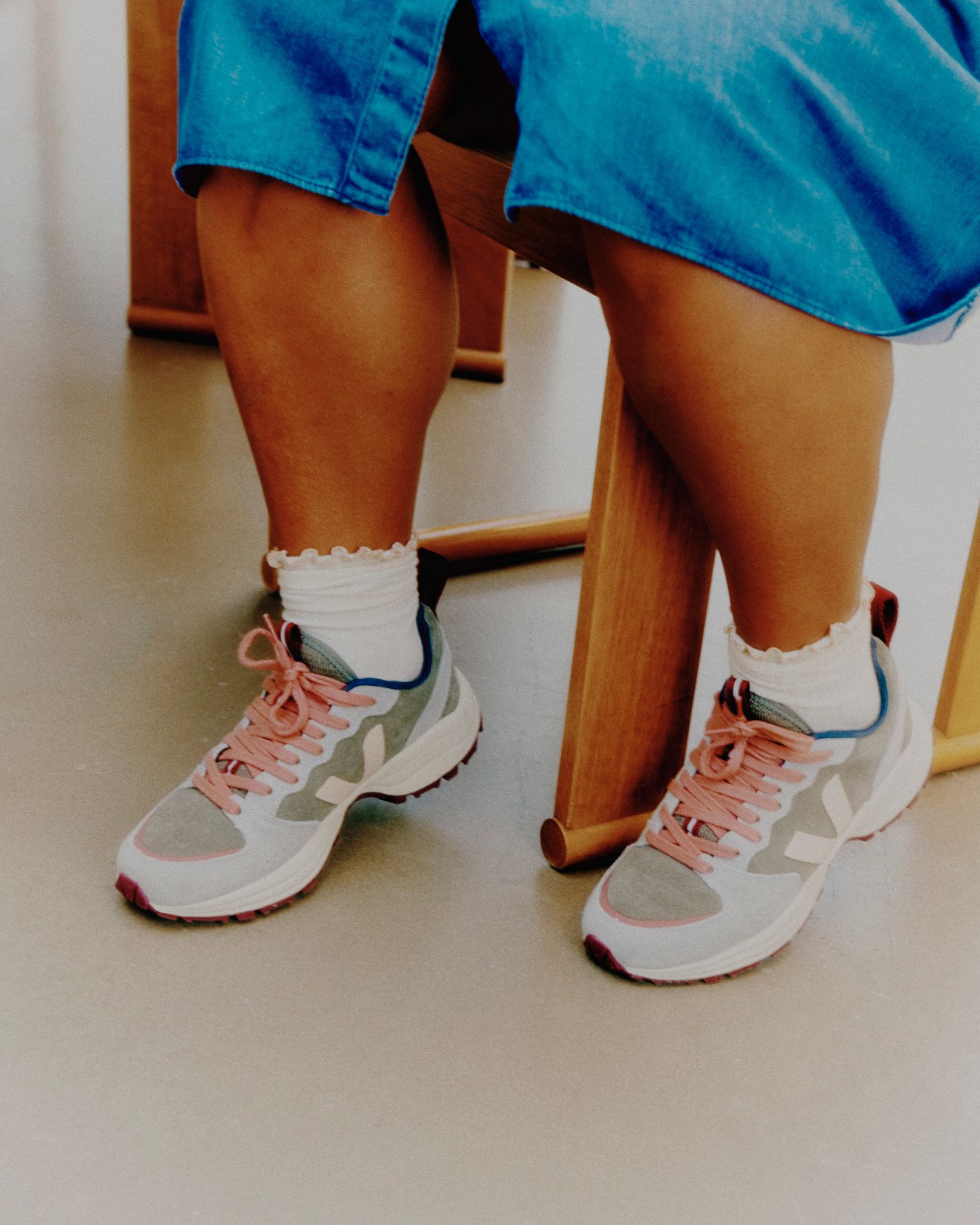
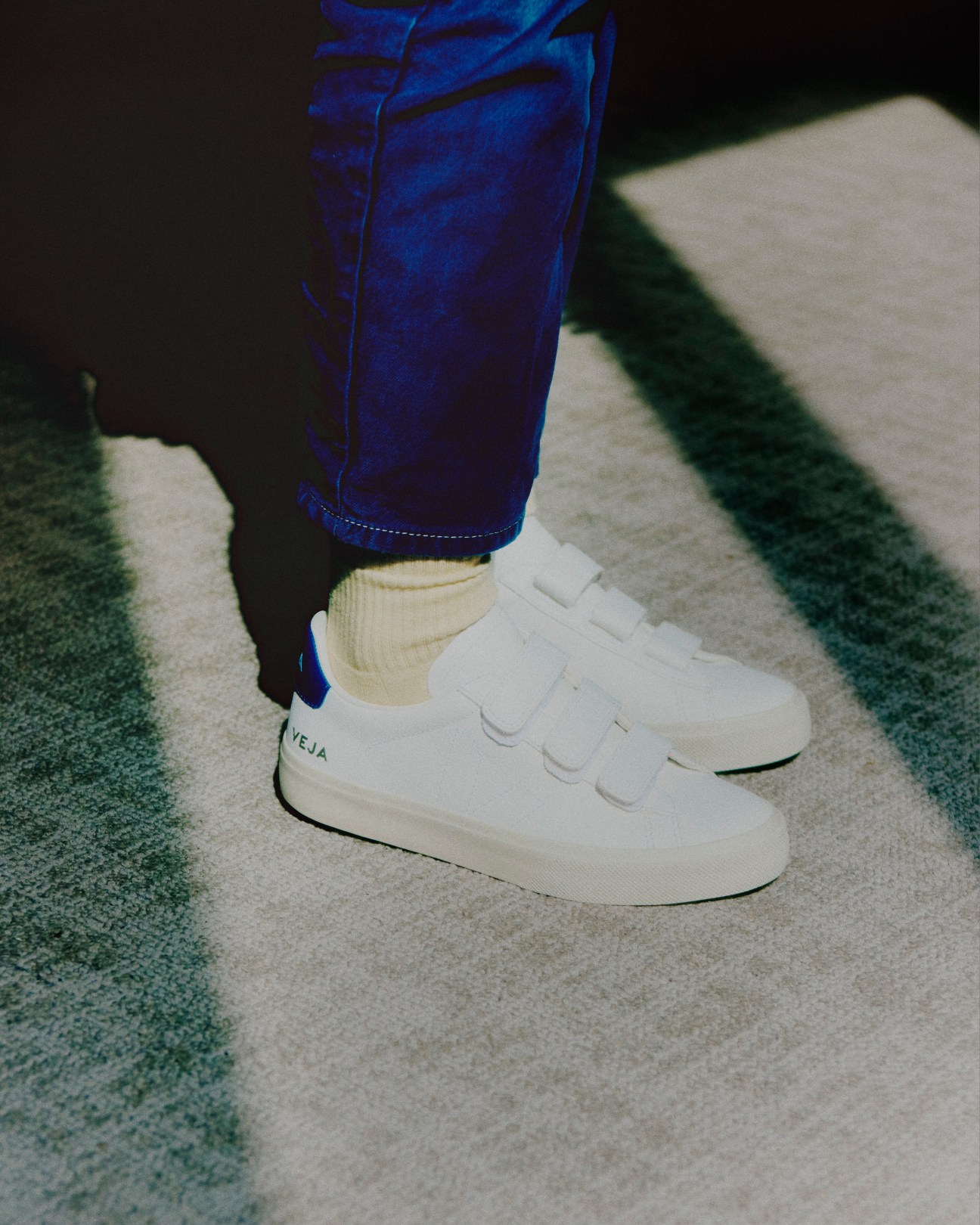
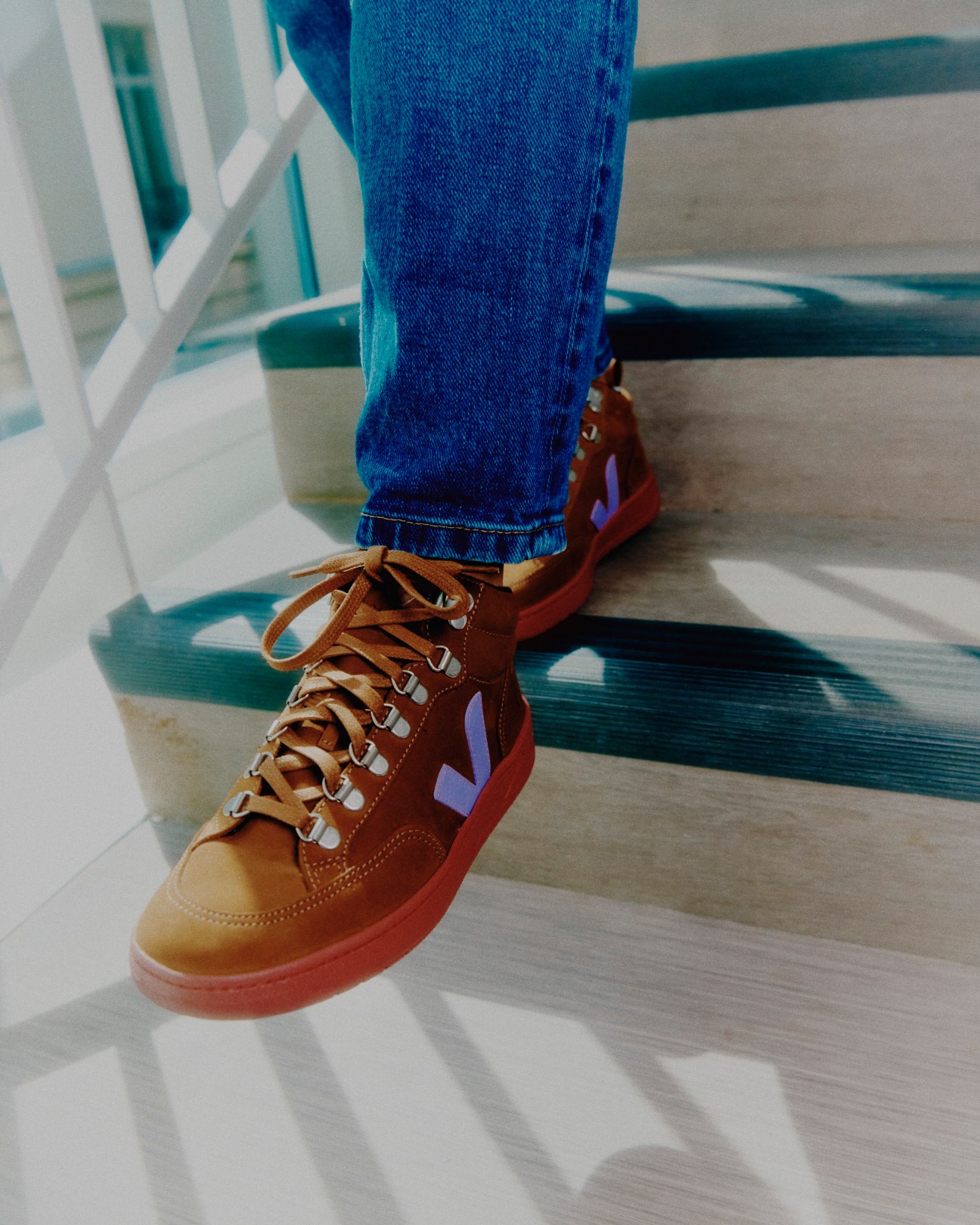
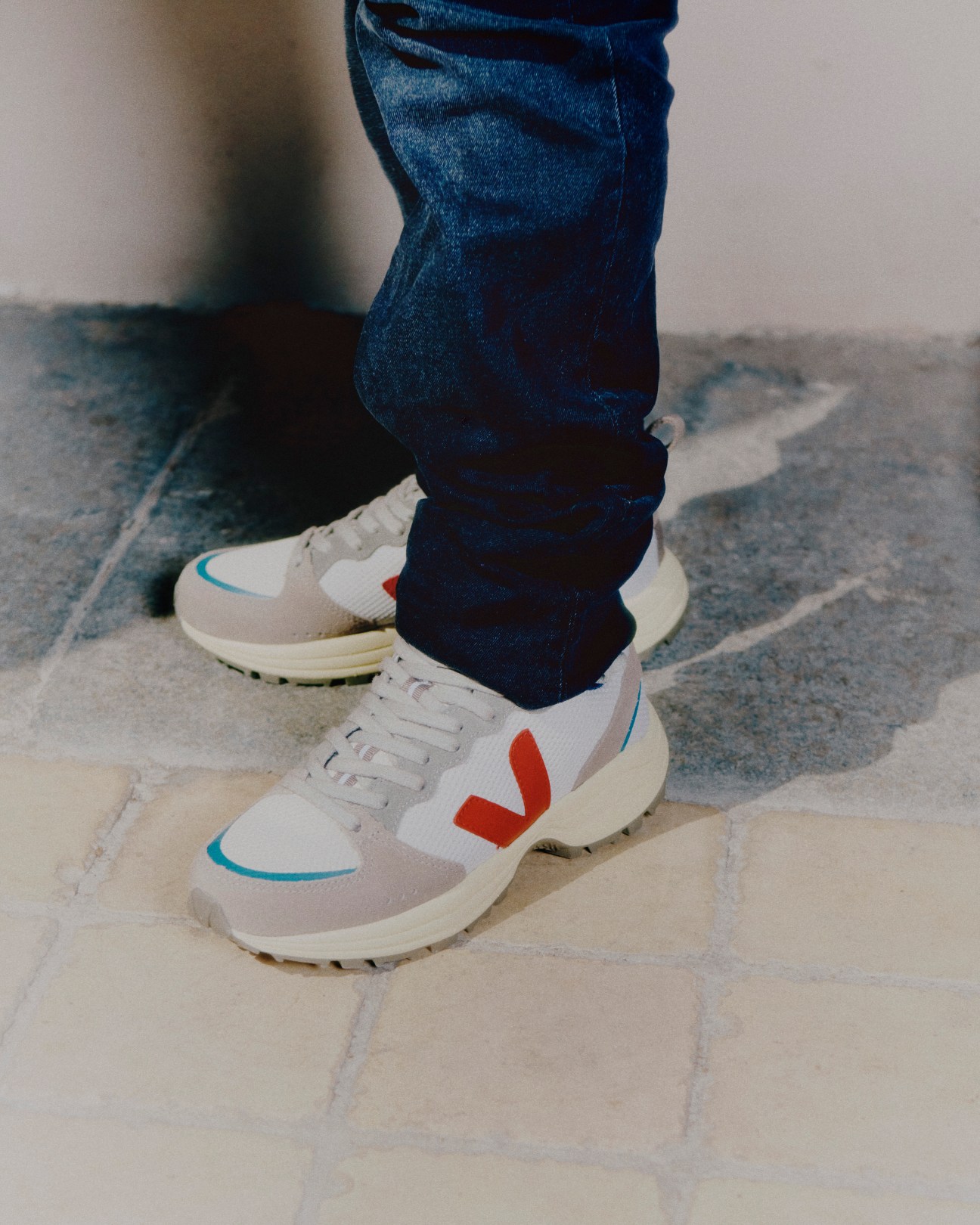
That they have been doing this since 2005 – long before eco-friendliness became fashionable, especially among trainer brands – has put them well ahead of the pack. And it is part of the reason why Veja has become a global phenomenon in the past three years. In metropolises around the world, its trainers are as ubiquitous as The New Yorker magazine totes and Birkenstock sandals. Sitting between high-street and luxury prices at €100 to €150 a pair, they are identifiable by a chunky V logo, its tip disappearing into the shoe’s base. A broad cross section of urbanites declares its allegiance to the logo, much like others do the swoosh or three stripes. The pavements of Los Angeles, Sydney, London and Paris are pounded by millions of Amazonian-rubber soles from the brand’s bestselling Campo and v10 models.
Most of the styles feature a white leather base accented with pops of colour (red, navy, forest green, powder pink) on the V and at the heel. They are easy to match with outfits and allow wearers to feel as though they’re sporting something eye-catching without taking a style risk.
It’s a formula that has widespread appeal. Rather than being edgy or cool, Vejas are democratic shoes. “They sell sneakers to kids, mums, students and teens,” says Marc Beaugé, editor in chief of Parisian fashion magazine L’Étiquette. “I don’t think the target is to be a niche, super-cool brand. They want to do a good pair of trainers that a lot of people can buy.” That includes A-listers: Vejas have become a fail-safe choice for those who want to telegraph their progressive values, including celebrities, politicians and members of the British royal family. For they possess a precious asset for a fashion brand in 2021: their hard-earned status as a shorthand for an eco-conscious lifestyle.
Without any advertising, the brand has swelled from selling 550,000 pairs of shoes in 2017 to almost three million in 2020. It now has about 3,000 wholesale stockists – from high-street shops to department stores and luxury boutiques, plus three of its own shops. It has expanded into vegan trainers, running shoes and hiking boots, and dabbles in collaborations with high-fashion designers such as Rick Owens. It recently opened repair shops in Bordeaux and Paris, and a flagship outlet in Manhattan. It brought in revenues of $120m (€102m) in 2020 and is growing by more than 50 per cent a year. It’s the ethical passion project that made it big.
“We’re in the luxury shops but not in the luxury scene. We don’t drink champagne; we drink beer in a petrol station on the road to Amazonia”
Before you assume that it’s been a whirlwind ascent, however, remember that Kopp and Morillion have been committed to their cause for 16 years. To them, it feels more like a case of “step by step”, says Kopp. The brand only releases two new styles a year – a tiny number in an industry that prizes novelty – and is still fully owned by its co-founders, who have never grown accustomed to the spotlight. Though Kopp is the more public-facing of the two (Morillion, who was travelling in Brazil, declined to be interviewed for this story), he often replies with gnomic answers and Monocle senses that he would rather be dealing with Amazonian farmers than tiresome journalists.
It’s not so much that Veja has suddenly changed as the world has shifted around it. These two Frenchmen have been calmly singing a tune that the rest of the fashion industry has taken until now – or at least until the past few years – to discover. They seem to be content doing their own thing. “We’re in the luxury shops but not in the luxury scene,” says Kopp. “We don’t drink champagne; we drink beer in a petrol station on the road to Amazonia.”
Office manager
Europe sales assistant
Creative director
Logistics assistant
Communications coordinator
Logistics coordinator
Social media manager
Content writer
Systems and network administrator
Kopp and Morillion are the rare trainer-brand founders who are not sneaker-heads themselves. Sure, they grew up wearing casual shoes but it was a desire to start a company that could have a positive impact, rather than any sartorial obsession, that kick-started Veja. Its story began when Kopp and Morillion, then 24-year-olds working in banking, decided that they “wanted to do something else with [their] lives”, says Kopp. They spent time visiting sustainable development projects around the world, from Peru to China and Morocco, and were disappointed by what they saw. They realised that ngos weren’t able “to change the reality” without funding, says Kopp.
So they decided to launch their own venture. Trainers appealed to them because they were a more public declaration than, say, organic coffee sipped at home. “Everyone in the street can see what you are wearing,” says Kopp. Streetwear was yet to fully infiltrate luxury circles and the global trainer boom that has coincided with the rise of Silicon Valley and the casualisation of workplace dress codes was still a few years off. “When we started Veja, trainers were not ‘fashion’,” says Kopp. “They were considered a cheap accessory.”
They were also ripe for a green overhaul. “The sneakers of [many big brands] are based on making a profit out of economic and social difficulties in China, Vietnam, Indonesia and so on,” says Kopp. “We said, ‘Why don’t we build a different system based on directly sourcing organic and fair-trade raw materials, finding a factory that respects the workers and at every step of the way [creating] a supply chain that has a better ecological and social impact?”
Veja is probably the first trainer brand founded with the explicit purpose of positively affecting the planet, says Harriet Vocking, chief brand officer at London-based sustainability consultancy Eco-Age. “It’s not a Nike or an Adidas trying to pivot from producing billions of shoes every year [into something more eco-conscious],” she says. “They set out to create the most sustainable trainer ever.”
“When we don’t know where something comes from, we chase – because if you’re not aware, how can you change?”
Though the brand is headquartered in Paris, you’d be forgiven for thinking that it’s Brazilian. It has an office in Porto Alegre and a showroom in São Paulo. Its name – pronounced “Vay-jah”, rhyming with “Asia” – is Portuguese for “look”. In Brazil, where it is especially popular among men, it is considered a local brand, says Monocle’s Latin America correspondent Lucinda Elliott. As if to clarify any doubts as to the brand’s spiritual homeland, when Kopp speaks to us from his office, a photo of an Amazonian village – featuring a wooden house, colourful washing lines and chickens – presides over the video call.
Brazil attracted the Frenchmen because it is a self- sufficient country. Rather than relying on imports, it has a rich base of manufacturers producing for the domestic market and natural resources aplenty. Kopp and Morillion spent six months traversing the country. They ventured to its northeast region to visit farmers growing organic cotton using regenerative agriculture so that the land becomes stronger over time; they met Amazonian wild-rubber tappers who collect milky-white latex from rubber trees and are trying to hold their ground against rampant deforestation. They stayed with these communities and figured out how much they would need to pay them “not only for them to survive but to live well”, says Kopp. They continue to visit Brazil annually to check in on their ecosystem of factories (mostly near Porto Alegre in the south) and producers.
They have been frank about their ongoing struggles to achieve their goals: there is a page on the Veja website titled “Limits”. Even now, when brand transparency has become trendy thanks to successful start-ups such as San Francisco’s Everlane, this degree of openness is rare. Kopp runs through Veja’s current blemishes. It could “do better” on its shoeboxes and it “doesn’t know” where some of the foam used inside the trainers originated. Eyelets are a headache; Kopp knows that the metal doesn’t contain nickel but he isn’t sure where, exactly, it came from. “When we don’t know, we chase,” says Kopp. “Because if you’re not aware, how can you change?”
Nonetheless, industry experts give Veja the tick of approval. Good on You, a popular online platform that allocates sustainability rankings to fashion brands, assigns it an overall rating of “good” – the second-highest – marking it down only for its use of leather. (This is a point of debate: “Are you sustainable because you are a vegan? Is plastic better than leather? I don’t know,” says Kopp.) Vocking, from Eco-Age, is more effusive in her assessment. “Veja has looked at every single element of the shoe, and it’s looking to make it better or [have] the minimum impact,” she says. “It’s supporting the people on the ground and taking responsibility for its raw materials. Not a lot of brands can do that. For me it’s as good as you can get for a trainer brand.”
Whether Veja’s eco-friendly credentials are the reason for the brand’s current popularity is another matter. Kopp doubts it. “I would guess that maybe 10 per cent of our customers know how the shoes are made,” he says. “If you see someone in the street in London, ask them – you will be surprised. Even some of my friends don’t know. But we don’t care. We do it for us.”
Even if that person in the street is oblivious to the brand’s backstory, there’s a good chance that they will know that Eddie Redmayne, Emma Watson or Meghan Markle wears Vejas. After simmering in the background for years, the brand surged into the public consciousness in the second half of 2018 when A-listers started wearing its v10s, according to Lyst, an online platform that aggregates data from more than 17,000 brands and stores.
Celebrities do not throw together outfits. These are carefully considered ensembles. “When we worked with Emma Watson on her press tour, we were doing due diligence on risk for all of her clothes,” says Vocking. Given that the British actress has become a role model for speaking out on social and environmental issues, she could not afford to make a misstep with her choice of brands. Veja “looked good but also [signalled], ‘I’m green.’ That’s a winner,” says Vocking. It’s similar in France. “Whenever politicians want to buy trainers, they turn to Veja because they know that they won’t have the ecologists on their back,” says Beaugé. So while your average person on the street might not be wearing Vejas for the company’s green credentials, the idol who influenced them probably was.
This is not to underplay the role of smart design in Veja’s success. In its Paris studio there is one overarching guideline: design shoes that you would wear yourself. “We don’t have a target in mind. The first client is the Veja studio team,” says Caroline Bulliot, the brand’s co-creative director. Clearly the studio team is not comprised of punks, goths or attention-seeking fashionistas. The styles they turn out every year are pleasant rather than boundary-pushing. You’d be hard pressed to find a model that you would feel self-conscious slipping your foot into; even the Rick Owens collaborations (knitted running shoes in ruby or caramel) are unlikely to raise eyebrows.
“A lot of people understand the design. It’s not too complicated or fashionable,” says Kopp, when asked to explain Veja’s popularity. It appeals equally to men and women and, though its biggest demographic is those between the ages of 25 and 35, everyone from grandparents to toddlers wears the V logo.
“They haven’t deviated from what they know,” says Lewis Bloyce, assistant buyer for footwear at Browns, the London luxury retailer, which started selling the trainers three years ago. “With success, some brands can often get excited and start to veer off in opposing directions but Veja is consistent,” he says, noting that the brand has a hugely loyal customer base.
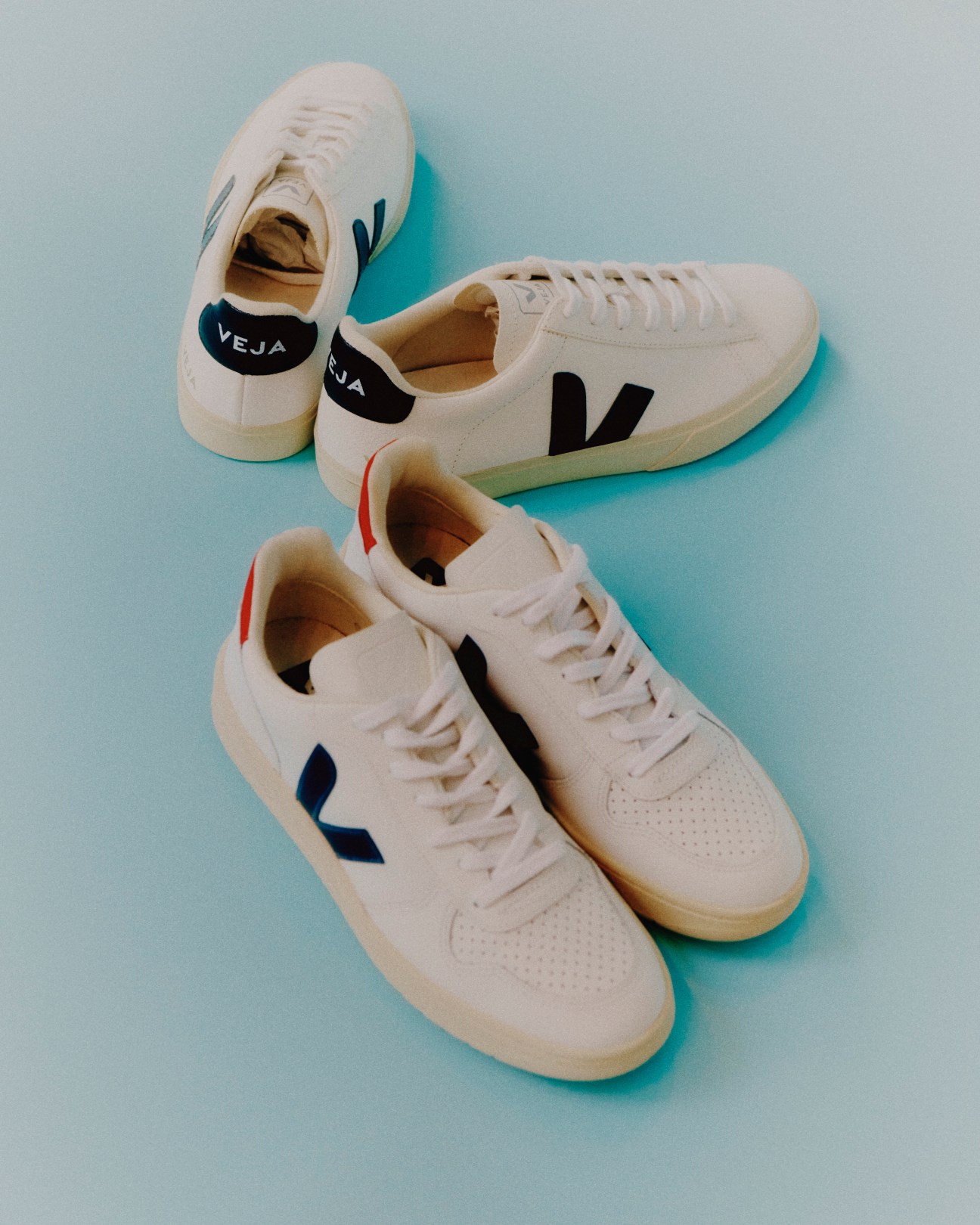
The simplicity of the designs is not purely a creative decision: limitations imposed by materials play a part. They must be able to source everything from Brazil in a sustainable way, from the sugar cane used for insoles to the recycled-plastic mesh covering the toes. “We cannot say, ‘I want velvet for this shoe,’\” says Bulliot.
It’s also an ongoing challenge to make the trainers more comfortable. The thick rubber tongue can cause blisters: many people find that new Vejas need to be worn in with plasters and gritted teeth. “It’s quite complicated because we can, of course, have nice lining with lots of foam but that’s not ecological at all,” says Bulliot. Making the trainers kinder to feet is a principal focus at the moment, she says, adding that if they put “10 per cent more comfort” into each element – the lining, the sole, the insole – “We can have something perfect.”
For all its modern, progressive values, there is something quaintly old-fashioned about Veja. When I ask Kopp whether he and Morillion have tapped into their finance training to help them run a slick operation, he almost snorts. “It’s the opposite,” he says. “We don’t spend any time on optimising finance. We’re very bad at this.” The brand is completely self-funded (they invested about $8,000 each on day one); it avoids working with banks that have branches in tax havens; and it has limited how much it increases production each year in order to keep things manageable. “We run the company like grandparents, not bankers,” says Kopp.
In 2018 they ran a hypothetical study to figure out how much cheaper their trainers would be to produce if they made them in conventional Chinese factories with inexpensive materials (such as synthetic rubber and common, non-vegetable-tanned leather). The result? They found that the process would cost five times less.
In order to maintain their costlier production methods yet still sell their trainers at reasonably accessible prices, Veja directs all of the money that would usually be spent on advertising and marketing into its supply chain. “We don’t pay athletes or models,” says Kopp. “We don’t pay people to wear our shoes. All the time we didn’t spend on creating artificial stories we spent on sourcing. It’s another kind of job.”
If anyone were to accuse the brand of “greenwashing” – hyping up its eco-friendly values, which has become a common practice in the fashion industry – a simple rebuttal would be to point out that the brand doesn’t really hype anything. There’s no mention of sustainability on its website. One gets the impression that the duo can’t be bothered to play the media-spin game. “What they’re doing wasn’t pre-thought,” says Beaugé, the fashion editor. “It wasn’t like they said, ‘We’re going to do something that will make us very rich.’\” They might have found a lucrative market for their trainers but that wasn’t their intention. “Their first thought was: ‘Let’s do something we can be proud of and that will have a positive impact on the planet and on people.’\”
Kopp is tight-lipped on what will come next, though one imagines that Veja will open flagship shops in major cities beyond Paris and New York and that its new model of outposts dedicated to repairing and recycling old trainers will continue outside France. He admits that there is room for improvement on the running shoes, which launched in 2019. These, he says, are “like our Formula One”, in that the brand’s latest research and development innovations are applied to their designs (the current priority: increasing lightness).
Kopp is particularly forthright about two things. First, Veja has no plans to expand beyond shoes. Second, he and Morillion will not sell their baby. “It’s our life,” he says. “It’s what we created and how we have fun. Once we can say, ‘Everybody is doing what we do,’ or, ‘Every brand is sustainable – but in a real way,’ we can do something else. But the road is still very long.”
Change is afoot
There’s something about October, especially in the northern hemisphere. It’s the month when summer has truly gone and the temperatures drop. And with that usually comes a sense of greater clarity; of work or studies taking over your thoughts again. So while packing away the beach towels might not be fun, it’s a time when you can get things done. A time to put into action plans that were scribbled in notebooks or on the backs of restaurant menus during holidays at the beach or hiking in the hills. And that’s the same feeling we get at Monocle too.
Across the summer we’ve been sharing ideas between our Zürich and London HQs about a meaningful but gentle remake of the magazine that would enable us to stay looking our best and reflect some of the things that have happened to the world – and Monocle – over the past 18 months. Because it’s been a time that has made many businesses consider what they want to do, what they want to stand for; us included.
We’ve found, for example, that the measured common-sense opinions delivered in our newsletters and on Monocle 24 have gained us new readers and listeners over recent months. We have seen that Monocle can still be a place of genuine debate that doesn’t turn into a Twitter spat; while people disagree with some of our guests on the radio, or even with our editors, the correspondence that follows is usually considered and engaged. And you know you are doing something right when, on the same day, your inbox contains missives telling you that you are both too tough and too gentle on the Biden administration. And as newsrooms around the world go virtual and reporters stay in their bedrooms, we have seen a flourishing demand for more expansive, on-the-ground reporting.
In discussions with Tyler Brûlé, Richard Spencer Powell, our creative director, and all our editors, we felt a need to look at how we could reflect all of this on page. And the outcome is in your hands. Of course, we will let you explore and see how you like the new look but a few pointers from me before you head off through the pages. We have introduced a new Agenda section at the front of the magazine where we can run comments and columns on more diverse topics and bring together the former Briefing pages in one place. In turn, this frees up space for longer reports, such as Charlie Faulkner’s incredible diary from Afghanistan (page 61) and our long read on Veja (page 177), the trainer brand that has got to the head of the pack by trying to do the right thing for staff and suppliers at every step but which is wise to know the limitations it faces.
And to capture the hunger for honest conversations, we have introduced a new feature, The Debate (page 79), which this issue features a group of passionate Aussies discussing the nation’s coronavirus strategy and whether it has shown the country in an unfavourable light on the world stage and thrown a focus on some of the country’s less comfortable traits back home.
Ten years ago, October was also the month that we chose to launch our own radio station and podcast service, Monocle 24. It’s incredible to see how the station has become such a part of people’s lives and such a commercial success as well, thanks to the incredible brands that understand the power of audio. So this issue also features a celebration of all the team’s hard work (page 129) as we look back at just a few of the highlights on air.
There are many more things to discover in this issue but at the heart of everything we do are still the commitments that we made on day one of Monocle: to go out into the world and report from on the ground; to not follow the global media pack; to find our own course through the challenges of running a media company; to be open and accessible to our readers; and to make a magazine that celebrates the craft of print. Those things will never change.
If you want to drop me a note about Monocle, feel free to email me at
[email protected]. And here’s wishing you good luck with all of your plans to change things this season.
Make your mark
Taking that first step
Have you ever wondered what life might be like if you jacked in the day-job and started something on your own terms? You’re not alone. It’s exactly this entrepreneurial itch that lead our team to create our newest handbook on the world of business. The Monocle Book of Entrepreneurs is published in September, and distributed by Thames & Hudson, and charts the journey of 100 ventures with credibility, charm and something to teach the world. We benchmark the businesses making meaningful changes for themselves, their staff and their customers (not “disruptors” or boring bedroom billionaires doing incomprehensible things on back-lit screens). On that note not all businesses need to shake the stock market or be flipped every five minutes. There’s another value entirely in opening a long- dreamed-of b&b in the Alps or an eco-conscious fashion brand in a city where you can see the sea. What about building a brand you’d be proud to pass on to your children?
So whether you’re starting something modest or massive – to make things better, help revive a town or just nail a niche – you have a simple decision to take. How should you balance your work and life? Profits and purpose? We can help. As a sneak peek between the covers of The Monocle Book of Entrepreneurs, here are seven case studies to help inspire, inform and maybe even nudge you in to taking the next step. Remember, you can decide what success looks like.
X Shore
Stockholm
The serial innovator making waves in the boating world.
Founded: 2016
Employees: 60
Initial capital: €8.3m
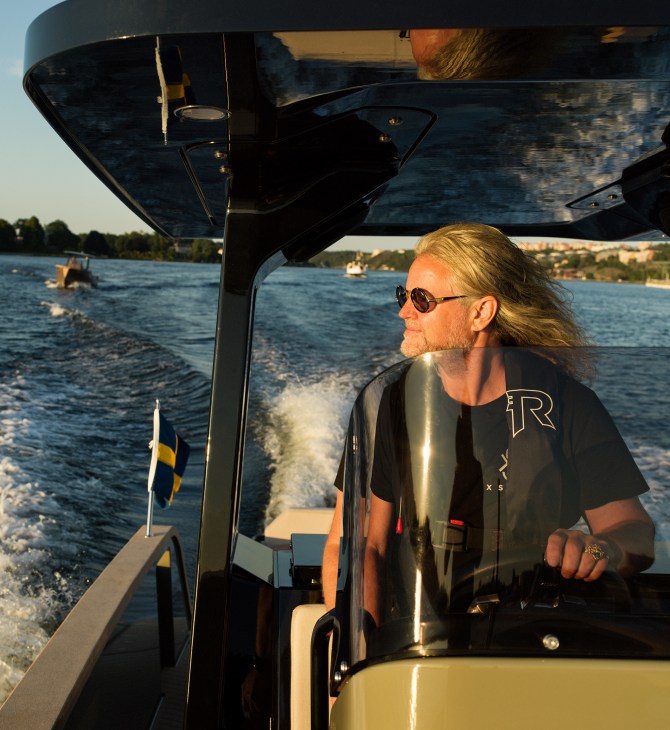
Konrad Bergström is well acquainted with the highs and lows of being a business owner. He had huge success early in his career with a clothing distribution business, but the company folded and for a time Bergström was even sleeping in his car. Being the seasoned entrepreneur that he is, however, he dusted himself off and went on to enjoy further success producing headphones and speakers. His most recent venture is X Shore, an electric boat company launched in 2016. “When I throw the dice, I go all in,” says Bergström. “I think you need that kind of mentality to succeed with innovative projects.” The company makes fully modular pleasure craft equipped with electric motors that make for a quieter and more relaxed onboard experience, as well as lessening the harmful impact that motorboats can have on their surroundings. “For me, it was important to provide a way for people to get out on the water without the noise and fumes that usually disturb wildlife and marine life.”
Q&A with Konrad Bergström
How did you secure funding?
I sold my old company. At that point, I could have probably kicked back and gone surfing but I’ve always felt the responsibility to be part of a positive change.
What’s the biggest challenge of your sector?
Driving the future of connected electric boats is always a challenge when you’re the innovator, and not a follower, because everybody looks to us to set the standard.
How do you build your team?
I don’t tend to employ people that I would choose to hang out with on Fridays. I want people who are very different to me, who can bring outside knowledge and something else to the table.
Vietcetera
Ho Chi Minh City
The expat entrepreneur who turned his curiosity into a business idea.
Founded: 2016
Employees: 85
Initial capital: €1.4m
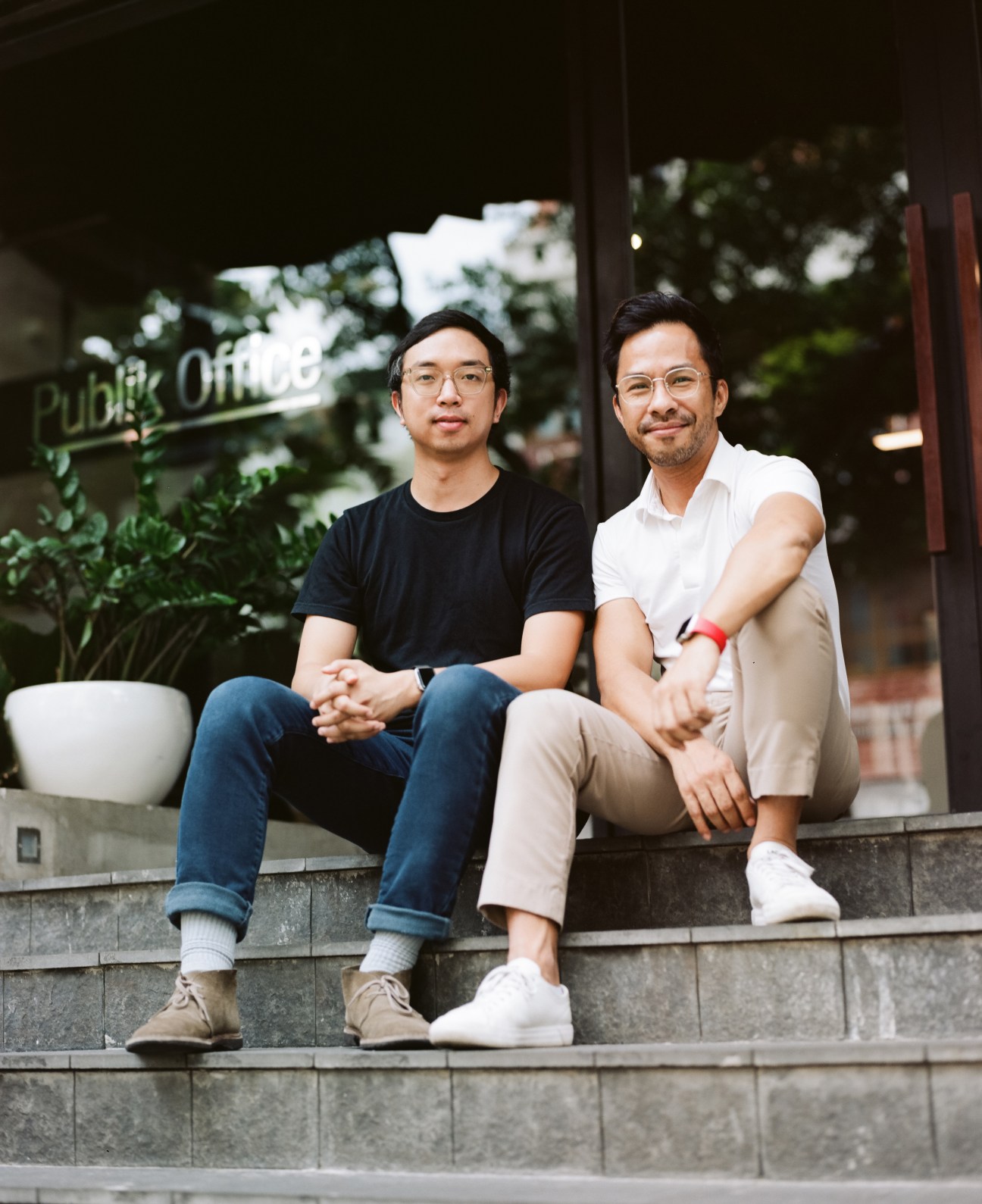
Lifestyle-focused news site Vietcetera, published in both Vietnamese and English, is read by millions in a country where much of the media is state-controlled. “We are one of the few private media companies here and we happen to operate in a space where we need to be sensitive,” says co-founder and CEO Hao Tran (pictured, on left). “But, given the kind of content we’re creating, we’re promoting Vietnam.” Tran is an overseas Vietnamese or “Viet Kieu“. Originally from San Francisco he came back to the country that his parents left because of the Vietnam War. “My motivation for starting Vietcetera was to better understand Vietnam,” he says. “My interest in media grew from discovery and learning about the industry.” Today the site has the country well covered: from where to eat to what brands to own. While only a tiny fraction of readers visit the English site, it is a key portal for international brands looking to understand and invest in the rapidly developing country.
Q&A with Hao Tran
What’s the biggest challenge of your sector?
For the media industry at large, advertisers are still largely consumed by numbers, not the actual content.
What advice would you have given yourself at the beginning?
Listen to your customers. In our case, our readers and clients. Document as much feedback as possible and share with your team.
How long did it take to get from idea to reality?
Two years. The big milestone for us was adapting to the fact that we needed to be in Vietnamese, in addition to English. It was a difficult adjustment but necessary to bring the company up to the scale we enjoy today.
Type Books
Toronto
The collaborative Canadian bookshop where readers help to set the tone.
Founded: 2006
Employees: 13
From idea to reality: 1 year
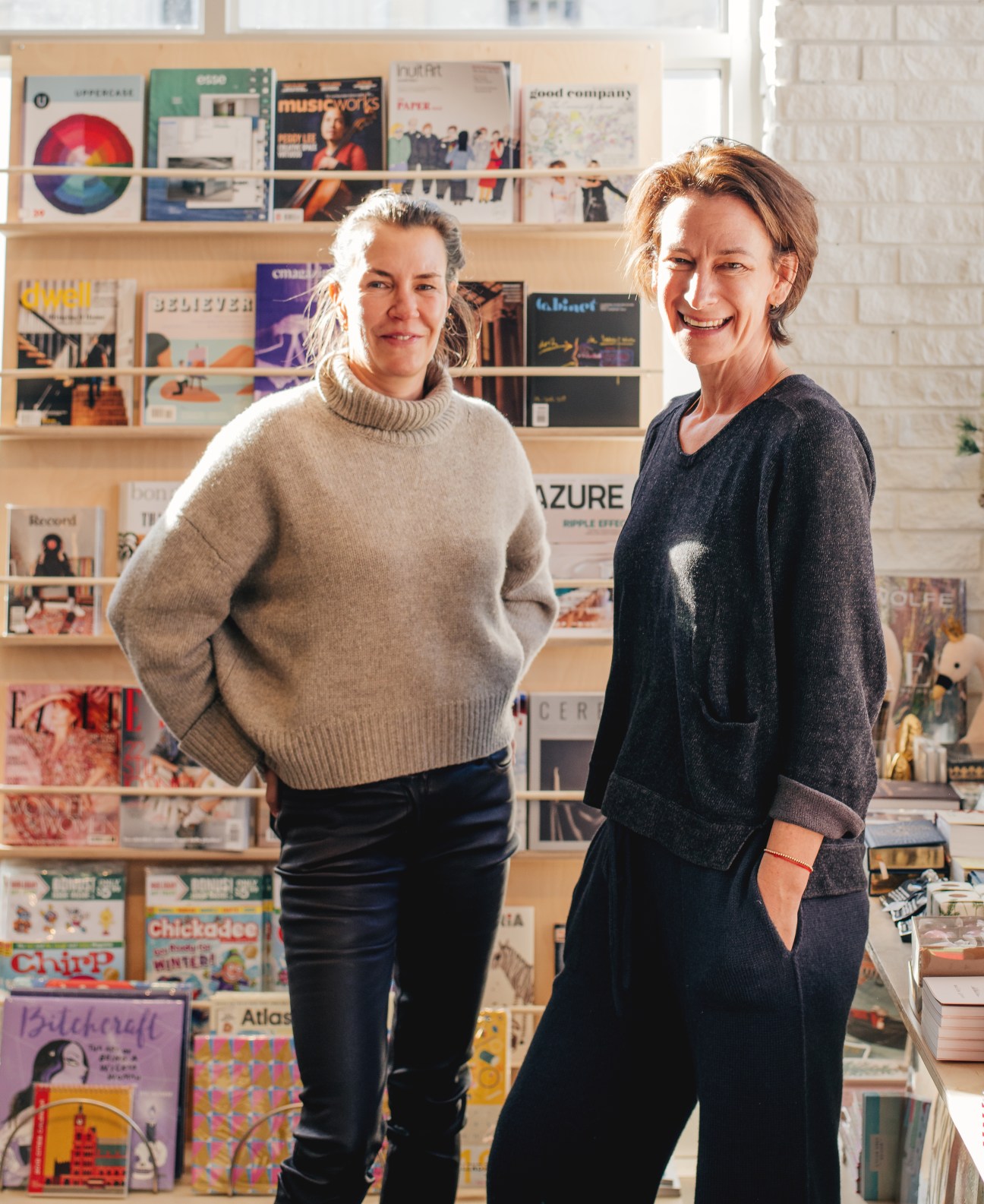
Joanne Saul and Samara Walbohm (both pictured, Saul on left) founded Type Books in 2006. “When we started, Amazon was on the rise and so was Indigo [Canada’s largest book retailer],” says Saul. “Neighbourhood bookshops were disappearing.” Now Type has three locations across the city and is one of the best-loved names within Toronto’s rich constellation of independent sellers. “Our bookshops are a collaborative project,” says Saul. “We have incredible staff who help us choose the books. But our selection is also influenced by the people who come in and talk to us.” Literacy programmes for children, readings and signings, and exhibitions by local artists are also among Type’s offerings. A recent innovation is the “mystery bag” of books, which costs ca$100 (€68) and is personally curated by one of Type’s booksellers (the novelist Margaret Atwood is among those to have bought one). “In those bags we’re able to do what we love, which is to put the right books in people’s hands,” says Saul.
Q&A with Jo Saul
What’s the biggest challenge of your sector?
Margin, and not being able to control the prices – they are generally printed directly onto books.
How do you build your team?
I think our team builds us. Many of our hires are through contacts from our current staff or even customers.
How did you secure funding?
What we imagined ourselves doing was so against the prevailing wisdom at that time, that finding capital was impossible. In fact, many people thought we were crazy. Thankfully, we had some savings, and our families and friends were willing to take a risk and help us out.
Studio Astolfi
Lisbon
The visual merchandiser elegantly illuminating window displays.
Founded: 2007
Employees: 15
Became profitable after: Five years
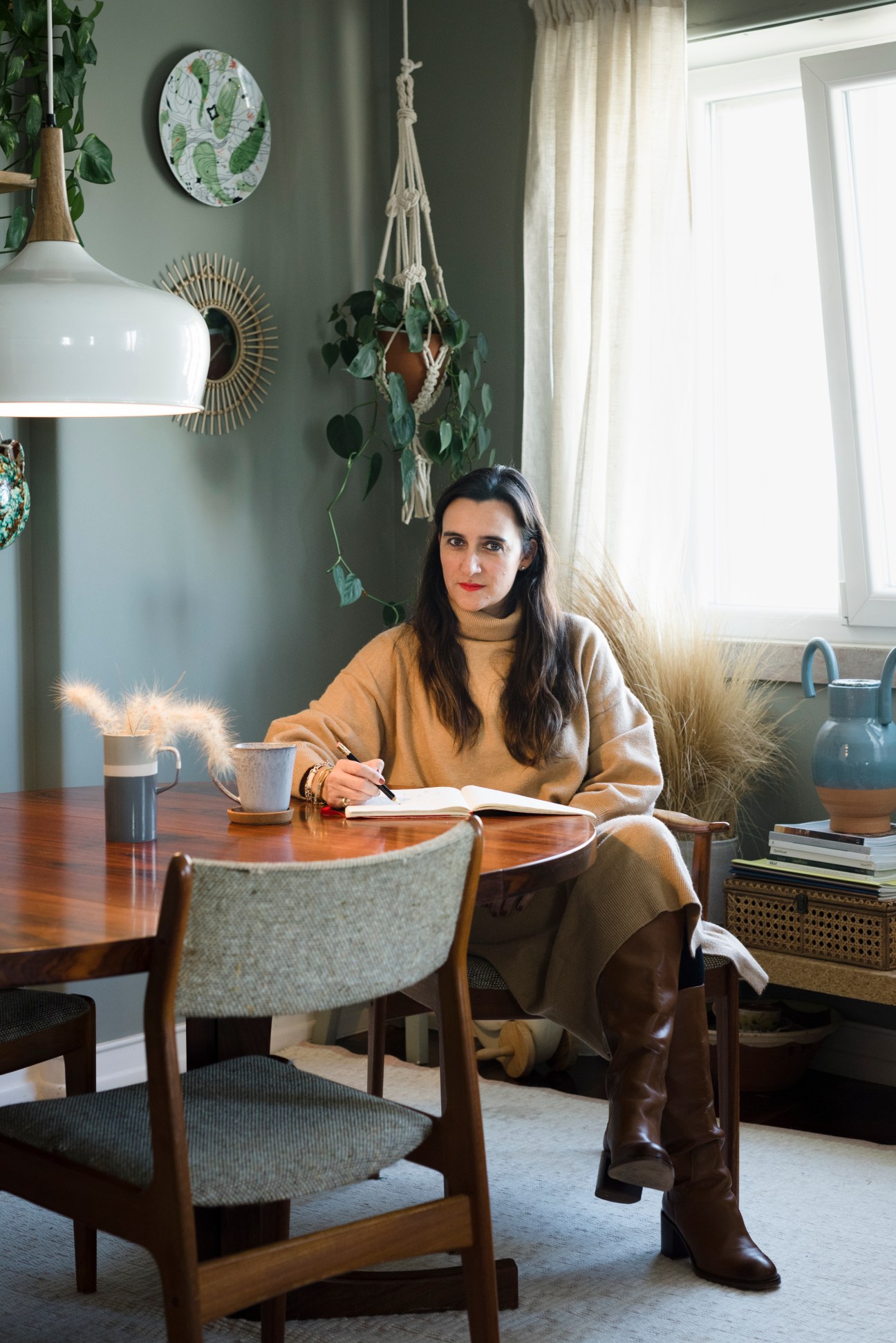
There’s no doubt that window displays are an art form, and one of the finest examples is Portugal’s Studio Astolfi, which has carved an attractive niche for brands including Hèrmes. Studio Astolfi’s work for the famed luxury goods purveyor has wowed the passersby of its shops in Portugal, Spain and France, where objects and spaces take customers through an experience. The woman behind the brand is architect and designer Joana Astolfi, who founded the studio in 2007, combining her training with a passion for the visual arts and collecting second-hand objects. While she started solo by doing individual projects and collaborations, today the studio relies on a small staff comprising artists and architects, as well as an external team of woodcarvers, welders and glassmakers to turn her vision into reality – her imaginative commissions can take upwards of two months to come to completion. “Window displays are a sort of open-air gallery,” says Astolfi.
Q&A with Joana Astolfi
What advice would you have given to yourself at the beginning?
To develop my business skills earlier. I’m a creative person but as the founder of the studio I need to be fully involved in the business side of things too. I now have a team that helps me but there were some early projects where we ended up making a loss because I didn’t present more realistic fees.
How do you build your team?
I’m not interested in portfolios and CVs: instead I like to meet people. I want to find out what their passion is and why they love what they’re doing. They don’t need to know it all; in fact I like it when new team members grow while they work at the studio.
Stayfolio
Seoul
The side-hustle that grew into a serious revenue generator.
Founded: 2015
Employees: 40
Annual turnover: €15m
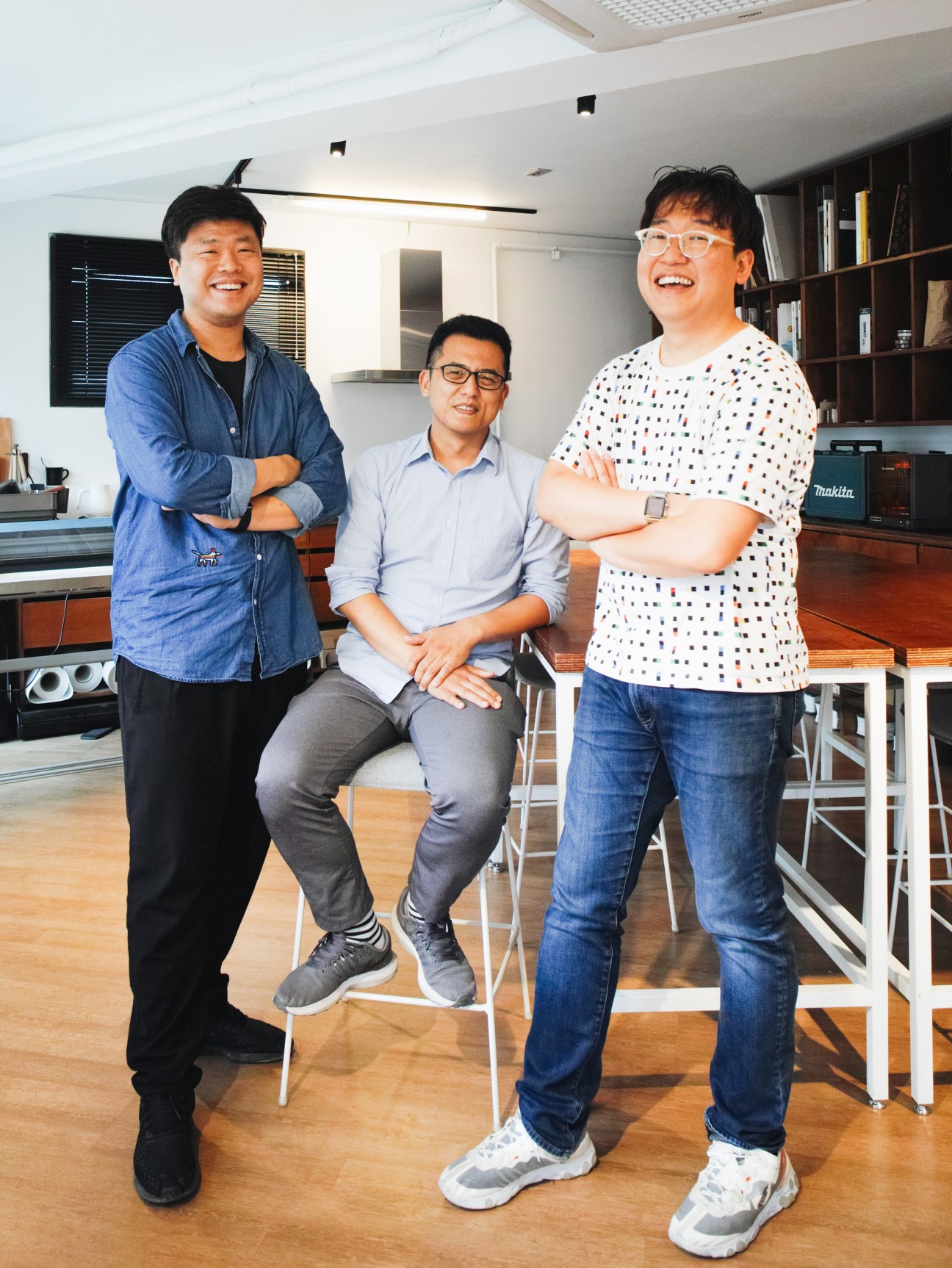
Stayfolio is a property-rental platform with a difference. The lettings website – a discerning apartment-rental service for design fans – was launched in 2015 by the founders of the Seoul-based architecture firm Z-Lab: Park Jung-hyun, Noh Kyung-rok and Lee Sang-muk (pictured, from left). It features the studio’s growing portfolio of rental projects, spanning hanoks in Seoul to a farmhouse and caravan park on the southern island of Jeju. The architects redesign and renovate the properties, which are often second or unused homes, and then take charge of the marketing, management and even mood – each address has its own fragrance and music playlist. In return they take a share of the profits. “Our guests have money to spend but they don’t just like luxury, they want originality and design too,” says Noh. What began as a side hustle has now become a core part of the company. In fact Stayfolio has proved an effective billboard for the team’s architectural talents, attracting new commissions for Z-Lab and fresh capital.
Q&A with Lee Sang-muk
What’s the biggest challenge of your sector?
Finding new spaces. Many places look amazing in photos but are not great in reality. We are constantly challenging ourselves.
What does company culture mean to you?
We believe in positive thinking and rather than relying on individual performance, we value teamwork: we may go faster if we go alone, but we can go further if we do it together. We also value the process rather than the result.
What are the benefits of being based in Seoul?
It’s a megacity with 10 million citizens. It is both traditional and modern and has magnificent potential.
This Is Us
Lagos
The creative duo championing the community alongside their own brand.
Founded: 2016
Employees: 12
From idea to reality: Four years
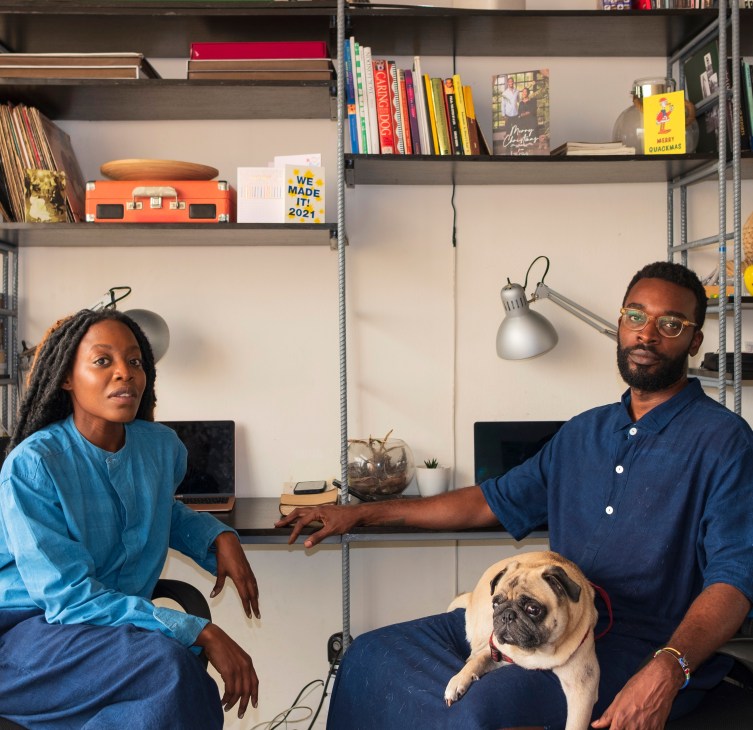
This Is Us takes “locally manufactured” to its limits. Based in Lagos, the clothing brand’s boxy indigo-dyed uniform-wear isn’t just “100 per cent Nigerian end-to-end”, as husband-and-wife owners Oroma Cookey-Gam and Osione Itegboje say. The brand started when the pair undertook a cross-country trip in search of materials. They ended up at the cotton farms of Funtua in Katsina State. Today, its cotton is grown, woven, dyed and sewn into clothing here. “We realised how much exists in our textile industry that’s under the radar,” says Cookey-Gam.
This Is Us also connects young makers with farmers and manufacturers. One business that has benefitted is the Kofar Mata dye pits: when the duo visited there was only one operating pit. This Is Us began dyeing its clothes there in a process unchanged in 500 years and now the facility is undergoing a resurgence. “We want to be in the middle of the talent, the resources, the craftsmanship. We want to create something for the industry.”
Q&A with This Is Us co-founders
How did you come up with the idea?
I was trying to find locally made cotton and it was impossible. So we started researching and discovered an entire developed and underutilised cotton industry that was almost completely untapped. We decided that we wanted to design and showcase Nigerian culture.
What advice would you have given yourself at the beginning?
We’d do it exactly the same way – but would be more appreciative of the time it takes to do things properly here.
What’s the best thing about being your own boss?
Being able to plan our time and our work around our family.
Officine Universelle Buly
Paris
The historic brand that has been brought back to life.
Founded: 2014 (originally 1803)
Employees: 500
Initial capital: 1 year
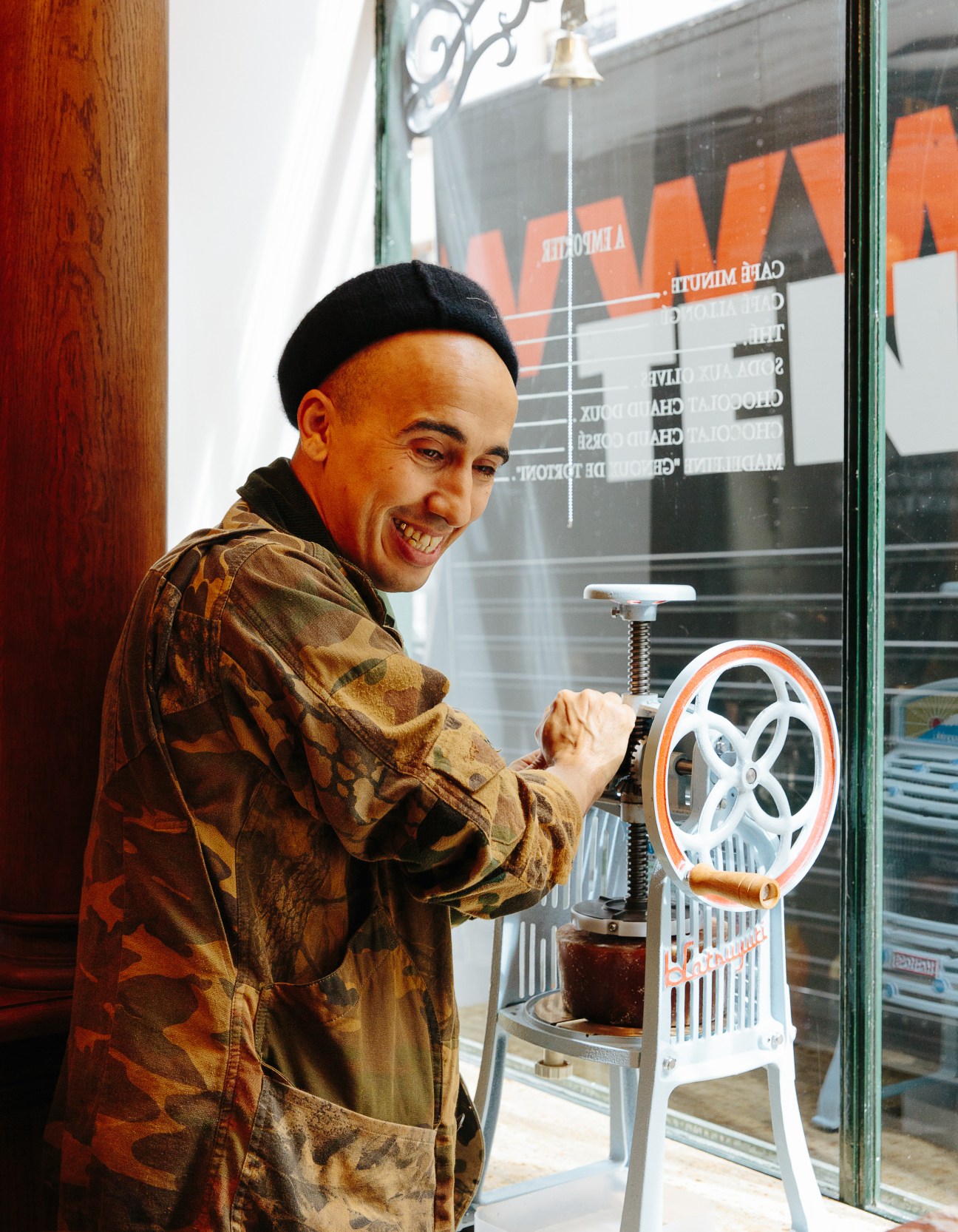
When it comes to breathing new life into heritage brands, Ramdane Touhami is a seasoned professional. In 2006 he revived French candlemakers Cire Trudon (originally established in 1643) along with his wife Victoire de Taillac, an endeavour that proved a global success. “After Cire Trudon, I wanted to move more into the perfume and cosmetics industry,” says Touhami, who sold his stakes in the business in 2010.
The idea for Buly came to him while reading Honoré de Balzac’s 1837 book César Birotteau, which tells the story of a French perfumer who lost his fortune. After discovering that the character was based on a historical figure called Jean-Pierre Bully, Touhami and De Taillac acquired the name and launched Officine Universelle Buly. Today, Buly has shops in a number of countries and manufatures more than 900 products including alcohol-free scents and paraben-free cosmetics, all elegantly packaged in old-fashioned vials and jars.
Q&A with Ramdane Touhami
What advice would you have given yourself at the beginning?
Read contracts carefully. And if you’re looking for investors, choose them wisely – think about whether you really need them.
What does company culture mean to you?
Everyone should be learning – me included.
How do you build your team?
When someone leaves my design studio, I let the team decide who they’re going to hire. I put a lot of energy, however, into finding the right shop staff. You can have the nicest packaging and make the best product, but if your client is treated badly in the store everything is undone. They’re the face of the brand.
How to put together the perfect pitch
The lesson: This is your chance to grab an investor’s attention – show them that you are innovative and that your idea is going to make the world a better place in one way or another. Just don’t ramble on.
I lived in Silicon Valley for 10 years and became accustomed to seeing 10 entrepreneurs pitch the same idea in the same hour. I soon realised that storytelling is essential. As a former BBC journalist I know how to make people talk, gain their trust and tell their story but, from my experience, that is not always the case with entrepreneurs. To simplify your story into a five-minute pitch takes work and practice. The process is important but never forget what you want to achieve. Aim for fluency and keep these universal rules in mind:

About the writer:
Perruchet is an international marketing and communications director who has worked with Netflix, LinkedIn and Adidas.
Invest in your branding
The lesson: A company’s brand identity should bring its founding values to life – and draw in a few customers too. Don’t forget to have fun too.
Research
Look at the market, visit similar operations and sample the competition. Keep a record of the elements that you like: it will help to explain your ideal positioning to any prospective design team.
Pick a good agency
It is important to have faith in the team that you entrust to design your brand. They are the experts, so it is important to listen to their advice. However, don’t allow them to go off point and create work that satisfies only their taste. If it doesn’t feel right, it probably isn’t.
Go beyond the logo
Designers often refer to the logo, colour palette, business card and letterhead as the basic elements but you don’t want to be left with just these. Extra printed material and branded pieces can convey much more.
Application
How you colour, print and position your brand is key. A beautiful logo that is too small or disappears two clicks into your website won’t make an impression. Make sure that your brand’s palette is as colourful as you want and logos and patterns are suitably scaled. Think in terms of volume: some things need to be quieter, others you may need to turn up.
Further development
Think big. Things that seem unlikely at the outset may quickly come into play. Your logo may have to be scaled up to live on the side of a delivery van. Test it to see if it works.
Maintenance
Have simple guidelines in place as to how your brand is handled. Regular checks should ensure that the appearance stays true to the original design.
About the writer:
Powell is Monocle’s creative director. He has branded not only the magazine (and this book) but also our retail division.

The eight golden rules of customer service
Curb your enthusiasm
Customer service is about putting people at ease, not bowling them over with your bounteous knowledge. If in doubt, err on the side of formal. Start off with eye contact and a handshake before you go in for bear hugs and high fives (if ever).
Presentation matters
In person, this means dressing the part – ideally in an outfit that can transition from boardroom to boarding lounge, retail floor to work drinks. A well-cut uniform works for shop staff and a Boglioli blazer and Alden brogues for the CMO.
The customer is sometimes wrong
Don’t be afraid to stand up to unreasonable demands and rudeness. Be firm and fair when confronted with red-faced rabble rousers who are getting angry over something beyond your control.
Hire judiciously
Seek out people who buy into your brand and go beyond what’s expected of them. If you wouldn’t fancy going for lunch with them there’s a good chance your customers won’t take to them either.
Reward loyalty
If you’ve got them – keep them. There’s no substitute for a band of truly happy, committed staff. Conversely, vexed employees will make customers feel uneasy and are less likely to go that extra mile.
Lead by example
It’s difficult to expect your staff to be fair, courteous, punctual and upbeat when their boss hits the roof at the slightest provocation. Every hire should feel valued, listened to and rewarded – they will likely apply these values to their customer service. There’s nothing more compelling than an inspiring leader.
Don’t be afraid to sell
While people need space to reflect and ponder, aloof nonchalance can come across as rude. Encourage staff to open up and engage, and don’t be afraid to remind them they’re there to make money and meet margins. It’s worth remembering that some customers want to be convinced.
Be social
Cultivate a loyal band of “supporters” with good conversation, coffee and a glass of something cold. Your clients should feel part of something. Of course, there’s a balance to strike here too. If they haven’t bought a button for months, perhaps it’s time for a reminder that you’re an enterprise not just a convivial hang-out.
About the writer:
Grove is the editor of Monocle’s sister publication Konfekt
Business
Perfect circle
Japan — F&B
Nori Ko started his company Sunshine Juice in Tokyo back in 2014, just as the juice boom was taking off in Japan. While he soon had multiple locations and nearly 100 staff, he now feels that success got in the way of his original mission. “I was spending my time going between shops and hardly getting out to meet farmers – the part I like best,” says Ko (pictured).
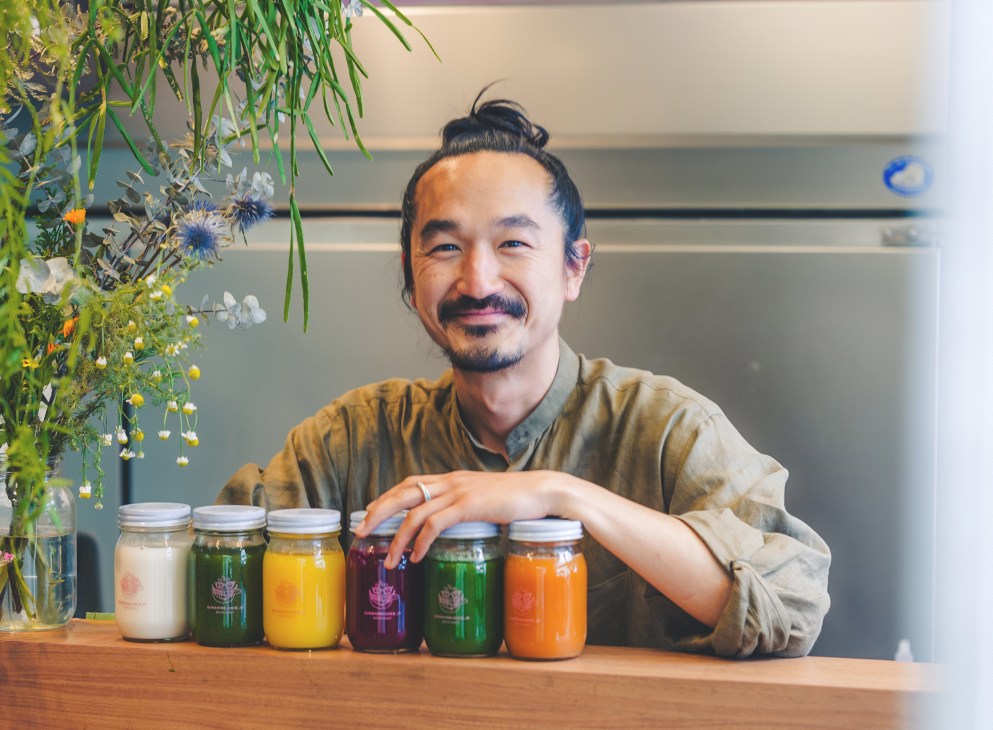
He took back control, buying out his business partner and scaling the shops back to one location. Ko uses only domestic produce and buys from farms all over Japan.
Ko studied how to use unwanted peels and juice pulp for compost and supplies leftovers to a group of Chiba surfer-farmers who make their own compost and supply him with produce. “There’s a nice circularity to the whole thing,” he says. The business is finally what he always meant it to be.
All work, all play
Global — housing
Is the pandemic the death knell for co-living? Perhaps not…
Home sweet home – whatever that is. The past year has demonstrated that even the most solid-seeming aspects of our lives can be redefined in an instant. Living spaces have become offices, gyms and therapy rooms, while the remote-work revolution has led life-long urbanites to pack up their laptops and emigrate to the countryside. The expectations, and demands, of our dwellings have been completely scrambled.
Before the pandemic, co-living was pitched as the elixir to our urban-housing needs. A wave of technologically savvy developers with utopian names – The Collective, Common, Nest – expanded rapidly across cities such as London, New York and Berlin, building high-density blocks that resembled something between student halls and a hotel. What residents lacked in their private quarters was compensated for with communal facilities such as bars, gyms, cinemas and a community of like-minded people. Live, work, network, play! All within a few feet of your (tiny) bedroom.

It divided opinion but, for many young professionals, co-living offered a decent compromise compared with dodgy landlords, agency charges, overinflated rents and dreadful housemates. In North America, the sector expanded from about 100 beds in 2014 to more than 7,000 at the end of 2019, according to global commercial property firm Cushman and Wakefield. By summer 2020 this figure was pushing 8,000, with more than 54,000 beds in various stages of evaluation and development. The pattern was similar in Europe.
Co-living did, however, take a hit due to coronavirus. Tenants returned to their home countries, fewer people moved between cities and many fled them altogether. It was a death knell for some operators. Quarters, a German company, declared bankruptcy for its US operations; Hubhaus, based in San Francisco, collapsed; Roam, a co-living community that spanned Miami to Bali, pivoted to traditional real estate. “As it turned out, long before the pandemic, leasing buildings in expensive cities at what is most likely already the tail end of an economic and weird cultural boom and running them at a loss backed by speculative capital is, well, not a good long-term business to be in,” Roam declared in a farewell note.
Yet investment ploughed on. Node raised €296m to fund its European expansion. Dash Living and Weave Living, both based in Hong Kong, are set to expand across Asia. Common, which has 17,600 residential units under development in 26 cities, raised a further €42m.
Residents were lured back; for some, co-living had renewed appeal. As the year wore on, many people actively sought housing that came with an in-built social scene. Designed to cater for an increasingly remote, freelance and digital workforce, the flexibility of co-living contracts made it easier than with traditional leases for residents to leave – and ultimately return – according to their means.
Living spaces have become offices, gyms and therapy rooms. The expectations and demands of our dwellings have been scrambled
For Felix Klühr, a partner at HV Capital – which took part in a recent funding round for Habyt, one of Europe’s leading co-living start-ups – the sector proved “much more resistant” than the rest of the hospitality industry. “With economies gradually reopening, I strongly believe that co-living remains an interesting product,” he says. Habyt has been on an acquisitions spree: it recently absorbed the remainder of Quarters, as well as GoLiving and Homefully.
Besides consolidations, there is the ascent of “co-living 2.0”: developments that cater to older people and couples, offering micro-apartments rather than micro-rooms. About half the units that New York-based Common now manages are traditional private apartments.
In a post-pandemic world, the biggest change is the increase in remote working. In January, Common revealed the locations for five new “remote work hubs”, after inviting smaller cities that are eager for an economic boost to pitch for one.
Could co-living developers transform entire cities? A battle has begun to solve the complexities of how we live. And naturally, the home is at the heart of it.
‘Hood service
Baltimore — retail
Shawn Chopra and Anne Morgan have opened Good Neighbor, a café and shop in Baltimore’s Hampden neighbourhood. Despite the pandemic, the space has fared well, according to Chopra. “Lockdowns meant that people got lonely pretty quickly and we had an outdoor space that really lent itself to safely gathering,” he says.
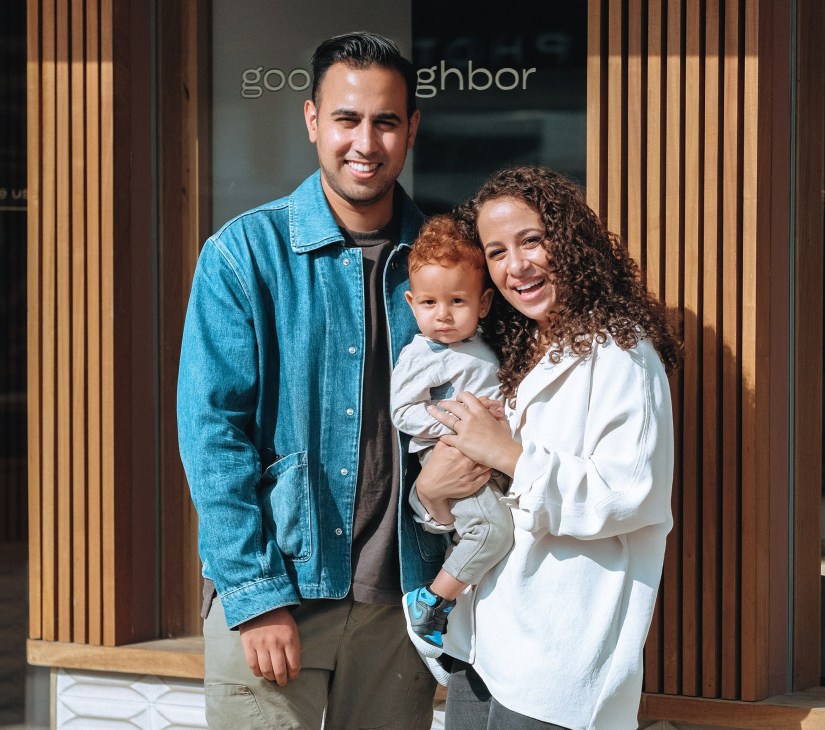
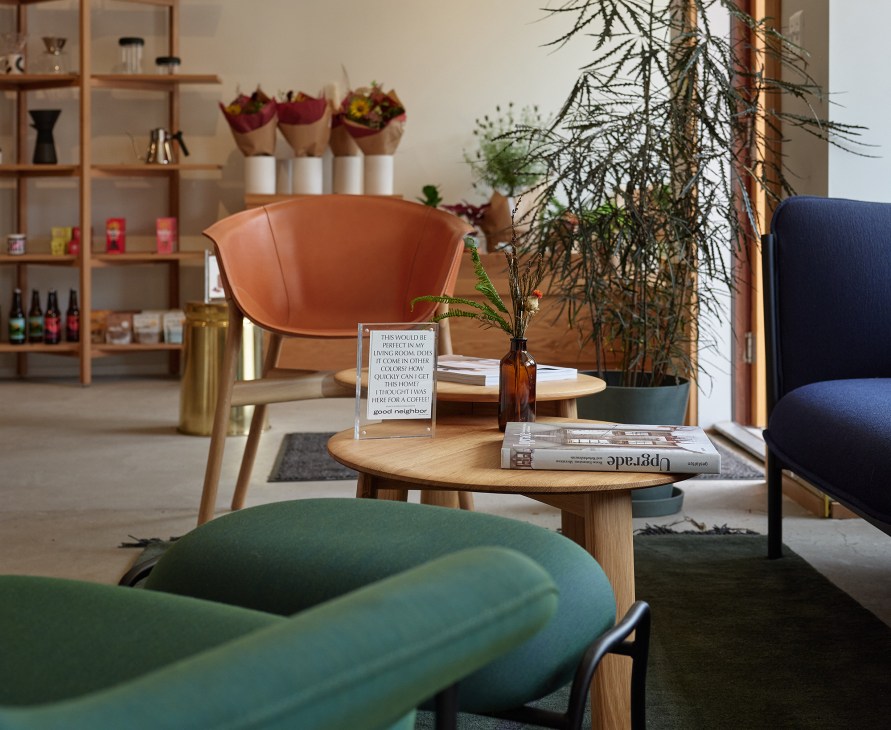
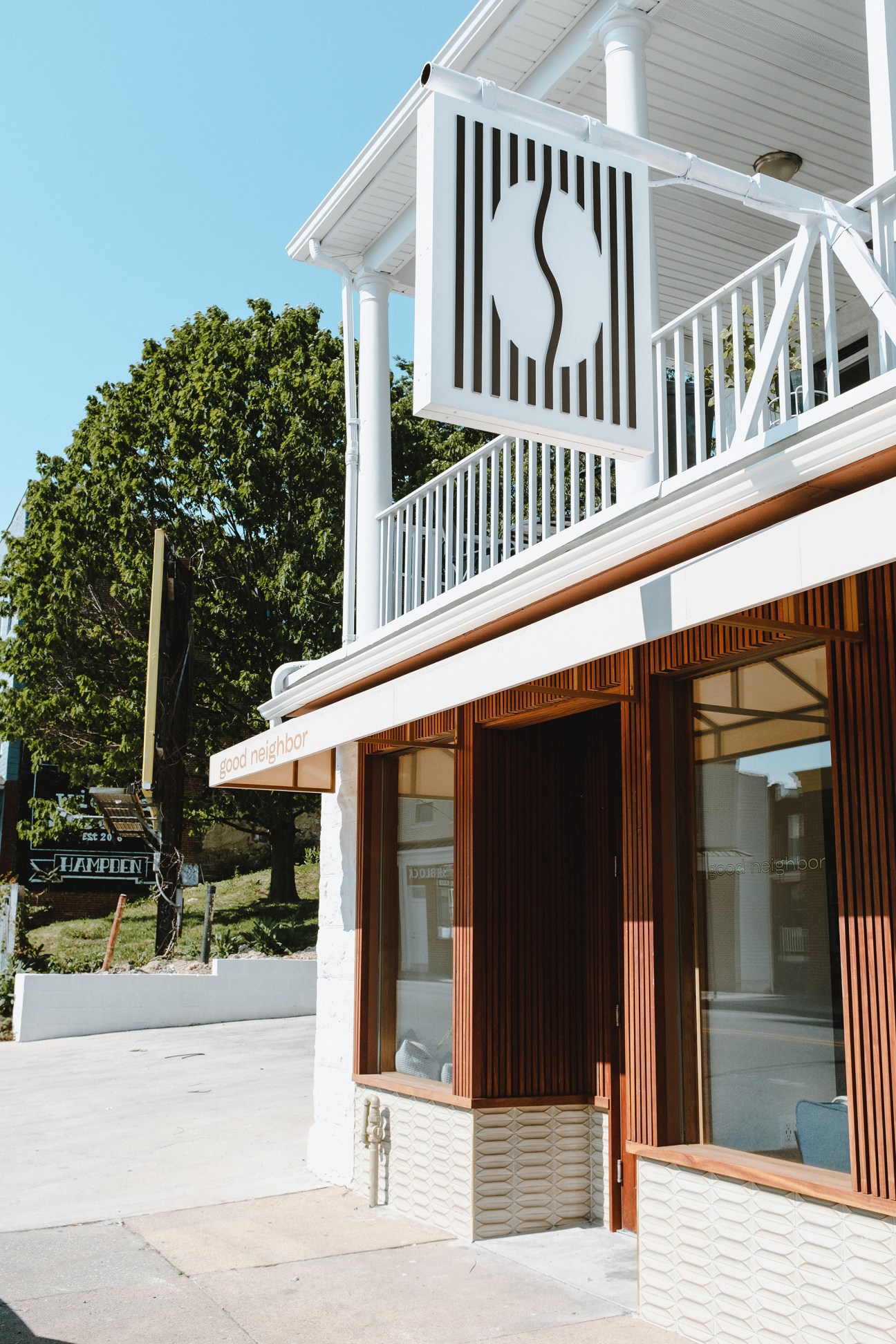
Inside, the shop stocks international design brands that are hard to find elsewhere, such as Kinto, Ferm Living and Utilitario Mexicano, as well as locally made products. “We’ve got some great ceramicists here in Baltimore,” says Chopra. “We also stock a few small furniture brands and everything from textiles and candles to honey.” Chopra and Morgan (pictured) are also putting the finishing touches to a park across from the shop, which includes a wooden amphitheatre.
Future focus
USA — development
A city within a city – and a barometer for post-pandemic real estate – is taking shape a few kilometres east of Los Angeles International Airport. Funded by property tycoon Stanley Kroenke, this multibillion dollar Hollywood Park development has been slowed by coronavirus but will be a gamechanger for the area.
Although the project’s centrepiece is Sofi sports stadium, it also serves as a blueprint for entertainment and commerce on a grand scale. The first tenants include locally owned businesses, such as juice bars, a high-end fitness centre and a pub with a brewery.
The first phase has created space for thousands of offices, about 50 shops, some 300 apartments and plans for a hotel. But the project’s standout feature is a park and green-lined paths, with 5,000 trees being planted. Although a big question remains as to what post-pandemic demand for social, retail and office space will be but this could be a much-needed economic boom for Inglewood.
Images: Grant Legan, Ryan Rhodes/Courtesy of Good Neighbour
The Monocle Shop
Les Belles Heures × Konfekt silk scarves
€195 (small), €295 (large)
Add a splash of colour to your autumn wardrobe
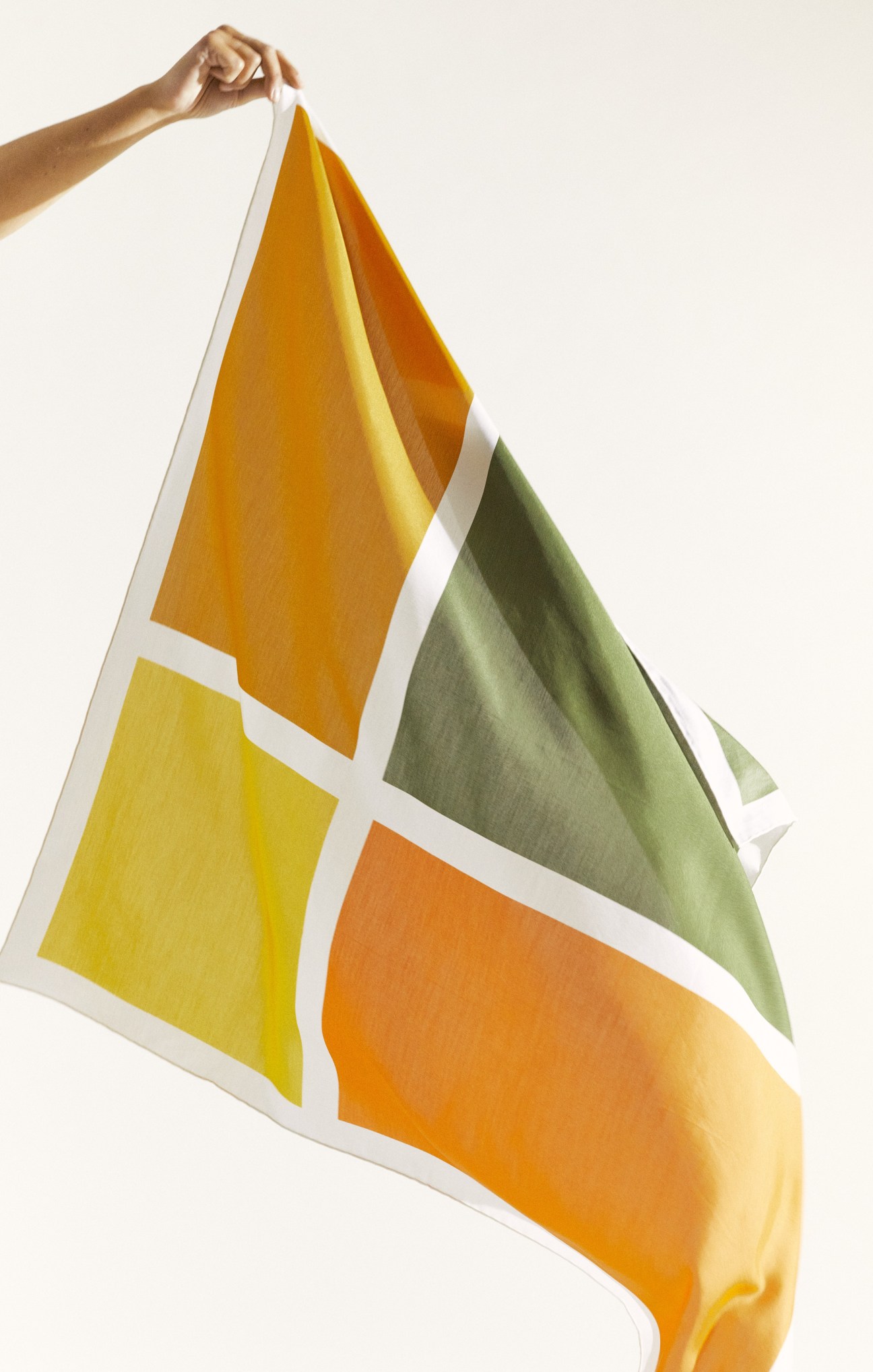
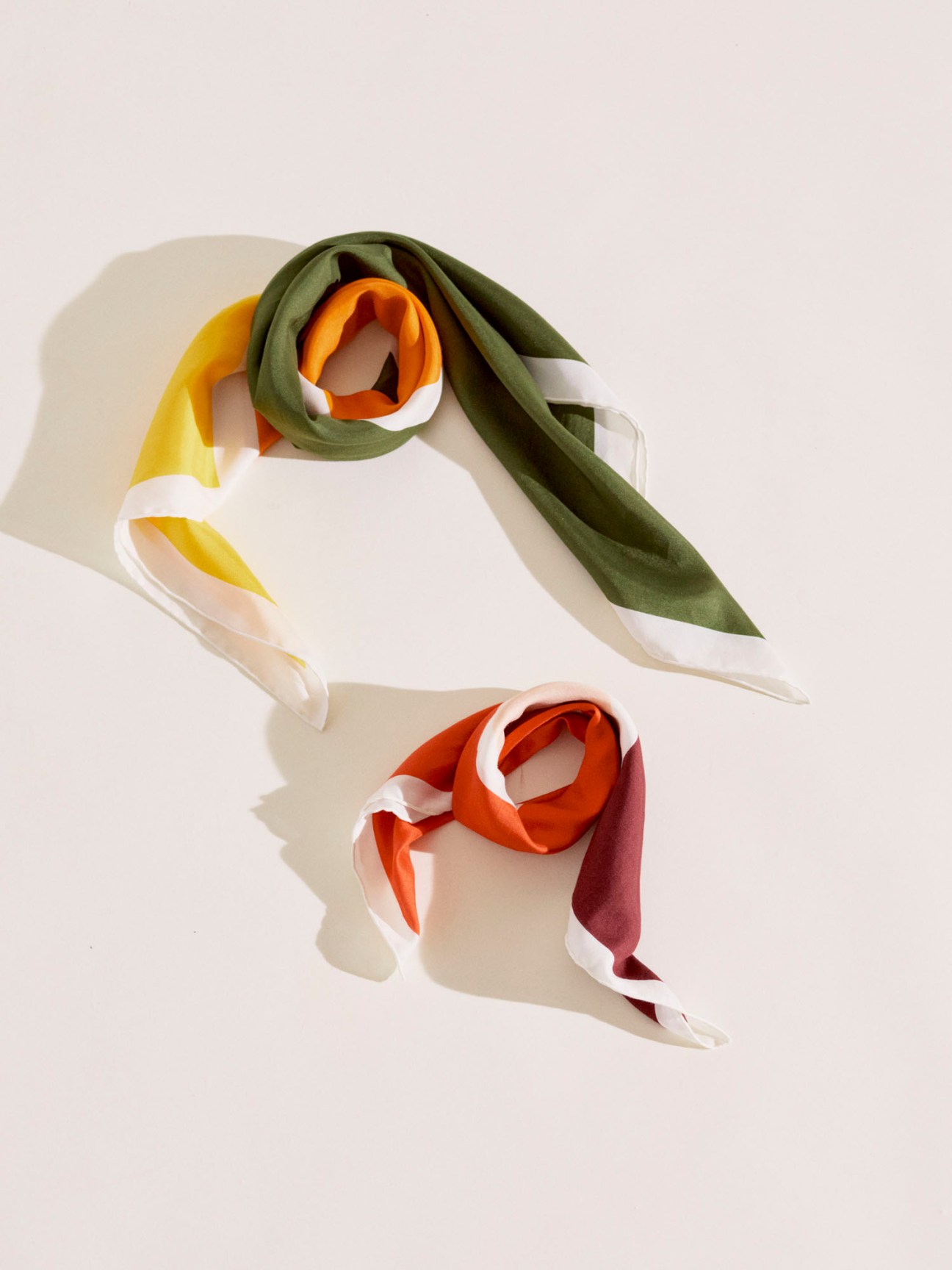
Foulards were made famous in the 1960s by screen idols such as Audrey Hepburn and Grace Kelly – and now Les Belles Heures is giving these dainty silk scarves a refresh. The young Parisian brand’s references span the Italian Riviera to contemporary Californian art and, whether celebrating seaside stripes or a Rothko palette, its foulards will liven up any ensemble. Which is exactly why Monocle’s sister title Konfekt has teamed up with the brand. Our scarves, available in smaller or larger sizes, are hand-rolled in France from a cotton-silk blend and come in a choice of two colour-block combinations. They’re the perfect accessory as the seasons shift.
Materials: Cotton and silk.
Sizes: 60cm x 60cm or 90cm x 90cm.
Made in: France.
Porter × Monocle zip tote with pouch
€365
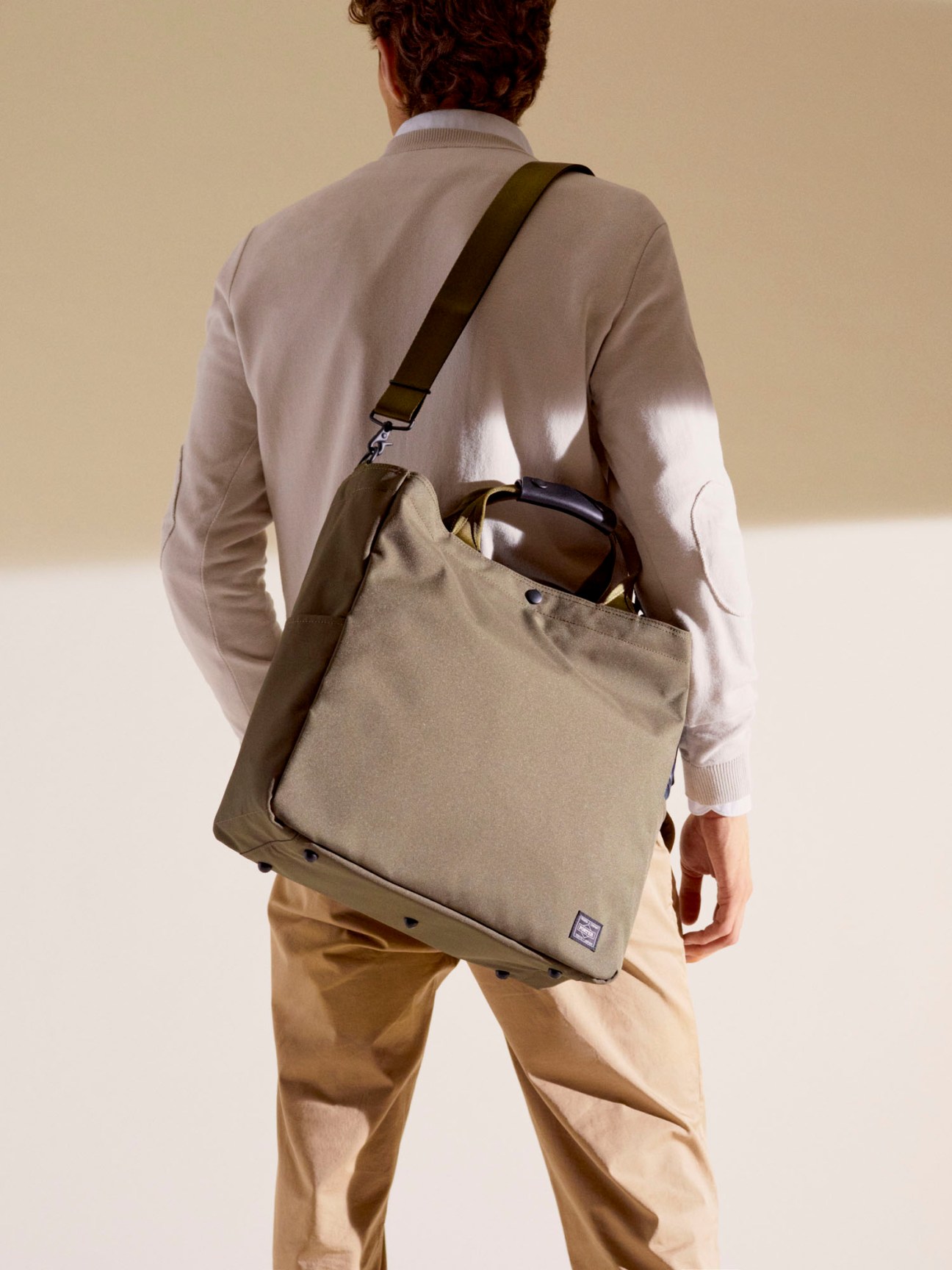
Our most versatile bag is now available in an exclusive and limited-edition olive colourway. Whether used for a quick business trip or a weekend at the beach, our Porter tote is suitable for any occasion. You’ll find multiple interior pockets and a detachable pouch for smaller belongings and valuables. The top flap keeps your possessions secure and has two zip pockets for quick access to your necessities. There’s also a detachable shoulder strap.
Material: Cordura.
Colours: Olive or black.
Made in Japan.
Porter × Monocle toiletry pouch
€150
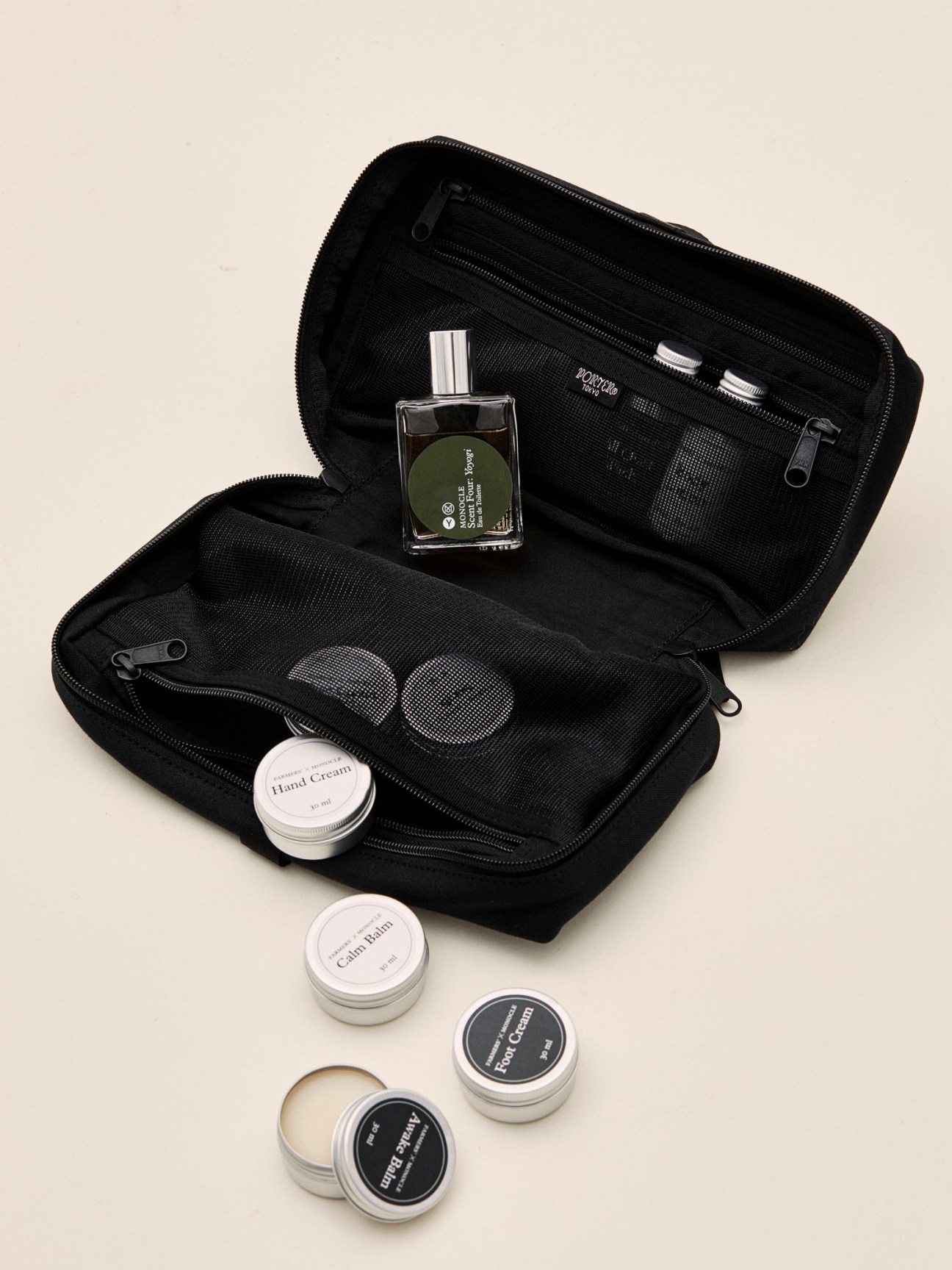
This handy toiletry bag is sewn from sturdy Japanese Fuji Kinbai canvas and has four zip compartments to sort your cables from your creams. It’s made in Japan, has a mesh lining and can be hung from a towel rack thanks to a belt fastened with snap buttons. You’ll be the envy of other gym-goers and weekend trips will be a breeze.
Material: Fuji Kinbai canvas.
Colour: Black.
Made in: Japan.
Comme des Garçons × Monocle Candle Four: Yoyogi
€75
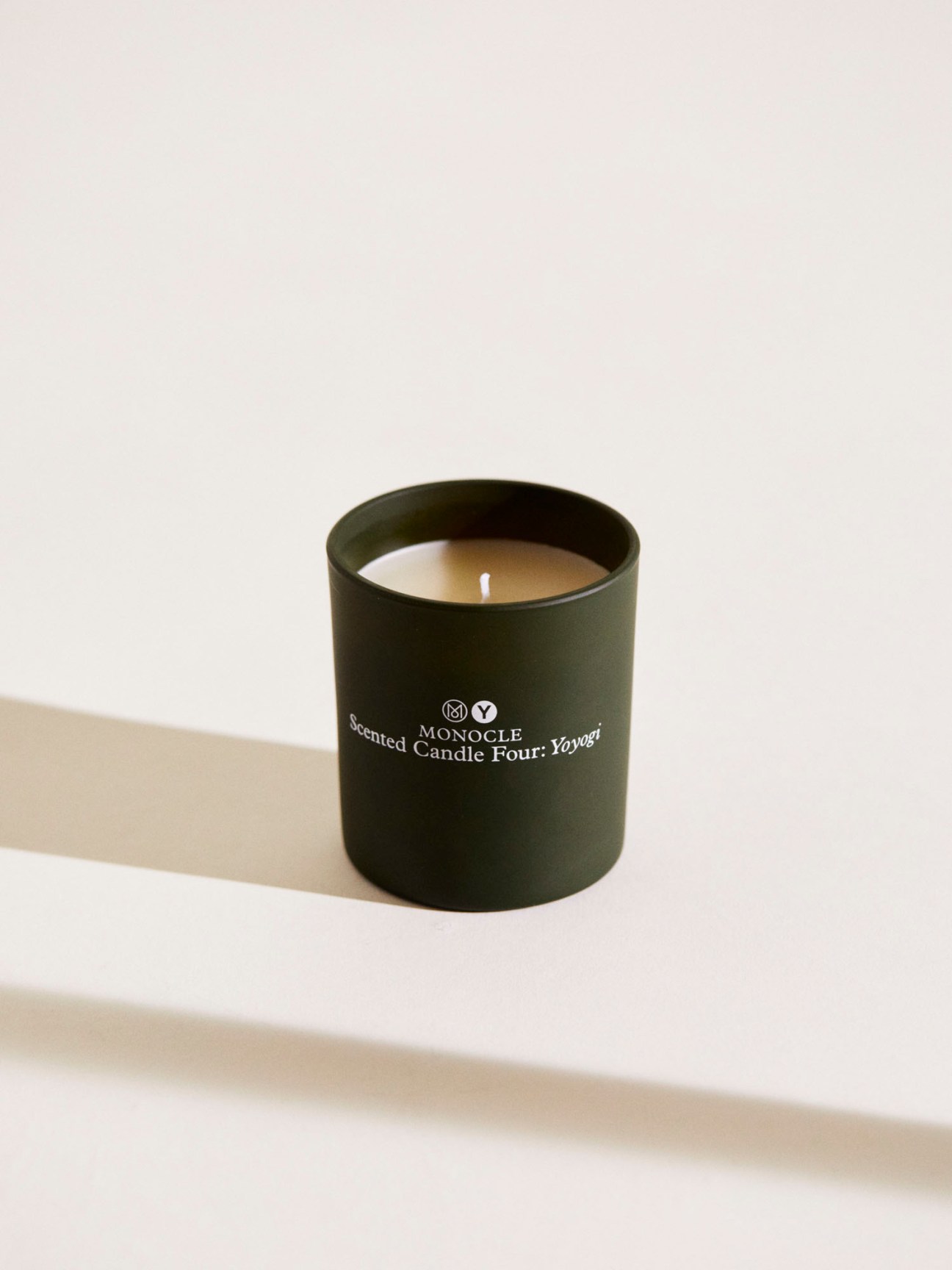
We’ve teamed up with Comme des Garçons once more to develop our latest signature candle. Bring into your home the woody scent of a run through Tokyo’s Yoyogi Park on a crisp morning. Featuring notes of cypress, chamomile and oakmoss, this candle will bring the freshness of that experience to your interior with the calming flicker of a flame.
Net weight: 165g.
Made in: France.
Porter × Monocle overnighter bag
€565
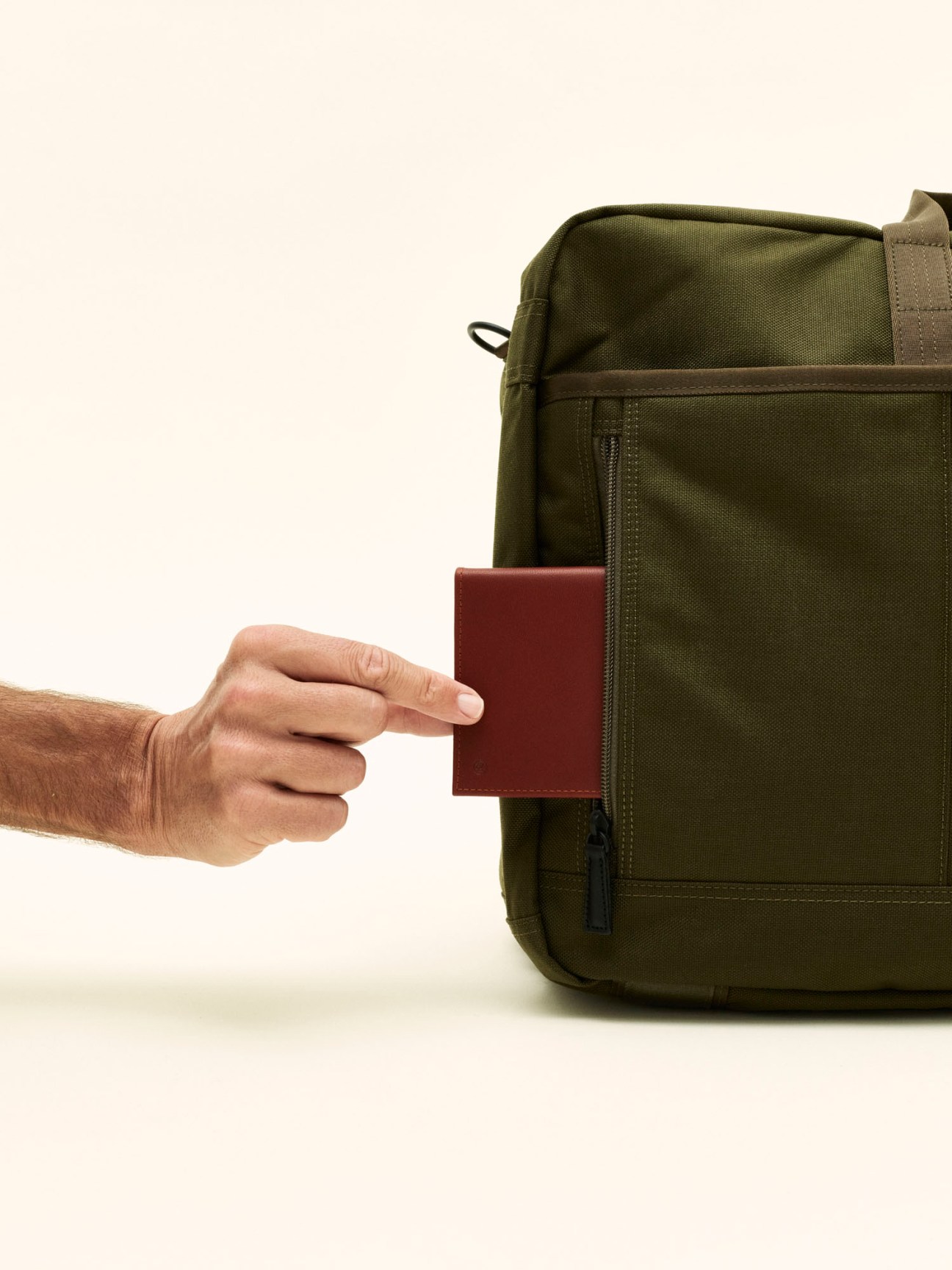
With classic handles and a shoulder strap for easy portability, this overnighter has two main compartments for clothing and extra pockets for small accessories. Ideal for a flying visit to Paris or a long weekend at sea.
Material: Cordura.
Colours: Black or olive.
Made in: Japan.
A Kind of Guise × Monocle cotton pullover
€245
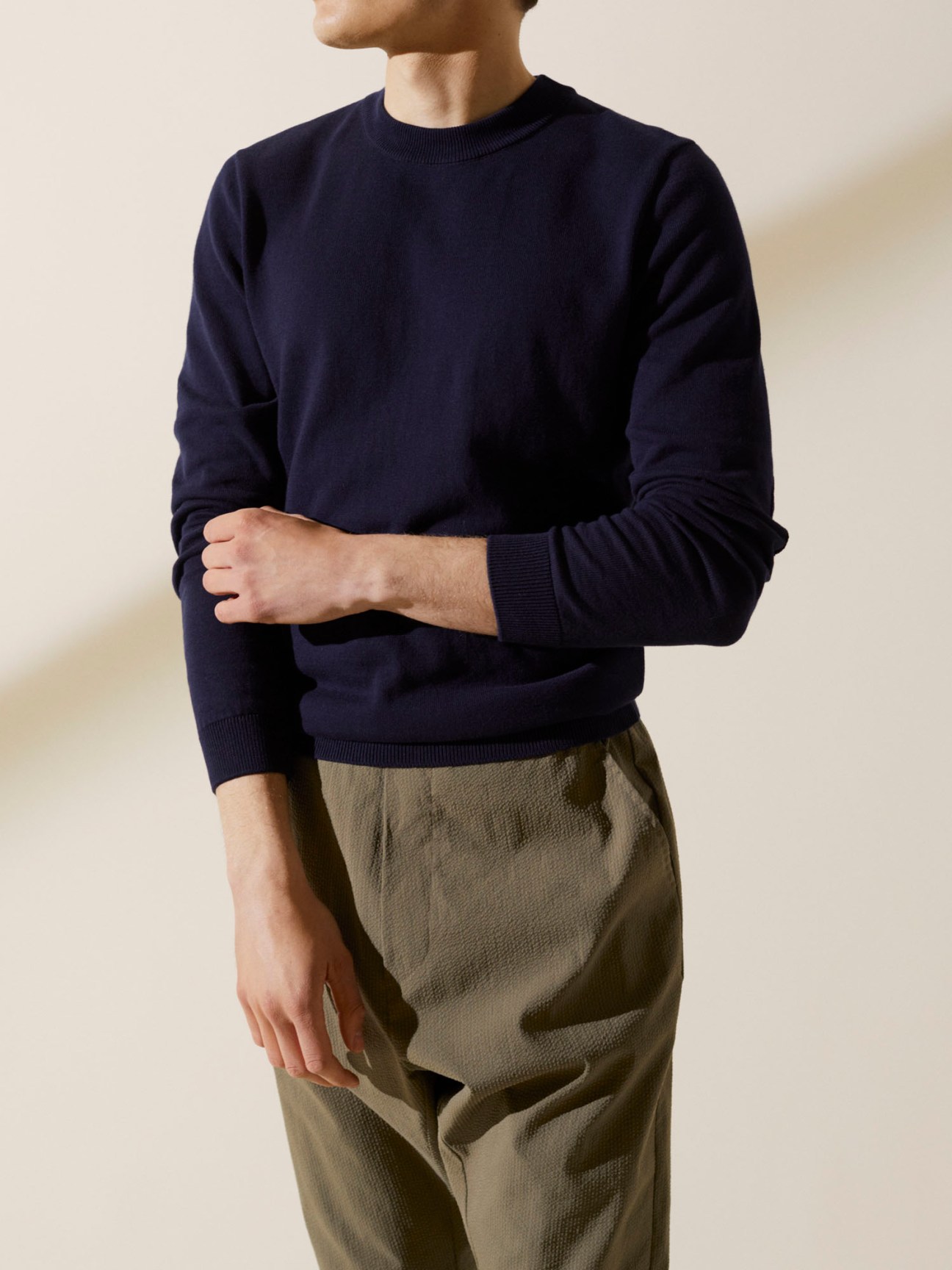
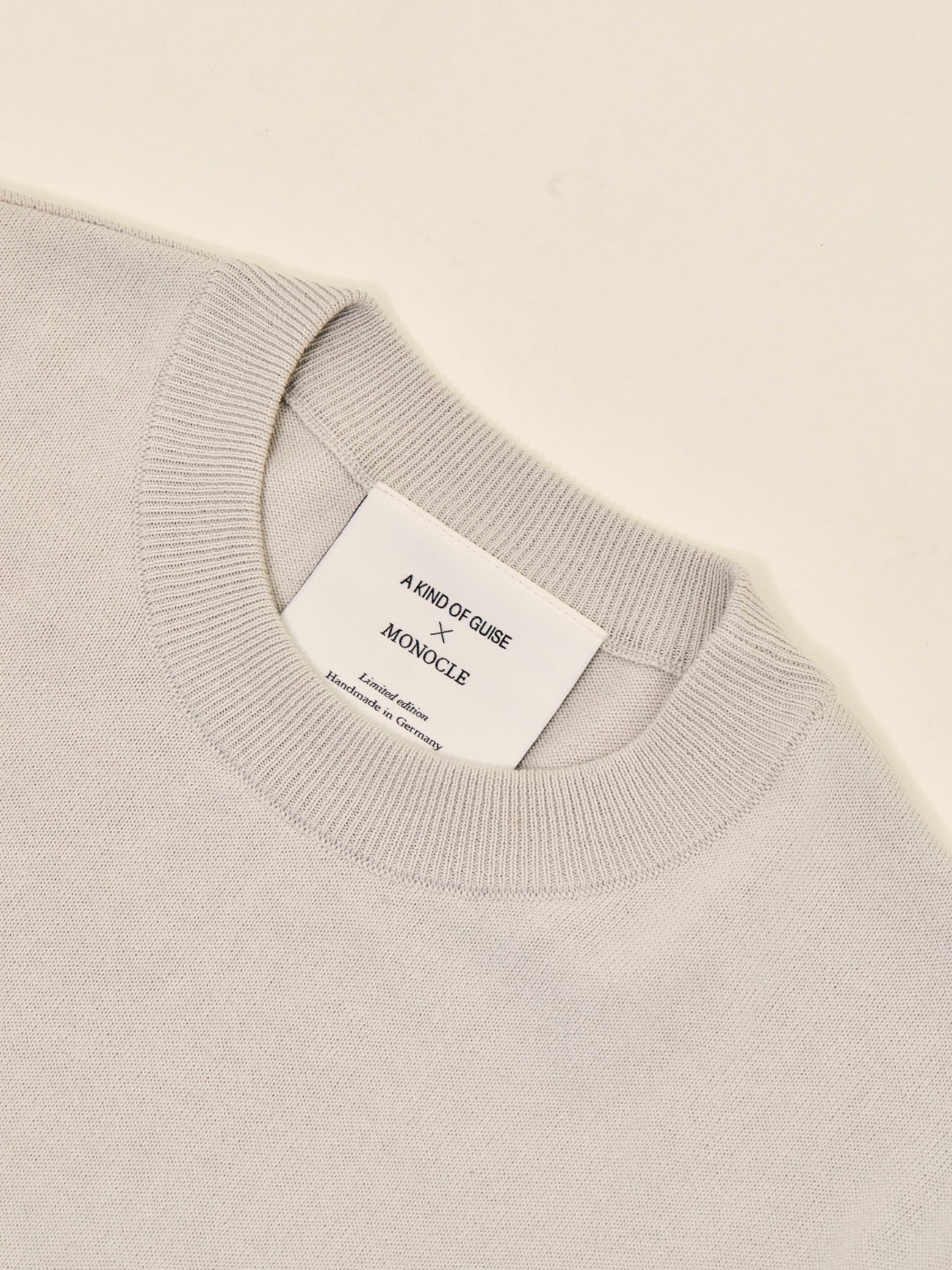
Few things are worse than a saggy neckline – but there’s no danger of that here. These fetching and comfortable cotton crewnecks, created by our friends at A Kind of Guise, boast sturdy ribbed necklines, cuffs and hems.
Material: Cotton.
Colours: Navy or stone.
Made in: Germany.
Doppler × Monocle carbon-steel umbrella
€140
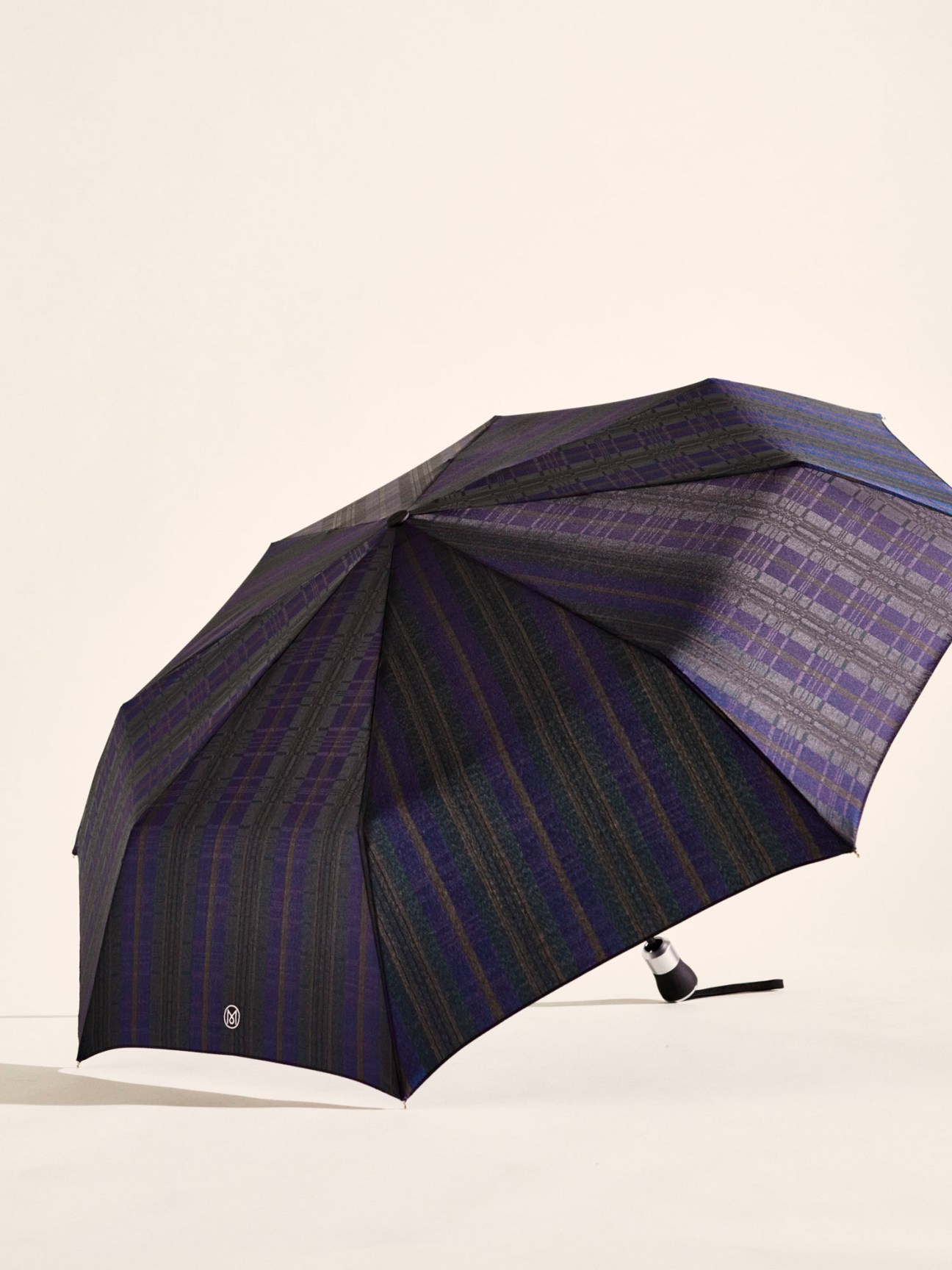
Too many folks skimp on umbrellas – at their peril: clutching on to a flimsy brolly that has been turned inside out by a strong gust of wind is a uniquely hellish form of public humiliation. When the heavens open, you want a Doppler in hand. The firm’s wares are made using production methods refined over 75 years. Our collaboration boasts a carbon-steel frame and automated open-close function.
Materials: Carbon steel and polyester.
Colours: Olive and blue-check.
Made in: Austria.
Monocle moleskin jacket
€245
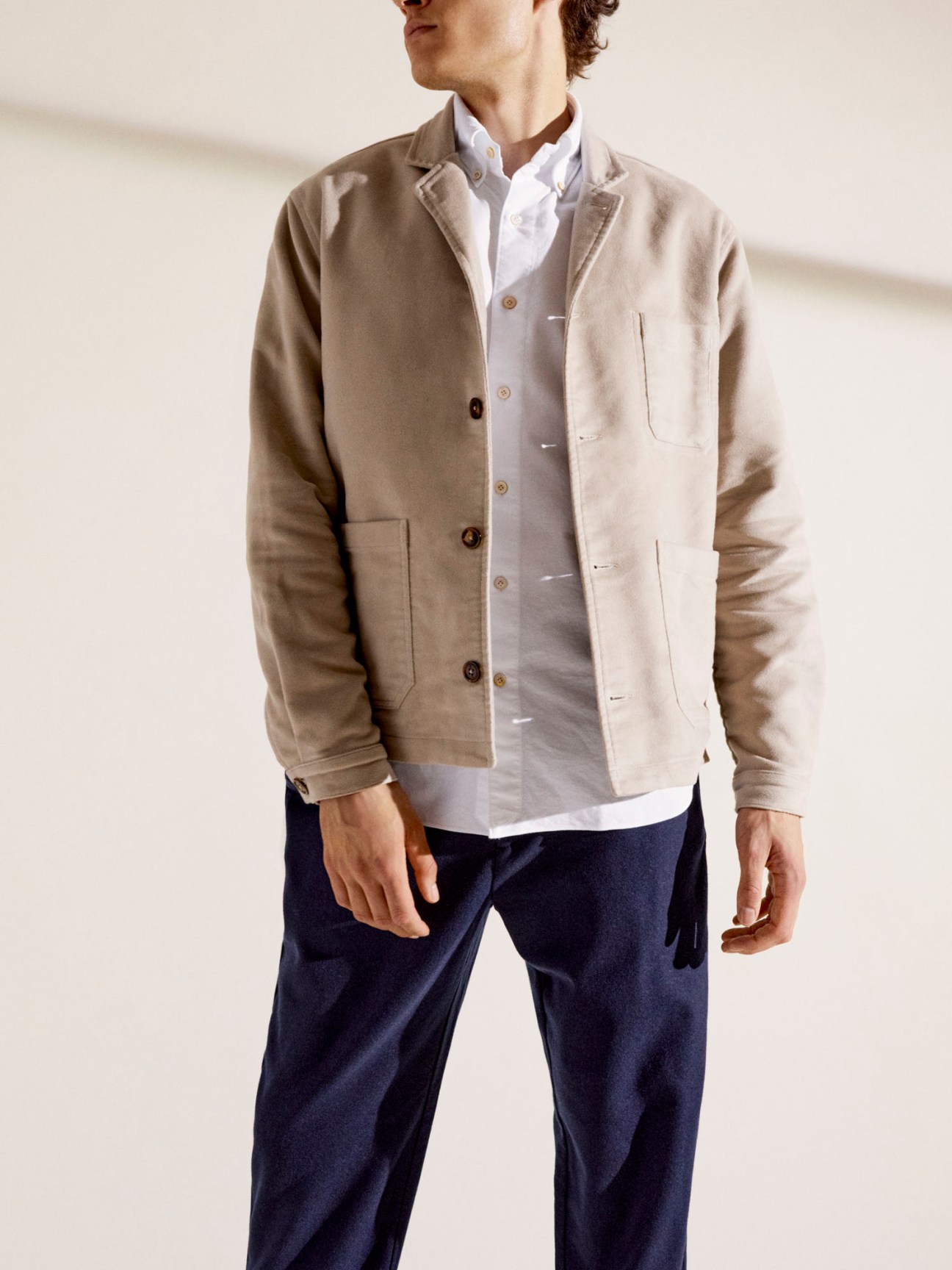
After a suave in-between jacket for when it’s no longer hot but not quite cold? Look no further. This timely update on Monocle’s favourite moleskin number is light and soft. It comes with an exterior breast pocket and an interior pouch. Unstructured and buttery-soft, it’s comfy enough to wear at home and perfect for hitting the town.
Material: Cotton.
Colours: Moss green or stone.
Made in: Portugal.
Valstar × Monocle Milano raincoat
€795
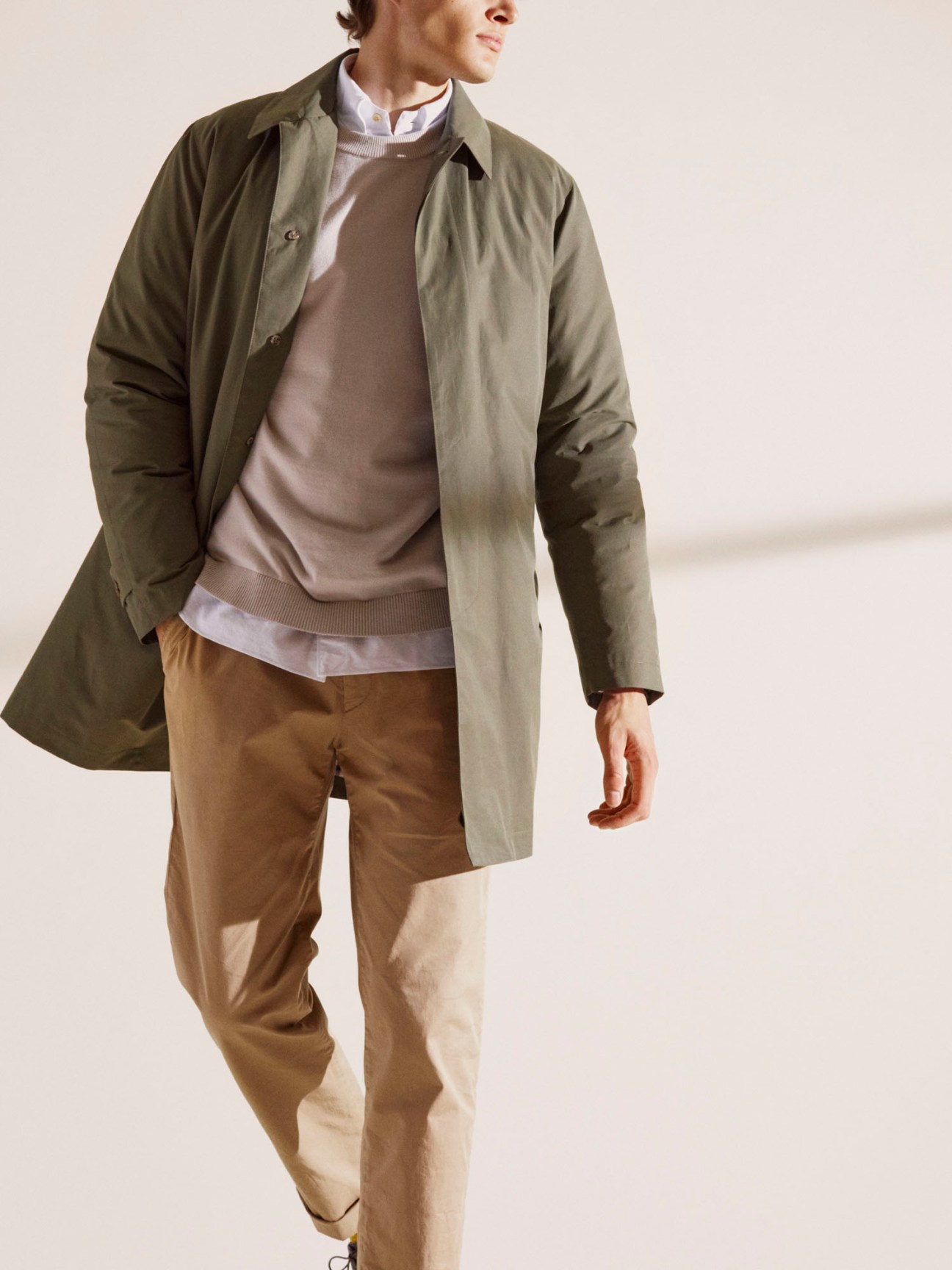
Back in 1911, Valstar became the first Italian company to create water-repellent raincoats, so it knows how to make a smart jacket that will keep you dry. We’ve teamed up with the Milanese outfitter on a slim-fitting trench with a detachable goose-down insert for chilly days. The water-repellent shell is made from a cotton-polyester blend and comes in an exclusive olive shade with a navy checked lining; the down insert is gun-metal black. It’s versatile and dashing.
Materials: Cotton and polyester.
Colour: Olive.
Made in: Italy.
Styling: Kyoko Tamoto
Prized fighter
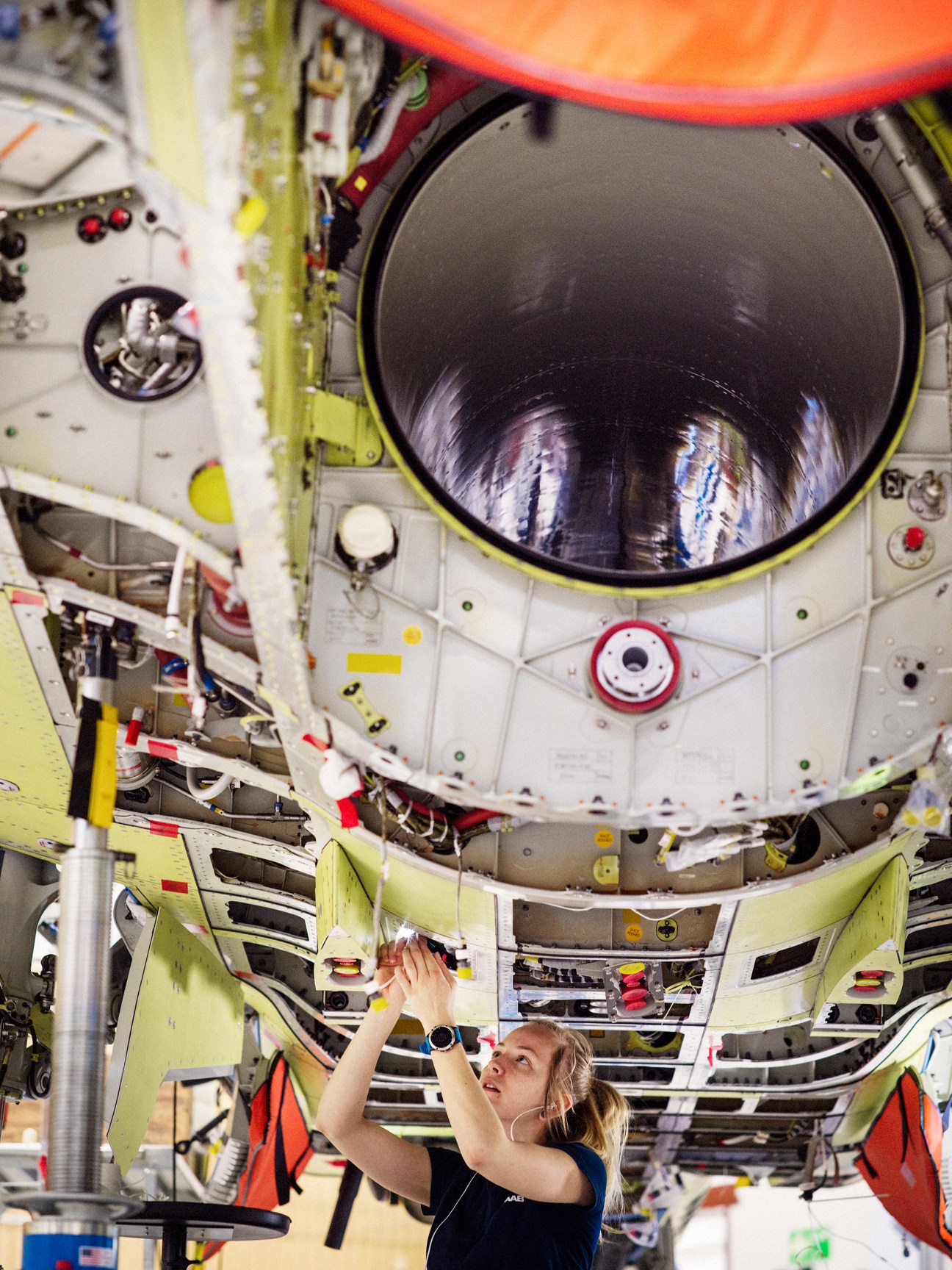
Saab’s fighter centre, in the city of Linköping, south of Stockholm, is a sprawling complex comprising low-rise buildings and hangars in a mishmash of architectural styles, encircled by high-security fencing. Making your way into the company’s newly built fighter-jet simulator centre takes a while; access is carefully controlled and visitors are extensively monitored. Everyone is required to place all their electronic devices into a locker before entering. This is all necessary in order to test Saab’s latest fighter jet and flagship product: the Gripen E.

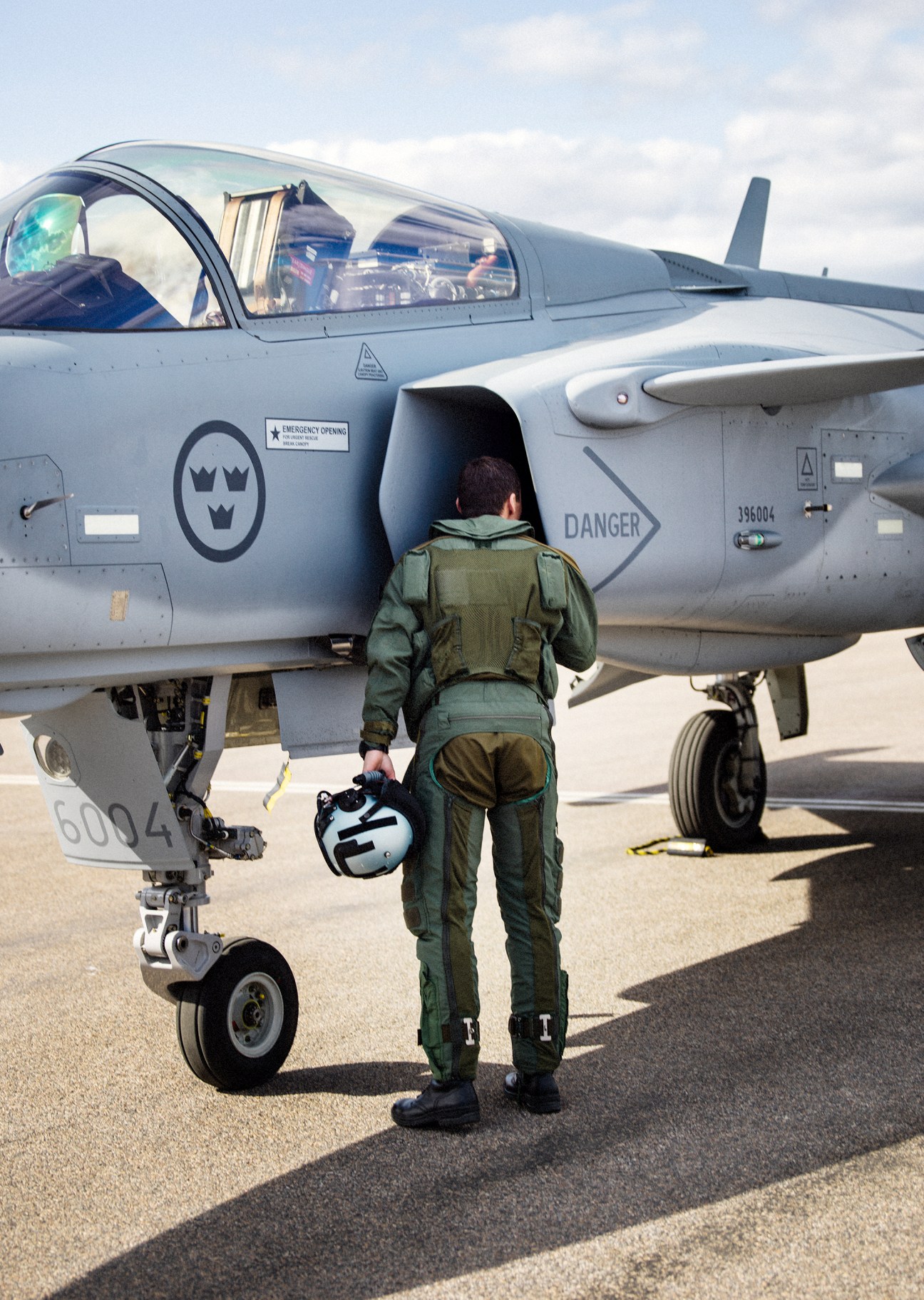
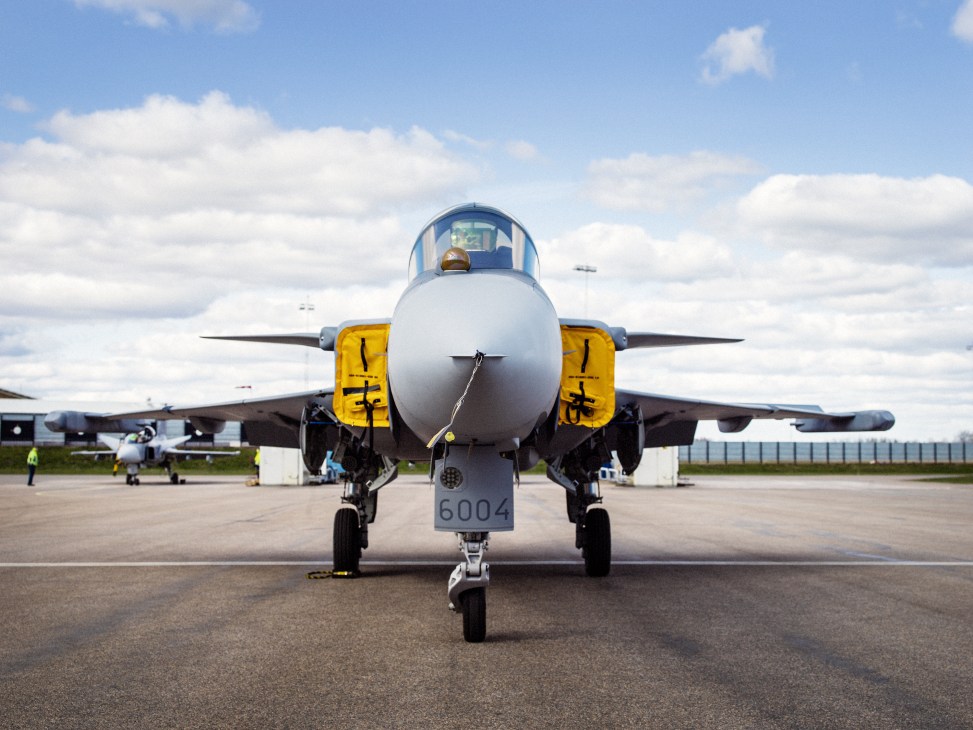
The “E” is the latest iteration of Saab’s premier fighter for the Swedish air force. Although the Gripen air-frame itself hasn’t changed much during the past 30 years, the E is indeed a major upgrade over previous editions. The “Echo”, as air-force personnel call the plane, is kitted out with more and better weapons and sensors but its main selling point is its brains: the avionics, software and system infrastructure that make it easily adaptable and upgradable with minimal lag time. It’s designed to keep up with the blinding speed at which technology is developing, as well as remaining relevant to the needs of modern warfare well into the future.
Inside the fighter-jet simulator centre, I sit down for Monocle in the realistic cockpit as a dome overhead projects an image of the surrounding landscape. I take off from Linköping but soon the projected image changes to the Swiss Alps, where I can put the aircraft through its paces. What is most striking is just how easy the Gripen is to fly. Need to barrel roll upside-down in order to strafe the side of a mountain and avoid detection by the enemy? Not a problem. When it’s time to put the plane down on a small airstrip in a narrow valley, I land safely by simply aligning a few lines and arrows on the display screen.
The fact that I could land the aircraft safely with no training is part of its selling point. Flying a fighter jet can be “a bit like driving a Formula 1 car but you also have to play Battlefield at the same time,” says Johan Segertoft, programme director for Gripen E and F (a two-seat version), and a chief architect of the new Gripen avionics. “And you have to win both the race and the game of Battlefield.” The Gripen E is an agile and capable fighter jet but the actual flying part is designed to happen with a minimum of fuss, so that the focus can be on gathering data and subsequently making quick and effective decisions.
“Seeing new signals, analysing them and changing the way that we work the weapon sensors and electronic warfare – that’s something that can make a big difference in war,” says Torgny Fälthammar, a colonel in Sweden’s air force and head of the Gripen programme. “You need to react very quickly to what you see out there in the real world. The Gripen Echo is designed to be on top of that problem.”
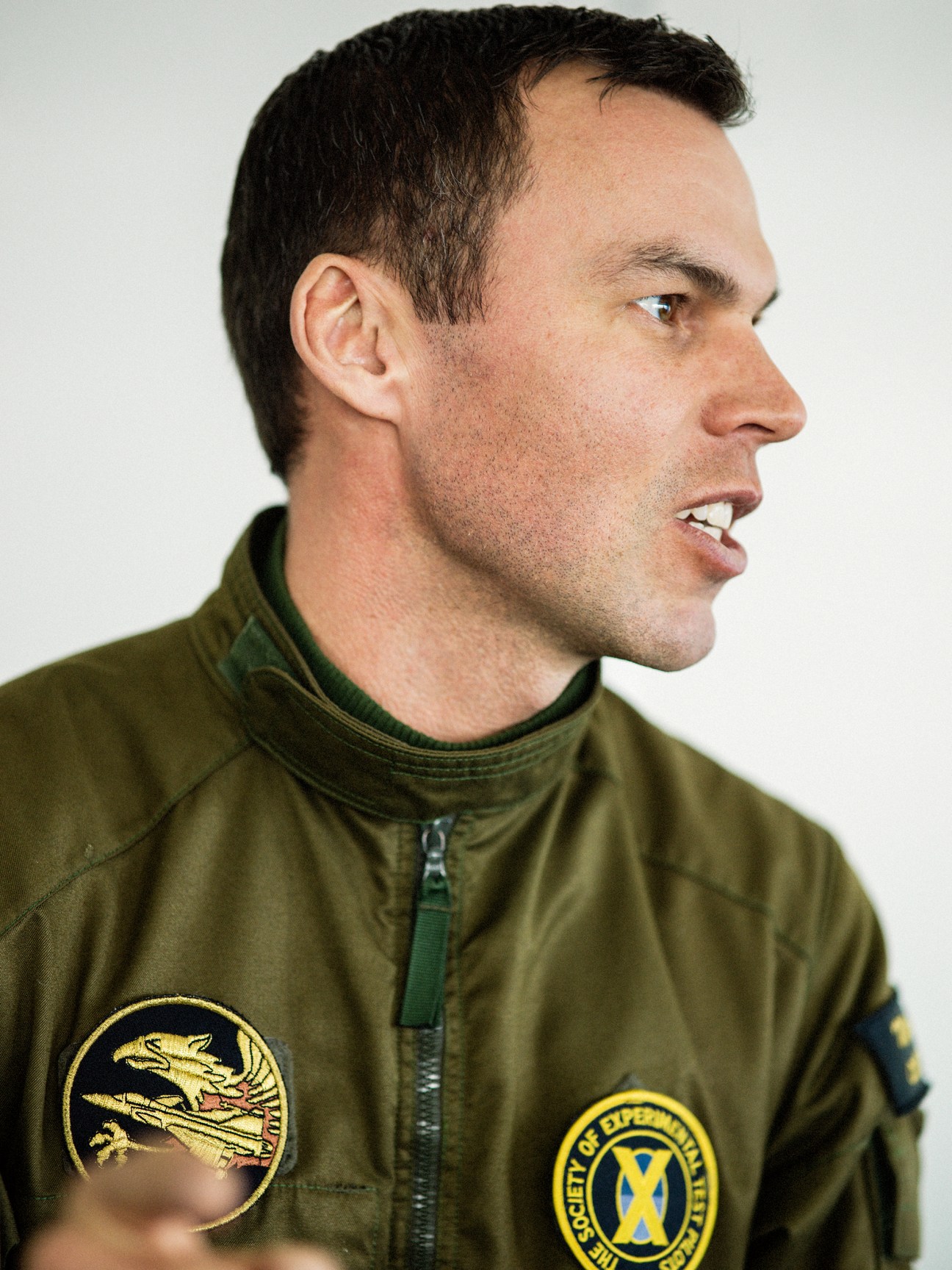
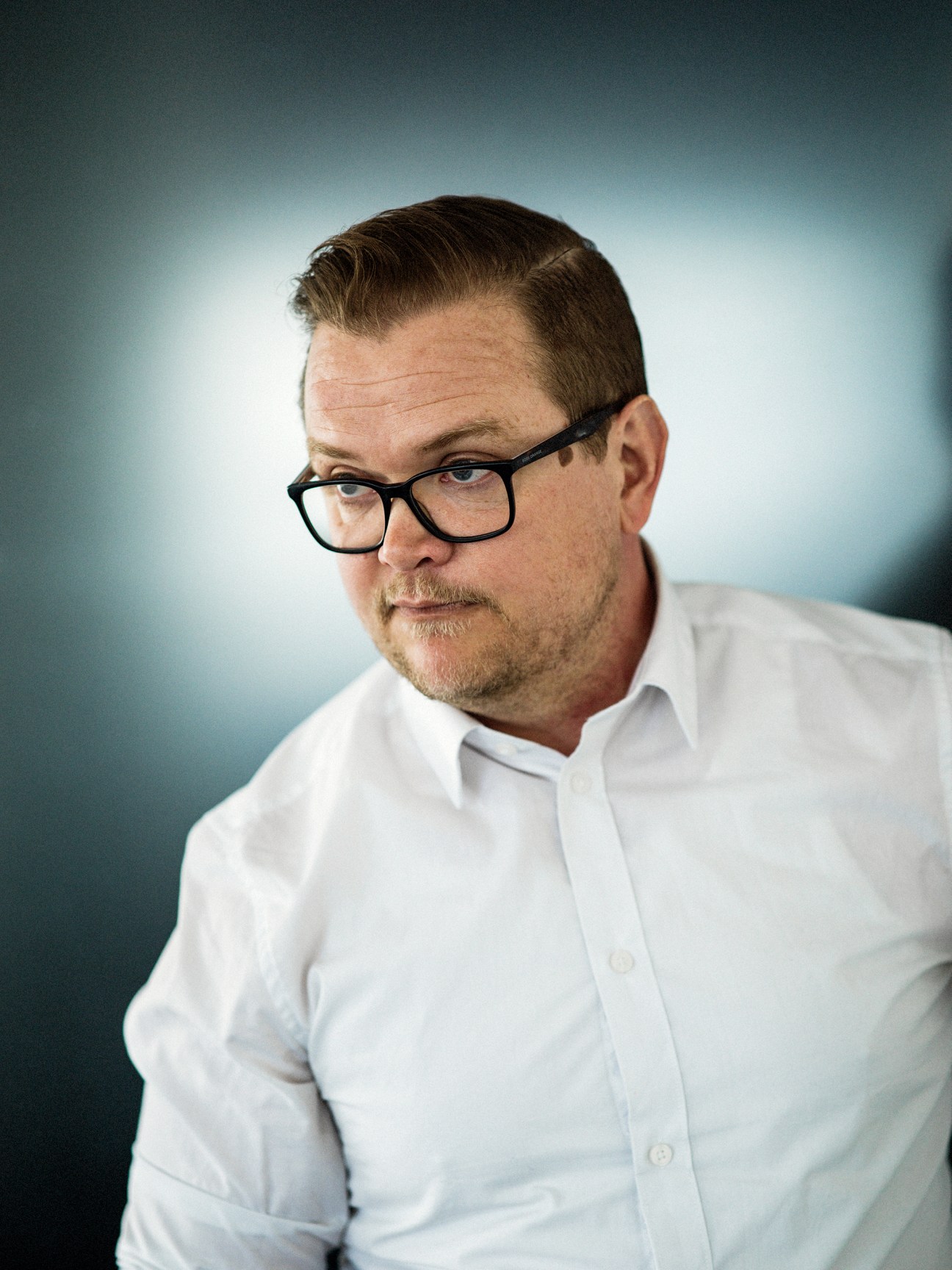
Marcus Wandt, Saab’s chief test pilot on the Gripen E programme, is an air-force veteran with experience in multiple fighter jets. One of Sweden’s top pilots, he also holds a master’s degree in engineering and artificial intelligence. I join him on the tarmac just as another of the Gripen E test fleet arrives back from a session over the Baltic. Wandt motions for me to put my fingers in my ears as the roaring aircraft parks up. He is smiling with what appears to be pride.
Wandt has been pivotal in fine-tuning the plane’s design alongside Segertoft. He says that it’s “really awesome to fly” but, more importantly, it is versatile. “It’s doing a lot of missions at the same time and that also creates a level of surprise or uncertainty for the adversary,” says Wandt. “If a Gripen takes off from a road base, [an adversary doesn’t know] whether it’s going for anti-shipping, air-to-air, air-to-ground… the same aircraft is doing everything. The pilots are doing everything. That’s really important.”
The technology onboard is not the most advanced computer science in the world but, placed within the strict regulatory framework of aerospace, it is revolutionary. It means that software applications within the Gripen systems can be made operational in less than a week, compared with, potentially, years on traditional designs such as the Lockheed Martin f35.
Saab made the decision to not pursue stealth. It’s expensive and involves trade-offs in the air-frame. Artificial intelligence is also making it increasingly possible for enemy sensors to quickly find a stealth aircraft. Instead, Saab has gone all in on electronic warfare and the kind of technology that will allow the Gripen to confuse enemy sensors, rather than trying to hide.
And whereas the Gripen doesn’t have the flash factor of fighters such as the f35, it’s a good deal cheaper to acquire and operate. Precise figures are closely guarded and comparisons can be difficult but there are estimates. The f35, for example, costs about €30,000 an hour to operate, taking into account maintenance. For the Gripen, one estimate put its cost per flight hour at as little as €4,000.
So it’s no surprise that the company sees a market for 4,500 planes like the Gripen E. But, according to Richard Smith, deputy head of sales, that number drops to about 1,000 if you only consider the countries that Saab can actually have as customers. This is because, as a Swedish company, Saab can’t sell to just anybody. Sweden technically has a ban on arms exports, yet there are exemptions for when that sale supports the country’s own defence capabilities. In practice, this means selling to countries that are partners and allies – or at the very minimum not serial human-rights abusers and/or run by despots. Sweden’s political position does hold the company back in this regard. But Saab has found that its state ties present opportunities too.
Saab was formed after a strategic decision by Sweden in the 1930s to invest in homegrown military hardware at a time when other countries were refusing to export as war loomed. The state realised it would need to invest in becoming self-sufficient.
The same need exists today because of the increasingly shaky global picture of shifting alliances and, of course, a resurgent Russia. Colonel Fälthammar says that it was really the annexation of Crimea in Ukraine that woke Swedes up to the need to reinvest in its military capabilities. In December the Swedish parliament approved a 40 per cent hike in the annual defence budget to sek89bn (€8.7bn) by 2025.
“Within the armed forces we saw signs well before 2014 about what was going on in Russia. And that was part of what really drove the requirements for the Gripen E,” says Fälthammar. “You can’t rely on others all the time. You have to make sure that you set down your own requirements and you’re ready to finance and take that responsibility. We’re a small country, we are non-aligned and having a strategy built on hope is not a good idea.”
Driven by the desire to develop more powerful force multipliers, Saab has taken risks, backed by the Swedish state, on a number of technological leaps that have turned out to be very good bets. The company had a turnover of €3.5bn in 2020.
Here Saab walks a fine line: it is a private company but also a national security asset. It makes its own decisions but is continuously in discussion with government and military leaders, and it acts with Swedish national interests in mind. But Sweden’s domestic market is only so big; to stay at the forefront Saab also needs to be a viable business, making products that are competitive in the global defence market.
Although Sweden’s non-alignment policy means that Saab can’t simply sell to everyone, it also offers the company an attractive usp. Many nations view a Saab product as relatively baggage-free. Ordering a fighter jet from Sweden doesn’t necessarily signal a taking of sides or a joining of an alliance.
Saab would like to sell 400 of the Gripen E; it has sold 96 so far. A short but diverse list of countries have bought the earlier Gripen to date: the Czech Republic, Thailand, Hungary, South Africa and Sweden among them. The company is hoping to sell to Canada and India, and earlier this year made a pitch to Finland to not only sell them the aircraft but to support the two countries’ air forces in an even closer co-operation in defence against a potential Russian attack. It’s a move that most definitely serves Sweden’s national interests.
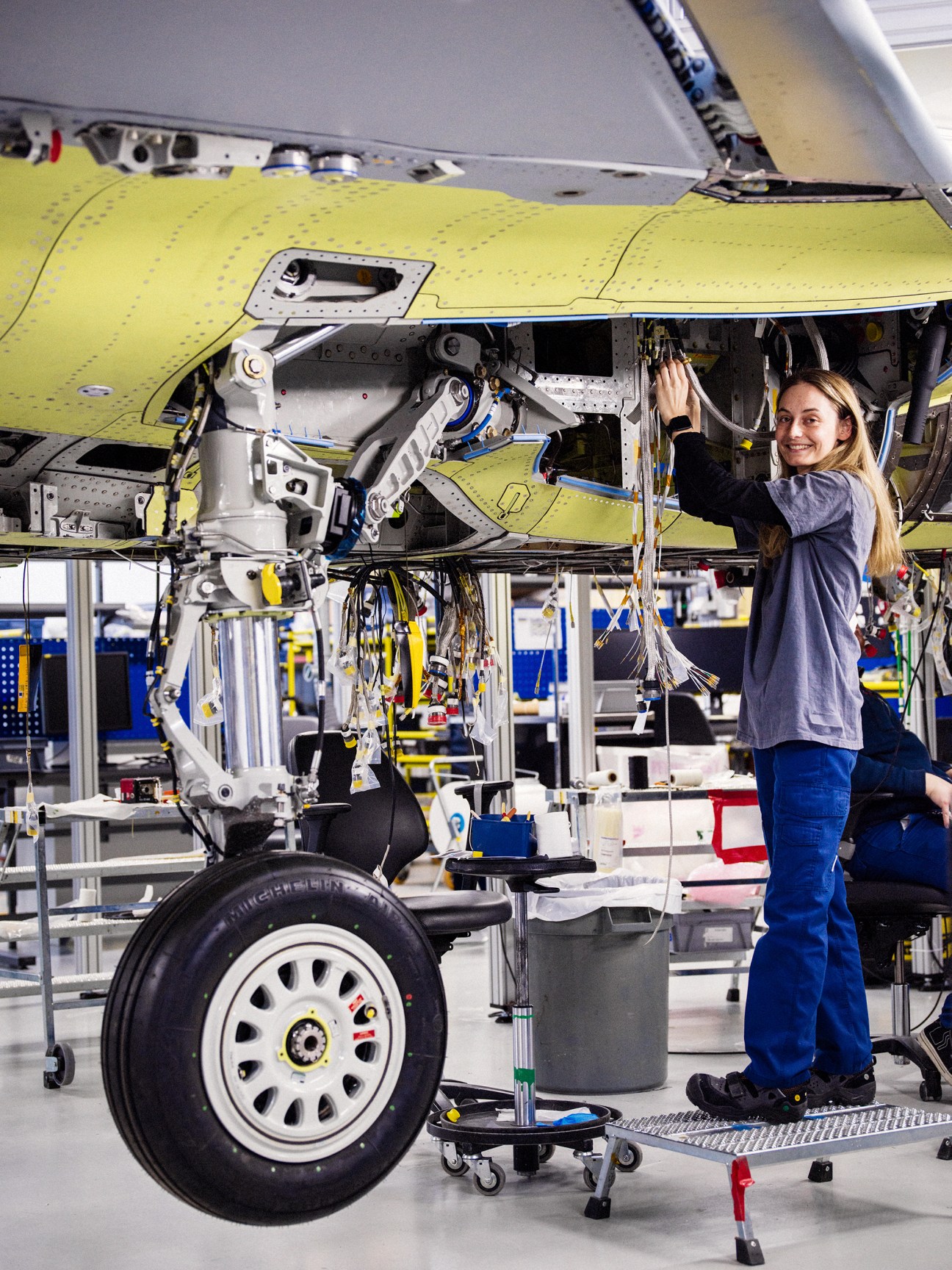
One of the most important deals for Saab came together, with Brazil. Not only has the Latin American nation bought the new Gripen Es, it will also be manufacturing them in Brazil. The deal represents one of the largest Swedish exports in history in monetary terms, with a value of $4.5bn (€3.8bn). And that was just for the first batch. Saab hopes that the deal will help it to branch out further into South America.
However the ongoing deals work out, Saab seems to be in a good place with the Gripen. It’s an unassuming aircraft that doesn’t shout for attention but packs a surprisingly powerful punch – much like Sweden itself. And its ongoing development, driven by the pressure to stay competitive against larger counterparts (whether that’s competing manufacturers or unfriendly nations), has the effect of keeping Swedish defence technology at the cutting edge.
“It’s simple and easy to use – scaling back everything that you don’t really need,” says Segertoft. “The essence of Gripen is very Swedish.”
Design Briefing
Sitting comfortably
Furniture
Switzerland
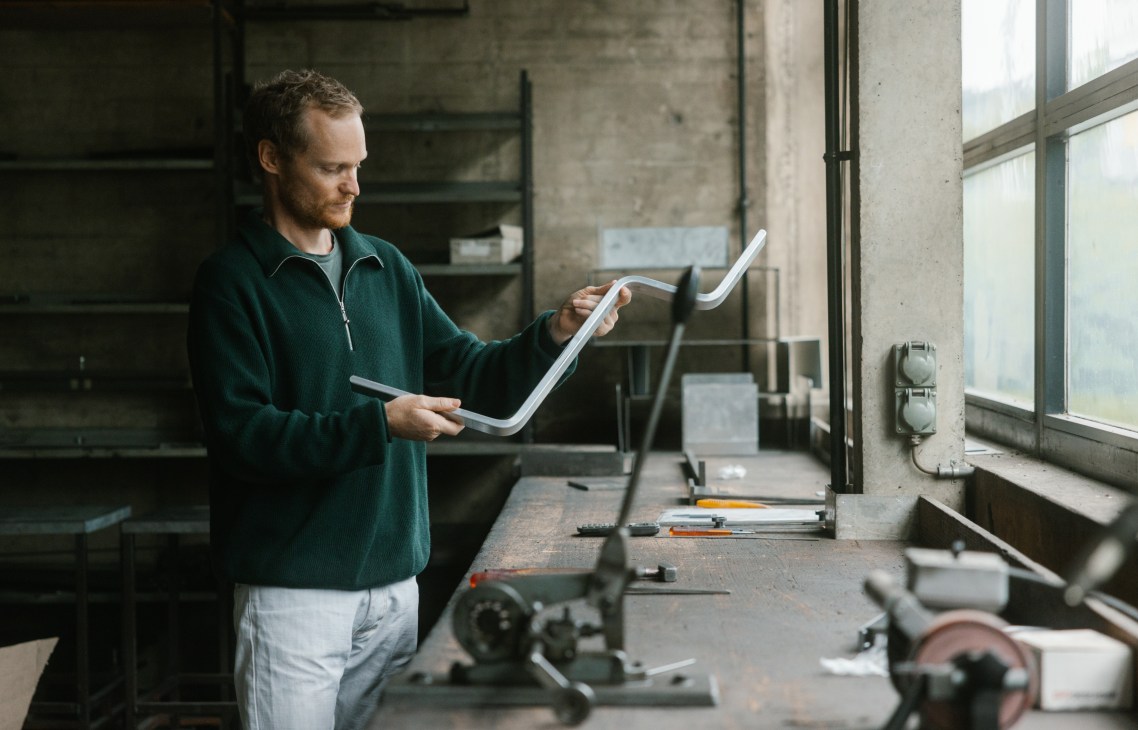
Despite being a respected Swiss furniture-maker that has produced a series of Donald Judd furniture since 1984, Lehni remains something of a sleeping beauty in the design world. At least, it does according to Christian Paul Kaegi, co-founder of sustainable fashion brand Qwstion. His collaboration with Lehni, a company that currently serves a largely Swiss and German market, aims to give it more recognition on the international stage.
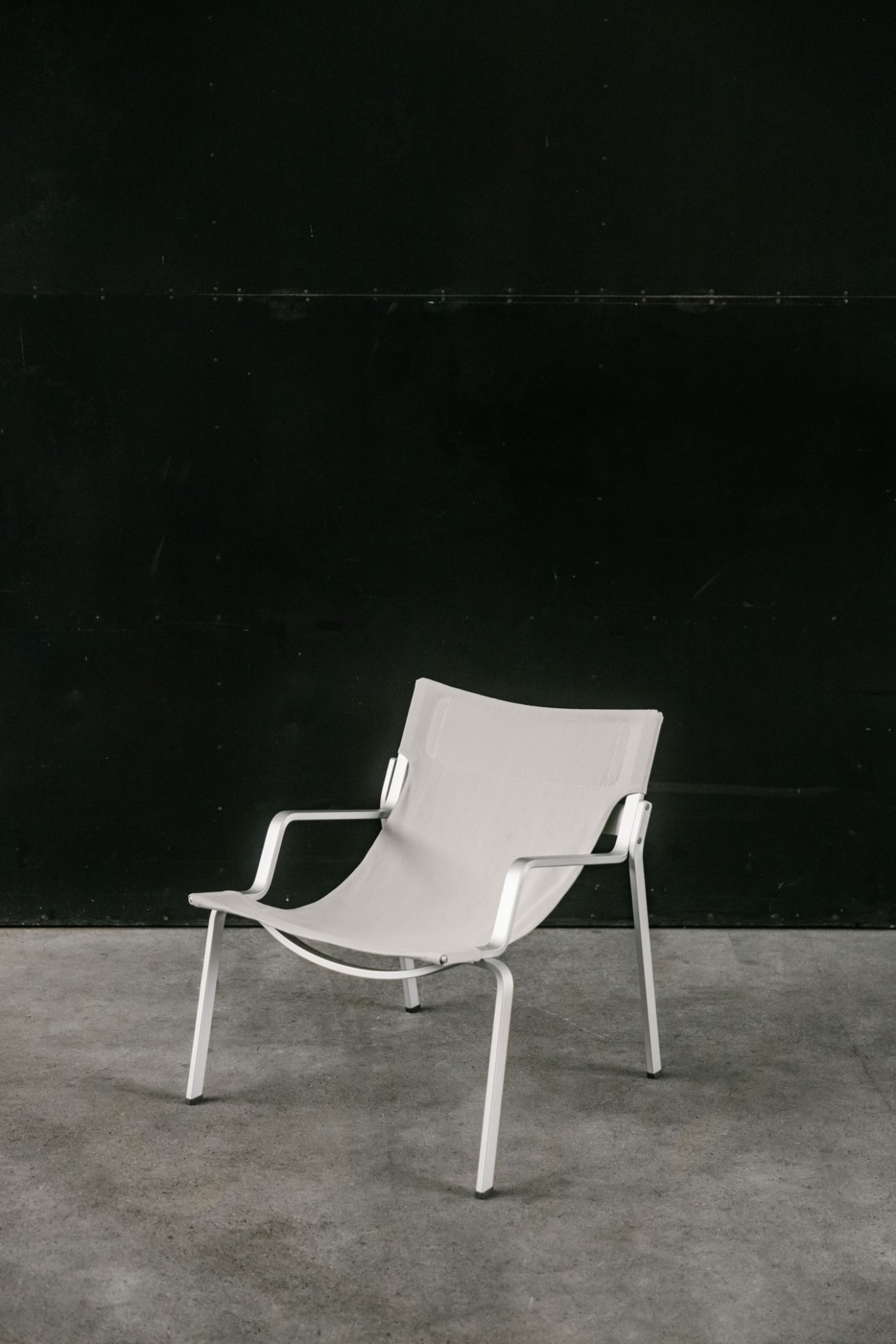
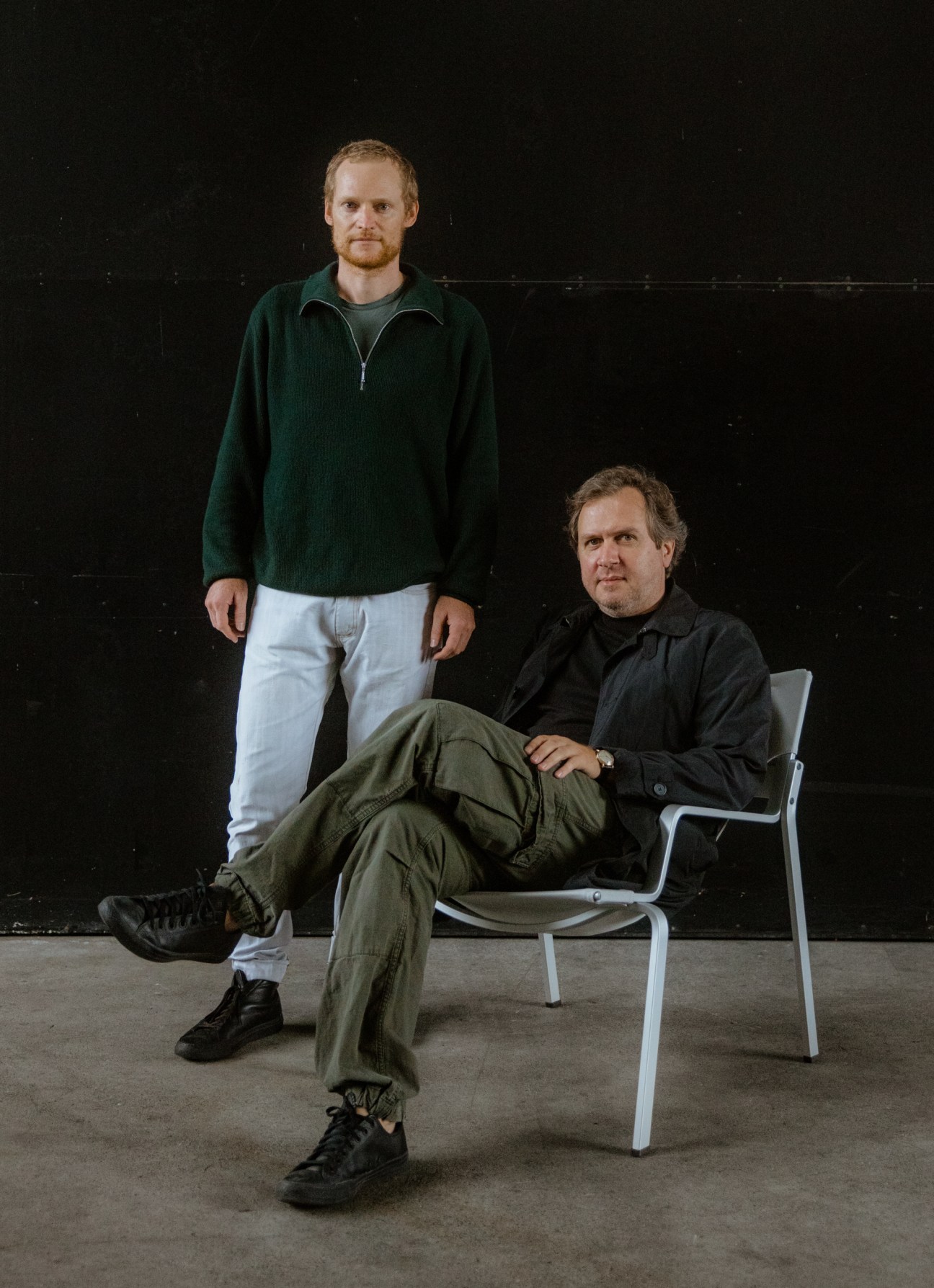
Like all Lehni’s work – sleek shelving units, stools and bedframes – the chairs at the centre of the tie-up are made from fully recyclable aluminium. Suitable for indoor and outdoor use, Qwstion’s novel touch is the inclusion of a slip-on linen-like seat cover made in the brand’s patented Bananatex fabric, which is derived from the fibres of banana plants. “It’s a fully circular piece of furniture,” says Kaegi, taking Monocle through the chair’s three anodised aluminium profiles of neutral, bronze and black. “We were inspired by Lehni’s ability to bend this aluminium, meaning we could create something like this with only a few parts.” Comfortable, lightweight and stackable, it’s the perfect piece of furniture for enjoying those last summer rays on, before bringing it inside to sit by the fire through the colder months.
lehni.ch
Back drops
by Nolan Giles
At the recent Euro 2020 football final, England’s manager Gareth Southgate and his Italian counterpart, Roberto Mancini, cut dashing figures. Southgate wore English brand Percival and Mancini looked dapper in a Giorgio Armani get-up inspired by a suit worn by Italy’s 1982 World-Cup-winning manager Enzo Bearzot. Fashion can subtly point out a nation’s prowess in design: Macron channels French elegance by wearing suits tailored in Paris, Michelle Obama champions diversity in the US’s creative economy by wearing beautiful dresses from Indian-American designer Naeem Khan. These are lessons that can also be applied to furniture.
In a recent conversation I joined with Switzerland’s usm, our editorial director Tyler Brûlé said that he would love to see the shelving system that the brand is famous for used to improve the setting at events such as the Geneva summit between Vladimir Putin and Joe Biden. Sadly, this didn’t happen then but the Swatch Group did sneak a pair of Tissot watches onto both leaders and the world took note.
Furniture can express so much about a country, from its craft and manufacturing skills to the refinement of its taste. Comfy, ergonomic chairs facilitate lengthy conversations. After 18 months of poorly furnished home backdrops in televised video-call interviews, I’m hoping newsrooms and political institutions will get a spruce-up, with an emphasis on their home nation’s best makers and manufacturers. A starting point for inspiration is our report on the renovation of Cairo’s League of Arab States building (see here), a celebration of Middle Eastern design.
Plane space
Art
Venice
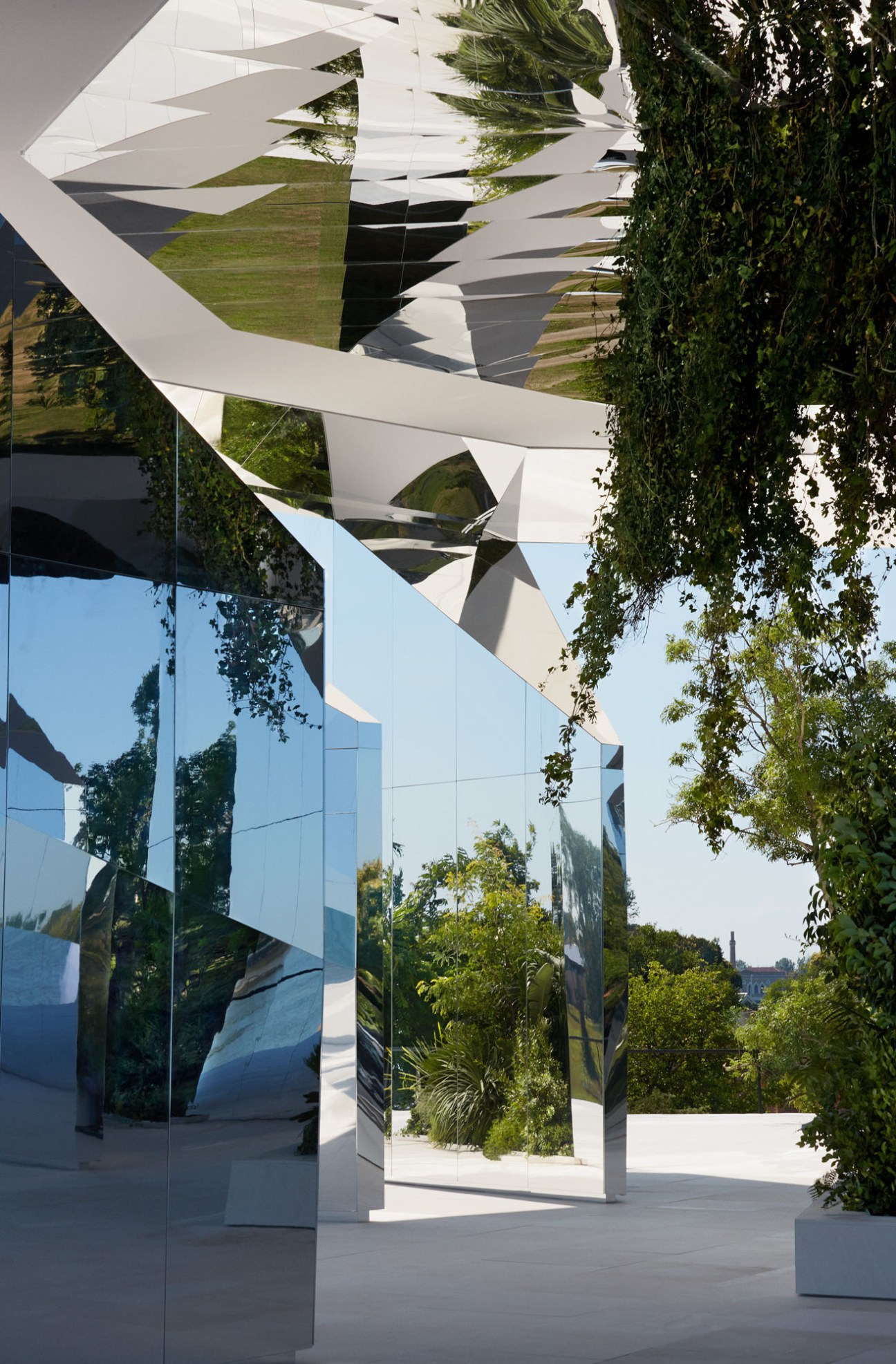
Describing his plant-filled, angular-mirrored, temporary installation on the Venetian island of Certosa, artist Doug Aitken refers to the work as an ice-cube that will melt into the landscape. The glimmering pavilion was designed to catch the sunset at a recent menswear showcase for French fashion house Saint Laurent and is part of a broader scheme to reinvigorate the island, currently a wasteland. “I want to make a work that was engaging with the present,” says Aitken, who adds that the project is the first step in a regeneration of the natural habitat of the island, which once was home to military barracks but was abandoned in the 1960s. “When the installation is gone, all the vegetation inside will be planted on the island. So the artwork doesn’t disappear; it changes form.”
saintlaurent.com
Respite and repair
Domestic
Sydney
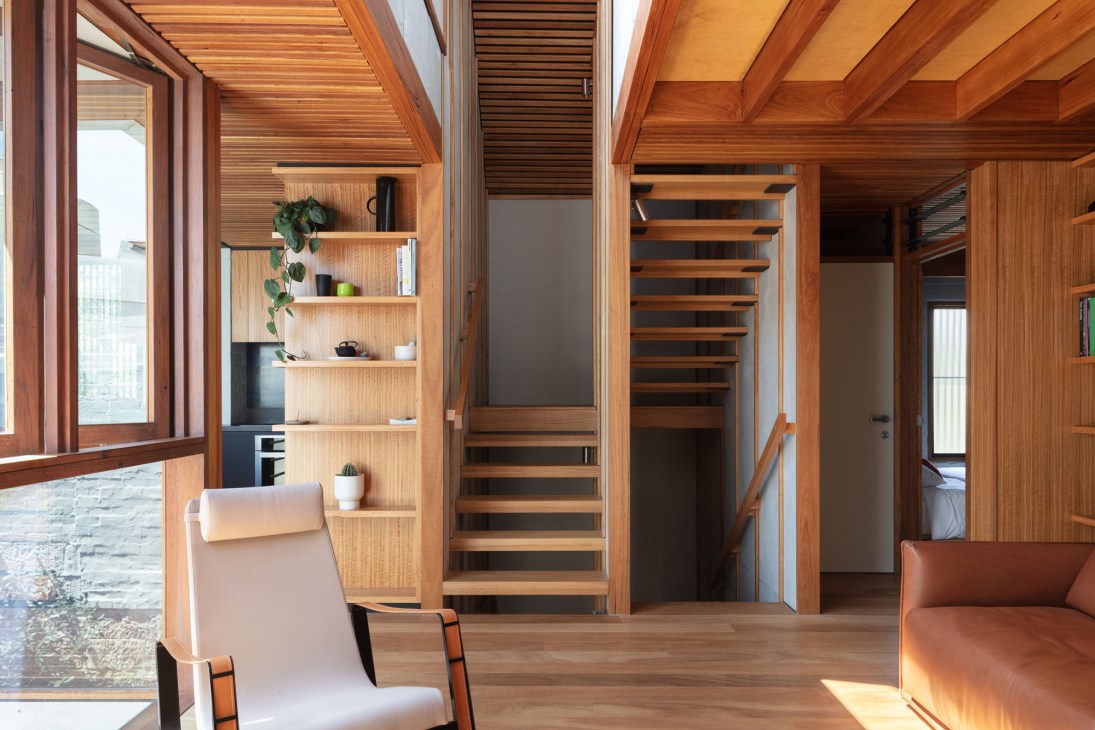
A former automotive workshop among Victorian-era terraces in Sydney’s inner-city neighbourhood of Paddington is a surprising location for a contemporary Japanese-inspired residence. But for Matt Elkan, his aptly named Smash Repair House feels appropriate. Working with the light-industrial building, whose doors open onto the street, the designer looked to the Japanese capital’s architecture for inspiration.
“Houses in Tokyo seem to be able to exist so close to the public realm but also have such privacy,” says Elkan. “You can find yourself in a very private little garden or courtyard within metres of a busy public street. I felt that Smash Repair House needed to offer similar respite and relief.”
Elkan designed the home around an internal courtyard that brings natural light and air across all three of the building’s levels. It’s a design move that complements the warm timber throughout the space and the careful spread of wooden battens on the ceilings, which help to absorb sound and create a calming acoustic environment. The result? Onsen-like tranquillity.
mattelkanarchitect.com.au
Q&A
Alison Brooks
Architect
London
Alison Brooks Architects is responsible for some of the most ambitious housing projects at the centre of London’s King’s Cross development. Founder Alison Brooks is concerned with making the most of all aspects of a new building in relation to how the public will enjoy it. At the 2021 Venice Architecture Biennale she highlighted this approach in an installation focused on making the best of the street-level in high-rise architecture.
Why is the ground floor of a building so important to you?
We always try really hard to make ground floor spaces generous, by using double-height ceilings and areas you can use in many ways. Tall buildings in cities are often criticised for the way they meet the ground; they don’t contribute to the public realm.
Are there smart ways for architects and developers to best use this space?
Foyers of residential buildings are well-suited to operating as co-working spaces. These should be places where tenants and the public can share space freely and be part of the life of the street, making opportunities for communality.
How did you bring these ideas to life in Venice?
A table with models of 10 of our projects brought together as a new, imaginary city. It’s a way of revealing the potential of housing to better operate as economic, cultural and social space; as civic buildings. A building can be a neighbourhood in itself; offering space for communities to emerge and gather.
alisonbrooksarchitects.com
Images: Clinton Weaver