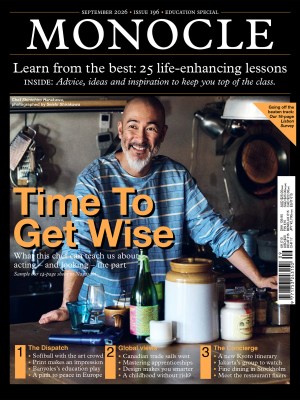
Issues
Jump start
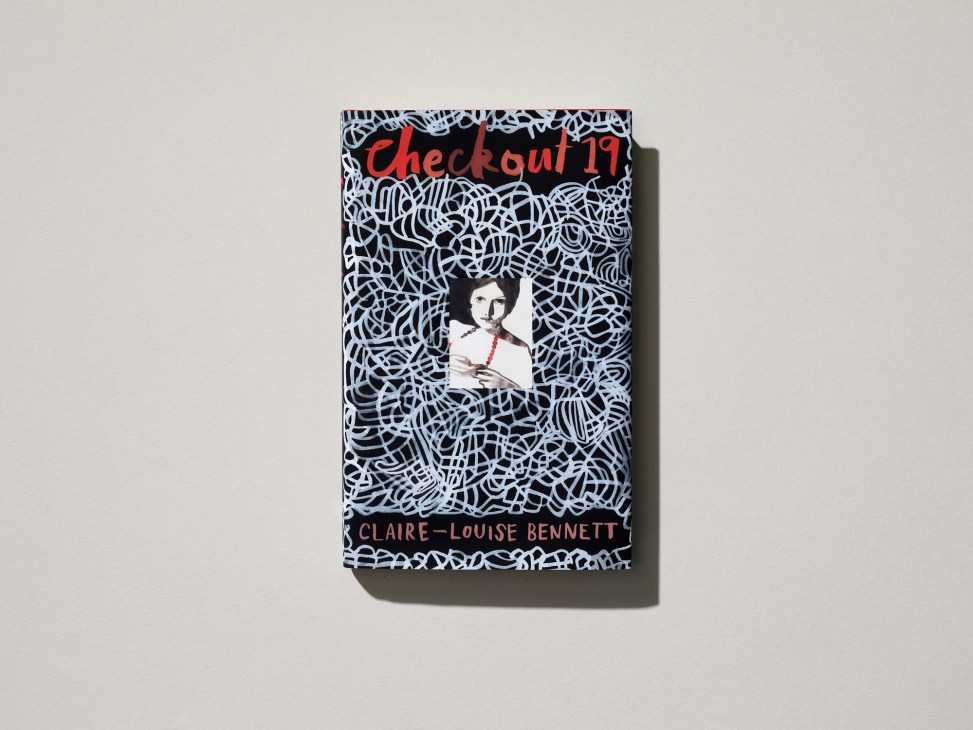
Checkout 19
Claire-Louise Bennett
The first novel from the author of acclaimed short-story collection Pond follows a young woman who finds herself “in love” and “in conflict with life and death”. She revisits highs and lows from her past – from fancying a teacher to eavesdropping on her grandmother’s odd stories – that have made her who she is. Bennett’s stunning debut introduced us to a writer of extraordinary talent, and this follow-up is sure to cement her position among the finest contemporary storytellers.
‘Checkout 19’ is out now
The Inseparables
Simone de Beauvoir
Considered “too intimate” to be released in De Beauvoir’s lifetime, this short, absorbing novel tells the story of an intense and ultimately tragic relationship. The manuscript was inspired by a real-life friendship and written in 1954, five years after feminist classic The Second Sex. It was found in an archive by her adopted daughter, Sylvie Le Bon-de Beauvoir. The Inseparables is a moving coming-of-age tale about two girls battling with who and what they want to be in 20th-century Paris.
‘The Inseparables’ is published on 2 September
Harlem Shuffle
Colson Whitehead
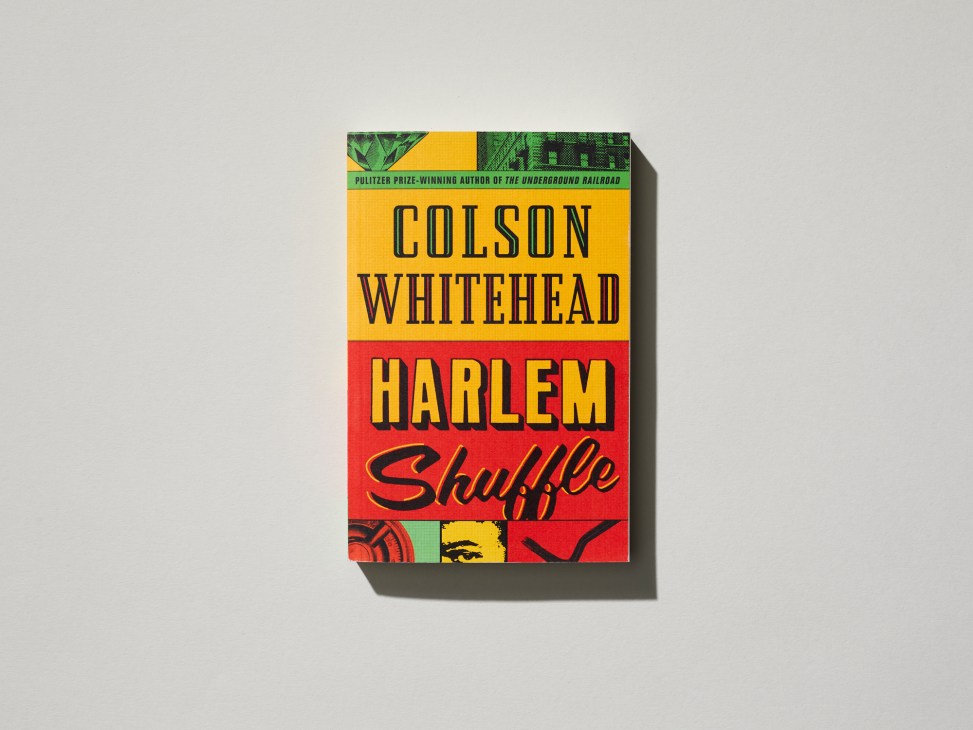
Pulitzer prize-winner Whitehead’s new novel is an ingenious and intricately plotted crime caper set in 1960s Harlem. Loving husband and father Ray Carney works as a used-furniture salesman. He dabbles in the occasional dodgy deal but by and large he’s on the right side of the law. Then his cousin Freddie volunteers his services for a particularly big job and things quickly get out of hand. A wonderful period piece in which the bustling streets of Harlem, with all their gangsters, addicts, and cops on the make, are as vivid as ever.
‘Harlem Shuffle’ is released on 14 September
Screen
Paris Calligrammes
Ulrike Ottinger
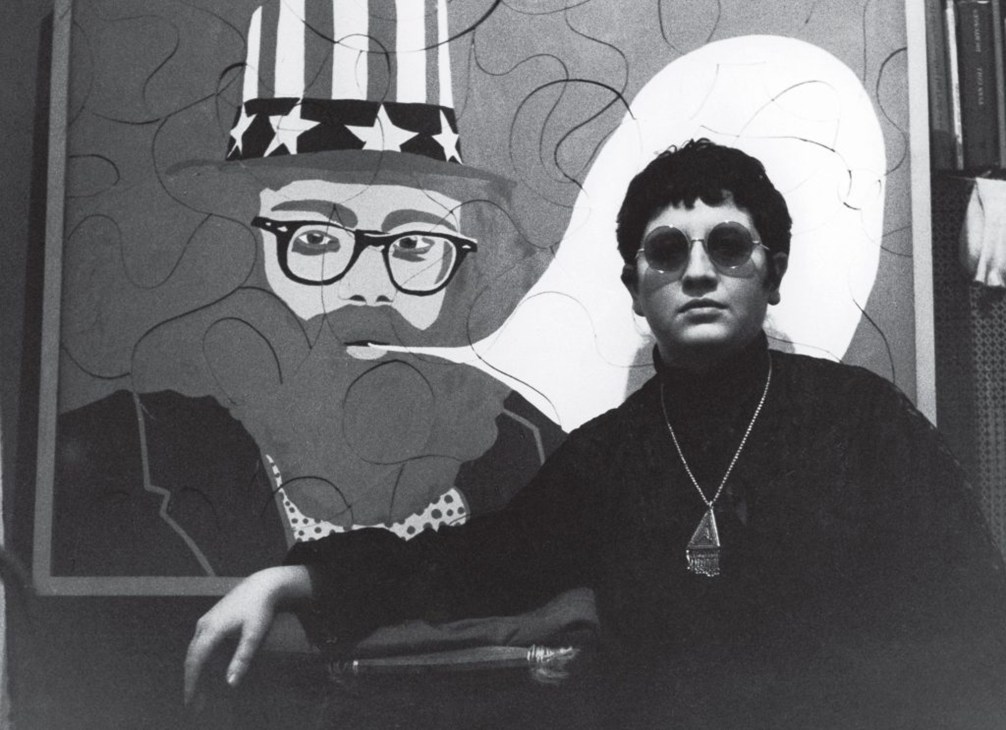
Best described as “Adam Curtis-meets-Fran Lebowitz”, this documentary fuses social history with personal reflections on city living. This quietly compelling feature by German artist and filmmaker Ulrike Ottinger serves as a filmic collage of life in Paris in the 1960s. It was then that she befriended the leading intellectuals of the Rive Gauche over coffee at the Café de Flore or at readings at the antique bookshop from which this film takes its name. For all the countless silver-screen love letters to Paris that have been made over the years, few have managed to convey such an authentic sense of time and place as Ottinger does here.
‘Paris Calligrammes’ is out now
Annette
Leos Carax
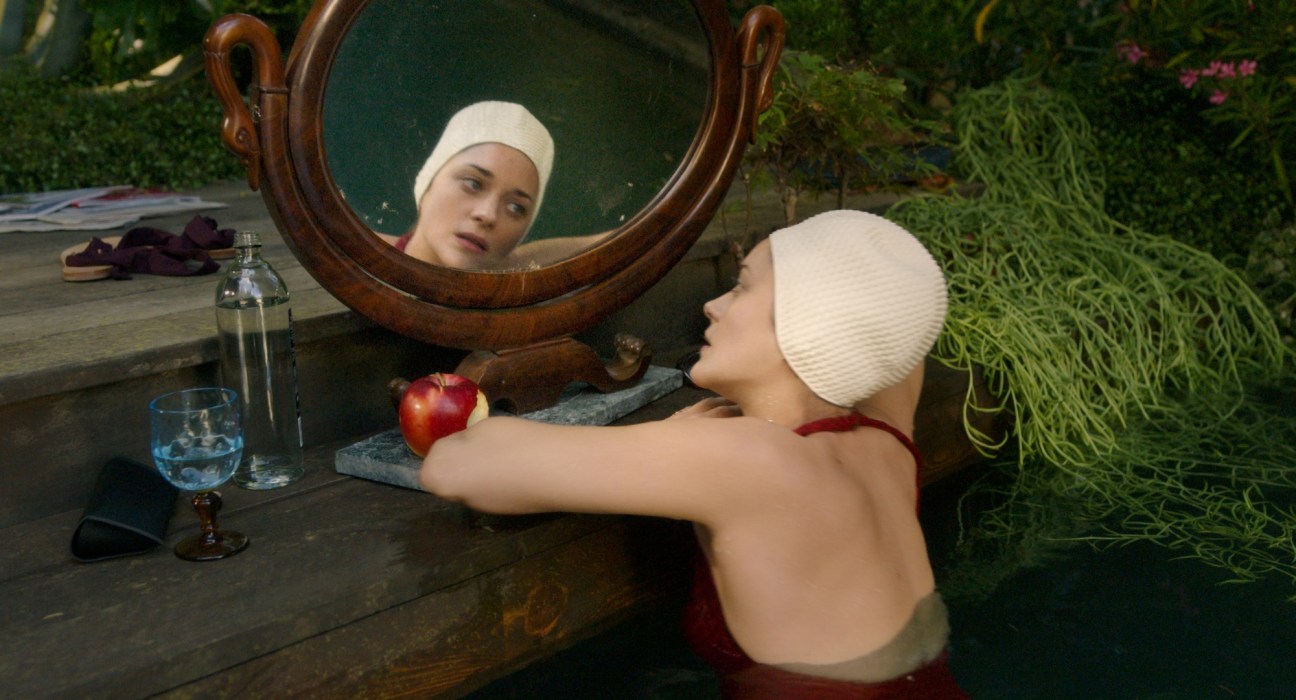
After serving as the subjects of Edgar Wright’s recent documentary about their music careers, outré electro duo Sparks take an active role as the writers of the score and screenplay for French director Leos Carax’s first English-language film. The provocateur’s latest effort opened the Cannes Film Festival and stars Adam Driver and Marion Cotillard as a celebrity couple whose lifestyle is destabilised by the birth of their daughter. But Annette is no ordinary infant and Annette is no ordinary domestic drama. It is a surreal, fever dream of a film by a master of the genre.
‘Annette’ is out on 3 September
Prime Time
Jakub Piatek

This tense, minimalist thriller directed by Jakub Piatek is set entirely within a Polish television studio on the last night of 1999. As a live broadcast rings in the new year, a hijacker takes over the station with the intention of announcing his own message to the station’s viewers. With the crew unsure of his intentions and the contents of his speech, the camera staff face a difficult decision: do they risk broadcasting something that’s potentially dangerous to viewers or risk their own lives by not doing so?
‘Prime Time’ is out now
Turbulent Skies
Avrotros
The early, hedonistic days of international aviation are explored 100 years on in this new glossy Dutch drama. This series charts the complicated relationship between pilot and manufacturer Anthony Fokker and the founder of klm Royal Dutch Airlines, Albert Plesman. The two men have opposite personalities: Fokker a maverick risk-taker, Plesman cautious and principled. They soon realise that they need each other to ensure Dutch aviation can become a major international player.
‘Turbulent Skies’ is out now
Audio
Thank You
Diana Ross

The gift we didn’t know we needed this year comes from Detroit-born musical legend Diana Ross, who is offering us her first album of new material in 25 years. To top it off, Thank You was co-produced by the producer of the moment, Jack Antonoff. Ross’ record label promises that it will sound sensationally uplifting – an “inclusive message of love”.
‘Thank You’ is released on 10 September
Ch. 1 Vs. 1
Cynthia Erivo
You might recognise Erivo from her powerful performance of “Stand Up” (a song she co-wrote for the film Harriet) at the 2020 Oscars ceremony. She is also an acclaimed actress, with parts in blockbuster films such as Widows and Bad Times at the El Royale. With one foot in Hollywood and the other in the music industry, London-born Erivo’s breezy but rich vocals carry a depth that is complemented by an impressive, effortless range. This is well-written pop with just the right amount of melancholy.
‘Ch. 1 Vs. 1’ is released on 17 September
Cosha
Mt Pleasant
Irish vocalist Cosha was propelled to fame through early collaborations with producer Mura Masa in 2016. Her debut album Mt Pleasant is a glittering example of what happens when artists take their time. And, from the rolling drums of “No Kink in the Wire” to the soaring synth in “Run the Track”, every song feels like it was worth the extra effort. The record was made with a long, hot summer in mind but it’s a perfect soundtrack to savour long after the holidays draw to a close.
‘Mt Pleasant’ is out now.
Bleu
Claire Laffut
Already well-known as the face of Chanel’s Gabrielle perfume, Belgium-born Laffut has plenty of musical and artistic talent. For her debut album Bleu, though, she is making the most of her dulcet French tones. The result is a dreamy electro-meets-world-music record with plenty of catchy highlights. Performed with French singer-songwriter Yseult, “Nudes” comes accompanied by sexy, insistent beats. Opening track “mdma” is packed with African rhythms but there’s also something beautiful and mesmerising about Laffut’s voice when the tempo slows down, in tracks such as “Avis de Tempête”.
Bleu’ is released on 3 September.
Art
Shigeko Kubota
‘Liquid Reality’, Moma
A genuine pioneer of video art, Japanese artist Shigeko Kubota was one of the first to point a camcorder at anything and put the results in a gallery. Her sculpture-meets-video body of work is full of references to nature, technology and the flow of water. Kubota was also married to fellow video art revolutionary Nam June Paik and dedicated much of her career to supporting him. Now it’s time for her to get some attention, because she’s as important as she is overlooked.
‘Liquid Reality’ is on until 1 January.
Photography
Photo London 2021
Somerset House
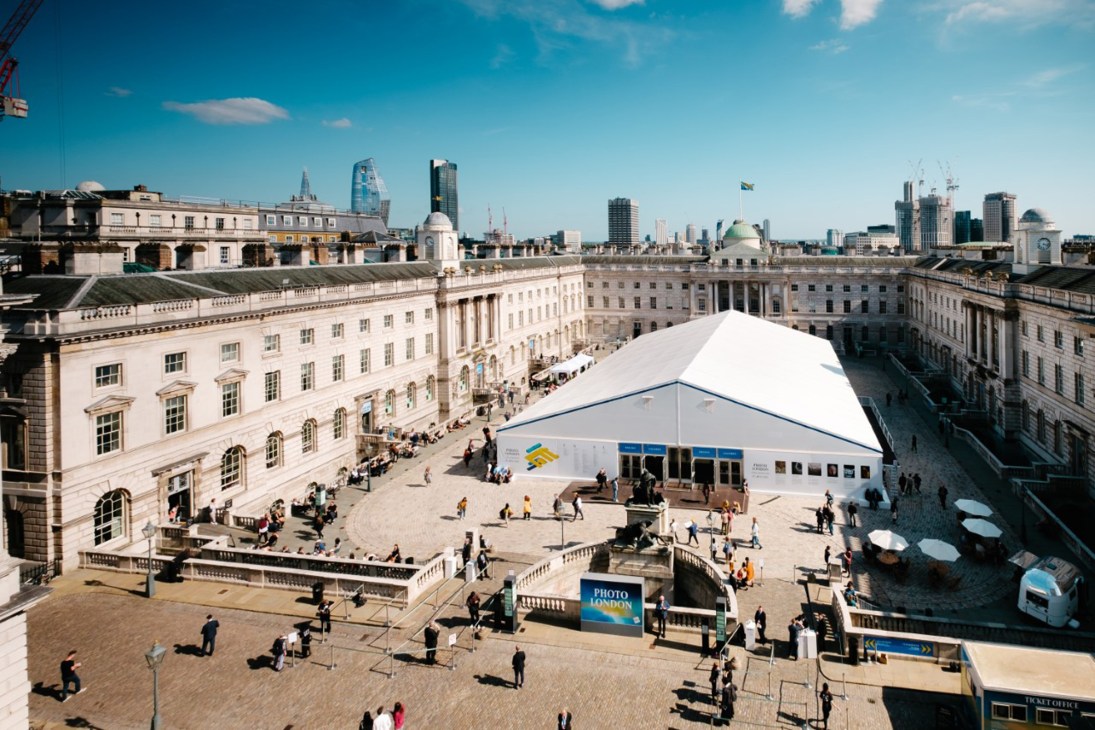
London’s major annual photography fair put its money where its aperture is and confirmed its 2021 edition good and early. This year’s iteration is promising no compromise on previous editions, featuring galleries – both small and cutting edge, big and blue-chip – from more than a dozen countries, all taking up residence in Somerset House. The public programme includes an exhibition by Iranian artist Shirin Neshat and talks by Lee Friedlander, Adam Lowe and Nancy Burson.
‘Photo London’ is on 9-12 September.
Venue
Kunstverein Gartenhaus
Vienna
In German, Kunstverein translates as “art society”, and Gartenhaus as “garden house”. When curator Attilia Fattori Franchini and multimedia artist Ursula Mayer saw an elegant pavilion in the tree-dotted courtyard of Café Kandl, they knew it was the place to combine the two concepts. After a year of preparation, the charming space was inaugurated and is now showing films and poems by multimedia artist Ruth Novaczek. As well as a programme of about five shows a year (with a particular focus on performance and the written and spoken word), the pair’s plans also include a residency and a publishing house. “We both came to Vienna after several years in London and recognised that there was something missing,” says Mayer. “There are not many institutions bridging the gap between museums and commercial galleries.”
Images: 2021 Estate of Shigeko Kubota / Licensed by VAGA at Artists Rights Society (ARS), NY, 2021 Lightdox, Courtesy of Cousin, Courtesy of Netflix, Charlotte Abramow, Graham Carlow, UGC Distribution
Different tune
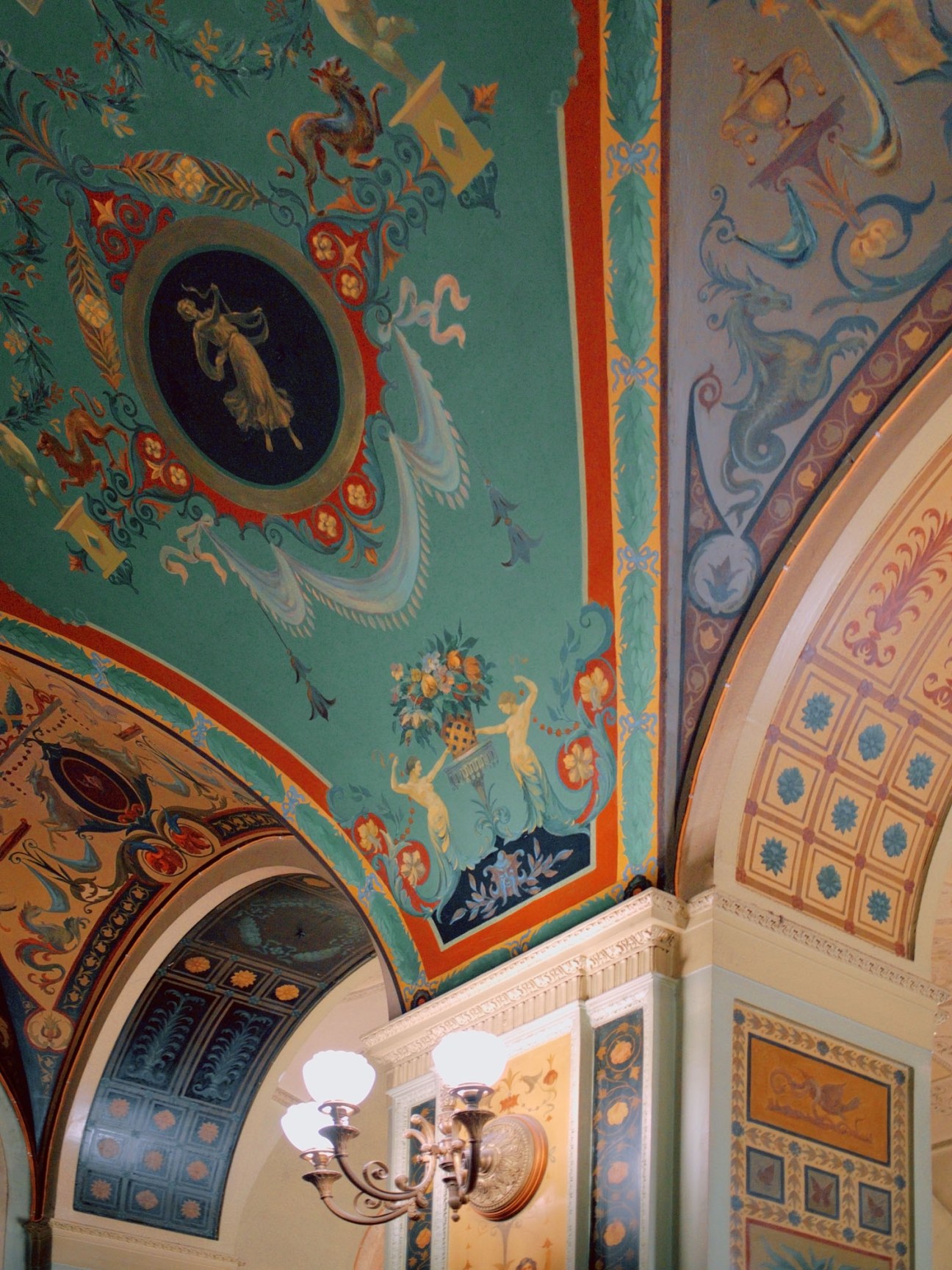
Given how long St Petersburg’s Dom Radio building lay underutilised and unappreciated, the creative ferment going on today in its many rooms, offices and studios feels dizzying. Constructed in the final years of the Tsar as a cream-and-brown jewel of early 20th-century neoclassicism, it later housed the offices and studios of the radio broadcasters of Leningrad – as the city was then known – in the 1930s. Soviet news programmes, concerts and radio plays were recorded and beamed out to the city’s residents.
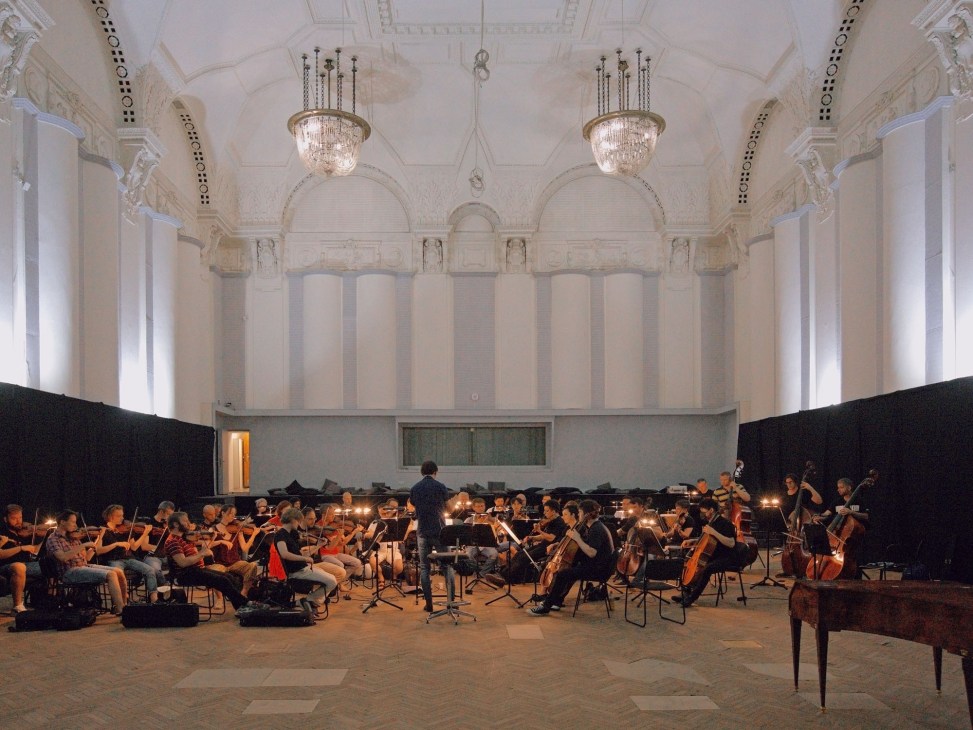
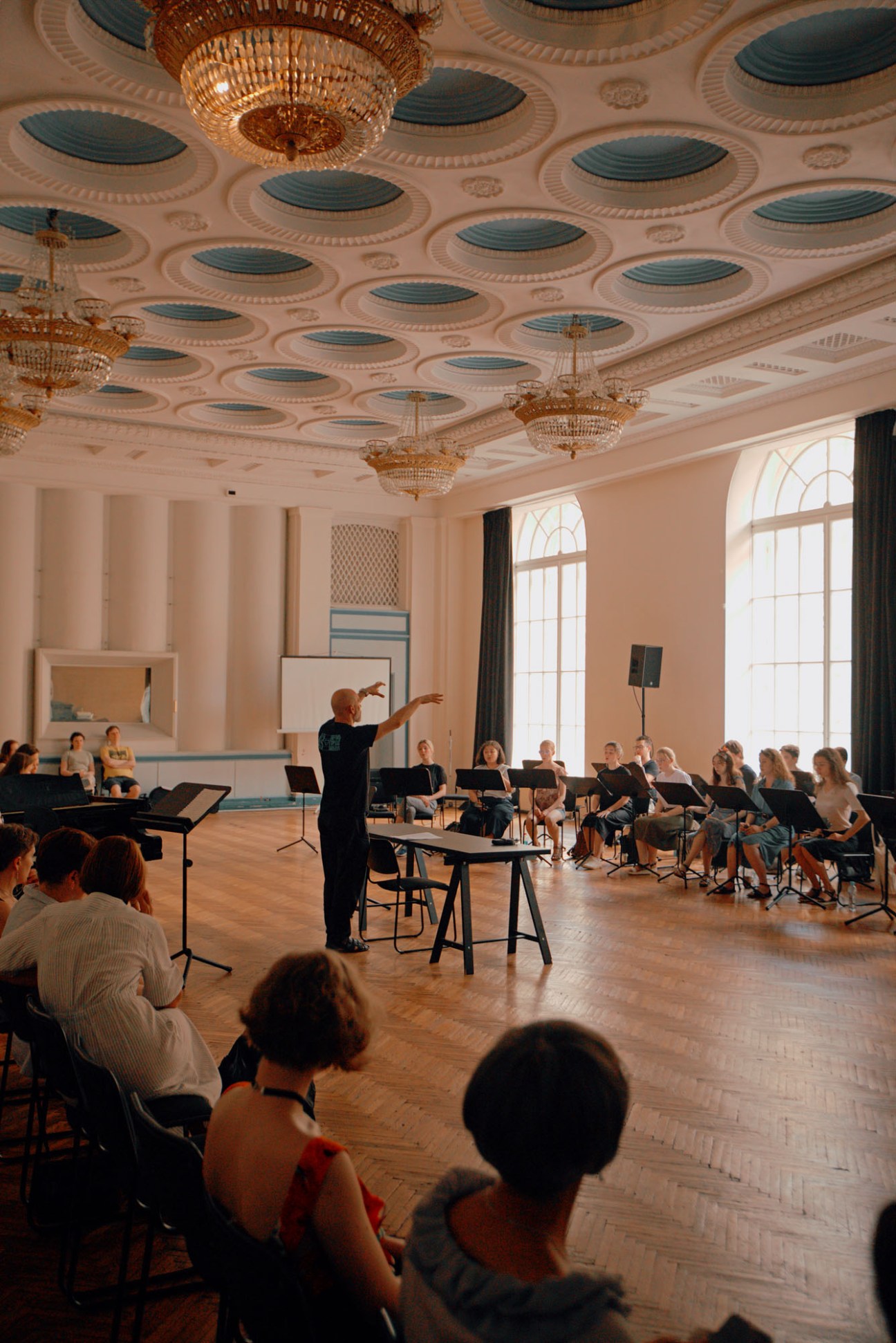
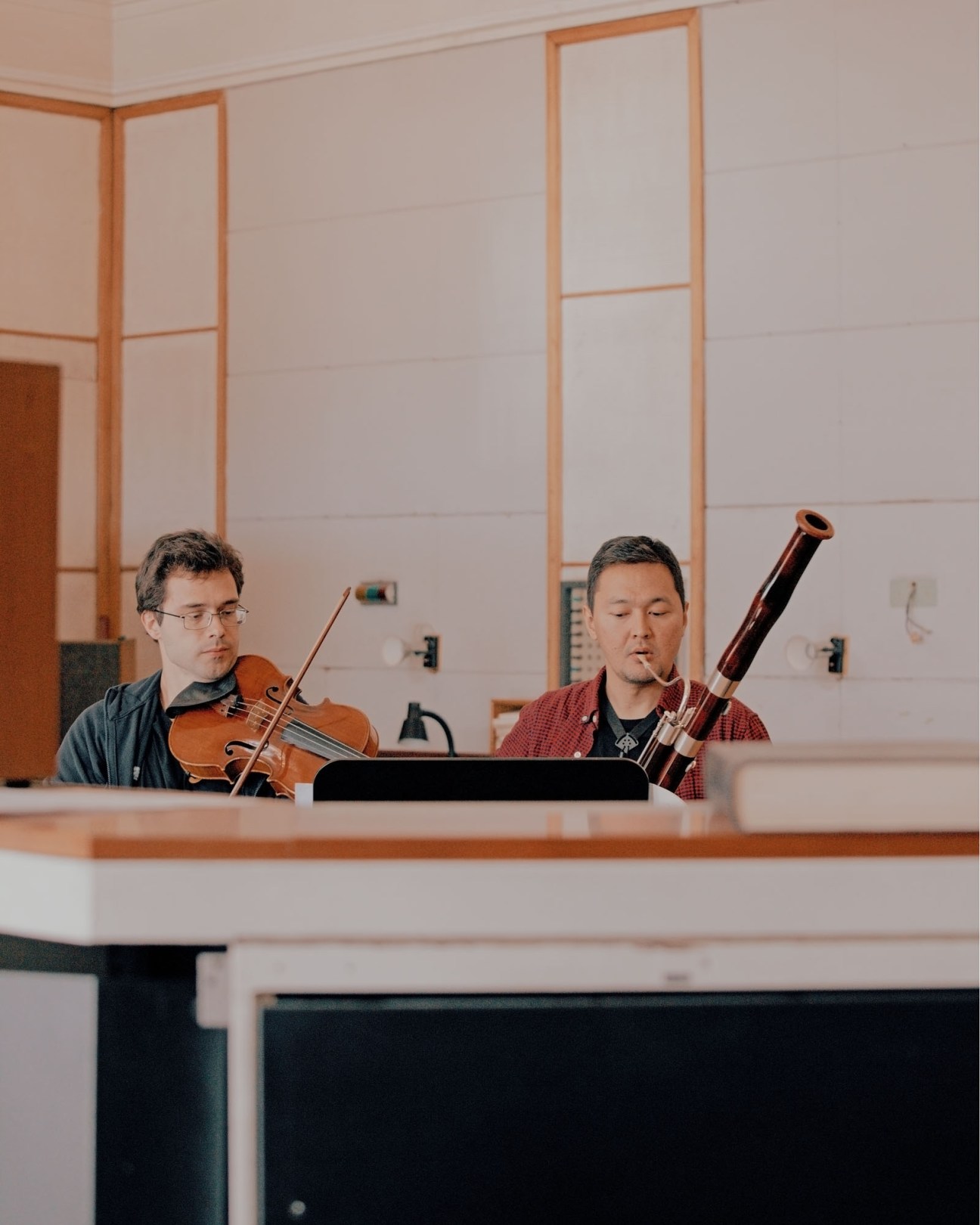
But in the years following the end of communist rule, musicians and technicians slowly emptied out of the building, leaving a chaotic mix of rented office space and slapdash retail kiosks in their wake. Today the noise of broadcasts has been replaced with everything from orchestral rehearsals to choral masterclasses. Contemporary art exhibitions also take up some of the rooms and on many evenings the doors open to the public for performances.
The current incarnation of Dom Radio is the brainchild of musical visionary Teodor Currentzis. “I think of it as a time machine, connected to the analogue past but used to explore the future,” he says of the project. Currentzis – who has a swirl of black hair and a wardrobe of skinny jeans and tall leather boots – was born in Greece but came to Russia to study at St Petersburg’s acclaimed conservatory. He stayed, going on to lead musical houses across the country as he became one of the world’s most noted conductors. For the past 17 years he has fronted the 120-member MusicAeterna orchestra and choir, which has graced stages everywhere from Salzburg and Vienna to Tokyo.
In 2019, Currentzis and the orchestra decided to move away from Perm, a one-time industrial centre in the Ural mountains, where working was becoming increasingly difficult due to bureaucratic disagreements. In an evocative yet cryptic open letter announcing his departure, Currentzis wrote of a “mad thirst for beauty” that the regional authorities proved incapable of understanding. “This is the function of those in power – to not understand,” he says.
Additionally, the opportunity being presented by Dom Radio was too enticing for Currentzis to resist. MusicAeterna had rehearsed in the St Petersburg building before heading out on tour and knew all about its impressive scale and historic resonance. Much of the funding for the refurb and the cultural programme would come from the majority state-owned vtb Bank, the orchestra’s main financial backer. The job of getting Dom Radio ready for its new life was one of subtraction rather than addition. The aim was to peel away layers of paint, wallpaper and plastic to reveal a space that has a palpable sense of character. The resulting atmosphere is of a haunted ministerial office crossed with a studio from the heyday of pre-digital musical production.
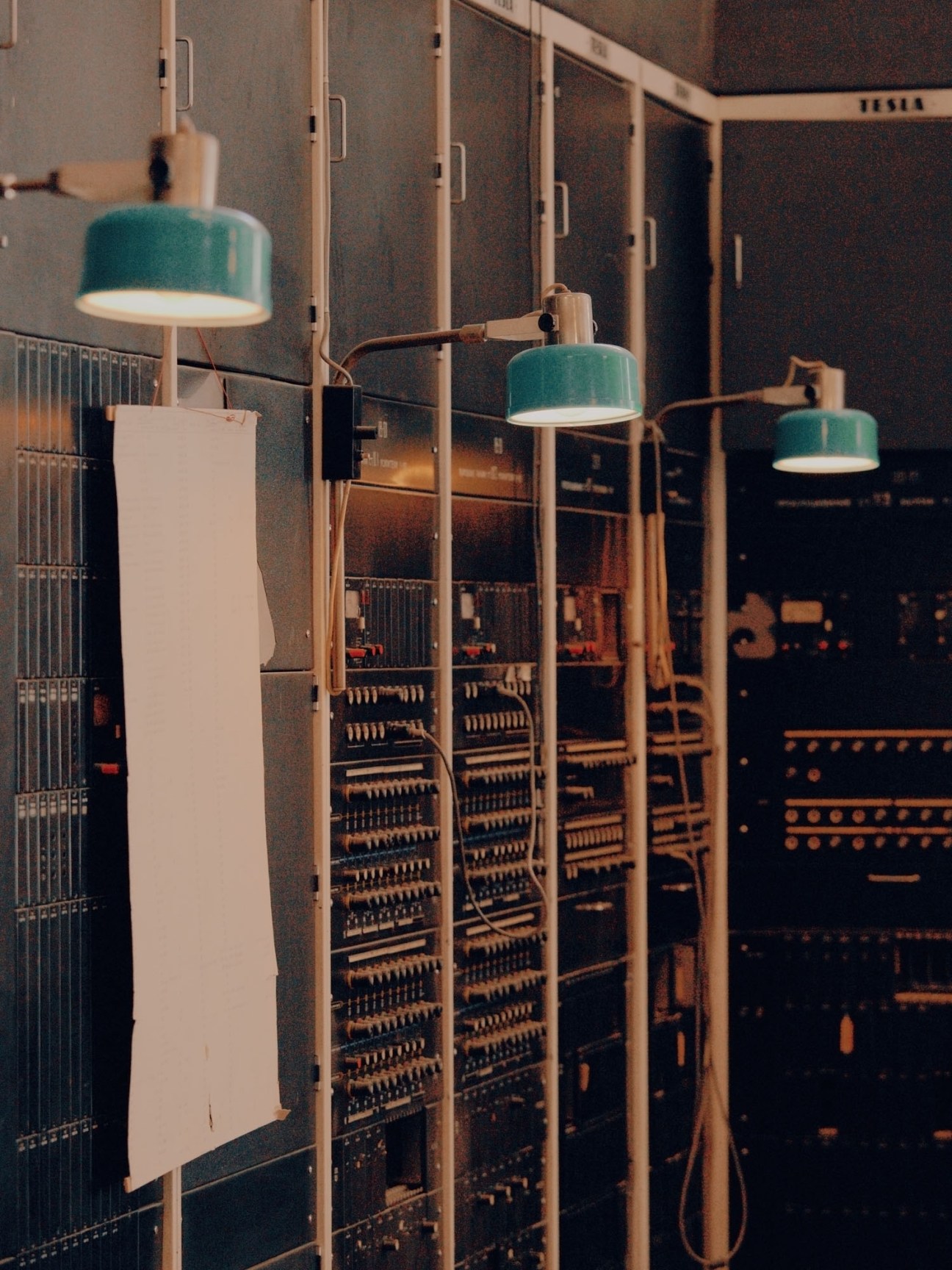
Currentzis’s studio has the feeling of an audiophile’s secret lair, where amplifiers and speakers are lined up facing a red velvet couch. A Studer c-37 reel-to-reel recorder from the 1960s takes pride of place. Currentzis presses play and the sound of psychedelic rock comes barrelling forth – grainy and warm, crackling in its imperfection. “We like the old, more sincere way of creation,” says Currentzis.
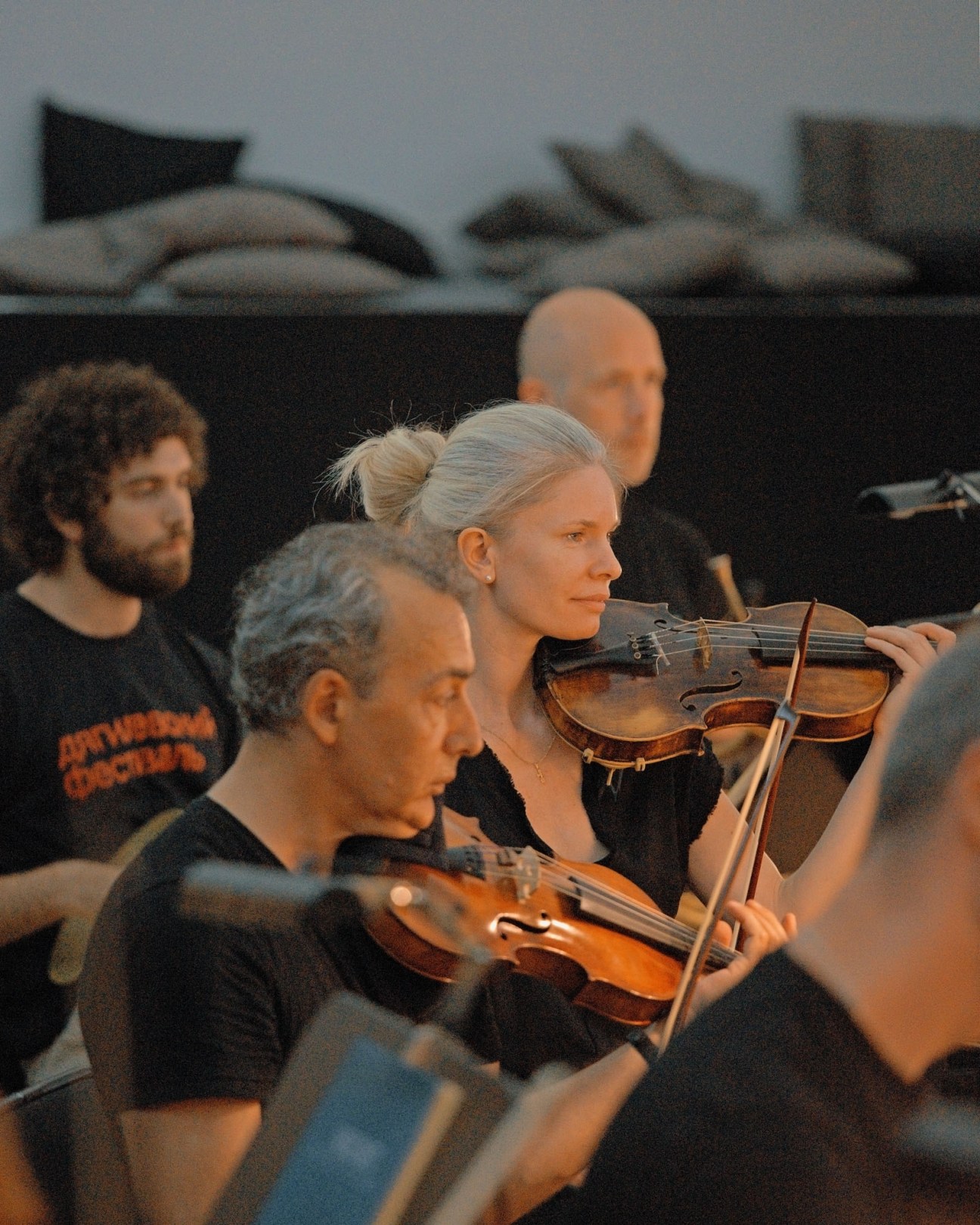
At the moment, he and MusicAeterna are rehearsing Mozart’s Don Giovanni in advance of a run of performances at the Salzburg Festival. They are using the same hall at Dom Radio where the Leningrad Radio Orchestra assembled to record Dmitri Shostakovich’s Symphony No 7 in 1942. That work was broadcast as a message of hope to the city’s residents, then caught in a German blockade that lasted for more than two years.
But even as Currentzis acknowledges the weighty history of Dom Radio he is adamant that the building should not be just a memorial to the past but rather a space that is both functional and alive. “We feel that there is something sacred about this place,” he says. “But we are equally sure that something only remains sacred when it continues to be used and when it is still producing.”
The artistic free rein that’s granted to Currentzis and his orchestra is all the more striking given that the official mood in Russia is currently pointed strongly in the opposite direction. Every week brings news of the latest crackdown or restrictive law. Currentzis speaks abstractly and lyrically about Dom Radio’s role in such a moment. “If the world around us was full of hope and, let’s say, in tune with itself, then you wouldn’t need musicians or poets,” he says. He brings up the dark days of the Second World War that coincided with the great music-making inside the walls of the building. “It’s the job of any cultural institution to define its own relationship with the epoch in which it exists,” he says.
These days, a residency programme brings contemporary composers to Dom Radio for six-month stays. Andreas Moustoukis is the current occupant, working out of a spacious office on the sixth floor; original parquet floors and tall windows give the place a creaky and stately air. A couple of years ago, Currentzis called Moustoukis to tell him of the plans for Dom Radio and said that he should join. “There was no doubt that I would,” says Moustoukis. “I’m a big fan of utopias – and Teodor is too.”
For his first performance in residence, Moustoukis gathered an audience to watch as he painted a large abstract canvas while a chamber orchestra played pieces by American composer David Lang and Moustoukis himself. He is now putting together a new choral piece called Whispers. When he finishes a passage, he hands it to musicians from MusicAeterna for feedback. “I have never had so many people rehearsing my music in real time,” says Moustoukis. “This is what I wish for, for all the other composers in the world.”
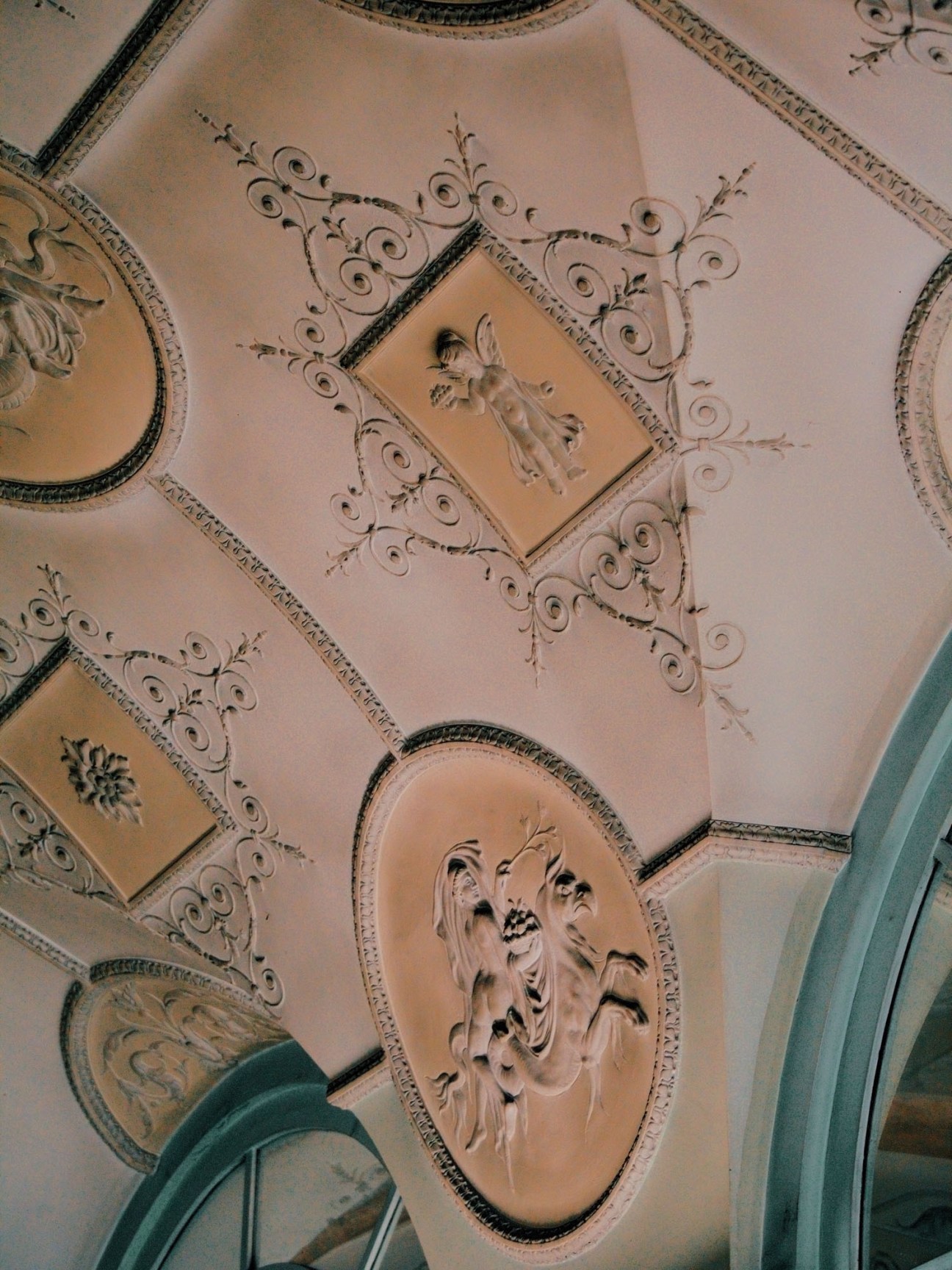
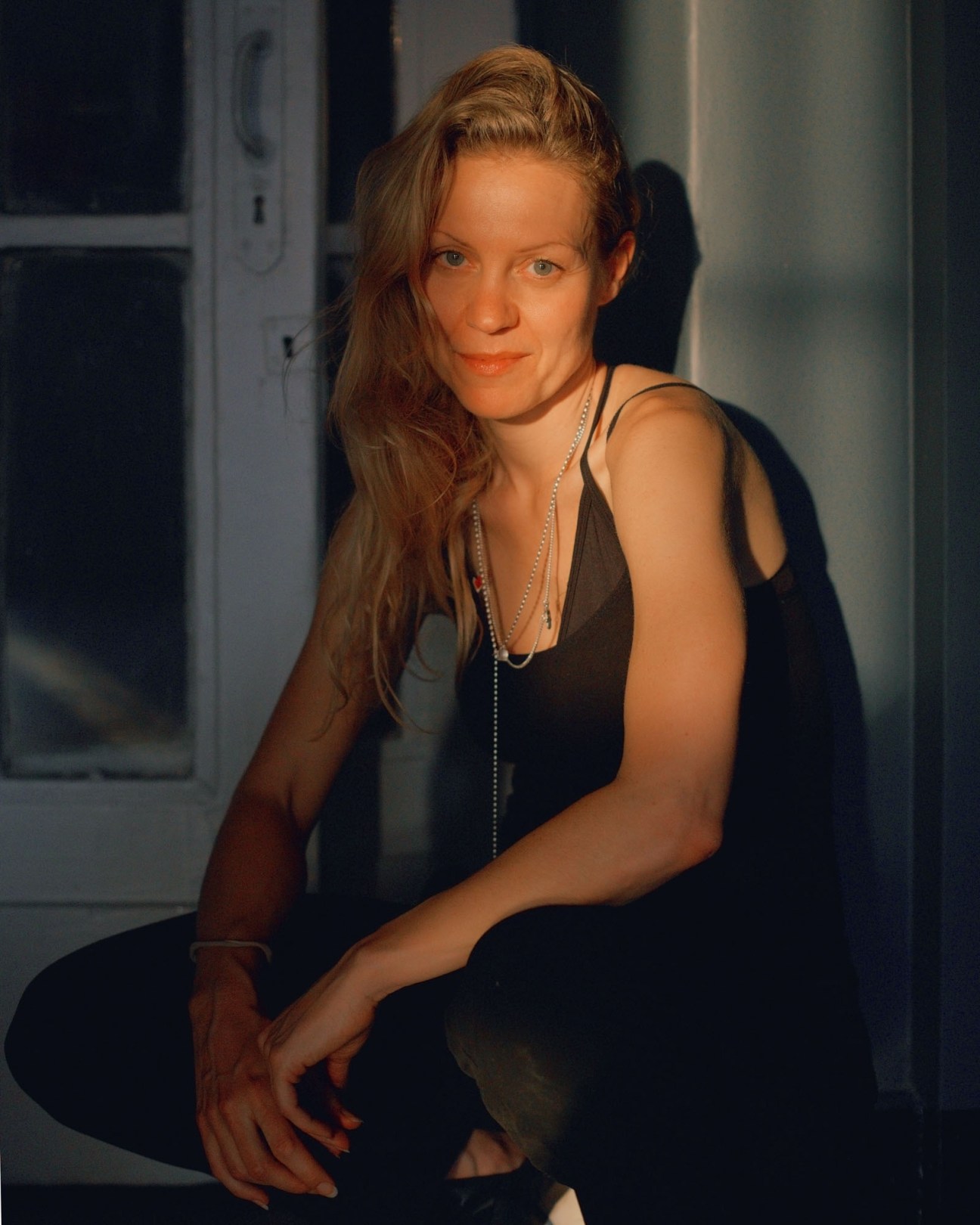
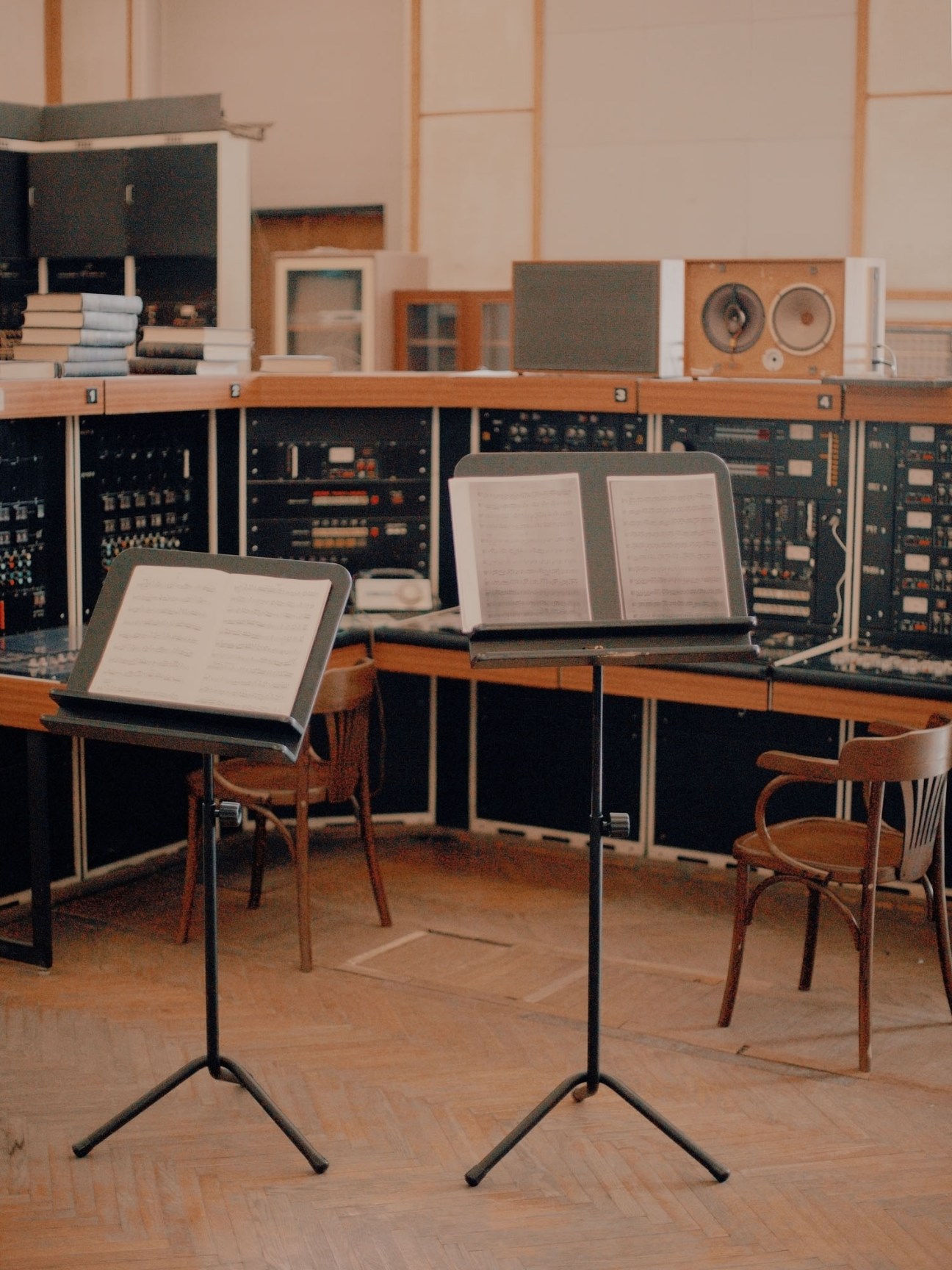
This sense of unique opportunity is also what brought Dutch choreographer Nanine Linning here. “Teodor is an archaeologist of possibilities,” she says. “He doesn’t live by any rule.” During a week-long stay at Dom Radio on her way back to Amsterdam from a festival elsewhere in Russia, she came up with an idea to marry a contemporary dance piece with a choral work in MusicAeterna’s repertoire. Currentzis suggested that she test it out right away. When Monocle visits, Linning is leading dancers through a series of exercises, their movements at once elegant and full of primitive energy. “European stages and arts organisations can be so rule-bound and strictly organised, with little room for spontaneity or playfulness,” says Linning. “At Dom Radio no one tells you that the podium needs to stand here or the audience chairs must be there. The art drives the format.”
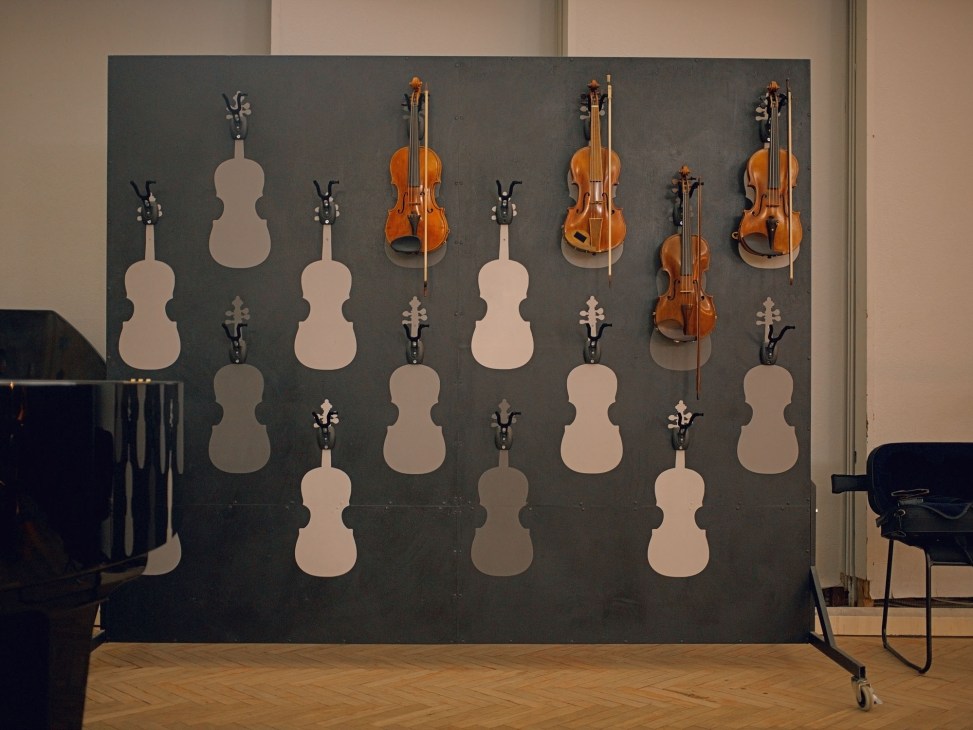
In the evening, the lights in the foyer dim. Contemporary harpist Alexander Boldachev is setting up to play a solo concert. Dom Radio has already gained a loyal following among St Petersburg’s music aficionados, who have quickly adapted to the venue’s idiosyncrasies – volunteers ask concert-goers to leave their mobile phones in an old wooden filing cabinet by the entrance – and added their own. Many performances at Dom Radio purposely end without applause, so that audience members can remain for as long as they wish in contemplative silence.
Currentzis often talks about one of his fondest memories of Dom Radio, when he was in the audience himself for a chamber music concert. It finished, as often is the case, with meditative quiet. Many people stayed in their seats. One man was still there at midnight. “Someone asked, ‘Maybe we should ask him to leave?’” says Currentzis. “And I said, ‘No this is good, let him be.’ This is not my Dom Radio, this is our Dom Radio. Musicians and audience, all together.”
The news breakers
A little after 15.00 on Saturday 15 May, the al-Jalaa building in Gaza City was levelled by the Israeli air force amid the escalating violence between Israel and Palestinian militant group Hamas. The tower, which was painted white and peppermint green and topped with antennae and satellite dishes, housed apartments and offices – among them the Associated Press (AP)‘s Gaza bureau, which had been in the tower’s upper storeys since 2006. The strike put AP into a position that newswire services rarely occupy: it became the story.
“The world will know less about what is happening in Gaza because of what happened today,” AP’s president and CEO Gary Pruitt wrote in a statement in the strike’s aftermath. That sentiment felt more acute because of the particular space that newswires occupy in the ecosystem of journalism: where many traditional players may have been upended, news agencies have remained remarkably resilient, courtesy of a reputation for trustworthiness that is fundamental currency in the industry today.
There are dozens of newswires around the world that vary in size, scope and business model. But their roles are broadly the same: to break news and sell it to the newspapers, television and radio stations and news sites that make up their customer base. “Wires” have long formed the architecture that holds the news together, and often they do so inconspicuously beneath the surface, without fanfare or household-name bylines.
“News agencies have always been essential to media organisations,” says Sue Brooks, head of product development and agency strategy at Reuters, which was established in London in 1851 and remains one of the three big international players alongside AP and Agence France-Presse (AFP). “We provide them with the depth of coverage they cannot achieve on their own,” says Brooks. Still, in an industry in flux, how can one of journalism’s longest-standing business models remain seemingly untouched, particularly when its core function – breaking the news – has been encroached upon by social media platforms providing updates to millions of users for free?
One Saturday in late January, in the village of Urk in a conservative region of the Netherlands, a coronavirus- testing facility was set alight by a group of teenagers in protest at the nightly national curfew. What began as an isolated incident quickly spread to Eindhoven, Amsterdam and other cities across the country: several consecutive nights of violent unrest followed. Among the first outlets to spot the story was anp, the Netherlands’ national newswire. “We have about 500 photographers in the country that are a constant source of information to us, and we have people working the desk 24/7,” says Freek Staps, anp’s editor-in-chief. “In January we scaled up by getting more boots on the ground in various cities as the violence spread. The past year was a big challenge – and we did great.”
But the sector does face difficulties: many newswires have seen the size of their traditional client-base slim in recent years (due to shrinking newspaper budgets or titles being scrapped). Fortunately, that hasn’t always meant a slash in income. “Years ago we had dozens of different customers,” says Staps. “Now we have a [smaller] number of larger customers. It’s just how the media landscape has changed. Our customer base is 99 per cent of the Dutch news industry. Basically everybody uses us.”
AFP’s Berlin correspondent Deborah Cole agrees. “It would be almost impossible for any general news-media outlet to do completely without at least one news agency,” she says, noting that demand for AFP’s reportage has stayed consistently solid, and at times has proven vital. The mass arrival of refugees in Germany in 2015 is a key example. “The international press was really primed to expect disaster – that this was going to be a terrible situation with horrible consequences for the country,” says Cole. “Those of us who know Germany well knew that the situation was much more complicated. I am proud of the work that we managed to do but it did feel as though we were a bit lonely in getting it right for a while.”
Founded in 1835, AFP is the world’s oldest newswire and has bureaux in more than 150 countries. Whereas Reuters is known for looking at stories through a business lens, and AP with American audiences in mind, AFP’s focus is shaped at its headquarters in Paris. “For breaking news, the onus is on the bureau to make the right initial calls,” says Cole. “There is an expectation that we know our patch inside and out and are well on top of anything newsworthy, 24/7.” That can only be achieved by spending significant time on the beat – and is also the main reason for the agency’s success.
Like many similar outlets around the world, AFP is state-funded, with 40 per cent of its annual budget coming from government. And that has made its journalism part of France’s soft power, even if it is editorially independent. (Quiet pressure has increased in recent years, however, for AFP to become more commercially competitive, and in 2018 the government weighed in on the choice of AFP’s new CEO.) Others, including AP and Japan’s Kyodo, operate on a not-for-profit model. But the recent fortunes of publicly listed agencies back up Cole’s sentiment: the wires’ role as wholesalers of news still holds.
Bought in 2008 by Toronto-based corporation Thomson (now Thomson Reuters), Reuters’s news segment’s profits in the first quarter of 2021 rose 2 per cent to a whopping $160m (€136m). That might seem small in the context of Thomson Reuters’s financial standing overall – its financial media and information companies brought in an estimated $5.9bn (€5bn) in 2020. But it challenges the notion that newswires are struggling to find paying customers for their offering. “As the industry has felt more of a squeeze on budgets, news agencies have become even more invaluable,” says Brooks. “Our ability to be on the ground everywhere, to cover stories across text, pictures and video as they break is an essential service.”
The world’s oldest newswires were created in the mid-19th and early 20th centuries. Some, such as Reuters, were born to transmit financial news, others began as co-operatives of newspapers seeking to expand their reach as well as their speed. AP, which employs more than 3,000 news personnel at 245 bureaux in 97 countries, was formed in New York in 1846. “The first incarnation of the Associated Press was a co-operative [of newspapers] that was founded in order to share a schooner,” says Mitchell Stephens, a professor of journalism at New York University and the author of A History of News. “It raced out to meet the ships [coming from Europe] to get the news that was most important in those days a little quicker.” The advent of the telegraph changed the game. Today, social media poses a new version of the same threat.
However, Andrea Baillie, editor in chief of Canada’s national newswire The Canadian Press, is sceptical of the challenges posed by social media platforms such as Twitter. “There can be a lot of pressure on us when social media is blowing up,” she says. “But often it’s an echo chamber. Frequently if you look back to where a story started on social media, it’s with a source that hasn’t been validated. I’m very proud of the nuts-and-bolts work that we do. We are more relevant than ever in this age of misinformation.”
It is national newswires in particular that have the upper hand due to their on-the-ground knowledge of their own territories, large networks of contacts and comprehensive geographic coverage. When the military of Iran mistakenly shot down a commercial airliner near Tehran in January 2020, The Canadian Press led the painstaking and sensitive work of identifying the passengers, 138 of whom had been on their way to Canada. “We are uniquely poised to cover the entire country,” says Baillie. “The Globe and Mail might need stories from us for its website. The Toronto Star might need sidebars to accentuate its own stories. And then there’s a tiny radio station in Nova Scotia that needs everything we do. That is something that is very special to us. Clients look to us for minute-by-minute coverage. We start a story with as much information as we have – sometimes a single line – and we build from there with first-hand reporting. Our bar is very high: we do not put a story out until we have verified it.”
The blurring of the boundary between reportage and opinion in outlets from cable news channels to major newspapers has made that dedication to verifying information all the more important. “Trust is something that we take very, very seriously,” says AFP’s Cole. “It’s probably the greatest source of pressure when it comes to the job – getting the balance right, making sure you have the right end of the stick.” A series of incidents in 2019, in which Angela Merkel appeared to shake during some official engagements is an example of the care newswires take while reporting a story engulfed in public speculation. “It’s inconceivable that anybody would have been able to break a story about Merkel’s health if she didn’t want it out there,” she says. “So we had to take it at face value. Then the story faded from view. And that was it.”
The due diligence and research that is fundamental for the agencies’ activities has become a lucrative revenue stream in itself. Founded five years ago, Brazilian newswire Lupa has gradually morphed into a full-time fact-checking provider for the country’s major media and technology brands. Lupa’s clients to date include Folha de São Paulo, Brazil’s largest newspaper, and, more recently, Google. Its services feature a dedicated account on Whatsapp: users can send a piece of information to have it fact-checked and sent back before sharing it. “It’s a very big opportunity,” says marketing and relationship director Gilberto Scofield Jr. The more their clients’ appetites have changed, the more newswires have adapted by broadening what they can deliver, from audio to video and long-form pieces to partnering with a newer roster of companies that vet and publish user-generated photos and videos. Still, sourcing professional photography remains a fundamental bedrock of an agency’s activities; amateur phone snaps have become an all-too-common presence on many newsfeeds but the potency of an agency photograph is hard to beat.
As scuffles broke out in June 2020 between anti-racism demonstrators and counter-protesters in London, Dylan Martinez, chief UK photographer for Reuters, captured a black 50-year-old personal trainer carrying a white 55-year-old counter-protester over his shoulder to safety. “It became a defining image for racial injustice movements around the world,” says Brooks. “Some of our biggest news wins over the past year are a great example of why news agencies are so indispensable. Reuters is unmatched in its ability to report locally from locations around the world.”
And the success of agency photography also means a steady stream of image projects that are created ad-hoc: this year’s Pulitzer prize in feature photography was awarded to AP’s Emilio Morenatti for his moving series on elderly people during Spain’s lockdowns – just one affecting aspect of the pandemic that might have gone unseen by wider audiences without the wire’s commission.
Agencies might have had to think up some new activities to balance the books but it’s their manpower on the ground that will continue to make the difference. “The media industry has faced a number of challenges in recent years, from geopolitical factors to societal changes,” says Brooks. “These have caused profound disruption and no one is immune from them.” But with a few fresh ideas and a timeworn commitment to seeing the truth for themselves, newswires will be able to keep nicely abuzz.
A thousand words
Iconic images from the agencies
There’s no more effective way of tracing recent events than by looking at the agency photos that have been syndicated to newspapers worldwide. Many of these incidents were captured and refracted on social media but the pictures that stick are often the work of professionals. Agencies produce thousands of photos a day thanks to their global networks, and some photojournalists risk their lives in the process. Here is a selection of striking images from the past two years.

Photographer: Majdi Fathi/NurPhoto
Agency: Associated Press

Photographer: Josh Edelson
Agency: afp
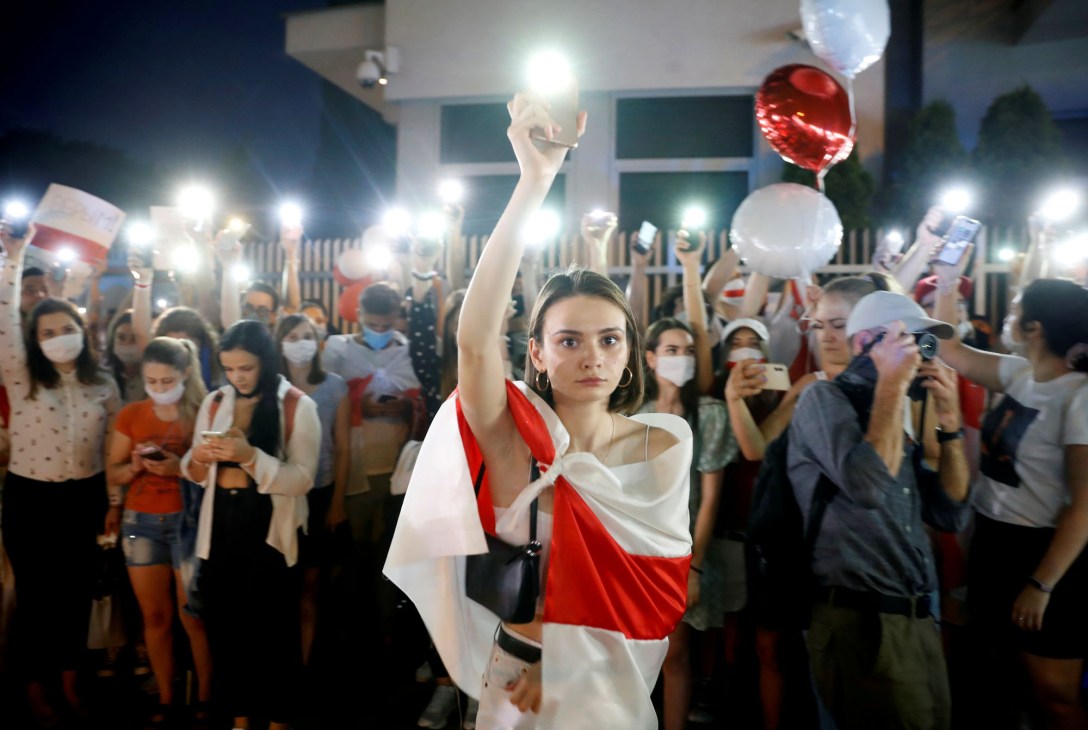
Photographer: Kacper Pempel
Agency: Reuters
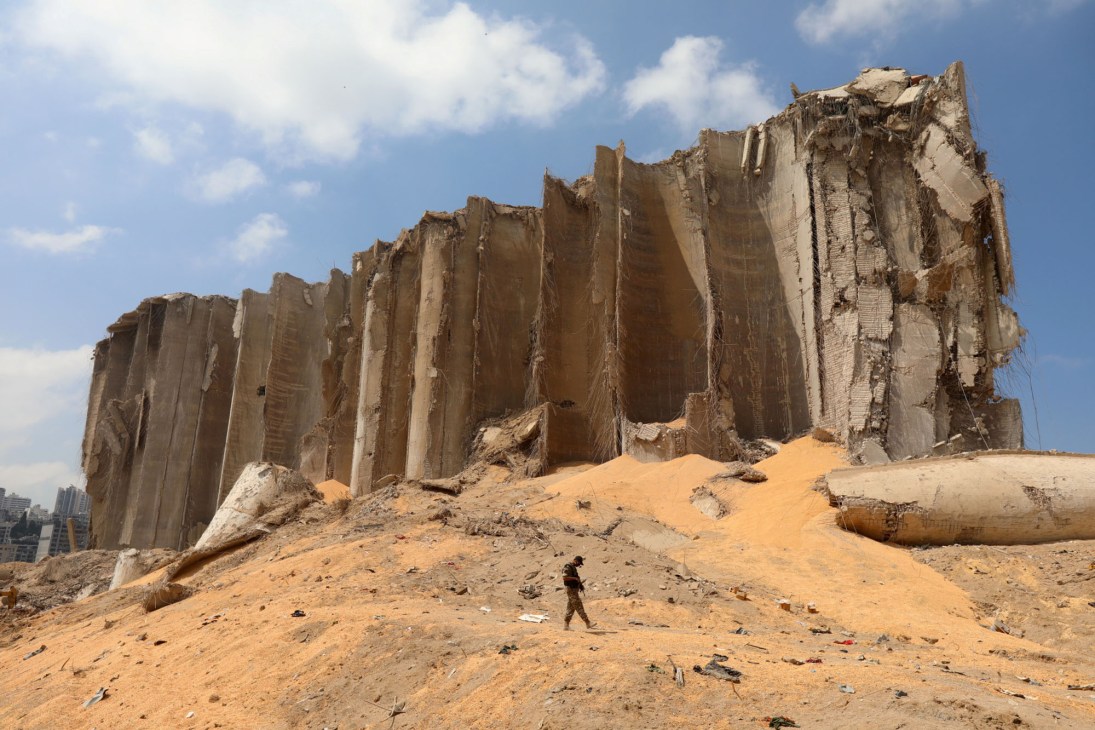
Photographer: Mohamed Azakir
Agency: Reuters

Photographer: Carl Recine
Agency: Reuters

Photographer: Kin Cheung
Agency: Associated Press
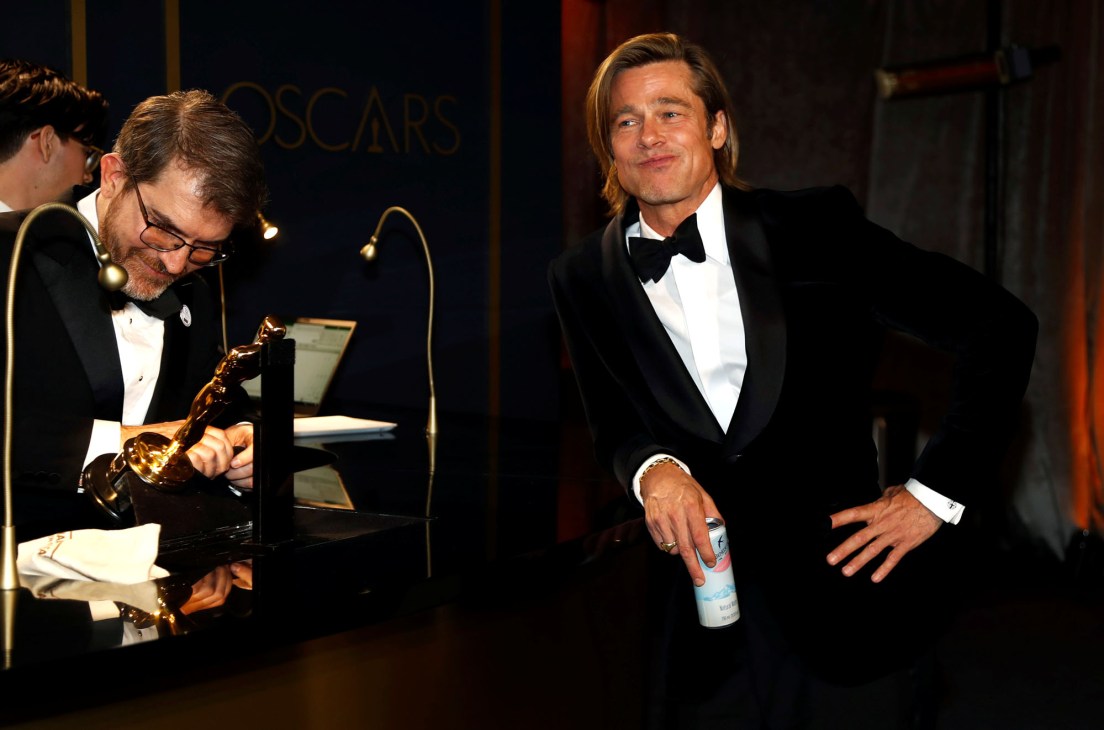
Photographer: Eric Gaillard
Agency: Reuters

Photographer: Jonathan Ernst
Agency: Reuters
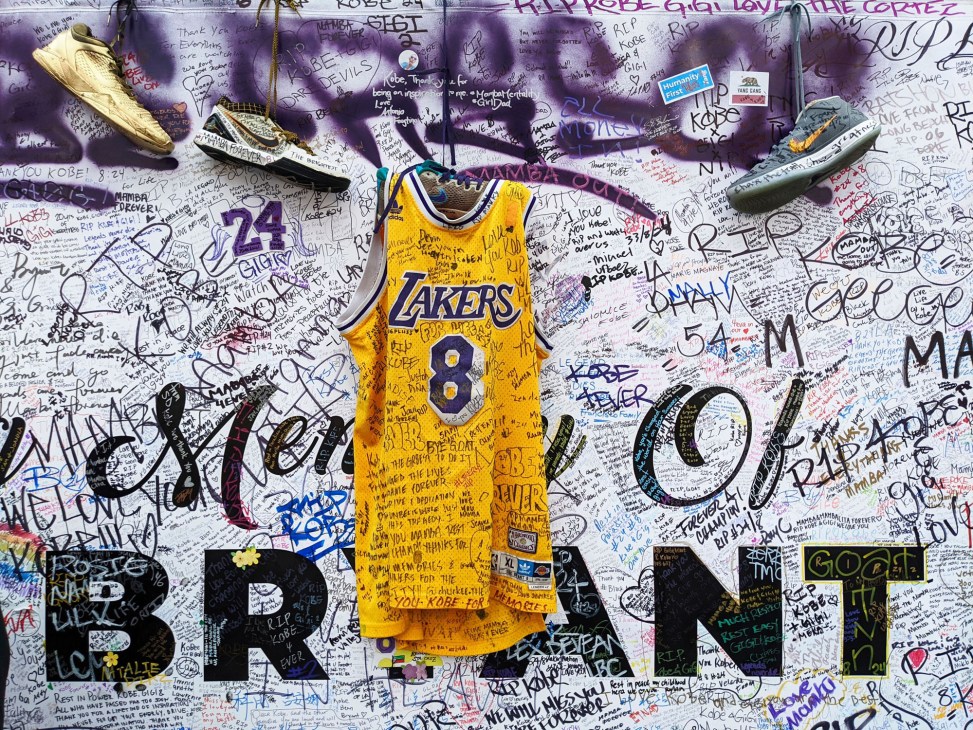
Photographer: Damian Dovarganes
Agency: Associated Press

Photographer: Santi Palacios
Agency: Associated Press

Photographer: Dylan Martinez
Agency: Reuters
Images: Reuters Pictures, Getty Images, Shutterstock
Face value
Scrolling, clicking, refreshing; all of these actions might allow you quick and constant access to the news – but how do they make you feel? There’s a reason that households always used to gather around the TV to watch the evening bulletin; it meant more than simply being kept informed. It was a ritual of cohesion, between themselves and with the nation at large. Sure, news isn’t always uplifting but hearing it delivered by a familiar face and a human voice, with all of the emotion and empathy that brings, can make all the difference to how it’s received. The best TV news anchors come to represent truth and accuracy. After all, trusting someone is always easier when they’re looking right at you – and saying it straight. Here are three presenters doing just that and riding high in the ratings as a result.
1.
The daring disrupter
Lee So Jeong, South Korea

News channel: kbs
Show: kbs News 9
Time in current role: 18 months
Lee So Jeong is the face of South Korea’s most-watched news show, airing every weeknight at 21.00 on public broadcaster kbs. She is also the first woman to occupy the main anchor seat on South Korean network television. Her appointment in late 2019 was a surprise for a country that has some catching up to do in matters of gender equality. But Lee says that she was more surprised the milestone “hadn’t been reached sooner”.
“The responsibility of representing female broadcast journalists as a group weighs heavily,” she says. “If I make a mistake, it can set us all back.”
Despite the pressure, Lee’s charisma and delivery have drawn a positive reaction: her News 9 bulletin is leading its closest rival in the ratings by more than five percentage points. It helps that she has long been a respected journalist at the channel. She has won national awards, most famously after reporting on the ground from Mexico’s Chiapas conflict in 2003, securing an exclusive interview with Zapatista leader Subcomandante Marcos. Such ambitious world news reporting was very rare for South Korea at the time. “When I am in the field, I am a tough cookie,” says Lee. “The biggest lesson for me was that reporters are nothing if we don’t hit the field and dig at the truth first-hand.”
That dedication has remained despite her change of role. “The most important part of the job is the same: confirmation of truth, being a watchdog,” she says. “I listen to the reporters on the scene and comb through supporting data. I have to see it with my own eyes. I call up the experts.”
For kbs to remain on top of the media scrum, Lee believes that the network needs to stay true to a set of principles. “The cardinal rule of news is impartiality,” she says. “If you sprinkle in adjectives and adverbs, it can be more fun to watch and ratings might rise temporarily but we have to keep away from that. We need to provide context, plus a forum for discussion and reconsideration. It’s crucial that we give the audience the sense that this is ‘our news’ as a community, with a shared mission of looking for solutions for our shared problems. That’s the right way forward.”
And finally: Lee recently became part of the news cycle herself. In a break from the accepted style of fronting the bulletin, she used the programme to call for respectful and dignifed treatment of a high-profile victim of sexual harassment.
2.
The national treasure
Matti Rönkä, Finland
News channel: Yle
Show: Yle Uutiset
Time presenting: 20 years
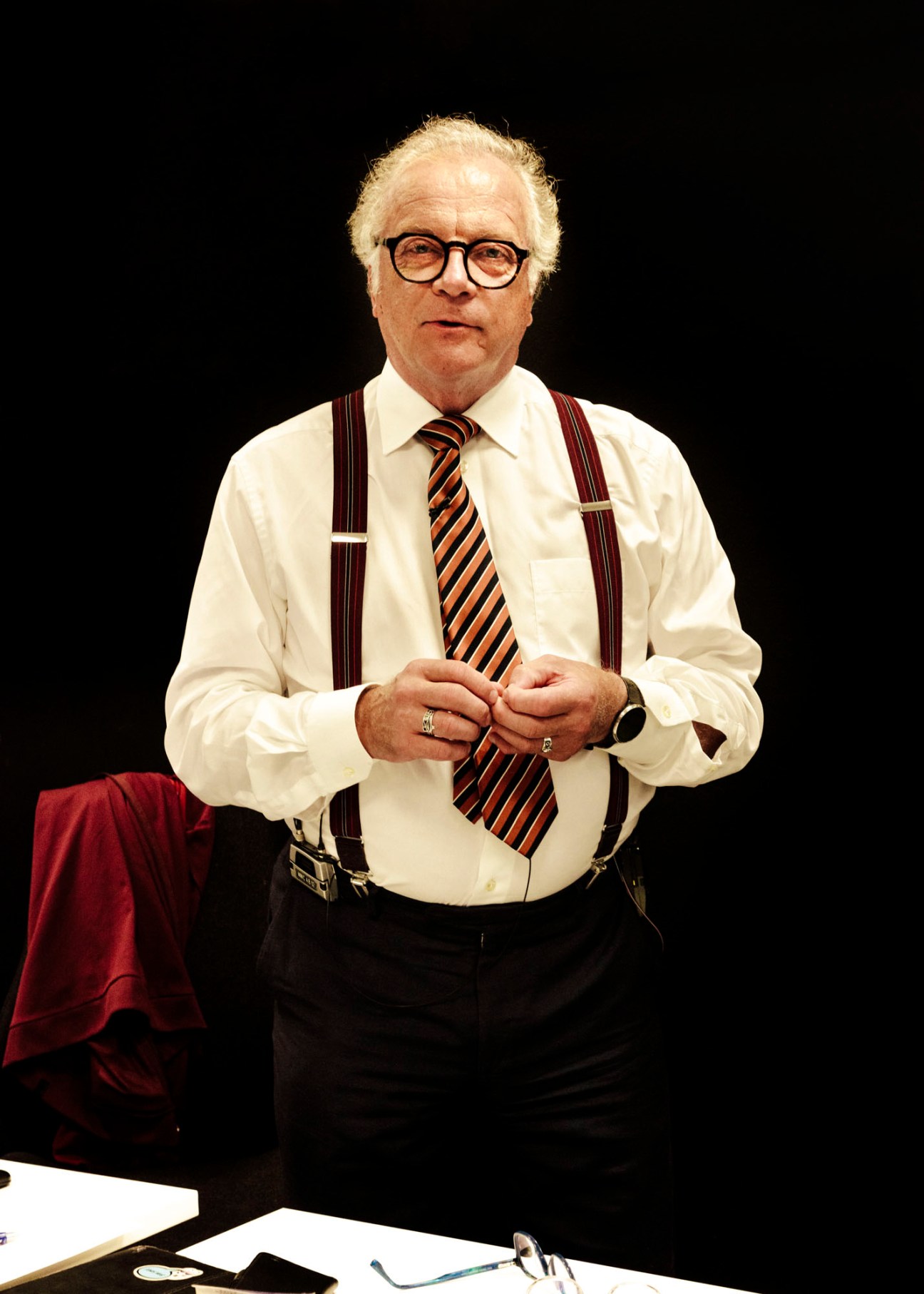
It’s just past 20.00 in the Mediatalo news centre and Matti Rönkä is preparing for the evening’s news bulletin. He checks his lapel microphone with the control room and warms up his voice. Everything on the prompter looks fine but Rönkä has printed his script just in case there’s a technical glitch. There’s no room for mishaps as about 800,000 Finns (one in four of the country’s adults) will tune in to watch at 20.30 on the dot.
Rönkä hits television screens several times a week and is the country’s most recognisable and trusted news anchor. In a world where newspapers and broadcasters grapple with digitalisation, fiery online pundits and the onslaught of fake news, Finnish public broadcaster Yle’s evening news bulletin Yle Uutiset has weathered the storm. The show is widely considered to be the country’s most dependable news source and is also the most-watched programme on Finnish television. As the show’s respected host, Rönkä embodies that assurance.
“To be a good news anchor you first need to be a good journalist,” says Rönkä when the broadcast is over. “You need to know what is news and what is not. But you also need screen presence that exudes calmness, a clear vocal delivery and the ability to stay calm under pressure.”
News anchors play a pivotal role in ensuring that the news reaches its audience. At Yle, reporters and correspondents gather information, edit video packages and type up shorter news flashes. But the anchor is the link between them and the viewers. “I put a lot of effort into the language by working with our reporters to get the phrasing just right,” says Rönkä, who is also an accomplished author.
Rönkä has been presenting the bulletin for more than 20 years. Before that, he worked as a reporter and as an editor. “I am what some would call an old-school traditional journalist,” he says. “I believe that there is something called the objective truth and that we as journalists should strive to uncover it. Being a journalist is honourable work that plays a key role in how societies and democracies function.” But he is aware that this view is increasingly being challenged and that more and more people have started to look for news sources that suit their own ideology. “The attacks against us have increased in recent years but we must remain unfazed. Our job is to present the facts and we cannot be afraid of the reaction that they elicit.”
“To be a good news anchor you first need to be a good journalist. You need to know what is news and what is not”
In Finland, where citizens and corporations pay a mandatory Yle-tax as opposed to a licence fee, a public broadcasting service is still regarded as a key public utility, much like education or healthcare. The nation has also introduced media literacy into the national curriculum.
“Media is in flux but, in one form or another, anchors such as myself will always deliver news to the public,” says Rönkä. As the high viewing numbers attest, watching Uutiset represents more than just listening to the news for many Finns; it’s an important daily ritual. “We are a part of the public’s lives. Through us they experience moments of national trauma and triumph. The older I get the more aware I am of the responsibility that this role entails.”
And finally: Rönkä is tasked with delivering the official results of the Finnish election to the nation, often in the studio with the party leaders looking on anxiously. The presenter is proud to play his part in the functioning of the country’s democracy.
3.
The network draw
Dana Bash, USA

News channel: CNN
Show: State of the Union
Time in current role: One year
Growing up, Dana Bash had little desire to be a journalist, despite her father’s career at abc. “I was a rebellious kid and whatever my parents did I wanted to do the opposite,” she says. Things changed when she went to study in Washington and got “swept up” in the politics of the Hill. In the end, she decided to stop fighting what was in her dna – her journalistic path had been forged.
Nonetheless, Bash’s trajectory is unusual in television. The CNN anchor, chief political correspondent and wearer of various broadcasting hats has never worked anywhere else. Starting out at CNN as a freelancer and landing a full-time graduate gig at the age of 22, Bash undertook shifts in the now-defunct tape room before working her way up the production ranks; she recently celebrated her 28th year at the channel. “CNN is embedded in me and it always will be, no matter where I go or what happens in my life,” she says.
During a tumultuous past few years in Washington, Bash has been a quick-witted, reassuring presence, making sense of the nonsensical and eschewing the ratings-chasing shout-fests into which cable news sometimes descends. And while she admits that the days of people gathering around a TV set that’s emitting the holy glow of cbs’s Walter Cronkite are long gone, she believes she still has an important role to play. “Because media are so fractured and there’s so much disinformation out there, those of us who are committed to truth and facts have a greater responsibility,” she says.
It’s clear that Bash is referencing one phenomenon in particular – Trumpism – and “the big lie”, as she calls it, that was the attempt to deny last year’s election result. But she pushes back against the notion that CNN became too partisan during the previous administration. She believes that, when checking facts, CNN often had to call out the sitting president as being wrong; in Republican camps that was – and still is – perceived as partisan.
“Because there’s so much disinformation out there, those of us who are committed to truth and facts have a greater responsibility”
For those expecting a straight delivery of the news, US cable’s proclivity for opinionated anchors might take some adjustment. But Bash says that she still approaches her job as though she was a reporter – and that means using sources. The conclusions she reaches, she says, are “reported analysis” rather than personal opinion. Sometimes she also knows how to cut to the chase, as she did following the first Biden-Trump presidential debate in September 2020. After her colleague Jake Tapper referred to the sparring as “a hot mess, inside a dumpster, inside a train wreck,” Bash parried with, “I’m going to say it like it is: that was a shit show.” The clip ended up going viral. Does she regret her choice of words? “I don’t regret it because there are times when you have to say what the audience is feeling,” she says.
Arguably the pinnacle of Bash’s career so far was being named co-anchor of Sunday politics show State of the Union at the start of this year, joining Tapper in the interviewer seat. She calls the nomination a “full-circle moment” as she once worked as a producer on the show’s forerunner. Every Sunday at breakfast time, she tackles the week’s hot-button issues, asking probing questions of everyone from secretary of state Antony Blinken to the Republican governor of Arkansas, Asa Hutchinson, who she grilled about the state’s slow vaccination rate.
Bash recognises that the “speed, pace and pressure” on a cable channel such as CNN is very real. But she is also honest enough to counter that she gets an adrenaline buzz out of it and she wouldn’t be there now if she didn’t. She also says that she’s learned how to switch off from the news when she needs to, thanks to her 10-year-old son, whose father, John King – Bash’s ex-husband – is another CNN anchor.
But have things changed since Donald Trump left the White House and “the bouncing ball of crazy”, as she refers to him, stopped bouncing? Is covering Joe Biden a little bit boring? “It feels normal,” she says. “And no matter who it is and what it is, I’ll take it. And by ‘normal’ I mean that we’re now covering the issues, such as infrastructure, police reform, paid family leave.”
The daily news agenda might no longer be spiralling out of control but that doesn’t mean that CNN is working its talent any less hard – and Bash’s downtime seems minimal. On top of the Sunday show and regular studio analysis, there are forays into podcasts and documentaries about influential Washington women. The latter chimes with Bash, who talks about the encouraging number of women now involved in TV news. She says that she helps nurture this “sisterhood” through mentorship. “Being a woman in TV news is still a different thing than being a man,” she says. “There are different perceptions, expectations and challenges.” And Bash is certainly setting an example when it comes to conquering them.
And finally: Bash is part of CNN’s Emmy award-winning election-night team. In 2019 she won the National Press Foundation’s Sol Taishoff Award for Excellence in Broadcast Journalism; the judges praised her “reporting excellence and fairness”.
Thirsty work
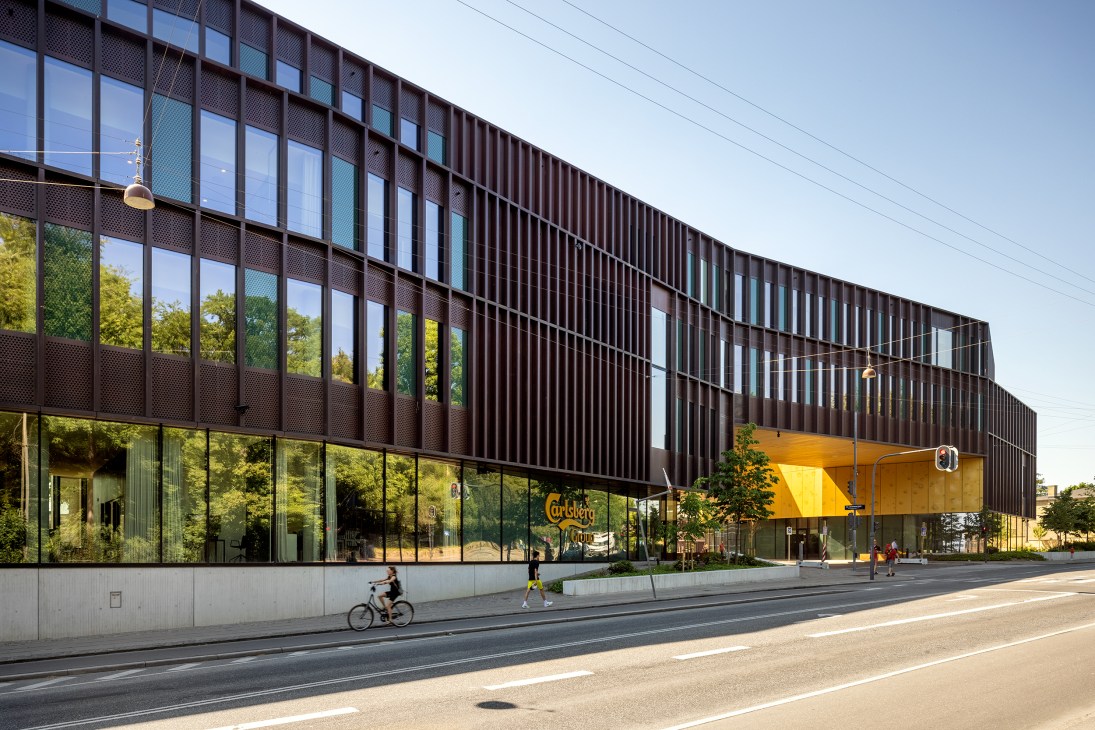
Carlsberg has been a major part of Copenhagen’s cultural life since the brewery was founded in the city in 1847 by JC Jacobsen. Understandably, the opening of the Danish brewer’s new global headquarters – on a hill in Valby to the south of the city centre, where it has long had a base – was a significant moment.
Since moving its brewing to the Jutland peninsula in 2008, Carlsberg has embarked on an ambitious global expansion. And it’s the company’s international teams, plus the Danish production and marketing departments, that the new headquarters has been built to accommodate. Previously these staff were spread across three different offices in Valby – one of which was a particularly unappealing renovated silo.
Centre stage
The beer firm’s HQ is the focal point of a new city quarter, Carlsberg Byen
“On the Friday afternoon, all our employees left their old offices and on the following Monday morning they all arrived here – and it went perfectly,” says Jakob Stilov, one of Carlsberg’s senior directors, who was in charge of construction of the new HQ, recalling last year’s move. “And then, nine days later, coronavirus came, Denmark shut down and everyone was sent home again.”
It was not the most auspicious of openings for what Stilov calls “Carlsberg’s last HQ”: he believes that they need never build another. But when Monocle visits on a hot summer’s day, the brewer’s new global centre of operations is still returning to normal, with about half its 700 employees on site.
Meeting in the middle
The building
The Aarhus-based CF Møller Architects won the competition to build Carlsberg’s new site in 2007, following a 12-day competition in which studios were asked to present a simple sketch. The 2008 recession delayed construction but Lone Wiggers, partner at CF Møller, was ready to start working on the project as soon as Carlsberg gave it the green light in 2014. The 23,000 sq m building is essentially the same as her original proposal, with three wings protruding from a central atrium. Two of these wings embrace the original villa and gardens that belonged to Jacobsen’s son Carl (Carlsberg means “Carl’s hill”). A third wing arches over an access road.
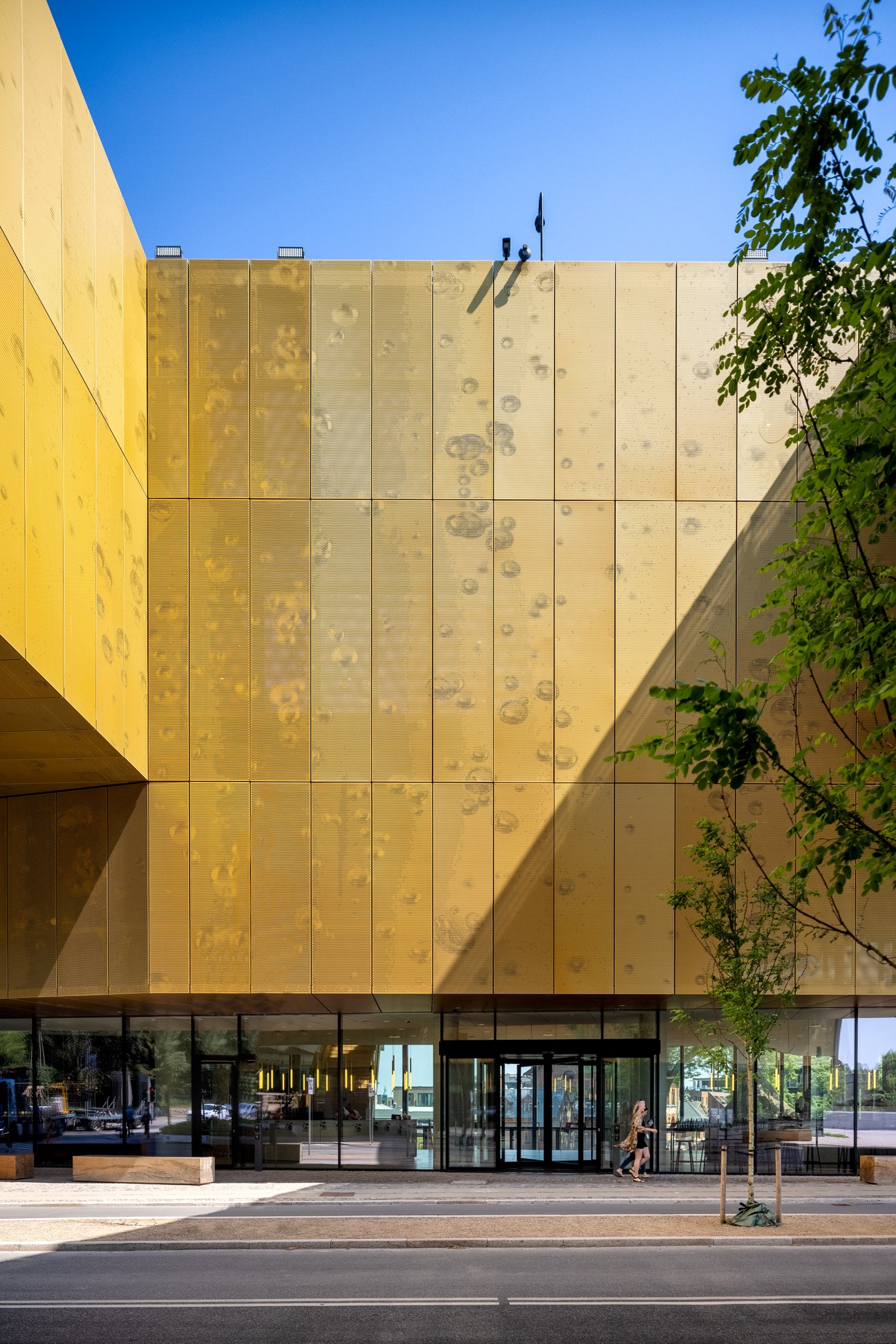
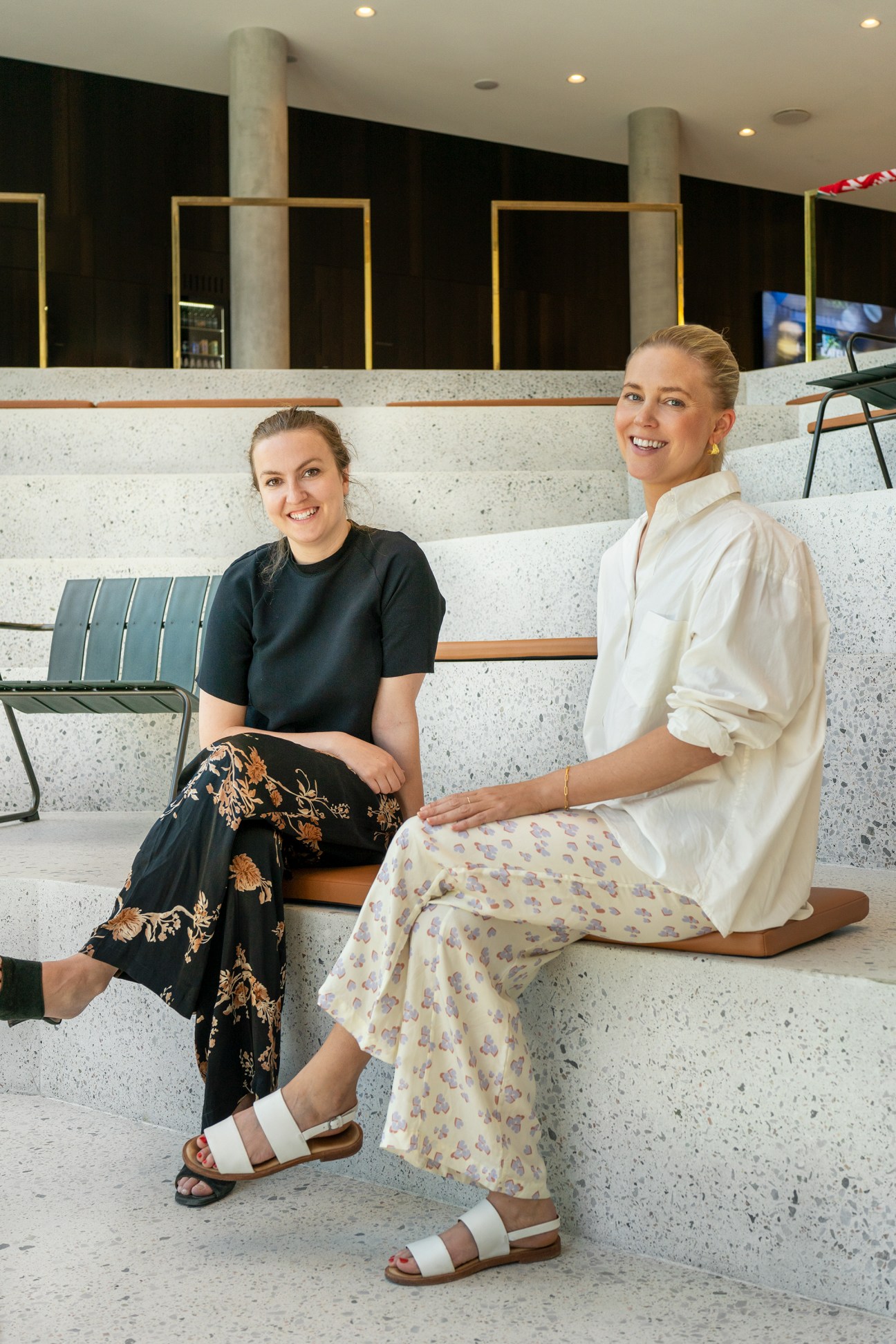
Gold standard
Throughout the building, colours playfully reference Carlsberg’s beer, from porter to lager
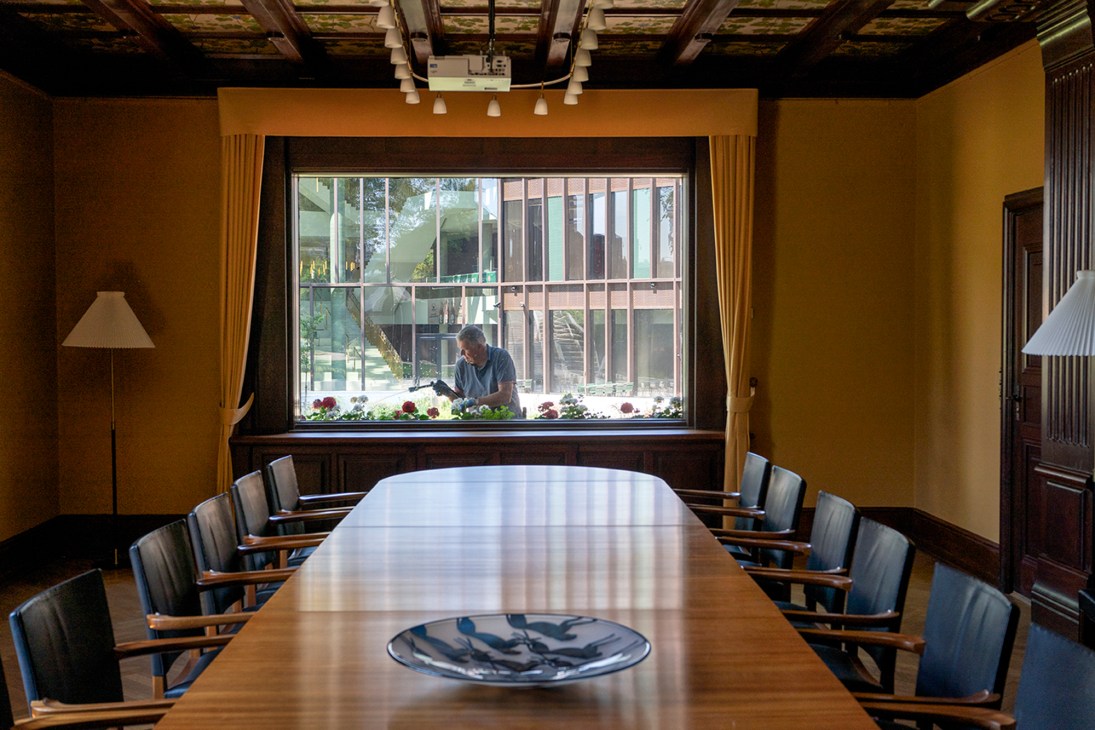
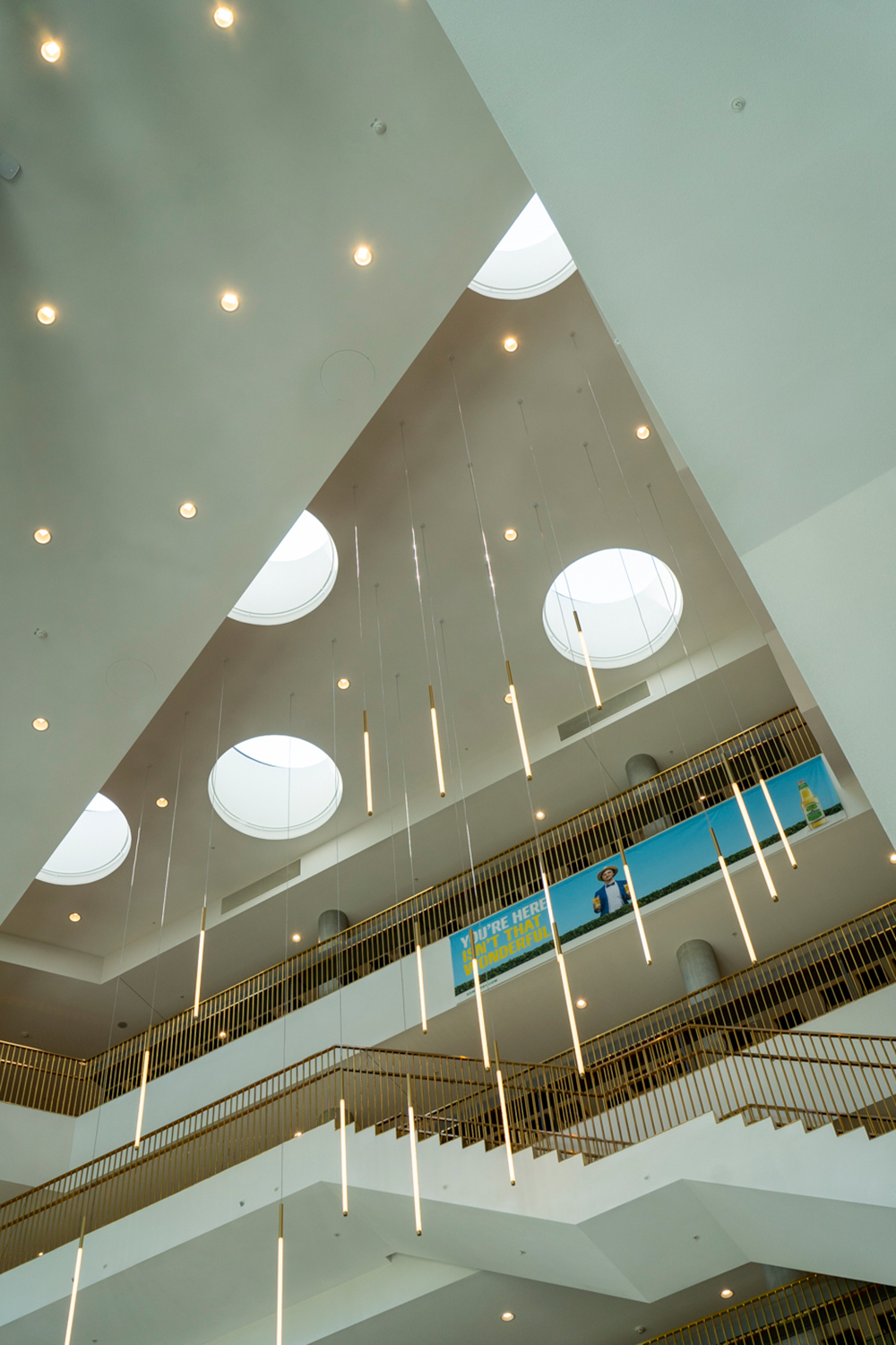
“It’s a building designed to get staff together, especially in the atrium, where people can see each other vertically and horizontally across the space,” says Wiggers. “Because Carlsberg is an international company, we toned down the Danishness a bit and tried to find a good marriage between internationalism and approachability. It’s playful, not pretentious but respectful of its historic surroundings.”
Those surroundings have now been rebranded as Carlsberg Byen, a quickly developing new city quarter of 33 hectares where some 30 to 40 buildings in which 13,000 locals were once employed are being repurposed in a €2.3bn project to become offices, a hotel, shops, schools and cafés, as well as 3,100 residential units. Upon completion in 2024, it will be the most densely populated part of Copenhagen.
Golden touch, silver service
The interior
The HQ maximises natural light, a scarce resource in Denmark for much of the year, and boasts superb acoustics, thanks in part to “nano-perforated” panelling peppered with thousands of tiny holes that soak up sound. Surprisingly, there are no major Danish names among the furniture – no Arne Jacobsen chairs or Poul Henningsen lamps. “We’d rather spend the money on making our products better,” says Stilov.
As for references to Carlsberg’s products, the dark wood on the lower floors evoke its darker beer, such as its porter, with the colour changing to lighter yellows and golds as you go up to the fourth floor, to put one in mind of the lager for which Carlsberg is “probably” most famous. The effervescent gold theme is repeated outside in the patterned cladding of the underside of the golden arch that crosses the access road.
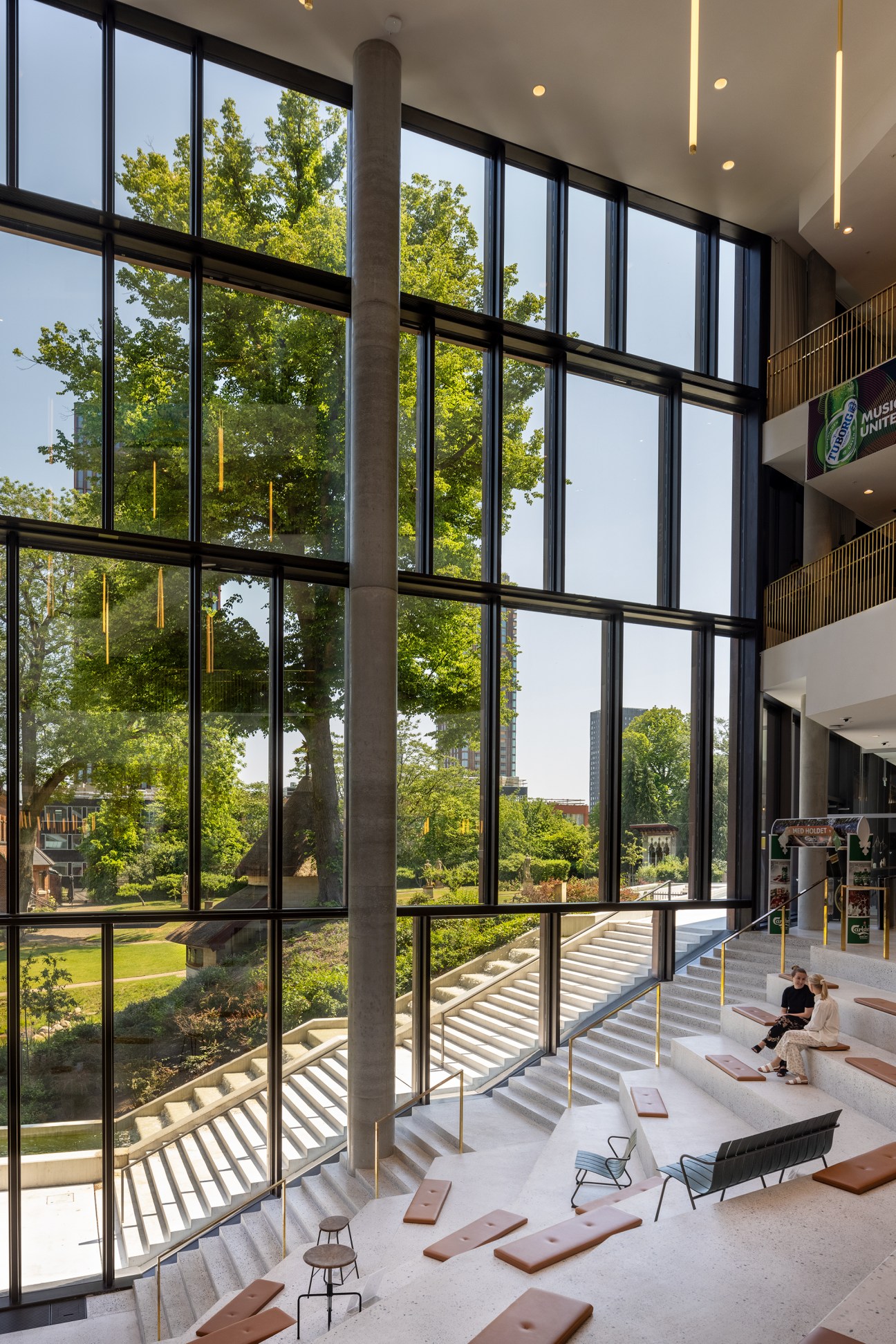
“This building is an expression of pride in our history, our products and how we work,” says Stilov. “Functionality was primary. We didn’t set out to dazzle passersby; the building is here to support the employees, to help them work smarter and better.”
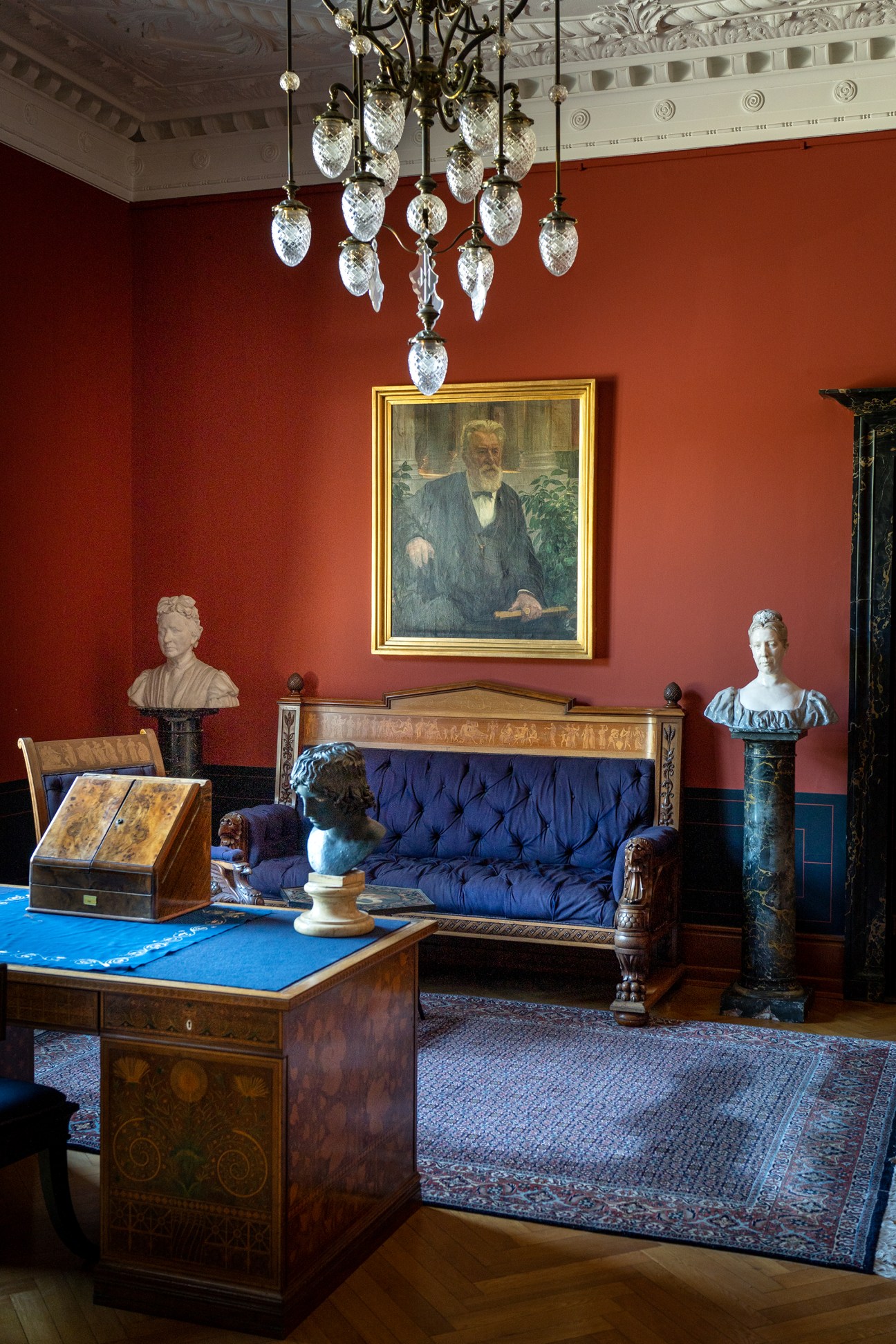
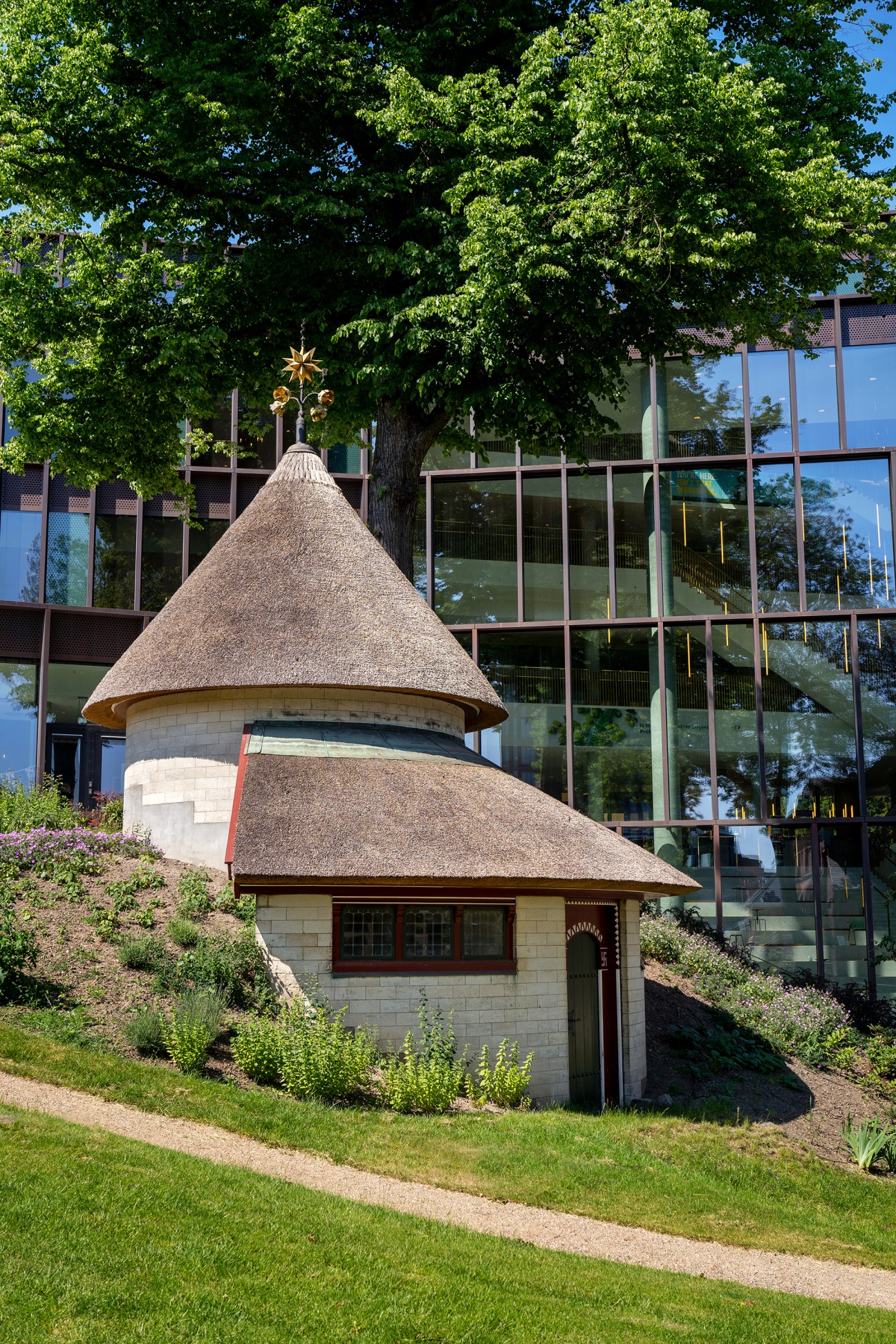
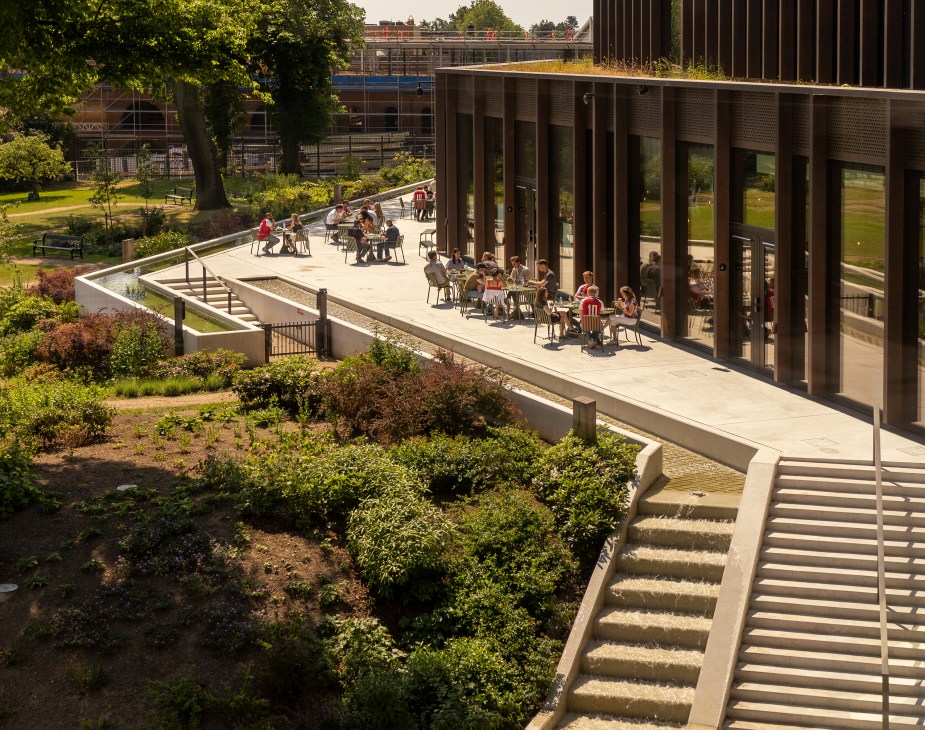
“It all just works,” says Sahil Nanda, personal assistant to cio Sarah Haywood. “It’s encouraging and inspiring, and we work better together like this. It’s also such a lovely location – and the canteen does a great lunch.” On the menu when Monocle visits? A classic Danish pork belly sandwich with the tongue-twisting rød grød med fløde (berry compote with cream) for dessert. Staff dining on the terrace overlook a stream, a thatched 19th century ice-house once used by the Carlsberg family and resembling something a Moomin might inhabit, and the listed gardens of Carl Jacobsen’s 1880s red-brick villa.
Carlsberg in numbers:
Revenue: dkk58.5bn (€7.9bn)
Net profit: dkk6bn (€800m)
Units sold: 11 billion litres of beer brewed per year
Total employees (global): 40,010; 700 are based in the Copenhagen HQ
Cost of new HQ: Not disclosed
Number of different products: More than 100 brands
Fostering interaction
The workspaces
“People will work from home more than they did but it is still important that we come in and meet colleagues,” says Stilov. “This new building is all about encouraging people to connect. We’re trying to discourage them from scheduling 60-minute meetings. We hid the lifts; I wanted people to stop and chat on the stairs.”
Brain food
Social dining on the terrace encourages staff to share ideas when breaking bread
Further encouraging mingling is a new “hot desk” approach (in Danish they call it “flying desks”). No one, not even CEO Cees ‘t Hart, has a permanent perch (although he sits in the equivalent of the “corner office” up on the top floor). Departments stay in the same area but everyone is supposed to clear their desks at the end of the day. To compensate, there are 1,500 lockers, 50 meeting rooms and 58 soundproofed glass study rooms. If you want to make a mess, you go to a “project area”.
“It was difficult to sell the idea to everyone. I was a bit of a hate figure for a while,” says Stilov. “People kept asking, ‘But where is the best seat’?’ There isn’t one. ‘But Jakob, I work with confidential stuff.’ To which I said, ‘So does everyone’.”
“If this was Italy it would be a nightmare; we’d all be shouting,” says Carlsberg’s half-Italian global brand director Julian Marsili, jokingly. “Luckily the Danes are more discreet. But when you see and experience a change like this that works, you embrace it – like Copenhagen with bicycles. The building is very Danish: it’s understated and there’s a tremendous attention to detail. It’s very Carlsberg too: that constant striving for perfection.”
As Monocle chats with Stilov at the top of the atrium stairs, Heine Dalsgaard, Carlsberg’s CFO passes by. What does he think of the new building? “It more than exceeded my expectations,” he says before pausing mischievously. “But it was a bit expensive.” Stilov takes the bait: “It was on budget!”
The verdict
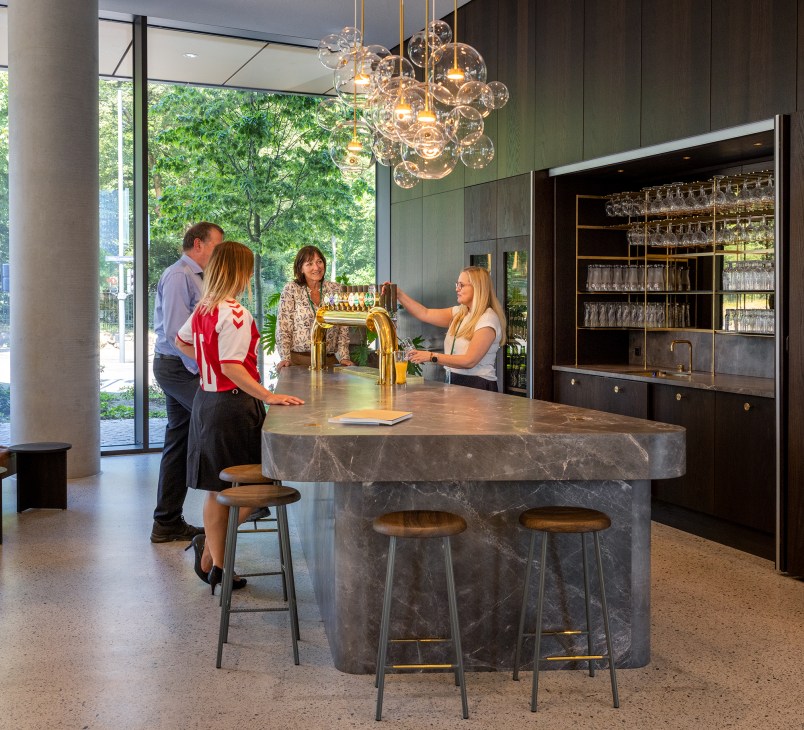
Carlsberg’s HQ definitely has an international feel – this is not statement architecture – but it demonstrates a sensitivity to its surroundings. Perhaps its best feature is the reception: rather than being confronted by an intimidating desk, visitors look out across the atrium through a four-storey glass window to the gardens. “Hot desking” will be a challenge – at least to begin with – but there is little doubt that the bar offers some compensation. That dark-brown copper cladding will eventually turn green to match Copenhagen’s church spires but it will take longer to do so than it once would have done due to a reduction of acid rain. When this happens, though, the building should blend even more harmoniously with its leafy surroundings.
Pillars of community
What makes a good property developer? It starts with knowing your community and its needs. It also takes the stubbornness to see tricky projects through to the end. “Most developers just love the business,” says Marilee Utter, head of Citiventure Associates, a Denver-based real-estate advisory firm. “You’ll make money if you’re lucky but most developers have gone bankrupt a few times. They’re addicted to it – they won’t let go.”

The past year, of course, has been a particular challenge. Just think about how your own view of where you want to live has changed. What do you look for in an apartment, a shop or an office? To meet our shifting needs, the buzzwords of the day include “adaptive reuse” – existing developments that can be repurposed – and “multi-use” complexes that can serve as a mixture of housing, retail and offices.
Utter, who is also vice-chair of the Counselors of Real Estate, a global organisation of property professionals, predicts that about 10 to 15 per cent of office space will be converted into residential property in the coming years, creating more buildings and neighbourhoods that offer everything in a small radius. “A fun part of developing mixed-use structures is creating an environment that feels like it’s designed for that use,” she says.“That’s what you’ll be facing in cities.”
Revisiting the mall
People’s Place, Hong Kong
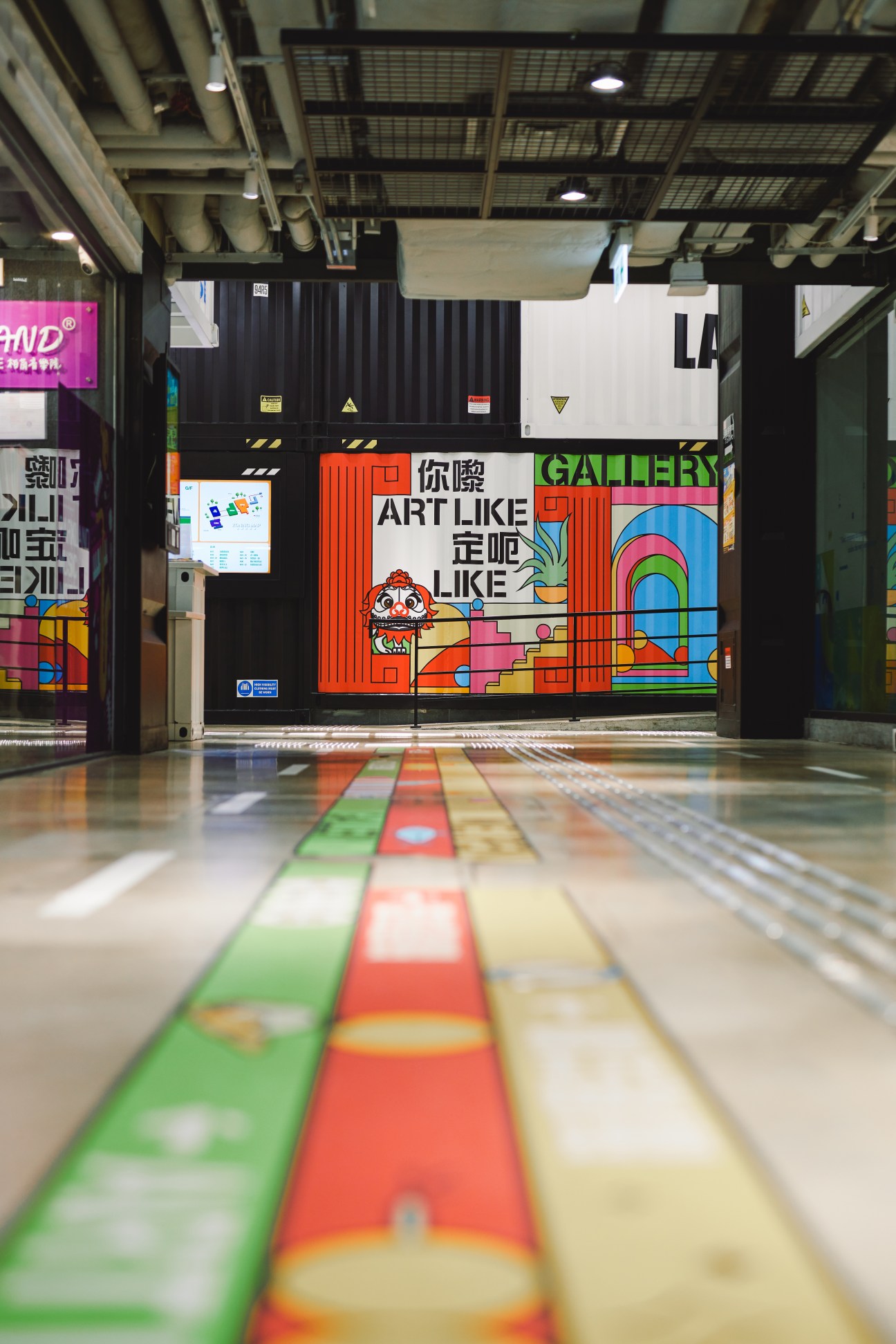
Mornings at the Kai Yip Shopping Centre in Hong Kong hum with activity. Kindergarten pupils walk hand in hand across the central square, while seniors chat on benches and examine the newspapers. Inside the newly renovated food market, customers select live fish and fresh vegetables, as several stallholders shout about their juicy peaches. After long-overdue improvement works, the shopping centre is back at the centre of daily life, providing retail necessities, essential services and a communal meeting spot for residents of the surrounding tower blocks.
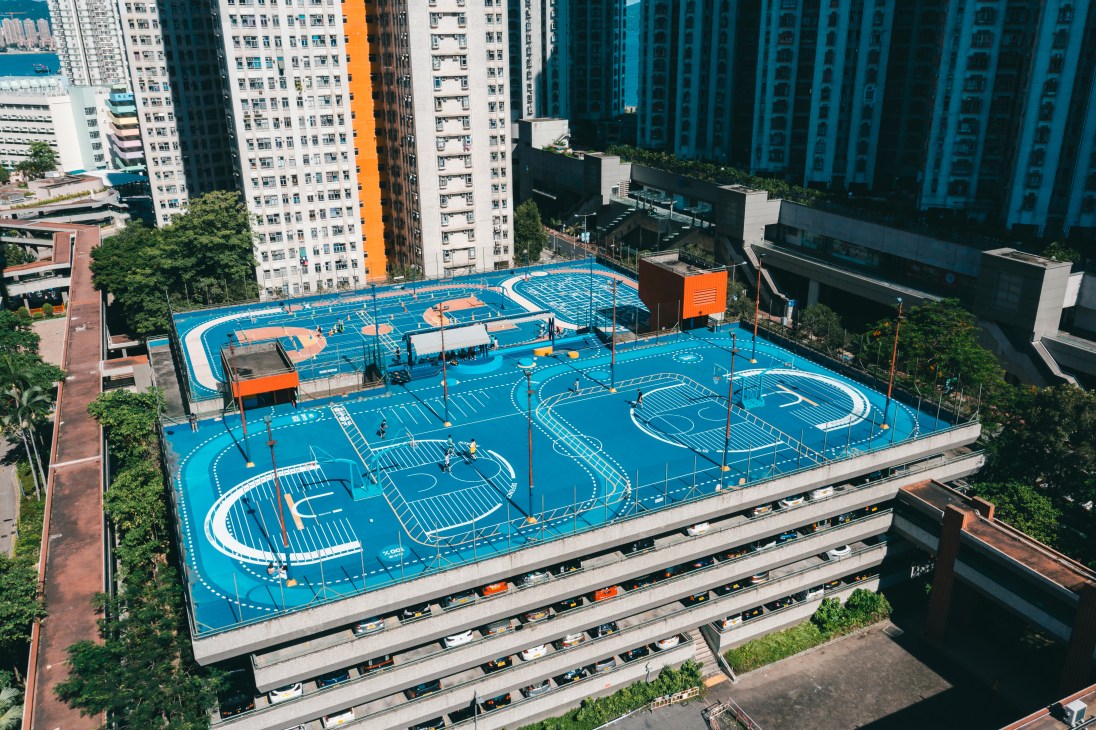
Kai Yip is a public housing estate that was built by the colonial government in the 1980s on a former air-force base. It’s one of the last places that you’d expect to find a bidding war involving Goldman Sachs, Blackstone and other giants of global finance. A group including private equity firm Gaw Capital Partners eventually acquired Kai Yip Shopping Centre in 2017. The deal formed part of a multibillion-dollar acquisition of 17 shopping centres; there are now 29 in its portfolio, from Siu Hei in the west of the city to Ming Tak in the east. All are in public housing estates across Hong Kong, and Gaw Capital Partners operates them under a separate brand called People’s Place.
Company president Kenneth Gaw saw an opportunity to upgrade these unglamorous sites. “The making money part is simple,” he says. “It’s the same as any retail asset. You improve the surroundings and the service so that customers come in and spend more time. When they do, tenants make more money and can pay more rent.” Alongside this “simple” commercial revival, Gaw’s team of more than 50 at People’s Place have been meeting with residents, ngos and district councillors before every renovation to find out what services, facilities and infrastructure to improve.
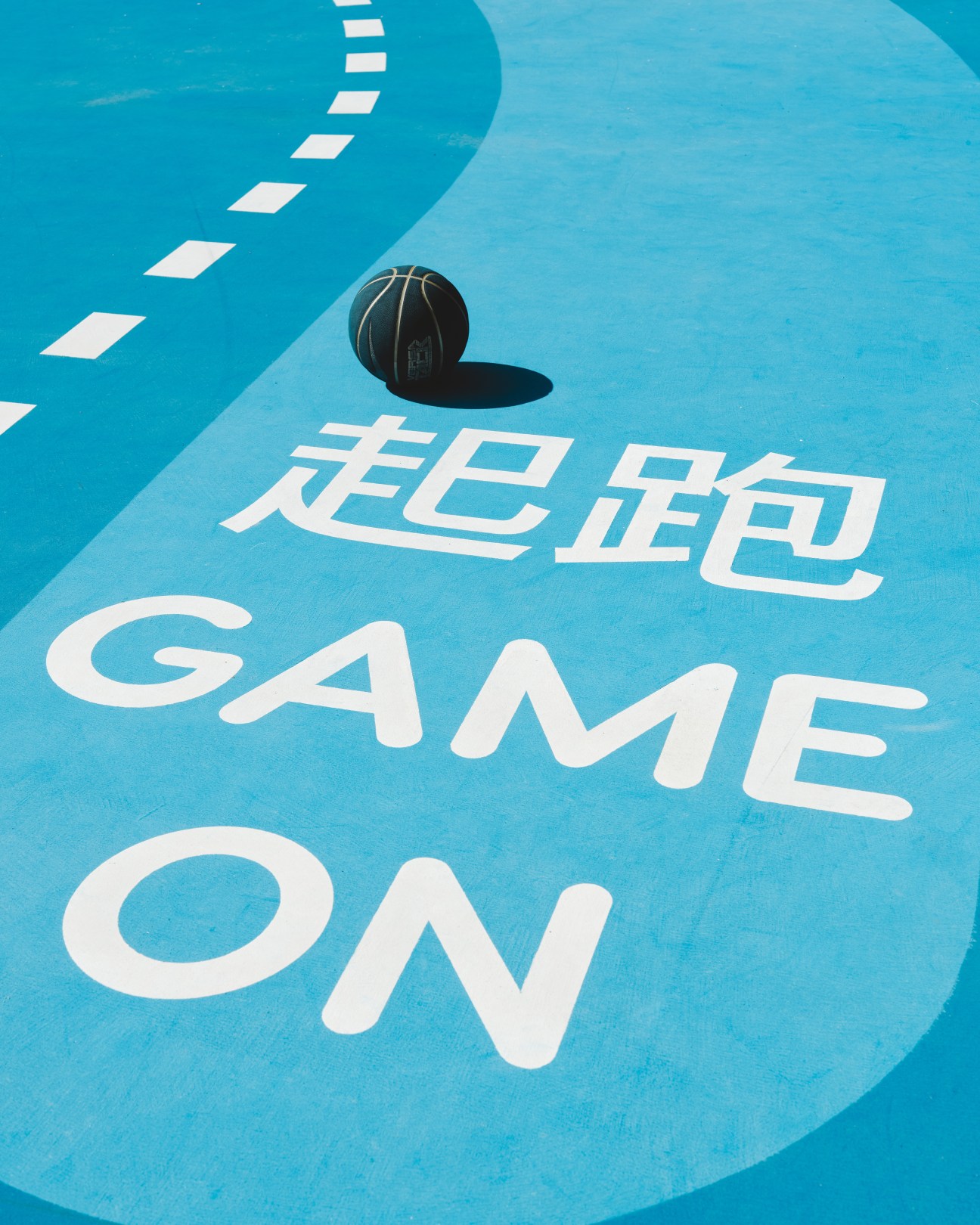
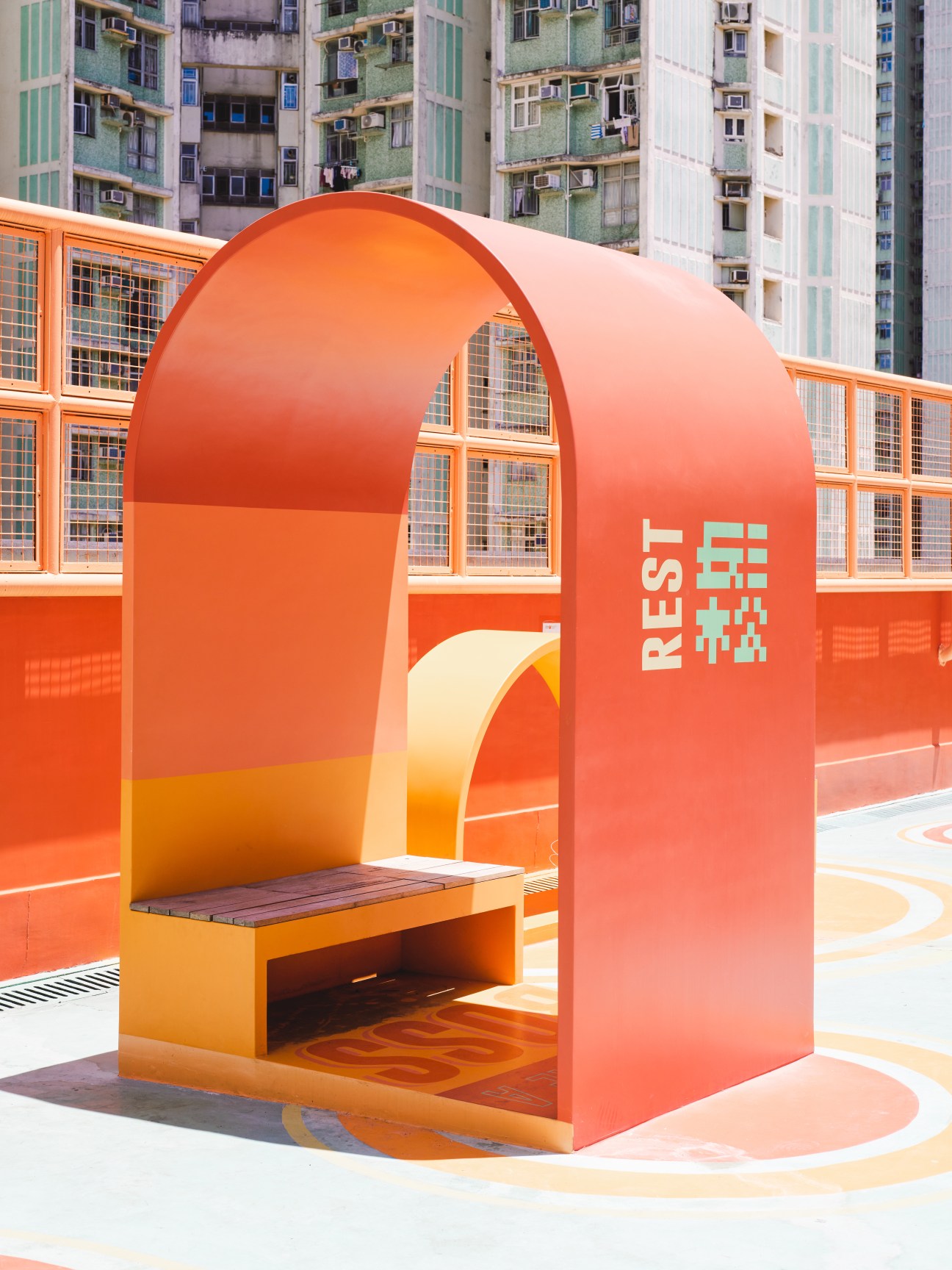
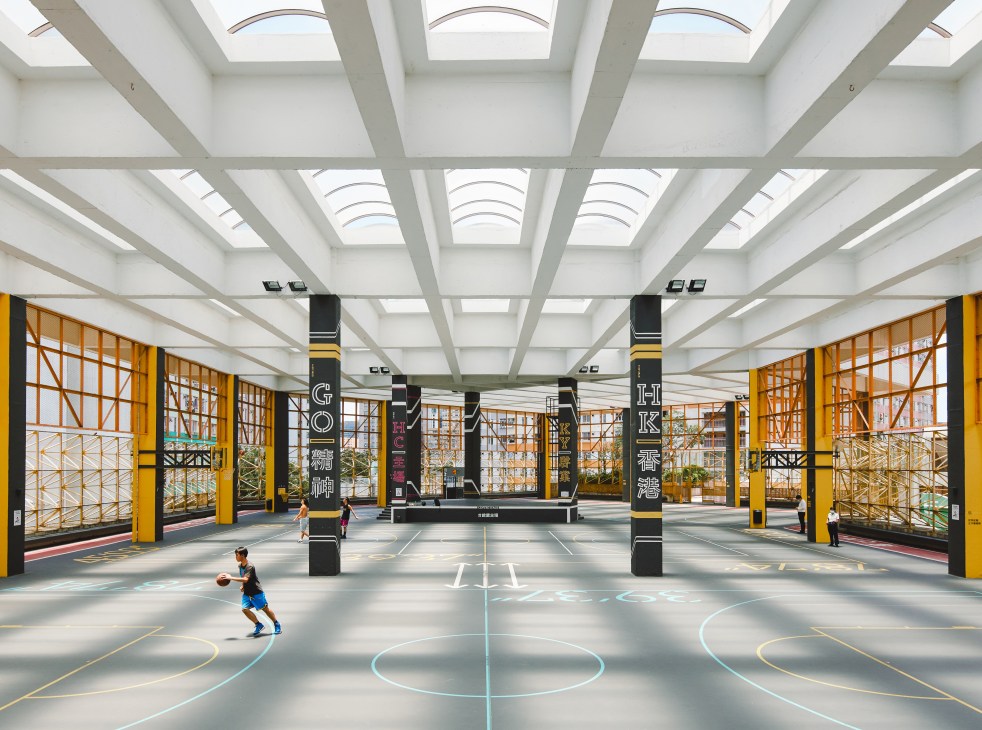
Basketball, Hong Kong’s number one sport, is playing a big part and Kai Yip has been the testing ground. People’s Place appointed One Bite Design Studio, a group of designers, and basketball fans to transform the shopping centre’s neglected rooftop. This concept has been rolled out for other courts, including at Siu Hei Sportsground and Ming Tak Sports Court, and attracted global brands such as Nike and Red Bull. There’s even a basketball league where teams from the housing estates compete, bringing young people to the shopping centres. More than half of the centres in the People’s Place portfolio have been upgraded, with formerly half-empty properties now full of life. Occupancy rates average more than 90 per cent. It’s a remarkable figure given the protests in Hong Kong and the pandemic. It could even provide some immunity against e-commerce; some of Hong Kong’s leading online retailers have been entering these revived shopping centres as tenants.
Last year, People’s Place registered single-digit growth against an overall drop of 25 per cent across the industry. “We substantially outperformed the rest of Hong Kong retail,” says Gaw. “If you turn these shopping centres into a gathering place that’s relevant to a community’s daily life, how do you replace that?”
Inspiration begins at home
Newil & Bau, Helsinki
All too often, property developers put quantity over quality by offering cookie-cutter designs instead of adapting to the needs of diverse communities and neighbourhoods. It’s an approach that inevitably leads to city blocks feeling too packed and lacking attractive and ambitious architecture. But Helsinki-based developer Newil & Bau is one of the firms that are now shifting gears. Launched in the summer of 2020, its philosophy is to put the quality of the built home at the forefront of its properties.

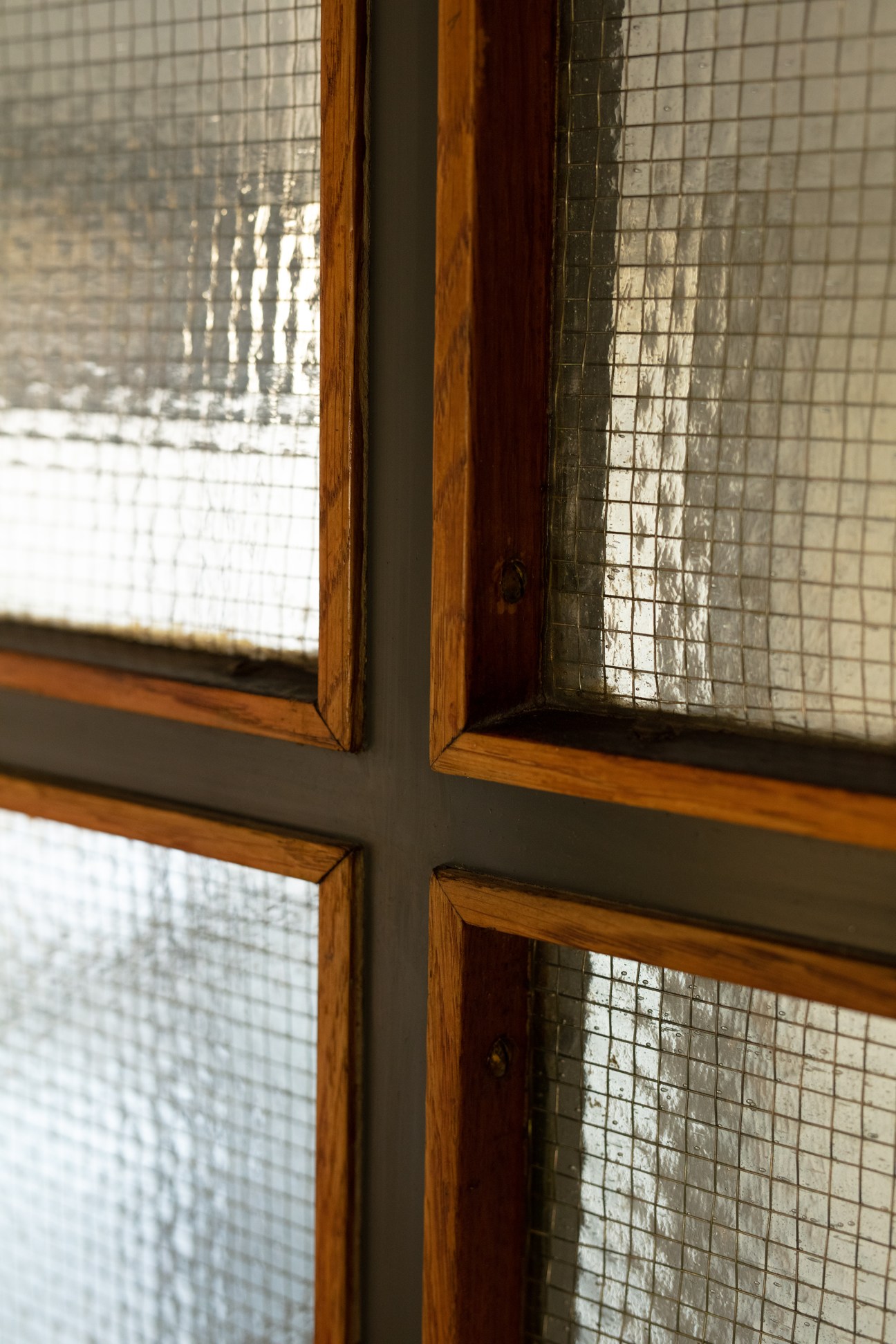
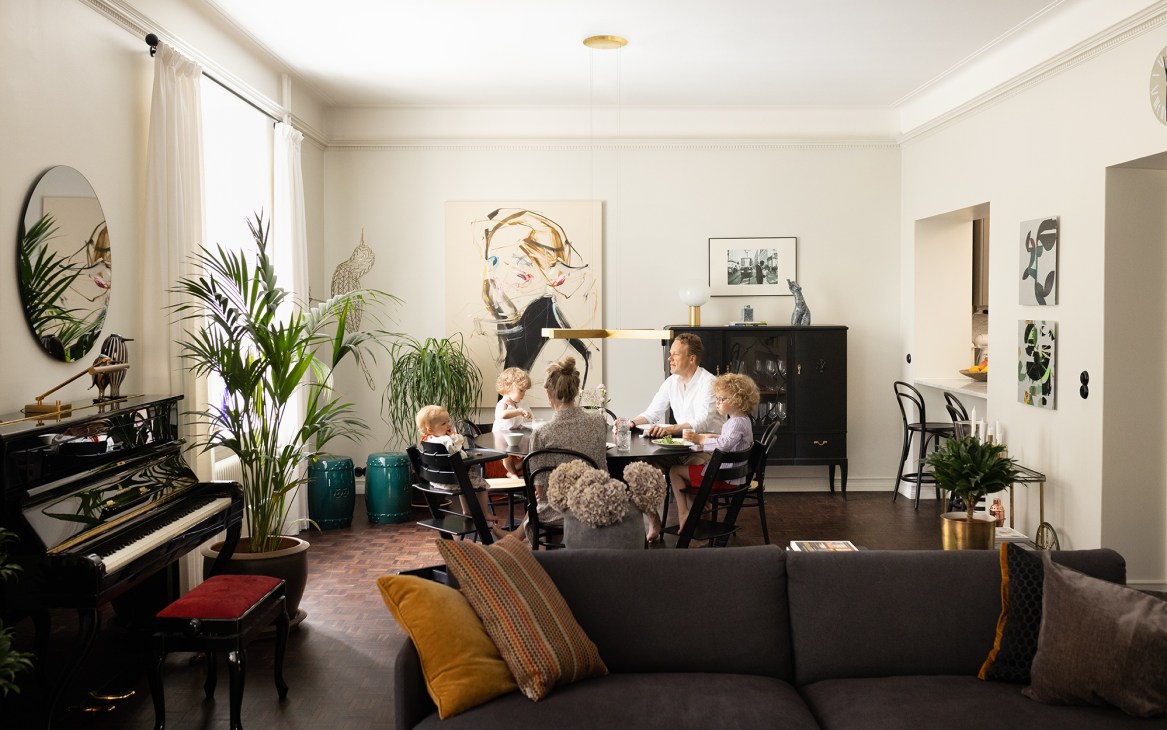
“We founded Newil & Bau because we felt that many property developers lacked ambition,” Petri Ylivuori, the company’s founder and CEO, tells Monocle. “We work with leading architects and interior designers with the goal of building homes that fit into and respect the neighbourhood that they are in.” This involves studying a building’s surrounding area, its character and its history. It also means using intimate, non-intrusive lighting or natural light and emphasising high-quality natural materials such as wood and stone. Outside the home, good design practices are extended into the common areas, entrance halls and landscaping. “Our landscape architects integrate the buildings into their surroundings,” says Ylivuori. “A sense of community is born from design choices that encourage people to come together, as well as from integrating common areas into our buildings.”
With 230 housing units sold and another 350 in the pipeline, Newil & Bau has emerged as one of the leading property developers in the Finnish capital. Its builds are some of the most sought-after in a city that is currently undergoing a post-pandemic property boom. The company’s renovated apartments in the Engineer House, designed in 1951 by renowned Finnish architect Alvar Aalto, sold out quickly. Tuomas Mäkelä is among the prospective owners and his renovated apartment is set to be completed early next year. “As lovers of art and design, we were drawn to this historic building,” he says. “Newil & Bau has given it a new modern life and this combination of iconic architecture and modern high-quality design got us interested.” Mäkelä, who runs Finnish property business Bo lkv, has worked with many of the country’s major developers over the years. “What sets Newil & Bau apart from the others is its courageous and refreshing philosophy in an otherwise traditional industry,” he says.
“A sense of community is born from design choices that encourage people to come together”
Another of its developments is Meander Töölö, comprising 117 units and slated to be completed in 2024. There are more than 1,500 applicants on its waiting list. “Newil & Bau has made lasting design and good architecture a priority,” says Noah Yaffe from the US firm Steven Holl Architects, which designed Meander Töölö. “This is something rarely seen in development. As architects and developers, we need to challenge bland uniformity. Our philosophy is centred around a specificity in approach to design.”
This is reflected in many of Meander Töölö’s design choices. The wooden frame is covered in glazing, its wave-like shape is inspired by the serpentine curves of a riverbed, and its glass façade alters its appearance between transparent and opaque in rhythm with the daylight. Meander also features innovations that allow residents to vary their floorplans, and geothermal wells for heating.
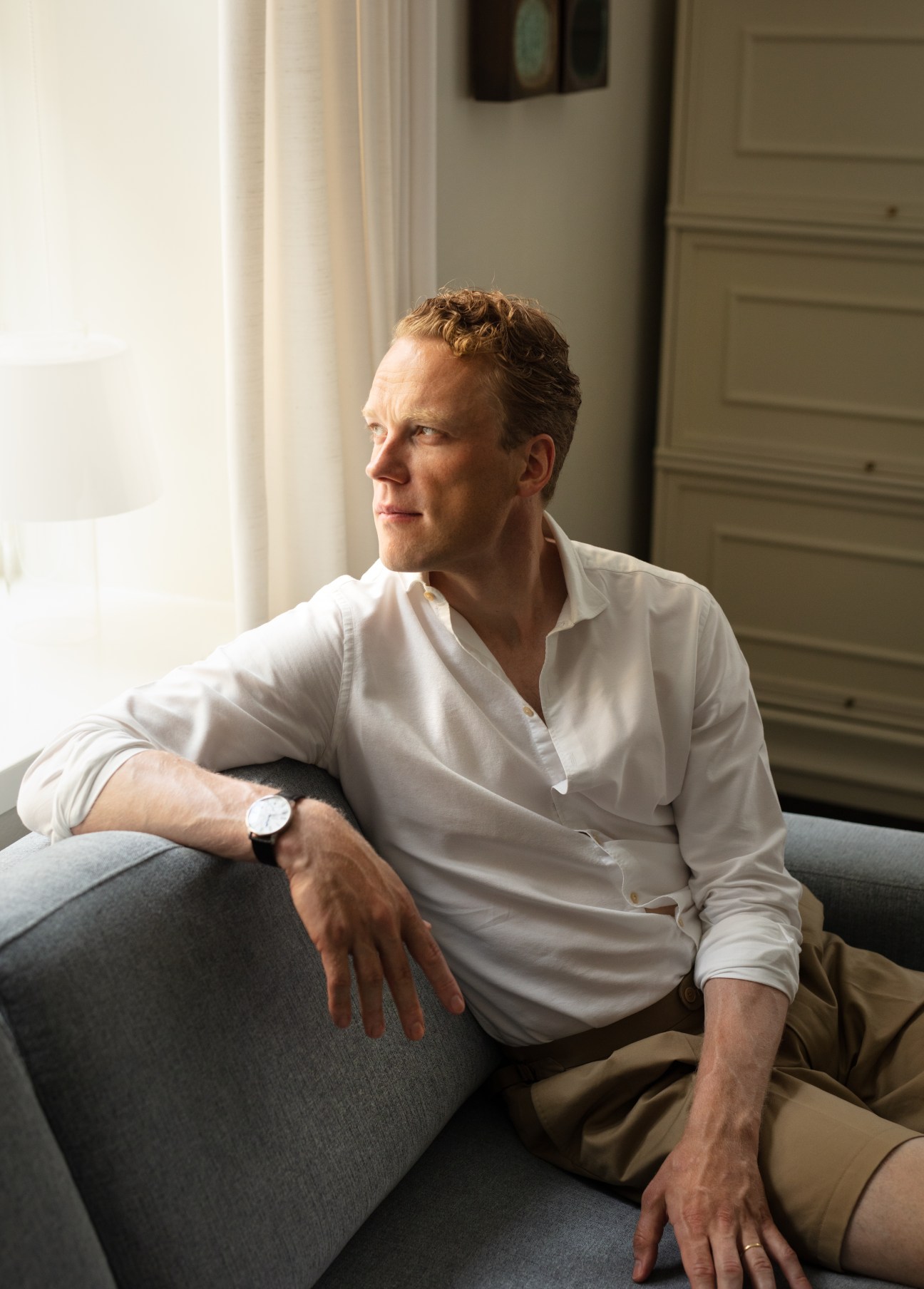
Newil & Bau views property as first and foremost a consumer rather than a construction business. “Home is more than just walls and a ceiling,” says Ylivuori. “It’s a very holistic living experience and buying a home is one of life’s big decisions.” Implementing that people-first approach isn’t just about the building: Newil & Bau also helps buyers with financing and the sale of their old home. It has plans to integrate additional products such as moving services, insurance and a customised app for residents to communicate. The key to the company’s success is simple. “Many people share our belief that we deserve to live in a beautiful and inspiring environment,” says Ylivuori.
Collective enterprise
Reurbano, Mexico City
From the outside, La Laguna doesn’t look like much: a cream-coloured factory building on an unassuming corner in the old neighbourhood of Doctores, an area of Mexico City known for its manufacturing history. If you didn’t know that the entrance was through a humble black door, you wouldn’t know how to get in. Yet inside is a group of entrepreneurs drawn to this adaptive reuse space thanks to its thriving creative community.
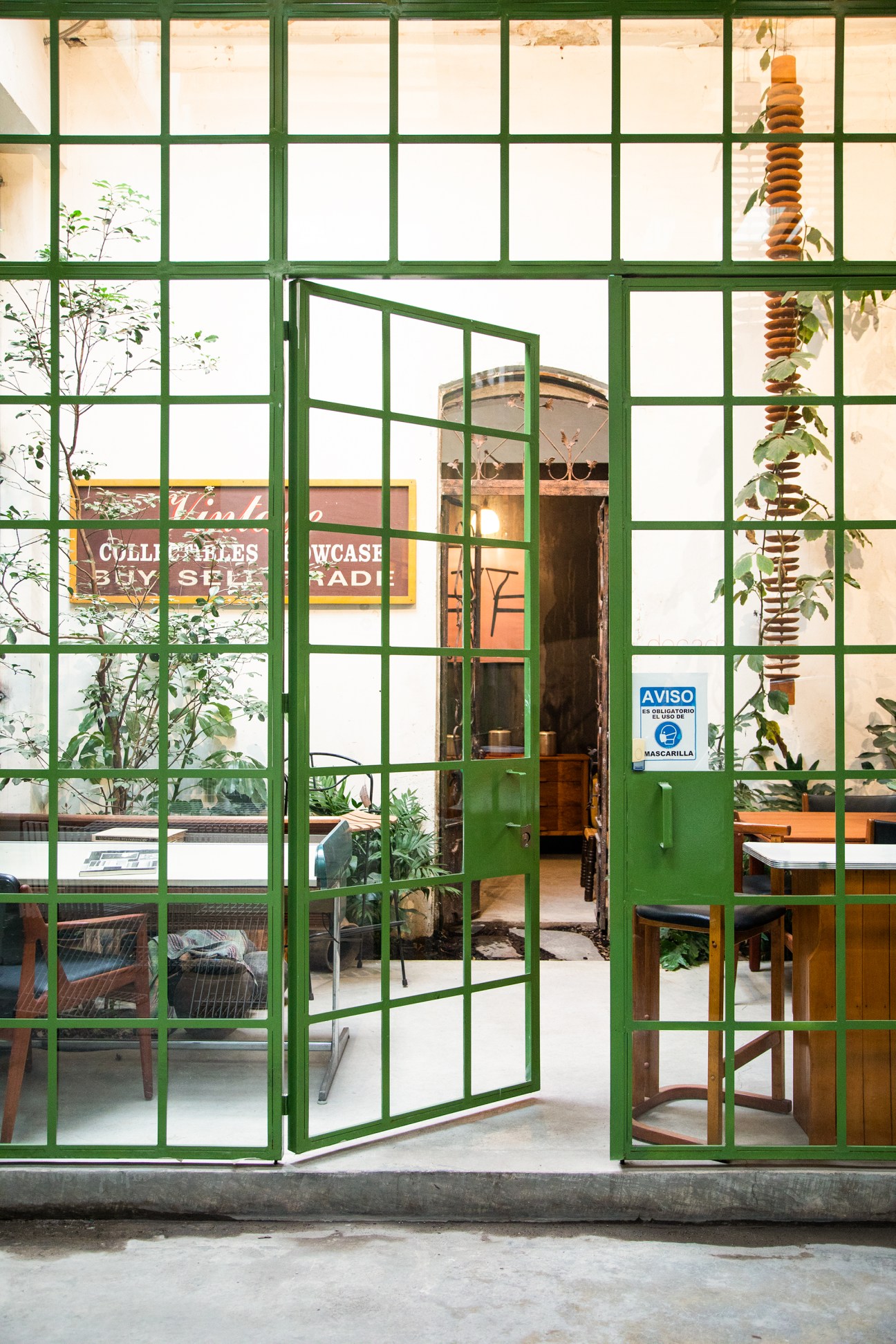
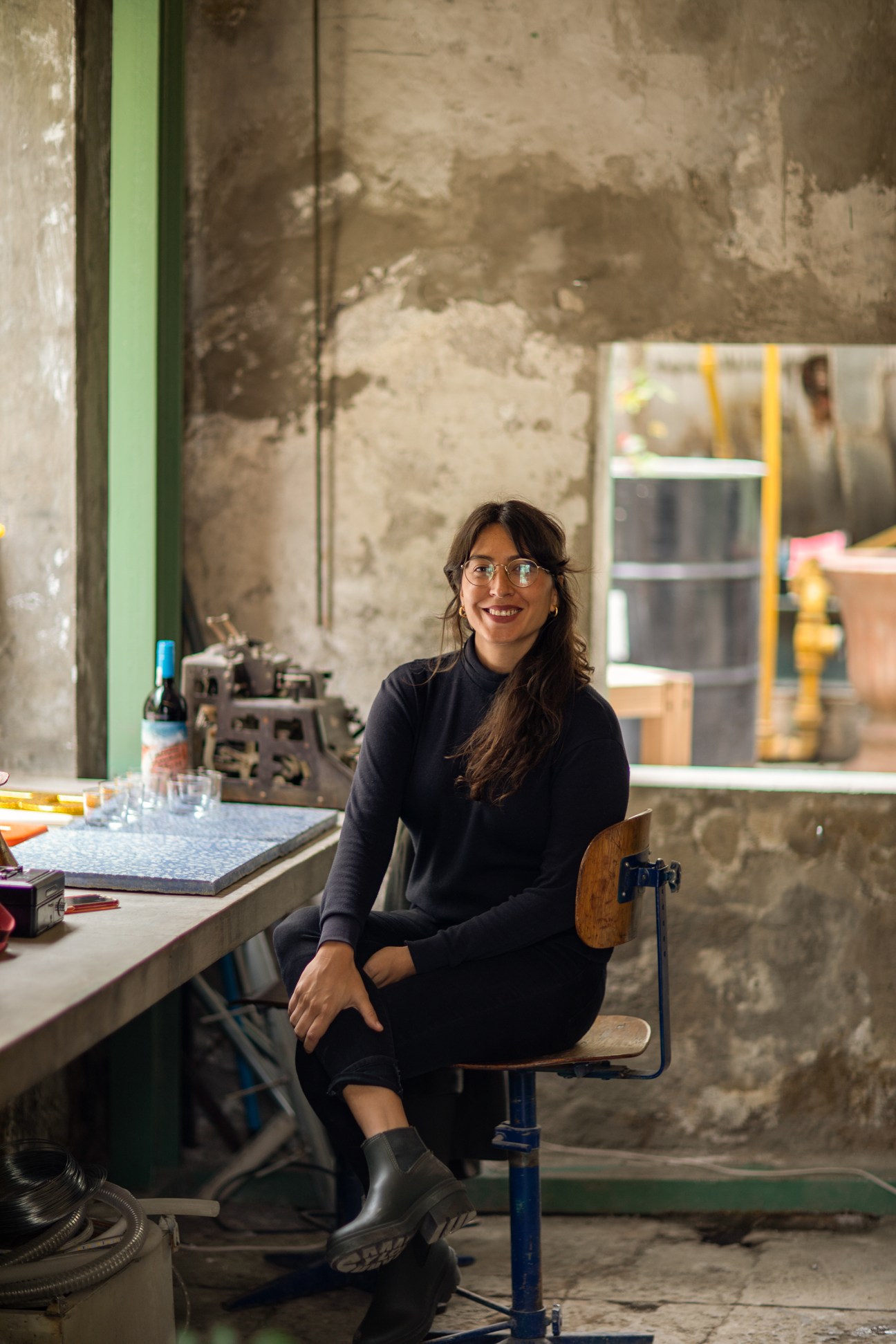
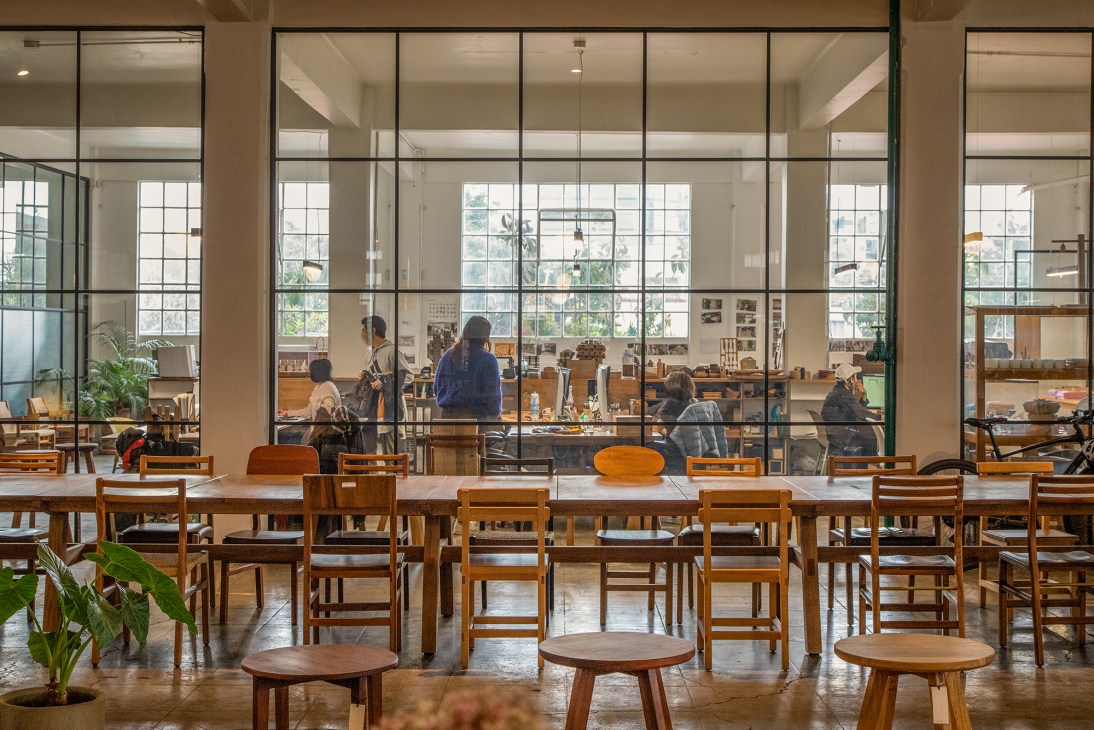
The building, a former lace factory, was reimagined and spearheaded by Alberto Kritzler, founder of Reurbano, a Mexico City-based company that reactivates forgotten urban buildings. Kritzler’s family has owned the building since the 1930s. When the lace factory began operating at a lower capacity –and eventually closed – Kritzler began renting out warehouse space (his first tenant was Buna, a coffee roaster). “I didn’t want it to become a consumption-driven space,” says Kritzler, whose hope was to rescue the building’s original vocation through tenants who have some form of manufacturing ability. “I wanted to be respectful of the place, its history and how it interconnects with the neighbourhood.”
Doctores, on the edge of the hip Roma district, has long had a trade history. But unlike Roma, Doctores hasn’t been infiltrated by trendy businesses, which is something that Kritzler is conscious of. “As time has gone by, I’ve realised how violent construction can be,” he says. “It has a big impact on the neighbours. We’ve come to understand how important it is to work with everyone, even though it’s a private property.”
The exterior of the building remains largely the same, with the addition of a few details such as the replicated factory windows. A new section, to allow more space for tenants, was added a few years ago and the two buildings flow seamlessly into one another. “We tried to make the design as fluid as possible,” says Bobi Mitchelsen, who was involved in the reworking. Another important element was to ensure that fellow entrepreneurs could see their neighbours’ items being manufactured. At Buna, for example, the coffee is roasted onsite.
“Construction has a big impact on the neighbours. We understand how important it is to work with everyone, even though it’s a private property”
There are currently 20 tenants in the building, ranging from architects (Francisco Pardo and Productora) to furniture-makers (La Metropolitana) and even a tea manufacturer (Oha). Kritzler was selective about the tenants and how they connect. “It’s important to have a diverse community, not just in terms of what they do and bring to the table but also in terms of their company size and scale of work,” he says.
Every tenant can design their own space within the building. “‘We had the opportunity to create our own unit, which was amazing, especially for an architect,” says Abel Perles, co-founder of Productora, the studio that worked with Kritzler to regenerate and expand the building. For Productora, meanwhile, one of the most important elements of rethinking the building was opening the central courtyard, a concrete area filled with plants that was previously sealed off. It is an outdoor area where the businesses can spill out and meet, which creates a greater sense of connection. “The courtyard is a place for everyone to meet in the air and the light,” says Perles. It’s a huge drawcard for keen collaborators.
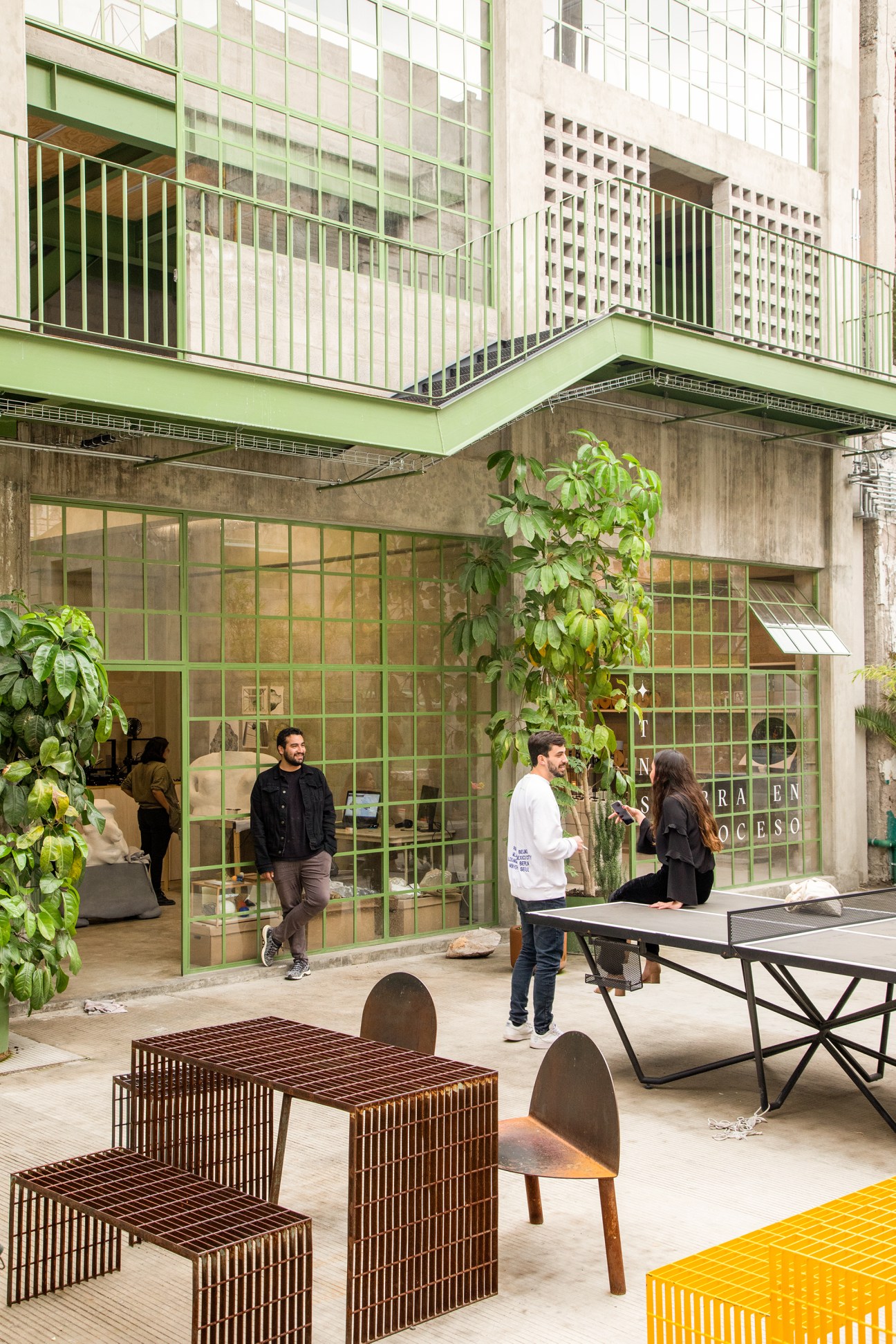
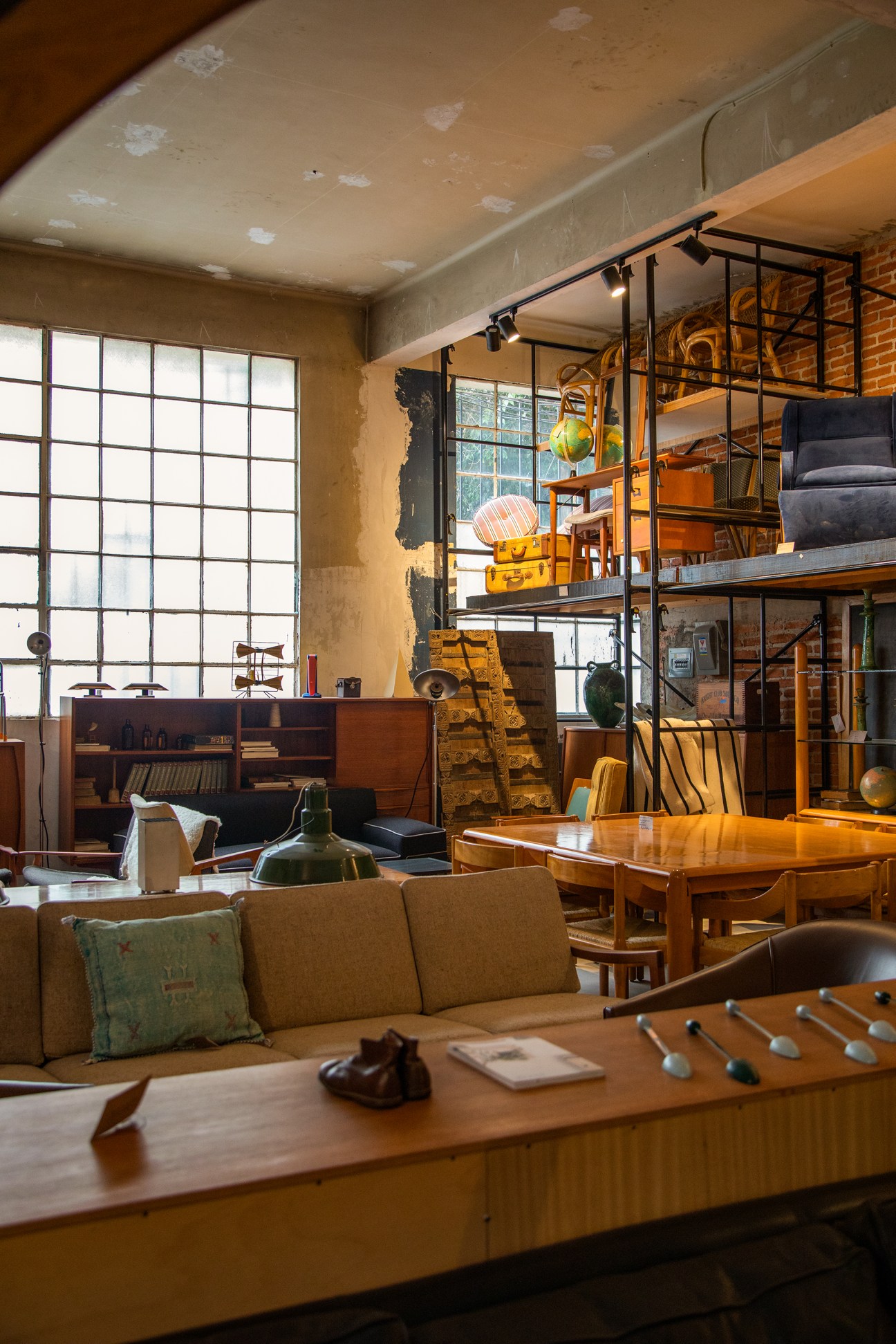
“We were looking for a community,” says Tatiana Torrealba, co-founder of The New Sanctuaries, a brand that produces creams and has collaborated with laa, an art laboratory next door. “We also wanted a space where we could produce, as well as have a showroom.” At Oha, Regina Rivero blends her tea in the back of her studio and hosts tastings in the front. She joined the community not only because she could create her product onsite but to swap ideas with her neighbours. “Having Buna nearby meant that we could share a space and grow together,” she says. The same goes for Alex Leon, co-founder of the clothing brand Hermanos Koumori, who saw the opportunity to trade skills with different brands. “We aren’t just a clothing brand,” he says. “We love to collaborate and there’s a street for everything. As a fashion brand you get cool references around here.”
For Kritzler, fitting into this neighbourhood is vital. That’s the case not just at La Laguna but for all the projects that Reurbano has worked on in Mexico City. “The great part of being local is that we know the neighbourhoods by day and by night,” says Kritzler. “We are a developer that stays there and is involved.” It’s all about creating a community – within the building and beyond.
Cities
Parks and recreation
Hong Kong — Urbanism
Once a neglected plot of reclaimed land facing Hong Kong island, West Kowloon is now home to Art Park, the largest cultural hub of its kind in the world. Between the curves of a 23 hectare park sit 17 venues, including an opera house, several concert halls and exhibition spaces. The next addition, Hong Kong’s new contemporary art museum M+, is due to open later this year.
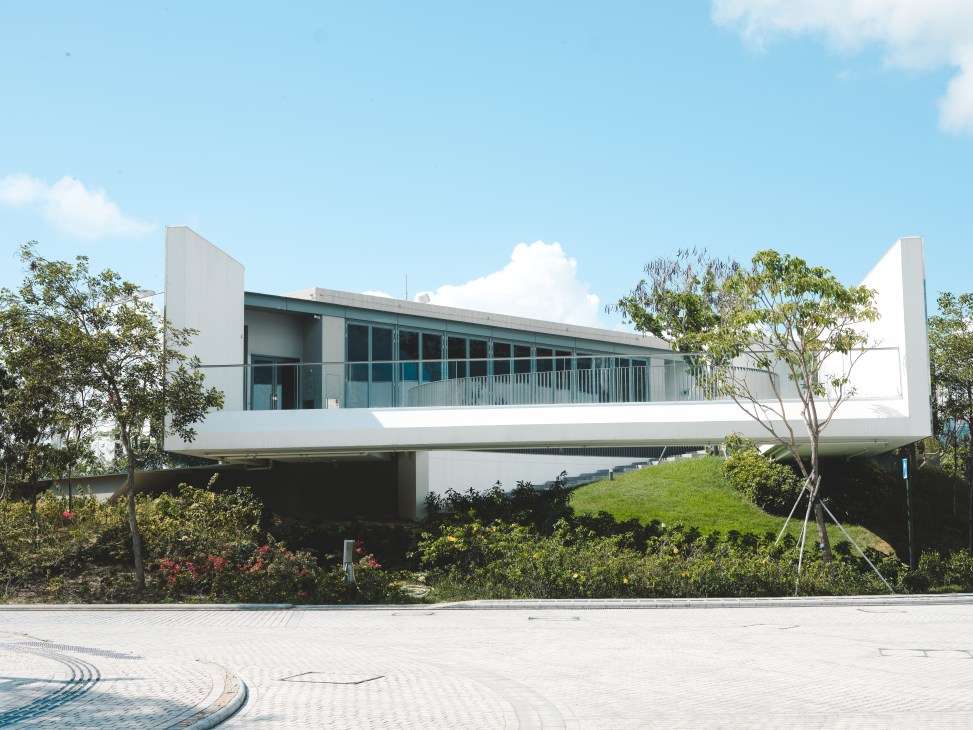
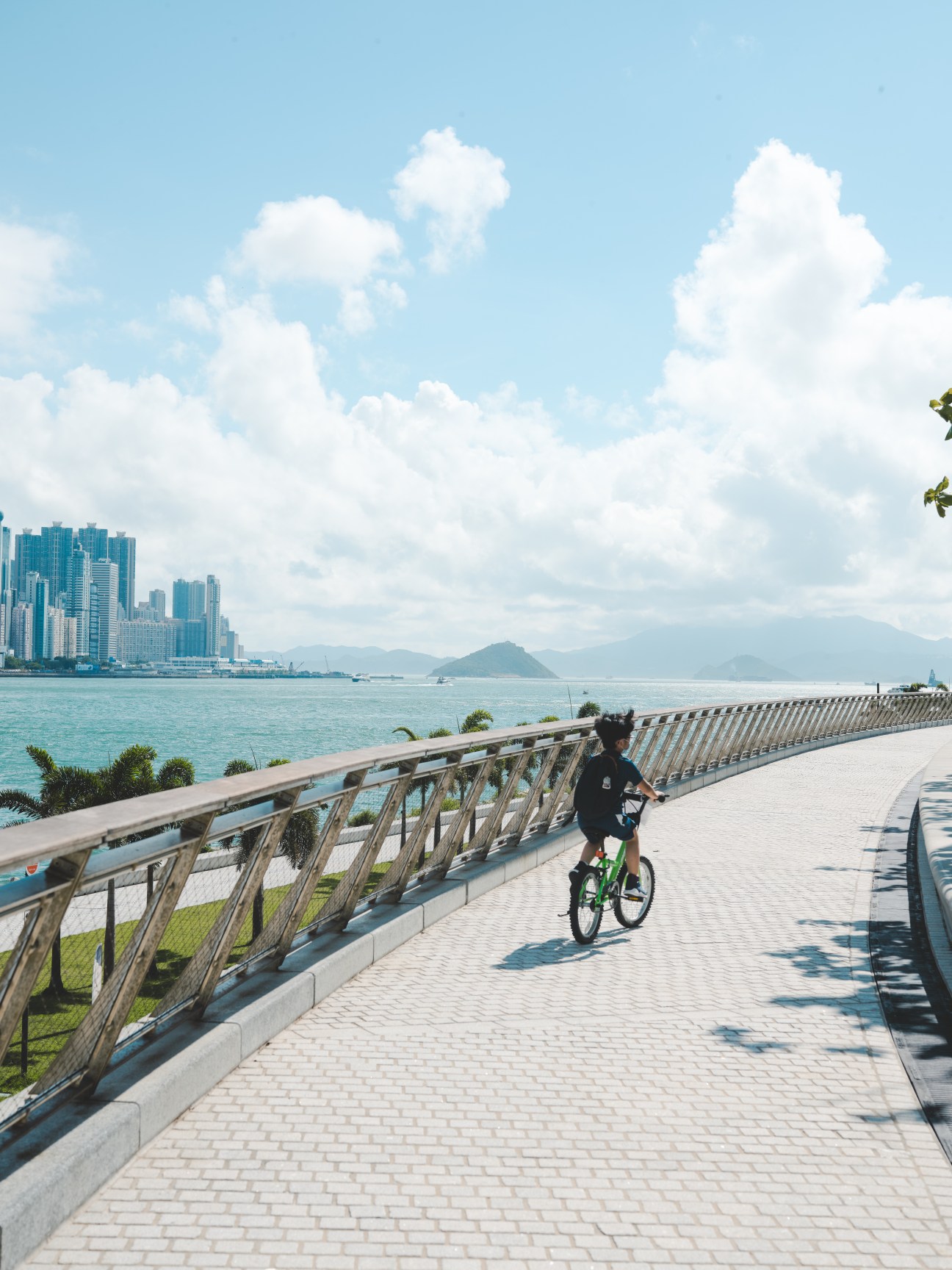
Designed by Foster + Partners, the district has become a favourite spot for weekend picnics and family strolls. Smart bikes can be rented and cafés and restaurants border the harbour. Over the summer, the Art Park’s vast lawn also plays host to a number of music festivals.
We wanted to create a park that redefines public space for people in Hong Kong
“Cultural buildings can become quite isolated from the rest of the city so we wanted to make sure the district was a vibrant piece of the city fabric,” says Colin Ward, a senior partner at Foster + Partners. “We wanted to create a park that redefines public space for people in Hong Kong – a park that is available for everyone at any hour of the day and on any day of the year.”

Booksmart moves
Santiago — Renovation
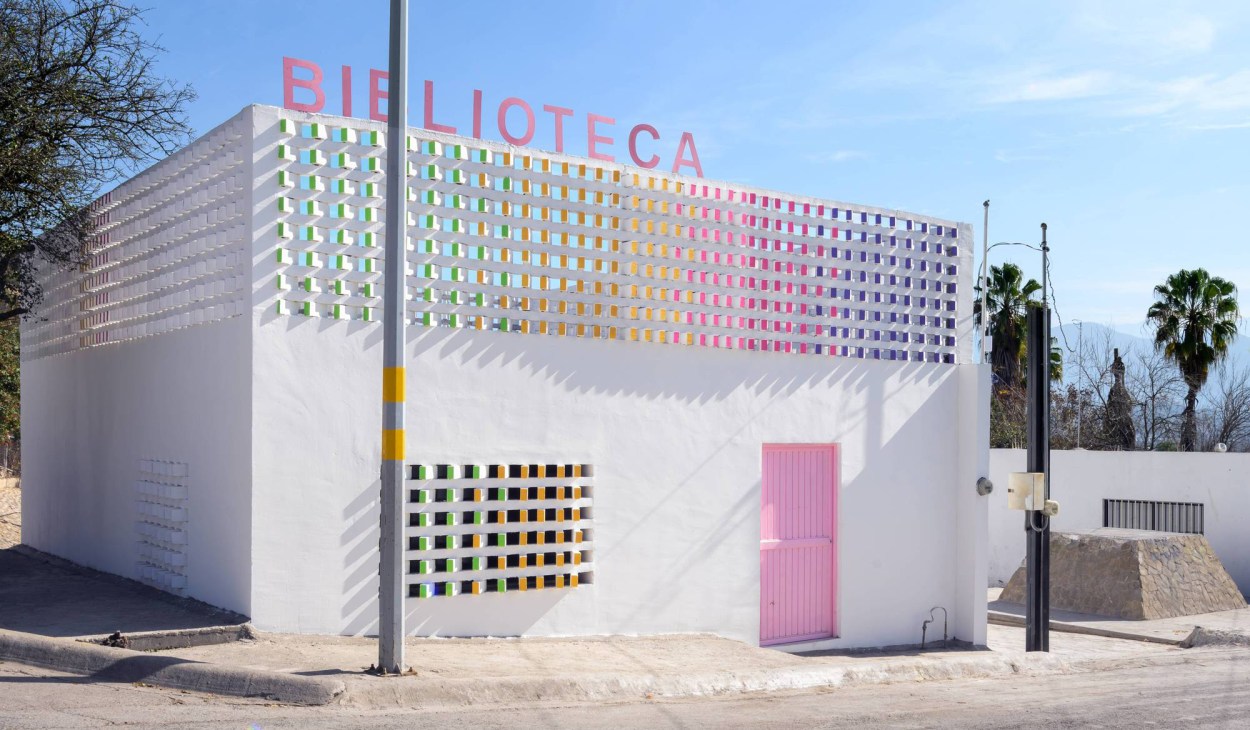
Tired and uninspiring public libraries in Mexico have prompted architecture group Proyecto Reacciona’s Crear Comunidad project. Finding libraries in poor condition across the country, such as the newly finished Colonia Héctor Caballero Library in Santiago, the programme rebuilds them with input from the community. In Santiago, that involved a smart move to transform a derelict cellar into a cinema and reading space for young people.
Q&A
Carlos Moedas
Engineer & candidate for mayor of Lisbon
Portugal
After years as a member of parliament and secretary of state for Portugal and five years as European commissioner for research, science and innovation under Jean-Claude Juncker, Carlos Moedas is turning to local politics. He tells Monocle about his bid to win Lisbon’s mayoral elections in September.
What made you want to get involved in local politics?
Cities have to come up with the solutions to today’s challenges. Lisbon has to be in the first league of cities in Europe and even at world level. Lisbon isn’t there yet and the question is, why not? We have so many unique attributes here but we are not where we should be. I want to contribute to a city that has more ambition. I always say, “We can be more than we imagine.”
Science and technology are a big part of that ambition…
Lisbon doesn’t produce companies that grow and generate jobs at the speed of other cities. So the idea I have is to make Lisbon a business factory: somewhere people have the discipline of work and organisation. The important thing isn’t the idea but the process in creating businesses.
Where else do you want to act?
Lisbon has the potential to be a cultural capital but for that we need equipment: more libraries, spaces for theatre and music rehearsal. People should co-create public policies. I would have a permanent citizens’ assembly, where people would be chosen randomly to have a say in their city.
Images: BS/DDPS, Getty Images, US Air Force, Hector Padilla Ferraris.
Hidden gem
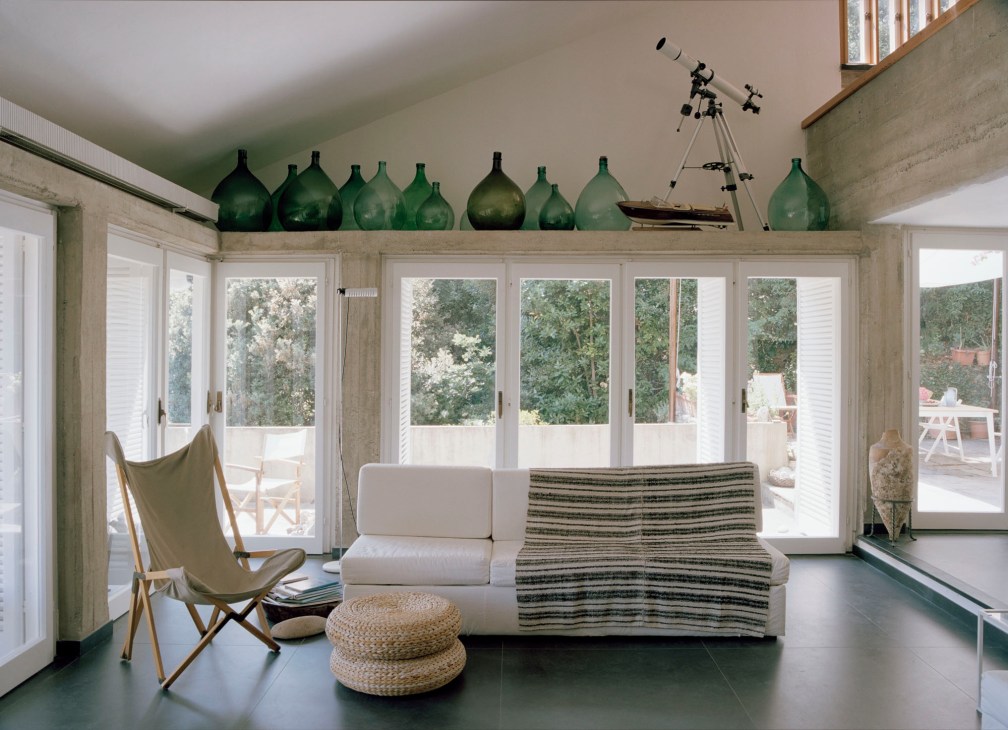
For centuries, the natural beauty of the Gulf of La Spezia, better known as the Bay of Poets, has drawn a creative cast of travellers from Dante to Lord Byron. Today the siren’s call to this stretch of coastline at the eastern end of the Ligurian coast remains strong. Here, Cecilia Pirani, an Italian-Guatemalan landscape architect and founder of Milan-based fashion accessories line Palorosa, has found the perfect sanctuary in a modernist dwelling that respects its scenic surroundings.
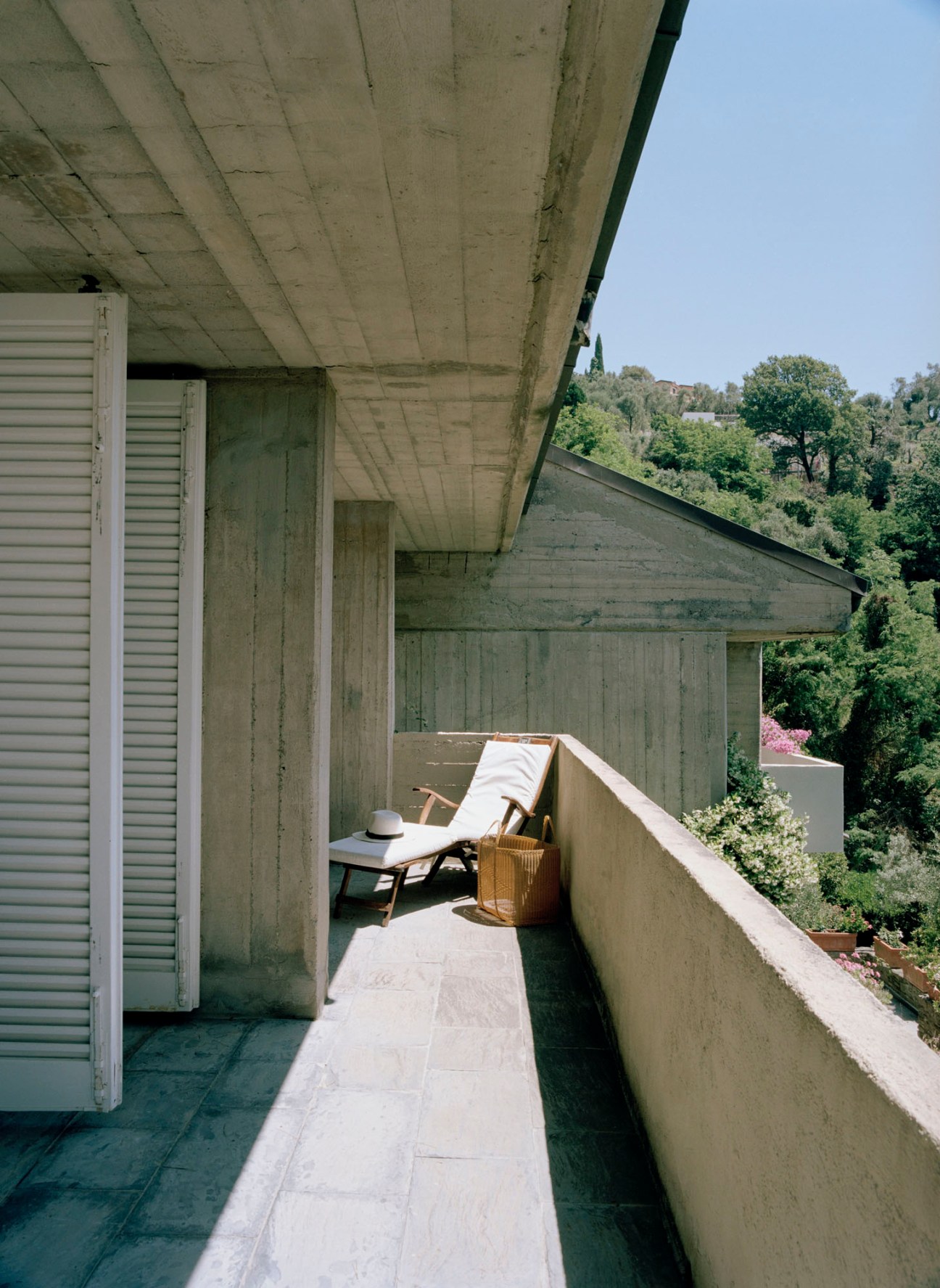
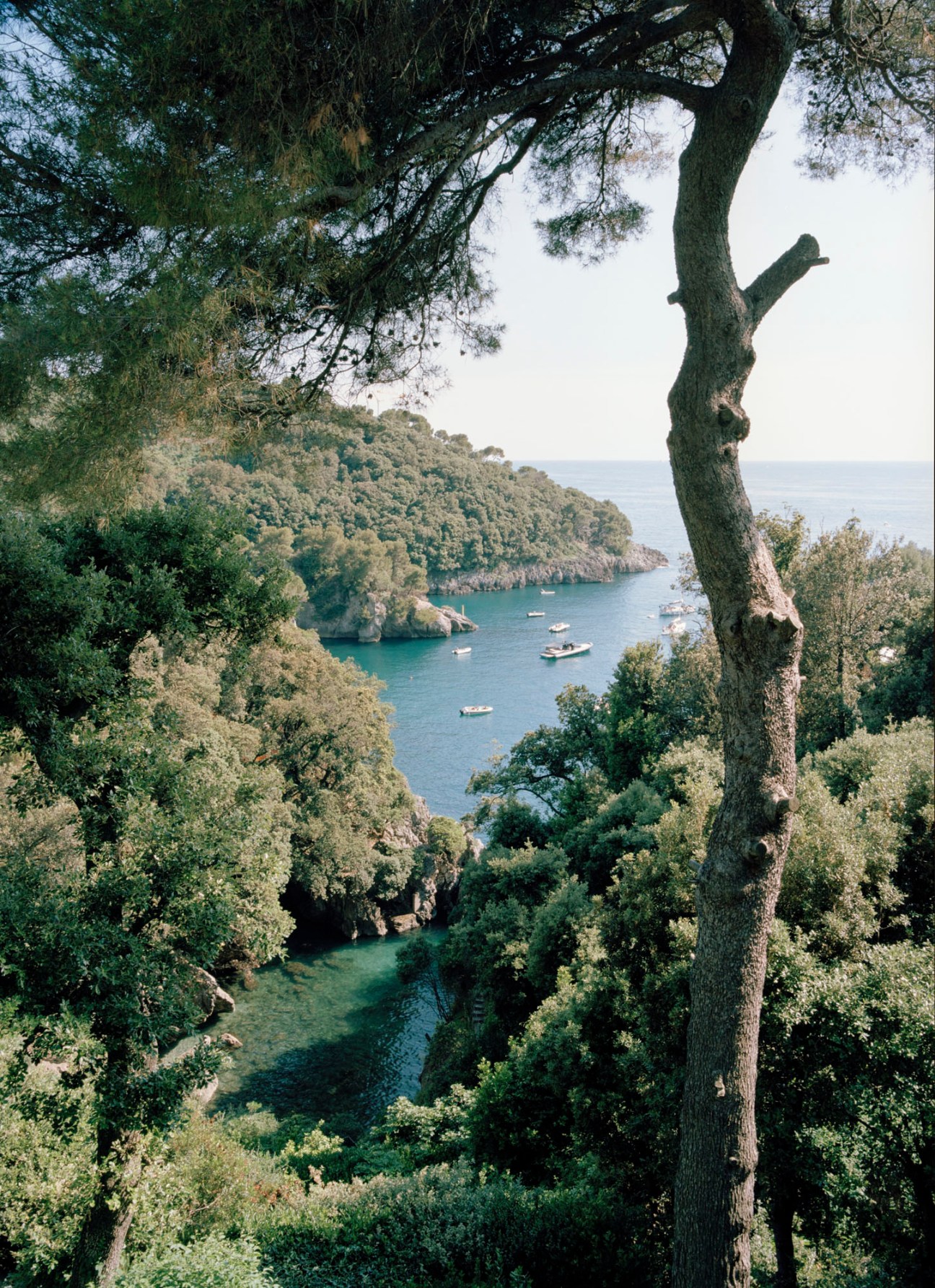
Liguria’s sharply folded mountains are set next to a narrow shoreline, which makes construction in the region a challenge. Yet the rewards for those who find a patch of hilly terrain to build on are many, including mesmerising views and access to swimming spots that are far less crowded than the beach clubs of Forte dei Marmi in neighbouring Tuscany. “This corner of Liguria is not the Italian Riviera that people imagine; it offers more privacy,” says Pirani, while taking in the afternoon sun on a vintage wooden deck chair originally used on a 1950s Italian ocean liner.
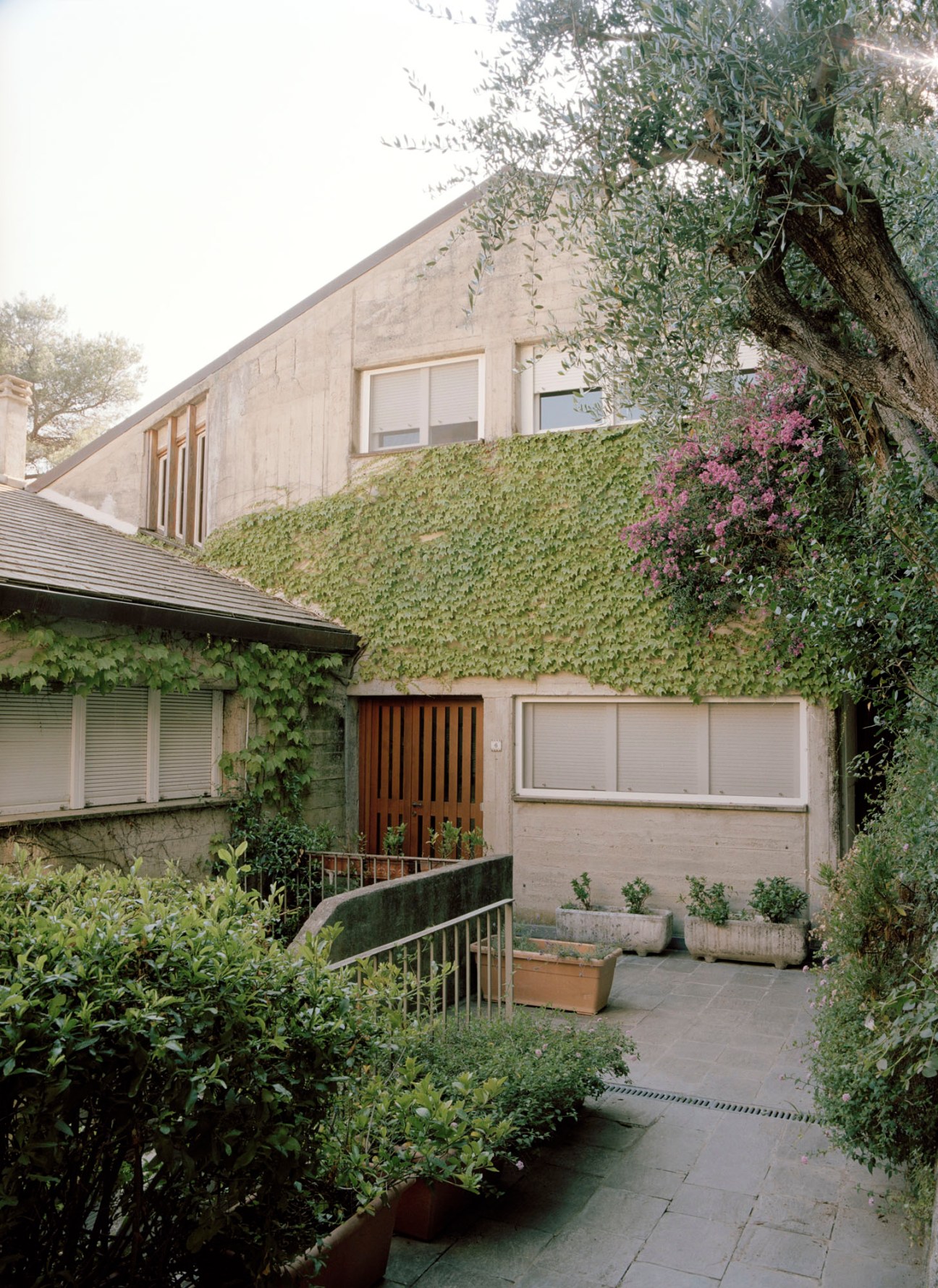
Her family’s residence, a 1970s structure, is one of four side-by-side housing units designed by architects Vittorio Borachia and Carlo Santi with seclusion in mind. Though situated in close proximity, the design called for the individual residences to be slightly offset from each other to maximise each owner’s views. To minimise the visual impact, each home is built into the sloped terrain over multiple levels and has an angled roof in slate that reduces the profile of the dwelling against the natural backdrop.
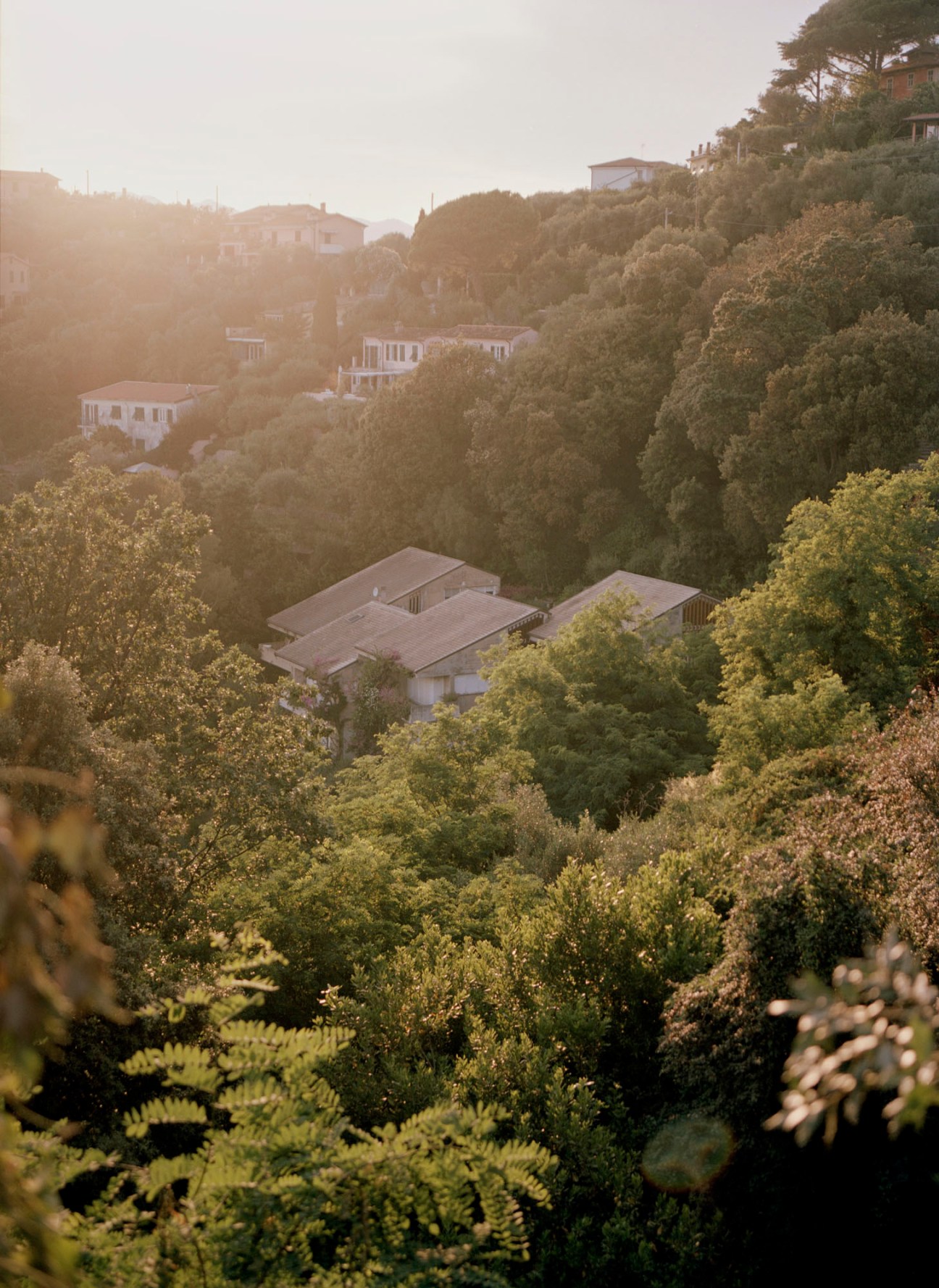
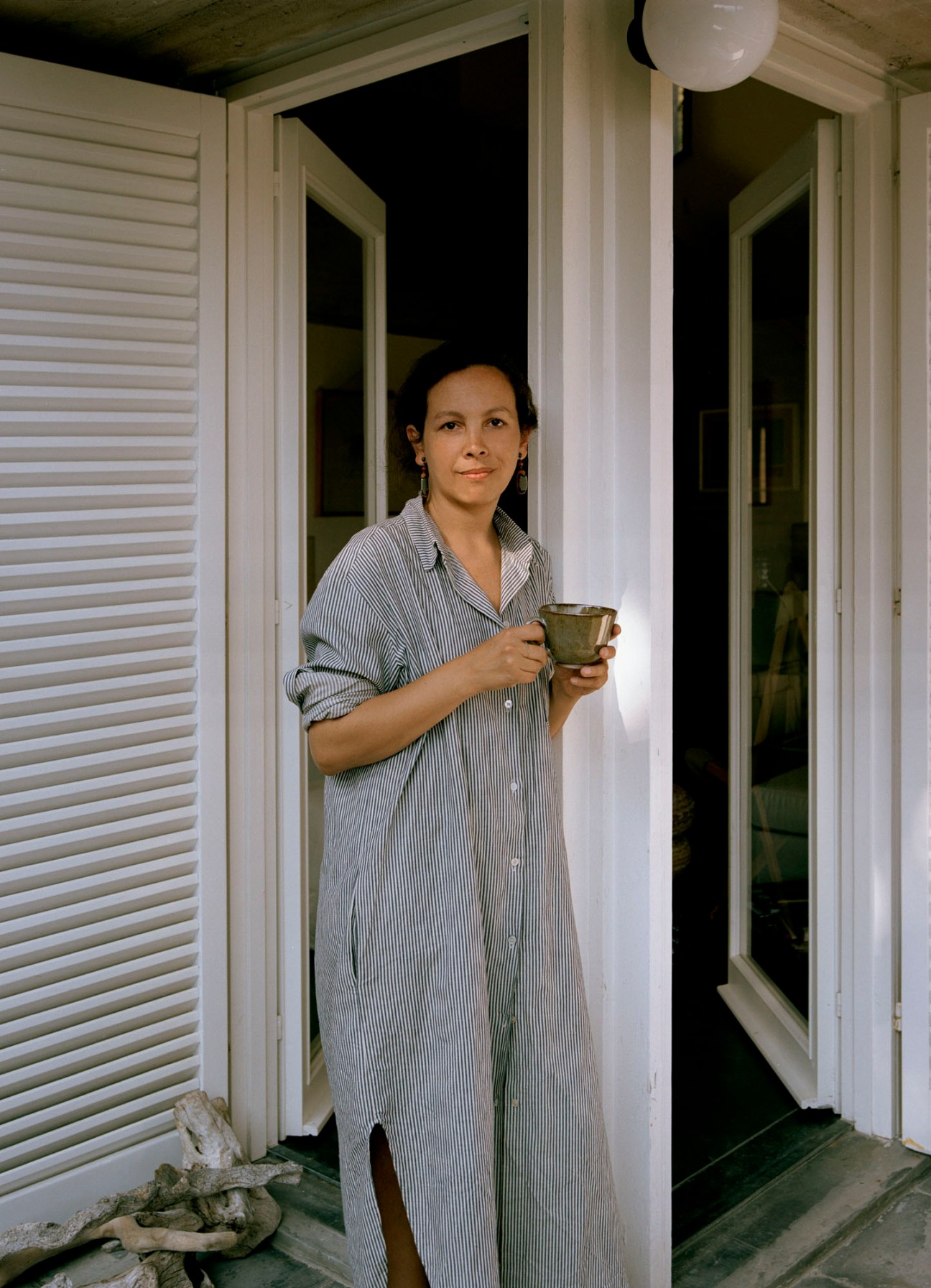
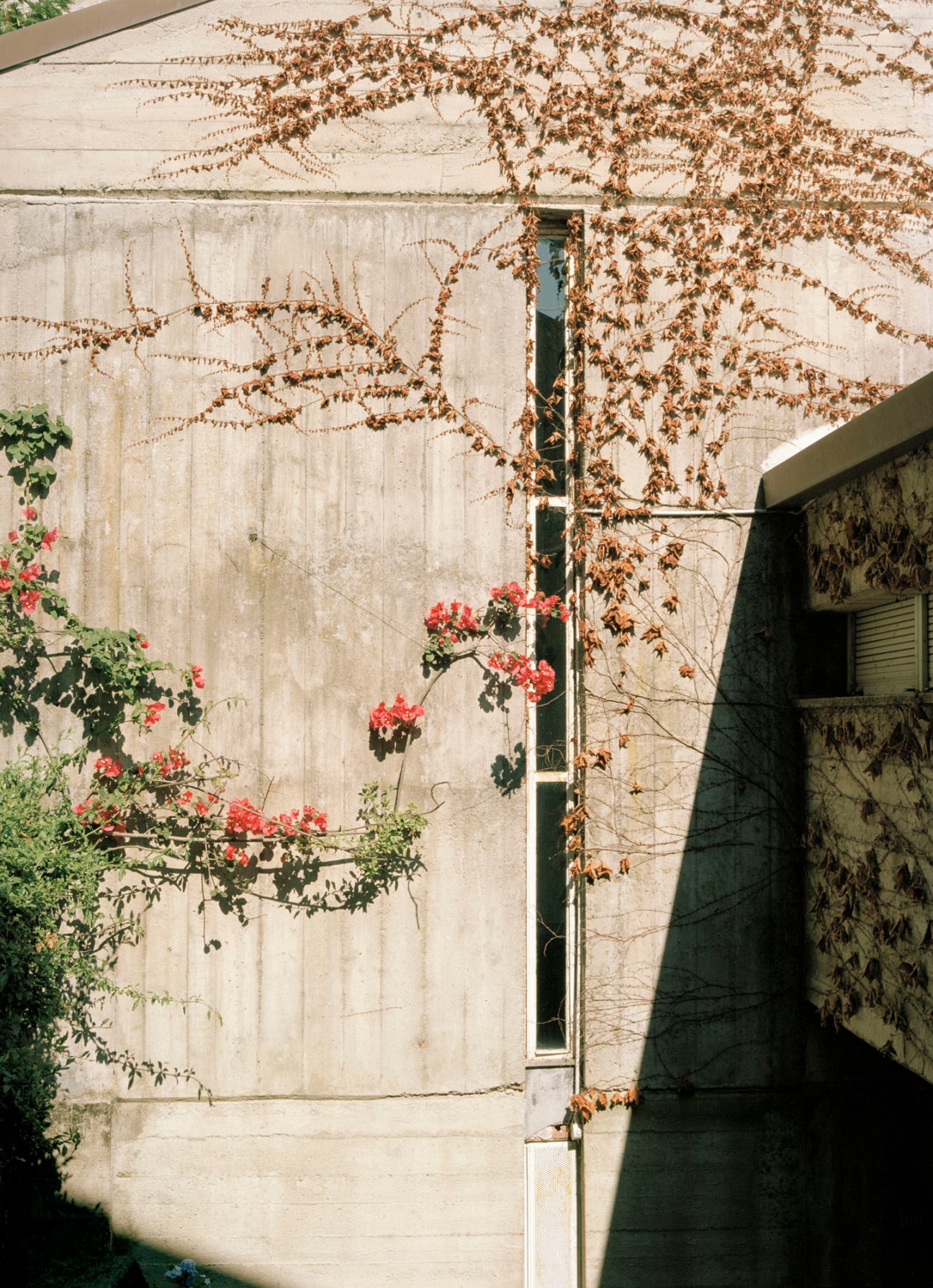
The project’s striking use of bare concrete might seem an odd choice amid vegetation dominated by pines and holm oaks. But Pirani says that you need to wait until you get up close to her home to properly appreciate it. “What I love is that this concrete doesn’t have that cold, off-putting feel to it that you see in brutalist architecture,” she says. “Here there is a warmth, a patina of imperfect surfaces that begin to remind you of the earth and ageing wood.”
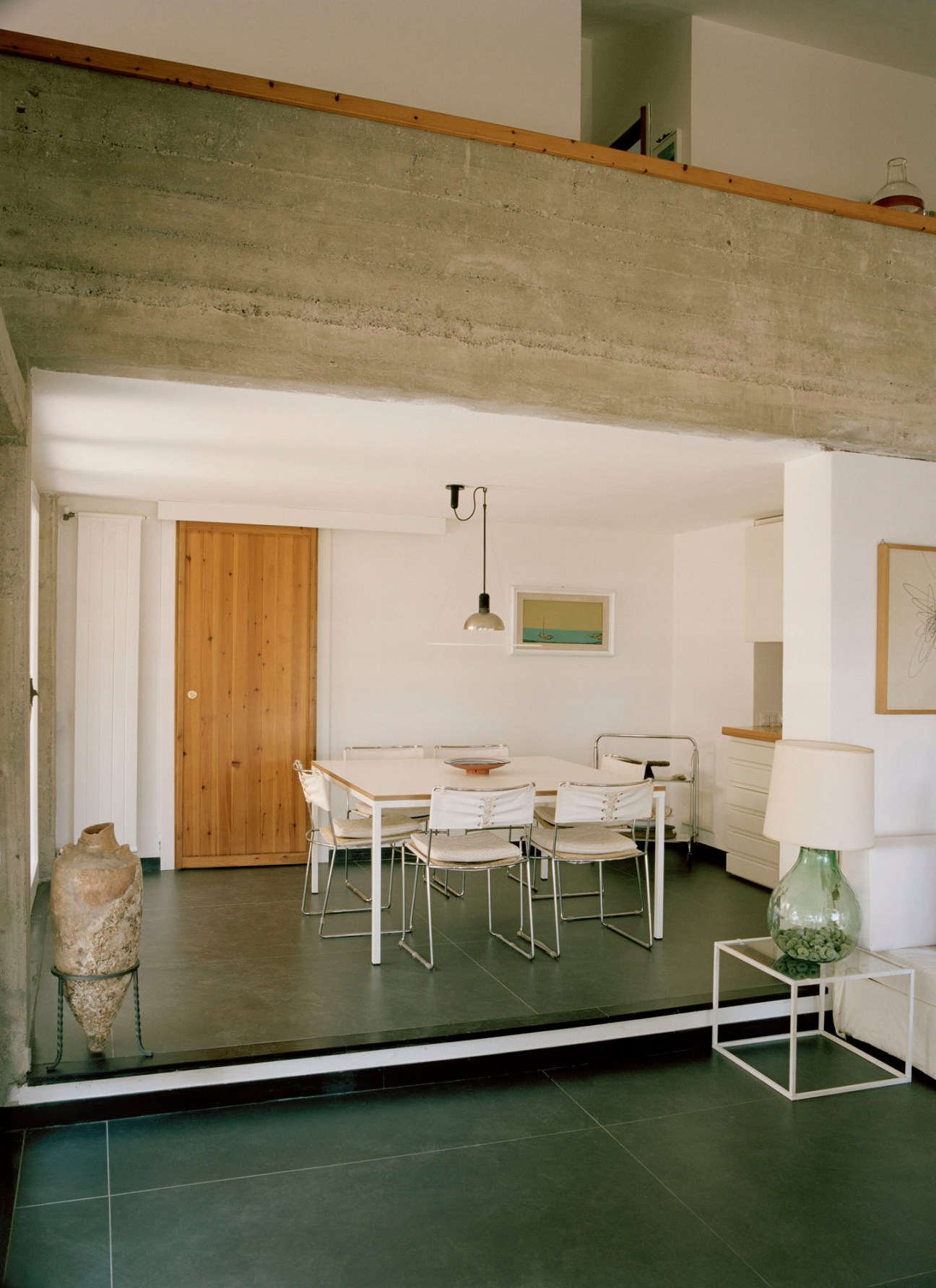
Nature has also held its ground over the years, as seen by the bougainvillaea and other plants that have climbed the façades of the homes. Pirani’s residence was designed over three floors, with the middle level hosting both the kitchen and the dining and living area. The latter opens onto a balcony and terrace via large wooden door blinds, letting in ample natural light. “For me, the beauty is having this one big interior and exterior living space so that you don’t feel disconnected from the outside,” says Pirani.
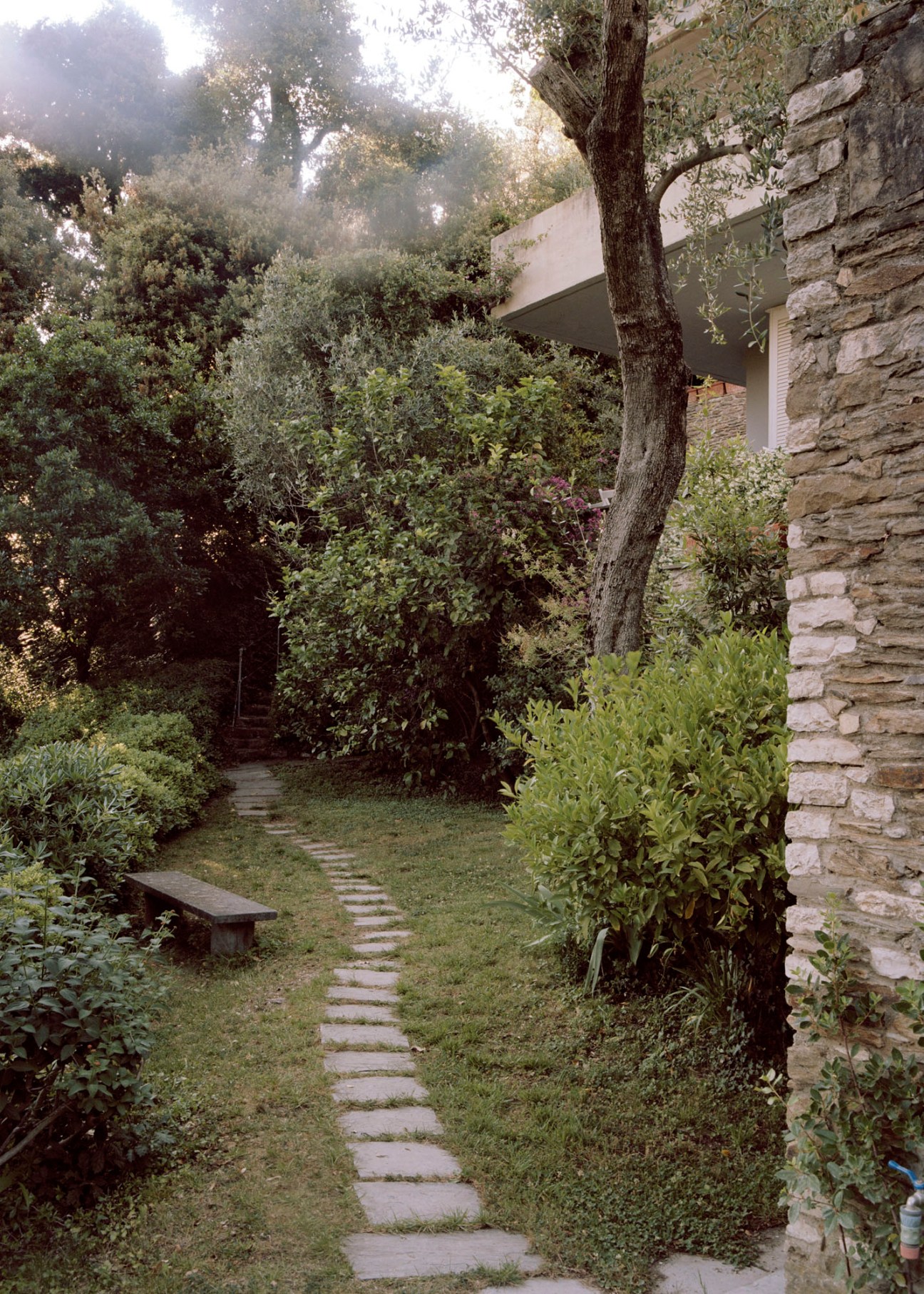
Alfresco meals are enjoyed on a long De Padova wooden table, where Pirani often sits and draws inspiration for her line of sturdy, sustainably produced tote bags for Palorosa. Work breaks see her descend a windy path, usually with a towel and a new tote model in tow, to take a dip at a private beach set on a quiet cove.
In winter, she prefers to work indoors in her La Tripolina chair from Milan’s Eligo. Or sometimes on one of her Enzo Mari chairs at the dining room table, which is lit by an Achille Castiglioni-designed Frisbi suspension lamp from Flos. To allow in extra daylight and break up the monotonous concrete exterior, all homes here feature vertical window slits that are scattered about the façade. The front doors are also clad in wooden strips and glass. “The architects have managed to make the space feel immersed in nature and not on top of it,” she says. “They used a mix of materials and have created a space that is in tune with the site. The Ligurian coastline is very rugged, and the concrete reflects that.”
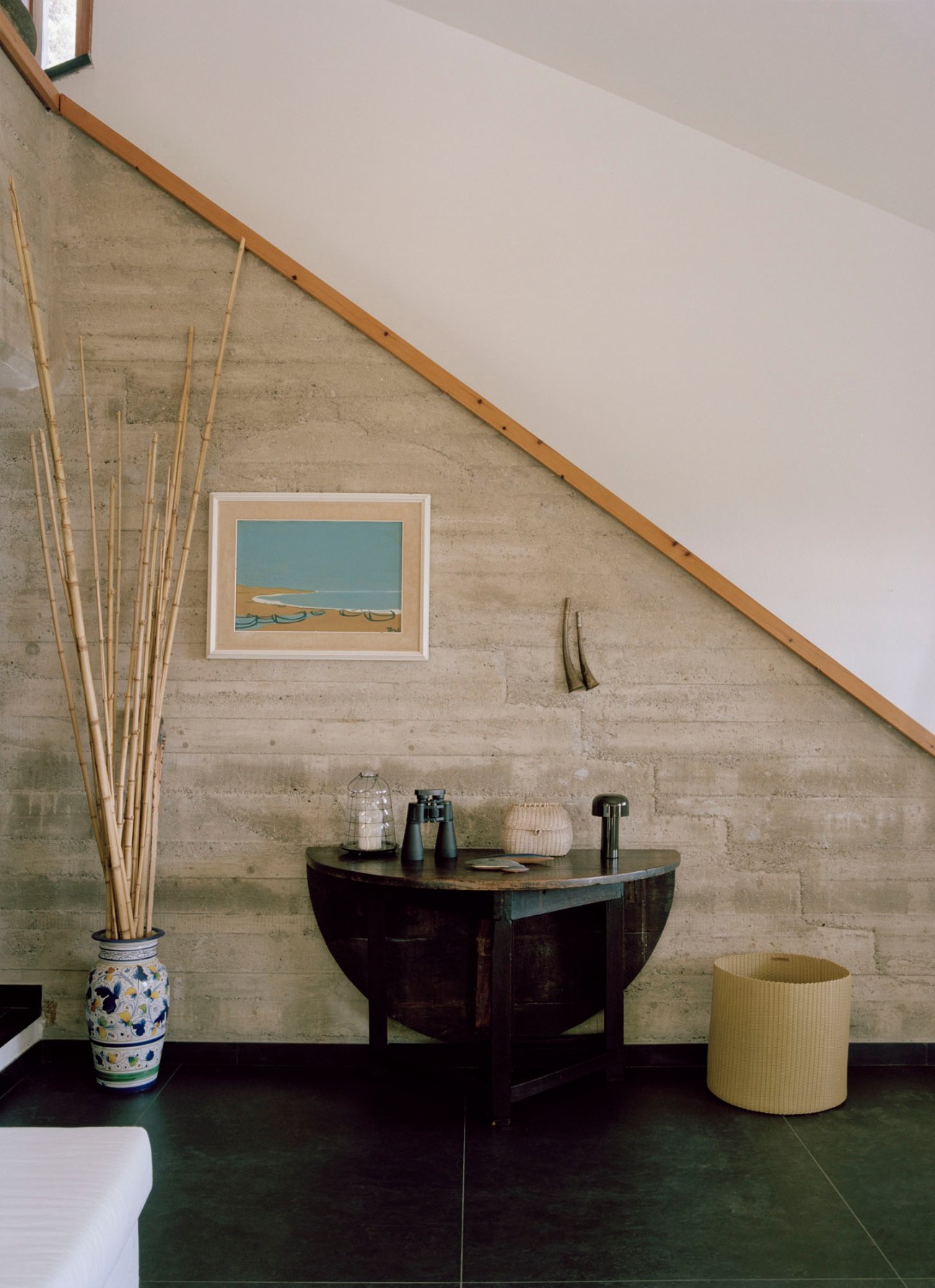
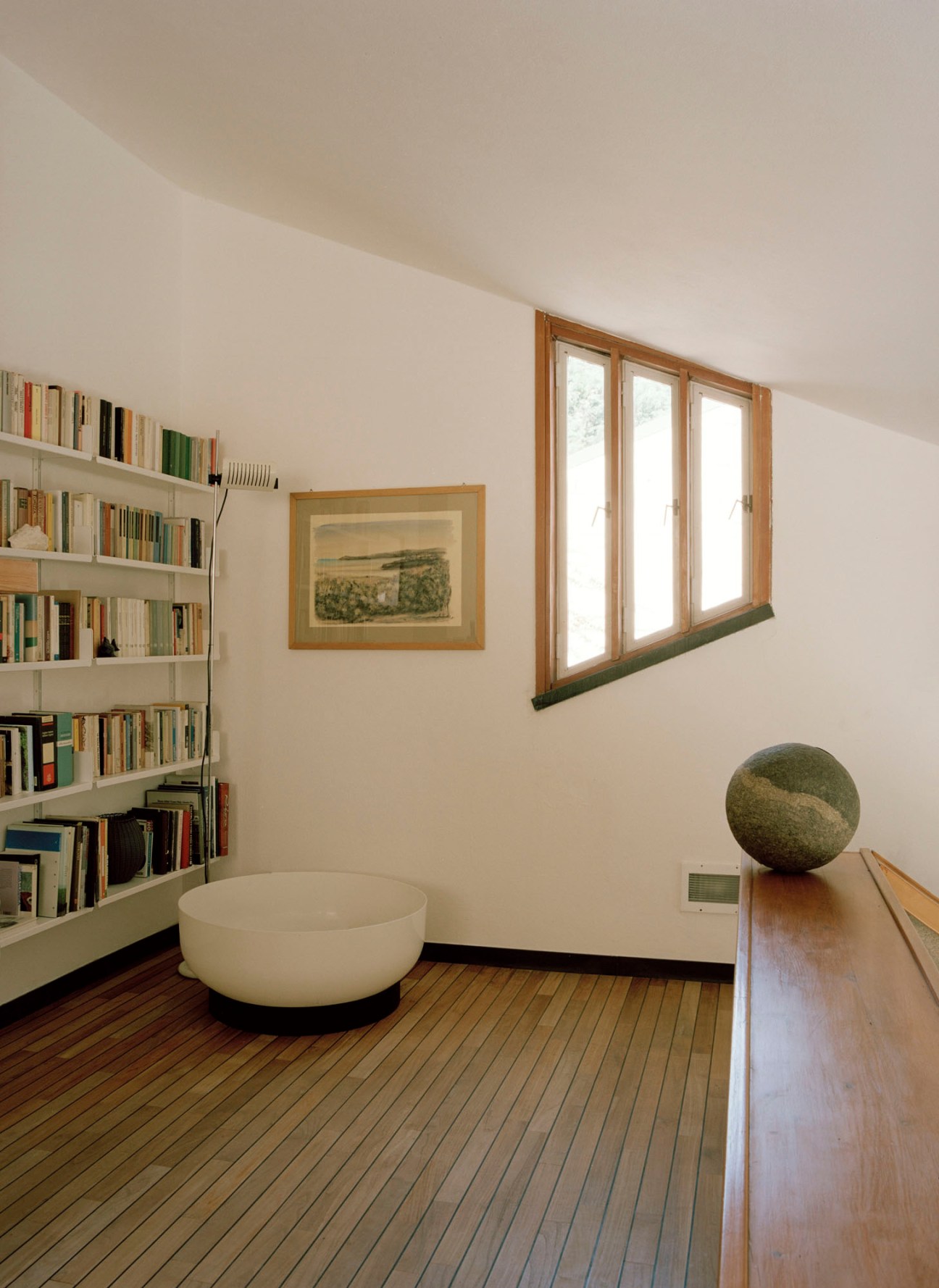
Pirani spends most of her time in the living room, where the original carpet has been removed and replaced with a dark grey stone flooring. Upstairs bedrooms are accessed via a staircase with handrails made from gorgeous Swedish pine. At the top of the black slate stairs stands a white, minimalist Dieter Rams-designed De Padova 606 bookcase.
The landing also features a geometric window below the slanted ceiling. “The game between the vertical and the horizontal elements is intriguing: you have balconies on different levels, the wide eaves set low over the façade,” says Pirani, pointing to nearby construction sites that look set to become holiday villas, eager to call attention to themselves. “The architecture here has created a dialogue with nature. It has integrated itself into the landscape.”
Tools of the trade
There’s no standard approach to creating good architecture. Location, budget and purpose all play a part in defining a project’s outcome. Yet there are certain design rules that are always worth acknowledging. That means using the best materials, maximising enjoyability for users and taking environmental impact into account.
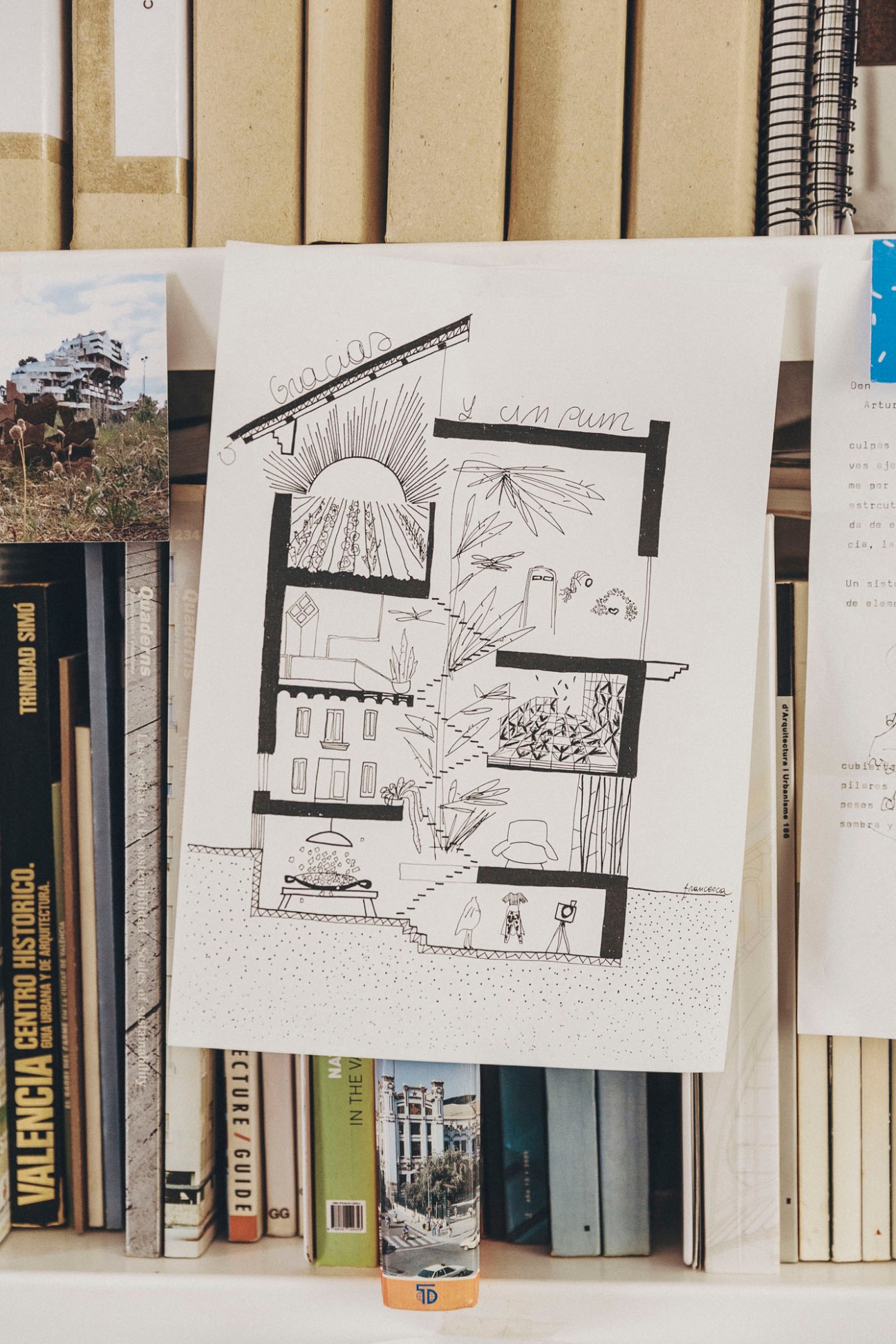
With architecture commissions now motoring ahead after pandemic pauses, we’ve looked to best in practice in three very different categories. The reason? To shine the spotlight on a global cast of creative talent you might want to consult too. Whether it’s an office your staff will want to return to or an overhaul of a run-down apartment, these three firms show how the principles of building better work across a wide range of projects.
Best for public buildings
Gradolí & Sanz
Valencia
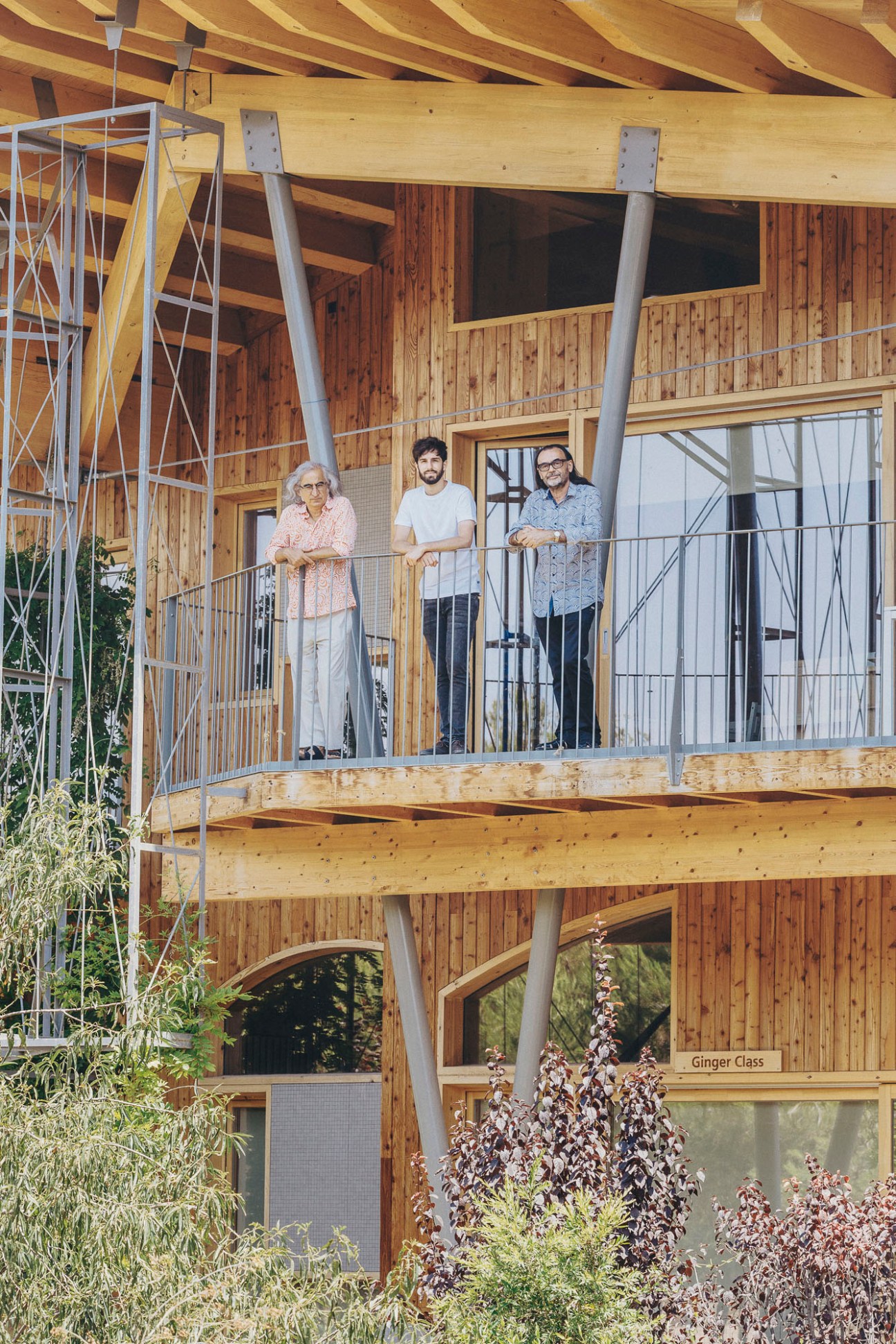
Over the past 30 years, Valencia-based practice Gradolí & Sanz has developed an impressive portfolio of public projects in its home region. To explain how their mindset has changed since they started, founders Carmel Gradolí and Arturo Sanz point to the financial crisis of 2008 as a turning point. “Suddenly we realised that maybe we shouldn’t be building more; we should be building less,” says Sanz. “We’ve become a bit more radical when it comes to sustainability. Our architecture is less aggressive, more tactful and respectful of the environment.”
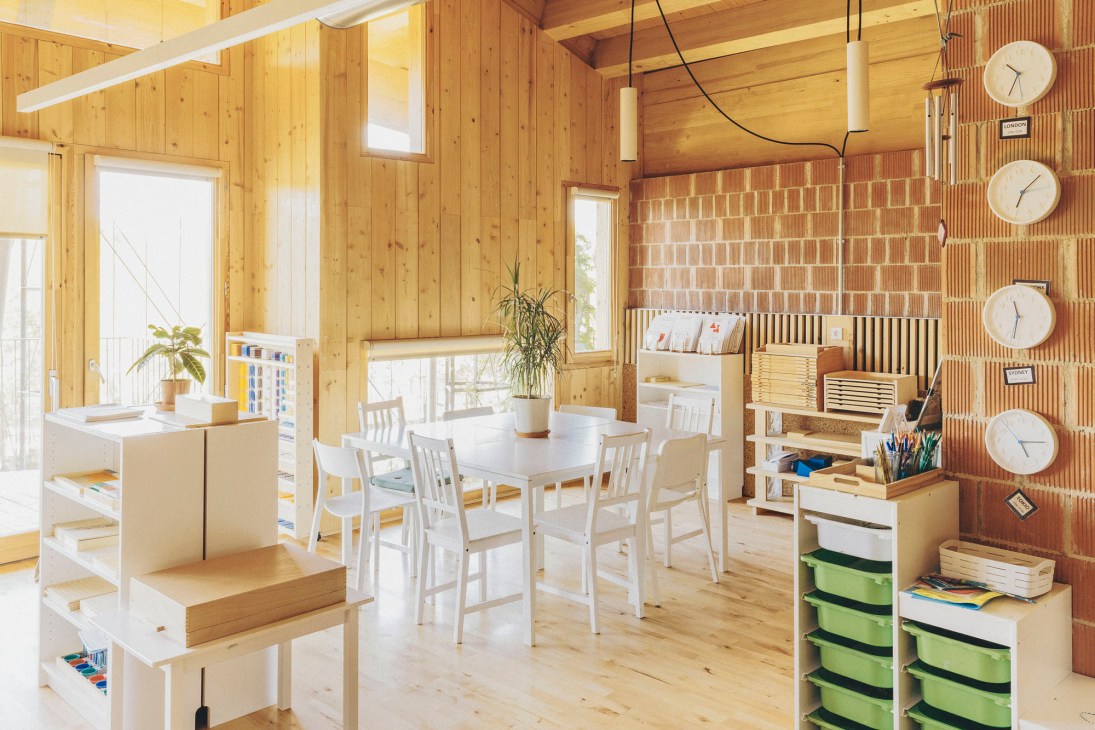
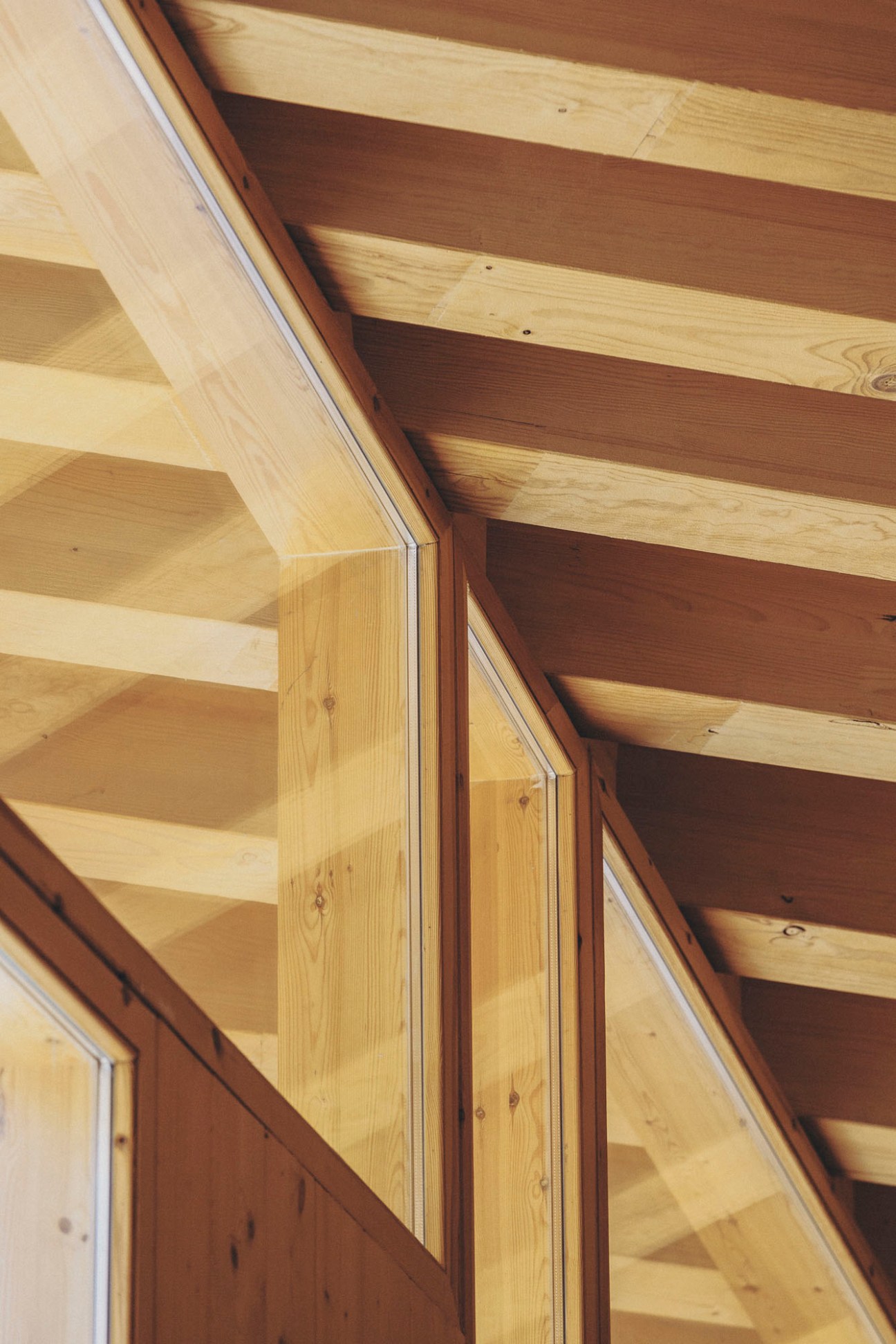
The best example of this ethos is the firm’s Imagine Montessori School in the town of Paterna, a village near Valencia, designed in collaboration with architect Francisco López. Topped with an extensive green roof, the building is made from materials with a low ecological footprint: clay bricks and wood. Its structure is left entirely exposed. “The honesty of the materials means that the building is in itself educational,” says Gradolí. “The pupils can see how it works.” All of the classrooms look out onto the surrounding greenery and instead of long corridors and square classrooms, the architects designed open and versatile spaces. Some areas, such as below staircases, for example, incorporate lower windows and ceilings adapted to a child’s height.
Located on a plot of land containing a gully, the school perfectly embraces its setting. “Usually in Mediterranean culture, a gully is seen as a dumping site, a place that’s dangerous and dirty,” says Sanz. “We thought it would be interesting to challenge that and put it at the centre of the school. When it rains, water flows down it. Lots of animals such as rabbits and birds live nearby. It was important for us to incorporate nature but not just as a decorative element.”
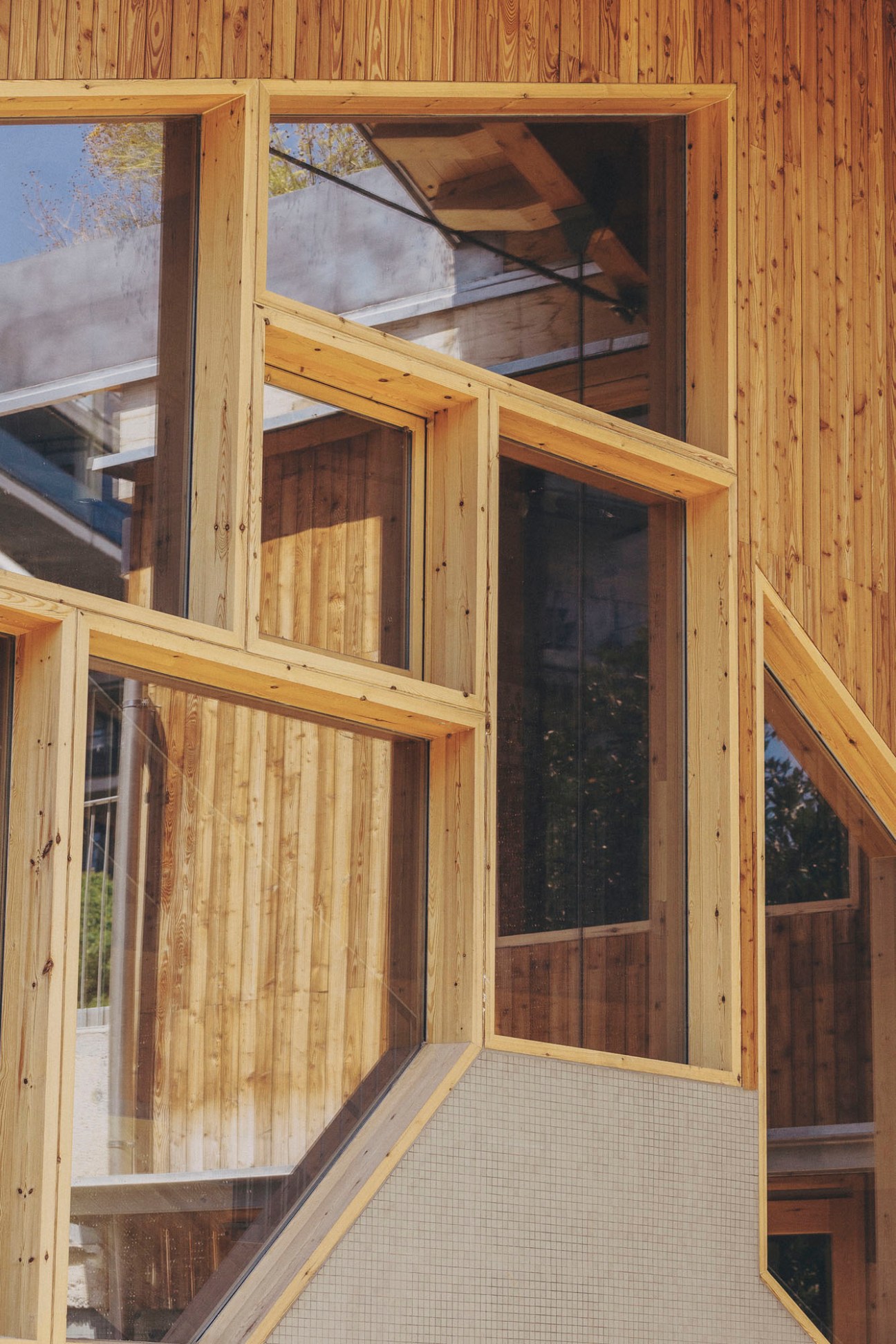
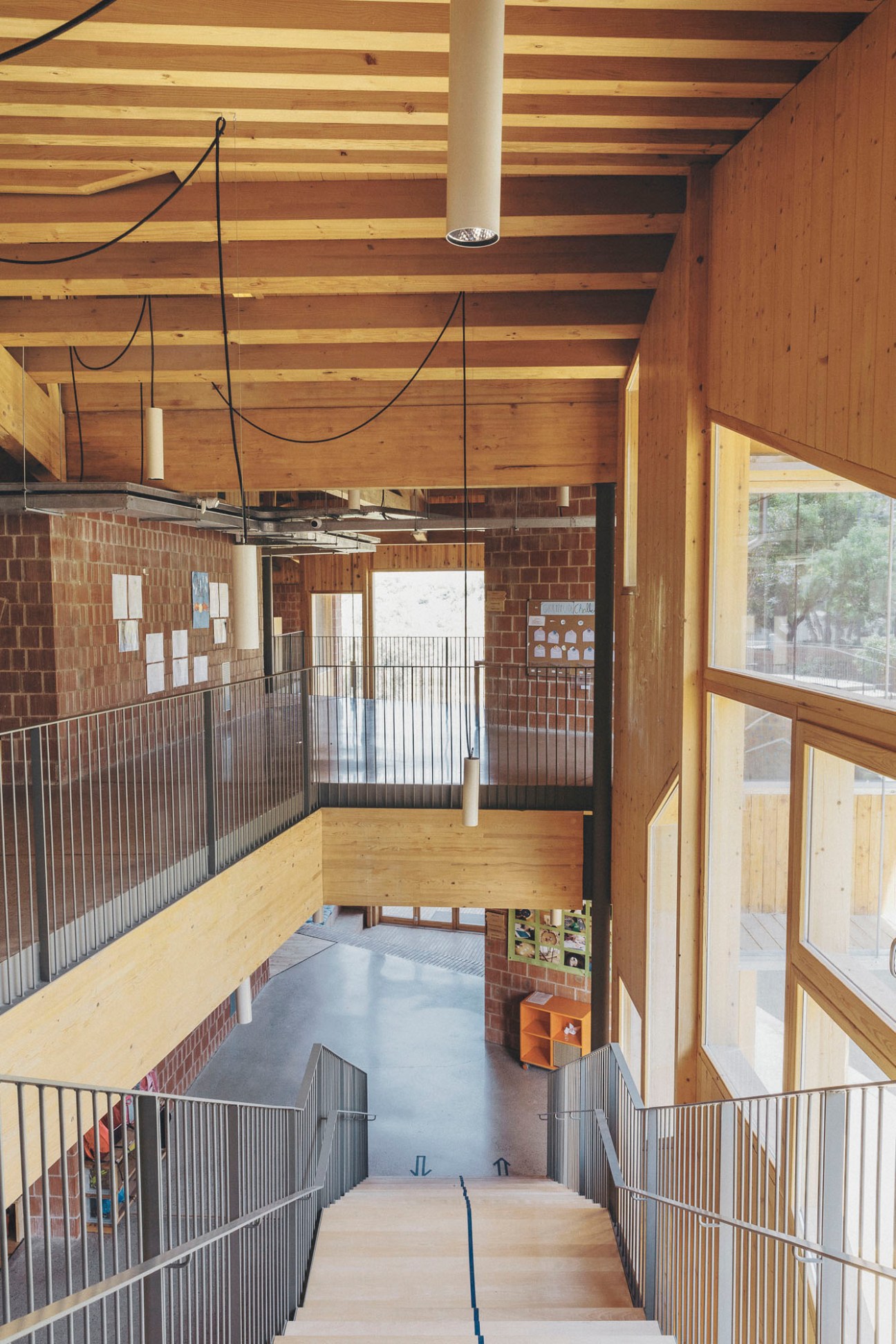
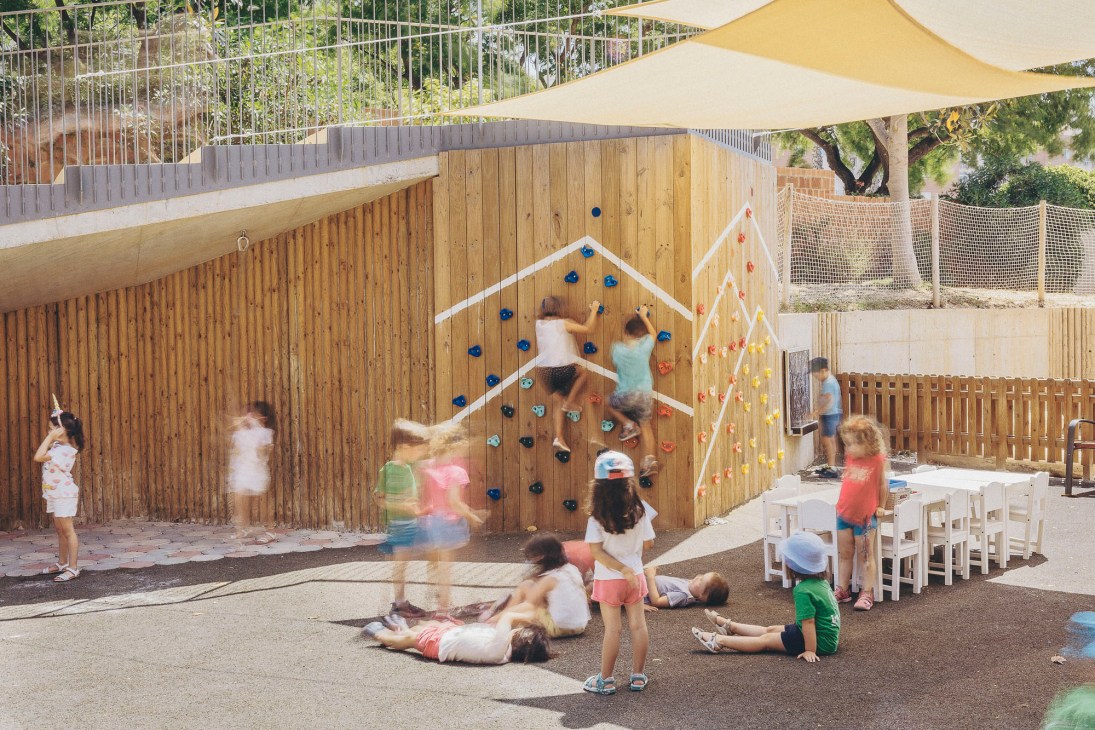
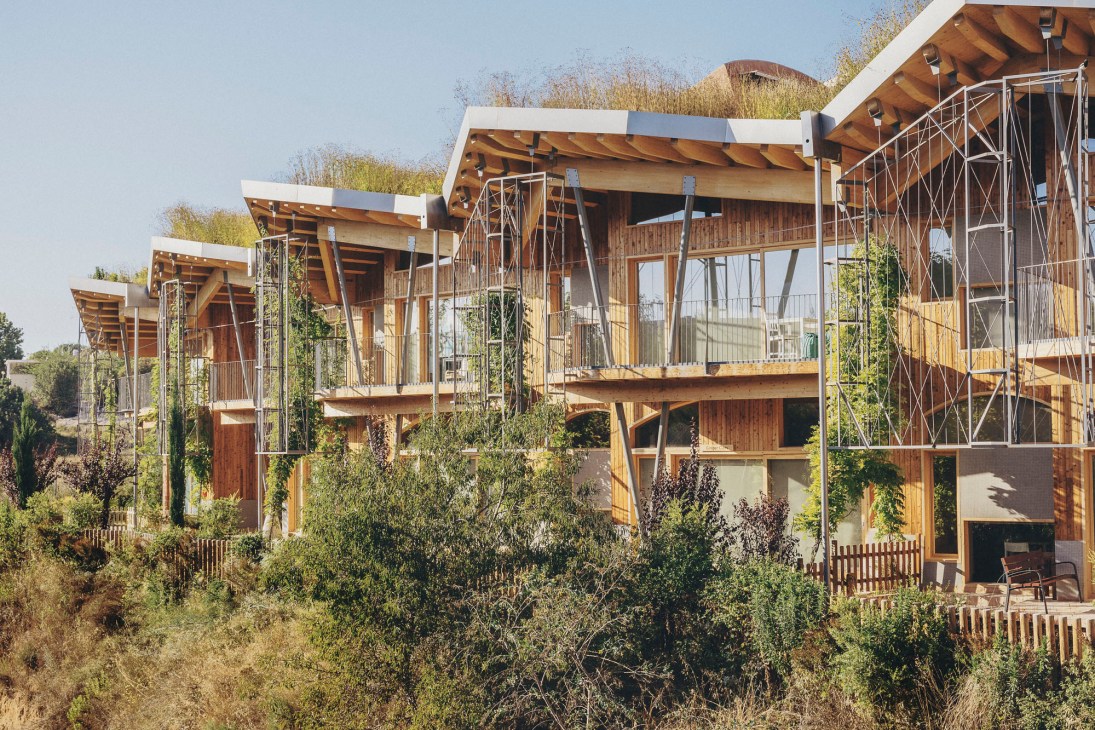
Aside from designing institutional buildings, the firm’s passion for vernacular architecture and recycling old materials means that it often gravitates towards refurbishing private residences. “We try to do more rehabilitations than new builds, reusing everything we can and rebuilding with the same materials: bricks and wood,” says Sanz, adding that they prefer working on houses within a village, where they must take into account neighbouring buildings and the town’s character. “Paying special attention to the location has always been fundamental for us,” says Gradolí.
gradolisanz.acontrapeu.com
Project picks
Escola Gavina
Picanya
A sprawling multi-purpose venue was added to a Valencian school, highlighting the firm’s intricate understanding of materials and the maximisation of natural ventilation – via many perforated openings.
Blast Furnace 2
Sagunto
A decommissioned, towering furnace building was given new life as an award-winning cultural monument commemorating the town of Sagunto’s impressive industrial heritage.
Intertronic Office Building
Paterna
While it’s a private project, rules for designing for the public have been adhered to in this office building with a lushly planted communal courtyard.
Best for residential architecture
Thomas Kröger Architects
Berlin
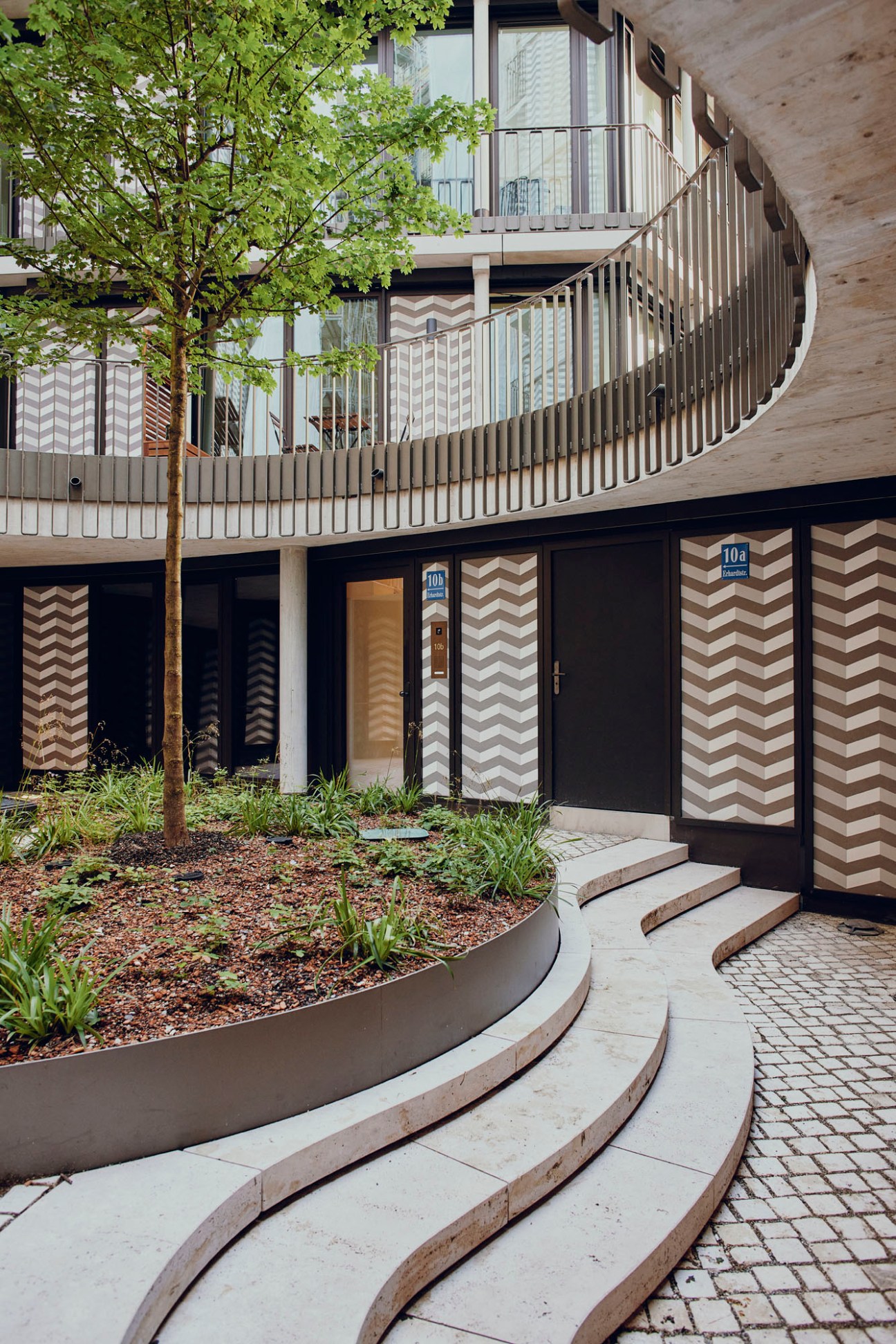
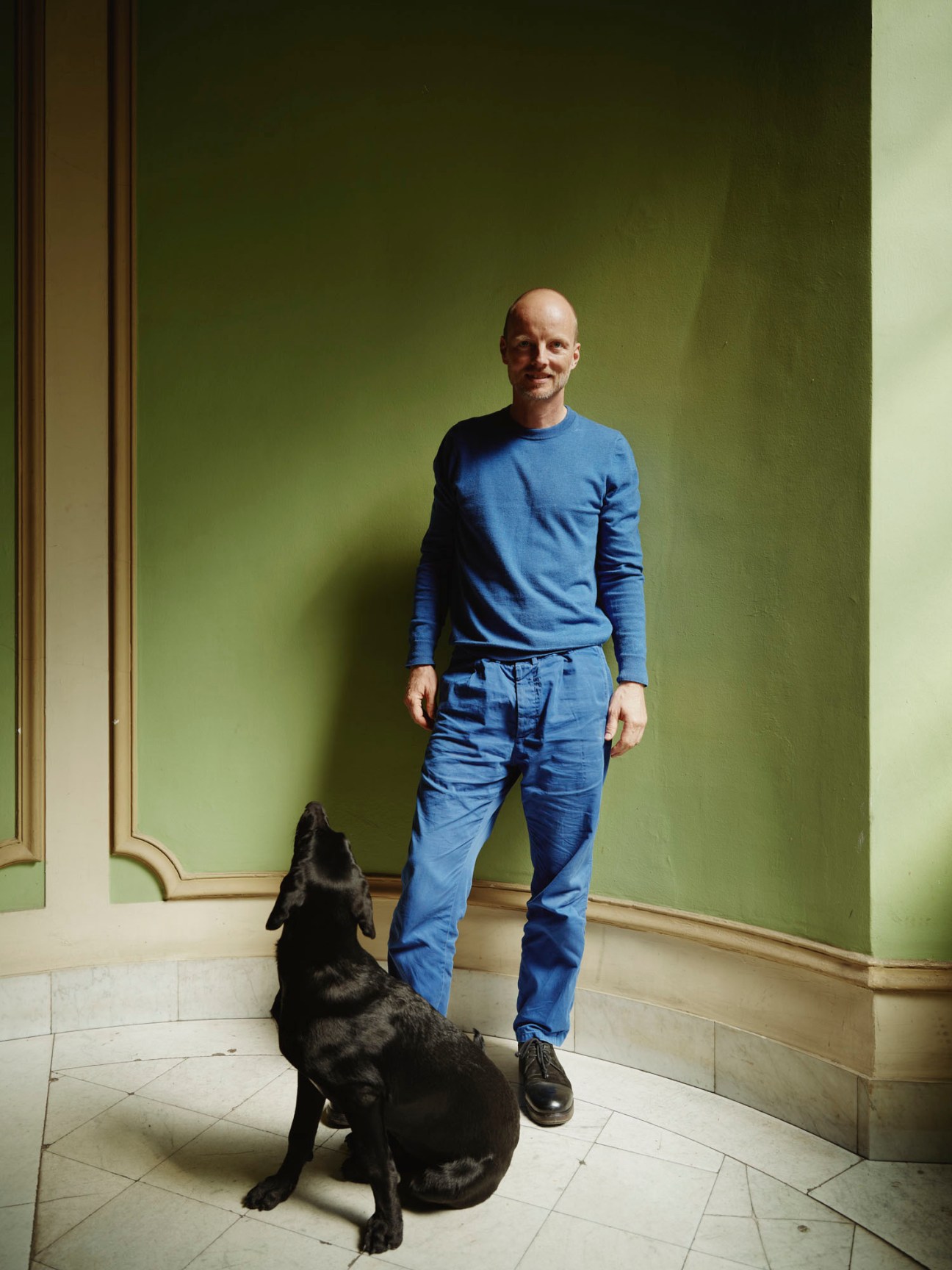
Tucked between 19th-century heritage-listed houses on Erhardtstrasse in central Munich is the most recent residential project by Thomas Kröger Architects (TKA). The prestigious inner-city location is an architect’s dream setting but when Kröger first saw it six years ago, he was most impressed by the river running alongside the old apartment block. “We stuck our heads out of a little window on the roof and suddenly the noise of traffic had disappeared and all you could hear was the Isar below,” he says, describing touring the site with Euroboden’s Stefan Höglmaier, the project’s developer.
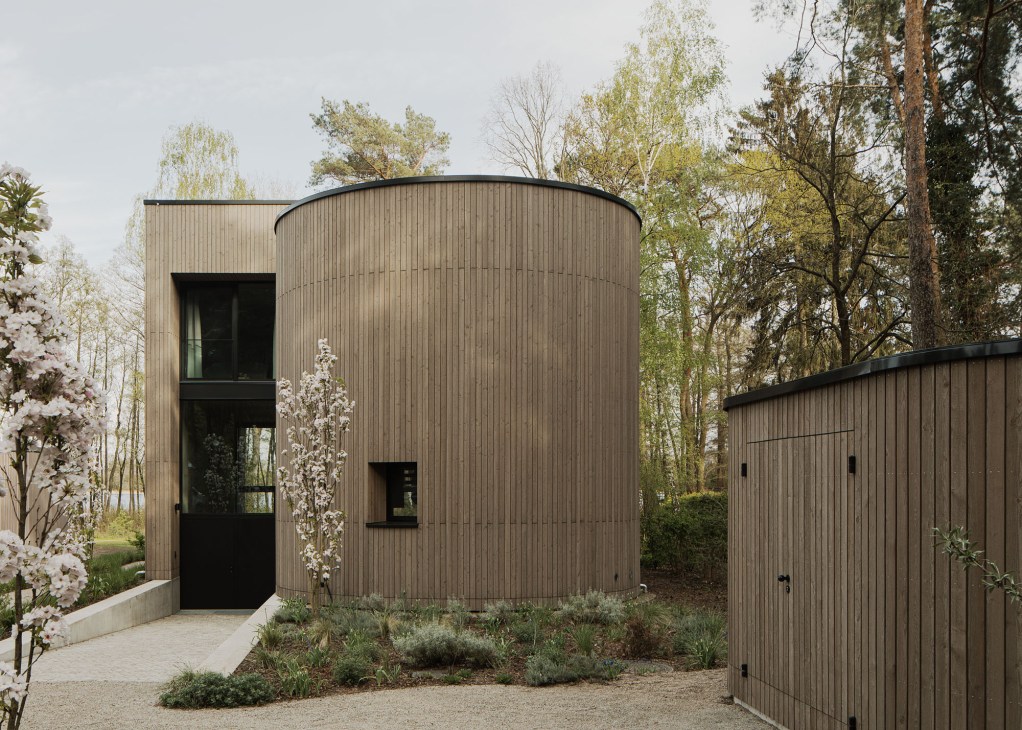
Kröger is known for designing homes embedded in their natural surroundings. Having cut his teeth at Foster + Partners in London and Max Dudler in Berlin, the architect founded his own practice in 2001 and gained recognition for exquisitely designed family country houses. Many are located in Uckermark, northeast Germany, including Tenne Landhaus, a conversion of a former stable, and Schwarzes Haus, whose outer walls are made almost entirely of glass. “Windows can be used as a way to be even more in nature, by framing it and giving it a scale,” says Kröger. With Erhardtstrasse 10, he achieved the same effect in the city. All 28 apartments have floor-to-ceiling windows and balconies, with views over either the river or leafy inner courtyards.
Seen from the street, the building stands out with its curved copper roof and monochrome frontage. The zigzag pattern was achieved using an Italian sgraffito plastering technique found on older buildings around Munich but seldom used today. For Kröger, it meant going against industry ideals: decorative elements are a rarity in contemporary architecture. “I just wanted to design something that fits in optimally with the neighbourhood and has a strong presence within the street,” he says. The result is an invigorating antidote to the generic condominiums prevalent across northern Europe.
thomaskroeger.net
Project picks
Tenne Landhaus
Uckermark
In a small village, tka delicately converted a former stable into a vast, minimalist country home with a separate guesthouse.
Schwarzes Haus
Uckermark
This house is designed for hosting: the open-plan lower floor has glass walls, while intimate living quarters are tucked upstairs.
Barnim Haus
Wandlitz
The design of this family residence in the Brandenburg countryside blurs seamlessly with the landscape. The trick? Lots of timber and clever placement of windows to reflect the forest beyond.
Best for office workspace
DDAA
Tokyo
For a fresh perspective on the office, we’re looking to ddaa, a practice in Tokyo that had already been pondering the future of the modern workplace before the pandemic reared its head. In 2019 the studio designed an office in Meguro (for start-up backer Mistletoe), which ddaa founder Daisuke Motogi described as the “beta version” of the typical office. It’s a flexible space that can be reconfigured for meetings, exhibitions or workshops. Motogi learned an important lesson from the experience, that “a project should not be “completed” or “finished” but should be “continuously updated”.
The idea of a more open-ended approach came into practice again in a recent ddaa project for Maruhiro, a ceramics company in the pottery town of Hasami in Kyushu, Japan. Maruhiro hired ddaa to convert an 86- year-old Japanese house into an office, with the option of it being used for other purposes. With its sliding internal doors and empty spaces, traditional Japanese architecture is well placed to serve as a changeable backdrop. “The design concept was to make a bold change to the impression of the existing building while making as few modifications as possible.”
The architects took their aesthetic direction from the old house. “We tried to introduce as few extra materials as possible,” says Motogi. “Where we had to make additions, we chose materials that were already in use, or added only transparent or reflective effects, such as mirrors or glass.” Clear finishes were used instead of paint and the long desktop is made from glass.“We spent most of our time studying how to achieve the maximum effect with the minimum number of changes.”
The house will serve as an office, showroom, tea room and pop-up shop; the deceptively light-touch renovation, completed this spring, will allow it to do all of those things. A wooden floor was installed upstairs to create a residence for visiting artists and a kitchen has been added. It’s a clever set-up, able to evolve without looking or feeling unfinished.
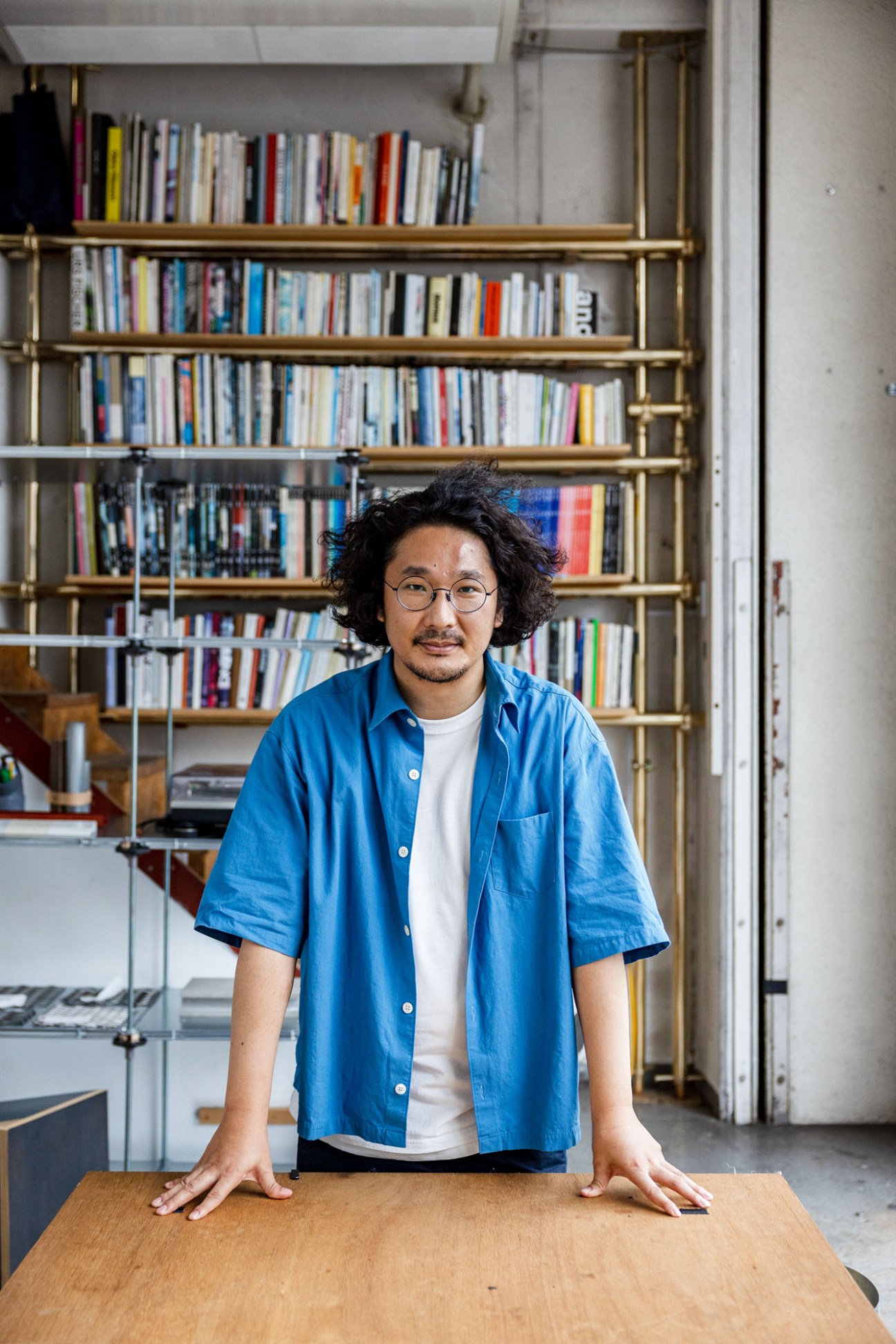
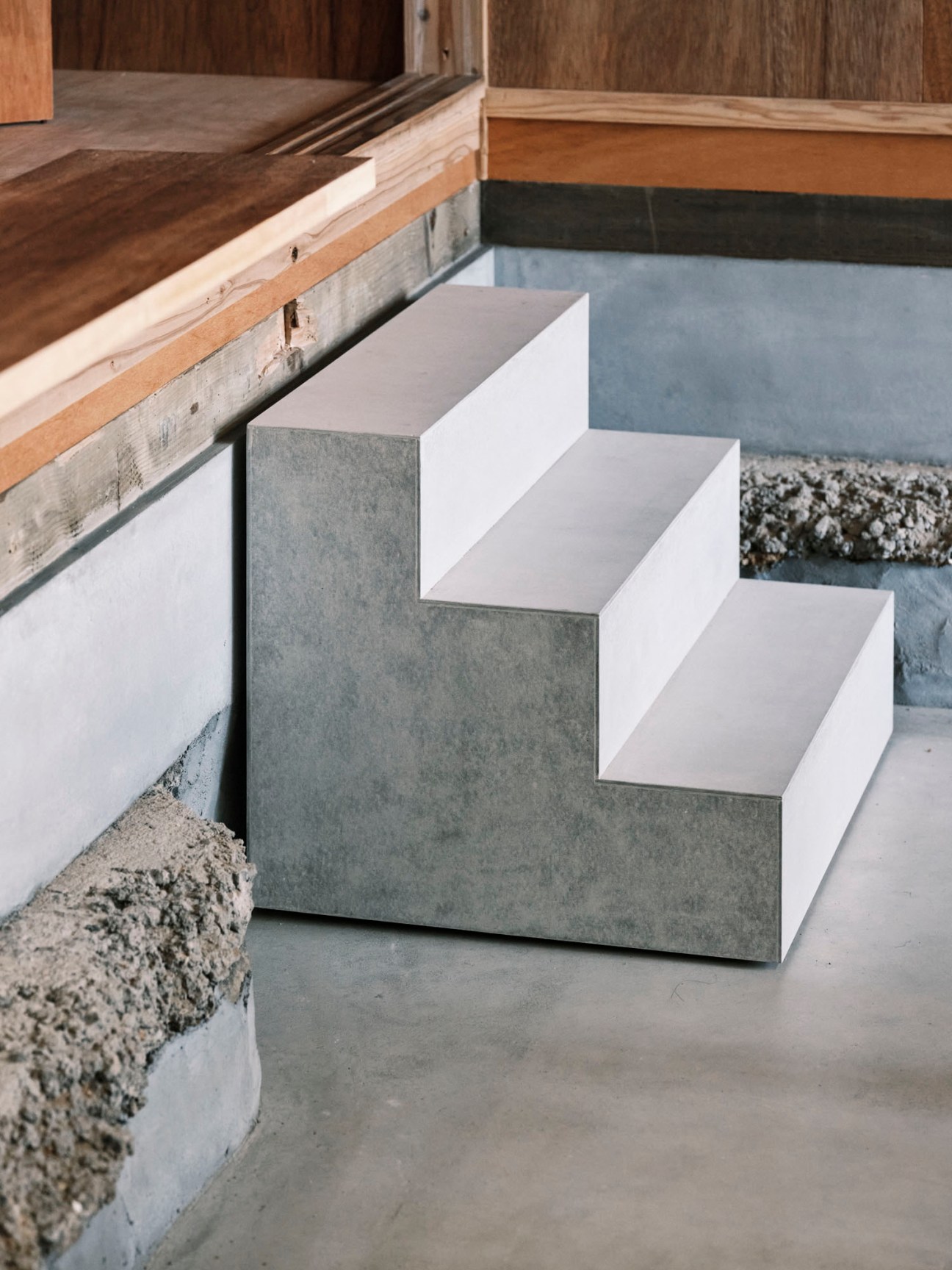
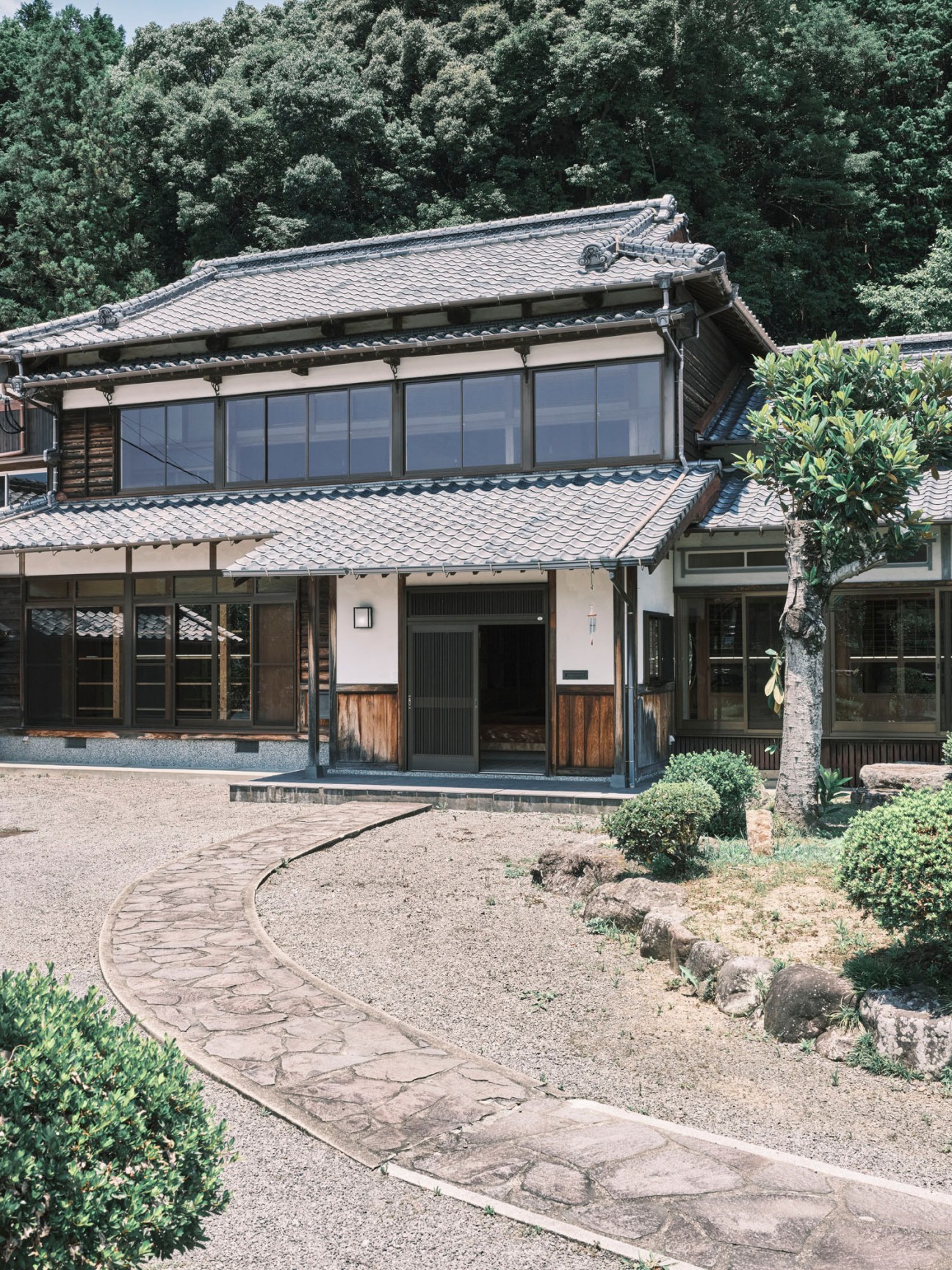
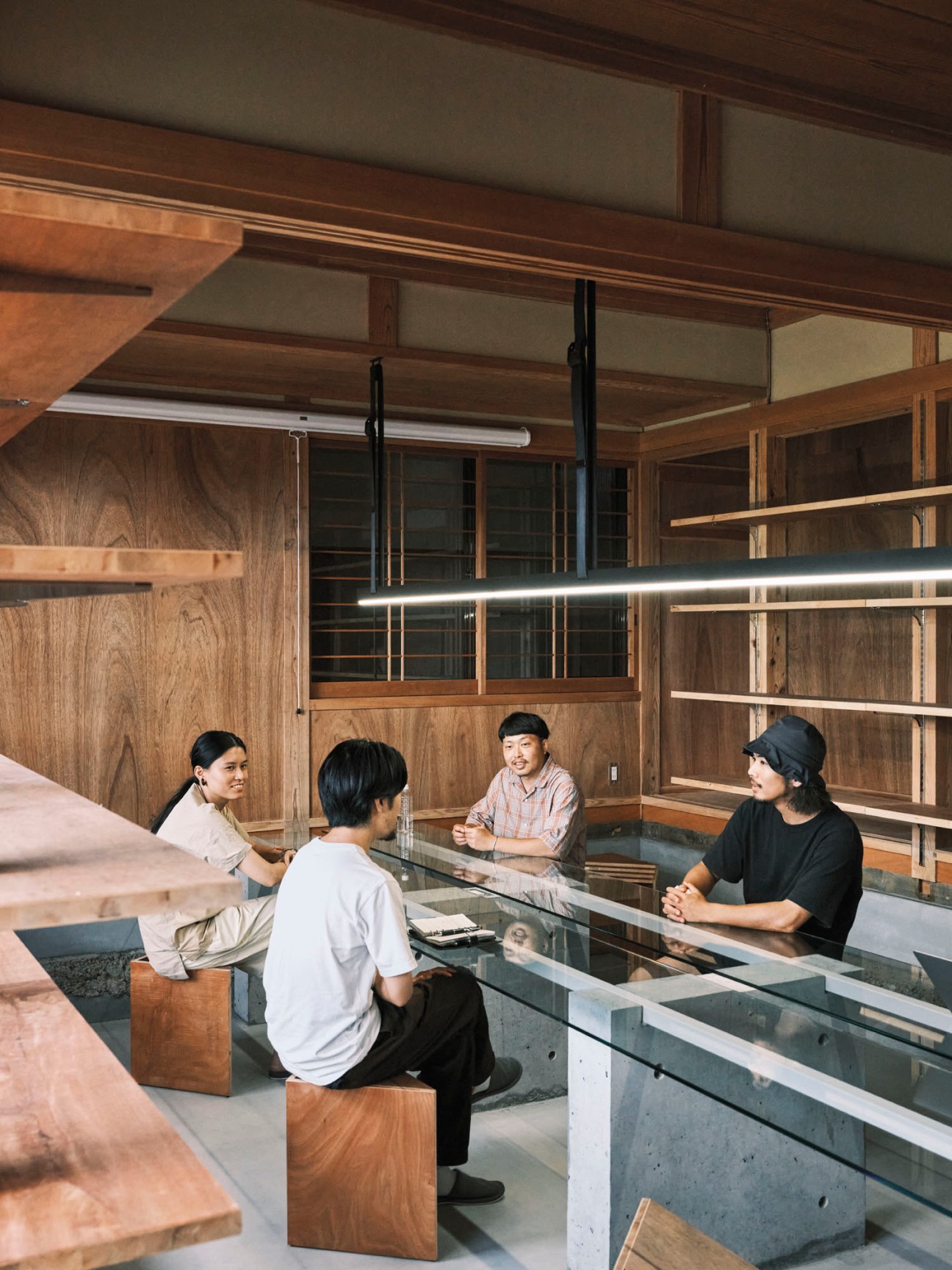
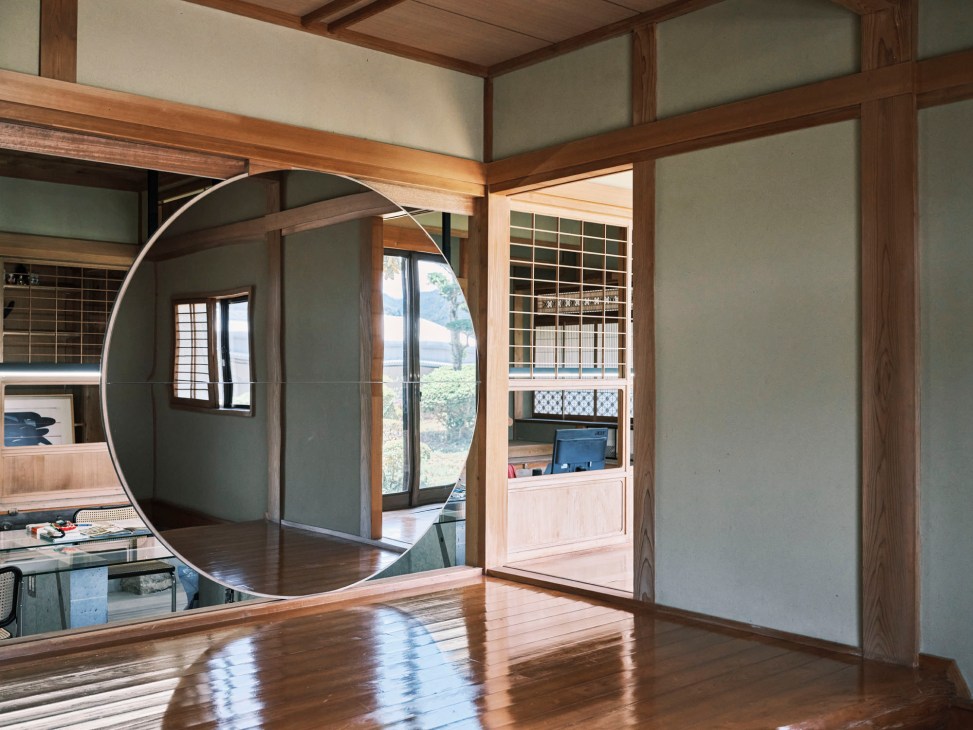
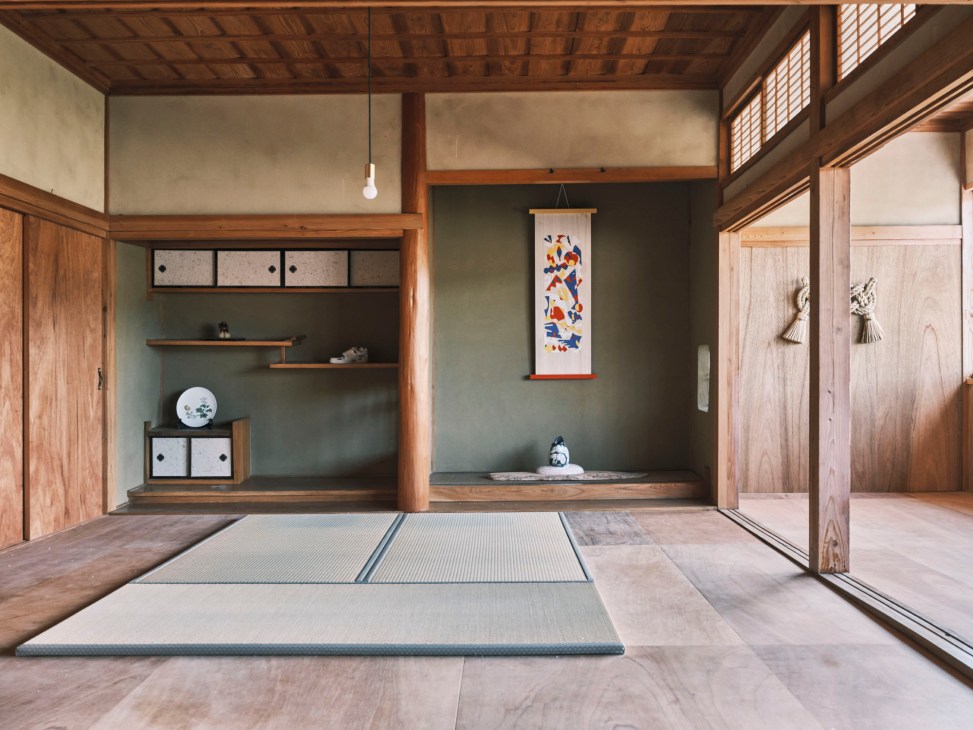
Motogi has become so interested in concepts beyond pure architecture that he founded ddaa Lab, an r&d offshoot. It’s currently working with a start-up on an off-grid kitchen that doesn’t need to be plugged into the mains and could further liberate the conventional layout of the workplace.
“IT and coronavirus have diluted the concept of building types,” says Motogi. “The office is becoming more like a house and the house is becoming more like an office. Offices have been a place to work so far but one of the most important functions of a space in the future will be its flexibility to accommodate different situations, whether work or relaxation.”
dskmtg.com
Project picks
Mistletoe
Tokyo
For this ever-evolving 2019 Tokyo office, ddaa dipped into the ideas of Metabolism, a 1960s Japanese architectural movement, which proposed buildings that could adapt over time.
Hackability of the Stool
Online, then Kyoto
ddaa looked at Artek’s classic Stool 60 (by Alvar Aalto) and came up with 100 new possibilities, from a turntable to a desk. Initially an online project, it will go on show at Kyoto City Kyocera Museum of Art in November.
Hiroppa
Hasami
Due for completion this year is a park and shop in Hasami for Maruhiro to introduce newcomers and young families to the Kyushu pottery town. “People tend to explain pottery in a dry, academic way,” says Maruhiro CEO Kyohei Baba. “We want to make it more approachable.”
Images: Philipp Obkircher
Design: Hall orders
Designing a new Grand Hall for the League of Arab States demanded experience, flair and respect for tradition. Enter Lebanese architect Nada Debs.
Nada Debs is eyeing a scuff mark at the base of a bank of desks where the Arab world’s foreign ministers and presidents normally pull up plush leather chairs. After careful examination, it’s decided that the blemish on the walnut finish (thankfully nowhere near the intricate mother-of-pearl detailing) was caused by over-zealous vacuuming. Staff will be notified; more care will be taken in future.
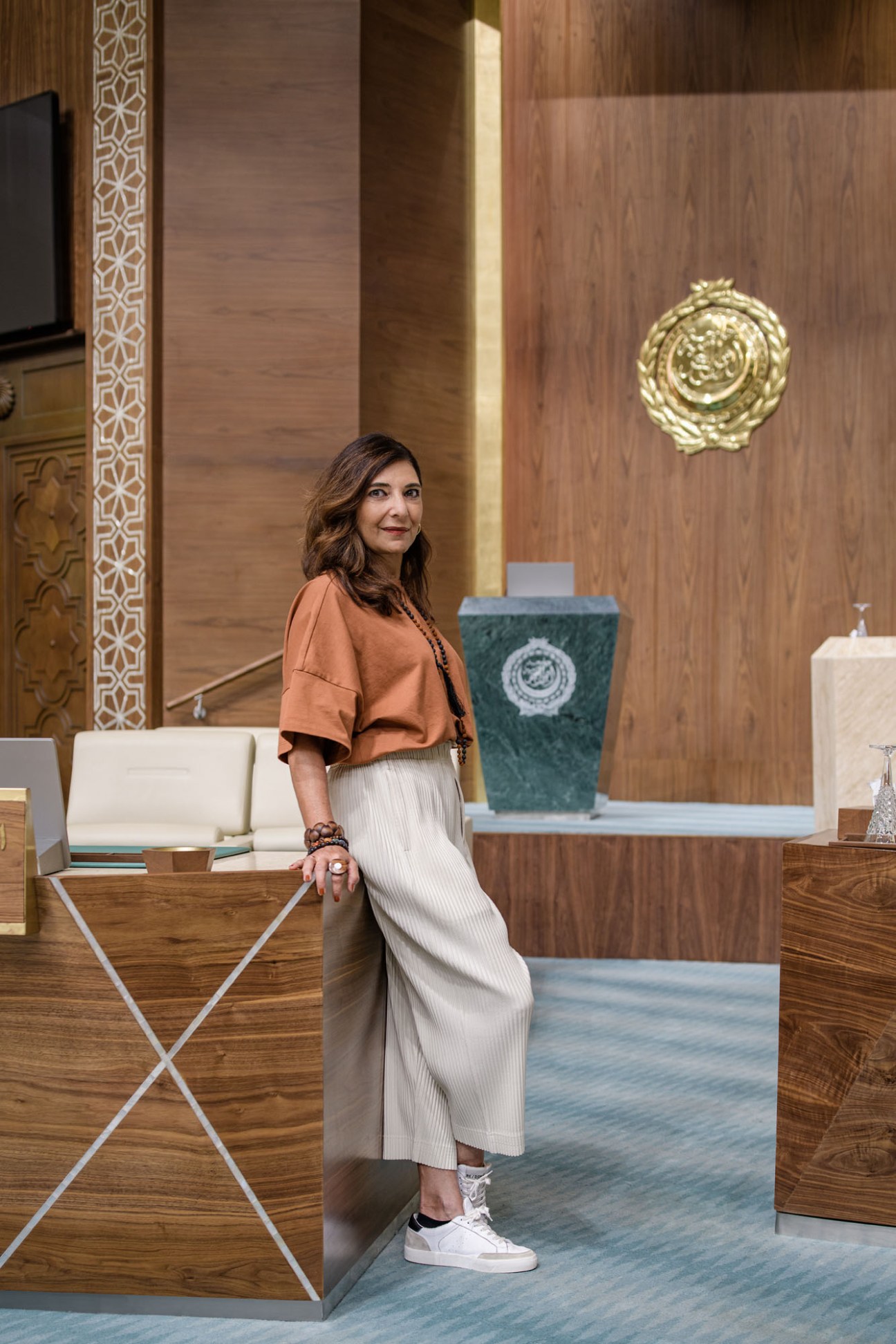
Debs, a Lebanese interior architect and furniture designer, has every reason to feel strongly. The room in which she is standing – all wood panelling and highly polished travertine – is the Grand Hall of the Cairo-based League of Arab States, a 22-member regional bloc founded in 1945. In 2015, conversations began about giving the space a considerable refresh. Debs was charged with the task, which was completed last year after seven months of building work. “We used walnut because we felt it was a more noble and timeless material,” she says.
The Arab League occupies a vast edifice in Egypt’s traffic-clogged capital, set back from Tahrir Square, a site that grabbed the world’s attention in 2011 with the uprising against then-president Hosni Mubarak. Designed in 1955 by Mahmoud Riad, one of Egypt’s fathers of modernism, its hallways and annexes have amassed a mishmash of pan-Arab influences over the years, from Moroccan to Andalusian, through the tiling, chandeliers and arches. The hall itself was unused from 1979 to 1990 after the Arab League temporarily decamped to Tunisia in protest at Egypt’s peace deal with Israel. It had become what Debs calls a “patchwork” of styles. The challenge was to develop a consistent, contemporary look without erasing its core identity.
Debs was chosen for the job by the United Arab Emirates, the renovation project’s deep-pocketed benefactor. The Beirut-based designer has worked on a number of institutional projects in the Gulf, including for the ministry of foreign affairs in Abu Dhabi. And while Debs might tick the “Arab architect” box that was a requisite for this job, her background remains impossible to categorise. Raised in Kobe, Japan, where her family had emigrated in 1917, she grew up speaking Japanese and English over Arabic. Twenty years ago she moved over to the Middle East where she started to develop a design language that fused her melting-pot influences and challenged the lavish Ottoman accents that still dominate much of the Arab world. “I brought my Japanese aesthetic and applied it to the craft of this part of the world,” she says. “I call it neo-Arabian.”
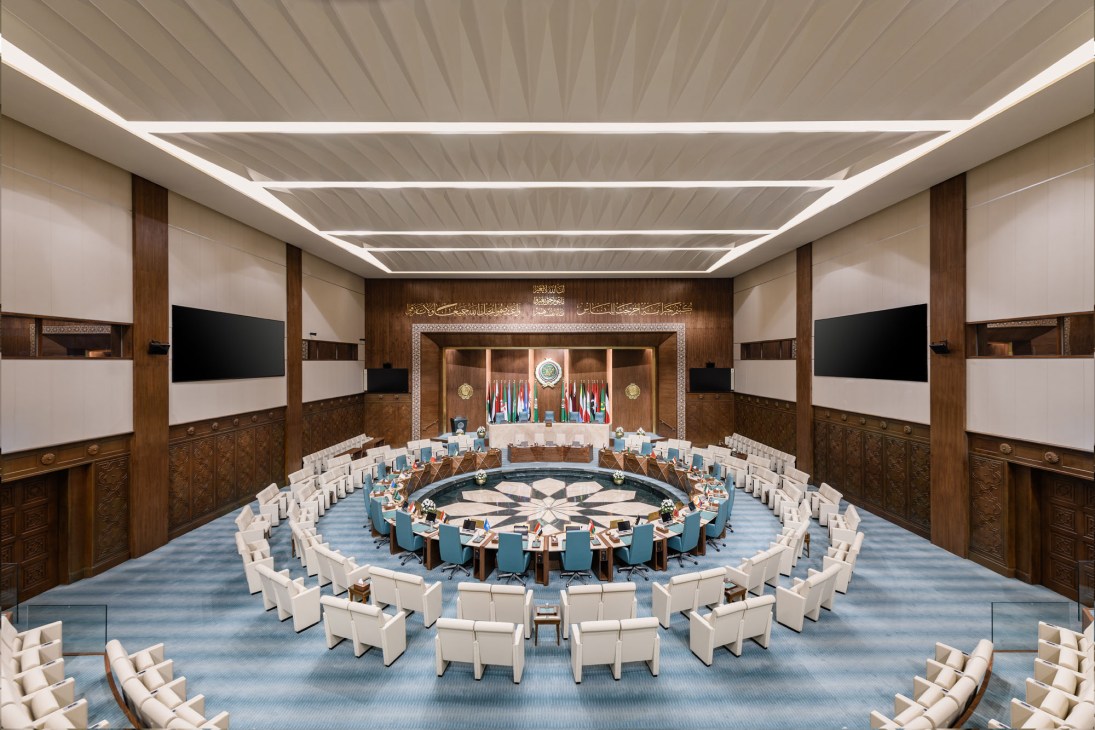
For the renovation the first task was to work on the transition from the turquoise-tiled entrance room which leads to the Grand Hall in which dignitaries arrive, after a walk through a courtyard filled with a long, rectangular fountain. “The entrance gives you a feeling of what comes next,” she says. So she decided on a similar blue-green palette for the hall, a calming colour for decision-making and a shade that is used widely in the Arab world. It appears in various shades, from the carpeting and an inner circle of chairs designed by Italian leather specialist Poltrona Frau to the desk mats. Debs also points out that it’s loosely connected to the Arab League flag.
In much of North Africa and the Middle East, Islamic art and design forbids the representation of figures, with heavy symbolism instead attached to repeating geometric shapes. It’s something you can see in intricate detailing everywhere from Granada’s Alhambra palace to Cairo’s 14th-century Sultan Hassan mosque. Debs noticed that on the hall’s oak-veneer-panelled walls there were repeating octagonal shapes (often used to represent the eight angels that carried Allah’s throne to the heavens). Looking more closely, she noticed that each octagon was subdivided into eight segments – stretched rhombuses. She had hit on the shape she would use to unify the entire project. “I used the rhombus as a basis for everything,” she says. “It’s dynamic, just like the Arab people.”
Her shape of choice is constantly referenced in the upgrade work. It starts with a travertine centre circle around which all the desks are arranged. Out went the old geometrical pattern, which was inoffensive but unremarkable, and in came a bold and chunky set of rhombus- like shapes repeating themselves like hands on a clock around a central point. Then there are the walnut desks, with their contemporary jagged fronts, and the shapes of partial rhombuses traced by lines of mother-of-pearl that were created by Syrian craftsmen (that also feature a striking tin border). The carpet, which replaced the dated beige-and-black polka dot, features a series of angled rhombuses and the shape can also be seen in the ceiling structure.
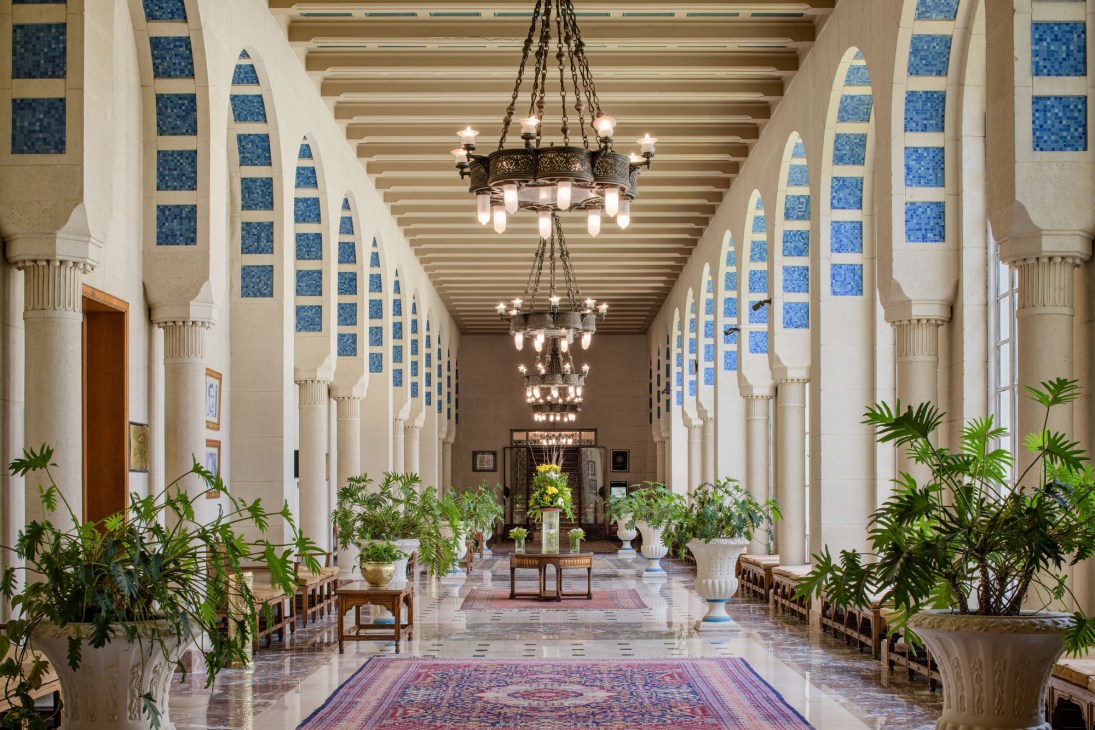
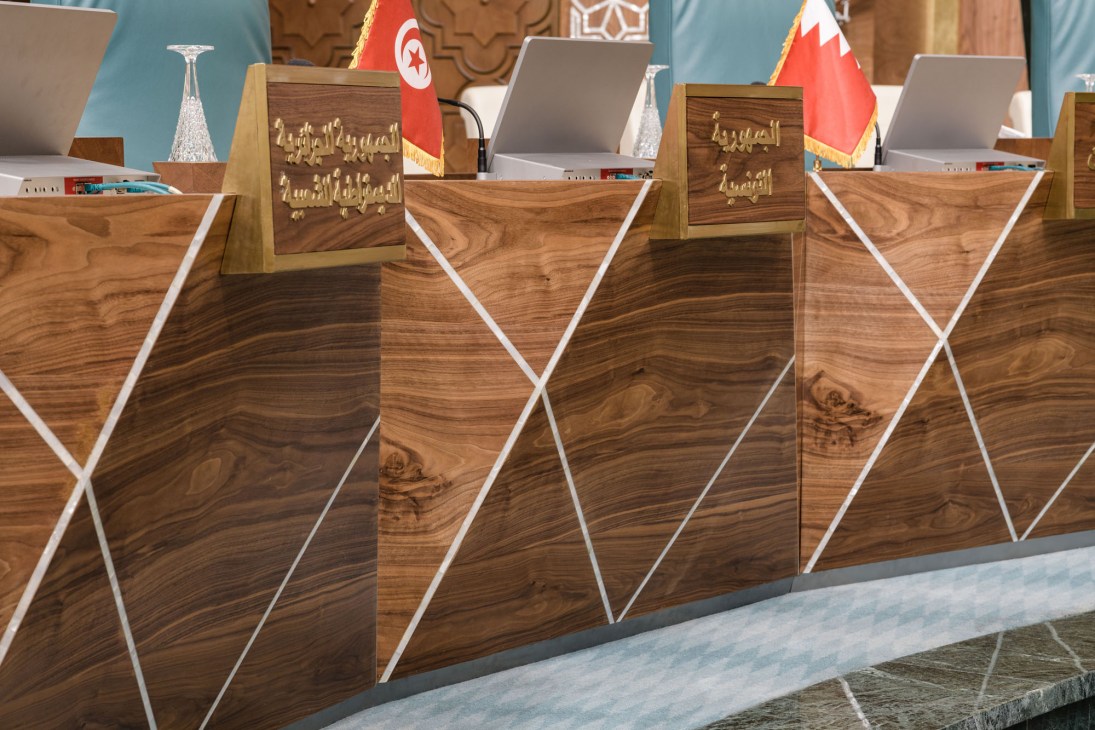
The new ceiling also gives an idea of the ambition of the project. Indeed, while there was a partial fix-up of the hall at the start of the 2000s, it had none of the scope of the recently completed work, according to the Arab League’s assistant secretary-general, Hossam Zaki. “This project was much more daring than what happened before because there were structural changes,” he says from a sofa just off the main hall. Everything from the air-conditioning to the audio equipment was renewed, while auditorium seating was rearranged.
Debs points to Hermès as inspiration for the work on this project and more broadly for her aspirations in the Middle East. Her process is one that chimes with that of the French brand, which is known for its focus on craft, heritage and pioneering new ideas for design. “Everybody tries to take shortcuts but when it comes to intricate work, I’d rather do it by hand,” says Debs. Her work extends to two annexes that sit on either side of the hall and, although the walnut screens that cleverly diffract light and do away with curtains were made by time-saving cnc (automated machine cutting), there are plenty of examples of painstaking craft to be found here. Brass lamps on side tables have been hand-hammered, while the sofas that Debs designed are studded with mother-of-pearl buttons. In the hall, ashtrays (indoor smoking is not frowned upon in Egypt) and tissue holders have been handmade in Lebanon. The latter are made using a marquetry technique in which small individual pieces of wood are slotted into place.
Debs’s interior design makes the point that less can be more and that artisan expertise – something she calls “injecting soul” – can speak louder than glitz and glint or overly filled rooms. “It’s really challenging to be minimalist,” says Ehab Mokhtar, an architect and managing director of Idia Design, based between Cairo and London, who also knows Debs. “You visit mosques and you can see the number of layers. To turn the Arab League Hall into something minimalist is really outstanding.”
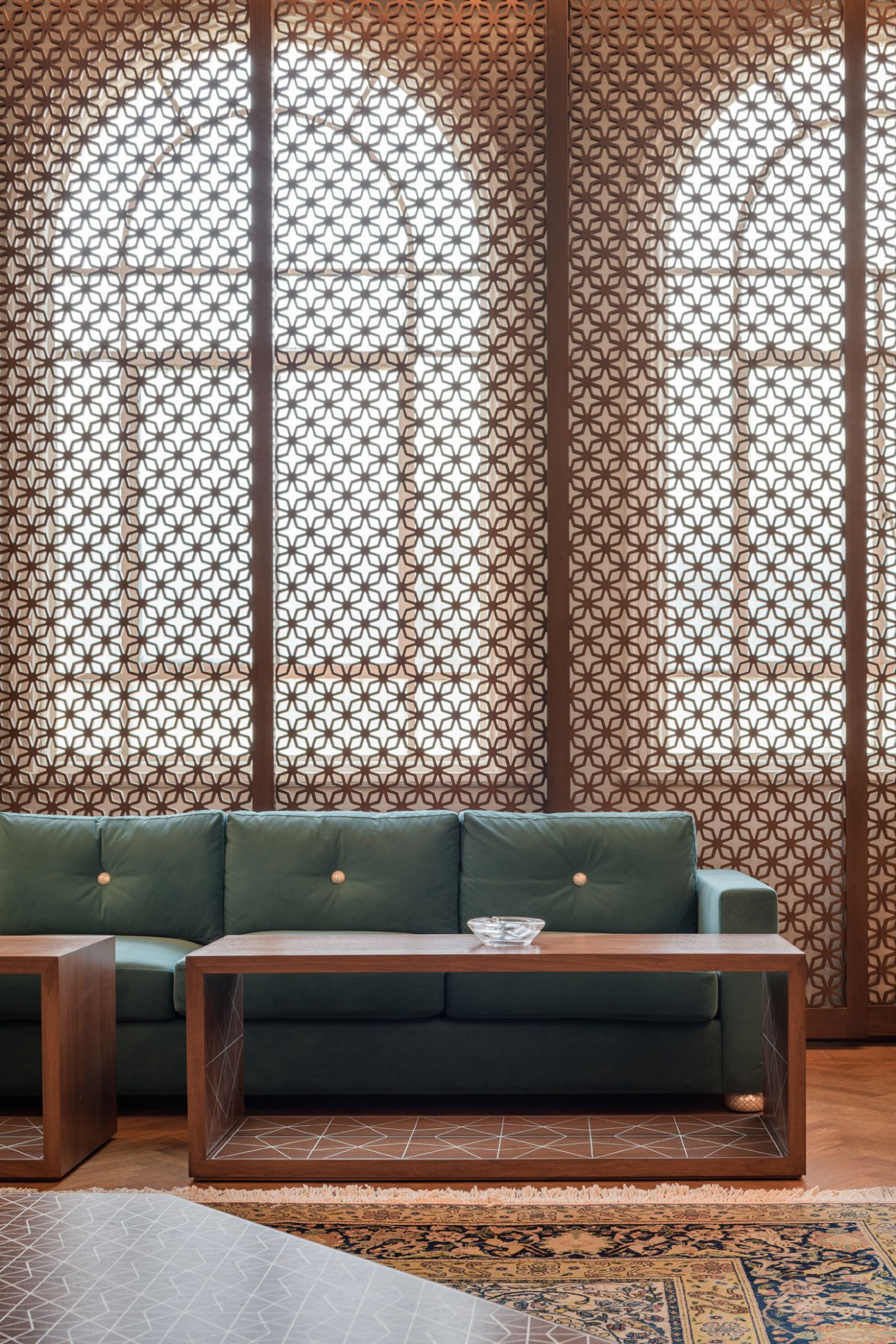

Exemplary, too, given that working on a project of this nature is inherently political and an exercise in diplomacy. The League, sometimes divided in the past, clearly wanted to project a bright future through the new hall. Ambassador Zaki points to the dominance of new white Poltrona Frau seating that Debs introduced for delegates and audience members. “It gives the impression of a well-lit, transparent hall,” he says. “We needed to project an image of change. You cannot have change with your premises looking like they did years ago; you need to have an updated look.”
Zaki had the ultimate sign-off for the renovation and, given the weight of the task at hand, the smallest of details could sometimes be an exercise in patience and people management. Introducing some of the new chairs had been “delicate”, according to Debs, because the previous burgundy ones were only a few years old and had been a gift from Bahrain. Then Zaki, whom Debs describes as “classical”, sometimes needed convincing about a detail (he won when it came to the shape of the desk glasses). Often Debs relied on the Arab League’s Lobna Mazhar, a civil engineer and consultant who steered the project and, more often than not, has a thin Corset cigarette on the go. Debs calls her “my go-between”, charged with taking requests to the top and helping to relay information to workers. “I was managing everything and explaining the details,” says Mazhar.
The biggest point of contention was the oak-veneer panelling lining the hall’s walls, which Debs had wanted to replace to continue her rhombus theme. Both Zaki and the secretary-general were adamant that it would remain and there was a frantic plane trip to the uae to discuss, even though the project’s funder remained resolutely neutral. In the end, the panels stayed but Debs also had a say: she was permitted to stain the wood a darker tone to create a consistent palette with the entrance doors and her walnut additions.
Come September, the Arab League is due to meet for its biannual council meeting. When it does, members will be surrounded by stone, wood and leather designed and positioned by Debs to impart gravitas and make their debates more fruitful. But the designer refuses to overthink the implications of foreign ministers and presidents pulling up those plush leather seats – even though it has clearly left an impression. “You should be very proud of the work you’ve done here,” says assistant secretary-general Zaki as he says goodbye to Debs at the end of the day. He’s not just a diplomat being diplomatic; he means every word.