Issues
People’s palaces
Fashion designer Ida Steixner had been living in her Gemeindebau (municipal building) apartment in Vienna’s 4th district for four months when there was an explosion. She was at work when a friend called her with tragic news: a suicidal tenant had tampered with a gas pipe, causing the building to collapse. Nearly all of Steixner’s possessions were lost.
Steixner was understandably distraught. “It was my first flat; I was really happy to get it,” she says. The housing authorities stepped in with surprising speed and within days of the incident residents were offered a range of emergency apartments as well as psychological counselling. Steixner and several others were allowed to salvage what they could from the wreckage. “They gave me a few addresses for a new flat and I looked them up,” she says.
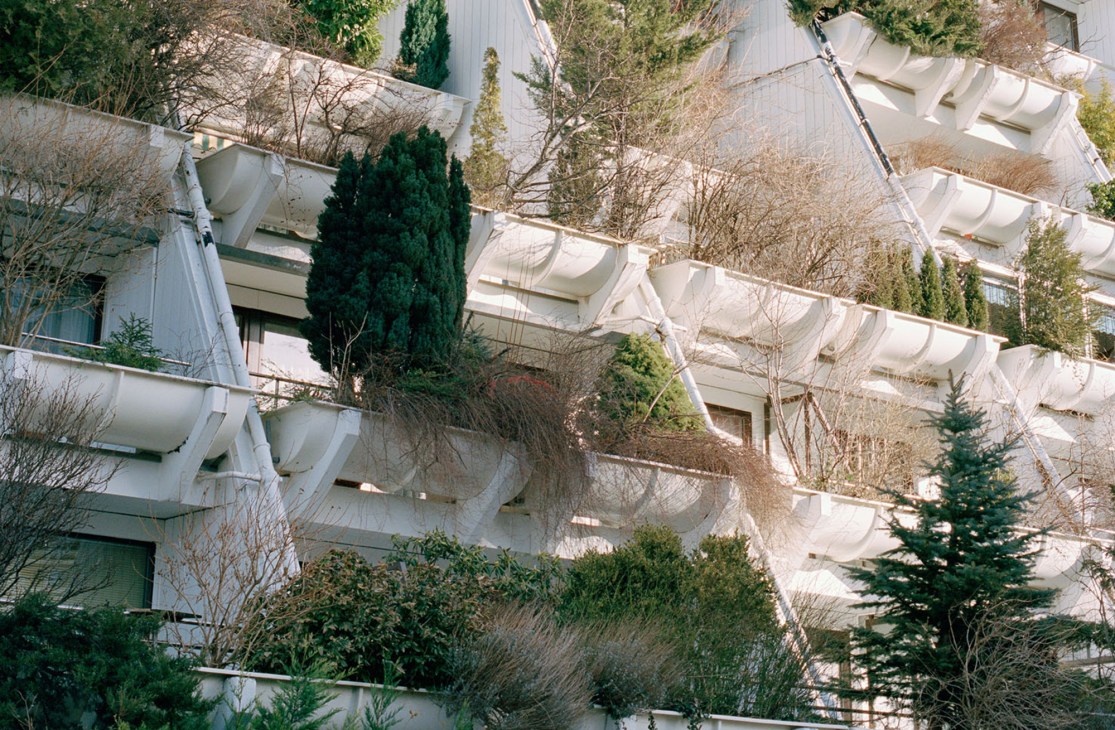
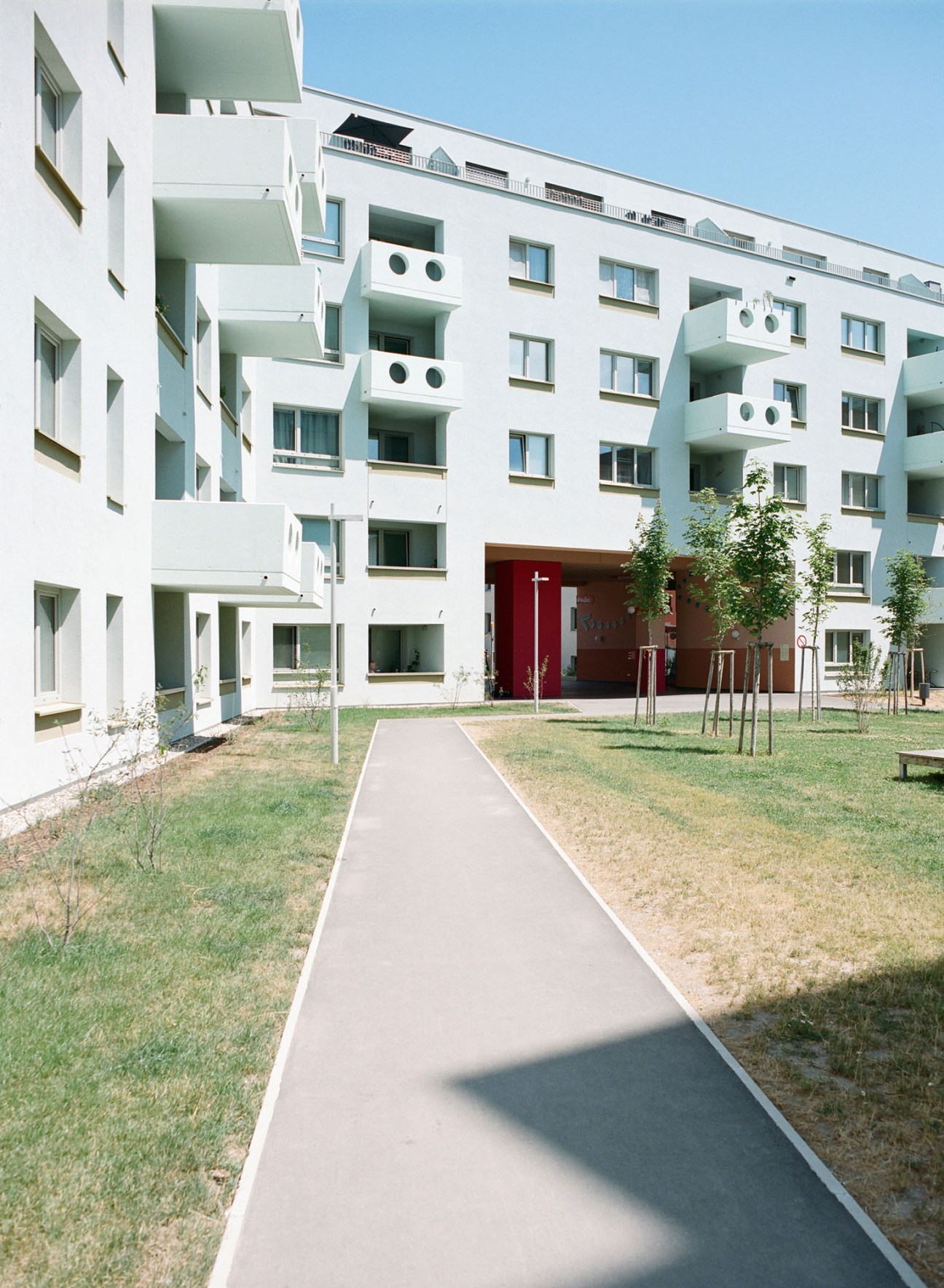
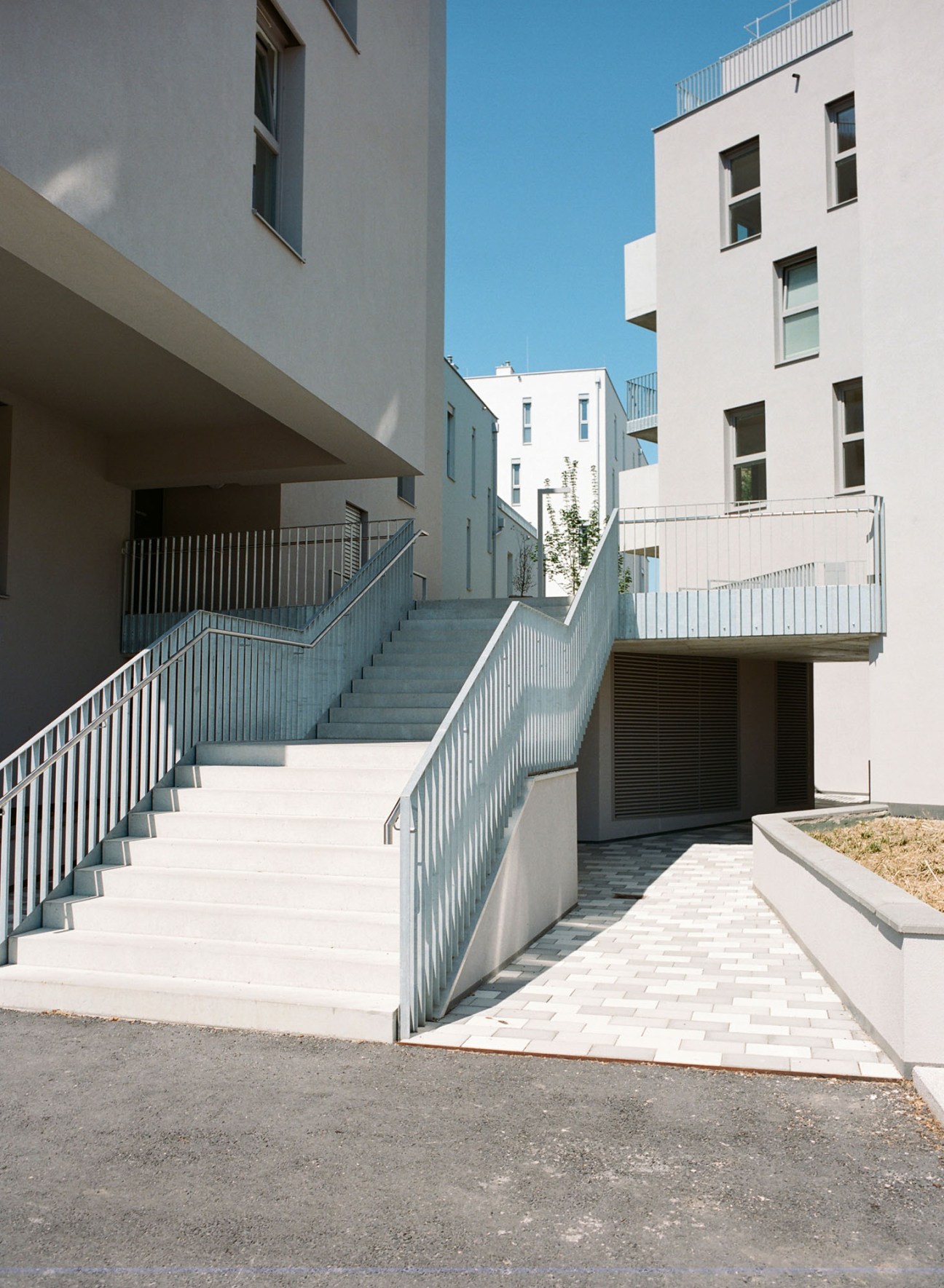
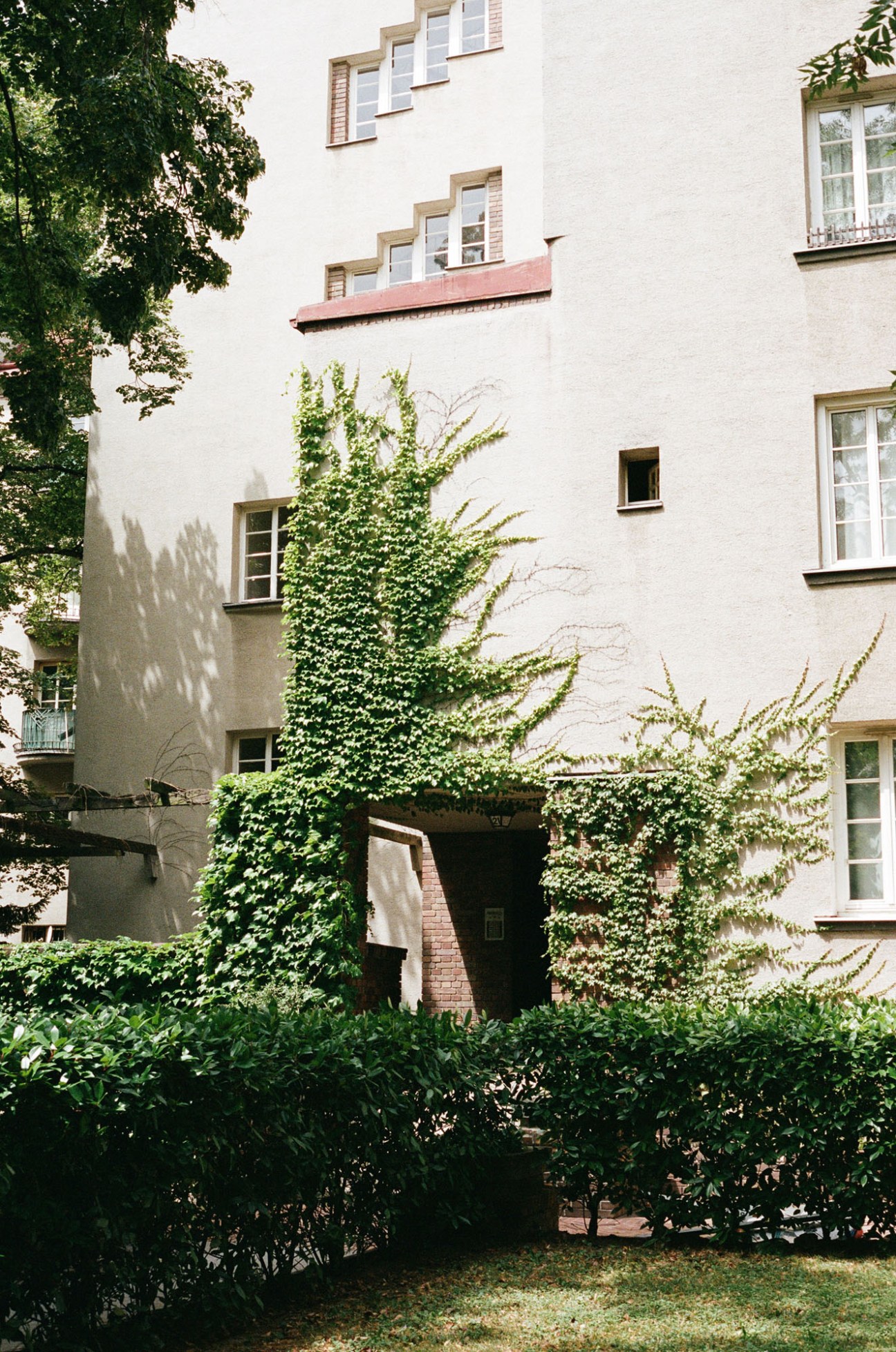
She chose a 1930s Gemeindebau in the neighbouring area, on the bank of the Danube Canal. It’s a two-room flat with windows on either side. At 50 sq m it’s bigger than her previous place and although she can keep it if she wants to, she won’t rule out moving back to the 4th district, where she’d have a balcony when the reconstruction is done.
There was a time when Steixner couldn’t imagine living in public housing. “But I’m happy,” she says, noting that the Gemeindebau programme offers some of the city’s most interesting buildings. Residents are also treated with dignity, as her ordeal suggests. “Living in smaller flats is the future; it’s just more sustainable,” she says.
Gemeindebau is a concept specific to Vienna, born of the chaos and devastation of the First World War and the break-up of the Austro-Hungarian Empire. Faced with an acute housing crisis, the city’s new socialist government made an ambitious promise that sounded like a utopian dream: it would ease the shortage of homes by creating self-contained residential blocks with affordable rents and on-site amenities, such as kindergartens, laundries and libraries. It would do that by raising taxes for the rich. Some 64,000 flats were built during the so-called Red Vienna period of the 1920s and 1930s, in enormous housing complexes such as the iconic Karl-Marx-Hof and Reumannhof (named after the city’s first socialist mayor, Jakob Reumann).
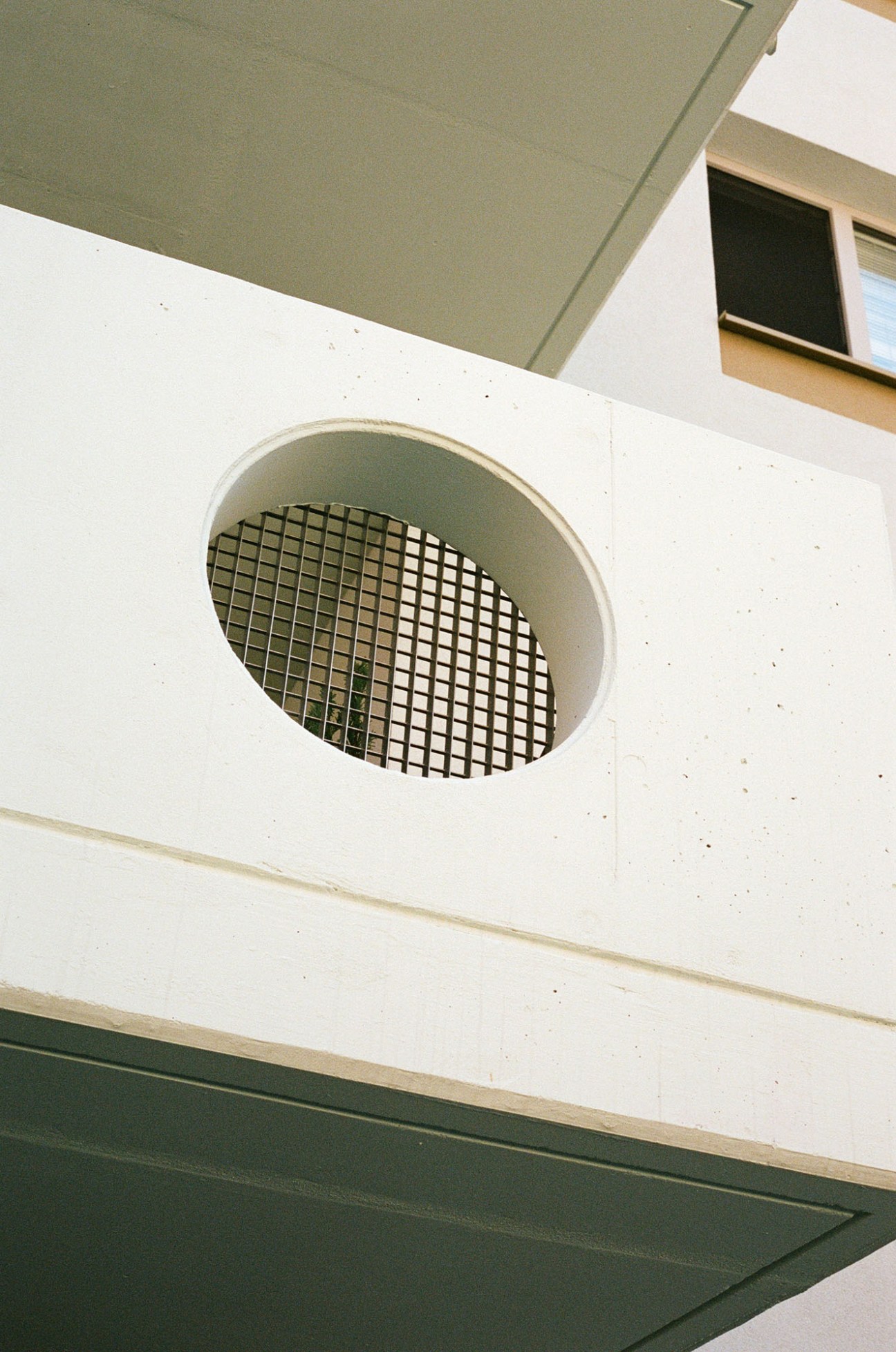
These mega-blocks quickly gained the nickname Volkswohnungspaläste (people’s apartment-palaces), in no small part for their imposing architecture and spacious layouts that often included a cour d’honneur (a forecourt of the type a grand house or palace might have, often contained between two projecting wings).
Every Gemeindebau had large bold letters on its façade showing the dates of construction and many were listed as protected sites. These buildings quickly entered popular Viennese culture, appearing in books, films and TV series. There are love songs featuring them, notably “Die Blume aus dem Gemeindebau” by the Schlager musician Wolfgang Ambros, which includes the line: “Without you this building would be so grey.”
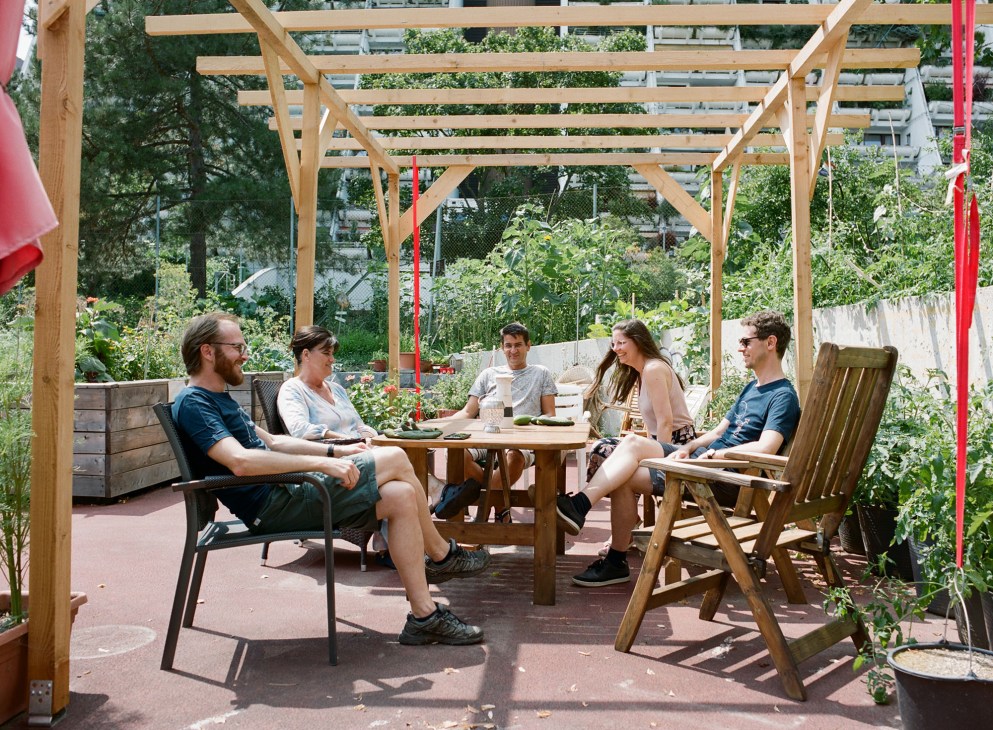
The authorities have continued building Gemeindebau apartments to this day, albeit with a short break between 2006 and 2015, and have also kept the tradition of naming blocks after eminent public figures. With a rent cap of €7.50 per square metre, this means that, in 2018, more than 60 per cent of Vienna’s population lived in subsidised housing – both Gemeindebau and partly city-funded co-operatives such as the Alterlaa complex accommodating 10,000 people. It’s an impressive achievement that has been more than 100 years in the making. Though waiting lists vary widely, the city is ensuring that Gemeindebau apartments are available in the future: recent legislation has stipulated that two thirds of all newly designated residential land be zoned for social housing. But it is the avoidance of ghettoisation and encouragement of social cohesion that Vienna’s politicians are most proud of. “It’s paramount that there are Gemeindebau in every district, including inner districts,” says Georg Niedermühlbichler, a socialist member of Vienna’s city parliament and president of the Austrian tenant association. “Because Vienna can offer so many flats of this type, we can give them not only to the poor, as many other cities do, but create a wider social mix. It’s normal for a labourer to live nextdoor to a bank manager.”
This social mix is helped by a real sense of community among residents: many buildings come with shared spaces used for anything from drawing and clay modelling to dance classes. There is also a comparatively high-income upper limit for applicants: €47,210 a year for one person, and €70,340 for two people. Once residents are in, authorities never check on their salaries again. For many with lower incomes, a Gemeindebau flat is the only possibility for leading an independent life.
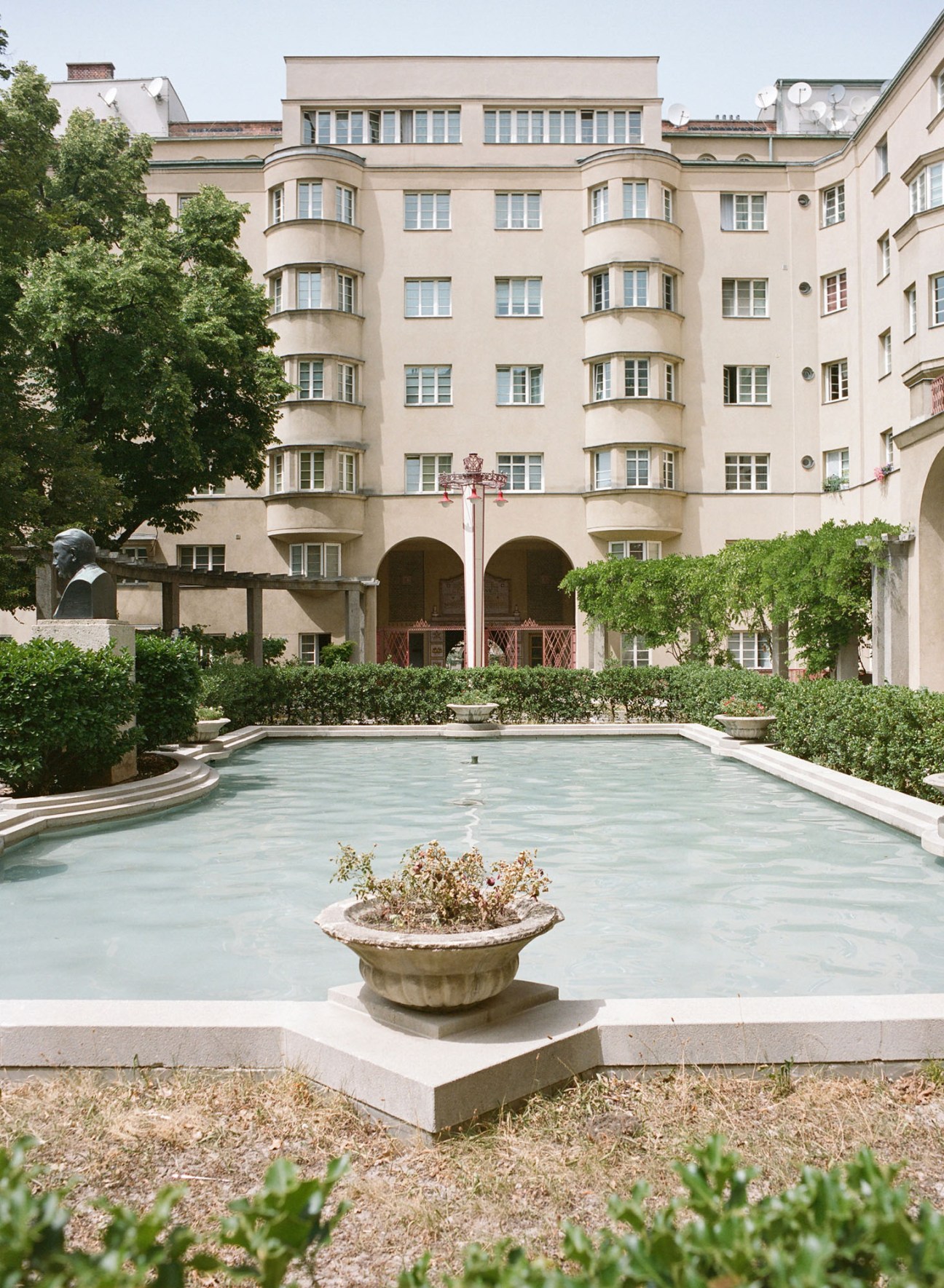
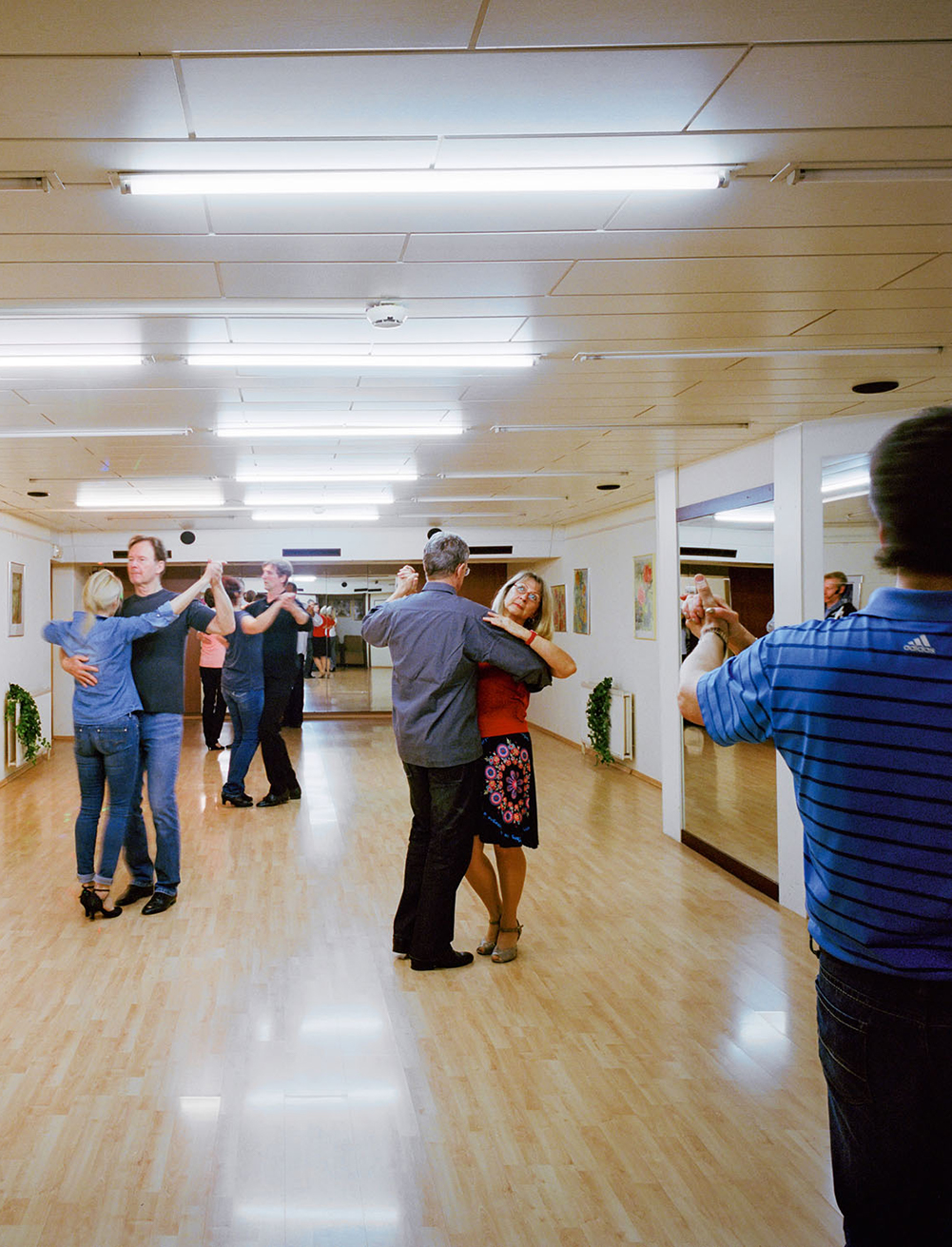
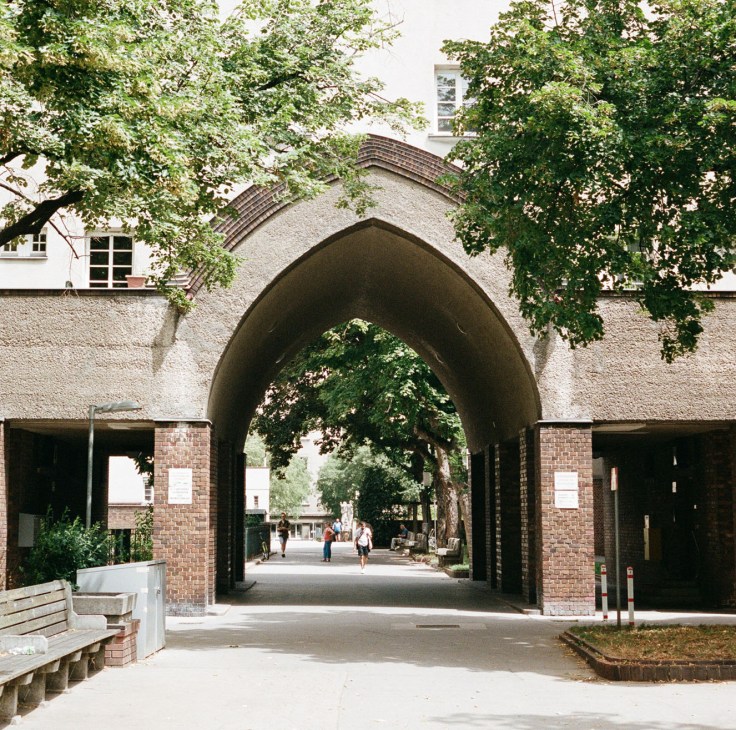
Esther Fiebinger is an artist and single mother who grew up in the Rabenhof, a labyrinth of interconnected blocks and courtyards a short walk from Prater park. She still lives in the same flat. “It is the dream of every artist to live in a Gemeindebau, not only because it’s cheap but because the rent doesn’t change,” says Fiebinger. “I pay the same rent as my mother did 25 years ago.”
For Gabrielle Bös, too, social housing is a lifeline. Now retired, she lives with her husband in Vienna’s newest Gemeindebau in the far-flung 23rd district. “I find this super,” she says with typical Viennese flair as she gestures towards the wide green expanses where her puppy Jesse can enjoy freedom and fresh air.
The City of Vienna spends some €183m a year on the upkeep of its Gemeindebau stock, with millions more earmarked for new developments: at least 18 estates will be built before 2026, to high design and environmental specifications. Whatever its political affiliation, the city government has remained largely socialist since Red Vienna, although coalitions have included green, conservative and liberal parties. Vienna’s authorities consider affordable housing a basic human right.
Niedermühlbichler of the Austrian tenant association thinks that this is a model other cities should follow. “Many international delegations come to see how we do it,” he says. “But this success story has only been possible thanks to our history and housing traditions.”
Observation: Group therapy
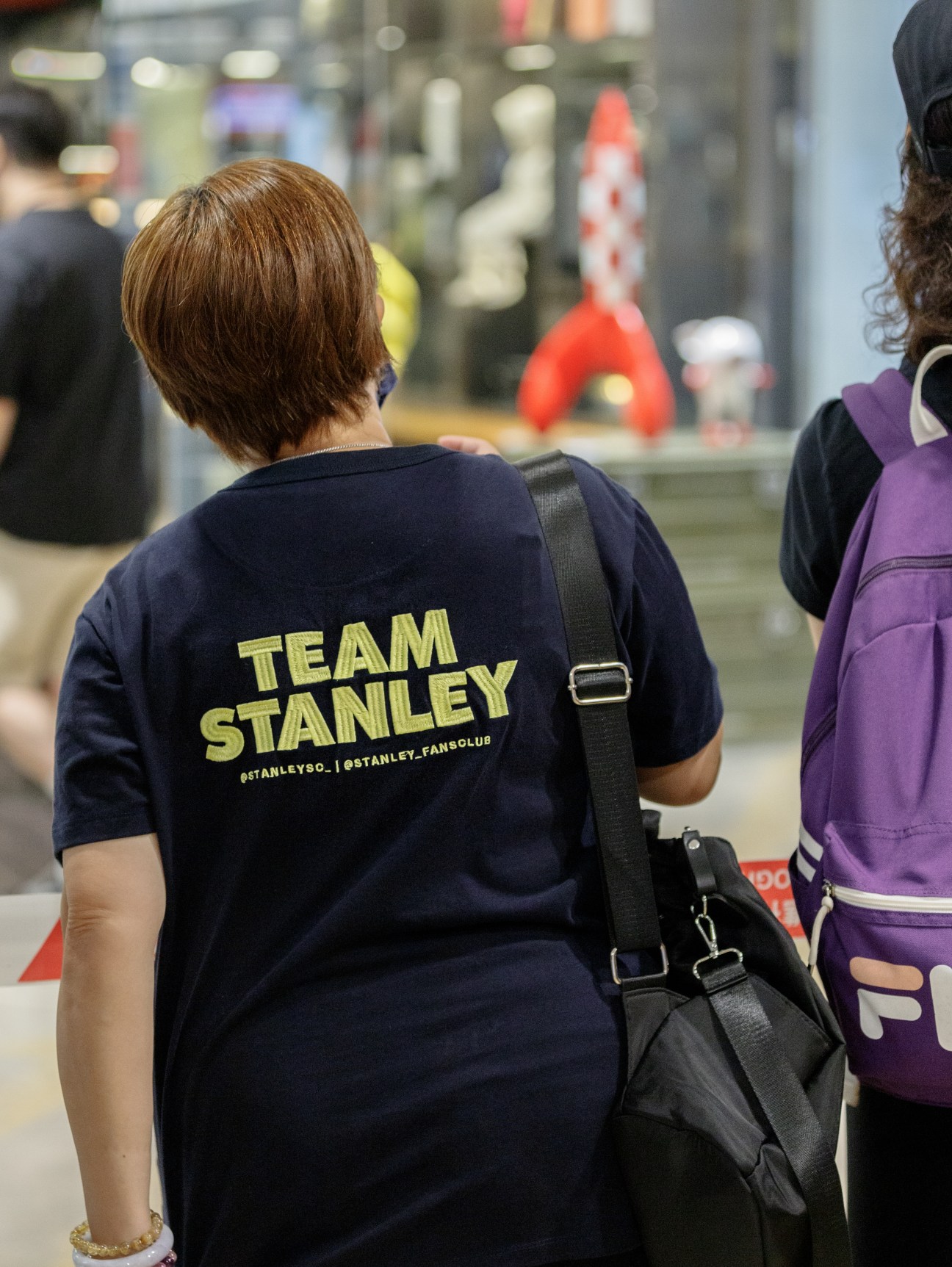
Ling hasn’t been to bed. Her eyes give it away. The 35-year-old came straight from her night shift to see two of her favourite pop stars: Edan and Jeremy from Hong Kong boy band Mirror. They are making a lunchtime appearance in Admiralty, where they’re filming a promo for a high-end shopping mall. Ling works at night so that she can follow Mirror during the day and this is her second appointment. Three of the other band members appeared earlier at another boutique in Central and Ling was there too, cheering on her favourite, Stanley. “He’s the most handsome,” she says. There’s a typhoon outside but she’s no fair-weather fan.
Mirror have struck a chord with this divided and downtrodden city, rocked by protests in 2019 and experiencing an upsurge in local pride. Forget Beijing; here are 12 Cantonese heroes for everyone to unite behind – or pick a favourite.

Ling changed out of her “Team Stanley” outfit before arriving. A “Stanley” sign is hidden in her bag so that Edan and Jeremy (both pictured, Jeremy on left) don’t see it, though there’s little risk of that. A roped-off area separates the crowd of (mostly female) fans from the two stars, who are surrounded by a scrum of managers and make-up artists. Even the battle-hardened police have had trouble controlling Mirror-mania when fans descend on a shopping mall.
This has been the boy band’s breakout year. Mirror’s 21-song debut album, One and All, was released in January, followed by six sold-out shows in May. Edan starred in a hit TV show, while a radio channel handed two prestigious music awards to 22-year-old leading member Keung To for his solo work. “They’ve grown up in front of us,” says Ling, who has been a fan since 2018, when Mirror’s 12 members surfaced on a TV talent show.
Ling met her fellow Mirror disciple Cheryl 20 years ago when both were in Gigi Leung’s fan club. When Leung, a huge star during Canto-pop’s 1990s heyday, stopped performing, Ling and Cheryl had no one to follow. They retired from fandom until Mirror came along to “reawaken” their interest in the city’s music – along with the rest of Hong Kong.
Mirror fans are of all ages. Teenager Rachel, an 18-year-old with pigtails, dressed in a black-and-white gingham dress, has just graduated from school and is taking photos for her dedicated Edan fan page. Nearby, 41-year-old Rosa and four colleagues from a special-needs school are making full use of the summer break. The mother has encouraged her nine-year-old son tobe a fan because she approves of Mirror’s positivity and dedication to family. Lyrics to popular songs, such as “Warrior”, “Reflection” and “asap” – sung and rapped in a mix of Cantonese and English – encourage listeners to leave the bad times behind; a message of triumph when many parents are worried about their children being dragged into Hong Kong’s political quagmire.
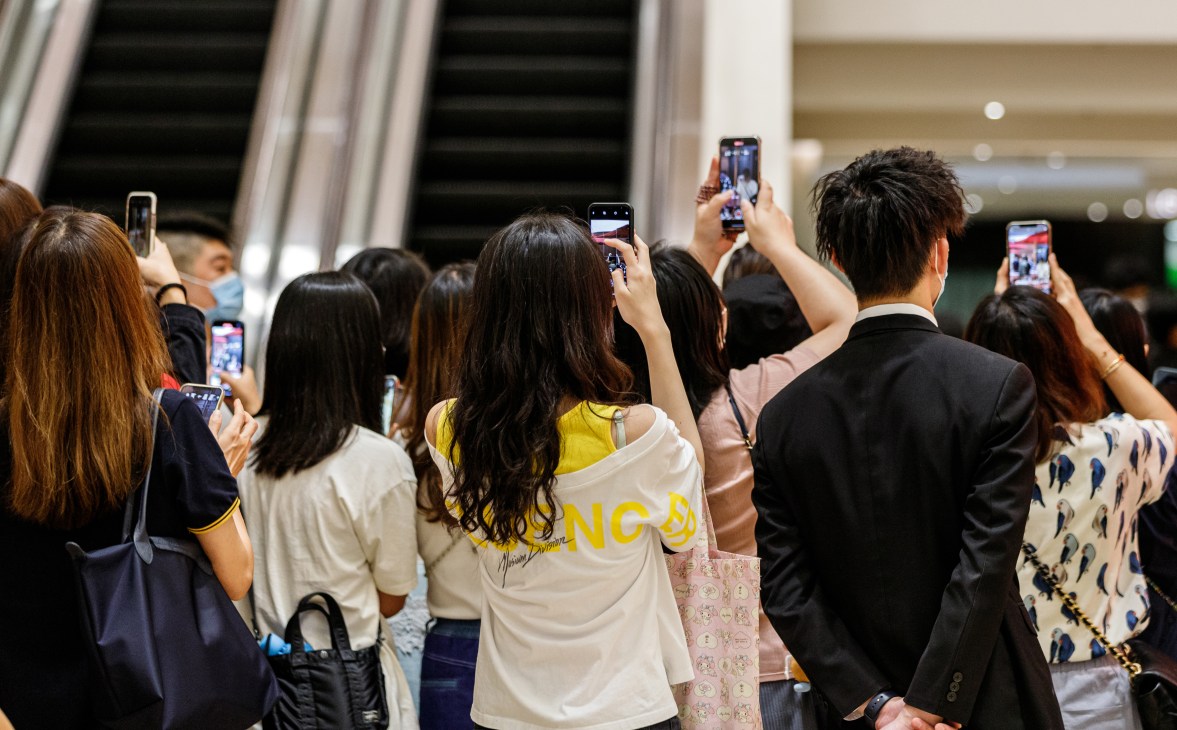
High-tempo beats, slick video production and energetic dance moves are closer to K-pop than the weepy Canto-pop ballads of old.The fact that most Mirror members aren’t actually good singers or dancers, or even particularly handsome (an observation mentioned by several lovestruck fans), just adds to their “one of us” appeal. Rachel, Rosa and Ling all admire them for continuing to improve, overcoming unspecified challenges and, naturally, for never giving up.
Four hours later, as Edan and Jeremy continue filming at a different part of the mall, Ling is still there, watching the pair repeat line after line and smile heroically. Listening to her speak about Mirror gives me goosebumps – not something I can say about their music. “They had a dream and they’re living it,” she says. “Young people in Hong Kong need that inspiration and hope right now.”
Residents elect
Jaegersborggade, a street in Copenhagen’s Nørrebro district, is lined with colourful buildings stretching between two of the area’s main parks. It is home to more than 470 apartments and 50 or so businesses, which together form one of Denmark’s largest housing co-operatives. “It’s like a village within the city,” says Randa Sebelin, the venture’s chair.
Co-operatives arose in the early 1900s to provide urban Danes with affordable housing by letting tenants invest in a share of the association instead of purchasing property. The model keeps community spirit strong and every decision that affects the co-operative, from repainting a façade to fixing loose cobblestones, is discussed at an annual assembly. “We share a sense of ownership,” says Sebelin.
A member for 17 years, Sebelin knows that forging bonds requires more than yearly meetings. This summer she has overseen events including flea markets, street festivals and children’s parties. She plans to introduce a regular day when residents gather to carry out minor renovations. “It’s our street and we should all contribute,” she says.
The community’s strength relies on both residents and businesses. While would-be members must join a waiting list, businesses are chosen by the association for their potential contribution to the street. “They set the mood,” says Sebelin. The current selection involves a Michelin-starred restaurant, milliners and saké specialists, to name a few. “The community has kept families living here for generations,” says Sebelin. “We want people to stick around.”
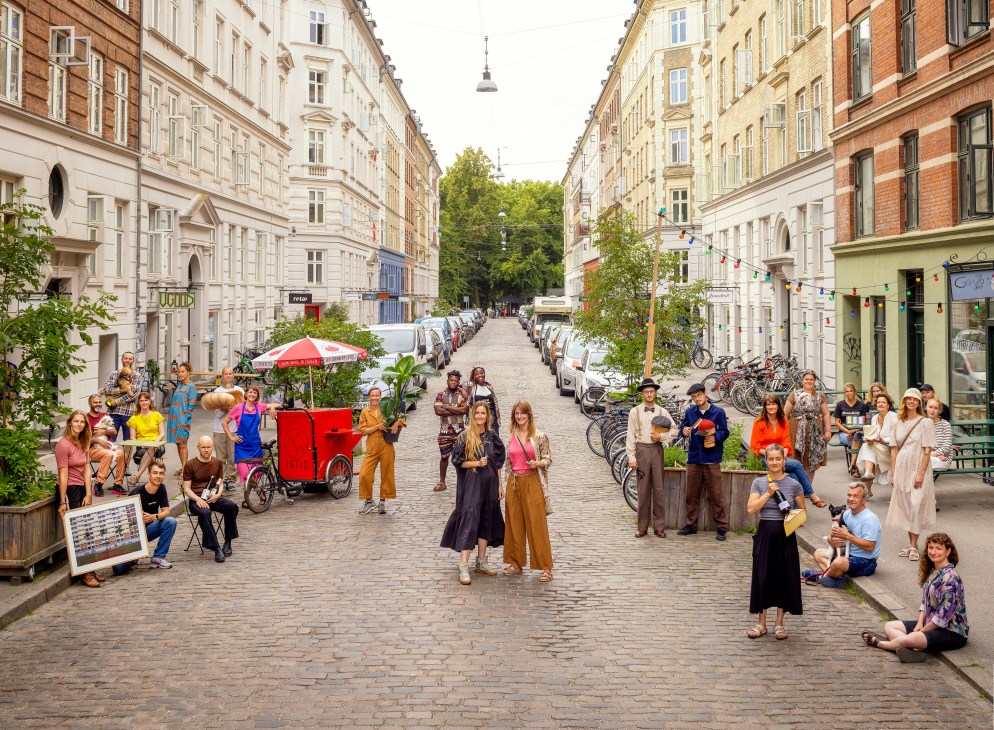
The Cabinet (From left to right)
Helene Christensen, co-founder, Framing People, “Joined Framing People’s journey to help open the shop at Jaegersborggade.”
Hursh Joshi, resident, “He left London behind and is now a convalescent painter and a writer.”
Dave Navndrup Black, resident, “Sound artist, dad and a bit of a coffee snob.”
Stine Balslev, resident, “Waste and resource planner for the city. Occasional dog-sitter.”
Jonas Bach Andersen, co-founder, Framing People, “He started the company with the vision to make it easier to order and produce picture frames.”
Charlotte Urne, owner, Made in Congo, “A hairdresser and designer who loves mixing African fabrics with Scandinavian style.”
Jakob Emdal, owner, Kita Saké, “First tried excellent saké in New York and has been passionate about it ever since.”
Casper Madsen, founder, Flaco Design, “He handcrafts wooden illuminated sculptures.”
Anniken Sand, co-founder, Istid, “Passionate about making ice cream using liquid nitrogen.”
Maja Samsø Bastian, owner, Plant, “She loves seeing her plants grow.”
Bantu Tshibanda, chef, Ugood, “Cooks and serves Ugandan street food all day long.”
Rujo Mataruse, waitress, Ugood, “She moved here from Zimbabwe.”
Malene Glintborg, jeweller, “Loves to make little shiny things using heavy tools and fire.”
Anna-Katrine Skau Parker, assistant jeweller, “Enjoys practising as a jeweller.”
Silas Skram, hatmaker, Wilgart, “Started by asking himself, ‘Where did all the good hats go?’”
Tomáš Chovan, hatmaker, Wilgart, “Likes to create headwear with computers and scissors.”
Maria Terry, owner, My Favourite Things, “Provides the street with amazing organic beauty products.”
Laetitia Piccirillo, employee, Kolonial, “She’s your number one go-to for organic groceries.”
Maria Capion, resident, “She’s a babywear consultant who’s always giving great advice.”
Michael Brammer, resident, “Full-time artist who loves his pup, Gyda-Fenris.”
Tine Frislund Ipsen, co-owner, Karamelleriet, “Sates the street’s sweet tooth by providing traditional homemade toffee that’s originally from the island of Bornholm.”
Helena Rasmussen, shop assistant, Karamelleriet, “Takes care of the shop, from the customers to the orders and the packaging.”
Inge Vincents, ceramicist, “Specialises in handmade thinware porcelain.”
Anne Marie Stahl, resident, “Enjoys sitting outside on sunny days and meeting the neighbours.”
Rasmus Olsen, chocolatier, Ro Chokolade, “He’s all about the taste – as the products show.”
Thea Holmboe, employee, Gågrøn, “She’s studying philosophy – this is her side job.”
Randa Sebelin
Chair of co-operative
A native Copenhagener and full-time employee at City Hall, Randa Sebelin was elected as Jægersborggade co-operative’s chair last June. She joins a team of 13 fellow volunteers who are passionate about keeping the street an inviting place to live and do business in. “I work during the morning, then look after my kids and this amazing street in the afternoon,” she says.
Jeff Wall
Sitting at a round table in his dining room, 74-year-old Canadian artist Jeff Wall says; “Since being a child, I’ve always wanted to know how the world you look at is replicated in an image.” This fascination with perspective and replication explains why he uses a camera for his work. But Wall, educated in art history at The University of British Columbia, has had his works exhibited by some of the art world’s most venerated institutions by doing things differently to other photographers. He creates views into worlds that are almost, but not quite, the one we live in.
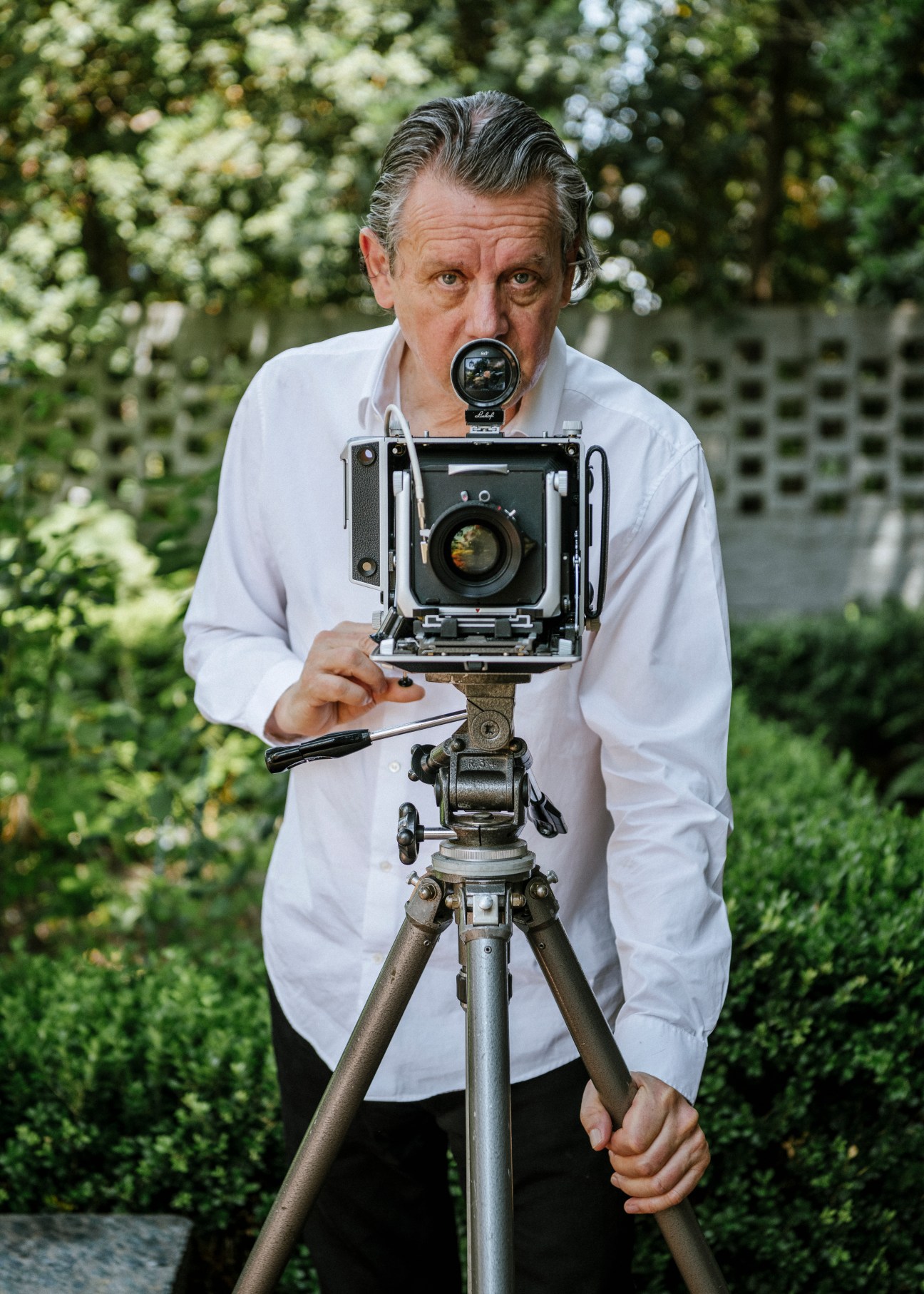
Wall’s photographs use elaborately designed sets composed with a sculptor’s eye for scale and texture, and scenes composed with a film director’s knack for relaying character. He uses actors stage designers and actors who often leap into motion at his request just as the shot is taken. His works bear closer resemblance to 19th-century classical paintings than ordinary reportage photography and he remains famous for his old pieces, which were printed onto vinyl and backlit like bus-stop advertisements.
Wall bristles at the suggestion that these photos are staged. Discussing one of his best-known works, “Parent Child”, in which a toddler lies curled up on the pavement, her father standing over her, he explains that this is a moment he saw in a photo and wanted to recreate. He paced up and down a street and thought about how he’d construct the shot. “I see something happen, I transpose it to a favourable setting, I populate it with the appropriate people and I make it happen again,” he says. To Wall, comparing this to staging is like trying to compare truth and accuracy: they might sound the same but in artistic terms they’re not.
Walking this line between fact and fiction, a mode sometimes called “near documentary”, has earned Wall credit for expanding the possibilities of photography. He also stands out for focusing on single images rather than arranging his works into series or books. “I just make them one at a time,” he says. “I think of my pictures as sort of like big cats: they don’t like another cat being too near them.” It’s a slower kind of image-making that he sees as an antidote to the oversaturation of pictures around us today.
That said, all good artists are open to change. The photographs in Wall’s forthcoming exhibition with Gagosian in October were nearly all composed and shot in Los Angeles, giving them a tighter theme. “There’s a lot to see here,” he says of LA, where he lives when he’s not in his native Vancouver. “This is an interesting cluster of cities that contains a lot of things to photograph. I’m attracted to it.”
Glenstone, a private museum in the suburbs of Washington is slated to exhibit 30 or so of his photographs in November. It has the largest collection of his works, including some of his earliest and most notable: “The Destroyed Room” from the 1970s; “Dead Troops Talk”, his 1992 photograph of the imagined aftermath of a fictional attack in Afghanistan. “It’s a look back,” he says of the show. As for his view to the future, he doesn’t plan on taking his eye away from the camera any time soon.
Wall’s CV
1946: Born in Vancouver
1970: Finishes studies at the University of British Columbia
1973: Leaves his studies at The Courtauld
1978: First postgrad gallery exhibition
2005: Major retrospective at London’s Tate Modern
2007: Awarded Officer of the Order of Canada
The opener
Standard practice
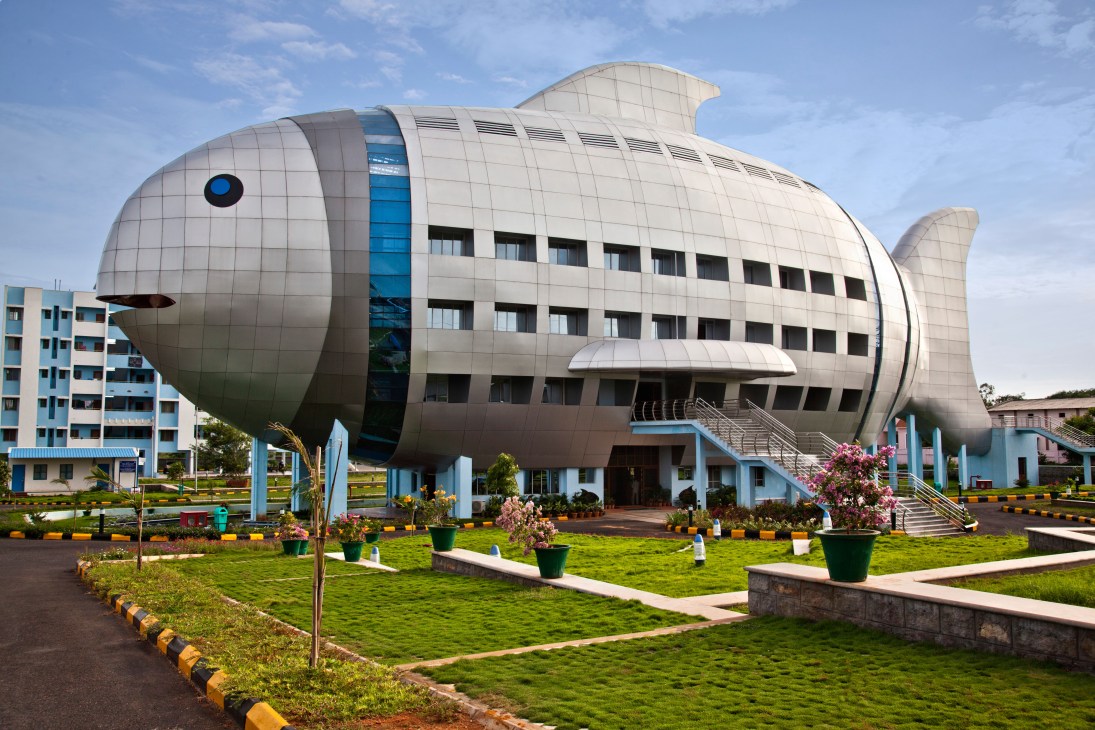
In the past five years the Union Jack has become a more prominent feature of British life, driven both by Brexit and anxiety that Brexit might hasten the dissolution of the UK. Recently, a peak in this mania has risen in proposals for a new British government office block in Cardiff, the capital of Wales, which will incorporate an eight-storey Union Jack wrapped around one corner. It is less crass than it sounds: in the context of the building it seems more like a lapel pin than face paint. And at the risk of giving the British government ideas, it could be worse. In other parts of the world, the consequences of governments letting architects please themselves have been variable. Employees of the National Fisheries Development Board in Hyderabad work in a building that looks like a giant fish. The key, perhaps, is to be whimsical if you can’t be subtle. Indonesia’s government was recently neither when choosing the victor of a design competition for a new state palace. The winning entry – shaped like the garuda, the eagle that is Indonesia’s national symbol – is a vainglorious monstrosity. On the plus side though, jokes about the west wing could write themselves.
Correspondent’s corner from…
Slovenia
By Guy De Launey
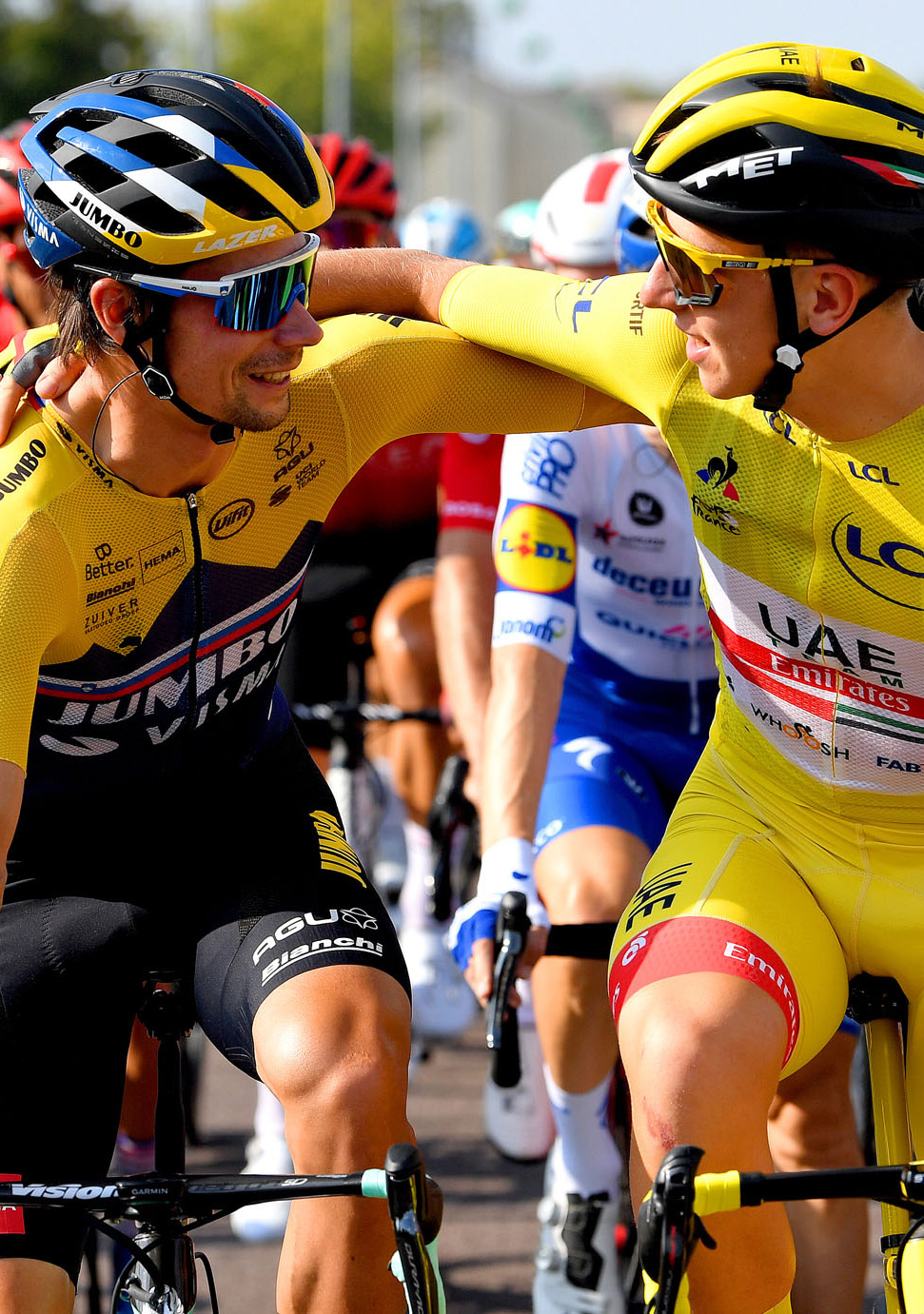
Slovenian supermarket chain Tus has started selling sandwiches named after homegrown Tour de France winner Tadej Pogacar. Not to be outdone, its rival chain Mercator is offering a tasty takeaway in the team colours of the current men’s national champion, Matej Mohoric. For payment, your Nova kbm Visa card, endorsed by the highly ranked male cyclist Primoz Roglic, will do nicely.
And while the country’s riders might rule men’s professional cycling, these giants do pedal among mere mortals. Descending a hill near my home last year, I passed a rider powering up the climb dressed in full Team Jumbo-Visma kit. Enquiries confirmed that Roglic lives around the corner. And, just a week before Le Tour this year, I chatted to Pogacar at a cycling carnival in his hometown. My suggestion that hosting a party was not exactly textbook preparation prompted a shrug, a smile and a simple explanation. “The weather’s good – it’s nice to do it now for everyone.”
It shows that although Slovenians might be outrageously good at cycling, they generally don’t take it too seriously. Sure, there’s the odd middle-aged man in Lycra but most people happily embrace utility rather than lusting after the latest carbon-fibre frame. In the capital, Ljubljana, about 13 per cent of journeys are made by bike – often on Yugoslav-era steeds. Aluminium-framed, locally made Rogs are still sought-after. If they’re not available, people head for a mechanic who imports and restores sturdy Japanese “mamachari” city bikes. And if you can wrestle one of these heavyweights up a hill, let me assure you, you’ll have earned that Pogacar panini.
Ivory boast
Cote d’Ivoire likes to go big. Already home to the world’s largest church, the government is now planning to construct Africa’s tallest skyscraper in Abidjan. But with a glassy façade almost three times the height of any other building in the city, it’s sure to be an eyesore. Worth remembering that, when building, bigger isn’t always better.
Straight to Montevideo
By Lucinda Elliott
Thanks to new tax incentives for production companies, Uruguay has become a hotspot for the South American film industry over the past year, with locations in Montevideo transformed into movie sets and crews from across the continent flooding in. The Ministry of Transport became a hotel for the second series of Chile’s El Presidente. Humble riverside drinking holes such as Bar Tabaré have been transformed into backgrounds for a Brazilian series. Amazon Prime is rumoured to be considering filming at a former swimming club. As well as transporting viewers, Uruguay is importing places – a canny way to flip the script.
Correspondent’s corner from…
Rome
By Laura Rysman
In the history of Rome’s highs and lows, the recent years of civic negligence are hardly the most dramatic of falls. But public buses catching fire and mountains of refuse engulfing pavements has certainly been dispiriting. They highlight the malign governance that has allowed the unopposed decay of what should be Italy’s dynamic modern capital.
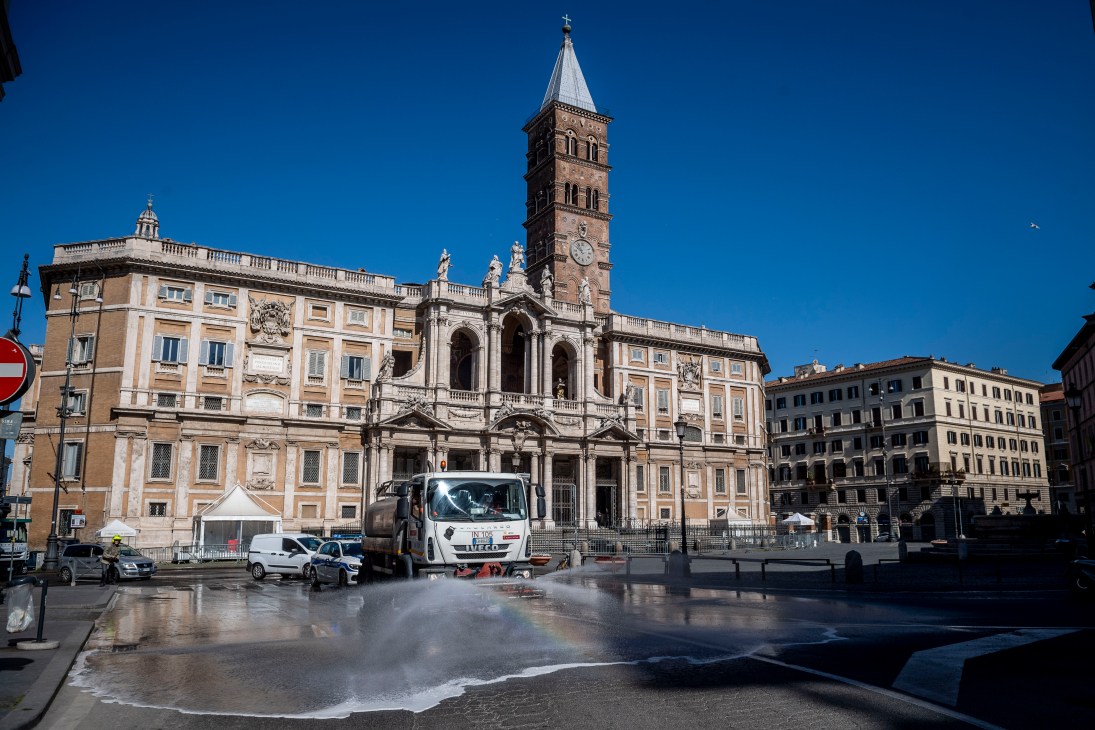
But recently, as I walked around Rome, the rubbish heaps were suddenly gone and the beauty of the city’s antique streets were revealed. Talk of new electric buses to replace fire-prone, decades-old vehicles circulated. A miracle? No, merely the approaching autumn mayoral elections. With votes to be won, streets have been cleaned and promises made. “It’s all a show to stay in power,” one local said.
And while that might be true, the lead up to this election has shown that if Romans put pressure on their leaders, the rot at the heart of the city can be contained.
Rolling Rover
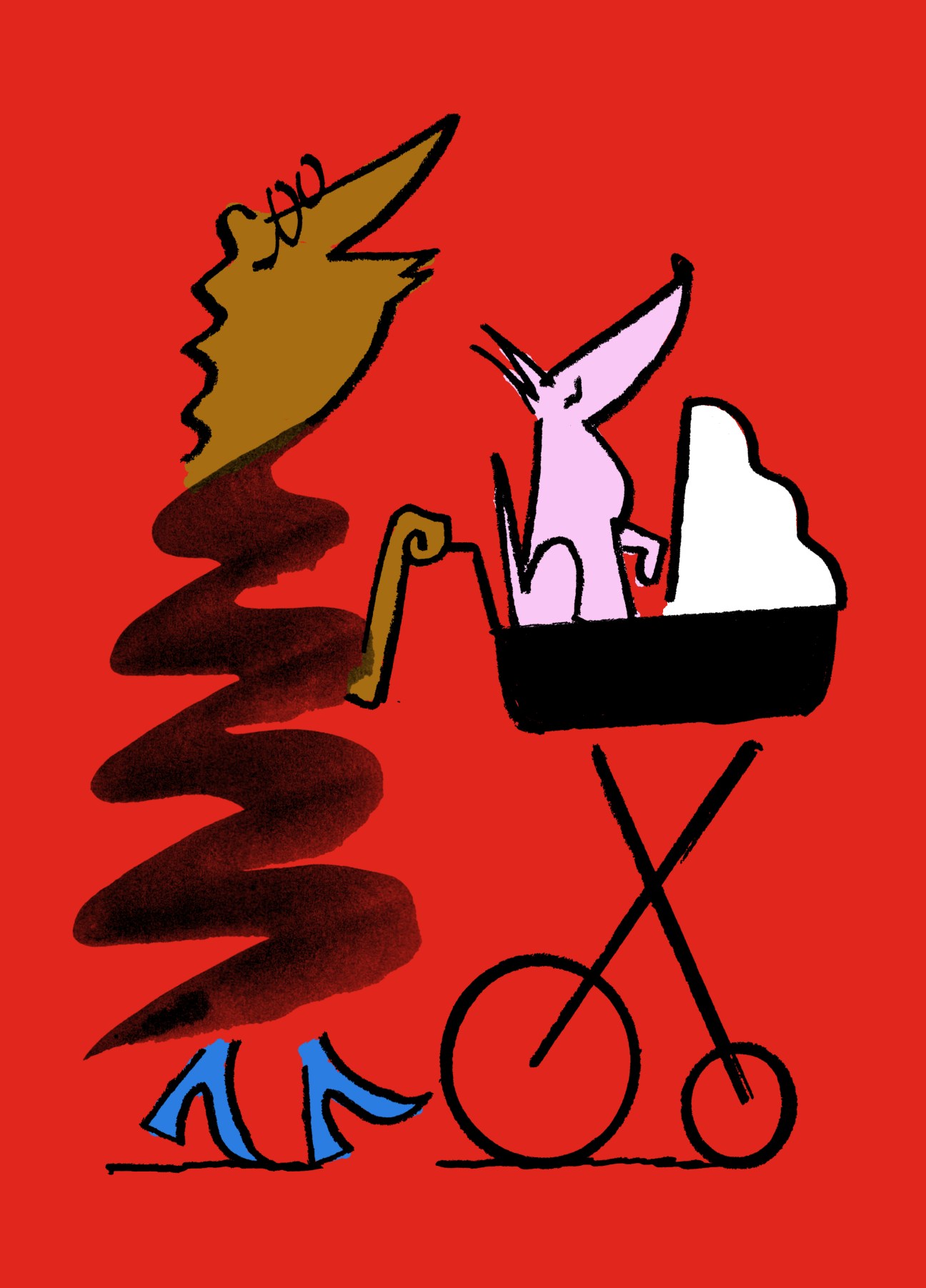
Rules and regulations can often have unintended consequences. In Taipei a requirement for pets to be carried in containers on public transport is now playing into the hands of a growing subculture. Here the city’s already overzealous fur-baby parents are now gladly wheeling their precious pups aboard on prams. It’s a phenomenon linked to Taiwan’s declining birth rate, where a lack of children is compensated for by raising dogs (and cats) instead. Recently released data even show the pet population outnumbering the youth of the island. And, judging by the increasing number of pet-prams on trains, you can expect the trend to stay like a well-trained pooch.
Top shelves
Hong Kong’s newly renovated Central Market shopping centre has kept some original 1930s stalls, in which the concrete shelves are perfect for laying out goods. Soon to be stocked with local wares, the revitalisation shows that people still want to pick, not click, their next purchase. See here for more on Hong Kong’s rejuvenated shopping centres.
Out of shot
By Alexis Self

Much of central London was once royal hunting ground. Even the word “Soho” derives from an ancient hunting cry. But a 2018 Yougov poll revealed that 69 per cent of Brits thought game-bird shooting should be made illegal. Opposition to the pursuit is partly driven by concern over lead pollution – approximately 6,000 tonnes of the toxic metal are discharged from shotguns in the UK every year.
Last year, in an attempt to deflect criticism, nine of the country’s shooting organisations committed to voluntarily phasing the metal out of shotgun cartridges. Which is why this year’s partidge-shooting season, which runs from September to February, will be significant: if hunters can’t clean up their acts, public and political pressure might soon have them staring down the barrel.
Putting history to bed
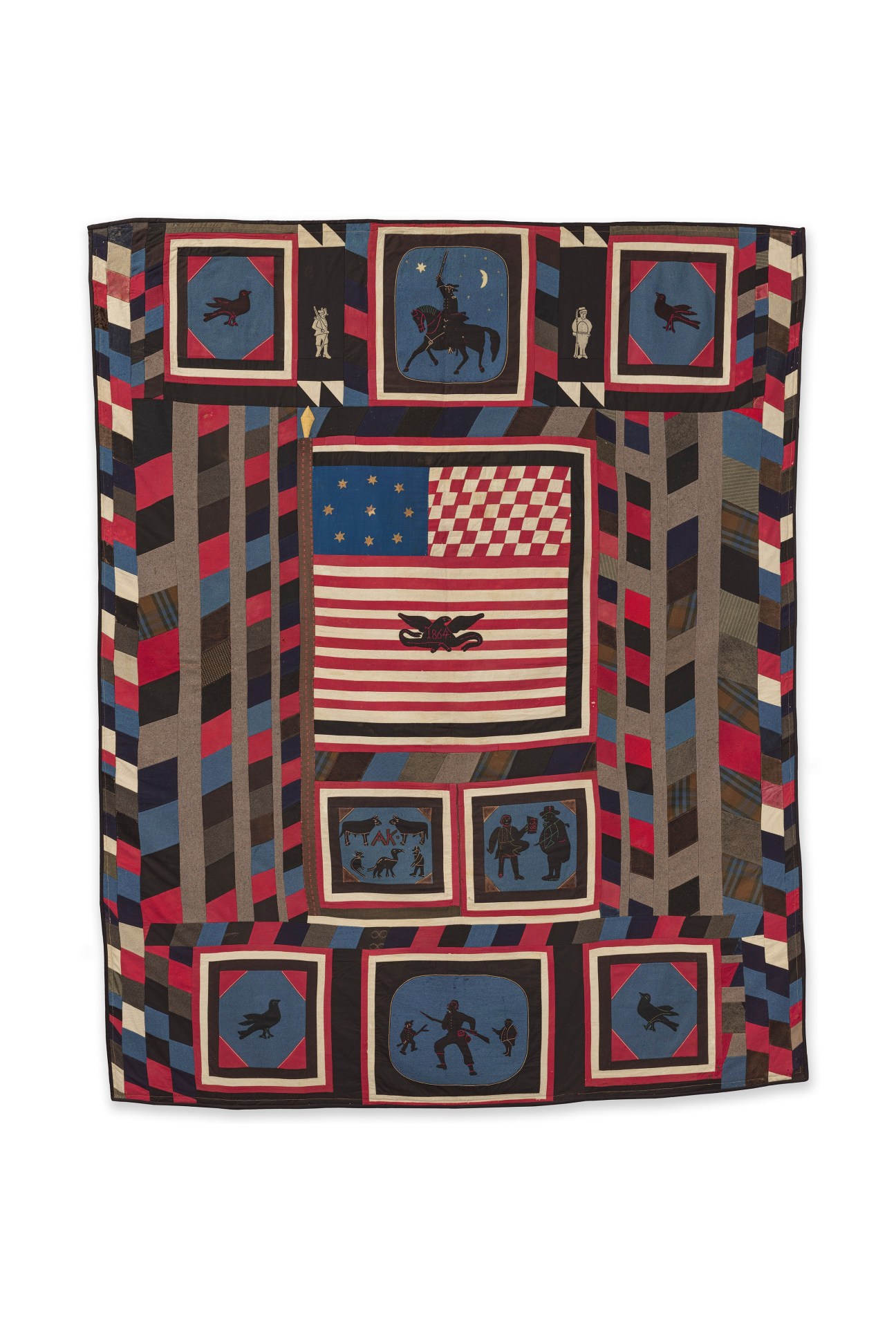
Protest posters and guerrilla murals are most likely to spring to mind when political artworks are mentioned. But a new exhibition called Fabric of a Nation, at Boston’s Museum of Fine Arts, adds a different thread to this narrative. Running until January 2022, it features handmade quilts and cosy bedtime comforters that offer the makers’ (and original owners’) personal reflections on everything from the American Civil War to last year’s Black Lives Matter protests. All of this suggests that to truly know an American’s political leanings it’s best to get under the covers – or quilts – with them.
Images: Alamy, Getty Images, Museum of Fine Arts, Boston
Editor’s Letter: Fit to print
It was one of those moments when you wonder whether you should just give up. I was working at a national newspaper in London’s Canary Wharf and the title was going through another round of cost-cutting. Someone, it transpired, had come up with a genius plan that would solve everyone’s problems: journalists would now not only write their stories but also lay them out on page, add the headlines and find the relevant photography. It was a process conjured up by management consultants and directors more concerned with shareholder dividends than stories that people might actually want to read.
There were some dreadful training days and then a one-on-one meeting with the bean counter who asked me to explain how I allocated my time as a magazine editor. I talked about the process: working with writers on drafts of their stories, making sure that contentious stories would not lead to libel actions. “No, this has to change,” he said. “You should only ever use writers who provide ready-to-print copy and never use anyone who is going to get us into legal issues.” The project soon failed.
That was almost 20 years ago but accountants are once again wreaking destruction in some of the world’s finest publishing houses. And it can’t all be blamed on Google and Facebook or the pandemic. I have been hearing a lot of these stories first-hand in recent weeks as we have been interviewing for a series of vacancies at Monocle. Again and again, people tell you how their current job is being deskilled, about broken morale, about the creation of teams that will work across numerous titles and must forgo all old allegiances. There are stories of great editors lost and not replaced; of titles forced to use content from other parts of the company empire (once again eradicating what made them special); of websites where stories are never edited. It’s definitely a recipe for lower costs – and guaranteed oblivion.
You might think that for plucky Monocle this would have us rubbing our hands in glee. It does not. We want journalism and publishing to continue to appeal to the talented and determined. We want to see a competitive newsstand where publishers fight it out with the best writing, news, fashion reporting, cultural coverage, investigations and more. We want people to be allowed to be dexterous when possible (making a radio show, writing a book, filing for print and digital products) but also allowed to be pure specialists when it makes sense.

But. This issue we have also looked around and found that, actually, many traditional media fixtures continue to flourish, especially away from the Anglophone world. Some of the biggest news groups in Europe have diversified into other fields but also been determined to invest in physical newsrooms and state-of-the-art TV and radio studios to ensure that they remain relevant and their teams stay tight. You can see the bullish new HQ of Germany’s Axel Springer in our Expo this month (see here). There will be no press release coming out of Berlin about a switch to citizen journalism or the desire to never ask reporters to come into the newsroom again.
On our Culture pages we meet the TV news anchors with the experience and training to still hold their nations’ attentions. We also look at how news agencies – some of them centuries old – have flourished by keeping photographers and reporters on the ground. It’s a healthy reminder that investment, commitment, specialism and loyalty, are to be valued. Just a few days before writing this I met someone who is involved in the shake-up of a publishing house and I asked how it would pan out. “Perhaps some of it will work but some of it is terrible,” he said. “Let’s see where we are in a year.” Maybe he needs a little holiday in Germany before he does anything else.
Now there are a couple of other things that I need to tell you. First, I hope that we are going to see you in Athens for our Quality of Life Conference from 23 to 25 September. Not only will we discuss hot topics from tolerance to the future of media, city-making to meaningful entrepreneurship, but we will show you the city afresh and keep you entertained along the way.
And finally, from next month we have some changes planned for the magazine. Nothing too radical but as the world moves ahead so will we – and we want to make sure that we continue to bring you the stories that will help you to stay informed and navigate the times ahead. All will be revealed. As ever, drop me an email at [email protected] if you have any ideas, Athens enquiries or just some views that you wish to share. I’ll be here with my word engineers at the information hub – also known as a desk in London’s leafy Marylebone.
The Monocle Quality of Life survey 2021
What makes for a liveable city? That question has been particularly pertinent since March 2020, as many people have found themselves largely unable to leave their home cities. But while quality of life everywhere was affected by the pandemic, the urban centres that were already doing many things right – offering robust, dependable services, plenty of green space and strong leadership – have managed to fare better than most. There’s a lesson here, of course: get the basics right and it’s easier to weather catastrophe.
Every year we have assessed the quality of life in cities around the world and this year we’re doing it again – but with a twist. We’ve stripped back our usual survey, shedding metrics that don’t feel right for 2021. It is disingenuous, for example, to count the new business openings or number of museums when so much is or has been closed. So, instead, we have taken stock of which cities have got through the past 18 months with some skill and ambition when it comes to preserving quality of life – and which of them are poised to bounce back.
For example, there’s the mayor who took a pay cut to help ease the economic crunch that his municipality faced. Or the city hall that threw its weight behind supporting local businesses and as a result is well placed to prosper in the coming months. Then there are the councils that spotted an opportunity and seized the moment to pursue ambitious urban fixes – from tackling homelessness to neighbourhood overhauls – and implementing them in record time while their cities were locked down.
And though it looms large in everyday life, we don’t just focus on the pandemic. We also gauge how cities are preparing for the future by investing in grand projects that will shape their quality of life for years to come; designing programmes to attract foreign talent when borders are open again; or rethinking how to balance the needs of residents with making space for tourists when they return.
After all, as we have learnt time and again, the best cities in the world square the needs of today with a vision for a better tomorrow.
1.
Copenhagen
Taking pride of place.
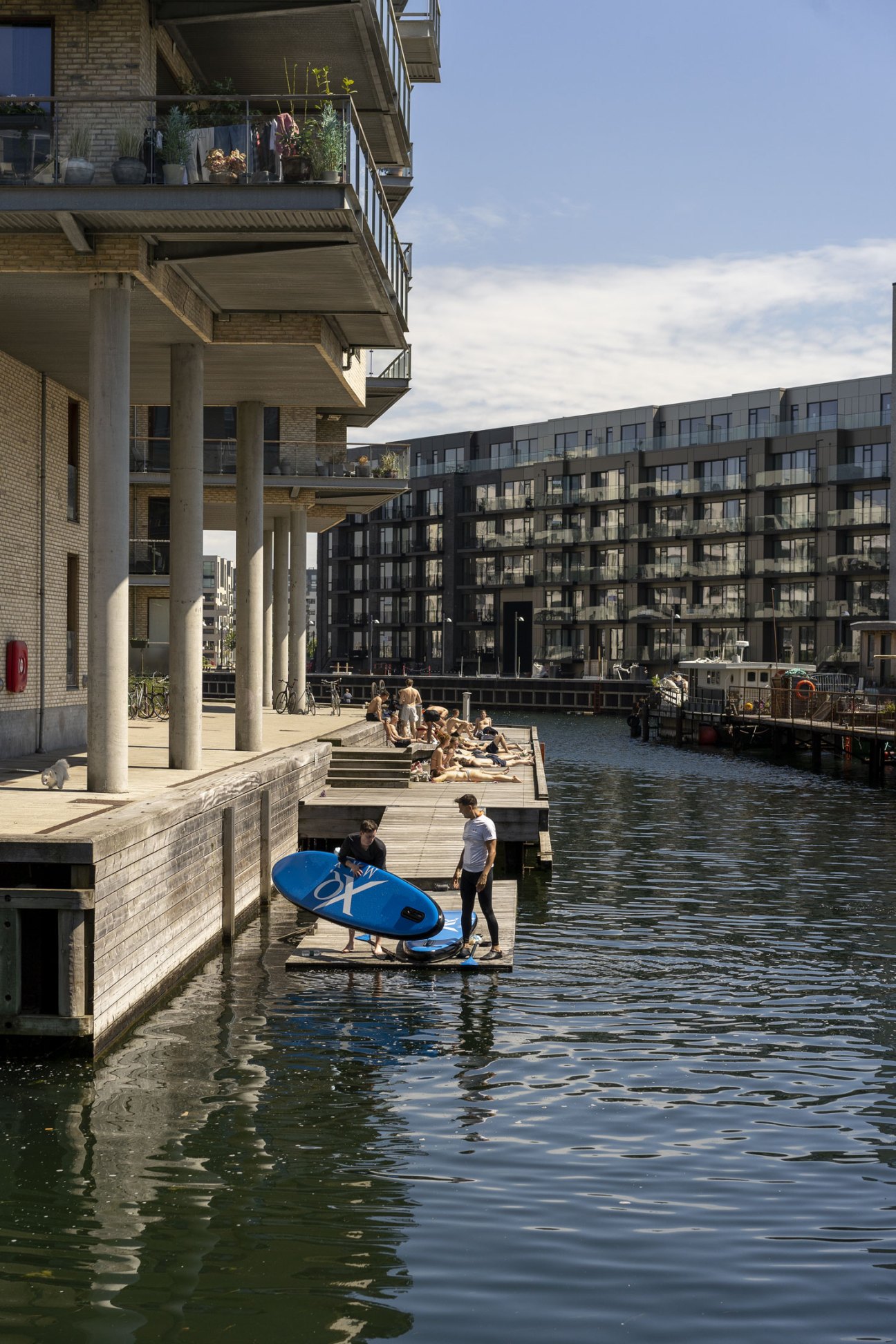
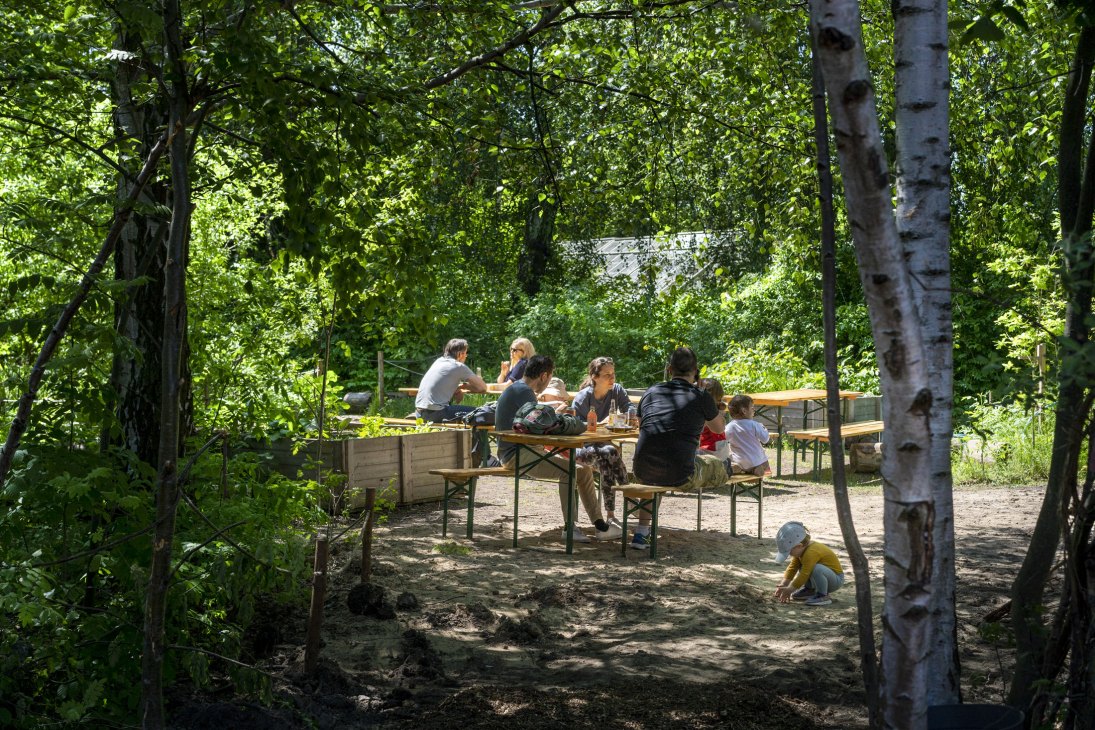
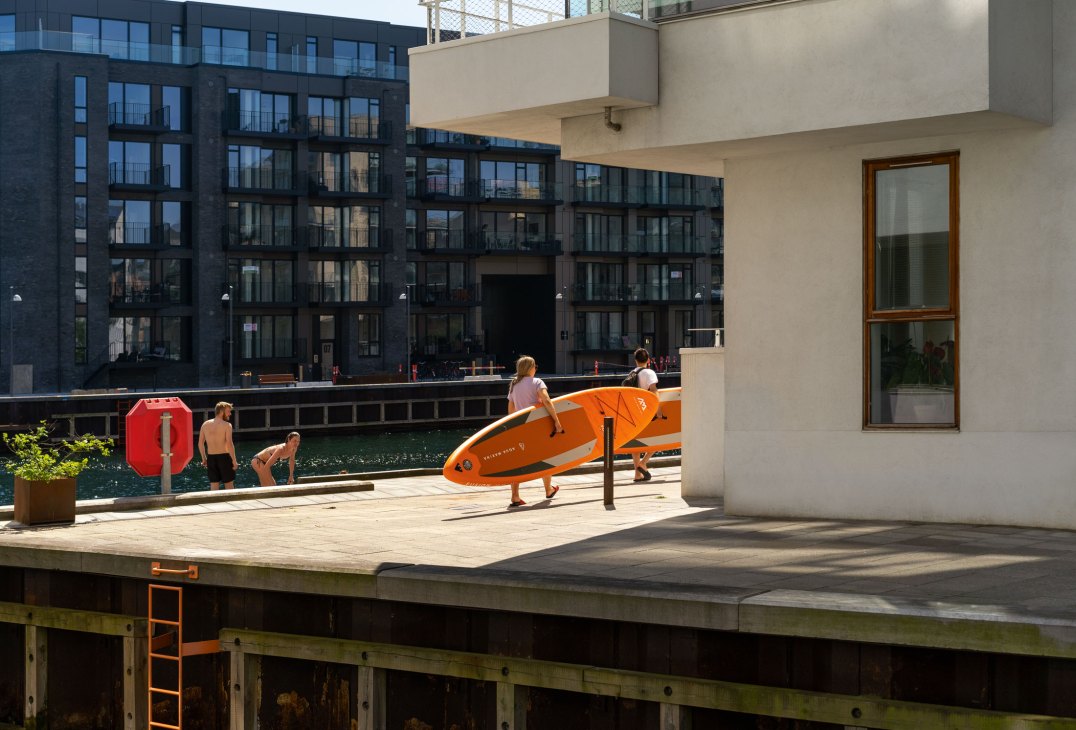
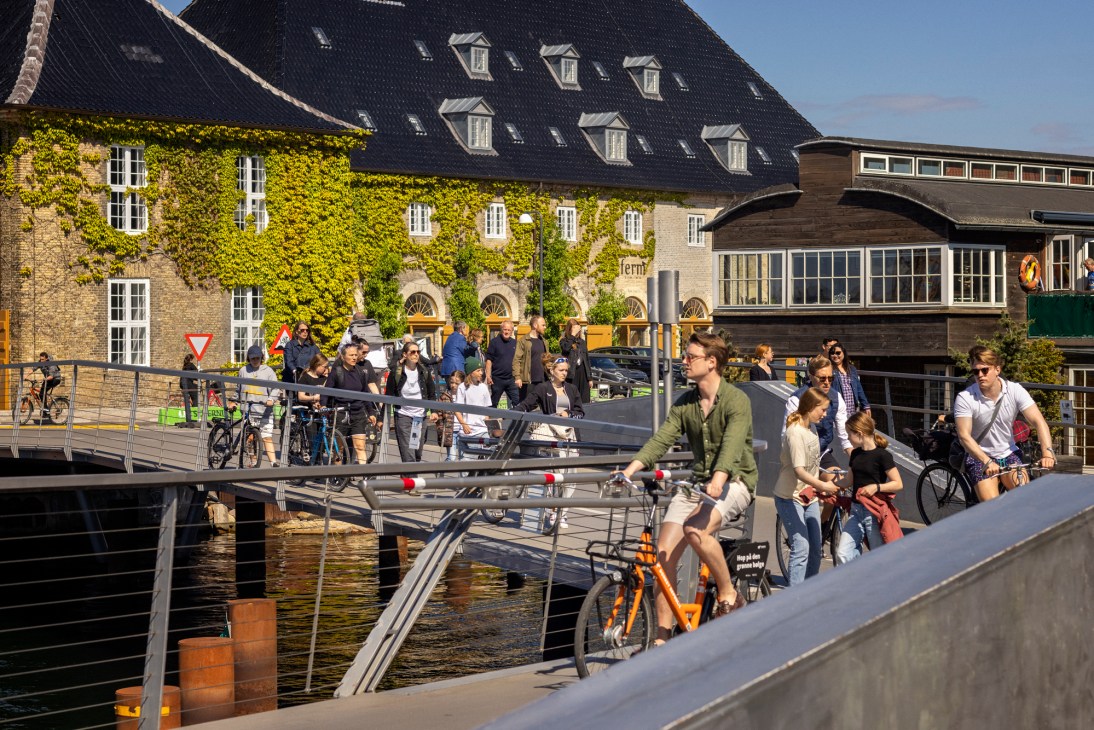
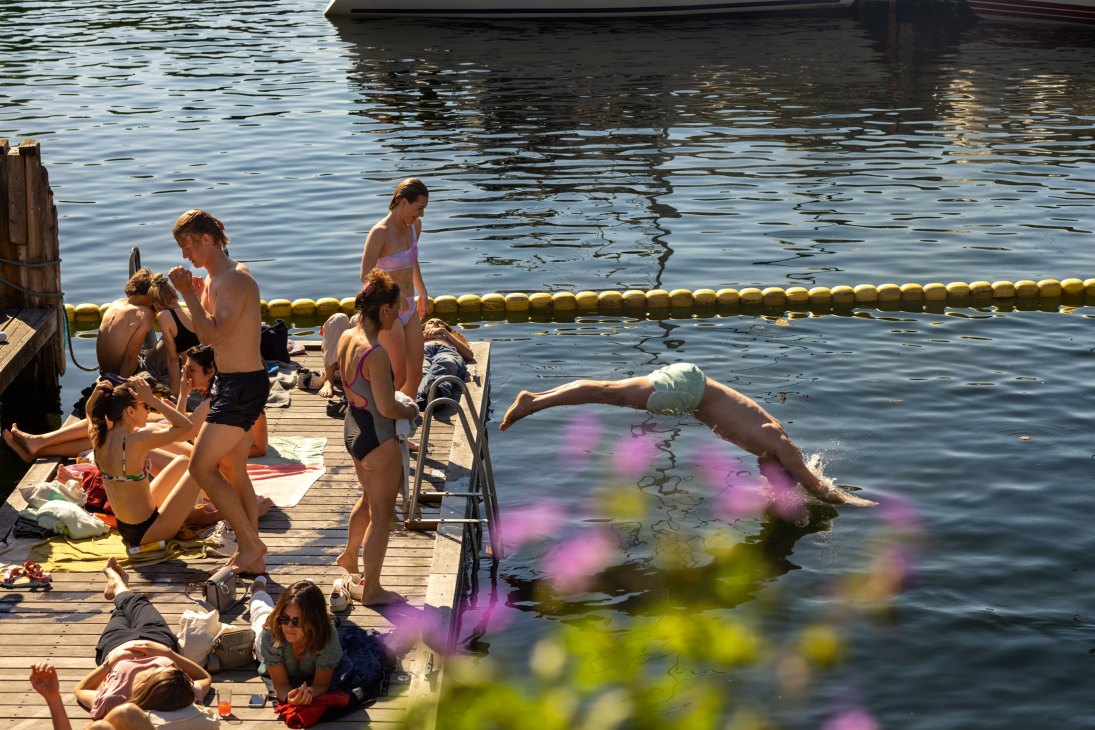
This year the global media picked up on the Danish word samfundssind, which roughly translates as “society-minded” and conveys a sense of pride in social cohesion. Copenhageners demonstrate their samfundssind in the way that they ensure their city is a place where children can roam free, is accessible to those on lower incomes and has efficient public transport, better air quality and a harbour that’s clean enough to swim in.
So when Danish prime minister Mette Frederiksen decreed a lockdown in March 2020, the locals pretty much complied. City residents quarantined and isolated – and brought the infection rate down. The state was quick to provide economic support for most businesses and the testing system is a triumph: tests are free on demand and the result takes 15 minutes to come through on your phone. As a result, restaurants are back in business, theatres are open and life, if not tourism, is getting back to normal.
Yet without the tourists, it seems that Copenhageners are falling in love with their city once again. With its well-preserved cobbled squares, copper-spired beauty, green spaces, ample waterfronts, independent retail scene and a still-expanding choice of restaurants, the Danish capital excels. The new Metro ring has made it easier to access all parts of the city, and the Refshaleøen district is particularly appealing these days due to the presence of the Copenhagen Contemporary art museum and an eclectic range of dining options.
Metrics:
Population: 800,000 in the city; 1,350,000 in the metropolitan area
Unemployment rate: 6.7%
Number of public parks: 78
New infrastructure projects: A Metro extension to Sydhavn should open in 2024.
What needs fixing: Segments of the retail trade have been hit hard. Can the city inspire a new generation of shopkeepers? We think so. Top of the agenda could be putting manufacturing on shop floors.
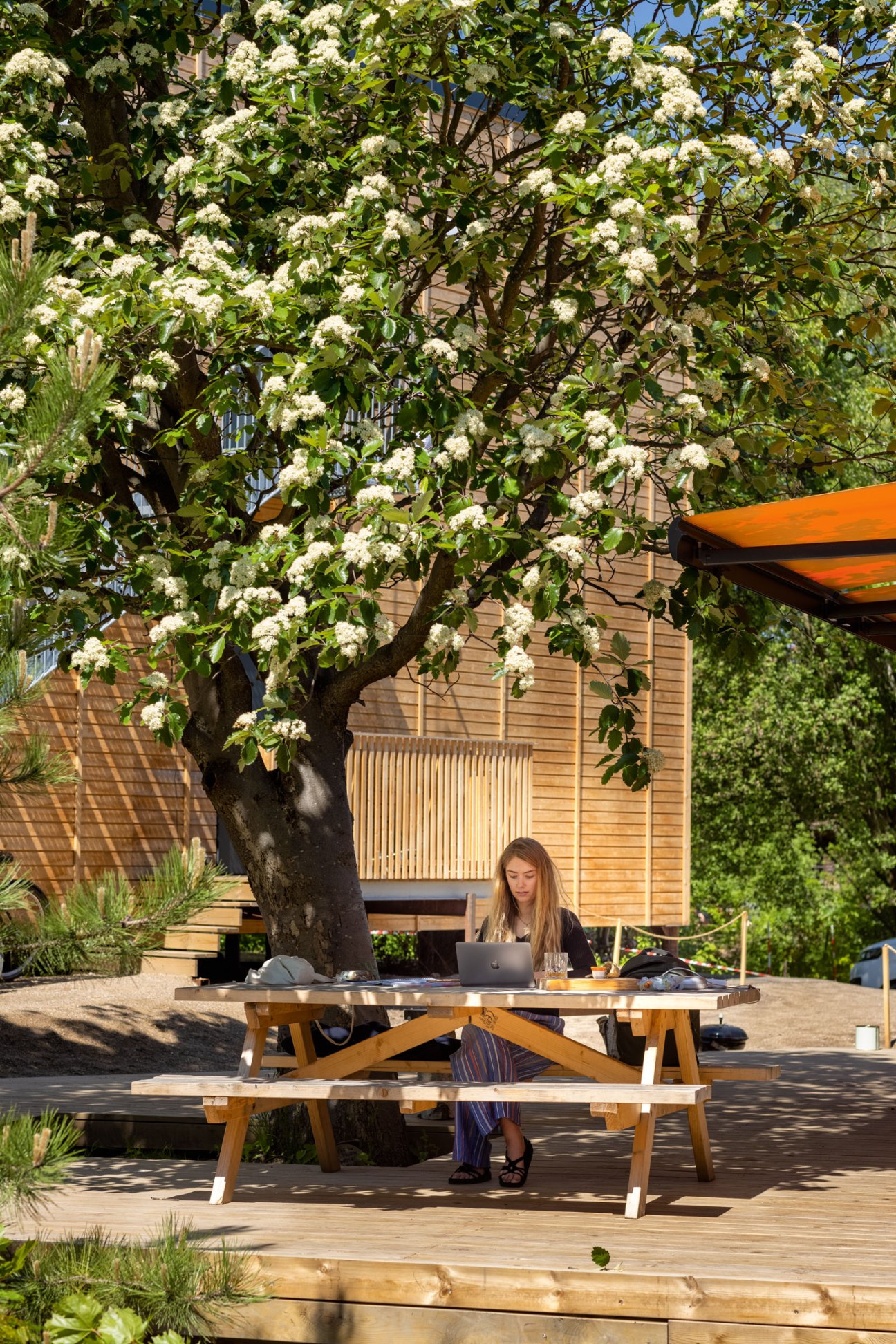
2.
Zürich
Ever striving for perfection.
Zürich does most things excellently yet it refuses to rest on its laurels. The city’s parliament is finalising its first-ever municipal structure plan for settlement, landscape and public buildings, which is dedicated to preserving the quality of life for residents for the next 20 years. The main goal of the plan is to achieve high-quality densification and, in true Swiss style, the plan will be put to a public vote. Early signs indicate broad support.
Another one of the city’s projects – adding more greenery – will be pursued over the next 20 years as the number of existing parks will be more than doubled with the addition of another 104. As in many cities, the pandemic led to a boom in bike sales and Zürich will add 100km of cycling highways by 2030 thanks, in part, to the repurposing of an unused tunnel beneath the city’s main train station.
After two decades of planning and construction, the David Chipperfield extension of the Kunsthaus Zürich has also opened. Its arrival coincides with the completion of the new Europaallee district near the city’s main station.
Mayor Corine Mauch and her colleagues were nimble and responsive when helping residents and businesses facing financial hardship due to coronavirus. As an unexpected pandemic bonus, Zürich at last loosened up a little in terms of its unnecessary bureaucracy, realising that it shouldn’t be the norm to ask people to hand in about 100 documents to get quick financial support.
Metrics:
Population: 430,000 in the city; 1,600,000 in the metropolitan area
Unemployment: 3.5%
Public parks: 72
Infrastructure projects: Zürich will soon have its first electric buses. Building applications indicate more new housing.
What needs fixing: The city council needs to embrace more liberal opening hours for retail. Four Sundays a year is not enough, especially after a difficult 2020.
3.
Helsinki
Showing an open-minded approach.
Life in Helsinki over the past year has felt much the same as it always has: great. People enjoyed art in excellent galleries such as Amos Rex; dined out in the capital’s enticing restaurants; went swimming at the Allas Sea Pool and met friends for drinks in public.
Outgoing mayor Jan Vapaavuori deserves credit. From the outset, city hall took a business-minded approach to the pandemic, supporting companies with rent exemptions and setting up a centre to provide financial help, training and advice to firms of all sizes. While Finland introduced social distancing rules and travel restrictions, Helsinki took a proactive stance to make sure that its citizens could still enjoy a high quality of life. This included building a 500-seater outdoor terrace for restaurants and bars in a central location and loosening restrictions on other alfresco spaces serving food and drink. A marketing campaign was launched to raise awareness of these hospitality sites in order to boost businesses suffering from the drop in international visitors.
All of this has translated into a thriving entrepreneurial scene. Restaurants have launched and design shops, independent bookshops and art galleries have opened. Popular events such as Helsinki Design Week and the Helsinki art and design biennial (see page 102) were given the go-ahead, proving that the city understands the importance of arts and culture. Helsinki’s proactive and business-friendly approach means that it’s poised for a quick bounce-back.
Metrics:
Population: 657,000 in the city; 1,500,000 in the metropolitan area
Unemployment: 14.5%
Public parks: 907
Infrastructure projects: Trams now run to Hernesaari on the coast. Construction of the Kruunuvuorensilta bridge, Finland’s longest, will start in November.
What needs fixing: Big outdoor areas for restaurants are popular, so why not build some for theatre, cinema and concerts?
4.
Stockholm
Keeping calm and carrying on.
For those watching from abroad, it must have looked as though life in the Swedish capital went on pretty much as normal during the past 18 months. With schools and many businesses staying open and people out and about, it has rarely felt like a city ravaged by a virus.
However, this open approach didn’t prevent a spike of coronavirus cases. Nevertheless, the public has been broadly supportive of the handling of the crisis at home, and Sweden’s economy is faring better than many of its European counterparts. Indeed, business in Stockholm seems to be booming. City leadership has stayed the course thanks to a very Swedish level-headedness and calm, and on the whole the population seems to be behind it.
That might be in part because the government was quick to pump money into helping businesses, large and small, to stay afloat by setting up an easy-to-use application system for financial support throughout the crisis. New hotels, restaurants and bars have opened in the city recently, including Omaka in Östermalm and Jacqueline’s, which have added to Stockholm’s already plentiful offerings. And although restaurant and bar staff have to usher their patrons out by 22.30 to prevent late-night mingling, they seem to be doing good business.
Now that vaccines are reaching more of the population, everything suggests that Stockholm could soon be back to its pre-pandemic self.
Metrics:
Population: 975,500 in the city; 2,400,000 in the metropolitan area
Unemployment: 7.9%
Public parks: 455
Infrastructure projects: The remake of Slussen, a transit hub connecting the old town and Södermalm, is underway, as are extensions of the subway networks.
What needs fixing: Overhaul how the elderly are cared for by improving working conditions and pay among staff.
5.
Tokyo
Passing with flying colours.
Tokyoites are never short on gaman (perseverance) but in the past year they’ve had to dig deep. The Japanese capital has gone through a number of low-level lockdowns and the very features that make it so special – the rush of people, small bars and cosy izakayas – have also been its Achilles’ heel.
Although Tokyo’s governor, Yuriko Koike, hasn’t always seen eye to eye with Japan’s prime minister, Yoshihide Suga, over the handling of the pandemic or the Olympics, the population has just got on with things. Restaurateurs and retailers worked hard to adapt to new rules, while grants from the government have been boosted by subsidies from the city.
Encouraged not to stray outside the city borders, residents have flocked to its outdoor spaces. Neighbourhoods have been busier than usual as people stay close to home, shop on their high streets and steer clear of crowd magnets such as Shinjuku and Shibuya. Places like Bonus Track – a leafy, low-rise cluster of small shops and cafés on old railway land in Shimokitazawa – have come into their own.
Looking ahead to post-coronavirus, post-Olympic life, there are new projects on the horizon and a slew of buildings have been green-lit in neighbourhoods targeted for renovation, such as Nihonbashi. Art Fair Tokyo went ahead this spring and was welcomed with open arms – a good sign for the future. Tokyo is raring to go and will bounce back quickly. When it does, credit should go to the capital’s resilient citizens.
Metrics:
Population: 9,600,000 (central 23 wards)
Unemployment: 2.8%
Public parks: 9,646
Infrastructure projects: Property giant Mitsui Fudosan is embarking on a radical transformation of Nihonbashi that will take up to 20 years and ¥1trn (€7.5bn).
What needs fixing: Public consultation.Closing off much of the vital green space of Yoyogi Park until October proved to be a very unpopular decision.
The view from London
By Megan Gibson
It’s perhaps a cliché but it’s true nonetheless: no other city comes alive in the sunshine in quite the way that London does. Even in Canada – where I grew up with long, dark winters – cities don’t transform themselves in the summer like the UK capital.
It’s like clockwork. At the first hint of a heatwave, parks heave with sunbathers; merry revellers, drinks in hand, spill out of bars to bask on the pavement; people smile at one another on the street. You’re far more likely to strike up a conversation with a stranger in July than you would be in February. This summer is no exception; London has once again transformed – and then some. In addition to the thrill of the warm weather after a particularly dreary spring, the city is now infused with something that it hasn’t experienced in a long time: optimism.
Thanks to an exceptional vaccine roll-out and increasingly loosened restrictions that mean gatherings and even parties are back on the agenda, many Londoners are grateful to call the city home. The last time I saw this much palpable civic pride and camaraderie surging through the capital was in 2012 during the London Olympic Games. Much has changed in the intervening nine years but at last we’re falling in love with our city all over again.
6.
Vienna
Stronger for the experience.
After a series of lockdowns, Vienna has emerged into summer full of hope and confidence. Its vaccination drive has gathered steam and its theatres, restaurants, cinemas and shops are now open for business. Last October, municipal elections resulted in the neoliberal neos party forming a coalition with the long-serving Social Democrats. Following public anger at a perceived lack of support for artists, the federal and city governments extended generous handouts to the Kulturbereich (“cultural sphere”) as well as business owners and freelancers. That support led to several new openings, including plant shop Calienna and the Kunstverein Gartenhaus gallery.
Aside from the pandemic, a pivotal event took place in November, when an Islamist terrorist killed four people and wounded more than 20. The first such attack in the city since 1985 prompted an outpouring of solidarity, reopening the debate over the need for more tolerance and inclusiveness in schools. Encouragingly, the Austrian far-right, which was in government just over two years ago, is now polling at its lowest level for decades.
Throughout the turmoil of the past 18 months, officials stayed committed to improving the city. Work continued on the new U5 U-Bahn line and the pedestrianisation of streets around its stations; while more cycle paths were opened. Vienna also continued to build subsidised housing, determined to meet its target of creating some 1,000 flats every year.
Metrics:
Population: 1,900,000 in the city; 2,600,000 in the metropolitan area
Unemployment: 13.6%
Public parks: 991
Infrastructure projects: As well as 21 new cycle lanes, work continues on the U5 U-Bahn line, which will become Austria’s first automatic line when it opens in 2026.
What needs fixing: After months of tight controls, city hall should begin listening to its citizens’ demands once again.
7.
Lisbon
Displaying unity of purpose.
Lisbon breathed a sigh of relief when tourists were allowed back into Portugal in May, just in time for the summer season. Much of city hall’s efforts during the past 18 months had been about mitigating the impact of the more than 80 per cent drop in visitor numbers. With the hospitality and restaurant sectors badly hit, the Lisboa Protege programme was launched in November 2020 with the aim of protecting jobs and wages via €90m of funds and tax exemptions. It was a critical lifeline to many families and businesses.
The past year has also inspired some longer-term fixes for the city. A “safe rent” programme, in which city hall leases properties from private landlords on five-year contracts, then sublets them at accessible prices to residents, found some momentum. Given the dramatic decline in Airbnb bookings, the programme kills two birds with one stone: it offers property owners some financial security and helps to address the city’s lack of affordable housing.
There has also been a fresh opportunity for Lisbon residents to appreciate what the city gets right. Without the crowds of tourists and tuk-tuks, Lisbon’s good looks, proximity to nature, agreeable weather and social cohesion became ever more apparent. Citizens have come together in endearing ways to help one another, such as the welcome revival of farmers markets as a means of helping to offset the losses suffered by producers due to closed restaurants.
Metrics:
Population: 505,000 in the city; 2,000,000 in the metropolitan area
Unemployment: 7.7%
Public parks: 113
Infrastructure projects: Lisbon plans to have 200km of cycle paths by the end of the year; a further 80 bike-sharing stations should be in place by then.
What needs fixing: The city has to reconsider how the tourism industry can safeguard residents’ interests.
The view from Paris
By Annabelle Chapman
When the wave of lockdowns began in March 2020, life in Paris became about the small pleasures. Gone were the lively café terraces, theatre outings and even – due to an early 18.00 curfew – evening strolls. During the winter, when most other indoor spaces were closed, Paris’s bookshops became a refuge. The sight of other book lovers browsing L’Écume des Pages or Shakespeare and Company on the Left Bank reminded us that we were not alone.
French food offered solace too. For some people that meant ordering delivery from a Michelin-starred restaurant. For others, including me, it meant seeking out the best produce at the local street market, in my case Rue de Lévis in the 17th arrondissement. To make it home before the curfew, I shopped strategically, standing in line for a baguette at my favourite bakery, Léonie, while my boyfriend queued outside the fromagerie or wine shop. Back at the flat, we shared our bounty as the sun set over empty streets.
As Paris springs back to life, I won’t miss those empty streets. Yet the past year has highlighted that city dwellers need space to live, move and breathe too. Without the crowds and traffic, pedestrians and cyclists at last had some space. This is a lesson that will carry on post-pandemic: mayor Anne Hidalgo’s plan to ban most vehicle traffic crossing the city centre in 2022 will mean less pollution and noise, and a better quality of life going forwards.
8.
Auckland
Flourishing out of the spotlight.
Auckland’s events calendar during the past year has been busier than most. It has hosted international sporting events such as the America’s Cup yacht race, while crowds are returning to theatres and stadiums to see touring artists. For the most part, the city has barely had to think about the trials that the rest of the world has faced, aside from the fact that New Zealand has been almost entirely closed to visitors. But for the residents, Auckland remains a charming harbourside hub.
Te Komititanga – a new public square by the harbour, which opened in December 2020 – has shown the benefit of pedestrianisation, although Auckland’s reliance on the automobile is proving hard to shake. New Zealand has the world’s fourth-highest number of cars per capita and though the long-awaited City Rail Link should help to wean Aucklanders off the motor, completion of the project is some way off. The city set a new record in median house prices this year, cracking the nz$1m (€590,000) mark, making it even tougher for those looking to get on the property ladder.
A glut of galleries and music venues has allowed local culture to flourish, while the dining scene has continued to grow. The upmarket Onemata restaurant has arrived alongside the Park Hyatt Auckland, while relaxed Bar Céleste is a great option on busy Karangahape Road. The challenge now is to figure out how to ease regulations and make it possible for the rest of the world to see all the changes.
Metrics:
Population: 1,700,000
Unemployment: 7%
Public parks: About 4,000
Infrastructure projects: Auckland’s underground City Rail Link project rolls on towards a rescheduled 2024 opening but costs are rising quickly.
What needs fixing: Better transport links in the southern suburbs could make them more attractive to home buyers and thus ease the centre’s skyrocketing house prices.
9.
Taipei
Standing up for itself.
With its low cost of living, walkable neighbourhoods and one of the best healthcare systems in the world, Taipei is a hidden Asian gem. The city takes itself extremely seriously, mostly because the rest of the world often overlooks it. As the capital of a diplomatically isolated island, Taipei has learned how to fend for itself through a feisty sense of self-reliance.
Taipei has one of the world’s highest recycling rates at 67 per cent, while offering easy access to fresh Taiwanese produce via a market in every district. It’s easy to get around thanks to a robust public-transport network, a growing number of cycle lanes and a popular electric-scooter rental programme subsidised by the government. With thriving cafés, impressive independent retail offerings and an ever-growing art scene, there’s also plenty of creative buzz in Taipei. Yet despite being a metropolitan hub, there’s a folksy quaintness to the city.
Taipei, situated on the edge of many hiking trails, is in the subtropics and it shows. It’s common to find trails of vines climbing up the side of apartments, potted papaya trees alongside the roads and cascading bird’s nest ferns dangling from balconies.
For much of 2020, Taipei was a glittering exception in a world ravaged by the pandemic. It had few domestic coronavirus cases thanks to contact tracing and strict home quarantine. Although it experienced partial lockdowns this May, following a spike in cases, quality of life in Taipei has remained good.
Metrics:
Population: 2,600,000
Unemployment: 3.8%
Public parks: 1,075
Infrastructure projects: A new metro link, the Circular Line, is currently under construction and will further connect Taipei and New Taipei City.
What needs fixing: Street vendors have been hit hard by the pandemic. Helping them to diversify their sales channels is key to preserving the traditional foodscape.
10.
Sydney
Somewhere to sing about.
Perhaps Sydney’s success in navigating the pandemic can be summed up in one word: Hamilton. When the stage musical drew back the curtains on its first Australian performance in March 2021 it was the only place in the world it was showing. The moment affirmed a couple of truisms about Sydney: one, that it is now a truly global city; and two, that its state leaders have done an exemplary job in staunching the spread of the virus.
No doubt the Australian government’s swift decision to close its borders played a part but local authorities must be praised too. After the initial two-month quarantine, Sydney has only had short, often localised lockdowns. That is largely due to the New South Wales state government’s investment in its public-health infrastructure over the past 20 years. Thanks to this prescience, life in Sydney is back to normal; few people wear masks and events are returning.
One way that businesses are being supported is via nsw’s “dine and discover” vouchers, a government scheme subsidising people’s entertainment as a way to drive spending and get them back out into the community.
There are of course downsides to Sydney: unaffordable housing and rents; excessive development rendering some suburbs unrecognisable; and unreliable public transport. Yet the city – cosmopolitan and coronavirus- free – serves as an example of how good governance and foresight can pay off, even in the most unexpected circumstances.
Metrics:
Population: 5,300,000
Unemployment: 5.9%
Public parks: More than 400
Infrastructure projects: The WestConnex motorway, Western Sydney Airport and extensions to the metro rail.
What needs fixing: Sydney’s beauty can mask its problems, such as its ever-deepening economic divide and rising cost of housing. Clever policy-making around welfare and housing are needed.
11.
Seoul
Still a big friendly giant.
Walk through the many beautiful parks along Seoul’s Han river and the immensity of this city of nearly 10 million soon hits you. The skyline seems to form man-made mountains, mirroring the actual ones that surround the South Korean capital.
Yet Seoul’s scale doesn’t stop it from being accessible. Public transportation is inexpensive and user-friendly (free wi-fi!), with metro and bus lines spreading beyond the city limits. Housing is also affordable when compared with other major cities such as London or New York. And there seems to be a neighbourhood in which you can indulge every sort of pursuit: Hongdae for music; Hyehwa for theatre; Itaewon for diverse and excellent f&b options. Yet to be fair, every neighbourhood offers a bit of everything else too – this is a city where old palace walls stand stoically by the newest electric cars.
Although the past year has been tough on business, the government has been lauded internationally for its prevention and tracking schemes, thereby limiting coronavirus from spreading too widely in this densely packed city. Seoulites have generally been respectful of public safety, wearing masks and keeping their distance. Yet they have also been determined to savour all the accessible attractions of their beloved city: the mountains are full of hikers, popular barbecue joints are bustling and the artificially revived Cheonggyecheon stream is blooming with greenery and people enjoying picnics.
Metrics:
Population: 9,900,000
Unemployment: 6.1%
Public parks: 2,868
Infrastructure projects: Yongsan Park, which will reappropriate the former US military base in the heart of Seoul into a huge public park, due to open in 2027.
What needs fixing: The key to Seoul’s recovery is vaccination. As of May, about 10 per cent of the South Korean population had received their first shot.
12.
Vancouver
Always a natural-born winner.
One of Vancouver’s greatest assets – its natural setting on British Columbia’s breathtaking coast – has played a key role during a difficult year. The city’s response to the pandemic has been nimble and its network of public spaces and proximity to the great outdoors have been invaluable resources.
Mayor Kennedy Stewart has been a frank voice during the pandemic: in April 2020 he took a 10 per cent pay cut to reflect the pandemic’s toll on the city’s economy. And in response to Vancouver’s anti-racism protests last summer, he spearheaded moves to outlaw police spot-checks. He’s also worked to tackle discrimination against the large Asian population, which has risen since the pandemic began.
Although Vancouver’s major sectors of tourism, manufacturing and shipping have been disrupted, financial packages for the hotel sector and independent businesses have been thoughtful and targeted. There have been bright spots in other parts of the economy too. The city’s television and film-making sectors have continued to attract major productions to the city, fuelled by lockdown-induced surges in streaming services.
Buildings by architects including Bjarke Ingels and Kengo Kuma are under construction; work on a ca$2.8bn (€1.9bn) underground-rail extension has begun and a new e-bike cargo hub launched in May. Coupled with an ongoing public consultation on the city’s future, there is an opportunity to ensure that Vancouver’s recovery caters for everyone.
Metrics:
Population: 600,000 in the city; 2,900,000 in the metropolitan area
Unemployment: 8%
Public parks: 240
Infrastructure projects: Senákw, a landmark residential and commercial development led by the Squamish First Nation, is scheduled to start later this year.
What needs fixing: The construction of good, affordable housing has slowed. This needs to be rectified.
13.
Munich
Viewing a brave new world.
Munich has long enjoyed the golden mix of a sunny climate, stunning natural surroundings and sufficient wealth to finance top-class entertainment ranging from museums, theatres and orchestras to one of Europe’s most successful football clubs.
Two recent developments have injected dynamism. First, the city’s rise as a start-up and technology cluster. Corporate giants such as bmw, Siemens and Allianz are paired with excellent universities. This boom is flanked by Google, Apple, Microsoft, Amazon and Facebook, which have all increased their presence. The change has created attractive jobs and improved the economy’s resilience.
There has also been a political rejuvenation: elections in 2020 replaced the feuding grand coalition with an alliance led by the emergent Greens. The new, youthful city council singled-out two goals: reaching carbon-neutrality by 2035 and reallocating public space from cars to pedestrians and cyclists. To help, it designed bonds to raise €100m a year to finance green initiatives while steadfastly implementing the Radentscheid, a petition passed in 2019 to upgrade cycling infrastructure by measures such as building a 2.8m-wide cycle lane along the inner ring road.
Coronavirus gave such initiatives a push. The city converted 10 streets into temporary pedestrian zones; tested pop-up bike lanes and made four of them permanent; and installed almost 1,000 open-air seating areas for restaurants and cafés.
Metrics:
Population: 1,600,000 in the city; 2,900,000 in the metropolitan area.
Unemployment: 5.1%
Public parks: More than 1,200
Infrastructure projects: Radentscheid, the expansion and improvement of cycling facilities, continues to be implemented.
What needs fixing: The city must further drive sustainability, affordable housing and digital services, as well as easing conflicts between night-time crowds and residents.
14.
Berlin
Made of stern stuff.
One of Berlin’s worn-out clichés is that it’s a city that’s always becoming, never just being. True, but the past 18 months have shown that a certain resilience comes with having practice at rolling with the punches. Mayor Michael Müller’s social-democratic city government responded quickly to the pandemic’s challenges by offering freelancers and small companies €5,000 to €19,000 in late March 2020. Other forms of aid have bridged business shortfalls in the months since. New multi-month grants for artists began rolling out in autumn 2020. And innovative solutions for tourism and culture, two of Berlin’s calling cards, are still being implemented, such as turning the legendary Berghain club into a museum.
Berlin saw a lot of change over the past year: after a nearly decade-long delay, the new airport opened on 31 October; the long-awaited Humboldt Forum cultural centre partially opened in late 2020; and the U5 subway-line extension went into operation in December. Meanwhile, the New National Gallery opens its doors again after a six-year David Chipperfield-led renovation in August and, just outside the city, a new mega-factory for Tesla is set to open in 2022.
Not every attempt at improving the quality of life here has been successful: the city introduced a rent cap in December but the federal court system had reversed it by the spring. Disappointing, yes, but Berliners can take heart that officials are looking for sensible solutions in their city.
Metrics:
Population: 3,600,000 in the city; 6,000,000 in the metropolitan area.
Unemployment: 10.5%
Public parks: More than 2,500
Infrastructure projects: These include the Tesla factory; another museum-island stop on the U5; and Herzog & de Meuron’s Museum of the 20th Century.
What needs fixing: It’s unclear how core attractions – nightclubs, museums, bars, theatres and restaurants – will bounce back.
The view from Hong Kong
By James Chambers
In Hong Kong we talk a lot about freedoms – particularly speech, press and assembly – as being under threat. These are all fundamental rights that will determine the long-term liveability of this city. But in the past 12 months many other freedoms have come to the fore and had a more immediate bearing on our everyday quality of life. These include such things as eating in a restaurant, working at the office, visiting a shop, going to an art gallery, meeting people and standing shoulder to shoulder on the subway.
In Hong Kong we have been able to enjoy these basic freedoms almost uninterrupted. Yes, this came with certain restrictions and adjustments (wear a mask and avoid large groups) but the crowds never went away and no one was telling us how we could mix or behave in the privacy of our own homes. Lockdown was simply a word that we picked up during video calls with overseas friends and family, who were confined to their apartments, while asking us how we were coping with Beijing’s encroachment on our individual liberties.
As we get back to talking about these loftier ideals, we should not forget the basics. Cities can be safe and relatively enjoyable spaces during a global pandemic, provided that governments take decisive action and citizens behave responsibly. And if I have to be stuck anywhere in the world right now, I’m actually really glad that it’s Hong Kong.
15.
Amsterdam
Ready to make changes.
The low-cost-carrier-causing “over-tourism” that has been the bugbear of Amsterdam’s chattering classes for a decade – a record 20 million foreign visitors came to the city in 2019 – disappeared more or less overnight in 2020. Mayor Femke Halsema has since tabled a post-pandemic “reset” that seeks to retain something of the newfound serenity while getting the vital hospitality sector back on its feet. Things are already looking up in Leidseplein. This previously unlovely “entertainment district” near the Vondelpark has had a major makeover, incorporating underground parking for 2,000 bikes and good street furniture.
More controversial is Halsema’s plan to relocate sex workers from De Wallen, the city’s foremost red-light district, into a German-style out-of-town erotic entertainment complex. And the jury is still out on proposals to ban tourists from weed-selling “coffee shops”. For some, such measures represent yet more intolerable gentrification for a city that, post-Brexit, has ousted London as Europe’s share-trading capital.
But creativity and commerce have always been symbiotic here and a €21.4m rehabilitation fund for the arts is being supplemented by a scheme pairing cultural institutions with experienced mentors from the business community. As the city shoots for the sweet spot between a return to the Hogarthian scenes of yesteryear and a future of pinstriped luxury, one thing seems assured – exciting times are ahead for Amsterdam.
Metrics:
Population: 863,000 in the city; 1,200,000 in the metropolitan area.
Unemployment rate: 5.6%
Public parks: 33
Infrastructure projects: A water buffer system will be trialled on De Ruyterkade to protect drinking water.
What needs fixing: After the implosion of the De School venue following a string of scandals, the city should invest in cultural spaces that actually serve the community.
16.
Madrid
No room for complacency.
Madrileños have a certain swagger of late, emboldened by their newfound identity as Europe’s cradle of “liberty”. Or is that libertarianism? With recently re-elected right-wing regional premier Isabel Díaz Ayuso promising to let people get on with their lives, businesses have remained open, terraces are full and restrictions on daily life have been kept to a minimum. The dividend is a population liberated from the political squabbles that normally overwhelm the city’s soundscape – a rare feat for a capital that lives and breathes politics.
But even as they sate life’s simple pleasures, Madrileños are being let down by their leadership. The Spanish capital breathes some of Europe’s most contaminated air. While strides were made to remedy this during the previous administration, mayor José Luis Almeida has undermined attempts to curtail traffic and done little to imagine efficient solutions. A freak February snowstorm damaged or destroyed about 700,000 of Madrid’s trees, making moves to improve air quality even more urgent.
Leadership, both in city hall and the regional government, can’t hide behind pithy slogans and claims of leaving the city to its own devices, especially when they are actively reversing previous urban interventions and challenging pollution-reduction laws in the courts. Thriving gastronomy, a vibrant culture and beautiful plazas aren’t worth much if the atmosphere sustaining them is suffocated by rising toxicity.
Metrics:
Population: 3,300,000 in the city; 6,600,000 in the metropolitan area.
Unemployment: 11.7%
Public parks: 205
Infrastructure projects: The Gran Vía metro station reopens this July.
What needs fixing: Madrid must improve its air quality. Why not transform more of the streets into alfresco dining areas? This could reduce fumes and be a boon for businesses.
17.
Melbourne
Building on strong foundations.
Sunny Melbourne can acclaim its independent shops along bluestone lanes, an array of sporting and cultural events, the waters of Phillip Bay and myriad lush parks. It’s little wonder that people flock here. The metropolitan area’s population has just nudged five million and planners are scrambling to keep the town liveable while accommodating growth.
It’s not all easy living, of course. Between a brutal bushfire season, which curtailed international tourism, and an extended and repeated lockdown, Melbourne is expected to lose au$110bn (€70bn) over the next five years – a disproportionate economic impact compared with other big Australian cities. Yet thanks to the deft civic leadership under the helm of mayor Sally Capp, who was re-elected at the end of last year, brighter days will return to the southern capital.
When not locked down, street life is vibrant thanks to council initiatives such as free cultural programming, as well as relaxed laws around late-night hospitality and alcohol licensing. Melbourne already has the world’s largest tram network, with 250km of double tracks, and investments are being made in the rail network. Further green efforts are also notable: au$60m (€38m) has been earmarked for public space and garden projects. In the past year, several streets have been converted to pedestrian zones, while cyclists have 40km of new bike lanes. In addition, more than 100,000 trees have been planted to bolster an already leafy urban canopy.
Metrics:
Population: 201,000 in the city; 5,000,000 in the metropolitan area.
Unemployment: 5.5%
Green space: Parks and gardens make up almost 15 per cent of the city’s total area.
Infrastructure projects: The Southbank arts precinct redevelopment project will shore up Melbourne’s cultural clout.
What needs fixing: The cost of housing, especially if Melbourne wants to retain its young talent.
18.
Kyoto
Home is where the heart is.
The layout of Kyoto has proved a boon for quality of life in the city this year. The Kamo river, which bisects the metropolis, provides a central oasis along which residents can picnic, jog or gather in small groups in order to rewind and recharge. Meanwhile, a hike in the mountains that surround the city is only a quick drive or train ride away.
But city hall also took an active role in improving life for residents this year as officials responded to the pandemic with concerted efforts to ensure that Kyoto’s cultural output remained buoyant. As early as July 2020, the city launched a series of bold rescue programmes and funds for the industry. A grant of up to ¥2m (€15,000) was provided to 11 art projects, while payments of up to ¥300,000 (€2,250) were given to more than 1,000 artists and cultural organisations that were in need of help. Kyoto also co-ordinated a citywide art project and funded the costs of participation for seven groups to play music, perform traditional Japanese Noh dance-drama and make films.
In recent years, Kyoto’s economy has been dominated by tourism: the number of establishments that offer accommodation jumped from 1,002 in 2014 to 3,783 in 2020. City hall has tried to make up for the pandemic-related hospitality hit where it can; following guidelines from central government, Kyoto will allow food and drink businesses in designated areas to set up outdoor seats on the pavement adjacent to their premises.
Metrics:
Population: 1,400,000
Unemployment 2.6% (Kyoto prefecture)
Public parks: 939
Infrastructure projects: The city is working with Higashi Hongan-ji temple to create a vast green square where people can relax. It’s due to open in March 202
19.
Brisbane
Keeping a good thing going.
Brisbane has long offered its residents affordable living, exciting f&b options and plenty of sunshine. But the pandemic allowed Brisbanites to look inwards and take stock of how good they have it. Throughout, the city’s residents enjoyed a relatively limited range of restrictions. The city’s low case numbers were thanks in part to a state government that quickly closed borders to other states. This meant that residents enjoyed a fairly normal existence but many of them couldn’t see family and friends across state lines. It also had a more dramatic effect on the city as there was a decrease in the brain drain of young talent to southern cities or abroad. Instead, young people have been buying properties and settling here. And when borders did reopen, 30,000 southern Australians, the largest number in 16 years, moved to the city to enjoy the lower cost of living.
Even long-term residents are finding a renewed appreciation of often-overlooked natural assets such as Mt Coot-tha, the Brisbane river, and Moreton Bay and its islands. The city’s dining scene continues to impress and long-term investors such as Aria are pouring money into smart, city-building projects, such as the Richards & Spence-designed Fish Lane and the Urban Forest high rise.
What’s more, Brisbane and its neighbours seem likely to win the bid to host the 2032 summer Olympic Games, so there is plenty of optimism – and new infrastructure – on the horizon too.
Metrics:
Population: 1,300,000 in the city; 2,700,000 in the metropolitan area.
Unemployment: 6.5%
Public parks: 2,173
Infrastructure projects: A new international airport terminal is set to open in 2032, while Victoria Park is to be converted into a vast green space.
What needs fixing: Housing is too often built to satisfy developer spreadsheets. More smart homes are needed.
20.
Los Angeles
Momentum for lasting change.
With its natural beauty, sun-drenched streets, beaches and rolling hills, Los Angeles has long been an attractive place to live. And due to its dynamic culinary scene, thriving nightlife and plenty of cultural offerings, Angelenos are never short on things to do.
Even some of the city’s more entrenched problems have been somewhat eased over the past 18 months. Homelessness has long been Los Angeles’s most intractable challenge but the pandemic presented an opportunity to address it. With the city’s tourism business stopped in its tracks, the Los Angeles Homeless Services Authority (in collaboration with the state) began renting vacant hotels, putting rough sleepers into their own rooms as part of what was called Project Roomkey. At its peak, more than 38 properties were used across Los Angeles county, getting thousands of people off the streets. The urgent need to keep vulnerable people out of dense shelter settings has subsided but there has been talk about extending the programme. Project Roomkey is a useful model for what a permanent anti-homelessness policy could look like, even though something needs to be done to address the underlying problem: caps on residential density that limit new housing and make the region unaffordable.
Los Angeles is well-positioned to benefit from a strong US economy, and the resumption of tourism and business travel from Asia will give the country’s premier transpacific gateway a particular boost.
Metrics:
Population: 4,000,000 in the city; 13,200,000 in the metropolitan area.
Unemployment: 5.3%
Public parks: 446 (Los Angeles city)
Infrastructure projects: The Airport Metro Connector should deliver passengers to lax by rail from 2024; the Purple Line extension will bring the metro to Westside.
What needs fixing: Mayor Eric Garcetti’s exit creates a void. The city now lacks a leader to fight its cause in Washington.
Time and tide
Housekeepers don their uniforms, lifeguards take their posts, lawns are mowed, the sandy beach is smoothed and new buffet menus are tested as the Makryammos hotel prepares to open for its 56th summer. It’s a well-rehearsed routine, one that co-owner Antonis Mitzalis knows well. “You could compare it to preparing for a performance,” says the 55-year-old as he helps his team decide where to position the beach chairs and umbrellas. “It’s a cycle with a beginning, a middle and an end.”
The family-run hotel, comprising 40 stone bungalows nestled among pine and plane trees, is one of the largest on the Aegean island of Thassos. It’s just one of the many businesses that make up the summer economy of Greece’s northernmost island as it hopes to bounce back from a pandemic-induced slumber. At its pre-coronavirus height, Thassos generated nearly €100m from tourism during the peak months.
Thassos has 13,700 permanent residents but its population balloons almost threefold during summer due to the influx of holidaymakers. It’s a common story on most Greek islands and the sudden surge comes with challenges for the community involved. “We have a strong year-round economy that includes white marble, olive oil and honey exports but tourism is our real powerhouse,” says Thassos mayor Lefteris Kyriakidis from his office near the Old Port. Of the more than 300,000 visitors every year, the bulk of arrivals are from the UK, Germany and the Netherlands, as well as Bulgaria, Romania and other Balkan nations.
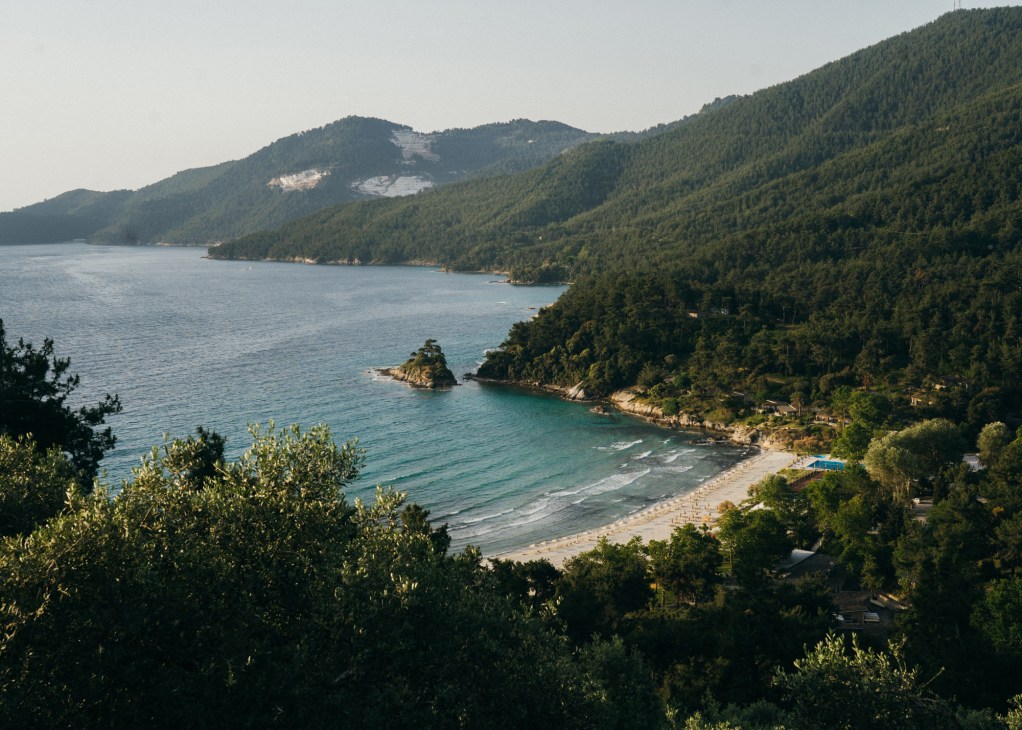
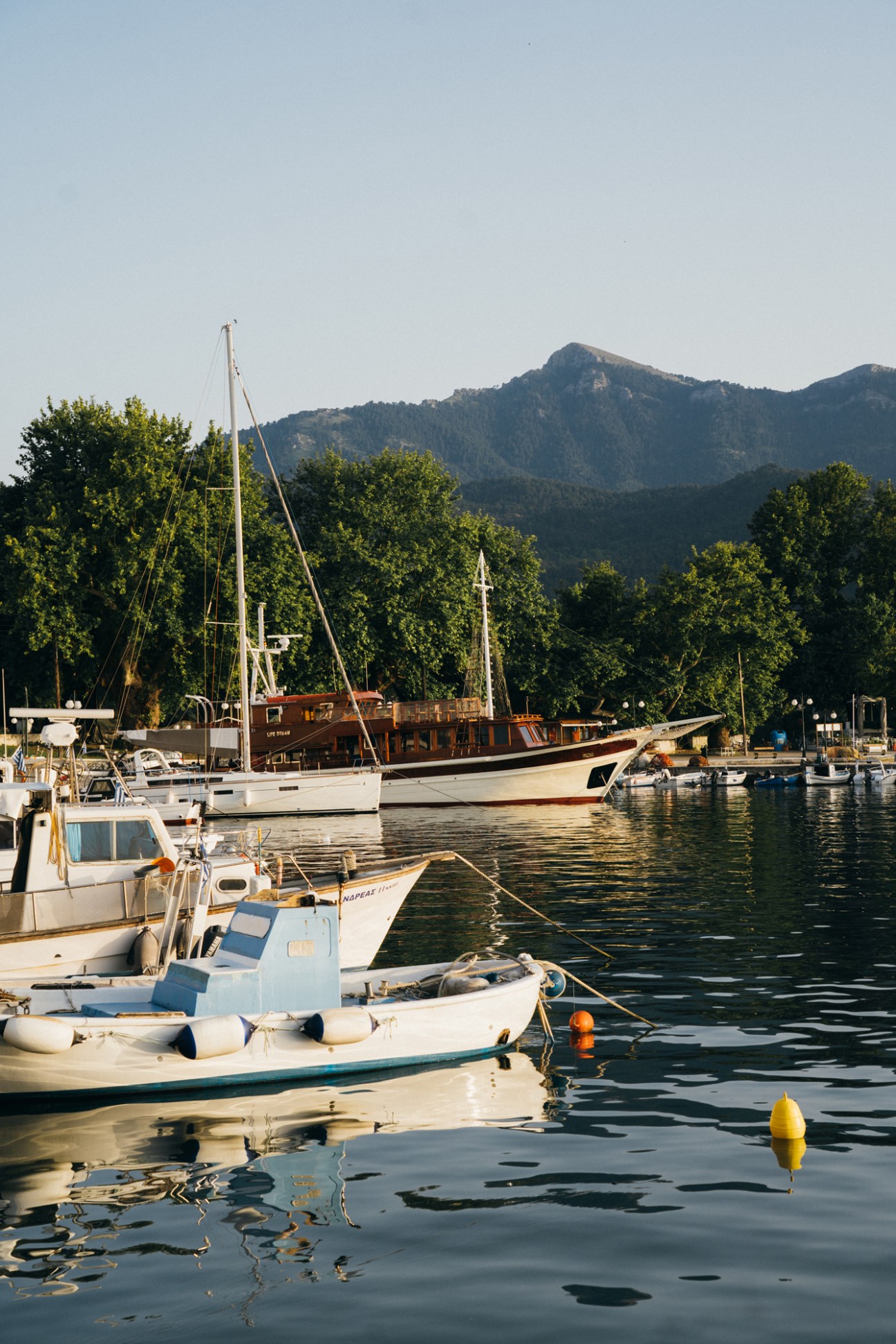
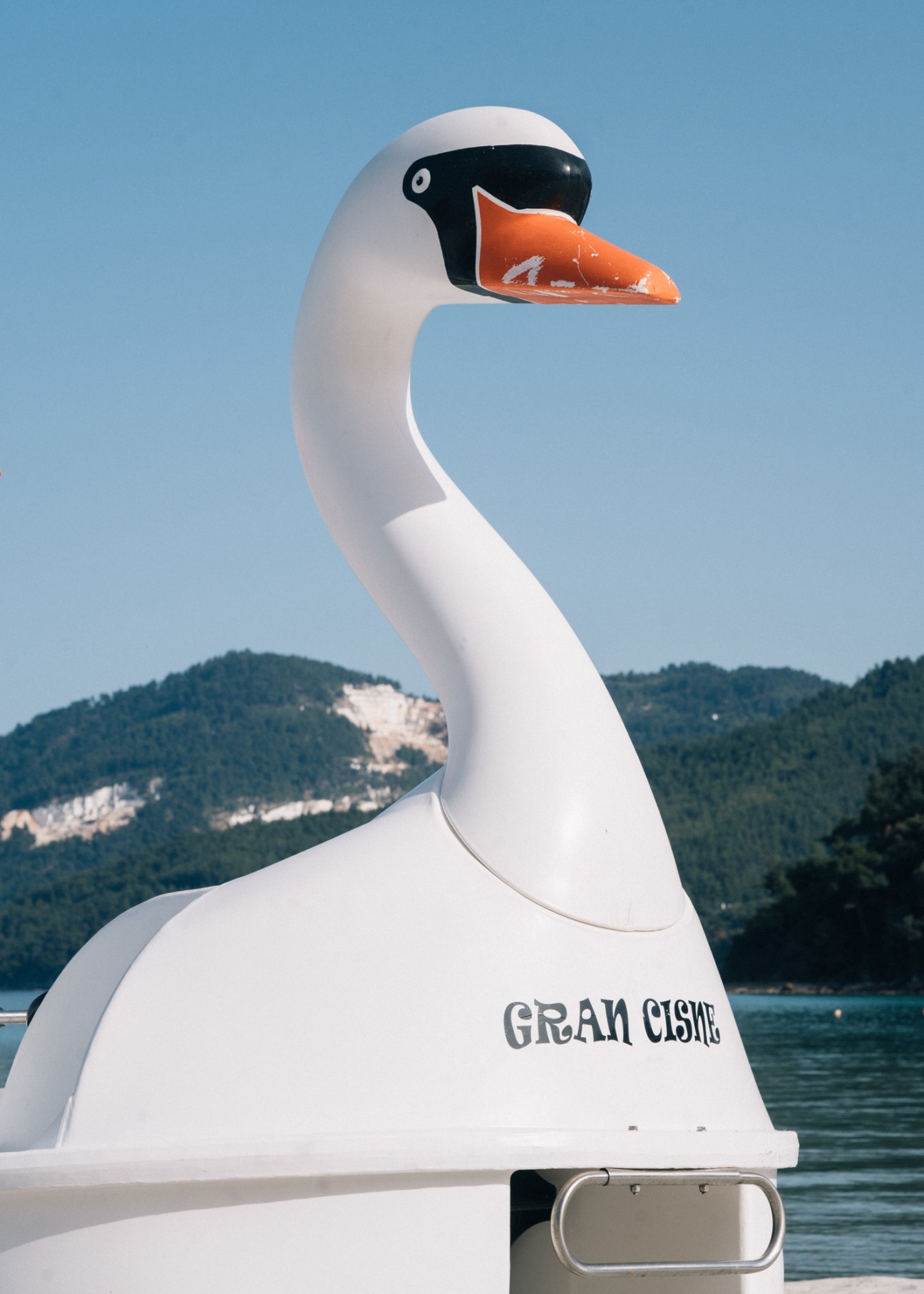
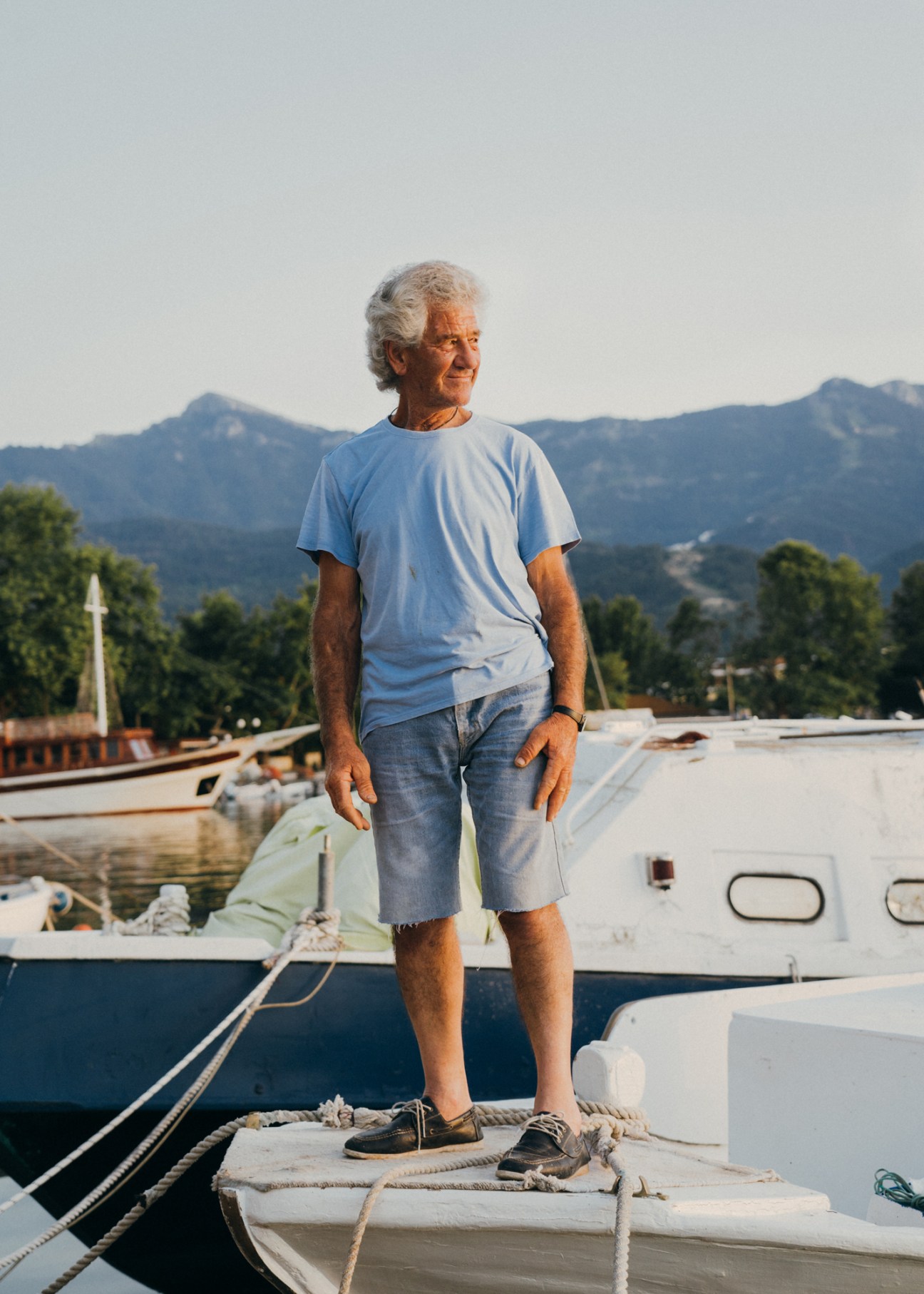
To keep this holiday economy ticking, Thassos has developed a network of seasonal workers, mainly from northern Greece. In summer 2019 there were 1,600 people working in the island’s hotels and rooms-to-let. “Hiring is a big part of our prep during the winter,” says Makryammos’s operations manager Kostas Bozabalis, who has been with the hotel for 17 years. “We start with a few staff in May and reach our peak by mid-June.” Among the employees is 23-year-old Anna Botsioglou, part of the hotel’s restaurant team for the past six years. “In winter I go back to my hometown of Alexandropouli where I take lessons in tourism studies as well as German and Russian,” she says. “We have a lot of German tourists on Thassos.”
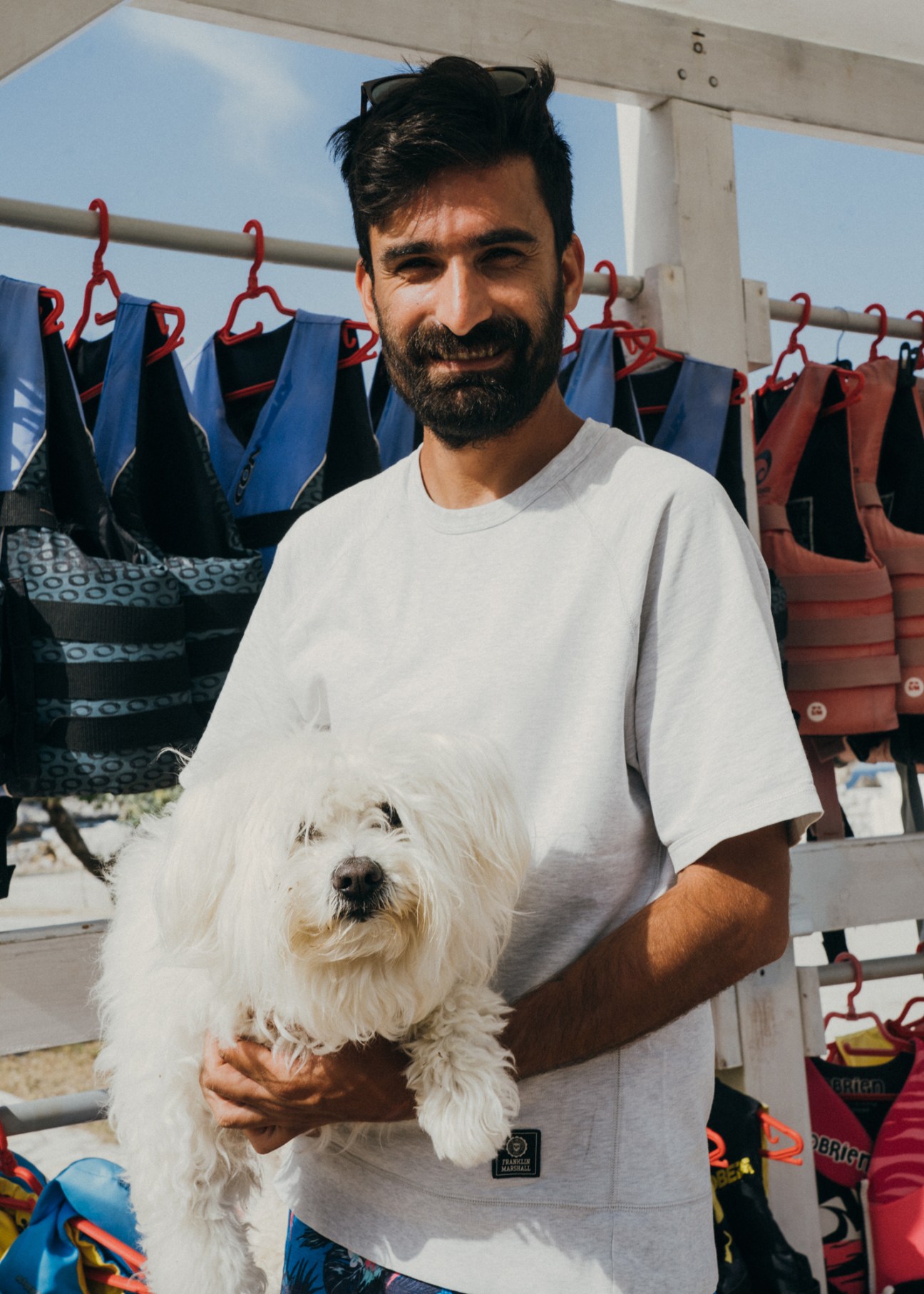
Thirty-two-year-old Vassilis Lagopoulos, a water-skiing instructor, spends his winters elsewhere too. “I work at Bansko ski resort [in Bulgaria],” he says. Lagopoulos set up Blue Waves Watersports in Thassos with business partner Evi Sioki in 2018. “Our most popular rental is the water ski,” says Sioki. “During the August bank holiday, we have nearly 20 consecutive ski sessions in a day.”

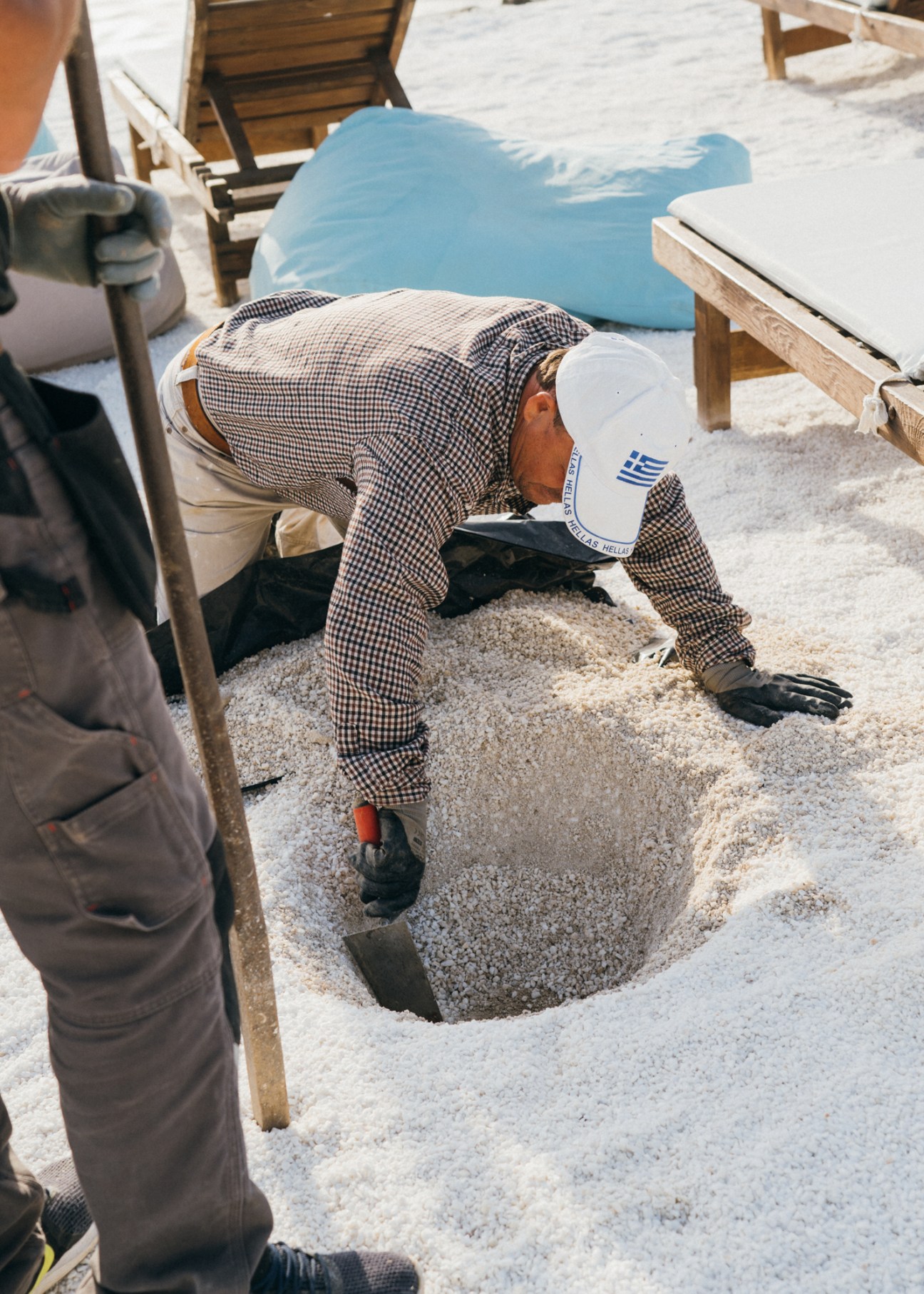
Thassos is no stranger to large numbers of tourists: more than 50 per cent of all hotels in the Greek region of Eastern Macedonia and Thrace are concentrated on the island. This season alone, 30 new small-scale hotels and other types of accommodation are under construction. “We have had a lot of orders and commissions from new hotels this year,” says Maria Ioannidou, owner of Skalistiri nurseries, which supplies plants to many of the island’s hotels. “We’re at our busiest from March until June, just as hotels are preparing to open,” says Ioannidou as she gives Monocle a tour of her nursery on the north side of the island. Plants are imported from all over Greece. “We used to import some from Italy too but this year it’s become a little more difficult,” says Ioannidou, a former graphic designer who is originally from Thessaloniki.
A 15-minute drive from where we meet Ioannidou, the port in Thassos’s capital, Limenas, is being readied to spring into action too. “Our ferries run year-round but 80 per cent of our annual profits come from about 100 days in the summer months,” says Giannis Mitsopoulos, owner of Kavala Maritime. His is one of three ferry operators making the crossing to the island, with a fleet of five. “During winter we send our ships for maintenance to the shipyards of Piraeus, Volos or Halkida. By March we’re ready,” he adds, estimating the number of crossings to Thassos during high summer to be 33 a day. Kavala Maritime’s pre-pandemic revenue during the summer season alone was about €3.5m. These ferries don’t just carry tourists but are also the main line of supplies to the island’s businesses.
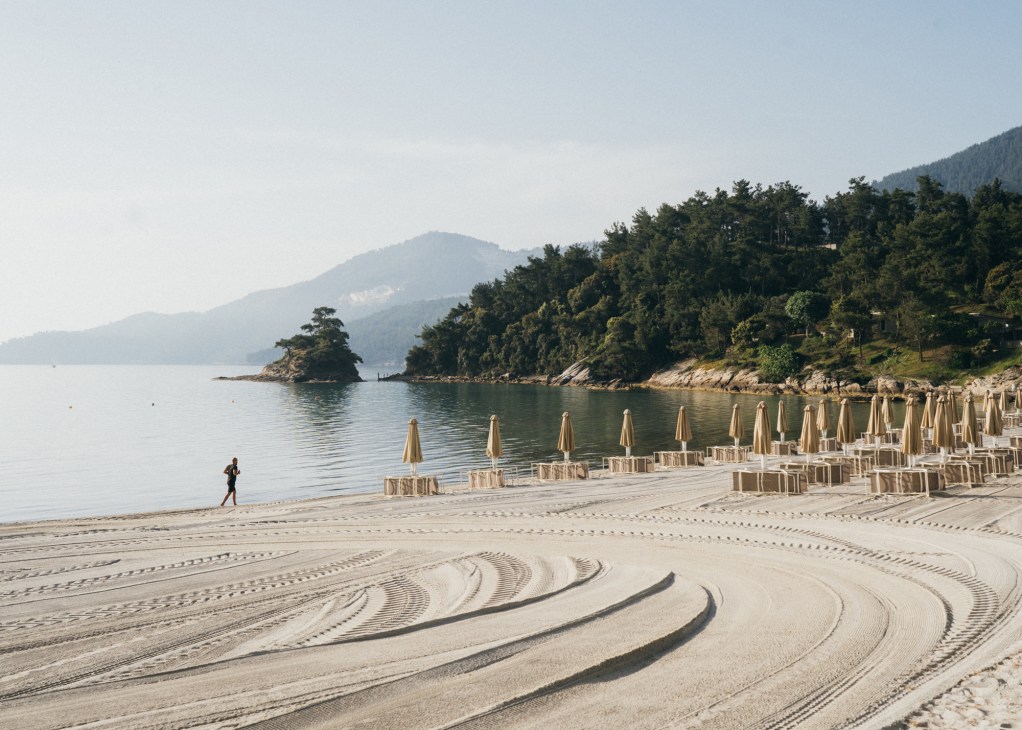
One of those businesses is owned by Dimitris Argiriou, the island’s drinks distributor, who supplies its hotels, restaurants, beach bars, mini-markets and kiosks. “Our sales team is already making the rounds, meeting our network of clients to gauge needs for 2021,” says Argiriou, who has been at the helm of this second-generation family business since 2008. At his storage depot near Limenas, pallets are stacked with everything from Coca-Cola to Greek wine and ouzo. “In a good year, about 150 pallets leave our warehouse every day,” says Argiriou, whose pre- coronavirus team of 58 has slimmed down to 28.
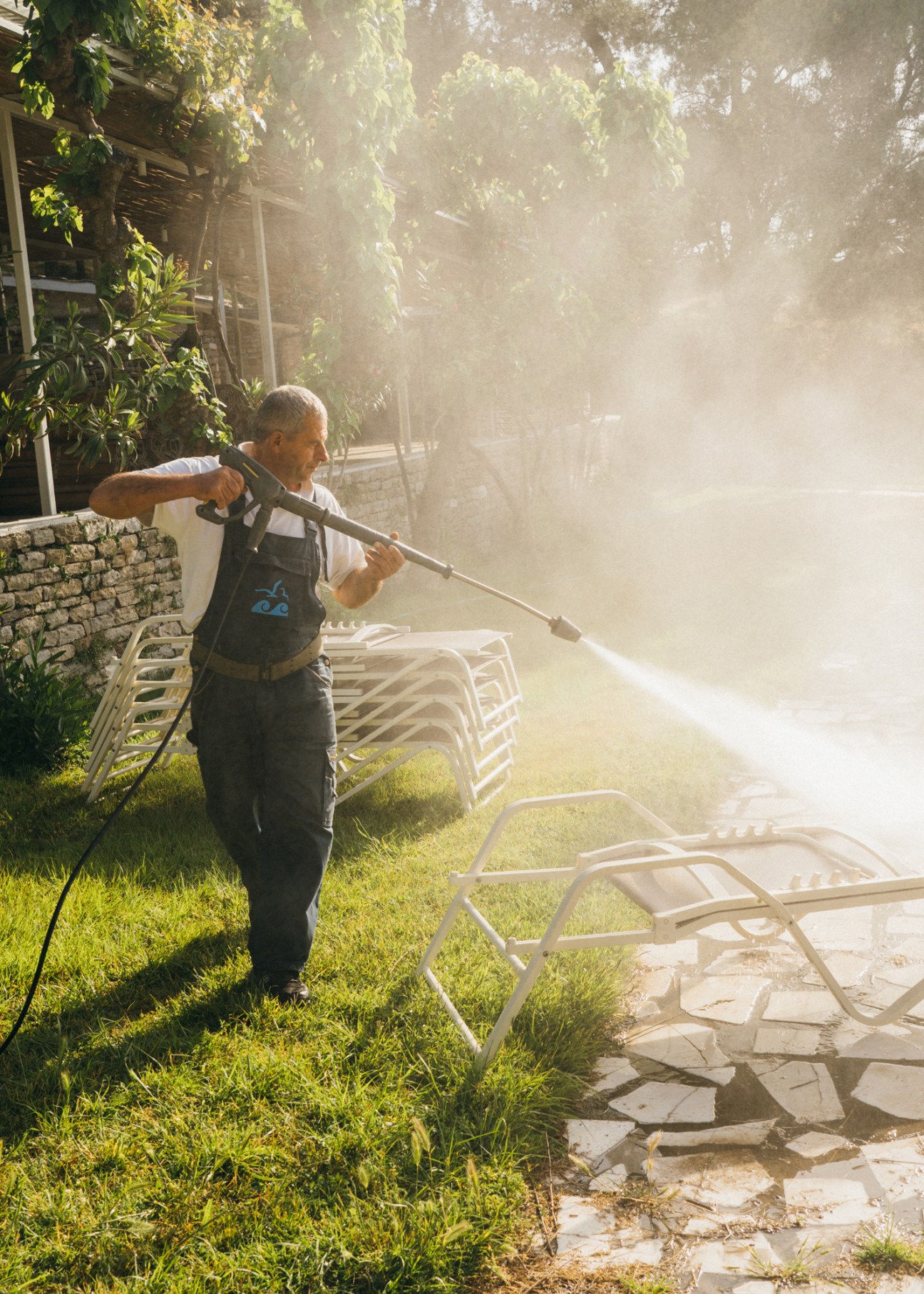
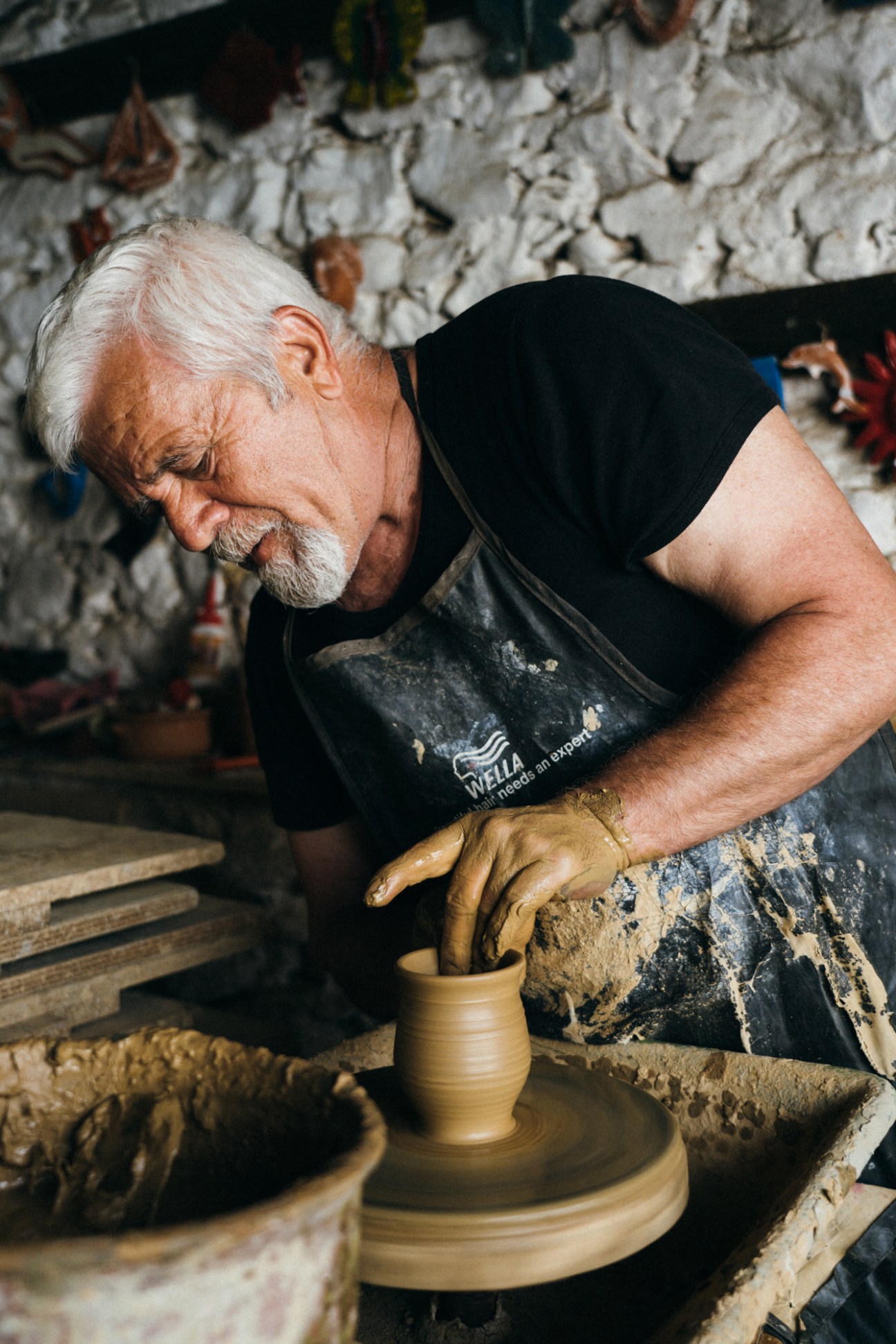
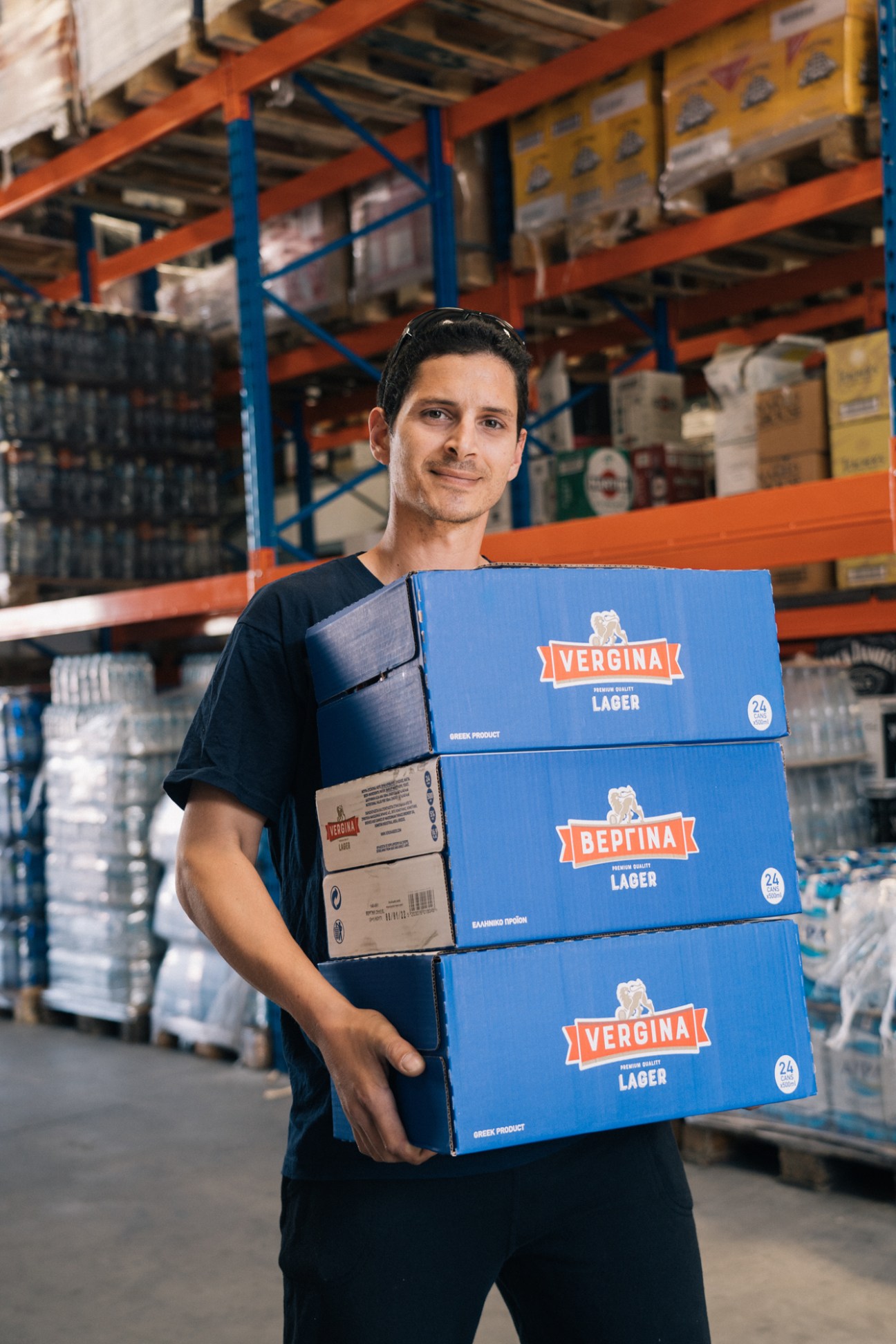
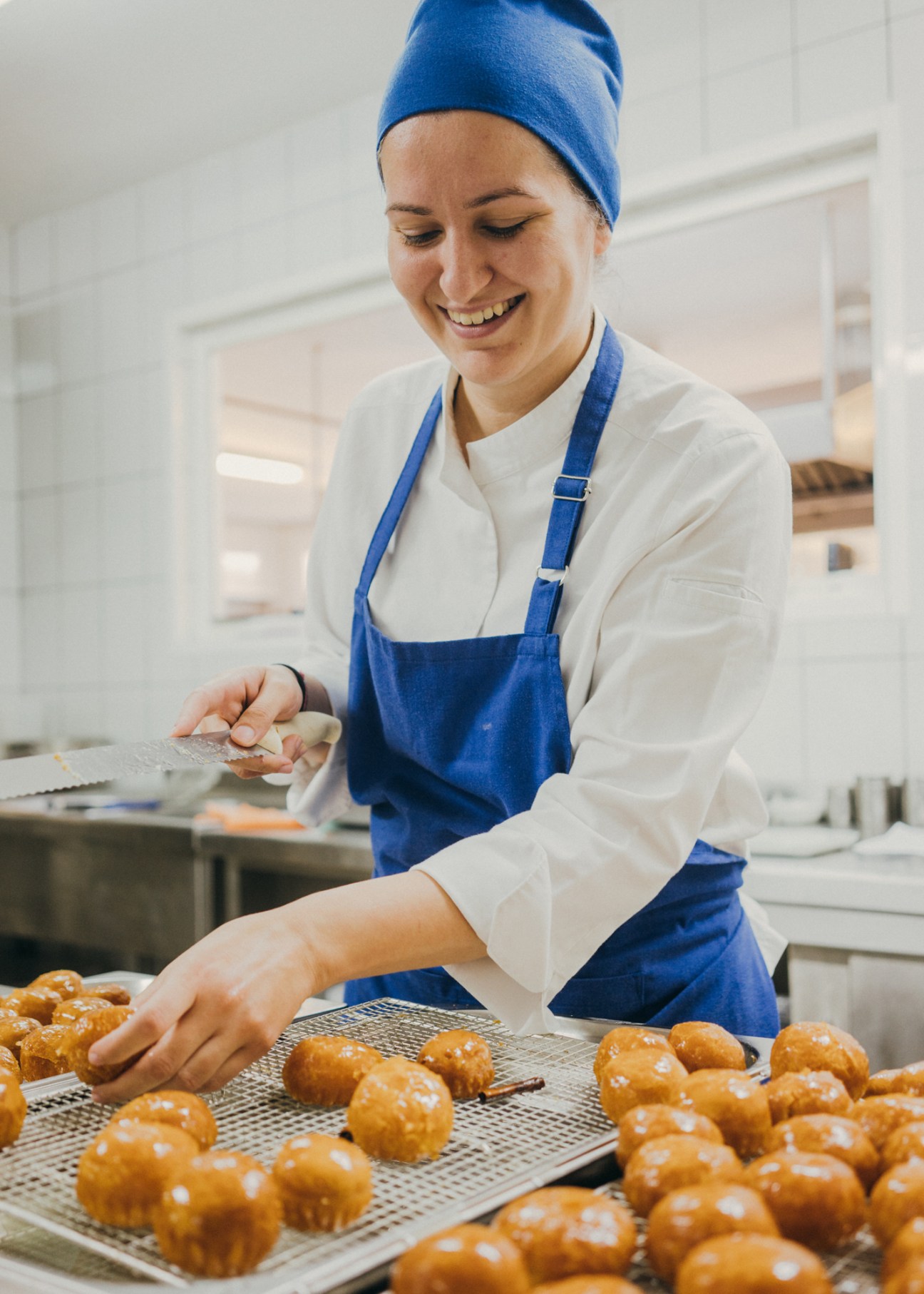
Smaller businesses follow the island’s seasonal pattern too. Near the port, pastry shop Sakis’s famous sweet-cream or cheese-filled bougatsa is a hit with locals and tourists alike. “In winter it’s just the three of us working here but now we’re up to seven,” says Maria Karabigiki, who runs the shop with her father Sakis and brother Iraklis. They churn out 50 baking trays a day which, during high summer, sell out before 13.00. “We’ve been around for 33 years, so tourists have got to know us,” says Karabigiki.
At the port’s edge, Karnagio beach bar is another family affair, the doors of which have just reopened. Its plush white cushions are already being used by people keen to experience the bar’s sunset views. “I’m much more optimistic about this year’s visitor numbers,” says co-owner Elena Tsoupra, sitting on Karnagio’s terrace with its views to Samothrace island. “We’re planning on introducing a sushi menu; the first on the island,” she says with a smile.
Compared with other Greek islands, Thassos’s businesses have to pack much of their commercial activity into a relatively short period of time. “Our season tends to last from the end of May until September,” says mayor Kyriakidis. “This is because Thassos is popular with families. So in September, when school starts, the island becomes calmer.” But while things remain busy it’s up to the island’s leaders and service to ensure that everything continues to run smoothly.
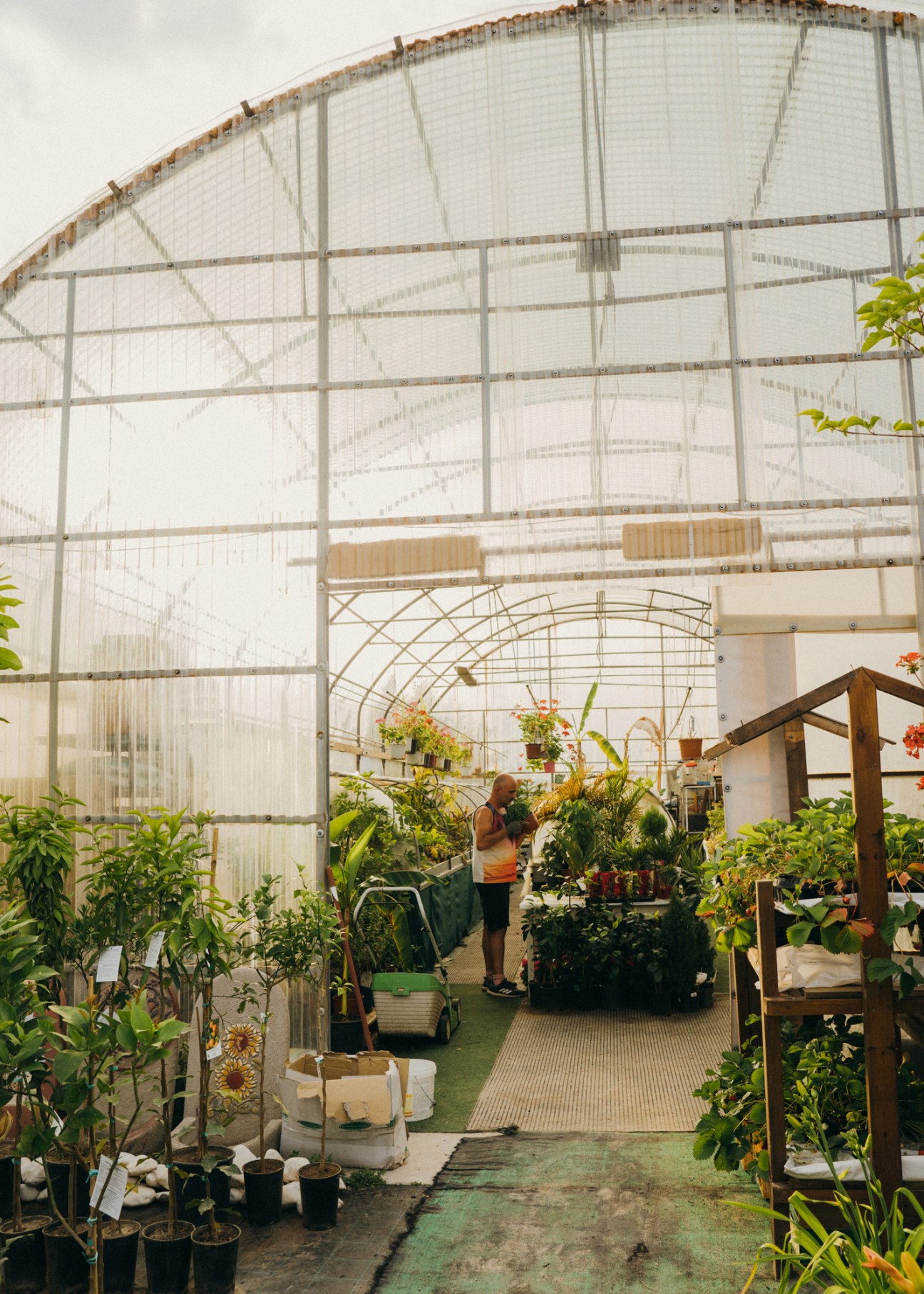
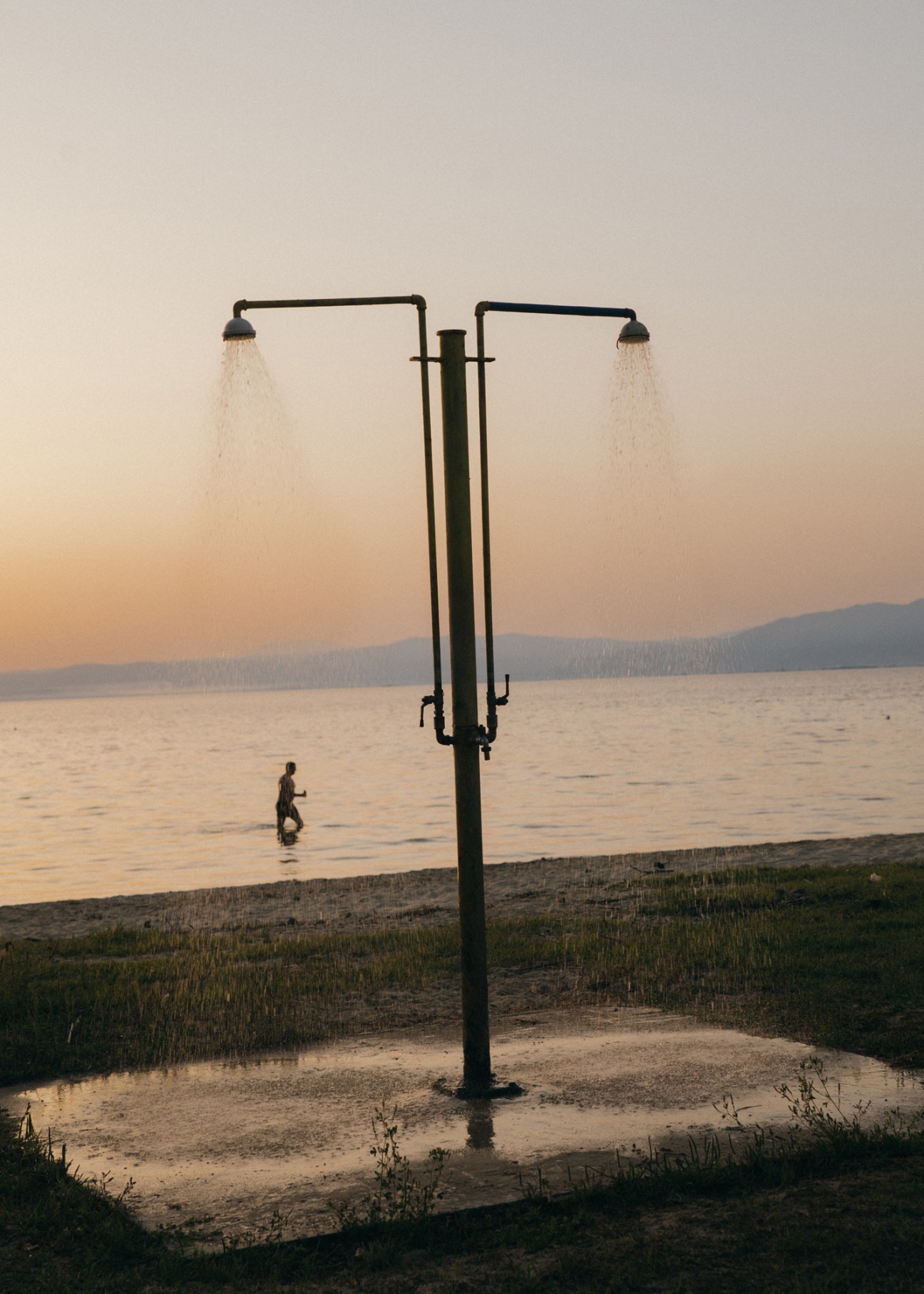
On particular alert is the island’s fire department, which is at the ready with six fire engines stationed around the perimeter of the island. “Because of its thick forests and vegetation, Thassos is at a higher risk of fire than other islands,” says Kostas Kontogeorgiou, the island’s fire-department chief. His team of 45 in March grows to 95 by June. “It’s rare for a Greek island to have so much greenery,” he says. “Trees start high in the mountains and extend to barely a few metres from the beach. That means we need to be very cautious.”
On the eve of Makryammos’s reopening, Mitzalis is making the final preparations to welcome the first batch of visitors. “At the end of the day, the tourist season is a group effort by the whole island,” he says. “Even when people stay in Makryammos, they’ll venture out and meet the local taverna owner or strike up a conversation at the ouzeri where fishermen gather. That openness to get to know the visitor is what Greek hospitality is all about.” Such hospitality might bring the punters back but it’s the whirring cogs behind the scenes that make it a success.
From the ashes
It all started with the art. When Lebanese-born hedge-fund manager Nabil Debs and his British wife Zoe moved back into his family’s historic stone-built home in the heart of Beirut’s Gemmayze neighbourhood, after decades living in Paris and London, they brought with them much of the art that they had collected. The long walls of the complex’s four high-ceilinged buildings proved to be a fitting exhibition space. Living in the large house with two young children, the couple filled their home with artists and creatives, and soon started opening one area up for exhibitions at the annual Beirut International Art Fair. As their home became an open house for talks, drinks and dinners, converting it into a public space where people could do such things felt like a natural next step. Transforming the space took time but the bones were there in the hewn-stone walls and distinctive Levantine floor tiles that run through the property.
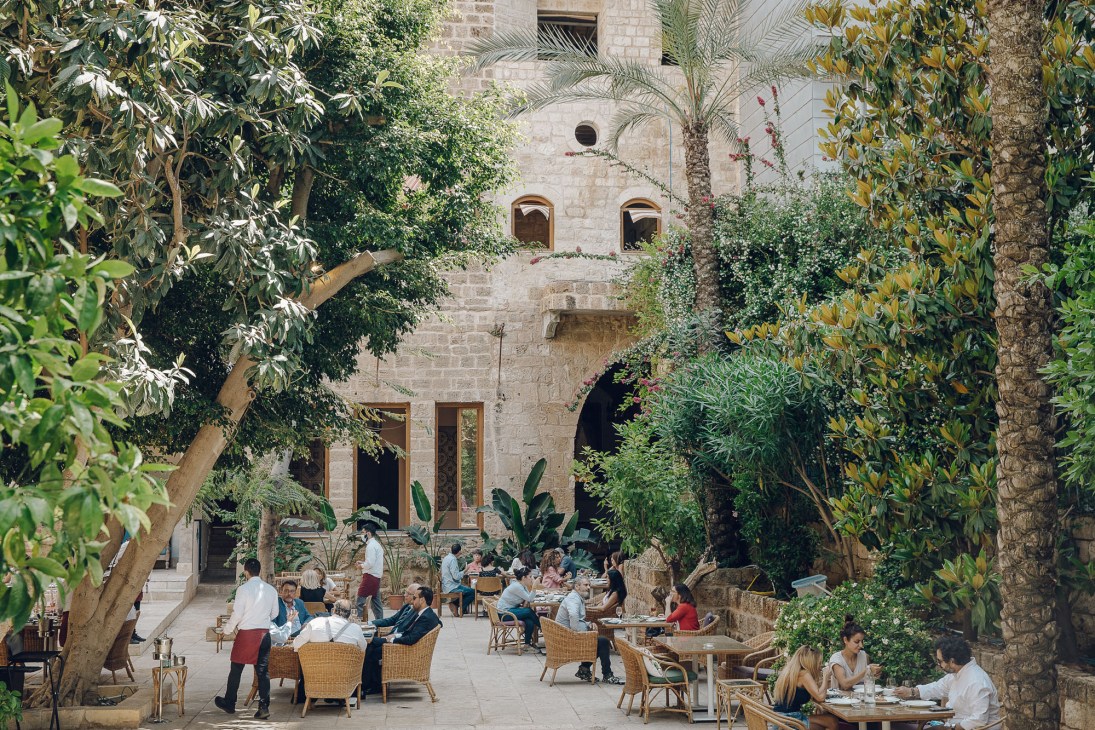
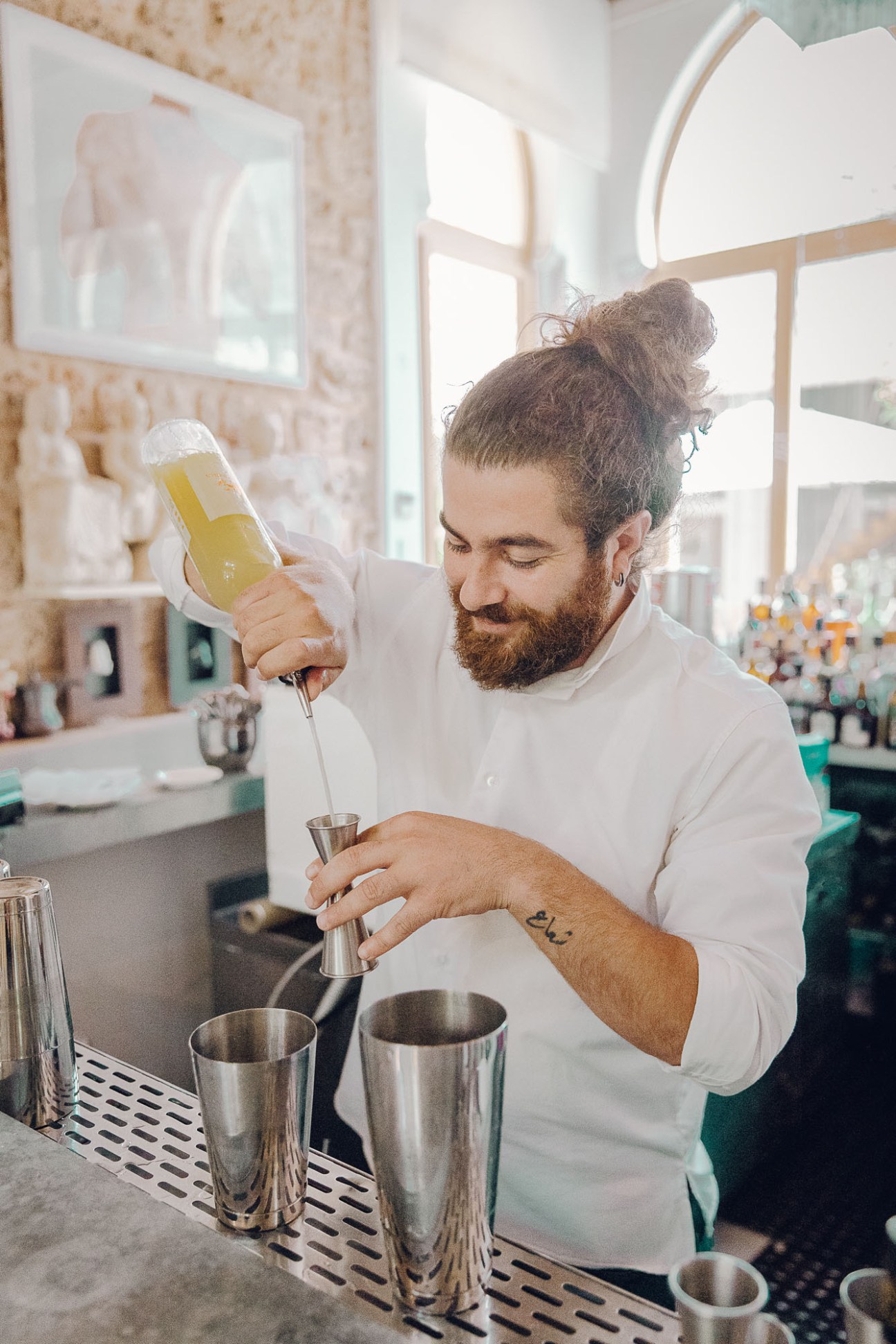
By summer 2020, Arthaus hotel was ready to launch. The first round of guests – a soft opening with a group of friends – arrived on 4 August. Just hours later, Debs and his guests watched, sheltering under the solid marble bar, as it all came tumbling down. The Beirut port explosion brought down the ceilings, shattering every window and door, leaving the 200-year-old façade as a pile of rubble in the courtyard. Luckily, Debs and his guests were uninjured but the street outside was in chaos. The hotel’s food and beverage manager, Michel Nakhle, spent the night ferrying wounded neighbours to hospital on his Vespa, as the roads were too cluttered with debris for ambulances to get through and young people began cleaning up with brooms and spades.
“When we saw that energy – those young people who had their homes destroyed but were determined to help everyone – we knew that we had to do something,” says Debs. “In a war you have limits, red and green lines, but this… Our way of life had never felt more under threat; it makes you even more attached to the land, to the country, to the house.”
Gemmayze address book
Nada Debs
Nada Debs’ (no relation) small shopfront is a gateway to the furniture designer’s studio. Climb the spiral staircase for a taste of her Libano-Japanese aesthetic. The smooth lines and intricate details of her designs are set against the architecture of a traditional Beirut apartment.
nadadebs.com
SIP
A safe bet for some of the city’s best coffee, this calm space is a great option for getting work done or catching some sun in the leafy back garden. Or get a takeaway and stroll through Gemmayze to check out some of the city’s best street art.
sip-cafe.com
16MM
Silent films play on the wall of this open-front bar where stools spill out onto the street along with the laughter of customers sampling the bartenders’ inventive cocktails and homemade spirits.
1961 371 3060
Loris
This historic rose-pink house offers an inviting courtyard and a lush, softly lit garden in which to enjoy some of the best traditional Lebanese fare in town.
loris.restaurant
Aaliya’s Books
This café-cum-bookshop stocks a range of Arab and international writers in English, Arabic and French translations. Stay until evening for nightly talks and live music.
aaliyasbooks.com
Nabil and Zoe set a deadline to fully rebuild the hotel within a month. In September they held a charity sale featuring the work of 60 Beirut artists, with the proceeds split equally between the artists and the Lebanese Red Cross. Even though they hadn’t officially opened before the blast, word about the hotel spread and clients arrived to experience the art and the atmosphere, and to see a place that managed to open amid the rubble. “Everyone comes here with something to contribute,” says Debs of his creatve partners. “They tell me what they’re thinking of creating and if it’s interesting, I’m open. We’re being open and organic in our approach and discovering things. We’re not copying anything – and that model is our edge.”
The grounds provide an unexpected pocket of tranquillity, just steps away from one of Beirut’s busiest nightlife thoroughfares. “I didn’t want a neon sign outside pointing our way,” says Debs. This isn’t really a spot just for walk-ins but for those in the know. At every lunch and dinner the tables are packed with designers, writers, photographers and artists debating their latest projects.
One of the Debs’ aims is to give guests access to that network by operating a concierge service that connects visitors with the right people. “We want to take you from your curiosity about the region to actually getting in touch with the real thing,” says Debs.
The guest rooms range from doubles to multi-room suites. Each one is named after a family member, starting with “Hanna”, who lived in the oldest of the four houses, built in 1790. All the art and furniture throughout the hotel has been tracked down by Nabil and Zoe over the years, much of it once hung in their properties in the UK, France and Cuba. There are currently nine bedrooms but there will be 23 when the property is complete. Also in the works are a sauna and steam room, a separate bar and live music space, and an underground lounge built around the main house’s ancient water well.
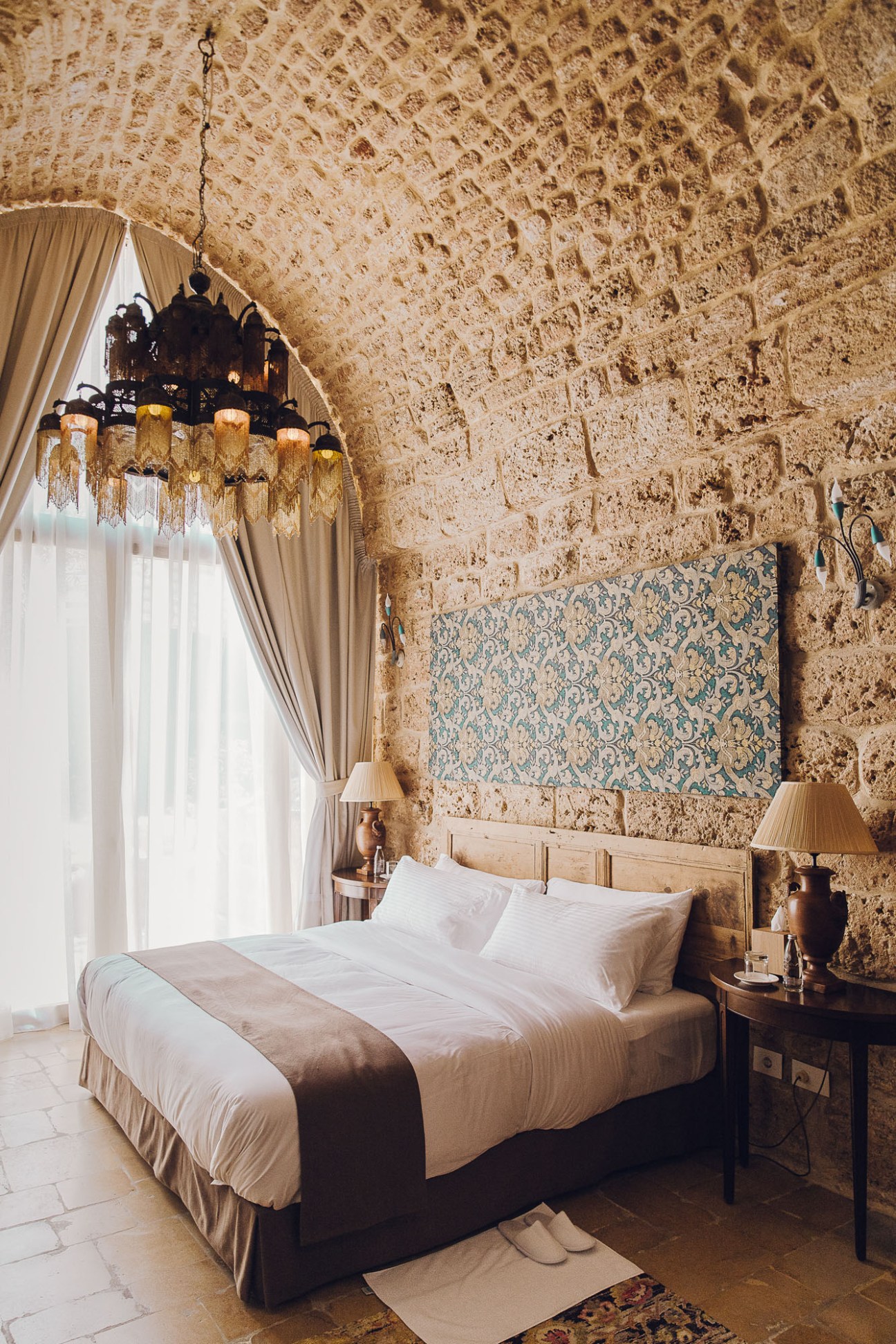
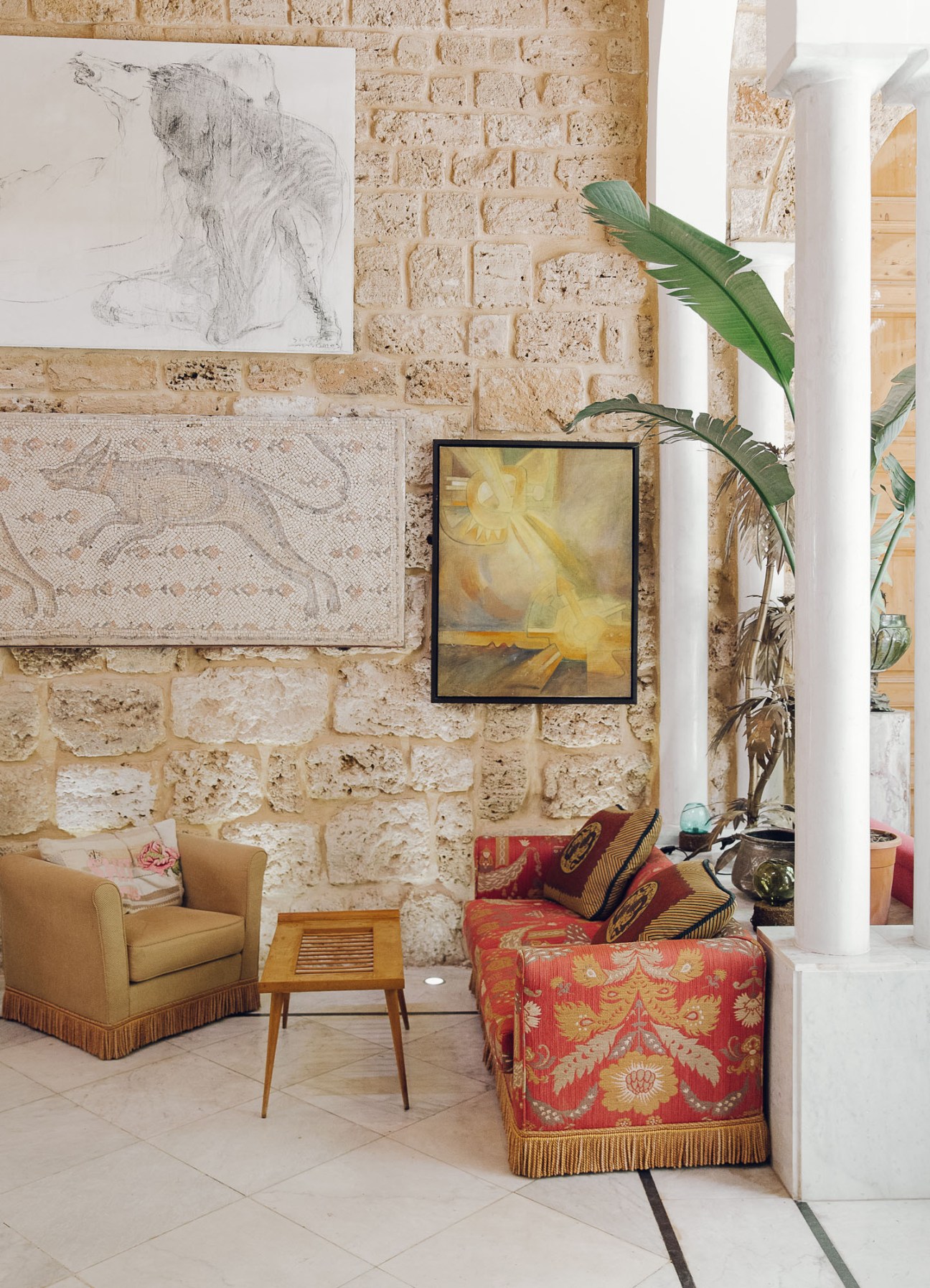
There’s sun for those who want it on the wicker loungers surrounding the outdoor pool, and plenty of shade for those who don’t under the leafy trees and high-arched porticos. The hotel’s restaurant – the hottest new ticket on Beirut’s culinary scene – offers fresh, inventive twists on classic dishes, showcasing high-quality ingredients cooked to perfection. Arthaus’s signature cocktails are the stars of a very well-stocked bar – combinations themed around art and architecture.
After so many challenges, Arthaus is at last thriving. As Debs walks from table to table greeting old friends and regular visitors, it’s easy to see his delight. “Yes, it’s a business and you have to be commercial,” he says. “But what’s most important to me is that you’re putting in your feeling, your life, what you enjoy – and you are sharing it.”
arthaus.international
Sand guard
We all do it. Wherever your chosen beach, from behind your sunglasses you find yourself ticking off species of beachgoers. It’s like a safari but the only zebra stripes or leopard spots to be found are on questionable swimwear.
There are, of course, the naturists with their dinglers dangling – why, you wonder, is it never the handsome ones who go au naturel? There are immaculately dressed French families with children who actually seem to like each other. Loud yacht kids who come ashore just to annoy the snoozers. Secretly we love them all. So that’s why we asked our writer, Mr Bound, a man who is half human, half sun-loving lizard, to give us his guide to the folk we secretly long to be among this summer. Danglers and all.
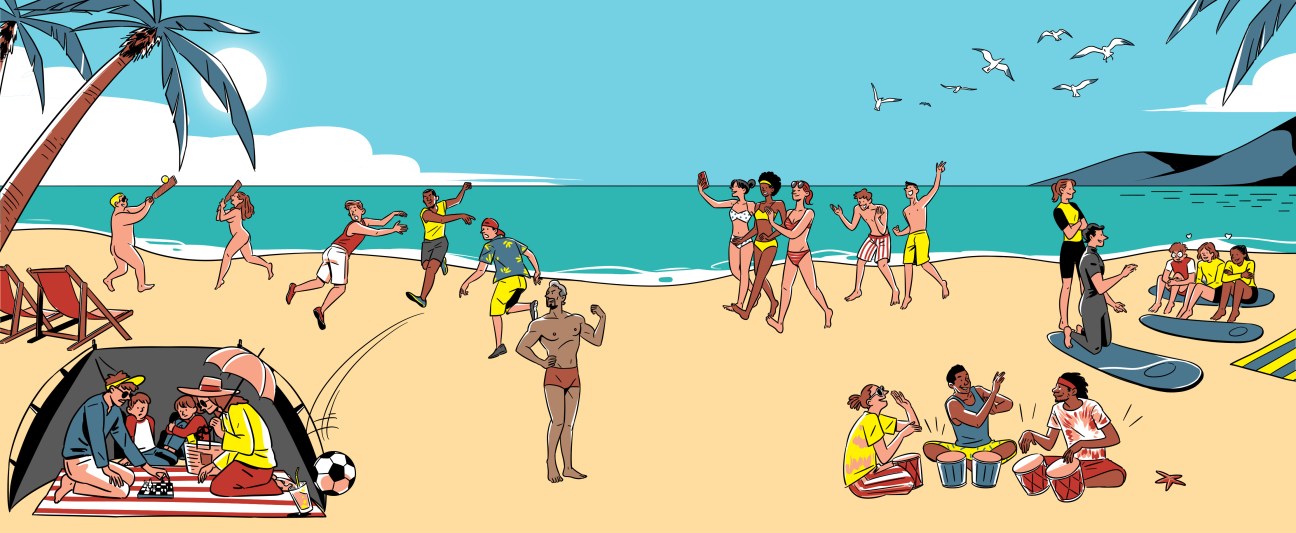
1.
The Sun-shy Family
This cohort is all about maximising their time, so it’s up early to snare a spot of sand with the rough footprint of a Masai safari encampment. Why so? Well, Mum, Dad and the two children will each need a large-ish sun-reflective screen behind which to get changed before joining the master tent. Bi-hourly applications of a factor 90, sleeves and hats make for a fun-filled day that translates as chess in the shade.
2.
The Naturists
You can spot them from the other end of the beach. Not because of the sun bouncing off boobs and bums as yet unkissed by sunshine but because they’re so damn active. When softball requires that much horizontal and lateral lunging you’d think some sewn-together support would be not just proper but a simple safety measure. It’s safety-first with the shades, hats and sandals, though: they’re all permanently affixed and at the “serviceable” end of fashion. Just not the clothes. Any clothes. Ever.
3.
The Beach Bullies
This handful of lads have turned the beach into their own personal Olympics – and everyone’s… if not invited, then inevitably involved. The football ends up spilling drinks and lunches, that frisbee’s veering dangerously close to the hawkish lifeguard and the vigorous water polo ensures there’s not a dry eye (or ’do) in the shallows. Of course, the beach is big enough for all but it’s more fun to plant your own San Siro in the middle of everyone’s loungers, right? Duh!
4.
The Ancient Adonis
Fabio has been tanning, flexing and looking inscrutable on a certain stretch of the Amalfi Coast since time immemorial (roughly 1973, when his tiny Tanga-style trunks were last di rigore). Fabio’s routine is well-disciplined: two hours of sun, morning and afternoon; lunchtime is for perusing La Gazetta dello Sport, an espresso and a cigarette. Fabio knows two things to be the enemy of his physique: dolci and sitting down. Fabio is therefore almost literally a bronze.
5.
The Horny Teenagers
What beach would be complete without a dozen teenagers falling in love for their first summer? There go the boys teasing the girls and the girls pretending not to notice. And there go the girls – swimming or doing a photoshoot while innocently licking ice creams. The boys, for once, don’t know where to look. Almost. Everyone, while faintly disapproving, is jealous, of course.
6.
The Percussionists
Ah, bliss! The hint of a cooling breeze to massage that warm Mediterranean sun all over you. Take a nap, why not? Mmmm… but hang on, what’s that? Is it..? Oh, man – other than some distant band, of which this lot are surely not members – who thinks it’s a good idea to bring their own hand drums down to the beach? And then believes they have the necessary pedagogic skills to show their friends how to bang them? Which they can’t because that thing they’re smoking isn’t a cigarette, right? This crew, that’s who. And all resplendent in tie-dye too.
7.
The Surf Instructors
François and Eloise are the children’s surf instructors and every man, woman and child has a crush on either or both of them. Gorgeous, tanned, toned, charming and carefree, they’ve been turning up here for a decade and appear to spend their winters cryogenically frozen, so kind has time been to their dimples and – lack of – wrinkles. Whether they have ever had to pay for their dinner is still unknown.