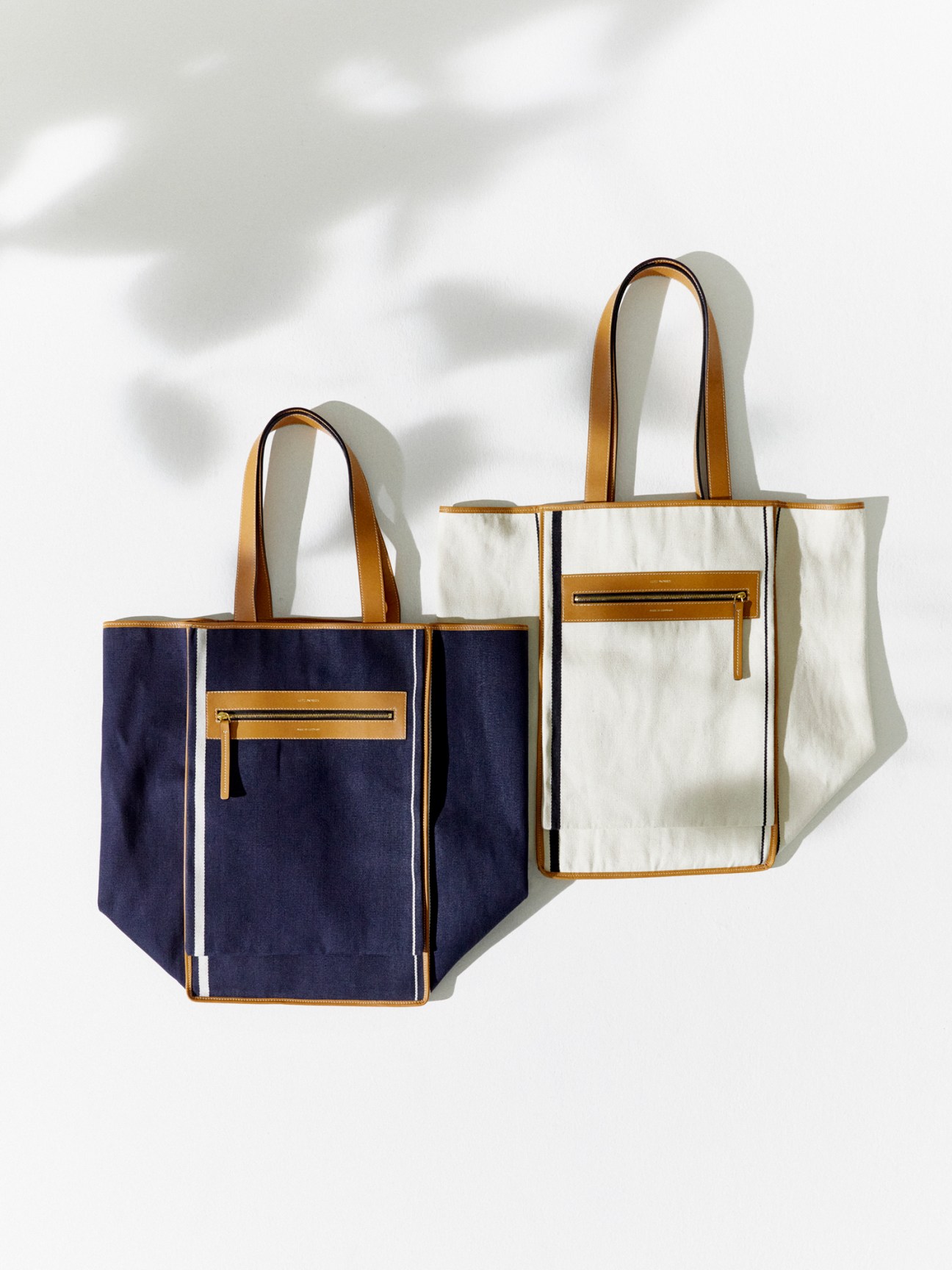
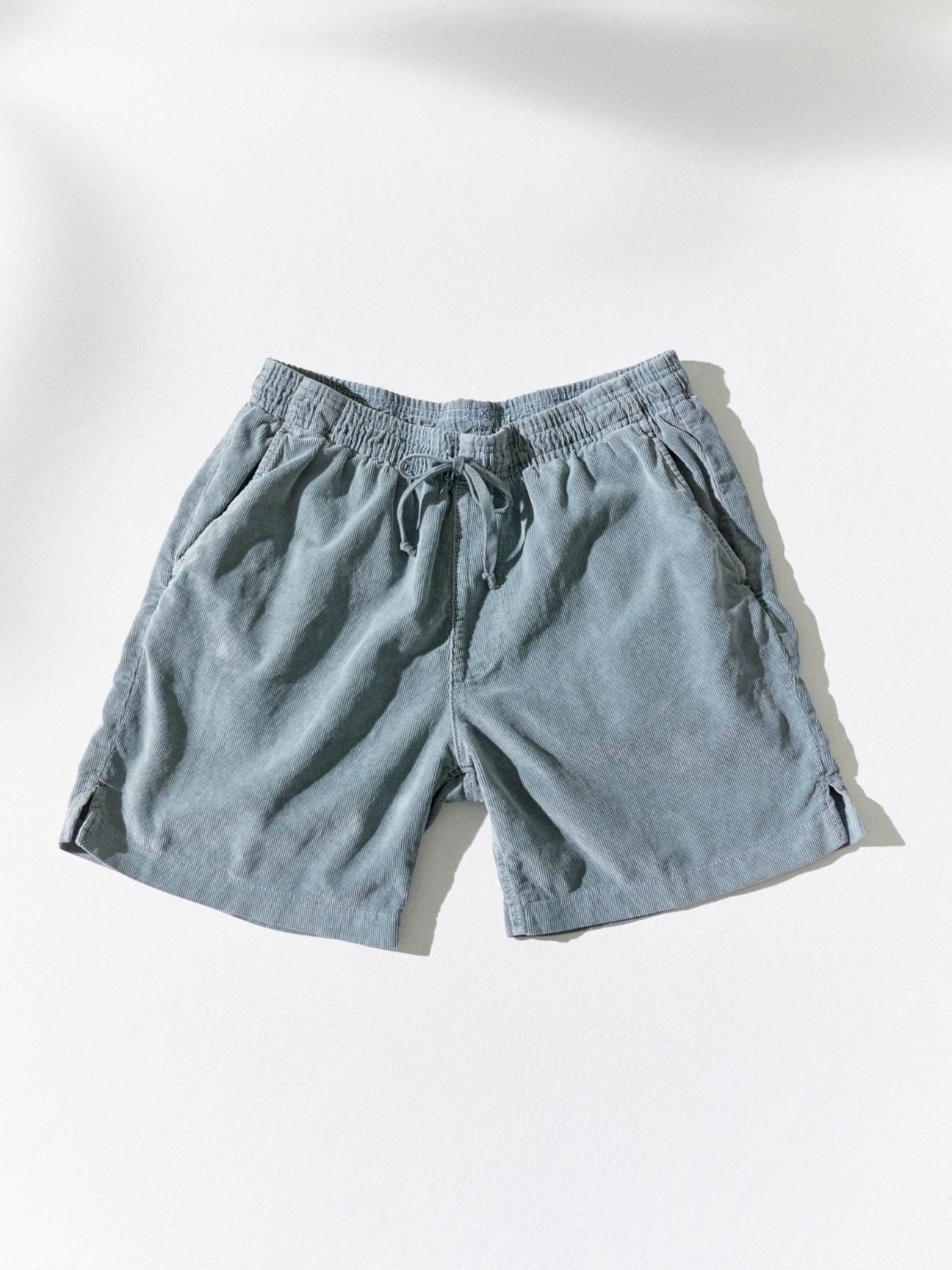
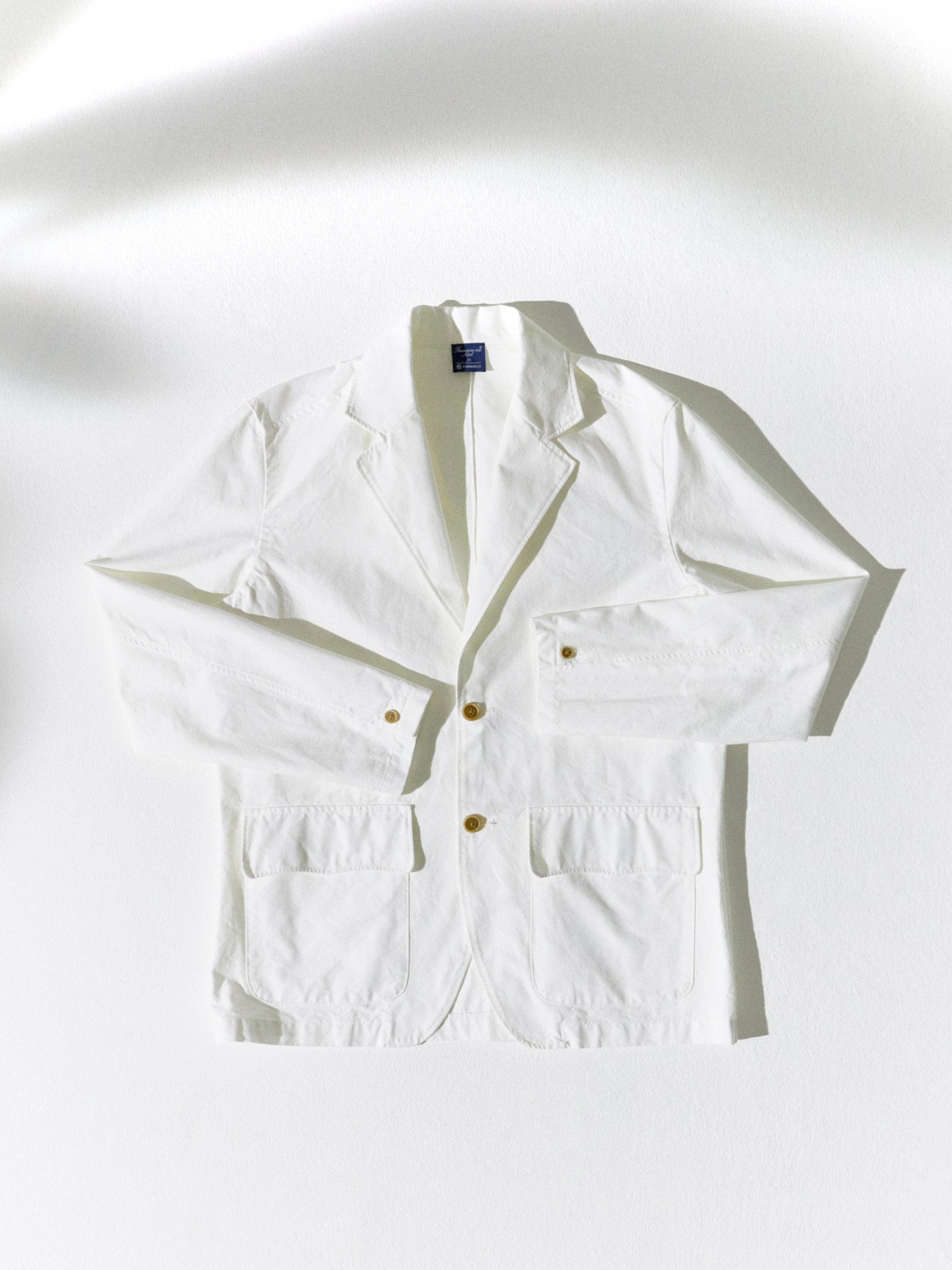
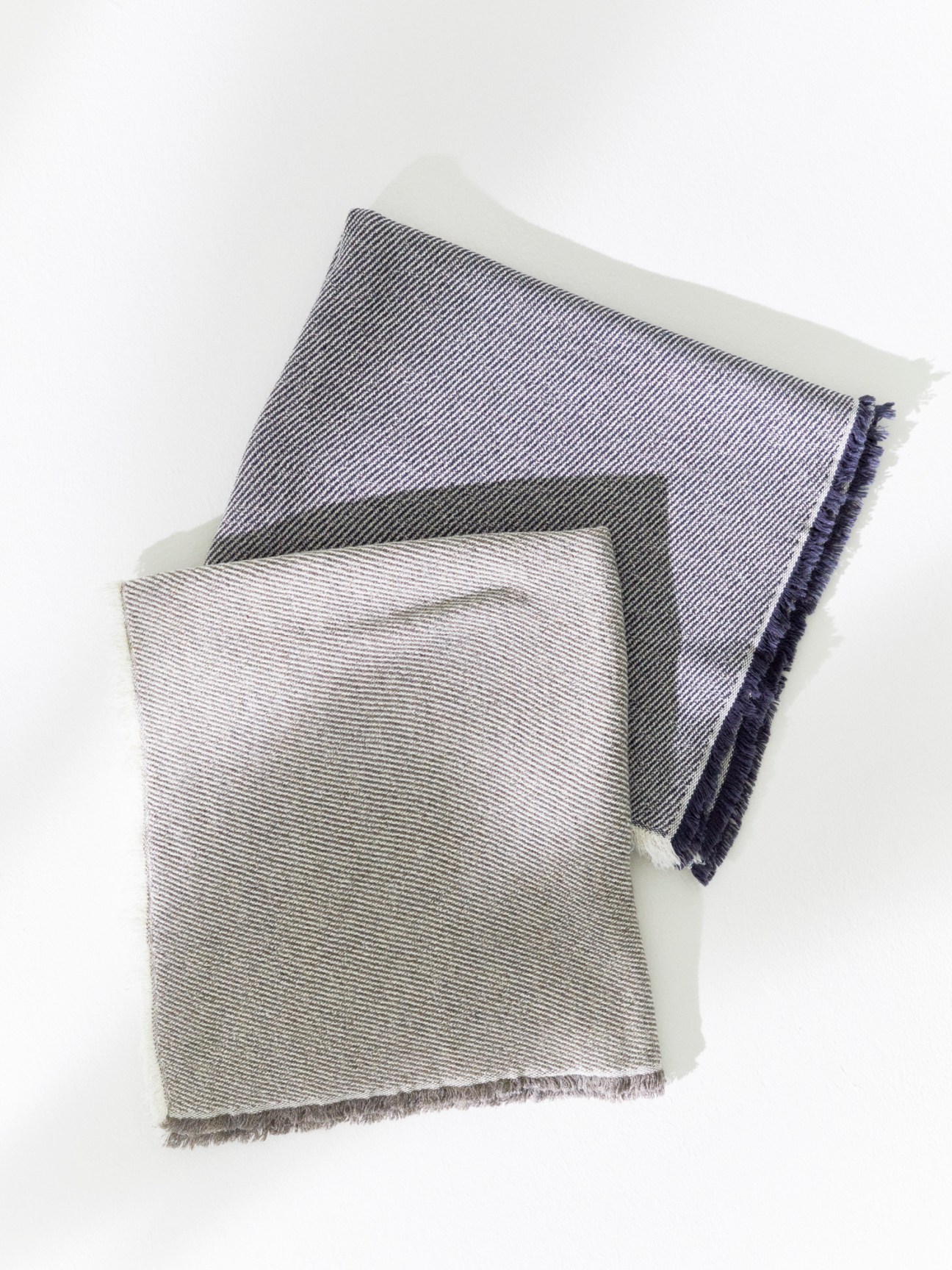
Currently being edited in London

Daily inbox intelligence from Monocle

Issues

Staying in shape

In a year when so much has changed, the fashion industry’s leading brands have overcome the demands placed on them by refining their established business models rather than completely reworking their offerings. Many of the industry’s successful players – such as the veterans of their respective trades who Monocle speaks to here – have experience in this regard. They are people who during their careers have persevered through numerous challenges, including the global economic crisis, shifting consumer behaviour and heightened concerns for sustainability and transparency. Fashion, after all, is an industry that’s constantly adjusting to fluctuating tastes and major global events. Perhaps that’s what makes it so exciting.


1.
Jean-Christophe Babin
CEO, Bulgari, Rome

Bulgari is a luxury brand that takes inspiration from ancient Roman architecture and uses time-honoured craft techniques to make its watches and jewellery. However, over the past year it has had to become a more up-to-the-minute entity. By reacting quickly to the sudden changes to a market that had sustained it over its 137-year history, CEO Jean-Christophe Babin has helped to steer the Rome-headquartered company to safety and improved business in the process. Specialising in pieces for a mainly female audience, Bulgari is buoyant; in 2021 sales were up from even pre-pandemic highs.

Like many luxury labels before the pandemic, Bulgari had enjoyed sustained growth from customers travelling to Europe from Asia, who focused on big-ticket purchases. When this market vanished almost overnight, it moved to strengthen its relationships with customers who lived close to its shops worldwide, while growing its e-commerce platform alongside this bricks-and-mortar offering. In the process, as Babin explains to Monocle, the lvmh-owned company has set something of a benchmark for modern luxury labels in 2021.

How is the Bulgari brand faring, particularly in retail?
Generally speaking, retail is back. For many companies, including Bulgari, at this point in 2021 we are up on the same period from 2019, which was a peak for the luxury industry. There is an appetite from our clients for our offerings. People have sacrificed so much of their spending over the past year or so – from dinners to going to the theatre and holidays – that they are thirsty to indulge. Luxury is bouncing back and the money that people are saving on not going to the Maldives is going into a watch or a handbag.

What about bricks-and-mortar retail? Has your approach shifted with fewer people travelling?
The shopping experience has become a more local one and servicing this clientele has become much more important. It’s the same way we did business years ago, before the postwar economic boom and the rise of aviation and travel, so we’re looking at it through this lens. We’ve gone back to a more one-to-one approach with our local customers, which has created an extraordinary opportunity to create a stronger bond with the core of our consumer base. In the past our top customers, those buying €1m necklaces, would feel this one-on-one experience but we were attracting those spending €1,000 or €2,000 with “one-to-many marketing activities” online and very few real one-to-one interactions. But with the world closing down we were forced to go back to these more intimate types of offerings to everyone. The result is an incredible growth in sales with local clientele.

So how have you changed your approach to this clientele?
If we’re to take Milan as an example when it comes to our collections, it’s not as though the Milanese tastes are far removed from Chinese or Americans – our B Zero1 ring is a big seller worldwide, for example. We don’t have “ethnic” products, so to speak, so in today’s new context, the experience that our sales associates in shops are providing is not so different to how it was before. But because there is less foot traffic, we’re providing more quality time and a better experience to those clients visiting our shops. Our staff have been working hard to create a real bond with these people, which was previously missing a bit. We sell to fewer people, especially in former tourist destinations, but the average sale is much higher. Tourists typically buy at more entry-level prices, whereas our local customers have always tended to buy bigger-ticket items. Now they are enjoying this refreshed retail experience, we can provide even more to them.

In a design sense, some European luxury brands have struggled recently as they’ve realised they left behind their European audience in the pursuit of an Asian clientele. Has this been the case at Bulgari?
We never design product for a specific type of customer; we design products that are inspired by the art and architecture of Rome. We’ve always attempted to mirror our brand’s dna in the pieces we create – born in Italy, influenced by the dolce vita lifestyle – and this has been appreciated by a universal audience because, well, Rome is Rome.

Tell us more about how this expression of Rome comes across in your product designs?
In the early 1900s our goldsmiths would walk to the laboratory every morning because there were few cars on the streets of Rome. So they were being influenced by their surroundings without even realising it. The city’s bold, strong architecture, full of contrasts and built on such a giant scale, has always come across in our jewellery and products. From the Pantheon to Renaissance palaces to Studio Fuksas’ more recent “Cloud” convention centre, everything in Rome is larger than life. Some of the flower patterns that we found on the Pompeii frescoes have inspired designs, while the essence of the Pantheon’s roof structure has been captured in other Bulgari products.

Are there any other bright spots in your business that we should be paying attention to?
There are very few women’s watch brands like ours. Many brands focus on men by offering very masculine designs and derivative products for women. We make our watches in Switzerland but, unlike most of the brands in that country, we are focused on the women’s market and this is a big opportunity for us. Watches for women make up 40 per cent of global sales. The few brands that are really designing for women are going to capitalise on this.


2.
Véronique Nichanian
Artistic director, Hermès men’s universe, Paris

Hermès is known for its lush, tactile materials, including fine leathers and printed silks, but it has had to rely heavily on the virtual sphere over the past year when presenting new collections and selling products. Yet the company founded in 1837 has weathered the pandemic well, emerging as the best performer in the luxury industry in 2020.

On the design side, the lockdowns presented new challenges for Véronique Nichanian, artistic director of the Hermès men’s universe – including clothes, accessories and perfumes – who has been at the brand for more than 30 years. Unable to stage runway shows, Nichanian turned to video, collaborating with French stage director Cyril Teste on films of live performances presenting her spring/summer and autumn/winter 2021 collections. From her office above the Hermès flagship on Rue du Faubourg Saint-Honoré in Paris, Nichanian tells us how luxury brands need to be innovative.

Véronique Nichanian sitting in yellow chair wearing cream sweater in office with framed photos on wall

How would you describe the ‘men’s universe’ that you’ve created at Hermès?
In the spirit of Hermès, it has a sports-chic elegance that’s in touch with today’s era, with a side that is relaxed but also sophisticated and refined. This relaxed elegance is really very French. My work has always involved the interplay of materials and colours, bringing in unexpected tones or mixing technical fabrics with timeless ones such as wool, linen and cotton. These are hybrid clothes for a period – a way of life – that is a bit hybrid.

What role does Hermès’ long tradition in the industry play in your work?
I don’t go into the archives. I want to steep Hermès in modernity through the use of new technologies and new fabrics, which are not things one finds in the archives. I am inspired by the force of Maison Hermès – the human hand and innovative craftsmanship – and this has always been marked by modernity and technology. Hermès has old, classical foundations but it has always been terribly modern in how it expresses objects as reparable and durable. Customers today understand these values more than ever at a time when we need to be aware of the environment by buying less but better. I don’t need to search for this in the archives; after 30 years, I am impregnated with it.

How does this sense of modernity come across in the materials that you use in your collections?
I find it interesting to mix fabrics such as wool, fine cotton and linen with a material like neoprene. Today a man will wear a pair of trainers with a linen suit. This telescoping of materials gives this elegance, nonchalance and comfort. All the fabrics that we use are made exclusively for us, so I work closely with the technicians to fine-tune specific textiles. The point is not to repeat the same gestures for the same object for 180 years but to enrich craftsmanship with new technology.

You have described Hermès products as ‘honest’. What does that mean?
It means taking the time to make an item, with respect for the artisan. Honesty is the result of the human effort, the choice of material, the construction and the design, which is itself an expression of fantasy, poetry and the beauty of things. It is not bling-bling or superficial. We all have an item that stays with us over time, one that becomes more beautiful and acquires a patina. This honesty is a state of mind at Hermès; it is a way of touching the head, the heart, the soul.

Where do you think that luxury menswear is heading?
Technology has changed menswear due to new materials and new colours that men would not have worn a few years ago. The opening up of the world and the different states of mind have made it evolve too. Young people are more likely to share what they want to say and what they expect from the world. This is what we as a company want to share, rather than a diktat that is set by a creator.

What has been the specific appeal of luxury goods during the pandemic?
They can offer a refuge. We tell ourselves that “life has become strange”, so we want to do something pleasant for ourselves. During the pandemic this notion of pleasure manifested itself in different ways, whether that meant drinking a very good wine or having a beautiful object. Hermès has been doing very well because it touches people; it represents something real. People know that it has not changed or modified its model.

How has the past year changed what men want to wear?
The pandemic exacerbated the need for comfort. My menswear has always had to be chic and sensual but also a pleasure to wear. Everyone experienced this notion of comfort at home, in sweatpants or leggings, and we do not wish to abandon that. This suits me, with more sporty and relaxed items such as sweatshirts and jerseys, rather than formal suits. My job is to make well-cut clothes from materials that offer technical benefits, comfort and sensuality.

How important will bricks-and-mortar shops be for the brand going forwards?
I am very sensitive to the sensuality of materials. Even if we order a leather piece online, we need to be able to try it on and feel it. E-commerce makes it possible to open up to the largest number of people but nothing will replace the direct tactile and visual experience. When you visit a shop, you have the entire collection with the colours of all the silks, perfume in the air and the smell of leather. The shop windows are there to make people dream. At Hermès we believe that physical shops are essential, as are human connections.


3.
Bob Tavakoli
Owner, Gabucci, Stockholm

A dapper gentleman walks into Stockholm’s Gabucci shop on a sunny Friday afternoon and owner Bob Tavakoli springs into action. He greets the customer warmly like an old friend, before bringing out a Cesare Attolini suede jacket that he picked up with his visitor in mind on a recent buying trip to Milan. Tavakoli advises his patron not to purchase a blue jacket because he bought a similar one last year and doesn’t need another. The men chatter jovially about the customer’s forthcoming anniversary dinner as multiple jackets are tried on and tactful feedback is provided.

Since the mid-1990s, this is the way that Tavakoli and his team have done business here on Stockholm’s well-heeled Nybrogatan shopping strip. His approach to growing the Gabucci business has been focused on fostering good relationships, whether that’s with suppliers across Italy (Gabucci recently launched its own “Made in Italy” label for suits, shirts and jumpers) or with customers. Today the shop is a go-to for those seeking tailoring and menswear, from politicians to business people, celebrities and fashionable young Swedes.

Retail businesses the world over could learn much from Gabucci, a small brand with a cult global following. Over the years Tavakoli has avoided the lure of stockpiling by keeping orders small and focusing on buying with quality and longevity in mind. He tells Monocle about his success and why he won’t be changing his methods any time soon.

Bob Tavakoli sitting on wooden counter in his Gabucci menswear store with suits and shelving visible

How has the menswear market evolved over the past year or so?
We’d already seen a tendency towards more casual business attire – our lawyers and politicians were dressing down. Subsequently, last year we saw a sharp drop in suit sales. But this has turned into interesting behaviour. Instead of buying four or five different suits, the same customer now spends more on two made-to-measure ones, which they alternate with a selection of quality shirts and relaxed jackets.

People are generally more concerned with what they are buying and we’re seeing an increased attraction to classic colours and patterns as our customers invest in garments that are not trendy but are useful for longer. Cashmere is also on the up. We came back with a €1,000 cashmere hoodie from Italy last year and, surprisingly, it was the first thing that sold out.

Due to this shifting demand, how much of your business is about selling what the customers specifically want, versus your curation and taste-making?
Our strategy is to buy 85 per cent from personal customer insights and 15 per cent from our intuition, to always make sure that we bring something unexpected. Steve Jobs said, “Customers do not always know what they want.” And he was right. We take great pride in our integrity as good buyers – finding things that people know they need as well as styles that capture their imagination. You can look for anything yourself on the internet but coming into the shop means that you are buying into 25 years of experience, which is going to give you a very knowledgeable and curated perspective.

How do you see the future of the fashion industry and what will be the business elements that define it in the years to come?
We found that the most important thing is to build trustworthy, intimate relationships. For Gabucci it comes from two factors: we know what your wardrobe needs better than you do and we’ve known most of our suppliers for more than 20 years.

In Italy last spring, just before the start of the lockdown, we spent a few days in the company of the family who run the shirt-brand Finamore 1925. We visited Simone Finamore’s house, had dinner together, watched some football and played with the children. I want that familial bond to translate to the customer who buys a Finamore shirt from us. I definitely feel that the younger generation visiting our shop are more aware. They want to know where things are made, by who, using what materials. So I believe that these relationships will become even more important in the years to come. I want service to be about closeness and I feel that the customer is asking for it.

In recovering from the pandemic, how do you feel that your retail business will change?
Every Friday afternoon my staff and I will sit down to analyse the week that has passed. We go through what we have heard on the shop floor and share our insights. That moment of sharing ideas is a holy grail for us, a time dedicated to evolving together. We prepare drinks and some food and then we talk; sometimes we invite customers and a few friends. Our team is small and we have worked together for a long time; we enjoy each other’s company in the shop and outside of work. Having honest conversations is our best-kept secret. With that, we found that staying positive and having fun was the best way to tackle hard times.

We want the customer to walk into the shop hearing laughter and feeling the good spirit. There is no point in being miserable. Instead we are planning for a time when we can party together again. We normally host two parties in a year and we cannot wait to make up for lost time with our next one.


4.
Hideaki Yoshihara and Yukiko Ode
Founders, Hyke, Tokyo

Husband-and-wife team Hideaki Yoshihara and Yukiko Ode have been designing clothes since 1998. After a three-year hiatus they launched their brand Hyke in 2013. It has gone on to become one of the most influential forces in Japanese fashion, producing collection after collection of functional womenswear, inspired by vintage military and workwear, reimagined and reconstructed in modern technical fabrics with a sporty edge. Hyke’s runway show is a highlight of Tokyo Fashion Week and its collaborations with the likes of The North Face and Adidas sell out at high speed.

Based in Tokyo, the couple prioritise family life over world domination; they work with a team of six and do not have their own shop. From their Tokyo headquarters – a former photographic studio – the couple talk to Monocle about how their business has fared and what their plans are for the future.

Hideaki Yoshihara and Yukiko Ode, founders of Hyke, sitting at a dark table in their Tokyo design studio

How are you able to sell to overseas buyers?
HIDEAKI YOSHIHARA: Our staff are doing sales remotely via video calls. They wear the clothes and show how the collections fit on the body. We’re also working on the visuals by producing better photographs and sending those to the clients who can’t come here. Until 2017 we used to do a video presentation of our collection so, in a way, we’ve gone back to our roots. It has been refreshing to return to that format. We’re thinking, “Which one is better – live or broadcast?” There is an energy to a live show in front of an audience, though. Maybe we’ll do both. We always do things at our own pace on a compact scale and we value our work-life balance. We wouldn’t be able to cope if the business got drastically bigger so we’d like to focus on making new things within our capacity, bit by bit.

Has the pandemic changed what you design?
YUKIKO ODE: We’ve always made functional clothes. I’ve been working with Japanese factories for years on developing technical fabrics that are easy to wash and dry. We make clothes that you could wear at home or outside, which, by chance, is what people became more focused on during the pandemic. People have changed their habits and I hear that buyers are looking for versatile clothes. But you can’t be stuck at home forever. We happen to have a good balance between garments that are comfortable enough to wear around the house but that can also be dressed up for going out. That kind of design and those materials have been our strength. We’re building on what we were already doing with new materials and new features.

Are you still making most things in Japan?
YO: A lot of our clothes are made in Japan but we’re always looking for quality rather than simply focusing on where things come from.

HY: We’re essentially in the same boat as rest of the fashion industry in Japan. If one part fails, the other parts won’t work either, so we’d like to keep the system going. At the end of the day, the closer the partner or manufacturer, the easier it is to work with them. We work with other countries too: we’ve been using Pertex [a breathable, lightweight technical fabric] from the UK.

Hyke is a brand that champions collaborations. How do you choose the partners that you want to work with?
HY: We have to like or want to collaborate with a specific brand. It can’t just be a business collaboration. We’ve always wanted to create something in fragrance and we’ve been looking for a good partner. When [Japanese skincare brand] Three opened its Shibuya shop there was a triple collaboration between Three, [Japanese fashion label] N Hoolywood and us. We were delighted to do that and then requested another collaboration. Now we have produced a new room fragrance with Three.


5.
Michael Kliger
CEO, Mytheresa, Munich

When the owners of Theresa – a luxury fashion boutique in downtown Munich – launched their online shop in 2006, they strived to cater to friends of the business who couldn’t make their way to Bavaria. Fifteen years later, Mytheresa, as it’s now known, has grown to be an online powerhouse that focuses on the high-end fashion market and serves some half-a-million customers in more than 130 countries. Shop closures last year were a boon for the company but the core of its success lies in long-standing relationships and close ties to the brands that it sells.

With CEO Michael Kliger at the helm, Mytheresa is expanding globally. Sales have increased fivefold during his six-year tenure. US department- store giant Neiman Marcus bought the retailer in 2014. Kliger joined the company in 2015 and has stayed on even as that behemoth filed for bankruptcy in 2020. As a jewel in the company crown, Mytheresa was carved out of the bankruptcy estate by investors for good reason. Whereas industry heavyweights such as Net-a-Porter and Farfetch have been struggling to break even, Mytheresa has been profitable since its inception. In January the company went public on the New York Stock Exchange, with a valuation of $2.5bn (€2bn).

Yet one of the most remarkable aspects of this brand is that it has never forgotten its roots in bricks and mortar. In Munich, Mytheresa’s physical retail operation still stands as a one-stop shop for a small, affluent and loyal local customer base. Monocle sat down with Kliger in the company’s headquarters in Aschheim near Munich to find out how he keeps the balance.

Michael Kliger, CEO of Mytheresa, sitting in a modern office with clothing racks and glass walls

Your online assortment is much smaller than that of your competitors. Why do you take this approach?
We offer luxury and there are only so many luxury brands in the world that you can stock. We have a carefully edited selection: 250 brands and that’s it. As we are a retailer and not a marketplace, it’s all about inspiration, not aggregation. You can’t search for “something nice” on Amazon. But if you go to our website and look for midi dresses, for example, then you get a selection of about 120 styles and you will find the one that you want pretty quickly. If you want to offer inspiration, you cannot just ask customers to search through an endless pile of products.

You only moved into menswear last year, much later than competitors. Why was that?
Luxury menswear has benefited tremendously from what you might call “streetwear”. Some two or three years ago we felt that the market was starting to pivot to more sartorial, post-streetwear. There is more tailoring and more appreciation of fabrics now and this is what we wanted to bring to our customers. I was recently talking to the CEO of Tom Ford who told me that the brand is now one of the most popular among US basketball players. Elevated menswear is the next wave.

Last year you opened a menswear shop in Munich that’s connected to your womenswear outpost. Operating physical shops is unusual for an online retailer. Why do you do this?
For many of the brands that we sell, it is important to have a bricks-and-mortar operation; particularly for those labels that are not yet into online luxury. When brands visit us, they always want to see the shop in order to see how we treat their product. This gives us opportunities to speak to brands that don’t yet feel comfortable with going online, for whatever reason. In the womenswear shop we stock Manolo Blahnik, which we don’t have online yet because the brand isn’t very open to that. It’s the same with Celine. The shop is very important, strategically and emotionally, and it makes money. It’s not just for fun or marketing.

Sandwiches


For our transport-themed June issue we asked Swiss chef Ralph Schelling to suggest the sandwiches worth getting your hands on. He rustled up a veggie ‘katsu-sando’, a Middle Eastern-inspired schwarma and more. Enjoy.
ralphschelling.com


Two tortilla bocadillo sandwiches cut in half showing yellow egg filling and green peppers on white paper

Recipe 1
Quick tortilla bocadillo with pimientos
Serves 4

A riff on a Spanish classic. “This clever dish reminds me of when I worked at El Bulli and we always wanted to make something tasty quickly,” says Schelling. “This is much easier than a classic tortilla and just as good.”

Ingredients:

Method:

  1. Break the eggs into a bowl, mix with the broken-up crisps.
  2. Heat 2 tablespoons of oil in a frying pan on medium heat then add the egg mixture and cook for about 2 minutes so that they are still slightly runny inside.
  3. Remove and set aside.
  4. Fry the peppers until the skin begins to blister, then tip out and remove excess oil.
  5. Cut the bread in half lengthwise, lightly toast (if preferred) then add the tortillas and the pimientos.

Aubergine katsu-sando sandwich cut in half showing golden-brown panko-crusted aubergine layers with cabbage on white bread

Recipe 2
Aubergine katsu-sando
Serves 4

“I had my best sando at Konbi in Los Angeles,” says Schelling. “The chef, Akira Akuto, is a colleague of mine and my recipe is a simpler version of his.” You can also combine mayonnaise with the tonkatsu sauce or peel the aubergine before cooking. For a neater look, trim off the crusts. Best served lukewarm.

Ingredients:

To serve:

Tonkatsu sauce

Method:

  1. Cut the aubergine into 3mm slices.
  2. Mix the cornflour, plain white flour, baking powder and water into a batter.
  3. Dust the aubergine slices with cornflour then dip them into the batter, wipe off the excess and coat with breadcrumbs. Fry in a hot pan with oil for 2-3 minutes on each side until golden brown. Remove from the pan and place on kitchen towel to soak up oil and allow to cool. Add salt.
  4. Add the Chinese cabbage to a bowl and mix with rice vinegar to marinate.
  5. Toast the white bread lightly and spread the mustard on one side of four slices.
  6. Add the cabbage, sauce and aubergine, and cover with the other slices of bread. Press down lightly, cut in half and serve.

Wrapped flatbread filled with spiced chickpeas, vegetables, herbs and sauce with lemon wedge and yogurt side

Recipe 3
Chickpea shawarma with labneh and mint
Serves 4

Think of this recipe less as a stricture and more as a starting point. You could add tahini to the chickpeas for a different texture or substitute the whole thing for hummus. The pitta bread could easily be substituted by wraps or even naan – you can also mix up the spices or herbs to pleasing effect or exclude the labneh. It’s time to experiment.

Ingredients:

Method:

  1. Heat the oil in a pan and fry the paprika paste and cumin in it until they release their aroma. Add the chickpeas and fry for about 2 minutes or until warmed through.
  2. Put the labneh in a bowl and add the garlic, mix with the lemon zest and juice and the mint.
  3. Mix the onion with the sumac.
  4. Lightly toast the pitta bread and fill with the chickpeas, labneh, onions vegetables and herbs. Salt lightly if necessary and sprinkle with the additional lemon juice.

Reuben sandwich cut in half showing pastrami, melted cheese, and sauerkraut on toasted rye bread with toothpicks

Recipe 4
Reuben with pastrami and sauerkraut
Serves 4

Schelling’s take on this staple is inspired by memories of Katz’s Deli in New York. The chef has been known to add fresh tomatoes, celery or leaves to make a meal of it. It’s great warm but can be enjoyed on the go too. Don’t skimp on the pastrami.

Ingredients:

Method:

  1. Preheat the oven to 180c.
  2. Butter the bread and fry until browned on both sides, in batches if necessary.
  3. Sieve the sauerkraut to remove excess moisture then heat in a frying pan over a medium heat so that it dries out a little and warms through.
  4. Spread the dressing evenly between the four sandwiches.
  5. Warm the pastrami briefly in the pan and then distribute it and the sauerkraut evenly between the four sandwiches, before adding the sliced cheese on top. Hold them in place with a toothpick if needed.
  6. Place the sandwiches in the oven for a few minutes until the cheese melts then remove, slice in half and enjoy.

Toasted brioche roll filled with chunky lobster meat, celeriac, herbs and garnished with fried onions

Recipe 5
Lobster roll with brown butter, celeriac and pickled lemon
Serves 4

As with all sandwiches, this will only be as good as the filling you find, so get the freshest lobster you can. You can vary the recipe by omitting the mayonnaise for a lighter taste or toast the roll to taste for added crunch.

Ingredients:

Method:

  1. Preheat oven to 180c.
  2. Heat the butter in a pan over a medium heat until it begins to brown and give off a nutty aroma (be careful not to let it burn). Take off the heat and set aside – you’ve made brown butter.
  3. Add lobster meat in the pan until it’s heated through. Mix the mayonnaise with the Sriracha sauce and celeriac, and season with salt.
  4. Cut buns in half (not all the way through) and use a pastry brush to add a little brown butter to the inside of the bun before placing it in the oven for 2-3 minutes.
  5. Remove the buns from the oven then fill them with the lobster meat, seasoned mayonnaise, pickled lemon and crunchy onions, and top with chives. Season with a little lemon juice.

Two jambon beurre sandwiches on fresh baguette with ham and butter, tied with string, served on white paper

Recipe 6
Jambon beurre with black summer truffles
Serves 4

This French classic couldn’t be simpler and there’s a reason why many people are wary of messing with the classic mix of ham and butter. Our recipe writer’s take includes one seasonal, slightly indulgent addition: black summer truffle. Use fresh truffles that are in season and be wary of shop-bought truffle butter: many are punchy but flavoured with chemicals, so invest in a good one, which you can always freeze and use later.

Ingredients:

Method:

  1. Track down the freshest and best baguettes you can.
  2. Cut the bread in half lengthways and spread the inside generously with the truffle butter, leaving a few chunks – this is an indulgent affair. Add a pinch of salt to bring out the flavour.
  3. Add the ham and the diced cornichons, press closed and enjoy. This sandwich travels much better than most and, if you’re transporting it to a faraway picnic, you can tie it up with cooking twine to help it keep its shape.

Hungry for more?

Find recipes like these every week in the Sunday instalment of the Monocle Weekend Edition, where we also tuck in to new restaurant openings around the world. Sign up to receive the bulletin at monocle.com/minute


Food & Drink Briefing

Frama Apotek 57
Copenhagen

Danish furniture brand Frama’s new restaurant is set in a well-preserved pharmacy from 1878, which also hosts a shop and studio space. The menu features seasonal dishes from by chef Chiara Barla, accompanied by coffee from Aarhus-based roaster La Cabra. You’ll also find jams, preserves and fermented drinks, all made onsite. It’s a smart spot to grab a bite to eat before having a browse of the brand’s well-designed wares.
framacph.com

Minimalist dining room with wooden round table, track lighting, and white walls in modern interior

Poodle Upstairs
Melbourne

This new art deco-inspired bar makes the most of its space on the top floor of a Victorian-era building, which it shares with a downstairs bar and bistro (named Poodle, in case you were wondering). The intimate space on Gertrude Street in the bustling Fitzroy neighbourhood is atmospheric and warm. Think comfy leather banquette seating, dark-wood tables and an open fireplace (good weather isn’t Melbourne’s most dependable feature). Expect classic cocktails and great grub, including cheese plates and oysters. Meanwhile, the bar snacks, including the tempting house-made crumpet with kefir cream and salmon caviar, always hit the spot.
poodlefitzroy.com.au


Grape Glass
Toronto

The notoriously rigid licensing laws of Toronto were relaxed during the pandemic to allow closed restaurants and bars to sell takeaway alcohol. A trickle of fine new vintners have since opened up in Trinity Bellwoods, including this new bottle shop set up by Nicole Campbell and Krysta Oben that specialises in natural wine.
grapewitches.com

Two women at Grape Glass wine shop in Toronto, one standing in black dress, one seated in beige outfit

Agreste de Fabio & Roser
Barcelona

Ensconced in the rolling hills of El Coll, Agreste de Fabio & Roser serves European fare from a former bus station that dates back to 1925. Italian chef Fabio Gambirasi sources herbs from the restaurant’s rooftop garden to include in his dishes, which range from tortelli stuffed with pork ribs to grilled ray with beurre blanc. Catalan wine, such as that of organic producer Bàrbara Forés, top the drinks list.
agreste.cat

Restaurant interior with round wooden table, bentwood chairs, and green wainscoting at Agreste de Fabio

Talea
New York City

Williamsburg has a new brewery and taproom called Talea, a portmanteau of the names of founders Tara Hankinson and LeAnn Darland, who met in 2018 working at beer start-up Hopsy. The vast new space boasts tiled interiors by local ceramicist Helen Levi and 11 taps containing craft beers ranging from fruity ipas to crisp ales. Those wanting a little less hop can plump for wine from Long Island’s North Fork vineyards.
taleabeer.com

Interior of Talea brewery taproom with wooden bar counter, pendant lighting, and tiled walls

Bla Bla Glu Glu
Lisbon

In 2020, Portuguese chef Leopoldo Garcia Calhau doubled up his presence in Lisbon’s Mouraria by opening a wine bar next door to his restaurant, Taberna do Calhau. Bla Bla Glu Glu offers up plates of petiscos – Portuguese-style tapas – including an egg-and-truffle twist on the croissant. The food here is paired with a selection of reds and whites, many from natural-wine vintners such as Aphros from the Minho region, as well as from producers in Spain and across Europe.
1351 910 163 649


Zoku
Hong Kong

Nestled in Wan Chai, not far from monocle’s bureau and shop, the The Hari hotel opened in late 2020 and brought with it one of the city’s best new Japanese restaurants. Perfect for a casual business lunch or dinner date – and relishing the fact that restaurants here have remained open throughout much of the pandemic – Zoku’s smart decor matches the simplicity and sophistication of the fare. The miso-marinated Alaskan black cod is a must-try.
1852 2129 0338


Hungry for more?
Subscriptions to Monocle come with access to The Monocle Digital Editions that includes travel guides to a growing roster of cities. Most recently? Our editors’ top tips to eating well in Los Angeles.
monocle.com/subscribe


Images: Sydney Butler, Courtesy of The Hari, Kim Høltermand, Derek Swalwell, Arden Wray

Crown jewel

A three-hour drive northeast of Melbourne, Victoria’s King Valley is a bucolic region of dairy farms, vineyards, nut-producing smallholdings and a burgeoning tourism sector. Once an epicentre of Australia’s tobacco industry, the region now resembles a gumtree-flecked Tuscany, replete with cypress trees, lush green hills and patches of yellow fields.

Rural valley landscape with vineyard rows, hay bales, and mountains in background viewed from Pizzini winery
King Valley as viewed from the Pizzini winery

As the coronavirus lockdown squeezed Melburnians for four months in 2020, some 7,400 people left the city for rural outposts. Many headed to established areas such as Daylesford or Byron Bay, creating price spikes and a squeeze on rental properties. But the King Valley remains a special spot that is still on the up, holding plenty of appeal to would-be “tree changers” (as Australians call urbanites leaving for rural outposts) hoping to set up a business. A combination of fertile land and plenty of rainfall helps. There’s also a co-operative, close-knit community and affordable land prices – a house with about 50 hectares might set you back au$450,000 (€290,000).

“It used to be a secret but people are starting to find out about it here,” says King Valley entrepreneur Alan Tainton. Tainton and his wife Rowena run a small, upscale accommodation offering called 3 Black Sheds, which opened just as Melbourne’s lockdown was ending. “We took 18 bookings on our launch day,” he says. Since then, the business has run at 80 per cent occupancy – a sign of the region’s new popularity with domestic tourists. Attracting visitors from Melbourne who want stylish digs during their weekend rural jaunt, 3 Black Sheds has helped to put the hamlet of Whitfield (population 250) on the map.

White directional sign for King Valley Fine Foods with black arrow pointing left mounted on building exterior
Follow your nose
Woman in black jacket sitting on fallen log holding young goat in rural field with hills in background
Farmer Connie Northey rears prime produce at Myrrhee Boer Goats
Modern black corrugated metal accommodation building with gabled roof and windows set in grassy landscape
One of the 3 Black Sheds
Freshly harvested walnuts in their shells filling a weathered wooden crate
Walnuts aplenty
Group of brown and white goats standing on dirt path near water at Myrrhee Boer Goats farm
Ranging free at Myrrhee Boer Goats

Comprised of a cluster of villages set among rolling hills, the King Valley was settled in the postwar period by Italian immigrants lured by the availability of agriculture jobs. Many stayed. Now the region is home to about 35 wine producers, growing Italian varieties such as nebbiolo, sangiovese and prosecco. There’s also a prominent dairy industry centred on the township of Milawa, along with farms rearing beef cattle and goats, and growing nuts.

Producer Carol Kunert of King Valley Walnuts says that her farm weathered the recent storm thanks in large part to outdoors farmers’ markets remaining open. “The only issue was [the lack of] seasonal workers but we ended up training locals, which is better for us in the long run,” she says. Due to the region’s many farms, there is now seasonal work available for anyone who wants it.

Hand reaching up to harvest ripe walnuts from tree branches with green leaves
Walnuts ripe for the picking
Man in black shirt opening wooden wine box at Pizzini winery with wine bottles displayed on shelves behind
Bottling it at Pizzini
Roadside sign reading 'WALNUTS FOR SALE' positioned beside rural road with hills in background
… and selling

King Valley opportunities


1.
Start a farm

Beef cattle need space, so pick up 50 hectares, starting from about $au450,000 (€290,000). Or plant vines, truffle trees or even hazelnuts on as little as 1.5 hectares. The fertile soil and rainfall mean that virtually any crop has a solid chance of thriving.


2.
Open an inn

The post-pandemic tourism boom has made accommodation a hot prospect. Buy an existing home, starting from $au300,000 (€200,000), to convert into an inn, or make like the Taintons and build something different that will have city slickers scrambling to book.


3.
Grape expectations

Thanks to an established wine trail, there are options here aplenty. Grow grapes and sell to another wine-maker, or buy-in grapes to bottle under your own label. Vines can be planted on relatively small plots but the tip is to think big as you’ll definitely want to expand.


4.
Go gastronomic

Opportunities exist in cafés, bakeries, delis, speciality grocery shops and standalone restaurants serving the best of the region’s produce: beef, goat, nuts and cheese. The largest town, Milawa, is a good place to start; otherwise head to Whitfield.


5.
Remote control

Despite the rural setting, internet connectivity is good, enabling small businesses to spring up. Remote workers are welcoming the chance to get out of the big smoke, splitting time between the valley and Melbourne.

Alan and Rowena Tainton are enthusiastic about the area’s potential and say that a big part of it comes down to the supportive community. They and others have since taken over the King Valley Tourism Association and are hoping to revive it. But both Alan and Rowena have other businesses. Rowena runs a book-keeping company with clients across Australia, which employs five people in the area, while Tainton is setting up an e-bike hire business. The big issue, Rowena says, is housing. Despite its affordability, it remains in relatively short supply, although about 50 blocks will reportedly soon be on the market in the nearby town of Moyhu.

Sweeping valley landscape view showing patchwork of farms and vineyards in King Valley
Valley vista

“It’s certainly a lifestyle choice to move here but the King Valley is becoming more famous by the week,” says Chris Croft, owner of Hobbledehoy Cafe and Distillery. Croft’s business opened in March and is already a firm favourite. “The place still has that small-town mentality,” he says. When he first launched, other businesses in the area cobbled together to help promote his venture – something that he wasn’t expecting. He says that he’s also noticed how so-called “rival” wine-makers regularly get together for a crisp glass of white. “It’s not about being competitive,” he says. “There’s a real sense of camaraderie here.”

Fresh summer styles from the Monocle Shop

A Kind of Guise x Monocle cotton shorts
€145

Whether you’re in London, Hamburg or Cinque Terre this season, these breezy seersucker shorts will bring a dose of Italian Riviera chic to your outfit. Created with A Kind of Guise, they have a back pocket for stashing your phone and sunnies, and, of course, end a couple of inches above the knee. Plus: an adjustable waistband means that you needn’t hold back on that gelato.

A Kind of Guise x Monocle navy blue cotton seersucker shorts with drawstring waist worn with beige sweater

Material: Cotton.
Colours: Navy or olive.
Sizes: s-xl.
Made in: Germany.
Shop now


Mühlbauer x Monocle tennis hat
€180

Ditch the dad-style baseball cap and opt for this charming fisherman-style hat instead. Bucket hats, which over the decades have been associated with pensioners, golfers, soldiers and hip-hop stars, have in recent years been embraced by fashionable folk. Our unisex version is by Mühlbauer, a Viennese milliner founded in 1903. Stitched from Japanese cotton, it’s unlined and floppy so can be stashed in your tote and fished out when a trip to the lake, a spot of tennis or any other summertime jaunt beckons.

Beige Mühlbauer x Monocle tennis hat with small eyelets and metal hook detail
Woman in profile wearing navy Mühlbauer x Monocle tennis hat with adjustable strap and metal grommets

Material: Cotton.
Colours: Navy or beige.
Made in: Austria.
Shop now


Person holding yellow striped Monocle beach towel wearing coral shorts and black sandals

Monocle beach towel
€90

You’ll have the brightest sunbathing patch on the beach thanks to our towels, which come in vivid shades of sky blue and canary yellow. Designed in-house and made in Portugal, these cheery terrycloth numbers are super-soft and expansive, so you can stretch out as you leaf through a magazine or take a nap.

Colours: Blue or yellow.
Material: Cotton.
Made in: Portugal.
Shop now


Person wearing coral-colored Monocle swimming trunks lying on neutral background

Monocle swimming trunks
€95

We’ve updated our trunks in a soft nylon-blend fabric and added a nylon drawstring and metal hardware. Fellow bathers will be so charmed by the sharp cut and handsome colours that they won’t even notice your patchy summer tan.

Material: Brushed nylon.
Colours: Navy or coral.
Made in: Portugal.
Shop now


Man wearing navy cotton crewneck pullover and beige trousers in three-quarter view

A Kind of Guise x Monocle cotton pullover
€245

Few things are worse than a saggy neckline – but there’s no danger of that here. These fetching and comfortable cotton crewnecks – created with our friends at A Kind of Guise – boast sturdy ribbed necklines, cuffs and hems.

Material: Cotton.
Colours: Navy or Stone.
Sizes: s-xl.
Made in: Germany.
Shop now


Monocle Yunomi cups
€65

Yunomi is a style of Japanese teacup that has no handles and is traditionally used for informal, everyday drinking. Our take on this classic design is made in the Japanese city of Seto, which has been a hub for pottery since the 13th century and was home to one of the Six Ancient Kilns of Japan. Sculpted from sturdy, durable clay stoneware, they’re stackable and boast a forest-green hue – just a few shades deeper than the matcha, sencha or other green-tinged Japanese brews you might fill them with.

Two forest-green Monocle Yunomi cups, one tilted to show the bottom with maker's mark, one upright

Colour: Green.
Material: Clay stoneware.
Made in: Japan.
Shop now


Monocle bamboo-linen scarf
€130

Anyone who says that you can’t add layers in summer hasn’t sampled this feather-light, silvery-grey scarf. Handmade in Nepal from a blend of fine linen and bamboo fibres, this scarf doesn’t wrinkle, so it can be unfurled from your bag whenever a summer evening turns chilly – or when you just fancy zhooshing up your look with a touch of elegance.

Colour: Grey.
Materials: Bamboo and linen.
Made in: Nepal.
Shop now


A Kind of Guise x Monocle safari jacket
€350

Created in collaboration with A Kind of Guise, our safari-style take on the classic workwear jacket – available in navy and stone – features a regular cut, patch pockets, lined sleeves for comfort and contrasting horn buttons. Sewn in Germany from a water-repellent, slightly waxed British ripstop cotton, it’s hardy and water-repellent. It can be thrown over anything and is best worn open. What’s more, it will only improve with age.

Material: Cotton.
Colours: Navy or Stone.
Sizes: s-xl.
Made in: Germany.
Shop now

Grooming: Liana Centurion
Models: Sundal Roy, Reece

Stylist: Kyoko Tamoto

Design Briefing

Positive space
Switzerland — Museums

After 12 years of planning and construction, the extension to Zürich’s Kunsthaus museum, designed by David Chipperfield Architects, has opened. Connected to the main building by a 70 metre underground passage, the institution is now the largest art museum in Switzerland.

Marked by elegant pilasters, the façade is made of solid limestone from the French-Swiss Jura mountain range. Chipperfield’s use of the material is in keeping with the rest of the museum, also constructed in this stone, but subtle modern design flair is brought to the extension – the interior is made with cooly shaded materials, such as concrete, light-coloured oak and white marble – to enhance the experience of the contemporary art on show here. The deployment of brass door handles and handrails by Swiss manufacturer Baur Metallbau adds a layer of prestige to the details. With plenty of space in which to appreciate exhibitions and enjoy handsome areas of public space, this smart new addition to the city’s urban fabric is one that deploys subtlety in design that will please all sorts of visitors.
davidchipperfield.com

Q&A
Los Angeles
Jan Pascale, Set designer and decorator

This year’s Academy Awards saw set designer and decorator Jan Pascale, alongside Donald Graham Burt, win her first Oscar, taking home best production design for their work on Mank. We caught up with Los Angeles-based Pascale to explore how she brought the biopic of Citizen Kane screenwriter Herman J Mankiewicz to life.

How did you achieve the 1940s aesthetic used throughout ‘Mank’?
I actually looked at a lot of old black-and- white photography of ranch houses. We got a lot of information from those.

Was it difficult to visualise the set in monochrome?
Thankfully, [director] David Fincher did his research. He found that if we used the iPhone noir camera filter, it captured a similar image to what we were filming. It was an essential tool and it became second nature for us to use the filter as we chose the props and colouring of items on the set.

What attributes do you need to be a great set decorator?
When I was first starting, this wonderful set decorator told me, “You have about 10 seconds to tell the audience where they are.” This has stayed with me; we have just a moment to tell a story. It becomes second nature for a set decorator to analyse what is the one most important thing that will best tell the story of the character being portrayed, or what period they’re in, and succinctly provide this.

New life
Senegal — Hospitals

The foundation of Josef and Anni Albers, German-American pioneers of mid-20th-century design, has funded, alongside its philanthropic sister organisation Le Korsa, a 150-bed maternity and paediatric unit at Tambacounda Hospital in eastern Senegal. Designed by Basel-based architect Manuel Herz, the two-storey S-shaped building allows easy movement of staff and patients, and creates shaded courtyards and multiple communal spaces.

“The temperature differences between slightly hotter and slightly cooler areas creates air movement,” says Herz. “The building is therefore its own climate machine, creating a microclimate that is more temperate than its surroundings. We planned and built it with Senegalese engineers, employing only local builders and craftsmen and relying almost exclusively on local resources and materials sourced from the Tambacounda region or from Senegal. This ensured that the financial investment remained in the region and that the building is seen as coming from within the community.”
manuelherz.com


Modern Tokyo house by Unemori Architects with corrugated metal siding and large windows illuminated at dusk

Scaling up
Tokyo — Residential

Japanese architects know every method of maximising the use of tiny sites. A fine example by Unemori Architects has just popped up in the middle of Tokyo. This residence, which has a footprint of 26 sq m, is hemmed in by other houses but its open design has given its residents unexpected ceiling heights and additional floor space, with a semi-basement, ground floor and terrace. It’s a simple geometric structure, wood-framed with a corrugated-iron façade and warm cedar beams. Architect Hiroyuki Unemori has incorporated various ceiling heights and plenty of large windows with a lofty living-dining area and bedroom, shower/utility room and underfloor heating. This little dwelling shows that small-scale architecture doesn’t have to mean shoebox living.
unemori-archi.com

Inside story
by Nolan Giles

As we highlight opposite, the new wing of the Kunsthaus in my home city of Zürich has opened and people have been going (and paying for the privilege) en masse. What’s interesting is that beyond a series of ringing church bells by artist and choreographer William Forsythe, all that is on display is David Chipperfield’s fine architecture. Observing the morning queues on my daily commute, it’s safe to say that I’ve never seen so much public excitement about visiting what is essentially an empty building.

Clearly the world is ready to get back inside major art institutions and not just for the art: a lot of it is about enjoying these voluminous public spaces. Creating a major museum can be a crowning moment of an architect’s career and much of the emphasis is on creating spaces that can be enjoyed independent of the exhibitions inside.

In Brisbane you don’t even have to go inside the Queensland Art Gallery and Gallery of Modern Art to be astounded by its design. There, a huge cantilevered roof creates outdoor shade by the river, where you can beat the heat and soak up the scene. Singaporeans can enjoy a similar grand public foyer at the National Art Gallery, which takes design cues from London’s Tate Modern’s Turbine Hall but is housed in a classical-style building from 1939. As for me, I’ll be spending many summer days marvelling at the Renzo Piano-designed Fondation Beyeler in nearby Basel. I will even be able to appreciate a little art: it is hosting an Olafur Eliasson exhibition that meanders out of the museum and into the beautiful surrounding gardens.

IMAGES: Courtesy of Netflix, Ivan Bann, Courtesy of the Josef and Anni Albers Foundation and Le Korsa, Noshe Kostenfrei, Unemori Architects

Where the heart is

Our homes are the backdrop to our daily lives, the setting for moments both momentous and mundane. They are the places that sustain us, inspire us and put us at ease; spaces where we seek solitude and host our friends and family.

But for such an important idea, “home” as a concept is rather broad and fluid. It starts with the walls that enclose us as we slumber at night and also extends to the neighbourhood far beyond our actual doorstep. It’s in the things and the people that surround us but it’s also changeable and flexible. Ultimately, it is something that can be packed up in boxes and moved wholesale to somewhere completely new.

The Monocle Book of Homes is a global compendium of places and spaces that address all of our complex needs when it comes to making the perfect place to live. Across its page we have compiled some of the best examples of fine architecture, lasting craftsmanship and places that capture the personalities of their owners and makers. After a year that saw many of us spend more time within our residences than we might like, we wanted to throw open the doors, peer over garden walls, wander across courtyards and take in the views from some of our favourite cities, as well as the best bits of coastline and the cosiest villages.

Good homes are places where lives can unfold – they are the environments that reflect and shape our personalities. At home, we’re able to have authorship over the way we live through the choices we make when building and furnishing our spaces (not to mention the bits that we leave well alone). With this in mind, we hope that The Monocle Book of Homes inspires you to make your living space that little bit happier, healthier and more hospitable. It’s a modest aim but it’s one that might just change your life.


1.
The home from home
Batroun, Lebanon

Set in a mountainous village north of Beirut is Beit Douma, a traditional stone house where guests are welcomed as family.

Bedroom with green walls, dark wooden wardrobe, striped bench, white bedding and view through doorway to adjacent room
One of the breezy bedrooms; each of the five is painted in a different pastel shade
Bedroom with colorful floral bedding, wooden ladder shelf, terracotta pot, and yellow painted walls
Colourful bed linen and yellow paint brightens the bedroom
Owner Kamal Mouzawak standing in his traditional Lebanese stone house surrounded by framed artwork
Owner Kamal Mouzawak

Architect:
Traditional to Lebanon, this style of house is where families from Beirut would spend their summers.

Year built:
Parts date back to the 18th century.

Size:
500 sq m

Key materials:
Stone

What makes it unique:
The traditional property is filled with familiar comforts, with the owners’ aims being to remind visitors of their family homes.

The owner’s favourite element:
“It is a comfortable house with different seating areas that suit different moods and times of the day.”

Traditional Lebanese stone house with red tile roof set against mountainous landscape with vegetation
Beit Douma is blessed with magnificent views
Dining room with pendant light, gallery wall of framed botanical prints, and table with fresh fruit
A pendant light illuminates the dining table laden with fresh fruit and other delicacies

2.
The farmhouse conversion
Tasmania

This playful restoration of an old mariner’s cottage expertly walks the line between experimentation and respect for heritage, while making the most of its world-class views.

Large flock of sheep grazing on green grass in front of historic buildings with ocean view
Wardle’s waterfront farm is shared with his 2,000-strong flock of sheep
Wooden pergola structure with slatted privacy screen attached to white weatherboard house overlooking water
The original verandah was completely rebuilt

Architect:
The cottage was restored in 2017 by owner John Wardle. He built the Shearers Quarters in 2011.

Year built:
1840s

Size:
The cottage is 180 sq m; the Shearers Quarters is 136 sq m.

Key materials:
Original brickwork and Tasmanian eucalyptus.

What makes it unique:
Its sympathetic yet playful renovation.

The owner’s favourite element:
“The living room with its retractable timber windows and screens, daybeds and view.”


3.
The subtropical sanctuary
Brisbane

Architect Sandy Cavill renovated his parents’ Brisbane home with a respect for the past, the city and nature – and his folks, of course.

Modern living room with concrete steps, mid-century chairs, and large windows overlooking an interior courtyard garden
Sliding glass doors open onto a sun-dappled courtyard at the centre of the house, providing almost every room with a view of the foliage-filled area

Architect:
Renovation by Cavill Architects.

Year built:
Built in the late 19th century, the property was extended in 2014.

Size:
The site is 438 sq m.

Key materials:
Wet dash render, Venetian lime plaster, concrete and timber.

What makes the property unique:
Its contemporary layout that goes beyond an open-plan space.

The architect’s favourite element:
“The house offers my parents the sanctuary and privacy they had previously sought elsewhere.”


4.
The creative conversion
Athens

This colourful home was conceived with ‘Greekness’ at its core and every part of the space was designed to bring the family together.

Architect:
The early 20th-century property was renovated from 2011 to 2016.

Year built:
1958

Size:
165 sq m

Key materials:
Exposed concrete, ceramic tiles, wood, steel and marble.

What makes it unique:
Thanks to the triangular plot and proximity to neighbouring houses, it has a unusual shape.

The owners’ favourite element:
“The house’s link with nature. Plants and flowers feature throughout and every room has views of the big Brachychiton tree.”

Open-plan kitchen with view to upper floors in Athens home
Open-plan kitchen with a view to upper floors
Colorful modern building exterior featuring blue tile cladding on the lower level, concrete walls, and distinctive colored railings (pink, turquoise, red, and orange) on multiple balconies in Athens.
Blue swimming pool tiles line the exterior

The Monocle Book of Homes cover displaying four interior and architectural photographs on white background

Bring it into your home

The Monocle Book of Homes is a guide to exceptional residences with tips on how to make the most of your own living space thrown in for good measure. Join us on a tour of inspiring properties and the neighbourhoods that we think are worth more than just a wander. This is a book for anyone who cares about where they lay their head and hang their hat. Go on, make yourself at home. Order a copy today at monocle.com/shop

Elevated living

Want to know whether an office tower’s lift system is up to speed? Visit at noon and look for queues. “The biggest problem is lunch break,” says Silvio Napoli, chairman of Swiss elevator manufacturer Schindler. In recent years, more flexible hours (more so post-pandemic) mean that workers trickle in across the morning and head home throughout the evening – but sandwich time hasn’t changed. “Suddenly, come noon, everyone wants to have lunch and if you’re in a building with the wrong lift it’s a disaster,” says Napoli.

Cross-section illustration of elevator shaft showing people on different floors waiting and riding

Schindler, along with its rivals – including Finland’s Kone, Japan’s Hitachi and Mitsubishi, Otis from the US and Germany’s TK Elevator (formerly known as ThyssenKrupp) – is in the business of zipping folks up to the heavens and back down to Earth. Whether servicing shopping centres, carparks or hotels, the key is to be as efficient as possible, in terms of the elevator’s speed, physical footprint and energy usage. And when it’s crunch time – multiple flights arriving at the airport at once; a company-wide fire drill – it must rise to the occasion.

Lifts are a quiet, omnipresent force in our lives. We talk often about the last-mile problem (in the context of online deliveries and public transit) but rarely about the 100-metre dash. Yet for most urbanites, lifts are responsible for the first and last trips of our days – and many in between. They’re a place where you can have a quiet moment or pitch a big idea; a site of sexual tension or awkward small talk. And few things are more frustrating than watching the clock tick in anticipation of those doors dinging open.

They’re also a mammoth business: the global elevator market brought in about $123bn (€102bn) in 2020 and is expected to increase by about 6 per cent annually in the coming years, according to Statista. China accounts for more than 60 per cent of global demand, says Napoli; residential towers house about 60 per cent of the world’s lifts; and lifts need renovating at least every 20 years. In 2020 the revenue for Otis, one of the biggest players, was just shy of $13bn (€10.7bn).

Some 160 years after Otis installed the world’s first public lift in New York’s Haughwout Department Store in 1857, elevators have become ever more ubiquitous as cities grow taller, populations get older and more people live in apartments rather than suburban family homes. But the pandemic, by driving some people from cities and making us all hygiene-obsessed, has added some plateaus to their upwards journey.

Illustration showing people in cylindrical elevator cars connected by tubes in a futuristic transport system

“If you’re in a six-star hotel, then you’d want that elevator to have lots of different materials and stonework. But that can be quite heavy. How do you balance the capacity for people versus dead weight?”

When planning a development, lifts are “absolutely at the forefront of your thinking,” says Simon Swietochowski. He’s the development director at Sellar, the London property developer whose cloud-piercing projects include The Shard, with its 95 storeys and 49 lift cars. “At the outset, before you’ve thought about what the architecture looks like, you’re planning the basics,” he says. That includes lifts because they “take up such a huge amount of space”.

At issue is how much real estate to set aside given that, commercially speaking, lifts and shafts are dead space. There are formulas based on a building’s number of inhabitants and floors, and, says Swietochowski, the general principle in the UK is that no one should be waiting more than 30 seconds for a lift. For skyscrapers, sophisticated elevator models will be debated. They include the double-decker (two lifts stacked on top of one another); the twin system (two separate lifts in one shaft); and a newfangled option, TK Elevator’s Willy Wonka-esque “Multi” (magnetised cars that move sideways as well as vertically). “All this is about moving people as quickly as possible in as small an amount of space as possible – that leaves more space for other exciting things in a building,” says Swietochowski.

In 2021, talk is turning to hygiene. “You’re stuck in a box with lots of people. How do you make that safe?” says Bryant Lu, vice-chairman of Hong Kong interior design firm Ronald Lu & Partners.

Speedy operators

How fast can a lift go? A handful in Asia reach speeds of more than 15 metres per second. The record-holder, a Hitachi lift in Guangzhou’s 95-storey ctf Finance Center, registers a lightning-quick 21 metres per second. While good for bragging rights, top speed is not overly important, says Kone CEO Henrik Ehrnrooth, given that it’s rare for an elevator to travel long without stopping. And if a lift exceeds 10 metres per second, especially on the way down, it creates an uncomfortable build up of pressure in our ears. Yet there’s always room for tweaks on smoothness of acceleration and deceleration – something traditionally tested by placing a coin on the handrail and ensuring that it doesn’t fall during a trip.

Cutting-edge air-filtration systems are already in use: after passengers exit, the lift “purges” the air by pushing it through filters and a uv-c light. Beyond this, firms are exploring options for touchless rides so that users needn’t push dirty buttons, whether that’s through lift-hailing apps, Kone’s “up” or “down” foot pedals, or voice-control technology. Some of these systems were already used in hospitals and military compounds, says Napoli, but are now being rolled out in offices and residential blocks. He describes a Minority Report-like future where, on entering a lobby, the elevator recognises you, via your phone or watch, and promptly whooshes you up to your floor, no questions asked (in some places, this is already a reality).

Schindler is also using technology to try to monetise the elevator trip. There’s “no reason why” the car shouldn’t be a site for commerce, says Napoli. He wonders whether, via its cloud system, passengers could in the future order ride shares and other things while zooming through the air; Schindler already has a patented technology – the “AdScreen” – for beaming ads from elevator walls. “No one stays in the lift more than a minute, so it has to be a very short, snappy message.”

Of greater concern is how to make lifts “smarter”. Many already run on connected systems that enable them to anticipate where traffic will be coming from and park accordingly (halfway up the building at lunchtime, for instance). And, with sustainability a major concern, there’s an emphasis on intelligent energy-conserving lifts that try to avoid single-person journeys wherever possible and operate at different speeds depending on how many passengers are on board.

Modern systems can be reprogrammed depending on who needs a ride, says Henrik Ehrnrooth, a Finn who’s the CEO of Kone. “If you own a residential building and you get a visually impaired person, you can turn on the ‘Blind Square service’,” he says. Or if a hospital recruits a fleet of robots to distribute equipment – an increasingly common practice – elevators can be programmed to interact with the droids. “Every time you have a change of tenants, you change the elevators’ algorithm,” says Ehrnrooth.

Illustrated cross-section of modern building showing people using elevators and living spaces in vertical urban environment

Although today’s elevators are far less grand than the art deco designs of the early 20th century, when a lift ride was an occasion, there is room for sharp designs – especially in Asia, where lifts are slicker and roomier with higher ceilings. Yet there are unique concerns. “If you’re in a six-star hotel, then you’d want that elevator to have lots of different materials and stonework,” says Lu. “But that can be quite heavy. How do you balance the capacity for people versus dead weight?” He says that, with everyone glued to their phones, the major considerations for the elevator experience – both waiting area and inside the car – are smell, lighting, ambience, temperature and good mobile reception.

A bigger worry than sweet perfumes are the doomsayers proclaiming that the pandemic will cause a long-term decline in city populations as people work remotely from the countryside. Could this halt the industry’s ascent? “People living in cities are really the big driver for us so of course we’ve been thinking about that,” says Ehrnrooth. “You might not be moving to the biggest city but instead to satellite cities nearby and then going into the office for, say, three days,” he says. “So it might look a little bit different but we don’t expect that this will slow urbanisation overall.”

Another factor is that more people in the West are living alone – more than 40 per cent of Swedish households contain one person; in the UK, it will be half – as family formation happens later than for previous generations. “Where do you want to live when you’re by yourself or just with one other person? Close to services. That’s why the trend in most countries is that the volume of single- family homes being built is still very small compared to apartment blocks in cities,” says Ehrnrooth.

Whimsical illustration of a multi-level elevator system with people inside and steam coming from pipes

The flipside of fewer young families is that the world’s population is ageing – and lifts are a lifeline for older folks. In China, three million elevators are currently being retrofitted in dated, walk-up apartments by installing shafts along the sides of buildings. “It’s an opportunity to give mobility to people, particularly those born in the baby boom in the 1960s,” says Christopher Smith, Otis’s vice-president of marketing and product strategy. Meanwhile, Ehrnrooth points to France’s 2019 edict that all buildings with three or more floors now require an elevator; as well as having welfare merits, he sees this policy as economically sound. “The longer elderly people can stay in their homes, the better for society, because it’s cheaper than care homes,” he says

When it comes down to it, though, making the case for lifts goes hand in hand with making the case for cities: you can’t have a thriving metropolis without these strange metal cabins to spirit you up to the apartments, offices and rooftop bars. It’s a big responsibility for an innovation that most of us never think about. “Lifts are these hardworking, behind-the-scenes systems essential to our built environment,” says Lu. “They’re unsung heroes.”

History of lifts:

236 BC: First elevator is invented by ancient Greek mathematician Archimedes; it is attached to ropes wound around a drum that is rotated using manpower. In ancient Rome, the Colosseum has lifts that ferry gladiators and animals from underground rooms into the arena.

1857: First commercial passenger elevator – a steam-powered model – is installed at Haughwout Department Store, a Manhattan emporium selling silverware, chandeliers, cut glass and china.

1880: Electric elevators invented by German Werner von Siemens.

1905: The world’s first vehicle elevator opens in Paris to move cars up and down a multistorey carpark. In recent years, Elon Musk’s Boring tunnel company has deployed car elevators to get vehicles into its test tunnel.

1922: Music company Muzak creates soothing tunes to be played on a loop in elevators. Today “elevator music” or “muzak” refers to the genre of background music played in shops, lifts and lobbies.

1990s: The term “elevator pitch” is reportedly coined when Michael Caruso, a Vanity Fair editor, starts presenting his story ideas to the magazine’s editor in chief Tina Brown in the lift.

2016: German elevator pioneer ThyssenKrupp creates “Multi”, a technology to move people vertically and horizontally through buildings.

2019: The world’s fastest elevator, developed by Hitachi, is installed in the Guangzhou ctf Finance Center in China. In carrying passengers from the ground to the hotel lobby, the lift rises 95 floors over 440 metres in 42 seconds.

2050: Tokyo-based construction firm Obayashi Corporation aims to build the first “space elevator” by 2050 to send cargo into the cosmos.

Back to life

Venues

The buildings are ready, the art is hung and launches aren’t on hold any more. Here are the new galleries, foundations and institutions rolling out the welcome mat.


Museo de Arte Contemporáneo Helga de Alvear
Cáceres, Spain

Helga de Alvear is quite the character. An effusive, German-born octogenarian who has called Spain home since the 1950s, this gallerist turned collector has a voracious appetite for impossibly sized art, which has led her to accrue one of Europe’s largest and most impressive private collections. She is also incredibly patient. After bequeathing everything to the city of Cáceres in Extremadura back in 2003 – on the condition that it build a modern museum worthy of its mesmerising contents – she’s weathered two crisis-riven decades while waiting for her much-anticipated museum to open its doors.

Two visitors view circular mirror installations in a white contemporary art museum gallery space
Olafur Eliasson’s ‘Echo Activity’, 2017, at Museo de Arte Contemporáneo Helga de Alvear
White modern museum building with vertical slats and geometric architecture against blue sky
Museum façade

Now that it has finally happened, De Alvear, chattier than ever, is delighted about being able to share her more than 3,000-strong cache with the world. “Giving culture to people seems fundamental to me,” she says. Although part of the collection has been rotating through a century-old building in Cáceres since 2010, the recently unveiled extension by Spanish architects Mansilla &Tuñon Architects is a striking addition to the edge of the city’s old quarter.

Main atrium of Museo de Arte Contemporáneo Helga de Alvear with visitors on stairs
Main atrium, Museo de Arte Contemporáneo Helga de Alvear
Courtyard sculpture by Spanish artist Pello Irazu

The high-ceilinged halls now house an outlandish array of contemporary art’s most subversive somebodies but the collection also includes some of history’s biggest names: there are pieces by Joseph Beuys and Picasso, a first-edition illustrated book by Francisco Goya and immersive installations by Olafur Eliasson. “I know the collection even better than Helga,” says José María Viñuela, one of Spain’s most distinguished art conservators. He is also one of De Alvear’s closest friends and helped her to realise her vision.

Only a small fraction of the collection is on display for the foundation’s first show but there are plans to curate rotating exhibitions every few months. Visitors are encouraged to get up-close and personal with the art and there’s not an angry sign or precautionary rope barricade in sight, while provocative films aren’t hidden naughtily behind black curtains. Succinct quotes by the artists accompany every piece, providing context without forcing interpretations down onlookers’ throats.
fundacionhelgadealvear.es


AD Leb
Beirut

Annie Vartivarian was already a key player in Beirut’s art scene as a co-founder of contemporary commercial gallery Letitia. But when last August’s blast killed her daughter, Gaïa Fodoulian (a product designer), and destroyed parts of her city, she embarked on a new, highly symbolic project. AD Leb is a platform dedicated to up-and-coming artists and designers from Lebanon and beyond. Starting last September, Vartivarian worked to set up an inaugural group show with the results ready to view this spring, in the first of many exhibitions that she intends to put on. “People didn’t believe I would do it so quickly,” she says. The initial idea was to put her daughter’s unseen modular bench design into production but the project soon went beyond that.

Ceramic artwork with small flame-like sculptural elements arranged on white table surface
‘Light Sleepers (208 Flames)’ by ceramist Nathalie Khayat

AD Leb is the continuation of an idea that Fodoulian, a former manager of Letitia, came up with to evolve the gallery’s business model. She had wanted to set up temporary exhibitions of works by emerging and established artists in odd places – finding spaces with real character beyond post-industrial hangars. The chosen location for the debut show, the Tabbal Building, has bags of charm. It’s an ornate, cream-coloured 1890s structure that had been damaged by the blast. The team secured the space for the exhibition by promising that they would sort all essential repairs at Vartivarian’s own expense. “They were looking for an NGO to restore the building but none were helping, so I said that I could fix it and clean it, which was much costlier than renting the place,” she says. “But I was happy to do that.”

The exhibition was an instant success. “It really was non-stop,” says Vartivarian. “Some people came over and over again.” The project ended up feeling personal – and meaningful – for plenty of people besides her. “Unfortunately, people will often defer any cultural production in times of crisis,” says artist Hatem Imam, who was showing a chaotic-looking series of works on canvas and paper, titled Cataract. “But it becomes even more relevant in those times because people aren’t just looking for livelihood and sustenance; they’re looking for hope. People are desperate for a reason to stay in the country and to build something meaningful.” Designer Samer Bou Rjeily, who contributed a huge, majestic table made from burnt wood, agrees. “The idea of doing this exhibition was really important for everyone,” he says. “An initiative can give you the strength to continue.”

Neon sign reading 'Bad Artist' in cursive script illuminated against a dark background with silhouettes
‘Good/Bad Artist’ by Sirine Fattouh

In the future, AD Leb will take over a new venue for every new show. The next is scheduled for the end of August, when Vartivarian plans to pair every artist with a designer and invite them to collaborate on a piece. Ultimately she hopes that the initiative will move beyond Lebanon’s borders. “We want to give a chance to everybody,” she says. “And create an opportunity to find hidden talent.”
artdesignlebanon.com

Venue openings

Fondation Pernod Ricard
Paris

The façade of the global HQ of Pernod Ricard, close to Paris’s Gare Saint-Lazare, comprises thousands of tinted glass strips that capture the changing light. The building was designed by architect Jacques Ferrier in 2013, and the French wine and spirits giant moved in last July. Since then, with Niney et Marca Architectes (NEM), it has renovated the ground-floor space to make room for its cultural foundation. Pernod Ricard has long had a penchant for the arts; its co-founder Paul Ricard was a painter. The group financially supports artists and helps to grow the holdings of public museums. “We’re motivated by the conviction that art is only meaningful if it is shared,” says Paul’s grandson – and current CEO – Alexandre.

Alongside a café, a library and a shop, the lobby is dotted with artistic interventions. “We asked NEM to think of the foundation as a toolbox that artists could use to develop their work,” says director Colette Barbier. “We want to reflect the art of today.”
fondation-pernod-ricard.com


Dia Chelsea
New York

The Dia Art Foundation is best known for Dia Beacon, an enormous museum in upstate New York that’s dedicated to large-scale installations. But Dia has also been operating a gallery in the city’s Chelsea neighbourhood since 1987 which, following a two-year expansion and renovation, reopened this spring.

Dia’s buildings have never followed the white cube template and the refurbished Dia Chelsea is no exception. Visitors are greeted by a spacious art bookshop as well as a large space for public talks. It’s a welcoming layout that encourages discussion.

Set inside former industrial buildings, the new exhibition spaces are debuting with a series of commissioned works by Arizona-born artist Lucy Raven. “Ready Mix”, one of the most compelling works, is a black-and-white film about the production of concrete in central Idaho. It depicts the vast scale of the manufacturing process on an equally imposing screen, while nodding to the history of the building that houses the gallery.
‘Lucy Raven’ runs until January 2022; diaart.org

Woman reading at wooden desk in modern library with white modular bookshelves and colorful wall display
Fondation Pernod Ricard

Exhibitions

From enormous numerals on a wall to tiny towns in the countryside, the exhibitions calendar this season is as adventurous as ever. Get out there and see for yourself.


Luc Tuymans: ‘Seconds’
Zeno X Gallery, Antwerp

“When you walk through the gallery, you’re confronted by some stark numbers, as we all have been during the past year or so,” says Luc Tuymans as he sits, smokes and considers his new show, Seconds, running at Antwerp’s Zeno X Gallery. He’s speaking from his studio in the same city, not far from Mortsel, where he was born in 1958. “Numbers are universal and also abstract,” he says. “Mine happen to be very physical, rather sculptural. After all, they are three and a half metres high,” he adds with a chuckle.

The art of Luc Tuymans invites the viewer to fill in the blanks. To look, then look away and wonder. To see Seconds is to be confronted and dwarfed by these dark, monumental paintings of numbers. In a sense, these are nothings but Tuymans’ work always seems freighted with consequence. In another sense, viewer, you do the math.

A painter who’s often heralded as having breathed new life into the medium some 35 years ago, Tuymans has dwelt on important, often troubling subjects and then painted their adjacency – the innocent iceberg, as it were, rather than the sinking ship. He has portrayed complex history, contemporary society, colonialism, corporatism, Nazism and the Holocaust, Hollywood and Disney. So this new show and its little numbers painted so big clearly add up to something greater than the sum of their parts. “I’m curious to see how people react physically,” says Tuymans. “I tested them on people who came to the studio and most of them were overpowered, which was impressive,” he adds, grimacing in mock horror. Typographically, the numbers are those of an old office calendar from which small pages are ripped off and discarded. “Has the meaning of the calendar now changed for us?” asks Tuymans. “Are these numbers a piling up or a calming down? And when I paint a number that’s supposed to be so concrete, does it become less so?” The act of painting itself, physically filling these large canvases with oils, feels anything but abstract. It gave Tuymans what he calls “a real kick”.

Beyond the numbers, the show has three more large paintings – “The Stage”, “Intermission” and “Clouds” – and 20 very small paintings suggestive of something that doesn’t become whole until visitors see a final strobe-lit film. The trio of canvases are classic Tuymans: an empty, slightly heraldic-looking stage that’s lit for performance but with thick darkness off; the view from a stage looking into the void of the auditorium; a slice of yellowish cloudy sky, perhaps becoming a storm, as though viewed from a high window. Harbingers cloaked in innocence, all of them.

Luc Tuymans sitting in a yellow armchair in his studio with paint-stained clothing and paintbrush in hand
The artist reclining in his trusty armchair

“The stage was a little bit based on a weather-house where two figures go in and out,” says Tuymans, bringing to mind a year of politicians and scientists tripping out like milkmaids on a mechanical clock to provide yet more numbers on TV. “In fact this came from my fascination with Hopper. Everything about it is a set-up, it has emotions – but these emotions are staged.”

What of the title itself? “It refers to the fact that you could walk through it very quickly or it could be a huge contemplation; it’s a delusion of that idea of contemplation,” he says, running a ruminative hand over his chin. “So the stages are plain and the sky could be romantic but it’s not, it is rather matter of fact; to the bone.”
‘Seconds’ runs at Zeno X Gallery until 26 June; zeno-x.com

Venue openings

Neon
Athens

Teaming up with the Hellenic parliament, Athens-based art foundation Neon has completed the restoration of the city’s 1930s tobacco factory, turning it into a spectacular new 6,500 sq m art space for the Greek capital. “We tried to keep the memory of the space alive,” says Neon’s director, Elina Kountouri.

The venue opens this June with its inaugural exhibition, Portals, a group show featuring 59 contemporary Greek and international artists. “Our cultural programme aims to highlight this moment in history,” says Kountouri. “We’re exploring ideas about what the post-pandemic reality might look like.”
‘Portals’ runs until December 2021; neon.org.gr


Fondazione Sandretto Re Rebaudengo sculpture park
Guarene, Italy

Before the Fondazione Sandretto Re Rebaudengo became the best contemporary art gallery in Turin, its founder Patrizia converted a palazzo in the town of Guarene, just south of the city, into her first art foothold. Now celebrating its 25th anniversary, the private foundation is branching out with a permanent sculpture park. Alongside a programme of contemporary installations by big names such as Carsten Höller, a series of events will be hosted amid 2,000 newly planted trees. At the same time, Guarene is being adorned with artworks by Michael Armitage, Laure Prouvost, the Chapman brothers and more.
fsrr.org


Superblue
Miami

Miami’s Superblue, a huge new space across the road from the Rubell Museum, was set up by Pace Gallery’s Marc Glimcher and Mollie Dent-Brocklehurst. It opened this spring with three massive installations: one by the modern master of light James Turrell; a film/mirror maze by Es Devlin; and a series of interactive works by Japanese collective Teamlab. It’s easy to be cynical about an art gallery that’s hoping you’ll take snaps as you visit but Superblue is likely to do it very well.
superblue.com


Hakanto Contemporary
Antananarivo, Madagascar

After creating the first-ever Madagascar Pavilion at the 59th Venice Biennale, artist Joël Andrianomearisoa and his friend Hasnaine Yavarhoussen considered how they could continue to build interest in the Malagasy art scene. “Locally we want to build more infrastructure for the arts,” says Andrianomearisoa. The result is Hakanto Contemporary, a non-profit contemporary space, which opens in June with a multidisciplinary exhibition on the island’s post-colonial history. “Madagascar isn’t often discussed on the global arts stage,” he says. “We want to change that.”
hakantocontemporary.org


Luma Arles
France

More than a decade in the making, the sprawling Luma Arles campus of contemporary art finally opens fully on 26 June, transforming a small Provençal city famous for its photography awards into an even bigger cultural draw. Although parts of this complex made up of former factories have been hosting exhibitions and art spaces for a few years, a shimmering new tower by Frank Gehry is set to become the centrepiece. Designed to recall Van Gogh’s “Starry Night”, painted nearby, and the Camargue landscape, it is made from 11,000 stainless-steel panels that refract the sky.

Maja Hoffmann, Luma’s founder and patron, has commissioned site-specific works for the vast gardens and brought her own extensive collection here too. More than just a space to display art, she thinks of this set of venues as “a polyphonic score where everything is possible”.
luma-arles.org


Neustadt
The Ruhr, Germany

His signature beard blowing back and forth in the breeze, artist Julius von Bismarck has his eyes fixed on the cargo of a passing barge. Normally stacked with coal or steel, today the flat-bottomed boat is transporting some unusual goods: a miniature city that the artist is shipping from his studio in Berlin to a sculpture trail in and around Duisburg, where it will be installed as a permanent public artwork.

Created in collaboration with the architect Marta Dyachenko, Neustadt comprises scaled-down reproductions of 23 buildings – including residential complexes, wartime bunkers, churches and pools – that were torn down in the industrial Ruhr district within the past 20 years. The project reflects the massive change that this densely populated area has undergone in the past 60 years, as both coal mining and the steel industry took a downturn. “In Neustadt, the history of society and buildings is not revealed through new creations but through the decisions on which architecture was removed,” says Von Bismarck. “The whole complex becomes a negative of current building policy; a city as an anti-version.” In recent years the German artist has played with spatial, sculptural installations that challenge people’s perceptions of physics and the space that surrounds them. From ceiling lamps that spin in a mysterious pattern to a revolving concrete platform topped with a bed and a desk, he is used to working with both the large-scale and the symbolic.

Miniature tower blocks and buildings being transported as cargo on a river barge
Tower blocks make for unusual cargo

After he’s finished filming the launch from a small boat off the main barge, Von Bismarck joins Dyachenko on deck to survey their creations up close. Built to a 1:25 scale, the project’s tallest buildings, such as a mid-1970s residential tower from Bergkamen, loom above the artists, while the smaller structures, including a modernist swimming hall built in Marl, can be scrutinised from above. For research, the duo visited a number of miniature parks across Europe but whereas the latter often replicate famous historic buildings, Dyachenko and Von Bismarck wanted to represent projects designed mostly by local or unknown architects. Yet these are buildings that many citizens of the Ruhr might have seen and visited first-hand.

“These sculptures are a machine for memory,” says the project’s curator, Britta Peters. “Every one has its own story and as you spend time with them, you start talking about public life and its institutions.” As the artistic director of Urbane Künste Ruhr, an organisation that initiates public art projects in the Ruhr region, Peters believes that art can play an important role in helping to shape a new identity for post-industrial areas. “The Ruhr district is a network,” she says of its 53 municipalities. “The idea with Neustadt is that it’s a project where parts of all the different areas in the region appear together to make a fictive 54th town.”

Peters is one of a number of invited guests who are boarding the boat at different stops along the 10-day journey from Berlin to Duisburg so that they can take part in a series of talks. Dyachenko and Von Bismarck hope that these talks, which they want to eventually turn into a book, spark a wider public conversation about what is lost when a work of architecture is destroyed. “I want people to see that these decisions are important,” says Von Bismarck. “For the building industry, it’s better to tear down and rebuild rather than renovate, because that’s where the money is.”

A person in a yellow raincoat welding with protective gear while working on a sculpture or art installation
Municipal works

An interest in the environmental impact of such practices is also reflected in the artist’s choice to transport his works by boat. Not only is it the cleanest way to do so but, as Dyachenko points out, by putting their city in motion they can show the connection between the raw materials usually carried on the boat – coal and steel – and our built environment. Eventually, when they are installed in the grounds of the sculpture park at the Emscherkunstweg (Emscher art trail), the miniature buildings will be left to assimilate with their surroundings and nature will grow around them. Neustadt will join a network of 18 other works scattered across the trail, which are free to visit.

Besides the construction of this new scaled-down town, the duo hope to turn their experience of travelling by boat through Germany, at the leisurely speed of 12km/h, into an art film. “We have two cameras, one each, and we’re focusing on the buildings moving through other cityscapes, where you don’t really know which part is real,” says Dyachenko. “It’s going to be a very slow movie,” adds Von Bismarck, jokingly. “Some people might fall asleep but I hope that they’ll have interesting dreams.”
emscherkunstweg.de

+

Exhibition calendar

Banish online viewing from your summer schedule because ambling in person through museums, galleries and art foundations is a far greater joy. Here is our diary of big-box exhibitions – from light installations to works on paper; photographs to woven textiles – that will more than make up for time lost during lockdown.

‘Hella Jongerius: Woven Cosmos’
Gropius Bau
Berlin

Known for her work with design companies such as Vitra, Dutch designer and artist Jongerius has turned her attention towards abstract objects. In Woven Cosmos she taps into an ancient craft to examine the power of weaving. Partly the result of a residency

in Gropius Bau’s upper studios, the exhibition is interactive, evolving and beautiful.
‘Woven Cosmos’ runs until 15 August


‘Ryoji Ikeda’
180 The Strand
London

Ikeda and The Vinyl Factory go way back. The Japanese artist took over a carpark in London’s Soho for the art organisation in 2015 with an exhibition of flickering digital artefacts, and he filled the ground floor of its brutalist 180 The Strand venue with a dazzling installation in 2017. Now he’s back with more intense, immersive, intelligent technological art.
‘Ryoji Ikeda’ runs until 1 August


‘Félix González-Torres’
MACBA
Barcelona

The influence of American artist González-Torres has only grown since his death in 1996, aged just 38. His signature piles of sweets and fortune cookies laid a path for playful participatory art that many artists have since followed. But his art was also critically engaged and often deeply emotional. This retrospective features his biggest hits.
‘Félix González-Torres’ runs until 12 September


‘Kara Walker: A Black Hole is Everything a Star Longs to be’
Kunstmuseum Basel
Basel

Over the past 28 years, US artist Walker has built up a personal archive of more than 600 drawings, collages and studies. These intimate works on paper have been kept under lock and key in her studio, until now. Her first major solo show in Switzerland will offer a rare chance to see them, alongside several striking new works.
A Black Hole…’ runs from 5 June to 26 September


‘Wang Tuo: Empty-Handed into History’
UCCA Beijing
Beijing

Tuo creates complex art, weaving his subtle visual works together by pulling at countless thematic threads. This, his first major institutional show, explores the history of shamanistic rituals. The result is a meditative body of work that’s as engaging as it is austere, standing out for its quietness in a world of loud ideas and brash art.
‘Empty Handed into History’ runs from 6 June to 5 September


‘Camille Henrot: Is Today Tomorrow’
NGV International
Melbourne

Since winning the Silver Lion for most promising young artist at the Venice Biennale in 2013, French artist Henrot has created epic works. The best from the past decade – including “The Pale Fox”, an immersive room-sized installation with roots in Aboriginal dream maps – will be exhibited here alongside new works on paper.
‘Is Today Tomorrow’ runs from 18 June to 24 October


‘The New Woman Behind the Camera’
The Met
New York

With their fashionable clothes and cropped hair, the “new” women of this exhibition were easy to spot in the 1920s. They captured the revolutionary changes taking place around them, embracing the camera as a mode of expression and shaping photography in the process.
‘The New Woman Behind the Camera’ runs from 2 July to 3 October


‘Diana Markosian: Santa Barbara’
SFMOMA
San Francisco

Documentary photographer Markosian’s mother had been fantasising about moving to California since the collapse of the Soviet Union. But when she took her two children from Moscow to Santa Barbara it wasn’t what she imagined. Through photos and film, this show explores her immigrant experience and the mirage of the American dream.
‘Santa Barbara’ runs from 3 July to 7 November


‘Sophie Taeuber-Arp’
Tate Modern
London

She’s the only woman to appear ona Swiss banknote, yet Taeuber-Arp is little known, even in her native country. Hoping to change that is this retrospective on the multidisciplinary artist and member of the Dada movement, which flourished in Zürich in the First World War.
‘Sophie Taeuber-Arp’ runs from 15 July to 17 October


‘Rosa Barba: In a Perpetual Now’
New National Gallery
Berlin

One of Mies van der Rohe’s few museum commissions, a glass box erected in 1968, the New National Gallery has been closed since 2015. It reopens in August after a renovation by David Chipperfield Architects, with a show from Berlin-based German-Italian artist Rosa Barba, whose works deal with how we approach time.
‘In a Perpetual Now’ runs from 22 August to 16 January 2022

Scene

Gallery openings big and small help to cement a town’s cultural clout, and things are looking up for one South African city with energy in abundance.

“Historically, Johannesburg is a mining town; it’s a pioneer town,” says Clive Kellner, executive director of the Joburg Contemporary Art Foundation. “So it’s always in the process of discovery and reinvention.” The new exhibition venue and research institute, housed in an old electricity station in the leafy northern suburb of Forest Town, is one of the spaces that has had an effect on the city’s recent cultural revival. “Johannesburg is layered,” he says.

Although Cape Town often tends to get much of the attention when it comes to artistic matters in South Africa (some of the country’s finest institutions, including Zeitz Mocaa and the Norval Foundation are found there), Johannesburg first laid a valid claim to being the country’s cultural epicentre decades ago – and now it’s putting up a great fight to make a well-deserved comeback.

Artist's studio workspace with materials, canvases and work table in cluttered creative environment
Swaziland artist Nandipha Mntambo’s Joburg base
Nicholas Hlobo's art studio workspace in a converted old synagogue with easel, paintings, and art supplies
Nicholas Hlobo’s studio in an old synagogue

“When I first came here 39 years ago, Joburg was the cultural capital and Cape Town was still a peripheral place,” says artist and photographer Roger Ballen, who is in the process of opening his institute. A sharp, grey brutalist exhibition space and headquarters for his photography foundation, the venue is another of a spattering of openings that are energising the scene. Commercial gallery Stevenson, for example, having already made a name for itself on the international art-fair circuit, has recently reopened in a bright new home-turned-gallery in the artsy area of Parktown North. And the gallery-cum-project-space BKHZ, founded by artist Banele Khoza, has proved that there’s plenty of room, and appetite, for independent, daring locations too. After launching his own downtown gallery two and a half years ago, Khoza relocated to a narrow one-room space at the Keyes Art Mile in Rosebank earlier this year.

Perhaps it is because of Johannesburg’s past as a mining town, which makes it rough around the edges, that creating pockets of beauty has often felt like the result of personal initiative. This city of scrappy self-starters has often applied a business-minded approach to culture; creativity has often felt like a necessity in order to succeed.

Nicholas Hlobo sits wearing a blue shirt and head wrap surrounded by curved metal sculptural elements in his studio
Nicholas Hlobo
Two men standing in a white-walled gallery space with artwork visible on the walls behind them
Murray Turpin and Matthew Dean of Kalashnikovv, an artist-run gallery
Contemporary artwork displayed on white gallery wall
Work by Serge Alain Nitegeka

That might be why there’s no shortage of exceptional commercial galleries here. These include Everard Read, the continent’s oldest; Goodman Gallery, now an international operation; leading contemporary venue smac; publisher and exhibition space David Krut; and Gallery Momo, one of the country’s few black-owned art galleries. These players have helped to construct a solid market base for the city and, with global attention on African art increasing, the roster of venues looks only set to increase. “The more places promoting art, the better,” says Ballen, clearly seeing strength in numbers. “The more people experiencing it, the better it’s going to be.”

Big annual art fairs have been another force behind this evolution. Events such as fnb Art Joburg, Turbine Art Fair and Latitudes Art Fair draw local and international galleries and collectors. “Our art fairs have character,” says Latitudes’ co-founder Lucy MacGarry. “Joburg has an energy and vibrancy; it feels unique.” Having worked as a curator for a larger fair in the past, MacGarry and her team launched upstart Latitudes in an attempt to open up the conversation around these events, where top-tier galleries usually dominate the space. “It’s important that we change this narrative,” she says.

Historically, most of the collecting base was international, as foreign buyers benefited from South Africa’s weak rand, but an appetite for acquiring art is growing among locals too. “We have collectors ranging from twenty-somethings to those in their eighties,” says BKHZ’s Khoza. For him, the aim has always been to create a bridge between emerging artists and the community. “I realised that there was so much [market] interest in my work but I wasn’t seeing it unfold to my contemporaries,” he says.

Modern concrete building with geometric design and circular openings
Roger Ballen Foundation HQ
Artist Nandipha Mntambo sitting in her Johannesburg studio workspace with art supplies and materials
Nandipha Mntambo
Lucy MacGarry standing on stone steps next to a large bronze sculpture
Lucy MacGarry

The city’s residents are also keen to explore informal, experimental spaces – something that works in favour of up-and-coming artists. “If you put on a show and advertise it, people will come,” says artist Serge Alain Nitegeka, a Rwandan immigrant who showed his paintings and sculptures at Stevenson earlier this year. “And there’s drama here,” he adds.

As the country’s economic hub, Joburg has long drawn migrant workers from all over Africa. “The influx of people from the continent, and the movement in and out, means that we have a greater diversity and cultural representation,” says Kellner. Ultimately, it’s this variegated city’s soul that reels new residents in. “Artists come here for the energy,” says artist Nicholas Hlobo, whose studio in an old synagogue is filled with contorted rods of copper. “It pulls people in from different walks of life. The diversity and the different cultures are motivating.”


Auctions

Watching the numbers rise on an online ticker will never match the jittery tension of a live evening sale. We meet the auctioneers hammering that excitement home again.


Cassi Young
Bonhams London

Cassi Young seated in auction house saleroom surrounded by framed artworks on shelves

“This past year has been busy for us and the art market in general, which is interesting and promising,” says Cassi Young, head of sale for contemporary art at Bonhams London, on the eve of the first in-person auction at the company’s New Bond Street saleroom in months. Despite digital auctions gathering interest, there’s still a special excitement about being back in the room. “There is a drama to a physical auction that can’t be replicated online,” says Young, who took up her usual position at the phone banks on the evening in question. Being present allows her to read the room and advise buyers accordingly. “It’s a bit nerve-wracking, especially when you’re bidding on the top lots,” she says. Now, thanks to new cross-departmental sales opening up the field, a new generation is getting involved with auctions. “We had a lot of young, trendy people in,” says Young. Night at the auctioneers, anyone?
bonhams.com


Alexa Bruun Rasmussen
Copenhagen

Despite being born into Denmark’s most established family of auctioneers, it was a one-year course in fine arts at Christie’s in London that gave Alexa Bruun-Rasmussen the confidence to get involved in the family business. “I could finally join the conversation at the dinner table,” she says with a laugh. Today the 46-year-old is the third generation to head the Bruun Rasmussen auction house – and she’s supposedly the country’s sole female auctioneer. She regularly leads the house’s auctions, as well as overseeing the more than 80,000 items which come in and out of the offices every year.

Alexa Bruun Rasmussen standing in formal navy blue suit at auction house with painting visible in background

How do you go about leading an established auction house into the future?
I like to hold on to tradition while still moving forward. That means maintaining a hands-on experience, holding auctions in the same central Copenhagen location and nourishing relations with our longstanding clients. But we also have to expand to online auctions and virtual tours. We need to interact with our clients differently.

How do you approach younger clients?
It starts with us changing how we present ourselves. Collecting art and auctioneering has long been reserved to a select few. But with younger people buying second-hand more than ever, we need to start communicating in a way that is approachable. We are experts and that’s how we want to be seen.

How do you see the wider industry evolving?
With crypto art entering the game, it raises the question of what art is and who can judge it. We’re going to enjoy the fact that the next generation will be very well informed and much more interested in art and design. More and more, people want to invest in items that have a past and a story. And this is a trend that will keep growing.

What advice would you give to people who want to start collecting art?
Figure out the kind of art that you are interested in. It’s important to pick a specific area, otherwise things can get pretty overwhelming. Then just go for it. Be brave when you go to a live auction but set your limit. Remember, there are some very charming auctioneers out there.
bruun-rasmussen.dk

Auction previews

African Contemporary Art
Artcurial Paris

Contemporary African art is booming as international biennials take place all over the continent. Find some hidden gems among the growing stars of the scene at this smaller sale.
15 June; artcurial.com

Women in Art
Christie’s Paris

Most expensive living male artist at auction? Jeff Koons, $91.1m (€75m). Most expensive living female? Jenny Savile, $12.4m (€10.2m). This sale of works by the likes of Niki de Saint Phalle, Dorothea Tanning and Berthe Morisot might help to level things up.
16 June; christies.com

The Male Form
Bonhams London

Bag some stunning works on masculinity and the male body by Henry Scott Tuke, Polychronis Lembessis, Keith Vaughan and Marcel Dyf.
16 June; bonhams.com

Modern Native American Art
Bonhams Los Angeles

As Native-American art flourishes, this sale centres on the painted pots, blankets and hides of the modern era.
27 August; bonhams.com

Collectors

The art market had to become more transparent during the pandemic and is now keen to attract new buyers, making it more appealing to those who want to take their first steps into collecting. We ask some seasoned hands how to go about choosing the works to invest in.


Erling Kagge
Oslo

An explorer publisher, writer and the first man to have reached both Poles and the peak of Mount Everest on foot, Erling Kagge has been collecting art from his Oslo home for more than 20 years. He discovered this passion aged 21 when he exchanged a bottle of wine for a lithograph by Norwegian artist Ole Hauki at a friend’s party. “It was Munch-inspired; I loved it,” he says. But it wasn’t until he founded his own publishing house in the mid-1990s – now Norway’s largest publisher of non-fiction – that Kagge started collecting with purpose. Since then he’s acquired works from more than 100 artists. He shares tips on starting a collection and the importance of experiencing art in person.

Erling Kagge holding a painting titled 'Ascending' by Anna Glantz in his home

What was your most recent purchase?
It’s called “Ascending” [pictured]. It’s a 2021 painting by German artist Anna Glantz, which I bought out of sheer curiosity. I really like the use of colour and that the meaning behind the painting isn’t easy to grasp. I like to buy art from artists early in their careers and collect more in-depth over time. I buy a piece and keep it in my living room for some weeks and see what I feel – and then maybe buy more from the artist.

What led you to collect art?
I grew up surrounded by jazz music and literature but with no great art on the walls. I was always curious about contemporary art, how it can be difficult to understand and yet always available. I discovered how I love the feeling of having great art at home.

Has your collecting changed over the past year, with so many shows moving online?
Not really, because I seldom buy art from just seeing images on a screen. I prefer to see art in the flesh so I can study it properly. I’ll maybe buy a piece online from an artist I know well, or if I have a friend who can check it out for me. Those might be the only exceptions.

How do you approach the task of collecting?
I read about it, talk to people, go to exhibitions. I always say that you collect with your eyes, ears and nose. Talking about art is just as important as seeing it.

What advice would you give to someone who’d like to start collecting?
I’d suggest purchasing three pieces by three different artists and leaving them at home, seeing how they fascinate you. Then buy a second piece from one of those artists, then other art from other artists. Just get started. You don’t need much money; you can find surprisingly great art by some of the best artists around. Collecting art doesn’t have to be expensive.


Chantal Blatzheim
Zürich

Köln-born Chantal Blatzheim bought her first piece aged 18. She was studying art history in Madrid while working at the city’s Galería Helga de Alvear (see page 81). When she began helping out at fairs, she chose to take home a small work – a collage by Spanish artist Jesús Palomino – in lieu of being paid. “Before then, I always thought art belonged in museums.” Blatzheim now lives in Zürich and is the director of her own cultural consultancy as well as a board member of the city’s Kunsthalle. Her focus is on contemporary art that’s often conceptual and mostly made by women.

Woman in black and white striped blazer and leopard print pants standing next to full-length mirror in home

What was your most recent purchase?
A neon work by the Swiss artist Pamela Rosenkranz, which was part of her 2019 exhibition at the Frauenmünster, a church in Zürich. She installed leds in the former courtyard of the building. This piece represents a window; I saw it and loved it but everything had been sold. Then the Karma International gallery called me last year and they said that a buyer had pulled out, so I bought it. In our house, it’s a window between two windows.

Why did you buy it?
I have always been interested in Rosenkranz’s exploration of colour and light; she often chooses blue because it’s a colour of contemplation and a symbol of salvation in art. The work comes with a remote control so that you can change the intensity of the blue. When it’s bright it fills the whole room.

What makes you decide to buy something?
Passion. I grew up surrounded by art. My parents, and their parents, were collectors. I’ve made a few good investments but I haven’t sold anything. We live with art; the house is full.

How has the past year affected your buying habits?
I’ve taken time to look at things more closely. I’ve visited galleries in Zürich, when they’ve been open. Some got creative, inviting people to look through windows. I’m not into online viewing rooms and I’m more of a gallery buyer than a fair buyer because I take my time.

Do you have any advice for first-time collectors?
Go out and look. Visit museums and galleries, and ask questions. Go with your gut rather than what’s supposed to be expensive or cool. Mostly, be curious.

Business

Back on track
Japan — Railways

Many businesses, including railways, have been hit hard by the pandemic. Companies are losing steady revenue from commuters and families due to remote working and schooling. In Japan this trend has exacerbated an already worrying long-term problem: the domestic market had been in decline, partly due to the nation’s decreasing population. But now a fresh concept for new express trains might prove inspirational to others in the industry.

Osaka-headquartered Kintetsu Railway runs commuter and tourism trains, covering cities such as Nara, Kyoto and Nagoya. One of the latest additions to its fleet is the Hinotori (which translates as Phoenix) express train, which debuted last spring to supplement the existing Urban-Liner express between Osaka and Nagoya. “It was getting old and we also wanted to rebrand our corporate image,” says Naohiro Fukuda, a Kintetsu manager. The research showed that there were many business passengers but that others used the service for leisure, especially at weekends. “Initially, we wanted to narrow the target but decided to focus on premium comfort to speak to all kinds of audiences.”

Finding a small gap in the market and doing it better proved a smart solution. “Shinkansen connects Osaka and Nagoya in less than an hour, whereas it takes Hinotori two hours,” says Fukuda. “We don’t compete with them in speed.” Instead, the team commissioned GK Industrial Design, a renowned design studio in Tokyo, to develop a new train. “We worked very hard on making the seats comfortable,” says Fukuda. The entire train is kitted out with airplane- style “shell” seating across all premium and regular cars – the first set-up of its kind in Japan. “It was a big decision because having more personal space meant less passenger capacity on the train,” says Fukuda. The fare might be higher than other express trains on the same line but having a usp has proven to be the key to success.
kintetsu.co.jp

Why it works:

1.
Cabins feel luxurious with leather seats in premium that have space to recline.

2.
Passengers are provided with a great sense of space thanks to exceptionally large picture windows.

Business vision
Netherlands — Eyewear

Spectacle brands rarely cross into the contact lenses market. “We realised that about 50 per cent of our customers use contacts,” says Mark de Lange, CEO and founder of Dutch eyewear brand Ace & Tate. “By not making our own, we were essentially sending them to another company.” After 18 months of r&d, the brand launched its own line in April.

“Comfort was a priority,” says De Lange. And the aesthetic is also a cut above most contact lenses, featuring punchy graphic packaging. Waste is reduced by removing plastic containers and using only recyclable materials. The goal is to have contacts account for 20 per cent of Ace & Tate’s overall sales by 2025. That’s 20/20 vision.
aceandtate.com

Ace & Tate contact lens packaging featuring colorful geometric design in open white case

Europe in figures

Projected revenue of eyewear market in 2021: €32bn

Projected growth of market: 3.5 per cent per year Projected revenue of spectacle lens market in 2021: €15.6bn

Projected revenue of contact lenses market in 2021: €3.8bn


Make your mark
London — Personal branding

Person with dark hair sitting at desk viewing video call grid on laptop screen with coffee mug nearby

According to founder Andrew Wessels, The Marque gives its clients – leaders in their fields, from business chiefs to sports stars – the opportunity to “control their online narrative” by helping them to compile a profile. Wessels adds that when the company started in 2014, many of his clients hadn’t even Googled themselves. “The profile was deemed as nice to have but not essential,” says the South African, who is a former professional cricketer.

Wessels says that the pandemic has accelerated this change with more people than ever caring that their “digital twin” should be every bit as meticulously presented as their real-world image. He says that The Marque, which is based in London, has been booming, and now has more than 500 clients around the world.

So is it McKinsey-style management for a digital age or simply a high-end LinkedIn? Wessels argues that The Marque is neither of these. On a basic level, The Marque hosts a profile page (it’s not a social network) and then works on search-engine optimisation to ensure that the profile appears near the top of the hitlist when you’re the subject of an online search.

This basic service costs about €3,400 a year but deeper dives are also available, including a “digital briefcase” that includes monthly reports based on “24-hour listening” and promises to expose any reputational threats, including the now prevalent menace of fake news.

“It’s quite scary how open people have left themselves on the internet,” says Wessels. And if recent reports of Boris Johnson’s mobile phone number being on the internet are anything to go by, it goes right to the top.
themarque.com


Fly right
US & UK — Travel

The US’s newest airline is set to launch routes from London to Europe this summer. Aero aims to bridge the gap between commercial and private aviation. Its fleet of 16-seater retrofitted Embraers, currently whisk passengers from Van Nuys Airport in Los Angeles to destinations including Aspen, Jackson Hole and Napa. “For too long flying has become the arduous bit, the means to the end before the actual holiday begins,” says CEO Uma Subramanian. She says, “Aero is about bringing back the golden age of travel.” The firm certainly has a Pan Am nostalgia to it. The experience supposedly begins when tickets are bought (from $1,000 one way, far less than a private jet). Tempted? An onboard cocktail awaits.
aero.com

Paying the bill
Switzerland — Smart tickets

Swiss technology firm Fairtiq – pioneer of mobile phone-enabled paperless ticketing – plans to move into the North American market. The Bern-based firm, which just celebrated its fifth birthday, has grown from a team of six to 70.

Already used in European markets including Switzerland, Liechtenstein and parts of Germany and Austria, the ingenious part is its simplicity. Instead of buying a ticket before travelling, users swipe to start a journey once they are on public transport and then swipe to end it – the app’s gps works out the rest. Others are realising that they can’t compete. Last year, Swiss railway company bls decided to abandon developing its Lezzgo app in favour of using Fairtiq.
fairtiq.com


Opening gambit
Dublin — Gifts

After letting his apartment on Airbnb, Irish entrepreneur Jonathan Legge noticed that his guests received presents from the company as compensation for previous bad experiences. The interaction made him wonder whether there might be a market for well-made gifts.

In 2017 he started Dublin-based & Open with co-founders Ciara Flood and his brother Mark (pictured on right, with Flood and Jonathan). There are more than 30 employees now, and plans to double that number by the end of the year thanks to another round of seed funding launching this summer.

Three people standing together in a modern interior space with wooden floors and white curtains
Stack of cardboard shipping boxes with orange labels next to coffee mugs and wooden coasters on counter

A designer by training, Legge had already run a retail platform that championed the work of small makers but sensed that there was space to connect companies with meaningful gifts on a larger scale. The firm’s first client? Airbnb. Within a year of starting, & Open was distributing more than 2,000 well-made gifts a week across 30 countries. Its clients include international firms such as Calm and Spotify, and it delivers more than 300,000 presents a year. These might include handmade ceramics (fulfilled in the US, Africa, Middle East and Australasia by regional craftspeople) or digital subscriptions from companies to staff or customers. It also includes the option to make donations to charities instead of physical gifts.

“The way we interact with brands has changed,” says Legge. “You can cross Manhattan hopping in and out of Uber and Lyft vehicles, and you’re loyal to neither. The human touch can cut through our digital world. Our mission is to help companies forge those relationships with staff and customers, and create a powerful message: that they matter.”
andopen.co

Studio time
New York — Music

Patrick Panich and Matt Bray had long dreamt of building their own studio. The lockdown lost them their livelihoods but the time was right to build the business. “We’d talked about it for so long and thought, ‘If not now, when?’” says Panich. They created Sosh Studios, where, as Panich puts it, you can “release your project without going broke”. Its below-market studio prices – capped at $80 (€66) an hour – make a refreshing model.

In less than a year it has logged close to 1,000 production hours. Sosh isn’t limited to recording; plans include pop-up events with chefs, comedians and musicians. The events will benefit the Brooklyn area and provide a platform for performers and artisans.
soshstudios.com

Images: Courtesy of Ace & Tate, FAIRTIQ, Kintetsu Railway Co., Ltd.
Illustrator: Raphaelle Martin

Monocle Cart

You currently have no items in your cart.
  • Subtotal:
  • Discount:
  • Shipping:
  • Total:
Checkout

Shipping will be calculated at checkout.

Please note: Orders to the United States may experience delays beyond the estimated-delivery window due to customs processing. Please refer to our FAQs for information on import duties and regulations.

All orders placed outside of the EU that exceed €1,000 in value require customs documentation. Please allow up to two additional business days for these orders to be dispatched.

Not ready to checkout? Continue Shopping