Issues
Diplomacy
Q&A
Petros Mavromichalis
EU ambassador, Bern
The EU’s ambassador to Switzerland, Petros Mavromichalis, has been based in Bern for just over six months after living in Brussels for 32 years. He’s there at a fraught time as the EU and Switzerland enter the last stage of discussions over a framework agreement – covering everything from free movement to mutual recognition of industrial standards – that will dictate their future relationship. They struck a deal in 2018 but, after opening up the agreement for national debate, Switzerland is requesting clarifications. Mavromichalis believes that with enough goodwill on both sides the accord will be signed.

After six months, what’s your outlook on the future relationship between the EU and Switzerland?
The outlook is positive because Switzerland is a European country to the bone. It is in the middle of Europe, we speak the same languages, we have the same culture and we share the same values. So the geography is unlikely to change and neither will the cultural outlook. We have to find a way to continue strengthening this relationship. This is where the framework agreement comes in. You could qualify it as a bump in the road but a fairer description is that we are at a crossroads. We need the agreement to enable the relationship to flourish.
The Swiss want to negotiate but the EU doesn’t. How do you find common ground?
We’ve always said that we would not renegotiate but we were ready to clarify any ambiguity wherever there is room for interpretation, which often happens with agreements. So let’s see what it is that the Swiss want. These negotiations don’t take place in public – I’m not personally involved – but I suspect there is a small margin of manoeuvre. It all depends what the expectations of the Federal Council are. If the expectation is that we will reopen issues that were agreed upon, then, obviously, that will not fly.
What if there is no agreement?
It would be a negative outcome but we shouldn’t overstate the impact as the ties that link us to Switzerland are unlikely to change. So we will need to find a way to do things. We won’t suddenly impose sanctions but there wouldn’t be any new market- access agreements and existing ones might not be renewed. The EU and Switzerland will remain friends but business will get more complicated and costly.

Liquid assets
Asia — infrastructure

Perpetually rancorous India and Pakistan have been speaking to each other constructively about one thing: water. The Permanent Indus Commission, established in 1960 to manage the river systems that flow between the countries, has convened for the first time in three years in New Delhi to discuss Pakistan’s objections to aspects of planned Indian hydroelectric plants. This thaw is perhaps a recognition that conflict serves neither country but it also reflects Pakistan’s appreciation of shifting geopolitics. “This means more to Pakistan due to the cpec [China-Pakistan Economic Corridor] and its economic necessity,” says Shruti Kapila of the Faculty of History at Cambridge University. “For India it means its leaders can claim, especially to the US, that it’s giving peace a chance. There’s no real economic issue at stake for India.”
Q&A
Christiana Figueres
Diplomat, Costa Rica
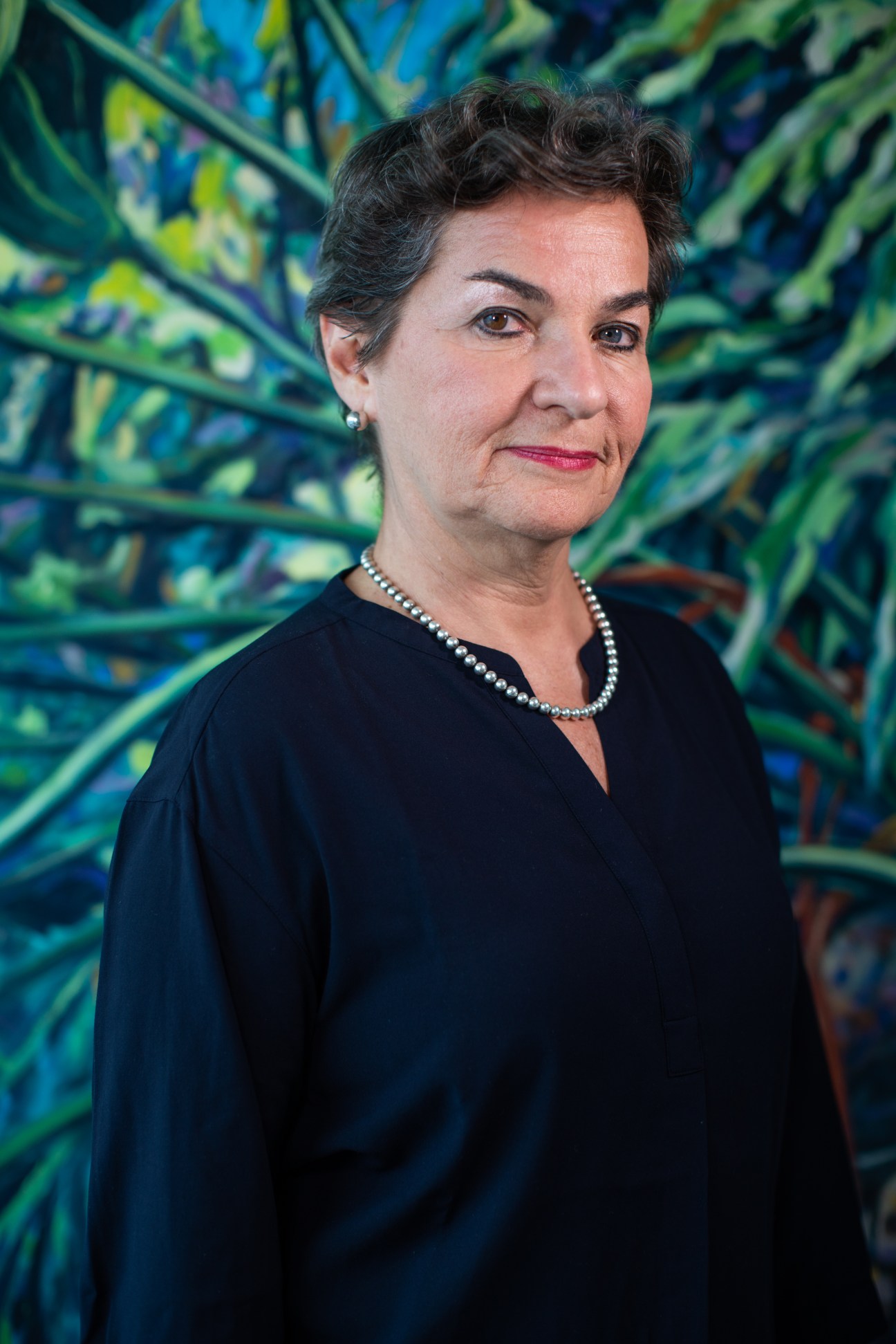
Christiana Figueres is former climate chief of the UN, where she helped spearhead the discussions that led to the historic 2015 Paris Agreement. She co-authored the 2020 book The Future We Choose: The Stubborn Optimist’s Guide to the Climate Crisis with Tom Rivett-Carnac and she advises organisations on co-operation and sustainability. Here she talks to Monocle about why multilateralism is more important than ever.
You have been credited with pioneering “collaborative diplomacy”. How would you define this term?
There are several levels to it. One is to truly understand who has a stake in these issues and bring them closer to the process, which carries the message of “we’re all in this together”. We do not see the national government representative holding full responsibility; other stakeholders can also contribute. Also, usually we think that diplomacy is necessary when there is confrontation and it’s necessary to bring the confronting parties to some common ground. But under climate change, it was my intent to soften the edges of the confrontation and strengthen the power of collaboration. There were many differences of opinion and we had to work through all of those. But the underlying tone, the fabric upon which the diplomacy is woven, is a fabric of collaboration for the long-term benefit of everyone.
What, in your experience, do politicians get wrong when it comes to global co-operation?
Two things. Short-termism – when you limit yourself and lose perspective of the long-term, then you quite often form incorrect conclusions as to what your real interests are. That’s understandable because, at least in democratic countries, there is a short electoral cycle. But politicians need to be able to take the longer term into account – not easy. The other thing: we are often so intent on standing our ground that we leave little space to ask questions and truly listen. [Listening and thinking long-term] is increasingly necessary. In the 21st century, many of the issues that in the past have had local or national consequences now have global consequences. The best example is coronavirus.
The pandemic has demonstrated that people around the world are, mostly, willing to change their daily behaviour for the common good. Do you think that there is a lesson here for policymakers who might otherwise have hesitated to consider laws that address climate change?
None of us had any idea of the oncoming tsunami, nor were any of us prepared to conceive of the required change in daily behaviour – whether travel or work or personal interactions with friends and family. I’m hoping that one of the lessons is that we have exponentially moved into a world that is much more global. Now, the one thing that is different in the context [of the pandemic] is that some of the changes were quite detrimental to our mental health and to our relationships. I am hoping that if we truly understand the threat of climate change, we can change our behaviour and realise that those changes are actually beneficial – not detrimental – to our quality of life.
You’ve said that there are signs that people are now thinking on a global scale. Is there an example of something that’s made you optimistic about countries working together again in the future?
There is the new attitude of the US, where they have been pretty clear that they are assuming responsibility [with regards to climate change] at home, in part because it’s a huge opportunity to create jobs and strengthen the economy. They have also been very clear about their international agenda and their willingness to reach out to the countries that can contribute to addressing climate change in a timely fashion. It’s not coincidental that the person who has been put at the head of these international efforts is the former secretary of state [John Kerry] because he understands the importance of international and multilateral collaboration. The new administration is the best example of the change towards a much more collaborative approach.
Images: Alamy, Alessandro della Valle
Politics
Doctor’s orders
Canada
Elections
Rumours of an early general election in Canada this year have quietened to a whisper. But, according to Canada’s longest-ever-serving female member of parliament, Dr Hedy Fry, whispers in politics can’t be ignored.
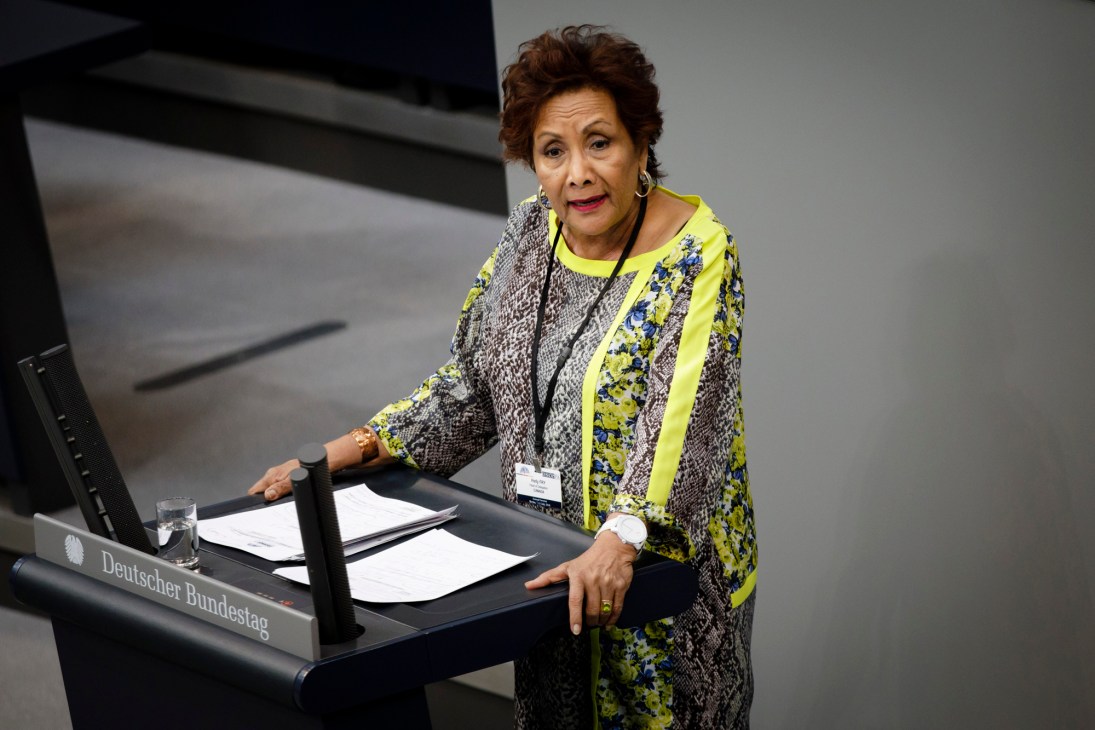
“Any minority government will tell you that they’ve always got to behave like there is going to be an election next week,” says the Liberal MP. Although Justin Trudeau’s government, which was narrowly re-elected in 2019, gained early praise for its handling of the pandemic, an especially slow vaccine rollout has frayed support. In October, Trudeau survived a vote of no confidence by a margin of 34. From Fry’s perspective, however, heading to the polls is the last thing that the country needs. “Right now, I know that we do not want to leave Canadians in the lurch with an election show.”
Fry, who turns 80 this year, has a long view on the ebb and flow of national politics. She was first elected to her Vancouver constituency in 1993, becoming the first parliamentary candidate to defeat a sitting prime minister on their electoral debut. She did so as a political outsider with an eclectic CV, which still informs her approach to governing.
“I went into politics knowing that one size does not fit all”
Born in Trinidad and Tobago, she studied at Dublin’s Royal College of Surgeons before emigrating to Canada in 1970 to run her own medical practice. She became a household name in the 1980s as host of Doctor Doctor, a medical-advice television show. “I learned a lot from patients,” she says. “You might have six people with the same diagnosis but the treatment of each isn’t going to be cookie-cutter. I went into politics knowing that one size does not fit all.”
That ethos has informed her advocacy on an array of issues, from championing lgbt rights to the importance of immigration. The latter is a key plank of the government’s plan to rebuild the economy after the pandemic. “A majority of Canadians say that immigration is a benefit; we have proven that,” she says. Now her party is looking at ways to boost that benefit – starting by issuing 401,000 “permanent resident” permits to boost the number of newcomers. “We have learned over the years that we did not just let immigration happen.”
Future proof
Poland
Politics
Poland’s swing to the right since 2015 under the socially conservative Law and Justice (PiS) party has been well-documented but a new opposition movement is offering centrist voters hope. Poland 2050 was founded last year by Szymon Hołownia, a 44-year-old former television host who came third in the 2020 presidential election with almost 14 per cent of the vote. Its middle-ground proposals include the separation of church and state. Recent polls put Poland 2050 in second place behind PiS, ahead of other, established opposition forces. With parliamentary elections not due until 2023, the movement has time to build momentum. And as its name indicates, Hołownia is thinking long-term with a vision of “a generation, not a term” in office.
Public rebuke
France
Elections
With just under a year to go until the next French presidential election, discontent with the current system seems to be riding high. A recent survey by the Pew Research Center found that 68 per cent of respondents in France feel that their political system needs either “major changes” or to be “completely reformed”.
Although the results aren’t particularly surprising given that the country has grappled with lockdown after lockdown during the pandemic as well as a struggling vaccine programme, they are surely deeply worrying for president Emmanuel Macron. After all, numerous recent polls have shown him falling further behind his old rival, the far-right Marine Le Pen, when it comes to the electorate’s voting intentions for 2022.
First lady
Tanzania
Government
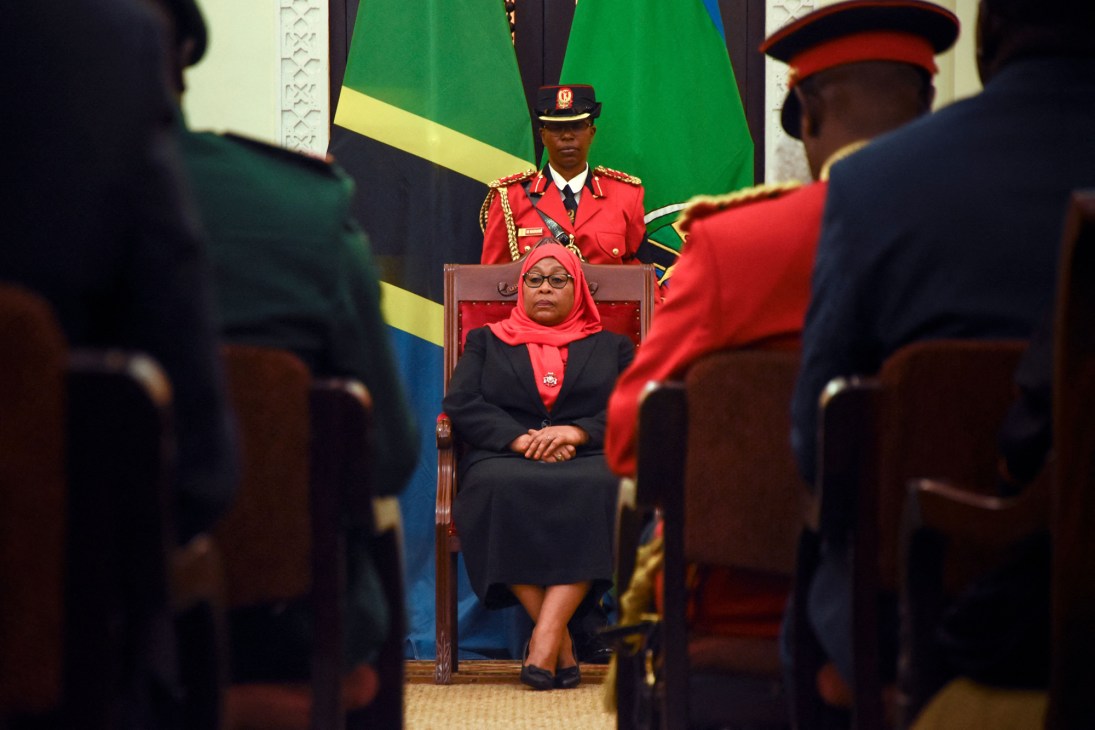
In a historic moment for Tanzania, 61-year-old Samia Suluhu Hassan was sworn in as the country’s first female president in March, two days after the death of the divisive and controversial John Magufuli was announced (he had disappeared from public view 18 days before).
There is optimism that the more collegial Hassan, formerly Magafuli’s vice-president, can steer the nation of 58 million away from the populist bluster, authoritarianism and mishandling of the pandemic that had increasingly marked her predecessor’s reign. She’ll have her work cut out. Hassan is a Muslim in a cabinet dominated by old Christian patriarchs. And as the continent’s only current female head of state, she carries a burden of hope that extends beyond her nation’s borders.
Images: Inga Kjer/Photothek/Deutscher Bundestag, Getty Images
Potus report
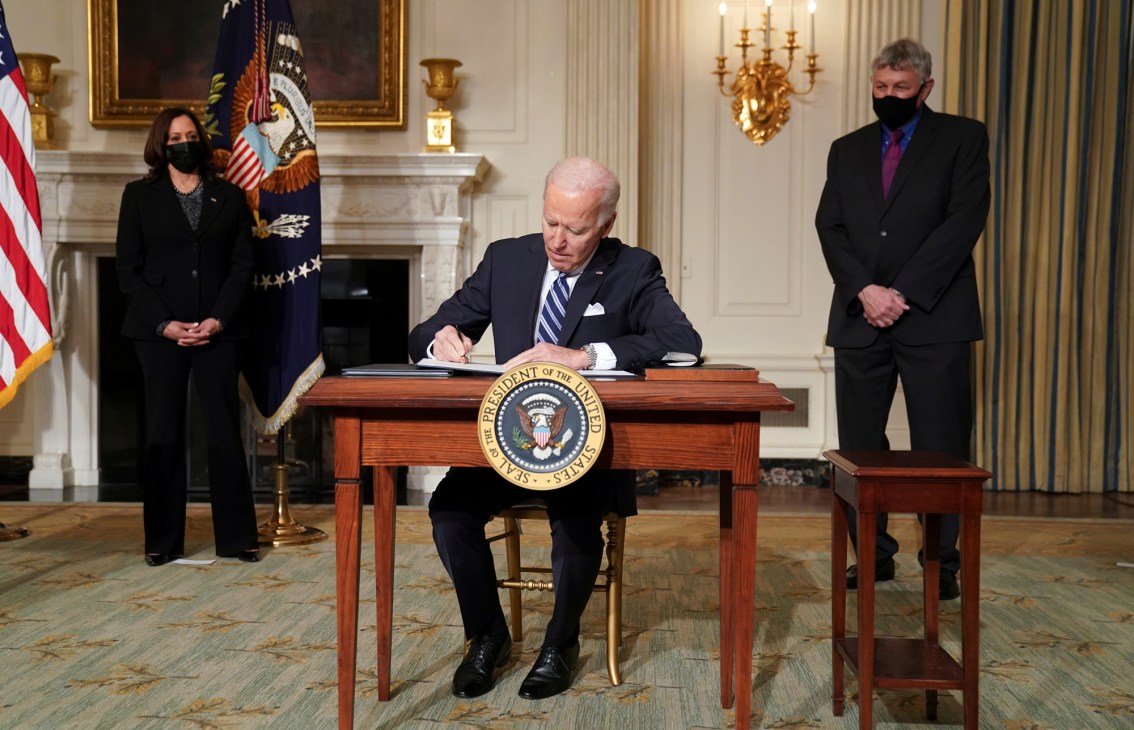
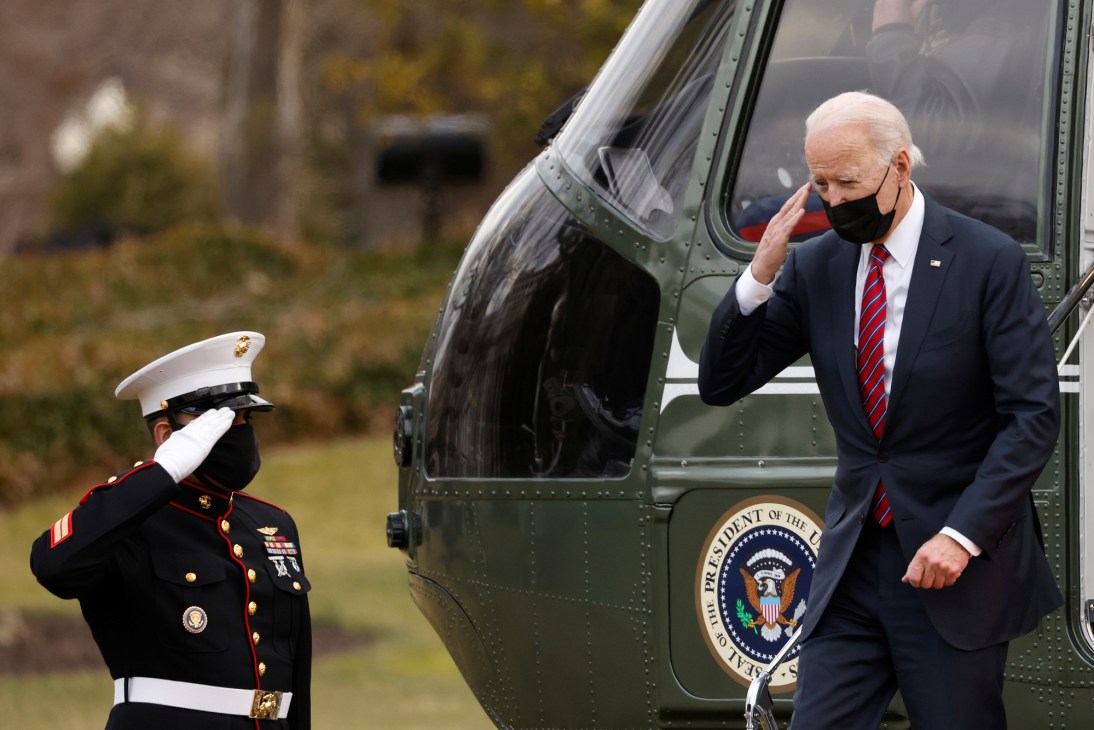
One way to assess the early days of Joe Biden’s presidency is to count the ways in which he is different to his predecessor. Biden lacks Donald Trump’s impulsivity, need for attention, taste for conflict, appetite for manufactured drama and general shamelessness. But the more useful contrasts for understanding his presidency are with the man who brought him into the White House 12 years ago.
After his election, Barack Obama repeatedly emphasised the theme of “change”, arguing that his victory should be understood as a clear break from, and repudiation of, George W Bush. That contributed to a broad euphoria surrounding his arrival in Washington but left Republicans and moderate Democrats sceptical that it represented any mandate to action. As a result, Obama struggled with healthcare reform and failed to pass climate and immigration bills, despite big congressional majorities. A Washington veteran of 40 years, Biden used his own inauguration to tell a different story about his path to office. He framed his victory not as a rejection of Trumpism but as a call to action on what he called four “converging crises”, although coronavirus and the related recession did not exist when he launched his candidacy in 2019. Other challenges, such as “a rise in political extremism” and “a cry for racial justice”, hit boiling point in the past year. “We will be judged, you and I, for how we resolve the cascading crises of our era,” said Biden in his address.
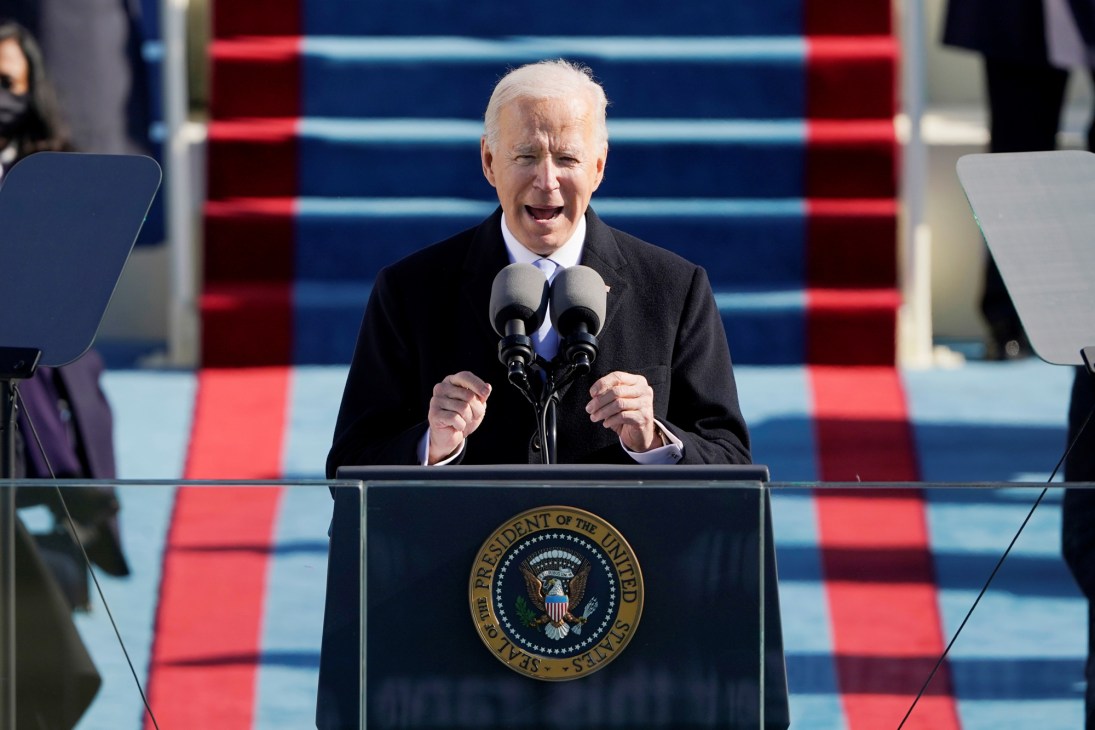


His first effort on entering the White House was the awkwardly named American Rescue Plan Act, a pandemic-era spending bill totalling $1.9trn (€1.6trn), mixing funds for vaccines and other anti-coronavirus measures with cash infusions to rev up a stalled economy and support local government and transport. Congressional Democrats adopted Biden’s grim determination to act big in the face of crisis. Within weeks, and after the most minimal legislative struggle, Biden signed into law a bill almost two and a half times larger than the 2009 stimulus.



On the right track:
Health
Vaccines were developed and approved before Biden took office but his new federal distribution system administers jabs in needy communities.
Soft power
Biden has sent unused doses of the vaccine overseas to compete with China’s aggressive vaccine diplomacy.
Crisis communications
The White House has kept doctors front and centre when talking about the pandemic.
“Boring but radical” was Republican senator Ted Cruz’s condemnation of Biden’s first 50 days but it could also be read as praise for the political acumen the president showed in guiding the American Rescue Plan Act into law. Biden has been able to pursue grand policy goals at the outset of his presidency specifically because he is such a bore. In recent years, Republicans have proven themselves deft at rallying for tribal conflict and aimless at organising around policy questions. The loudest Republican voices in Congress, along with conservative media such as Fox News, remained occupied with petty culture-war distractions, largely ignoring what Biden was up to. He delivered the most ambitious spending bill in US history without voters hearing a sustained argument against it.
As the bill moved through Congress, Biden and his fellow Democrats were cannily modest about the fact that it was far more than merely a short-term response to the crisis. In fact, its provisions went well beyond survival – new health-insurance subsidies and emergency cash payments to families represent the most significant steps in decades towards social democracy. Eleven days after the bill became law, The Washington Post acknowledged that it had failed to initially grasp its impact, under the headline: “How Biden Quietly Created a Huge Social Program”.
On the wrong road:
Immigration
The arrival of many Central American migrants has revealed that a more welcoming border policy, especially during the pandemic, will be much harder than Biden promised.
Foreign policy
The new president disappointingly backed away from a confrontation with Saudi Arabia over its responsibility for the killing of US-based journalist Jamal Khashoggi.
Culture
The pandemic put an end to entertaining at the White House but there’s little sign that the Bidens want to use their perch to promote the arts.
The president is typically a ubiquitous presence in US life, and both Obama and Trump pushed that to an extreme. Biden, however, has made himself scarce. He delayed his annual speech to Congress, dodged interviews and press conferences, rarely makes appearances outside the White House and keeps a low profile on social media. His first primetime address, marking the pandemic’s one-year anniversary, was must-watch TV not for its content but its rarity. For the first time in a while, Americans yearned to hear more about what was on their president’s mind.
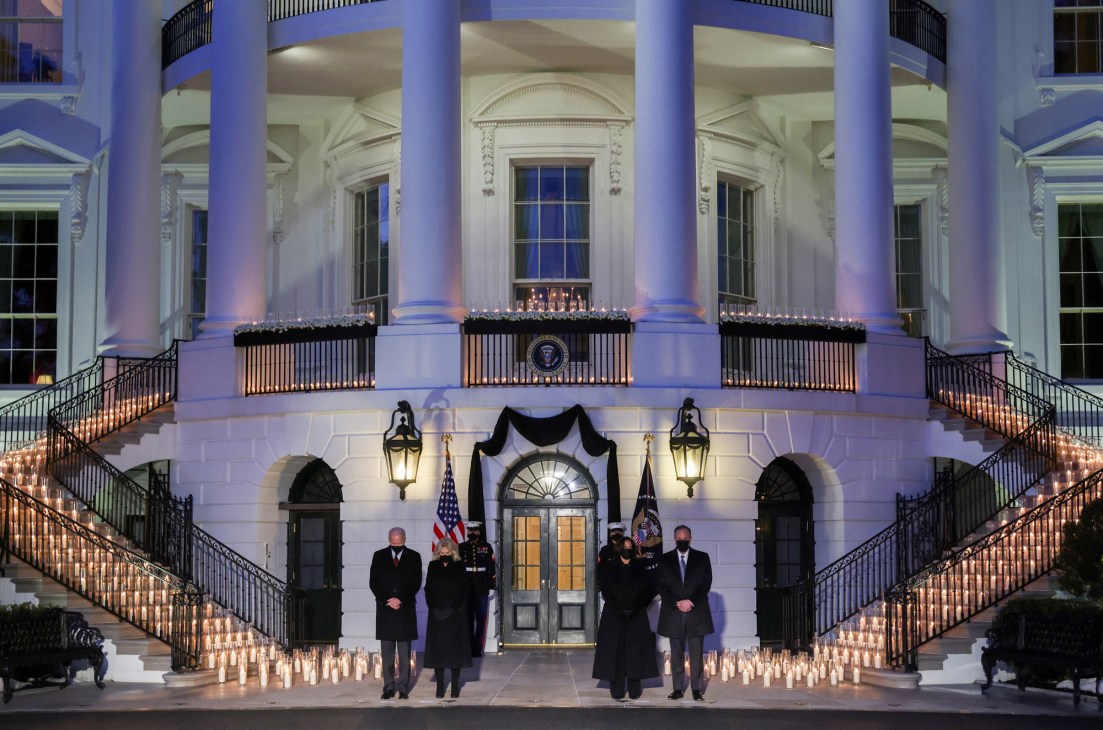
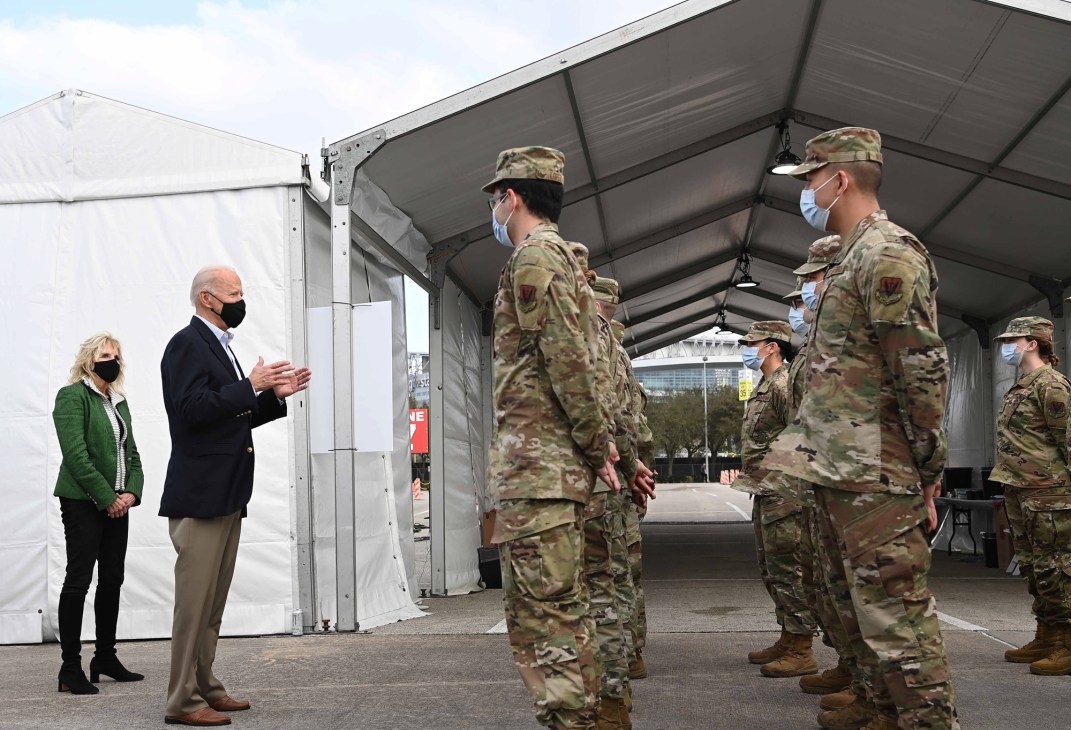
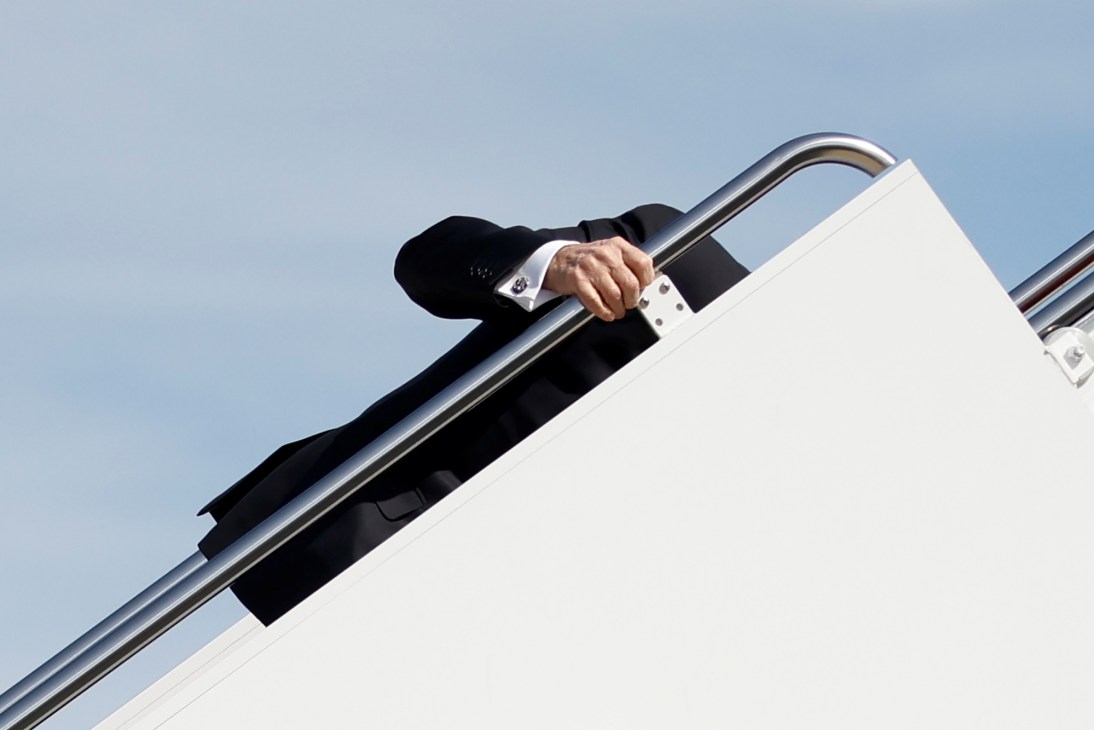
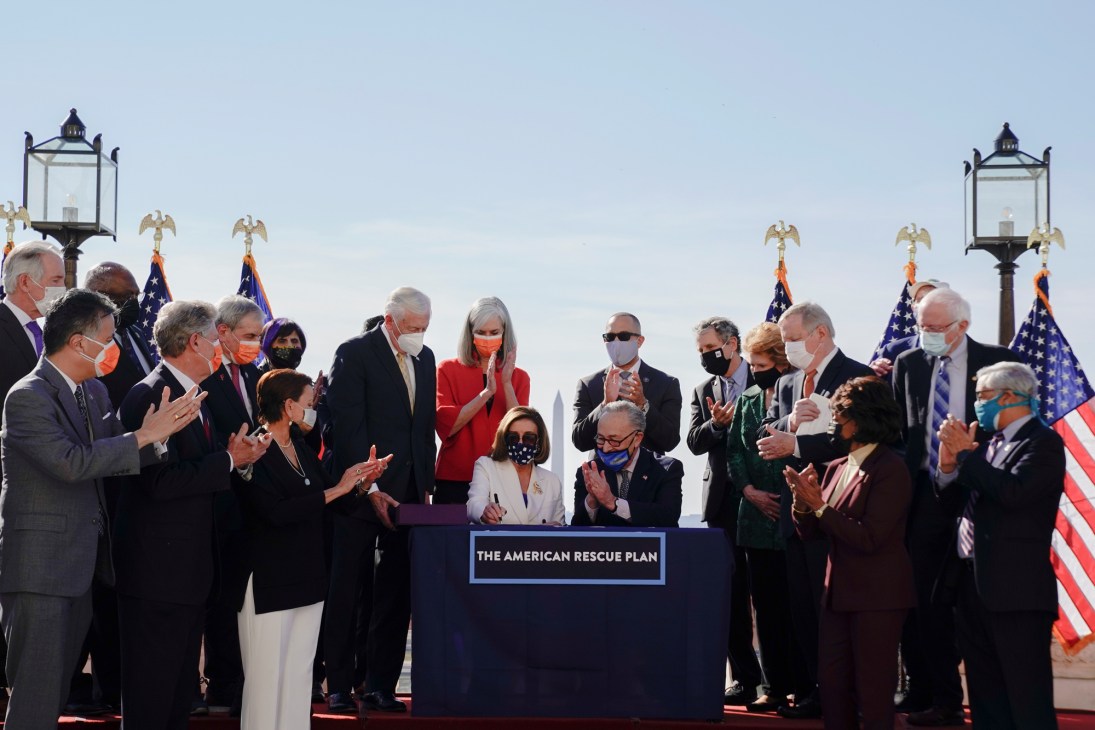
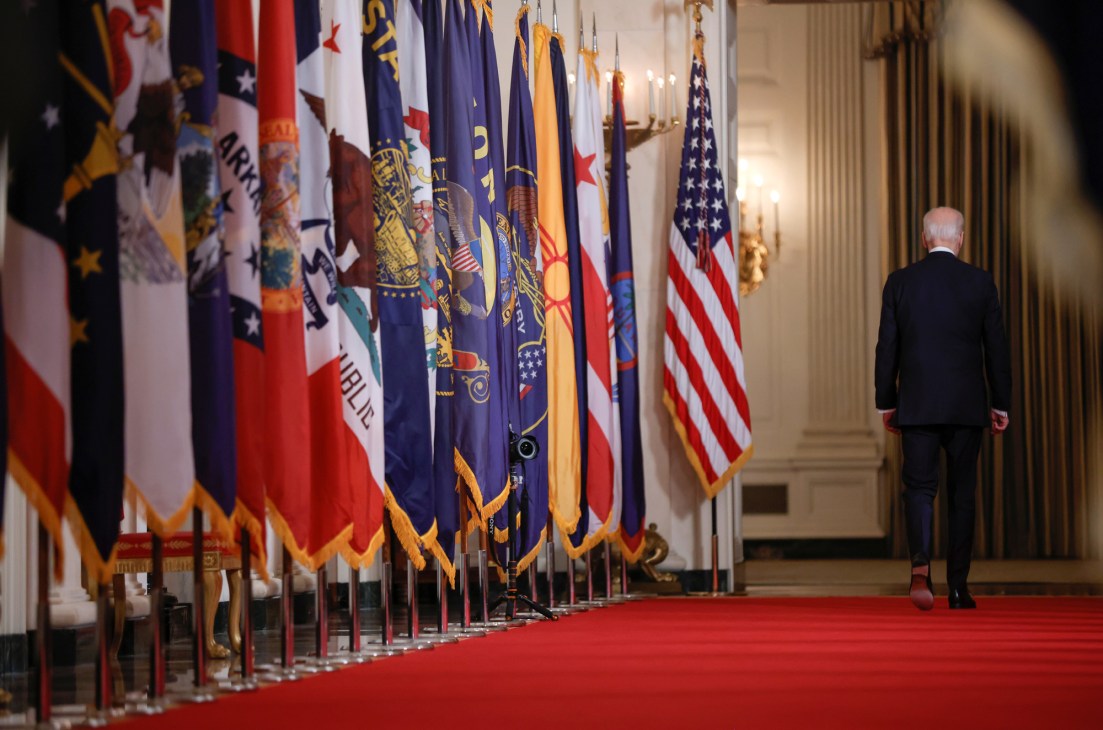
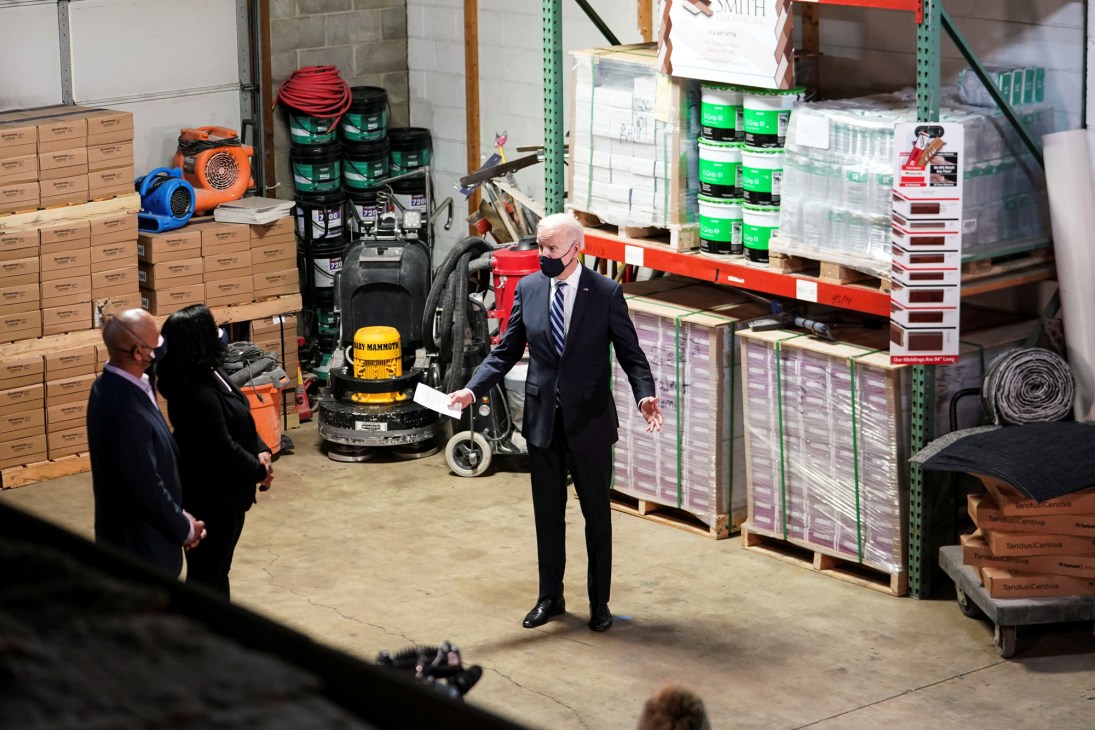
Biden’s timidity before cameras and microphones is new to him, as are the humble promises he makes. At times, low expectations have served him well. An early pledge to deliver 100 million vaccine doses in his first 100 days was quickly outpaced by reality. But this reticence with the press has also caused concern. When challenged over slow progress on a pledge to reopen half of the country’s schools within that same timespan, the White House answered with caveats and evasions. And as the country reckoned with a potential humanitarian catastrophe due to a build-up of migrants at the Mexican border, Biden’s spokeswoman was unwilling to use the word “crisis”. Democrats had stumped for years against Trump’s immigration policy but when challenged that little has changed, Biden’s team responded with the same cynical reflex that Trump’s had: restricting journalists from even visiting sites where migrants were being held.
Too soon to say:
Economy
The Recovery Plan should keep the country from falling deeper into recession but we’ll have to wait and see whether it can help to produce growth.
Environment
Biden immediately re-entered the Paris Agreement and hopes to load up an infrastructure bill with green-friendly projects. But can he get a big climate-focused package through Congress?
Personnel
The president’s cabinet is a mix of confidants and Obama administration veterans, as well as experienced state officials new to the national scene. The test is whether he trusts them equally.
During his campaign, Biden stood apart from Trump with his honesty about the extent of the pandemic and the work it would take to end the crisis. But while candour can be reassuring, it is rarely inspiring. As president, Biden needs to be more fulsome in presenting a sunny vision of post-lockdown life, if only to convince those who have accepted the reality that their sacrifices will soon pay off. If he can find a space between Obama’s idealism and Trump’s denial, Americans will want to hear more.
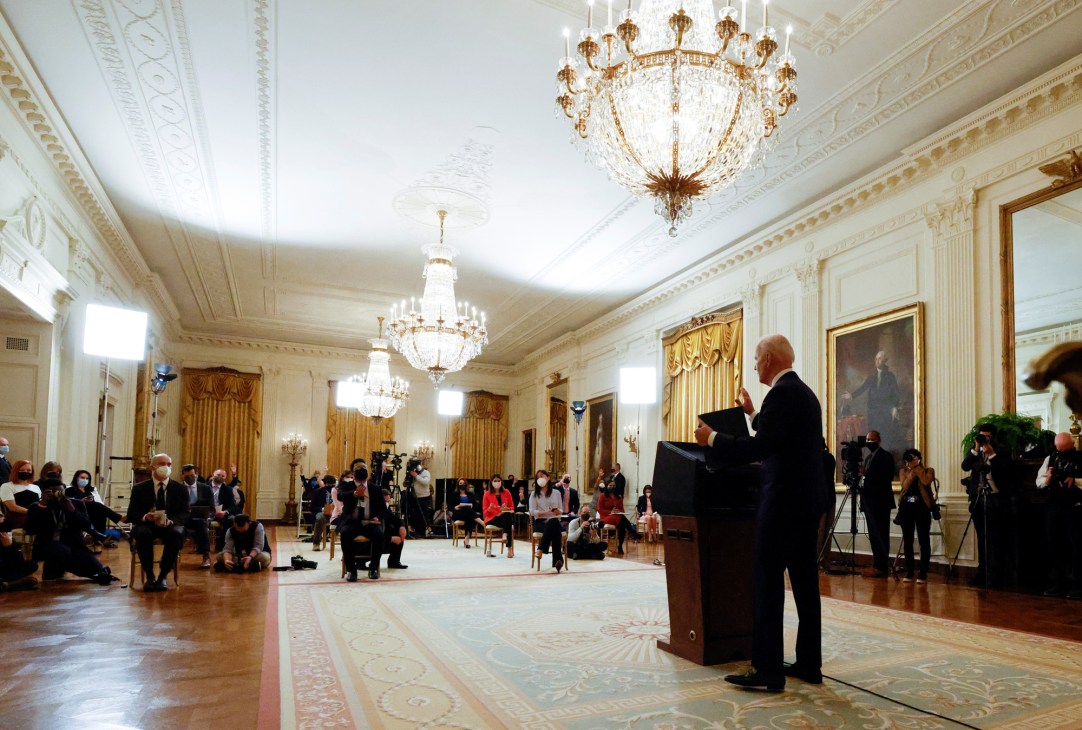
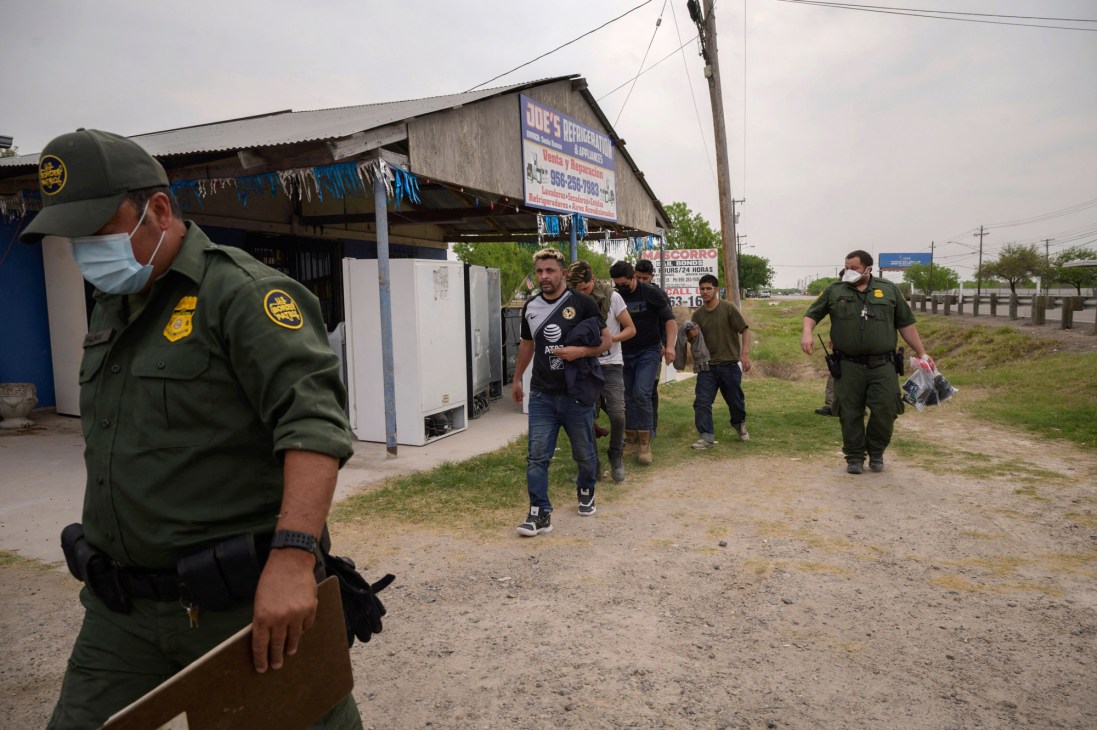
Biden began his presidency with talk of crisis and his first few months delivered a promising start in areas of urgent need. The coming weeks and months will focus on a more enduring problem, as Democrats prioritise passage of a “Build Back Better” spending bill to address shortcomings in national infrastructure. That issue, more than any other, has been viewed for decades as something that the two parties can work on together. If Biden can succeed here, the US will have a glimpse of what his presidency will look like on the other side of crisis.
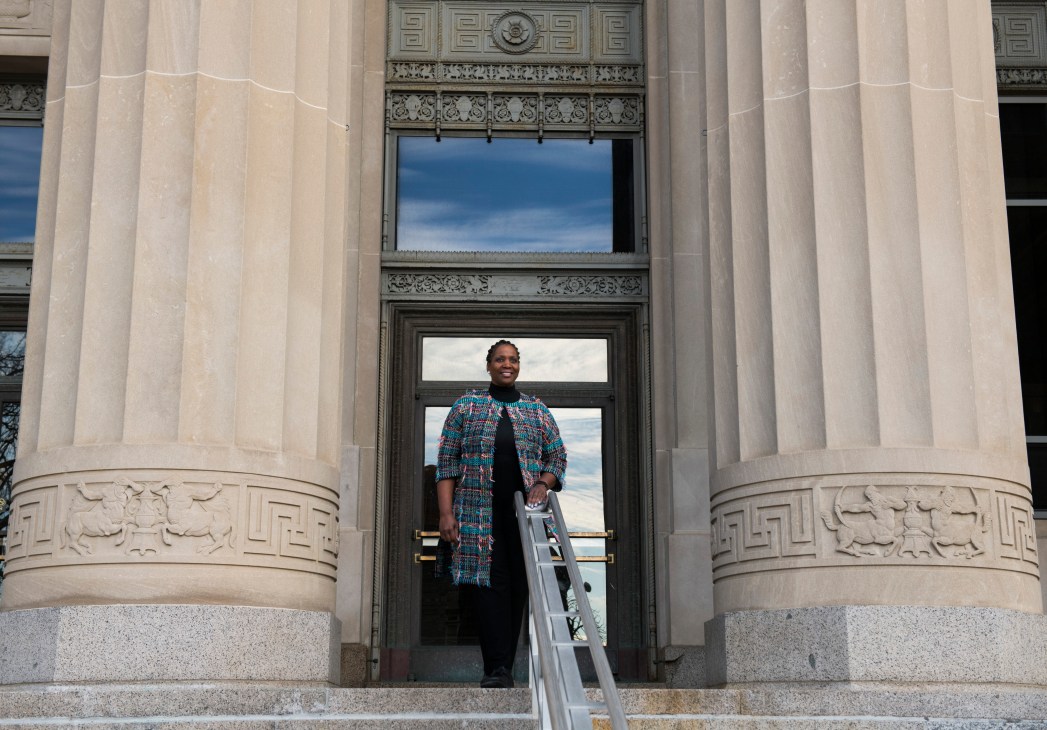
The Fixers: Why Lisa D Cook is counting on a fair economy
Over the next year, a changing of the guard is expected at the US’s central bank, when up to four places become vacant on the influential, seven-seat Federal Reserve Board of Governors. Whoever Joe Biden’s administration appoints to these posts will shape monetary policy in the world’s largest economy for years to come.
Among those rumoured to be under consideration for the board’s current single vacancy is economist Lisa D Cook. She has, by traditional standards in economics, an eclectic array of expertise. A professor at Michigan State University, Cook was an adviser for Barack Obama’s administration and has worked with three presidential-transition teams, including Biden’s.
“I don’t have any comment on that,” says Cook of the rumours of her nomination. “But, with respect to public service in general, I would consider it if the opportunity arose.”
A nomination for Cook would represent a historic first at the Federal Reserve as well as reflect the broader push that’s underway to diversify the make-up of those who dictate monetary policy in the US, a field historically helmed by white men. That, in turn, would amount to a broader assertion of what economic growth should be built on.
“I sometimes find that economists don’t believe that human experiences matter,” Cook tells Monocle from her home in Ann Arbor, Michigan. “It absolutely does matter. It shapes the way that we think about the economy; it shapes the way we interact with it. It’s difficult to make policy if you haven’t had a lot of experience with the economy; if you haven’t seen the good and bad of how it actually works.”
Cook was born and raised in Georgia, which convulsed, often violently, with the process of desegregation during her late-1960s childhood. She speaks four languages and holds degrees from universities including Oxford, where she studied on a prestigious Marshall scholarship. Often described as an “accidental” economist, Cook has said that she was persuaded to switch to economics by a stranger during an expedition to Mount Kilimanjaro in the late 1980s. She was a philosophy student in Senegal at the time.
Her own research is broad and includes a groundbreaking examination of how violence against African-Americans has, historically, diminished overall economic activity in the US. Her current areas of study include economic growth and development, particularly when it comes to innovation. All are fields that feed into the challenges now facing the US economy.
“It’s difficult to make economic policy if you haven’t seen the good and bad of how it actually works”
“When you’re confronted with a crisis, you have to be nimble,” says Cook, suggesting that it’s difficult to achieve anything if those tasked with solving the problem all think in the same way. “You need people who have had a wide range of experiences in the economy to be able to understand what’s going on.” That will be key in ensuring that the policies aimed at kick-starting the US’s economic recovery are far-reaching, she says. “In many countries, micro businesses – and not necessarily the largest ones – fuel the economy. In the US, it’s roughly half and half, so there are a lot of people employed by small businesses here. Support for them should be paramount. Individuals, families and households are going to need more support rather than less.”
“We need all hands on deck,” adds Cook as she considers how to build a sustainable, equitable post-pandemic economy. “We face some of the most difficult economic problems in our history. So we have to ensure that we’re taking advantage of all the resources we have.”
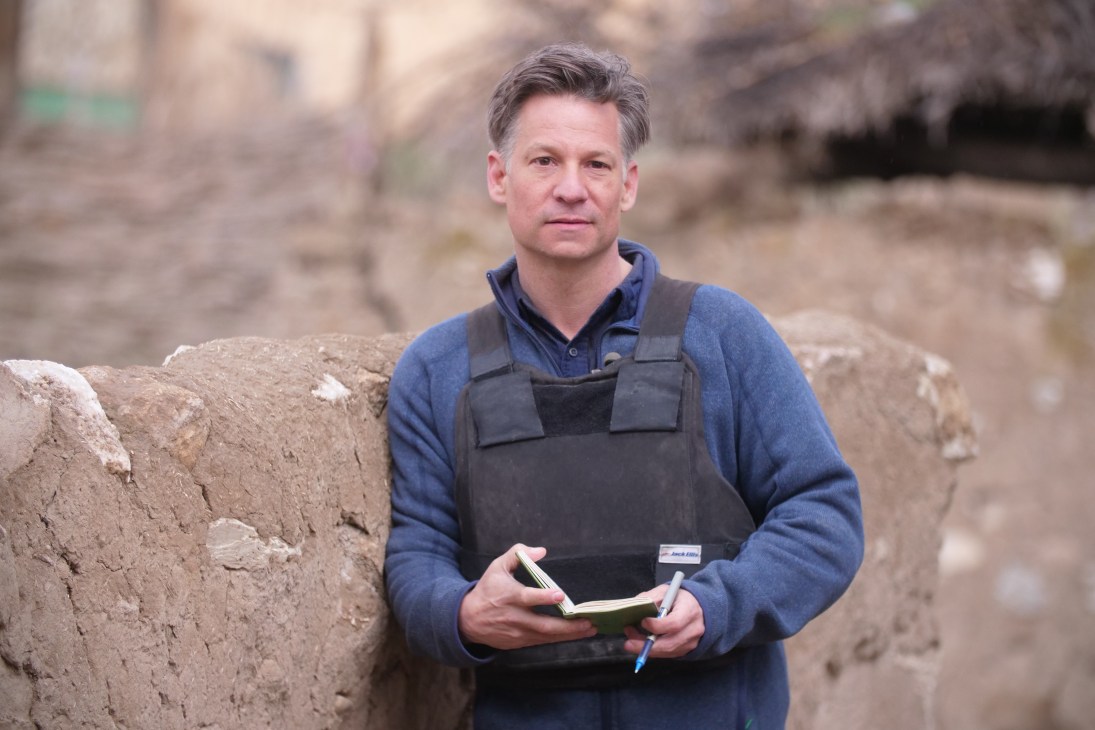
The Fixers: Now is the time for truth, says journalist Richard Engel
For Richard Engel, chief foreign correspondent at nbc News, the new presidency can reset the US’s image in the eyes of a global audience. “After a tumultuous, ferociously disruptive period, it is a realignment; America’s re-engagement with the world,” he says.
A key question during these opening months of Joe Biden’s presidency, says Engel, is an important one: “Is the US going to be welcomed back?” He believes that the answer is yes. It’s an outlook Engel is qualified to give, thanks to the breadth of international stories he has covered for the network, where he has worked since 2003.
“My norm has always been that I’m on the road,” says Engel, speaking to Monocle from London. His early career was as a war correspondent and he was one of the few US journalists to cover the 2003 US-led Iraq War in its entirety, from his base in Baghdad.
He has reported on the Middle East extensively since. Following extended assignments covering the conflicts in Libya, Yemen and Egypt, he and his team were kidnapped in a rebel-held area of Syria in 2012. They were freed after five nights, following a gunfight between their kidnappers and members of Syria’s rebel forces. “I was normally the guy who lived in the place,” says Engel. “I’ve never been a fan of the guy who parachutes in. Luckily I had 17 years of experience being the local person.”
In December 2019 the focus of his reporting shifted to the emergence of coronavirus in Wuhan, China. “I had the first interview on camera with Anthony Fauci, [when he said] that this is probably going to be a pandemic,” says Engel. “Suddenly the virus was spreading everywhere and every country was reacting differently. Journalistically it was actually quite exciting because it kept changing.”
“When I’m doing a report, I don’t care if it’s going to offend liberals or conservatives. Things are what they are”
The rigours of the breaking-news cycle aside, his own investigative TV show, msnbc’s On Assignment with Richard Engel, has allowed him to spend longer on stories and to delve more deeply. His most recent investigation was focused at home: the 6 January storming of the Capitol in Washington by supporters of Donald Trump.
“[We’re investigating it] through the details,” says Engel of the story he has undertaken alongside the UK investigative-journalism website Bellingcat. “It’s granular, minute by minute. In some cases we’re dating video based on the shadows against walls and counting how many police officers were on one staircase versus another staircase. We’re going frame by frame through key events and individuals that were involved in the Capitol assault.”
For many, the siege not only represented the nadir of an unpredictable presidency, it demonstrated the polarisation that has taken root in the US, fuelled, some would argue, by certain elements of the US media. “I don’t think about it at all,” says Engel. “When I’m doing a report, I don’t care if it’s going to be offensive towards liberals or conservatives. For years people have tried to pin me down – ‘Oh, he’s liberal,’ or ‘He’s a warmonger,’ or ‘He’s a conservative.’ I don’t care. Things are what they are.”
Ultimately, the increasingly angry discourse that often masquerades as news can be countered by the pillar of objectivity in journalism, no matter how buffeted the principle might be. “Truth is the key,” says Engel. “If you’re talking about ‘from my perspective’ or ‘your perspective’ then you get into the idea of looking at a house of mirrors,” he says. “You’ll tie yourself into knots. Don’t think about it. Don’t worry about it. Just tell me what’s true.”
The Fixers: How Shirley Ann Jackson advocates opportunity for all
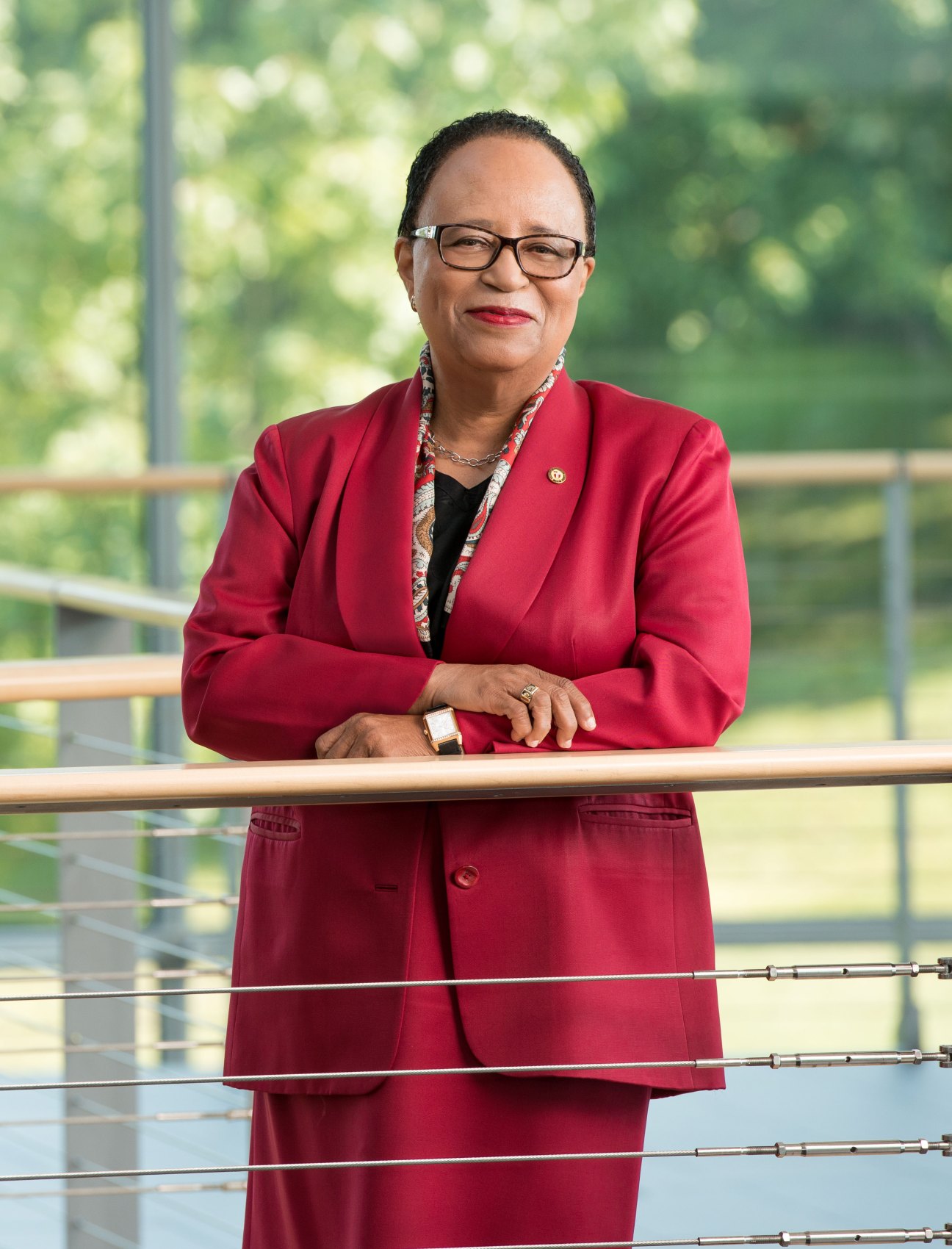
Natural talent is one thing but having the opportunity to exercise that talent is quite another. It’s a lesson that Shirley Ann Jackson, one of the US’s leading theoretical physicists, knows all too well. Although she was interested in sciences from a young age, she cites two pivotal historic moments – the desegregation of US schools and the launch of Sputnik, the first satellite, by the Soviet Union – as opening up educational opportunities that enabled her to succeed. “My life was affected by the social, political, scientific and technological,” she says from her office in Troy, New York.
The impact of these events drew Jackson into public policy, as well as a career in academia. Awarded the National Medal of Science in 2016, she was the first African-American woman to receive a doctorate from the Massachusetts Institute of Technology and the second African-American woman in the US to earn a doctorate in physics. She’s conducted telecommunications research at Bell Laboratories and nuclear physics at Cern in Switzerland. Since 1999 she has been president of Rensselaer Polytechnic Institute in upstate New York, the country’s oldest technological research university.
Jackson, who has been serving on an advisory panel concerned with reopening New York state after the pandemic, had already put “extremely comprehensive plans” in place at Rensselaer, with five core elements to deal with the virus: “Testing, tracing and tracking, surveillance, quarantine and isolation.” The university has its own coronavirus-testing centre, serving the community as well as the students who have been going back to classrooms on staggered schedules. The goal remains to “augment” the classroom, not replace it. “There’s no substitute for that direct human contact among the students, particularly for young people who are going through a critical stage of their lives.”
Jackson says that the pandemic hasn’t been the US’s finest hour. “It has exposed a lot of inequities in our health system: who has access and who doesn’t; who trusts the health system and who doesn’t.” She says the situation has begun to improve under Biden, who has worked to centralise vaccine distribution and co-ordinate aid to states where possible. “The Biden administration has made a point of shipping supplies and developing relationships with pharmacies, as well as having more stand-up sites to reach under-served communities.” The key is getting as many different groups as possible involved in manufacturing vaccines or medicines or protective gear. “People don’t realise how much of a supply-chain issue this is,” she says.
“The pandemic has exposed inequities in our health system: who has access and who doesn’t; who trusts the system and who doesn’t”
More broadly, she believes that fixing public policy is about recognising how everything is connected. That goes particularly for confronting systemic racism in the US. Many hurdles still need to be overcome that prevent many minorities from getting a good education, whether it’s overt social biases, financial inequalities or a simple lack of role models. “People in leadership have a responsibility to make sure that the doors are open for everybody,” she says. “I believe in rigorous early education. What led me to where I am had to do with my mother teaching my siblings and me to read before kindergarten, and my father nurtured my interest in all things mechanical.” As to anyone who might question the need to overcome racial or gender barriers to education, Jackson offers a simple answer: “How can you waste talent? How can you not tap the complete talent pool and think you’re going to solve anything?”
Images: Magnum Images, Reuters pictures, Getty Images
Only human
Sketches spread expansively on tables; black marks are dashed against white walls with purpose. “This is where I do my working out,” says Antony Gormley, gesturing across his David Chipperfield-designed London studio.
Now one of the UK’s best-known contemporary artists, Gormley has made his name over the past 40 years creating metal sculptures that populate Britain’s cities, countryside and coasts, as well as museums and public spaces in the US, Asia and Europe. The “Angel of the North”, a 20 metre-tall steel figure in Gateshead, England, is his most famous. Like many of his works, it is modelled on himself.
He is tired of suggestions of narcissism. “It isn’t about me,” he says, explaining that his body is simply a tool at his disposal. “Sculpture is by its nature collective: it aspires to occupy shared space,” he says. “And it is made collaboratively.”
Gormley’s 48-strong workforce is the engine behind his vision. His London workshop team of 11, busy welding, sawing and finishing, work with him most consistently. Each has undergone a selection process in which they must build an abstract human figure from steel bars in a matter of hours. “If it can stand up and touches the right points, that’s a good sign,” says Gormley. “You need to think with your hands and have fire in your belly.”
The team is currently working on a retrospective of the artist’s work, due to open in Sindelfingen, Germany, in June. Otherwise, the past year has been predictably quiet. “We’ve had time to grow,” says Gormley. “To live in the world and listen to it.”
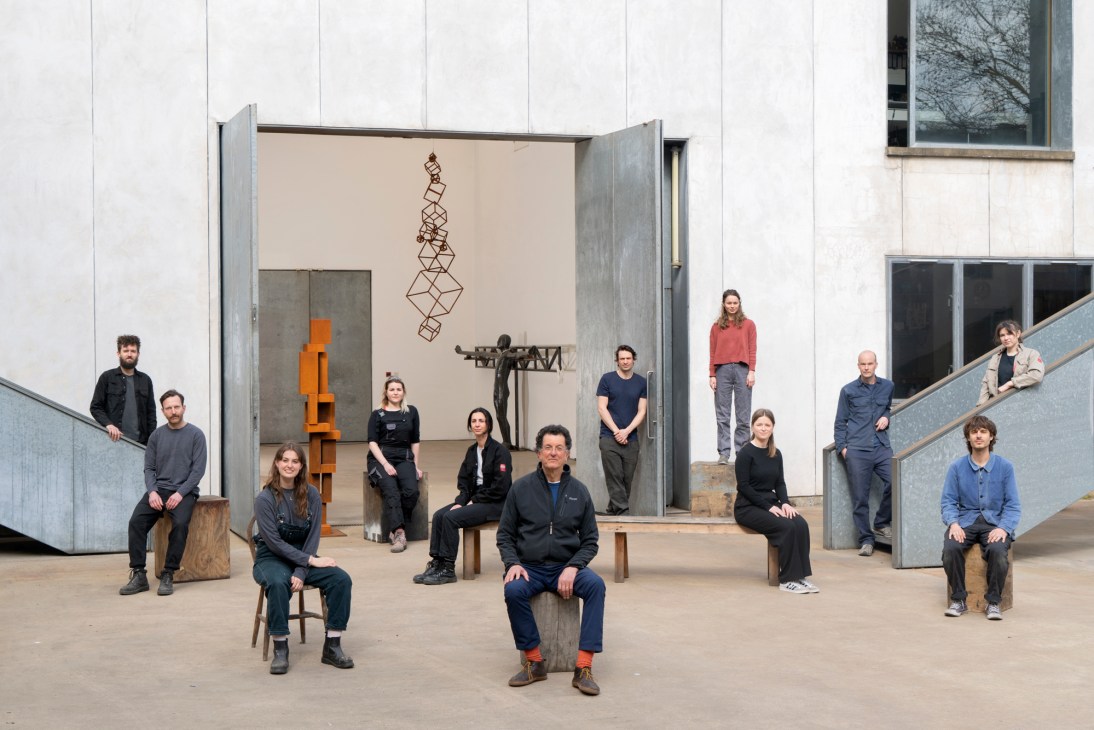
The Cabinet (From left to right)
Antony Gormley
Artist
Educated in art history at Cambridge and in art practice at St Martin’s, Goldsmiths and the Slade, Antony Gormley’s career began in earnest with his Whitechapel Gallery exhibition in 1981. The sculptor’s works can now be found standing at many of the Earth’s extremities, from the salt flats of Australia to the peaks of the Austrian Alps.
Danny Duquemin-Sheil
Studio assistant: “Involved in making, designing and project management.”
Fred Howell
Studio assistant: “Currently working on spindly, stainless-steel designs.”
Lucy Page
Workshop assistant: “The go-between for the office people and the workshop.”
Alice Steffen
Workshop technician: “Drives the forklifts and moves the works from place to place.”
Maria Ribeiro
Studio assistant: “Lucky enough to work on all sorts of projects.”
Jamie Bowler
Studio assistant: “Does a lot on the welding and fabrication side.”
Charlotte Osborne
Finisher: “Makes sure the surfaces look just right before the works go out.”
Adam Humphries
Senior studio assistant: “Focuses on developing ideas and new sculptural languages.”
Louise Colgan
Studio assistant: “Does a mixture of digital and metalwork.”
Ruby Brown
Production co-ordinator: “Oversees what the workshop team is doing day-to-day.”
Eduard Barniol Ferreres
Studio assistant: “Specialises in polyhedra sculpting and casting.”
Pilou Asbaek
Pilou Asbaek has fond memories of the grand auditorium of Folketeatret, a 19th-century theatre in Copenhagen. It’s here in 2012 that the Danish actor starred in Om Baronessen, a show about the life of Danish author Karen Blixen. It is perhaps more likely that you will recognise him from his performances in lauded Nordic dramas and, increasingly, his parts in Hollywood films. “I’m doing bigger and bigger projects,” he says, describing himself as “starstruck” on set with Sylvester Stallone in the superhero movie Samaritan and alongside Jackie Chan in action film Snafu. But it’s his time on the small screen that has given Asbaek a sense of perspective.
His breakthrough came when Scandinavian TV productions rose to global prominence in the early 2010s – he debuted as the ingenious spin doctor Kasper Juul in Borgen, an award-winning Danish political drama that aired in more than 70 countries. Years later, he joined the sixth season of Game of Thrones as the ruthless Euron Greyjoy. And most recently, he starred as prosecutor Jakob Buch-Jepsen in The Investigation, a six-part drama series produced by Miso Film for Denmark’s tv2, following an inquiry into the murder of a Swedish journalist. It is classic Scandi crime: smart, subtle and beautiful.
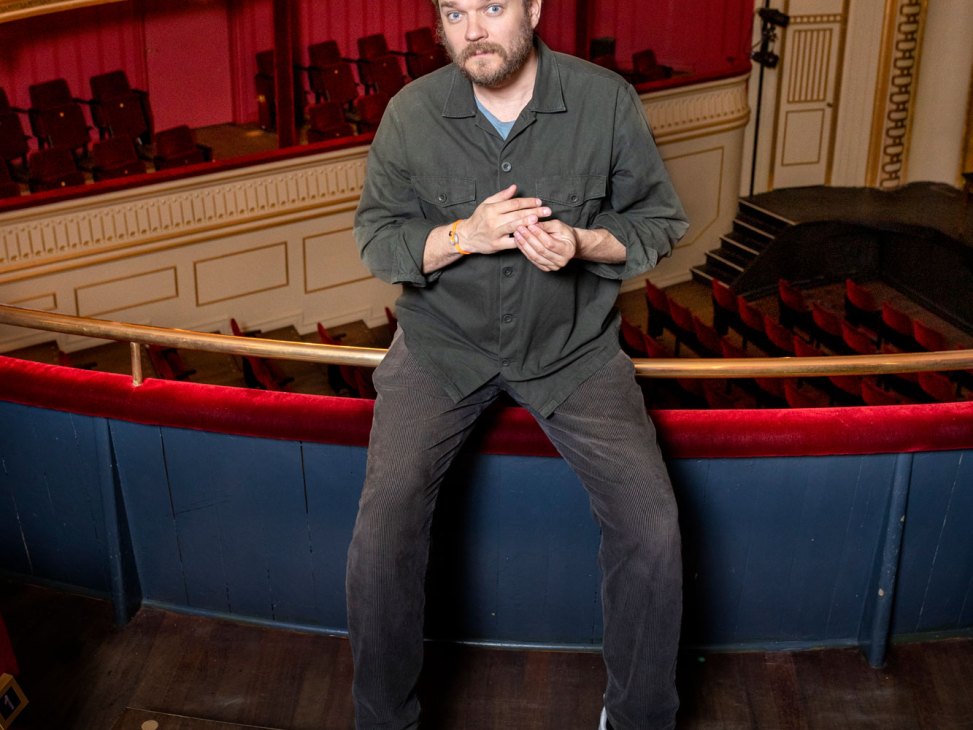
“We introduced a new take on crime,” says Asbaek, referring to The Killing and The Bridge, which kicked off the Nordic noir phenomenon in 2011 and attracted global audiences in the millions. For Asbaek, the popularity of The Investigation is proof that the genre is still alive and well. “It’s inspirational,” he says.
That’s not to say Asbaek believes that interest in the Nordic small screen is reserved to noir – far from it. Danish sci-fi thriller The Rain was one of Netflix’s most popular non-English-language shows early this year; the platform is also set to premiere a number of Swedish-language productions in the coming months. Scandinavian television “has grown into a fully fledged genre,” he says. A decade ago, subtitled shows wouldn’t be prime-time material for English-speaking audiences. Now, he says, language is less of a barrier. “People just expect quality.”
The shift to streaming has also come with a boom in investment for international productions, pushing the film industry to diversify as well. Asbaek has been feeling the effects first-hand, seeing actors like himself (who operate far from Hollywood’s limelight) offered bigger and bigger roles in blockbuster movies. For his latest, he plays the lead as a Russian astronaut alongside actor Chris Messina in forthcoming space thriller ISS. He believes that it’s a clear indicator of how far things have come. “In the US I’m a foreigner, so I’ve always played the villain,” he says, explaining that his background had led him to be typecast. “But for the first time, not in this film.”
As he impatiently awaits his latest performances to hit the silver screen, he’s proud of a 20-year career. “I’m thankful for having been a part of the so-called ‘Scandinavian wave’ from the beginning,” he says. And with one foot now firmly in the US film industry, another beginning for Asbaek is well underway.
The CV
1982: Born in Copenhagen
2002: Graduates from drama school and performs in his first role at Copenhagen’s Royal Danish Theatre
2010: Meets director Tobias Lindholm and is cast in ‘Borgen’
2019: Join series six of ‘Game of Thrones’
2021: Stars in ‘The Investigation’
All in a grey’s work
Immaculately dressed in paparazzi-baiting trench coats, chiffon scarves and sunglasses big enough to make Anna Wintour proud, four elderly women emerge from a discreet café in Sanlitun, a fashionable district of central Beijing. I witness some 50 chittering passers-by recognise the grandes dames before encircling them, taking pictures and firing off questions.
They are the Glammas (known in Chinese as shishang nainai or “fashionable grannies”), a quartet of late-aged urbanite women who took up modelling post-retirement. And they have, it’s safe to say, made a success of it. In the most in-vogue enclaves of the capital, they host impromptu catwalks that attract adoring crowds, while their online following soars north of a million.
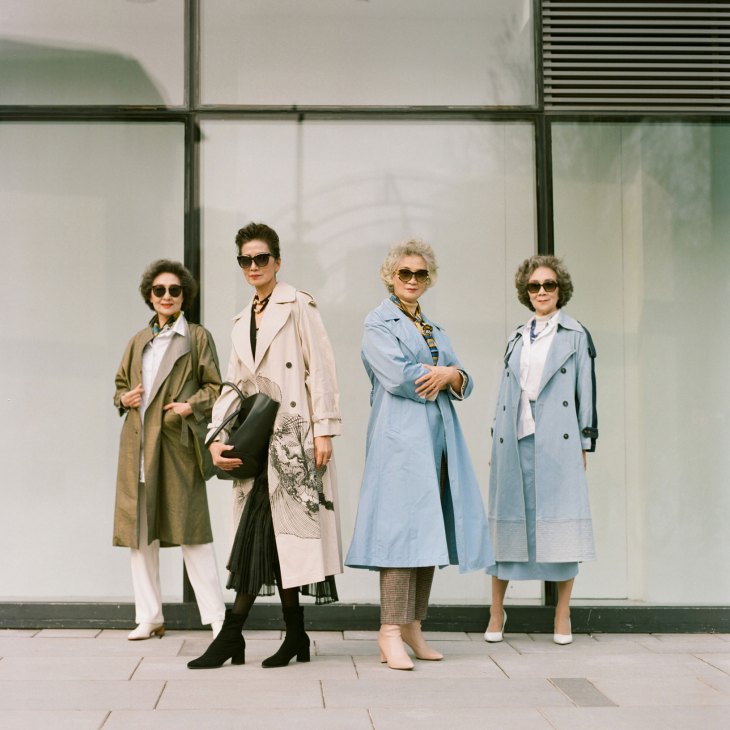
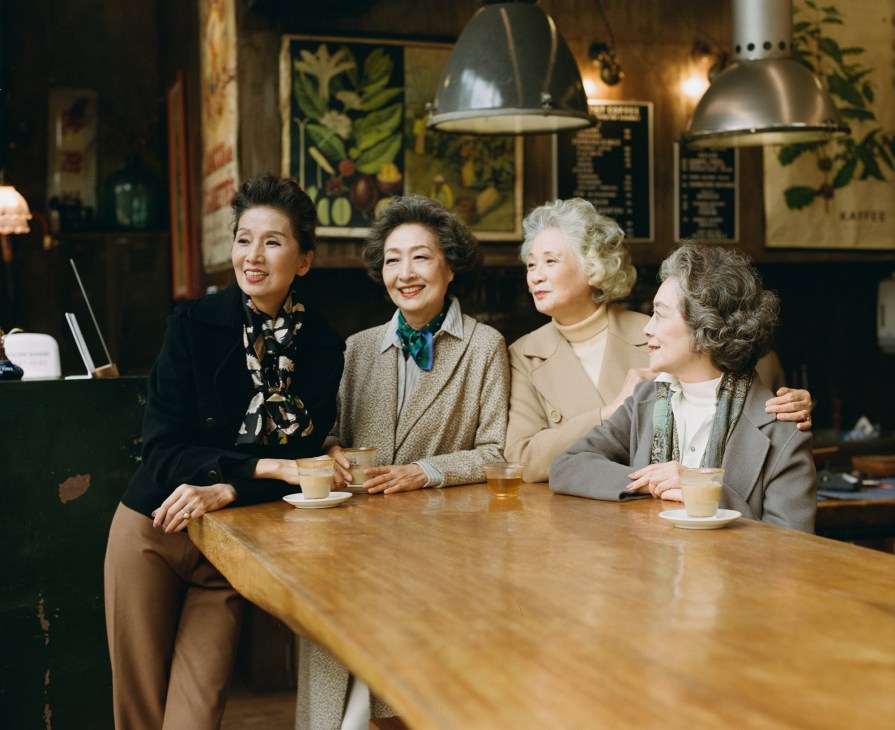
But the Glammas are not out today to talk to their fans: they strut with purpose towards a photoshoot location nearby. Lin Wei, a former basketball player who towers at 1.8 metres tall, sets each outing’s theme and is the kind-hearted doyenne of the group. (“Honey, you’re gorgeous,” she tells fellow Glamma Wang Xinghuo, slapping her rump as they walk.) Today’s “1950s Hollywood glam” look is down to her fashion direction.
As they take their places in an attractive Sanlitun alcove and the camera begins to flicker, it strikes me that this is a far cry from how these women spent their youth. Chinese fashion was largely limited to standard-issue blue or grey “Mao suits” for decades from the 1960s, when individual expression was seen as a threat to proletarian unity. But that’s certainly not how the Glammas see it today. “We’re providing value to society,” says Wang.
Nor are they the only Chinese pensioners who have changed their attitude towards dress: the number of fashion brands in China that are marketed to the elderly doubled between 2017 and 2019, according to a recent report in the South China Morning Post. Though many of the country’s 250 million or so over-sixties continue to sport purely utilitarian garments, there are also a significant number who went the other way, opting for clothing that is so kaleidoscopically colourful it grazes garish. And there is, of course, an ever-expanding market for the tasteful sorts of get-ups that the Glammas wear.
As for the Glammas’ favourite labels, there isn’t much to report. “It’s not about the brand name,” Lin says, stressing that their items are judiciously chosen from their closets, which are filled with specially tailored pieces. They are also working on their own limited line of clothing for China’s retirees. No doubt they’ll find buyers in droves.
As the four women gleefully swipe through the day’s photographs and ready themselves to return home, they pause to reflect on their role as models in the broadest sense. “We’re showing people that they don’t need to be afraid of ageing,” says Wang. These are, after all, their golden years.
The opener
Mutt as well
World of paws-sibility
Pandemics, it turns out, are good business for those in the pet game. As part of our report on the global pet industry (see here), we thought it was worth sharing some of the curious products on the market for our furry friends.
1.
Dog TV
Let your pooch enjoy TV content “scientifically designed to enrich your dog’s environment”. Expect healing sound frequencies and positive affirmations. There’s a good boy.
2.
Furbo Dog Camera
If your dog’s home alone, this device allows you to check in from your smartphone, via a camera in your house. The odd part of it? You can fire treats at Fido from a dispenser built into the camera.
3.
Airbuggy
If you’re into coddling your puppy, why not get a flowery camo-print Dome 2 buggy? It brings a whole new meaning to walking the dog.

Home is where the heart is
What do tax cuts and wagyu beef cuts have in common? In Japan, residents who support local economies through the furusato nozei (hometown tax) programme receive both. The beef, as well as Hokkaido scallops and Kyoto snow crab, are just some of the delicacies that citizens are eligible to receive if they redirect tax payments as donations to rural municipalities. The popular scheme, introduced by the central government in 2008, is designed for those who leave the countryside for sprawling metropolises but wish to support their hometowns.
Party anthems
Many of this year’s Eurovision entries are perfect tunes for when there’s a return to dancefloors this summer. To help you memorise lyrics and practise moves for the club, we’ve picked a few of our favourites ahead of the final in Rotterdam on 22 May.
1.
“Discoteque” by The Roop, Lithuania. The name of the song says it all, really.
2.
“Je Me Casse” by Destiny, Malta. A joyous explosion that could be Malta’s very first winner.
3.
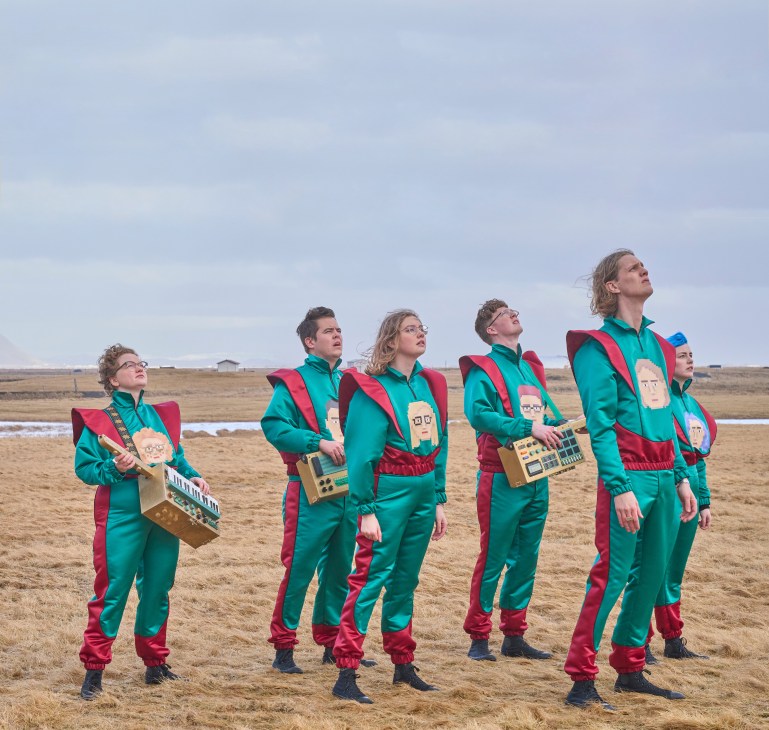
“10 Years” by Daði og Gagnamagnið, Iceland. Back with another great slice of electro-pop, and super cool jumpers.


Correspondent’s corner
From… Milan
by Ivan Carvalho
In a design-centric city like Milan there is plenty to appreciate beyond the furniture showrooms. When out for a stroll, I slow my pace in front of stately palazzos. Glancing inside, I’m often rewarded with attractive architectural details – elegant travertine floors or beautiful mid-century tiling. A kind word to the doorman allows me entry into leafy courtyards. Here, classical sculptures and fountains might be complemented by an outdoor light fixture from a modernist master such as Luigi Caccia Dominioni.


But back on the street I sometimes feel as though the city and its wealth of design talent is holding back on me in the public sphere – even if there are some exceptions, such as the sharp signage by Bob Noorda on the Line 1 Metro. I dream about the possibilities. Couldn’t an outdoor furniture brand draw up a wooden lounger for public use in parks? Or what about a new street light design or sensible bicycle racks, given that the city is moving towards a two-wheeled approach to transport?
I get it: public money plays a different role to a private pocketbook. But perhaps there could be opportunities for Italian companies to use Milan as an extended outdoor showroom, to show off new solutions for the public realm that could be introduced elsewhere. Design is a business that – when done well – can raise quality of life and could, if the city’s courtyards are anything to go by, lift spirits too.

Tying up loose ends
The joy of a previously abandoned idea
Unfinished projects can be sore points but for architects they often become research tools. Take Zaha Hadid, featured in Christopher Beanland’s book Unbuilt, whose never-realised works later inspired her grand projects.
To see how others have transformed unrealised ambitions into outstanding built design, see here.
Every dog has his day
by Christopher Cermak
Evaluating Joe Biden’s first 100 days is a serious business (see here) but let’s pause to thank the White House reporters doggedly documenting the presidential entourage’s every move. The White House press corps has long organised a pool of journalists who take turns following senior officials on public outings and filing detailed – and publicly available – notes to other reporters.

Emilie Munson of Hearst Newspapers, tracked down an overzealous child at a Kamala Harris school event to confirm that “the very outspoken pre-schooler in the yellow shirt was named Galya, not Dalya”. Meanwhile, Thomas Howell of The Washington Times confirmed that Joe Biden’s granddaughter’s dog is named Charlie. Both are a reminder that when speaking truth to power, the details matter.
Correspondent’s corner
From … Bogotá
by Anastasia Moloney

As a Brit who has lived in the Colombian capital for 20 years, the colloquial term “English hour” still bemuses me. Not known for being punctual, Bogotános will use it to refer to their perception of the English turning up on the dot to emphasise the need to be on time – even though this is frequently ignored. Meetings often start late and people regularly arrive tardy or not at all, especially when it’s raining.
But starting a meeting at “English hour” has become more customary during lockdown. That’s because Bogotános can no longer use the excuse of the city’s infamous “terrible traffic” as a reason for their tardiness while working from home. It’s meant online conference calls beginning on time – sometimes even if other appointments haven’t quite wrapped up (a video of a congressman having a home pedicure while on a work call went viral).
The pandemic has also seen Colombians adopt another social norm that the British are known for: the art of queueing. Prior to 2020 it was rare to see Colombians form one; a scrum was more likely. But with physical distancing, neat queues have appeared outside banks and restaurants. Sadly, that’s where the trend seems to have stopped: local headlines speak of elected officials, plastic surgeons and academics jumping the queue to get their coronavirus jab. If only the pandemic could help change these social norms too.
Images: Phillip Crocker, Vaidas Jokubauskas, Carlton Agius, Thule Photo
On fine form
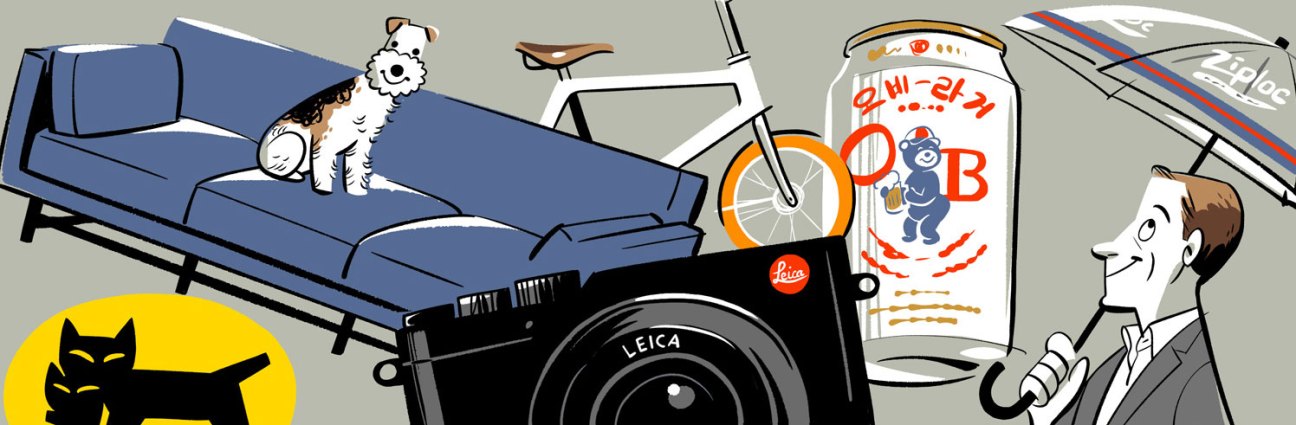
What is good design? A few months ago we asked our senior editor Nolan Giles to start speaking to our correspondents, contacts and editors about everything from the best examples of new urbanism to pieces of perfectly executed product design that they had seen and experienced. The ambition was simple: the inaugural Monocle Design Awards. Now, Mr Giles could quite rightly have fallen off his chair – although it’s hard to fall off a handsome and, yes, well-designed Maruni chair – because it’s a topic everyone has strong views on. Especially now.
In the past year we’ve seen some of the ugliest sticking- plaster designs take over our streets, homes and offices. Expediency, the need to enforce physical distancing and efforts to encourage people to get on their bicycles have all prompted a rash of quick-fix designs that will hopefully fade along with the pandemic. Here in London we have a new world of cheap cycling-lane bollards, warning signs plastered on pavements, and plastic barriers to block your movements that are not only unsightly but often ineffectual too.
But it has also been a great time for design. The debate about what makes a home able to sustain a family in lockdown, for example, has already prompted many designers to ask better questions about the things that surround us every day. Is that a chair you really want to hunker down on? Will that light fade from favour or become a cherished possession? Do those materials add to your sense of feeling good about life or do they seem harsh and cold?
We require more of this thinking because good design will be needed to reignite derailed retail in hard-hit cities. We will need joyous and inspirational spaces to lure people back into restaurants and hotels. And we’ll want office designs that make room for people to share ideas and come together again.
Luckily, being the practical Aussie that he is, none of this daunted Mr Giles and he has co-ordinated a lengthy process of elimination that allows us to present the Monocle Design Awards, which cover everything from branding to light switches. There are no showy starchitects and nothing that will fall out of favour in a season – just plenty of wit and joy and benchmarks to aspire to.
The role of good design drifts through this issue. It’s examined in our Business pages, where we look at how co-working spaces are trying to win back customers who have fled to the suburbs or found that their kitchen serves just as well as a perch in WeWork. Elsewhere we look at the revival of fashion illustration. We also interview Diane Hoskins, co-CEO of Gensler, the world’s largest architectural firm, to ask what needs to be done as we rebuild, hopefully, for the better.
So while the world feels as though it’s moving and regrouping at very different speeds, if you survey everything that’s happening in terms of design you’ll be left with a real sense of hope. We have a generation of fixers and doers who have learnt lessons over the past year, have been able to reassess what truly sustains us, and have set about planning, making and fixing. If we ditch those sticking-plaster solutions, this can be a moment when modest, practical, humane, tactile and heart-warming design can come to the rescue. And that will be a very good outcome.
Thank you for reading Monocle and always feel free to send feedback and thoughts to me at at@monocle.com. Have a good month and join us next issue for a preview of The Monocle Book of Homes and an electrifying look at mobility. But before that we will also be bringing out a new issue of The Entrepreneurs magazine.
Taking the lead
Eyass Shakrah and Axel Lagercrantz are finance guys. After a stint in London working for different banks, the university friends returned to Stockholm in search of fresh opportunities. They explored different ventures for a while, before joining forces and returning to what they knew best: mergers and acquisitions. “It’s actually credit to Axel’s ex-girlfriend to be honest,” says Shakrah. “She was the horse fanatic browsing around on this very slow website.” The site in question might have appeared nondescript to the casual observer – and its functionality was limited – but nine out of 10 horse purchases in Sweden went through it. The pair sniffed an opportunity; the idea for Pet Media Group was born.
Since the group’s foundation in 2018, Shakrah and Lagercrantz have been quietly buying up a stable of online pet-purchasing sites around Europe. It started with horses in Sweden, where the original owners were in their seventies and ready to move on, and now includes a UK pet platform as well as acquisitions in Italy and the Netherlands this year. The websites tend to have been started 15 or 20 years ago and grown, according to Shakrah, “Craigslist-like, organically for a long time to become the market leader”. The ultimate goal is to professionalise them, with a focus on trust and security to make the whole process more legitimate. The founders are due to roll out a single interface across all sites by May. If Uber and Airbnb can transform ride-sharing and short-term rentals, respectively, why can’t Pet Media Group do the same for the burgeoning pet care industry?
In focusing on the buying and selling of pets, the pair might be targeting an online marketplace with opaque practices that’s in need of a digital update. What they couldn’t have foreseen was the spike in pet interest sparked by lockdown. In the UK alone, more than three million households have bought pets since the start of the pandemic. Pet Media’s founders say that on their UK site, Pets4Homes, a puppy currently attracts 320 potential buyers, while the average price has risen almost threefold.
While recent events might have skewed the figures, the trend was already evident. And it’s all part of the changing role of the pet in the household, according to James Davidson, the British co-founder of direct-to-consumer dog food company Tails.com. “When my parents first had a dog when I was a baby in the 1970s, it actually lived outside in the shed,” he says. “And that was normal. Now it would be quite unusual for a family pet to live outside. You can almost chart the change of position in the family that a dog has had during the last 40 years by where it has slept. It has gone from the shed to the kitchen or utility room to, for a younger generation of owners, the bedroom.”
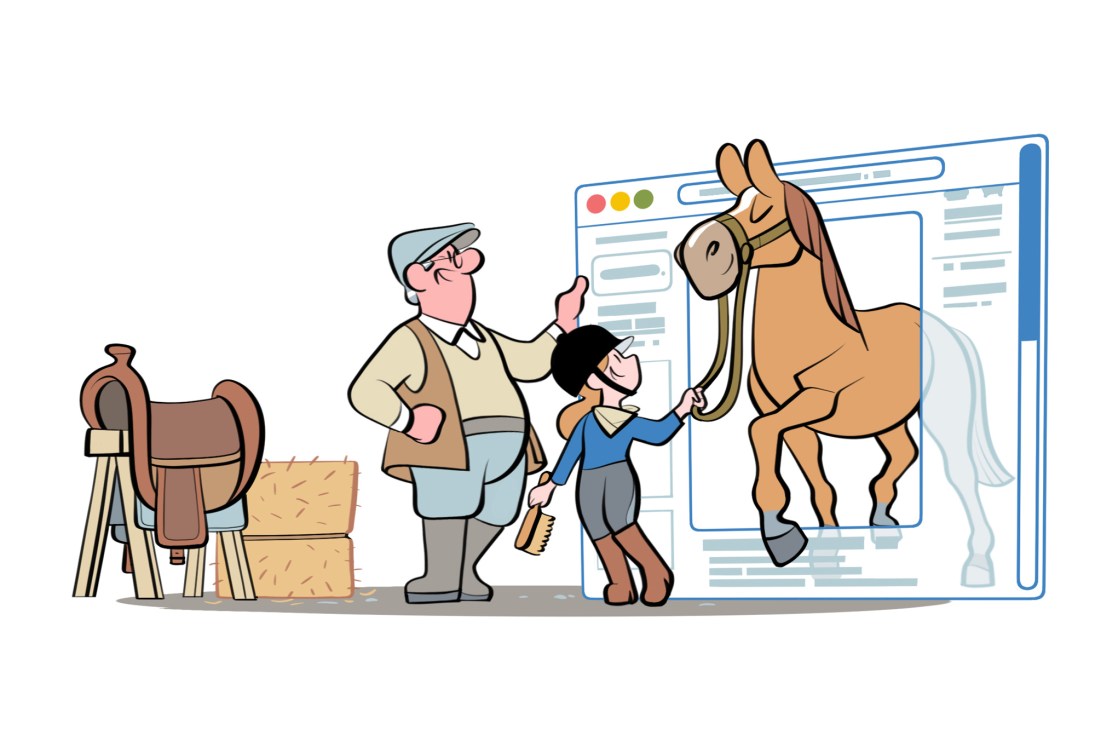
From horses to rabbits and dogs, Pet Media Group has it covered. The Swedish start-up has been acquiring pet-buying websites around Europe in a bid to create a more professional and secure platform in a marketplace that can be dominated by cottage-industry passion projects. Employs 45 people, half of them in engineering.
From China to the US, pet owners are getting younger and spending more. According to one forecast, the global pet space is set to grow by an average of 5 per cent a year between now and 2025, jumping from a value of $131bn in 2016 to $203bn (€172bn). And just like everything from mattresses to prescription medicines and male grooming, shaking up the status quo has the potential for big returns in an industry that is widely viewed by investors as recession-proof. If evidence were needed to show just how much players are banking on its future, US pet supermarket PetSmart’s acquisition of Chewy in 2017 sent a massive signal: the pet food and goods site fetched $3.35bn (€2.85bn) – the largest e-commerce transaction ever recorded.
That might explain why multinationals want in on the game. For a long time these companies – most notably Nestlé Purina PetCare and Mars Petcare – had been busy consolidating at the top, buying up food companies and veterinary services. Mars, for example, has been involved in the pet business since 1935, despite originally becoming a household name for confectionery. Now the fledgling entrepreneurship bubbling up from the bottom is being eyed as an important part of the puzzle.
Pet care in Asia
If China is the Asian pet market of tomorrow (it currently has the world’s largest pet population, fast approaching 200 million animals) then Japan is currently the dominant force: social and cultural trends start there and spread to the rest of the continent. As of 2020, Japan had 8.4 million pet dogs and 9.3 million pet cats. As one might expect, some of the large international players, such as Mars, have a foothold in the market – but the dominant force in Japan is homegrown company Unicharm. The humanisation of pets in Japan is well advanced – and businesses have sought to cater to this. As well as selling pet food and dog training mats, Unicharm is big in the pet nappy space (think incontinence pads for those messy end-of-life years). Its “Manner Wear Dog Diaper” advertises itself as being able to hold urine for six hours and comes with an adjustable tail hole. Other key products and services include pet spas, cremations and prams by the likes of Airbuggy.
Mars’s pet care innovation hub Kinship, which is headquartered in Manhattan and was founded less than two years ago, clearly has a millennial bent. Its president, Leonid Sudakov, is dressed in a T-shirt emblazoned with the company name in the colours of the rainbow. Pet care might be cool these days but when he moved into the segment from another part of the business in 2013, he felt rather differently. “I had to talk to my boss and I said, ‘What did I do wrong?’” Sudakov says that “pet parents” are channelling a social delay in having children into their pets – and that’s good for business. “In the consumer space it’s like baby care,” he adds. “But it lasts five times longer.”
As well as buying the occasional start-up, Kinship is also a funding facilitator. Teaming up with two other partners, including digital agency rga, it has formed a start-up accelerator called Leap, which provides early stage “seed” funding to companies, and a later-stage venture-capital vehicle called Companion Fund. Sudakov says that the whole exercise is an “educational tool” to help Mars become a better corporate investor. But it clearly allows the company to have a unique insight into the most cutting-edge end of the market, from those producing clever apps to new types of pet food.
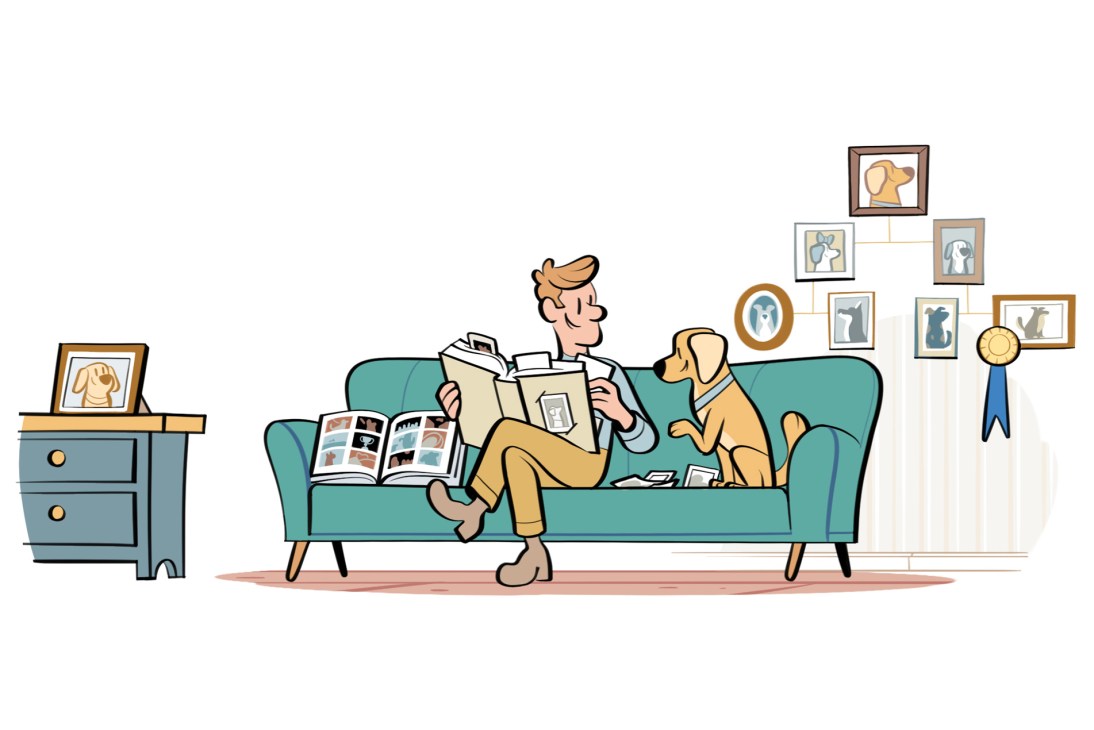
Based in New York and part of Mars Petcare, the innovation hub focuses on “data, technology and compassion” with several “pet tech” products including dna Panel – a health test for pets that can spot issues such as genetic risks – and Whistle, a gps pet tracker that it bought in 2016 for $117m.
One company to have benefited from Mars’s largesse is British newcomer The Pack, founded by vegan couple Damien Clarkson and Judy Nadel at the start of 2020. Gearing up to launch in May, the model is direct-to-consumer plant-based dog food (the initial line contains a chicken, beef and fish alternative) with packaging designed by Pentagram’s London office. Clarkson says that the goal is “to take animals out of the food system” but, he adds, the brand isn’t setting out to be overtly activist. In fact, the founders firmly believe that plant-based food can find a wide audience. This is something that mirrors the human consumer industry, where meat-alternative brands such as Beyond Meat and Impossible Foods have taken off – the latter valued at almost $4bn (€3.4bn).
The Pack is trying to gobble up space in a growing plant-based, pet food market already occupied by the likes of Italy’s Amì and the US’s WildEarth. And it has received $200,000 (€169,000) from Leap, which will eventually convert to equity, to do it. So how does it feel taking money from a company that also promotes meat in pet food? “We’ve never wanted to be niche,” says Nadel. “We want to be able to make things go mainstream and for that happen, you have to work with corporates.” The couple say that the sales advice, mentoring and access to top nutritionists they receive is invaluable.
Coming up with the right product to crack the pet care industry is only one half of the story. Savvy entrepreneurs know that data, and how you leverage it, is king. Being direct-to-consumer is a big help because it gives you an instant feedback loop on buyer preferences – far better than any forecast report or marketing gizmo.
“Generally speaking, pet-food companies – like any consumer product – will follow trends in consumer behaviour and will continue making products that meet those desires,” says Davidson, the co-founder of Tails.com, which dates back to 2013. Now servicing 14,000 orders a day, it compiles information that includes the size of the dog, the breed and special dietary requirements to come up with a blend that is unique to each pet. Just like The Pack’s Clarkson who saw a “mirroring of human food” in the pet-food category, Davidson sees growth “in areas of the pet-food market influenced by what we expect to have on our own plates.” At Tails.com that means providing hypo-allergenic and “sensitive stomach” options when concocting the bespoke feed, even if Davidson says that it’s not something the company actively pushes. With the platform now an old-guard player (it recently launched a separate Republic of Cats site), he doesn’t rule out taking the custom nutrition that Tails.com has already developed – with all its accompanying golden nuggets of data – into categories beyond pet food.
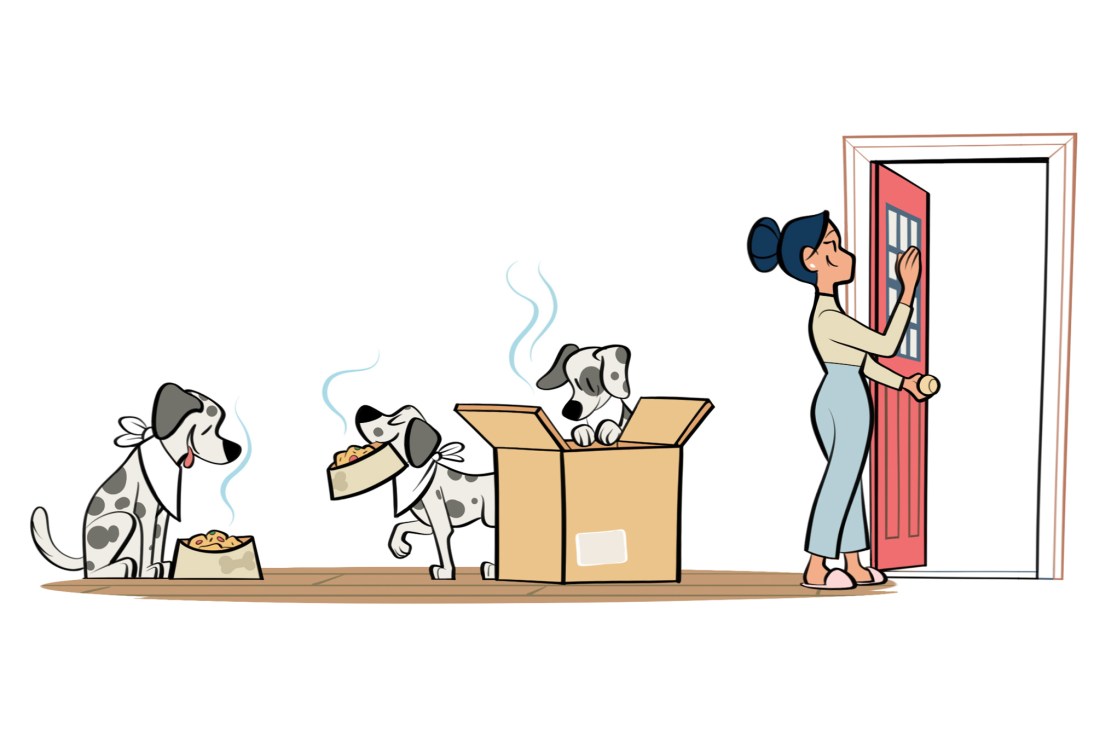
Founded in the UK in 2013, it has been leading the charge in bespoke, direct-to-consumer dog food. In 2018 Nestlé Purina took a majority stake in the company, while last year Tails.com expanded to an additional seven European countries. Also look out for newer d2c upstarts such as Nom Nom and Ollie.
Along with other brands that have come along since, such as the US’s Nom Nom, which offers “probiotic support” alongside food, Tails.com is riding high on another trend that criss-crosses consumer markets: personalisation. Everyone covets a unique item, whether it’s a new pair of trainers or tailored kibble for a three-year-old cockapoo named Rex. But another aspect that Tails.com has nailed is the subscription service, which pet owners see as more a boon than a bind, because it means never running out. And while every new direct-to-consumer brand out there might charge a monthly “membership”, the landscape looked a little different when Tails.com came into being. “We got pushback from investors in 2013 because they’d been burnt by the previous wave of subscription businesses that hadn’t worked out so well,” says Davidson.
Subscriptions are an even more integral part of the business model in another area of “pet tech”: wearables. The most popular of these items is the gps tracker collar which, unlike a microchip that needs to be scanned by a vet once a pet has actually been found, allows you to keep real-time tabs on a mutt using gps and mobile technology. The market leader is Austrian company Tractive, launched in 2012. CEO Michael Hurnaus says that the brand has gone the local route rather than tapping Silicon Valley for cash, which means being “pretty much bootstrapped to this day”. No big corporations or venture money are involved; in fact, the only sizeable funding was a €2m investment from a single individual in 2016.
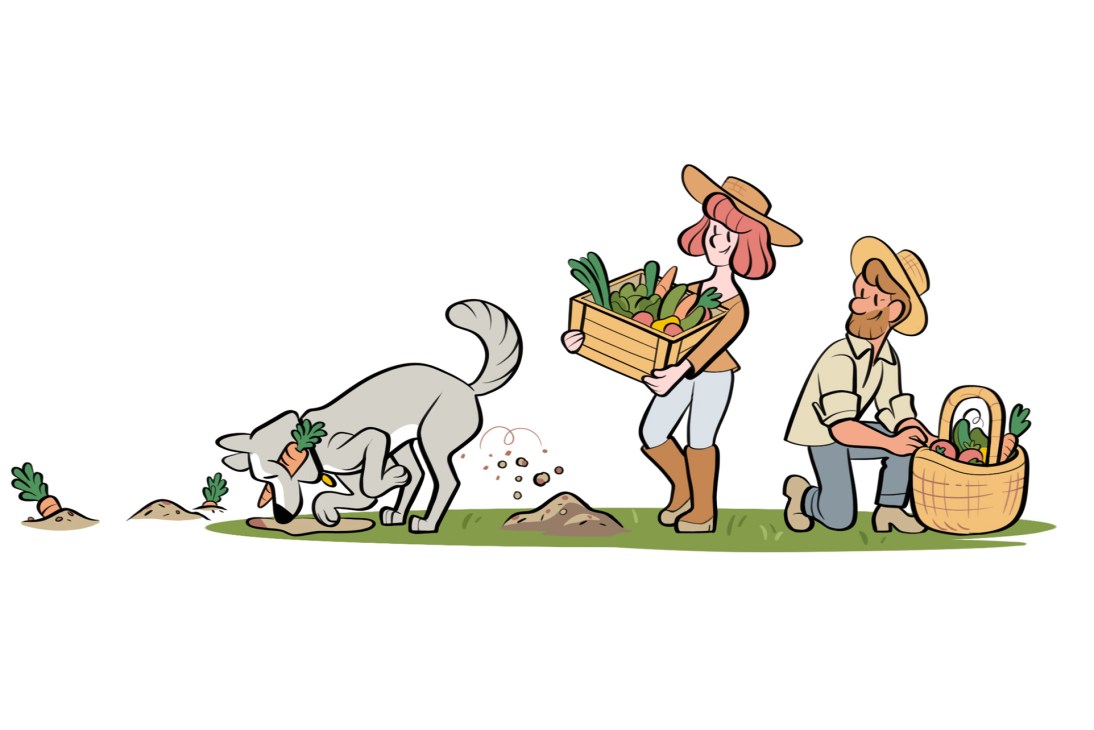
Founded by a husband-and-wife team intent on shaking up the dog-food scene in the UK and continental Europe. Producing plant-based pet food and set to launch in May, the couple behind The Pack also have a vegan-focused technology platform called Vevolution – and Blossom, a very fluffy cavapoo puppy.
Hurnaus says that Tractive actually sells its hardware at a loss knowing that, if users like the product and stick with it, the monthly subscription, which includes the mobile coverage, will pay off the initial costs. Like others in the industry, he also realises that the key to the future lies in the data that the company receives on the movements and habits of dogs and cats through its 375,000 active users. The Tractive device connects to a mobile phone app that can alert a user, for example, if the pet has strayed beyond a preset boundary. But the possibilities are endless. “Is your dog moving less for a certain period of time?” says Hurnaus. “This [could be] an early sign of osteoarthritis because we know your dog is eight years old. We don’t want to be a medical or diagnostics device but we try to do a lot of machine learning on the data behind the scenes to tell the customer whether it might be worth checking with the vet because we have detected X, Y or Z.”
Alongside finding a lost pet, one of the principal goals of these devices is to be something akin to a Fitbit for animals. Just like the human world, where smartphone step-tracking allows us to see how many kilometres we’ve notched up in a day, the gps collar gives owners a window into how much they are exercising their pets (or in the case of the New York City-based French founder of Fi, Jonathan Bensamoun, inspire him to create a product that would allow him to track his dog walker). Fi – which recently raised $30m (€25.4m) in a funding round for its gps device – is part of a new breed of smart dog collar devices that is aiming to compete on size and battery life. Unlike Tractive, Fi is solely US-based for the time being.
Analogue vs digital
When it comes to pet bricks-and-mortar, the US is dominated by two superstores: Petco and PetSmart. While both companies have had financial problems in the past, including billions of dollars in debt, they’re trying to capitalise on the surge in recent pet interest and realise that they’ll need to move with the times and improve their digital offerings. Last year, PetSmart’s private equity owners decided to split it from its digital acquisition, Chewy, in an apparent bid to make both businesses nimbler. Meanwhile, Petco, which has almost 1,500 shops, went public for a third time in January this year, causing a flurry of interest. Its online sales were up 90 per cent in the fourth quarter, overseen by CEO Ron Coughlin, a former head at Hewlett Packard.
Although programmers will say that the end goal is to ensure that obese and overweight pets (around half the UK and US dog population) actually get some fresh air, there’s clearly a gamified, addictive element to Fi’s tracker platform that allows you to compare how many steps your pooch has walked compared to other users in the vicinity over the past 28 days. Bensamoun says that it’s a bit of harmless fun that get pets fitter. “We were a little bit worried that people would start to ‘overwalk’ their dog – but no,” he says. “The thing is, you need to walk too.”
Although both Fi and Tractive aren’t offering medical advice, there are clearly opportunities for what marketeers might call “horizontal integration” or “synergies” with other brands. In fact, Tractive is already piloting a scheme in Germany whereby taking out loss and damage insurance gives you a free subscription to another pet care industry sub-category: the televet. Tractive is working with Sweden’s FirstVet, a company that has been pioneering 24/7 online video consultations with vets since 2016, and something that co-founder David Prien says is still a “nascent field”. It dwarfs other players, such as the UK’s PawSquad, and is available in the Nordics and Germany, the UK and, more recently, the US. Prien is another entrepreneur that couldn’t have known that the pandemic would catapult his idea – telemedicine – into the mainstream.

The dominant player in the emerging online vet consultancy market and available in seven countries. The fact that telehealth has taken off in the human world during the pandemic will only help. The Swedish company raised $35m (€29.7m) for its US launch at the end of last year.
Just as Kinship’s president Sudakov talks about technology’s ability to provide “solutions to all the pain points on the pet-parent journey”, Prien believes that his product was an obvious solution for anxious owners. “I know that if I call my veterinary practice, I’ll often have to go in,” says Prien, who has two spaniels. “I don’t know what the cost will be; I take a view that it is going to be very expensive [and] I don’t know whether my insurance will cover it or not. Instead of Googling or being on a strange website, we want to establish the first natural touchpoint when those situations arise.”
Not so long ago, it would have been madness to think that the pet care industry – once the purveyor of unpalatable canned food covered in a film of jelly, rather than a medley of papaya, pea protein and kale – could teach the wider retail space about good business. But that’s exactly what it’s done, according to Jack Stratten, a senior trends consultant at London-based futures agency Insider Trends. He specifically points to its strides in personalisation and subscription sales. “I’ve never talked to many retailers about the pet industry before,” he says. “But post-pandemic I will do.”
The craze for buying pets – whether in lieu of a child or as a stress-relief cuddle companion or lockdown-related furry friend – shows little sign of abating even as the world is set to return to more normal times. And when that happens, it’s the new crop of pet-care brands that will be posed to reap dividends. “All of these new pet owners, when people go back to work, they’re going to need daycare and other services to care for their dogs when they don’t have as much time to spend with them as they do now,” says Pet Media Group’s co-founder Shakrah. There is plenty more for the pet-care industry to unleash.
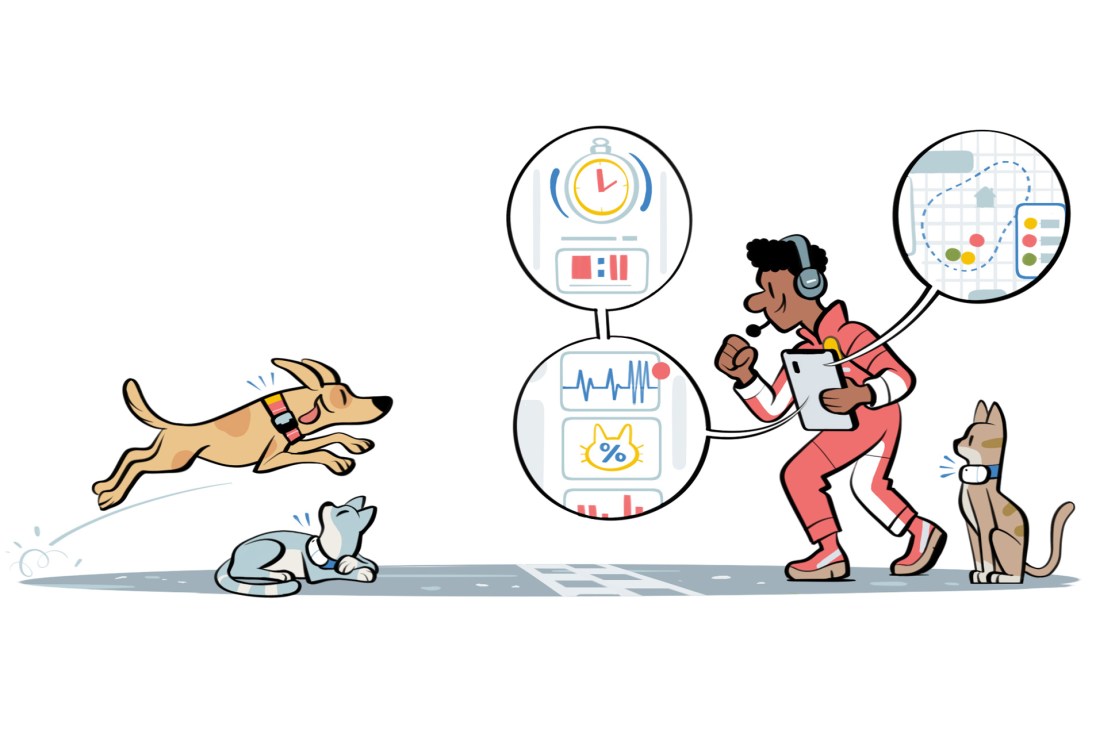
Smart collars from brands including Austria’s Tractive and US start-up Fi are the hottest thing in the “wearables” market, connecting with the smartwatches and fitness trackers of pet owners. With reams of tracking data combined with artificial intelligence, they might be the closest thing to giving the pet a voice.
Prime times
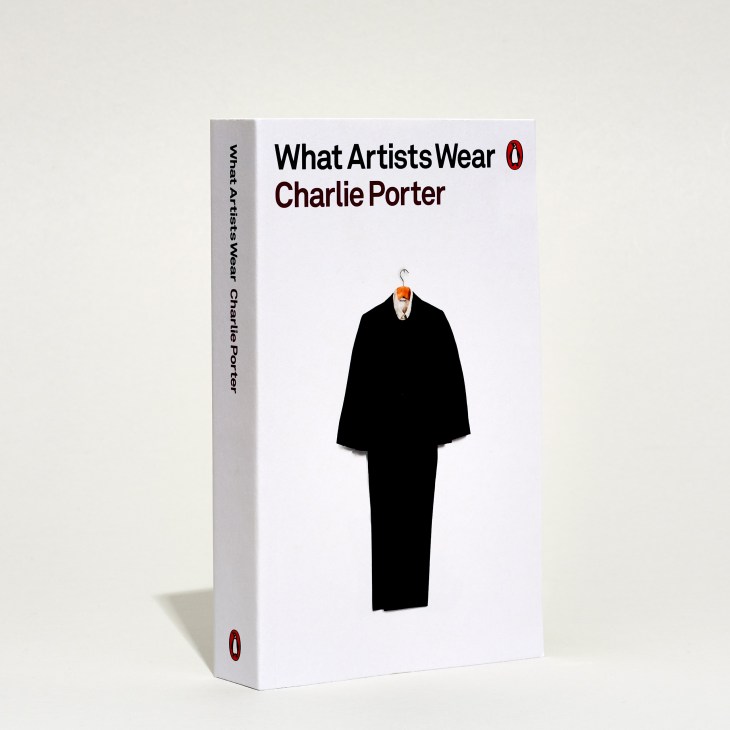
What Artists Wear
Charlie Porter
Fashion is a form of self-expression, as those who create visual works know well. In this playful title, writer and fashion critic Charlie Porter celebrates the pleasure and possibility of clothes, via memorable outfits worn by artists in and out of the studio. These include Yayoi Kusama’s kaleidoscopic costumes, Yves Klein’s snappy suits and Andy Warhol’s devotion to denim.
‘What Artists Wear’ is released on 27 May
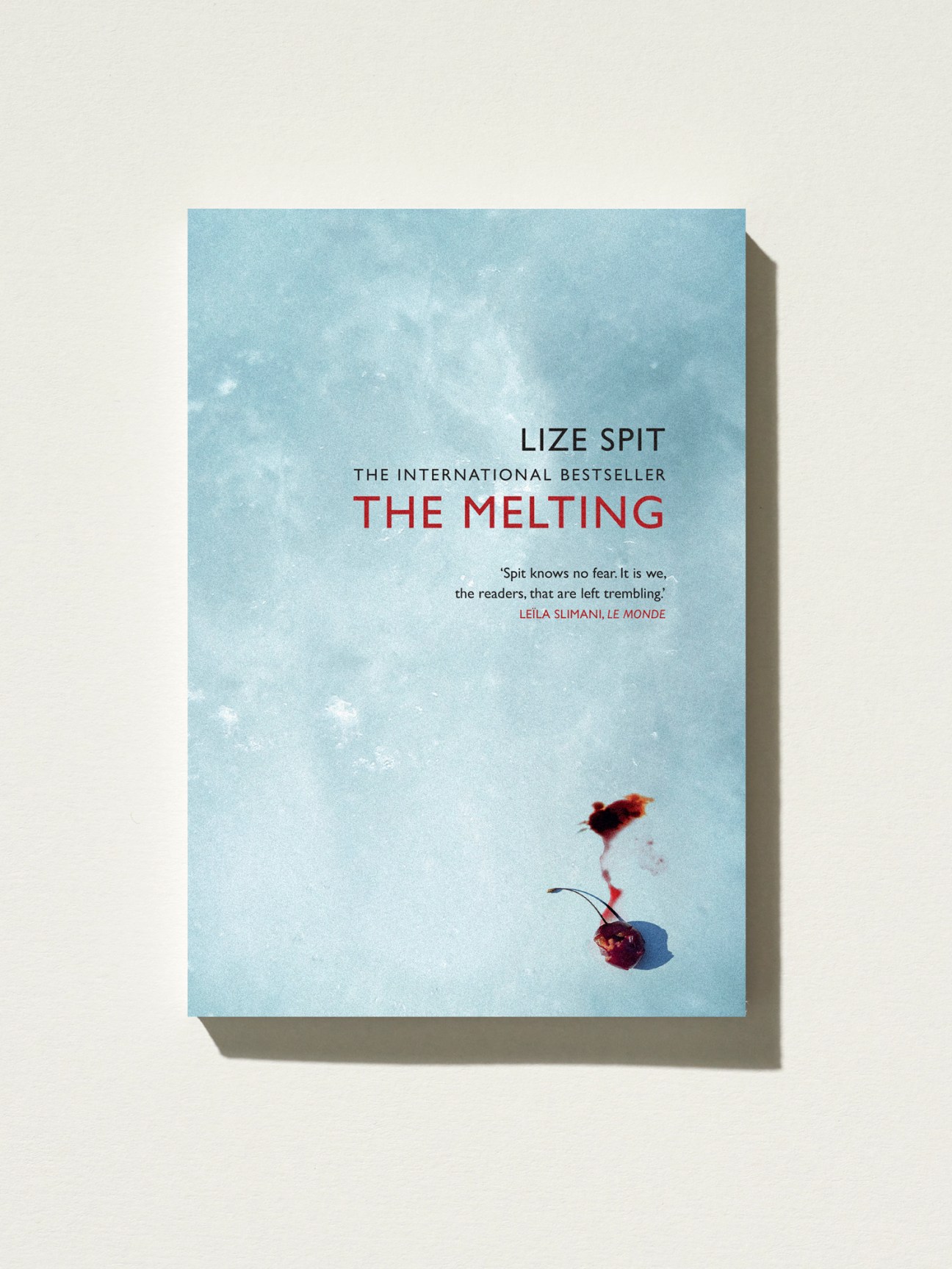
The Melting
Lize Spit
This dark, twisty novel by Belgian author Lize Spit became a bestseller when it was published in Dutch in 2016. Eva sought refuge from her family by befriending two boys in the small Flemish village where she grew up – but they lured her into a cruel sexual game. Thirteen years on, she’s returning home to take revenge. A daring debut that isn’t afraid to unsettle its readers.
‘The Melting’ is released on 13 May

The Netanyahus
Joshua Cohen
Part hilarious campus novel, part history lecture, Cohen’s new book smartly blurs the boundaries between fact and fiction. In the winter of 1959 to 1960, Benzion Netanyahu, an exiled Israeli scholar who’s being considered for a position at Corbin College in not-quite-upstate New York, turns up for his interview with his discourteous wife and three wild, badly behaved sons. His arrival wreaks havoc in the life and home of Ruben Blum, a mild-mannered Jewish historian who begrudgingly accepts the unenviable task of hosting his potential new colleague and family.
‘The Netanyahus’ is released on 5 May
Screen
First Cow
Kelly Reichardt

The western genre has long been defined by tales of avarice, conquest and retribution. And although the latest film by acclaimed director Kelly Reichardt broaches these issues, it is first and foremost a moving, exquisitely restrained story of a friendship that flourishes amid the blood and dirt of the American frontier. It follows a callow fur-trapper and a seasoned Chinese traveller as they seek to make their modest fortune, not in gold or land, but milk. Humble ambitions eventually lead to hubris, but their camaraderie never sours.
Gunda
Viktor Kossakovsky
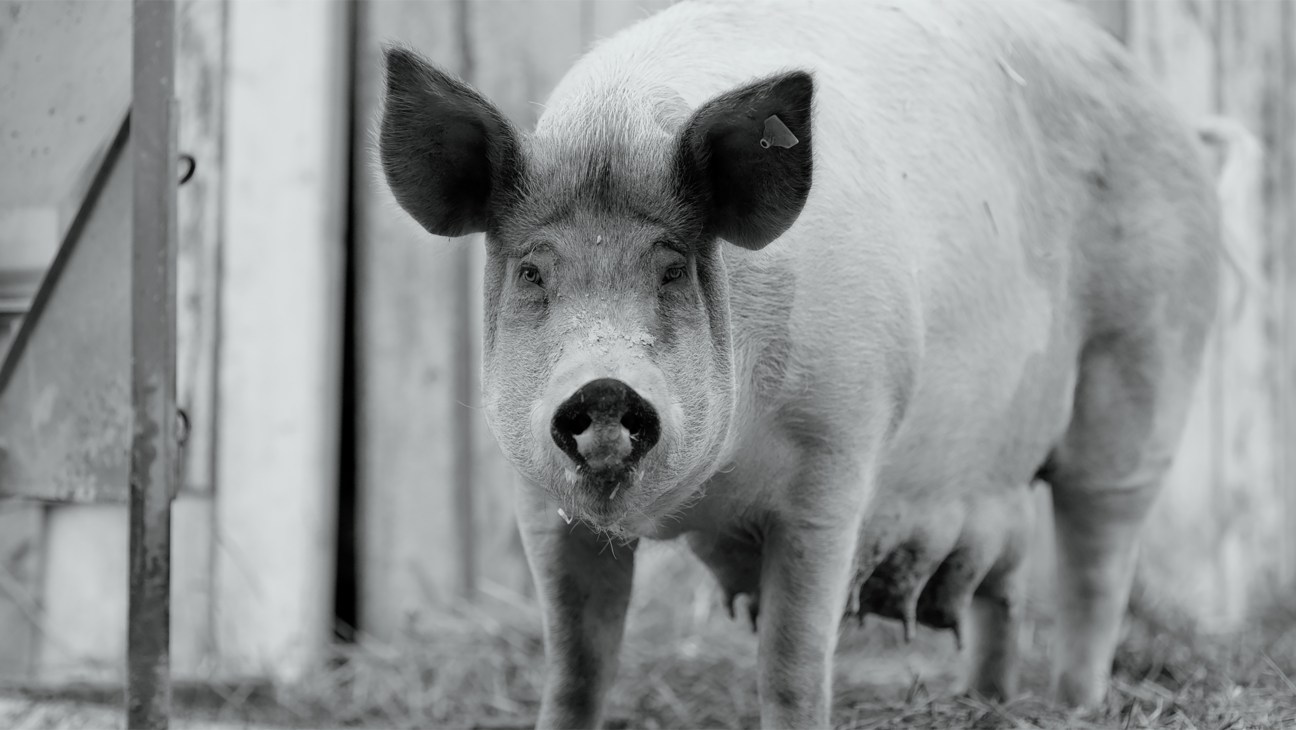
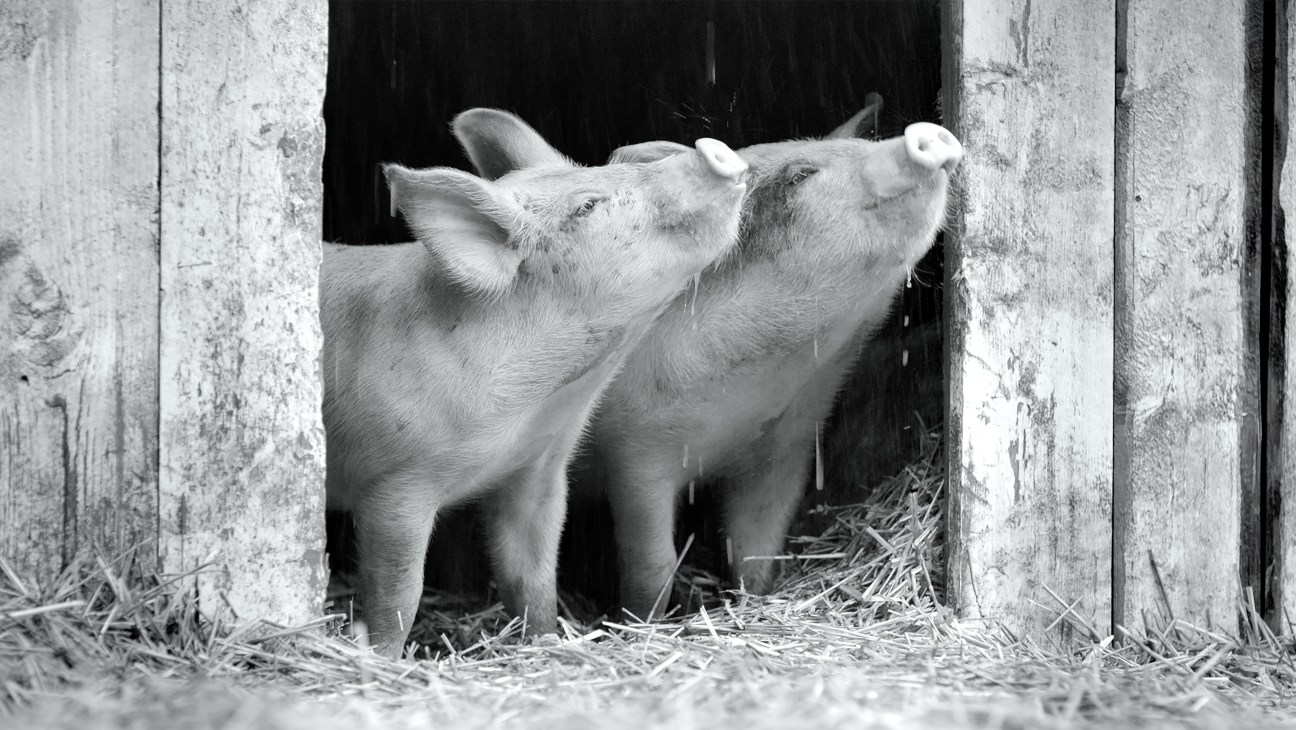
The words “art” and “pigsty” aren’t often paired but they manage to find a meeting point in Gunda, Viktor Kossakovsky’s curious and unexpectedly mesmerising documentary about a group of farmyard animals. Shot in stunning, soft monochrome, it triumphs in its search for beauty and pathos in places that you’d least expect to find them, such as a cow’s eye encircled by flies. It would be possible to interpret all of this as a comment on animal intelligence or even on motherhood but such readings would distract from the film’s disarming simplicity. Sometimes a giant pig is beguiling enough on its own.
Snöänglar (Snow Angels)
Anna Zackrisson
The Bridge, celebrated as one of the best examples of Scandi noir, was also praised for how it explored the subtle nuances that differentiate the neighbouring countries of Sweden and Denmark. This new crime drama, a collaboration between those two nations’ public broadcasters, svt and DR, is likely to follow suit, with its crew and leading characters hailing from both countries. The series, which is directed by Anna Zackrisson and written by Mette Heeno, follows three women, all connected to the case of a missing child who disappears in the middle of a snowstorm in Stockholm. Not everyone, it quickly becomes clear, is telling the truth.
Audio
Daddy’s Home
St Vincent
Annie Clark’s follow-up to her 2017 hit record Masseduction is a fascinating album that plays into, or pays homage to, the darker sides of kitsch US nostalgia. She has a new look (Pretty Woman-esque wig, 1970s outfits), new merchandise (cassettes, trucker caps, keyrings) and a record that, in the words emblazoned on its retro-looking promotional poster campaign, features “warm Wurlitzers and wit, glistening guitars and grit, with sleaze and style for days”. Sexy, surprising, fascinating and sonically exceptional, this is St Vincent at her best.
‘Daddy’s Home’ is released on 14 May
Afrique Victime
Mdou Moctar
There are many heavenly sounds on this album by Mdou Moctar, an exceptional musician hailing from a village in Niger’s desert. Inspired by Saharan folk and having mastered his guitar technique, Moctar started producing complex, psychedelic music that spread like wildfire through West Africa by word of mouth. Now playing with an equally talented and hardworking band, he is committed to taking his music further afield. These songs sound like sunshine, freedom and happiness – something that we can never get enough of.
‘Afrique Victime’ is released on 21 May
Wink
Chai

Although the Japanese quartet remain as joyful as ever, Chai’s latest album, Wink, veers towards a more soothing sound. It’s almost minimalist compared with the group’s previous technicolour efforts – and it works. The lead single, “Action”, is powerful thanks to its syncopated beats and political appeal, while “In Pink” is a captivating song that features producer Mndsgn. Electro track “Ping Pong!”, a hilarious love letter to table tennis, is a highlight.
‘Wink’ is released on 21 May
Art

König
Seoul
Gallerist Johann König, the king of the Berlin art world, has set his sights on South Korea. His gallery’s new outpost opened in April in the upscale Gangnam area of Seoul with a group show featuring Austrian sculptor Erwin Wurm, Polish-born Alicja Kwade and German painter Katharina Grosse. The gallery, set in a building owned by luxury goods brand mcm, also features a rooftop sculpture garden and is promising major solo shows by the likes of Camille Henrot and Jeppe Hein in the future. König has always pushed at the boundaries of what an art gallery can be. By opening in Seoul, while other big-name galleries have concentrated on cities in China and Japan instead, he has made exactly the kind of daring move that might just work out for him.
König Seoul is open now
Photography
Mohamed Bourouissa
Goldsmiths CCA, London
There’s a stable in North Philadelphia that isn’t some inner-city country club but a place for the town’s underprivileged children to ride horses. Algerian-French artist Mohamed Bourouissa spent eight months there, photographing and filming this urban equestrian phenomenon. Now he’s bringing that body of work to London’s brilliant Goldsmiths Centre for Contemporary Art. This rarest of galleries is an art institution that specialises in no-nonsense, adventurous exhibitions with none of the waffle that normally comes with such a project.
‘Mohamed Bourouissa’ runs from 21 May to 1 August
Auction
Kusama: The Collection of the late Dr Teruo Hirose
Bonhams, New York

One of the recurring fables in the art world’s best rags-to-riches tales is when impoverished artists barter their works for various services – until they make it big and those works become treasures. Yayoi Kusama is the female contemporary artist who commands the biggest sums in the market today but back in the 1960s she used her artwork to settle her bills at Dr Hirose’s practice in New York. A central figure in the city’s Japanese community, Hirose was a quiet, serious man and, in many ways, an unlikely friend of Kusama’s. “In the 1960s he was a strange acquaintance for Kusama, who was known for her provocative art happenings, but they remained friends throughout their lives,” says Ralph Taylor, global head of postwar and contemporary art at Bonhams, which is auctioning 11 Kusamas from the doctor’s collection this month. Although the canvases – precursors of her “Infinity Net” paintings – are expected to fetch millions, her phantasmagorical works on paper have starting estimates of about $20,000 (€17,000).
The Hirose collection is on sale at Bonhams New York on 12 May
Images: Courtesy of Bonhams, Courtesy of König Seoul, A24 Films, Neon, Sub Pop Records