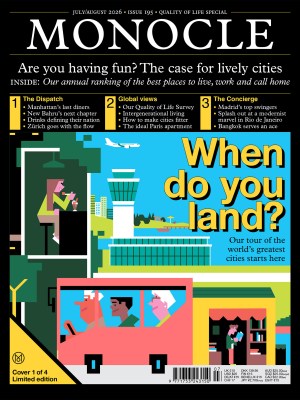
Issues
The Monocle Shop
Adriano Meneghetti x Monocle narrow elastic belt
€110

Never underestimate the power of a good belt to sharpen up a look. We’ve introduced a couple of updates to our partnership with Adriano Meneghetti, the Milanese maestro, to keep things looking snappy. The belts are made in Italy using a stretchy rayon with a woven structure that means they can be buckled at any point along the length.
Colours: Navy or olive.
Materials: Leather, brass and rayon.
Made in: Italy.
Shop now
Barena x Monocle cotton overshirt
€440
Barena, a Monocle favourite, creates finely tailored work wear with a dash of insouciance. Our take on the Venetian brand’s overshirt has patch pockets, a neat collar and the roomy silhouette characteristic of this utilitarian staple.
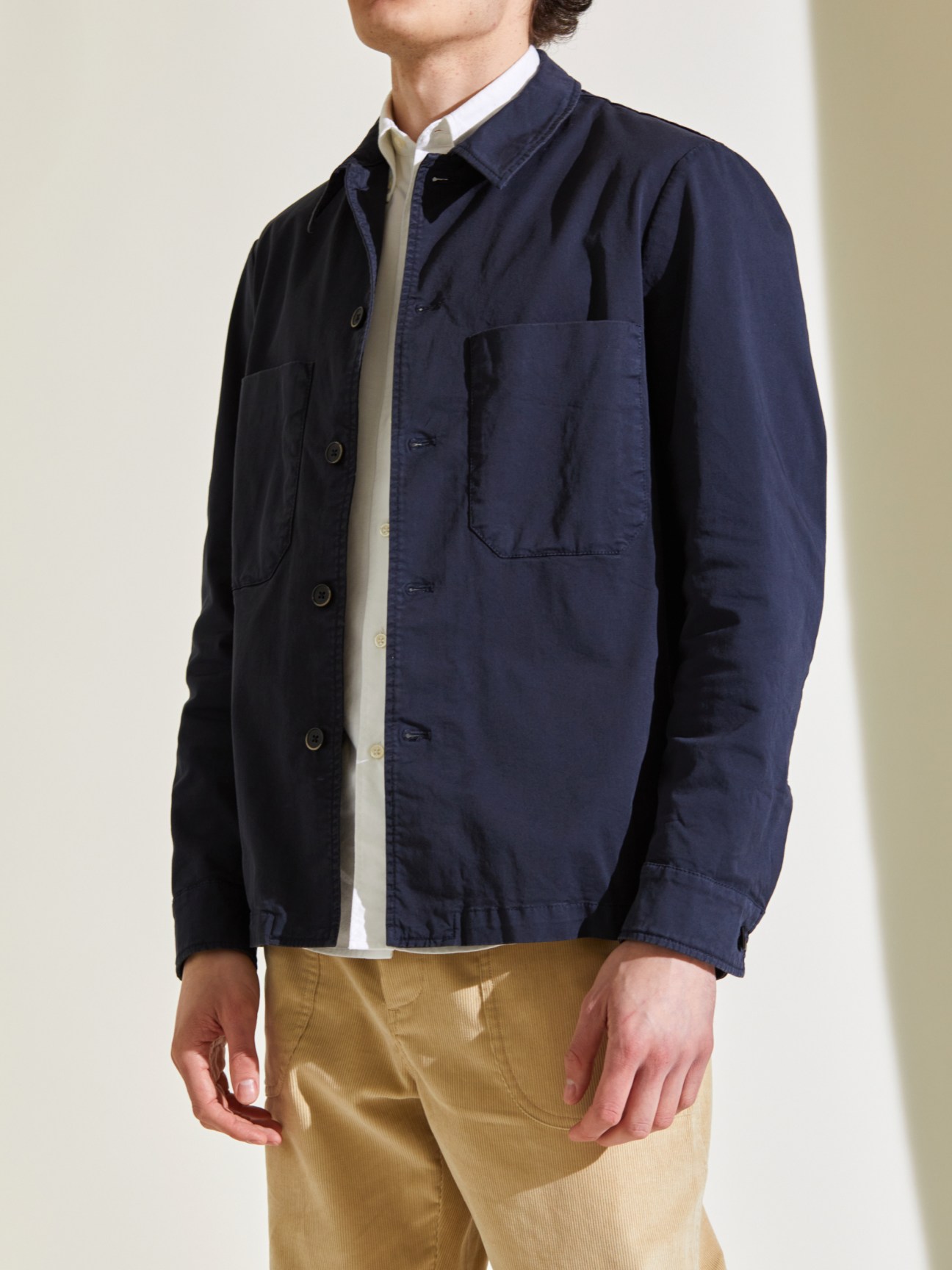

Colours: Navy or stone.
Materials: 98 per cent cotton.
Made in: Italy.
Shop now
Danese Milano x Monocle Timor perpetual calendar
€150
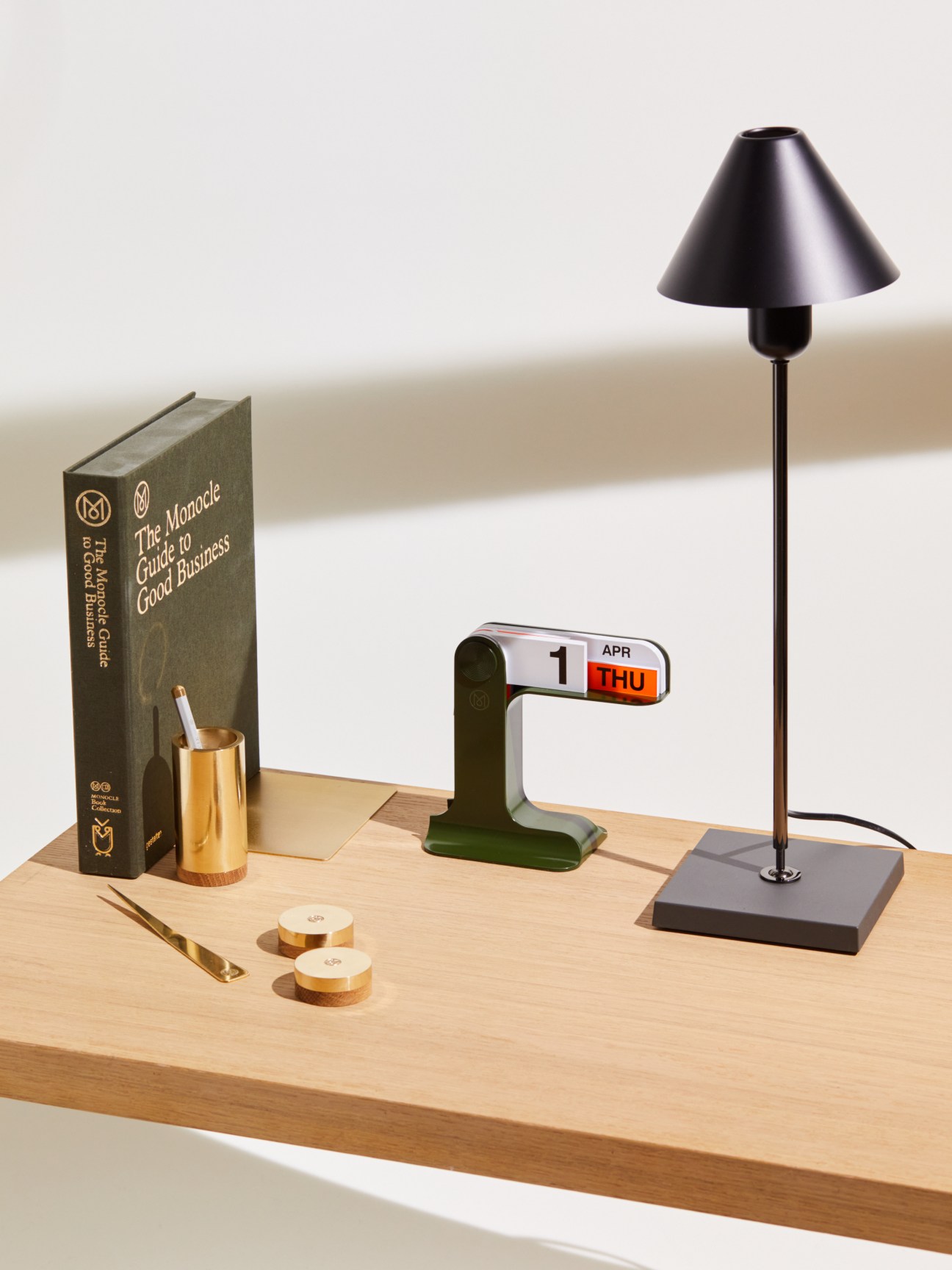
In an age of apps there’s something soothing about the Timor table calendar. A design classic, it was created in 1967 by the late, great modernist Enzo Mari for Italian manufacturer Danese Milano. Decades on, it hasn’t lost any of its appeal – in fact we might need its analogue charm now more than ever. Made in Italy, the pvc cards representing the days, months and date fan out from a fixed central point. Our exclusive version comes in olive with a signature salmon filter over the day of the week to get you grinning – even on a Monday.
Colour: Olive.
Size: 15cm x 17cm.
Material: PVC.
Made in: Italy.
Shop now
Johanna Gullichsen x Monocle magazine tote and vanity case
€175 and €75
Finns are famously good with textiles – and for our latest project we’ve sought the expertise of one of Helsinki’s leading talents. Johanna Gullichsen has been dreaming up textiles with striking graphic patterns and pops of colour since 1989. Her work spans rugs, cushions and accessories but we’ve chosen to focus on two carriers: a vanity case for your cosmetic essentials and a magazine-sized tote to stash your favourite titles. Choose from the bolder Doris, Gullichsen’s signature pattern, or Eos, made up of hundreds of fine stripes. Whichever you pick, the grey-and-yellow colour combo will turn heads while you’re out and about.
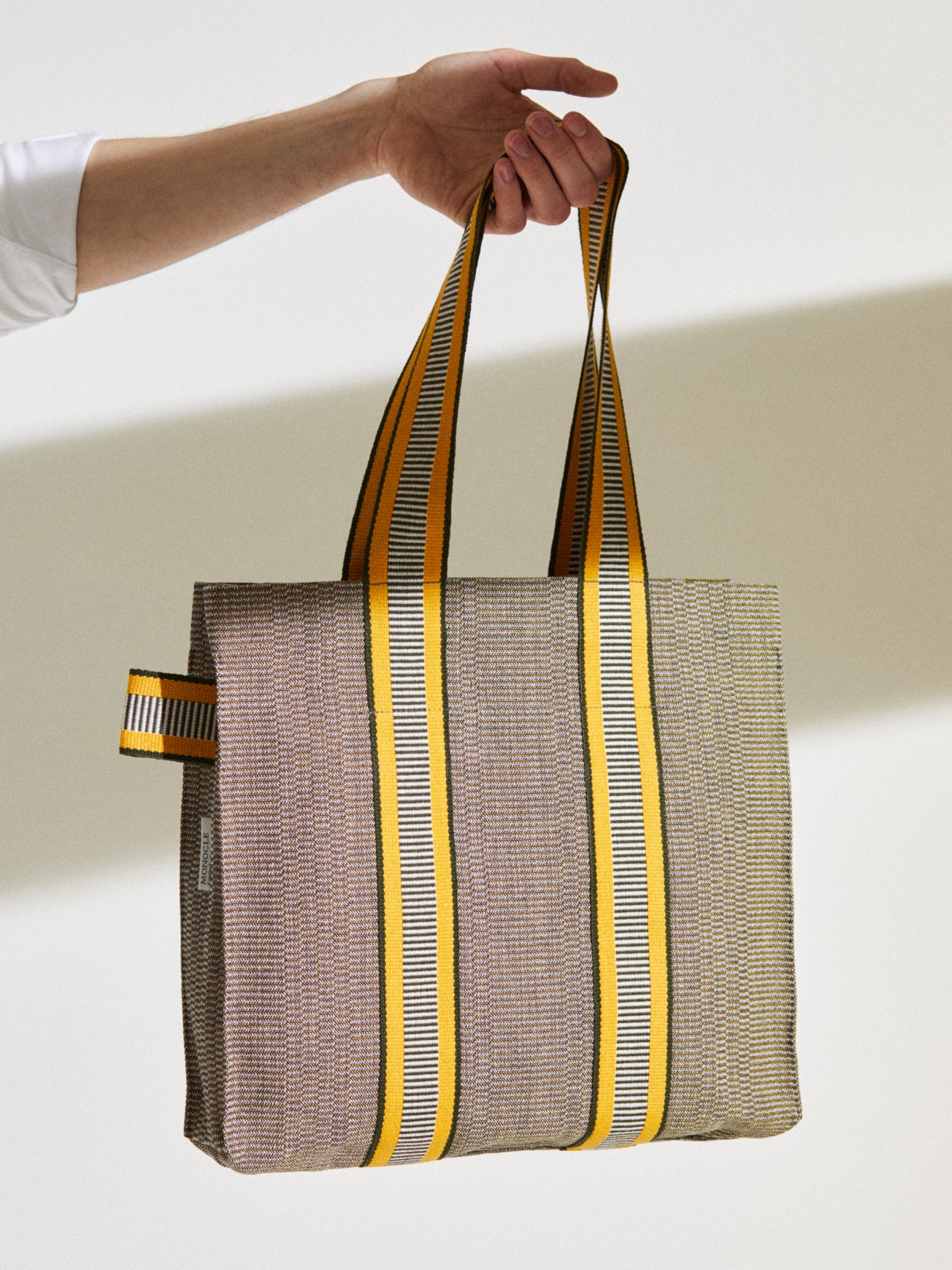
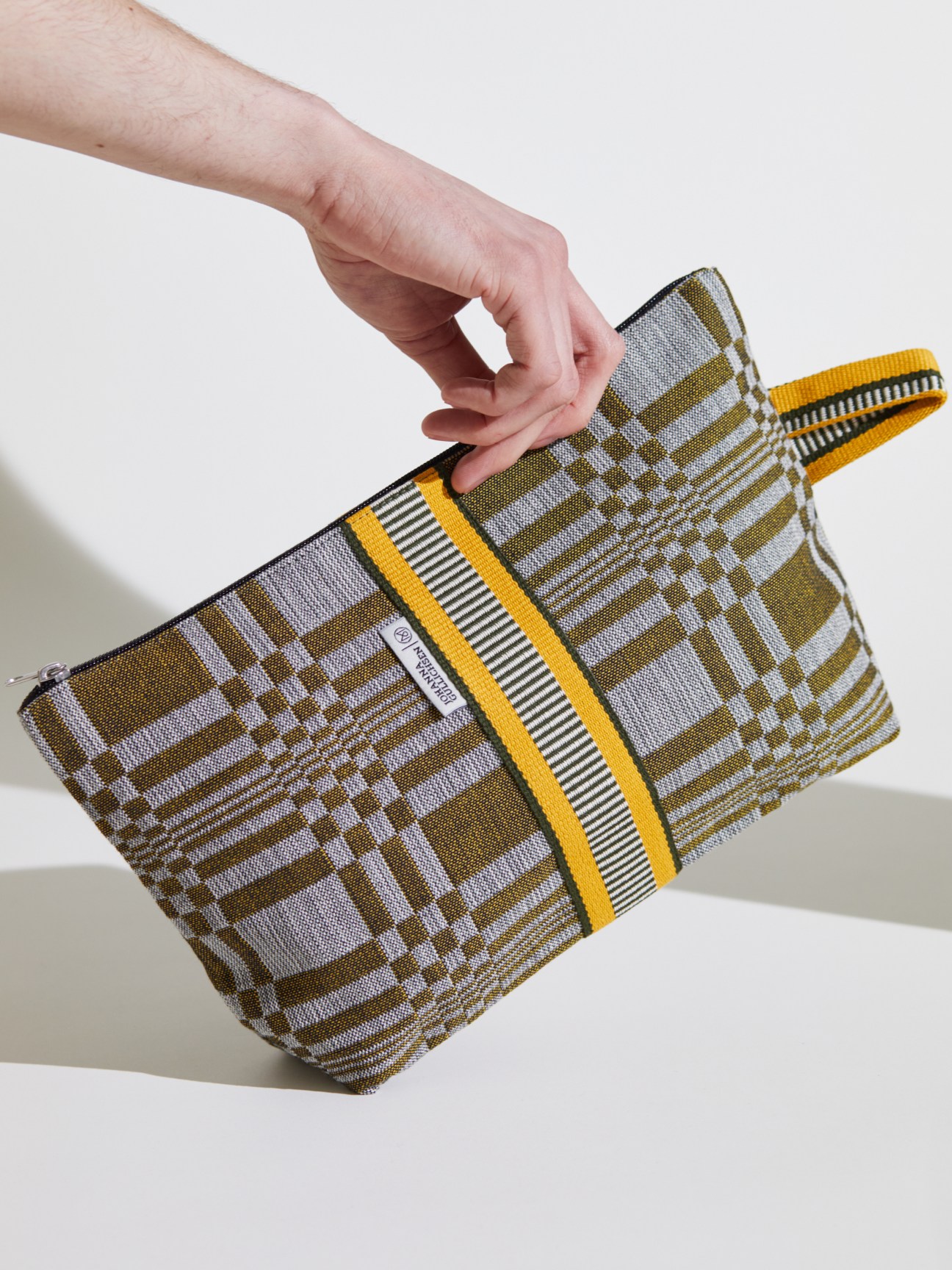
Magazine tote size: 34cm x 36cm x 9cm.
Vanity case size: 26cm x 9cm x 19cm.
Colours: Grey, olive and yellow.
Material: Cotton.
Made in: Finland.
Shop now
R+D Lab x Monocle Helg carafe and Helg tumblers (set of two)
€105 and €80 (clear), €135 and €115 (green)
Jay Vosoghi and Sara Mostofi, the duo behind r+d Lab, work with traditional artisans in Italy to bring their designs to fruition, whether glassware or textiles. We’re offering two versions of the Helg 1-litre carafe and cups: one made from ribbed, clear glass, the other – if you’re feeling a bit more daring – in smooth grass-green glass. Inspired by the neo-rationalist architecture of the late 1960s, they are handmade from borosilicate glass (a composite that is durable and thermal-shock resistant) so are ideal for cold or hot drinks.
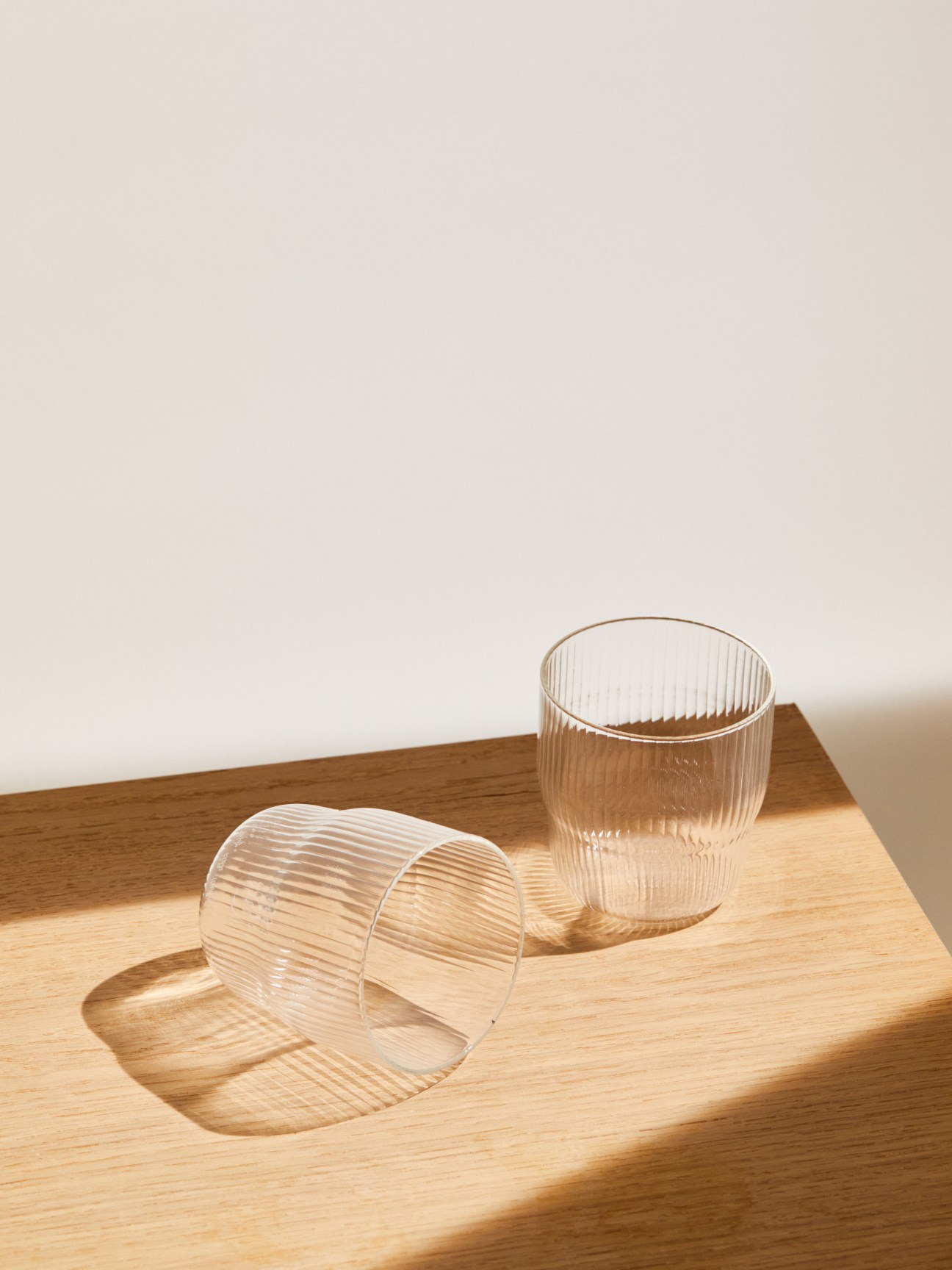

Size: H23cm (1-litre carafe); H8.5cm (tumblers, set of two).
Colours: Diamine green or clear (ribbed).
Material: Glass.
Made in: Italy.
Shop now
Bitossi x Monocle ceramic vases
€55, €60 and €90
Guido Bitossi came from a long line of skilled Tuscan ceramicists, sculptors and artists. In 1921, the young Italian opened his own factory in Montelupo Fiorentino, a storied ceramic-making area near Florence. Among the historic firm’s greatest hits is the Rimini Blu collection, which was created in the 1950s by long-standing artistic director Aldo Londi. The line of vases, bowls and figures were notable for their vivid shade of blue and engraved motifs – and were credited with introducing a sense of the handcrafted and ornate into Italy’s modernist design. Our collaboration has three shapes of vase – in that signature blue, as well as sunny yellow or olive.
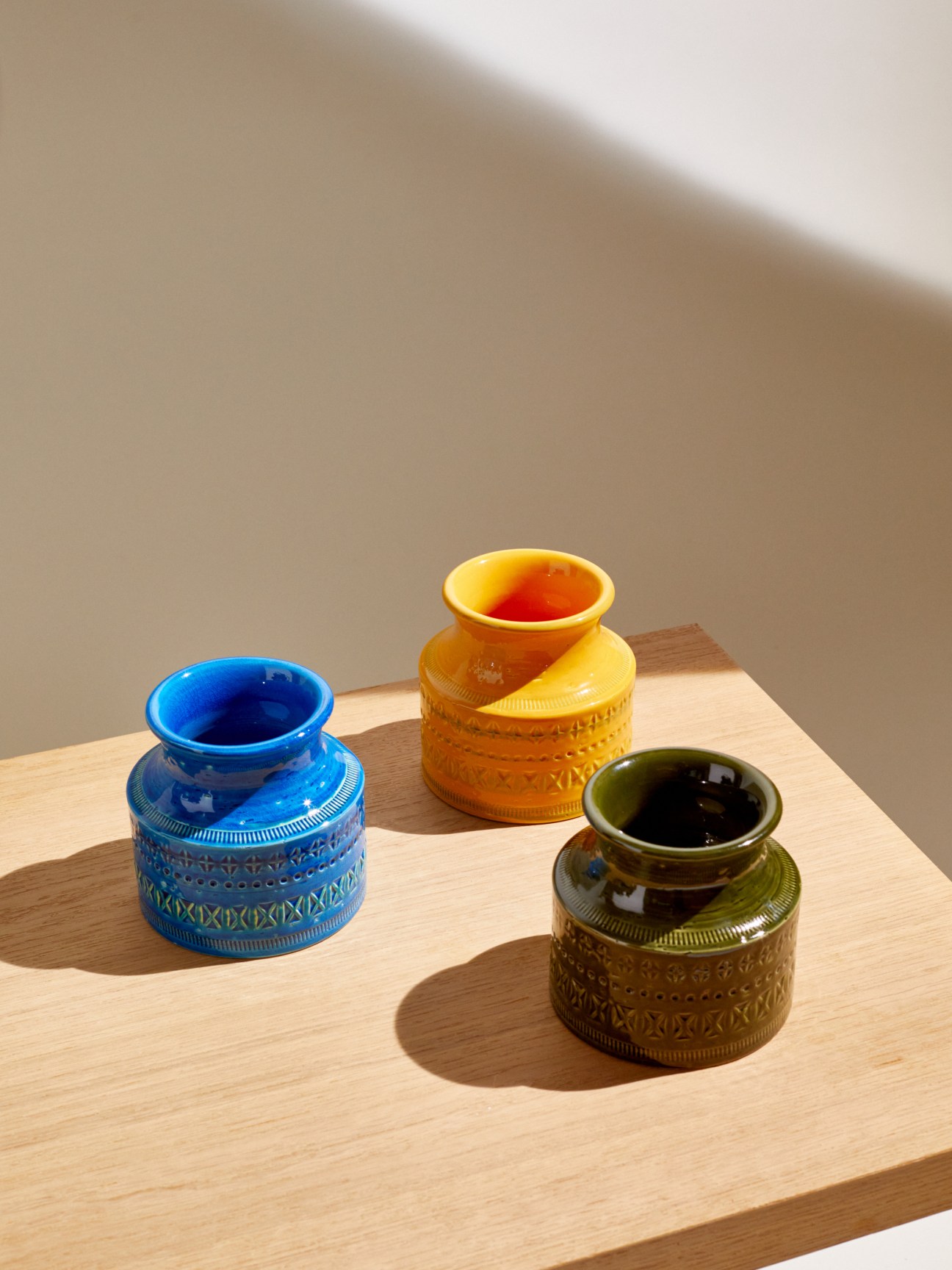
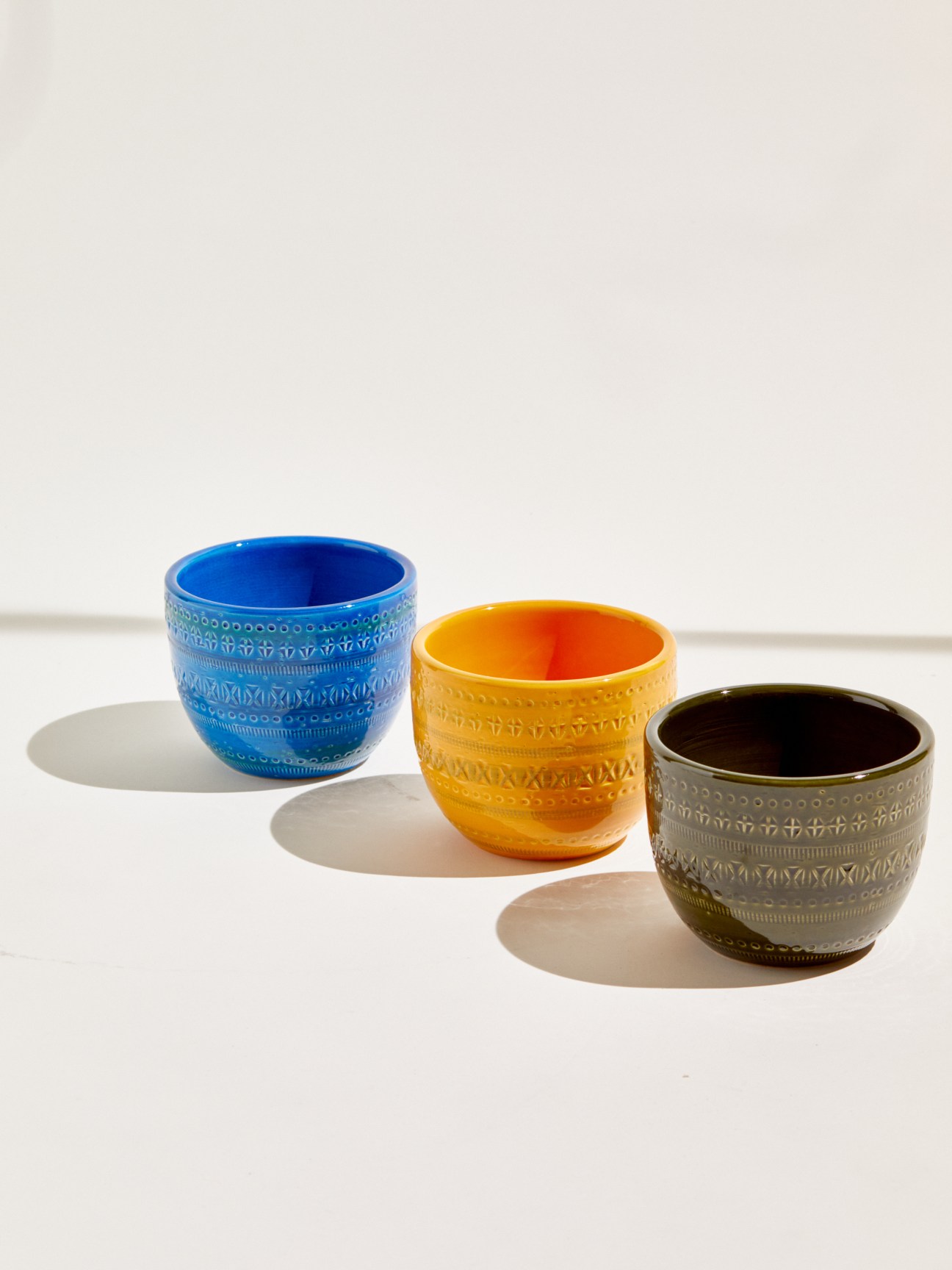
Colours: Blue, yellow or olive.
Size: H12cm, 15cm and 16cm.
Materials: Ceramic.
Made in: Italy.
Shop now
The Monocle Book of Italy
€65
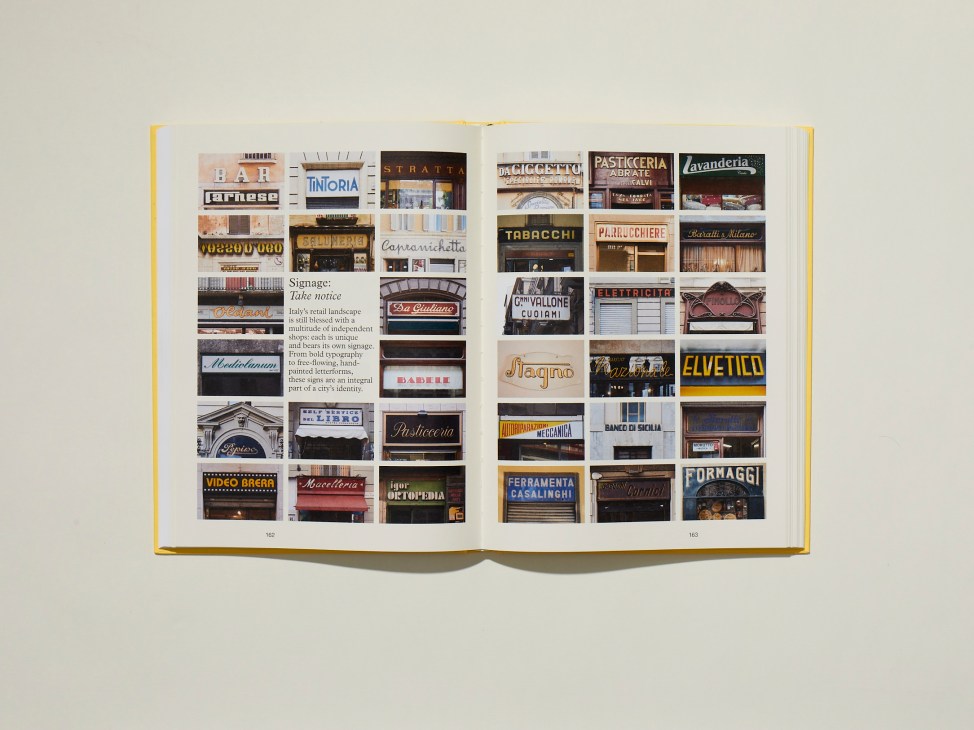
From the craggy peaks of the Dolomites to the azure waters of Sicily, join us as we throw down our towels at the best bagni – and maybe hit a disco or two – in this 302-page book.
Dimensions: 40cm x 30cm.
Printed in: Italy.
Shop now
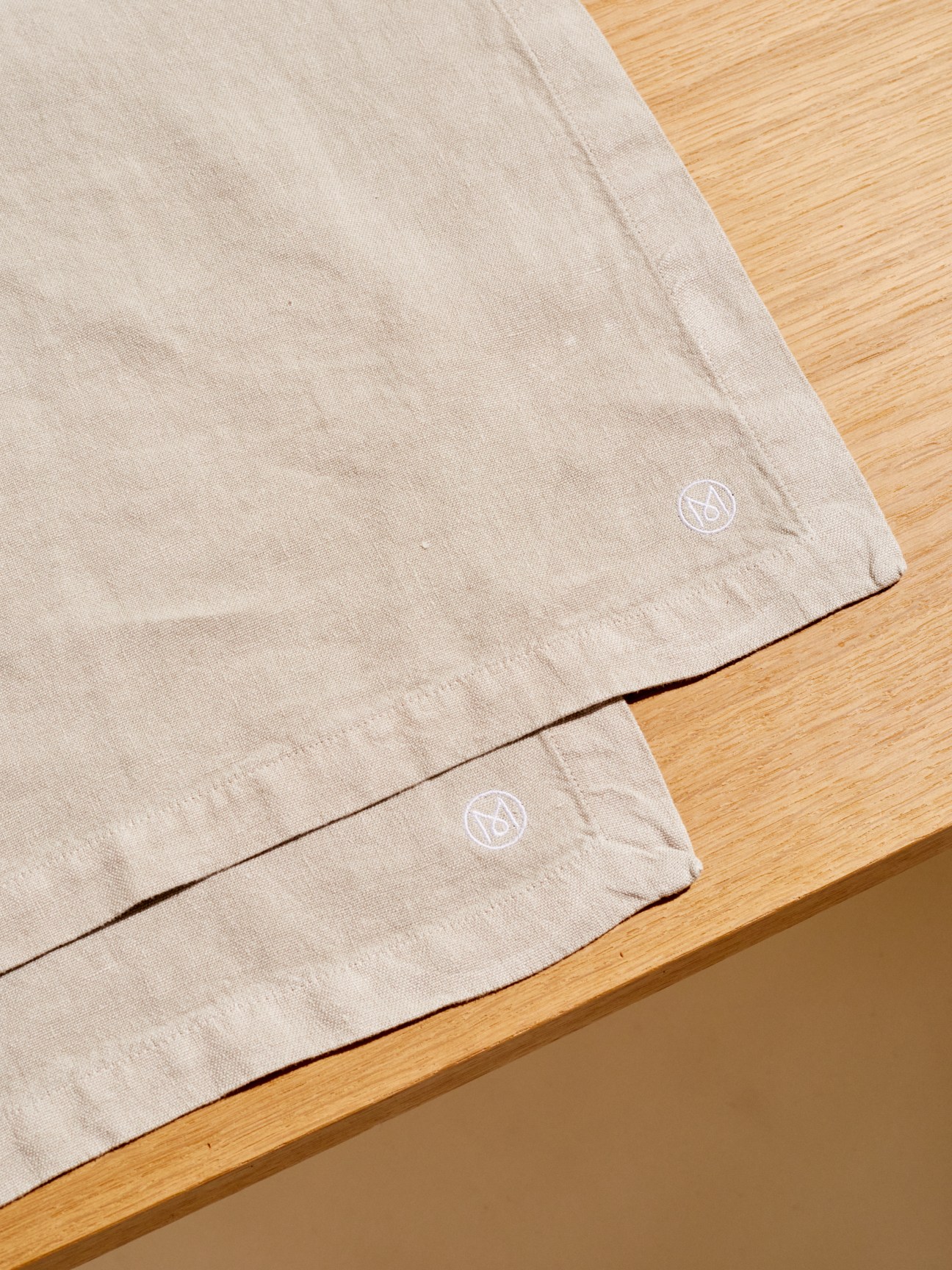
Society Limonta x Monocle Bon place mats (set of two) and Bon napkins (set of two)
€36 and €24
Trust us, you want your dining table covered in Society Limonta linen. The brand, which makes everything from napkins to bathrobes and pillow cases, was launched in 2000 by the Limonata Group, a historic textile company based in Costa Masnaga in northern Italy. We’re releasing a place mat set and a napkin set, each comprising two pieces. They’re made from linen, feature an embroidered “m” logo and will bring a relaxed elegance to your mealtimes.
Colours: Warm grey or pine-tree green.
Size: Place mats 40cm x 50cm; napkins 45cm x 45cm.
Material: Linen.
Made in: Italy.
Shop now
Design Briefing
Q&A
Anne Holtrop
Studio Anne Holtrop, Bahrain
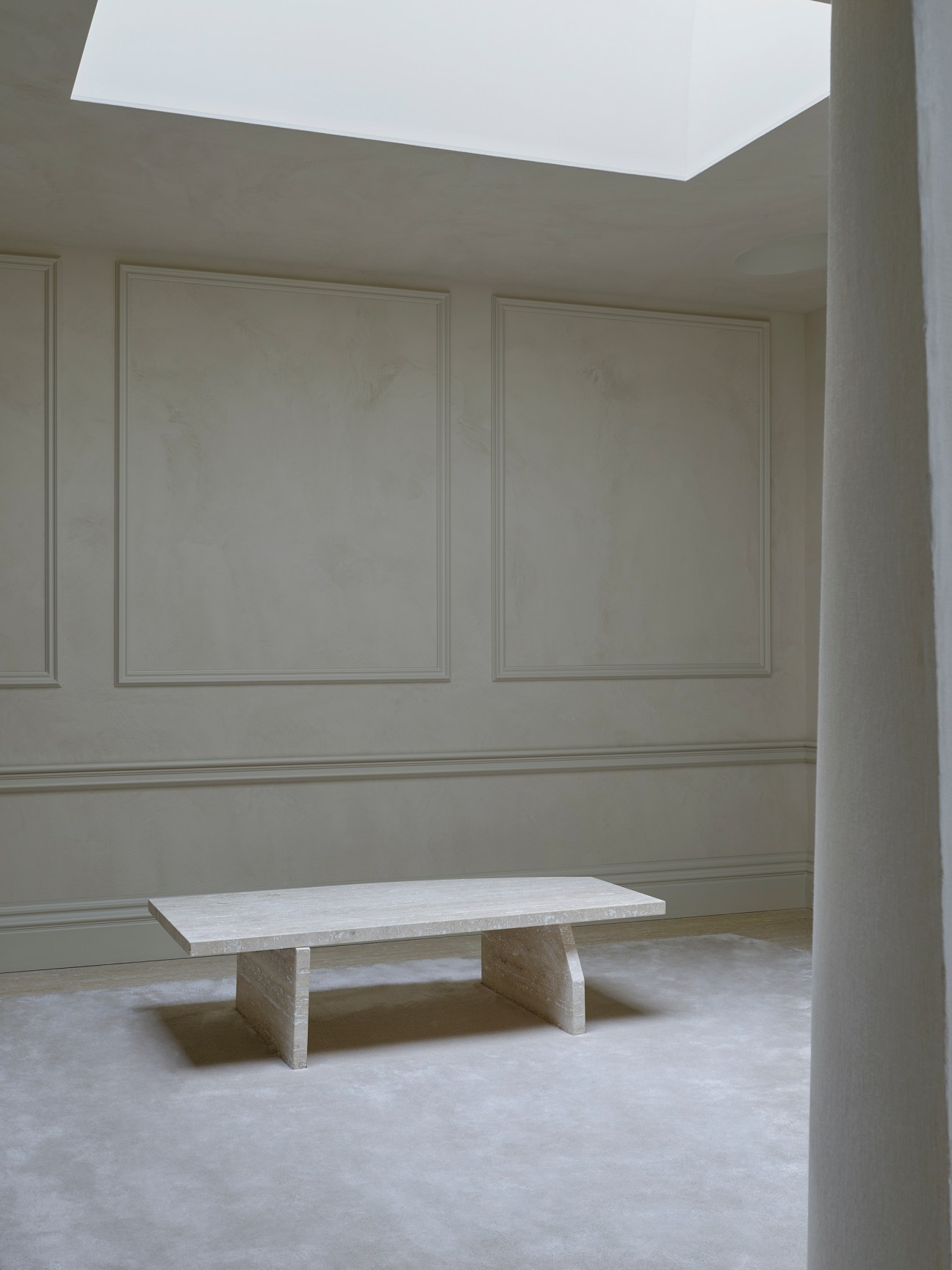
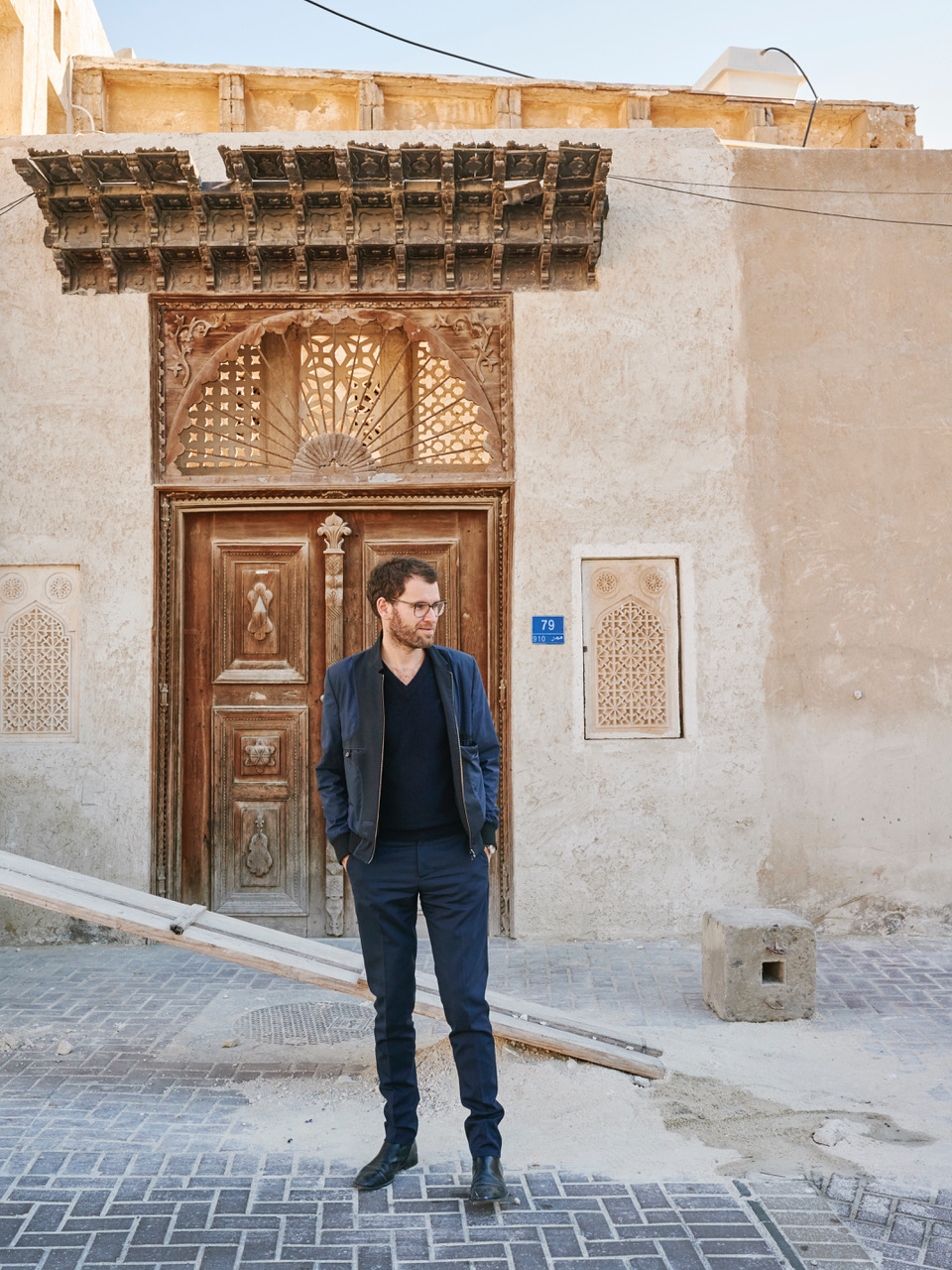
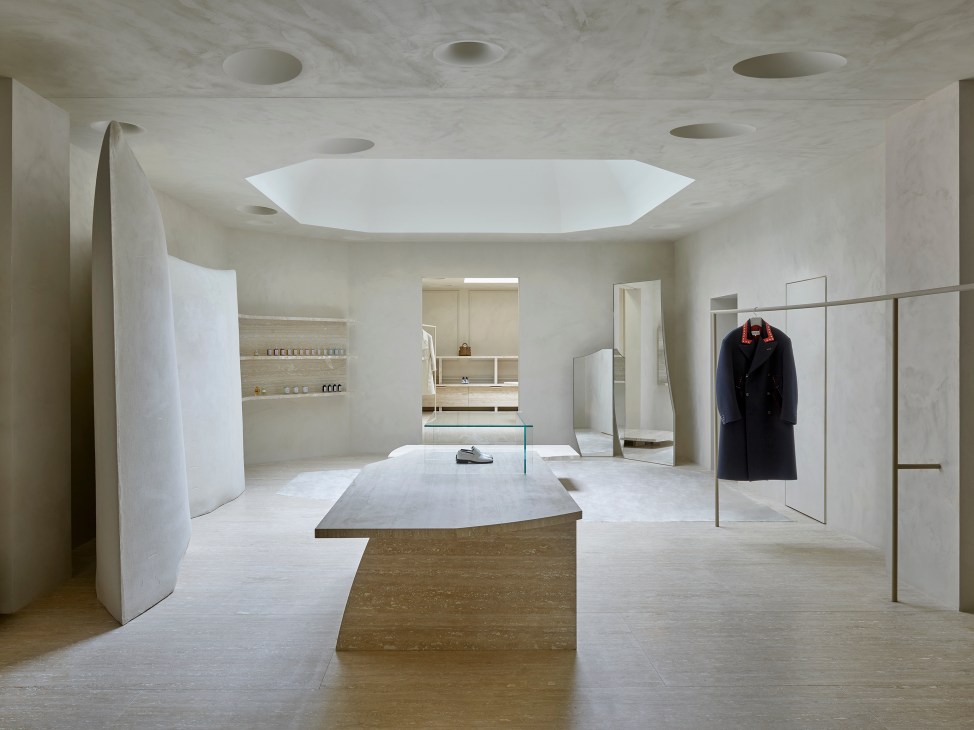
Anne Holtrop – born in the Netherlands, based in Bahrain – made heavy use of gypsum in his first retail commission designing new shops for avant garde fashion brand Maison Margiela. He shaped the malleable material while wet and approached it like a textile to create unusual lines reminiscent of the draping techniques used by Maison Margiela’s creative director John Galliano when he creates clothes. “I did not go to other stores as research,” says Holtrop. “I went to Galliano’s atelier to understand how he works and to see how to interpret that as architecture.” The result is a series of distinctive shops in London, Osaka, Paris, Chengdu and Hong Kong each of which point towards a different idea of what a retail space might be.
Your usual approach is very site-specific. With the Maison Margiela shops, how did you balance that with the need for them to have some consistency?
There is, of course, the constraint of a brand identity that should be recognisable all over the world. We knew the architectural identity we developed would be used for all the new stores. Therefore, I decided that the design should not be fixed by the outcome but by a process of making that would yield a different result each time. The gypsum casts are defined by the constraints of the existing space: the height of a room, strange corners or existing columns all leave an imprint. In that way every shop will generate its own spatial conditions.
What effect do you want the spaces to have on visitors?
I wanted them to have a real experience that can only be had by a direct engagement with the space. The experience of architecture is not just visual: that is what we miss when we stay online. Other senses are so much a part of our understanding of things – the smell of the gypsum, feeling the imprint of the textiles on it. When people come in [to the shops] they feel compelled to touch the walls.
What is wrong with luxury fashion shops and how are you addressing that in your work?
For me fashion expresses our personal and cultural identities and lifestyles, or those we wish to connect with. When you enter certain shops, you feel able to explore and experiment with how you relate to that. In other shops, I walk in and feel there is no place for me; it’s all defined, pre-set, a very polished world. In our design we hope the work remains open-ended and free for interpretation, and in that way visitors can make up their own understandings and feel connected. When a place is open you start engaging more with it.
anneholtrop.nl
Theatrical display
Japan — Architecture
“Playhouses in England also have a role as community centres, where people can gather and interact with each other,” says Kazumasa Takada, one half of London-based architecture firm Pan Projects, which worked on the refurbishment of BLBG’s Tokyo retail space that aims to reconnect shoppers with bricks and mortar.
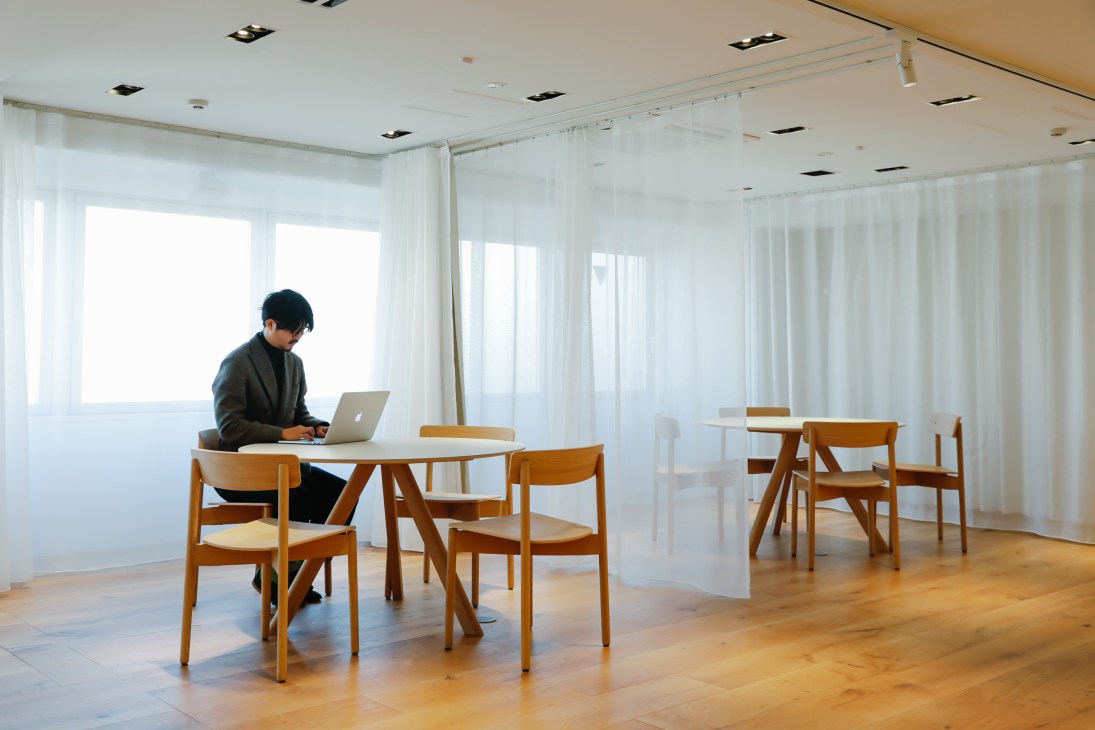
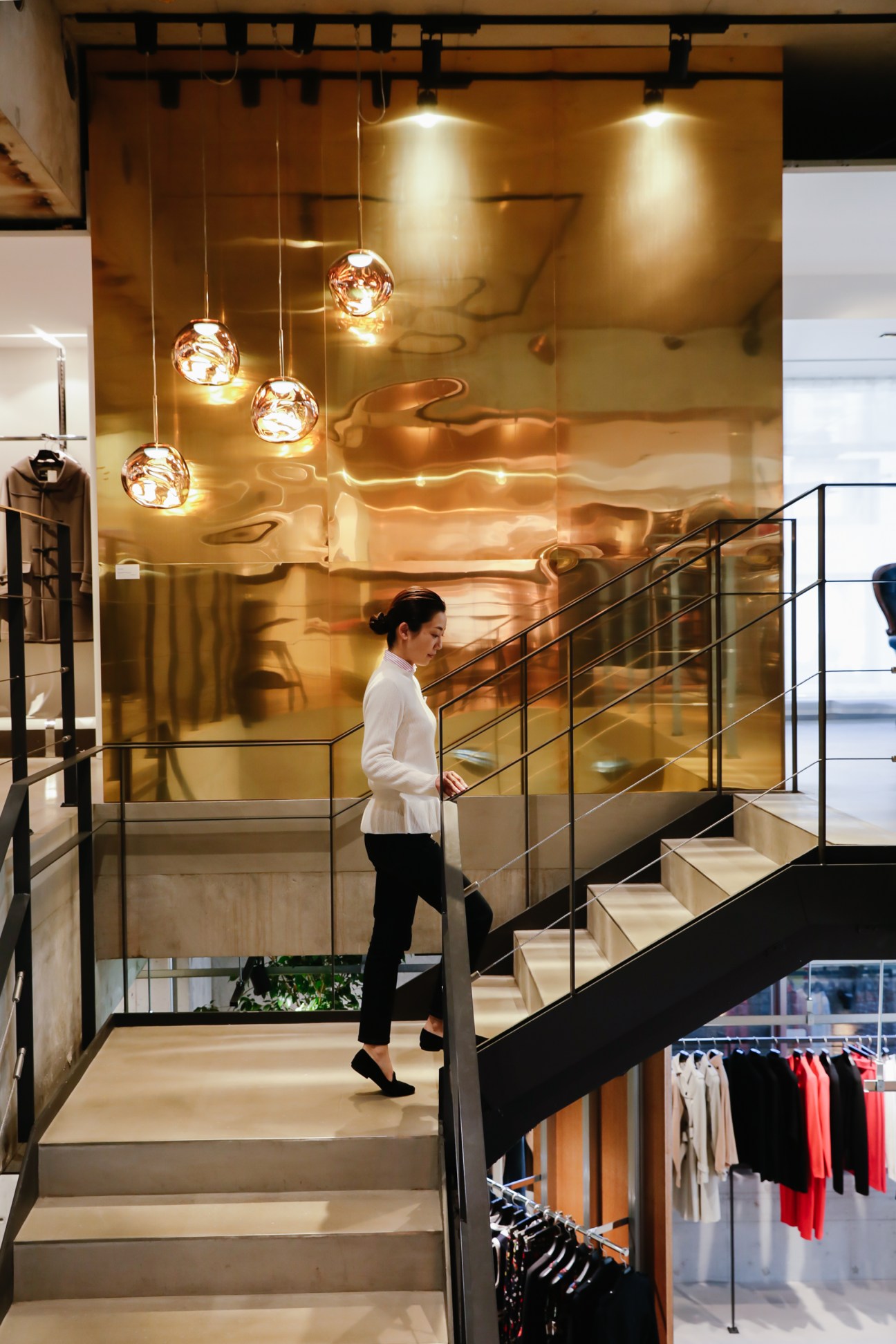
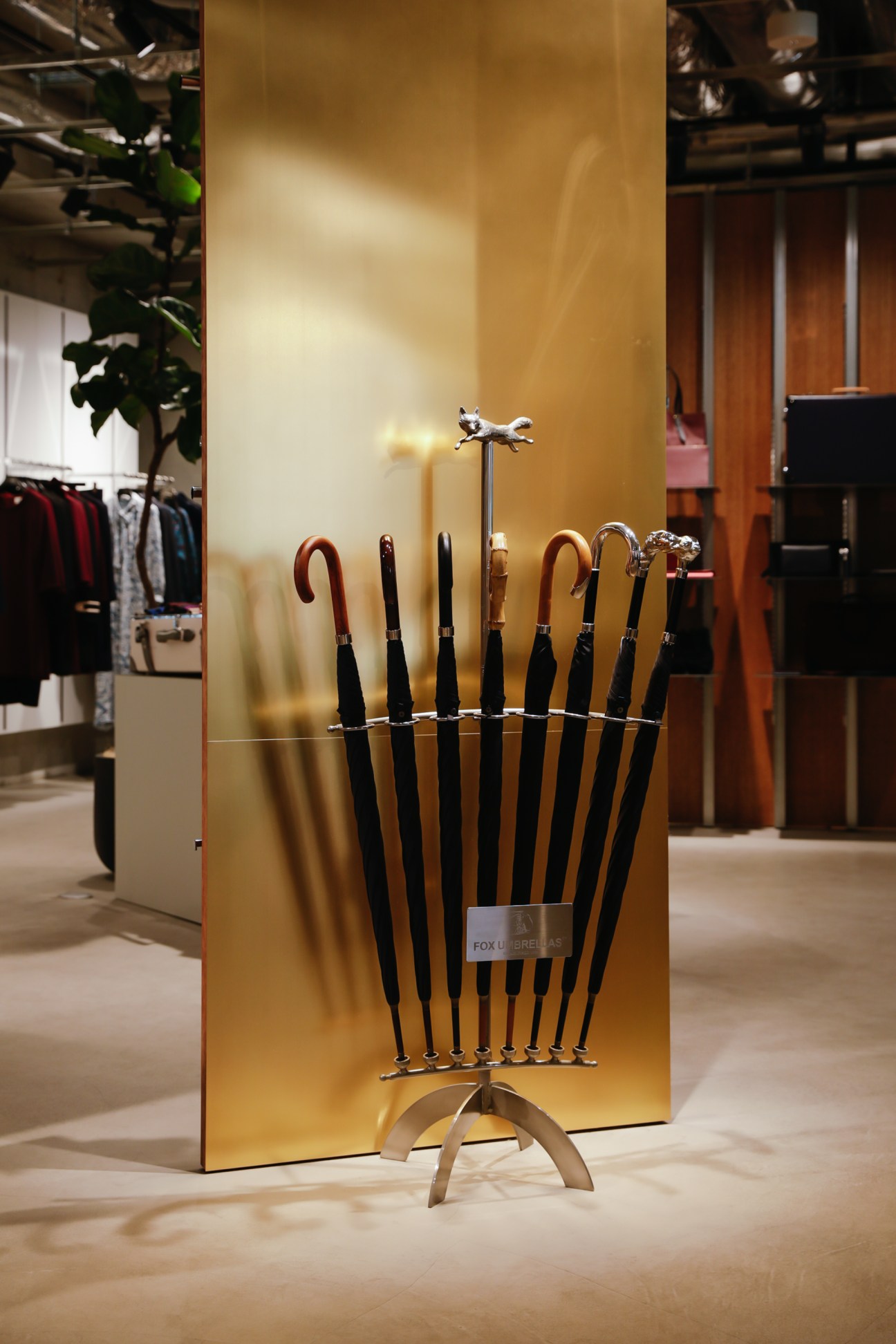
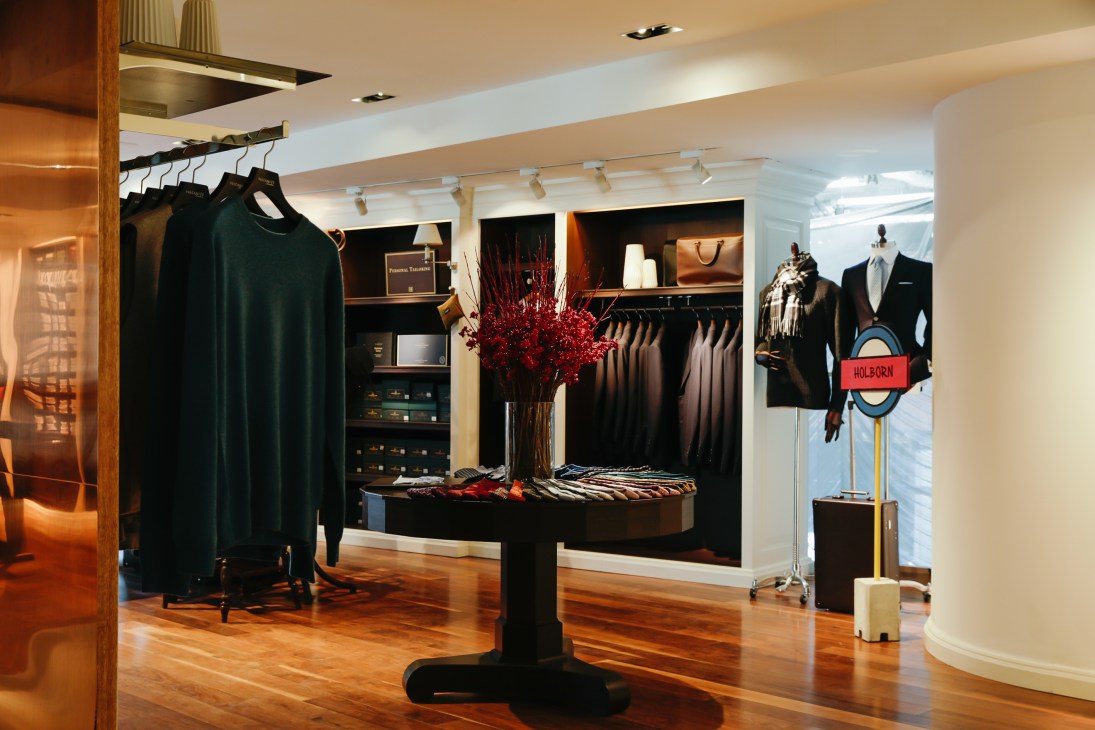
The project was focused on updating an existing shop for BLBG, which specialises in British luxury brands, and the designers worked alongside Tokyo-based architect Haruki Oku. To create flexibility for a rotating roster of products, the architects chose a stripped-back interpretation of the traditional theatre, with stage sets that allow the venue to take on a variety of looks.
The first floor features 13 moveable walls finished with brass, aluminium and copper, which are light enough to move on a 360-degree pivoting ceiling axis. “The walls can be placed in ways that guide customers around the products,” says Takada. “When a fashion event is taking place they can be rotated to open up the space.”
pan-projects.com
Take the weight off
USA — Furniture
US furniture-maker Emeco has looked to the organic forms for which Japanese industrial designer Naoto Fukasawa is known in its collaboration on these recycled aluminium stools. The product’s name, Za, is from the Japanese term for “a place to sit” and these sturdy seats offer a fine perch indoors or out. They can also double as side tables – and offer the lowest carbon-production footprint of any of Emeco’s furniture.
emeco.com

Block colours
France — Architecture
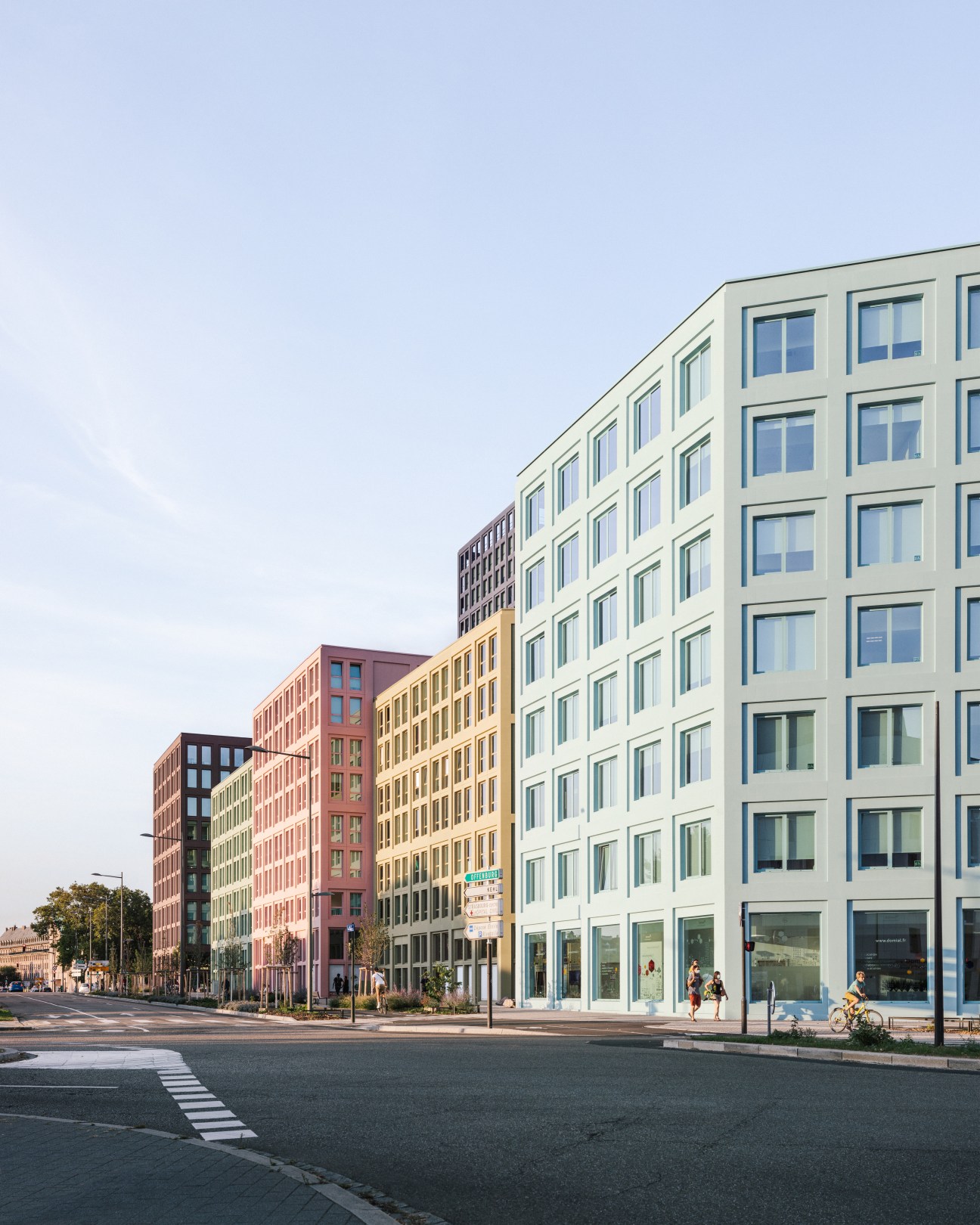
Bringing new buildings into a historic neighbourhood is never easy but Paris-based architecture practice lan has done it with a deft hand in this residential development in Strasbourg. The eight blocks are dense to emphasise a relationship with the terraced buildings nearby and a daring approach to the use of colour draws from the palette of the surrounding area.
lan-paris.com
Mobile reset
by Nolan Giles
Usually at this time of the year I’m digging my way out of an email inbox packed with press releases for Milan’s annual Salone del Mobile trade fair. It’s the most exciting moment in the design calendar but also one that became so bombastic in terms of its scale that it was difficult for furniture companies to enjoy cut-through with key customers.
A recent visit to the top names in Italian furniture in Milan revealed how the brands that typically focus their entire marketing efforts on this single key event feel slightly liberated that there is no Salone in April. Much creative thinking is taking place at their HQs and the budget is being spent elsewhere – websites long in need of an update are being overhauled, as are company headquarters, brand museums and showrooms across Milan. All of these efforts have become integral to various schemes designed to bring customers closer to their companies.
At this stage Salone has been postponed until September but even then it’s har to imagine the delayed jamboree will see many visitors from the US and the all-important Chinese market flying in. But after their revamping efforts, the Italian furniture-makers (whose voices at Salone have been somewhat drowned out by all the global tech and fashion megabrands present in years past) will doubtless enjoy the chance to embark on more constructive conversations with those who are there to place orders. And, importantly, this moment offers the opportunity to bring Salone del Mobile, which was originally conceived as a global trade event for the furniture industry, back to its prestigious roots.
Image: Fabian Frinzel, Charly Broyez
Good form
Good design has the power to improve our lives in a way that goes far beyond the superficial. A handsomely crafted Scandinavian chair or a beautifully built holiday villa brings good design to the lucky few, but designers can make a positive impact on everyone’s lives. From body-friendly thermometers that make hospital visits a little less scary for sick kids to cars that guzzle much less planet-harming fuel, industrial designers across the globe apply their nous to gently propelling society in a meaningful manner.
They’re a dynamic group of professionals who today are working against pressing issues affecting all of us, such as climate change. Our designers need to be sensitive to the needs of our warming planet, think about sustainability and what can be added to our daily lives to makes them easier – as well as what has aesthetic appeal. It’s hard work for which they often don’t get full credit – toiling away in wings of huge global companies or tinkering with specialist industrial equipment that will never enjoy coverage in glossy design magazines.
It’s for these reasons that we’ve decided to highlight those who are working the hardest, and showcasing some of the very best in the world of industrial design, across these pages. From devising a vending machine with a personality in Japan to designing the perfect glass in Sweden, here’s our rundown of the industrial design talents who are making it their career mission to improve our lives.
1.
Flat-pack revolutionary
Frederika Inger, Ikea
Sweden
If you want to understand the meaning of “democratic design” then just pick up an Ikea 365+ glass. Fredrika Inger, who sets the direction of the development of every product in Ikea’s ranges – from frozen salmon fillets to corner couches – is passing one of them from hand to hand as she explains the term that lives at the core of the Swedish brand’s DNA.
“Its form is very beautiful, but so is its function,” says Inger, who stepped into the new position of range and product development manager in March. “It’s made from tempered glass so you can use it for your coffee, wine or water. It’s also quite wide at the top – so my daughter, for example, can have her yoghurt in it in the mornings.” The description continues for another few minutes as she talks about the durability and recyclability of the product and the way that it can be stacked with other glasses to save room in small cupboards. Next in the show-and-tell is the feature-packed Måla children’s felt-tip pen. It can be left without its lid for three days without drying up and contains nothing harmful for kids who might treat it like a lollipop. It also uses ink that can be washed off all fabrics and its simple, rounded appearance has been formed with many mini-angles, meaning it doesn’t roll off the drawing table. “This is design that needs more than one week to do; we’d probably take two or three years to develop something like this,” she says.
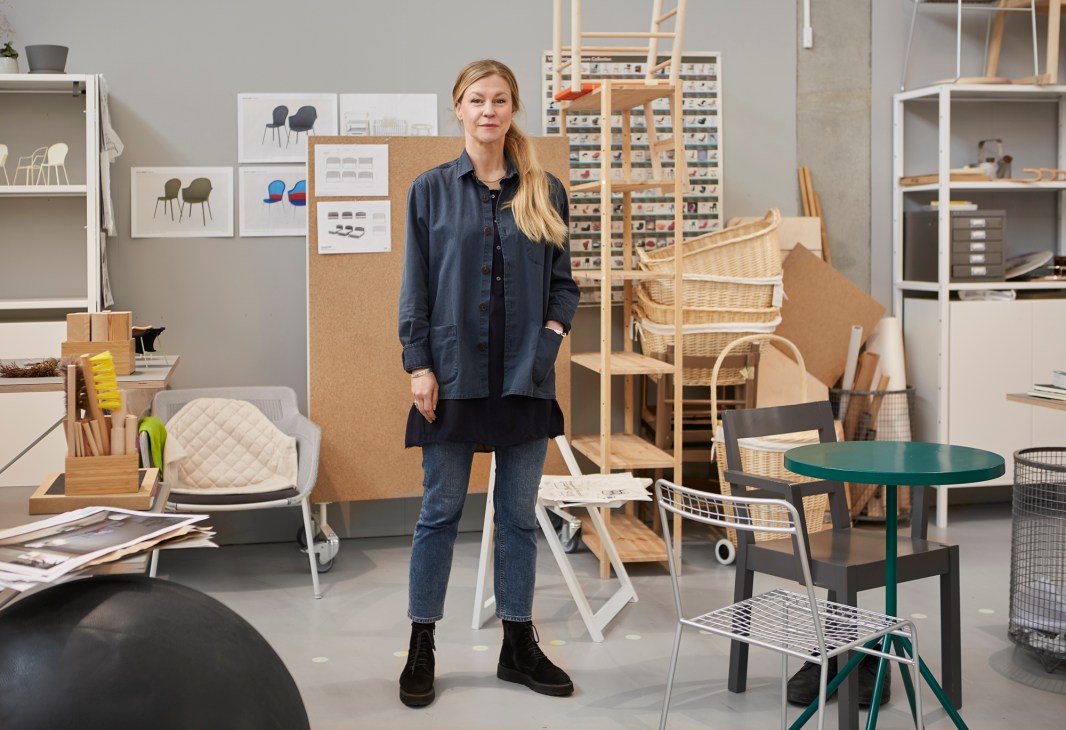
Being the world’s largest furniture firm, and known for its progressive company culture (imbued with democratic Scandinavian ideals), Ikea attracts top talent that tends to stick around. Inger is a case in point. The Swede joined the firm as a supply planner in 2003, becoming former CEO Mikael Ohlsson’s management assistant in 2012 before stints as global business area manager for Children’s Ikea, then for the brand’s Living Room department. Today she knows the brand inside out. This is crucial for her creative remit, which spans far beyond dealing with her 18-strong team of in-house designers at their base in Älmhult, southern Sweden, and deep into the broader international business as well. “We don’t design in isolation,” she says. “Ikea’s smartness in design is understanding the value chain – from suppliers to customers and from the raw material to the end use of the product.”
Inger’s team develops a product first by defining a preferred price point (usually the lowest possible) and then they head out to the factory floor to figure out how to make it happen. “Our smartness comes from taking ideas to our production and distribution teams – thinking about how to maximise a load of products on a pallet while avoiding waste, or how to optimise the materials we work with for production,” she says. Deciding what products should actually be developed, however, is a process that relies on home visits. “To be brutally honest, we’re not very quick – most of our products take years to create,” she says. “It’s because we spend a lot of time really understanding how people live and what they need for everyday life. To do this, we go to people’s homes to find their frustrations, find their problems and then we put a team together to crack them.”
In 2021, however, Inger and Ikea are dealing with a bigger problem than forming the perfect felt-tip pen. The business is being overhauled itself to meet ambitious sustainability goals: Ikea wants only to use renewable or recycled materials in its products by 2030. It’s a mammoth task for the Ikea group, which operates 378 shops across the globe and employs more than 166,000 people. It has numerous production facilities from Poland to China and runs an enormous distribution chain. Due to the way people consume low-cost products such as Ikea’s, the brand plays a role in adding a serious amount of waste into landfill every day. To address this – and hit another tough target of aiming to reduce the carbon footprint of its product range – much work is being done behind the scenes to improve product life cycles.
Product picks
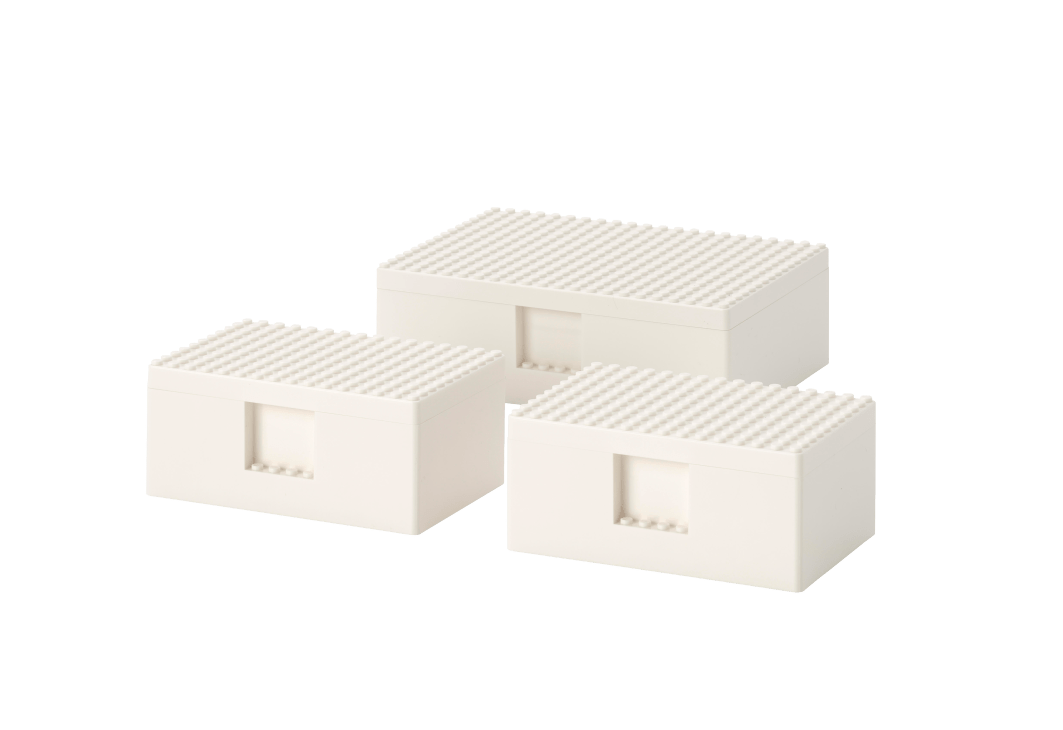
Beyond the flat-pack furniture for which the brand is famous, Ikea’s smallest products undergo some serious design scrutiny.

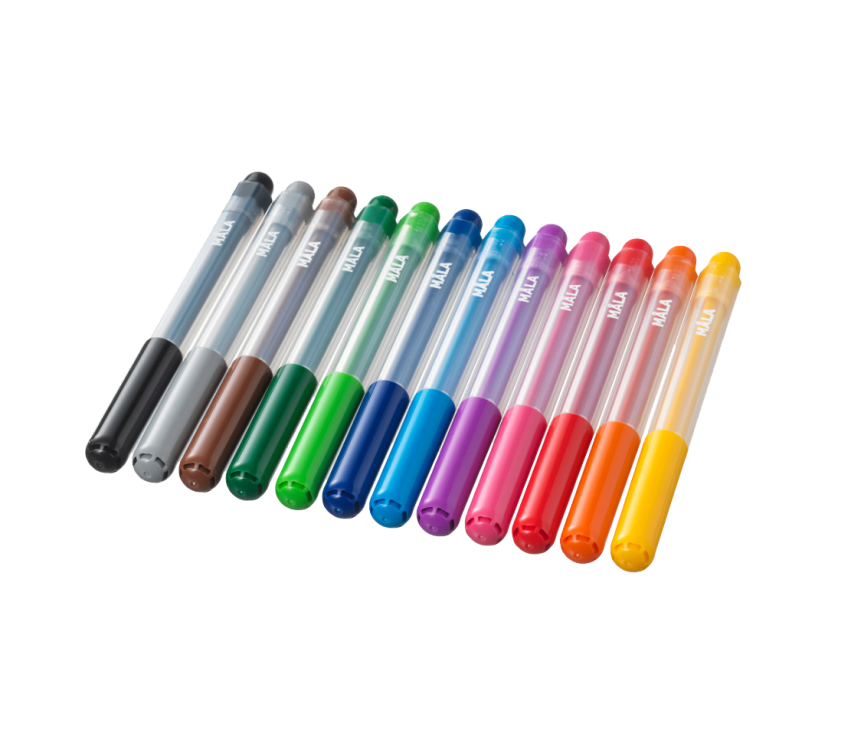
“You can look at the idea of ‘disassemble’ and ‘reassemble’ on different levels,” Inger explains of the largely flat-pack furniture at the brand’s core. “There’s one side, which is about refining a product that can be disassembled without damaging or hurting it – meaning it can be moved around, it can be re-used, repaired or recycled,” she says. Inger acknowledges that this is easier to apply to an object such as a chair, but the “other side” of this equation is dealing with something like a bulky, old mattress that in years past would have been destined for kerbside collection. “We are thinking about how to make a mattress that can be properly separated once it’s no longer needed,” explains Inger. “Thinking about how to easily remove the springs and which partners [can] take the old parts and make something new from them.”
For Inger, Ikea’s goal-orientated, design-led approach – that in some ways rewards failure – is a better option than treating sustainability in a slow and safe manner, when urgent action is needed. “You have to be bold and brave somehow, but also be humble to the task,” she says. “We set ambitious goals and deadlines, and sometimes we only get 90 per cent of the way but that’s better than doing nothing at all – there’s always a plan to get there and that is what’s most important.”
2.
Temperature check for design
Fumie Shibata, Design Studio S
Japan
Fumie Shibata is one of design’s finest problem solvers, bringing her intelligence and impeccable aesthetic to everything from bean bags to surgical equipment and capsule hotels. After establishing her career with consumer electronics giant Toshiba, she launched her firm Design Studio S in Tokyo in 1994. In the proceeding years she has applied her skills to creating understated products in the best tradition of Japanese design: well-made, functional and intuitively simple to use. She works for a diverse list of clients at home and abroad, moving between industrial, product and interior design. In 2021, Shibata is at the top of her game – now she just wants to design a car.
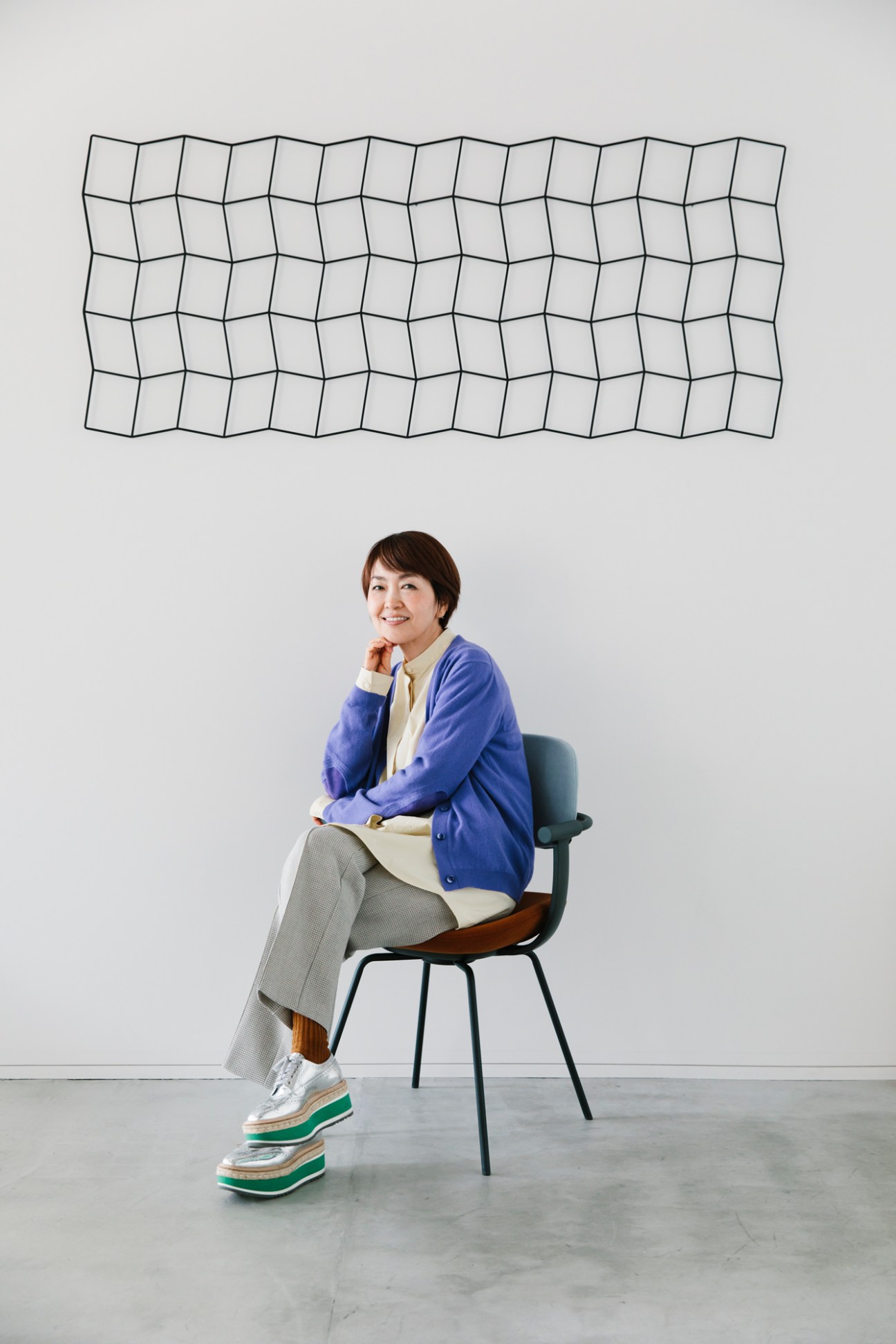
What’s your approach to designing a product?
It depends what I’m designing. If it’s medical equipment, I’m thinking about usability and function but if it’s something for daily life, I like to think of my designs as raw and un-pushy. It’s up to the people who use my products to complete them. Hopefully they’ll use them for many years.
How did you come to be designing medical equipment?
When I graduated [from Musashino Art University] I was looking for a field where I could make a difference. I settled on medical design and went to work for Toshiba. I still do work for a medical company – I’m designing surgical equipment at the moment. It’s very challenging. It’s not about styling up what’s already been created but talking to doctors and coming up with new ideas. How can we make something that is easy to use for hours on end, for example? Doctors know what they need to operate but they can’t translate that into a new piece of equipment – that’s my job.
Is sustainability more of an issue than when you started out?
When I first became a designer, the level of consciousness was much lower, but now, 80 per cent of my job revolves around sustainability. As a designer you need to have a broad perspective. I’m drawn to natural materials such as wood, glass and paper but I am also known for working in plastic. You need different points of view – you can’t just think that plastic is bad. I’ve designed products such as an all-plastic umbrella, which is long-lasting and easily recycled.
I also consult for Sumitomo Chemical, a company that makes a range of products from plastics to pharmaceuticals. I’ve made products from kids plates for tableware brand Bonbo to a mini-printer for office-supply manufacturer King Jim. People come to me because I know how to make plastic not look or feel too “plasticky” and I don’t use obvious plastic colours either.
There’s a tendency to separate traditional craft, product design and industrial design but for me there’s a shared monozukuri (craftsmanship). You might be making a knife in [a small city such as] Tsubame-Sanjo, or something with a big company using the latest technology. For me, the approach is the same for both; design can help people to see a great product.
Do you think there is such a thing as Japanese design – functional, anonymous design?
Yes, I believe there is. It boils down to Japanese aesthetics. I’m happy when people like a product and discover afterwards that it was mine, rather than coming to it because of my name. People tend to judge with their own heart – that’s the Japanese-ness.
Is Tokyo an important influence?
It’s been very important. I was brought up in a rural town and it was always my ambition to come to Tokyo. I’ve travelled to many different countries but Tokyo is unique; there are so many different things in the mix. You don’t have to pick one. Japanese people accept a lot of different things and that’s the best. Tokyo is very free in that way.
Do you see more women in design in Japan these days?
There are women architects and graphic designers but fewer product designers and even fewer industrial designers. There are female industrial design students but not so many in the field after graduation; women seem to move more into homeware and lifestyle design. Some areas of design can feel very closed – car design, for example. It’s an airtight world. I would love to design a car. I’ve been commissioned to do design concepts but not a complete car.
Product picks
Shibata says if the essence of a product isn’t good, design can’t help it. Therefore, she says that it is a designer’s role to share their vision with the client for how a product can be better. Here she takes us through three projects, where she played a hands-on role in delivering something novel and useful to both customer and client.
1.
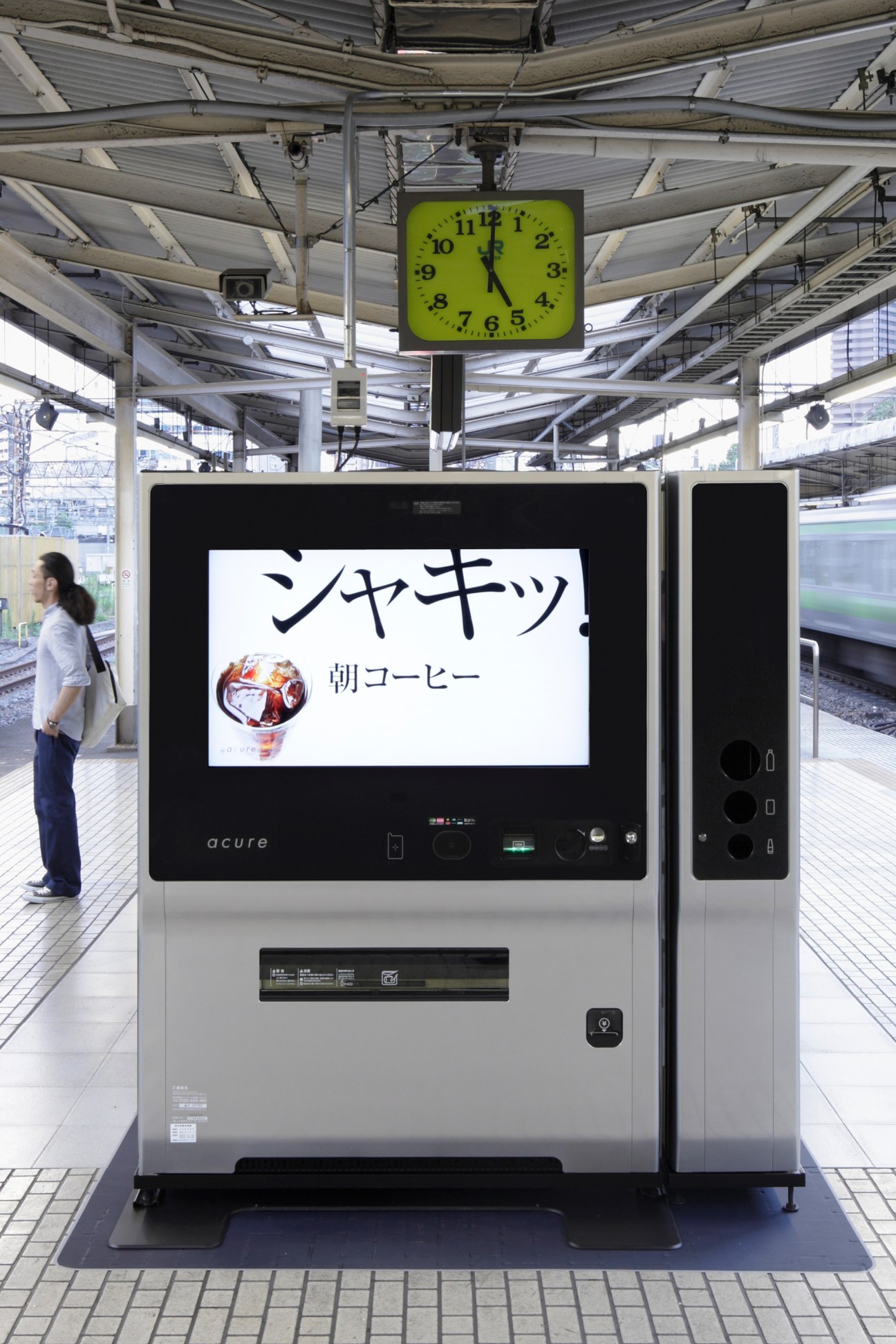
Acure vending machine: It was a very difficult project! There are so many different kinds of people using a train station, so a vending machine has to work for everyone. We were making something new but it couldn’t be so new that obachan [grannies] didn’t get what it was. I also wanted to bring in an emotional element. Of course, people don’t really have an emotional attachment to a vending machine but this one is subtly interactive. When it’s broken, a face shows and sometimes it recommends a drink. There aren’t many vending machine makers, so there isn’t much competition [or evolution]. We were lucky that Japan Rail got involved – they wanted to create a new experience in stations and that made it possible to do something fresh.
2.
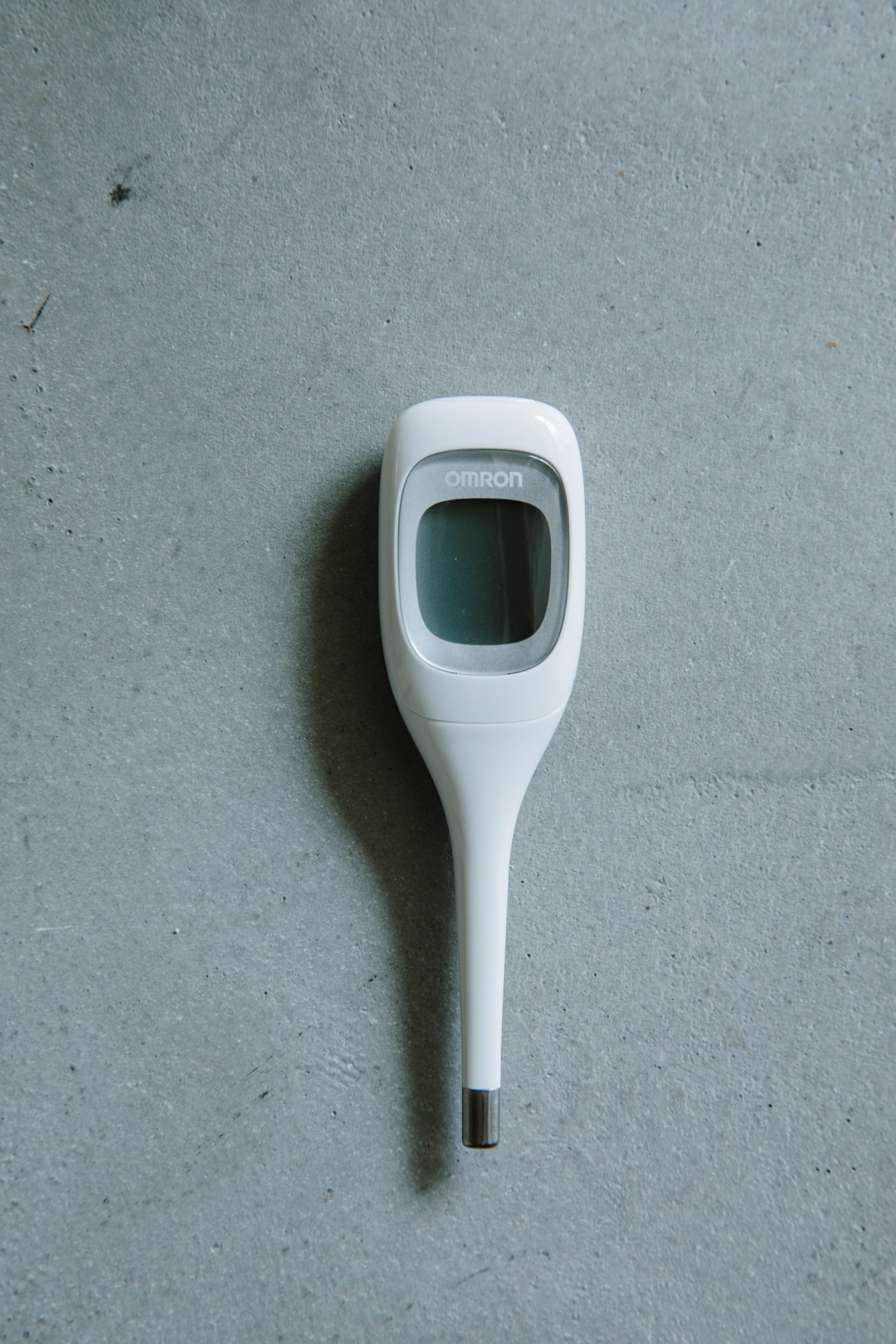
Omron thermometer: Thermometers were always designed, people just didn’t notice it. There was already a competing product in the market. It was sharp; something a doctor would use. With Omron, I went in the opposite direction – something more rounded, warm and maternal; reliable and comforting.
3.
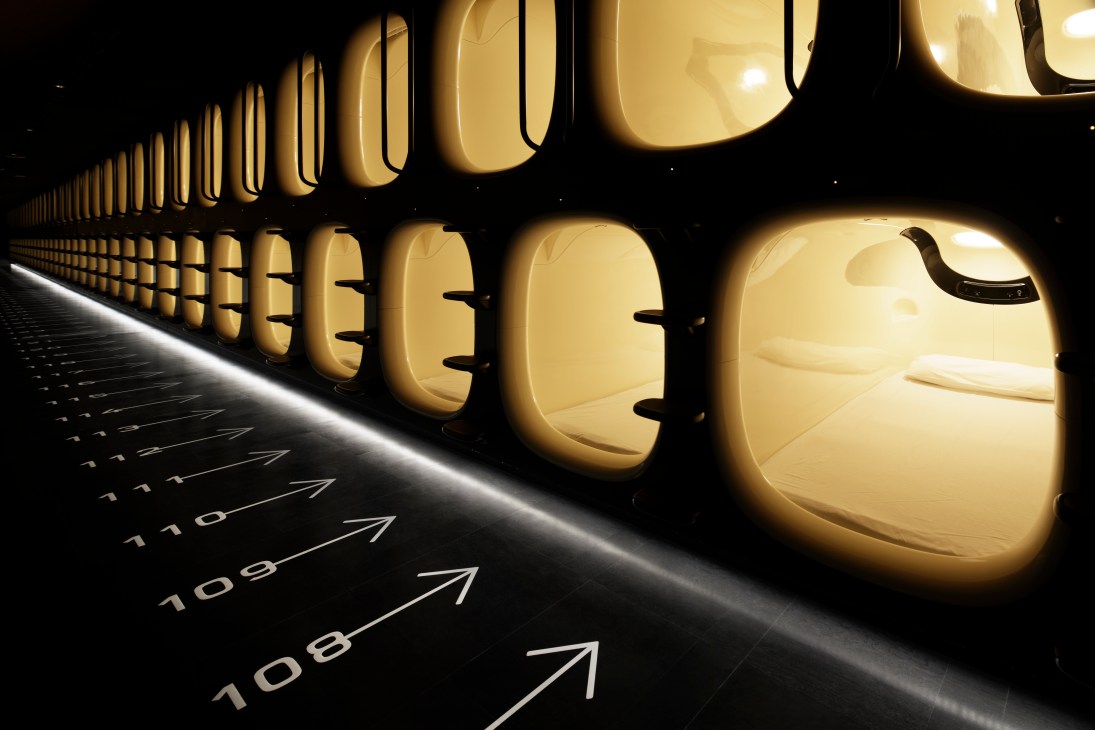
Nine Hours: My initial thought was that I would never sleep in a capsule hotel, so the challenge was how to convince people like me. It required a paradigm shift, which is a difficult thing to do. I knew that being photogenic was important and could be persuasive. I treated this as an interior-space design project, with the pods seamlessly lined up against the wall, to get rid of the negative connotations. Nine Hours is now growing widely, but with that first one we had to change minds in that single location.
I thought of a watch analogy. Maybe someone wears a Swatch one day but they have a Rolex at home. That’s what I wanted to achieve with the capsule hotel – that people could stay there and not care whether it looked like they didn’t have the money to stay somewhere more expensive. Design has the power to transcend money; it can subvert existing values.
3.
Why less is still better
Ben Wilson, Braun
Germany
Appreciators of good design have been caught a little off guard by a renaissance of handsome products being brought out under the Braun banner. From sleek sound systems to cool calculators and a beautiful range of blenders, Braun’s newest gear is reminiscent of the works that its design team and maestro designer Dieter Rams created for the German electronics giant in the 1950s, 1960s and 1970s. Rams became famous for forming function-first appliances that would go on to inspire the world’s best designers including, most notably, Jony Ive at Apple.
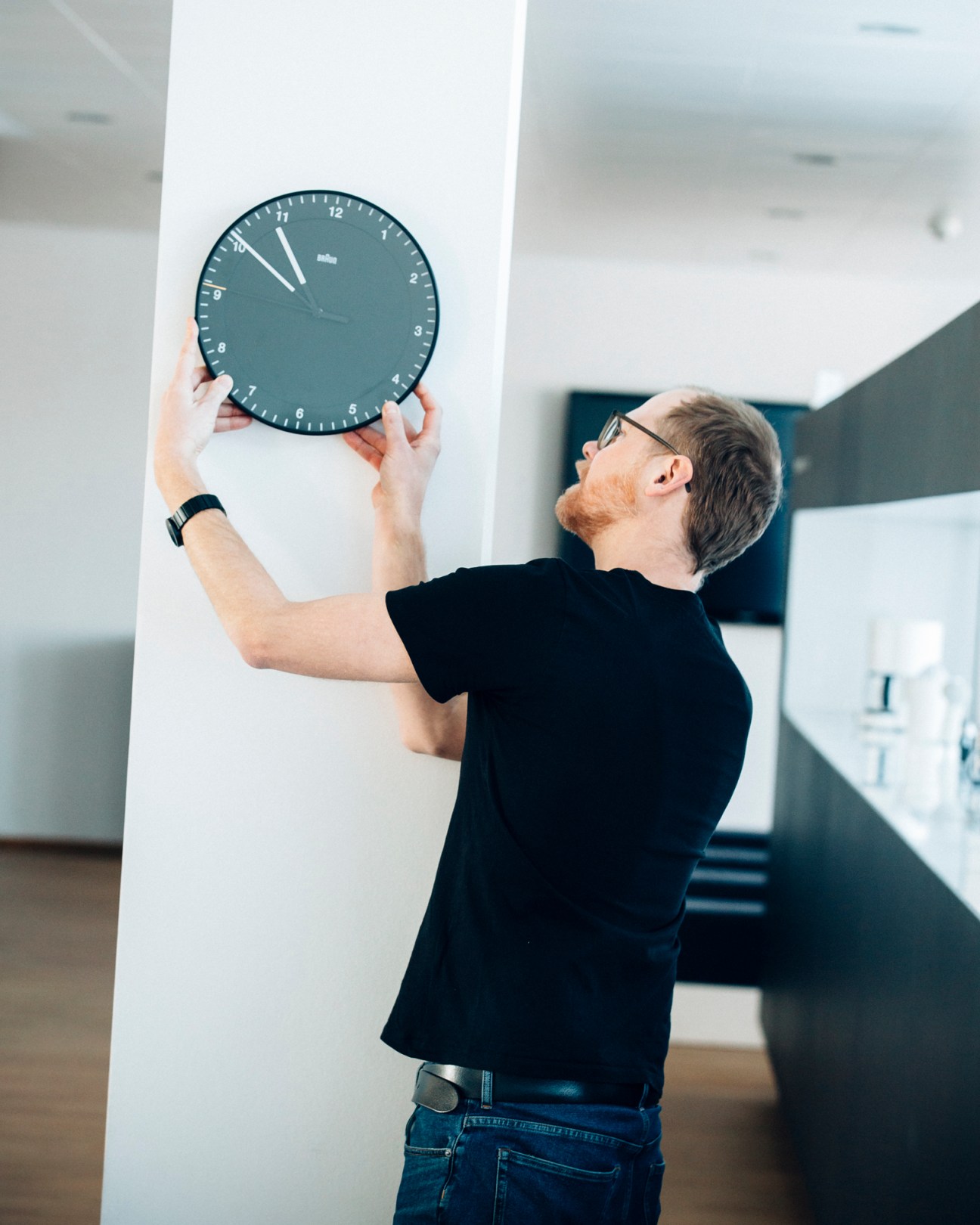
While remaining a global player since the Rams days, Braun’s design credentials dipped under the ownership of Gillette, across the 1990s and early 2000s, when it was associated as a purveyor of quality, yet conceptually safe, mass-market goods. Things changed when Procter & Gamble bought both Braun and Gillette in 2005 and began a brand building endeavour that would bring serious design thinking and innovation back to the heart of product development. Ben Wilson, an industrial designer with the company since 2003, played a key role in this transition and is now on a mission, as Braun’s director of communications, to present the brand’s design principles, as the company celebrates its 100th anniversary in 2021.
We’re seeing a new direction for Braun in 2021, but I imagine that getting there was something of a process?
Under the new head of design, Oliver Graves, and his team, in 2009 and 2010 we had a “blank sheet of paper” given to us by the new leadership, Procter and Gamble. We asked them some challenging questions and in the end, after a year or two of conversations, we were all aligned on where we wanted to go. The direction wasn’t so much in championing minimalism in itself, but was more about getting back to Braun’s true values. This was the idea of a certain type of design, which comes with a certain type of design process. The Germans have got a word for it, it’s called haltung – it means “a way of doing things”. And if you look at Braun’s haltung from the past, it’s about treating design as a process – a way of thinking with a certain set of tools, and this ends up forming a certain type of aesthetic. Braun’s success was founded on three simple principles – making things that were useful, making sure that those things were simple in the way they’re used and manufactured and also making sure things are built to last, aesthetically and in the way it’s made. We called our approach “the past forward” – now we’re 10 years down the track and we’re proud as a design team to see products coming out to the market.
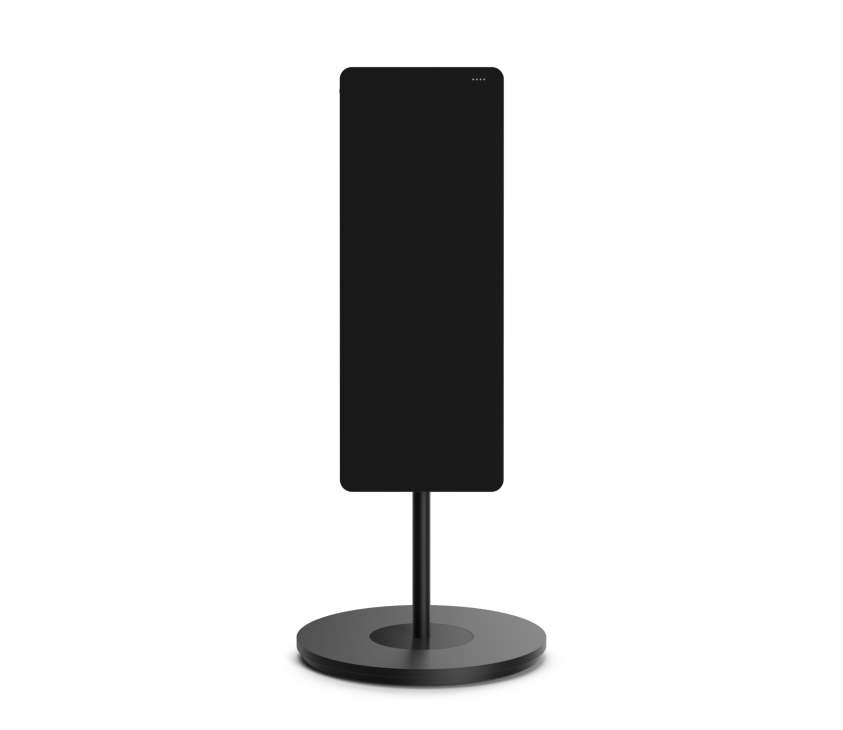
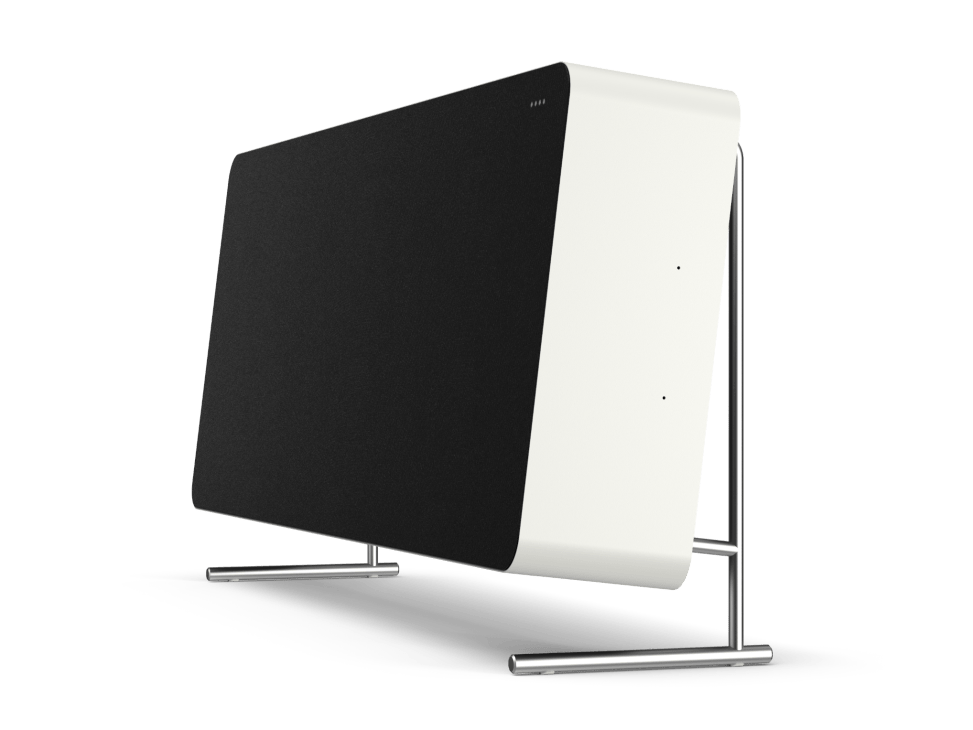
Perhaps the LE range of connected speakers, launching this year is a good starting point to explain this approach. How do you provide something fresh and valuable into a crowded and oversaturated market?
Traditionally Braun’s design process begins with a frustration – looking at something that can be improved upon. In the case of the speakers, we’d been out of the audio segment for 33 years, so the design team looked very deeply into what could be improved and what modern technologies would still be around for the next ten years. We learned that many people were nervous about data protection and voice control, “Google this” and “Siri that”. They didn’t want to be constantly listened to. We created a connected speaker that provided a guarantee the microphone could be turned off – and we did this through a simple, mechanical button that literally turns off the physical connection to the microphone, making it impossible for anyone to listen in.
We also looked at how to integrate speakers into the home seamlessly, and we thought about this great Dieter Rams quotation from the 1970s, “Braun products are like an English butler – they’re there when you need them but mostly they’re in the background.” When you do need a butler they’re there ready to go, and it’s similar with these speakers.
We made them as compact as possible with the largest breadth of sound quality. When we started taking them to the audio professionals they were blown away by how much solid, good technology is packed into these speakers. Although when the team first presented the speakers to Dieter Rams he was not surprised because he knew about the latest audio technology.
It’s impossible to think about Braun without thinking about Dieter Rams, and it’s illuminating to hear he’s still providing feedback on your products. Did his presence and role in Braun loom large over you when you were re-imagining the brand back in 2010?
You can’t talk about Braun design without mentioning Dieter Rams’ name and many people ask if it’s hard to live up to for Braun designers today. I’ve been here since since 2003 and part of the reason I’m still here is because of those that laid the foundation of what Braun became, before Dieter Rams came on the scene. The Braun brothers – Artur and Erwin, who took over from their father Max Braun – made some radical decisions in 1950 around the idea of becoming a “better” company – being more social and looking after human needs.
They connected with an amazing institution – one that I like to call the grandchild of the Bauhaus – the Ulm School. This is where a lot of Braun designers people don’t know about, such as Hans Gugelot or Reinhold Weiss, came from. Reinhold Weiss and Florian Seiferts designed five or six classic pieces for Braun that many might think have come from another more famous designer – Dieter Rams.
Dieter came into the picture in the mid-1950s to help the Braun brothers and Fritz Eichler, who headed up what we’d call the design team today – though the term “design” didn’t really exist back then. Together, they defined a new way of working by getting engineers to work together with these new designers and material specialists to give birth to a new type of product. And that’s what we take from Dieter Rams, this way of working, the haltung. We focus on the needs of the users, we try to find the simplest way to achieve our goal and we ensure our quality is at the highest standard. This way of designing should be copied and shared around the world more so than simply aesthetics. I believe if more people were to copy this process, the design world would change pretty quickly and be a much better one. A lot of young designers mistake the aesthetic as the final result. If they say Dieter Rams made minimal design, they’re missing the point. Rams followed a process that led to a certain type of product that could be seen as minimalist, or as he puts it – less, but better.
Product Picks
New products created using tried and true design philosophies – here’s the best of modern Braun.
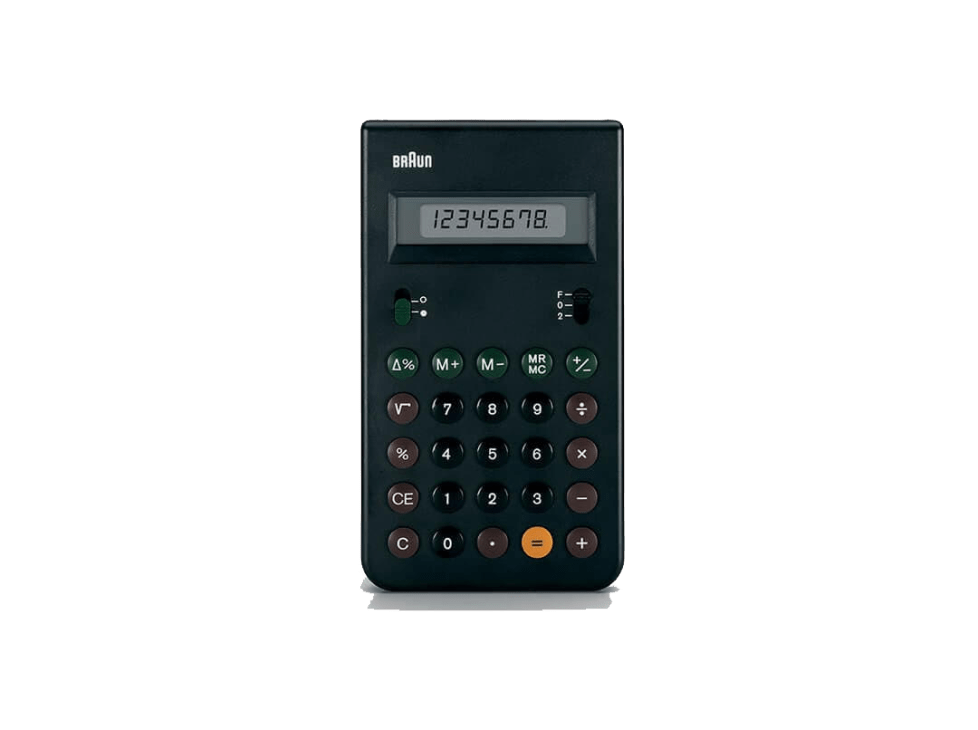
Sound effects
When Alessandro Mahmoud, aka Mahmood, heard that the leader of Italy’s far-right Lega party, Matteo Salvini, wasn’t a fan of his music, the then 26-year-old singer had more important things on his mind. Back then, in early 2019, his tune “Soldi” had just won the prestigious Sanremo Music Festival, the country’s annual nationwide song contest. That same track would claim the runner-up spot at the Eurovision Song Contest just a few months later. Salvini, then deputy prime minister, said that he doubted that Mahmood’s track was the “best Italian song of that year”, which many took to mean that he was prejudiced against it.
“Soldi”, a mesmerising hit rich in Middle Eastern riffs and featuring lyrics in Arabic, probably felt far away from the politician’s limited idea of Italianness. But rather than getting drawn into the controversy, Mahmood was busy grappling with his newfound success. “I was so overwhelmed by everything that was going on that what he said didn’t really matter,” he says.

Two years on, Mahmood exudes the confidence of an artist whose breakthrough hit is now the most-streamed Italian song ever – and one that has helped put a different version of contemporary Italian pop on international airwaves. When we meet in his flat in Milan, he looks every bit the edgy pop star, sporting an oversized Balenciaga blazer, a pair of chunky black Reeboks and a low-cut tank top. Sitting by a round glass dinner table, Mahmood points to the wooden bow that hangs on the wall behind him. “It’s a prop for my new video. I’m pumped that it’s finally out,” he says.
That new single, titled “Inuyasha”, is a ballad that blends dreamy guitar chords with captivating beats, and is the result of an entire summer spent jotting down lyrics. Being able to write his first song in months came as a relief after a sluggish period in creative matters. Whereas some other artists were able to pen plenty of lockdown-inspired bedroom-pop tracks, Mahmood missed external stimuli for his powerful, eminently danceable sound. “I couldn’t get myself to write much when I was stuck indoors,” he says. After all, much of his debut album, Gioventù Bruciata – a record that includes songs about his relationship with his father as well as exploring his heritage and his home city’s multicultural identity – was written while commuting on the Milanese metro, where he would often find inspiration. “It’s a whole other world down there,” he says, laughing. “I sometimes miss the flavour that my music would take when I wrote on the train.”
On “Inuyasha”, Mahmood reflects on the struggles of keeping romance alive and preventing his worst attributes from overwhelming a relationship. It’s a theme that he, perhaps surprisingly, has decided to combine with a long-held passion for Japanese graphic novels. “I’ve always been fascinated by how anime blends great visuals with strong themes,” he says. “That guided my new album.”
His much-awaited sophomore record, mostly penned between sold-out shows across Europe and rehearsals for his Eurovision performance in Tel Aviv, is due later this year. It will, pandemic permitting, be accompanied by a European tour – proof that Mahmood has his ambitions set well beyond Italy’s borders.
“Music is a form of art and your image counts. It’s all about enriching the song without overshadowing it”
Unlike many of his counterparts on the Italian music scene, Mahmood’s blend of art pop and r&b is largely inspired by international sounds. Growing up, he admired Stevie Wonder, and still has a penchant for American r&b today – over the past few months, he’s been playing Philadelphia-born Jazmine Sullivan’s “Lost One” on repeat. But he also recently rediscovered a growing number of Italian songwriters (Franco126’s “Blue Jeans”, featuring Rome indie-pop artist Calcutta, is one such track). Listening to his fellow Italians’ work is a way for Mahmood to make sure that his music has an unpredictable, original quality that allows it to stand out. “I always try to add sounds that I don’t hear in Italian songs,” he says.
A taste for experimentation in his fashion choices also sets him apart. In the video for “Inuyasha”, Mahmood interprets the half-dream from the Japanese animated series wearing a rather risqué red custom-made Burberry leather trench. “Music is a form of art and your image counts,” he says. “It’s all about enriching the song without overshadowing it.”
His daring approach has managed to inspire other artists in Italy to do things differently. Mahmood agrees that a growing number of younger singers there are testing out new genres and breaking the mould, leaving traditional songwriting behind. “It’s about feeling free to do what you want,” he says with a hint of pride. “We are tired of our music never being first internationally.”
It seems that Mahmood might just be on the path to fixing that.
Mahmood’s mix tape
1. Jazmine Sullivan Lost One
2. Kid Cudi She Knows This
3. Blanco Ladro Di Fiori
4. Nathy Peluso Agarrate
5. Franco126 and Calcutta Blue Jeans
6. SZA Garden
7. Paolo Conte Un Gelato Al Limon
8. Stevie Wonder Jesus Children of America
9. Lauryn Hill To Zion
10. Franco Battiato I Treni Di Tozeur
Life in motion
Watch
1.
High spirits
Undine
Christian Petzold
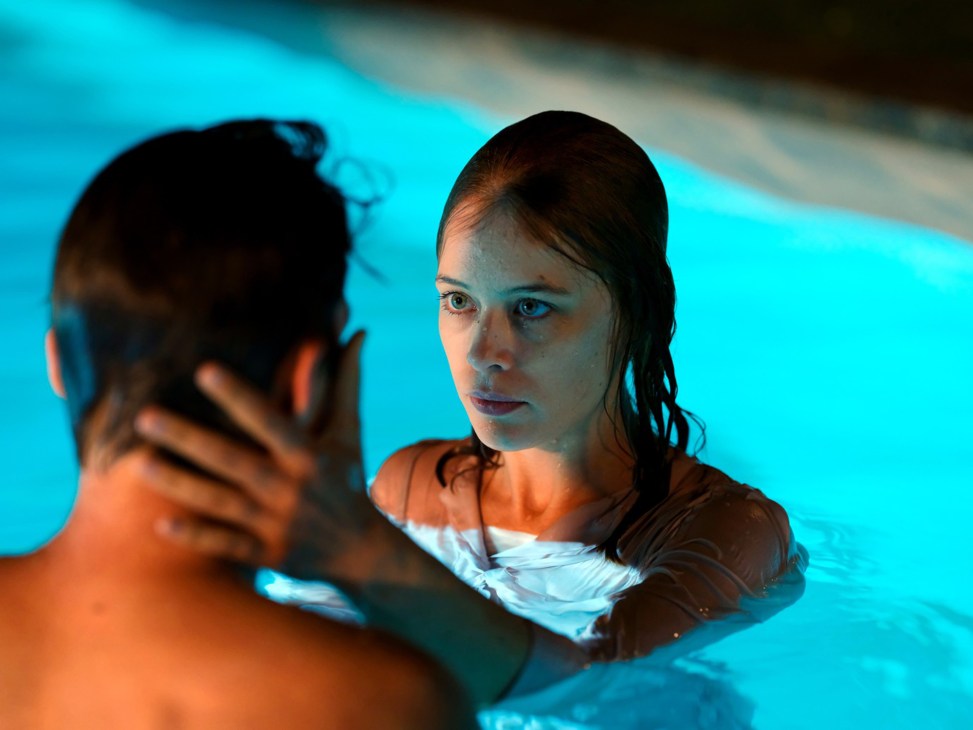
Surprisingly for a mythic water spirit, Undine spends much of her time discussing architectural theory. She inhabits the human persona of a guide at a model-city museum in Berlin who knows very well that “form follows function”. In this strange and beautiful film, that diktat is reversed: the dreamlike cinematography largely supersedes the plot. Undine is a modern fairytale about the elusive, all-consuming nature of love.
2.
Estate agent
Gagarine
Fanny Liatard and Jérémy Trouilh
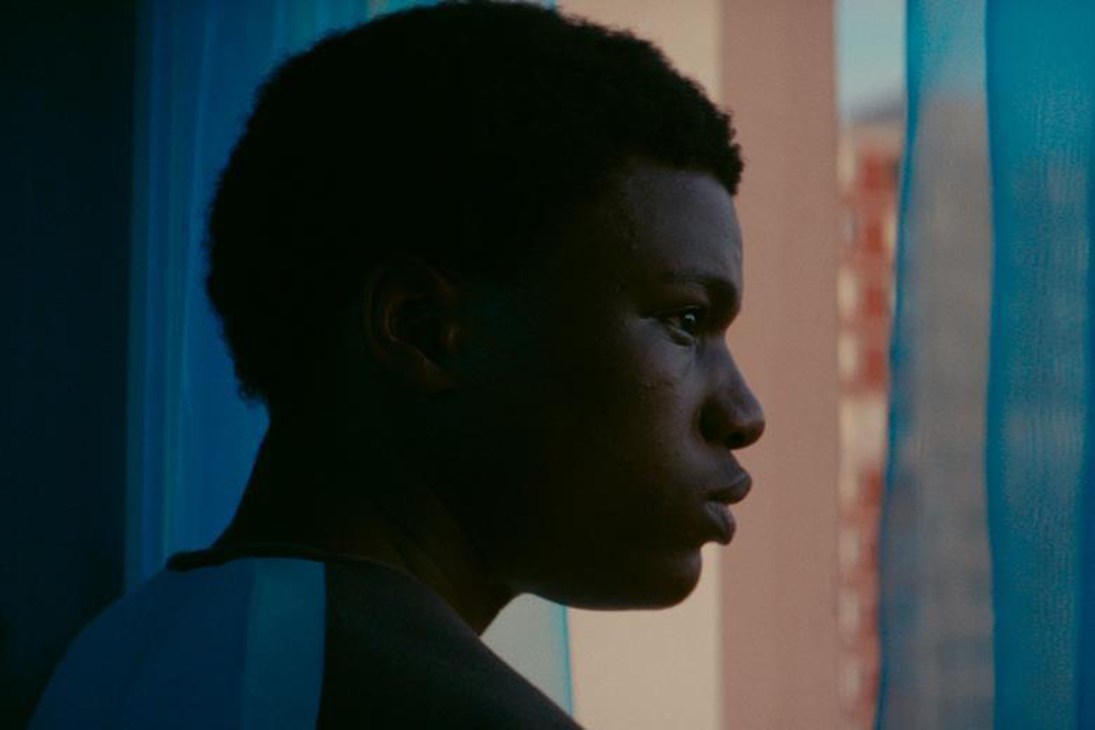
Several films have examined the brutality at the heart of Paris’s monolithic banlieues but few have treated them with as much affection as Gagarine. It’s a singular film that merges real social topics with head-in-the-clouds surrealism. The result is filled with stardust.
3.
Buried treasure
Ammonite
Francis Lee
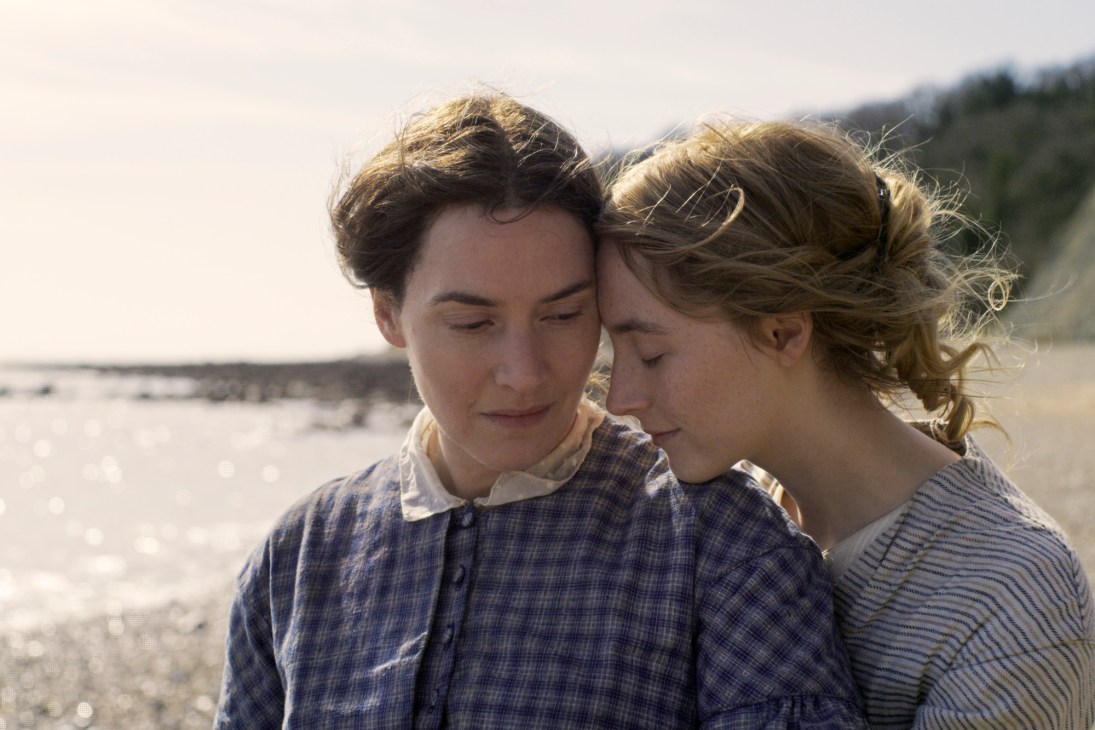
There is something rather fitting about the slow pace at which this account of the renowned 19th-century palaeontologist Mary Anning unravels. Ammonite may not be a plot-led watch – it is, after all, a film about fossilised emotions – but it compels with its tender approach to a familiar tale of illicit love. In Anning, Kate Winslet finds her most meaningful role in years and she excels as a closed, harsh woman softened by a love for a melancholic society lady (Saoirse Ronan) who arrives at the Dorset coast.
4.
Occupational hazards
Thin Blue Line
SVT
Police dramas have always been a televisual mainstay but this Swedish series has a unique viewpoint. Instead of focusing on crime, it explores the emotional toll on the lives of six officers in challenging situations. At heart, it is a reminder about what makes us human.
5.
Wave farewell
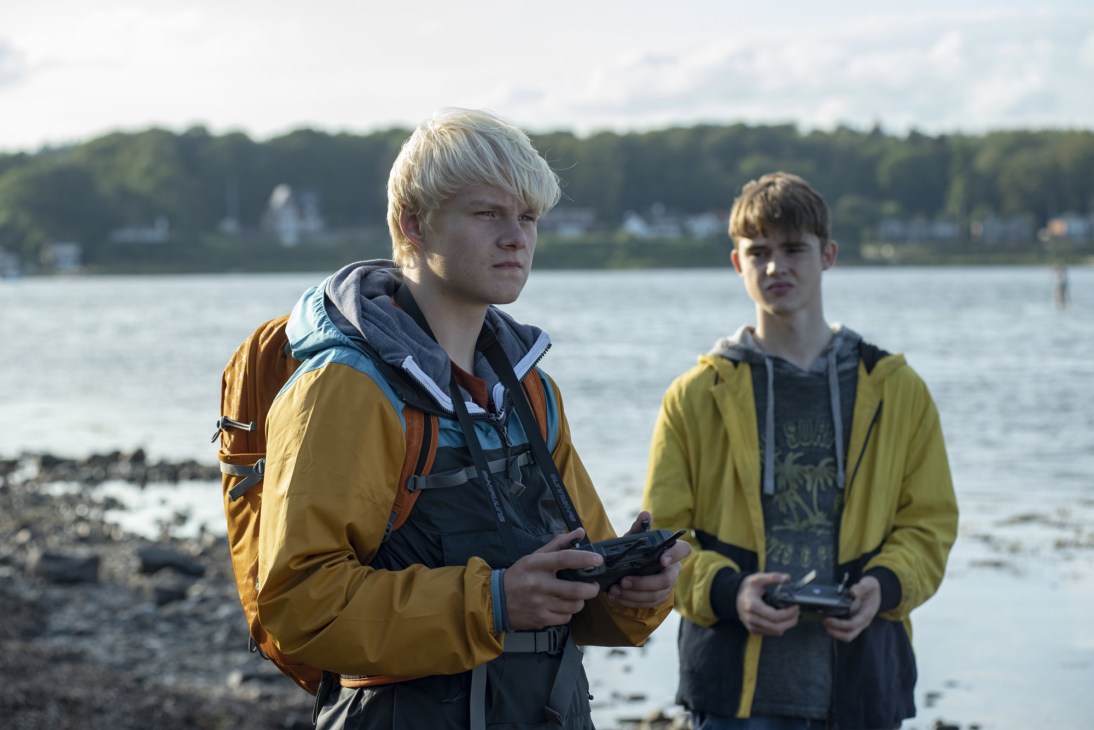
Beneath the Surface
ZDF
This new eight-part thriller explores a boat accident through the eyes of eight witnesses and its consequences for two families. Filmed near Denmark’s remote Okseøer Islands, expect emotional poignancy at odds with the serene scenery.
Listen
1.
Young at heart
Kids
Noga Erez
Erez was born outside of Tel Aviv to music-loving parents, and now lives in the city creating her own loud, sublimely off-kilter tracks with creative partner Ori Rousso. The music delves into the realms of activism and defiance. Following the success of her 2017 debut Off The Radar, Erez’s latest offering feels like a battle cry, ambitiously dealing with the potential of youth.
‘Kids’ is released on 26 March
2.
At her word
She Walks in Beauty
Marianne Faithfull and Warren Ellis
Before Faithfull was hospitalised with coronavirus last year, she spent time in her apartment reading aloud some of her favourite poems. Recordings were sent to her friend Warren Ellis of the Bad Seeds who, greatly moved by the performances, set them to loping, ambient instrumentals. He then got Nick Cave and Brian Eno involved. The result cuts through the fog and chaos of the world to reveal the power of friendship and the beauty, and fragility, of life.
‘She Walks in Beauty’ is released on 30 April
3.
Atmosphere factor
Bring Backs
Alfa Mist
A new era of jazz has been bubbling away in London for a few years, and Alfa Mist is one to watch. A self-taught musician, he started out as a hip-hop producer and has since slid into performing full-time. His sound is tender and delicate, leaning towards the ethereal. It makes for incredibly pleasant listening, without ever straying into background-music territory. It’s jazz even for those who think they don’t like jazz.
‘Bring Backs’ is released on 23 April
4.
Illuminating insight
Paradigmes
La Femme
The Paris band’s third album is another wonderfully fluid mix of genres, with influences ranging from Kraftwerk to Velvet Underground. The title track is an outstanding piece of cabaret-electro. Perhaps in a nostalgic ode to time spent travelling around the US, La Femme dedicates three songs in the album to America: “Cool Colorado”, “Pasadena” and the sweet “Nouvelle-Orléans”. We impatiently await their famously extravagant live shows.
‘Paradigmes’ is released on 2 April
5.
Ray of sunshine
Navegar
João Selva
Straight out of the new, modern wave of Brazilian tropicalismo, Navegar is delightfully sunny, mixing 1960s sounds with the best of Brazilian funk and disco. The uplifting title track is the best introduction to the album’s vibe.
‘Navegar’ is released on 2 April
Read
1.
Truth will out
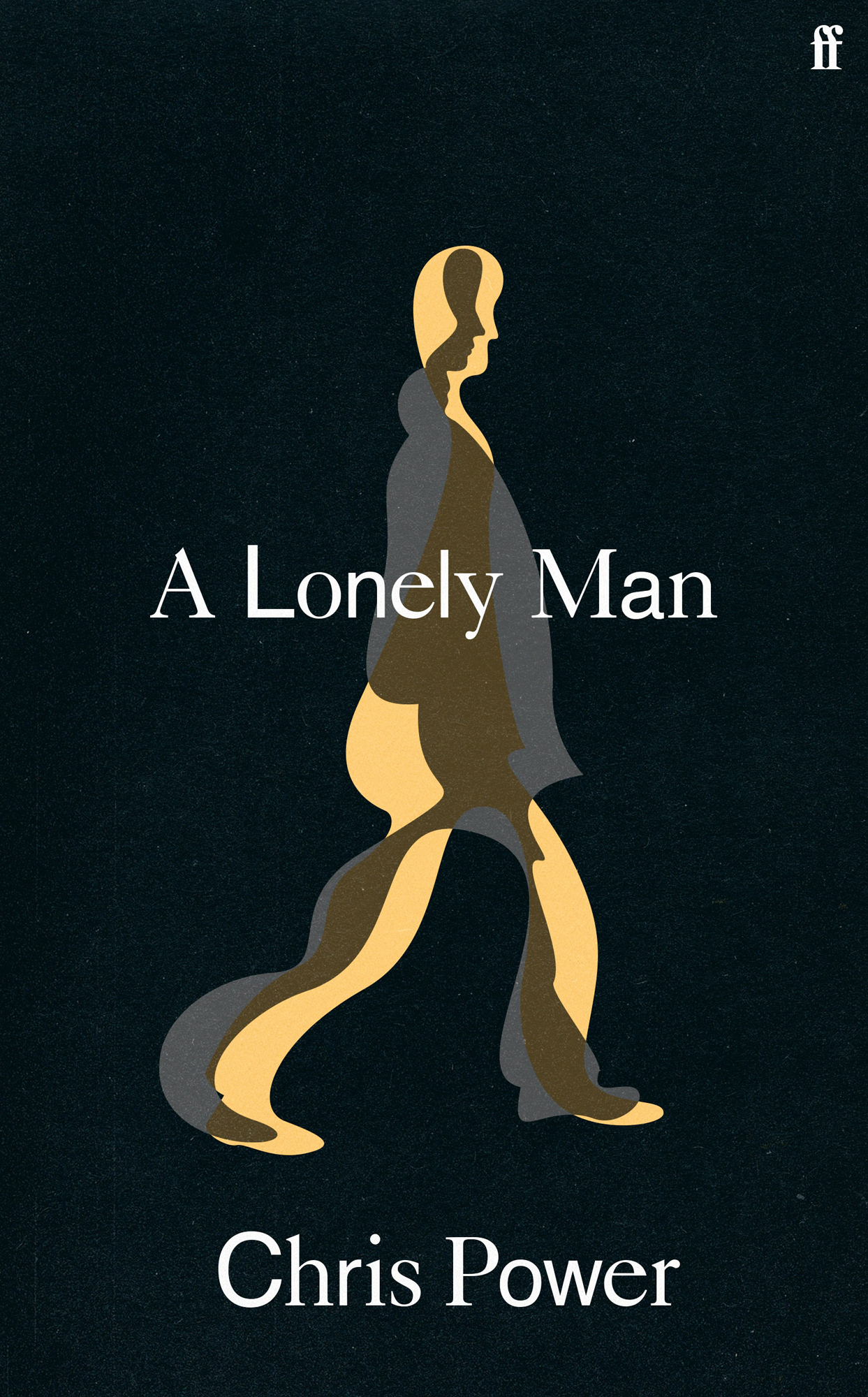
A Lonely Man
Chris Power
Power’s first novel tells the story of Robert, a struggling writer who finds himself drawn to Patrick, a man he meets in a bookshop. Patrick is a ghostwriter whose last client, a Russian oligarch, was recently found hanged. All too soon fact and fiction begin to converge. Power combines the chills of a thriller with probing questions of who should tell whose stories.
‘A Lonely Man’ is released on 30 March
2.
Warming signs
Dreamland
Rosa Rankin-Gee
Set in the rundown UK coastal town of Margate, Rankin-Gee’s novel conjures a chillingly believable near future of rising sea levels, heatwaves, sneaking extremism and an ever-widening gap between the haves and the have-nots.
‘Dreamland’ is released on 15 April
3.
Liminal messaging
The Dangers of Smoking in Bed
Mariana Enriquez
This stunning collection of short stories explores the darker side of life in contemporary Buenos Aires, the sprawling streets of which become a halfway house between the living and the dead. An entire neighbourhood falls into wrack and ruin after its inhabitants are cursed; disappeared children reappear to terrorise the living; and a woman with a heartbeat fetish seeks increasingly deadly stimulation. Enriquez’s gothic stories shimmer with a strange beauty.
‘The Dangers of Smoking in Bed’ is released on 1 April
4.
Mother hen
Brood
Jackie Polzin
Ostensibly, Polzin’s debut is about a narrator keeping a quartet of chickens in Minnesota. As she reflects on her miscarriage and motherhood, she learns what it means to care for yourself and others.
‘Brood’ is released on 1 April
5.
Collected thoughts
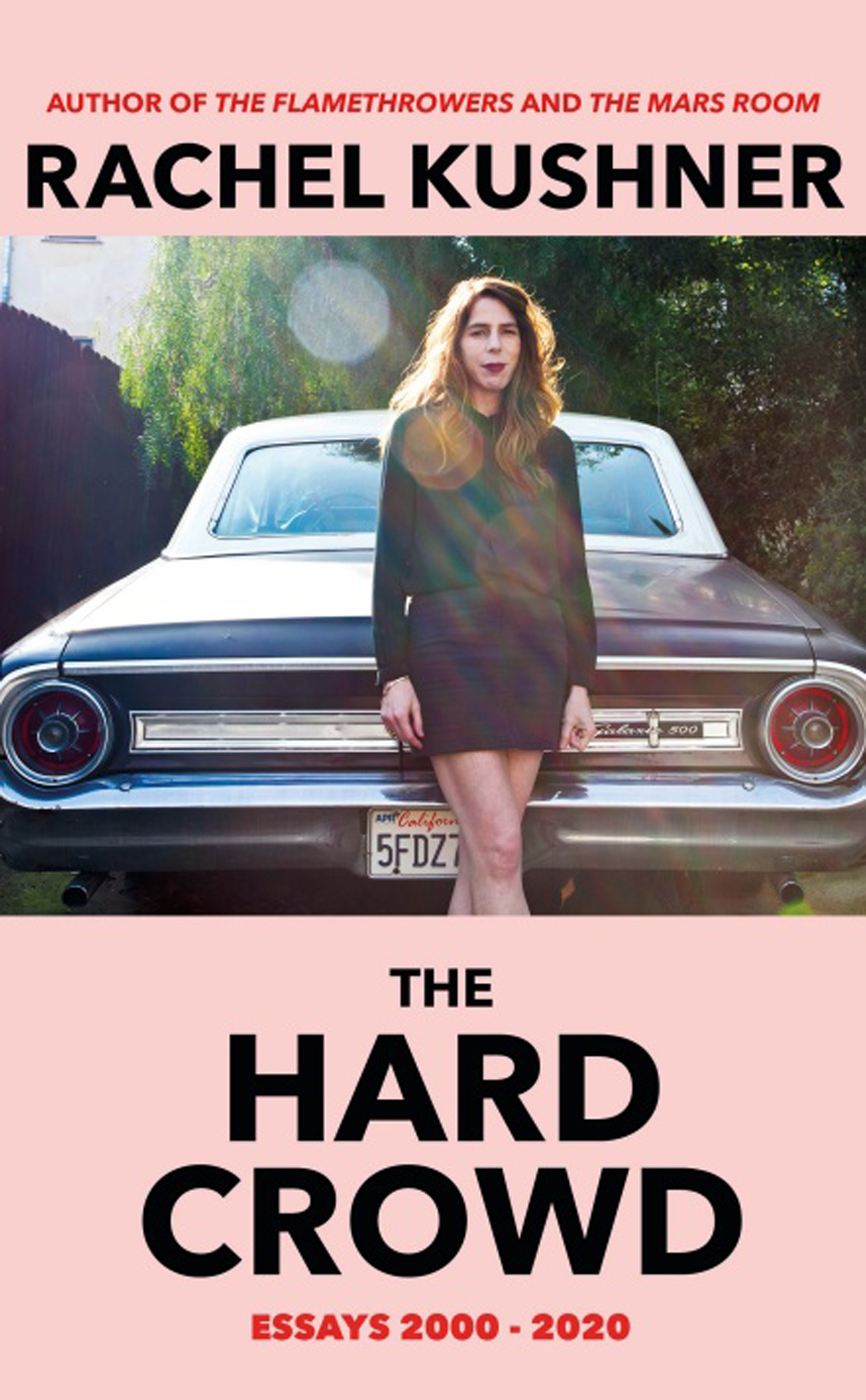
The Hard Crowd
Rachel Kushner
The new book from the Booker-shortlisted author of The Mars Room comprises 19 essays written over the past 20 years. With characteristic confidence and poise, Kushner unpicks highly charged issues.
‘The Hard Crowd’ is released on 8 April
Images: Christian Schulz/Schraam Film, Haut et Court, ZDF/Letterbox, Courtesy of Neon, Faber & Faber, Vintage Publishing
The truth hunters
1.
Aye Min Thant
In Myanmar
Motivated by a sense of injustice more than a professional calling, the US-educated journalist is defying Myanmar’s military regime to keep the world informed about the country’s crises.
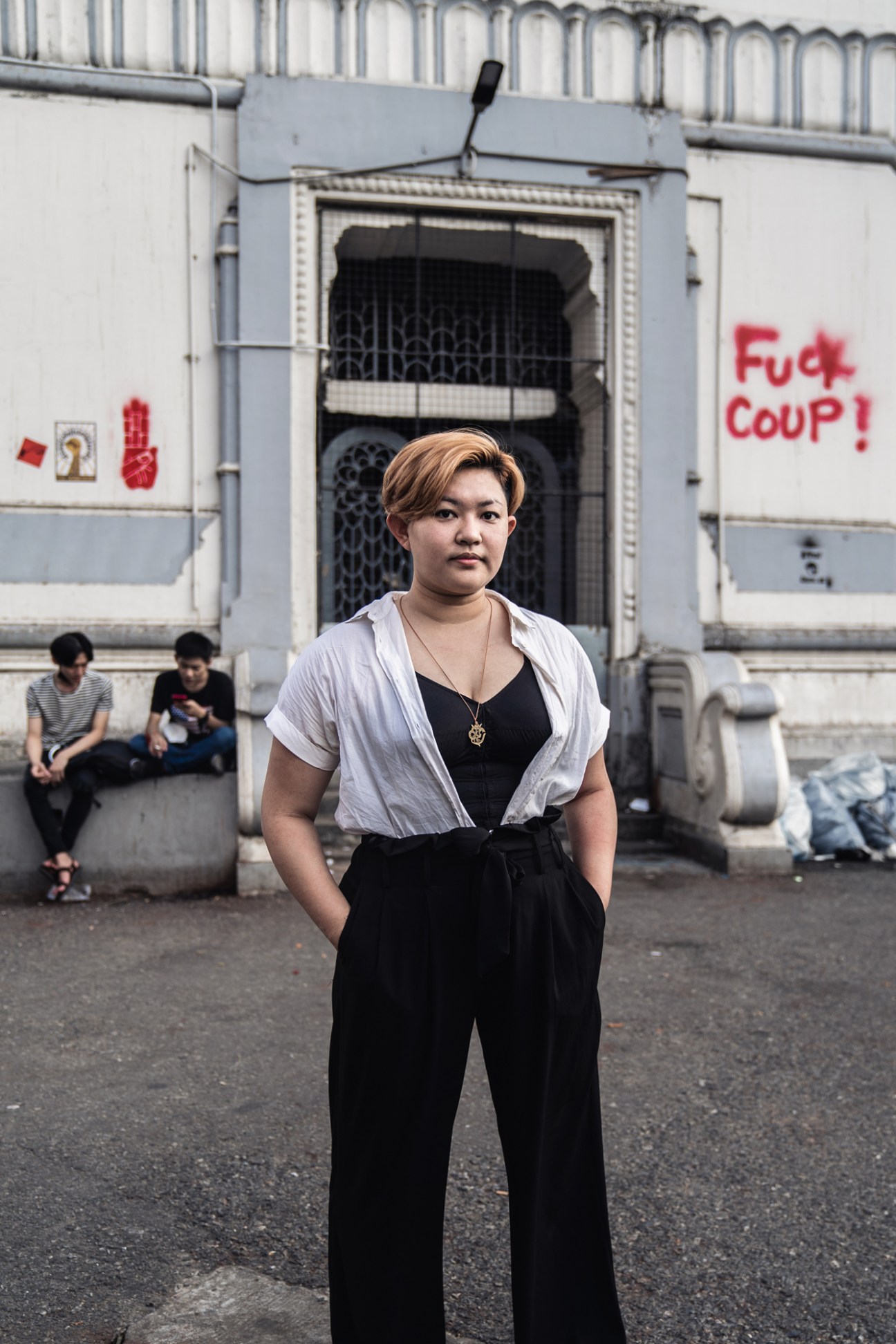
“I like to think that I’m a decent storyteller,” says 28-year-old Aye Min Thant, who became a journalist by accident. “I can also provide a different perspective. I have experience of Burmese culture but I can see it from the outside too.”
Aye’s family left Myanmar for the US as refugees in 2000. After returning in 2014 and working in various industries, Aye went to see a Myanmar-made film in 2018. “I hated it,” the journalist tells Monocle from Yangon. “I pitched a review to a few outlets. Then someone offered me a job. I ended up at Reuters because I was interviewed about my pro-Rohingya, anti-genocide activism and that source interview turned into a job interview.”
It was a difficult time to be a reporter. Myanmar’s military, the Tatmadaw, was killing thousands of the Muslim Rohingya minority and forcing hundreds of thousands to flee the country. The Tatmadaw’s efforts to discourage reporting of its rampage included seven-year prison sentences for two Reuters journalists, Wa Lone and Kyaw Soe Oo. “It was a clear warning that was made even clearer by the ridiculous trial,” says Aye. “One police officer who was meant to testify against our guys basically said, ‘My presiding officer told me to entrap them, that’s why we’re here.’ That officer went to jail and has since been released.”
The Reuters team in Myanmar, of which Aye was a part, won the 2019 Pulitzer prize for International Reporting – and Wa Lone and Kyaw Soe Oo were freed. But the pressure from Myanmar’s authorities did not relent. “I had a ‘security situation’,” says Aye. “Within two hours I was on a flight to Singapore and was not back in the country until after I quit my job, more than six months later.”
When Myanmar’s military staged a coup d’état in February, Aye became a journalist once more by live-tweeting events, filing reports and giving interviews to outlets worldwide. “This wasn’t the goal,” says the reporter. “But people who have the ability to do something have a duty to do it. It felt unjust that I was able to grow up in a country that was much freer, where I was able to get an education and passport privilege. I wanted to do what our people should have been able to do. I wanted to use the shield that privilege provides.”
2.
Richard Mosse
In Brazil
Using infrared and multispectral cameras, the photographer has created a unique method of representing war and climate change. His latest mission: to chronicle the burning of the Amazon.
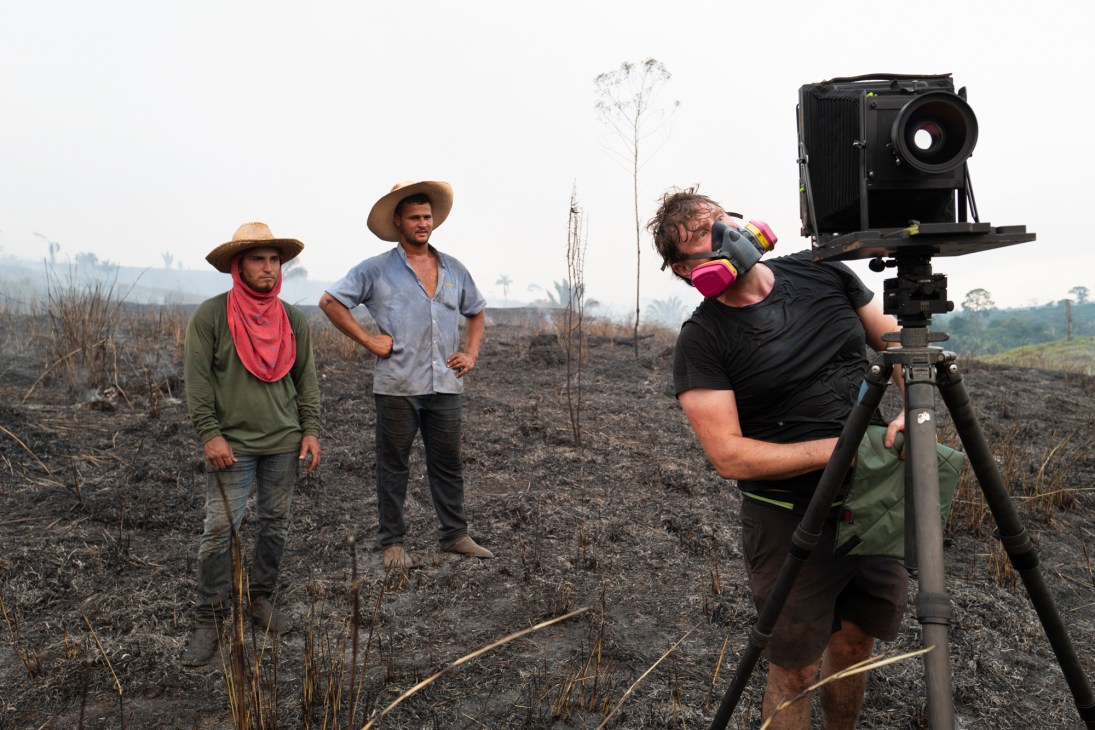
In 2009 photographer Richard Mosse, then in his late twenties, went to Iraq. By then, Western audiences had grown used to images of bombed-out towns and troops in desert-combat uniforms. What was needed was another perspective. Mosse decided to document the palaces of Saddam Hussein, many of which had been turned into operating bases by the US military. He was attracted by the clash of new and old; the gaudy kitsch of dictator-chic.
Although the project offered him a unique view on the conflict, he was still dissatisfied by his medium of choice. “I was frustrated with documentary photography,” he says. “I wanted to break it apart.” In the acclaimed projects that Mosse has undertaken since, he’s shifted his focus away from the photographer’s role as “an illustrator for a writer’s text” and towards a more complex practice. “I suppose it’s a hybrid of sorts, at the interstice between contemporary art and reportage photography,” he says.
It’s an approach that he pioneered in the jungles of the Democratic Republic of Congo for his 2010 project, Infra, in which he used a military-grade infrared film designed to reveal the unseen during reconnaissance. In the resulting images, lush vegetation is rendered in psychedelic pinks and purples, while combatants and victims stand starkly out against an alien landscape; it’s a strikingly original view on conflict that’s hard to ignore. Over the following decade he has continued to use similar technologies in a bid to “refresh” people’s attitudes, such as when he photographed refugees in 2016 by using a thermographic camera capable of imaging human body heat from a distance of 30km. “The camera is designed for the battlefield, so it’s actually part of a weapons system,” he says. “It confronts the viewer on some level with their own complicity. At least that was my intention. One of the only things you can do is to make people feel something.”
Although Mosse’s experimental approach has meant that his work often adorns gallery walls rather than front pages, he does engage with the media. One organisation that he holds in high regard is London-based Forensic Architecture, which draws on expertise from fields as diverse as cgi, journalism and architecture to investigate environmental crimes and human rights abuses around the world. It’s a new take on activist journalism. “I’ve been in dialogue with them,” says Mosse. “They’re a very effective group who try to bring about a kind of accountability.”
For more than a year now, Mosse, who is based in New York, has been travelling the Brazilian Amazon, where state-sanctioned forest clearance has set one of the world’s largest carbon sinks ablaze, as modern-day cowboys fell timber to make space for cattle. “I was intrigued by the challenge of representing climate change because it’s way bigger than us, and for that reason it’s hard to photograph,” he says. “The scale of the burning is difficult to articulate.”
It’s a challenge that’s suited to Mosse’s mix of art and journalism. He employs advanced, multispectral cameras (used in environmental-monitoring satellites) to document the destruction from above. But his reporter’s instinct has also led him to seek out stories on the ground. “I’ve been trying to infiltrate the groups or individuals who are burning and ranching. About 95 per cent of my job is getting access, about 4 per cent is administration and only 1 per cent is making the art,” he says, laughing.
“Running in with a zoom lens, stealing the shot and running out, you’ll probably get murdered. But if you can appeal to the head guy’s sense of machismo, he can’t say no. Once you start to hang out with these guys, you start to enjoy the company of some of them and realise they’re not just environmental criminals. They’re locked into a global economy. It’s not so easy as pointing fingers.”
3.
Puk Damsgård
In Syria
The Danish reporter knows that conflict reporting comes with potentially lethal danger but even in a year of lockdown she has been working in the Middle East.
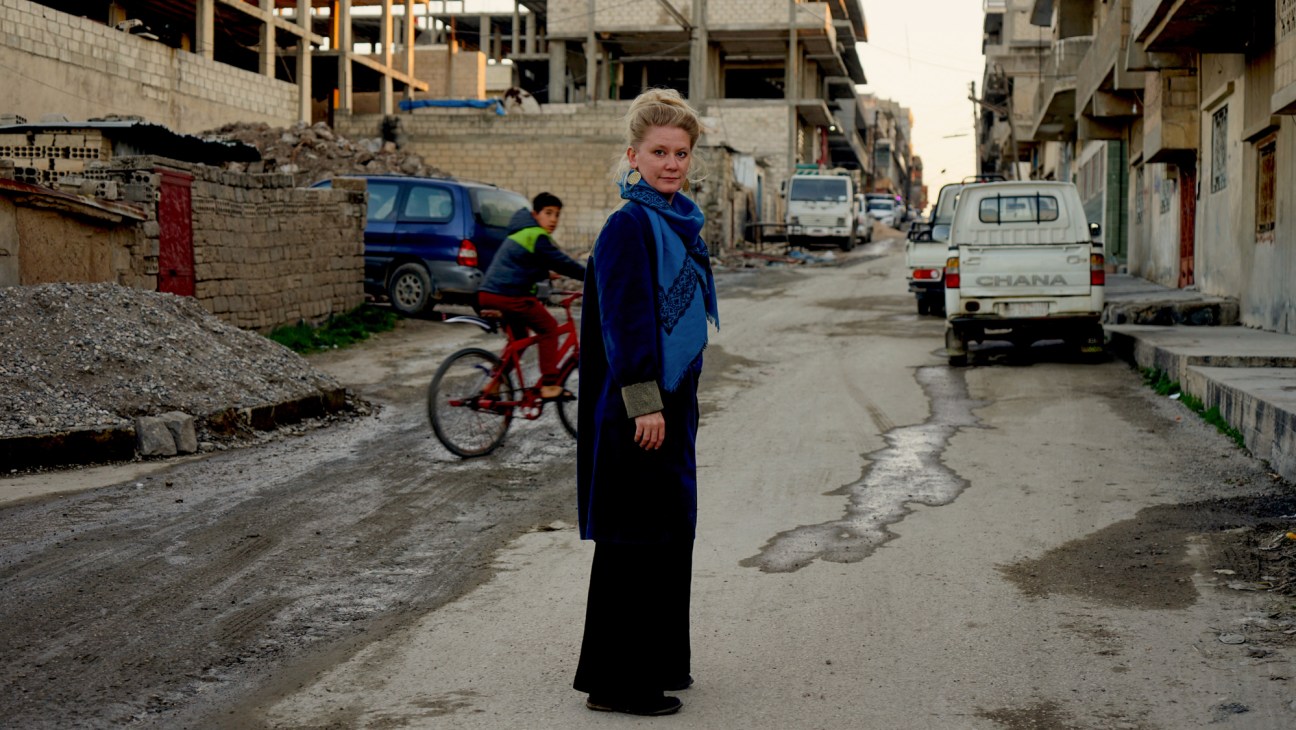
“You can’t just cover the region from Beirut or Cairo,” says Puk Damsgård, a multi-award-winning Middle East correspondent for Danish national broadcaster DR. “You have to travel because something very different happens when you go to a place and talk to people on the ground.”
In 2020, despite the pandemic dominating news agendas and making movement difficult, Damsgård covered the burning of the Moria refugee camp on Lesbos and the Beirut harbour explosion, as well as meeting Danish citizens who fought in Syria and were held there in prisoner camps. “Denmark is a small country so we have a tradition of keeping our eyes open towards the world,” she says.
Damsgård’s career as a foreign news reporter began in 2008 when she went to Pakistan as a freelancer. She was thrown out two years later after being accused of being a spy, although perhaps the real reason was because one of the papers that she wrote for, Jyllands-Posten, had printed the infamous Muhammad cartoons. She then lived in Kabul and Beirut before moving to Cairo in 2013. When we speak, Damsgård has just finished a report from her home city, which was hosting the handball world championships. Denmark won. “It’s nice to have a happy story to report for once,” she says. But her travels soon start again: first to Erbil, in Iraqi Kurdistan, and then into Syria to investigate the makeshift oil refineries in the north of the country.
As well as her bold front-line coverage, Damsgård is known in Denmark for insightful reports that bring background and perspective to the headlines. That could be meeting a teenage cello player in Gaza or interviewing ordinary Iraqis – lives that are important to bring into focus. “When refugees began appearing in Denmark there was an interest among Danes to know the backstory,” she says.
In 2018, Damsgård reported from Yemen. “For a long time it was very difficult to go there, so most of the news was from the UN and NGOs about famine, cholera and hungry children,” she says. “But I was shocked to see that there was plenty of food in the supermarkets. Of course the issue was that many couldn’t afford it. Yemenis explained to me that there were many factors contributing to the dire humanitarian situation, and that some of the issues were much longer-term problems.”
On her second visit to the country, Damsgård wanted to write some longer-form pieces for her broadcaster’s website. “They told me that no one wanted to read about Yemen but one story I did about a wedding was the third most-read foreign story that year.” The trip inspired her seventh non-fiction book, Arabica, about a journey through Yemen and the Middle East. Damsgård’s books have enjoyed huge success – her 2015 title about the photographer Daniel Rye, who was taken hostage by Isis, was made into the film Daniel, starring Danish actor Esben Smed.
Yet on-the-ground reporting remains her main calling and that never gets any easier. In the decade since the Arab Spring, travel in the region has become more complicated. “There is a lot more bureaucracy now and somewhere like Syria, of course, has become much more difficult,” she says. “It used to be that you could cross into the country illegally, through the barbed wire at the border, but then came the threats from Islamist groups and the regime.”
Nevertheless, she has managed to report from Syria and Iraq at the height of their conflicts, risking being taken hostage or killed in crossfire. She has been within metres of deadly air strikes at least twice. “I go into this with open eyes and we always try to minimise the risk,” she says. “You can’t control what comes down from above. I do not like being in war but I am free to say no. I can leave but the people there cannot. And if just one viewer understands a subject better from one of my reports, it’s worth it.”
4.
Elena Kostyuchenko
In Russia
Putin’s Russia is brutal in its treatment of critical voices but that hasn’t deterred the ‘Novaya Gazeta’ reporter from exposing the harsh realities of her country while maintaining faith in its people.
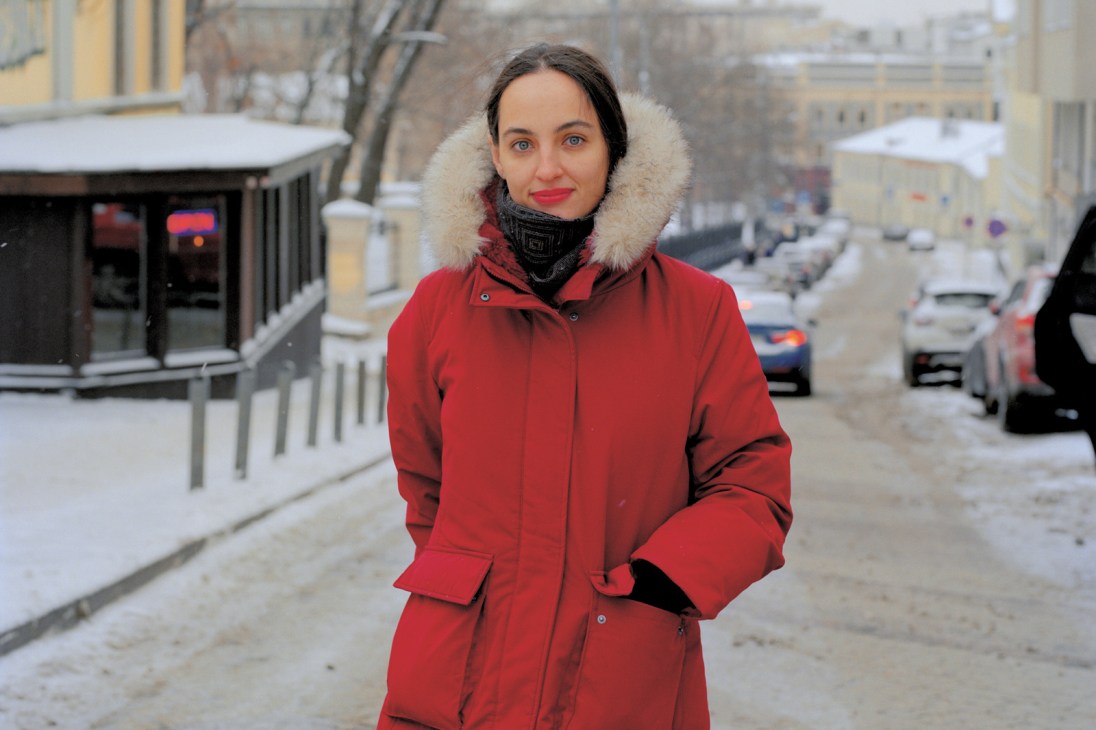
Elena Kostyuchenko is slender and light, with blue eyes, a bright smile and a face out of a Botticelli painting. Her voice is measured but when she becomes agitated it takes on an air of ironic mischief. On first meeting her, you would never think she had been under artillery fire in eastern Ukraine or witnessed a violent crackdown on unrest in Kazakhstan. “I wanted to travel ever since I was a child but not like this,” she says, laughing. On the day that Monocle meets her, she’s just got back from another reporting trip.
Recognised with various journalistic awards both in Russia and abroad, Kostyuchenko modestly describes her beat as “social problems”. In the past year alone she has written about the plight of gay people (as a lesbian, she’s all too familiar with endemic Russian homophobia); an environmental disaster near the Arctic city of Norilsk; and the underside of Moscow’s fight against coronavirus. She is the author of two books of reportage and a play. Kostyuchenko’s subjects are often the wretched of the Earth, the rejects, the small people; all those at the mercy of big business or the government, which in Russia is usually the same thing. “Russian authorities are not ready to co-operate with people,” she says. “They only listen to supplicants. This is dangerous. When a system stops listening to its citizens, sooner or later those citizens will destroy it.”
Kostyuchenko first dabbled in journalism as a teenager, writing for a newspaper in Yaroslavl, a town 270km northeast of Moscow, where she lived with her mother and sister. But she only decided to make it her vocation after seeing a harrowing report from war-torn Chechnya in the independent broadsheet Novaya Gazeta. It was by Anna Politkovskaya, the acclaimed journalist who would become Kostyuchenko’s role model. In 2005, Kostyuchenko joined Novaya Gazeta and the two women briefly became co-workers. A year later, Politkovskaya was murdered in her block of flats. Three other Novaya Gazeta employees have been killed since. Kostyuchenko has received death threats and been accused of treason over her reporting but there’s an implacable quality to her, the same that drove Politkovskaya. “The mission of social journalism such as mine is to create invisible but strong connections between people, because Russian society is extremely fragmented.”
At Novaya Gazeta, Kostyuchenko writes op-eds and commentary but her specialities are long reads that often have her at the heart of the narrative – although she shuns speaking from the first person, preferring instead to be a silent chronicler. She was forced to put her principles on hold for the Norilsk story, called “Rust”. “I wanted to show how the realities on the ground opposed the photographer and me; that’s why I put myself in it,” she says. The story took up an entire issue of the newspaper and followed Kostyuchenko as she helped a group of activists expose a huge diesel-oil spill originating from Nornickel, the world’s leading nickel and palladium producer. The company, owned by oligarchs close to Vladimir Putin, hindered Kostyuchenko’s investigation, bullying those she contacted and downplaying the scale of the incident. “Rust”, also available in English, is a must-read. “It’s an important story about what Russia is really like,” she says.
The latter is something that Kostyuchenko is unsentimental about. “The reality in Russia is gruesome,” she says. “You can have a perfectly normal life but then one day your son might be beaten up by police to the point of coma and you have to live with that.” Despite seeing so much injustice and violence, Kostyuchenko retains her faith in the essential goodness of human nature. “I have met very bad people but I have also experienced a lot of beauty and kindness,” she says. “I have spoken to people willing to stand up for each other and for the truth.”
5.
Ivor Prickett
In Iraq
Years of experience in war zones has led the Irish photographer to know when the moment is right to move in and capture the story – and also when to stop.
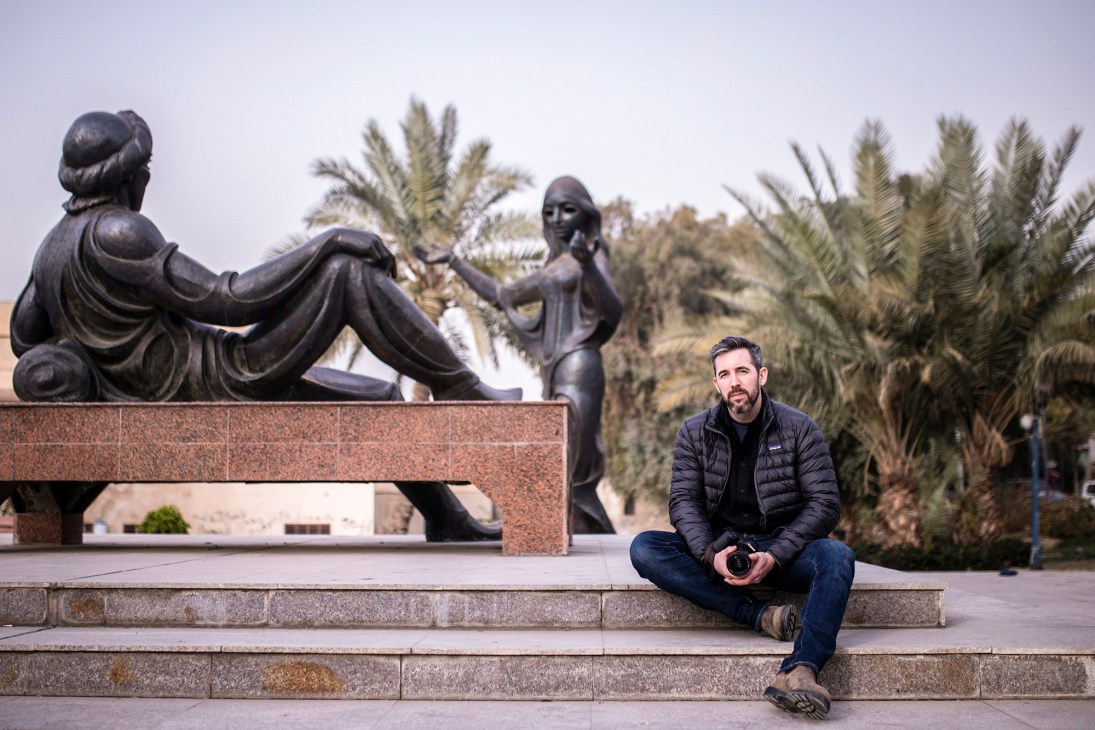
Irish photojournalist Ivor Prickett was in Baghdad, reporting for The New York Times on a different story, when Isis conducted its first double suicide attack in years. “There’s always something going on in Iraq, so sadly you become accustomed to being able to judge a ‘big enough’ news story,” he says. “This was obviously a big deal, so you kick into action.” But that doesn’t mean simply rushing out there as quickly as possible. With more than 10 years of experience in the field, Prickett knows when the moment is right before wading in. “You need to figure out how to get there as safely as possible,” he says. “I am much less gung-ho than I used to be – and I arguably produce better work.” Still, the amount of risk that he is willing to take will seem extraordinary to those whose professional life doesn’t involve heading to conflict zones on a regular basis.
Over the years, Prickett has kept on returning to Iraq. He was there during the 2016 campaign to reclaim Mosul, where he took some of his most recognisable, high-impact shots that ended up in his book, End of the Caliphate. But he didn’t envisage becoming a front-line reporter when he was studying documentary photography in the UK. Prickett’s first projects dealt primarily with the displacement and fallout that follows conflict, in countries such as Kosovo, Serbia and Georgia. It was during the Arab Spring of 2011 that he started taking up news assignments and in 2016 he began working regularly with The New York Times. Today, his photos maintain a sensitivity and humanity that feels indebted to his documentary-focused past. “My whole life revolves around my work,” he says.
One week on from the suicide blast, Prickett was posted to the north of the country but not before he managed to head into Turkey, then to the town of Afrin in Syria and the Iraqi village of Kocho. It’s a tight schedule but one that’s not uncommon for him. “Working somewhere like Iraq takes organisation. And with coronavirus on top, things get really complicated,” he says. For much of last year he was grounded at home (in his case, Istanbul) until he was sent to Nagorno-Karabakh in October. Covering the conflict from the Azeri side of the front line, he realised that no other large US print media was present, as the government had been very selective about picking which outlets to allow on the ground. “We almost had the story to ourselves, which is very rare these days,” he says.
That’s despite the fact that media budgets have generally shrunk, meaning that fewer print titles will place photographers on the ground. “I work with one of the few that actively still does that,” says Prickett. “Syria changed things a lot because of the kidnappings. There has been a huge drop in the number of people covering conflict.” He has learned how to deal with the threat of any eventuality. “You can’t mitigate all of the risk but there is so much planning and thought involved in going to a war zone,” he says. But as the nature of warfare keeps changing, so does front-line reporting. In Armenia, combat carried out by sophisticated drone technology and heavy artillery meant that a lot of reporters found themselves spending most of their time in a bunker, under cluster-bomb attacks, left to piece together the story through testimony.
Prickett has also learned that it’s vital to know your limits. “I know the tell-tale signs of when it’s getting too much. I’m aware of the triggers, how long to expose myself to those situations for and when to take a step back. You have photographers who end up with ptsd by the age of 25 – and I was probably nearly there at certain times,” he says.
“I have accepted that this is what I do and I don’t see myself wanting to change. One of the things I love the most is the connection you have with people you photograph; the feeling that you’re needed and accepted.”
Business
Routes to recovery
Global — aviation
Airlines are navigating the worst downturn in the sector’s history – a tailspin that has no clear end date. Latest figures show that carriers lost more than €300bn globally in 2020. It might, then, seem like the worst possible time to start an airline. But judging by the number of new carriers launching or about to launch, the opposite could be true. And those rethinking the notion of hubs and routes look set to benefit. We check in with three new companies that have caught our eye.
1.
Greater Bay Airlines
(Hong Kong)
Having applied to serve more than 100 routes out of Hong Kong, Greater Bay is looking to snatch up slots relinquished by Cathay Pacific’s recently defunct regional arm Cathay Dragon (having brought in its former CEO Algernon Yau Ying-wah in the top spot). Its route map, heavy on China and other spots in Asia, aims to take advantage of a return to boom times in Asia. Founded by Hong Kong property magnate Bill Wong, the firm will launch with three aircraft but plans to have a fleet of 30 by 2025.
2.
Flyr
(Norway)
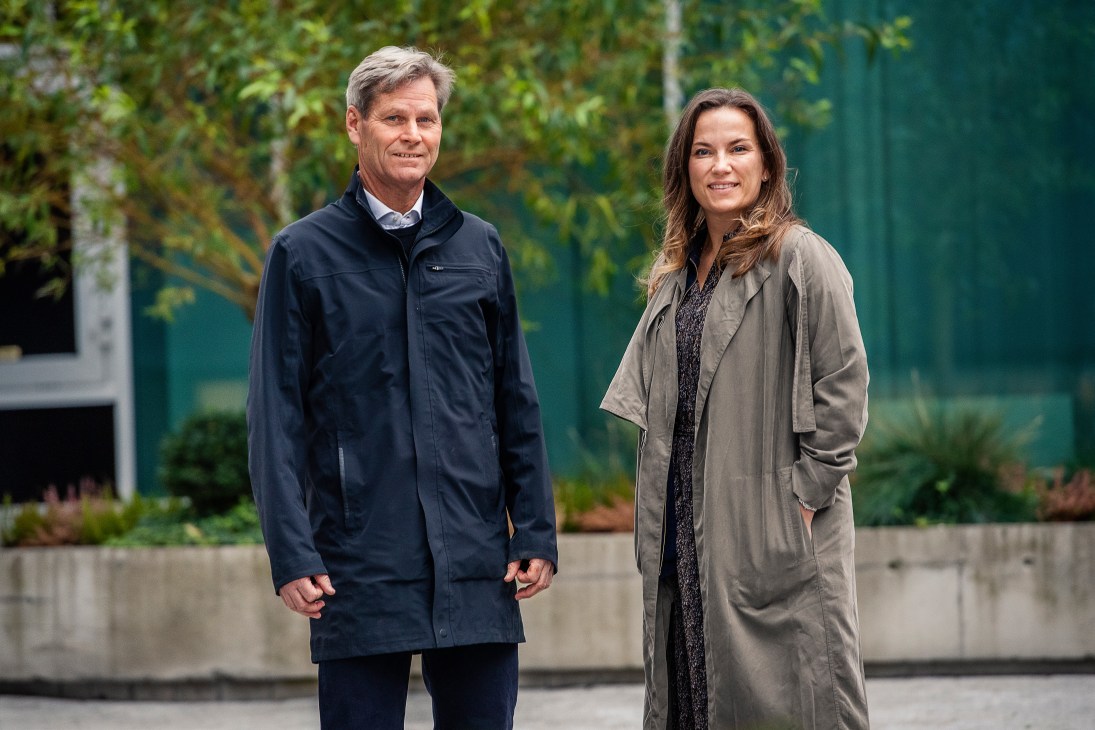
Launching in the coming months, Flyr aims to capitalise on the hole left by drastic downsizing at Norwegian Air – from where much of Flyr’s senior leadership has arrived. Founder and chairman Erik Braathen and CEO Tonje Wikstrøm Frislid (pictured) are out to scoop up some of Norwegian’s market share but in a more measured and careful way – identifying markets in need of air services both domestically and around Europe but eschewing the kind of frantic expansion Norwegian favoured. The airline is also keen to emphasise that it is truly Norwegian – no Irish shell companies to skirt Norwegian labour laws here.
flyr.no
3.
Breeze
(USA)
Serial airline founder David Neeleman plans to roll out his latest carrier, Breeze, at some point before the end of the year. Details are still closely guarded but secondary cities in the southeastern US look to be an initial focal point. The airline will reportedly feature a premium cabin on its a220s – smaller planes with long-range capabilities to allow the airline eventually to expand into unserved routes, which could include South America and elsewhere. Breeze is emblematic of most of these start-ups: they are targeting under-represented cities and focusing on improving domestic and regional connections for the most part. They are betting that hubs are out and previously ignored but emerging markets – served direct – are in.
flybreeze.com

Q&A
Vittorio radice
CEO, Central Group Europe
Milan
Radice, 64, has had a successful career revamping the retail operations of department stores across Europe. From 1996 to 2003 he was CEO at Selfridges in London, where he engineered a revival of the brand’s prospects. In 2005, he took over at Rinascente in Italy to overhaul the department store group. Today, he continues to manage Rinascente, plus a collection of retailers including Globus in Switzerland and KaDeWe in Germany for Thailand’s Central Group.
How can department stores stay relevant?
It’s hard to have long-term plans in the current climate. In Italy, with Rinascente, our focus is on city-centre locations near historic sites – in Milan, we are next to the Duomo – and getting out of shopping malls. That’s what locals expect from us. Each store is different. In Florence we’ve focused on having small leather goods as something that customers come into contact with first, as opposed to the perfume counter; it’s what people expect from Tuscany and its tradition of leather craftsmanship. For some cities, we developed shopping bags with distinct logos. We have to work with the city and be in symbiosis.
What specific measures can retailers implement?
Think about the residents. In big cities, you’ll always have tourists but you can’t forget your regular clients who are in every month or weekend to shop, whether they are buying lipstick or a suit. It starts with window displays. These shouldn’t be static but inventive. We’ve shown off motorcycles in store windows in Milan during an industry trade fair. Temporary and pop-up stores also help to keep the mix fresh. It’s not just about offering the right trainer brand or contemporary clothing label. You need good regional products; if your store is in Turin, be sure to have first-rate wines from Piedmont, or great homewares if you are in a place like Milan, the design capital. You want the city’s inhabitants to have an association with your retail address. It needs to have something unexpected.
What cultural challenges do you face?
In Germany and Switzerland, the department store is a place to restock your wardrobe or items for the home. It’s less of a destination. People tend not to mill around at a food-hall café sipping espresso. Another problem we have is restrictive shopping hours. For Globus in Switzerland, being closed on Sundays is a drag on sales. That needs to change.
Creative bloc
London — Brexit
How are the UK’s creative industries faring post-Brexit? It’s all degrees of annoyance and complexity. We canvassed some leading lights of architecture, publishing and adland to find out more.
If you think about the literal connotations of a “brain drain” for too long the mind conjures some chilling Stephen King-ish imagery: post-lobotomy grey matter being sluiced away by a firm rubber glove; the anxiety-dream shudder of house keys being swallowed by a storm-drain – only it’s your sentience and skills that are rushing to join “It” in the sewers. Wurgh, the horror!
According to one study, an estimated 1.3 million people born overseas left the UK between the third quarter of 2019 and the same period a year later. So what’s the reality of post-Brexit life in the creative world?
For Jay Osgerby, of industrial design studio Barber Osgerby, alarm bells sounded right after the Brexit vote, with some of his European staff looking to relocate. “People didn’t feel welcome,” he says. “That trend hasn’t continued but the barriers to recruitment are greater than we imagined.” A designer’s stock-in-trade, says Osgerby, is “being trained to be a problem solver”. Oh, well that’s lucky. “Exactly – we feel that because that’s one of our skills, the government’s just gone, ‘Here you go – catch this,’ and thrown us the ball without telling us the rules of the game.”
At a notionally adjacent drawing board sits David Kohn, whose eponymous architecture firm began winning larger European work three years ago, some of which is in the public sector. “British architects are lucky because Europe’s commissioning culture has been very generous,” he says. “But not necessarily vice-versa.” Kohn says that UK architects are admired in Europe for their pragmatism and strategic thinking but he adds: “I have heard from peers in the UK that big projects have been cancelled because of Brexit.” Kohn, a self-described “rabid Europhile” is sanguine, saying that, “culturally, our European clients see through Brexit – in the end, they’re still calling and we’re still going.”
The world of advertising has to be as nimble as the finger of fate is fickle, so how have two storied UK names fared on the stormy Channel crossing? Daniel Fisher, global executive creative director of Ogilvy, was also a creative adviser for the People’s Vote – the group formed to lobby for a second EU referendum – so surely he has an eagle eye on the situation? “I see a shift to a decentralised model if firms can get over the tax questions of staff working across borders,” he says. “The urge to work together is strong and creatively absolutely essential.” Has the Zoom-crazed, screen-dazed past year made more mischief than Brexit? “Everything is obscured by the pandemic,” he says. “But London will continue to be a city where creative people come and make their name – despite some people’s best efforts.”
Stephen Ledger-Lomas is a partner at another top ad firm, BBH, and echoes those thoughts. “People are sitting on their hands but we’ll soon see what Brexit’s really serving up,” he says. “We’re good at keeping talent but creative work thrives on human connection so anything that puts up a barrier is a problem.”
Sharmaine Lovegrove, a Brit in Berlin who runs Hachette imprint Dialogue Books, is refreshingly undiplomatic about Brexit. “The dream of being part of a great creative Europe no longer exists,” she says. “Across Hachette everything is more complicated. What does a 90-day stay mean for residencies and book tours? What do tariffs mean for English language bookshops in Europe?” More expensive books? “Sure – and English itself is diminished if it’s too costly to read; the pandemic has offered Brexit a smokescreen but when it clears we’ll see everything as smaller and meaner.”
We’ll finish with our wellies on, in the Black Mountains of Wales where Fiona Stewart founded and runs the Green Man music festival, dependent on supply chains of talent, tour buses and crew. “Staging is more expensive,” she says. “It was a rite of passage for eastern European crews to come here and rig; our circus tents are put up by families who tour Europe every year. That might not happen now. These skills just go.” And on stage? “Music is the great cultural bridge and the UK’s music scene won’t fall apart. But it feels like a couple squabbling over their record collection after a divorce.” Not quite the horror that sets Stephen King’s pen a-flourish, then, but not fun and games for an industry worth £100bn (€116bn) to the UK economy.
The government negotiated for its hardline back bench of jumped up used-car dealers, not for inspiring, cultural or creative reasons to live here or visit from abroad. It is, as Jay Osgerby says, up to the creative industries to do what they do best: find an elegant solution to an ugly problem.
Store to the fore
Norway — retailing
David Wilkinson, executive director at Oslo’s Steen & Strøm, is convinced that department stores such as his will continue to play a role in cities, creating energy and footfall. “But we have to reinvent the format,” he says. In his case that means giving Steen & Strøm, founded in 1797, a refresh as part of a masterplan that will be completed by 2023. The first stage will finish in April with a new entrance from Oslo’s main shopping street, Karl Johans Gate, to take customers into an atrium within the store. There are also plans to promote up-and-coming Norwegian brands, the addition of a bookshop and the launch of an e-commerce site for the first time.
steenogstromoslo.no
Off-road charge
USA — electric vehicles

If you want to make it in the world of electric mobility these days you have to corner a segment of the market, from e-bikes to e-trucks. But the e-vehicle that is proving the hottest property right now is US brand Rivian. Founded by an MIT graduate in 2009, it has started to specialise in off-roader 4x4s. The company – which has backing from Amazon and Ford among others and closed its latest round of funding last June with of $2.5bn (€2bn) – has recently been road testing its five-seater R1T Explore in Arizona. It will be launched in January next year alongside a seven-seater R1S. The brand is attracting plenty of investor excitement with plans to take the company public towards the end of this year and expansion in Europe earmarked. Rivian is currently scouting factory space in several European locations.
rivian.com
Q&A
Tom Andrews
Assistant general manager, HK Land
Hong Kong
As wealthy mainland Chinese consumers are no longer coming to Hong Kong in large numbers, owners of luxury shopping malls are having to rethink the traditional retail model. Tom Andrews is in charge of new retail projects at HK Land, one of the city’s oldest and largest commercial and retail landlords in the central business district. The 36-year-old has been working underground during the last 12 months, turning two of the company’s basement areas into Hong Kong’s tastiest food hall and freshest retail concept. Expansion is on the cards, both at home and abroad.
What is HK Land doing differently?
We’ve almost gone and become a retailer. We’ve created two concepts in Hong Kong, Basehall and Belowground. Basehall is fundamentally a food hall that’s fully fitted out by us and we take a turnover rent, that’s it. By offering very short-term leases, we can rotate operators and incubate new concepts. Removing all of the barriers to entry means that we get a lot more diversity and variety in the shopping environment.
And Belowground?
We took back five shops in the basement of Landmark and created a home for brands that traditionally wouldn’t want to be within a marble floor environment. They come in for a short period, try out something new and are gone. It rotates from a one-week pop-up to a three-to-six-month residency.
What’s unique about that?
We get brands to do global exclusives and [lines] you can’t buy on the internet. So Sacai came in with 12 different collaborations; the art gallery Perrotin also had a shop with us; and we did an exclusive drop with [artist] Takashi Murakami. Nearly 47,000 people applied to buy one of his 300 limited-edition vinyl figurines, so there’s clearly demand for these things.
Can it revive the surrounding neighbourhood that includes Hong Kong’s flagship high street?
It can. Queen’s Road Central has been hit hard and you can see a lot of closures, especially the independent shops. On the other hand, it’s a great opportunity to try out new things. What we’re doing will fundamentally change how Central has been perceived for quite a long time. We’re putting a lot of investment in, so we’ll get the focus back on Central as an incredible destination.
hkland.com
Images: Nicolas Tourrenc, Unfold, Ben Moon, Courtesy of Rivian. Illustrator: Cecile Gariepy
How to impress
1.
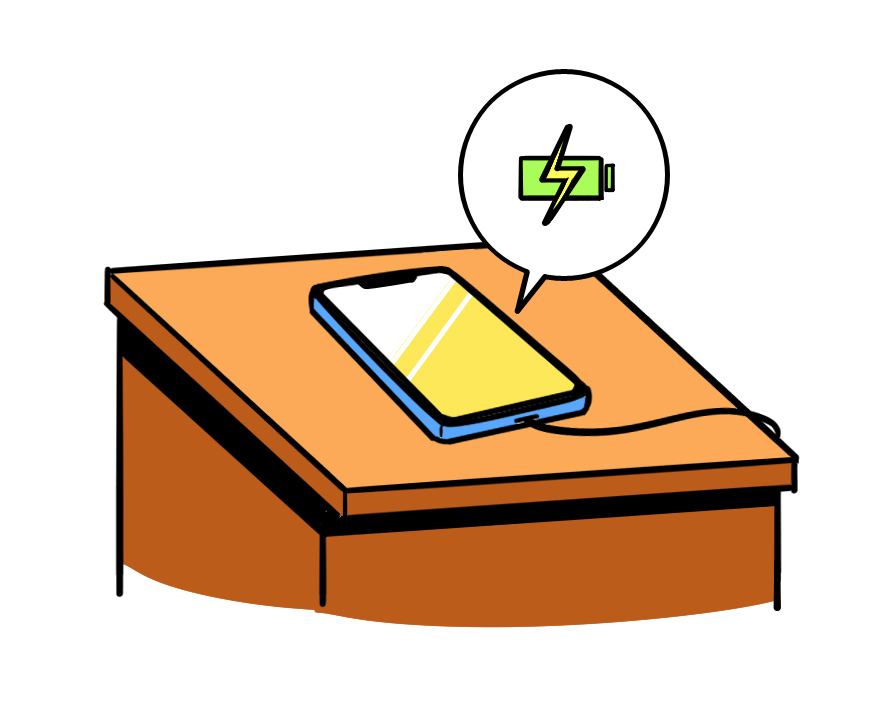
Wake up recharged
Banish the vibrating and pinging phone, get a good Ruark radio and have a stack of print to hand on that bedside table. Technology has chased us into every corner of our home (and responding to the boss from bed is a tad odd). So establish healthier boundaries – replying to emails can be a distraction from bigger thoughts.

2.
Time for a rebrand?
Your business may have gone into the pandemic as a restaurant but morphed into a delivery firm or a deli. If so, it’s time to tie the knot with a new logo and draw up a fresh plan. Remember that a rebrand should be to bring ideas together – don’t fashion an impossible project or launch a “concept”. Keep it simple and to the point.
3.
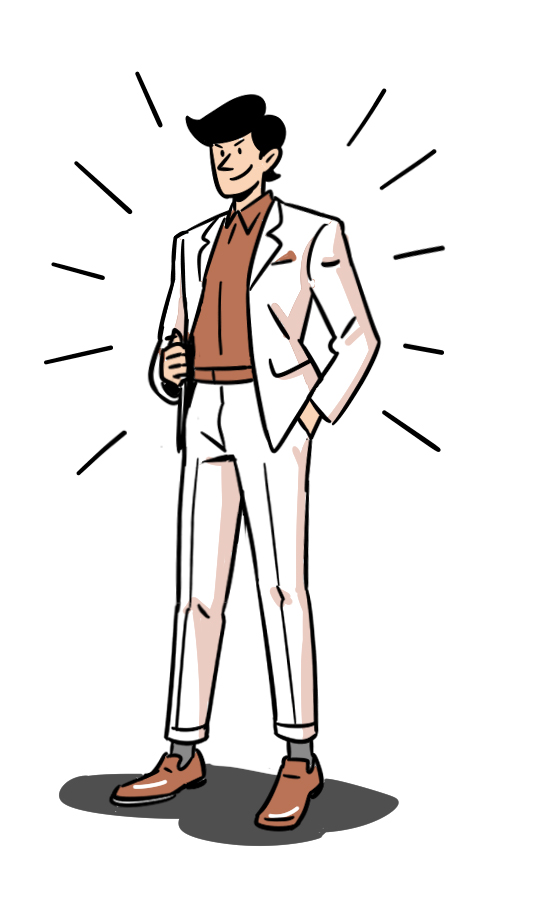
Invest in a fresh look
Jump in feet first with a pair of brogues, a button-down number from Gitman Vintage and a jacket by Barena. It’s time to make an effort.

4.
Start a wake-up regime
A morning dash helps get the blood pumping and the pulse racing, while setting the pace for those busier, brighter days to come. We’ve all joined calls over lockdown where we’ve clocked a schlubby colleague who is still in first gear – lounge gear, at that – and could have done with a jolt.
5.
Define your own values
It’s great that you attracted those smiley investors, less so that they wanted to pull the plug when the going got tough. Now’s the time to bring in family, friends and genuine partners, not VCs out to flip the firm. Success isn’t selling up, it’s running a venture you’re proud of – and for long enough to pass on to enthusiastic offspring. You decide what success looks like.

6.
Define your own values 2.0
Then stick to them. Very few companies set out to ruin the world or solely to change it for the better. Whether you’re making clothes or producing furniture then be honest and transparent about your limitations and also think about what you can do better. Consumers are smarter than most marketeers give them credit for. So while your PR firm might tell you that it can help you to “communicate” with the public and press, often all you need to do is tell your own story in a straightforward way. Do your best and be honest – it’s all anyone can ask.

7.
Expand and explore
Counterintuitively, now is the best time to double down on a bigger space, a few ambitious hires or even your first overseas office. There are good deals to be had while confidence is shaky and ground to be made up while competitors are playing it safe.

8.
Take out a subscription
To a magazine that inspires you, a newspaper that challenges you, or even a knowing newsletter. Trawling the internet drains time and costs idle hours – relying on a digest that informs is better and it has a beginning, middle and end.

9.
Ditch the ‘out of office’
This is both a simple setting and a nod to a more profound philosophical switch. If someone’s reaching out to you for help, guidance and advice then an automated “Not now” sets entirely the wrong tone (now and as the world reopens). We’ve all spent too long staring at screens and talking to machines – a human touch will serve your business well.

10.
Invest in a space worth returning to
Video didn’t kill the radio star and video calls haven’t sunk the need for a nice office to escape to – otherwise in no time your business life runs from waking to midnight. A forward-looking fitout means spaces for working creatively, eating together and enjoying the breeze – which will also help tempt talent to your workforce.

11.
Reward loyalty
There’s a fair chance you learnt who was on your side when things got scary. Who worked harder, dug in, helped and kept their sense of humour in the office? Which friends were there when they didn’t want to borrow something? Now’s the time to give back a little – we’ll leave it to you how loudly or quietly you go about it.
12.
Plan a retreat
Travel plans are, ahem, up in the air right now – but soon, with a little luck, you will be too. And how useful will it be to actually see those colleagues who’ve been hibernating at home: to find out whose jobs can be done from Timbuktu and those who struggled to run the London office from LA. This is about the power of face-to-face conversations – without needing to schedule time first. We all need something to look forward to. Also, while we have the diary out, you look like you could use a holiday.
13.
Cede some control
There’s a good chance you were very busy before the pandemic took hold and then took on even more responsibility over the past 12 months. Whether you’ve been wearing more hats at home (teacher, chef, children’s entertainer) or work (therapist, HR professional, customer service and CEO), now is the time for a gentle rebalancing. So what did you learn? Well, Julio in marketing can run a department without you looking over his shoulder the whole time and Jane in sales needs a new challenge. Give people a chance.

14.
Prune
On the flip side, some of the drama of the past year may have exposed handsomely remunerated colleagues who were resolutely out of office when the chips were down and work needed divvying up. Ditto the pals who went silent when you couldn’t help them. It’s never easy to say goodbye (or “Get out”) but, like removing a plaster, it’s best to do so speedily and without much fuss.
15.
Write things down
How many notes, calendar reminders, memos and emails have gone astray since your whole life came to revolve around a phone and laptop? Too many. The simple act of breaking away and jotting a few notes is better for your retention and there’s nothing more satisfying than striking off tasks on a to-do list. Meanwhile, a diary can help you make sense of your day and written correspondence still means more than another bland email. If it matters, commit it to paper.

16.
Get together
The great lie of technology is that more of it encourages better connections and conversations; it doesn’t, hasn’t and (based on the evidence) it never will. As the world opens up we need to see the whites of people’s eyes and rebuild actual social networks – for better business, yes, but also for our own personal fulfilment, sense of camaraderie and collective sanity. Let’s hope it doesn’t take another pandemic to jolt us into seeing what we’ve been missing out on. Connection is important, human, vital and too often overlooked. So talk to people, seek counsel, partner up, make meetings and join a club.

17.
Have a side hustle
Like the 2008 crisis before it, the pandemic has made some certainties – from jobs and plans to exit strategies – seem much less assured and less attractive. As a child did you really dream of orchestrating hostile takeovers or becoming deputy chief of the actuary department? If so, congrats. If not, maybe it’s time to feel out new opportunities and try to start the business you want to run.

18.
(Actually) engage people
Not through clicks, likes and impressions (the plunging credibility and waning popularity of the vapid influencer model shows how cheap this really is). Start with your team and your neighbourhood, your friends and your family. Show them you care, and you’ve got their backs. Remember: five likes from a “fan” on the other side of the world won’t be the making or the breaking of your brand.
19.
See something new
More people than ever before have been confined by travel bans and lockdowns and that has limited us to tight routines. These are habits that need breaking fast. Great that you’ve enjoyed the flexibility to work from home some mornings but don’t stay cooped up just because it’s cosy – there’s a big wide world of opportunities, ideas and adventures out there to rediscover. Your kitchen table will still be there at the end of the day if you’re missing it.

20.
Reward yourself
Take stock. Anyone who says the pandemic hasn’t affected them isn’t being honest. Even if you kept your job, you’ll have been confined and confused and seen many struggle. Don’t shrug this off – use it to motivate and inform your next move. If it took all this to know you want to run a travel agency, live in the Azores or come home early on a Friday, that’s OK. It’s time to be brave and act on it.
Field work
Old farms dot the landscape, while fields of hops flow into acres of potatoes and wheat. The feeling of remoteness and tranquillity is exceptional for Flanders, a heavily built-up part of Belgium. And yet, despite the feeling of being away from everything, the Westhoek – an area of the country that sits just across the border from the northwestern piece of France known as Le Nord – is very much connected to the world. Indeed, as people reconsider their work environments as a result of the pandemic, spots such as these – rural but within easy proximity of the urban too – are set to gain.
The Westhoek is just half an hour’s drive from the city of Lille in France, which has an international airport along with TGV and Eurostar connections to Brussels, Paris and London. The region offers a high quality of life: more space, nature, less traffic and lower property costs than in other parts of Belgium, making the Westhoek an attractive area in which to invest, work and live. And whereas other rural areas are fighting a brain drain and a lack of homegrown talent, the opposite is happening here.
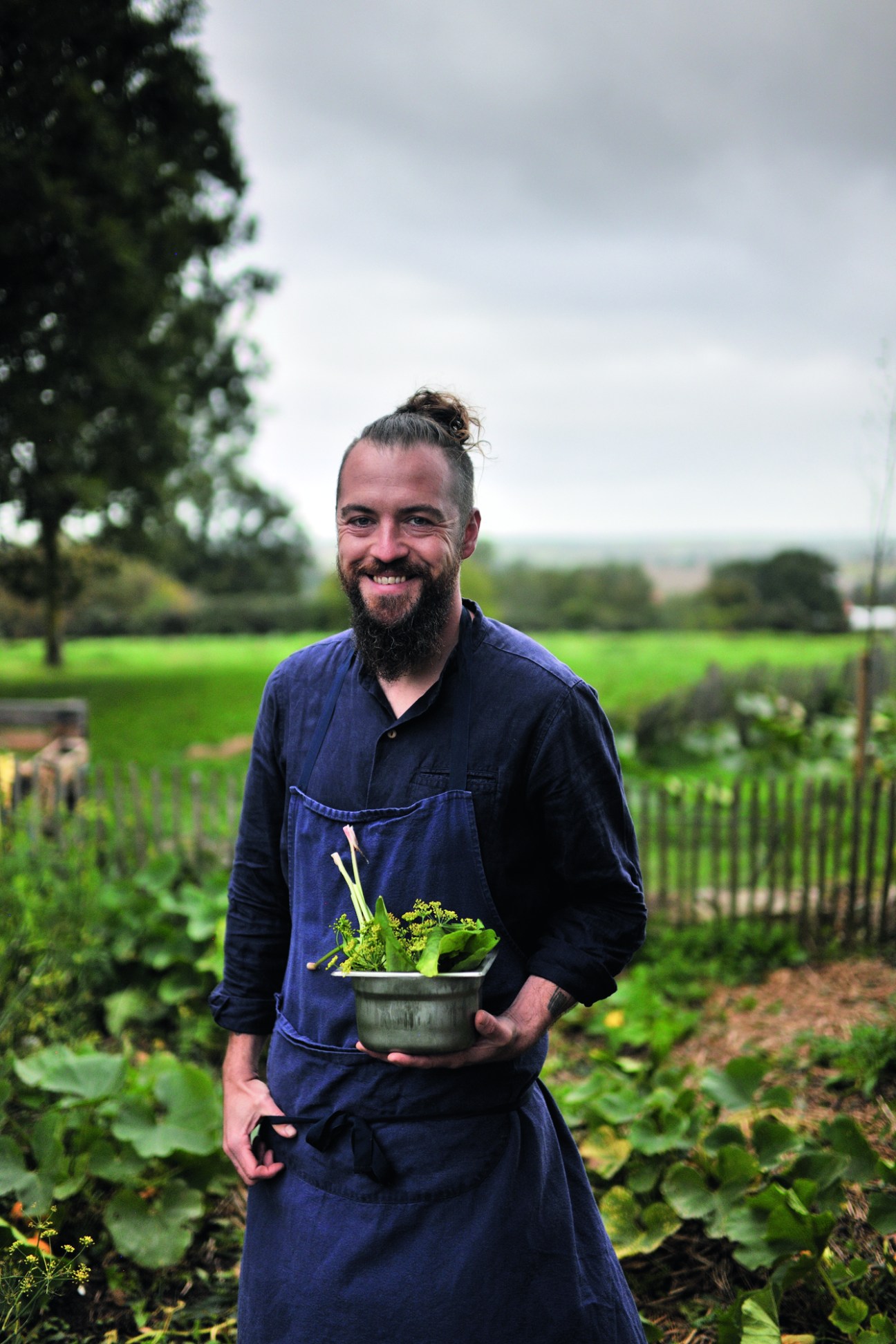
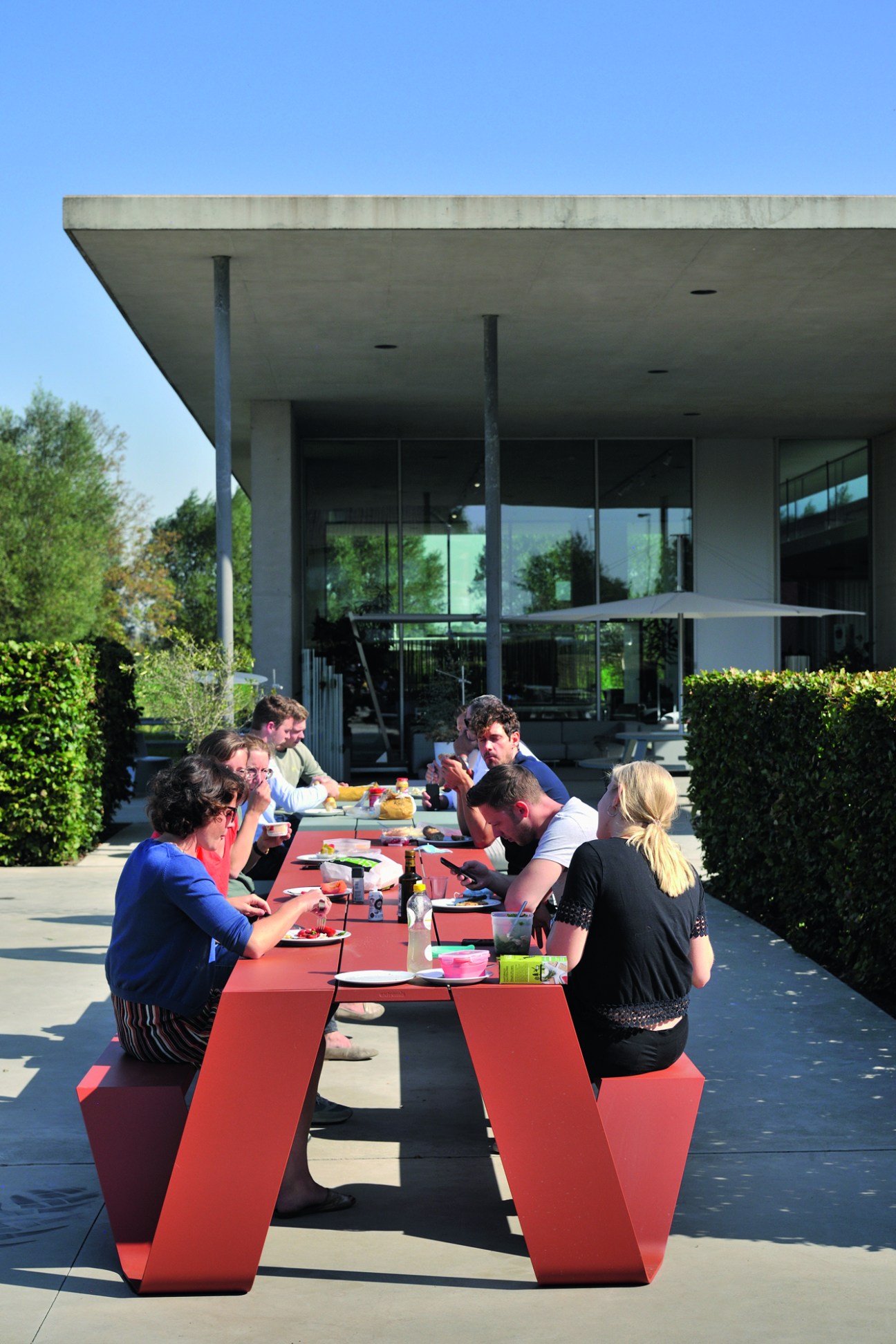
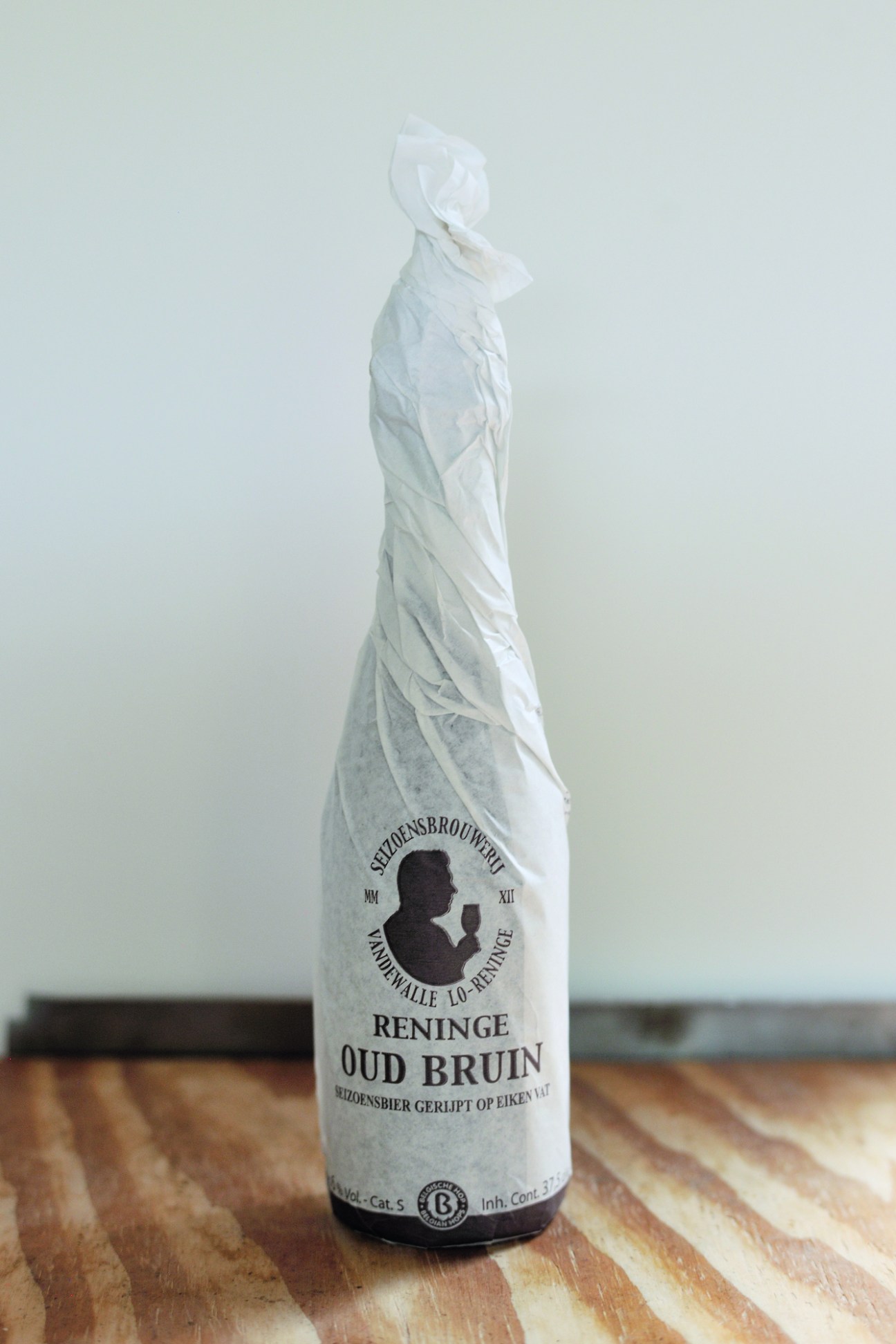
The fact that designer and entrepreneur Dirk Wynants has no desire to move his outdoor-furniture company Extremis to another, more commercial region in Belgium says it all. “The Westhoek is a very rural, quiet and almost forgotten corner of Belgium, where the views are fantastically open and far,” he says. “Whenever you leave home you will nearly always meet someone you know – and I love that.”
Wynants’ wife was born near the small town of Proven and he ended up a resident himself when he followed her there. The son of a cabinet-maker and an interior designer, he started his own furniture company in a garden shed in 1994 with only €6,000 of capital. “I was early [with the idea] but my timing was right. The demand for outdoor furniture took off, together with a willingness to spend money on it, so I was able to open up a factory where the furniture is still designed and assembled,” he says. Today, Extremis exports 80 per cent of its designs to 80 countries worldwide and employs 50 people. It has an annual turnover of almost €12m and a US subsidiary in Michigan.
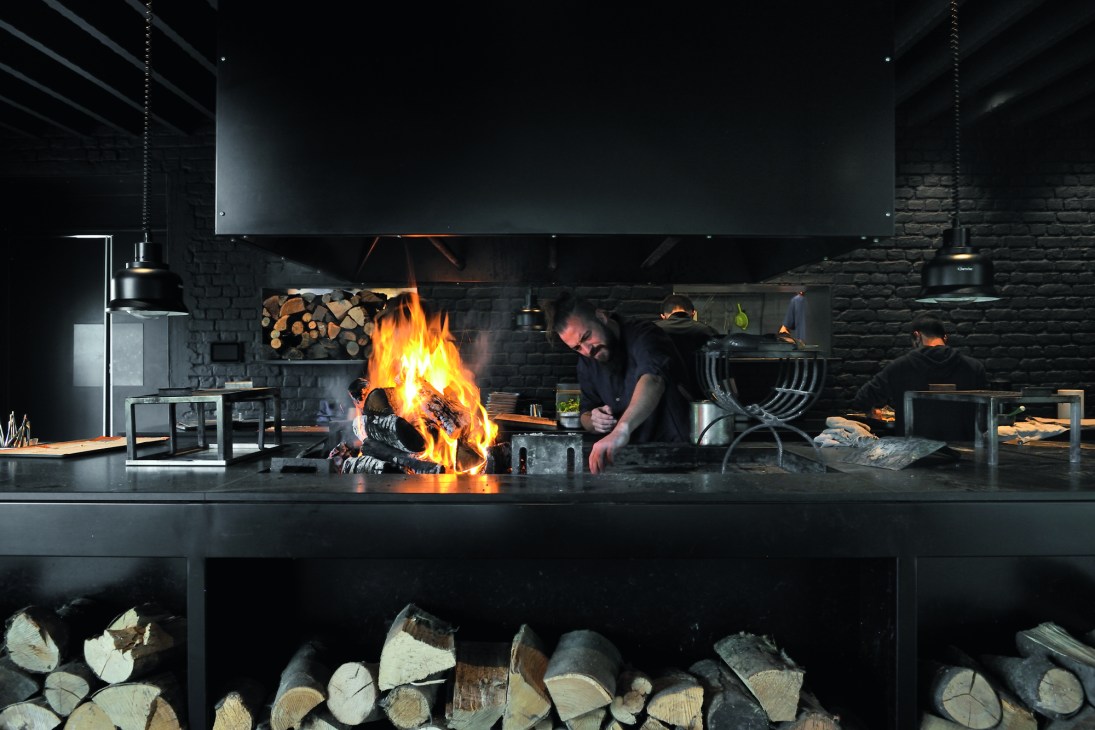
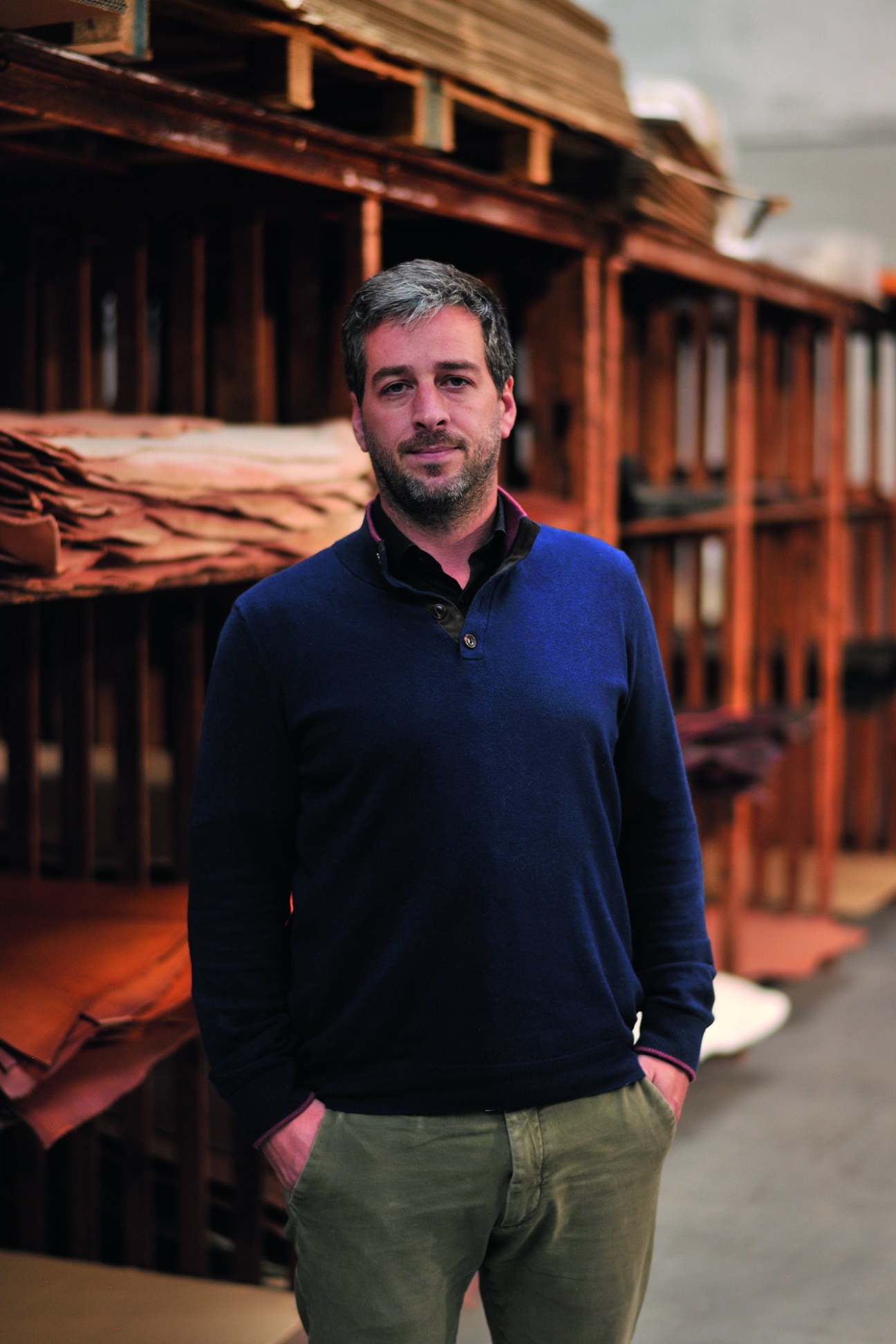
It’s a short drive from Proven to the historic city of Ieper – famous for its daily “Last Post” salute to the fallen of the First World War – where architect and designer Nick Top lives. Top could have worked and lived in a faster-paced city but he decided to stay in Ieper and use it as an accessible hub from which to work on projects in Belgium and further afield, which range from his recent restoration of a huge Tuscan estate to designing the interior of a superyacht.
As the owner and founder of his previous interior design company, Top Mouton, which was also based in the Westhoek, he spent 20 years travelling around the globe for architectural projects, from New York to Sri Lanka. “I love living and working in the Westhoek because it allows me to work in a very organic way with regional artisans here in Flanders and across the border in France: from masonry to weaving and very precise, handmade metalwork,” he says. “These companies are small and can deliver tailor-made products, which is perfect for the high-end clients I am working with.”
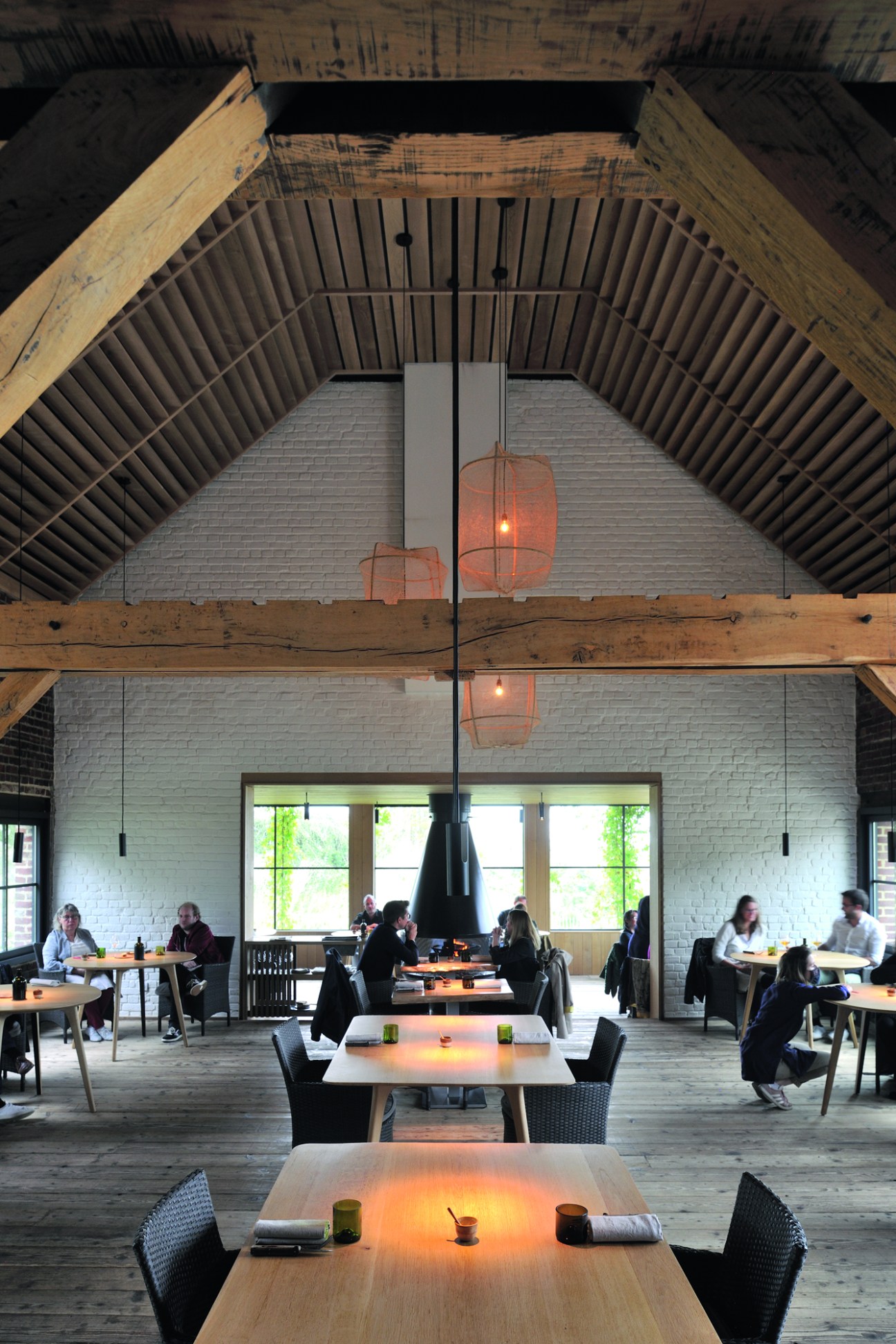
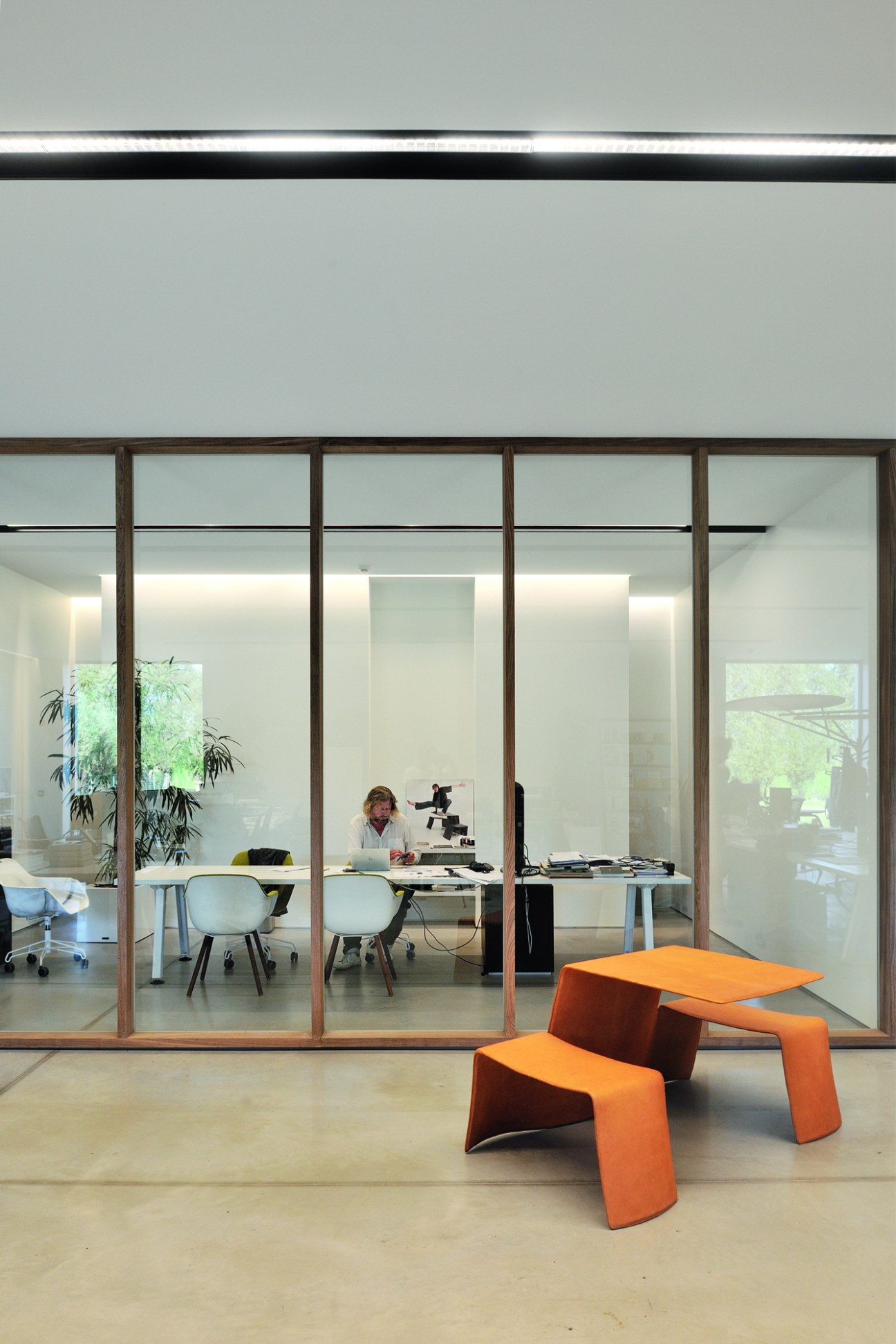
Top often eats at the Auberge du Vert Mont in the hamlet of Boeschepe, just inside France. The family-owned business opened in 1982 in an old farm on a hill with great views. The restaurant’s young French chef, Florent Ladeyn, always wanted to work here. While studying for a literature degree he worked in the restaurant’s kitchen and fell in love with the job. “I felt more passionate about the simple Auberge food than fancy gastronomy,” he says. “We do things differently here and have been using completely local produce for several years now, meaning no chocolate, spices, coffee or almonds. Homegrown and biodynamic vegetables come directly from farm to table – with no middlemen.” He adds that the terroir of the region is rich and the soil fertile, with the North Sea providing plentiful additional produce.
Ladeyn has refused offers to open a restaurant in Paris because he feels a part of this countryside, surrounded by everything he loves and values. The Auberge, which has a small guesthouse, still welcomes loyal customers from the days when the chef came here as a child. “We are receiving more and more guests from further afield – a lot of Parisians too – but most of our customers are locals.”
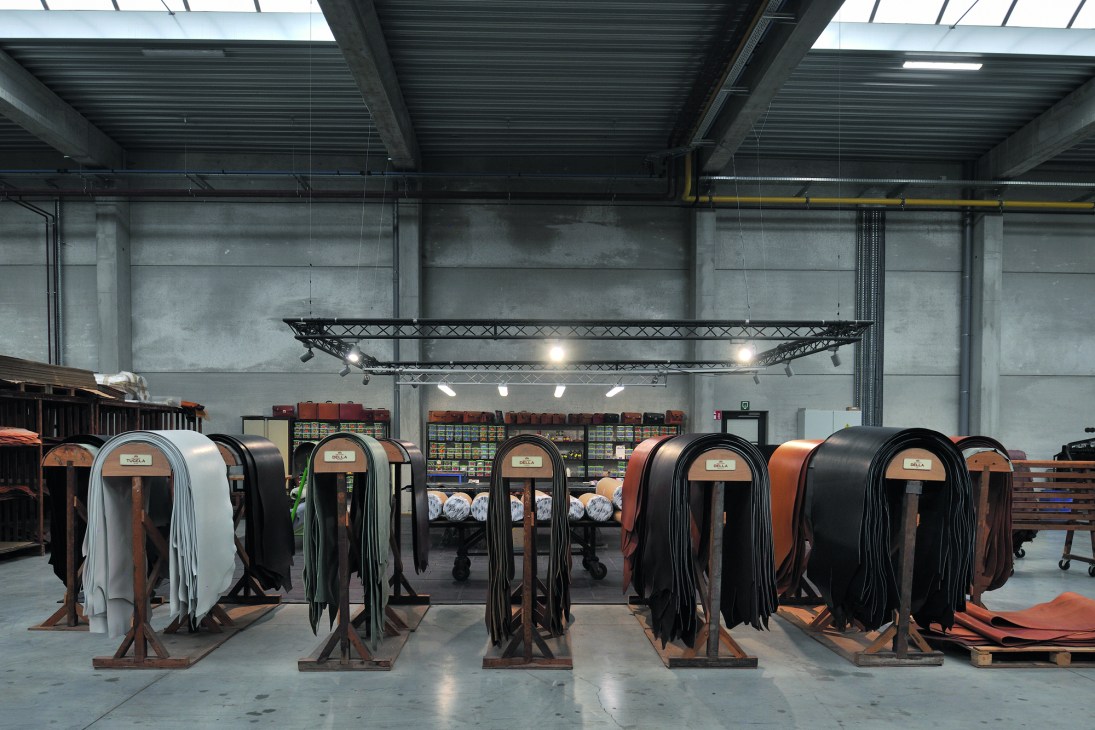
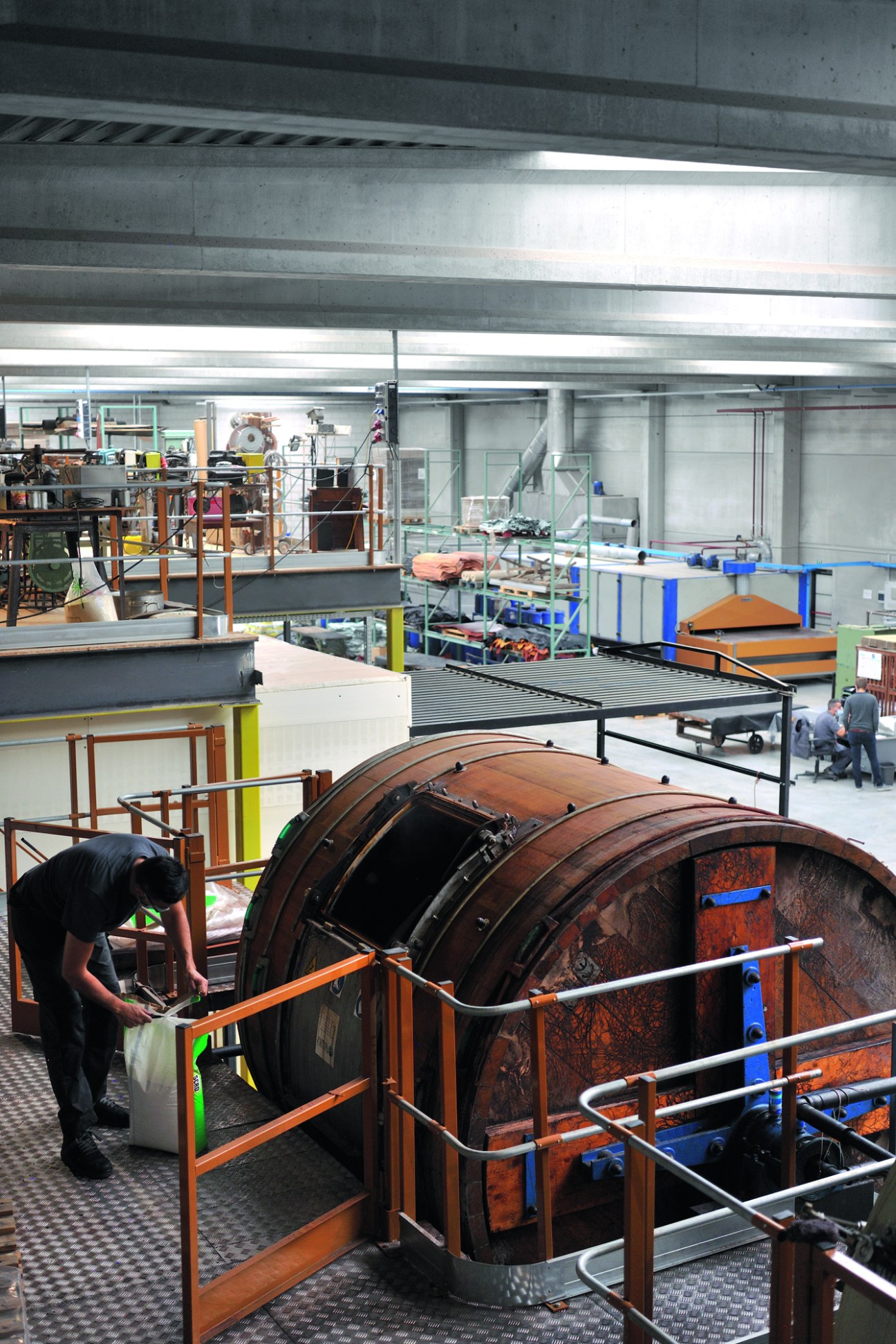
For Ladeyn the energy of the Westhoek countryside is special. Something is happening here with a new generation that’s focused on respecting the earth. “We work differently from our parents. Young people I know are starting new farms, organic dairies, raising free-range organic lambs. There is a unique energy here and it feels like we are all working together in the same direction to make Flanders more deep-rooted again.”
A short drive from the Auberge is the Belgian hamlet of Lo-Reninge, where the Vandewalle Seasonal Brewery is based. Chris Vandewalle started it in 2011 and, for the forty-something historian and part-time brewer, it’s all about restoring “forgotten” regional beers on a small scale, while still marketing them via modern channels. Vandewalle is the only brewer in the Westhoek producing a fruit beer, infused with sour cherries from the nearby city of Veurne. “It is important for me to use the old brewing techniques, such as ‘open’ fermentation, maturation in oak barrels and mixing the beers,” he says. “I have learnt more about these techniques and traditions through many conversations with the older generation of Westhoek brewers.”
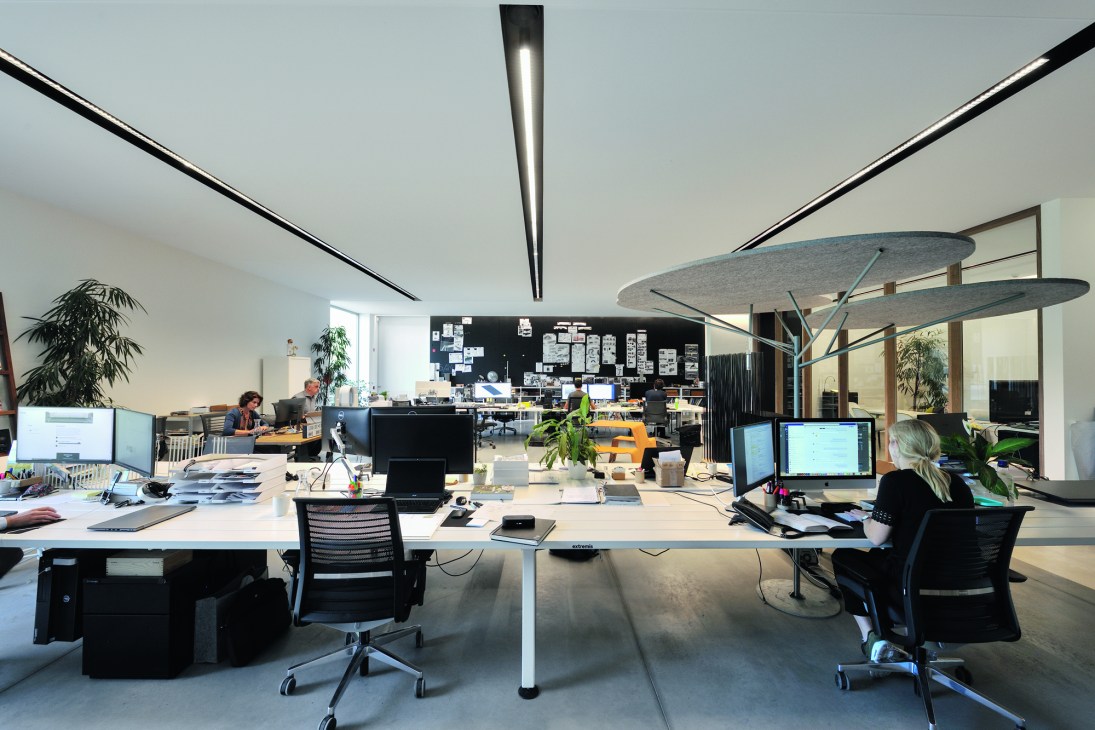
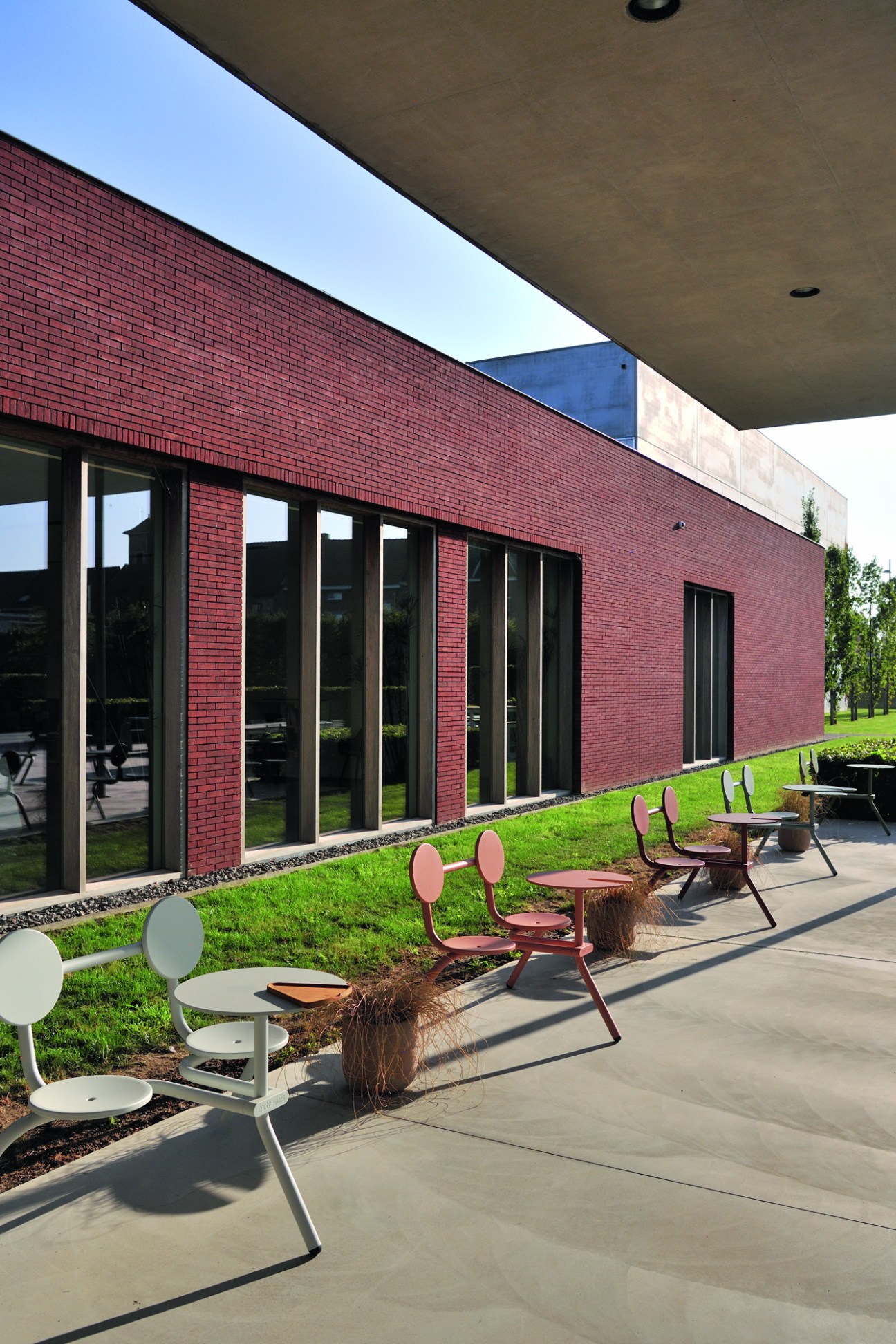
His small brewery produces 8,000 bottles of beer a year in four different varieties, from a bitter blond beer to a dark amber version. “The beers are sold in the finest delicatessens in Belgium’s big cities. They have a distinct design with no label but wrapped by hand in delicate white paper. I also want to stay accessible and affordable for the residents around here.”
The same respect for the Westhoek’s craftsmanship is also found at Tannerie De Radermecker, opened in 1870 and bought in 2016 by French school friends Nicolas Quintin and Loïc Honoré. Located in Komen, a Belgian village that has specialised in leatherwork for more than a century, Radermecker has focused on saddle leather since 1990. In 2020, the tannery relocated to a new plant, its second move in 150 years. The aim was to stay in the Westhoek, improve the production by investing in new machinery and build a modern, more eco-friendly tannery.

Both Honoré and Quintin grew up here before spending time overseas. Coming back was a return to their roots. “Loïc has worked in Russia, China, India and France, mostly in the automotive business,” says Quintin. “I have studied and worked all over France and spent a year travelling in New Zealand. Travelling opened our minds to different cultures but inspiration also comes from the people we meet around here. We want to value the know-how of this company and bring the tradition of Radermecker tannery into the 21st century.”
Focused, dedicated entrepreneurs such as Honoré and Quintin are ensuring that this rural corner of Europe not only survives but thrives. The Westhoek is proof that quality of life and successful business are far from mutually exclusive.
Frontier exchange
The border between the Westhoek in Belgium and Le Nord in France has never been an obstacle for cultural exchange or doing business. The city of Lille functions as the perfect gateway to both regions, with more than 27 million people a year – mostly business travellers – using both of its railway stations to connect to the rest of France, as well as Belgium and the UK. In 2019, Lille’s international airport was the departure point for more than two million passengers. Across the border in France there are almost 500 Belgian businesses, employing roughly 20,000 people in the Le Nord region. They include brewer AB Inbev and textile factories such as Beaulieu International Group.
More than 15,000 French commuters cross from Le Nord into the Westhoek every day to work for Belgian businesses such as construction firm Stadsbader, a 15-minute drive from the border. Even during the pandemic there have been special permission forms from both governments to traverse the divide without restrictions. Cross-border tourism was also on the rise before the pandemic. In 2019, French travellers spent almost 27,000 nights in the Westhoek, booking holiday homes and sampling the wares of its many small breweries. Belgians travel over the border too – to stay by the coast around Calais and Boulogne-sur-Mer, where seaside taverns serve plates of fruits de mer. Lille is also an increasingly popular short-break destination: since 2018 there has been a 10 per cent year-on-year increase in visitors, with Belgians bedding down in the city for 102,000 nights a year.
Between the lines
It’s the beginning of a busy news day in Hong Kong and the city’s press is gathered at the central government offices, awaiting the arrival of Carrie Lam. The territory’s chief executive conducts a stand-up press conference on Tuesday mornings and her weekly updates often make the headlines.
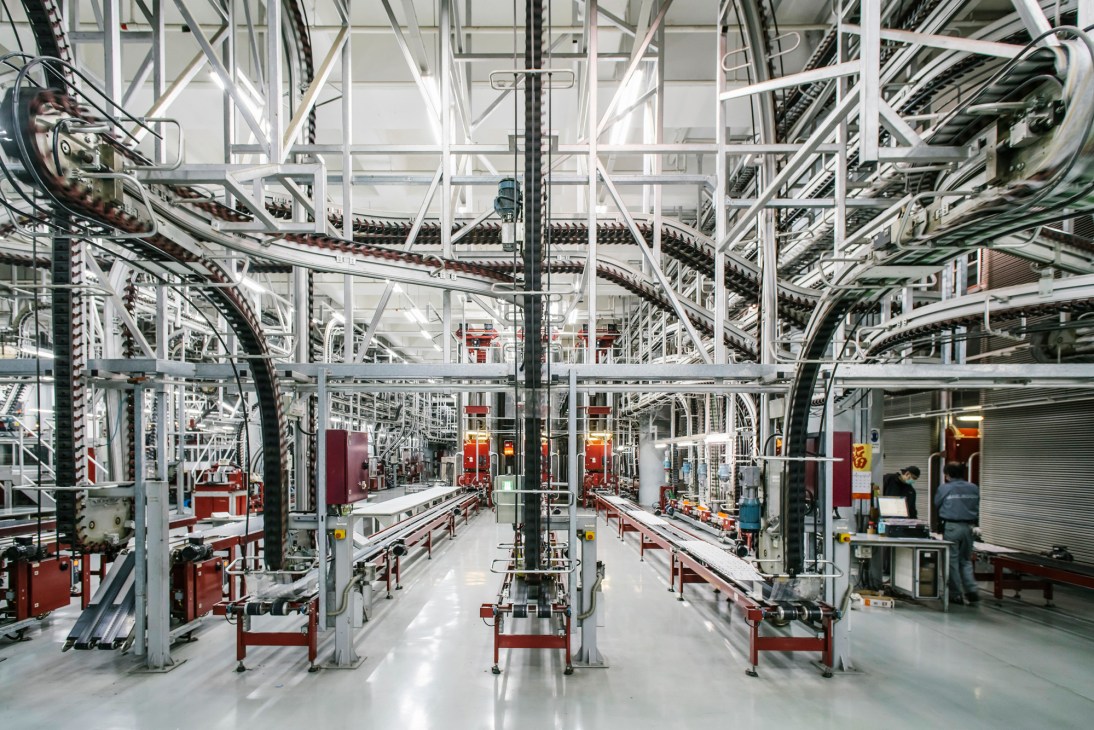
Jeffie Lam, a senior reporter at the South China Morning Post (SCMP) and no relation to Carrie Lam, has bagged a centre seat in front of a bank of cameras. As anticipation builds for the chief executive’s arrival, she’s typing away on her laptop and chatting with a journalist from Apple Daily, a popular Hong Kong tabloid favoured by the protest movement.
Carrie Lam typically fields only one question from the English-language media and the scmp is the most august of this group. Its mix of local and foreign reporters must pick the topics that will appeal to an international audience, both at home and abroad. Around 90 per cent of its readers are now based outside of Hong Kong, with the largest group in the US.
“Things [have] changed a lot over the past few years,” says Jeffie, who joined in 2013 from Ming Pao, a Chinese-language broadsheet. “After the Occupy protests [in 2014], more overseas readers came to us to learn about Hong Kong.”
Cameras flash as the chief executive enters the auditorium. She walks over to the podium and turns to face the media – the only effective means of holding the government to account now that the political opposition has veen eviscerated. Carrie Lam is known to be combative and detail orientated. “You have to be very careful with your facts,” says Jeffie, as dogged as ever. “I don’t want to let her have any chance to say I’m incorrect or misleading.”
The verbal jousting is a different kind of battle for the 33-year-old reporter. Jeffie was on the front lines during Hong Kong’s anti-government protests in 2019, when police and protesters exchanged tear gas, rubber bullets and Molotov cocktails. Her byline became a front page fixture, and last year she co-wrote a book on the civil unrest. “There were many times that I put aside my emotions to work like a machine,” she says. “And then I just went home and cried.”
While the political theatre of the press conference is unfolding, another performance is underway at the scmp’s head office in Causeway Bay. The daily morning meeting takes place at 09.30 in the centre of the newsroom. Coronavirus arrangements have increased the number of remote participants but the rundown hasn’t changed: the newspaper’s top four editors – collectively known as “the masthead” – convene to set the day’s news agenda with editors from the main desks covering Hong Kong, China, Asia, business, technology, culture and sports.
The scmp has some 350 journalists, mainly based in Hong Kong as well as its four bureaux in China and two in the US. “Our newsroom is like a little United Nations with people from all over the world,” says editor in chief Tammy Tam. Everyone is welcome to join the morning meeting, although in reality not everyone gets to speak. The scmp was founded in 1903 and still has a very traditional newsroom. It survived the UK’s handover of Hong Kong to China in 1997, as well as the introduction of office Playstations and an in-house pub that came as part of a broader digital transformation under e-commerce giant Alibaba’s ownership.
Alibaba acquired the publishing group for $266m (€219m) in 2016, bringing in fresh investment and a revitalised push for global readers, as well as questions from critics about editorial independence. According to Tam, all editorial decisions are ultimately hers. Alibaba co-founder and scmp chairman Joseph Tsai calls “occasionally” to raise “an interesting development” in US-China relations but that’s where the conversation ends. “He’ll say, ‘as for how you cover the story, the editorial decision, it’s all yours’. I don’t think he gives me any interference or pressure whatsoever.”
What has changed is the scmp’s daily rhythm. Stories are published online and updated throughout the day before a “wrap” is written and the paper goes to print. “We don’t see the print newspaper as a platform for breaking news,” says executive editor Chow Chung-yan, who started as an intern in 1998 and now oversees the running of the newsroom. “It’s a product to showcase stories, analysis and long-form journalism.”
The day’s breaking news during Monocle’s visit includes the arrest of two suspects with a cache of explosives, the announcement of a new CEO for the Hong Kong stock exchange and the stand-up press conference where Jeffie is stationed.
As a fellow reporter on the Hong Kong desk watches the press conference live on television, Jeffie challenges the chief executive on the government’s latest pandemic measures, its position on dual nationality and a decision to abandon trial by jury for cases under the national security legislation, a controversial law introduced by the mainland Chinese government last June, which threatens the future of free speech in Hong Kong.
As Carrie Lam answers in English, the race is on to find an angle and publish a “first take” on the website in under an hour. It’s a team effort. The colleague watching remotely types out the story in a shared document. The Hong Kong desk editor and chief news editor may chip in alongside several copy editors, who exchange messages on a WhatsApp group.
The newsroom developed this fast-paced approach in 2019, when reporters covered multiple protests spread across Hong Kong – filing updates and quotes to copy editors, who would pull these disparate reports into breaking-news stories. Tempers frayed, editorial disagreements spilled into the open and working weekends became the norm. One staffer remembers it fondly as “fucking carnage”.
Causeway Bay is quieter now, at least for the time being. Visitors to the scmp newsroom are greeted by the publishing group’s geometric logo: one yellow rectangle, one blue, separated by a thin white line. Officially this “nautical flag” was inspired by the city’s maritime history. However, to everyone in Hong Kong, the two colours represent the territory’s division into two camps: the pro-Beijing blues and the pro-democracy yellows.
Each side has its own newspaper, but the scmp positions itself as the white line running down the middle. “We occupy a very niche ground,” says Chow. “The middle ground in this age of polarisation is actually becoming more valuable. If we deviate from it, then we will have no way to survive.”
Paper trail
When Jonathan Fenby edited the scmp in the 1990s, a prominent banker told him, “Sometimes you’re not quite as good as the Financial Times or The New York Times.” He took it as a compliment. Then, as now, the scmp craved being mentioned in the same breath as these papers, each of which has its Asia headquarters in the territory. The association with leading Western news organisations is equally good for Hong Kong. But for how long? An FT journalist was expelled in 2018 and last year the nyt moved some operations to Seoul. Press freedom is diminishing: Carrie Lam has suggested that insulting police or public officials could be criminalised, which would bring Hong Kong closer to Thailand or Singapore, where authorities silence the media with lawsuits and jail terms. Were this to trigger a wider exodus, the scmp could be left competing with China’s state-owned English newspapers. Its reporting, and Hong Kong’s prestige, would suffer as a result.
Flipping through the newspaper clearly shows this “niche ground” on the page. Chinese human-rights lawyers air grievances about state suppression alongside Beijing’s latest attacks on the US. It’s a very fine white line with plenty of grey. Chow has been stung by criticism of some of the newspaper’s coverage of the protests, and a perceived deference for the official line. “You have to have the courage to stand up not just to authority but also to the other side,” he says. “When you see a spade, call it a spade.”
Certain headlines, opinion pieces and word choices can be challenged and debated, but the overall coverage stands up to scrutiny (and Jeffie’s book, Rebel City, is a good primer). The scmp’s bigger journalistic battle is across the border, where facts are much harder to come by; Chow oversees more than 40 reporters on the China desk. Covering the latest on-the-ground developments on the mainland is critical to the newspaper’s global growth. However, reporting on a country with an opaque government, no independent press and a fondness for deporting foreign journalists has myriad challenges. The scmp might operate under this environment but the masthead has to live with accusations of being soft on China; it’s a charge previous editors have faced under different owners, even before the handover.
Chow counters with a list of recent critical coverage, from corrupt Chinese leaders to the Covid-19 outbreak in Wuhan. “Our reporters in China face a national security regime that is more draconian than even Hong Kong’s new security law,” he says. “This challenge is new to Hong Kong but it’s not totally new to the scmp.”
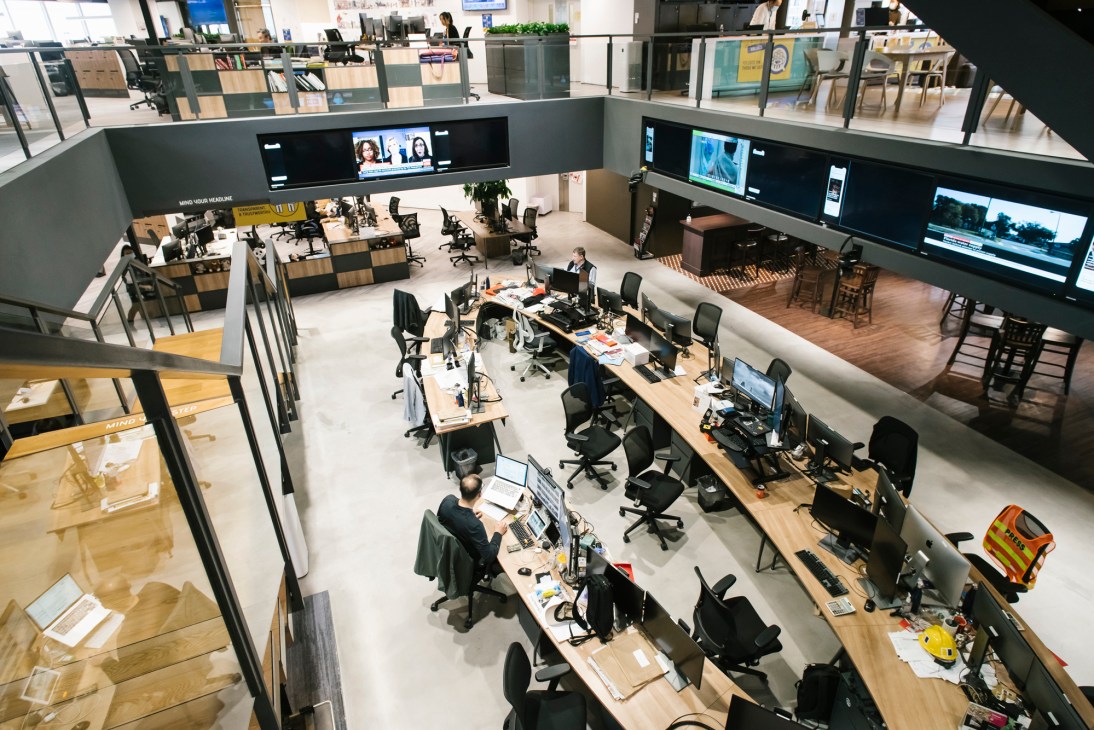
The imposition of the National Security Law in June last year sent a shudder through Hong Kong’s media industry. Chow told his team to proceed as normal until a case involving the press makes it to court. A few days later, Jeffie published a front-page interview with the US consul-general slamming the “terrible” law. She claims that she doesn’t self-censor but finding anyone to go on the record has become harder. “The fear is real but we try to be business as usual,” she says. “You don’t want to have stories solely relying on anonymous sources, as that would affect your credibility.”
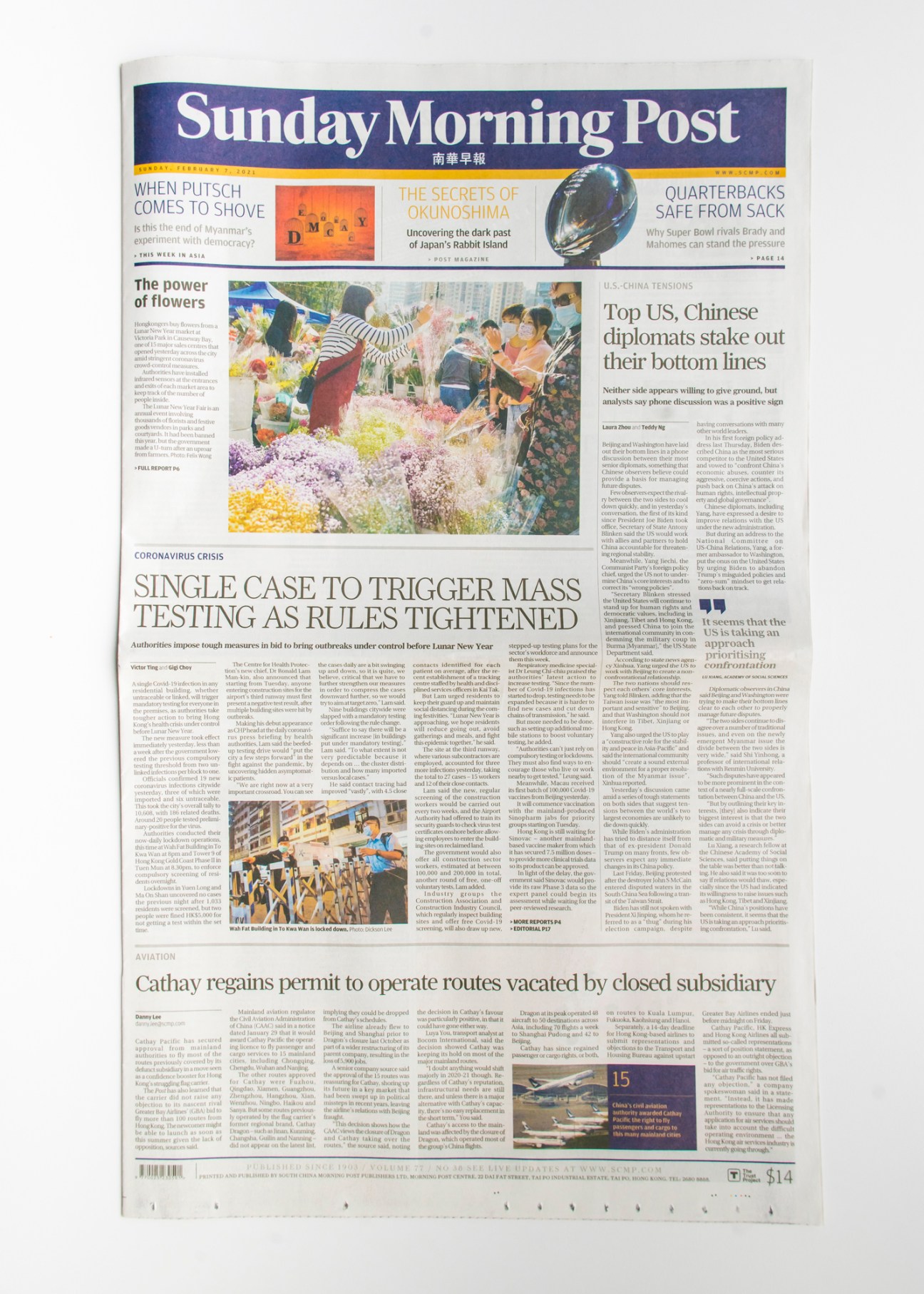
As the day draws to a close, tomorrow’s paper is sent to the printers in Tai Po. Jimmy Lai is on the cover; worryingly the Apple Daily proprietor is awaiting trial on charges of colluding with foreign forces. By 01.00 the presses are in full gear. The paper flies around the building, dipping and diving on an indoor rollercoaster, before being bundled and collected by drivers. Come morning it will sit on newsstands – essential reading for Hong Kong’s international community.
Editor in chief
A TV journalist for local stations, Tam was one of the first Hong Kong reporters in Iraq after the US-led invasion in 2003. After switching to print in 2011, she became the scmp’s first female editor in chief in 2016.
Tammy Tam
Editor in chief
A TV journalist for local stations, Tam was one of the first Hong Kong reporters in Iraq after the US-led invasion in 2003. After switching to print in 2011, she became the scmp’s first female editor in chief in 2016.
Executive editor
Tam’s number two started as an intern in 1998 while studying literature at the University of Hong Kong. His first assignment? Reporting on a police operation to catch book thieves at a trade fair.
Chow Chung-yan
Executive editor
Tam’s number two started as an intern in 1998 while studying literature at the University of Hong Kong. His first assignment? Reporting on a police operation to catch book thieves at a trade fair.
Deputy executive editor
Ibrahim worked at The Straits Times in Singapore before moving to Hong Kong to lead the scmp’s Hong Kong, Asia and international desks. She co-wrote a book on the 2019 protests with Jeffie Lam.
Zuraidah Ibrahim
Deputy executive editor
Ibrahim worked at The Straits Times in Singapore before moving to Hong Kong to lead the scmp’s Hong Kong, Asia and international desks. She co-wrote a book on the 2019 protests with Jeffie Lam.
Managing editor
The sharpest guy in the newsroom, Rhoads keeps the editorial team running smoothly while impeccably dressed in a tailored suit and tie. The Reuters veteran grew up in Europe as an “honorary US army brat”.
Brian Rhoads
Managing editor
The sharpest guy in the newsroom, Rhoads keeps the editorial team running smoothly while impeccably dressed in a tailored suit and tie. The Reuters veteran grew up in Europe as an “honorary US army brat”.
Business editor
Hong Kong is built on finance and property, two industries covered by business editor Eugene Tang. When his journalism career began, Hong Kong was under British rule and China had yet to join the wto.
Eugene Tang
Business editor
Hong Kong is built on finance and property, two industries covered by business editor Eugene Tang. When his journalism career began, Hong Kong was under British rule and China had yet to join the WTO.
Social media editor
Another former Straits Times editor. After four years in Hong Kong, few pick up on his soft Singaporean accent. Where does he stand in the big debate? Hong Kong versus Singapore? No comment.
Shea Driscoll
Social media editor
Another former Straits Times editor. After four years in Hong Kong, few pick up on his soft Singaporean accent. Where does he stand in the big debate? Hong Kong versus Singapore? No comment.