Issues
Cities
Protect your elders
Japan — housing
While the consequences of ageing populations are felt in many parts of the world, Japan has particularly struggled. But the country has also pioneered some creative solutions. Kozoji New Town in the city of Kasugai offers a brilliant example.

Like many similar developments across the country, Kozoji New Town was built by Japan Housing Corporation in the 1960s at the dawn of Japan’s economic boom. The 710-hectare plot of land was designed as a smart urban project with houses, danchi (social-housing blocks), shopping centres and sports facilities, to accommodate about 80,000 residents.
Fast-forward to 2014 and the development’s population had decreased. And those remaining had aged: 28 per cent of those still in the danchi and houses were over the age of 65, with many feeling isolated and lonely.
The solution? “Building a mixed community,” says Tomohiko Itokawa, the danchi manager at Urban Renaissance Agency (formerly Japan Housing Corporation). It joined forces with Kasugai City and by chance the nearby Chubu University was also exploring ways to connect its students with the community. “So, we decided to collaborate by accommodating students in our danchi.”
Today, students who live in the danchi contribute to the community by participating in disaster drills and street clean-ups with the elderly residents. The students receive a 20-per-cent discount on their rent and the feedback from seniors has been uplifting. “Interacting with younger people has made them more positive and outgoing,” says Itokawa. “Also, annual events like summer festivals tend to be discontinued in a community with no vitality but here students participate too.” It goes to show how cross-generational co-operation can make a big difference.
Walk the walk
Toronto — planning
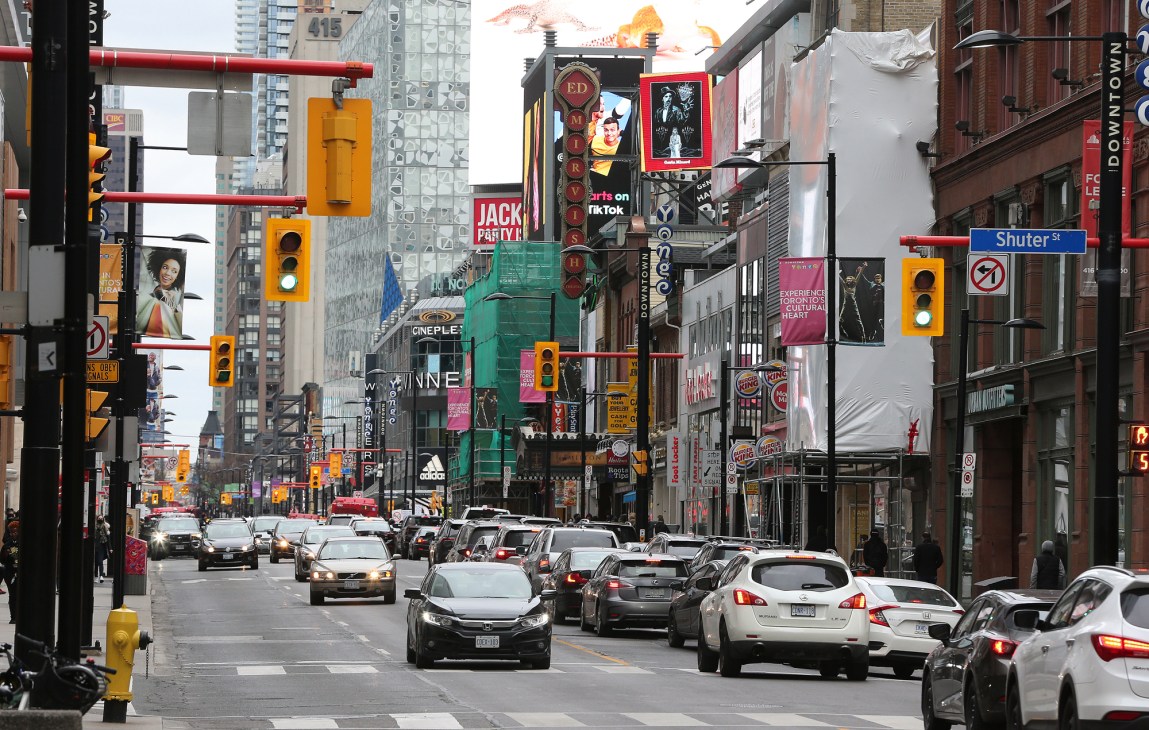
A kilometre-long stretch of Yonge Street, one of Toronto’s busiest and most storied thoroughfares, is to be partially pedestrianised. The current four driving lanes are to be reduced to two, replaced by wider pavements and bike lanes. It’s a bold move but one that has received almost universal approval. The development marks a welcome new chapter for a street along which many chapters of Toronto’s recent history have run their course.
Q&A
Eyal Feder-Levy
CEO & co-founder, Zencity
Tel Aviv
Being a smart city leader means knowing when to listen. No one knows that better than Eyal Feder-Levy, CEO and co-founder of Zencity. The Tel Aviv-based start-up uses AI to chart opinion and sentiment in cities, counties and soon states – drawing from channels such as social media, online news, message boards and municipal phone services – which local governments can then analyse to make informed policy decisions. Since it was founded in 2015, Zencity has started working with more than 200 cities including Los Angeles and Chicago. In 2020, the company won the Smart City Expo World Congress Award. Feder-Levy tells us why his start-up is more necessary than ever.
You say that there is a blind spot in the way the public’s opinion is read. Why?
Municipalities deal with what we call stp, the “same ten people” problem. It’s the oversampling of the loudest and strongest voices. Those are the people you usually see in council meetings or protests but they do not always represent the wider community. This is where we come in. We collect millions of resident-generated data points from a multitude of sources and analyse real-time responses to policies.
How did you help municipalities to respond to the coronavirus crisis?
Take Austin, Texas. When the city announced a new round of stay-at-home orders last March, city officials saw a spike in negative discourse but they were not sure what incited it. With our platform, they quickly understood that residents were voicing specific concerns about people experiencing homelessness. The city quickly adapted its policies.
The distance between elected leaders and the public is not just a municipal issue but also a national one.
True. However, cities cannot afford to be populist like national governments can. Their accountability requires solutions that overcome politics and build mutual trust. We sometimes do not realise how eager city officials are to get the whole picture. Public servants want to do better when making hard decisions and data helps them to do exactly that.
Deeper connections
Lucerne — transport
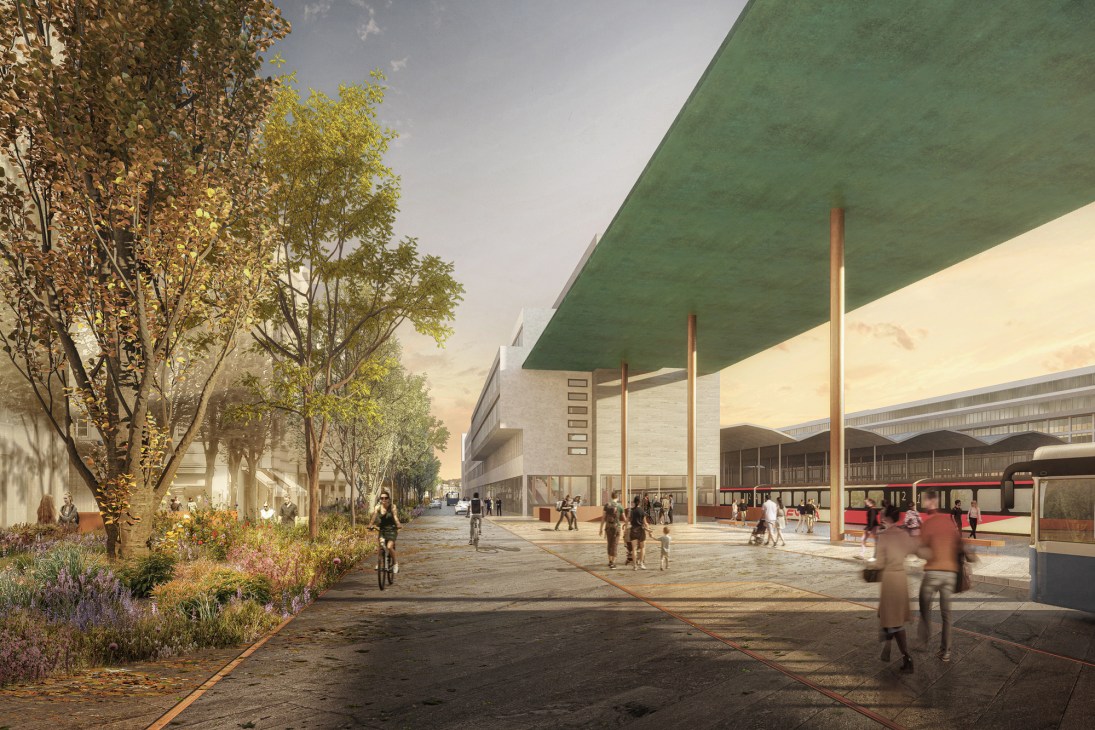
To keep up with an increasing number of commuters, Lucerne’s train station is going underground. A preliminary plan for a CHF2.4bn (€2.16bn) renovation would see the station building move below ground and two new tunnels added. The land where the station building currently sits will become a lakeside public square. The space will be car-free, with new greenery and benches, in a bid to attract city residents – as well as commuters and tourists – to enjoy the space.
Defence
Handle with care
US — Navy
The argument generated by Black Lives Matter about army bases named after Confederate generals, including Fort Lee and Camp Beauregard, has now reached the US Navy. A task force aiming to improve diversity in the navy has recommended that assets associated with the Confederacy be renamed. No vessels have been mentioned by name but a few seem ripe for a rebrand: USS Chancellorsville, a guided-missile cruiser named after a Confederate victory; USNS Maury, a survey ship honouring a Confederate naval officer; and the aircraft carriers USS John C Stennis and USS Carl Vinson, both segregationist politicians.
“Naming ships is often political,” says Sam LaGrone, editor of US Naval Institute News. “It’s whatever the secretary of the navy wants, and that’s a political position.” LaGrone cites the wisdom of Admiral Hyman Rickover, when asked why the navy had stopped naming submarines after fish and started referencing cities and politicians: “Fish don’t vote.” Controversies have included an oiler ship named after the late congressman and civil rights leader John Lewis, which many felt an insufficient tribute, and a cargo ship after the labour leader César Chávez, which infuriated combustible conservatives.

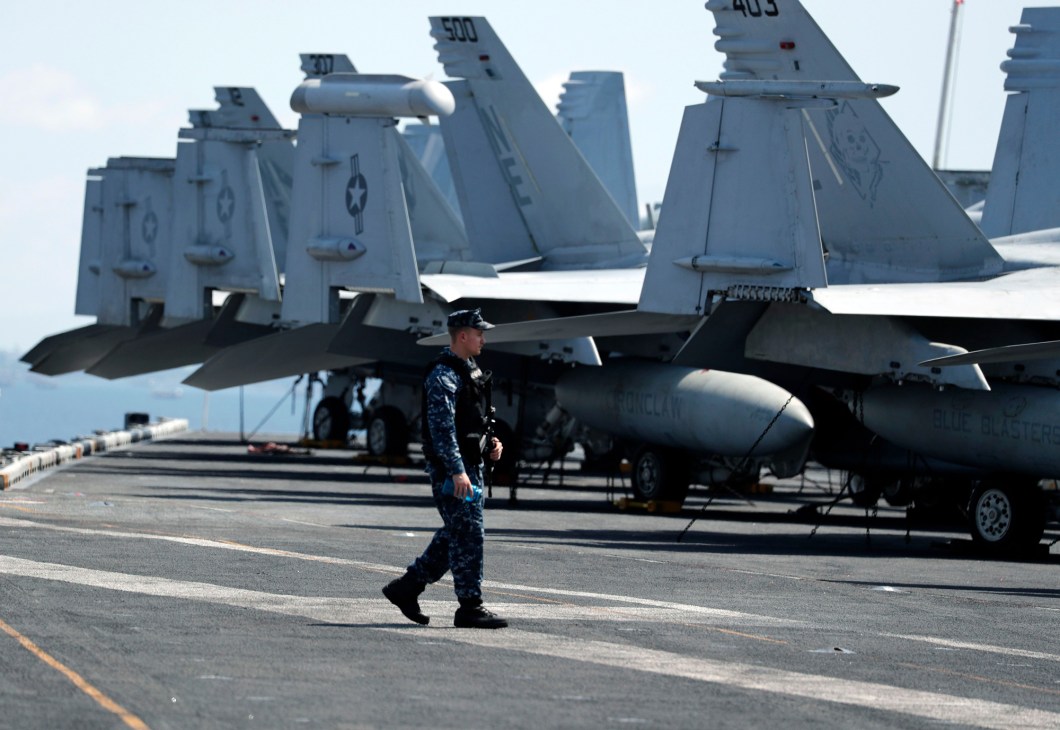
Renaming invites argument but a major statement in favour of diversity is already due in 2029. One of the navy’s new Ford-class aircraft carriers will be the USS Doris Miller. Miller won the Navy Cross for his actions during Japan’s attack on Pearl Harbour in 1941. He commandeered an anti-aircraft gun on the USS West Virginia, on which he served as a cook – one of the few shipboard roles permitted to black sailors at the time.
But the statement isn’t just a political matter; there are pragmatic concerns as well. “The navy is trying really hard,” says LaGrone. “It really does want to open the aperture and be as fair as possible. It ingests tens of thousands of men and women every year and the recruiting pool is getting smaller. I think if you said, ‘Rename a few ships and you’re guaranteed more sailors,’ they’d do it.”

In the basket
Who’s buying and who’s selling? We keep you abreast of significant defence deals.
In the basket: 16 SM-2 Block IIIA medium-range surface-to-air missiles
Who’s buying: Chile
Who’s selling: The US
Price: $85m (€71m)
Delivery date: TBC
This is one of the first weapons sales approved by the Biden administration. Chile wants the missiles for the two secondhand Adelaide-class frigates it bought from the Australian navy in 2019. The rail-launched SM-2s would strengthen the ships’ anti-air warfare capacities and underpin Chile’s naval might. Recent missions have included warding Chinese fishing fleets away from Chilean waters.
Sneak preview
Russia — Stealth
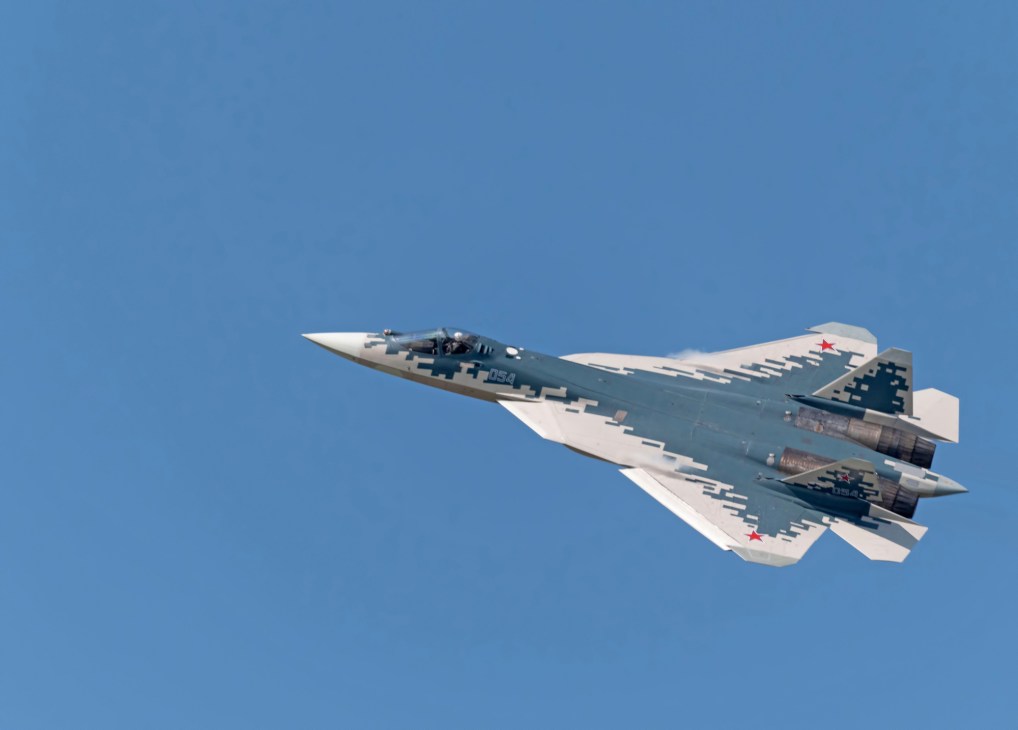
The stealth-aircraft market is monopolised by the US. China has a stealth fighter, the Chengdu J-20, but nobody else flies it, at least not yet. However, Russia might be about to offer some competition to the US’s fifth-generation fighters, the F-22 and F-35. The Sukhoi Su-57 entered Russia’s air force last December and now Algeria, India and Turkey are among those reportedly taking an interest.
“There will be a potential market for the Su-57 among countries not able to purchase the F-35,” whether due to cost or geopolitical factors, says Justin Bronk, research fellow for airpower at RUSI. “But in terms of more mature stealth designs, China is likely to out-compete Russia as the main non-Western export player in the medium to long-term.”
Images: Shutterstock, Alamy. Illustrator: Joanna Lawniczak
Politics
Who’s right now?
Germany — Succession
The makeover of Markus Söder began before the pandemic: it started with going green. The state premier of Bavaria and current leader of the conservative Christian Social Union (CSU) party had been one of Angela Merkel’s biggest foils in the 2015-2016 refugee crisis, an ardent supporter of protecting Germany’s borders. But in 2019, after watching his party’s support base erode in state elections and sensing the winds of change blowing towards the centre-left Greens, Söder embarked on a more climate-friendly approach. He was officially photographed literally embracing a tree in the garden of the state’s chancellery. And, against internal party resistance he pushed the CSU, which has governed Bavaria since 1957, to embrace greener policies too.
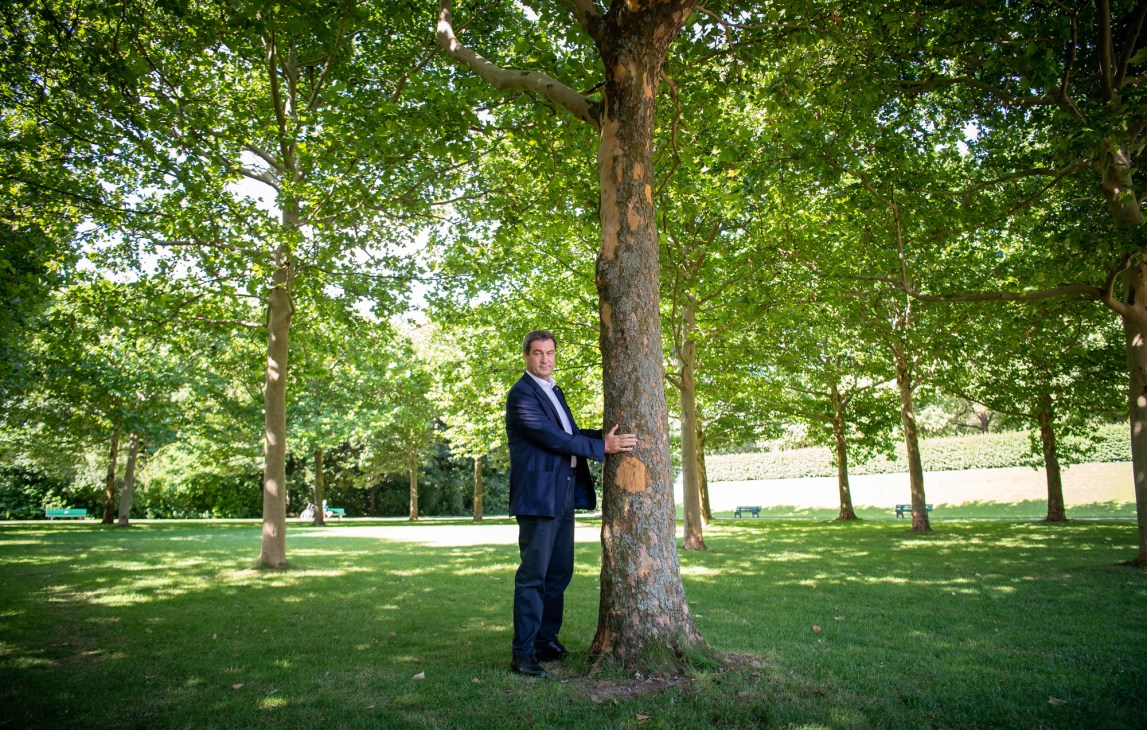
Söder was also one of Germany’s most outspoken voices for taking coronavirus seriously. And though Bavaria’s handling of the pandemic has been questionable (and he couldn’t resist that eagerness to close borders at times), it’s been enough to make the 54-year-old the most popular politician in the country behind Merkel herself – and put him in serious contention to replace her as chancellor this year.
Yet he’d still have to overcome the political odds. Söder’s CSU in Bavaria is the sister party of the national Christian Democratic Union (CDU), which Merkel hails from and which is now led by Armin Laschet, state premier of North-Rhine Westphalia. Ahead of Germany’s federal elections the CDU-CSU alliance decides which will field a candidate for chancellor, but one from Söder’s party has never won nationally. “The CSU usually has a negative image outside of Bavaria,” says Stefan Wurster, professor of policy analysis at the Technical University of Munich. “But this has changed with Söder.” As for whether Söder’s moderate streak will continue, Wurster says it depends on one thing: can he continue winning elections?
Southern discomfort
Italy — Calabria
It’s been a tumultuous time for the southern Italian region of Calabria. A snap election was meant to take place in February, following the death of 51-year-old governor Jole Santelli last autumn. But after Calabria was badly hit by a second wave of Covid-19 the vote was delayed until April, then postponed until later in the year. The area is already battling bad press over its crumbling healthcare system that has been exploited by the region’s ‘Ndrangheta mafia. Then there’s Calabria’s other ongoing political scandals: former budget councillor Francesco Talarico is accused of voter corruption in 2018, while five arrests were made at the start of March over separate voter irregularities in the municipality of Reggio Calabria.
Behind the throne
Ecuador — Politics
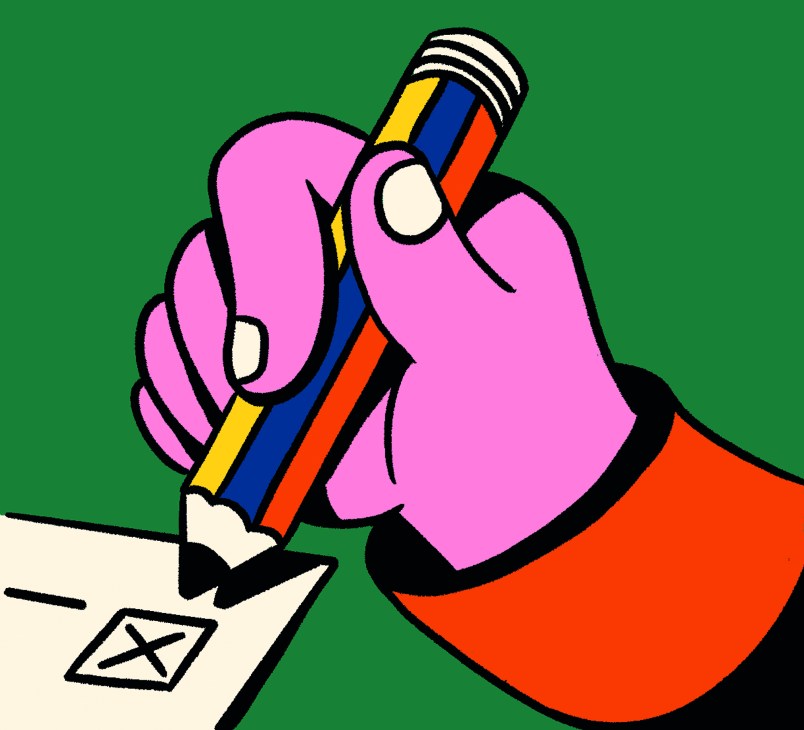
Ecuador’s presidential run-off vote in April could be less of a signal of the country’s future and more a referendum on its political past. Andrés Arauz, who secured the most votes in the first round, is being endorsed by former president Rafael Correa, a leftist currently in exile in Belgium. Last year, Correa was found guilty of corruption at home and handed an eight-year jail sentence. If his protégé Arauz wins, it’s thought that Correa might return to Ecuador.
Many Latin American leaders hold political sway long after leaving office, often compelling voters to focus on old battles rather than the pressing issues of the day. But support from a predecessor alone might not be enough to convince a majority that Arauz is the best person to fix a country badly hit by the pandemic.
Q&A
Matias Spektor
Political analyst
São Paulo
In February, Jair Bolsonaro disbanded the anti-corruption unit behind Operation Car Wash, an investigation that exposed rampant bribery in Brazilian politics and led to the incarceration of politicians and business leaders. Matias Spektor tells Monocle what this means for Brazil.
Bolsonaro claims that Brazil is ‘free’ from corruption. Is this true?
Corruption is endemic to Brazilian politics. Bolsonaro has tried to position himself as an insurgent outsider, untainted by dirty bribery deals; he was elected, in part, on an anti-corruption ticket. But he embodies Brazil’s very old way of doing politics, trying to pack major institutions with allies and sack independent investigators from the federal police.
What is behind the president’s decision to shut down the state fraud unit?
When the Car Wash scandal broke in 2014, it nuked Brazil’s ruling class by exposing how illicit funds fuel political campaigns. The old order crumbled and from its wreckage Bolsonaro emerged with an anti-establishment message. All of that changed the minute he assumed office: he quickly moved to protect members of his own family and friends from investigation.
Will the closure of such an operation affect how Brazil is viewed internationally in 2021?
Brazil is performing dismally when it comes to quality of governance and as a place for doing business. Car Wash ending is not going to make a bad situation worse, however. Corruption has been overshadowed by the climate crisis in the Amazon and human-rights abuses during Bolsonaro’s presidency.
But could this move strengthen Bolsonaro’s position in 2021?
His popularity hasn’t been hit from closing the unit, which suggests that corruption allegations involving his family won’t necessarily prevent him from running again in 2022. The president has moved to neutralise institutions that could make his re-election campaign difficult; key allies were nominated to lead the Senate and the lower house in February – a victory for him ahead of next year’s vote.
Image: Alamy. Illustrator: Daniel Triendl
Diplomacy
Q&A
Nicola Clase
Ambassador Sweden & Finland
Nicola Clase, Sweden’s ambassador to Finland, has had an uphill start since taking the position in October. She has had to manage the diplomatic fallout stemming from Helsinki’s closure of its borders with Sweden over the two countries’ contrasting pandemic strategies.
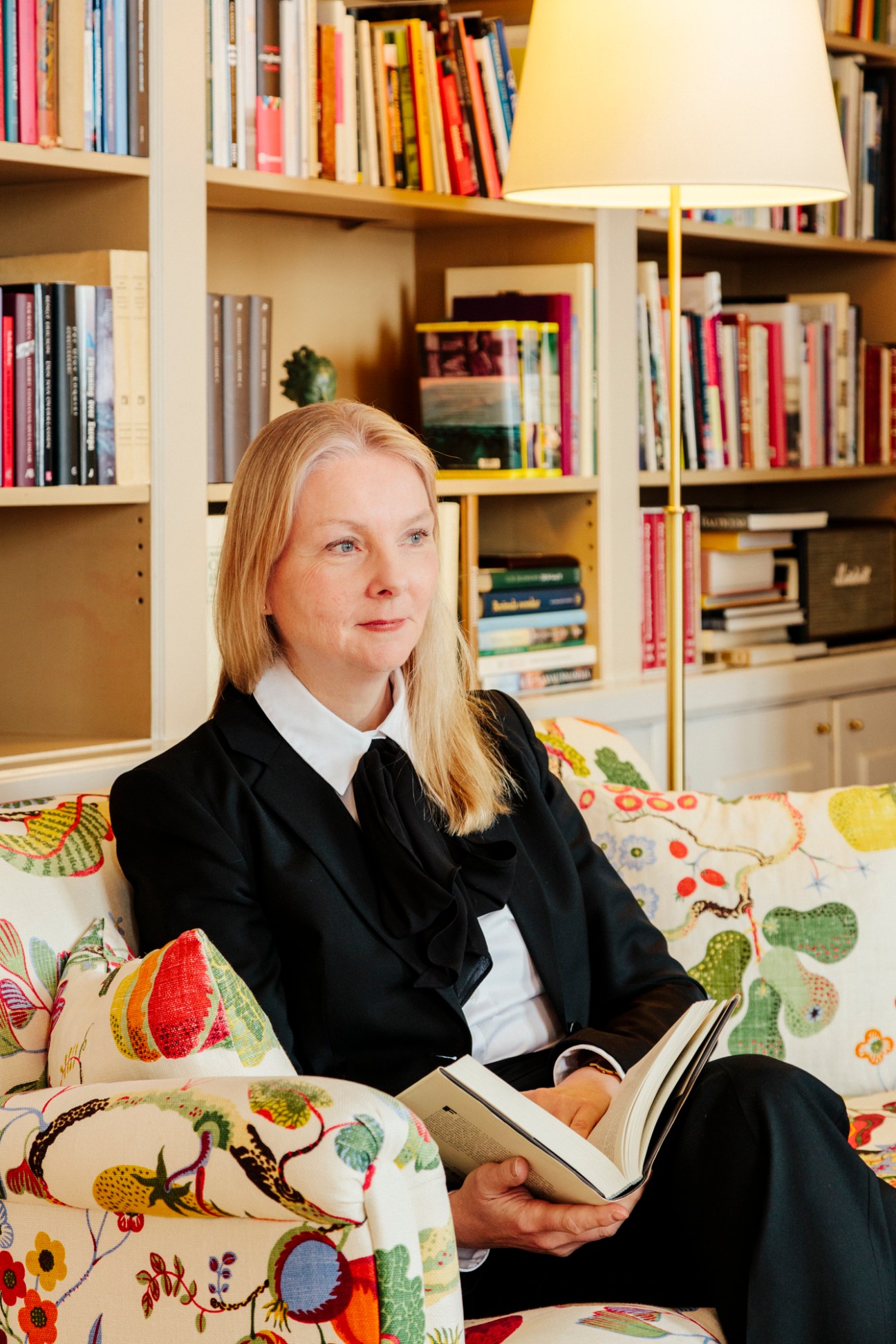
Luckily Clase, a former fellow at Harvard, brings a wealth of experience to the job, having been Sweden’s state secretary for foreign and EU affairs and its ambassador to the UK. And Sweden and Finland have plenty of areas where they can work together, particularly defence.
Monocle met Clase in Helsinki’s Swedish embassy, occupying a grand 19th‑century house close to the Finnish capital’s city hall and its neoclassical presidential palace.
Sweden and Finland have had very different pandemic strategies. Finland has kept its border with Sweden closed, while allowing travel from other Nordic countries until recently. Has that had diplomatic repercussions?
We must acknowledge the fact that Finland’s pandemic strategy has been among the best in Europe. We respect that and have introduced tighter restrictions ourselves recently. The toll on our economies has been significant. Ferries between Helsinki and Stockholm have stopped moving, for example. In hindsight, it is obvious we could have learned from each other. But rather than looking back, my focus is on reopening the economy.
What has recently driven Finland and Sweden to co-operate more closely?
It’s obviously driven by the fact that the security situation in the Baltic Sea region is more tense. We are practising how to respond much faster to territorial violations but co-operation goes beyond the military sector. We also co-operate in areas such as crisis management and civilian preparedness.
You previously worked in high-profile diplomatic roles in London, Copenhagen and Stockholm. Is Helsinki a quieter posting?
Not at all, this is real diplomacy. Finland and Sweden have such close ties that there is more work to be done here. That said, the pandemic has meant that I have had more time to get to know Helsinki and other smaller Finnish cities too. We haven’t organised any large-scale events, which has provided me with the opportunity to have longer conversations with a lot of people.
Stellar effort
UAE — Space
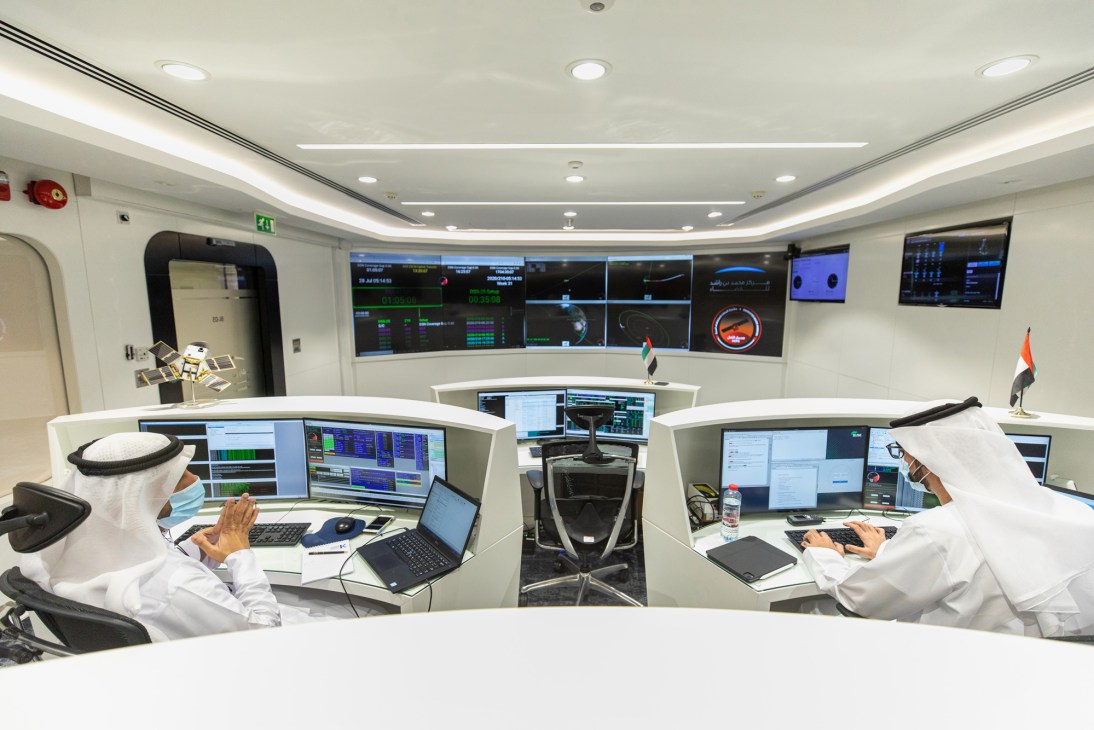
In February, the United Arab Emirates joined the short list of countries that have sent a mission to Mars – and became the first Arab country to do so. Seven months after taking off, the uae’s Hope probe eased into Martian orbit, from where it will study the planet’s climate.
Emirati officialdom has been punctilious in emphasising that Hope is a purely technological exercise but no nation has ever launched its flag towards the stars for entirely selfless reasons. “The UAE has proven adept at punching above its weight as it aims to position itself as the emerging leader of the Arab world,” says Bill Law, editor of Arab Digest. “In that regard, the Mars probe is a strategic tour de force.”
Space programmes often stoke rivalries but is there an appetite for a Middle Eastern space race? “The likeliest candidates would be the Saudis,” says Law. “But they have enough problems on Earth getting Vision 2030 off the ground. Having said that, Crown Prince Mohammed bin Salman is not averse to splashing out on grandiose schemes so he might be tempted.”
After the blast
Since the devastating blast at the port of Beirut, Nour Salhab has learnt a lot – chiefly, that if you want change in a place that always seems to repeat the same mistakes, you have to make it yourself. “I feel Lebanon is a country that needs a lot of work to get where we want to get to,” she says. “If we want the country to improve, and we want people’s lives to improve, you need to do something about it.”
At the age of 25, Salhab already knows plenty about taking action. For six years, she has been one of 5,500 Lebanese Red Cross volunteers, most of them under 30, who organise more than 80 per cent of the country’s emergency ambulance response, because there’s no public ambulance service. Immediately after the explosion on 4 August 2020, Salhab recalls that she “drove like a crazy person” from Beirut’s Clemenceau neighbourhood, after seeing the clouds of the explosion, to Gemmayze, one of the worst-hit areas.
The death and destruction caused by the blast were unimaginable. In seconds, nearly 3,000 tonnes of highly flammable ammonium nitrate exploded, wiping out city blocks for miles around. But for some, the betrayal in its aftermath has been even worse. More than 200 people were killed that day, and their relatives, along with the thousands injured, were promised that those responsible would be held to account – within five days. Documents surfaced showing that, for more than five years, successive governments had been warned of the danger of allowing the cargo to remain at the port, but did nothing. More than six months on, the investigation has stalled, and the lead prosecutor, who attempted to indict several high-profile political figures, has been dismissed. Meanwhile, as ministers try to score points behind the high walls of parliament, the country is on the brink of collapse.

You can see evidence of revival in Beirut’s Gemmayze neighbourhood but also hints of the anger and fatigue that have hit many in the destroyed area.

Nour Salhab, 25, has been a Lebanese Red Cross volunteer for six years. She and her colleagues work at night on top of their day jobs to make up for the lack of a government-run ambulance service.
Thousands of Lebanese have fled, seeking a better life in any country that will have them. But many more have stayed, either by choice or necessity, determined to rebuild their country. Salhab is one of them. After the explosion, she and her colleagues worked round the clock for three weeks. There was no respite: almost as soon as the last of the survivors had been found, Lebanon was hit with an enormous spike in coronavirus cases, pushing damaged hospitals and overwhelmed staff to their limit.
Volunteers have had to increase their number of shifts and, with icu bed capacity at more than 90 per cent, handling the emotional impact on patients who are rejected from one hospital after another is a new part of the job. All they can do is try to keep the patient, already low on oxygen, from panicking as they try to seek out an available bed.

Three days after the blast, many houses were in danger of collapse, residents could not return home, and workers from French civil protection organisation Sécurité Civile were still rescuing survivors.

Seven months on, some buildings in the once-thriving nightlife and residential district are in the process of being reconstructed. Others lie in ruins and debris still litters the streets.
It has taken its toll. “Honestly, I’m tired, physically and mentally,” Salhab admits. “But sometimes you get patients and they look at you as someone who’s there for them, and they say things that warm your heart.”
City residents aren’t just suffering a health crisis. The areas hardest hit by the blast were densely residential, and getting people back into their homes has been a priority. Mohamad Ghotmeh, a Beirut engineer, has been doing what he can to help with the skills he has. “I started as a volunteer, by doing assessments of the damaged houses, finding a roadmap of how we can help people.” In the weeks after the explosion, he visited more than 100 homes, advising owners on the repairs that were needed to make them habitable and feeding back the reports to ngos raising funds to help. Initially, home- owners were given little more than wooden boards with padlocks to secure their front doors and plastic sheets to protect the shattered windows.
After giving his services free of charge for more than a month, Ghotmeh’s contracting company, cti, began working with Beirut ngos, offering reduced prices to keep the costs as low as possible and spread donated funds as far as it could. So far, it has repaired nearly 40 homes in the blast zone.
But NGO funds are limited and can be used only to fix the structural elements of buildings, to make them secure to live in. For people who lost everything in the blast, the insides of their homes look nothing like they did before, and they can rarely afford to restore them.
The blast came in the middle of a devastating economic crisis that has left more than half the country living in poverty. As they attempted to raise money to rebuild their businesses, some Beirut entrepreneurs realised that starting from scratch was an opportunity to re-envision their role in the wider community.

A fixture of Beirut’s historic Gemmayze neighbourhood, English-language bookstore and café Aaliya’s Books was still unusable a few weeks after the blast.
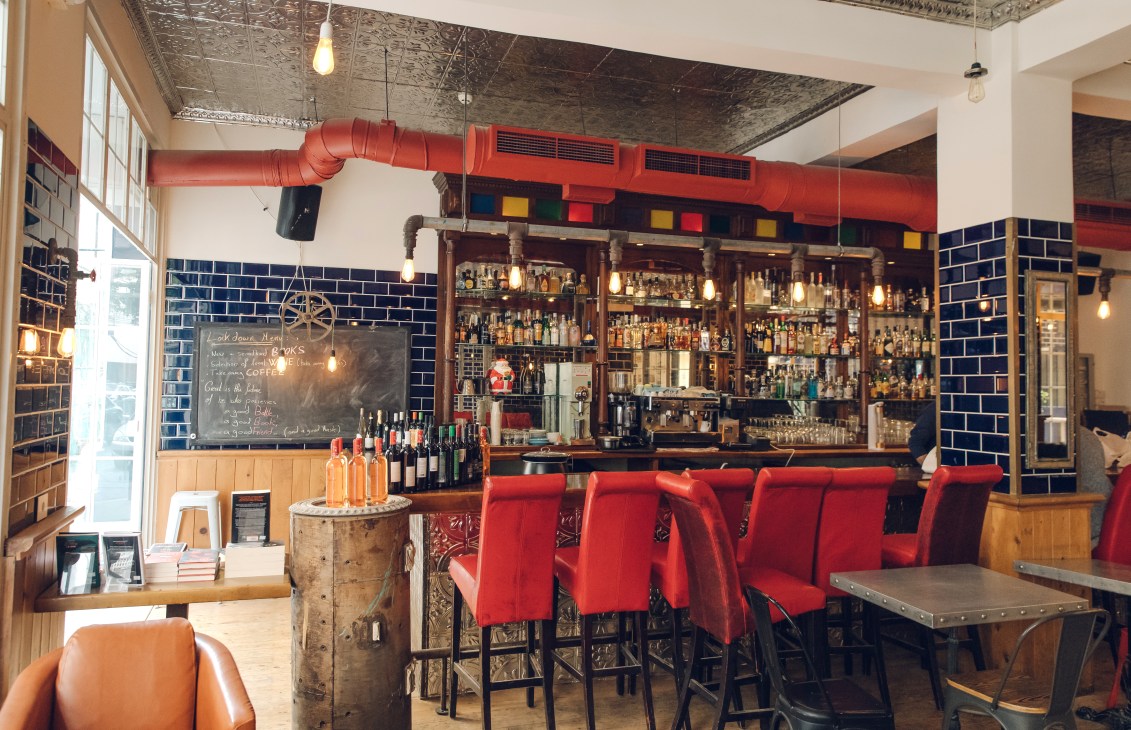
Aaliya’s Books reopened in December – although at the time of going to press it was only able to take orders for delivery and serve takeaways due to a coronavirus lockdown.
Brant Stewart, founder of Mavia Bakery in Gemmayze, initially couldn’t see how they would save the business in the wake of the blast – insurers have been struggling to cover the costs, and payments are on hold until an official judgement is made about the cause of the explosion. But an online fundraising campaign drew in money from around the world within days. “When we realised we were getting a lot more money than we needed,” Stewart says, “we decided to shift focus.”
By the end of that week, he and his all-female team of Lebanese, Syrian and Palestinian cooks had started a soup kitchen, making up to 75 meals a day for people in the affected areas. But it didn’t feel like enough. “This all made me start thinking about food security in Lebanon and how we can have a real impact in the short, medium and long term,” Stewart says. Now, he’s using the extra funds to reinvest in feeding Lebanon’s most vulnerable – and providing work, too. He has secured land in the Bekaa Valley to plant new varieties of wheat and see what grows best in an attempt to reduce Lebanon’s dependence on imports; the destruction of Beirut’s wheat silo in the blast further exposed the fragility of food security.
Meanwhile, Mavia continues to support the community. Once pandemic restrictions loosen and cafés and restaurants are allowed to reopen, the bakery plans to supply its neighbours with heavily subsidised food items to sell as they try to get back on their feet.
“We feel so lucky to have received support from outside Lebanon to rebuild,” Stewart says. “It’s given us so much stability, which frees us up to think about bigger issues: revitalising the restaurant scene in Beirut; food security; building lasting infrastructure. It’s our duty now to help others around us.”
Kamal Mouzawak has made community support a key element of his reconstruction efforts, too. Before the blast, Mouzawak had already decided to incorporate the farmers’ market and restaurant arms of his Souk el-Tayeb food business in one space, and the converted warehouse was nearly ready to go. The explosion all but flattened it. Two days later, an international charity asked for help cooking for the victims of the blast. Within days, his team was preparing meals in their ruined restaurant, Tawlet, and had started an online fundraiser that made $200,000 (€167,000) to help rebuild.
Mouzawak relaunched his Beirut business in October, in a devastated part of Mar Mikhael, an area that badly needs shops to reinvigorate it. The restaurant and farmers’ market are back, and now there’s a deli, too. And as a testament to the generosity of spirit after the blast, the complex now has a permanent community kitchen, preparing 2,050 free meals a day for residents trying to get back on their feet, and employing nearly 100 people from the area. “The most important thing for us was to come and bring life back,” says Mouzawak. “If we’re going to come back, we’ll come back at ground zero, we said.”
Beirut is returning to life – but slowly. Repeated Covid-19 lockdowns at the worst possible time have stalled both business recovery and rebuilding efforts. But as he watches, and helps, with the reconstruction of the city, Mohamad Ghotmeh sees signs of hope. “I feel that the Lebanese people have a strong belief in making Lebanon a better country,” he says. “And if they’re given the chance, they can make miracles, because we have a lot of talent and integrity.”
A little over a year ago, Lebanon’s anti-government protest movement found one of its emblems in the phoenix; a statue was erected in Beirut’s central square, built from the pieces of protest tents burnt down by forces determined to quash dissent. This is a very different country today than in those heady days of hope. But the statue still stands, as does the message behind it: Lebanon will rise again, stronger this time, and more equal. The people trying to rebuild the country with little other than their talents and a positive attitude have a mighty challenge ahead of them. But they are determined to try.
Animal helpers
It wasn’t just human lives that were torn apart by the explosion. Kamal Al Khatib volunteers for Animals Lebanon, to which desperate owners have turned for help in finding pets that ran away when their homes exploded. In the wake of the blast, Al Khatib found animals in drainpipes, in lift shafts and trapped under broken ceiling tiles. “I’ve rescued animals stuck in car engines, in tunnels, up trees,” he says. “But no one is prepared for this kind of rescue.” After two months, he was still finding pets lost in the blast. Now, he supports the hundreds of stray animals living on the streets; the numbers have swelled even more in recent months as families turn out pets that they can no longer afford to look after.
To see the original story, check out the October 2020 issue of Monocle – free to read in our online archive for all subscribers.
The fixers
Back on their feet

Kamal Al Khatib has been rescuing stray animals in Beirut for 20 years. Just hours after the explosion he was on the streets searching for injured pets; he didn’t stop for two months.

Mohamad Ghotmeh put his engineering background to good use after the explosion, offering free damage assessments to Beirutis whose homes were destroyed in the blast.

Ghotmeh’s contracting firm later helped ngos rebuild Beirut homes at reduced rates; Nadine Gholam’s heritage Gemmayze apartment was one of them.

Brant Stewart of Beirut’s Mavia bakery hopes to spread the generous post-blast spirit across Lebanon, encouraging sustainable growing and food production in the fertile Bekaa Valley.
Power ahead
1.
António Guterres
UN secretary-general
Global
Finding reasons to be positive after a tumultuous few years, the head of the United Nations tells us how to deal with ‘spoilers’ and why his organisation needs reform.
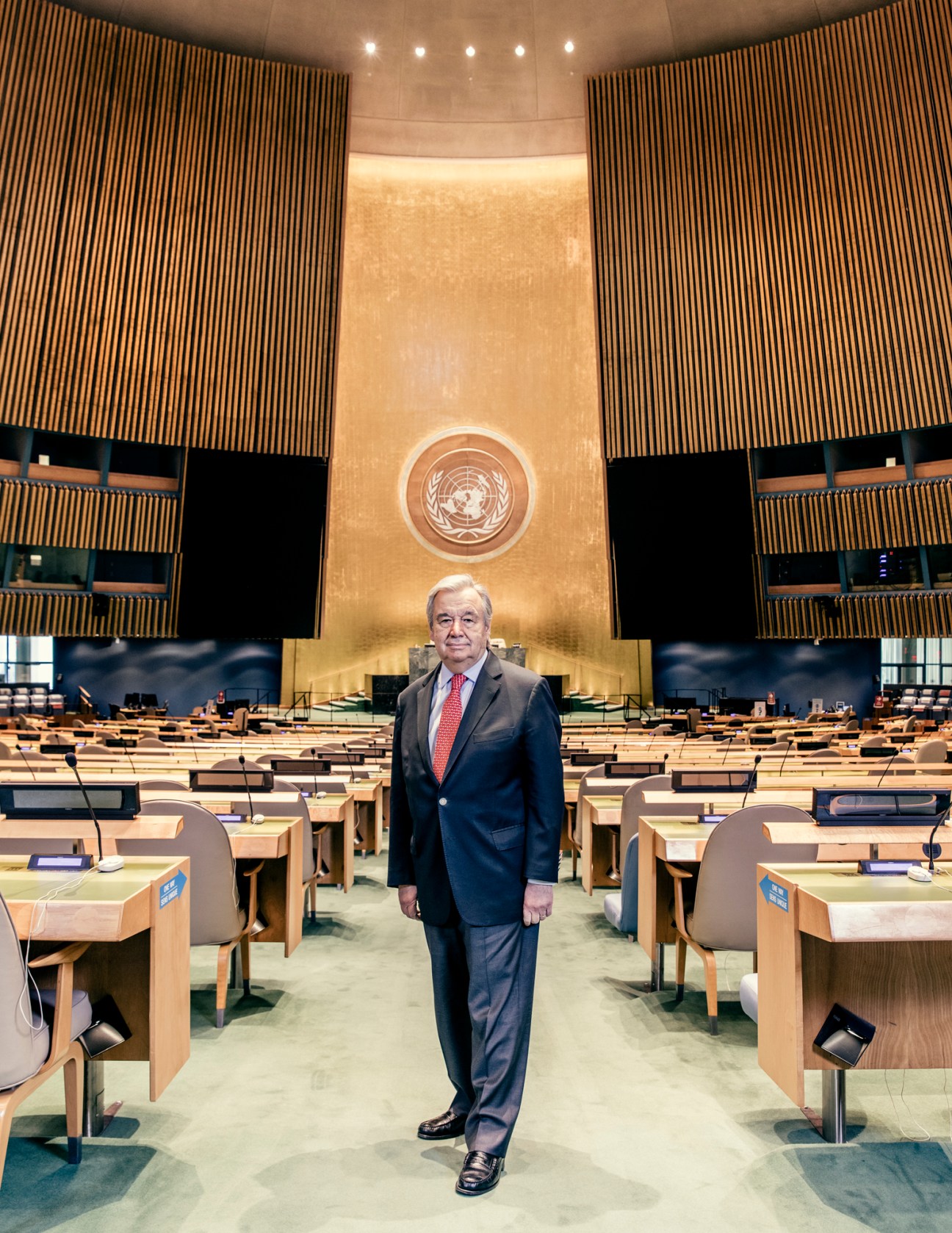
UN secretary-general António Guterres isn’t someone who minces his words. At the beginning of 2020 he warned of a “wind of madness” as disagreements among geopolitical powers, particularly the US and China, reached their height. Last September he said that the world was sitting on a knife-edge between multilateralism and a nationalistic descent into “chaos”. And earlier this year he chastised industrial nations for not doing enough to provide vaccines for developing countries. Given that background it was heartening to hear Guterres offer a more optimistic tone in his interview with Monocle, as he currently sees the world in “a moment of hope”.
There’s been a flurry of virtual diplomacy meetings this year, from the Munich Security Conference to the G7. How productive have you found them?
We miss the value of in-person diplomacy, of course. But I still believe that we are in a moment of hope. Last year we had what I called the annus horribilis. It was an extremely negative year. So 2021 is the year to put things back on track. I believe that things are happening in that direction.
Which particular areas are feeding your optimism?
There is a growing recognition among developed countries that they need to look seriously into a global vaccination approach and not only vaccinate their own people. On climate change we are now seeing a renewed dynamic approach to building a global net-zero coalition for emissions by 2050. At the end of last year we already had a number of positive evolutions from China to Korea to Japan. But now, with the Biden administration, the US is on board and I believe that all the conditions will be met to ensure that we’ll come to [November’s] cop26 climate summit in Glasgow with strong commitments for the reduction of emissions over the next decades. All of this is adding up to make us optimistic, for the first time, that it is possible to defeat climate change.
We are also seeing progress in relation to some of the complex security issues in the world: we are making progress in the fight against racism, while there is a growing concern about misinformation, the risks of technology and a need to find new ways to make the digital world a force for good. So there are reasons to be, if not entirely optimistic, then at least fully determined to make 2021 a year in which we start to heal.
What is it that makes 2021 such a critical year for action?
First of all, the change in the US administration is an important precondition for a strong re-engagement in relation to multilateralism and international co-operation. Additionally, 2021 is the year when some key decisions will be taken in relation to the climate – it is still possible to guarantee that we don’t have an increase in temperature above 1.5C by the end of the century but we are coming close to the point when this becomes irreversibly impossible.
There is also a growing consensus that social cohesion in our societies, and trust between the public and institutions, needs to be re-established in order to address inequalities. I remember a time when inequalities were considered to be a basic precondition for development; now there is a growing consensus that inequality has become an obstacle to development. There is a shift in the mindset taking place that should help to create the political engagement that’s necessary for change in how we deal with the pandemic, with the climate, with the cohesion of our societies and inequalities around the world.
Multilateralism also needs to be more inclusive. Governments no longer have a monopoly on political power or representation. If we want to have true multilateral capacity to deal with global challenges then we need to involve cities, the business community, civil society and the youth. Their voices need to be heard and they should participate in decision-making processes at the national and global level, including at the UN.
In September you said that the jury was out on whether a more nationalist or a more multilateral approach to international diplomacy would win the day. What makes you think that the balance has shifted now?
When it comes to nationalism, populism and the other aspects related to them – xenophobia, racism, intolerance – it is clear that, progressively, this trend is starting to lose ground. One example is that populist leaders around the world were the most ineffective in dealing with coronavirus, and people are becoming conscious of that. If you look at what has happened in elections worldwide, one year ago the key issue was migration, which was used as a tool to create fear and hatred. In recent times the key elements in elections have been the virus and the climate. We have seen climate-friendly parties and political leaders gaining ground in many parts of the world.
Of course, we cannot simply believe that everything is moving in the right direction and that we don’t need to care. But I do hope that, slowly, democracy, rationality, tolerance and international co-operation based on solidarity are coming back. This is a continued struggle but there are reasons to be more optimistic today than one year ago.
You’ve called for the Security Council to be reformed. Is that a realistic prospect?
I have no authority to launch this process of reform – it’s entirely in the competence of member states. It is my belief that reform of the Security Council is an essential element of the reform of the UN. There is some recognition that the developing world is not represented enough – that Africa is not represented enough – and I hope that this will lead to some changes. But this is an area where we still have enormous resistance.
Meanwhile, in a world where the global powers are divided, space is being opened up for spoilers because in many conflict situations we are dealing more and more with mid-sized countries getting involved – sometimes having even more influence than the biggest powers – and becoming an obstacle to both conflict prevention and conflict resolution.
The US is looking to rejoin the Human Rights Council this year. Yet it has included members such as China and Russia, two countries that don’t have a strong record on human rights. Critics would say that this undermines the value of having a Human Rights Council at all.
Ideally we should have a council in which all members are exemplary. But the council is like any other UN institution; it is the result of elections that represent all the different continents of the world. So there are countries with different patterns of behaviour, including some where we know there are meaningful human rights violations. This is an obstacle but it’s also an opportunity to confront those countries in a frank way, to make them think.
In any case, the worst thing countries can do is to say that because some members are spoilers, those that behave will leave – that would be the wrong strategy. In politics, whenever someone leaves a space, others inevitably occupy that space. So in the Human Rights Council, those countries that are human-rights minded should occupy as much space as possible.
What have the past few years taught you about the limits of what the UN can achieve?
If one looks at the UN as a whole, we were able to carry out important reforms to make several aspects of the organisation more productive, cost-effective and nimble. We have improved our capacity for peacekeeping and, from a humanitarian point of view, UN agencies today are a remarkable example of efficiency. The most difficult aspects are related to guaranteeing peace and security, where the questions depend a lot on power relations and the divisions that exist today in the international community.
But the UN does need to be reformed and this involves recognising that everything is interconnected. Traditionally we work in silos: we have the peace and security in one; development questions in another; human rights questions in another. But everything now is interlinked: the work of the International Monetary Fund and the World Bank is essential to address the root causes of economic difficulties and preserve stability – and stability is essential for peace.
So we need to create more institutional mechanisms to make them work more effectively together. We also need to link the work of the UN more strongly with regional organisations. We have a fantastic partnership now with the African Union and European Union but there are other areas of the world that are less well organised. And the truth is that it’s much easier to solve problems from within the region than to solve problems from very far away.
Much of the political will for reform will really come down to the US and China. What’s your message to the leaders of those two countries?
In areas where they are in opposing fields – human rights is the most obvious – I have no hope that they will come to any mutual understanding in the near future. But they have areas where I see a clear convergence of interests and even of movement. The US and China were completely at odds on climate change just a few months ago; I believe that they can now be allies.
And then there is the area where it is necessary to have a serious negotiation: trade and technology, the internet, cyberspace, artificial intelligence. There are opposing views on some of the aspects here but there are other areas where co-operation is vital. It’s very important for these two countries, together with others – Europe and Japan have key roles to play on these – to put these problems on the table, to discuss them seriously and make all of the necessary compromises. Of course, the respect of human dignity must always be paramount.
2.
Kersti Kaljulaid
President
Estonia
The Baltic nation’s first female head of state is championing her country when it comes to setting a benchmark in vaccine-passport systems thanks to its digital prowess.
“If you look at my CV, it’s kind of a long line of accidents,” she says, modestly, from behind a desk in the presidential palace in Tallinn. Dressed in a smart chartreuse dress and sporting her signature pixie cut, she talks with her hands, punctuating points with emphatic gestures. Accidentally or not, she’s become one of her nation’s biggest champions. In an age of polarised politics, too few leaders are willing to be pragmatic. Yet Kersti Kaljulaid, president of Estonia, is nothing if not practical. Although she is frank and outspoken, she’s also a sensible, progressive force. Perhaps this is because until she became president she wasn’t a politician. After stints working for investment banks and as head of a power plant, she then represented Estonia in the European Court of Auditors in Luxembourg. It wasn’t until the 2016 presidential election resulted in a deadlock that she was tapped as a consensus candidate and became the first woman to hold the title in the country.
It’s been a busy few months for Estonia. The small Baltic country, with a population of roughly 1.3 million, has partnered with the World Health Organization to help develop digital, globally recognised coronavirus- vaccine passports that, crucially, will protect users’ privacy. “It is a simple system in which the national vaccination data is connected,” says Kaljulaid. “If, for example, I go to the border and present the vaccination certificate, then the system checks the validity of my certificate. None of my personal data is transferred. It’s cheap; it guarantees your privacy.”
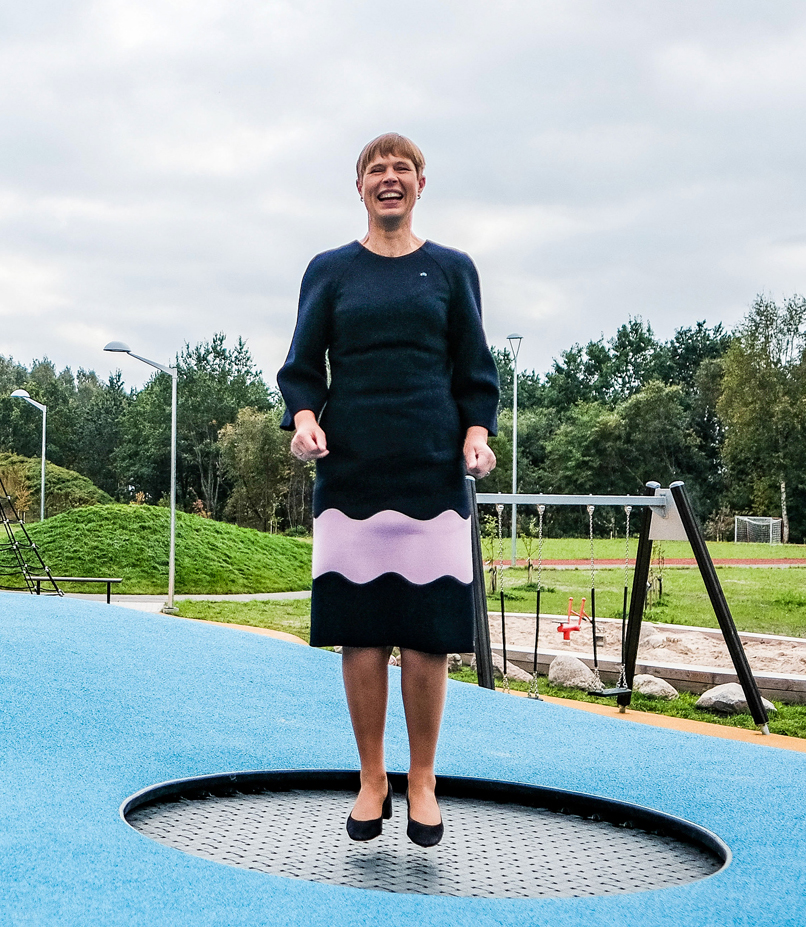
Estonia already has a similar system in place but Kaljulaid is eager to share the country’s knowledge beyond its borders. “For me, being a supporter of multilateral co-operation, it is important that we work on this for the World Health Organization.” The partnership will also result in Estonia working with the who on other digital health projects, including a global framework for sharing health data and creating guidelines for digitalising national health systems.
Although there are several pilot programmes attempting to create vaccine- passport systems, Estonia’s involvement has caught the world’s attention. Kaljulaid puts this down to her country’s track record. “It’s because we have demonstrated that our digital approach is efficient and effective.”
When Estonia gained independence from the Soviet Union in 1991, the nation was eager to create a new system. It was a pragmatic decision. The country “didn’t have the luxury and the resources to be inefficient,” says Kaljulaid. “When we regained independence, we didn’t have legacy systems. We didn’t have technology support with offices where people could go to pay taxes; we needed to teach our people to pay taxes.” Estonia embraced technology with such zeal that its system is now recognised as the benchmark for digital governance.
And it’s not just about paying taxes. The number of things that Estonians can do online, linked up through one system, is astonishing. All voting is done online, so too is banking, paying parking fines, applying for loans and accessing medical records.
Estonia’s digital progress has helped it to weather recent turmoil. Its infrastructure allowed most people to work or school from home, mostly painlessly, from the outset of the pandemic. “During the first wave, it was relatively easy to switch people to teleworking and home-working, because we have digital identities,” says the president. “The tools were there.”
When asked how other nations can replicate Estonia’s digitalisation, Kaljulaid is as practical as ever. “It’s not that Estonians are especially tech-savvy,” she says. “Technology is just a tiny element of digital transformation. You need to be ready to change. But for change, you need to have flexibility in the system.” This means having social policies in place that provide a safety net for those changing jobs or moving locations. Such nimbleness needs to be the starting point, not the result, of digitalisation.
Estonia’s partnership with the who isn’t the only time that the country has made headlines as a global leader. In January, Kaljulaid swore in Kaja Kallas as the new prime minister, and Estonia became the only nation in the world to have a woman both as an elected head of state and a head of government. Does Kaljulaid believe this is a significant achievement?
“I don’t believe for one second that female politicians do different politics than male politicians,” she says. But, she adds, the fact should “give courage to children – to girls. There won’t be any Estonian schoolchild who will wonder whether a woman could be president or prime minister.”
Kaljulaid’s term ends this year. She hasn’t yet declared whether she will seek re-election but, notably, her recent bid to be the next head of the Organisation for Economic Co-operation and Development (OECD) came to a dignified close when she pulled out of the race in January. “It was obvious that I wasn’t going to gain enough support,” she says. “I’ve always said that there is value in campaign. My campaign was centred on creating an understanding that digital transformation is going to change not only trade markets but services markets too. I believe that this message will remain in OECD thinking.”
Will Kaljulaid’s passion for multilateral co-operation prompt her to pursue other roles on the world stage in future? “I can’t make any promises,” she says good-naturedly and, of course, pragmatically.
3.
Enoch Wu
Founder, Forward Alliance
Taiwan
The outspoken Taiwanese politician and policymaker believes that the island must expect to be invaded by China and overhaul its defence spending and strategies accordingly.
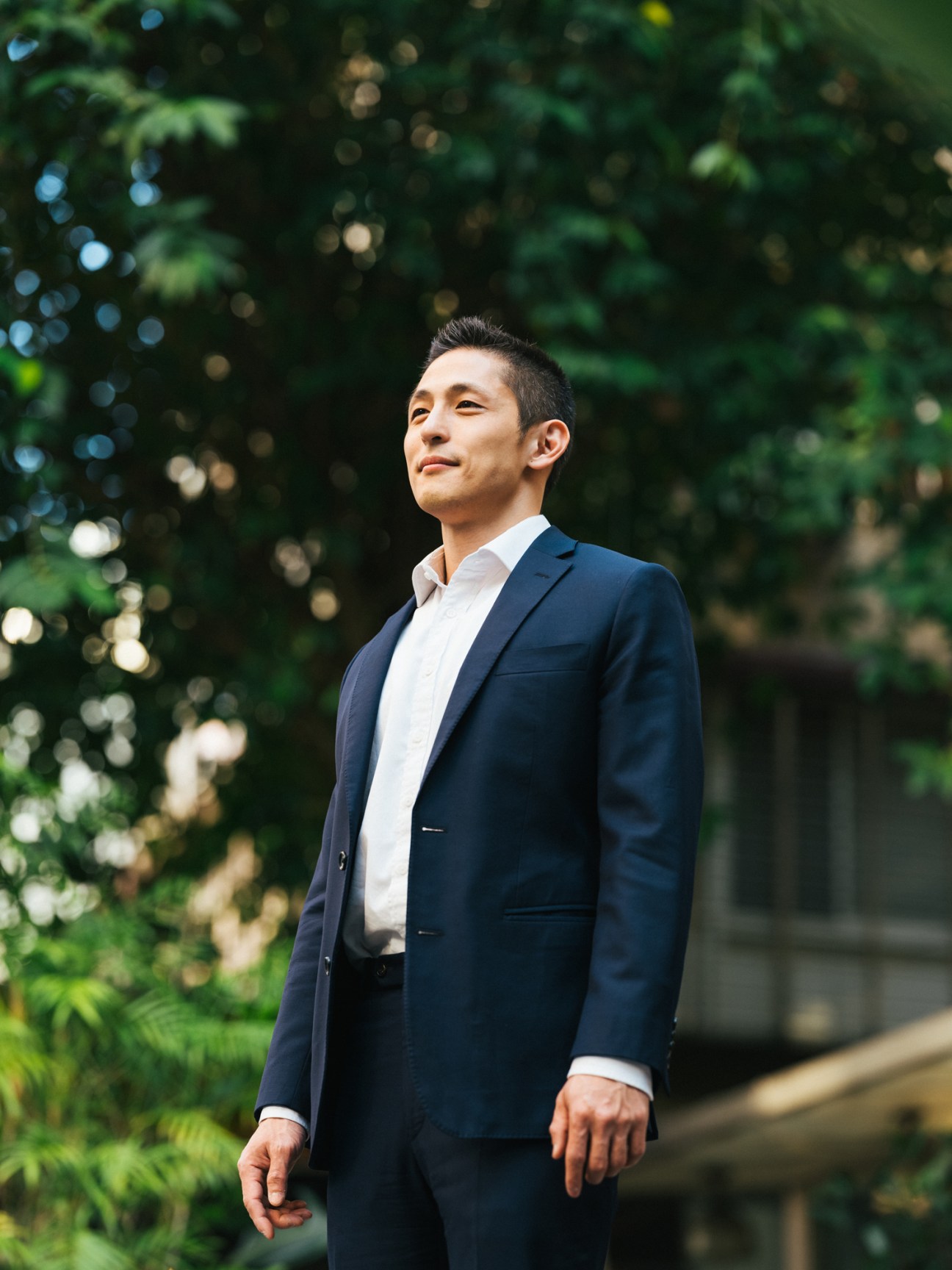
Enoch Wu is on a mission to transform Taiwan’s armed forces, one recruit at a time. For the past year, the politician has been travelling around Taiwanese universities talking to students about national security and conscription. Wu wants to mobilise the island’s entire population of 23 million to deter mainland China from launching an attack. A rising star of Taiwan’s ruling Democratic Progressive Party (DPP), Wu, along with his NGO Forward Alliance, is urging the government to spend more on bolstering the army reserves and less on military hardware.
“I didn’t grow up wanting to play soldier,” says Wu, who was born in the US into a Taiwanese political family. The 40-year-old returned to Taiwan in 2013 and did his military service after spending a decade working in finance in Hong Kong. The threat from across the Taiwan Strait drew him into the world of defence and away from business. “Xi Jinping feels a sense of urgency to hand in a report card that says, ‘I solved the Taiwan problem’,” says Wu. “China is no longer biding its time. It has decided, in every area of foreign affairs, to be more assertive.” Here, Wu talks to Monocle about how Taiwan can best defend itself.
When you visit the nation’s universities are students interested in what you’re saying?
The younger generation is taking this seriously. They are interested in learning more about what can be done better with our defence and what every individual can do on a personal level.
I tell the students that our entire armed services number fewer than 180,000 and we’re facing a threat of invasion from a military that’s two-million strong. Continuing to cut our reserves and active forces just seems to defy logic. The talks are also about civic education. We spend close to a quarter of the budget on defence.
So how should Taiwan be spending its defence budget?
China’s game plan is to force a quick resolution to military conflict and so they’ve invested in a sizeable amount of precision weaponry that can target our critical infrastructure and further constrain the command. Our entire organisation is very top-down and centralised, so the ability to strike at critical nodes is their strength. But their reliance on that tactic is also a weakness. As far as we know, they haven’t figured out how to fight a protracted conflict. So one of the cheapest and more asymmetric capabilities we could be investing in is our reserves.
Are you in favour of conscription?
I am. My model would start at the current four months and show that we value your service. At that point we say, “Hey, we’d love to train you up for two more months so that you could be a leader in your community and take a leadership role when there’s a contingency.” We need to show that conscription could be different.
President Tsai Ing-wen is trying to reform the reserves.
On the one hand, the administration needs to demonstrate that the country is secure under our watch. On the other, the threat is rising and we need citizens to step up and contribute. These two messages are tough to reconcile and this is where politics gets in the way. For decades, the surest way to win was by telling folks that they don’t have to serve. Saying that we need them to step up and sacrifice creates an opening for the opposition party to say, “Hey, look, under our watch, you didn’t have to sacrifice.” But the truth is that the country wouldn’t be safer under a different administration.
Have you built your own bunker?
There’s a choice we have to make. Do you try to shoot down every incoming missile? Or would it be cheaper to harden our important facilities and distribute our networks, so that we don’t have critical nodes to strike? Bunkers and shelters are one area in which we’ve under-invested because the Chinese capability is recent. If we’re taking this invasion threat seriously, these are the areas that require investment, even though they are not as glamorous as tanks or submarines.
What’s China’s military thinking?
To defeat the Taiwanese army before the US gets involved. China is reliant on a quick resolution, which is why our resilience is such a vital concept.
You’ve said that preparedness is more of a deterrent than any alliance or assurances.
We can’t respectfully call ourselves independent if our solution to every problem is someone else coming to our assistance. No self-respecting nation would say that. The only thing that we can control is how prepared we are. Of course, friends and allies are important. It would be great if the entire world stood with us. I don’t mean to suggest that we don’t need allies but we have to be prepared to stand alone. Only then can we command respect from our friends.
Do you tell the students that war is imminent?
I say that the more prepared we are and the better we invest in our own defence, the less likely there will be war. Conflict only breaks out if the other side thinks that it has a chance. Your enemies need to believe that there’s no end in sight if they go down this path. Now, they might still be irrational but what’s the worst case in that scenario? If they’re irrational and they act against a prepared Taiwan? Then we defend our home.
4.
Waad al-Kateab
Film-maker and activist
Syria
Her award-winning documentary focused the world’s attention on the horrors in Syria – and now the exiled journalist is devoted to keeping the pressure on al-Assad and his allies.
Some nights, Waad al-Kateab dreams of returning to Syria. “We sleep and we wake on that hope that this could happen,” says the award-winning film-maker and activist, sitting at her kitchen table in London, where she now lives with her family after they were forced to leave Aleppo in December 2016.
Presidential elections are scheduled for later this year and al-Kateab says that she hears, from contacts back in Syria, murmurs of hope about a new face coming to power. “Which is unbelievable,” she says, flatly, before quickly dismissing the idea. Indeed, election watchdogs are already advocating that the result of the vote, which is expected to be undemocratic and yield a victory for Bashar al-Assad, be ignored by the international community. But even though al-Kateab insists that she’s not optimistic, she is waiting for the day that al-Assad is gone.
“We would love to go back if any kind of change happened,” she says. “If there’s any chance that al-Assad will be out of Syria, this will be the moment when we have to go back because there is a lot of work to do.” That work would include rebuilding Aleppo, repairing infrastructure destroyed by a decade of war and working to create a democratic political system from the ground up.
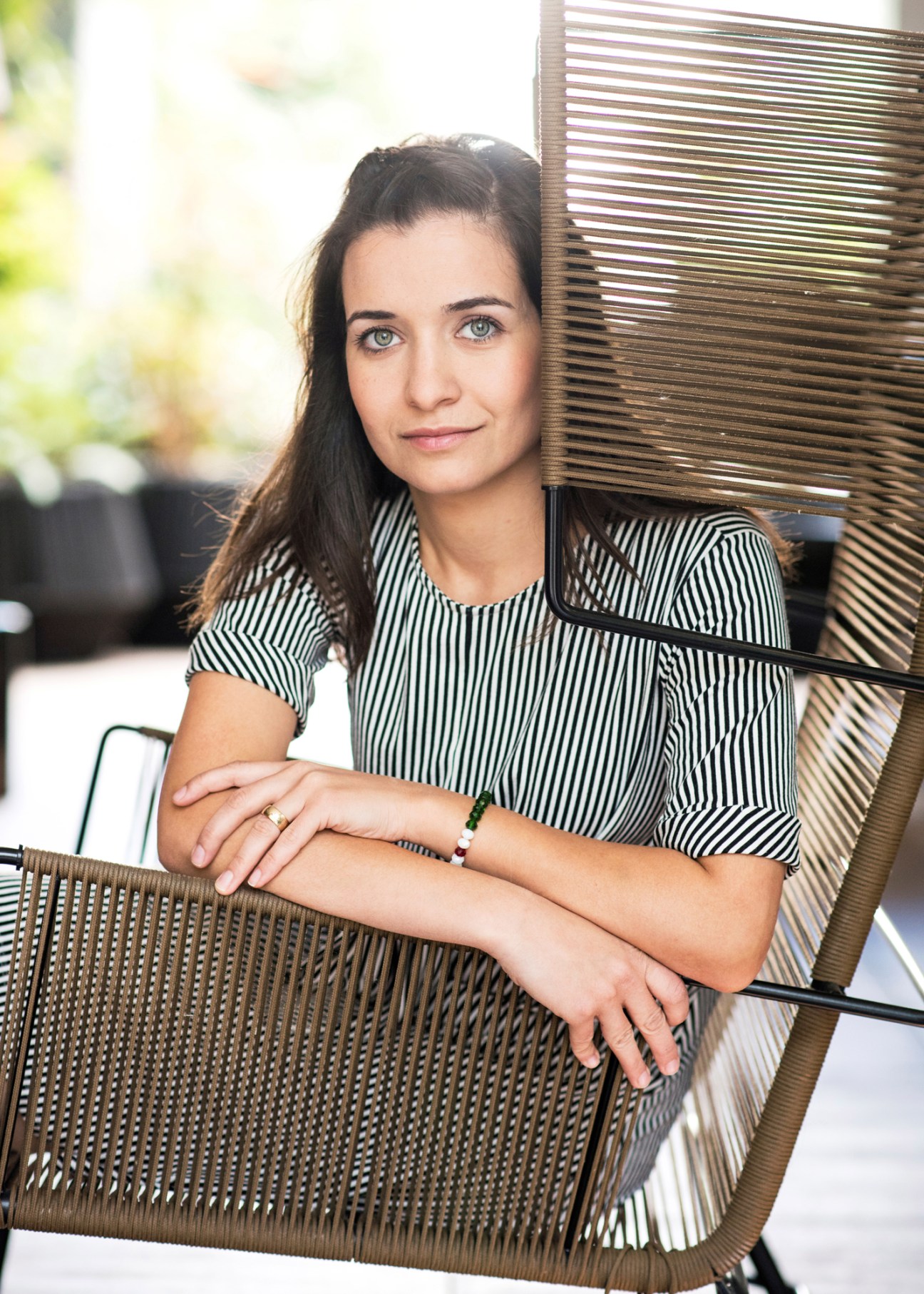
To say it’s a massive undertaking is an understatement but al-Kateab is not one to be daunted in the face of the impossible. Her 2019 documentary, For Sama, chronicles al-Kateab’s participation in the uprising in Syria in 2011 through to daily life at the east Aleppo hospital in which she and her doctor husband lived, along with their baby girl Sama, where civilian casualties were treated as the siege intensified. The hospital itself became a target. Interwoven into this story of the war are personal moments of joy: al-Kateab’s wedding and the birth of her daughter. The meaning is clear: her life is tied to her fight for Syria.
The film’s release was met with global acclaim: it won the Prix L’oeil d’or at Cannes, a Bafta for best documentary and was nominated for an Academy Award. But after the awards ceremonies ended, al-Kateab was confronted with a new challenge: how to ensure that the world continues to care about Syria, and to work to stop al-Assad and his allies, from afar? “I understand that people are becoming numb to it,” she says, of the world’s waning focus. She sometimes feels a similar sense of fatigue. “But if you were angry for Syria a couple of years ago, the situation is still happening.”
She points out that much of what she lived through in Aleppo is now taking place in Idlib: hospitals are being targeted, civilians – including children – are killed and hundreds of thousands have been displaced. And Syria, like everywhere else, is facing the ravages of the pandemic.
So far, al-Kateab has chosen a two-pronged approach. The first is legal: her focus for 2021 is to hold Syrian and Russian military and leadership accountable for human rights violations in Aleppo and across the country. “We are building a case against Russia about attacking hospitals,” she says. This involves working with lawyers from Guernica 37 International Justice Chambers, which pursues criminal cases in international and human-rights law. Thanks to her work as a journalist, al-Kateab has been able to supply hundreds of hours of footage as evidence. “We have so many witnesses; we have footage from inside and from outside [hospitals]; we have the ngos and organisation statements after the attack happened.”
However, al-Kateab knows how difficult and protracted the process of holding the Syrian regime to account will be. She had some hope that al-Assad and his allies would face repercussions last year, when the UN Board of Inquiry announced that it was investigating the targeting of hospitals by Syrian and Russian forces. Instead, she was horrified when the inquiry found that it was “highly probable” the Syrian government and its allies carried out attacks on just three healthcare facilities. “Literally, if they didn’t do anything, that would have been much better,” she says, her voice rising in anger. “Doing nothing would have been better than adding to the misinformation and giving the regime some relief.” She also shares scorn for the UN over the inclusion of Russia on the Human Rights Council.
There is another target for her anger and she came up against him at the 2020 Academy Awards. She was dismayed when For Sama didn’t win in the Best Documentary category, mainly because of the film it lost to: American Factory, which was produced by Barack and Michelle Obama’s production company. “Always when we talk about Syria, we bring up Obama – about how he didn’t do anything, how he didn’t allow the world to react [forcefully enough]. He was able to change everything but he didn’t.”
So al-Kateab’s other tactic has been to capitalise and build on her own work. She has formed Action for Sama, which campaigns to end attacks on hospitals in Syria and elsewhere. Through Action for Sama she helps to raise funds for refugee charities and is collaborating with on-the-ground organisations that are active in Syria today. She has worked with UK politicians, including Labour MP Alison McGovern, who is the co-chair of the all-party parliamentary group Friends of Syria, to further her campaign in parliament. “Our role as activists, as people who survived all of this, is to keep making noise to the whole world to let them know that this is still happening,” she says.
5.
Tony Blair
Former prime minister
UK
Now running a global government advisory institute, Britain’s erstwhile leader has shifted his organisation’s focus to helping the world get moving again after the pandemic.
Tony Blair is casually dressed in a navy-blue zip-up top and appears relaxed in his office. Behind his desk is a painting by Ken Howard of a Northern Irish mural featuring the slogan “No Surrender” above a Union Jack flag. The same painting forms the backdrop to one of the more unusual portraits of the former UK prime minister, painted by Alastair Adams, whose depictions of Blair hang in London’s National Portrait Gallery. Standing and occasionally pacing behind his desk, mug in hand as he speaks to Monocle, Blair knows that he has had it easier than most people who’ve been working from home in lockdown but is clearly eager to get moving. “I want to get back into the office,” he says. “Some of the work we do really requires you to have face-to-face meetings.”
His organisation – the Tony Blair Institute for Global Change – has also been eager to get people moving again. Advising governments and offering an outspoken voice on the pandemic for much of the past year, Blair’s institute has recently thrown its weight behind the idea of vaccine passports or certificates as a means of kick-starting international travel. “I literally don’t understand the arguments against them,” says Blair. “The idea that to go abroad somewhere you’re going to quarantine first in a government hotel; it’s absurd. International travel won’t happen on that basis. We have the technology that’s capable of doing this in a sensible way, which protects people’s privacy, so just get it done.”
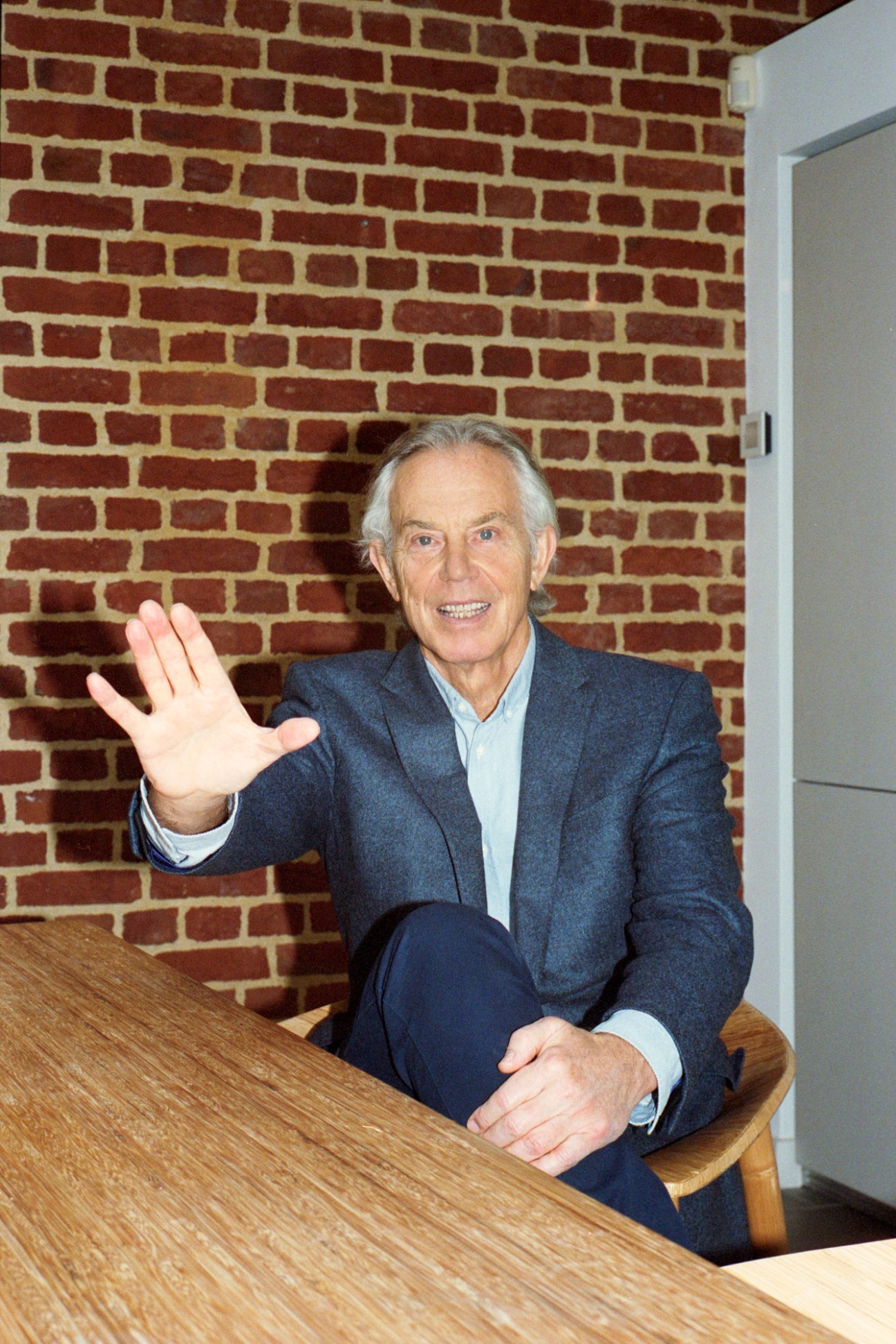
A supporter of free trade and globalisation, Blair’s institute has recently been working to co-ordinate a passport scheme to help restart travel between African nations. He’s calling on all developed nations to do the same. “I think this is inevitable. And if it is inevitable then put in place a proper system. Don’t let a patchwork of different systems and different processes of validation grow up topsy-turvy because you’ll just create a lot of complexity and confusion. And you will also probably facilitate fraud.”
More generally it’s the lack of global co-ordination that is perhaps the biggest source of frustration for Blair – and he says that this should be a critical lesson for dealing with future pandemics. He believes that better global co-operation on vaccines, testing and drugs could have cut the length of the outbreak by three months. And he says that the UK-US relationship should have been at the centre of those efforts. “Even with President Trump in office I would have been trying everything that I possibly could to have made sure that Britain and America had a strong relationship, so that we were able to impact the coronavirus crisis,” he says. “The absence of global co-operation has massively harmed the collective effort to deal with this disease. And at the root of that co-ordination is – not always but often – the relationship between Britain and America.”
It is Blair’s unwavering belief in that special UK-US relationship that has led him into trouble in the past, and it’s why he tends to pick his battles these days when it comes to speaking out. Despite his record as the longest-serving Labour Party prime minister in UK history, he has readily acknowledged over the years that some of the more unpopular decisions from his time in office, namely the UK’s involvement in the US-led Iraq War in 2003 mean that his contributions to today’s public debates can be counterproductive. (In 2016 he expressed “sorrow, regret and apology” about the war’s aftermath.) It explains why he stayed (mostly) quiet in the run-up to the 2016 Brexit referendum, for example, despite being ardently pro-Remain. This, together with the unwritten rule that former leaders don’t inject themselves too heavily into the politics of their successors means that Blair limits his outspokenness to where he’s most passionate – and where he believes that he can still have an impact.
Until the pandemic, this had mostly involved taking a view on what post-Brexit Britain should look like. Blair has consistently lobbied for a softer Brexit and the maintenance of close relations with the EU, not only for the purposes of trade but to prevent trouble in Northern Ireland. Blair highlights the “huge problems and friction for many people trying to do business in Europe now”, since the Brexit deal came into effect at the start of this year – and you can sense that he feels a certain amount of vindication.
However, he also feels a particular pain over the serious challenges facing Belfast, an issue that remains close to his heart due to his role in brokering the Good Friday Agreement, which was signed in 1998. After the UK chose a so-called “hard Brexit”, exiting the EU’s customs union, Blair says that the problems posed for Northern Ireland were foreseeable. There was little choice but to create a customs border between the UK and Northern Ireland in order to keep the one open between Ireland and the north. And that hasn’t been easy. “The Northern Ireland problem derives from the inherent strangeness of the situation we now find ourselves in,” he says, warning that the Northern Ireland protocol which has emerged from that situation remains “fragile”.
Blair finds little comfort in the fact that the UK’s vaccine rollout this year has gone more smoothly than that of the EU, where initially botched negotiations with pharmaceutical companies and doubts sown about the efficacy of certain vaccines have left many EU nations lagging well behind the UK in their vaccine distribution. Blair says that it was a mistake for the European Commission to take the lead in negotiations with pharmaceutical firms rather than letting a smaller collection of top EU nations lead the way. This mistake, however, shouldn’t detract from the EU as a whole.
“The ardent Brexiteers have rejoiced in the problems that Europe has had but, as I tell people, the UK could have taken all the decisions that it took in respect to vaccines while within the EU,” he says. “This was Britain at its best and Europe at its worst but there have been times before and there will be times after when it’s the other way around. These issues will get resolved in time and as Europe’s vaccination production increases by the middle of this year, these will be old arguments.”
For the past year Blair and his institute have been acting as formal and informal advisers to governments, influencing policy on the pandemic. It marks a temporary departure from the initial mission brief for the Tony Blair Institute for Global Change, which was founded in 2016. Since then it has grown to some 250 employees and has a presence in more than 20 countries around the world, including 13 in Africa. “The policy side of the institute was originally going to focus on how you rebuild a solid centre in politics, not just in the UK but globally, because I think that the big problem in Western politics and Western democracy has been the partisanship and polarisation of the political debate,” says Blair. “But then, when coronavirus hit, we thought, ‘Well, we’ve got this intellectual talent base, let’s repurpose it.’”
Although this shift is a reshuffle of the institute’s remit, Blair still views his recent role in the pandemic as a continuation of the same mission: a push for pragmatic and common-sense policies to get nations moving again. And although the health challenge of the pandemic might be the purview of scientists, the response – balancing economic and health concerns, and managing the dissemination of testing and vaccines – goes to the very heart of good governance. And this is where his institute has sought to play a key role. In December it did intervene in the issue, by calling on governments to delay the time between the first and second doses of the vaccines, so that more people could get inoculated at least once. The organisation has also been at the forefront of calls to introduce mass testing to help reopen society. And in Africa it has been aiding governments in the management of vaccination programmes and finding ways to keep their more informal economies afloat.
“I think that there is a role for people on the outside of government but who have experience of governing, although not in a hyper-critical way,” says Blair. “I’ve been very sympathetic to the scale of this challenge. It is the toughest logistical challenge that governments around the world have ever faced, certainly in modern history.”
Nor is it any easier being in opposition these days. Blair suggests that he doesn’t envy the challenge facing Keir Starmer, the current leader of the UK Labour Party. “He’s got an incredibly difficult job and he’s doing it well,” says Blair, noting that Starmer must balance the need to hold the government accountable without getting too out of step in a time of crisis. “He’ll be fine. It’s a completely unreal situation at the moment in politics. At a certain point we’ll return to something more like normal.”
Tony Blair on…
1.
Northern Ireland and Brexit
“The Northern Ireland protocol, which is part of the Brexit agreement, is fragile. But we need to be very clear: if you abandon it then I don’t know how you retain that open border between north and south. The Northern Ireland problem derives from the inherent strangeness of the situation we now find ourselves in, which is that Northern Ireland is in a different trading relationship to the single market of Europe than the rest of the UK. But you’ve got to try to protect this arrangement. We’re playing with very, very difficult politics when we mess around with this protocol on either side – Europe or the UK.”
2.
USA
“The UK’s relationship with the US is a fundamental part of our security, our values and our interests. Post 9/11, I took the decision that we should stand shoulder to shoulder with America – and obviously a lot of people disagreed with that – but I say to them, ‘Distance yourself from America and you will find that it’s a long way back.’ Partnerships and alliances are like friendships: you test the friendship not when the going is easy but when it’s tough. There is an opportunity to strengthen the relationship again now – it’s going to be easier with President Biden – and that’s important for both the US and the UK. The UK is the smaller country, and in that sense a junior partner, but because of our history and reach we can add a lot of value.”
3.
Hong Kong
“One of my first acts as prime minister was to participate in the handover ceremony and that was right to do. But the promise was: ‘One country, two systems.’ During my time in office, those promises were kept. But over the past few years that’s been threatened. I think it’s very important for China to understand that the value of Hong Kong was based on one country, two systems. You jeopardise that, you jeopardise the status of Hong Kong.”
Image: Alexandre Isard / Contour by Getty
Pride in the wool
The Woolmark Company’s headquarters on the edge of Sydney Harbour is a long way from the nearest sheep station. But that’s just fine with the 60,000 Australian sheep farmers who rely on CEO Stuart McCullough and his team to take their valuable merino wool to the world.
A non-profit funded by the nation’s government and its wool-growers (who contribute a portion of their annual earnings), Woolmark has a hand in the wool supply chain from top to bottom. This means helping farmers to get the most from their sheep, via everything from education in shearing and wool-grading, to fibre research and development. It also means putting export, sales and marketing skills to use.
Wool exports have historical importance in Australia and were once considered to be the driving force of the economy. It was “a nation riding on the sheep’s back”, as the saying goes. Although mining and minerals have taken the top spots in modern times, Aussie wool exports still amount to some AU$2.75bn (€1.77bn) a year. Woolmark has 15 offices around the world, ensuring that everyone from Italian tailors – who have long opted for the fine Australian fibres – to manufacturers in Asia have access to quality yarn.
After 20 years at the company, McCullough says that he is still learning all the time. “Every day I find out things that I didn’t know,” he says. “Be it new research, technology or just the everyday running of the business.” And, as he’s keen to remind himself, it’s all down to the team around him. “I couldn’t do what I do without them,” he says. “They are the engine room of the company. I’m not in charge of them – I’m charged with their care.”
CEO, The Woolmark Company
Stuart McCullough
McCullough began working at a sheep farm as a “jackaroo” (that’s a farmhand who’s fresh out of high school, to you city folks). From the paddock he moved to the shearing shed then to the lab where he worked in fibre testing and research, before a spell in communications, buying and exporting for Woolmark. He then ran Woolmark’s Americas arm for five years before being appointed CEO in 2010.
The Cabinet
John Cheshire Wool-tester extraordinaire.
Anna McLeod Global communications and content.
Sarah Graham Marketing content officer.
Angus Ireland Programme manager, fibre advocacy and eco credentials. “Otherwise known as head scientist and researcher.”
Julie Davies General manager, processing, innovation and education extension.
“Oversees the wool supply chain beyond farms.”
Adam Garner Wool store manager.
“Helps to store the bales of wool that Woolmark then trades.”
Sue Pownall Stuart McCullough’s EA.
Robert Ryan Managing director, Schute Bell Badgery Lumby wool broker.
Miles Barritt Wool grower.
“One of the wool growers that Woolmark couldn’t exist without.”
Julie O’Donovan Graphic-design manager.
Catherine Veltman Consumer marketing manager.
“Also works across the Woolmark prize.”
Marcus Majas Product engineer, Digibale.
“Creates technology to support wool growers, such as a bale-weight calculator.”
Cathryn Lee Technical manager.
“Looks after the Woolmark certification programme.”
Scott Carmody Wool buyer and wool-trade consultant.
Op (Pollapee) Sroysuwan Senior developer.
“Working on sheep-ear tagging to monitor sheep movement in real time.”
Carolina Diaz Programme manager, agri-technology
“Works across animal-welfare practices.”
Trudie Friedlich Project manager, eastern hemisphere and emerging markets.
Pup stars
My dog, Hodu, wags his tail as we exit Seoul’s Sangsu Station and head to our regular coffee spot, Insole Cafe. I order an Americano and notice a poodle in a puffy vest lapping up a puppy latte. Hodu, a furry white ball of joy, looks somehow naked compared to the café’s other well-dressed patrons: a bichon peeping out of a designer carrier and a greyhound in a turtleneck. Fashionable pups are commonplace in Seoul today.
At Insole, dogs dressed in luxury looks are a constant fixture and dachshund Huchu, sporting a dark-green Barbour, is no exception. He peers anxiously past the counter towards his owner, who is dressed in matching gear. Huchu’s owners, Noh June-young and Kim Min-jeong, own the shop. Kim also manufactures clothing for South Korean dog-lifestyle brand Howlpot. Seated together, the three look as though they could be posing for a Norman Rockwell painting.
When I adopted Hodu in 2018, government records counted some six million pet dogs in South Korea, a big increase compared to 10 years before. There are many theories behind this rise in animal ownership: South Korea has the world’s lowest birth rate, children’s education is expensive and the culture demands long working hours. In short, young couples are choosing to have pets rather than children. “For most of us, it’s not that we have sworn off children; it’s that having a dog means that parenthood doesn’t feel as pressing,” says Kim.
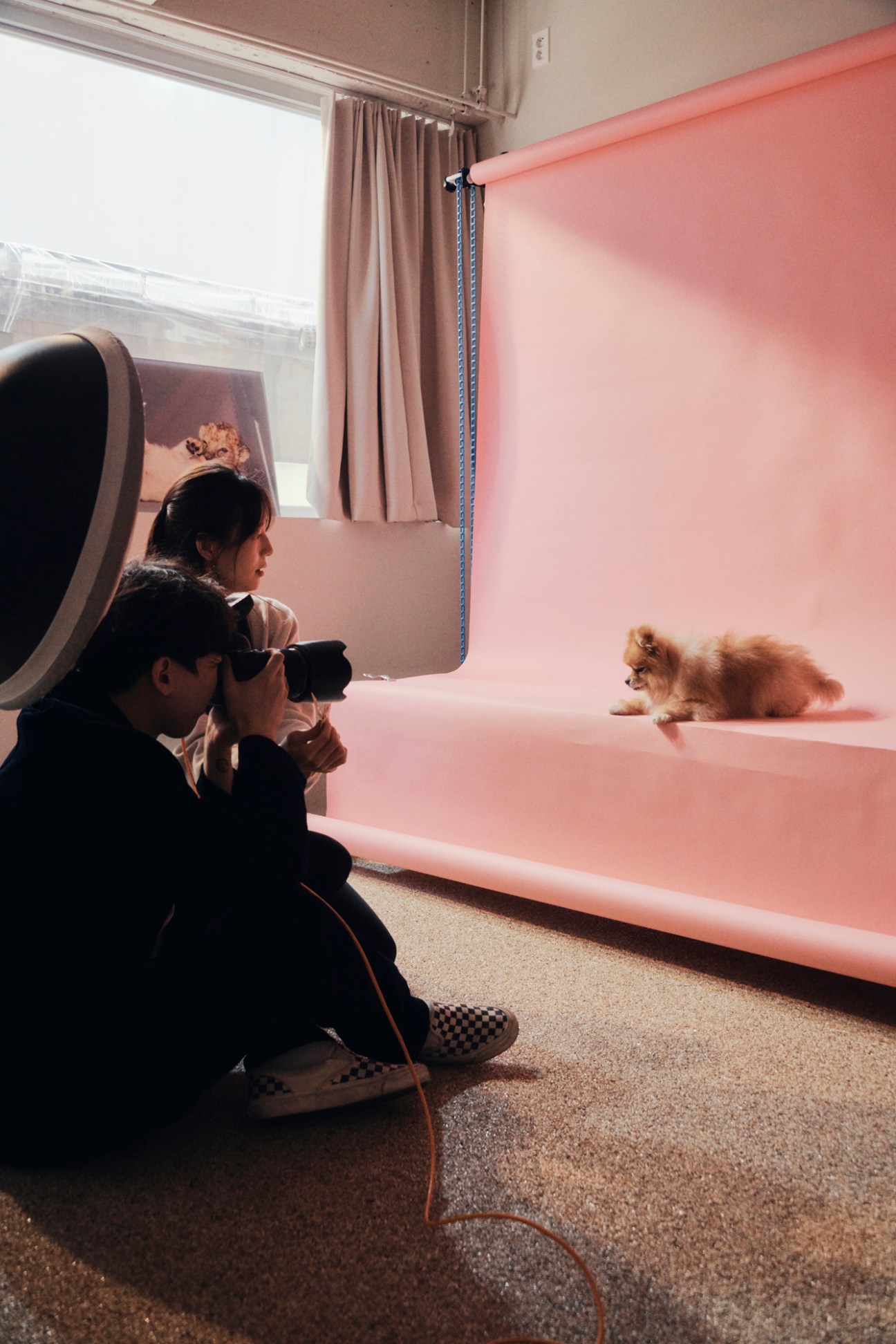
For a long time South Korea was better known for eating dogs than spending lavishly on them. In Gangnam, pet photographer Hong Seung-hyeong has seen the change firsthand. Inspired by his pomeranian, Tank, Hong switched from fashion to pet photography nine years ago and set up Thank You Studio. As couples zip in and out of the space’s automated photo booths to take family pictures with their pooches, he says that there was no market for this work until about 2014. “Few companies specifically catered to dogs,” he says. “But so much has changed.”
The value of South Korea’s pet-care sector has been projected to triple to $5.2bn (€4.3bn) by 2027. As the years have gone on, Thank You’s Hong has seen the proliferation of canine clothing options, storage for pooch attire and even hairdryers for hounds. Protection for pets hasn’t grown nearly as quickly but Hong hopes that will change. “Responsible pet ownership and acceptance of disabled and mixed-breed dogs will soon become the norm here,” he says.
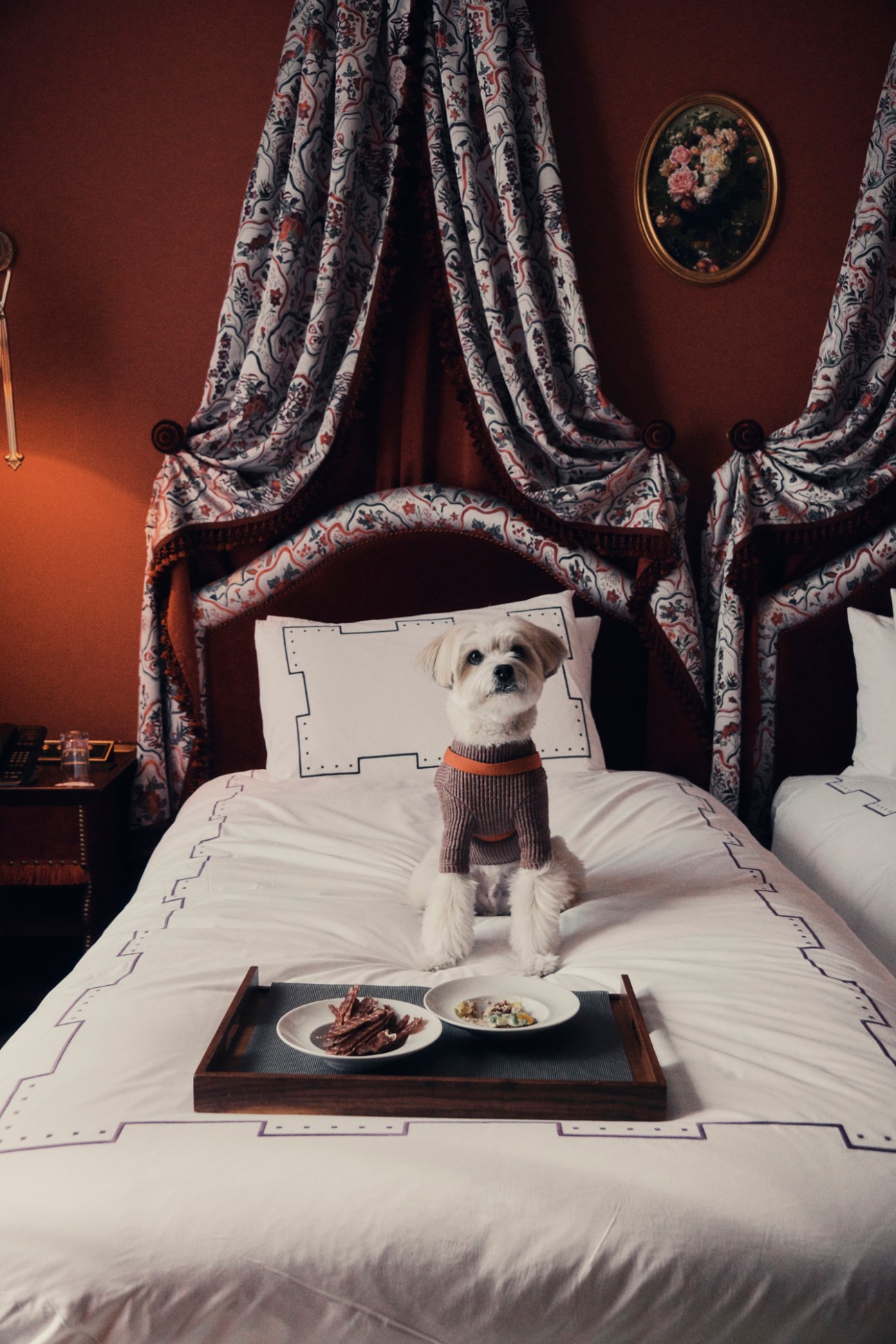
L’Escape Hotel is a boutique institution designed by Jacques Garcia that has an entire floor dedicated to pet-friendly suites – and even special trolleys for transporting four-legged folk. Hodu zeroes in on the toys awaiting his arrival and settles in the red, velvety room. As I see him devour a mock steak (a staple feature of the hotel’s room service), I can’t help but wonder whether the trend is nearing its saturation point. Pet owners I talk to agree that fancy clothes do not a happy dog make and, as with humans, there is debate over whether such luxuries are necessary. But I don’t break the news to Hodu. He has finished his steak and seems happy to be treated every once in a while.
Brunello Cucinelli
Brunello Cucinelli has created a coveted global fashion brand while pursuing a personal and corporate philosophy that’s deeply rooted in the land that his family once farmed. This Italian entrepreneur’s listed profession might be fashion designer but in conversation he is more likely to riff on the writings of Immanuel Kant than discuss hemlines. It is this love for philosophy and the classics that has helped to shape Cucinelli’s worldview and also, more importantly, his approach to managing his self-titled fashion label.
“We need time every day to nourish our mind and our soul,” says Cucinelli, sounding at times more like a monastic teacher than someone in charge of a company amassing €500m in annual sales with its knitwear, jackets, trousers and sportswear in soft cashmere and other fine fabrics. Such thinking has led him to define what he describes as a “humanistic take on capitalism” where “no profit should be made without valuing human dignity”.

In practical terms, this means that Cucinelli is committed to paying his staff above market wages and ensuring that production stays strictly within Italy’s borders. In fact, most of the work that goes into his clothing takes place in his native region of Umbria. Employees enjoy comfortable working days thanks to generous 90-minute lunch breaks at a subsidised canteen that uses produce from nearby orchards and vegetable gardens that Cucinelli has helped to revive.
His civilised vision of a global fashion brand extends beyond the office to his efforts to improve the quality of life in Solomeo, an idyllic 12th-century hilltop village in the Umbrian countryside that serves as the base for Cucinelli’s fashion empire. Here he has established a library and a 240-seat theatre, and erected a school dedicated to teaching skills such as tailoring, gardening and masonry. “Working in beautiful surroundings helps our creativity,” he says. “In Solomeo, beauty is found in every place: the medieval castle, the agricultural heritage of the countryside. Here we can work and still stay connected to the outside world.”
Although his utopian musings are rare in today’s corporate world, Cucinelli is following in the footsteps of enlightened Italian executives of the past. In the 1950s, administrator Enrico Mattei and industrialist Adriano Olivetti were concerned with the balance between leisure and toil, leading them to build housing and holiday retreats for their staff.
Born into a family of impoverished wheat farmers in Umbria, Cucinelli believes that his rural upbringing was instrumental to his outlook. “Nature teaches us to find an equilibrium,” he says. “If you plant, you should use natural compost, not fertiliser, so you nourish both the plant and the land around it.”
Despite a less-than-stellar 2020 due to the pandemic, Cucinelli is upbeat about this year’s prospects. He’s also eager to give back. Rather than mark down unsold merchandise that had been stuck in shops during lockdown, he’s donating about €30m worth of clothing to small charitable organisations. “After the pain of this past year, there’s a moment for compassion, for understanding,” he says.
Cucinelli is optimistic that his commitment to quality made-in-Italy manufacturing – alongside his smart combination of sportswear and soft suiting in muted colours – will win customers over again. “People will go back to dressing up and changing their outfits to look elegant,” he says. “But now we will think more about what’s in our wardrobe, and how and where our clothing is made.”
Brunello Cucinelli’s CV
1953: Born in Castel Rigone in the province of Perugia, Umbria
1978: Sells first collection of cashmere sweaters
1982: Moves to Solomeo, his wife’s hometown
2004: Wins the Premio Pitti Immagine Uomo prize for best creative talent
2010: Made a Cavaliere del Lavoro (Knight of Industry) by the Italian president
2012: Lists his company on the Milan stock exchange
2018: Publishes ‘The Dream of Solomeo: My Life and the Idea of Humanistic Capitalism’
The opener
Heels on wheels
Louis Vuitton goes mobile
At-home sales have long been the domain of Avon ladies and door-to-door Tupperware peddlers. Now, you can add chic Louis Vuitton sales associates to that number too. The French brand’s elegant new fleet of mobile boutiques travels to customers’ homes so they can peruse a personalised selection of pieces including clothing, fragrances, jewellery and leather goods. The LV by Appointment experience had its first outing in New York late last year and the plush trailers are now visiting doorsteps in California. Your driveway is the new runway.
Post haste
by Chiara Rimella
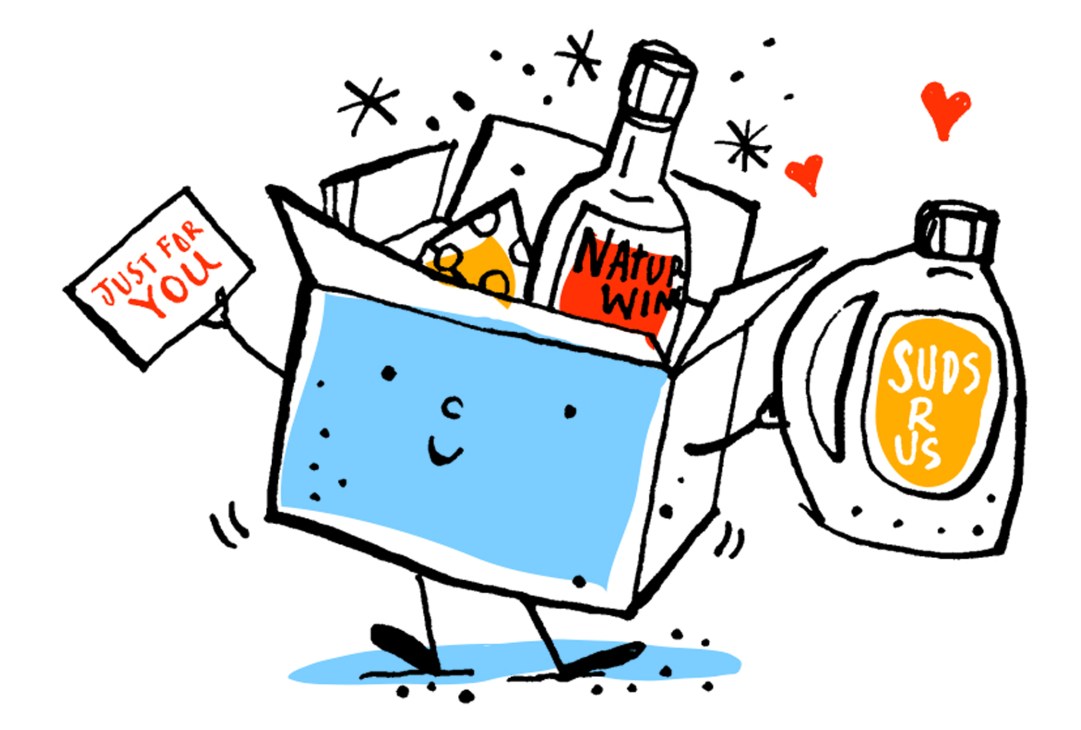
Recipe boxes were my gateway subscription. Having never been a masterful cook, receiving a delivery of vegetables, meat and instructions on how to whip up a decent meal each week soon started to feel more exciting than queueing up for groceries. Then came the laundry detergent, the sanitary products and the natural wine. I quickly became a sucker for a subscription. Getting these parcels has felt like receiving a recurring gift, a mood-booster and a chance to find new vintners or ingredients I wouldn’t have known where to find myself.
Clearly I’m not the only one; the so-called subscription economy has grown by 437 per cent over the past nine years and these days you can pretty much subscribe to everything – cheese, beard oil and socks included. Still, it’s not until I started being targeted with ads for clothes boxes that I realised I had to wean myself off. If I signed up, a stylist would pick a few garments for me and pop them in the post.
Why did this suddenly feel different? Maybe it’s because picking your style is personal, and a hunt that’s a joy in itself. Mostly, though, it’s because there are certain items I need re-stocked on a regular basis (wine certainly being one of them) and others I don’t. I don’t want a new dress or a new plant every week. The endorphins last longer when you choose something to care for and cherish for a lot longer than that.
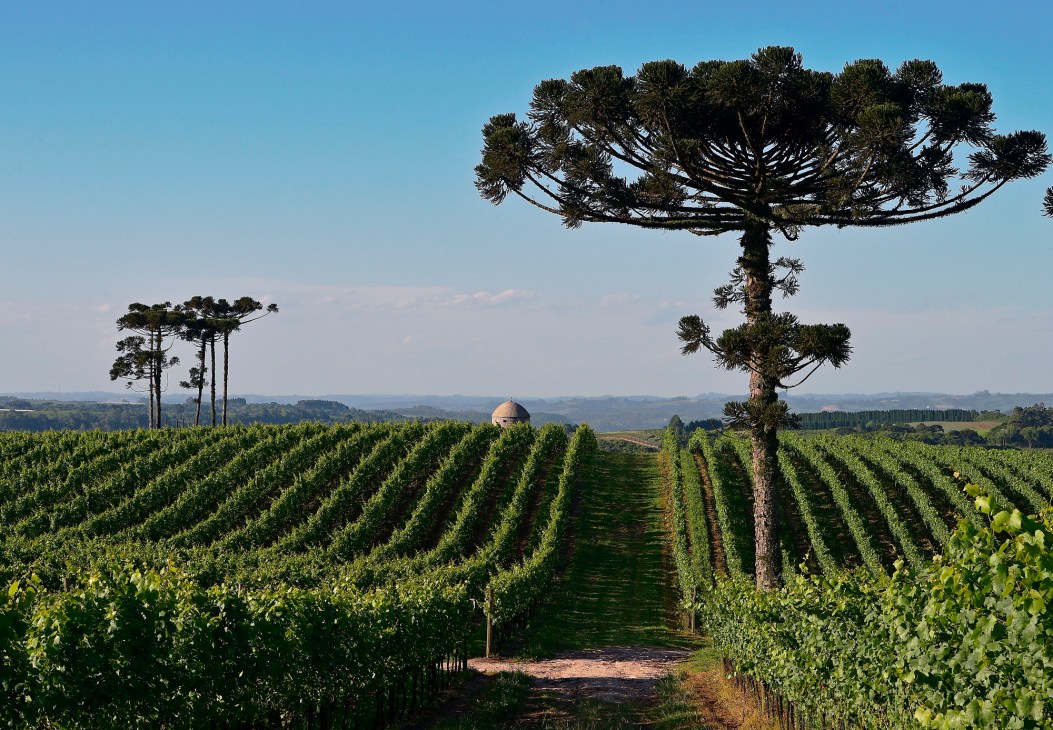
Tannin fodder
When you think of “wine country”, Australia’s Barossa Valley and Argentina’s Cuyo region might spring to mind. Brazil probably doesn’t. But sales of wine there jumped 30 per cent in 2020, with a large portion from Brazilian wineries.
Conditions this year have only helped: Brazilians, like many grounded by travel restrictions, are increasingly keen to support nearby growers. And president Jair Bolsonaro’s bungled handling of the pandemic has been enough to drive anyone to drink. Saúde!
House whine
After a tough year, you might think children could be cut some slack to play outside. Not by Japan’s more curmudgeonly residents, whose crowdsourced online map pinpoints where “stupid parents” have allowed playing on the street. Citizens are also called out for loud talking and inconsiderate barbecuing. Anyone can add an anonymous whinge and more than 6,900 hotspots are marked. Maybe the map is a sign of collective exasperation and no doubt there are repeat offenders, but most people try hard not to annoy their neighbours. There’s a reason why Tokyo’s parks are full of people playing musical instruments.
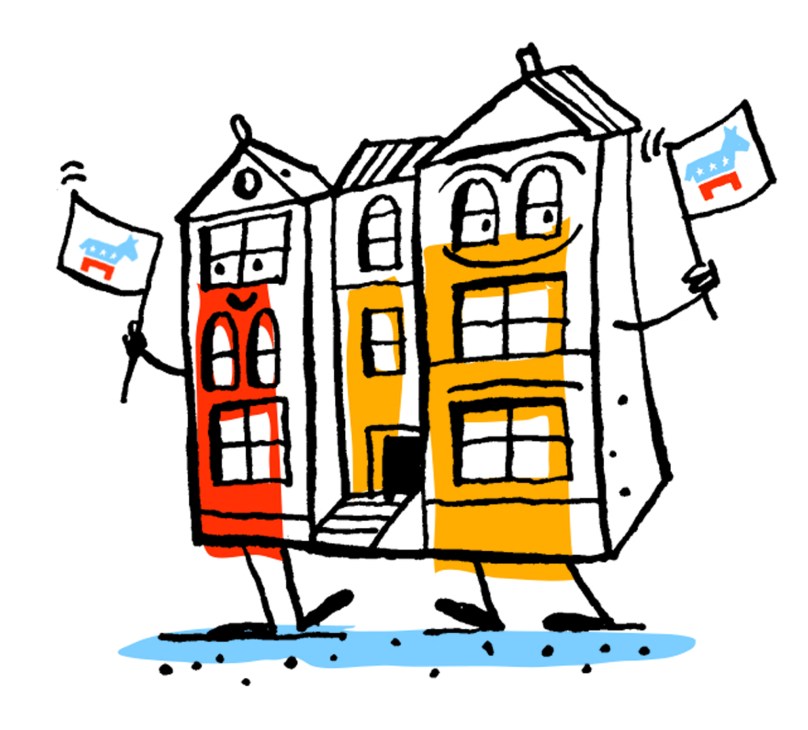
Correspondent’s View
from…
Washington DC
by Sasha Issenberg
Whenever power switches at the White House, conversation among Washington’s permanent residents often turns parochial: which DC neighbourhood will be most transformed by the new president’s arrival?
For Washingtonians, it is a familiar cycle. An influx of new staffers scrambles to buy or rent homes, often near to one another, pulling along lobbyists and journalists in their orbit. Almost immediately, the fortune of one neighbourhood rises while another falls; Georgetown was invigorated by the glamour of John F Kennedy’s circle for instance, while Republicans of the George W Bush era found a foothold in Glover Park. These shifts can change existing cycles of development at a speed unseen in cities where taste and value adjust organically.
I’ve witnessed this first-hand. As soon as Barack Obama was sworn in, those of us who worked in political Washington could feel the centre of cultural gravity shuffle to the corridors along 14th and U Streets that had gone largely unloved since the Nixon years. That ended in 2017, when Donald Trump’s crowd sought refuge in The Wharf, a so-called “commercial lifestyle centre” that opened the year he came to office.
This year, there are a number of good candidates for the area most likely to be Bidenised. One can easily imagine staffers moving en masse into LeDroit Park’s brick rowhouses, with distilleries appearing in nearby Ivy City to entertain them.
But the crisis that consumes Joe Biden’s team has also stalled this cycle. With much of the capital’s business being done remotely, many district denizens have found homes in areas beyond the Beltway where space is more plentiful. The pandemic will ensure that Biden has a consequential presidency. But it could also stop him from having any local legacy. If that’s the case, we’ll miss out on an important aspect of DC life: a unique shorthand to explain why the city changes when it does. And possibly, a few new drinking holes in Ivy City.
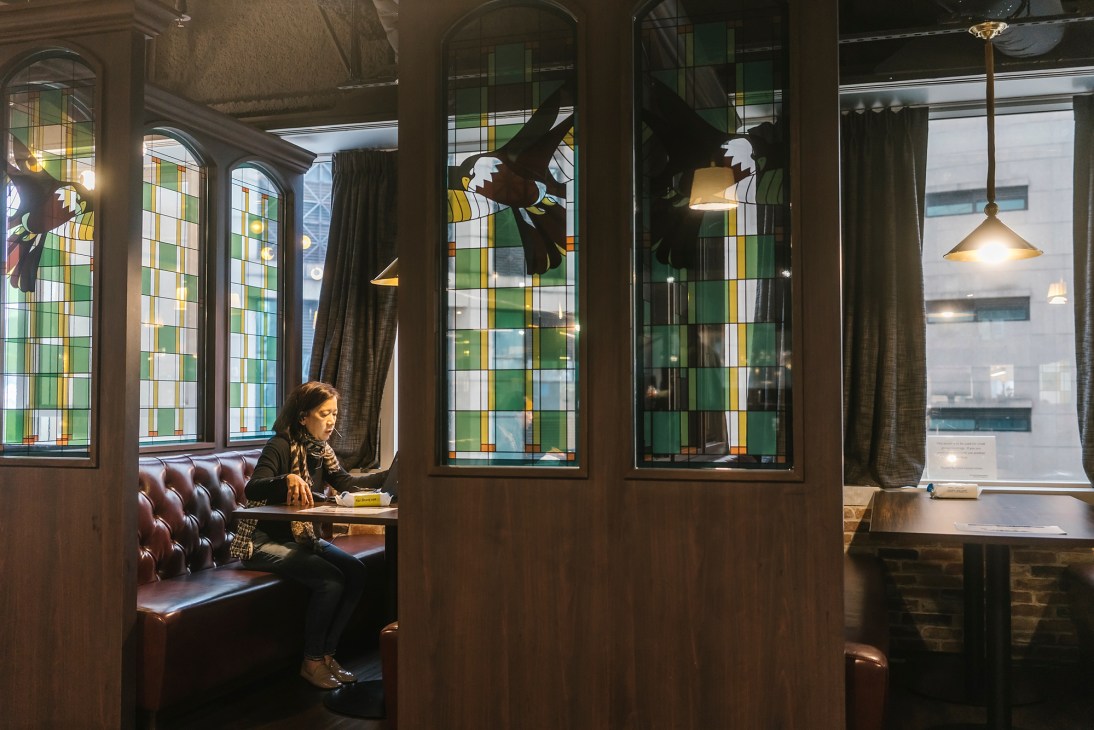
First Draught
One corner of the ‘South China Morning Post’ HQ recalls an era when journalism and drinking went hand in hand. Take a booth at the in-house pub and we’ll be happy to reminisce. For more, click here.
Lease of life
by Nic Monisse
Considering switching the cosmopolis for a cosier conurbation? Well, a handful of small towns have made that decision easier. They’re offering incentives – with a catch.
Loitz, Germany.
Interviewing for a place in a shared house is never fun but imagine having to field questions from prospective neighbours too. That was the case for two ex-Berliners who won a community vote to become the town’s newest residents. In exchange for free rent, they must transform part of their new digs into a lively community space.
Santo Stefano di Sessanio, Italy.
If you’re looking to set up shop close to Rome, get in touch with the council here. Anyone willing to commit to a five-year stay, and open a tourism, culture, maintenance, medical or food business, is eligible for grants totalling €44,000.
Okutama, Japan.
Close to Tokyo, this is the perfect place for fans of a “fixer-upper”. New residents willing to move into the town’s akiya, or vacant homes, can do so for free and may also receive renovation assistance.

correspondent’s view
from…
Warsaw
by Annabelle Chapman
Late last year, I received a long-awaited package to my home in Warsaw. Inside was four metres of ivory silk crêpe – luscious and fluid, with incredible drape. I had bought it several months earlier from the American womenswear brand Elizabeth Suzann, known for its simple silhouettes that are sewn on site at the company’s base in Nashville, Tennessee.
I ordered the crêpe thinking that I would sew myself a shift dress (for the uninitiated, it’s a simple piece where the cloth falls straight from the shoulders). To me, those four metres of fabric contained the promise of life after a year of lockdowns – of silk garments and glasses of rosé outside after restrictions are lifted.
Here in Warsaw, style has long been bound up with resourcefulness. During the communist era, most people had to make do with whatever clothes were available. Some were able to get sought-after items from abroad, such as blue jeans, which became a symbol of freedom in Poland and other countries behind the Iron Curtain. Others sewed their own clothes, like my grandmother, who later shared her skills with me. Every item she made had a story.
After the fall of communism in Central Europe, Poles found themselves with significantly more choice, on everything from shoes to toothpaste. Shopping centres sprang up in every city, filled with Western chains selling fast fashion. Clothes became much more abundant but, at the same time, less special and more replaceable. Now, with online shopping, a new outfit is just a few clicks away.
Still, it is not all H&M. I like to spend spring evenings people-watching on Plac Zbawiciela, a popular spot known as “hipster square”, observing the eclectic style of passersby. Nearby, on Mokotowska street and at the Mysia 3 department store, shops sell clothes and accessories by a new generation of the nation’s designers, many of them made in Poland. Just as it did under communism, clothing still offers a way for us to express ourselves, regardless of what is happening in the outside world – and soon, I’ll have a silk dress to show it.
Images: Owen Kolasinski/BFA.com, Getty Images