Issues
Change for good
1.
Communication
Sarada Peri
Former speechwriter for Barack Obama
How can leaders be better, more effective communicators?
It’s not just about world leaders; it’s business leaders, community leaders and the leaders of any given organisation. Obviously, we are facing a global pandemic and consequential economic crisis, but the way that our fragmented media system has changed means that even if you have an intention in your communication, it might be misperceived entirely; it can be sliced, diced, repackaged and completely distorted. And you’re also competing against misinformation. So the challenges involved are significant and one leader can’t solve them.
I do think that, right now, people can smell untruths from a mile away. What people want to hear from their leaders is an authentic and real sense of who they are and what they plan to do. I don’t believe that people are easily persuaded by lofty language; they want to feel rooted in something. The job for leaders, as Joe Biden said in his inauguration speech, is to level with folks and be clear about their intentions – and why they’re doing what they’re doing. All too often what we hear from our leaders is a programme or list of policies but not necessarily an umbrella narrative under which these ideas can cohere. People don’t really know, “What are we signing up for? Why are we following this person? What do they have? Where are they taking us?” So being really clear about that for yourself – and then finding a way to communicate that clearly – is extremely important in these times.
2.
Media
Rainer Nowak
Editor in chief and publisher of Vienna’s ‘Die Presse’
How can we ensure reporting is fair and balanced?
Last year has shaken the world and turned things upside down in a way that we hadn’t been able to imagine before. Journalism was challenged to a degree that meant not all quality requirements were met all the time. Therefore, it is important to focus even more on fulfilling the high standards of quality journalism.
Audiatur et altera pars (the other part should be heard as well) must not be neglected even if the other part is paranoid, aggressive or simply stupid. Even if you detest a certain opinion, it must not show in the reporting.
We have realised that science and medicine can be fallible too. We are facing a situation where our knowledge and understanding can change from day to day. Therefore, the need for transparency about the source of information is bigger than ever before. Traditional media have lost readers to the so-called alternative media that bend facts and disclose sources. Our reporting must have the utmost clarity about what we know – and where we get it from – but also about what we don’t know.
For many of us, the pandemic manifests the first worldwide crisis that can be felt in our daily lives and that affects us individually too. Therefore, emotions and personal experiences might have influenced the reporting more than before. It is important to take a step back and strive for a helicopter view. It is our job to educate our readers. We have to deliver arguments and facts so that readers can form their own opinions – whether we like it or not.
3.
Housing
Alejandro Aravena
Pritzker prize-winning Chilean architect and founder of the Santiago-based Elemental studio
How can we build better housing?
Housing is not a product, it’s a process. In housing you ignite: you create the first spark and then the whole process begins. The moment you understand it dynamically and not frozen, like other architectural buildings, then the forces at play change. Then you channel people’s interventions.
The state, the market, the private sector, cannot deliver enough of what is needed. So that’s why we talk about the four Ps: the public-private people’s partnership. Evidence shows us that shared spaces that require agreements should not go beyond 30 units. Also, living space has to be flexible and big enough. In doing this, we have forgotten about the balcony; during the pandemic, the balcony meant having a moment of fresh air and relief.
Housing is a human issue. The Paris riots appeared in the vertical ghetto. The pandemic has proven that we need to update our approach to housing as it has huge consequences for security, political stability and democracy.
4.
Agriculture
Daan Roosegaarde
Dutch artist and founder of Studio Roosegaarde, which develops projects that merge technology and art
How can we grow food, manage agriculture and farm better?
The future of agriculture involves a new harmony between people and nature; the fields that feed us currently seem disconnected from our lives. Bridging that gap through technology was the inspiration for my latest project, Grow.
In the project’s development stages I was in dialogue with Wageningen University, the Netherlands’ biggest agricultural college, and we were discussing wavelengths of light that can be used to stimulate plant growth. One ultraviolet light was found to encourage growth and boost resistance to pests, allowing up to a 50 per cent reduction in the use of pesticides. So far we have worked with a farmer to use this technology on a huge field of leeks and found it to be effective in stimulating plant growth.
Grow’s aim is to show how light can help to produce crops more sustainably and encourage people to connect more with the places that feed us. Hopefully it will act as a platform to speed up the development of similar projects and can be expanded to a larger scale. In the same way that the invention of Technicolor allowed for new expressions in cinema, light science can provide new solutions when it comes to connecting us to our food sources and lessening their environmental impact.
5.
Ambition
Sou Fujimoto
Award-winning Japanese architect, known for working on ambitious projects in Europe and Asia
How can we keep thinking big and designing ambitiously?
I like to keep a certain amount of space free for myself to work on one or two conceptual projects at the same time. Otherwise, you’re just completing actual projects and there’s no freedom where you can allow your ideas to really grow. Experimental work allows us extend our thinking. As designers, it is very important to do conceptual work and competitions, not only so we can win new work but so that we can think of crazy ideas to push ourselves further forward.
Conceptual thinking is like a big river network; sometimes, suddenly, new ideas come out and a new river starts, and sometimes two different rivers join together to create new ideas. Realised projects are based on these flows of conceptual thinking, where if you’re lucky you can make your idea possible. But even then, it’s not just about a simple translation from conceptual thinking to the real project; through the process of realisation you learn, get inspired, and further develop your conceptual thinking to achieve the project.
Conceptually thinking about the new possibilities of projects without any clients and remaining grounded in reality or some kind of future situation in society, can be an endless discussion with no answer. But it is quite exciting and important.
6.
Foreign affairs
Bessma Momani
Professor of Political Science at the University of Waterloo, Canada
How can we do diplomacy better?
The global economy is facing a crisis of low growth, high unemployment, low productivity, spluttering international trade and a huge debt overhang. Without significant diplomatic efforts among leading global economic powerhouses – which will involve firing up the g20, the IMF, and the UN to ensure a recovery for all – we will enter another volatile period of “beggar thy neighbour” policies that will rival the Great Depression.
The 2007 global financial crisis gave birth to a brief period of co-operation and diplomacy, which was reflected in the first leaders’ meeting at the g20. This spirit of international co-operation and co-ordination needs to be revived if we are to avoid severe worldwide economic pain. However, this approach will not be easy, especially as some global leaders have become more nationalistic. There is an opportunity, however, for the new US administration to reach out to the g20, particularly China’s Xi Jinping, and host a special multilateral summit focused on a post-pandemic economic recovery.
World leaders also need to find ways of stimulating economic growth, while being attentive to concerns about climate change and growing inequality. Leaders will have to listen to new ideas about reviving the global economy that take these concerns more seriously. A renewed diplomatic effort is the only way to prevent a lost decade.
7.
Civic policy
Penny Abeywardena
New York’s International Affairs Commissioner
What have cities learned from the past year – and what can make them better?
We have learned a lot in the past year – it would be a travesty not to have done. In New York, we have always shown leadership around climate change, affordable housing and many other topics, but the reality is that I don’t think everyday people appreciated how critical strong local leadership and government was in their everyday life.
One of the ways cities can perform an important role is by incentivising policy. For example, in the past year we had to think about what remote education looks like for more than one million students and increase access to broadband.
From an infrastructure perspective, we were able to focus on those who were most deprived and the infrastructure around how to support those communities who found themselves at a disadvantage.
The reality is that a lot of things from an infrastructure perspective really have to change. I hope that is one lesson that comes out of this moment. In our everyday reality, you’ve seen so many more people walking in their neighbourhoods, riding around on bicycles, or even those who are dining outside. This outdoor experience is also affecting the way that we are reimagining urban infrastructure.
Outdoor dining is going to limit the number of parking spaces and the number of cars that exist in the city because there’s just less space. And that space is given to people. This is a really exciting place where I can see us focusing on – and investing in – for our post-pandemic future.
8.
Brand identity
Alain Sylvain
Founder & CEO of Sylvain, a New York-based consultancy for sustainable strategy and design
How can we build brands that are more sustainable?
We need to design our brands for sustainability. And we need to do so with a sense of patience, resilience and proactivity. Many organisations are waiting for these challenges to dissipate before they actively set out to re-engage with consumers, the economy or the world at large. But brands will need to push for boldness in a way that will shape a better way forward, rather than passively waiting it out and returning to behaviours and practices of old.
Today and into the future, brands and companies will be tools for consumers to achieve their own ideals. The most pressing of those ideals requires addressing the multiple social and cultural crises that we face today. This will ultimately mean that they play more of a civic role, instead of a commercial one.
The companies and organisations that step up into this role, live it, own it and genuinely adapt and align their business goals with the new needs of consumers and society at large – those will be the brands that last.
9.
Urban spaces
Michelle Senayah
Co-founder of The Laneway Project, a non-profit social enterprise revitalising public spaces in Canada
How can we improve and care for the neglected public spaces in our cities?
In Toronto and many other cities, laneways are everywhere. Here it’s a network of more than 2,400 public spaces hiding in plain sight throughout the city’s rapidly intensifying downtown and midtown neighbourhoods. These laneways have historically been overlooked as places for people. But with strategic improvements they can be transformed from purely utilitarian spaces into welcoming places that strengthen the vitality and quality of life of Toronto’s communities.
By leading a focused community- centred revitalisation of laneways and other neglected civic spaces, we can transform them into complete, living public places. These transformations enrich their neighbourhoods by unlocking an additional area for shared community use.
In 2019, we worked with business and community associations in Bloordale, a neighbourhood west of downtown Toronto, to transform a laneway into a welcoming mixed-use space. It provides both delivery access to neighbouring independent shops and pedestrian access to a well-used parklet. It also introduced new pole-mounted solar led lights, planter gardens and a traffic-calming road mural, which enabled all users to share the space enjoyably and safely.
10.
Transport
Jan Gehl
Urbanist and founder of Gehl Architects
What are some big, positive steps we can take to get our cities back on track?
Over the past year we have, in varying degrees, lost sight of the bigger picture and the fact that the major problems of our time are climate change and the declining quality of our cities. Addressing the steadily growing number of private cars is the most urgent place to start.
What is currently discussed is the phasing out of fossil cars. Fine. But what is not discussed is how many cars we need to secure this workable service. What we see is that the number of cars just grows unchecked, as it has done since the 1960s. Driven by market forces and pressure from the car industry, every year more cars, more parking, more overcrowded streets and more space is taken up in our cities. Do we get twice as happy with twice as many cars? Nothing points to this conclusion.
To address climate considerations and achieve more welcoming communities, an obvious resolution would be to limit the number of cars and place a much higher emphasis on shared solutions – public transport and many more shared cars. Actually, shared cars should be the norm rather than the exception. Both climate, cities and efficient mobility are suffering from the steady increase in numbers. Let us instead have much fewer units, fewer problems and much better cities.
11.
Climate action
Mark Watts
Executive director of C40 Cities, a group of 96 global cities working towards a greener future
What role do cities play in shaping a more prosperous future?
Most immediately, cities can show how a green and just recovery from the pandemic will create more jobs, protect people’s health, reduce emissions and improve resilience. Mayors have been the strongest champions of the Paris Agreement and, in the absence of intergovernmental co-operation, they have kept the flame of internationalism alive. We need national leaders to get behind them with decisive green stimuli and regulatory support.
Against all odds, cities continued to progress climate action in 2020. Since the start of the pandemic, Paris has invested €20m in cycling, Bogotá announced hundreds of new e-buses, making theirs the largest order outside China, and the 15-minute city is being adopted globally.
The pandemic has exposed systemic inequalities, the fragility of our economic, political and social systems, and the urgent need to protect and restore our natural world. We must emerge on a path forward that guarantees economic, environmental, racial and social justice for all.
In 2021 more than 1,000 cities around the world will be mobilising to do this – by signing on to the Race to Zero, a campaign to unite cities, businesses and investors around a green and just recovery ahead of this year’s crucial UN climate change negotiations in Glasgow [cop26].
12.
Education
Rosanne Somerson
Academic and president of the Rhode Island School of Design
Should we rethink the way we teach?
For education to be real, it must also be equitable. Some private schools have access to facilities and resources that set up their students with a huge advantage over others in school districts with restrictive budgets and outdated facilities. Class sizes must be determined by ideal learning outcomes rather than demographics. Adaptable classroom spaces would allow for different kinds of assembly. There are major takeaways from this instant reinvention of learning environments over the past 12 months, which must be assessed to decide what we should and can carry forward. A key discovery is the inequity for some students who really suffered under remote learning, either due to learning styles, lack of technology access, internet reliability or personal time and space with the necessary technology.
With new teaching tools, the notion of a field trip is amazingly expanded, as are the opportunities for collaboration and experiential learning. We should invest in major curricular revision and infrastructure so education can address what we have discovered. This includes inventive ways to learn, share, and experience, while also addressing the structural racism and inequities present in our curricular materials and student experiences.
13.
High streets
Andrew Carter
Chief executive officer at Centre for Cities, a think-tank improving the economies of UK cities
How can our high streets be better run and managed?
A thriving high street is based on the strength of a wider economy. Lots of well-paid workers create a market for restaurants, shops, bars and other amenities that can’t be sustained in cities where people don’t earn as much money. Because of this, the most effective way to create a high street that is appealing to businesses and shoppers is to focus on the wider economy. Councils and business-improvement districts should consider how they can encourage skilled firms to set up in the city centre and create a market for high street businesses.
Struggling high streets are the symptom of deeper economic problems in a city. Any strategy for a “better” high street should recognise this and tackle the root cause of the problem: a lack of disposable income in the area. Improving people’s skills and encouraging more well-paying businesses into city centres will create a market for restaurants, shops and bars. Because of this, I’d encourage councils to spend more time thinking about how to attract office-based firms. Where offices go, retail, hospitality and leisure will inevitably follow.
14.
Home planning
Petra Marko
Architect and co-founder of Marko & Placemakers
Why should our homes be important, beautiful and handsome?
Home should be a place to hold one’s own, a safe space to retreat to. But, importantly, it is also an area for social connection – from the intimate relationships that grow within them to the informal encounters on one’s doorstep, the street and wider neighbourhood.
The quality of the spaces we live in therefore impacts on the whole microcosm of the city. Throughout the pandemic, our homes have taken primacy in our day-to-day lives, prompting a questioning of what matters – is it the size of a bedroom or the quality of space? Is it the overall floor area or the ability for spaces to allow both privacy and social interaction?
The notion of beauty in architecture is often deemed too subjective to define. But the basic ingredients of good architecture – such as daylight, proportion of space and character – are timeless. While the housing crisis is often perceived through lack of units, it is important to pause and define what kind of housing we want to build for future generations. From the amount of daylight and access to open space, through to views from our windows, well designed homes can make a positive difference to our health and wellbeing.
15.
Addresses
Deirdre Mask
Author of ‘The Address Book: What Street Addresses Reveal About Identity, Race, Wealth and Power’
Why is it important that everyone has a functional address? And how can street names and addresses help to positively shape our lives?
We take our street addresses for granted, but in fact billions of people lack a clearly defined way to pinpoint where they live. This might seem a small point, but addresses play an important role in modern economic and social life. Without one, you will often struggle to open a bank account, establish credit or even cast a vote. Even receiving mail will often prove impossible. And governments must be able to find people to tax residents, send out ambulances and, yes, enforce quarantines and track disease. That’s why international organisations see street addresses as a key tool for development.
Addressing seems easy: slap a name on the street and mark a number on the door. But it’s actually surprisingly difficult to devise an effective addressing system that will grow with a city. International organisations help: the World Bank has an online course explaining the fundamental techniques. Ultimately, though, most of the work must be done and maintained by cities themselves. Several companies offer digital solutions but even these can’t replace the benefits of traditional street addressing.
Apart from the practical benefits, street names have become living storage for community memories. Ones with historic names – Market Street, Cloth Fair – recall history on their signs. Streets named after local and national heroes explain what people valued or even didn’t value, given the paltry number of streets named after women. Meanwhile, debates over whether slaveholder street names should be changed also provide focal points for much-needed debates about race and identity. Even the numbered street names in the US say something about the nation’s founding values. A street name is never just a street name, even when it’s a number.
16.
Architecture
Alex Bozikovic
Co-author of ‘Toronto Architecture: A City Guide’ and Canadian National Magazine award-winner
How can we design a better learning environment?
“We shape our buildings and afterwards our buildings shape us.” When Winston Churchill said that, he was referring to the UK’s House of Commons. But it is certainly true more broadly – not least of the spaces we occupy as children. Architects and educators alike have long believed that school buildings have a profound impact on children’s learning and development. Tall stony piles enforced the regimentation of 19th-century schooling. Low, bright, open buildings of the postwar era – like Perkins and Will’s Crow Island school in Illinois, or Denys Lasdun’s Hallfield Primary School in London – reflected new political and pedagogical realities, while presenting young lives with modern ideas about form, space and light.
So where is that ambition today? Too many contemporary schools in the UK and North America are drab exercises in efficiency and economy. One response comes from Prague. There, a local government conducted an international competition for a new elementary school building. Its winners, the Canadian studio Office Ou, responded to the challenge with a four-level structure that shows off sustainable mass timber construction, provides generous access to the outdoors and natural ventilation and gives the school community a variety of room shapes and configurations.
Truly, then, this is the kind of architecture that directly models a generous, sustainable, creative and diverse society. Who would say no to that?
17.
Perspective
Liza Donnelly
Cartoonist at ‘The New Yorker’, CBS News, CNN and more
How can we get better at seeing the funny side?
I’ve been doing this for 40 years, observing people and drawing them since I was a child, so it’s partly instinctive for me. But drawing and observing something is one thing. Making it funny is a whole other learning curve. A lot of it is about being aware that everybody’s going through similar things. So it’s about looking for those things that we all share, and realising that a lot of it is just kind of silly and that the ordinary things we do are silly. Learning to laugh at yourself is a good start. Not taking yourself too seriously is important.
The pandemic has been interesting because there’s the two elements to it. You have the human-nature side that’s doing all kinds of weird and unusual things dealing with the pandemic, so that’s ripe for humour. On the other side, you have people dying – that’s not so easy to make fun of, and I don’t. That’s why you have to find a way to separate them. Humour often makes fun of our routines and traditions, the things we accept as normal. With serious subjects, I think humour can open a door for someone to see a new way of looking at something.
18.
Debate
Lewis Lukens
Former US diplomat and senior partner at Signum Global
How can we argue better?
By listening, really listening. Too often these days people come into conversations already convinced of the righteousness of their positions. As a diplomat you learn to listen and to discern those finer nuances in your interlocutor’s positions. You have to get used to learning to read between the lines – what is the person really saying? There are times when you have to contextualize the words against cultural and historical backdrops. Everyone is in such a rush these days that few people actually take the effort and the time to properly listen.
Putting oneself in other people’s shoes is a helpful technique as well. We each bring a unique perspective to our own world view. The tendency now is to put people into monolithic blocs: conservative versus liberal; left versus right; populist versus globalist. Doing so is terribly limiting. It reduces our fellow citizens to the lowest common denominator and ignores important opportunities and moments to find common understanding.
It is too easy these days to live in social media echo chambers that don’t allow for dissent and that only serve to reinforce our beliefs. We tend to do this not only through social media but also in our personal social interactions and through our work. Dialogue, especially political dialogue, has become too polarised and too polarising. As difficult as it might feel, pushing ourselves to listen to opposing viewpoints and challenge our core beliefs is critical if we are to have a more balanced world perspective.
19.
Journalism
Trine Eilertsen
Editor-in-chief of ‘Aftenposten’, Norway’s paper of record
How do we run better newsrooms and tell better stories?
Newsrooms need to be a better mirror of the societies they cover. They must be diverse and populated with journalists who see the world through the eyes of the people they’re reporting for.
A newsroom shouldn’t be an echo chamber. Journalists need to dive into stories with a truly open mind and be aware of their biases. Many stories contain dilemmas and nuances that weaken even the toughest conclusions. Sometimes it’s necessary to play devil’s advocate. We must enable people to make up their own minds through honest, transparent reporting and be as open as we can about our sources, enabling readers to check them for themselves.
However, we must avoid the pitfalls of “both-sideism”, when facts are indisputable. There aren’t different “opinions” about the validity of the US election, for example. Biden won fair and square, and we need to make that clear. But we must seek to understand and explain why so many people spread and believe in false stories, and that demands getting out there and having frank and open discussions with people on the ground.
20.
US foreign policy
Michael Hayden
Former director of the CIA and National Security Agency (NSA)
How can we do better at engaging with our enemies?
There are opportunities we’re missing. Years ago, with the Soviet Union, we had normal talks with their military all the time. It was hard to do but we did it. And that would be a good idea for China – working together on training for rescue operations, and so on. I’m a former NSA-er, and cyber-security means a lot to China and to the US, so maybe there’s some things we could do well together.
There are almost always some common interests uniting us. A couple of times when I was in the CIA, we needed to call the Russians because there was a problem about terrorism – and that wasn’t for us but for them. Iran is a bit more of a problem. About 10 years ago there was an earthquake in Iran and we helped – but their government didn’t say that.
There’s an opportunity now for the US to reach out. Before the election, I thought that if Trump was defeated, we could revive the US again. If he won a second term, then America – especially in terms of intelligence – I don’t know how we would have recovered. Now, we have a chance.
Cities
Going with the flow
California
Infrastructure
One of La La Land’s biggest stars (whose celebrity status was cemented by the films Grease and Terminator) is set for a dramatic makeover. The Los Angeles river, an 80km-long body of water that was turned into a mostly concrete channel in the 20th century, has been reimagined by Los Angeles county, with landscape studio Olin, and architects Gehry Partners and Geosyntec Consultants.
Some have called for the concrete along the length of the river to be ripped up and the space returned to nature. But due to the development that’s taken place around the channel, this isn’t possible: it would create flood risks and mass displacement of homes and businesses. So the first challenge for the planning team was to find a way to bring nature back without destroying the concrete. “A really exciting opportunity of the masterplan is thinking about where habitat bridges or platform parks can actually bridge over the concrete channel,” says Jessica Henson, a partner and lead designer at Olin. “This will create green, ecological connection between places where we have habitat, meeting linkage needs and creating some of those park and green spaces above the channel.”
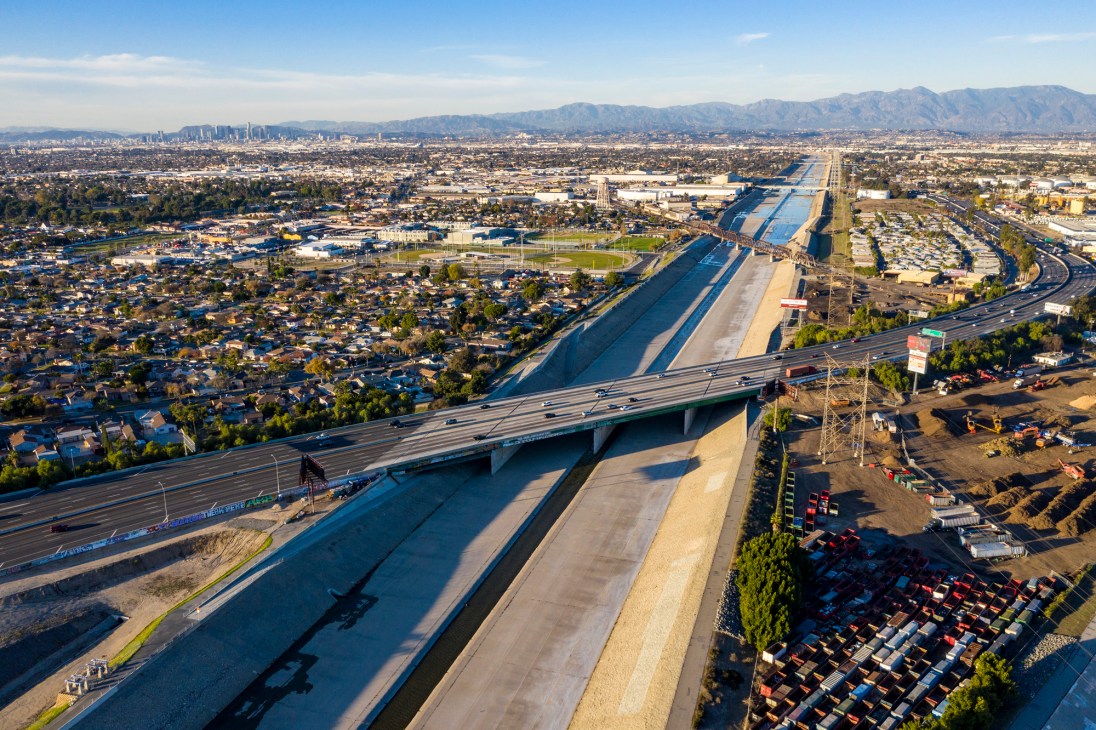
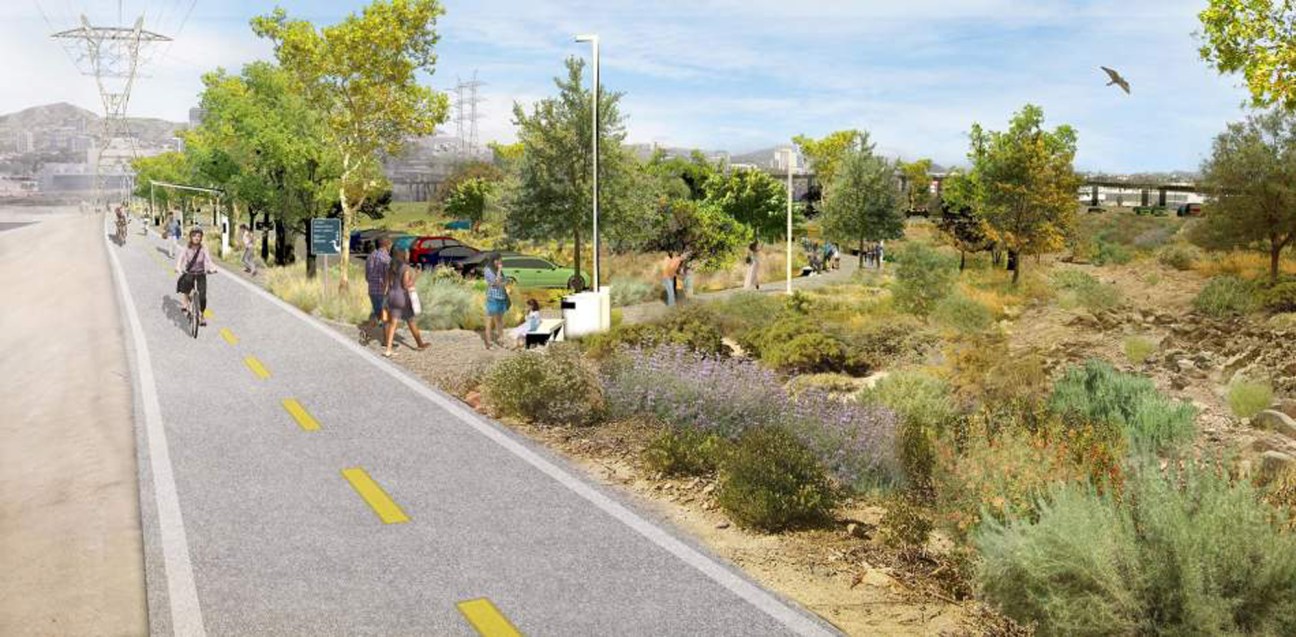
These bridges are one of six different landscape types, including pathways, proposed in the masterplan. The hope is that communities will determine which typology is most needed along their stretch of river and apply it, thereby encouraging them to buy in. It’s an important initiative, given that, in Henson’s words, “the river has long been seen as the city’s backyard”. Here’s hoping that this plan will turn it into one that its residents can be proud of.

Blow hot and cold
Finland
Environment
To achieve its goal of carbon-neutrality, Helsinki needs to replace coal as a source of heating. Known for its innovative urban solutions, Helsinki is planning to extract water from the floor of the Baltic Sea, where it is warmest. The liquid will then be pumped inland and frozen and the energy produced by the freezing process will be used to heat the capital’s homes. The process will require a lot of electricity but it is said that the net effect will be positive.
The city is currently looking into the plan’s feasibility but, if given the green light, the infrastructure will take about five years to build. With the city due to phase out coal completely by 2029, any delays could leave Helsinki on thin ice.
Shore touch
Toronto
Design
Toronto’s waterfront has historically been disconnected from the rest of the city due to heavy industry on the edge of Lake Ontario and the elevated Gardiner Expressway. Now, however, there are plans to reclaim parts of the lakeside as public space, which have expanded to include a beach. The Leslie Slip Lookout Park will feature a sandy stretch that morphs into an area of wooded dunes. It will have space for concerts and public gatherings, as well as views of Toronto’s skyline. The designers, Montréal’s Claude Cormier 1 Associés, have reimagined public spaces in the city before: Berczy Park, with its large “dog fountain”, has become a popular fixture since it reopened in 2016. Soon Toronto’s beach bums will have a Cormier space to call their own too.
Greenest of grass
Prague
Mobility
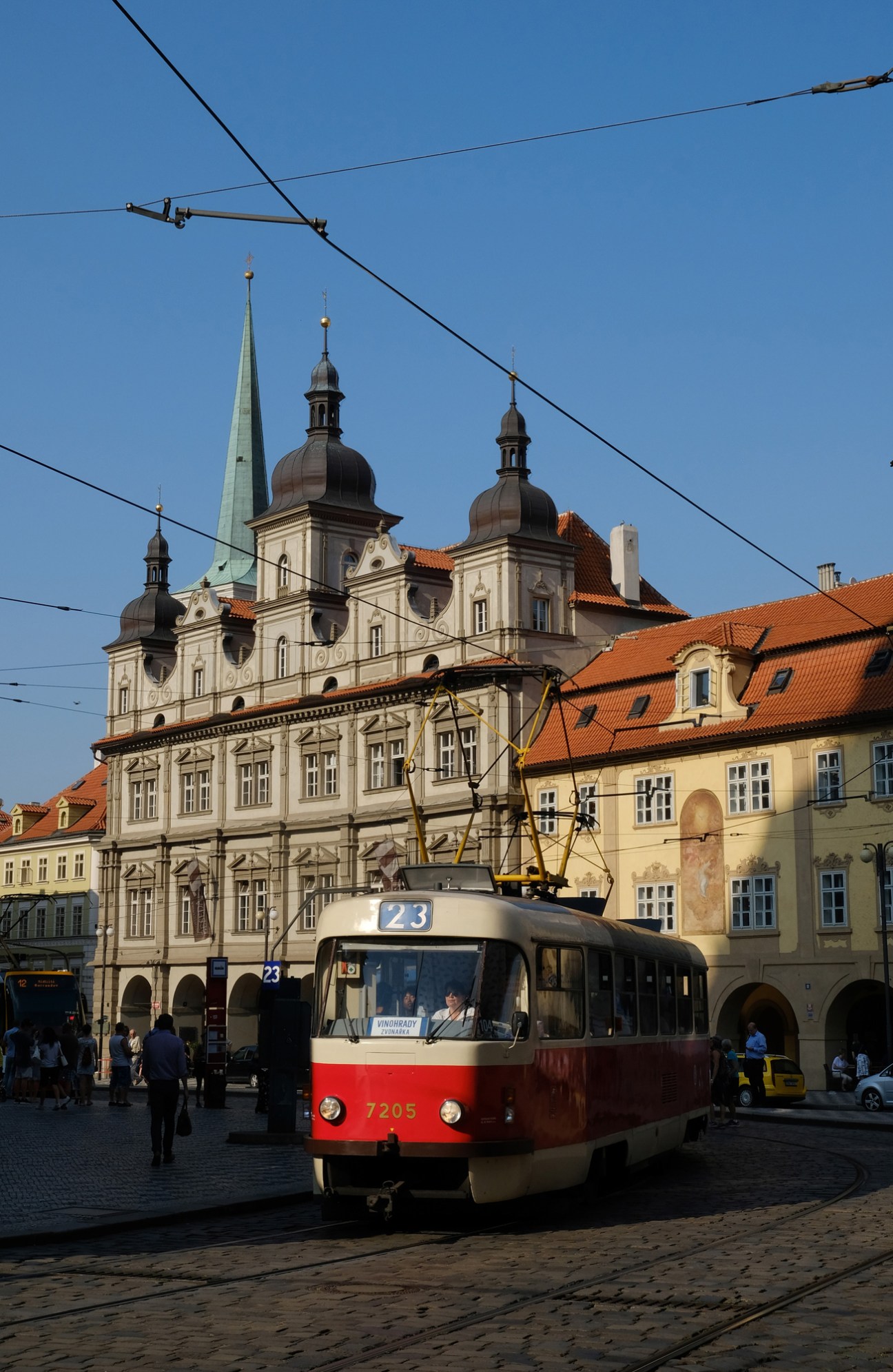
We know that grassy tramlines are good for urban living: they reduce traffic noise and improve air quality and rainwater infiltration, as well as helping to cool hot city streets. That’s why the launch of a research initiative by Prague’s Public Transit Company should be lauded.
The new programme will test several different grasses on tramlines in the city, assessing them for durability, maintenance and aesthetics. The three best-performing mixtures will then be sown on streets across the city and across the Czech Republic. It’s a move that’s sure to reveal the grass species best suited to thriving in such urban conditions. And with cities across the globe seeking to introduce more greenery, similar approaches should be championed elsewhere.
Image: Getty Images
Defence
Green machines
Luxembourg
Sustainability
Going green isn’t always easy. François Bausch, who is one of Luxembourg’s two deputy prime ministers and the only defence minister in Europe from a Green party, is keen to give his military responsibilities some environmental edge. The defence industry has one of the biggest ecological footprints of any government sector. Yet, says Bausch, that means it also has the biggest potential for reducing said footprint. “Two years ago I was alone [in thinking that] and it was hard to get people to listen,” he says. “That is really changing now.”
Bausch has overseen many of his country’s international collaborations on matters of defence and sustainability, including spearheading Luxembourg’s co-operation with the European Defence Agency on a circular economy project. The common-sense concept is about designing everything from buildings to weapons and vehicles so that they not only last longer and can more easily be maintained but are also built in a way that saves energy.
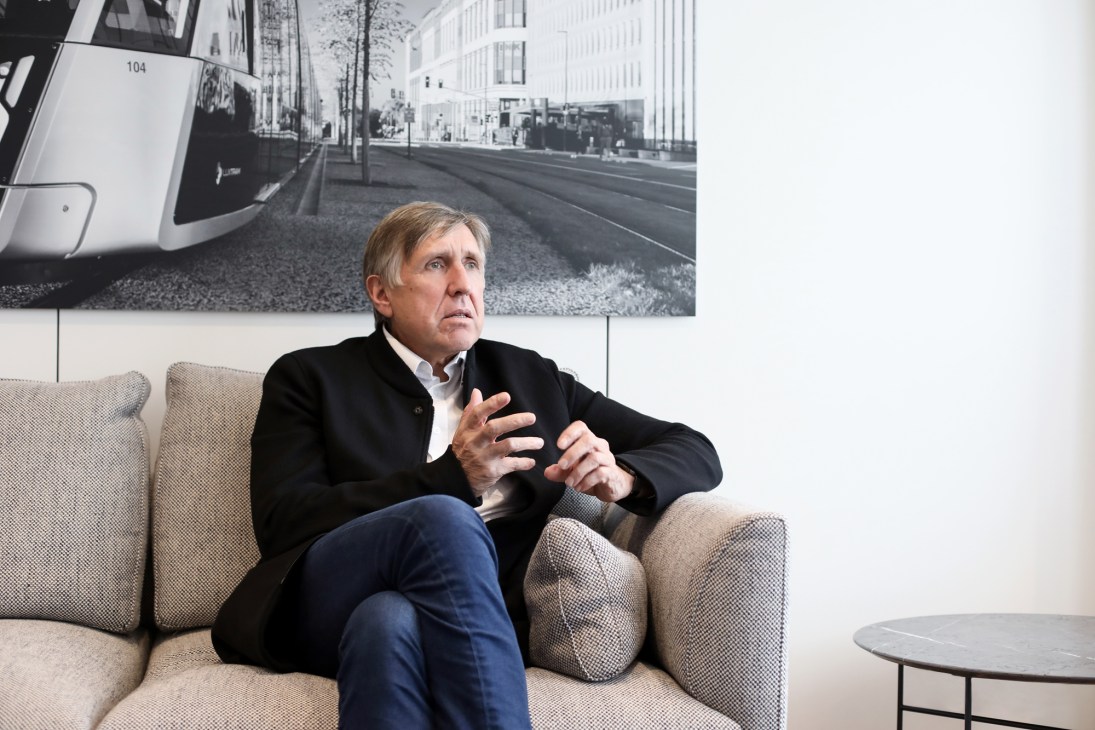
“I said a while ago, as a joke, that it’s not like we’re all going to be driving electric tanks,” says Bausch. Even so, he adds, if military vehicles are designed thoughtfully, “it can have an enormous influence on the ecological footprint”.
Since he stepped into the role in 2018, Bausch has seen a growing understanding of the connection between the environment and global security. “More and more military people are recognising that a lot of conflicts stem from problems induced by climate change,” he says, pointing to disputes over land that can no longer be farmed or water shortages caused by droughts. Meanwhile, rising sea levels could create tens of millions of refugees around the globe, which could lead to political instability. Yet despite encouraging signs, Bausch says that more urgency is needed. Too many politicians focus too much on the next election while vastly underestimating the risks posed by climate change. Militaries also need to shift focus, he says, by adapting their policies to prevent conflicts arising from climate change.
“The pandemic shows us what can happen,” says Bausch. “But it is still manageable. I always say against the virus, there’s a vaccine. There’s no vaccine for climate issues – only prevention.”
In the basket
Who’s buying and who’s selling? We keep you abreast of significant defence deals.
In the basket: 10 Leonardo m-346 trainer aircraft
Who’s buying: Greece
Who’s selling: Israel
Price: Part of a $1.7bn (€1.4bn) deal
Delivery date: TBC
Leonardo M-346 jets are the headline component of a 20-year deal under which the Israeli defence firm Elbit Systems will establish a new flight school for the Hellenic Air Force at Kalamata Air Base. Also included are simulators, training, logistical support and the maintenance of Greece’s ageing Beechcraft T-6 Texan II turboprop trainers. Elbit’s pitch was chosen ahead of a Canadian proposal and reflects a growing partnership between Israel and Greece on a number of fronts: the two countries (and Cyprus) agreed to closer defence co-operation last November, have worked together on developing resources in the eastern Mediterranean and share a mutual suspicion of Turkey.
On the home front
India
Aviation

The combat aircraft component of the Indian Air Force is a multinational mishmash: Russian migs and Sukhois, French Mirages and Rafales, British Jaguars. But now it seems that India wants to be more self-sufficient. In a colossal show of faith in its homegrown product, India has agreed a $6.5bn (€5.4bn) deal to buy 83 LCA Mk1A Tejas fighters, which are built by state-owned Hindustan Aeronautics Limited.
This batch is in addition to 40 already ordered; delivery is due by 2028. India’s primary reason for wanting the new planes is – as always – its worries about Pakistan and China. But it also has an eye on the export market.
Image: Getty Images
Diplomacy
On the agenda
Canada
Geopolitics
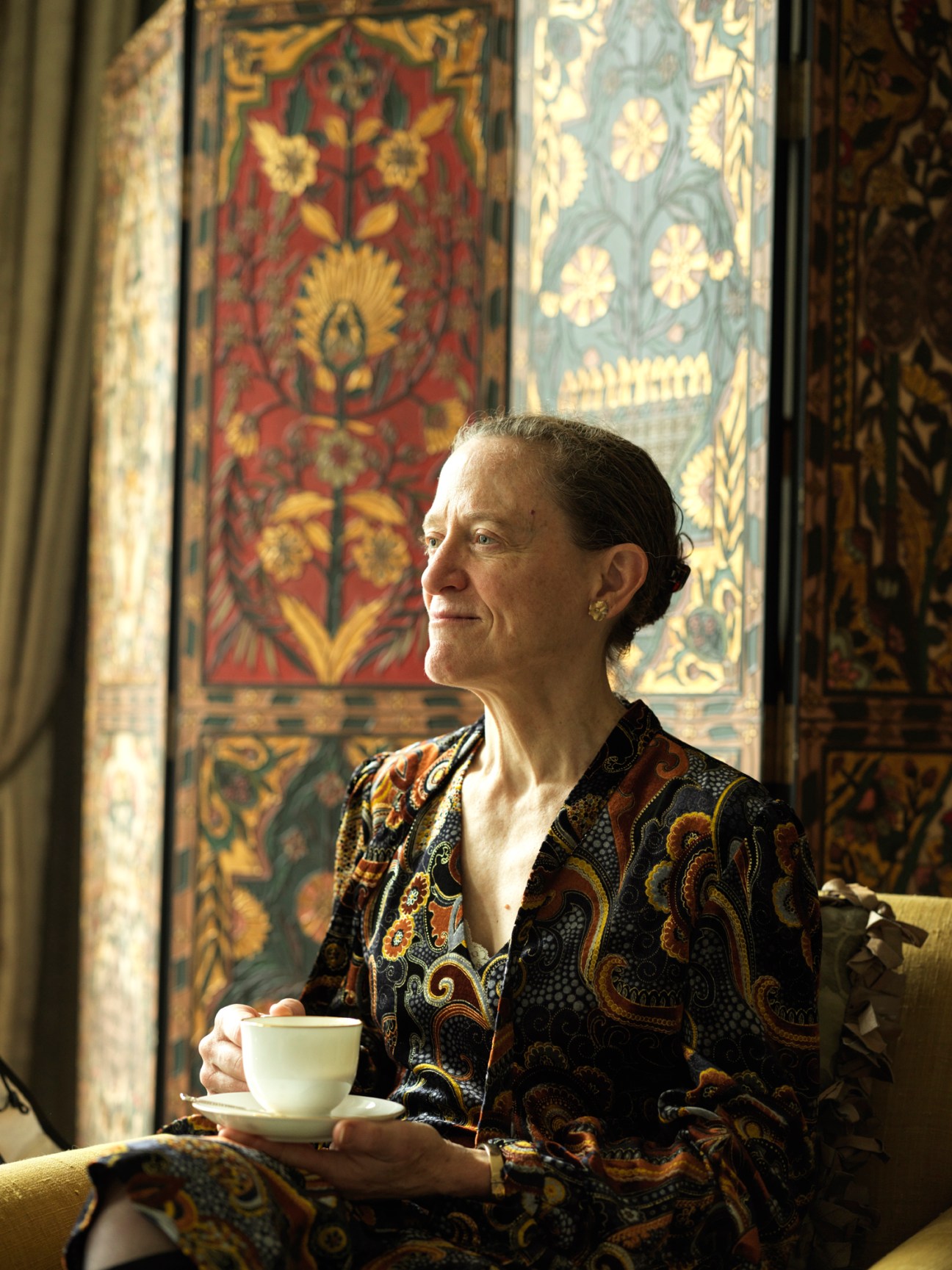
“The first time I travelled here on my own, I was sitting in a hotel dining room in Zakopane and a Leonard Cohen song started playing,” says Leslie Scanlon, Canada’s ambassador to Poland and Belarus, over coffee at her residence in Warsaw. “I had no idea how popular he is in Poland.”
Today it’s not just the sounds of the Canadian singer-songwriter making her feel at home. The ambassador’s residence in the neighbourhood of Sadyba, where Scanlon (pictured) lives with her son and a Siberian cat called Aurelia, is filled with Canadian touches. There’s a painting by artist Gershon Iskowitz, who emigrated to Toronto from Poland, and a wood-panelled library showcasing Canadian literature. “Guests have to have a Canadian experience when they come to my residence,” she says.
Scanlon began her international career when she bought a one-way ticket from Ottawa to Tokyo at the age of 25, initially to work for a communications company. After joining the Department of Global Affairs in 1990, she held posts in Tokyo and Paris, as well as roles within Canada, before moving to Warsaw in 2018. Here her work spans everything from trade promotion to championing Canada’s environmental agenda. Scanlon is especially invested in the latter: she grows vegetables in the residence’s garden and insists on cycling to work. “It’s just a dream job because it has everything in it,” she says, adding that she relishes the range of tasks her position allows. “Management is a big part of an ambassador’s role.”

But the position can entail more fraught challenges. Belarus, the smaller of Scanlon’s two charges, has been in the international spotlight recently, following the presidential election in August 2020, which is widely believed to have been rigged. After protests were brutally repressed, Canada and the UK imposed sanctions on Belarusian officials, including president Alexander Lukashenko.
As the situation in Belarus continues to unfold, with Lukashenko promising a new draft constitution this year, Scanlon is thinking long-term. “As soon as communism fell, Canada had a very big development programme in Poland,” she says. “That’s where we see our future support to Belarus right now. We are still trying to navigate where we could play the most useful role.”
Capital gain
Israel
Foreign relations

In 2017, Donald Trump announced that the US would recognise Jerusalem as the capital of Israel and relocate its embassy from Tel Aviv. The city authorities have now given preliminary approval for a new embassy building on busy Hebron Road. Joe Biden’s administration has announced that they will not be reversing the decision. That is sure to delight Benjamin Netanyahu as he seeks to burnish his record ahead of yet another election.

Diplomatic spat of the moment
Spy games
We take a closer look at a case of diplomacy that has gone wrong.
Who vs who: Russia vs Bulgaria
What it’s about: Espionage. Bulgaria expelled the military attaché at Russia’s embassy in Sofia, claiming that he was spying on them, which doesn’t seem an outrageously remote prospect. Russia then threw out the assistant military attaché at Bulgaria’s embassy in Moscow. Russia, as usual, denies everything.
What it’s really about: It’s very likely that this really is about espionage. Bulgaria alleged that the Russian attaché had been collecting information on US troop dispositions in Bulgaria during Nato exercises. The attaché is at least the sixth Russian sent packing by Bulgaria in similar circumstances.
Likely resolution: There isn’t one. Bulgaria will continue to annoy Russia merely by having joined the other side (as Moscow sees it) and Russia will continue to annoy Bulgaria any way it can. Russia, as usual, will deny everything.
Image: Getty Images
Politics
Grounds for hope
Yemen
Government
The southern Yemeni governorate of Shabwa seems to be a rare success story in the war-torn nation. Since its governor, Mohammed Saleh bin Adio, was appointed, the electricity supply has improved and several water, health and education projects are underway. Shabwa even hopes to have its own airport up and running by late 2021. “We have tried to make this governorate an example for others to follow,” Bin Adio tells Monocle, adding that Shabwa will come “to symbolise a unified Yemen”.
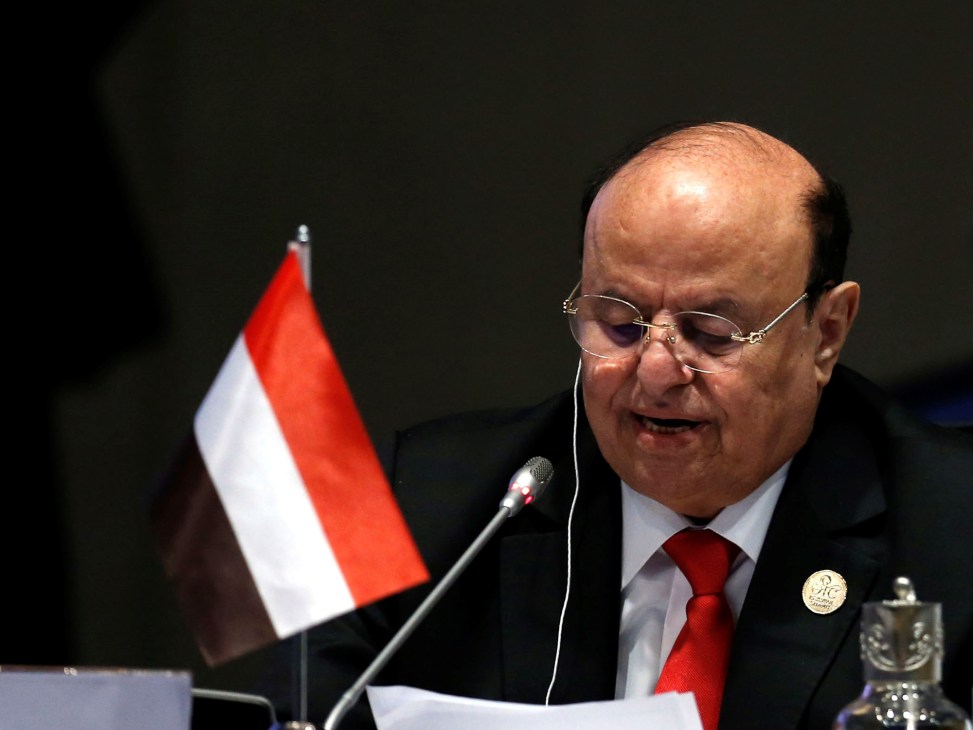
As public projects increase, so too do job opportunities. This is in contrast to the rest of Yemen, which has been mired in a bloody civil war since 2014. Shabwa is the only one of Yemen’s governorates that’s completely under the control of internationally recognised president Abdrabbuh Mansur Hadi, even as he and many of his ministers live in exile.
Yet security remains a controversial area. A key aspect of the governor’s relaunch of Shabwa has been what he calls a no-nonsense approach to radicalism and armed violence. “We consider any armed group not fighting under the orders of the government to be a militia,” he says. Just a few years ago the area was a hotspot for al-Qaeda radicals, and fighting regularly broke out between government forces, Emirati-backed regional mercenaries and southern separatists.
A dramatic reduction in violence since Bin Adio’s forces secured control has enabled a building boom and opened the door to the area’s oil and natural gas to be extracted and sold again. Only one Western international firm, omv, still works in the area but the governor hopes to encourage more foreign businesses to return.
But Shabwa’s new regime of law and order isn’t without its critics. The authorities face serious accusations of illegal searches, arbitrary arrests and incarceration in secret prisons. Yet in spite of his detractors, Bin Adio is adamant that if his team can keep increasing prosperity on the ground, he will continue to win support. “The main problem is economic, because when people are poor and hungry they can be convinced to do anything,” he says. “If we fix that then we fix the country.”
Q&A
Juliana Reis
Activist, Rio de Janeiro
In December, Argentina became the largest Latin-American nation to legalise abortion. Could the move spark change across the region? Juliana Reis, a Brazilian film-maker and activist, thinks so. She is the founder of Milhas Pela Vida das Mulheres (or Miles for Women’s Lives), an organisation that funds travel for Brazilian women seeking abortions. She tells Monocle about the shifting debate across South America.
What effect is Argentina’s legalisation of abortion likely to have in Brazil?
Argentina is Brazil’s closest “brother”. Legalisation in Argentina will help Brazilians to no longer see abortion as a criminal act.
Which country will be the next in the region to loosen restrictions on abortion?
In Mexico, Andrés Manuel López Obrador has proposed a referendum on rights to abortion. And in Chile a decriminalisation bill has been presented to the chamber of deputies. But it is in Colombia where the next wave in favour of legalisation will hit. In October, a constitutional court accepted a proposal to debate removing abortion entirely from the country’s penal code.
Some say that liberal laws might invigorate opponents of abortion. Do you agree?
No, I don’t. I have nothing against those who oppose abortion; they can be as against it as they like. But opposition should be set apart from public health and legislation. It is an individual choice for women to decide how they will deal with it.
Why is it difficult to make changes to abortion laws?
For decades, Latin America seemed indifferent to secular principles. Even when a liberal breeze was blowing in the 2000s, an archaic sexism of the traditional left was revealed. But a new movement has included gay women and black women trying to free themselves from these outdated and polarising conventions.
United approach
India
Elections

Voters in the erstwhile Indian state of Jammu and Kashmir have taken part in their first major elections since the government, led by the Bharatiya Janata Party (BJP), divided it into two territories in 2019. The move was internationally condemned, so this ballot is seen as a partial vindication for the bjp. But, as proof that democracy is alive, the People’s Alliance for Gupkar Declaration, a coalition of former political rivals in Kashmir, took the lion’s share of the vote to win 110 seats.
Fast track to fortune
Africa
Infrastructure
It is difficult to think of anything that could transform the economies of West Africa – and the continent as a whole – more than modern, reliable, international railways. So it is potentially exciting indeed that Nigeria’s government has signed a $2bn (€1.7bn) contract with Portuguese firm Mota-Engil to build a 284km railway that will link the northern Nigerian states of Kano, Jigawa and Katsina to the southern Niger city of Maradi.
The railway will create more than 1,000 jobs directly and bring economic opportunity to a region recently plagued by Islamist terrorism – although, for that reason, securing both the construction sites and the finished railway line might well be a challenge. The government in Abuja claims, and hopes, that work will be completed in three years.
Image: Getty Images
In the running
Slovenia is gearing up for a double celebration in 2021. The 30th anniversary of its declaration of independence from Yugoslavia falls just a week before it takes over the presidency of the Council of the European Union. And given its track record of promoting sustainability – Ljubljana was European Green Capital in 2016 – it comes as no surprise that Slovenia lists “Green EU” as its top priority for the six months it holds the chair.

This offers an opportunity for one of Europe’s most media-savvy leaders to work his charm on a wider-than-usual audience. Since taking over as president in 2012, Borut Pahor has consistently pushed green issues to the fore. He will set the mood for Slovenia’s six months at the EU rudder by hosting a climate consultation at Ljubljana’s Presidential Palace at the end of June. Evidence, he says, of his country’s maturity. “Thirty years ago, we were facing a wall, not knowing what our decision to become independent would mean,” he tells Monocle. “But we succeeded – and I’m very proud.”
Pahor is a pillar of stability in the turbulent politics of Slovenia, where parties blink in and out of existence with exhausting frequency. There have been five different governments during Pahor’s eight years and three months as president – only one of them lasted more than 18 months.
In March 2020 the country swapped a centre-left coalition fronted by a former comedian, Marjan Šarec, for an administration led by right-wing veteran, Janez Janša. His abrasive style – and support for Donald Trump – has raised eyebrows abroad and prompted protests at home. Pahor could hardly be more different. Relieved to escape the zero-sum game of party politics, he views the EU presidency as a tool for positivity. “One of my big issues is reconciliation,” he says. “We were split in the Second World War, so I’m trying to heal these wounds.”
The president’s affable personality and accessible image explain his status as Slovenia’s most popular politician. As a figurehead for the Green EU project, Pahor is a public-relations dream – he doesn’t just walk it as he talks it, but laces up his running shoes and takes the sustainability message to the streets. “I used to compete as an amateur in triathlons and half marathons,” he says. Becoming president has only fed that enthusiasm, with state visits offering opportunities to pound the pavements and explore the parks of foreign capitals. “Every time I go to another city, I run,” he says. “The secret services everywhere know that and they’re prepared. We have done it more than 100 times around the globe, from Tokyo to Buenos Aires.”
Pahor’s social-media following tracks his athletic adventures, which in 2019 included a 1,000km walk around Slovenia with his son, Luka. His embrace of digital communication is the source of his nickname: The Instagram President. But Pahor’s appeal isn’t about online antics. “Social media is not to be underestimated – but it’s not to be overestimated either,” he says. “As president, the most important thing is giving people my hand, physically – embracing them, hearing their secrets and troubles. That’s my job.”
Borut Pahor’s CV
1963: Born in Postojna, Slovenia
1990: Elected a member of parliament
2008: Becomes prime minister
2012: Voted in as Slovenia’s youngest ever president
Civic pride
1.
Melbourne
Do it better lesson: Have a plan – but move when opportunity strikes.
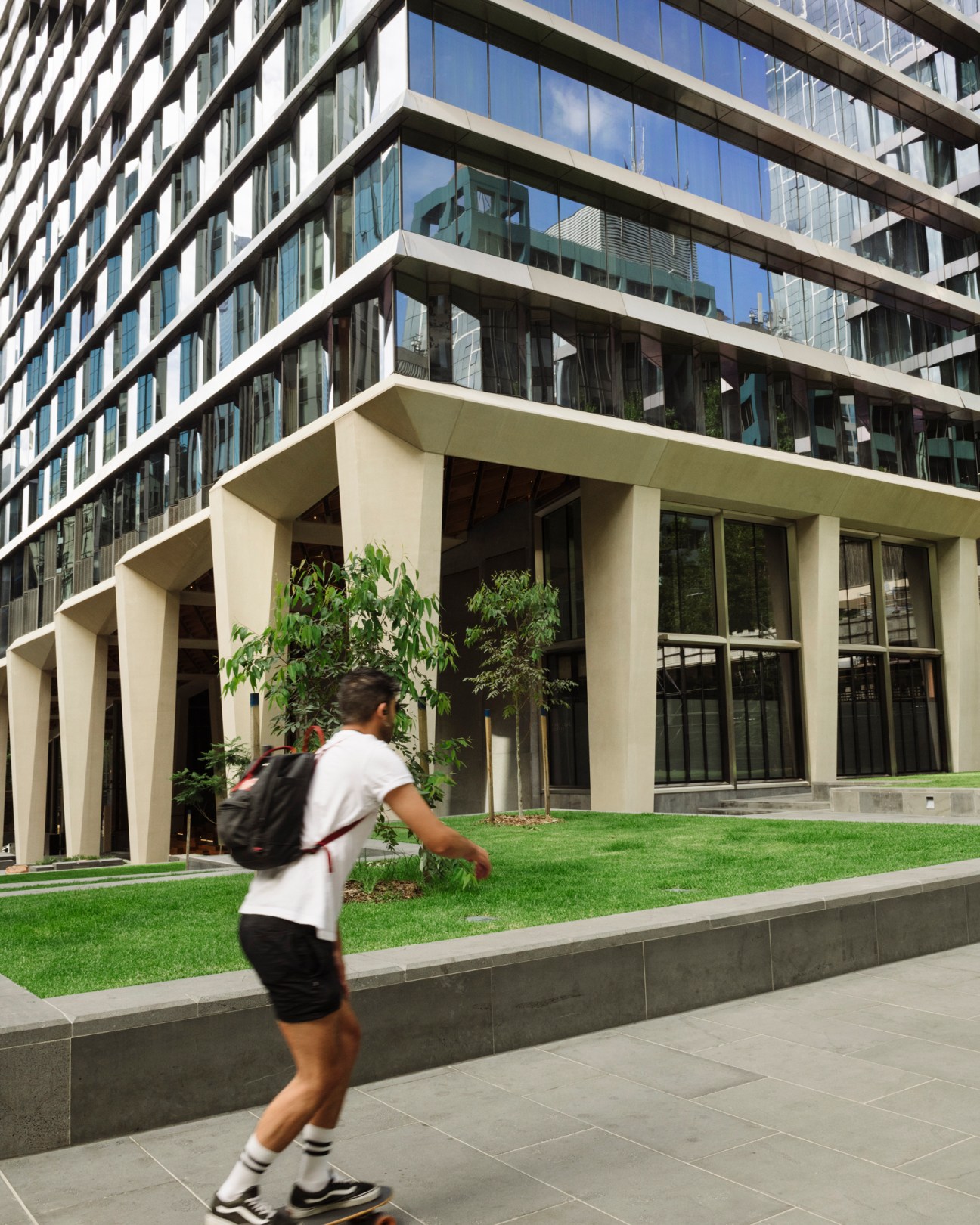
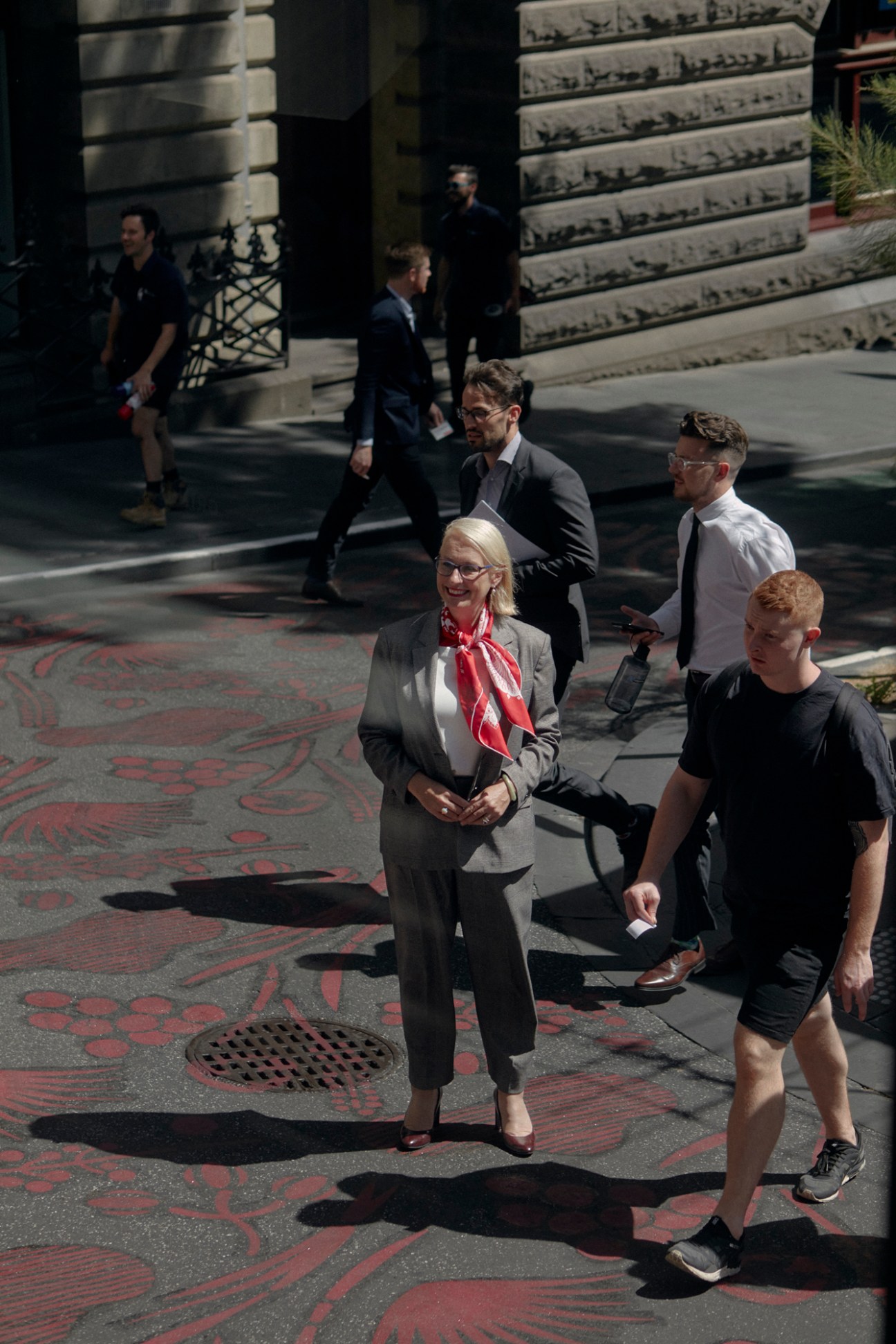
It’s summer in Melbourne and Swanston Street is bustling as trams clatter by and people step in and out of shops. It’s a welcome sight for a city that endured Australia’s longest lockdown: 112 days. Standing by the Town Hall steps, lord mayor Sally Capp knows that the city still faces huge challenges but she’s happy to be the one leading its recovery.
Capp, the first woman in 30 years to lead the city, won her second term at the end of last year. But she’s not taking her victory for granted. “We need to assure people that this is a safe, attractive place to live and work,” she says. Capp is working with businesses to encourage a safe return to offices. They are also relying on culture to aid the retail sector by supporting artists to produce installations and live performances to draw people to enlivened shops, streets and laneways. The hospitality sector, meanwhile, is enjoying a relaxation of the laws around liquor licensing, trading hours and alfresco dining.
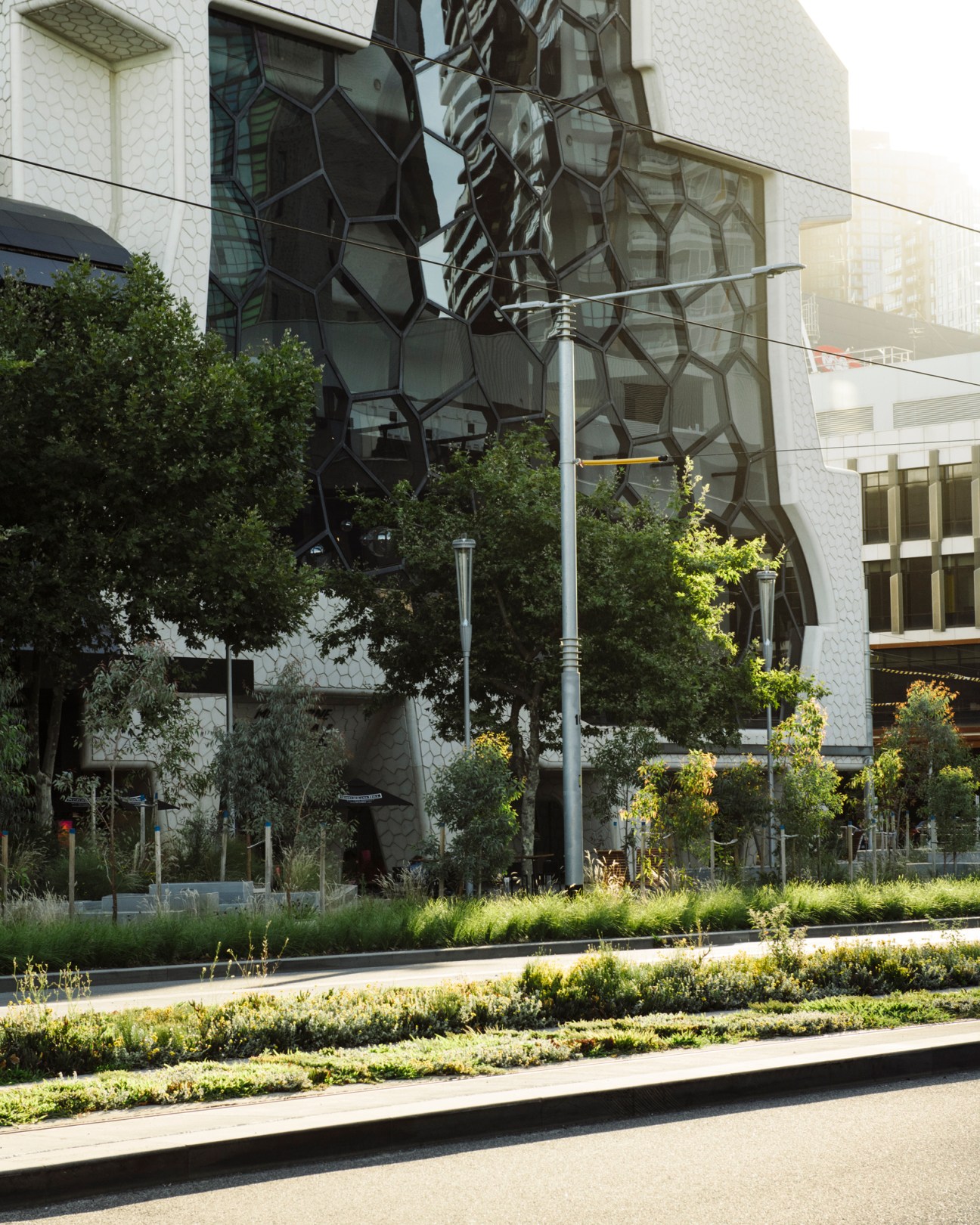
But Capp also recognises that Melbourne’s lockdown presented an opportunity: it enabled her team to expedite a number of sustainability projects that they were already working towards. By having an urban sustainability plan in place, Capp was able to nimbly seize the chance to act when Melbourne went quiet. As Capp puts it, “We haven’t wasted time in making this a better and greener city.”
In light of the pandemic and climate change, is there an opportunity to improve our cities?
Coronavirus has enabled us to accelerate some of our ambitions relating to climate mitigation, urban forestry and transport strategies. A tree-planting programme that would have taken years to complete was done in six months. We have rolled out about 15km of protected bicycle lanes, made footpaths wider and turned streets into pedestrian zones. The city has been able to extend existing parks and create new urban ones.
Melburnians endured a strict and protracted lockdown. How hard was it on the city?
Residents of Melbourne sacrificed personal freedoms for the good of the community – it was tough on everyone and especially businesses. There’s no doubt that it was a double-edged sword because responding to the health crisis in the way that we did meant that our city economy has been decimated. But we have figures from the University of Melbourne that show recovery in different cities and those that took the health crisis seriously have seen good economic recovery compared to those that didn’t.
Leadership is vital but how have citizens played a role?
I’m seeing Melburnians bringing a wealth of creativity and ingenuity to the table. We’re seeing so many fresh ideas from people in business and the arts. We’ve seen new hospitality ventures: little bars, new pop-up shops and pocket parks where car spots once were. These ideas haven’t always been council-led – we’ve been inundated with ideas from the community about making better urban spaces. We can actually play a supporting role to make their ideas reality.
2.
San Francisco
Do it better lesson: Treat your city’s public-transit users to a smooth ride.
San Francisco has always prided itself on its countercultural attitude. Indeed, in a country where the car is king, its public transport woes are unique. “This isn’t something that’s true for many cities outside the Bay Area but people would say that we have too many transit districts that are unconnected when they reach downtown San Francisco,” says urbanist and planner Peter Albert.
Indeed, the nearly eight million people in the Bay Area – spread across San Francisco, Redwood City, Oakland, Berkeley, San Jose, Silicon Valley and surrounding counties – are served by more than two dozen transit agencies. Which means that if you’re travelling from, say, Oakland to Redwood City, you have to use multiple transit systems. In San Francisco alone there are intercity trains run by Amtrak; a region-wide subway, the Bay Area Rapid Transit; the commuter rail service Caltrain; buses arriving from other cities; and the San Francisco Municipal Transportation Agency’s streetcars, metro and buses. Until recently there was no place where they all connected, which is why, according to Albert, the opening of the Transit Center is so significant.
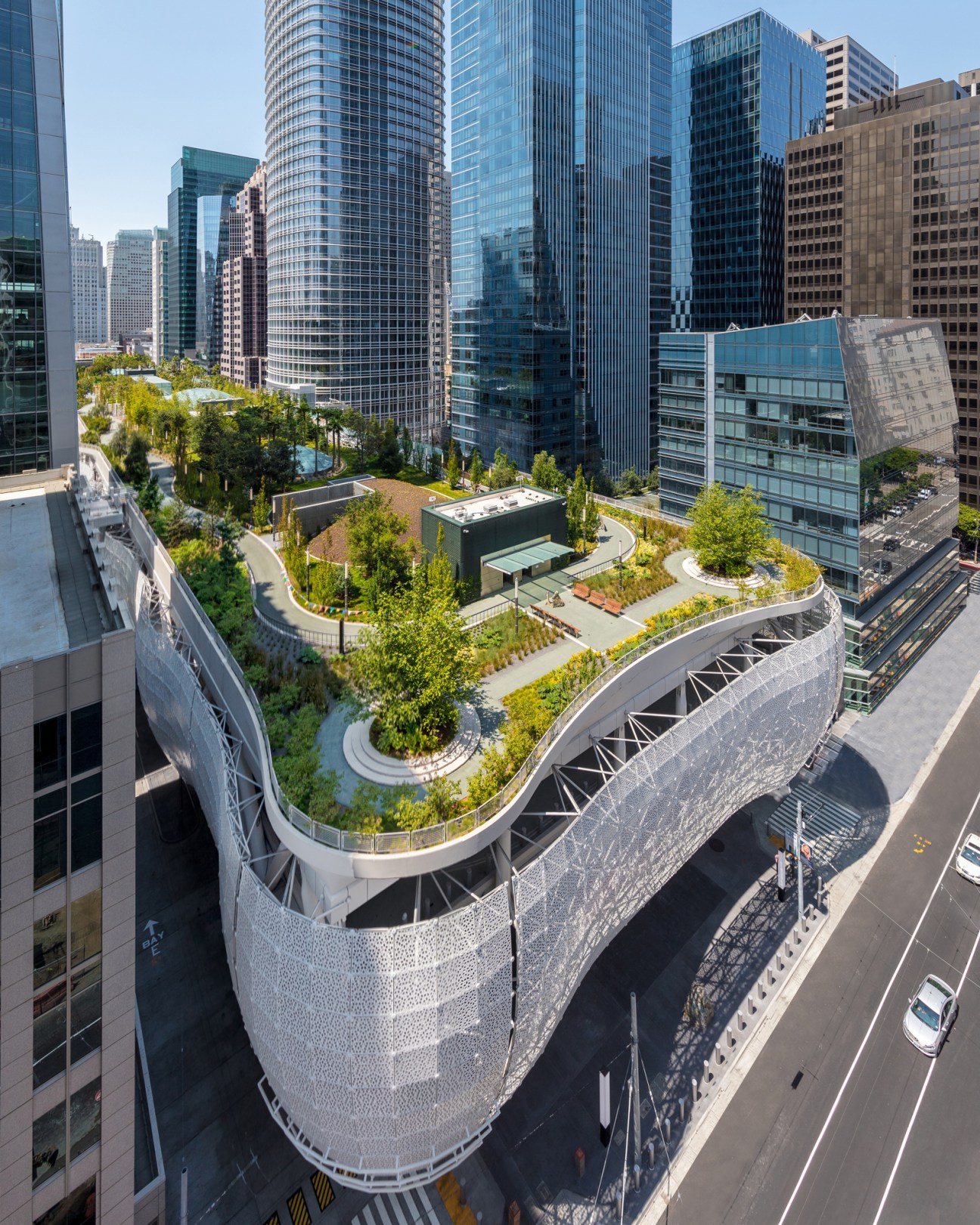
Now known as the Salesforce Transit Center (the technology company bought naming rights for 25 years), it’s a Pelli Clarke Pelli-designed building stretching across four city blocks. When it’s eventually running at full capacity, this five-level structure will be the meeting point of local, regional and statewide transit.
“Ideally, you’re shooting for a one-seat ride; you get on in Oakland or San Jose, find your seat, open your newspaper and then the next stop is the heart of downtown San Francisco,” says Albert. “And your transfer is right there or your final destination only a few blocks walk away.”
All of this is complemented by the two-hectare park on top of the building. Manicured lawns, a playground and lush gardens – with a water feature that shoots streams of spray into the air when buses move underneath it – are open to the public, providing a green oasis for residents and workers nearby. But that’s not to say that the park isn’t without its critics: while it’s accessible for all, the presence of security guards has prompted some to accuse it of exclusivity.
Yet this characterisation misses the point. The rooftop garden is a celebration of transit riders who no longer have to arrive at dreary locations on the periphery of the city before making several transfers to reach their destination. And it’s a benchmark for other US cities with confusing transit systems or an over-reliance on cars.
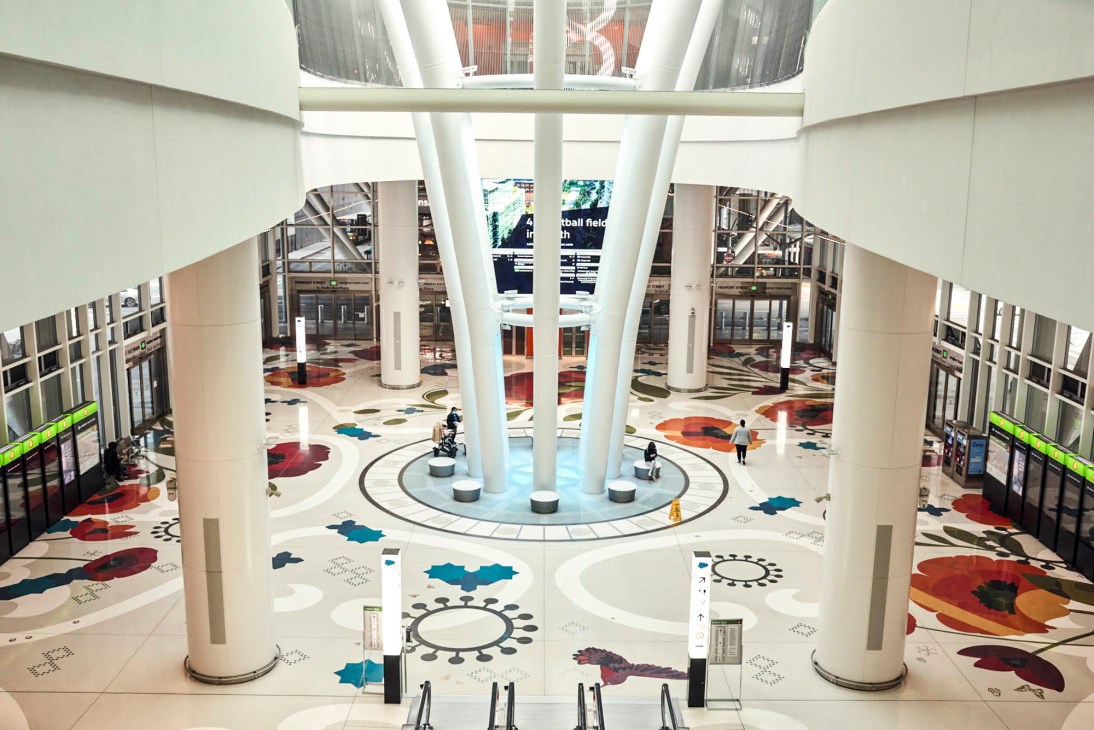
“There’s something symbolic about coming into a beautiful new facility with access to amenities. You can go out to the garden and get a coffee, you can listen to a DJ set [in the park] before your bus comes or you can take a walk after work, eight storeys up with an extraordinary view of downtown,” says Albert. “This neighbourhood is not just the domain of those living in the luxury high-rises; it’s for the transit riders too.”
The centre, then, has reshaped transit in the city, not just in terms of speed and timeliness but by elevating the transit riders’ experience – an admirable cause and one that cities and transit agencies everywhere should work harder to take up.
3.
Taichung, Taiwan
Do it better lesson: The need for a big investment – of time or money – shouldn’t stop ambitious plans
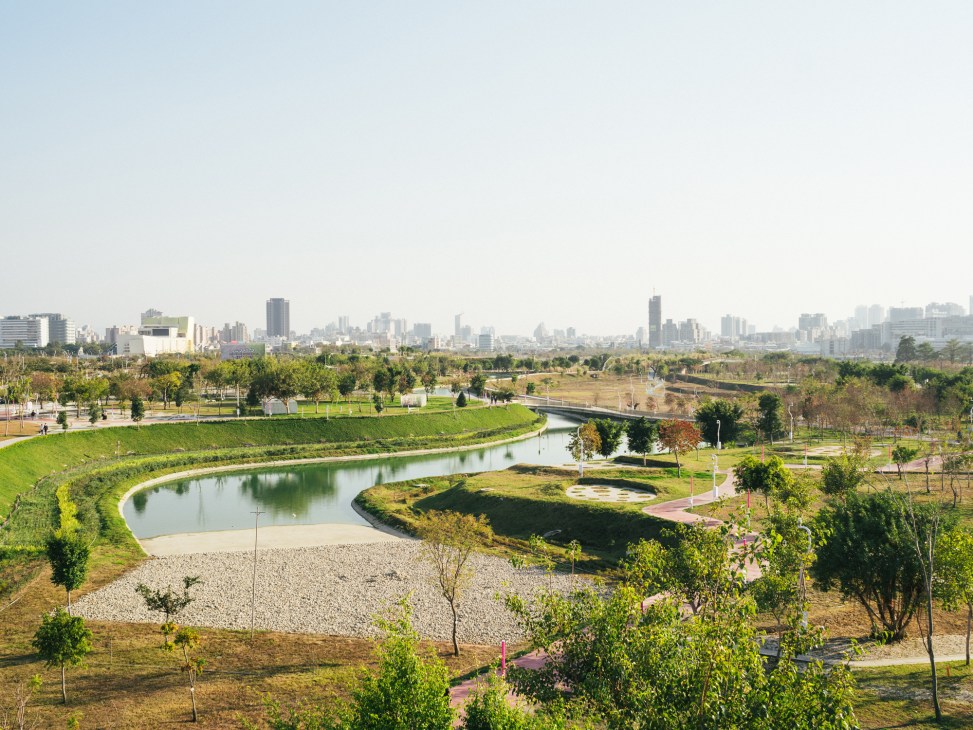
Taichung is home to some 2.82 million people, the world’s largest bicycle manufacturer and alarming levels of air pollution. Which is why the Taiwanese city, on the island’s western coast, has welcomed the arrival of a sweeping new 67-hectare park – about the same size as Disneyland in California – on the site of a former airport. When Phase Shifts Park, also known as Taichung Central Park, opened in December tens of thousands attended the ceremony. And while the park’s unique design might not be magical enough to earn it the title “Happiest Place on Earth”, it is poised to transform the way residents use their city.
Through a mix of canny design and innovative technology, the park combats the negative effects of pollution by offering cool spaces and cleaner air. While landscaped hills and valleys collect and channel rainwater, some 340,000 plants were carefully selected to remove contaminants from the air and water through a process called phytoremediation. Pockets of shade have been created by masses of trees with large foliage, which offer respite from the sun. The park is also entirely independent; its lighting is powered by solar panels.
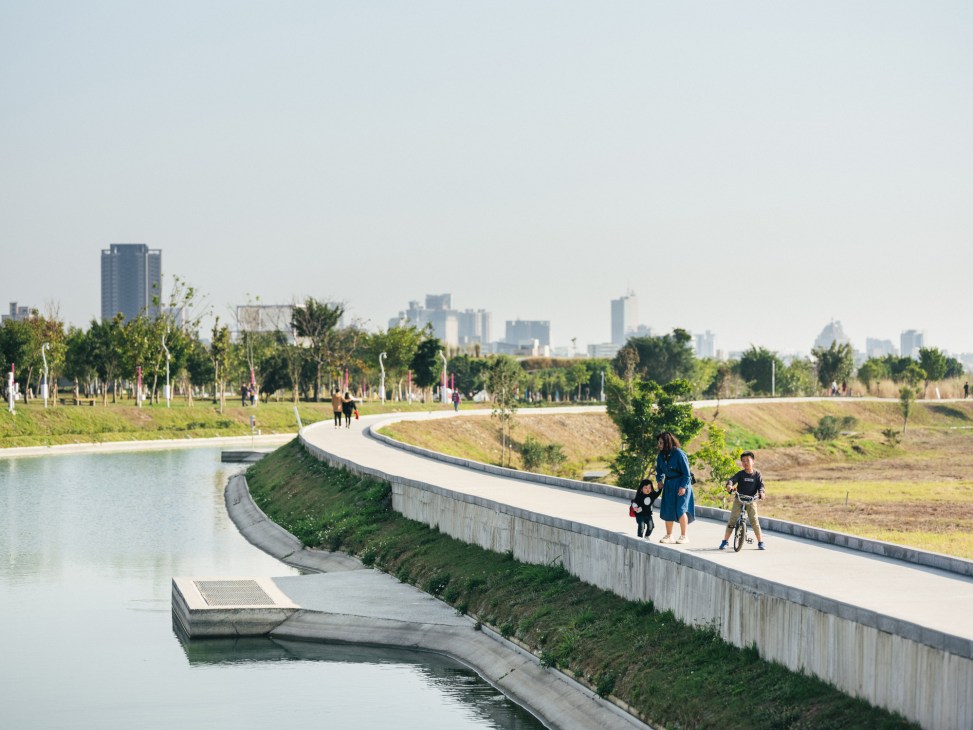
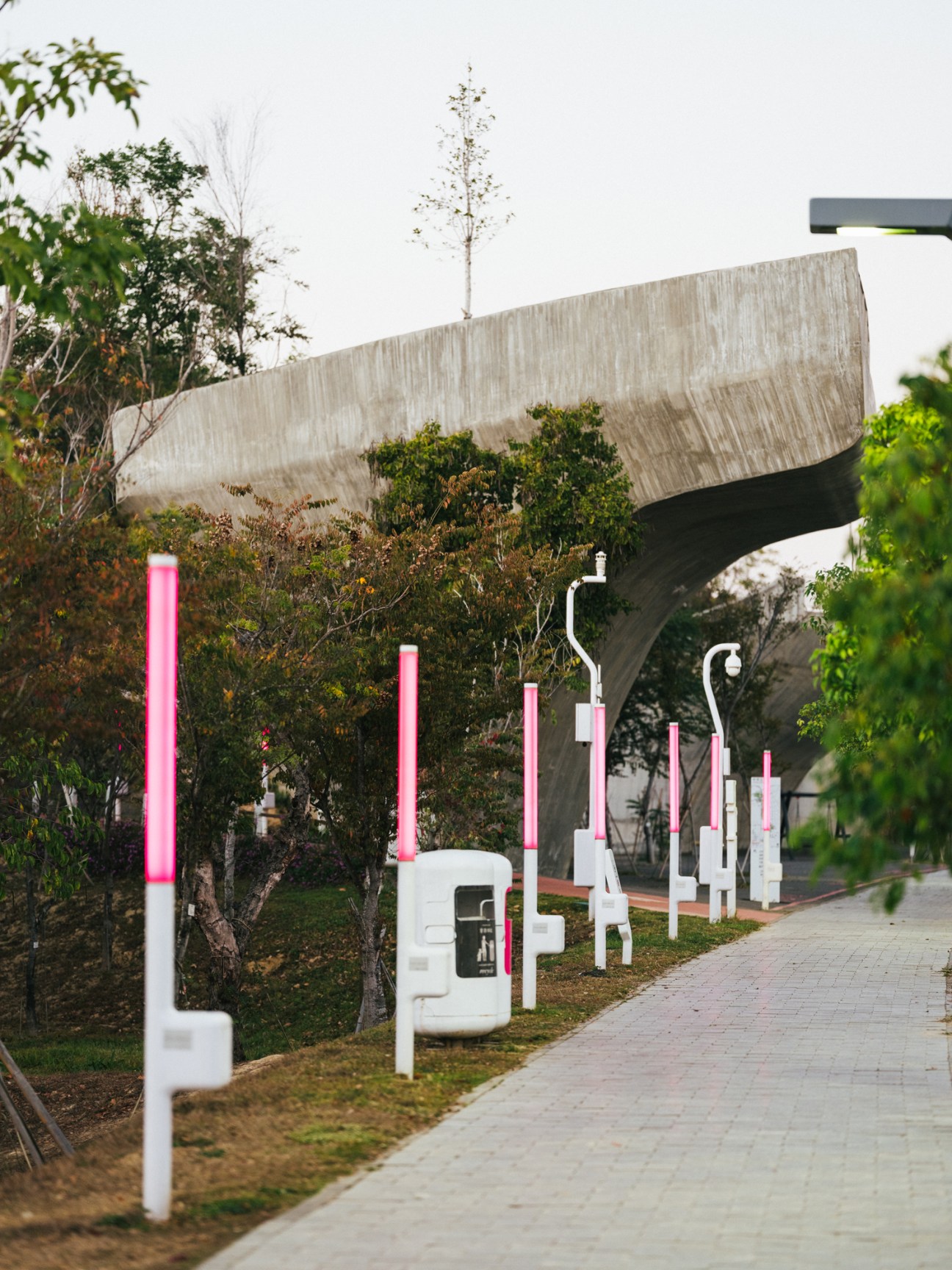
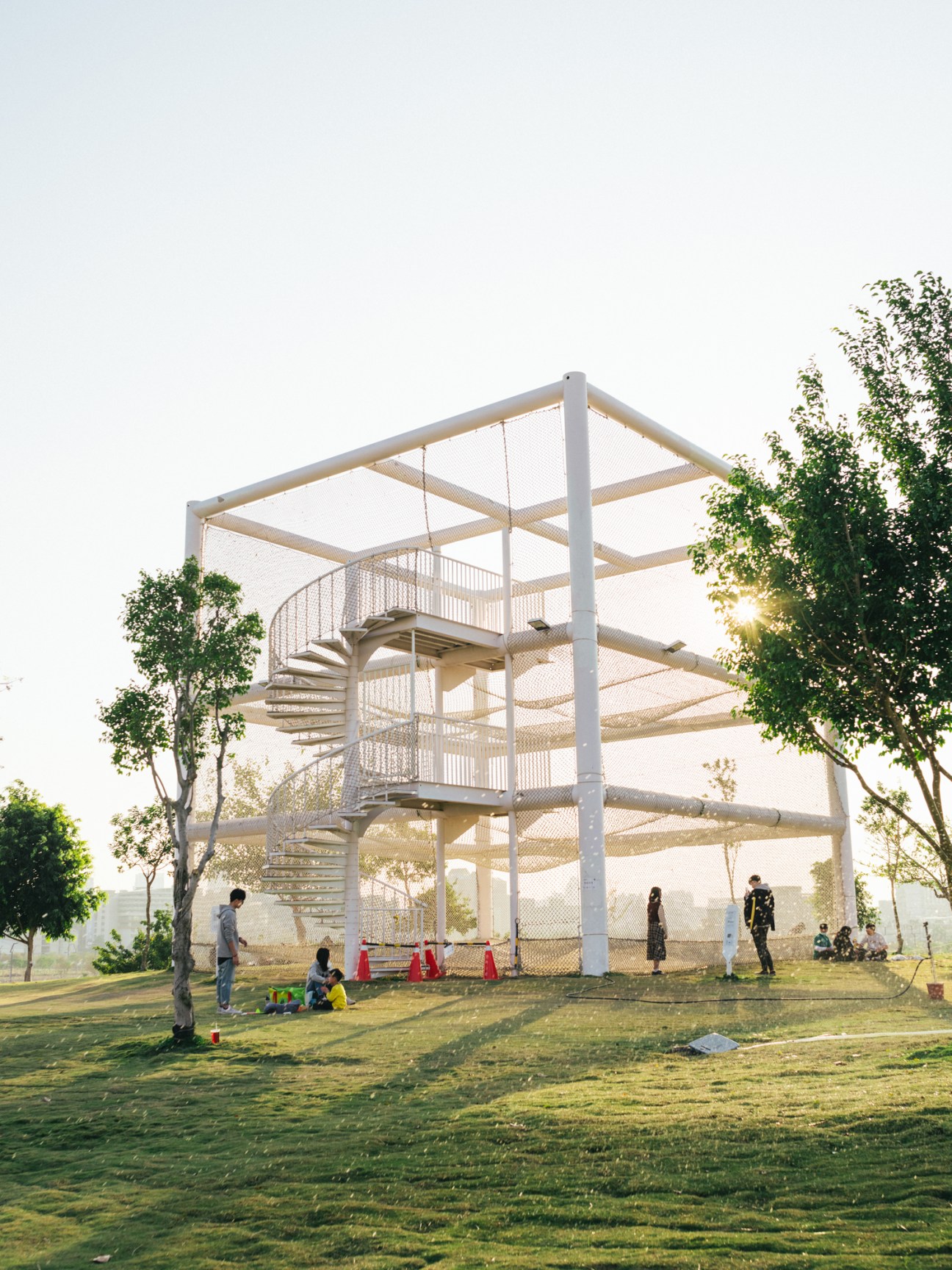
Catherine Mosbach of French landscape architecture firm Mosbach Paysagistes, tem head of the project, says that part of the aim of the design was, in part, to honour “the spirit of Taiwan’s mood and not just import the international style you find everywhere”. To that end, more than 80 per cent of the park’s trees are native species. Mosbach says that the team also carefully mapped out the location of the recreations areas to ensure that the playgrounds “are as far as possible from traffic and pollution”, while the various installations dotted throughout “are as much as possible in [shaded] conditions”.
Phase Shifts Park is a symbol of collaboration. With Mosbach working with Taiwanese architecture firm Ricky Liu & Associates and Swiss architect Philippe Rahm, the expansive park took almost a decade to complete – meaning that it also required political investment across the three mayoral administrations that governed the city in that time. (Current mayor Lu Shiow-Yen invited her two predecessors to the ribbon-cutting ceremony.)
But many seem to think that the wait was worth it. Since it opened, the park – already nicknamed the “lung of Taichung” – has become a thriving space in the heart of the city.
4.
Copenhagen
Do it better lesson: Sustainable change can be difficult – so make it visible and attractive.
Copenhagen appears to be sailing smoothly towards its 2025 goal of becoming the first national capital to achieve carbon neutrality. It has positioned itself as the paradigm-shift city, inspiring the world to get on bikes, convert to clean energy and recycle anything that sits still long enough.
It hasn’t been a process without hurdles. “In 2012, when we made the plan, it was impossible to forecast precisely where we would be in 2021,” says the city’s executive climate project director Jørgen Abildgaard.
One arguable misstep was the construction of the massive waste-to-energy plant, Amager Bakke (the one with the ski slope on the roof, also known as Copenhill), designed by Bjarke Ingels. He once boasted about the “mountains of trash” which would fuel the plant but the Danes are so good at recycling that they have had to ship in waste from other countries.
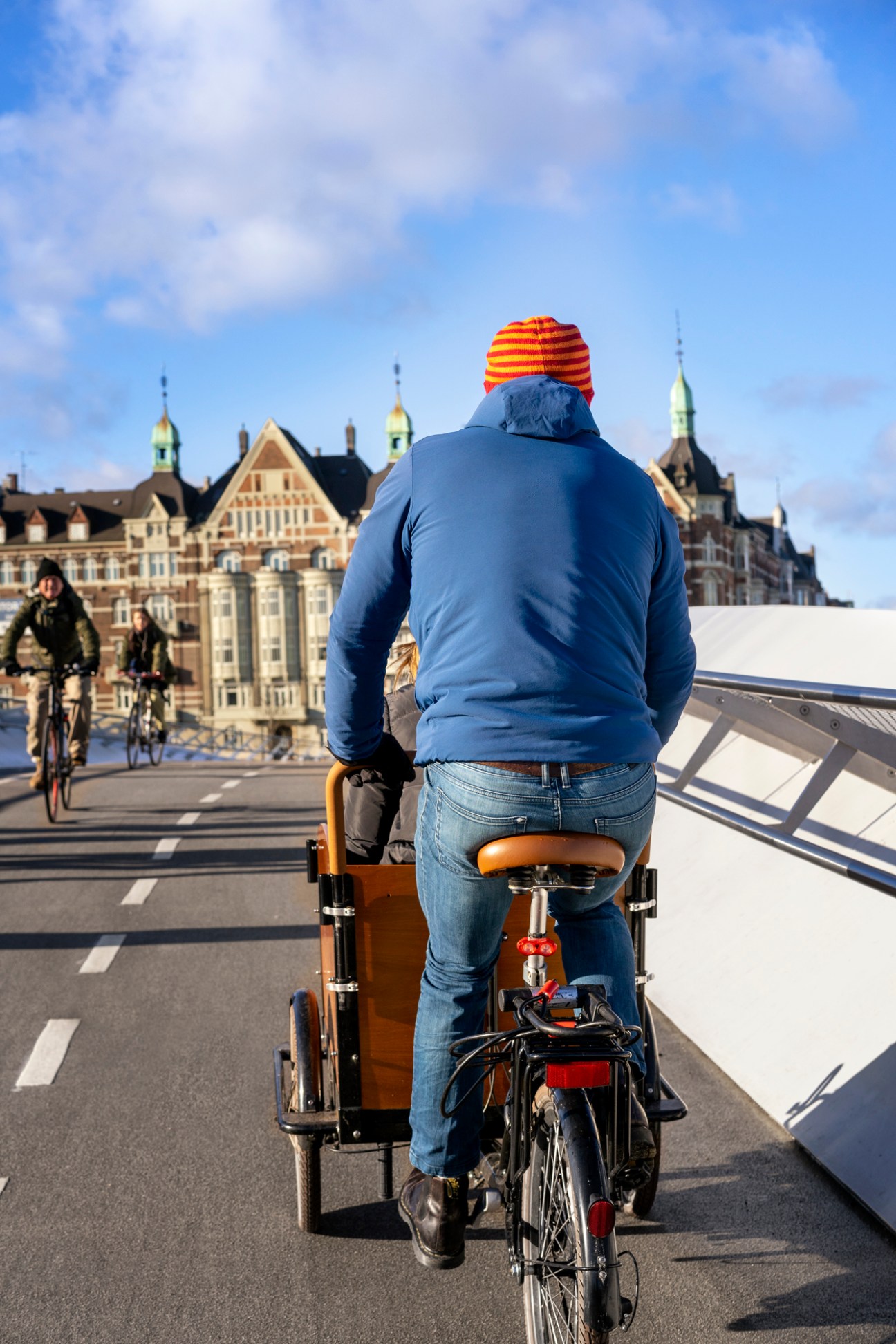
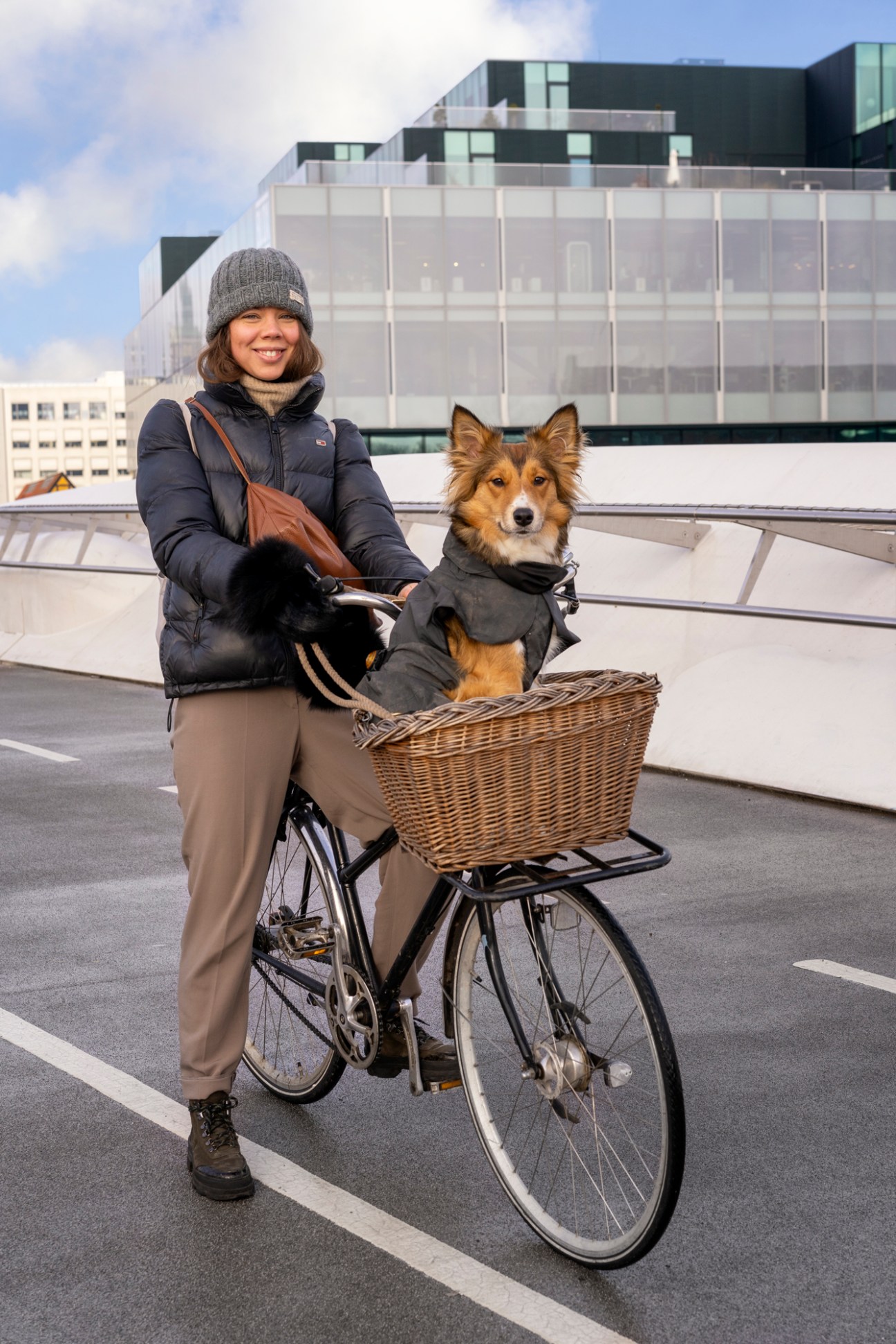
City architect Camilla van Deurs offers a defence of the plant. “One of our strengths is that we have been very visible with our climate projects, such as Amager Bakke, but also windmills that you see when you fly into the city and the harbour baths, which are a symbol of the approximately DKR2bn [€269m] we spent to clean up the water.” These kinds of tangible benefits are crucial, she believes. “Saving thousands of tonnes of carbon dioxide – what does that mean? It’s difficult to make abstract choices attractive to people, so the key is making them visible.”
Both Van Deurs and Abildgaard agree that more progress needs to be made regarding Danes’ attachment to their cars. “We have to upgrade public spaces so that people see that the benefits outweigh the inconvenience,” says Van Deurs. “That’s where architecture can play a role.” Thirteen new pedestrian and cycle bridges have been built in the past seven years alone.
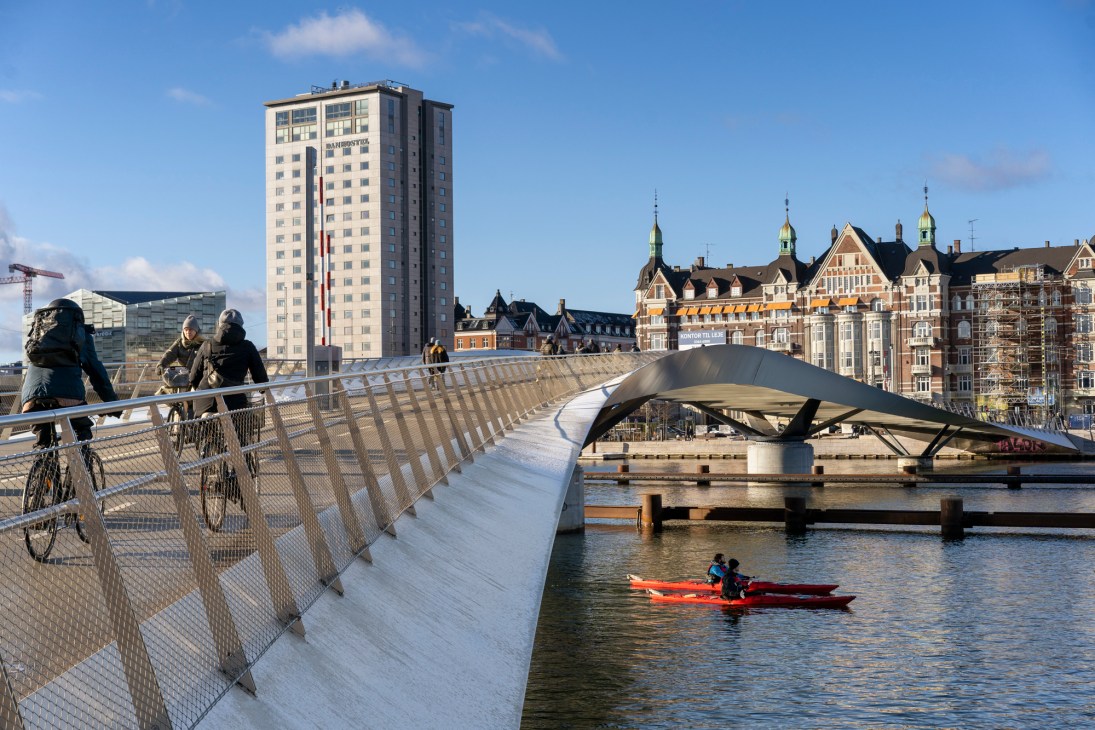
Cynics cry greenwashing over the fact that Copenhagen Airport (not technically within the city) and the operations of Maersk shipping are excluded from the co2 calculations. Others might wonder, with China still building coal-fuelled plants, what is the point of a small city pushing for carbon neutrality? But Copenhagen’s technical and environmental mayor, Ninna Hedeager Olsen, is defiant. “Cities often have the courage to do stuff that nations don’t,” she says.
Hedeager Olsen argues that though national politicians have often curbed the city’s sustainability ambitions – a congestion-charge plan some years ago failed to gain enough support – local politicians like her have a role in making brave and sometimes unpopular decisions. “We have to look at removing more parking spaces,” she says. “And encouraging even more cycle use, particularly from further out of the city.” The latter, combined with expanded light railways, is, she feels, preferable to building high in this still defiantly low-rise city.
Post-2025, Copenhagen will not be resting on its carbon-neutral laurels. In 2023 a new plan is likely to focus on emissions from construction and on the behaviour of Copenhageners themselves. It’s a delicate area, says Abildgaard. “But that’s the next step: to involve citizens so that they see the benefits.”
5.
Milan
Do it better lesson: Improve your environment, from air to access.
Milan’s mayor, Giuseppe Sala, is thinking big. The city’s trajectory from dull and industrial to truly liveable has been fêted for several years – but the mayor says that the pandemic has allowed Milan to take stock. “Every time we had the opportunity to change, we changed,” he says. Now he wants to “offer a vision of the future”.
Lombardy’s air quality is among the worst in Western Europe. One way to combat the issue is by giving people incentives to leave their cars at home. Sala says that the idea of a “polycentric city” – a take on the “15-minute city” concept – is on its way to becoming reality. In Sala’s vision, anyone should be able to leave their home and within minutes reach a market, green space or any other essential of daily life.

Services in certain neighbourhoods will need to be improved; as will mobility. Sala has been tweaking what he calls the “timetable of the city”, an idea tested during the pandemic, which has tried to avoid, for example, schools and shops opening at the same time to reduce spikes in movement and improve flow.
There are also plans to extend metro and tram lines, to further prioritise cyclists and pedestrians, to switch to an all-electric bus fleet and to create several new parks. Seven railyards will be redeveloped in line with strict rules designating at least 50 per cent of each area as parkland and a third of new apartments as social housing.
Sala talks about a triumvirate of “urban development, mobility and the environment”. But with further plans to beautify squares and fixed timelines for dealing with abandoned buildings, it’s clear that thinking big starts close to home.
Images: Jo Duck, Jan Søndergaard, Luigi Fiano
Order of merit?
1.
Rubbish ideas
Zürich
Black or white Züri-Sacks (bin bags) are so expensive that people think twice about what they throw out and stringently sort their recycling. Making residents responsible, rather than pandering to them, yields results.
2.
In full flow
Scotland
A little-adhered-to Scottish law suggests that residents should allow passers-by to use their loo if needed. We would caveat this with the precaution that not everyone is trustworthy. That said, there is something rather pleasant and public-spirited about it. Now, if you don’t mind, a little privacy please.
3.
Ruffling feathers
Venice
Should you choose to feed the birds in Venice’s St Mark’s Square, expect to be hit with a fine of up to €700. The city banned feeding pigeons in the hope of reducing droppings on buildings – an idea that should take flight.

4.
Fluff and tumble
Trinidad & Tobago
Strictures in these Caribbean islands outlaw drying clothes on racks or lines that hang over a street, not to mention airing your undies over a public-facing wall, fence or window. Keeping buildings and sightlines pristine bodes well for the neighbours.
5.
Making a splash
Japan
The Japanese reputation for politeness extends to the road, which means that legislation forbidding drivers from cruising through puddles and splashing pedestrians is mostly redundant. But it’s a good law that encourages courtesy and respect from drivers. Any city would gain from such a measure.
6.
Taking the lead
Turin
Time spent in lockdown has led to a boom in pet ownership and Milan recently launched a campaign to help residents think carefully about keeping big dogs cooped up in small apartments. The Turinese, however, are tied to an even more demanding law requiring all dog owners to walk their canine companions no fewer than three times a day. Hefty fines await those caught short. This might be well-intentioned and identifies an important issue but is far from best in show when it comes to execution.
7.
Plastic (not so) fantastic
Alabama
There’s been a huge uptick in companies trying to limit plastic in their supply chains and products in recent years. In Mobile, Alabama, confetti can be added to that list too. Here, any non-biodegradable, plastic-based confetti is banned. It’s good news for the planet – and rice suppliers.

8.
Credit where it’s due
Canada
Canadian retailers, who would surely accept every method of payment in 2021, are legally at liberty to refuse cash of more than ca$10 (€6) if the transaction includes more than one coin. Isn’t it time to mint a more intuitive monetary policy?

9.
Dressing down
Athens
Greece has banned stilettos at sites such as the Odeon and Acropolis, for fear that heels will ruin the marble surfaces. Perhaps this ban could be broadened to other items of touristy couture: Hawaiian shirts, bum bugs and zip-off trousers could all go.
10.
Doing fine
Finland
Nordic countries are known for championing equality in many of their laws. Rather than hitting all offending drivers with fines of equal value, speeding tickets in Finland are based on the driver’s salary and daily disposable income. It means that the heft of a fine (and offence) is felt equally by rich and poor.
11.
No Frenching
France
Would you ever walk over and ask a lovestruck couple to stop their public display of affection? The French did so in 1910 by banning kissing on train platforms. This was supposedly to prevent rail delays, though we suspect a jilted civil servant was involved in its inception. The rule still applies today.
12.
Nicely plated
Manila
To get cars off the road, Manila restricts every private vehicle to a few days’ use a week by tracking their licence plates. It’s a clever initiative but fails to deal with the real issue: getting more people onto public transit.
Splash of colour
Nishihara Itchome Park is the kind of mini playground you find all over Tokyo: a scruffy sliver of dusty ground with a children’s slide and the merest suggestion of a sandpit – the last place you’d expect to find a designer public lavatory. And yet here, on a tiny side street, is a striking trio of spacious loos with apple green doors, sharp graphics and the latest wash-and-blow-dry Toto Washlets. What on earth is going on?
I’m on an informal tour of Shibuya ward’s newest architectural landmarks – public toilets by some of Japan’s finest designers. It’s a starry list that includes Pritzker Architecture prize-winners Tadao Ando, Shigeru Ban and Toyo Ito, as well as streetwear legend Nigo, who’s come up with a lavatory in Harajuku and the overalls for the cleaning crew. (How long before they go on sale, I wonder?)
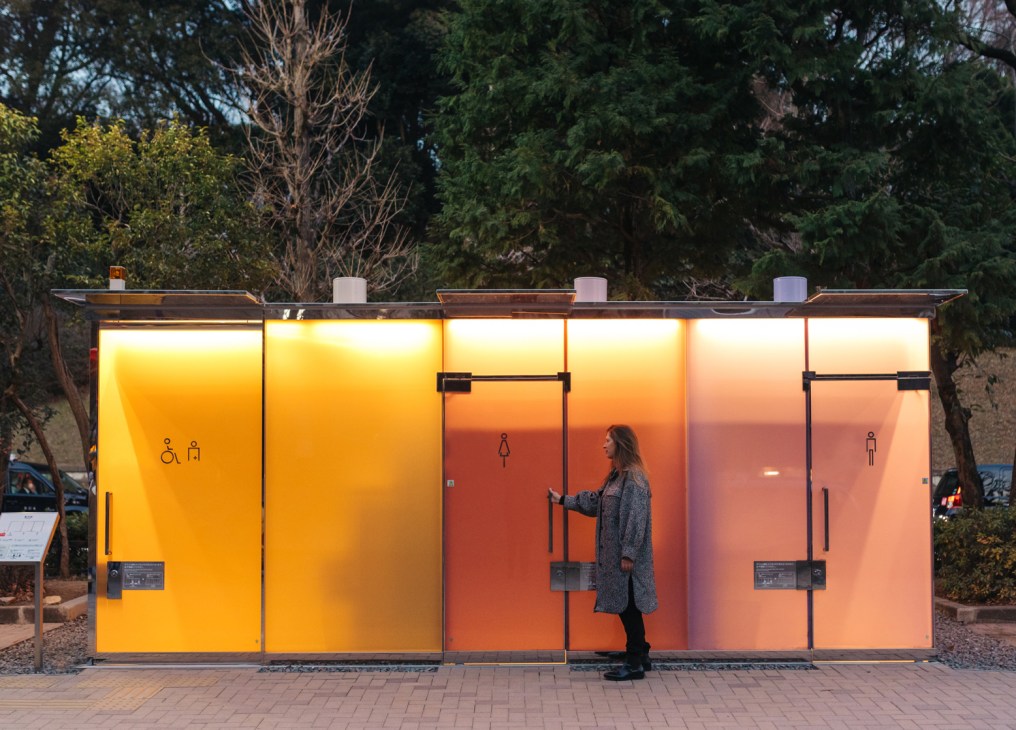
Even in a city like Tokyo with generally unimpeachable hygiene, some public conveniences can be pungent – enough to prompt The Nippon Foundation and Shibuya ward (home to about 230,000 inhabitants) to apply some serious architectural talent to the problem. And, in an added stroke of genius, partner with Toto, the world’s biggest toilet-maker.
The tour takes you through Tokyo’s back streets and residential neighbourhoods – places that will really benefit from the upgrade (changing a nappy in one of the old loos was a job in itself). Distinguished architect Fumihiko Maki was given the corner of a scrappy park for his toilet block; all-white – a tough colour choice for the cleaners – it has built-in benches and an internal courtyard. New York-based designer Nao Tamura had to work with a wafer of land next to a railway line in Ebisu. Undaunted, she opted for bold design with a bright red exterior.
The designers were set the same challenge: secure, free, accessible loos for everyone. And yet all came up with very different solutions. Tadao Ando designed a circular pod, lined with vertical louvres that let in light and fresh air, with a metallic and futuristic interior. Interior designer Masamichi Katayama’s toilet resembles a stylish home, with discreet signage and timber-grained concrete throughout.
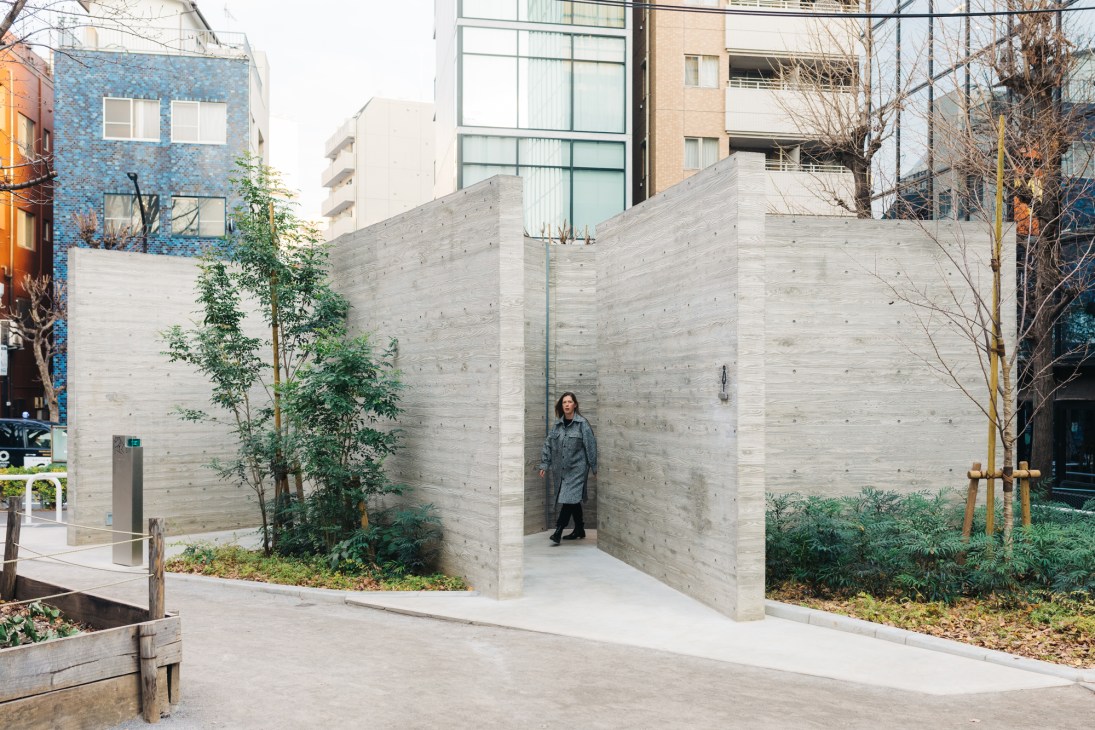
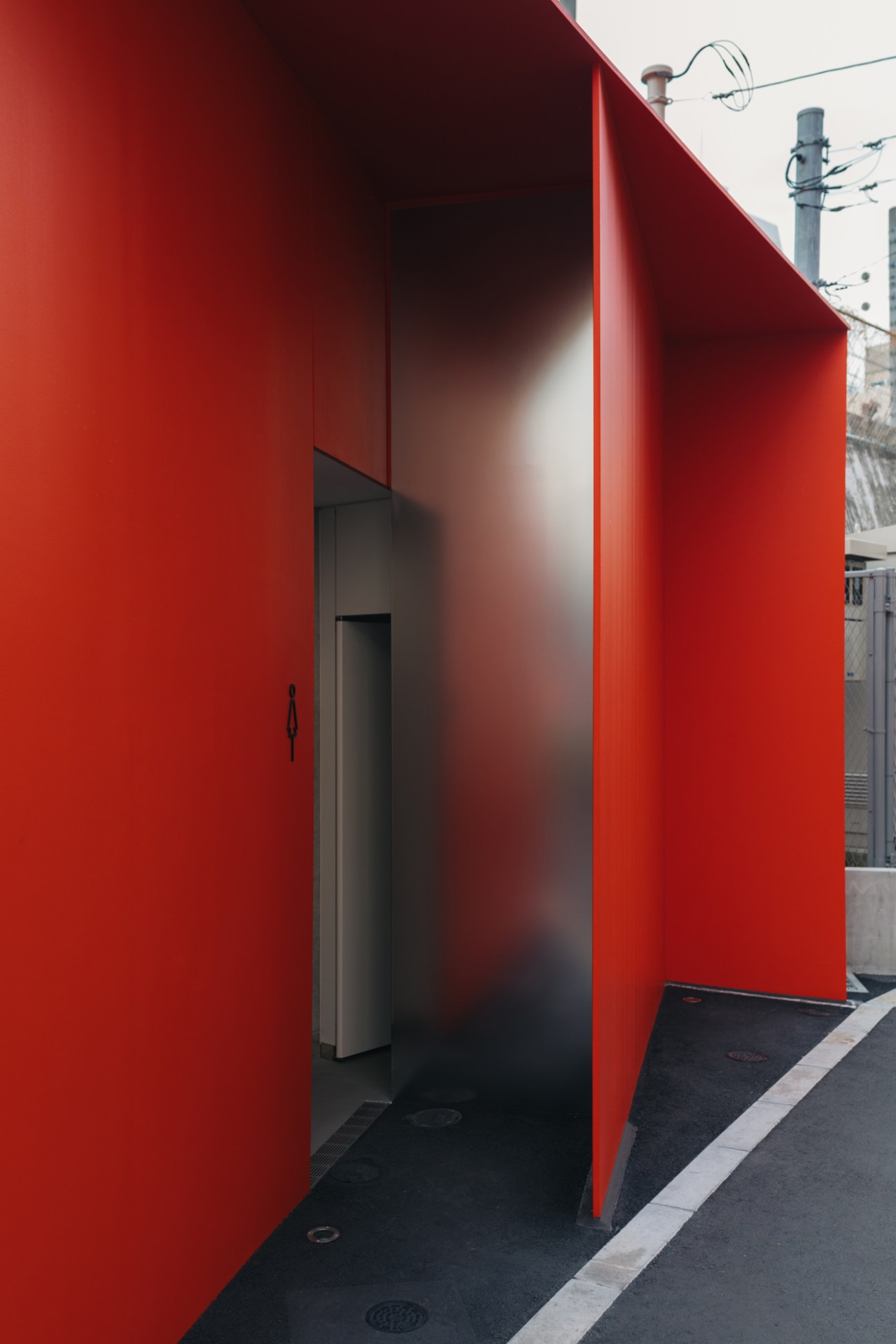
I clocked the project when Shigeru Ban’s translucent lavatories suddenly appeared near Yoyogi Park, as though they had dropped from the sky. Glass-walled and pastel-coloured, they light up like eerie lanterns as dusk falls. Once the door is locked, the glass turns opaque, which can be unnerving for first-time users who wonder whether they are still on display.
Seven locations have sprung up so far and more will open this year, by Kengo Kuma, Sou Fujimoto and other design luminaries. Perhaps the best element of this project is that cleaning and maintenance are considered to be as important as good design. I noticed that these new facilities are being used, as intended, by everyone – children running in from the park, taxi drivers on a break and construction workers skipping the building-site Portaloo. Other cities, take note.
Wild things
Pulling up in an oversized Chevrolet pickup truck bearing the Alaska state troopers’ insignia, which features a polar bear and a moose, wildlife ranger Patrick Simasko (pictured) is beginning his inspection of my house. The troops wouldn’t typically come out to advise on something so common as a back-garden moose problem but Simasko has kindly made an exception.
An estimated 1,900 moose wander freely through the Anchorage municipality year-round, eating up to 30kg of vegetation every day from spring to autumn. This means that 725kg of ungulate trampling your flowerbeds is a common sight for city dwellers. And moose don’t stop there: they stomp cabbages flat, nosh on salad greens, strip fruit trees and even nibble at rhubarb, despite it being semi-toxic to them. For the gardeners among us Anchorage residents, it’s essential to know how to keep them at bay.
As a wildlife trooper, Simasko is responsible for handling Alaska’s environmental concerns and is well-versed in managing wayward moose. He advises that unexpected noises, such as shaking a plastic bag or piece of tarpaulin, can scare them off. But judging by personal experience, results are mixed. Banging baking trays, blowing whistles and shouting in full-throated frustration often does little more than cause agitation, which can be dangerous. Many Alaskans are injured by moose every year, so it’s important to keep your distance. “Even though they’re in the city, they’re wild animals,” says Simasko. “They’re unpredictable.” Alaskan moose are also more than 2 metres tall and sport enormous antlers – a sight to behold when the beasts idly stroll across a quiet city street. For the most part the state maintains a hands-off policy, except in the case of significant threat to humans. “It’s said that the animals here can chew you up and spit you out,” says Simasko. “Give them space.”



But that’s a tall order for a keen horticulturist. Growing season is brief in Anchorage, with planting-out at the end of May and dying-back starting in August. It means that your plants must be closely guarded. The green-fingered go to great lengths to protect their vegetation: repellent sprays, garlic clips and wolf urine, bars of soap, even bags of human hair have all been used. One homeowner draped her prized tree with urinal bricks (the plastic-encased deodorising agents found in public toilets). But the only tactic that works all of the time is a 2.4 metre-tall fence.
The height is essential. Moose can hop 1.8 metre-high walls like Lipizzan stallions; they don’t even need a running start. Simasko agrees that a really good fence is the only thing that works consistently. Walking around to the back of my house, he notes the fences on three sides and a makeshift barrier on the fourth. Although none reach 2.4 metres, they constitute “pretty good defences” against moose incursion. At least one moose entered my garden recently but the joke was on it: the two tempting apple trees are surrounded by mighty sections of chain-link.
Losing a stand of peas, of course, isn’t the end of the world. “It’s one of the risks we take, living in Alaska,” says Simasko. And we need to remember that things could be worse: two kinds of bears, both black and grizzly, live in Anchorage too. They would probably eat more than the moose do.
Moose manoeuvres
1.
If a moose dies on your property, state law decrees that its body is your responsibility. Commercial services can haul them off. Or do as one Anchorage resident did and put the carcass on Craigslist.
2.
Moose droppings are available in souvenir form, from jewellery to festive “mooseltoe”.
3.
Alaska’s second city, Fairbanks, banned moose from its pavements in 1913 to keep a bartender from bringing his pet moose to work.