Issues
How French comedian Paul Cabannes has taken Brazil by storm
As told to Fernando Augusto Pacheco.
In 2012 I married a Brazilian and we went to her homeland for our honeymoon. I loved it and almost immediately wanted to move there. So we did, relocating from Paris to the city of Maringá, where I began teaching French. After a few years I started a YouTube channel making humorous videos about being a Frenchman in Brazil. Because they were popular, I decided to try my hand at stand-up comedy, which I thought I would do as a hobby in front of about 20 people. Soon I was playing sold out shows across Brazil and now I tour the world performing at venues in cities with large Brazilian diasporas, such as London and Paris.
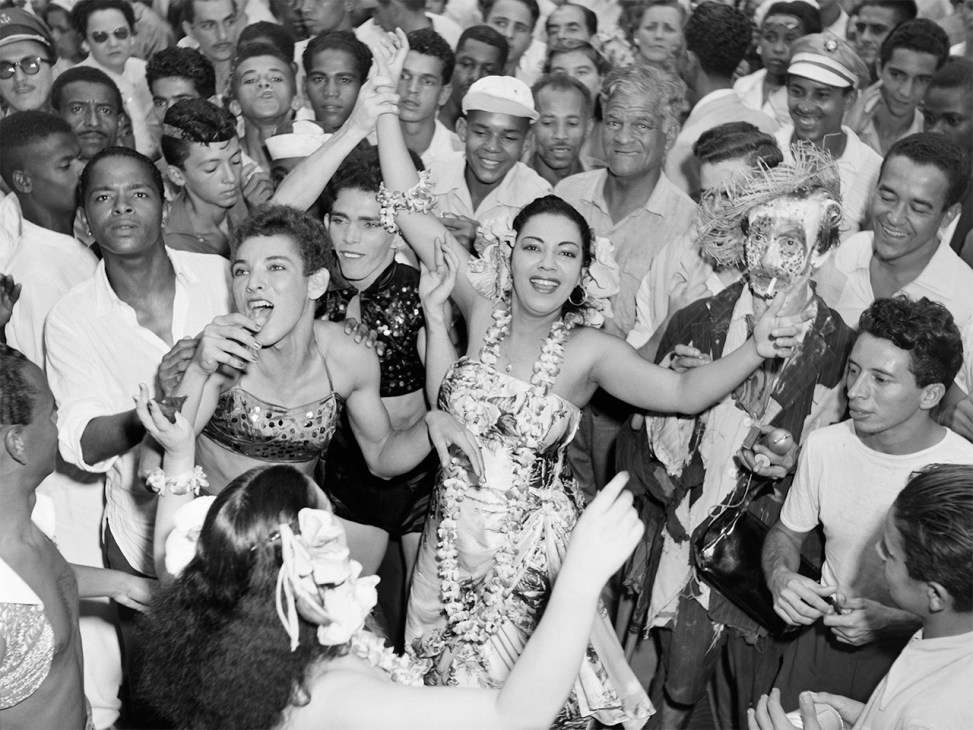
What I have realised through my time onstage is that, if you want to seduce somebody, you have to talk about them. When you do that to millions of people, you can seduce an entire nation. The second reason why my comedy has proven so popular in Brazil is that I notice small peculiarities about the country’s culture that people who have lived there their whole lives think are unremarkable. For example, when a Brazilian has a piece of food in their hand, they will almost always offer it to you, with the expectation that you will refuse it, which you have to. That way, both of you are being polite. But sometimes they actually want you to accept it and you’re keen to do so. But you have to refuse anyway. After the first refusal, they will try a second time but you must still refuse. Only when they offer it a third time can you accept.
Another thing that I have noticed is how difficult it is to leave a Brazilian party. If you say that you’re thinking of heading home, the host will reply, “It’s too soon,” and keep inventing excuses for you to stay – even if they want to call it a night. It’s considered even more rude to tell people that you want them to leave your party than it is to leave someone else’s, so you have to give off subtle (or not so subtle) signs, such as miming brushing your teeth. Even then, when your guests announce that they’re going, you still must say, “No, please don’t.”
Such habits are particularly funny when you come from a more direct culture, like France’s. The two countries have a lot of words in common, as well as religion. But apart from those things, there are few similarities between the two. In France, we say no quite bluntly. Once, I had the honour of being invited to a dinner hosted by Emmanuel Macron for Luiz Inácio Lula da Silva at the Élysée Palace. At the end of the meal, I asked a guard, “Can we go to the garden to have a look?” He replied, “Non.” This is something you would never hear in Brazil. Brazilian people just don’t say no.
The commute: Step out onto the street with Josefa González-Blanco
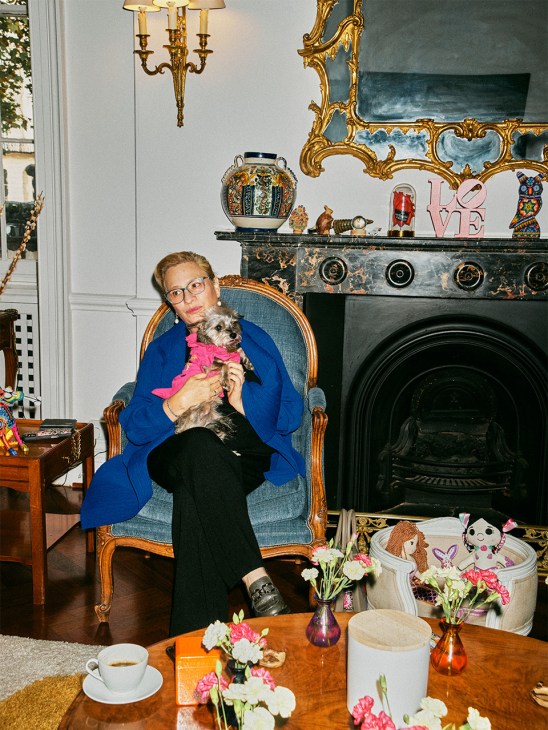
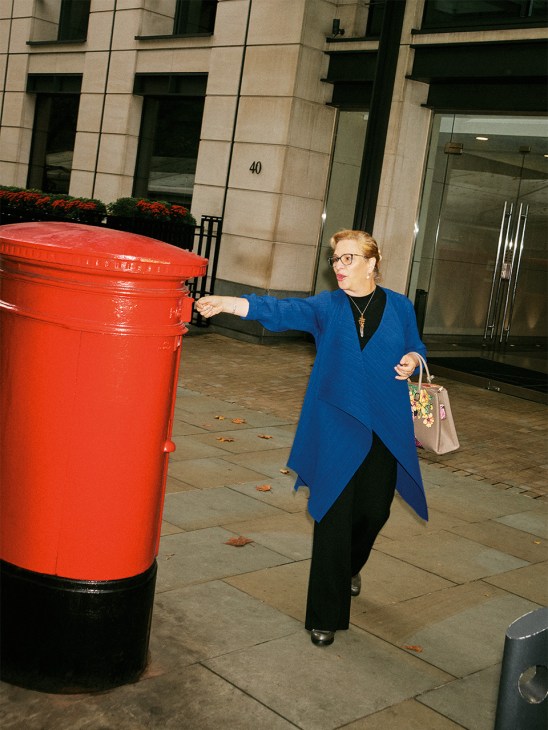
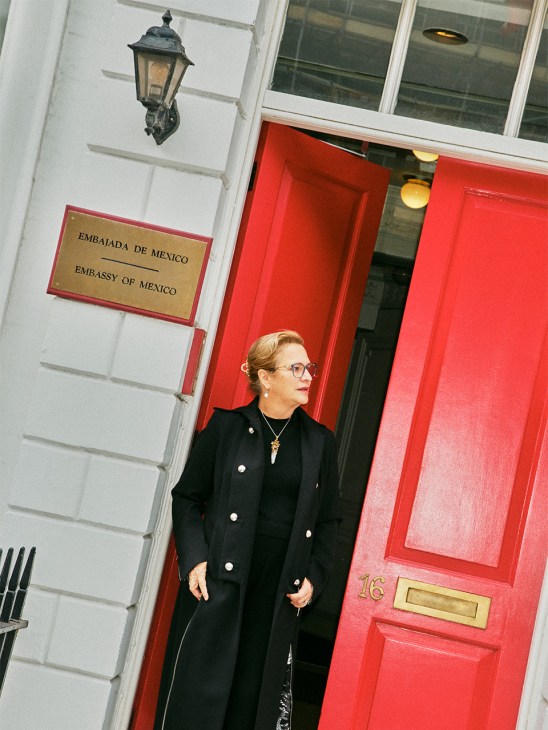
Josefa González-Blanco, Mexico’s ambassador to the UK, once ran a wildlife and conservation centre in the southern Mexican state of Chiapas. There, she led the first successful reintroduction to the wild of the scarlet macaw, a species that had been extinct in the region for more than 70 years. On a cold London morning, as we join the ambassador on her daily commute from Belgravia to Mayfair, Latin America seems a long way away. Fortunately, though, the presence of Tiny Dancer, González-Blanco’s schnauzer-poodle-chihuahua mix, brings a little Mexican sunshine to our necessarily brisk walk.
Are you a morning person?
I’m a night owl, which makes me feel more connected to Mexico. As my day is winding down here, my team there is still active. The British afternoon overlaps with the end of the workday in Mexico; it’s a small window of connection between both worlds.
What’s your ideal breakfast?
When it’s just myself, I keep it simple: yoghurt, oats and a strong cup of tea or coffee. I also have a deep affection for traditional English or Scottish breakfasts. At an event at Scotland House, we made quesadillas with blood pudding – they were magnificent. Whenever I host an official breakfast, though, it always begins the Mexican way, with chilaquiles, enchiladas suizas, huevos rancheros… Food, for us, is never just food; it’s conversation, comfort and an important form of diplomacy.
How often do you walk to work?
Three days a week. If we have time, Tiny and I will take a stroll around Hyde Park: she darts around the horses and barks at squirrels that she will never catch.
Headphones in or city sounds?
It depends on my mood. Sometimes the city sounds can feel comfortable. Classical music helps me find a clear mental space. I often listen to Rachmaninoff’s “Piano Concerto No 2”, which reminds me that diplomacy is a constant negotiation that strives for harmony. But sometimes what I need is a bit of joy and that’s when I turn to rancheras, mariachi, guitarra de son or la música regional.
Does Tiny Dancer enjoy London?
At the beginning it was too cold and rainy for a girl from the tropical rainforests of southern Mexico. But now she loves it, especially the Underground – if I get distracted, she will often jump up onto another passenger’s lap.
What do British people get wrong about Mexico?
We are the 13th-largest economy in the world, a leader in clean-energy technology and a pioneer in biodiversity conservation, home to more than 10 per cent of the planet’s species. Our story reflects this natural diversity and abundance. People associate Mexico with our food, tequila and our general sense of celebration. All of which are true. Yet behind that lies a country of philosophers, scientists, architects and innovators.
What do you do when you arrive at the office?
The first thing I do is light a candle. Then I have a coffee. Then I get to work.
Do you have Christmas plans?
I’ll be spending it in London again this year. I’ll be attending His Majesty the King’s Christmas Reception at Windsor Castle with the diplomatic corps, which is always a very special occasion.
Comment
González-Blanco embodies the warmth and exuberance that many associate with Mexico. But perhaps her greatest diplomatic asset is a desire to get out on the streets and meet people.
A look behind the artistry and challenges of ‘Swan Lake’ at the Royal Danish Ballet
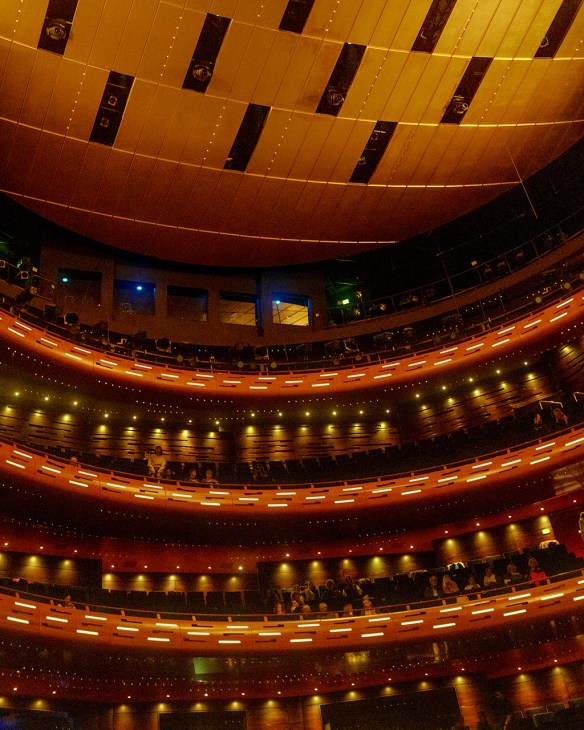
Every theatre has two entrances, each offering visitors a contrasting experience. If you enter through the main foyer of Copenhagen’s Royal Opera House for the latest production of Swan Lake, you will be greeted with Tchaikovsky’s score, fantastical costumes and lighting, and the diaphanous grace of 55 exceptional ballet dancers.
Enter through the stage door, however, and the enormity of the graft and skill, the hard-won know-how, as well as the physical agony of staging such a spectacle, becomes apparent. It takes what amounts to a village of people to launch those tutus twirling across the water. And sometimes things do not go to plan.
Though Swan Lake is being staged at the 600-seat opera house on the harbour front, the Kongelige Teater in the city centre has been the Royal Danish Ballet’s home for more than 250 years. Our backstage tour starts in the tailoring department. “This is my favourite costume from this production,” says pattern maker Bente Kirk, stroking the dark purple fabric with gold brocade used for the queen’s dress. Alongside samples, Kirk has laid out original sketches by designer Mia Stensgaard. Judging by her mood board, it seems that Stensgaard has taken inspiration from birds of prey, Fabergé eggs and Cate Blanchett’s performance as Queen Elizabeth I.
This workshop is one of the only places in Denmark where new milliners are still trained. Kirk shows us a tutu that has come in for repair. It is constructed from 10 layers of tulle and one of organza, supported by a thin metal hoop and fitted to the waist with a bodice. Tutus wilt over time so they require freshening up to maintain a perky silhouette.
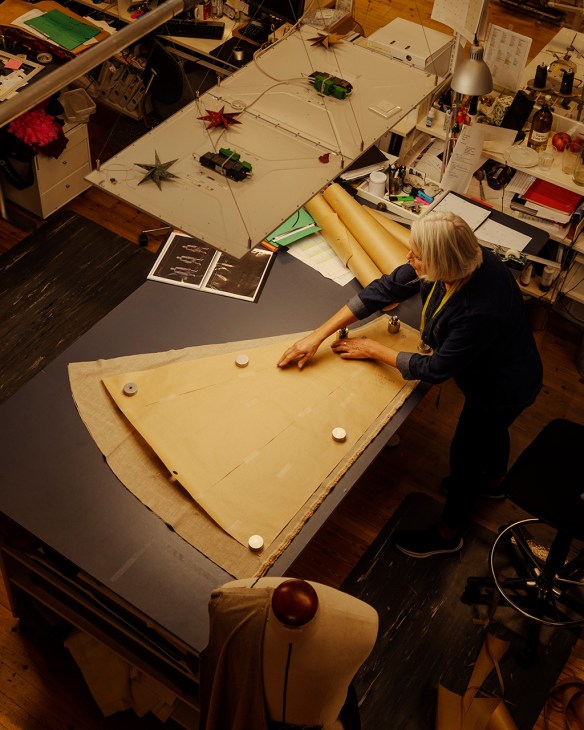
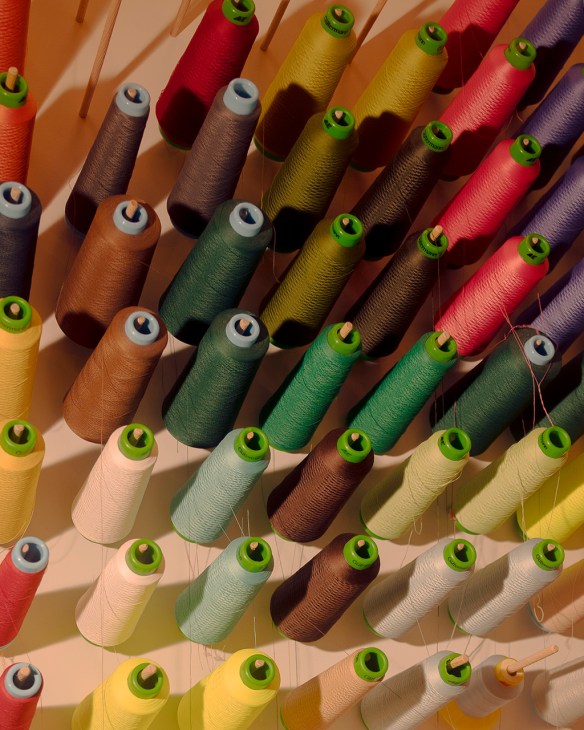
Kirk has worked here for 22 years, during which time the tutus have been made by two men in southern England who supply most of the ballet companies in the world (at a cost of about €350 per piece). They are retiring, so Kirk and her colleagues must figure out how to make them in Denmark. But the business is shrouded in secrecy. “I once spoke to them over the phone and suggested that we come to visit them but they said, ‘No, no, no,’” says Kirk.
Ballet costumes are surprisingly heavy. This is partly because they are built to last decades. They also need to be regularly adjusted because the physique of ballet dancers is changing, says Kirk, as she works on letting out a bodice for a forthcoming production. In recent years, male performers have become more muscular and the ballerinas taller and more varied in figure than was previously permitted. And, as a result of their complexity, costumes are rarely cleaned. Excuse me? “Oh, yes, they smell like hell,” says Kirk, laughing. “But the performers are all used to it. And some dancers think of it as a privilege to wear something that was worn by a great soloist – it has a special aura.”
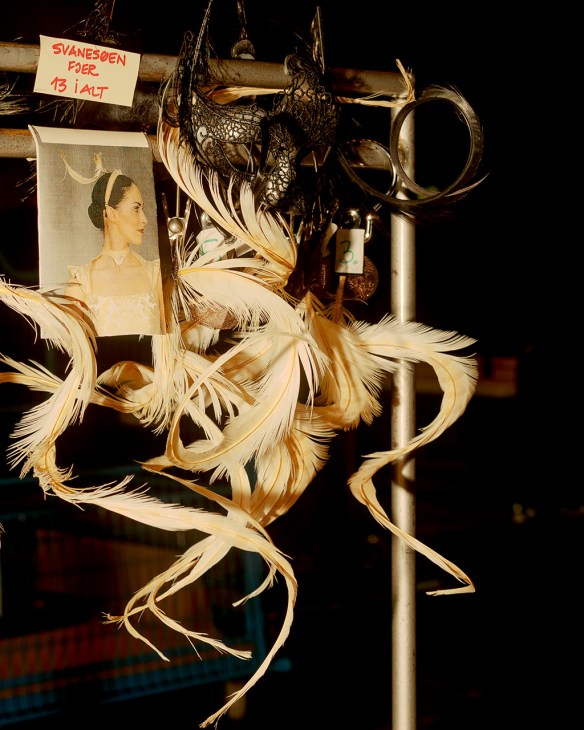
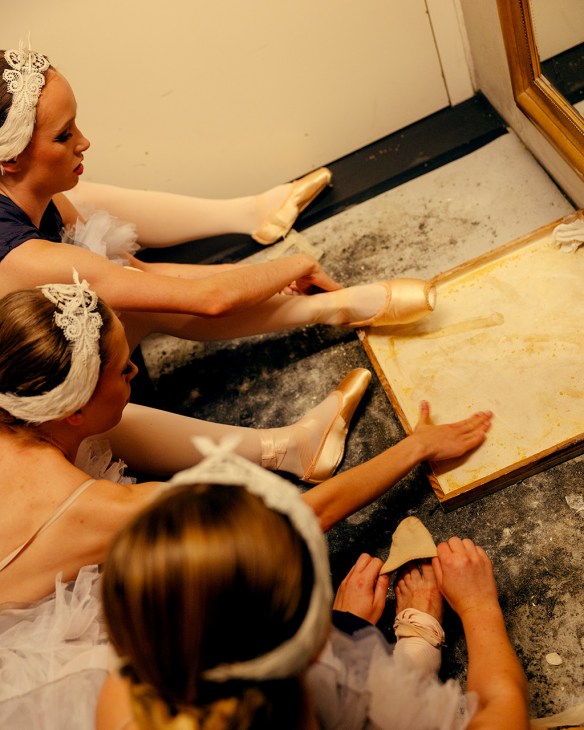
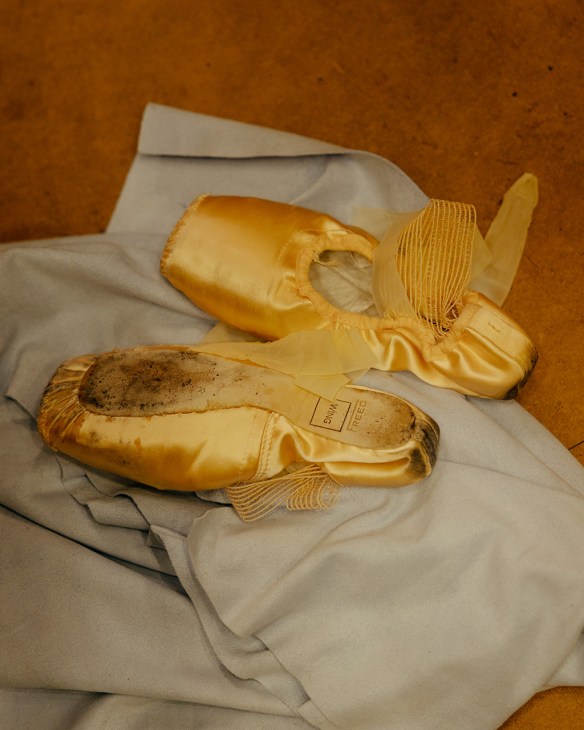
Swan Lake might forever be associated with those tutus but a great ballet performance begins at the feet. Shoe manager Henriette Brøndsholm tells Monocle that this production is the most challenging ballet of all when it comes to footwear. “The swans are en pointe almost the entire time that they are onstage,” she says. “The premier ballerina goes through two pairs every performance and she will end up with at least one black toe.”
The shoes are made to measure by Freed of London. The toe pointe, or block, which is about 2 sq cm, is constructed from layers of card. Every dancer will break in their shoes to achieve their preferred flexibility and some will customise them further, darning the tips to attain a perfect flat surface. They are sold to fans after performances, recouping some of the cost (about €60).
Brøndsholm started at the company’s ballet school when she was nine years old and is still here 47 years later, having retired – as all dancers eventually must – at the age of 40. She too has danced in Swan Lake. As the bell rings for the evening’s performance, she says that she still misses being onstage. “When the audience is there and the music plays, it doesn’t matter how much it costs you in toenails and blisters,” she says. “It’s all worth it.”
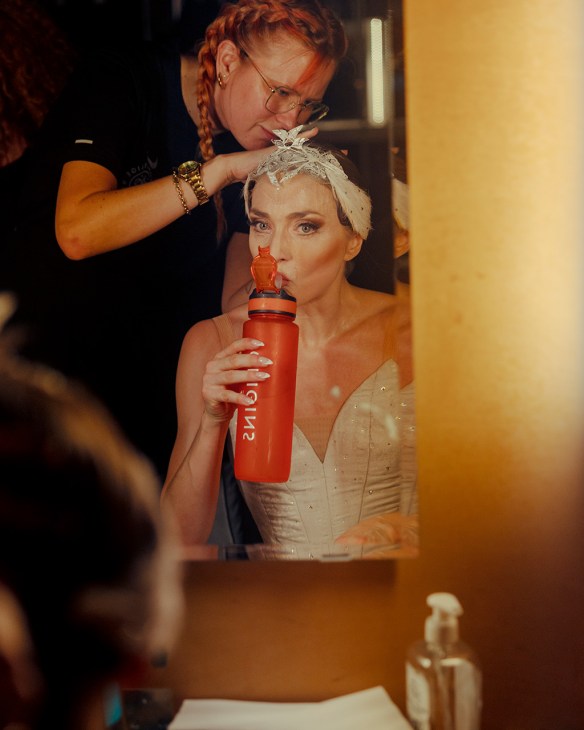
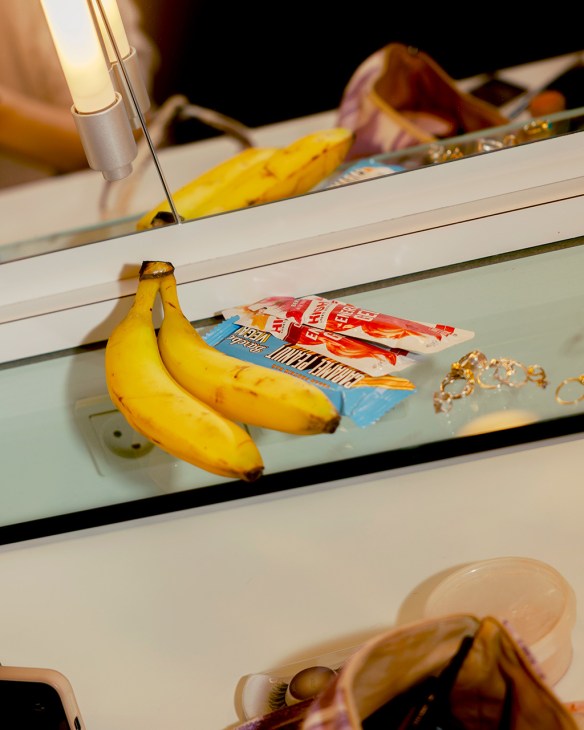
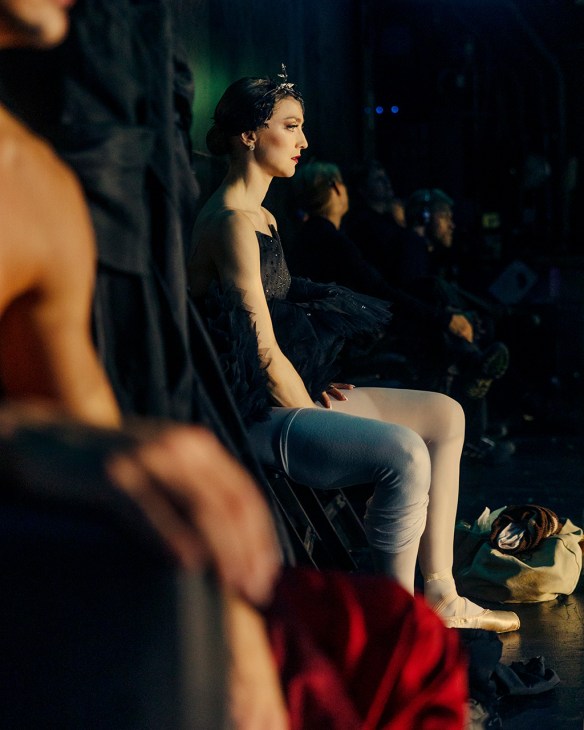
Someone who knows the truth of this first-hand is tonight’s lead, Astrid Elbo. “This is my third time around the lake,” she says, referring to the occasions so far on which she has played the dual leads of the White Swan, Odette, and the Black Swan, Odile, which are perhaps two of the toughest roles in the classical repertoire. “The challenge is as much mental as it is physical,” says Elbo. “I need to concentrate and visualise like an athlete – planning the day, thinking about nutrition and getting extra protein.”
The 31-year-old Elbo enrolled at the company’s ballet school when she was six years old. Traditionally, she would have been considered tall for a ballerina, she says, claiming (unconvincingly) to have been like “Bambi on ice” as a young dancer. “Co-ordination was difficult since my centre of gravity is high.”
Tonight, Elbo’s prince is French dancer Mathieu Rouaux. Monocle asks him how he feels about taking second billing – unusual for a male lead in the still-chauvinistic world of classical ballet. “I love it so much – there’s less pressure,” he says. “I use it as a tool not to freak out. What will the audience remember? The swans. And maybe a blurry image of some tall, handsome guy in the background.”
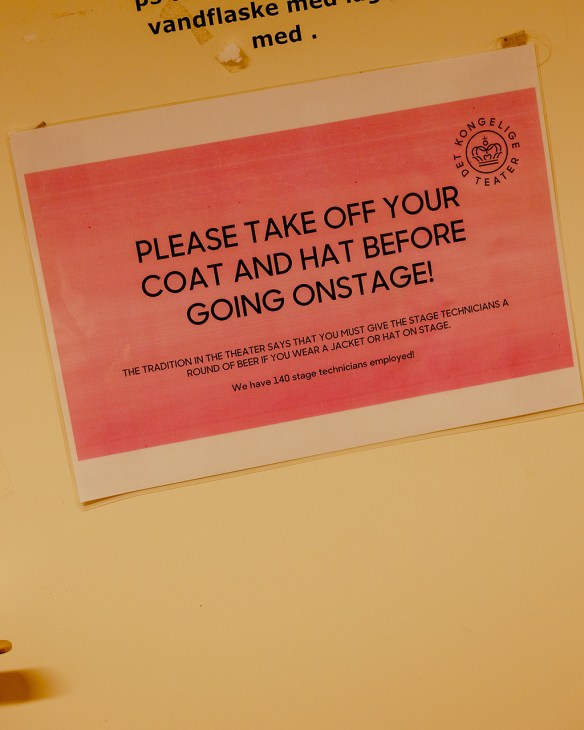
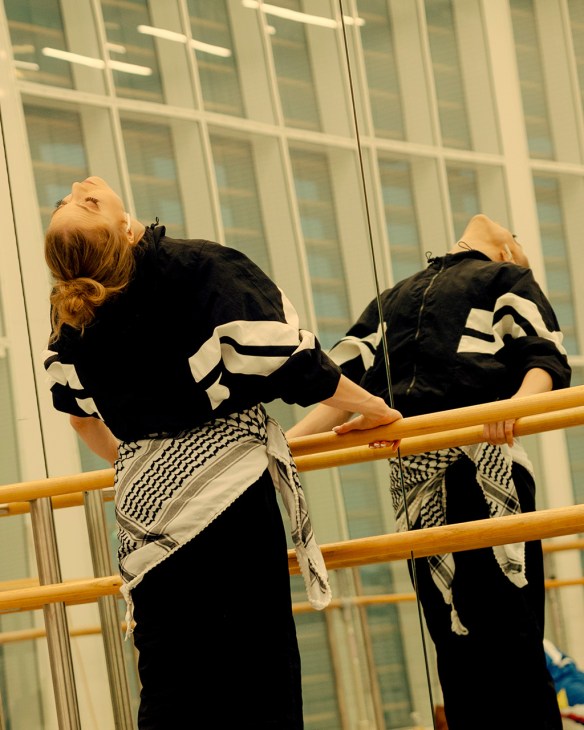
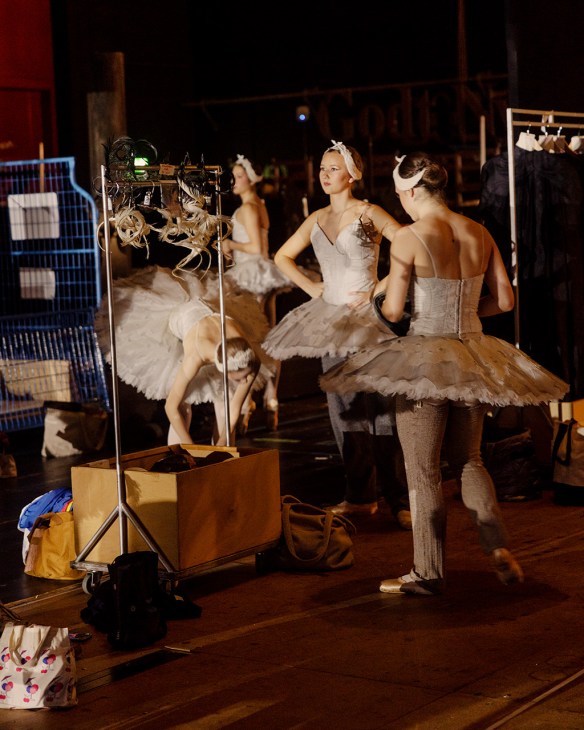
A few minutes before the curtain rises, the atmosphere backstage is energised but calm. Dancers, some still wearing tracksuit tops over their tutus, stretch or stand while chatting. One swan is doing star jumps. The orchestra strikes up (sounding slightly muted from back here) and the stage is soon a blur of dancers, the clatter of their pointe shoes sounding like horses on a cobbled street. Later, recuperating offstage, dancers bend double, breathing heavily but silently through rounded mouths.
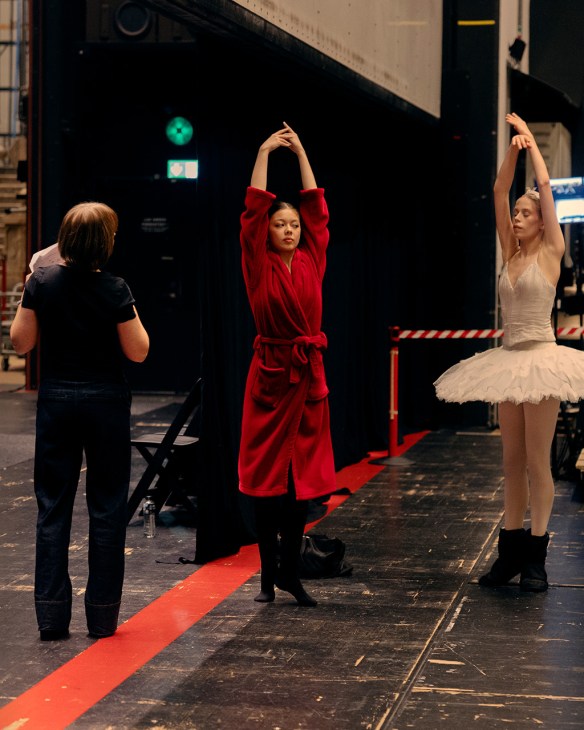
As the curtain falls on the first half, it is clear that something is amiss. Ballet director Claire Still has appeared in the wings and is huddled with a dancer swaddled in a red dressing gown. It turns out that one of the four ballerinas who has just performed the “Dance of the Little Swans” (probably the most parodied ballet sequence of all but incredibly demanding) can’t continue for the second half. Emma Larsen, an 18-year-old “aspirant”, or student, from the ballet school is now shrugging off her dressing gown and hurrying to switch costumes to fill in for the injured dancer.
The recent history of the Royal Danish Ballet has not been without tumult. In 2024 its then artistic director, Nikolaj Hübbe, resigned following accusations of a harsh teaching environment and a “culture of silence” at the school. Years earlier, there were allegations of cocaine use in the company. Californian Amy Watson was chosen as Hübbe’s replacement. She is the first woman who danced in the company to become its director – and the first to last more than a year in the post.
“Things have evolved,” says Watson. “I can say with certainty that you do not need to be brutal to raise a ballet star. Positive affirmations create better outcomes.” Scandals, plus a perception of ballet as an elitist form of art, could be an existential threat to the company, which relies on generous state funding. “This country appreciates art and culture, and it’s fantastic to have the government’s support,” says Watson. “The message that I have to get out is that ballet is for everyone.”
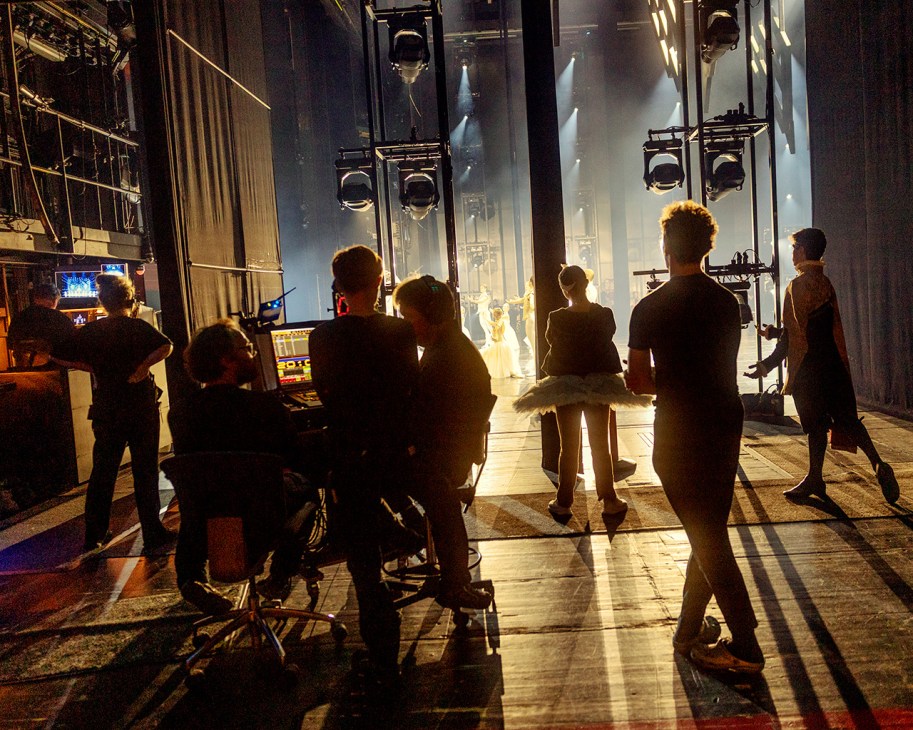
Back in the wings, Elbo, now in costume as Odile, the Black Swan, spits her gum into a large dustbin as the curtain rises on the second half of the production. She seems remarkably relaxed given that she is about to perform the daunting 32 pirouettes (or fouetté en tournant) in Act III. Audiences count the rotations as she delivers them perfectly to tumultuous applause. Afterwards, Elbo seems satisfied. “It felt so good that I could have kept going,” she says.
But with a job this punishing, how does she relax? “I have started going out dancing more,” she says. “I go to a techno club and stand at the front of the crowd so I can’t see anyone. I don’t even move to the beat because I’ve been told to be on the music my whole life. I just dance.”
The physical toll
Performing Swan Lake has been compared to participating in an Ironman triathlon while wearing haute couture. Isabelle Walsh, an American corps dancer playing a swan in this production, says that she takes collagen supplements, probiotics and a medicine called Methylene Blue for blood oxygenation. Another ballerina swears by her compression boots. All of the dancers seem to use magnesium sprays. Before performances, Astrid Elbo often undergoes cryotherapy – a blast of minus 94C.
How Nonna Lietta’s founder keeps the brand woven with love
“The first designs that I created for Nonna Lietta were all inspired by my grandmother,” says Greek-Italian designer Lietta Kasimati from her Athens studio. It’s on a cobbled street that hedges the National Archaeological Museum, right in the bustle of the city. You can imagine Kasimati’s grandmother – a 1960s aesthete with Roman origins – walking down these alleys wearing a swipe of red lipstick, a fine knit and a pair of heels (always).
It’s the influence of grandmother Lietta – her granddaughter shares her name – that anchors the brand; its pieces have a handmade sensibility that’s classic and gentle, and are threaded with a little whimsy. “When my grandmother knitted, she liked to add small details,” says Kasimati. “If there wasn’t a pretty adornment, there was colour: bold splashes of it. She has passed down her love of knitwear to me.”
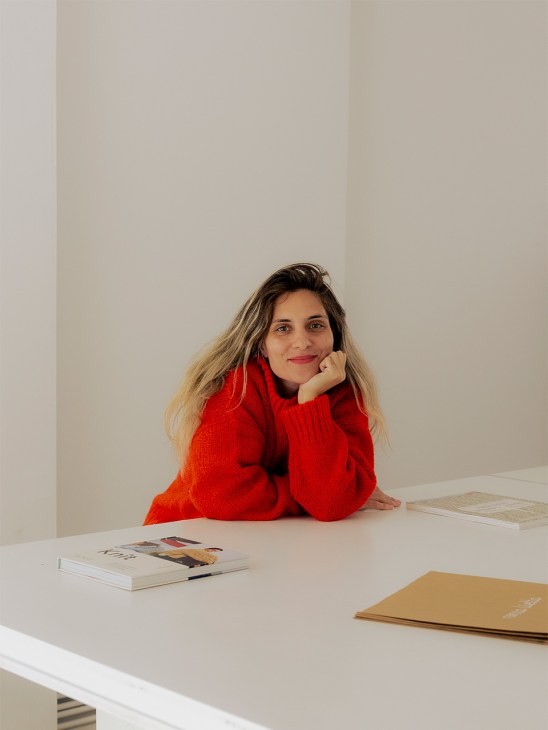
Nonna Lietta’s genesis came when Kasimati was at a crossroads in her life. She was living in Belgium, working in fashion retail, and had to decide between a progress-marked career path that stretched comfortably ahead of her or a riskier, entrepreneurial adventure. She returned to her native Athens and launched Nonna Lietta in 2018, while Greece was still riding the stormy waves of the financial crisis. Design and daily operations took place in Athens, while production was outsourced to Barcelona.
Eight years on, the brand has grown an international customer base (the US is its biggest market) and Kasimati has been able to turn her focus to Greek manufacturing, joining a growing group of young entrepreneurs who are helping to slowly revive the dormant sector. Nonna Lietta’s sheep yarn is sourced from high in the mountains of northern Greece, where the label’s current manufacturing partner works with shepherds from the area to source and spin wool exclusively for her. It’s raw, unprocessed and, says Kasimati, “as natural as it gets”. It’s then made into knitwear – slouchy vests, thick, woollen cardigans, delicately ruffled tops – in Athens.
The rest of the yarn, a premium blend of eco wool and alpaca, is sourced in Italy and the pieces are produced in Spain. Kasimati describes Nonna Lietta as an essentially Mediterranean label, with its combination of Italian, Spanish and Greek yarns, craftsmanship and sensibilities.

The newest collection includes elegant navy and pastel “winter bloom” hues, as well as playful star intarsias. “I want our pieces to remind our customers of their childhood, to take them back to that old feeling of warmth,” she says. Nonna Lietta is only sold via the brand’s website and various pop-ups. Kasimati travels to New York every year, as well as occasionally to London, Amsterdam and Paris, to host pop-up shops but her time spent in large-scale retail confirmed to her that wholesale shouldn’t be part of her business model.
She is also in the process of moving to a bigger studio to continue expanding the label’s production, slowly and steadily. “I never dreamed of a super-big brand,” she says. “My dream is really to keep being creative, to maintain our values, to keep it all sustainable.”
Next, Kasimati plans to take on Asia, to bring the message of fine Greek production and craftsmanship to further-flung shores, plus expand and experiment with more yarns. “I want people to invest in our ethos,” she says. “And not just buy for the sake of buying.”
nonnalietta.com
Editor’s letter: The power of determination
There are a lot of themes threaded through this issue – the potency of good design, legacy, our shifting perceptions of health and ageing – but when I looked at the final proofs, one word seemed to link many of the narratives that run across its pages: determination. This November outing of Monocle reads like a playbook on how to follow your own path, fight for your independence and ignore the naysayers.
Let’s start with the Expo. A few months ago I went to an exhibition at the Saatchi Yates gallery in London. It was the opening night and the space was rammed, guests spilling out onto the street to smoke and talk art. It was a cool crowd and, inside the gallery, the punchy, political canvases on show were being scrutinised by lots of twenty and thirtysomethings. These new works were not the creation of some fresh-faced enfant terrible but Peter Saul, an American artist who is still at the top of his game at 91. Later I spoke about the show with Sophie Monaghan-Coombs, who runs our culture pages. She pointed out that there is a whole host of artists in their eighties and nineties being championed by galleries and museums – many are women who are only now getting the recognition that they deserve. So Sophie put together a feature on seven in-demand senior artists who continue to push boundaries; who live through their work. It’s an inspiring tale of artistic determination.
Giorgio Armani, who died in September, ran an extraordinary business, not least because in an era when key luxury groups have come to control many of the most potent and important labels, he stayed independent – the sole owner of his empire. This allowed him to do things his way, whether that was telling models to smile and look happy or being the only spokesperson for the company. Our fashion director, Natalie Theodosi, was granted backstage access to report on the runway show for his final collection to see how his determination will live on. Her report is combined with the glorious photography of Andy Massaccesi.

A cultural shift is shaking up the health-and-fitness industry. Younger folk – well, a lot of them – see going to the gym less as a necessary evil to combat their daily excesses of food and booze, and more as a way of life. This cohort of clean-living Gen Z consumers will happily spend all day tending to their body’s needs. Enter the “super-boutique” gym, a place not just for taking a class but also for health tests, spa treatments, dining on virtuous meals and hanging out. For this issue, writer Grace Cook travelled to Brussels to meet entrepreneurs (and health advocates) Alexandre de Vaucleroy and Antoine Derom at their recently launched Animo Studios, a space designed to be the backbone of members’ fitness, social and even work lives.
Political, military and diplomatic determination also makes an appearance in this issue. In our Affairs pages, we head to Poland to see how the country is preparing to defend itself should Russia attack. We also sit down with former Estonian prime minister Kaja Kallas, who now, as vice-president of the European Commission, is in charge of the EU’s foreign policy (even if member states are hard to align). In an interview with our foreign editor, Alexis Self, she explains why she is determined to stand up to threats from the East and unwanted challenges from Washington.
You will also read about the doggedness of art sleuths, the firm focus of three Pritzker Architecture Prize-winners and how Noura bint Mohammed Al Kaabi, minister of state for the UAE, is unwavering in her belief that we need to listen to everyone, while maintaining red lines. I hope that this issue will harden your resolve, as you look ahead. It’s an issue that shows you how you can stick to your principles and do good too.
The art of ageing: Inside the studios of seven in-demand artists in their eighties and nineties
Though crafts that rely on the dexterity of your hands become more difficult as you age, your decades of learning and life experience can imbue what you create with depth and unique perspectives. Here, we visit the studios of seven artists who continue to paint in their eighties or nineties, still staging big exhibitions, selling work and finding inspiration.
Isabella Ducrot
Rome, Italy
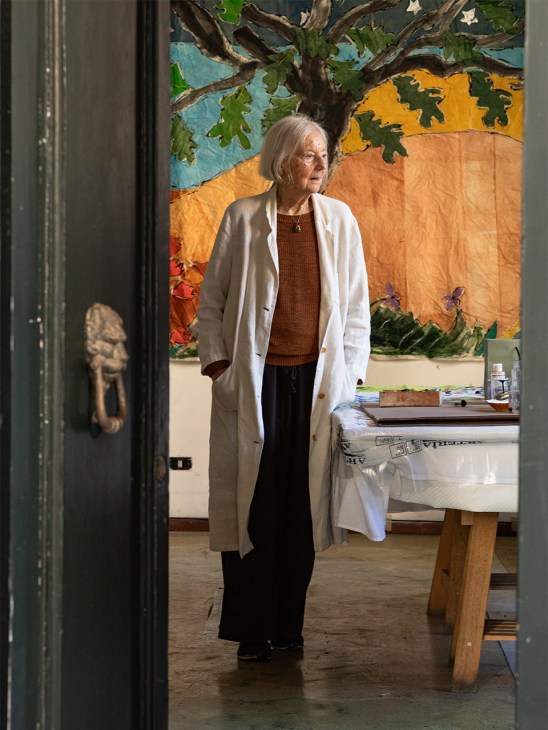
Isabella Ducrot’s craft is something of a patchwork. It incorporates textiles procured on her travels in Russia, Turkey, China, India and Tibet, and stories from her voracious imagination – Ducrot has been writing for far longer than she has been painting.
Born in Naples, Ducrot moved to Rome in her thirties, lured by the promise of freedom and anonymity. “Romans are indifferent,” she says. “They’re not particularly interested in each other. That’s a good quality.” In the Italian capital, Ducrot surrounded herself with intellectuals, including novelist Alberto Moravia and filmmaker Pier Paolo Pasolini.

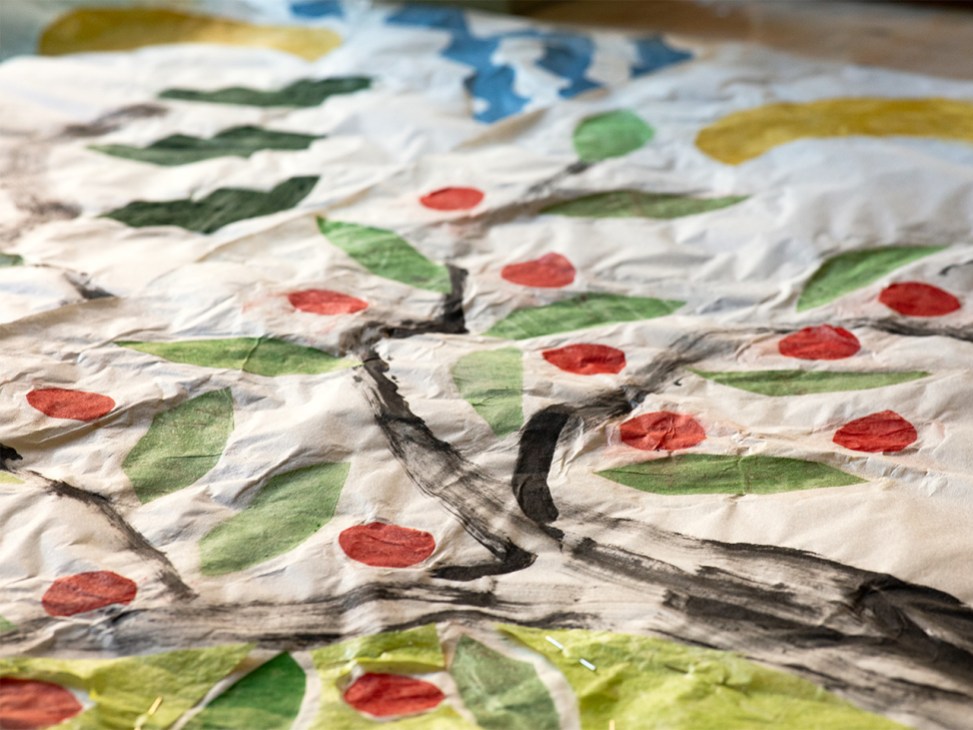
She picked up a paintbrush in her fifties and now, in her studio in the 16th-century Palazzo Doria Pamphilj, she paints on Japanese gampi, a fine, fibrous paper with a satin-like sheen and a fine weft. Made for etching, inking and painting, the delicate material is as recognisable a part of Ducrot’s output as her ochre, green and rust flower motifs, which are achieved with a brush tied to a stick.
Ducrot says that she came to painting so late because of an early education that instructed her to respect tradition and not make changes to the world around her. “It took many years for me to dare to begin this unusual adventure,” she says. Today, at the age of 94, her adventure continues.
Born: 1931
Career highlight: Designing the scenography for Dior’s haute-couture show at Paris’s Musée Rodin in 2024
Exhibitions in 2026: A retrospective at Museo Madre in Naples
Peter Saul
Germantown,USA

“Except for occasionally talking about modern art to college students, I haven’t done anything but paint pictures since 1959,” says Peter Saul. Those pictures are hard to forget. Saul’s subjects bend, distend, wriggle and writhe across the canvas, transforming into colourful, twisted monstrosities along the way.
Those subjects have changed with the times too: the Vietnam War, Ronald Reagan, Donald Trump. American life – its vividness and its vulgarity – is a loose theme. That and, as Saul puts it, “bad guys”. “I have more freedom to distort, invent motivation or do anything I want to bad guys,” he says. “Whereas with ‘good guys’, the artist is supposed to follow the rules.”
Saul works from preliminary sketches that have a sense of “freshness”, which can be developed as he paints. As he adds his cacophony of colours, he thinks about how to make the painting interesting to the highest number of people. “The picture has to live in the world,” he says. Saul’s work has done just that for a long time but the critical response to it has become far warmer in recent years. While he is appreciative, the change has had little effect on his practice. “Unlike most artists I know, I don’t seem to respond much to encouragement,” he says. “As long as I’ve got the art supplies, I’m going to paint a picture.”
Born: 1934
Elected to the American Academy of Arts and Letters: 2010
Current exhibition: Group show Sixties Surreal at the Whitney Museum until 19 January
Rose Wylie
Kent, UK

When a particularly big globule of paint falls off Rose Wylie’s brush, she’ll simply cover it with a sheet of newspaper to stop it getting on her shoes. “I’m not a precious worker,” she says as we stand in her studio. A soft layer of newspaper carpets the floor, paintbrushes stick out of cans stacked on chairs and colourful splatters obscure the skirting board. Wylie’s unruly garden has crept up the side of the house and into this first-floor room – a jasmine plant pushes through a window in one corner. “Mostly you’re criticised if you don’t tidy up,” she says. “But if you get through a certain threshold, it becomes iconic.”
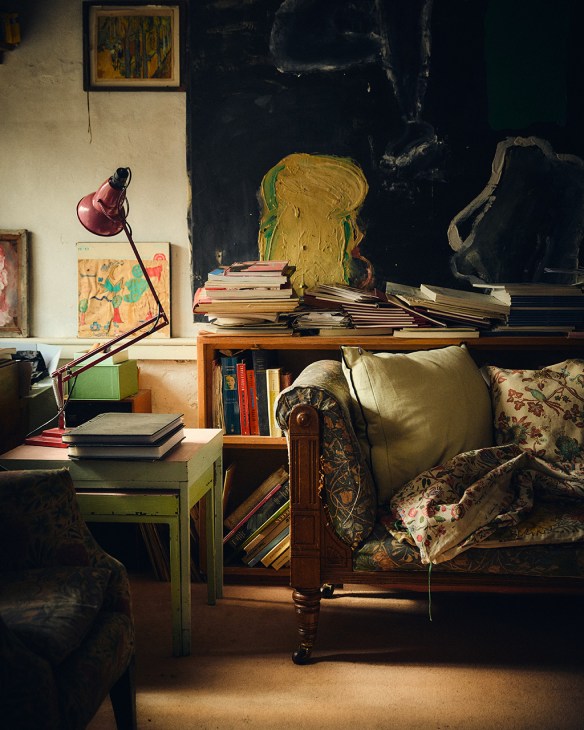
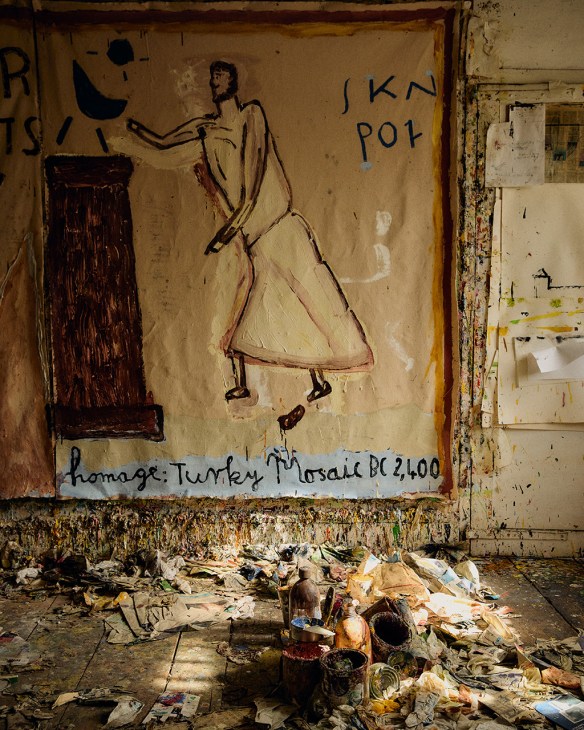


Wylie’s artistic training went unused for years while she raised her family but, since returning to painting in her forties, she has become a critical and commercial darling of the art world. She is currently working on a painting that features a large, “nonchalant” skeleton. It will appear in her upcoming exhibition at London’s Royal Academy in early 2026, her biggest show to date.
Wylie’s bold canvases often combine text and figures from history, mythology or contemporary pop culture. And while Wylie’s process can be messy, she is exacting about her practice, regularly working late into the night wrestling with a painting. “Often it’s horrible, slimy, trite, pedestrian,” she says. “There are 100 things that can go wrong, particularly with faces, and then, for some odd reason, suddenly it’s alright.”
Born: 1934
Breakthrough moment: Women to Watch exhibition in Washington (2010)
Elected to the Royal Academy: 2014
Read more about Rose Wylie and her exhibit at Royal Academy London
Martial Raysse
Bouniagues, France
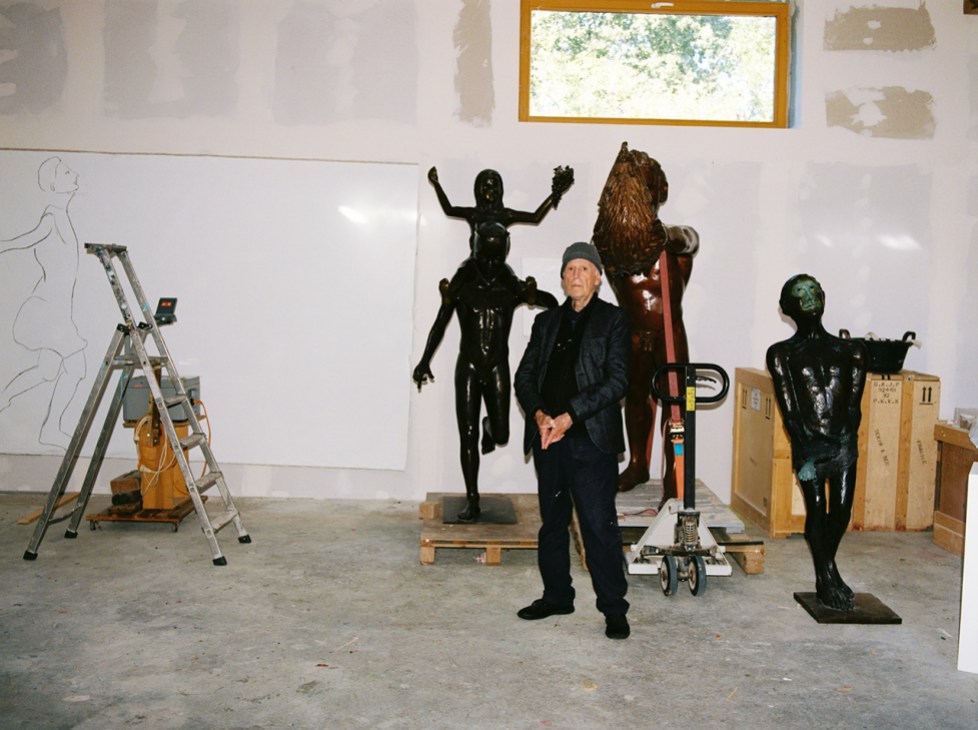
When Monocle meets Martial Raysse at his home in Dordogne, southwest France, the chill of autumn is creeping in, giving the light a quality that we can’t quite put our finger on. “In Paris, the shadows are blue but here they are pink,” says Raysse. “That’s what seduced me.” Though at 89 he is focused on painting “in strict obedience to the great masters”, the multidisciplinary artist can look back on a remarkably diverse body of work.
Raysse is cryptic about his artistic awakening but, according to his gallerists, he was already painting and writing poetry at the age of 12. By the time the Centre Pompidou put on a retrospective of more than 200 of his works in 2014, Raysse’s artistic expression had taken on dozens of forms, from poetry and painting to neon sculptures and cinema. “The interaction of these different forms enriched my artistic practice,” he says. “But I haven’t adopted any digital tools. I prefer pencil, which I think gets much closer to rendering emotions faithfully.”
Raysse is considered one of the earliest French champions of pop art. In 2011 his 1962 painting “L’année dernière à Capri (titre exotique)” fetched €4.8m at auction, for a time making him the highest-valued living French artist. But as a testament to his constant evolution, today he describes his association with the movement that made his fame as “a youthful error”, denouncing it as an “avatar of ready-made culture”.
Is creativity linked to longevity, we ask? “Unfortunately, creativity doesn’t extend your life,” says Raysse. “But with experience, what you do gain is progress.”
Born: 1936
First retrospective: Amsterdam’s Stedelijk Museum in 1965
Notable public sculpture: Crocodile fountain in Place du Marché, Nîmes (1987)
Frank Bowling
London, UK
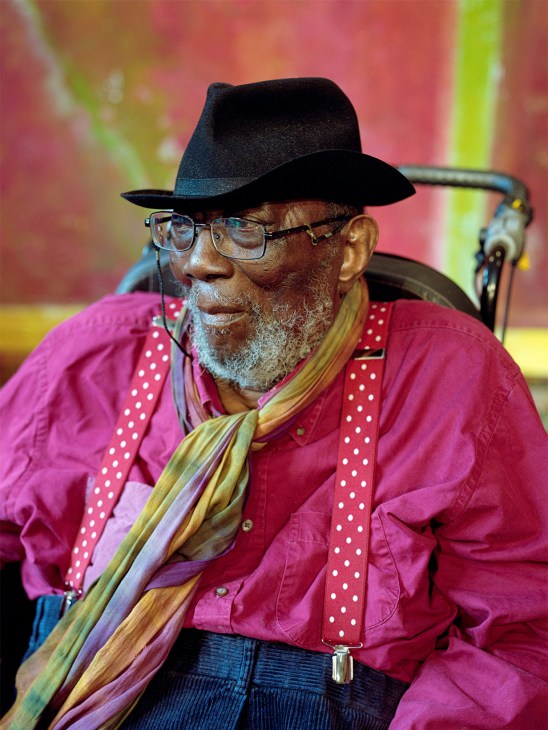
At 91, Frank Bowling is still searching for new ways to let paint speak for itself. “I’m always following my instincts,” says Bowling, who has painted, poured, sprayed, stained and stitched vivid colours onto unprimed canvases for more than 70 years. “There was a time when I didn’t have a dealer and museums weren’t buying,” he says. “Now, my paintings are in more than 70 museums around the world.” His work is currently on show at the Bienal de São Paulo 2025 – a full-circle moment for the South America-born artist in the bright throes of his twilight years.
A Bowling artwork begins on the floor. Every cotton-duck canvas receives its first colours in the form of drips of paint that fall from an earlier in-progress painting hanging above – a sort of artistic assembly line. “Then my assistant fills a bucket with paint and water and pours it down the canvas while I direct the flood,” he says.
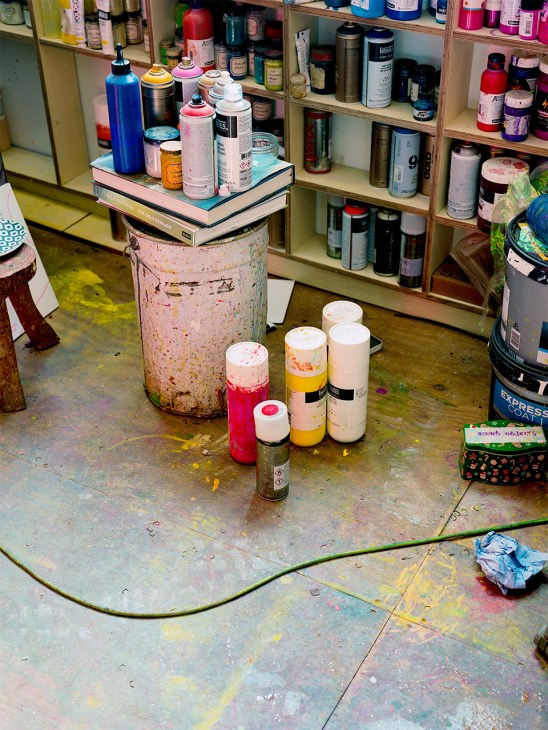
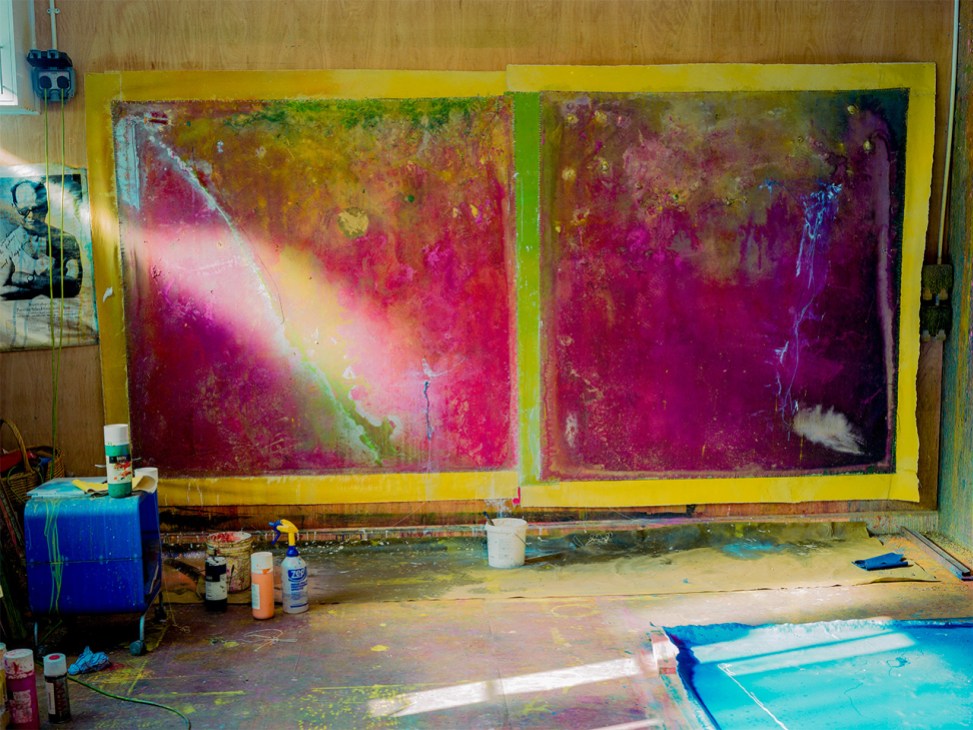
When Monocle visits his studio in South London, Bowling is directing his son, Ben – who’s armed with silver glitter-laced spray paint – from a wheelchair. “Brighter,” says Bowling of a long white streak that cuts down the canvas like a coastline, “all the way.” When Ben reaches a patch of empty space, Bowling reacts instinctively. “Put red in it,” he says. But the painting is still not finished. Later, it will appear “on the ceiling of my room”. Bowling’s imagination never rests. “I’m preoccupied with the search for something new in painting so I’m always working in different ways.”
Born: 1934
Career highlight: Tate Britain retrospective, 2019
Post-studio ritual: Straight to the pub for a “half pint of bitter and jolt of whiskey”
Inson Wongsam
Lamphun,Thailand
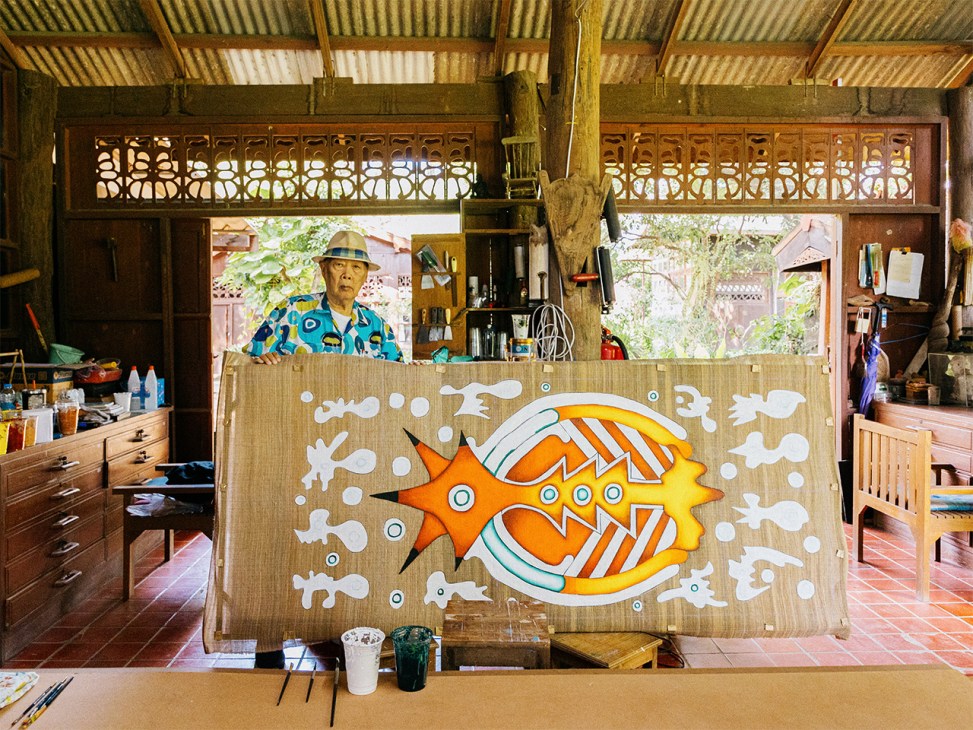
Inson Wongsam is a key figure in the history of Thai modern art and the scene’s evolution from staid and traditional to colourful and contemporary. The son of a temple goldsmith, he studied under influential Italian sculptor Corrado Feroci, who changed his name to Silpa Bhirasri.
“Professor Silpa once told me: ‘Inson, if you wish to be an artist, you must sketch and work every day,’” says Wongsam from his studio and private museum in Lamphun, a small city near Chiang Mai. Wongsam has been an artist his entire adult life, creating metal sculptures and wood carvings in the 20th century and, in recent decades, wood block prints and paintings. His days begin at about 04.00, drawing in bed with watercolours or red and green pens or pencils. This is followed by some stretching, breakfast and more drawing in his studio. “When I cannot work, such as on days when I must visit the doctor, I feel uneasy,” he says.
Wongsam celebrated his 91st birthday in September with an exhibition at Bangkok’s Nova Contemporary. “Age has never affected my determination because I believe that the spirit is more important than the body,” he says. “As I grow older, I aim to make my work even more vibrant – never dim or lifeless.” Wongsam is currently working on an exhibition that is planned for next year. “I have reached a point in my life where everything feels clear,” he says. “I don’t need to look elsewhere for inspiration. Ideas come from me, pushing my work forward.”
Born: 1934
Major exhibition: A retrospective of more than 100 works at the Bangkok Art & Culture Centre, which coincided with his 80th birthday
Appointed a National Artist of Thailand: 1999
Martha Jungwirth
Vienna, Austria
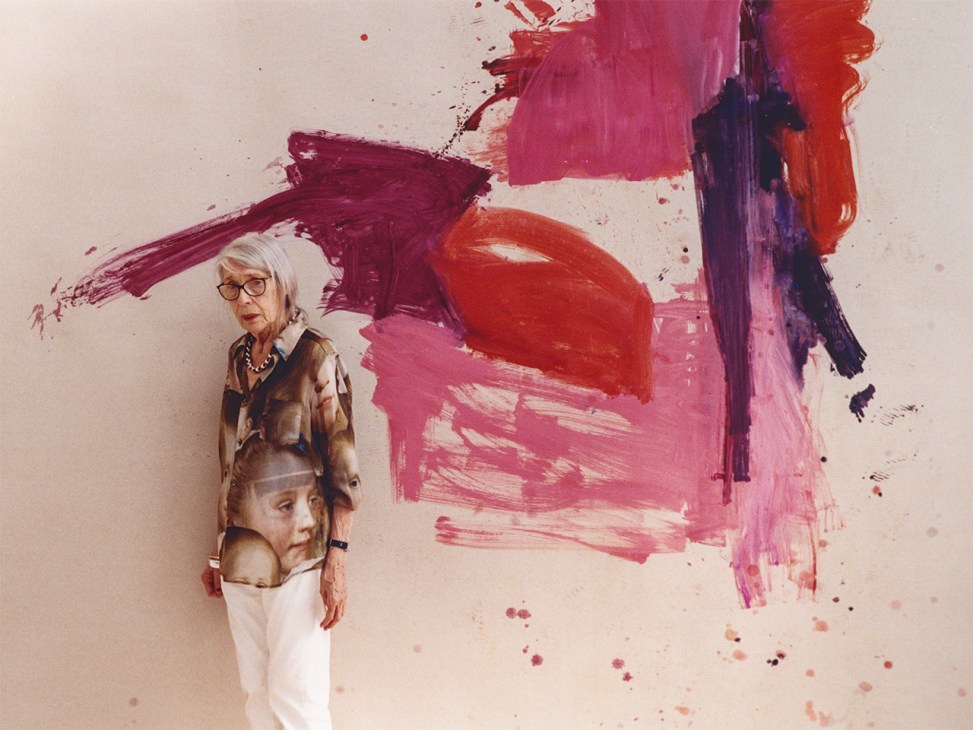
At 85, Martha Jungwirth remains as industrious as she was when she first appeared on the art scene in the early 1960s. Her belated recognition (she only began attracting serious attention and staging large solo exhibitions in the 2010s) and the attendant title of grande dame of Austrian art have not made her aloof. Instead, she is kind and inquisitive, asking as many questions as she answers. Jungwirth works in watercolour or oil on paper rather than canvas and her style is marked by colourful abstraction, with pinks and reds at the fore.
Jungwirth’s wanderlust has taken her across the world, though in recent years she has favoured Greece, which she first visited with her late husband, art historian Alfred Schmeller. “When you travel, you meet people, you eat differently and you feel that you don’t understand anything,” she says as she shows Monocle a series of watercolours from Bali, comprising her impressions of the custom of placing small, stylised houses outside homes. “That activates you again.”
In Jungwirth’s large, light-filled studio, pride of place is shared equally between her current works and her sources of inspiration: reproductions of baroque paintings (classical art has always moved her), alongside newspaper clippings and photographs scattered among countless paint tubes. “I don’t even know what colours are in them,” she says. It is this disorder that drives her to keep working and exploring.
“I always try to surprise myself. Otherwise, you stiffen up and get stuck.”
Born: 1940
Breakthrough series: Indesit, her impressions of household appliances, exhibited at Documenta 6 in Kassel, Germany in 1977
Record sum for a painting at auction: €520,000
Why Donald Trump’s ‘beautiful architecture’ mandate could make Washington look worse
In August the US president, Donald Trump, signed an executive order titled Making Federal Architecture Beautiful Again in which he declared that future federal buildings nationwide – from courthouses to office blocks – must employ and be built in approved historical styles. From now on in Washington, the default language of public architecture will be classical, unless an exception can be justified.
While Trump’s taste has often been called into question, this move, which solidifies an order issued in the final weeks of his first presidency, shows that he’s well aware of the capacity of architecture to unite, divide, project power and create a link to an imagined past.
Supporters, including the National Civic Art Society, frame the order as simple common sense. Classical architecture, sympathisers insist, is America’s God-given birthright. Its colonnades, cornicing and corbels carry the weighty associations of legitimacy, inspiration and timelessness. There is much to be said for classical architecture but surely it’s faintly ridiculous, short-sighted and lacking in imagination to mandate it as the capital’s only permissible style? Such sweeping edicts politicise taste and curtail conversation or innovation. Washington has long been a showcase of contrasting styles and, by extension, a democracy of ideas played out in its structure and streetscape since it was first planned (on a marsh, not a swamp) in the 1790s. We have come a long way since then, in engineering and thought, and the built environment should reflect this.


The city’s strength has always been its pluralism, in architecture as in politics – from Henry Bacon’s Lincoln Memorial and Edward Durell Stone’s Kennedy Center to IM Pei’s National Gallery of Art East Building and Gordon Bunshaft’s Hirshhorn Museum – reflecting a diversity of expression. Privileging nostalgia over experimentation risks producing pastiche: a watered-down echo of the countless times when bullies have tried to impose a unified architecture on cities. See Mussolini’s attempts to link his fascism with the grandeur of Rome or Saddam Hussein’s Babylonian-inspired reworking of Baghdad. Today, there are other strongmen hard at work reforging their capitals and seats of power, from Putin’s Cathedral of the Armed Forces to Erdogan’s Ak Saray palace in Ankara (about four times the size of Versailles) and Modi’s new-look New Delhi that replaces colonial associations with historic Hindu and nationalist motifs.
It’s too early to see the results in Washington but Trump’s mandate asserts centralised control over federal aesthetics and seeks an architecture portraying hulking power with precious little nuance. Instead of leaving it to competitions or a respected advisory process, the White House now dictates which forms are worthy of housing American democracy. It’s a patently subjective and problematic idea: are the president and his yes men now suddenly qualified to rule on what makes a building work?
That said, a return to classical architecture could well create good, even great, buildings, providing that architects respect traditional craft, proportion and materials, which is not a given in today’s uncertain construction market. The risks such sweeping legislation possesses are literally colossal too. From botched efforts to corner-cutting or projects palmed off to cronies, commissions might quickly descend into over-scaled kitsch, boring imitation or ill-suited structures aimed to appease aesthetically rather than serve, elevate or enlighten.
Without true architectural investigation and denied the freedom to disagree in the debate around urbanism and public buildings, the architectural discourse – much like the political and social ones – could stray from thoughtful invention into blind partisanship. Columns, pediments and porticoes might look like progress to some but making them the only option will drag architecture back to antiquity.
Sam Lubell is a New York-based architecture writer and book editor.
Read next: Trump biographer Michael Wolff on the ‘moron’ president’s ‘incredible incompetence’
What Macron’s Dior habit says about the politics of the presentation and the smell of success
There’s an entire industry of consultants working on what national leaders look and sound like – but the question of how they smell is less frequently pondered. Not many voters get close enough for it to matter.
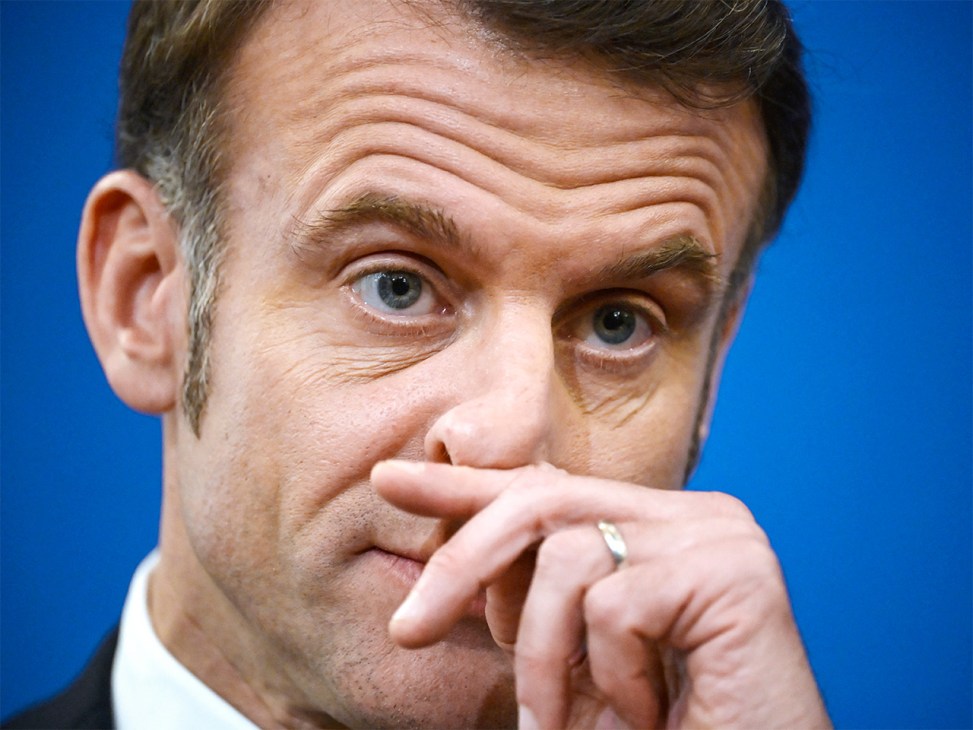
At least one current national leader does reportedly care about scent a great deal, however. According to a recent book, The Tragedy of the Élysée by journalist Olivier Beaumont, the French president, Emmanuel Macron, slathers himself in sufficient Dior Sauvage for his staff to detect his approach from an Élysée palace corridor away. In so doing, Macron observes a national tradition. Napoleon Bonaparte had a standing order with his preferred perfumer, Chardin, for 50 bottles of eau de cologne per month. Louis XIV, who was reputedly frightened of bathing, commissioned his perfumer to design a different scent for every day of the week and had his shirts rinsed in a potion of rose-water, jasmine, musk, nutmeg and much else.
Conventional wisdom suggests that smell is the most powerful sense in evoking primal emotions. The historical record certainly suggests a long-established and pretty much universal belief that scent is a potent communicator of power: palaces and temples have dazzled and dominated visitors and worshippers with the deployment of odour since antiquity. Egyptian pharaohs pleased their gods – and demonstrated a connection to them – with offerings of incense. Chinese emperors were so preoccupied with perfume that Mao Zedong seized on it during the Cultural Revolution as symptomatic of the decadence that he wished to extirpate. (Mao’s personal hygiene was legendarily dreadful – his doctor, Zhisui Li, recalled him never bathing, as well as brushing his teeth with tea – though it remains unclear whether this was some cunning olfactory intimidatory tactic.)
Personalised scents of state have now largely faded, with a few exceptions. The late Sultan Qaboos of Oman collected and commissioned perfumes and presented them to his guests. He also founded a fragrance brand, Amouage.
Less majestically, Donald Trump includes perfumes among his hefty range of self-branded merchandise. The Victory 45-47, which comes in a bottle adorned with a little gold statue of him, retails at $249 (€213) – or $398 (€340) for two bottles and $597 (€510) for three. Perhaps the importance of scent in the mass-media age hasn’t dissipated entirely.
Comment
Contrary to current marketing logic, not every lobby, brand or leader needs a custom scent. After all, being remembered for what you did, said or made (rather than how you smelled) matters far more.
Are Poland’s efforts to bolster its defences enough to deter Russia?
As part of Monocle’s November 2025 report on Poland’s defence capabilities, writer Julia Jenne and photographer Jedrzej Nowicki travelled to a US-run ballistic-missile defence base on Poland’s Baltic coast, which had been inaugurated the year before. The base is a key point of defence for Europe. As the threat of Iranian ballistic missiles hitting Europe has made recent headlines, we are republishing this piece to give readers insight into the fragility of the defence pact between the US and Europe, and how the continent’s capitals are walking a diplomatic tightrope to keep their security intact.
It’s a blustery day on Poland’s Baltic coast, where Monocle is being shown some SM-3 interceptor missiles. We’re at the Aegis Ashore Poland base and our US guides joke around as they open up containers housing 1.5-tonne rockets, which can travel through the air at speeds exceeding 4km per second. With the missiles out of their case, the mood becomes more serious. “We have the capability to defend all of Europe,” says Captain Michael S Dwan, who is overseeing the command of the base at the time of our visit.
The opening of Aegis Ashore was also a stormy affair. First mooted in 2002, the base became a source of tension between the US and Russia – the latter seeing it as a major provocation, despite what Washington and Waraw insisted were purely defensive capabilities. When it was finally declared active 22 years later, during the dying days of the Biden administration, Warsaw had good reason to feel vindicated for the decades spent lobbying the Americans to build it.
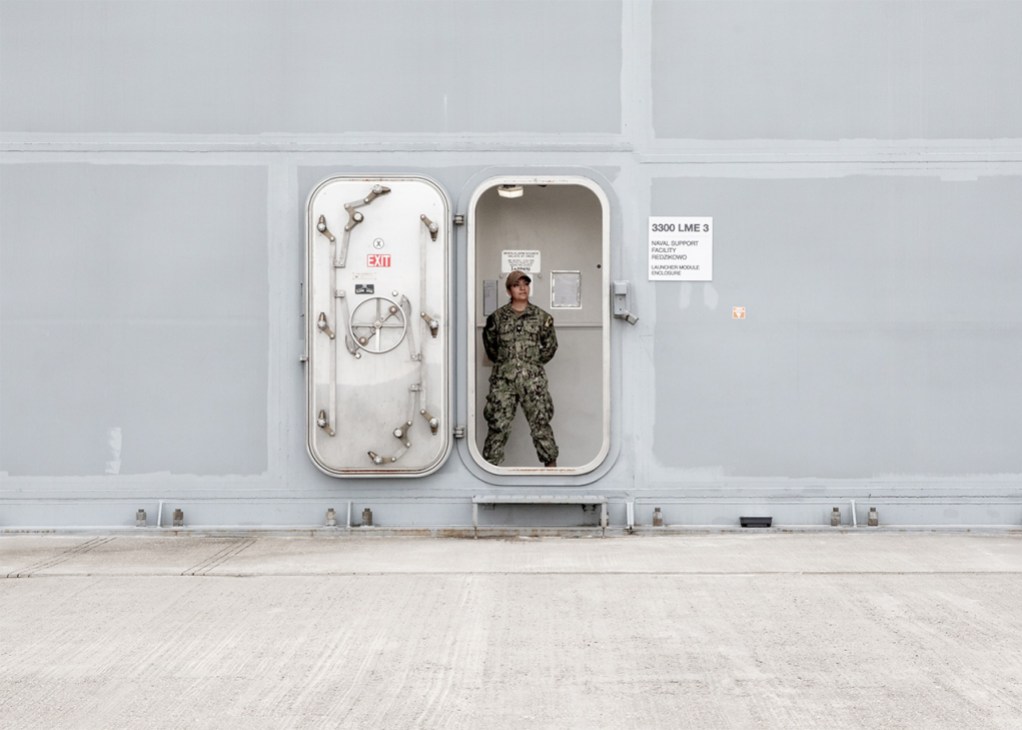
Since Russia’s full-scale invasion of Ukraine in 2022, Moscow’s aerial assaults on the country have sometimes spilled over into neighbouring Poland. In September, Russian drones made it as far west as Olesno, with Nato jets scrambled to shoot them down. Aegis Ashore, then, is a key pillar of Poland’s military deterrence, founded on both a centuries-old suspicion of Russia – a nation that has invaded on several occasions – and a post-Cold War alliance with the US. When the base opened, America’s commitment to Polish and European defence appeared unshakeable. But now there’s a very different president in the White House. Donald Trump has made no secret of his intention to pare back the US military presence on the continent and has even refused to defend its Nato allies in the event of an attack. The fact that US reticence has come at a time of Russian belligerence is particularly concerning for Poland.
After the end of communist rule, Warsaw went all in on the transatlantic alliance, cosying up to successive US administrations in a bid to establish a permanent American military presence in the country. Today there are about 10,000 US troops stationed here. But given the geopolitical climate, Warsaw has had to seek alternatives. In just two years, it has become Europe’s largest military spender as a percentage of GDP and built the continent’s biggest land army. Poland’s defence budget has increased by 50 per cent since 2023; while in 2024, it commanded 205,000 military personnel – third only to the US and Turkey (countries with far greater populations) among Nato member states. But with Vladimir Putin hovering and Trump wavering, the question remains: is it enough?
When Monocle speaks to veteran politician Michal Kaminski, he’s clear that warm relations with the US are still essential to Poland. “Being anti-American is impossible,” he says. “There’s a feeling that our liberation in 1989 was thanks to the policies of Ronald Reagan.” Yet behind closed doors, contingency plans are being made. “Though it can’t be declared officially, there’s a growing scepticism about America among Poland’s political elite,” says defence and security analyst Tomasz Pawłuszko. Such scepticism, born of a history of invasion by larger powers, is what has fuelled the recent military expansion. “The first thing that you need to know is that the Polish people are prepared to face Russia, even alone,” says Pawłuszko. “I wouldn’t have even begun to imagine it during the Biden administration but this is the style of political thinking that we have adopted.”
In 2025, Poland will spend almost 5 per cent of its GDP on defence, the most among Nato countries, including the US. The country is also debating a law to allow Polish forces to shoot down (without prior Nato or EU approval) Russian objects flying over western Ukraine. “Poland is, along with Finland, among the best [militarily] prepared countries in Nato,” says Pawłuszko. “We have the biggest army on the eastern flank and good co-operation with our biggest allies.”
Pawłuszko says that a major sea change in Polish military thinking happened in 2016. “Russia had annexed Crimea two years earlier and our politicians decided to throw their support behind our army,” he says. “Under Trump’s first presidency, the government aimed to please Washington by buying US weapons.” Yet, even then, there were signs of US fickleness. “The Americans weren’t willing to share military technology with us. Even PIS [the far-right, Trump-friendly Law and Justice party] realised that they had become a little arrogant,” he says.
So, Warsaw began to look farther afield to meet its growing materiel needs. Since 2022, the country has spent more than $20bn (€17bn) on South Korean arms, including hundreds of K2 tanks, light combat aircraft and heavy-artillery systems. For the Poles, this partnership has plenty of upsides. Quick turnaround times are coupled with the fact that South Korea has proved a willing partner in sharing technological know-how. Lengthy supply chains have been circumvented, with companies including WB Group and Hanwha building missile-production facilities in Poland.

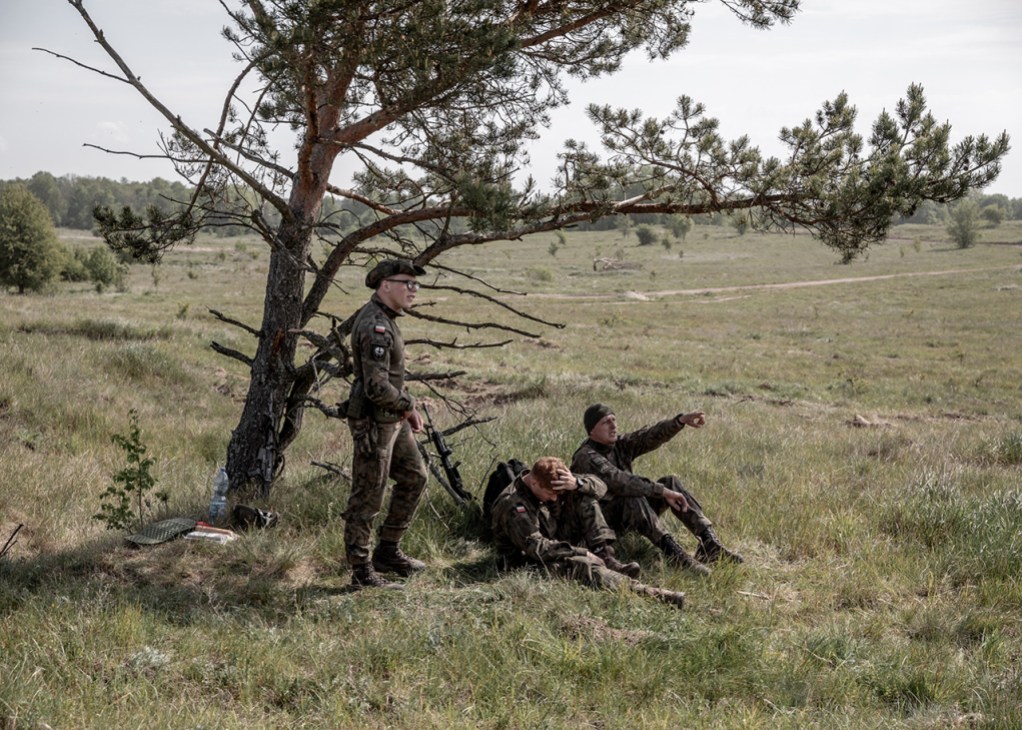
Monocle sees some of the South Korean K2 tanks in action at a large military exercise in Poland’s northeast. Alongside troops from the US, Lithuania and the Czech Republic, Polish forces are simulating an attack on the Suwałki Gap – a land corridor wedged between Kaliningrad, a Russian exclave, and Belarus, a Kremlin ally – which has been called Nato’s Achilles heel. Military analysts believe that this picturesque region would be among the likeliest places to be struck, were Russia to attack the alliance. Venture close enough to the border with Kaliningrad and one will receive an unnerving SMS proclaiming, “Welcome to Russia.”
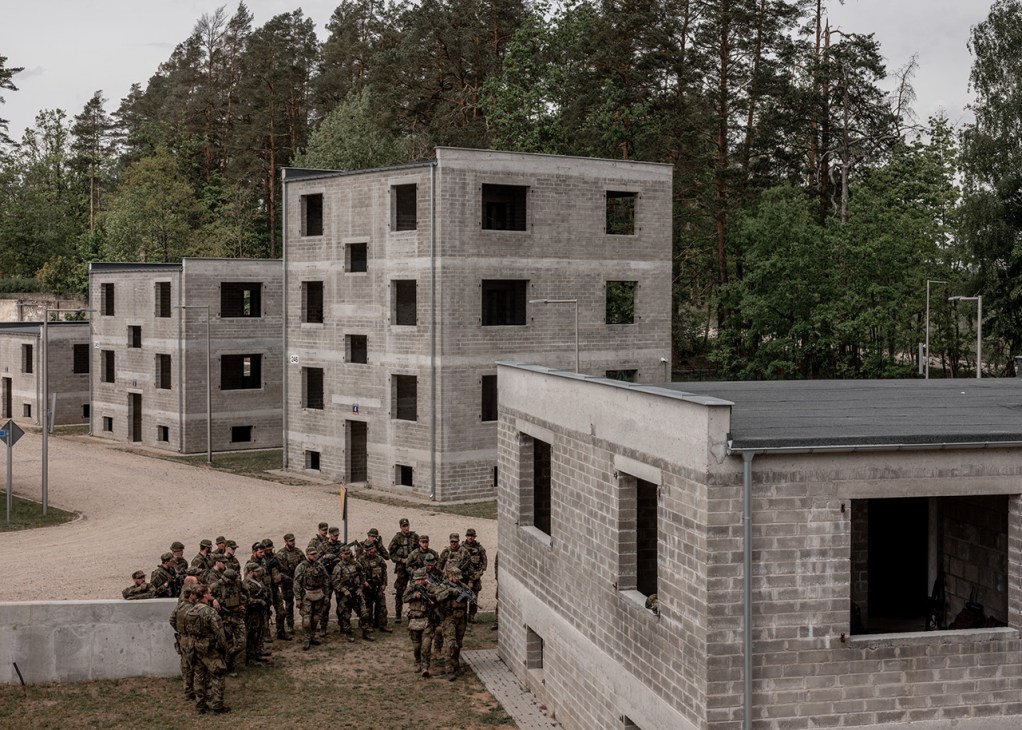
But during the exercise, codenamed Brave Boar 25, mobile-phone service is scant. Deep inside a thick forest, we hear jets roaring overhead. The exercise is intended to co-ordinate the full panoply of Nato aerial and land capabilities on Polish terrain. “The landscape that we’re training on here is completely new to us,” says one Czech captain who Monocle speaks to on condition of anonymity. We meet him in a mocked-up town surrounded by pines and thicket; while we talk, his men drill how to capture one of the larger buildings, creeping along roads and pathways modelled on a typical Polish settlement.
“At first, our tactics are a little different but after a few hours, we start to co-operate with more ease,” he says, explaining the importance of conducting exercises on unfamiliar terrain. “What we have seen during our time here is very impressive, especially the large numbers of soldiers and equipment. Poland’s command and control is on a high level.”
Leading today’s exercise is the Polish Armed Forces’ 16th Mechanised Division, which is based near the Suwałki Gap. Captain Karol Frankowski, a press officer, tells Monocle about the recent improvement in his country’s defensive capabilities. “When I came to the military in 2017, our division had seven units,” he says. “Today we have 11.” He reels off the names of some new pieces of equipment that the brigade has gained in the past few years, including K2 tanks and HIMARS rocket launchers.


Once a successful sports journalist, Frankowski joined up after Russia’s annexation of Crimea. “In 2014 a kind of information war started,” he says. “I realised that I needed to be a part of this structure to help Polish citizens.” In many ways, Frankowski’s career change mirrors the way that Poland has shaken itself out of its post-Cold War slumber in response to the growing Russian threat. Now, the press officer is tasked with attracting others like himself into fatigues, leading a government-backed initiative with the aim of recruiting 100,000 volunteers by 2027. In online videos, Frankowski attempts to appeal to Gen-Z Poles. “I explain that it is an adventure and that you get the chance to prove yourself,” he says. “People pay money to train in the gym – but here, you get paid to do physical exercise.”
Frankowski’s Instagram posts are part of a wider drive to make military training available outside the armed forces to hundreds of thousands of civilians. There is a recognition that Poland lags behind other front-line Nato countries, especially the Nordics, when it comes to civilian preparedness. “For many years, officials have been informing people that we are building our military power – that we’re buying tanks and helicopters, and creating new divisions,” says Pawłuszko. “But at the same time, people aren’t prepared for typical wartime threats such as bombs or rescue operations, let alone hybrid threats.”
Poland’s defence minister, Władysław Kosiniak-Kamysz, emphasises the importance of involving all members of society in preparing for war. “Our priorities are a strong army, a strong society and strength in the Nato alliance,” he tells Monocle. “I would like elements of defence education to become more widespread in schools and workplaces, and for the private sector to be more deeply involved in exercises and resilience planning.” This would involve a huge societal change. “The armed forces rank among the institutions with the highest levels of public trust,” says the minister. “ This shows a sense of shared responsibility for security. At the same time, we recognise that preparing society is a long-term process. That is why we are preparing voluntary universal training; we are running educational campaigns in schools and information campaigns in the media. It does not mean living in fear – it means confidence and calmness in the face of challenges.”
However, an aversion to joining up persists in many sectors of Polish society – a lingering effect of communist rule, which eroded trust in the state. This is exacerbated by acute political polarisation. Today only a third of Poles view the government positively. A lack of trust was evident after Russia’s drone incursion in September. According to a poll in the immediate aftermath, a third of Poles believed that Ukraine was to blame, rather than Russia. This wasn’t helped by mixed government messaging, which initially claimed that a Russian drone had struck a civilian house, when it could have been a Polish missile fired by an F-16.
After the incursion, which the prime minister, Donald Tusk, said had brought Poland closer to war than at any time since 1945, worried citizens took to social media. “What does a drone sound like?” asked one Facebook user. “How do I know if it’s flying close or far away from me?” Such questions are signs that the government’s crisis messaging isn’t getting through – as is the fact that many civilians affected by the air alert did not receive adequate instructions.
On Poland’s northern coast, the Aegis Ashore site continues to operate under US personnel and Captain Dwan is eager to stress that things, for now, remain business as usual. “Our mission has not changed,” he says. The base is equipped with SPY-1 radar, which offers a round-the-clock detection range of more than 300km. Still, many Polish politicians are privately wondering if capabilities such as this are of any use. In March, Washington informed its European allies that it would no longer participate in military exercises on the continent – though in a meeting with Poland’s president, Karol Nawrocki, in September, Trump said that he had not considered withdrawing US troops from the country.
The definitive year in Poland’s historical memory is 1939, when the country was divided between Soviet Russia and Nazi Germany despite the rhetoric of Western allies. Today the situation is different. As the defence minister points out, European Nato allies, including Italy and the Netherlands, were involved in shooting down September’s drone incursion. “Poland is not alone,” he says. But Warsaw knows that if it is attacked, actions will be more important than words. The country is leading the way when it comes to European rearmament but it cannot afford to be complacent.
How Animo is leading the rise of new super-boutique gyms
What if the gym was more than just a place to sweat through a workout? A new generation of “super-boutique” gyms is challenging the fitness market by offering environments where you can take classes and chase a new personal best but also run work meetings, eat in healthy restaurants and stock up on athletic gear in concept shops. It’s a shift that’s aimed at a new generation of people for whom fitness is a way of life and central to their social lives.
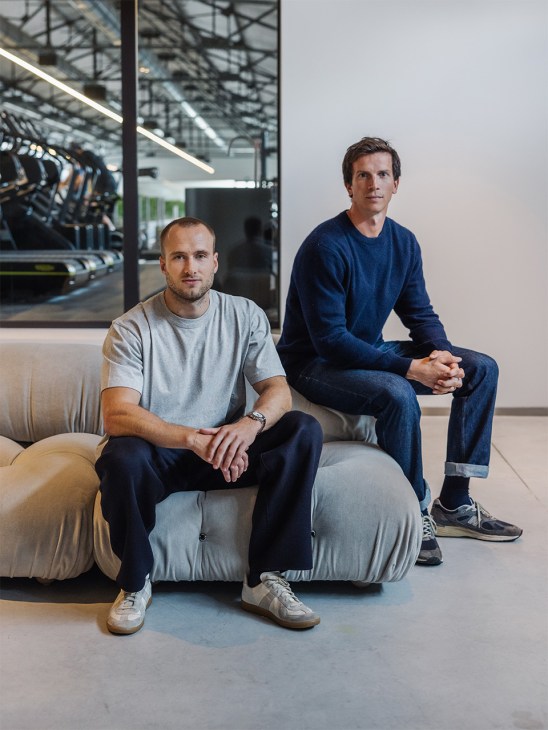
“Classic gyms have no vibe,” says Alexandre de Vaucleroy, the 32-year-old co-founder of Animo Studios in Brussels, the latest super-boutique to flex its muscles in this emerging sector. “Crossfit doesn’t always come with good facilities, while places such as Barry’s only do one kind of thing.” A former analyst at management consultants Bain & Company in London, De Vaucleroy teamed up with Antoine Derom, a business and economics graduate who had previously founded a dating app, to launch Animo in 2020. This four-floor site – their biggest yet – opened in March.
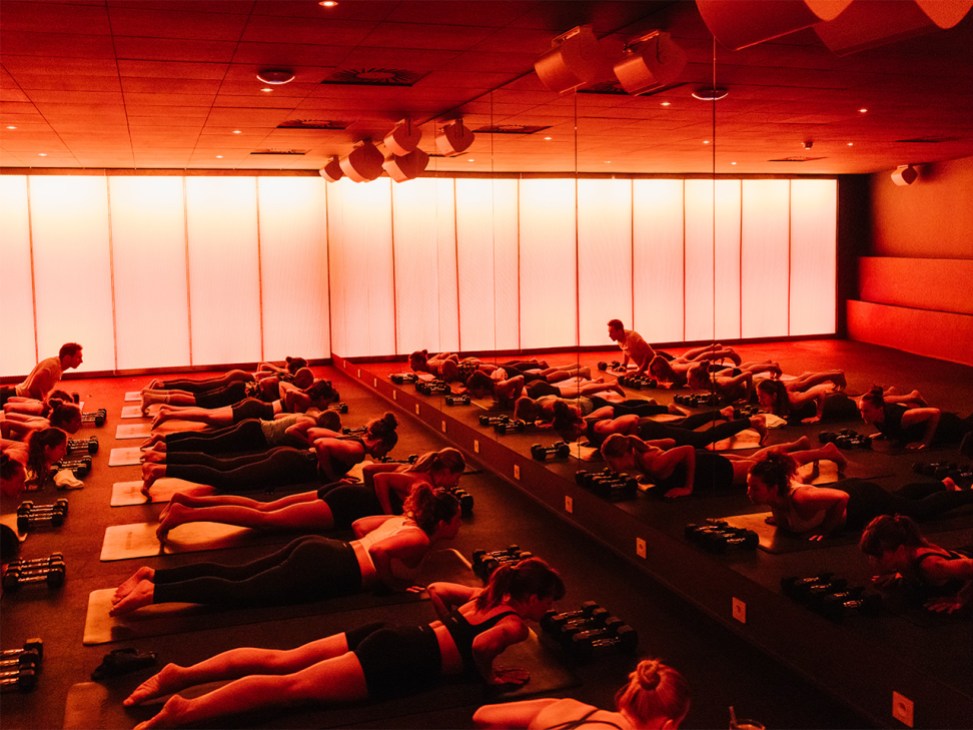
“We always wanted more from the gyms that we went to,” says De Vaucleroy, clutching a flat white as we sit in the Animo café. He and Derom spent much of their spare time exercising and saw a gap in the market for something more ambitious than what was on offer. “We wanted to add food, recovery and a social aspect,” says Derom.
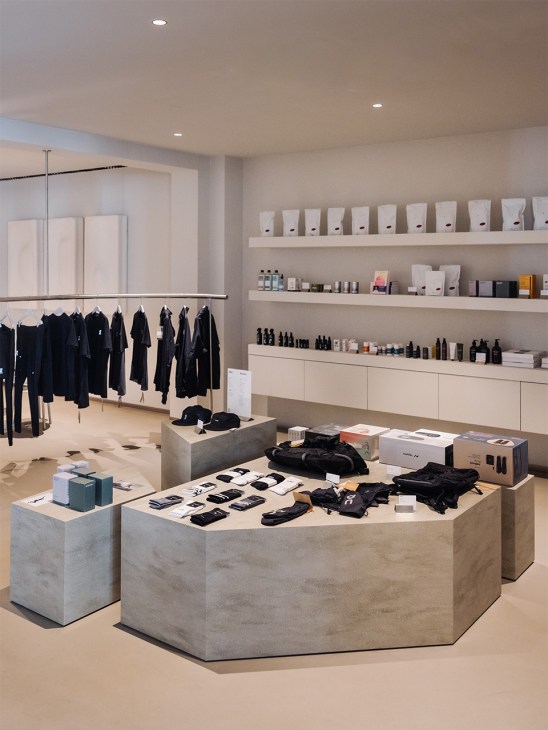
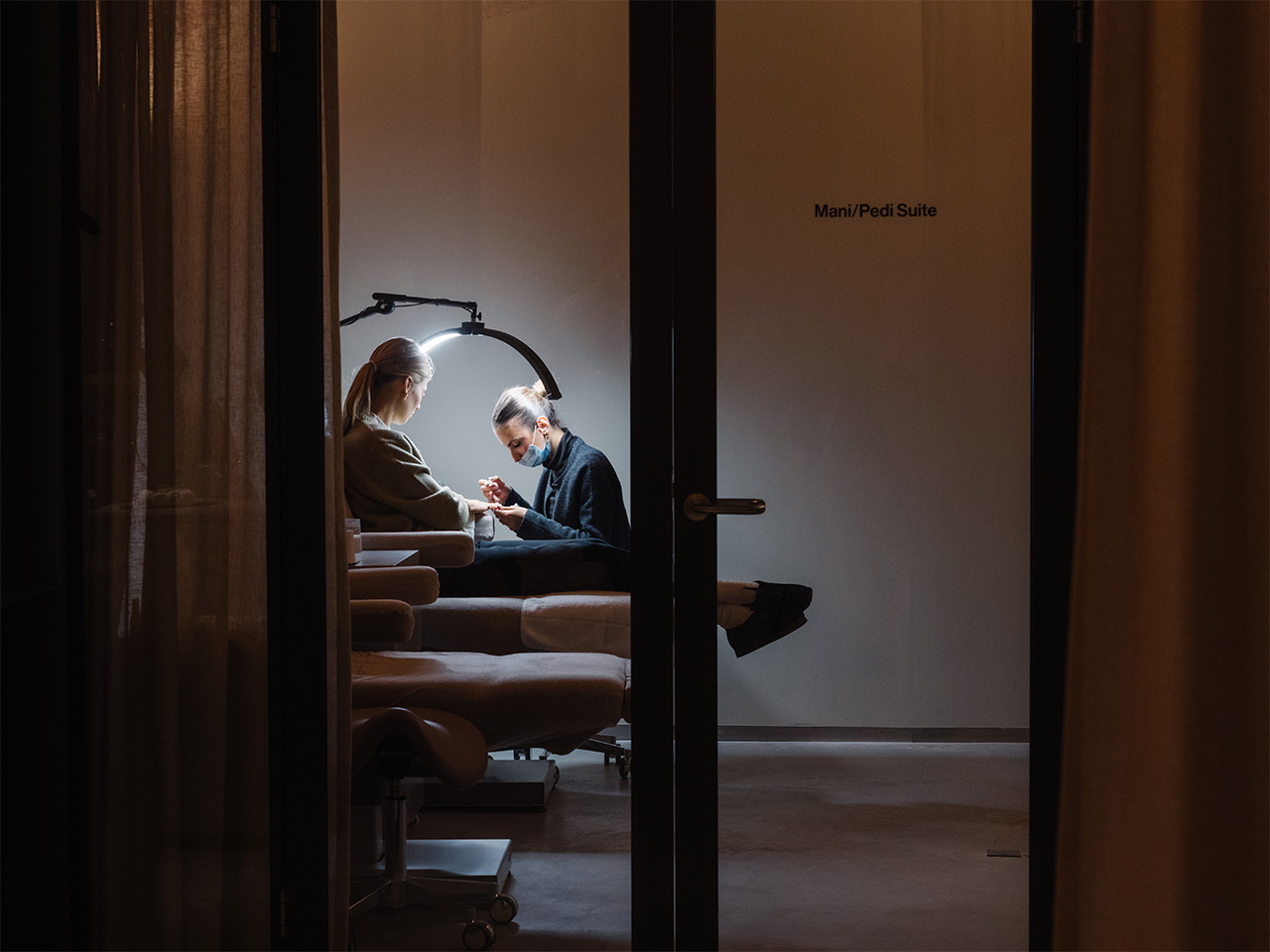
Animo feels a little like an all-inclusive holiday resort for fitness enthusiasts. In the lobby, there’s a shop selling sports kits, a coffee shop and protein-shake counter. Upstairs is the gym, which balances an industrial aesthetic with lush plants and is drenched in natural light from the numerous windows. Then there are separate studios for classes offering workouts such as Reformer Pilates and rooms used by the on-site physiotherapists. Down two flights of stairs, you’ll find saunas, steam rooms and ice baths, plus a beauty salon and spa offering facials and massages. It’s the gym as a destination.
Its opening was the culmination of five years’ work and is perfectly timed to mine a rich and evolving fitness market. Gym use is rising, with more than 100 million people in Europe expected to have a membership by 2030 (though that figure will include many who pay a fee but fail to get up from their couch). Some 77 million Americans were signed up to a gym or studio in 2024, up 20 per cent from 2019, according to global trade organisation the Health & Fitness Association. But it’s findings such as those of McKinsey & Company’s 2025 report on the $2trn (€1.71trn) wellbeing industry that show where the money really is. The management consultancy concluded that millennials and Gen Z consumers consider wellness to be a “daily, personalised practice” rather than just a matter of “occasional activities or purchases”. Animo leans into this trend.
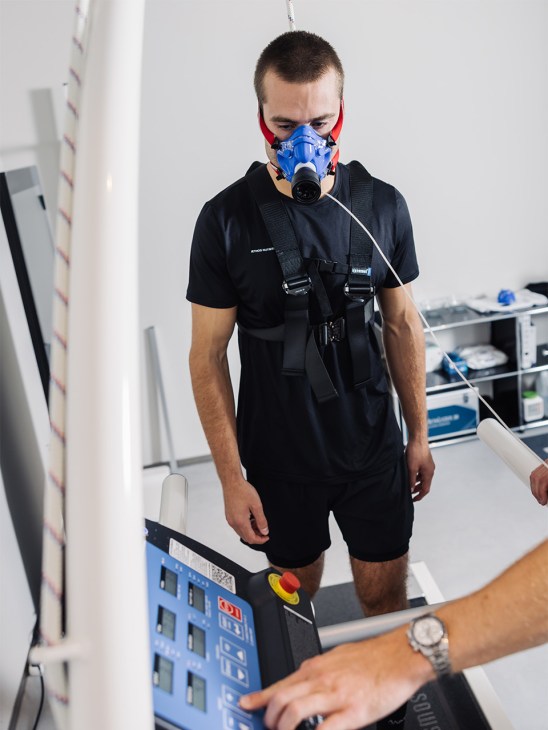
“Everything is here so it saves me time,” says Dali Jelassi, a 40-year-old member who works in education technology. “I can get a massage, use the sauna and have lunch.” Earlier, he also had his VO2 max test, which shows how much oxygen your body can use during intensive exercise. “I don’t have to go to a therapist somewhere else and it’s easy to try new things,” he adds.
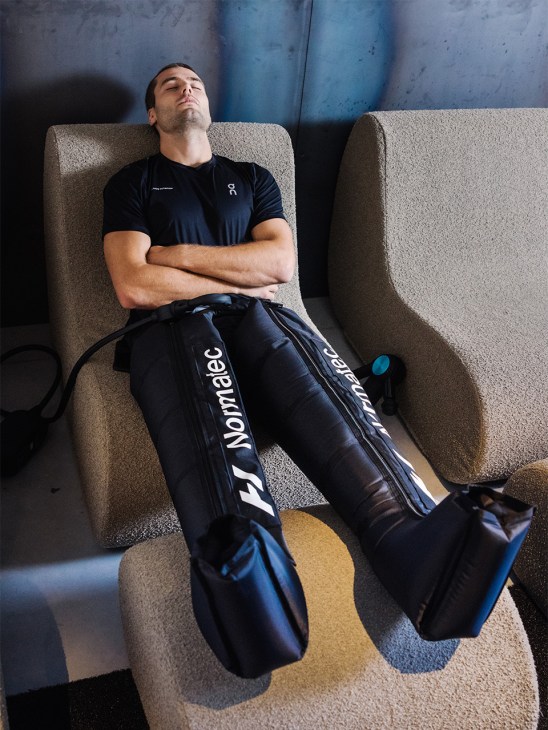
De Vaucleroy uses a term that he believes sums up the Animo offer. “We are a Social Wellness and Performance Club,” he says. Indeed, he and Derom have even trademarked the phrase. “It’s about responding to the way that people want to live their lives now.”
Since the height of the coronavirus pandemic – when many people took part in “couch-to-5K”-style initiatives – the fitness boom has snowballed. Marathon participation, for example, is now at an all-time high and concepts such as Hyrox, a gym-based competition launched in 2017, are now part of a global fitness movement.
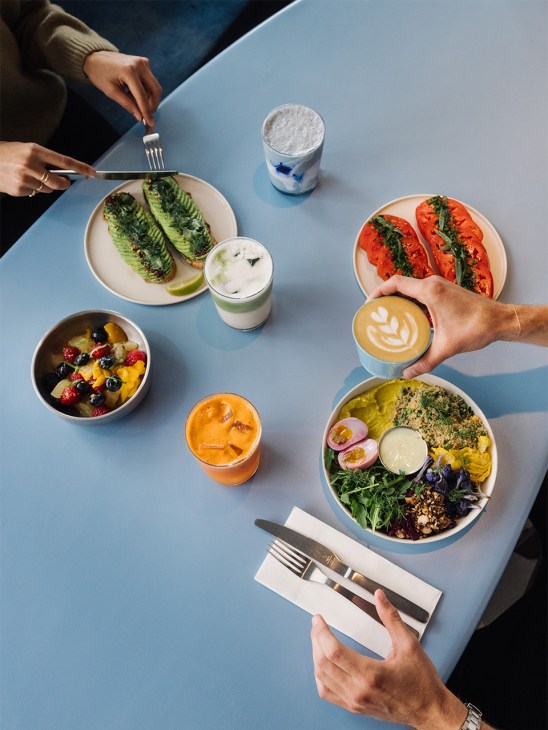
After our tour, De Vaucleroy and Derom lead us back to Animo’s café, a calming space filled with boucle sofas and armchairs. It’s 12.00 on a Monday and members are eating açaí bowls and basil-topped fruit salads served on stainless-steel tableware, while tapping away on their laptops. Flat whites and matcha lattes come in handmade ceramics; protein shakes are served in glasses. “It’s about giving members a better experience and value for their money,” says De Vaucleroy, as he sticks a fork into a lightly peppered, beetroot-dyed egg. The business shares a kitchen with Seven, a Brussels all-day café that’s on the ground floor and is open to the public.
The path to Animo has not always been easy. In 2019, De Vaucleroy and Derom each invested €50,000 to launch Animo and a year later unveiled a studio for classes. After just 45 days, however, it was forced to close because of lockdown restrictions. “Our bank accounts were absolutely wiped out but we hired out our spin bikes and delivered them to people’s apartments,” says Derom. “We did what we could.” While many traditional gyms were shuttered and never reopened, things turned around for Animo in 2021. People were desperate for real-life experiences. “As soon as we reopened, we were very busy,” says Derom.
To launch a more ambitious space, they needed to raise funds. “That was always the goal but there’s no way that two [then] 27-year-olds could bootstrap a project like this,” says De Vaucleroy. “We had to prove our concept first.” The pair raised €1m from various sources. This money helped them take on a new site, a multistorey car park that the duo transformed into their state-of-the-art premises. In its first five months, the club has signed up 1,500 members who pay between €209 and €249 a month.
Among them is thirtysomething brand consultant Marine Lambert. As she picks up an iced Americano, she tells us that she likes Animo because the classes here are “very difficult”. She proudly pulls out an Animo water bottle from her Animo tote bag. “I was given the bottle after 100 classes,” she says. “I got the bag after doing 200 classes. It made me feel special and appreciated.” After 1,000 classes, Lambert received a gift box, which also includes a hoodie.
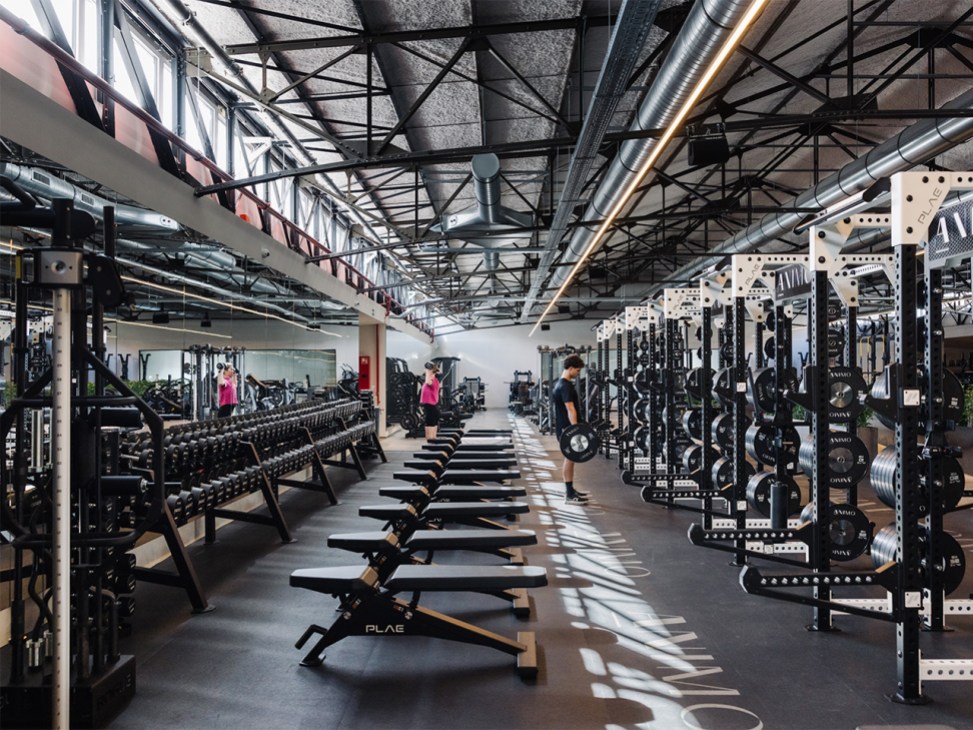
Gyms have traditionally been function first, with unflattering lighting and ugly machinery. Animo, however, is furnished like an upscale hotel, with a custom scent that wafts through the air, vases of fresh flowers and plenty of modernist furniture. There’s also a fridge that’s filled with eucalyptus-scented facecloths. It’s far nicer than most offices – and possibly many members’ homes.
The duo have created a space that aspires to be a little “sexy” and borrows lessons from the world of hospitality. De Vaucleroy’s CV includes two years as the head of brand for a global luxury-hotel portfolio and the influence of that time on his way of running Animo is clear. “Staff members are instructed to remember faces, names and orders,” he says. “That’s really important. For some people, that 30-second ‘Hi, how are you?’ might be their only real-life interaction that day.”
Animo’s social focus is central to the operation. One member, Jelassi, tells Monocle that he met about 90 per cent of his friendship circle through Animo since it first opened. This is especially important in a freelance economy, in which many people don’t have regular colleagues. It’s partly why members use the café as an on-demand workplace.
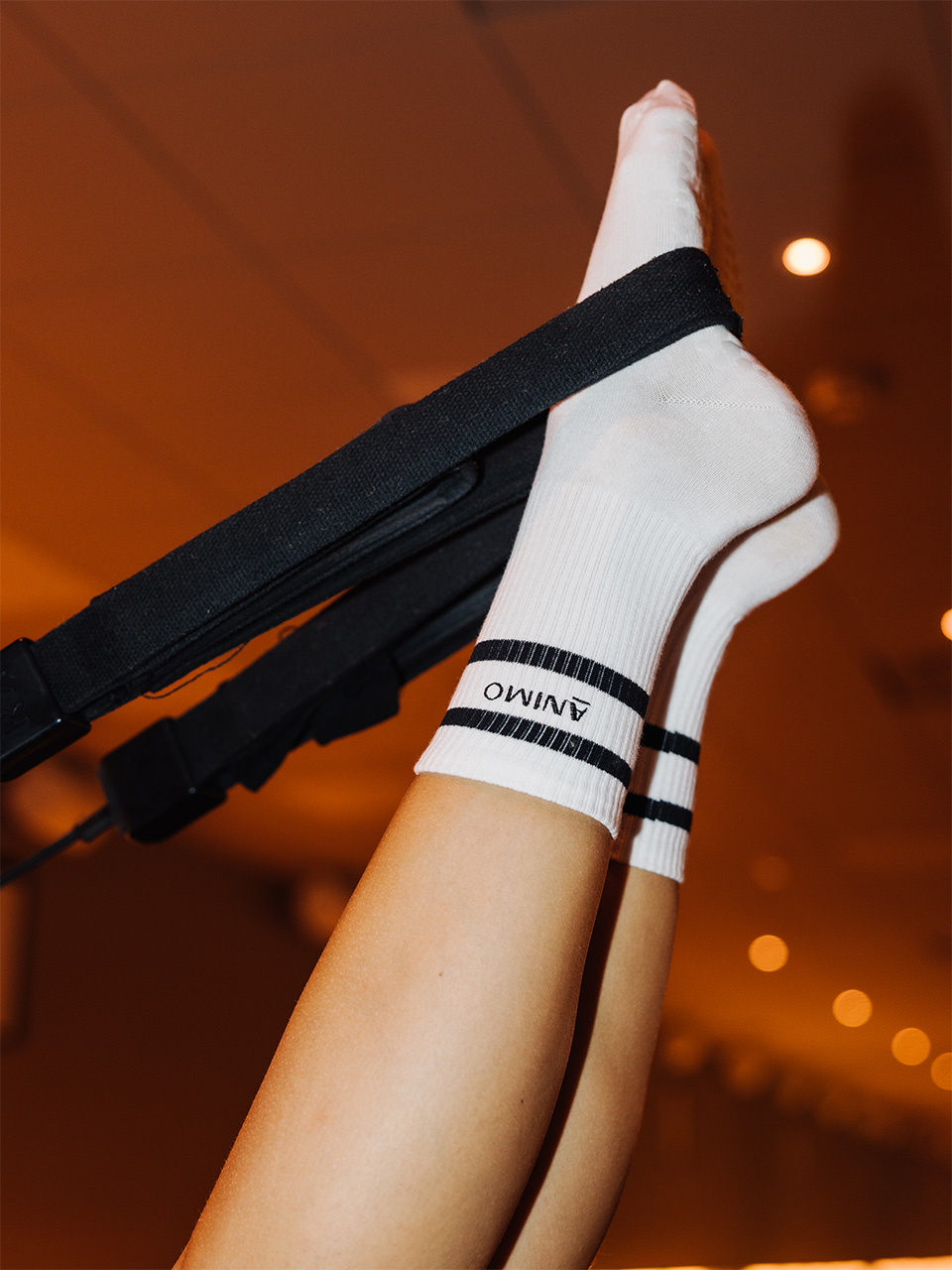
In the gym, I spot a member wearing a black tank top emblazoned with the Animo logo. It’s part of an own-brand line that includes dual-layer shorts for men, bras and leggings for women and unisex Pilates socks. “Our socks business is insane,” says Derom. “We sell 500 pairs a month.” The Animo kit is sold alongside shorts from On Running, Normatec compression boots from Hyperice and Swedish laundry detergent made especially for gym kit.
De Vaucleroy and Derom have big dreams for Animo, with their sights set on Paris. For now, pay a visit to the Brussels location, where visitors can buy a €70 week-long “discovery” pass. Been there, flexed that, bought the grippy socks.