Issues
Rethinking prayer: Emre Arolat on designing faith for the modern age
Celebrated Turkish architect Emre Arolat joined us at this year’s Quality of Life conference to discuss his delivery of a contemporary mosque that has been embraced by worshippers and architects alike as a true modern marvel. He also revealed where he finds new starting points and inspiration after years in the business.
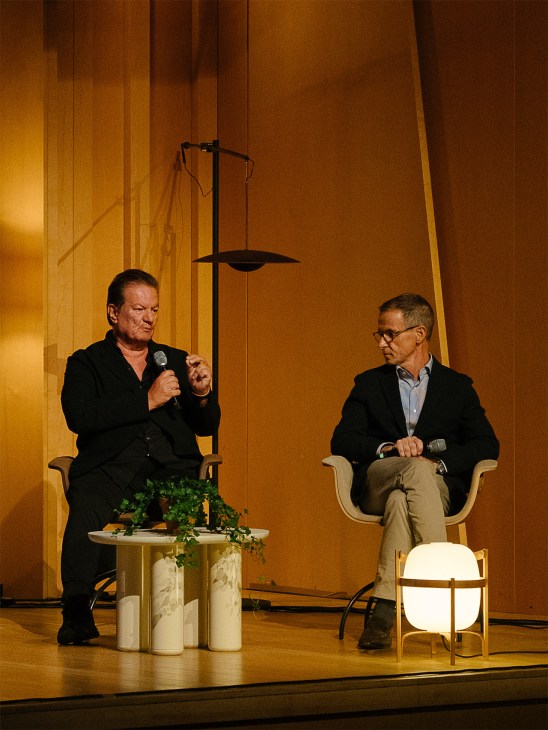
Andrew Tuck: Emre, you’re a prolific architect with projects all over the world: Albania, Japan, Russia. But, to me, Turkey’s Sancaklar mosque defies all expectations. How did you set about challenging not only Ottoman forms and characteristics but your own stylistic inclinations too?
Emre Arolat: It was a big challenge, to tell you the truth. The first thing that you face up to when you’re designing a mosque, especially in Turkey, is that classical Ottoman style. It can be difficult to ignore. The early meetings for this project weren’t very productive: people from the foundation arrived at my office, saying that they wanted a modern mosque, while waving a photo of a very conventional one with a standard cupola and traditional minarets. I said that I was sorry but if this was their understanding of ingenuity or modernity, we could not work together. They left.
AT: Slamming the door behind them, I’m sure.
EA: Something like that. But they returned a few days later – this time showing me photos of the land. I was astonished. It was a wild panorama. From the proposed space, you could see a 5km-long lake with the sun falling across it. A real, natural, virgin plot. I told them that I would take the commission but that they should have a back-up plan, because there was a high chance that they wouldn’t like what I would do with the space. They were on board. The next thing I asked for was more time because, right from those early days in the design process, we were very keen to understand what the essence of Islamic prayer is and I needed time to think about the place, the energy and the atmosphere. Context, in my opinion, is the most important aspect of architecture.
AT: There have been times when I’ve wandered into spaces – Grundtvig’s church in Copenhagen or the Abrahamic Family House in Abu Dhabi, for example – and felt my emotions soar. You feel something in such places. Do you think that architecture can create believers?
EA: I don’t think that spirit is directly linked to religion. For me, it’s something else. To design a beautiful and functional oncology centre, you don’t have to be a cancer patient. But as I say, that doesn’t mean it’s easy.
AT: So how did you get the Sancaklar mosque through?
EA: The proposal was a unique experience. When we did our first presentation to the members of the commissioning foundation, I recommended that they bring a small group, so that we could talk through it and check whether the mosque would satisfy the brief. They arrived with 45 people. The president of Diyanet [Turkey’s leading Islamic jurist] was even in attendance. They all took their seats and I made the presentation. When the lights came up, all 45 of them were sitting in silence. They looked to the president, who said, “If somebody showed me the renders on their own, without explanation, I would say it’s impossible; it couldn’t be a mosque. But since Mr Arolat has explained the story and the thinking behind it, why not?” It was a big surprise for me.
AT: Are you an architect who thinks about legacy?
EA: Of course. I’m more than willing to open the door too. There are many young architects who are engaging with this building. It has had a big effect in the industry. I’m happy to see it.
AT: Whether you’re making a mosque or rethinking a business, what’s your advice on creativity?
EA: To do something that’s original or genuine, you have to forget everything you know. You must be focused on the context, not only the geographical one but in a broader sense: politically, sociologically, demographically and environmentally. Regarding architecture, I believe that there are two schools: the first is the signature – you have your own style that is very visible and maybe famous, and you bring your architectural language to each area, city and context. The second is contextual architecture. I believe that my path is the latter. I say to my colleagues at the start of every project that we have to put down a blank sheet of paper. Forget all that we know. Then we can try to understand what is demanded of the project.
Monocle comment:
Creating buildings that are beautiful and suit their space and function but also defy expectations requires faith – and not always of the supernatural variety. This could take the form of an architect’s fearless creativity or the openness of clients and the people who end up using and inhabiting the space.
Bulgari CEO Jean-Christophe Babin on the brand’s factory expansion, and retaining value in true luxury
In 1884 a Greek silversmith named Sotirios Voulgaris – or Sotirio Bulgari in Italian – opened the doors to his eponymous boutique on Rome’s Via Sistina. Today, Bulgari is synonymous with the sprezzatura of the Italian capital. With the brand’s legacy secure, its CEO, Jean-Christophe Babin, is focused on safeguarding its future.
Always dressed in a sharp suit, Babin has been reimagining Bulgari not merely as a luxury house but as a custodian of Italian expertise and craft. In April 2025 he cut the ribbon on the brand’s new factory extension in Valenza, a town 600km north of Rome, in Italy’s Piedmont region, and a centre of jewellery making since the late 18th century. The site is the largest single-brand jewellery manufacturing facility in the world. It will allow Bulgari, part of the LVMH group, to double its production capacity by 2029 and to accommodate more than 1,600 employees here within the next four years. It’s a rapid expansion, even for a sector that is as resilient as fine jewellery and watches. According to Babin, who also became the CEO of LVMH Watches in March, this growth stems partly from the label’s steady momentum in the US, its resilience in China despite regional slowdowns and its appeal to a “nomadic” luxury clientele eager to trust in heritage brands.
Alongside the expanded factory, Babin also inaugurated the Scuola Bulgari in September – the house’s first foray into artisanal education. Open to the public, its courses were developed in partnership with the renowned Campanian Tarì Design School.
In one of Bulgari’s most pivotal years, Monocle takes a tour of the new wing of the Valenza factory and sits down with Babin to discuss the importance of investing in Italy – and in yourself.
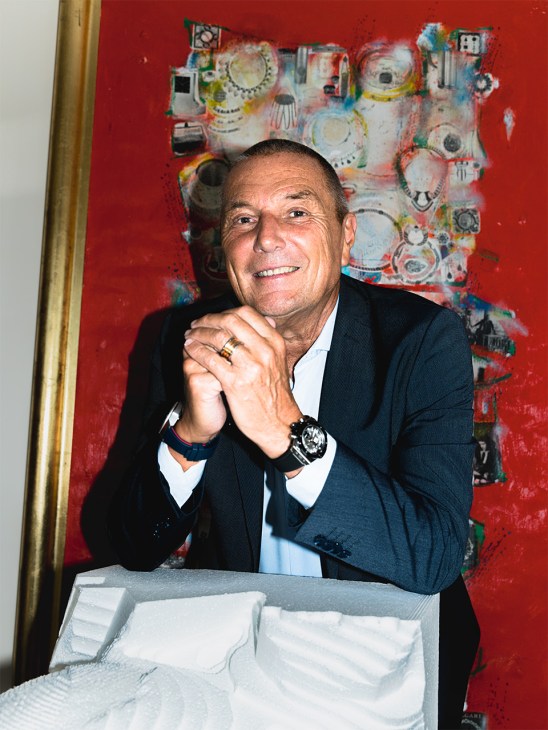
Why is it so important that Bulgari jewellery is made in Italy from start to finish?
For us, it’s a strong statement about our commitment to being proactive Italian citizens. This country has managed to become the largest exporter of jewellery worldwide, which is amazing for a country of just 59 million people. We want to continue to be a major contributor to the commercial balance. If jobs are created here, they’ll generate tax revenue, which will be good for the country, and the benefits will go to the national trade balance. We don’t want to produce outside of Italy and won’t compromise or choose the easy way, which would be to create factories in different places. We are proud to be Italian and consider ourselves to be a flagship of the country’s excellence. If you think about Italy’s biggest luxury companies, alongside Ferrari, we are one of the most emblematic brands. It’s very important that this shows not only in our products and communications but in our manufacturing excellence and artisanship too.
What inspired your decision to invest in your new factory?
When we opened the original Valenza factory in 2017, we thought that the space would sustain our growth and support our development until early 2030. Immediately after the coronavirus pandemic, however, we realised that we were already at capacity. So we decided to expand radically, going from 14,000 sq m to 33,000 sq m. Today, in Valenza alone, we estimate that about 6,000 people work for the jewellery sector and of those, 1,100 are already employed by Bulgari, while more than 1,000 work for us via third-party companies.
What has been the response so far to Scuola Bulgari?
Education is not just a responsibility but an investment in the future of our craft. Luxury is rooted in excellence and savoirfaire, and those values must be nurtured and passed on. This is why we created the Scuola Bulgari and the response so far has been incredibly positive, from both within the industry and among young professionals who are eager to learn.
Jewellery and watches remain among the few luxury categories that have resisted the global luxury slowdown. What makes these pieces such good investments, even during a crisis?
Jewellery is the oldest luxury of humans. For about 150,000 years, it has always been associated with special moments or turning points in life. That means, unlike fashion, it’s an occasional purchase but is very much charged with lasting emotions. It’s also made from precious materials, whether metals such as gold or platinum, or gems that never lose value over time. Because they are in limited stock on the planet, when you buy fine or high jewellery, you cannot be wrong. It’s not a silly or speculative purchase. It might be hedonistic or pleasurable, because you can wear it and enjoy it, but financially it’s also a defensive investment. You never know whether a piece will appreciate by 50 per cent or 30 per cent but I say “defensive” because it certainly won’t fall to zero. I bought some shares in Moderna during the coronavirus pandemic and they have plummeted. That will never. happen with my ring or my watch.
What influence does heritage play in attracting luxury clients? In the case of Bulgari, is Rome always a central part of your story?
Rome really is one of the key elements at the heart of Bulgari, whether in the city’s artistic and architectural inspiration, which is reflected in every product that we craft, or in the spirit of the brand and the concept of the dolce vita – the sense of hospitality and warmth that we hope people get to experience in every Bulgari hotel. Whether you are in Milan, Beijing or Bali, we want you to somehow feel as though you were in Italy and have an Italian experience.
What comes next after such a key year for Bulgari?
We will continue to focus on our products and on deepening our connections with our clients through physical and digital experiences. While the global landscape remains complex, I’m confident in the resilience of the luxury sector. What defines true luxury is its ability to inspire and endure. By staying true to our values, Bulgari, and the industry as a whole, can thrive, even in times of uncertainty.
Layering winter fashion: Luxe pairings of leather, suede and wool
Pair darker, wintry shades with rich textures such as leather, suede and sumptuous wool for a layered and luxurious look.
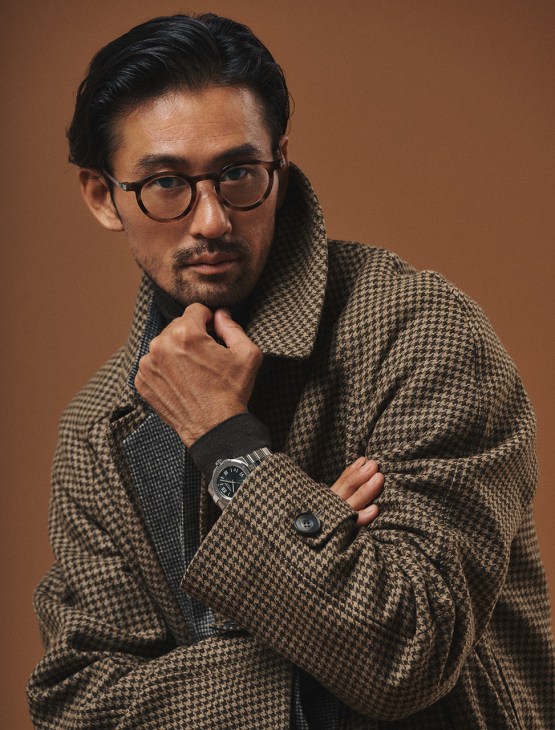
Chopard, glasses by Lindberg
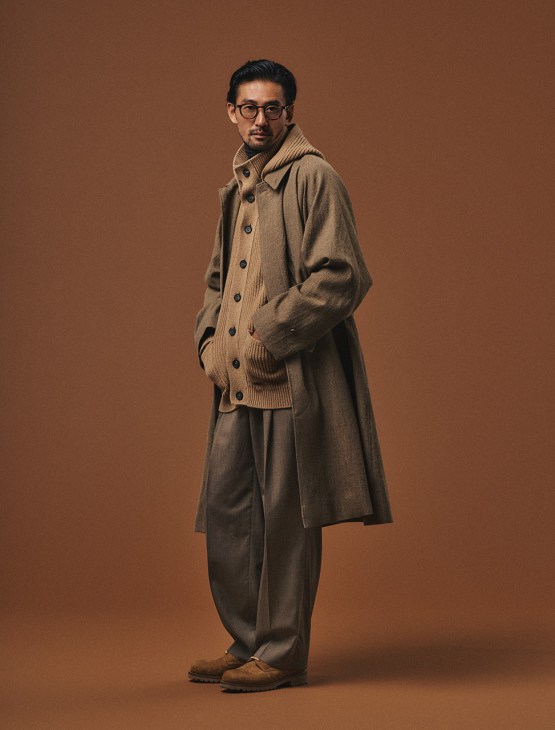
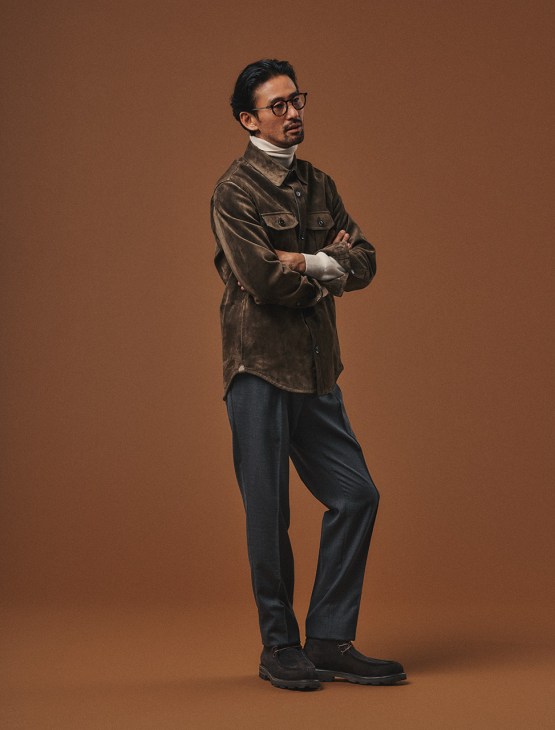
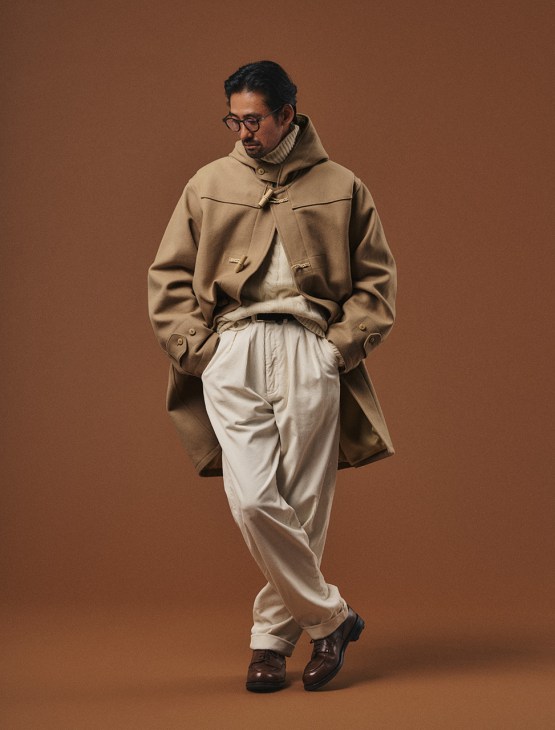
Lauren, shoes by JM Weston, glasses by Lindberg, belt by Athison
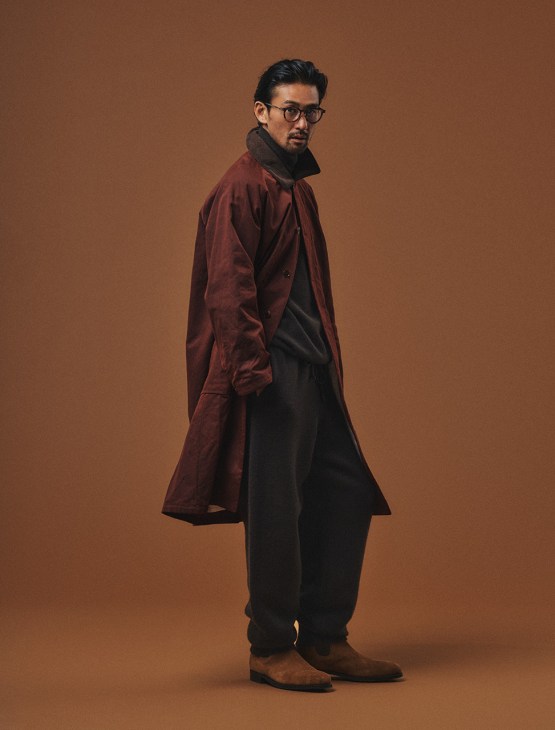
Batoner, boots by JM Weston, glasses by Lindberg
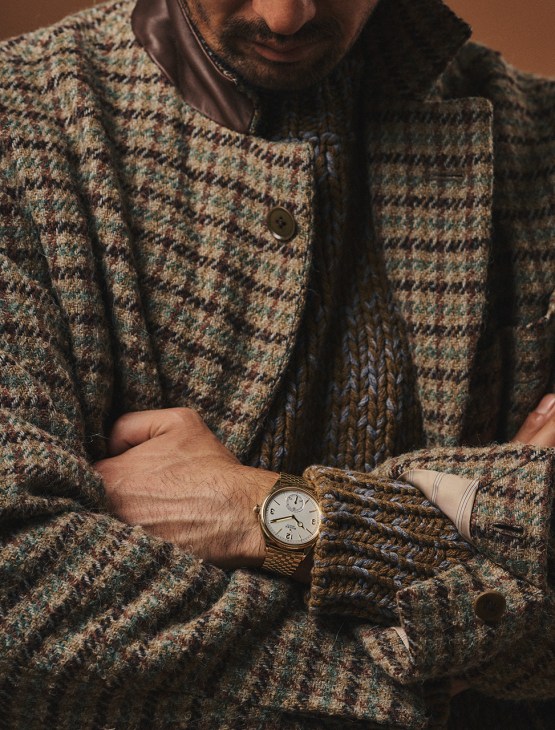
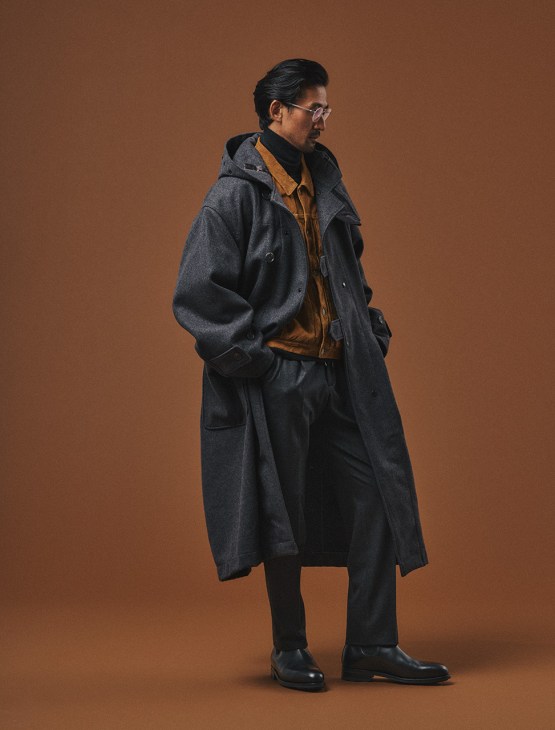
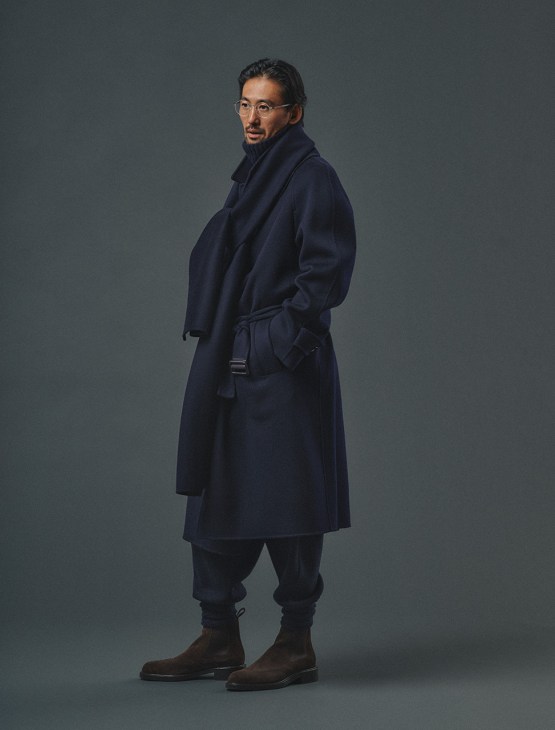
Piana, glasses by Lindberg
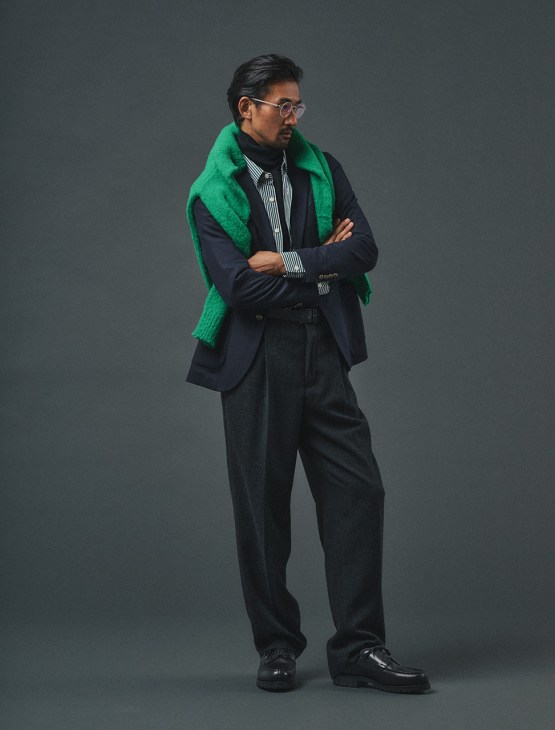
jumper by Uniqlo, trousers by Kaptain Sunshine, shoes by JM Weston, glasses by Lindberg, belt by Hermès
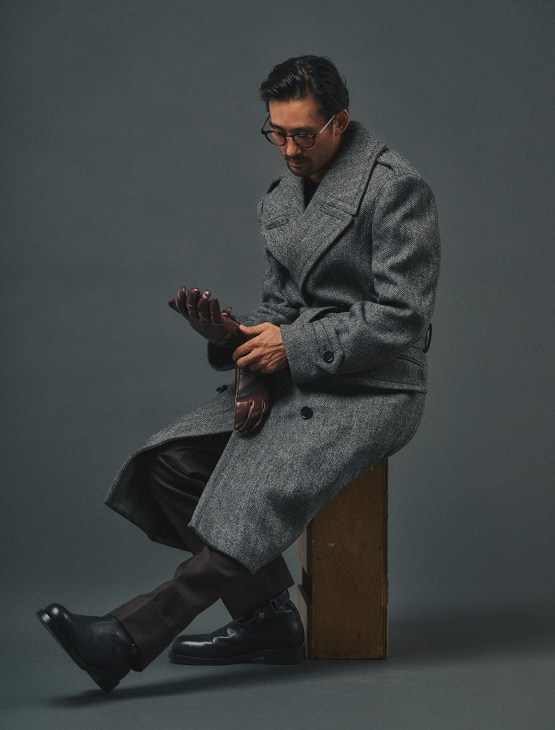
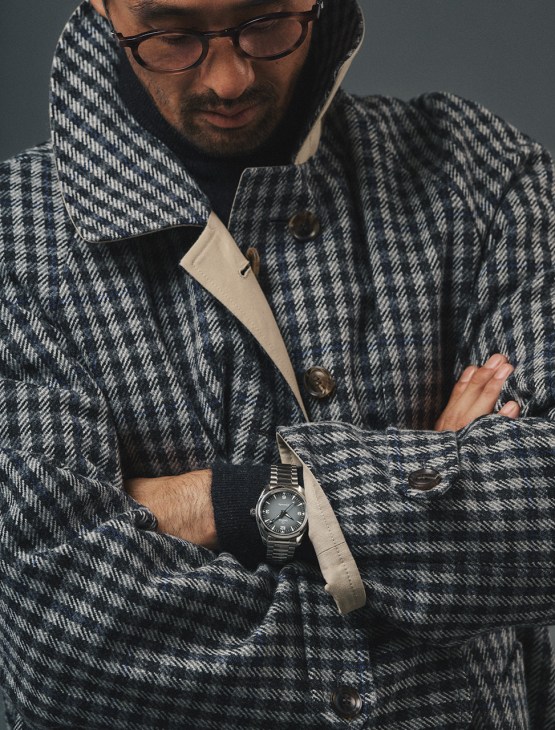
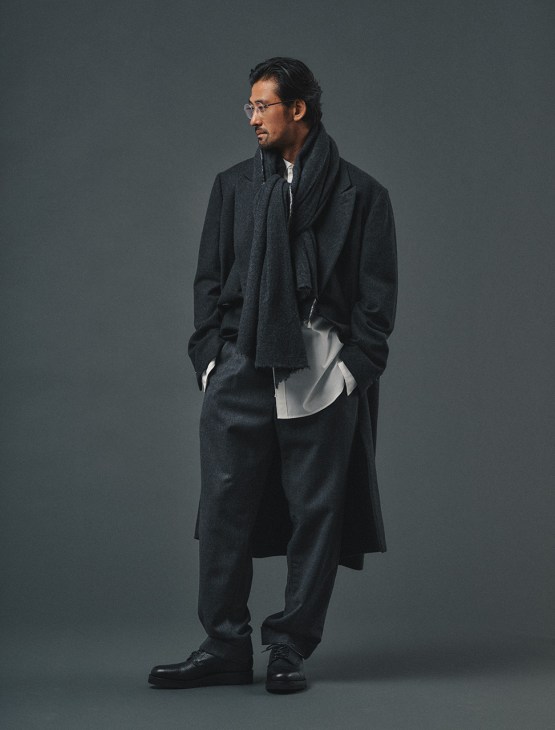
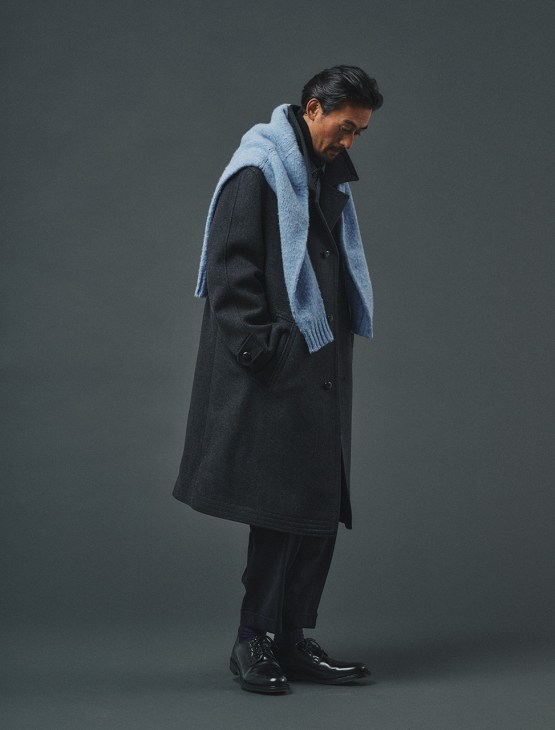
Aspesi, rollneck jumper by Uniqlo, socks by Tabio, shoes by Church’s
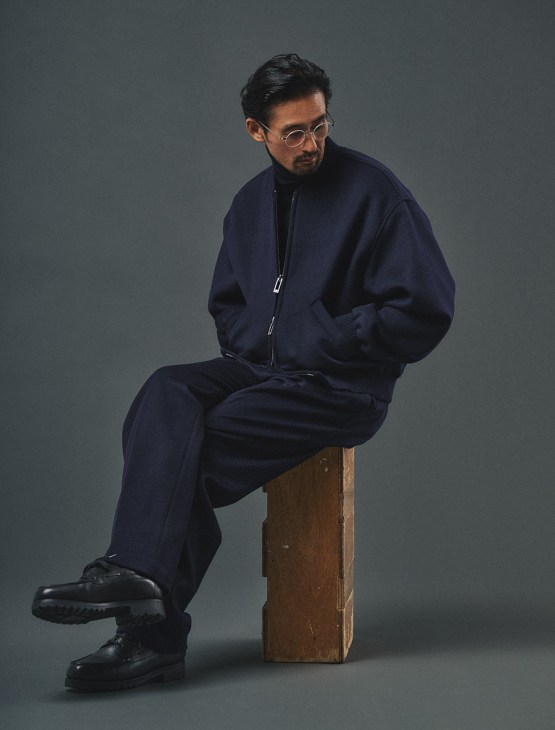
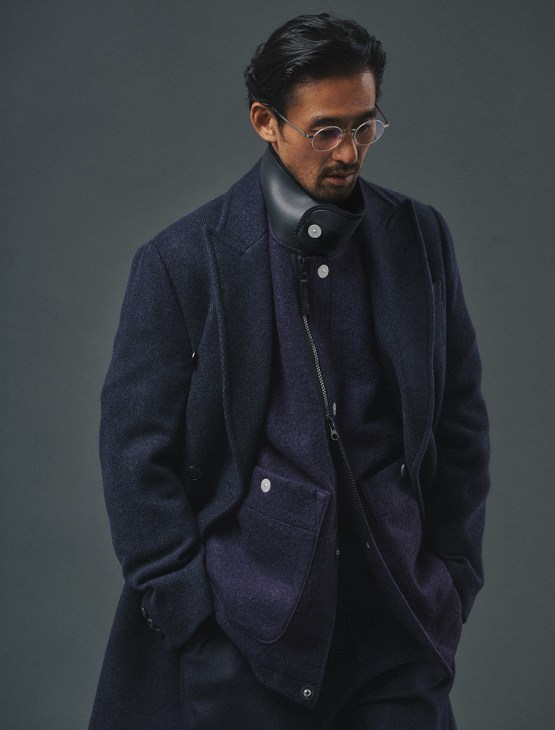
Marina, glasses by Lindberg
Stylist: Akio Hasegawa
Photography: Seishi Shirakawa
Model: Ikken Yamamoto
Grooming: Kenichi Yaguchi
Producer: Ryo Komuta (Rhino Inc)
After seven decades of creativity, David Gentleman shares advice for aspiring artists
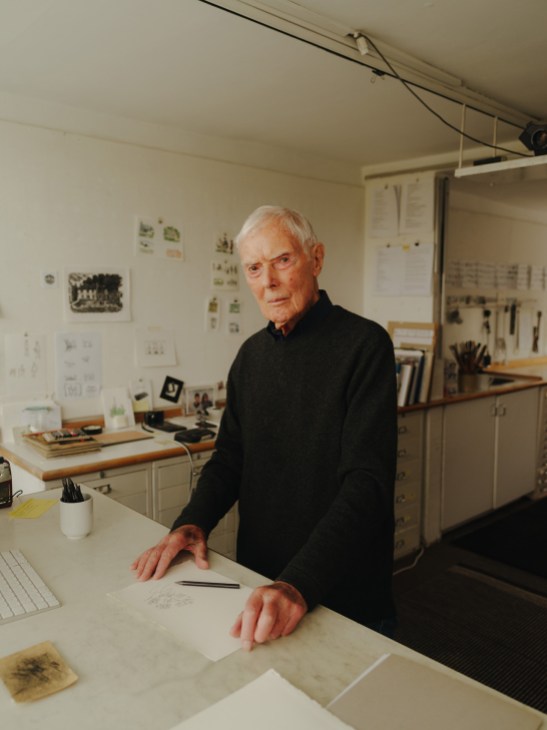
In an era when the online world offers an endless spew of just-minted hacks, short cuts and “12 Reasons Why…”, just who is 95-year-old David Gentleman to be offering lessons for young artists? Well, for a start, he’s the maestro behind some of the most longstanding, recognisable and beloved works of art and graphic design made in the UK since the 1950s – work also acknowledged and cherished worldwide. So it’s quite right that you sit up and take notice of Gentleman’s golden rules. After studying at London’s Royal College of Art under Edward Bawden and John Nash, Gentleman chipped and then rocketed away to become a garlanded public success who’s still at it: making work and publishing books, the latest of which is Lessons for Young Artists.
“Do it every day, even on holiday,” says Gentleman of making creativity a habit. It’s a statement that he has lived up to, spending five decades of a 70-year career in the top-floor studio of his Camden home, daily adding to a dizzying body of work: watercolour landscapes and corporate logos, charming illustrations and era-defining book covers, collections of celebrated postage stamps and righteously angry protest placards. It’s this broad swath of work – as engaging as it is engaged – and a lifetime of learning that are at the heart of Lessons for Young Artists.
Enlightenment is offered in short chapters with deceptively simple headings, accompanied by Gentleman’s beguiling images: “Start small”, “Travel light”, “There are no rules”. These draw on deep knowledge wrought plainly to remind artists young and old to think about simplicity, to be nimble and ready, fearless and bold. The first chapter is accompanied by a pencil sketch of Suffolk trees from 2024 and a painting of some toys executed by Gentleman in 1936, when he was just six. It’s lovely to witness the work of an artist’s hand across an almost 90-year span. And that’s a vital lesson in itself: keep on keeping on.
In a chapter headed, “Say ‘yes’ to the unexpected invitation”, we see his designs for Royal Mail stamps after their decades of dullness. Then logos for British Steel and the National Trust and a groundbreaking relationship with Penguin books, for which his best-known work is the re-presenting of Shakespeare’s plays for mid-1970s paperbacks that mixed playful, organic woodcuts with the clean modernity of the Helvetica typeface. Gentleman’s work has enchanted millions of people, yet his selfless style has never wrestled a commission into becoming “a Gentleman”. With winning magnanimity he confesses, “I’ve never had any interest in consciously trying to develop a style.”
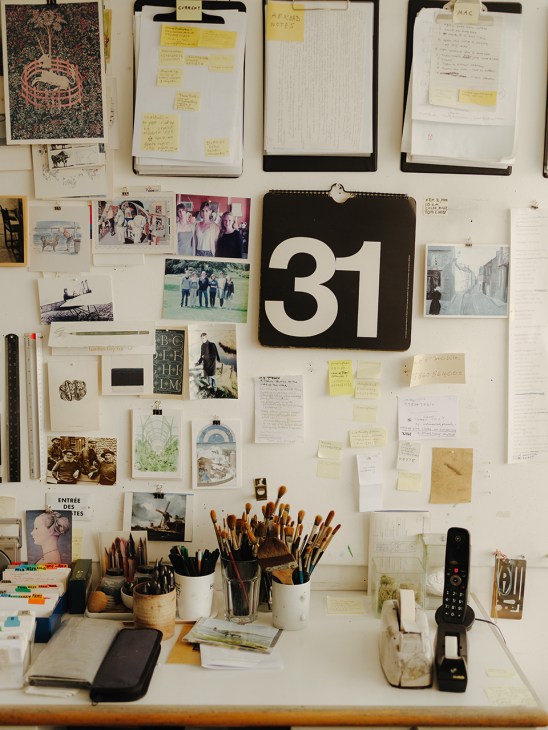
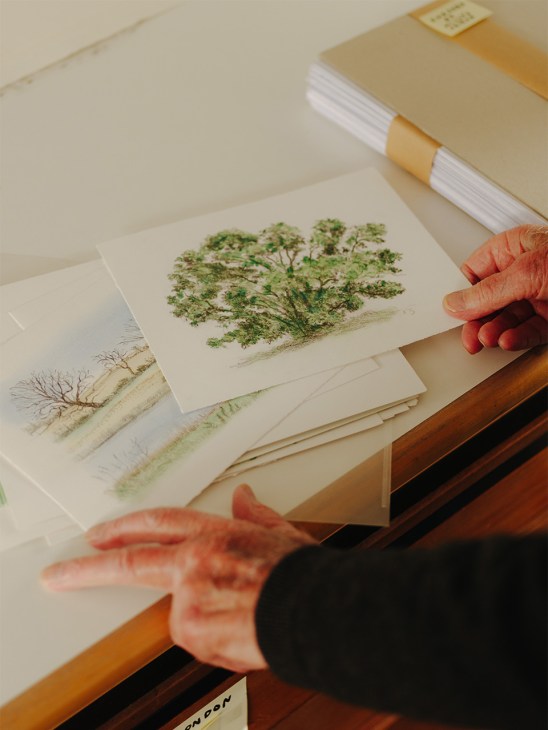
While Gentleman’s tone of voice is pleasantly fatherly (“Tidying the studio is a cheerful way of coping if a piece seems to be going wrong”), he’s also cut from a similar cloth to the great William Faulkner, who said, “I write when the spirit moves me – and the spirit moves me every day.” Indeed, the book’s final chapter is titled “The only way to become an artist is to do it”. No pop-ups, no hacks, just a beautifully designed, wellbound little hardback. It is, of course, not really a book about art but about living life, and to a ripe old age. A lesson, then, for everyone.
It isn’t woke to demand uniforms for female soldiers that are fit for purpose
“Shrink it and pink it” sounds like a joke made between fashion designers. But for decades, this was the lazy answer to the female “problem” in equipment design – to make the men’s version of a piece of kit smaller and colour it in pastel. In the military, however, that quick fix had real costs: ill-fitting body armour, boots, flight suits and even underwear reduce performance, raise injury rates and make life harder for the troops who we rely on. To complain about this isn’t wokeism – it is a matter of pointing out a design malpractice with operational consequences. Only in the past few decades has research begun to catch up. Consider the US Army’s recent work on tactical bras. Its Combat Capabilities Development Command Soldier Center, known as Devcom SC, decided to treat bras as mission equipment rather than a fashion accessory. Designers conducted surveys with focus groups, prototyped flame-resistant concepts with adjustable support and explored the link between form and fabrics to comfort and focus. The result? Better-fitting, more functional garments that reduce distraction and improve endurance, providing practical gains for units on long patrols or under heavy load.
Uniforms tell a similar story. Trousers were made with knee pads in the wrong place, jackets with sleeves either too long or too short, and pockets placed for a male posture that limits mobility and creates friction during firefights and field training. Recent reporting shows that services are slowly reworking garments so that protection and range of motion were delivered where real bodies need them. This includes adjustments for torso length, shoulder slope and waist-to-hip proportions, along with improved options for layered kits suited for both hot and cold environments. These changes aren’t cosmetic tweaks; they restore function.
Flight crews offer a sharper example of the stakes. Female pilots have reported poor seals in anti-G suits along with ejector-seat harnesses that don’t align with smaller torso proportions. These criticisms are not just about comfort: they are safety and mission-capability issues that demand measurement, redesign and proper user testing. Recommendations for improvement have included re-imagined flight suits, harness interfaces and even cockpit ergonomics to make small changes that reduce risk and preserve operational tempo. And these fixes belong to a broader engineering doctrine called Human Systems Integration (HSI). Under the Joe Biden administration, Nasa and Pentagon guidelines explicitly required that anthropometry, ergonomics and human factors be integrated early in system design to ensure that equipment was usable by the force it will serve. HSI reframes “fit” as a systems requirement because design choices cascade into procurement, training and sustainment.
Despite this progress, there is still some way to go. Requirements for female-specific versions are too often weakened or dropped during development; data collection remains patchy; and procurement specifications still assume a one-size default. The solution is simple: mandate mixed-body anthropometric testing in procurement, fund targeted R&D (rather than token cosmetic options) and run field trials with diverse users to guarantee that the systems protect and enable everyone. Design is not neutral. When a boot, bra or flight suit is built around a historic default, it entrenches assumptions about who counts as a soldier. Fixing shouldn’t be seen as part of a culture war. It is engineering, evidence and common sense that would help achieve an effective force.
Standing up to Russia: EU foreign-policy chief Kaja Kallas talks Trump, Ukraine and Gaza
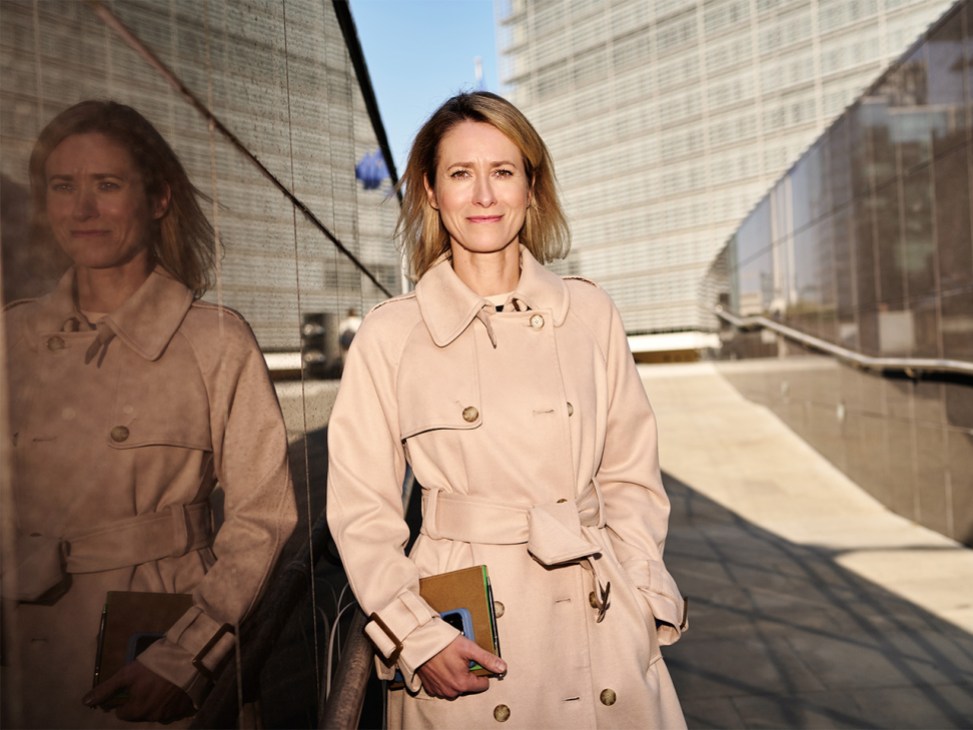
As the EU’s foreign policy chief Kaja Kallas leads calls to loan frozen Russian assets to Ukraine and increase pressure on Putin, Monocle sits down with her at the EU Commission headquarters in Brussels to discuss Ukraine, Donald Trump, Gaza and how she is helping to bolster European defence policy.
When Monocle interviewed Kaja Kallas in Tallinn in 2021, she had just become Estonia’s first female prime minister and was contending with the coronavirus pandemic. Four years later, when we meet again in Brussels, she is the EU’s de facto foreign minister and is preparing for a week of summits focused on ratcheting up the bloc’s defence capabilities.
A lot has happened since Tallinn: back then, the 44-year-old Kallas seemed to typify a new generation of leaders including Sanna Marin and Jacinda Ardern – female liberal internationalists, often better liked outside their home countries than within them. It was assumed that all three were destined for a big multilateral institution but Kallas is the only one who has made it. The reason for this might be summed up in one word: Ukraine.
In 2021, as Russian troops began massing on Ukraine’s borders, she was among the few European leaders who called out Moscow’s intentions. During the first two years of Russia’s assault, Kallas was vocal about the need to provide as much assistance as possible to Kyiv. When Jens Stoltenberg was approaching the end of his tenure as Nato’s secretary-general, she was seen as a leading candidate to replace him. That position went to former Dutch prime minister Mark Rutte. But a few months later, in July 2024, Kallas resigned as Estonia’s leader to become the EU’s chief diplomat. When she assumed that role in December, the work of sustaining wavering EU support for Ukraine had been made more difficult by the Middle Eastern conflagration unleashed by the 7 October attacks. Donald Trump’s re-election as US president in November made an already tricky job even thornier. While other European leaders have sought to placate the White House, Kallas has been forthright in her new role. On her first day, during a visit to Kyiv, she tweeted, “The European Union wants Ukraine to win this war” – a declaration that received immediate censure from other EU leaders for its bluntness.
In many respects Kallas represents much that the Trump administration professes to despise – inextricably linked to Brussels (before becoming Estonian PM she was a member of the EU Parliament for four years) and bellicose in her anti-Putin rhetoric. There have been reports of US officials criticising the “Estonianisation” of EU foreign policy – an overtly hostile anti-Moscow line. After travelling across the Atlantic in February to meet her newly installed US counterpart, Marco Rubio, Kallas had her appointment unceremoniously cancelled. Since then, she has declared, “The free world needs a new leader,” while pushing for the confiscation of Russian assets frozen at the start of the war. Still, when we meet at the EU Commission’s HQ, Kallas seems unruffled. She has just returned from a stormy UN General Assembly in New York and is about to attend meetings focused on, among other things, responding to recent Russian violations of EU airspace, which included the incursion of three MIG fighter jets into Estonian skies.
You’ve just been at the UN General Assembly [UNGA], where Donald Trump made a speech attacking the EU, the UK and other US allies. After such a speech, is it still appropriate to describe the US as an ally?
Yes, the US is an ally. We don’t always see eye to eye and, of course, President Trump has his own style. But when it comes to actual issues, we still work with America, which remains our biggest ally.
Were Trump’s attacks on the UN as an institution proof that multilateralism is dead?
Multilateralism is under heavy fire. But around the world, many people are wishing for it because of the global challenges that we face. We can only address them together. At the UNGA, I took part in a lot of multilateral forums. We had a meeting with the African Union; I follow former Belgian prime minister Paul-Henri Spaak’s maxim. He said that there are only two types of countries: small countries and those that haven’t yet realised that they are small countries. For these countries, international law and the multilateral system are of utmost importance but what they require is reform. Look at the UN. On some levels, it doesn’t really reflect the world today. Take the Security Council. Who has veto rights? Considering that Russia, a Security Council member, has attacked another country and gone against all of the rules of the UN Charter, it’s clear that we need to look into this and develop those rules further so that they can actually address accountability.
Is the US president a force for good or ill?
The president is elected by the country’s citizens and we have to work with all the presidents that our counterparts’ electorates elect. It’s not up to me to comment.
What are your thoughts on the suggestion that the EU acceded to an unfair trade deal with the US in August due to European countries being reliant on Washington for their security, as well as support for Ukraine – and because Brussels feared that these would be under threat if the trade deal was rejected?
It’s clear that we have been quite reliant on the US. European countries have woken up and now invest more in our defence. We will bring a lot of funding to be more autonomous in that sense, because every dependence you have makes you vulnerable.
How damaging is the dispute between France and Germany over which company should lead a project to develop a next-generation EU fighter jet? Is this proof that the bloc’s members will always think first about what is best for themselves?
We have long considered defence to be a national issue but the Ukraine war has shown us that it’s regional, which means that we need to work together. It’s clear from reading the latest EU defence-readiness road map that we have to work out how we can encourage member states to co-operate and come up with more joint projects. When it comes to big problems that require us to co-operate and support each other, things have to be interoperable. If systems have been designed for one country, they’re not interoperable with, say, the ammunition coming from another. And that’s detrimental to our security.
What is the most important thing to get right for European defence?
We have nine critical capability areas that we have to develop. To mention just a few: air defence, artillery systems and missile and ammunition production. Then drones and anti-drone technology. We just had a good meeting regarding the drone wall; we’re learning from Ukraine how they have done it and how it should work.
British journalist Gideon Rachman claims to have heard members of the US government decry the “Estonianisation” of EU foreign policy. What do you take this to mean?
Well, I guess it means that the Estonian foreign ministry has done a good job. Jokes aside, it is clear that every leader of European foreign policy has brought his or her ideas to the table. So, if we look at foreign policy now, we’ll see that it’s being driven by what’s happening, what Russia is doing. Clearly, that is our biggest threat, agreed by everybody in the European Union, which is why we have to act accordingly. So if “Estonianisation” means being more agile and reacting faster, I think that it’s a positive thing.
What should be done if Russian jets violate Estonia’s airspace again?
Estonia is a Nato country and, like President Trump and different EU leaders have said, there are clear protocols for how we should act in Nato if such things happen.
So you agree with Trump’s remarks that they should be shot down next time?
It is up to those who make those decisions. Russia wants to do two things. One is to stress to us how far it can go in terms of pushing the boundaries – today I saw on the news that drone attacks are happening in other countries in Europe too. The other is that it wants to sow fear in our societies. So we have to be prepared. The more prepared we are, the more ready we are to act. And if we are ready to act, that reduces the fear in our societies.
What would demonstrate Europe’s and Nato’s ability to react?
Russia only understands strength, so the response has to be very strong.
You have said that European and Nato countries must ensure that Russia doesn’t attack another sovereign nation again. How can they do this?
We have two lines of working. One is to put pressure on Russia so that it comes to the table and stops the killing and doesn’t do this again. And that’s why we’re imposing sanctions, so that they run out of funding to finance wars. The second is to help Ukraine, because it is defending itself. If you think about European countries, they had to lose their last colonial war [in order to change course]. Russia hasn’t lost its last colonial war.
Do you agree with Trump that Ukraine can win back all of its territory lost to Russia?
Yes, if we provide it with the necessary means and support. Ukrainians have the resolve and they are not surrendering. When I speak to them, they say, “Yes, we can do it, if you and the Americans help us.”
What do you think is the likely end game for this war?
It depends on us. And by “us”, I don’t mean the European Union – I mean all of the countries in the world who support the multilateral system and international law. If the aggressor walks away with more than it had before, then aggression has paid off – and that is dangerous for every country.
What has the Israel-Gaza crisis taught you about European influence in the Middle East?
It’s very close to our neighbourhood. So whatever happens in the Middle East has a direct impact on our countries as well. We need to work together with all of our partners in that region to have stability there. We have leverage if we are united and, of course, on many points in the Israel-Gaza conflict, we don’t have that unity. But at the same time, I would stress that there are a lot of areas where we have unity. All member states support the immediate release of the hostages, a ceasefire and the ending of hostilities. All member states support delivering humanitarian aid at scale to Gaza and that it shouldn’t be hindered in any way. And all member states agree on the two-state solution and believe that Hamas should have no role in the future governing of Gaza. So there is a lot that we agree on and we are trying to build on those things.
The aid deal that you helped to negotiate in July was lauded at the time. What do you think about its impact today? And did the Israelis keep up their side of the deal?
Before July, there were zero trucks getting in. After the deal, about 2,000 trucks were able to enter Gaza. Of course, that’s not enough but it’s better than zero. Israel agreed and also opened the Egyptian and Jordan routes, the border crossings. It also started to repair the critical infrastructure as it had promised, such as water desalination and water provision. So a lot of that was implemented. It’s an issue that we don’t really have our own monitors, so we are reliant on the numbers that come from the UN, which the Israelis are questioning. The numbers that we get from the Israelis – such as how many trucks are coming in – are concretely very different from the ones that we get from the UN. Because we don’t have our own eyes on the ground, we rely on these international actors that are on the ground, which puts us in a bit more of a difficult position.
Do you think that recent moves by European countries to recognise the state of Palestine were a good idea?
It’s up to member states to decide which countries they recognise and which they don’t. But it derives from this support for a two-state solution. That’s why the EU is also supporting the Palestinian Authority more than anybody else. We will give it €1.6bn from 2025 to 2027. Will [recognition] have an immediate effect on stopping the killing in Gaza? I don’t think they’re so much interrelated. It’s more about sending a signal that we want to keep the two-state solution alive.
Do moves by EU states such as the recognition of Palestinian statehood or bilateral security deals with non-EU countries suggest a weakening of centralised decision-making?
On Ukraine, we have been very united. Israel is the toughest issue because member states have very different historical backgrounds. But again, I would stress all of the points where we agree and where we have a common foreign policy, rather than those where we don’t. We are made up of 27 democracies, which means there are 27 different public opinions.
Historian Timothy Garton Ash described you as a “child of ’89”. What is the biggest lesson that we can learn from the collapse of the Soviet Union?
We should not be afraid of democracy expanding because the leaders of democratic countries are held accountable every four or five years by their voters. If they do something irrational, such as attacking another country, they are voted out of office.
What is the role of the EU Commission in a more geopolitically fractious world?
These challenging times have given us the opportunity to play a geopolitical role. And what I want to stress here is that when I go around the world, meeting the leaders of other regions and countries, Europe is perceived as a credible and reliable partner, and considering the ongoing trade wars, we are still believers in free trade. A lot of countries are also looking towards Europe to diversify their trade portfolios, for example, or their relationships in general when it comes to critical raw materials. What we should do is act as a geopolitical power. It means that if the world has become more transactional than it has ever been, we should take that into account. If a geopolitical actor has a problem – as we have, for example, with Russia and its war in Ukraine – then you should make very clear what the objective is or what you need from them to respect your interests and your concerns. We haven’t always done that, because we have been the good guys, always coming with the development aid and not asking any questions.
Geopolitical power can be based on two things. One is your military power – and we are not there yet. We are building our militaries and defence. But the other is economic power and we still have a lot of that.
UAE’s Noura bint Mohammed Al Kaabi on how smart diplomacy can bridge a polarised world
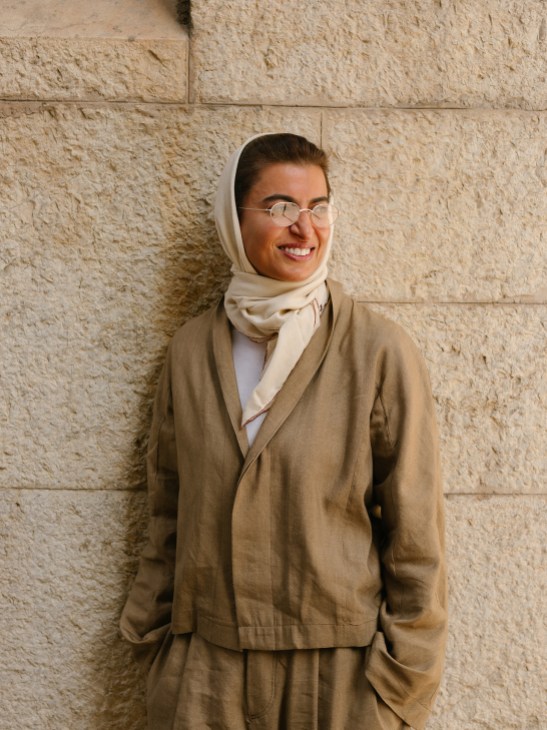
Monocle’s editorial director and chairman, Tyler Brûlé, and our editor in chief, Andrew Tuck, spoke with Noura bint Mohammed Al Kaabi, the minister of state at the UAE’s Ministry of Foreign Affairs. On our Quality of Life Conference stage, Al Kaabi discussed why diplomacy matters more than ever when it comes to bringing people together.
Andrew Tuck: Well, Noura, as with many Emiratis, your story and the story of the UAE are so intertwined. Could you tell us a little bit about your background?
NK: I was born in Sharjah, an Emirate in the UAE, in 1978. My mother is from the northern side and my father is from Al Ain, an oasis town in the east of the country. It’s connected to Abu Dhabi, the capital. I have studied and worked my whole life in the UAE – in energy, in the military, in media and culture, and in parliament. Now I’m at the Ministry of Foreign Affairs. The UAE was formed in 1971 but we’re still a group of tribes. There are seven main ones and seven emirates. The ruling tribe in Abu Dhabi is Al Nahyan, which has been based in Al Hosn fort, next to the Cultural Foundation, for the past 200 years.
TB: When you are thinking about the diplomatic mission, what are the key topics that are on your mind?
NK: The number-one thing is that we’re a nation of ideas – and getting these ideas across properly is something that I always want to do. Unfortunately, we live in a very polarised world. There are differences in our belief systems, in our culture and our identity. There must always be a bridge, which is where diplomats come in. There has to be a way that we can converse with one another. Ideas are what connect people.
AT: The UAE has a policy of listening to everyone. I know that you’re one of the largest providers of aid to Gaza but, with that crisis ongoing, has it been difficult to maintain the principle that you’ll always be a place that’s willing to have a conversation?
NK: The essence of the Abraham Accords [a 2020 declaration recognising the importance of strengthening peace between Israel the Middle East’s Arab states, including the UAE] is the people-to-people element. It has been tough for us to maintain the accords during such a horrific time. But we’re the first to condemn what’s happening – and every day that the strikes are happening, we’re condemning them. It would be the same if the West Bank were annexed. We have publicly clarified this: that’s a red line for us. It’s a tough conversation to have.
TB: In today’s world, people are fast to condemn. There’s a power in forgiveness, in moving on. What does forgiveness mean to you?
NK: Our region is still a region of conflict, from an ideological perspective. It’s tough and it’s getting tougher. There are occasions when you see a darkness in some politicians, in terms of what they’re trying to do with certain places, with certain people, either within our region or outside of it. But hope, recovery and forgiveness are paramount. I recently visited Iraq; we went for the inauguration of Al Nuri Mosque. We visited the old town, where I saw young people and children who were happy about the reawakening of an important element of their heritage. From a diplomatic perspective, that celebration of culture and humanity is crucial – before all the borders, before the parties and before the divides. You see hope return.
Monocle comment:
Global diplomacy involves more listening than talking and the UAE is quietly positioning itself to be a place of tolerance and to be heard in a region more accustomed to conflict.
How to remake a city, according to Cape Town mayor Geordin Hill-Lewis
At this year’s Quality of Life conference, Cape Town’s mayor Geordin Hill-Lewis joined Monocle Radio’s Carlota Rebelo and Andrew Tuck to discuss how investing smartly in infrastructure and building resilience can truly transform a city, and why tourists are always welcome on his watch.
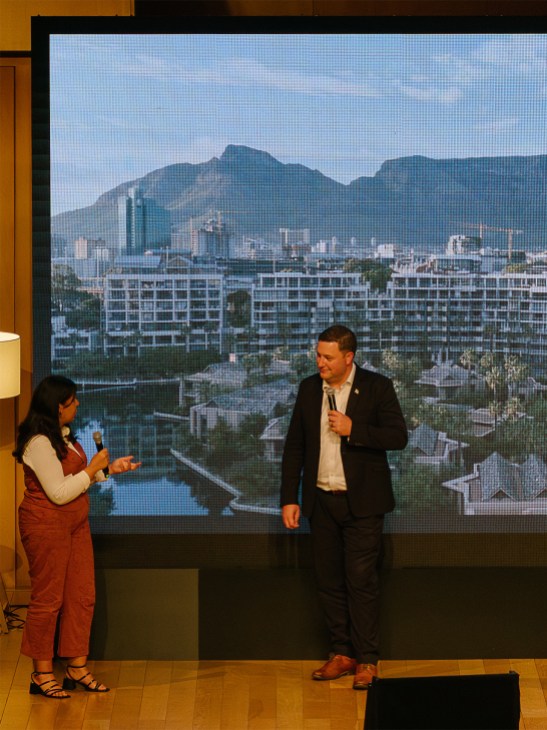
Andrew Tuck: A simple question: what made you want to be the mayor of Cape Town?
Geordin Hill-Lewis: I was a member of parliament during the coronavirus pandemic, which was tough on Cape Town, as it was on many cities around the world. I had been in opposition for quite some time. I felt a growing sense of dissatisfaction about sitting on the sidelines at parliament, unable to do what I wanted. I increasingly felt that I was watching these things happening without being able to step in and that was incredibly frustrating, especially as I had very clear ideas about what should be done. It dawned on me that I had every reason to run for mayor. It was a hectic primary – I had to run against an incumbent from my own party – but I got there in the end.
Carlota Rebelo: Tourism is one of the main economic drivers of your city. How do you balance the desire for investment and growth with the related challenges that many cities, such as Barcelona, are facing?
GHL: This summer we achieved record tourism numbers in Cape Town. But for us, that number was 1.5 million, whereas Barcelona had about 15 million. The mayor told me that in June alone, Barcelona had more visitors than Cape Town has annually. In that regard, we’re in a very different situation to Barcelona. We are desperate to keep growing our tourism numbers. In terms of keeping our citizens happy, Cape Town currently has the lowest unemployment figure in South Africa. But it’s still 20 per cent, so the most important priority in our government now is to get more people out of poverty and into employment. That way, everyone is included and has access to a more dignified and hopeful life.
CR: What about tangible changes? I know that there has been a push for the reopening of the public swimming pools, which relates to our connections to water, nature and mental health, but also ensures social equity between citizens.
GHL: I’m glad that you bought this up. Cape Town has 38 magnificent public swimming pools and 19 coastal tidal pools. But when I became mayor, most of these were closed to the public – they hadn’t been maintained properly for years. If you live in a township anywhere in a developing-world context, heat is an important consideration. There is nowhere to escape it and many of these climates, Cape Town’s included, are getting hotter. I took it upon myself to ensure that they were fixed up. These are essential for the public; they are not luxuries. They’re a source of community.
AT: Is there a sense that the arc of Cape Town is separate from the rest of the South African story?
GHL: We wanted to show everyone in South Africa, whether they lived in Cape Town or not, that this could be a model for the success of our country. The national economy has been in a tight spot for the better part of a decade. It hasn’t ever properly recovered from the 2008 crisis, let alone the coronavirus pandemic. But in the past 12 months, we have had an extraordinary political shift. Now, the question is really whether political reform can go fast enough to deliver the social change necessary.
CR: Speaking for Cape Town, what’s one thing that you can offer the world?
GHL: The reason why I love Cape Town is its connection to the outdoors and wild spaces. We have a magnificent national park in the heart of our city that’s the size of Liechtenstein. I’m not sure there’s any other place where you can get that kind of seamless connection and accessibility to nature, with an amazing quality of life. It’s healthy for the mind, body and soul. That makes it the best city in the world.
Monocle comment:
Geordin Hill-Lewis’s keenness to get things done has given his mayoralty impact and made tangible changes to life in Cape Town, from pools to cool off in to a welcoming stance on tourism.
Adriana Dominguez on what happens when a heritage fashion brand thinks like a start up
Adolfo Domínguez, one of Spain’s most cherished heritage fashion labels, is being steered into its next chapter by its third-generation leader, Adriana Domínguez. At Monocle’s Quality of Life conference she was interviewed onstage about the power of Spanish fashion by Natalie Theodosi, Monocle’s fashion director, and Enric Pastor, the editor in chief of Manera magazine.
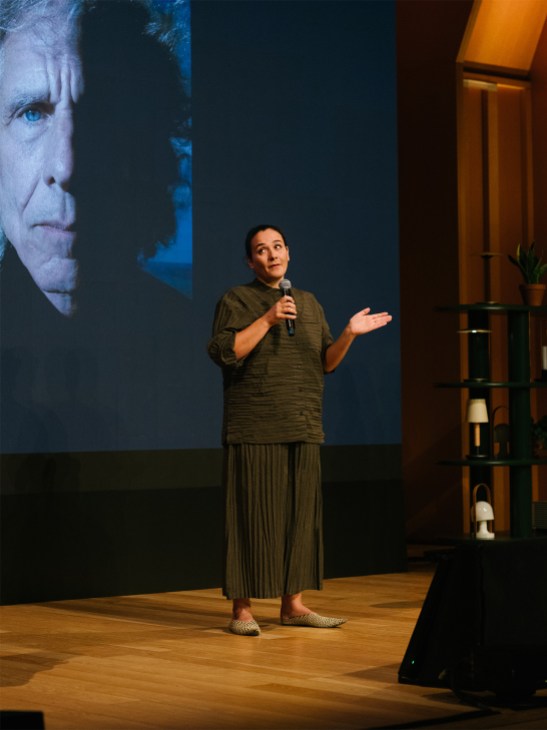
Enric Pastor: I grew up in the 1980s, when your father launched his new tailored linen line and created the slogan, “Wrinkles are beautiful”. It was a revolutionary success in Japan, breaking new markets and becoming such a major part of the fashion identity of Spain. How do you keep the heritage of the brand alive and thriving, while continuing to reinvent it for new markets and generations?
AD: I am the third generation in control of the brand, following my father and grandfather before him. I didn’t have to read a brand book – it was part of my education. One of the biggest things that a brand can do is to bring someone younger on board and trust them. They will have a different connection to the current landscape and often a completely different lifestyle. In the past eight years of being CEO, I’ve endeavoured to make the company more relevant to today. But, of course, this is a process that never ends.
Natalie Theodosi: In previous conversations, you told me that building a modern business is about striking a balance between heritage and global expansion. To do so, you need to experiment and think outside the box. What is your vision of a modern business?
AD: We have been thinking about how we get to the market. There are physical shops and online options, which have now been going for a long time. They’re necessary, to a degree. But an online presence is no longer innovative. We currently have some 370 spaces in 51 countries; one of the ways in which we are using them experimentally is through renting.
Most fashion brands do not rent out their products. Another thing that we have been trying is to offer a personal stylist, similar to the Stitch Fix model. They do a style test, then, between a human stylist and an algorithm, create the customer a box of selected clothes that they haven’t bought yet. Then the customer pays for whatever they don’t return. We have been seeing good conversion rates there and have been tailoring this to the customer using a blend of personal shoppers and AI. This, for me, is innovation.
EP: Let’s talk about your roots and about Galicia. How important is it for you to be local and what’s the global impact of keeping things close to home?
AD: If we’re talking about linen, in the beginning, there was a producer in the north of Italy called Solbiati. That’s where both Armani and my father would source the material. My father didn’t choose the local option; he didn’t go with Galicia. So what has happened in our generation? Why are we looking closer? What feels modern to me is to draw from real experience in somewhere that you know. That way, there’s no copy-and-paste; it’s homely, it’s specific and it has a flavour. This year, we’re launching part of a collection that’s made with cotton from Spain. We didn’t know cotton was grown in the country but there are farmers near Seville in the south, so we’re using them. We’re also doing a capsule made with wool exclusively from Spain’s migratory sheep. In doing so, we’re supporting local economies and lifestyles that would otherwise go extinct.
NT: It’s a formula that’s working – you’re seeing growth. Can you give us a few clues about your vision for the future of the brand, post-turnaround?
AD: What’s important for creative brands first and foremost is a sustainable business model. Working on that, I believe, is the best thing that I can do to secure the vision that we already have. Fashion is “new, new, new” every six months – products, shows, communications. I’m working on heritage pieces, slowing things down, so that we can have the same product in the shop season after season. People don’t say, “Oh, boring.” It’s quite the opposite. They see heritage and legacy. That’s what’s valuable to a brand.
Monocle comment:
An online presence is nothing new. Innovation sometimes lies in how you use your assets in the real world, know the market and engage with your customers. Care is key to keeping a brand fresh in its third generation and beyond.
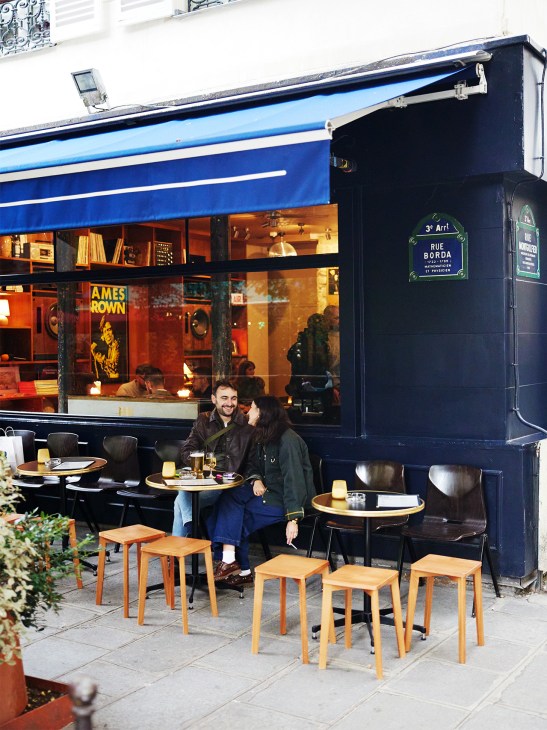
Paris radio darling La Patate Douce turns up the volume with a new café in Le Marais
If you have eaten in a decent Paris restaurant lately, you might well be familiar with La Patate Douce radio station – perhaps its lively, on-the-hour jingle or its upbeat playlist that keeps your toes tapping, whether you’re a pot-washer, a chef or a diner. “I once recognised our playlist in a restaurant by the beach in Biarritz,” says Jules Effantin, the station’s founder. “That made me smile.”
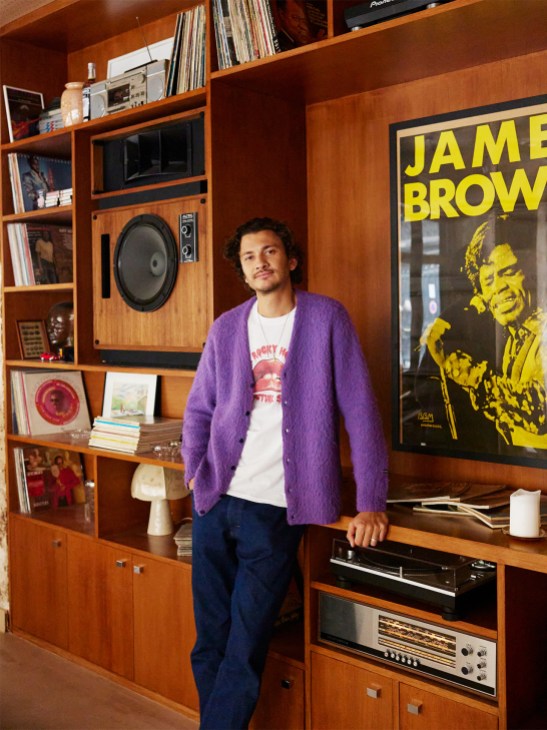
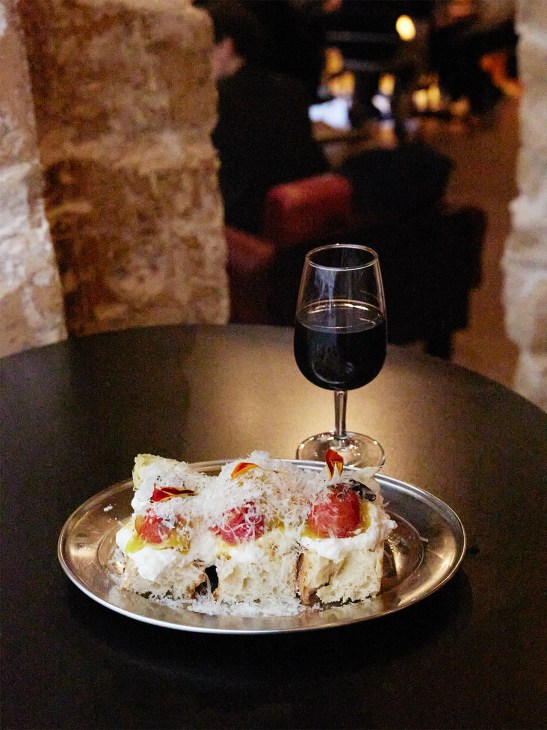
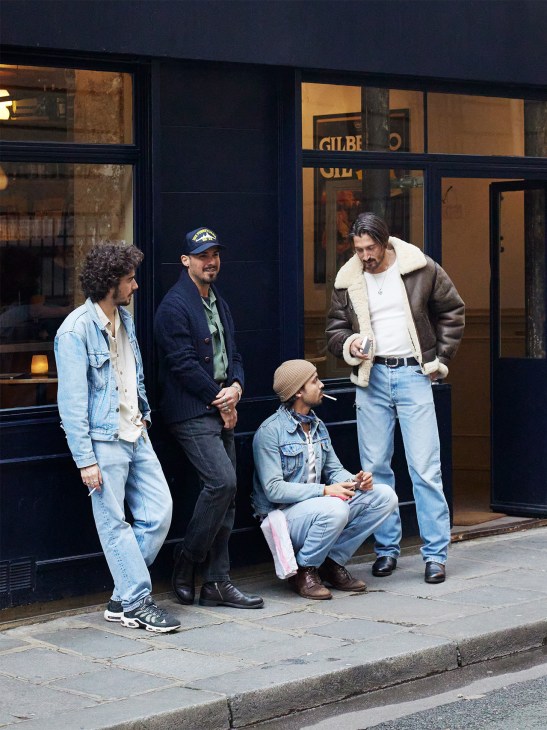
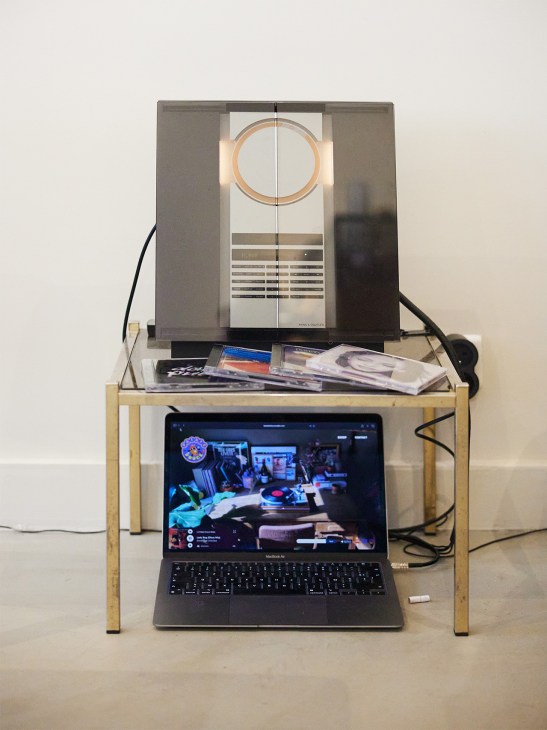
To mark the fifth anniversary of La Patate Douce (which means “The Sweet Potato”), Effantin, a former DJ, has combined his penchant for music with his other love, hospitality. He has created a physical space for fans of the station: a café and listening bar in Le Marais. Furnished with his own objets d’art sourced from flea markets, the 1970s-style interior invites the station’s 200,000 monthly listeners – and those yet to discover its eclectic mélange of disco-funk, jazz, Afro-soul and house music – to gather in the company of its creators.
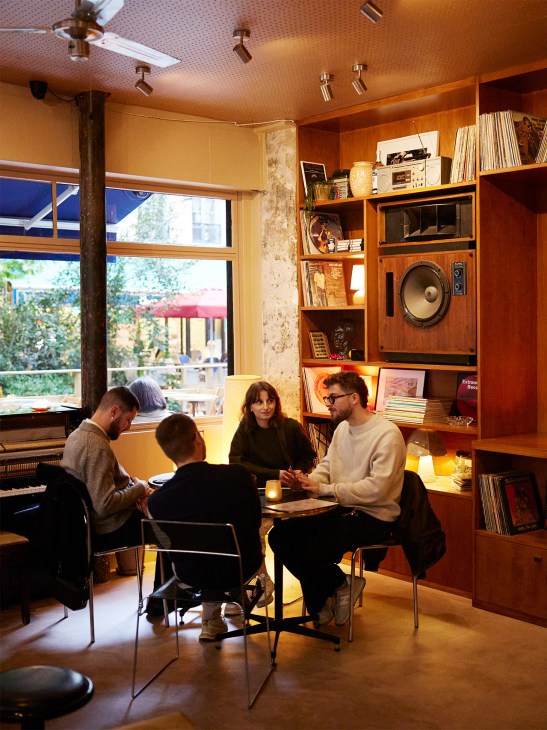
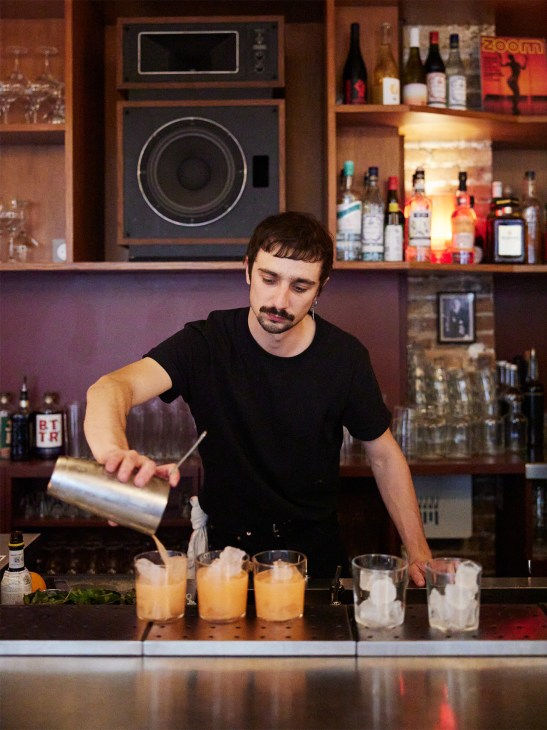
If Effantin’s name sounds familiar, it’s because he’s the brother of Victoria Effantin, one of the co-founders of Parisian boulangerie Mamiche. By day, customers can enjoy the music with one of her pastries in hand. “This is the only other coffee shop in the capital where you’ll find Mamiche’s treats,” says Effantin. By night, there are musical soirées, DJ sets and concerts.
The radio station and café’s enthusiasm for the humble patate of their name makes itself known on the menu, which tries not to take itself too seriously. Wash down the ceviche with the cocktail à la Patate Douce: tequila, lime juice and, you guessed it, a little sweet-potato juice.
lapatatedouceradio.com
Read next: The Monocle City Guide to Paris, featuring the best hotels, restaurants and retail spots in the French capital