Issues
Revival or ruin? The controversial €65m makeover of Madrid’s Torres de Colón
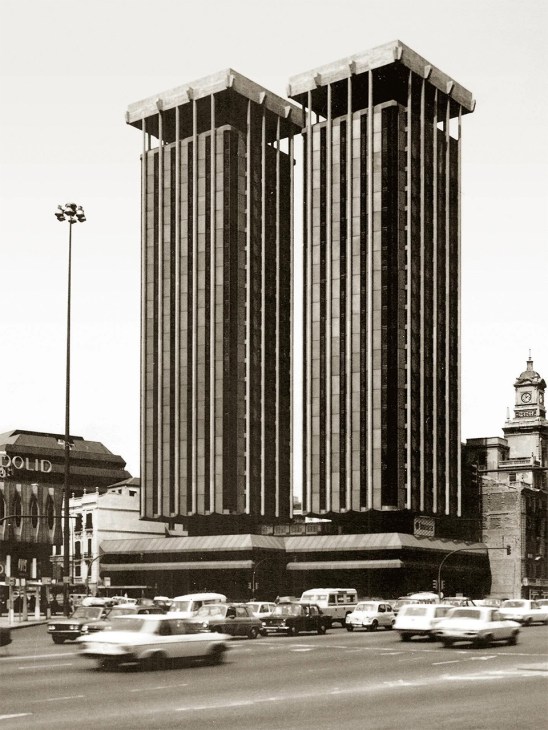
In the late 1960s, Spanish architect Antonio Lamela began construction work on Torres de Colón– twin skyscrapers covered in bronze-coloured aluminium (pictured) – in Madrid’s Plaza de Colón. Half a century since their completion in 1976, a recent renovation has stripped them of Lamela’s vision – leading many madrileños to question the rush to retrofit older buildings.
The original skyscrapers were divisive: for decades, the city’s residents debated whether they were architectural marvels or mockeries, an eyesore or a bore. The Torres Colón story began in 1964, when Lamela conceived the two 24-floor concrete structures. Spain’s then-dictator, the fascist Francisco Franco, was eager to attract foreign investment and the towers were intended to signify the country’s modernity. Before their completion, however, Madrid’s then-mayor got cold feet, issuing a tear-down order, which was promptly overturned by a level-headed judge. The Torres de Colón survived but drama has been a part of their story ever since.
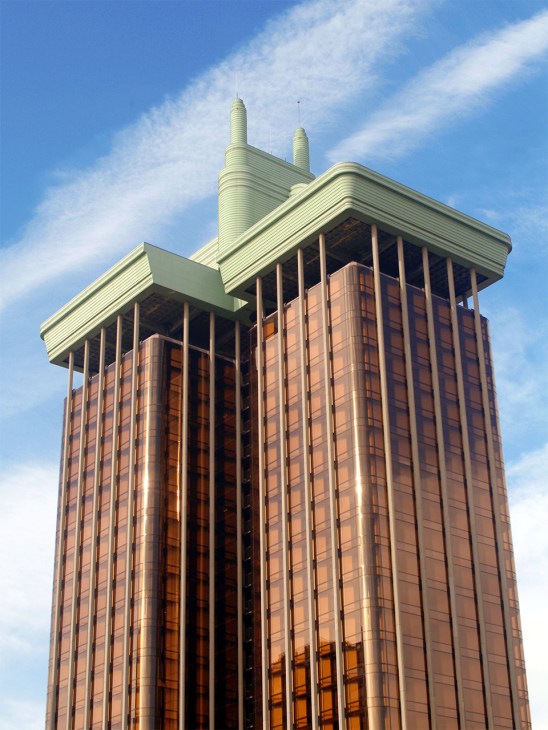
Following a change of ownership two decades later, a two-pronged turquoise crown was added to the roofs of the towers to obscure an emergency stairwell and antennas (pictured). Quickly dubbed el enchufe (the plug), it was loved and loathed in equal measure.
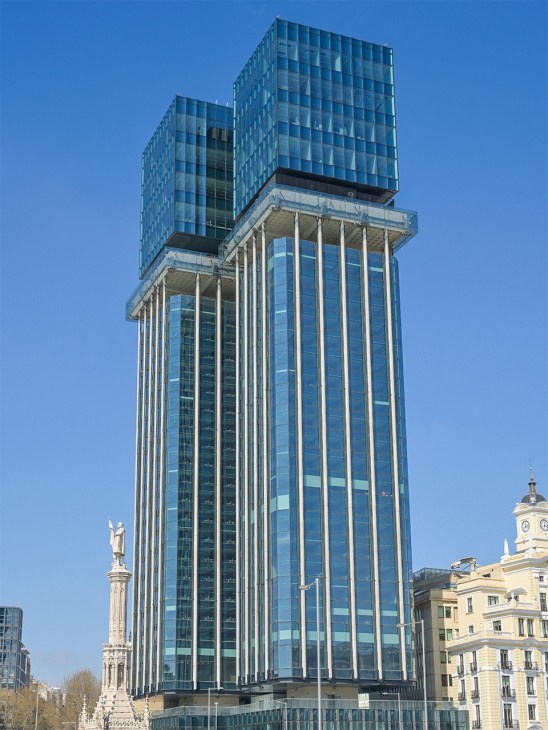
Writing about the towers today feels like an exercise in elegy. The latest makeover (pictured) – which reportedly cost €65m – has erased the edifice’s often spiky identity. The peculiar plug is gone, replaced by two giant cubes that add four floors. The building is glassier, sharper-edged and suddenly blue. Luis Vidal 1 Architects, the practice behind the Nuevas Torres Colón (the retrofit resulted in a subtle name change) touts the project’s sustainability: it is one of the capital’s most energy-efficient office blocks. But the Torres Colón’s old eccentricity is nowhere to be seen, replaced by a soaring yet unremarkable spectacle.
Among the renovation’s fiercest critics is Lamela’s son, Carlos. As the director of Lamela Architects Studio, he keeps his father’s legacy alive through projects including Madrid’s award-winning airport expansion. For Carlos, the entire revamp is “a disgrace”. He mentions the lack of consultation and points to mounting legal challenges against the city council. “Any building made with purpose that is then mistreated, disfigured and altered ends up being a disaster,” he says, lamenting the disrespect shown for one the city’s most iconic architects.
But let’s return to the optics. New, shiny glass towers of this kind could easily belong to a city such as Guangzhou or London – samey, square faced monuments that play it safe. This has become a recurring theme in the Plaza de Colón, where ideas of Spanish identity have a tradition of being explored in architecture and then recast. In 2019, for example, the brutalist stone façade of a bank was stripped, then replaced by a far more prosaic exterior; another distinctive metallic building was recently converted into a boring glass box.
In 2014, Torres de Colón was voted as one of Spain’s ugliest buildings in a poll conducted by ABC España – a testament to its power to inflame passions. Today, all three of the plaza’s newly refurbished buildings would likely fail to spark much of a response. Discussing the towers’ long history of controversy, Carlos says that aesthetic questions miss the mark. “Architecture doesn’t have to appeal to everyone,” he says. “It’s just like cinema: there are arthouse films and commercial hits but we need to respect the art form nonetheless.”
Madrid’s “plug” might be gone but other weird and wonderful buildings still stand. Before rushing to swap them all for shinier, more efficient replacements, cities should ask themselves: at what cost to the character of their skyline?
Other Madrid towers of note
- Torres Blancas by Francisco Javier Saénz de Oíza: A residential block that resembles a giant tree of stacked discs, this marvel from 1969 remains a celebrated iteration of organicism and futurism.
- Castellana 81 by Francisco Javier Saénz de Oiza: An exemplar of respectful retrofits, this 1970s metal-and- glass tower was given a n energy-efficient makeover in 2018 while maintaining the visionary architect’s original form.
- Serrano 69 by Fernando Higueras: Built in 1979, this office block is known for its innovative embrace of arched concrete apertures and embedded garden beds on its façade.
This article is from Monocle’s March issue, The Monocle 100, which features our editors’ favourite 100 figures, destinations, objects and ideas.
Read the rest of the issue here.
Two compelling art shows to see in 2026: Nancy Holt in the UK and Kunsthalle Wien in Vienna
1.
Nancy Holt
UK
Hulking great concrete pipes don’t sound like poetic artwork but those of American land artist Nancy Holt will change your opinion. Holt (1938- 2014) created work that balances the romantic with the colossal. Her epic 1976 installation “Sun Tunnels”, which still stands today, consists of four 5.5-metre-long concrete cylinders set in a giant X shape in the Great Basin Desert in remote northern Utah. Like an industrial take on Stonehenge, the pipes align with the rising and setting of the sun on the winter and summer solstice. Each 2.7-metre diameter tube is perforated with holes – big enough to push a hand through – that echo the constellations of Capricorn, Draco, Perseus and Columba. The result is humbling, as both the Sun and the environment become Holt’s collaborators.
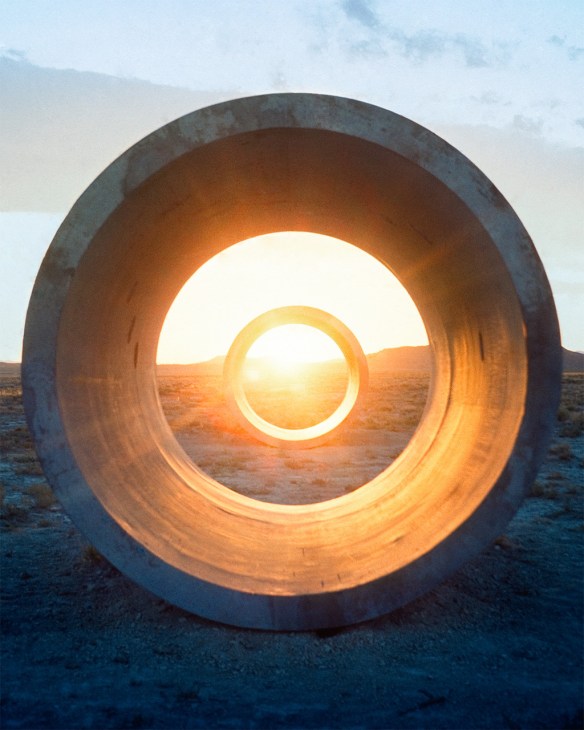
Holt is finally getting her first major presentation in 2026 at the UK’s Goodwood Art Foundation’s two galleries and surrounding estate. Her art is thought-provoking and timeless. Why only think big when you can dream on a titanic scale?
goodwoodartfoundation.org
2.
Kunsthalle Wien
Vienna
Under its artistic director, Michelle Cotton, the Kunsthalle Wien is bringing a new cultural perspective to the Austrian capital with shows and artworks designed to start conversations – without losing their sense of fun.
While super-museums such as New York’s Moma and London’s Tate Modern focus on blockbuster shows, there is quieter, yet profound, cultural innovation happening in Vienna. The city might be known for its art history but Michelle Cotton’s directorship at the Kunsthalle Wien is shifting that idea in the international imagination.
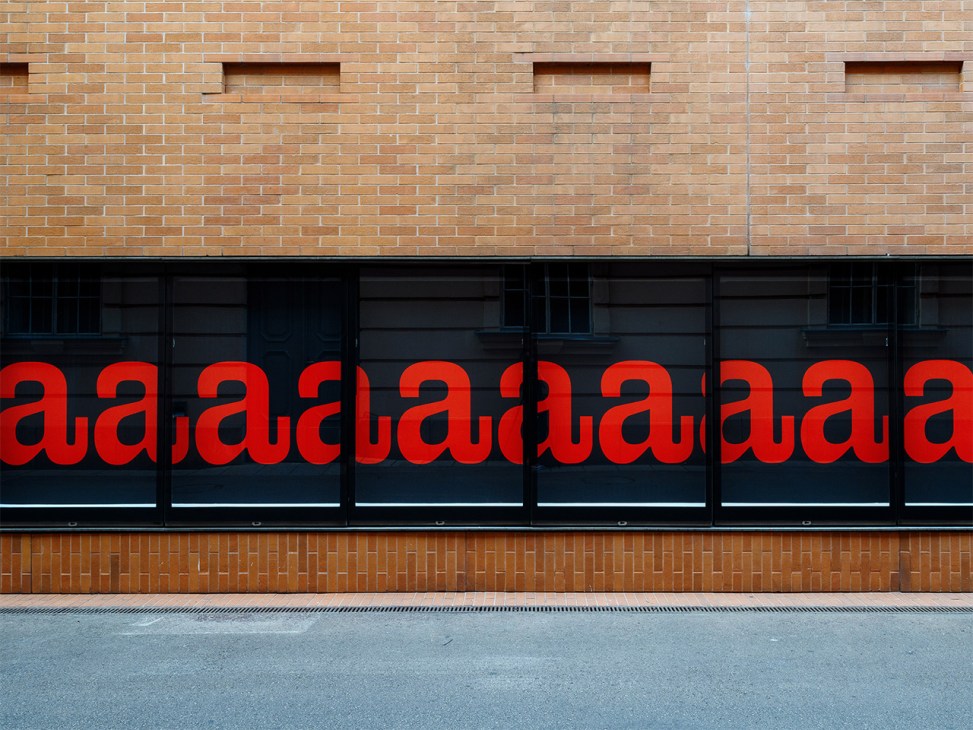
Cotton’s first intervention at the museum, in 2024, was Aaaaaaaaaaaaa aaaaaaaaaaaaaaaaaaaaaaaaaaaaaaaa aaaaaaaaaaaaaaaaaaaaaaaaaaaaaaa! – a 62-metre graphic work by Croatian designer Nora Turato that screamed from the exterior of the building. Many of the major shows since have highlighted the relationship between art and technology, bringing in new audiences and turning the gallery into a space of conversation. It is impossible to look at social media in the same way, for example, after experiencing Richard Hawkins’s gothic selfie films.
Kunsthalle Wien’s almost hidden entrance in Museumsquartier leads to an ultra-modernist, cavernous main space big and bold enough to expand the mind. On display later this year will be US-based filmmaker Tiffany Sia’s videos exploring the geopolitical shifts around Taiwan and Dutch artist Magali Reus’s super-sized sardine-tin sculptures. No matter the subject, this is a museum that demonstrates why we should think beyond borders, as well as providing evidence of how powerful art can be when it makes an audience smile.
kunsthallewien.at
This article is from Monocle’s March issue, The Monocle 100, which features our editors’ favourite 100 figures, destinations, objects and ideas.
Read the rest of the issue here.
Why digital-first furniture brand Tylko chose Berlin for its first physical shop after a decade of online-only
Online retailers often have an edge when it comes to quickly responding to customer or market needs. Everything from virtual shopfronts to branding can be rapidly recalibrated. Bricks-and-mortar outlets, on the other hand, can be slower to adjust. And yet a decade after it began as an online configurator for shelves, Polish brand Tylko has launched its first permanent retail outlet in Berlin.
“Berlin is our biggest market so it made sense to open here. It’s retail but in a very non-commercial way,” says co-founder Ben Kuna, whose Berlin-based team of Max Burrau, Chaewon Sol Song and Marie Munz will share the story of its shelving, sideboards and sofas with locals and visitors. “Rather than just a showroom, we wanted somewhere for the community.”


The architect behind the new Tylko Space is Paul Cournet of Rotterdam-based studio Cloud. “The hardest thing was to design a space for objects from a catalogue that is essentially endless,” he says. His solution was to treat the shop – defined by three rooms – as a kind of “empty box” that can easily be changed and rearranged. Defying the notion that retail interiors are static is a fully LED backlit ceiling that allows the atmosphere to shift in seconds. “You could remove all of the furniture and throw a party, let a single piece take centre stage for a launch or turn the light red at night and let its glow spill out onto the street,” he says. “Retail gets outdated very quickly, so you want to avoid creating a designer space that will feel obsolete in five years.”
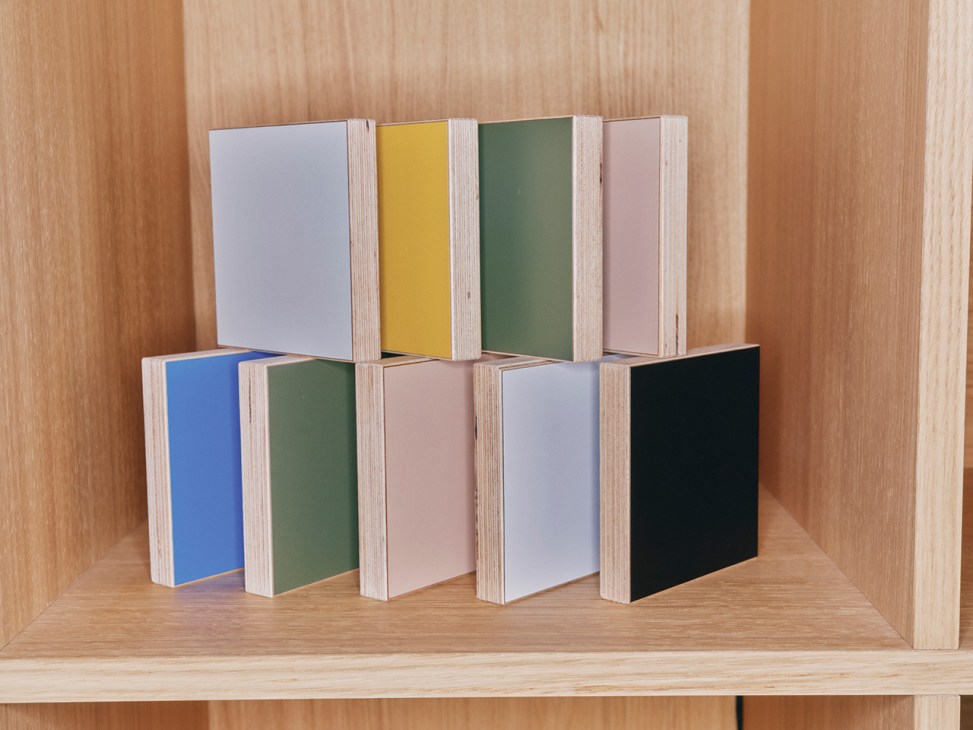
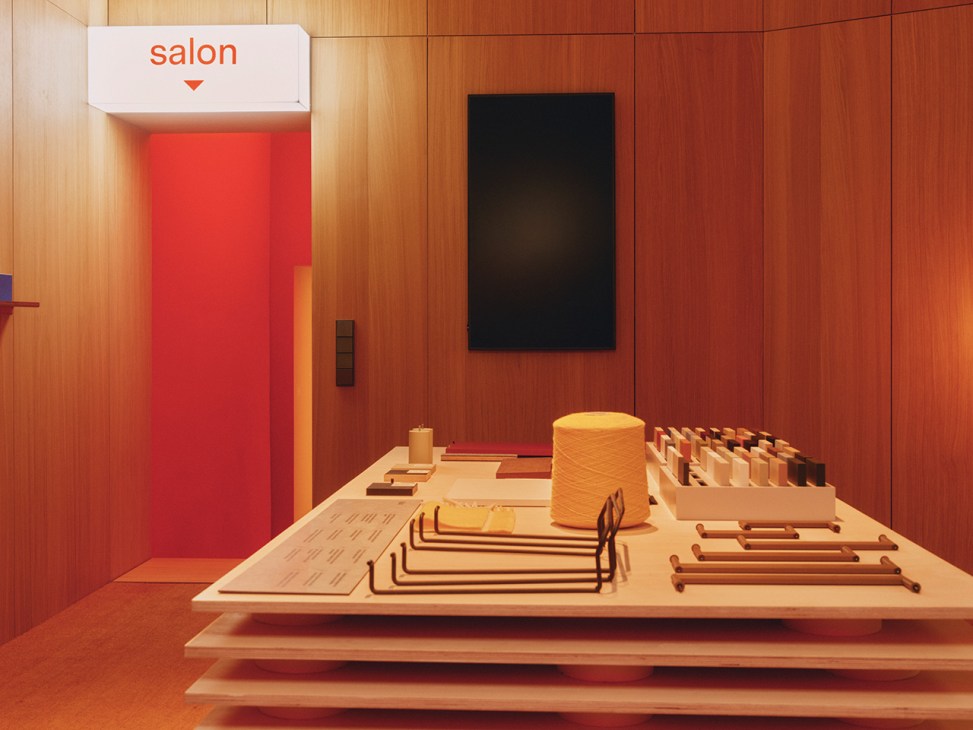
A red corridor leads to an oak-lined sample library, then an intimate, salon-like lounge where modular sofas sit alongside custom-designed speakers. The room also features a playful “configuration station” with two haptic knobs that allow visitors to adjust furniture using images projected on the wall. A mezzanine is reserved for more in-depth planning sessions. “All of our six staff members have design backgrounds,” says Kuna. “They can really understand what customers want and feed those insights straight back to our design team in Warsaw.” For all the advantages of online appointments and apps, the lesson from this technology-first start-up is that sometimes it’s good to talk.
tylko.com
This article is from Monocle’s March issue, The Monocle 100, which features our editors’ favourite 100 figures, destinations, objects and ideas.
Read the rest of the issue here.
Appetite for construction: The pioneering engineer, Hanif Kara
Behind every great architect is a great engineer. A case in point is Hanif Kara, who has been integral to gravity-defying works for the best part of four decades. He arrived in the UK as a teenager with limited English skills, following his family’s expulsion from Uganda. After initially failing to secure a university place, he accepted a job as a steel fabricator and took night classes. He later enrolled at Salford University, graduating in 1982 with a degree in civil engineering. In 1996 he co-founded design-led engineering firm AKT and has since gone on to become an engineer of choice for starchitects, working with the likes of Zaha Hadid and David Chipperfield.
More recently, he has overseen the completion of Oxford University’s Schwarzman Centre for the Humanities with Hopkins Architects, where Monocle meets him.
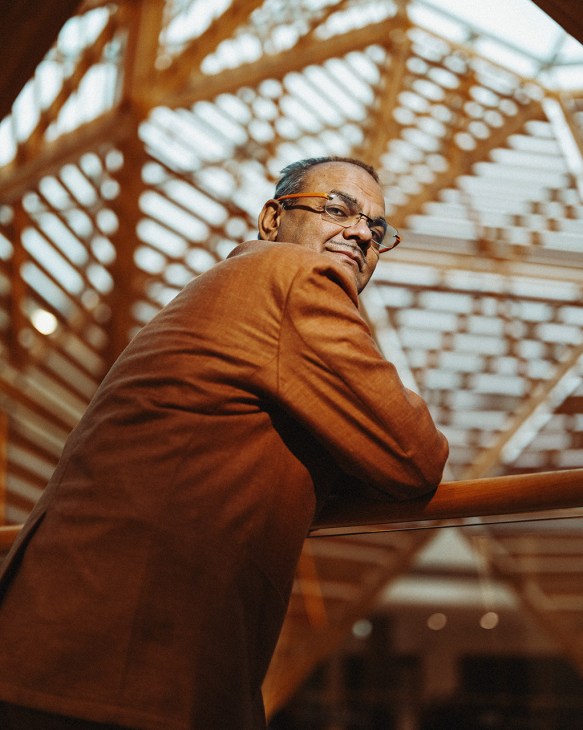
What role can engineers play in delivering a better-built environment?
Historically, engineers have just waited until everyone has had their say – architects, developers and so on – before doing the numbers and making the building stand up. Now, that single-disciplinary approach to current global crises won’t work. Historically, those who built did everything, acting as client, designer and constructor. We’re going to have to get out of our silos and find trans-disciplinary solutions.
How can we break out of these silos?
Technology can unite disciplines. It can explain the mess we are in, in terms of environmental and economic crisis, but it can also be the means by which we might escape. We can use it to sensitively add to existing structures and build new ones.
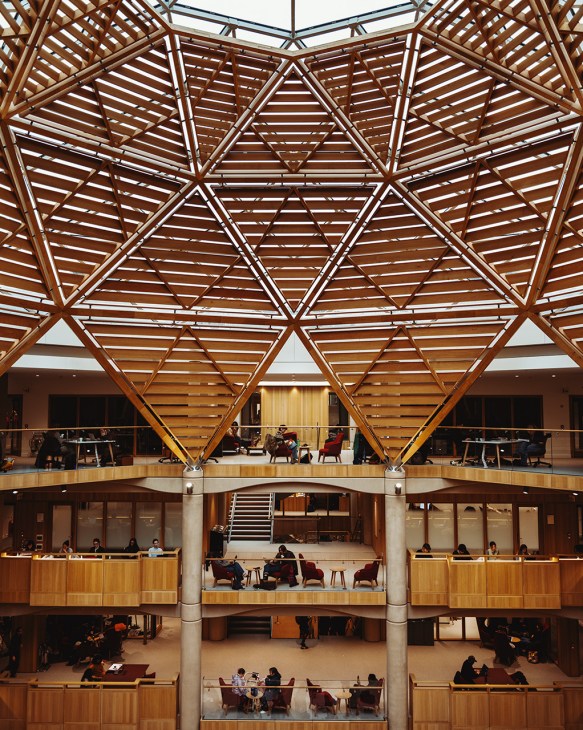
How can designers work to deliver on this?
The professional rules of conduct are out of the window. We must arm ourselves with technology but moral and critical thinking too. We need to understand science and the humanities. The planet is everyone’s client and the quality of life of all people must be the driving force.
akt-uk.com
This article is from Monocle’s March issue, The Monocle 100, which features our editors’ favourite 100 figures, destinations, objects and ideas.
Read the rest of the issue here.
Cape Town’s Hoi P’loy lets you build your own perfect lighting
South Africa has long been notorious for its frequent power cuts – so the idea of a Cape Town-based studio finding success by producing lighting might seem a little ironic. “Initially, Hoi P’loy wasn’t meant to be a lighting brand,” says Ploy Phiromnam, who co-founded the company with Guy van der Walt in 2013, originally as a lifestyle company. “At the time, Cape Town lacked attainable design. So we had a desire to make things both beautiful and accessible.” Lighting, they decided, was a good place to start.
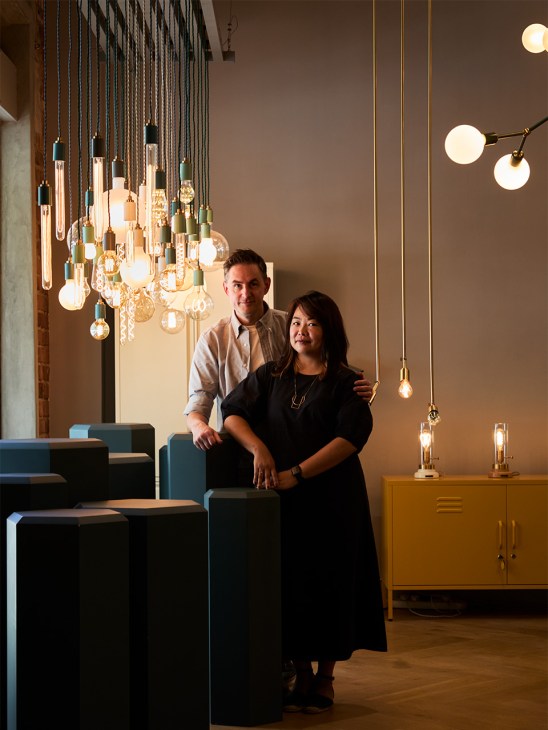
The initial concept was straightforward: to put together a modular collection so that consumers could pick and choose parts to create their own bespoke illuminations. However, Hoi P’loy’s initial ambition to ensure that some of their pieces were locally produced complicated matters, with light bulbs and fabric cables needing to be imported. So they partnered with international suppliers to create a custom collection, while producing some elements on home soil.
The duo continued to import but also produce elements in South Africa, establishing a factory workshop (equipped with solar energy, in case the power goes out) that is now located in Cape Town’s industrial Salt River neighbourhood. From here, Hoi P’loy works with international manufacturers but also produces a wide range of pieces, such as brass screws and enamel plates, all with a commitment to craftsmanship and quality, and the idea that customers should be able to construct their own lighting configurations.
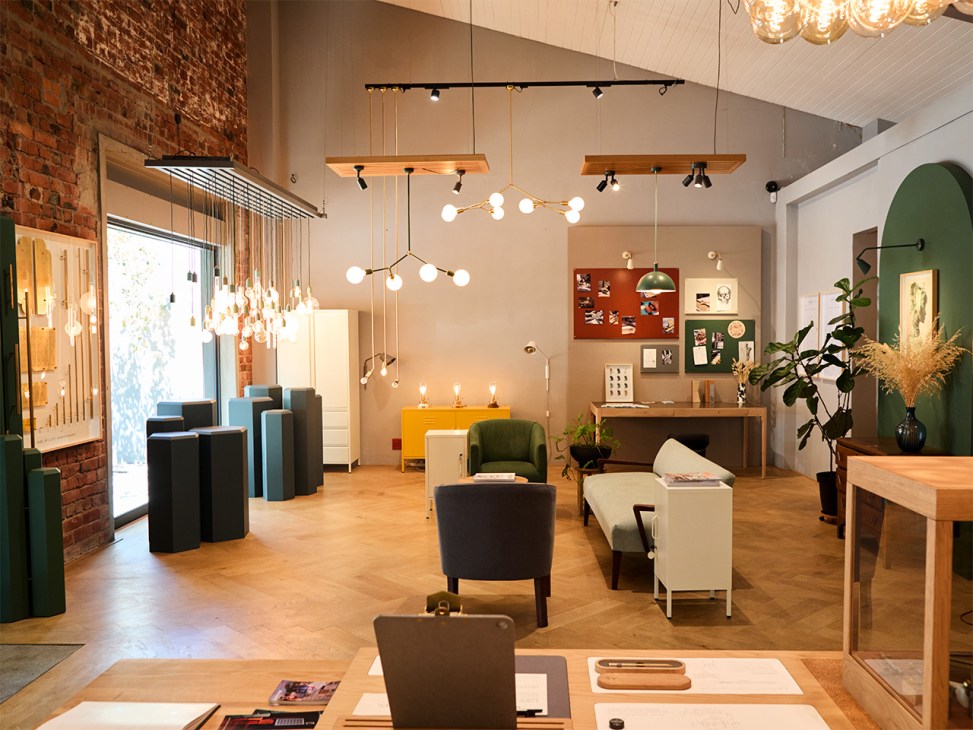
Hoi P’loy is also finding new ways to experiment with technology, including the 3D printing of components. “What’s nice about it is that the materials are more cost-effective, so we can create products at a more accessible price,” says Van der Walt.
Though 3D printers are now an important part of the production process, the duo have no intention of straying from human craft. “It’s great working with people locally,” says Van der Walt. “You get to build relationships with them.”
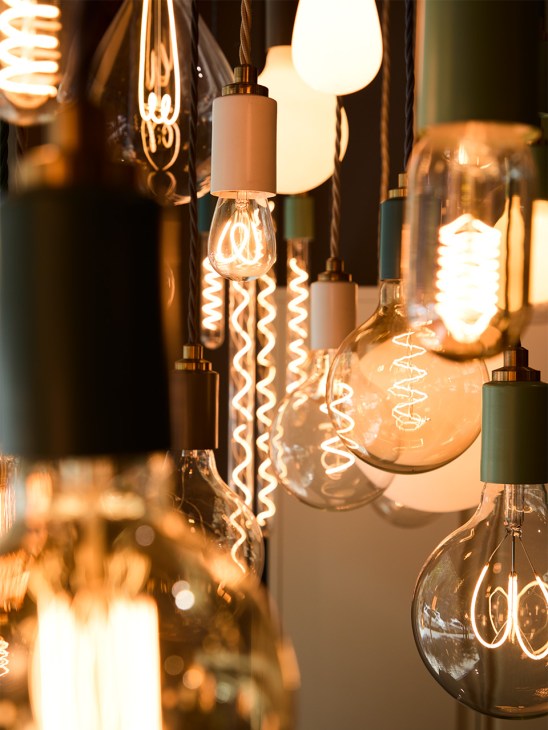
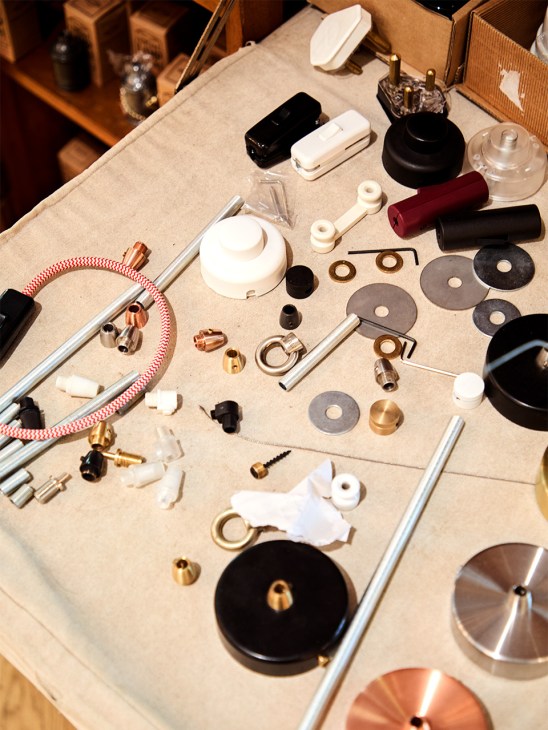
The advantages, he says, are twofold: turnaround times tend to be quicker and it helps South Africa’s craftspeople to stay in business. The brand can also work with these producers in a very hands-on way, talking through ideas or solving problems together.
New to the range are handles and stationery but Hoi P’loy still follows that same guiding light – and its plan is to never stray far from what it does well. “It’s not groundbreaking design,” says Phiromnam. “Rather, it’s all about the desire to make things that are good and simple.”
hoiploy.com
This article is from Monocle’s March issue, The Monocle 100, which features our editors’ favourite 100 figures, destinations, objects and ideas.
Read the rest of the issue here.
Hida Sangyo unveils a beautiful renovation of Yuhokan Hida Gallery, Japan
Japan’s mountainous Hida region has a woodworking tradition that dates back 1,300 years. Its master carpenters constructed some of the country’s oldest temples and shrines. Founded just over a century ago, furniture firm Hida Sangyo continues this tradition. It initially made bentwood furniture but is now working to bring the region’s rich heritage into the modern era. A fine example of this is the recent renovation of its Yuhokan Hida Gallery, an exhibition space in Takayama City.
“Yuhokan was established to fulfil Hida Sangyo’s ambition of making this region the hallowed ground of woodworking,” says Teruhiko Nakagawa, the executive director of the company’s design division. Tokyo-based architect Yoshifumi Nakamura was tasked with renewing the space. “I was aware of Nakamura’s deep knowledge of woodworking and his many years spent documenting Japan’s disappearing handcrafts,” says Nakagawa. “So I asked him to help realise our dream.”
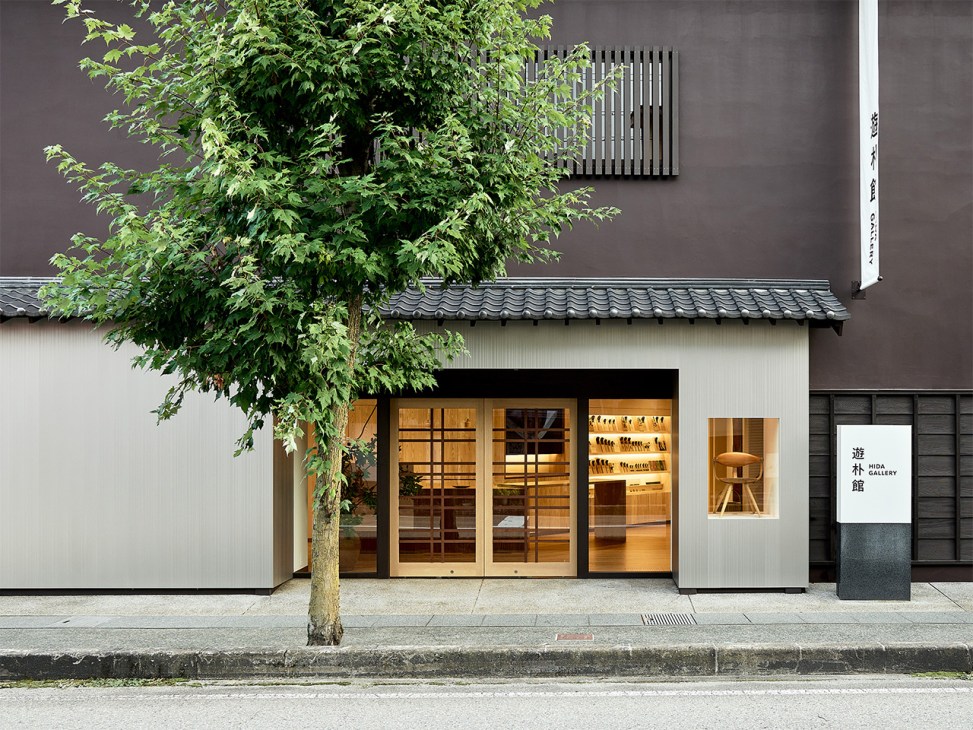
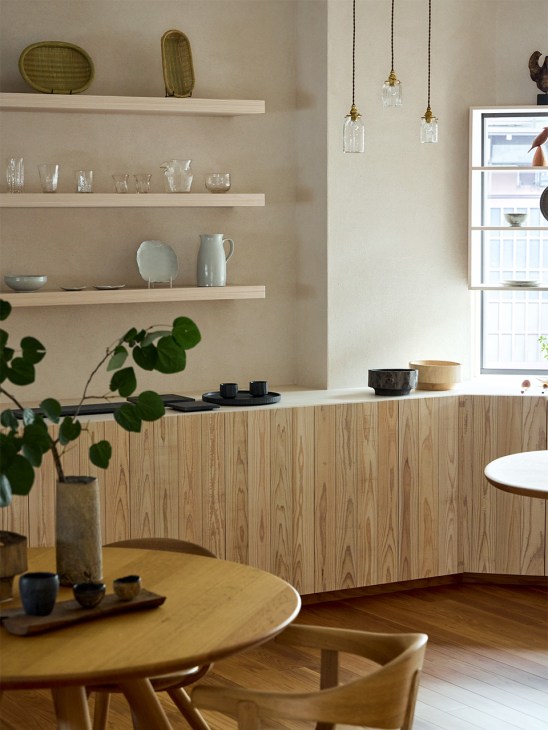
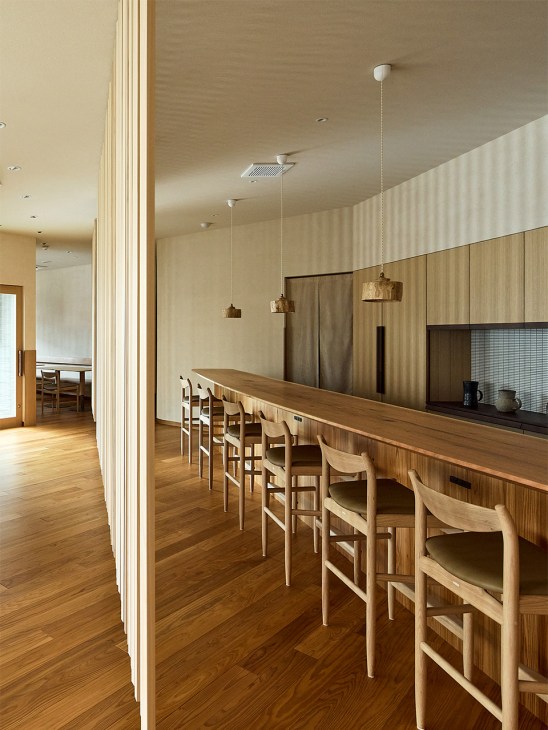
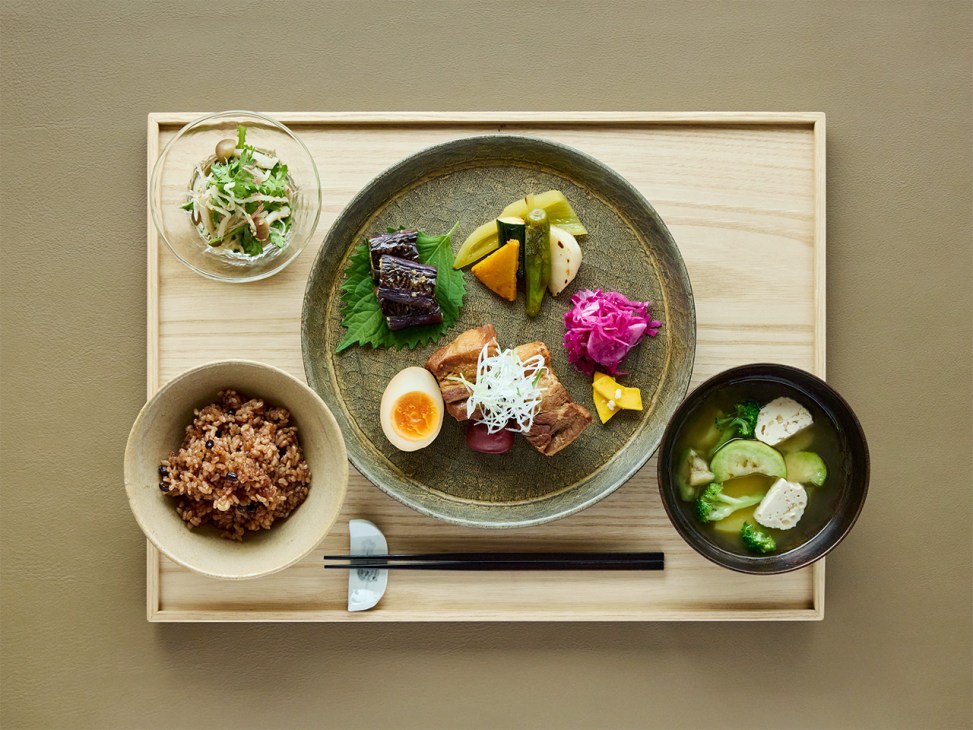
The architect brought furniture designer Makoto Koizumi, a former pupil, on board and they set about a full-scale renovation. Beyond the aluminium-framed entrance, the interiors make use of Hida Sangyo’s furniture and compressed cedar panels. There are handcrafted wooden stair rails, glass doors with igusa (rush grass) details and butterfly-shaped joints on a walnut-wood counter. The ground-floor shop stocks the company’s wares, as well as wood-fired ceramics by Shigeyoshi Morioka and dyed textiles by Yumi Ishikita. There’s also a tool section and staff offer guidance on care and maintenance, aiming to address declining access to woodworking equipment and know-how. Exhibitions and talks are held in the gallery upstairs, while the café serves Japanese dishes prepared with regional produce.
Yuhokan’s location in Takayama City – a popular tourist destination – helps it to nurture a deep appreciation of the area and its craftsmanship among visitors from far and wide. “Our aim is to present the beautiful woodworking of Japan and the tools and craftspeople involved in its production,” says Nakagawa. “It’s also about conveying that Hida is a place where Japanese culture and traditions live on.”
hidasangyo.com
This article is from Monocle’s March issue, The Monocle 100, which features our editors’ favourite 100 figures, destinations, objects and ideas.
Read the rest of the issue here.
Mallorca’s furniture scene is being injected with tropical modernism by Adriane Escarfullery
It’s all coming together for Dominican-born furniture designer Adriane Escarfullery – but it has been a rather epic journey to get here. The 35-year-old has had to overcome many setbacks and teach himself not only to design his large, full-bodied chairs (think tropical modernism mixed with the aesthetics of Børge Mogensen, the Danish designer of the famous Spanish Chair) but also to make them by hand and market them too.
We find him in his studio in a central residential neighbourhood of Palma, Mallorca. His regal chairs are on display on the ground floor, while in the basement workshop there are piles of leather that he is arduously stitching to use as upholstery, prototypes for new sofas and a photography set-up (with which he is shooting images for his website). “I am a designer but I have had to become a builder too,” he says as he guides Monocle around his workspace.
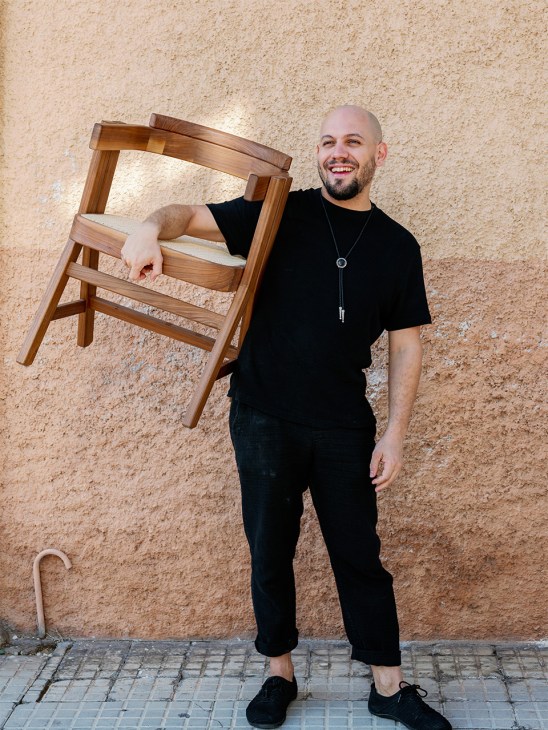
Until a few months ago, Escarfullery was running the entire operation from a co-working space, trying not to infuriate the other tenants with his banging and sawing. But then came a dream commission to work with celebrated architecture company Ohlab on Terreno Barrio, an upcoming hotel in the city. “It has changed my life,” he says.
Escarfullery’s family – his mother and stepfather, along with four of his many brothers – moved to the island when he was 16 years old. It was here that he went to design school, before heading to Lyon in France, where he worked at an architecture firm that made furniture. He had also previously studied in London in 2014.
“I did a lot of things wrong in the beginning,” he says. “I found a carpenter to make my first prototype but, because I didn’t know how to brief him properly, I had to wait three months. Then, when I attached the seat, it was so horrible and really uncomfortable.”
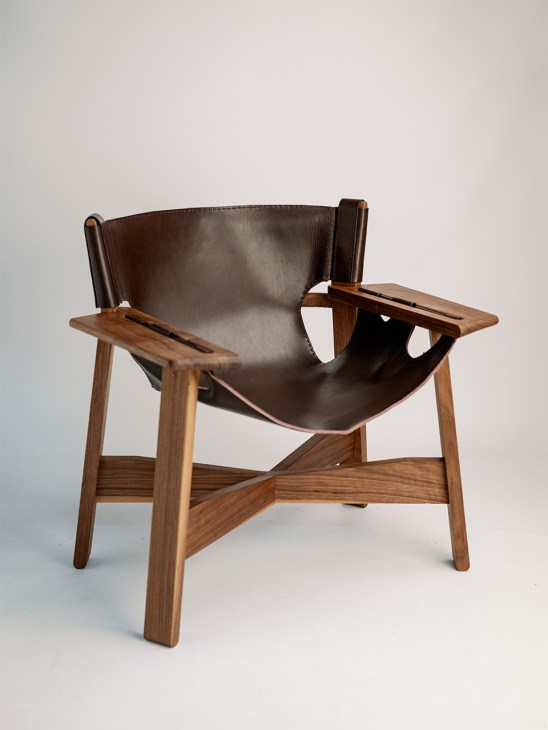
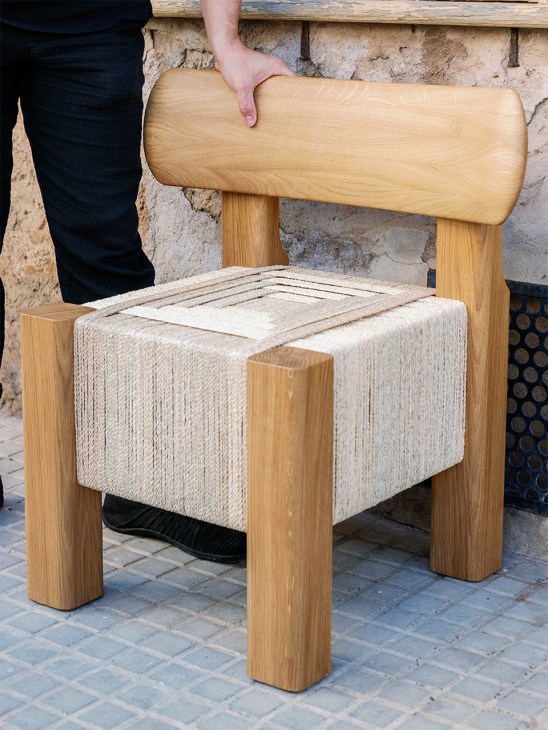
Escarfullery then employed a different carpenter, who took his money and vanished. In the end, it took him 18 months just to have a single prototype made that he was happy with. Luckily, he now has carpenters who he can rely on. Today his line-up includes the chunky Fee Fi Fo Fum chair, which is made from recycled wood and was inspired by the 1947 Walt Disney film Fun and Fancy Free. Then there’s the stocky Elef, with rope seating and a wide backrest whose shape was influenced by “the ears of an elephant”.
The Ohlab commission promises to put Escarfullery’s work in front of a far wider audience. No matter what happens next, one thing is sacrosanct to him. “I want to have the time to enjoy Sunday lunch with my mum,” he says.
adrianescarfullery.com
This article is from Monocle’s March issue, The Monocle 100, which features our editors’ favourite 100 figures, destinations, objects and ideas.
Read the rest of the issue here.
‘Architecture can heal.’ Rebuilding power in Oslo
Today, when it comes to the design of parliaments and bureaucratic headquarters, democratic governments across the globe face the dual challenge of balancing transparency with security and public access with safety. For design firm Nordic Office of Architecture (NOA), those considerations were certainly front of mind with its work on the recently completed New Government Quarter in Oslo, made in collaboration with Haptic Architects. The commission to rethink the precinct followed the 2011 terrorist attacks that rocked the country and damaged several buildings at this site, the home of Norway’s ministries and the prime minister’s office.
“In prime minister Jens Stoltenberg’s speech just a couple of days after the attack, he said: ‘We will never give up our values. Our response is more democracy, more openness and more humanity. But never naivety,’” says NOA’s founding partner and head of design, Gudmund Stokke. “As the years have gone by, those words have become more important.”
It’s an outlook that’s also reflected in NOA’s design for the quarter, which is anchored by five new structures and two refurbished buildings. A highlight is the new A-block, where a glass pyramid-like structure creates a 51-metre-high atrium that will serve as the stage for the government to greet foreign dignitaries. Towering over it is an art piece, made of Nordic birch, by Outi Pieski, celebrating indigenous Sámi history. Another space of architectural significance is Høyblokken, a brutalist high-rise built in 1958. It took the brunt of the bomb blast in 2011 but has been repaired, along with the Picasso murals adorning its walls.
Surrounding these structures are a host of passageways previously closed to the public for security reasons, while a square and new park provide spaces for gatherings and community. Norwegian craft and materiality are also championed on site. “We worked with Norwegian boat builders to shape the double-curved surfaces made out of wood,” says Knut Hovland, NOA’s design director.


The result is a master plan that connects the physical seat of power with the people it serves. “Architecture can heal,” says Stokke. “When the campus is completed, alongside all the urban spaces, it will be a nice, human, open and friendly place. That’s how you meet evil.” It’s also how you design a generous yet safe government quarter.
nordicarch.com
This article is from Monocle’s March issue, The Monocle 100, which features our editors’ favourite 100 figures, destinations, objects and ideas.
Read the rest of the issue here.
Nada Debs’s Dubai design outpost merges studio and shop in a beautiful, luminous space
A design brand’s studio should reflect its ethos. Particularly when the space in question also functions as a shop, offering a point of contact with the public. Nada Debs fulfils that brief at her new outpost in Dubai.
“We’ve fused together our studio space and boutique, helping us deliver on our main mission of supporting craftsmen in Lebanon and the Middle East,” says Debs, who meets Monocle at her new outpost at The Yard at Alserkal Avenue, a hub of design, art and creativity. “We realised that the only way we could deliver on this vision was to open a boutique to create demand for the craftsmen’s work. But at the same time, a lot of our clients are interior designers, so we needed a studio space to show bigger pieces, samples and materials and to collaborate on craft.”
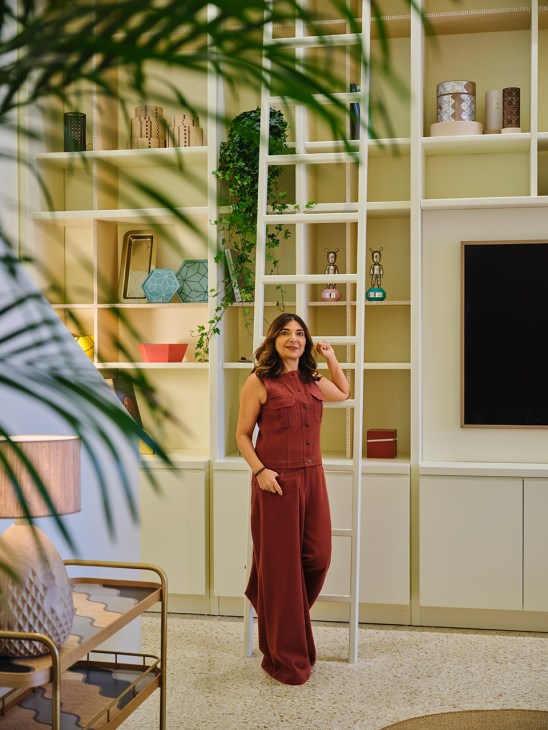
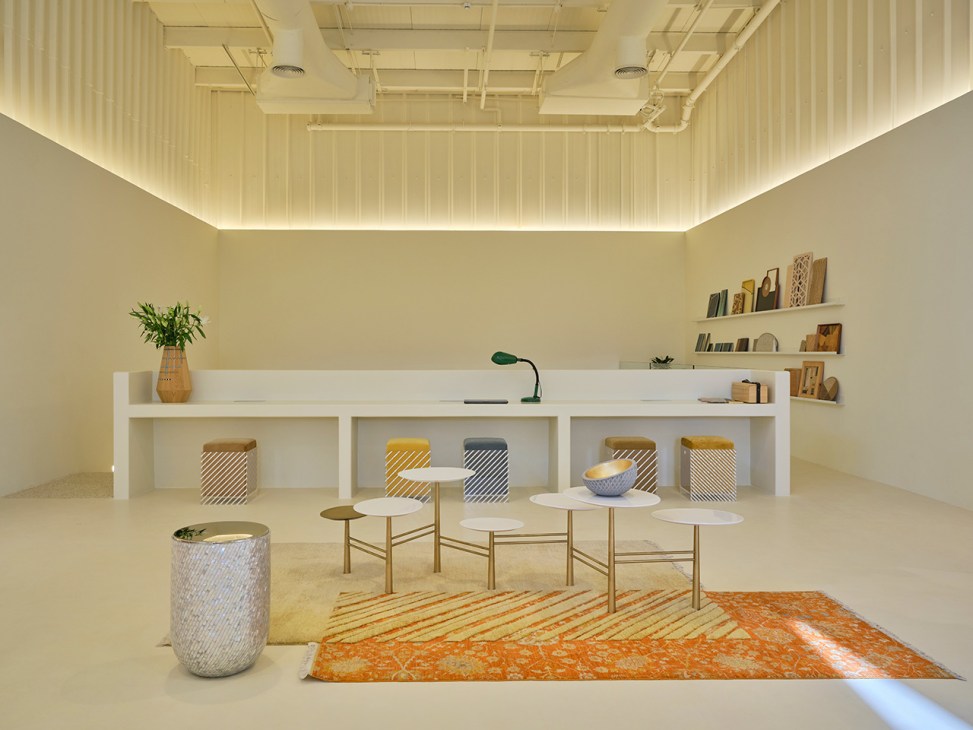
The opening is a significant milestone for Debs’s namesake brand. It’s her first place outside Beirut and comes at a time when her son, Tamer Khatib, has joined as managing director. It is split over two levels. The ground-floor boutique feels homely, with wood panelling and screens and poured terrazzo flooring providing the backdrop for home accessories and furniture. A curved staircase leads to the second-floor studio, which has an industrial vibe. The contrasting aesthetics represent Debs’s design ethos, also reflected in two circular windows illuminating the second floor.
“The circles are an important motif because the brand’s always been about duality,” says Debs, who was raised in Japan. “Today, we’re between Beirut and Dubai, a mother-son duo, and are balancing commercial in the boutique with artistic in the studio space. We want to show that we all have these dualities in us and that they can work nicely together.
nadadebs.com
This article is from Monocle’s March issue, The Monocle 100, which features our editors’ favourite 100 figures, destinations, objects and ideas.
Read the rest of the issue here.
Behind a Mayfair shopfront, Automat is reviving the speakeasy
A good speakeasy is difficult to come by but, done well, the format can still enrapture, with nondescript doors leading to dimly lit hideaways with a hint of Prohibition-era secrecy and decadence. You’ll find (or might easily miss) one such venue on Mayfair’s Mount Street.
Automat is technically a reboot: until 2012, there was another nearby under different management. It is now concealed behind leather goods shop Tanner Krolle (look for the knowing security guard and the wooden door). Inside, you can choose from a streamlined menu of comforting Anglo-American classics, including a toastie of gooey cheddar coddled between crustless white slices with a little truffle on top. There’s also chicken pie, burgers and New York-style cheesecake. Guests can enjoy martinis while congratulating themselves on getting a table.
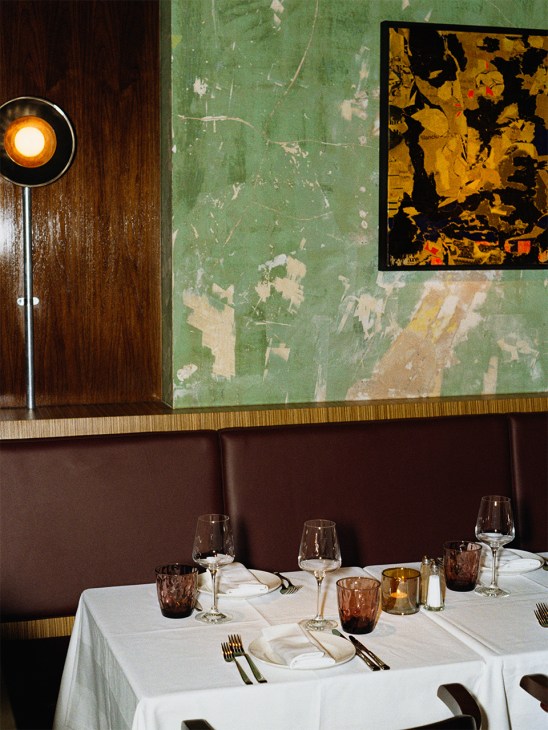
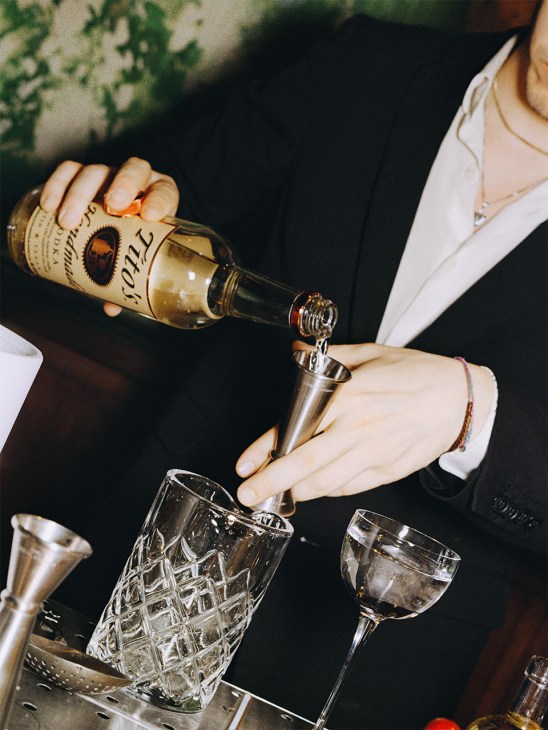
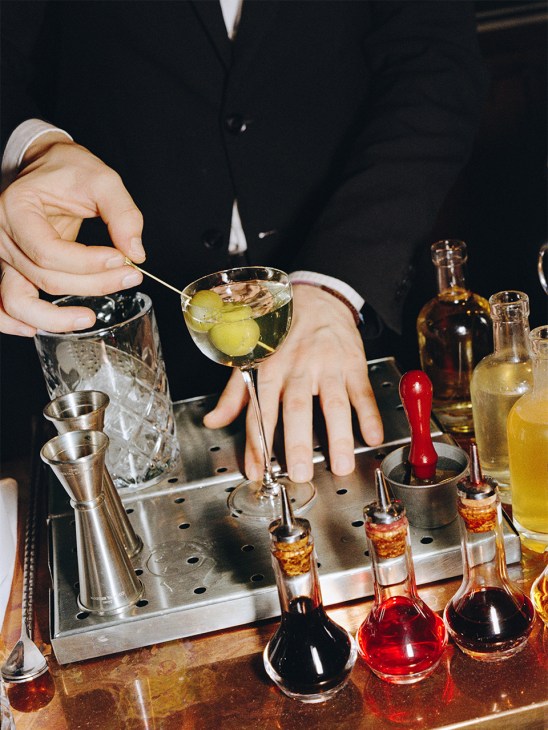
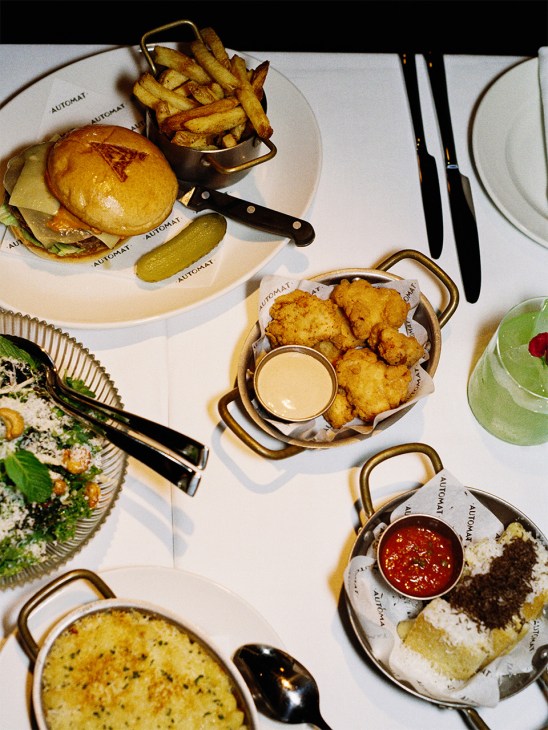
The concept is a nod to the American automat, a precursor to vending machines that offered hot meals to workers for a nickel – though sadly the old prices haven’t survived the update. The idea was a byword for technological efficiency in the US in the early 1900s, when its high sales volume and low running costs (without any waiting staff to pay) seemed set to change the way people dined out.
Mercifully, this contemporary take does have waiters. There’s also something thrilling about the mood. The other key ingredient of a good speakeasy? A sense of discretion – so don’t tell too many people about this one.
automatdining.com
This article is from Monocle’s March issue, The Monocle 100, which features our editors’ favourite 100 figures, destinations, objects and ideas.
Read the rest of the issue here.