Issues
Keeping it cool: Seasonal styling for a smooth transition

Watch by Audemars Piguet
This self-winding timepiece comes with a sleek, silver-toned dial and cognac-hued leather strap. Understated and functional, this watch is a calm, confident design statement.

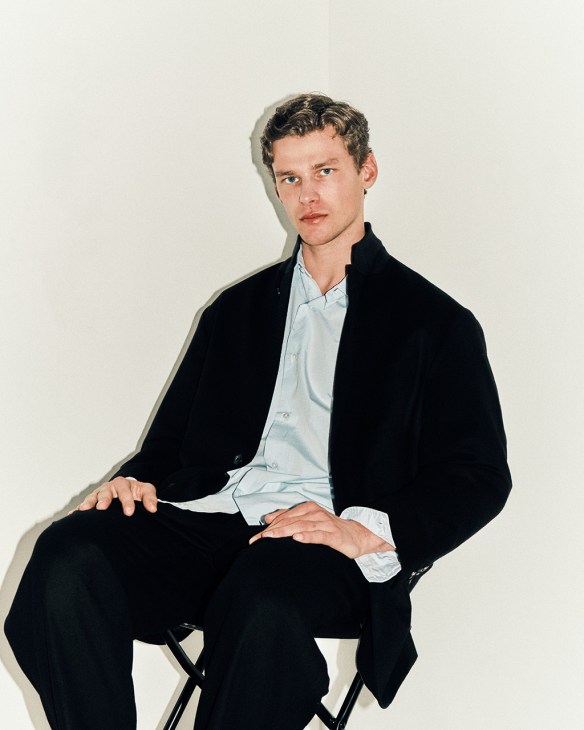
Coat by Rainmaker
Japanese designer Kohichi Watanabe’s label Rainmaker creates impeccably cut menswear for the daily commute. His take on a wool coat is our top pick for a spring layer.

Umbrella by Church’s
Spring showers call for a trusty umbrella. We like this tartan number by Church’s, which has a whangee bamboo cane handle.

Knitted tie by Cinabre
As we welcome the return of a formal approach to dressing for work, a tie is the ultimate accessory to signal a willingness to get down to business. Knitted in Germany on looms using techniques that date back hundreds of years, this silk version by Parisian label Cinabre comes out on top.

Watch by Cartier
The round curves of Ballon Bleu by Cartier make timekeeping a pleasure. It features a deep-blue dial and a crown adorned with cabochon sapphire, which is offset by a yellow-gold case.

Suede jacket by Auralee
Auralee is the Japanese brand gaining a following with fashion insiders who appreciate simple cuts, high-quality materials and carefully selected colours. This suede blouson is a case in point: made from thinned lamb hide, its shape combines softness with just the right amount of structure.

Suit by The Workers Club
Investing in a smart suit can help you to elegantly breeze through your day, from breakfast meetings to after-work drinks. We recommend this smart set by UK brand The Workers Club.

Sunglasses by Dunhill
These round-frame sunglasses are engineered in Japan using a dark-brown acetate with a smart hobnail motif, a Dunhill signature. We’ll keep these on hand for when the sun is at its zenith.

Stylist: Kyoto Tamoto
Hair & Make-up: Hiroki Kojima
Model: Jan Willem Loer
Set build: Robin Shepherd
This article is from Monocle’s March issue, The Monocle 100, which features our editors’ favourite 100 figures, destinations, objects and ideas.
Read the rest of the issue here.
The most beautiful condiments to line your kitchen cupboards (and stomach)
1.
Maggi Würze
Switzerland
Founded by Swiss entrepreneur Julius Maggi in the late 19th century, the Maggi brand has long been enhancing stews, soups, curries, casseroles and more with its flavoursome seasoning. Made using wheat protein, the umami-rich vegetable reduction is sold in 113 countries and is also available as a powder or a cube.
maggi.co.uk
2.
Chimac Kimchi Ketchup
Dublin
Spice up your burger and fries with this Korean-inspired kimchi ketchup from Chimac, founded by Irish restaurateurs and condiment makers Sofie Rooney and Garret FitzGerald. An honourable mention goes to fellow Dublin foodsters White Mausu’s Peanut Rayu – a moreish chilli oil with peanuts and sesame.
chimac.ie, whitemausu.com
3.
Kalles
Sweden
This beloved fish-roe paste has been packaged in the same toothpastelike tube since 1954. A staple in Sweden, it’s excellent on eggs and in sandwiches. There’s nothing fishy about this strong projection of Swedish culinary sensibilities.
kalles.se
4.
Glug Extra Virgin Fresh Olive Oil
Jaén, Spain
Made from peppery Andalusian picual olives, Glug is a bold, bright and gratifying olive oil for cooking or drizzling. Plus, the fun squeezy bottle beats conventional screw caps when it comes to avoiding messy olive oil residues.
getglug.com
5.
Moutarde de Meaux Pommery
Meaux, France
Locals will tell you that Meaux, not Dijon, has been the epicentre of grainy French-mustard making since the 18th century. The Pommery’s vinegary, coarse version goes well with roasted meats, charcuterie and vinaigrettes. The stoneware jar keeps the mustard from drying out and makes for a rustic addition to the kitchen cupboard.
moutarde-de-meaux.com
The man who remixed Japan: How M-Flo rapper Verbal went from the Tokyo club scene to global CEO
Multi-hyphenates rarely achieve equal success across their different ventures. But not so for Verbal, a Tokyo-based rapper, music producer, saké promoter and fashion CEO who has worked with the likes of Nike, Off-White and Louis Vuitton and helped to disrupt Japanese pop music’s rigid conventions.
To get a sense of his signature sound, listen to “Eko Eko”, a song released in June 2025 by his group, M-Flo. The track features Verbal and his groupmate, Taku Takahashi, alongside South Korean hip-hop artist Zico and Japanese vocalist Eill. They vocalise over a galloping beat, plaintive synths and guitar chords, switching between Japanese, Korean and English lyrics.
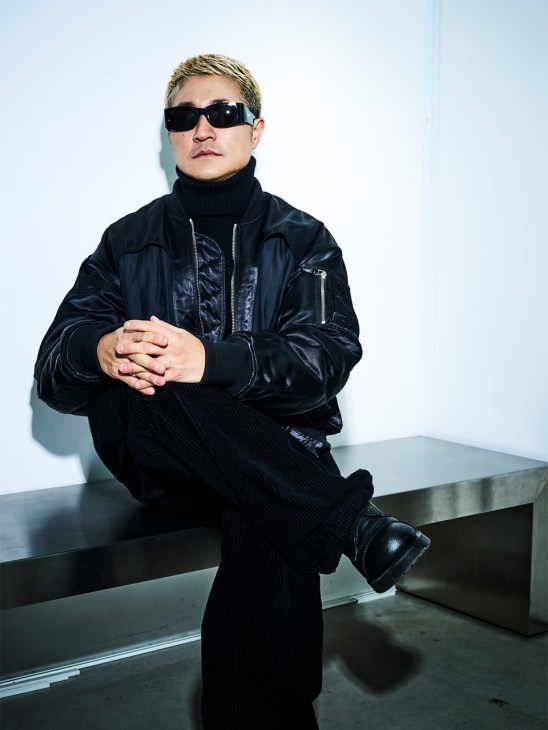
The track – which features on the group’s 10th album, Superliminal – is typical of Verbal’s output. Genre-bending and language-crossing, it straddles cultures and musical styles. It is J-pop, K-pop, hip-hop, R&B and electronic dance music all in one. Verbal has been at it since 1999, when he and his M-Flo bandmates, Takahashi and singer Lisa, released “Been So Long”, a song that fused R&B-style vocals, rap and electronic beats with Japanese and English lyrics. “In the late 1990s in Japan, hip-hop was hip-hop, R&B was R&B and rock was rock – you couldn’t leave your territory,” says Verbal. “We weren’t abiding by any of those rules. We didn’t even know that there were rules.”
In addition to being a member of M-Flo, Verbal and other Japanese rappers and DJs formed the Teriyaki Boyz in the early 2000s, collaborating with talents such as Daft Punk, Pharrell Williams, Busta Rhymes and Kanye West. Even now, the hybrid sound that Verbal and his cohorts pioneered permeates the tunes of younger J-pop and K-pop musicians. And that’s only a fraction of Verbal’s recent creative output.
When not in the studio, Verbal heads streetwear-inspired brand Ambush, which he co-founded with his partner, Yoon Ahn, the company’s creative director. What started in 2008 as a pop-art jewellery project has become a clothing, bag and accessories brand with five shops in Tokyo and Osaka. At the brand’s Shibuya office mood boards and racks of clothing samples crowd one room. Verbal shows us around, wearing a black Ambush MA-1 bomber jacket and matching turtleneck sweater with a prototype diamond-encrusted chainlink ring on his finger. He describes how he likes to obsess over details, whether it be for new Ambush releases or planning his upcoming music shows in Tokyo.
Ambush took its first collection to Paris in 2015 and held its first runway show at Milan Fashion Week in 2022. It has collaborated with labels such as Nike, Uniqlo, Bulgari, Moët & Chandon and Undercover, and, in early 2020, it became part of the Milan-based New Guards Group, an early investor in Off-White. “We decided that we needed a global expansion partner that could help us with the retail and wholesale strategy,” says Verbal.

Last year, amid restructurings at New Guards and its owner, Farfetch, Verbal and Ahn took back control of Ambush in a management buyout. Verbal describes the five years under New Guards as “a crash course in business, legal and finance”. He and Ahn also clarified their roles under the ownership, with Ahn serving as designer and Verbal in charge of the nuts and bolts. This includes looking at materials and liaising with factories and collaborators, while keeping an eye on trends. “As a brand, we feel so much stronger now,” he says.
You would think that Verbal would be too busy to juggle more but in 2025 he launched Sōmatō, his small-batch saké brand. Verbal came across Takahashi Shuzo, a 141-year-old brewery in Misato, Akita prefecture, while helping an overseas fund look for distressed assets in Japan to invest in. After hearing from the brewery that it wanted to stay independent, he suggested the new saké brand, which it now produces for. “This is how you should talk to artisans around Japan: ‘We want to retain your legacy but also energise it,’” he says. “The mayor [of Misato] thanked us for bringing new life to the brewery.”
The saké project isn’t out of character for Verbal. A third-generation South Korean who was born and raised in Japan, he is a product of Tokyo’s international schools; he is fluent in English and Japanese, as well as in the musical language of US hip-hop and R&B. His ventures tend to draw on his unique status as an insider whose background means that he understands Japanese culture but isn’t constrained by it. “I think of myself as a cultural translator,” he says.
1999: M-Flo releases seminal track “Been So Long”
2008: Verbal and his wife, Yoon Ahn, launch design project Ambush
2015: Ambush shows a collection in Paris for the first time
2025: Verbal and Ahn launch Japanese saké brand Sōmatō
2026: M-Flo to release Superliminal, the group’s 10th album
Read next: The Monocle City Guide to Tokyo, featuring the best hotels, restaurants and retail spots in the Japanese capital
Editor’s letter: Our February issue is here to explore movement and new beginnings
There’s something about the passing of another year that gets our readers thinking about change. “Am I,” they wonder, “in the right career? Could I find a better spot to run my enterprise from? Should I upend my life and switch cities or nations?” For some, the moment passes and home comforts override the desire to switch things up. But for many, this is the moment to move. This issue is designed to show what’s possible and how to make the leap.
Our February edition begins with the topic of migration. Across the Western world, public sentiment around the issue has hardened, with politicians ushering in tighter controls, promising voters that numbers will fall. The pace of arrivals has made some people uncomfortable, especially if they are in communities that are economically challenged and see little benefit from welcoming new people.

Our opening pages include an interview with Spain’s minister for migration, Elma Saiz, who explains why her country is following a different path. To keep the economy growing (it expanded 2.9 per cent last year) and offset the effects of an ageing population, Spain needs to pull in at least 250,000 new migrants every year, according to government figures. Even though most of these are Latin Americans, making assimilation easier, migration is now the number-one concern for Spanish voters. Can the country continue with this policy?
We also get a perspective on the growing passport collections of high-net-worth individuals who want to avoid paying taxes. As someone who only has a single passport, I have always been jealous of my colleagues, even my partner, who have a spare national identity tucked away in a drawer. I’d like to be a person who has the right to live in Europe and waltz through passport control. Yet our report makes you wonder whether it is acceptable if your allegiance is to your accountant and not to your nation. In the meantime, you can find out why an African passport has become a desirable addition to the line-up.
There are many more takes to discover on making a move. There’s a great report on Riyadh’s Diplomatic Quarter, where we meet the ambassadors living in this compact, walkable neighbourhood. Diplomats are used to being sent on a new mission every four years and the story lends a fascinating insight into how they manage to leap from culture to culture and seize the opportunity.
We also look at logistics (we’ll show you how to fly a dead whale halfway around the world) and the benefits of taking on an HQ move (you’ll get a sneak preview of Bonhams’ fresh New York base). There are even neighbourhoods to move to, a Caribbean city attracting global talent and the stories of people who have switched careers.
The desire to find opportunities over the horizon is natural. Monocle has thrived because it has been able to dispatch staff to bureaux around the world and attract global talent. But that doesn’t diminish the debate about migration. What’s essential is that the issue is discussed, facts are brought to the fore and fair decisions are made. Though, in the meantime, if anyone knows how I might get another passport, do let me know. You can contact me at at@monocle.com or any of our team (we list all of our email addresses on the masthead).
Re-examining migration beyond the headlines: Why do people move?
Of the many issues roiling our politics, migration appears to be the most important, at least to voters. In large Western countries, most of which have high inward migration, opposition to it is upending the political status quo, resulting in the rapid rise of right-wing populist parties whose raison d’être is to severely limit the numbers of people coming in. Even in smaller nations without large immigrant populations and more of a tradition of emigration than immigration, such as Hungary and Poland, the issue has come to dominate politics.
Whether they are on the right or left, political parties feel that they must take a position. In places such as the UK, France and Germany, historically centre-left parties have largely followed their traditional working-class voters to the right, aping the policies and rhetoric of the insurgent populists. This has created an environment in which it feels as though the only stance to take on immigration is to be against it. And yet, this same bipartisan position is being taken in a world that is more mobile than ever – with people able (and desirous) to travel across borders in record numbers. Adding to the cognitive dissonance is the reality that humans are by nature migratory and migration has defined our history; indeed, countries such as the US, now the leading voice of international anti-immigration, were formed by it.

It would not be radical to suggest that the subject is not as straightforward as it is made out to be. Beyond the headlines of out-of-control irregular migration and voter dissatisfaction, millions of people successfully emigrate every year and many governments welcome them with open arms.
Throughout Monocle’s February edition, we explore this hottest of hot-button issues. Here, we survey who is moving and why, and list 10 countries that are courting immigrants in specific professions (it might surprise you). Then we look at the wealthier people (many from rich countries) who are acquiring citizenships (many of poor countries) using financial means and their reasons for doing so. Finally, we travel to Madrid to meet Spain’s migration minister and discuss why her government is setting high targets for the number of people who it wants to attract.
Putting down roots
It’s not all about money.
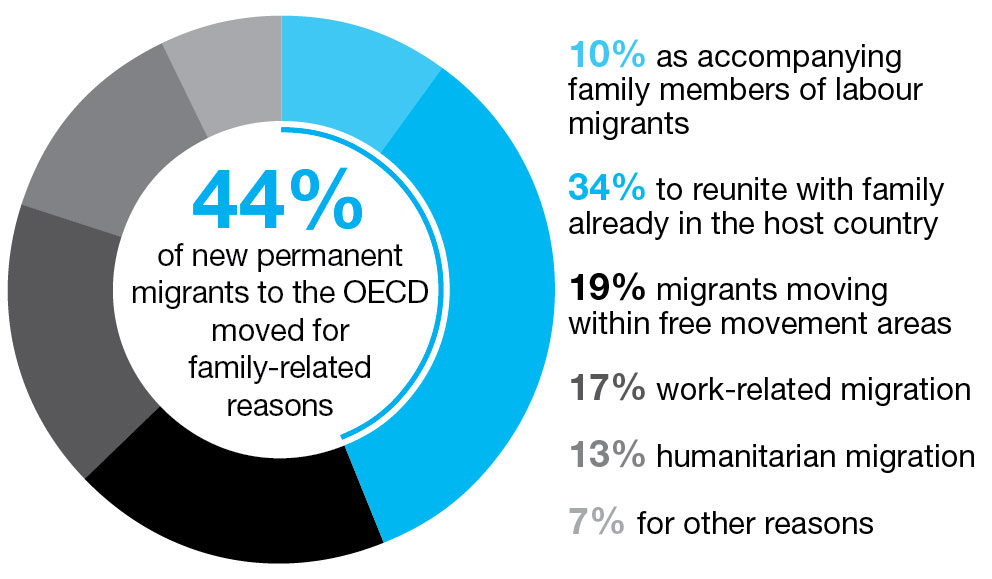
Public perceptions of migration can be warped by the extremes: overcrowded boats of refugees at one end of the spectrum and billionaires’ doomsday redoubts at the other. In most cases, however, people move for more prosaic reasons. “The number-one criterion is family reunification,” says Jean-Christophe Dumont, the head of the international migration division at the OECD’s Directorate for Employment, Labour and Social Affairs. “It accounts for 40 per cent of migration to OECD countries and about 70 per cent of regular migration to the US.”
The second-largest category of entry for migrants is work. As the demands of the labour market have changed, so has the profile of people who relocate for a job. With advanced economies increasingly requiring a skilled workforce, the level of education among migrants has risen. “About a third of migrants to OECD countries now have tertiary education,” says Dumont. “This reflects rising levels of education worldwide but also the fact that migration is costly. People who have the skills and means to make the move tend to be better educated.”
A corollary has been women making up a higher share of those moving countries than ever. “In the 1970s and 1980s, labour migration was mostly about supplementing the workforce in industrial sectors, such as the automobile and metal industries, which mostly employed men,” says Dumont. “Now the demand is greater in industries where women are more prevalent, such as the healthcare and service sectors. We are also finding that tertiary-educated women from low-income countries are using migration to improve their prospects, which might be limited at home.” In some countries with selective systems, the share of those with tertiary education is higher in migrants than among the native population.
Decisions over whether or not to move for work are often more complex than a matter of simply chasing the highest salary. “It’s not so much the wage that makes the difference but the longer-term opportunities for career development,” says Dumont. “If I’m thinking of migrating for work, the prospects for my children in the new country are also important.”

Remote working – an insignificant blip
A new type of labour-related migration is also becoming increasingly common: people working remotely in one country for companies or clients based in another. Until recently, working remotely on a permanent or semi-permanent basis was mainly the preserve of self-styled “digital nomads”, a subculture dominated by those in the technology sector. The coronavirus pandemic changed this, causing the rapid expansion of out-of-office working across white-collar industries. Many are taking advantage of their new geographic freedom to move to a different country without losing their jobs.
This has created a new set of challenges for immigration policymakers. “Some countries are simply clarifying rules around tourist visas to make it clear whether visitors are able to work remotely,” says Kate Hooper, a senior analyst at the Migration Policy Institute, a Washington-based think tank. “Others have introduced dedicated digital-nomad visas but these tend to be more of a marketing tool and uptake has been low. Most people still choose to simply work while on a tourist visa. It’s easier, quicker and often cheaper.”
Portugal rolled out a highly publicised bespoke digital-nomad visa in 2022 and Spain followed suit in 2023. These schemes, however, have not made a particularly noticeable difference: the Iberian nations have been issuing about 20,000 digital-nomad visas a year, compared to about 1.5 million other kinds of tourist and short-stay visas.
Hooper says that the growth of remote working has resulted in migration-related policy issues that go far beyond visa definitions. “Where will people be taxed – are they establishing a legal presence in another country?” she asks. “If you’re signing contracts in a new country, are you exposing your company to local labour and employment laws? How portable are pensions? Remote work is the future but there are different systems that need to be updated to keep up with that trend. A lot of employers are shy about exposing themselves to risks in these grey areas.”
How migration protects wealth
High-net-worth individuals (HNWIS) face yet further considerations when it comes to migration. The main issue is whether they should live in the same place as their money. “Our industry is called investment migration but most of our clients don’t physically relocate,” says Dominic Volek, the group head of private clients at consultancy Henley & Partners. Nonetheless, more and more HNWIS are seeking to cultivate a strategic presence in various far-flung locations.
“We talk about ‘geopolitical arbitrage’: it’s about hedging against risks at home while capitalising on opportunities offered by other countries,” says Volek. “An American family we work with might attain residence in Costa Rica, citizenship in Europe, a Caribbean passport, a UAE Golden Visa and permanent residence in New Zealand. All of this means that they’re properly hedged against who knows what might happen in all of these jurisdictions. Since the Russia-Ukraine war, we’ve even been having discussions with families in Europe about conscription. We launched a citizenship programme in Nauru last year. The first family we worked with who received a Nauru passport was German. And why would these people want citizenship of a tiny South Pacific island without moving there? To avoid their child getting pulled into a war.”
Ten countries that want you
Looking to start afresh somewhere new? Many nations are offering work visas to those with specific skills.

1.
Fishmongers
Sweden
It might have many lakes and a vast Baltic coastline but Sweden is lacking fishmongers. A 2023 government report into at-risk sectors suggests that knowing your way around a rainbow trout could now gain you a work permit.
2.
Musicians
Germany
Germany’s artist visa allows musicians, including DJs, to apply for long-term residency. The only requirements are that the applicant must be based in Berlin, can provide a detailed CV and has a clear financial plan for the years ahead.
3.
Ambulance drivers
Denmark
Denmark’s immigration policies received much attention last year for limiting inward numbers. The country’s latest list for in-demand skilled workers features 57 professions, including ambulance driver.
4.
Film-makers
Japan
Japan offers a special visa for film-makers, painters and poets to work in the country for between six months and three years. But any aspiring Kurosawas should know that competition is fierce – only about 300 applicants are accepted each year.
5.
Chimney sweeps
Austria
In Vienna, every home’s chimney must be inspected by a Rauchfangkehrer once a year. These chimney sweeps’ responsibilities extend to assessing boilers and hot-water tanks. Any skilled German-speaking sweep can apply for a work visa.
6.
Arborists
Australia
According to the Australian government’s most recent review of labour shortages, the nation is lacking skilled arborists. Tweaks to the country’s relatively restrictive immigration laws mean that employers can now use the “skills in demand” visa to hire much-needed tree experts.
7.
Architects
Vietnam
A new Vietnamese state decree has made hiring foreign engineers and architects a priority. The new talent visa affords architects special entry, along with investors, university researchers and public sports figures. It comes as the country embarks on several large infrastructure projects.
8.
Bakers
Canada
Bakers looking for more dough should consider heading to Canada. The country has launched an international campaign to attract bread makers, confectioners and pastry chefs. Provinces that are in particular need include Ontario, British Columbia and Alberta. Time to lay down some flour.
9.
Thai chefs
New Zealand
Thai cuisine is now global – and one country that can’t get enough of massaman curry is New Zealand, where the government has set up a special visa just for chefs migrating from Thailand. Once their application has been approved, they are welcome to stay for four years. Grub’s up.
10.
Radiographers
South Africa
South Africa has suffered an acute brain drain of medical professionals, many of whom emigrate to the UK. The inclusion of radiographers on the country’s list of critically understaffed jobs means that any qualified applicant will gain 100 points towards their SA General Work Visa.
Read next: How holding multiple passports is shaping a new global citizenship reality
What multiple passports mean for identity, belonging and modern life
During the first two decades of this century, many people in the West came to take easy mobility for granted. The 2020s have pulled the rug from under their feet. First, the coronavirus pandemic demonstrated how quickly nations can close their doors. In Europe, 17 countries that are party to the Schengen Agreement reintroduced internal border controls. Australian citizens were banned from leaving the country for 19 months unless they could demonstrate that they had strong ties to somewhere else. The following year, as a result of Brexit, UK citizens lost the right to live and work in 27 countries. Since then, the Ukraine war, the unpredictable actions of the second Trump administration and other destabilising developments have driven record numbers of Westerners to seek alternative papers.

Part of financial literacy is understanding the value of having a balanced portfolio: in other words, don’t put all of your eggs in one basket. If freedom of movement and asset protection are important to you, having only one citizenship is as reckless as storing your entire net worth in a single place. By holding multiple, you diversify your exposure to geopolitical risk. There are several ways of acquiring citizenship and about 75 per cent of countries now permit the holding of multiple passports (up from about 30 per cent in 1990).
Most people acquire their citizenship by descent and every country offers this pathway. However, this kind is often conditional – though there are generally provisions in place to prevent statelessness. About 17 per cent of countries, mainly in the Americas, also offer it through birth. A less common method, though one that is growing more popular across the globe, is citizenship by investment or donation, which falls under the umbrella term of “investment migration”.
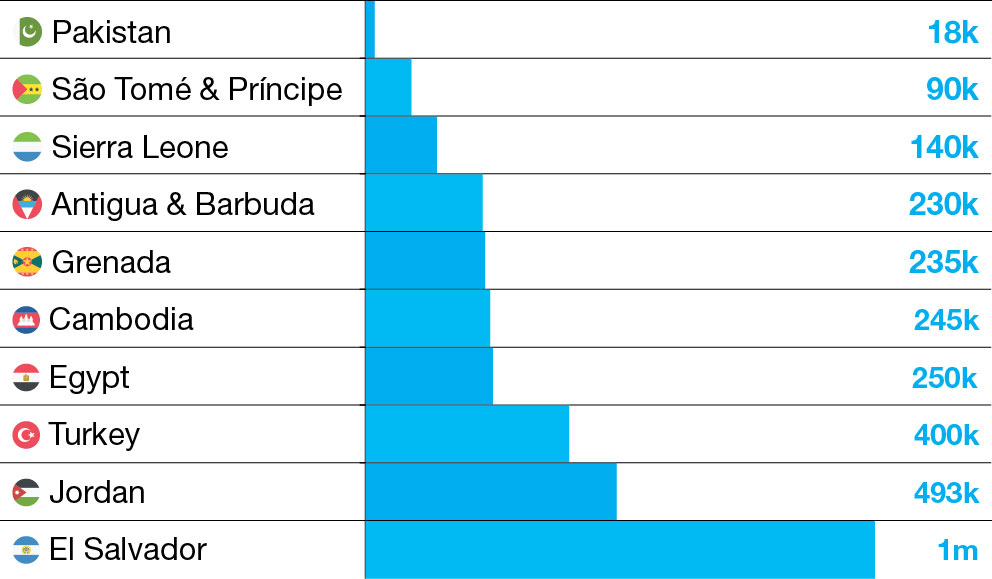
Currently, there are 15 countries operating official programmes that grant citizenship to foreigners in exchange for a set donation or investment: Turkey, Cambodia, El Salvador, São Tomé and Príncipe, Sierra Leone, Nauru, Vanuatu, Dominica, Antigua and Barbuda, Grenada, Saint Lucia, St Kitts and Nevis, Egypt, Jordan and Pakistan. The required amounts range from $18,000 (€15,500) for Pakistan to $1m (€850,000) for El Salvador. Processing times for such programmes range from a few months to a year.
Many more countries grant citizenship by “merit”: they don’t define a specific donation or investment amount for eligibility but instead evaluate applications individually, looking for what they deem to be exceptional contributions to the nation. Austria, for example, has a longstanding practice of granting this kind of citizenship to those who invest several million euros in its economy. Unlike with residency-based naturalisation, integration and physical presence largely don’t play a role; applicants, however, must undergo more extensive government background checks.
Citizenship by investment or donation is more popular than ever. Sierra Leone and São Tomé and Príncipe started programmes in 2025. Other countries have similar legislation in the works so expect to see more entering the market this year. Governments in the Global South are waking up to the tremendous potential of investment migration. The benefits are clear: selling citizenship drives foreign direct investment, costs a country very little, allows it to control what kind of development takes place via eligibility requirements and, perhaps most importantly, gains it lifetime goodwill ambassadors around the world.
There are more applicants than ever and the demographics of who is applying have changed significantly in recent years. Historically, citizenship by investment and donation appealed primarily to successful entrepreneurs from the Global South who wanted a Western passport to expand their visa-free travel options. Between 2020 and 2025, Western citizens went from being a tiny fraction of global citizenship applications to the majority, according to reports from several sources. Demand continues to grow rapidly. North Americans and Europeans are now the most common clients for international firms that advise on investment migration (including my own, Peck & Nascimben Global).

Two of the most popular programmes for these clients are those of Sierra Leone and São Tomé and Príncipe. Western interest in African citizenship might be surprising but citizens of wealthy countries aren’t looking for another passport for travel – instead, they’re seeking investment access and hoping to benefit from the rise of the Global South. The African Union, for example, is the fastest-growing economic bloc in the world.
Most of these passport applicants don’t plan to live in Africa, though they value having the option to do so if the need arises. Meanwhile, some would like to acquire residency in another nation using their neutral African passport to avoid being affected by any strained relations in the future between the country where they live and their Western country of citizenship.
São Tomé and Príncipe is also a member of the Community of Portuguese Language Countries. Treaties ratified by its member states grant Santomeans the ability to take up residency in other Lusophone countries, such as Brazil and Portugal, as well as the right to consular protection from Portuguese diplomatic missions abroad. Santomeans living in Brazil are also eligible for expedited naturalisation there. Sound appealing?
Investment migration will continue to grow as countries introduce programmes and more people seek to take advantage of them. Over the next few decades, having multiple citizenships will become commonplace – a huge societal shift that will fundamentally alter the notions of nationhood and citizenship.
Marko Peck is a managing partner at Peck & Nascimben Global, a Zürich-based firm that advises clients on how to procure investment citizenship.
Read next:
Migration beyond the headlines: Why people move
Spain’s open-border policies have helped its economy flourish – but there might be a catch
A smart and fair immigration system can help diffuse toxic narratives and bolster national security
In the West, both regular and irregular migration tends to be treated as a political threat. But if it’s managed wisely, the transnational movement of people need not be a risk and can, in fact, be a security asset.
The EU’s “Choose Europe for Science” initiative is targeted at foreign researchers, offering them grants, fellowships and relocation support to settle in the bloc. It’s aimed at the kind of human capital that underpins economic security, public health and defence-related research. When governments make talent flows transparent, meritocratic and beneficial, the political texture of migration shifts from threat to advantage.

Singapore also shows how clear pathways for skilled workers can bolster economic security while avoiding cultural anxieties. Its investment in digital infrastructure and industry partnerships invites talent and capital to set up permanent roots there. Meanwhile, Australia’s Pacific Engagement Visa creates legal, predictable routes for people from Pacific Island states facing climate risks.
Such programmes are small but they replace irregular movements with orderly migration that strengthens political ties and builds goodwill. These models all share clarity, conditionality and purpose. When migration systems are well designed and offer protection, legal mobility and visible returns for the host society, they undercut the chaotic narratives that far-right parties exploit. They also make migration an instrument of national security by adding skills to critical sectors and stabilising cities and regions.
Spain’s migration gamble: How open-border policies are helping its economy to flourish
On a winter weekday in Madrid, Spain’s minister for inclusion, social security and migration is pushing back against clichés about her country. “It isn’t just sun and beaches,” says Elma Saiz at the ministry’s headquarters in the north of the capital. Above her head hangs a large photo of a cat; on another wall, near the requisite ministerial flags, is a painting of a man asleep on a park bench. While the setting might be unremarkable, Spain’s recent economic performance has been anything but.
Many Eurozone countries have limped into the new year with sluggish growth. Spain, however, has cemented its position as one of the continent’s fastest-growing economies, with GDP rising by 2.9 per cent in 2025. The figure is expected to remain above 2 per cent for the next few years – numbers that the likes of the UK, France and Germany can only dream of. The reasons for the upswing are many and varied, and include thriving sectors such as services and tourism. Much of it, however, is down to internal demand generated by a strengthening jobs market and a decision by the government to make it easier for foreigners to settle in the country. “One of the important influencing factors in this growth is our migration policies,” says Saiz.
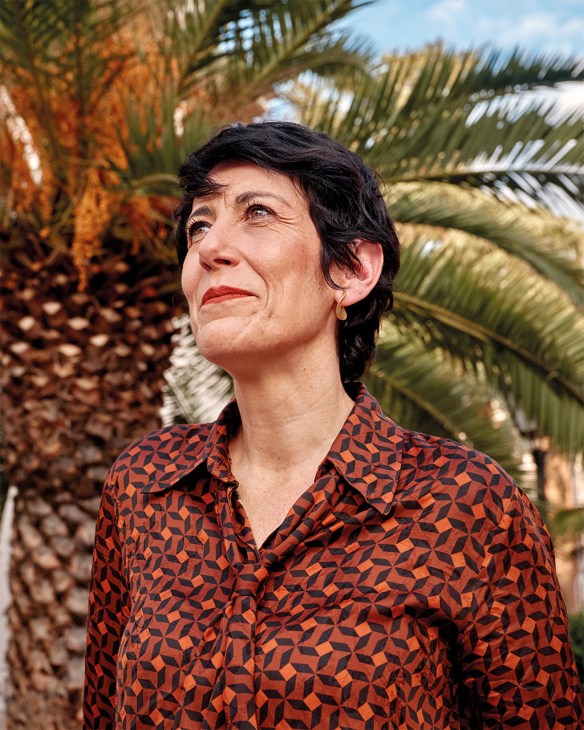
A reform of the nation’s reglamento de extranjería (immigration regulations) that came into force last May could benefit as many as 900,000 new residents over three years, through an expanded visa system and a mechanism called the arraigo, which allows people to apply for residency through three routes: “family, employment and training”, according to the minister. Saiz – a member of the leftist Spanish Socialist Workers’ Party (PSOE), which governs in a minority coalition with the left-wing Sumar party – talks about migration as “a right” and “a question of values, human rights and ethical responsibility”. But there’s also a cannier element of realpolitik at play.
Like other southern European nations such as Italy and Greece, Spain has a rapidly ageing population and needs new workers to prop up the pensions system through social security contributions. Saiz, who has been in her role since late 2023, speaks of a “demographic winter” and says that the country needs 250,000 new workers a year from now until 2050 to maintain the welfare state. The government is working hard to attract them. In 2024, Spain admitted 368,000 new permanent migrants (including many from Latin America, who make up two-thirds of new legal residents via the arraigo), putting it in the top five of oecd countries in terms of numbers (the US tops the list). “Spain took a decision to be an open and prosperous country, not a closed and poor one,” says Saiz.
In 2025 the number of foreigners in the country’s workforce reached a historic high of more than three million – about 14 per cent of the in-work population – but, of course, not all entrants to the labour market are from overseas. Saiz is keen to talk about the government’s other achievements, such as helping more women into work, as well as increasing participation among under-thirties and over-fifties. And yet, though the economy is doing well, many Spaniards, like their European counterparts, believe that their leaders are out of step with the people on the subject. According to Spanish research institute, Centro de Investigaciones Sociológicas, immigration is Spain’s principal concern. It’s set to be a key issue in the next general election, which is scheduled for 2027.
Saiz says that these sentiments are generated by “disinformation and hoaxes” rather than analysis of the facts. “It’s curious that when you ask about people’s worries about migration, you’ll find that levels are at their highest – but when you ask whether they’re affected directly, that concern collapses,” she says. Yet there have been integration issues as Spain has become more diverse. Last summer, a mob took to the streets of Torre-Pacheco in Murcia in search of people of North African origin, after a pensioner was attacked in the town. It had been whipped up in part by a video on social media falsely attributed to the assault. One of the ministry’s jobs is to monitor online hate through a racism and xenophobia observatory known by the acronym Oberaxe.
Talk of disinformation allows Saiz to pivot to a subject that she clearly feels more comfortable discussing: what she refers to as the “forced narratives” generated by the two main opposition parties, the right-wing People’s Party (PP) and far-right Vox, which is led by firebrand Santiago Abascal. “What’s damaging is having a political opposition that doesn’t have a project for the country,” she says. Saiz cites the parliamentary right’s votes against labour-market reform, increasing the minimum wage and raising pensions – what she says amounts to “anti-politics”. She is equally scornful of the PP’s decision to oppose a bill – introduced to parliament after receiving more around 700,000 signatures from the public – that aimed to grant large-scale legalisation to immigrants living in Spain who fall outside the arraigo parameters. Frustrated at it being blocked by the opposition, the government took matters into its own hands in January – passing a mass normalisation law by royal decree that bypassed parliament that could see around 600,000 people granted residency for an initial one-year period, with the ability to work from day one. Applications will open in April and run through until the end of June, for those who have lived in Spain for at least five months and arrived before the end of last year.
Still, a progressive government thwarted by a right wing bent on what Saiz calls “electoral calculations” is only a partial picture. Beyond the country’s rosy image and macroeconomic figures, significant structural challenges remain, meaning that jobs are being created but not for everyone. Despite record numbers of people in the formal economy – and very few empty positions, among the lowest in Europe – the situation for young people in the country remains precarious. One in four Spanish youths under the age of 25 is unemployed, considerably more than the EU average. Saiz rebuts this point by citing the significant progress that has been made in the past few years – as recently as 2015, youth unemployment stood at 49 per cent. There have also been improvements in everything from school dropout rates to scholarships.
She wants to make another thing very clear. “Someone from overseas doesn’t come and take a job from a Spanish national – nor do they take a house or public healthcare.” So do migrants work different jobs to the Spanish youth who find it hard to find an income? Instead, she would rather focus on education gains and the fact that young people today “are much better prepared than they were a few years ago”.
Despite Spain standing out as a progressive country with a government that is attempting to implement a pro-migration agenda, there remains a danger of selfinflicted damage. Its prime minister, Pedro Sánchez, might be heading his third government and have survived impropriety investigations into his wife and brother, but the PSOE has recently been engulfed in a double-headed scandal that has led some to question whether he can see out his full term. A corruption case over kickbacks has implicated the country’s former transport minister José Luis Ábalos and the PSOE’s now ex-secretary Santos Cerdán in what’s known as the Caso Koldo.
“Let whoever needs to pay, pay,” says Saiz, who would sooner cite the ongoing Montoro corruption case involving the PP’s former finance minister, as well as a scandal in 2018 that led to the same party’s former treasurer Luis Bárcenas receiving a 33-year prison sentence for fraud and money laundering.
But there is a fresher problem facing the psoe: a series of sexual harassment allegations made against party members in several Spanish regions. “It disgusts me to hear what we have learnt,” says Saiz, when pressed. “No woman, wherever she is, should have to live through situations like these.”
As for the possibility of early elections, the minister will hear nothing of the sort, responding with that deft political trick of answering a slightly different question to the one being asked. “We have a lot to do and, in Spain, terms of office last for four years,” she says. And then she is on her feet, bidding farewell with a kiss on each cheek, off to her next meeting.
Migration and jobs in Spain
352,089
Number of people who have residency in Spain through the arraigo system
225,428
Arraigo residents from Latin America
4.2 million
People born in Latin America living in Spain. Colombia makes up the biggest number (857,000)
370,346
Moroccans in the Spanish workforce
3.1 million
Foreigners in the country’s workforce, 14 per cent of the total number
506,451
New jobs created in 2025
57 per cent
The percentage of overall employment created in the third quarter of 2025 filled by foreigners
54.8 per cent
Increase of employed foreigners since 2019, compared to 10.1 per cent for Spanish-born workers
New ideas in the old town: Santo Domingo, a vibrant city quietly gaining new ground
Community meetings can easily devolve into neighbourhood cranks ranting about potholes. But when the setting is the interior courtyard of a lovingly restored 16th-century building with a well-dressed crowd sipping sangria, the tone can never be anything but congenial. That, at least, is what Monocle discovers upon arrival at a regular gathering of the Colonial Town Owners and Residents Association in Santo Domingo, Dominican Republic (DR).
Holding court during an evening celebrating the year’s wins is Raquel Casares, who founded the association in 2021. A Madrileña by upbringing, Casares is the in-country representative for an international charity. She has led the way for a wave of foreigners to relocate to Santo Domingo, especially its 500-year-old historic quarter. Newcomers are drawn by a Caribbean climate and quality of life, warm Latin American culture, dynamic economy, thriving creative sector and sense of security that is rare for the region.
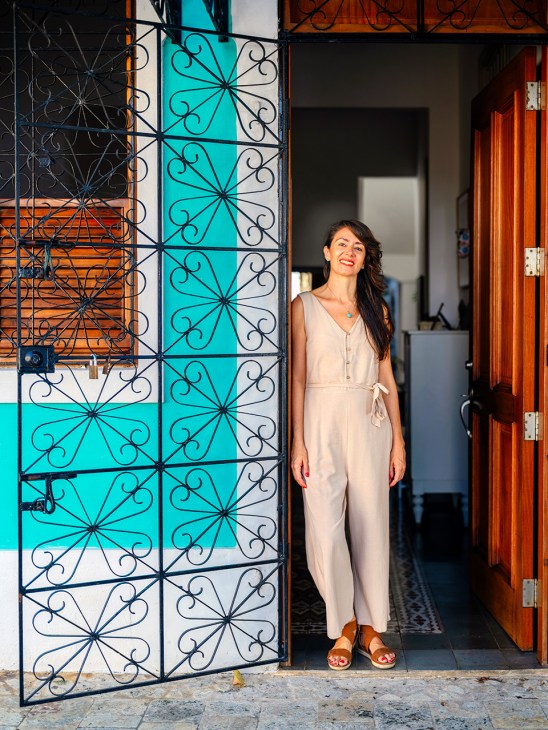
When Casares first arrived two decades ago, Santo Domingo’s old town was a bohemian enclave – full of artists, poets and cheap spots for a late-night cerveza or a spin on the dance floor. Though the Ciudad Colonial is the oldest European settlement in the Americas, dating from 1496, and has been a Unesco World Heritage Site since 1990, the walled city and its stunning coral limestone buildings had been somewhat overlooked. Tourists flocked to the all-inclusive resorts in Punta Cana, while upwardly mobile Dominicans were more enamoured with Miami-style high-rises as the city, today a metropolitan area of four million people, sprawled away from the historic centre where the Ozama river flows into the Caribbean Sea.
The district stopped flying under the radar 12 years ago when the country’s Ministry of Tourism conducted an international design competition for an old-town master plan and the Inter-American Development Bank began financing an urban infrastructure scheme to upgrade streets with proper drainage and hand-laid paving stones. These improvements have raised property values but also prompted concerns about overtourism.
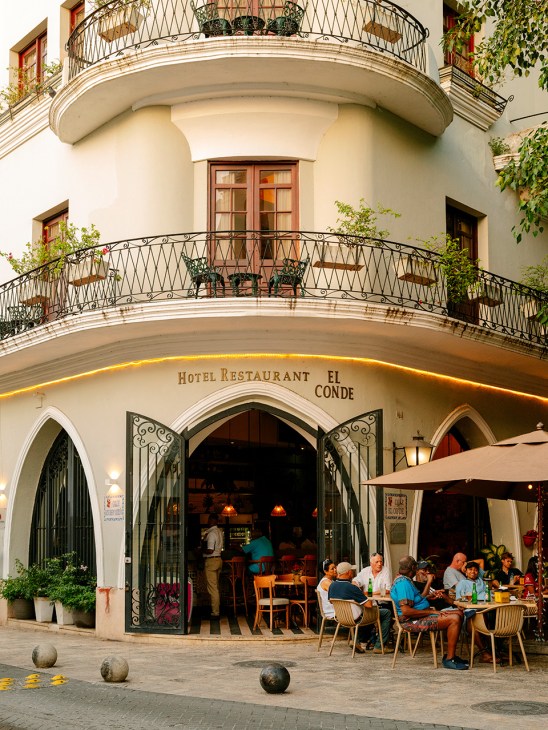
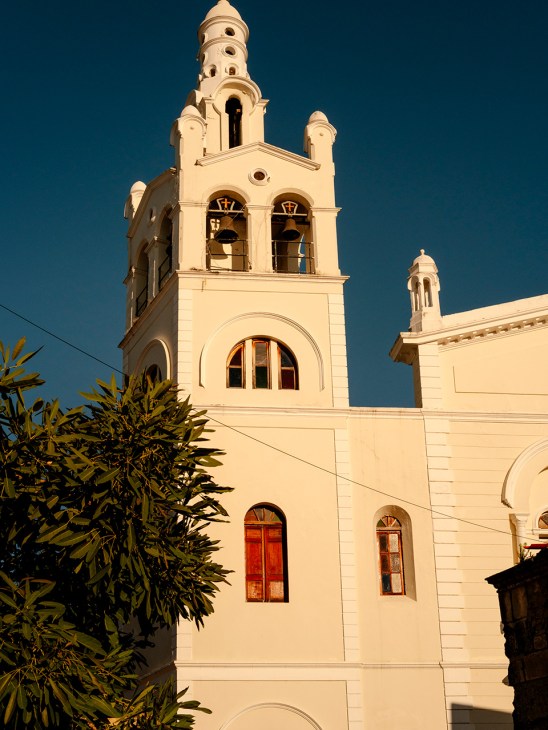
For now, Santo Domingo has avoided the fate of old towns elsewhere in the region, such as Cartagena in Colombia, that are little more than historical theme parks. The quarter is still home to 7,500 residents. Casares is raising a family and proudly handles her daily needs on foot – there are still useful local businesses such as grocers, tailors, bookstores and pharmacies – but sends her sons to school outside the neighbourhood. A lack of child-friendliness – no playgrounds in the parks, for example – was part of her motivation to start the association, something that she says was not looked at askance despite her foreign passport. Instead, she galvanised a community that was eager to speak with a unified voice and convey similar concerns to City Hall under the slogan “people live here”.
Despite the challenges, Casares is more enthusiastic than ever about her adopted home. “It’s the best moment for the old town in 20 years,” says Casares. For anyone looking for a 16th-century fixer-upper, there are still a few left, plus a handful of modernist apartment buildings on Conde, the main drag, but savvy property firms are making moves. The latest marquee opening came in 2024 when IHG Hotels & Resorts unveiled the Kimpton Las Mercedes, bringing in Mallorquin hospitality specialist Marta Amengual as general manager. The boutique hotel is the work of Moneo Brock, a Madrid-based firm that has been active in Santo Domingo for more than a decade. It won the Ministry of Tourism’s master-plan competition, though the company’s co-founder Belén Moneo ruefully notes that the winning designs were never implemented.


Moneo Brock’s handiwork is prominent, however, at Casa Velázquez, an upscale residential building that is a showcase for restoring the colonial town’s building stock. Co-owner Claudio Suarez stumbled into the project when he was looking for a retail space in 2009 to open a shoe shop. What he found was an abandoned 1926 façade with three 16th-century buildings next to it. Against local perceived wisdom, his Dutch business partner insisted that they buy the heritage properties. “For Dominicans it was too risky but he showed me that history retains its value,” says Suarez. The renovations took 12 years largely because of permitting delays. Planning officials had never seen something as ambitious as reconfiguring a group of heritage buildings into a set of spacious, family-sized apartments with ground-floor shops and restaurants.

The headaches with Casa Velázquez nearly cost Suarez his marriage, he says. Today, neighbours hail from Belgium, Colombia, Germany, Mexico, the Netherlands, Peru and the US, and his persistence has opened the door to smart renovations. “The government has made a lot of improvements. To come here and do something now you will not go through what we went through,” he tells Monocle before heading off to meet his wife for dinner at the Italian restaurant on the ground floor.
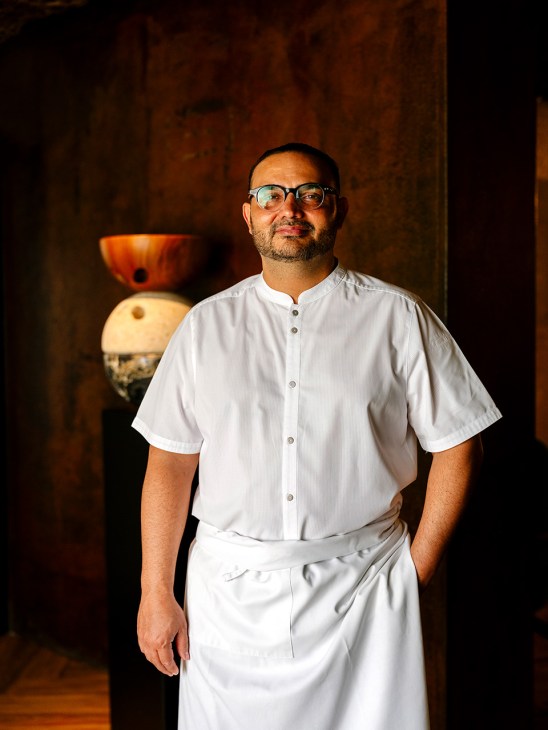
Another Casa Velázquez tenant is Casarré, the city’s hippest dining room. Swiss-Dominican chef and restaurateur Olivier Bur relocated from Zürich in 2023 after years of culinary research on native plants and seafood across the Dominican Republic and neighbouring Haiti (the nations share the island of Hispaniola, which is the second largest island in the Caribbean). He has distilled his findings into a multicourse dinner for which every ingredient, plate, cup and utensil is locally made. “I’m not a fan of tasting menus personally but we have so many ingredients that nobody knows, not even locals, so we would need one hour to explain everything to you,” he says during afternoon prep. Bur settled in the Ciudad Colonial in part because of a strong creative community that still values craftsmanship.


In between showrooms for noted Dominican fashion designer Jenny Polanco and edgy new contemporary art shows at the gothic-style Los Remedios chapel, the sights and sounds of busy hands making things lurk behind nearly every door, from amber and larimar jewellery from Joarla and hand-rolled cigars at Caoba to an entire ceramics workshop housed in the courtyard of Casa Alfarera. Many products bear the label of Manos Dominicanas, a national initiative to promote Dominican crafts, including the well-curated gift shop at Centro Cultural Taíno Casa del Cordón, the latest addition to the old town’s rich stock of museums and cultural centres, and concessions at Las Américas airport.


A sack of heirloom limes dropped off that morning sits by the door at Casarré. Too many for that night’s dinner, says Bur, so the extras are destined for the upscale Piantini neighbourhood across town where haute gastronomy with Dominican ingredients first took off. Ahead of the citrus delivery, Monocle makes a call at Ajualä. With its thatched roof, secluded garden and clean lines, the restaurant’s tropical modernism could slot easily into São Paulo’s Jardins neighbourhood.
Originally from Venezuela, Ajualä’s owner and chef, Saverio Stassi, has cooked in seven different countries. When he arrived in Santo Domingo in 2003, he estimates that there were 50 restaurants, 10 of which were of decent quality. Today there are more than 80 on Piantini’s main avenue alone. “It’s a city of opportunity that respects foreigners,” says Stassi. “You can live well here without the million dollars you would need in Malagá or San Sebastián – I’m 10 minutes from the beach and half an hour from the mountains.”
Pending traffic. The city’s transportation network leaves much to be desired, with a limited metro (the only subway in the Caribbean) running a total length of 48.5km and no rapid bus transit of which to speak. Taxis are plentiful but gridlock can be gruelling. Despite its seaside setting, the lack of a clean beach within city limits is also a drawback, though the mayor, Carolina Mejía, is touting improvements with the Malecón Deportivo, a corniche for the sporty set opening later this year as a legacy of the city’s host role during the 2026 Central American and Caribbean Games.
Juan Manuel Gaitán, a Colombian ad executive who has completed stints in Buenos Aires and Melbourne, was recruited by Ogilvy to serve as the agency’s chief creative officer in the DR. The Santo Domingo traffic was a grind and road trips to the interior were hampered by poor nighttime illumination, so he turned the crumbling infrastructure into creative inspiration for client Chevrolet. The campaign Night Signals installed billboards that function as car ads during the day but double as road-safety signs after dark. The clever concept won two awards at last year’s Cannes Lions, which was vindication for Gaitán and his Colombian actress wife that they had made the right choice when moving to Santo Domingo and starting a family here. “I’ve always wanted to live on an island,” he says. “The nature and the sea inspire my creativity.”
For residents across the city, from denizens of the high-rise precincts to old-town dwellers, security is not a major concern. Stassi relates how the morning before he meets Monocle at his restaurant, he accidentally left the keys in his motorcycle while playing tennis. It was still there when he got back – not something to recommend but encouraging, nonetheless. Ciudad Colonial residents feel similarly as they take an evening stroll or head for a night of salsa, bachata and merengue. The Dominican Republic’s tourism police, Politur, are widely respected and effective. In 2024, the homicide rate dropped for a third consecutive year and the DR now ranks as the second-safest country in Latin America – all achieved while holding free and fair elections and without installing a “cool dictator” like El Salvador’s Nayib Bukele.
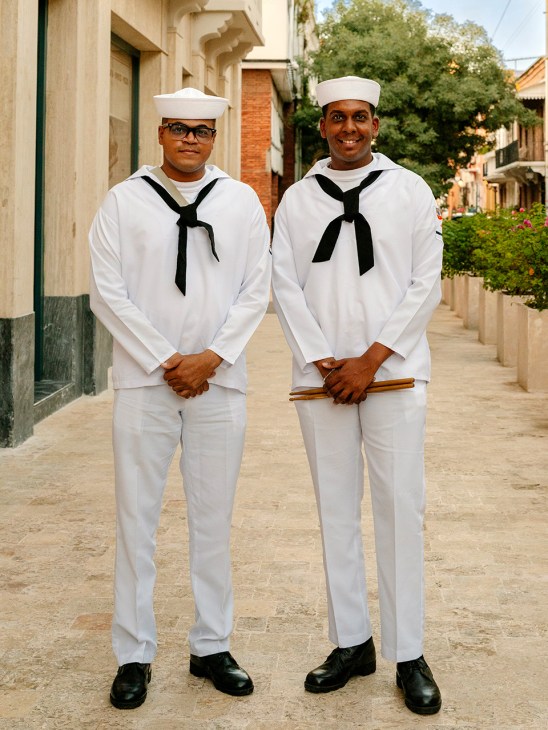

This momentum is drawing Dominican talent back to the island, such as interiors and travel photographer Victor Stonem, who returned from Barcelona in 2021 and recently published a photo book of interiors from across the old town. It’s also keeping ambitious locals from leaving, such as Omar Garcia, better known by his nom d’artiste, Angurria. Together with his partner, Venus Patricia Díaz, they run a cultural production agency that works with Unesco to promote the creative economy in the DR and organise art and entertainment festival Caye, which takes over a plaza outside the old town walls. The last edition attracted 13,000 attendees; its first edition generated RD$3.8m (€50,300) in economic activity.
Garcia, a former shortstop who works on mural commissions for Major League Baseball – the sport being one of the country’s leading soft-power exports – understands the appeal of moving abroad but with solid air connections from Las Américas airport to Miami, New York and Madrid, he finds that Santo Domingo suits him just fine. “The sport and entertainment industries are looking to the Dominican Republic as both a market and source of cultural raw material,” he says. “The sky is the limit here.”
Open for business
A business-friendly climate under the Dominican Republic’s president, Luis Abinader, who was re-elected in 2024, is a national draw paying dividends in Santo Domingo. The DR jumped the most out of all Latin American countries on the Latinvex Global Business Complexity Index, from among the eight worst to the five best, chiefly thanks to a 2023 national law introducing mandatory electronic invoicing for all enterprises. Foreign direct investment is also at record highs, totalling $2.89bn (€2.46bn) through the first half of 2025, a 15.3 per cent year-on-year increase.
How Cape Town’s beautiful €2m public pool upgrades are making a splash
Straddling a peninsula at the tip of the African continent, Cape Town is famous for its beaches and dramatic landscapes, even though much of the city is flat and far from the ocean. For those closer to the sea, water temperatures remain low throughout the year, making ocean swimming an endeavour not for the faint of heart. In 1908 the Long Street Baths, a beautiful Edwardian swimming pool, was opened in the South African legislative capital’s CBD to provide more temperate respite for residents during the summer. Since then, a further 36 public pools have been built, many of them since the end of apartheid in the early 1990s, in neighbourhoods once designated “black” or “coloured”. It is the residents of these areas who are most likely to be without easy access to the coast.

“Our beaches are world-class and we’re very proud of them,” says Francine Higham, the member of the city’s mayoral committee in charge of community services and health. “Public pools serve a different purpose. They’re embedded in communities: places you can walk to, visit after school or pop into on the weekend.” Severe drought (Cape Town almost ran out of water in 2017) and the coronavirus pandemic meant that the city’s government reduced investment in recreational facilities.
With those challenges behind it, Cape Town, under the leadership of its young, driven and popular mayor, Geordin Hill-Lewis, has invested R40m (€2m) in upgrading its public pools. This summer all but one of the city’s 37 community pools are operational, the highest number in 15 years. “In many areas, particularly those facing daily challenges of poverty and crime, these spaces provide structure, opportunity and hope,” says Higham. Monocle visited three (Sea Point, Muizenberg and Newlands) at the beginning of the school holidays to take the temperature of this refurbishment programme poolside.
Sea Point
It’s 17.30 on the first Sunday of the holidays and the sun is leaning towards Robben Island. Many young people are grouped around the edges of the vast oceanfront pool. A chant cuts across the gentle murmur of the swimmers: “Go! Go! Go!” At the end of the three-metre-high diving board a teenage boy peers down nervously at the water. Eventually, a lifeguard leads him sheepishly off the board and back down the ladder. Seconds later, it’s back to business as usual, with acrobatic men and boys performing flick-flacks and swallow dives from the five-metre-high platform.
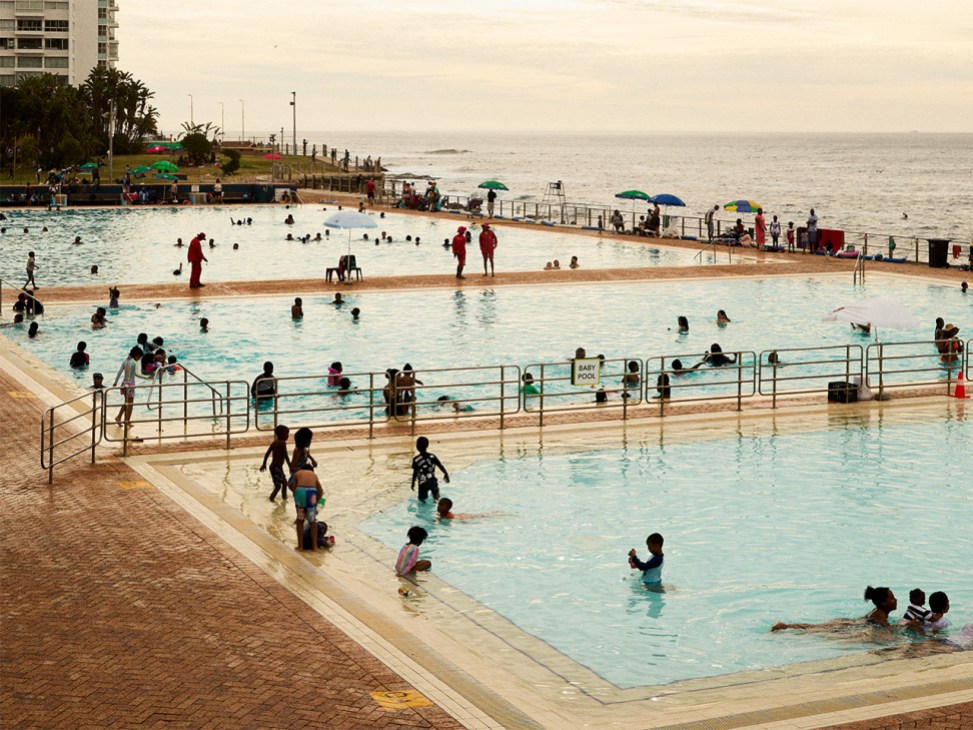
One of the most impressive divers is Keano Cedras, who lives in Athlone, 20km away. He has been coming to Sea Point since he was a babe-in-arms. Indeed, the swimming pool is home to his family’s business: Cedras’s grandparents have rented out umbrellas here for more than 30 years and now he and his brother, Reece, perform the same service, charging R40 (€2) a day. “It’s a good job,” he says. “You enjoy yourself while you work. Sea Point is my second home.”
The coastal resort of Sea Point was established in 1880 by British colonists inspired by Victorian bathing spots back home. On a rocky stretch of coastline with few places to swim, the current facility, which still pumps water directly from the Atlantic Ocean to fill its pools, was opened in 1959 at the height of apartheid. In the beginning, its azure waters and pristine lawns were accessible only to white people but this restriction fell with the end of the segregationist policy. These days it’s common for long queues to form outside its art deco entrance long before the pool’s 07.00 opening time.
Sitting nearby are Shakeelah Saayman, Ashif Abdulkader Gaylanie, “El Chapo” Williams and Sadiq Stemmet. The friends have travelled from Manenberg, a small suburb with a big gang problem: you’re three times more likely to be murdered there than elsewhere in South Africa. “We come here every weekend,” says Saayman. “The pool is much better than the beach. If we go to the beach, I can’t leave my baby sister to swim alone. It’s safer here.”


On a sweltering Sunday afternoon, Sea Point echoes to the sounds of Capetonians enjoying the first of the summer’s consistent heat. During cooler times of the year, this is a popular training spot for open-water swimmers – many of whom make up the Friends of the Sea Point Pavilion (FSPP), a charity that runs swimming programmes for local residents. The FSPP, which is funded by the rental income collected from food vendors on the complex’s forecourt, recently spent R2m (€100,000) to refurbish Sea Point’s original 1950s entrance.
Muizenberg
On the opposite side of the Cape Peninsula is Muizenberg Swimming Pool. Also founded as a Victorian seaside resort, Muizenberg is flanked by wealthy suburbs such as Lakeside to the north and the Cape Flats, an expanse of townships and poorer suburbs, to the east. Macchiato-sipping, 4×4-driving surfers lounge alongside families who have come on public transport with packed lunches. Muizenberg’s pavilion, which has been repainted as part of the mayor’s refurbishment programme, is designed to look like a ship, while the landscaping, palm trees and contorted water slides give the place a Caribbean atmosphere.
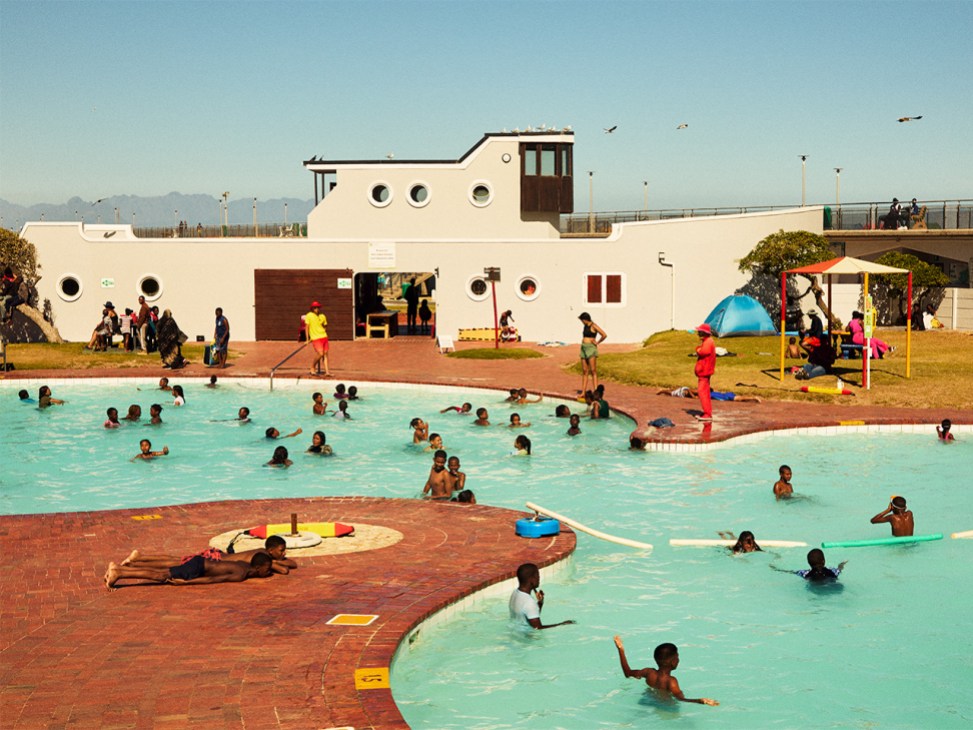
Its spruce-up has brought a bigger crowd than usual this summer. Khaaliq Khan is an 18-year-old graduate from Lavender Hill, a low-income suburb 5km away. He is here on an end-of-year excursion with his madrasa, an Islamic religious school. Khan and his mates started queuing to get in at 06.30 and, 10 hours later, show no signs of flagging.
“We are just waiting for 17.00 – that is our time,” he says, with a devilish smile. “I’m not sure if the lifeguards know but that’s when we’re all going to jump in the pool.” Lounging in the shade nearby, unaware of the impending splash mob, are sisters Evelyn and Beauty Zimba, and Evelyn’s four-year-old daughter. “I’ve been coming here my whole life,” says Beauty, who lives in Capricorn Park. “It’s good to see it looking cleaner.”


While it should hopefully be all fun and games for the swimmers at Muizenberg today, Aziz Rayners – one of 557 lifeguards on duty across Cape Town’s pools this summer – is on constant alert. “This is my second season,” says the lean 20-year-old computer-science student, sporting retro round sunglasses and a sparse goatee beneath his wide-brimmed red hat. “It’s a good holiday job but it’s also a big responsibility – last year I prevented a few drownings. They look like they’re swimming but then their eyes go big and they start panicking. Even the person next to them won’t know that they’re drowning.”
Reassured by Rayners’ vigilance, Monocle takes a dip. On this sultry afternoon, as the sound of children laughing wafts along on the gentle sea breeze, it’s difficult not to see Muizenberg as emblematic of a brighter future for Cape Town, a city still riven with divisions that, while no longer enforced by the government, are nonetheless evident in many areas. This swimming pool might represent the idealised rainbow nation. As part of the citywide R413m (€21m) seafront upgrade, Muizenberg will see R228m (€12m) invested in its parking areas, seawalls, coastal paths and beach huts. A brighter future indeed.
Newlands
Nestled in Cape Town’s southern suburbs, not far from the cricket stadium that shares its name, Newlands pool used to be South Africa’s home of competitive swimming. Today regional heats and Olympic training take place at the University of the Western Cape. Newlands’ grandstand is off-limits and the diving board has been removed but the crowds flooding into the pavilion on the first day of the summer season are enjoying a complex that has had a winter makeover. Many of the pool’s pumps have been replaced, while the changing rooms have been retiled and painted. Newlands’ location in a richer part of town brings a wealthier clientele but there’s still an unrestrained atmosphere that only sun and a large body of water can bring.
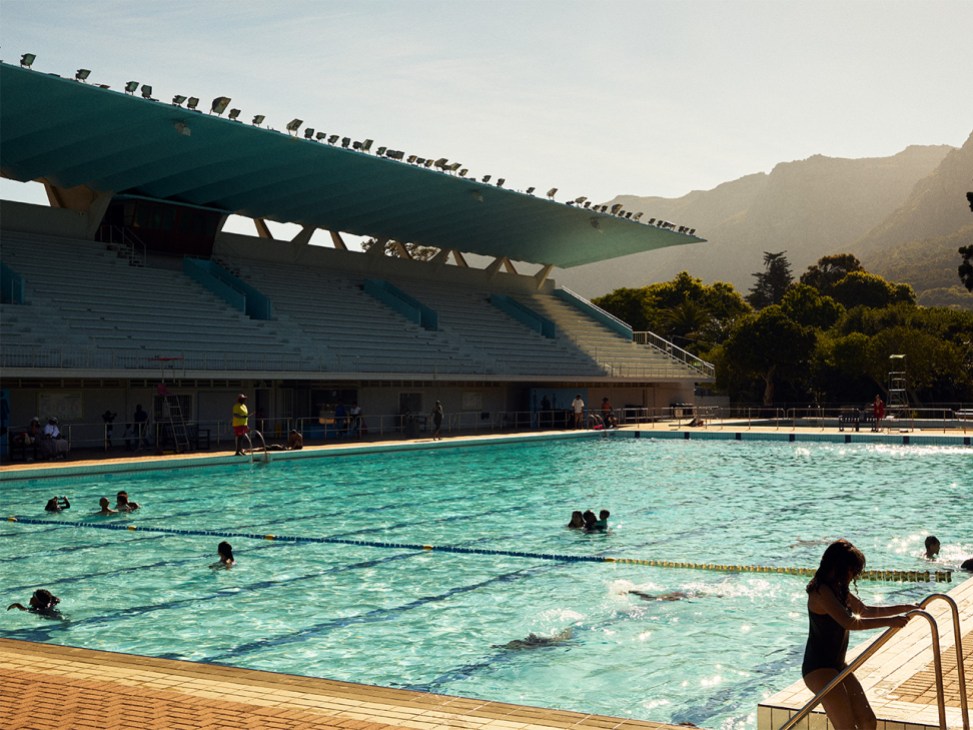


Back for the first time in 10 years is Taariq Adams, who works on cruise ships in the US but has returned to South Africa with his wife and children for the summer. “Newlands has a park and a pool; the children can play and I can swim,” he says. “We’ve had an awesome time and the tariffs are so cheap.” Despite a higher social bracket, a family of four pays little more than R24 (€1.25) for a day pass to Newlands, similar to the rate at other Cape Town public pools, all of which are subsidised by city hall.
Beyond the jovial din is the sound of thrashing as a lone serious swimmer ploughs back and forth across the deep end. He scythes through the water in a metronomic freestyle, before breaking into an explosive butterfly, revealing dark Speedos emblazoned with the South African flag. “While Newlands was closed, I’ve been training in the gym or the sea,” says mechanical engineer Louis Gouws, as he rests on the edge of the pool. “But this is much better. It’s outside, it’s 50 metres long and I can look at Table Mountain every time I breathe. I’ll be here a few times a week for the rest of the summer.” Lucky him.
Read next: Dive into history: The art deco charm of Paris’s Piscine Pontoise