Issues
Monocle preview: December/January 2025/2026 issue
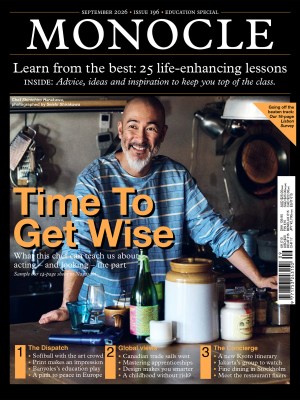
Monocle’s December/January issue is out now. With handy insights from the past year and a view of what’s to come in 2026, our bumper winter edition is packed with reports, ideas and long reads to savour. We head to Beirut to hear about how the city is bouncing back, step behind the curtains at the Royal Danish Ballet, pick up presents in our festive gift guides and sit down for culinary treats at a few of Paris’s best bistros. Plus: dip into our Japan survey, which has plenty of lessons in mobility and retail for the year ahead.
Monocle’s December/January issue is here to offer you a steer on the new year
There’s a strange thing that happens at this point in the year: time seems to speed up. Summer – at least, in the northern hemisphere – passes at a languorous pace, then autumn pokes its russet-leafed nose in but, when November hits, the toboggan of time suddenly starts careening through the days with gusto, as you hold on for dear life. And then bang! It’s a new year.
Well, this December-January double dose of Monocle is designed to guide you through it all – from planning Christmas, securing gifts (may we suggest a subscription to our magazine?) and plotting your 2026 travels (Japan, here we come) to, hopefully sitting by a roaring fire, contemplating what the year ahead has in store (turn to our perspicacious Forecast pages to find out). But, for all of us, Monocle included, this is also a moment to take stock and ask: what did we achieve in 2025? Regular Monocle readers and subscribers to our daily newsletters might feel that they already know what we have been up to but I’ll flag a few highlights anyway.

In the past 12 months, we have opened a new bureau and café-cum-shop in Paris that has underlined our commitment to taking care of people. Our books team has delivered two new additions to our Handbook series (one on Greece and, just landing, another on Switzerland), as well as the wonderful Designers on Sofas book (fun, quirky, beautiful – what we all need more of in our lives). We also produced a great Companion paperback for the Venice Architecture Biennale. Our events team has bounced around the globe this year but the pinnacle was our Quality of Life Conference in Barcelona – the city shone and our readers once again proved why they are such amazing people. Also out on the road, the team from Monocle Radio turned up everywhere from Abu Dhabi to New York. We continued to invent with print, bringing out the premiere issue of our Design Directory. Plus, we launched a new digital experience, including a sparkling website.
In an industry focused on creativity and finding freshways to deliver stories, I am often asked, “What’s new at Monocle?” I usually need to ask people how long they’ve got before commencing my reply. But I am pleased to add that many are fully aware of Monocle’s ambition and successes – it’s why we have such supportive partners and why this magazine has such a healthy weight. While you catch your breath, let me gently suggest a few stories in the issue that deserve your attention.
In our Concierge pages, we head off for a tour of classic Paris bistros, savouring a feast of seasonal dishes (somehow leaving space for dessert). Our Expo takes you to an island where Swedish and Finnish statespeople meet to discuss their shared concerns; we eavesdrop on the latest get-together. In our design pages, we survey an archive that charts the history of outdoor brands, including the founding days of The North Face and Patagonia. We also look at why Beirutis are allowing themselves to feel more confident about the future.
So I hope that you enjoy this issue and the chute it offers through Christmas and into 2026. And thank you for all your support, ideas and feedback across this year. Here’s wishing you a happy Christmas and the very best 2026. As always, you can contact me at at@monocle.com or check the masthead if you would like to get in touch with any of our editors (we publish all of our addresses).
It’s high time to hoist new standards for flag-bearing as expressions of unity, not division
On 14 September 1814, in the dawn’s early light, US troops stationed at Fort McHenry in Baltimore harbour hoisted their nation’s flag. They did this every morning, as the bugler sounded reveille. At this particular sunrise, though, their routine chore had greater resonance.
For the previous 24 hours, Fort McHenry had been clobbered by the rockets and mortars of a Royal Navy fleet that had sailed up Chesapeake Bay. But it had stood and the flag was the US soldiers’ way of letting the British sailors know. Another witness, Maryland lawyer Francis Scott Key, was moved to verse. His poem and Fort McHenry’s flag would both become known as the star-spangled banner. Americans might therefore have reason to take their flag more seriously than most. And they do.

In October of this year, when the US president, Donald Trump, was due in the UK for a state visit, the 66 star-spangled banners that were to be unfurled on the Mall in London and at Windsor Castle were rejected by the US embassy, which was unhappy with the precise shade of red amid the white and blue. New flags were commissioned at a cost of £52,800 (€60,000).
It might seem like a strange time to make the case that there’s something to be learnt from the US’s affection for its flag. To be clear, we’re talking about the easygoing pride expressed in banners hung from small town porches, not the slobbering flag-fondling regularly perpetrated by the kind of ostentatious patriots more likely to make any decent citizen want to burn a flag than salute it. In 2025, the banner of one of the UK’s constituent nations – the red-on-white St George’s Cross of England – became the subject of a culture war version of Capture the Flag.
In towns across England, St George’s Crosses were hung and spray-painted by that variety of conservative nationalist who would rather conduct this sort of performance than do anything to materially improve their society. The UK’s centre-left government was compelled to contortions, as its senior ministers all but claimed that their home decor was exclusively comprised of the St George’s Cross and Union Flag and that they enjoyed nothing more than sitting down with the family to stare at either or both.
Neither of these is quite the way to go about it. In peacetime, at least, a flag should not be flown in any spirit of vengeance or triumph. Nor should a flag be worshipped or protected. And it should never be compulsory to wave one. A flag should be flown freely; an expression of happiness with and gratitude for the best of the country that it represents. Nevertheless, even the most secular societies contrive to impute something approaching sanctity to these patterned pieces of cloth.
In November 2021, there was moderate uproar when the French president, Emmanuel Macron, switched the blue of Le Tricolore to a somewhat darker shade. People who recalled that the lighter blue was the preference of Europhile former president Valéry Giscard d’Estaing – who changed it in the 1970s to match the EU flag – wondered if his successor was signalling a rift with Brussels or attempting subliminal outreach to nostalgists and nationalists. The response from Macron’s office was “nonsense”; the president stated that he merely preferred the navy blue and its connections to French history.
Flags are not set in stone (they wouldn’t flap, for one thing). Their designs change: the original star-spangled banner had only 15 silver stars on its blue canton. And the meaning that we impose upon them evolves and/or is in the eye of the beholder – or, indeed, burner.
Syria is the most recent country to run up a new standard, or at least to revive an old one. The fall of the Assad regime was marked by hauling down the red, white and black-striped Ba’athist banner with two green stars and replacing it with a variation on the green, white and black-striped flag with three red stars, which heralded Syria’s first flush of independence in the 1930s. It was an important moment, symbolising a fresh start and a return to principles. But, as with anything vexillological, it was essentially a cosmetic gesture. Any flag, like any nation, is an eternal work in progress.
Comment
Modern flags are not symbols of exclusion and aggression; they should be unfurled in a spirit of joy not anger.
Where to shop in Manhattan now: Five multi-brand retailers worth visiting
Manhattan practically invented Christmas shopping. In department stores such as Barneys, Bloomingdale’s and Bergdorf Goodman, festive window displays, Santa’s grottos and gift wrapping were perfected and exported worldwide. The release this year of They All Came to Barneys, a memoir by Gene Pressman, co-CEO of his family’s store during its 1980s heyday, has rekindled nostalgia for when New York retail led the world. Since then, many icons of yesteryear, including Barneys, have closed, while other storied names have lost some of their lustre. Yet there has recently been a multi-brand-store boom, with many global retailers entering the market. Here are our picks.
(For Monocle’s complete city guide to New York, tap here)
1.
Printemps
1 Wall Street
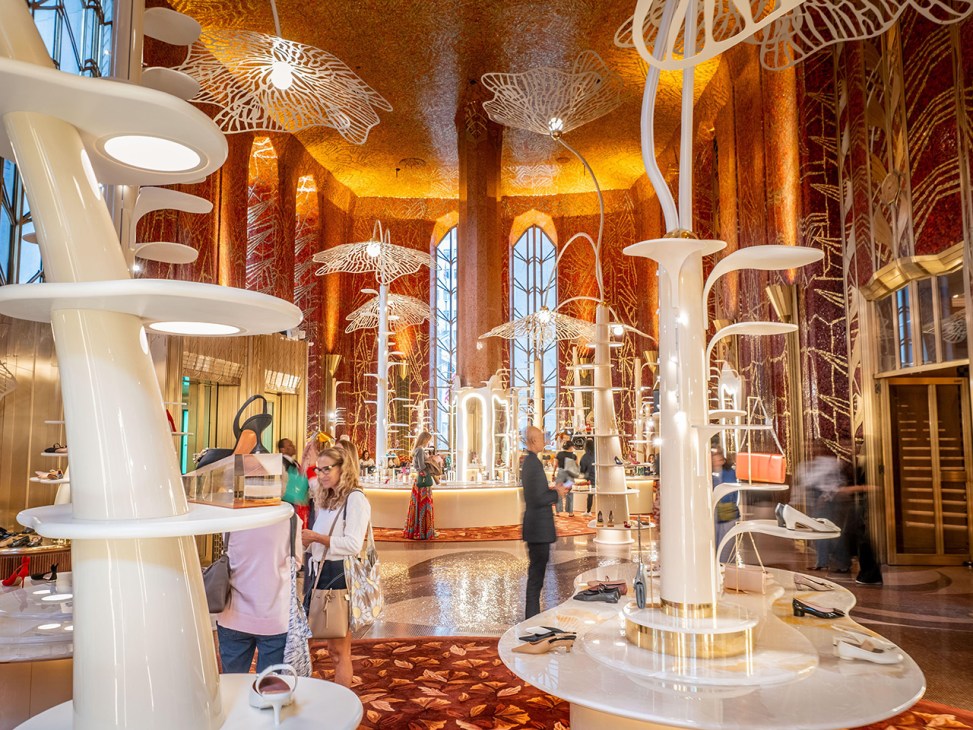
French retailer Printemps opened its first US outlet in Downtown in March. As well as niche designers such as Joseph Duclos and Taller Marmo, plus many hard-to-procure French cosmetic brands, it offers a reason to linger, with five F&B offerings including a champagne bar. The cultural programming is ambitious: Jean Paul Gaultier haute couture pieces have been on display, while an exhibition recently celebrated Balmain’s 80th anniversary.
2.
Luisaviaroma
1 Bond Street
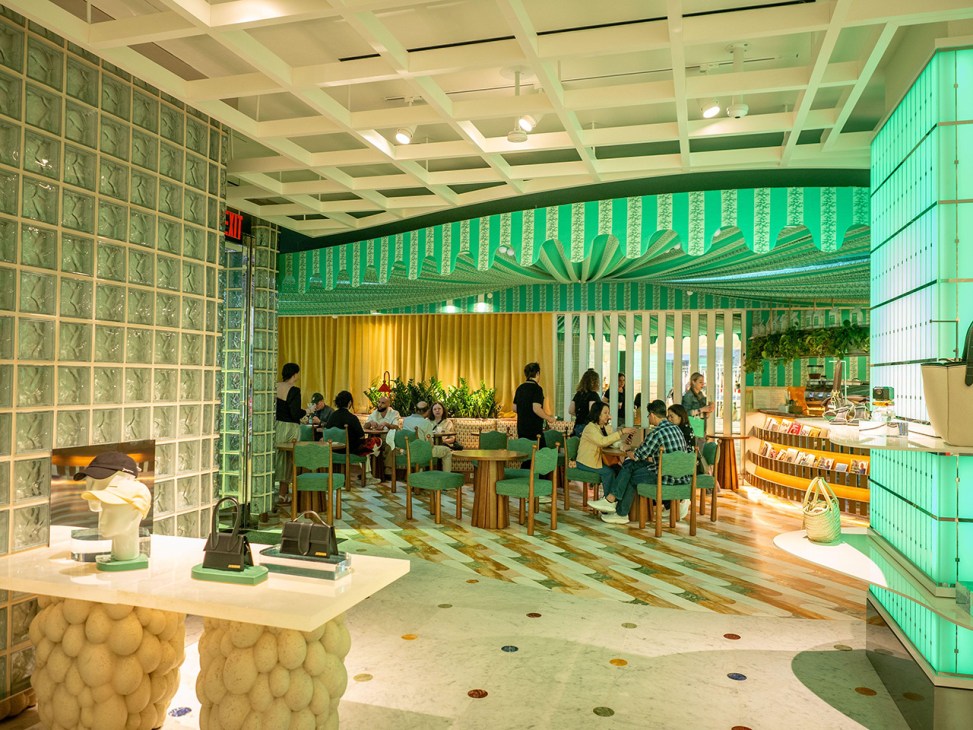
The Florentine brand, founded in 1929, recently made its debut in the US, opening a 1,000 sq m shop (its first physical store outside Italy) in a historic NoHo building with an elaborate cast-iron façade. Across three floors, the luxury fashion retailer stocks brands such as Auralee and Valextra. It also offers personal styling, with a floor where clients can view exclusive collections.
3.
Steven Alan
511 West 20th Street
More than 30 years after opening his flagship SoHo store, US menswear designer Steven Alan has a new space in Chelsea. Alan was known for introducing European brands, such as Acne Studios and Kitsuné, to US shoppers and for his own-label wardrobe staples in classic silhouettes. The new space mixes his practical jackets and shirts with vintage sweaters, ceramics and homeware from Japan.
4.
La Garçonne
504 Greenwich Street
Since launching online in 2005, La Garçonne has expanded steadily, opening its new Manhattan men’s store this year in a warehouse space in Tribeca. Shoppers come for unisex workwear-style pieces – jackets from Lemaire Men and jumpers from Margaret Howell – and to enjoy the loft-like room with neat racks and shelves that showcase the retailer’s handsome inventory.
5.
Colbo
51 Orchard Street
Opened by designer Tal Silberstein in 2021, Colbo is both a concept store and gathering space. In a narrow glass-fronted space in the Lower East Side, it stocks items from lesser-known labels such as Kartik Research and Yoko Sakamoto, as well as vintage pieces. There’s a coffee station and a vibrant events calendar.
Read next: Monocle’s complete city guide to New York, complete with downloadable map
Monocle’s 2025 Soft Power Survey – who is quietly gaining or losing influence in a multipolar world
This spring, Monocle commissioned what turned out to be the final piece of writing by Joseph S Nye, the political scientist who coined the term “soft power” and died in May at the age of 88. Nye’s death came as his idea – to consider a country in terms of its culture, ideals and subtle influence, not just its economy and military – was under attack. But as he argued (and as Monocle has believed since our first survey on the subject in 2010), soft power’s influence is even more important in a multipolar world.
With that in mind, here are some countries that have notably risen or fallen in the soft-power stakes this year.

Mexico
Michelin has launched its first dedicated Mexico restaurant guide but the nation’s cuisine is only an appetiser. In 2024 it welcomed 45 million international tourists, making it the sixth most-visited country in the world. Claudia Sheinbaum, its first female president, helps to project an image of confidence and coolness. Most of those entering the ballot for tickets to next summer’s Fifa World Cup (jointly held in Mexico, the US and Canada) will surely be hoping to attend a match in this fun, football-mad country.
Italy
Italy will welcome the world in 2026 as Milan-Cortina hosts the Winter Olympic Games in February. The country has sometimes fallen short when it comes to everyday necessities (ensuring that everything runs smoothly) but can take heart from its ever-improving annual events, such as Salone del Mobile. Yields on Italian bonds are at about the same level as France’s and that confidence can be seen as visitors glide along freshly laid roads between Milan and the Alpine ski resorts. The Lombard capital is becoming a lure for the wealthy due to its tax breaks. In 2025 it became Europe’s “third-richest” city in terms of millionaires and billionaires.
France
The sight of a mechanical lift hoisting a gang of power-tool-wielding burglars up to the Louvre’s Gallery of Apollo in broad daylight marked the end of a difficult year for France. Successive prime ministers have failed to unite parliament over a workable budget and even reliable stalwarts such as LVMH and Kering have had difficult years. The country’s charms remain irresistible in fashion, art and culture but many will be hoping that 2025 was a blip rather than a taste of further chaos to come.
Canada
Was this finally the year that Canada stepped out from under the sizeable shadow of its southern neighbour? Donald Trump’s threats to annex the country sparked anger among Canadians and the gloves came off. The mobilisation of famous actors and sportspeople to deliver a riposte to US policy reminded the world of the country’s enviable comedic and sporting talent, while a homegrown campaign to buy locally made goods highlighted the quality of its domestic products.
Japan
When Sanae Takaichi welcomed Trump to Tokyo in October, Japan’s first female prime minister offered a masterclass in her country’s culture of hosting and gift giving. The US president was presented with six “Trump”-embossed golden golf balls, as well as a putter used by Shinzo Abe. Takaichi can be optimistic about the year ahead. After decades of deflation, the yen is gaining momentum, while retail sales are up and unemployment down. Shohei Ohtani is hitting home runs and the country’s unique attractions continue to drive a tourism boom that saw more than 36 million foreigners visit in 2024.
Puerto Rico
An honourable mention goes to the unincorporated US territory whose tiny size belies its huge cultural influence. After years of being a net exporter of people, immigration increased in 2024, with 15,000 more moving to Puerto Rico than leaving. Many are US citizens attracted by tax incentives, great weather and a fun-loving culture. Nobody embodies that culture more than Bad Bunny. In 2026 the rapper will be the first Latin male artist to perform solo at the Super Bowl.
Is Beirut back from the brink? Despite challenges for the Lebanese government, the city is getting its buzz back
“Did you see?” asks a friend when we arrive in Beirut. “There are now lanes on the airport highway and the traffic lights are working.” Driving into the Lebanese capital certainly feels different from when Monocle was last here. Back then, the road from the airport was flanked by billboards featuring stern-faced Hezbollah fighters. Today, in their place, cheerful banners declare a “new era for Lebanon”. Downtown, where the streets now echo to the sounds of construction rather than destruction, the ornate Ottoman façade of the Grand Serail, the Lebanese prime minister’s official residence, is one of many buildings shrouded in scaffolding.
“The population is looking for a new paradigm,” says Lebanon’s culture minister, Ghassan Salamé, surrounded by piles of books in his ministry office. “They are fed up with being told to be resilient, to smile.” Whatever it was that has finally moved the dial, there’s a sense that Beirut is beginning to show signs of a long-awaited recovery. This summer, the city’s beaches were packed but, more importantly, its pharmacies are fully stocked and electricity now sometimes stays on through the night. In April the country’s new finance minister signed a $250m (€215m) agreement with the World Bank to support renewable energy and grid resilience.
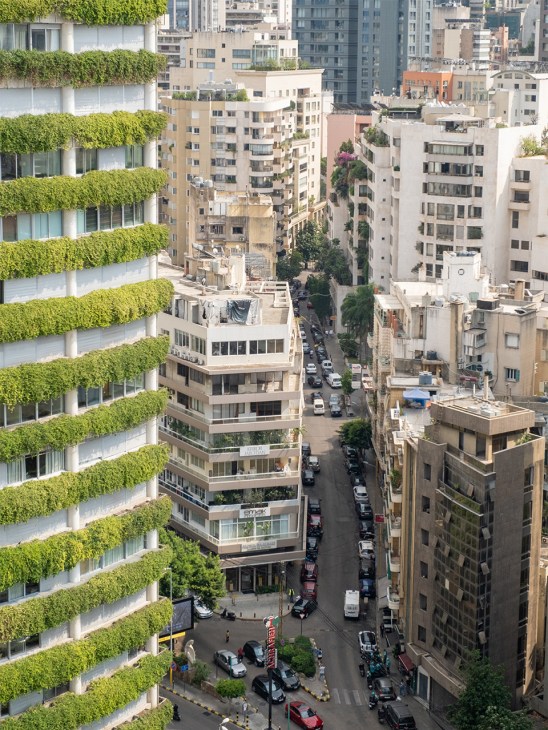
Lebanon could hardly have ended 2024 at a lower ebb. After months of heavy bombardment by Israel, the south of the country was flattened and swaths of Beirut’s suburbs lay in smoking ruin. Then, in early 2025, something unusual happened. After more than two years without a government, former army chief Joseph Aoun was appointed president. Though criticised for still being a serving commander, Aoun pushed through his choice of prime minister – Nawaf Salam, a veteran jurist and former president of the International Court of Justice – a few days after his election.
Things then began to move at great speed. Salam set about building a cabinet of politically unaffiliated ministers. Gone were the offspring of warlords and, in their place, the new prime minister appointed politicians with experience, talent and a seemingly genuine desire to improve the lot of their compatriots. Used to such governments taking months to form, Lebanese citizens at home and abroad were dumbfounded – in a good way. A 2025 Gallup poll recorded a 46-point increase (up to 62 per cent from 16) in public approval for the government, one of the largest such swings ever recorded in polling history.
Salamé is a returnee to government. The culture minister previously served in the same post between 2000 and 2003, during the heady post-civil-war days when Rafic Hariri’s reconstruction plans seemed to herald a brighter future. After two decades of serving high-level UN global missions, he’s back at the ministry’s helm. Looking ruefully around his office in the newly reopened Lebanese National Library, Salamé is fully aware of the colossal nature of the government’s challenge.
“Our problem is money; the public finances have gone bankrupt,” he says. “So, we’re being asked to do everything with no budget.” He and his colleagues face a breakneck climb on a fraying rope (the next general election is scheduled for May 2026) but he points out that what they have already achieved is extraordinary. “We have done more in six months than previous governments did in six years,” he says, his voice nearly breaking. “If people start to see real implementation, they’ll be more willing to trust us.”
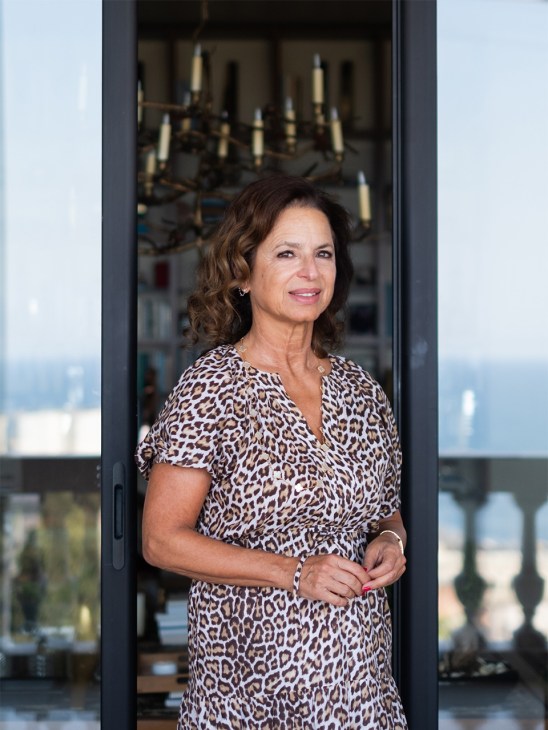
The new government’s good fortune wasn’t down to blind luck. Last year the geopolitical landscape in the Levant shifted significantly. Israel’s attack on Lebanon destroyed key parts of the country but also eroded the military might of Hezbollah and the grip that it had held over the country’s politics for decades. Meanwhile, the fall of Bashar al-Assad in neighbouring Syria eliminated a land route for supplying Hezbollah with Iranian weaponry and a new government was installed next door. Hundreds of thousands of Syrian refugees returned home as a result, easing pressure on Lebanon’s politics, economy and healthcare system. For once, it felt as though geo political forces were working in Lebanon’s favour.
Still, it would be naive to be too optimistic. While Beirut is getting its buzz back, the south of the country remains heavily bomb-damaged, with parts of it still occupied by Israel. Hezbollah meanwhile, is resisting the new government’s calls to disarm, prompting fears of conflict to come. Still, after years in which the country’s judiciary has seemed inert, the government has confirmed more than 500 new judges since coming into office.
In another positive sign, a budget was produced on time, allowing two major financial reform laws to be passed, reopening negotiations for an IMF deal. Most importantly for public confidence, ministers have started discussing how much and how soon Lebanese depositors will see financial compensation for the 2019 banking crash, in which the savings of many middle-class families were wiped out. Salamé and his colleagues hope to have some answers by January. “We have lost a lot of young talent to other countries,” he says. “They are watching now to see what we do.”
Crisis after crisis forced Lebanon’s youth to leave in search of opportunity and security. In 2021 there was a 450 per cent surge in emigration. Encouragingly, they have slowly begun trickling back. When the August 2020 port explosion took place, 34-year-old endocrinologist Ralph el Khoury and his colleagues at central Beirut’s Hotel Dieu Hospital had already been working on reduced salaries for months.
That day they treated hundreds of wounded patients for free. Traumatised, El Khoury had reached his limit. “The explosion was the trigger for me,” he tells Monocle. “I felt that the state had really failed us. I was afraid of spending my life in a country that was failing.” Many of his closest friends had already left and El Khoury knew that a stint in France could be a big boost to his career. So he moved to Paris, where he spent five years working on his specialism while learning how to augment healthcare using digital technologies such as AI.
In the French capital, El Khoury formed a close-knit group with other Lebanese expats. They would spend long nights wondering whether they would ever return home. But early this year the mood began to change. “For the first time in a long while, we could actually identify with the people in the government,” he says.
By August he felt the pull home, wanting to put his new skills to use. “It’s a big risk,” he says. “But I want to be here to rebuild my country, not just watch other people do it.” In the past year, hospitals have begun to receive regular medicine and equipment supplies, while the government has started planning the restructuring of healthcare to make it more accessible.
Lebanese architect Carole Azzi has also taken the leap homeward. The 38-year-old left for France a decade ago, thinking that she would only be away a year or two. Now that she’s back in the country of her birth, she is keen to use her expertise in cultural preservation to help Lebanon rebuild. “We’re not even starting from zero,” she says. “We’re hoping to reach zero and then build from there.”
Azzi is now involved in government rebuilding projects and hopes to teach a fresh generation of Lebanese architecture students. She says that she sees a new toughness in her young compatriots. “They are better than we were at that age,” she says. “They have had to be very inventive because those who couldn’t leave had to reinvent themselves here.”
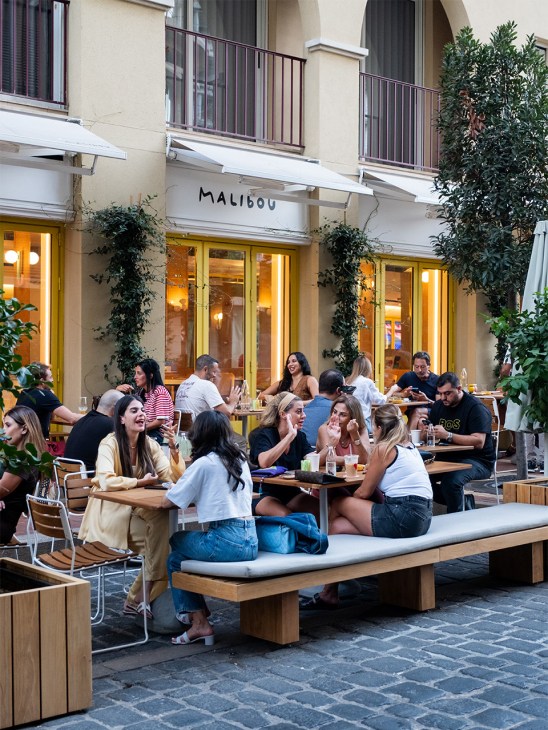
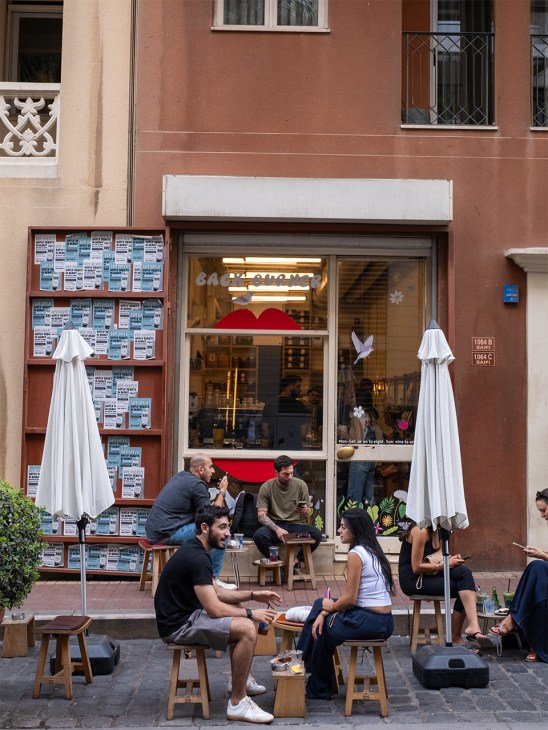
A distinctive characteristic of Beirut is the way that a hot neighbourhood can suddenly be ordained. In autumn 2025, there was a new cool kid in town: Saifi Village. With its salmon-pink façades, 24-hour electricity and Spanish moss tumbling from arched window frames, Saifi has long been considered an oasis in the centre of downtown. Once the preserve of yoga mums, it is now buzzing from dawn until dusk.
Pastel-hued restaurant Malibou sits on the corner of Mkhallissiye Street without a table to spare. “We’ve been busy since we opened in September 2024 but this summer we were packed every day,” says its manager, Hassan Abu Rashed. A quarter of all employment in Lebanon is in the hospitality sector. When purchasing power evaporated, so did the wages. In July the president signed off on a 56 per cent increase in the minimum wage across the private sector. Rashed’s pay packets are back to pre-2019 levels and customers are tipping generously.
Gulf Arabs have got the message that Beirut is again the place to be. The lifting of UAE travel warnings earlier this year was a huge boon for Lebanese tourism. Beirut-Rafic Hariri International Airport saw a million visitors in June and July – up 15 per cent on the previous year’s summer season – igniting hopes that the country’s tourism industry, which made up 19 per cent of its GDP before the 2019 crash, is back. The city was packed all summer, with crowds spilling out onto the streets, grasping cocktails and dancing to the strains of Fairuz and Umm Kulthum. It felt like old times.
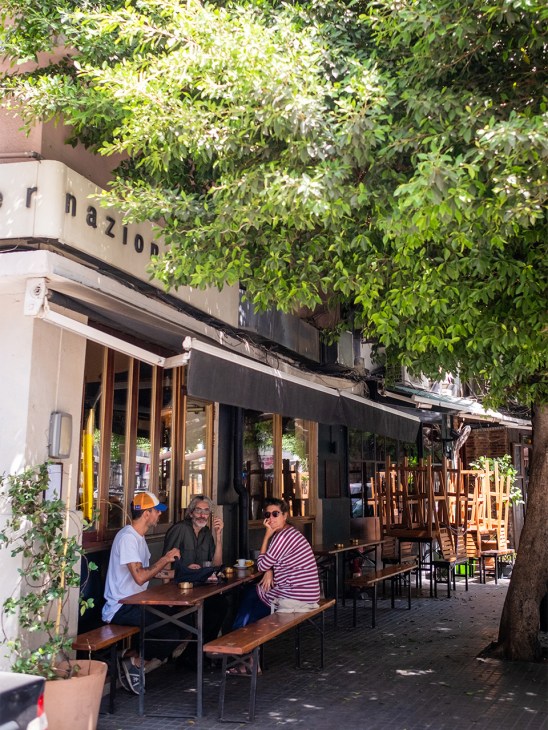
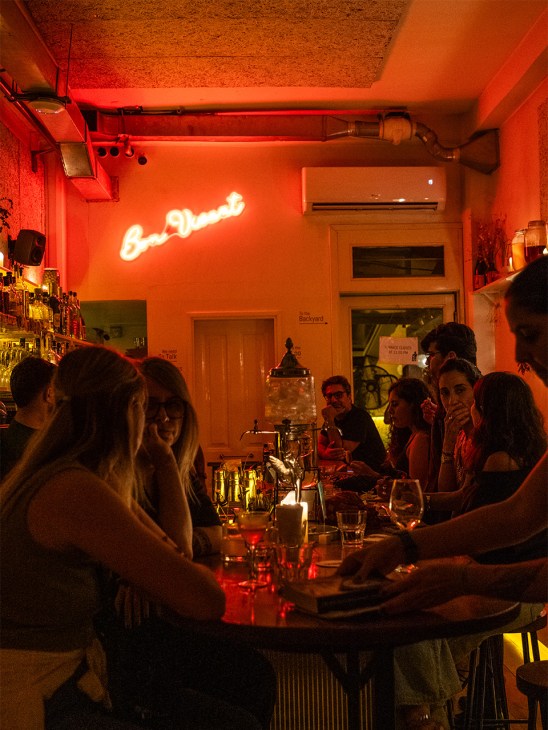
While the city has quietened down since the peak season, the spirit of those buoyant months has endured. Plane-loads of Middle Eastern tourists are descending on Beirut every weekend in search of delicious food and good times. Even short-term stability begets long-term investment. A highway intended to circumvent the dreaded traffic jams that swell on the seaside motorway north of the city every rush hour is finally under way.
The government also hopes to open tender on an airport near Tripoli in early 2026. Intended to complement Rafic Hariri, which is the only operational commercial airport in Lebanon, it will be well placed for the country’s most popular beach resorts. MEA, the national carrier, is launching a low-cost arm to ferry visitors to and from both of them.
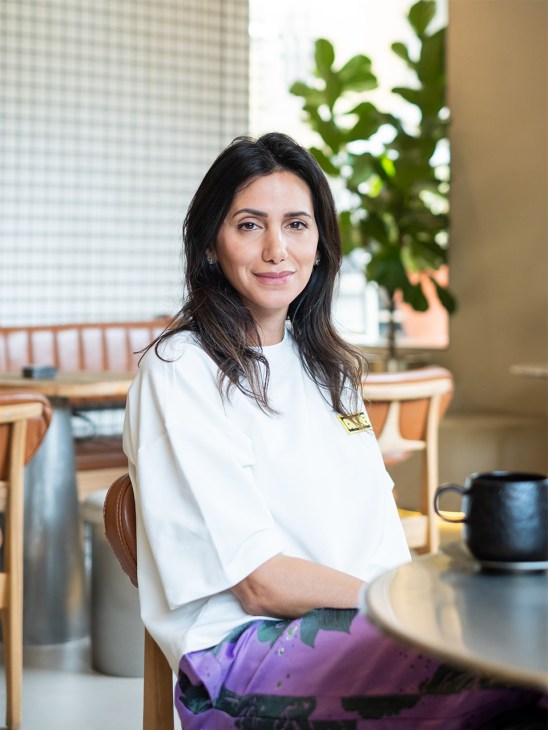
Rasha Halabi Assaf barely kept her Saifi Village-based boutique, Label Queen, going through the crisis. She has now opened two more businesses in the neighbourhood. Her café, Roff, serves high-end coffee to the cool crowd. Since starting it in January, Assaf says that it has practically marketed itself. “This year was a big change,” she says. “Brands are launching; hotels are opening. People are optimistic and investing again.” However, she says that the government needs to step in and support local entrepreneurs in the wake of the crisis.
Fellow business owners feel that the private sector is carrying the entire load of the economy, while facing heavy taxes for little return and high costs on imported goods. As a result, they are prioritising low-risk cash investment in retail and hospitality. “If anything happens, the losses are easier to absorb,” she says. “The banking system is there but we don’t trust it yet.”
In 2019, Lebanon’s youth took to the streets to demand change from its leaders. Now they’re coming back to make it themselves. Ghassan Haddad left the country 20 years ago after graduating from high school and worked as a consultant in Europe and the Gulf. When he was first asked to return to serve as chief of staff for the new tourism minister, Laura Lahoud, he was reluctant. But his family convinced him not to pass up the opportunity to be part of Lebanon’s next chapter. Lahoud says that her favourite part of her job is working with younger people such as Haddad. “They’re faster at everything, with a fresh outlook,” she says. “I learn a lot from them.”
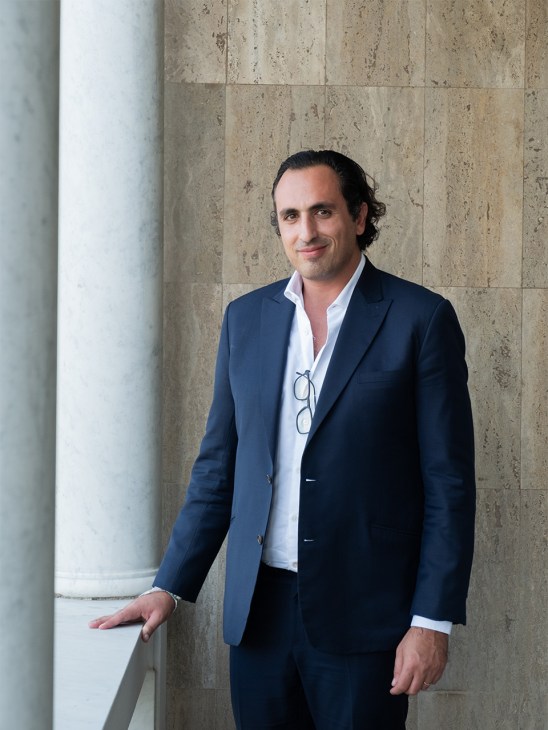
Unfortunately, not everyone is so keen. Like many of his peers, Haddad is having to push hard to change mindsets that are still stuck in the past. Modern digital skills have yet to permeate the top of government (aides still write phone messages down on scraps of paper) and increasing efficiency will mean a complete overhaul. “People tell me, ‘That’s not how we do things here,’” says Haddad. “I say, ‘That’s exactly the point.’ The people want change but they don’t want reform.”
It takes a huge leap of faith to give up on the status quo in return for an unknown benefit at some point in the future. That’s what this government is asking of a public that has had little reason to trust its leaders in decades. It’s a sentiment that Haddad shares with many of his youthful colleagues. They often gather in the evening to share their ideas, after a long day spent working to bring their country’s infrastructure up to speed.
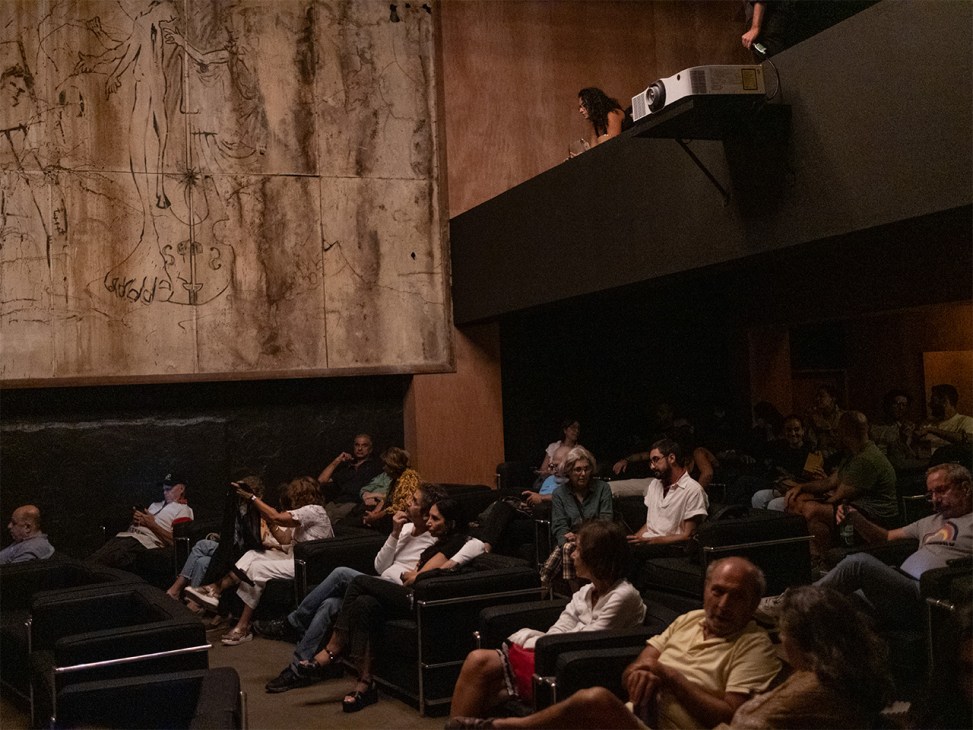
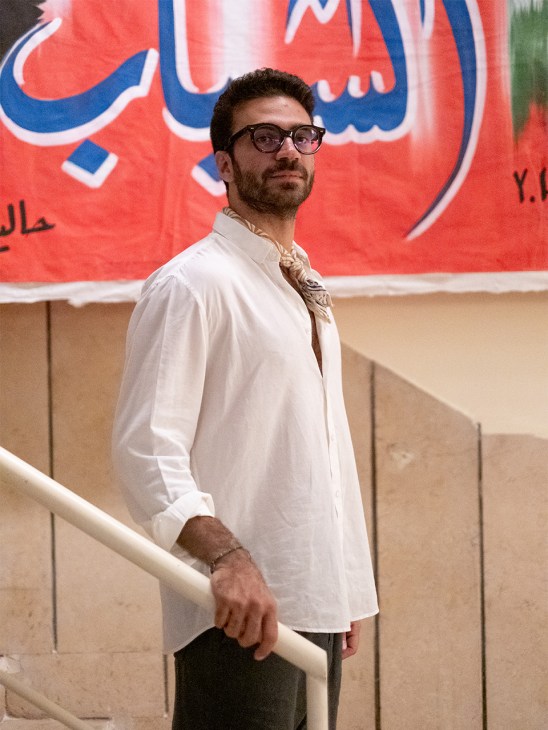
In the lobby of Bourj Hammoud’s Cinema Royal, young women drink beer as they wait for a free public screening of 1994 film Once Upon a Time in Beirut, put on by the culture ministry. “How was today?” one asks her friend. “Long, like every day at the moment,” she says. Then she smiles and adds, “But it’ll be worth it.”
This summer there were many such screenings and museum nights. For a few weeks, Beirut lived up to its mid-century moniker as the Paris of the Middle East. Lahoud’s next aim is to project middle-class Beirut’s success to other corners of the country. Her ministry has launched a tourism app intended to direct visitors to less frequented areas.
In common with many of her new colleagues, she never worked in politics before this and knows that it will take time to build trust. None of the current cabinet ministers plans to run in the next election, so they can focus on making meaningful, if difficult, decisions, she says. “We have tremendous natural wealth but our greatest wealth is our people,” she says, looking out from her balcony at the city below. “They find a way to continue.”
Lebanon’s political evolution
Behind today’s optimism is a complex recent history. In 1989, a power-sharing agreement between Lebanon’s 18 registered religious groups was intended to end the long civil war and prevent further sectarian violence. Instead, it encouraged gerrymandering, partisanship and cronyism. The same warlord families that had fought the conflict – which lasted from 1975 to 1990 – rigged the system in their favour and have spent the decades since running the country into the ground.
Government formation would typically take months, sometimes even years; indeed, in the past decade, Lebanon has spent longer without a functioning administration than with one. The country has endured much of recent history languishing under hamstrung caretaker governments. A 2024 survey by Arab Barometer found that 90 per cent of Lebanese people severely distrusted their government and its leaders.
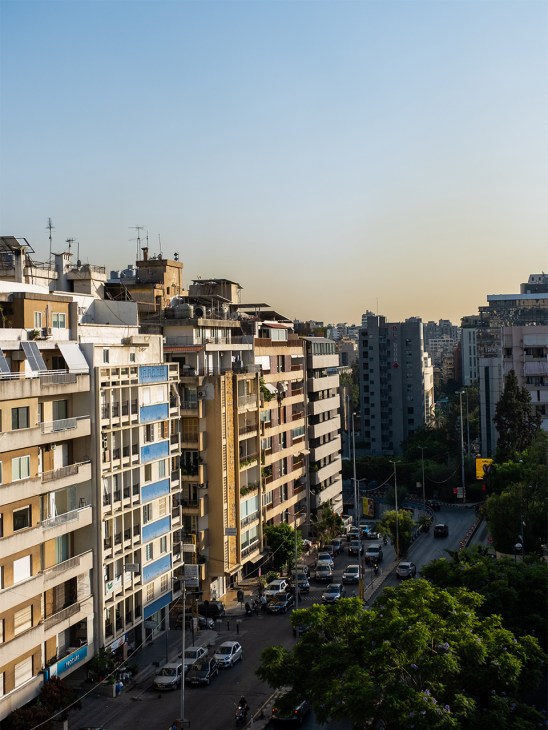
Meanwhile, Hezbollah, a Shia militia that rose to prominence following Israel’s 1982 invasion of Lebanon, has become a shadow state, with its own army, political party and bureaucracy based in its southern stronghold. Unlike other Lebanese militias, the group was allowed to keep its weapons after the civil war ended because of the threat still posed by Israel.
UN Resolution 1701, which ended the war with Israel in 2006, was intended to reverse that; under its terms Hezbollah would disarm and make way for the mixed-sect Lebanese Armed Forces, while Israel would withdraw behind the Blue Line, the two countries’ official border, and respect Lebanon’s sovereignty. Neither complied. This summer, the new government in Beirut discussed giving Hezbollah a deadline of the end of this year for it to disarm. The group’s compliance will have a huge bearing on whether or not the current wave of optimism in Lebanon continues into 2026.
Back to Beirut
A rundown of the key events in Lebanon’s complex history.
1.
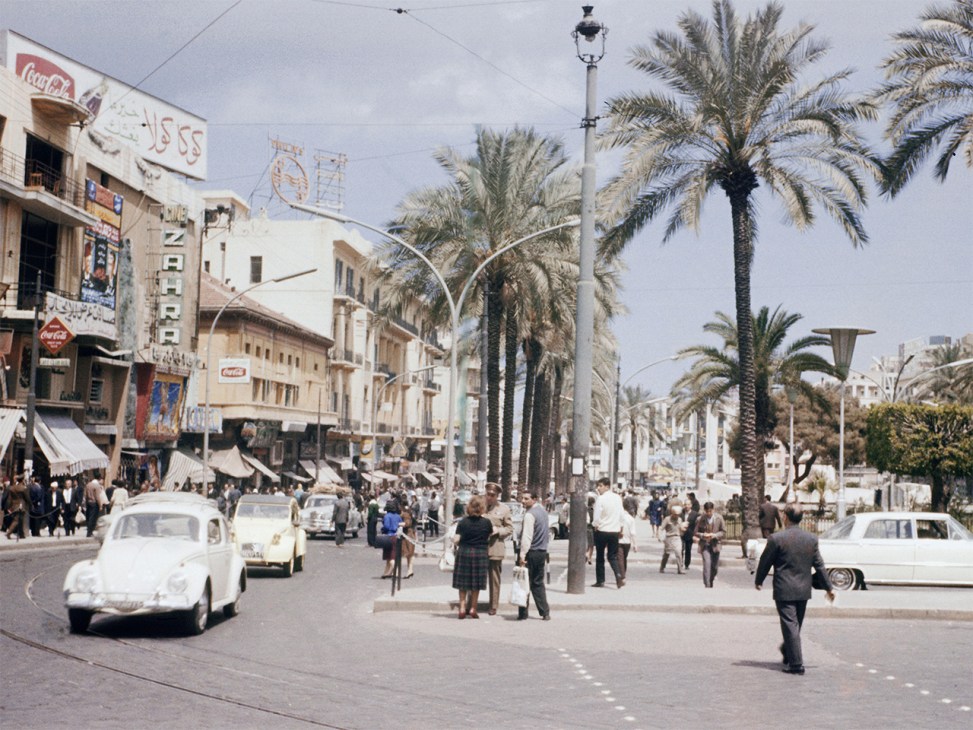
Place des Martyrs, downtown Beirut in the 1960s. Before the civil war, the city was known as the Paris of the Middle East.
2.
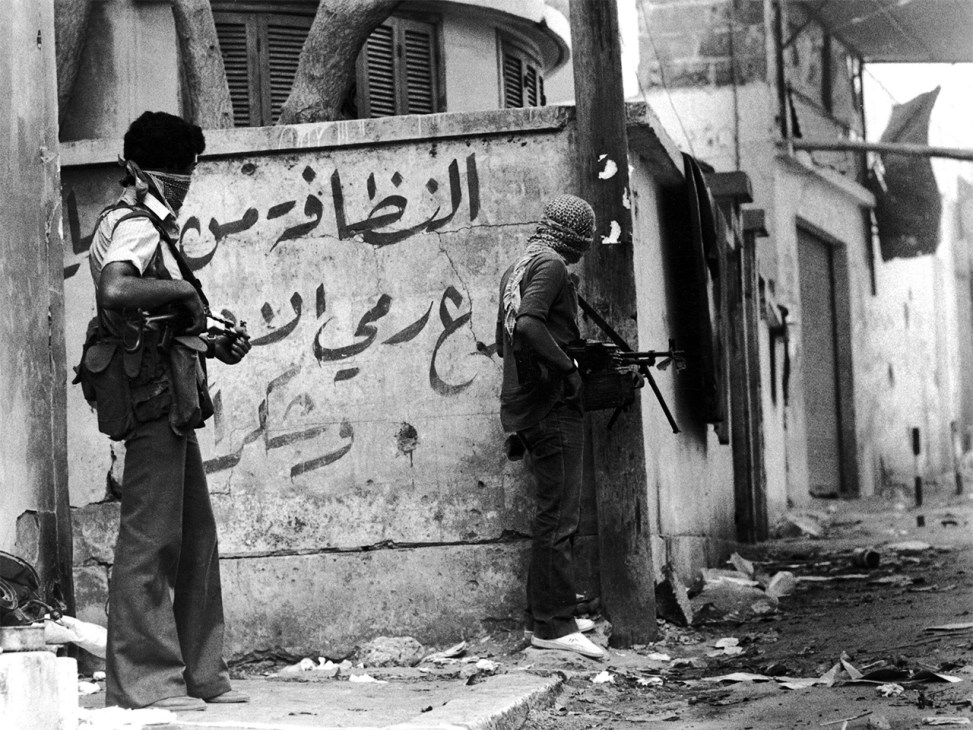
The Lebanese Civil War, which lasted from 1975 to 1990, led to about 150,000 deaths and the emigration of a million people from Lebanon. The war devastated swaths of the capital.
3.
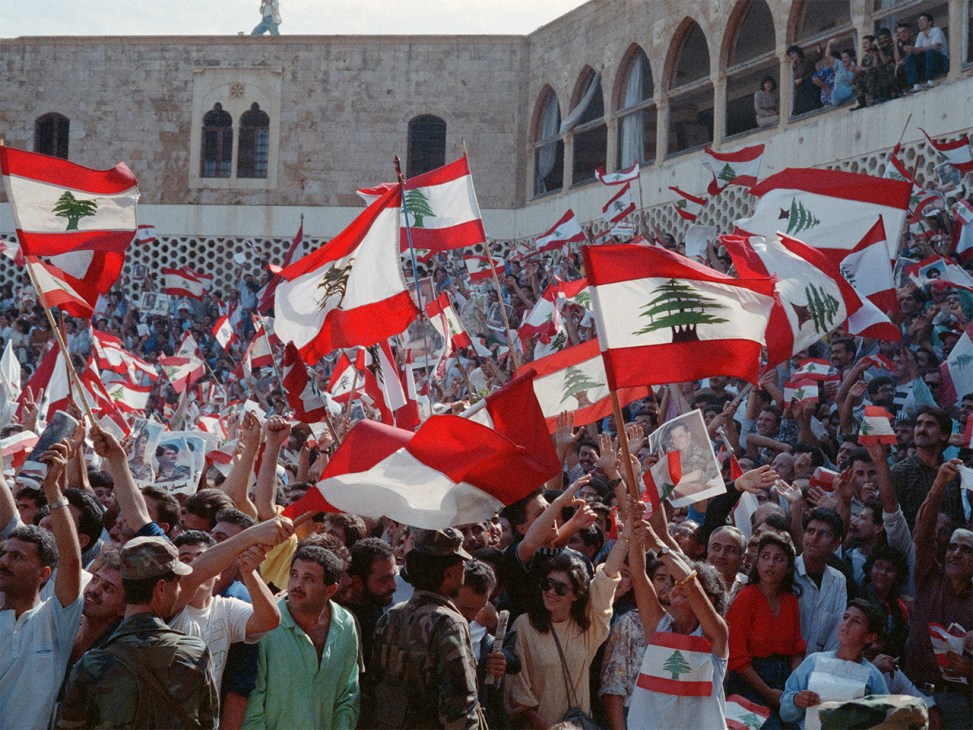
Crowds in the city celebrate the 1989 Taif Agreement that paved the way for peace. The agreement formalised power sharing between Lebanon’s 18 registered religious groups.
4.
Rafic Hariri served as Lebanon’s prime minister between 1992 and 1998 and then again between 2000 and 2004. In 2005 he was assassinated in Beirut by a suicide van bomb. Hariri’s death triggered further political upheaval.

5.
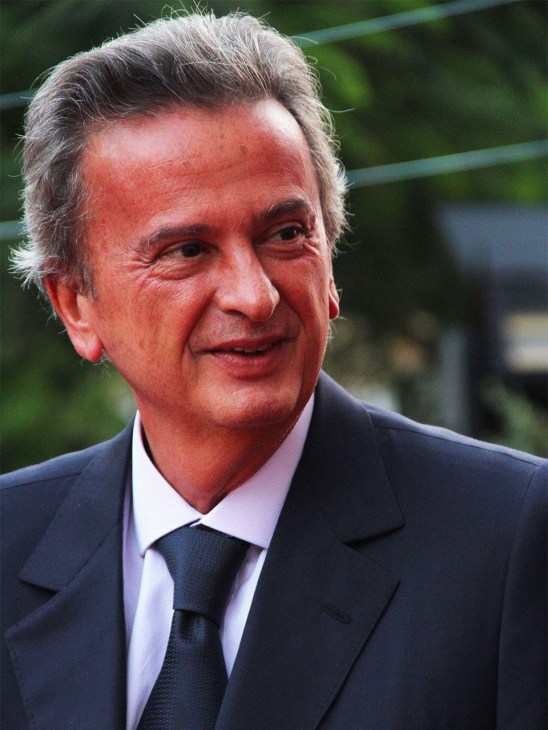
Riad Salameh was the governor of the Bank of Lebanon from 1993 to 2023. Initially feted for his monetary policy, after the country’s banking crisis in 2019 he was accused of siphoning off millions of depositors’ savings. In 2024 he was charged with money laundering, embezzlement and illicit enrichment.
6.
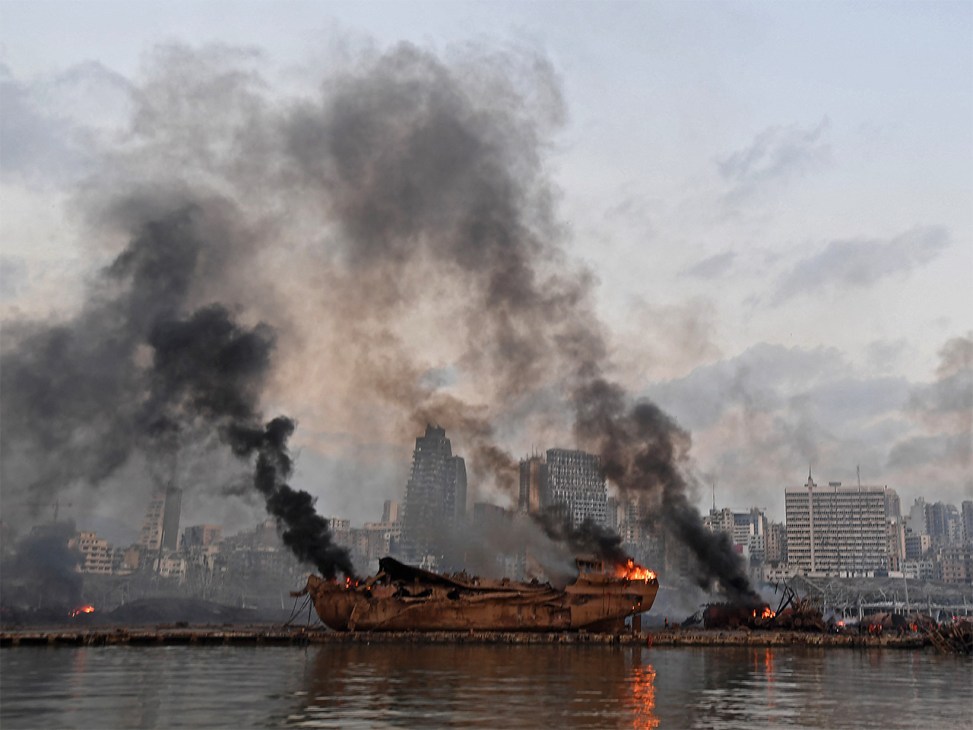
The 2020 Beirut port explosion was caused by the ignition of 2,750 tonnes of ammonium nitrate that was being stored in a waterside warehouse. The explosion caused at least 218 deaths, thousands of casualties and billions of dollars’ worth of damage.
7.
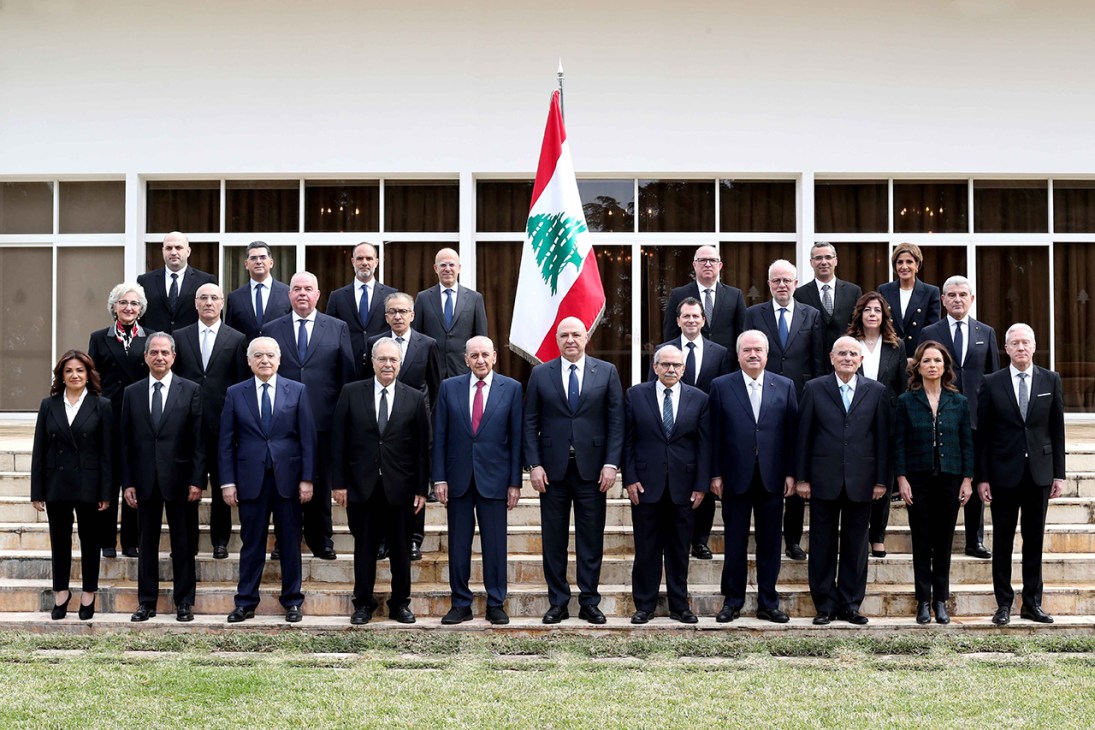
The new Lebanese government poses outside the Baabda Presidential Palace in February 2025. President Joseph Aoun and Prime Minister Nawaf Salam stand in the centre.
Reform or ruin
The turbulent fortunes of Lebanon’s economy.
Following Lebanon’s civil war, Riad Salameh, the governor of the Bank of Lebanon, was feted as a wizard of monetary policy. In the 1990s and 2000s, scant regulation encouraged investors from across the Middle East to flock to the country, while Lebanon’s unique reliance on remittances from its diaspora, coupled with a mounting yearly trade deficit, encouraged a high-interest rates policy.
In 2019, however, as Gulf depositors began to move their money elsewhere and the Syrian refugee crisis reached its peak, heavy government subsidies on daily goods and services became unsustainable. The country’s inflated banking sector, which was reliant on high interest rates and money laundering, was ill prepared to handle adverse international circumstances. Desperate Lebanese depositors clawed at the doors of banks, begging for life savings whose value dwindled by the hour. Petrol, electricity and medicine all but disappeared and the Lebanese lira had soon lost 97 per cent of its value (from 1,500 liras to the dollar to 180,000).
Successive governments begged the IMF for help but could not enact the financial reforms required to access billions of dollars worth of aid (see page 69). The money is still waiting to be distributed, along with a further €11bn promised by European nations at 2018’s Cedre Conference. The new government hopes that its rapid financial reforms, alongside a major foreign investment conference held in Beirut in November 2025, will be enough to access it and rebuild foreign allies’ faith.
The 74-year-old Salameh, meanwhile, who has recently been released on bail, stands accused of siphoning off millions of dollars into foreign bank accounts. His bail had been posted at about €15m – the highest ever handed down in Lebanon’s history.
Fashion’s 2026 reset: What the industry leaders are forecasting for the year ahead
With 15 houses debuting fresh looks under newly appointed creative directors, 2025 was supposed to be fashion’s big moment of change. The industry has collectively decided to put clunky sneakers, all-beige looks and streetwear behind it.
So what does that mean for how we’ll be dressing in the year ahead? “When I think about the new season, I picture a post-luxury world, a return to elegance and interesting colours,” says Hirofumi Kurino, co-founder and senior adviser of Japanese retailer United Arrows. After surveying catwalks, showrooms and exhibitions in Florence, London, Milan and Paris in late 2025, he began to see a subtle shift. There might not be a single new look defining the season (though Jonathan Anderson’s deconstructed Dior Bar jacket is a strong contender) but there’s a new set of priorities: fewer logos and more creative, human-centric designs.
Japanese designer Satoshi Kuwata’s Milan-based label Setchu is a brand to watch in 2026. “Satoshi trained on Savile Row and never uses the word ‘trend’,” says Kurino. “I have a coat by him and it can be folded flat. You can see how deeply he thinks about structure and technique.” Other Japanese designers are also having a global impact, including Auralee, known for its masterful command of colour, and Satoshi Kondo of Homme Plissé Issey Miyake. Updating your look for the new year could be as simple as tying a bright-green sweater over a camel coat or layering a yellow trench coat over a T-shirt in a similar hue.


One name who will be setting the agenda next year is London-based Grace Wales Bonner, who was recently appointed as Hermès’s new menswear creative director. For her eponymous label, which turned 10 this year, she offers Crombie coats, elegant short suits and polo shirts inspired by UK sartorial traditions for spring/summer 2026.
“We have been overproducing and overconsuming for so long,” says Kurino. “Designers are now rethinking the system and not just selling products for the sake of selling.” Kurino’s words capture a collective fatigue with aggressive commercialisation and the endless search for novelty. Seasons change but simply knowing that you’re wearing what you like – as well as caring about where and how it’s made – has always been the greatest luxury.
Natalie Theodosi is Monocle’s fashion director.
Inside Hanaholmen, the secretive Nordic retreat where diplomats shape Europe’s future
It’s a crisp autumn morning on Hanaholmen as military officers, politicians and think-tank members sip coffee beside the icy Baltic waters. All are either Finnish or Swedish and are performing a ritual that has taken place here every few months for the past 50 years. This small island, a few minutes by boat from downtown Helsinki, is home to the Swedish-Finnish Cultural Centre, a literal (and littoral) manifestation of the two Nordic countries’ rock-solid ties.

Monocle is here to attend the Hanating defence and security policy forum, an annual event that aims to further sync already close defence ties. Inside, sheltered from the chilly winds behind floor-to-ceiling windows, attendees – who include both countries’ defence ministers – are discussing drone warfare, hybrid threats and the state of Nordic defence co-operation. Outside, on a terrace lined with stone sculptures and fringed by tall pine trees, the air feels lighter, as does the conversation. “I took a dip in the sea last night, followed by a sauna – that’s how you do it, right?” we overhear a Swedish diplomat ask a Finnish counterpart.

Hanaholmen has always been a place where serious discussion takes place in a calm environment. “It’s not just a building,” says Charly Salonius-Pasternak, the CEO of geopolitics consultancy Nordic West Office and a longtime visitor. “It represents the bilateral relationship. It’s a place where ministers, researchers and bankers meet, but it’s also somewhere you can go and dip your toes in the water. It’s not an embassy or a government office. It’s a neutral third space with rich cultural layers.”
Founded in 1975 on a verdant island in the Gulf of Finland, Hanaholmen was created as a gesture of reconciliation and trust. Sweden had forgiven a substantial chunk of Finland’s postwar debt and Helsinki’s way of saying thank you was to invest its goodwill in something lasting – a shared space for dialogue and co-operation. The result is extremely Nordic: a low-slung, honey-toned complex of modernist glass-and-concrete buildings designed by Finnish architect Veikko Malmio. It’s a notable example of 1970s design from the region that still looks contemporary.


Sitting in an orange Yrjö Kukkapuro Junior 417 chair, Hanaholmen’s CEO for more than 20 years, Gunvor Kronman, reflects on the centre’s mission. “Hanaholmen was founded 50 years ago to make sure that the relationship between Finland and Sweden continues to grow,” she says. “It covers all parts of society. We were called a cultural centre for practical reasons during the Cold War but our mandate has always been broad. It includes everything from defence and security to economic development.”
Over the years, this mandate has been expanded further. Kronman describes Hanaholmen as “semi-official, semi-private”, an organisation that can discuss things that are too sensitive for statespeople to speak about publicly but too important to overlook. “We can take initiatives that governments can’t,” she says. “If we fail, it’s our failure. If we succeed, it’s our partner’s success.” Among its programmes are the Hanaholmen Initiative, a crisis-preparedness scheme launched during the coronavirus pandemic; Tandem Leadership, a year-long training network for emerging decision-makers; and Tandem Forest Values, a research collaboration on sustainable forestry. “We believe in personal relationships,” says Kronman. “When people know each other, there’s trust. Trust is the Nordic gold.”
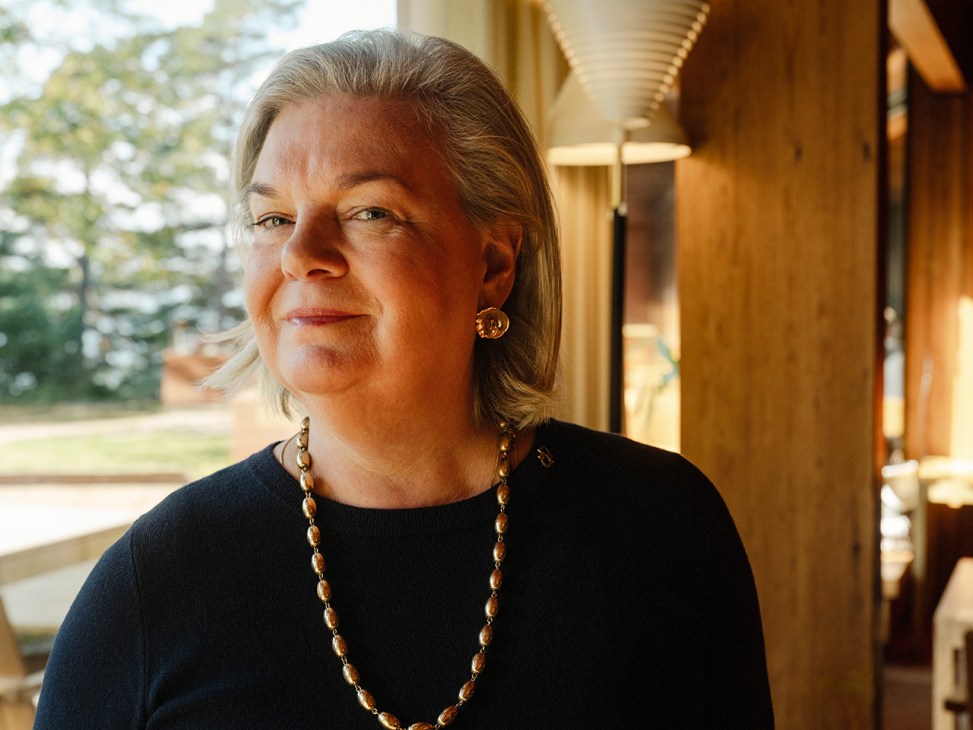

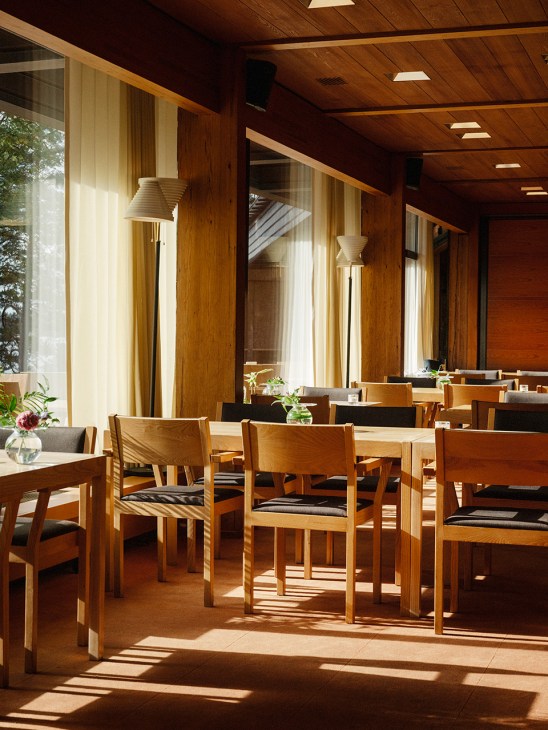
This is built not only through conversation but also setting. Hanaholmen’s interiors exemplify Nordic simplicity: pale wood and clean lines, with furniture and fittings designed by Finnish and Swedish icons. The island houses more than 300 unique artworks, its own gallery and a sculpture park. “Each artist spends time here and picks their location,” says Kronman. “It takes about a year from idea to installation. We don’t want to rush the process.” A recent renovation, completed in 2017 by Helsinki-based design studio KOKO3, honoured the building’s 1970s identity while updating it for 21st-century use. “Moving from the centre of Helsinki to Hanaholmen feels like entering into a different rhythm,” says Jukka Halminen, a partner at KOKO3. “It’s similar to a Finnish sauna ritual: you slow down, breathe and calm down. We wanted the design to support that feeling.”
KOKO3 used natural materials such as brass, oak and stone to keep the original texture of the place, while adding touches from classic Swedish design house Svenskt Tenn to brighten and warm the interiors. The result is neither nostalgic nor sleekly new; it feels lived-in, timeless and quietly Nordic. “We wanted to keep the dialogue between Finland and Sweden visible in the design choices,” says Halminen. “It’s about balance: heritage with lightness, seriousness with joy.” You can feel the same balance at Plats, the island’s restaurant. Hanaholmen’s in-house fisherman, Christer Hackman, catches perch and pike, forages mushrooms and berries, and supplies the kitchen with wild herbs. The menu marries Finnish ingredients with classic Swedish dishes, served in dining rooms that glow with light timber and the burning logs of fitted fireplaces. “Food is an essential part of Hanaholmen,” says Kronman. “It creates a different atmosphere. Sharing a meal changes the tone of a political discussion.”


For those not lucky enough to be a Nordic diplomat, Hanaholmen is also a hotel. The swimming pool and glass sauna, which looks out to sea, are among the most popular in the Finnish capital. “We might be small [66 rooms] but we’re a significant meeting place,” the hotel’s director, Kai Mattsson, says as he shows Monocle around the building’s top-floor suite. “Every weekday there’s something happening. It can be 200 delegates one day and a honeymooning couple the next.” Mattsson describes the hotel as both an engine and enabler. “The commercial side helps to finance the cultural side but it’s also part of the experience,” he says. “People come here for seminars and to discover the art, the design, the nature. It’s not your typical conference hotel.”
Hanaholmen’s blend of architecture, art and natural beauty reflects the belief that soft power becomes tangible through space. “No matter how tough the subject, we try to maintain integrity and decency in conversation,” says Kronman. “That’s how we contribute to an open, democratic society.” At the Hanating forum, that spirit is writ large. Finland’s defence minister, Antti Häkkänen, and his Swedish counterpart, Pål Jonson, are engaged in discussions that mingle military strategy with cultural diplomacy. “Hard defence must be strong,” Häkkänen tells Monocle. “But the political landscape – how voters and politicians perceive the world – that’s soft power and it’s very important. Institutions such as Hanaholmen keep our societies aligned over issues such as Russia and European security.” His Swedish colleague adds, with a grin, “I mostly work with guns, bombs and hard military power but I still value the cultural exchange that Hanaholmen represents.”
Perhaps no one captures this exchange better than Sweden’s hirsute ambassador to Finland, Peter Ericson. “It’s a tremendous asset for the relationship,” he says, referencing the staff and resources at Hanaholmen’s disposal. “I call it a symbiotic relationship: Hanaholmen is the elephant and we at the embassy are the little bird sitting on its back.” He gestures towards the centre’s lobby, which displays photographs of distinguished visitors, including monarchs, ministers and artists. “It’s independent,” he says. “It isn’t part of official diplomacy. Sweden and Finland supervise it together but it is its own foundation. And it has this formula: bring people from both sides, house them, feed them and give them the space to work together. Fifty years ago, it was mostly a cultural exchange; today, it involves anything from defence and civil preparedness to youth issues or the environment. That’s its strength.”


The seasoned diplomat struggles to think of a similar institution anywhere else in the world. “Hanaholmen is unique,” he says. “An embassy symbolises a country. Hanaholmen symbolises the relationship itself.” This distinction might explain its lasting significance. In a world that is increasingly driven by summits, video calls and transactional diplomacy, it represents something older and subtler – the gradual building of trust through shared experience and conversation. At Hanaholmen, diplomacy isn’t performed but practised. “We believe in identifying the right people who should know each other,” says Kronman. “From that, many good things will come.”
This approach resonates beyond Finland and Sweden. The centre has hosted a range of figures, including the Nordic royal families, prime ministers and popular actors such as Mikael Persbrandt. Fifty years after Hanaholmen was opened by the Swedish king, Carl XVI Gustaf, and Finland’s then-president, Urho Kekkonen, the Nordic region, once viewed as a quiet corner of Europe, now finds itself on the front line of geopolitical change. After decades of neutrality, Finland and Sweden are now NATO members. Defence committees from their respective parliaments meet here regularly; they are doing so on the day that Monocle visits. Amid discussions on deterrence and hybrid warfare, soft power is still the centre’s guiding light. “Hard power is obvious – Ukraine reminds us of that,” says Ericson. “But soft power is what keeps our societies attractive and resilient. We don’t have to deceive people to be liked. We just have to be our best selves.”
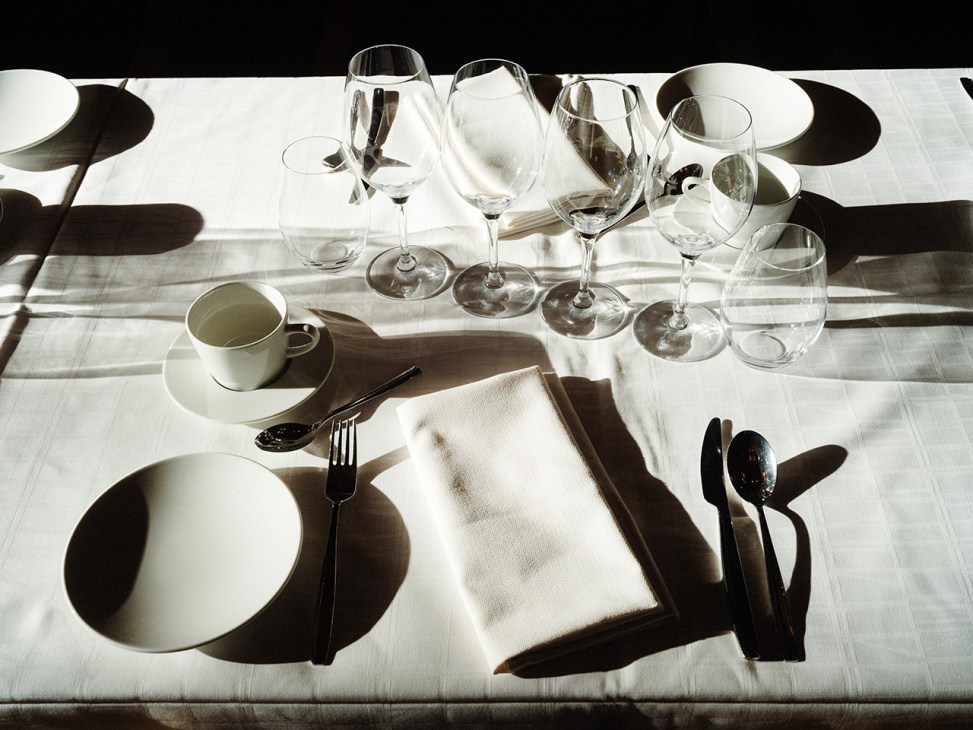
Digital diplomacy and rotating presidencies can’t replace the continuity that is offered by a physical site. Hanaholmen’s architecture, art and cuisine aren’t just decorative – they’re part of the dialogue. As the afternoon light dims over the Baltic, the conversation on the terrace shifts from air defence to pan-fried Arctic char. It feels both ordinary and extraordinary – the kind of quiet, human-level contact that supports deep Nordic co-operation.
Radio Shinyabin has found the secret to connecting ever more isolated young people: Late-night broadcasts
It’s 23.00 in Shibuya. Inside a radio control room, a studio engineer is preparing to take one of Japan’s most popular late-night stations on the air. A cornerstone of the country’s media, it runs to the early hours of the morning, bringing its audience along on a six-hour odyssey. Pushing the faders up, the studio manager engages the mics: this is Radio Shinyabin (“Midnight Mail”).


“It’s not a traditional show where users tune in from start to finish,” says Tomoki Sakuma, Radio Shinyabin’s senior producer. Hosted on Japan’s public-service media, Nippon Hoso Kyokai (NHK), this eclectic programme has been running since 1990 and is just one of the country’s many late-night radio shows. “For long-time listeners, the broadcast has become as habitual as eating breakfast,” says Sakuma. “Every hourly time slot has its own fans.” Honed over years on Japanese airwaves, Radio Shinyabin keeps a consistent tone with subtle changes in rhythm and content as the audience rotates through the night. News stories accompany tales of travel; music melts away into reflective discussion.
Across a broadcast, the show can attract three million individuals, with about 600,000 listening at a time. In 2024, Radiko, the Japanese radio streaming app used to access shows from across the country, published a list of its most-listened-to programmes among 10- to 40-year-olds. Late-night shows formed the majority.
It is telling that they thrive in Japan. With rises in loneliness linked to dwindling birthrates, small living spaces and a demanding work culture, growing numbers are flocking to radio in the wee hours to enjoy Radio Shinyabin’s sense of intimacy. “I always imagine that I’m speaking to a specific person,” says Akira Tokuda, who has been one of the show’s anchors for 11 years. “It isn’t one-way; it’s like a conversation.” Sometimes a human voice, wherever they are, can make all the difference.
Comment
Feeling part of a community is more important – and comforting – than ever for young Japanese people, whether they’re night-shift workers or lonely insomniacs.
Can tax breaks create a baby boom? Athens hopes so
“We saw that everything was going to close, so we thought we had to do something,” says Konstantinos Dousikos, a softly spoken Orthodox priest whose parish is the mountain village of Fourna, in the central Greek region of Evrytania. With a median age of 57, Evrytania is officially the oldest region in the EU and Fourna is typical of the demographic crisis that is facing its towns and villages. With the kindergarten facing closure, the 52-year-old priest joined forces with a young schoolteacher to take radical action: offering families from across the country locally raised financial support to relocate. A year on, following the arrival of six new families, Fourna’s youngsters now number 27 and signs of life are trickling back to its steep, fir tree-lined streets. “It truly warms your heart to see children coming for mass on Sunday and running around and laughing in the square. We had missed that,” says Dousikos.
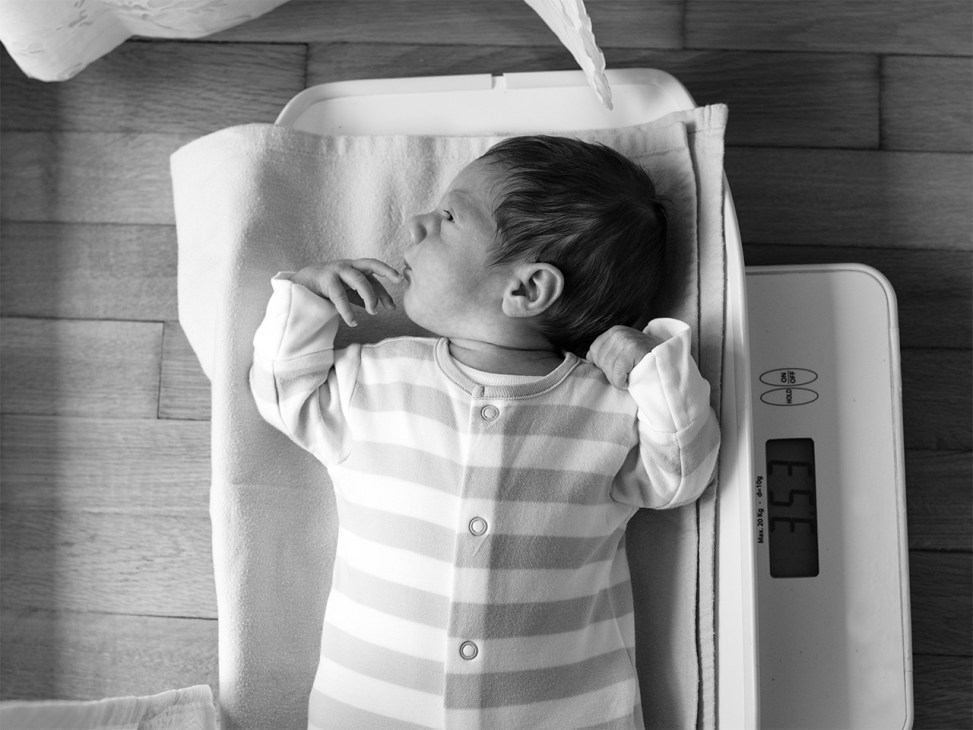
Fourna is not alone in its struggle – Greece is rapidly becoming one of Europe’s oldest countries amid a sharp drop in births and rising life expectancy. More than 700 of the country’s schools have closed this year because of dwindling pupil numbers. Many of these are in rural areas, where the sound of pensioners’ worry beads in otherwise silent cafés is far more common than that of children playing in the streets. After stern warnings by analysts of the implications for the nation, the centre-right government led by Kyriakos Mitsotakis is making an all-out push to encourage people to start families. After years of ad-hoc measures, the Greek prime minister brought out the big guns in September. Warning of the “demographic threat” faced by both Greece and Europe, Mitsotakis announced €1.6bn in tax breaks targeting young families in particular.
From 2026, low-income families with four children will pay no income tax, while property tax will be abolished for villages of fewer than 1,500 residents. These measures build on a €2,400 “baby bonus” for a first child that rises to €3,500 for a fourth – and form part of a sweeping 10-year plan aimed at reviving family life across the country. Despite the evident ambition, experts warn that the task is Herculean. “Births in Greece have collapsed since the 1980s,” the head of the Laboratory for Demographic and Social Analysis at the University of Thessaly, Ifigeneia Kokkali, tells Monocle. This decline is reflected in the overall population, which is expected to drop from 10.4 million to 8.8 million by 2050, according to the Organisation for Economic Co-operation and Development (OECD) which has predicted that more than a third of Greece’s population will be over 65 by 2060.
“The demographic trend won’t change overnight,” says Domna Michailidou, the Greek minister for social cohesion and family, from her office in central Athens. In addition to the financial incentives, Michailidou, 38, who had her first child in April, cites a “holistic set of measures” aimed at boosting parenthood and family life. These include more childcare centres, a “neighbourhood babysitters” scheme offering up to €500 a month to local nannies and cheap housing loans for young Greeks.
Numbers behind the shifts in Greece’s demographics
At 1.3, the country’s fertility rate is among the lowest in the EU
Fewer than half as many Greek children are being born as in the 1950s
The population of Greek women of childbearing age fell by 450,000 between 2008 and 2022
Young Greeks leave their parents’ homes later than almost anywhere else in Europe – at an average age of 30.7, compared with the EU average of 26.2
Between 2010 and 2022, more than a million working-age people left Greece; of these, 60 per cent were aged between 25 and 44
But for many, the costs still outweigh the benefits. In a survey last year by independent think tank Dianeosis, six in 10 Greeks aged 25 to 39 said that financial difficulties were their biggest obstacle to starting a family. Housing costs are particularly steep in a country where wages are the third-lowest in the EU, after Bulgaria and Hungary. “I don’t even consider the bonus and state benefits,” says Vasiliki Fokou, a 32-year-old doctor who is working three jobs while waiting for a residency spot in child psychiatry. She cites the cost of living as her cohort’s biggest impediment to parenthood. Despite recent rises in the country’s minimum wage, Greeks pay some of the highest food and energy prices in the EU. “[The new incentives] are a help,” says Fokou. “But they wouldn’t convince me to have a child. It’s a big expense – clothes, nappies, schooling – and life is just so expensive.”
Analysts agree that cash alone won’t fix the problem. “Bonuses are a drop in the ocean,” says Aris Alexopoulos, the head of the OECD’s population dynamics centre, which is based in Crete. Alexopoulos says that lessons should be learnt from countries such as South Korea, which had one of the world’s lowest fertility rates but has recently reversed the trend. After years of failed cash incentives, Seoul instigated a policy overhaul that improved parents’ work-life balance and funded childcare costs and housing. Greece’s 10-year plan is on the right track, Alexopoulos says, but implementation – traditionally a weak spot in the country – will be crucial, requiring a transformation of the economic model and social support system. “It’s not just a birth crisis, it’s about the labour market too,” he adds. “We don’t have young people to work.” He advocates a shift towards the “silver economy”: tapping the skills of workers aged 50 and over to keep treasury coffers in good health.
While Greek policymakers brace for the financial needs of an ageing population, young adults are struggling with the realities of raising children. For many young Greeks, having a child is simply not a priority in the same way it was for their parents. Giorgos Matsoukas, a 44-year-old supervising administrator at a vehicle inspection centre, says that he never really thought about having children and then being child-free became a way of life. “I want to be able to do whatever I want and not sacrifice my lifestyle,” he says. “When I look at my friends who have families, it seems like a lot of hassle.”
As young Greeks postpone or even forego having children, the effects are most visible in rural villages such as Fourna, where ageing populations and youth migration have left formerly flourishing communities in decline. Fourna’s population withered after a wood-processing plant closed in the 1980s and it has lost two-thirds of its population since the 2021 census. Dousikos remembers when trucks loaded with felled trees rumbled from the forest to the plant and there were 26 children in his class at school. But his Facebook posts calling for new residents have triggered hundreds of enquiries. “We have a waiting list of 80 families and another 10 to 15 villages who want our advice,” says 31-year-old Panagiota Diamanti, Fourna’s sole primary school teacher.
The six new families who have moved to Fourna in the past year seem content, though they face new challenges. Christiana Papalevizopoulou and her family were forced to leave their home near Athens after their landlord decided to sell it. The 40-year-old moved with her husband and four children to Fourna in March and got married there in September – the village’s first wedding in 10 years. Papalevizopoulou has been touched by the generosity of locals, who bring her family fresh produce such as eggs and chestnuts. But life in the village is not entirely idyllic. Her husband is applying for a taxi licence but with no doctor in the area and the nearest hospital an hour away, healthcare worries persist.
Projects such as Fourna’s, that have strong local backing, are rare. The government is rolling out its own initiatives to encourage young families to move to rural Greece, though many details are still in the works. One scheme offers €10,000 for relocation to remote regions such as Evros, on the border with Turkey, where populations have thinned out massively in the past few decades. The aim is to extend that programme to more regions. “We want young couples to feel that the state does not leave them on their own but provides them with the tools to build their lives and families in the place they choose to settle,” says Michailidou.
Local support matters but Greece’s demographic crunch looms as an even bigger threat to the national economy. Without serious intervention, the country’s GDP could shrink by 15 per cent by 2050, according to the OECD. Lawmakers have already tried to shore up the labour force, passing controversial rules that allow six-day weeks and 13-hour workdays. But the measures may backfire: a recent survey found that seven in 10 young Greeks view long hours as a major deterrent to starting a family. Money and work pressures aren’t the only hurdles. “My generation has basically accepted that we’re not going to get a pension,” says 29-year-old Ioanna Marouga, who works in an escape room and lives with her parents. “Renting a place of your own is basically impossible – it’s crazily expensive.”
A widely discussed study this year by Kokkali made headlines for its blunt diagnosis: Greece won’t see more children unless living standards and working conditions improve. “The framework of life in Greece today seems to either push young people to emigrate or remain childless,” it noted. Addressing Greece’s demographic decline requires radical reform of deep-rooted social and economic problems. The new raft of incentives signals the government’s ambition, but longer-term planning and more-radical solutions must be on the table, otherwise the Greece of today might not be here in a generation’s time. For this ancient country, it’s an existential issue.