Issues
How Škoda is responding to China’s EV boom, and shifting the car-making sector up a gear
Europe’s car-makers are stalling. Germany’s automotive exports fell by a quarter between 2016 and 2023, while Italy’s Stellantis, which owns brands such as Fiat, Peugeot and Jeep, produced about 30 per cent fewer passenger cars in the first six months of 2025 than in the same period in 2024. As the industry struggles with weak demand and, in some cases, fines for not complying with the EU’s carbon-emission targets, China’s share of the continent’s electric-vehicle (EV) market is rising swiftly. European registrations of EVs from Chinese brands soared almost 60 per cent in the year to April 2025.
But for all the gloom, there’s a possible path to redemption, lit by the headlights of an unexpected brand: Škoda. Headquartered in the Czech city of Mladá Boleslav, where it was founded in 1895, the firm has become an unlikely champion of the continent’s car industry. Not long ago, Škoda was the butt of jokes about its cars’ perceived unreliability. (“What do you call a Škoda at the top of a hill? A miracle.” Or, “What do you call a Škoda with a sunroof? A skip.”) Now, though, the brand’s image is improving, releases are edging into the affordable luxury sector and its latest all-electric model, Elroq, is taking on the world’s leading EV-maker BYD’s Seal, undercutting its price by more than €11,000.


At the car-maker’s Mladá Boleslav factory, where all of Škoda’s vehicles destined for the European market are manufactured, CEO Klaus Zellmer compares competing against Asia to “a football season”. “First, we were told that the Japanese would march through us, then the South Koreans and now the Chinese,” he says. “New teams will come with brilliant players and conduct their game in an attractive way. We just need to train, get better and stay lean.”
Part of the Volkswagen Group, Škoda overtook Tesla in European electric-car sales this summer. “We are up in terms of sales and profit, and have doubled our battery-EV sales in the first quarter of 2025 compared to last year,” says Zellmer, as production whirrs around him. “So it’s going well.”
In 2022, Škoda launched a brand-identity redesign that included switching to a colour scheme of two different green hues. This year it exhibited at Milan Design Week for the first time as part of a push to broaden the brand’s appeal and improve its design chops. The move sought to challenge any prejudices about the brand that might still persist, says Zellmer. “At Milan, we showed a vision of Škoda that’s different from what people associate with us,” he says. “We have rejuvenated the brand and repositioned it to target new customers.”
Keeping things simple
Škoda has long believed cars should represent both value and simplicity – which is a particularly Czech trait. “If you sit in a typical Chinese car, you’ll find lots of distractions, which are there on purpose,” says Zellmer. “But we’re taking a different path. During our design process, I always ask everyone, ‘How can we further reduce the visual noise in the vehicle, especially when it comes to screens?’ After all, people are in the car to drive somewhere.”
Despite their successes, Zellmer and the Škoda team face tough challenges. Though the Volkswagen Group’s EV sales rose in the first half of 2025, recent years have been bumpy, with falling profits and job cuts. Germany, which hosts many of the group’s brands, has seen its economy shrink for two consecutive years, complicating the outlook for businesses and reducing demand. And then there are the US tariffs, which could redirect Chinese car exports from the US to Europe. “[If the US market closes] to China, the country’s cars will have to go elsewhere – and that will be Europe,” says Zellmer. “So it will be even tighter in terms of competition. We will feel that.”
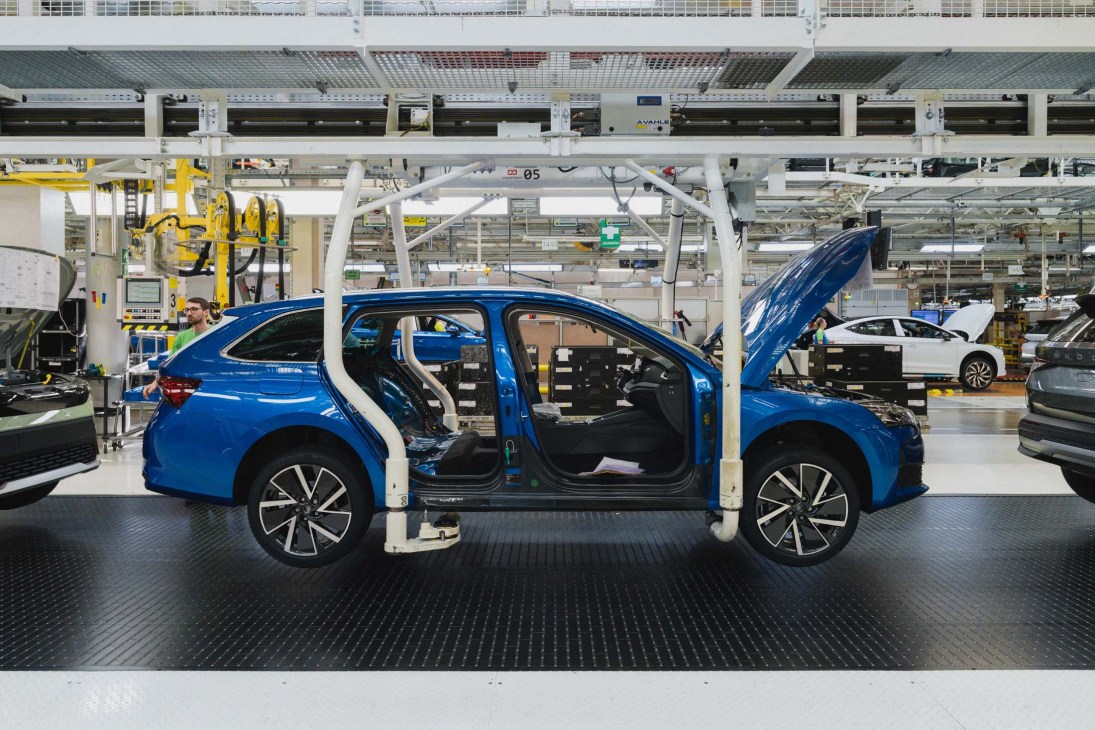
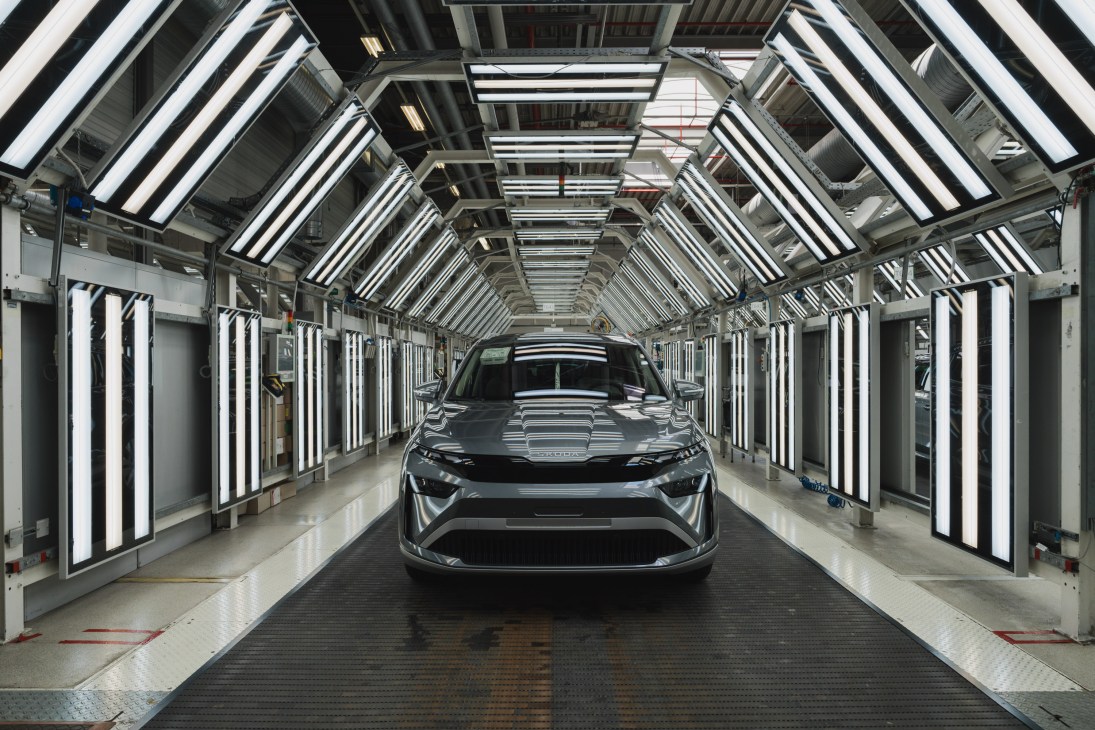
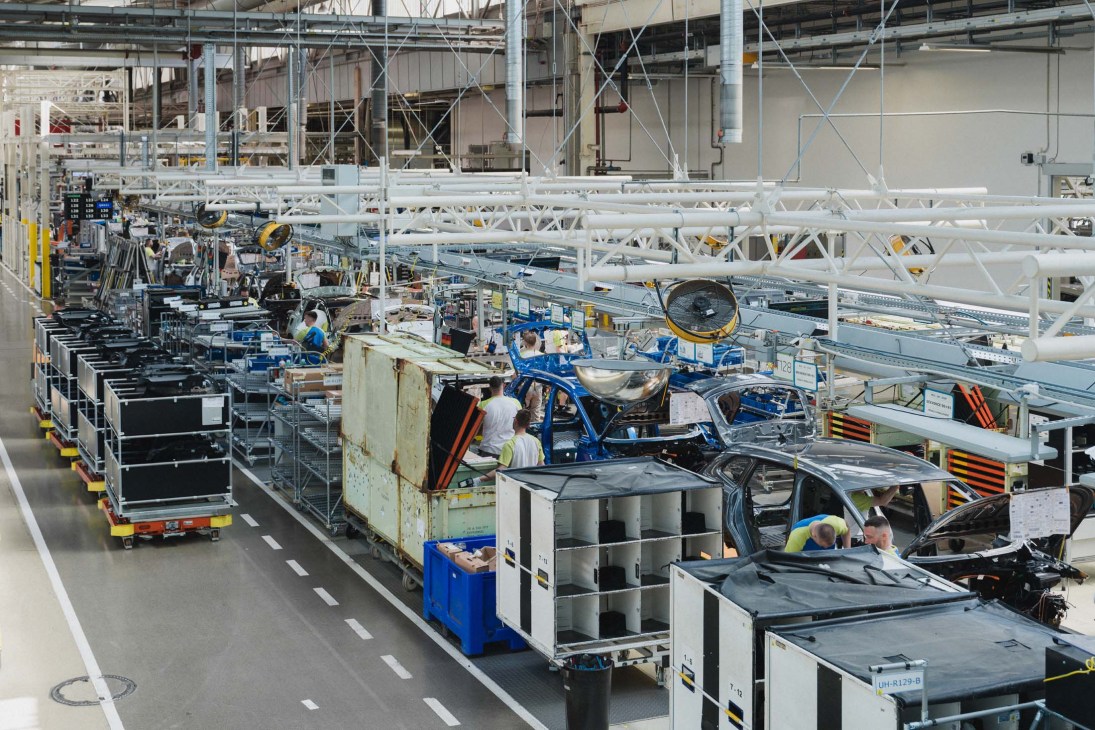
Some of the strategies to stay ahead can be seen on the Mladá Boleslav factory floor. Uniquely in the Volkswagen Group, the production line can produce both electric and internal-combustion-engine (ICE) vehicles. Here, the Elroq and the Enyaq SUV use the same conveyor belt as the Octavia, an ICE model first made in 1996 and still Škoda’s most popular product. “We’re at an advantage,” says Andreas Dick, Škoda’s board member for production and logistics. “This way of working gives us the flexibility to react to changes in the market and customer demand.”
For Škoda, building resilience means never relying on a single market. “Fully concentrating on Europe isn’t a smart strategy,” says Zellmer. “It’s like standing on one leg. If it gets shaky, you might fall. As a global brand, we need to stand on two legs.” Zellmer and his team know this from experience. In 2022, Russia was Škoda’s second-largest market and it had two factories in the country. But after the full-scale invasion of Ukraine and Western sanctions, the Czech brand left Russia, taking a hit of almost €700m. Škoda’s entry into the Vietnamese market in 2023 – as well as a focus on India, where it has had a manufacturing presence since 2000 – has helped the company to recoup its losses and diversify. “We’re concentrating on Southeast Asia, the Middle East and India,” says Zellmer. “We can see strong potential for growth in these places.”
Škoda is wisely planning ahead but success sometimes comes down to being in the right place at the right time too: namely in Czechia, which, along with the rest of Central Europe, has GDP growth outpacing some of the EU’s leading economies, including France and Germany. Coupled with lower wages and less bureaucracy, the positive economic outlook is adding buoyancy to Škoda. “We have a pragmatic way of enabling business here,” says Zellmer. Ilia Sokolov, who is in charge of assembly shop maintenance, also points to the Czech approach to manufacturing when he meets us on the production floor. “Part of Czechia’s story is its people’s golden hands. It’s in their mentality.”
Škoda says that it is committed to putting customer experience ahead of gimmicks. “You can speak to real people and have them help you and answer any questions,” says Zellmer. “We need that human touch. Instead of running experiments such as only selling online or in a couple of stores, we have an established organisation representing the brand.”
Meanwhile, Škoda remains a value-for-money proposition. “We want to amplify our brand to attract those who might not be looking for a status symbol and are seeking something that is authentic, credible and intuitive,” says Zellmer. Epiq, a new EV planned for next year, will cost a mere €25,000. It’s a smart move that will keep Czech-made car sales moving, even as the continent’s once-proud marques from Germany and Italy seem to be running out of gas.
skoda-auto.com
Top models
The Bestseller:
Octavia
With more than seven million units sold in just under three decades, Octavia is Škoda’s most popular model by far. It’s a win for convenience rather than flair: it’s got a more spacious boot than rivals, making it a fine family car.
Latest Model:
Elroq
Škoda’s second fully electric release, the Elroq, was Europe’s best-selling EV in April this year. Along with the brand’s signature touches (that spacious 470-litre boot and a 545.5km range when fully charged), the rally sport version offers Škoda’s fastest acceleration – from zero to 100km in 5.4 seconds.
Most-Anticipated Release:
Epiq
Priced at about €25,000 and slated for sale in 2026, the SUV (a more compact version of the Elroq) will be one of the cheapest electric cars on sale.
Japan’s tiny electric vehicle with very big ambitions
Japan’s unusually narrow residential streets call for smaller-than-average vehicles – which is why pint-sized hatchbacks and boxy minivans are ubiquitous in the country. Now a tiny new motor that has yet to reach market is attracting an outsized amount of attention. Mibot, designed and built by KG Motors in Hiroshima, is an electric vehicle for one. It can travel for 100km on a single five-hour charge at speeds of up to 60km/h and comes in several colours (the cheery yellow is fetching but there’s also blue, white, ivory and grey). It can hold 45kg of luggage and be charged at home without special equipment. Where other solo vehicles prioritise compactness over comfort, Mibot has air conditioning, speakers and heated seats. And at little more than a metre wide, it navigates narrow streets with ease.
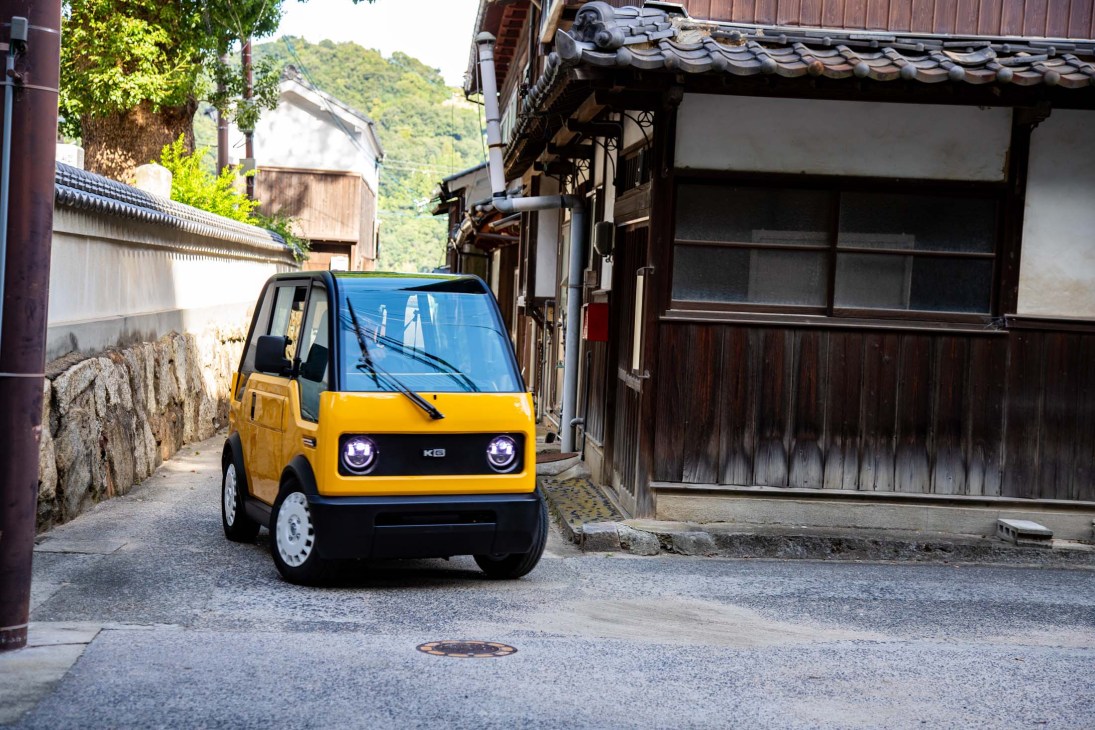
Kazunari Kusunoki, nicknamed Kussun, started as a mechanic and parts supplier. In 2018 he launched a Youtube channel, Kussun Garage; before long, 200,000 followers were tuning in to watch him take apart and customise electric vehicles and minicars. As his audience grew, requests for advice flooded in and, along with three others, Kusunoki started working on the idea of making a mini-EV from scratch. They formed KG Motors in 2022 with Kusunoki as its CEO and set about making the concept a reality.
The start-up quickly attracted investment. It raised ¥100m (€579,000) in its pre-seed round in March 2023 and a further ¥150m (€869,000) in the next round in October that year. The lead investor is Energy & Environment Investment; another is Keylex, a Hiroshima-based parts manufacturer. A supplier to Mazda, Keylex is a key partner in realising Mibot’s unified monocoque body. By the close of funding in February 2025, KG Motors had ¥1.39bn (€8m) to work with.
Kusunoki had been thinking about compact vehicles for years. “I grew up in the city of Kure in Hiroshima, where there are a lot of narrow streets,” he says. “I always wished that there were smaller options available.” Japanese government figures show that about 70 per cent of car owners drive alone during the week. How many people really need a family saloon or SUV for their daily errands? “With the shift towards electric vehicles, I wondered whether regular-sized EVs were really good for the environment and began to think about developing a more efficient model.” The result is Mibot (short for “Minimum Mobility Robot”), designed to provide just the right level of mobility for short-distance solo travel.
Kusunoki was also spurred by a change in the law in 2020 that allowed single-seat EVs on public roads. Mibot has a price tag of just ¥1.1m (€6,400) and the advantage of sitting in a category of light vehicles that requires fewer inspections and has lower taxes than conventional cars. “With low maintenance costs and excellent energy efficiency, it reduces the burden of ownership and environmental impact,” says Kusunoki. It can also receive the latest software updates wirelessly and the design – all done in-house – is a winner.
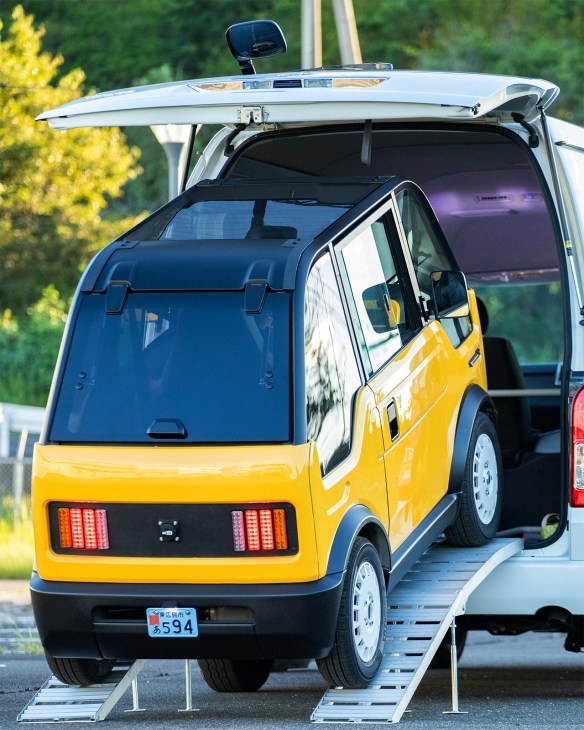
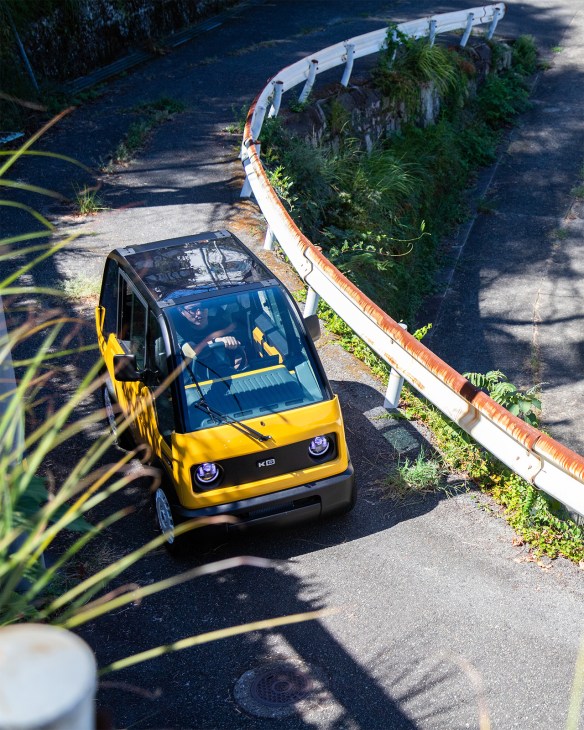
Hiroshima was an obvious base for the project. “We chose this place because the founding members originally worked here, as well as for the presence of many automotive-related companies in the area,” says Kusunoki. “Also, Mibot is designed to address the pain point of limited transportation options in rural regions. It’s a product from a regional area that offers solutions to local challenges. By developing it primarily in Hiroshima, we also receive support and co-operation from the local government.”
Kusunoki’s ambition for Mibot goes beyond cars. He seeks nothing less than a revival of the dynamism of Japan’s postwar years. Mibot, he hopes, will recapture that sense of optimism and could even help to “make our society vibrant again”. The era of relentless growth might be over but demographic shifts and social change can still spur innovation.
KG Motors now employs about 60 specialists across design, autonomous driving, software development, business, marketing and more. Everyone who sees a Mibot wants one. And with 2,000 pre-orders on the books, the team is working hard to meet the deadline for the first deliveries in Japan in 2026.
The goal is to increase production capacity to up to 100,000 vehicles per year. Hiroshima will remain the base for body manufacturing and Mibot assembly, while Kusunoki hopes to eventually expand the line-up and enter international markets. The young CEO believes that Mibot has the X-factor that has held other small, low-cost solo vehicles back in the past. Most importantly, it puts the joy back into driving. “No matter how low the maintenance costs and environmental impact are,” he says, “it’s meaningless if it’s not fun to ride.”
mibot.kg-m.jp
Meet the daredevil stunt performers helping Europe’s film-making industry reach new extremes
The driver and her passenger stare ahead as the red Jeep begins to flood. Suddenly the nose of the car dips and the cabin fills up with water. As the vehicle sinks, someone shouts, “Action!” The driver whips into a frenzy, banging on the windows and shaking the steering wheel. She struggles with the door before finally forcing it open. Once outside the Jeep, she swims past the windscreen and frees the passenger. The women rise to the water’s surface.
Monocle watches all of this from a special window at the side of the pool. When the hair-raising sequence ends we exhale and applaud the two students who have just completed an important part of their course in underwater stunts. As the safety divers return to their standby positions, the overhead single-girder crane hoists the vehicle out of the pool to allow the next pair to practise their scene.

This is business as usual at the Water Tank, one of Spain’s largest aquatic soundstages. We are in a former warehouse on an industrial estate about 30 minutes by car from central Barcelona. The tank belongs to In Extremis Film Services, founded in 2011 as a special-effects company. The business has since expanded into the stunts sector through its educational programmes, talent agency and gym. It also runs two soundstages, including the Water Tank. In April, In Extremis launched a 3,200 sq m space called Amor Platónico (a play on plató, the Spanish word for “soundstage”), which was recently used to make an advert for Coca-Cola starring Spanish footballer Lamine Yamal.
The various strands of the business and its 70 employees are part of a cohort of dynamic enterprises that has brought plenty of investment into the area in recent years. In 2023, Spain ranked fifth worldwide for feature-film production; it was Europe’s top movie-making country for the third year running.
The central government has thrown its weight behind the sector with a plan known (somewhat clunkily) as “Spain Audiovisual Hub of Europe”, which in 2021 called for an investment of about €1.6bn in audio-visual production over the next four years. It has been a smart strategy: according to a study by the Spain Film Commission, for every euro that is provided as a fiscal incentive for international shoots, €9 are generated for the country’s economy.
The founder of In Extremis, Lluís Rivera, meets Monocle in the fantastical realm of the company’s special-effects workshop. We walk past missiles hanging from the lofty ceiling and a rain-making truck standing at the ready. We enter the facility’s testing floor just in time to find a team of specialists refining a pyrotechnic effect. A fire ignites and spreads nine metres across the floor, its flames rising to waist height. We are dazzled by the light and heat, as black smoke billows up into the powerful ventilation system. For Rivera, fires and explosions are quotidian.

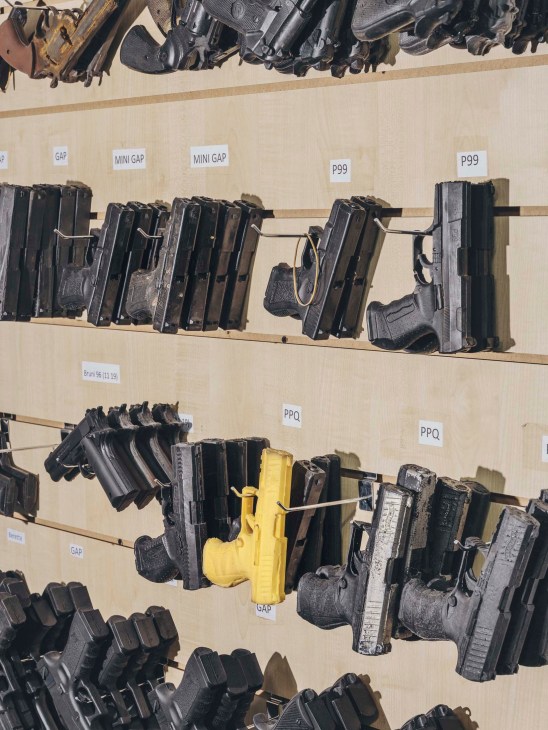
“I have been training for this all of my life,” he says. When Rivera was a child, his father, an industrial engineer who worked for Sony, would encourage him to construct mechanisms for winching his action figures in the family attic. During his experiments, Rivera would occasionally set fire to his Scalextric racetrack. As an adult, he developed an interest in sports such as rock climbing and motocross that would serve him well as he began to make a name for himself in the film industry. During one of his first on-set experiences as a special-effects supervisor, he performed some of the motorcycle stunts himself and tapped his network of daredevil acquaintances to perform the big falls, adding the title of stunt co-ordinator to his repertoire.
“From then on we have done something that doesn’t usually happen in other firms,” says Rivera. “We brought special-effects and stunt specialists under the same umbrella. If a scene calls for a guy to smash through a pane of glass, we’ll bring the guy and the breakaway glass.”
Despite the added efficiency of having a single company handling all of these moving parts, In Extremis spent more than 10 years as the only company in Spain offering both special effects and stunts. Today the former accounts for 70 per cent of the firm’s earnings, while the latter brings in the rest of its €4m annual revenue. In Extremis’s recent special-effects credits include work on a music video for pop star Dua Lipa, while the company co-ordinated stunts for Marlowe, Neil Jordan’s 2022 film-noir homage starring Liam Neeson and Jessica Lange.
Once the flames on the testing floor have been put out, the team readies a set of parachutes for its next project: a film about Álvaro Bultó, who pioneered the use of wingsuits in Spain. Stunt co-ordinator Oscar Dorta approaches with a stack of folded blue-and-yellow parachutes. Dorta’s skills as a stuntman with aerial expertise are unparalleled in the country. He has worked on 70 films and is currently transitioning to acting roles; he hopes to follow in the footsteps of those such as Jackie Chan, who turned from stuntman into movie star.
Dorta produces a photo of himself that shows him dangling from a helicopter during a shoot. It’s clear that he delights in the thrills of his work. He’s also proud of the role that In Extremis has played in reshaping the industry for the 100 or so professional stunt doubles working in Spain. “Since I began my career, the sector has evolved,” he says. “At In Extremis, we have influenced that change by making things official and starting a school with so many students. As the industry has grown, things have changed for the better.”
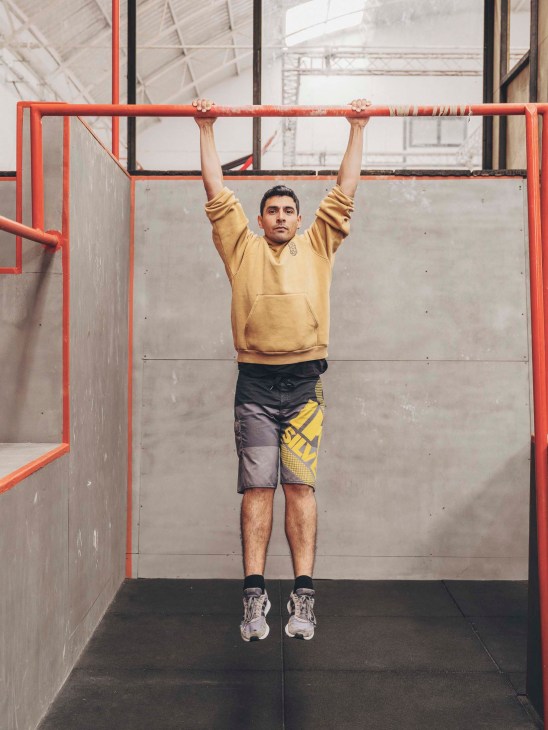
The Escac Stunt Academy – a collaboration between In Extremis and the Film and Audiovisual School of Catalonia – is the world’s only university-certified programme for stunt specialists. Opened in 2021, it has an average of 100 students per year. The two-year course teaches skills such as how to fall from great heights, combat with and without weapons, the use of firearms and underwater stunts. The campus is a 20-minute drive from In Extremis Club, the company’s state-of-the-art gym, where students, stunt professionals and members of the public train. It is outfitted with a parkour course, Olympic trampolines and air mattresses for aerial acrobatics.
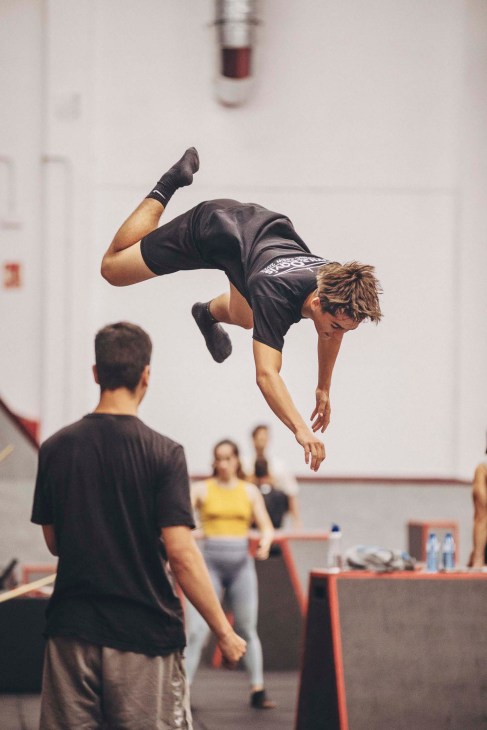


Aarón Vivar, the gym’s general manager and a former Spanish national parkour champion, guides Monocle through the club. “We designed this space ourselves and built it with our own hands,” says Vivar of the two years that it took to create the training space, complete with a climbing wall, a weights room and a boxing gym. “I know the types of jumps that are required and what stunt specialists need to practise. I wanted to address those needs.”
The gym’s tallest platform is seven metres high. It’s where we join Ivy Björg, a student from Iceland, as she practises a challenging move. Björg sets up for a “face off”, in which she launches herself from the platform while facing the quickly approaching ground – an ideal position for the camera to capture her expression. A moment before impact, she flips herself over so that her back presses evenly into the awaiting airbag. “I’m actually afraid of heights,” says Björg, laughing, as she clambers up unharmed. “The first time I climbed up there, I started shaking uncontrollably.”
The gym is a meeting place for an expanding community of stunt professionals, including those represented by In Extremis’s agency. “It’s important to come here to train every day,” says Álvaro Llagostera, a stuntman with black belts in taekwondo, hapkido and kickboxing, who graduated from the stunt academy three years ago. “The people who are responsible for hiring you for shoots are also here every day. It’s quite motivating.”
In Catalonia alone, 4,192 audio-visual projects (including video games and advertisements) were produced between 2020 and 2024. These brought in investments worth €57.9bn and 44 per cent of the projects were for companies based in the US, UK and France. “When a market leader [such as In Extremis] establishes itself here, it also generates an ecosystem that attracts more companies from the film industry,” says Lluís Matas, the city of Sabadell’s deputy mayor for economic promotion and city projection, who also heads the local Film Commission office. “This plays to our advantage.” Matas says city hall prides itself on being “film-friendly”.
However, as digital technologies continue to improve, there’s growing concern about the future of special effects and stunt performance. The impact of generative artificial intelligence was a central theme of the Sag-Aftra union’s 2023 strike against TV and film studios in Los Angeles. This summer, Netflix announced that it had used generative AI in one of its shows for the first time. A study by the International Confederation of Societies of Authors and Composers, which has member societies in 111 countries, has predicted that AI-generated audio-visual output will be worth €48bn by 2028 – an annual growth of 85 per cent since 2023 (though the bulk of this output will be seen on social-media platforms and TV broadcasts, rather than in film).
David Honrubia, In Extremis’s director of studies, acknowledges that technology is advancing at a “dizzying” rate. The academy is developing new courses to keep up with this, such as those involving shooting action with drones and motion-capture for game animation. But Honrubia is keen to distinguish between CGI as a digital tool that complements physical stunts and fully AI-generated content. Computer graphics are often used to heighten an action sequence but audiences still hanker for something that is human. “There’s nothing more real than what is truly real,” he says. As In Extremis shows, there’s a thrill in watching people putting themselves in danger in the service of cinema. That’s how to get audiences to hold their breath.
inextremisfilm.com; escac.com
In Extremis Film Services in numbers
€4m annual revenue
30 film and TV projects per year
80 ads worked on annually
70 employees
100 students per year
65 stunt doubles represented by the agency
320 club members
15 metres highest free-fall height for students
2,250 cubic metres water tank capacity
Why working online might be making you less productive
Perhaps online efficiency isn’t all that it’s cracked up to be.
After the coronavirus pandemic, many people hoped to establish ways of working that would make us more flexible, more productive and happier. Instead, we now find ourselves in a culture of constant distraction and perpetual availability. Digital collaboration has significantly increased; our calendars are filled with calls and meetings from dawn to dusk. We compulsively check work emails and chat threads after hours and on our supposed holidays. Concentration or contemplation is becoming increasingly impossible. The relentless pace of digital processes robs us of every moment of pause and reflection.
Knowledge workers today spend almost 60 per cent of their time using communication tools. The number of meetings that they must sit through has more than doubled since the period before the pandemic. Most employees report lacking sufficient time and energy to complete tasks, and are finding it more difficult to be innovative or to think strategically. Leaders complain that the lack of innovation or groundbreaking ideas within their teams is a problem too.
We are organising and collaborating more and more but creating less and less. We use the most advanced tools available but the quantity and quality of innovation seem to be declining worldwide. At the same time, the promise that technology and self-organisation would allow us to work more efficiently – and thus less – is not being fulfilled. In 2024, German employees logged approximately 1.2 billion overtime hours, more than half of which were unpaid. Work is becoming more tightly scheduled, while also increasing in volume.
It’s all a bit absurd. One of the very companies whose products distract us, keep us in meeting loops and encourage a permanent state of collaboration seems to have suddenly realised that this way of working might not be such a good idea, after all. Microsoft – whose office tools, such as Outlook, bombard us with emails and whose Teams platform enables endless chats and video calls – has said, in effect, “Sorry. It was an oversight. Things aren’t working out so well.”
The Microsoft Work Trend Index, a global, industry-spanning study on the state of our working world, has come to the conclusion that we are “all carrying digital debt”. “The inflow of data, emails, meetings and notifications has outpaced humans’ ability to process it all,” write its authors. “The pace of work is only intensifying. Everything feels important so we spend our workdays trying to get out of the red.”
The leading provider of productivity software is shocked to realise that its tools are making us less productive. Frankly, this has come a little late, as almost all companies have stocked up on such tools and built their workflows around them. So what now? German health-insurance provider IKK Classic recently wanted to find out which types of work bring happiness and which don’t. This topic is central to its business because, as its CEO, Frank Hippler, explains, “Higher job satisfaction has positive effects on mental and physical health.” Since IKK Classic insures many craftspeople, it focused on this sector and commissioned a representative survey. “The results were quite surprising in a positive way,” says Hippler.
It turns out that craftspeople have significantly higher job-satisfaction levels than the average worker. Some 80 per cent of them say that they are happy with their occupation, compared to only 55 per cent in the general population. One reason for this is that craft produces visible results. At a time when other professions are grappling with crises of meaning – leading to phenomena such as “quiet quitting”, in which employees disengage from their job and fulfil only the minimum requirements – these figures raise fundamental questions.
Gallup consultancy has found that the number of people who lack an emotional connection to their employer is at an all-time high. Many are mentally “checking out” of their jobs. Roofers and plumbers, meanwhile, don’t seem to need team-building trips or lofty purpose statements to enjoy their vocation.
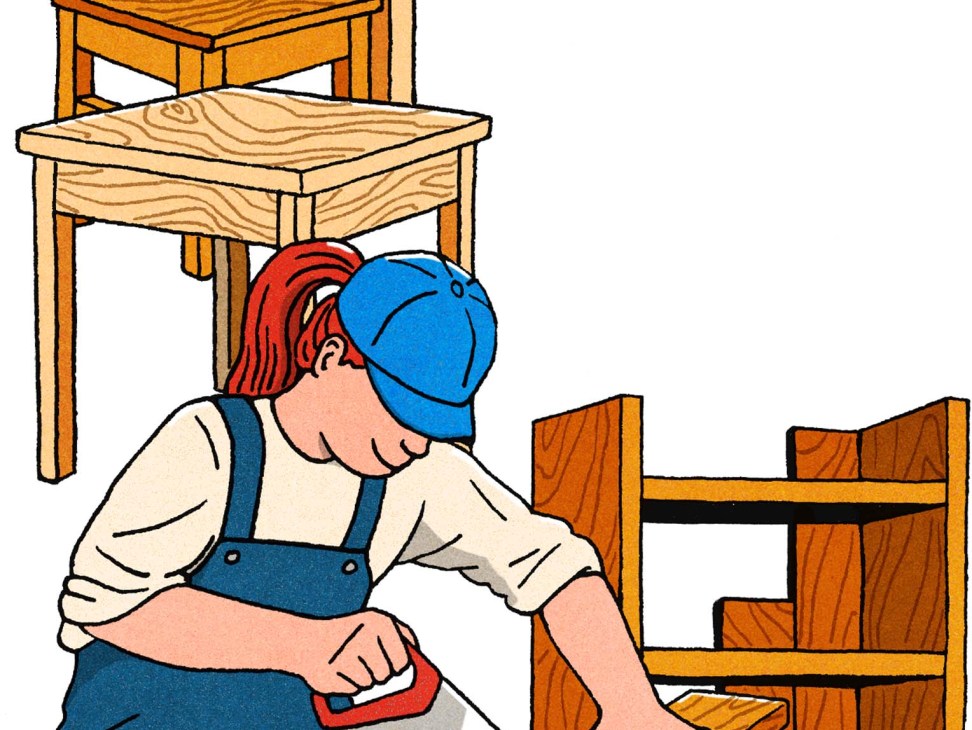
To better understand what craftspeople can teach us about job satisfaction, I spoke to Ricarda Rehwaldt, a psychology professor and leading expert on happiness at work. “In craft, you do something that people need,” she says. Before her academic career, Rehwaldt trained as a carpenter. For knowledge workers, she says, the sheer number of digital tools and the density of meetings lead to alienation. “The calendar dictates our life – in essence, we are back to Taylorism,” she says, referring to a division of labour focused on efficiency, from which knowledge workers thought that they had freed themselves.
From crafts, one can learn that such high levels of scheduling are often unnecessary. “In a workshop, you’re not distracted by constant pinging or notifications,” says Rehwaldt. “At most, the foreman would call to say what needs to be done next and then you’d have a drawing showing what you were building.” This allows for a different type of focus. “Standing at the circular saw for an hour can be quite meditative too.”
Today, Rehwaldt has to work with digital ticket systems in her academic environment and finds this exhausting. She believes that it would be better if more tasks were handled by one person who could take responsibility for completing and owning them. Instead, she says, work often requires additional co-ordination and standardisation, and often lacks real purpose. “It all feels rather Kafkaesque,” she adds. By contrast, she fondly recalls the sense of community that she enjoyed in the past when working with others to create something tangible. “It used to generate an energy that I don’t feel when filling out a Jira ticket.”
Author Seth Godin echoes craftspeople’s secret to job satisfaction with a concept that he calls “shipping”. “If it doesn’t ship, it doesn’t count,” he says. “If it’s not creatively productive, it’s not helpful. And if we’re lucky, this is the heart of our work – the work of creation in our chosen medium.” Increasingly, all knowledge work is subject to the relentless monotony of the digital. There’s no beginning and no end, and hardly any climaxes. A new day brings yet another stand-up meeting, the next asset to move along. That’s why we need a different, better narrative of what successful work can look like. It will not come from technology companies – but it just might from roofers and carpenters.
About the writer:
Markus Albers is a writer and longtime Monocle contributor. His new book, Die Optimierungslüge (The Optimisation Lie), is out now in German, published by Rowohlt/Brand Eins.
This human history expert says we’re wired to work, not relax – but here’s why it’s a good thing
Albert Steck talks to Hans-Joachim Voth
Isn’t it time to stop seeing work as a burden and start recognising its capacity to improve our lives and those of others? Journalist Albert Steck quizzes academic Hans-Joachim Voth about how meaningful labour can improve our wellbeing and why humans aren’t just designed for leisure.

We all wish for a sense of fulfilment in our lives – a topic that you’ve studied. So what’s the secret?
First, let me explain how we arrived at our conclusions. In the 1930s the US government compiled 1,500 biographies of ordinary people and stored them in an archive. With two colleagues, I analysed these fascinating life retrospectives. Our central question was: what mattered most to people?
And what was the answer?
The most important source of fulfilment was work and not primarily for financial security. It was about doing something meaningful, mastering tasks and receiving appreciation. Taking pride in one’s achievements, contributing to a greater whole and camaraderie were key.
What other factors were crucial?
Close family relationships and the individual’s role in their community, including contributions to their neighbourhood, city or associations that earned them social recognition.
Today work often has a bad reputation and is portrayed as a burden. But your study shows that no factor is more pivotal for happiness.
That’s right. The concept of a “work-life balance” assumes that happiness and your job are in opposition. It suggests that if I spend one more minute at work, that’s one less minute of “real life”. But the biographies that we analysed show that this dichotomy doesn’t really exist. It’s only by doing something meaningful that we find fulfilment.
That might be true for a doctor but does it also apply to a cashier, for example, or a factory worker?
Absolutely. That’s a key aspect of these stories. Across all social classes, the findings were almost identical. Regardless of gender, ethnicity or age, the factors for life satisfaction remained the same. I was especially impressed by the example of a librarian who took great pride in helping others by giving them access to certain books.
Satisfaction is subjective. Doesn’t that weaken the significance of your findings?
That is a valid point. Happiness is very moment-dependent. I feel good after a meal or napping but I can’t build a life plan around these things – no one should eat or sleep all day. These biographies are valuable because they offer a retrospective view. We can see which decisions and priorities were worthwhile and which weren’t.
How did you analyse the 1,500 biographies?
We used artificial-intelligence tools but ensured that they interpreted the texts in a similar way to people. Even human researchers reach slightly different conclusions when reading the same texts. AI is useful as long as its deviations are no greater than those between two people. We tested more than 15,000 samples to ensure that the AI provided reliable results.
What’s the main conclusion of your research? Does our society need to rediscover its love of work?
Today we vilify work and glorify leisure but that’s nonsensical. Your career is far more than just a means of earning money to pay for fun in your free time. Consider what happens when people lose their jobs: unemployment insurance might cushion their loss of income but their sense of life satisfaction drops significantly. It’s because work contributes greatly to their personal fulfilment.
Even when the work is hard?
Work rarely brings the same kind of pleasure as a theme park and some people in the biographies that we analysed didn’t enjoy their jobs – for example, a butcher in an industrial slaughterhouse. But humans aren’t built for constant entertainment. I agree with French writer and philosopher Albert Camus, who said that we should think of Sisyphus as a happy man. Even difficult work allows us to use and improve our abilities, build relationships and take pride in our achievements.
Switzerland’s Social Democratic Party wants to limit the working week to 38 hours over four and a half days. Do you see this as progress?
No, because it conveys the idea that work is hostile. And economically it would be harmful. Furthermore, if we reduce work hours too much, people won’t be able to fully develop their skills. To become an expert in something, you need time – roughly the well-known 10,000 hours.

A common argument for reducing working hours is to tackle rising stress.
That’s a valid concern. Not everyone handles stress in the same way. Still, society is going in the wrong direction by constantly complaining about it. Tackling professional challenges is a positive experience. It teaches us to achieve ambitious goals. An athlete at the start of a 100-metre race feels a rush of adrenaline.
The trend towards a leisure society is ill-timed. As a result of demographic changes, we lack workers and shorter hours will only make the problem worse.
Yes, and then there’s the harmful “age guillotine” of retirement. It’s pointless to automatically exclude capable older people from the workforce. The idea that the retirement of a 65-year-old creates a job for a younger person is false. This isn’t a zero-sum game. Every working person creates more work for others. Plus, tax revenues increase.
Yet many people oppose raising the retirement age. In France, for example, protests erupted when reforms were attempted in 2023.
Politics has created false expectations. People think, “I paid into the system so I’m entitled to retire at 62.” When the retirement age increases, people feel as though something is being taken from them. Work then feels like a punishment. But in truth, it’s a privilege to be needed and contribute to society.
With longer life expectancies and delayed entry into the workforce, is a shorter working life a waste of valuable human capital?
Exactly. We strive to treat resources sustainably but waste vast amounts of human capital in the labour market. Tax systems contribute to this by failing to reward work sufficiently. Highly educated people often work less to save on taxes.
What can be done to make work more attractive again?
Two things, which are especially relevant to Switzerland: first, focus on the apprenticeship system, which introduces young people to the working world early. People who study until 30 often struggle to transition into working life. They’ve never been inside a company and see the work environment as hostile.
And the second thing?
We must value all kinds of work. If there is a deep divide between “educated elites” and less formally trained workers, it destroys social cohesion. In Switzerland, even unskilled workers can earn a decent income without having to rely on government aid. A heavy dependence on the state, as in many European countries, undermines people’s motivation for individual responsibility.
About the writer:
Hans-Joachim Voth is the scientific director of the UBS Center for Economics in Society. This interview by Albert Steck was first published in the Neue Zürcher Zeitung and was translated by Monocle.
Ditch the treadmill and take this happiness prescription to extend your life
A Swedish professor of internal medicine and endocrinology, Fredrik Nyström is a firm believer in the notion that happiness can extend your life. Can a walk through a forest with a canine companion or quality time spent working on your car’s engine really make you healthier than someone who spends endless hours in the gym? It’s a controversial theory but he is determined to spread the good news.

How would you describe your philosophy?
Do what makes you happy because that feeling will ultimately make you healthier. In recent years, various studies have tracked people who are at roughly the same level of health – taking into account their body weight, their risk of cardiovascular disease and so on. And they show that those who simply say that they are happy really do live longer and with fewer complications compared to those who don’t have that belief.
This is an important finding. It means that you should sometimes allow yourself that extra bit of chocolate because if taking a bite out of the bar gives you a sense of contentment, that could translate into something that makes you healthier. You can see evidence for this in the obesity paradox: when you compare the mortality rate of people who are overweight or slightly obese to that of skinny people, you see that those in the former camp tend to live longer. It has to do with allowing yourself time to enjoy life – to bask in the sun, have a treat and drink wine. People tend to diminish their happiness by denying themselves the pleasures that are out there. That lowers the quality and length of their lives.
You have a reputation for going against conventional wisdom and the positions of other doctors. Tell us about what surprises – and annoys – people most about your research.
It’s probably when I mention that a moderate amount of alcohol is actually good for us. I am certain that this is true. Let’s start with the fact that drinking red wine with the evening meal is a fundamental part of the Mediterranean diet, which is the only diet that has been shown to reduce cardiovascular disease in a randomised trial (even when compared with a low-fat, alcohol-free diet). I have also shown through a randomised trial that cholesterol is lower among people who drink one or two glasses of wine every day for three months than among teetotallers. There is evidence that wine can substantially reduce glucose and blood pressure too. So I don’t think that it’s strange at all if drinking one or two glasses of wine ends up giving you a lower risk of something such as a microinfarct [a microscopic stroke].
It annoys the Swedish government quite a lot when I say this. These days the authorities tend to claim that no amount of alcohol is good for you. Members of the public get annoyed by this too. Let’s just say that there’s an ongoing debate but at least some people are listening to me.
That’s definitely good news for those of us who enjoy a glass of wine in the evening. What about exercise?
Everything in moderation: recent trials have clearly shown that there is a link between running too fast and atrial fibrillation [abnormal heart rhythm] in older people. There are also signs that you can do serious damage to your hips and knees.
Walking, on the other hand, is something that I really believe in. Lots of people track their steps and there’s nothing wrong with that. Walking to get steps seems like a good idea and I do it myself. But even better is the act of walking somewhere beautiful. Here in Sweden, we have forests that are freely accessible to anyone and it is very pleasurable to walk in them. And it’s the best when you’re with a dog. You have good company and can also let it run freely – so both you and your pet can gain happiness from the experience.
So it’s not so much the distance covered as the attempt to find small moments of happiness that matters?
Yes – well, at least moments of being content. Happiness is a strong word. I’m over 60 years old now and if you feel happiness even for a second at my age, you should feel extremely grateful for that.
If you think that something is beautiful and it makes you feel better, you should try to thrive off those moments as much as you can. For example, it’s usually very cold in Sweden, so I try to savour the few opportunities that I have for sun here.
I live outside a city with a view of a lake so it’s fantastic. Late spring, just when the summer is about to begin, is so beautiful, with different variants of green all over the place and birds singing full-throatedly. I try to take advantage of all of that. For people in northern countries, it’s all about making your own vitamin D.

That’s your age cohort sorted. What about the younger generations?
I have three children, who were born in the 1990s and 2000s. And I understand that they are the first generation that will be in worse health than their parents’ generations in roughly a century. It’s very sad and also totally unnecessary. The media has a hand to play in this, because all that we ever hear are reports about various crises.
It is rare to hear positive news – and there is a lot of it, from improvements in healthcare to the generational shift against smoking and pollution disappearing from our cities. There are plenty of things moving in the right direction. People just don’t realise that all of this is happening and they don’t talk about it enough.
What I try to pass on to my kids is a love of nature – and that it isn’t healthy to spend so much time on Tiktok or Youtube. That doesn’t make anyone happy. Take Sweden: it’s a fantastic country to wander around in and explore. This summer, my children are trying to master quite a large boat and they plan to sail over to an island in the Baltic Sea. It’ll be a challenge because of the waves, the lack of mobile signal and the risk that the winds from the west will push the boat off course. If that happens, they’ll end up in Estonia. But it’s an opportunity to enjoy nature and be free of their phones.
To sum up, then: you think that general activity rather than stringent gym sessions, marathons or structured high-intensity exercise is key?
Yes. Manual work is extremely important to me. I have built three houses with my own hands and rebuilt the engine of my second car from scratch several times. It relaxes me – and is the reason that I hate electric cars. I recommend having a hobby – anything other than just looking at your phone. For example, my wife has recently taken up pottery and my children are taking music lessons. It takes your mind off the tough things. Driving boats, mowing the lawn, walking the dog, planting flowers – these things make you content. I have so many colleagues in academia who are depressed from sitting around all day. You need an escape route. Go and fix your car.
Fredrik Nyström is a professor of internal medicine and endocrinology at Linköping University in Sweden. His book Lighten the Load on Your Shoulders! is published by Lava.
Hold on! Beltways are putting the world’s fastest travelator on trial
The moving walkway has long been a fringe fascination in the world of mobility. Science-fiction writers from Isaac Asimov to Robert A Heinlein imagined future cities bristling with speedy pedestrian conveyors but the technology hasn’t quite lived up to its potential. Now a US start-up called Beltways hopes to change this. In early 2026 the firm will hold a public trial at Cincinnati & Northern Kentucky International Airport (CVG) to deploy what it claims will be the world’s fastest moving walkway, capable of whisking standing users at a top speed of 16km/h. (Current travelators putter along at a maximum of 3km/h.)


“Transit is only useful if it’s faster than walking,” says John Yuksel, who co-founded Beltways with his brother, Matine, and envisions his “accelerator” walkways as a last-mile system pulsing through places such as New York’s Times Square. The siblings left jobs in Silicon Valley to start the company and are bringing to fruition an idea first envisioned by their father, Edip, when he was an engineering student at Turkey’s METU university. Edip drew up plans for a modular walkway system that could cut through traffic-choked Istanbul. Previous attempts at faster walkways – the trottoir roulant deployed by Paris’s metro agency more than 20 years ago or Thyssenkrupp’s Accel system, used in Toronto’s Pearson Airport – ultimately ran aground, largely due to mechanical and financial problems.
The first moving walkway was set up at the World’s Columbian Exposition in Chicago in 1893, then a revised version by the same architect, Joseph Lyman Silsbee, featured at Paris’s Exposition Universelle in 1900. More than a century later, the “street of the future” might be about to arrive, and quicker, than you think.
Comment
Moving walkways can make urban spaces more walkable, efficient and sustainable. We’d be delighted to hop on.
The hidden threat to Europe’s defence is its own broken bridges and red tape
Mobility matters to continental security and inertia can be lethal. As states enforce different weight limits on their roads, tanks can grind to a halt at border crossings, diplomats and logistics officers can scramble for permits and customs clearances can take weeks to process. This tangled web of red tape neutralises any advantage Europe’s armies might hope to gain over a single-country adversary.
In the event of war, the ability to deploy troops and material swiftly across Europe is by no means a given when infrastructure and transport networks are in such a shoddy condition. A 2025 report from the European Court of Auditors found that it could take up to 45 days to secure permission to move equipment across the bloc’s borders. While it’s unlikely that an EU member state would prevent another from doing so, the existence of this bureaucracy speaks to a strategic paralysis at the heart of European military planning.
Equally disheartening is the state of the continent’s crumbling infrastructure. Many European bridges lack the strength to carry modern battle tanks. Germany has acknowledged the problem. What is worse, its central location means that its ageing roads and tunnels pose risks not only to national defence but to the continent as a whole. Until Germany’s many key bridges are made kriegstauglich (“fit for war”), armoured columns responding to an attack on the EU’s eastern flank might have to detour hundreds of kilometres in search of viable crossings. Part of Friedrich Merz’s relaxing of Germany’s debt break was to allow €500bn to be invested in upgrading the country’s infrastructure over the next 12 years. But these things take time – time we have to hope that Europe has.
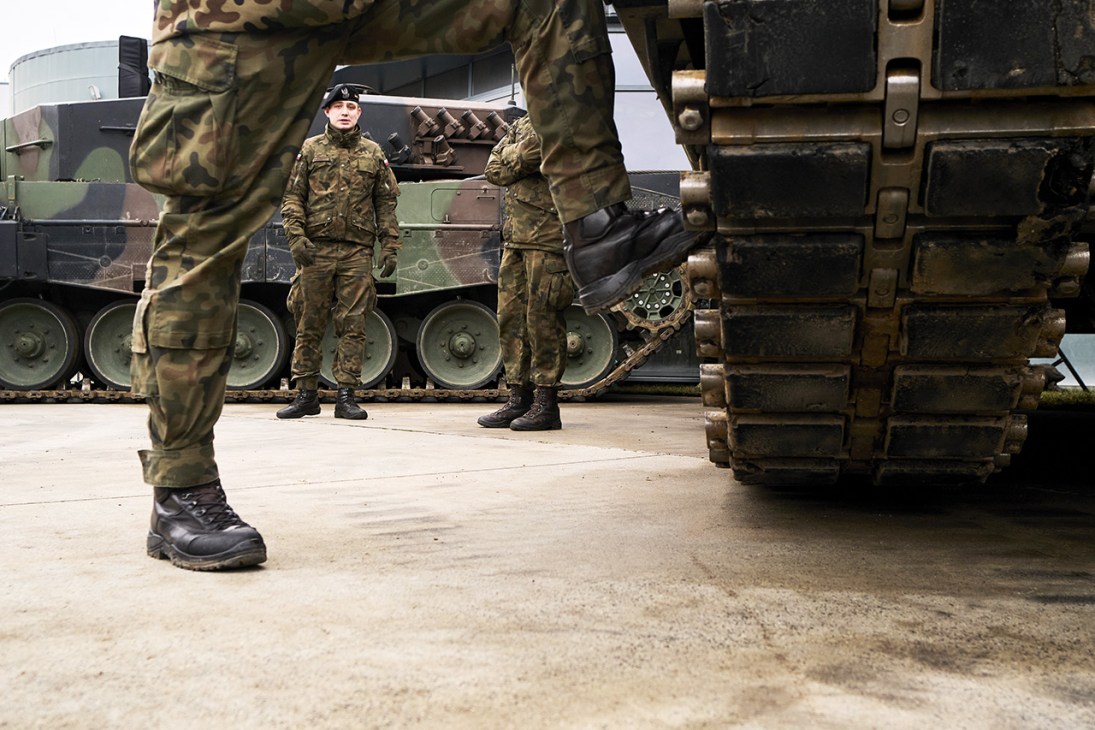
Weak bridges expose a deeper paradox in Europe’s deterrence posture. Nato’s doctrine of “deterrence by reinforcement” rests on the premise that forces can flow rapidly to areas that are under threat, with backup arriving faster than an adversary can react. But how can Europe credibly promise that if its roads buckle under the vehicles that it needs in combat? At June’s Nato Summit in The Hague, allied states agreed that 1.5 per cent of the newly adopted 5 per cent defence-spend formula would count towards infrastructure upgrades – an important step but only the first.
The EU is not blind to this challenge. In 2018, it launched its first Action Plan on Military Mobility, pledging to try and harmonise cross-border procedures and invest in dual-use projects serving civilian and military needs. After Russia’s full-scale invasion of Ukraine, a second plan in 2022 prioritised reinforcing some railway bridges, widening tunnels and expanding ports. This said, the European Investment Bank estimates a significant shortfall in transport-infrastructure funding.
In March 2025, the EU’s defence and space commissioner, Andrius Kubilius, warned that at least €70bn will be needed to transform rail, road, sea and air corridors into a genuine “military Schengen”. At the same time, the bloc’s chief diplomat, Kaja Kallas, has, alongside Kubilius, pledged a comprehensive legal review to simplify and streamline procedures by the end of this year. Military mobility has also become a flagship area of EU–Nato co-operation.
But challenges remain. Underinvestment in critical corridors such as north-south links across Central and Eastern Europe undermine strategic depth. Plus, states are often reluctant to upgrade border-region infrastructure that chiefly benefits neighbours. Harmonising procedures across 27 sovereign systems demands political will that is fast outpacing implementation.
Europe can’t let these unglamorous roadblocks and strategic speed bumps linger. Military mobility isn’t an optional extra, it is the backbone of a credible defence.
In the UAE, flying taxis will soon be a reality
Zipping silently home from the airport in a sleek electric aircraft above the gridlock and noise sounds wonderful – and Dubai’s “flying taxis” are slated to make this a reality early next year, with four key points in the city earmarked as launchpads.
November’s Dubai Airshow is a clear signal of intent. A dedicated pavilion for clunkily named eVTOLs (electric vertical take-off and landing aircraft) will see companies such as Joby and Archer showcase models that they claim could be airborne and commercially operative by 2026. “We’ve expanded the show by 8,000 square metres,” Dubai Airports CEO, Paul Griffiths, tells Monocle. “A number of eVTOL firms are planning to fly their aircraft publicly for the first time. It’ll be tremendously exciting.”
Dubai has completed test flights and has plans to launch its first commercial air-taxi routes next year, linking four vertiports at Dubai International Airport, Downtown, the Marina and Palm Jumeirah. In Abu Dhabi, meanwhile, US-based Archer Aviation is to introduce its Midnight aircraft, capable of flying four passengers. It’s aiming to cut the tricky Abu Dhabi-Dubai journey from 90 minutes by road to a mere 20 minutes in the sky.

“The technology is ready now,” says Archer CEO Adam Goldstein. “Tesla led a revolution in battery tech that’s made its way into aviation. Governments are working with industry to shape standards and real capital is coming in.”
But why here, and not in Archer’s home market of the US? “Everyone in the UAE said, ‘We want to make this happen,’” says Goldstein. “It’s more agile and ambitious. From the Abu Dhabi Investment Office to Mubadala and Etihad, the alignment is unique – and it’s our gateway to the Gulf, India and the rest of Asia.”
There’s also the fact that such innovation couldn’t work elsewhere (yet). Imagine trying to land an eVTOL in Manhattan or London, where airspace is crowded, infrastructure outdated and regulators rightly cautious. Add in noise complaints, rooftop logistics, the danger of crashes and decades of urban planning designed specifically not to accommodate flying vehicles, and the whole thing starts to look absurdly far away. In cities where the average building permit takes months to secure, the idea of regular rooftop landings feels fanciful at best.
By contrast, the UAE has space, capital, a centralised system that accelerates decision-making and even favourable weather. Crucially it has the ambition, spurred on by a friendly but fervent rivalry between Dubai and Abu Dhabi that has already delivered competing museums, megaprojects and cultural districts. Flying taxis, it seems, are the next prize.
“This is just version 1.0,” says Griffiths. “Once we get greater endurance and payloads, you won’t need roads or traffic lights. You’ll simply fly.”
Inzamam Rashid is Monocle’s Dubai-based Gulf correspondent.
Monocle Radio’s The Entrepreneurs recently discussed flying taxis with Archer Aviation’s CEO – listen below:
How driverless taxis and remote-controlled cars have shifted into Estonia’s fast lane
Auve Tech: Autonomous last-mile shuttles
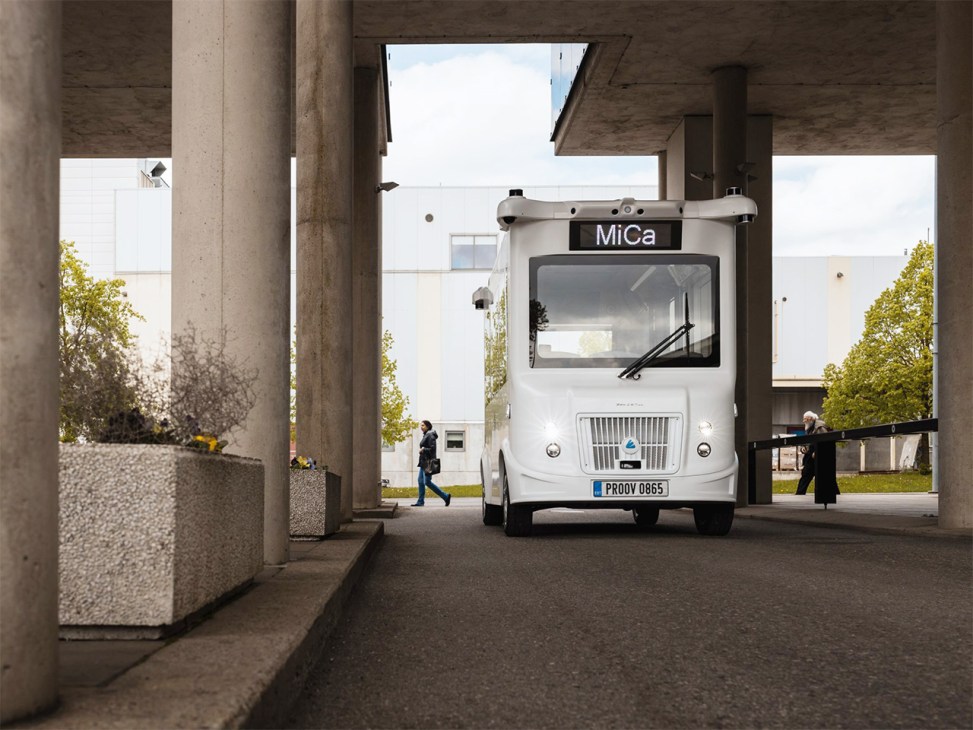
“These shuttles are essential for getting more people to use public transport,” says Silver Kalve, Auve Tech’s vice president of business development. The firm’s MiCa 2.0 shuttle – a fully electric, low-speed vehicle – eliminates the need for a driver. The cars use lidar (laser-based range detection) and camera fusion combined with AI to identify objects and predict where they will move next. The firm itself has plans to make moves globally, and the fleet is now operating on four continents and road legal in 15 countries. “Estonia has an innovation-driven mindset, along with a very strong digital society,” Kalve tells Monocle. “Autonomous vehicles were allowed on our roads as early as 2017.”
Bolt: Driverless taxis
Operating in 51 countries and with a €2bn annual revenue last year, ride-hailing company Bolt is planning to integrate autonomous vehicles into its platform by 2026. “We see long-term potential,” says Jevgeni Kabanov, Bolt’s president and head of their autonomous vehicle workstream. “[Though] still in their infancy, autonomous vehicles are going to transform how people live and move around cities.” Kabanov is convinced that Estonia’s digital-first attitude makes it a “natural hub for innovation.” But he is also mindful of how the shift to driverless cars might affect Bolt’s drivers. “They’re the backbone of our platform and power local economies.”
Elmo: For a car that’s roadworthy and remote-controlled
The firm behind the world’s first road-legal tele-driving technology, achieved a breakthrough in 2024 with its AI-powered SOS braking system. Remote-driven vehicles can now operate without a safety driver at higher speeds and no area restrictions. Launched in Estonia and Finland, Elmo’s technology is now operating on public roads in cities including Paris, Amsterdam and Los Angeles. A practical alternative to fully autonomous vehicles with lower hardware and deployment costs.
Read next: Why small electric vehicles are making a big impression in Cuba