Issues
How the leadership of Kate Gilbert helped put Boston on the map for contemporary art
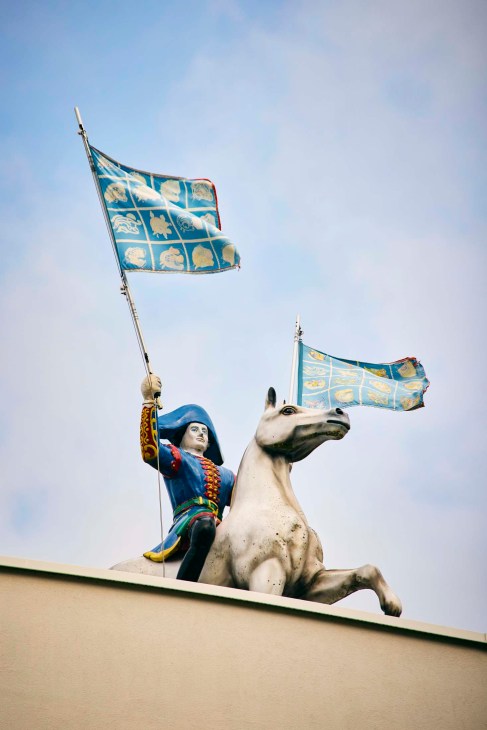
A totem pole depicting a leprechaun stands on top of two boxes of tea in downtown Boston. In his hands is a musket and on his head a Puritan-style brimmed hat overflowing with a cornucopia of lobsters, Samuel Adams beer and a squirrel that might or might not be urinating. Entitled “Material Monument to Thomas Morton (Playing Indian)”, the 4.25-metre-tall sculpture by artist collective New Red Order pokes fun at two of the city’s sacred cows: its Irish diaspora and the Boston Tea Party. Placed outside Faneuil Hall, a meeting place for American Revolutionary War-era protests, the installation is the work of Kate Gilbert. As the executive director of the first Boston Public Art Triennial, which opened on 22 May and runs until 31 October, she’s pushing the buttons of a city that is known for its intellectualism but also a certain aesthetic conservatism.
“Our visual culture doesn’t represent how rich our assets are here,” Gilbert tells Monocle. Until Halloween, Bostonians will be able to gaze upon 20 newly commissioned works, from larger-than-life sculptures to delicate textiles woven between trees, all of which are designed to spark curiosity and debate – and none is a milquetoast crowd-pleaser. They are dispersed equally between upmarket and less affluent precincts, outside marquee museums and in under-visited parks, in order to encourage residents to explore beyond their usual neighbourhoods.

Gilbert, who moved to Boston nearly 30 years ago, is uniquely qualified to pull off an event that has the potential to put New England’s largest city on the global contemporary-art map. As a young painter, she was part of the scrappy artist community that fought with city hall over redevelopment schemes in the Fort Point warehouse district. That early taste of urban planning ultimately led her to advocate for art from inside the establishment during a pivotal moment in Boston’s recent history: the removal of an elevated highway through the city centre to be replaced by a park. “You’ve got a mile and a quarter of found land,” she says. “When does that ever happen in an old city like this?”
When the Rose Kennedy Greenway opened in 2008, few knew what to do with it. As a member of the green space’s conservancy, Gilbert spearheaded the cultural component, starting with a lavish $500,000 (€441,000) opening bash. “If you’re going to open a new park, that party should signal the values and the sort of vision for what you want that park to be and how people will use it,” she says. The opening included a temporary installation of bears made from timber and rusted steel. Children loved the bears and the area’s residents began using the park as a landmark. Emboldened, Gilbert helped secure a prominent canvas across from the city’s main train station for Brazilian street-art duo Os Gêmeos in 2011.
In 2015 she launched Now + There, a public art entity, and has spent the past 10 years acclimatising Bostonians to increasingly challenging work. “It has been an acculturation process,” she says. “Now people aren’t afraid of contemporary art.” The public’s willingness to play along is also a boon to the creative community, as local art schools mint graduates who might be more inclined to make a career in Boston if they see opportunities. Roughly half of the triennial’s artists live or work in the city, with the rest hailing from further afield – Berlin, Los Angeles, Rio de Janeiro, Alaska. “A measurable outcome is that artists will stay here,” she says, noting that the city ranked third in a 2024 index of the most vibrant US cities for their sector. A large part of that is down to her efforts.
Interview: Philippe Delhotal, the creative director of Hermès Horloger
When Philippe Delhotal joined Hermès as its creative director of watches in 2008, he was tasked with establishing the French luxury house in horology – a highly competitive field dominated by Swiss specialists with centuries of watchmaking experience. Earning respect in the sector isn’t easy, even for a powerful luxury player such as Hermès. But Delhotal, who usually wears a T-shirt, loosely tailored trousers and brightly hued Hermès silk scarves (a far cry from the formal suiting that seems to be the watch trade’s uniform), approached the task with an open mind and a sense of humour.
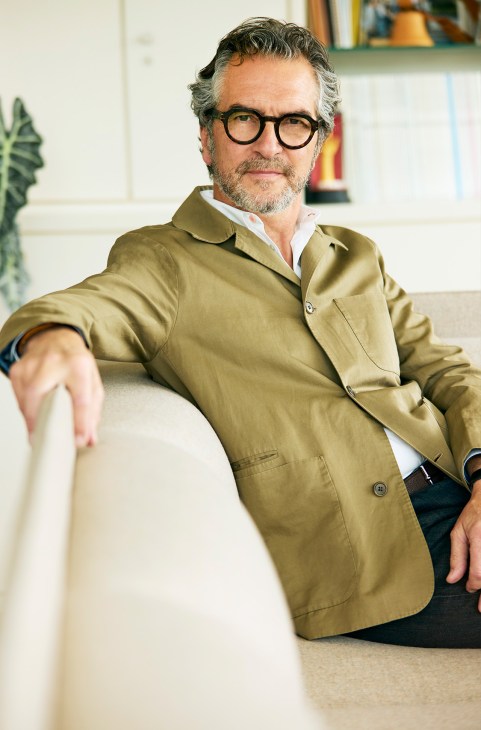
Rather than adhering to the industry’s playbook, Delhotal began rewriting the rules and asking questions about the concept of time. “If you can’t differentiate yourself, you can’t exist,” he says. So he introduced Le temps suspendu (French for “suspended time”), an award-winning complication that allows the watch to be stopped with the single press of a pusher.
The innovative idea brought the house the acclaim that it had sought among the watchmaking community. It also created new opportunities to tell stories about the ultimate luxury that is time, riffing on themes such as the importance of having moments to yourself and being able to enjoy the present. This year the house has reintroduced its Le temps suspendu complication in refreshed versions, featuring an openworked dial and available in deep-blue, red or brown colourways.
The summer months are a time of sunny getaways and seeking a slower pace of life, and Delhotal seems to capture the spirit of the season with his optimism and relaxed demeanour. He has often turned to nature for inspiration. Some of his sportier, more casual designs, such as the Hermès H08, are fitted with an array of yellow and blue straps, which look particularly good on the beach. The Hermès Cut, another recent hit featuring a round, satin-brushed case and sharp angles, was introduced last year on the Greek island of Tinos. Alongside marble artisan Giorgos Palmaris, who works in an open-air workshop in the village of Pyrgos on the island, Delhotal spoke about drawing inspiration from the ways in which materials such as marble and steel are shaped.
The creative director of watches has made Hermès well-known for artistic, one-of-a-kind pieces featuring hand-painted dials and the same kind of intricate drawings that you’ll find on the house’s silk scarves. Now he is also experimenting with jewellery watches, rethinking what a watch should look like and how it should be worn. His latest design, Maillon Libre, can be clipped on a sleeve, pinned on a lapel or strung on a leather cord and worn as a necklace. Here, Delhotal tells Monocle about breaking design rules and viewing timekeeping through a new lens.
How did you approach the challenge of establishing Hermès as a serious player in watchmaking?
It wasn’t easy because from early on we were up against intense competition and a lot of important watchmakers. When it comes to mechanical movements, the big challenge is creating something different. We aren’t a watch brand – we’re a house that specialises in 16 different métiers – so we needed to have a movement that would prove to the horology community that Hermès was capable of entering this territory legitimately. In other words, we needed to chart our own path and come up with a compelling story. I quickly realised that this story should revolve around the concept of time. I wanted to talk about it in a different way than the rest of the industry and be a little unconventional. So we began discussing time that runs, stops and speeds up, as well as precious moments. Then we decided to explore the notion of stopping time and created a new complication based around this idea. We presented it in 2011 at Le Grand Prix d’Horlogerie de Genève and won. It was both a joy and a surprise. It allowed us to talk about Hermès as a maison that was daring to be different, to offer something that you wouldn’t find anywhere else. That’s our mission.
Why do you think the concept of suspending time has proven to be so compelling?
Horologists have always been making complications that are extremely precise in terms of telling the time but what we did is turn the concept on its head. When you stop time, it’s a moment of privilege that you can dedicate either to yourself or to others. Imagine a meeting in which you can talk without worrying about how much longer you have left or being in a space where nothing else exists aside from the present moment.
Le temps suspendu put the house on the watchmaking map more than 10 years ago. Why did you choose to return to it this year?
It has been three years since we activated the relaunch of the concept. But three years ago we weren’t in the situation that we’re in today, facing huge uncertainties both politically and economically. We all feel the need to escape, to talk about something else and take advantage of the present moment because the future seems so precarious.
Is that also why you’re doubling down on humour with this year’s limited-edition art watches?
Yes. We presented a watch that depicts a horse whose tongue sticks out because it’s funny. Watchmaking is a craft that is very serious. I have worked for many traditional watchmakers and that’s how they tend to be. At Hermès, it’s not that we’re not serious but we are different. We do things with lightness and people enjoy it. These days we need that, as well as a sense of fantasy that encourages us to stop and take a breath.
Do you draw inspiration from other departments of the house?
I’m always inspired by the silks, which are a canvas for so many types of drawing and colour experimentation. I find leather interesting too, especially when I’m researching colour. There’s a certain exchange between us and it’s interesting to see the collaboration between the silk, leather-goods and accessories departments. We share experiences because we are ultimately one house and all of our creations need to have stylistic coherence. The Métiers d’Art range of artistic, hand-painted dials is a signature because it reflects the drawings of our silk scarves. There’s so much richness and history in these drawings and every square also encourages us to speak about our heritage and play with colour.
As well as unique Métiers d’Art watches, you have also introduced more casual, sporty designs, such as the Hermès H08. Why is it important for you to have such a wide repertoire?
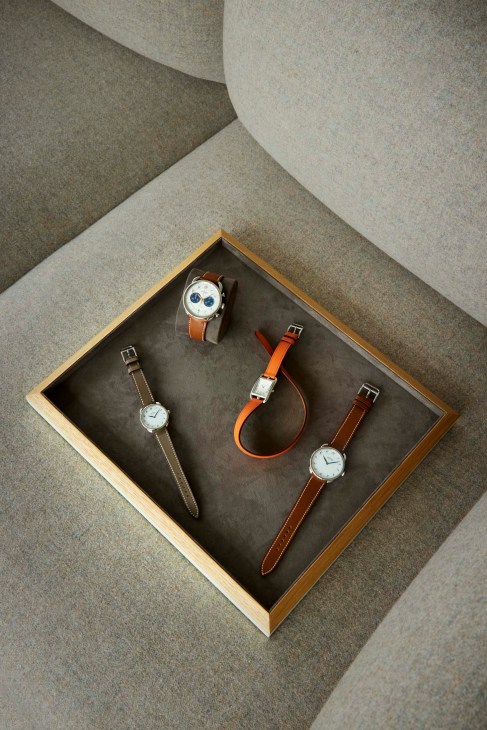
There are people who only wear one watch but others prefer to adjust to different situations. I would wear the Hermès H08 on the weekend because it’s more casual, while the Arceau is a watch that you can wear throughout the week. Every design has its own community. We have customers who are extroverted and fashion-forward and others who are a little more discreet. The diversity of our customer base is what makes it so interesting. Different times of the year also call for different watches. Sometimes people lean towards watches that are more elegant and jewellery-inspired, while at others they prefer something more sporty. We need to take advantage of this with a sufficient offer that caters to various types of people and occasions. If you only focus on one category, things become more complicated.
Your new designs, including the Hermès Cut and the Hermès H08, have been very well received by collectors. Do you see them becoming future icons?
The making of an icon happens naturally. You can’t control it. In perfumery, for example, there are certain scents that are iconic – Chanel No 5, Mugler’s Angel and so forth. But when they were being created, no one could have imagined that they would achieve this status. Even if you try to design an icon, it won’t necessarily become one – only time can tell. I simply design a watch and it’s either welcomed by the community or not. Sometimes it might not be the right time; at others, everything just aligns, from the trends of the moment to people’s interests. I hope that all of our watches will become icons but for the moment they’re not. We need to wait and see. It’s just like in the film and music industries: when an actress or a singer makes a great movie or song, people are quick to call her a star but in reality she’s not. A star is someone with a 30- or 40-year career.
You have been experimenting with making jewellery watches, including the brooch watch, which nods to the house’s anchor chain motif and also challenges a lot of watchmaking conventions. Was that your intention?
We had this idea of offering a new watch and a new way of wearing it. The anchor chain motif has existed for a century on our bags, on our belts and on our pocket watches – so why not tell a new story with watches and break some rules? That’s what makes you original. There’s nothing more boring than things that look identical. There are so many parallels in other industries as well: just look at cars or even clothing.
Having now firmly established the house in the world of Swiss watchmaking, what’s next?
We want to be more creative and audacious. Once you have built a solid foundation, you need to continue doing better. Every year we try to build on what we already have, just like in life. In this industry, you always need to be proving yourself and your ability to make things well.
How Diego Della Valle grew Tod’s into an Italian success story
The Milan offices of Italian fashion house Tod’s feel more like a high-end hotel than a commercial HQ. On the third floor of the Corso Venezia palazzo, past immaculate wooden and marble fixtures, Monocle is being served coffee in a light-filled room while awaiting the arrival of the brand’s patriarch and group chairman, Diego Della Valle, the third-generation family owner. He soon walks in through a side door, dressed in a navy blazer, his shirt collar riding up over a dark silk scarf. He sits down at the head of our table, placing a yellow notepad headed with his initials in front of him.
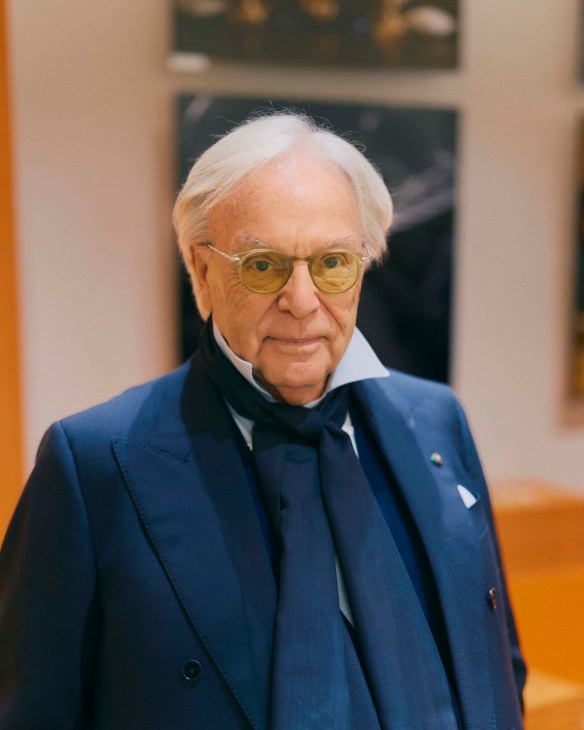
Della Valle oversees an Italian success story. In 2023 Tod’s reported annual sales of about €560m, while group figures (the Tod’s Group portfolio also includes labels such as Paris-based Roger Vivier and Hogan) topped €1.13bn. The company, which Della Valle’s grandfather started as a humble cobbler’s workshop, is now a global powerhouse. It’s still renowned for its shoes but has also branched out into everything from bags (Princess Diana was a fan and has a bag named after her) to ready-to-wear, the latter since 2005. The company is based in the family fiefdom of Casette d’Ete in the central Marche region and production remains in the area to this day.
Its continued investment in Marche’s artisan community, known for its mastery of leather, is what sets the company apart, says Della Valle. “We’re always looking to do difficult things,” he says, in a hushed, considered tone. “That means products that are difficult to make and also hard to copy.” He adds that, unlike a bag with a big logo emblazoned on the side, you can’t fake superior quality. “Every leather hide is different.”
As you might expect from a fashion player such as Tod’s, embodying Italy’s lifestyle – including its craft prowess, as well as its flair for quality and slower living – is part of its raison d’être. Indeed, one of the reasons why we are sitting around the table at the Milanese outpost of Tod’s is to celebrate the company’s new book, Italian Hands, the latest instalment in its coffee-table collection. The book tells the stories of Italian creatives and the artisans with whom they collaborate, from a glassblower in Murano to a master of terracotta. The limited-edition book, which puts the spotlight on what Della Valle calls “Italian good taste”, is filled with images of bag straps being braided, Gommino loafers being stitched and ceramicists’ brushes being dipped in sunny yellow pots of paint. The idea is to capture the company’s ethos of celebrating handcraft. There are barely any commercial or marketing objectives, with the edition only available to private customers.
For Tod’s, investing in the quality of life of in-house talent, as well as that of the broader community, is a priority. Whether it’s providing a crèche at the Marche headquarters and helping build an elementary school or financing the restoration of the Colosseum in Rome and Milan’s city hall, Della Valle is a strong believer in the positive social and cultural impact that successful companies can make – an ethos once followed by the likes of Olivetti and more recently Zegna, which has invested heavily in the Piedmont countryside. Della Valle talks about “the leadership role” that powerful companies must assume and the importance of helping to build something for their countries.
The publication of Italian Hands is also designed to celebrate the Gommino shoe – perhaps the best-known product in the Tod’s portfolio. Blending a leather driving loafer with a more technical rubber-studded sole, it became an instant hit on its launch in the late 1970s. The key was creating a shoe that could accompany both dress-up and dress-down looks and, by extension, be used throughout the whole week.
“At the time there was a world of elegant things but they were all formal,” says Della Valle. “And then there were things for the weekend but they were almost always technical and sporty. So what we did, quite intentionally, was to turn designs that were originally used for moments of relaxation into products that could also be worn with work clothing.” Part of the job involved what he calls “nobilising” rubber, which had previously been looked down upon in bourgeois circles, despite how practical and versatile it could be. Today you’ll spot as many pairs of Gommino shoes in boardrooms as you will in beach clubs – the most stylish wearers usually pairing them with linen shirts and bright-coloured trunk shorts, only to swap them for open-toe sandals moments before stepping on hot sand.
Della Valle might have been central to the Gommino’s genesis but he likes to credit the team around him, as well as his father, Dorino, who died in 2012 at the age of 87. Together they created a design icon that allowed Tod’s to enter fashion’s big leagues. However, around the same time in the early 1980s, Della Valle realised that the company needed to move beyond the family surname that it was using at the time. “My only request was to have a short name that was easy to pronounce,” says Della Valle. The idea was to move on to something that better reflected the company’s increasingly international market.
In 1984 the company was rebranded and renamed JP Tod’s (the initials were officially dropped in 1997), a choice that has plenty of lore around it. Some have suggested that the name was picked from a US phone book – a story that Della Valle says is only true in part. “Having a name that was a bit Americanised was a concept that was very much in vogue at the time among the big brands,” he says. “The people who came up with [our rebrand] were me, the typographer from my village and the owner of the printing press. Now there are 3,000 people doing that work.”
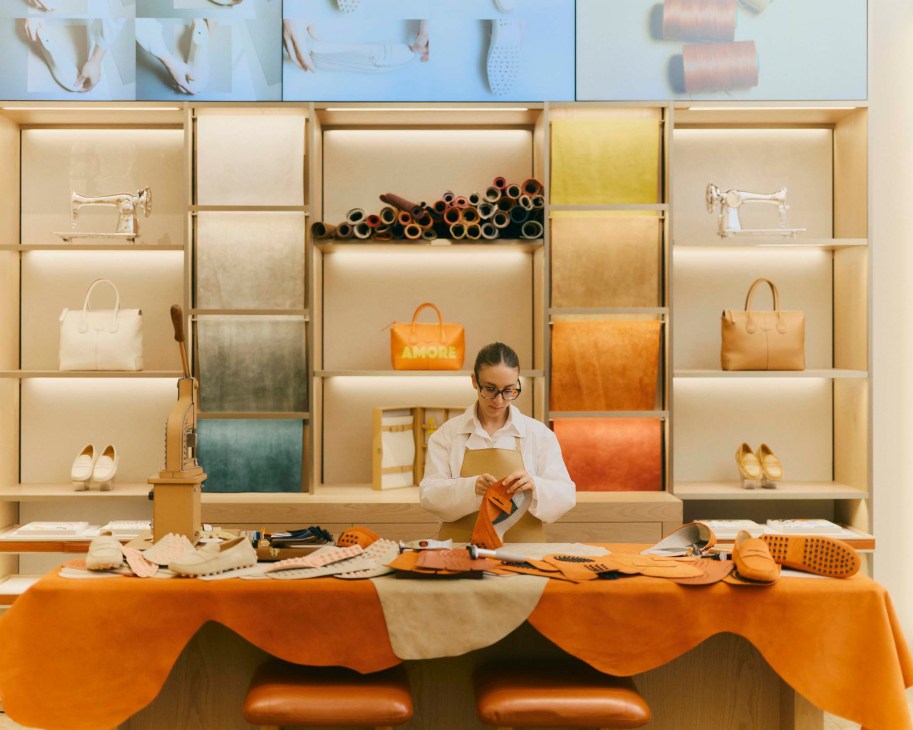
Like most large companies that are invested in makers, Tod’s has a talent pipeline to think about. Ensuring that people have “the desire to do [the work]” is at the forefront of Della Valle’s mind as he tells Monocle about the pride of the sewers who work at the Marche factory. Bottega dei Mestieri, a programme created in 2012, is a key part of this nurturing process. Artisans nearing retirement are paired with interns who often go on to work for the brand. “Young people give a bit of energy to the [older artisans] and they give back their wisdom in return,” says Della Valle, adding that instead of simply asking workers to show up and put their heads down, the scheme fosters dialogue between generations. “The artisan manages his own hands,” says Della Valle, turning philosophical for a moment. “It is very important for young people to understand the concept that if you are a craftsperson, you are truly free.”
As well as its nationwide largesse, Tod’s continues to build abroad. Recently the brand explored digital product passports to ensure that its supply chains are more traceable. It has also shaken up its ready-to-wear offering, with Matteo Tamburini, formerly of Bottega Veneta, joining as creative director in 2023.
Meanwhile, last year, Tod’s Group made the decision to delist and go private – a move that involved Della Valle stepping away from his role as CEO. (John Galantic, formerly of Chanel, now holds this position.) “It was the right moment to leave [the stock exchange] because we need to invest a lot in future development, which potentially is enormous,” says Della Valle.
As for what that future looks like, the chairman of the board and owner won’t give too much away, though he admits that he is interested in furniture and leather jewellery. And while he might be slightly less involved in the day-to-day running of the company these days, there has been no dip in his enthusiasm and his travel itinerary remains packed. He is already planning a swift return to Marche following his meeting with Monocle, then on to Morocco.
The key thing seems to be to stay true to what the brand does best: producing wares to the highest standard and achieving that delicate balance between novelty and continuity. “It’s important for companies like ours to never betray the quality,” says Della Valle, summing up his – and by extension, the company’s – ethos. “And we need to be absolutely modern.”
tods.com
An architects’ retreat where mid-century cottages stand amid unspoiled Finnish woodland
Pia Ilonen first visited Vähä-Kiljava when she was 12 years old. It was the 1970s and her architect parents, Pirkko and Arvi, were building a family cottage in the village, a popular holiday destination about 50km north of Helsinki. At the time, her mother and father were designing petrol stations for US petroleum company Esso; they decided to order one of the ready-made station structures and convert it into a house. Pia remembers the building site: initially, there was only the bright-yellow metal station skeleton with a hearth in the middle. “All of our neighbours remember our family,” says Pia. “We would be grilling sausages in the fireplace with nothing but a steel frame surrounding us.”

Some 50 years later, Pia’s car is under the cottage’s parking canopy and her two grandchildren are playing inside the house. The building no longer looks like a pit stop on the side of a highway; it now has a green wooden façade and a happily cluttered interior with large windows, an Alvar Aalto seating arrangement and tapestries on the walls. It has served as the family’s summer home for decades and Pirkko often hosted pancake parties on the terrace for all of the children in the village. Pia, who grew up to become an architect like her parents, is now trying to work out how to renovate the cottage, which her neighbours still refer to as the “Huoltoasema” (petrol station). It’s in need of new windows, a new roof and a fresh lick of paint.
Today the Ilonens’ house and most of the other cottages surrounding it belong to the Finnish Association of Architects (SAFA), a public-facing organisation that counts more than 70 per cent of practitioners in the country as members. It co-ordinates building competitions, consults on new legislation and represents the interests of Finland’s architects.

But SAFA also has a less publicised role: managing Vähä-Kiljava’s 25 mökki (cottages), which were built between 1940 and 1970, and most are rented to SAFA members. This curious collection of houses serves as a kind of open-air museum of Finnish mökki culture, as well as an extended experiment in what happens when a group of architects decide to spend summers in the wilderness together.
Vähä-Kiljava was established in 1936 when Väinö Vähäkallio, a prominent architect and the then-head of Finland’s building commission, decided to donate 30 hectares to SAFA for the purpose of providing a “recreational and holiday-making place for architects”. (There are competing explanations as to why he did so: some say that it was simply out of altruism, while others claim that he was in trouble for handing himself commissions and needed to curry favour.)
The plot was pretty: a gently sloping moraine covered in moss, spruce trees and porcini mushrooms, with a sand beach bordering the crystal-clear Sääksjärvi lake. The founding document spelled out the rules of the place: in addition to building a central venue with hotel rooms and a communal dining hall, plots would be given over to architects on which to create cottages. The document also specified that after the original tenant’s death, every house would become the property of SAFA and rented out to other members.
The community is still governed by these rules, says Jukka Karhunen, a founding partner at Hyvämäki-Karhunen-Parkkinen (HKP), the firm that designed the Helsinki Opera House in 1993, as well as many other public buildings. He welcomes Monocle to Vähä-Kiljava on a balmy summer’s day. “It’s the perfect combination of isolation and togetherness,” he says. “There is a community but nobody comes knocking on your door unannounced.”
Karhunen, who is wearing a striped T-shirt and shorts, is in a decidedly laid-back mood. He offers us a sparkling drink made from blackcurrant leaves. He and his architect-poet wife, Kati Salonen, are longtime residents of Vähä-Kiljava, spending several months there every summer. They read, swim, go mushroom picking, barbecue and wash dishes outside, before taking turns in the communal sauna in the afternoons. “We all agreed that you don’t talk about work in the sauna,” he says.
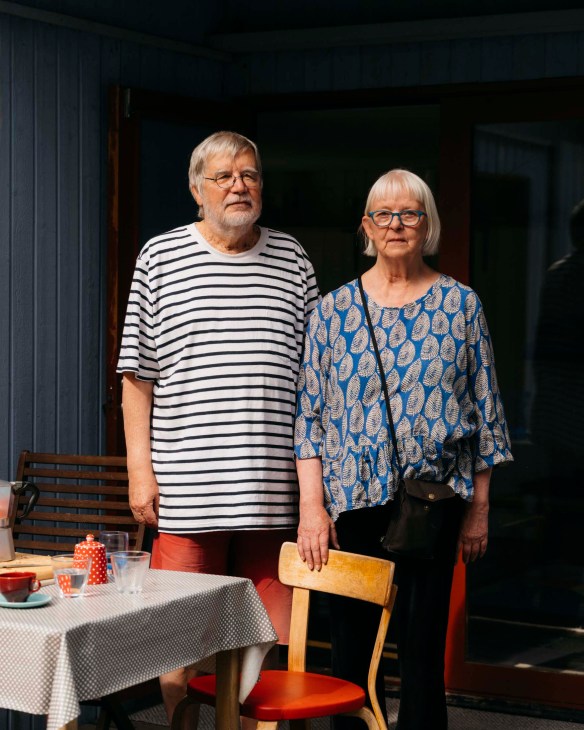
This mökki lifestyle – in which people of all walks of life spend their summers in the forest, ideally with no wi-fi or even running water – has become a trope of Finnish culture. Social equalisers of this kind are far less prevalent abroad, even in neighbouring Scandinavian countries. “In Sweden, those who were better off used to build seafront villas instead,” says Karhunen, pointing out that the mökki tradition is younger than many Finns imagine, only emerging in earnest in the second half of the 20th century. When planning started for Vähä-Kiljava in the late 1930s, it was still highly unusual to own a second home. “At that time, it would have been extremely rare for somebody to have a cottage,” says Karhunen. “Most people didn’t have a car.”
Nonetheless, Vähä-Kiljava thrived from the start. The people behind it first had to decide on the initial designs for a master plan, as well as a name for the site. Among proposals such as “SAFA-RI”, the association settled on the idea of borrowing the name of a nearby village, Kiljava, and adding a prefix paying tribute to the project’s commissioner, Vähäkallio. After completing the so-called “Kasino” – not a gambling den but an airy, functionalist communal building with a sea view and Artek-furnished interiors – the association announced a contest sponsored by a construction company to build a single-family cottage. The winning entry was a proposal by Jorma Järvi: a traditional red puutalo (wooden house) with asymmetrical windows and a sloping wall on one side. The jury, which included Alvar Aalto, praised the design for its “fun” and “thought-through” structure. The angular space contained a sleeping cupboard for children, so that a family of seven could fit into just 24 sq m. This foreshadowed the standard mökki construction that persists to this day – a spartan structure made from found materials at minimal cost.
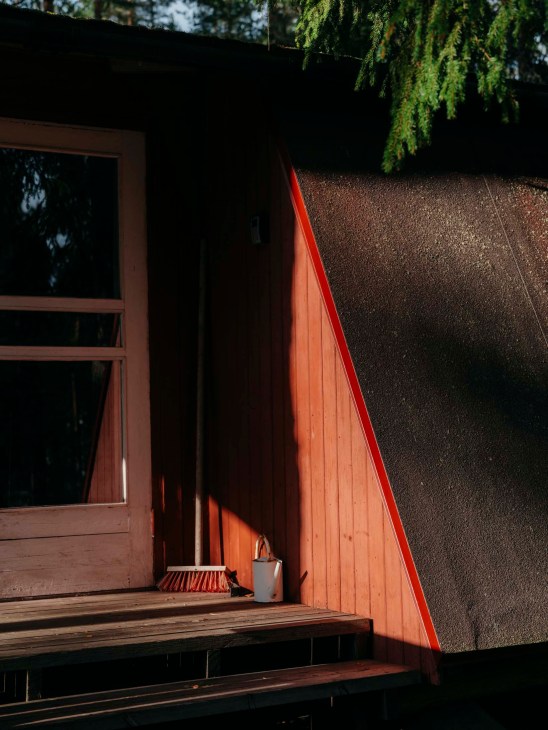
The designers also took cues from Norwegian and Swedish sporting huts (or sportstuga), which were built out in nature and intended for sleeping in after days spent outdoors. This influence is clearest in Rake, a red-stained cottage that was completed in 1943. Designed by Kaj Englund, this compact square house is lined with bunk beds on two sides and wooden benches on the other two. It’s pared back and dimly lit, partly because it was built during wartime shortages. It’s also a favourite of Sari Nieminen, an architect who completed an exhaustive survey of the buildings in Vähä-Kiljava in 2013. She points out that the small windows are strategically placed so that somebody sitting at the table has a view out in all four directions. “Nature becomes part of the interior,” says Nieminen. “This is skilled planning based on how people would inhabit the space.”
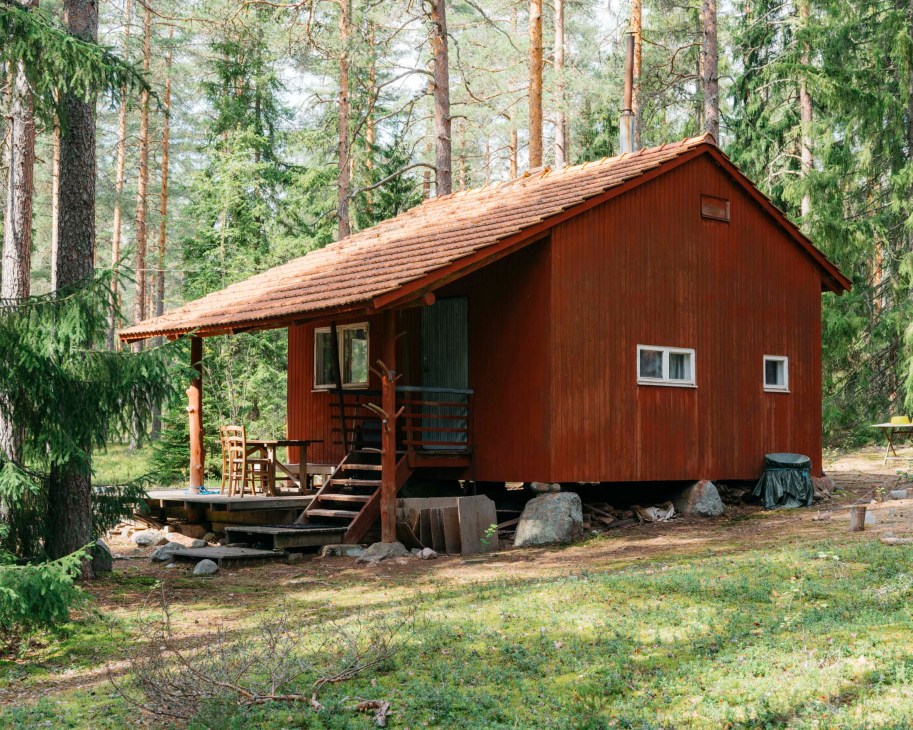
Rake is complemented by a dozen or so summer residences, which were completed in the 1940s and 1950s, when the lakefront started filling up with baby boomers and their families. Households of seven could often be found packing themselves into tiny cottages. “I have never spent a summer anywhere else,” says Harri Hagan, who first arrived at Vähä-Kiljava in the 1950s. His family first lived in one cottage, which his architect father expanded. When Hagan started a family, he renovated the Vesikari cottage, which was originally built in 1946. “This was the Finnish Association of Architects’ land, so of course there were never any building permits,” says Hagan. He still spends almost half of the year in the well-tended cottage, which is set on a steep slope with a herb garden and has a generously proportioned firepit.
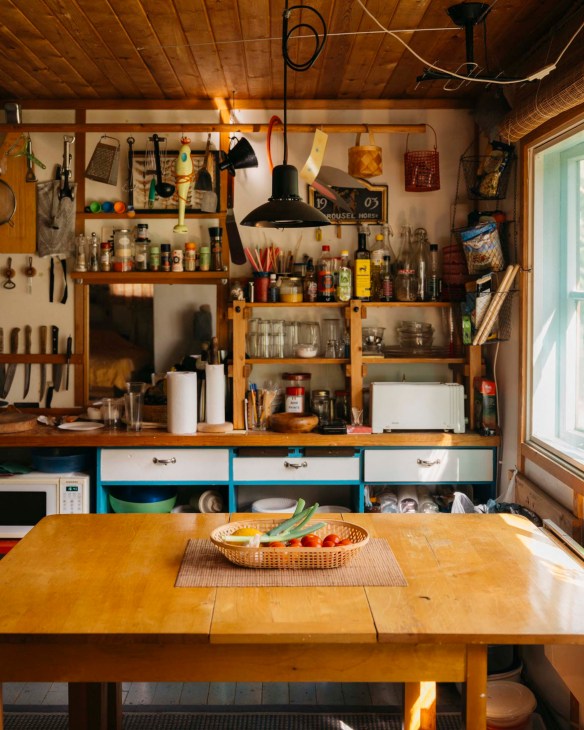
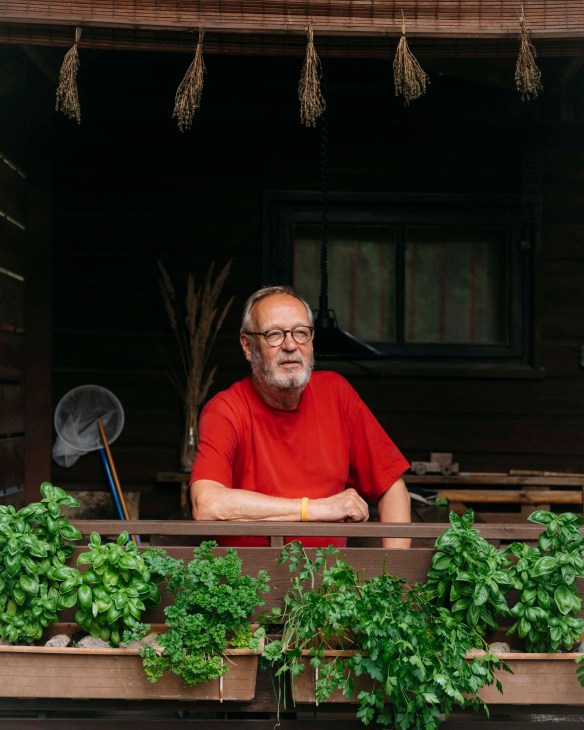
More experimental types of construction arrived at Vähä-Kiljava in the 1960s. Up the hill from Hagan’s house is the Mustikka, which is Finnish for “blueberry”, taken from the wild berry shrubs surrounding the house. Built in 1968, the cottage is believed to be a version of architect Kristian Gullichsen’s Moduli 225. This was one of Finland’s first prefabricated houses, for which all of the parts were factory made and could be assembled on site in less than a week. Its first resident, Riitta Thuneberg, had wanted the house to “touch the planet as lightly as possible” (like most of the houses, it is built directly on rocks) and insisted that everything in it be either yellow, white or orange. Though its current resident, Peter Solovjew, has relaxed the rules on interior decoration, he is strict when it comes to not harming the surrounding nature. “I don’t let anyone step outside the paths,” he says, as Monocle tiptoes away.
Further along the crest of the moraine is Pirunpelto, the cottage that marks the far end of Vähä-Kiljava. This house was built in 1966 by Ilkka Pajamies, who picked a remote plot next to an ice-age boulder formation known by the same name, meaning “devil’s field”. The starting point for Pirunpelto’s design was 17 pairs of glass doors, which Pajamies salvaged from an old building in Helsinki. These now make up much of the cottage walls. The architect spent an entire summer sleeping in a tent on the site before deciding on the placement and orientation of the building.
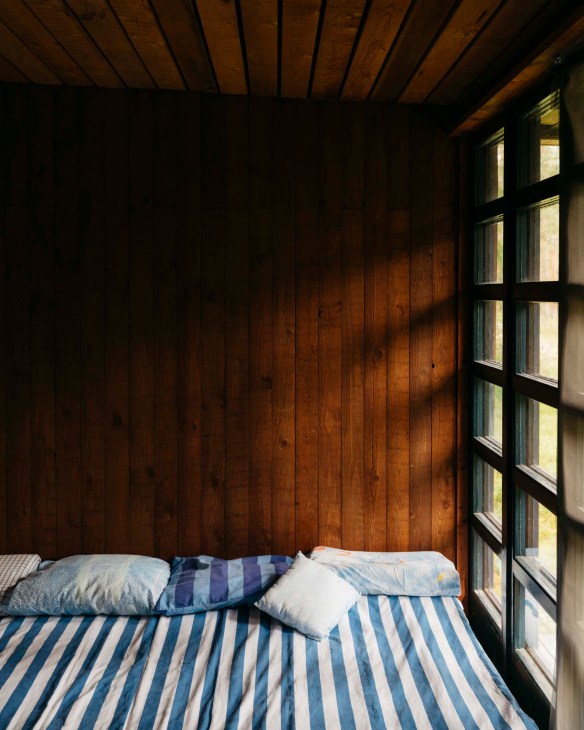
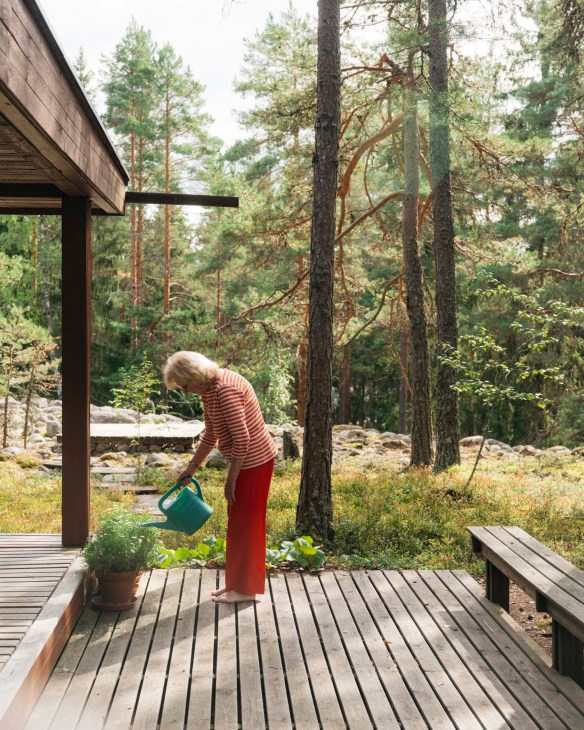
“He wanted to understand how the light changed,” says Pirkko-Liisa Schulman, its current occupant. When the architect moved in with her biologist husband, Alan Schulman, they were amazed how the midnight sun shone in through the patio and the full moon rose directly in front of the bed in August. “If you hang up anything, you ruin it,” she says. The couple have kept the original interiors with a fold-out dining table and kitchen that’s hidden behind Japanese-style sliding doors.
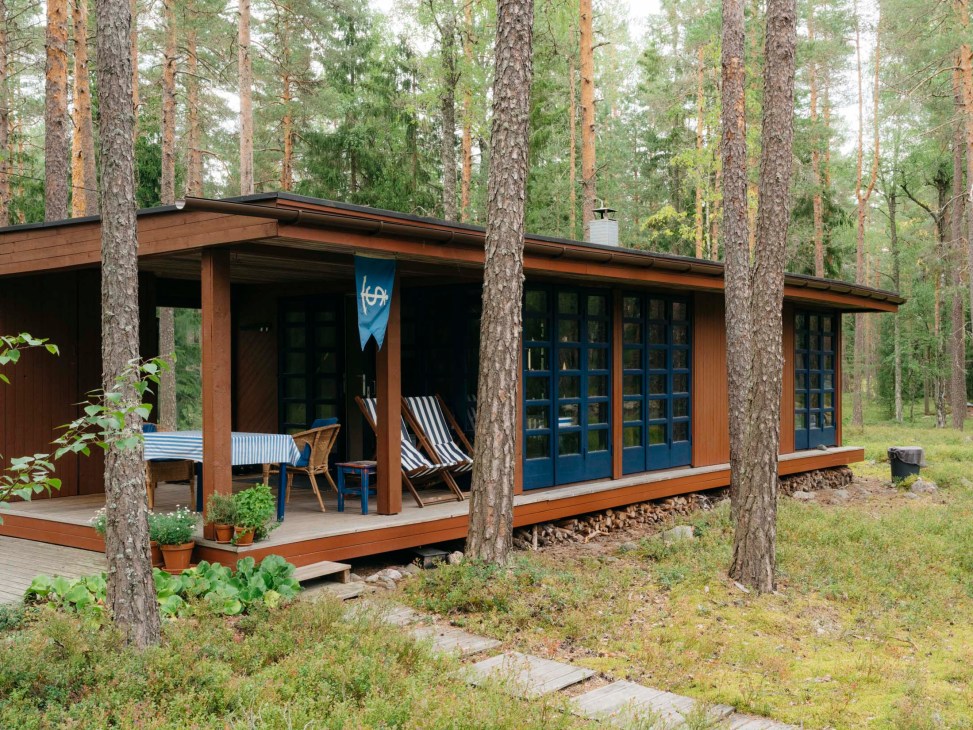
Construction at Vähä-Kiljava ended with the Ilonens’ petrol-station home in 1970 but the concepts pioneered at Vähä-Kiljava spread throughout Finland. The 1970s and 1980s were the busiest decades for mökki building, with the most common type becoming the modular wooden cottage that could be assembled on site. But while the level of mökki amenities has slowly risen – today most new builds are kitted out with proper heating and running water, if not a jacuzzi – Vähä-Kiljava has remained proudly primitive. There’s no tap water or sewage system and even electricity only arrived recently. “There’s often a discussion about installing water pipes and somehow improving the living standards here,” says Hagan. “But this is the enamel-bowl-and-root-brush lifestyle and it’s a good thing that it can still be found somewhere.” The traditional way of life also keeps the community closely knit, since only certain kinds of people are willing to sign up for carrying their own water, washing their clothes by hand and composting a dry toilet. “We’re trying to uphold the 1950s way of spending the summer,” says Karhunen. “It requires work. You can’t just arrive and fold out your deck chair.” Most maintenance at Vähä-Kiljava is carried out through talkoot: everyone in the community has to come together to carry out heavy tasks, with the reward of a barbecue and a spell in a sauna at the end. The midsummer festivities are famous and there’s an annual crayfish party that all SAFA members can join. Friendliness is essential, given the layout of Vähä-Kiljava, where there are no clear demarcations between adjacent properties. “One time someone put up a fence,” says Karhunen. “There was a village war.”
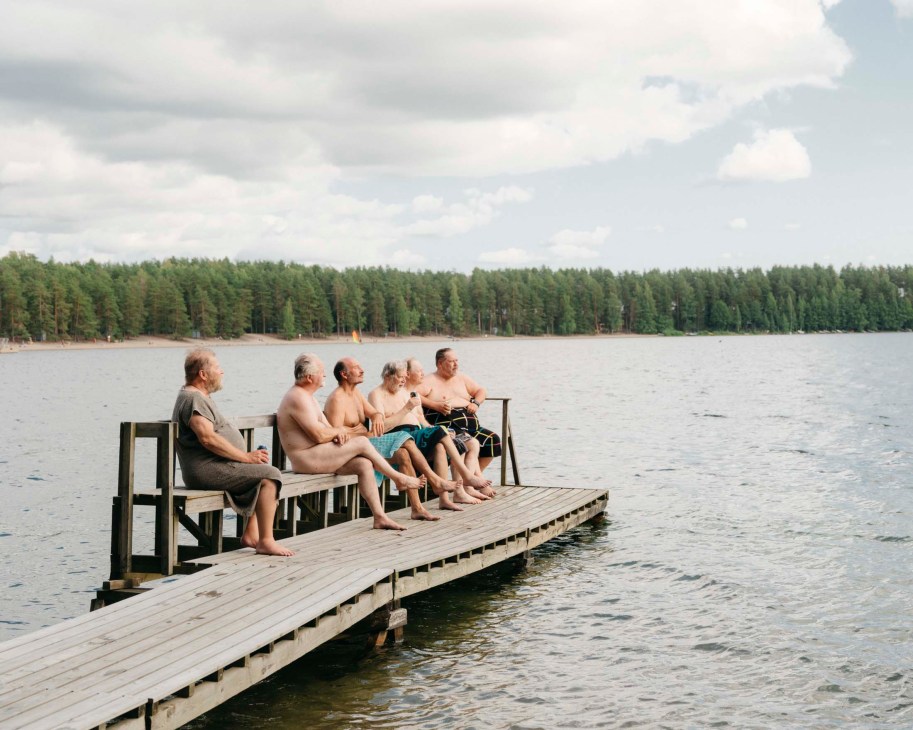
The values inherent in Vähä-Kiljava – besides providing a framework for designing a restorative holiday space – continue to guide architects towards a way of building that’s efficient and in tune with the environment. The houses are constructed with minimal resources and a do-it-yourself approach. It’s thanks to this that they all have ingenious space-saving solutions, elegant examples of recycling and reuse, and a sense of true closeness to nature. The village now draws a younger generation of Finnish architects, who can rent a mökki on a weekly basis, as well as international visitors, who can rent rooms in the Kasino.
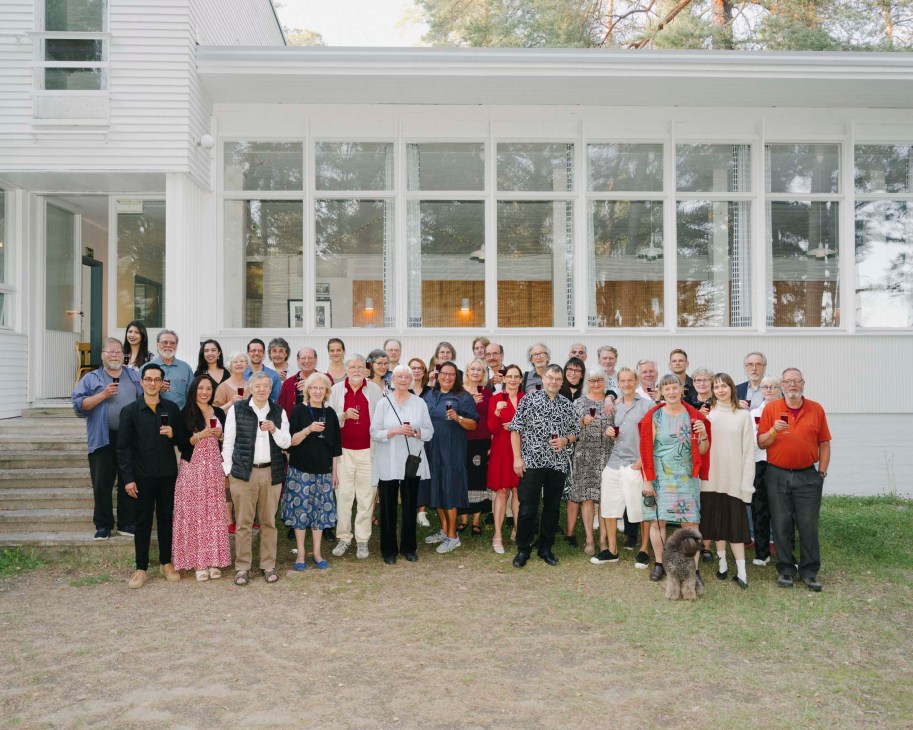
Perhaps inspired by the upkeep required for their summer homes, many of the architects who spend time at Vähä-Kiljava have turned to preservation in their professional lives. Rake’s resident, Henna Helander, played a key role in ensuring that Aalto’s Paimio Sanatorium was preserved and turned into a foundation. Pia Ilonen helped to found Helsinki’s Cable Factory, an early example of an ex-industrial building-turned-cultural hub.
In her teaching, Ilonen often refers to Vähä-Kiljava. She points out how her parents didn’t worry about expensive finishes but instead thought about how the family would use the space, building private, tiny bedrooms and a flexible, light-filled living area. “I always make my students draw the floor plan of this house,” says Ilonen. Perhaps there’s more to learn from the mökkis that Finland’s modernist architects built in their downtime than the shopping malls, offices and petrol stations that they drew up during office hours.
Five Vähä-Kiljava cottages
With a host of Finnish architects calling Vähä-Kiljava home (at least, for the summer), there are many outstanding works on site. Here are five of our favourites.
1.
Aalto (1949)
This cottage was built by a lesser-known Aalto, Arvo, an architect whose firm designed Helsinki’s functionalist office building Lasipalatsi. The mökki represents a return to tradition that was in vogue in the late 1940s, with a pitched roof, painted windows and untreated wood. The cottage also has a spacious atelier.
2.
Koiso-Kanttila (1953)
Erkki Koiso-Kanttila built this cottage for his large family in 1953. There are small sleeping booths and a living room with floor-to-ceiling windows with a view of the lake. In an open competition in 2021 the Finnish National Museum picked Koiso-Kanttila as the quintessential Finnish cottage. The house will be moved to an open-air museum in Helsinki next year.
3.
Sommelo (1960)
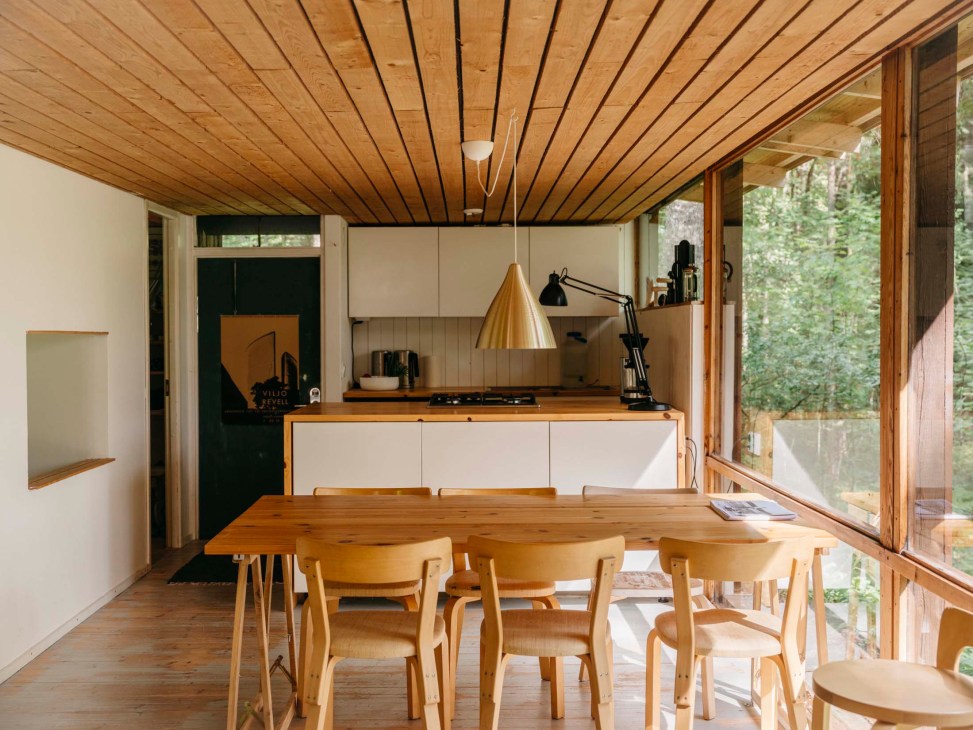
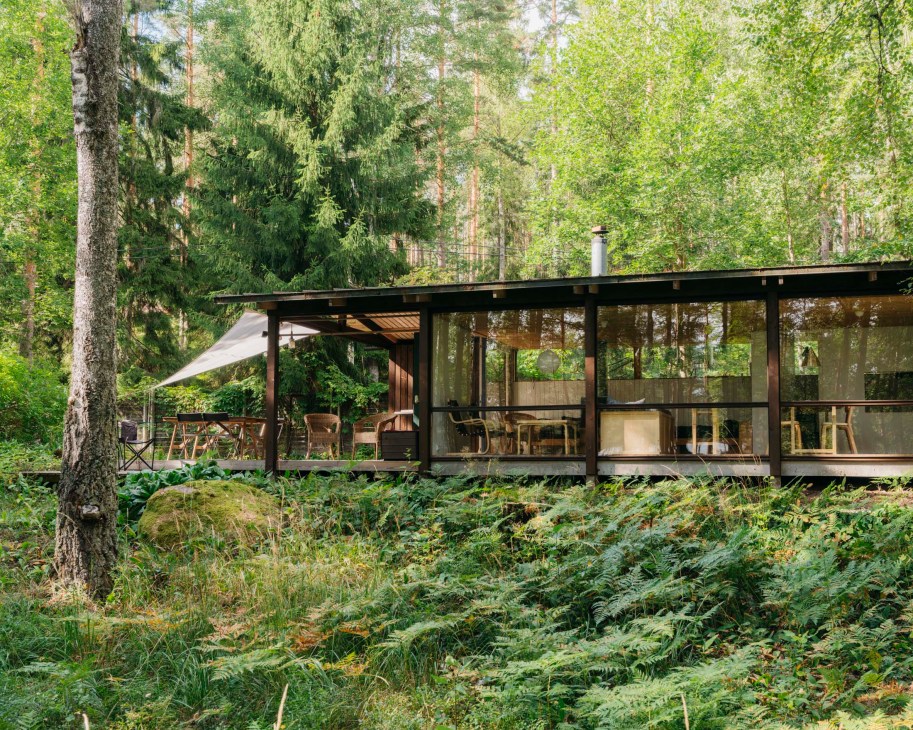
This 1960 building by Pertti Luostarinen was thoroughly renovated by its current tenants, Ulla and Lasse Vahtera. The roof, wooden sheds, and entire garden were redone and the interiors were freshened up to take full advantage of the floor-to-ceiling windows facing the lake. The warm, airy space is now finished with an open kitchen and Artek seating in blonde wood.
4.
Savolainen (1967)
To build this house, Sulo Savolainen purchased a decommissioned bus, towed it to Vähä-Kiljava and placed it on a concrete base. The vehicle is covered by a wooden façade but the entrance is still a door of the bus and the beds are where the seats used to be. The bathroom is in what was once the driver’s cabin.
5.
Mustikka (1968)
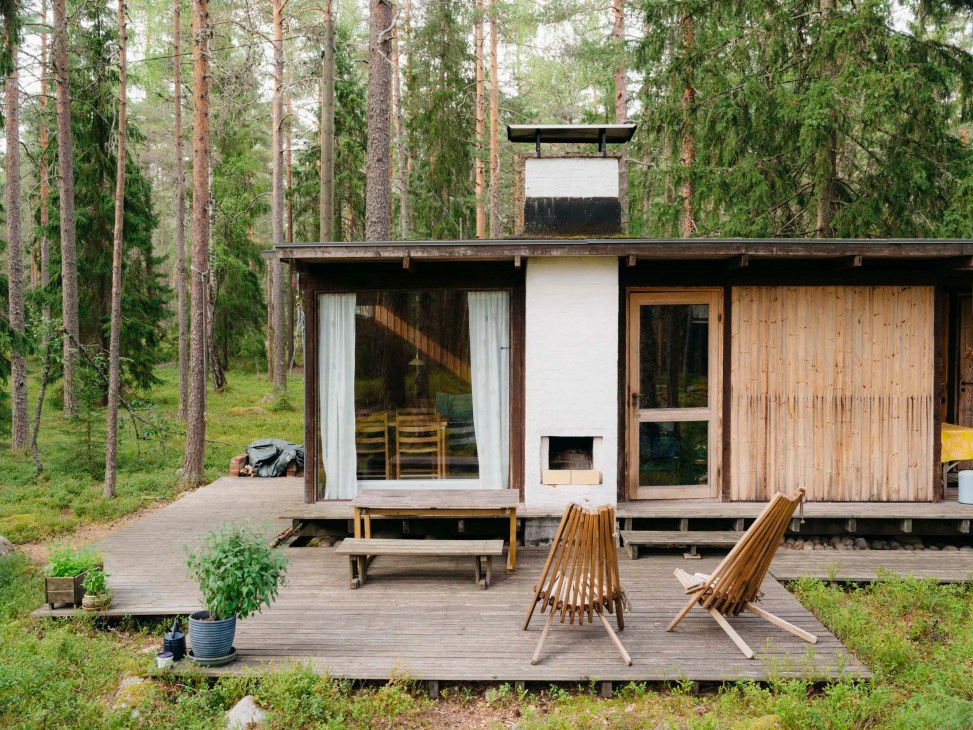
This 30 sq m cottage is thought to be an interpretation of Moduli 225, one of the first modular houses in Finland. The system was designed by Kristian Gullichsen and features a series of square rooms that can be assembled according to need, featuring bright colours and wooden brise-soleils. The Mustikka is a one-bedroom version with a hearth that opens out both to the living room and the patio.
Three rules for building your own cottage
Want to build your own mökki? Here are some tips inspired by Vähä-Kiljava, taken from a 1973 interview with one of the village architects, Ilkka Pajamies.
1. Ensure that the house is low maintenance.
2. Consider natural ventilation.
3. A cottage should be airy – not because of its size but through its connection with nature.
How three family-run French labels found new relevance in a crowded market
In France, the idea of patrimoine runs deep: the belief that knowledge and craft can sustain a business as it’s passed down generations. The small or medium-sized businesses associated with this notion are often inextricable from their communities, buoying local livelihoods while pulling in profit. But many heritage businesses have folded after decades of struggling against cheaper overseas competitors. Here, we meet three historic or family-run French brands that turned things around in choppy waters, leaning into their values to find new success.
1.
Heschung
Shoes
“This is the house where my grandfather lived,” says Pierre Heschung, the CEO of the Alsatian shoemaker that bears his family name, as he walks with Monocle past a building in his company’s compound. “My mother still lives here today.” Pierre’s daughter Salomé, who heads the company’s marketing and communications, introduces us to her grandmother, Suzanne, who is taking in the sun in a deckchair between the house and the factory entrance.
Pierre’s grandfather Eugène started Heschung – which now employs 35 workers nationwide, including 20 artisans at its headquarters – in 1934. After years spent working in a shoe factory, Eugène struck out on his own and began making the water-resistant boots that his brand has become famous for, using a special technique known as Norwegian welting. This involves sewing the shoe together using threads soaked in a special pitch; once the sole is stitched to the upper, the pitch hardens and seals the needle holes for extra water protection. The technique remains Heschung’s speciality.
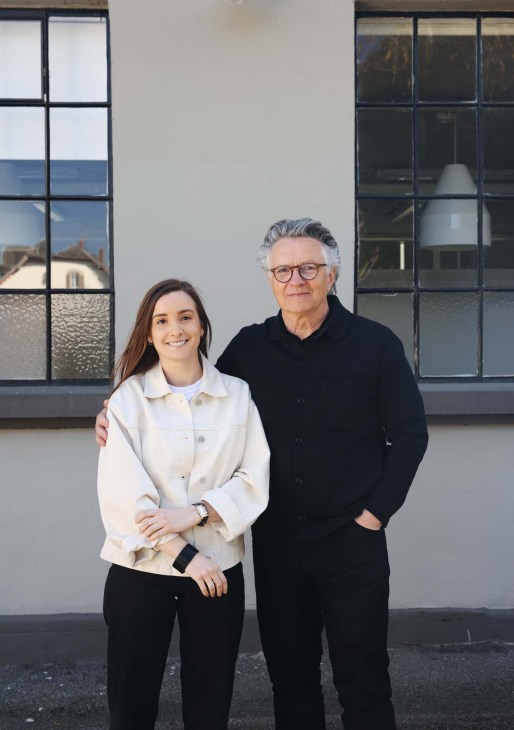
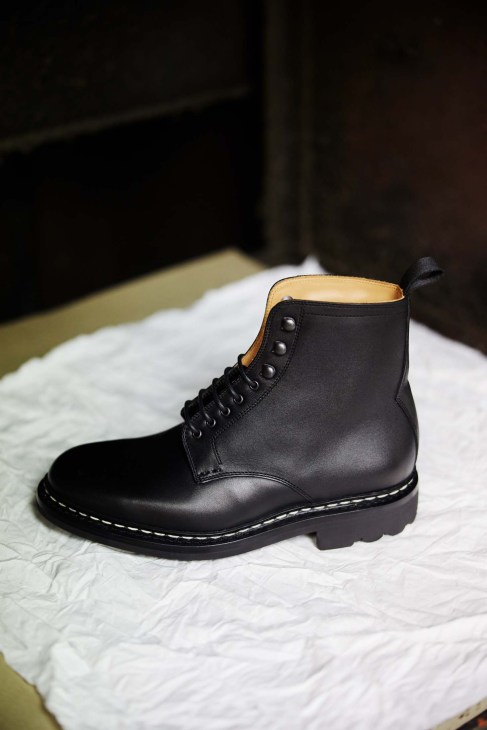
The brand shot to national prominence in the 1970s after manufacturing the French Olympic team’s ski boots. In the 1990s it transformed into a fashion brand selling dress shoes and ginkgo calfskin footwear. In recent years, however, it has faced significant challenges. Sales were hit hard by the gilets jaunes protest movement, which forced shop closures as thousands took to the streets in Paris. The coronavirus pandemic followed soon afterwards and Pierre had to seek outside investors to rescue his now-endangered family firm.
The idea of merging the company with another shoe brand was briefly floated, with an eye towards exporting to China and the US. Some investors pressured Pierre to move production away from Alsace to cut costs but he fought back. The company eventually found a more like-minded partner in Philippe Catteau, the owner of the One Nation shopping mall in Paris’s affluent western suburbs, which pays special attention to showcasing premium French brands.
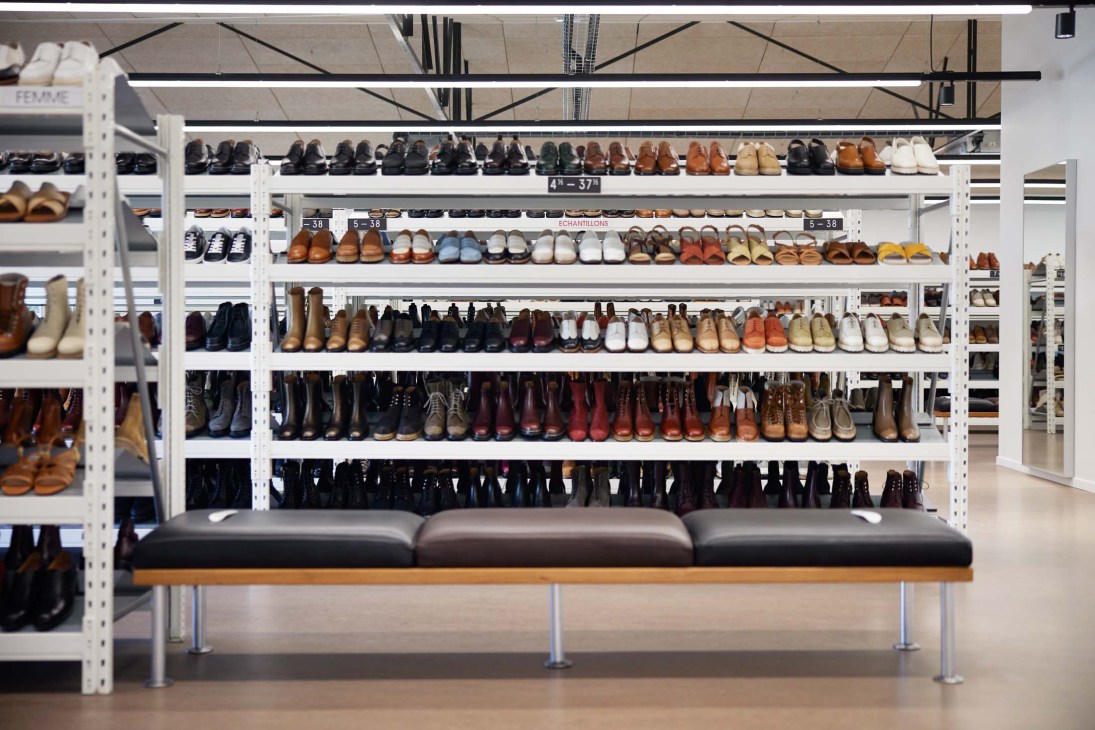
“I couldn’t let nearly 100 years of crafts- manship disappear,” says Catteau. He acquired 75 per cent of Heschung and invested €2m in machinery. A further €2m went towards estab- lishing new shops in Paris, the latest of which can be found on Rue des Saints Pères, a stone’s throw from Le Bon Marché. “Lowering the quality for short-term profits would have doomed the business,” says Catteau.

With Pierre nearing retirement, Salomé is preparing to succeed him as CEO. This allows the family’s partners to better plan for the future. “We’re thinking 20 or 30 years ahead,” says Catteau. “Naturally, it’s all about quality and being present in the market.” A young workforce and new cutting-edge equipment means that Heschung’s manufacturing operation is ready. “I hope to one day open the doors of our factory to our clients,” says Salomé. “I want them to be able to see for themselves how passionate we are about preserving our know-how.”
Heschung’s recipe for longevity:
1.
Finding like-minded investors who saw the value of keeping manufacturing local.
2.
Not rushing to export and returning the focus to the domestic market, while waiting for the right moment for global expansion.
3.
Investing in old-school craftsmanship while upgrading tools will pay off, combining proven techniques with new technology.
2.
Duralex
Tableware
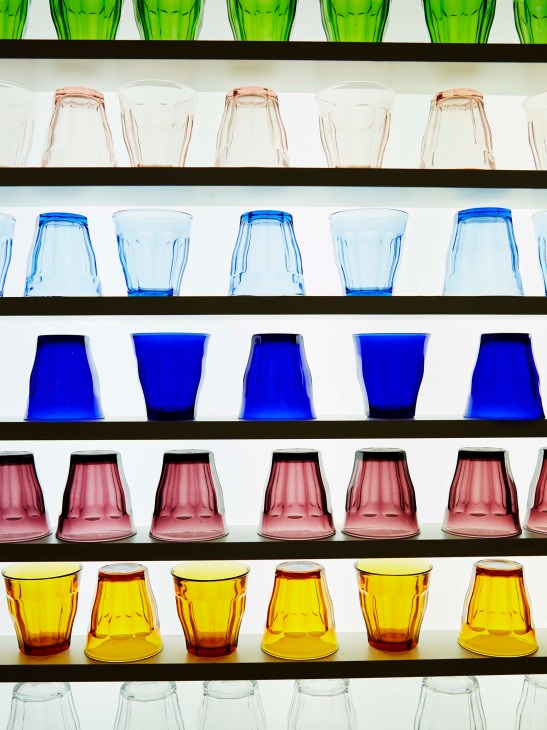
Duralex’s general manager, François Marciano, is showing off one of the French tableware maker’s classic Picardie glasses. As he turns it in his hand, he fumbles, causing the dark-blue glass to fall and Monocle to scramble to stop it from smashing. When it happens a second and third time – the glass bounces harmlessly against the showroom floor on each occasion – it becomes clear that this is a party trick to demonstrate how durable Duralex is. “We’re the only glass-maker doing tempered glass like this,” says Marciano, explaining that the brand’s glass is several times more solid than the conventional stuff.
With its enduring design and almost unbreakable product, Duralex – a global household name – is a staple of school canteens and domestic kitchens. Established in 1945 near Orléans, its factory HQ is the sort of place that politicians visit during their campaigns to herald a titan of French industry. But the company’s recent history makes for less auspicious reading. It was sold by its then-owner in 2021 to the International Cookware group, the parent company of Pyrex; at times, the leadership seemed more interested in shareholders than safeguarding Duralex’s future. It has experienced six insolvencies since 1996.
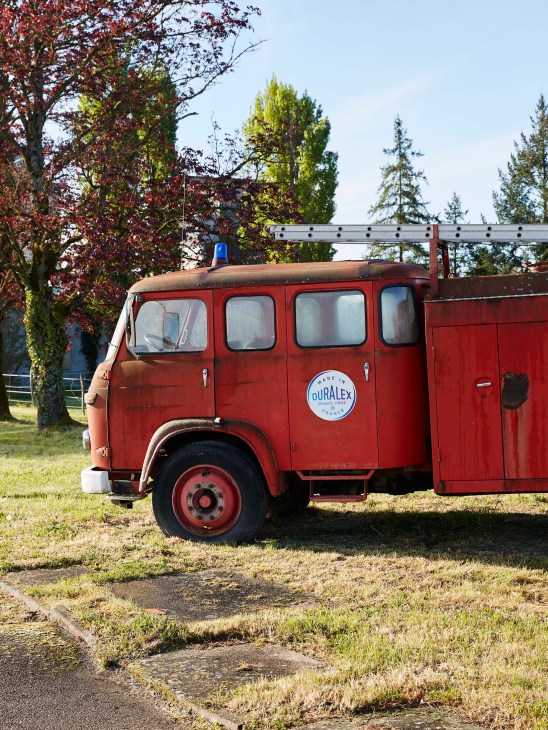
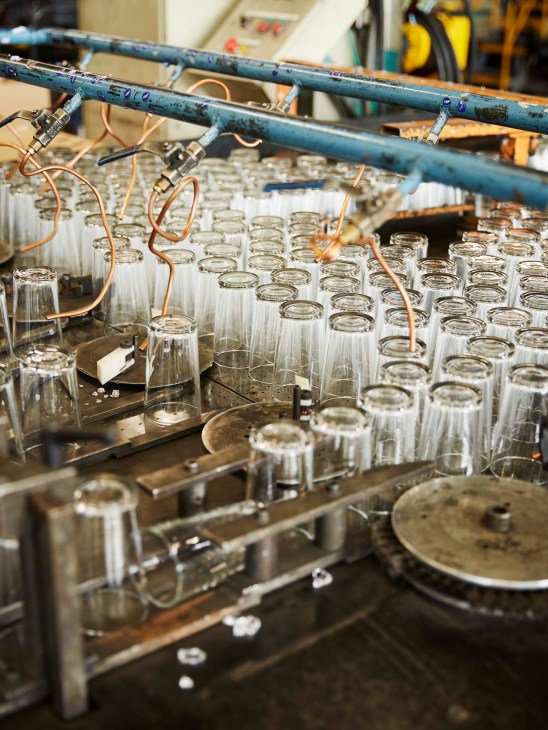
When the company was placed into receivership last year, Duralex’s employees decided that enough was enough – it was time to return the brand to its former glory. They put forward a plan for co-operative ownership, known in French as a société coopérative et participative (Scop). Their proposal was accepted in court. Of the brand’s 236 employees, 64 per cent opted into becoming owners, which required a minimum investment of €500.
Drafted in at the time of the co-operative takeover, Vincent Vallin has spent a career at multinationals, including a stint in the UK. The cool-headed director of strategy and development is realistic about the task at hand. Talking to Monocle in a slightly old-fashioned boardroom with brand photos hanging on the walls, he is keen to point out that Duralex’s new ownership isn’t interested in austerity or cuts. There’s a clear plan in place. “The project is based on generating more cashflow by selling more and better, increasing the top line and the margin,” he says. “We also need to streamline the product assortment.”
Because banks won’t lend to Duralex as a result of its financial record, the company has generated funds by selling its HQ to the local municipality and leasing it back. These liquid assets should buy Duralex three years to turn things around, which Vallin believes is time enough. He intends to emphasise the brand’s simplicity and good design, as well as the fact that almost everything that goes into making the glass is French, including sand from Fontainebleau. The team must “extract more value out of the market and make Duralex more premium”, says Vallin. In short, it needs to be seen as more than just a basic tableware staple. It’s also becoming more entrepreneurial. “When I came in, there were only three sales and marketing employees,” says Vallin. “I hired three more for sales in France, five for export and five marketeers.”

On the factory floor, orange molten glass zips around the production line as automated arms hiss and thud. Even to non-expert eyes, it’s clear that the facilities need an update. But Duralex has one thing in abundance: heart. “I’ve given my life to this job,” says Stéphane Lefevre, a team leader who, like everyone else on the factory floor, is dressed in blue work overalls. “The co-operative wasn’t a choice. It was an obligation.” Lefevre has spent more than 24 years at the company and isn’t ready to give up on it yet.
There’s clearly a feeling that Duralex is finally in the right hands and it is ambitious about the future. Back in the showroom, Marciano is hovering around the glassware and food containers on display and enthusing about new items, from the recently released black espresso cups to premium pint glasses that are set for release next year. A new website launched in June, while in May, Duralex opened Café Duralex, its first bricks-and-mortar outlet in the French capital, collaborating with grocery shop l’Épicerie de Loïc B. (Another opened at the end of last year in Orléans.) There are also plans for a factory shop and a museum in La Chapelle-Saint-Mesmin in the next few years.
Duralex might be hitting the gas after its years of torpor but a slow-and-steady approach is still the order of the day. Marciano, the glass-dropping joker, turns serious for a moment. “With a brand like ours,” he says, “you can’t make mistakes.”
How Duralex is turning it around:
1.
Since going into employee ownership, the brand has been investing in both people and product.
2.
Leveraging its “Made in France” legacy.
3.
Getting closer to the buyer by recognising regional nuance and the need for new physical shops.
3.
Fournival Altesse
Brushes
The Oise department is best known for its chateaux and peaceful villages but this leafy enclave an hour north of Paris is also the last stronghold of a vanishing craft. Oise was once France’s brush-making capital, where artisans specialised in crafting elegant tools fit for the vanity tables of royalty. “At the peak of the industry, there were almost 100 companies making hairbrushes here,” says Julia Tissot-Gaillard, the CEO of Fournival Altesse, as she 1 welcomes Monocle to her company’s historic factory. “We are the only ones left.”
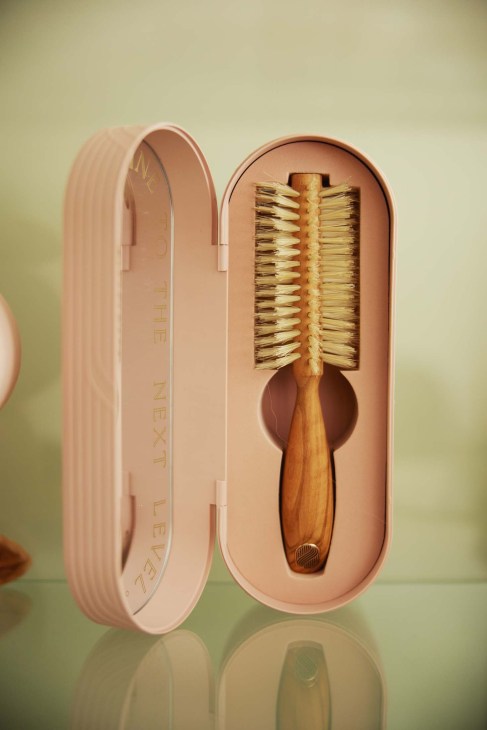

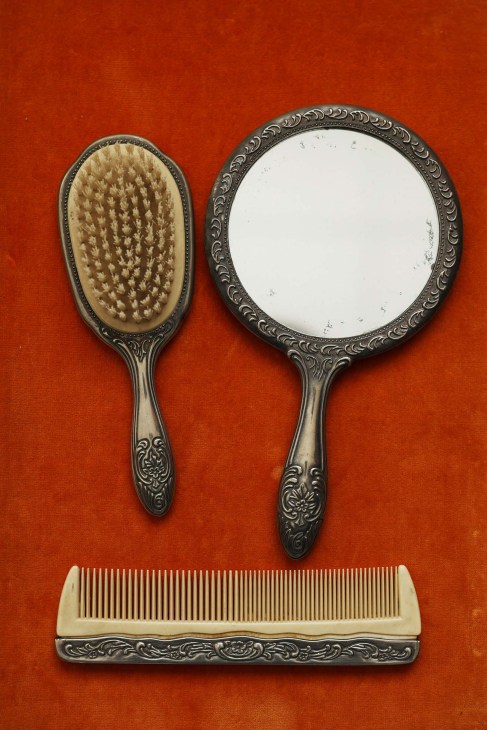
In a light-filled meeting room, rows of glass cabinets display Fournival Altesse’s detangling brushes, beard combs and more. Tissot-Gaillard picks up a wooden hairbrush made from boar hair, running her thumb across the bristles so they make a dry, satisfying sound. “It has to be stiff,” she says. “If you get one of these under your nail, it hurts – and that’s how it should be. If it’s too soft, it’s useless.”
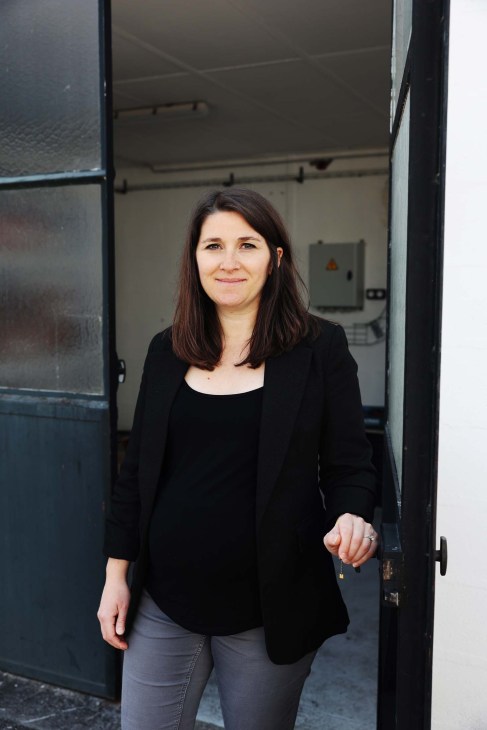
Founded in 1875 by Léon Étienne Fournival, Fournival Altesse originally fashioned toothbrushes using ox bone, horse 2 bone or ivory. The business later expanded into hairbrushes, which became popular in Parisian pharmacies, perfumeries and salons.
It remained in the family for five generations until the early 2000s, when cheap imports began replacing the more labour-intensive French products. By the time Tissot-Gaillard stepped in to take over in 2016 (when she was just 28 years old), the company had been losing money for a decade. Her stepfather, Jacques Gaillard, a former owner of La Brosse
et Dupont group and a third-generation brush-maker, bought it in 2005 when it was about to go under. “He said to me, ‘Close the 3 company if you think that there’s no hope or bring it back to life,’” says Tissot-Gaillard. “It was a challenge but that’s exactly what I did.”
Tissot-Gaillard immersed herself in the manufacturing process, learning from the craftspeople. She soon realised that she had to raise prices. “We were making amazing, high-quality products, with so much skill and passion, but we were undervaluing them,” she says. “I told our clients that we were increasing prices by 100 to 150 per cent. Either that, or we closed. Thankfully, most of them stayed.”
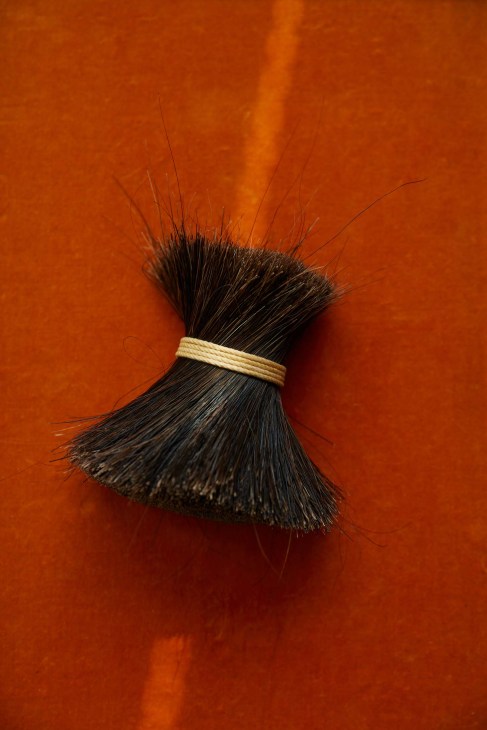

Today, Fournival Altesse makes hairbrushes for brands such as Dior, Kérastase and La Bonne Brosse. “Almost all French-made hairbrushes of this kind in the world, no matter the brand, come from our company,” says Tissot-Gaillard. But the company also has its own flagship brand, Altesse Studio, to showcase its ancestral know-how. “For purists like us, a brush has to be made from wood and boar bristle is the only fibre that brings genuine benefits to your hair,” says Tissot-Gaillard. “A good brush will massage your scalp, stimulate blood flow and help nutrients reach the tips of your hair. It’s the most important haircare tool.”
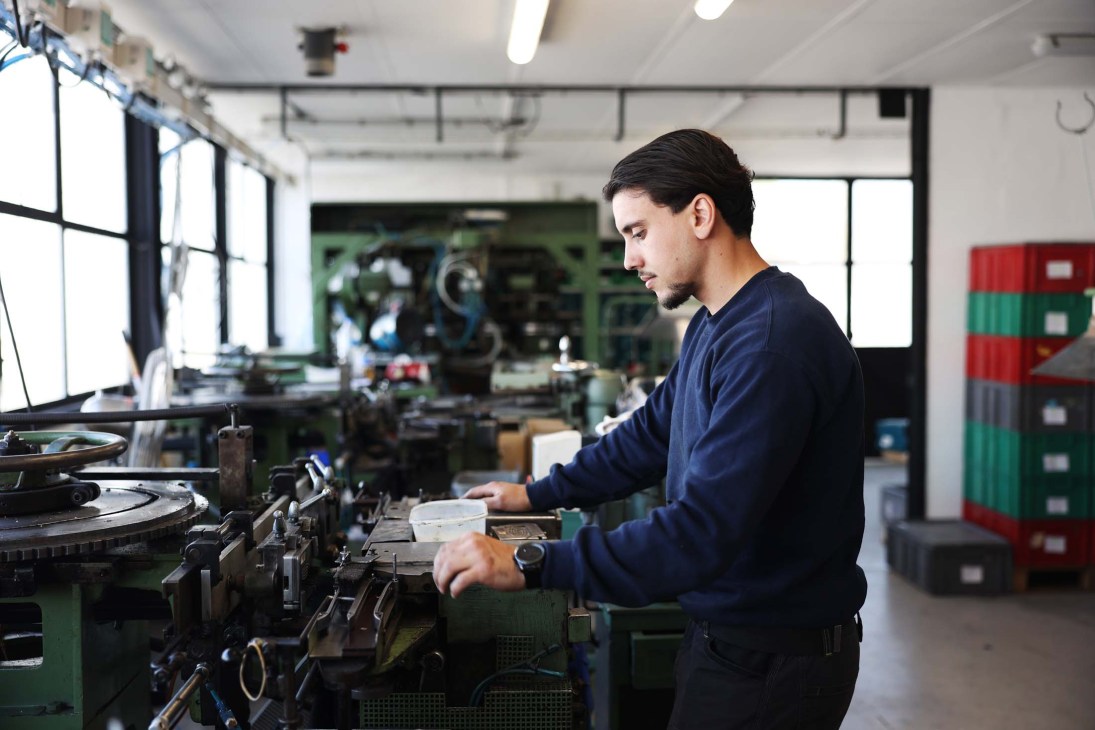
In 2017, Altesse Studio earned the Living Heritage Company label, a mark of distinction from the French government for excellence in traditional skills. The factory, still on its original site, employs 50 people and most of the production is still done by hand, from shaping the handles to tipping the bristles. The only mechanised step – inserting the bristles into the brush – is done by 1950s machines, though the owners recently invested in modern models. “They’re the first machines that the company has bought in 30 years,” says Tissot-Gaillard with pride.
As consumers seek personalised, lasting tools that suit their hair types, consumer appetite for artisanal brushes is rising. Luxury haircare, which boomed during the coronavirus pandemic, continues to grow as a sector and is expected to be worth €28.58bn globally by 2032, according to Fortune Business Insights.
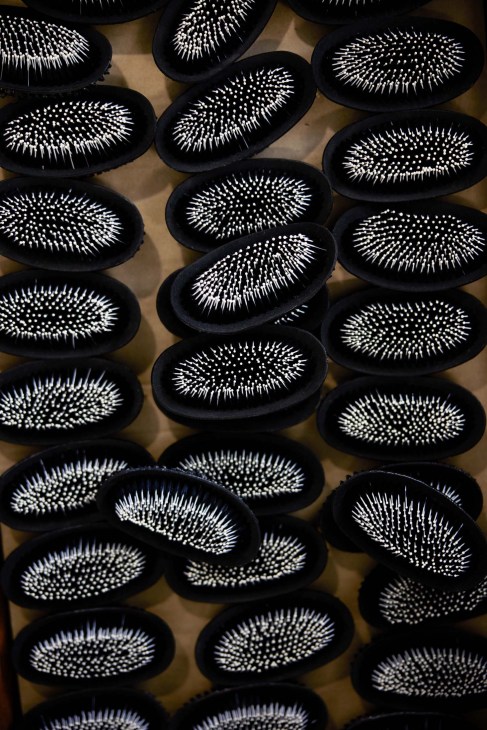
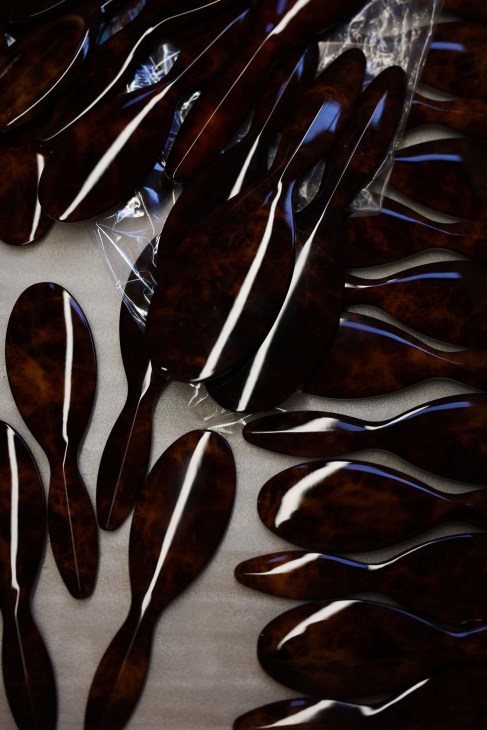
To satisfy this growing demand, Altesse Studio has a ‘Prestige’ collection, consisting of brushes made entirely by hand with olive wood and boar bristles of the highest quality, using a 19th-century hand-tufting technique. Costing €350, each brush takes six to seven hours to produce and is numbered, repairable and crafted to last. “We have adjusted the tufting technique and the bristles to suit any hair type, so a grandmother could pass it down to her granddaughter,” she says.
With those difficult years now behind it and a 150th anniversary on the horizon, Fournival Altesse’s future looks bright. The business is not just preserving heritage but proving that it still has worth. “Human values are important to us. If people are happy, they’ll do their best,” says Tissot-Gaillard, as laughter peals from the canteen nextdoor. “At lunch, we play cards. That’s part of it too.”
How Fournival Altesse brushed away its challenges:
1.
Tissot-Gaillard approached her role as ceo with humility and spent time learning from artisans
2.
She raised prices to better reflect the brand’s craftsmanship; clients recognised the value and stayed.
3.
She then launched a luxury range to emphasise Altesse Studio’s heritage and know-how.
What Norman Foster told me about designing joy into our lives
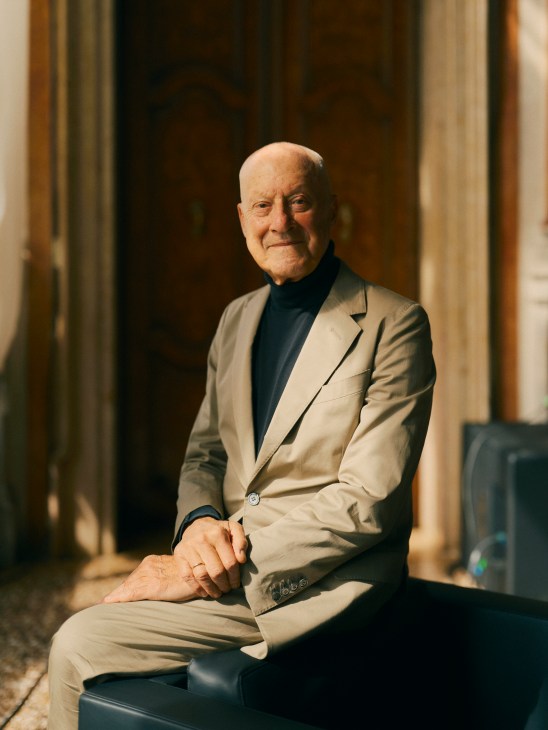
“Everything is designed,” Norman Foster tells me, sitting in a Venetian Palazzo that’s flooded with natural light. “This means that nothing happens by chance. A building or infrastructure is either designed badly and without too much thought, or it’s designed well.” I’m speaking to the Pritzker Prize winning architect at the Venice Biennale and we’re discussing the link between the built environment and quality of life.
It’s a topic that Monocle has always dedicated its July/August issue to and 2025 is no different. Our approach to the subject differs slightly from other media outlets and research institutions, which tend to focus on hard metrics: average income or crime rates. These are important but we’re also interested in how architecture and infrastructure change how we feel about ourselves and our cities. We seek to answer questions such as: does the local library lift our spirits? Or, is public housing not only available but of a quality that makes people proud to live in it? As Foster says, “We know that we can improve the quality of all our lives through design. We can do this by designing for our pleasure and enjoyment.”
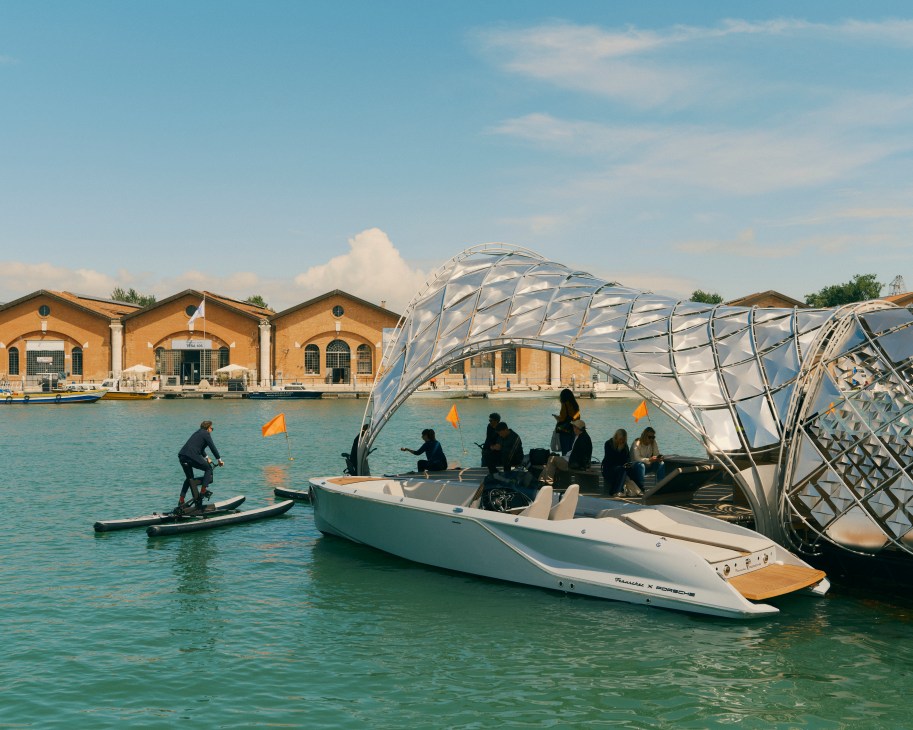
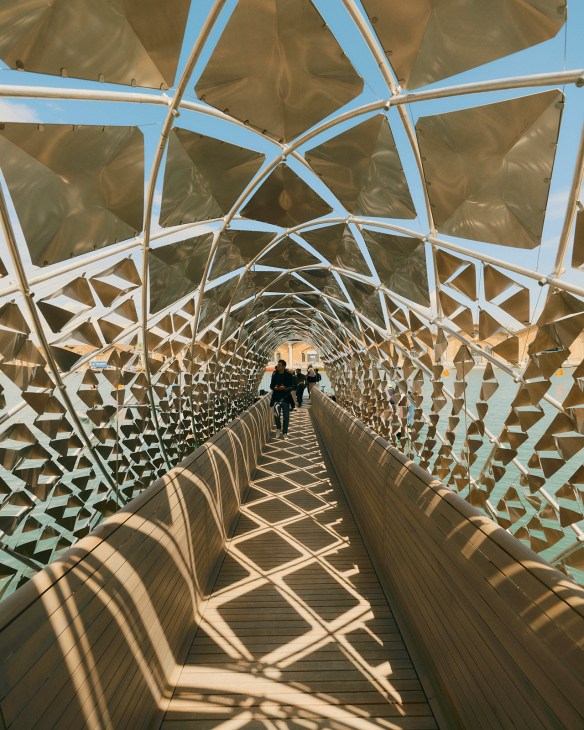
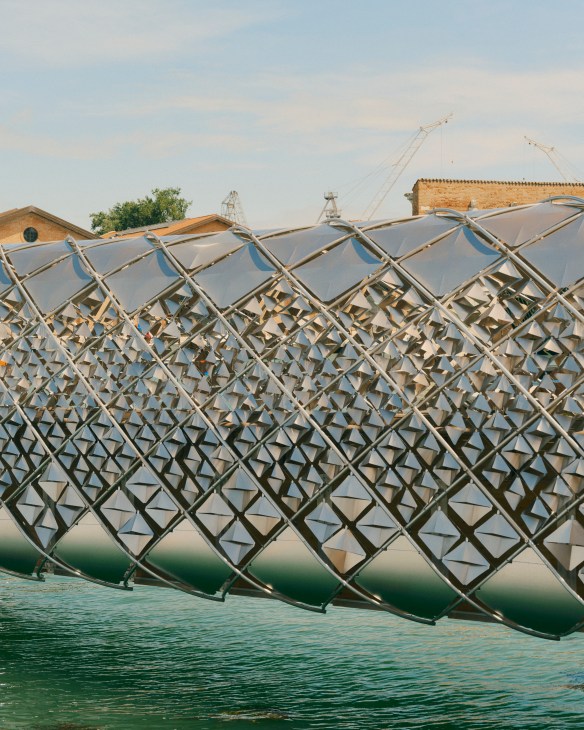
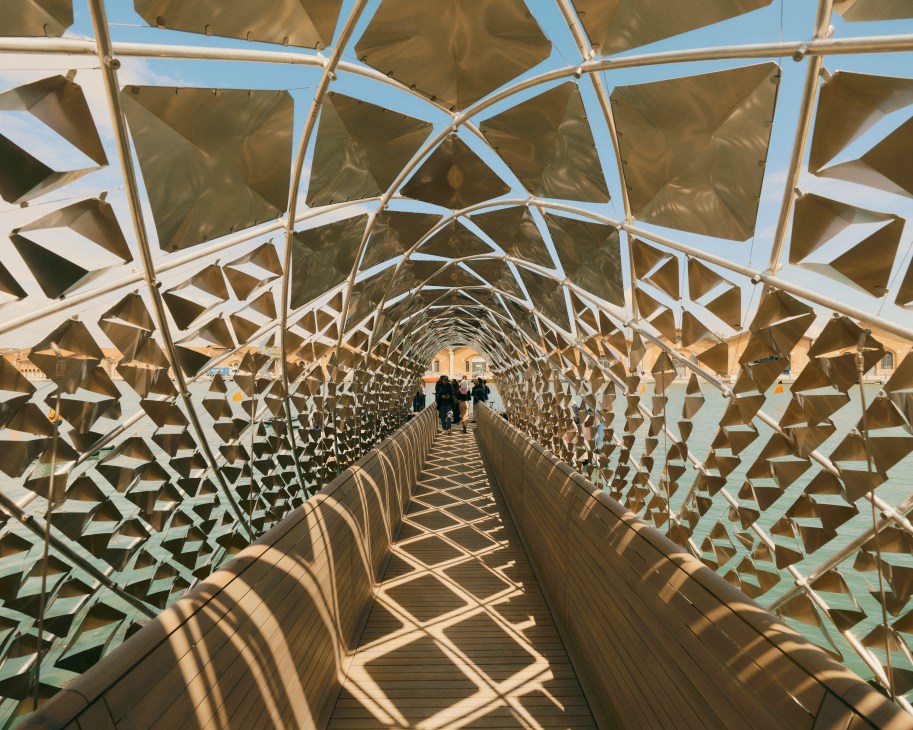
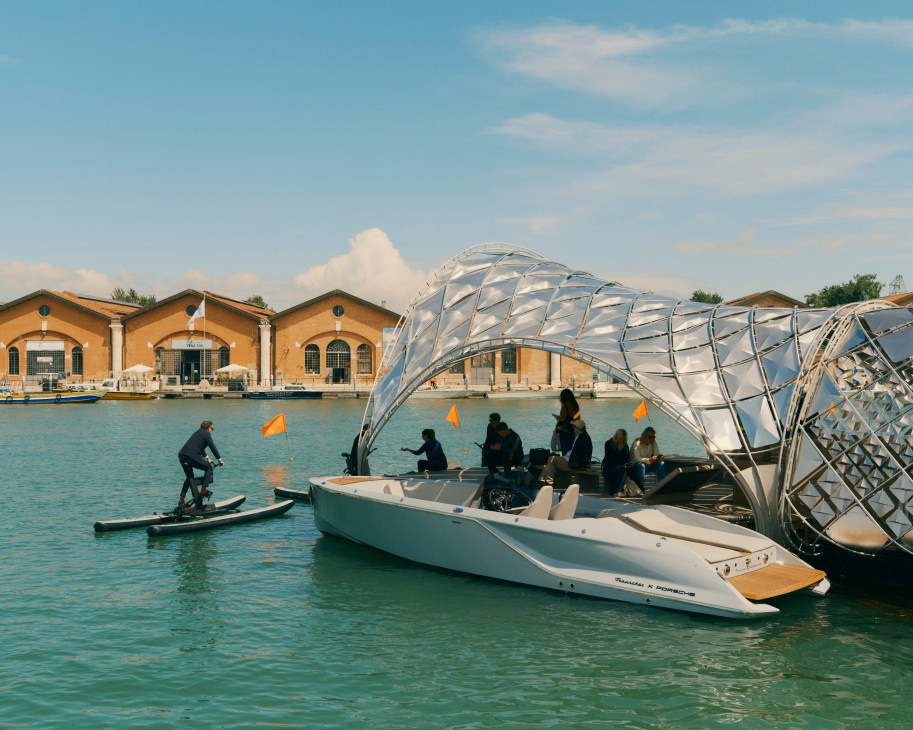
Case in point is the project that Foster is presenting at the biennale in partnership with German automaker Porsche: a floating bridge and pontoon, with a shimmering shell enclosing a dock for water bikes and motorboats. Both the kinetic nature of the structure and the novel form of transport are intended to bring a sense of play to the lagoon city’s infrastructure.
It reflects an ethos that can be found across Foster’s portfolio which, despite being exceptionally functional, expresses much novelty. There is London’s 30 St Mary Axe, known as The Gherkin, which challenged the convention of office buildings; and his Reichstag renovation in Berlin, with a glass roof on which the public can walk – a masterstroke of democratic symbolism. All are much celebrated and a reminder that quality of life is about more than economic policy and statistical indicators. It’s also about looking at how we can bring moments of joy and pleasure into our lives.

Meet the team behind The Marbella Club, the Costa del Sol’s most illustrious hotel
The Marbella Club, the Costa del Sol’s first luxury hotel, was largely responsible for the Andalusian city’s transition from sleepy fishing town to glitzy enclave. But the hotel retains an air of quiet elegance that can be traced back to its origins as a farmhouse, which prince and businessman Alfonso Hohenlohe bought in 1947.
Here, at the tip of southern Europe, 700 members of staff look after 131 rooms, 16 villas, nine restaurants, three swimming pools, 13 boutiques, a spa, a beach club and a kids’ club, among four hectares of lush gardens. “Much more than in any other business, it’s all about the people in a luxury hotel,” says the hotel’s general manager, Julián Cabanillas. The hotel’s 6:1 staff-to-guest ratio is meant to provide gentle support rather than a smothering presence. “Our team has got to know the clients over the years,” says Cabanillas. “We have a 40 per cent return rate.”
In his view, there’s a link between good staff retention and the warm hospitality that guests reconnect with every time they return to the Marbella Club. This harks back to the standard of service established by Hohenlohe, who converted his rural residence into a hotel in 1954. During his tenure he recreated the elegance and intimacy of his family’s former home, fostering an exclusive atmosphere that attracted fellow aristocrats as well as high-profile jet-setters including film stars Brigitte Bardot and Audrey Hepburn.
For the past 71 years the Marbella Club has set the benchmark for elevated Spanish hospitality. For Cabanillas, maintaining a space that reflects the surrounding landscape and local traditions is key to its success. “I want guests to feel that they are in an authentic place,” he says. As such, El Patio restaurant has interiors with décor by regional artisans, the gastronomy is decidedly Mediterranean and indigo mosaics evoke the area’s Islamic heritage. Thanks to this dedication to an Andalusian experience, most diners at the Marbella Club are residents of the area. “If you listen to the guests’ needs, it becomes an easy job,” says Cabanillas.
marbellaclub.com
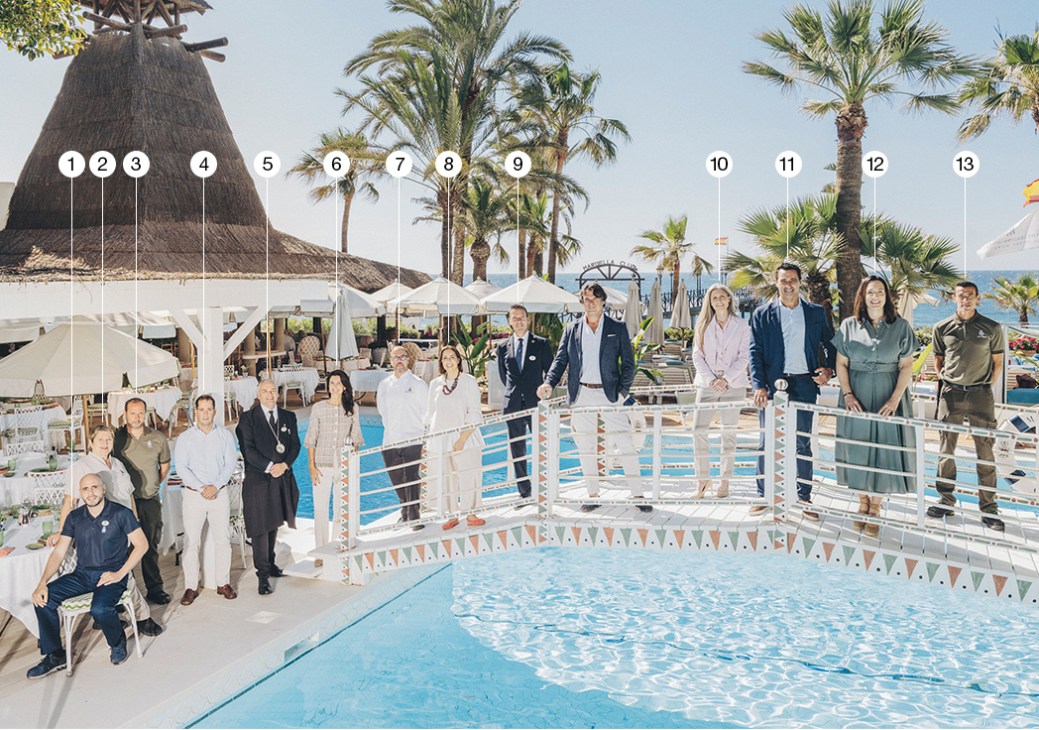
Julián Cabanillas
General manager
Originally from Barcelona, Cabanillas has been the general manager of the Marbella Club for 10 years. He is also responsible for managing several new Spanish properties under the hotel’s umbrella and bringing them up to the Marbella’s standards. His 26 years of experience in the hotel business has given him a well-rounded understanding of what makes the high-end leisure market tick.
1.
Francisco Santiago Corrale, Maintenance, “Ensures facility structures and day-to-day operations run smoothly.”
2.
Cristina Vázquez, Housekeeper, “Third-generation staffer who is proud to keep guest spaces sparkling clean.”
3.
Francisco Javier Fernández Piña, Gardening team manager, “Leads the maintenance of more than 300 plant species.”
4.
Eduardo Martín, Accountant, “Balances thousands of suppliers to keep everyone happy.”
5.
Ángel González, Head sommelier, “One of Spain’s top ambassadors of wine culture.”
6.
Pilar León, Head of retail and brand relationships, “Develops strategy for heritage brands such as Chanel to establish on-site boutiques.”
7.
Santiago Guerrero, Executive chef, “Brings life and individual personality to each restaurant.”
8.
Marta Arrese, Kids’ club director, “Creates experiences for children that are on a par with those of their parents.”
9.
José Luis Calatayud, Concierge, “Manages the arrival team, which provides guests with their first impressions of the resort.”
10.
Leigh Barrett, Head of sustainability, “Oversees our sustainability levels to help us achieve renewable certifications, such as the Butterfly Mark.”
11.
Daniel Jiménez, Villa host, “Customises the experience of guests staying in the villas – the hotels within the hotel.”
12.
Raquel Peña, Director of wellness, “Connects the dots between fitness, the spa and meditation.”
13.
Miguel Rodríguez, Gardener, “Looks after the hotel’s botanical legacy with a smile.”
Five chic fashion and hospitality collaborations to add to your travel list
High-pressure design studios in Milan and Paris are at the heart of the fashion industry. But when temperatures rise, even the busiest designers choose to slow down, don swimwear and decamp to the Mediterranean – a pause very much encouraged by luxury Italian manufacturers’ religious commitment to the extended August break.
Brands have also been discovering that there are new ways to meet clients while lounging by the beach and have been embarking on a series of less expected, sunny collaborations with their favourite beach clubs, seaside hotels and even restaurants. Designers aren’t just creating exclusive summer collections for these destinations – they are now also custom-making parasols and sunloungers in their favourite shades or adding cocktails to a hotel’s menu. We round up some of our favourite fashion and hospitality tie-ins.
1.
Zeus+Dione
Lake Vouliagmeni
Athens
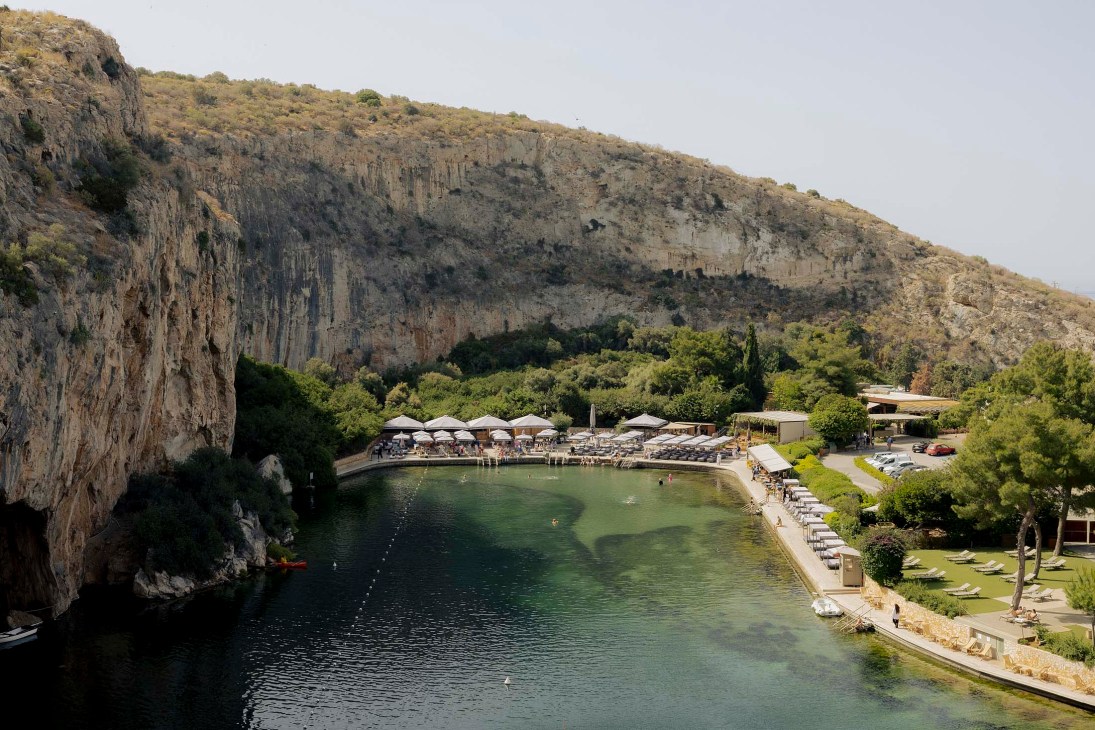
Legend has it that nymphs once inhabited the waters of Athens’ Lake Vouliagmeni, drawing unsuspecting men beneath its serene surface. A quiet pull endures today – one glance at the lake’s majestic landscape, framed by a large rock formation, lush greenery and glassy waters, is enough to lure you in. “When we visited the lake we saw the dramatic rock and the beautiful still waters,” says Dimitra Kolotoura, co-founder of Zeus+Dione, Athens’ flagship fashion label. “It started a fascinating design process for our creative director, Marios Schwab.”
Recently, the popular summer destination has become accessible again having been given a fresh look by creative consultant Athan Mytilinaios. Naturally, the Zeus+Dione team started spending more time in this corner of the Athenian Riviera, swimming in the clear waters or feasting on the seafood at Abra Ovata, the site’s Mediterranean restaurant. As a result, Kolotoura, Schwab and Mytilinaios joined forces to custom-design sunbeds, loungers, umbrellas and cushions for both the beach club and the restaurant. “Zeus+Dione is a custodian of Greek craftsmanship and a fantastic ambassador of Greek culture,” says Mytilinaios, explaining why it made sense to bring a fashion label on board.
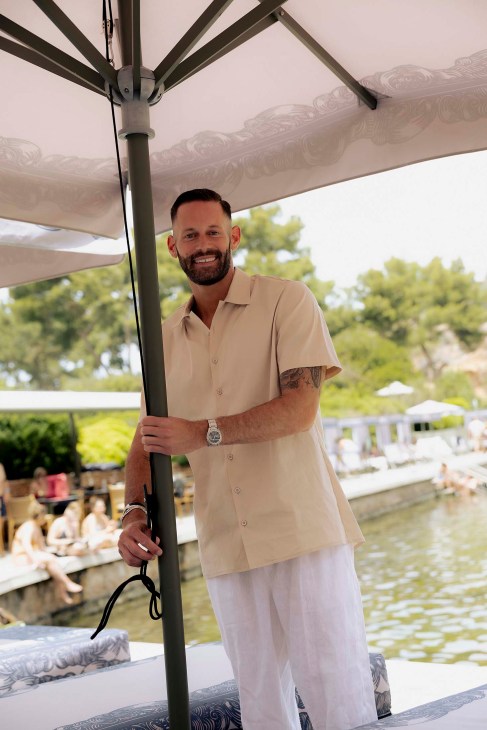
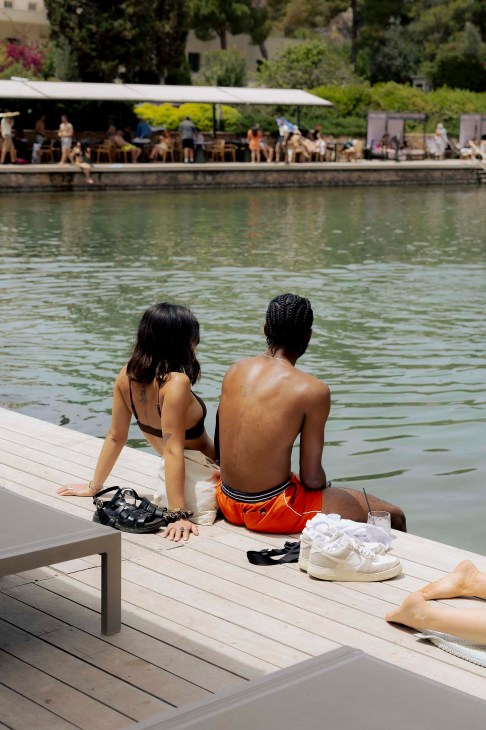
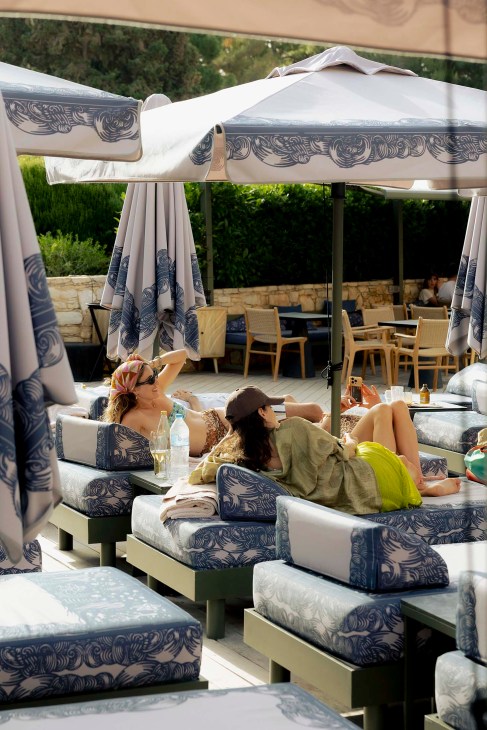
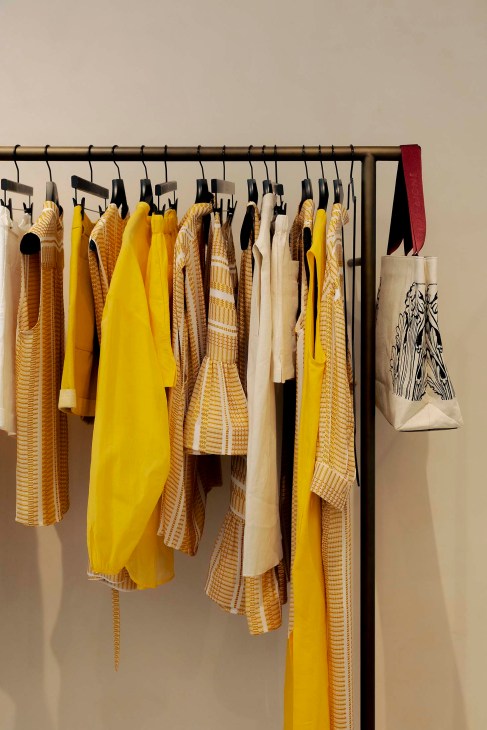
Kolotoura is adamant that Zeus+Dione has never been a traditional fashion label so working with new mediums was part of the appeal. She tapped wood engraver Pantazis Tselios to create a one- of-a-kind motif that was printed on the sunloungers and umbrellas all around Lake Vouliagmeni’s beach club. “We’re used to working with people who have an ability to create with their hands,” she says, pointing to the intricate pattern, which pays homage to Byzantine art as well as the lake’s natural landscape. A closer look reveals details including rock, seaweed and Mediterranean flora carved into the wood. The finished pattern was then printed on durable technical fabric, used to upholster the club’s furniture. Lake Vouliagmeni formed naturally some 2,000 years ago when a cavern collapsed following an earthquake. It is now protected under the Natura 2000 network of conservation areas across Europe and its beach club differs from the traditional approach. “The place is about Zen and wellness, which is why we wanted to work with a brand that understands that good things take time,” says Mytilinaios.
For Zeus+Dione, the partnership offered a chance to tell its story away from the shop floor. “When someone visits the venue, they can discover how it aligns with our values and what we stand for,” says Kolotoura, who plans to unveil new phases of the collaboration next year. “Fashion wants to sell experience,” says Mytilinaios. “But there’s a limited number of experiences that you can offer if you only stay within your own realm.”
zeusndione.com; lakevouliagmeni.gr
2.
Louis Vuitton
Taormina cocktail bar
Sicily & Saint-Tropez
This summer, Louis Vuitton is diving deeper into hospitality by opening a series of culinary outposts around the Med. In the Sicilian town of Taormina, the French luxury house’s shop on Corso Umberto is opening its rooftop for guests to enjoy a cocktail at the new Le Bar Louis Vuitton. With views of the sea and the medieval town, the venue also offers contemporary takes on Sicilian classics courtesy of chef Dionisio Randazzo, who heads the nearby Nunziatina restaurant.
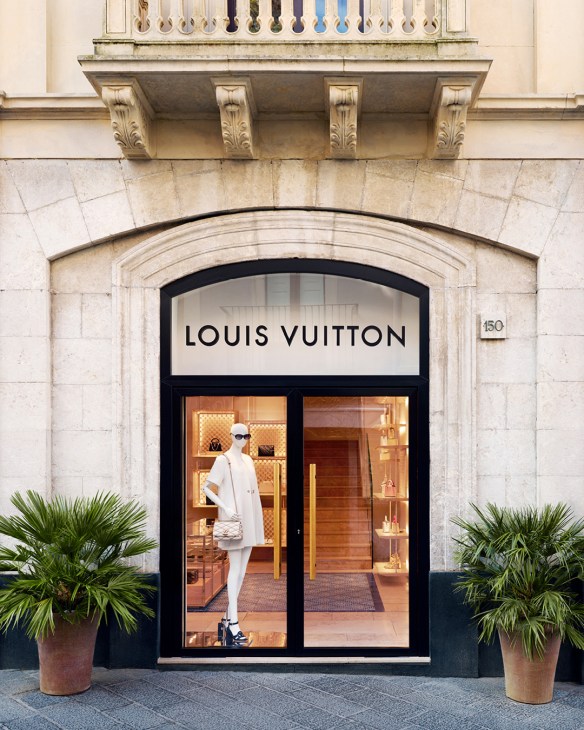
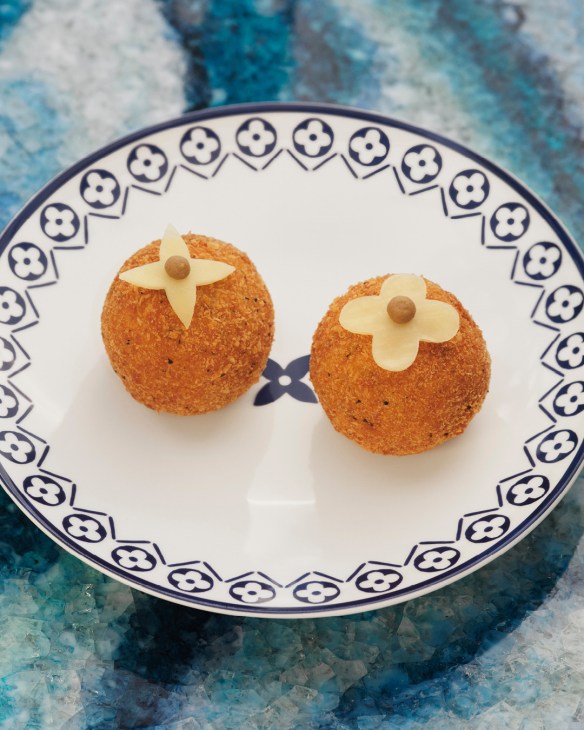
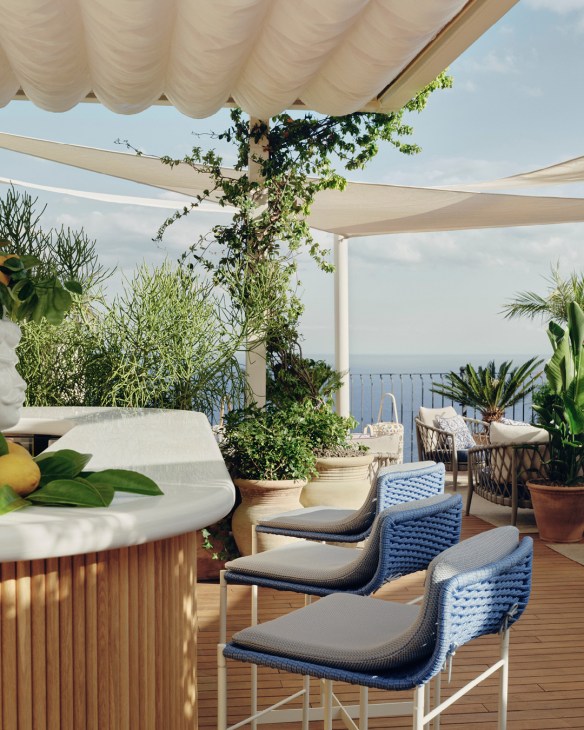
Meanwhile, in Saint-Tropez, the brand is once again taking over the White 1921 hotel. For the third year in a row chefs Maxime Frédéric and Arnaud Donckele are working together to infuse different cultural flavours in the menus. “Louis Vuitton is all about travel so the dishes have touches of Bangkok, France and Italy,” says Donckele. The result is a sun-soaked atmosphere in which French culinary excellence meets Mediterranean flavours, just a few steps away from the Louis Vuitton shop. “It’s a vibe: gastronomy with friendly service and music,” says Donckele. “We’re thinking about a lifestyle.”
louisvuitton.com
3.
CDLP
Hotel Passalacqua
Lake Como
When Andreas Palm, co-founder of essentials and resort-wear label CDLP, first met Valentina de Santis, the CEO of Hotel Passalacqua, the pair were still students in Minneapolis. They couldn’t have predicted that, 20 years later, they would be sitting by Lake Como, orchestrating fashion and hospitality projects together.
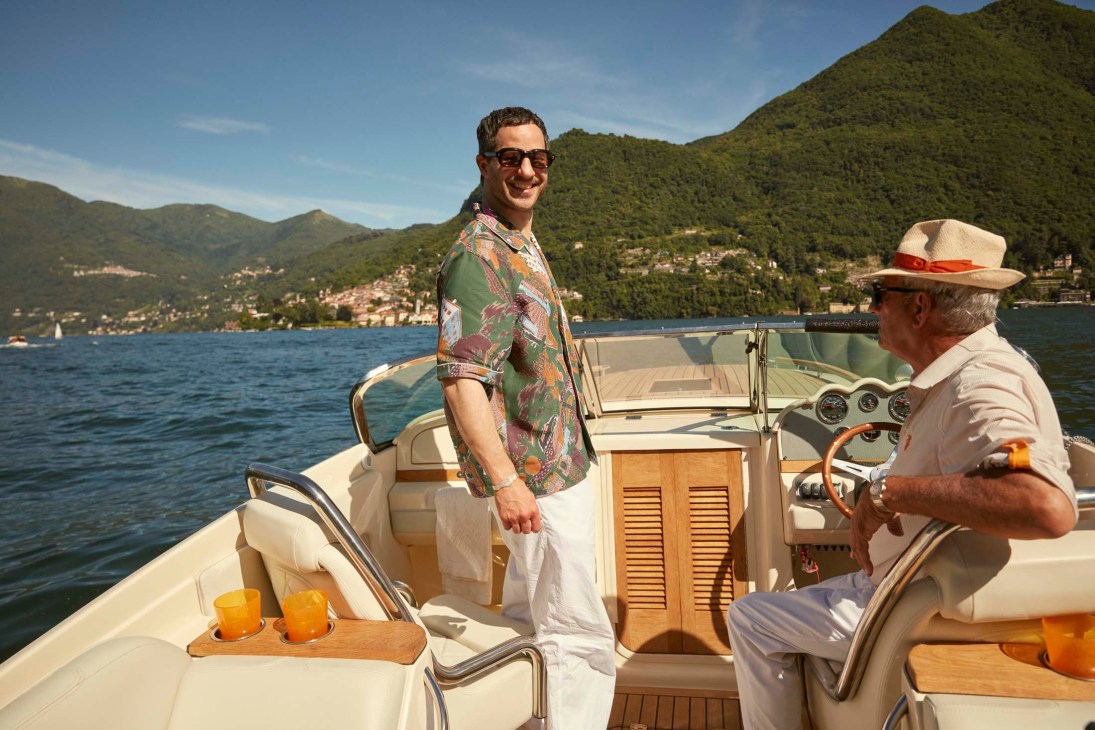
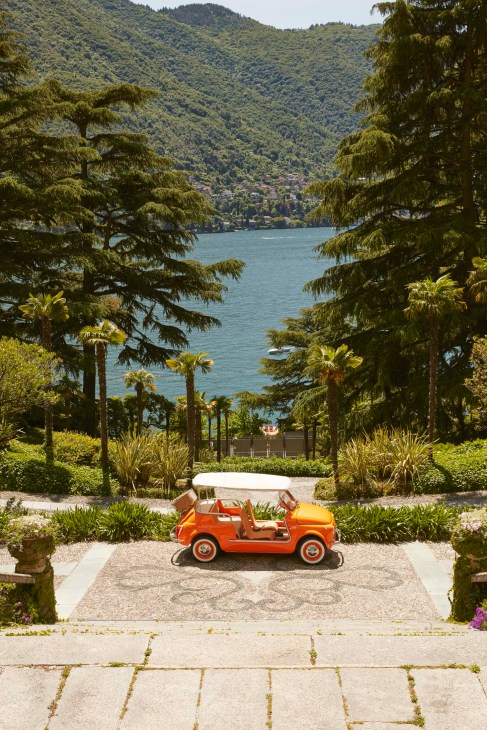
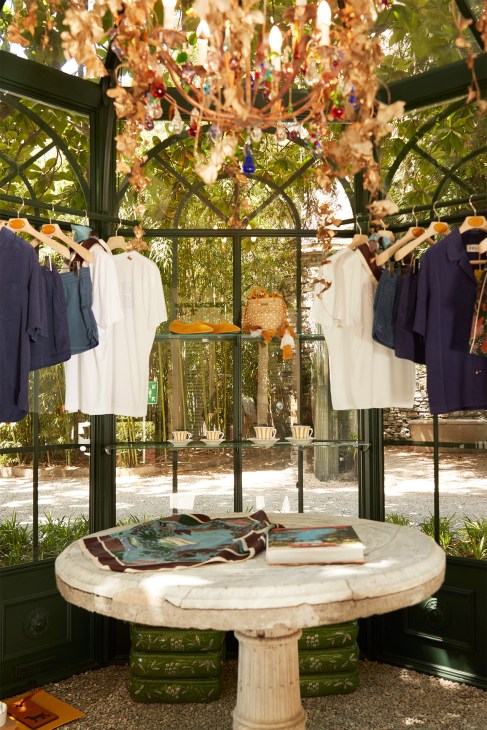
Palm, who is based in Stockholm, began his career in hospitality and spent a few years organising guests’ trips to the Grand Hotel Tremezzo, the second Como hotel property belonging to De Santis and her family. When CDLP first ventured into swim and resort wear, it designed an exclusive capsule for the hotel. “This was before collaborations between fashion brands and hotels were so common,” says De Santis. “But we had so much fun. Andreas is so creative so I just follow his process.”
This summer the duo decided to continue the fun – and think bigger – with a fully fledged swim and resort-wear collection for men, which will be sold at the hotel’s boutique and on its e-commerce site, Sense of Lake. There’s also a sleek campaign featuring celebrated menswear stylist Robert Rabensteiner sporting the line. Think printed shirts inspired by vintage postcards, tailored swimming trunks made from recycled ocean waste and pool sets that can be worn for a relaxed sunset dinner. “If someone loses their luggage, they’ll find everything they need in this collection,” says Palm.
This type of tie-in might now be a lot more common in the worlds of fashion and hospitality but, for De Santis, there needs to be a personal story behind each project for it to be successful. “There isn’t really a strategy behind these collaborations, if I’m honest,” she says. “But each one has a lot of heart in it and, in this case, there’s a friendship behind it all. We don’t want to follow trends or create something according to guests’ expectations. The hotels are also our homes so we do what we love and aim to surprise our visitors. Giving a personality to a hotel and making people dream is important.”

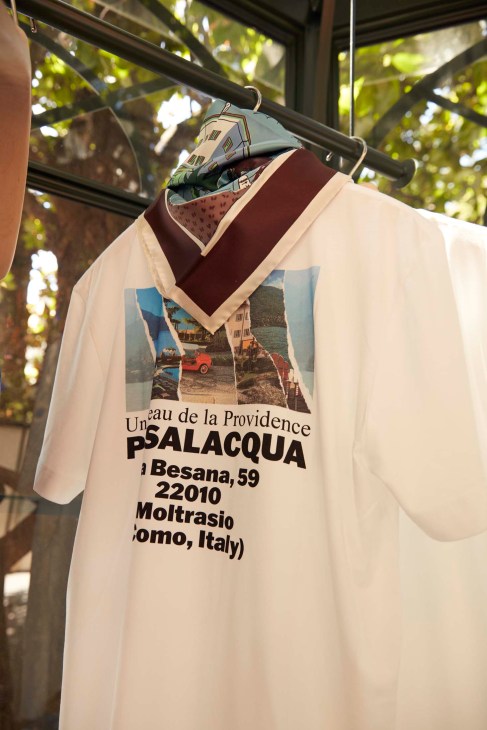
Palm echoes her ideas, stressing that cultural value outweighs commercial motivation. “People are tired of collaborations that are just meant to drive sales,” he says. “It’s getting a bit boring. We want to work with people who we feel that we are aligned with in terms of values and aesthetics, and build something that will stand the test of time.” The eye-catching prints featured on some of the shirts and scarves in the collection are inspired by vintage postcards and represent quite a departure for the Swedish label, which is known for its understated aesthetic and monochromatic colour palettes. But to capture the visual richness of the Hotel Passalacqua, it was worth veering into new territory. “We always want to take things to a new level with this type of collaboration,” says Palm. “People are ready to go a little wild on holiday. You’re in a different mood if you’re in the Amalfi or Lake Como, rather than spending a regular Tuesday at home. It’s like stepping into a role – the holiday version of yourself.”
Our holiday selves also happen to be more willing to splurge, creating fertile ground for brands to meet new customers and encourage them to take sartorial risks. “A hotel director who I was speaking to called holiday spending ‘funny money’,” says Palm, who plans to celebrate the summer season and the launch of the collection with boat rides and long lunches with friends at the Passalacqua garden. “I think this is the most beautiful hotel in the world,” he says.
cdlp.com; senseoflake.com
4.
Jacquemus Jondal beach club
Ibiza
Born and raised in the south of France, designer Simon Porte Jacquemus is the fashion industry’s resident Mediterranean: always in favour of breezy linens, sunny stripes and dance parties that end at sunrise. The sun is inscribed in his eponymous label’s DNA and over time he has perfected the summer uniform with signature striped shirts, lightweight dresses and raffia handbags.
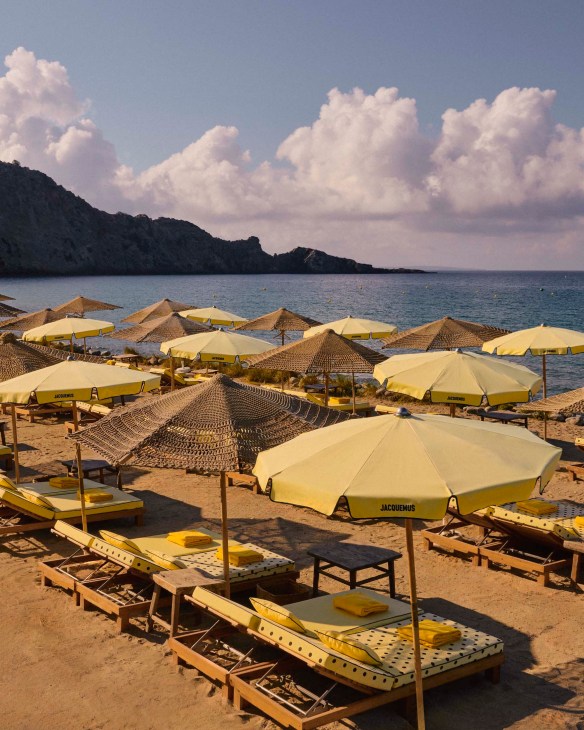
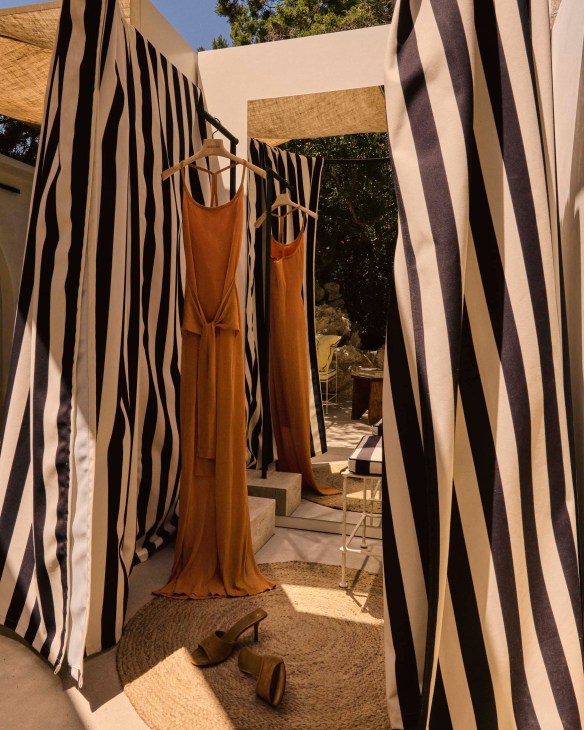
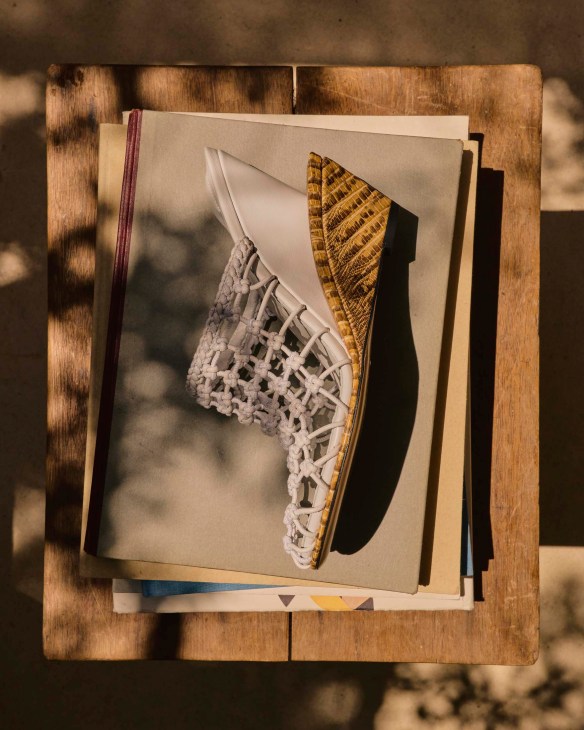
This year, to celebrate the arrival of warmer days, the Paris-based brand is leaving its home turf and flying to Ibiza – more specifically, to Casa Jondal on the island’s rocky southern coast. As part of a new, hospitality-focused collaboration, Jacquemus is fitting out the chic beach club with banana-yellow parasols and sunloungers that have playful polka-dot details echoing the brand’s spring/summer 2025 collection. Our favourite addition? An area reserved for playing pétanque, the French summer ball game par excellence.
Since founding his business in 2009, the French designer has been cleverly tapping into the power of sunny locations for his runway shows, inviting guests to Provençal lavender fields, modernist houses in Capri or art museums in Saint-Paul-de-Vence. Extending this approach beyond the runway and into the realm of hospitality offers an opportunity to experience the label’s Mediterranean charm off-season too.
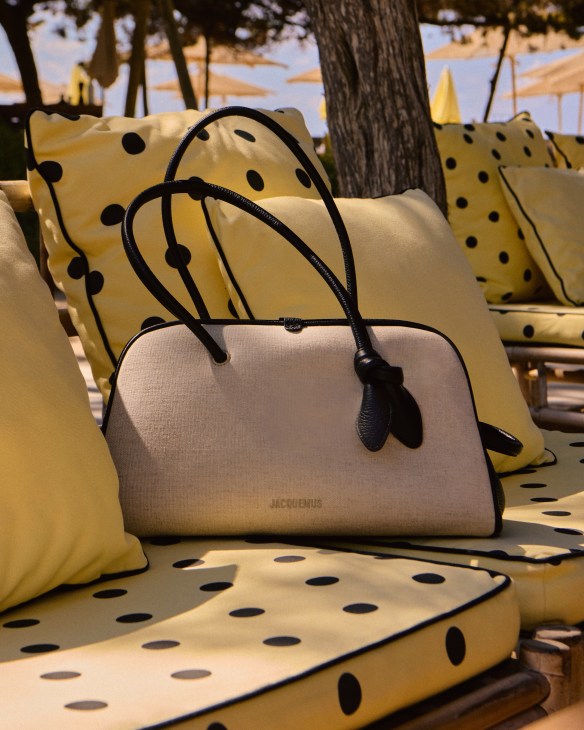
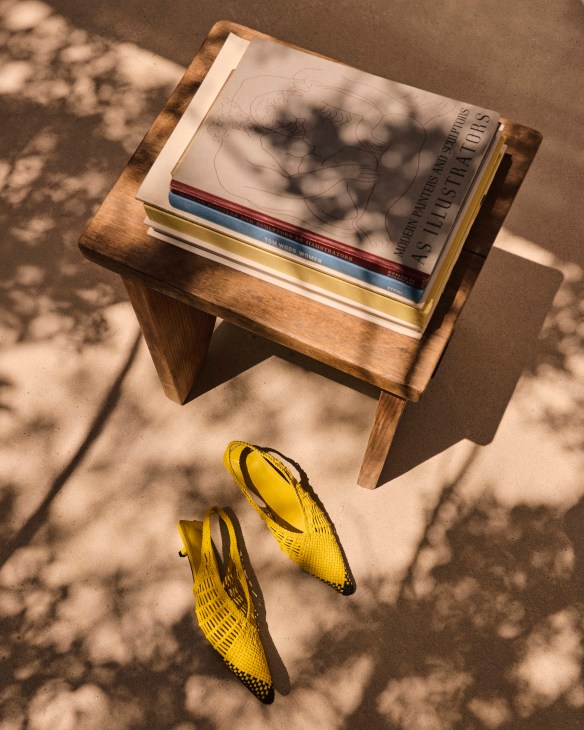
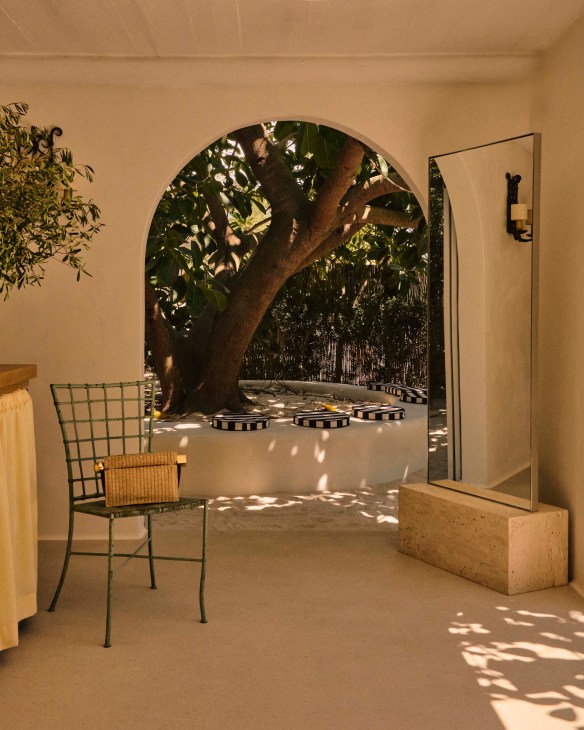
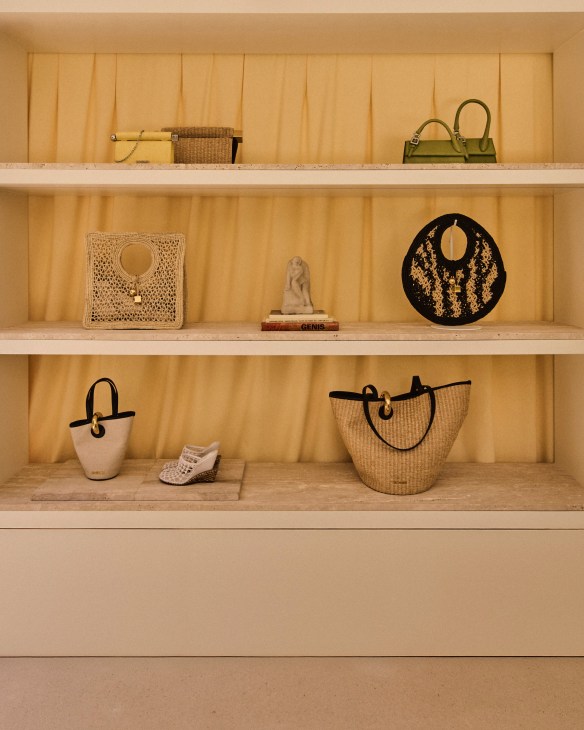
At Casa Jondal, you can spend the day under the club’s bright-yellow parasols, settle in for a sundowner with a tequila-based cocktail or enjoy signature seafood dishes such as fried squid, red prawn carpaccio and caviar.
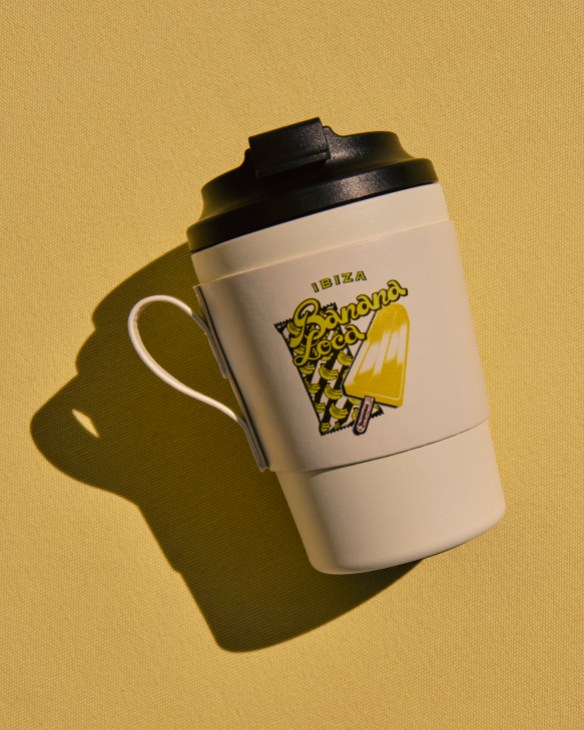
You can also visit the temporary boutique on the beach and browse an exclusive resort collection of menswear, womenswear and accessories, including raffia hats and shirts featuring the same banana-yellow shade as the sunloungers. A series of novelty items including caps, keyrings and mugs double up as souvenirs of a beach holiday well spent.
jacquemus.com
5.
Ulla Johnson
Quinta da Comporta Carvalhal
New York-based designer Ulla Johnson has always embraced a sunny, bohemian spirit, no matter which season she is designing for. Her summer ranges in particular are filled with breezy dresses, lightweight broderie anglaise fabrics and elegant swimwear, inspired by Johnson’s travels and the artisan communities that she works with across the globe, in countries from Peru and Brazil to the Philippines.
This summer the designer is indulging her love of travel even further with a takeover that is soon to come to wellness resort Quinta da Comporta in Portugal during the first two weeks of July. The project includes ikat-print and hand-loomed robes and towels, which will be available for guests to use around the hotel and purchase at its boutique, alongside Ulla Johnson’s ready-to-wear range.
There’s also a new cocktail and health tonic concocted by Johnson – ideal for enjoying after a visit to the Oryza Spa or following a dip in the infinity pool.
ullajohnson.com; quintadacomporta.com
Three beautiful new hotels to unwind in: From a homage to Palm Springs on Ibiza to a striking hotel in Amsterdam
1.
Rosewood Amsterdam
Amsterdam
What took 10 years to build but 10 minutes to become the most talked-about opening of 2025 (so far)? The Rosewood Amsterdam, of course. Extending across a city-block-sized building on Prinsengracht, the striking hotel, which was once an orphanage and then a courthouse, was reworked by Studio Piet Boon for its spring opening. Current city regulations suggest that this will be the last new hotel to be developed within the capital and it could hardly have picked a finer establishment: think coffered ceilings, velvety nooks and a rich palette of warm bronzes, greys and inky blues across the 134 guest rooms and the Asaya Spa.
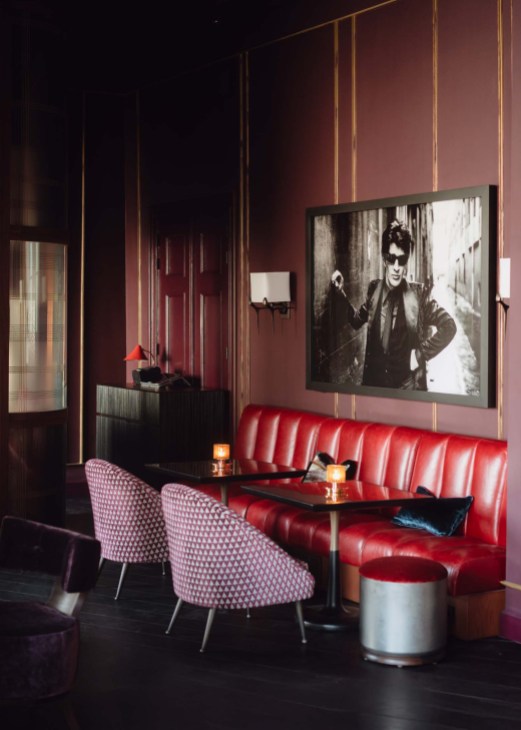
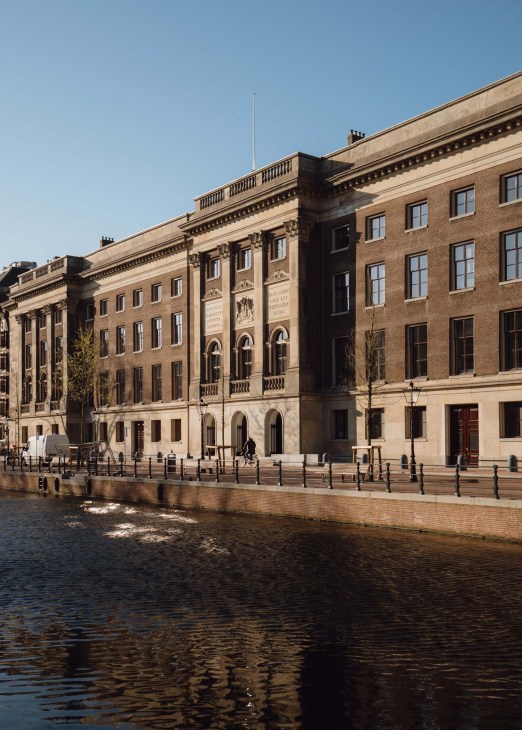
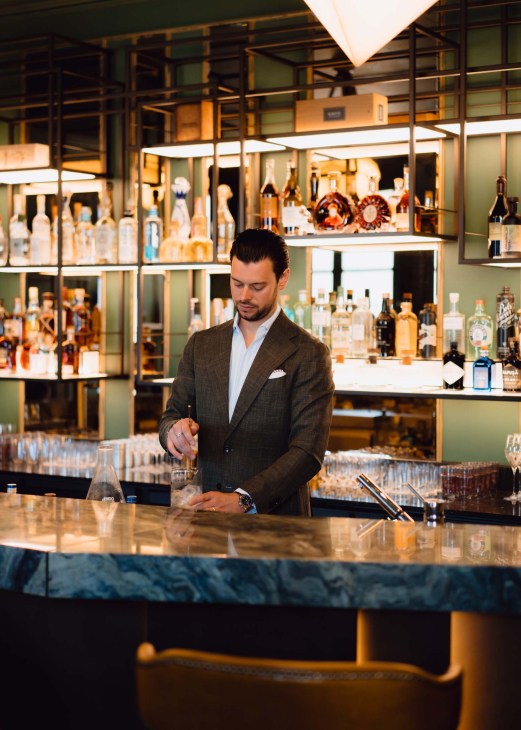
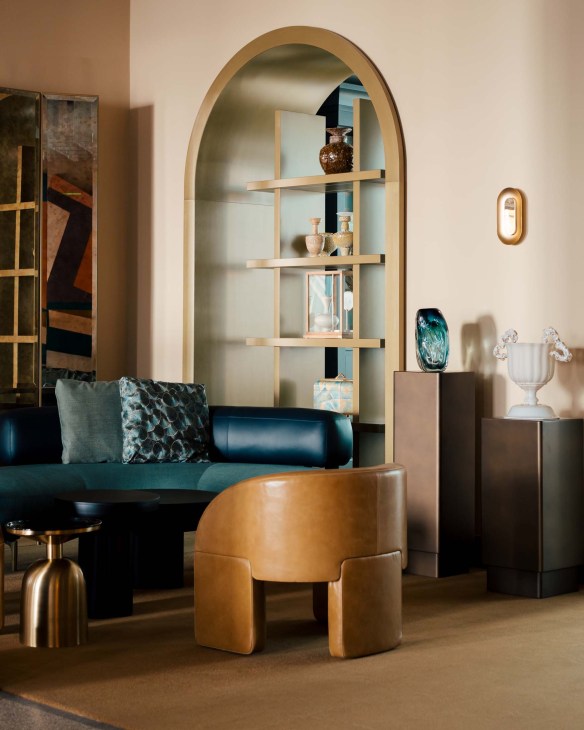
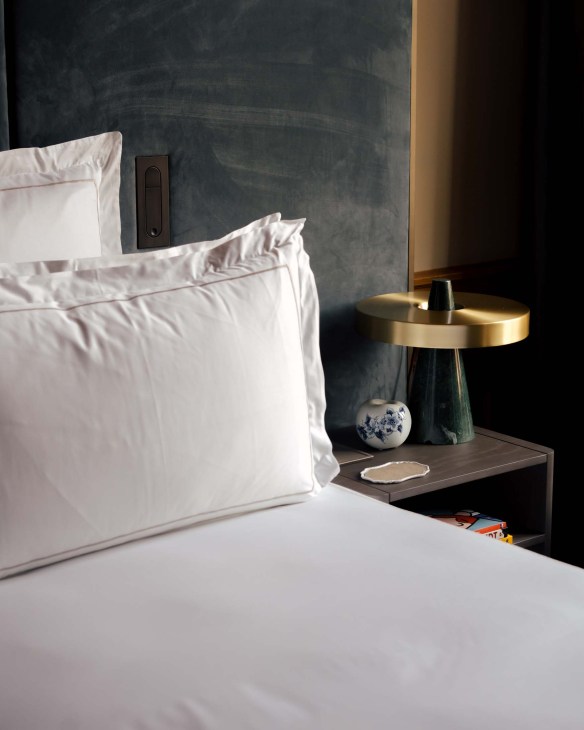
For those planning a longer stay, there’s a set of five vast canal-side residences. The Netherlands’ favourite garden designer, Piet Oudolf, has rolled up his sleeves to plant the courtyard garden, while drinks and dinner are covered by the Advocatuur bar and Eeuwen restaurant. Is Rosewood resting on its laurels and taking a well-earned break? Not quite: all eyes are already on London for the slated September opening of The Chancery in the former US embassy on Grosvenor Square.
rosewoodhotels.com
2.
Los Felices
Ibiza
Tucked away in Ibiza’s Cala de Bou, The Concept Hotels Los Felices is a technicolour homage to the glamour of Palm Springs. The 113-key property is the inspiration of Diego Calvo, an Ibiza native who feels that hospitality can sometimes be too conservative (you could probably glean this from the colour scheme that he has chosen). “I see myself as a rebel,” he tells Monocle. “I wanted to create a hotel that is a destination in itself.”
Los Felices is certainly that. It’s a riot of colour and playful nostalgia, designed by Il Mio Design, an Italian studio based in Madrid that has collaborated with Calvo on all of his projects to date. Here, 1960s motifs are combined with the world of high fashion; each of the guest rooms is named after a designer and decked out with photos from their campaigns, as well as a piece created by them.

The pool area is the hotel’s pièce de resistance, a space that is as inviting as it is photogenic. Bespoke flooring, parasol collections created exclusively for Los Felices and floating sunbeds by Canacana Design add vibrant Mediterranean flair that is a world away from whitewashed Ibiza minimalism. And it’s all the more summery and fun for it.
theconcepthotels.com
3.
Taberna Bask
Ghent
In a fast-changing corner of Ghent’s green belt – a bucolic network of open nature and canals – Belgian restaurateurs Sam D’Huyvetter and Nina de Cuyper are channelling the spirit of San Sebastián’s pintxos bars at Taberna Bask. “We saw it as a challenge to create a space where neighbours, families and curious passers-by alike feel welcome without the fuss of having to book ahead,” says D’Huyvetter.
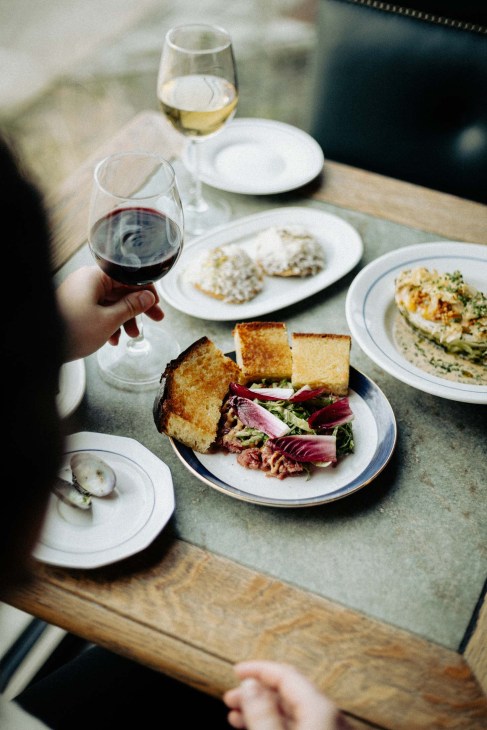
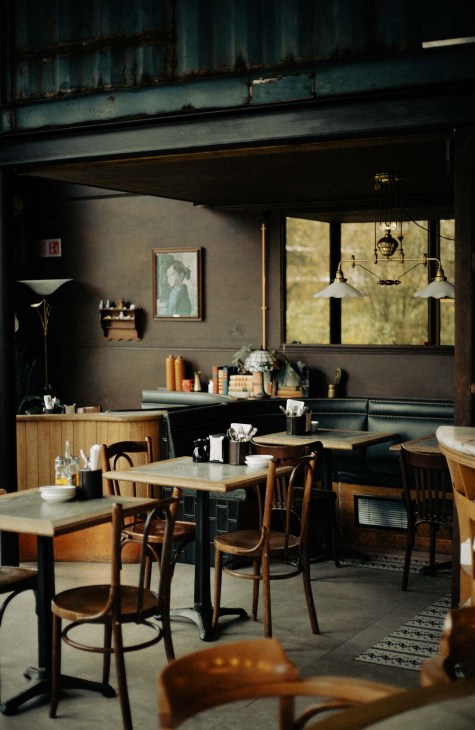
Applying Basque thinking to the Belgian terroir, the couple serve homemade morcilla, chorizo and coppa made from family-owned pigs, daily sourdough and imaginative creations including guinea fowl croquetas and red mullet with chipirón squid. Built with vintage finds, this corner spot strikes a balance between Belgian conviviality and soft ochre walls and warm lighting which evoke a Spanish late afternoon.
tabernabask.be
Images: Louise De Groote
10 transformative ideas from the Venice Biennale
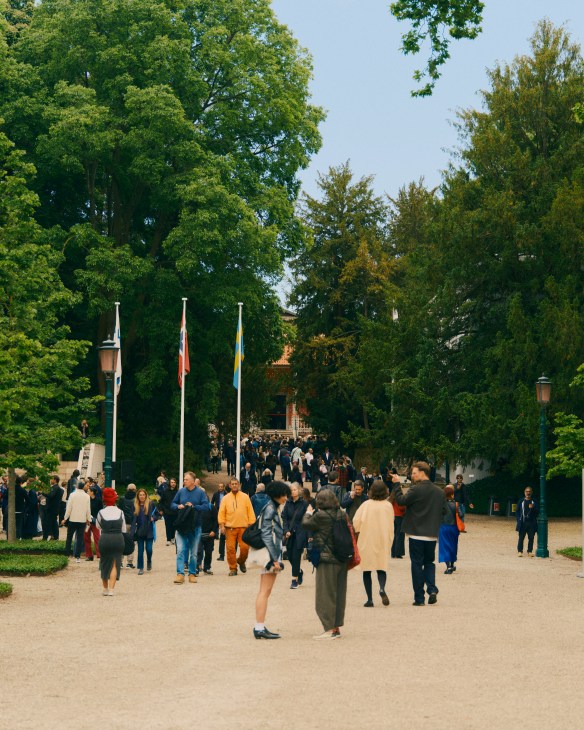
The Venice Biennale’s International Architecture Exhibition is the world’s most significant showcase dedicated to the discipline. Its 19th edition, running until November, sees more than 750 participants present projects and research inside the Arsenale – a cavernous renaissance-era former shipyard, housing multiple displays – and the historic Giardini della Biennale (Biennale Gardens). Here, in their country’s respective pavilions, national delegations share innovations and ideas that respond to pressing regional concerns.
The resulting showcase is a global collection of work from the industry’s leading lights, offering a glimpse into the architectural paradigms that could potentially shape our built world for decades to come. Monocle picks 10 proposals on show, from the simple to the radical, that illustrate how we might all build – and live – better.
1.
Confound expectations
‘Porch: An Architecture of Generosity’, USA
Giardini della Biennale

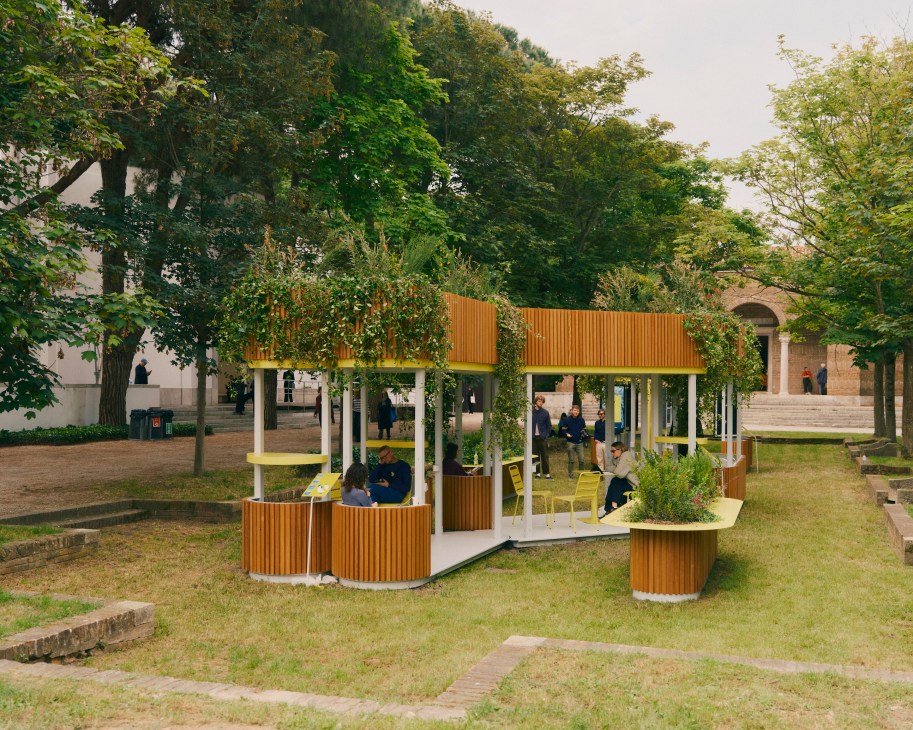
Given its current administration’s stance on immigration and international imports, the US contribution to the Biennale raised a few eyebrows with its themes of openness and generosity. “The timing is coincidental but this type of architecture rises above the historical moment,” says co-curator Peter MacKeith, an Arkansas-based architect. The exhibition is an ode to the porch, a design feature that bridges public and private spaces. The US’s neoclassical pavilion has been extended with a timber porch of its own. “A porch is a liminal space,” says MacKeith. “It’s in between absolute privacy and the public world. This is where encounters can occur, formal or serendipitous. The porch as a concept has value on the civic scale.”
2.
Make space for conversation
‘Traces’, Oman
Arsenale di Venezia
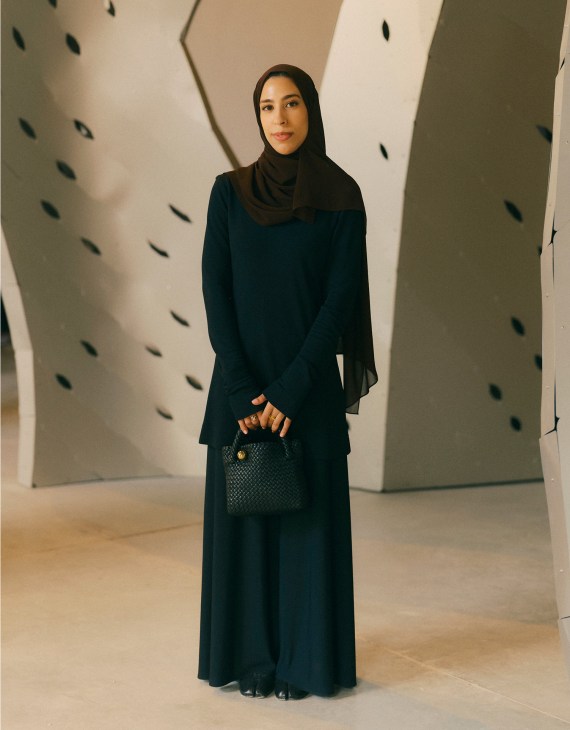
As it makes its debut at the International Architecture Exhibition, Oman puts the focus on conversation. Led by architect and designer Majeda Alhinai, an exhibition titled Traces draws on the principles of the sablah, a traditional and informal gathering space found across Oman. A modern iteration of this communal setting, with perforated panels of raw aluminium that have been cut and folded to resemble woven palm leaves, takes centre stage. “We wanted to create a space that was open and inviting so there are no fixed interior or exterior elements,” says Alhinai. “It’s a space where people can congregate and hold more intimate conversations.” The result is a debut that proudly explores how tradition can inform the architecture of our time.
3.
Sometimes the answer already exists
‘(Re)Invention’, Brazil
Giardini della Biennale
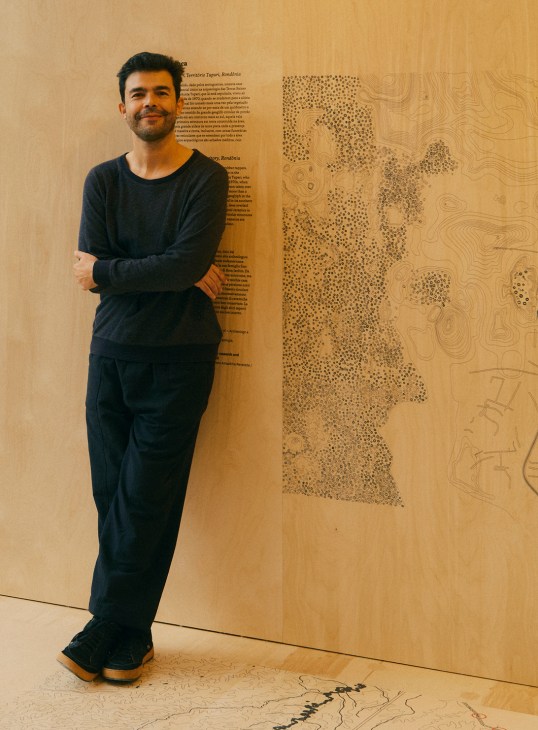
Why not reinvent the wheel? This year’s Brazilian contribution to the biennale explores how ancient solutions could help to cure our contemporary urban ailments. Curated by Brasília-based collective Plano Coletivo, the South American country’s exhibition is aptly entitled (Re)Invention. It includes new archaeological findings of Indigenous infrastructure in the Amazon, as well as 12 different case studies on how this new-found-yet-foregone knowledge can be applied to improve urban environments, from water drainage in favelas to the use of native plants in architectural contexts. “The new findings on the Amazon show that human occupation can be balanced [with nature],” says co-curator Matheus Seco. “This idea of a symbiosis between nature, humans and cities is possible.”
4.
Develop a metabolism
‘Build of Site’, Denmark
Giardini della Biennale
It’s no secret that new construction is a significant source of carbon emissions. It’s appropriate, then, that the Danish Pavilion, which is currently undergoing renovation, is looking at ways to address the issue. For the duration of the biennale, the space will become a paused construction site, with its displaced materials used to provide temporary walls, furniture and flooring in the pavilion. “I think there’s a future where buildings start to reconfigure themselves in a metabolic process, using their own materials for renovations,” says curator Søren Pihlmann. “This isn’t just about being more resource-aware, it’s also about amplifying some of their past qualities of an architecture in new future configurations.” In short, the Danes see reuse as not only a question about sustainability but also one about retaining a sense of place.
5.
Feel the heat
‘Stresstest’, Germany
Giardini della Biennale
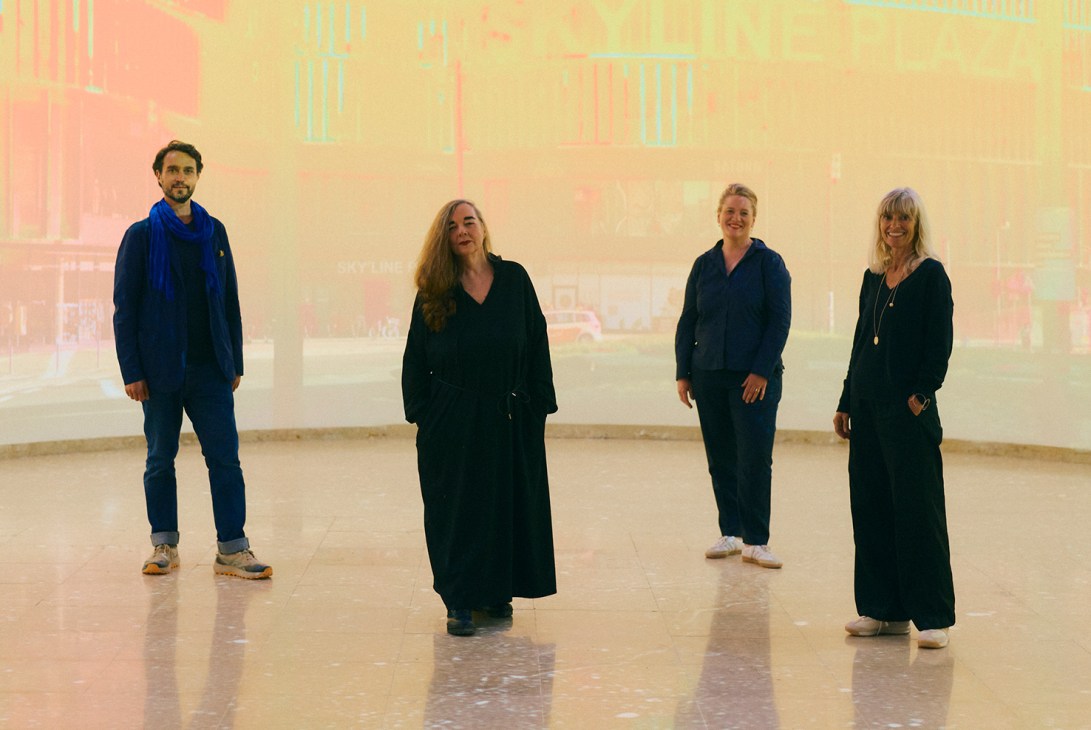
Germany’s Venice Architecture Biennale pavilion tackles urban climate change head-on with contrasting “stress” and “de-stress” rooms. In the former, a sweaty, claustrophobic atmosphere is created by artificially heated, ceiling-mounted mats, replicating the unpleasant nature of an urban heat wave.
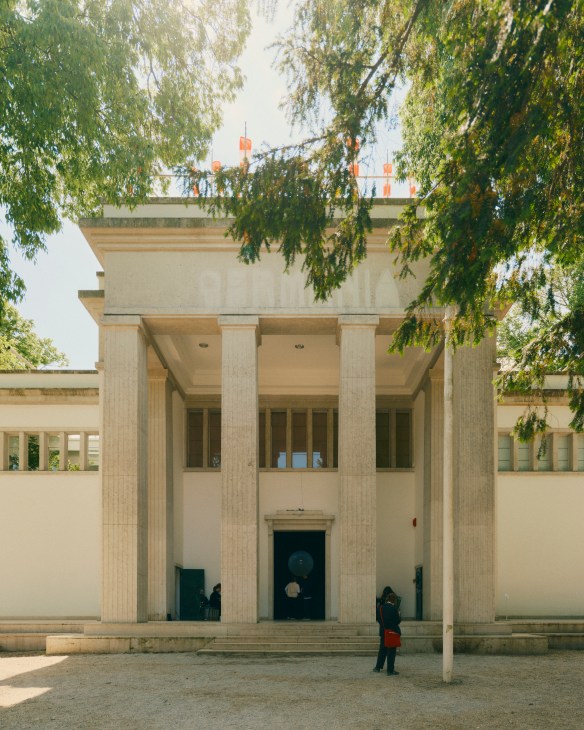
Directly opposite, the curators offer respite in a bright “de-stress” room with three resilient common hornbeam trees standing in large burlap pots as a reminder of simple strategies available for urban cooling. “We wanted to create an uncomfortable atmosphere to elicit emotion,” says co-curator Nicola Borgmann. “We know that there’s a problem but we think that you can only connect with this if you really feel the effect of rising temperatures. There is a gap between knowledge and emotion and if you don’t bring both together, we won’t take action.”
6.
Find the fun
Gateway to Venice’s Waterway
Arsenale di Venezia
It can be a challenge to walk across Venice, with only a few bridges spanning its Grand Canal. It’s something that the Norman Foster Foundation has addressed in partnership with German automaker Porsche. Together, they have collaborated on a shimmering 37-metre-long bridge on the edge of the Arsenale that extends to a floating pontoon, which is currently being used as a mooring point for water bikes. “It’s about showing people that exploring new forms of mobility can be fun and enjoyable,” says Norman Foster, the UK-born architect and president of his namesake foundation. “If you get on one of these water bikes and start to pedal across the lagoon, you’ll find yourself smiling.” The Foster and Porsche collaboration is a reminder that we can – and should – find simple ways to bring joy into our built environment.
7.
Get hands on
‘Master Builders’, Slovenia
Arsenale di Venezia
Can everything be automated? The commissioners of Slovenia’s pavilion don’t think so. Its showcase, Master Builders, is a celebration of the bond between architect and craftsman. Curated by Ana Kosi and Ognen Arsov, it features four symbolic totems, made from materials as varied as tiles, air-conditioning ducts and lighting, which represent specific techniques and knowledge employed by Slovenian construction workers. “Not all construction sites are new, and the best way to work with old buildings is with skilled human labour,” says Arsov. “It’s about the head and hand coming together. We need intelligence on a construction site.” By putting construction workers on a pedestal, Slovenia reminds us of the human ingenuity and material intelligence, even as technologies evolve, that craftsmen bring to architecture.
8.
Novel interventions
The Fondation Cartier pour l’art contemporain by Jean Nouvel
Fondazione Giorgio Cini

Opening this autumn, the Fondation Cartier’s second Paris location by Pritzker Prize-winning architect Jean Nouvel is a masterclass in how to contrast the old with the new. A 19th-century Haussmannian building next to the Louvre is being modernised through Nouvel’s distinctive steel-and-glass style and the addition of five mobile platforms that can modify the enormous surface area of the exhibition space. “Any commission for culture in Paris is a challenge,” Nouvel tells Monocle when we meet at the Fondazione Giorgio Cini in Venice, where an exhibition that delves into the intricacies of the project is taking place alongside the biennale. “The vision was to pierce through the Haussmannian shell of the building to create an invitation to come inside.” The project, combined with Nouvel’s vision, is a prime example of how building interiors can be given new life through novel additions.
9.
Time and place
‘Migrating Modernism: The Architecture of Harry Seidler’
San Marco Art Centre (SMAC)
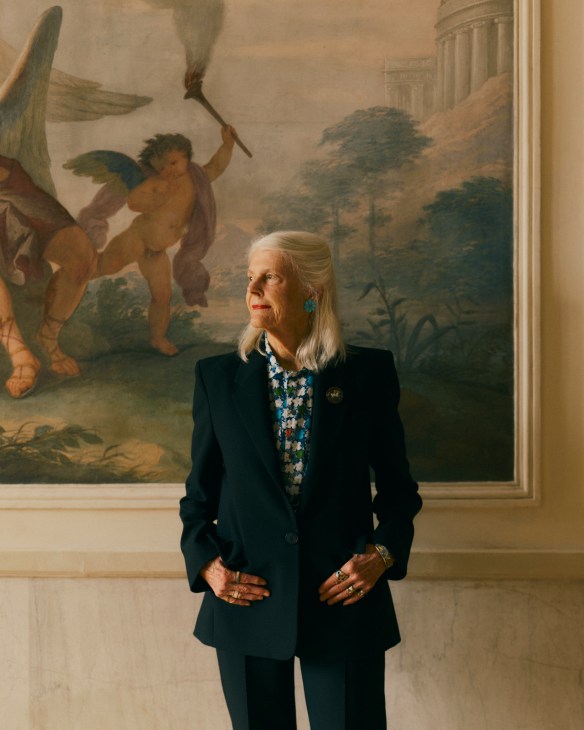
Co-organised by the San Marco Art Centre (SMAC) and the University of Sydney’s Chau Chak Wing Museum, this retrospective honours the late modernist architect Harry Seidler. The exhibition traces Seidler’s life, from fleeing Nazi-ruled Vienna and his studies in the US under Walter Gropius and Marcel Breuer, to his relocation to Australia, where his bold geometric forms, clean lines and honest expression of structure – often utilising glass and concrete for a sense of lightness and transparency – defined Australia’s mid-century modernism. The showcase features architectural drawings, sun-soaked photos and handwritten correspondences between Seidler and his collaborators. “What’s intriguing is that this work took place before the internet or even fax: everything was conducted through letters,” says architect Penelope Seidler, Harry Seidler’s widow, who now runs the family firm. “He designed buildings that were of the time.” And maybe that’s the lesson here: Seidler’s timeless work shows that buildings with longevity can still bear the mark of their era.
10.
Talk more
‘Home’, Australia
Giardini della Biennale
The Australian Pavilion draws inspiration from the knowledge-sharing traditions, known as “yarning”, of its Aboriginal people. Featuring a curving earth and plaster wall and bench – a physical form that encourages dialogue – it incites visitors to look at ways in which an Indigenous understanding of landscape can be shared with Western approaches to architecture. “It’s about coming together and telling stories about who you are and what’s important to you,” says Michael Mossman, one of the Australian exhibition’s seven First Nation co-curators. “If architects can develop a deeper relationship with the client by doing this, then we can connect with culture and really bind people together.” The effect, believes Mossman, could be architecture that people feel strongly attached to as well.