Issues
In retirement, Dries Van Noten unlocks a new way to channel his creativity
Like many luxury fashion houses, Antwerp-based label Dries Van Noten has been surfing the waves of change. Its founder, who bears the same name, has stepped down from the role of creative director and all day-to-day design responsibilities at the label he founded in 1986. The transition, though, couldn’t have been smoother.
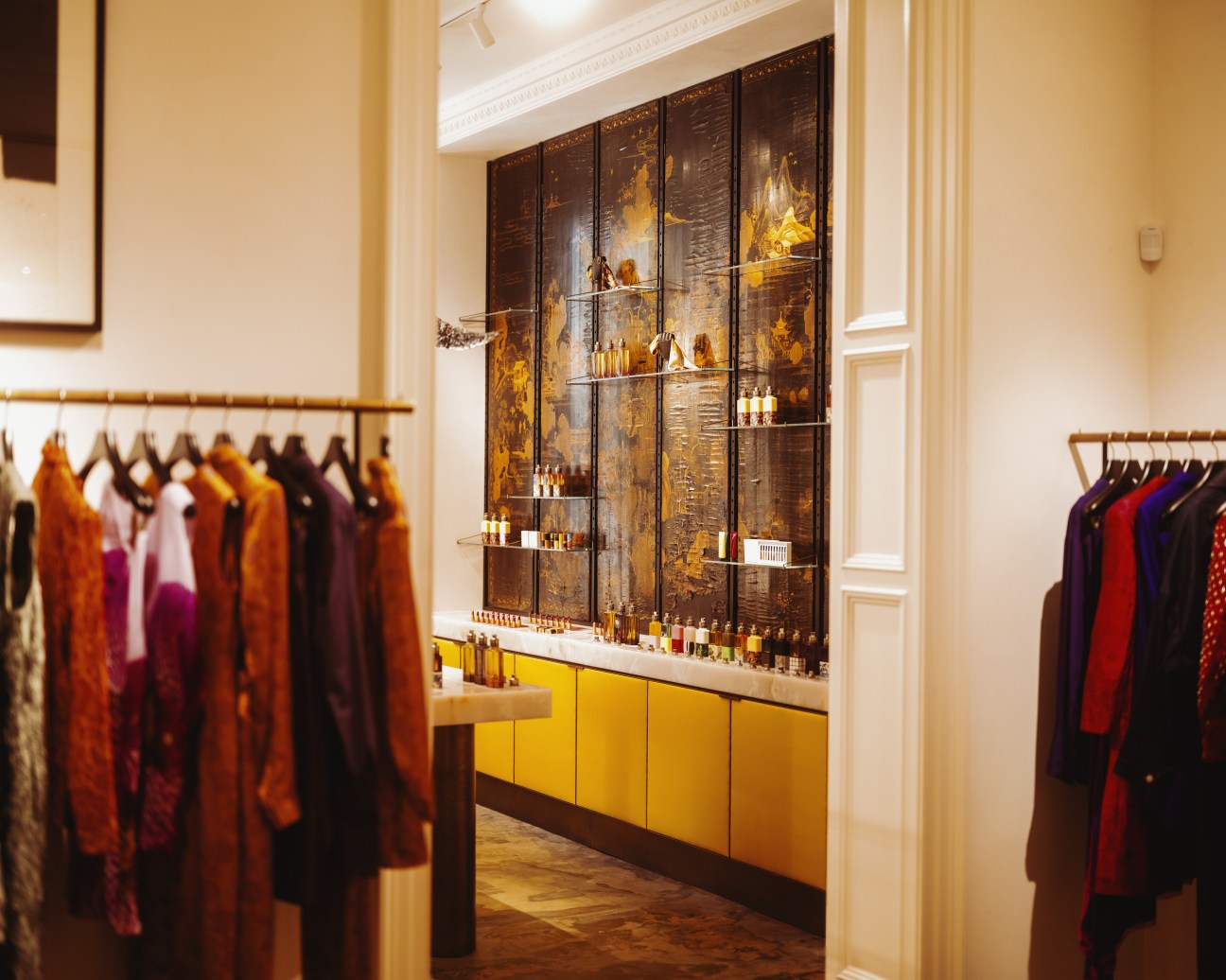
Julian Klausner, a 33-year-old designer who has worked under Van Noten since 2018, has taken on the mantle. His debut show, presented at the Opéra Garnier during the last edition of Paris Fashion Week, was celebrated by the fashion industry for paying homage to the founder’s signatures while moving his vision forward. Meanwhile, Van Noten – who now sits on the front rows of his own shows to support his successor – has unlocked more time to tend to his garden in Lier, on the outskirts of Antwerp; oversee his label’s growing beauty line (most of which is heavily inspired by the aromas of his famous garden); and collect artworks, furniture and design objects from around the world for the brand’s newly opened boutique in London.
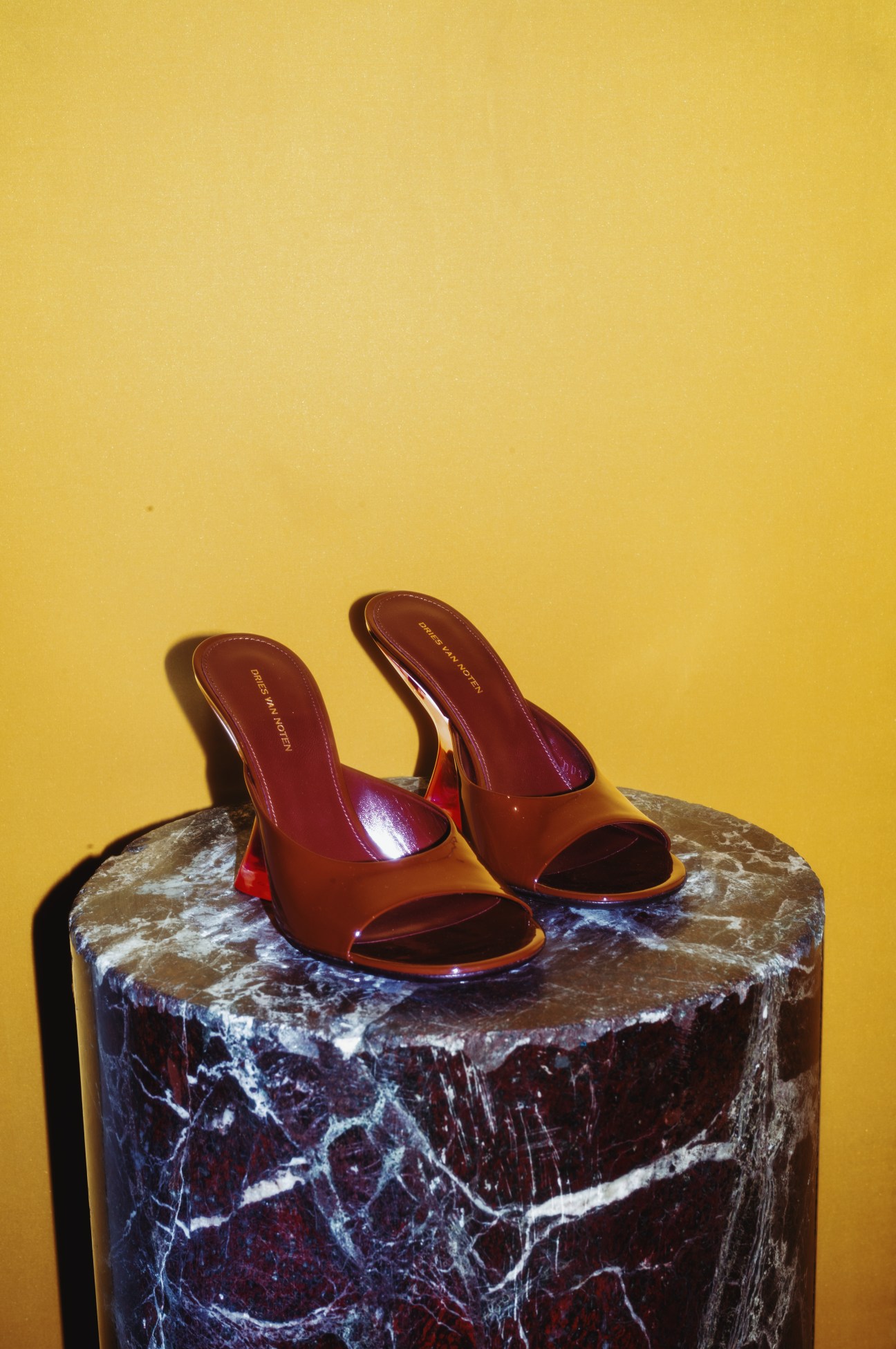
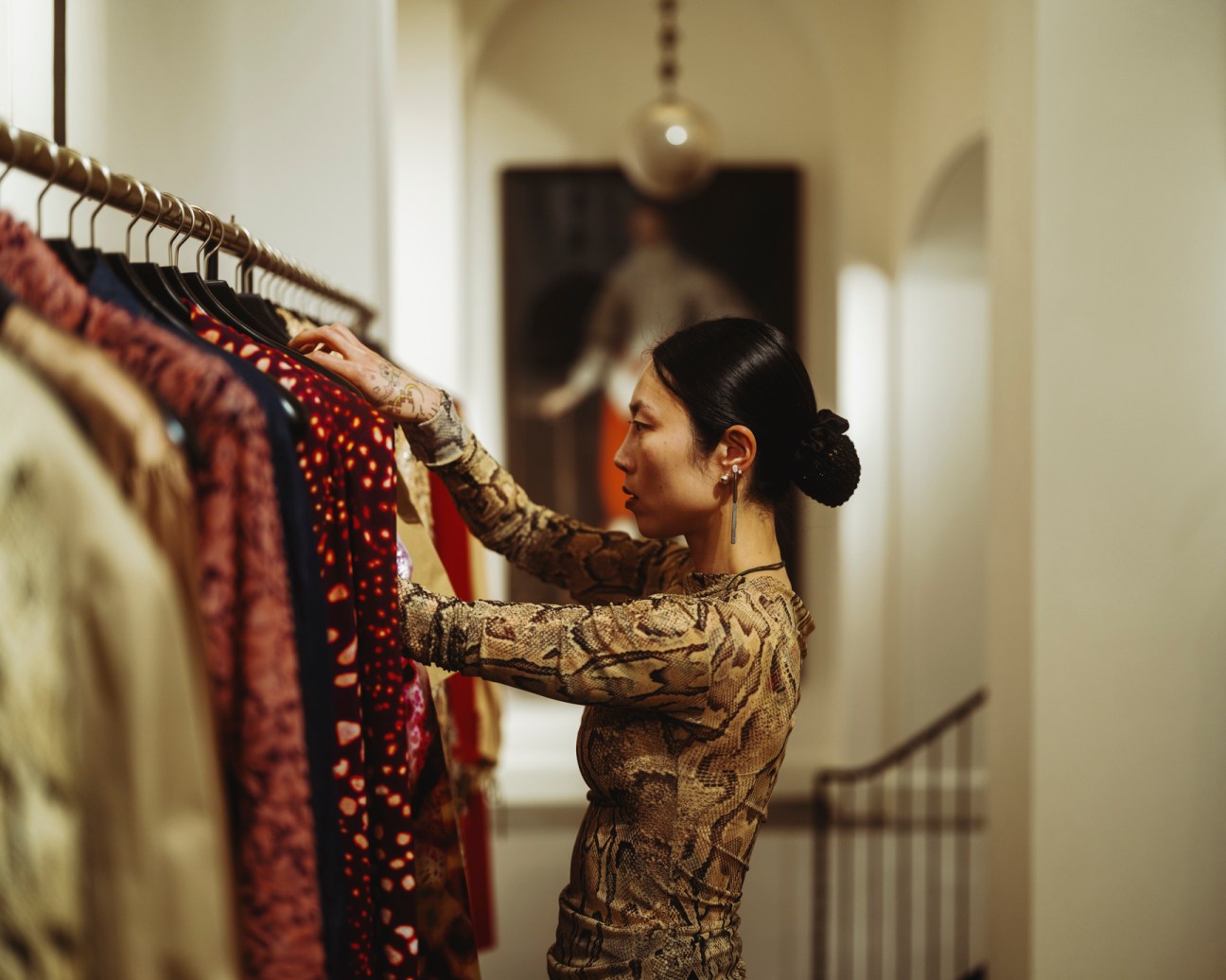
Visiting a Dries Van Noten shop has always been considered a creative pilgrimage of sorts: the brand’s Antwerp flagship and its Paris outpost on the Quai Malaquais are spaces where you can discover new artists, experience architectural landmarks or simply be inspired by taking in the colour palettes on the walls. In the Los Angeles store, there’s even a pianist greeting you at the entrance. “It really started in Paris in 2007,” says Van Noten. “That was the first time we approached a store as something more than just a place to show clothes. Everything from the garments, the furniture and the art [has to] work together.”
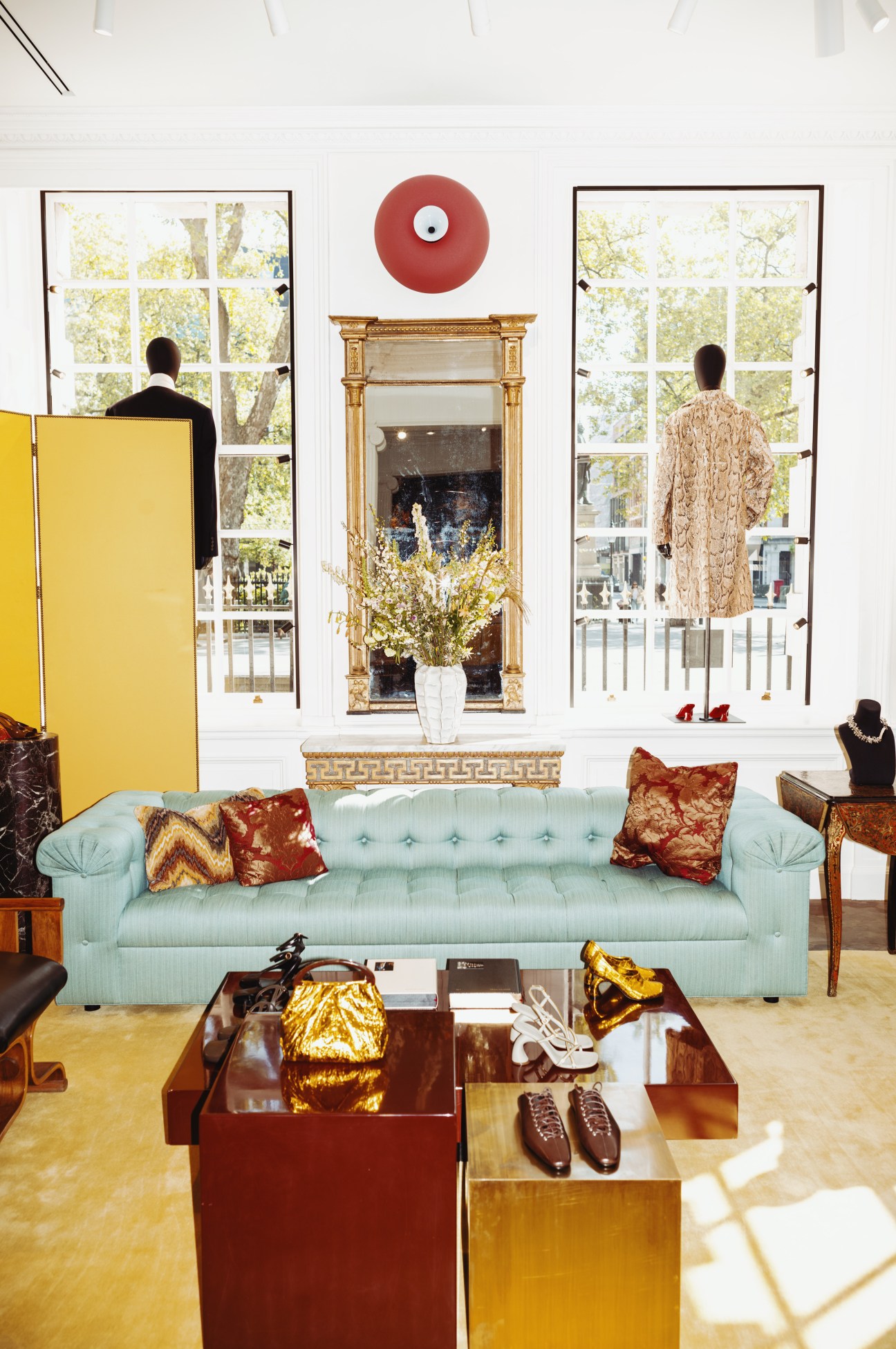
With backing by Puig, the Spanish group that bought the brand in 2018, Van Noten now has an opportunity to apply his vision for retail to new cities – and he has been doing so mindfully, taking his time and ensuring that each location has its own story to tell. In London, he picked a former bank on Hanover Square with barely visible signage and no other luxury shops in sight. “The space began to guide us – once we started placing objects, choosing textures and letting in the light, it started to show us what it needed,” says Van Noten. Contrast was one of the needs he quickly identified, choosing to juxtapose the Grade II listed building’s historic features with modern design items. “There’s a certain calmness and contrast that I associate with Flemish aesthetics and that comes through in the store too.”

Centre stage is a sculptural, brass chandelier by Belgium-based Vladimir Slavov, a one-of-a-kind design that Van Noten spotted at the Objects with Narratives gallery in Brussels. “This wasn’t a custom order but I found a way to postpone another client’s project to do this for Dries,” says Slavov from his workshop in Zaventem, just outside Brussels, where he sketches and creates prototypes and casts all his objects. A design purist, Slavov speaks of his love of “minimalist, strong shapes that can stand on their own” when it comes to design and to fashion. “The few [clothing] items I own that do attract a bit of attention are from Dries,” he adds with a smile, referring to an embroidered wool bomber jacket by the brand. “I don’t dress in a fashion-orientated way but Dries Van Noten designs appeal to me in a way that surprises even myself.”
As well as highlighting the works of fellow Belgian-based artists, Van Noten also makes a point to celebrate local makers. Another significant commission in his new London shop includes a round Convex mirror designed by Collier Webb and crafted at its workshop in Sussex. “Dries just walked into our showroom on Pimlico Road,” says David Arratoon, design director at Collier Webb. “I’m not sure if he was intending to come in or was just looking around. He fell in love with one of the mirrors and it all started from there,” adds Arratoon, who then worked on creating a custom mirror for the shop, as well as a brass-and-glass lighting fixture. “There was an ongoing discussion about the antiquing and patinating process of the mirror, which is done by hand and can be adapted to change the depth of the colours and overall feel of the object. We want our designs to feel like they’ve always been there.”

In fact, the entire boutique appears to have always been there. There might be something new to discover in every corner – menswear, womenwear and beauty ranges; Van Noten’s record collection; and artworks by the likes of Tracey Emin and David Hockney – yet the personal stories and emotions behind each object come together to create a welcoming, lived-in space. “You might see something very minimal next to something ornate, or something industrial beside something soft. It’s about finding harmony in this kind of tension,” says Van Noten.
driesvannoten.com
A United States of Europe is not so far-fetched
At the Munich Security Conference in February, the US vice-president, JD Vance, informed his hosts that they were a wretched bunch of effete, cheese-eating milquetoasts with whom his country could no longer be bothered (I paraphrase but not that much). There has since been lots of hand-wringing about how the continent should respond to the threat of US abandonment. One of the most robust responses that I’ve heard came from the former commander of the US Army in Europe, Lieutenant General Ben Hodges. Speaking to The Foreign Desk at the Delphi Economic Forum in April, he suggested (and I paraphrase barely at all) that Europe should stop whining, recognise that it is a superpower and start acting like one.
Hodges is correct. Europe’s combined GDP and collective military spending dwarf that of Russia, its only meaningful external threat. But perhaps neither Russia nor Europe can see past the fact that, for all the supranational organisations that European countries might have joined, the continent remains a kaleidoscope of nationalities. The idea of formally uniting them is not new; it has been proposed in various forms by Winston Churchill, Leon Trotsky and George Orwell. But is its moment looming?
There are many examples of disparate democratic polities becoming one. The colonies of Australia formed a federation in 1901. The US became a unitary bloc in stages from the Declaration of Independence in 1776 to the admission of Hawaii in 1959 (and, as Donald Trump sees it, the country isn’t done yet). Indeed, many of Europe’s modern states were once disorderedly patchworks of fiefdoms.
In many respects, it doesn’t seem that difficult. Europe already has a flag, a parliament and a president. (The latter is not directly elected but that can be fixed. Who wouldn’t enjoy the sight of a Finnish candidate kissing babies in Greece or an Irish contender shaking hands in Montenegro?) Most of Europe already uses the same currency. It is true that there are cultural differences but I would contend that Poland and Portugal, for example, have at least as much in common as Alabama and Connecticut. The US turning away from Europe would have seemed, until recently, unthinkable. A United States of Europe is, at the very least, thinkable.
Mueller is the host of ‘The Foreign Desk’ on Monocle Radio.

Interview: Sou Fujimoto on restoring balance with nature
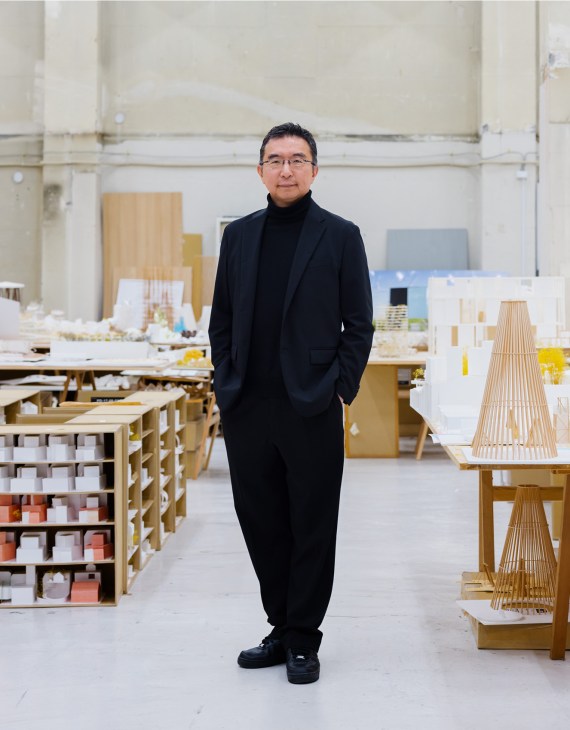
“These are sketchbooks from the very beginning of my architecture-school days,” says Sou Fujimoto. “Each is numbered: year, date, book number.” The Japanese architect picks up a yellow one and starts looking through it. It’s dated 13 January 1993 – his third year as a student. “Of course, I still have a sketchbook but lately I’ve been doing digital sketches on an iPad because I can share them more easily with my team.”
He could be forgiven for sacrificing the beauty of a hand-drawn sketch for convenience. After all, he’s been busy: he master-planned the Expo 2025 site in Osaka, which opened to the world in April, and is now preparing for his first major retrospective, to be held at Tokyo’s Mori Art Museum from July to November.
Ahead of this showcase, which covers more than three decades, Monocle meets Fujimoto at his studio in Tokyo’s Koto City. He has de-archived every sketchbook and model from his career, laying them out on the studio floor. “We’re not just showing old models,” he says. “We are making new ones too. People will see that the thinking and the process are ongoing.”
It’s a process that started at the University of Tokyo. “I wanted to study physics but I couldn’t understand anything,” says Fujimoto, laughing. “I finally chose architecture. The only architect I knew at that time was Antoni Gaudí. Then my classes introduced me to Le Corbusier and Mies van der Rohe.” On learning about these modernist masters, Fujimoto became hooked. “They not only created new shapes and spaces but also lifestyles. That was fascinating to me.” While the architect’s output looks very different to that of his early idols, there are parallels. Like Le Corbusier, Fujimoto believes that architecture should be in harmony with the natural world.
“Early in my career I realised that I was creating boundaries between inside and out,” he says. “But I thought that they should disappear. And I am not just talking about physical architecture; I also mean social and philosophical boundaries. As an architect, the question for me is: how do we create beautiful relationships between human life and society, and the surrounding nature?”
Some clues might lie in Fujimoto’s projects, such as House N (2008) – a home in Oita, Japan, that features layers of walls and windows that provide both privacy from neighbours and views to nature – or his 2013 Serpentine Pavilion in London, in which a semi transparent grid of white steel tubes offered views across the site in Hyde Park. Many of his other projects reference organic structures, such as birds’ nests, caves and forests.
Despite the accolades that he has received for his approach, Fujimoto doesn’t think that his work is particularly groundbreaking. “In the past, our lives were closer to nature but we created boundaries to resist it in the hope of a more comfortable life within an artificial environment,” he says. “But over the past 150 years, we have found that it’s strange to be isolated from the wonder of nature.” So how can architects redress the balance? “By digging deeper and understanding locality in terms of nature and materials,” he says. “In doing so, we will find something unique, allowing the merging of boundaries and connecting people’s lives with the surrounding nature – and people with each other.”
The CV
1971: Born in Hokkaido, Japan.
1994: Graduates from the University of Tokyo with a degree in architecture.
2000: Establishes Sou Fujimoto Architects in Tokyo.
2006: Wins gold in the house competition by the Tokyo Society of Architects & Building Engineers.
2008: Wins the Japanese Institute of Architecture grand prize.
2010: Completes Musashino Art University Museum & Library in Tokyo.
2013: Creates the Serpentine Gallery Pavilion in London.
2018: Builds L’Arbre Blanc, a village-like housing development inspired by trees in Montpellier, France.
2020: Completes Forest of Music in Budapest, a museum in the Hungarian capital’s most famous park.
2025: Master-plans Expo 2025 in Osaka, Japan.
Read next: The Monocle City Guide to Tokyo, featuring the best hotels, restaurants and retail spots in the Japanese capital
Ohlab’s House in the Mountains celebrates the overlooked beauty of Palma
Take the winding road west out of Palma and you’ll soon find yourself in the low, craggy limestone mountains and pine-tree-lined valleys that frame the Mallorcan capital. Here, there are leafy suburbs with houses that sit prominently in the landscape, some boldly clinging to cliff-faces while others, three-storeys high, announce themselves from the road. Most enjoy east-facing views of the city and Mediterranean Sea. But House in the Mountains is different: it seeks to celebrate Mallorcan landscape and identity by turning its back to these trademark vistas and retreating from view altogether.
“It’s very discreet,” says Paloma Hernaiz, the co-founder of Palma-based architecture studio Ohlab, established with her work and life partner Jaime Oliver in 2007. The duo walk Monocle through the project, which the studio has newly completed. “We’re still very close to Palma but we positioned the house so that it’s not visible from the road or neighbouring properties,” says Hernaiz. “It makes you feel like you are in the countryside.”


The residence, despite being only a 20-minute drive from the city centre, does indeed feel remote. It sits on a site that is covered with rock carnations, fan palms and large boulders, and has views south across a forested valley rather than towards the city and the sea. “The first few times we came to this site, we would walk around with the client, discussing how much they loved its unspoiled nature,” adds Oliver, explaining the brief. “The client showed respect and care for the actual landscape, so there was a need to integrate it into the house.”
The resulting floor plan embraces the area’s naturally askew topography. The architects worked with, not against the slope, creating a series of interconnected platforms that house a dining room, a kitchen, a living room, bedrooms and a studio, respectively, and gently cascade down the site. Most of these platforms – with the exception of the kitchen and studio – sit just off a south-facing courtyard that features garden beds planted with native species, mirroring the untouched landscape around the building. Thanks to an infinity edge, the elongated swimming pool, which sits to one side of the courtyard and is lined with pinewood sunloungers, blends in seamlessly with the vegetation beyond.
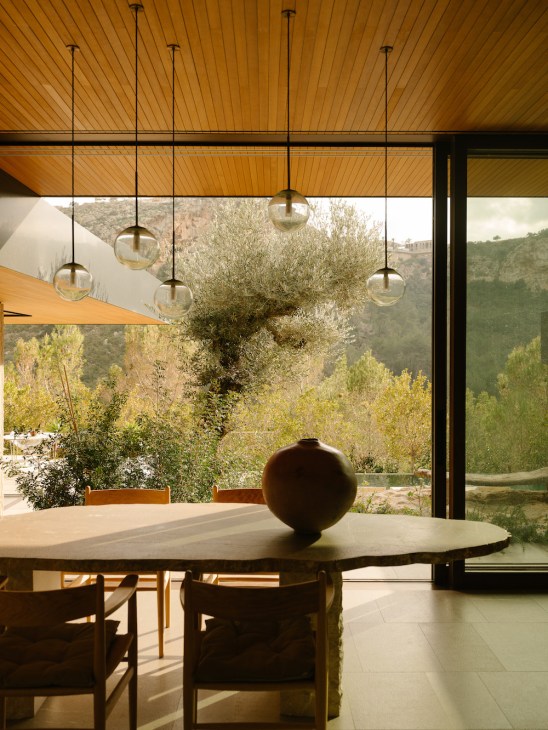

This platform-led approach minimised the excavation work required, allowing the architecture to be positioned on the site in a way that left it mostly untouched. “We wanted to celebrate the rocks,” says Oliver. To do so, Ohlab transformed some of the rocky outcrops that existed on site into natural walls, which line a corridor leading to the bedrooms and support the carport.
The architects also partnered with local manufacturer Huguet to develop a bespoke terrazzo cladding for additional artificial walls. Composed of recycled materials and aggregates, including some from the site’s limited excavation works, this custom product is naturally coloured to match the pigment of the local rock; each piece has saw-cut grooves in its surface, which have been roughed up by hammers, to create an irregular finish that references the rocky surroundings. “The aim with this cladding is not to imitate rock,” says Oliver. “It’s more abstract; it’s like we have domesticated it. It’s important because the rock is the narrative of the house.”
This championing of the Mallorcan landscape and materiality continues inside: the dining table and kitchen counter are made from Binissalem limestone quarried nearby. The latter is sculpted from a single block, with the hard, grey-hued limestone providing a solid foundation for cooking and preparing meals. It’s enhanced by precision-built custom woodwork and untreated brass fixtures that introduce warmth and counterbalance the rugged nature of the stone.
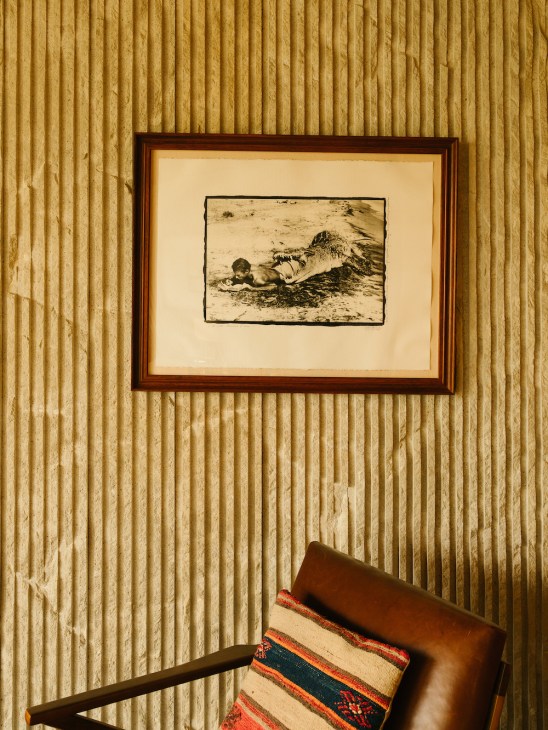
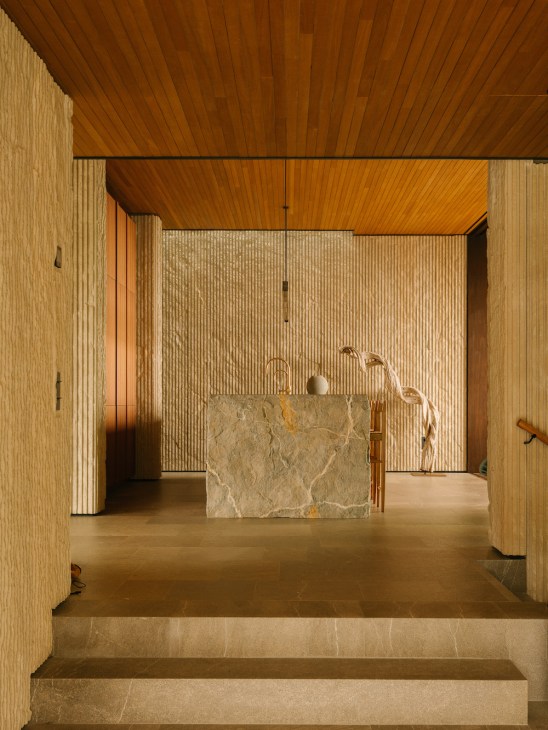
Additionally, there’s lighting created by Palma-based firm Contain, which includes bespoke table lamps made from blackened natural brass. These are complemented by existing Contain products such as the Ohlab-designed H Pendant Lamp, a long overhead fixture with a H-shaped profile, which now hangs above the kitchen bench. Notable furniture pieces by La Pecera, a Mallorca-based furniture shop and brand, include the living room’s Robusta armchairs.
Mallorcan identity is celebrated through the architect’s embrace of the microclimate too. Oliver and Hernaiz looked to enhance the local biodiversity by creating a green roof that functions as a thermal insulator for the house, which helps reduce energy demand and improve air quality. The duo also worked with the prevailing winds and natural light to ensure that the home would be in tune with the environment by orienting the majority of the building along a north-south axis. “This positioning means that the sun enters all the way into the house during winter, with awnings blocking it out in the summer, so it remains very fresh,” says Oliver.
Cooling thermal breezes are harnessed thanks to this orientation too, with a sea-to-mountain breeze rolling south through the valley in the mornings and a mountain-to-sea coming from the north in the evenings. Windows on both façades also ensure there is plenty of cross-ventilation.
All of this builds upon the initial move to orient the home north-south to provide both privacy and a verdant vista. “It purposefully gives its back to the sea and city, for privacy, light and energy efficiency,” says Oliver. “It feels like you’re in the middle of the mountain and part of the Mallorcan landscape.”
Ohlab: On sustainability
House in the Mountains is a prime example of Ohlab’s architectural ethos, which is defined by building strong relationships between their architecture and the local environment. It’s an approach that’s easy to classify as “green” or “sustainable” – but the duo are keen to dispel the notion that this doesn’t mean such architecture can be remarkable or fun.
“We want to attract people not just because a project we do is sustainable but because the architecture is cool,” says Oliver. “We are tired of the discourse that ‘you have to like it because it is sustainable’. That’s a lazy argument. I want our architecture to feel a bit naughty – like having a really good, well-made burger.”
Naughtiness aside, Oliver and Hernaiz are keen to stress that they still consider carbon footprint and energy efficiency in all their projects. “In general terms, we try to produce locally, benefit local communities and minimise the carbon footprint,” adds Oliver.
Young designers are rejecting tech and embracing imperfection
A growing number of young people are ditching technology and screen time for human connection. Reports have shown an increase in church attendance among 18-to-24-year-olds, who mainly cited their desire for a sense of belonging, rather than a belief in a higher power. Plenty of smartphones are also being ditched as part of this back-to-basics movement.
The trend appears to be catching on in the design community too. In partnership with Design Singapore Council at its Future Impact exhibition, Monocle hosted a series of radio roundtable discussions on the future of the industry at this year’s Milan Design Week. Nearly every single participant mentioned their desire to get back to basics, away from technology and towards humanity.
“We are surrounded by technology so we need more real things in our home,” said Milan-based art director and product designer Federica Biasi. She outlined her desire to expand her practice in a way that embraces nature and handicrafts. It’s a sentiment supported by Lagos-based designer Nifemi Marcus-Bello, who said that his most coveted products are those that show signs of his hand in their creation. “People want to have feelings that are more authentic and raw,” he said. “You get that with crafts. They allow you to consider the emotional side of design.”
The duo underlined a growing appreciation for the unique qualities and imperfections that come with handmade items, in stark contrast to the uniformity of mass-produced goods or AI-designed products, which can feel impersonal and soulless.
There’s also a benefit for the designers themselves. “We have all these tools of convenience today, led by AI, but how are you going to learn to be a great designer if you take short cuts?” said Swiss-US designer Yves Béhar. “In order for something great to come out, you have to put in the time, energy, sweat and tears.” Going back to basics, then, might not only be good for the products that we find in our homes but the people who make them too.
Forest Home: A mid-century bungalow that was designed with R&R in mind
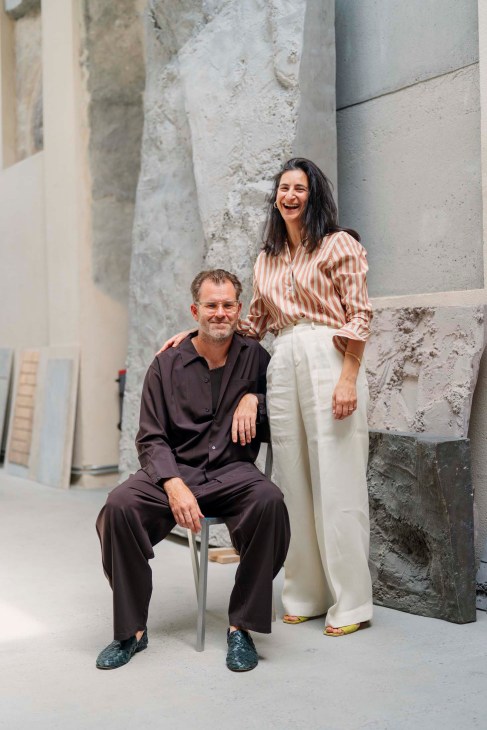
When the founders and creative directors of Amsterdam-based interior design studio Nicemakers are off duty, you can find them in a residence so remote that locating it feels like a treasure hunt. “Google Maps tends to send you the wrong way,” Dax Roll warns Monocle before we arrive at his sprawling rural retreat in Veluwe, a lush nature reserve in the northeastern tip of the Gelderland province, an hour outside the Dutch capital. But our efforts are richly rewarded: the mid-century bungalow, set among fir trees and fields of heather, is an incentive to put down your phone and let nature guide the way.


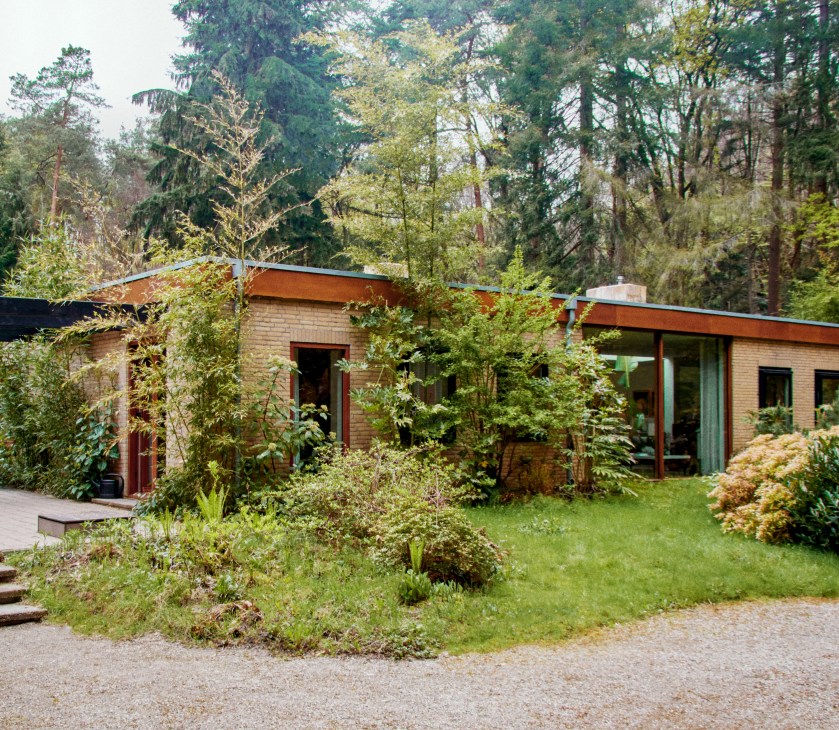
“Since we completed The Hoxton in 2014 the phone has been ringing off the hook,” says Roll, while unpacking organic vegetables, fresh loaves and fragrant coriander picked up at a food market in nearby Zwolle. Following the unanticipated success of the studio they founded in 2011, Roll and Joyce Urbanus, his partner, created a house in which they could unwind, called the Forest Home. After they discovered the run-down property, they tapped their interior design and architect friends, and within six months the house had been opened up so that its surroundings were visible from all angles.
The pair has designed a slew of smart hospitality spaces: Amsterdam’s renovated De L’Europe hotel in 2021; a country house in Ardennes in 2022; The Brecon, a revamped ski chalet in the Swiss Alps, completed last year; and De Plesman, a hotel in The Hague in the former KLM headquarters, which opened in March. The pair are now working on their Mediterranean residence in Menorca, a restaurant on a regenerative farm in Tuscany and a project in Abu Dhabi, their first foray into Emirati hospitality.
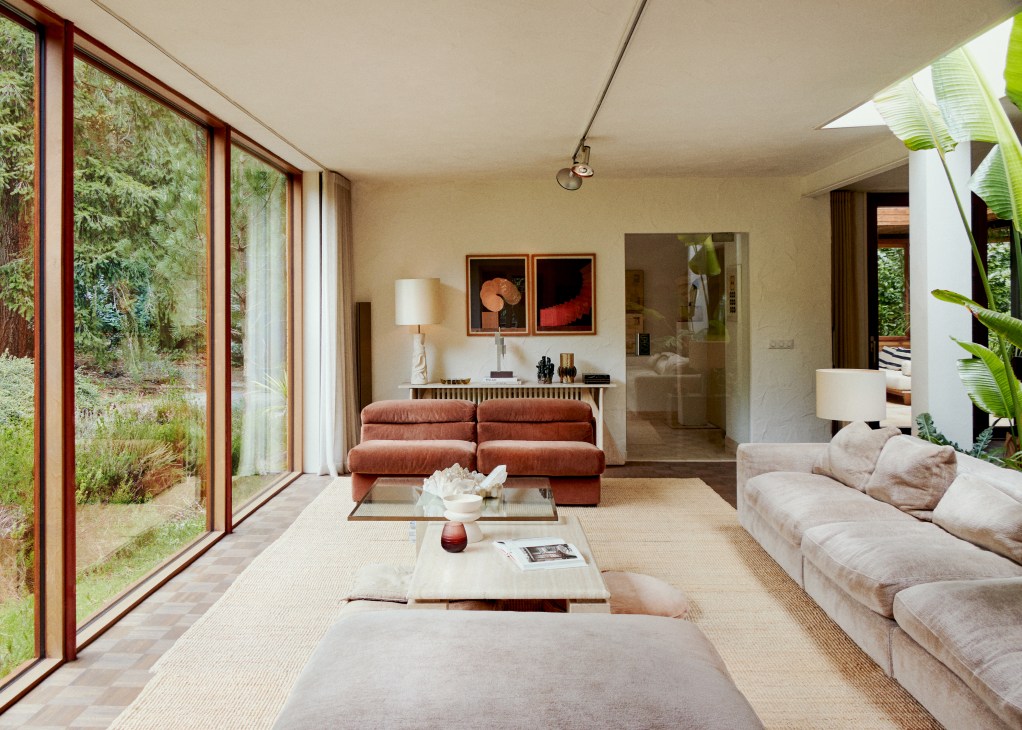
Designing for hospitality came particularly easy to Roll, who grew up working in restaurants and bars before going into fashion marketing. “I didn’t have experience in interior design like Joyce but I understood the practical requirements of designing a hospitality venue,” he says. “Warm lighting is imperative: designers tend to consider illumination as the last stage of the project but we begin with it and work backwards.” Urbanus agrees: “We want our interiors to feel unforced,” she says. “The best compliment we’ve received is that our designs feel timeless, like they’ve been like that forever.”
Indeed, the Nicemakers duo create each of their spaces with longevity in mind. “A client recently invited us back to the penthouse we designed for them a few years ago and the place looked the same,” says Urbanus. It’s their barometer of success: “If something is well-designed, there should be no need to change it.”
Three of Nicemakers’ recent refurbishments
De Plesman, The Hague (2025)
Originally built in 1939, Nicemakers’ most recent project was conceived in the art deco former headquarters of Dutch airline KLM. Now it’s a meeting point for visitors to the seat of the Dutch government. “The story was already in place,” says Urbanus. “We just had to bring it back to the fore.”
deplesman.com
The Brecon, Adelboden (2024)
This 22-key retreat in the Swiss Alpine village of Adelboden, in the Bernese Oberland and formerly known as Waldhaus (forest house), goes heavy on stone flooring, textured woollen upholstery and leather trims. Its decor has a pared-back palette that allows the eye to wander towards the natural beauty without veering too far from the comforts of a traditional timber-clad Swiss chalet.
thebrecon.com
De L’Europe, Amsterdam (2021)
Nicemakers refreshed this Heineken-owned seventh-century inn on the banks of the river Amstel. “After investigating the building’s illustrious history, we set about collecting one-off pieces from the 1900s,” says Roll. “We like to create collected interiors, so it doesn’t feel like a showroom.” The result is a tasteful redesign of the red-brick building in keeping with the Dutch neoclassical style and executed with aplomb.
deleurope.com
How Bahrain is growing its art and design community
Bahrainis see pearls as the flower of immortality. For thousands of years, divers plunged from dhows – with weights tied to their legs and baskets around their necks – into the waters framing the Gulf archipelago, scouring the seabed for the country’s renowned natural pearls. In the early 1930s the pearl market collapsed (around the time when oil was discovered). But the tradition of bringing to light the beauty of the land remained, and now it’s the country’s artists and architects who are tasked with continuing the search. Though not as flush as some of its more famous, go-big-or-go-home GCC (Gulf Co-operation Council) neighbours, Bahrain’s careful yet decentralised ecosystem of cultural interventions – fostered by the relentless vision of several key local figures – has created a rare paradigm in the region. Here is an art and design community marrying cosmopolitan ambitions with deference to its distinctive regional history as an ancient trading hub.
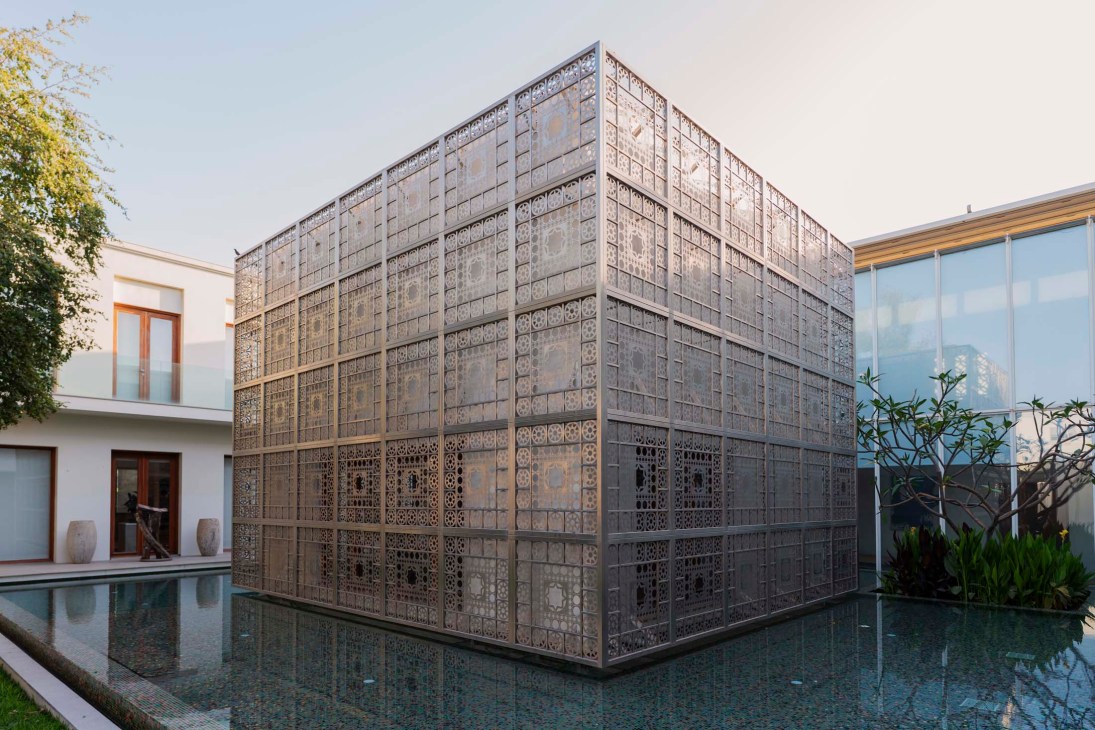
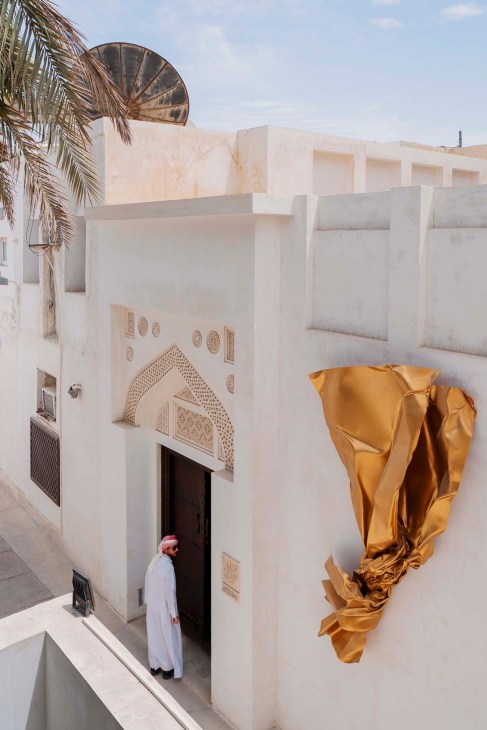
“Artists here are showcasing work that touches us and represents us,” says Shaikha Latifa bint Abdulrahman Al Khalifa, director of The Art Station. “It is not the Middle East as depicted from the outside. It has to do with our memory, our past and our identity; that is why what’s happening now is so special.” Located in Muharraq, an island across an inlet from Bahrain’s capital, Manama, The Art Station is a six-month-old cultural complex housed in an ivory and sky-blue former shopping mall from the late 1970s. It is one of a clutch of new creative undertakings in Bahrain. It’s part of what Al Khalifa sees as a transformation marked by “a certain kind of authenticity,” she says. “It’s very palpable.” One of the main figures at the forefront of Bahrain’s cultural momentum is The Art Station’s founder, Shaikh Rashid bin Khalifa Al Khalifa, an artist, philanthropist, member of the royal family and a kind of godfather for all things contemporary art in Bahrain.
Al Khalifa was one of the founding members of the Bahrain Arts Society when it was started in the 1980s. Since then, he has exhibited his artwork internationally; his pieces span landscapes through abstractions to brightly coloured aluminium optical art reliefs. He later opened the RAK Art Foundation, which includes among its initiatives his former family home-turned-museum. For him, The Art Station was designed to provide a means for artists to expand and reimagine different versions of their practice. This was something that was “just nonexistent” when he was a young artist here, he says. “Back then, there were only self-taught artists, those who just started their own initiatives, painted local scenes and sold them to some of the few tourists who visited the island at the time.”
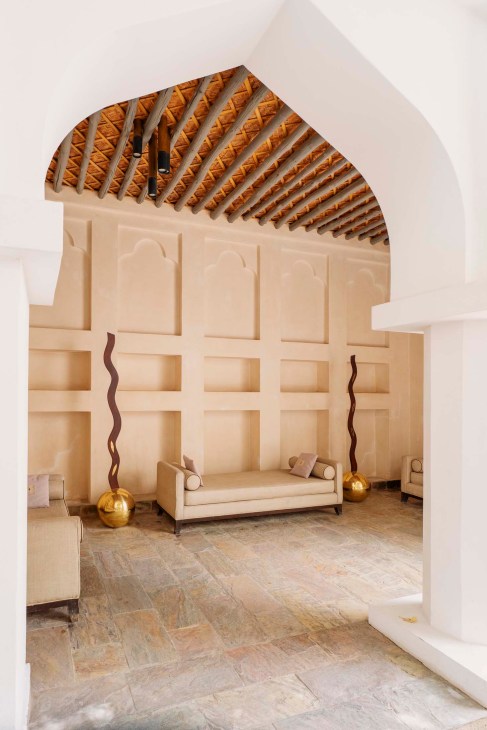
Beneath the arched colonnades of The Art Station is a central courtyard shaded by palm trees wrapped in white lights and flanked split-level studios for artists that are subsidised by the organisation. At different stages of their careers, some focus on fine arts, while others explore ancient regional traditions such as basket weaving.
Next to a café that abuts the compound, construction workers are hammering walls, expanding the non-profit’s footprint. In the few months since it opened, The Art Station has hosted workshops and supported international residents, collaborating with institutions, academics and artists from Bahrain, the US and Georgia, all aiming to create a talent pool in a country without a formal art school. “I think what they’re doing today with The Art Station – the tools it’s giving young artists – is so important and it was really missing,” says Anissa Touati, a transnational curator who has worked with a number of institutions, including the Musée d’Art et d’Histoire in Geneva, and is currently an advisor to the RAK Art Foundation.
Over the bridge in Manama is the lush, gated compound of Al Riwaq Arts Space, one of the city’s earliest non-profits devoted to contemporary art. Founder Bayan Al Barrak Kanoo moved to Bahrain from Baghdad in the mid-1980s. Back then, the business of selling and exhibiting art in the country was more informal – there were a smattering of patrons, pop-ups in hotels and invitations for artists to show their work at international exhibitions. Kanoo started out by selling the work of Iraqi artists in Bahrain. The demand, she says, was insatiable and something clicked. A few years later, she expanded her scope, turned her focus to the nascent Bahraini art scene and started Al Riwaq Art Space. The name means “covered portico”, a design motif in traditional Islamic architecture.
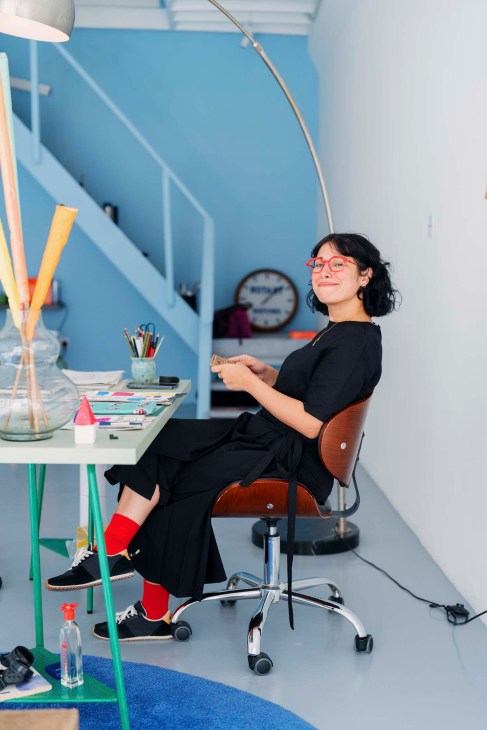


Kanoo’s decision to pursue her ambition to champion art in Bahrain was impeccably timed. A few short years after Al Riwaq opened in 1998, a globalised art world started paying serious attention to the Middle East. The first auction by Christie’s in Dubai took place in 2006; Art Dubai debuted at about the same time and museum outposts including those of the Louvre and Guggenheim in Abu Dhabi were announced.
Since opening Al Riwaq, Kanoo has launched a slate of cultural initiatives – including residency exchanges (which have hosted 40 artists to date), art fairs and festivals that work in tandem with Bahraini businesses. This has created the conditions for much-needed infrastructure. “The target is to always push the boundaries,” she says. “Don’t be scared.”
Kanoo moved into her current location, thick with bougainvillea and towering palm trees, in 2022. The many buildings here reflect the extent of her drive: one houses a co-working space, café, library, concept shop and workshop space; another contains multiple exhibition rooms and offices for staff, including William Wells, founder of Cairo’s storied Townhouse Gallery, who is now responsible for curation and running the educational programme here. Behind the main building and the half-moon shaped lawn is a collection of studio spaces.
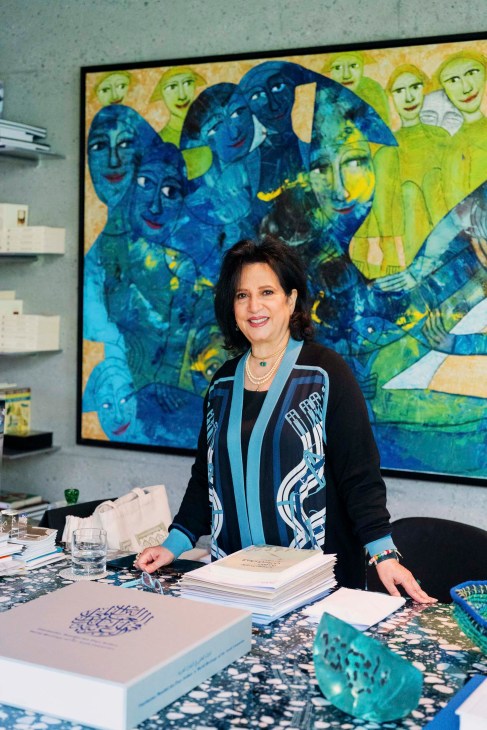
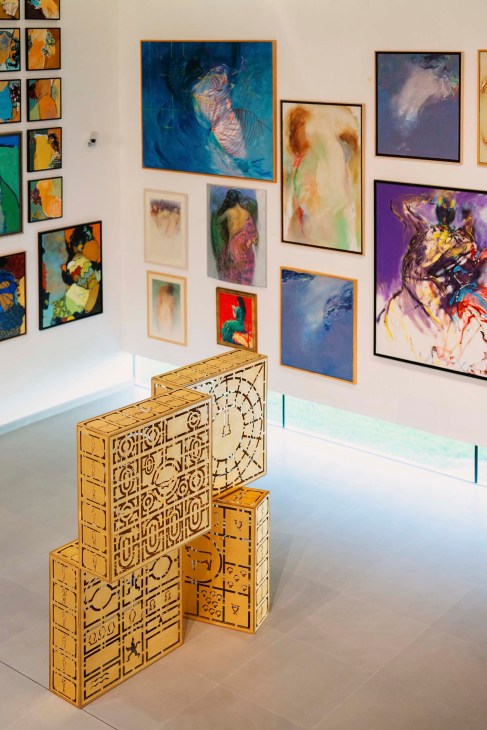
On the evening Monocle visits, there is an exhibition of work by Bahraini artist Waheeda Malullah. Encased in frames are photographs of chunks of charcoal brightly painted and laid out in a grid; the effect splits the difference between an architectural mosaic and modernist abstraction. Upstairs, Kanoo has gathered several of her past and current artist residents to discuss how Al Riwaq, together with rising cultural investment across the region – most notably neighbouring Saudi Arabia’s multibillion-dollar push that includes initiatives such as the Misk Art Institute – is creating a dynamic young laboratory for regional talent that can go on to participate in all aspects of the art industry. “The pipeline of artists, researchers, curators and writers –everyone you need for the art world to thrive and survive – is an ecosystem that needs to be created,” says photographer Khurram Salman, who was an artist-resident here last year. “Riwaq is one of the only places that has been pushing the boundary.”
The next morning, on a balmy April day, Yasmin Sharabi, director of the RAK Art Foundation, takes us on a tour of the most ambitious project to date: the Daima Museum of Middle East and North African Art (Daima means continuity in Arabic). When it opens in December, it will be the country’s first contemporary art museum. Behind the towering aluminium doors, bubble-wrapped paintings are stored against white walls that have transformed the former villa into an expansive, ultra-modern gallery. Sharabi sees the museum as a space that will allow a younger generation “to re-envision their future through the arts and to bring Bahraini artists with prolific careers” into the conversation. Bahraini artists, she says, have hitherto been paid little attention but deserve to be included in the wider narrative of Middle Eastern art.
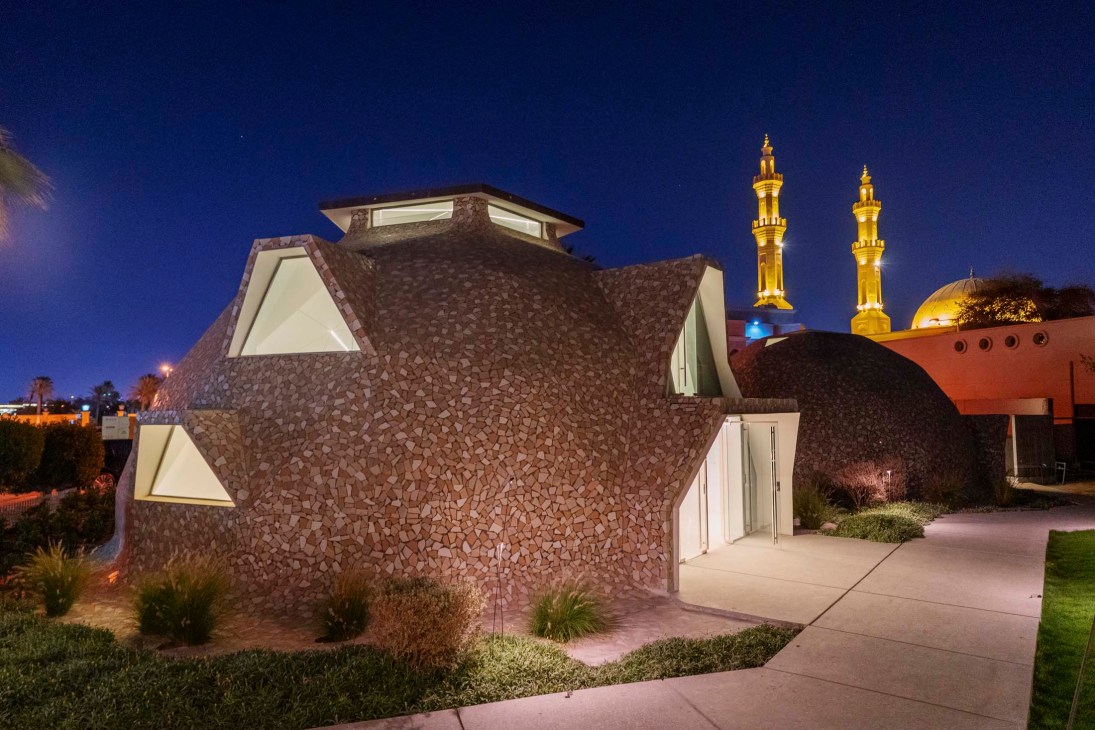
On the museum grounds, the final touches are being put on a pair of Buckminster Fuller-designed geodesic domes covered in shards of clay and sand-coloured stone. The effect is mesmerising, simultaneously futuristic and ancient. The tiling, like the land around it, is poised to absorb the heat here (summer temperatures can exceed 40c and months pass without rain). Once the interior is complete, it will house the Bahrain headquarters of the United Nations Industrial Development Organization, along with several cultural accelerator programmes. More wings are in the works, including one devoted to East Asian art. “In my view, there’s nothing better than visiting a museum,” says Rashid Al Khalifa. “If I had my way, I would have more museums per square metre in Bahrain than anywhere else.”
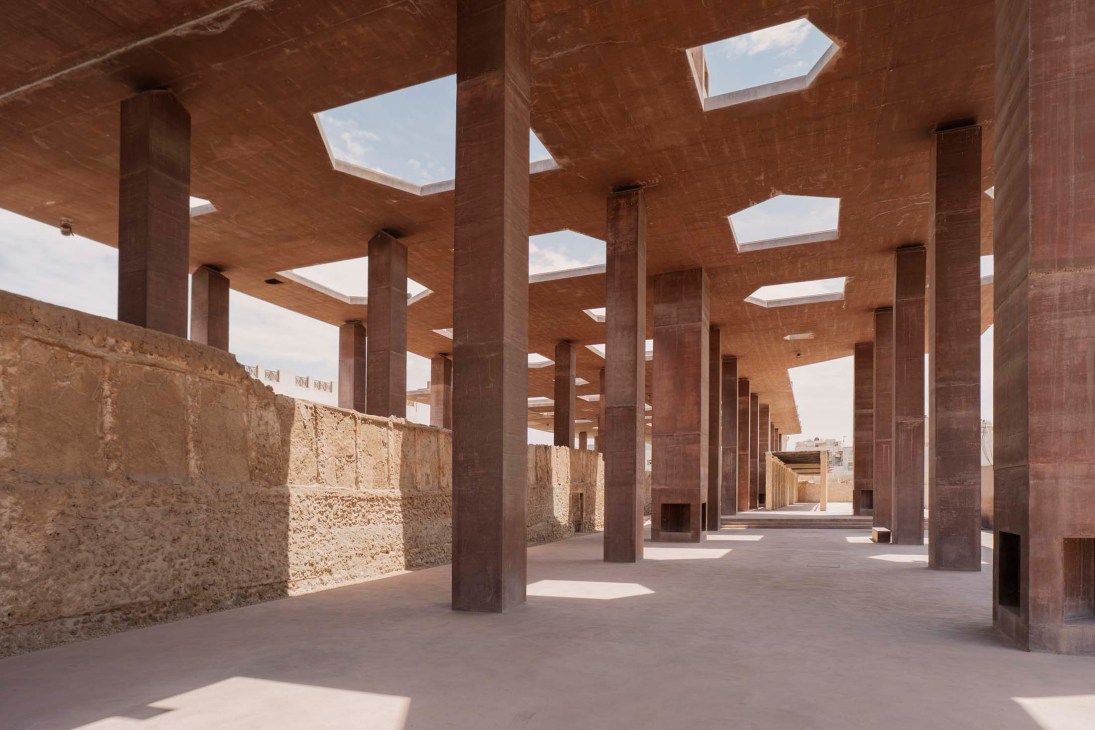
Back in Muharraq, a brutalist concrete canopy floats over the southern tip of The Art Station. Designed in 2019 by Swiss architect Valerio Olgiati, the otherworldly intervention, with its open-air ceilings and cut-out light-wells, was designed to shade a former warehouse that stored timber logs for boats and the ruins of a madbasah, a structure that houses dates ready to be pressed into syrup. It is part of the Pearling Path, a 3.5km Unesco World Heritage Site, designated in 2012, that traces the history of Bahrain’s pearling industry from the centuries-old urban centre to the coastline.
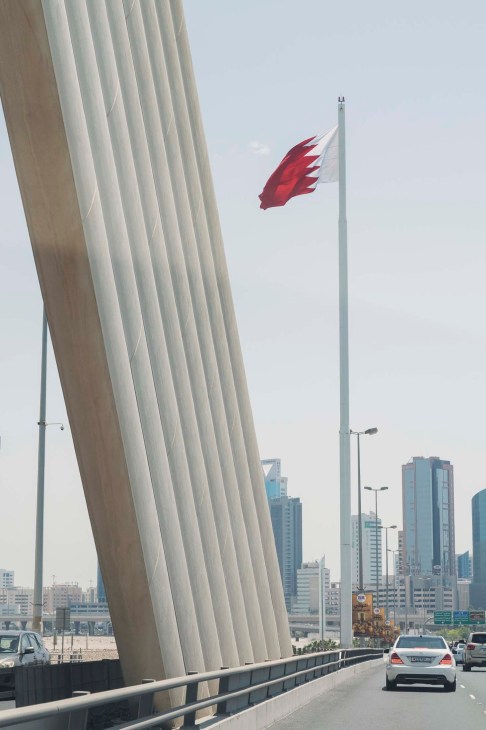
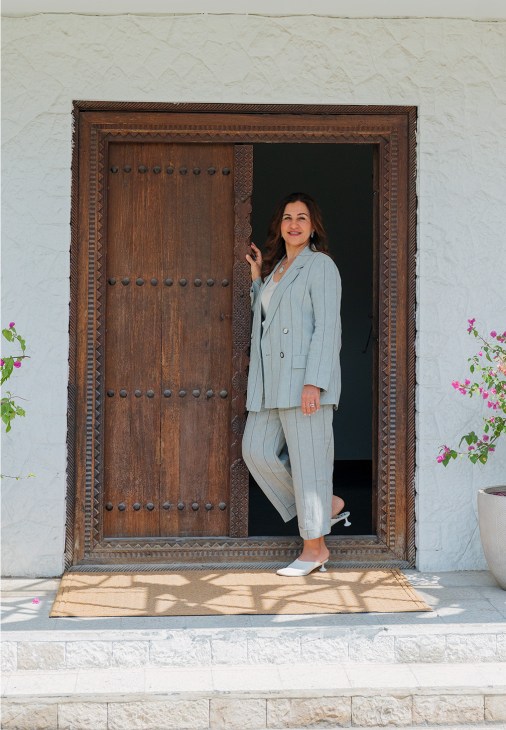
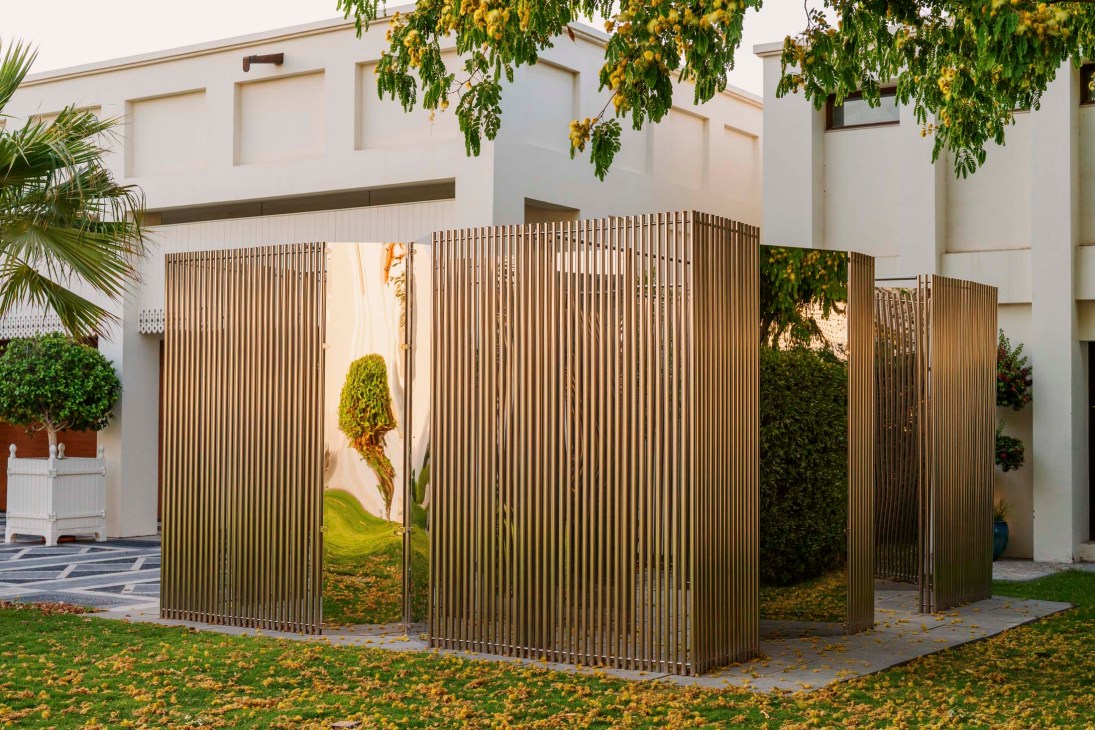
The pathway meanders between some carefully restored traditional Bahraini architecture, interspersed with some arresting contemporary structures and renovations. One such building is the Siyadi Pearl Museum designed by Bahrain-based Dutch architect Anne Holtrop, which is filled with Cartier masterpieces and lustrous cracked-open winged oyster shells. The museum’s rugged walls are covered in silver leaf and the colours will shift with continued exposure to the salinity in the air. “It’s like photography; it’s recording the quality of the environment,” says Holtrop. Outside, light bulbs – designed to look like pearls and perched atop concrete columns flecked with mother-of-pearl – act as cairns for visitors making their way through narrow alleyways. The designs of the 17 public squares that form part of the Pearling Path – some feature pools of water, others semicircular benches surrounded by flame trees – give space for visitors and locals to rest. Meanwhile, ramshackle homes, renovated and open to the public, mindfully expose details of the people who called this quarter home: a medicinal garden and apothecary of a resident doctor; homes of divers and wealthy merchants; and a family’s majlis (meeting room).
Like much of Muharraq’s transformation, the initiative, which was officially opened in February 2024, was helmed by Shaikha Mai bint Mohammed Al Khalifa, a member of the royal family. Over the years, she has held different ministerial positions, was the president of the Bahrain Authority for Culture and Antiquities (BACA), opened museums and helped inscribe all three of Bahrain’s Unesco Heritage Sites, including Qal’at al-Bahrain Fort and the Dilmun Burial Mounds.

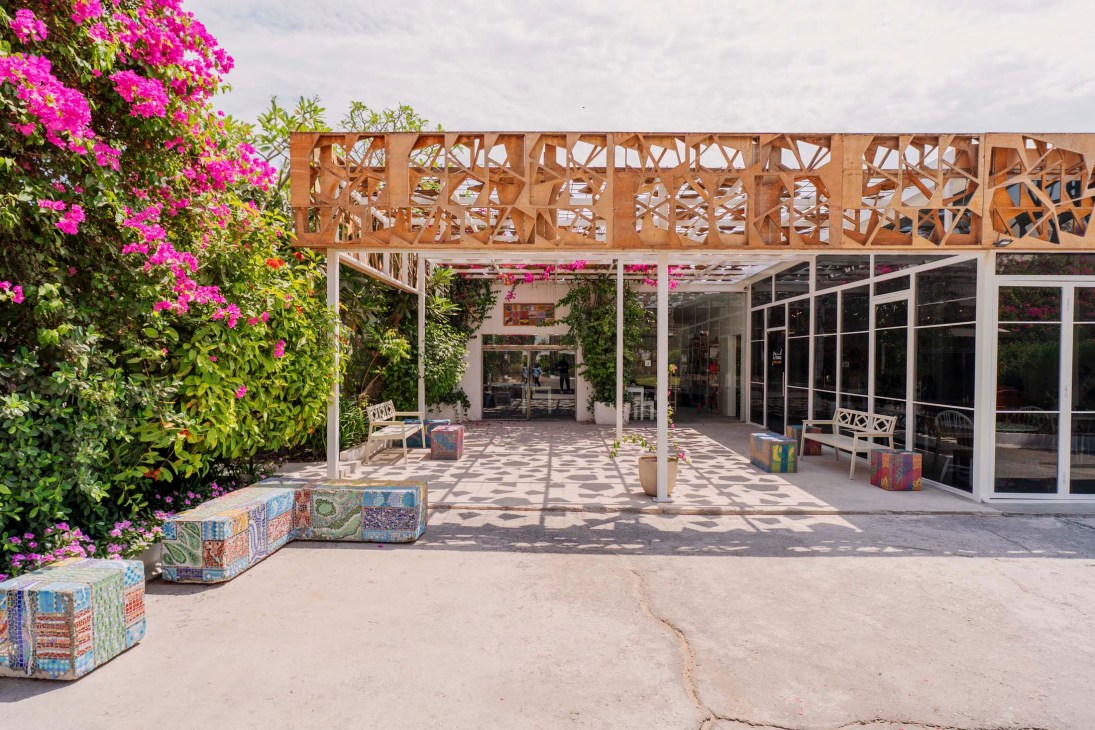
Today she runs the Shaikh Ebrahim bin Mohammed Al Khalifa Center for Culture and Research, which she founded in 2002. The Center has been responsible for renovating multiple spaces in Muharraq, including some that are part of the Pearling Path, and the House of Architectural Heritage. Designed by Leopold Banchini Architects and Bahrain-based Noura Al Sayeh Holtrop, this concrete cube with moveable glass walls hosts exhibitions and a small library.
“What makes Bahrain really interesting in terms of the cultural development is that it never really happens in a void,” says Al Sayeh Holtrop, who joined the government as head of architectural affairs in 2009. The following year, she co-curated Bahrain’s pavilion at the Venice Biennale and won the coveted Golden Lion award. Later, she assumed the role of director of the Pearling Path. (She met Anne Holtrop during the competition to design the Bahrain pavilion for the Milan Expo in 2015 and the two later married after its opening.) “The end product and the end interest is culture itself, and not culture as a by-product or a means of achieving something else,” she says.
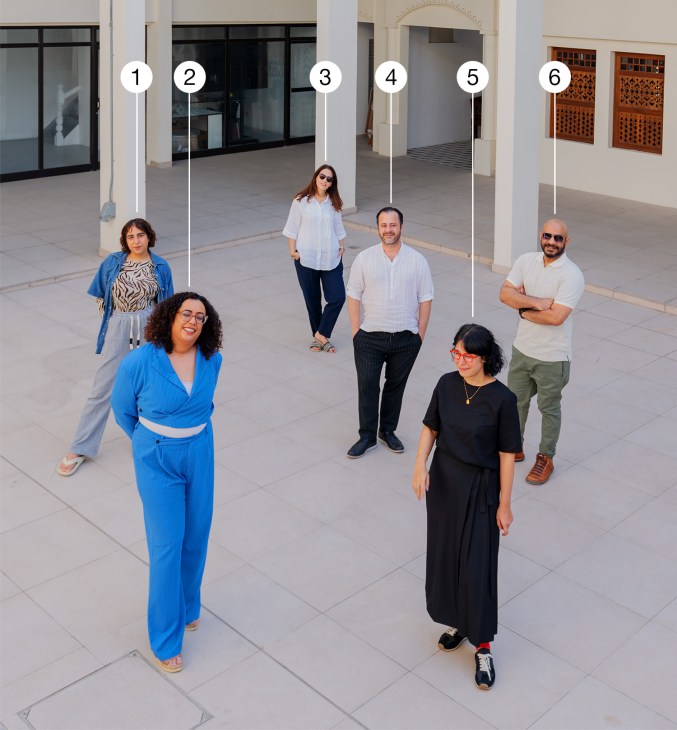
1.
Mai Buhendi, The Art Station’s cultural partnerships and programme manager
2.
Latifa bint Abdulrahman Al Khalifa, Director of The Art Station
3.
Nasim Javid, Contemporary jewellery designer
4.
Amer Bittar, Co-founder of design studio Bittarism
5.
Lolo Bittar, Interior architect and co-founder of Bittarism
6.
Karim Al Janobi, Digital artist at The Art Station
That ethos prioritising cultural integrity over commercial flash has had a marked effect on Ali Ismail Karimi, the 35-year-old Bahraini co-founder of Civil Architecture, a cultural practice with an emphasis on making buildings and writing about them. “For me, the sense is that you don’t have to be a large corporate firm to be doing interesting cultural projects in Bahrain,” he says, sitting in a café overlooking the coastal Qal’at al-Bahrain Fort, a Portuguese-era limestone citadel on the site of the Dilmun empire’s one-time capital. In the coming months, he will move one branch of his practice here into a new government-supported development that is transforming former homes into a café and offices for those working in the creative sector.
In Bahrain, he says, “It’s easy to see how things change, how small interventions here can make a big difference.” As he talks, the tide begins to retreat and horseback riders gallop along the muddy seabed. “It’s almost a maquette of the world.”
A brief history of Bahrain
2200-1750 BCE
Bahrain’s earliest pearls are harvested during the ancient Dilmun period. Pearling will soon become the heart of the economy.
7th century
Under Islamic rule, Bahrain and its pearling industry connects to trade networks in and beyond the Arab world.
1521
The Portuguese capture Bahrain and stay for the next eight decades.
1783
Control of Bahrain falls under Ahmed ibn Muhammad ibn Khalifa.
1861
Bahrain becomes a British protectorate.
1912
Jacques Cartier comes to Bahrain on a hunt for the world’s finest pearls.
1932
Oil is discovered in Bahrain. Around the same time, the pearling industry sees a sharp decline as Japan, at the forefront of the production of cultured pearls, overtakes the market.
1947
For Queen Elizabeth’s wedding, the ruler of Bahrain presents her with
a selection of seven pearls, from which she made her famous Bahrain Pearl
Drop Earrings.
1971
Bahrain declares full independence.
2012
The Pearling Path is inscribed as a Unesco
World Heritage Site.
The art of collecting and why people do it
Artwork in a gallery or a booth of a fair can look very different once you get it home. We meet two collectors in New Delhi and New York to find out what decisions go into the acquisition of pieces and how they live alongside their purchases, from gilded Renoir paintings to sculptures made from car doors and plasterboard. Meanwhile, in Tallinn, we hear from a pop art aficionado about why serious collectors shouldn’t overlook the sometimes misunderstood movement. All offer advice worth heeding, whether you’re a seasoned pro or just starting out.
The home curator
Valeria Napoleone
New York, USA
With its white walls and chevron parquet floors, the entrance hall of Valeria Napoleone’s Park Avenue apartment resembles a gallery. On display in the narrow space are two sculptures, both dating back to the late 1980s. Joan Wallace’s “The Frigidaire Painting (Like a Pariah)” is a refrigerator and video monitor sculpture, while Jessica Stockholder’s “The State of Things” consists of a car door, Sheetrock, wood, cloth and a light. Unlike the sorts of artwork that you might find in other people’s homes, which tend to blend in with their surroundings, these are impossible to ignore.

“Every piece in my collection surprises me,” says Napoleone, who has been buying pieces for the past 30 years. She focuses on the work of female artists and her collection is spread across her homes in London and New York. Some pieces are kept in storage; she periodically rotates the works on display. “When you change the installation, you change your relationship with the room, as well as the balance of the space,” she says.
Born in Italy to parents who furnished their home with antiques, Napoleone has always been fascinated by materiality. “When I started collecting in the mid-1990s I felt so engaged and so attracted to the work of artists who were using alternative materials,” she says, adding that the contemporary-art market has expanded enormously for younger creatives. “Back then, I could buy a major piece for a few thousand dollars,” she says. “Now the entry price is at least 10 times that.”
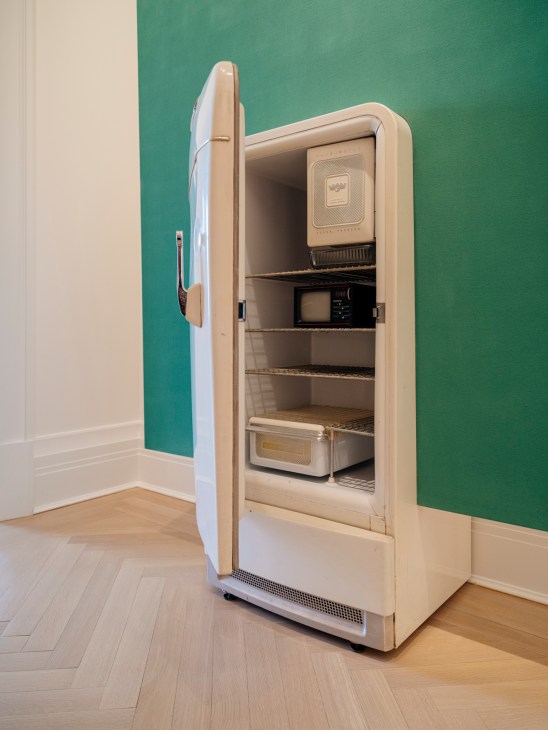
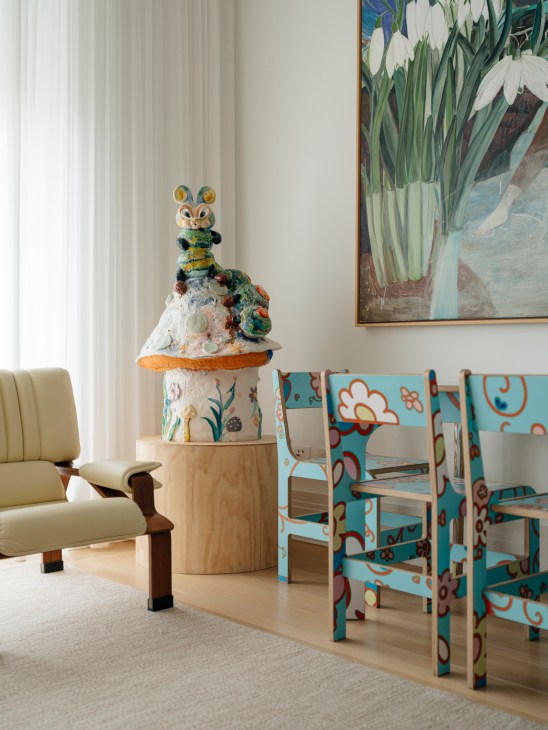
Napoleone has always bought what she loves. “I don’t look at art as an investment,” she says. “It’s my passion.” Within her otherwise neutral apartment are bold works such as Janet Olivia Henry’s blue and black Lego piece, displayed in a glass box, and Pae White’s Sunshine Chandelier that hangs in the dining room. “I love sculpture because it demands your attention,” she says. “It is not just a piece hanging on the wall. You have to acknowledge its presence.”
One of her top tips for collectors is to ensure that they have the right space to accommodate their treasures. Another is to have patience. “You need to train your eye by looking at different things. Learn what your taste is and buy only what you like.”
–– Mary Holland
The talent spotter
Aparajita Jain
New Delhi, India
“How else do you understand humanity but through art?” asks Aparajita Jain, managing
director of Indian contemporary art gallery Nature Morte. “This room encompasses years of human existence.” She’s referring to the works surrounding us at her palatial New Delhi home. Among them is a gilded Renoir, an Alberto Giacometti sketch, a Picasso, a Degas bust, a mobile by Polish-German artist Alicja Kwade and contemporary art by Indian artists Thukral and Tagra. It’s a lot to take in but Jain says that the collection has helped her to understand herself better.
“I collect people’s ideas and their understanding of life, and hope that engaging with them will expand my horizons,” she says. Jain acquired much of the collection over the past decade but she has been buying pieces since she was 22 years old, encouraged by her grandmother, the matriarch of the Borosil glassware family. While she’s chosen much of the art here, her businessman husband, Gaurav, and, increasingly their daughter, Devashi, have picked recent purchases.
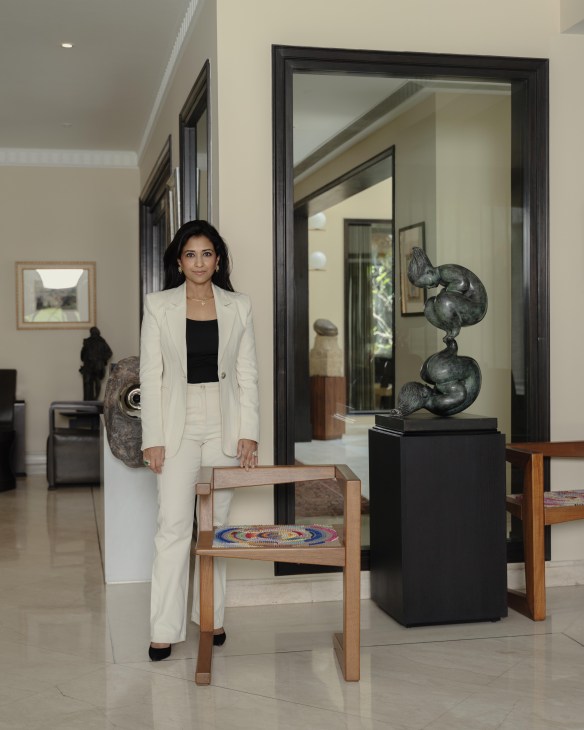
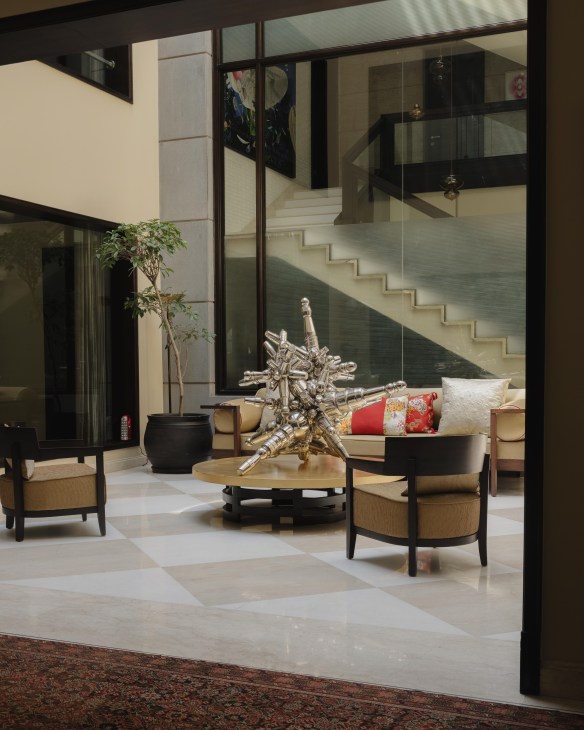
It’s a collector’s eye, she says, that makes her a successful gallerist and many of the artists who her gallery represents are also present in her personal collection. “Sagarika Sundaram’s mind is exceptional,” she says of an artist represented by Nature Morte. “I can’t think like her so I want to possess her work.” Jain’s career has been defined by her desire to promote young artists such as Sundaram. In 2005 she launched Seven Art gallery; in 2012 she started a non-profit that helped to launch Jaipur’s exceptional Sculpture Park. Six years later she created blockchain-based marketplace terrain.art, with the objective of being a bridge between younger South Asian artists and collectors in the West.
In 2025, though, she finds the Indian art market far more exciting. “I’ve been travelling extensively and find the mood in India is opposite to that in the West,” she says. “Western economies could be slipping into recession. In India we have a country that’s finally finding its voice, both in terms of aspirations and the quality of art being produced.” Is it time, then, for foreign galleries to set up shop in the country? “They will come eventually,” she says. “I’m sure of it.”
–– Prasad Ramamurthy
The pop art connoisseur
Linnar Viik
Tallinn, Estonia
Though Estonia wasn’t at the centre of the pop art movement, which emerged in the 1950s, Tallinn is now home to one of Europe’s largest museums dedicated to the genre. The PoCo Pop & Contemporary Art Museum showcases 340 artworks, including pieces by big hitters such as Roy Lichtenstein, Jean-Michel Basquiat and Jeff Koons. Here, its founder, Linnar Viik, tells us about the merits of buying pop art and shares some tips for prospective collectors.
–– Petri Burtsoff
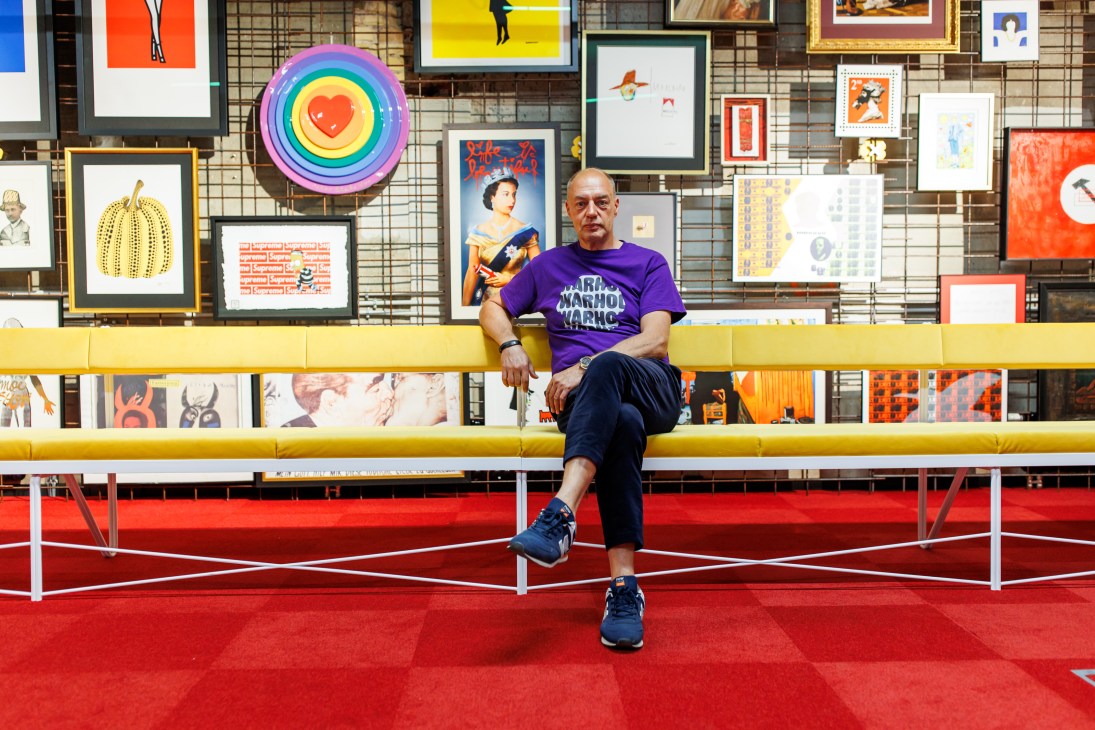
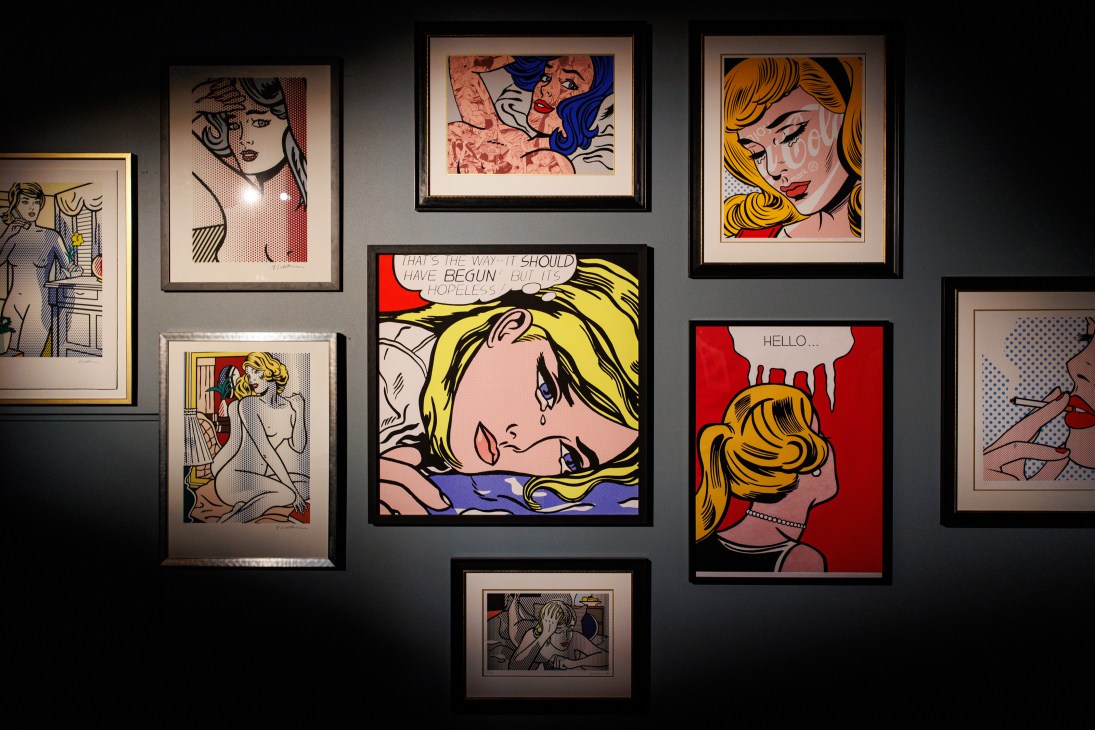
Which are your favourite works in your collection?
My collection is extensive because I focus on the past, present and future of pop art. It includes several noteworthy pieces by famous people including Andy Warhol, Damien Hirst and Banksy but my favourite works are those in which an artist revisits one of their earlier pieces. For example, Estonian artist Raul Meel added new elements to “Singing Tree”, his 1970s “typewriter drawing”.
Do you have any tips for budding collectors who are interested in pop art?
The most important thing is to ensure that your collection makes you happy and speaks to you in some way. You should also have a specific place to display it. Pieces of pop art, like works from any movement, don’t belong in the cellar. I refuse to see art as an asset category that you collect for its monetary value. As a movement, pop art was born of the desire to make art more approachable and democratic. Following that ethos, I don’t think that budding collectors should focus all of their energies on looking for first-edition or limited-edition pieces.
Why should people collect pop art?
It’s so honest and courageous in how it reflects and interprets the world. It’s also an easy way to become an art collector because it’s widely available and affordable. It’s an art movement that speaks to people immediately, making it easier to approach. But the more that you collect, the more you will start to see the hidden layers and the deeper meanings in the artworks.
poco.art
Ready for summer: Wardrobe essentials for the season
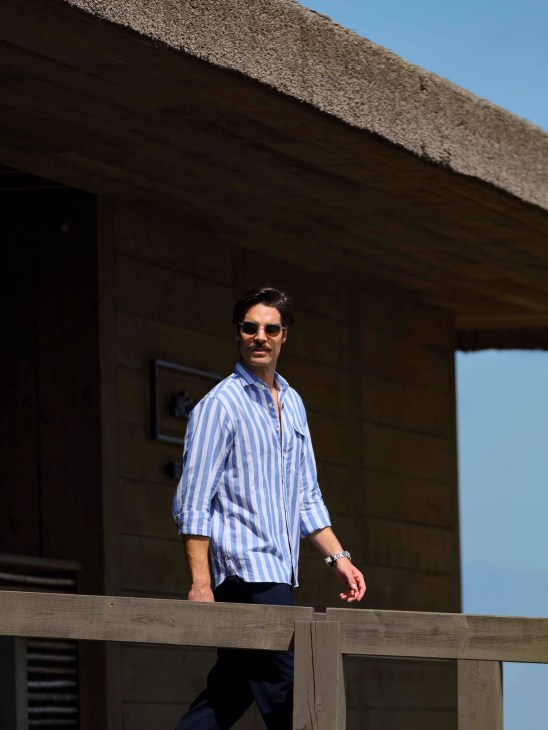
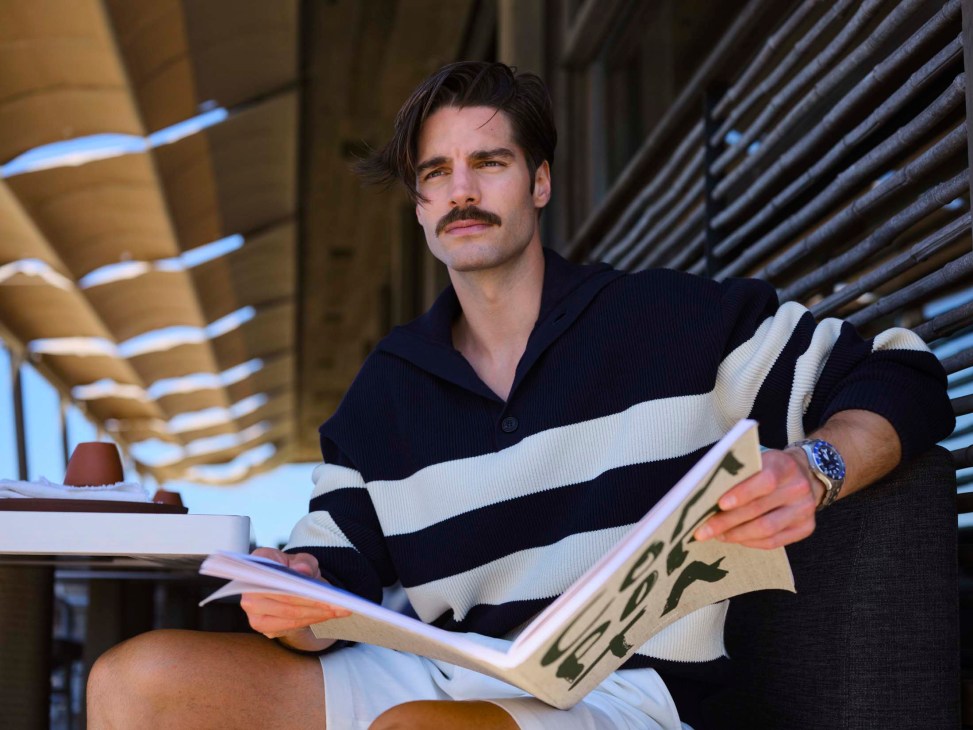
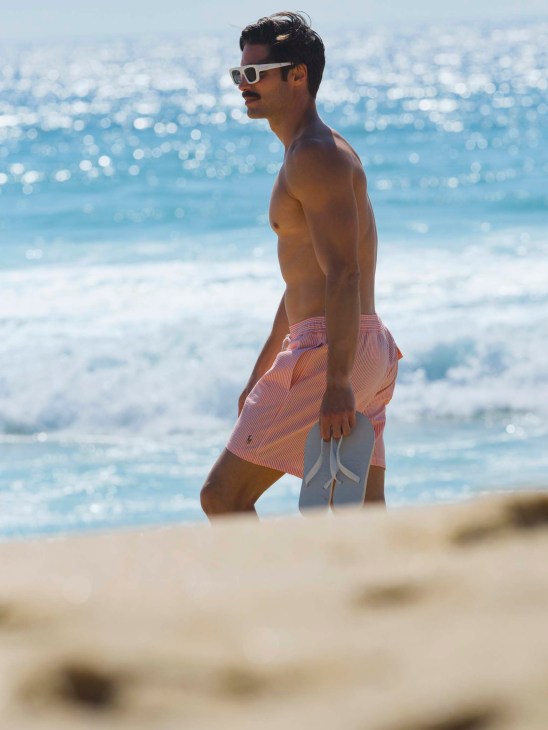
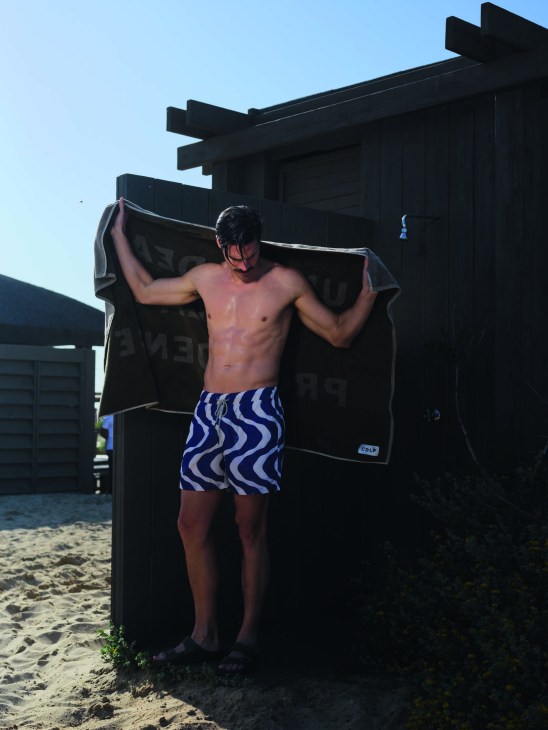
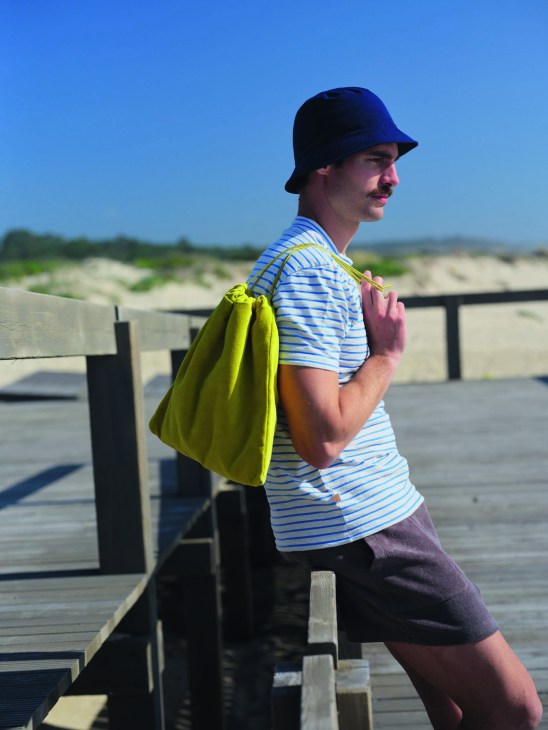

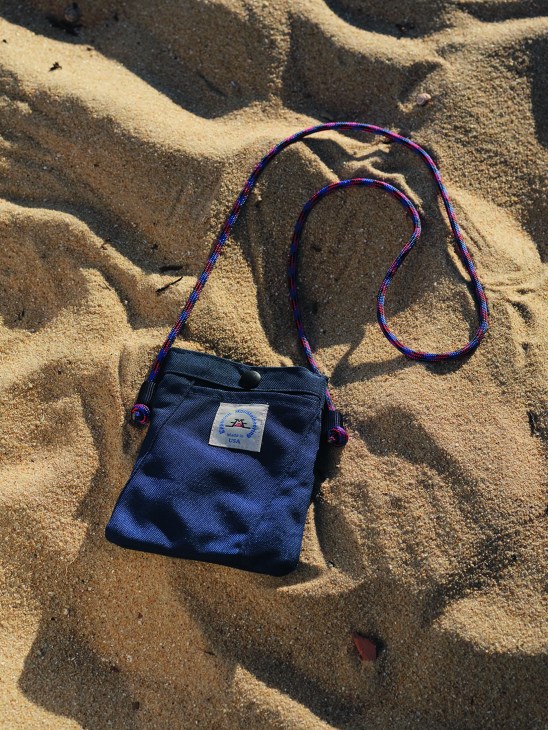
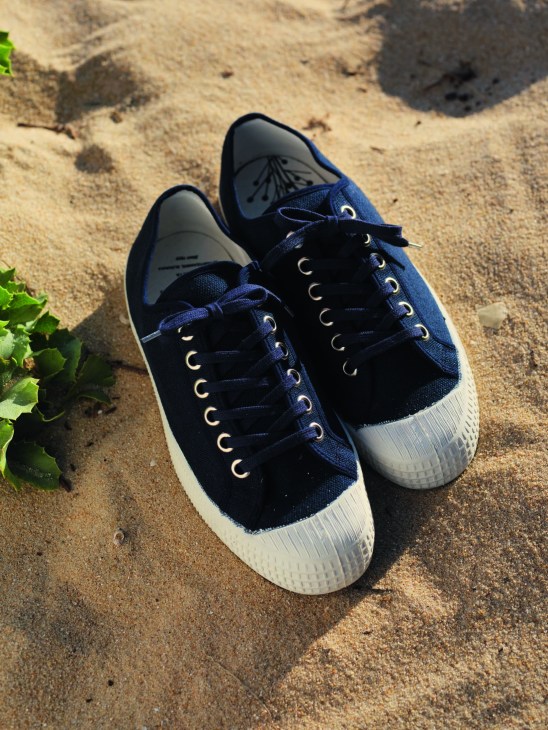

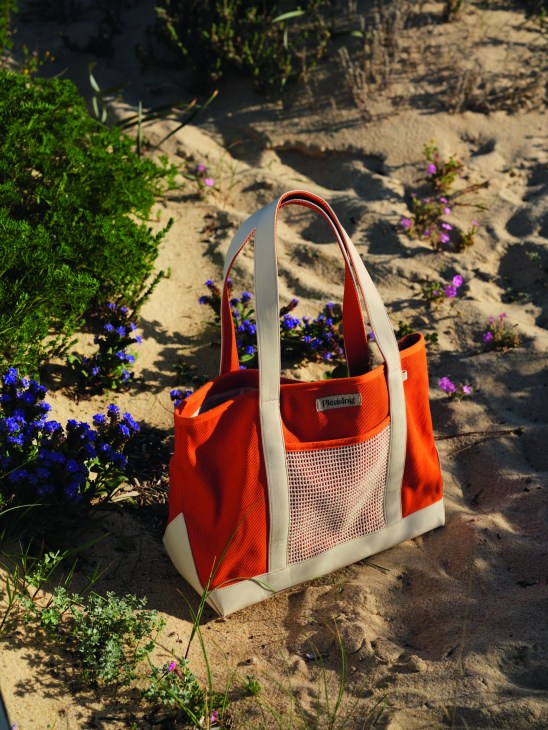
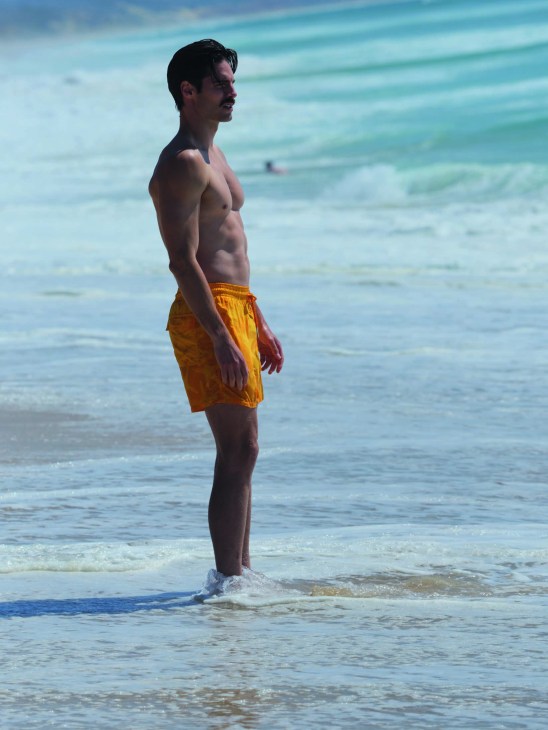
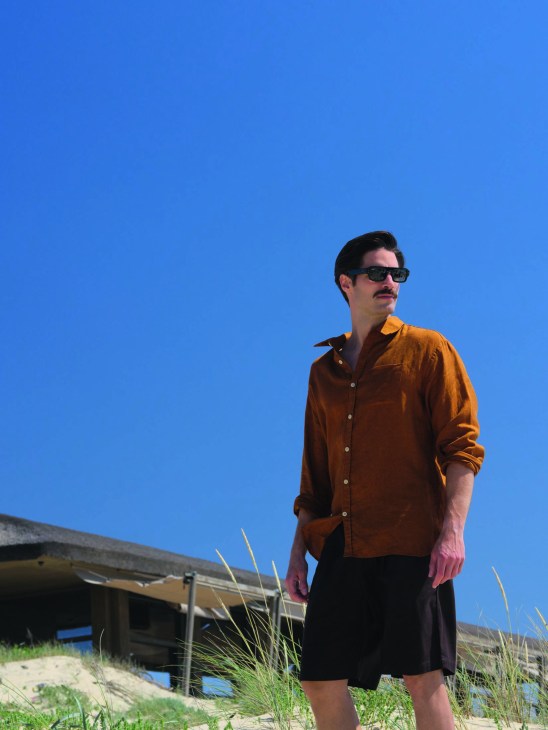
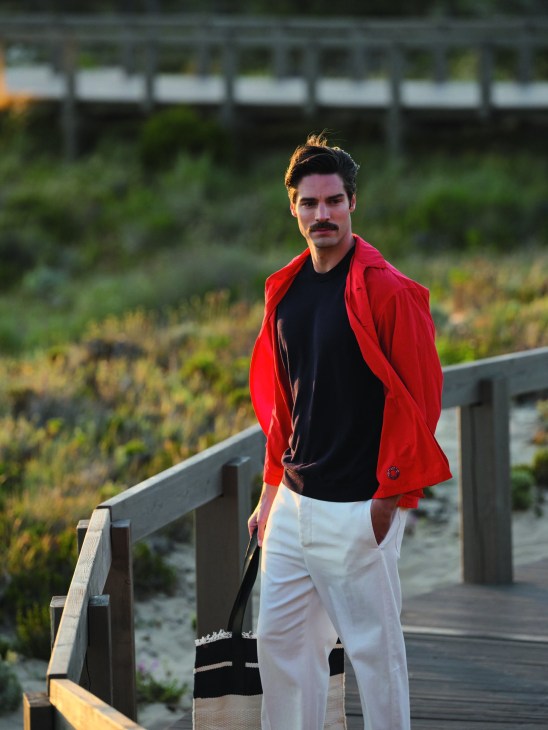
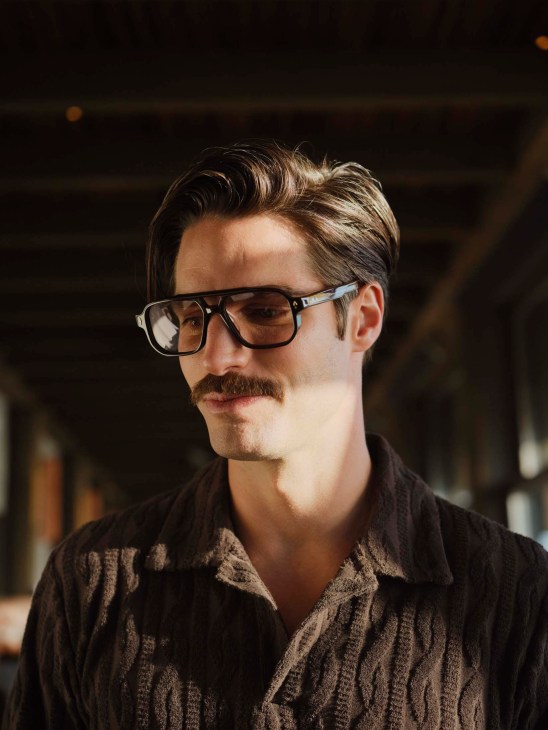
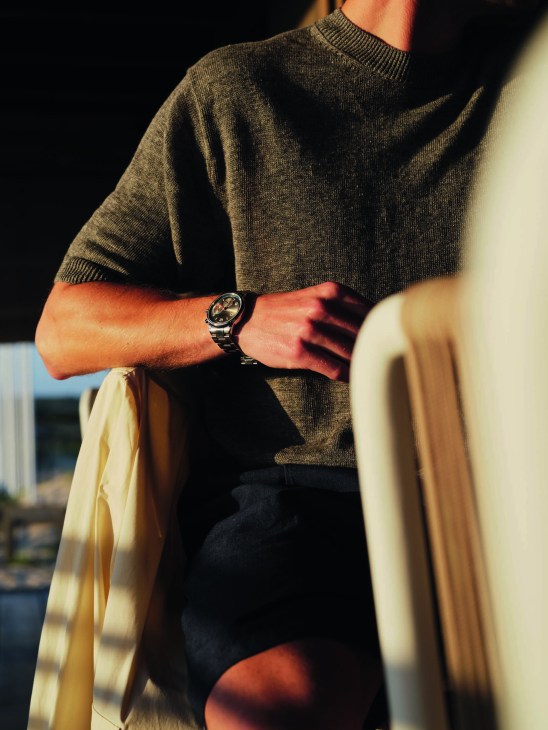
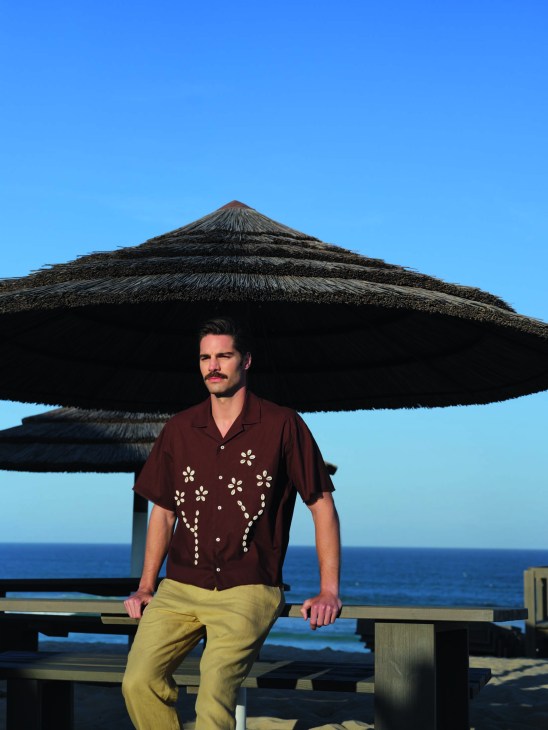
Stylist: Kyoko Tamoto
Hair & make-up: Milla De Wet
Model: Kilean Isaak
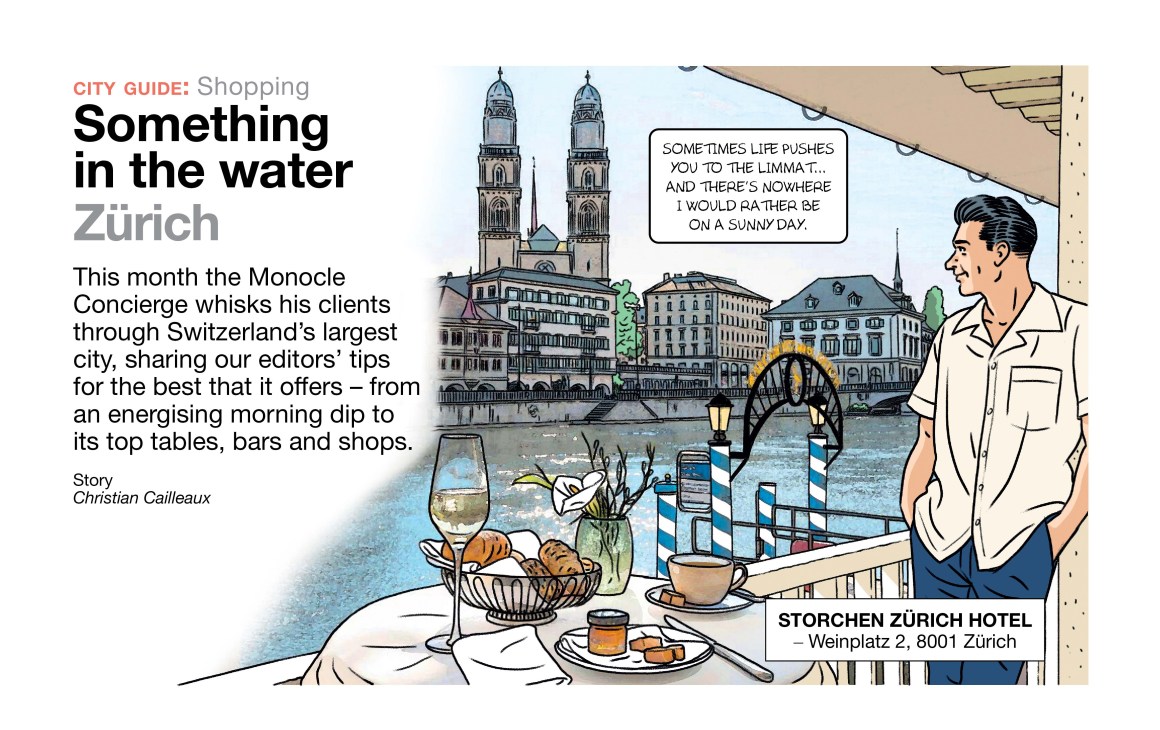
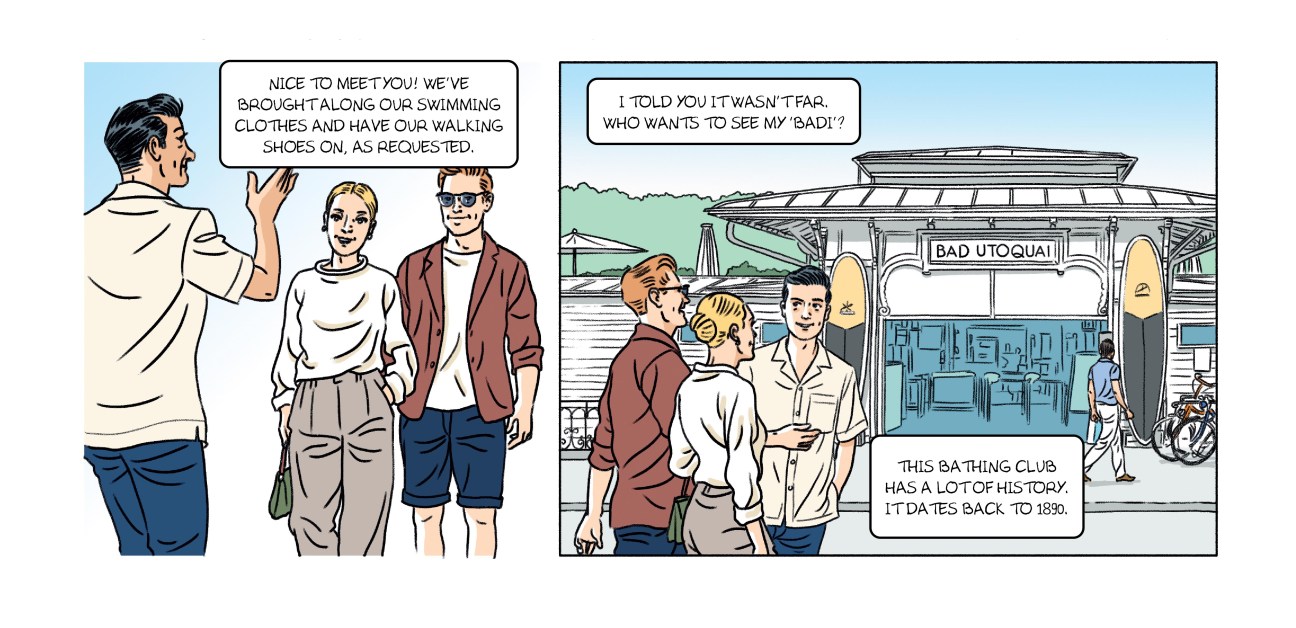
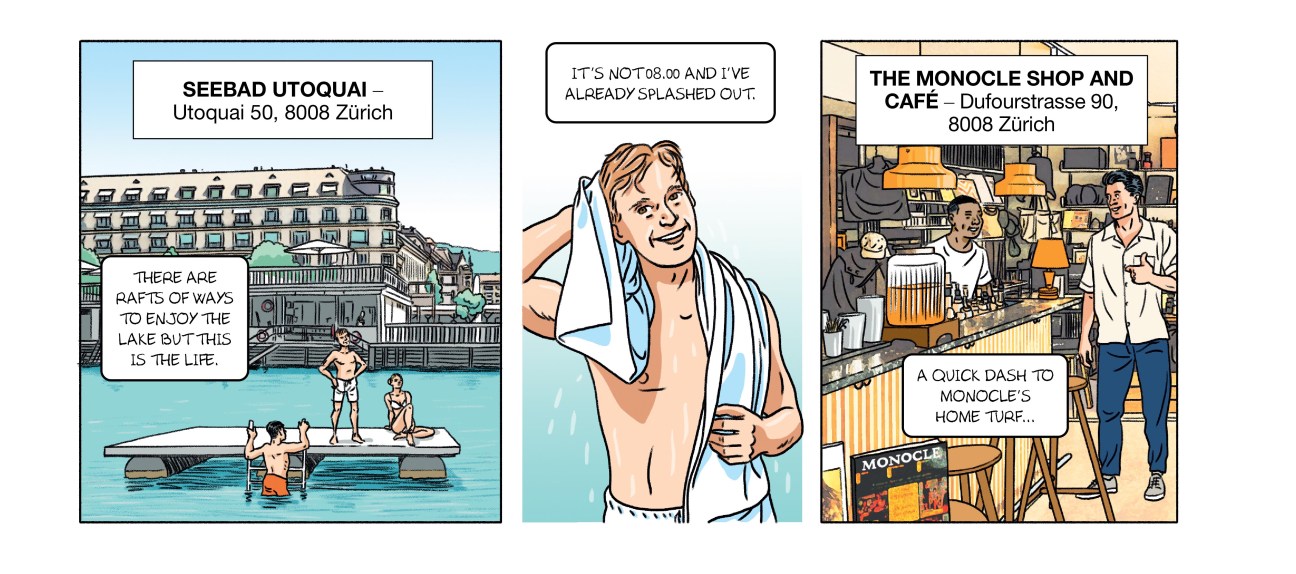
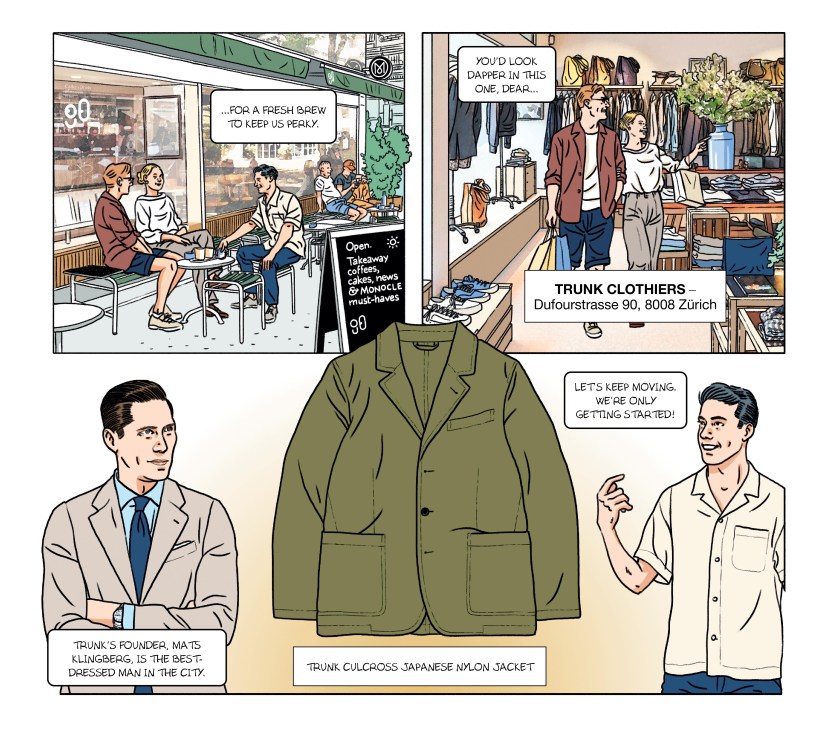
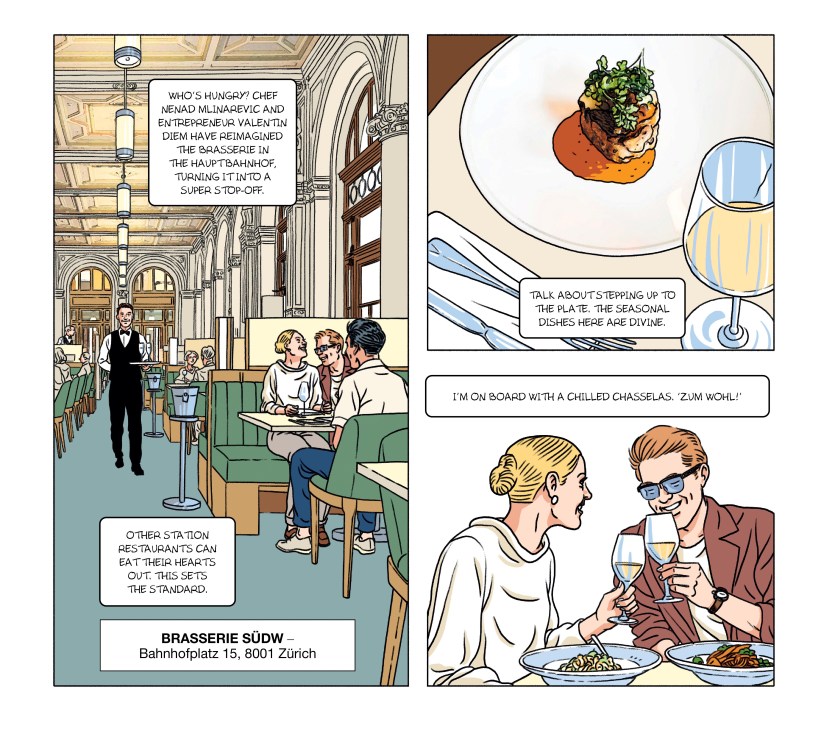
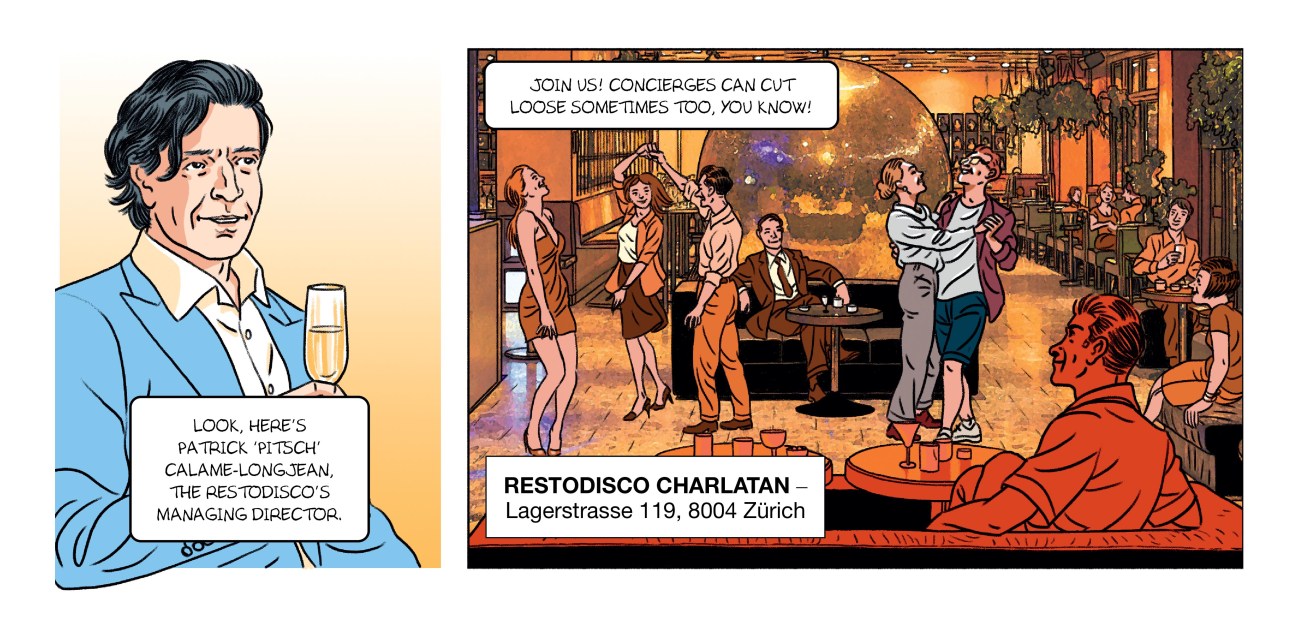
The Monocle Concierge’s guide to Zürich’s best offers