Issues
Meet the founders of Sasuphi, the womenswear brand that’s equal parts professional and chic
“This is a new vision of power dressing,” says Sara Ferrero, pointing to lightweight cashmere cardigans, satin tube skirts and breezy crêpe-de-Chine shirts by Sasuphi, the womenswear label that she co-founded in Milan with Susanna Cucco in 2021. Ferrero and Cucco are widely known for their exceptional taste and stellar CVs, which include executive positions in some of the city’s most established fashion houses. Ferrero, a former investment banker and consultant, worked as CEO of Valextra and Joseph. She was also a general partner at Neo Investment Partners, leading the private equity firm’s investments in beauty and fashion; and remains a board member at Ferragamo. Cucco has spent decades working as an art director for companies such as Max Mara.
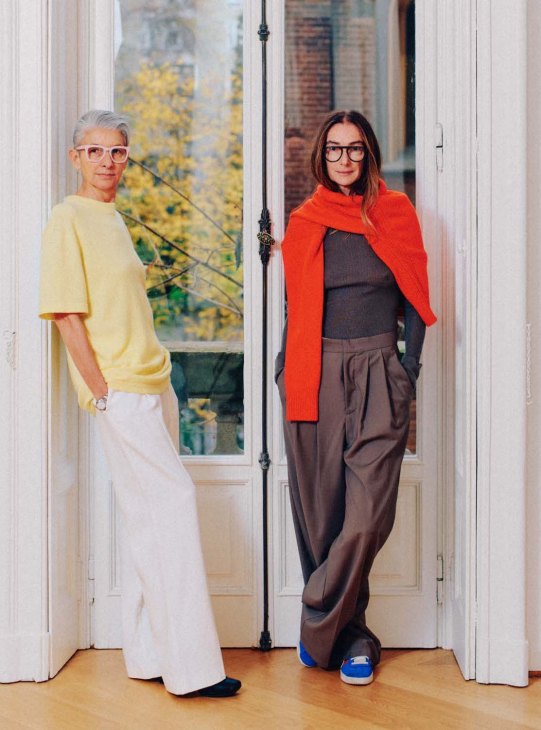

Even after seeing the output of some of the biggest houses in the world, both Cucco and Ferrero felt that the luxury fashion market was missing a sense of pragmatism – bold designs that can still fit into day-to-day life. “Fashion designers create according to their vision, not according to what women want to wear to feel good,” says Cucco, also pointing to fashion’s perennial obsession with youth culture. “We thought that there was space for women like us who are not necessarily young; people who work, who have meetings in the day and events in the evening,” says Ferrero.
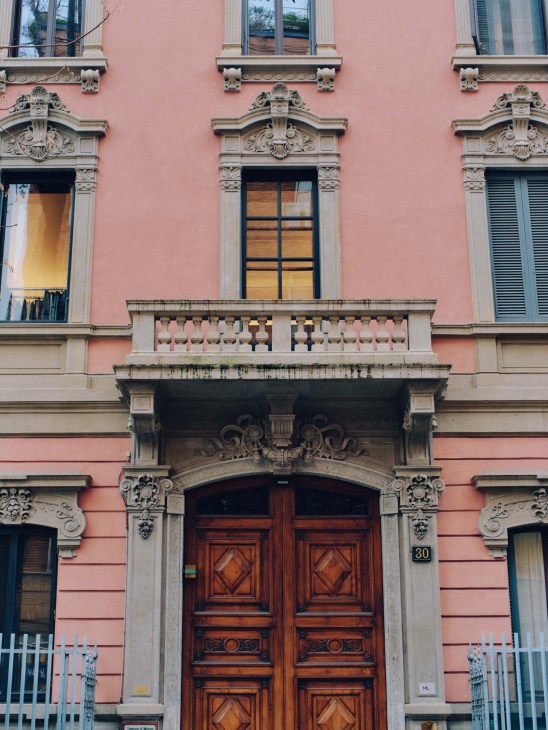
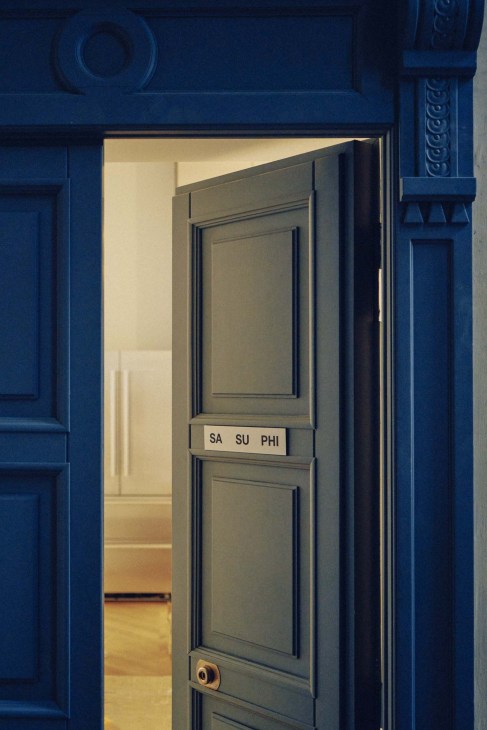
That’s how Sasuphi was born – from a desire to offer well-made, adaptable clothes that won’t go out of style in just a few months. “The market is insulting the customer when it offers clothes that become irrelevant after one season,” says Ferrero. Instead, Sasuphi makes pieces that “you don’t want to let go”. Designs from previous seasons remain part of the collections, styled with new-season creations, the focus always being on clean-lined silhouettes inspired by architecture rather than fashion trends. “Living in Milan, you’re surrounded by buildings by some of the best talents of the 20th century, and that shapes how you think about design,” says Ferrero. “Architecture is also about functionality,” she adds, while sitting at the long conference table of Sasuphi’s showroom-cum-studio, which occupies the sunny first floor of one of Milan’sgenteel residential palazzos in Brera. “We bring the geometry of architecture to our clothes.”
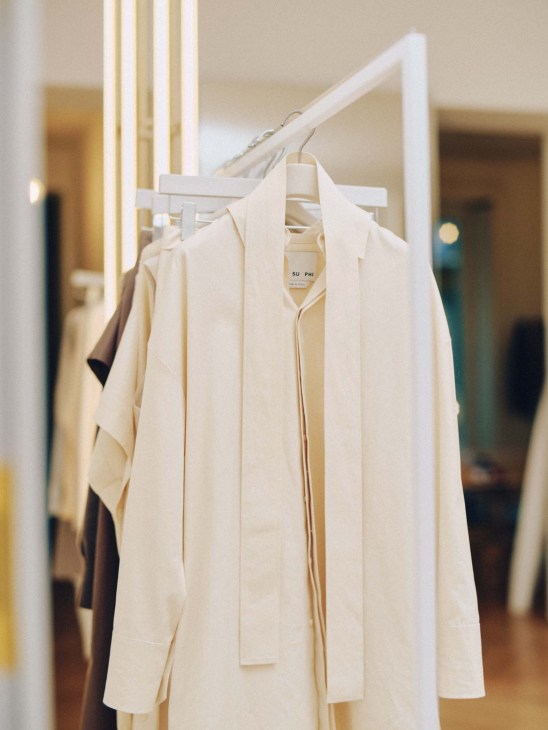
Close inspection of their pieces reveals outstanding Italian fabrics sourced from the country’s best textile makers: thick silks from Ratti in Como, finespun cashmere from Cariaggi, heavy cotton shirting from Albini and wool from Zegna’s famous facility in Piedmont. “As Italians, we want good ingredients,” says Cucco, who firmly believes that everyone deserves to wear natural materials. “They’re luxurious on the skin, plus they breathe in the summer and retain heat in the winter – the original tech materials.”
Despite the pair’s industry connections, Sasuphi launched without investors and without a marketing team. “We needed independence in order to follow our values,” says Cucco. “And it’s working.” The brand is now available in more than 50 top outlets worldwide, from Net-a-Porter to Bergdorf Goodman, and sells out quickly.
For spring the label’s collection focuses on a potent, mood-boosting colour palette, from poppy red and periwinkle blue to hyacinth pink. Colour is a form of “gentle power”, says Cucco, who wears pink-framed glasses.
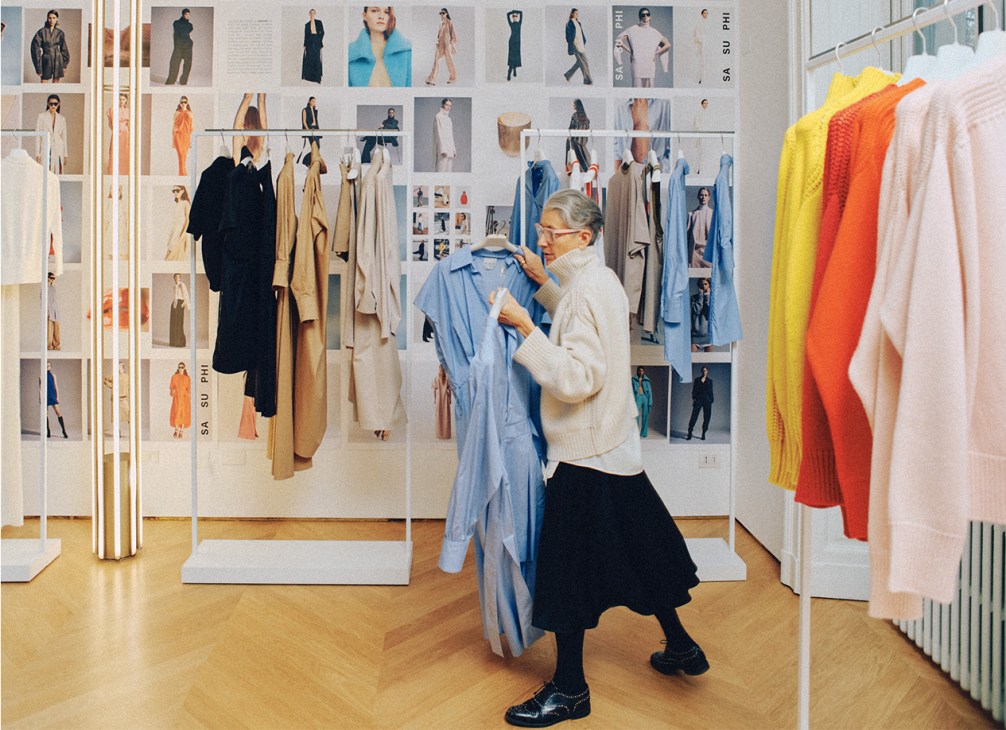
The line also includes lightweight, fuss-free styles, from silk trenches to voluminous knits and silk T-shirts, which can be easily layered, becoming the cornerstone of any spring wardrobe. As the two women pull items from the showroom racks – white trousers that button down the sides, a butter-yellow shirt dress, a silk khaki T-shirt – they restyle themselves as they go, creating various combinations with every garment. That’s the best way to wear Sasuphi.
Ferrero and Cucco also demonstrate how adaptable their designs are by taking them on the road and hosting trunk shows around the world. “As a small company, this is the best way to generate interest,” says Ferrero, explaining that even the smallest in-person trunk show creates opportunities to connect with customers, share stories and showcase the garments’ artisanal quality. “You don’t need 100 million followers on social media. You don’t need followers, period. You need fans. You need 1,000 people who believe in you and buy your products.”
sasuphi.com
US philanthropist and billionaire Nicolas Berggruen’s plans to reshape global power dynamics
Nicolas Berggruen is adamant that ideas have always been more attractive to him than material wealth. “I was always more interested in philosophy and politics,” says the US philanthropist and billionaire. “But I took a long detour into business.” The detour to which Berggruen refers is a decades-long career in private equity and property, achieved by buying repossessed buildings in New York. He created Berggruen Holdings in 1985, now one of the world’s most influential investment companies. But the pinnacle of his life’s work came in 2010 when he founded the Berggruen Institute, an independent think-tank based in Los Angeles, which he has personally endowed with some €460m. The foundation now has offices across three continents and the backing of influential members, including France’s former president Nicolas Sarkozy and erstwhile Google CEO Eric Schmidt. “You have to recognise your gift,” says Berggruen. “I don’t think I would have been a very talented politician, but I believe I can be helpful in my own way through the Institute.”
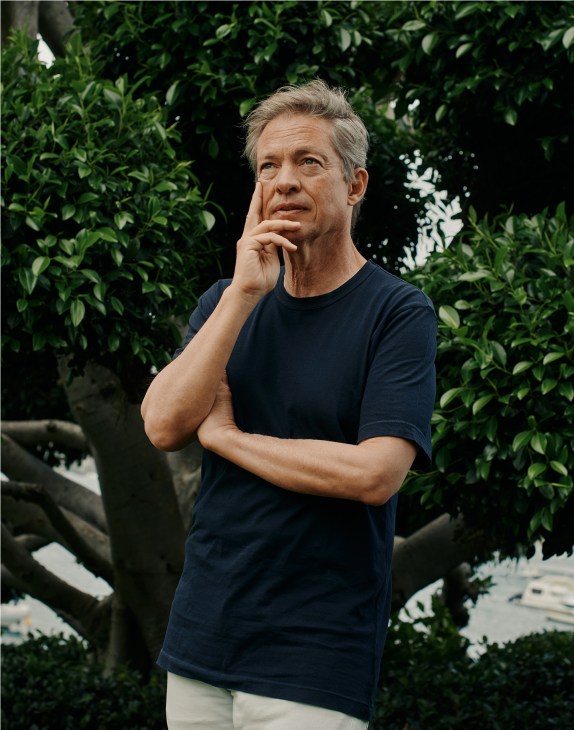
Born in Paris in 1961 to German art-dealer Heinz Berggruen and actress Bettina Moissi, Nicolas has always been surrounded by fame and glamour. In 1978, at the age of 17, he moved to London to train under property developer Max Rayne before crossing the Atlantic to New York to study. It was during the Big Apple’s finance boom of the 1980s and 1990s that Berggruen amassed a fortune from investing in property, stocks and hedge funds, which today amounts to about €3bn.
There were signs of Berggruen’s rebellious nature early on when he was expelled from boarding school. But in 2000 he took it one step further. Selling off all his properties and belongings (bar the private jet) to travel the world, Berggruen earned himself the ironic moniker of “homeless billionaire” and surrounded himself with an eclectic cadre of intellectuals and policymakers. “We became this little brains trust and started to think about subjects such as democratic and capitalist reforms,” he says. “And out of that came the Institute.”
Today the institute has a substantial reach. Publishing the Berggruen Governance Index that analyses the quality of life in more than 145 countries, it also holds a $1m (€920,000) annual prize for philosophy, on par in monetary terms with the Nobel Prize. It has facilitated talks between China’s Xi Jinping and Western policymakers, and in 2022 hosted its first summit in Venice to discuss a worldwide approach to borderless issues such as climate change. The issue of globalisation has long troubled Berggruen. “The worldview I grew up in was one led by the West, dominated by liberal values,” he says. “Frankly, that’s over. The opportunity for the next 20 years is for problems to be dealt with at a local level rather than by some far-off power that doesn’t understand your culture.”
Berggruen’s next step is to graduate from “homeless billionaire” to an abbot fit for the 21st century as he works on a growing network of “secular monasteries” – his term for the Institute’s centres. Current sites include a 1920s building on the campus of China’s Peking University, as well as a 180-hectare plot of land near the Getty Center in the Santa Monica Mountains. Reflecting on his work so far, Berggruen concedes that he gains as much as he gives. “I learn a lot from the project, so in a way it’s quite selfish,” he says. “But it works.”
The CV
1961: Born in Paris.
1981: Graduates from New York University with a degree in finance and international business.
1985: Founds Berggruen Holdings in Los Angeles.
2010: Sets up the Berggruen Institute.
2012: Co-authors first book, Intelligent Governance for the 21st Century, with Nathan Gardels.
2021: Inaugurates the Berggruen Institute’s European HQ in Venice.
2025: Launches Berggruen Press, debuting with a collection of essays titled The Planetary, edited by Nils Gilman.
Cultural agenda: Johannesburg photography, media impartiality and author Katie Kitamura
The week that I began to think about this column, Jeff Bezos announced that the opinion section of The Washington Post, which he owns through a holding company, would start focusing on articles about “personal liberties and free markets”. Pieces opposing those views, he suggested, would not be published.
That’s a bad idea. A key part of my job as the editor in chief of Folha de São Paulo, Brazil’s largest and most influential news outlet, is to ensure that articles opposing the paper’s views see the light of day. Our columnists, for example, are a team of about 200 writers whose political views span a broad spectrum.
The role of newspapers such as Folha or The Washington Post is not to imitate the echo chambers of the big social-media platforms but rather to present a smorgasbord of ideas – think of it as wandering through the public square of professional journalism. Reasserting a narrow set of beliefs over and over can dull critical thinking and, in the worst cases, lead to radicalisation. My predecessor used to say half-jokingly that Folha shouldn’t be “a newspaper for cardiac patients”, meaning that we should surprise our readers at least a couple of times per edition, taking them out of their comfort zone. That’s what we strive to do every day through nonpartisan, pluralistic journalism.
As well as giving voice to all perspectives, we cover those in power with the same critical rigour whether they are from the right, centre or left. “Pau que bate em Chico bate em Francisco,” as the old Portuguese saying goes. That roughly translates as, “What’s good for the goose is good for the gander.” The slogan of The Washington Post is “Democracy dies in darkness” – but it can also die in the unison of thought.
Dávila is the editor in chief of ‘Folha de São Paulo’, a 104-year-old Brazilian newspaper with more than 900,000 subscribers.
Q&A
Katie Kitamura
Author
New York-based novelist, journalist and critic Katie Kitamura was longlisted for the National Book Award and the Pen/Faulkner Award for her 2021 novel, Intimacies. Kitamura’s fifth book, Audition, tells the story of an actress who meets a compelling yet troubling young man. Here, Kitamura discusses her favourite writers and moral ambiguity in fiction.

The protagonist of ‘Audition’ is an actress. What drew you to this profession?
I have always been interested in performance. She is someone who plays many roles in her life. That’s something that all of us can relate to.
Your books often explore moral and narrative ambiguity. Why?
I am very rarely drawn to stories in which things are cut and dried. I like books that are open to interpretation. In a lot of ways, the work of a novel is to make the reader a little uncomfortable. I wouldn’t want to write a book that I felt was cosy.
Who are some of your favourite writers?
I love Marguerite Duras and Javier Marías, a Spanish writer who sets up situations with impossible ethical questions and makes the reader live in those spaces. Kenzaburo Oe is also important to me.
‘Audition’ is published by Riverhead Books.
In the picture
Photography
Johannesburg
While many publishers are looking for ways to scale back their operations, Trevor Stuurman, the Johannesburg-based founder and creative director of photography platform The Manor (and editor in chief of its magazine), is doubling down. Last year he expanded the brand by launching a new gallery; in February, The Manor was a media partner of the Investec Cape Town Art Fair, Africa’s biggest art event.
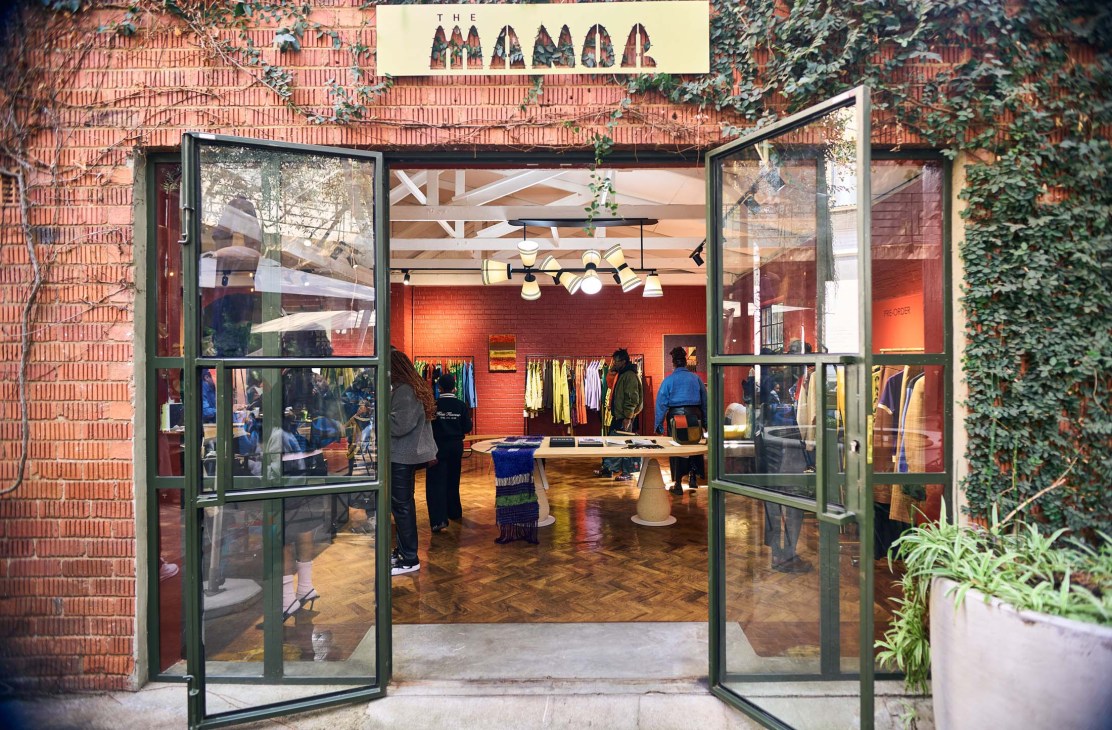
“Africa is rich in stories and talent but there sadly aren’t enough platforms and spaces to showcase and archive them,” Stuurman tells Monocle. That’s where his gallery comes in. Visitors can stop by the permanent space to pick up a copy of his magazine, which highlights local talent such as singer Thandiswa Mazwai and actress Zoë Modiga.
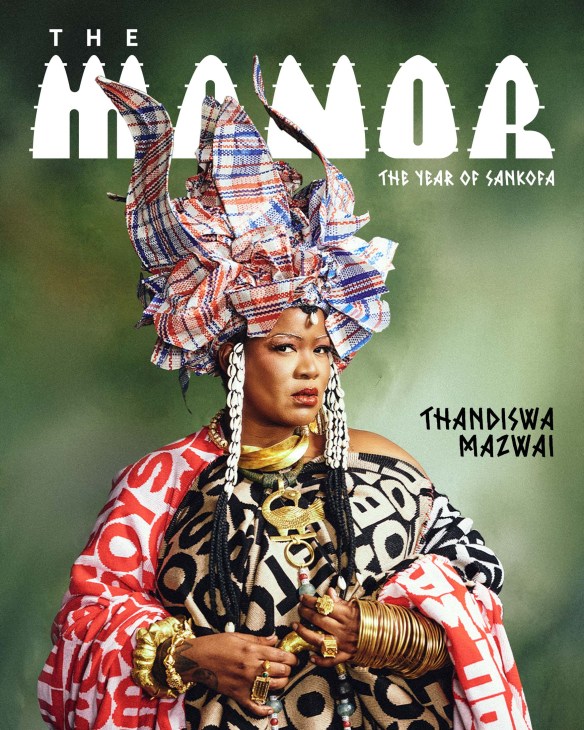

The gallery has shown pieces by creatives from across the continent, including artist Jakinda Mshindi Boya and photographer Lebogang Tlhako. “We have built a beautiful ecosystem here that promotes creativity, content and community,” says Stuurman. “Ultimately we would love to see The Manor as a long-lasting cultural institution and museum of art.”
themanor.africa
The six restaurants that you should be booking this month, from Copenhagen to Sydney
1.
Riviera
Copenhagen
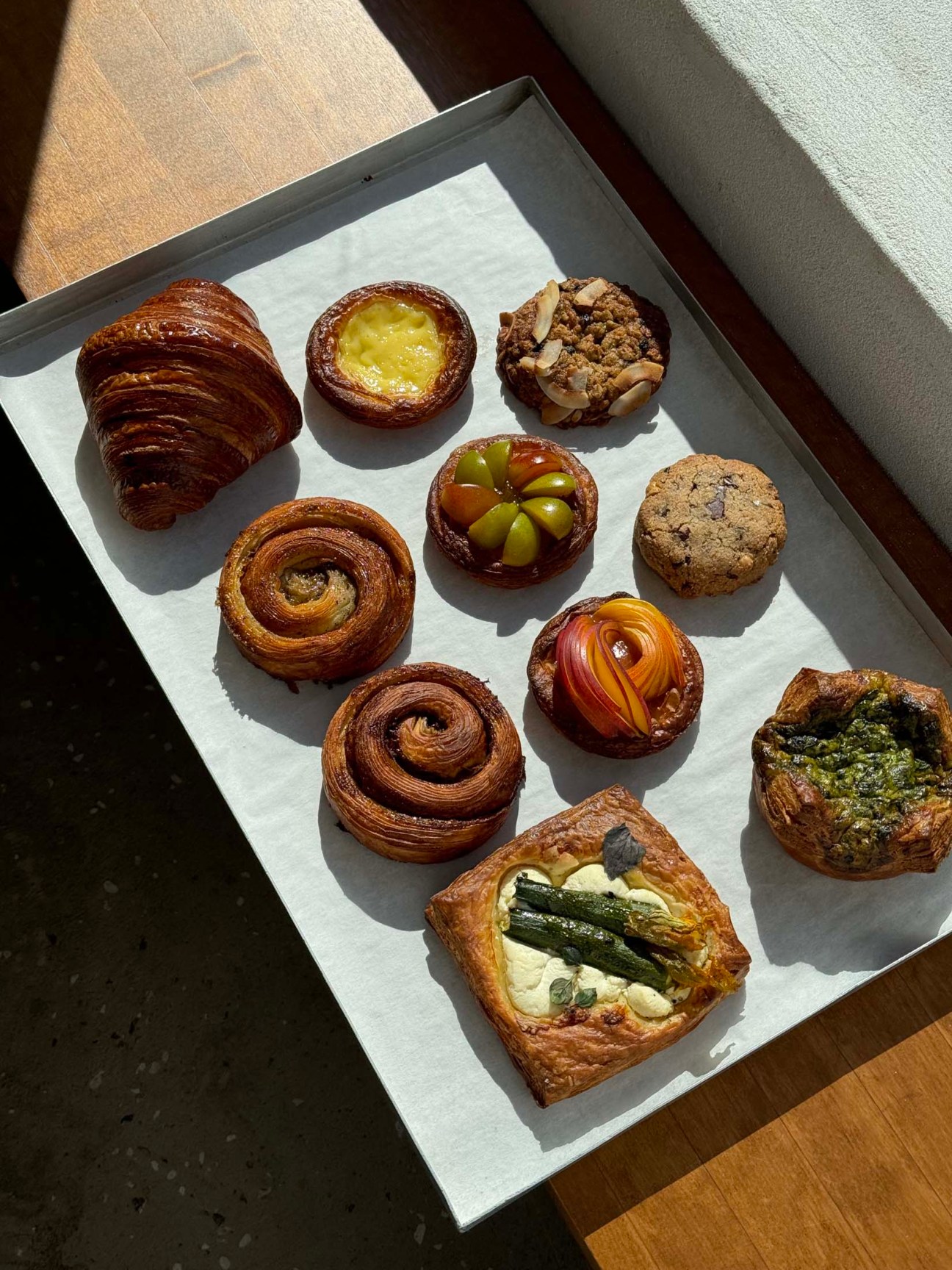
Chiara Barla, the Italian chef at Apotek 57, the café by design store Frama, has recently opened a new spot, Riviera, in Nansensgade. Inside the former 1960s bakery, a Frama-designed central trestle table invites customers to sit side by side, Copenhagen-style.
On the menu are Danish fastelavnsboller buns, figs and Parma ham on homemade sourdough and spandauer pastries. “Most of our dishes are prepared in the same oven in which we bake our bread, which is at the heart of the bakery itself,” says Barla. Don’t leave without trying her pistachio croissants.
framacph.com
2.
Derrel’s
Sydney
The sign at the door reads, “Derrel’s, Nana never cooked.” Grandpa Derrel was the chief cook in chef Brendan King’s family. This Anglo-Indian restaurant is named for King’s grandfather, who inspired the diner and the menu at the inner western-Sydney suburb of Camperdown.

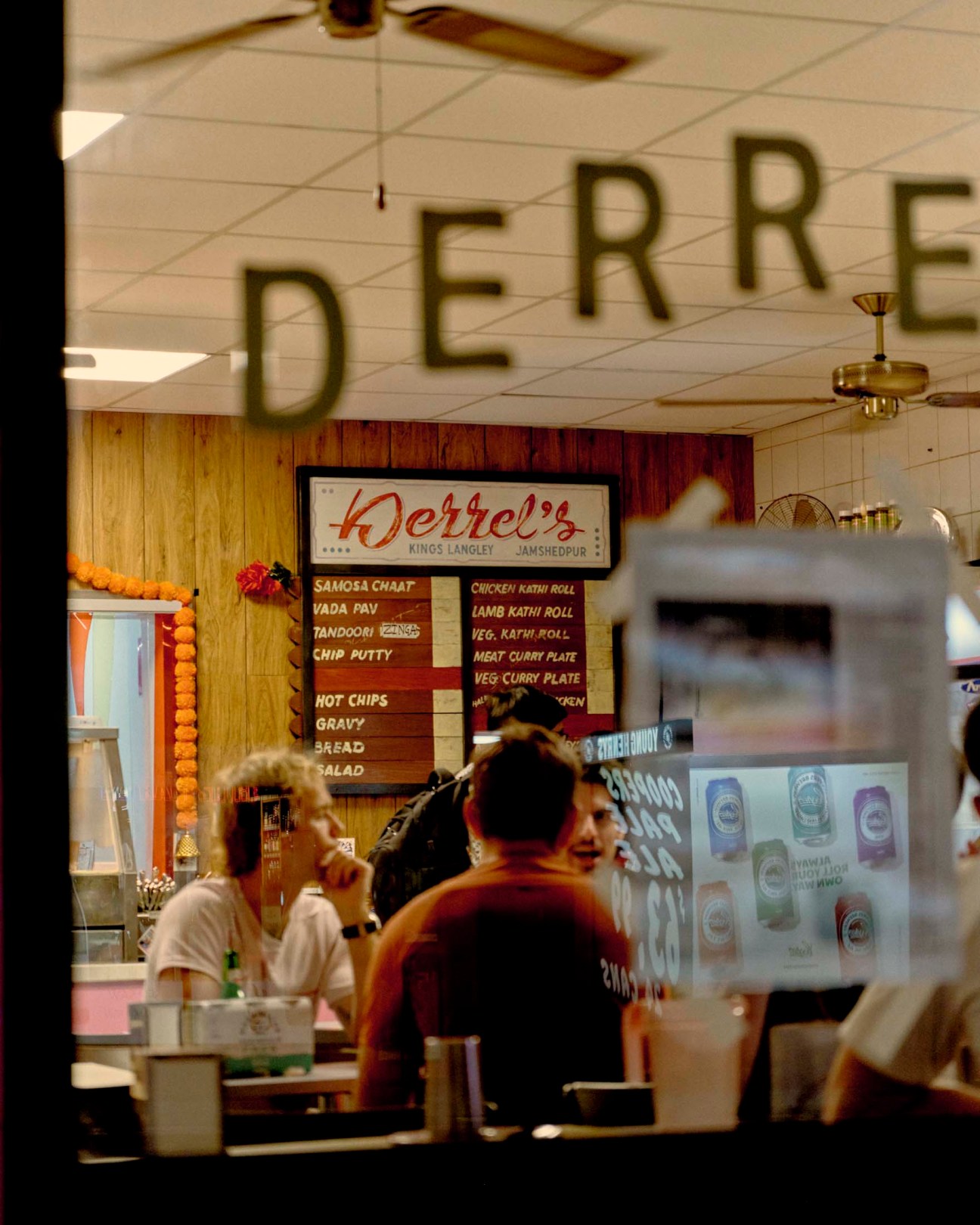
Known with fondness locally for its late-night bites, Derrel’s is busy from its 17.00 opening time – often with a queue out the door – and serves until midnight. For residents, staff from the nearby hospital and students from the university, it’s a bastion of hope in a city that rarely has kitchens open past 21.00. “Reserved” signs predominate but you can either call ahead or wait for space then order at the counter. Make sure you don’t miss the samosa chaat: smashed samosas on a spicy chickpea curry, minty yoghurt, coriander, chilli and a tamarind chutney.
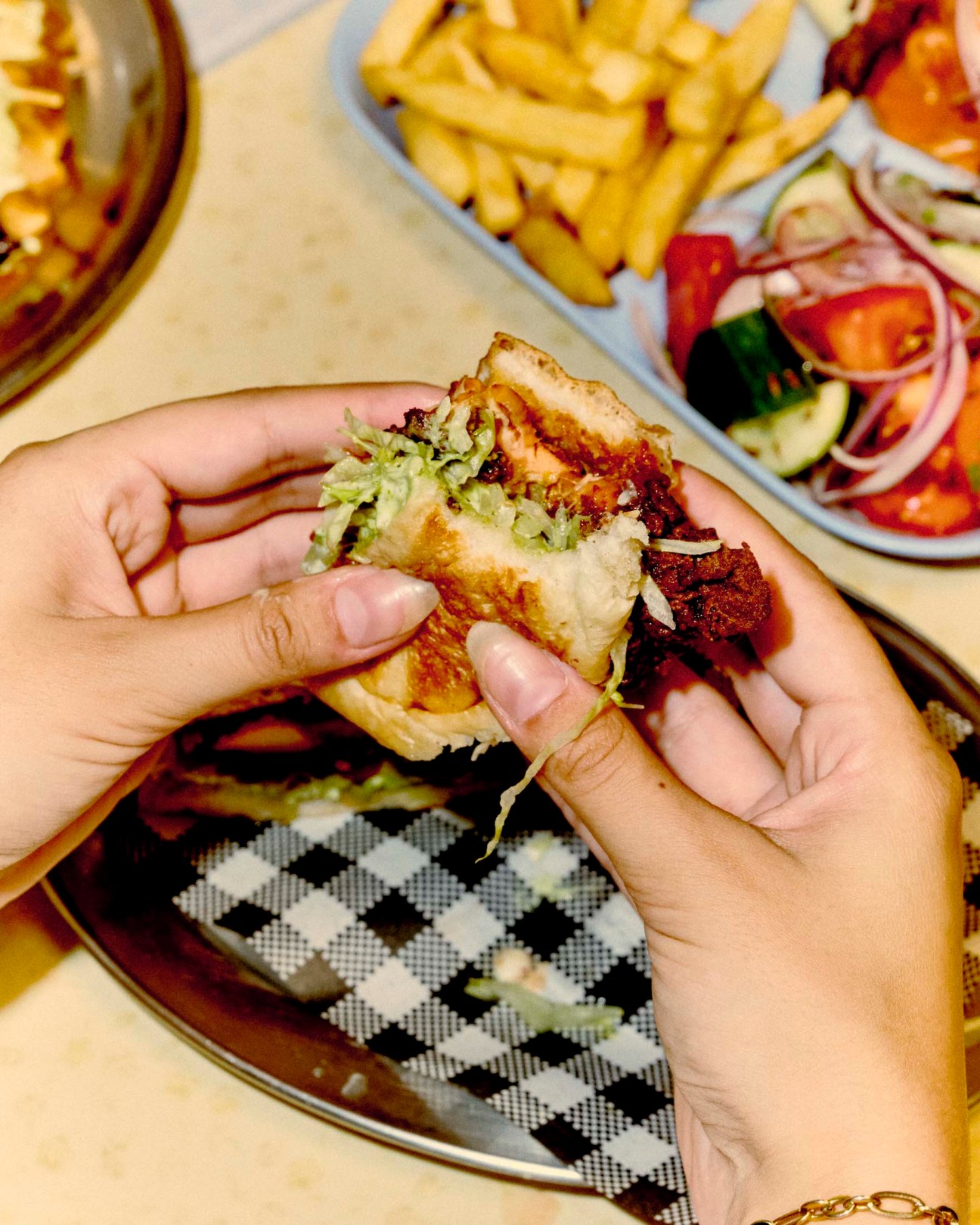
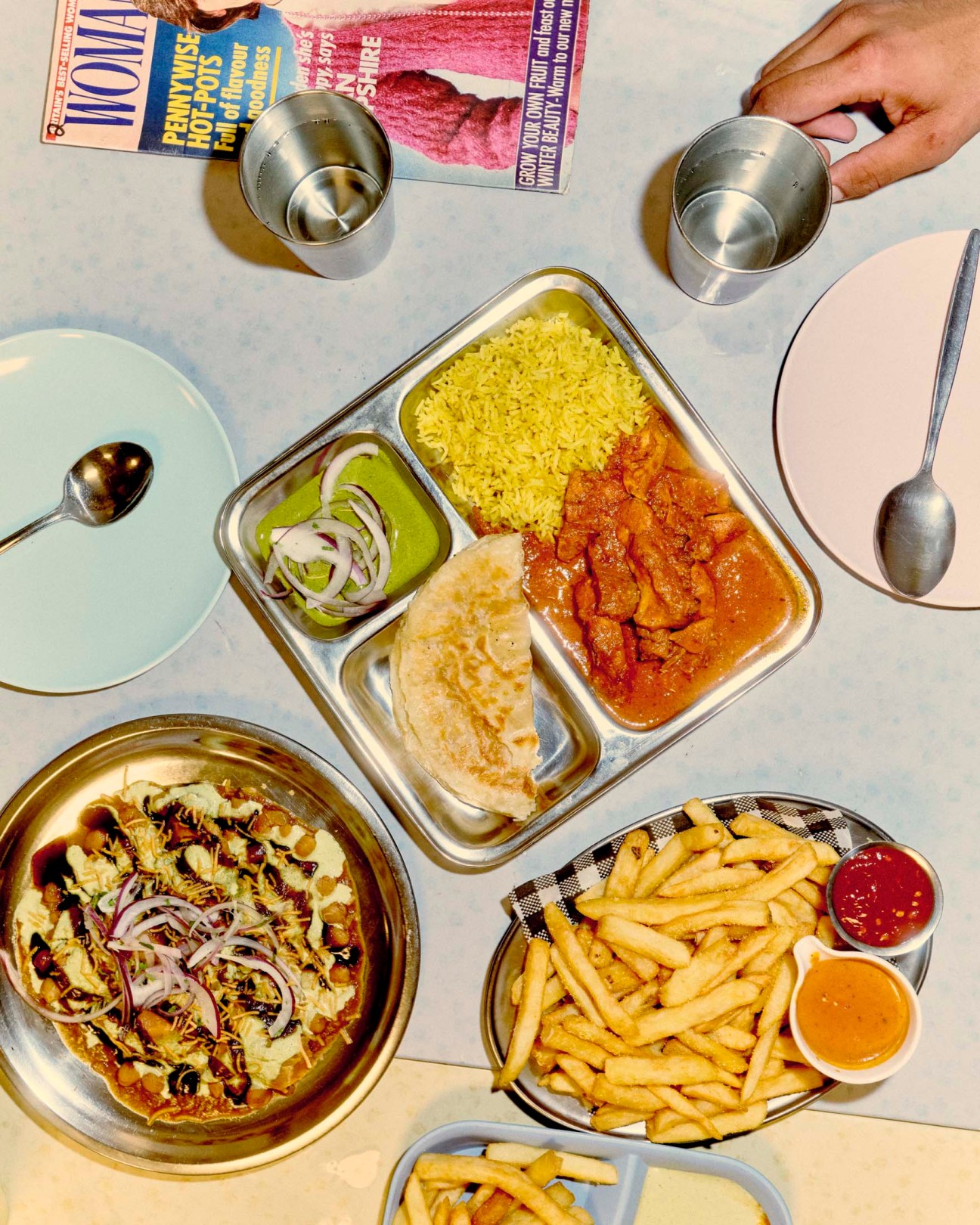
Follow it with a half tandoori chicken plate with a side of chips (a bowl of butter chicken gravy to dip them in can be added to your order) and a bright tomato and cucumber salad laced with cumin. Or why not try a simple tray of butter chicken with roti and rice, washed down with a mango lassi? And it’s not just the food that’s refreshing at Derrel’s – the service is lively and fresh too.
89 Parramatta Rd, Camperdown
3.
Bouchon Carême
Helsinki
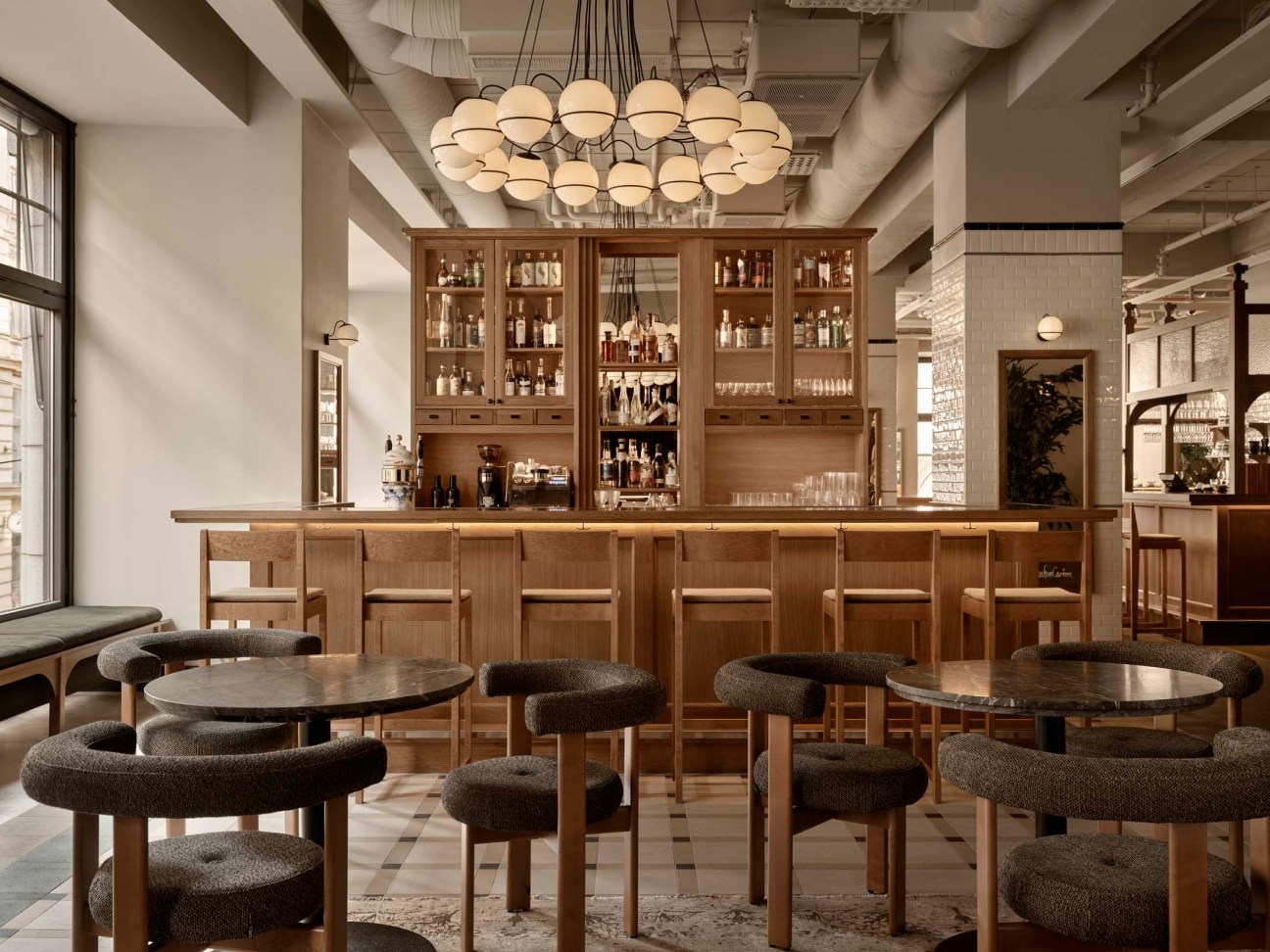
Drawing inspiration from Lyonnaise fare, Bouchon Carême features hearty and full-flavoured Gallic-style dishes. “Lyon is the cradle of French gastronomy,” says chef Hans Välimäki, its founder. Ample use of natural wood and soft light lend the restaurant the air of an unpretentious bouchon.
bouchoncareme.fi
4.
Pluto
Berlin
There’s no shortage of wine bars in Berlin, a city now enjoying a glass with the fervour once reserved for craft beer. In Prenzlauer Berg, Pluto draws a devoted crowd. This is partly down to the pedigree of its founders, Vadim Otto Ursus and Sören Zuppke, who made a mark on Berlin’s culinary scene with Otto in 2019. “With Pluto, we wanted to create a place where strangers might find themselves sharing a bottle at the bar,” says Ursus.
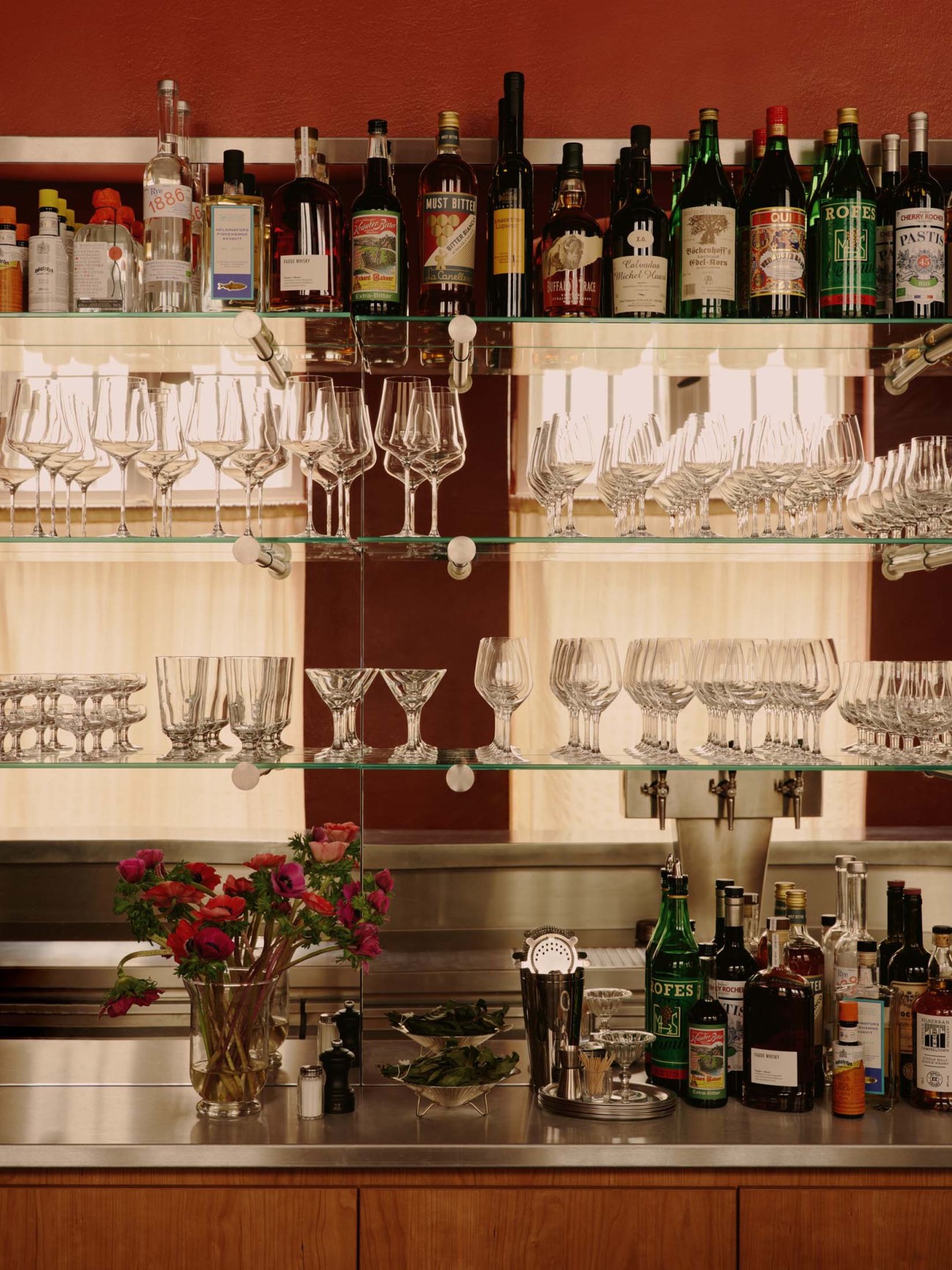

With ties to organic farmers in Brandenburg, the menu stays true to classic bar fare but with the odd adventurous twist: think fromage de tête, a veal tongue salad or a fiery mussel escabeche. The winelist reflects years of research on small biodynamic producers across Europe. Perhaps the most un-Berlin thing about Pluto? No reservations.
pluto-berlin.net
5.
Don’t Tell Dad
London
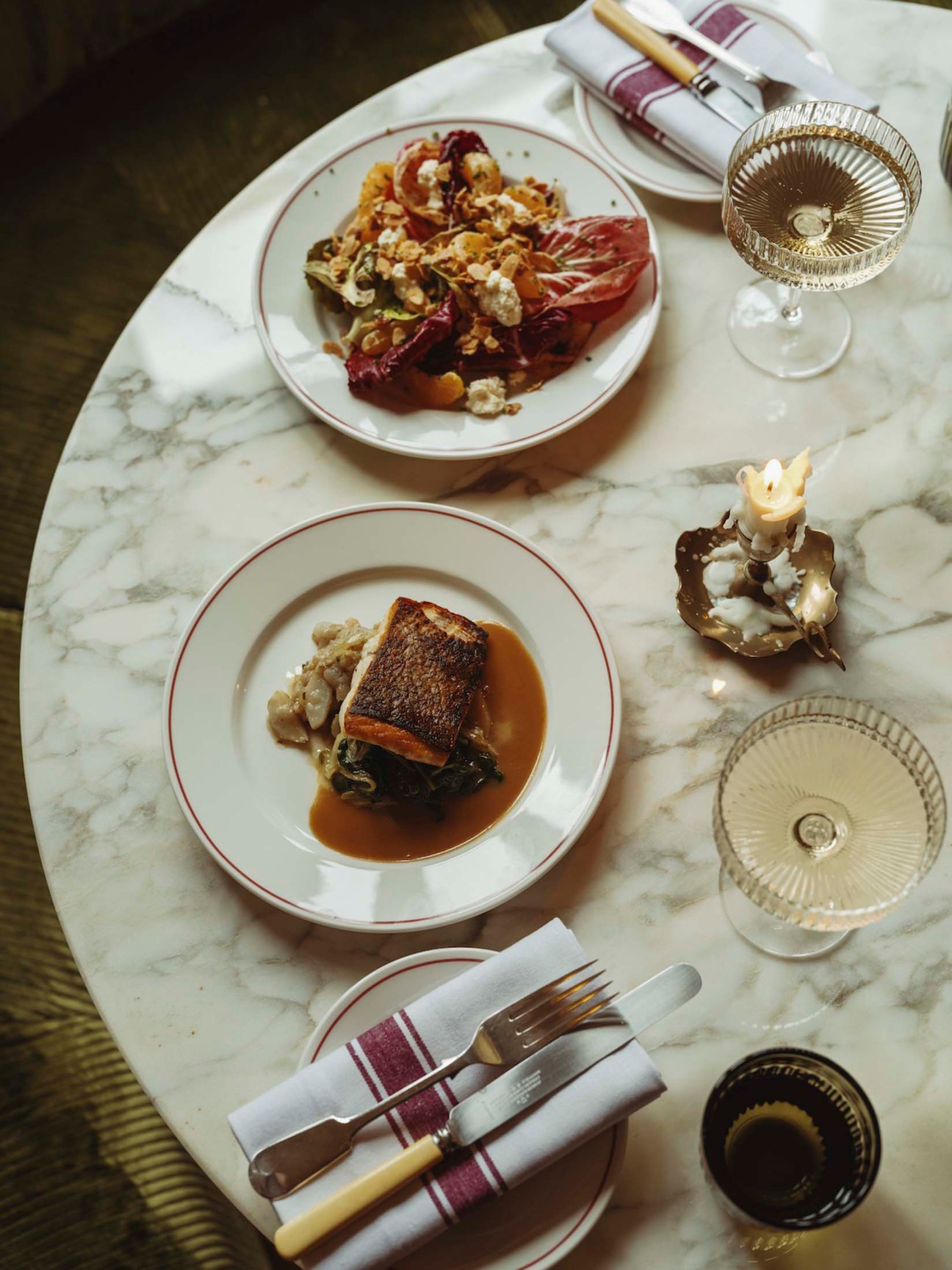
“London’s independent bakery scene is incredible but Queen’s Park has yet to see a standout – and it deserves one,” says restaurateur Daniel Land, who recently opened Don’t Tell Dad in the northwestern enclave of the UK capital.
Customers who arrive at the bakery early will find burnt-lemon tarts, brown-butter-and-hazelnut croissants and wild-garlic-and cheddar twirls. Come nightfall, a candlelit bistro-style ambience beckons, with dishes by ex-Noble Rot chef Luke Frankie.
donttelldad.co.uk
6.
Souen
Tokyo
Tea master Shinya Sakurai wanted to revive an appreciation for traditional Japanese tea shops without the fuss. “You used to be able to smell tea being roasted everywhere but these businesses have been disappearing,” he says. So he transformed a former sweet shop in Tokyo’s Setagaya ward into Souen, which opened in January.
In contrast to the Sakurai Japanese Tea Experience in the Minami-Aoyama district, Souen has a more casual setting. Original seasonal blends are the focus, while various leaf teas, matcha lattes and tea cocktails broaden the appeal. Teas are served in ceramics made by Kagoshima-based potter Shuo Iwakiri. A selection of sweets is produced in-house.
3-17-11 Wakabayashi, Setagaya, Tokyo 1540023

Design agenda: A Shigeru Ban monograph, Buenos Aires’s colourful regeneration and more
Shigeru Ban: Complete Works 1985 – Today (published by Taschen) celebrates the work of one of Japan’s best-known contemporary architects. Ban studied in the US in the 1970s and 1980s, where he was influenced by American modernism. His first large-scale international work was the Centre Pompidou-Metz in northeast France, which opened in 2010 and was modelled on a Chinese bamboo-woven hat; others, such as the timber-clad Swatch/Omega Campus in Switzerland, soon followed.

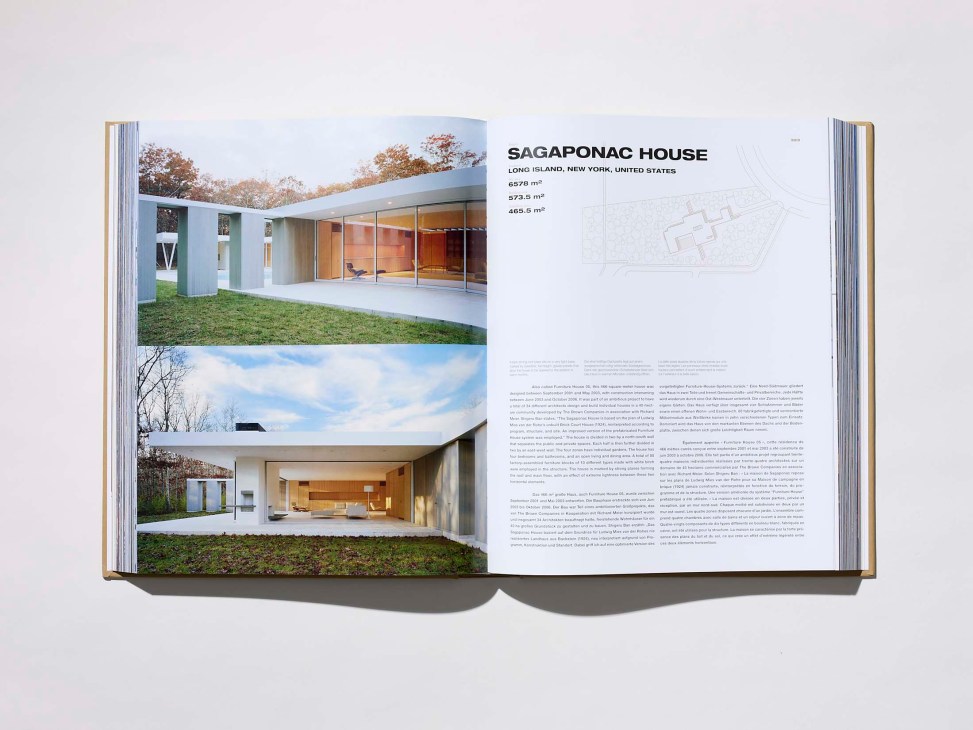
Remarkable is Ban’s ingenious exploration of materials, such as the use of rigid paper tubes as structural elements. He has employed them in the creation of emergency structures in times of ecological or manmade crises, from Fukushima to Ukraine. “Designing temporary housing for disaster relief has become as integral and meaningful to my work as creating museums or high-end residential projects,” says the architect, whose work was recognised with a Pritzker Prize in 2014. This hefty tome is appropriately sized for such an important living architect.
taschen.com
Architecture: Paris
Q&A
Past and present
Pierre-Yves Rochon
Architect
For more than 45 years, French designer Pierre-Yves Rochon has been bringing timeless elegance to the interiors of clients such as Waldorf Astoria and chef Alain Ducasse. At this year’s Salone del Mobile furniture fair in Milan, he is presenting “Villa Héritage”, an installation distilling his decades of experience and taste-making.

How do you approach heritage in your designs?
I try not to be influenced by trends, which are just moments when the majority thinks the same thing. But heritage is different. It’s not nostalgia. It allows you to choose influences that speak to your sensibility.
Can you tell us about your installation, ‘Villa Héritage’?
The idea is to show just how well different periods of Italian architecture and interior design, as represented by a selection of Salone’s exhibitors, can exist together. We combined their most beautiful creations with the goal of creating an experience in which light, texture and sound come together to create emotion.
What do you hope visitors will take away from it?
I hope that people will reflect on the idea of transmission, of how the past informs the present and allows us to imagine the future.
For more news on Salone del Mobile, pick up a copy of Monocle’s dedicated newspaper, ‘Salone del Mobile Special’, available to purchase at The Monocle Shop or to read online here.
Furniture: Paris
Room service
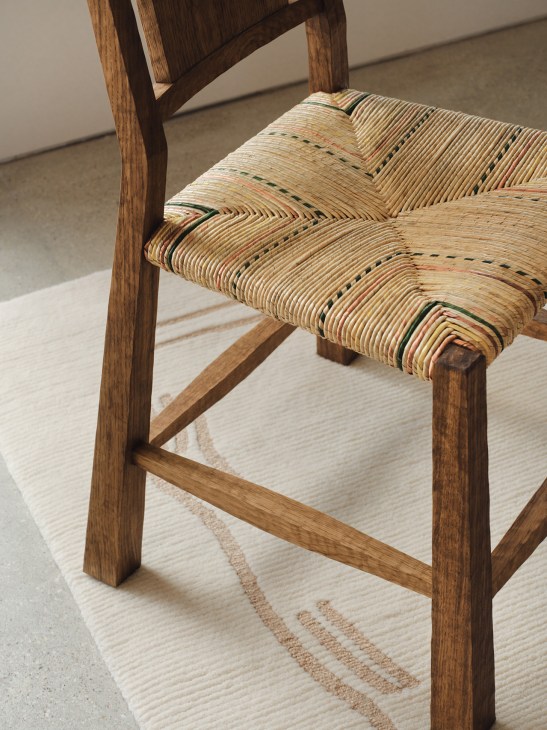
Interior designers frequently design bespoke wares for clients but it’s rare that such pieces are put into industrial production. Thankfully, one of France’s most celebrated designers, Pierre Yovanovitch – whose work spans furniture, lighting and interiors – bucks the trend.
Visitors to his Paris gallery are able to peruse his 2025 collection, with highlights including the Eze Chair, which has tapered legs and an earthy rattan seat; and the Daniel Armchair, with rounded arms that resemble gently worn river stones. To give visitors a sense of how the works might fit into their own home, the gallery-like space – a former fashion atelier, redesigned by architect Jean Nouvel – is filled with a selection of contemporary art lit by an overhead atrium.
pierreyovanovitch.com
Urbanism: Buenos Aires
District Champions
Playón de Chacarita, a neighbourhood in Buenos Aires, has been given a facelift at the behest and under the direction of its residents. Argentinian design firm Región Austral worked with the community to identify quick urbanism fixes as part of an initiative named Playón Red. “Urban design must always respond to the needs and aspirations of residents,” says Soledad Patiño, co-founder of Región Austral. “They hold invaluable knowledge about their territory, providing insights that external professionals could never fully grasp.”

In Playón de Chacarita, those insights included a need for security, space for sports and cultural activities, and the addressing of environmental and sustainability concerns. To respond to this, the studio identified appropriate sites to create a passage-like courtyard between homes, a pocket park that doubles as a rain garden to offset flooding, and a sports court splashed with colour. According to fellow Región Austral co-founder Stefano Romagnoli, sometimes the simplest fixes are the ones to turn to. “In many of our projects, we have used vibrant hues to reinforce local identity and create visual landmarks,” says Romagnoli. “Colour goes beyond aesthetics; it fosters a sense of belonging.”
regionaustral.com
Inside the fighter-jet school where virtual technology is your wingman
Wishing a fighter pilot a good flight isn’t the done thing, apparently. Stefano Centioni, a former Italian Air Force (IAF) pilot who now works for the country’s largest defence contractor, Leonardo, winces at the suggestion. “That’s the sort of thing that you say to a Ryanair pilot,” he says. We’re at the International Flight Training School (IFTS) in Sardinia, a collaboration between the public and private sectors that is aiming to become top gun in the niche of fighter-pilot training. The school is based in the IAF’s Decimomannu Air Base, nestled in undulating scrubland a short drive from the city of Cagliari. As Europe works to scale up its arms-production capabilities in a bid to wean itself off its over-reliance on the US, Leonardo is expected to benefit. Currently Europe’s third-largest defence company, it is branching out into new areas, from aerospace to training, which is where IFTS comes in. The array of national flags flapping in the breeze in front of the reception indicates how many nationalities make up the facility’s student and teacher corps, which are as diverse as a Sardinian beach in summer. Opened in July 2022, the facility cost Leonardo more than €200m to build, an investment that the company hopes will be rewarded when pilots return to their home countries waxing lyrical about Italian technology and expertise.


Centioni, whose blue jumpsuit signifies his affiliation with Leonardo, is the school’s head of flight training organisation. Here, instructors come from both the private sector and the military. The IAF handles areas such as the syllabus, training and testing, while Leonardo – in partnership with a Canadian company called cae that specialises in flight simulation – looks after logistics, planes and maintenance. The school’s mix of flight time and computer-based training has been popular. Teaching is done in English and, to date, 13 nations have sent students for the nine-month course, including Spain, the Netherlands, Qatar, Saudi Arabia, Japan and Singapore.
The IFTS moved from Puglia, where it was originally based, to Sardinia to take advantage of the island’s larger airspace. When Monocle visits, a site has been identified for two new housing blocks that are scheduled to be finished by the end of 2025, adding 40 units to the 58 that already exist for non-Italian cadets – a sign that the IFTS is currently oversubscribed. For Lieutenant Colonel Marcello D’Ippolito, the school’s commander, dressed in green to show he is still in the armed forces, its success is down to know-how. “This is the world’s most advanced fighter-pilot school,” he says. “The quality of Italian training is accompanied by another field of Italian excellence: defence, through Leonardo. Excellence plus excellence.”
The ace up the IFTS’s sleeve is its aircraft: Leonardo’s twin-engine, tandem-seat M-346 AJT, built with training in mind. Released in 2013, it’s both technologically advanced and well tested. When students arrive in Sardinia, they already have their military wings but haven’t yet progressed to flying a jet. Monocle heads out onto the tarmac in a fleet of black Mercedes-Benz vans with a small group of international students and teachers for one of the 35 mock missions that fly from the school every day. Everyone is wearing their standard-issue flight clothing, which self-inflates inside the craft when necessary, putting pressure on the body to prevent G-force-induced blackouts. Every pilot also has a survival kit that includes water, chocolate and a radio.

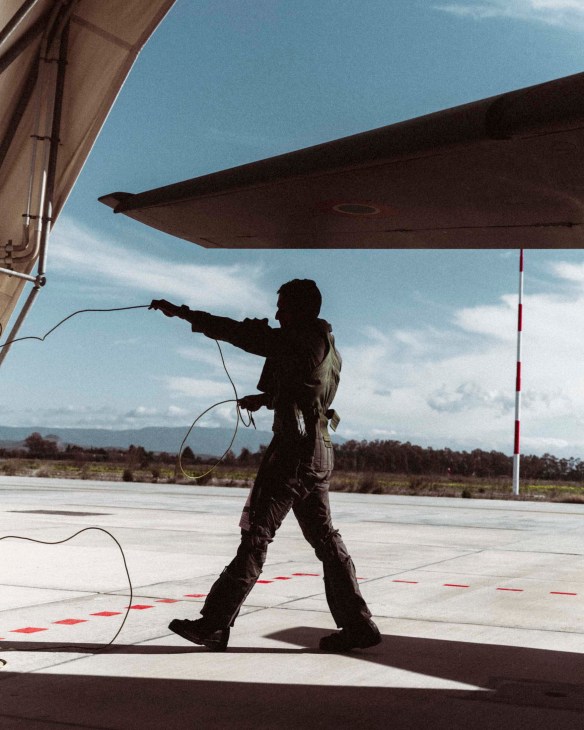
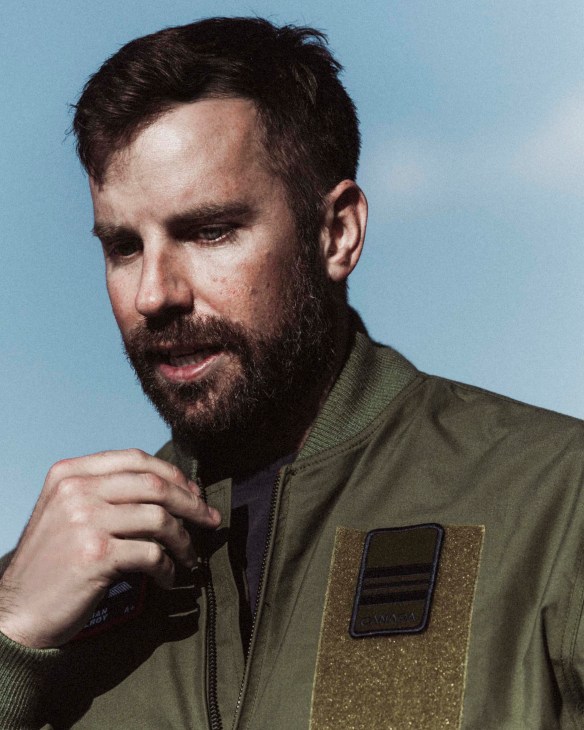
A pair of jets taxi to their takeoff positions. There’s the smell of fuel in the air; a heat haze hovers over the asphalt and the roar of the engines bounces off the nearby maintenance building. Soon the aircraft are up and away.
“When you come here, the most beautiful thing that you see is the plane,” says Centioni, who is one of 40 teachers at the school. “It’s great but there’s a whole system of simulation connected to it too.” IFTS instructors are keen to point out the benefits of the LVC network, which stands for “live, virtual and constructive”. Alongside the real and the simulated components of their training (cadets split their time evenly between the two after a first month spent entirely on the ground), there’s the “constructive” part, which involves teachers sending virtual enemies from a control room to the radar of a real plane or to simulators. The ability to have war games of this multi-modal nature is a key advantage.

Centioni guides Monocle around the complex, showing off the three levels of the flight-simulation trainer. The entry level is full of students sitting behind screens wearing headphones and toggling HOTAS (hands on throttle and stick) controls, just as they would in an aircraft. The cost at this level is low, says Centioni, and students can come here whenever they want to practise, using swipe cards for entry. The second level, which needs to be booked with a teacher, involves a cockpit that is a replica of a real fighter jet’s. The final stage, which Monocle tries, is a capsule that closes around the trainee featuring a 360-degree screen. Though the simulator remains fixed to the ground, it fools the brain as the horizon shifts, inducing dizziness in novices. “Your stress levels go up,” says Centioni. “But that’s positive as it’s linked to performance.”
The IFT’s pitch to air forces is that they’ll save money in the long run if they send their pilots here. It’s a case that some of the establishment’s top brass make to Monocle over a buffet lunch in the school canteen, which includes a Middle Eastern food corner and plenty of international cuisines to cater for the school’s diverse intake. “Because other nations are using older trainers, there are things that pilots can’t practise until [much later] so they end up spending a lot more,” says Giovanni Basile, the managing director of Advanced Jet Training, the joint venture created by Leonardo and CAE. The M-346 allows students to practise things such as laser-guided bombing and dogfighting on a dedicated training aircraft earlier in their period of instruction than many other programmes. The US, which doesn’t currently send students to the IFTS, trains its pilots on the T-38 Talon, a jet first unveiled in the 1950s that doesn’t have the same capabilities. Boeing’s next-generation T-7A Red Hawk is on its way, with five delivered to the US Air Force so far, but there have been problems and delays. The UK, meanwhile, has retired most of its Hawk T2 trainers, which date back to the 1970s, and sends some of its young guns to Sardinia.
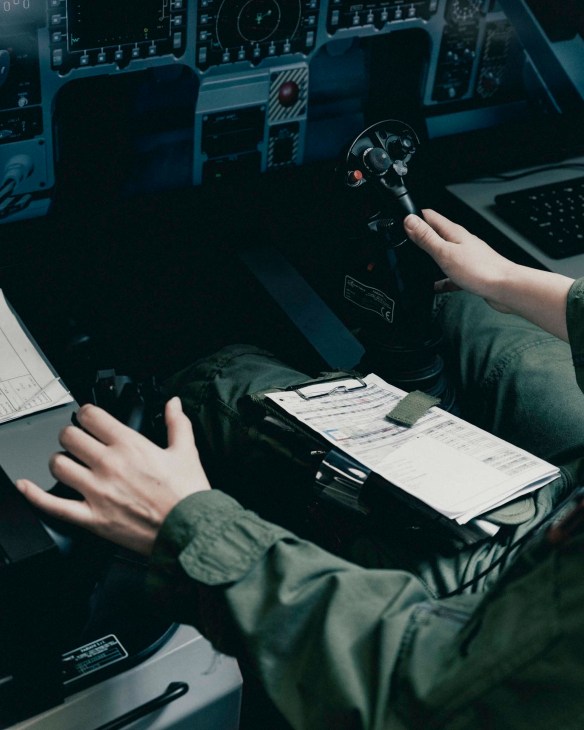


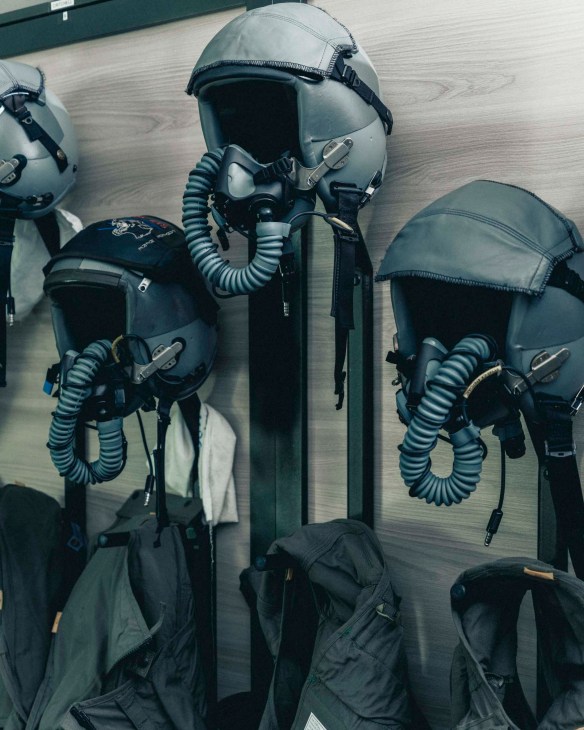
Monocle heads over to one of the student accommodation blocks which, with its front-desk reception, feels a little like a hotel. We visit the apartment of James (students’ surnames can’t be published for security reasons), a trainee pilot from the UK whose room is decorated with a Lego model of Nasa’s Discovery space shuttle and a thirsty-looking pot plant. Like all of the students we meet, James is happy to be doing what he sees as important to his training. He says that the M-346 is fast and manoeuvrable, with fly-by-wire controls that make it easy to use. “The jump to get to where we are now has been bigger [than in more conventional pilot training],” he says. “But from here to a front-line jet, it’s smaller.” As Stefano Centioni describes it, “It’s like going from a BMW to a Mercedes.”
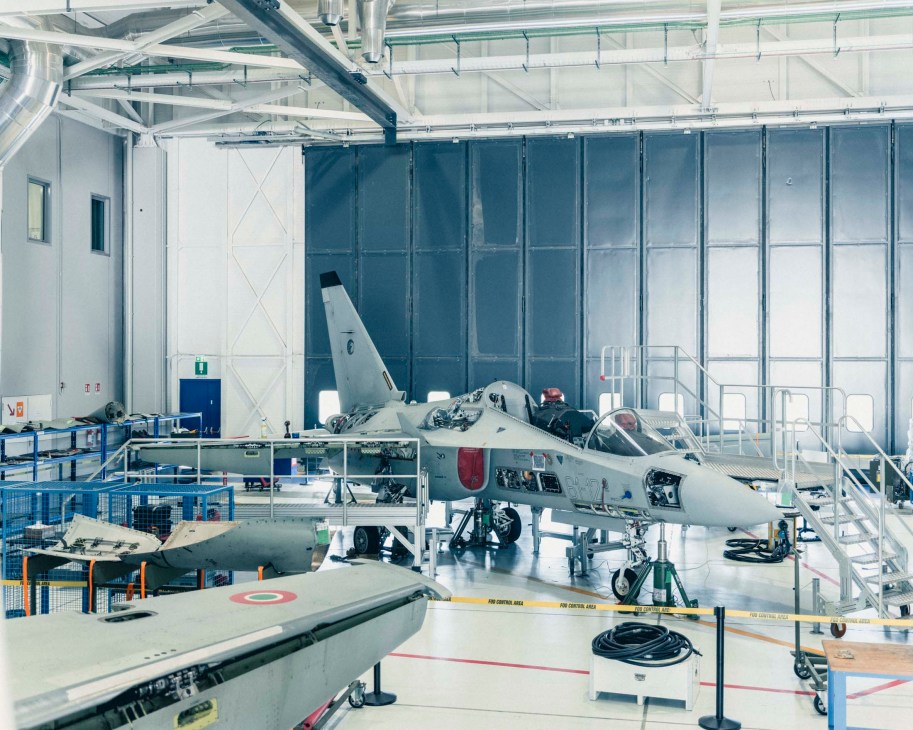
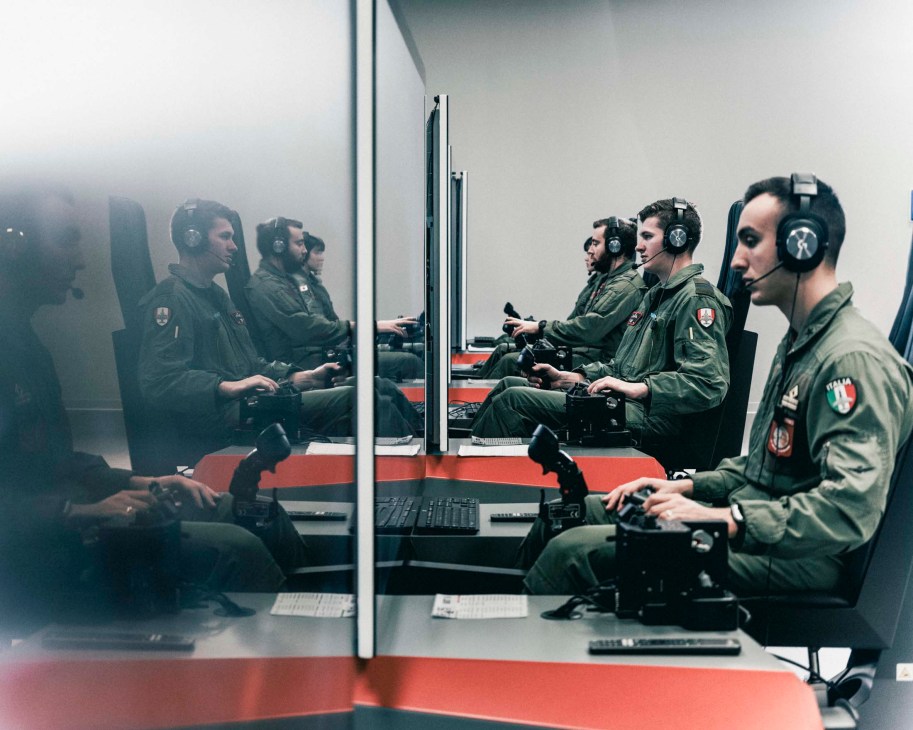
Despite recent moves by the UK and EU to increase defence spending, some nations have sought to make savings by opting out of the advanced jet-training phase and having cadets jump from a simple turboprop aircraft to a combat-ready supersonic jet – which has led to concerns over their lack of airmanship. “The advantage that Western forces have over our adversaries is arguably not technology but the fact that we train our pilots much better,” says Justin Bronk, a senior research fellow at London’s Royal United Services Institute. “Skimping on training risks throwing the baby out with the bathwater.”
That’s where the IFTS believes that it can play a crucial role. “We are the first people using an advanced trainer to manage complexity,” says Colonel Gianfranco Liccardo, commander of the 61st Wing Air Base in Puglia that the IFTS belongs to. “We have years of competitive advantage.” Still, Liccardo recognises that other nations will catch up sooner or later, which is why the school needs to stay ahead of the pack. Spain, for example, has already signed a memorandum of agreement with Turkey to receive 24 Hürjet advanced trainers from Turkish Aerospace Industries; deliveries could start in 2028. Centioni agrees. “Nokia and Motorola thought that they were the best, then Apple arrived,” he says. “We don’t want that.”


The IFTS’s plans to stay relevant include taking the augmented-reality training experience to the next level by having a hologram of virtual enemy jets appearing in a pilot’s helmet vision – an innovation that Leonardo is working on with US company Red 6. There are also plans to update the M-346 with a “Block 20” configuration that will include new digital and artificial-intelligence features. It isn’t just the global reputation of Italy’s defence capabilities that’s at stake in all of this. There’s also a bottom line to serve, as you would expect given that one of the IFTS’s partners is a for-profit defence company (albeit one whose largest shareholder is the Italian government). Giuseppe Recchia, the head of Leonardo’s IFTS business unit, sits down with Monocle in the school’s ground-floor café, near a sign that reads “Our hearts have wings”. He says that nations have bought M-346 trainers off the back of their ifts experience, including Singapore and Qatar; at the end of last year, Austria purchased 12 of the combat-ready Fighter Attack versions. However, Leonardo also sees another business opportunity in the “huge demand for training worldwide”, says Recchia. The school is part of the company’s move into being what he calls a “solutions provider”. With European defence firms still dwarfed by their US counterparts, such as Lockheed Martin and RTX, Leonardo’s services arm is part of its plan to be an integral EU defence player, a move laid out in the five-year plan that it published in 2024. The figures are heading in the right direction. Last year’s revenue was up 16 per cent on 2023’s at €17.8bn and the trend is expected to continue. “We have 12 international customers at the school,” says Recchia. “If they appreciate our level of service, we can strengthen our reputation worldwide.”
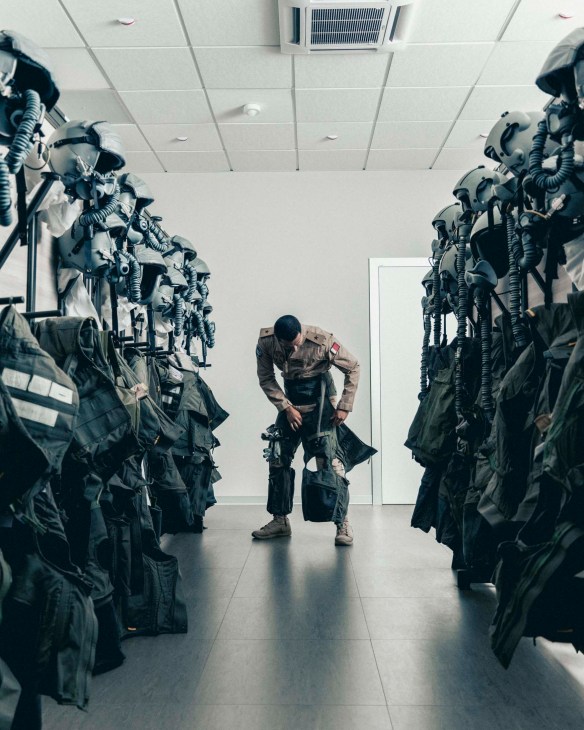

As well as the Sardinian base expansion, there’s the possibility of other campuses in different parts of the world in the future. For now, the focus is on keeping the current facility running smoothly. The biggest concern for students is learning to spell everyone’s names, says a Canadian cadet called Ben, who tells Monocle that he is following in his fighter-pilot father’s footsteps. He recently had his first M-346 flight, accompanied by a German instructor. “Because you eat, sleep, train and work out here, it removes all other obstacles,” he says, sitting in the lobby of his housing block. “That means you can focus on being your best.”
IFTS in numbers
13 countries have sent students to train here.
130,000 sq m: Size of the campus.
70: Number of students.
40 instructors from 12 countries currently oversee the course.
600-700: The average number of flight missions per month.
7: Total number of basketball and padel-tennis courts on the site.
25 metres: The length of the indoor swimming pool.
Better together
Leonardo has earmarked several strategic partnerships as part of its growth plan, including building tanks with Germany’s Rheinmetall in a joint venture. But most significant is the Global Combat Air Programme (GCAP), a collaboration between Leonardo, the UK’s bae Systems and Japan’s Mitsubishi Heavy Industries. The three companies aim to deliver a next-generation stealth fighter jet by 2035. An agreement was reached in 2022 and a GCAP company was formed at the end of last year, with plans for a UK headquarters. The plane will make use of supercomputing, artificial intelligence and cyber-resilient data links, among other technologies, with an initial order of 350 expected by 2035. GCAP isn’t the only programme of its kind. France, Germany and Spain have their own jet collaboration called Future Combat Air System, with a delivery date set for 2040.
Why one unassuming US grocery chain is a perfect lesson in the power of community building
Stewart’s is a chain of 400 convenience stores across New York state, New Hampshire and Vermont that seems to appeal to everyone. It’s where contractors grab coffee at dawn (some branches open at 04.30); where people in retirement go to buy the paper; and where Daniel Day-Lewis is rumoured to grab an eggwich (four million-plus sold in 2024). When my Brazilian friend visited from São Paulo, she declared Stewart’s “the best hangout in town”.
With burgundy branding and beige interiors, little about Stewart’s has changed in 50 years. So unwavering is its identity, it now feels dependable, trustworthy, familiar and oddly comforting – a cultural glue.

Starting as a family-owned dairy nearly 80 years ago, Stewart’s has been built by the Dake family into an $877m (€806m) empire pulling in $2.5bn (€2.3bn) in annual revenue. Forty per cent employee-owned, with a workforce that stays, Stewart’s thrives on relationships and vertical integration – farms that are just 20 minutes from its plant. The eggs are fresher and cheaper than any neighbourhood shop, while the milk, which goes from farm to cooler in 48 hours, has been rated the best in New York state.
So what can upmarket grocers take from Stewart’s? Stop chasing reinvention, trends, influencers and “new arrival” products. No one goes to Stewart’s for the aesthetics but the food is consistent, fresh, delicious and affordable; the coffee is hot, the eggs are cheap and the milk tastes better than at your average health-food shop. Its employee stock programme has minted 199 millionaires. Stewart’s, with its unshakable presence and consistency, has managed to stay unremarkable yet essential.
Gardner founded ‘Modern Farmer’ magazine and is Monocle’s former Americas bureau chief.

Turning the tide: The shipbuilding company reviving a small Midwest town
Wisconsinites are well accustomed to harsh winters but the deep freeze that descends upon the northern part of the Midwestern US in the first months of the year can test even the hardiest. When the temperature dips to minus 34C, schools close and workplaces shutter. Yet in tiny Marinette, a town on the icy shores of Lake Michigan, some 2,000 welders, fitters and engineers report for work as usual to build the next generation of American warships.
Founded in 1942 to bolster the US Navy’s war effort, today the Marinette yard is helmed by Italy’s state-owned shipbuilders Fincantieri, which acquired this frozen outpost in 2009. It’s a far cry from Fincantieri HQ in Trieste, which launches ships into the much more clement Adriatic Sea, but it has caught the changing tide of a once-dying American industry and is investing in the Rust Belt.
Fincantieri is the largest shipbuilder in Europe and owns an integrated network of yards from Genoa to Palermo, which churn out cruise ships, submarines, off-shore wind-support vessels and luxury yachts. Over the past 20 years, however, it has expanded its reach across four continents with 18 shipyards. In 2009 the firm’s CEO Giuseppe Bono, eager to break into the market of Nato’s largest naval power, spotted an opportunity that larger US shipbuilders had overlooked: a somewhat forlorn outpost on Wisconsin’s Great Lakes, which had access to the Atlantic Ocean and several modest contracts with the US Navy. Fincantieri acquired Marinette Marine that year, along with another shipyard 35km across the water in Sturgeon Bay, for $120m (€115.6m). Since then, the firm has invested $400m (€369m) in new facilities and infrastructure, with climate-control systems that keep the assembly lines at 15C even in the dead of winter.

“We’ve never lost a day due to bad weather,” says Marco Galbiati, CEO of Fincantieri Marine Group, the firm’s US subsidiary. In tailored houndstooth trousers, black loafers and white dress shirt, the Italian executive sticks out among his fleece-clad Midwest counterparts. Nevertheless, he is at home in the shipyard and is proud to give Monocle a tour of the expanding facility. In a hangar-sized building, we watch as hunks of steel are cut and welded onto a gargantuan hull destined for a ship in Saudi Arabia’s naval fleet. Then we are ushered into an even more cavernous space completed last year to accommodate Fincantieri’s mammoth new project: the construction of the US Navy’s first Constellation-class guided-missile frigate, the skeleton of which is taking shape before our eyes.
Galbiati, who worked his way up Fincantieri’s corporate ladder in Italy before moving to Washington, makes regular visits to Wisconsin to ensure that the company’s trademark “system of yards” process of shipbuilding is working smoothly. “The idea of ‘system of yards’ is about flexibility and to smooth out the peaks and valleys of shipbuilding production,” says Galbiati. In practice, this means that a facility in Sturgeon Bay cranks out ships’ bows while a purpose-built aluminium construction plant in Green Bay fabricates the superstructure. These modules are then shipped by barge to Marinette, where they are welded together into a hull.
This multi-site production process happens in the same way whether it’s at the Great Lakes or between Fincantieri’s cruise ship-manufacturing shipyards on the Adriatic. It’s what has turned the storied company into a true global powerhouse – and a potential saviour of US shipbuilding as it attempts to recapture its glory days. “We build for customers who need complicated ships that require skilled workforces,” says Mark Vandroff, the outgoing CEO of Fincantieri Marinette Marine, which operates the shipyard. The only type of seaworthy vessel that Fincantieri doesn’t make, he explains, is container ships. “We don’t build boxes to haul boxes.”
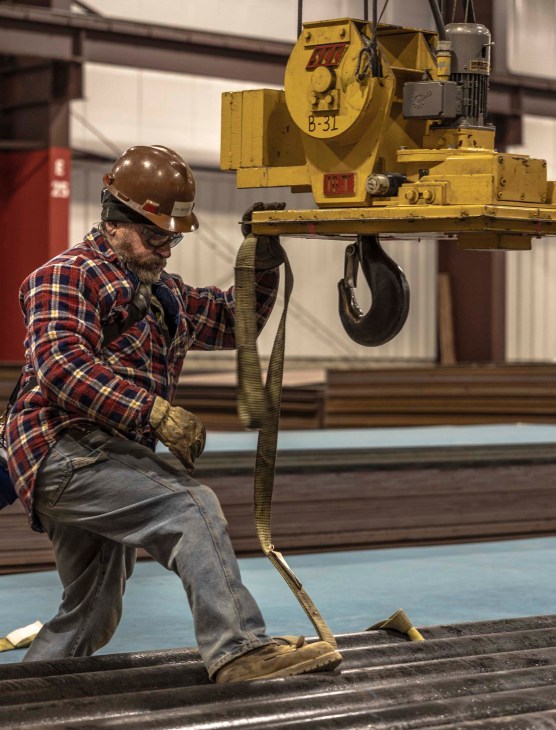
Shipbuilding was once a symbol of American industrial might. During the Second World War, the US built aircraft carriers in a matter of months. Today a new carrier takes eight years. But from its lowest point in the 1980s, when some 40,000 production jobs disappeared, shipbuilding is now a rare subject of bipartisan agreement in Washington. The Navy’s $1trn (€962bn) procurement plan calls for more than 100 new vessels over the next 30 years, and production is expected to peak in the next decade. This presents a lot of potential work for a dwindling number of active shipyards.
From Saab to Hyundai, foreign firms have been lining up to enter the world’s biggest defence market. But getting on the Pentagon’s books is notoriously difficult, especially in an industry dominated by large, historic US players. Wisconsin might be out of the way, with ports that freeze over for three months of the year, but the Marinette shipyard has allowed Fincantieri to get a firm foothold in the US market. All of this makes it well-positioned to tap into a lucrative revival of the industry.
When it took over the shipyard in 2009, Fincantieri inherited a contract to build 16 nimble, multipurpose craft for the Navy’s littoral combat ship (LCS) programme. While the LCS was ultimately a choppy project, it required Fincantieri to hire 1,000 people in the US, and proved to the Navy that it could build at scale. This helped Fincantieri land a bonanza deal to build 10 frigates worth $5.5bn (€5.3bn) in 2020 and has ensured steady work for decades to come. It will need to recruit another 500 workers over the next two years to ramp up the construction efforts that have re-energised this Rust Belt town. “In this area, either you work here, your family works here or your best friend works here,” says Fincantieri’s Bethany Skorik, a Marinette local.
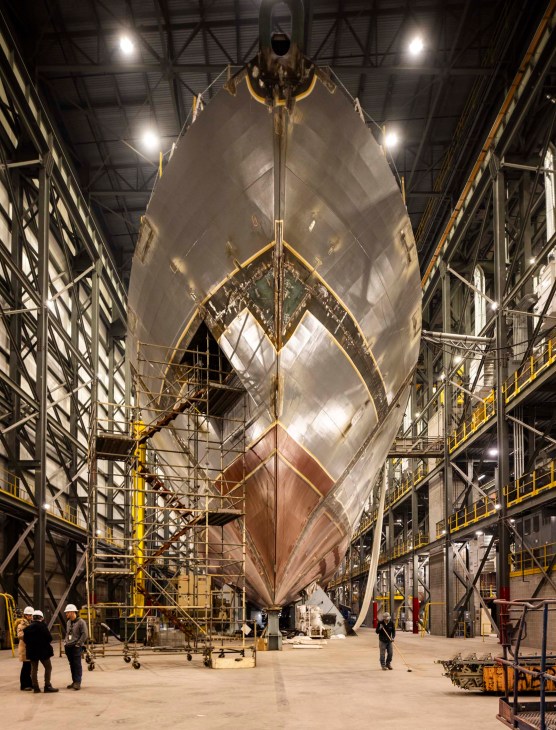
Today the shipyard looks very different from when Fincantieri took over. The company is bringing state-of-the-art shipbuilding practices across the Atlantic. These include importing a measure of automation – which proved effective in Italy to recruit younger welders by offering work that couples traditional skills with new technology – and recent innovations that reduce the physical demands of shipbuilding, such as installing exoskeletons to help with the backbreaking work of painting gargantuan hulls.
Shipbuilding remains an intense job: manoeuvring steel sheets weighing upwards of 1,800kg with the help of magnetic cranes and welding with blowtorches that send sparks flying. Nevertheless, these jobs are a chance to pursue the American dream. A high-school diploma is sufficient to land a steady job at the shipyard with wages that can support a family and pay for a house. The so-called Badger State of Wisconsin runs the oldest technical college system in the US and a marine trade school sits just outside Fincantieri’s gates in Marinette. The company is recruiting at full speed across the state as the market for skilled tradespeople is extremely tight.
There are only about two dozen people from the parent company in Wisconsin – a mix of Italians, Norwegians and Romanians – but many more come for multiweek rotations. It means that there’s now an espresso machine installed in the Marinette corporate office alongside the pot of filter coffee, and that a nearby food shop stocks San Pellegrino. Americans who have never travelled abroad are sent to Italy for training. “It’s been such a change for a small town in Wisconsin that didn’t have an international footprint,” says Skorik. “People are much more open-minded. You’ll even hear Wisconsinites speaking a bit of Italian.”
On mastering the art of selling
Much of this issue is devoted to the designers responsible for the fine lines of elegant tables and comfy chairs, the families in countries such as Italy and Spain that commission and manufacture these objects, and the spaces that they occupy. But how does a sectional sofa or suspended lighting grid find its way into an apartment or corner executive suite? Who explains the virtues and value of “Made in Brianza” versus “Procured in Bangladesh”? And who can turn a just-launched office chair into a star on the showroom floor rather than an item destined for the chop in the next range review?
While I’m all for celebrating design talent, I’m just as keen to shine a light on all of those talented people who are masters at the art of selling. These are the individuals who are passionate about a product’s story, its journey from drawing board to production and, most importantly, the needs of the client. The world’s most innovative brands can bring as much beauty and craftsmanship to market as they like but there’s little point if they don’t have strong sales teams that can close a deal.

I recently completed an apartment project in Lisbon. The seemingly straightforward act of ordering pieces or reception rooms, the terrace and the kitchen was transformed by having the right salesperson who knew how to collapse delivery times and specify colours that were no longer in production. Along the way, I was also introduced to smaller manufacturers and more nimble producers whose work will not only grace the parquet but also these pages.
Editor’s letter: Andrew Tuck on dressing for the times
The way we choose to dress reveals something of ourselves and also our priorities, while holding a mirror to the times that we live in, reflects our editor in chief, Andrew Tuck. As well as surveying the designers, brands and items that you should know this season, our fashion issue looks at how clothing can stitch us together as a people – whether we’re in Paris, Milan or the shattered cities of Syria.
This is our fashion issue – which means that Natalie Theodosi has had a busy month. In between attending the season’s runway shows, our fashion director has been tracking down new talent, designers on the cusp and creators of products that will turn heads (and stand the test of time) for our Top 25. From a pair of polished Korbinian Ludwig Hess men’s shoes to Saint Laurent’s reinvention of the double-breasted suit, she has you covered.

A good fashion director requires an eye for aesthetics and an ability to articulate how this dynamic, complex industry works. The role also involves understanding that fashion doesn’t stand apart from the world but stitches it together. How we dress reveals who we are and what we think matters, and reflects the times that we find ourselves living in. You’ll find evidence for this beyond the fashion section this month.
In our business pages, Ed Stocker, our man in Milan, meets Morten Thuesen and Letizia Caramia, the founders of uniform company Older. The company started as a ready-to-wear fashion brand in Paris but the couple grew disillusioned with the scene. They changed tack when they spotted the need for good uniforms in kitchens, bars and shops run by people trying to add quality to every experience, to do things better than before. As Stocker reports, “You will see these uniforms in establishments all across Milan, from the bespoke all-black look of retailer 10 Corso Como to the beige aprons used at ceramics producer Officine Saffi Lab and the long-sleeved navy Rudo jackets, complete with woven logo labels, worn by staff at gourmet food shop Terroir.” Older’s looks have taken off with a younger generation of entrepreneurs who know that a uniform can help to make people feel part of a team and broadcast to customers the message, “I am here to help.” It’s such a great antidote to those establishments where you can hardly tell the staff from the customers and are at constant risk of mistakenly asking a fellow diner whether they could perhaps get you another bottle of the nice red. It’s all about showing that you care – and it’s why you will find our café teams looking the part too.
Over the years we have returned again and again to the topic of Syria, a country and a people with so much potential. For this issue’s Expo, we sent our Istanbul correspondent, Hannah Lucinda Smith, and photographer Emin Özmen to Damascus to see how the nation is faring following the fall of Bashar al-Assad. As we went to press, there were reports of violence between the new government’s security forces and Alawite Assad loyalists, as well as civilian deaths – but money, especially from Turkey, is now coming into the country to help rebuild its shattered cities and the people we meet have hope. So far, the transitional president, Ahmed al-Sharaa, has managed to hold the disparate groups in his coalition together. Perhaps that all-black military uniform that we see in this Expo has also helped to present a unified front.
Thank you for reading Monocle. If you want to send me an idea or share a story, please email me at [email protected]