Issues
Repulse Bay: A new shopping destination to the south of Hong Kong Island
Shoppers in Hong Kong have traditionally congregated in the city’s well-stocked central neighbourhoods but many are increasingly venturing a little further out for their retail fix. A 15-minute drive will take them to The Repulse Bay, a new destination in the southern part of Hong Kong Island, which has undergone a remarkable two-year transformation courtesy of The Hongkong and Shanghai Hotels, Limited.
The beachfront property, which brings together residential units and specialist retailers, is on the site of a former colonial-style hotel. From its opening in the 1920s to the early 1980s, The Repulse Bay Hotel was a glittering institution that welcomed glamorous guests including Ernest Hemingway and Marlon Brando. In more recent times, however, it stood largely forgotten. But The Hongkong and Shanghai Hotels has given it a new lease of life and the complex is drawing more visitors to the southern side of the island, thanks to an impressive overhaul of the tenant mix. The group has focused on boutique retailers instead of mainstream luxury brands, turning the site’s shopping arcade into a hub of best-in-class bakers, restaurateurs, florists and fashion designers.
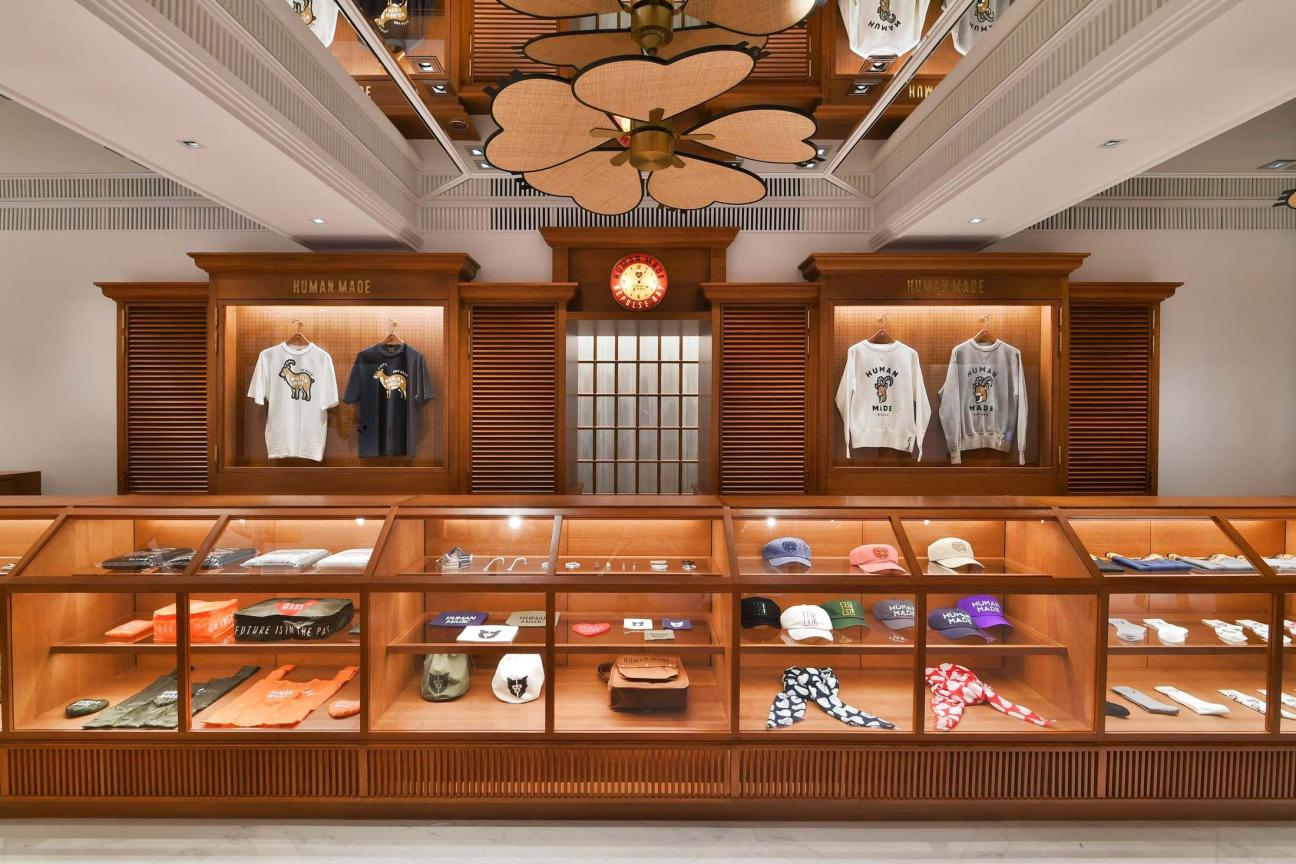
A trip to the bay now comes with the promise of making fresh discoveries. Tapping into an appetite for all things Made in Japan, several businesses from the country have set up shop here, including workwear brand Human Made. Visitors can also pick up rugs and embroidered kaftans at lifestyle shop Inside, jewellery by accessories brand Via de Lourdes and plenty more.
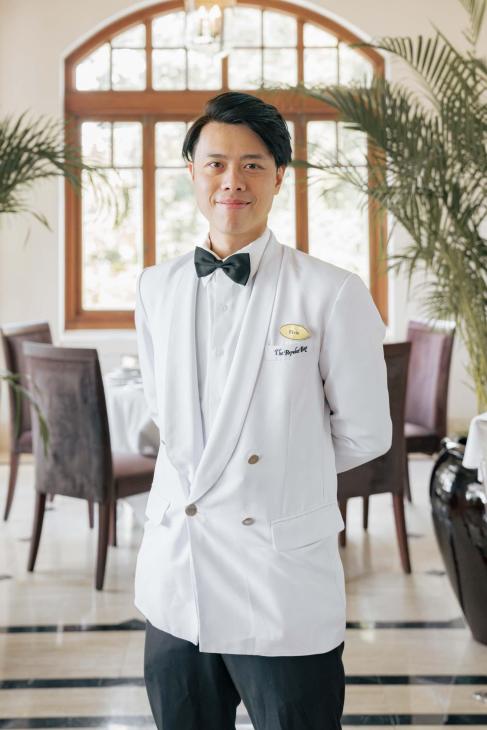
“Many years ago we had brands such as Christian Dior but, right now, we wanted to look at specialists rather than all of the usual shops,” says Olaf Born, who oversaw the transformation as the general manager of The Repulse Bay and Peninsula Clubs and Consultancy Services. Monocle meets him in The Verandah, the restaurant and central landmark of the complex, situated almost precisely where the hotel’s famous live jazz concerts used to take place in the 1930s.
“We also have to take into account the 402 apartments that we have to provide amenities for,” says Born, pointing to the charming residential complex. Here, locals relax on the lawn and families can be seen heading down to the beach in groups. There’s a strong sense of community and the team at The Repulse Bay seeks to nurture it further with monthly cocktail meetings, at which residents are able to share their views on the development of their neighbourhood.
“We looked back at the history of the south side,” says Born. “This used to be The Repulse Bay Hotel, where people would come on holiday and there would always be events happening. Even if we don’t have the hotel, we want to recreate that ambience and make it a destination in Hong Kong again.”



Also joining the neighbourhood are home-grown businesses Caffé Parabolica, Bakeshop Parabolica and florist Blackbird Conservatory, complementing the existing mix of grocers, restaurants and fashion brands. Visitors and residents alike can sip good coffee, pick up Japanese-inspired baked goods and find plants and floral arrangements to brighten up their homes. The bakery and café are already attracting more than 10,000 visitors a month, many of whom come for the popular cream latte and egg sando (a simple sandwich made using thick shokupan bread). The ambition is to double this number by the end of this year.
“We want to assist brands that might not have a presence in Hong Kong, as well as local talent,” says Born. “That makes things very interesting.” The group’s efforts to keep things fresh also involve a series of temporary pop-up shops, collaborations and artist residencies. In December 2024, the shopping arcade hosted a two-day camping-themed event with Japanese brand Visvim. Working with independent businesses aligns with The Repulse Bay’s broader ambition to highlight heritage and great design. Japanese labels, such as Human Made, have proven to be particularly good matches, given their focus on handicraft.
Hong Kong residents often joke about Japan being their second home. Many make trips to the country multiple times a year and there is a long history of cultural exchange dating back to the early 20th century. That’s why bringing Japanese touches to The Repulse Bay is a smart move – and it’s paying off.
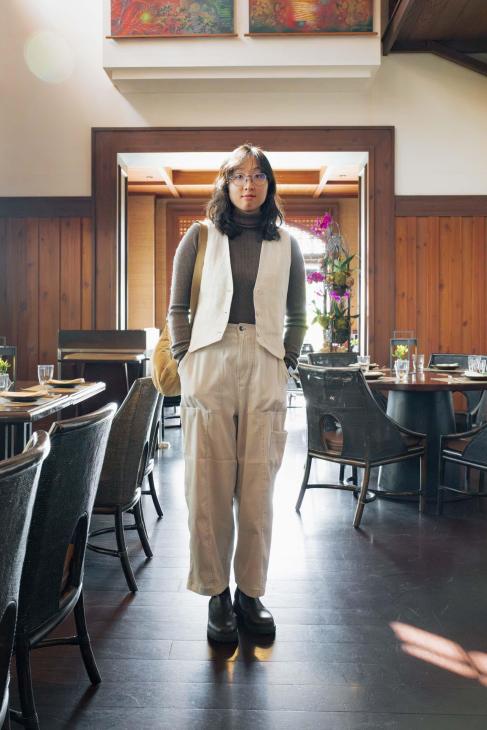

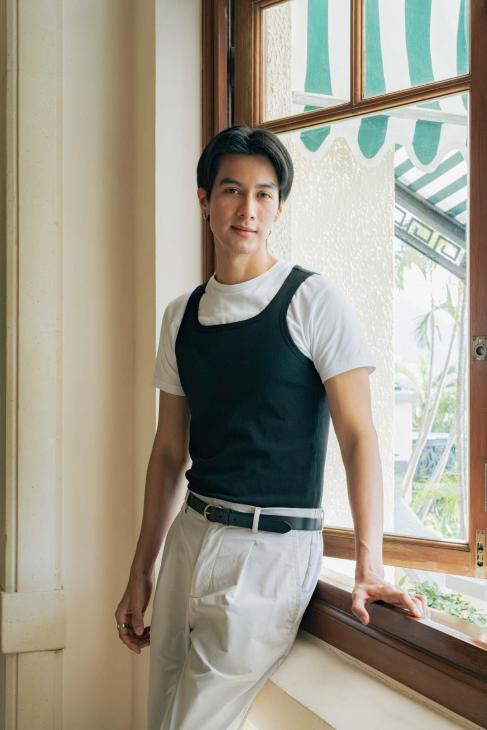
“We have certainly seen a much younger crowd coming from central Hong Kong, not just the south side,” says Born. “We have a lot of younger people using the terrace at [pan-Asian restaurant and bar] Spices. Residents are becoming regulars now too.” It’s a welcome sea change. With new ventures in the pipeline, including markets and brand-specific events, Born is confident that The Repulse Bay can help to re-establish the area as a buzzing Hong Kong destination.
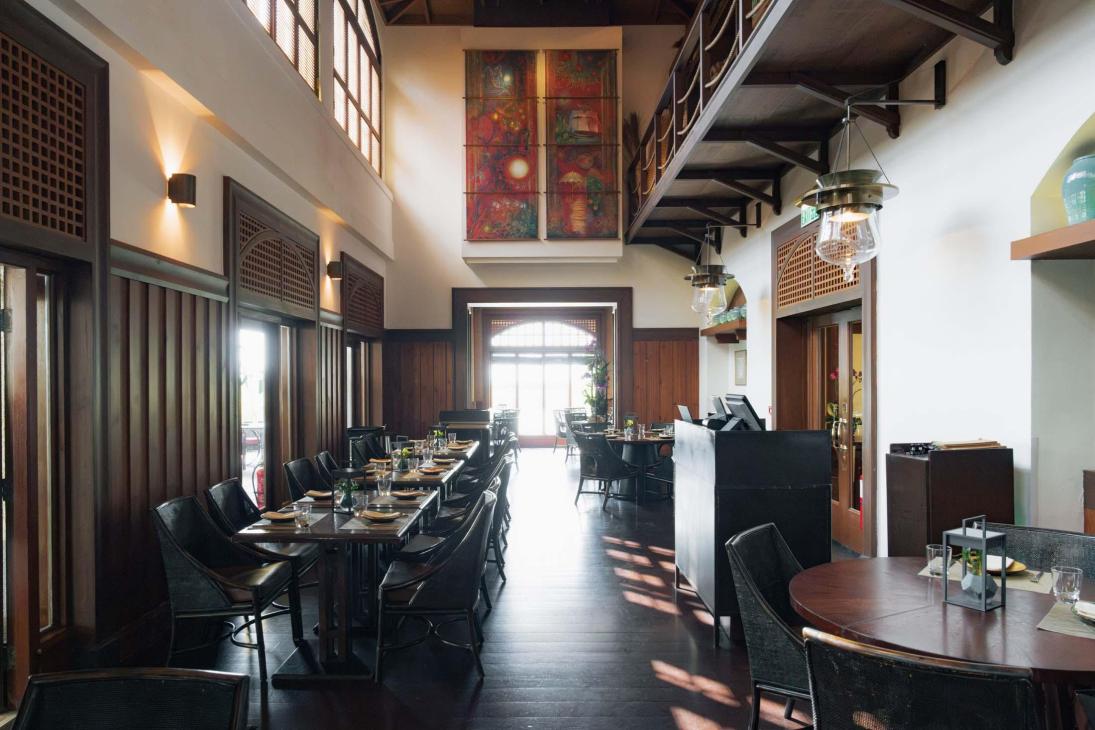
His ambitions run far and wide, encompassing everything from orchestrating the return of tea dances at The Verandah restaurant to opening an archive room that could tell the story of the illustrious development. “There’s a huge history here and we want to find a way of displaying it for future generations, as well as today’s younger people,” he says. Resonant historical references can be found throughout the arcade; in the courtyard, roses are currently being planted to pay homage to the flowers that once encircled the gardens of the hotel. Downstairs, Human Made uses bellboy trolleys as clothing racks. These are filled with vintage-inspired workwear, including chino trousers and elegant bowling shirts. Around the corner is Human Made’s food shop, Curry Up, which is its first international outpost.
“We have seen more brands reaching out to us that wouldn’t have done so in the past,” says Born. “We hope to be a springboard for upcoming designers who might then move to a more central spot for a bigger space. We understand that they’ll outgrow us but that’s fine because it keeps us fresh and gives us space for new tenants.”
Though the transformation is expected to be completed this year, there will always be room to experiment with retail concepts, introduce new names and encourage locals to visit the south side more frequently. “It’s a collaboration between ourselves, the brands and the community,” says Born. “We have beautiful surroundings, a true boutique feel and a few of the very best things.”hshgroup.com
Read next: The Monocle City Guide to Hong Kong, featuring the very best hotels, restaurants and retail spots
JSX is the hop-on, hop-off jet service disrupting short-haul aviation
Alex Wilcox once came up with a plan to beat Concorde. In 1997, as a young pilot from Vermont, Wilcox had worked his way up the ranks at Virgin Atlantic and presented an idea to his boss, Richard Branson. Wilcox argued that by flying Gulfstream jets with lie-flat seats from Westchester County Airport in New York state to London City Airport, Virgin could beat the supersonic jet on door-to-door travel times for customers in Connecticut. Travelling to JFK International Airport was time consuming; ditto the trip from Heathrow to the City of London. Wilcox saw that the use of smaller, underutilised airports could speed up the overall journey, even via a slower aircraft.

Virgin ultimately declined to fund Wilcox’s proposal. Yet this rejection didn’t quell his knack for hatching ambitious ideas that could disrupt the aviation sector. Now, almost 30 years later, Wilcox is captaining JSX, the operator of a fleet of hop-on, hop-off jet services across strategic North American routes that has the wind under its wings right now.
The draw of a semi-private service such as JSX is that flights tend to be quicker, and occasionally cheaper, than the First-Class equivalent offered by legacy carrier. JSX passengers arrive at its hangar in Dallas as little as 20 minutes before their flight, toss the valet their keys and board for Cabo San Lucas, Miami or Scottsdale. The seats have Business-Class legroom with Starlink-enabled wi-fi, while flight attendants keep the snacks and drinks flowing. Though other aviation entrepreneurs have tinkered with this model – JSX’s leading competitor, Aero, flies to sun and ski destinations from Los Angeles, and continues to expand its reach – JSX has built a coast-to-coast network with multiple flight hubs and was expected to exceed €485m in revenue in 2023 (JSX does not disclose its revenue figures). That figure is a tiny fraction of the €24bn that the three US legacy carriers each made last year but JSX is encroaching on market share among fliers who’ve grown weary with the rigours of traditional air travel.
“We have what really matters in business, which is a million customers who absolutely love us,” Wilcox tells monocle in a conference room overlooking JSX’s fleet of Embraer erj 135s and 145s. “We’re profitable and we’re growing.” More 145s are in the pipeline to join the fleet this year and the route map is likely to expand, with the lucrative New York-Florida corridor and destinations west of the Rocky mountains clear opportunities.
Headquartered in a 1950s hangar in Dallas Love Field airport, JSX seeks to provide a level of hospitality that’s increasingly rare in the assembly line world of domestic air travel – and some of its top hires came direct from hotels. On the brisk winter morning that we visit, valets are parking Cadillacs and luxury Ford pick-ups, while others are loading luggage carts, bellhop style. JSX’s Dallas hub welcomes, at most, 15 flights per day with a maximum of 30 passengers per plane – the legal limit to fly under the Federal Aviation Administration’s regulatory radar for “public charter” flights.
Flightplan: JSX’s top five routes
1. Burbank, California to Las Vegas
2. Orange County, California to Las Vegas
3. Burbank, California to Oakland
4. Burbank to Scottsdale
5. White Plains, New York to Opa Locka, Miami
Though the plastic plants and tepid coffee in the departure lounge fail to inspire (a lounge refresh is, we’re told, coming soon), the point, say execs, is that travellers don’t need or want to linger. Indeed, the destinations on the departure board reflect the two sides of JSX’s proposition: passengers in stylish puffers are boarding a flight to Taos, New Mexico, a delightful but hard-to-reach ski town; while across the hangar is a crowd en route to Las Vegas dressed for the links in khaki shorts and golf shirts. Two staffers working the gate whisper discreetly that World Wrestling Entertainment scion Shane McMahon is boarding one of the aircraft. JSX has a regular vip clientele, and Wilcox pauses multiple times during our interview to field calls from a senior Trump administration official who’s frustrated by poor communication about a weather delay on a jsx flight to Florida.
Security is swift and completed without scanning wands and conveyor belts, and boarding takes place on the tarmac. A stand full of red JSX-branded umbrellas are stationed conveniently at the gate to weather any Dallas downpour.
To explain JSX’s niche, Wilcox references the hotel industry. “Between Motel 6 and Aman, there are 100 hotel brands,” he says. But between domestic First Class on a legacy carrier and a private jet, there was nothing. When Wilcox asked business travellers why they would spend four-figure sums on a private jet hop between Los Angeles and the Bay Area, the answer was clear. “They didn’t want to spend an hour and a half at the airport for 45 minutes on an aeroplane,” he says. For long-haul flights, the pageantry of the international airport remains relevant. For short domestic trips, it can be a hassle.
It’s the kind of insight that Wilcox gleaned during a career spent between the cockpit and the C-suite. Raised in Vermont as the son of an American father and Swiss mother (he holds US citizenship), he fell in love with aviation as a child taking transatlantic flights to see family. JSX’s red livery is a homage to his Helvetic roots – when viewed from the top down, the colour scheme resembles the old Swissair logo.
Wilcox can rattle off a colourful CV, including a stint as a rock-band manager. He interned for Southwest Airlines founder Herb Kelleher, worked for Virgin Atlantic, joined David Neeleman to launch JetBlue and was recruited by now fugitive Indian billionaire Vijay Mallya to start short-lived South Asian carrier Kingfisher Airlines. “There are legions of people who have failed in this industry,” says Wilcox. “Only a handful actually made something that has lasted, and I’ve been lucky to work for at least four of them.” From his various mentors, Wilcox says that he learnt the importance of taking care of his crew. He also became a believer in the efficiency of fielding a single aircraft from his years at Southwest, where every pilot could fly every plane. “Low cost is the key to winning this business,” he says.
He also adopted a roll-up-your-sleeves mentality. On our hangar tour, Mark Fields, an aircraft maintenance engineer with 20 years of experience, says that he has seen Wilcox in action in a crisis. “A CEO loading luggage during an ice storm?” says Fields. “Now that’s a man you want to work for.”
There’s no aviation-industry secret weapon for avoiding inclement weather or turbulence in the travel market. But when the skies are clear, JSX offers a tantalising alternative to the conventions of air travel that we’ve become accustomed to, from time-consuming queues for security to a lingering sense that, among some legacy carriers, value for money has leaked from the overall experience. For passengers who want to get from A to B quickly, comfortably and conveniently, this is a disruptive player worth watching.www.jsx.com
Why wealthy Nairobi residents are moving to the bucolic Tigoni neighbourhood
The Nairobi neighbourhood of Tigoni is only 200km south of the equator but its refreshing altitude of 2,000 metres above sea level offers some breezy relief from the heat. A cool morning mist is slowly clearing as, under the watchful gaze of a bemused colobus monkey, Monocle struggles to locate the Rewildings building site.
The residential project is the work of architect couple Carolina Larrazábal and James Mitchell. While their studio is nearer downtown Nairobi, the couple put down roots in Tigoni thanks to a manageable commute and easy access to nature. They fell in love with their current site while looking for buildable land. “It was the first one we viewed,” says Mitchell. “We both had that kind of fuzzy feeling when you know that something is right. It really clicked.”
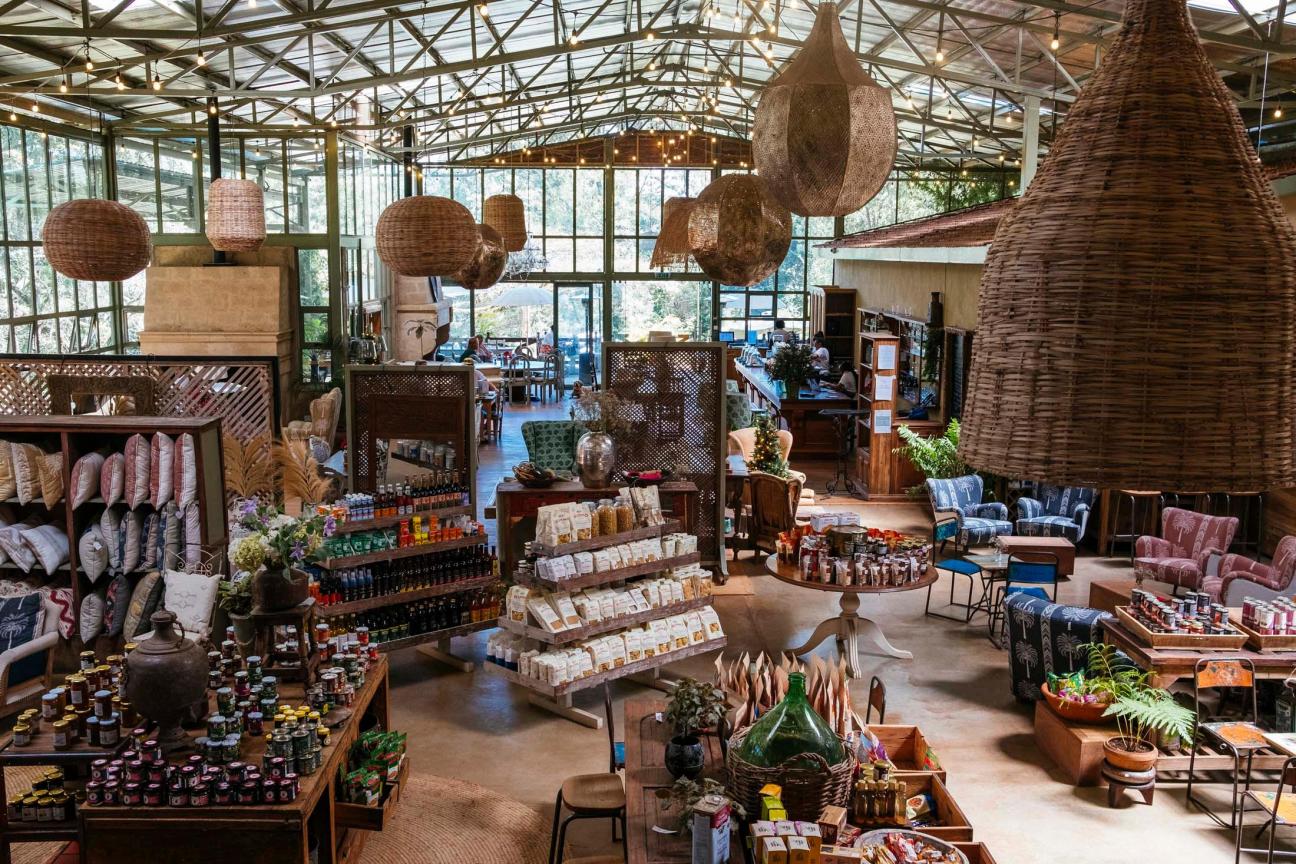
The 33-year-old Spaniard and 36-year-old Scot designed seven low-carbon houses here, including a home for themselves. When Monocle finally locates the turning, the site is brimming with activity. A team of carpenters is cutting sustainably sourced timber, and the smell of charred wood is in the air: the exterior of each house will be treated with the Japanese yakisugi technique that involves charring each panel of wooden cladding. The four-hectare development is both residential and an act of conservation. Surrounded by tea fields, it sits between two forests. By removing most of the tea bushes and replanting native flora, the couple hope to reinstate some forest cover and ecosystem for the likes of the monkey still watching our progress.
Larrazábal and Mitchell aren’t alone in trying to escape Nairobi’s traffic-clogged downtown for the tranquil hills of Tigoni. Several (hugely improved) roads, including one that connects directly to Jomo Kenyatta International Airport, have brought the capital within easy reach of a highway, then down lanes lined with banana and acacia trees in just an hour.
With the UN moving more jobs to Nairobi, its largest base in the Global South, property prices have increased by 25 per cent or more in some inner-city neighbourhoods. Tigoni offers value besides its ecological allure; you can buy a three-bedroom townhouse with a small garden in a new development for about €270,000, while a more upmarket four-bedroom Rewildings house will set you back closer to €730,000. A generational change among Tigoni’s traditional tea farmers, coupled with the declining value of the crop, has resulted in landowners seeking to repurpose agricultural land. One of these is Segeni Ng’ethe. The 48-year-old tech entrepreneur grew up on his father’s tea plantation and dairy farm, Gathoni Park Farm, a short drive away from Rewildings.
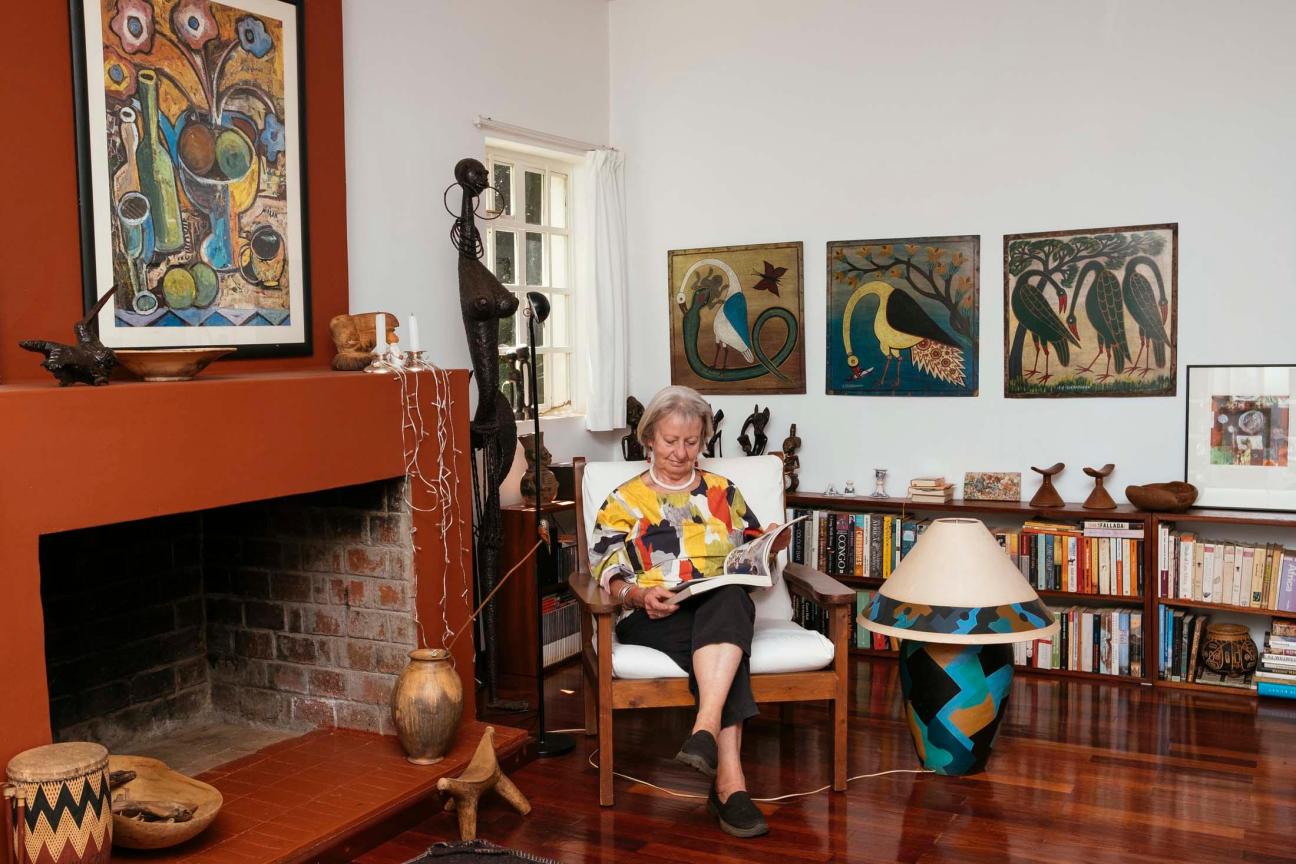
A few years ago, Ng’ethe decided to leave tech behind and take over the parental plot. Moving from start-ups to running 97 hectares of tea and cattle-fodder plantation was a steep learning curve. “It was not an easy transition, especially on the farming side,” he says. “I remember when I came here, one of the first appointments I had was with a mole hunter. I didn’t know that you could find people with careers in mole hunting. But I was, like, ‘Welcome to the new world.’ We planted avocados and they were all disappearing because of these moles [tunnelling around the tree roots].”
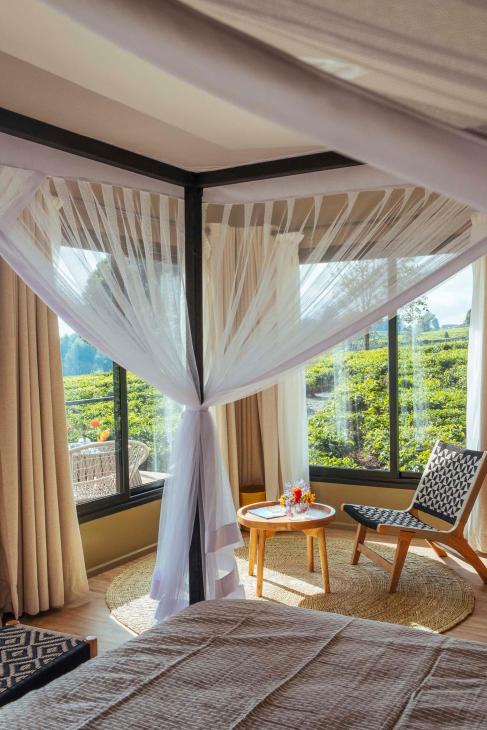
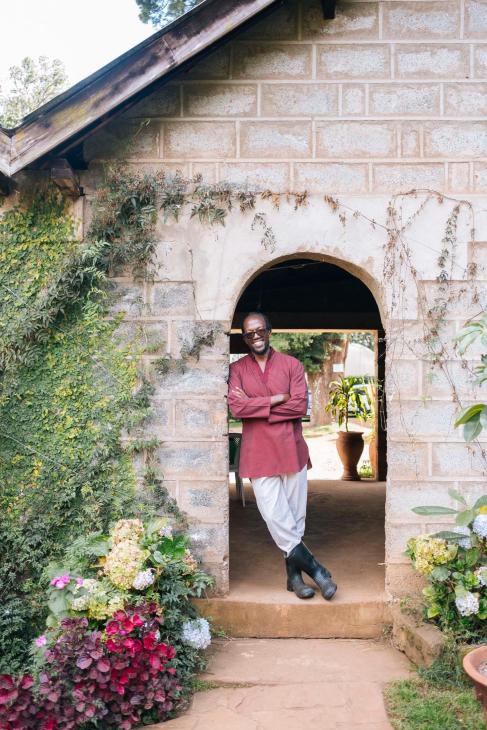
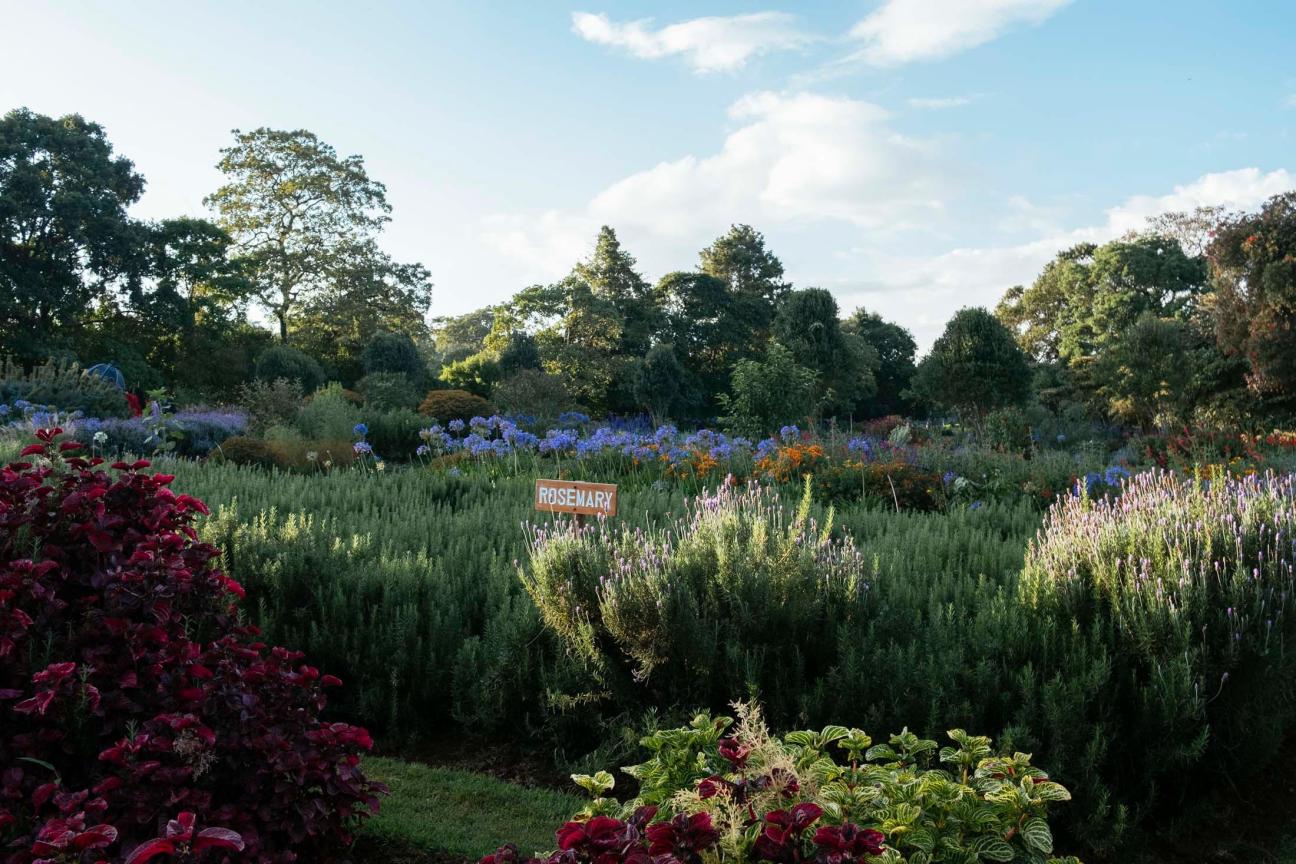
Several equally humbling experiences followed but Ng’ethe transitioned Gathoni from an agricultural business into an eco-tourism destination with a mix of farming and hospitality. He leased out his dairy to a cheese producer and turned the picturesque spaces on the farm into a flower garden, fragrant with the smell of lavender, rosemary and geranium. The gardens are available for bike tours, picnics and weddings. “On weekends, we have all generations, big families, small families, couples,” says Ng’ethe over a cup of tea grown on his own plantation. “Nature is the new angle for recreation. Just having access to the open spaces, the sun, fresh air, listening to birds singing. People just lie down on a blanket and look up into the sky. That’s something that has been growing, particularly among a younger generation of people who want to be outdoors on weekends, especially those who live in apartment buildings.”
Recently Ng’ethe teamed up with his neighbour, Mikul Shah, and built several “tea-pods” (cabins on stilts set in his tea fields) that are available for short-term rental to Nairobians who want a weekend away or tourists who are looking to break their drive to the Masai Mara, 200km to Nairobi’s west. Shah and Ng’ethe are also exploring ideas and financing to open a small hotel, restaurant and conference facility by the nearby lake.
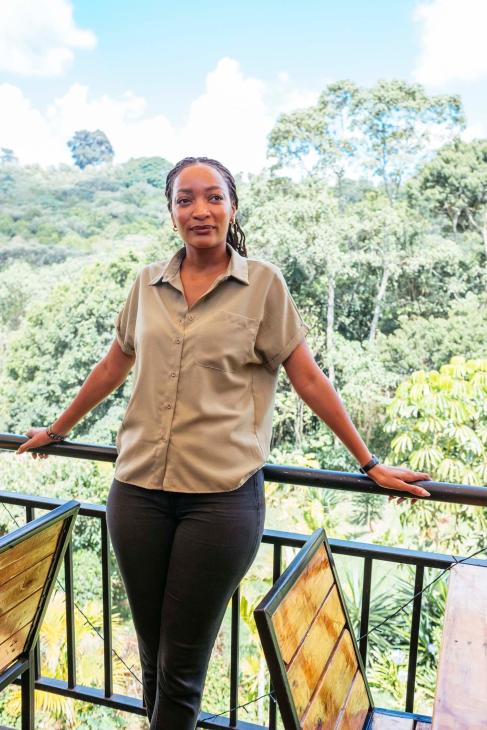
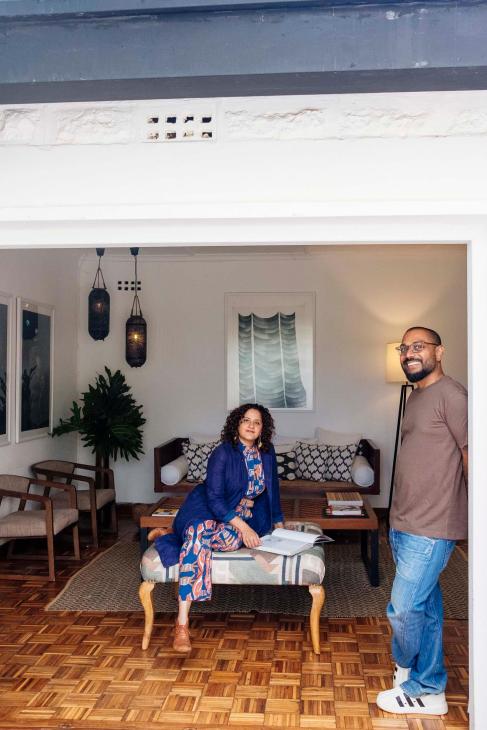
If infrastructure has made Tigoni accessible, Shah and his jewellery-designer wife, Ami Doshi, have played a key role in rebranding the enclave from sleepy to cool. The couple originally rented The Lakehouse – a dwelling with scenic views of the garden and the lake – as a family retreat during the pandemic. “We fell in love with the fact that we’re surrounded by nature and trees that are 90 years old,” says Shah, who was born in coastal Mombasa and lived in London.
The path to The Lakehouse leads through a small, lush forest where the canopy filters the midday sun. The bountiful garden hasn’t changed much since its inception about 70 years ago. The ruby red flowers of an orchid cactus, part of the original landscaping, explode in full bloom. Bushes of giant philodendrons and fern lead towards an imposing flat-top acacia tree by the lake.
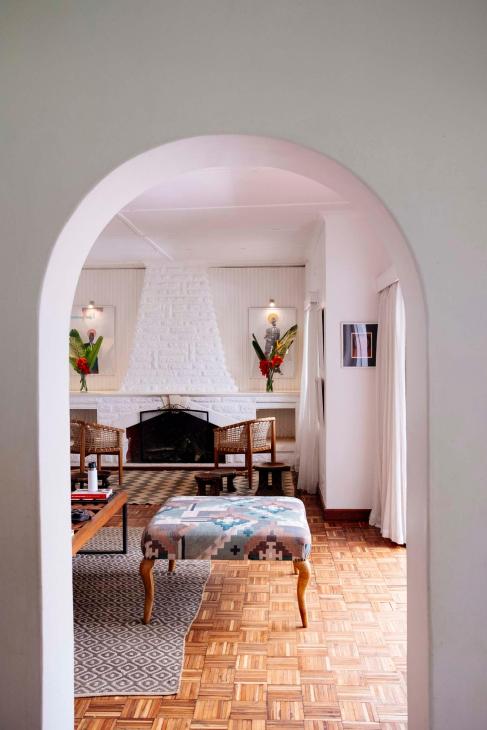
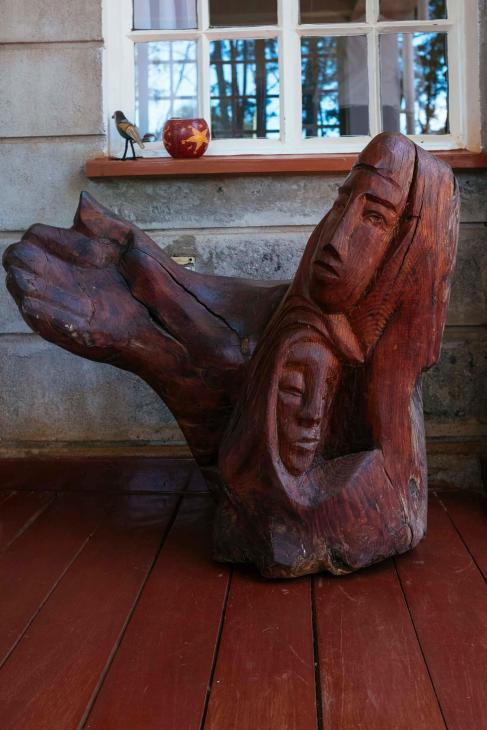
Both Shah and his wife saw the potential in using this space to bring people together in Tigoni. The idea for a supper club set in their conservatory with unhindered views of the lake and garden took shape. The tables are decorated with sculptural floral arrangements. Once a month they host wine tastings, culinary pop-ups and birthday parties. The couple are now in the process of closing on a property nearby. “Even properties that are slightly further from what was traditionally Tigoni are calling themselves ‘Tigoni’, because it has an aspirational name attached to it,” says Shah.
Infrastructure and the availability of land and housing aside, Shah thinks that another factor that has been instrumental in the growing appeal of moving here is schooling for the children of people looking to put down roots. “There is an international school that offers a new way of teaching,” he says. “It’s a forest school. Very recently it started taking students up to age 18.” The school, Woodland Star, is next to Brackenhurst forest and students are encouraged to spend their time outdoors. A repurposed Volkswagen campervan serves as an outdoor learning space. About 60 per cent of the children enrolled here travel from Nairobi, while the other 40 per cent live in Tigoni, though these numbers are slowly shifting the other way.
Sunny Im, whose son is due to start at Woodland Star shortly, lives around the corner from the school. “It is an exceptional school,” she says. “People commute into Tigoni for it. If you want to be in Tigoni, if you want the nature and the quiet and you have a child, you kind of have everything in one place.” Im works as a talent strategy consultant for an investment firm that focuses on the renewable energy sector in Africa.
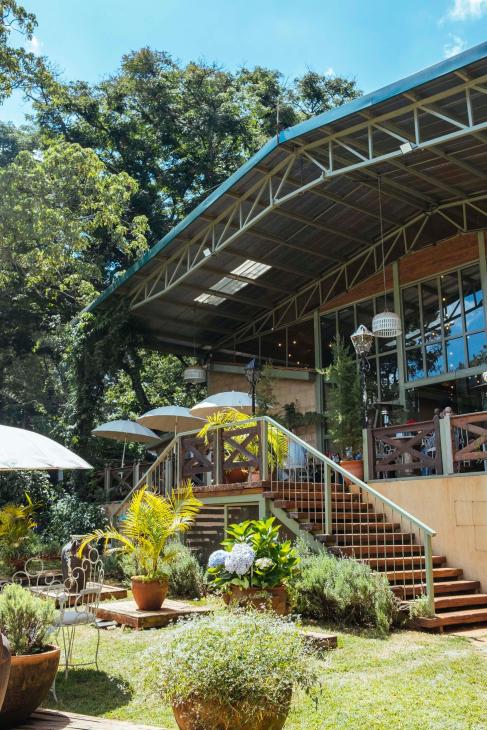
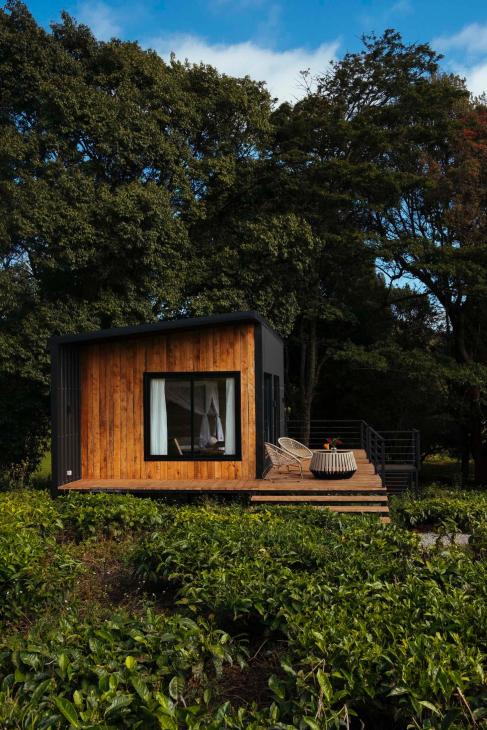
Im was born and grew up in Nairobi. After leaving Kenya to attend college and graduate school in the US, she and her husband returned to East Africa to work in neighbouring Uganda. A day out in Tigoni while visiting family in Nairobi led them to buy land and build a house and guesthouse in the tea fields. Inside, light streams in through contemporary floor-to-ceiling windows. Teak flooring warms the modern, sleek design, while two fireplaces – indoor and outdoor – can be lit during chilly Tigoni evenings.
Buying land and building from scratch is possible but it’s not the only way to secure property in Tigoni. For those who like the quiet but not the gardening, apartments and townhouses with access to an expressway into central Nairobi are now on the market, while projects that require renovation, such as older farmhouses and 1970s bungalows, are also available to rent or buy. Sakina Seif and her family moved here to have access to more living space. She and her American husband commute to Nairobi to run their business, Kentaste, which is the largest manufacturer of coconut-based products in East Africa.
Three galleries or collectors to meet:
1.
Check in with Erica and Hellmuth at the Red Hill Gallery. They may show you their private collection of contemporary East African art. Join the mailing list for the vernissages.
redhillartgallery.com
2.
Get in touch with Thaddeus Mutenyo Wamukoya, affectionately known as Tewa. He organises pop-ups and private viewings of contemporary art from Kenya, Ethiopia and Uganda.
tewasartgallery.com
3.
Nairobi Contemporary Art Institute is on the edge of Nairobi, a short drive from Tigoni. It’s a non-profit visual-art space.
ncai254.com
Sensing an appetite for gastronomic variety, Seif opened Nifty, a café that overlooks Brackenhurst forest and has become a popular spot for brunch and after-work drinks. With more and more young professionals moving to Tigoni, hospitality is catching up. That, in return, has made the enclave more attractive to day-trippers. Set in a refurbished dairy, The Fig and Olive, a recently opened café, deli and grocery shop, offers everything from poached eggs to quality ingredients such as bronze-die-cut pasta and organic chicken. At Como, owner and chef Stephanie Kiragu incorporates regional ingredients such as tree tomatoes into her cooking. Organic farms, including Forest Foods, have excellent produce that can be delivered.
The Limuru Country Club, equidistant from The Lakehouse and Nifty, is a good place to meet and mingle. On a Saturday afternoon, the smell of barbecued nyama choma wafts through the air. After hitting a ball around, the mostly male members of the club congregate on the terrace to tuck into a portion of grilled meat with kachumbari, a lime-juice-infused tomato salad. The club has access to an 18-hole golf course, a tennis court and a pool. It’s a favourite of both the Tigoni elite and younger newcomers such as Mitchell and Shah. Every two months the nearby Red Hill Gallery has a vernissage showcasing East African artists.
Now that Tigoni’s property secrets are out, the challenge will be to preserve its relative serenity. There are concerns that improved commuting times and open spaces could lead to the uncontrolled development that has seized other parts of the Kenyan capital. “The change is positive,” says Segeni Ng’ethe. He is confident that Tigoni’s unique landscape will not be erased as development draws closer. “It’s bringing new ideas and different spending power.”
Tigoni calling: Neighbourhood knowhow
The cost of renting a flat and the agent to call:
Rent a new two-bedroom, two-bathroom cottage for €1,500pcm from a private landlord. Call Quentin Mitchell at Langata Link Real Estate. Or explore the area: word of mouth gets you the best deals.
langatalinkrealestate.com
Best street to live on:
St George’s Road, within walking distance of the lake and an equestrian centre. It also has access to two roads that lead to Nairobi.
Best school:
Woodland Star. An international school on a beautiful green campus.
woodlandstarkenya.com
Groceries and cafés?
Greenspoon is an excellent on-the-day delivery service, with artisanal groceries. Try the region’s tea at The Fig and Olive, then pick up your bread and pastries, as well as the latest copy of Monocle, at The Good Grain in town. Head to Brown’s for local cheese.
greenspoon.co.ke; +254 795 347488; the-good-grain.tappi.ke; brownsfoodco.com
Running route that shows the enclave at its best:
Run through the tea fields around Kiambethu tea farm, explore Brackenhurst forest and head down to the lake. Breathe deep: the altitude can take some getting used to.
Closest airport and how to get there:
Fly into Jomo Kenyatta Airport and take a taxi. It’s a 55-minute drive to Tigoni.
The biggest improvement:
Road upgrades have reduced travel times and increased commuting options to Nairobi.
The area is missing:
A good bookshop.
Only here:
It’s one of the few places in Kenya where you can walk, cycle or ride a horse without falling foul of trespassing laws or the wildlife getting in your way (or chasing you).
Villa Volman: The restoration of a Czech modernist home into an expansive museum
What to do with a culturally significant home that’s too expensive to maintain but too precious to abandon? That was the conundrum facing Zuzana Kadleckova, whose family owns Villa Volman, a 1930s masterpiece of Czech modernism. “Can you imagine living here today?” says Kadleckova with a laugh. The former marketing consultant turned full-time curator is on hand to meet Monocle to explain her answer to our original question: under her direction, the renovated villa has been transformed into a museum. “The villa is breathtaking but the scale is something else entirely,” she says. “Every walk from the bedroom to the kitchen would make you think twice.”
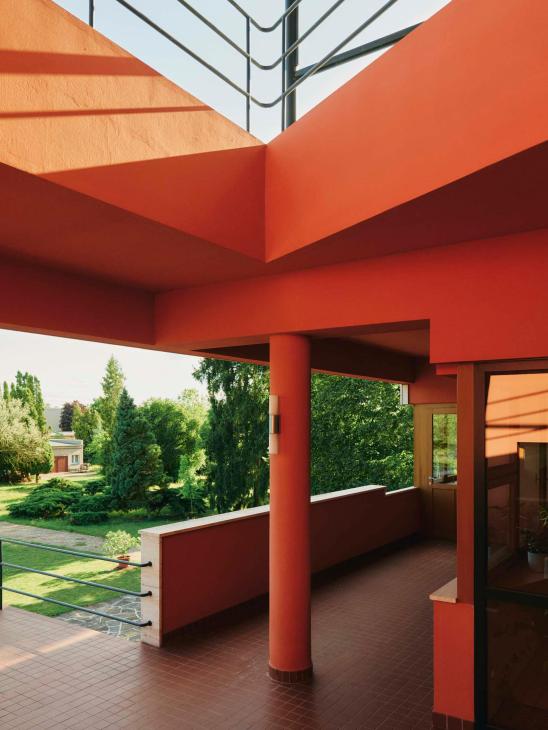
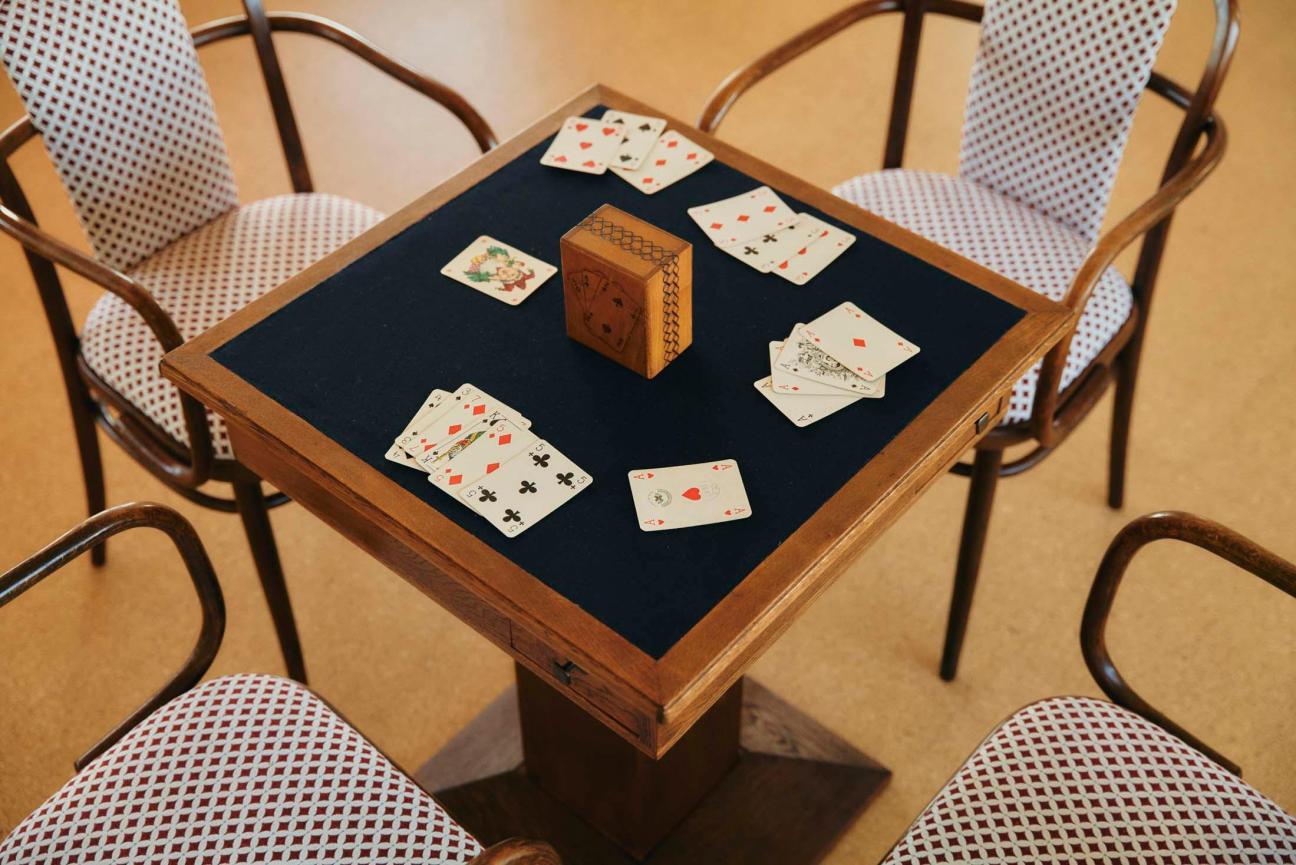
Located down a long drive in the small town of Celakovice, a journey of about 30 minutes from Prague, Villa Volman is a striking work of architecture with a chequered past. Across four storeys, it has a grand dining room, games room, an enormous open- plan living space, stately bedrooms and grand bathrooms, as well as staff quarters and a sweeping rooftop belvedere, all enclosed in architecture defined by crisp lines and intersecting planes.
Designed by Jiri Stursa and Karel Janu, two radical young architects whose Marxist principles saw them typically work on social housing rather than private villas, it was commissioned by industrialist Josef Volman in 1937. He ran a machine-tool factory and built the home on an estate next to a public park used by his employees for leisure pursuits. The house, intended for the widower and his daughter, Ludmila, reflected the ambitions of both its owner and what was then Czechoslovakia, as the man and the country enjoyed newfound prosperity that required striking modern architecture to reflect their progress, prowess and contemporary tastes.
This ambition was short-lived, however. Volman died four years after moving in and Ludmilla fled to France following the communist revolution in 1948, which resulted in the nationalisation of the villa. It was used as a kindergarten for decades before being abandoned in the 1990s. “The new chapter starts in 1996 with a set of new owners that included my father,” says Kadleckova. “My family is from Celakovice, and we are entrepreneurs producing machine tools, much like the Volmans. So you could say our family company is a natural successor.”
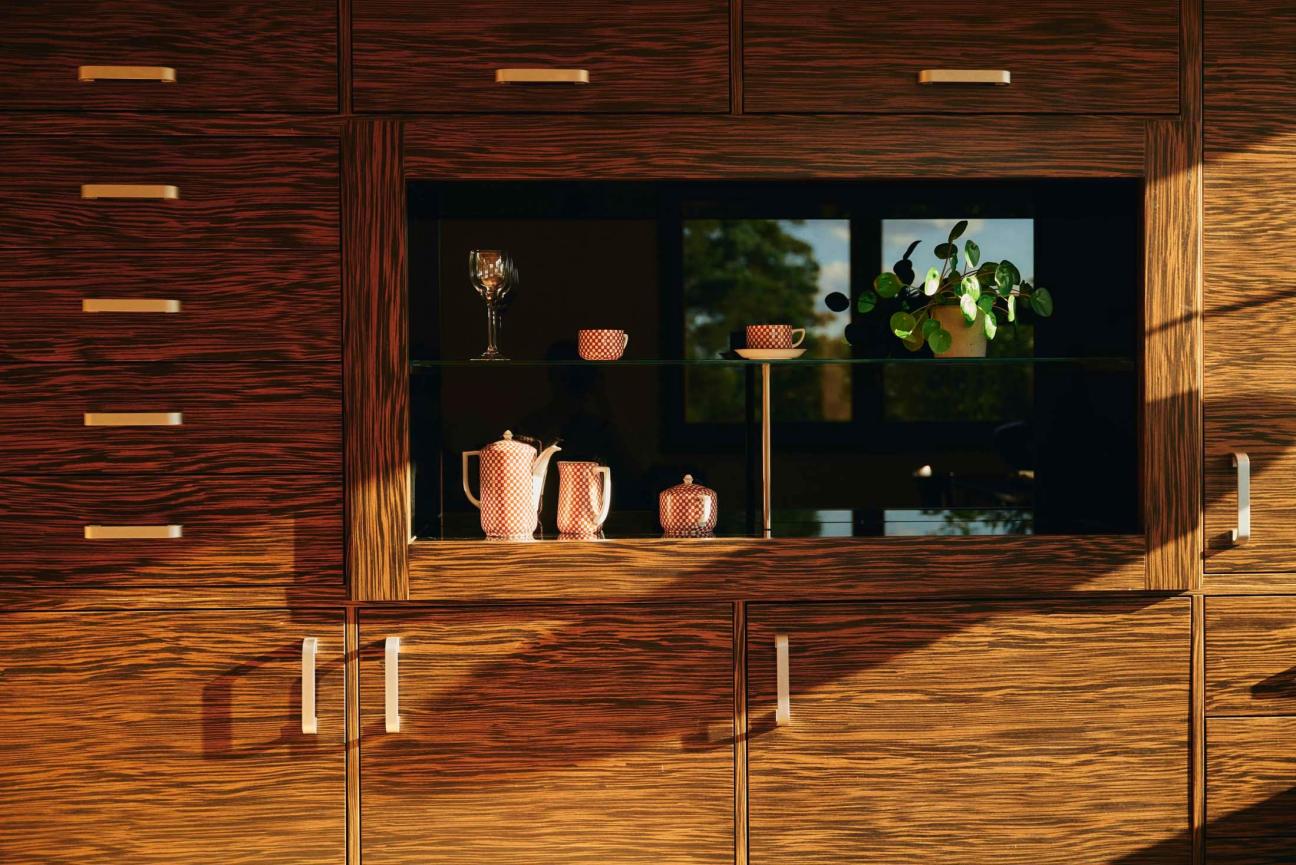
Kadleckova’s father, with the help of tak Architects’ founder Marek Tichy, spent the better part of 15 years renovating the home, which had decayed dramatically – rusted steel protruded from fractured concrete, windowpanes were shattered and the travertine cladding lay in fragmented ruin. “Tichy is one of the best-known Czech architects specialising in the restoration of the architecture of the first Czechoslovak republic,” says Kadleckova of the decision to work with the Prague-based creative, who matched the original material and colour palette of the villa in his restoration.
Under Tichy’s guidance, the travertine cladding and terracotta tiles were replaced or restored and bold splashes of colour were reinstated. Details and bespoke fittings, such as an oak staircase with a balustrade perforated with circular openings, were returned to their original and rightful majesty. Attention was also paid to the exterior spaces and façades, with the garden beds surrounding the rooftop belvedere replanted and the grand porte cochère (covered porch) given a lick of paint.
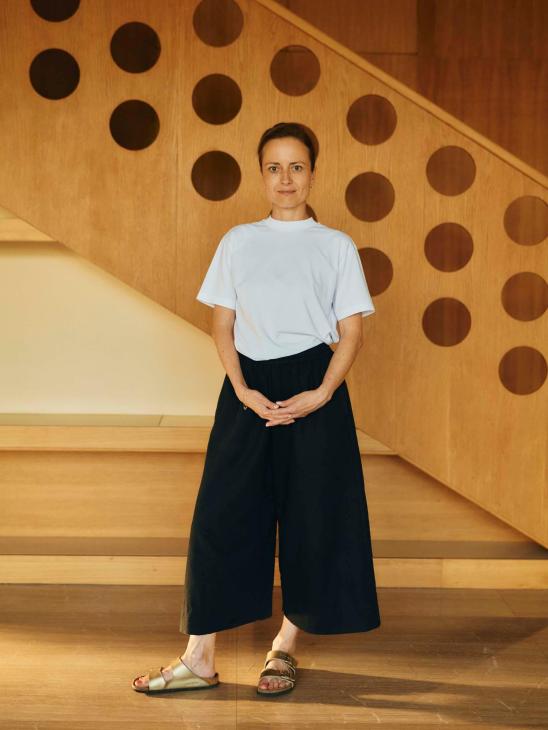
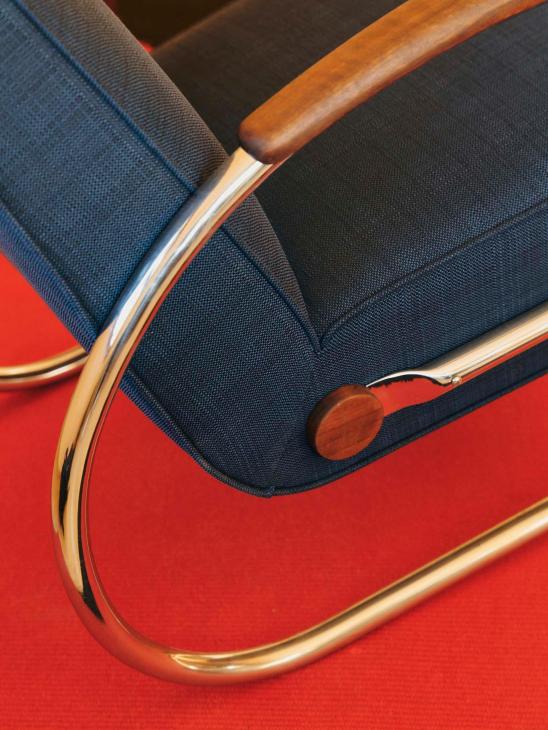
The villa has been finished with classic modern furniture – the perfect backdrop for the activities selected by Kadleckova that invite life to continue in the building. “There’s no better way to tell the stories of modern architecture and design than within the walls that lived through the 20th century,” says Kadleckova of the decision to open the space to the public with considered programming.
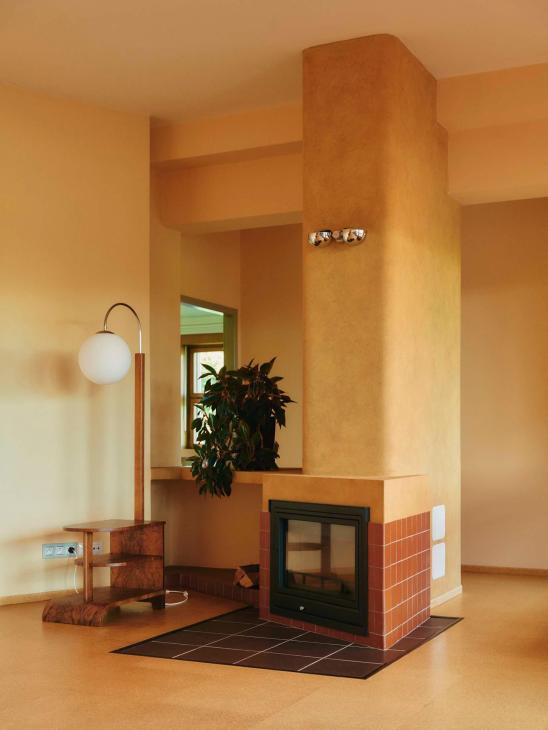
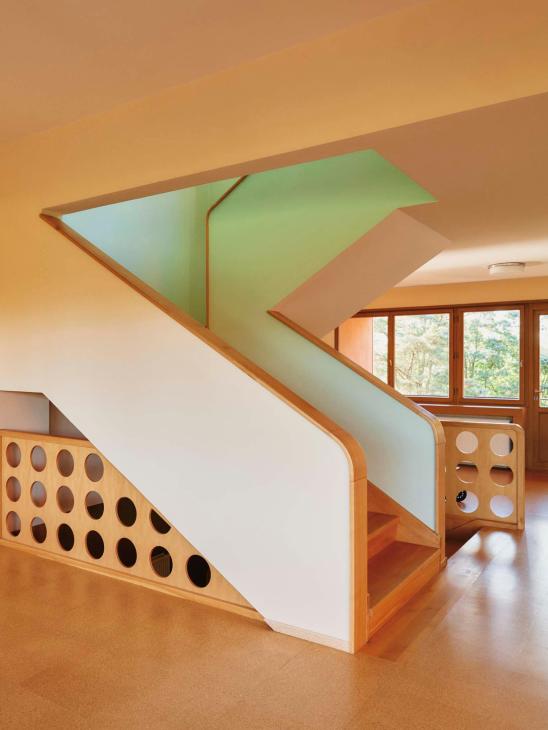
“When we welcome you as though it were your own home, you’re immersed and captivated with all your senses. It’s a completely different level of engagement compared with learning about it from books or attending lectures.”
The museum is open for guided tours and one-off events, such as rooftop yoga. But there are also opportunities to stay overnight; guests can contact Kadleckova and join the waiting list. The highlights, however, are moments when the spirit of the original architecture is brought into harmony with other creative industries, including live music and performance art. “We can host intimate concerts,” says Kadleckova. “Artists absolutely love performing here. After all, who else has a 170 sq metre living room? It brings fresh energy to the villa while still respecting its original character.” — vilavolman.cz
Villa Volman timeline
1937
Industrialist Josef Volman commissions Jiri Stursa and Karel Janu to design a grand home
1939
Villa Volman is completed to Stursa and Janu’s exacting modernist design
1948
The Volman family flees Czechoslovakia following the communist revolution
1952
The villa is nationalised and converted into a kindergarten
1979
It’s added to the Czech Central List of Immovable Cultural Monuments
1990
The villa is abandoned following the fall of the communist regime in Czechoslovakia
1996
Zuzana Kadleckova’s family become part owners of the villa
2003
Renovation works begin under the direction of Marek Tichy
2018
Restoration work is completed
2022
Villa Volman opens to the public as a house-museum
Zürich children’s hospital shows that thoughtful architecture can help patients to recover
In a residential district on the outskirts of Switzerland’s biggest city is the newly opened University Children’s Hospital Zürich. Among the site’s high-rise buildings and classically inspired, stone-clad medical- research facilities, the building stands out – not just because of its atypically low height but also as a result of its timber and concrete exterior. Nicknamed Kispi, it was designed by Swiss architecture firm Herzog & de Meuron as an alternative to sterile medical facilities.
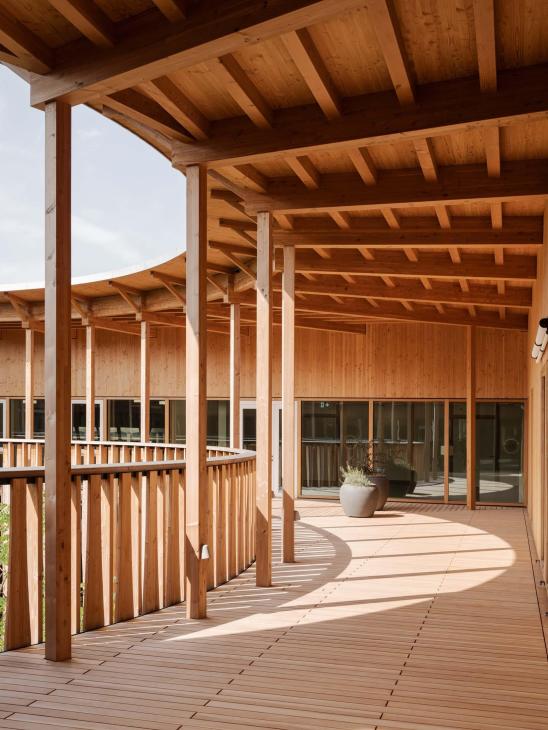

“Wherever possible, we wanted to use wood,” says Christine Binswanger, a senior partner at Herzog & de Meuron and the person in charge of the project. Timber’s ability to support healing is well documented; studies have shown that simply looking at wood cladding can ease the strain on your sympathetic nervous system. However, using the material in a clinical setting with strict hygiene requirements isn’t easy. By working closely with the Eleonorenstiftung, the healthcare foundation responsible for operating the hospital, the architects found a solution that beautifully balances practicality and design.
“The foundation was convinced that architecture could help to make the stay of young patients and their relatives easier,” says Binswanger, who explains that convincing the Eleonorenstiftung to go against the grain wasn’t a challenge, even if conforming to strict medical regulations was. “It was with this goal in mind that it supported us in finding a way to design the Kispi differently.”

And different it is. It’s set apart not only by its low-slung, mostly wood-based structure but by its innovative interior floor plan. Binswanger and her team took inspiration from the layout of a typical Swiss city district’s street grid. Every floor is organised along a central artery, which branches into smaller “lanes” that front open-air courtyards. The latter, which are filled with native plants, introduce natural light, which has been shown to reduce patient recovery time, into the centre of the building. These courtyards offer moments of respite, allowing children and their carers to pause and feel the sun on their skin.
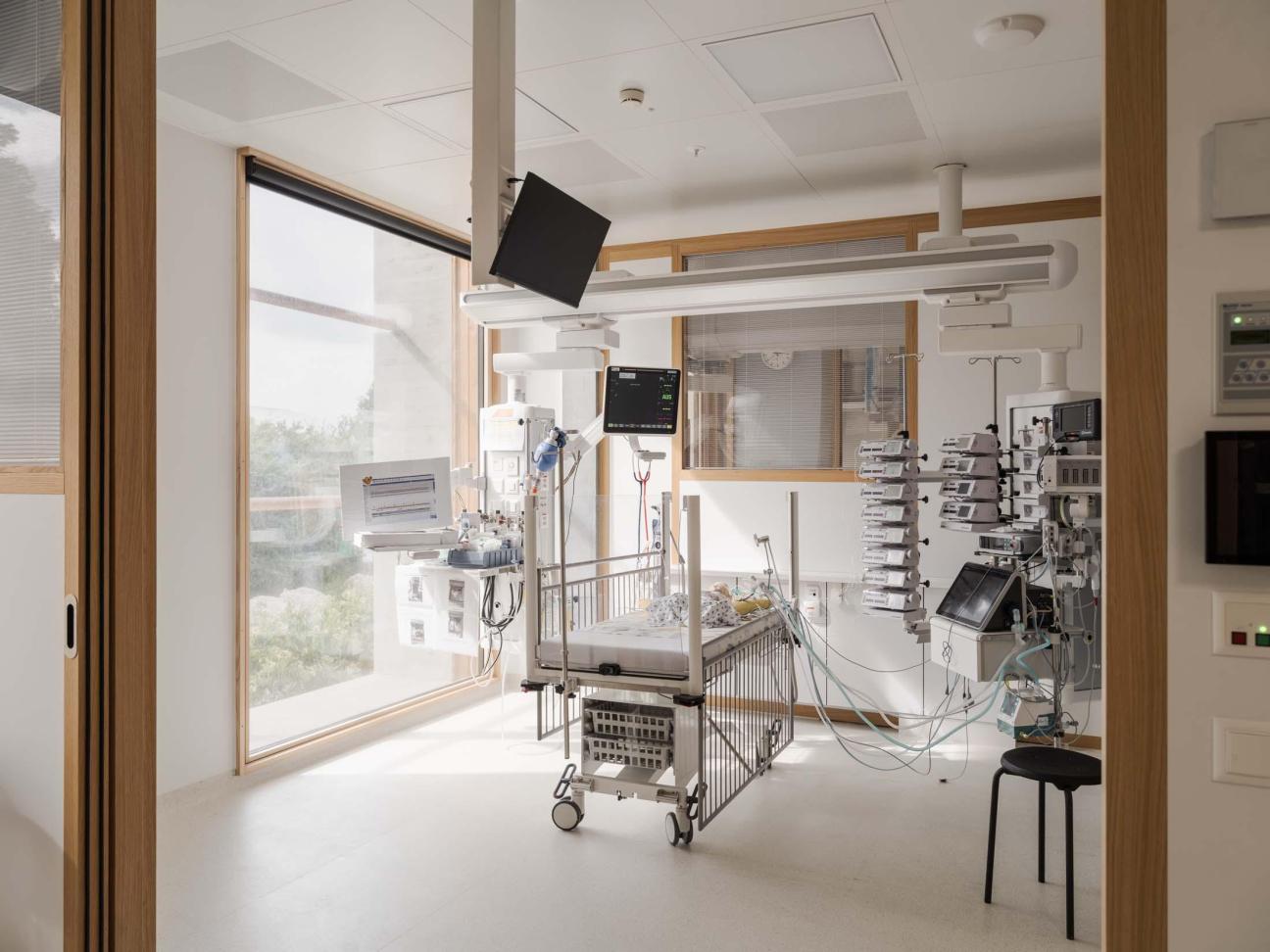
By integrating pockets of greenery wherever they could, the architects sought to foster a calming, uplifting atmosphere. “The courtyards ensure daylight and access to what’s outside,” says Binswanger, who adds that the interior windows on every floor also offer calming views of these verdant spaces. “And the overall use of natural materials such as wood gives patients a sense of connection to the outside world. The differently planted courtyards help to make orientation for those inside the building easier too.”
This thoughtful, city-like organisation takes the needs of both patients and staff into account. A clear hierarchy of pathways allows medical teams to move easily between treatment areas, offices and patient rooms. The architects carefully planned the layout so that distances between key locations – such as a pre-surgery waiting room and an operating table – would be short, making transitions smooth and reassuring for children. “Places have their own identity along the ‘main streets’ of every level,” says Binswanger.
Every storey of the building is dedicated to a different function. Emergency and ambulatory rooms are on the ground floor; offices on the second; and patient rooms for overnight stays, along with dedicated rooms for specialised medical care. are on the third floor, where wooden finishes and views of nature create a soothing environment. The rooms are made to feel like a self-contained wooden cottage, complete with small nooks that provide moments of escape for children, creating a space that feels safe, inviting and tailored just for them.

“Each of the patient’s rooms is like a cosy house,” says Binswanger. “They feel private. Last week a mother told us that she came here and felt safe. That, perhaps, tells you more than any description. We tried to create an inviting atmosphere for young people, reflected in details such as the round windows in the lift cabins, which are at a child’s height, so that the little ones can see something that the adults might not even notice. At the same time, there are places where adolescents can retreat and find privacy when they are not in therapy.”
In designing the Kispi in a way that embraces nature, puts children first and keeps practicality in mind, Herzog & de Meuron created not only a place for treatment but a sanctuary for children, their families and staff. The building feels like a warm embrace – a hospital that saves lives while improving people’s life quality. It sets a new benchmark for what a children’s hospital should be: a place where architecture helps to support the care and wellbeing of everyone inside.herzogdemeuron.com
Five considerations for building better
Many factors that make an office or a home appealing can apply to hospital environments and aid people at difficult moments of recovery.
1.
Greenery
Studies have shown that exposure to plants can help to improve mental health and reduce anxiety. It has also been linked to faster recovery from illness or surgery; a recent US study found that users of hospital gardens in California had improved health outcomes.
2.
Natural light
Flooding hospital spaces with natural light, whether through internal courtyards, light wells or big windows, aids patient recovery as daylight helps to regulate circadian rhythms and enhance rest. It also counters depression and weariness.
3.
Materials
Soft and tactile finishes create an inviting atmosphere that can reduce stress levels. Natural fibres are important too. Their use in interior environments is reportedly linked with reductions in post-operative recuperation times.
4.
Acoustics
Sound-absorbing materials can improve patient comfort by creating quiet spaces for recovery. They can also enhance staff effectiveness by eliminating noisy distractions.
5.
Ventilation
The consistent flow of fresh air through interior environments lowers the spread of infectious illness and reduces stress.
How to design for severe weather and endangered species
The Meise Botanic Garden just north of Brussels is one of the world’s largest conservatories of endangered plants. Apart from ensuring the security of rare species, the garden also enables the public to view and enjoy these rarities, an experience enhanced by its new Green Ark Project. This new pavilion, which doubles as a learning hub, is defined by parabolic wooden slats that curve above visitors’ heads.
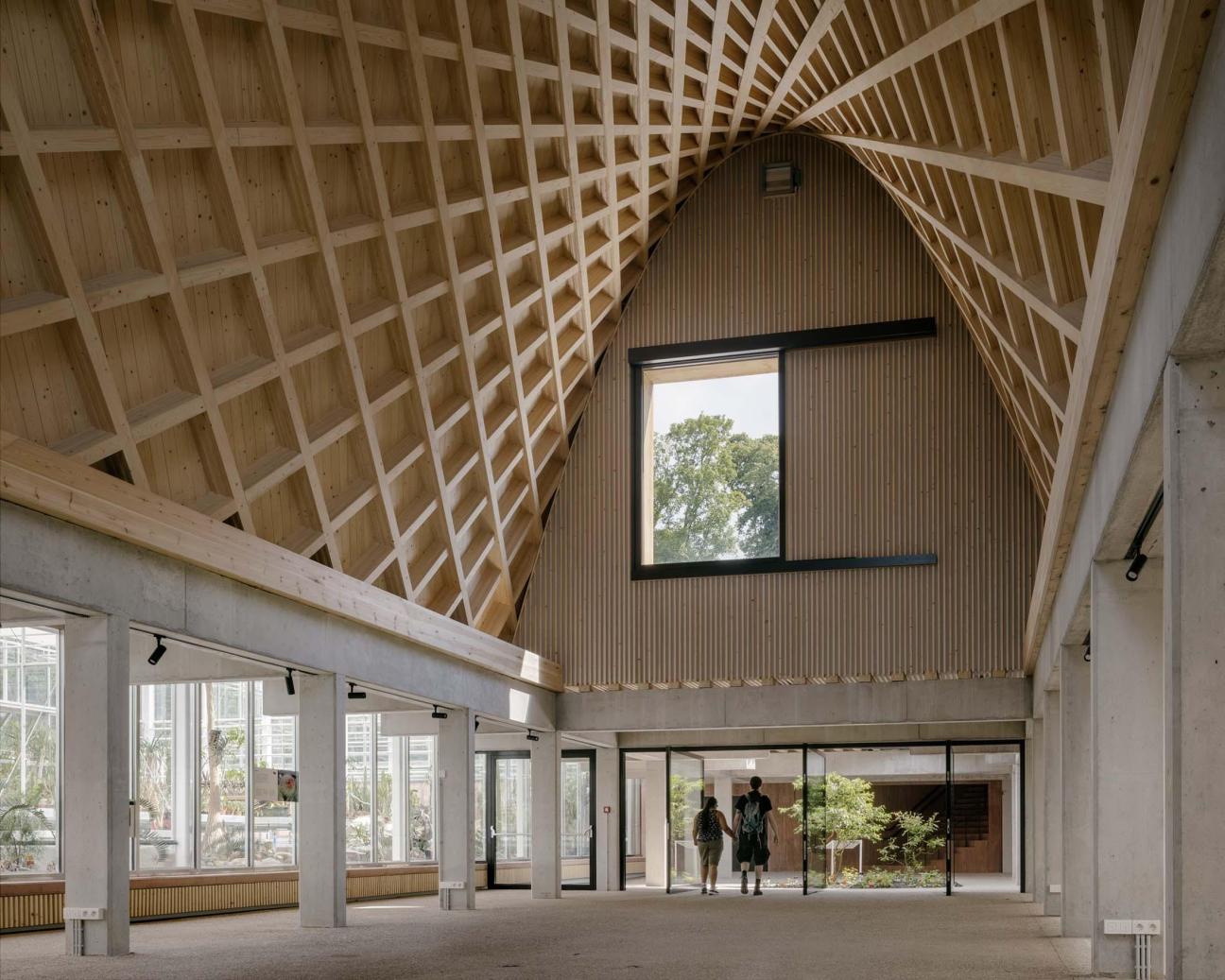
“We were pushing the boundaries of the achievable,” says architect Armand Eeckels of NU Architectuuratelier, the Ghent-based firm behind the design. “The simple logic was that if we could build a model one tenth of the scale in wood, then we could build it in reality.”
The project wasn’t exclusively about aesthetics, however. The Ark also hosts practical technological features, such as recycling the rainwater that falls on its roof for irrigation. The structure is made from a sustainable, organically modified timber called Kebony, which replicates the properties of treated hardwood.
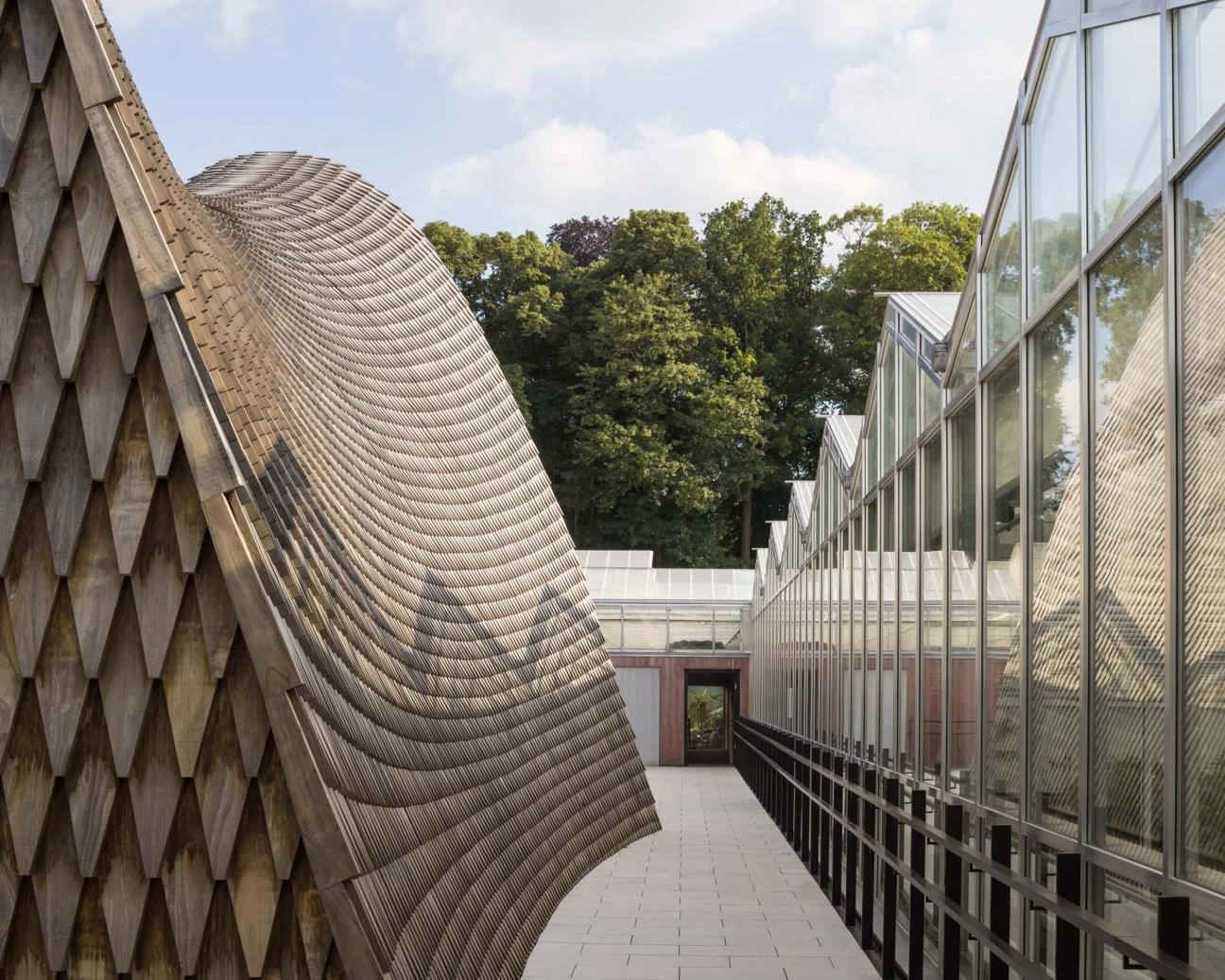
If an impressive botanical garden is to host more than 10,000 endangered plants, impressive architecture is needed to match. The Green Ark does just that.
nuarchitectuuratelier.com
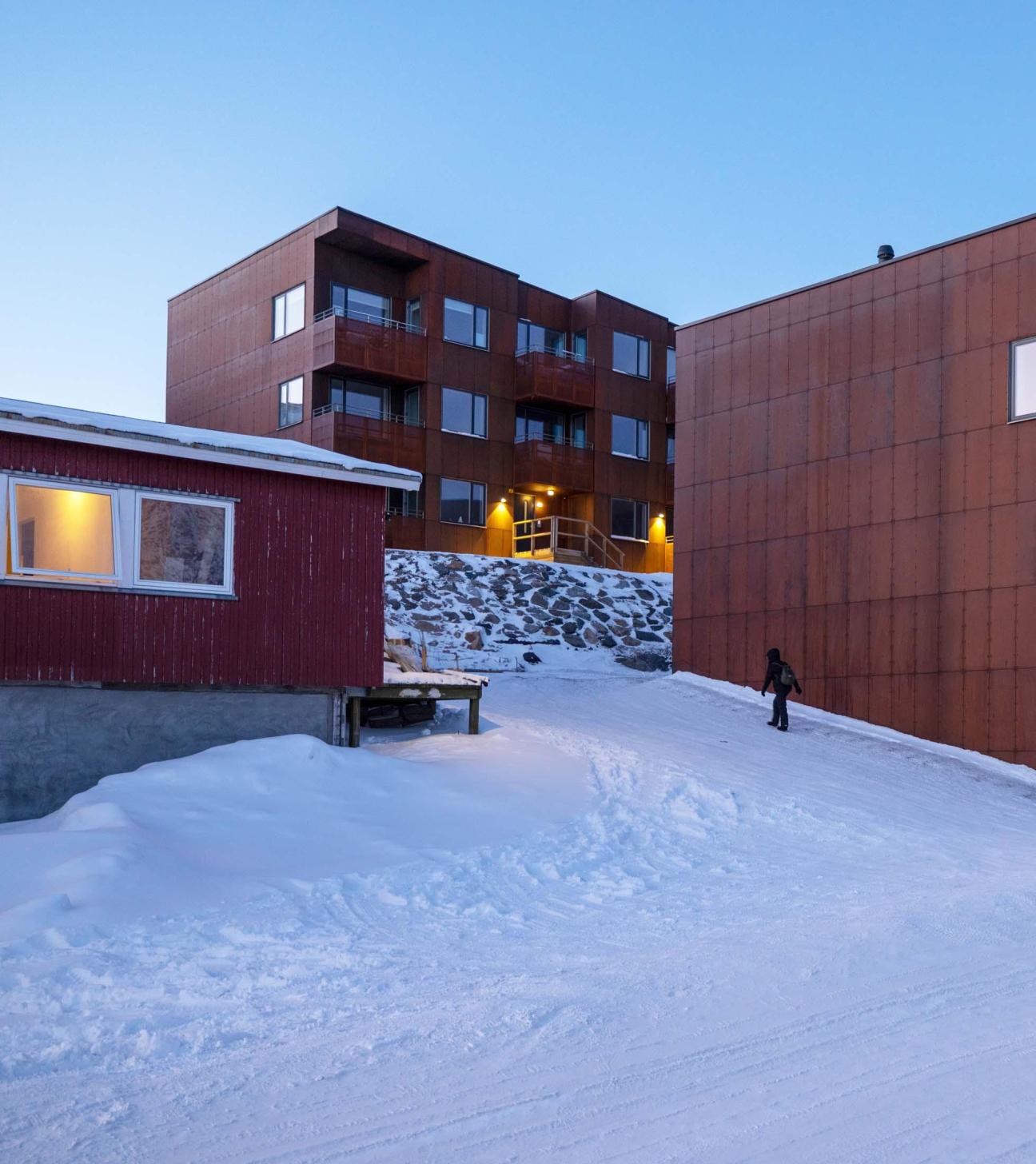
The brutal climate of Greenland’s capital, Nuuk, means that architecture here must not only offer shelter but be in harmony with nature; to endure winter cold, darkness and relentless winds while also embracing the transient brilliance of Arctic summers. Nuukullak 10, an apartment building in the city’s Entreprenørdalen district, rises to this challenge.
Designed by Copenhagen-based studio Biosis, the project is a singular building containing 45 apartments (for young professionals and families) strategically arranged around a central courtyard, allowing for sea and mountain views. This architectural form, with visual links to nature, shouldn’t come as a surprise given that Biosis’s design philosophy advocates minimising environmental impact and creating projects that are in harmony with the natural world. In Nuukullak 10, for instance, instead of flattening the sloping site, the structure steps with its natural contours, reducing the need for rock blasting and preserving critical natural habitats. Biosis also developed the horseshoe-shaped layout to break down the fierce winds and maximise sunlight during the dark winter months.
“The design was shaped by thorough studies of local wind patterns and daylight hours,” says Morten Vedelsbøl, Biosis’s co-founder. “This allowed us to map out a microclimate and refine the building’s form to respond effectively to its natural surroundings.” The result is a building that offers comfort, connection and beauty to those who call it home.
biosis.dk
Inside the seven-floor Valletta townhouse that sets a new standard for work-from-home spaces
Designed as though imprinted by a waffle iron, Valletta, Malta’s capital, is a 16th-century gridded city whose streets are bound by a perimeter of stone bastions. Here, like in many other southern European and Mediterranean cities, townhouses were once built to serve multiple purposes – commercial or production spaces could be found on the ground floor with living quarters above. These centuries-old homes provided the original mixed-use, live-work model that appeared to lose its sheen in Malta in the late 20th century, with light industry moving beyond the city centre and Valetta’s workers commuting to the capital from cosy conurbations, rather than from the upper floors of their homes. But there’s still merit in the model for the city’s residents (and those in similarly built metropolises across the globe) and it is something that architect Chris Briffa is intent on proving.
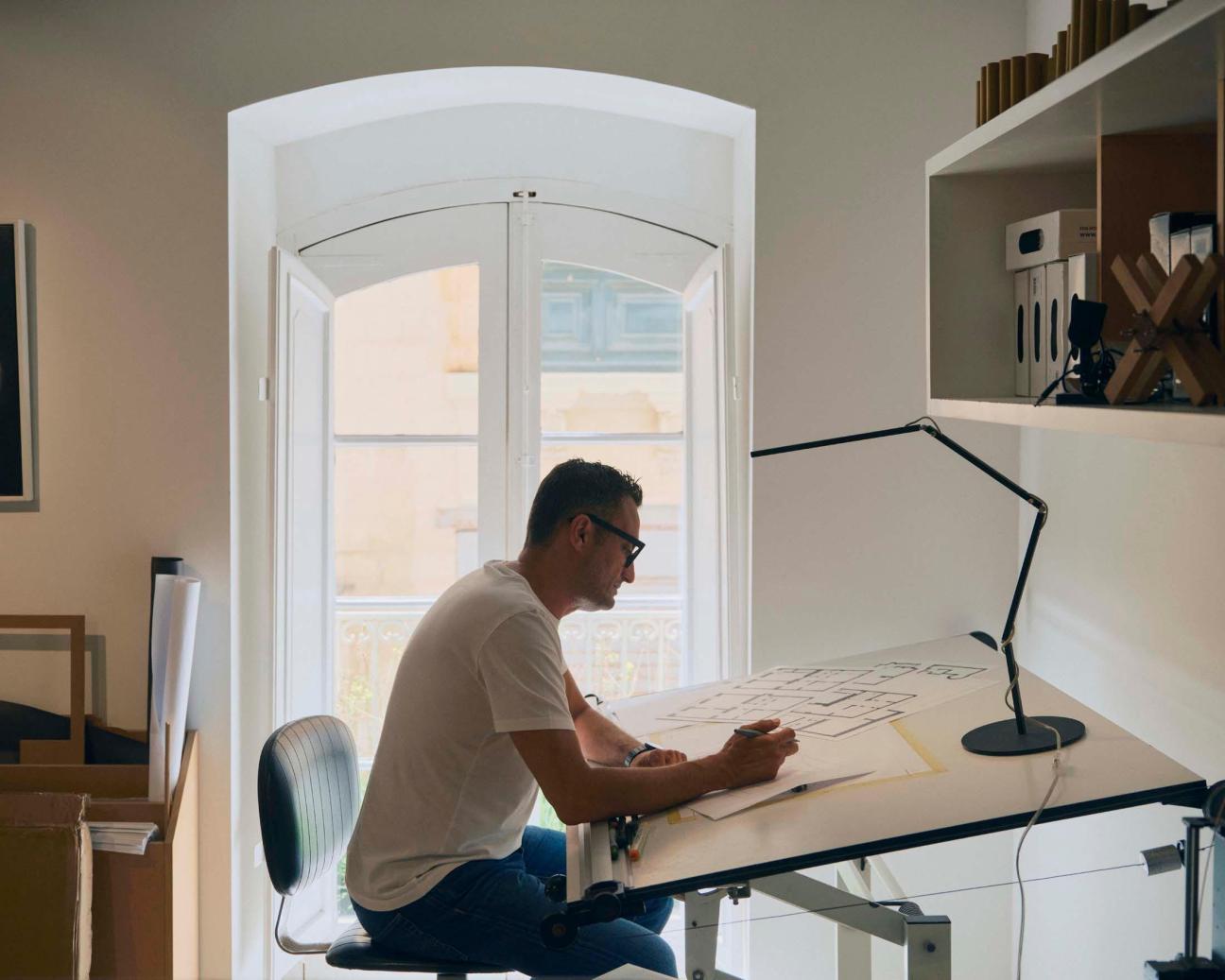
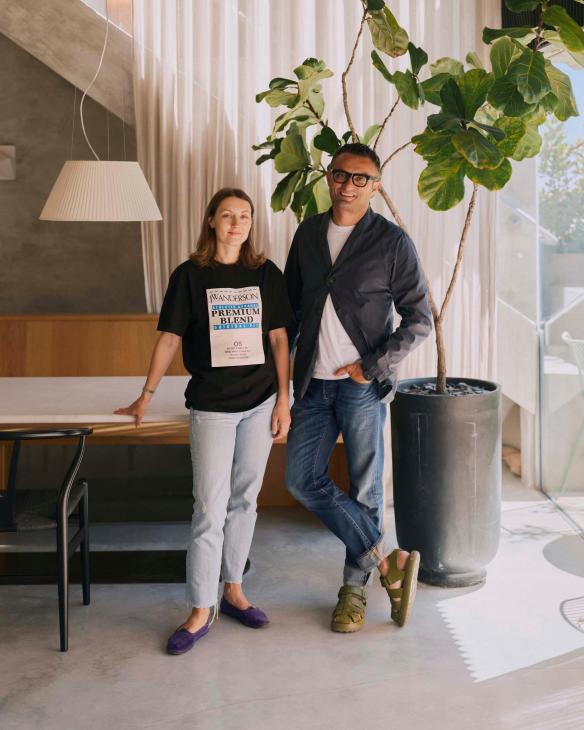
Born and raised in Birgu, a historic city on the south side of the Grand Harbour, Briffa now lives on Valetta’s St Paul’s Street, which is defined by timber-fronted shop façades and limestone townhouses. “When I told my mum that I was moving to Valletta in 2001 she cried for two days because it was so desolate at the time,” says Briffa as he welcomes Monocle to Casa Bottega, his studio and home, where he lives with his wife, Hanna, and three children, Elia, Mira and Finn. “But I saw potential here and I thought that it was only a matter of time before people recognised what we have.”
And it’s this potential that has been realised at Casa Bottega, a once-abandoned townhouse that Briffa, with the help of his namesake design studio, has converted into seven floors of living and working space. Such a concept – of domesticity and creative labour under one roof – had been on the architect’s mind since arriving in the Maltese capital. Then, as a 25-year-old, he lived alone in an 80 sq m apartment with a bathtub in its living room.
“I guess I sincerely believed that you could set an intention with the kind of house you chose to live in,” he says. “If you want to be a bachelor, you live in a flat with a bath in the middle of the living room. But if you’re moving to a house with three bedrooms and space for a family [you might just start one]. In my case, it happened, even though I didn’t yet have a family or a clue that it would come.”
Work on Casa Bottega began in 2014, with Briffa aiming to restore the original townhouse, which had been divided up, and then build upwards, creating space for growth. “That year was the craziest of my life,” he says. “I met Hanna, and Elia came soon after.”
Briffa bought the house, which dates back to the late 1600s, at a court auction. In its former life, the ground floor was used for stabling horses, their muzzles poking into the internal courtyard. The brief for the building’s new iteration was simple: to host a live-work space in the heart of the city. Briffa quickly moved his studio into the structure’s first floor. “It was just a restored ruin then. The element of preserving the skin and bones of the house happened in phase one, while simultaneously planning, designing and dreaming about phase two,” he says. “The fact that we worked here before we lived here gave us a lot of insight into the building – how it functioned, how it didn’t.”
The result is a structure that transitions from working to living as one moves upwards through its floors. It begins with an entrance for both sets of occupants – family and studio – pulling people through a sparse hallway and then towards the building’s restored semi-outdoor stairwell or its new courtyard lift. On the first floor, Chris Briffa Architects still finds a home. Here, designers’ desks run in parallel with three balconies, which let shuttered light into the orderly room. On the second floor, a sala nobile extends across the entire façade with a bespoke shelving system defining the back wall; this timber composition of black lines and subdivisions holds books, architecture models and Briffa’s swelling collection of design curios.
The next level, entered via a staircase, marks the shift from Casa Bottega’s working area to the family home. In lieu of a physical gateway, the ritual of removing shoes as one enters the domestic space separates the live and work components. Footwear in a gamut of sizes – from toddler and child to adult – coalesces on concrete steps. A shared children’s bedroom comes first, with an ensuite bathroom whose marble offcuts recall the loggia tiling at St John’s Square in Valletta. This washroom is enclosed with glass-reeded timber doors, which reference one of Briffa’s earlier projects, an installation called Antiporta at Palazzo Mora in Venice. It was crafted as an ode to the negotiatory role of traditional Maltese interior porches, which are made from translucent glass panelling.
Up another level and the master bedroom is spartan and blanketed by chalky light, which enters through a low-lying glazed strip. This runs along the room’s external-facing wall, leading onto a shallow glass terrace.
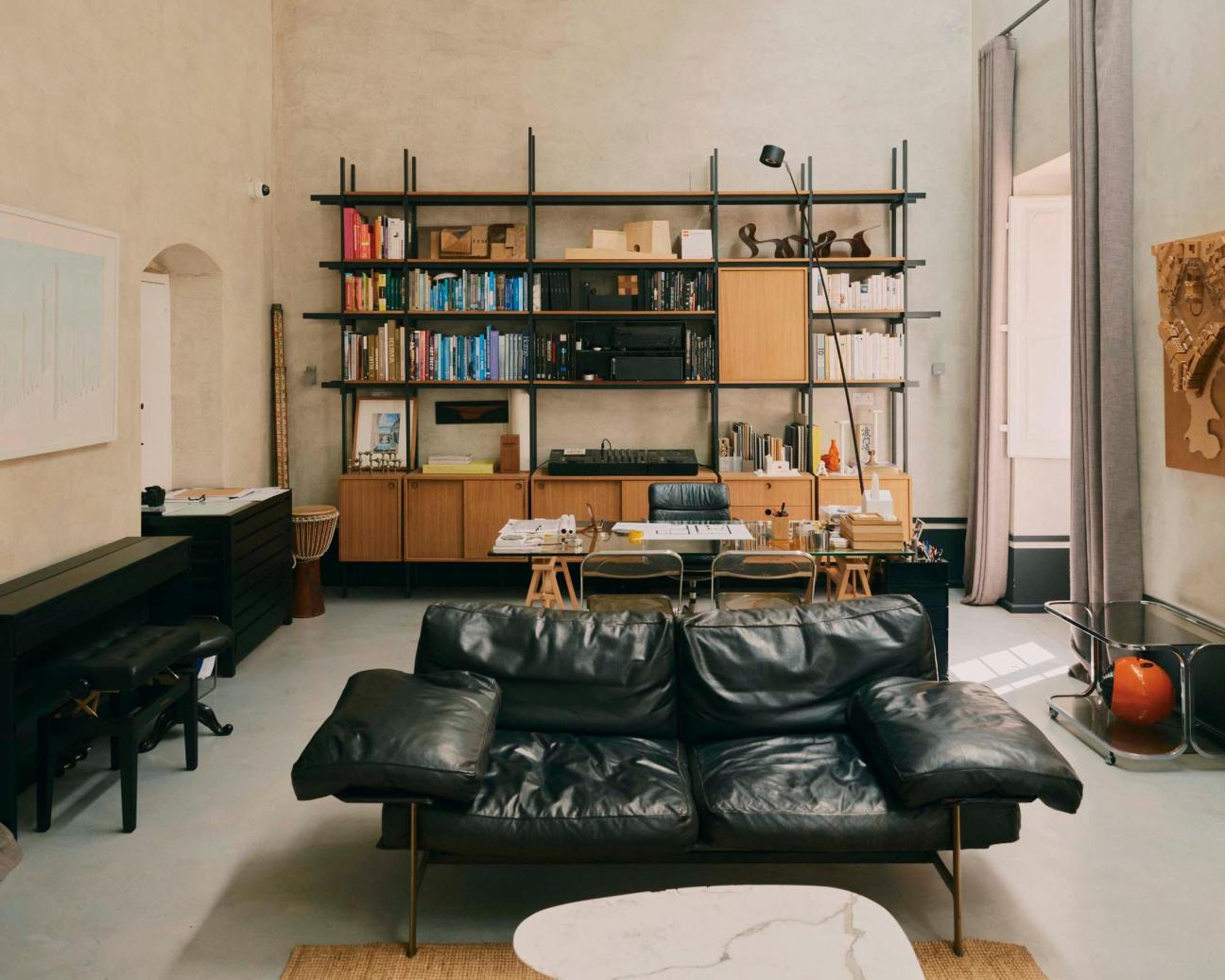
The fifth floor is the heart of the home, which can be accessed by stairs or the courtyard lift. The elevator skips the building’s work and sleeping levels, opening directly into this living area, where a semi-outdoor bathroom of weathered timber is the first space seen as its doors open, introducing Briffa’s fidelity to Japanese author Junichiro Tanizaki. “When we were laying out the building, I said to my team that we should make a folly at the entrance to the lift because it’s a dark space,” says Briffa. “So I took Tanizaki’s book, In Praise of Shadows, and literally transformed it into an interior.”
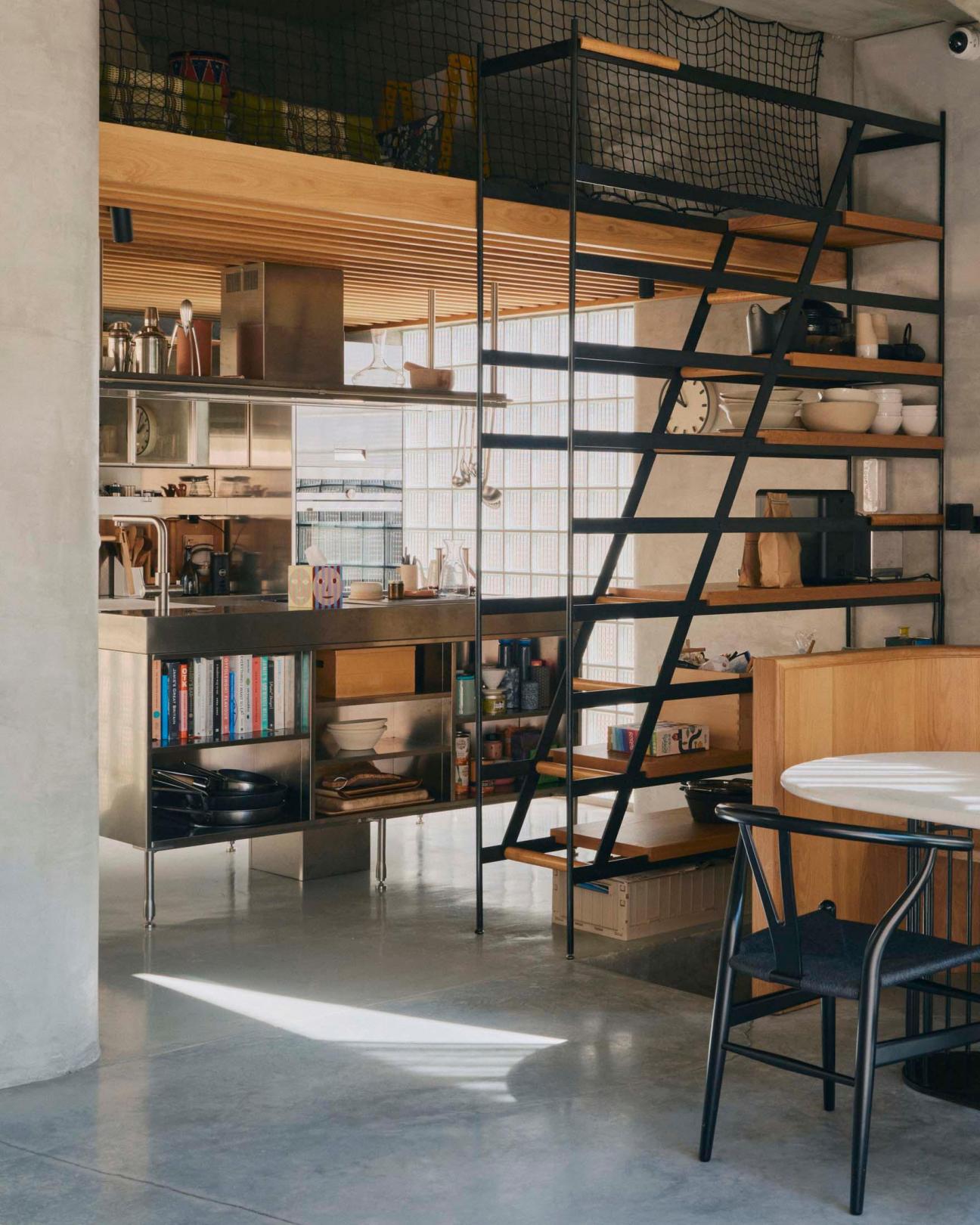
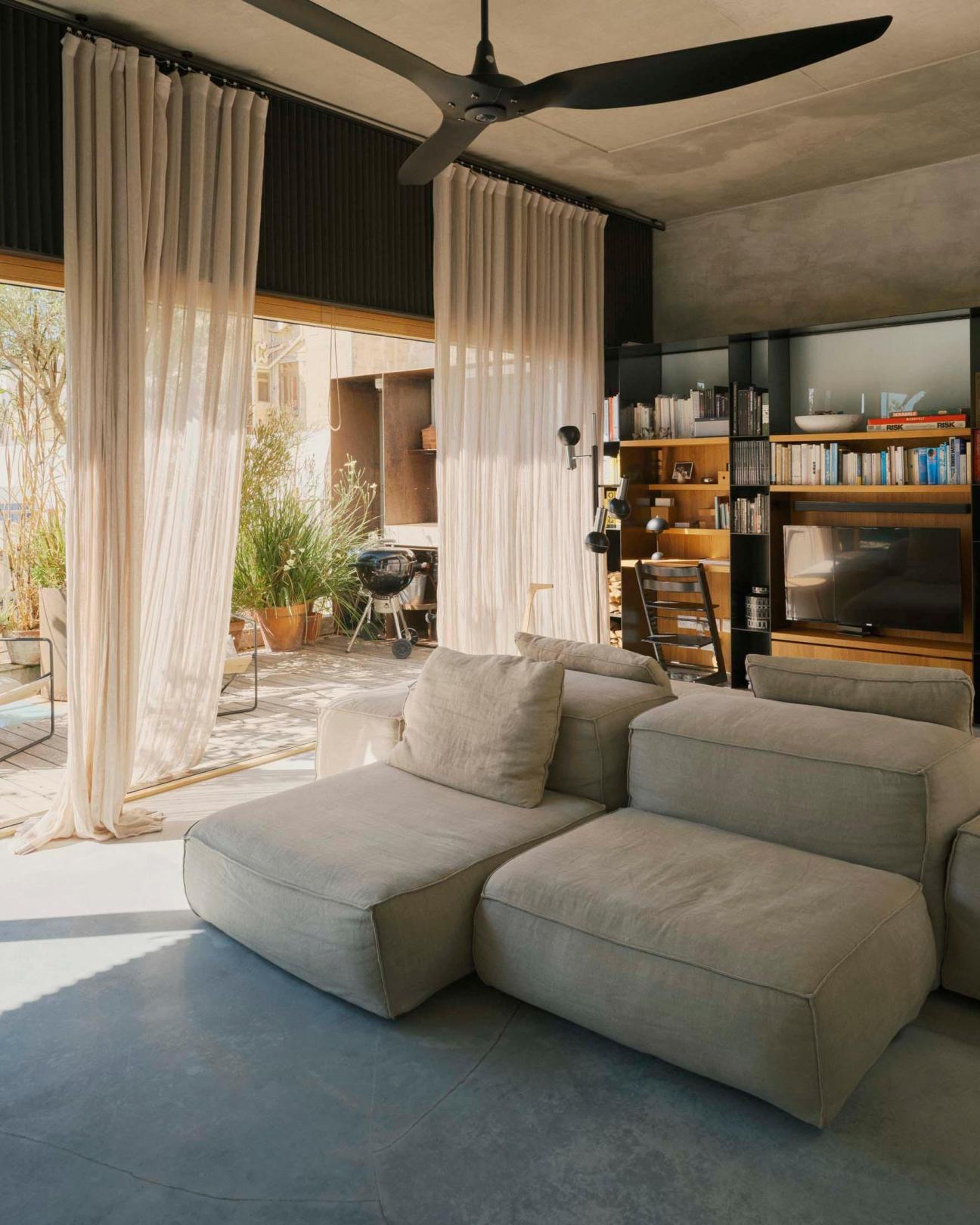
Walking past the bathroom, you find an Arclinea kitchen tucked around a curved concrete corner, its stainless-steel configuration shimmering in the light that flows in through flanking glass-block walls. Above the kitchen, a solid-oak mezzanine, dubbed the “three-house”, was built for the children to climb up to and occupy, safe within a bordering netted lining. A timber-and-metal stair system – part rungs, part rails, part shelving – connects the two levels. Across the kitchen, a multi-directional sofa becomes the soft centrepiece of the room (Piero Lissoni’s Extrasoft for Living Divani, to be precise). Throughout the day, peachy rays of sunlight enter through breezy curtains that separate the space from the deep terrace that looks out onto the street.
Briffa grew up in his father’s carpentry workshop before studying in Malta, at Virginia Tech in the US and the Politecnico di Milano. This early experience has informed his obsession with how things fit together, his concern for how they are used and the need to design elegance into every object or experience. Like the whole building itself, many of Casa Bottega’s features are intended to do, or be, more than one thing at once. Off the kitchen area, a timber bench serves as a seat for nightly family meals, before extending downwards to become a stairwell, which leads to a laundry room. Beyond that is a half-height den holding and hiding all of the building’s services.
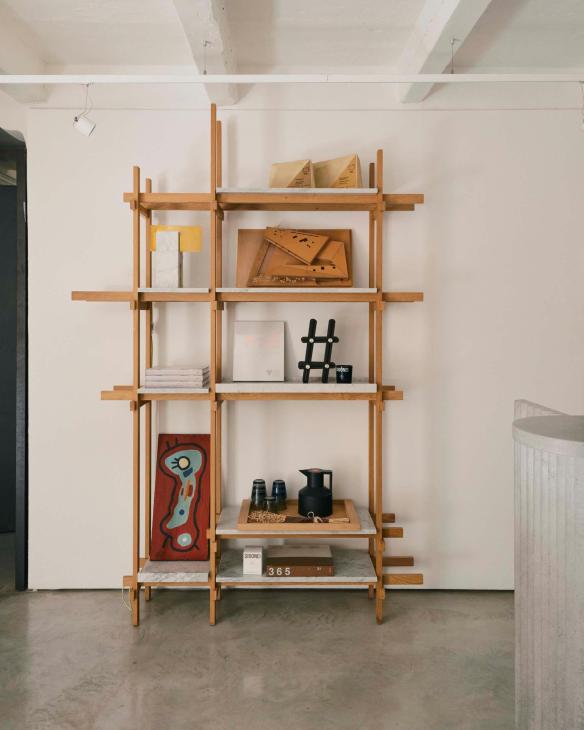
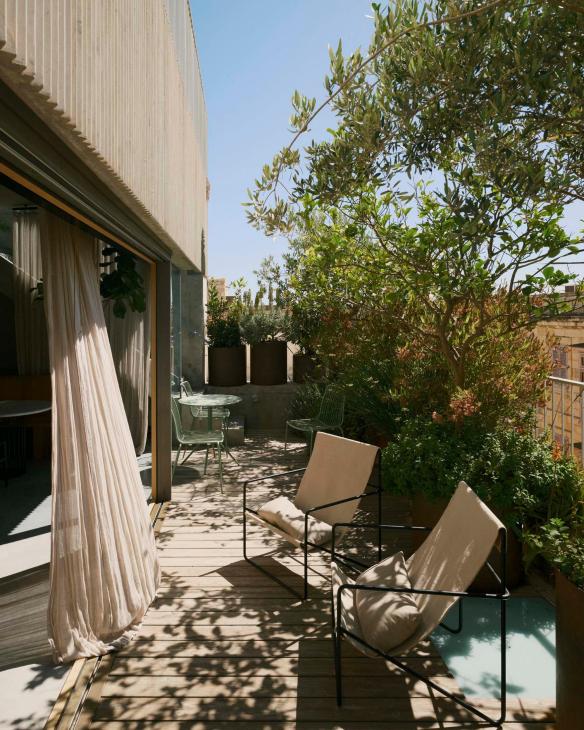
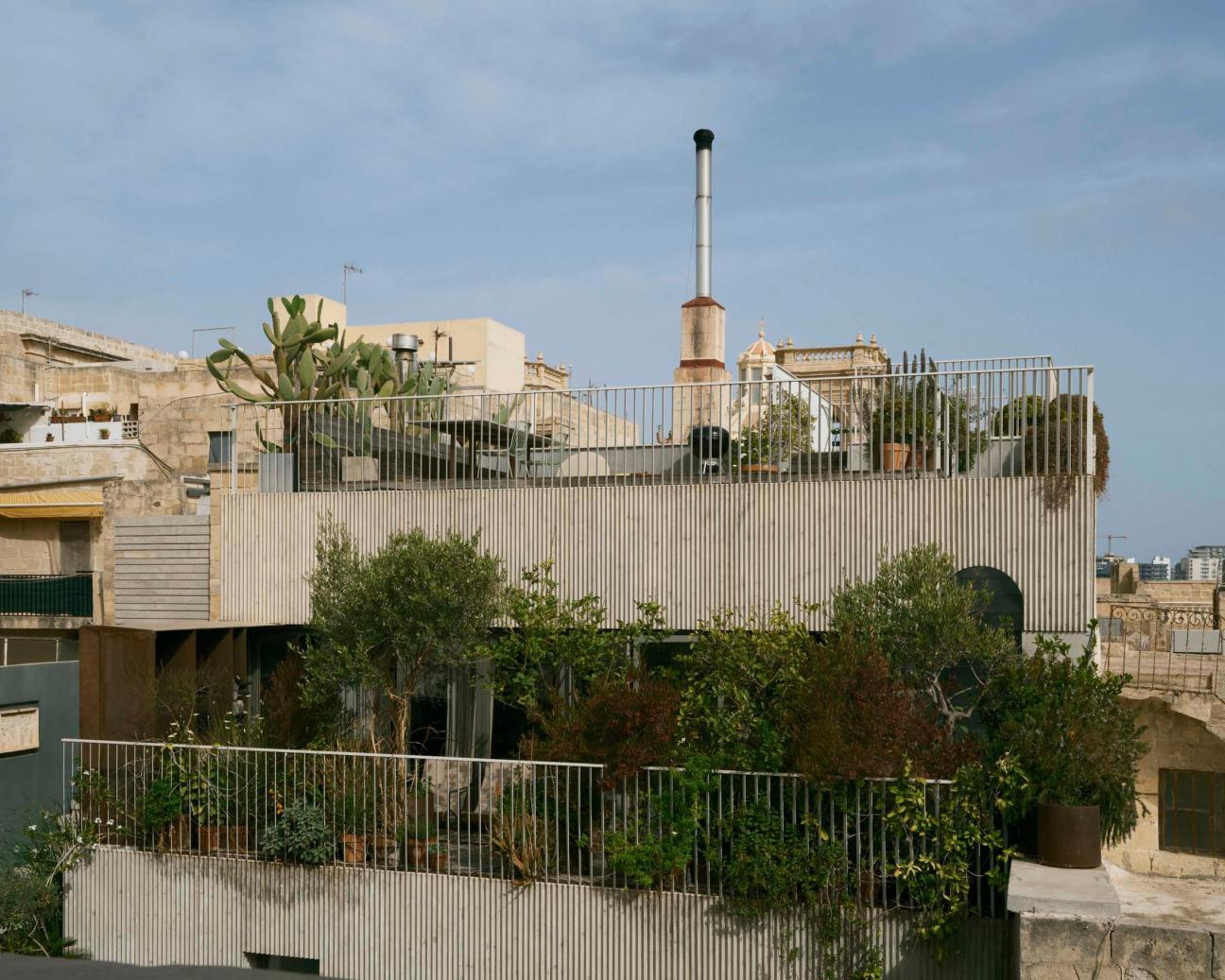
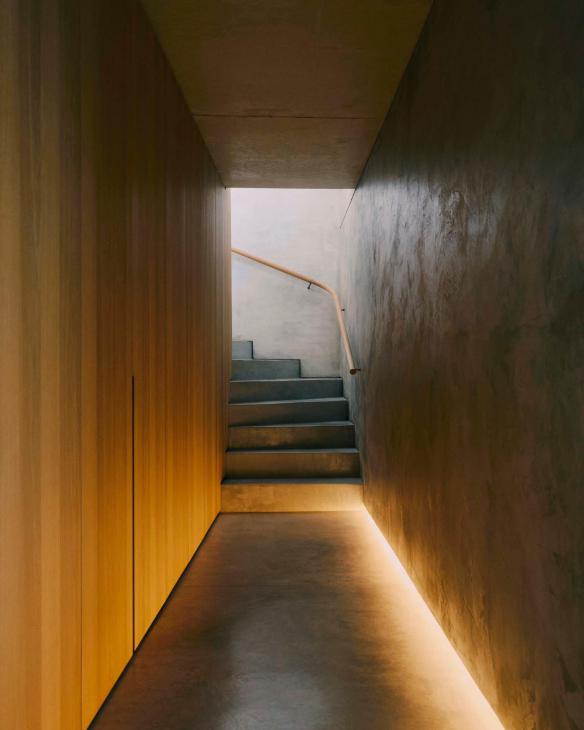
Perhaps the most defining architectural feature of Casa Bottega is the most challenging to see, unless viewed from the upper levels of the building across the street. Its new floors in concertina concrete are held up by two nine-metre-long beams. They are made from precast concrete, produced off-site with factory precision to satisfy the sharp articulation that Briffa envisioned for their external profile; their folds are as crisp as bent paper. This is one of countless design decisions that he nursed tenaciously over the years. “You do become attached to places that you design, especially when you design them for yourself,” he says. “There’s a need, almost, to continue understanding oneself; it’s an introspective process.”
The final levels of Casa Bottega – its terraces and roof – are what bring the building’s private world back into the city. Aside from extending interiors out into the beating sun, they intentionally added a garden to St Paul’s Street – a piece of the city otherwise dominated by limestone, a road and sky. It’s here, in this new green space, that the family spends days and balmy nights with friends; where the separate functions of city life, work and play merge inexorably, allowing Casa Bottega to set a new benchmark for live-work spaces in Valetta and beyond. — chrisbriffa.com
Projects of note
Since opening his studio in Valetta in 2004, Chris Briffa has designed striking spaces in the city, including a public toilet, a restaurant encased in a fortification and his own home. Here are three projects that capture the architect’s ability to interpret local vernaculars in new, irreverent ways.
1.
Valletta vintage
Malta
A collection of converted and curated Valletta apartments grew from one in 2012 to 10 spaces. All are studios that Briffa has furnished in partnership with his wife, Hanna, with hand-picked designer furniture and art collections from the region’s practitioners. The holiday homes demonstrate Valletta’s complex mingling of new and old and how best to live with it.
2.
Tanizaki’s shadows
Gozo
The influence of Junichiro Tanizaki reappears in a sea-facing apartment once blighted by intense easterly sunlight. Just as Tanizaki celebrates the use of shade in In Praise of Shadows, Briffa’s design for this home mitigates the area’s brightness with shadow. Tanizaki’s premise translates into timber lattices, lightweight screens and a neutral palette.
3.
Seaside seclusion
Bahrain
Briffa has an instinct for crafting spaces that either harness or temper the elements. At Reef Guesthouse a giant funnel directs northwestern winds away from the yard of the seaside property in Manama. Inspired by typical Bahraini residential layouts, a sparse selection of travertine, concrete, wood and glass define the space.
UK design firm Future Facility is working to ensure that the next generation of devices always puts the consumer first
In the 2010s the idea of the “internet of things” (IOT), in which physical devices are linked together via the web, began to take off. This was thanks to faster internet connections, the increasing affordability of digital sensors and growing computing power. “When IOT products came out and you could have your washing machine send your phone a notification telling you that it was finished, we realised that everything had got a bit loopy,” says Sam Hecht, who established creative studio Future Facility with Kim Colin in 2016. Sitting in the practice’s London studio, surrounded by working prototypes of security cameras and battery packs, Hecht tells monocle that both he and Colin felt that practical, human-centric product design had begun to give way to technology for its own sake. “It wasn’t that these were bad products – more that there wasn’t an understanding of the potential of what they were working with,” he says. “That’s where Future Facility came in.”
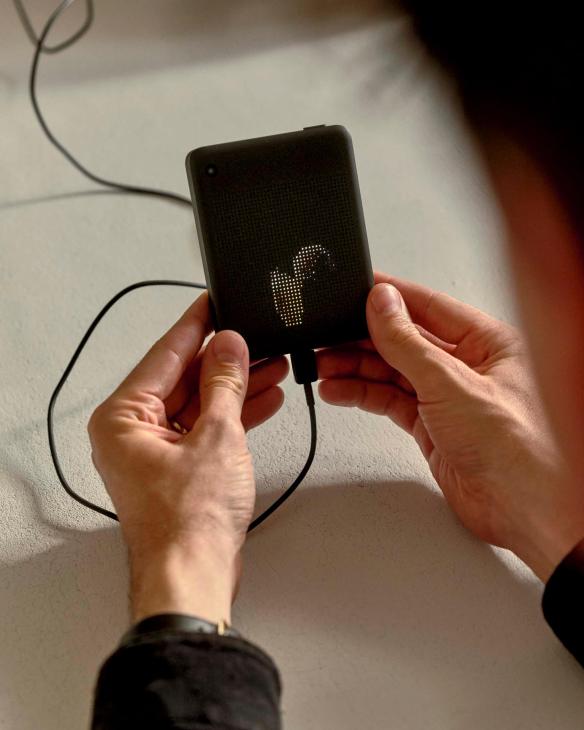

The company, which sits at the intersection of product design and technology, began as a complementary practice to Industrial Facility, a furniture-focused studio that Hecht and Colin founded in 2002 whose portfolio includes work for the likes of MillerKnoll, Mattiazzi, Santa & Cole, Muji and Emeco. By contrast, Future Facility set out to research, invent and prototype products that bring humanity to technology. “The way that engineers and industry experts imagine the potential for their products usually has very little to do with how we’re actually living with things,” says Colin. He adds that Future Facility’s way of addressing the aforementioned loopiness was to take technology off its pedestal and put it on level terms with a piece’s form and function.
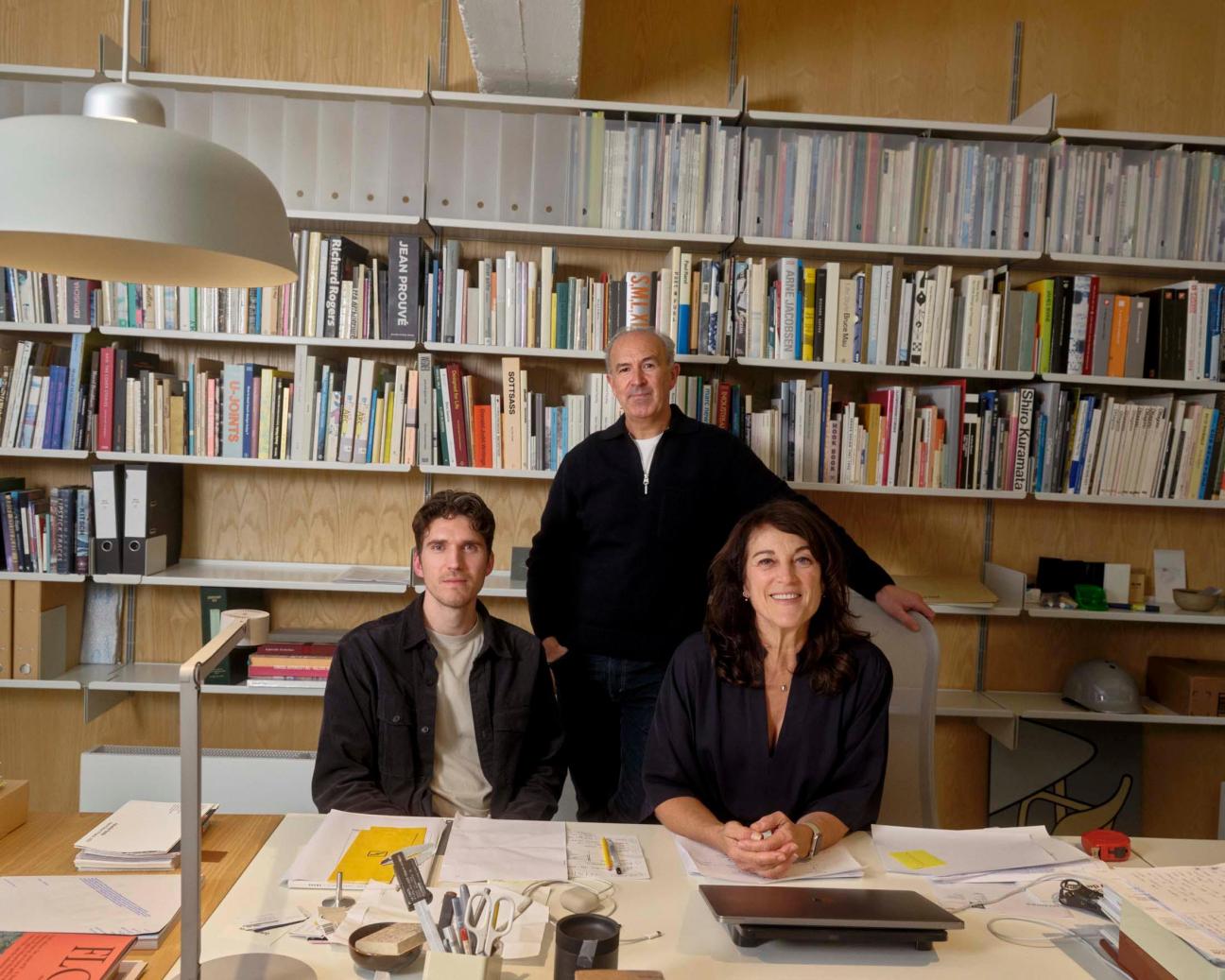
It’s an approach that Leo Leitner helped to define when he joined Future Facility in 2021. The German-born designer is the firm’s creative director. “Big companies often try to make something that sounds technologically innovative but their products don’t actually bring a lot of benefits to the user,” he says. As an alternative, he points to an AI companion device that the firm developed with Taiwanese computer and electronics company Asus. Called Susa, it allows users to load maps, share photos, take phone calls and more. Its digital screen is hidden behind a perforated, tactile frontage made from Ceraluminum (fused ceramic and aluminium, specially developed by Asus), creating a deliberately low-resolution haptic surface. “This product was about saying, ‘You can do all of the things that you normally do on your phone but the screen is going to be lower resolution,’” says Hecht, explaining that the team wanted to reduce the appeal of glowing pixels and counter the overstimulating effect of a conventional screen, while also showcasing the beauty of the device’s materials.
The project sums up Future Facility’s ambition – one that places users and their needs at the heart of its product and technology design. (In Susa’s case, one goal was to help people to cut back on screen time.) “In our everyday lives, we don’t think of a chair any differently to how we think about our phone – both are part of our environment and the way we live,” says Colin. “What we do at Future Facility is think across product design and technology, and integrate them.” — futurefacility.co.uk
Interview: What Clare Waight Keller has learned as Uniqlo’s creative director
Of all the people to become Uniqlo’s first global creative director, British fashion designer Clare Waight Keller wasn’t perhaps the obvious choice. Her CV is more haute than high street, including working for Gucci in its Tom Ford heyday and leading the revival of Parisian label Chloé. After leaving her last post as creative director of Givenchy in 2020, she took a two-year pause to reflect on the future of fashion and her own place in the industry. She concluded that there was more to learn by working with a Japanese high-street giant than another European luxury house. After spending time in Tokyo to work on a collaboration with Uniqlo (the now bestselling Uniqlo:C line), she began to imagine a bigger remit with the brand, and her new job announcement followed in late 2024.
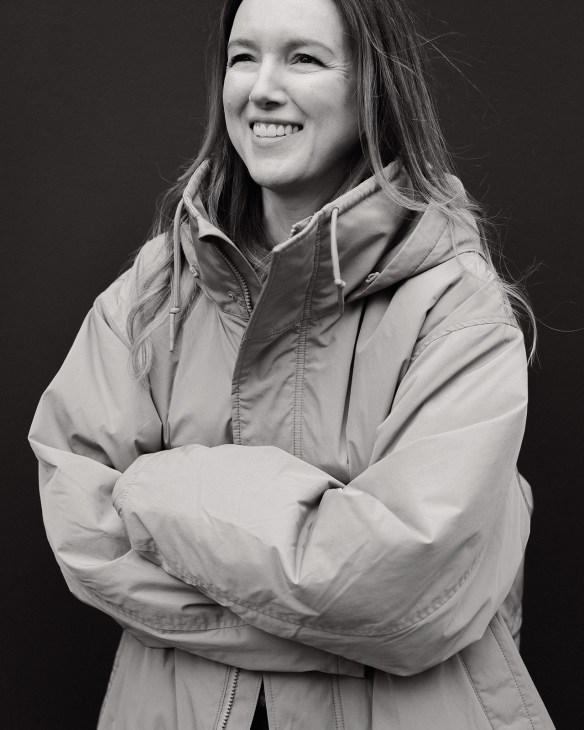
“I have been thinking about where fashion will go in the next 10 to 15 years,” says Waight Keller, who is now based between southwest London and Uniqlo’s head offices in Tokyo. “Where I see the most interest and growth is in Asia.” Wrapped in a cosy, grey coat from her Uniqlo:C line, her eyes light up when she speaks about the advances in hospitality, architecture and fabric development that she has discovered during her travels.
As luxury becomes more mainstream, Waight Keller believes that there are new opportunities for high-street brands to improve on quality and design to reach customers looking for value rather than status. Here, she shares her plans for 2025.
Why choose Uniqlo instead of returning to luxury?
I’ve always taken quite surprising moves in my career. Over the past decade or two, many people have said to me, “Oh my God, I didn’t expect to see you there.” But that’s part of what I search for: the surprise, the challenge. As a designer, it’s very easy to do the same type of job under a different umbrella. That might be a great career move but it’s familiar. I’m only on this planet for a short amount of time, so I just want to make it as interesting as possible.
I spent a lot of time in Tokyo working with the team on my collaboration collection. During that time, I was getting involved in a lot of the meetings and discussions, so we started thinking that this could be a bigger opportunity. The brand itself is so well-loved and it is one of the few brands on the high street that’s also known for innovation. That for me was the big draw.
What are the opportunities and challenges of working at a bigger, better-known brand?
One designer I got to know really well when I was living in Paris was the late Karl Lagerfeld. I always admired his chameleon-like approach to working for different brands such as Chanel, Fendi and Chloé. I admired the fact that he morphed every time. He was one of those designers who tried to immerse himself in the storytelling of the brand and to bring his own flavour to it. I’m the same way: I’m not a designer who imposes my look on a brand. With certain designers today, you know what you’re getting when they move and that’s reassuring for a lot of people. But I like immersing myself in the story of the house and trying to thread a new chapter. It’s not my chapter; it’s the company’s chapter. The company will be around much longer than I will, so for me it’s about translating that and making it relevant to the moment.
Why is this company-first design approach so rare?
It’s partly because of the lack of women in our industry. Women have a different approach and a different way of designing; it’s very customer-centric in that sense. I know people don’t think customers are sexy to talk about but ultimately they are the people who buy your product. Just having a model as your only idea of the true vision of your brand? Sorry, but I find that very limiting.
How has your approach changed since you started working on your first collaboration with Uniqlo?
It has changed vastly. I’m suddenly seeing my jacket in a full range of sizes and I want to make it look amazing in every size, so I might add some shape on the upper back or a little more hip volume. Otherwise, it’s lazy design. As a designer, you need to adapt; you have an ability to create and be thoughtful about the product you’re using. It’s the same when someone is designing a chair: they need to think about the different people who will sit on it, about supporting the back or getting the dimensions correct so that the legs aren’t floating around. You have to find solutions to problems and do it beautifully.
What changes should we expect to see on Uniqlo shop floors in 2025?
I oversee everything except for the childrenswear. All the menswear, womenswear, all the socks – everything that you regularly see in a Uniqlo shop is now part of my design remit. The biggest change you’ll see is definitely colour, which is something I’m working on constantly, even on those classic lines we rarely touch. This season, for instance, there’s the new cashmere palette and I selected every one of the 50 shades. Then there’s the new seasonal shapes: new trouser silhouettes; new ultra-light Blocktech jackets; and a new Puffertech coming in. We’re also trying to introduce recycled programmes as much as possible – our biggest issue is actually people not donating enough, if you can believe it. So anyone who has any extra nylons or downs, please bring them to a Uniqlo shop and we’ll make you a new one.
A lot of luxury customers rely on Uniqlo for their basics. Is our definition of luxury changing?
I see people dressing both high and low. A lot of luxury is unaffordable and that’s a challenge for many people who love fashion. There is, of course, the secondhand market but there is a real need for those really well-made, well-priced value pieces such as the Uniqlo Airism T-shirt or the cashmere jumpers. I’ve been buying Uniqlo cashmere for 10 years and it’s a great product. It lasts so long – all you need to do is maybe add a new colour or a slightly different proportion. It’s a new way of looking at brands.
There’s also an interesting shift with the high-street brands trying to raise the bar in terms of their image and the people they collaborate with, including photographers and stylists. There’s less discrepancy in image between high street and luxury. Maybe there’s still some when it comes to quality but it depends on how you put it together. I genuinely look at a lot of the Uniqlo products – like a fully unlined, tailored jacket – and I can’t believe how high the quality is. It’s because of the high standards Uniqlo abides by, the attention to detail and the precision it puts into things. It’s cultural, which is why, as a designer, it’s so amazing to work in Tokyo.
Is Asia now playing a bigger role in setting the global fashion agenda?
It’s interesting to look at what Asia is doing and realise there’s a lot of value in what it can bring to the table. I spent so much time in Western markets and Western companies, and we were always looking to the East but were never part of the East. There has been a blanket approach when it comes to Asia but it’s so vastly different and there are so many exciting developments happening across the continent. The general trope is cheap manufacturing, which isn’t true any more. There’s an understanding that’s really vast in terms of technology and the future; it is more open-minded and experimental because it has a comfort level with development. In Europe, we would probably be considered sleepier in the way that we approach things. Certainly, manufacturing is very slow. In Asia, the emergence of K-pop, K-beauty, the restaurant scene, the way cities are being developed, the architects working over there – it’s extremely dynamic.
What are your predictions for the broader fashion industry in 2025?
Coronavirus obviously created this massive growth spurt that everyone enjoyed tremendously but since then we’ve experienced this feeling of being on the crest of a wave. Sometimes you don’t see when it’s going to crash and fall because you’re on the wave. There needs to be some sort of adjustment and that comes with going back and understanding why people love that brand and why it should exist. These are the classic questions that you ask if you’re in brand marketing: why you’re there, what’s the reason behind what you’re doing and why would people buy it. But you should be able to answer those questions concretely. It’s not enough to just make a new T-shirt. There has been an era in fashion when just putting out a brand name was enough and that has certainly played out really well, but maybe we need to look back at design now and those reasons that are more intrinsic to why you want to buy a product and how it links back to a brand. Yes, there’s always going to be an element of status but, ultimately, people need quality.
Brooklyn boutique L’Ensemble proves that privacy and intimacy are the new luxury
These days, whether you’re trying to buy a designer handbag or a freshly baked croissant, you’ll probably end up waiting in line. Sometimes you’ll need to sign up via a QR code first; as soon as your time slot or appointment is over, you’ll be rushed off to make way for the next customer. Queueing culture is particularly evident in New York, where residents and visitors alike line up for everything from ready-to-wear ensembles on Madison Avenue to cookies from Soho’s Levain Bakery.
But not everyone is happy to wait and some are lamenting the loss of shops such as Barneys, Opening Ceremony or Odin. Luckily, a new generation of retailers is emerging to fill the gap, obviating the need for queues by doubling down on personal service and privacy: think by-appointment showrooms, one-on-one consultations and sharp product picks.
Among the leading figures of this new wave of retail experiences is former fashion buyer Dawn Nguyen. Last year she opened L’Ensemble, a multi-brand boutique in Brooklyn’s Dumbo neighbourhood. Crafted with interior designer Patrick Bozeman, the dimly lit space is furnished with mid-century pieces, such as chairs by Afra and Tobia Scarpa, and dotted with wood sculptures by Chandler McLellan. It already has a regular clientele of fashionable New Yorkers and a shopfront space is in the works for 2025.
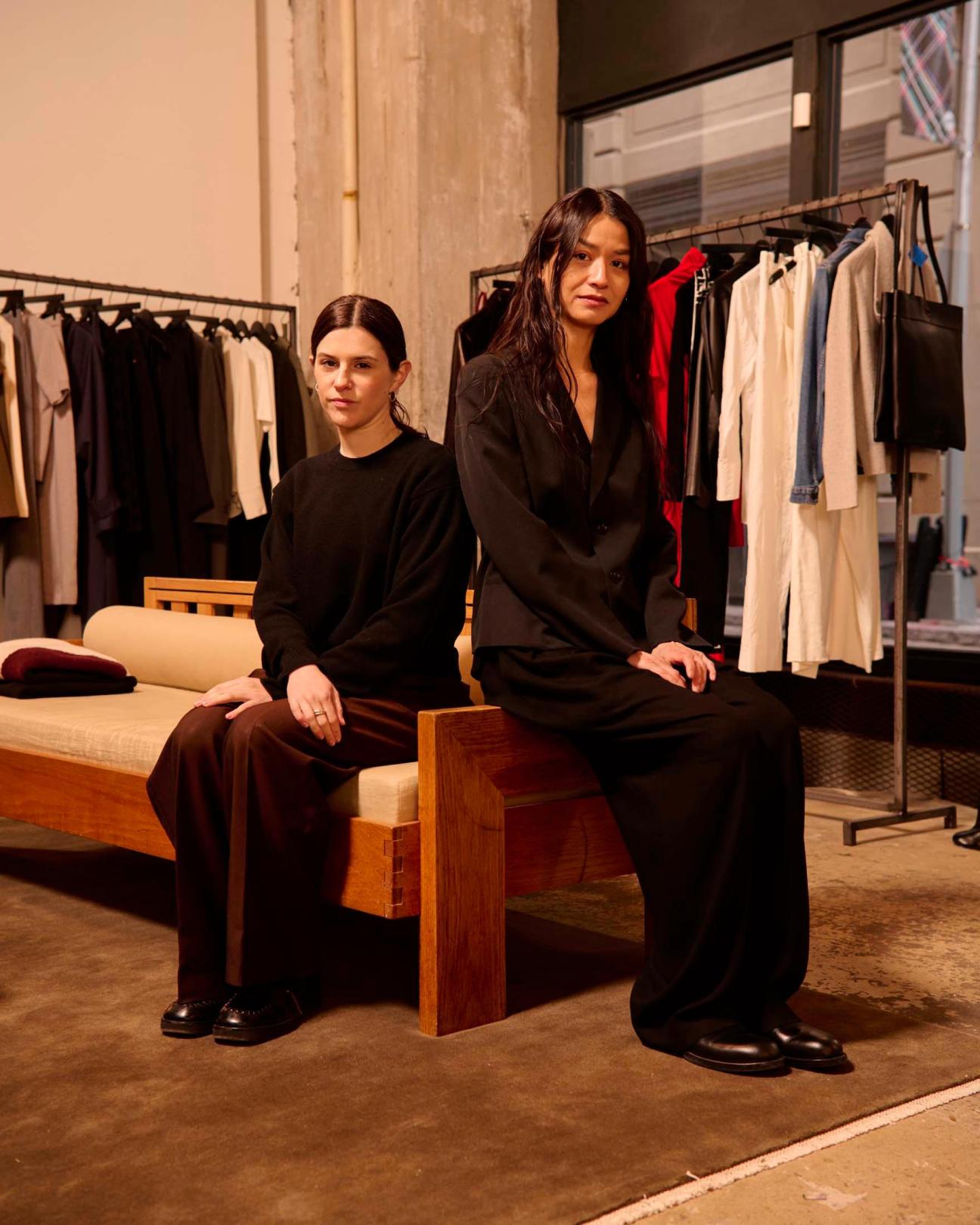

“It was very difficult to find a place to shop,” says Nguyen, explaining what inspired her to start the business. “A lot of the multi-brand stores these days are either too hyped, too young or too mature.” So she set out to replicate the kinds of experiences that she would have when visiting brands’ showrooms for work. “As a buyer, you get to go behind the scenes and have conversations with extremely knowledgeable brand representatives,” she tells Monocle. “That allows you to learn the stories behind every collection. There’s so much intention behind the details. I thought that this type of experience should become part of everyday retail.”
L’Ensemble has no obvious signage. It’s set on a quiet cobbled street between residential neighbourhoods – a far cry from the bustling retail spaces across the East River. “It was tricky at first,” says Nguyen. “You have to work on strong marketing from the back end when you’re not getting any foot traffic.”
The shop’s intimacy reflects a broader appetite for one-on-one service and discretion that is increasingly shared by discerning larger-scale retailers and global luxury brands. Labels at the pinnacle of the luxury sector are turning to client dinners and money-can’t-buy experiences that are held behind closed doors. Many businesses are now investing in personal-shopping teams instead of influencer marketing, while some of the most exclusive members’ clubs ask visitors to stick a tape on their iPhone cameras before entering.
In a way, L’Ensemble has itself become a kind of private member’s club, with regulars booking appointments to shop for all of their special occasions. Consultations can be arranged in advance; after a quick chat, the team puts together a selection that’s tailored to every customer’s needs. Are privacy and discretion the new luxury? “Customers enjoy how everything is personalised,” says Nguyen. “And they’re not being rushed. It means that they can really get behind their purchases.”
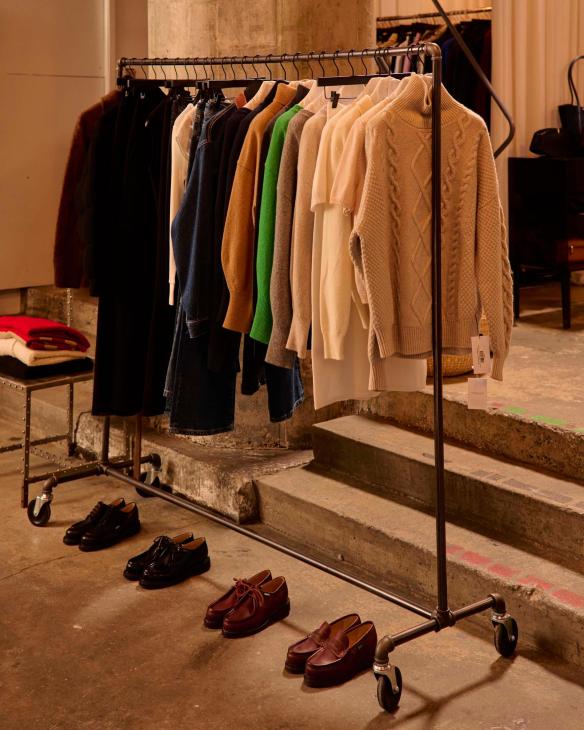
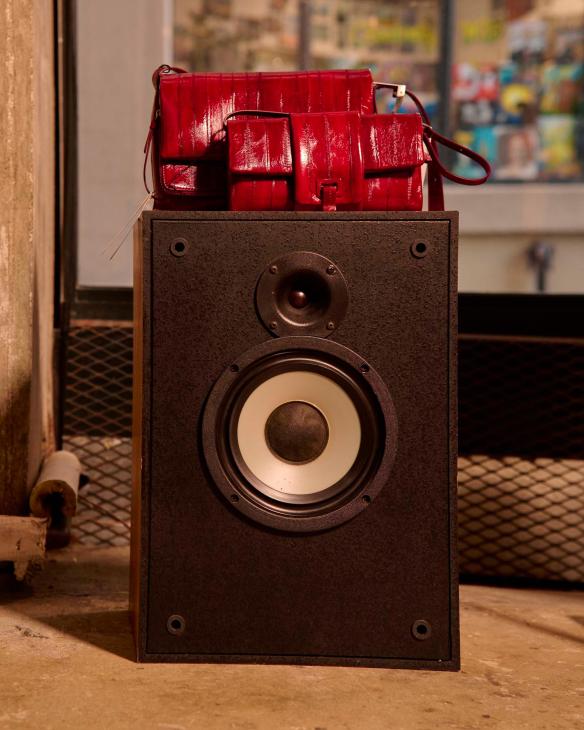
Rather than following runway trends, L’Ensemble’s clothing selection responds to the specific needs of customers. Inside the showroom, you’ll find neat rails lined with brands that usually fly under the radar in New York: coats from Copenhagen’s Sunflower, for example, as well as sweaters from Amsterdam’s Extreme Cashmere and leather derbies from French brand Paraboot. There’s a strong vision here: someone has clearly thought very hard about every item. “I usually pick brands that make very wearable pieces,” says Nguyen, who initially studied menswear design at New York’s Fashion Institute of Technology and finds herself drawn to unisex items. “Showcasing brands that don’t have much distribution is important to me.”
For Nguyen, displaying her finds in the right physical environment and being on the shop floor to meet customers are also crucial. “Things don’t really translate well online, especially with brands that are quite luxurious,” she says. “You’ve got to feel [the items] and see how they look in real life.” Nguyen is usually on hand when customers visit; she also personally responds to their emails. “Being on the ground is what I’m used to. I like talking to clients. A lot of people come in with a specific need. You have to speak to them and allow them to open up. You really need that connection with them.”
Exclusivity isn’t the priority here. Whether customers are seeking styling advice or simply want to have items waiting for them in a dressing room, Nguyen ensures that the mood stays relaxed. She also makes a point of offering pieces at a range of prices – from $90 (€87) T-shirts up to $5,800 (€5,660) trench coats. “Nobody is buying $5,800 trench coats every day,” she says. “It’s important to represent all levels. The store is for everybody.” It’s also why the shop is now introducing drop-in consultations that don’t need to be booked in advance. “We’ll make sure that we always have enough staff to take care of clients individually.”
L’Ensemble is preparing to move to a bigger, street-level Dumbo location later this year that will continue to offer one-on-one services. “People look for experiences and want to be in a place that’s thoughtful,” says Nguyen. “I don’t see myself as being in the business of fashion or retail. I’m in the business of hospitality.” — lensemble.us