Issues
Novel approach: Casa del Libro, the Spanish bookseller taking on Amazon overseas
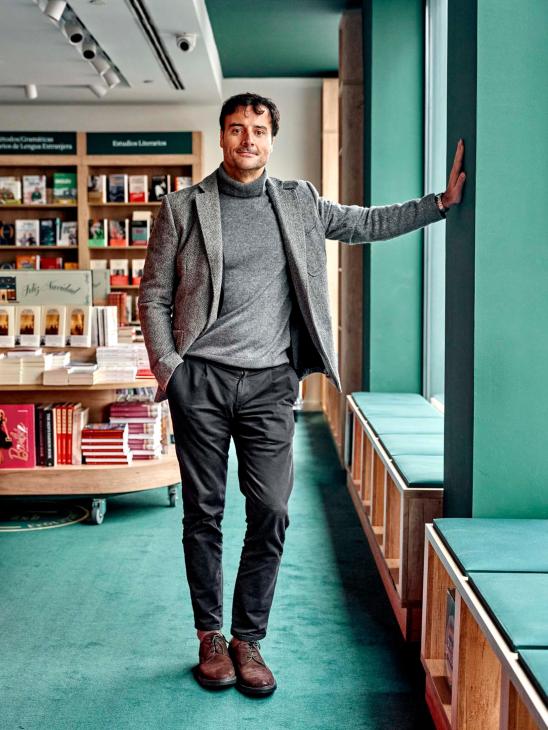
“Whether you’re purchasing a luxury garment or a novel, it’s a personal, tactile experience,” says Javier Arrevola. The CEO of Spanish bookshop chain Casa del Libro is sitting behind his desk in the company’s headquarters on the outskirts of Madrid, dressed in a sharp grey jacket and navy chinos – appropriate attire for someone who strategised for luxury labels including Loewe for 25 years. Arrevola arrived at Casa del Libro in 2018, eager to apply his know-how from premium fashion to the books sector.
In Spain, big chains such as Fnac, which sell everything from books to music, and department stores such as the El Corte Inglés group are fierce competitors. So Arrevola has focused on creating a more personal retail experience and uses staff recommendations to help move titles. “It’s part of what I call the bookseller’s prescription and it’s a lesson that I learnt in fashion showrooms,” he says. “Our team of 1,000 booksellers don’t just see books as products. They see literature as a vocation.” Despite being a chain, Casa del Libro has developed a service that’s more akin to an independent bookshop.
But creating a more intimate experience for shoppers hasn’t limited Arrevola’s ambitions for the company. When he was appointed as CEO, Casa del Libro had 45 shops in Spain’s biggest cities, including Barcelona, Bilbao and Seville. Demand for physical shops has since risen: according to the Spanish publishers’ guild, bookshops generated nearly 55 per cent of the sector’s turnover in 2023. For all the talk of evolving consumer habits, bricks-and-mortar outposts remain crucial to the country’s book trade. Casa del Libro currently has 63 outlets, with seven more planned for 2025.
But it’s not just a matter of expanding to generate profit, says Arrevola. It’s also about the company’s longstanding penchant for print in all of its forms. Basque pro-democracy journalist Nicolás María de Urgoiti launched Casa del Libro in 1923. “The company was established in an era when bookshops displayed their wares behind glass as though they were untouchable objects,” says Arrevola. “At the time, about half of the population was illiterate,” he adds, explaining that being able to touch, hold and flick through the pages before purchasing a book was a novelty for many. “We have always sought to democratise the reading experience.”
But the meaning of democracy in Spain has shifted drastically over the chain’s decades of operation. In the dark days of Francisco Franco’s dictatorship, the bookshop stuck to its founding principles and continued to play host to intellectual gatherings at its headquarters at 29 Gran Vía in Madrid – though these had to be held in secret at a time of repression and strict censorship.
Today the company’s dedication to democracy is reflected in Arrevola’s commitment to establishing outposts in Spain’s smaller cities. “We now reach Reus in Tarragona, Pontevedra in Galicia and Jerez de la Frontera in Andalusia and show that Madrid doesn’t have to be regarded as the epicentre of Spain’s literary prowess,” he says.
Some of Casa del Libro’s shops have sizeable nooks dotted around that encourage customers to settle down and read their chosen books, just like in a public library. As the publishing industry continues to enjoy an uptick across Spain (there was a 5 per cent increase in the sector’s turnover between 2022 and 2023), it’s a reminder that everyone deserves equal access to literature – whether you’re buying a book or returning one to the shelf.


Beyond Spain, in countries such as Peru, Colombia and Mexico, readers can consume Spain’s exported literary canon via the company’s dedicated Latin American website. “In that part of the world, the industry has succumbed less dramatically to Amazon than its European counterpart,” says Arrevola. Casa del Libro doesn’t have physical shops in Latin America – instead the focus is on online sales and virtual libraries. It’s a strategy that the brand committed to as early as 1996 and which Arrevola has implemented according to the demands of each individual market.
In Spain, however, the Amazon effect is more keenly felt. The e-commerce giant can offer more competitive prices than domestic businesses, which are limited by a 5 per cent discount cap. Nevertheless, Casa del Libro, which Spain’s leading publishing group, Grupo Planeta, acquired in 1992, has a home-turf advantage that Arrevola believes will continue to give it a healthy market share in 2025.
“We export to five continents but our DNA is Spanish,” he says, as he shows Monocle around the Gran Vía flagship. Arrevola points to books by the country’s writers of the moment – Julia Navarro, Eloy Moreno and Carmen Mola – who have tapped into Spain’s appetite for thrillers. “Coming to a Casa del Libro shop should feel as leisurely as going to the cinema,” says Arrevola. He believes that the experience of buying a book should be relaxed yet luxurious. Though much has shifted in Spain’s literary landscape since the shop was founded (even King Felipe VI attended the centenary celebrations in 2023), Casa del Libro’s commitment to a tangible reading experience remains resolute. The CEO’s enthusiasm for his retail empire is a reminder that books are more than just commodities – and that a bookshop can come with a happy ending.casadellibro.com
Casa del Libro in numbers
1923: Founded in Madrid
12 bookshops in the Spanish capital
5 continents to which Casa del Libro ships
36 Spanish cities with a Casa del Libro bookshop
About 75 per cent of sales are made in store
Cultural bridges: Vatican-Saudi art exchange and Seoul’s immersive comics library
The Vatican and Saudi Arabia, home to the holiest sites of Catholicism and Islam, aren’t on the friendliest terms. As a result of past quibbles, the theocracies don’t even officially recognise each other. But on the long list of participants in the Islamic Arts Biennale (IAB), which runs from 25 January to 25 May, is a feat of diplomacy. In the event, which gathers masterpieces from across the Muslim world in Jeddah airport’s Hajj Terminal, there are 11 works shipped in straight from the Holy See.
Delio Proverbio, a curator at the Vatican Apostolic Library, says that this is a first both in terms of the recipient country and the size of the loan. “Even to an institution such as New York’s Metropolitan Museum of Art, we would lend a maximum of three works,” he tells Monocle But Proverbio was persuaded to collaborate by Abdul Rahman Azzam, one of the IAB’s artistic directors, and Aya Al-Bakree, the ceo of the Diriyah Biennale Foundation, the event’s organiser. It helped that the inaugural 2023 edition, which displayed ancient scientific instruments alongside newly commissioned artworks, had been a blockbuster success with more than 600,000 visitors. “The Pope himself said, ‘You have to join this exhibition,’” says Proverbio.
Last spring the Saudis visited the Vatican to peruse its archives. The star item that they chose for the show is a six-metre-long 17th-century map of the Nile. It was made by Ottoman-Turkish explorer Evliya Celebi, the author of the Seyahatname travelogue. “When I saw it, I was blown away,” says Al-Bakree. “We were all trying to see the little inscriptions.” The biennale agreed to fund a thorough restoration of the work.

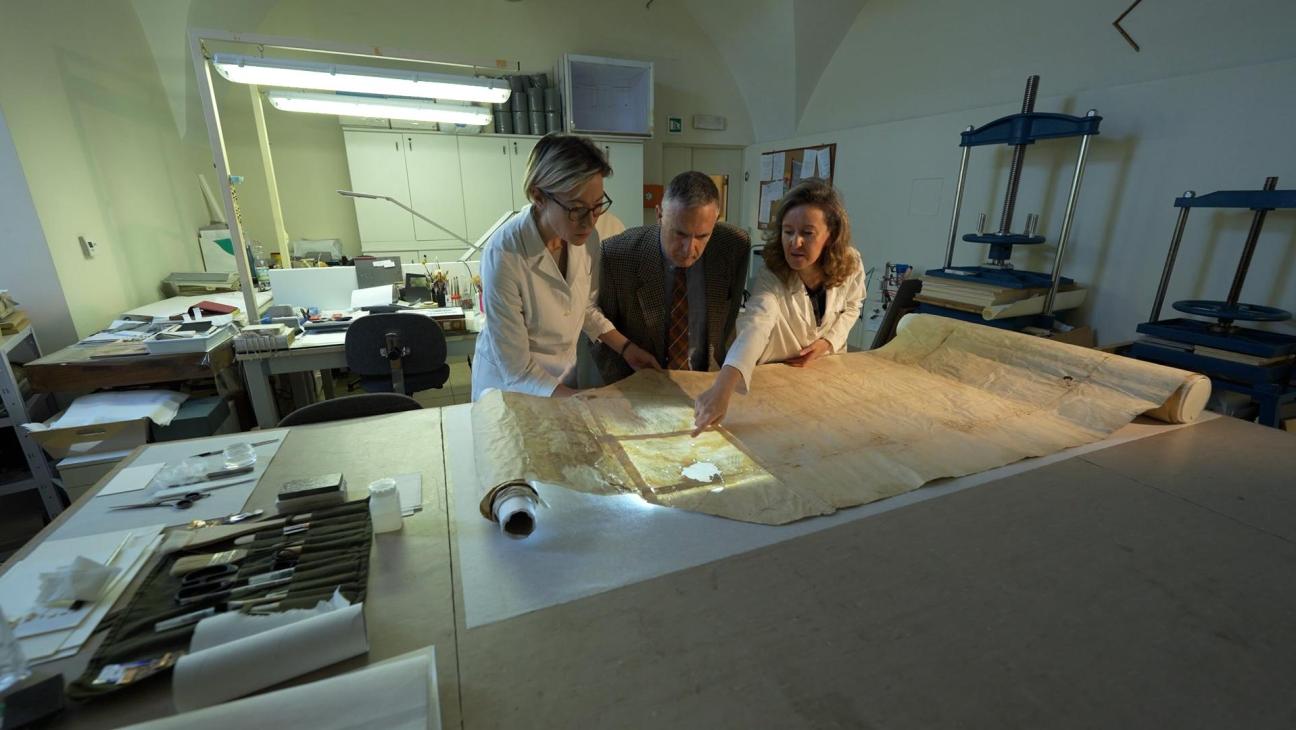
Is this collaboration a sign of thawing relations between the two states? “That’s beyond all our pay grades,” says Al-Bakree. Even so, it’s a prime example of how cultural institutions can make space for tolerance and co-operation even, and especially, where politics cannot.
biennale.org.sa
Seoul’s Daeshin Wirye Center has a bookish new occupant with a distinctive mid-century style. Graphic, a library devoted to comics and art books, has opened its second branch here. The three-storey space is attracting crowds of people drawn by its immersive reading experience. For an entrance fee, visitors can peruse the collection and settle into any of its inviting nooks, cosy settees or veranda chairs, all while enjoying tasty snacks and drinks.
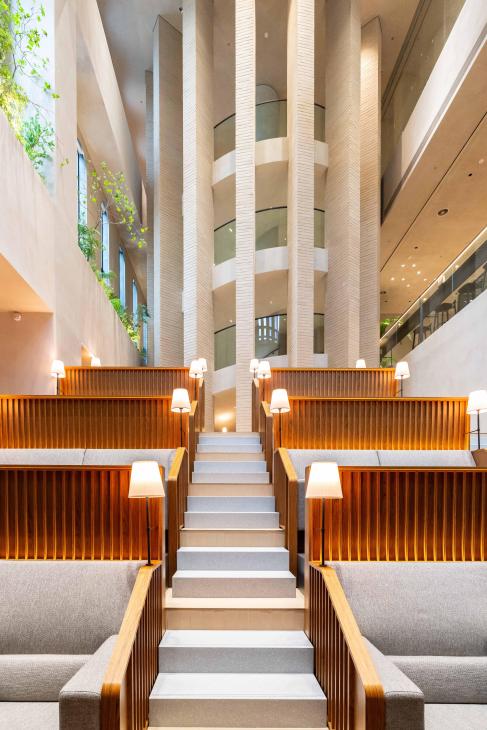
The idea is to allow readers to lose themselves in books and stay as long as they want – at least, up to a point (the high demand has led to the introduction of a three-hour cap at peak times). Graphic’s popularity reflects a growing appreciation of print media in a city known for its “snack culture” – the tech-savvy population’s habit of scrolling content such as webtoons in bite-sized chunks. It’s the latest addition to Seoul’s expanding array of sit-down reading sanctuaries, from the expertly curated, genre-focused Hyundai Card Libraries to Cheongdam’s membership-based Sojeonseolim Library, which hosts book clubs and author visits.

Whether it’s by encouraging readers to lounge on beanbags or by having a DJ set the mood, Seoul is reimagining how books are experienced. Pull up a chair and get stuck in.
graphicbookstore.imweb.me
Stitching the future: Inside Tokyo’s Bunka Fashion College
Anyone interested in finding out what ultra fashion- conscious young Tokyoites are wearing should take a seat in the canteen of Bunka Fashion College, Japan’s highly rated fashion school. As it turns out, the young bloods of Japanese style are wearing anything and everything: there are Lolitas in lace caps, anime-inspired goths and young fogies in jackets and ties. There are platforms, pearls, piercings, military jackets, hats with pointy equine ears, the odd designer label (worn ironically) and, of course, hair styled in myriad hues and cuts. At lunchtime, students wearing clothes that reference subcultures that nobody over the age of 25 can hope to understand huddle together. It’s a scintillating, frequently incomprehensible, parade.
Bunka’s alumni list is a dazzling who’s who of Japanese fashion, from Kenzo Takada and Yohji Yamamoto to Junya Watanabe, Jun Takahashi (Undercover), Nigo (of A Bathing Ape fame) and more recently, Ryota Iwai (Auralee), Maiko Kuroguchi and Shinpei Goto, whose label Masu is a student favourite. The college was founded by Isaburo Namiki as the Namiki Women’s and Children’s Dressmaking School in 1919. It became Bunka Fashion College in 1936, the same year that it began publishing So-en, Japan’s first fashion magazine (which is still going strong). Bunka started admitting men in 1957 (Kenzo was among the early intake). The current building, a vast edifice in Shinjuku, opened in 1998 and today there are 3,300 students learning about design, textiles, jewellery, styling, marketing, modelling, knitwear and many other aspects of the fashion business.
The big hitters emerge from the design course. Satoshi Morimoto is one of the teachers. The fashionable 30-something from Osaka with bleach-tipped hair is helping a student who is trying to upcycle a pair of jeans. “I want to teach the students to be disciplined but, at the same time, I hope that they can enjoy expressing themselves through fashion, have the freedom to dream up ideas and always be curious and willing to take on new challenges,” he says. One advantage of Bunka, he tells monocle, is its location in central Tokyo “where new things are constantly being created”. He says that it can be hard to spot the stars of the future. Some of the most successful have been the quietest students.
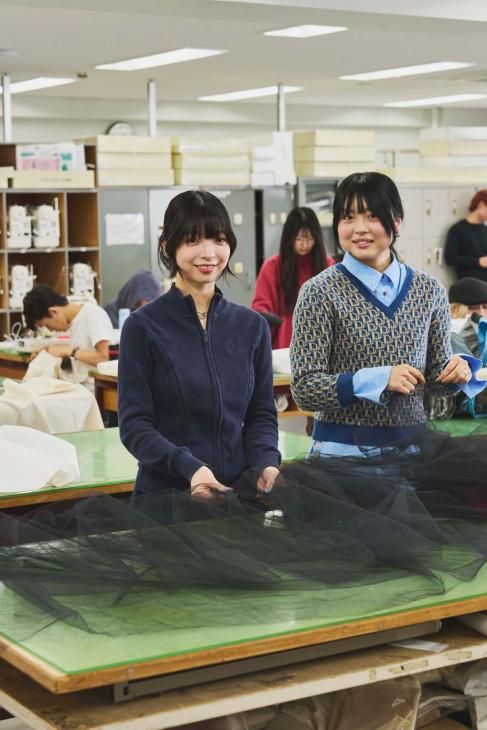
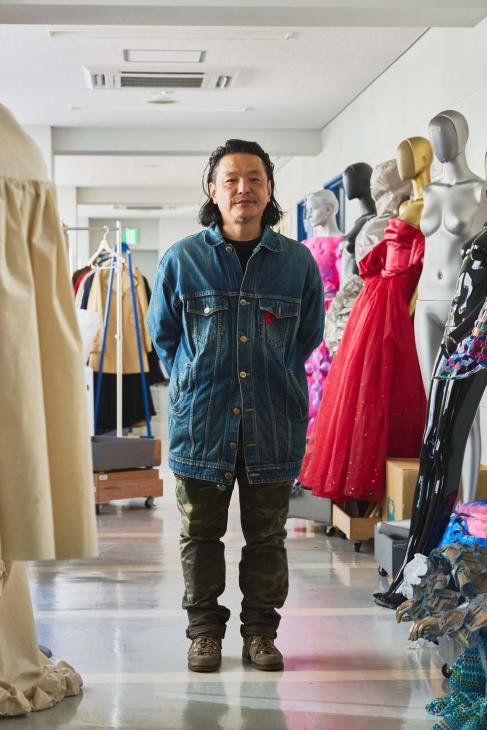
A visit to Bunka quickly reveals why Japanese designers are so technically skilled and prone to splicing fabrics at every opportunity – every design student has to master sewing and pattern cutting. No exceptions. In one classroom, a teacher is patiently going through the steps of making darts in a skirt. In another, a mannequin is draped in swaths of tulle. Morimoto says that the school’s technical teaching is a defining feature. “These pattern and sewing techniques have been passed down and developed for 100 years.” Computers play their part in Bunka but not at the expense of hands-on experience. The school even has its own fabric shop and another store selling all of the equipment that the would-be designer might need.
“It’s always about sewing and more sewing,” says one second-year undergraduate. What the students don’t always appreciate is that those skills will be what separates them from the rest. Just as the best abstract artists have put in the hours to master figurative drawing first, so these students will have all the tools that they need to de- and reconstruct any garment they choose. In the corridor of the design department, mannequins are clad in pieces that students have meticulously recreated from photographs.
The Bunka students Monocle meets rarely aspire to be the next Alexander McQueen or Rei Kawakubo. They seem to have little to no interest in famous names or even in fashion history. Nineteen-year-old Haruto Ogawa made a name for himself at his Bunka matriculation by printing a giant picture of himself on his trousers. He did the same with a bag and now gets requests via Instagram. A rebellious soul, he changes his look every day. Today he’s channelling the distinctive silhouette of a Japanese construction worker – slinky black top, balloon trousers (worn perilously low) and split-toed jika-tabi footwear.

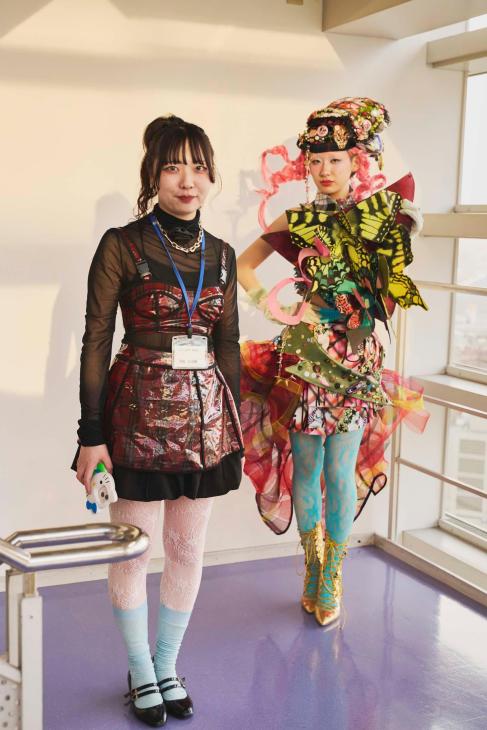
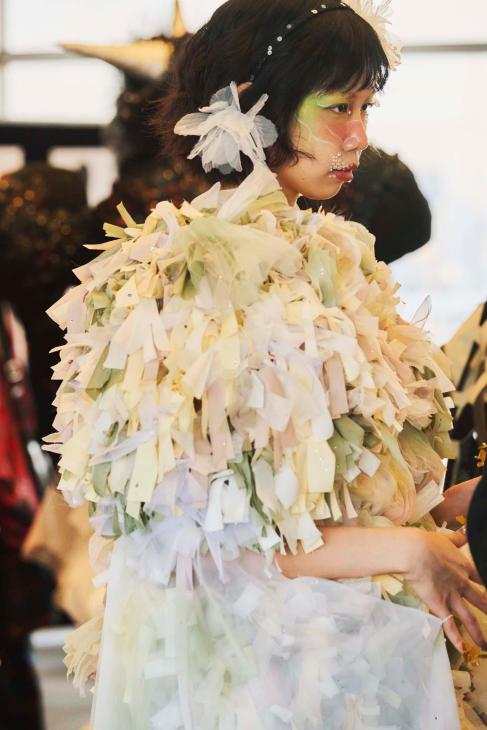
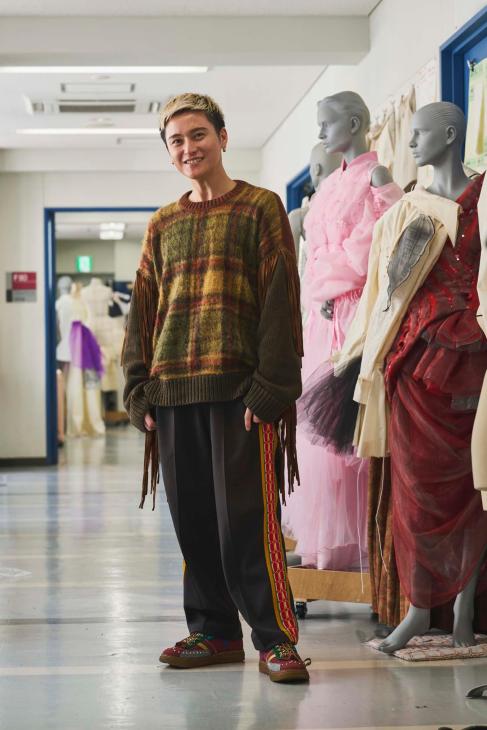
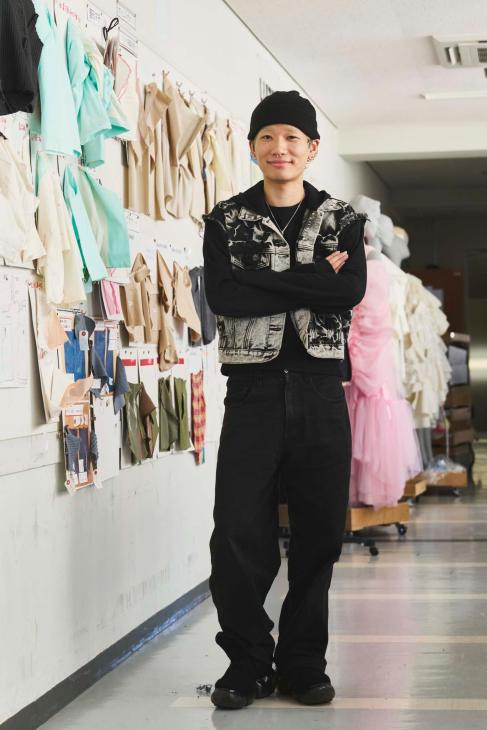
You might think that the students here would be poring over style magazines and following the global fashion cycle but they’re more likely to be scrolling through Instagram or window shopping for obscure labels at The Four-Eyed select shop in Kabukicho. “I don’t follow famous designers,” says Ogawa. “I like niche brands from around Asia.” Notions of gendered fashion are out the window too. “It doesn’t matter anymore,” he says.
They might not be drawn to commerce but the average Bunka graduate is still likely to find gainful employment. Final-year creative design student Karin Tsujino already has stylists knocking on her door, clamouring to borrow her complicated candy-coloured tulle confections. She’s also dressing Japanese entertainers whose look is their strongest talent. Tsujino describes her work as “kawaii [cute] but not” and tries to explain the labyrinthine meanings of kawaii. Outsiders tend to think that it means saccharine and cutesy but kawaii can also be edgy and dark; even punk can be kawaii. Tusjino loves battle anime. “I want my work to reflect Tokyo culture,” she says. “It’s about Japanese music and anime as much as clothes.”
Final-year student Miu Beppu is wearing a hand-stitched parka by Keisuke Kanda (another Bunka graduate now making his name in Tokyo’s fashion world), knickerbockers and tassel loafers. She is part of a kawaii collective in Bunka called Ramb and already has a job lined up at a Kyoto lingerie company. Soon-to-graduate knitwear star Aiha Mori, who took up knitting during the coronavirus pandemic, is another member of Ramb. Mori’s been snapped up by a manufacturer that makes knitwear for top Japanese brands such as Sacai.
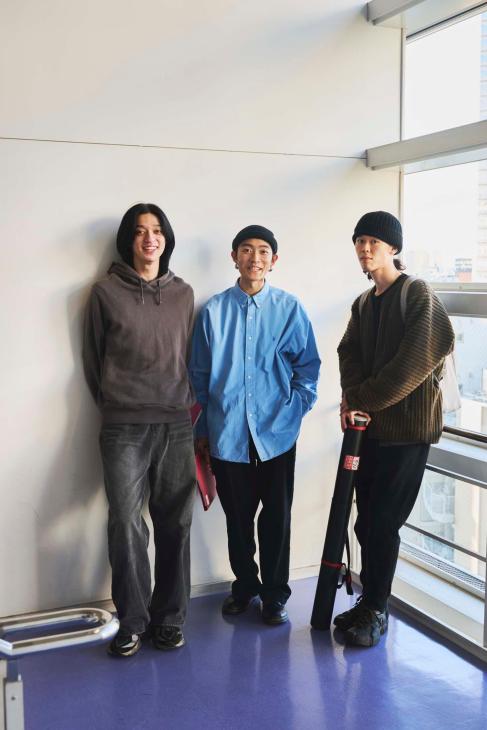
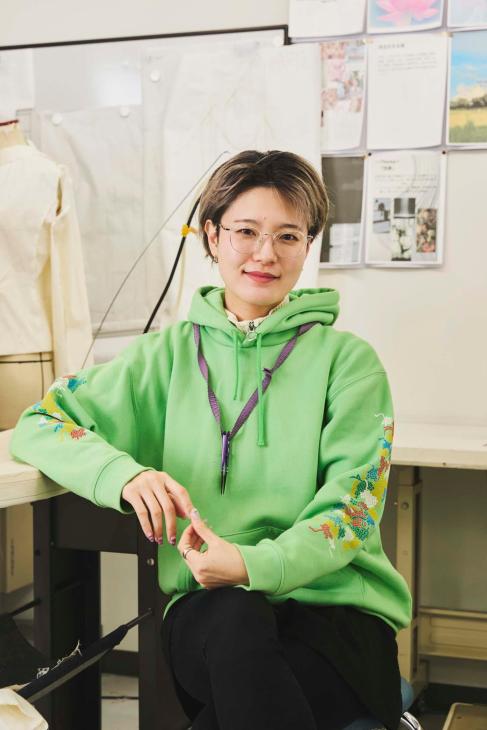
Every December the college hosts a fashion-design contest. The grand finale is a professional affair, with a proper runway and a pumping soundtrack. It’s standing-room only and the hall is packed with students and teachers. The finalists present one look each and it’s a big deal to take the top prize. Sera Kawasaki offers up a futuristic take on outdoor wear with a jacket and rucksack sculpted as a single piece, modelled by his friend, who stomps down the catwalk, hood up, shades on.
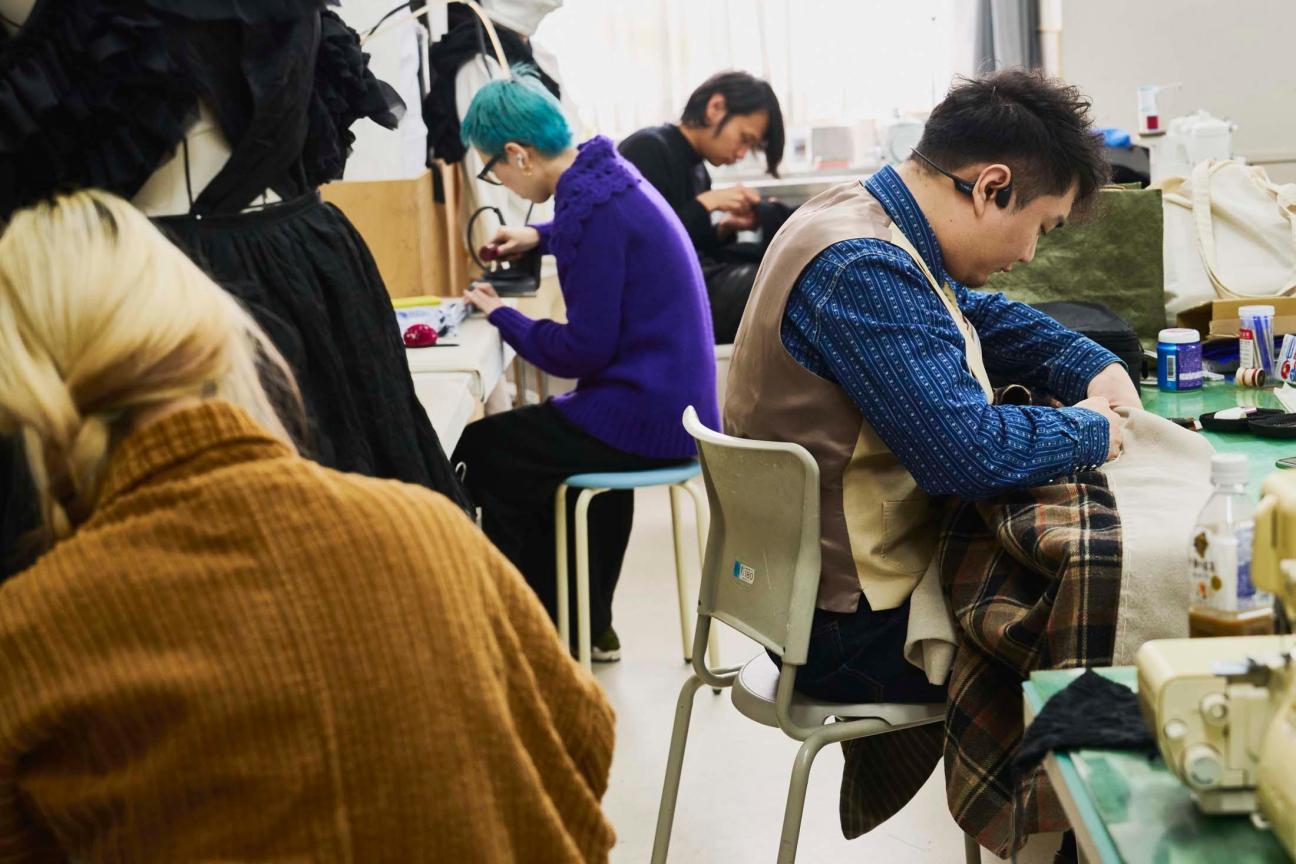
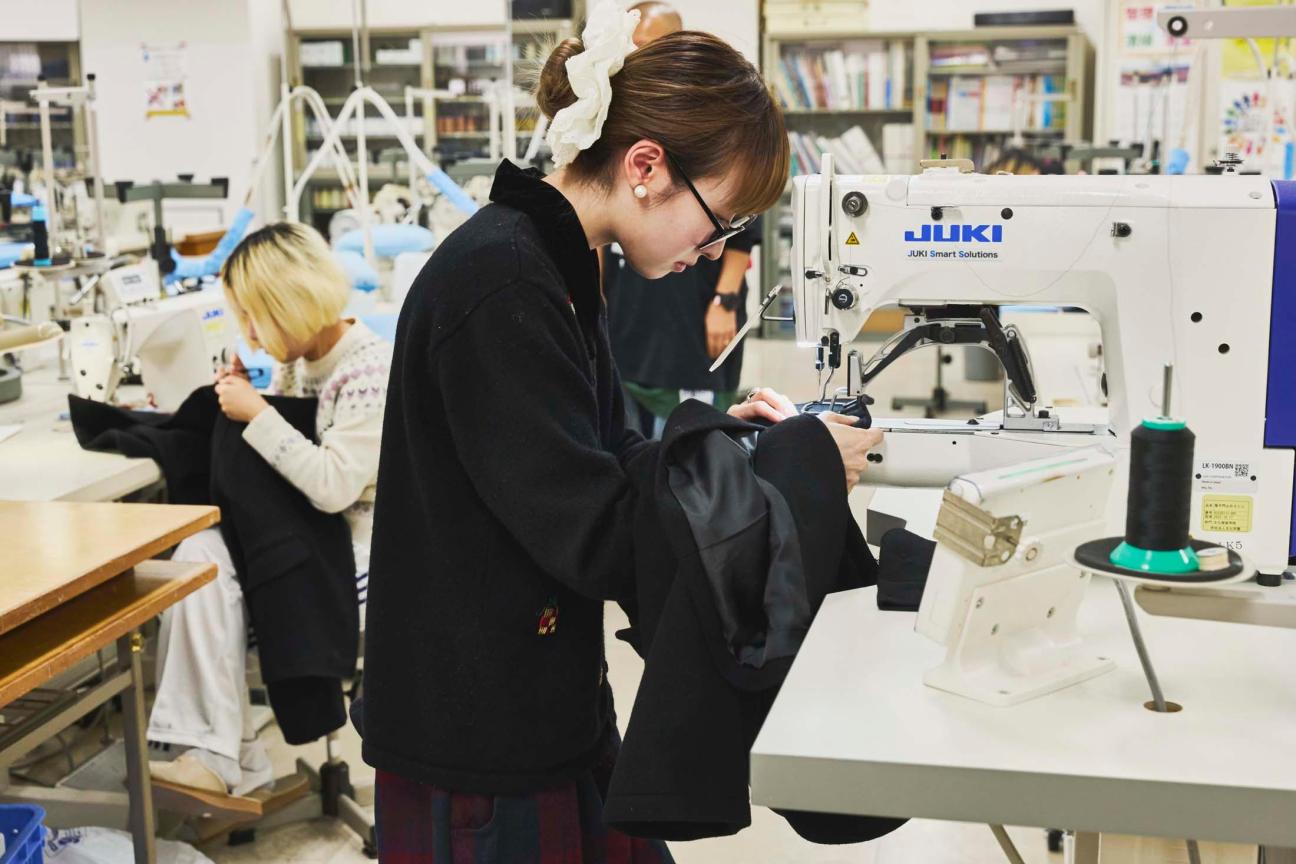
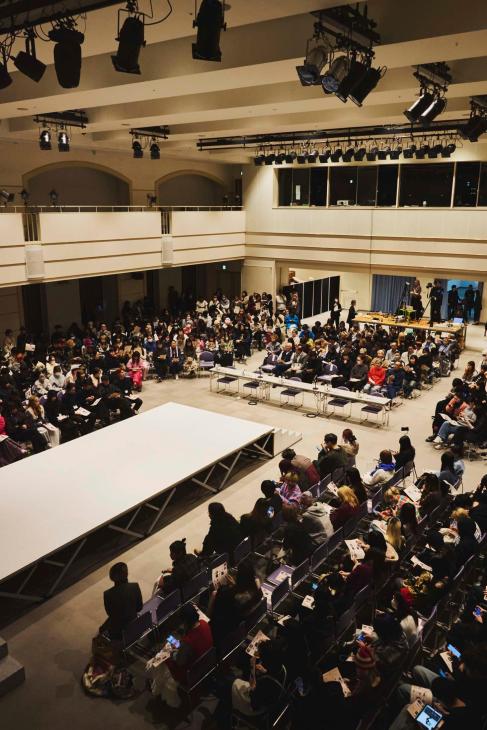
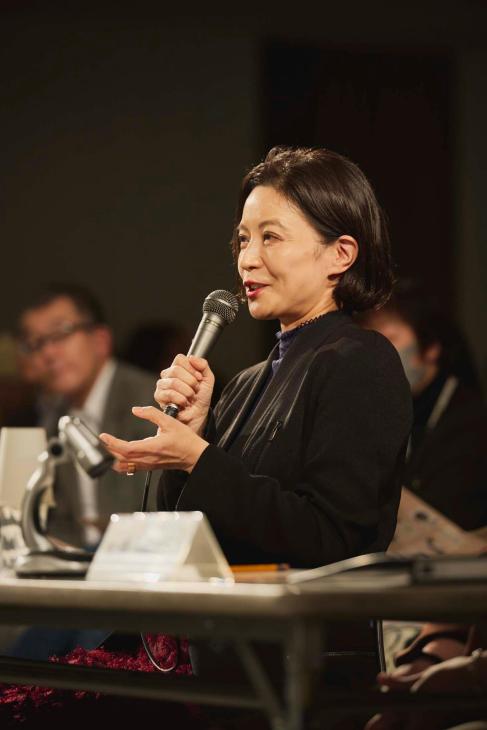
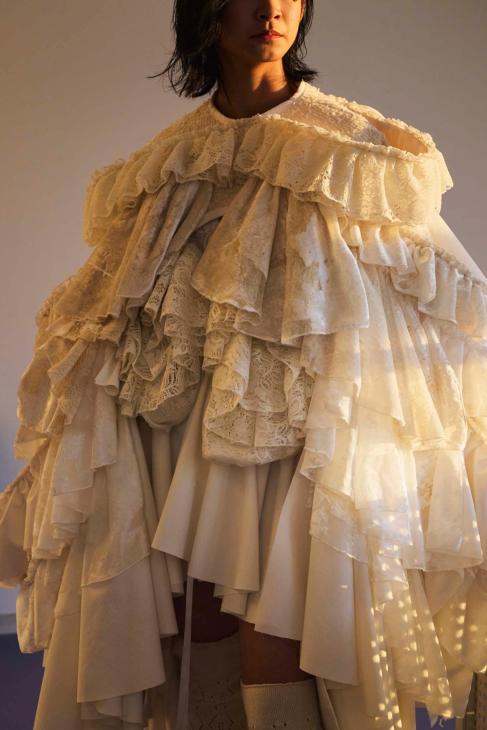
With his baseball cap and pearl earrings, Takumi Ogura has all the swagger of a model but is an aspiring second-year designer. His impressive lace construction is given life by his friend Mai Saito, who sways down the runway. At 27, Ogura is older than the average student and has an unusual back story. “I used to work in construction but I dreamt of being a fashion designer.” His background gives him a hunger; impatience even. “I don’t want to work for anyone else,” he says. “I want to set up on my own.”
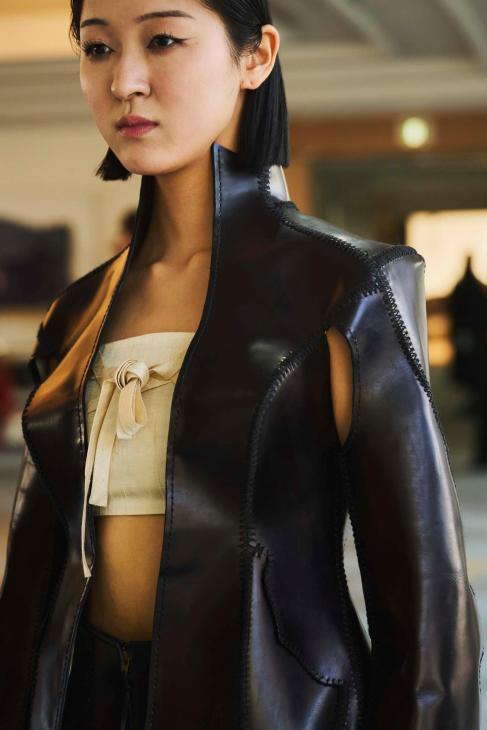
The winner is William Cooke, a softly spoken student from Portland, Oregon, who has created a tailored leather two-piece inspired by bamboo craft and lacquer. Cooke is one of a cohort of international students who have to learn Japanese as well as the skills required to make it in fashion in Japan. He had spent a year in Niigata and decided to combine his interest in Japan and fashion by applying to study here. “Bunka is very different from other fashion schools in New York, London or Paris because the focus is on technique and sewing,” he says. “They don’t really teach you anything about design.” The students are different too, he says. “They’re not interested in collections, runways and designers; fashion is more of a lifestyle for them. I lean towards realistic, wearable clothing but at Bunka, fashion can be anything, your own fantasy.”
Adrienne Guilbaud, who is from Florida, says that the language, coronavirus and the compulsory sewing and pattern-cutting elements made the first year tough. “The Japanese spoken at Bunka is not the same as the Japanese I was being taught at school,” she says. “In the US, you might be going to college a couple of times a week but here it’s nine to five every day.” Guilbaud, who loves the Lolita style and draws inspiration from drag culture in Shinjuku’s Ni-chome neighbourhood, is loving Bunka now, thriving on its creative freedom. She is hoping to stay for a master’s degree. “Teachers here never say that a design is bad; they just tell you how to achieve it technically. The fashion market couldn’t be more different from the US. In Florida we all wear shorts and a tank top.”
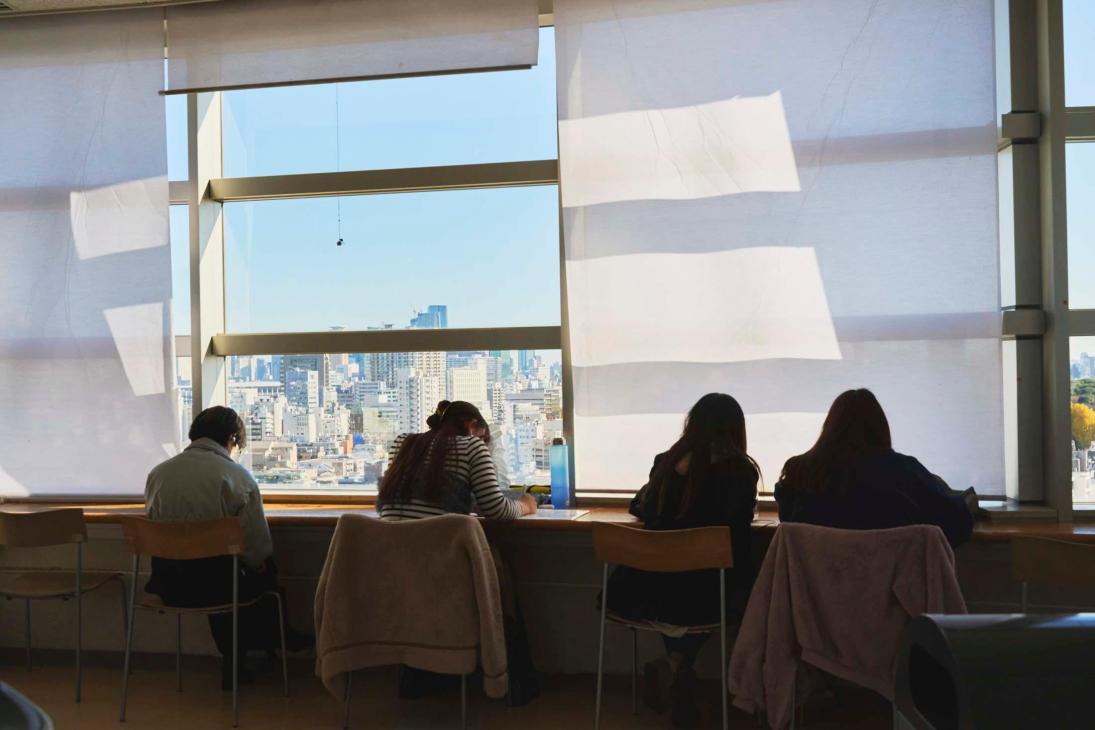
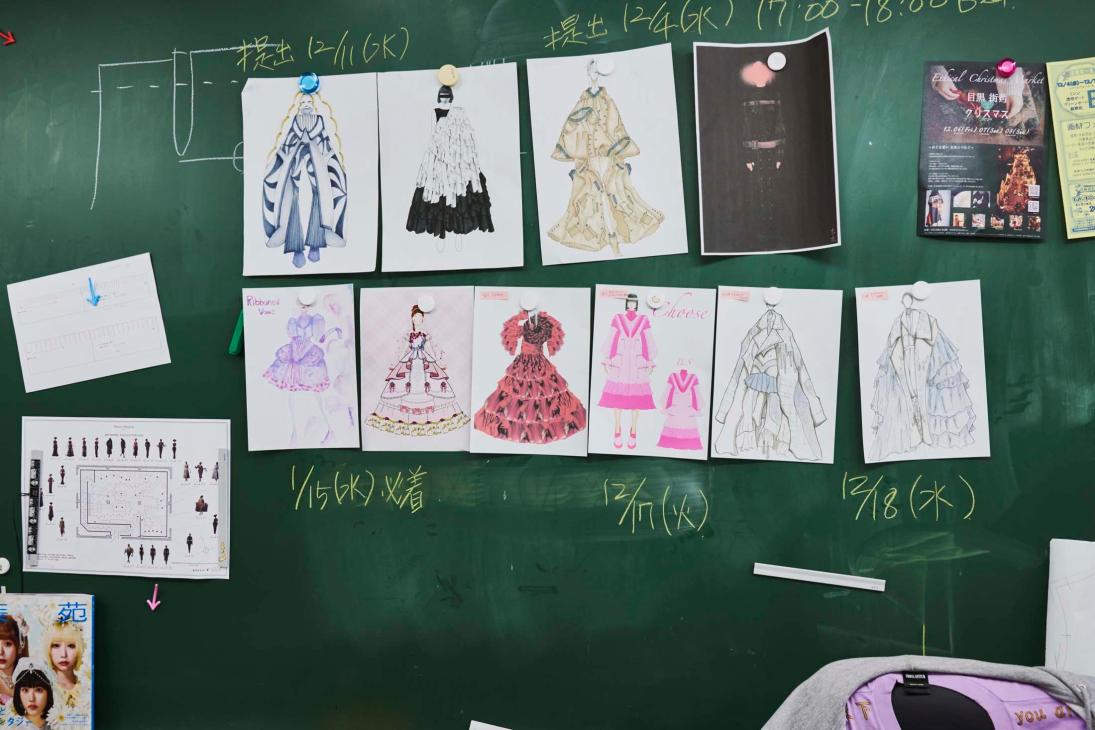
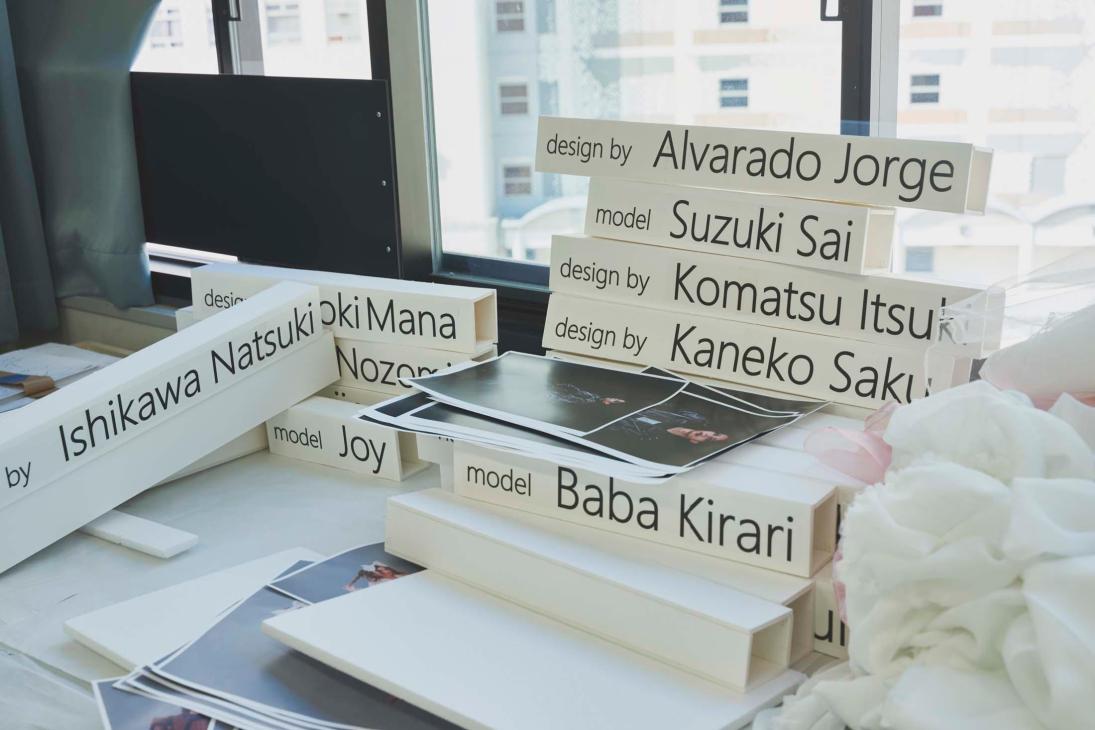
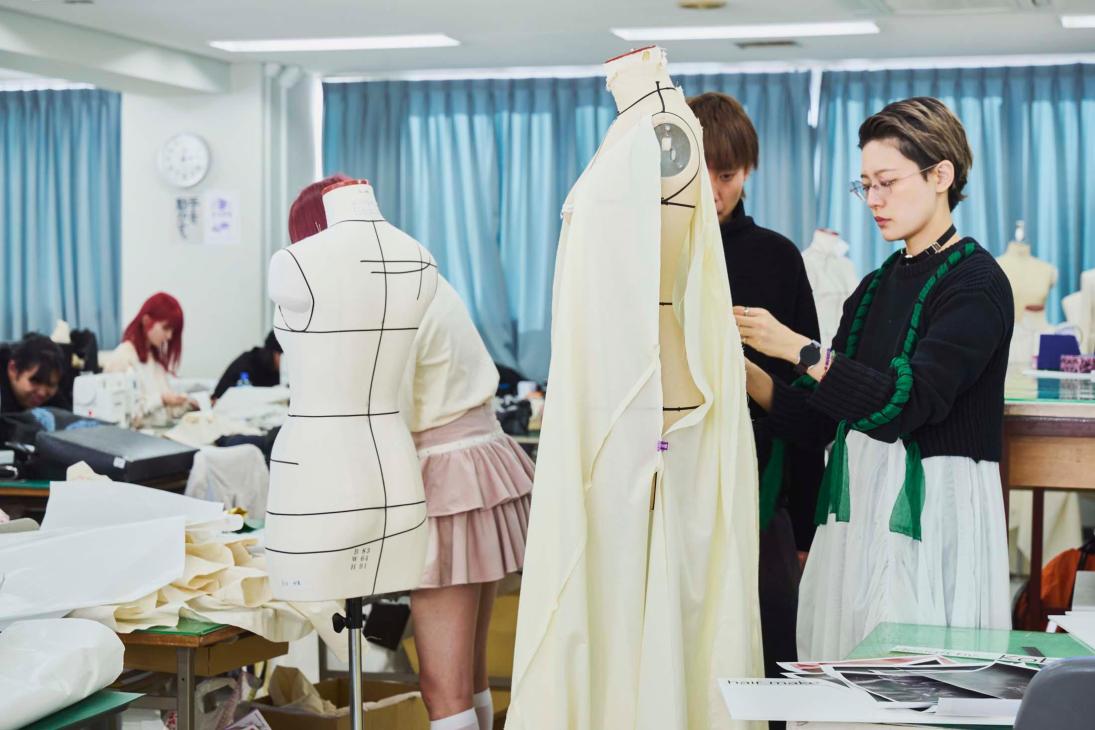
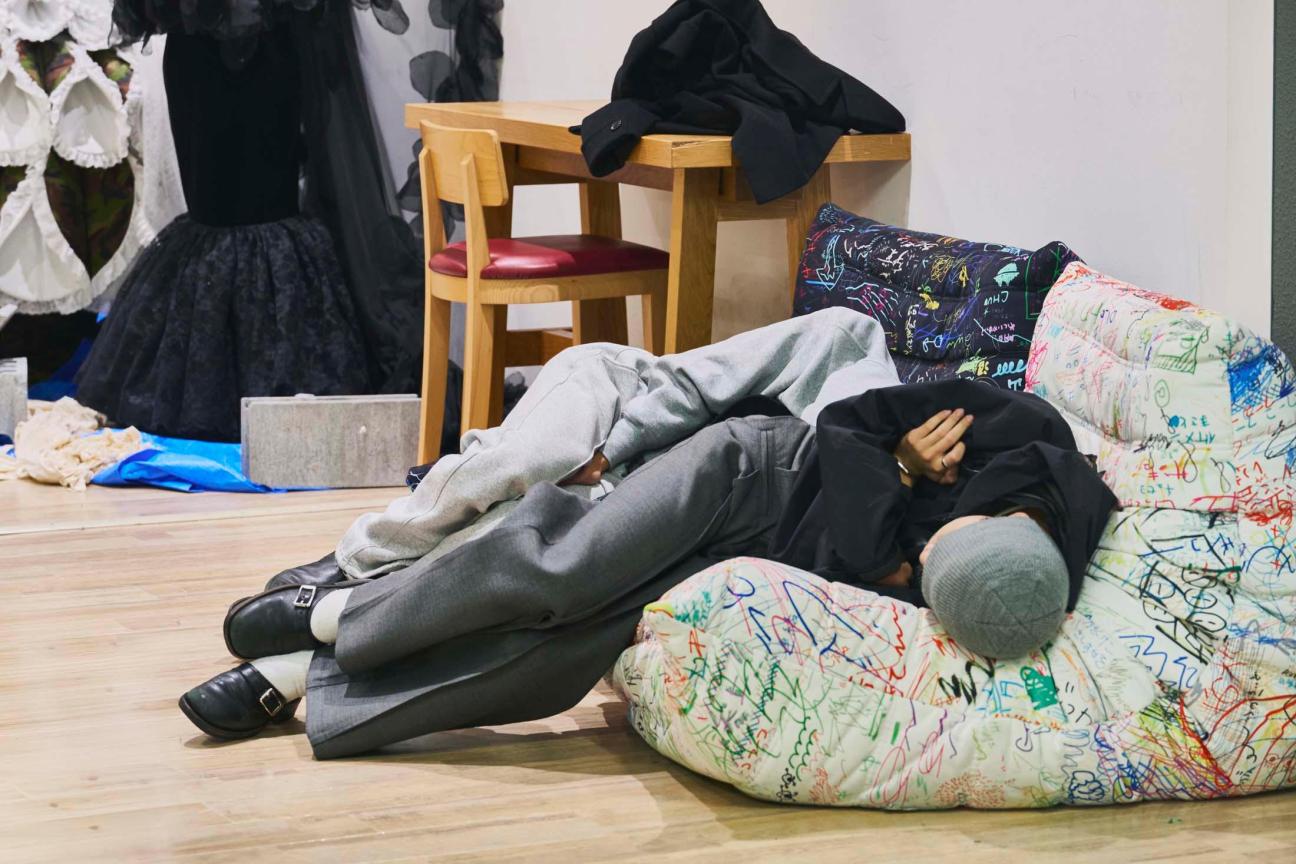
For fashion references, teachers can go to the basement resource centre, run by head curator Tamiko Ueda. After nearly 30 years at Bunka, she has an encyclopaedic knowledge of the archive, which hangs on revolving racks according to type, including tracksuits, denim, eveningwear, garments made by students. The more precious pieces are curtained off: vintage Pierre Cardin, a solid collection of Kenzo pieces and an impressive section dedicated to “Swingin’ London”, stocked with psychedelic prints and Biba originals. There are 35,000 items (including hats, shoes and accessories) in the collection; the Bunka Gakuen Costume Museum is next door too.
Bunka has long had international connections. The first foreign student, Virya Chitinanda, came from Thailand in 1955 (the same year the school’s famous cylindrical campus building, now demolished, opened). Christian Dior, accompanied by seven models, held a show at Bunka in 1953; Pierre Cardin visited a couple of times and became an honorary professor in 1961. There have been European tours and tie-ups with colleges everywhere from New York to Shanghai. But the recent collapse of the yen, however, is making stints as colleges such as London’s Central Saint Martins or the Royal Academy of Fine Arts in Antwerp out of reach for most Japanese fashion students.
A Bunka degree still opens doors in the Japanese fashion business. Some students, like Ogura, want to go it alone, while others follow other creative pursuits, such as floristry or photography. With true Japanese practicality, the college has a production department where students get to grips with something that Japan does exceptionally well: manufacturing. Guilbaud says that potential students from overseas are intrigued by Bunka, which is big in Japan but still has a low profile elsewhere. “I always say, if you want to make something classic like they would at Dior, then you should go to one of those other places, like Central Saint Martins. But if you want to learn how to make the things that you want to create, Bunka is the perfect school.”bunka-fc.ac.jp
Read next: The Monocle City Guide to Tokyo, featuring the best hotels, restaurants and retail spots in the Japanese capital
Wood intentions: A look inside Stora Enso’s HQ as the largest timber building in Finland
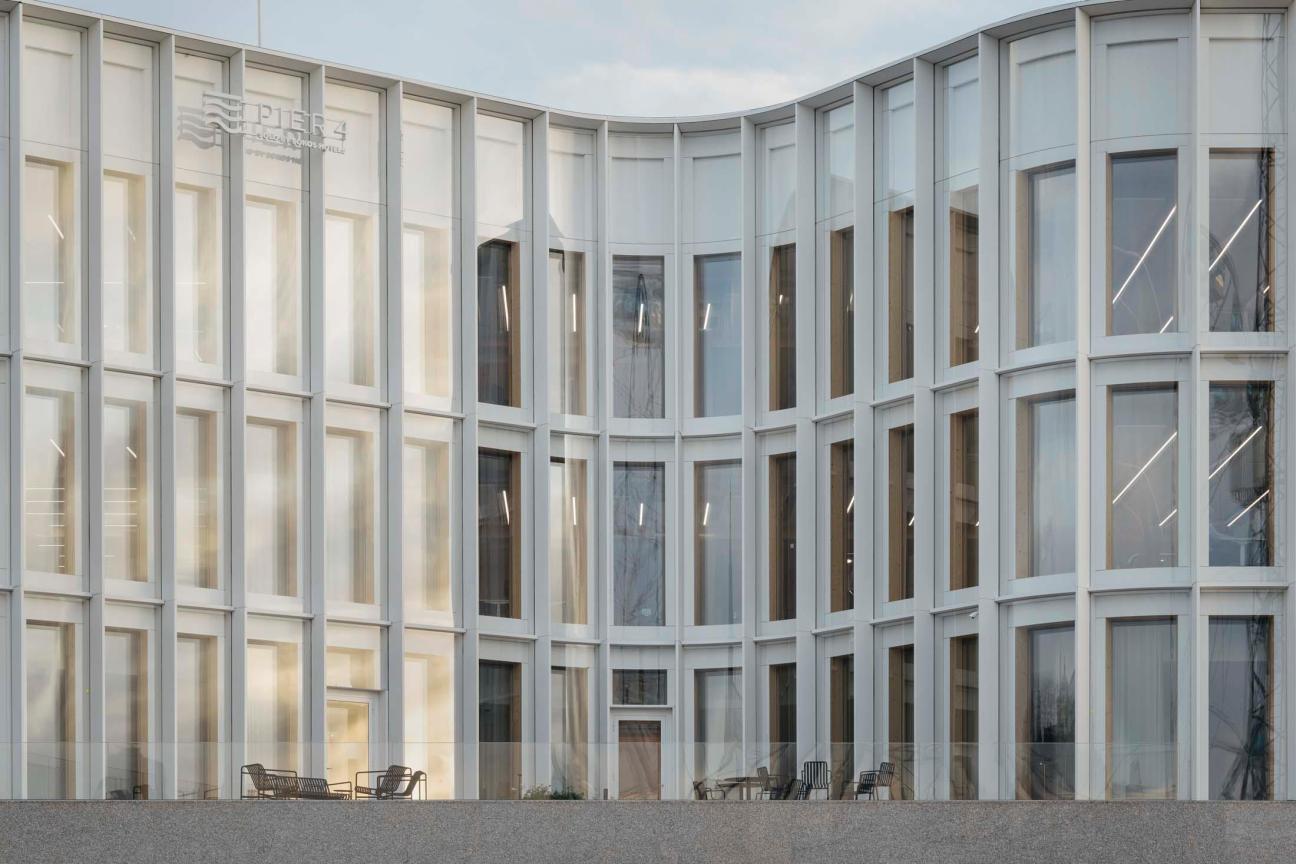
The new headquarters of Finnish forestry giant Stora Enso is a tribute to the material that’s kept the company in business for 700 years. The largest timber building in Finland, Katajanokan Laituri is a fitting home for a firm that provides wood for the construction industry and turns trees into paper, packaging and, increasingly, biomaterials. “We are among the largest private owners of forests in the world,” says Hans Sohlström, the company’s CEO, who is sitting in one of the building’s soothing all-wooden meeting spaces overlooking Helsinki harbour. “Wood is at the heart of everything that we do.”
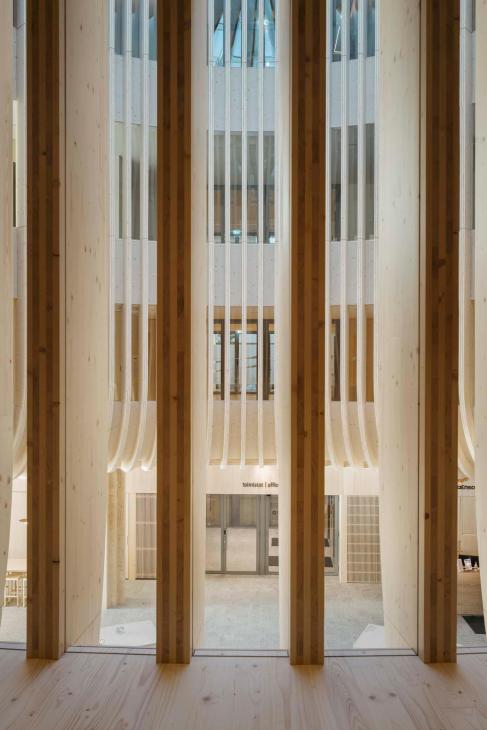
When Monocle visits the firm’s HQ, which opened in September, the public lobby is bustling with locals stopping in to take photographs of the new building and its airy atrium. Sweeping curves of exposed timber are illuminated by a large oculus-like skylight and the space is filled with the mild but pleasant scent of freshly cut wood. Employees gather over coffee here while the large terraces are perfect for a breather after business meetings, with the sound of waves lapping on the pier below.
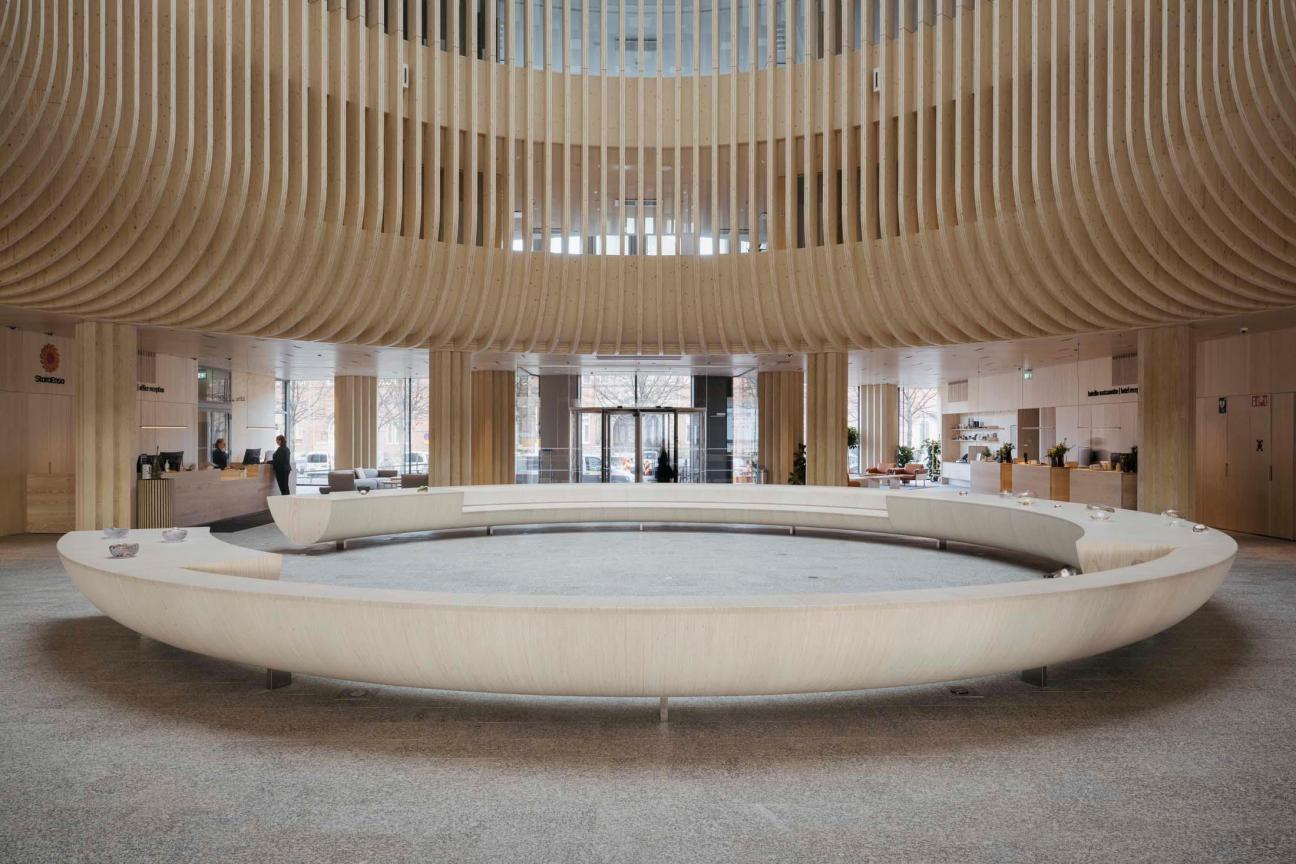
The building, designed by Anttinen Oiva Architects, is constructed from more than 2,500 individually milled pieces of wood, from the laminated veneer lumber of the frame to the timber that lines the inner walls, lifts and staircases. There are trees planted in an open-air courtyard as well as in the expansive rooftop garden, which also features hammocks and a bar. All this, coupled with the building’s location, means that wherever you are in Katajanokan Laituri, your view is of wood and sea. “Being close to natural elements – so-called biophilic design – improves our wellbeing and productivity,” says Sohlström. “People are enthusiastic and inspired by working in this space. We’re already seeing more people wanting to return to the office, rather than work from home.”

It’s certainly an impressive building but the new HQ has a lot to live up to: Stora Enso’s former headquarters was a white, monolithic block designed by renowned Finnish architect Alvar Aalto and completed in 1962. It remains a landmark in the capital. The company’s new home, therefore, needed to be a striking piece of architecture but also express something about where the business is heading.
For much of its long history, Stora Enso was first and foremost a paper company. Since 2023, however, rising costs and falling demand have meant that Stora Enso is in the process of divesting from paper altogether. Paper now accounts for a small part of its overall revenue, even if the company still makes everything from newsprint to book and magazine paper, advertising paper and craft paper. “Paper as a product is not going anywhere and there is a great future for print media in specialised segments where digital cannot compete,” says Sohlström, kindly citing Monocle as his example. But packaging, he explains, has replaced paper as the primary driver of growth for the business. Just think of all those delivery services that we rely on. “There is a strong push to replace plastics in how we wrap products and the best way to achieve that is to use biodegradable wood-based alternatives.”
All of this is prompting the business to pivot. As it diversifies away from paper, Stora Enso is showing that wood from responsibly managed forests can be used to make many of the products that we need daily, such as tableware, cups, cosmetics containers, hygiene products and even cleaning products, in addition to packaging in its multiple forms. In part, this is about greater sustainability – putting fewer plastics derived from fossil fuels into the environment – but also a need for the company to move with the times. “Batteries, new types of construction materials, bio-based plastics,” says Sohlström as he lists just a few products derived from wood that Stora Enso has on the horizon. The company’s credo that “everything that is made from fossil-based materials today can be made from a tree tomorrow” is ambitious, perhaps even impossible. But every year a new product category is added that edges the industry closer to this goal.


Another sector in which the shift from fossil fuel-based materials to wood is making a significant environmental impact is construction. By using wood instead of concrete to build the new headquarters, Stora Enso says that it generated 35 per cent less carbon emissions during construction. That’s an area where the company sees the most growth potential in the years ahead. “In the EU alone, less than 3 per cent of all the material used in construction is renewable wood-based; the rest is almost entirely non-renewable,” says Sohlström. “In this way wooded construction can actually be a very important part of the climate solution.” Stora Enso’s new HQ embodies this thinking, he explains. “This building will store 6,000 tons of carbon for more than 100 years.”
Katajanokan Laituri and its meandering façade, reminiscent of Aalto’s signature waves and his iconic Savoy vase, occupies one of the most prominent locations on the Helsinki skyline. In the otherwise stone-clad neoclassicism of Helsinki, this wooden building is certainly a statement. It shows that Stora Enso, and by extension also Finland, are confident that wood has a bright future. Sohlström doesn’t deny the fact that the building was designed to impress. “We wanted to show what wood is capable of,” he tells Monocle. “This is a country that lives off of its forests.”storaenso.com
Stora Enso in numbers
1288: Founded as the mining company Stora Kopparbergs Bergslag in Sweden
20,000: Number of employees
740,000 tonnes: Annual paper production capacity
20,000 sq km: Size of Stora Enso’s forests worldwide (about the size of Wales)
7,600 cubic metres: Amount of wood in new HQ
Three themes that will endure geopolitical uncertainty in 2025
There has been no shortage of predictions about the year ahead in geopolitics. But while uncertainty remains the defining trait of international affairs, crystal balls must give way to sober analysis. Understanding how complex international challenges affect us as individuals and nation states is crucial, and there are three key characteristics of today’s international system we must focus on.
First, there will be no return to a rules-based status quo ante. We are firmly in an era of great power competition, with the US and China at its core. State relations are increasingly spilling into conflict – kinetic, cyber, economic, or the so-called “grey zone” spanning everything from disinformation to acts of sabotage.
Second, the global landscape is now split into three camps: the “global” West (the US and its Euro-Atlantic and Indo-Pacific allies); the revisionist powers (the “Crink” bloc of China, Russia, Iran and North Korea); and global swing states that navigate between these two with varying affinities. The “bloc-iness” of the world will determine the way in which we travel, trade and interact in different domains.
And third, the 2024 “year of elections” proved that populism remains an effective electoral strategy, often outpacing establishment messaging. This trend will persist for as long as trust in governing institutions is low and frustration with political leaders remains high. While the coming year offers comparatively fewer electoral races, Germany’s federal elections on 23 February are poised to offer a test of populist resurgence that will reverberate well beyond its borders.
The three dynamics mentioned above will endure despite any unforeseen developments, such as the surprises of last year – from Biden’s election withdrawal and the two attempts on Trump’s life to the fall of Syria’s Bashar al- Assad and South Korea’s most serious constitutional crisis since democratic consolidation. Trump’s return as the 47th US president is the most consequential development for international security in 2025. Hopes of reviving the rules-based order under US leadership, as it stood for the past 80 years, ended on 6 November 2024. Granted, pre-2016 US foreign policy wasn’t always a paragon of multilateral ideals, but Trump’s unilateral, transactional approach now signals its breakdown, as his policies, often contradictory, begin to shape crises worldwide.
Despite Trump’s promises to end the war in Ukraine, deep divisions between Kyiv and Moscow make a quick and lasting resolution unlikely. In the Middle East, many more questions loom. Will Iran respond to declining influence with concessions or accelerated nuclear ambitions? How will Israel shape its internal affairs and neighbourhood? And can Syria unite post-Assad? The answers to these questions will define regional stability in the short to medium-term. Moving further east, most security analysts will be looking towards Taiwan, where Trump’s policies offer mixed signals: a pledge to intensify competition with China contrasts with his viewing Taiwan as a threat to US economic interests in semiconductor production. Meanwhile, China’s aggression in the South China Sea raises questions about the new US administration’s approach to allies such as the Philippines.
Geopolitical challenges are almost certain to grow with rising protectionism. Trump’s intention to slap tariffs on Chinese goods (along with those on US allies and partners) risks countermeasures that will destabilise global trade and threaten economic stability. These challenges are only a segment of the broader international security landscape. Equally pressing are the far-reaching effects of climate change, terrorist threats and global health crises. All are compounded by the effect of artificial intelligence and rapid technological advancements, reshaping how states govern, co-operate and compete. Of course, these factors are not tied to one calendar year; they continue to influence the stability of societies. And 2025 will be no exception.
Only by staying informed, anticipating change and finding ways to adapt and respond can we navigate the uncertainties ahead and hopefully contribute to shaping a more secure future. I look forward to doing my part and sharing key insights with you as Monocle’s new security correspondent. —
Gorana Grgic is Monocle’s security correspondent and a senior researcher with the Swiss and Euro-Atlantic Security Team at ETH Zürich’s Center for Security Studies.
Strength of character: How the Moomins grew to a €680m business with high-fashion collaborations
Chances are that you’ve come across the Moomins. The white, hippo-like white trolls and the universe they inhabit, alongside a motley crew of other whimsical characters, are the creations of Swedish-speaking Finn Tove Jansson – and they celebrate their 80th anniversary this year. But did you know that the Moomins have grown into a €680m business that collaborates with the likes of Comme des Garçons, Rimowa, Starbucks and Bulgari, and has more than 800 licensees worldwide producing everything from toys to homeware, as well as TV shows in more than 120 countries and books published in 55 languages? Despite having grown into a global business, Moomin Characters Ltd is still family-run and has been for three generations.

“Irrespective of how amazing the body of work is, if you don’t introduce it to more people and find new ways to tell those stories, they will eventually be forgotten,” James Zambra, creative director of Moomin Characters, tells Monocle when we visit the Helsinki HQ. (Zambra’s mother, Sophia Jansson, is Tove’s niece, the company’s former CEO and current chairman of the board.) This kind of thinking defines the family’s approach to managing the Moomin brand and legacy. Instead of sitting on the property rights and protecting them from unauthorised use (the more traditional method of an IP rights holder, says Zambra), the company seeks out collaborations that engage new audiences with the Moomin universe. This includes everything from toys and books to fashion and homeware.
“The wonderful thing about the Moomins is that they speak to adults and children alike,” says Thomas Zambra, director of business development, as we tour the seaside offices, dotted with Moomin memorabilia. “Tove was so incredibly perceptive about life and poured so much of that into the Moomin universe, with its eccentric characters, playfulness, harmony and sense of adventure.” Despite their Finnish origins, the Moomins are popular on all continents, especially in Asia. Japan alone accounts for 40 per cent of the business – the same as Scandinavia. Other key markets include China, Poland and the UK.

As a visual artist and author living in the pre-digital age, Tove Jansson left behind a vast collection of writings and drawings. To keep her legacy alive and help people understand the Moomins’ origins, the company runs an extensive archive. “It’s impossible to put a precise number on everything that we have here but I would say that it is at least 10,000 items,” says Maria Andersin, who is in charge of the archive, as she shows monocle around the treasure trove. It features everything from the first hand-sewn Moomin figurines from the 1950s to early letters that Tove Jansson wrote to licensees, in which she meticulously details the characters’ features, including the shape of their ears and the position of their legs. Jansson’s earliest sketches and the subsequent drawings offer a perspective into how the characters were born and developed. “During the anniversary year, the focus is on the origins of the Moomins and their early days, and the archive plays a key role in that,” says James.
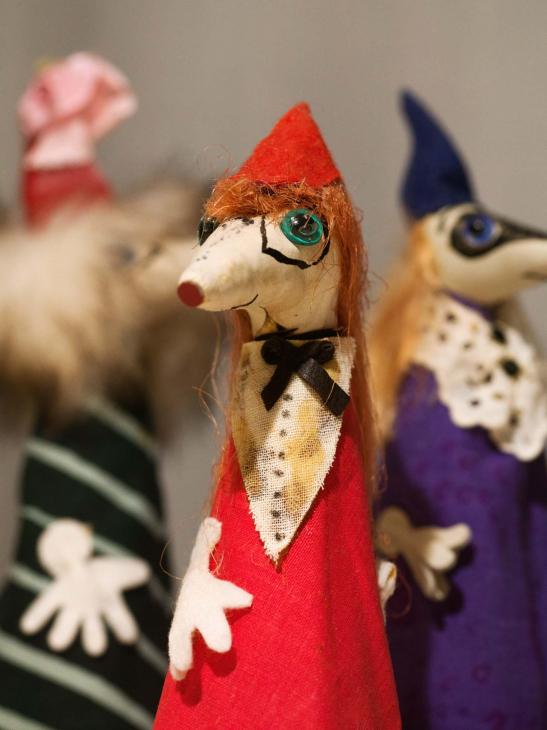
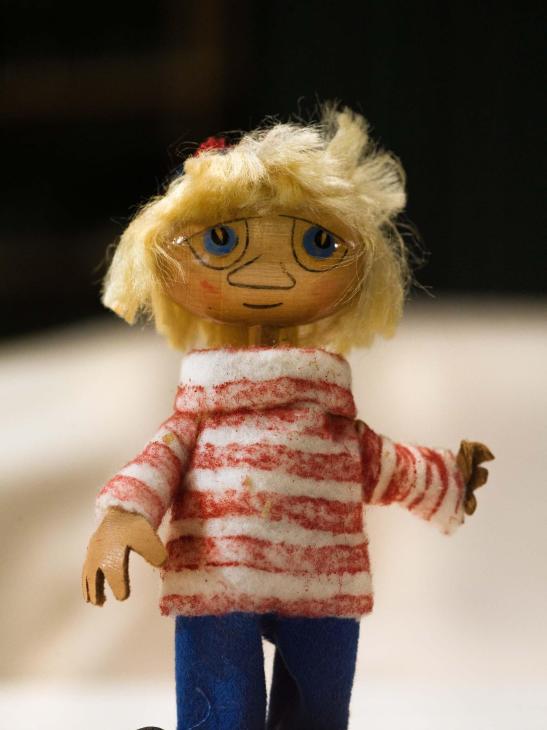
The anniversary will be marked by events including concerts on several continents; special editions of original books as well as some new ones; exhibitions in Japan, the UK, Finland and Sweden; and collaborations with agencies such as the Red Cross, as well as notable brands. One such company is Artek, the Finnish heritage brand founded by architect and designer Alvar Aalto, which is turning 90 this year. When monocle visits the Moomin offices, Artek managing director Marianne Goebl and senior designer Satoshi Yoshida are visiting to plan a new collaboration set to be unveiled in March. “For us, it is natural to create something with Moomin Characters,” says Goebl. “Both Aalto and Jansson were luminaries whose creations share a universal, timeless appeal as well as a certain light-heartedness.”
For both brands, working together is more than a simple marketing exercise. As the popularity of the Moomins grew over time, Tove Jansson was always particular about how the characters were portrayed and by whom. A key reason for launching the Moomin Characters company with her brother Lars in the 1950s was to protect the integrity of her creations as they gained popularity around the world. She went to great lengths to do this, even painting some of the earliest Moomin mugs produced by Finnish ceramics company Arabia. “With Artek we share a similar history and a heritage but it goes beyond that,” says James. “In the Moomin universe, home (the “Moominhouse”) is the centre of everything. Therefore, we see it as fitting to Tove’s legacy to collaborate with an interior design brand.”
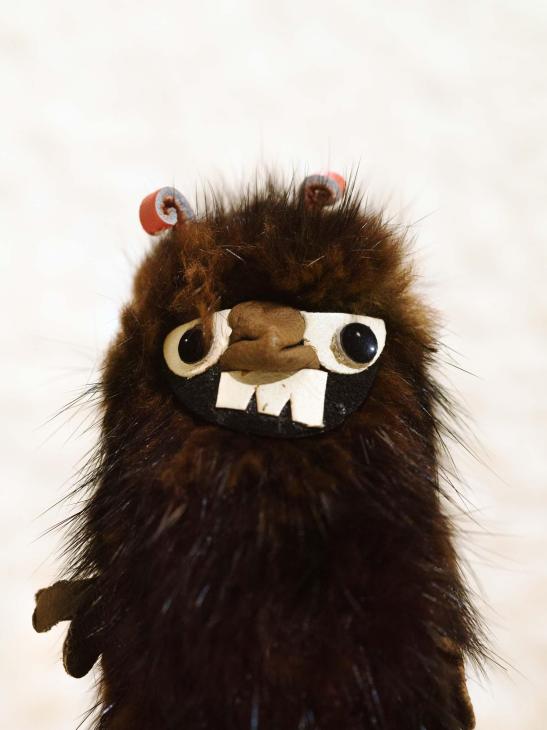


The Moomins’ global presence 80 years after their creation would not be possible if the message of the large-snouted creatures was not relevant today. In many ways, Jansson was ahead of her time in terms of her values and views, and her long life was marked by curiosity about the human condition and her surroundings. Many characters are at least partially based on people who she knew; they include Snufkin and Too-Ticky.
This humane element to the characters and stories is key to their timeless appeal. “They are not superheroes,” says Thomas. “Every Moomin character is flawed in some way or another but despite their differences, they are happy together.” The stories also touch upon the most common traits found in most of us – curiosity, fear, and the need for safety and comfort. “Life in the Moominvalley is full of adventures, small everyday challenges and the joy of discovering new things,” says Thomas. “It is harmonious but in a very playful and human way.” The same playfulness guides much of what Moomin Characters does as the guardian of Tove Jansson’s legacy. Or, as James puts it, “We are a ‘roadmap to happiness’ brand.” — moomin.com
State of the art: Six important new museums to visit in 2025
1.
Museu de Arte Contemporânea Armando Martins
Lisbon, Portugal
Lisbon’s new cultural hotspot, the Museu de Arte Contemporânea Armando Martins (Macam), is housed in the 18th-century Palácio Condes da Ribeira Grande a five-star hotel. It is both a gallery and a hotel – the first of its kind in Europe. Founder Armando Martins’s private collection of 600 artworks decorates the walls of both the exhibition areas and the hotel rooms. “This creates an immersive cultural experience,” says Macam director Adelaide Ginga. A night spent in the deconsecrated-chapel-turned-bar before jumping into bed with a masterpiece is an experience indeed.
macam.pt

2.
Fenix
Rotterdam, Netherlands
Fenix, a new museum devoted to telling stories of migration through art, will open in May in a former warehouse in the Katendrecht district. While the collection will include chastening photography of refugee camps, lighter pieces will also be scattered throughout. One such example is American artist Red Grooms’s mixed-media, soft-sculpture New York bus, in which visitors will be encouraged to take a seat alongside brightly painted passengers made from foam. “It’s important that the museum stays grounded,” says director Anne Kremers. “And it’s essential that people embrace it locally, in addition to being an international museum.”
fenix.nl
3.
Naoshima New Museum of Art
Naoshima, Japan
If art is meant to inspire and revive, what better setting for a gallery than a hilltop perch overlooking the waters of Japan’s Seto Inland Sea? This new Tadao Ando-designed museum, which will open as part of the Benesse Art Site Naoshima, will focus on contemporary Asian art, with its inaugural exhibition featuring works by Takashi Murakami and Cai Guo-Qiang. “It’s not about one museum but an integrated collective of museums sitting in harmony with the islands’ nature and community,” says Benesse Art Site Naoshima’s international artistic director Akiko Miki. “That’s what makes it unique.”
benesse-artsite.jp
4.
The Hip Hop Museum
New York, USA
A museum to celebrate hip hop could only ever have one proper home: the Bronx. “This authenticity can’t be replicated elsewhere,” executive director Rocky Bucano tells monocle. With MCs, DJs, breakers, graffiti artists and other cultural leaders at the helm, the museum will honour pioneers of the art form. As well as showcasing memorabilia and rare artefacts, The Hip Hop Museum will have an in-house radio studio and a theatre for performances from emerging talent and well-known artists. “It’s not just about commemorating the past,” says Bucano. “It’s about grounding the story in its original soil; inspiring the youth who still call these streets home.”
thhm.org
5.
Museum of West African Art
Benin City, Nigeria
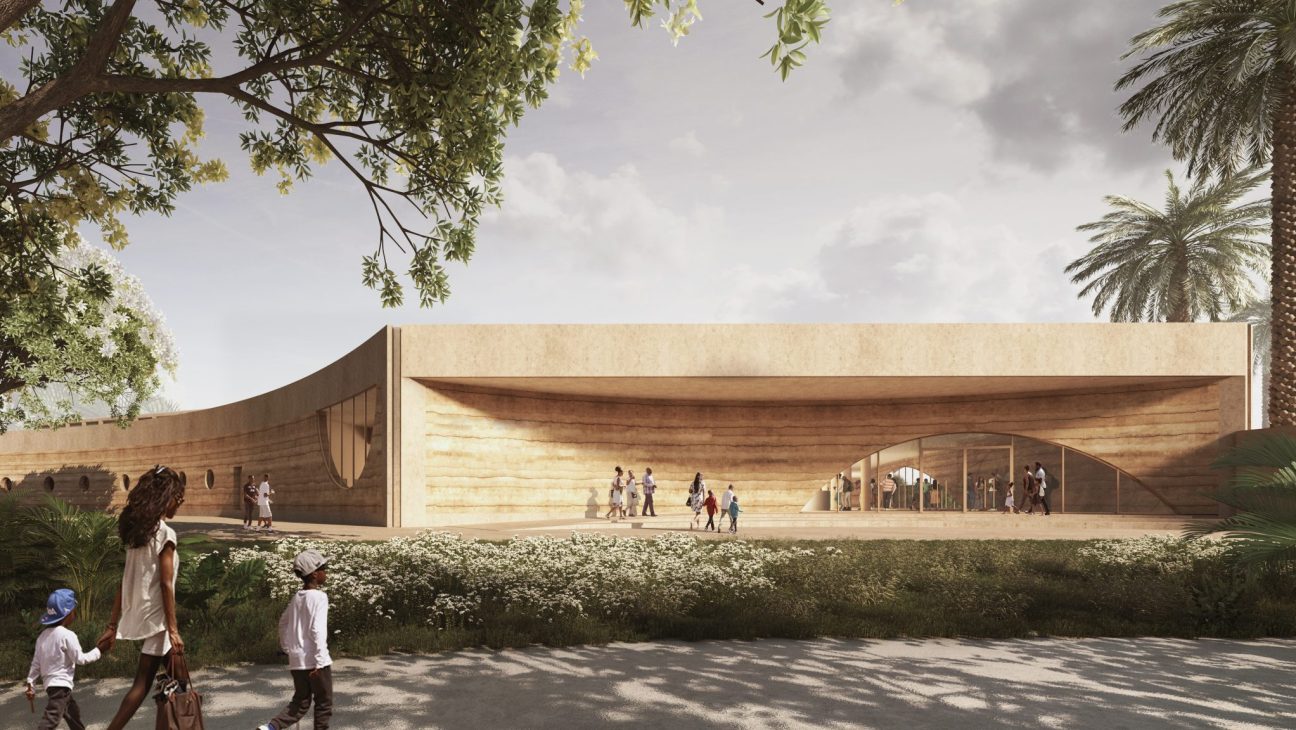
The tangle of buildings that make up the Museum of West African Art (Mowaa) are clean-lined, low and surrounded by trees. As well as exhibition spaces, the campus hosts a science lab, research facilities and a guesthouse. Though its location in Nigeria’s Benin City might provoke debate about returning the Benin bronzes to Nigeria, Mowaa has not been built as the artefacts’ future home. Crucial to the project is creating practical infrastructure for research, while also serving contemporary artists’ needs. “Mowaa is a statement to the world,” says director Phillip Ihenacho. “It is a vehicle to more firmly ensure that West Africa is part of global art practice and recognised for its contributions.”
wearemowaa.org
6.
TeamLab Phenomena
Abu Dhabi, UAE
Founded in Tokyo in 2001, TeamLab is an art collective that is represented internationally by Pace Gallery, placing it in the esteemed company of artists such as David Hockney and Mark Rothko. While TeamLab’s digital installations lack the tactile qualities of a Rothko canvas, they are similarly immersive, using cutting-edge technologies to create renderings of larger concepts. The collective’s vast new 17,000 sq m space will provide these artworks with a home in Abu Dhabi’s Saadiyat Cultural District – an island destination that also includes branches of the Louvre and Guggenheim. By embracing innovation, TeamLab might just steal the spotlight from these established institutions.
teamlab.art
Swipe less to see more: The importance of experiencing culture in person cannot be downplayed
Last year almost half of the world held up a finger in the breeze, hoped for the best and voted in elections to decide its future. Over the next 12 months a dizzying array of new museums will open with an eye on the very nature of truth, viewed through the prisms of immigration, repatriation, artificial intelligence and more – topics not unrelated to the choices made in 2024. Perhaps you’re thinking, “Wouldn’t it have been nice if we had been given a little more time to learn about these things before choosing our fate?”
Museums have been enjoying a golden age in building, refurbishment and attendance since the turn of the millennium and the transformation of knowledge from something that’s largely stored in books and artefacts into information that’s principally stored digitally and available everywhere, all at once. While convenient, however, screen learning and screen knowledge are also incomplete and two-dimensional. The growing power of bricks-and-mortar, glass-and-steel museums – and an increasing desire to convene with the physical – has accompanied the rise of the virtual and is its temporary rejection. When you visit an exhibition, your phone stays in your back pocket unless you want to snap some shots of the works on display. You might have heard about a show online but you queued to see it in person. The point is that you had to see it in the flesh. You encountered the real thing. Doesn’t that feel good?
I sensed this victory of the physical over the virtual during the Christmas holidays while visiting Antwerp for some misty meandering over the medieval cobbles of the Old Town and out to Zurenborg’s art nouveau marvels. I found two museums with very different offerings open during this period of seasonal closures: the MoMu fashion museum was showing Masquerade, Make-Up & Ensor alongside a fascinating slice of its princely permanent collection, while the Museum Mayer van den Bergh did its stolid thing with artefacts and masterpieces from the collection of 19th-century art historian Fritz Mayer van den Bergh.

At the latter museum, the great collector’s treasures of gothic and northern Renaissance art, as well as a haul of altarpieces and Christian statuary, artefacts and sundry odds and ends, are displayed “salon-style” – in other words, all over the place. It’s a charming cacophony of winsome annunciations, sorrowful crucifixions, very non-Lutheran ecclesiastical glitz, greengrocer-fresh still-lifes, stern and playful portraits, and both the impish and utterly unhinged sides of Pieter Bruegel the Elder.
Bruegel’s “Twelve Proverbs on Wooden Plates” is a wry, annotated take on peasant logic. It features gems such as, “I am rebellious and sullen so I run with my head against the wall,” accompanied by a picture of said rebellious character crunching his noggin into a solid-looking edifice, and, “No matter what I attempt, I never succeed; I always piss against the moon” (image: crestfallen bloke indeed urinating towards an unattainable lunar body). The artist’s infamous “Mad Meg” gets a room to itself and, if it were in a lesser institution, would probably come with a trigger warning: “Contains images of a disturbing nature, including bowler-hatted spider people, the horrors of war and men with spoons up their bums.” But this isn’t a lesser institution and so the museum’s homepage features instead a photo of two wholesome Belgian mothers pointing out scenes of carnage to their little ones.
Joking aside, the whole place is a mad joy and home to small wonders, such as the clerk who takes your €10 while softly swearing at his computer (“Told you this was better than the internet,” he might be saying) or the little “Highlights” book that you get to keep as a souvenir. From the art to the rooms heavy with old brown wood and the dust on the chandeliers, it’s the real deal and gloriously subjective. It’s one collector’s love of art and artefacts laid out for your viewing pleasure. If you like it, great; if you don’t, there’s a Zara Home an eight-minute walk away.

The joy of being there was also in evidence around the corner at the MoMu. Dark wood, light walls, a playful way with lines of sight and a great wash of natural light from a partially glass roof make the museum a beguiling place to pass through, and its stylishly appointed café is a wonderful lunch spot. But there’s a whiff of municipal neutrality to the permanent, public parts of this institution that you hope will be alleviated by the temporary shows and their designers, who are so fond of making whole new worlds in which to fit their exhibitions’ ideas.
So it was with Masquerade, Make-Up & Ensor, a stunner of a thing that was full of ideas, excellent materials, clever staging and subtle lighting. Its supremely confident curation successfully combined its potentially awkward ingredients – explorations of the look and meaning of theatrical masks, interrogations of beauty in art and the desire to change our faces with make-up, a glance at the beauty industry in marketing and the media. All while putting these on the aesthetic and psychological terrain of the funny, sad, grotesque and beautiful paintings of Belgian surrealist, expressionist and not-quite exhibitionist James Ensor.
I’m mindful that that’s a mouthful but there was a lot going on. In certain respects, it was a very adult show that was also studded with runway and fashion footage, photography, make-up and lookbook captures from the 1980s and 1990s. Most of the other visitors on the day that I attended were teenage girls accompanied by women who I presumed were their grandmothers. I was interested by just how few smartphone photos I saw being taken of the exhibits or the wall texts but there was a lot of excited and whispered Flemish chatter on which my English ears could not successfully eavesdrop.
The show was fascinating but so too was witnessing other people’s fascination up close and in person. I sensed that the ideas around female beauty that it probed would soon profoundly affect many of my fellow visitors. I can’t imagine how anything of the sort could be staged except in the bewitchingly physical style with which this show was executed. So, yes, you had to be there.
Last autumn I was fortunate enough to receive a preview of two new museums in nearby Rotterdam. The Nederlands Fotomuseum is moving to a new site in what was once the gargantuan Santos coffee warehouse in the unlovely but up-and-coming dockside Katendrecht district. Its archive is one of the world’s largest repositories of photography, with more than six million items. The museum will show many of these and have a restoration department as part of its permanent collection, as it were – an observable, perhaps even visitable part of the building. In an era when image manipulation can be highly political and is obviously dangerous, a museum department dedicated to sprucing up photographs for the better, performing its task transparently, is a clever and somehow very Dutch idea. Despite these iconoclastic leanings, the museum is highly likely to become an icon in its own right.
A stroll down the old dockside took me to what will be Fenix when it opens this May – a museum about migration that is being built in what was once the world’s largest warehouse and up to its Iain Sinclairs in psychogeographic relevance. It sits next to one of Europe’s first Chinatowns, now a highly multiracial neighbourhood, and is over the harbour from the former headquarters of the Holland America Line, on which so many Dutch emigrants steamed westward to secure succour. It’s a proper in-and-out club.
Immigration is something that appears to be changing Western European politics decisively and so this museum, led by its thoughtful and probably necessarily forthright director, Anne Kremers, will be a topic of much debate. It’s an essential visit for anyone with even a passing interest in the stories behind the myths and the headlines, then and now. Immigration is a topic whose relevance is burning enough to fill this museum’s cavernous spaces and the works announced so far seem as witty, smart and suggestive as the realities of some of the stories that will doubtless be housed in this great hangar of compassion are harsh.
I would argue again that this sort of thing can only be done in a physical place. As with photographic manipulation or telling subtle stories about the nature of beauty, or “simply” showing off a collector’s passions, the viewer’s proximity to the stuff is vital. The online world is full of fevered fictions that are never less than certain on either side of an argument. Subtlety, depth, discussion? You’ll get them here, in a place, not there in the virtual realm.
Of course, you’ll also sometimes get utterly stupid wall texts, wrong-headed curatorial notes and obfuscatory art speak in museums but you can see the painting that they’re discussing in its big, gold frame and decide for yourself whether, for example, it’s about rich people liking horses in 18th-century England or it’s secretly about how awful it is that some people had horses and other people only had donkeys, if they possessed a beast with a leg in each corner at all. Because though you might not be an expert and may be persuaded by a crazy claim, you can see the painting in its three dimensions. And you might also go home and read more about it in a book and come to something adjacent to the truth.
Museums are transformative. From children making learning a lifetime habit after quaking in awe at the cathedral-long blue whale in London’s soon-to-be-revamped Natural History Museum to the many canny culture and tourism boards reviving their regions with the addition of a bright, new cultural centre, museums can change both people and places. When the Guggenheim Foundation unveiled its Bilbao institution in 1997, millions of visitors and millions of euros were drawn to a tired and unloved city in Spain by a building considered excitingly avant garde. This set in motion the museum mania that is perhaps only now beginning to reach the end of its super-cycle. You had to see Frank Gehry’s curved, crinkled titanium-and-steel masterpiece to believe it – and so people did, in droves.
In the grand projet that is Abu Dhabi’s Saadiyat Cultural District, the Guggenheim is preparing to open a new museum of a similar design by the same architect. The Emirate is right to expect lightning to strike twice and the project’s ambition is big, bold and brave. It sits on an island nestled close to other cultural hot spots, including a Louvre designed by Jean Nouvel and the soon-to-open Zayed National Museum, named after the nation’s founder, Sheikh Zayed bin Sultan Al Nahyan, and designed by Norman Foster.
On another island in Japan’s Seto Inland Sea, the Naoshima New Museum of Art will open this spring, showcasing the work of contemporary Asian artists in a building designed by the chalk to Gehry’s cheese, Tadao Ando. These institutions and a long list of others, whether ancient or modern, are all about place, experience and context. You will be in the realm of the senses, reaching out and touching the world – the real one.
There’s a lovely museum and concert hall on the Sussex coast called the De La Warr Pavilion. It’s a well-kept 1930s modernist building, which is rare in England. I once went to an exhibition there and met the curator, who was perhaps near the beginning of her career. She skipped down the beautiful staircase and told me why she had wanted to work there. It’s a good place, of course, but really, she said, it was because of the staircase, designed some 85 years previously – its precise incline and flow, the quality of pleasure afforded by the gap between riser and tread. The joy that it gave her made her certain that this was the right place to be. It was the absolute satisfaction of the building’s physicality. Of course!
So, the right place to be is in front of just one work, looking and seeing; seeing how others look; wondering how you might seem. There are other worlds in museums and you might just find yourself in them too. Museums are community, communication, communion. And, yes, they might help us to make better decisions and know more – and lift us out of ignorance. You won’t find that somewhere that’s nowhere, will you?
How might the war in Ukraine end?
On 24 February, Ukraine will observe the third anniversary of Russia’s full-scale invasion. Vladimir Putin’s mooted 72-hour lightning conquest of Kyiv has deviated somewhat from schedule. In less deranged times, a European democracy menaced by Moscow might have welcomed the inauguration of a Republican president: Ronald Reagan did not stand before the Brandenburg Gate in 1987 and say “Mr Gorbachev, re: this wall, whatever.” But Ukraine cannot make any assumptions of such support where Donald Trump is concerned. Given his desire to force a swift resolution, Kyiv – and the rest of Europe – needs to start thinking about the best possible outcome that could be wrought from the present circumstances.
The vastly preferable conclusion to hostilities remains a complete collapse of Russian lines and/or a change of leadership in the Kremlin, prompting an end to this entire monstrous folly, as well as a richly deserved reckoning for Putin. But many more Ukrainian lives could be lost – and much more of its allies’ money spent – waiting for this to occur. However, if the imperative is to work with things as they are, there are some grounds for cautious optimism. The parameters of a ceasefire deal are not difficult to imagine. Russia would keep, more or less, what it holds but at a cost of hundreds of thousands of needless casualties, billions of squandered dollars, the reserves of whatever international respect it might previously have enjoyed and its president’s dwindling travel options, circumscribed as they now are by an icc arrest warrant. Nevertheless, few voices in Russia would dare dispute Putin’s claim of a tremendous victory.
The rest of Ukraine could edge towards the EU, though probably not into Nato. The model might be akin to post-1945 Germany, split between a democratic, progressive West – host to a hefty foreign military presence – and a depleted East, held hostage by Moscow. In the short term, this would at least end Ukraine’s horrendous suffering. In the long term, given that there is no record of people enjoying life under Russian dominion, we might be able to look forward to the day when the people of occupied Ukraine pull down whatever statues Russia cares to put up. —
Andrew Mueller is the host of ‘The Foreign Desk’ on Monocle Radio.

The real value of design fairs is in the craft and emotion – not just the after-parties
Let’s be real: the year only really starts in February. Now is the perfect time to set your agenda for 2025 and mine is packed with industry fairs and festivals. People often ask why I go to so many of these design events. Aren’t these just manufactured fun (excuse the pun)? Or brands flogging their newest products? An excuse to party with everyone from the industry? The answer is yes and while I love a jolly, these gatherings are also a vital bellwether of the industry.
Take the year’s first two major design events in Paris: Maison&Objet (16 to 20 January) and Matter and Shape (7 to 10 March). Both put the spotlight on innovative independent practices and a French design scene characterised by small-scale manufacturing. Size, perhaps, isn’t everything – and this network of smaller brands and makers are creating a robust design economy in France. Here a handful of big international brands (Ligne Roset, Roche Bobois, Fermob) are complemented by smaller, more nimble makers who work with high-quality materials and craft traditions.
Moving on to Milan for Salone del Mobile and Milan Design Week (7 to 13 April), you’ll find that change is afoot. The fair is no longer dominated by heritage Italian brands that established it in 1961. Fashion brands (Loewe, Hermès, Bottega Veneta) now use their budgets and craft expertise to cross into design, staging showcases akin to enormous immersive art installations. This tells us two things: that people crave “an experience” in terms of both presentation and products (“A well-versed, nuanced audience is looking for a product that will evoke an emotion,” designer Samuel Ross told me at last year’s Milan Design Week). And that fashion brands are often well-equipped to make furniture thanks to their manufacturing expertise.
And at this year’s Venice Biennale’s International Architecture Exhibition (10 May to 23 November), curator Carlo Ratti is going to build on similar themes. Here architects will be invited to collaborate with creatives beyond their profession to explore ways of working that are grounded in practical solutions.
In the year ahead, I expect smaller brands to rise to prominence and more products and experiences designed to elicit emotional responses. Plus, an architecture community that starts to look beyond its own discipline for inspiration. And where will I be? At the afterparty, of course. —