Issues
Our six favourite French-inspired restaurants
1.
Massalia
Amsterdam
Named after the French port city of Marseille, which was founded by ancient Greek settlers, chef-restaurateur Angelo Kremmydas’s new brasserie bears more than a hint of his Hellenic sensibilities. Massalia has been attracting a steady stream of eastern Amsterdam’s creatives in search of abundant produce and herbs from across the Mediterranean.
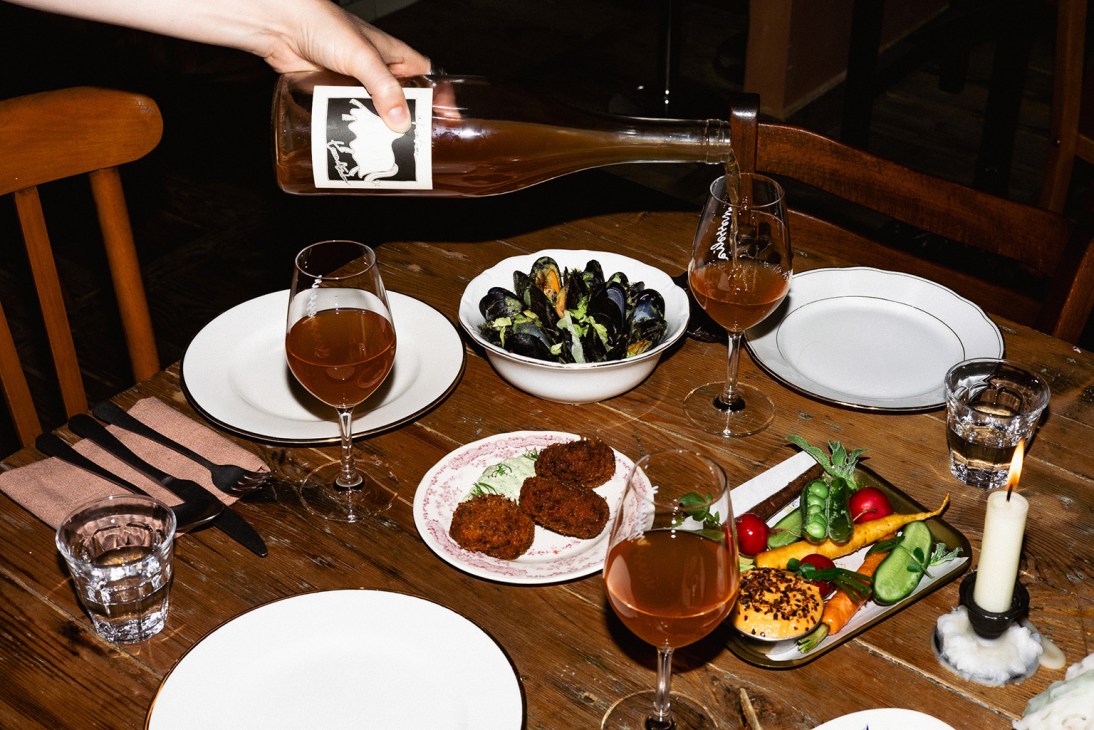
It comes off the back of Kremmydas’s success with Gitane, a contemporary take on the city’s brown cafés, designed by Dutch firm Studio Modijefsky. Gitane has lured plenty of western Amsterdammers into its wood-panelled interiors over the past year; Massalia is on course to be equally popular. Dig into salted-cod beignets with skordalia dip, octopus terrine with a burnt-pepper salsa and whole grilled artichokes. Finish off with a fennel granita with ouzo foam and grapefruit.
restobarmassalia.nl
2.
Au Rêve
Paris
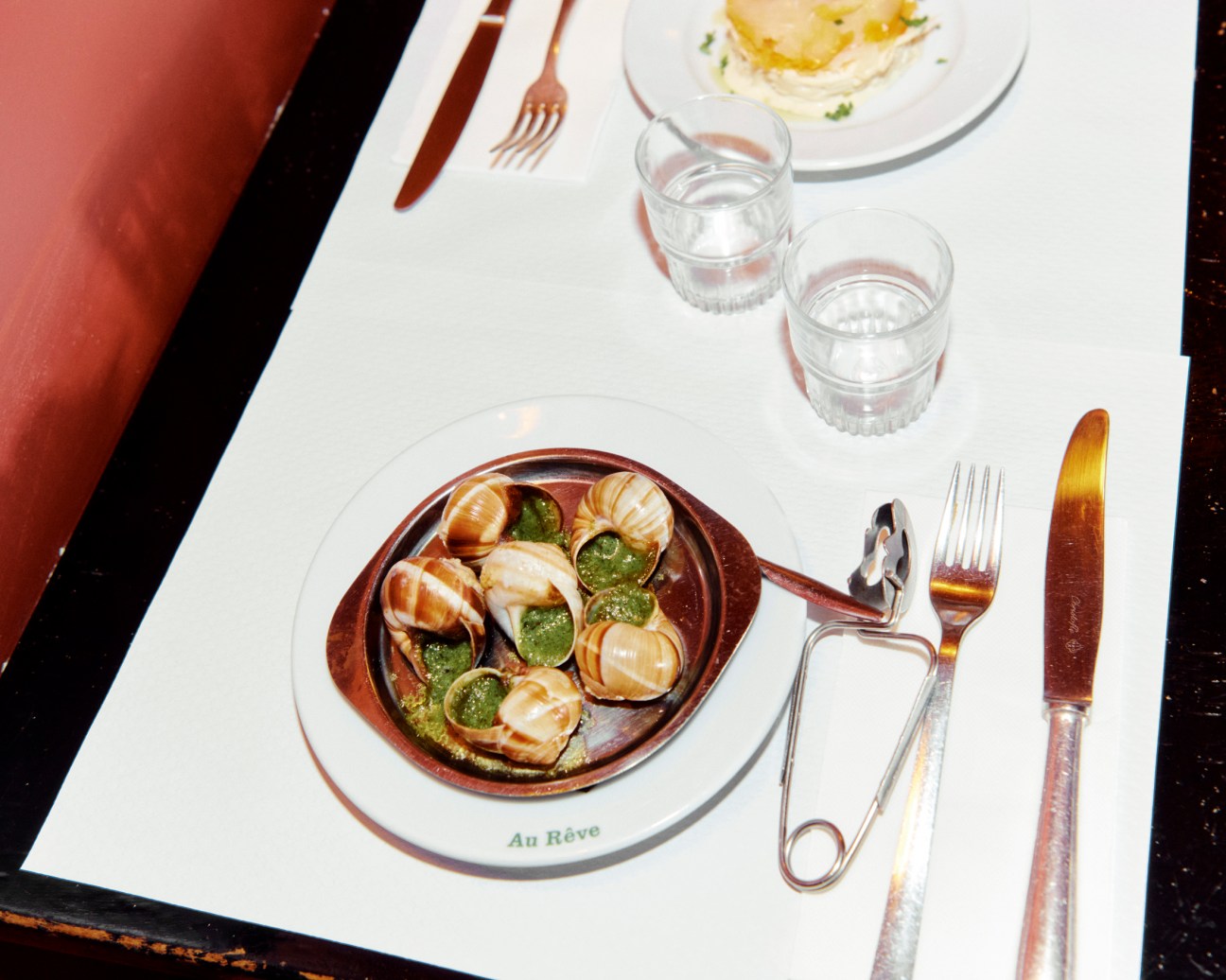
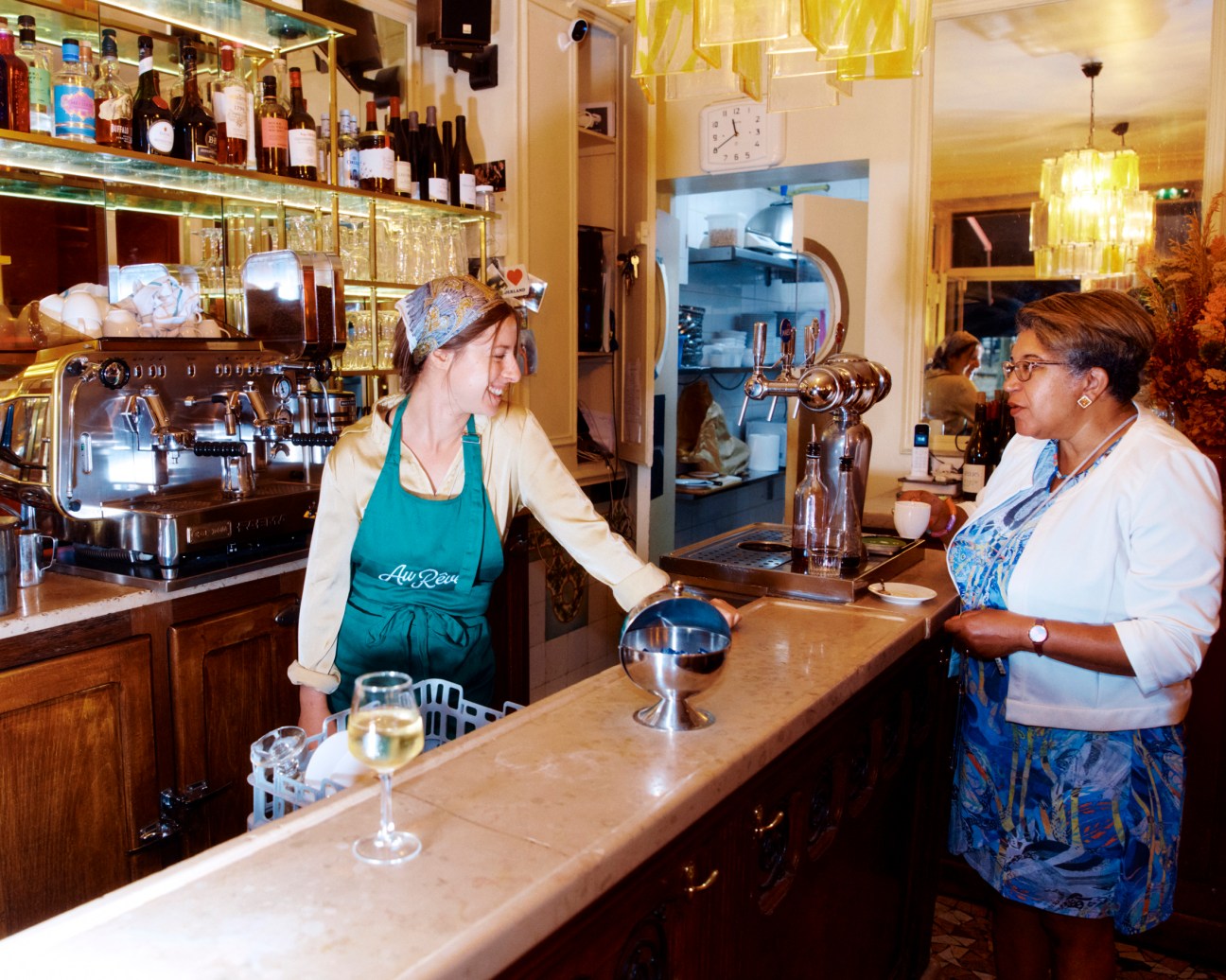
Café Au Rêve opened its doors in Paris’s Montmartre area in the 1920s, quickly becoming a popular haunt of French literary and musical icons. In 2019, however, it closed down. Now, thanks to the work of studio Atelier Saint-Lazare (ASL), it is reprising its role as a neighbourhood institution. “We revealed more than we renovated,” says ASL co-founder Antoine Ricardou. “We restored the bar with Burgundy stone, breathed new life into the floor and moleskin booths, rediscovered the 1930s embossed wallpaper and gave the Murano chandeliers their rightful place.”
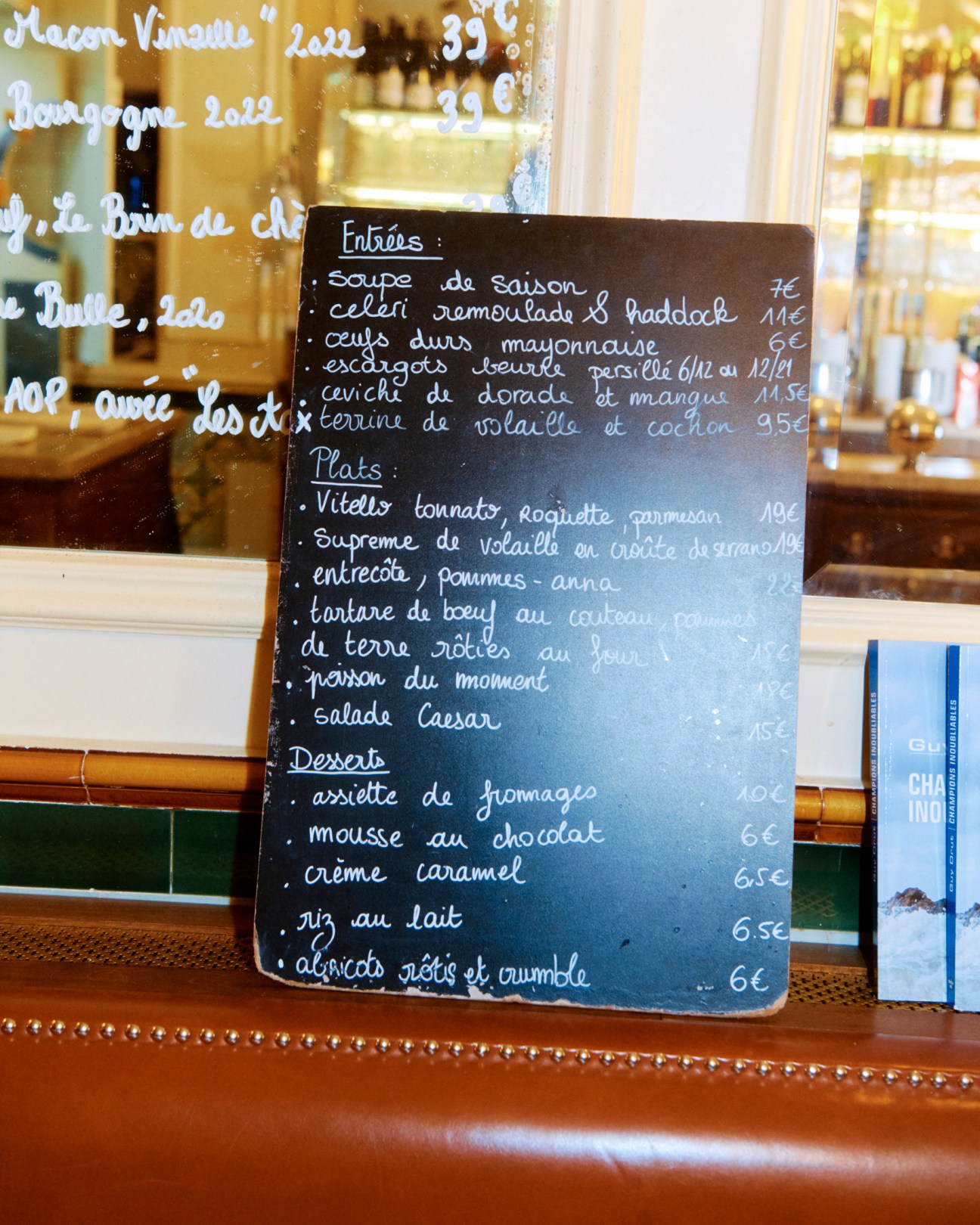
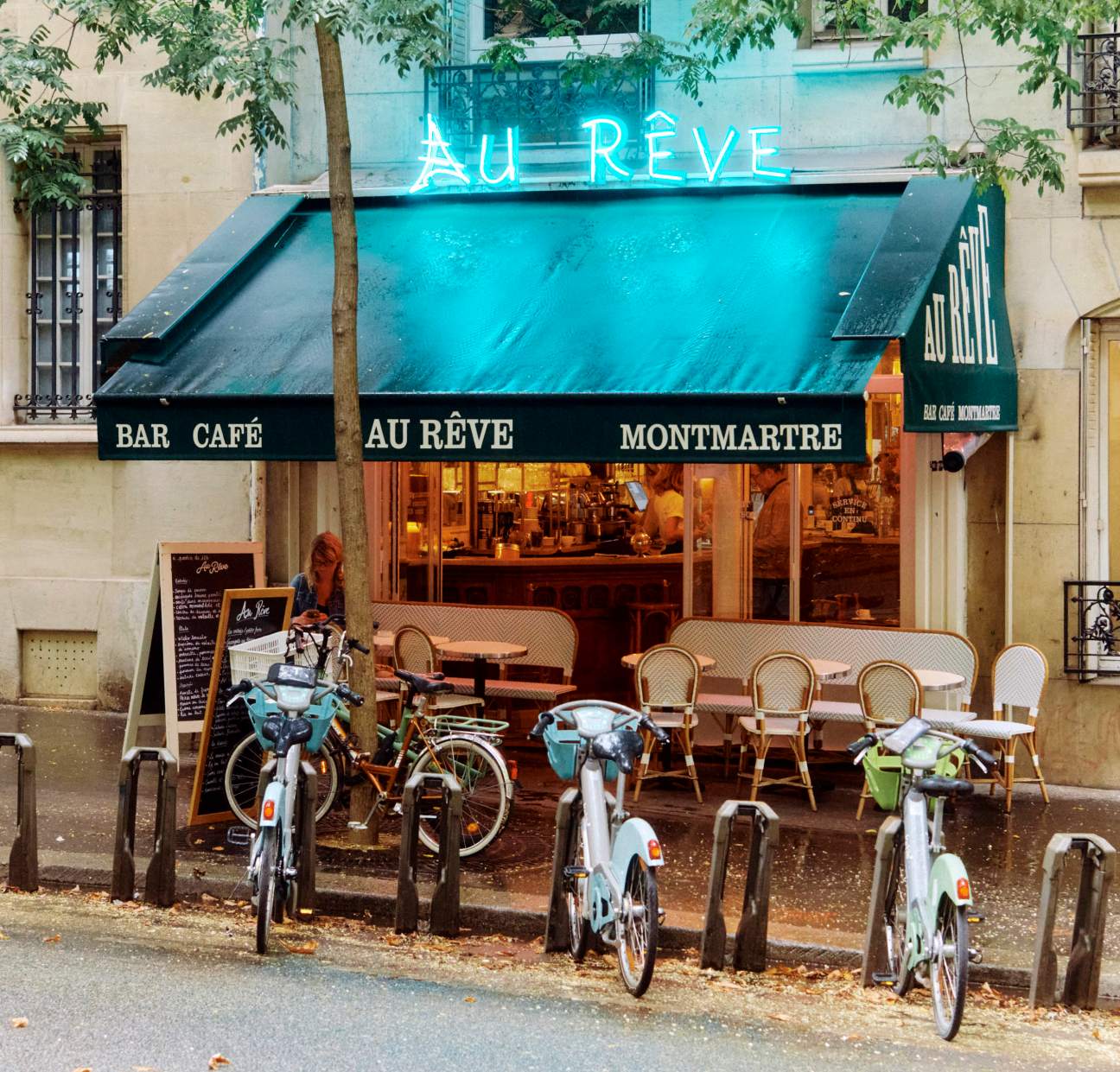
Since the quiet reopening, film editors from the nearby Pathé cinema offices, journalists from newspaper Libération, comic-book artists and Montmartre residents have started to mingle again at the café’s tables. Mathieu Renucci, who took over Au Rêve after its previous owner Elyette Ségard retired in 2008, serves bistro classics such as croque-monsieur and charcuterie, as well as great cocktails. “Our vision is meant to be modernist, not nostalgic,” says Ricardou. “Above all, Au Rêve is a living space, not a museum.”
89 Rue Caulaincourt, Paris 75018
3.
Bouillon Service
Paris
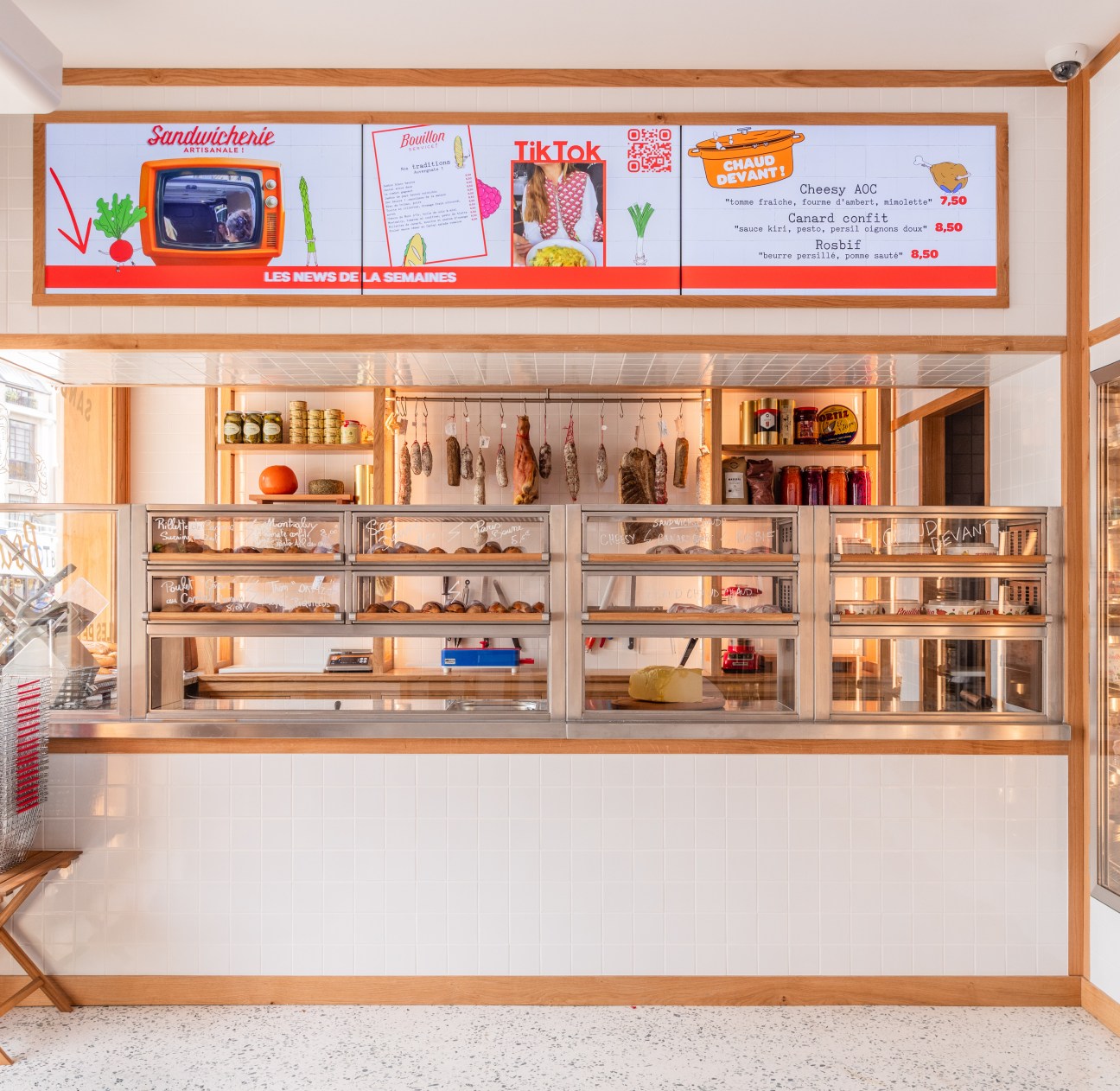
Bouillon Service, a takeaway-only food spot from Paris institution Le Bouillon, has opened in Pigalle. While it might seem strange that an establishment that’s synonymous with waistcoat-clad garçons, crisp white tablecloths and art deco interiors would do away with table service, customers are queuing out of the door for Le Bouillon’s latest offering – its first opening in four years. The takeaway-only approach is an extension of the delivery system that the company established at the height of the coronavirus pandemic. The deli and takeaway space in the 18th arrondissement, located just 50 metres from its Pigalle restaurant, prepares the establishment’s hero dishes and is open until 03.00. Think egg mayonnaise, jambon-beurre (courtesy of the on-site bakery) and canard confit to go.
bouillonlesite.com

4.
Chateau Grand Rapids
Grand Rapids, Michigan
Michigan might not be well known for its French cuisine but you’ll find a dose of Gallic flair at Chateau. Husband-and-wife duo Chris and Allaire Swart have transformed a heritage shopfront in Grand Rapids into a daytime café and evening wine bar. The pair picked San Francisco’s Obata Noblin Office to design the space. Large windows allow in plenty of sun during the day but judicious lighting creates a moody candlelit feel after dark.
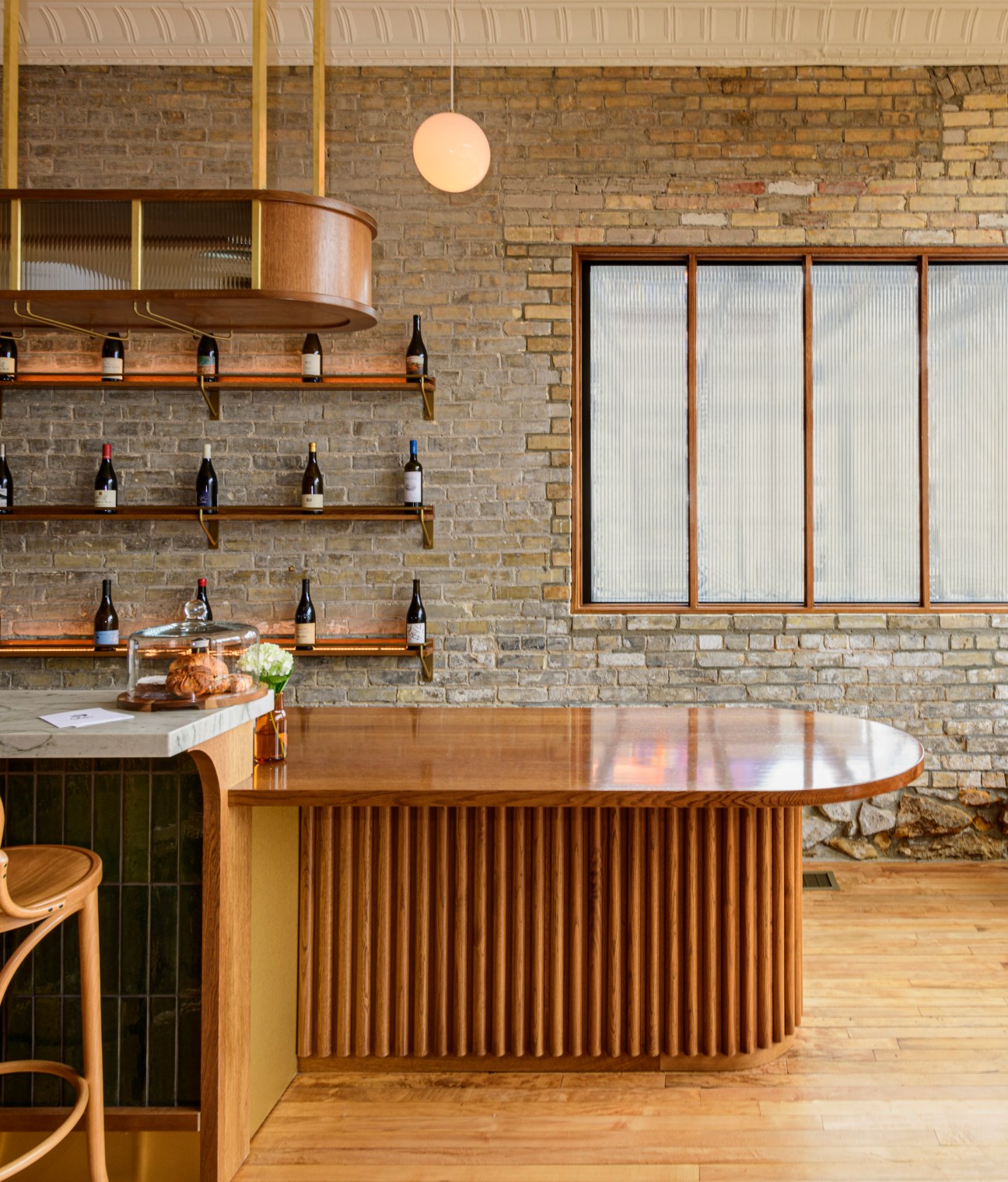
Green accents nod to the restaurant’s focus on natural wine and single-origin coffee. Chateau sets a new standard for Cherry Street, an up-and-coming neighbourhood in this Midwestern city. “We have taken a 100-year-old building and maintained almost all of its integrity, from tin ceilings and brick walls to slab-wood floors,” says Chris. “It was important not to shellac over history but, rather, to maintain that patina.”
chateaugrandrapids.com
5.
Domo Bar
São Paulo
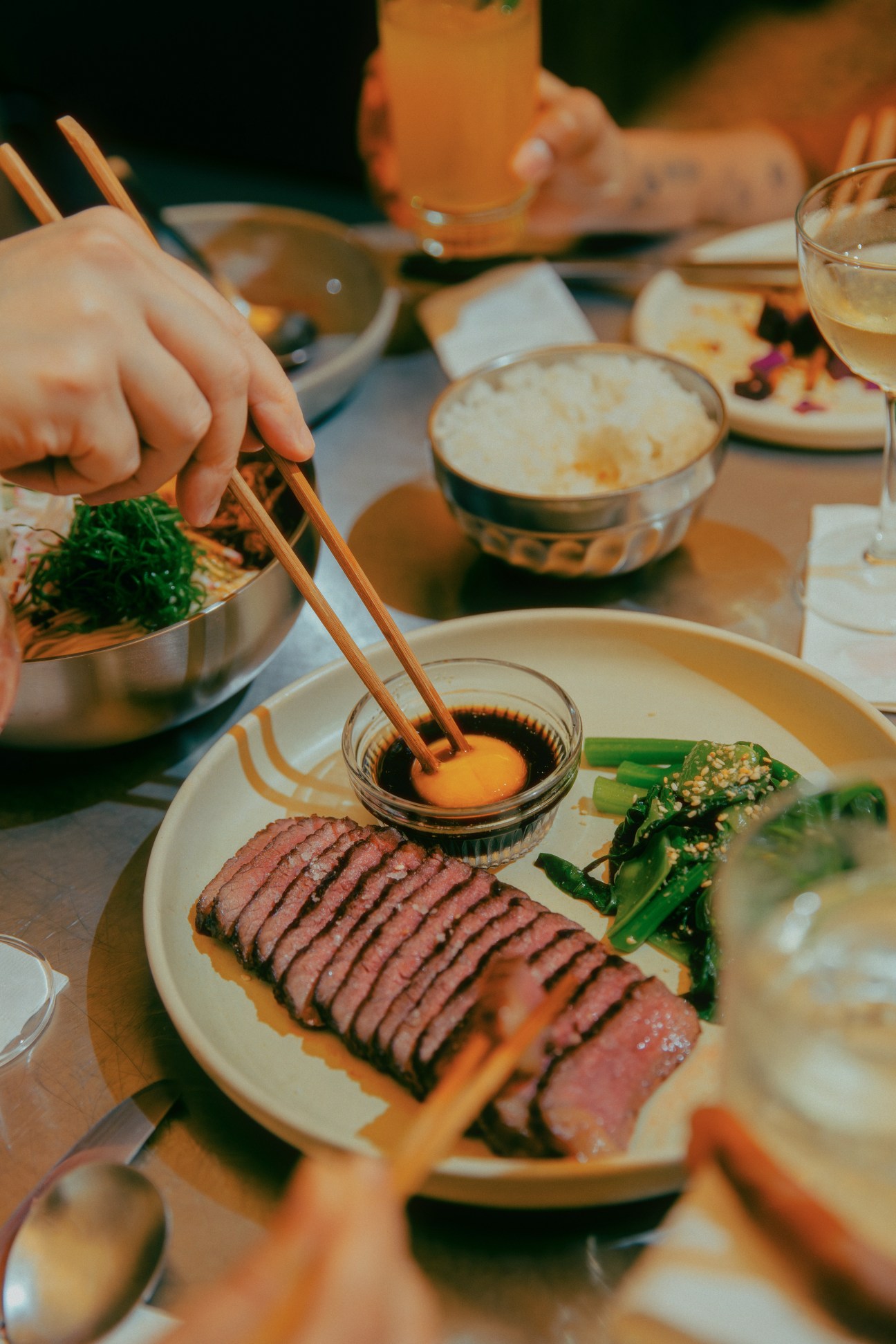
Domo, a listening bar in São Paulo’s Vila Buarque area, combines first-class hospitality with a sophisticated musical experience. Designers Flávio Seixlack and Rodolfo Herrera, whose coffee shop Takkø Café is just down the street, opened Domo last year. Since then, the bar has earned a reputation for its Asian-Brazilian menu, which features fresh takes on classics such as pulled-pork sandwiches with gochujang sauce, as well as creative cocktails and an eclectic music selection that comprises everything from bossa nova to Japanese jazz. The duo brought local studio Nina Morelli on board to tackle the interiors, where soft lighting is paired with wooden accents to create an intimate, record-filled space.
“Opening Domo was just a natural next step for us, especially after visiting similar places in Japan, London and Los Angeles,” says Seixlack. “Something that had always bothered us about our native city was that there was nowhere you could go to listen to good music and talk at a lower volume. And Domo is our solution to that.”
452 Rua Major Sertório, São Paulo 01222-000
6.
Penny
New York
First, there was Claud in New York’s East Village, a French-inspired wine bar that became a big hit thanks to the delightful craft of its menu – think nutty chicken-liver agnolotti and rich tomato mille-feuilles. Now the team has opened Penny, a raw bar and seafood counter, in the space upstairs.
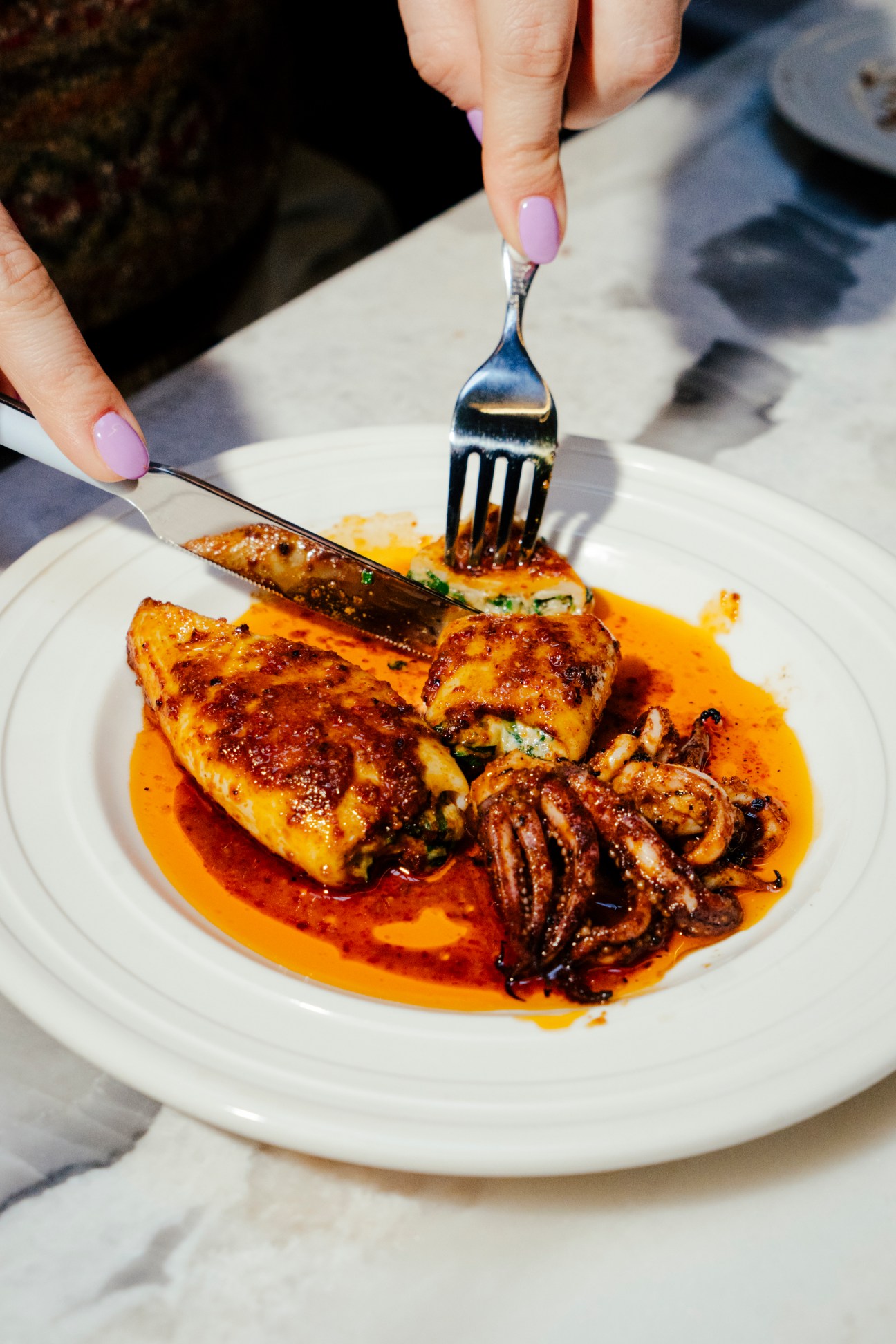
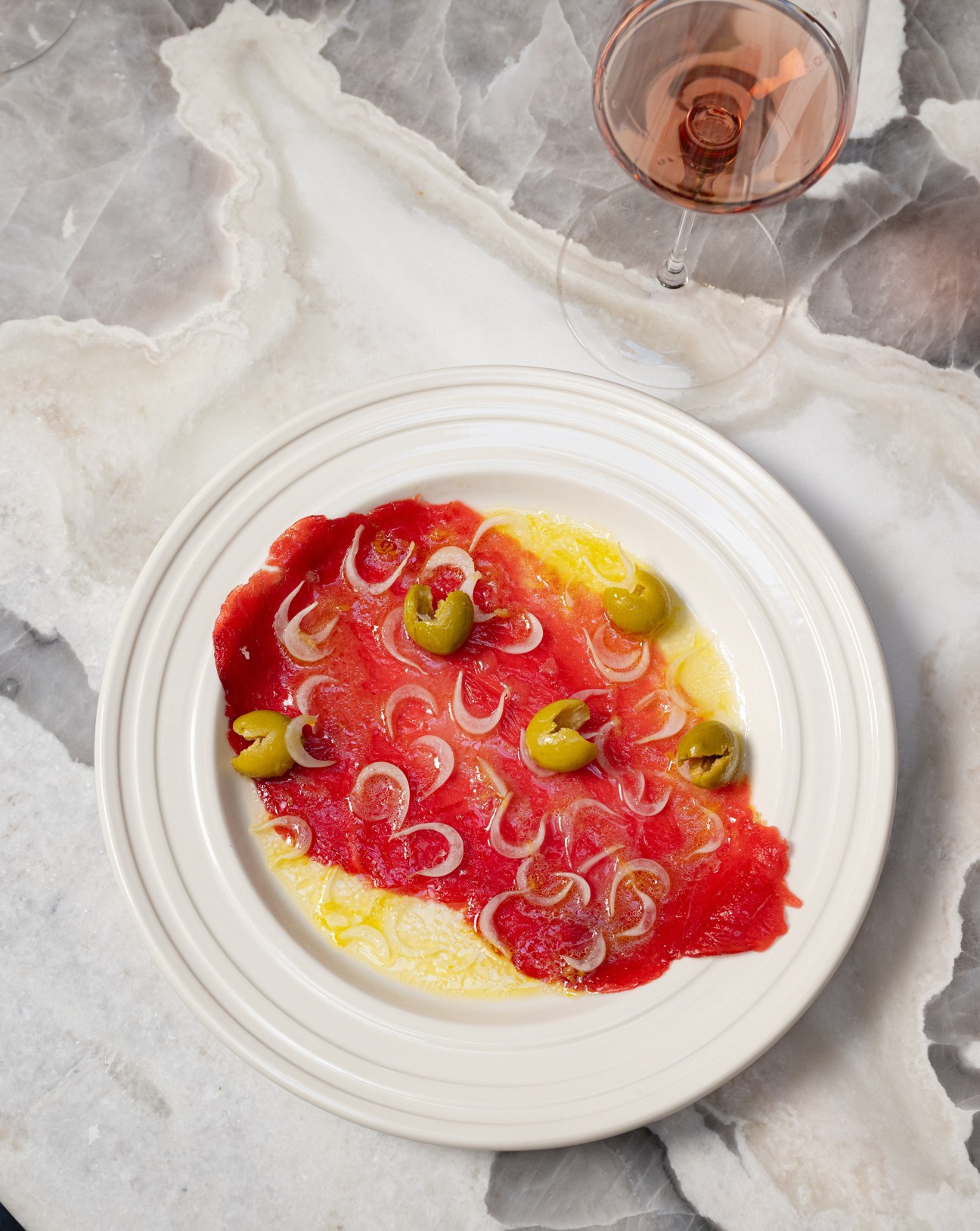
Designed in collaboration with Ian Chapin of Philadelphia-based practice Edsel, Penny has a quartzite oyster bar and is replete with cool, silvery tones. “The restaurants might appear different – Claud has warm, natural finishes, while at Penny there’s a blue tint – but they intersect in spirit,” says co-owner Chase Sinzer. Highlights include the Ice Box (oysters, clams and mussels), lobster and freshly baked brioche. To drink, there’s wine, saké and Suntory Premium Malt on draught.
penny-nyc.com
7.
Galipette
France
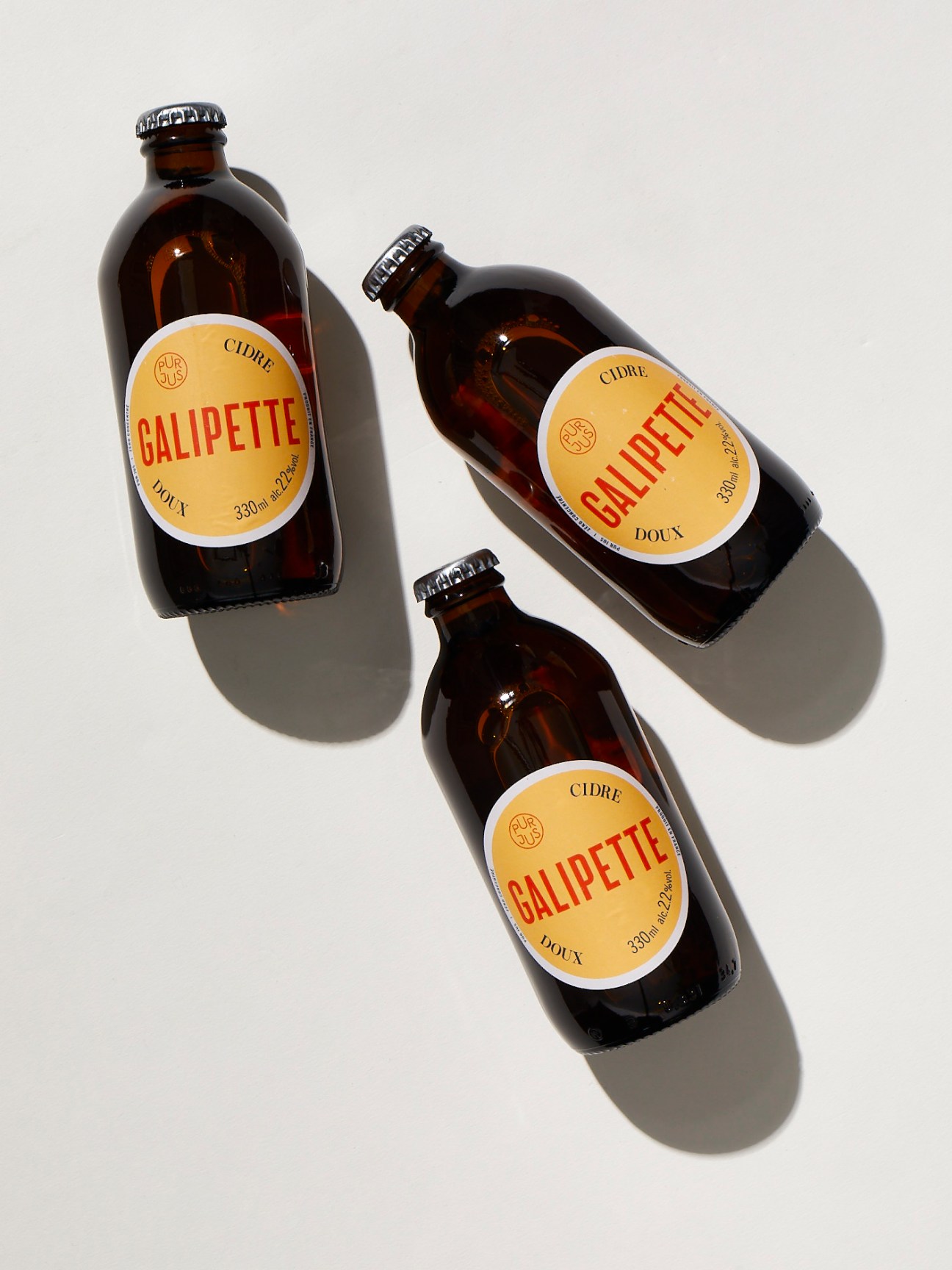
Launched in 2016, cider company Galipette champions the apples of northern France. “In a world of one-dimensional ciders, we look for diversity and flavour,” says co-founder Antti Laukkanen. The company produces cider made from bittersweet apples harvested in Normandy and Brittany, where mild temperatures and plentiful rainfall make the orchards ideal for cultivating flavourful crops.
The brand’s newest variety, Galipette Doux, has undertones of toffee as a result of its shorter fermentation process, which helps to keep the natural douceur (sweetness) intact.
galipettecidre.com
Interview: Vattenfall’s Anna Borg on navigating global energy challenges
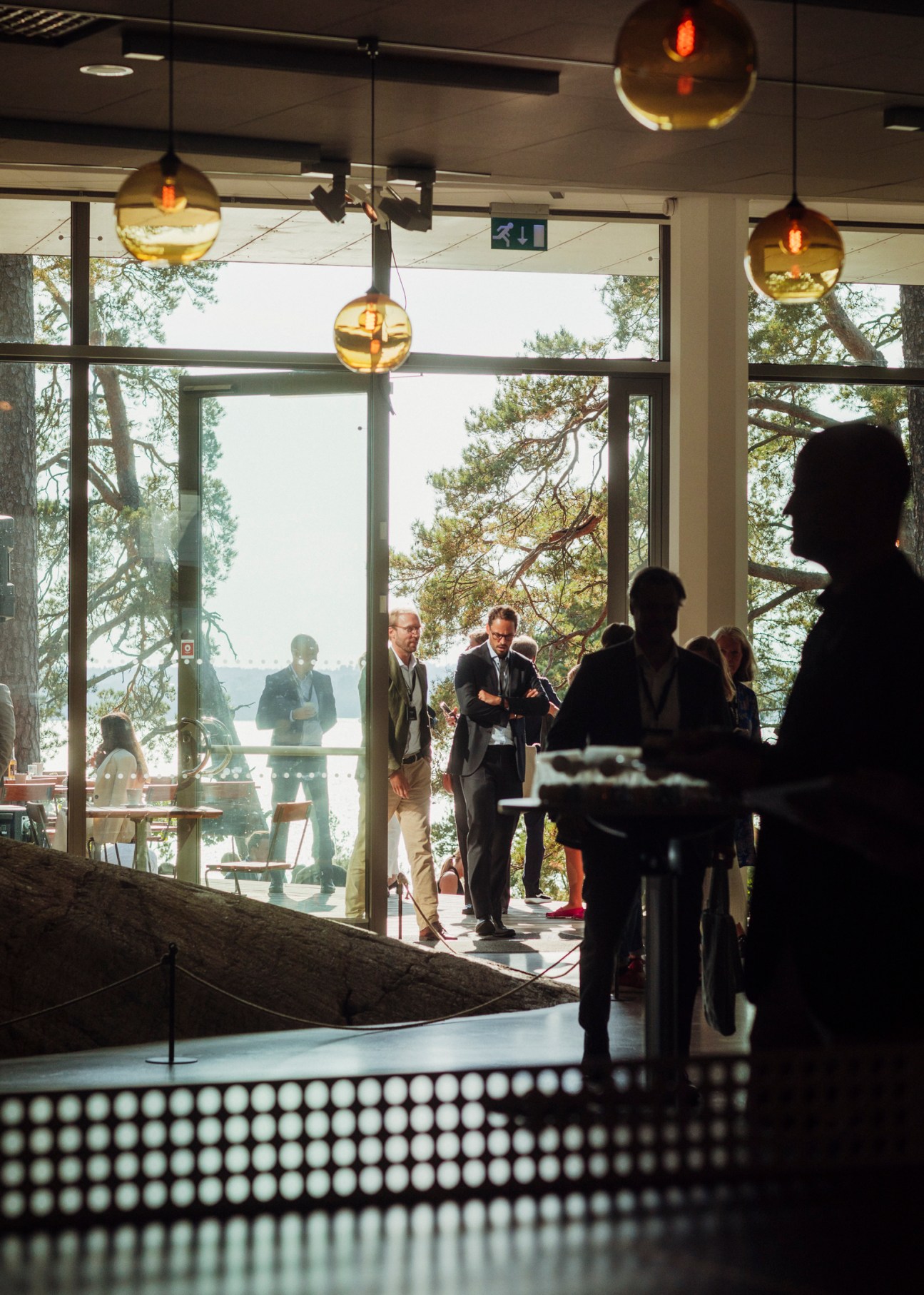
The CEO of Swedish energy firm Vattenfall, Anna Borg, is a positive presence in an industry that can seem rather glum. Though many energy firms are facing heat over sustainability practices and the role that they play in climate change and energy security, Borg seems almost glowing about their potential. She’s also rather sparky in person. Unmissable in her double-breasted purple blazer and chunky Chanel shades, she cuts a dash in the autumn sun, brass buttons glinting as she heads to meet Monocle on an island in the Stockholm archipelago.

“It’s possible to live a modern, comfortable life with an acceptable climate footprint,” she says between panel discussions at a conference hosted by the Stockholm Chamber of Commerce. “We [Vattenfall] want to work towards fossil freedom,” she adds, settling at an outdoor table beneath a windswept fir tree. “It’s a necessary and good thing to do – and it’s what it will take to be competitive in the future.”
Borg joined the Swedish energy giant in 1999. Barring two years away (she joined Swedish technology firm Klarna between 2015 and 2017 before returning), she rose from CFO to the top job in 2020. Here’s what the woman in charge of one of Europe’s largest energy producers and retailers thinks about the future of fossil fuels, why there is no need to scare people and why we should still be optimistic about the industry.
We waste a lot of energy. Do customers need to accept sacrifices or should that fall to producers and suppliers?
I’m not so sure that it’s about making sacrifices. What’s needed in the green transition are investments on top of existing investments [in other technologies]. This is something that’s happening around the world: companies in the Nordics, Europe, Asia and the Middle East are all funding green transformation. The cost curve is trending downwards. Markets have realised that anything with a fossil footprint is risky, so they’re moving money into eco-friendly technology. Offering consumers products and services that are attractive and acceptable from a climate perspective is a wise, natural move. That’s where the opportunity lies, not in scaring people into something else.
That’s reassuring to hear. But fossil fuels aren’t going anywhere any time soon. Should we also be thinking more in terms of the fuel mix?
We need to have a conversation about options. The starting point is different depending on where you are. Energy is produced from natural resources and those vary in places across the world. We’re in a fortunate position in Sweden because our energy system is practically fossil-free. We only have to meet the increased demand in order to electrify our industries, transportation and so on. In some parts of the world, you have to work on transforming the energy system while also meeting this increased power demand. So it’s not really about whether we use nuclear or renewable energy or carbon-capture systems for oil and gas. We’re going to need all the technologies that we can get our hands on. Then it will then be about which technologies win out or whether they can support each other rather than compete. They all have different pros, cons and capabilities. Some are more stable or volatile. Some are less expensive or better at integrating and interacting with others. But there will also be technologies that we aren’t as aware of because they haven’t yet been commercialised.
I take your point about only seeing so far. But what are you excited about? Is there anything new on the market or interesting conversations around storing energy?
Costs are decreasing across the sector. Solar panels are very cheap now compared to what they were a decade or two ago. The same will happen when it comes to offshore and onshore wind turbines, and nuclear developments. Nuclear energy can produce a lot of power with a fairly small physical footprint. All of this comes down to how we can utilise the grid in the most efficient way to be able to provide electricity and energy where and when it’s needed, and at an acceptable cost.
Conflict in Europe and the Middle East and the arrival of forthcoming arrival of winter in the northern hemisphere are fuelling discussions about energy security. How are global events changing conversations in the industry?
Energy – and access to it – has been used as a weapon in many conflicts. There’s an awareness in Europe about the need to be more self-sufficient. Europe wants to be more independent but we still live in a globalised, international world. The regionalisation of power, commodities and products doesn’t mean that there won’t be a global market or international co-operation.
You have worked your way up the ladder at Vattenfall. What has that experience taught you about leadership?
For any business, it’s important to have a clear purpose. Why are you there? What are you going to do? Our goal is to deliver fossil freedom. We want to ensure that people can live, work and travel in a way that reduces their climate footprint. That’s our business strategy, not our sustainability strategy. We need to offer products and services that are attractive to customers but also profitable for us: you need to make money to invest in new technologies and be successful.
And that means working with partners. Tell us about the some of your current projects.
We are working on new value chains, such as fossil-free steel and fossil-free cement, with a few businesses. We have announced a collaboration in fossil-free electricity, for example. I recently met with the CEO of chemical company BASF in the Netherlands, which we have partnered with to co-invest in offshore wind. The company needs access to enough fossil-free electricity and at a reasonable price. We’re at the forefront of offshore-wind technology in Europe. Working on joint projects means that we can improve energy developments and fuel industry transformation.
Newspapers tend to paint a dire picture of human impact on the environment and the energy sector’s role and outlook. Is this fair?
I’m optimistic. I’m also realistic and very focused. We need to act now. It’s important to look at yourself in the mirror. Those of us who are here today [at the Stockholm Chamber of Commerce] need to lead the charge. We shouldn’t look to anyone else. The world around us is changing and we need to bear the consequences. We might not be moving at the speed some people are hoping for but we’re moving in the right direction. Yes, there are obstacles. But did anyone think that it would be an easy ride? That was never the case. We need to figure out where we’re going – and, to me, that’s very clear.
Sanctions have never stopped a tyrant – why do we expect them to now?
President Nicolás Maduro of Venezuela has won. Not Venezuela’s most recent presidential election, as such – various credible analyses have concluded that he could scarcely have stolen it more brazenly had he declared victory wearing a mask, a hooped shirt and shouldering a bulging sack labelled “swag”. But Maduro has won insofar as he remains president while opposition candidate Edmundo González is exiled in Spain and González’s ally María Corina Machado has been forced, as of this writing, into hiding. The response from those countries that refuse to recognise Maduro as legitimate – more or less everyone but Russia, China, Cuba and North Korea – has been predictable, piling further sanctions atop the teetering stack of measures already imposed upon Maduro’s regime during its miserable decade in power.

They won’t work. By and large, sanctions don’t. They’re mostly deployed by countries that either will not act decisively about a particular situation but want to look like they’re doing something or cannot act decisively, so are doing what little they might. There is, indeed, an entirely plausible case that Maduro – and Vladimir Putin, Fidel Castro, Muammar Gaddafi, Saddam Hussein, Slobodan Milosevic, two Iranian Ayatollahs and three generations of North Korean Kims, among others – were or are strengthened by sanctions. None of them ever wanted for anything; all the pain was passed down to the people. (I visited a Baghdad hospital during Saddam Hussein’s rule, and a couple of his palaces after his removal. Take a wild guess which had the gold-plated bath taps.)
Venezuela seems a ripe subject for an experiment in the opposite approach; what might be thought of as subversion by engagement. The same countries that have damned Maduro as a thug, a crook and a fraud should nevertheless do everything they can to encourage trade and cultural exchange with Venezuela, and tourism to it.
Energy companies should be liberated to exploit Venezuela’s immense reserves of oil and natural gas. Caracas, Maracaibo, Valencia and Barquisimeto should feature on the tour itineraries of major musicians. Holidaymakers from the US, Europe and all over Latin America should be cooling their toes on the Caribbean beaches of the Los Roques islands. Venezuelans – ordinary Venezuelans, many, many of whom voted against Maduro – would make money. Some of the millions who have fled Maduro’s misrule might return and bring their anger home with them. Poor and isolated people have little choice but to endure dictators; prospering and connected people start to feel like there are options.
Can Africa’s richest city function again?
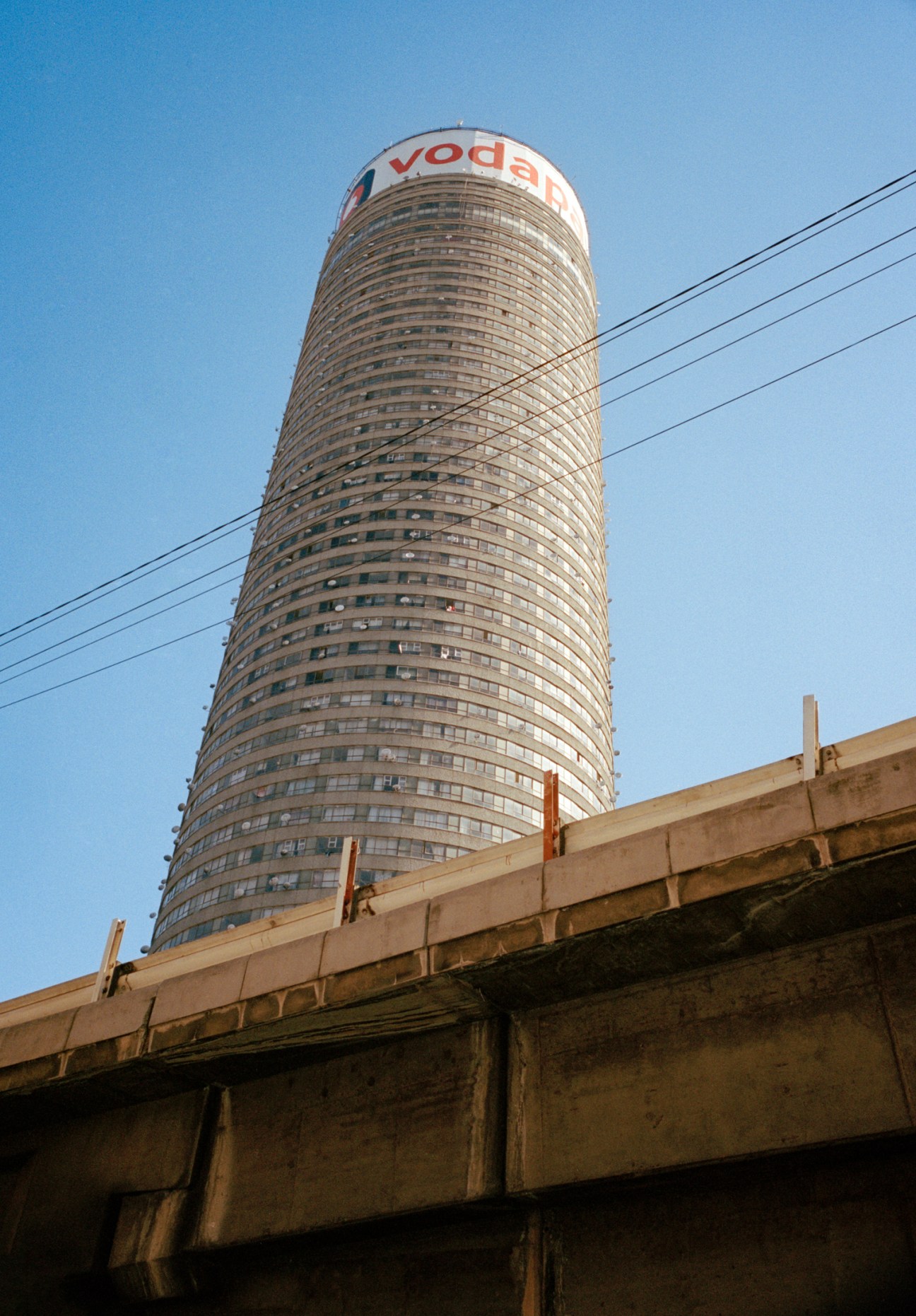
Melusi Mhlungu has no time for speculating about whether or not his hometown can be saved. “If Joburg dies, the country dies,” he tells Monocle at the foot of Ponte Tower, a 54-storey concrete skyscraper on the edge of downtown Johannesburg that was Africa’s tallest apartment building. Two years ago, Mhlungu was in Brooklyn making Super Bowl half-time commercials, living the high life as a New York ad man. Today he’s back home – and he has a new job: selling a city whose “brand” is bathtub-sized potholes and rolling blackouts.
The project that brought the 36-year-old advertising director back was unexpected. On a trip home two years ago, he got a call to meet Robert Brozin, a local businessman turned philanthropist and co-founder of fast-food chain Nando’s. Brozin had an intriguing pitch for Mhlungu: Nando’s was getting involved with a project to revitalise Joburg’s historic inner city, much of which has fallen into disrepair since big businesses retreated to the suburbs in the 1980s and 1990s. The work was centred around a complex of neoclassical buildings recently vacated by mining giant Anglo-American. They were slated to become, among other things, a satellite campus for a local university. But Brozin’s ambitions went beyond that. He described to Mhlungu a grand plan: beautifying inner-city streets, improving security, training entrepreneurs and creating jobs and housing for the homeless. “There’s no point in just handing out sandwiches,” Brozin told Monocle. Instead, the businessman wanted Joburg residents to reimagine their city – and he wanted Mhlungu to be the one to make the pitch to them.
“It was a weird offer,” says Mhlungu. After all, he would be trying to sell a place steeped in dysfunction, whose official tagline, “a world-class African city”, had become an ironic punchline. South Africa’s largest (and Africa’s richest) city has always had a reputation for grittiness, which is perhaps a euphemistic way of saying a high crime-rate. Indeed, there were 2,600 carjackings in Gauteng, the province comprising Joburg and its environs, between April and June of this year, and the city ranks among the top 50 globally for its homicide rate (though it comes in below Baltimore, Detroit and Cape Town). But in the shadow of the coronavirus pandemic, Joburg’s woes were multiplying, as its politics imploded and several long-brewing infrastructural crises spilled over simultaneously. The city’s ageing power grid, for instance, was on its knees. From 2022 to mid-2024, rolling blackouts left most of Joburg in darkness for five to 10 hours a day. In the city where 70 per cent of South Africa’s businesses are headquartered, factories began cutting production. Thieves sliced through now-dead electric fences and public hospitals cancelled hundreds of procedures because operating theatres were too cold. Water outages became a regular occurrence for at least half of the city. In July 2023 a rotting gas pipe exploded beneath a downtown street at rush hour, snapping open the road above. The next month, a squatter-occupied building burst into flames, killing 77 people.
Meanwhile, the engine of South Africa’s economy was effectively leaderless. Between 2021 and 2023, the unstable ruling coalition cycled through eight different mayors. “Since everyone realised that you might be in office for just two weeks, any long-term planning is out the window,” one city official, who asks not to be named, tells Monocle. Indeed, in July of this year, the city council projected it needed $12bn (€10.8bn) just to catch up on maintenance for its road, power and water infrastructure. But before it could begin to act on that figure, mayor number eight since 2021, Kabelo Gwamanda, resigned and the musical chairs began all over again. Given all of this, Brozin’s offer was more than a request to market Joburg as a nice place to live. He was asking Mhlungu, in essence, to give its five million residents an answer to an existential question: could the city even be saved? And, if so, what would it take?
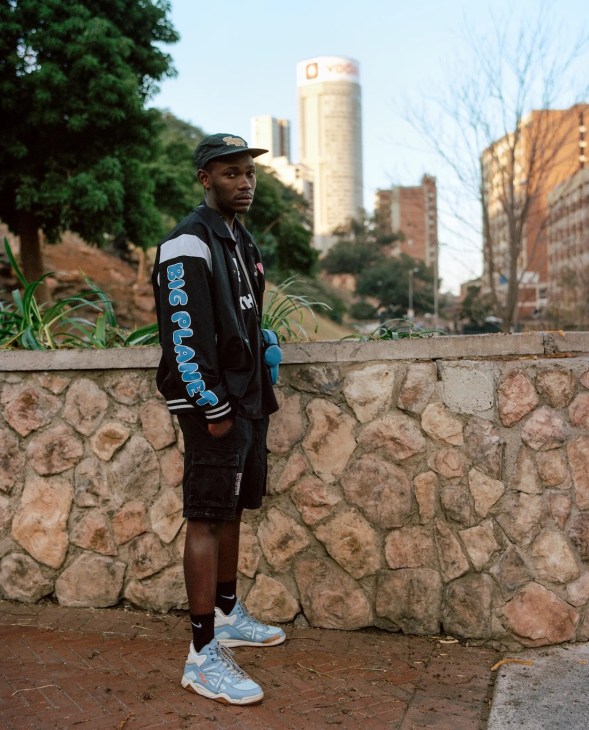
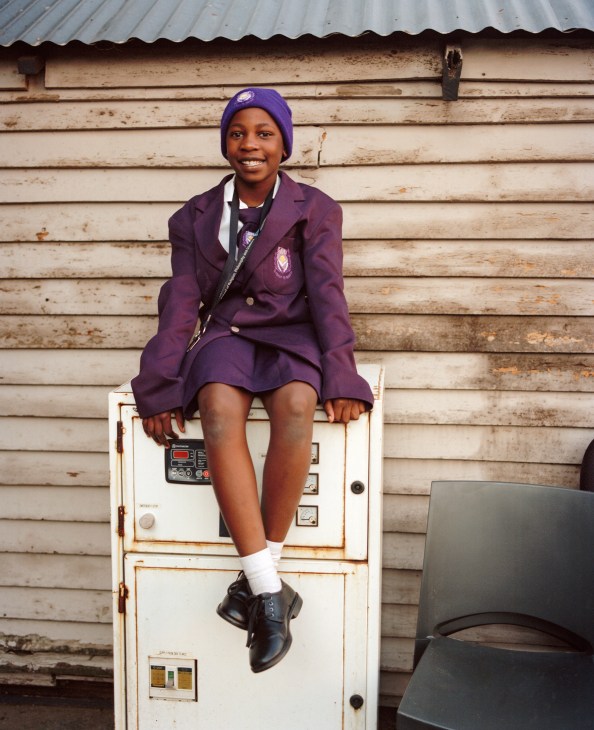
There was something compelling in the project for Mhlungu. Joburg is South Africa’s melting pot and its gateway. Between 2011 and 2022, almost five million people migrated to Gauteng from other parts of the country. The province is also home to nearly half of South Africa’s immigrant population. Mhlungu loved living in the US but also missed his hometown, a place crackling with the ambition of an entire continent. If any deeply broken place could turn itself around, he knew that it would be Joburg, where people had always improvised around the city’s failings. When Joburg’s streetlights went out, beggars became traffic cops to guide cars through the intersection. After road accidents, private security companies redirected traffic and passing doctors pulled over to care for the injured until the ambulances arrived. “Like it or not, there’s a strong creative energy in places that don’t quite work,” says Mhlungu. So he agreed to Brozin’s offer and in 2023 returned home.
If Johannesburg is an ambitious place, though, right now that go-getter attitude doesn’t extend to its leadership. For two decades after the end of apartheid, the city was ruled by the African National Congress (ANC). The liberation movement turned political party has dominated South African politics for the past 30 years. It saw Joburg through a period of whiplash transformation between apartheid city and democratic metropolis. But in 2016 the ANC lost the Joburg local government election. Since then, no single party has achieved a majority on the city council. This has left it in the hands of increasingly unstable coalitions and prompted an ongoing game of mayoral seat swapping. Gwamanda was still in power when Monocle began reporting this story in June and ANC old-timer Dada Morero occupied the seat when we finished in September (both were unavailable for interview).
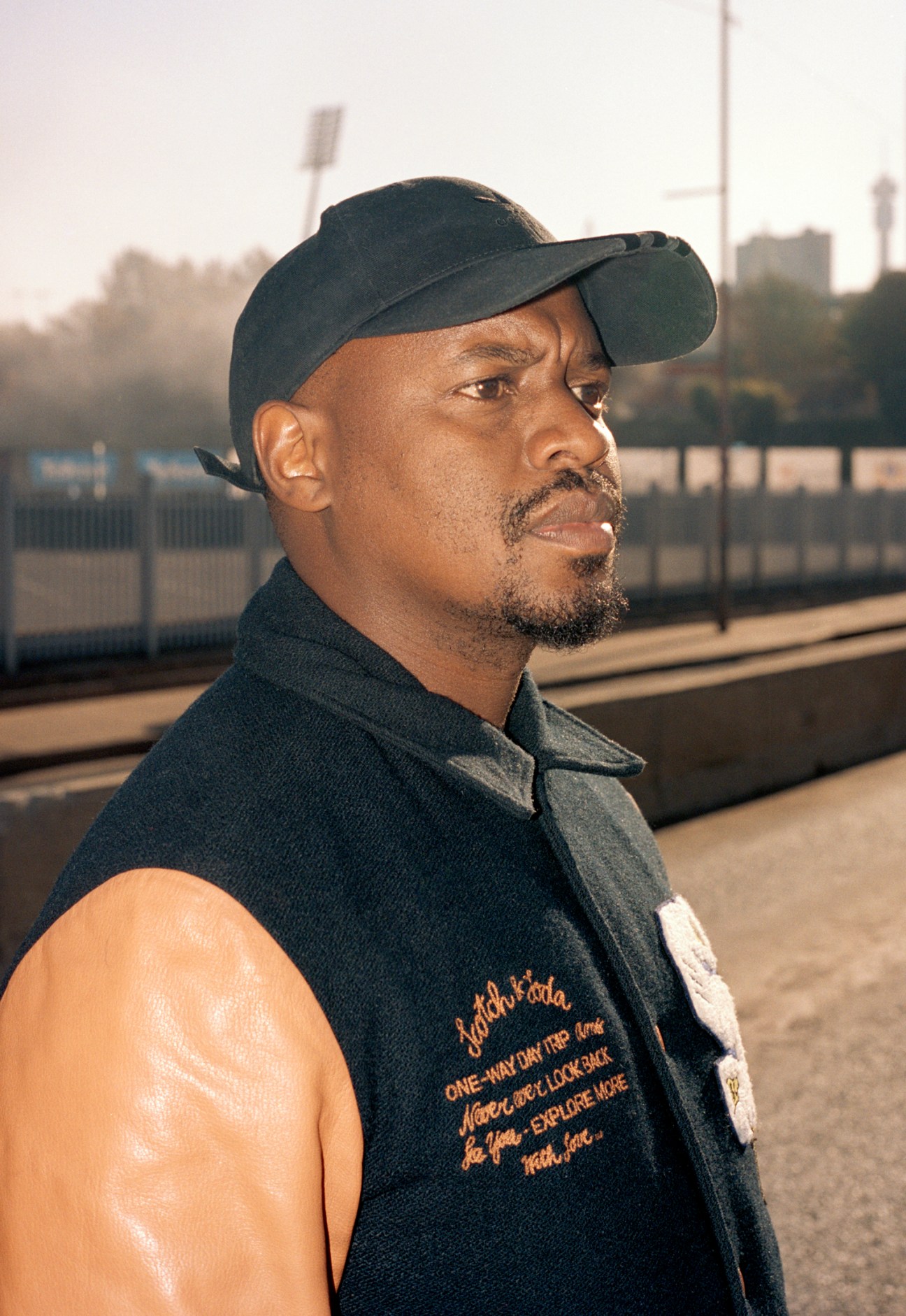
National elections in May did little to steady the ship. Countrywide, the ANC’s share of the vote dipped below 50 per cent for the first time in South Africa’s democratic history, forcing the party into a ruling coalition with its closest rival, the Democratic Alliance. In Joburg, meanwhile, the ANC governs in coalition with a different set of smaller parties. The churn at the top has made it difficult for city leaders to plan or execute long-term projects. “The budget is made, the budget is reversed, the budget is taken away,” says Dan Moalahi.
Moalahi is one of about 20,000 people who live in Slovo Park, an area in the south of Johannesburg that urbanists refer to as an “informal settlement”. That means its creation wasn’t authorised by the state, though the term is usually shorthand for neighbourhoods made up of shacks. In 2019 one in five of Johannesburg’s five million residents lived in such a settlement. Despite their name, many are not transient places. Slovo Park has existed for 30 years, far longer than many of the city’s sought-after suburban housing developments. It has wide, gridded roads. The properties lining them are neatly divided by fences and trees. Even the shacks themselves feel rooted. Moalahi’s has glass windows, plywood kitchen cupboards, a washing machine and goldfish swirling in a tank by the TV.
Before Johannesburg fell into its governance crisis, many communities in the city were already finding creative ways to take on jobs that the city wouldn’t do for them. Slovo Park exemplifies this stubborn self-sufficiency. The neighbourhood was founded in the early 1990s by workers in the nearby factories seeking a cheap, convenient place to live. Since then the city has tried to evict Slovo Park’s residents on several occasions to no avail. For more than 20 years the area has been run by a group of democratically elected “community forums”, who organise security patrols and hold conflict-mediation sessions. They also provide social services including food aid, shelter for victims of domestic violence and services for addicts. More impressive are their guerilla-style infrastructural upgrades. In 2010 the community forum got fed up with endlessly petitioning the city for running water. So it pooled money from residents to buy pipes and then hired plumbers living in the neighbourhood to connect the existing communal taps at the end of each block to individual properties. “We invited Joburg Water [the municipal provider] to come see,” says Moalahi. “We are doing the upgrading you can’t do.”
Joburg in numbers
4.8 million
Population of the City of Johannesburg.
15 million
Population of Gauteng province, which includes Johannesburg.
0
Navigable bodies of water running through Johannesburg – one of the world’s largest cities not built in proximity to a river or ocean.
79
Percentage of the world’s gold that came from Johannesburg and its environs in 1970, at the height of South Africa’s gold mining boom.
11
Official languages in South Africa, all of which are spoken in Johannesburg.
3,400
Beds at Chris Hani Baragwanath Hospital, in Soweto, the largest hospital in Africa and one of the 10 largest in the world.
The private sector has long had a hand in plugging the government’s gaps too. Joburg overflows with private security companies, private ambulances and private electricity grids, the latter a major factor in ending the rolling blackouts of the past two years. You can now use an app to report potholes to a local insurance company, which dispatches teams to patch them up. Every day, eight vans emblazoned with the words Pothole Patrol leave a nondescript office park in the east of Johannesburg. Over the past three years, they’ve filled about 250,000 potholes.
“We are heroes to people,” says the group’s vehicle manager, Joshua Baile, as he nudges his van onto a roundabout. Pothole Patrol is run by Discovery, South Africa’s largest insurance provider, which has obvious skin in the road-repair game. “Filling potholes pays for itself,” says Kgodiso Mokonyane, Discovery’s head of strategy and value-added products. In the first year of the project, she says, pothole claims by Discovery customers in Johannesburg fell by a quarter, even as they increased by 45 per cent in the rest of Gauteng, the province of which the city is a part. There’s a clear shortcoming to letting an insurance company fix city roads, of course: they get to decide which ones matter and which don’t. By and large, Pothole Patrol doesn’t fix roads in Joburg’s many historically black, working-class neighbourhoods. Then again, there are no shortage of potholes in the shopping-mall and office-block-lined roads of the suburbs either.
During Monocle’s visit, Baile pulls his van to a stop at the intersection of two busy roads in a part of town cluttered with new-build housing estates. He and his team cordon off the pothole, a watermelon-sized dent, and get to work. First they sear the surface of the road around the hole until it is hot enough that the top layer of asphalt can be scraped off. Then they shove that loose pavement into the hole, topping up the area with some fresh asphalt. Finally, they heat it again to set it in place. Within minutes, cars are gliding over the smooth road as though the hole never existed.
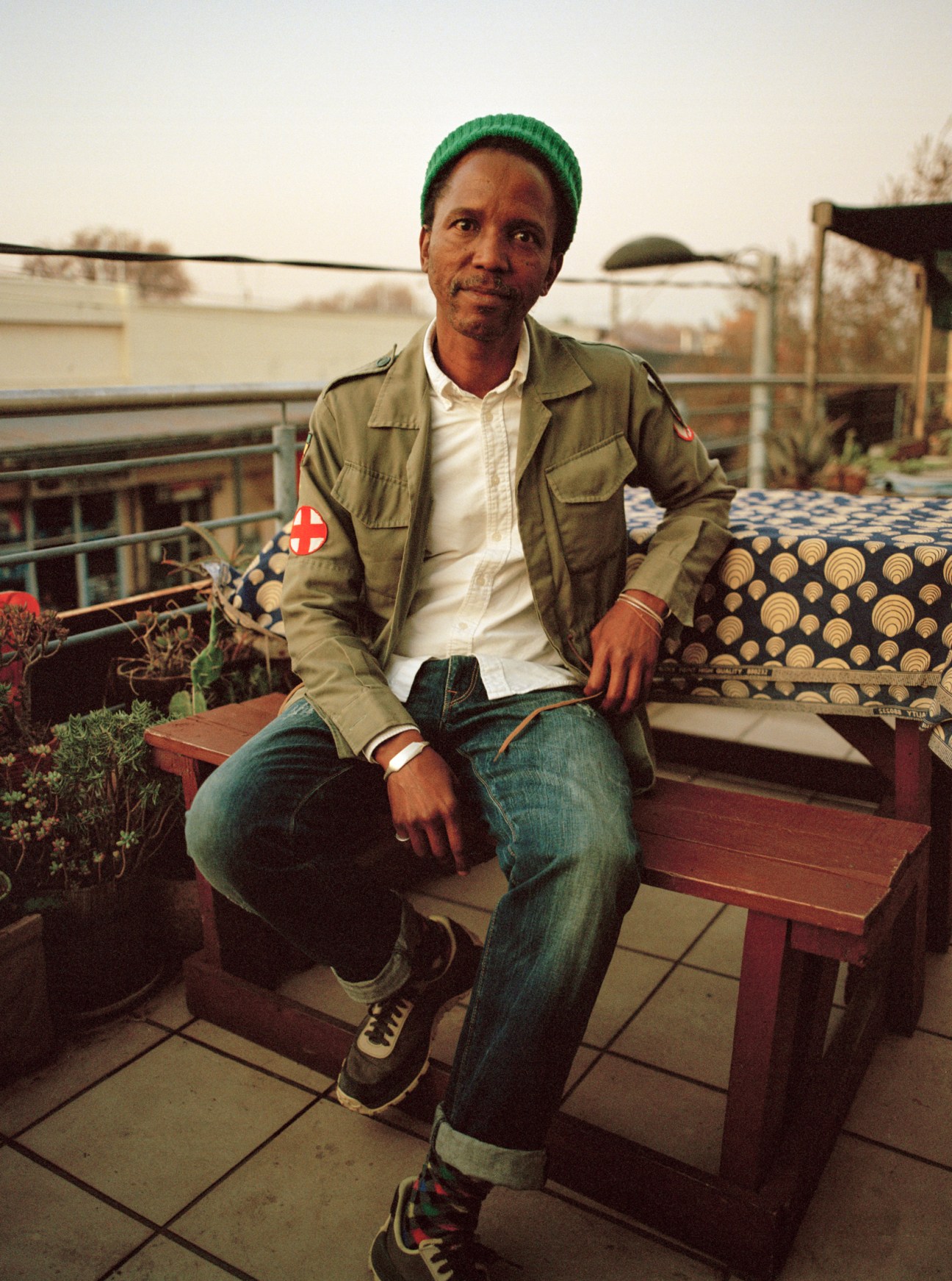
Mhlungu and Brozin aren’t the only people trying to rebrand Johannesburg. On a Thursday evening, Monocle joins Sanza Sandile, a self-taught chef who runs a popular supper club from a second-storey shopfront on Rockey Street, the main drag of the inner-city neighbourhood of Yeoville. Most days, Sandile serves a 10-course dinner of Afro-fusion dishes. Tonight the menu includes a Ghanaian-inspired gumbo, a saffron-tinged rice dish described as a “jollof-paella hybrid” and a beetroot salad. The meals that Sandile prepares are designed to reflect the diversity of the city on display outside the supper club’s windows. “Joburg is a tough city but it’s also amazing,” he says. The chef grew up in the dying years of apartheid, in the black township of Soweto. The place had a certain cultural – and culinary – uniformity that reflected just how effectively apartheid had kept different communities of South Africans apart.
By contrast, when Sandile first came to the inner city in the mid-1990s, shortly after Nelson Mandela became president, the area seemed like a dress rehearsal for the county’s future. Interracial couples held hands in the streets, brushing past white suburban skaters and Congolese sapeurs in brightly coloured designer suits. There were gay clubs and strip clubs, cafés with names like Café Pigalle and wine bars where returning political exiles engaged in debates about governance and democracy. But Sandile was most struck by one particular element of this melting pot. For him, sampling new cuisines was an act of rebellion against the country’s historical separations, “a way to kick the doors in”. He started selling food from a stall before moving upstairs seven years ago. Visitors have included Anthony Bourdain and Dave Chappelle, and even now, he says, the bookings come in faster than he can keep up with, proof that the city’s demise has been exaggerated. “This is still the big city of hope,” he says. “It’s home to the brightest and best from all over our continent.”
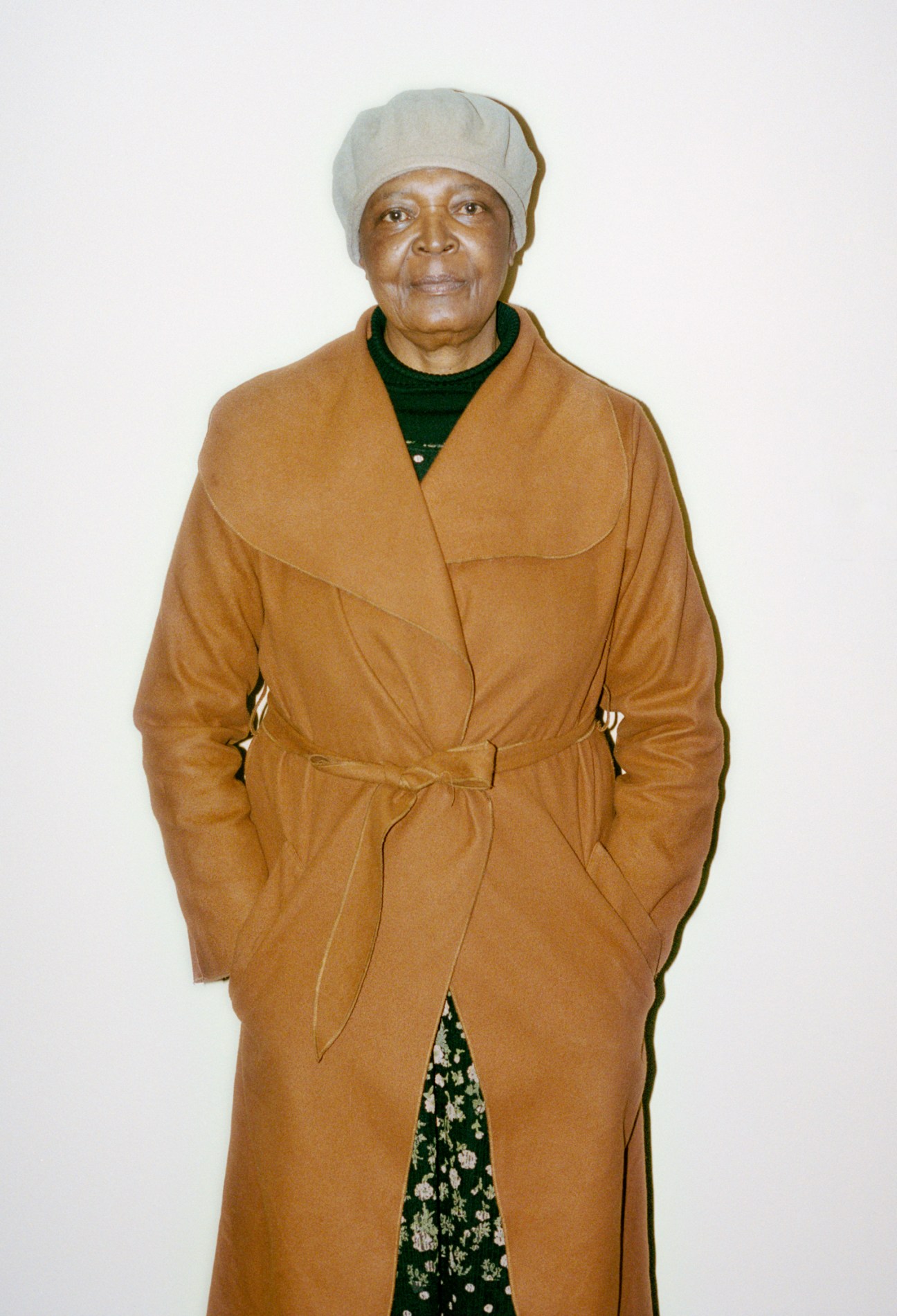
For inner-city activist Shereza Sibanda, Joburg’s saving grace is its residents’ unwillingness to settle. Whether it’s people piping their own water or insurance companies plugging potholes, she says that “people know that they deserve better than what they have”. That has been true, she claims, for her whole life. It was true when her father migrated here from Mozambique in the 1950s to work in the city’s gold mines. It was true in 1976, when she joined the uprising of schoolchildren in Soweto that marked the beginning of the end of apartheid.
And it’s on display now too, in the Joburg residents who pour into the downtown legal aid clinic that Sibanda helps to run, asking for help fighting illegal evictions or exposing crooked cops. She is amazed sometimes at how little Joburg’s recent struggles have done to dull its appeal as a city where anyone can shrug off their history and start over. “People keep coming to Joburg,” she says. “They won’t stop”. In recent years, about 300,000 people have migrated to the city’s province every year. It isn’t as though Joburg’s troubles don’t affect them. Poor leadership from their government has left its citizens – literally – in the dark. But their reasons for believing in the city transcend rolling blackouts and burst water pipes.
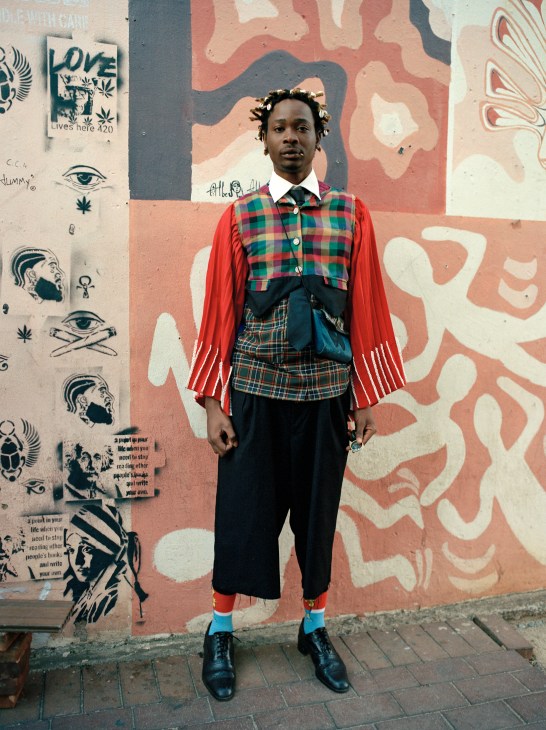
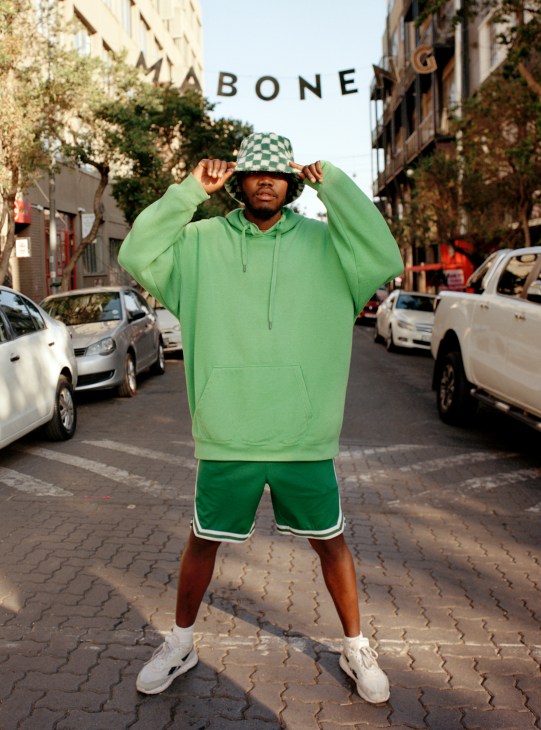
Take Sethokwakhe Zungu, a 31-year-old who lives in a one-room metal shack beside a paper factory. Since he moved here from a rural village a decade ago, Joburg has been, to say the least, difficult. Last year, unable to afford rent, he found himself squatting in a five-storey downtown building with no running water or electricity. One night in August, it caught fire. Of the 400 people inside, 77 died. Zungu lost the supplies for his small baking business and his entire life savings – about €100. “I have really lost hope,” he tells Monocle. We ask if he has considered leaving the city. “Never,” he replies, shaking his head. “It’s still Joburg. So maybe things can turn around.” It’s a sentiment that we’ve heard over and over again. “There’s nothing to love about Joburg but people do anyway,” as Brozin puts it. The project he helped to dream up, Jozi My Jozi, has been slowly ramping up since Mhlungu was hired last year. When Monocle visited, the initiative was cleaning up a dozen scruffy highway off-ramps leading to the inner city. “This isn’t about creating another Singapore,” says Mhlungu. In Joburg, the grit is part of the charm. But Jozi My Jozi wanted to give people reasons to feel proud of their city again. “The brand is broken,” adds Mhlungu. “But the people are not.”
Business agenda: Outdoor clothing company Peak Performance and new perfume brand To My Ships
Property: Singapore
Key to success

New property developments are bound to attract attention but a landlord’s job does not stop at the ribbon cutting. Managing these assets is often more challenging and success requires continual investment. Clarke Quay is a pedestrianised cluster of bars, restaurants and shops on the Singapore River that recently celebrated its 30th birthday with its second revamp.
The requirement for regular upkeep is a good lesson for place-making projects across Southeast Asia. Clarke Quay physically transformed downtown Singapore when it opened in 1993 (even if its commercial success was initially slow). After a brief period of success, it soon fell into disuse because consumers stayed away. This was blamed on the project’s inaccessibility, poorly curated shops and services, and lack of shelter from the elements. Then came a redevelopment in 2005. The opening of a nearby subway station shuttled in shoppers and a more enticing mix of tenants moved in. The effect was significant. “The market valuation when we started was near zero; they couldn’t lease it,” says Stephen Pimbley, who redesigned the area 20 years ago and now leads Spark* Architects.
Landlord CapitalLand learnt its lesson and now this fresh redevelopment, jointly handled by Meta Architecture and Formwekz Architects, will give Clarke Quay a more stable future. In April, the project boasted a 93 per cent committed occupancy, half of which is comprised of new concepts from international and homegrown brands. It was recently valued at €286m – an enhanced asset for CapitaLand and for all of Singapore.
The Entrepreneurs
Laura Kramer on: Growing off-piste
An eagerness to expand can take leaders down slippery slopes if they don’t have a clear direction. Luckily for Sara Molnar, the president and CEO of Sweden-based outdoor clothing company Peak Performance, navigating challenging terrain comes as second nature.
A lifelong skiing and freeride competitor, Molnar arrived at the Scandinavian brand in 2016 after a successful but ultimately unfulfilling career in the legal and financial sectors. “I noticed how other people spoke about their work with pride and passion, and wanted to have that feeling too,” she tells Monocle. “My connection to Peak Performance goes back to my childhood, which I spent skiing, and the community around the brand.”
Now, Molnar is leading Peak Performance’s transformation, guiding it through uncharted territory as the company grows. “You can’t expand globally without knowing who you are and what you stand for,” she says. “It’s about disciplined growth.”
The brand was founded in the 1980s by skiers who wanted to combine technical functionality and innovation with stylish design. “We have to stay true to that idea and not just slap a logo on products to commercialise them,” adds Molnar. “Otherwise, we would lose our edge.”
Peak Performance’s recent shop openings in Berlin, Vancouver and London – as well as new locations in China – offer the company fresh opportunities to learn and build a bigger community. That’s why, for Molnar, retail remains at the heart of the business. As the business continues its slalom across the world, the challenge is becoming how to balance the company’s global aspirations with the importance of honouring its Scandinavian roots.
“The shop is where you truly engage with your community and get to understand customer desires,” says Molnar. “You rely on shop staff as key brand ambassadors.” Sometimes, she explains, the hardest thing is to continue as you are, despite facing different challenges and consumers. “We often say that we are mountain born,” she says. “There is a Swedish sense of humility in letting the products that you make speak for themselves.”
For more on how to avoid going too off-piste in your business career, listen to Monocle Radio’s podcast, ‘The Entrepreneurs’.
Retail: London
Q&A
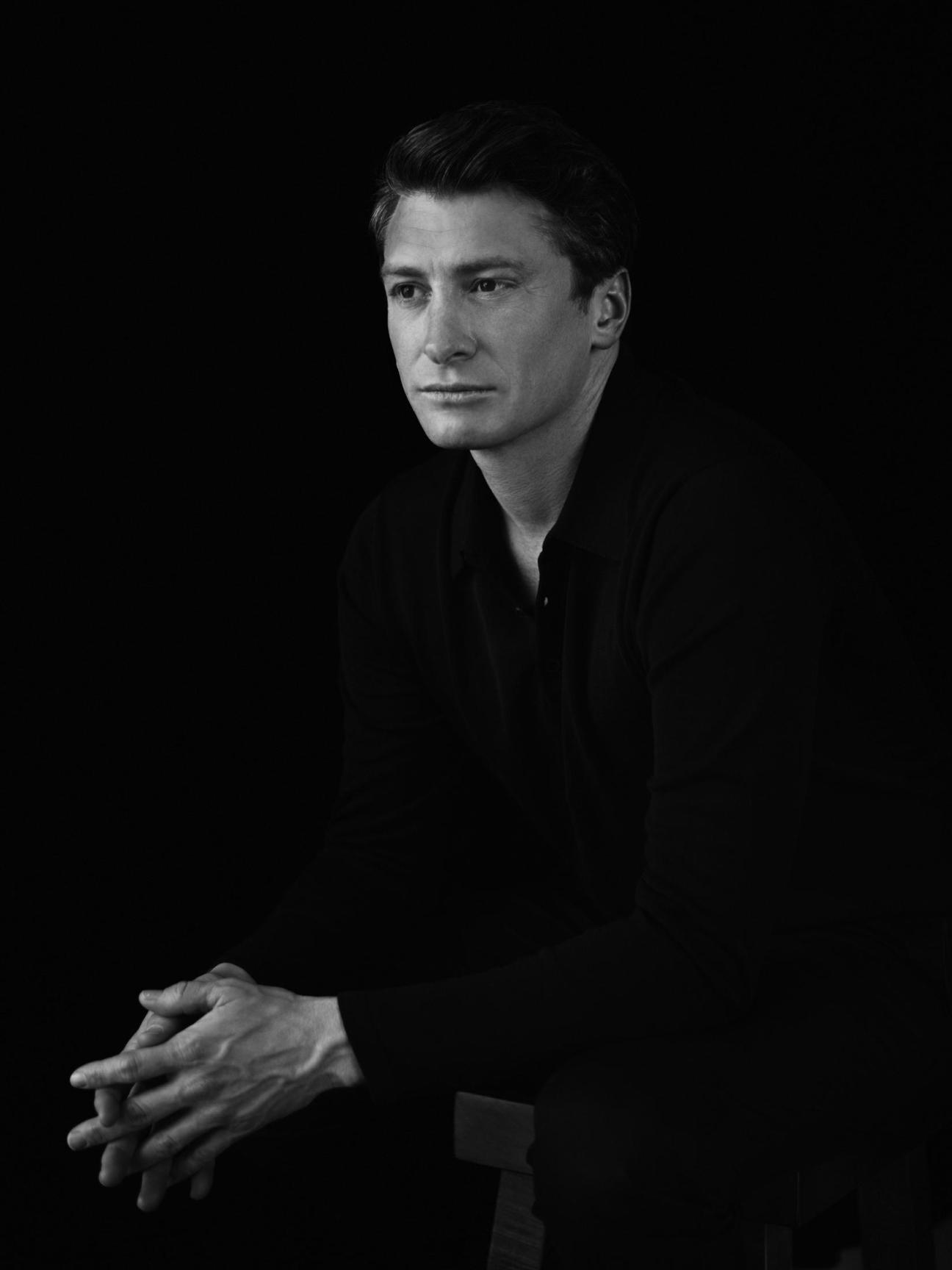
Daniel Bense
Founder, To My Ships
Few luxury skincare labels have received as much acclaim as Aesop. In September, Daniel Bense, an alumnus of the Australian brand, launched his own line of natural deodorants and perfumes. The collection, To My Ships, joins an increasingly lucrative industry valued at $21.8bn (€19.9bn) in 2023. Bense tells Monocle about demand in a crowded market and lessons learnt from his time at Aesop.
How do you want your product to resonate?
Our focus is on how the product is experienced by the customer. Packaging plays an important role. We worked with FormaFantasma to design our bottles and boxes. The studio’s thoughtful approach resonated with our own values.
How do you approach product development?
It is only worth creating quality products that are effective and a pleasure to use. Naturally, we started at the beginning with a well-defined brief. The goal is to give an uplifting experience.
Is there still demand for new luxury cosmetics brands?
Yes, there will always be space for brands that aspire to do things better than those who have come before them.
How did your experience at Aesop help this project?
I basically had an apprenticeship in balancing creative vision with commercial success in a high-growth, high-touch business.
tomyships.com
Fashion: Bordeau
Treading lightly
While most fashion companies claim to be committed to sustainability, Bordeaux-based trainer brand Zèta is walking the talk. Founded by designer and entrepreneur Laure Babin, it uses waste from agricultural production, such as grapes and corn, to make its shoes. Everything in its production chain is derived from recycled materials, including the boxes in which each pair is shipped. This level of control, however, poses technical challenges. “Our Portuguese artisans find the innovative materials that we use more difficult to work with, so it takes longer to make our shoes,” says Babin.
Following a partnership with Nespresso on its Moka collection, which used waste from coffee production, the brand’s latest model, the Olea (pictured), features a material called Oleatex, developed in Turkey. It’s created from the crushed remnants of olives generated during the production of oil.
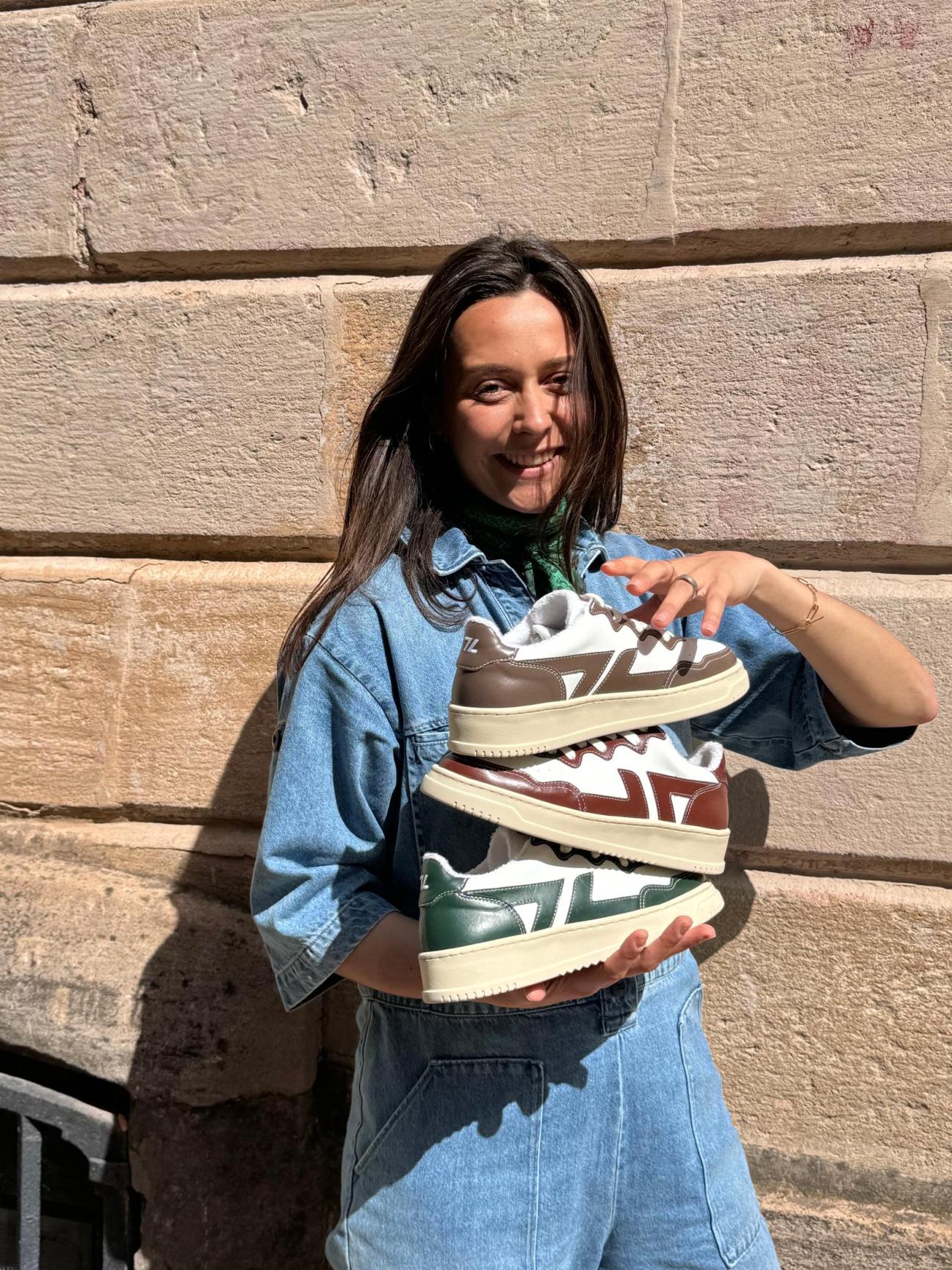
To date, Zèta has sold 40,000 pairs of shoes, through its website and its physical shop in Bordeaux, as well as a network of independent distributors in Europe and Asia. To finance the next phase of its expansion, the company is currently raising capital and has invited customers to become investors to support its research and development of sustainable materials.
“Our next project is a 100 per cent biodegradable pair with seeds built into the sole,” says Babin. The idea is that customers will be able to plant their worn-out shoes and literally give them a second life as flowers and shrubs.
zeta-shoes.com
Mobility: California
Lucid dreaming
Tesla was once the king of high-end electric vehicles (EVs) but Elon Musk’s brand is showing signs of slowing down in some markets. Despite record sales across the globe last year, numbers are down in 2024 in both US and European regions. Other luxury EV makers sense an opportunity. Among them is Californian start-up Lucid Motors, a publicly traded company since 2021 that was founded by former Tesla vehicle engineer Peter Rawlinson.

Lucid’s mission statement is to build “the most captivating luxury EVs centred around the human experience” and it has access to some deep pockets that could help it reach its goal. Its biggest investor is Ayar, an affiliate of Saudi Arabia’s Public Investment Fund, which owns about 60 per cent of the company. Faced with a difficult EV market, the Saudi fund has injected more cash this year, taking its total tally to about $8bn (€7bn). This helped sales to jump to $200m (€182m) in the second quarter of this year, up 70.5 per cent year on year – but the company is still losing money.
For Lucid to make the next jump, it needs to increase sales and expand into new market segments. With that in mind, the brand is expanding its line beyond the flagship Air sedan – retailing from just under $70,000 (€63,800) in the US – with the forthcoming Lucid Gravity suv, which is expected before the end of the year. Alongside building its own factory in Arizona, Lucid also opened a facility in Saudi Arabia last year. The aim? To bring down the cost of a new mid-sized vehicle and capture that all important (and much-needed) market share.
Aviation: Incheon
Only connect
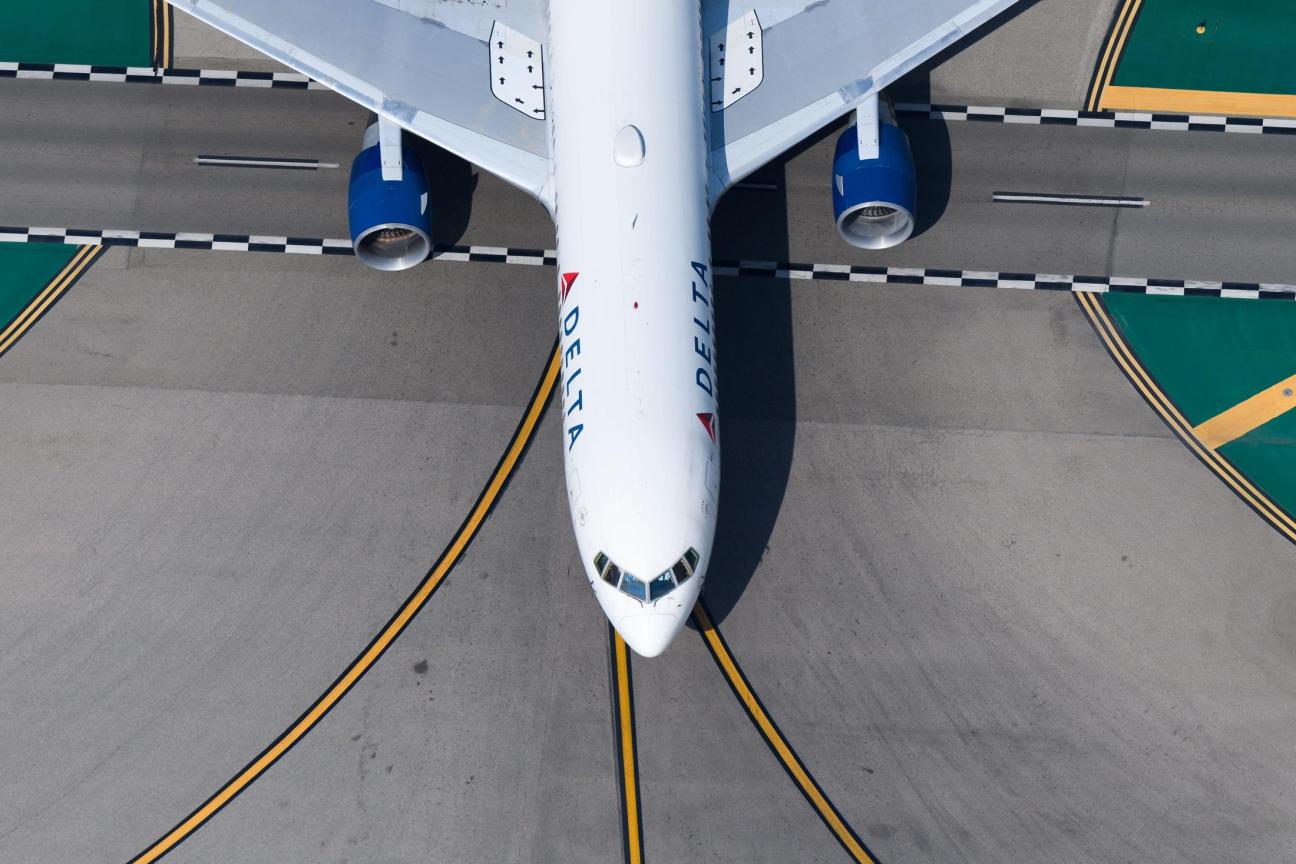
The US’s oldest airline has announced South Korea’s Incheon International Airport as its new Asian hub. At the height of the coronavirus pandemic in 2020, Delta Air Lines dropped all of its routes between North America and Tokyo’s Narita airport, from which it previously operated its Asia connections. Now, in collaboration with fellow SkyTeam alliance member Korean Air, the Atlanta-based carrier is introducing its first nonstop flight from Incheon to Salt Lake City International in June. The route allows Delta to offer those living in the interior states of the US a direct connection to Incheon, making onward journeys across the rest of the continent easier too.
Delta already operates direct flights there from Detroit, Atlanta and Seattle, carrying about 2,100 visitors to the South Korean airport per day. But with the new SLC-ICN route, it expects a further 180,000 passengers annually, with 94,000 transfers. That should bolster Incheon’s plan to cross the threshold of 106 million passengers annually across 600,000 flights.
Recipe: Flourless orange-and-almond cake
Serves 6
Our Swiss chef Ralph Schelling has whipped up a light, fluffy cake with a subtle hint of orange. For an especially rich flavour, substitute the butter with some silky Fontclara olive oil from Girona.

Ingredients
250g ground almonds
4 medium-sized eggs
120g cane sugar
90g melted butter
1 large orange, juice and zest
½ tsp baking powder
Method
1.
Preheat the oven to 175C.
2.
Grease a small springform pan with a diameter of about 20cm and sprinkle with two tablespoons of ground almonds. Separate the egg yolks and white. Beat 100g of the sugar with the yolks until frothy. Beat the whites with the remaining sugar until stiff.
3.
Stir the melted butter, orange zest and juice into the yolk mixture. Mix the rest of the almonds with the baking powder and stir in carefully. Then fold in the beaten egg whites.
4.
Pour the batter into the prepared tin and smooth out. Bake the cake for about 40 minutes, covering with aluminium foil halfway through if necessary to prevent it from getting too dark.
5.
Dust the finished cake with powdered sugar if desired.
ralphschelling.com
Editor’s letter: Into autumn’s glow
In the northern hemisphere the back-to-school feeling that hits after a hopefully blissful summer isn’t something that only students or their teachers experience. It permeates everything. Galleries pull up the shutters to open new shows, shops unveil their autumn wares, politicians return to parliaments – things click back into gear. While packing away the loungers and returning the sun cream to the bathroom cabinet can be a little unsettling, the new season also brings the promise of change and a renewed determination to end the year on a high, with projects completed and at least some of those January promises fulfilled. Here at monocle, there has certainly been a feeling that it’s time to switch things up, to try some new ideas to make the most of the autumn sprint. That new-season enthusiasm also, in part, explains why this issue has landed with such a thump and almost 300 pages of global reporting.
Just in case you were napping poolside when that new hotel started checking in guests or when the US got an airport terminal to boast about, one of the first things that we decided to include in this issue is a guide to recent openings, launches and products that might have snuck past you. Produced by our editor Josh Fehnert, it kicks off on page 171 and, during the numerous rounds of picture selects and editing, has already encouraged several of our team to change their travel plans.

Being a man with broad shoulders, Josh has also been marshalling a new to-be-regular essays section that aims to inform, challenge and entertain. One of the stories is about life on a submarine and the discipline and mindset that you need to live under the waves. Told as a long q&a, the narrator is Taylor Sheppard, who has completed eight deployments as a US Navy submarine officer. And how did we meet her? It turns out that one of her ways of coping with the weeks of isolation is to pack copies of monocle and Konfekt and she took up our offer to drop us an email.
This is also our style issue, in which our fashion editor, Natalie Theodosi, gets to seize a vast swath of editorial real estate. The directory of talent that she pulls together for these issues is always impressive and works on two levels. If you want to add some well-honed clothing to your wardrobe, of course, she has you covered. But the roll call of new brands is now essential reading for any fashion-shop buyer or sector investor on the talent-acquisition hunt.
In the Affairs pages, there’s also a story that touches on the worlds of fashion and design – and cultural confidence, identity and joy too. A generation ago, national dress seemed to be on a slippery slope to oblivion. It was often seen as parochial, a symbol of backwardness, a weakness if you wanted to project an image of modernity for your country. No more. Now it’s seen as youthful, a powerful marker of belonging and pride. In countries around the world designers are giving national dress new relevance, allowing people to take even more pleasure from sporting their thawb or saree. Alexis Self, our foreign editor, has marshalled a runway parade of writers to decode their country’s national dress with warmth and insight. Perhaps a kilt is in order.
This year’s monocle Quality of Life Conference will be taking place in Istanbul (from 10 to 12 October, if you would care to join us – tickets for it are now available from monocle.com/conference). We have taken our presence in the Turkish city as an excuse to dive into its design and music scenes, which reveal stories of tradition and modernity being valued, used and cleverly adapted in myriad ways. And there’s a surprising undercurrent of rule-breaking too.
It’s this need to innovate that runs as a rich vein throughout this issue – knowing how to hold on to the past while embracing new ideas. It’s an autumn recipe to embrace.
If you would like to drop me an email, send me ideas, point out things we might have missed, you can find me at at@monocle.com. And also in Istanbul.
Why national dress is back in fashion
The Great Male Renunciation is a term used to describe a phenomenon in the late 18th century whereby European men all began to dress the same. Out went almost any form of ostentation (wigs, gold braids or high heels) and in came the dull lounge suit. Since then, the Western way has been hegemonic. Indeed, at the end of the 20th century the suit and its female counterpart, the ball gown, had become the comportment of choice for almost any formal setting anywhere in the world. It appeared as though Western-led globalisation had succeeded in not only homogenising the world of trade but that of dress too.
Twenty or so years later, the foundations of this bland new world look shaky. As was the case in the late 1700s, such phenomena are difficult to identify at the time (the term “Great Male Renunciation” was coined in the 1930s) but it seems that in many countries there has been a re-embracing of national dress. Some may ascribe this trend to the dark forces of nationalism but it’s worth noting that it has also coincided with the retreat of another shoddy Western invention: cultural appropriation. At about the same time as the grand panjandrums of globalisation were smugly surveying their spoils, a subset of people in Western academia were, like po-faced Gok Wans, decreeing what was and wasn’t acceptable to wear.
National dress became smothered by the censorious: a dead thing meant for museums rather than real life. The joy and generosity involved in the mutual exchange of cultures were now fraught with guilt. Of course, there have been times in the past when people have donned national dress in order to ridicule and belittle others, but this too, thankfully, has for the most part been consigned to the bin. Today, people from all corners of the globe see the wearing of another’s national dress as an act underpinned by admiration. It is in this spirit that the following feature has been put together. From Nigeria to Malaysia, via Bavaria, Ukraine and the Arabian Gulf, we look at how national dress is making a comeback for a variety of reasons: political, economic and, yes, sartorial. We have also included an illustrated chart such as readers might remember from classroom walls of yore – made with love for eyes that wish to learn and appreciate, not roll.
1.
Desert dress
Thawb and abaya
The Gulf
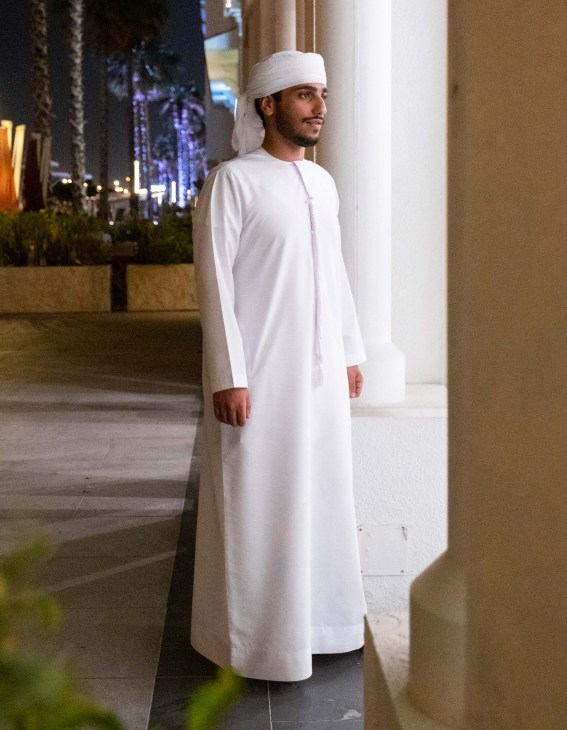
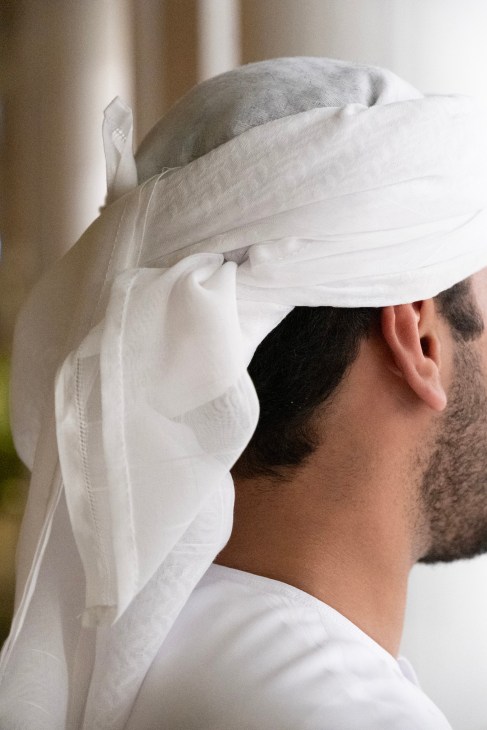
To the untrained eye, the garments worn by men across the Gulf region might seem indiscernible: a white ankle-length dress paired with a headscarf in either white or a red-and-white checkered pattern. But each of the seven states in the region has its own distinctive male robe, known as a kandora, thawb or dishdasha, and headscarf, known as a ghutra or shmagh.
The Gulf states (especially Qatar, Saudi Arabia and the UAE) have undergone an astounding transformation over the past half-century. The UAE, for example, was only established in 1971 and moved from being a country dependent on farming, fishing and pearl-diving into one of the most technologically advanced and richest urban societies in the world. Here and in other Gulf states, traditional attire has acted as an anchor to the past, tempering the lightning-quick changes happening elsewhere in society.
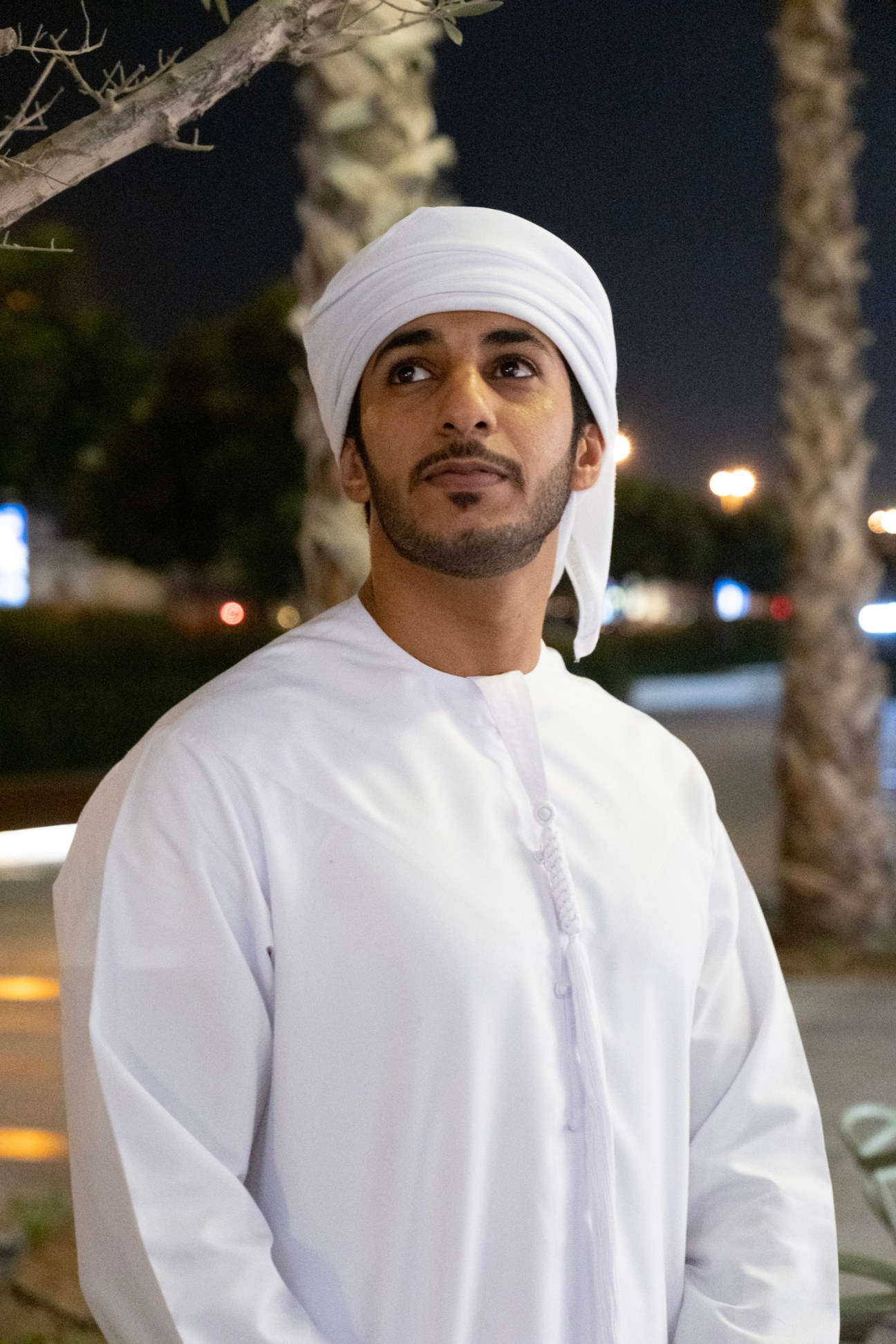
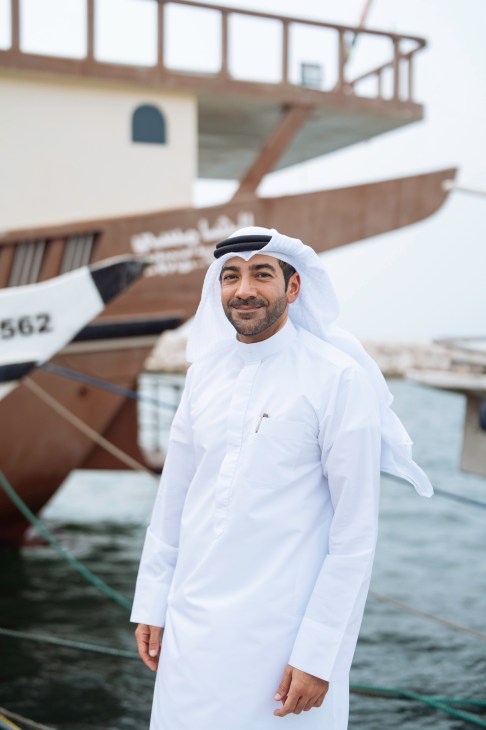
So, what are the differences between men’s dress in the Gulf? In the UAE and Oman, men wear a collarless kandora with a tarboosh or farakah, long tassels roughly analogous to a Western tie. The Emirati tarboosha extends from the neck to the belly button, while in Oman, it hangs just below the collarbone. In the UAE, men either tie their headscarf around the head like a turban (known as the hamdaniyah or essama) or wear it in the formal style with the agal, the black crown common across the Gulf. In Oman, the formal headgear is a turban called the massar, while a kumma, a cap without a visor, is a less formal option. The Kuwaiti, Saudi, Qatari and Bahraini dishdasha or thawb, which all feature a collar, are almost identical. The Saudi one is more of a tight fit with a two-button collar and shirt sleeves designed to accommodate cufflinks, while the Kuwaiti thawb has a one-button collar and wide sleeves without cufflinks. The Bahraini and Qatari thawbs are looser, with pockets on the right chest and softer collars.
These garments evolved over centuries to suit nomadic lifestyles: white fabrics helped their wearer survive the region’s heat, while the ghutra or sifrah (a wrap worn around the head) protected against dust and sunlight. The agal was once used to secure a camel’s legs at night and worn on the head when not in use. Though the vast majority of the region’s people now live in air-conditioned cities, these garments still serve a utilitarian purpose while providing and enforcing a common identity. The Gulf’s leaders and public figures have played a crucial role in the latter regard. By choosing to exclusively wear thawbs and ghutras at public events, they signal their intention to preserve these cultural traditions. Indeed, traditional dress is compulsory for many who work in government-run institutions in Saudi Arabia, Oman and Qatar.
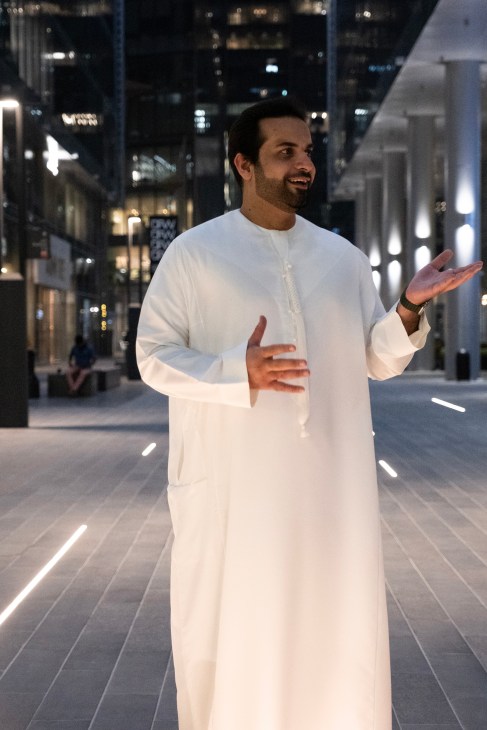
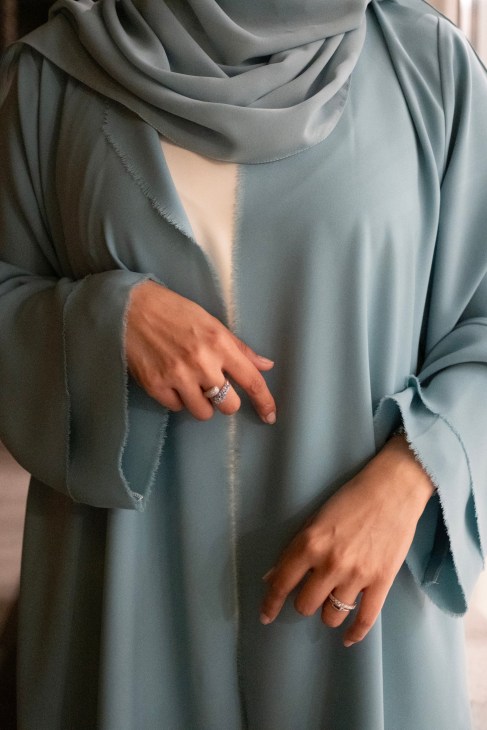
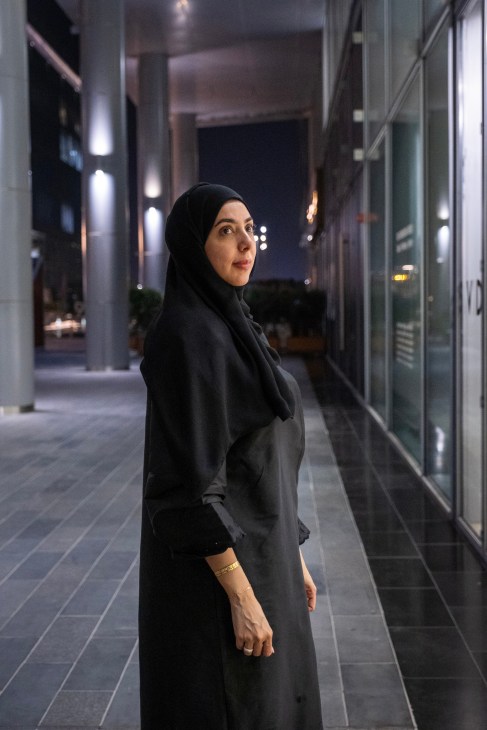
Young Emiratis, many of whom are more likely to wear Western dress on a casual basis, often come to cherish the time they spend in the thawb or abaya (its female equivalent) at work. Saaed AlMheiri, a business development manager in Dubai, believes it reinforces an intergenerational bond that’s important as young Emiratis are exposed to Western mores. “It reflects where I come from and the upbringing that shaped me,” he says. “Traditional clothing perfectly balances timeless elegance and a deep connection to values passed down through generations. It seamlessly blends into both business and casual settings, making it a symbol of continuity and solidarity.”
2.
United in style
Batik and kebaya
Malaysia
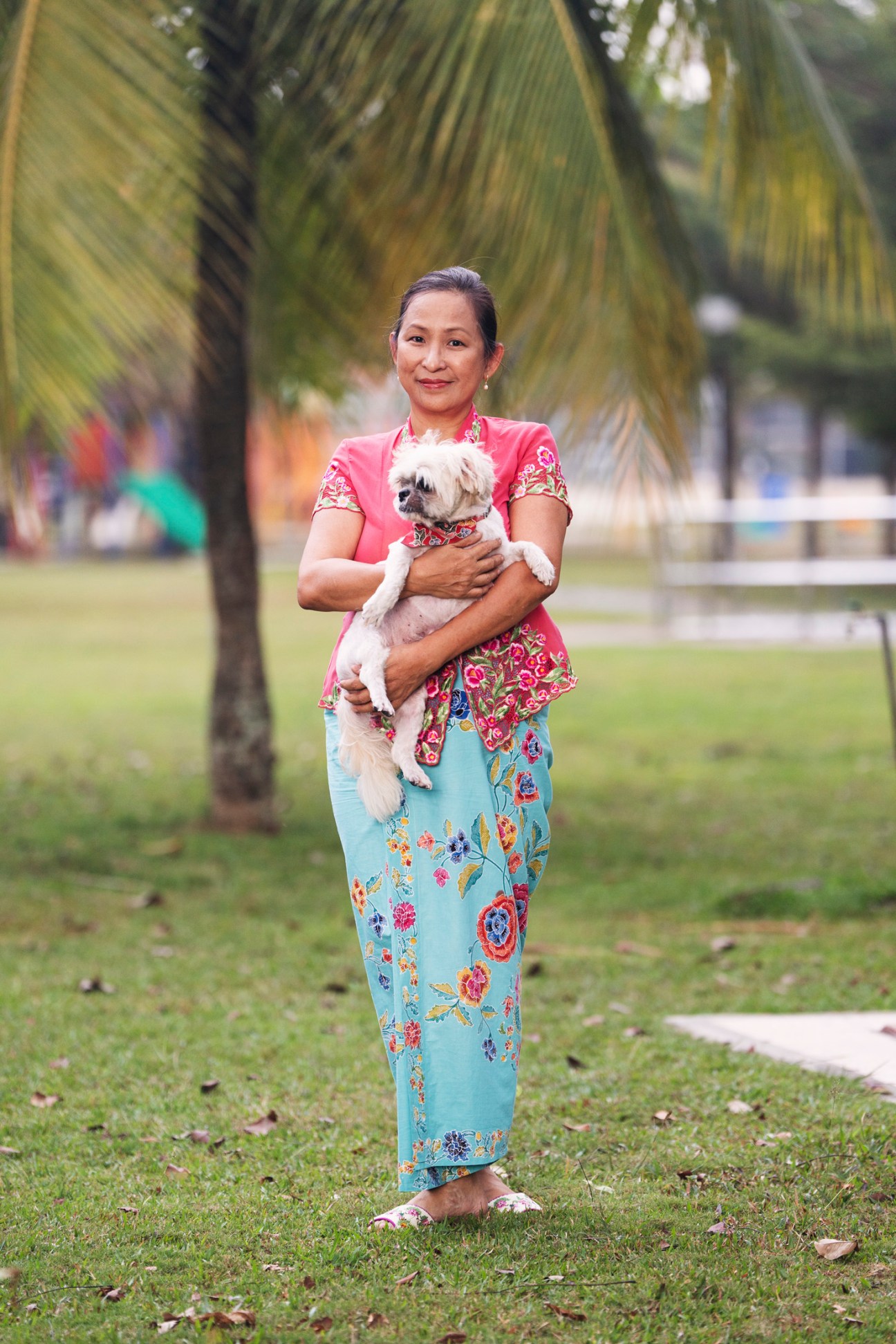
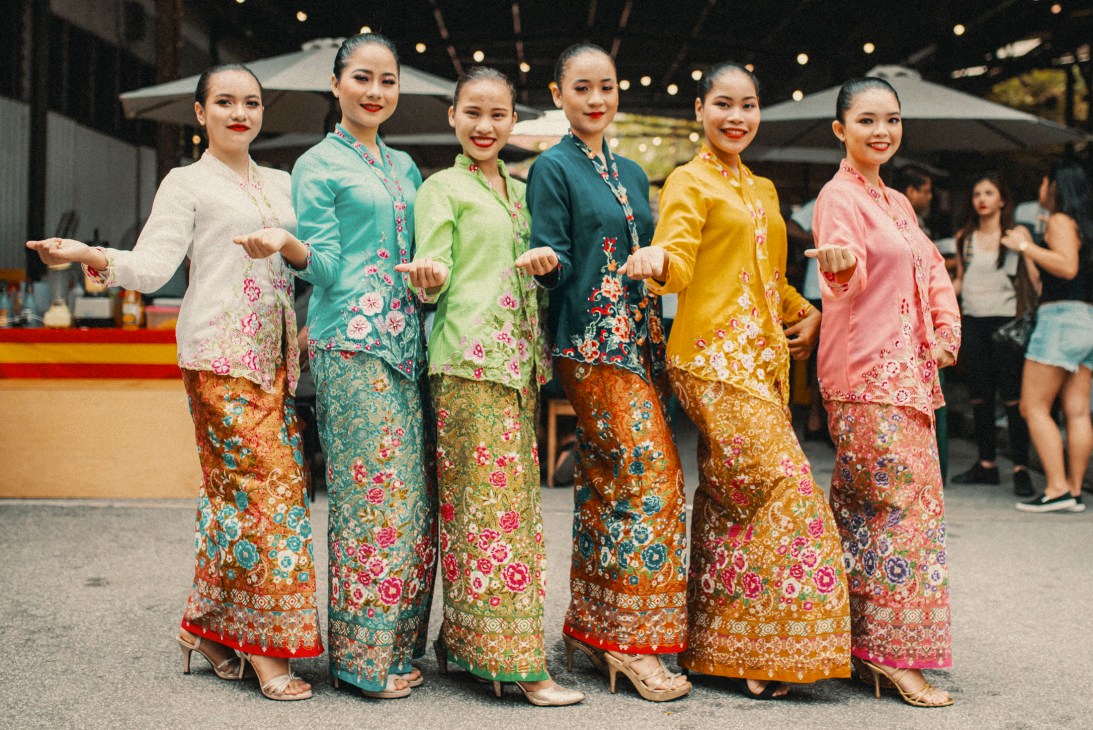
During coronavirus lockdowns in 2020, Malaysian dressmaker Nellie Song began sewing clothes for her daughter. She decided to experiment with batik, a colourful textile with wax-resistant dye patterns that originated in Java and has become a staple of Malaysian traditional wear. Song’s daughter received so many questions from friends about her mother’s designs that the duo decided to start their own tailoring business, Batik by Nell. “It all started with the kebaya,” says Song. The kebaya is a traditional garment worn by women, an intricately detailed blouse accompanied by a wraparound sarong.
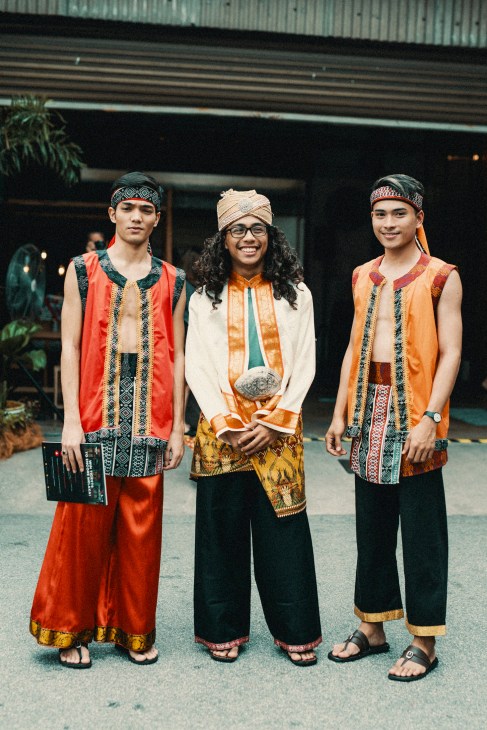
In a country as multicultural as Malaysia, with large Malay, Chinese and Indian populations as well as numerous smaller ethnic groups and indigenous tribes, there is no single national dress – there are dozens. At the National Textile Museum in Kuala Lumpur, a line of mannequins, each sporting a different traditional outfit, stretches across the room – a Chinese silk jacket here, a headdress made of tree bark there. Amid such diversity, the kebaya is a rare cross-cultural garment. “Women of all ethnicities and social classes in Malaysia, from royal families to commoners, have worn the kebaya. It holds a special place in Malaysian culture,” says Tengku Intan Rahimah binti Tengku Mat Saman, the director of the National Textile Museum. “The kebaya has evolved to reflect Malaysia’s unique cultural identity, incorporating elements of Chinese, Indian and Malay cultures.”
It has also become a border-crossing, soft-power wielding sartorial ambassador. Pre-colonial and colonial migrations of different populations across the Southeast Asian archipelago brought the kebaya along for the ride. In 2023, Malaysia, Indonesia, Thailand, Singapore and Brunei jointly nominated the kebaya for Unesco’s Intangible Cultural Heritage list, an admirable show of regional unity in a part of the world that loves to bicker about whose version of a certain noodle dish is the most authentic.
Soon after she launched Batik by Nell, Song was rushing to fulfil orders for modern spins on batik and classic sarong kebaya and even the occasional batik tie or pocket square. She has designed custom versions of various traditional garb – a batik Chinese cheongsam, batik Indian bridal wear and Malay-style batik sets for Ramadan celebrations. Many customers are young Malaysians like Song’s daughter, Wong Ann Jee, and her friends. “We’re so used to the Western idea of dressing but I feel that, as we grow older, people start to be more open and receptive towards wearing local textiles,” says Wong, who is 27. Some Batik by Nell customers are Malaysians living abroad who want traditional outfits to wear to weddings and parties in the UK and Australia. “People are just getting more comfortable with representing their culture.” Wong often wore sarong kebaya when she had to deliver presentations at university. “That’s one of the nice things about Southeast Asian traditional wear: it’s considered formal attire now,” she adds. “I was so sick of wearing boring corporate clothes and a button-up shirt!”
3.
Pride of place
Vyshyvanka
Ukraine
Gathering with friends to celebrate her 26th birthday in Kyiv, Ada Wordsworth chose to wear the Ukrainian national dress, known as a vyshyvanka. It was a hot August evening in 2024 and the venue a shady, wild beach on the banks of the Dnipro River. Packing a picnic and bottles of prosecco, Wordsworth donned her outfit for the evening: a linen vyshyvanka dress embroidered with sheaves of wheat and chestnut leaves, symbols of Ukraine’s capital.
Wordsworth came to the country in March 2022, abandoning a master’s in Slavonic studies at Oxford University to set up a charity, Kharpp, which helps to repair buildings damaged by war, in the northeast Kharkiv region. She was immediately drawn to the vyshyvanka. “In the early months of the full-scale invasion, everyone was wearing the dress all the time and I started to, too,” says Wordsworth. “I’ve been travelling around the country and love buying vyshyvankas in different regions. Each has a different use of colour, patterns and embroidery; you can tell where it has come from just by looking at it.”

Though British and a relative newcomer to the country, Wordsworth has tapped into a feeling that many Ukrainians have had since the country gained independence from the Soviet Union in the early 1990s. In 2017, designers Natalia Kamenska and Maria Gavryluk founded Gunia, a Kyiv-based fashion and homeware brand that has become a go-to for stylish, modern takes on the vyshyvanka. “Our journey began in the Ivan Honchar Museum, Ukraine’s national centre of folk culture,” says Gavryluk. “We started working in their archives in preparation for launching Gunia, and it sparked journeys across the country, visiting different collections and libraries.” Gavryluk describes a yearning common across a nation whose heritage was violently suppressed under Russian rule. “In school, we were taught about Ukrainian folk tradition in a very limited and uninspiring way,” she says. “Walking into that museum, I realised how varied my country’s culture really is.” Strolling down Kyiv’s trendiest streets, many passers-by can now be seen in Gunia’s designs, with symbols and details taken from visits to workshops and villages across the country. It is a far cry from the Soviet era, when people were jailed for wearing their vyshyvanka in public.
But it is Kamenska’s work as a stylist to Ukraine’s first lady, Olena Zelenska, that has helped show off the vyshyvanka on the international stage. “Cultural diplomacy through fashion is extremely important, especially in Ukraine’s current situation,” says Kamenska. “The clothes signal national belonging. They convey who we are, showing Ukraine’s importance and history to the world.” Representing her country on foreign visits, Zelenska is often greeted by émigrés of Ukrainian descent wearing vyshyvankas. The first lady is regularly seen in one chosen by Kamenska from Gunia’s collection, or one of the many brands now offering contemporary takes. “Because of the modernity of the pieces, they can also reflect the wearer’s personality – they mirror an otherwise hidden individuality,” says Kamenska.
Back on the Kyiv beach, the light is softening as Wordsworth’s guests arrive at the party. Many have taken the host’s cue in opting for a vyshyvanka. “Coming from a left-wing London background, I was aware of cultural appropriation,” says Wordsworth. “At first, I was nervous about wearing the vyshyvanka. But I’ve found that Ukrainians appreciate foreigners wearing it. It shows our admiration for a country and a culture that has been suppressed for so long.”
4.
Team player
Lederhosen and dirndl
Bavaria, Germany
When Max Lechner was 15 years old, he decided he wanted to work with leather. The material had played a central role in his upbringing on a farm in Hofolding, 20km outside Munich. On special occasions or while out hunting with his father, Lechner had always worn lederhosen, the traditional leather pants of the Eastern Alps. So, he applied for a job with a Säckler, the craftsmen who had historically processed leather into bags and trousers. There, Lechner found his calling. He loved the mix of conviviality and comfort that lederhosen signify, while at the same time envisaging a renewed boom in the garment.
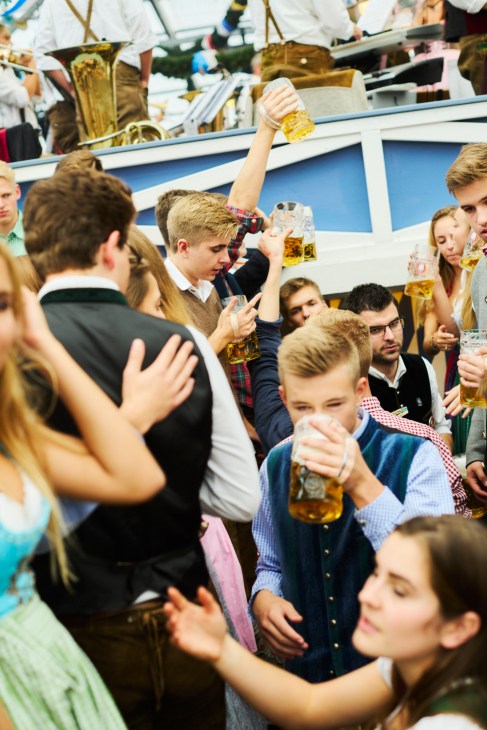
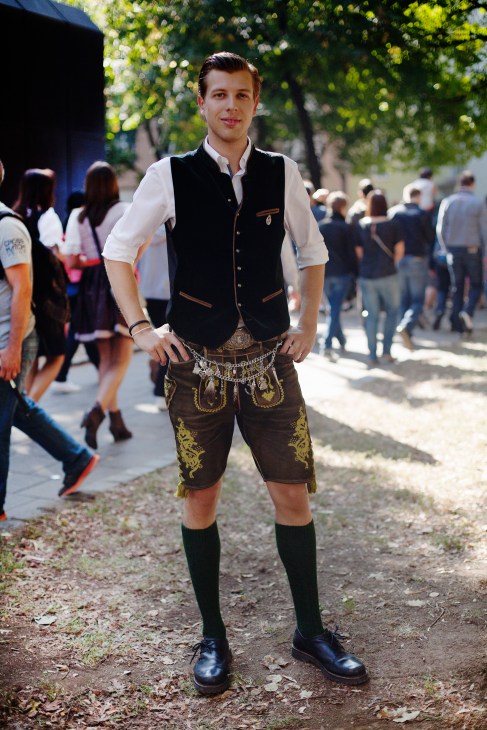
The first wave of lederhosen arrived in the 19th century, when the Bavarian royal family, the House of Wittelsbach, began to wear the garment in official portraiture. “When Bavaria became a kingdom in 1806, its rulers looked for local traditions to unite their diverse subjects,” says Simone Egger, a cultural anthropologist at Saarland University. “So, they set up Oktoberfest as Munich’s annual funfair. They also promoted leather pants, initially worn only by Alpine hunters and farmers.” The annual Oktoberfest in Munich occasionally featured a Trachtenumzug, a parade of traditional costumes. Since 1948, the event has run annually with about 9,000 participants, 250,000 spectators and one million viewers on live TV watching men and women in lederhosen and dirndl, the corresponding dress for women.
Today, lederhosen are promoted by the new kings in town: the players of Bayern Munich football club. This tradition began in 1979, after rival fans had taken to chanting, “Take the lederhosen off Bayern.” As a cheeky riposte, the Bayern players started appearing at their away games clad in the traditional attire. They began wearing lederhosen at trophy celebrations, team outings to Oktoberfest and when presenting new players at the club. “The message is attractive for anyone yearning for belonging,” says Egger. “Put on lederhosen and you become part of the team.”
Team building was on the Bavarian king Ludwig II’s mind when he supported the foundation of the first Trachtenverein, a club to promote regional costume, in 1883. Today there are about 900 such clubs with 180,000 members in Bavaria. “These members are like ambassadors who wear their lederhosen most days,” says Lechner. He is a member of his local Trachtenverein Brunnthal and owns four different lederhosen: one for work, two for festive occasions and a longer one for winter. Their durability is one reason why people are willing to pay €2,500 for a pair of Lederhosen Lechner’s handmade trousers. While it is possible to get cheap factory-made equivalents for €100, these are usually produced from chemically tanned goat leather in Sri Lanka, India or Pakistan. Lechner’s trousers, on the other hand, are made using European deer leather that is tanned in Bavaria in fish oil for months. “The most labour-intensive part is hand-stitching the embroideries with local motifs,” he says.
While regional pride has always defined lederhosen, the garment’s political message has changed significantly over time. When Bavaria lost its king after the First World War, lederhosen became a reactionary symbol of protest against the newly formed liberal Weimar Republic. The open-hearted revival of local costume started only after the Second World War. It was epitomised by the hostesses for Munich’s 1972 Summer Olympics, dressed in dirndl to welcome the world to Bavaria.
5.
Higher purpose
Agbada, buba and aso-oke
Nigeria
On a continent where Western powers have historically dictated everything from diet to dress, Nigeria has managed to maintain a strong individuality. “Nigeria is so comfortable in itself and its identity,” says Obida Obioha, a Lagos-based creative director and founder of Obida, a brand making clothes inspired by traditional designs. In fact, the country, Africa’s most populous, has been arguably the most successful on the continent at exporting its culture: from Nollywood movies to musicians Burna Boy and Fela Kuti.
But one art form that hasn’t yet been celebrated is fashion. While agbada suits and bubas used to be ubiquitous on the streets of Lagos and among the Nigerian diaspora, only recently have people begun to turn back to these garments. “In the 1980s and 1990s, people wanted to dress like in the West, wearing Ralph Lauren and Tommy Hilfiger,” says Obioha. There was this idea that if it’s from abroad, it’s nicer. Or at least, that used to be the case. “My generation is changing that.”
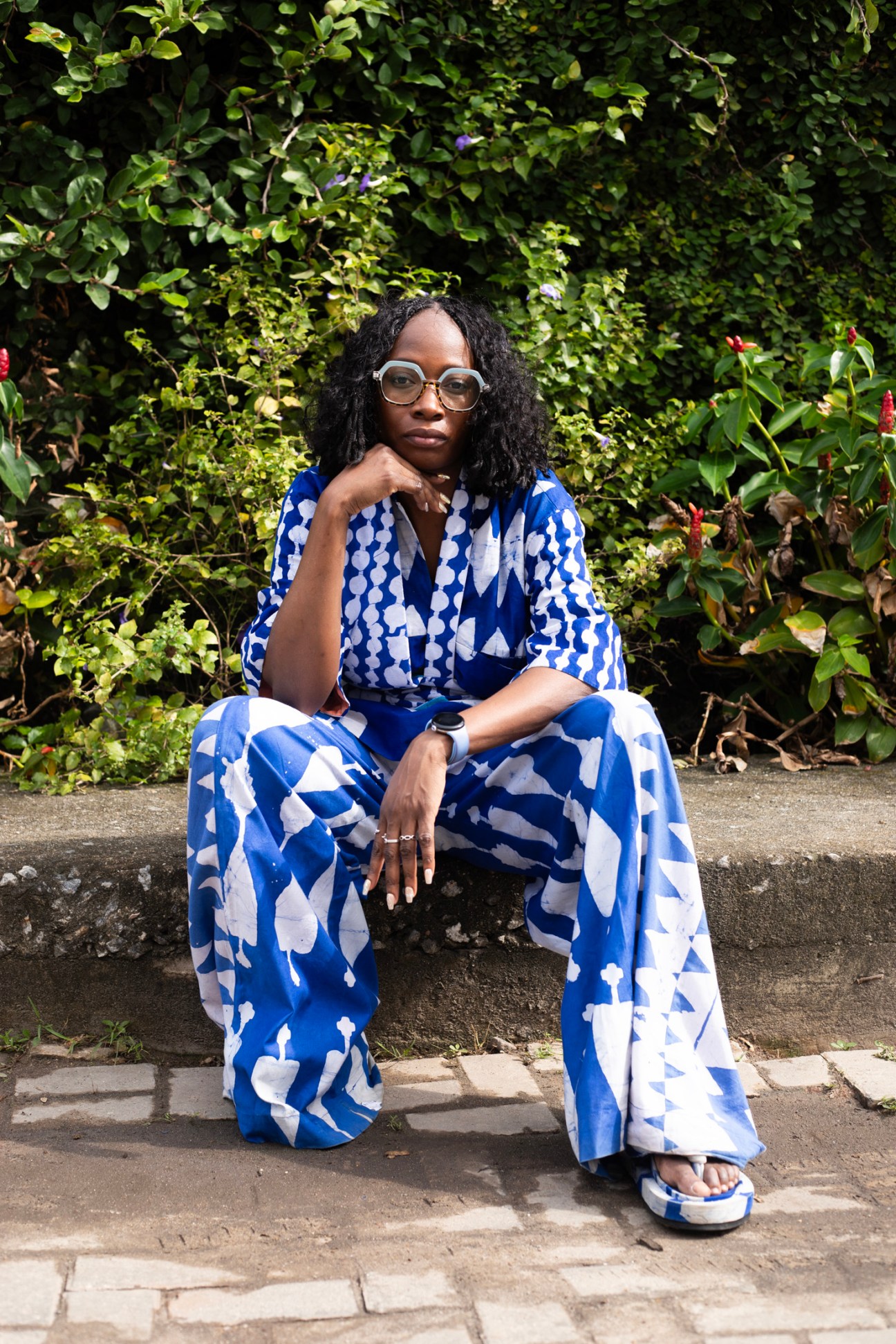
It was during the pandemic that designers and local brands began working with techniques and materials found on home soil. “Importing and exporting was slow, so we had no choice,” says Rukky Ladoja, founder of Dye Lab, a brand that makes hand-dyed garments. The textile du jour is aso-oke, a native cotton that was historically spun into elaborate outfits worn for events such as weddings. “The meaning of aso-oke is ‘higher clothing’,” says Ladoja. “It’s the king of clothing, designed for special occasions.” Though there’s never been a scarcity of aso-oke, the fact that it was reserved for parties or ceremonies meant items became less prominent, quickly losing relevance with younger generations. “Our parents would treasure aso-oke; it was something they inherited from their parents and became collector’s items,” says Seun Oduyale, a fashion entrepreneur and image consultant, whose family runs Bisbod Aso-Oke, which specialises in this native fabric.
Then, around 2020, more designers started incorporating aso-oke into everyday clothing, using a strip on a pocket or a lapel to add a flash of Nigerian colour. They also tweaked and contemporised the shapes of bubas and agbada suits, making them more casual and wearable. “Labels have looked to traditional attire and methods of making fashion and inserted their own spin on them,” says Obioha. Roomier cuts and cotton fabrics suit life in Lagos, especially during the summer when temperatures regularly hit 40c and the air is like a wet sponge. “We already wear loose garments,” says Ladoja. “The agbada is 100 per cent cotton, so it’s breathable. The style and shape are loose; you feel comfortable.”
They also feed into Nigerians’ love for boldness in personality and dress. “Aso-oke tells a story. People want to emote with their clothing,” says Oduyale. “We’ve gone from saving clothes for special days to looking good every day.” Wearing the printed bubas and agbadas is also a signal that you’re part of a crowd that’s in the know about emerging designers. Not only are many of these labels worn by Afrobeat stars but they carry a certain cachet. “Africa is rising and the spotlight is on us, from the music to food to art,” says Oduyale. “We are presenting our culture to the world as an enticing, marketable product and the world is loving it.”
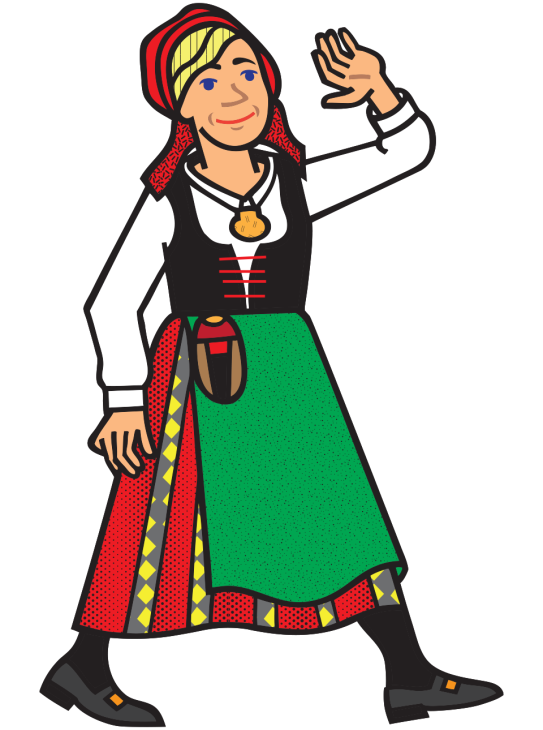
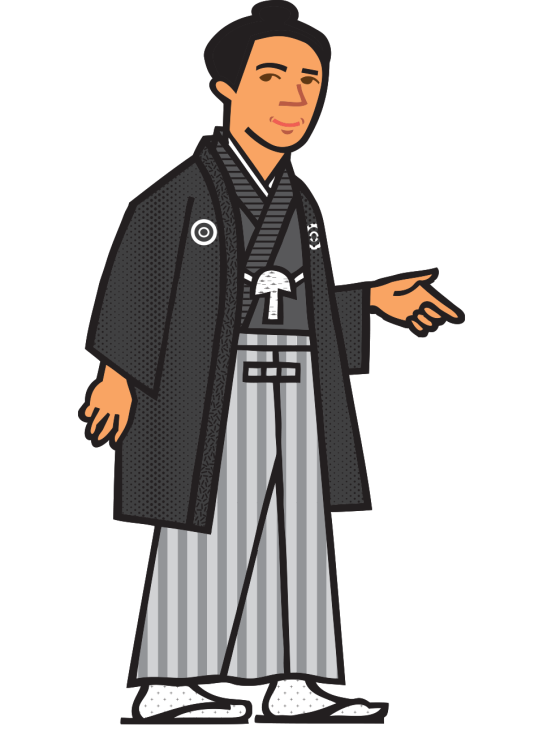
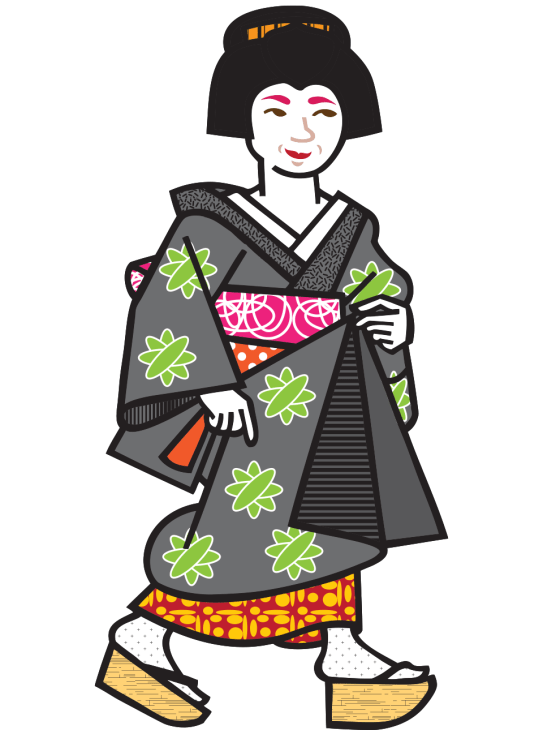
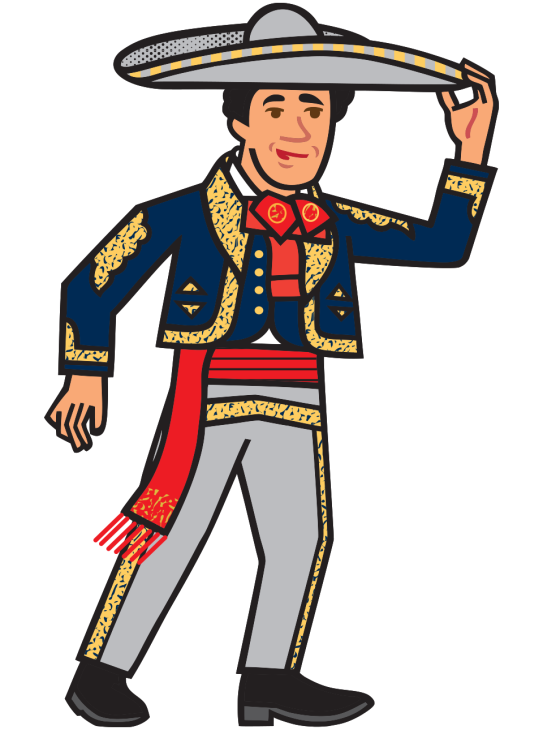
National dress differs across the globe depending on region, ethnicity, climate and more – but every nation has a story to tell through its traditional dress. It remains an important cultural tool, used to create a sense of belonging.
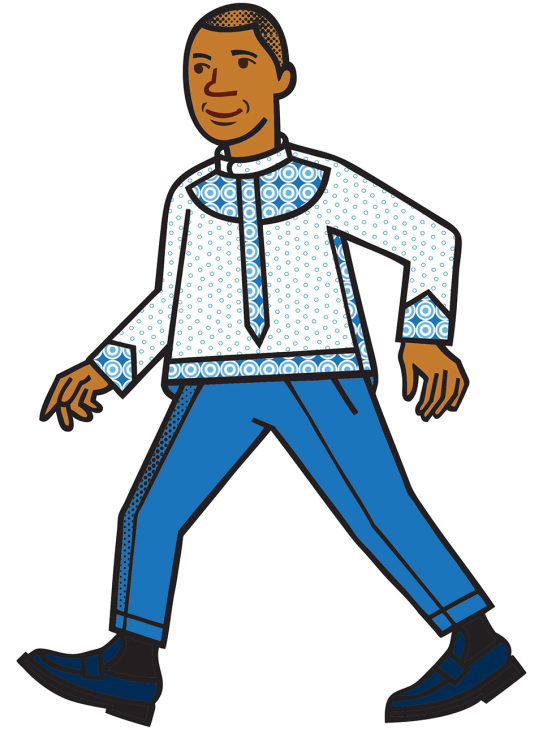
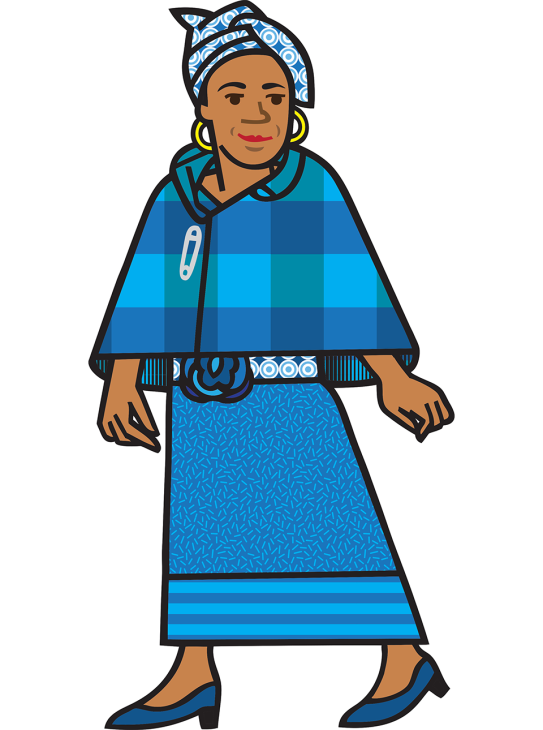
1.
Botswana
The most common fabric used in national dress in this southern African nation is leteise, a dyed cotton with geometric patterns. Women and men often wear a blanket of animal skin called a kaross.
2.
India
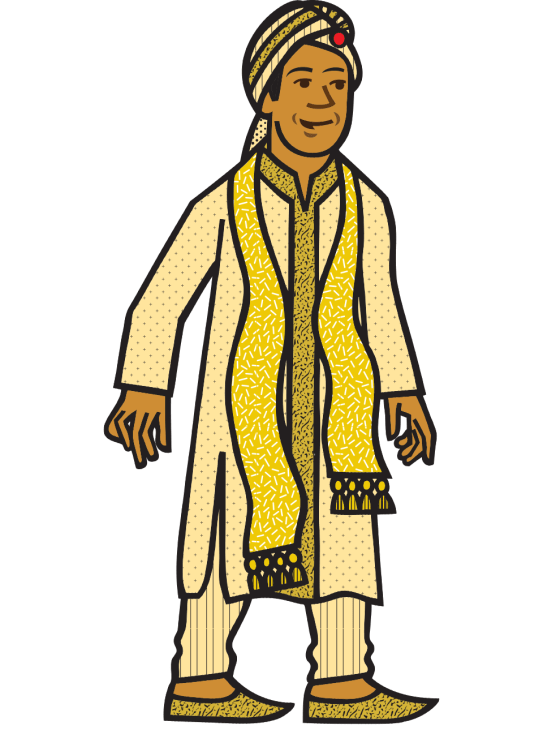
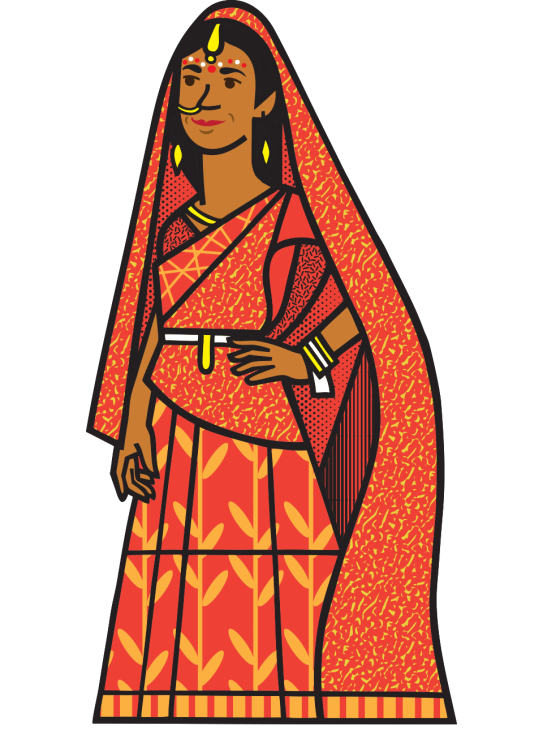
Traditional dress in India varies by region and climate and are part of daily life for many. The clothing – whether a saree for women or the dhoti garment for men – can be traced back thousands of years.
3.
Bolivia
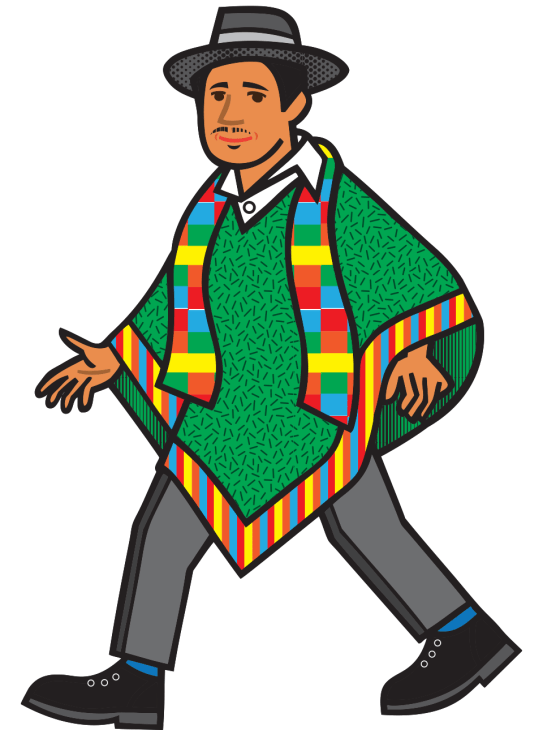
Bolivia’s Andean dress, worn by indigenous Aymara populations, was developed in the 16th century and includes ponchos for men and pollera skirts for women. The bombín (bowler hat) came via British railway workers and was clearly a hit.

4.
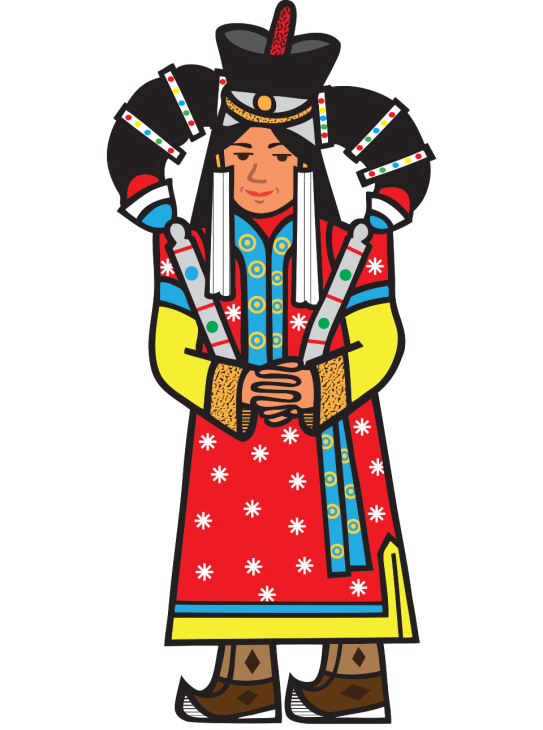
Mongolia
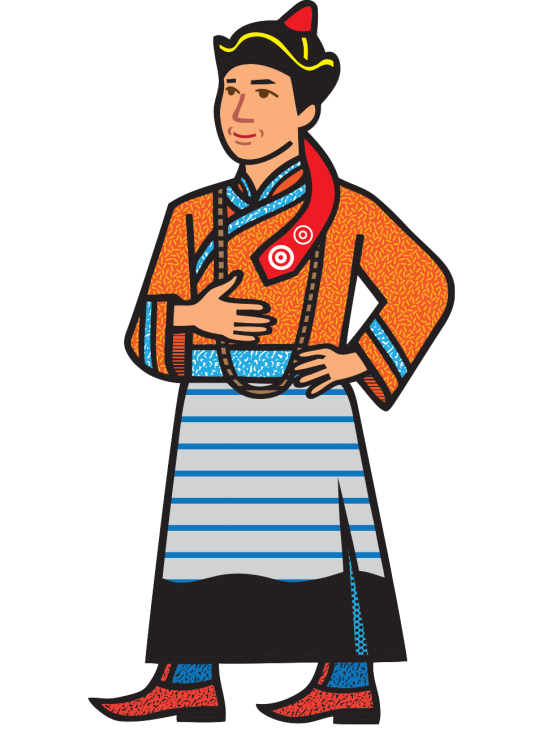
The deal with Mongolia is the deel, a kaftan-like garment accompanied by a sash, belt, hat and boots. Every ethnic group has its own style and there are 400 different types of hat.
5.
Argentina
There’s a focus on the mythical figure of the gaucho, a Southern Cone cowboy, and the paisana rural figure, both of whom gained prominence in the fight for independence from Spain. Also add in ponchos and bombacha trousers.


6.
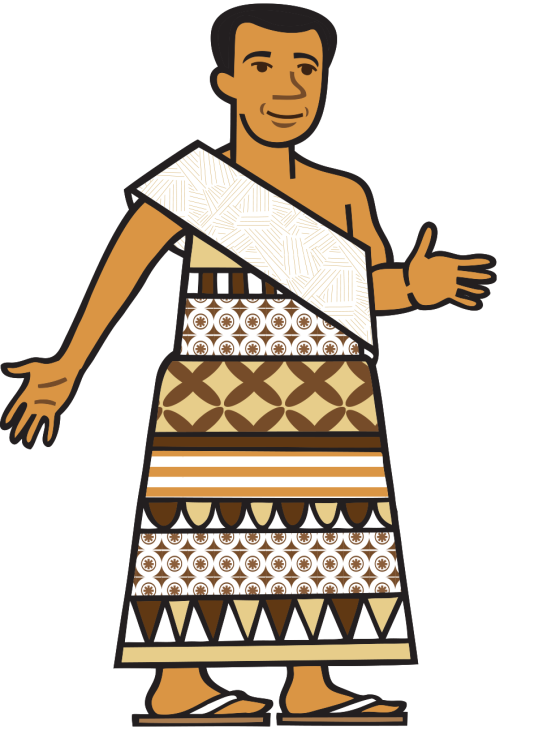
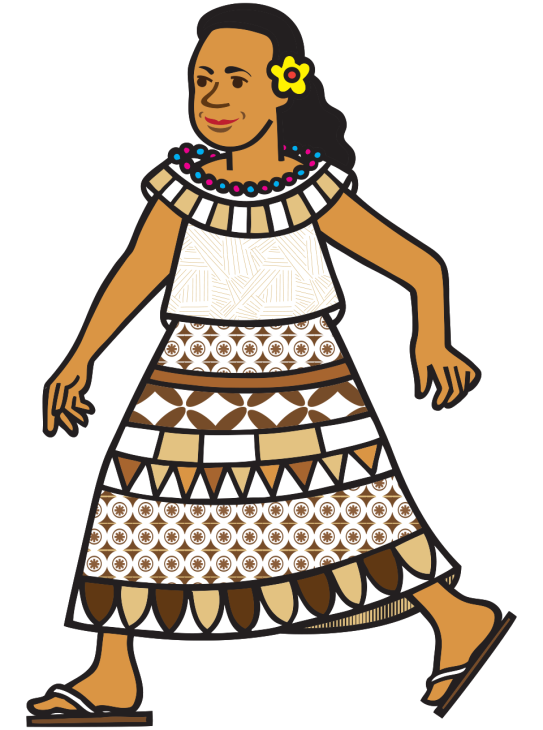
Fiji
The national dress for men and women here has been a kilt-like skirt known as a sulu since colonial times. The first examples were brought by missionaries from Tonga and originally signified a conversion to Christianity.
7.
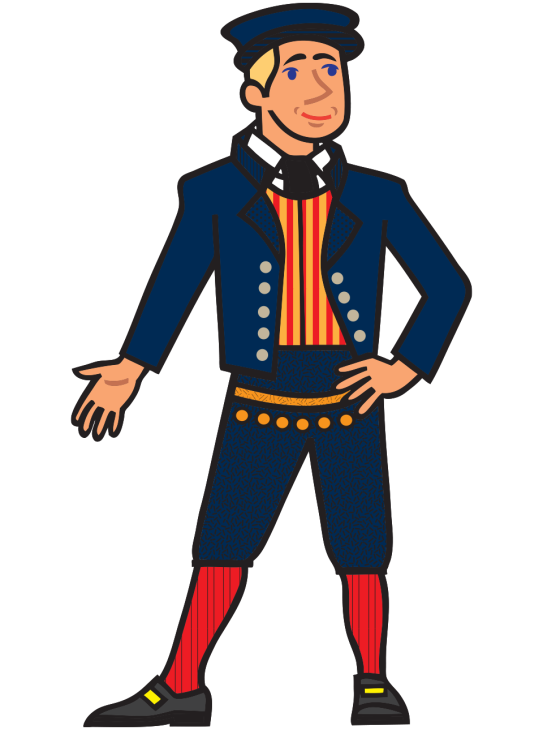
Finland
Based on everyday outfits from the late 17th and early 18th century. There was a revival in national dress from the 19th century but it wasn’t until 1979 that the National Costume Council of Finland was created.
8.
Japan
Now mostly worn for formal occasions, the kimono (literally “things to wear”) became the principal means of dress from the 16th century. It’s worn left side over the right and secured with a sash called an obi.
9.
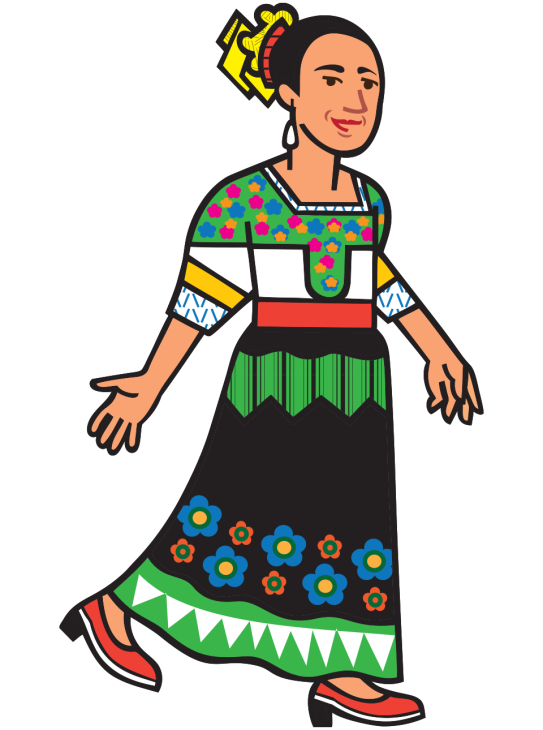
Mexico
Regions and ethnic groups affect the styles but a dominant form belongs to the charro, the Mexican horseman whose uniform worn at equestrian shows includes a wide hat, boots and an embroidered jacket.
10.
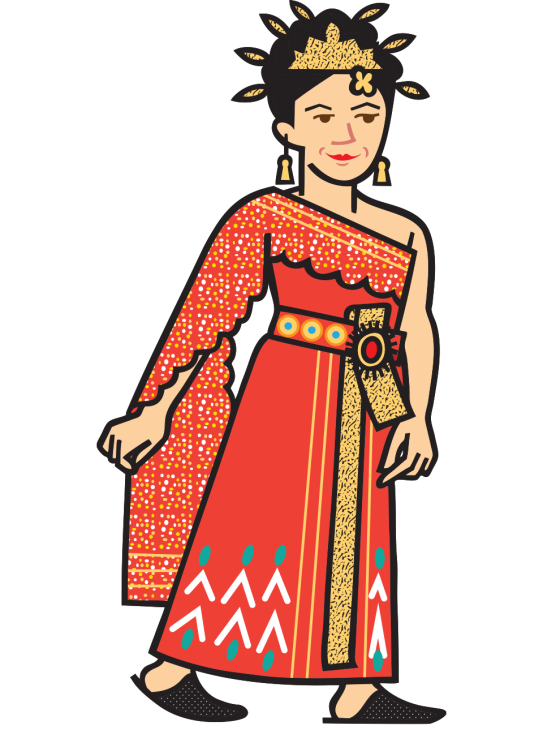
Thailand
Known as chud thai, Thai traditional dress was given impetus by Queen Sirikit in 1960 when she started to establish national costume for Thai ladies (there are eight types of dress).

11.
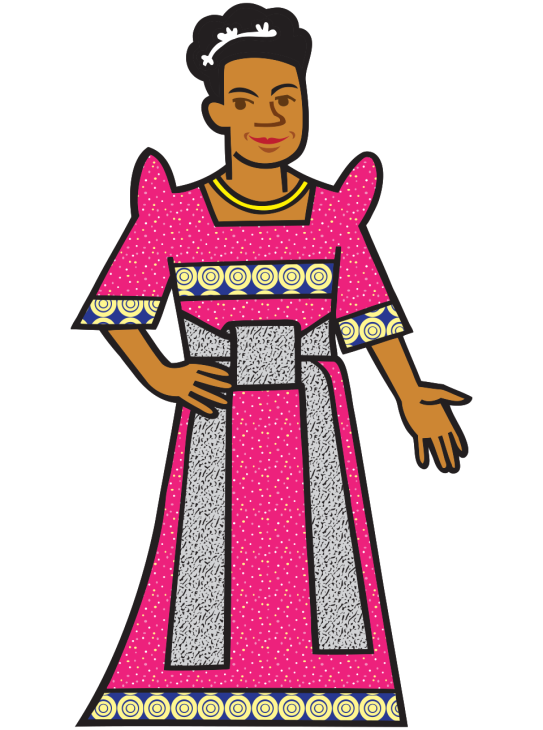
Uganda
Women’s colourful gomesi dress is said to have been developed as a high-school uniform in the first half of the 20th century, while men’s kanzu consists of a long, white tunic and jacket, first worn by Arab traders.

12.
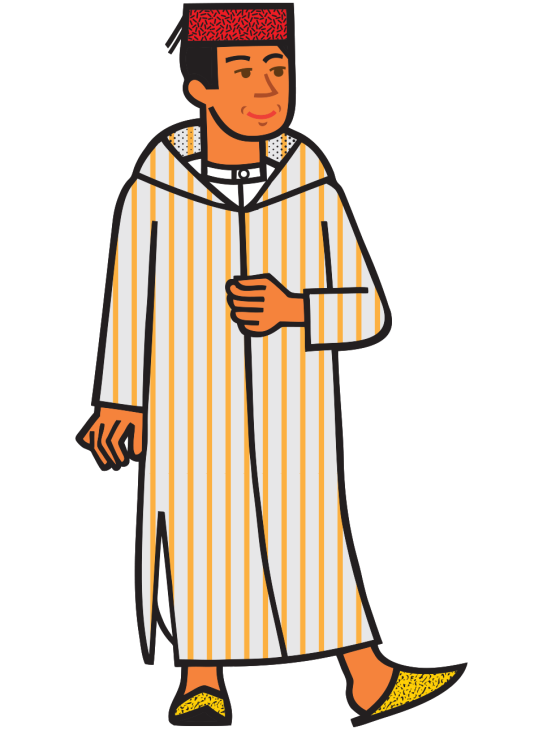
Morocco
Both sexes wear flowing garments, with men donning a hooded djellaba and women a kaftan. The design of kaftans varies depending on origin, with every area using different embroideries and jewellery. The male fez is thought to have Ottoman origins.

Vesuvius and beyond: Naples leads the way in volcanology education
“Today the volcano is quite calm,” says Paola Petrosino, as smoky wisps of water vapour seep from rocks behind her. “It’s in a phase of dormancy but it’s active.” We’re inside Vesuvius National Park, looking down at the crater created when Vesuvius last blew its top in 1944. Petrosino is speaking to her assembled group of students. Below us, Naples sprawls to the edge of the Tyrrhenian Sea.
Petrosino is a professor at the southern Italian city’s Università degli Studi di Napoli Federico II, an institution that dates back to the 13th century. The university recently launched a two-year master’s programme in volcanology, thought to be the world’s first degree of its kind.
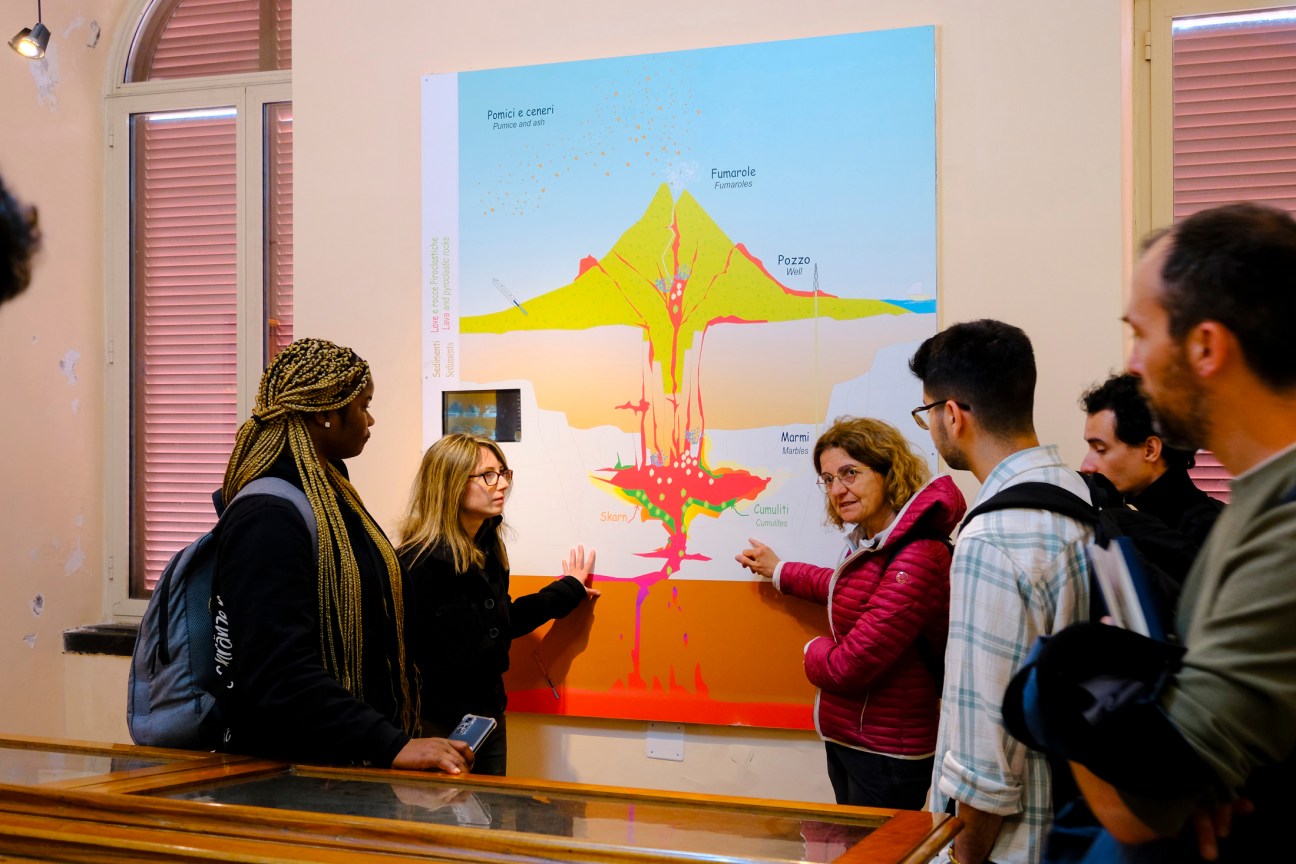
An intake of 15 mostly international students is being taught in English in a city that knows what it’s talking about when it comes to volcanoes. Alongside Vesuvius, across the bay is the volcanic island of Ischia. To our west, we can see an area stretching for more than 12km known as the Campi Flegrei, one of the planet’s most active calderas, the name given to basin-like volcanic depressions. With no visible cone at Flegrei, volcanologists are crucial to working out where the next eruption could come from – one that could consume the city of Naples.

The master’s course touches on everything from geophysics to geology and equips students with the tools to become expert volcano observers, thanks to teaching by researchers from the Vesuvius Observatory, known as ingv-ov, the world’s oldest monitoring station. The course has lured volcano enthusiasts from across the globe, from Rwanda to Iran.
Student Launcelot Deschamps picks up a rock and studies it with a pocket magnifying glass, identifying it as containing a mineral called clinopyroxene. Deschamps, who was raised on the volcanic French island of La Réunion in the Indian Ocean, says that Naples is a great place to be a young person. “After this, I would either like to do a doctorate or work at the Vesuvius Observatory,” he says.
There are other students who, like Deschamps, have grown up in volcanic landscapes, such as Carmen Cano from Tenerife. But not everyone is motivated by a personal connection to such landscapes. German Dorothea Jester was a civil servant before discovering a love for geology. Nigeria’s Ifeoma Aghaebita says that she got into volcanoes after watching documentaries. Rwandan Aline Azabayo says that it was a visit to Mount Nyiragongo, over the border in the drc, that inspired her.
After studying the park’s lava flows and lichen growth, we snake our way down Vesuvius to the minibus. The rest of the day involves visiting the old Vesuvius observatory, which was founded in 1841 and is now a museum, and a final stop at the current control centre, which monitors Naples’ three volcanoes, as well as Stromboli further south. Operating 24 hours a day all year and crammed with more than 35 screens, it’s a place where every student will do work experience in the second year of their course. Some might end up working here. “The Campi Flegrei is Europe’s most active caldera and in a densely populated area,” says Turkish student Yigit Ercan. “Given Naples’ trade and tourism, if there’s an eruption here, it will affect the whole world.” You know who to call.
The science behind Japan’s perfectly crafted vending machine drinks
From the top of Mount Fuji to the gates of the holiest shrines, it isn’t much of an exaggeration to say that vending machines are everywhere in Japan: at the last count, there were 2.64 million of them. They light up every street corner and station platform; there’s hardly an office or a public building without one standing sentry. Most service the country’s voracious thirst for beverages, particularly ready-to-drink coffee and tea. A vast industry has been built around the idea of developing hot and cold drinks that can be housed in a can or plastic bottle, dispensed from a machine and still satisfy the precise palate of the Japanese consumer.

Creating drinkable tea in a plastic bottle took years of research and development (Kirin won that race in 1986 with its Gogo no Kocha, or “Afternoon Tea”). When Suntory bought French drinks brand Orangina, its bulbous glass bottle was redesigned in plastic for its new life in a vending machine.
Seemingly unloved in other countries, these machines are as seasonal as traditional food menus in Japan and often switch from dispensing cold drinks to hot in the cooler months. There are regional variations too. A vending machine in Okinawa will offer chilled bottles of shikuwasa citrus squash and pineapple-flavoured Bireley’s that you won’t find in Tokyo.
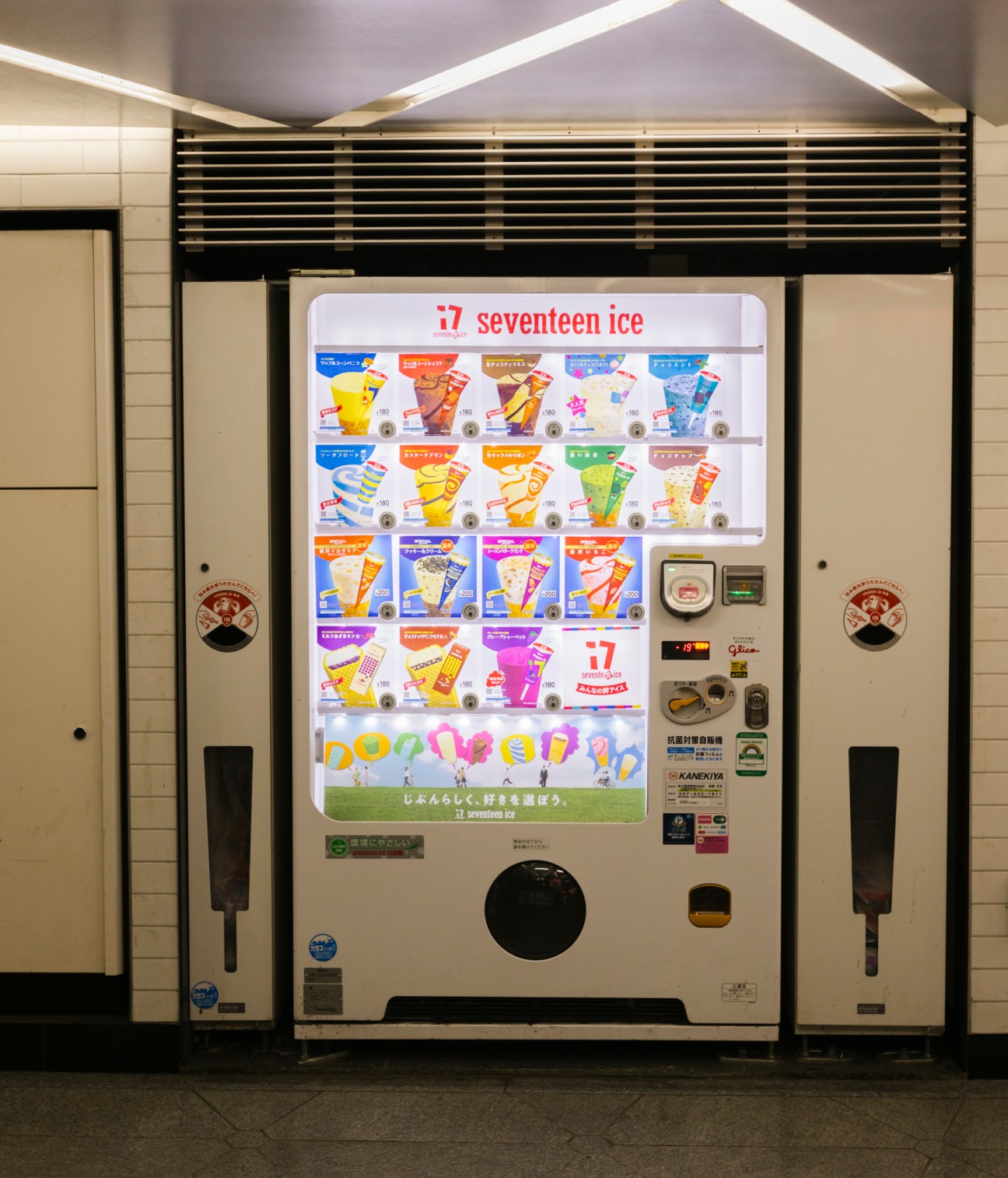
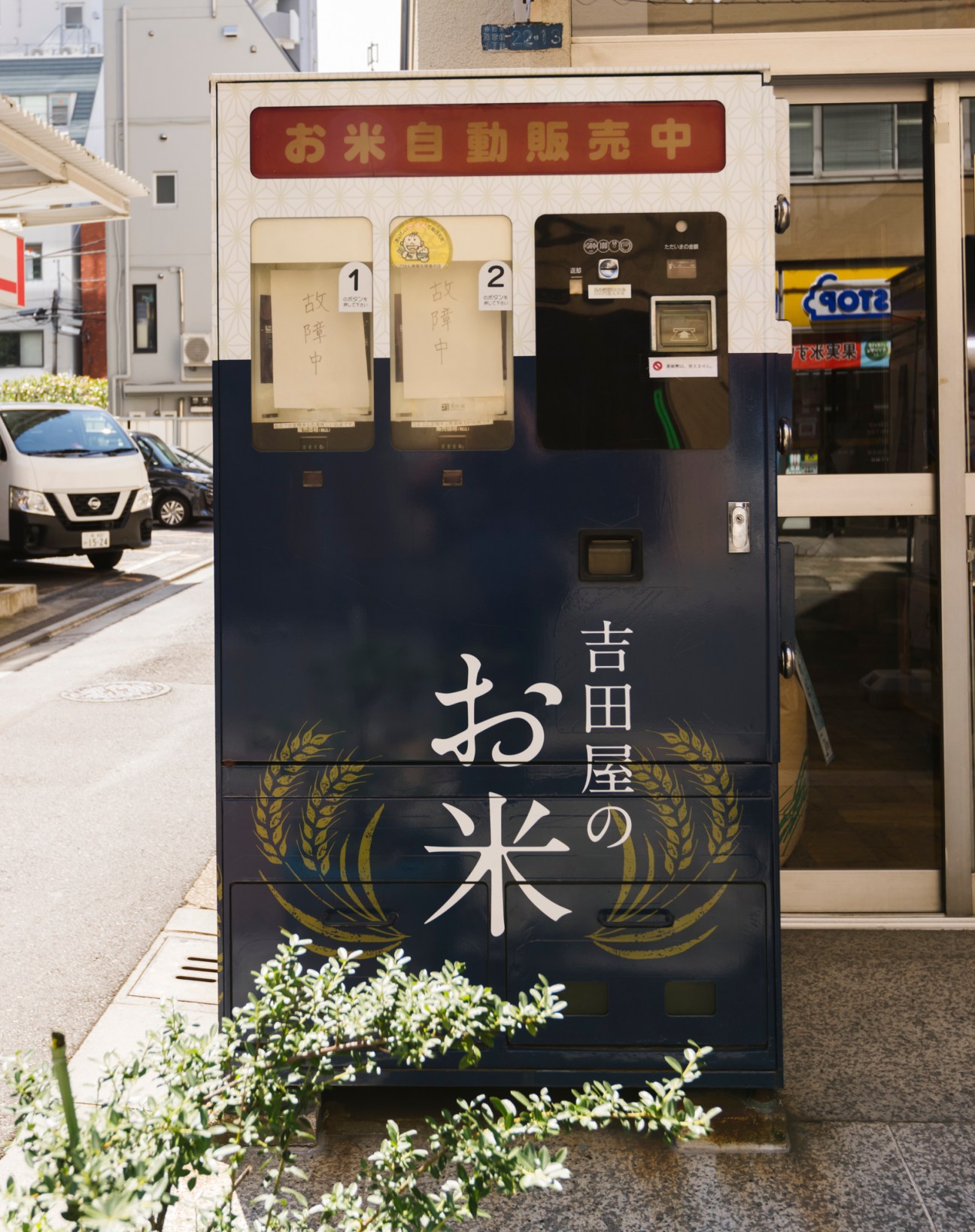
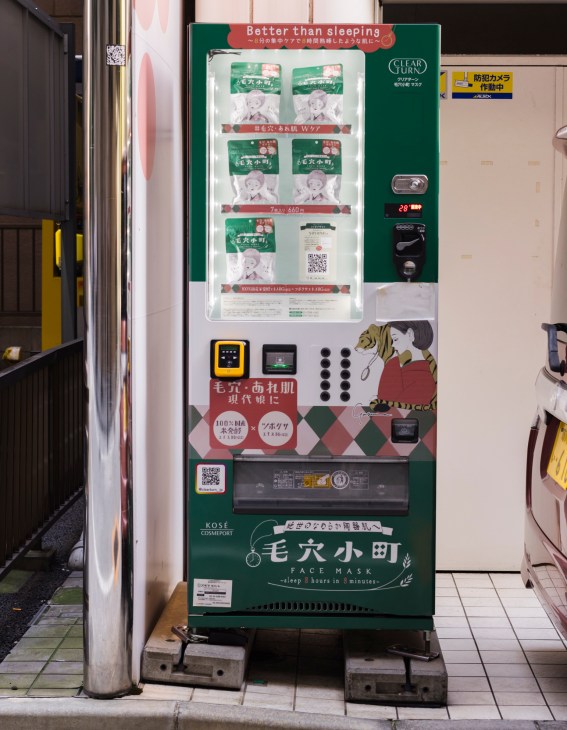
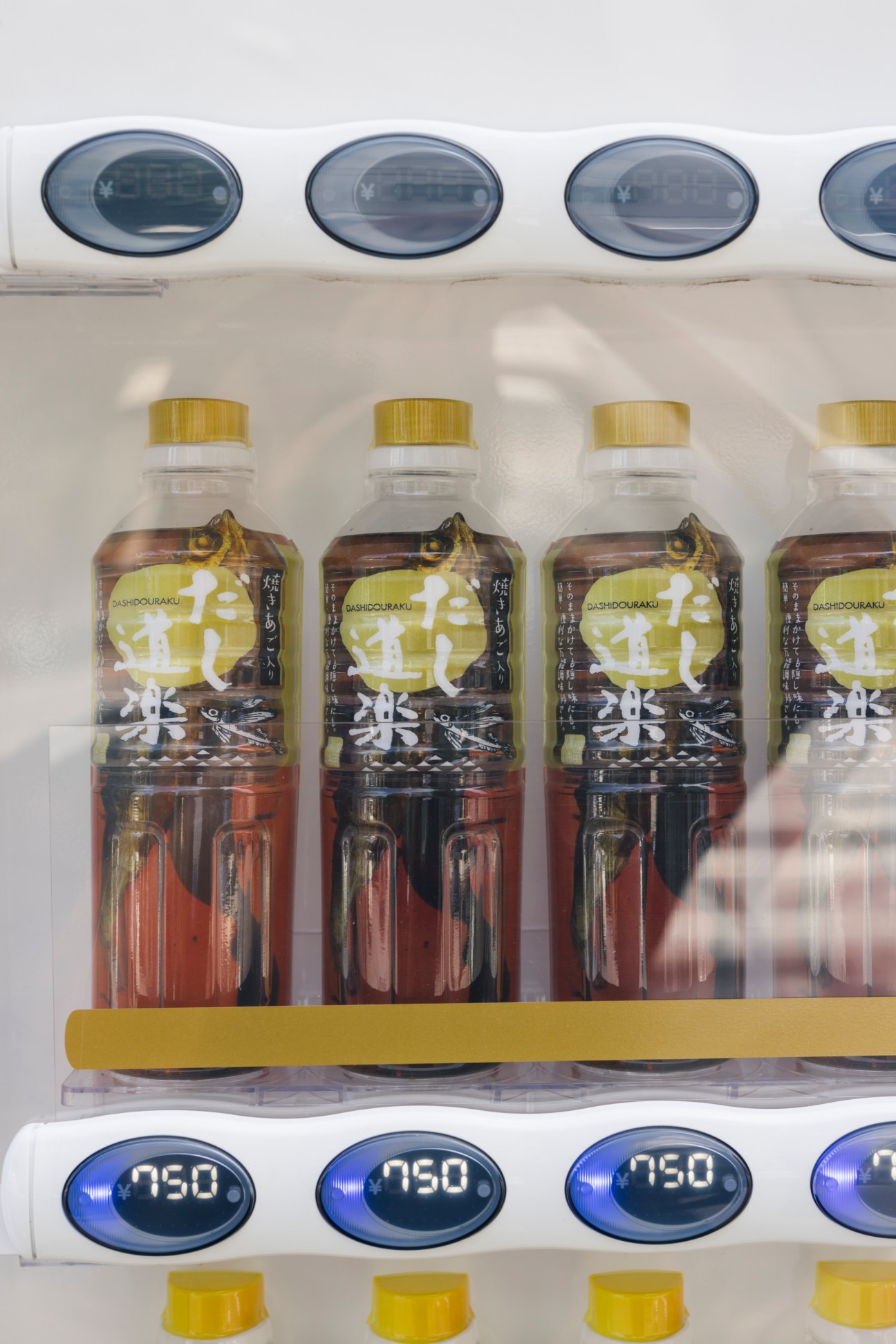
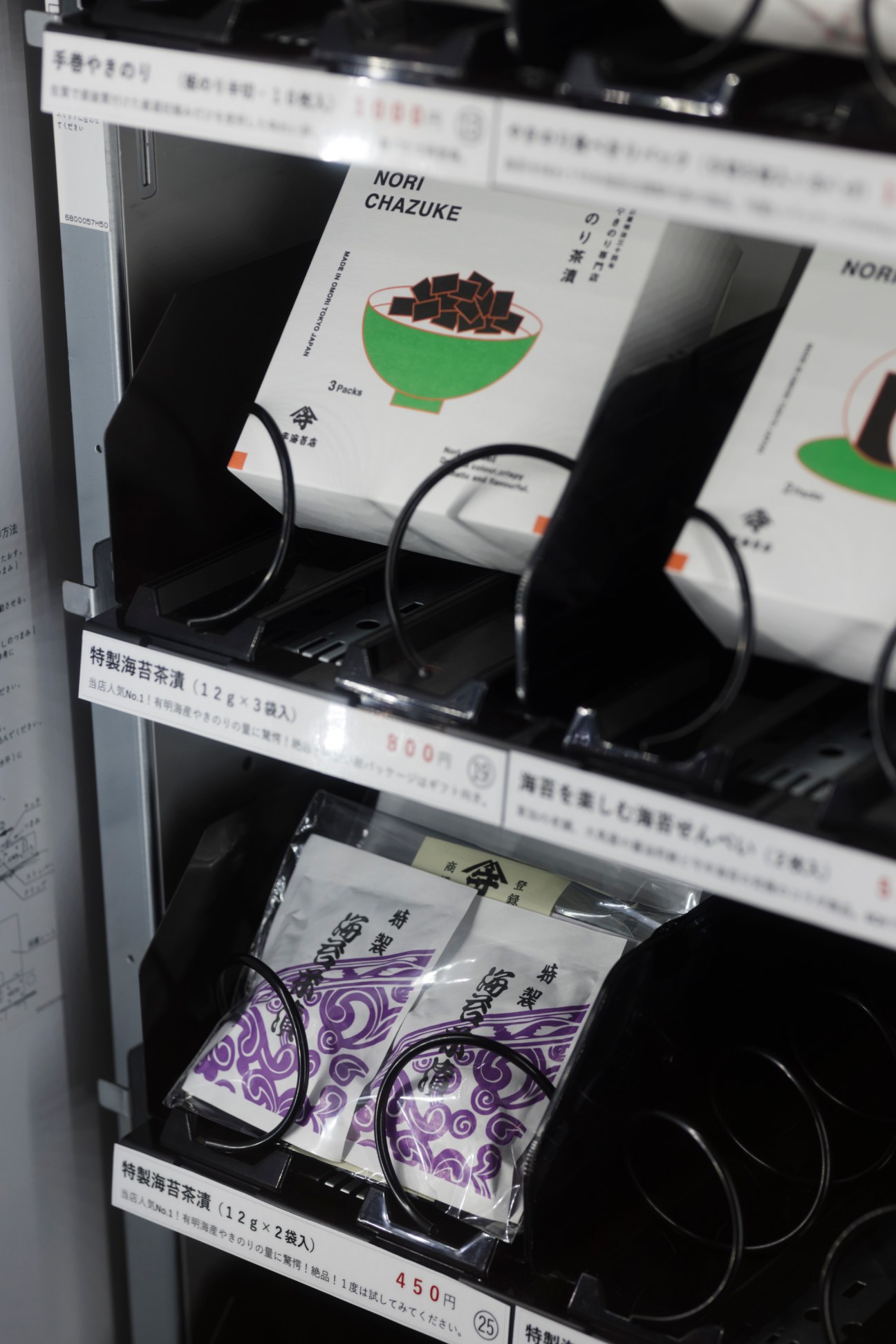
Japanese consumers crave novelty – a quick glance at one of these machines will reveal what is popular, whether that’s fat-busting health drinks or cold green teas that almost rival a fresh brew. Unsurprisingly, vending machines have also moved far beyond just drinks: ice cream (Seventeen Ice is the classic in that genre), frozen food, bags of rice, hangover cures and clean underwear are just some of the array of products on offer. Of course, it helps that the machines aren’t troubled by vandals in low-crime Japan.
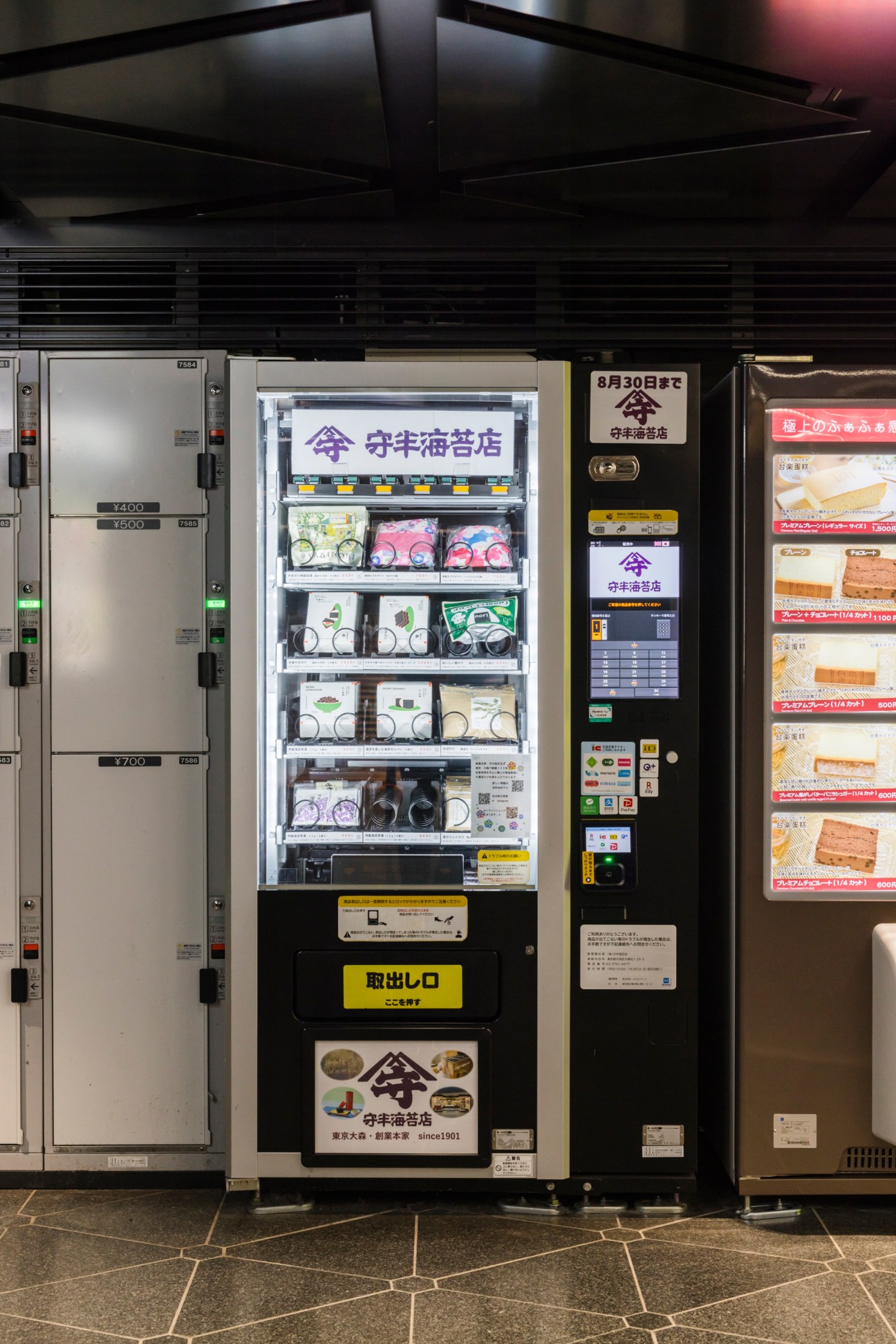
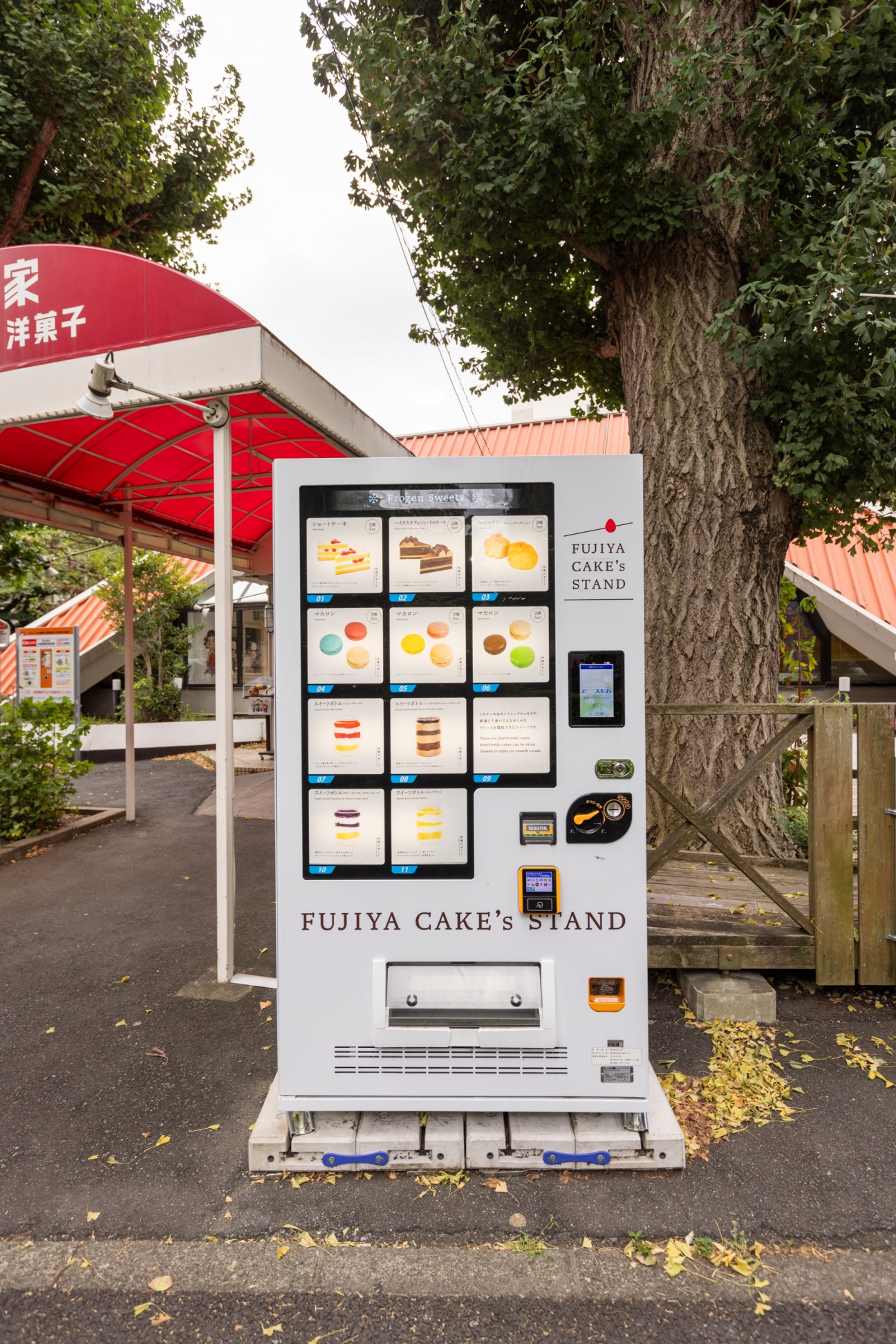
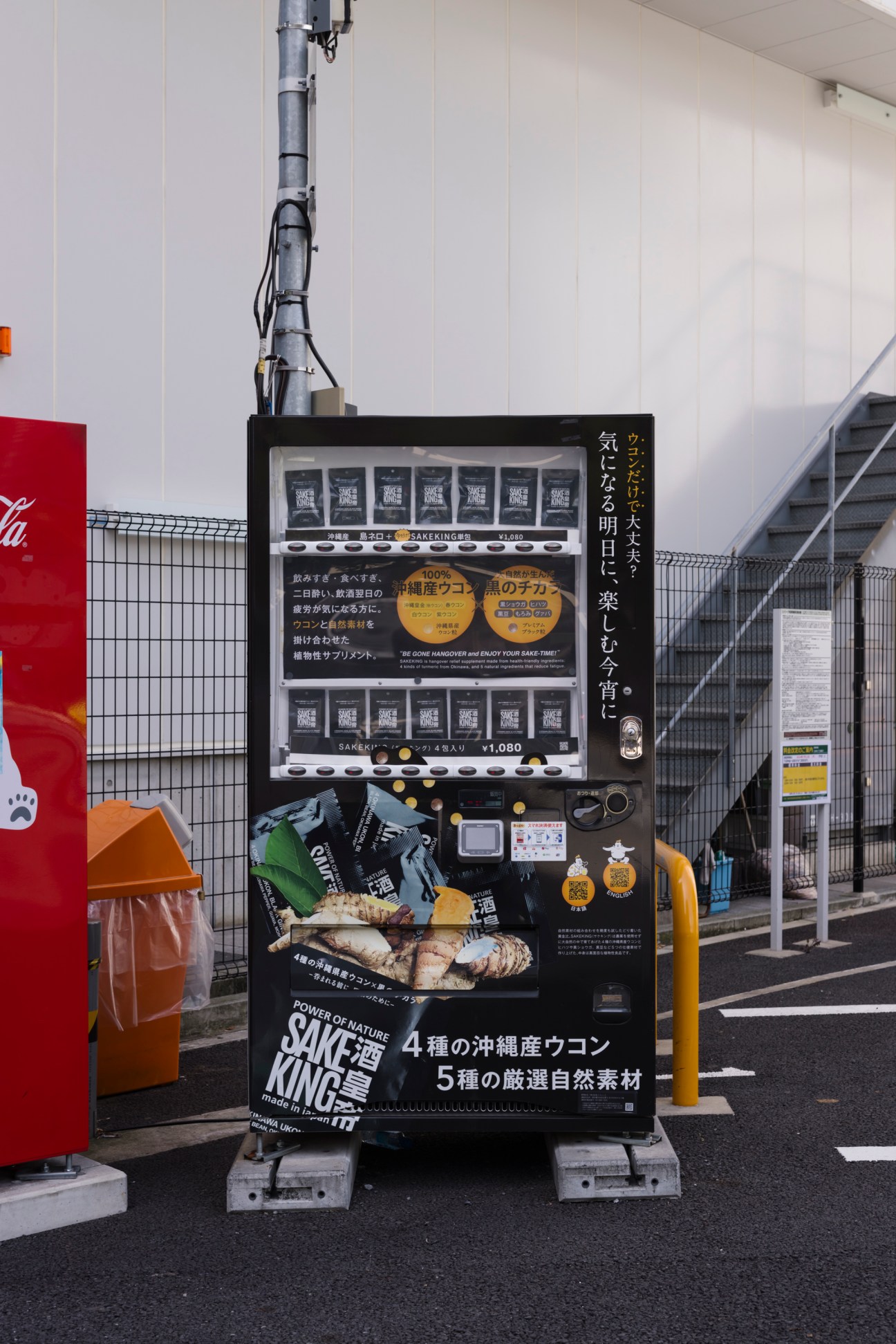
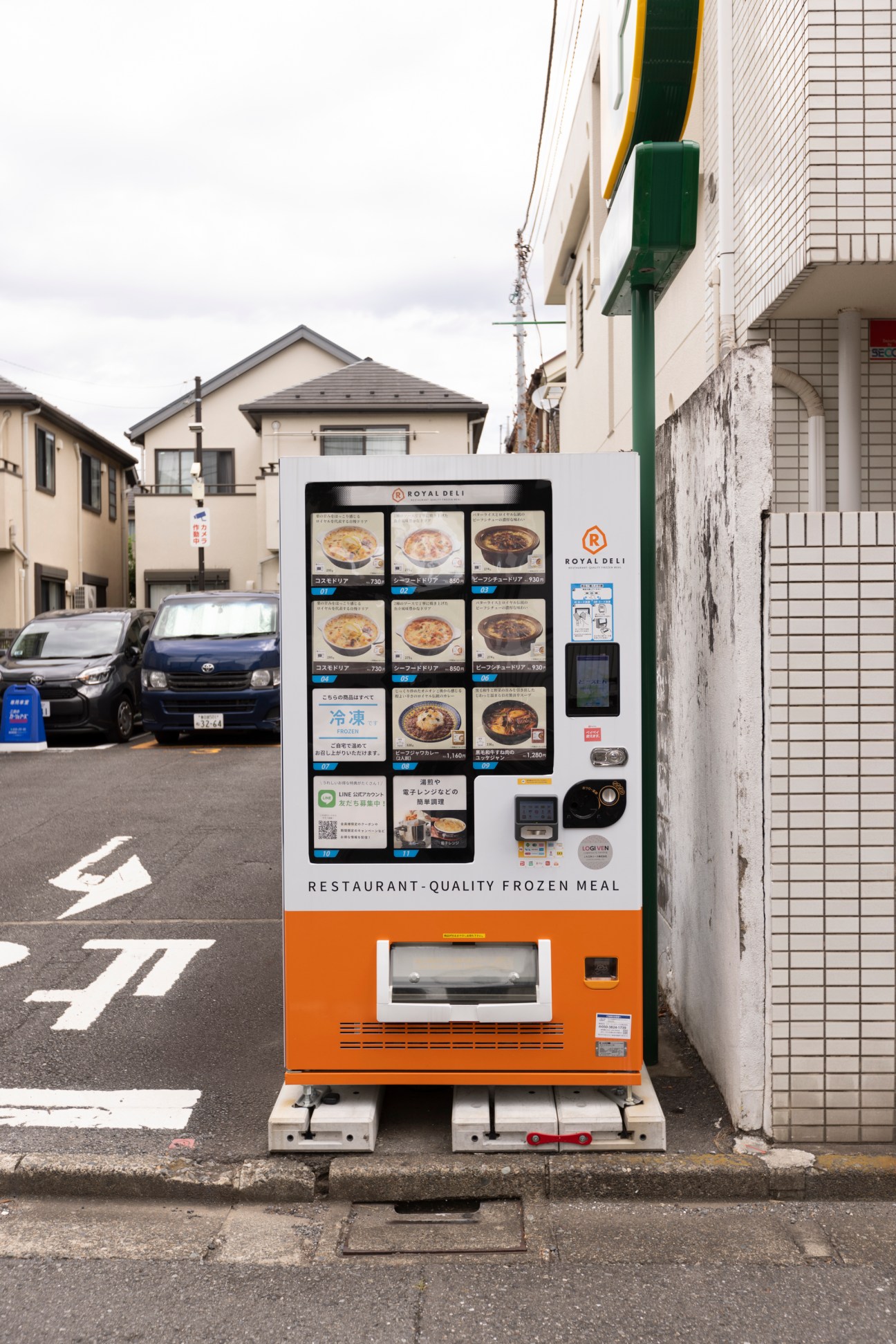
Innovation in the technology has been slow but steady. The energy-saving period (setsuden) that followed the tsunami and nuclear meltdown in Fukushima in 2011 pushed developers to create more sustainable versions. Asahi Beverages recently developed a machine that absorbs carbon dioxide and artificial intelligence is having its own impact – one coffee machine now determines which beans to use based, apparently, on the customer’s preferences.
Crucially, vending machines also double as mini-billboards for brands and are likely to be festooned with the latest campaigns. Tea company Ito En has hired the services of baseball player Shohei Ohtani, Japan’s biggest sports star, to bolster its market-leading bottled green tea, Oi Ocha. Perhaps peak vending machine has been reached in Akihabara, Tokyo’s electronics and anime district, where you will find a machine that sells cans of air for ¥500 (€3). Rarefied air, indeed.
Read next: The Monocle City Guide to Tokyo, featuring the best hotels, restaurants and retail spots in the Japanese capital