Issues
Il Delfino offers a taste of the Mediterranean on Australia’s muted east coast
In the sleepy coastal town of Yamba on Australia’s east coast, a three-hour drive from Brisbane, you’ll find Il Delfino, an inn with sweeping ocean views. The name, which means “dolphin” in Italian, is inspired by the pods that are often visible from the hotel’s sun terrace. Built in 1948, the building is one of the oldest original structures left on Yamba’s oceanfront. It comprises five guest rooms (including one bungalow) and was previously a complex of holiday apartments.

Il Delfino’s founder, Sheree Commerford, is a local and one of about 6,400 people who call the town home. She had long romanticised the property and dreamed of turning it into something that would show the area’s charms to new arrivals. While celebrating a birthday there, she decided to take the reins and revive it.
“It might sound cheesy but I wanted the feeling of this place to be a permanent part of my life,” says Commerford, a fashion stylist, designer and founder of creative agency Canvs Bottega. “It’s one of those times when the reasons why you left home end up being the reasons why you return.”

She began renovations in 2021. “I grew up on a sugar-cane farm outside Yamba,” she tells Monocle. “Our family has been cane farmers for three generations and there’s something deeply grounding and special about that connection to a place through time.”
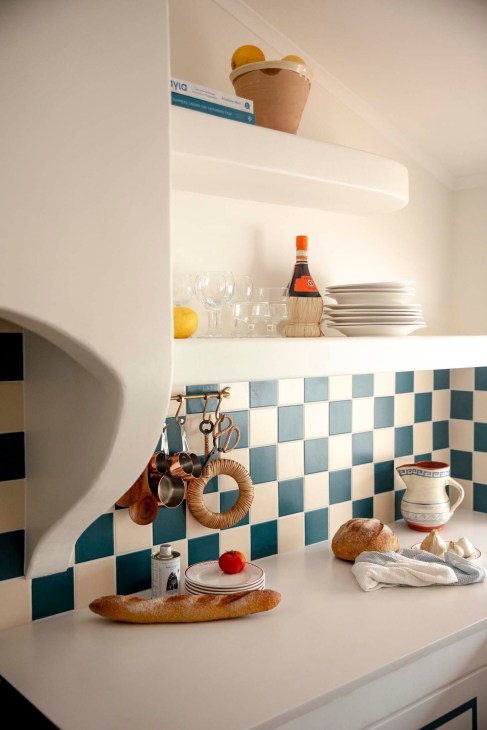
Today most of the building’s original architecture and features remain intact, including large picture windows and glass doors overlooking the Pacific. Tiles and signage by ceramic artist Elise Eales of Di Lunedi accent the spaces. “I had seen Elise’s work and knew that she had to be part of the project,” says Commerford. “Our collaboration grew to include tiles, signage and even her illustrations on the website.”

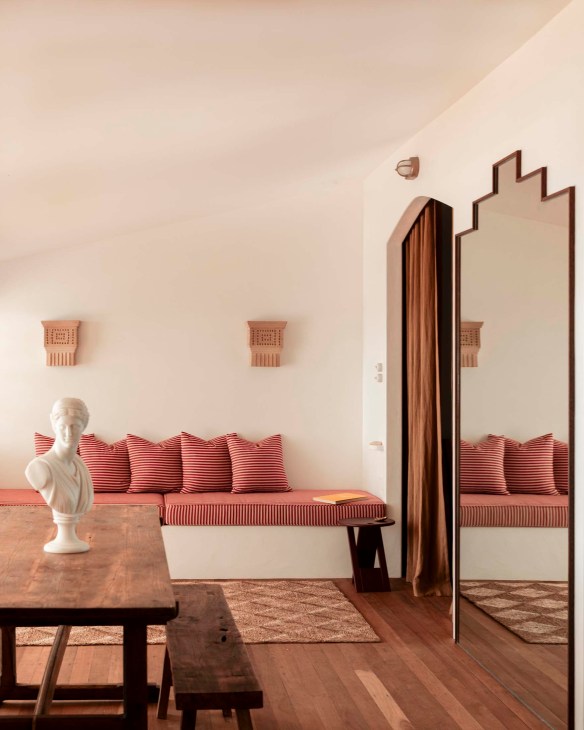
Each of the guest rooms bears the name of an Italian town or region: Cinque Terre, Ischia, Portofino, Scopello and Ravello. The Mediterranean-inspired interiors are by Commerford herself. Every room includes a kitchen and features a mural by artist-in-residence Heidi Middleton.
“As a child, I used to dream of living in the town rather than on the farm,” says Commerford, wistfully. “My love for the town started then.” ildelfino.com.au

A Finnish escape with French flair at Billnäs Gård
Billnäs Gård, a six-room boutique hotel, is a repurposed 1912 manor in a quaint village an hour’s drive from Helsinki. The villa’s white columns and mansard roof lend it a stately, even Mediterranean look that is accentuated by the rectangular saltwater pool and manicured garden beyond. Perched on the Svartå river and enveloped by vast ancient oaks, it has all the hallmarks of the Franco-Finnish couple who run it.
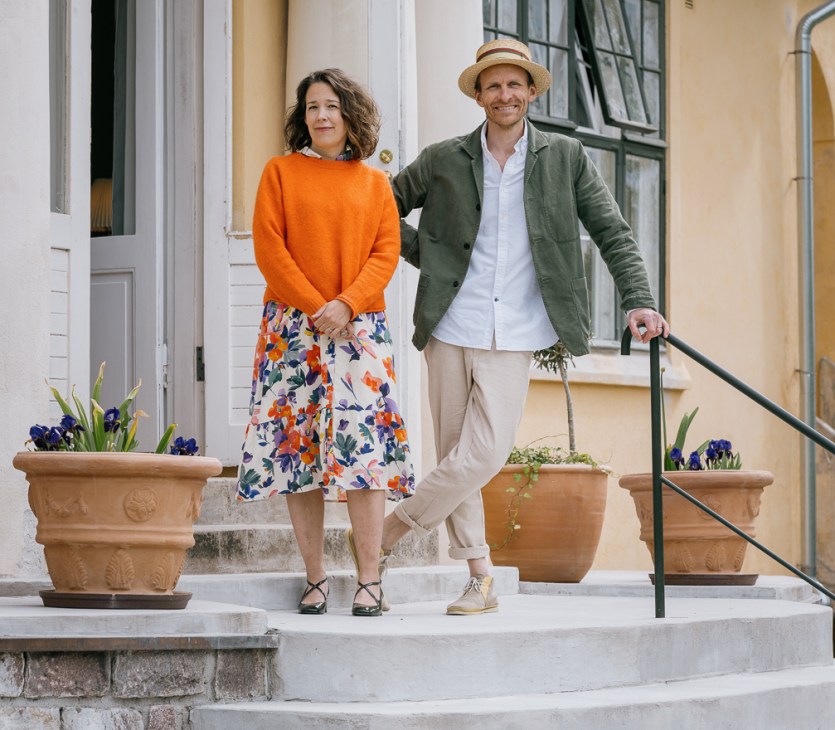
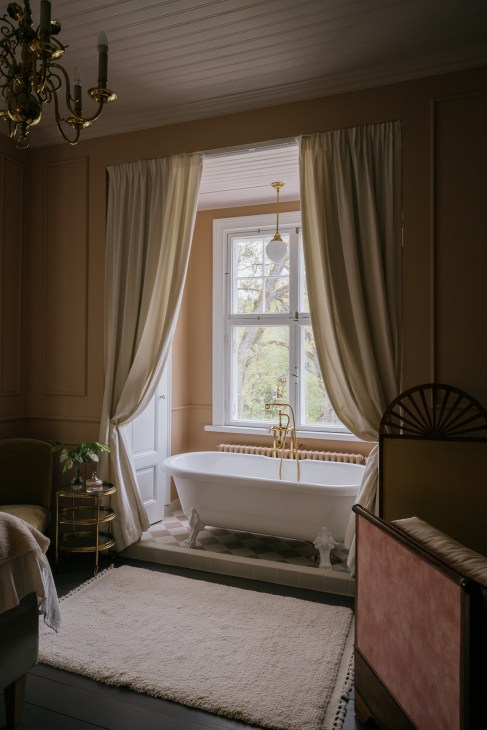
Taina Snellman-Langenskiöld worked for design brands such as Artek and Tikau, while her partner Chris Langenskiöld is an entrepreneur. “We believe that surrounding yourself with beauty helps you feel better,” says Snellman-Langenskiöld, who is responsible for the hotel’s interiors, as she leads Monocle around the restored two-storey building. As she talks, she runs her hand over the wool, wood and rattan that define the palette. The colour and material choices are different in each room, as well as in the common areas, and the natural patina makes the space feel lived in. “I chose materials and colours befitting the historic building,” she says. “Opting for vintage design is both sustainable and practical – they used better materials before and this helps us keep this place running.”

Billnäs village is the site of a historic ironworks, founded in 1641, which is now operated by Fiskars (which makes its famous orange-handle scissors here). After centuries of manufacturing, the area is also home to a community of artisans, artists and farmers who Billnäs Gård works with to offer art and craft workshops, as well as to supply the villa’s restaurant, which relies on local produce to craft its French-Finnish seasonal menu. “We also grow our own vegetables and forage for wild herbs and berries in the forest,” says Snellman-Langenskiöld.
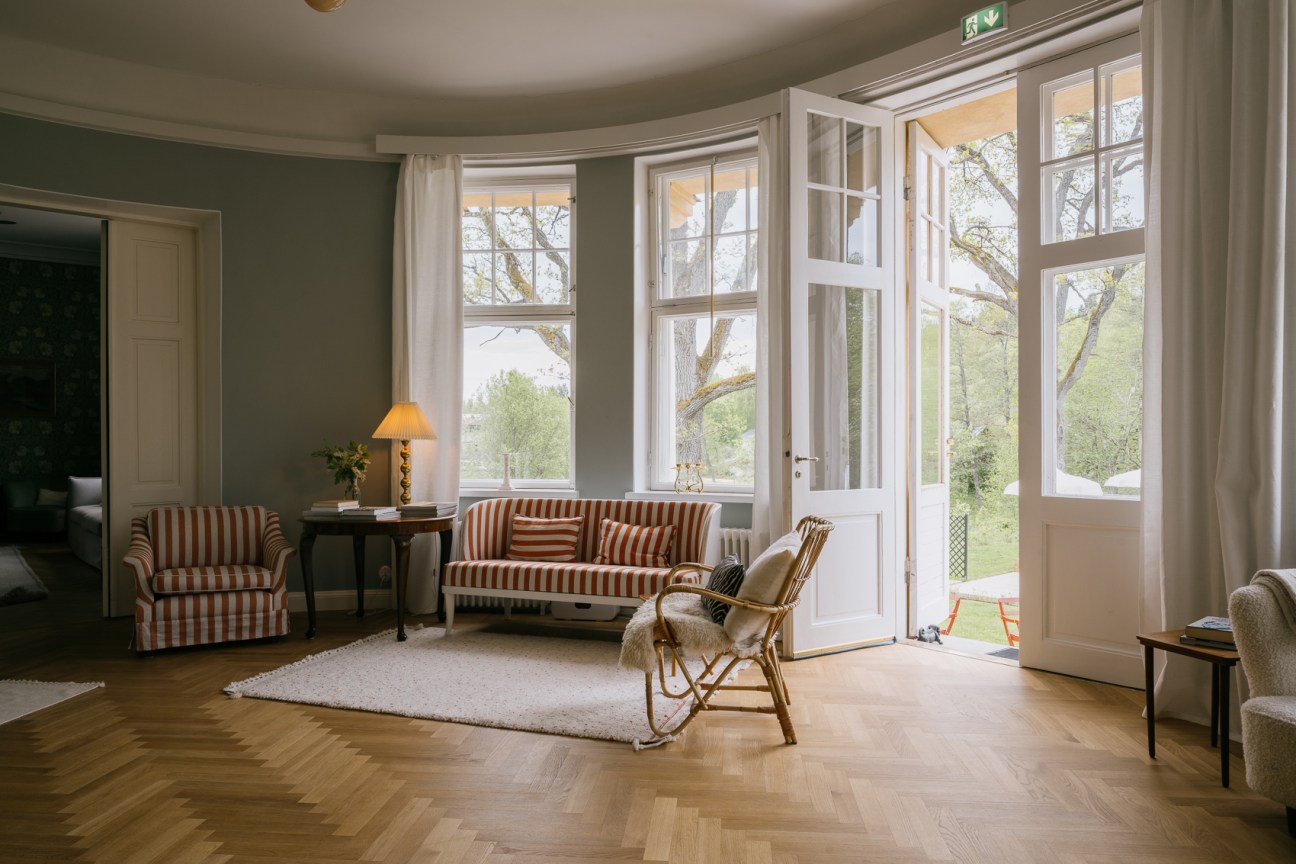

The villa’s cellar has been converted into a sauna and spa; its low ceilings and exposed brick walls imbue it with a monastery-like ambiance. The hotel also offers a programme of yoga retreats, nature walks, stargazing and communal dining. “We all need to slow down and take a step back every once in a while,” says Langenskiöld. “Everything about this place – its design and elegance, the pure air and the untouched nature – helps you do just that.” billnasgard.fi
A new wave of restaurants bringing bold flavours to London, Rome, LA and Mexico City
Oma
London

Barbadian chef David Carter travelled around Greece in preparation for the launch of Oma in Borough Market. The menu, created by Ecuadorian chef Jorge Paredes (previously of Sabor in Mayfair), offers a rich, culinary fusion that braids flavours and textures from the Levant. Dishes start with a bedrock of oregano, salt, lemon and olive oil. Try the zesty Peruvian ceviche, creamy lobster bourek from Tel Aviv and yellowfin tuna in clementine ponzu. There are also pillowy açma bagels that the chef originally came across in Istanbul, spanakopita gratin and labneh with salted cod, shallots and chilli oil from Aleppo. “At Oma, each dish arrives at the restaurant in its raw form: bread comes as flour and pasta as egg yolks.” It’s a creative take on Greek gastronomy, which shows that the nation’s culinary repertoire extends far beyond its balmy Mediterranean shores.
oma.london
Ninù
Rome
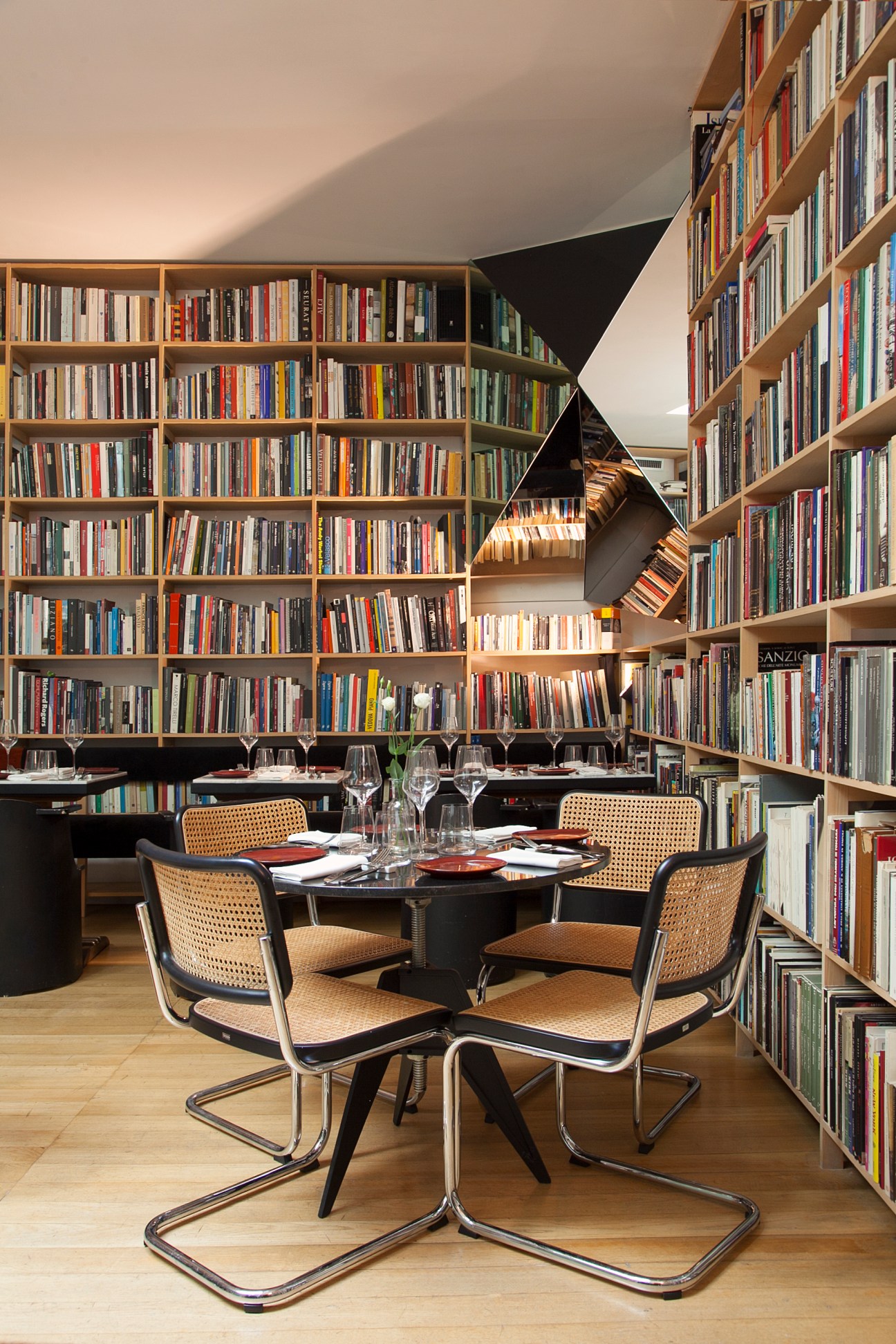
Italian interior designer and architect Alessandra Marino has made her Roman residence a restaurant and a cocktail bar with rooms. Precious furniture nestles by a floor-to-ceiling library, alongside pieces by the likes of Eindhoven-based studio Paul Heijnen. Chef Marco Gallotta has created a menu focused on Mediterranean flavours, with a particular emphasis on seafood delicacies. Should you have one too many glasses, guests can bed down in one of Ninù’s three suites.
ninuroma.com
Café Telegrama
Los Angeles
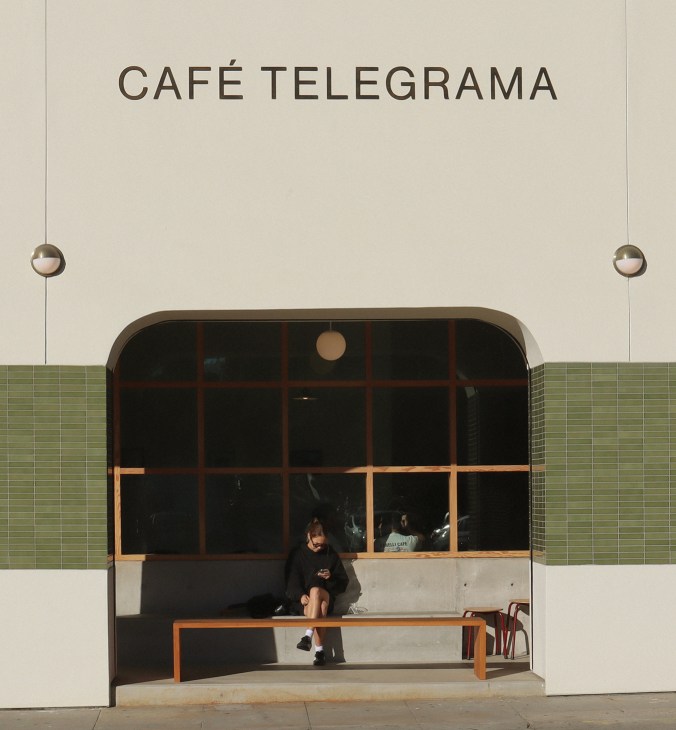

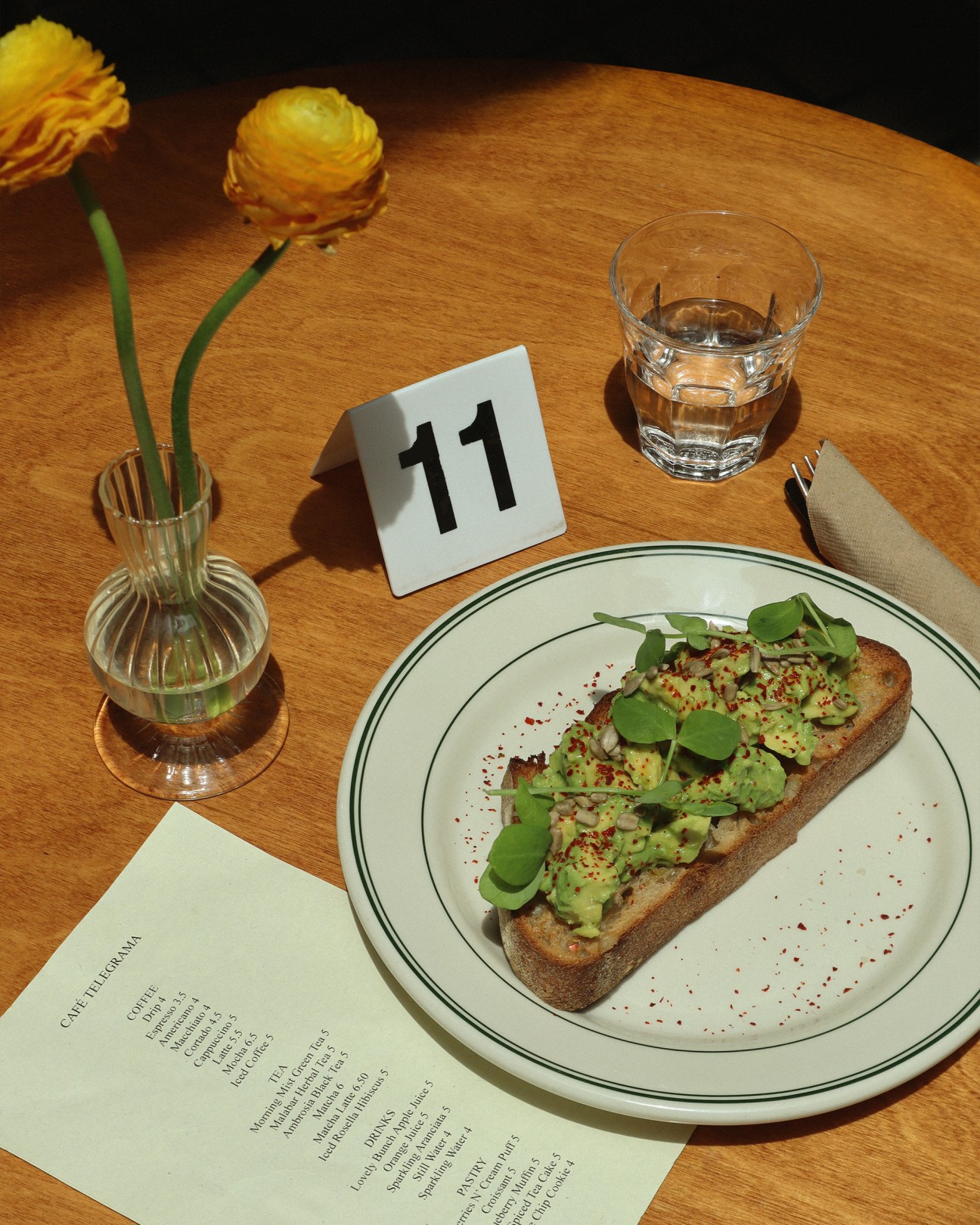
LA’s once sleepy Melrose Hill neighbourhood is now alive with new businesses, cafés, restaurants and museums. Artist and designer John Zabawa has added a European stamp in the form of Café Telegrama (he’s also behind nearby Italian, Ètra). “The design centres on the tables of Parisian cafés, Italian ceramics and flavourful coffee profiles,” Zabawa says, “as well as Denmark’s use of interior architecture crafted with natural elements.” And the restaurant’s name and aim? “I like that telegrams are used to communicate with friends and family from afar.”
The menu runs from breakfast staples such as ricotta toast with stracciatella and stewed cherries or delicious savoury salads (panzanella is best). The ham and cheese sandwich with prosciutto cotto, gruyère and dijon mustard is a must.
cafetelegrama.com
El Minutito
Mexico City

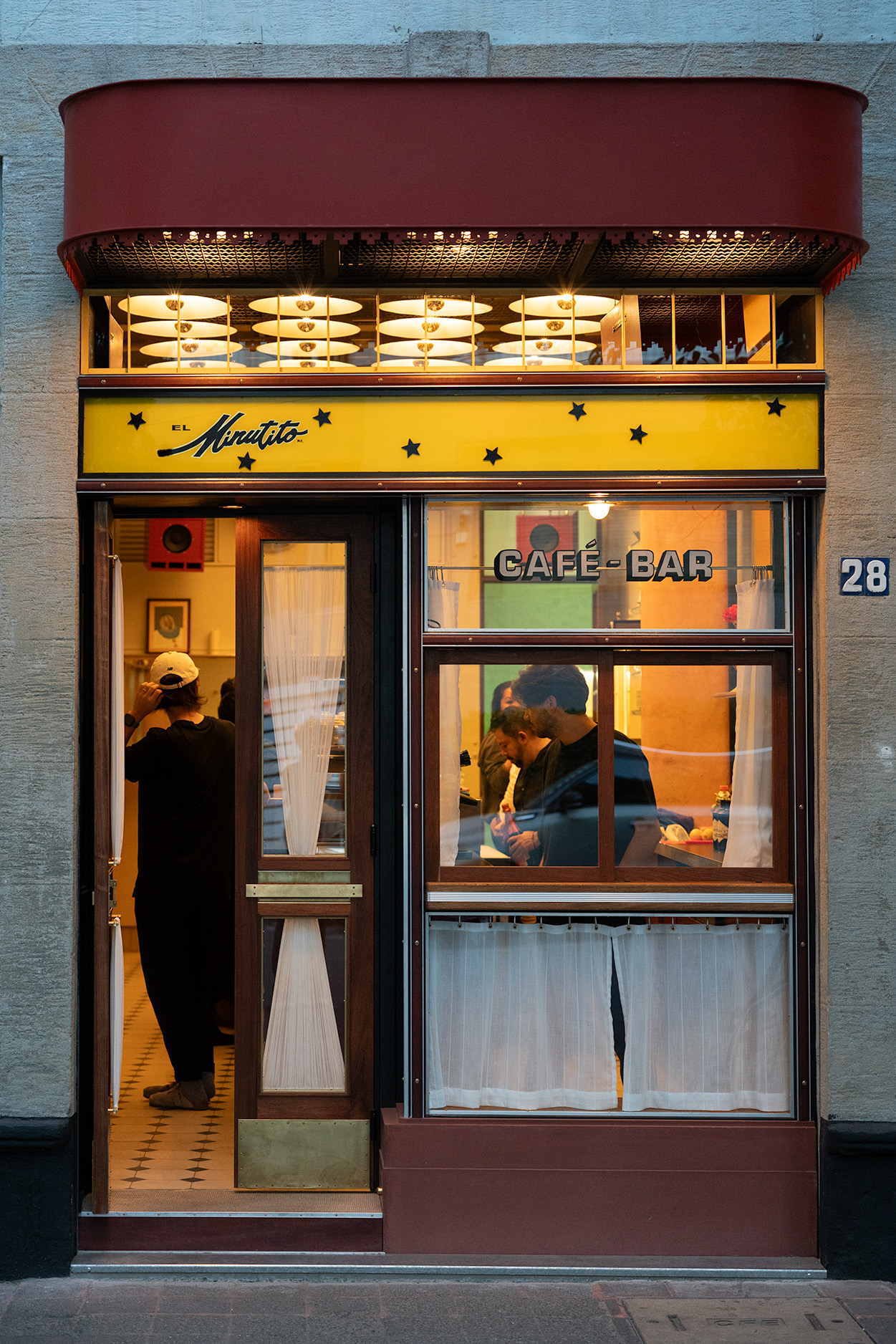

Opened on a quiet corner of Mexico City’s tree-lined Colonia Juárez, El Minutito is a few blocks from the towering office towers that abut Avenida Paseo de la Reforma, the capital’s main throughway. Patrons can order at the window but venture inside for the cantina-style space interior and a bite to eat at the standing counter or a coffee made with beans from the state of Veracruz amid aluminium trim and mirrors by architect Lucas Cantú of Tezontle studio.
Pastries include orejas and gorditas de harina. At night El Minutito serves cocktails and spirits. The mix of alcoholic and caffeinated beverages on the menu is an echo to the upscale coffee shops that opened in Mexico’s capital during the gilded age of the late 1800s – we’re happy to report that the appeal endures.
Londres 28, Juárez
Belleville and Jourdain are the Paris arrondissements setting the pace for food, art and culture
Of all of Paris’s 20 arrondissements, perhaps the most vibrant and fastest changing are the twin neighbourhoods of Belleville and Jourdain. Once among the poorest parts of the French capital, they have become known for lively street markets, an eclectic mix of cuisines and tone-setting arts venues.
Today, the area’s Asian and North African communities rub shoulders with creatives searching for fresh opportunities and lower rents. Around Parc de Belleville, Chinese supermarkets and Tunisian tea salons vie with art galleries, natural-wine bars and the city’s best third-wave coffee shops (Paris’s less-than-stellar reputation for the beverage has long been a sore point). It’s a refreshingly well-integrated corner of the capital.
Venture towards Parc des Buttes Chaumont and you’ll find village-like Jourdain. Here, Haussmannian buildings mingle with low-rise structures and cobbled lanes, where apéros are sipped in the shadow of lime trees and the hustle of central Paris seems both easily accessible and worlds away.
1.
Read
Les Misérables
Victor Hugo’s novel captures the soul of 19th-century Paris and its residents. Belleville and Jourdain are the city’s grittiest districts in this tableau of stark social contrasts, in which the lower classes face poverty, neglect and exploitation. Pick up a copy from Le Genre Urbain, a well-stocked bookshop with an extensive foreign-language selection that might not have thrived in Jean Valjean’s day.

2.
Stay
Babel
It took a while for small, independent and reliable hotels to arrive in this area but there are now several fine options. The 31-key Babel, near Boulevard de Belleville, is one of them, featuring Berber-inspired décor, an eclectic restaurant and an in-house radio station.
babel-belleville.com

3.
See
The striking view of the city from Parc de Belleville
For one of the best views of the Eiffel Tower, head uphill to the top of Parc de Belleville. In the evening, the park attracts residents who come to watch the sun set behind the roofs of Paris. Afterwards, move on to one of the bars on Rue des Envierges, where things stay lively well into the night.

4.
Eat
Cheval d’Or
An unassuming 1980s Chinese takeaway façade belies one of the city’s most celebrated restaurants. Cheval d’Or stays true to its Asian roots and adds a little modern French bistronomy in dishes such as cockles in Provençal-style XO sauce and, to conclude, île flottante with black tea and tapioca pearls.
chevaldorparis.com

5.
Shop
Bokbar
Gothenburg transplant Natalie Magnusson opened Bokbar in 2022 to share her love for Swedish literature with the French capital. The bookshop’s wooden shelves are lined with translated works by Nordic authors that you can start reading at a table in the cosy on-site café.
bokbar.fr

6.
Drink
Soces
Jourdain’s Rue de la Villette resembles an entire neighbourhood condensed into a single street. From a friendly grocer to a quaint toy shop, you’ll find everything that you need and more. For an apéro, the go-to spot on the block is Socès. It serves glasses of crisp, sparkling Furlani and orange wines alongside just-shucked oysters. As the evening progresses, the menu expands to include more substantial dishes such as gratinated onion soup and tuna carpaccio.
soces.fr

7.
Buy
Harissa from Épicerie Le Caire
Though harissa, a much-loved staple of North African cuisine, is widely available in French supermarkets, nothing compares to the home-made version here. Prepared with red chilli, garlic and a closely guarded mix of herbs and spices, Épicerie Le Caire’s offering is fragrant, spicy and not for the faint of heart.

8.
Visit
Parc des Buttes Chaumont
In a city short on greenery, Buttes Chaumont is a welcome oasis. Once an industrial site, it was transformed into a public park in the 19th century by landscape architect Jean-Charles Alphand, under the guidance of town planner Georges-Eugène Haussmann. The result is a dreamlike garden with dramatic rock formations, a hilltop pavilion and lush lawns, all ideal for an autumn picnic.

9.
Order
A cortado at Candle Kids
In this once working-class district, a café such as Candle Kids would have been unimaginable even a few years ago. Across the street from a traditional PMU betting shop, the space represents a shift towards third-wave coffee culture, which Paris was initially slow to embrace. Come for the perfectly frothy cortados and stay for the interiors,with concrete finishes and custom-made wooden furniture by Studio Ebur.

10.
Don’t miss
Théâtre de Belleville
Parisians spend many an evening at their local theatre to engage with the latest plays by the country’s leading intellectuals. In a hall that dates back to 1850, the Théâtre de Belleville has hosted productions by acclaimed writers such as Léonore Confino and Laurent Gaudé. This a neighbourhood that knows how to put on a show.

Reliance on mental short cuts leaves us open to economic exploitation. Can technology help?
In the US, the holiday known as Black Friday, an orgy of consumerism, follows Thanksgiving, which is probably the least commercial holiday of the year. As sure as night follows day, family togetherness gives way to a kind of market purge. The typical Black Friday purchase is the flat-screen TV, and one can hardly avoid ads that look like this: “4K ultra hdtv deals! $1,299.99 – now $649.99!”
This marketing technique exploits a psychological theory called “anchoring”, effectively appealing to what some scientists think is a weakness of the human brain in which we are unable to make rational assessments of value when we anchor our judgements around a given number. In the game of prices, which can be thought of as a kind of intellectual duel between companies and consumers, this almost seems like a form of cheating. After all, when I see that struck-through high number, I don’t know offhand if that really was the price of the television yesterday. But the deal will only stay good for a few days so I have a limited time to decide. Instead, I have to rely on what is called a “heuristic” to make a decision, balancing my sense of the importance of the purchase – how much I need that TV – against the sense I have of the value of the commodity. So, I find myself deciding on the basis of what information is given to me in the ad: the anchor of the original price.
The idea of the anchor as a cognitive bias comes from a body of research called behavioural science. This research has been widely adopted by behavioural economics, which applies insights from psychology to markets, finance and business, especially management. This area of research was created by psychologists Daniel Kahneman and Amos Tversky in the 1980s (Kahneman died in March at the age of 90, having transformed the social sciences). He and Tversky discovered that humans were systematically unable to quickly make optimal decisions using evidence, even if they had advanced training in the statistical theories that define what “optimal” means. They found that instead of doing the difficult maths required, their experimental subjects replaced problems with simpler questions that Kahneman named a heuristic: a cognitive short cut that they theorised was necessary because the brain was unable to process information quickly and cleanly enough. In other words, rather than weighing the evidence, we jump to conclusions, pairing things that are superficially alike and relying on the evidence we have access to most immediately: adjusting around an anchor.

Behavioural economist Dan Ariely – now under investigation for potential fraud – points to a use of anchoring by The Economist, which once listed subscriptions at the following prices: digital only, $59; print only, $125; and print plus digital, $125. The middle option, print only, is a decoy price there to underline the alleged value of the bundle, which is more than twice as expensive as the digital-only option. Ariely points out that with two prices, you have to make your own comparison, whereas the comparison of the two is supplied to you by the middle option, which anchors you to a number.
What is happening here is a version of Kahneman and Tversky’s original experiment, in which they gave two versions of the same maths problem to two different groups: 8 X 3 X 7 X 3 X 6 X 3 X 5 X 3 X 4 X 3 X 3 X 3 X 2 X 3 X 1 and 1 X 3 X 2 X 3 X 3 X 3 X 4 X 3 X 5 X 3 X 6 X 3 X 7 X 3 X 8. The groups gave back median guesses of 2,250 and 512, respectively. The real answer is 40,320. Without enough time to do the taxing amount of mental arithmetic, the groups leaned on the lead number, which anchored them. If people do this consistently in experiments, how does it influence their decisions in real-life scenarios? The barrage of digital advertisements, app reminders and “nudges” – to use behavioural economists Richard Thaler and Cass Sunstein’s term – that we face every day is effectively a form of competition to set baselines for us.
It is hard to overstate the influence of this heuristics and biases theory, not just on the subsequent development of science – Kahneman and Tversky’s original paper has amassed nearly 50,000 citations on Google Scholar – but on our digitally mediated lives today. It’s not just Black Friday; we are inundated with marketers and managers trying to exploit our biases, to get us to heuristically jump to their desired conclusions. There is nothing new about advertisers appealing to our deepest desires or even attempting to “manufacture” them. But anchoring is both widespread in use and scientifically murky. I have written in the past that behavioural economics is shaky as science but it also poses some interesting philosophical questions about how we go about our daily digital lives. One of those questions is how we decide about value and what counts as a good decision.
AI might be transforming this game, since it allows nearly infinite experimental testing in real time. For example, the headline that you see over a digital article is tested using algorithms that “learn” which version of the wording is more clickable. In cases such as this, algorithms search for baselines that work – effective anchors – without the need for actual advertisers or writers to craft them. The psychological theory, combined with the advance of digital technologies, might soon lead to the automation of a lot of marketing. As the science-fiction author Ted Chiang recently put it, “Will AI become the new McKinsey?” A core method of the consulting firm is large “strategic” layoffs.
But what happens when AI provides the strategy? The hard, human work of exploiting our cognitive biases gets automated, creating a weird situation in which a psychology that was allegedly devoted to questions of human rationality is executed without any human decision-making to exploit the least rational aspects of our minds. Economists usually think of prices as expressing preferences – when I buy a cup of coffee, for example, I am asserting my preference for that particular product, as opposed to any other, at that particular price, which I am willing to pay. Decisions of this sort may be more or less “rational” (I should not pay $8 for a single cup of coffee, something that is becoming harder and harder to avoid in New York, where I live) but they are mine. When AI exploits anchoring, it looks less like I am making a rational choice from among options and more like an industrial amount of data-mining is being plugged directly into my unconscious. This outcome was predictable, if not rational.
German psychologist Gerd Gigerenzer has spent his career arguing against heuristics and biases as a framework. He thinks humans adapt well to their cognitive circumstances and can remain rational even in the face of algorithms designed to win the game. He even points out that terms such as anchoring hide more than they reveal – he calls terms of this kind “surrogates for theories” – creating an obstacle to science that too easily becomes a way of exploiting human minds without illuminating us in the least. Indeed, many a marketer may ask: supposing this anchoring thing is scientifically valid, how does one know which anchor will work? As the number of heuristics and biases has proliferated – lists often include dozens, and hundreds have been proposed – the absence of a theory becomes a pragmatic problem. If I am in a restaurant and the prices seem high, do I anchor to them or do I walk out?
Questions such as this multiply as soon as one thinks about anchoring philosophically: are we collectively anchored to 2 per cent inflation? Am I anchored to my parents’ sense of what an apr on a mortgage should be? If we think of all quantitative expectations as a set of anchors that do not properly evaluate evidence, the paltriness of the original theory becomes clear. After all, what would it mean for me to be unable to anchor around a baseline? If I could not do that, I would spend most of my brainpower calculating values anew at each moment. Every price would be abstract, every decision prohibitively costly in time and energy.
If AI and other algorithms take over that function, it unburdens us – but at a different cost. When prices do not communicate human values but are just the results of data processing with the goal of bringing in revenue, then it is not individual humans who are irrational but all of society. What seemed like a virtuous science aiming to illuminate us about our behaviours has become a monstrous obstacle to a good society. Let’s call it the short-cut society, held up by Big Data and bad philosophy pretending to be science. We have to decide if we want our society to be run on the ceaseless consumption of eternally discounted products. If not, we’ll need to impose some actual rationality on the digital economy that feeds off our acquisitive tendencies. Or, in other words, we’ll need to know if $1,299.99 was ever the real price.
About the writer:
Leif Weatherby is the director of the Digital Theory Lab and an associate professor of German at New York University. His next book, out in 2025, will be Language Machines: Cultural AI and the End of Remainder Humanism.
Denmark is winning new friends by developing pragmatic diplomacy in Africa
The Danish foreign minister, Lars Løkke Rasmussen, recently launched the country’s new Africa strategy, titled “The African Century”. By 2026, Denmark will open three new physical embassies – in Senegal, Tunisia and Rwanda – and upgrade its existing outposts in Egypt, Nigeria, South Africa and Kenya into regional hubs. It will also create its first African “innovation centre” in Kenya. Meanwhile, Copenhagen is actively seeking to attract more African students to Danish universities, a policy that China has employed to great success on the continent.
It’s a bold statement at a time when the Global South is perceived to be turning away from the West and while European diplomatic efforts in Africa flounder. And it’s a welcome recognition of the fact that there is no substitute for a physical diplomatic presence. As well as the infrastructure upgrade, the Danes’ rhetoric has changed: talk now focuses on boosting trade and economic interests, with less emphasis on influencing domestic politics and values through aid and lectures. As the press release put it, Denmark must “come with better offers, less moralising and more equality”. Indeed, on a recent visit to Ghana (from where Denmark once traded slaves and was a colonial power until 1850), Rasmussen did not commence his press conference with a critique of the Ghanaian government’s new anti-lgbt law, as a Danish foreign minister might well have done in the past.
In presenting the new approach, the Danes have been using one of their favourite words, øjenhøjde (“eye level”) – a shorthand for showing respect while not necessarily “seeing eye to eye”. It’s more like two equals having a conversation than a paternalistic donor talking down to the receiver of aid and it’s an acknowledgement of several factors. One is the success of China and the Gulf states in using their debt-leveraged economic “partnerships” to secure access to Africa’s mineral and human resources – a form of economic colonialism, yes, but without the value- based conditions that the West has traditionally imposed. As Rasmussen pointed out in his speech at the launch of the policy, last year the Gulf states invested four times as much in Africa as the US did.
Denmark’s plan also stems from a recognition of the need to counter Russian influence in Africa, which Moscow has achieved through its use of mercenary forces and propaganda. Increased co-operation with East African coastal lands in dealing with piracy will benefit Denmark’s significant shipping interests too.
The only surprise is that it has taken this most pragmatic of nations so long to change its strategy. As wealthy as Denmark is, its African-development resources were thinly spread and of dubious value. According to the African Development Bank Group, the continent is home to 11 of the world’s top 20 fastest-growing economies; in 2024, Denmark’s resources would be better spent on diplomatic efforts to boost trade and soft power. But the policy isn’t without controversy. There’s concern that Denmark’s previously robust stance on, say, lgbt rights, will be sacrificed to other exigencies. As recently as last year, the Danes withdrew support for the Ugandan government following the latter’s anti-homosexuality law but that kind of tactic seems to have been consigned to the history books.
Good riddance, says one of Denmark’s leading experts in African relations, Copenhagen University’s Holger Bernt Hansen. He branded the finger-wagging approach a colonial throwback, telling the Politiken newspaper, “Sanctions and value politics damage our interests in Africa more than it supports them.” Rather, skilled diplomats operating in African capitals promoting the best of Danish technology, culture and business will be far more likely to achieve the success that Copenhagen is hoping for. As the country shutters its embassies in military dictatorships Mali and Burkina Faso, it makes sense to focus its resources on the African countries that will be more receptive to its considerable charms.

The folly of human-centred design – does every product really need an app?
Whenever I come across the term “human-centred design”, I think of an anecdote that an architect friend likes to tell. It happened years ago but he is still incensed about it. He was invited by a well-known “global design and innovation company” to a workshop in Berlin discussing how cinemagoing could be “disrupted” (that buzzword is a good cue to turn on your heels and run). The company had gathered a talented panel of experts, including a computer scientist, and the director of a film festival.
For three days, the group explored how the experience of going to the movies could be improved for people. But at the end, they discovered that the exercise had been rigged all along. The workshop leader, flown in straight from Silicon Valley, concluded out of the blue that what cinemas really needed was – surprise, surprise – a new app.

The story highlights the common gap between the stated intentions and actual outcomes of design approaches that call themselves “human-centred”. Often used in the same sentence as that other modish phrase, “design thinking”, the term is tossed around by corporations and consulting firms to describe a principle of putting people at the centre of innovation. They often endlessly quiz potential users and customers about their motivations, pain points and hopes for particular products or services. While in Berlin, the consultants might have also visited cinemas for “observations from the field” or organised “jam sessions” with a consumer panel.
The methods, laid out in flow charts that are studied by management-science undergraduates, seem quite innocent but produce outcomes that can be cluttered and confusing (the adage that “a camel is a horse designed by a committee” rings particularly true here). The result is that these so-called human-centred design thinkers often end up filling the world with unnavigable steering boards, maddening touch-screen light switches and apps, apps, apps. How could such an inoffensive idea lead to so much digital faff?
The popular use of the term “human-centred design” can be credited to Stanford University’s design programme. The school was founded in 1958 by John E Arnold, a professor in mechanical engineering and business administration who (slightly ironically) is best known for tasking students with designing household items for an alien civilisation. At the time, homes and workplaces were inundated with novel technologies that mostly made life more difficult, à la Jacques Tati’s Mon Oncle. The aim of the new programme was to teach the country’s top engineers to think more about the people using their inventions. This notion of considering people’s wants and desires was thought to be groundbreaking and today it has swelled into a sizeable body of academic literature on “human-centric design” and even has an official definition in the iso Standards (an internationally recognised process guideline).
But, in reality, it isn’t that novel: Stanford’s design school is founded and attended mainly by engineers, so they could be forgiven for having only coined a word for a concept as old as architecture itself. As historians Mark Wigley and Beatriz Colomina lay out in their book Are We Human? Notes on an Archaeology of Design, even Vitruvius, the father of architectural theory, dedicated the beginning of his magnum opus to how human wellbeing can be improved with buildings – “healthfulness being their chief object”. From William Morris to Hans Hollein, so many designers have thought deeply about the topic that the adjective “human-centred” sounds like a truism.
In his book Architect, Verb, Reinier de Graaf, partner at oma, gives human-centred design the drily sarcastic definition of an “atypical approach to design where products adjust to people instead of the other way around”. Only to someone who believes that people adjusting to products is the norm would the methods of human-centred design – observing people’s needs, asking for feedback – seem innovative. For most professional designers, they have always been a given.
Still, designers and architects do not typically assemble the consumer panels and questionnaires that are associated with the Stanford-inspired human-centred design approach. Why? The classic example of the futility of market research comes again from Silicon Valley and that oft-quoted quip of Steve Jobs – “People don’t know what they want until you show it to them” – and, indeed, nobody had thought that it was possible to carry 1,000 songs in your pocket before the iPod came along. By taking the approach of assembling a group and democratically noting down everyone’s views and requests, there is a risk of ending up with a device with so many buttons that nobody can figure out how to use it.
When I think of design that really puts humans first, the best examples lie far from Palo Alto. There are the Amsterdam playgrounds of Aldo Van Eyck, which were inspired by the way that children were playing with the rubble left over from the Second World War. Or Brazil’s Orelhão telephone booths, which are shaped like an eggshell on a pole instead of a cabin. Designed by Chu Ming Silveira, they save sidewalk space, don’t attract litter and improve acoustics, with the bonus of making anyone using them look dashing. Both designs were adopted by the masses after literally and figuratively putting people at the centre – no surveys or brainstorming sessions required.
My architect friend’s anecdote also has a happy ending. At the workshop, the imposition of an app was disruptive, indeed: the group decided to stage a small insurgency and kicked their leader out of the room. Then they spent the rest of the day drawing up and prototyping objects such as furniture, ticket booths and a headset. Like decent design always has been, it was just people making things for people, buzzwords be damned.
About the writer:
Finland-born Stella Roos is based in Berlin, where she is Monocle’s design correspondent. She covers architecture, manufacturing and culture across Europe – and is not expecting workshop invitations from Silicon Valley.
While Art Basel Paris boasts grandeur and scale, it’s often the cooler, more intimate fairs that leave a lasting impression
This month, Art Basel Paris is debuting with a snappy new name and a lavish venue upgrade – the Grand Palais. Compared to the clinical exhibition hall that hosted Paris+ par Art Basel in 2023, the Grand Palais will add grandeur to proceedings. It will also become bigger, allowing an impressive 195 galleries to be present – an increase on last year’s 154.
The Grand Palais opened for the Universal Exhibition in 1900 but you hope what’s inside at this year’s fair doesn’t feel too, well, universal. I will, no doubt, enjoy gazing at the world’s greatest contemporary art under its high, vaulted ceiling. But will the event really be all that different to Art Basel’s June iteration in its Swiss hometown? It’s hard to put a Parisian spin on navigating your way to booth D24 or J11 (let alone remember where you saw that amazing Rauschenberg or Baselitz).
The cooler little sisters of large-scale art events – the satellite fairs – often make more of a lasting impression. Paris Internationale and Liste in Basel are the places where you can have a genuine moment of discovery. I have also started to feel drawn to city-specific events such as September’s Vienna Contemporary. “It’s possible for regional, smaller-scale fairs to be more experimental and show work from exciting, lesser-known artists and galleries,” says Vienna Contemporary director Francesca Gavin.
Contemporary Istanbul in late October also allows you to discover the talents of up-and-coming creatives. “In a more intimate setting, participants can receive more attention, which fosters deeper connections and more meaningful conversations,” founder Ali Gureli tells monocle. “There are plenty of what I like to call ‘generalist’ art fairs in the world. I’m more interested in leveraging the unique geographical and cultural landscape of Istanbul.”
Though I’m not going to abandon big-name fairs – and the chance to have a glass of something chilled overlooking the Seine – any time soon, I will certainly be adding a few lesser-known stops to my autumn art agenda this year.
Can hot-spot policing make America’s cities safe again?
It’s high noon in Dallas, Texas, and Major Jason Scoggins of the Dallas Police Department (dpd) is at the wheel of an unmarked Dodge Charger. “We’re on our way to an area called Five Points,” he says, above the gale of air conditioning. “There’s an officer over there with eyes on a female who is wanted for manslaughter. It seems that she hit someone with her car and took off.” Scoggins pulls into a car park behind a forlorn-looking residential building where two officers in a squad car are waiting for the signal to serve a warrant. Covert teams in the area know that the suspect is at home, we’re told, but for now the officers are waiting for backup. “If she comes out of the apartment, that’s to our advantage,” says Scoggins. “It’s dangerous to enter somewhere when you have an unknown behind the door.”


All of this looks like old-fashioned police work. Yet the dpd is honing a novel enforcement strategy that is successfully reducing rates of violent crime. Drawn up in 2021, the Violent Crime Reduction Plan envisages Dallas as a grid of 101,000 locations of 330 sq ft (31 sq m); officers focus units on some 50 “hot-spot” areas where crime occurs most frequently and closely keep track of the surprisingly small number of people who commit most of those acts. The thinking is that if you reduce violent crime in specific areas, there will be reductions citywide. This is exactly what the dpd has found, even if it is making fewer arrests overall. In practice, this can be as simple as having police cars in troubled areas running their lights to let residents know that they’re around or putting repeat offenders into contact with community groups to deter them from crime and help them get back on track. The plan also tasks police officers with reporting signs of urban blight – faulty streetlights, abandoned cars, broken entry gates on blocks of flats – that perpetuate an atmosphere of disorder and co-ordinating with city authorities to get these problems remedied, in an evolution of what used to be known as the “broken-windows theory”.
“What’s old is new again,” says Bill Bratton, who was New York’s police commissioner in the 1990s and championed similar tactics in a period when the Big Apple became known as “the safest big city in America”. Bratton speaks admiringly of what is happening in Dallas, where the police are updating that kind of hot-spot policing for our time. Rather than saturate neighbourhoods with law enforcement, as happened in the past, the dpd relies on real-time data to be more specific and light-footed in terms of where officers go. The crime plan does away with the “stop-and-frisk” methods of investigation that were notoriously overused on New York’s African-American communities.
A plan similar to Dallas’s is now being implemented on the other side of Texas in San Antonio and is attracting national attention. With the presidential election looming, public safety is one of the top concerns among US voters. Though statistics show an overall decline in urban violent crime compared to the gang-ravaged 1990s, many Americans feel that their cities have become less safe, a view that has been exacerbated by a homelessness crisis, a fentanyl epidemic and desolate downtowns where workers have stopped going into the office.
Dallas is not immune to these urban problems and has historically been regarded as a violent city. In August an officer named Darron Burks was sitting in his patrol car between assignments when an assailant randomly shot him dead at the wheel. At the dpd’s headquarters, there is a memorial to five officers who were killed in 2016 by Micah Xavier Johnson, a local man who was armed with a sniper rifle. Johnson was seeking what the then-chief described as payback against law enforcement for the death of black men in police custody across the US.
The two main candidates in November’s election offer diverging visions of what the country needs to promote order but Dallas’s crime-reduction plan, which seeks to combine surgical precision with a focus on restoring trust among the community, is being talked about as a model for police renewal. It was authored in 2021 at the height of the “Defund the police” movement by Dallas’s chief of police, Eddie Garcia. Amid anti-police riots in the city, its then-Democrat, now-Republican mayor, Eric Johnson, made the case to raise law enforcement budgets, rather than slash them, promising to reform the service. For instance, the city’s police are now required to always wear a bodycam, even when working off-duty jobs in private security. As a rule, footage is released to the public within 72 hours of an incident, in contrast to the protracted waits seen in some high-profile cases in the recent past.
“Bodycams are extremely helpful for us when it comes to explaining a situation,” says Lieutenant Jordan Colunga, who arrives at Five Points in an all-black pick-up truck and briefs the team about to arrest the hit-and-run suspect. “When we say that a suspect is running, you see it all happening,” he says. At the apartment building, we watch the officers move in to serve the warrant. The suspect emerges gingerly from inside; she is cuffed and ushered into a squad car. It’s a routine arrest but things don’t always go so smoothly. A couple of weeks before today’s ride-along with the dpd, officers fired six times on a stolen truck after the driver rammed a police car. The suspect survived; the officers’ bodycam footage of the shooting and the subsequent foot chase was swiftly made public. Garcia held a press conference to explain the reasoning behind police officers’ decision to open fire. “It’s a chaotic situation,” he told the room. “It’s just not a choreographed dance.”
With a close-shaved head and arms covered in tattoos, Garcia isn’t necessarily the image of a traditional 10-gallon Texas lawman. Born in San Juan, Puerto Rico, he moved to California at the age of five and went on to serve with the San Jose Police Department for 29 years, keeping law and order in the wild west around Silicon Valley, an area with its own vast disparities in wealth. Garcia was the first Latino chief to lead the dpd in its history when he arrived in 2021, which is remarkable for a city in which 42 per cent of residents identify as Hispanic.

“Just don’t walk on the star,” says the chief, referring to the pale blue rug in the centre of his office that features the five-pointed emblem of the Lone Star State. He is only half-joking. Garcia might be a relative newcomer to Texas but he has become deeply embedded in his adopted home. There are well-wishing trinkets gracing the shelves all around his office, including a signed game ball from the Dallas Cowboys, nestled alongside a flip chart entitled “Apartment Murders 2023/24”.

Every morning, the chief puts on his black glasses and pores over the year-to-date crime figures, looking for fractional changes. “Property crime is down by 11 per cent, violent crime is down by almost 13.5 per cent and we have had a drop in street-related aggravated assaults of a little more than 18 per cent,” he says, running his finger down that day’s spreadsheet. “Our violent-crime trend line is going in a completely opposite direction to what we saw prior to 2020.”
The numbers show that hot-spot policing is working, even if some residents are worried about a spate of recent robberies that are making local headlines. There is still plenty of work to be done to shift perceptions overall: last year, polling company Gallup found that, across the US, confidence in law enforcement had dropped to 43 per cent, the lowest on record.
Garcia believes that trust comes with greater transparency. Waiting outside his office are members of a new Constitutional Policing Unit, one of the first of its kind in the US. Both badged and independent observers study the force and its policies, and offer guidance for officers on how to look out for wayward behaviour among colleagues, as well as how to report it. If that sounds like police marking their own homework, Garcia has also brought in third-party criminologists to assess the force and determine whether there is racial profiling or bias in its traffic stops and arrests. Few can deny his passion for getting it right. “I want to find out what’s wrong with my police department and know where the blind spots are, where we need to get better – before anybody else does,” he says.

Last year, the Dallas Morning News ran a series of articles titled “Black and Blue” that examined historic cases of dpd officers accused of using excessive force against people of colour going back to the early 2000s. The paper alleged that, in some cases, a full investigation of the officers concerned was lacking. More recently, members of the civilian-led oversight board that examines complaints against police officers have said that it has been limited in what cases they get to see. With greater media scrutiny than ever, one veteran officer tells us that there has been a need to shift the mindset away from the action-packed days of car and foot chases to a more service-minded mentality.
The chief pulls no punches about the “rogue district attorneys” in the US who he believes are declining to prosecute crimes in the name of social justice. “When I go out to those neighbourhoods that are affected by violent crime and they ask me why a certain individual is back on the streets, there’s a humongous disconnect.” Yet he also fears the potential for the political pendulum to swing back against law enforcement. “When you have a defunding movement hanging over your beloved profession, morale is going to take a hit,” says Garcia. This, he believes, has contributed to a surge in violent crime, as the vilified police disconnected from proactive work in their communities. Garcia might call defunding the police a “ridiculous” idea but many of those who marched in the streets regarding the issue in 2020 would argue that they were concerned citizens, speaking out about heavy-handed policing that sometimes turns deadly. “I have never had a community affected by violent crime tell me, ‘We want to see less of you in our neighbourhoods,’ regardless of the language spoken, the racial make-up of the area or economic status,” says Garcia. “In fact, it is often communities of colour that will [criticise me] if I’m not providing them with police resources and services.”

Someone who knows this better than most is Antong Lucky, who grew up in the projects of east Dallas. He fell in with gangs as a teenager, became the leader of the local chapter of the Bloods and wound up in prison, all before the age of 20. When he emerged from incarceration, Lucky joined a local non-profit called Urban Specialists that was working to reduce violence in neighbourhoods around the city. In 2000, Lucky helped to negotiate an enduring ceasefire between the gangs. Two framed bandanas on the walls at Urban Specialists commemorate that peace treaty. Working from a cavernous basement in a squat brick building across the road from the dpd headquarters, the group hosts community events around the rougher parts of Dallas and, increasingly, works with the police to bring more law enforcement into neighbourhoods to talk to residents about the issues that they face.
“We’re like interpreters,” says Lucky, who is now Urban Specialists’ ceo and president. He confirms Garcia’s view that people in the communities that he works with do not want to see fewer police – they just don’t want to be harassed. “It’s our duty to champion that view because you don’t hear it on the nightly news,” he says. “You hear people saying, ‘Defund the police.’ It can’t be an ‘us versus them’ narrative. We need the men and women in blue who protect us and people in communities who respect them.”
Lucky believes that whoever takes America’s top job in November’s presidential election should establish offices of violence prevention across the country. Such a strategy would pair smart police chiefs with credible community leaders and instil confidence in the wider public by ensuring that the police are more accountable and visible, and can communicate better with those they are seeking to protect. “In every city that I go to, there are people working to address this problem but they are under-resourced or working against narratives that don’t acknowledge the importance of the long game.” Within a decade, he says, the incoming administration could significantly reduce violent crime, provided that the problem is taken seriously. “If we get to that point,” says Lucky, choosing his words carefully, “then we’re good.”
A law-and-order election

The optics of an electoral face-off between a convicted felon and a former prosecutor have not been lost on Democratic Party strategists. However, the question of who would make US cities safer isn’t as cut and dry as it first appears. The Republicans’ stump is to “rebuild” cities and replenish police departments with a return to what it calls “common-sense policing”. The party promises to “stand up to Marxist prosecutors” and “compassionately address homelessness to restore order to our streets”.
While in office, echoing Richard Nixon, Donald Trump declared himself the “president of law and order”. Yet in 2020, the last year of his presidency, violent crime rose significantly – a spike that Trump has ascribed to the mass protests and “Defund the police” movements that followed the killing of George Floyd. Should they remain in the White House, the Democrats promise less incarceration, more accountability and greater community interventions that will stop crime before it happens. The Biden administration’s most recent budget allocated $1.2bn (€1.1bn) specifically to tackling violent crime at a local law-enforcement level. And, despite perceptions, crime rates have slowly been coming down since 2020.
Kamala Harris, the Democrat Party’s candidate for the next US election, was a former prosecutor in San Francisco and then for the state of California. Her opponent has accused her of being weak on law enforcement and having a hand in creating the troubled security situation in downtown San Francisco. The reality is more complex. Harris is often described as having been a tough prosecutor but one who has changed her mind on everything from the death penalty to cash bails over the years. When she ran in the Democratic presidential primaries in 2020, she talked about “redirecting” funds from police forces amid the protests and riots that year. Her bid for the top job in 2024 has been very different: she is presenting herself as tough on crime while declaring, “I know Donald Trump’s type” – a not-so-subtle dig at the 45th president’s criminal record.
Ukraine’s women have the skills needed on the battlefield
I don’t want to be a victim. But over the years of war in my country, I have realised that this isn’t possible without knowing how to defend myself and my family. If I couldn’t fire a gun or fight off an attacker in close combat here, I would be defenceless. I’m writing this from Kyiv before returning to the Ukrainian front line. I have realised that if feminism has taught us anything, it’s that women should never become easy prey – a lesson that feels all too relevant when Russian shells are exploding around me and my team in our trenches in the country’s east.
War returned to Ukraine in 2014. I became a mother the year before, just as Ukraine’s pro-European revolution was kicking into action. Pro-democracy protesters flooded the streets, calling for EU integration and an end to the country’s cosy ties with kleptocratic Russia, which was pulling us ever closer, back into its empire. Then, as it invaded, first annexing Crimea in the south before sending in its troops to occupy our eastern cities, towns and villages, I came to understand two things clearly. First, that our army desperately needed soldiers as open, state-sanctioned violence had made a comeback and was advancing towards our homes. Second, it wasn’t just men but also women who now had to learn how to protect themselves.

I have always respected the Israeli model of conscription. From a Ukrainian perspective, with all of the violence that our population has suffered in the past 100 years, it makes sense to have a level of basic military training for both men and women. We helped Europe to overcome the Nazis in the 20th century but Russia’s imperial evil was never defeated in the battles of the Second World War. And we are fighting its desire to annihilate our country now. Ukraine’s entire population has to be more than just willing to protect itself in the abstract: it also has to be trained to do so effectively in the real world.
Women can play an important role in defence. I first joined the Ukrainian army in 2019 as a paramedic; within a year, I signed up as a regular contract soldier. Soon I became a combat medic and took on reconnaissance in the Ukraine Marine Corps battalion, mastering how to pilot drones. In this time, I have fought alongside both men and women. I can confidently say that those women on the front lines today are, in my opinion, on average more motivated and determined than the men.
Of course, part of this is simply down to the fact that those I fought beside chose to enter the army – there is currently no conscription of women in Ukraine. Around the world, 21 countries include women in their conscription programmes, including three in Europe (Norway, Sweden and Denmark). But I have also witnessed how much better women can be at dealing with situations that men might shy away from. Take blood, for example – we see a lot of it on the battlefield, unfortunately. But perhaps because women encounter much more of it in our civilian lives, many are less scared to deal with it.
Women are also often more likely to be open about how they are feeling. We start conversations that men might otherwise avoid. This allows us to deal with stress more effectively. With rates of ptsd in Ukrainian society rising, it is paramount that we are all open about our experiences, both mental and physical. Some qualities that have been traditionally deigned feminine actually serve to complement many aspects of a soldier’s experience.
There are also so many women in the Ukrainian army who inspire both me and my male colleagues to keep fighting as part of a more skilful, modern army. Take my friend, Olena Bilozerska, for example. A writer and journalist in her civilian life, Bilozerska trained to be a sniper in 2014. She wrote about her experience as a servicewoman in her memoir Diary of an Illegal Soldier, which was published in 2020. And on the battlefield, her skill has been lauded by people all over the world, including US soldiers – a video of her working just 200 metres from the occupiers was published on YouTube and ended up going viral.
So, how might female conscription work? Perhaps some imagine that if women are included in the draft, society would face a crisis with no one left behind to look after children and the elderly. But there are always a certain number of people who would never be called up. Carers and single mothers would be taken off the list automatically in the same way that Ukrainian men with more than three children are today. We would need to be practical.
But leaving aside the issue of female conscription, I believe that we are leaving a large resource untapped. Many women who I have spoken to say that they support the idea of being called up and doing their bit. If they were to receive that letter in the post, they would gladly go. They are keen to help but they need the legitimacy of the state to justify their presence in units that might otherwise treat them with scepticism or as outliers.
Doing so would also bring a few lazy stereotypes into the crosshairs. We could show once and for all that women can be as strong and brave as men, if we only let them demonstrate their potential and legitimise their participation. It would be a golden opportunity to put patriarchal stereotypes to bed and impart a greater confidence in a truly equal society.
The threat of war might seem far away for many Western readers living in comfortable, safe countries. But my country’s situation and our overnight transition from a hopeful European democracy to a nation under violent attack has proved the old Latin saying right: if you want peace, prepare for war. And don’t leave us women behind.
About the writer:
Yaryna Chornohuz is a senior corporal in Ukraine’s army. She published her first book of poetry, How the War Circle Bends, in 2020. She was awarded the prestigious Taras Shevchenko National Prize in 2024 for her writing.