Issues
How Latin American influence is reshaping Madrid
It’s the frenetic start of the new term at IE Tower in Spain’s capital and both students and staff are finding their feet. Up on the 25th floor, monocle’s effervescent host, IE University president Santiago Iñiguez de Onzoño, offers some healthy reassurance. “In Madrid, there’s always time for a good lunch,” he says. “This is a big part of the attraction.”
Around the table, talk focuses on the future. “Education is changing – and Madrid along with it,” says Iñiguez de Onzoño, pointing to the private university’s exponential growth to 10,000 students since opening its state-of-the-art high-rise campus in the ultra-modern Castellana business district three years ago. “Today, education is less about coercion and more about enticement; many of our students talk about the ‘good life’ and being part of a dynamic campus connected to the city.”
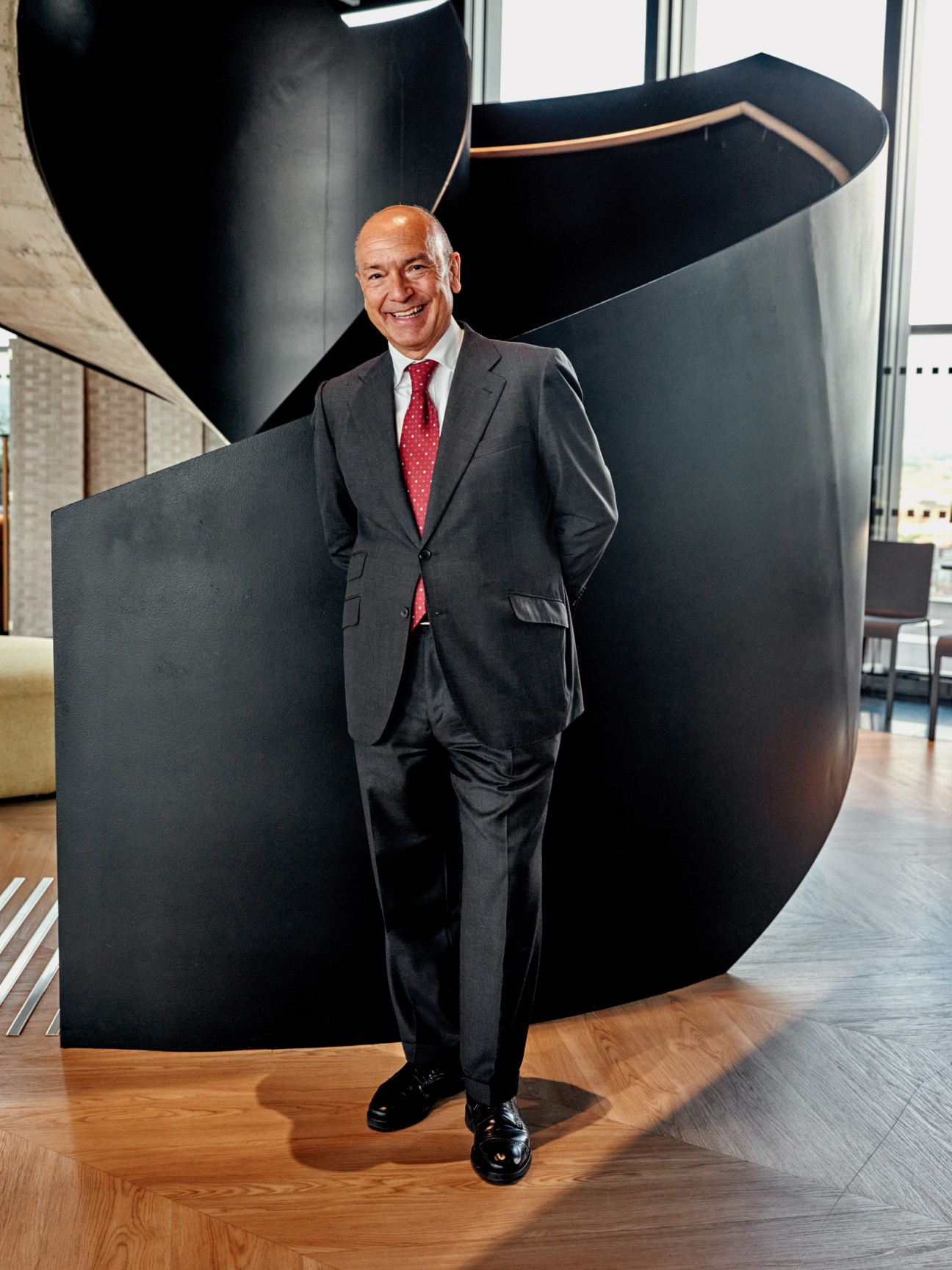
The executive president calls Spain “a gateway between Europe and the Americas”. Indeed, IE’s success wouldn’t be what it was without its intake from the wider Spanish-speaking world. Currently, about 85 per cent of IE’s enrolment comes from abroad, with 15 per cent from Latin America.
This growing percentile is part of a bigger story reshaping Madrid. Many students are moving from the Americas with their entire families, putting further strain on an already-stretched property market but also invigorating the economy. As well as a slew of new investments, there’s plenty of spending in retail, restaurant and service sectors.

“I would love to stay in my country but there’s too much instability and insecurity,” says fourth-year undergraduate student María Victoria Felipe di Toro, a Venezuelan who is also president of the university debate club. “When I moved to Madrid, I would still send five friends my live location as a precaution before I got into a taxi,” she adds. “Being able to walk down the street, catch public transport or be out at night without fear or anxiety took some getting used to but it fosters a better study experience.” She does admit, however, to the dilemma of being a skilled immigrant. “Will we stay? How do we navigate living between two different realities? What responsibility do we have to improve the situation at home?”
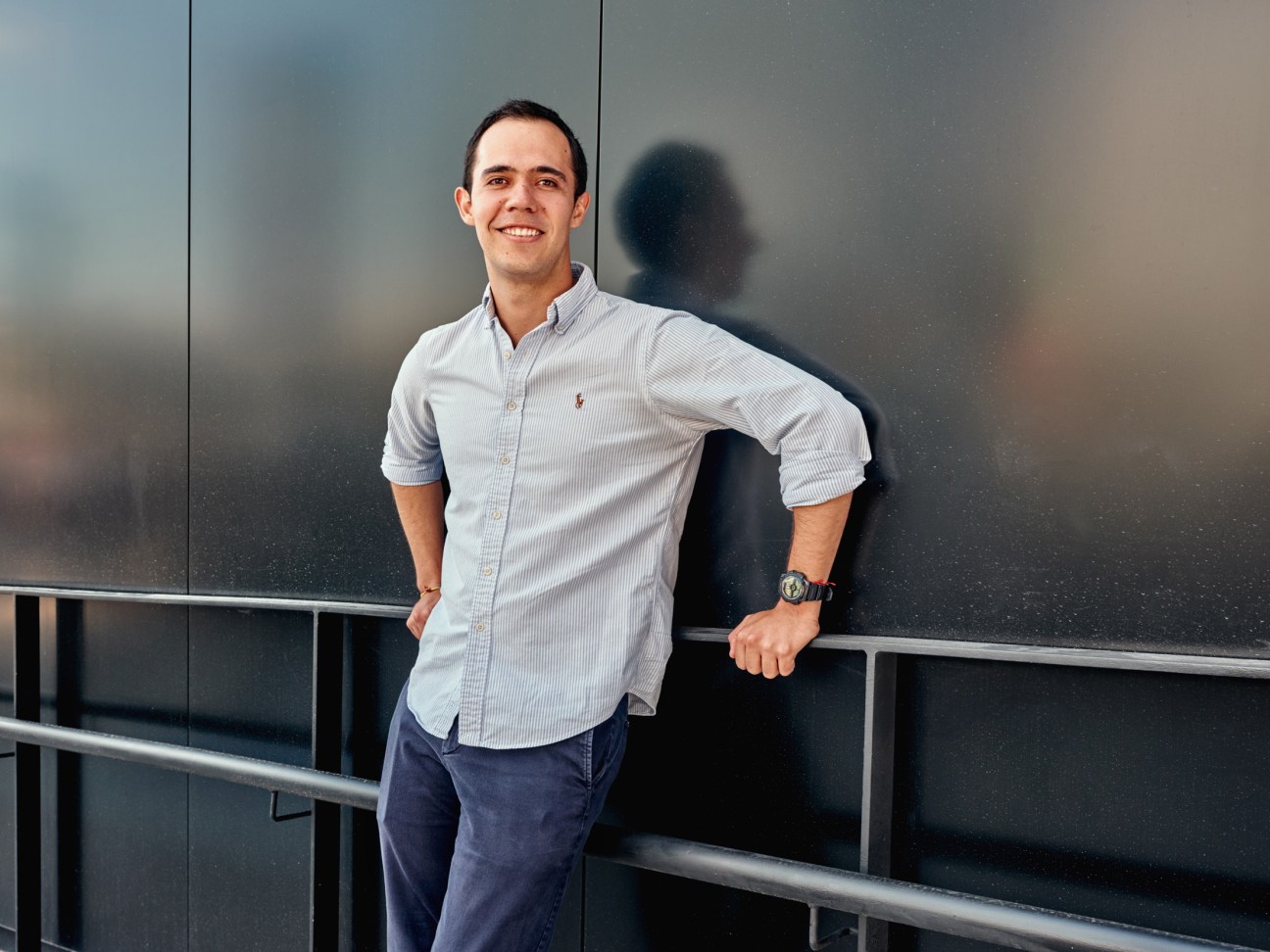
A group of Latam students gather in one of the campus’s capacious lounge areas to expand upon the conundrum. “Home is always calling but individual development is also important,” says Carlos Rodríguez, an international mba student from Colombia.

Madrid’s magnetic lifestyle has one particularly adamant convert in Stefanie Reis. The International mba student left a project-manager role in her family’s logistics firm in Brazil to study business in Madrid. She has little intention of returning home – for now. “Even though I could earn five times more in Brazil, I like the flow of life in Madrid,” she says. “People aren’t just living to work here.”
But the boom in Latinos isn’t just students. In the well-heeled Salesas district (see here), Venezuelan Victor Rocha Laporta is taking us for a stroll to his favourite coffee spot. He opened his consultancy, Laporta Properties, in 2019 to help compatriots stride into the Spanish capital with confidence. It has since grown into a fully fledged agency, helping clients navigate Spanish bureaucracy and purchase turnkey properties, as well as overseeing renovations. “I began with only Venezuelans but as of 2022, 50 per cent of my clients are Mexicans in search of high-end properties,” says Laporta, explaining how Venezuelans have since discovered a lucrative business by renovating and selling upgraded properties back to this growing cohort. “What I enjoy most about my job is having clients see Madrid as a refuge – for themselves and for their money. The instability in our countries brings a lot of fear; my business brings peace of mind.”
Investment by Latin American companies in Spain climbed to €2.83bn in 2023, up 138 per cent from the previous year. It’s a boon for the wider economy but the influx of capital means that some are being priced out. Increased demand saw housing prices rise more than 10 per cent at the start of 2024, making Madrid the fastest rising market in Europe. Tensions around rising prices have also put the issue of mass tourism and immigration in the sightlines of protests and fractious political debates.
Despite burgeoning anxieties, Spanish prime minister Pedro Sánchez recently announced a large expansion to Madrid’s Adolfo Suárez airport to extend its capacity to 90 million passengers by 2031 and strengthen routes with Latin America and Asia. But Sánchez’s left-leaning government has mooted plans to end the country’s golden visa, which fast-tracks residence for foreign nationals investing more than €600,000. To date, the politically sensitive scheme remains in place.

Meanwhile, cultural shifts are changing the city. Restaurants have started loosening kitchen opening hours to cater to slightly earlier Latam schedules. Others have introduced fixed dining times to capitalise on increased demand, much to the chagrin of locals known for enjoying a languid sobremesa. “Immigrants bring freshness,” says Venezuelan restaurateur and fashion entrepreneur Eliza Arcaya. She offers us a plate of tequeños (fried pastry rolls filled with cheese) at Murillo Café, which she opened behind the Prado Museum in 2007. “Back then everything closed in the middle of the day,” she recalls. “I wanted to create an open-all-day bistro, like I was used to in Caracas.” It’s now a social embassy of sorts for Latin American expats.
“There’s always been a fraternity between Spain and Venezuela – family, linguistic and historical ties – mean we blend in easily. Many Spaniards have affection for us because their families went to Latin America to make their fortunes,” she says. “I wanted my children to grow up in a country with a solid legal framework and foundation.” The city is making some moves so its residents can breathe with relief. The view from IE’s top floor showcases the capital’s rapidly transforming urban landscape, with one of Europe’s biggest residential and commercial developments, Madrid Nuevo Norte (New North), surrounding the tower. An ambitious upgrade of the Chamartín railway station will soon cover the train tracks, making way for thousands more houses, futuristic office space and a new central park.
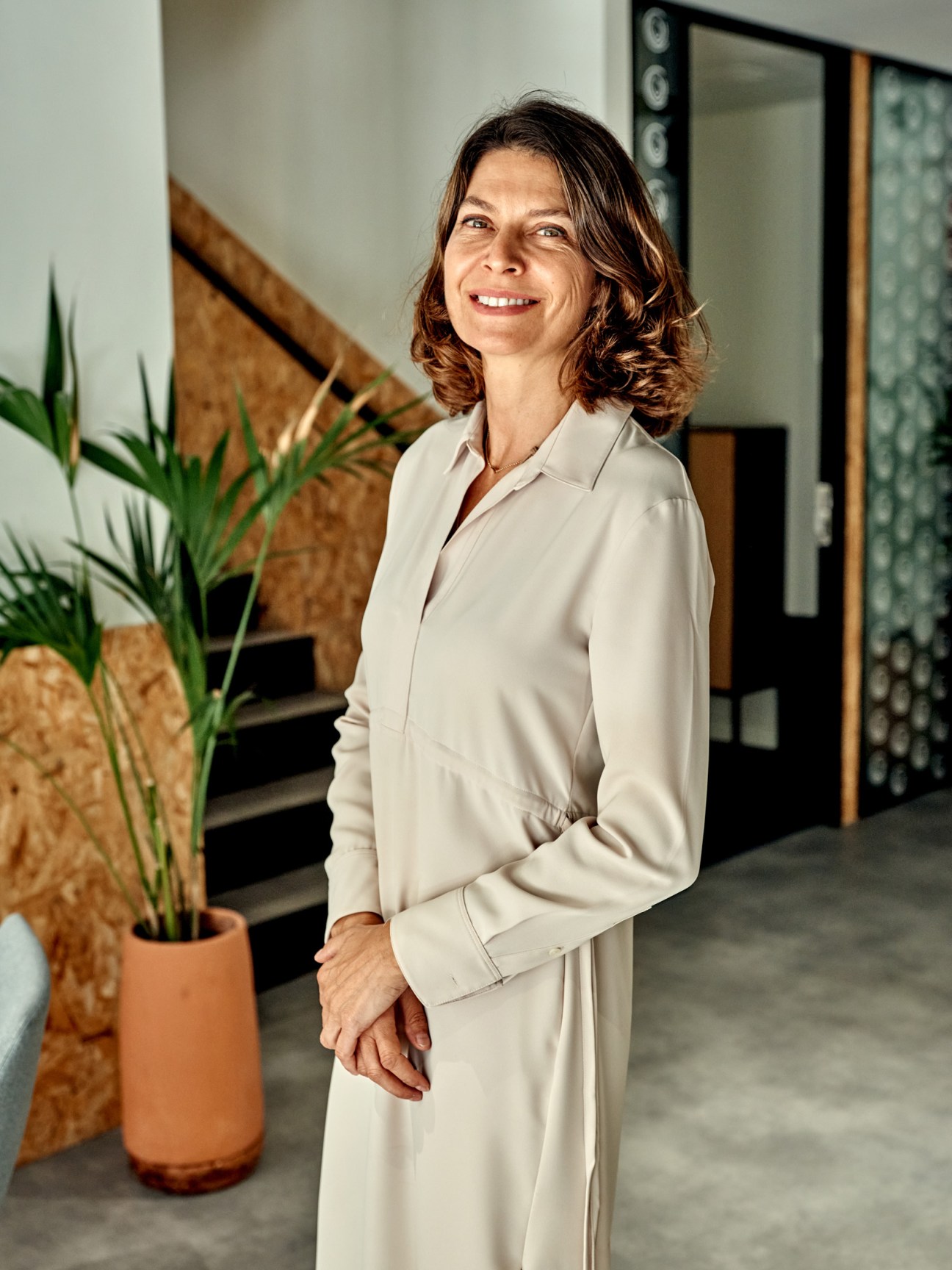
IE is also making a bid for the future, with acquisitions in New York, Saudi Arabia, and The Global College, a co-ed day and boarding school in Madrid’s leafy El Viso neighbourhood, which offers an IB diploma programme. The Global College’s president and ceo, Lucía Figar, is a former education minister and explains the city’s winning pitch to monocle with succinct poise. “It’s the city factor: climate, culture, centrality and social life,” she says, after wrapping a tour with two parents interested in enrolling their daughter here. “Apart from being safe, confident and vibrant, Madrid is also an easy city.” —
In numbers
The financial benefits of the Latin American and Spanish relationship
1.
€124bn
The estimated amount of capital flight from Latin America’s five largest economies since 2022.
2.
€1.1bn
Invested in Spain from Latin America in 2022, according to the Institute for Foreign Trade.
3.
€700m
Spent by Mexicans on Spanish property and construction since 2020.
4.
€4,190
The average price of Madrid property per sq m in 2024.
5.
30 per cent
The projected increase of people in Madrid with a net worth of €1m or more by 2027.
6.
€319m
IE University’s forecasted turnover for 2024.
7.
€24m
Allocated to scholarships by IE University and the IE Foundation in the past year.
Farewell to arms as the demand for weapons skyrockets in uncertain times
The world’s largest aerospace and defence companies look set to earn record revenues as countries seek to rearm in the light of the Ukraine and Gaza wars. This reported bonanza is hardly surprising, given the vast expenditure of munitions and materiel in both conflicts. It’s a marked departure from the decades of relative peace following the demise of the Soviet Union. Armed forces around the globe shrunk, with some notable exceptions, as governments spent on other priorities. Nowhere was this trend more acute than in Western Europe – but that peace is now over.
The alarm bell first went off in 2014 when Russia illegally occupied Crimea and the snooze button was permanently switched off with the subsequent full-scale invasion of Ukraine in February 2022. Governments belatedly woke from their slumber and looked to their armed forces once more. Many were embarrassed by the decline that had taken place when they weren’t looking. Countries had grown complacent and were now playing catch-up. There was also a stinging realisation that expanding armed forces and equipping them adequately would not happen overnight. Many domestic defence-industry manufacturers of the past were simply no longer in business.

So does all of this signify a boom time for the arms industry? Yes and no. Certainly, a huge amount of materiel and ammunition has been sent to – and expended by – Ukraine. Much of it has come from the national stocks of its allies, which now need to be replenished as quickly as possible. Likewise, Israel has been kept supplied in its struggle against Iran’s proxies, particularly Hamas and Hezbollah, by weapons exports primarily from the US, Germany and Italy. However, while it might seem as though the current conflicts have made it a seller’s market and that manufacturers have been given a licence to print money, other factors come into play. And politics, both global and domestic, is never far away.
Demand for weapons and equipment around the world has clearly increased. But in the words of the Rolling Stones, “You can’t always get what you want.” The US and other Western nations have supplied some support to Ukraine reluctantly and placed restrictions on its use. Governments are also facing increasingly vociferous demands from pro-Palestinian activists to halt arms sales to Israel while the war in Gaza continues. The UK has now partially bowed to popular pressure; the US and others have not. Manufacturers are being curtailed from making as much as they might like to do as a result.
There are domestic constraints too. The UK’s Ministry of Defence has committed £7.6bn (€9bn) in military aid to Ukraine over the past three years. Stockpiles of ammunition and other materiel have been run down because of both government parsimony over past decades and donations to other nations, to the extent that the recent chief of the general staff, Sir Patrick Sanders, said, “It would make your hair stand on end.” At the same time, the incoming Labour administration has been startled by the poor state of the nation’s finances, meaning little guarantee can be given on future arms orders.
The UK government has commissioned yet another strategic defence review, which cynics say is a euphemism for future defence cuts. The country’s armed forces are in dire straits, with a projected £80bn (€95bn) “hole” in its budget over the next decade and clearly some equipment programmes might have to be cancelled to balance the books. There is a very real possibility, therefore, that the arms boom will be short-lived, unless governments, from the UK to Germany, commit to serious investment in new production facilities, plus storage space for armaments. This could take time, if it happens at all.
The challenge for the defence industry is a long-term conundrum. Is it worth investing further? And most importantly, who is going to pay?
Born in Glasgow, Crawford is a journalist and former soldier who served the UK over a 20-year career.
Madrid’s fashion scene is booming, and Salesas is leading the charge
Madrid is Spain’s most important business city but those who have spent time in the Spanish capital also know it for its hospitality, thriving art scene and flair for late-night revelry. There’s never been a shortage of people travelling to the city to visit its museums, urban parks and tabernas. But Madrid has also been building a reputation for fashion – stealing some of the thunder from Barcelona. The Gran Vía has never been busier and department stores here now offer some of the sharpest luxury-fashion curations available in Europe. And its neighbourhoods are becoming fashion hubs as local designers and the city’s growing population of expats open concept shops and brand flagships, touching on every aspect of the market, from leather accessories to womenswear and sportswear.
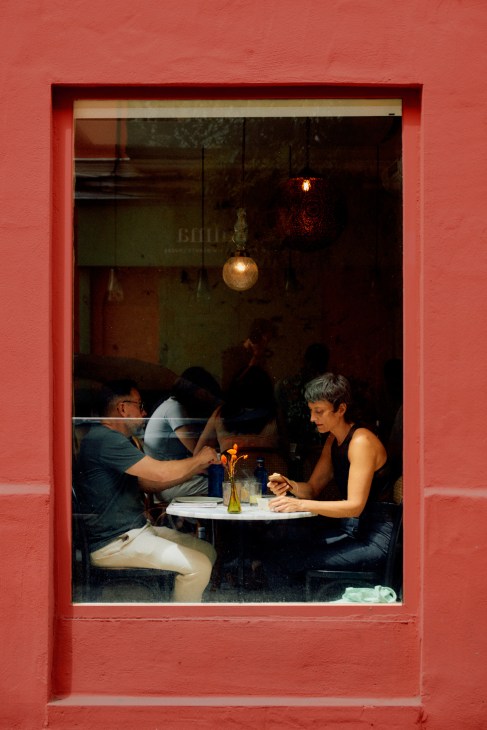

Salesas, sandwiched between lively Chueca and Salamanca in downtown Madrid, is one of these neighbourhoods. Over the past five years the area, with its tree-lined squares and 19th-century buildings, has turned into a magnet for the city’s creatives and transformed into one of its most elegant retail addresses.
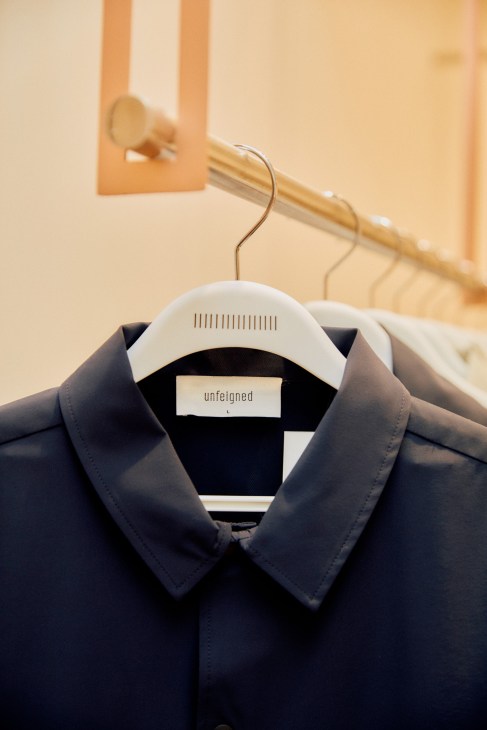
“Salesas is an oasis,” says Maria Gómez Ruiz, the art director and co-founder of Spanish menswear brand Unfeigned, who picked Salesas as the home of her business’s office and first flagship shop. Since its opening in 2022, Unfeigned has become a central part of the community, which also includes Madrid-based accessories labels Malababa and Zubi, multi-brand boutiques Pez and Ekseption, and menswear specialist Blaw.
There’s a real sense of camaraderie among residents. Gómez often directs friends to Pez, praising its edit of Spanish labels including Masscob and Cordera; she makes regular stops at La Oficial to buy ceramics for her home and finishes off long workdays at Gota wine bar or Los 33, a favourite, that blends traditional Spanish and Latin American recipes.
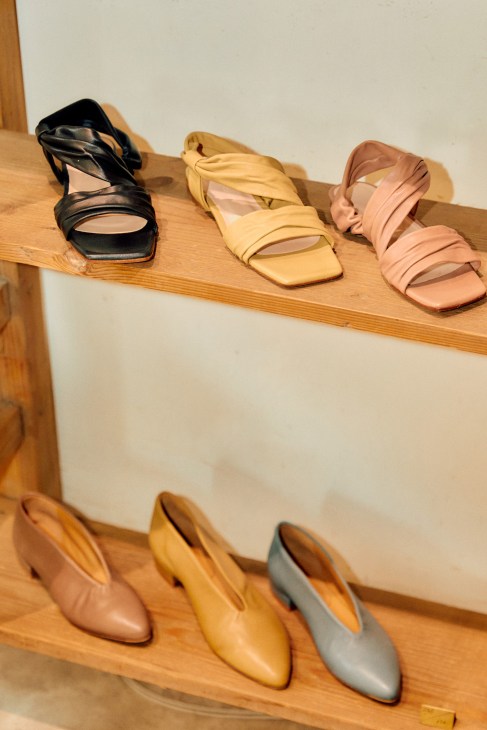

In many ways the rapid transformation of Salesas reflects the growth wave that has been sweeping through Madrid – largely a result of increased Latin American investment and migration. The welcoming policies for foreign property investors (the Spanish government grants residence permits to those purchasing property above €500,000), shared language, cultural ties and political turmoil in Venezuela have all drawn wealthy South American elites to Madrid, so much so that by early 2022, 58 per cent of the city’s foreign-born residents were said to come from Latin America.
Salesas has become the destination of choice for the wealthier members of this crowd of new madrileños. No matter when you go, you’re likely to find elegant women and men going for strolls, carrier bags in hand, stopping to sip cañas in the late afternoon sun. “The clientele here appreciate quality but aren’t into mainstream products,” says Gómez. “They’ll spend €700 but they don’t want the logo or the big brand name.”
It’s this understated charm that also appeals to international fashion labels, which are coming to Madrid to open flagship shops and are keen to take advantage of the momentum in the Spanish capital. “Everything is changing extremely fast, which is good for us,” Gómez says, sitting in Unfeigned’s office, surrounded by rows of shirts and sporty trousers. “When we moved to the area, we didn’t know that Aesop or apc would be opening here too.” The boutiques from established brands have brought prestige to the area and increased footfall. Veja, Sessùn, Stüssy and Taschen have also opened shops here.


It’s not just established labels that are cropping up. “A lot of [independent] Spanish brands, which used to only be available online, are opening really nice flagships here,” adds Gómez. Lamarca Well, a sportswear brand, is one of them. The shop is part of a network of wellness- orientated businesses and includes a gym, a healthy restaurant and bakery.
“This is one of the only gyms by [US entrepreneur] Tracy Anderson outside America,” says Gómez, explaining that the wave of expats moving to Madrid is also influencing culture, particularly when it comes to fashion and lifestyle. “I have never seen so many people joining running clubs.” Gómez and her brother, Rafa, both avid runners, believe the worlds of wellness and fashion feed into each other. “When people start to care about how they look, they become invested in how they dress as well,” says Rafa.


Both Gómez siblings welcome the shifting dynamics and the increased international flavour in their hometown – even though a lot of the new ventures in Salesas feel more American than Castilian. “The success of the area is driven by the fact that people are moving here, buying and starting brands,” adds Gómez. “The La Marca building is owned by a Venezuelan family. There’s a really popular Mexican-owned salad bar chain here and my Argentinian friends founded the best speciality coffee shop in Madrid, Osom.”
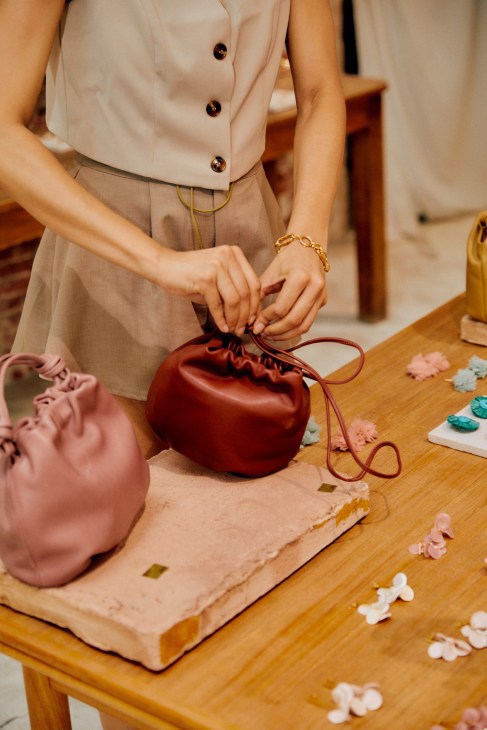
This new blend of cultures is what makes the neighbourhood so appealing. Salesas is the kind of place where old and new can co-exist. Here, tabernas, centuries-old tapas restaurants and artisanal shops such as the Cesteria Sagon (dating back to the 1950s and offering beautiful handwoven baskets) sit alongside contemporary fashion boutiques, galleries and upscale wine bars, where resident DJs spin records late into the night. “You can have a nice tortilla sandwich with your coffee, and then have a Michelin-starred meal,” says Gómez, who also lives nearby. “To me, that’s the essence of life here.”
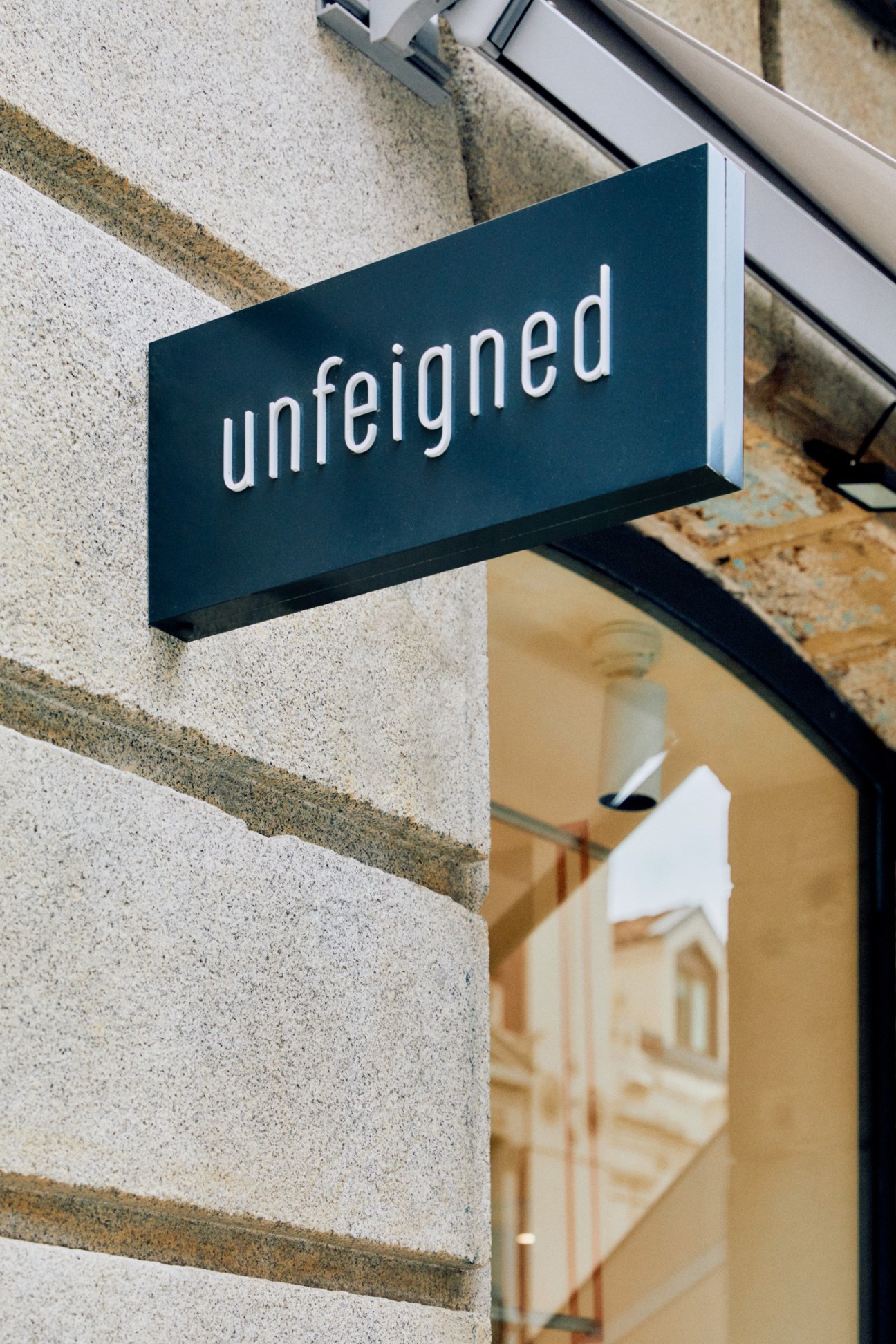
This convergence of tradition and innovation is also reflected in the designs that you’ll find across Salesas’s shop floors. Unfeigned, for one, offers sustainably made, no-frills clothing crafted in technical, often waterproof fabrics, yet rooted in traditional tailoring principles. “My brother, Rafa, has always been obsessed with making the perfect T-shirt,” says Gómez. “This is why we went all around the world to different factories and bought different shirts from Japan to San Francisco.” As the brand continues to grow, the two continue to make trips abroad and bring the knowledge they acquire back home to Salesas.
Pez, a bohemian concept shop across the road, features a potpourri of Spanish and international brands, from pieces by Dutch labels such as Humanoid and Les Coyotes de Paris to jewellery by Madrid-based designer Beatriz Palacios. The shop, which operates out of an old carpet factory, is equal parts elegant and rustic, the kind of place where you might find easy dresses hanging next to more structured pieces, such as a tailored jacket by the New York brand Sibel Saral. Pez was founded by Patricia de Salas and Beatriz Mezquiriz, who came to Salesas before its rise. The rapid transformation has been mostly positive for her business but de Salas also recognises that there have been some drawbacks – higher rents can make it more difficult for smaller businesses to stay in the neighbourhood. A balance will need to be found.
Still, the positives more than outweigh the negatives for most of Salesas’ local designers and retailers, who have been enjoying the exposure to a more global audience. At Malababa, which specialises in handcrafted, leather accessories, shop assistant Carolain Spencer shows monocle a pair of earrings from the window display: they are made from a delicate brass material, with a swirl of pink petals dangling loosely from the bottom. “These have become huge in South Korea,” she says, holding them up on the palm of her hand. “So many customers come here looking for this exact model.”
It used to be that Barcelona was touted as Spain’s most international city but that role has become less sure. This is, of course, mostly due to immigration but it is also a product of better infrastructure. Rafa Gómez cites the recent renovation of the Santiago Bernabéu Stadium as an example of the many ways in which the Spanish capital is improving. “People used to have to go to Barcelona to see the international pop stars,” he says. “Now Madrid can do that as well.”
Some entrepreneurs see the rivalry between the two cities as productive. “Competition is good,” says Xavi Burgell, co-founder of Blaw Store, a menswear shop that first opened in Barcelona and is best known for its beachy, laid-back designs. When deciding on a Madrid location, Burgell and his wife and business partner, Anna Vintro, were drawn to Salesas because of its restaurants and mix of independent brands. “I love food,” says Burgell. Now, it’s Madrid’s culture that they are most intrigued by. “The clientele are cosmopolitan people and we see a lot of actors and artists here,” he adds. Galleries with a presence in the area, such as Échale Guindas, Orellana-5 and Villazan, likely have something to do with that.
Our tour of the neighbourhood ends with a loop around the Convent of the Salesas Reales, home to Spain’s supreme court. As the working day comes to an end, the streets start to become busier. Older men sit on plastic chairs in front of newsstands playing cards; women dressed in crisp shirts and golden jewellery stand outside the Teatro Infanta Isabel picking at swirls of frozen yoghurt; smooth-faced millennials order gin cocktails at MaceM bar. These small scenes are the best part of living and working in Salesas. “The people on these streets are always fashionable or they work in art,” says Gómez. “I never need to go to another part of Madrid to see something interesting happening because here you find inspiration every day.”
Salesas address book
For wardrobe classics:
Unfeigned
Calle de Fernando VI, 17, Centro
Best curation:
Pez
Calle de Regueros, 15, Centro
Menswear specialist:
Blaw Store
Calle del Barquillo 36, Centro
Morning pastries:
La Duquesita
Calle de Fernando VI, 2, Centro
To refuel:
Gota wine bar
Calle de Prim, 5, Centro
Taste of Salesas:
Los 33
Plaza de las Salesas, 9, Centro
Artisan design:
Cestería Sagon
Calle de Fernando VI, 7, Centro
Gallery visit:
Orellana-5
Calle de Orellana, 5, Centro
Five veteran journalists discuss the future of news in the face of tech failures and election
When former US president Donald Trump sat down with the billionaire Elon Musk for an interview earlier this year, things didn’t quite go to plan. Livestreaming on X, the feed wasn’t accessible for most viewers for the first 40 minutes. Then the two participants were stuck on mute. Ultimately, the whole thing ran to a rambling two hours. Musk blamed the glitches on a cyberattack, which is certainly possible. Yet the ad hoc production and discursive chat also underlined the teething troubles of these new, supposedly disruptive sources of where people get their news and views.
With a month to go until the US decides its next president, monocle spoke to five veteran journalists about how to cover such a twisting, turning election. We often hear that it is a tricky moment for legacy broadcasters and news outlets. That audiences are leaking to influencer interviewers and chatty online anchors, and trust in the trade is at an all-time low. Yet the journalists and teams we spoke to still command vast audiences, week-in-week-out, and they do so using old-school principles.
We travelled from newsrooms in the American South to studios in Washington via the Democratic National Convention in Chicago to see these journalists at work. There’s no doubt that news is changing, and many of our interviewees have also branched out into personal platforms like podcasts and newsletters. But, for now, much of the news is still as we knew it.
1.
Local hero
Leroy Chapman Jr
Editor in chief, ‘Atlanta Journal Constitution’
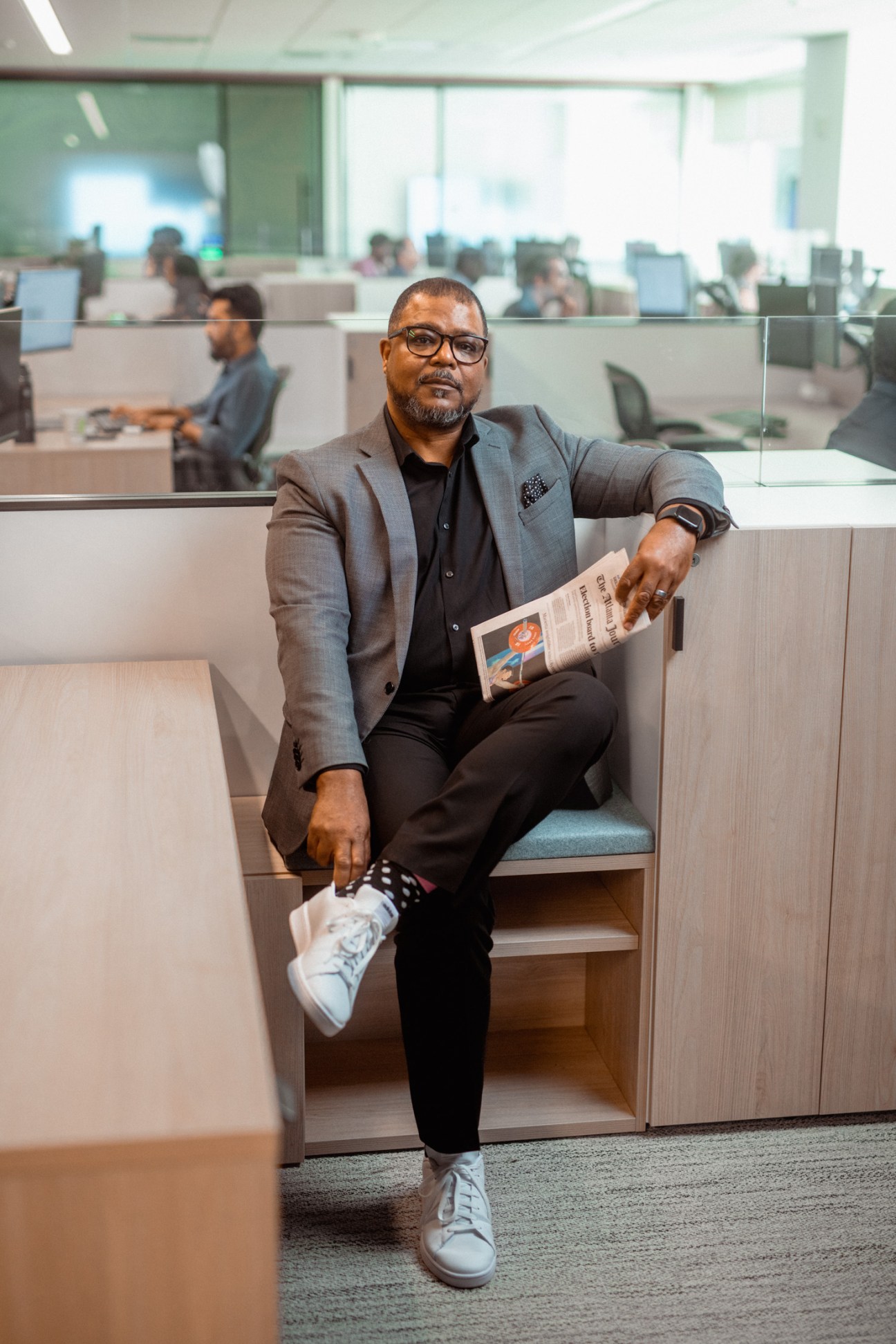
Atlanta is among the fastest-growing cites in the US, while Georgia, where Joe Biden won by 11,000 votes last time, is among the swingiest of the swing states. This gives the local paper outsize influence in this election. “This is also one of the fastest diversifying counties,” says Chapman. “This is what America’s going to look like in years to come.”
Chapman describes himself as a ‘rabid non-partisan’. “Our job is to bring light but not heat,” he says. “We can bring light to what makes the parties dysfunctional; what gets in the way of them serving the country.”
Ahead of this election, the AJC opened three new bureaux and is offering voter guides to the candidate options on local ballots across the state. “We have elections in 159 Georgia counties – for the sheriff, the district attorney, officials who stand a chance of having more impact on [Georgians’] lives than who ends up president,” says Chapman. With the loss or hollowing out of so many local outlets, people simply do not know who they’re voting for or who’s funding their campaigns. “There’s a lot of opportunity and public desire for that very basic information. It’s also what our democracy demands.”
The facts
‘Atlanta Journal Constitution’ founded: 1868 [as The Atlanta Constitution]
Circulation: 80,000-100,000 for weekday edition
Motto: “The Substance and Soul of the South”
2.
Cool head
Bret Baier
Chief political anchor, Fox News

After Donald Trump was shot in the ear in July, Bret Baier was one of a select few reporters the former president called. Not that the long-standing Fox anchor is a toad for the former president; in fact, Baier was on the sharp end of a Trumpian online tirade last year after a grilling interview. “What you’re going to get from me is fair, respectful, but sometimes tough,” says Baier, whose face still has a hint of pancake makeup after recording his Special Report, which airs every weeknight at 18:00 Eastern time. “To do that with [Trump], who’s perceived to be more aligned with [Fox’s] opinion is, I think, a good thing for news.”
Baier has anchored the nightly slot since 2009. Among the network’s on-air talent, he has carved out a niche for doing less of the editorialising – and virulent anti-Democrat monologues – that characterises much of Fox’s output. “I’m trying to take the temperature down,” he says.
Once the network of conservatives, Fox executives say that in this election cycle more Democratic politicians want to come on air to reach crucial swing voters. Common Ground – a format that Baier himself came up with – brings together politicians from opposing sides of the House to talk through a piece of bipartisan legislation that they’re working through together. “Covering both sides [in this election], with the structure that we do, is a comfort for some folks and for that we [attract an] audience,” says Baier. He always presents the evening news in a starched collar and never drifts into the kind of animated outrage of some of his Fox colleagues. There is something pleasantly throwback about Baier’s evening news show: “I think there is hunger for the more formal way,” he says.
Baier has written extensively about former president Dwight D Eisenhower and the transition of power to the Kennedy administration that kicked off the 1960s and changed America forever. The most recent transition in 2021 was fraught, as Donald Trump famously refused to accept the result. How can the media do better if that happens again?
“I was on air that day and we did a pretty good job,” says Baier. “I think we could speak less to the extremes and get to that middle ground where people agree. There is a lot of space there.”
The facts
‘Special Report’ viewers: 2.9 million every night (July)
Increase in Democrats appearing on Fox this year: 41 per cent
Nightly sign-off: “Fair, Balanced and Unafraid”
3.
Trusted host
Katty Kay
US special correspondent, BBC, and host, ‘The Rest is Politics: US’
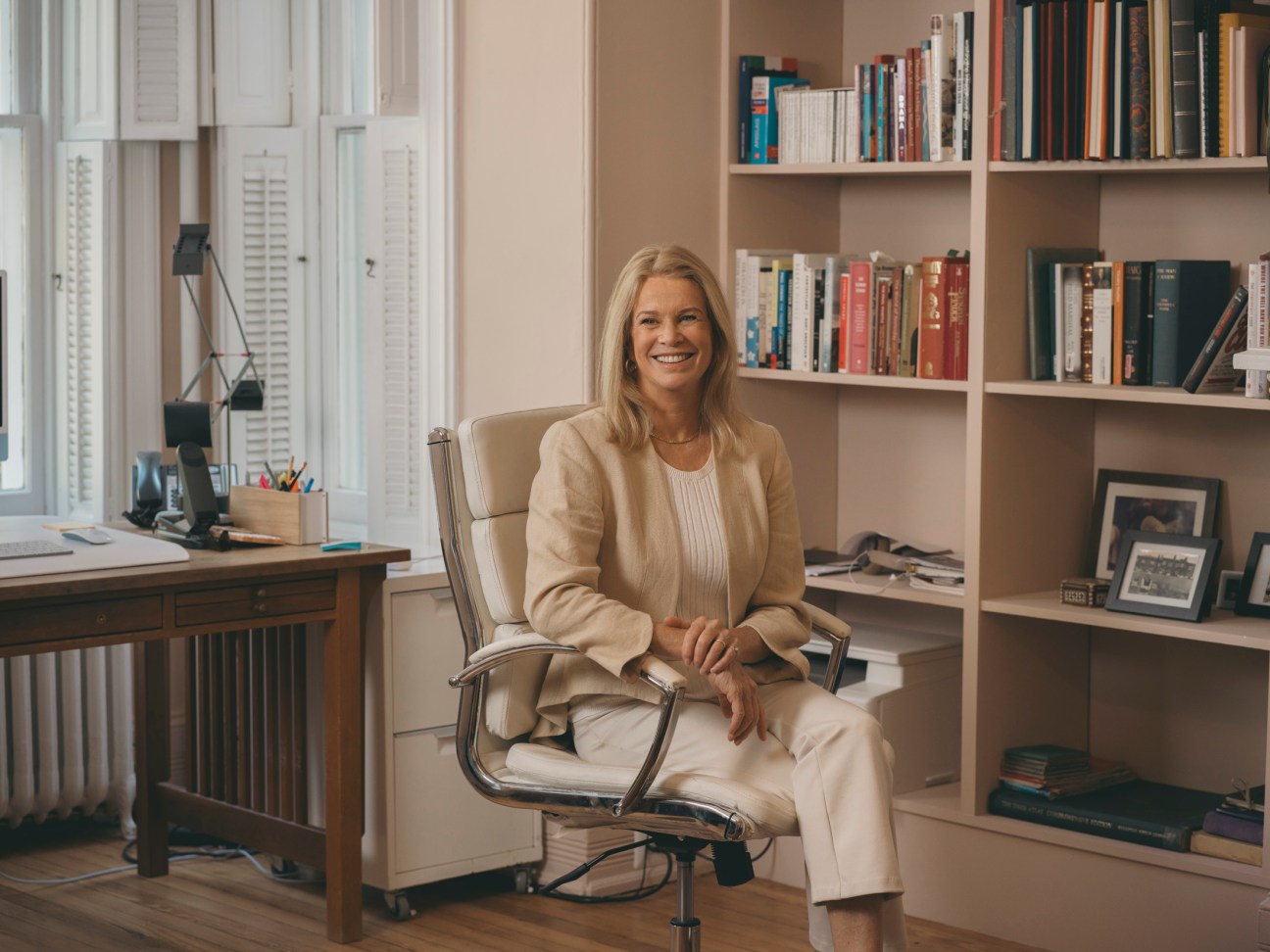
Much like her current title at the BBC, Katty Kay’s role as US special correspondent, and her broader position in the American media ecosystem, is, well, somewhat special. It is rare for a non-American news broadcaster (Kay is British-Swiss), working for a foreign newsroom, to be as close to a household name as Kay has become, since she began reporting from Washington in 1996.
Kay’s journalism has cut across the loose partisan lines that characterise much of the US broadcast news landscape. This, she says, is because her reporting and analysis is tethered to her deep contacts with political figures on either side of the political divide, rather than being informed by a political agenda of any given stripe.
“Maybe it is because I’m an outsider; I actually don’t have an American passport,” she tells monocle. “But I’ve been covering American politics for 20 years, and it has taken a long time, but I have built up a reservoir of trust with the people that I speak to. And whether I talk to people through podcasts, on television, or in print, I know that my audience is following me where I am going.”
It is in that spirit of seeking trustworthy perspectives on the upheavals of a dramatic US presidential election that has drawn listeners in their millions to Kay’s latest venture, weekly politics podcast The Rest is Politics: US. The show is produced by the UK-based podcast studio Goalhanger, and Kay acts as co-host alongside former White House communications director Anthony Scaramucci.
“It’s interesting with podcasts, because everyone bemoaned the fact that we had an attention deficit disorder – yet here are people happy to listen to a discussion for 30 or 40 minutes,” says Kay. “And these are young audiences who are happy to take the time to listen to something deeply and thoughtfully. We’ve broken down some of the hierarchy of the media – it’s gone.” Listeners respond to a format that allows discussions to flow more freely. “The days where somebody could just sit behind a desk and present the dry facts – that’s not good enough anymore. The onus is on us to deliver information in a way that our audiences want. And they want to know that they’re spending their time with someone they trust.”
The facts
First international posting: Zimbabwe in 1990 before postings in London, Tokyo and Washington
Number of US elections covered: Nine
‘The Rest is Politics: US’ downloads: 18 million since launch
4.
Latino voice
Maria Hinojosa
Executive producer of ‘Latino USA’ and founder of Futuro Media
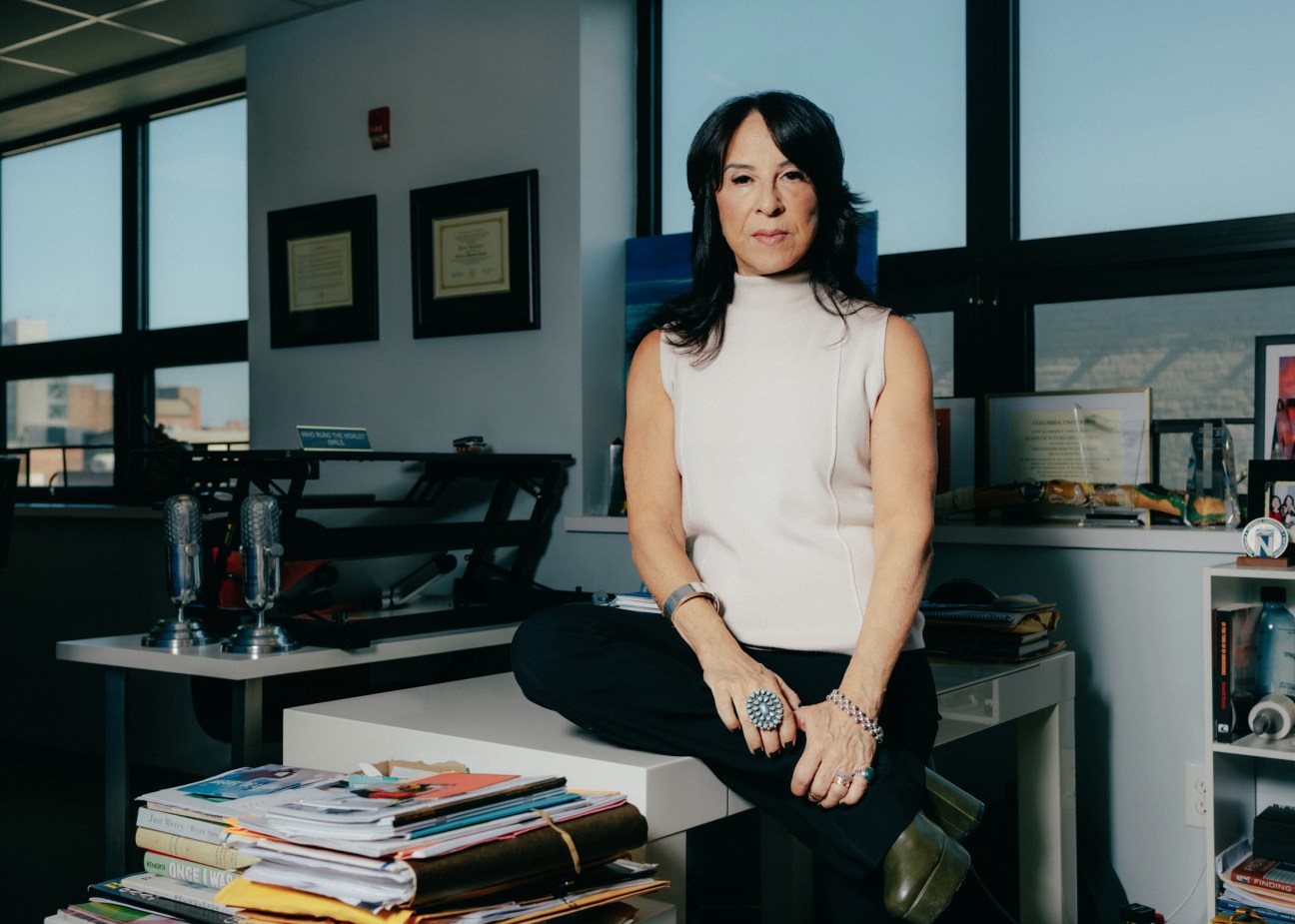
When the Pulitzer-prize winning radio host and producer Maria Hinojosa emigrated to the US from Mexico as a child in the 1960s, the US’s southern border was not as politically fraught as it is today. “I grew up at a time when immigrants were actually sought-after in this country,” Hinojosa says. Her father Raúl, a doctor, was invited to join a research team at the university of Chicago, which would go on to devise the world’s first cochlear implants. “It was a time when the brain drain of other countries was a ‘brain gain’ for the United States,” she adds.
Among the rituals the Hinojosa family adopted upon their arrival in Chicago’s south side was to tune in to the nightly news. “Television was our source of understanding the US as new immigrants,” Hinojosa says. “But I never saw myself reflected [on, or in, the news] in any way.”
So, in 1992, when Hinojosa was invited to host Latino USA – the first English-language news programme devoted to Hispanic affairs on US public radio – she jumped at the chance. Broadcast each week on more than 240 public radio stations across the country, Latino USA is now America’s longest-running radio programme of its kind. The show’s stories and investigations reflect multiple aspects of life among the US’s second-largest demographic group. Hinojosa’s deftness during interviews, plus her ability to move nimbly between subjects, attracts high-profile guests – including vice president Kamala Harris, who sat down with her for an interview last September.
But despite also being one of the fastest-growing demographics, Hinojosa argues that the US’s Latino communities are still covered in broad brushstrokes in much of the mainstream press. Shows like Latino USA, as well as the documentaries and podcasts produced by Futuro Media, the production studio Hinojosa established in 2010, aim to chronicle the US’s Latino populations with a nuance often absent from news coverage elsewhere. “This is a danger, because Latinos and Latinas are the swing votes within the swing states. To not acknowledge the power of those votes, and to not help educate Latino voters and, indeed, the entire country, about the power of the Latino vote – that is a problem. And it’s just bad journalism.”
The facts
Launch of ‘Latino usa’: 1993
Recent reports: Press freedom in Venezuela; Mexico’s election; and Palestinian solidarity movements in Latin America
On air greeting: “Now, dear listener…”
5.
Calm hands
Mary Hager
Executive producer of ‘Face the Nation’ at CBS
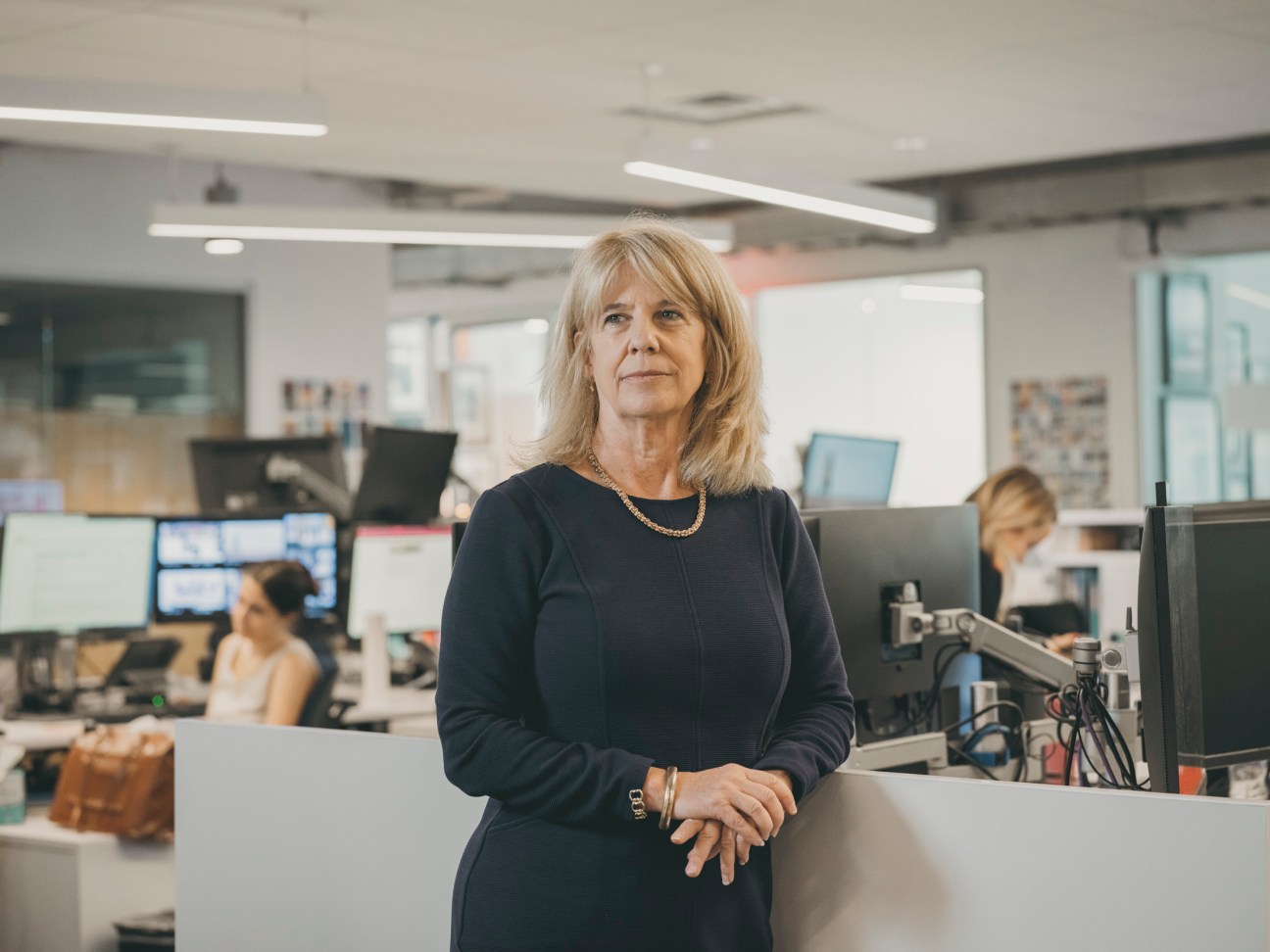
The mantra at Face the Nation’s first editorial meeting of the week is, “It’s only Wednesday.” This means that everything is still to play for until showtime on Sunday morning: never settle on a lead interview too early, hold your nerve, be prepared to rip up the running order on Saturday night. It’s a crucial news instinct in an election of handbrake turns and is instilled in the team by executive producer Mary Hager. She has shepherded the show for the last 14 years and has been at cbs for 30 years. Alongside her team of producers, Hager decides who gets grilled each week – usually one or two politicians – and which news lines to pursue along with in-house analysis. “The bottom line is this: how are Americans going to vote and what do we need to do – what do they need to know – to help them make up their minds?”
It’s been a rocky few years for America’s news networks amid declining audiences and shrinking newsrooms. cbs was not immune to this. Yet Face the Nation, 70 years on since it first aired, remains the most-watched show in the crucial Sunday morning spot. As networks battle for attention with discursive podcasts and livestreamed influencer chat shows, the programme has not budged from its undiluted format that typically puts newsmakers in a tight spot.
Armfuls of lanyards hang from a hook on the wall of Hager’s office in Washington, alongside the relics, flags and flyers of past conventions and caucuses. Colleagues say the EP embodies her own mission statement of “News not noise.” While many journalists talk about the unprecedented nature of what’s currently unfolding in American politics, Hager has seen dramatic upsets before: “The biggest challenge has been staying away from what we call the ‘bright shiny objects’,” she explains. “These are the grenades that are thrown by either campaign: the campaign staff shakeups and all the insider stuff.”
She says this election is happening while public distrust in government is increasing. “Our role is to present [officials] as government, push them, challenge and question them but still respect them,” says Hager. “It builds trust in us. If we’re going to take elected officials seriously and give them respect, then hopefully that will trickle down to the public.”
The facts
First aired: 1954
‘Face the Nation’ viewers: 2.8 million per year
How many elections Mary Hager has covered: 17
Fresh approaches to transport, logistics, and lifestyle products making waves
Transport: Canada
Hello, Hullo
The ferry voyage from Vancouver on the mainland to Vancouver Island, which lies off British Columbia’s coastline, is one of Canada’s most picturesque commutes. These routes have been served since 1960 by government-owned BC Ferries. For years, attempts to open up the passenger-ferry sector to healthy, private competition have hit choppy waters. That is, until summer 2023. A new, privately operated passenger service joined the region’s fleets, setting sail for the 70-minute voyage between Vancouver and the waterfront city of Nanaimo, on Vancouver Island.
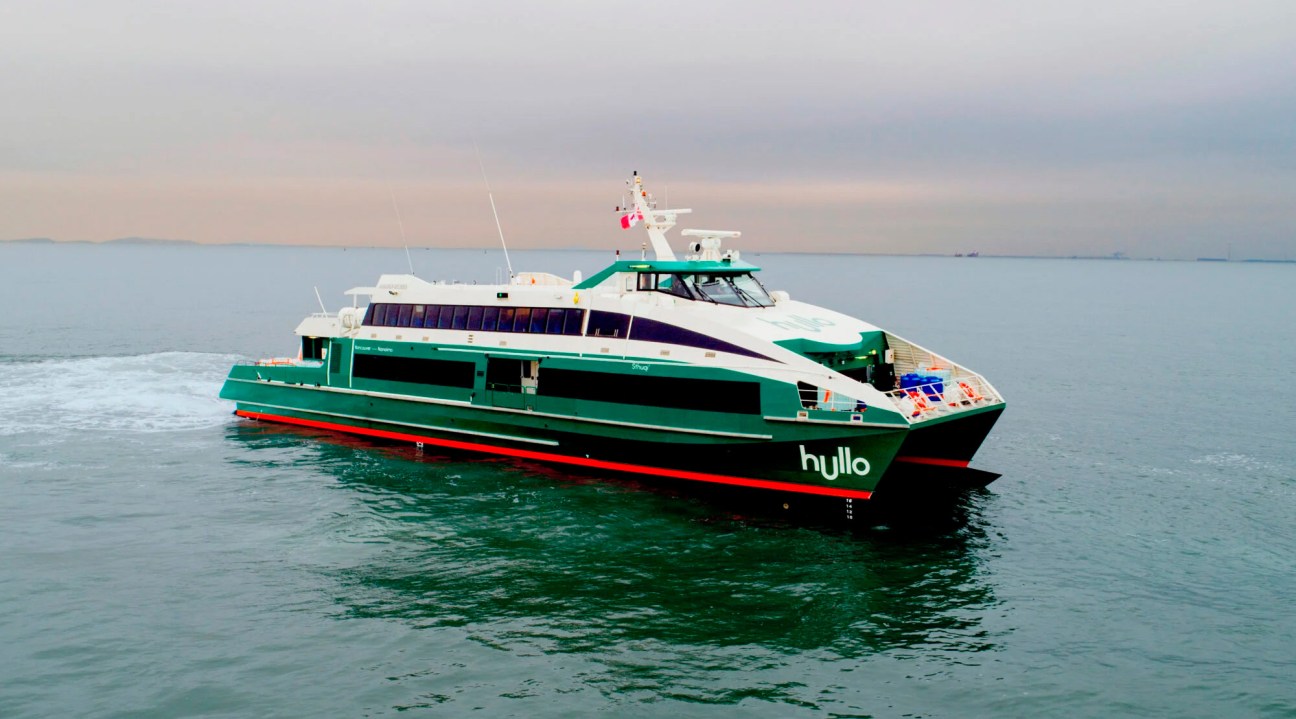
Cheerfully named Hullo, the service was launched by the Vancouver Island Ferry Company, a new operator, which was founded in Nanaimo in 2022. In its first year, 400,000 foot passengers used Hullo’s fleet, which consists of two speedy dff 4212 ships built by Dutch yard Damen at its facility in Vietnam. Plans to increase the number of daily journeys next spring – including at night – are already in place.
Hullo’s foray into the passenger-ferry sector has been smoother sailing than those of its predecessors for two reasons: high population growth in Vancouver and on the island, plus the addition of onward transport networks, including buses and seaplane services, at every ferry terminal.
The Entrepreneurs
Laura Kramer on: A clean vision
Often the answer is right in front of you, if the glasses that you’re wearing are clean enough to let you see it. For Gaëtan Gaye, the founder of Antwerp-based eyewear-care brand Alpagota, it was a matter of spotting a gap in the €130bn-plus eyewear market. “Cleaning products represent only 1 per cent of the total revenue, so we saw untapped potential,” he tells monocle. “If you wear prescription glasses or sunglasses, one thing is certain: you will need to clean them.”
With a background in the world of luxury horology, Gaye applied the lessons that he learned from timepieces to eyewear. “Fine watchmaking is all about the details,” he says. “ You’re not selling time – you are actually selling an experience. So I asked myself, ‘How can I enhance that for eyeglass wearers?’”
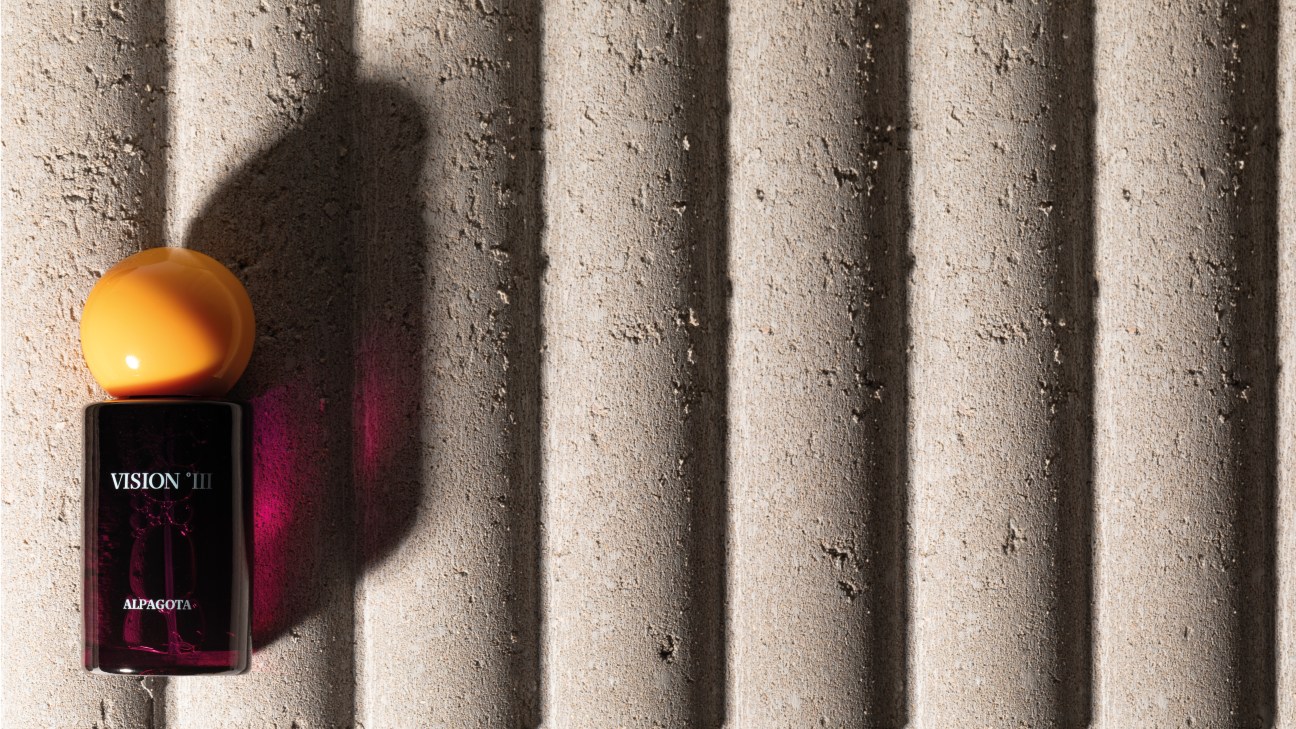
Alpagota launched in 2022 with a line of aromatic lens cleaners in refillable glass bottles, designed to look good on display, and cleaning cloths. The products combine high-quality clarity with fragrances such as Sandalwood & Matcha and Eucalyptus & Patchouli. “The look and smell were very important to me,” says Gaye. “The bottles have mid-century aesthetics and we worked with a perfumer in France because we wanted it to be a sophisticated multisensory ritual, so you look forward to doing it daily. I didn’t want it to smell of lemon or orange.”
In less than a year, the brand has taken off, expanding to Belgium, Germany, Hong Kong, Poland, Portugal, Spain and Switzerland, with a distributor in Japan and agents in France and Scandinavia. Gaye partly credits its success to fairs in the optical industry. “We launched at Silmo Paris to scale a bit of business,” he says. “It’s a product that you need to see and touch. I rely on retail and wholesale so, from the start, I thought about a margin and finding the suppliers.”
As the brand continues to grow internationally, Gaye is planning to build on the momentum and help people to see lenses and frames as medical devices that deserve elevated maintenance.
For more visionary ideas, listen to Monocle’s ‘The Entrepreneurs’ radio show and podcast.
Logistics: France
Winds of change
On 3 September the Anemos, the world’s largest cargo sailboat, completed its maiden voyage from Le Havre to New York, carrying champagne, cognac and jam across the Atlantic on wind power only. The 81-metre vessel is full of cutting-edge seafaring technology. It can carry more than 1,000 tonnes of cargo, thanks to its two towering masts, and is the brainchild of French shipping company towt (TransOceanic Wind Transport).
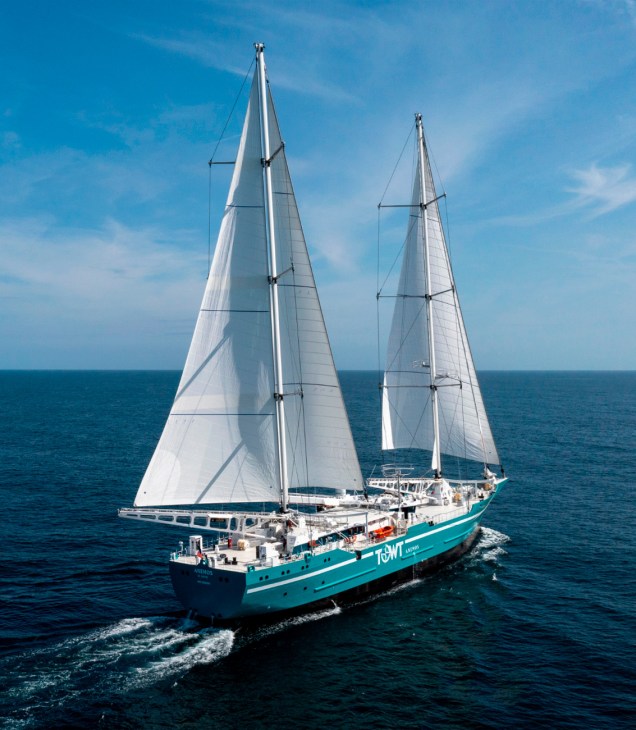
The company has raised the funds necessary to commission a fleet of wind-powered cargo ships that emit only 10 per cent of the emissions of conventional versions, while remaining cost competitive.
Though towt’s ships have only a fraction of the capacity of conventional cargo vessels, it took the Anemos 18 days to deliver its payload to New York Harbour. That’s less than most container ships, which often have to wait days to unload at a select few ports. towt’s vessels are equipped with cranes that allow them to unload at any dock.
The Anemos’s voyage is a turning point for the French company, which has secured more than $200m of contracts and plans to deploy a fleet of 200 ships by 2035.
The cultural agenda for autumn 2024
Q&A: France
Lambert Wilson
French-language show La Maison on Apple TV+ follows two rival families as they compete for dominance in Paris’s high-fashion world. The cast includes Lambert Wilson as star designer Vincent Ledu. Here he discusses his role, his character’s taste and learning to sew.
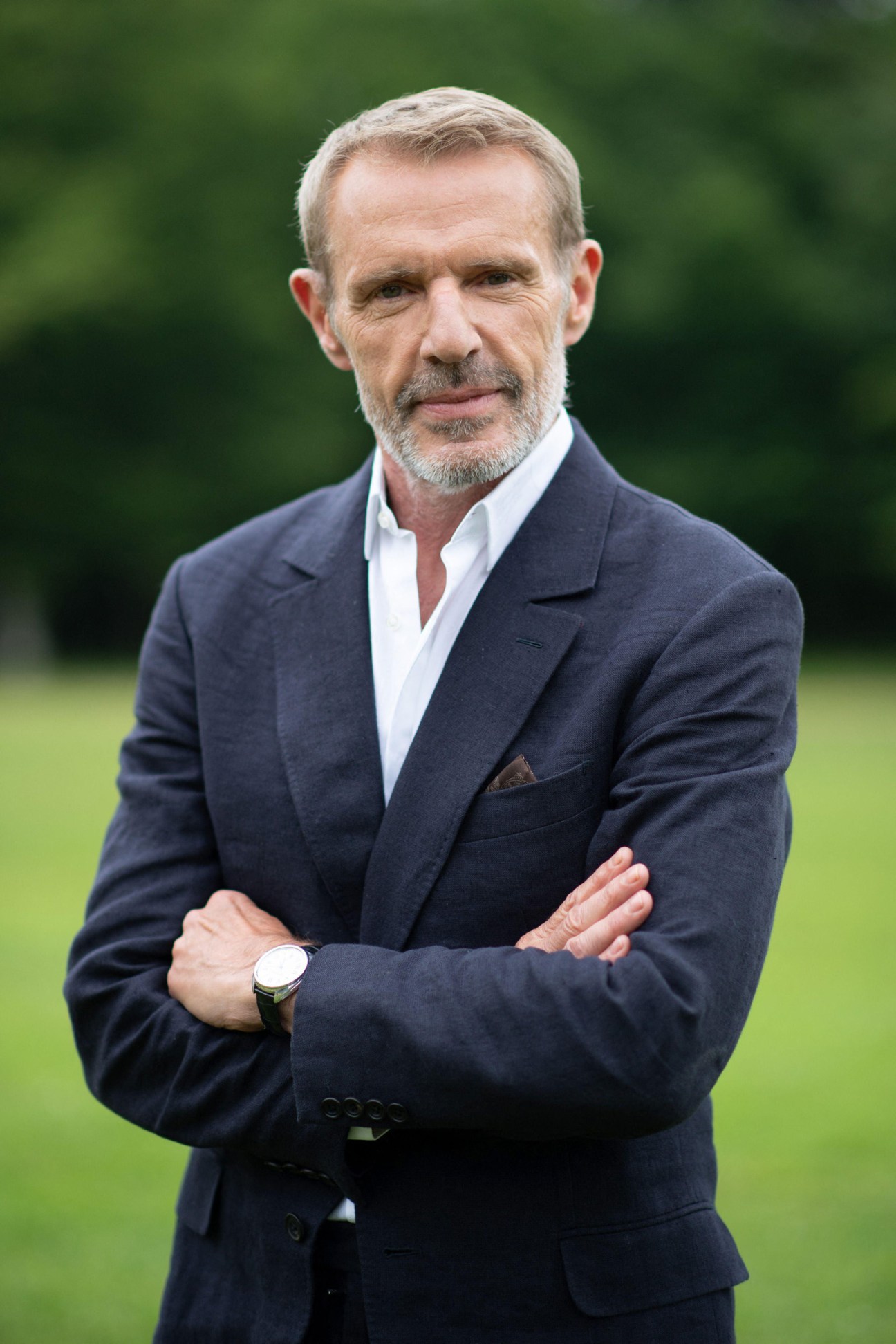
Your character is a harsh person. Did you enjoy playing Vincent?
I like playing kings. Vincent reigned at a time when he only had to answer to critics in magazines, so he is not prepared for the online criticism that he receives. I understand how social media might be a struggle for people who are not used to it.
What is your favourite piece from Vincent’s wardrobe?
The costume designer introduced me to oversized trousers by Yohji Yamamoto, which have incredible lines that work well for tall men. They have now become an essential part of my outfit when I’m on stage. I have started dressing in all black like Vincent too.
How has this show influenced your outlook on fashion?
I learned the basics of lacemaking and sewing for the show, so I now pay more attention to how clothes are constructed. I have continued to hone my skills since shooting. I don’t think that I could make a whole suit but I could definitely stitch a perfect shoulder.
Literature: Brazil & USA
Bruna Dantas Lobato
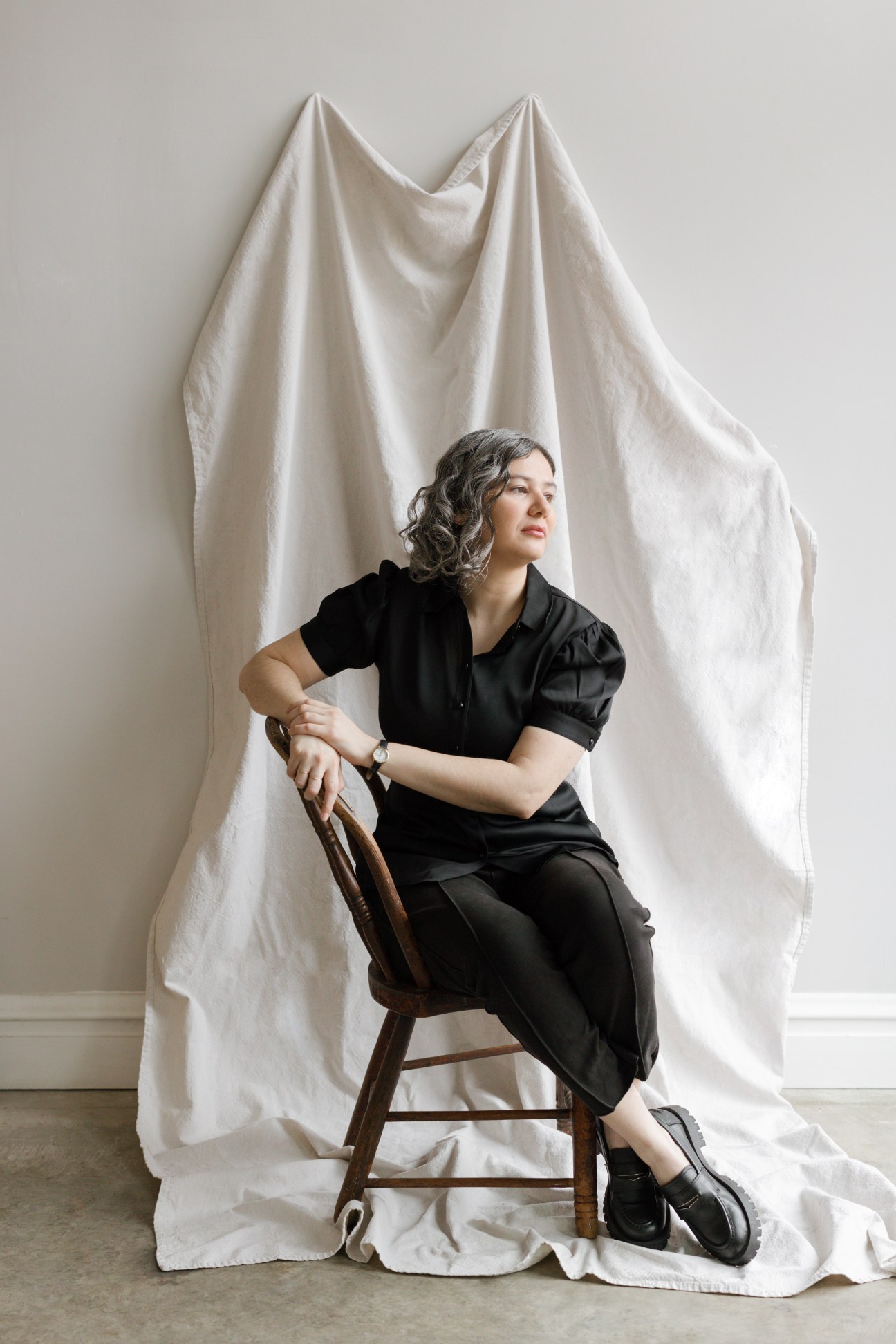
Bruna Dantas Lobato is a writer and translator of Brazilian literature. Her translation of Stênio Gardel’s novel, The Words That Remain, won the 2023 National Book Award for Translated Literature, while her own fiction has been published in The New Yorker. Dantas Lobato’s debut novel, Blue Light Hours, will be published this October. It focuses on the changing relationship between a mother and daughter when the latter moves from her hometown in Brazil to university in the US. Here, Dantas Lobato speaks to us about the novel’s themes, her writing process and the art of translation.
How did ‘Blue Light Hours’ come to be?
I really wanted to write the book and have it be an immigrant novel; a campus novel; a mother-daughter novel. But I also wanted it to be simple and focused on their relationship. I’m not one of those writers who can plan ahead. I didn’t know how to pull it off until I started writing, so I kept reshaping it and moving things around until I found out what I was actually trying to do. It is very dialogue-heavy. I love writing speech.
How did you get into translation?
When I moved to the US, I was reading all these wonderful books from Brazil that I couldn’t share with the people around me. So much of the writing coming out of Brazil was beautiful and no one knew.
Has your work as a translator influenced your own writing practice?
Being a translator is like having training wheels as a fiction writer. You constantly think about form, dramatic effects and how to construct a scene. I also had a lot of guidance from more experienced authors who knew what they were doing better than I did. I am a translator because I’m a writer – and I know I’m a writer because I’m a translator.
Arts: USA
Kiosk culture
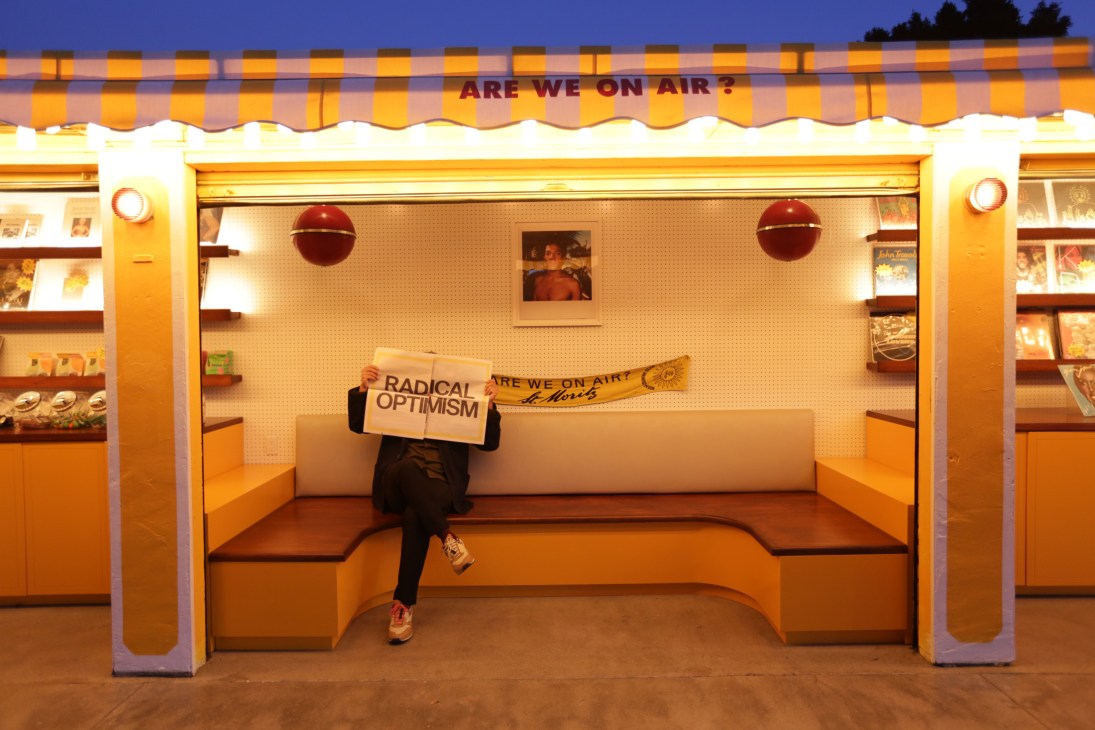
“Are We on Air?” says the awning of Kiosk-o-thèque on Hollywood’s Sunset Boulevard. It’s the latest project by Arman Naféei, host of a monthly podcast also called Are We on Air? and founder of creative agency Studio Neu. The kiosk is opposite the Chateau Marmont. Naféei spotted it when he was the hotel’s director of ambiance, a role that tasked him with creating the perfect mood for guests.
“I had my eyes on the newsstand when it shut down during the coronavirus pandemic,” Naféei tells monocle. “I knew that the location would be perfect for my kiosk. A million cars drive by every week. I call it an experiential billboard.”
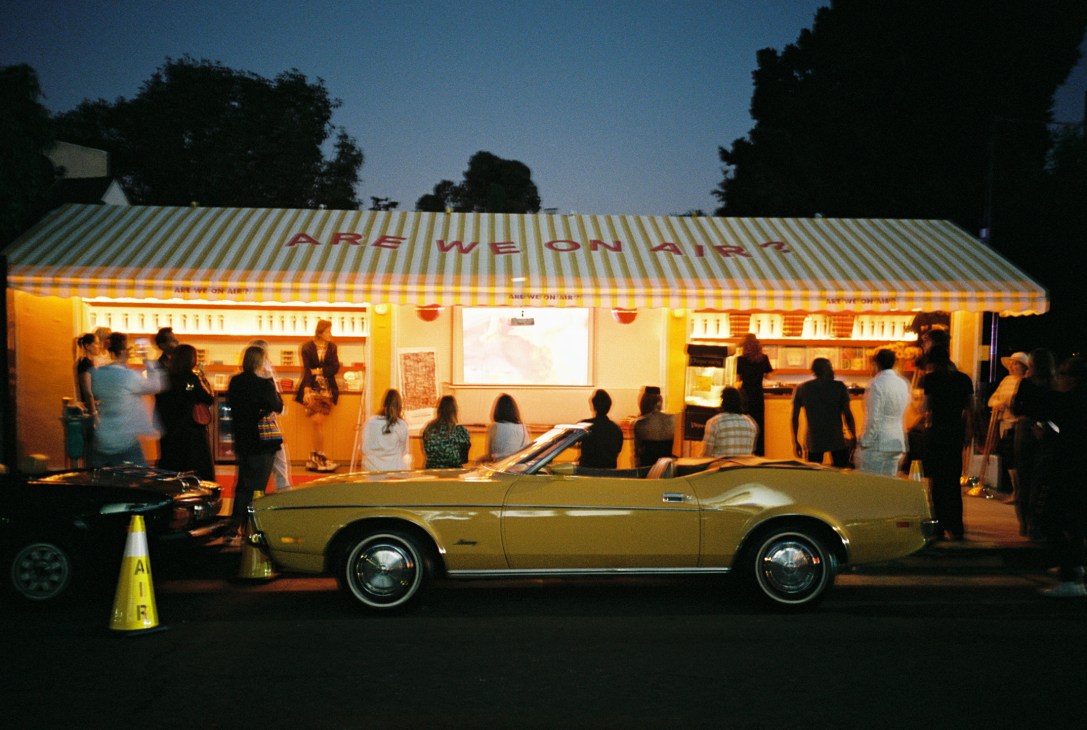
The kiosk is a mix of gallery, bookshop and podcast studio. It is also used for events, from a book-signing party with artist Nadia Lee Cohen to a pop-up celebration of the latest film by director Yorgos Lanthimos. “It’s anything you want it to be,” says Naféei. But among the vintage magazines and vinyl, you’ll still find the weekend papers.
To hear the full interview with Arman Naféei, listen to ‘The Stack’ on Monocle Radio.
Film: Thailand
Independent visions
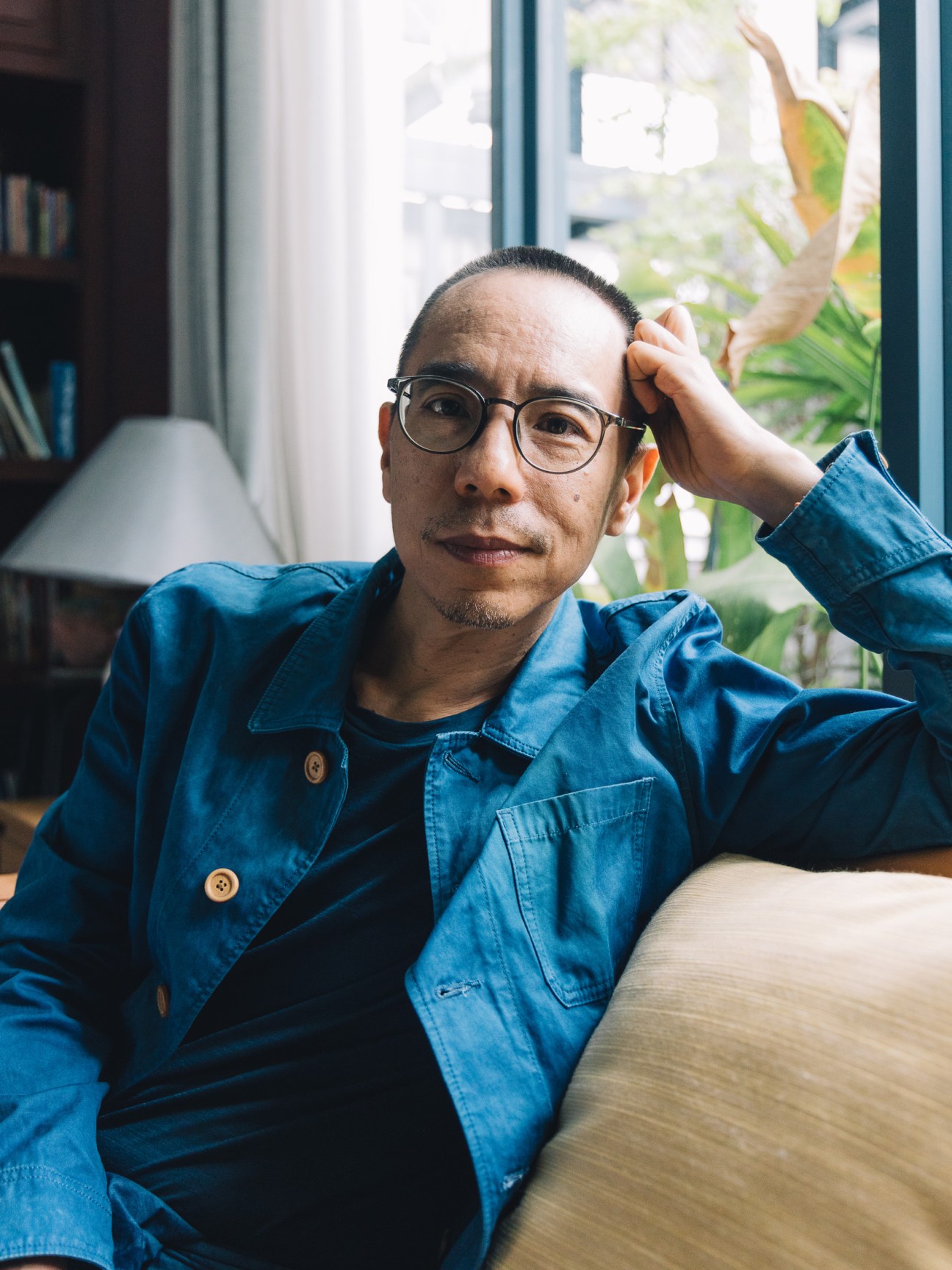
“Cinema still excites me as much now as it did when I was a child,” says Thai filmmaker Apichatpong Weerasethakul, the writer and director of dream-inspired films such as Palme d’Or winner Uncle Boonmee Who Can Recall His Past Lives and Memoria, starring Tilda Swinton. Weerasethakul the independent auteur, who writes his own scripts and expertly secures funding from organisations in France and Germany, must split his schedule with Weerasethakul the artist, a busy man, who hosts exhibitions around the world.
October sees the 54-year-old host two shows at the Centre Pompidou in Paris. Night Particles is an exhibition of video artworks using projectors to channel Thai horror films. It’s textbook Weerasethakul. A Conversation with the Sun, meanwhile, is his first experiment with virtual reality. The videos encourage audience participation and are accompanied by a score by the late Japanese composer Ryuichi Sakamoto. But Weerasethakul has made it clear that virtual reality isn’t the future of cinema. Instead, he views it as an “open space” in which directors set a stage for the audience rather than try to control everything – as in traditional cinema. Weerasethakul is a purist about his feature films, which are intentionally shot for the big screen.
His next film will be shot in Sri Lanka and loosely based on the work of British science-fiction writer Arthur C Clarke. It’s a subject close to Weerasethakul’s heart as he has read Clarke’s work from a young age. “Looking through a camera makes me feel as curious as I did when I encountered science fiction as a child.”
What motels say about the American life
Along America’s highways you come across a country no longer visible in New York, Los Angeles or San Francisco. Everyday life here has little to do with the concerns of those in big cities, where people drink coffee with oat milk, a bouncer reminds you to behave appropriately when entering a club and men with beards introduce themselves with their pronouns at parties for fear of being addressed incorrectly. This other America is symbolised by the motel, which is a quintessential US institution. The word motel is a portmanteau of “motor” and “hotel”, which also describes its purpose. The long, one- or two-storey buildings offer car travellers a rather low-threshold entry to somewhere to stay overnight before moving on – a bed with a parking space in front of it.
In this sense, motels are the epitome of freedom and adventure. You can’t avoid them on a roadtrip. You might drive hundreds of miles on straight roads with the radio turned up loud but as night and tiredness set in you might be drawn in by the promise of bright signs reading “Melody Ranch Motel”, “Death Valley Inn” or “Motel 6”.
Only the lit-up words “No vacancy” indicate that you should drive on. They come from the time before the internet. The fact that there are no rooms available is not a big deal, as there will be other motels. People haven’t historically chosen a motel for its special location, much less its interior design: reservations are unnecessary. A motel is on the way. You take what comes or move on to the next one.
Places of mischief and the uncanny
Many motels still in business in the US have seen better days. It’s precisely this shabby and worn-out look that makes them so charmingly anachronistic today. In luxury hotels, everything seems untouched, sterile and clean, right down to the ribbon around the toilet lid. When you enter a motel room, however, you can almost smell the stories that have taken place within the four walls.
There might be a table and chair, two plastic coat hangers, a large bed with a thick mattress that can – for better or worse – also feel alive. There’s a fitted carpet. A small, fenced-in pool in front of the window, deserted in temperatures of 40c. A few streets away, you’re likely to find a gun shop. There is coughing all night through the thin walls. On one side, there is the mysterious sound of furniture being moved for some unknowable but nonetheless intriguing purpose.
The guests who visit from their mobile homes stuff the pockets of their xxl trousers with packaged biscuits at breakfast and sip filter coffee from paper cups in silence. The people at the reception of the often family-run motels are impossibly friendly in that inimitably American way. When you leave, someone named Bill or Susan always shakes your hand and wishes you a safe onward journey with apparent sincerity.

Motels are a reminder of the past perhaps because they remind us of so many American films and novels, whose atmosphere they have shaped, and which have in turn been shaped by them. Maybe that is why we romanticise them. They are part of pop culture, usually places of doom and the uncanny, like the Bates Motel in Alfred Hitchcock’s Psycho, where Janet Leigh takes her carefree shower. In the Coen brothers’ Fargo and in David Lynch’s Lost Highway, the motel serves as a hideout for criminals and secret lovers. Ridley Scott lets friends Thelma and Louise stay at the Oklahoma City Motel, where the former is seduced and robbed by a handsome cowboy.
You wouldn’t be surprised, nor disappointed, to see the travelling woman in the red dress from Edward Hopper’s painting Western Motel behind a window. She sits on a sofa, her suitcases ready, her car waiting in front of the window in the bright sun. Motels attract lonely people who are trying to escape from themselves.
Miranda July’s daring love suite
According to The New York Times, there were more than 61,000 motels in the US in 1964. They became popular after the construction of the highway network in the 1950s and 1960s. Interstate highways have since crossed parts of the entire country from north to south and west to east. Today, there are said to be about 16,000 motels left. But now, in a way that few might have predicted, motels are having a moment, the newspaper claims. Younger people are discovering motel culture and its aesthetics. Not just on their travels: some are even buying run-down motels and renovating them. On Instagram, motel fans admire the refreshed design of the originally modest inns. This is also being shown in television series such as Motel Makeover and Motel Rescue.
US filmmaker, artist, and writer Miranda July celebrates the motel in the same way in her new novel On All Fours. The first-person narrator, an artist, invests $20,000 of prize money to renovate a cheap motel room in a Los Angeles suburb where she is stranded on her roadtrip. She transforms it into a suite with fragrant soaps, fluffy designer towels and velvet armchairs in order to experience a wild affair within it.
The bourgeois bohemians might move into the motel and paint over its cloudy walls. They might add a new layer to what came before them, while also perhaps preserving it. In the old motels, however, life goes on just as it ever did. You close the door to your room, return the key at first light and drive off early in the morning with the quiet feeling of having gotten away.
This article was first published in the ‘Neue Zürcher Zeitung’. Translated by Monocle and edited for clarity and length.
About the writer:
Based in Zürich, Schmid has been a part of Swiss newspaper Neue Zürcher Zeitung’s editorial team since 2015. She has also been an editor at Annabelle and deputy editor in chief at Das Magazin, and is the author of several books.
Interview: Woo Youngmi, founder of Wooyoungmi and Solid Homme
Woo Youngmi says that she has always done things recklessly. In 1988, when South Korea was just emerging from military rule, she debuted Solid Homme as one of the nation’s first design-led menswear labels, introducing new shapes and silhouettes into what was then a fashion hinterland. She didn’t stop there. In the early 2000s she left Seoul, where she had achieved critical and commercial success, for Paris, where she re-established herself. “I just couldn’t envision the next 20 or 30 years only working in Seoul,” she says.
Woo arrived in the French capital without a game plan. She debuted her second label, Wooyoungmi, focusing on higher-end luxury, and became the first South Korean designer to take part in Paris Fashion Week. Within a few years, the designer became a respected figure on Paris’s runways and established partnerships with department stores such as Le Bon Marché and Selfridges.
Today the Korean Wave has swept across the world and global audiences are familiar with the country’s flair for sharp tailoring, as well as its catchy pop music, gripping films and innovative skincare. Woo, who has contributed to the phenomenon, remains a market leader: her Wooyoungmi shows are always oversubscribed in Paris and praised for offering fresh ideas on tailoring, workwear and, lately, uniform dressing. The brand has also been broadening its scope to include jewellery, accessories and womenswear and has opened a new Paris flagship on rue Saint- Honoré, a stone’s throw from the boutiques of Chanel, Dior and Loro Piana – a signal of the designer’s growing luxury ambitions.
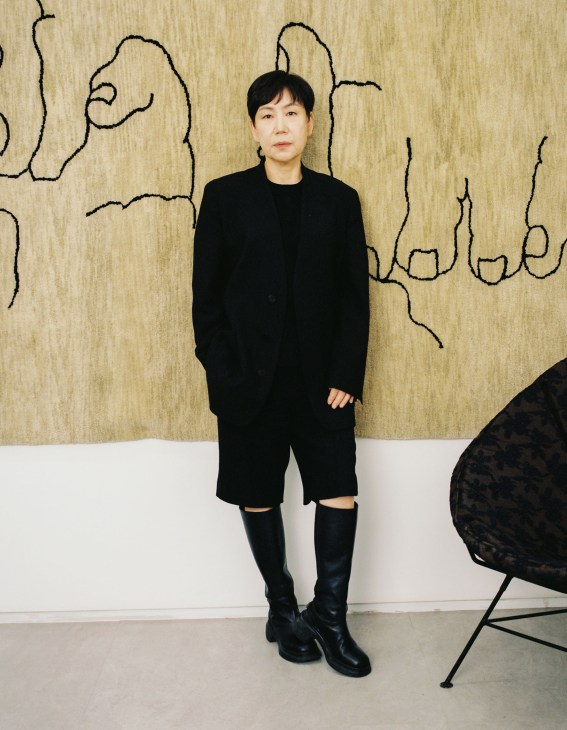
monocle visits Woo at her company’s Seoul headquarters, where her autumn collection (a mix of wide-leg denim, tweed suits and drop-shoulder suede jackets) is displayed alongside tapestries depicting the work of Basque artist Eduardo Chillida. She tells us about her relationship with Paris, her design philosophy and her constantly evolving creative drive.
Why did you choose to move to Paris from Seoul when its menswear scene was then quite limited?
I didn’t think in those terms. I just asked myself which city had an open mind for a young designer and the answer was Paris. People were saying that Milan was the centre of the world for menswear but that has changed since then. Still, I was very lost when I arrived. I had never felt that kind of helplessness up to that point but I had made up my mind so I jumped into it headfirst. I felt as though I was up against a huge wall but what could I do? I just had to keep going.
You were the first South Korean woman to design menswear and you have since expanded into womenswear. How did you make those choices?
Every designer’s identity comes from within so it can feel uncomfortable to make something that one can’t personally wear. But I found that if it isn’t for me, I can be a lot more imaginative. I decided to start creating womenswear too but only after turning 60. When you put yourself in the frame of mind of thinking about what you want to wear, your designs can become narrow because you’re projecting who you are and who you aspire to be. At this age, I feel fortunate that I can design womenswear without constraints.
Let’s turn back to the 1990s, when South Korean men began having more disposable income and developed a taste in fashion. What was that like?
There was menswear before me but it was extremely conservative. I was almost committing heresy with my designs. People would say that it’s neither feminine nor masculine, a kind of “soft” menswear. But I didn’t give it too much thought. I was only 30. How much strategy do you think I had back then? I just did what felt right.
What do you think about the Korean Wave?
I see it as the culmination of various cultural categories such as K-pop, K-food and K-films. Over the past 70 years, South Korea has undergone rapid economic development but before that we had a long history that cultivated a unique culture. We had a wealth of content; it just hadn’t been introduced to the world until recently. The fashion industry should ride this wave well. I hope that a group of designers who can represent and explain South Korean fashion – not just me – will form a strong, united presence in the global market.
You have been focusing on suiting and uniform dressing in recent collections. Why is the concept of a uniform becoming appealing again?
It’s a reaction to the fatigue brought on by the long dominance of streetwear. There’s a renewed appreciation for elegant, well-put-together clothing. Fashion, by its nature, is driven by a desire for novelty. But the key to sustaining a brand’s identity lies in creating something new while not being carried away by trends.
Why did you decide to open your new Paris shop in such a prime luxury spot?
Our first shop was in the Marais, a youthful area, and it made sense financially. But I now felt that it was the moment to move closer towards luxury. But, for me, luxury isn’t about price: I wanted to go up a level and that meant going to rue Saint-Honoré. That decision felt pretty reckless but once again we just went for it.
wooyoungmi.com; solidhomme.com
Why travellers are heading north to Norway’s Lofoten Islands – a hidden gem of the wild and windswept north
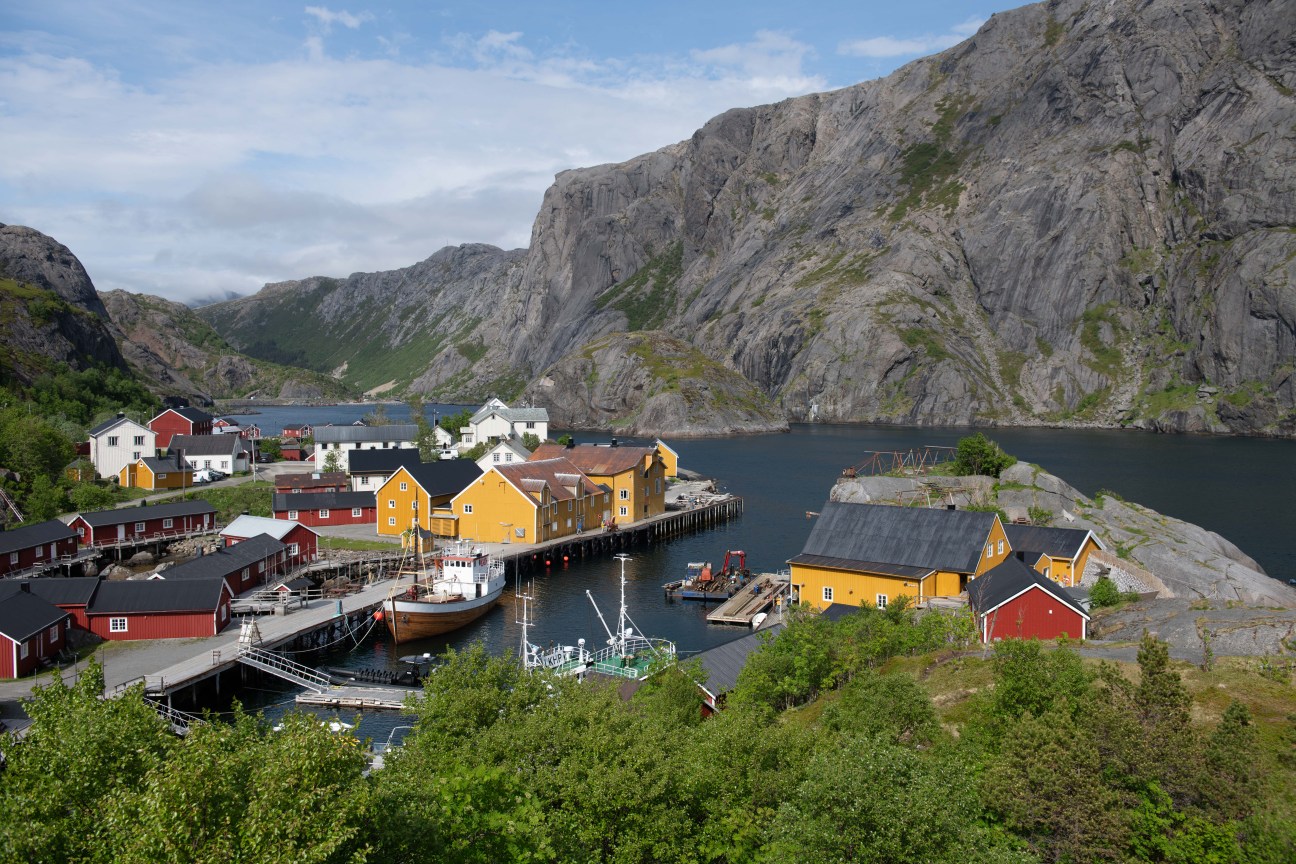
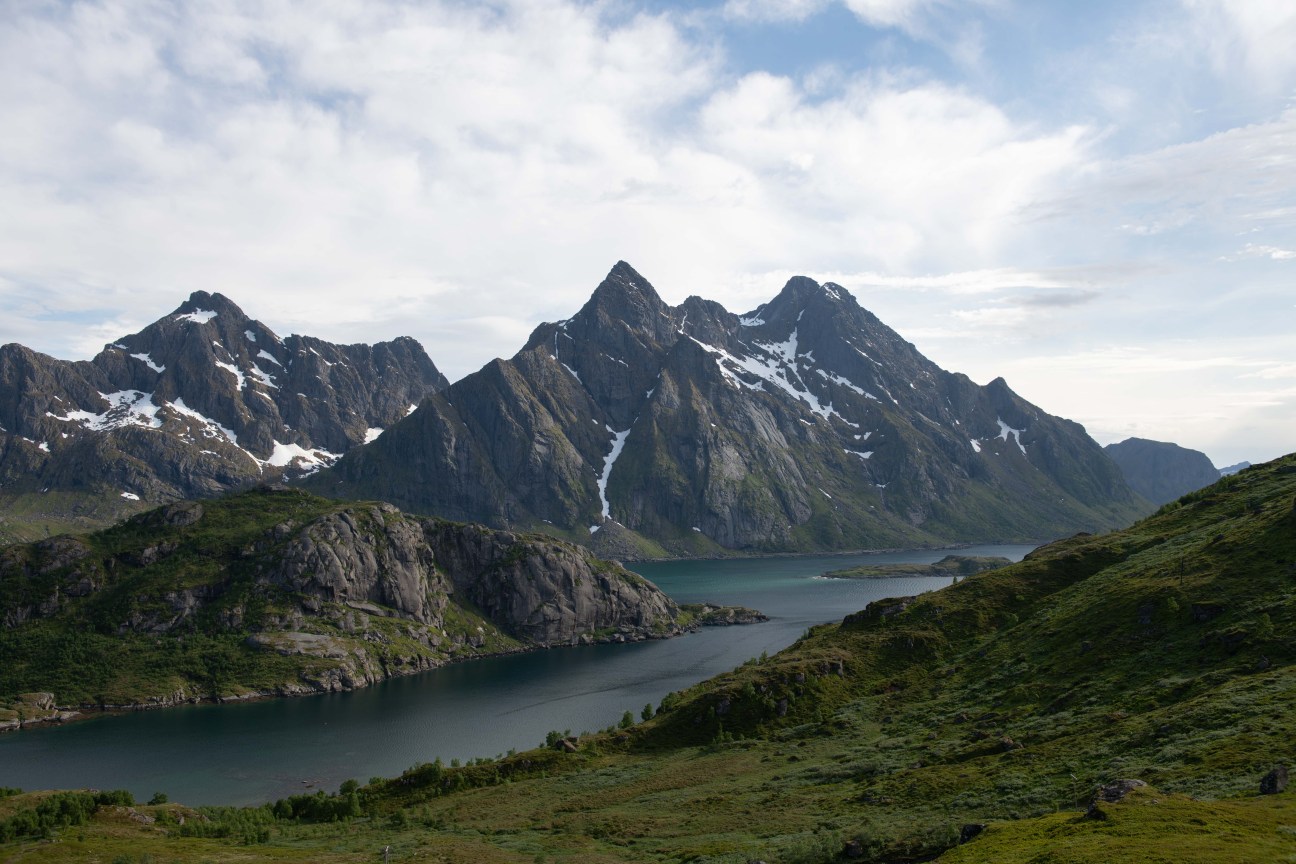
If you’re on holiday in Nusfjord, you’ll likely have come far. You’ll probably have changed planes in Oslo, boarded another in Bodø and ended up careening over the crags of Norway’s northwestern coast in your little Dash 8 turboprop, where the dark islands look like whales breaching in the brine. Then you’ll have dipped a wing toward the Lofoten archipelago, where the bays are turquoise and the summer grass is green. You’re in the cock’s comb, almost at the top of mainland Norway and well into the Arctic Circle, to find Nusfjord: a beautiful nook in the world’s second-longest coastline (Norway is still some 100,000 kilometres behind the weathersome cliffs of Canada). This neck of the Nordic woods and its latitudinal brethren are hot because they’re cool: as southern Europe’s sizzle has turned to crackle, eyes are looking northward for a calmer balm and some old-fashioned weather. So, if you’re here and you don’t speak much Norwegian, you’ll likely have come far. Phew, you have arrived.
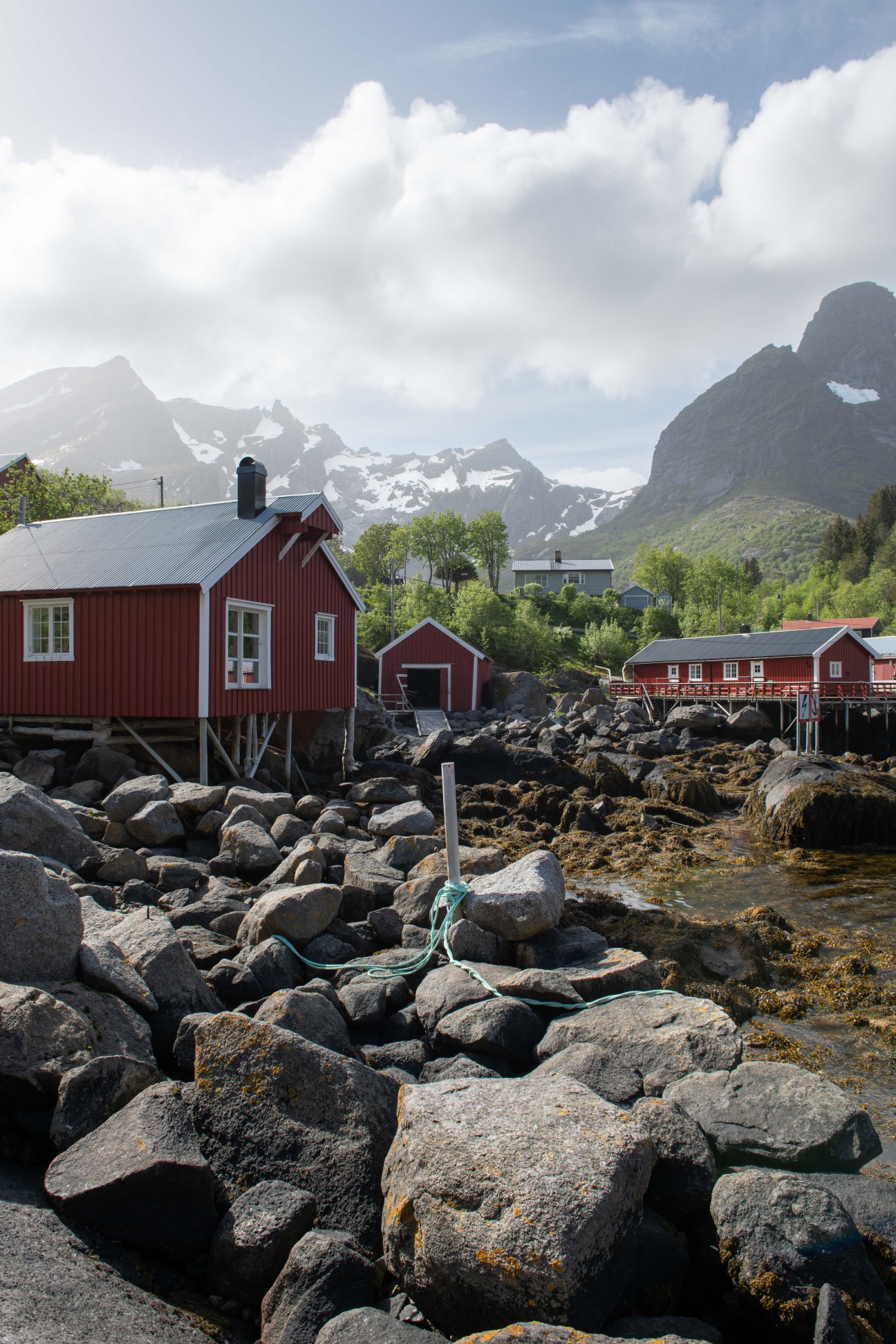
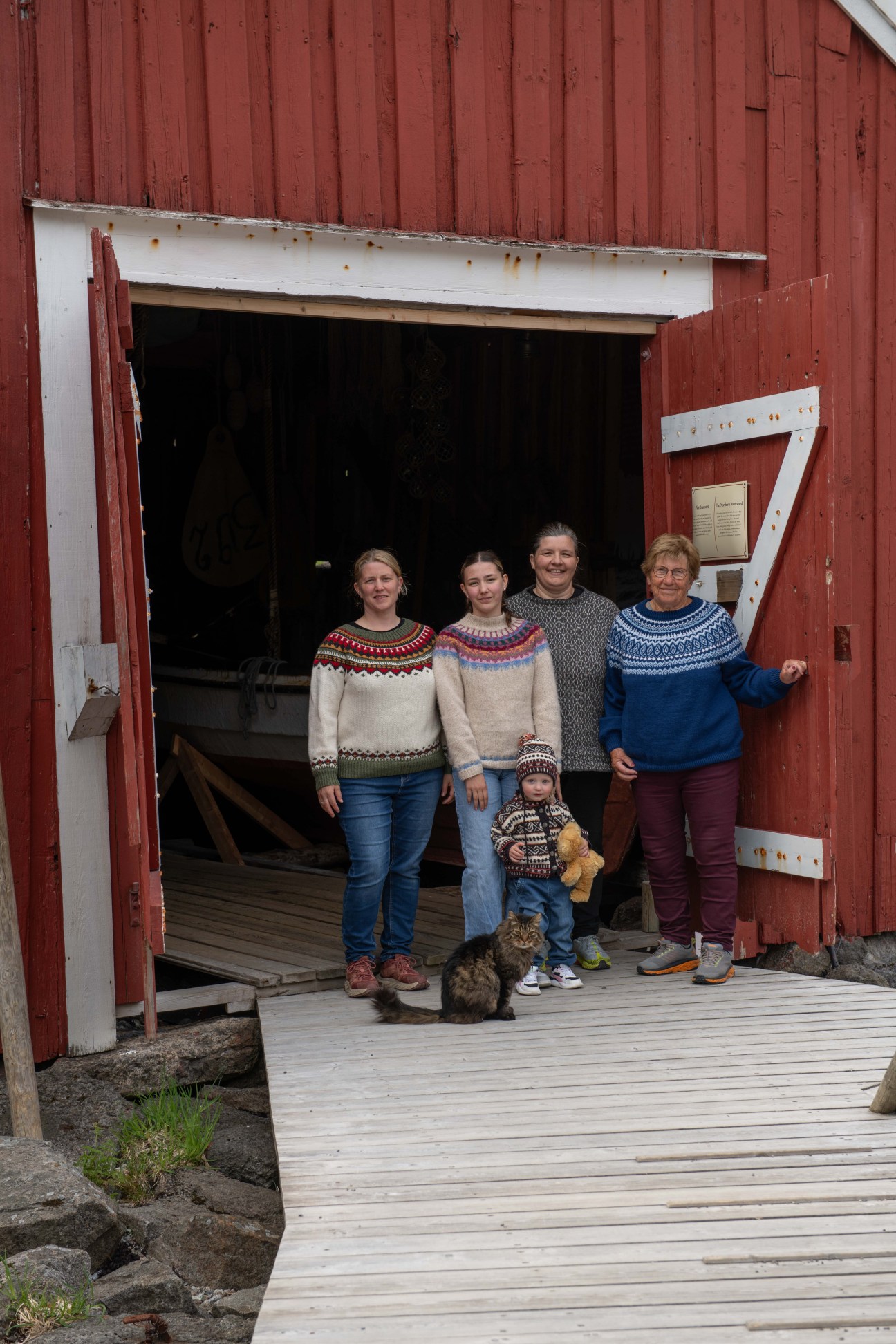
Nusfjord was a fabled fishing village for a thousand years, a haven on a wild coastline where boats could be safely moored and cabins built to house the hundreds of fishermen who’d rowed for days and weeks on high seas to reach this specific spot, staying for months to catch, dry, store and sell their cod. Renata Johansen, born and raised in the village, puts it better. “Every January to March the skrei has been coming down from the northern sea with his girlfriend to find the marriage bed with the perfect temperature for making babies,” she says. “What was irresistible for the fish was irresistible for the fishermen, too.”
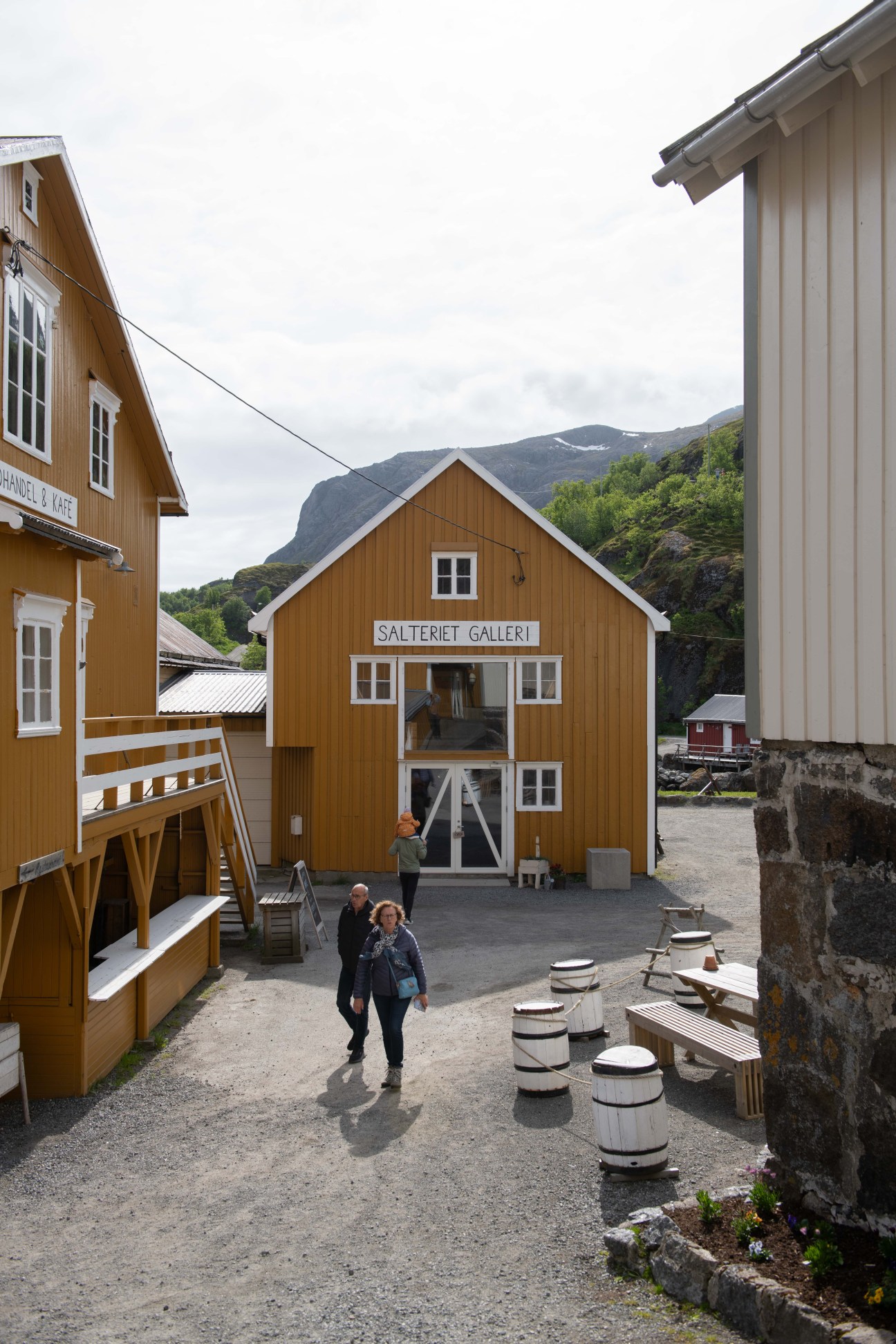
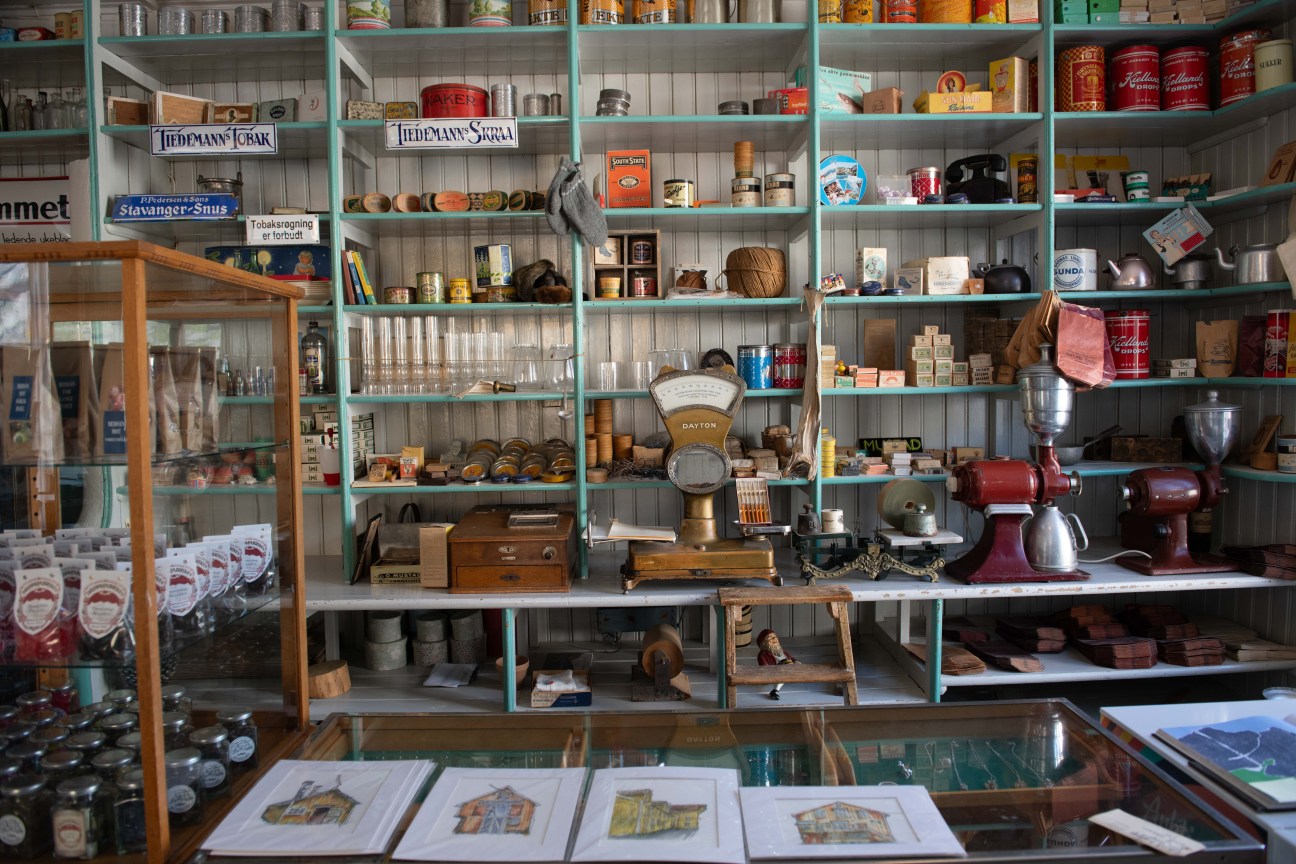
Johansen is the front-of-house manager for what Nusfjord is now, which is still what you want on reaching a haven but in a very different way: a beautiful resort in which the rooms are calm, luxurious revamps of those old cabins and the administrative office for the weighing and selling of fish is now the very fine Restaurant Karoline. The rest of the village offers a swoon-inducing on-site bakery, the landhandleriet shop and café for sandwiches, coffee and local crafts, an art gallery patronised by Norway’s Queen Sonja, a museum, a pub-and-pizza joint and a sauna that’s best enjoyed after a jump in the bloody freezing sea. It’ll toughen you up but not to the point that you’ll be like Johansen or one of her family. “Growing up here, the only child labour that was allowed in Norway is cutting the tongue out of the cod’s head. I bought myself a nice boat and a big motor with the money but we don’t offer it as an activity here for guests nowadays,” she says with a chuckle.

We’re soon out on the water – high above the cod – with Fred Ravneberg, Nusfjord’s general manager, his big laugh, a couple more members of his team and Caroline Krefting, whose family own Nusfjord. “In fact most of what you can see – even the mountain,” she says, with a smile that’s both proud and shy of any boastfulness. We’re out on the RIB boat for a tour that’ll take in the incredible sea eagles that nest and hunt around the bay and the Nusfjord estate’s small, private island with its very own small, private house, whose nickname seems to have stuck on the resort’s official literature: The Isolated Fisherman. But first, why get there slowly when you can rip around on that twin-engine RIB? A boat in the shape of a waterski and which appears to have been designed – and certainly today piloted – with the same thrills and spills in mind. It’s fast as hell and loves to get airborne off the waves. Lifejackets are hugged as the cold spray rains down. Greater still is the pure animal buzz of the big birds; the pair of sea eagles riding high on the updrafts above us, before swooping down on the waves to snatch a talon-full of what might well have been the leftovers of my fish. On we bounce and fly and bounce. The eagles regard us with a patient eye, then turn on their tail feathers for home and their young.

“We started this adventure eight years ago and now I feel both very grateful and very proud,” says Krefting. She is smiling into the sun’s dazzle as it dances off the sea, through the island pines and sitting room windows of the cosy cottage that, in June at least, does little justice to the name of The Isolated Fisherman. “Being here gives me a new perspective on life every time,” says Krefting. “In January we were skiing up on the mountain with wild views at 1,000 metres; where else can you see the sea from a mountaintop and almost ski down to it? And now we’re here right next to that sea and it’s another experience, to do with the season and the weather and the magic of this place.”
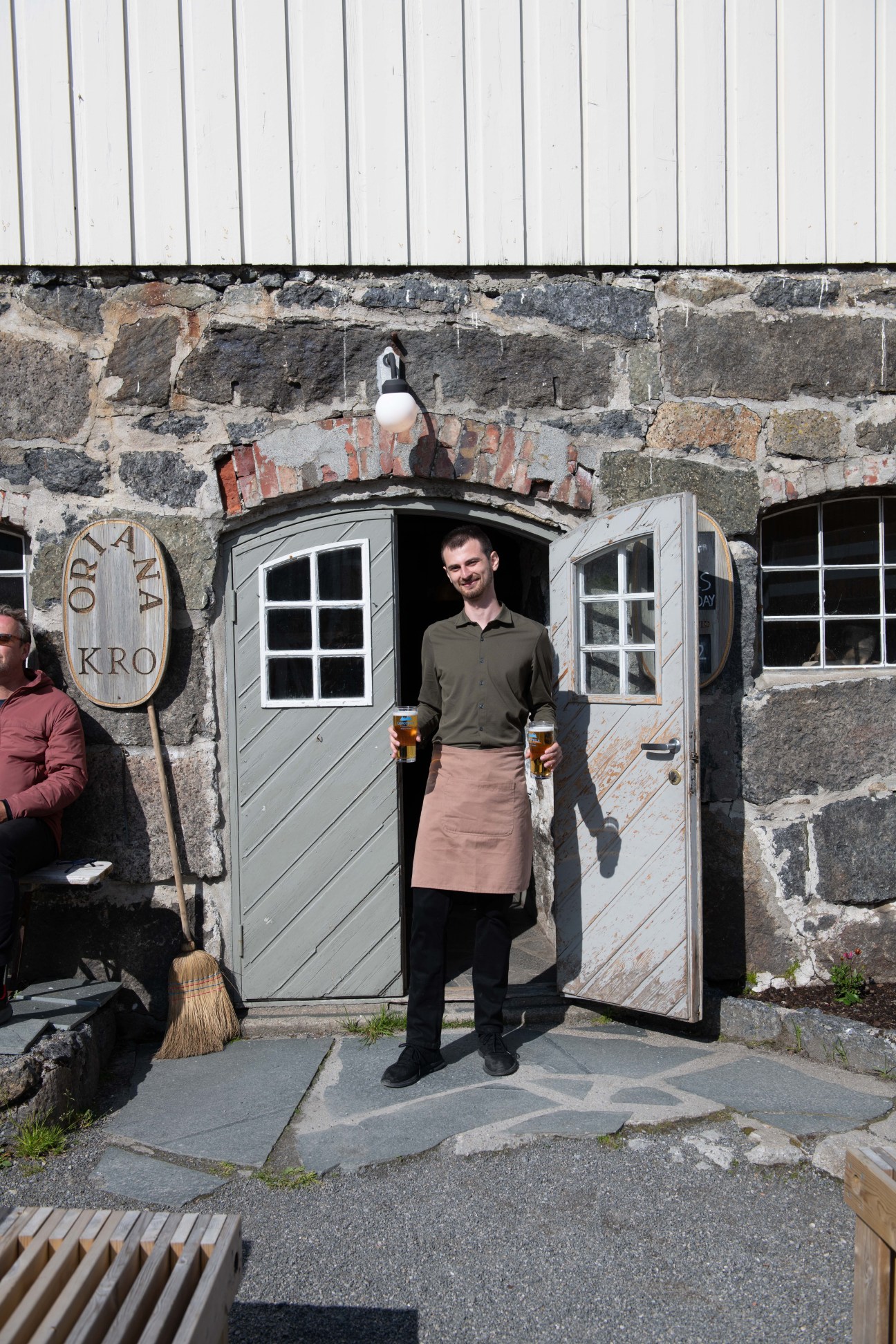
After the Krefting family bought Nusfjord, Caroline and her mother-in-law have ensured the accommodation and resort-wide fixtures and fittings have gone from a cheap-ish hotel-standard approach that made nothing of the cabins’ original layouts to a high-quality, low-volume, classily reserved Nordic style – all quiet luxury, cool and calm. Nusfjord, despite not having a road until the 1950s (it’s the sort of perfectly preserved picture of a place that you might stamp on a Norwegian biscuit-tin), had been inundated with camera-wielding coach-trips until the rethink and refurb. Now the village is still open for people to have a look and a coffee and poke about but some subtle yet firm pressure has helped bid the coaches adjø. There seems to be an honesty and a tenderness to the relationship between Krefting and, for example, Nusfjord-born Johansen’s family. Krefting talks of the “great warmth, great stories, great laughs” that go with the territory here and that she feels fortunate to have been involved with. “We also just had this goal which is about authentic experiences,” she says, “and that you don’t need to choose between comfort and nature – I hope we’ve woven both together here.”
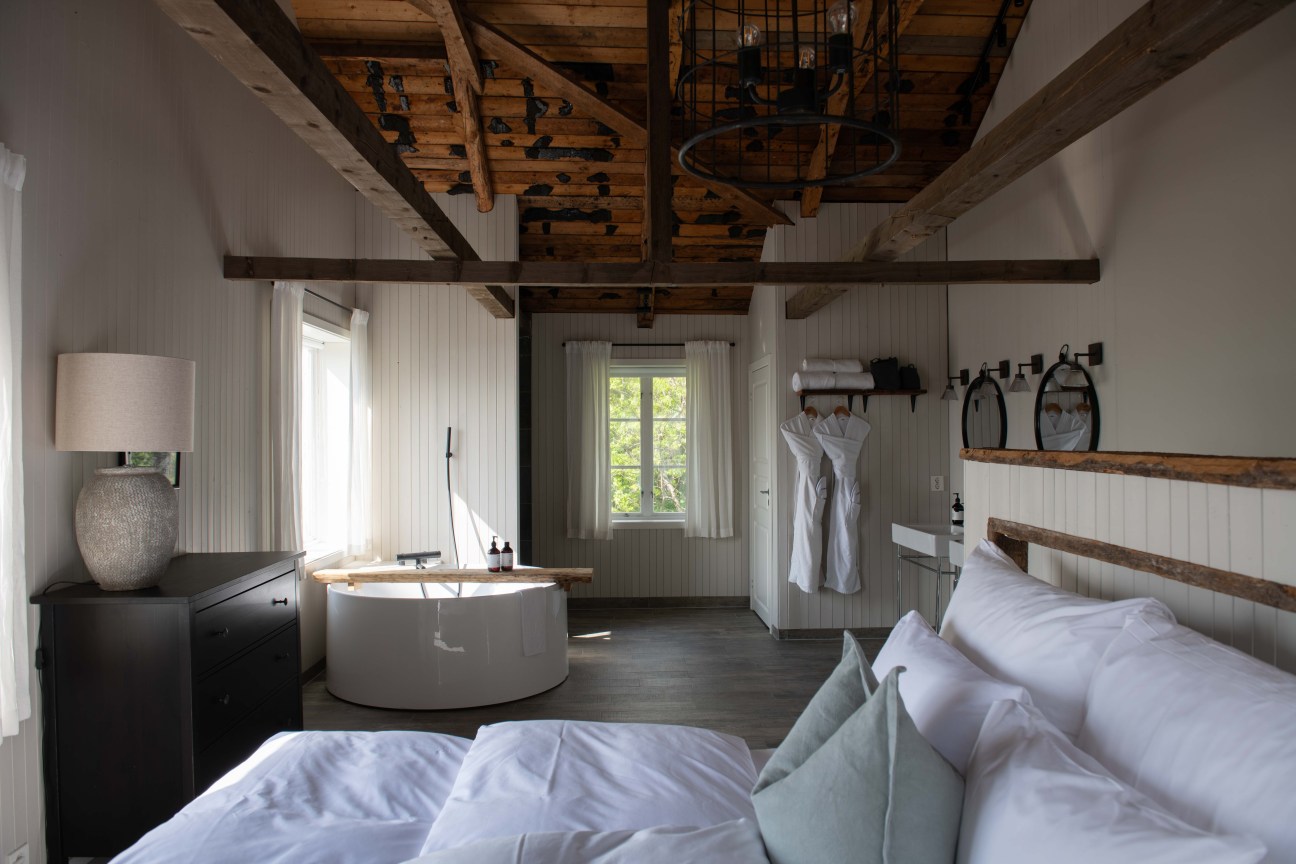

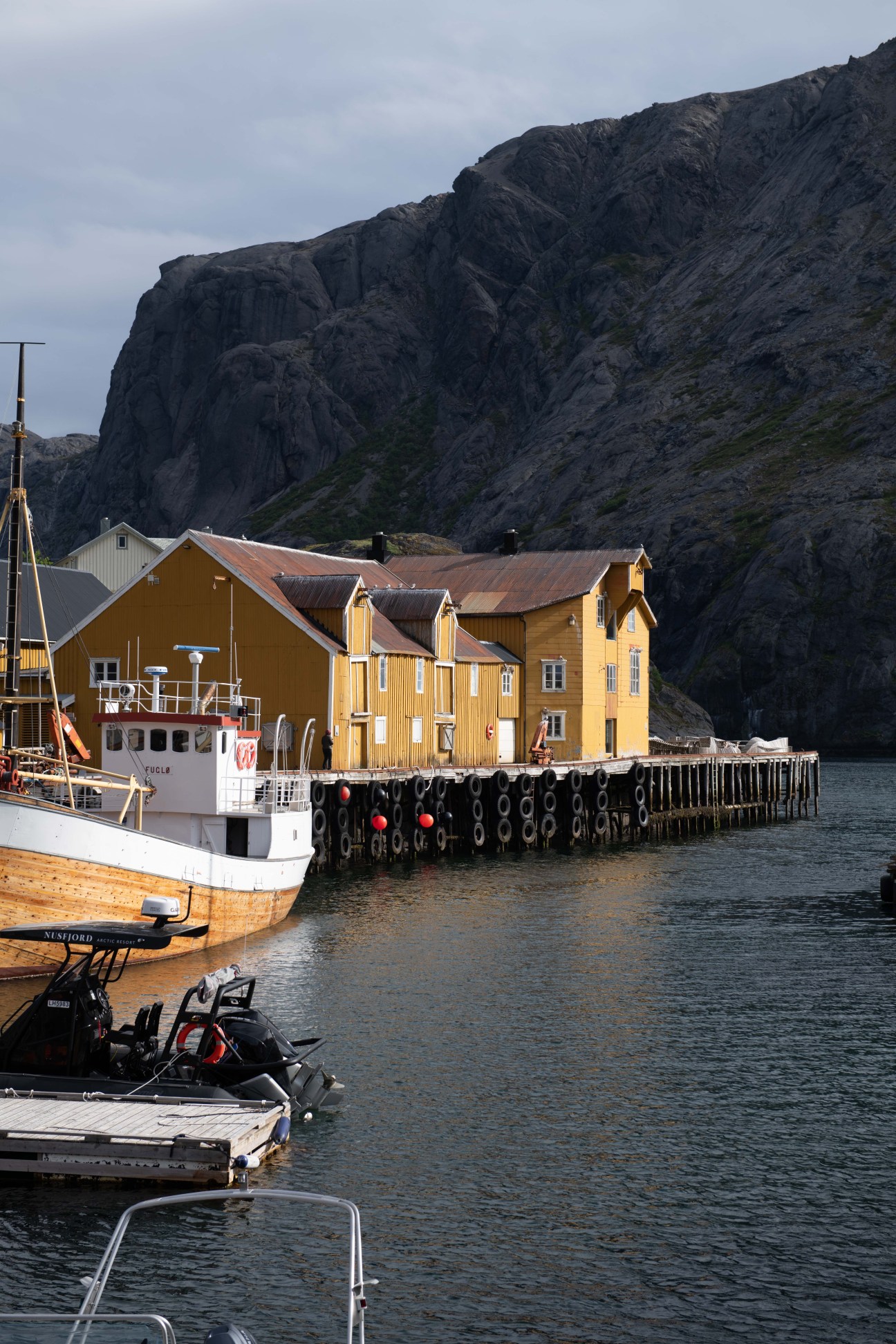
The weaving has indeed wrought a happy tapestry. Nusfjord’s village-first, hotel-later atmosphere is achieved through the open-air museum style of the resort but also by the charming staff, almost all of whom live here. Of course Nusfjord’s Nordic spa boasts a suite of treatments but maybe it expects you to have also broken a sweat outside of its sauna. Anyone for an adventure?
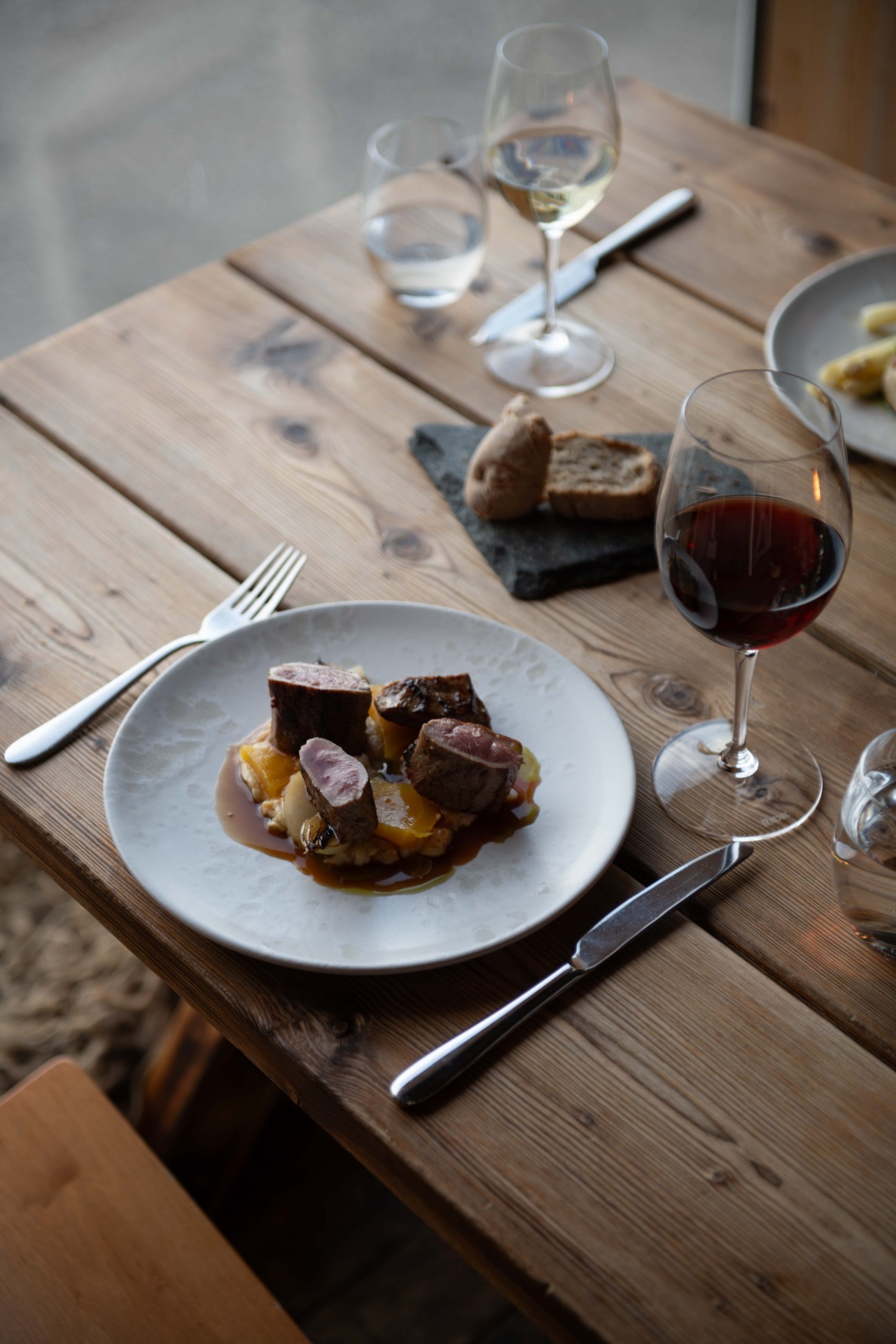
“Haha! You’re in!” says Ravneberg, big laugh on full beam, on our fishing trip aboard Elltor, the resort’s handsome boat. “Now wind him in, nice and smooth.” Out of the mill-pond-still of Nusfjord’s bay, we’re reeling again on the swells of the Norwegian Sea. A light breakfast seemed a wise choice: eyes on the horizon, breathe through your nose and focus on being flattered as a half-decent fisherman by a man who knows more than you about the ways of cod, coalfish, hake and halibut – and not because they were presented on a bed of samphire under Restaurant Karoline’s candlelight last night. There’s some angling banter about how I must have got lucky last night to be so lucky with the rod this morning, which we’ll let fly away on the Arctic breeze. Suffice to say, a respectful haul was had. Gutted, cleaned and into the ice they go, in order to be delivered to a beaming chef on dry land later. Fish soup, sir, caught by yourself? Ooh, ja vennligst.
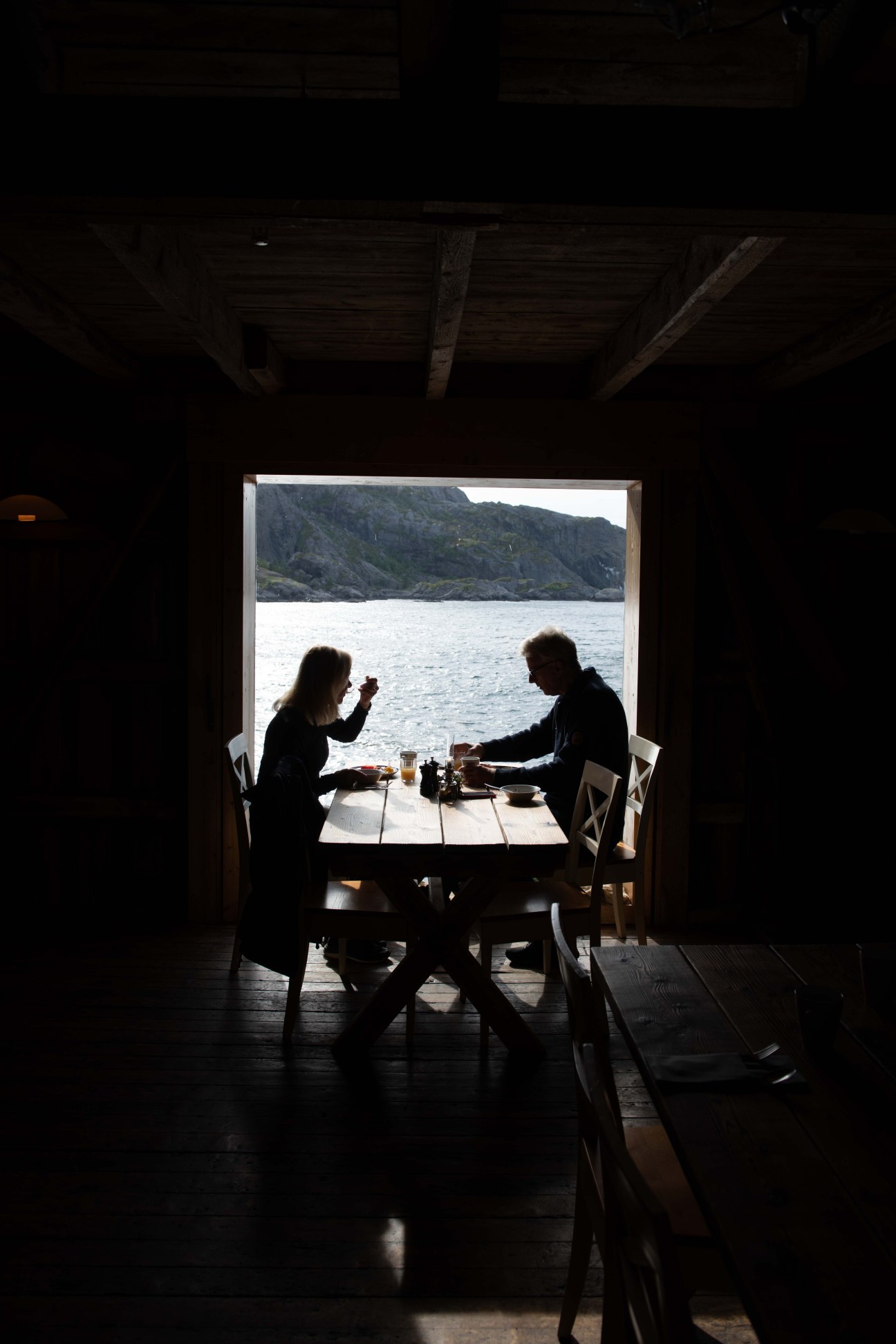
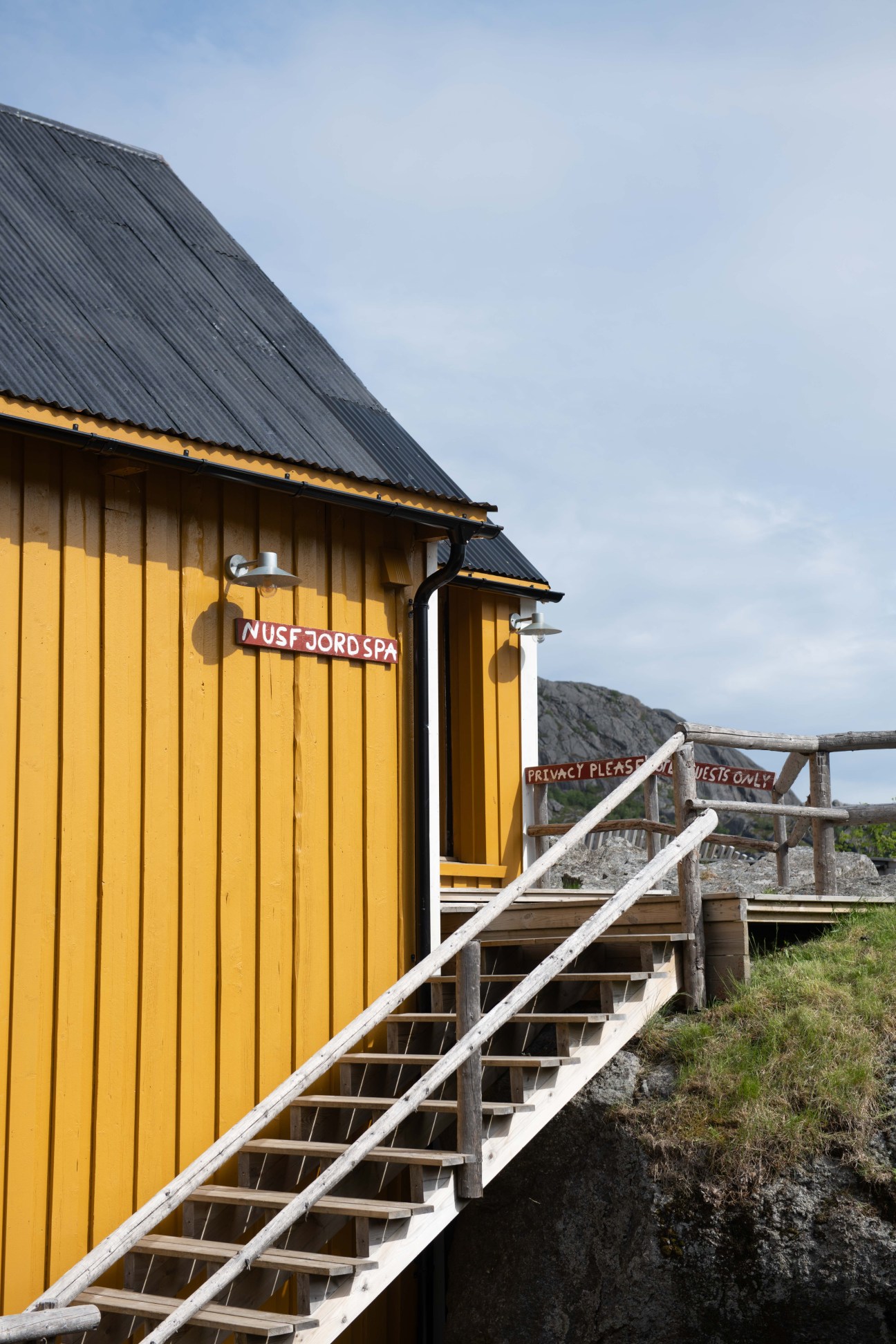
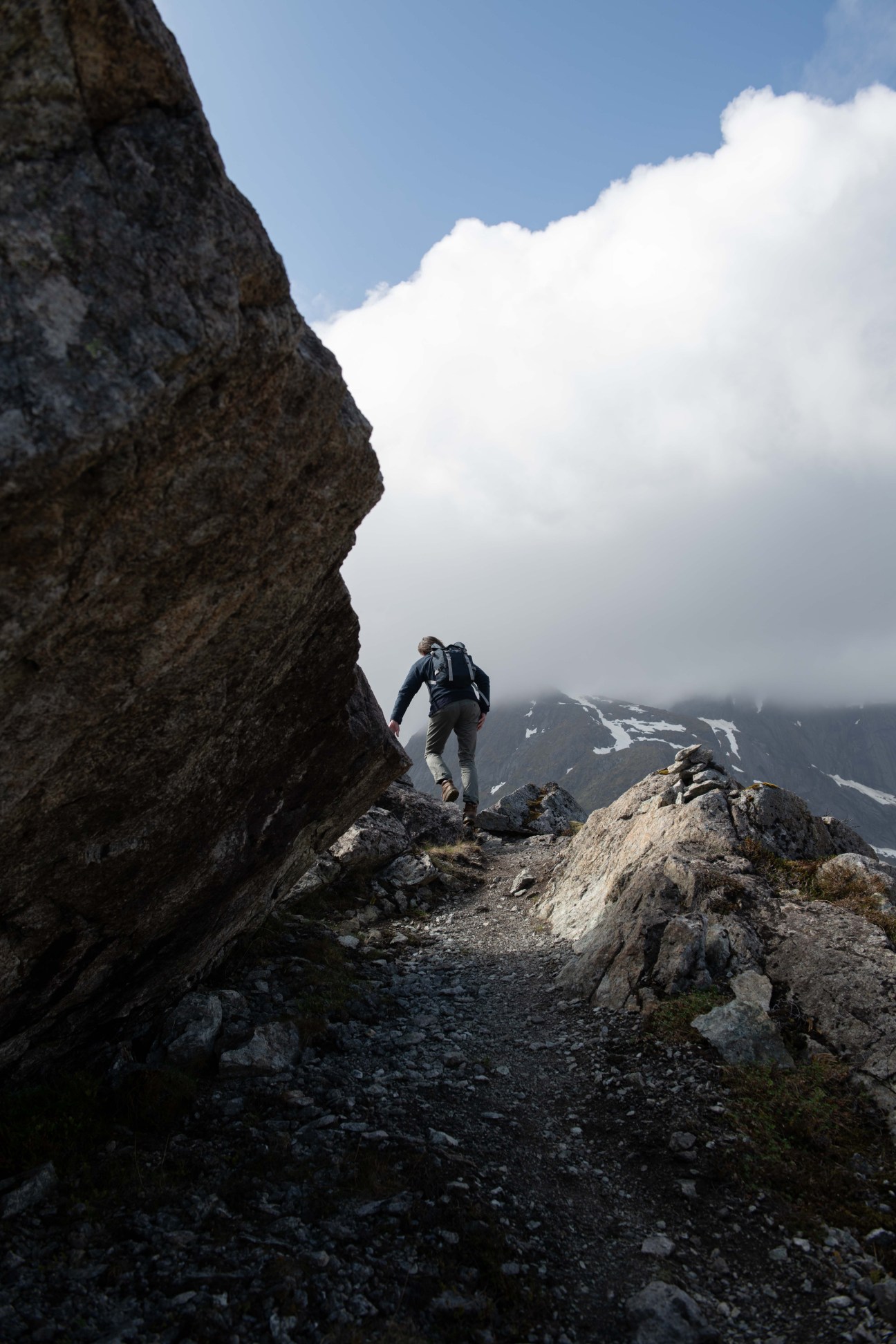
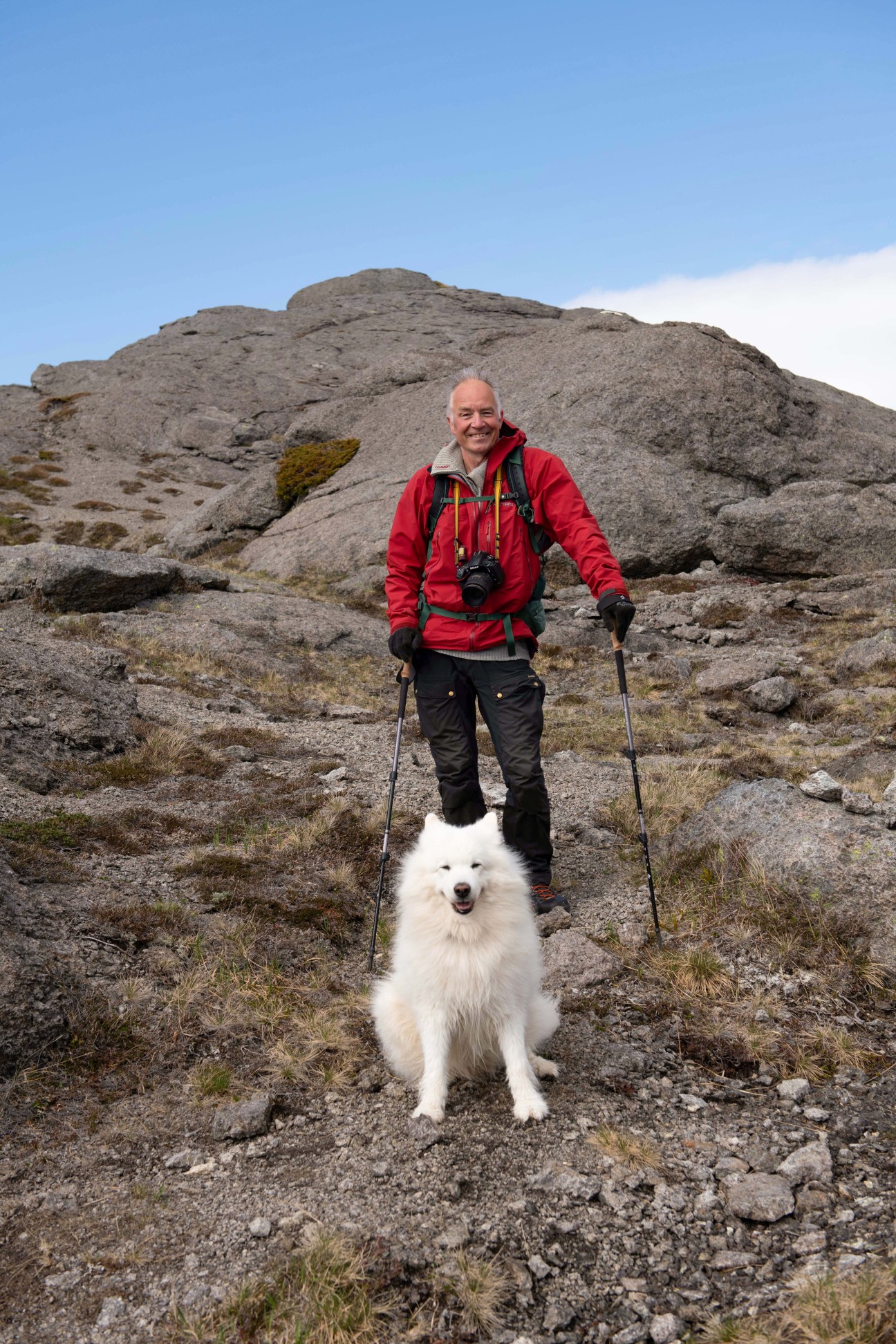
The nature is really the thing. For all the laid-on activities, as lively or contemplative as they might be, the best thing photographer Ivar and I did was walk to the summit of the huge hill that looks over the village. It’s a decent hike, complete with knee-deep June snow in parts. The reward is the view at the top, the beer at the bottom and the kinship of walking together. Dinner at Restaurant Karoline – mostly fished, reared or grown nearby – was manna, a rum nightcap was nectar and the cabin and the bed – just right, just perfect – were heaven. That and the journey because you may well have come a long way but phew: you have arrived. nusfjordarcticresort.com
What to pack
You’ll want to indulge in all things Nusfjord on your trip, and that means dressing for the Nordic summer during the year’s middle months and being ready for almost anything for the rest of the year. The summer in Nusfjord typically means 10C to 15C but it can easily get up to 20C or dip into single figures when the wind has an edge. Take a bathing costume for the hot tub and a dip in the Arctic Sea (the sauna at Nusfjord is also swimmers-on); waterproof hiking boots; and a good rain jacket and hiking trousers (not the swishy kind, for the sake of Odin’s beard). And pack an eye mask: 24-hour sunlight can be as maddening as it is intriguing.
What to see
The Lofoten archipelago is a place of jaw-dropping beauty. Leknes, where we landed, would be a good spot to hire a car or you may wish to start further east into Norway to drive the length of the snaking peninsula, to end at the western tip and the succinctly-named Å. Along the route you’ll see many stunning beaches where you might do a double-take at the sight of plucky surfers in inch-thick wetsuits. Unstad beach is a popular spot to watch before getting a lesson courtesy of the Lofoten Surfsenter, where “Jack Frost”, the Lebowski-like local guru and proprietor, will regale you with tales of surfing among the ice floes in winter.
Three books to get you in the mood
‘A Woman in the Polar Night’ by Christiane Ritter
The 1930s memoir of an Austrian woman who left urban comforts behind to live with her explorer husband for a year in a shack in Arctic Spitsbergen. This classic of travel-writing witnesses months of near madness before her conversion to the Arctic’s lunar beauty.
‘The Ice Palace’ by Tarjei Vesaas
A strange and allegorical coming-of-age tale about two girls on the brink of becoming young women in postwar rural Norway. Are Siss and Unn separate girls or halves of the same character? A sharp shock of powerful storytelling – the equivalent of a psychological ice-bath.
‘Kon Tiki Man’ by Thor Heyerdahl
This is about the late, great Norwegian explorer and ethnographer rather than about his home country but there is much of the Nordic temperament in Heyerdahl’s unfussy prose. It describes an 8,000km cross-Pacific odyssey that he undertook on a hand-built raft in 1947.
Richard England’s architectural world in Malta
The prolific octogenarian writes poetry, draws cityscapes and is currently penning a book based on biblical characters. Over his six-decade career, he has created a captivating body of colourful, dreamy, postmodern delights. Along the way, England has reimagined religious spaces, challenged the island’s prevailing styles and breathed life into cities the world over. Monocle heads to Malta to meet the maestro and find out more about his career, ideas and inspiration
“Some of my favourite music is by Eleni Karaindrou,” says Richard England, hitting play on an album by the Greek composer. The octogenarian architect is welcoming monocle into his home in St Julian’s, a small enclave on the east coast of Malta. “My grandmother introduced me to the music of Enrico Caruso as a child and it stuck. I now have a collection of 12,000 records. My family says that I suffer from a condition called ‘tenoritis’.”
England is one of Malta’s most influential designers. His accolades include 11 International Academy of Architecture (iaa) Awards and the iaa Grand Prix; he was also made a Maltese Officer of the Order of Merit for his work. While we’re here to talk architecture, it’s clear that this visit will be about more than just bricks and mortar. Glasses of whisky are poured and a spread of hobz biz-zejt (a Maltese entrée of crusty bread topped with tomatoes and olive oil) is laid out, as England describes the creative endeavours that he is currently pursuing. “If I rest, I rust,” he says.
There’s his daily ritual of drawing cityscapes and landscapes (“Despite computers, the bridge between mind and paper is still best crossed by the hand”), and work to be done on a book featuring the biblical figures of Cain and Judas (“I wrote one on Lazarus, who must be the most frustrating guy in the Bible – he spends four days in the afterlife, then comes back and tells us nothing”). There are poems too and, of course, architecture – he has just completed a striking meditation garden and chapel in the Maltese town of Santa Venera for Christian organisation Dar il-Hanin Samaritan. There are similarities across his creative practices. “Both writing a poem and making architecture are about building,” he says. “With poetry, it’s using sound and silence, and with architecture, it’s using solid and void. They have the same aim: to uplift the spirit.”
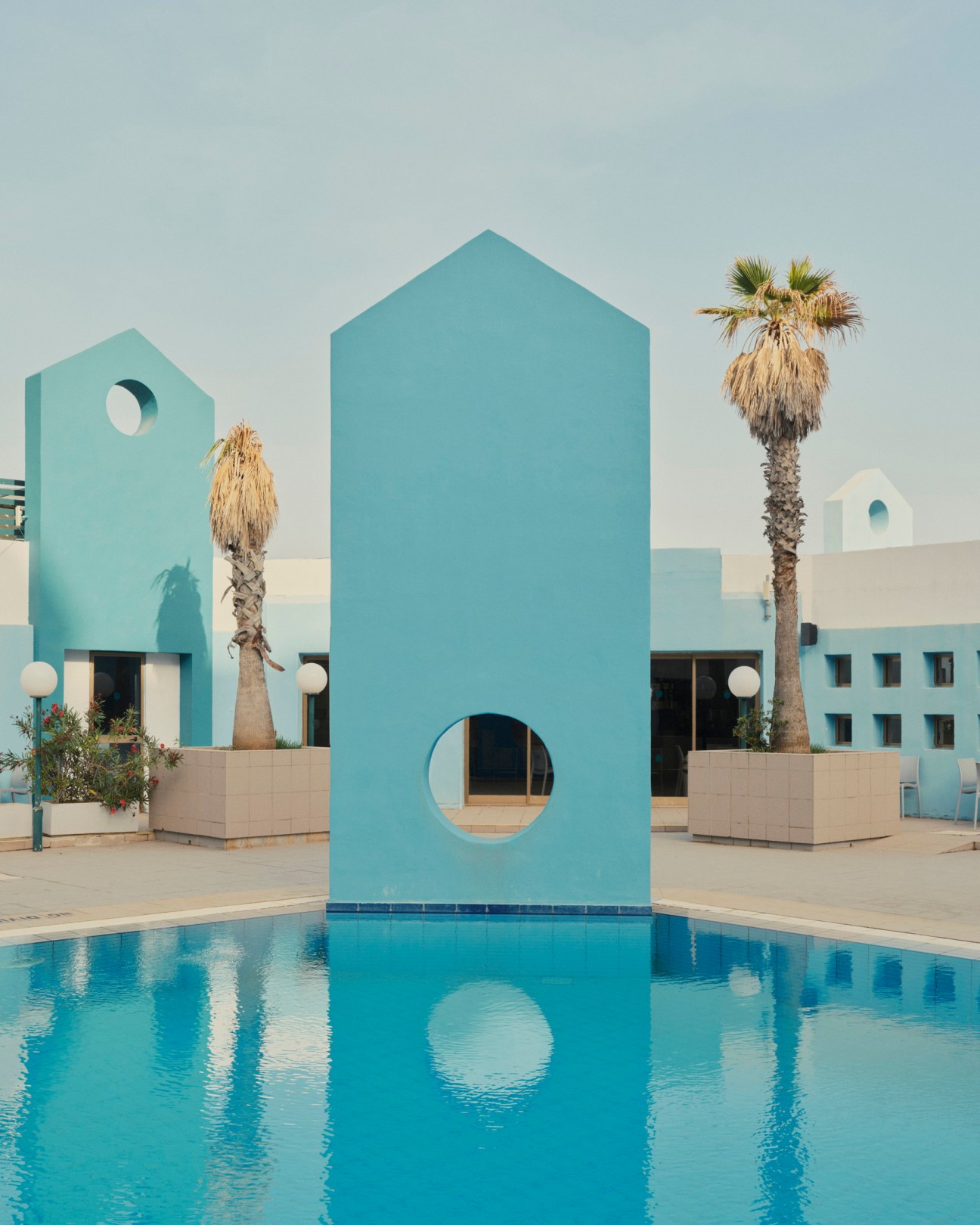
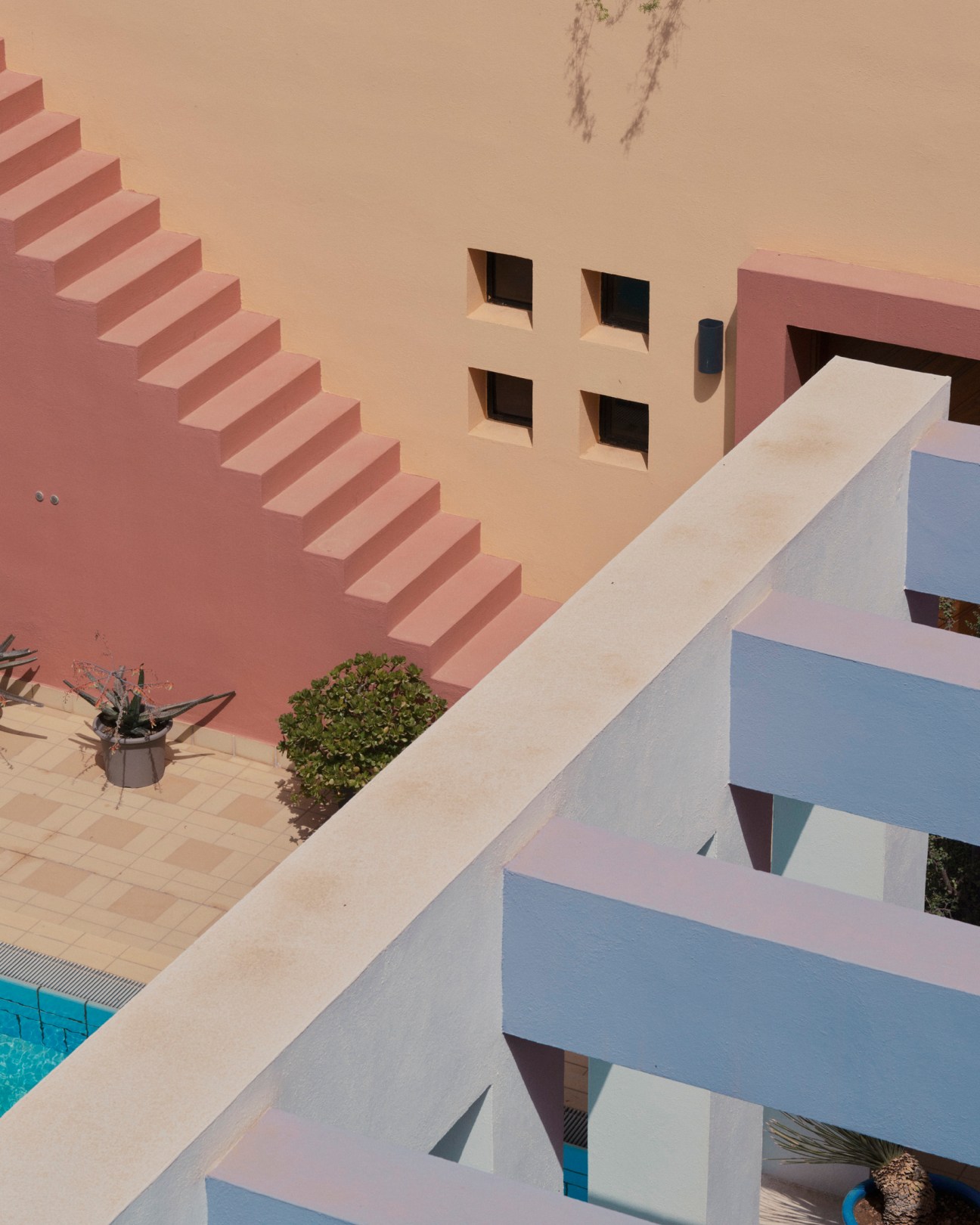
Born in Sliema to an architect father, England graduated from the University of Malta’s architecture school in 1960, before continuing his studies at the Politecnico di Milano. While there, he worked as a student architect in the studio of mid-century master Gio Ponti. “I was very lucky because with Ponti, you would be at the drawing board and he would come and spend 45 minutes with you, discussing whether a detail should be this way or that,” says England. Other famous architects would also come through the studio door: Scarpa, Nervi, Neutra, Gardella, Albini.
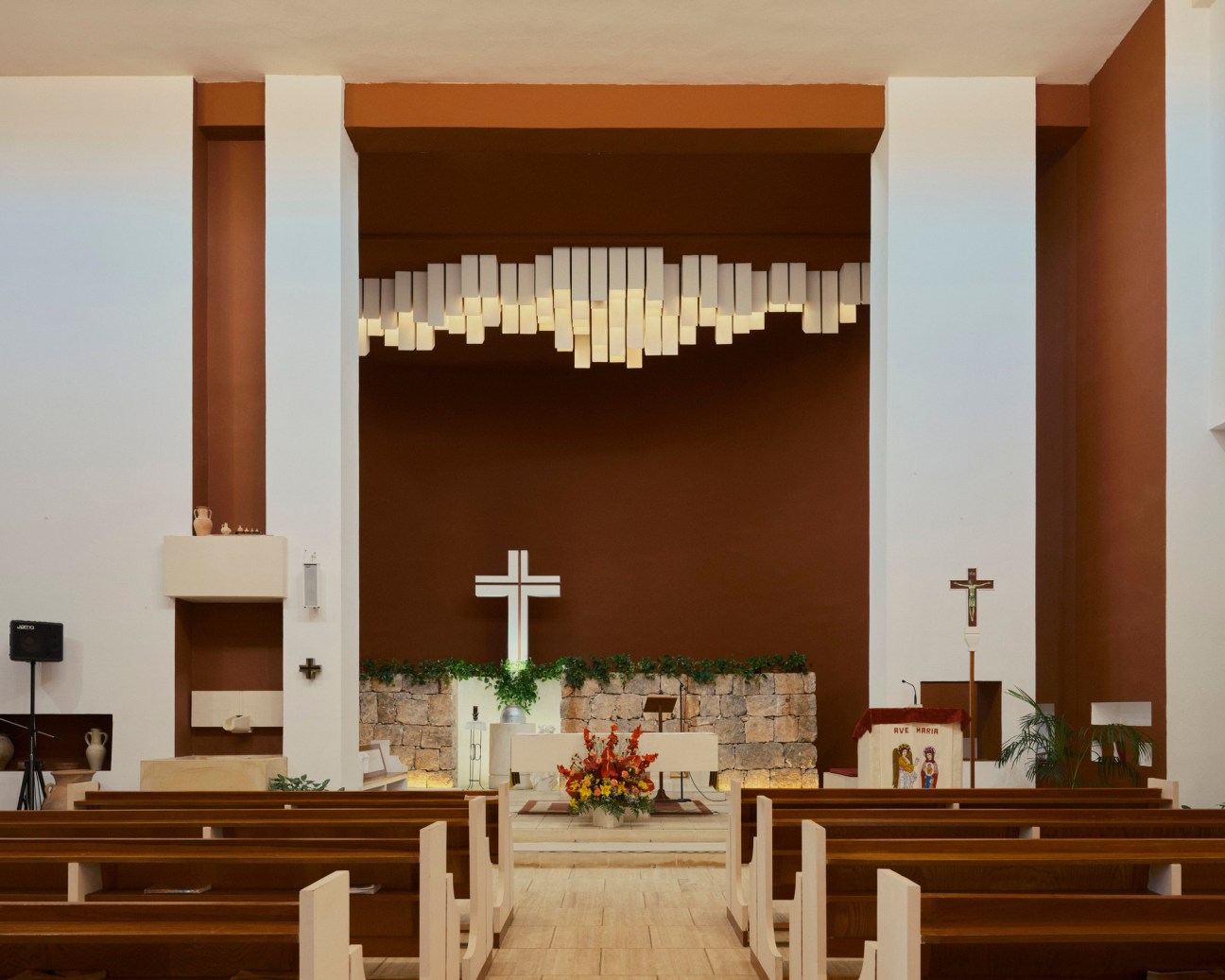
England returned to Malta in 1962 with a glowing letter of recommendation from Ponti. It was then that his father, Edwin England Sant Fournier, who was one of Malta’s best-known designers at the time, gave his son a first commission: a new church in the hamlet of Manikata. “At the age of 23, I started designing it,” says England of the project, which ultimately took 12 years to complete. “At first, the villagers didn’t like the design because they wanted a dome that was bigger than the neighbouring village’s.” They soon came around to England’s vision, which was inspired by Malta’s megalithic temples and girna, the circular stonewalled storage structures found in the island’s agricultural fields.
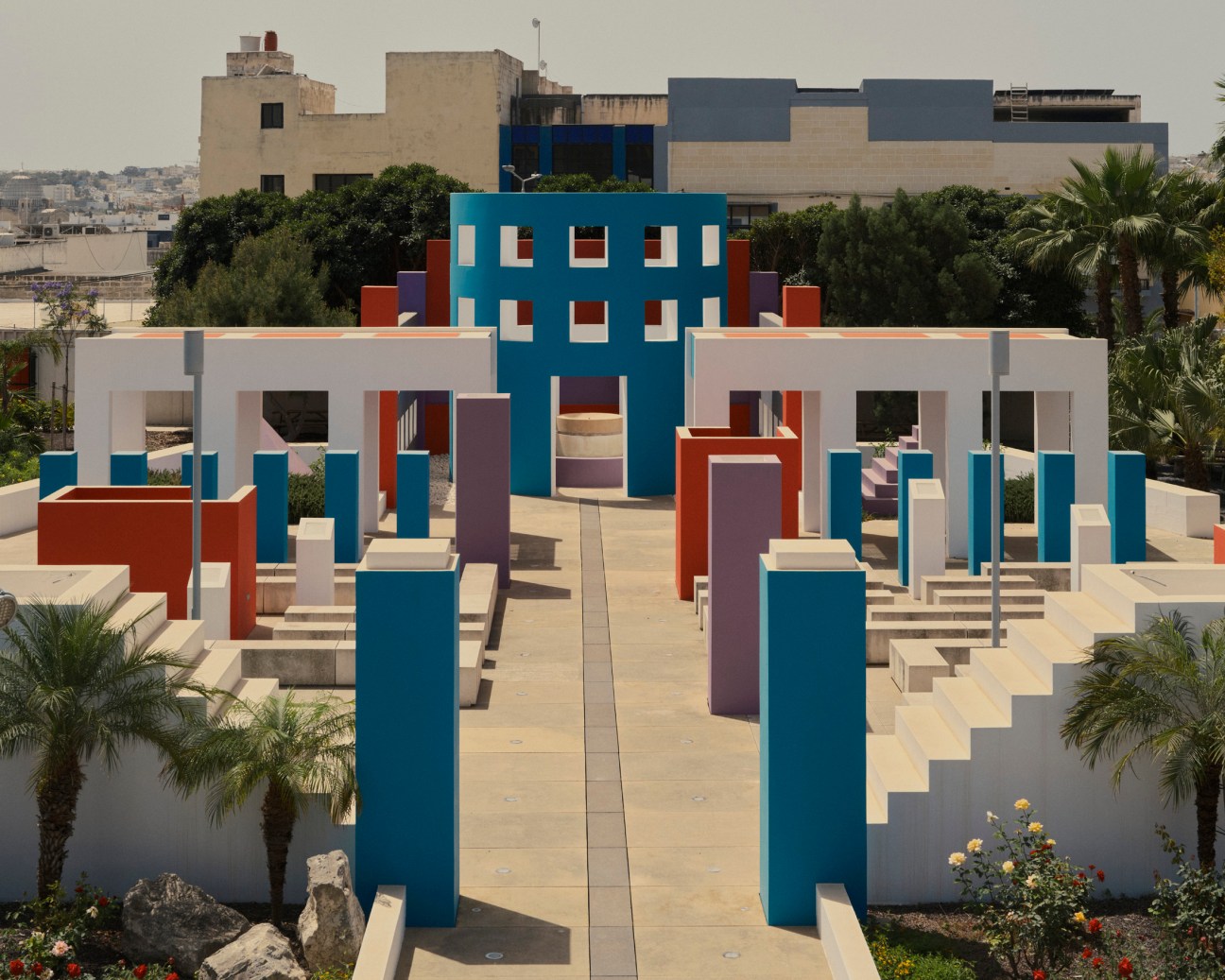
Finished in earthy tones and furnished with a bespoke altar, lectern and chairs, the parish church was hailed as a masterpiece of modern regionalism upon its completion in 1974. “The archbishop didn’t like it, especially the wall made from rubble and field stones behind the altar,” says England, laughing. “I told him that I would plaster it but didn’t, hoping that, at 88 years old, he would forget. When he visited the church a few weeks later, he quietly grabbed my arm and said, ‘I see that it’s difficult finding a plasterer in Malta.’”
The church – and its break from the island’s baroque religious architecture – put England on the map but he was keen to evolve his practice. “My first period of architecture was about regionalism, which was of its time but also of its place. I was practising what William Blake said: you become what you behold. It was almost instinctual but such an approach needed an intellectual overlay.” This came in the form of the creatives who arrived in Malta in the 1960s, with whom England collaborated. There was architect Basil Spence of new Coventry Cathedral fame and abstract painter Victor Pasmore, along with zoologist and surrealist Desmond Morris.
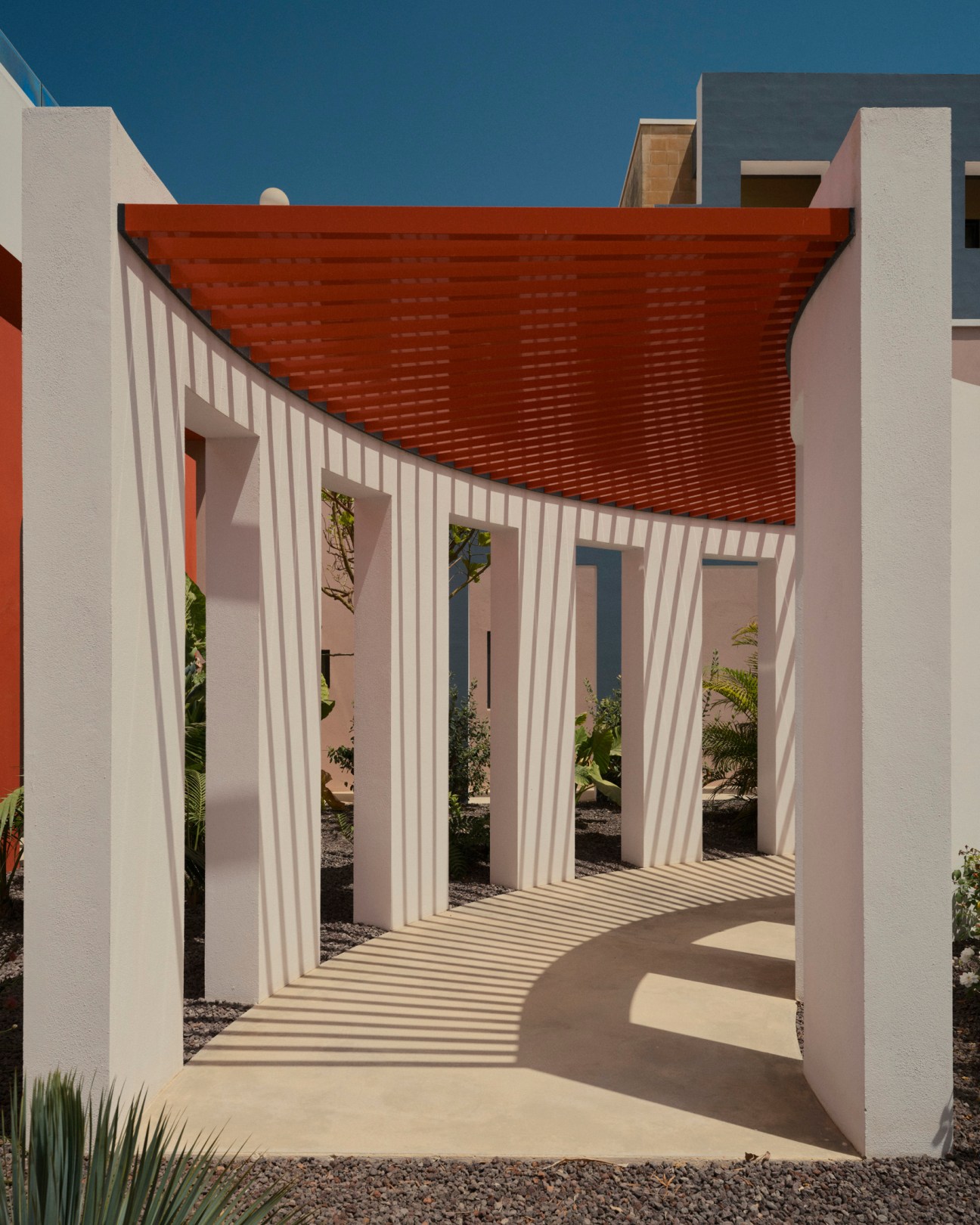
In addition, the architect began winning overseas commissions and requests. He was invited by Baghdad’s city architect, Rifat Chadirji, alongside others such as Robert Venturi and Ricardo Bofill, to help develop a new vision for the city in the early 1980s. There were character-building experiences associated with the project, which matched England’s rise to prominence. Flights were routinely rerouted to Oman, which would result in a 21-hour bus ride to the Iraqi capital, crammed in the vehicle with chickens and goats. On one occasion, England was dragged from a taxi when security services spotted him taking a snap of the Baghdad Conference Centre. Held at gunpoint, he was interrogated and left in a jail cell overnight before earning his release by exposing the film and thereby destroying the photos. There were similar run-ins in Saudi Arabia and Kazakhstan (in the latter’s capital, Astana, an aide to the mayor, reminded England to be careful when disagreeing with the city’s leader, since he had been an Olympic wrestling medallist).
Such experiences helped England to develop an appreciation for the character of a place. It’s an ethos embedded in the architect’s now-signature style – one that has become a benchmark for Maltese architecture. “Vitruvius said that architecture is about firmness, commodity and delight – or venustas in Latin,” says England. “Firmness and commodity relate to construction but while many people translate venustas to mean ‘beauty’ or ‘delight’, for me, it refers to atmosphere. It is felt by all senses – oral, aromatic, somatic and possibly also gustatory.”
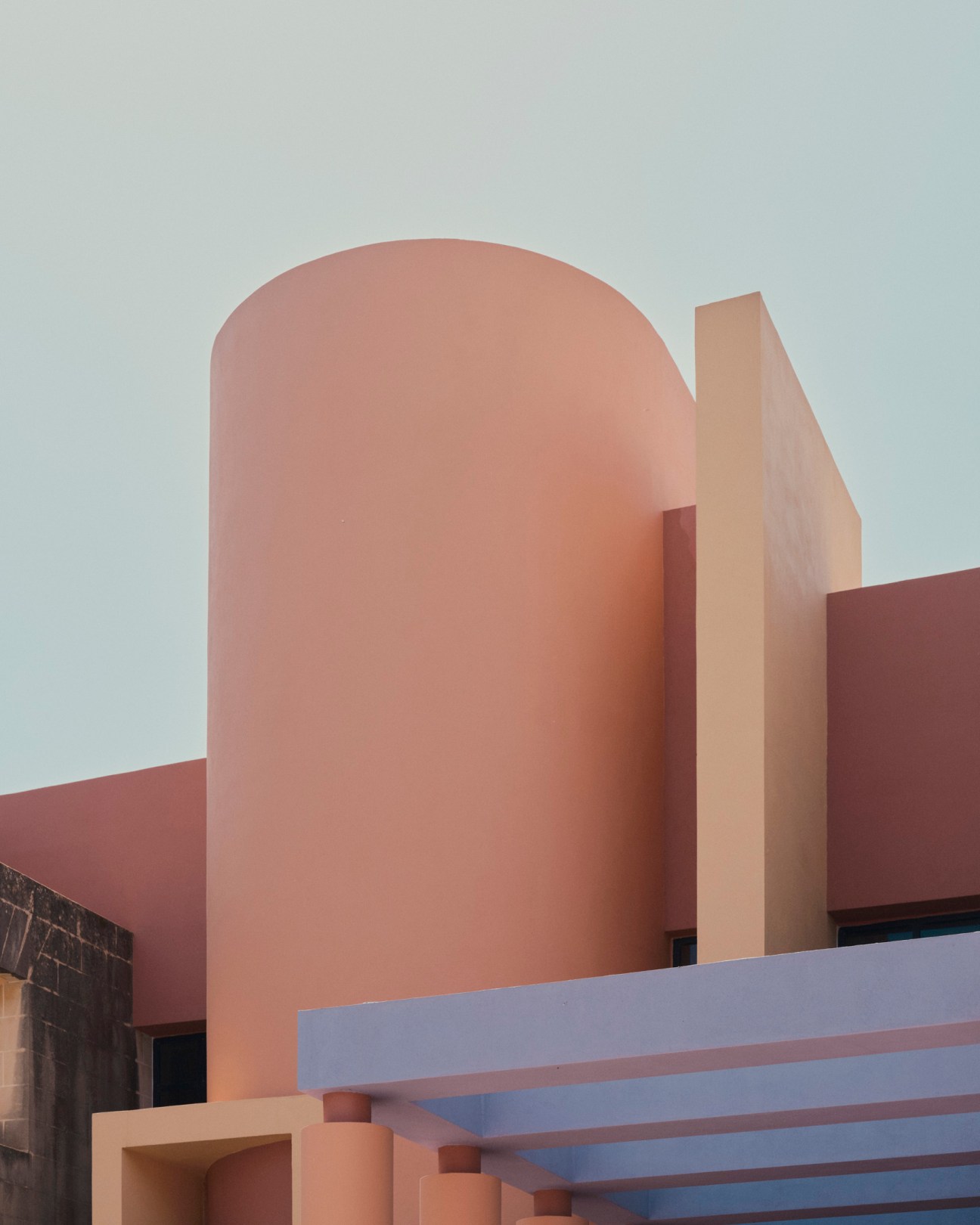
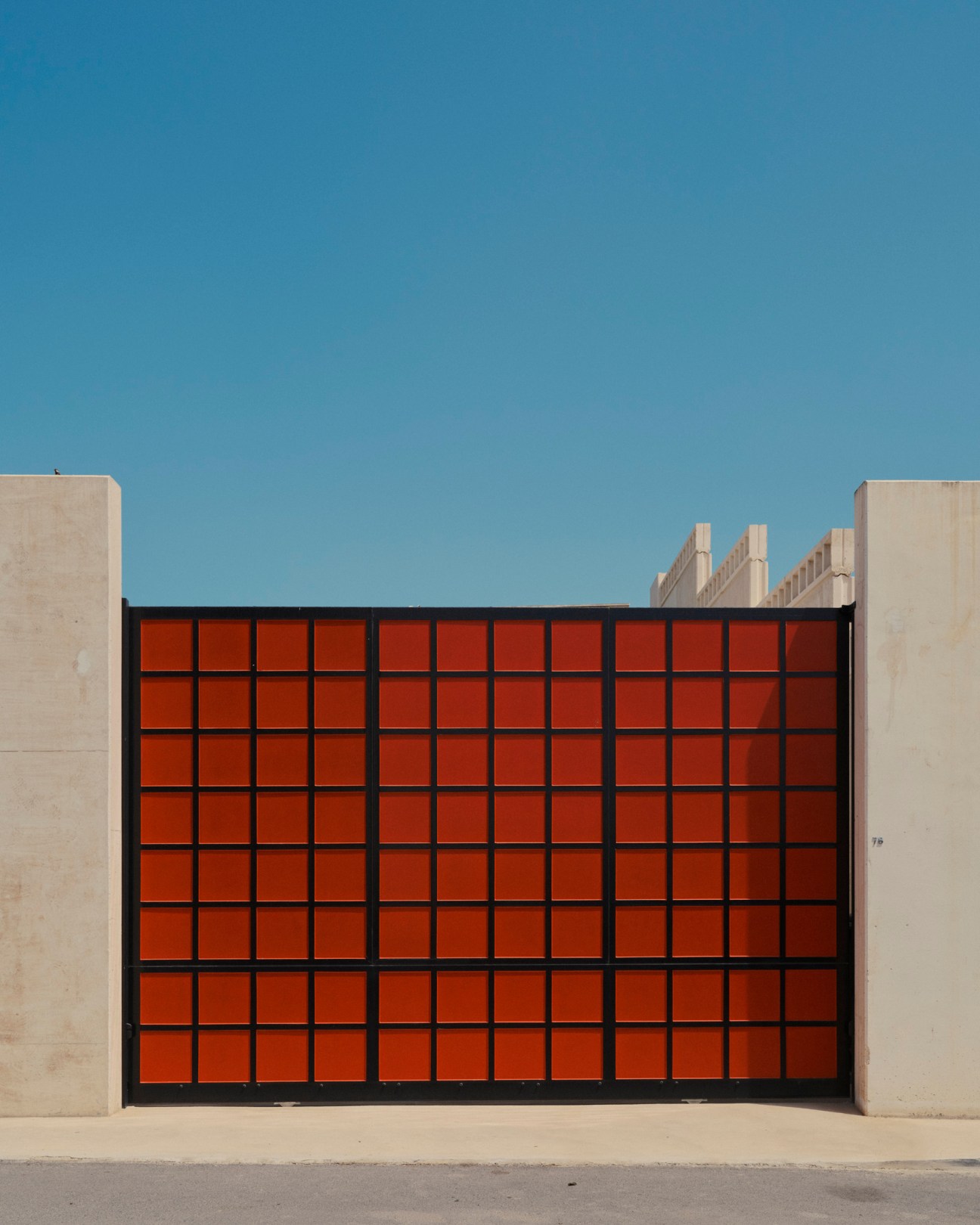
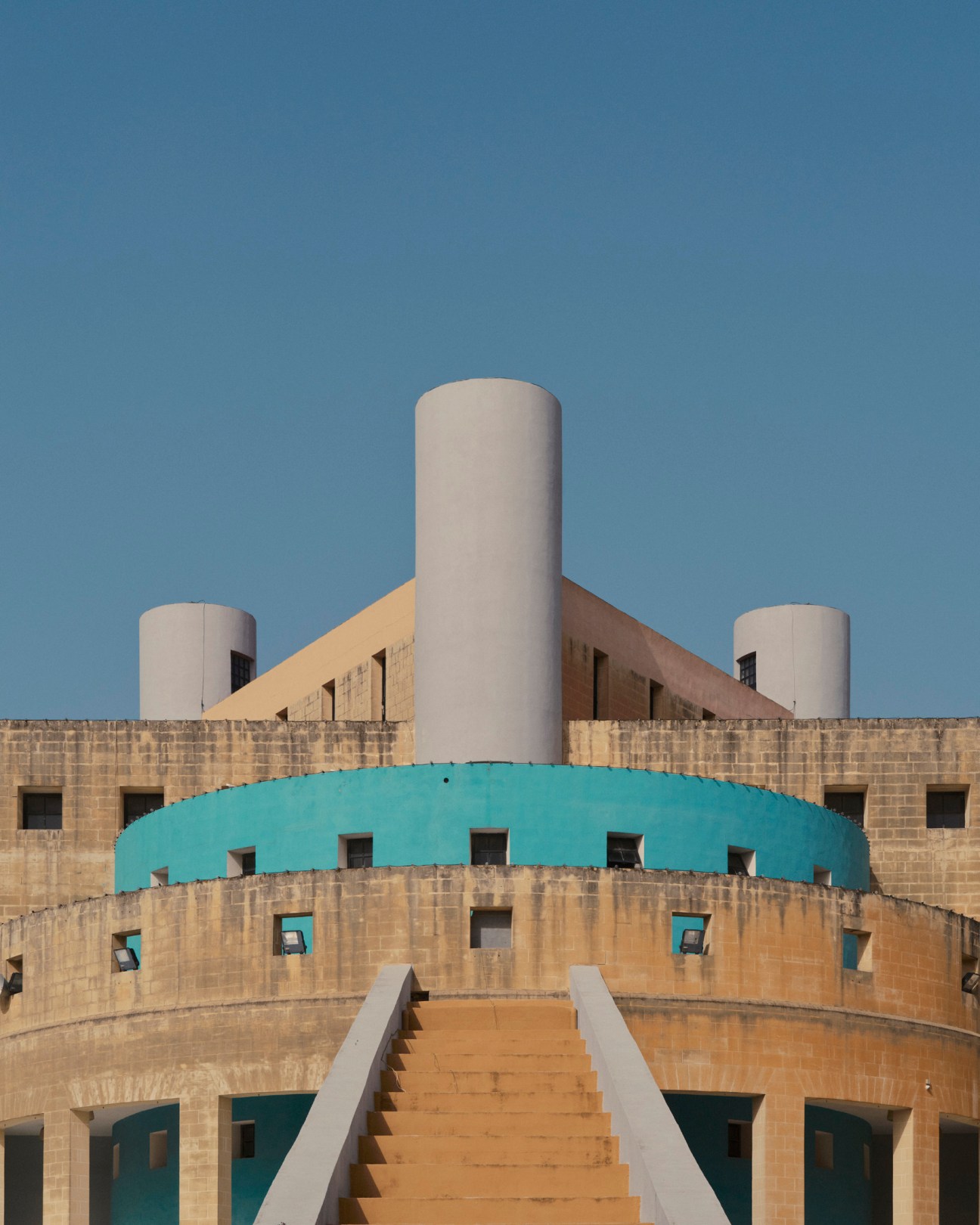
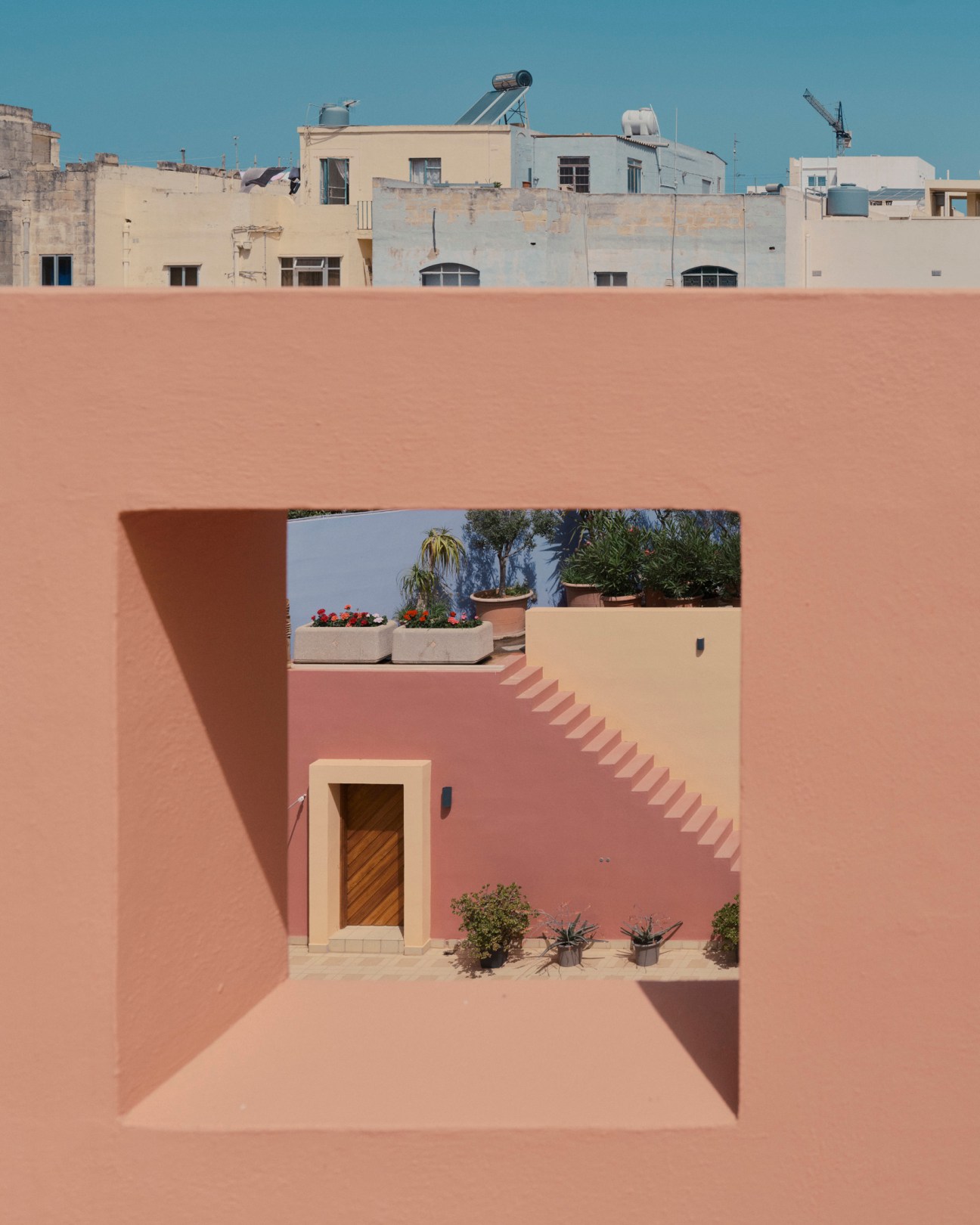
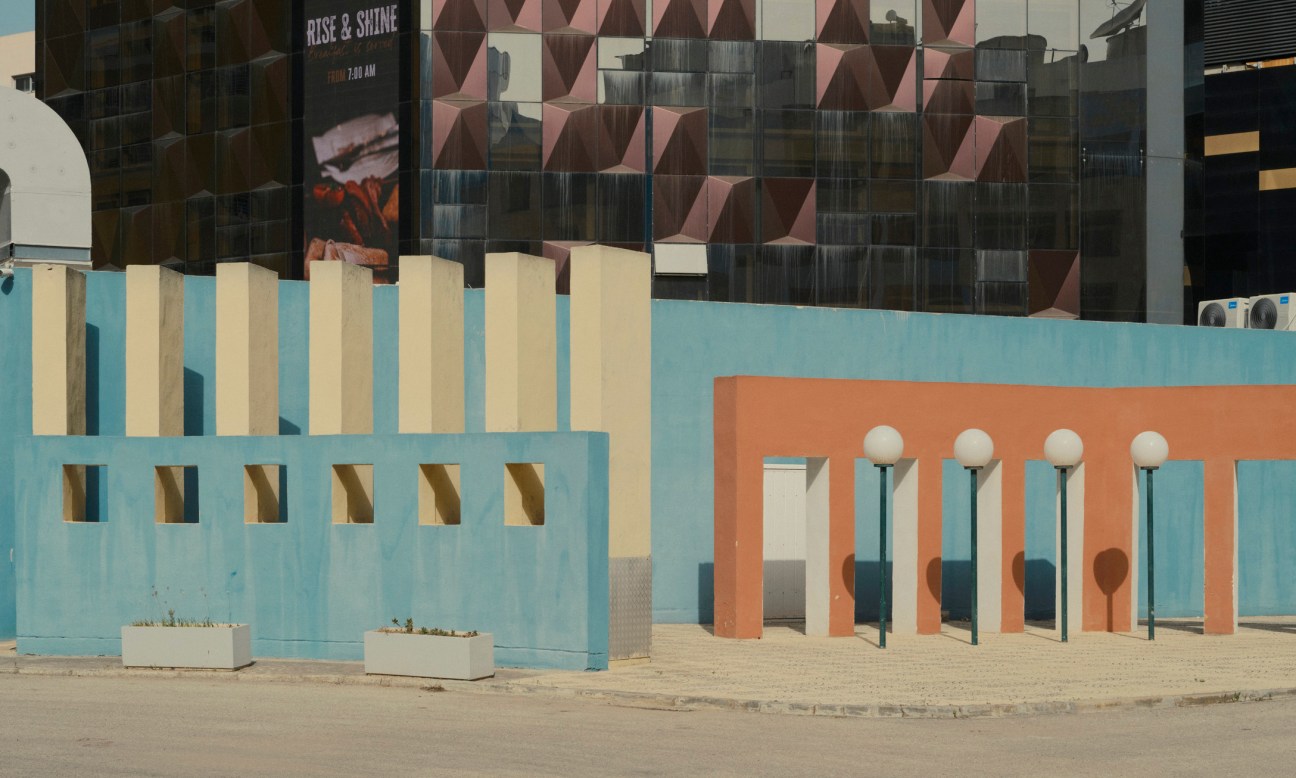
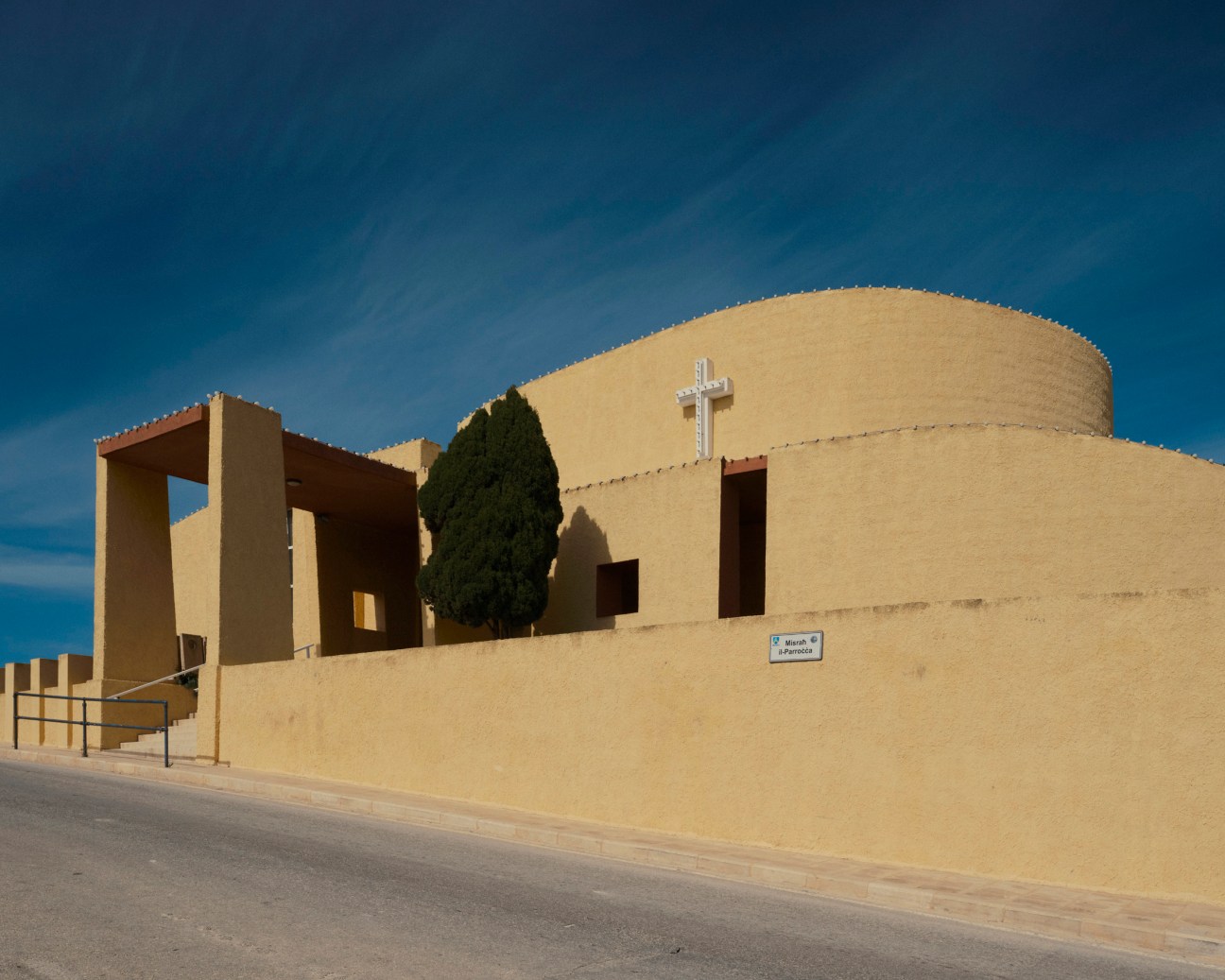
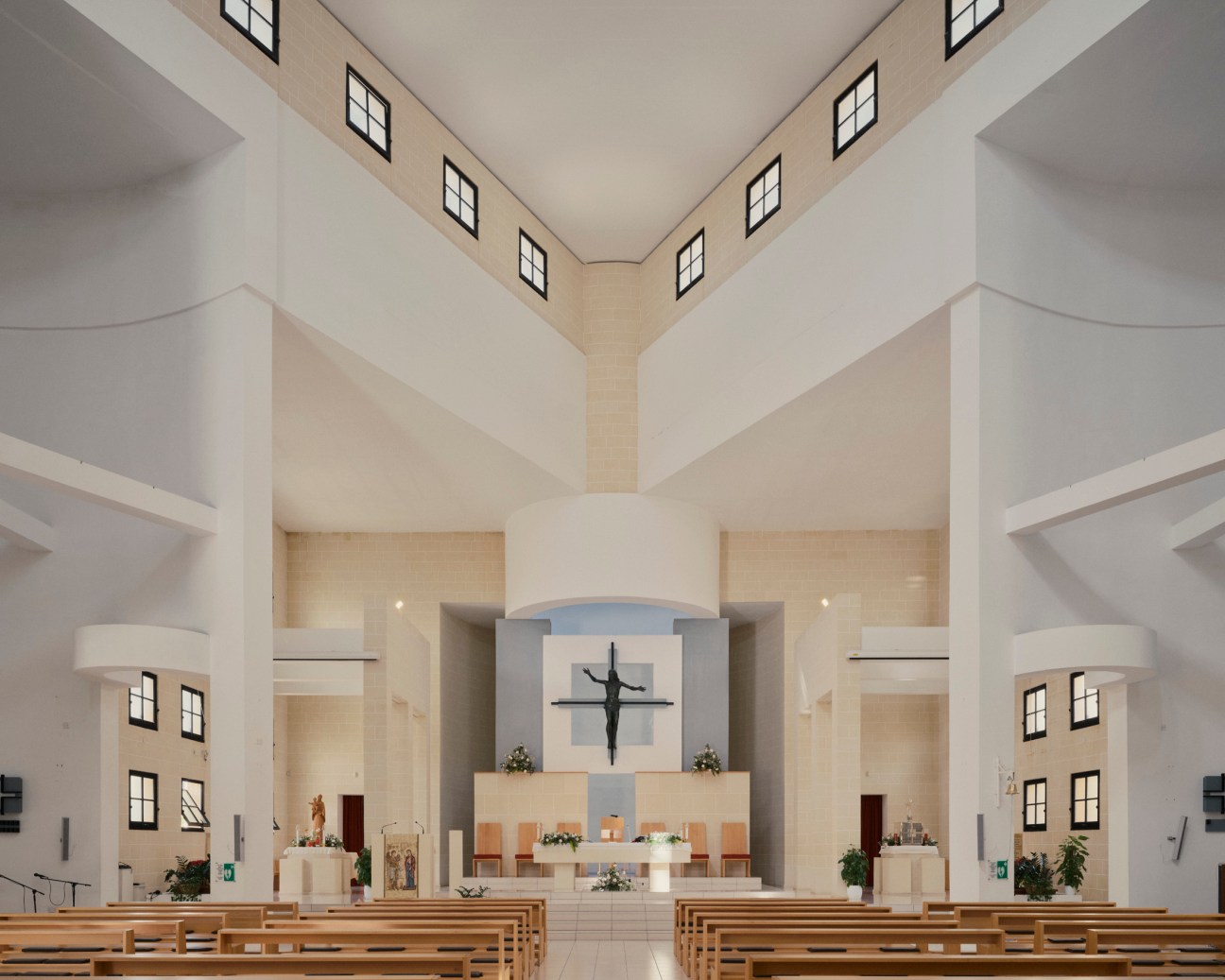
By the 1980s, England was creating unique atmospheres using surreal compositions of volumes and planar surfaces made from exposed Maltese stone and reinforced concrete. These also included pastel-coloured surfaces, punctuated by arched, rectangular and square openings.
Examples of the style, which are still standing, include private gardens and residences such as 1982’s Garden for Myriam (dedicated to his wife) and Villa G in Siggiewi. His public buildings include the mirage-like Aquasun Lido hotel pool built in 1983 and the Spazju Kreattiv, a cultural centre that opened at the turn of the millennium. Places of worship feature prominently in his portfolio too, including the Church of St Francis of Assisi in Bugibba and several projects for Dar il-Hanin Samaritan.
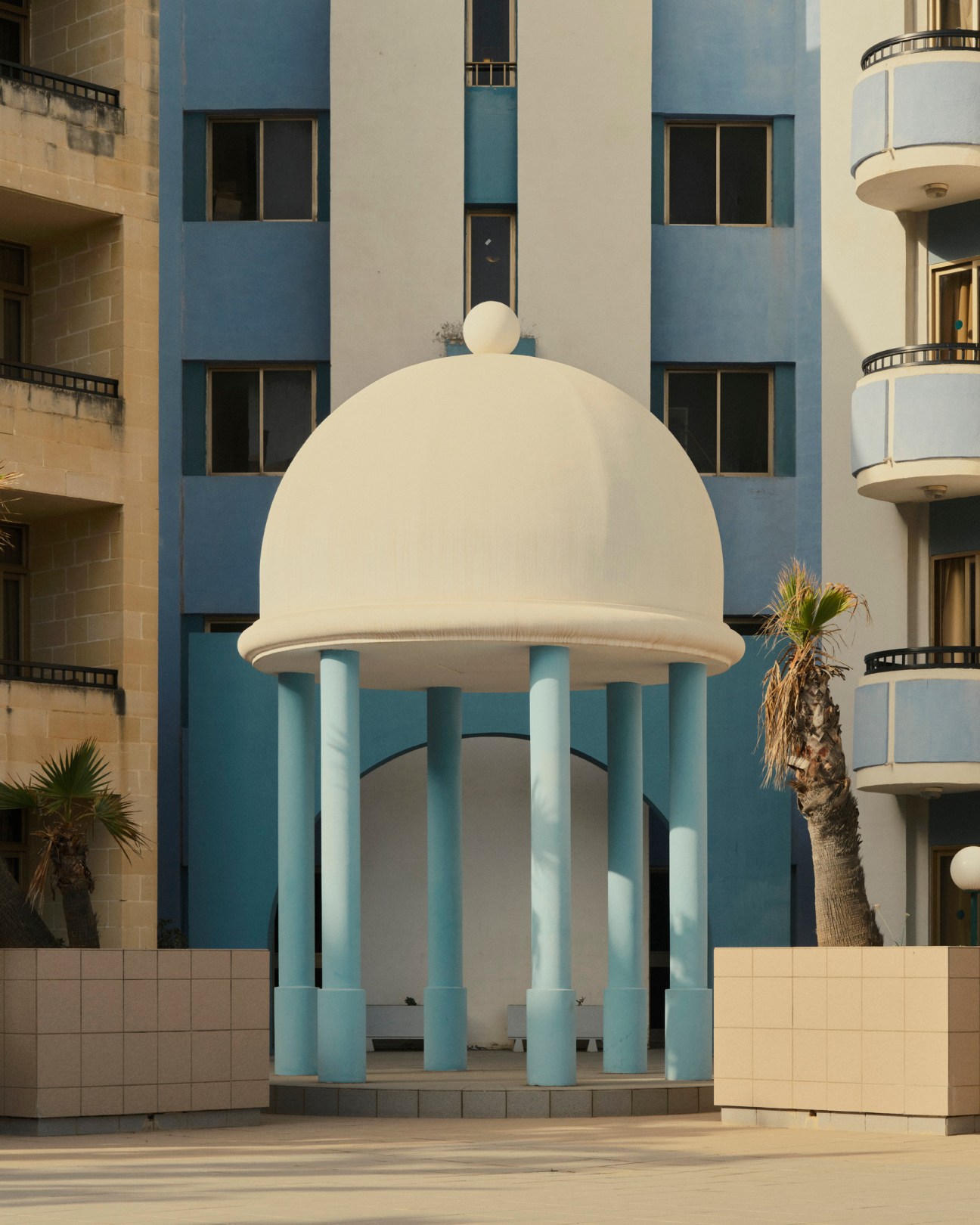
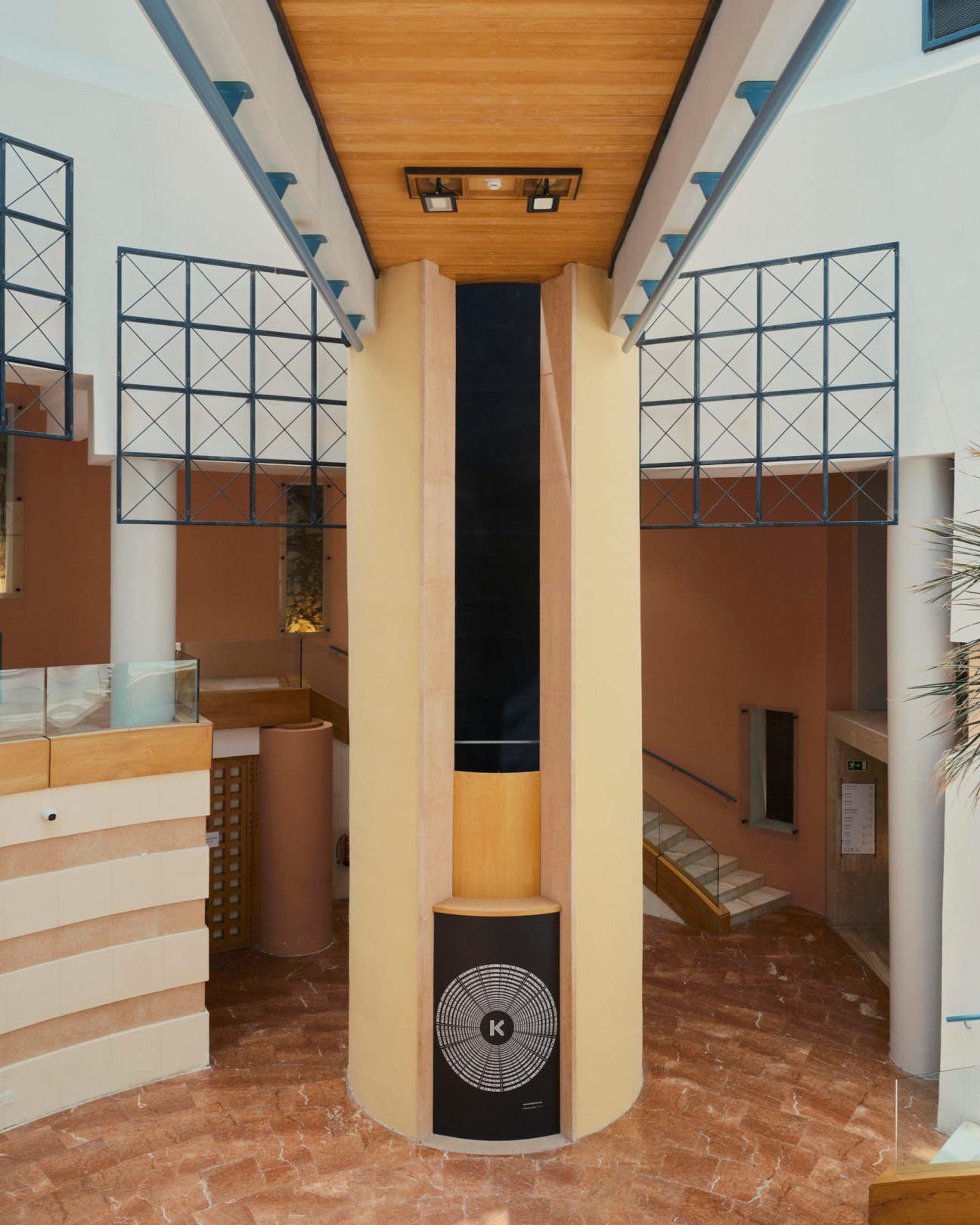
When England is quizzed on his legacy, he is carefully optimistic. “It’s not for me to judge but, hopefully, future generations will look at projects such as these as something that beautifies the island, that moves the spirit and elevates the soul.”
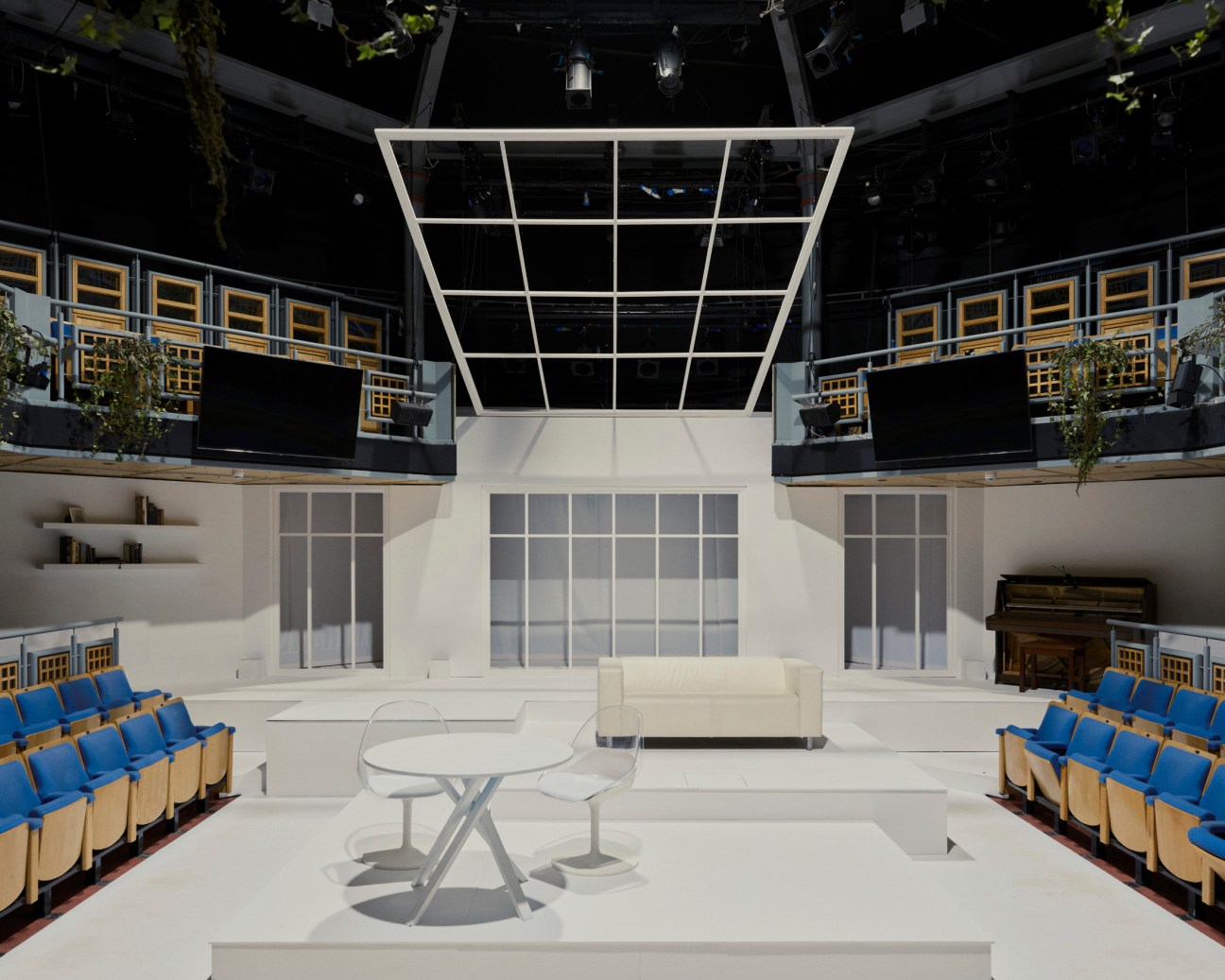
Judging by the numerous homeowners who opened the doors of their residences and the priests who ushered monocle in through their parish entrances at England’s request, it seems that this appreciation is already firmly established on the island. Even though many England-designed buildings have been knocked down or altered beyond recognition, there are thankfully those that are still standing, despite being something of a labour of love to maintain. “My architectural philosophy might well be defined in the words of Tennessee Williams – ‘I don’t want reality, I want magic,’” says England, reflecting on his portfolio. “Another of my favourite quotations is, ‘Those who dance are always thought insane by those who don’t hear the music.’”
Rest assured that, should you visit and experience some of England’s works, you’ll feel the magic and hear these metaphorical melodies. And if you’re lucky enough to visit them with England himself, he might even play you one of his favourite tenors too.
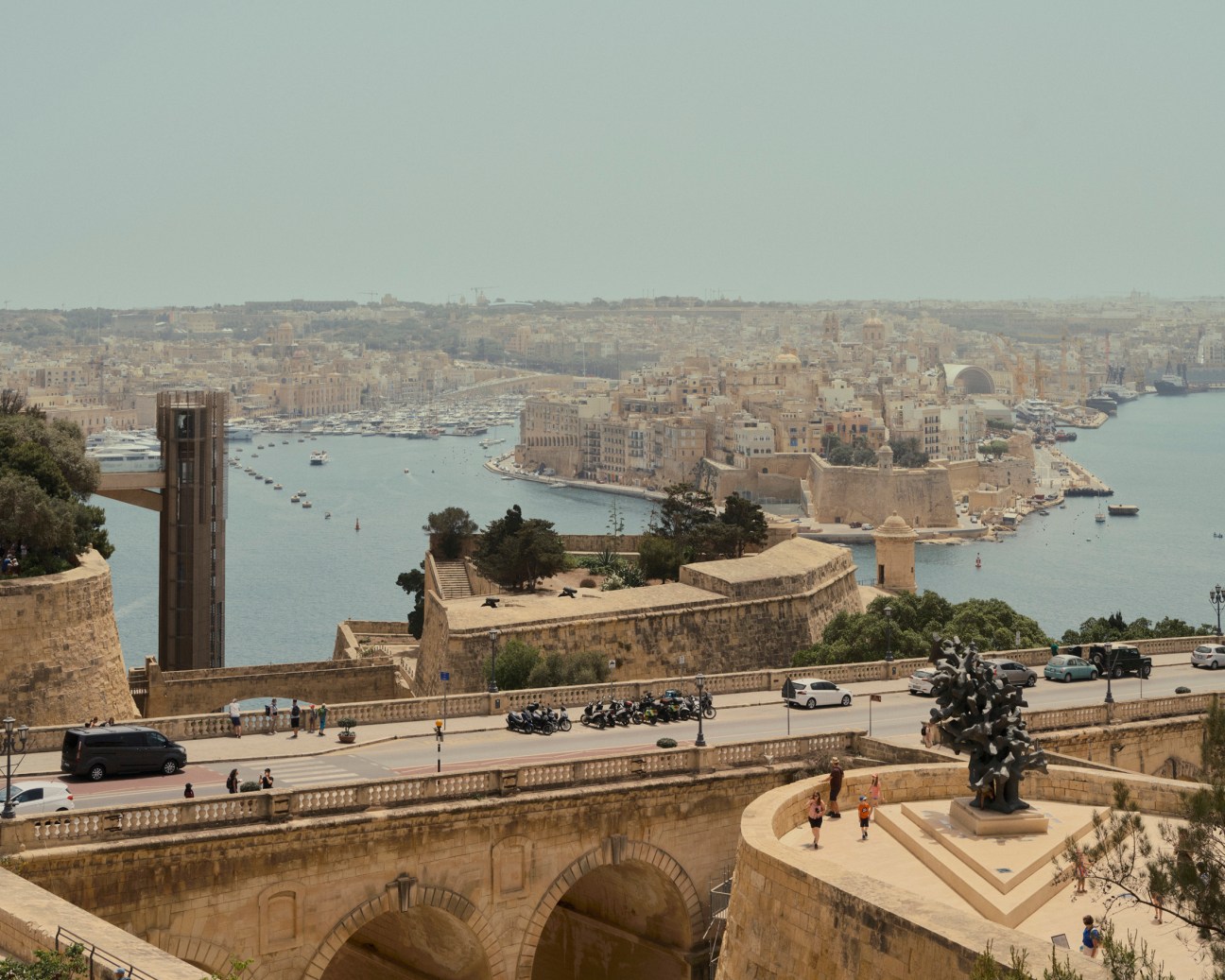
Richard England’s selected Maltese portfolio
Parish Church of St Joseph
Manikata, 1974
A modern masterpiece, inspired by Malta’s mix of ancient and agricultural landscape.
Garden for Myriam
St Julian’s, 1982
Abstract forms, reminiscent of surreal paintings by Giorgio de Chirico, define this garden.
Aquasun Lido
Paceville, 1983
Freestanding walls and follies surround this hotel pool, creating a mirage-like effect.
Church of St Francis of Assisi
Bugibba, 1993
A large geometric form rises out of the earth towards the heavens.
Villa G
Siggiewi, 1994
A private commission.“We changed the position of two doors and then built the house.”
Spazju Kreattiv
Valletta, 2000
England transformed the Knights’ Period property into a spectacular cultural venue.
Dar il-Hanin Samaritan
Santa Venera, 2014-present
A series of projects has been completed for this religious organisation, including gardens and chapels with sculptural elements that play with light and shadow. New additions include a landscape completed with glass artworks by the architect’s son, Marc England.