Issues
‘We can’t make a newspaper for people with heart problems’: Folha de São Paulo defends independent journalism
As caterers clear the plates from a lunch in a glass-fronted conference room at Folha de São Paulo’s offices, Sérgio Dávila strides across the editorial department. The editor in chief is seeing a guest – Brazil’s attorney general, Jorge Messias – out to the lifts.
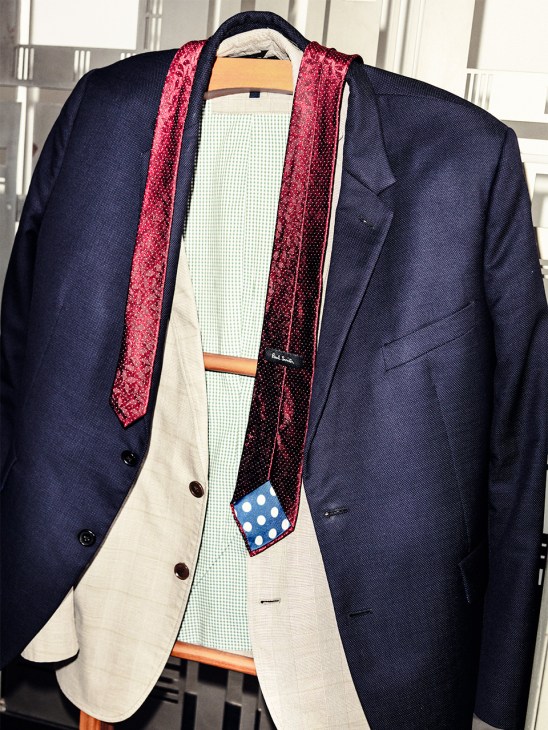
Moments later, Dávila reappears, having changed out of a suit and tie into his dad-chic uniform of a dark-navy cardigan and black slacks. He bought the brown Hugo Boss brogues that he’s wearing at an airport 10 years ago, when he realised that he had embarked on a work trip wearing trainers. Pointing to a suitcase next to his desk, he says that he will be back on a plane this evening, flying to the US to watch Brazil play in the World Cup.
Dávila is used to politicians courting him but this year has been busier than usual, with October’s presidential election looming. It promises to be a tense contest. President Luiz Inácio Lula da Silva is seeking a fourth nonconsecutive term. His main opponent, Flávio Bolsonaro, is the son of far-right former president Jair, who was jailed for orchestrating a coup attempt in 2022.


The stories dominating Folha’s front pages have recently focused on corruption scandals that have implicated the Bolsonaro family and a politician from Lula’s Workers’ Party. The election could go either way for Dávila, that means scrutinising both sides equally.
“A former minister once told me that if you’re a politician, to be part of a story that Folha is running is like falling from a motorcycle,” he says. “You’ll get hurt. You just have to choose the best angle and hope that you’re not left with too many bruises. It doesn’t matter if the government is left or right wing – we’re independent.”
The editor in chief explains how Brazilians have different nicknames for the newspaper, depending on their political leanings. “If you’re from the right, we are ‘Foice de S Paulo’, a pun on the Soviet hammer and sickle,” he says. “The left calls us ‘Falha de S Paulo’ [‘São Paulo Failing’].”
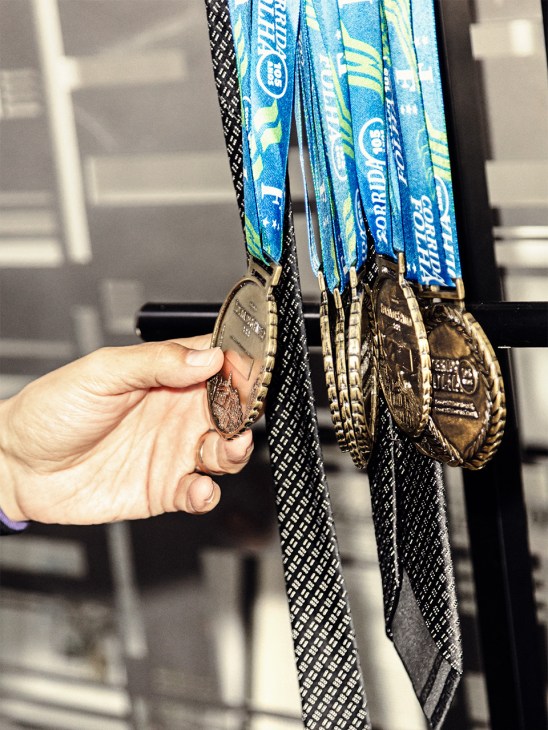
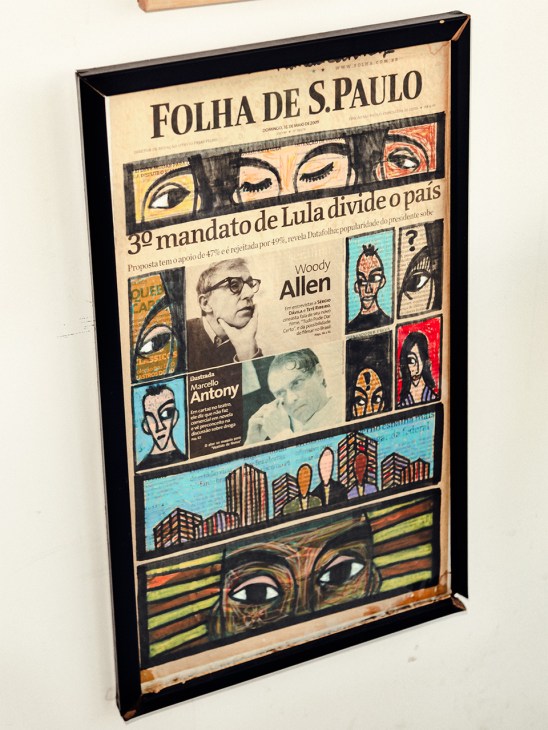
For the past 64 years, Folha has been owned by the Frias family, a merchant dynasty whose wealth came from property and financial services in the 20th century. Octávio Frias de Oliveira, who died in 2007, shepherded the daily through Brazil’s military dictatorship; the opinion pages disappeared during the regime’s most censorial years. In the 1980s the newspaper became a leading voice in the Diretas J campaign for the re-establishment of democracy.
Before he took the reins, in the early 1950s, Folha moved to its current headquarters in São Paulo’s frenetic downtown, where it shares offices with Datafolha, its sister polling company. The wider brand portfolio of Grupo Folha now includes UOL, the largest Portuguese-language internet portal, and digital-payments company PagBank. Pointing to this corporate diversification, Dávila says that it’s the only viable response to the technological revolutions of the past few decades. “Our profession always responds well to this kind of disruption,” he says. “This has been the case since Gutenberg invented the printing press.”
Over the course of 30 years, Dávila worked his way up the newspaper’s ranks, with roles ranging from editing the arts pages to Washington correspondent. But his true beginnings as a journalist, he says, came at the age of eight, when he was growing up as part of a large Paulistano Hispano-Portuguese-Italian family. “I would walk around parties asking my relatives to tell me gossip,” he says. “Then I’d go to my room, where I had a typewriter that my father had given me, and write up the stories and sell them to the rest of the family.”


His audience these days is a little wider. Folha de São Paulo is Brazil’s largest newspaper, with 875,579 subscribers, of which 10 per cent receive physical copies. Founded in 1921 as an alternative to the conservative coffee-baron press that once dominated the newsstands, today it leads more explicitly right-wing rivals O Estado and O Globo, which have 520,000 and 400,000 readers, respectively.
Dávila oversees a workforce comprising 330 journalists, in the publication’s open-plan office and abroad. Correspondents are based in Buenos Aires, New York, Washington, Berlin, Lisbon, Milan, Paris and Beijing. “We also have stringers in about 20 more places but we have to expand more into Africa and Asia,” says Dávila. On top of that is the pool of opinion writers, with 175 names on whom the editor can call to provide arguments for the columns that sit, rather unusually, at the beginning of the newspaper.
Dávila says that Folha’s team of columnists is the largest in the country. “They go from A to Z in terms of political views,” he says. “Whether the subject is soccer or euthanasia, you will always find an opinion in Folha that you approve of and one that you strongly disagree with.” It’s a formula that he inherited from Frias de Oliveira’s son, Otavio Frias Filho, his predecessor and mentor who died in 2018. “He used to say that we can’t make a newspaper for people with heart problems.”
Running such a publication in one of the world’s most social-media-addicted countries can be challenging, especially against the backdrop of the kind of culture wars that are affecting traditional media companies globally. The newspaper’s 5.5 million followers across Instagram and TikTok regularly watch Folha’s journalists on video; retaining the core values of the print edition on such platforms can be a challenge, says Dávila.
“It’s harder to do journalism for younger readers and with younger reporters, because Gen Z isn’t prepared for the kind of shock that we promote in terms of views and ideas,” he says. Yet he remains optimistic about the future and points to an annual trainee programme that he implemented in 2021, which aims to improve the ethnic diversity of the newspaper’s journalists in a country where more than half the population is black or mixed race. Before that, one survey found that 84 per cent of the stories published by Folha and its two main rivals were by white authors.There were 2,500 applicants in the first round, with 20 accepted.
Today’s edition includes a report on the inner workings of a century-old Afro-Brazilian religious festival, written by one of the former trainees. Dávila also highlights a recent story about the trend of people operating low-key burger restaurants from their homes in São Paulo’s poorer periphery. “That’s something that a journalist with a more traditional profile might never have known about,” he says.
Dávila is also far from pessimistic about AI. He’s rather more sanguine about its creeping use in the newsroom, calling it a “frenemy”. Folha now incorporates a team of 10 journalists in a department overseen by its new head of AI. How to use large language models effectively is one of three proficiencies on which potential new editorial recruits are tested – alongside their ability to ask sources the right questions, write in the newspaper’s formal Portuguese and video-savvy storytelling. “AI is a friend because it makes it far easier to be a journalist than when I started and an enemy because once again big tech is taking everything and doesn’t want to pay for anything,” says Dávila. He believes that as long as journalists keep looking for exclusives and breaking stories, Folha will ride out yet another technology revolution. “There’s no AI agent that can have lunch with a minister who talks about a lot of things off the record,” he says. “That’s journalism.”
Sérgio Dávila’s CV
- 1965: Born in São Paulo
- 1988: Graduates from Pontifícia Universidade Católica de São Paulo
- 1988 to 1993: Writes for ‘Playboy’ and ‘Veja São Paulo’
- 1993 to 1995: Joins ‘Folha de S Paulo’ as a reporter for weekly magazine ‘Revista da Folha’
- 1996 to 2000: Becomes editor of daily arts supplement ‘Illustrada’
- 2000 to 2010: Based in the US, Dávila covers events including 9/11 and Barack Obama’s first election
- 2003: Publishes book ‘Diário de Bagdá’, about his experience reporting on the Iraq war
- 2004 to 2005: Awarded Knight Foundation Fellowship at Stanford University
- 2010 to 2019: Returns to Brazil and appointed executive editor at ‘Folha de S Paulo’
- 2019: Assumes his current position of editor in chief
Room to grow: Impressive educational architecture in Finland, Austria and beyond
When architect Andrés Jaque was handed the biggest commission of his career to build a school in Madrid his clients had a few unconventional requests. They brought a succession of drawings and models to his office in the Spanish capital, each more fantastical than the next. One patron suggested that the entire building should just be a garden. Another asked for a library in every room. Everyone wanted as many secret passageways as possible. “They wanted magic,” says Jaque.”
The people who had commissioned him were followers of the Reggio Emilia method, an educational philosophy that holds that, alongside parents and instructors, the environment should serve as a third teacher and that children should be active participants in shaping their learning. Accordingly, the future users of the school the children and their parents were given a say in Jaque’s consulting process. They made it clear that they wanted a radical departure from the norm.


“Schools have a culture of painting everything one colour and removing all that’s fragile so they end up looking like jails or factories for education,” says the Spanish architect. “These clients wanted something richer, a place where playing and imagining would be part of the daily experience.”
After two years of planning, with many long, 50-person meetings, and two more of construction, the Reggio School opened in 2022.The five-storey building, which has room for about 750 pupils between the ages of two and 18, has an otherworldly appearance. Jaque was able to fulfil most of the families’ wishes while adding plenty of flourishes. The school bursts with vegetation, both in the central greenhouse atrium and in the building’s closed gardens. The classrooms have nooks containing bookshelves. Jaque dispensed with almost all corridors in favour of meandering connections between rooms. The main entrance runs through an open gym inspired by a Roman ruin; upstairs, there are windows that resemble eyes.


Most people love the Reggio School’s almost extraterrestrial aesthetic, though some might point to it as proof that children shouldn’t get involved in grown-up decisions. However, few would deny that something is wrong in mainstream education. One such warning comes from the OECD’s Programme for International Student Assessment, a standardised test for 15-year-olds in reading, science and maths that is taken in more than 90 developed countries. In the mid-2010s, scores started nosediving in many nations; the exceptions are in Asian countries such as South Korea, where a high value is placed on studiousness but too much time staring at homework has left the majority of young people near-sighted. Diagnoses of childhood ADHD, anxiety and depression have become commonplace. Not only are the kids not all right, they also seem less bright. Nowadays, in OECD countries, one in 10 first-year college students is reading at the level of a 10-year-old.
Drive to modernise
It’s no coincidence that, over the past two decades, there have also been historic upheavals in the classroom. In the 2010s there was a widespread drive to modernise education by replacing textbooks with laptops and tablets. The first generation to grow up with smartphones was also the first to be told to learn everything, from maths to essay writing, on a computer. In the US, these changes coincided with a rollback of standardised testing in the belief that it exacerbated inequalities (it turns out that the opposite is true). It’s only in the past few years that policymakers, faced with dismal learning outcomes, have started to admit that mistakes might have been made.
Changes have left their mark on the built environment too. Finland, long a paragon of primary education, has had a boom in school construction to replace buildings from the 1960s and 1970s that had poor indoor air quality. Many of the new schools have been built according to the pedagogical idea of “open learning environments”, dispensing with closed classrooms in favour of open-plan spaces, which are often separated by curtains to control noise levels and aid concentration.


But the architects commissioned to design a new school, library and community centre in the suburbs of Lappeenranta in southeastern Finland chose a different approach. “We looked to older, more traditional schools with individual classrooms, where the priority is a calm learning environment,” says Tuuli Kanerva, co-founder of Nervin Architecture. “It was important to us that every classroom had a window, for example.” Sammontalo, which has space for about 650 pupils, is built in timber and light-red brick, with an open atrium and an inner courtyard that ensures plenty of natural light.
Nervin started working on Sammontalo in 2018. Then came a sharply reduced population forecast, caused by falling birth rates, followed by the coronavirus pandemic and the Russia-Ukraine war, which led to a spike in construction costs. The municipality first downsized the new building, then debated whether to build it at all. What tipped the scale were letters written by residents, who asked for the project to be completed. “Schools are some of the few truly civic buildings,” says Kanerva. “There’s something beautiful about knowing exactly who will be using your design.”
Return to the classics
In recent years, some have responded to education-reform missteps by returning to trusted, time-tested approaches. In Finland, classrooms are once again built with walls. In New York, phones are banned on school premises and plans for AI-assisted classrooms have been scrapped. Manufacturers of traditional lined notebooks are reporting booming sales. Instead of abandoning the physical world in favour of the digital one, some schools are now leading the drive to reinvest in analogue pleasures, such as pens and paper, playgrounds and tools, as well as high-quality architecture.
Last year, Sam Jacob became the dean of the architecture school at Vienna’s University of Applied Arts (Die Angewandte). “Everything is changing so fast,” he says. “It’s both a terrible and a very exciting time to be a student and for teachers.” He takes inspiration from the university’s history as a school of applied arts a discipline that straddles fine art and serial production, and was a response to the Industrial Revolution. “The mandate from that time is to think very practically about how to change the world,” he says.


Jacob was educated at the Glasgow School of Art and fondly recalls the paint-covered walls and general messiness of the artists’ studios in the university’s historic Mackintosh Building. “It wasn’t treated like a house museum,” he says. “The flip side was that it then caught fire during a degree show.” Jacob now presides over similar creative chaos (minus the pyrotechnics) in the studios at Die Angewandte, where students are welding, woodturning and building one-to-one scale models. “This is something that can’t happen elsewhere,” he says. “One of the resources that universities have is the ability to provide that kind of space.”
Universities are racing to do so and often beyond their architecture schools. One example is the Bloomberg Student Centre, a hub for non-academic activities at Johns Hopkins University in Baltimore, completed last year by the Bjarke Ingels Group (BIG) in partnership with the Rockwell Group and landscape architects Van Valkenburgh Associates. The cascading timber pavilions, 29 in all, host a theatre, a dance studio, a chess club, a food court and – by popular demand – a pub. The intention is for the centre to encourage students to take some time away from their studies and pick up a new hobby or just meet new people. “These interstitial spaces are becoming more important,” says Leon Rost, a partner at BIG.


Rost, who oversees the Los Angeles office of BIG, remembers the first time that he walked into the architecture faculty as a student at California Polytechnic in San Luis Obispo. “I wasn’t sure what to do with my life,” he says. “Seeing people drawing and painting, making models – the creative but also the physical side, with the wood shop – I thought, ‘OK, this seems fun.’”
Learning by doing
It’s a philosophy that chimes with the experiential learning approach that shaped the architecture at the Reggio School in Madrid. Around the building, children are free to stage plays, conduct science experiments or start a Scrabble tournament. Projects initiated by students are taken seriously and might continue for weeks.The building is designed so that everything that takes place inside, from science and gym lessons to cooking and maintenance, is given the same visibility. “There is no division between the space given over to philosophical lessons and cleaning the tomatoes for the salad at lunch,” says Jaque, who explains that this only adds to the fantastical atmosphere.
Operating with a similar spirit is a new educational environment that opened this summer at the Technical University in Munich. The Kinderoase, designed by Pritzker Prize-winner Francis Kéré, who is also a professor at the university, is an on-campus daycare centre intended to make life easier for faculty and students with small children. “I was asked to create a fantasy world for kids,” says Kéré. “So I started to dream big.”
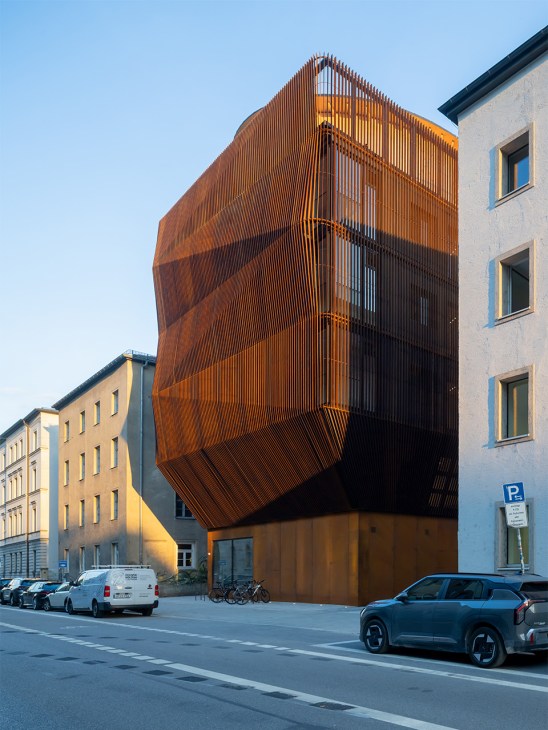
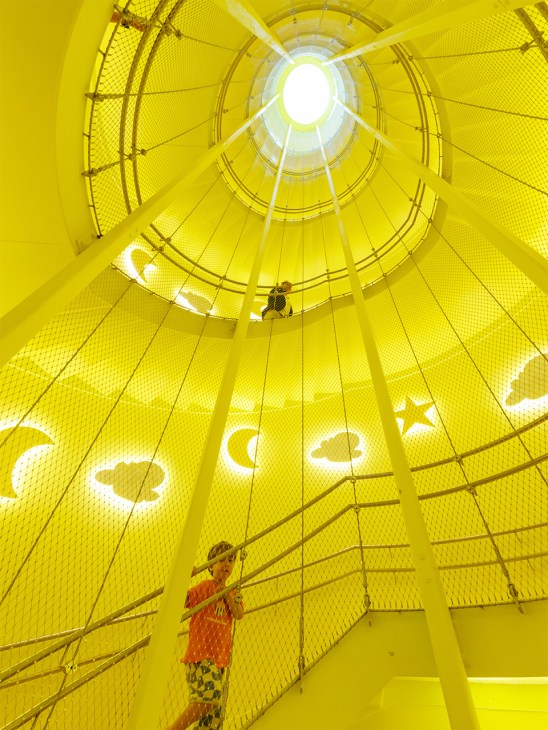
The building occupies a small former car park, so Kéré opted to make it five floors high – a skyscraper by kindergarten standards. Children move upwards as they get older: the two-year-olds are on the first floor, while the five-year-olds are in the penthouse. What’s more, they can travel between the floors on wooden slides. “I wanted the kids to touch the soil and see the sky,” says Kéré. From the rooftop Himmelwiese (sky garden), children have an unobstructed view of the horizon. The architect is also working on extending the playground to a neighbouring rooftop.
A brighter future
The Kinderoase is Kéré’s first permanent building in Europe but it is not his first foray into educational architecture. His career began with a school for his home village in Burkina Faso. Everything from the climate to the levels of bureaucracy was markedly different there but he says that there are universal rules for designing schools. “It’s so important to think about the haptic experience, to have materials that children like to touch,” he says. “They have to look light, not too heavy, but also light in terms of brightness. You have to think about little corners that are designed for different purposes too.” These spaces play a huge role in the formative years of a person. Most have lifelong memories of their experience in kindergarten and school – what it was like to walk down the corridors, what the best spot on the playground was. “Education as a typology is easy to relate to because everyone has lived through school,” says Antti Soini, another co-founder of Nervin, the designers of Sammontalo. “We were able to imagine where we would want to sit and how it would feel as a 10-year-old to be on that bench.”


While Kinderoase – which means “children’s oasis” – might be new, the Reggio School has, in just a few years, grown into an actual oasis that is cared for by its students. The word also evokes the ideal experience of being in school: spending years in a kind of cocoon that has its own rhythm and codes of conduct. Instead of children in front of screens in factory-like surroundings, the best new schools create an alternative, more beautiful reality. Children in such environments will eventually graduate into the real world and might just decide to change it for the better.
Best in class
For much of the 2010s, it seemed that educational buildings, from kindergartens to universities, would embrace all things digital. Lecture halls were kitted out so that professors could deliver presentations via video screen and paper workbooks were put aside in favour of iPads. Despite this ambition to deliver a digital education that’s flexible and adaptable, classrooms are now shifting back towards more traditional educational environments. The best new designs have embraced tactile, human experience and been created by listening to the needs of students, ensuring that their preferences are reflected in the spaces that they will use every day. Here, we outline the best design features from five such projects.
1.
Reggio School, Spain
- Student input: Children worked on the design as active participants.
- No layout hierarchy: Kitchens are treated with the same ambition as classrooms.
- Unexpected connections: There are few corridors in the structure. This encourages open-ended movement and cross-pollination.
2.
Sammontalo, Finland
- Enclosed classrooms: This approach rejects open-plan learning environments in favour of a calmer, more focused atmosphere.
- Natural light: An open atrium and inner courtyard invite light into the school, boosting alertness and helping to sustain students’ concentration levels.
- Dual purpose: The school serves both as an educational tool and a centre of community and civic life.
3.
Die Angewandte, Austria
- Workshop environment: Buildings provide physical space for processes such as welding, which can’t happen in ordinary academic settings.
- Embracing the chaos: The educational buildings aren’t treated as museums, with students encouraged to try high-intensity hands-on making methods.
- Varied aesthetics: The school occupies a building that blends classical structures with mid-century modernism and contemporary interventions, showing that the best educational spaces don’t have to conform to a single ideal.
4.
Bloomberg Student Centre, USA
- Welcoming scale: Entrances on all four levels ensure that the centre doesn’t feel like a hulking, imposing institution.
- Communal gathering: A central staircase connecting the four levels provides a social heart for the building.
- Flexible spaces: Rooms and event spaces are flexible, mixing educational disciplines and interest groups rather than siloing them.
5.
Kinderoase, Germany
- Vertical playground: Slides link the floors, turning movement into play.
- Open to the environment: A rooftop terrace allows children to engage with nature and visually connect with the city beyond.
- Made to measure: Every age group occupies its own level, allowing environments to be scaled to size.
New approaches, old foundations: How Kyoto is establishing a fresh creative voice
“The true strength of tradition is in its resilience – evolving with new developments, instead of being broken by them,” says Masataka Hosoo, the 12th-generation president of Kyoto-based textile maker Hosoo. The company’s story of innovation and time-tested skills mirrors that of its home city. The ancient capital remains a popular destination for international visitors seeking a glimpse of Japanese history but there’s also something new stirring here.
Hosoo has long been known for its kimonos. “Today most items are considered to be at their peak when they’re new, then they decrease in value,” says the company’s president. “Kimonos are different.” But now the company has also launched its first menswear line, Hosoo Men, designed by Ryutaro Kishi, formerly of Rainmaker Kyoto. It kicked off in March with a nine-style collection including shirts, double-pleated trousers and a hooded robe. Made from high-quality hemp, every item comes in a limited run of between 10 and 50 pieces, available exclusively from the brand’s new Kyoto flagship.
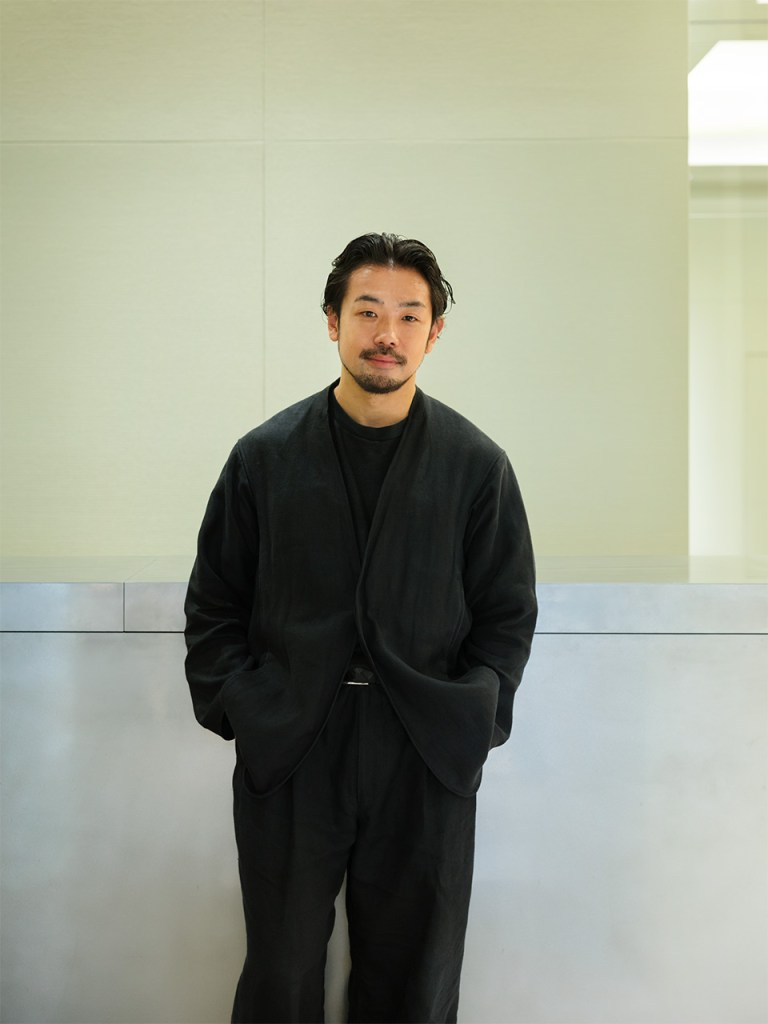
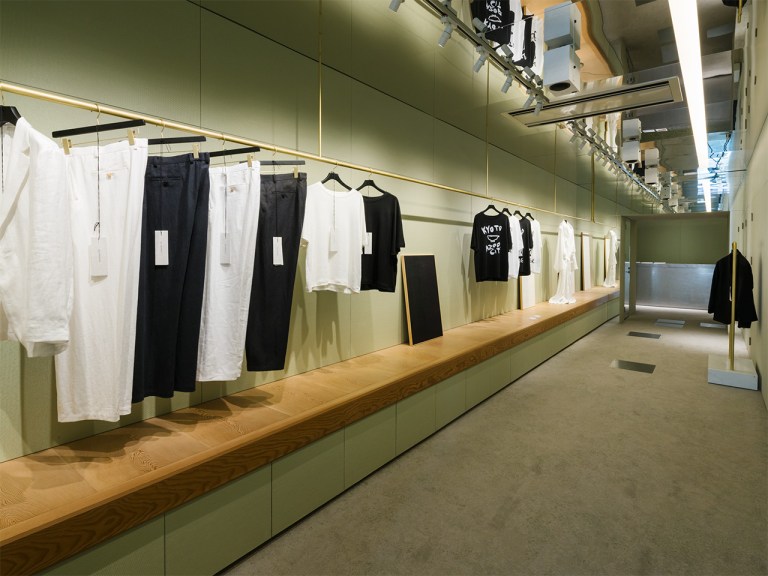
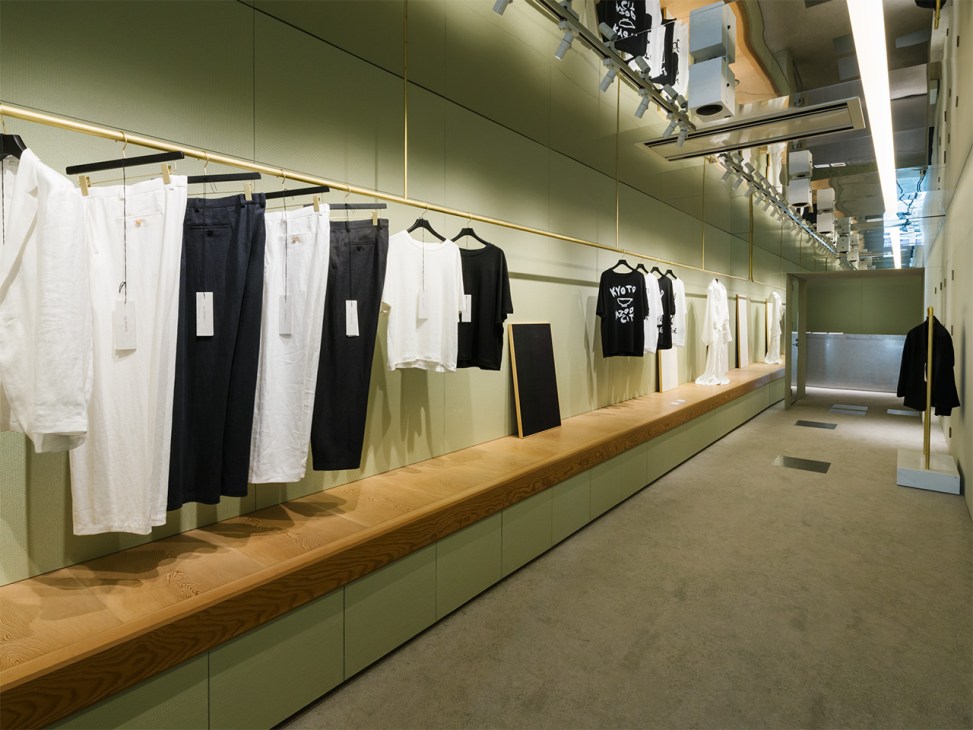
An expanded collection will arrive in September – part of an initiative to revive the production and use of hemp, a material with links to ancient Japan. “There’s a culture of using things beyond the span of a person’s lifetime,” says Hosoo. “It’s a philosophy that we want to bring to the world of fashion.”
This isn’t the only business in Kyoto that’s turning over a new leaf. Various Japanese and global brands have also been setting up shop here, reimagining the city’s architecture in the process. British label Studio Nicholson has opened its first Kyoto outpost, bringing its signature minimalism to a former workshop, while Tokyo-based A Presse’s new location has the peaceful air of a private home. Even long-standing supermarket Kinokuniya has set up a concept shop featuring selected items from Kyoto and further afield.
With almost 63 million visitors arriving in the city in 2025 and travellers spending more than ever, tourism is driving change. Among a wave of fresh openings is The Imperial Hotel, which launched a 55-guest-room branch in a landmark theatre in the Gion district in March. In neighbouring Miyagawa-cho, Kengo Kuma oversaw the design of Capella Kyoto, drawing inspiration from the city’s townhouses and streets.


On the road to Kenkun shrine in Murasakino, Ryo Suzuki’s vision for his gallery in a machiya (traditional wooden townhouse) is taking shape. A veteran of the architecture, antiques and art scenes of Hiroshima and Paris, he fell in love with the century-old building at first sight. His transformation of the former residence into an exhibition space alongside local carpenters and craftspeople has been an incremental process. It continued last year with the opening of an atelier-like annex filled with objects spanning continents and eras.
“I think of buildings like this as minka [traditional folk houses] – places for ordinary people that possess a local character, born from the land,” says Suzuki. “The use of natural materials makes them feel alive. Earthen walls and tatami mats change in appearance; wooden beams and floorboards grow darker.There’s such a richness to spending time in such spaces.”
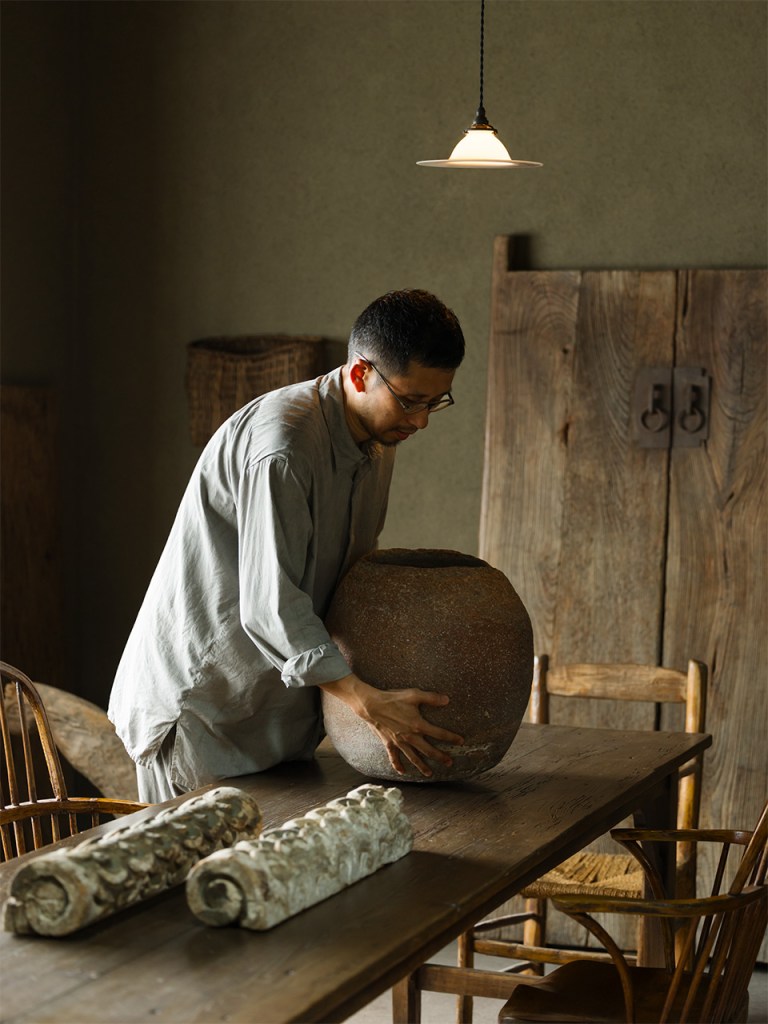
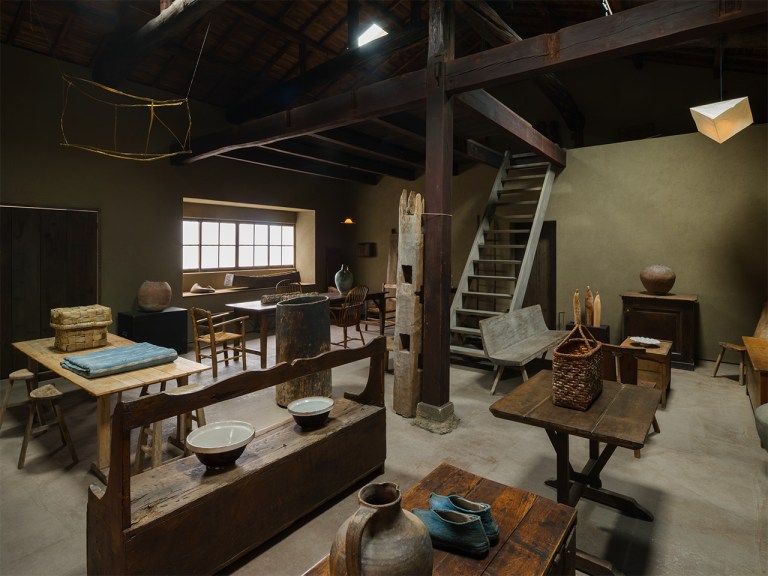
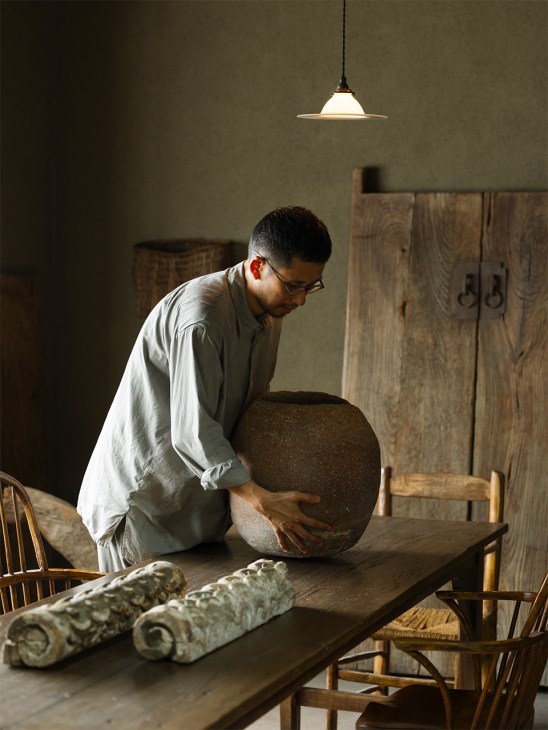
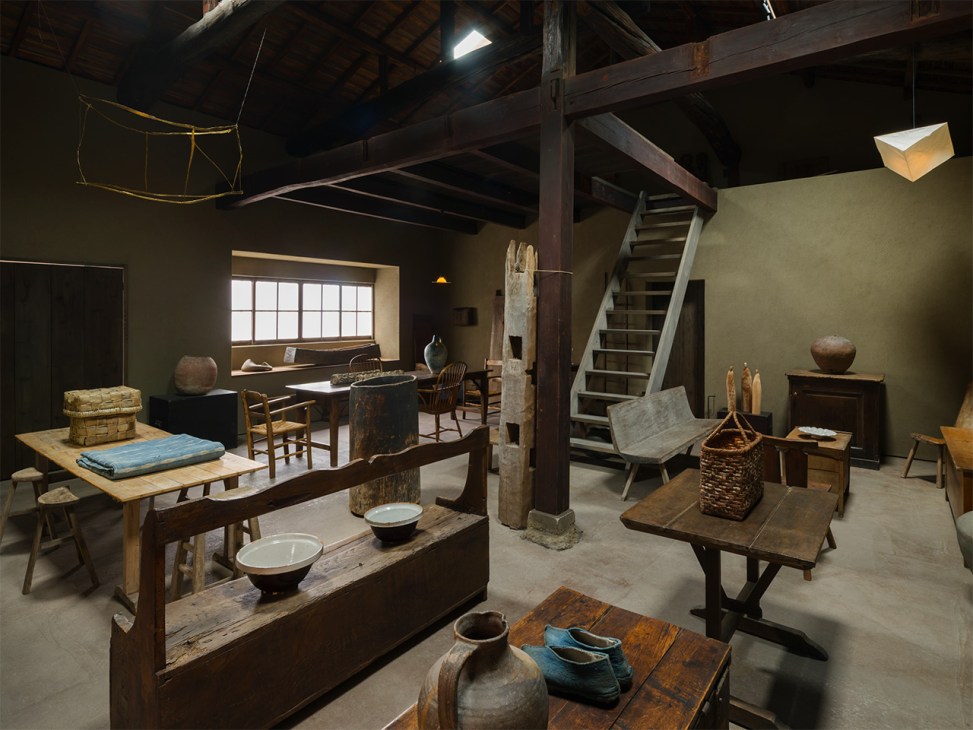
Suzuki’s gallery, Kankakari, hosts exhibitions of works ranging from traditional basketry to folk art and washi-paper lighting. “Kankakari isn’t just a gallery in the traditional sense,” he says. “I want to help people cherish not only the smallest objects, such as a ceramic vessel, but the clothes that they wear and the architecture around them.”
Among Suzuki’s other recent projects is 10-seat restaurant Mube. Working with owner-chef Takatomo Izumi, he oversaw the renovation of a 150-year-old former residence, bringing its heritage to the fore with finely detailed craftsmanship. Here, the 41-year-old Izumi merges the food culture of his hometown in Shiga prefecture with techniques honed in some of Kyoto’s finest traditional establishments. “These days, so much washoku [Japanese cuisine] feels quite indulgent,” he says. “I want to return it to its essence: the idea of food as nourishment.”


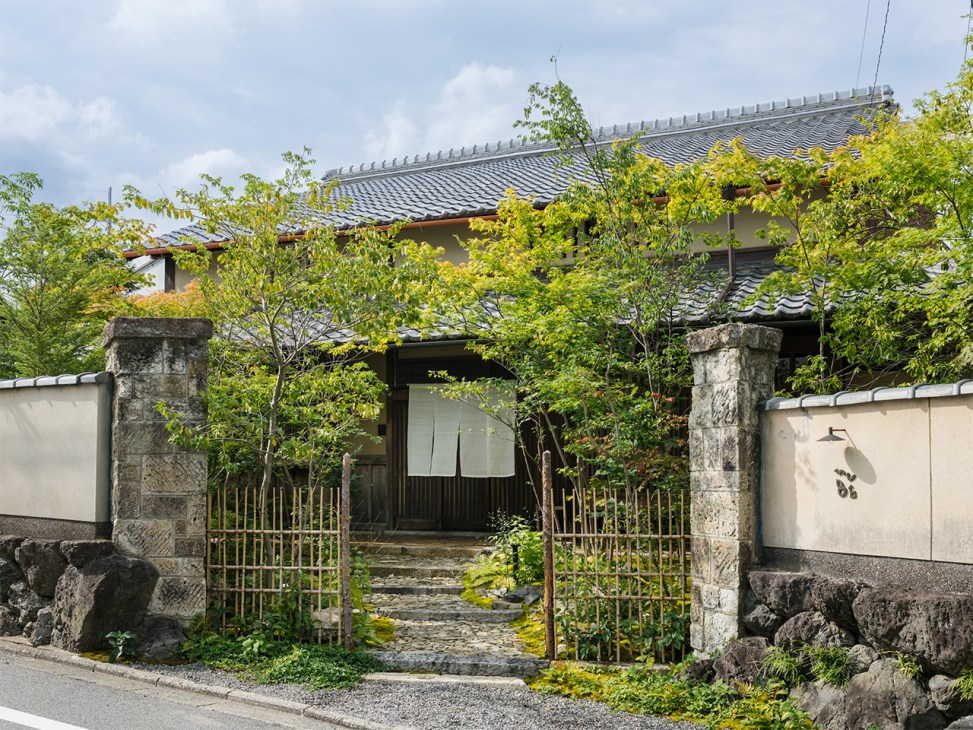
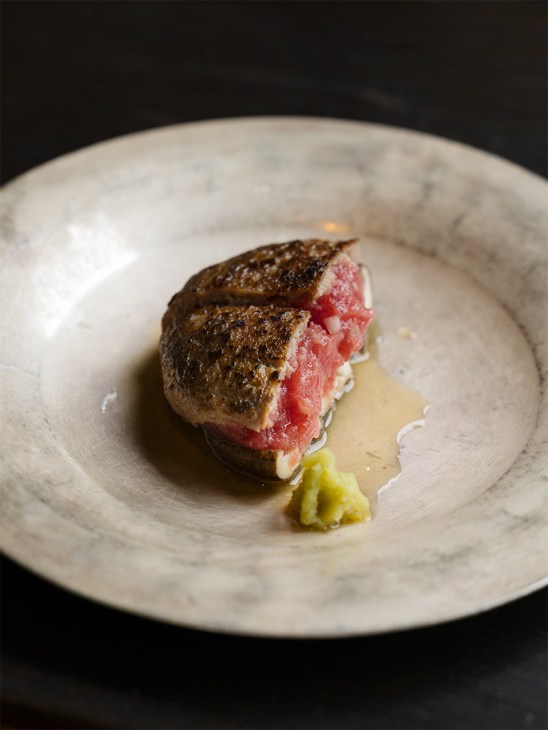
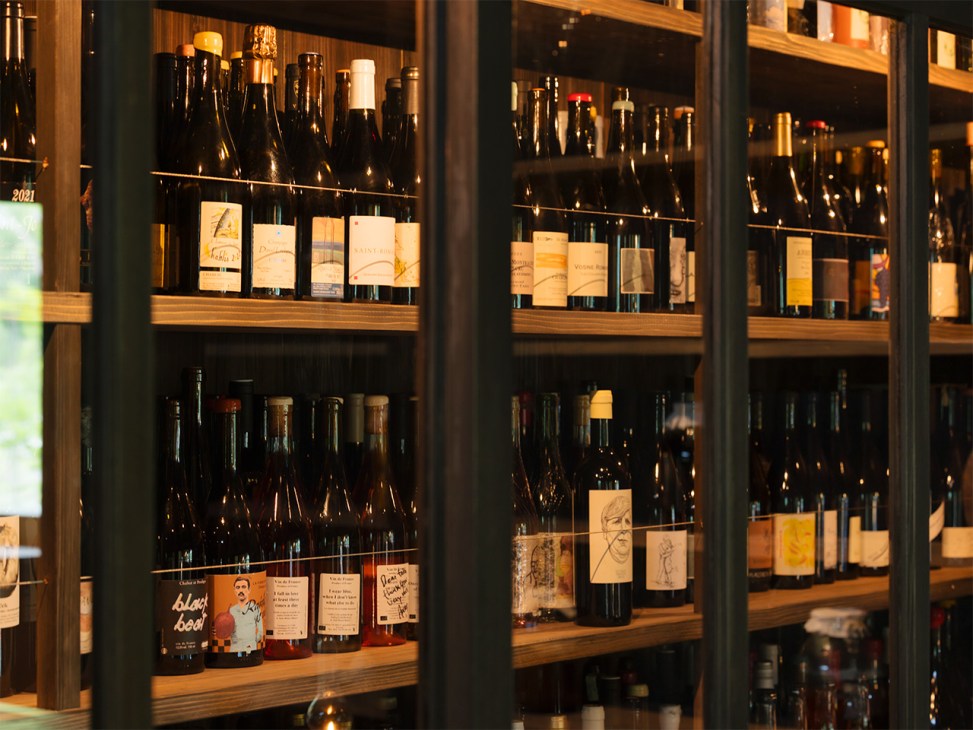
Sourcing seasonal produce from across Japan, Izumi brings his dishes to life with a variety of ferments and condiments. From narezushi, a predecessor to modern sushi made with salted fish, to a medicinal mushroom soup and Biwa trout pickled in rice bran, he weaves tradition, technique and provenance. Since opening in August 2025, he has quickly found acclaim and has already been awarded a Michelin star.
Back in Nishijin, Masataka Hosoo says that it’s an exciting moment for both his company and the city. “In the past, there was little interaction between different fields; everything was siloed. Kyoto used to be far more conservative but, as the city’s history and culture merge with new forms of creativity, I feel that the future is taking shape.”
Monocle City Guides
For more on the places we return to, the businesses that we recommend and the districts worth getting lost in – including in Kyoto – check out our online City Guides. Written by the people who know the places best, our travel directories, which are exclusive to subscribers, are updated regularly to ensure that you get the finest recommendations.
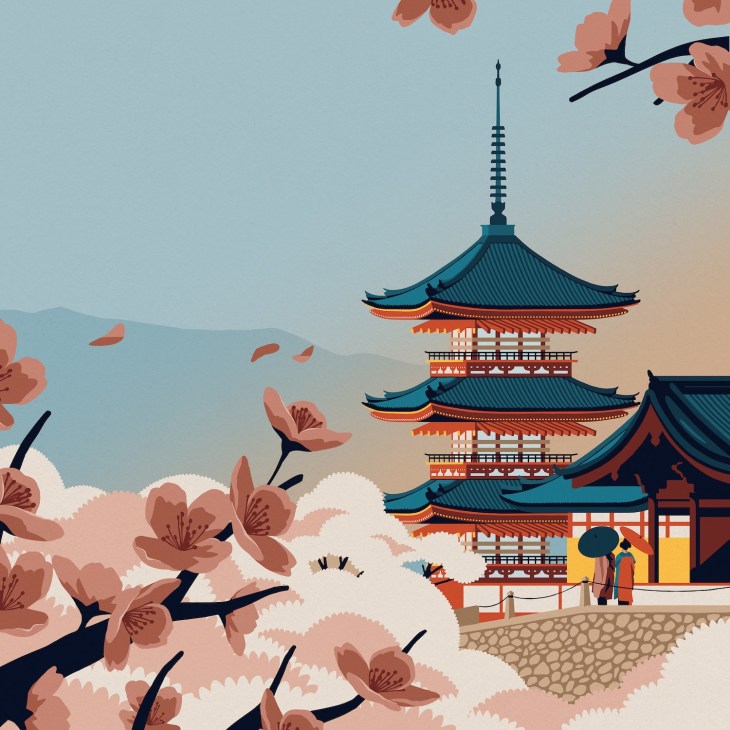
Address book
This ancient city is known for its historic sites yet it’s long been a hub of innovation and entrepreneurship. Now Kyoto is proving fertile ground as fresh perspectives coupled with a deep respect for the past move the city forward. From slick new hotels to international brands keen to capitalise on the city’s cultural allure, here are a handful of fresh favourites in Japan’s Thousand-Year Capital.
Capella Kyoto
Hotel group Capella’s first outpost in Japan is a four-storey, 89-key property alongside Kenninji, Kyoto’s oldest Zen Buddhist temple. Kengo Kuma & Associates led the architectural design, reimagining the townhouse in the Miyagawa-cho district.
capellahotels.com
Imperial Hotel, Kyoto
Gion’s Yasaka Kaikan theatre has been reborn as a hotel with interiors by Tomoyuki Sakakida of New Material Research Laboratory. The renovation respects the heritage of the 1936 landmark, weaving in original elements to create the perfect balance between new and old.
imperialhotel.co.jp
Hosoo Men
The flagship shop of storied textile company Hosoo’s first menswear line is housed in a former antique gallery. Alongside its elegant wares, expect to find silk wallpaper, moss-inspired carpets and an eight-piece Musike sound system – all of which create a refreshingly modern atmosphere.
hosoo.co.jp
Kankakari
Expanded last year, Ryo Suzuki’s gallery has become a must-visit destination for art and architecture fans. The century-old machiya provides a striking setting for exhibitions by artists and artisans from across the country.
kankakari.com
Mube
Takatomo Izumi’s first restaurant explores the traditional idea of food as a form of nourishment. The chef puts an original spin on Japanese dishes (think sashimi with shio koji sauce, mushroom miso and crab chawanmushi), centring on seasonal produce and fermentation techniques inspired by Izumi’s hometown in neighbouring Shiga.
mube.co.jp
Studio Nicholson Kyoto
The London-based label brings its minimalist style to a former precious-metal workshop off Teramachi-dori. Renovated in partnership with a century-old construction firm, the light-filled interior is finished with an eye for materials and craft.
japan.studionicholson.com
A Presse
Kazuma Shigematsu’s menswear brand has gone down a traditional path with its second location. The sharp, modern clothes are inspired by workwear, military items and Americana (but with a Japanese twist). They look right at home inside the tatami-floored rooms of the traditional machiya.
apresse.jp
Choshin-jo Kinokuniya Kyo-machiya
This new concept shop from the long-established supermarket chain offers a smartly selected range of food products.
kinokuniya.kyoto
Back to the basics: Salira brings Indonesian comfort food to Jakarta’s top table
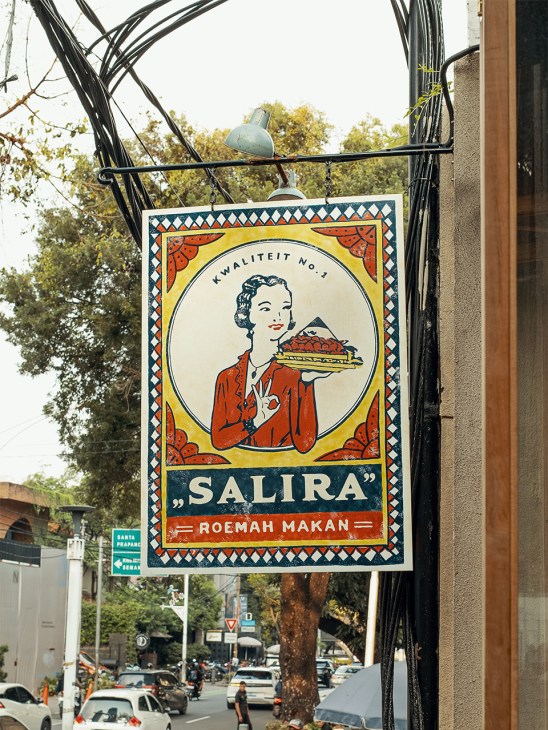
Indonesian restaurateur Winfred Hutabarat and his partners at The Union Group have shaped Jakarta’s drinking-and-dining scene since 2011 by focusing on European and US-style bars and bistros. But their latest opening, Salira, marks the group’s first take on Indonesian cuisine, offering hearty comfort food from across the archipelago.
Salira’s location in upscale neighbourhood Senopati positions it alongside another Union Group venue, Bar Luca, which is helmed by Union Group partner Fernando Sindu. The Spanish-trained Indonesian chef has set aside tapas and chorizo to take the culinary lead at Salira.
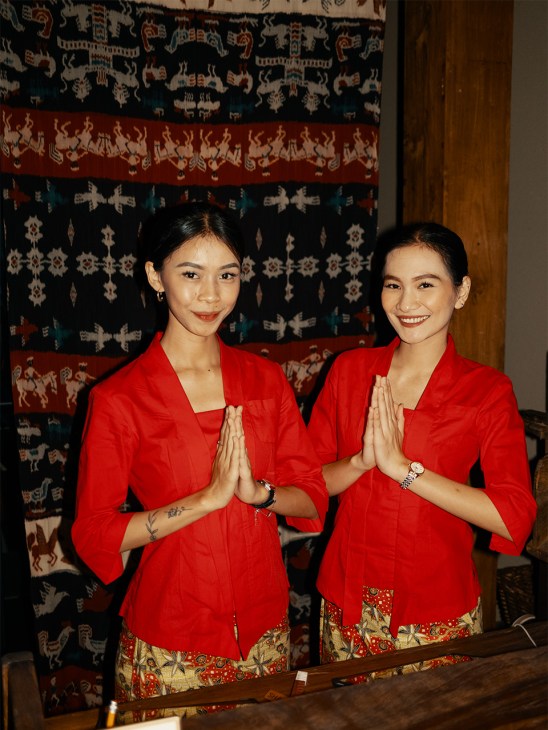
He spent the past three years travelling around Indonesia’s islands – including Sulawesi, Sumatra and his native Java – to learn regional recipes and fulfil a request from his late mother to return to his roots. “You don’t really know anything as a chef until you’re able to cook dishes from your own country,” says Sindu. “We wanted to restore our knowledge of, and explore, Indonesian cuisine.”
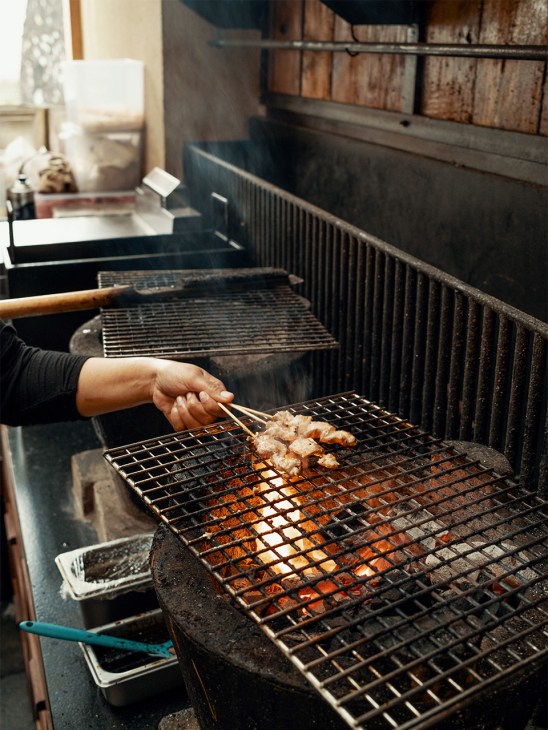
Some classics are kept traditional, while others are given a playful twist: a pour of kunyit asam – an earthy and piercingly tart drink made with turmeric and tamarind – is a refreshing prelude to salmon asap lodeh, a traditional Javanese white soup. But here, pan-seared salmon – briefly smoked atop charcoal – takes the place of salted mackerel and tempeh. There’s also lidah cabe ijo and pipi sapi tinorangsak – masterfully textured ox tongue and beef cheek that flirt daringly with regional slow-burning chillis. Alongside table service, there’s also a buffet-style counter – an elevated nod to the ubiquitous warteg (roadside food stalls seen across the country).
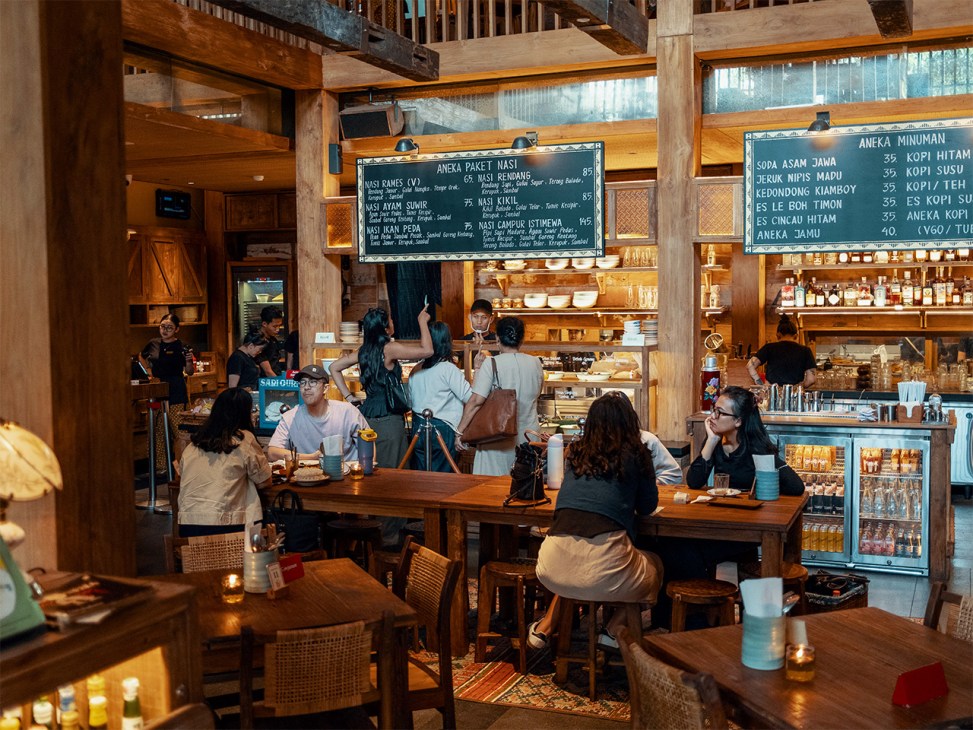
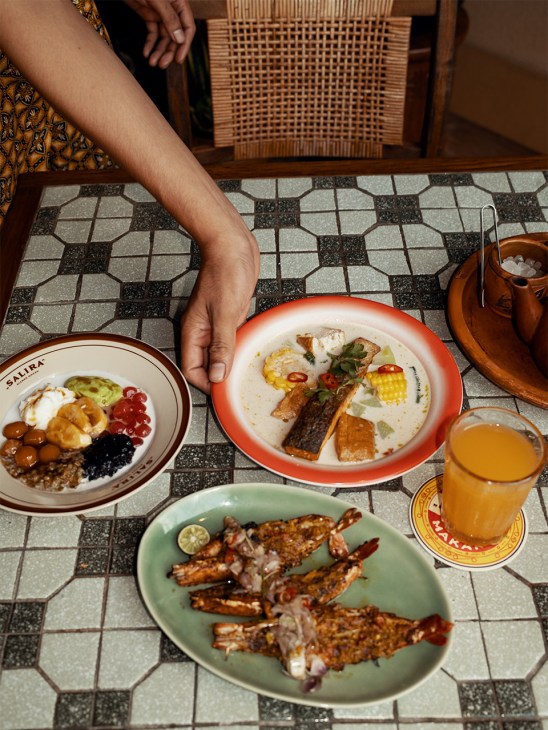
The rumah makan (or “eating house”) occupies a four-storey townhouse that was designed by Bali-based architect Cheong Yew Kuan, who is a hotel specialist and the protégé of tropical modernist Kerry Hill. The interiors double as a showcase for local craftsmanship, with brilliantly coloured tikar (handwoven mats) and batik fabrics from textile designer Bin House decorating the walls and ceiling.
The building’s top two floors will open later as Tepa. The fine-dining establishment is intended to showcase Sindu’s refined approach to regional cuisine, in which he will explore not only the ingredients but also traditional techniques, alongside his contemporary creations. “What I want to emphasise is the craft and to show how difficult it is to make Indonesian food,” says Sindu.“It’ll be really fun.”
uniongroupjakarta.com
Comment: Bringing authenticity to the top table sometimes requires going back to basics – and street food is as good a place to start as any.
Visiting Jakarta? Here’s where to stay, eat and shop.
Former food scout Richard Kägi opens up his Zürich home kitchen to share a career’s worth of culinary discovery
Richard Kägi is a hunter. “I went out into the world to find interesting products and interesting people,” he tells Monocle. The former food scout and avowed gourmand spent 29 years bringing home trophies to Zürich department store Globus, which has one of Europe’s best-stocked delicatessens. Since 2021, he has been channelling this flair for discovery into independent culinary endeavours.
His approach to food is equal parts evangelical and educational. “I like to show people what they can do with good products and the right handling,” he says. That ambition is achieved through gastronomic consulting, a homeware shop, a cookbook and a supper club.
Monocle meets Kägi close to his home at produce purveyor Huber. He arrives in a black 1980s convertible Fiat, sunglasses on and canvas grocery tote in tow. Ahead of recipe testing, we’re here to stock up on morels, aubergines and Noirmoutier potatoes, which are grown in the sandy soil of Île de Noirmoutier, of France’s Atlantic coast. “Most of the harvest goes to the top French restaurants,” says Kägi.
Provisioned and back home, Kägi begins preparations in the kitchen. He cooks with a casual ease, explaining the value of using plenty of olive oil to boost the umami flavours of bottarga, garlic and anchovies.


Twenty years ago, Kägi moved into his five-level house in the exclusive Zürichberg area. Designed by Zürich architecture firm Graser Troxler, the house is a curio cabinet of Kägi’s tastes and travels. It’s also the location for his intermittent home supper club, which is open to anyone quick enough to claim one of its 20 places. “I could offer it every weekend and it would be full,” he says.
From the first sip of Soave wine to the last dab of strawberry-cream dessert, Kägi provides more than just a shared meal. He delivers a culinary lesson, sharing deep knowledge of food scrupulously gathered from travelling, tasting and plenty of experimentation. His evolution from food scout to host, chef, author and all-round food authority was developed over decades. But what he has learnt along the way, he shares generously.
richardkaegi.ch; homemade.ch
Recipes
Want to recreate our meal by Richard Kägi? Here’s how to prepare the three courses.
1.
Roasted aubergine with bottarga
The outstanding, caramelised purple aubergine rounds, green herbs and orange bottarga smell sweet but have savoury depth. “I love this dish for its umami power and simplicity,” says Kägi.

Ingredients
- 100ml roasted garlic oil or olive oil
- A few whole garlic cloves, peeled
- 2 slices aubergine, from the widest part, 3cm to 4cm thick
- Salt and black pepper
- 50g bottarga
- 1 bunch fresh mint, finely chopped
- 1 bunch fresh flat-leaf parsley, finely chopped
Method
- Preheat the oven to 180C.
- Gently fry the garlic cloves in the roasted garlic oil over low heat for 15 minutes, then remove them. If you don’t have garlic oil, you can use regular olive oil.
- Turn the aubergine slices well in the oil, place in an ovenproof dish or pan and pour more oil over the top.
- Bake in the oven for about 30 minutes until light golden brown and completely soft.
- Remove from the oven, drizzle with more fresh oil and season with salt and pepper.
- Grate the bottarga over the top and scatter with the chopped herbs.
2.
Asparagus and Noirmoutier potatoes with morel sauce
“White and green asparagus play off one another, layered with superb potatoes and a depth that only morels can bring,” says Kägi. To serve as a more substantial main course, accompany each plate with a square of baked puff pastry.

Ingredients
- 1kg fresh white asparagus
- 500g green asparagus
- 500g Noirmoutier potatoes (or other small potatoes)
- 80g butter (50g for vegetables and 30g for finishing)
- 100ml water
- Salt and a pinch of sugar
For the sauce
- 150g fresh morels
- 25g dried morels, soaked in water for 1-2 hours
- 1 shallot, finely chopped
- 50g butter
- 50ml Noilly Prat (or other dry vermouth)
- 100ml chicken stock
- 250ml double cream
- Sea salt and black pepper
- Fresh wild garlic or chives, finely sliced
Method
- Trim the ends of all the asparagus and peel. Cut into bite-sized pieces, keeping the tips separate.
- Halve the unpeeled potatoes and sauté in butter for 10 minutes.
- Add the white asparagus spears (without tips), along with 100ml water, salt and a pinch of sugar.
- After 7 minutes, add white asparagus tips and green asparagus spears (without tips). After a further 4 minutes, add green asparagus tips and cook. All should remain firm.
- Prepare the sauce. Halve larger morels lengthways, leave smaller ones whole and wash carefully. Wash and strain dried morels and keep the soaking water.
- Finely chop the shallot and sweat in butter, then add the morels. Simmer covered for about 10 minutes.
- Deglaze with the vermouth, then add the chicken stock and morel soaking water. Remove the morels, add the cream and reduce by half over high heat.
- Return the morels to the pan and season with sea salt and black pepper.
- Spoon the asparagus cooking liquid into the sauce.
- Arrange the vegetables on prewarmed plates, pour the morel sauce over the top and scatter with finely chopped herbs.
3.
Eton mess
For dessert, Kägi whips up his take on a classic British treat.

For the meringues
- 100g egg whites (about 3 eggs)
- Pinch of salt
- 100g caster sugar
- 100g icing sugar, sifted
- 15g cornstarch
Other ingredients
- 750g strawberries, quartered, plus extra for serving
- 100g caster sugar 200ml whipping cream, lightly whipped
- 125g crème fraîche
- 50g icing sugar, sifted
- ½ vanilla pod, seeds scraped
- 125g raspberries
Method
- Preheat the oven to 120C.
- Beat the egg whites with a pinch of salt for 3-4 minutes until stiff peaks form. With the mixer still running, gradually add the caster sugar and beat until firm and glossy, about 2-3 minutes. Sift in the icing sugar and cornstarch, folding in gently.
- Spoon mounds of about 8cm onto a baking tray lined with baking paper. Bake for 45-50 minutes, until the meringues lift easily from the tray and are crisp but without any colour. Leave to cool completely inside.
- Wash and prepare the strawberries. Mix with caster sugar in a large bowl. Leave to macerate for 20 minutes.
- In a large bowl, lightly whip the cream, crème fraîche, icing sugar and vanilla seeds until soft peaks form.
- Place a quarter of the strawberries in a large glass bowl, spread a quarter of the vanilla cream over them and crumble a quarter of the meringues roughly over the top. Repeat the layering.
- Top the Eton mess with raspberries and extra strawberries to serve.
The Monocle Minute and Weekend Editions
Still hungry? For more recipes, plus perspectives on art, business, culture, design, global affairs and more, subscribe to our informative daily newsletters. Sign up here.
Our summer issue is out now and measures the immeasurable – what makes a city worth living in?

Monocle’s Quality of Life Special is a highlight of the year for me and, I hope, for you. It’s an edition that throws open the windows to let in some summer sun, heads down to the sea to take stock of the year and leaves time to plot and plan for the months ahead. It’s also the issue that delivers our annual ranking of the best cities in the world to call home.
We launched this survey in 2007 because we didn’t believe that the existing research reflected the desires of the Monocle reader – yes, you. The statisticians working for other organisations were no doubt adept at assessing the state of the roads and the availability of private schools for expats’ children. But they were useless when it came to revealing whether a city was fun, made you feel at ease and delivered a high quality of life to all of its residents, not just those cloistered in one or two upscale neighbourhoods. Monocle readers – clever, engaged, passionate, entertaining to spend time with – deserved something better, something more dynamic.
This year we have focused on two elements as we continue to ensure that our ranking reflects both the needs of readers and the times that we live in. The first is joy – can you have a good night out in these cities? Are they places with cultural institutions and cared-for parks where people can come together and feel that they belong?
The second focus is ambition – are these cities that dream big? It’s easy for even great metropolises to lose momentum, to allow planning delays and financial constraints to halt their progress. If your city faces the challenges of delivering affordable housing, of tackling street crime, of delivering jobs, there is no time to waste.
I am aware that I might need to sport a bucket hat and dark glasses for the next few weeks because some of you will take umbrage at the exclusion of your own city or strongly disagree with where it ranks. Even members of our staff have occasionally been known to do battle for an outpost that they love – what about Mexico City, Chicago or Edinburgh?
So let’s get a few things clear about our intentions. This is not a ranking of gritty but sexy cities. And if your home town has a terribly high murder rate, then no – its cheap food scene will not be enough to win us over. We also want to be able to get around with ease so make sure that your city has good rail services and public transport, plus access to at least one great airport, before you get too riled. Besides, there’s always next year.
Beyond the survey, the notion of quality of life plays out across the coming pages in a lot of interesting ways. In Palma, we visit the new Terreno Barrio Hotel, where a team of creatives and an ambitious owner have conspired to make a property that rethinks the conventional tourism model to deliver a business that also takes care of locals. It’s a story that needs sharing. So too does our report on intergenerational living. How we make communities, diminish loneliness and rethink housing are all issues that every city needs to be contemplating – and fixing.
And on the joy front, read our exclusive report on the launch of Amble, a new vehicle that’s reimagining short-range mobility. Its “mini-mobility” play is super cute. Oh, and come to spend a day on the beach with us in our Ibizan Expo – from yoga sun salutations to sundowners, we have you covered.
As always, feel free to write to me at [email protected]. In the meantime, here’s to better cities, big ideas and downtime too.
See Monocle’s 2026 Quality of Life Survey rankings here.
Monocle’s Quality of Life Survey 2026: The 20 most liveable cities in the world
At Monocle we have always been curious about what makes cities tick and how they can be improved. We also thought that it was odd when rankings were driven by factors such as tax rates, GDP and living costs alone. Surely urban life should be judged on culture, retail, hospitality and architecture too? The result was a survey of 30 questions sent out to correspondents in 40 cities worldwide.
Nineteen years on, we continue to ask trusted correspondents whose judgement we value for their take. The survey still comprises questions that assess safety, connectivity, governance, green space and more. But we also check whether you can get a decent meal and a drink after 22.00. Every year, there are small tweaks to reflect how the world is changing. For 2026, we have paid special attention to excitement, urban ambition and security. For this survey, we also sought additional data from property specialist Knight Frank and EIT Edition’s Copenhagenize Index 2025 to build up better pictures of the cities that we scrutinised. The latter’s “bicycle modal share” figure measures the proportion of all daily trips taken on two wheels.
After poring over the numbers and reading correspondents’ views, our editors drafted a final line-up. North American cities have struggled (despite plucky Vancouver) due to stubbornly high rates of crime, inequality and poor housing. And in spite of a wealth of ambition – Cape Town’s public pools and Kigali’s spotless streets among them – Africa and the Middle East don’t offer the security of certain mature markets in Europe and Asia. Likewise, London and Los Angeles have failed to make it on to the list. So consider this the beginning of a debate rather than the end of one. According to the UN, four-fifths of the world’s population lives in urban areas (and more are coming). Cities are the engines of progress and an ongoing experiment – even the best ones aren’t perfect. The aim of this survey is to nudge the discussion around liveability away from stuffy policy towards a genuine conversation about what moves our hearts, minds and feet towards certain places. Does your city make the cut?
20. Perth
tied with Kyoto
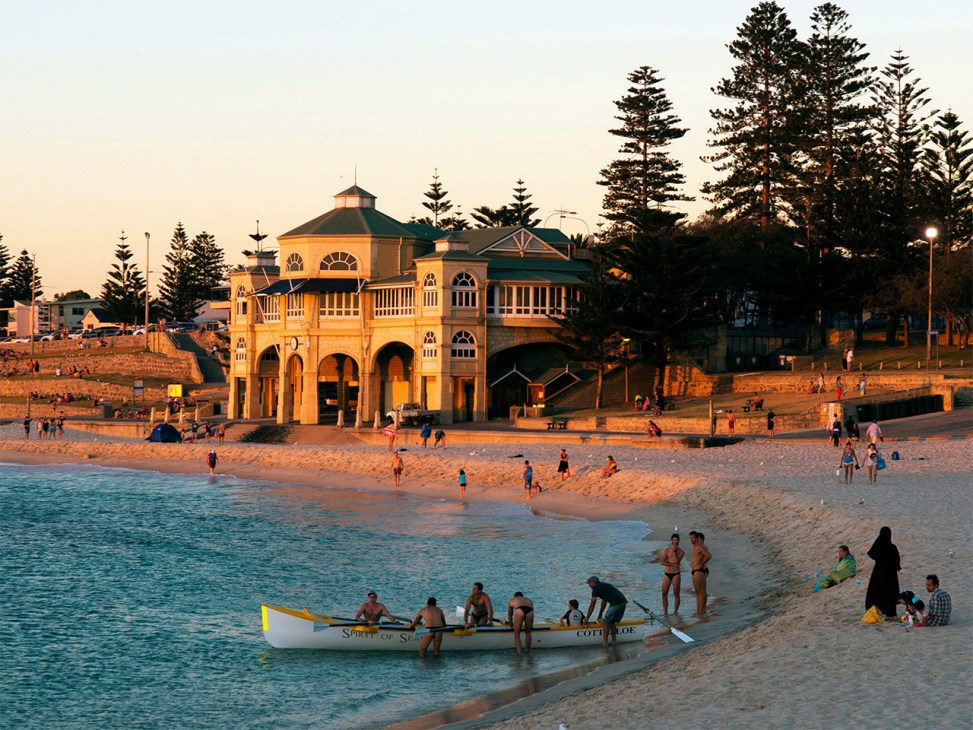
With a population hovering at about two million, Perth is the most isolated large city in the world. It’s five hours from Sydney by plane but the joke has always been that it’s also two decades behind it. Perhaps it’s a reflection of the laidback lifestyle associated with a place that has the most sunshine hours per year of any city in Australia – and one built around work-life balance and outdoor activity on its beaches, riverfronts and bushland escarpments.
Read more
▼
Despite its relaxed attitude, the metropolis has been supercharged in recent years by multiple major infrastructure projects – decades-long endeavours, many of which are now finally coming to fruition. Among these is the expansion of its rail network, making transit accessible to more of its leafy suburbs and linking its centre to an airport that includes the only direct connections between Australia and Europe. Perth’s urban centre and the abundant natural beauty of the Swan river come together at Elizabeth Quay, a newly complete central waterfront neighbourhood with office towers, luxury hotels and riverside dining, retail and recreation. The Perth City Link project has provided a point of reconnection too: the sinking of a railway line here has physically linked the central business district with Northbridge, a neighbourhood that’s home to several popular cultural institutions. The link’s crown jewel, Edith Cowan University’s city campus, opened earlier this year in a move that has injected youth and learning into a district that has long been crowded with engineers and mining executives (natural-resource extraction still drives the economy here).
These developments have made Perth a more attractive place to live, with residents enjoying the infrastructural benefits associated with global cities alongside the outdoor pursuits that have always made it special. Kings Park remains one of the world’s largest urban green spaces, combining botanical gardens and lawns with bushland walks. Meanwhile, the city’s riverine foreshores are popular for fishing, kayaking and stand-up paddleboarding, and its abundant beaches allow residents easy access to places to swim and surf – or barbecue, picnic, skate and ride along the waterfront. The outlook remains sunny.
Adopt: Daylight saving time. It would extend evening sunlight, reducing energy costs and boosting local economic spending.
Drop: Mandatory helmet laws that are a barrier to cycling because they put off casual riders.
Population: 2 million (2.5 million in the metropolitan area)
Change in population over the past year: +1.9 per cent
Proportion of commutes by public transport: 12 per cent
Number of international destinations served by the city’s airports: 22
Average hours of sunshine per year: 3,230
Number of public swimming pools: 118 (metro area)
20.
Kyoto
tied with Perth
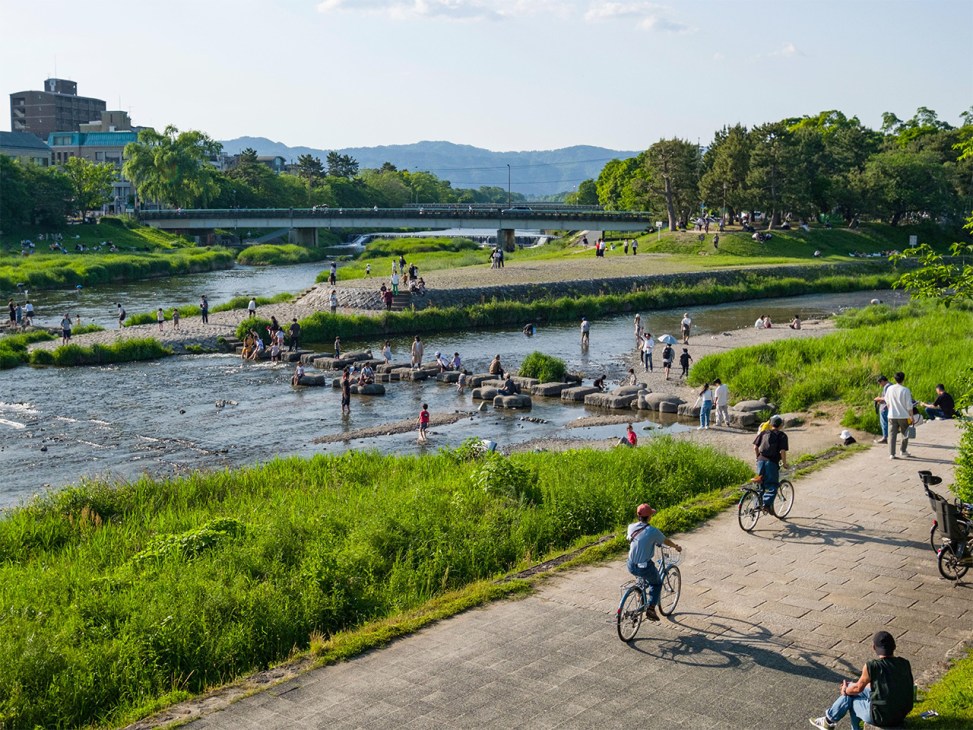
More than 50 million visitors arrive in Kyoto every year, crowding neighbourhoods and public transport not designed for such numbers. Nine in 10 residents report frustration with packed buses and trains. The city’s temples and shrines have survived centuries of earthquakes, fires and war but their tranquillity has not fared so well in recent years. Kyoto’s mayor, Koji Matsui, was elected in 2024 on a pledge to protect residents’ quality of life, in part by curbing visitor numbers. This March the city raised its accommodation tax, with guests at luxury hotels now paying up to ¥10,000 (€54) a person per night – a move set to generate ¥12.6bn (€68m) annually for transport improvements, cultural preservation and congestion relief. From 2027, tourists could pay up to double the bus fare charged to residents on key routes, subject to government approval. Japan has never seen measures quite like these.
Read more
▼
But perhaps Kyoto’s problem isn’t the number of visitors but attracting too many to too few places. The crowds that overwhelm Gion, Arashiyama and Fushimi Inari are packed into a tiny corner of the city that is home to more than 1,600 Buddhist temples and 400 Shinto shrines. On a warm evening at the Kamogawa Delta, for instance, the pressures of overtourism can feel a world away. Students from nearby Kyoto and Doshisha universities gather along the riverbanks, office workers unwind and children hop across the stepping stones. Residents even have a name for this shared serenity: kamo-chill. For now, at least, this gentler lifestyle endures.
After more than half a century defending its low-rise skyline, Kyoto is now considering 60-metre towers – nearly double the current limit – around its central station, all in the name of “revitalisation”. But this is hardly a city in need of revitalising. It remains one of the world’s safest and most visited urban centres. The city lost some 32,000 residents between 2020 and 2025, partly due to suburbanisation and demographic decline, and taller buildings in the centre are unlikely to win them back. Kyoto’s future depends not on skyscrapers but on whether it can manage its success without eroding the qualities that made it so appealing in the first place.
Adopt: Kyoto should be branded as Japan’s premier student city. There’s more to it than cherry blossoms and temples.
Drop: The Kyoto station area is already one of Japan’s most charmless urban stretches. The last thing that it needs is 60-metre-tall towers.
Population: 1.4 million (16.6 million in the metropolitan area)
Average hours of sunshine per year: 2,141
Bicycle modal share: 21.5 per cent
Proportion of commutes by public transport: 61 per cent
Average rent for a three-bedroom apartment in city centre: ¥275,000 (€1,480)
View Monocle’s complete city guide to Kyoto
19.
Vancouver
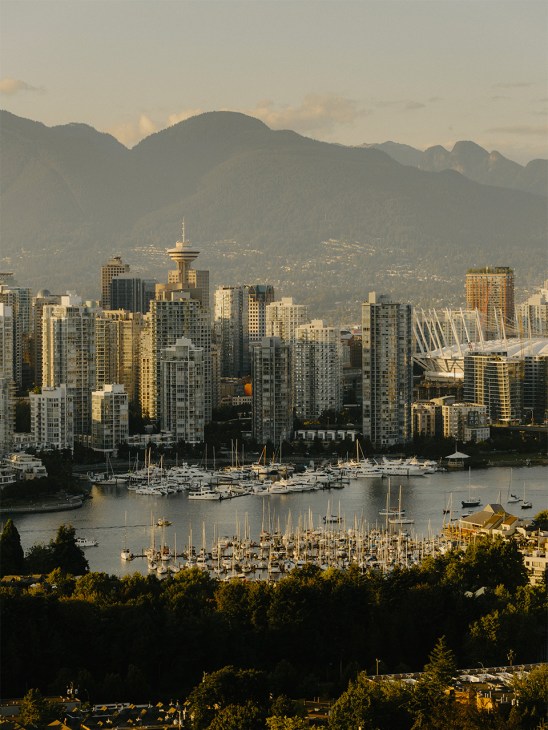
Following its absence in recent editions of our survey, Vancouver makes a welcome return as the only North American city to be included this year. Canada’s Pacific outpost continues to set continent-wide benchmarks in urban life, from transformative public-transport projects that are currently underway to an extensive cycling network. Despite rancour ahead of a municipal election in October (in which the incumbent mayor, Ken Sim, is seeking a second term), Vancouver’s appeal is undimmed and its population is growing. (Incomers include those choosing to leave an increasingly unwelcoming US.)
Read more
▼
Few cities boast a natural setting as breathtaking as Vancouver’s and its denizens take full advantage of the great outdoors. The 10 public beaches and 250 public parks range in scope from 37 off-leash dog parks to one of the jewels of North America’s green spaces in the wooded peninsula of Stanley Park. This focus on more wholesome pursuits has given it an early-to-bed, early-to-rise reputation but an after-hours meal or drink is now far easier to find, particularly in Chinatown and on Main Street.
High public engagement in civic life is enhanced by one of Canada’s best local newsrooms, The Tyee, an independent site launched in 2003 and rebranded in 2022 by Vancouver studio Rethink. A city well-informed about itself can broaden its gaze and welcome the world in. Vancouver does this with gusto: 40 per cent of the population was born overseas, according to Canada’s 2021 census, and its hosting of major international events, from this summer’s Fifa World Cup to the annual North American edition of Web Summit, demonstrates its appetite for looking outwards.
But recent moves by city hall have put progress at risk – particularly the pause on a rapid-housing initiative for those experiencing homelessness. Additional levies on foreign property buyers have done little to open up its housing stock, meaning that this remains one of Canada’s most expensive markets. Vancouver’s population is set to double by 2051. To prepare for this, major public-transport projects are taking shape, from an extension to the SkyTrain to a new metro line. Both display Vancouver’s ambitions about the kind of city that it is and wants to remain.
Adopt: A nimbler approach to development, both private and public. The process is too slow.
Drop: Opposition to the Burnaby Mountain Gondola, a proposed cable car connecting the SkyTrain to the nature park.
Population: 2.4 million (3.1 million in the metropolitan area)
Urban green space: 37 per cent
Bicycle modal share: 9 per cent
Proportion of commutes by public transport: 20 per cent
Number of international destinations served by the city’s airport: 77
Average time it takes to register a business: 1.5 days
18.
Melbourne
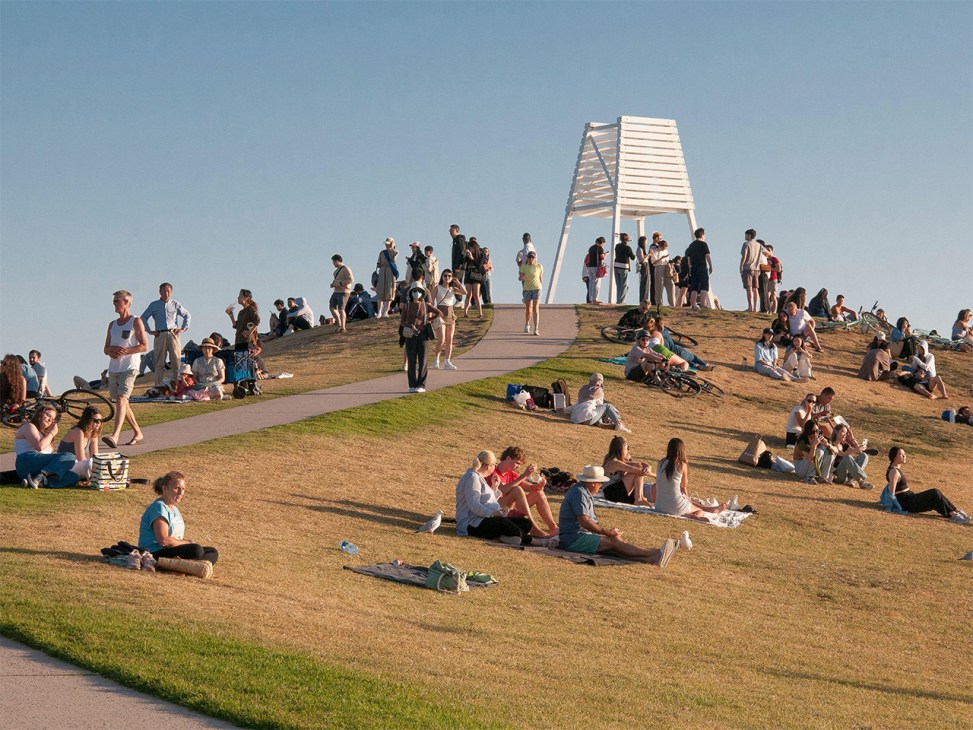
At the opening of this year’s Melbourne Writers Festival, the city’s lord mayor, Nick Reece, read a poem that he had written. It began, “Melbourne’s had a big advantage ever since our early years,/’cause we weren’t an English prison – we were people with ideas./People of all cultures flocked and lifted Melbourne’s mood./They worked economic wonders – and they sure improved the food.” Melburnians never miss an opportunity to assert their home as Australia’s centre of culture, coffee and sport. This perhaps stems in part from status anxiety in the eternal competition with Sydney over which is the more important place. Newspapers in both cities know that belittling the other will harvest rage-induced clicks.
Read more
▼
While its northern rival has finished higher up our ranking this year, Melbourne has reason to shed this inferiority complex. It has excellent universities, hospitals, public transport and access to nature. A long-awaited expansion of its rail network, unveiled recently, has added five new underground stations in the inner city and centre. Construction has already begun on the AU$1.7bn (€1bn) Melbourne Arts Precinct Transformation, which will include a new contemporary-art museum. The city’s housing strategy mandates 70 per cent of new homes must be built in established areas to reduce sprawl. Then there’s Melbourne’s culinary heft, with world-class restaurants and cafés – on coffee, it can safely claim to top the charts. Sport is a huge draw, with a F1 Grand Prix here since 1996 that has gained new popularity, particularly among young women.
Melbourne suffers from the cost-of-living and housing pressures that also plague other parts of Australia. Crime has risen in recent years, particularly theft and burglary, and, in recent months, fire-bombings on hospitality venues. At the same time, trust in the police has declined. Can Melbourne claw its way back up the index? Certainly. Authorities have addressed cost-of-living concerns by making public transport free from March to May, and afterwards half-price for a year. It is continuing to invest in expanding the rail network. But building an airport rail link is vital. As the city’s population grows, its lack of one is impossible to countenance.
Adopt: An airport rail link. Every year this becomes more urgent.
Drop: Melburnians’ dependence on driving. The city remains car-centric, despite having great public transport.
Population: 5.3 million (five million in the metropolitan area)
Average hours of sunshine per year: 2,363
Bicycle modal share: 1.9 per cent
Proportion of commutes by public transport: 19 per cent
Number of international destinations served by the city’s airports: 38
Urban green space: 37 per cent
Number of public swimming pools (metro area): 258
View Monocle’s complete city guide to Melbourne
17.
Seoul
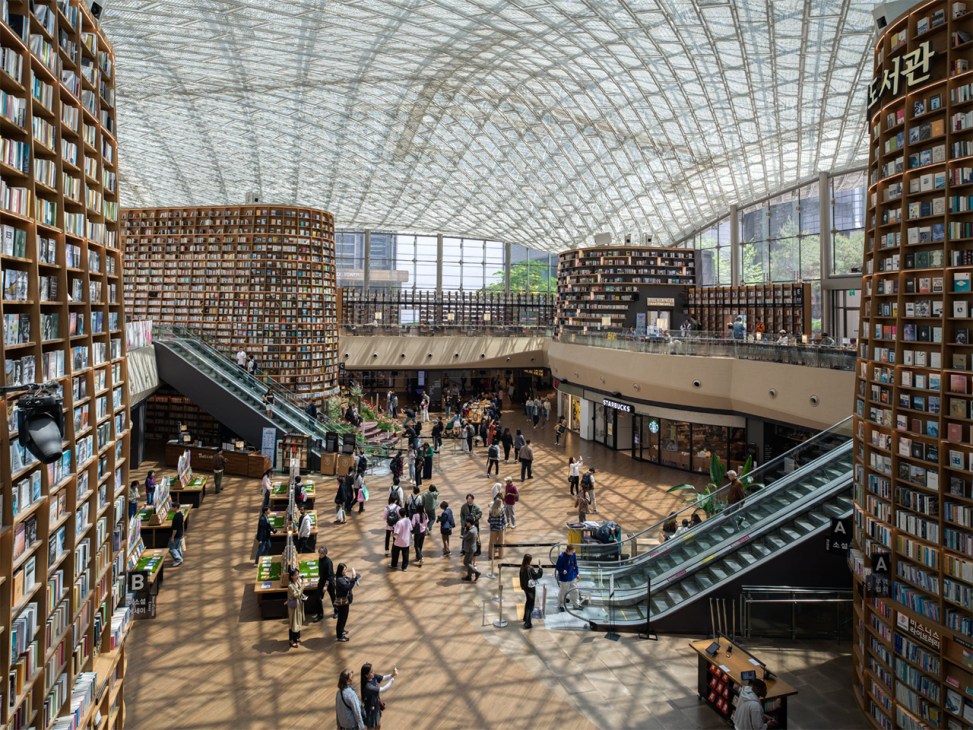
Earlier this year, South Korea’s now ousted president, Yoon Suk Yeol, was sentenced to life imprisonment over his brief declaration of martial law in late 2024. For months, central Seoul became a stage for rival rallies, with supporters and opponents of the disgraced leader marching through downtown avenues almost daily. Yet the speed with which the capital regained its composure says much about the resilience of one of Asia’s most sophisticated democracies. A year on, there are few visible traces of political upheaval.
Read more
▼
Today much is going Seoul’s way. Few cities exert as much influence on global popular culture, whether through the worldwide success of K-pop icons BTS, the rise of K-beauty or the international appetite for Korean food and television. The National Museum of Korea recently became the world’s third-most-visited museum, behind the Louvre and the Vatican. If culture is what first draws attention, then safety, convenience and efficiency are what underpin the city’s enduring allure. Its already formidable public-transport system has expanded, with additions such as the eco-friendly Hangang Bus, which offers commuters and tourists traffic-free journeys along the Han River, and the GTX high-speed rail network that reaches speeds of up to 180km/h.
Despite its neighbour to the north, a feeling of personal security shapes daily life. Lost phones and wallets are often returned untouched. This sense of public trust helps to sustain Seoul’s 24-hour culture, with saunas, cafés and restaurants remaining open past midnight, while night buses operate until dawn. In addition to green spaces expanding within the city, the mountains surrounding Seoul are central to its rhythm. On weekends, trails quickly fill with residents in hiking gear, reflecting an outdoor culture that is unusually embedded in everyday urban life. Air quality is a concern but fine-dust levels have dropped by more than 40 per cent in the past two decades.
Seoul’s relentless energy is double-edged. Long working hours continue to define office culture, while students shuttle between academies late into the evening. The capital excels at efficiency and doesn’t lack ambition but continues to wrestle with whether its residents have enough time to enjoy the quality of life that it offers.
Adopt: Stronger legal protections and easier-to-use bureaucratic systems for foreign residents.
Drop: Redevelopment projects that place high-rise towers around historic sites such as Jongmyo Shrine.
Population: 9.6 million (26.3 million in the metropolitan area)
Average hours of sunshine per year: 2,066
Bicycle modal share: 1.8 per cent
Urban green space: 31 per cent
Proportion of commutes by public transport: 66 per cent
Number of international destinations served by the city’s airports: 161
16.
Helsinki
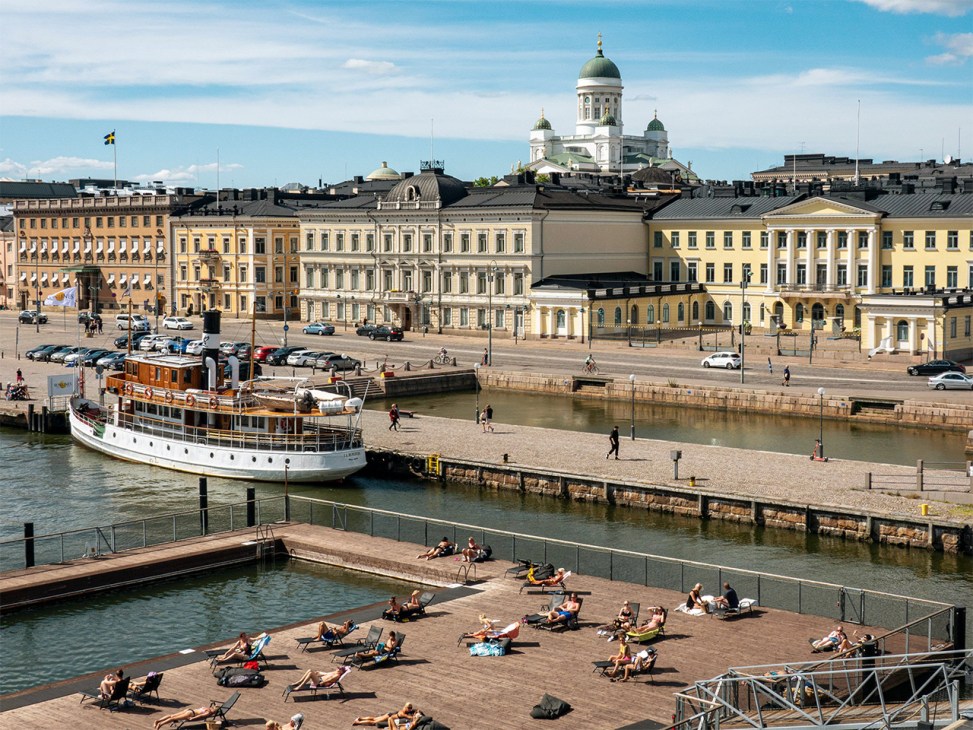
Though the Finnish capital has recovered after a few recent setbacks, it has nevertheless fallen in our rankings. The sharp decline in high-spending Asian and Russian tourists – combined with a shift towards remote work in the wake of the coronavirus pandemic – has been felt in the commercial districts and in the broader urban atmosphere. In terms of vibrancy, downtown Helsinki occasionally feels quieter and more restrained than the confident and cool Nordic capital that topped this list in 2011. While a landmark Architecture and Design Museum is slated to open in 2030, the city currently lacks some of the ingredients needed to create a stronger sense of occasion: more world-class restaurants, a vibrant club and nightlife scene, architecturally ambitious buildings and a denser concentration of cultural destinations that encourage people to linger in the centre.
Read more
▼
Still, Helsinki’s core offer remains exceptionally appealing. The city is blessed with a world-class education system, efficient public services and a highly functional city hall that is led by a dynamic new millennial mayor, Daniel Sazonov. Public trust in the police stands at 92 per cent, the streets are safe and clean, and there are more than 1,500km of top-quality cycle lanes. Its cultural assets are significant too, from the waterfront setting and Finland’s celebrated saunas to growing creative and start-up scenes.
But Helsinki so often undersells itself internationally. There can be a lack of the kind of confidence and bold storytelling displayed by rival Nordic capitals Copenhagen, Stockholm and Oslo. For too long, functionality has been the cornerstone of the city’s identity. However, safety, efficiency and good governance do not automatically translate into excitement or emotional attachment. Geography undoubtedly plays a role in this. For much of the year, Helsinki is cold and dark, an environment that naturally encourages many of its residents to stay indoors. But climate alone cannot explain the current relative lack of dynamism. To strengthen its international standing, Helsinki must embrace a bolder, more ambitious identity that balances functionality with culture, ambition and a stronger sense of occasion.
Adopt: More pedestrian zones, more life on the islands – and more international ambition.
Drop: Excessive demolition of old buildings. New constructions don’t have the same atmosphere as more historic areas.
Population: 690,000 (1.6 million in the metropolitan area)
Bicycle modal share: 11 per cent
Protected bicycle infrastructure: 600km
Urban green space: 44 per cent
Proportion of commutes by public transport: 52 per cent
Cost of monthly travelcard: €73.90
View Monocle’s complete city guide to Helsinki
15.
Amsterdam
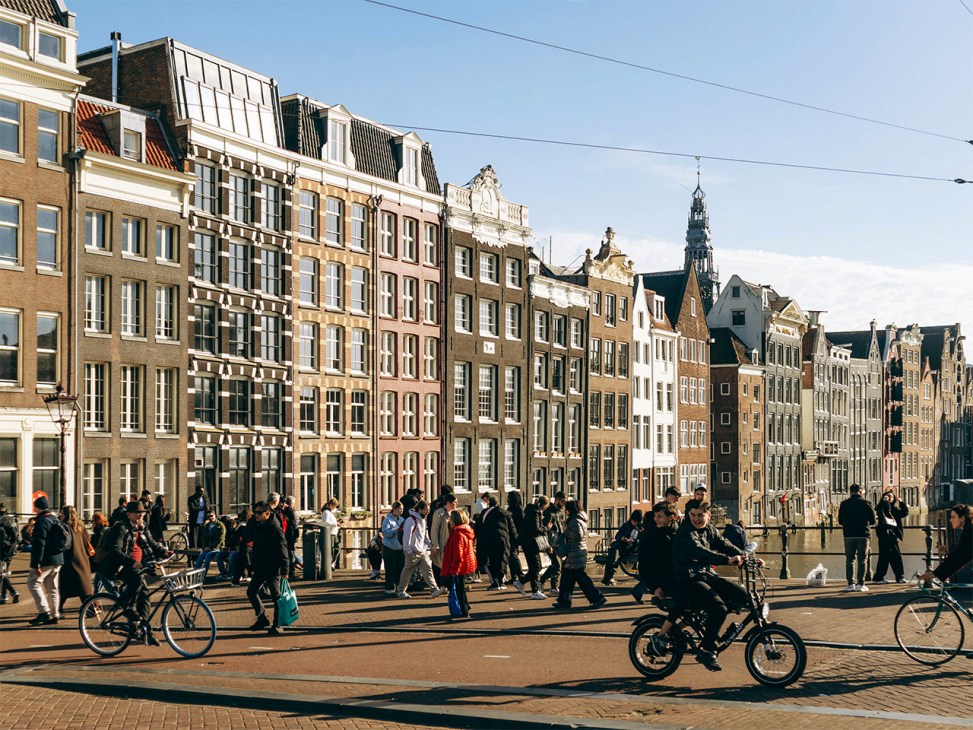
How many cities can claim to be simultaneously a cycling utopia, a hedonist’s playground and a technology hub? Amsterdam does all three with characteristic Dutch nonchalance – and that’s precisely where both its genius and its drawbacks lie.
The fundamentals remain enviable. Unemployment is very low, working weeks are short and Schiphol, which offers more intercontinental connections than almost any other airport in the world, anchors the city at the centre of global mobility. A flat hierarchy and relaxed attitude to work-life balance make the place feel like a social experiment that has succeeded.
Read more
▼
This culture is most visible when you’re on two wheels. Amsterdam is one of the world’s cycling capitals. The bicycle is not merely convenient here; it’s the default, an unspoken part of the social contract. Equally, taking a dip in the quieter canals beyond the central ring is a civic ritual rather than a dare. In terms of culture, Amsterdam continues to punch above its weight, with the likes of photography museum Foam and contemporary-art spaces such as Galerie Fons Welters and Akinci. The restaurant scene accumulates new jewels weekly and the retail offer – diverse, independent, international – rewards the curious.
Yet success has its price. Sustained growth since the early 2000s has driven the housing market into uncomfortable territory. Even with almost 40 per cent of stock held as social rentals, affordability is increasingly a privilege of the wealthy. The city builds too slowly and accommodates too many tourists without a coherent strategy for either.
Street-level quality of life has slipped. Bin bags often litter the pavements and the proliferation of fast-moving fat-tyre bikes has made cycling more hazardous. Beyond these everyday frustrations, Amsterdam is positioning itself as a European technology centre and AI hub, leveraging the fact that a substantial share of global internet traffic already passes through the region. The new coalition of greens and social liberals has pledged to keep the city liveable for everyone, not merely an increasingly affluent minority. The instinct is right but whether the governance matches the ambition is another matter.
Adopt: Tidier streets, which can be achieved by increasing clean-up operations or enforcing harsher punishments for those who litter and pollute.
Drop: Stroopwafel shops in the city centre. Why so many?
Population: 945,000 (3 million in the metropolitan area)
Bicycle modal share: 37 per cent
Urban green space: 28 per cent
Protected bicycle infrastructure: 634km
Proportion of commutes by public transport: 29 per cent
Number of international destinations served by the city’s airport: 274
14.
Singapore
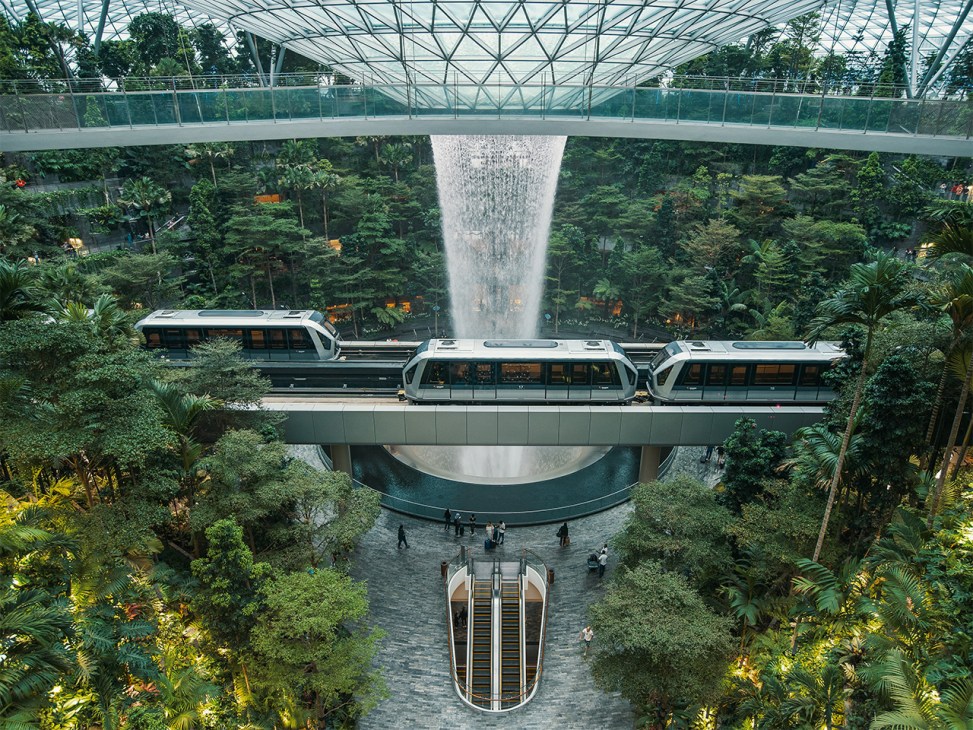
At a time of instability, Singapore has gone all in on its message of political calm and predictability for commerce. The city-state’s Economic Development Board has launched a campaign in which it describes Singapore as “a place where everything is the right side up”.
This safe-haven status is largely attributable to stable leadership (helped by a lack of democratic scrutiny) and citizens’ high trust in the police – 97 per cent of respondents in a survey expressed confidence in the force. And the ease of doing business remains a constant: it takes little more than a day to register a new venture, while low corporation- and income-tax rates make Singapore an attractive place to set up shop. For firms based here, government support has provided a bulwark in uncertain times, even if it impinges on free-market dynamism. Singapore’s location means easy trips for work or pleasure in the region, bolstered by Changi Airport’s passport-free clearance system – one reason why it has been crowned the world’s best airport two years in a row.
Read more
▼
Singapore draws criticism for its sterility and it is true that high costs hamper the opening of bricks-and-mortar shops and restaurants. But Singaporeans are enthusiastic about local ventures – look at New Bahru, a thriving lifestyle complex for Singaporean brands – and the F&B scene is still one of the best in the world. Recent openings include Taiwanese chef Andre Chiang’s 1887 by Andre at the Raffles Hotel, Damian D’Silva’s Eurasian restaurant Gilmore and South Korean barman Uno Jang’s bop. Singapore’s art ecosystem is growing – a number of transnational names, such as the Yenn and Alan Lo Foundation and the Tanoto Art Foundation, have coloured in the empty spaces with galleries, exhibitions and events.
Perhaps Singapore’s greatest asset is its multiculturalism, which is refreshing in a divided world. Its leaders display ambition when it comes to increasing connectivity: a new rapid-transit link to Johor Bahru in Malaysia will launch this year; the groundbreaking Tuas megaport is opening in phases; and, as part of the Singapore Green Plan 2030, this already lush location will become greener still with a swath of new nature parks.
Adopt: Thoughtful policies or guardrails that prevent shopping malls from becoming identical.
Drop: Rigid nightlife regulations. Alcohol trading hours are too restricted and night-time licences hard to obtain.
Population: 6.1 million
Average hours of sunshine per year: 2,022
Bicycle modal share: 9 per cent
Protected bicycle infrastructure: 730km
Proportion of commutes by public transport: 44 per cent
Number of social-housing units: 1.1 million (almost 80 per cent of Singapore’s residents live in public housing)
View Monocle’s complete city guide to Singapore
13.
Barcelona
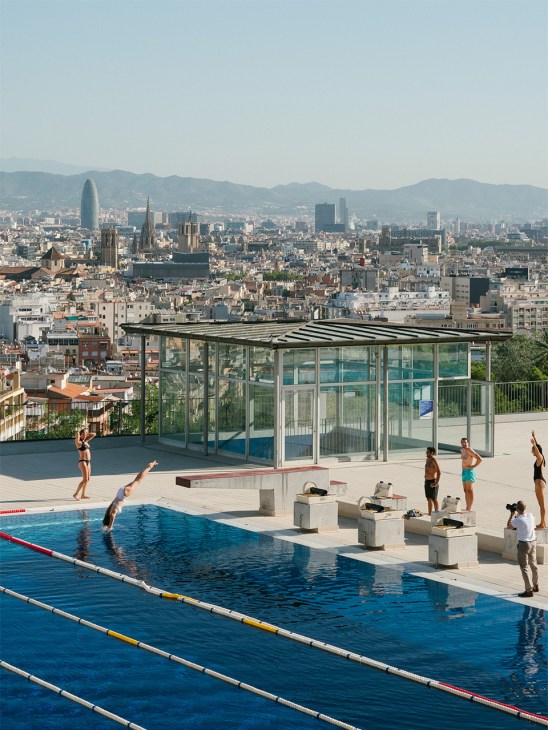
Barcelona’s status as this year’s World Capital of Architecture is well deserved. The city is a global leader when it comes to building design and urban planning. Its affordable and efficient transport system is expanding, with a project to join up two main tram routes and an extension of the metro line connecting to the airport. Meanwhile, Parc de la Ciutadella is getting a much-needed revamp. With streets becoming greener and residents still benefiting from the gold-standard 19th-century urban layout, it’s no wonder that 40 per cent of the workforce does its daily commute on foot. Unfortunately, the mayor, Jaume Collboni, has decided not to continue the celebrated Superblocks plan started by his predecessor Ada Colau, which limited through traffic in the city centre.
Read more
▼
Improving life for locals while managing the 26 million visitors who come here every year – some of whom decide to stay – is a fine line to walk. Barcelona’s once-vibrant cultural offering has been chipped away, with young people priced out of a nightlife scene tailored to tourists. That said, authorities appear unafraid to tackle these issues head-on. The newly appointed commissioner for sustainable tourism, José Antonio Donaire, says that the city has reached its maximum number of visitors and the tourist agency’s official slogan has been changed from “Visit Barcelona” to “This is Barcelona” – marking a clear shift in messaging. A ban on tourist apartments that is expected to come into effect in 2028 is designed to take some of the pressure off the housing market, where rent currently accounts for 74 per cent of the average salary. Meanwhile, the purchase of entire buildings by speculative funds has already fallen by 31 per cent in the past year, thanks to Spain’s first housing law, which was passed in 2023.
Not everyone comes here to lie in the sun. Barcelona hosts more conference delegates than any other city and is particularly competitive when it comes to medical, science-related and technology events. As it marks the 100th anniversary of Antoni Gaudí’s death in June, the still unfinished Sagrada Família stands as a fitting emblem of a place that’s unafraid to innovate but fiercely committed to preserving its heritage, traditions and identity.
Adopt: A more effective cycling strategy – and more bicycle lanes – to move away from an overreliance on cars and motorcycles.
Drop: Brunch spots aimed at tourists have proliferated to the point where the slogan “Stop brunch” is starting to catch on.
Population: 1.7 million (5.4 million in the metropolitan area)
Average hours of sunshine per year: 2,591
Bicycle modal share: 2.7 per cent
Number of homes built last year: 1,200
Proportion of commutes by public transport: 37 per cent
Number of international destinations served by the city’s airport: 197
View Monocle’s complete city guide to Barcelona
12.
Milan
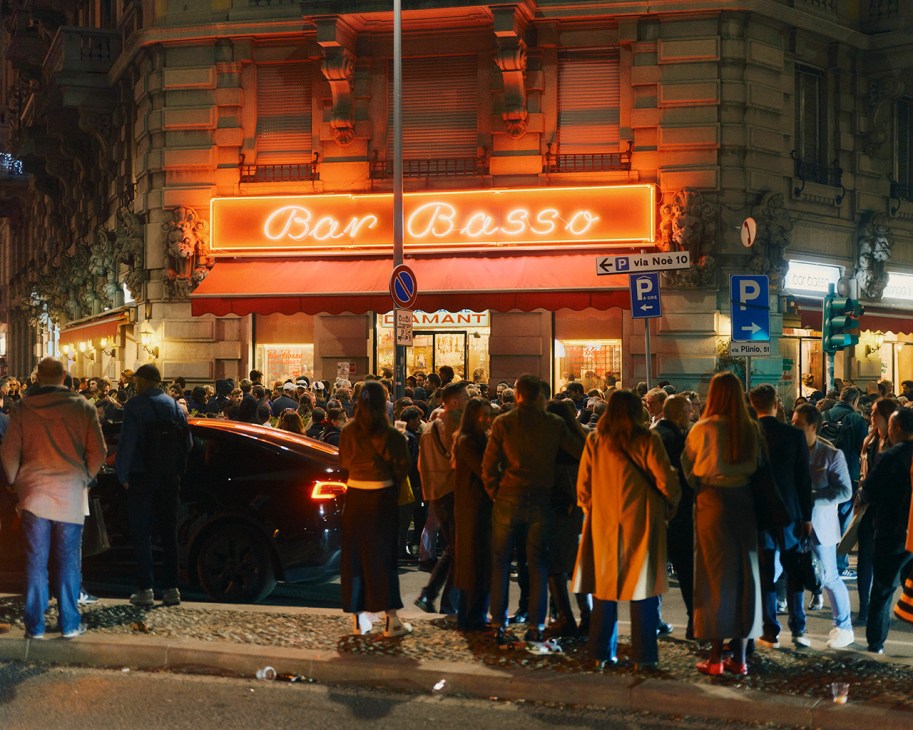
We are only about halfway through the year but Milan has enjoyed an excellent 2026. While the Winter Olympics might not have reached the fever pitch of the Summer Games, having images of your city’s cathedral beamed to a couple of billion viewers around the world will do wonders for both your soft power and quality-of-life credentials (reminding people, among other things, of Milan’s proximity to the Alps).
Read more
▼
February’s Milano-Cortina shindig wasn’t the only thing that has worked in the Lombard capital’s favour this year. What started off as a pitter-patter of column inches about Milan’s desirability turned into a deluge of publications clamouring to discuss how you can be in Liguria for lunch or pop to the mountains for a pre-breakfast ski (we exaggerate but only slightly). Certainly, Italy’s favourable fiscal rules – including a flat tax of €300,000 on foreign income that favours the wealthy – has seen people flocking to Milan from cities such as London and Paris.
While there have been some negative effects – including rising property prices in an already squeezed market – Milan has also become an increasingly international place. That effect has been felt on the city’s dining scene, which was already excellent but strongest for offerings that were classic and Italian. No longer. Stainless steel and mood lighting are the new order of the day, with excellent new spots covering everything from Indonesian to Brazilian and Korean cuisine. Natural wine, small plates and speciality coffee are becoming ubiquitous.
All of which is good news for a city that aspires to top the leadership boards – and one that can boast among the highest proportions of commutes done by public transport in southern Europe. That’s not to say that there aren’t plenty of problems still to overcome. Some are easy to resolve (cycle lanes that end abruptly, pushing you onto a busy artery; a proliferation of graffiti); others less so (dangerous levels of air pollution in the Po Valley). Somehow, however, Milan’s imperfections are part of its charm. Its proximity to great escapes and its smart, creative denizens leading the business, fashion and design scenes make it hard to ignore.
Adopt: A tougher stance on graffiti. Authorities have long been too laissez-faire.
Drop: Heading out of town at weekends. Milan needs residents to stick around and help to make their city more fun.
Population: 1.3 million (5 million in the metropolitan area)
Average hours of sunshine per year: 1,915
Bicycle modal share: 7 per cent
Price of an espresso: €1.30
Proportion of commutes by public transport: 42 per cent
Number of international destinations served by the city’s airports: 194
View Monocle’s complete city guide to Milan
11.
Stockholm
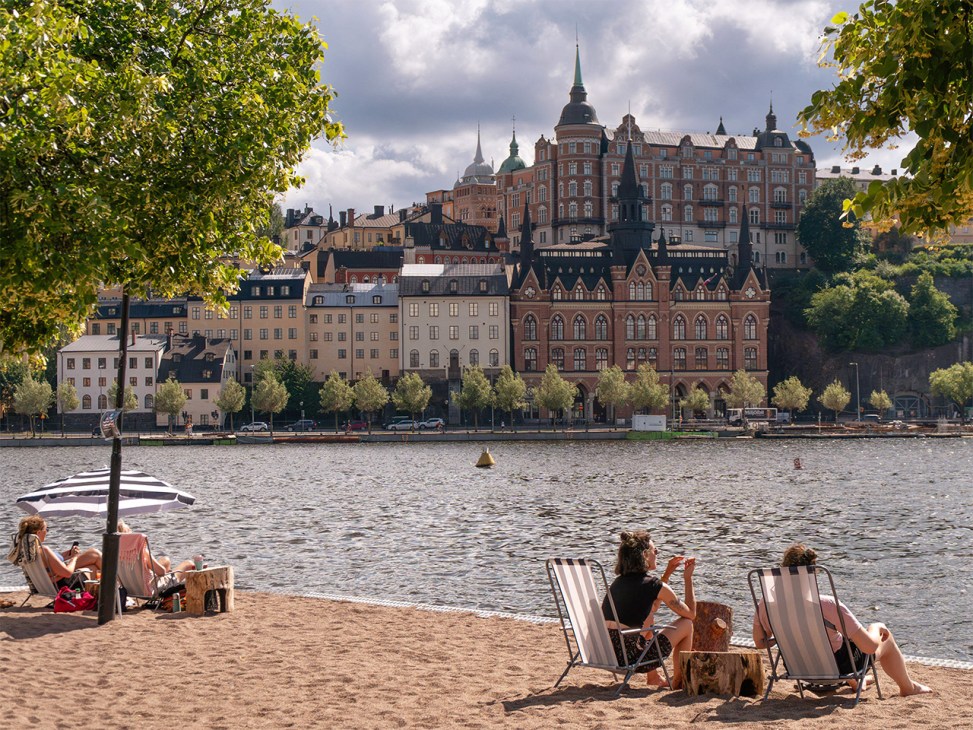
Stockholm is in one of its fits of reinvention. After years of development, the SEK12bn (€1.1bn) New Slussen project, a gleaming urban quarter that connects Södermalm to the old town, is complete and teeming with people. The traffic is gone and in its place is a kind of Scandinavian corniche filled with pedestrians and cyclists, with striking views of Lake Mälaren to the west and the island of Djurgården to the east. Summer always brings a wave of optimism to the Swedish capital and this year is no different. A swimming area at Pålsundet, a narrow water passage filled with green nooks and old wooden boats, is already proving a hit with residents.
Read more
▼
Stockholm’s trump card is its natural beauty. Wherever you are in the city, a park, forest or swimming spot is never far away. Access to nature is enshrined in the Swedish law of allemansrätte (“the right to roam”). This is a place where you can come as you are – whether fully clothed or not – and where a strong social contract endures.
Nonetheless, there has recently been much criticism from both inside and outside the city about the fact that the Swedish model of high taxes in return for free health care, childcare and education has not protected the country from economic and racial segregation. Gang violence has plagued Stockholm but thanks to a country-wide programme that helps the police to co-ordinate more closely with central government, deadly shootings have fallen in the past year. As of this writing, no one had died in a shooting in Stockholm in 2026 (down from four in 2025 and eight in 2024).
The Swedish capital seems to be turning a corner. Huge investments are upgrading its metro and overground lines and there are plans to densify the city in an attempt to make it even an even more attractive place to live and work. The redevelopment of the Central Station area will bring with it hundreds of new homes, while in Sickla, a new neighbourhood built almost entirely from wood is taking shape. Both point to a streamlining of planning laws and a removal of bureaucracy that have led the Confederation of Swedish Enterprise to give the capital its best grade in 25 years when it comes to ease of doing business.
Adopt: More changing-rooms, showers and saunas at the city’s many excellent swimming spots.
Drop: Strict enforcement of noise controls at late-night bars. Many beloved establishments have closed down in recent years.
Population: 999,000 (2.5 million in the metropolitan area)
Average hours of sunshine per year: 1,803
Bicycle modal share: 14 per cent
Urban green space: 46 per cent
Average time taken to register a new business: 7.5 days
Number of international destinations served by the city’s airports: 153
View Monocle’s complete city guide to Stockholm
10.
Oslo
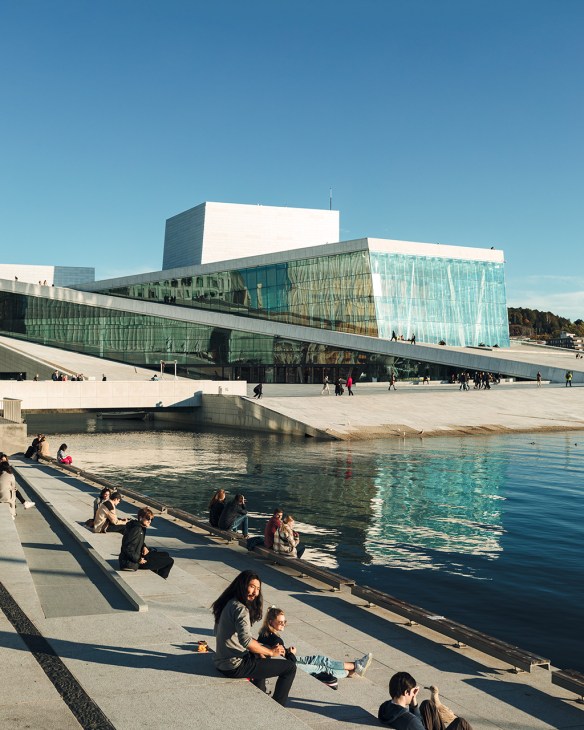
Oslo sits at ease with both its heritage and new role as a hyper-modern green capital – a self-assuredness that sees it finish above Stockholm this year (förlåt!). Decades of ambitious harbour-side developments are now complete. Known collectively as Fjord City, they have fully opened up the waterfront and transformed the Norwegian capital into an outward-facing city. The centrepiece is Bjørvika and the twin architectural gems of the Opera House and the Munch Museum. Fornebubanen, a major expansion of the metro system, will soon link the city centre with the rapidly expanding Fornebu peninsula in the west, once home to Oslo airport – another example of city hall furthering growth through electric public transport rather than roads.
Read more
▼
The electrification of public transport now includes quiet ferries to islands in the Oslo fjord. Thanks to other green-infrastructure initiatives such as carbon capture and storage from the city’s waste-incineration plant, Norway’s capital could even achieve its highly ambitious goal of cutting emissions by 95 per cent by 2030.
Here, it’s not uncommon to see children travelling alone on trams, the metro or buses – a result of the city’s enviably low crime rates, which are below the European average and among the lowest in this survey. There are signs too that stories of Oslo’s impressive regeneration and safe, comfortable living are finally reaching more people beyond Norway’s borders. Visitor numbers are up – helped, perhaps, by the films of Joachim Trier, including the Oscar-winning Sentimental Value, which paint an appealing and intriguing picture of Oslo. So is the number of start-ups, though the city still lags behind the other Scandinavian capitals in scale and ambition.
Almost all of those who call Oslo home live less than 300 metres from a green space. Commuters increasingly choose to walk or cycle to work, where they typically spend 37 hours a week (when they’re not enjoying some of their five-week annual holiday allowance). Oslo’s small size is both attractive and a drawback: it will never be a global capital magnet. But it has proven to be big enough to produce unicorns and to finish 10th in our survey.
Adopt: A push to attract more international companies and secure better funding avenues for promising start-ups.
Drop: The flyover casting a shadow over the vibrant Grønland area – a remnant of a long-gone ring road.
Population: 730,000 (1.5 million in the metropolitan area)
Average hours of sunshine per year: 1,668
Bicycle modal share: 7 per cent
Urban green space: 48 per cent
Cost of monthly travel card: NOK2,198 (€202)
Number of international destinations served by the city’s airports: 122
9.
Munich
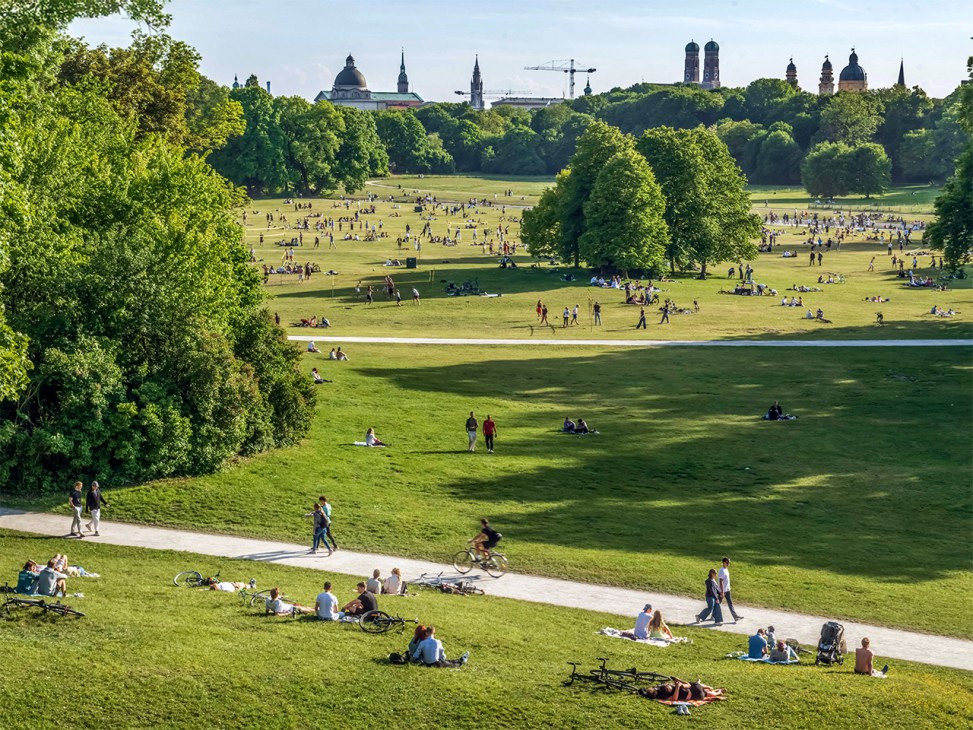
In 2026, Munich seems to be oscillating between confidence and concern – a mood that’s exemplified by its new mayor, Dominik Krause. The 35-year-old is the first Green leader of a German city with more than a million inhabitants and was the surprise winner of May’s municipal elections. According to a report by Gisma University of Applied Sciences, he is almost 20 years younger than the average Oberbürgermeister – the title given to mayors of large German municipalities.
One of Krause’s first moves was to reject his grace-and-favour chauffeured limousine, in favour of a daily metro commute. He also worked out a safety compromise to allow for the reopening of the surfing wave on the river Isar, which has closed after a deadly accident involving a female surfer last year.
Read more
▼
Krause’s two main priorities are a reminder of the major challenges facing Munich. The first is housing: his new ruling coalition aims to create 50,000 new apartments. To do so, it plans to develop new sites in the north of the city, convert vacant offices into flats and use so-called infill development, adding extra floors to existing housing stock, or erecting high-rises (such as the two spectacular 155-metre-tall towers planned by Swiss architects Herzog & de Meuron). This is controversial in a city that cherishes its views of the Alps.
The second and more recent of Munich’s woes concerns its finances. City hall’s budget for 2026 stands at a record €2.9bn – a source of anxiety, given that it is contending with a steeper-than-expected decline in trade tax revenue because of the struggles of usually dependable corporate behemoths such as BMW.
As a result of this uncertain financial landscape, Krause made one of his most controversial announcements so far in May: in a video posted on social media he explained his plan to raise fees in a wide range of areas, from parking and dog ownership to nursery schools.
That video was filmed in one of Munich’s many lush parks. It was a reminder that this is a city whose historic economic success has strong civic foundations rooted in green space, low crime and a high quality of life.
Adopt: The Ludwigstrasse project, which aims to pedestrianise a traffic-heavy central boulevard and fill it with trees.
Drop: Lengthy planning and approval procedures, bureaucratic delays and hesitation about large-scale development projects.
Population: 1.6 million (6.2 million in the metropolitan area)
Average hours of sunshine per year: 1,756
Bicycle modal share: 21 per cent
Protected bicycle infrastructure: 725km
Urban green space: 51 per cent
Number of international destinations served by the city’s airport: 215
8.
Paris
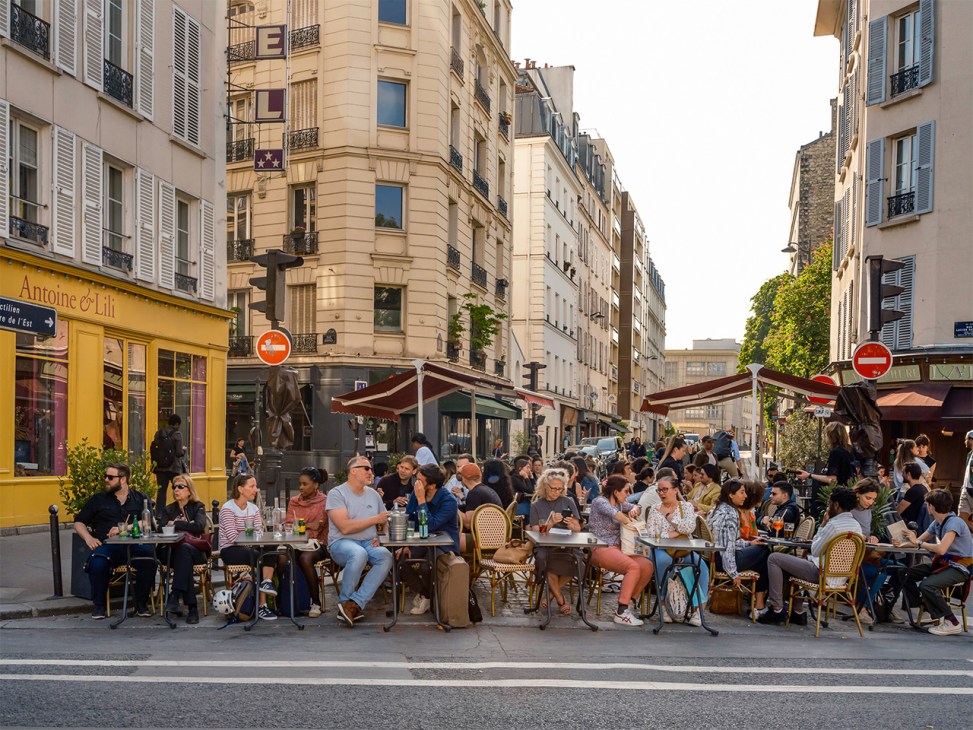
Paris is a city steeped in the past but one that is nonetheless looking resolutely forward. Its third consecutive socialist mayor, Emmanuel Grégoire, was elected in March with a mandate to extend the sweeping green transition pioneered by his predecessor, Anne Hidalgo. With temperatures nudging towards 35C at the time of writing, it’s too early for some of her most apposite innovations to be enjoyed. The reopening of the Seine and parts of the Canal St Martin to bathers was celebrated as a historic milestone when it was green-lit in 2024 but Parisians will have to wait until later this summer to dive in and cool off.
Read more
▼
Still, with 155,000 trees planted during Hidalgo’s tenure in office and hundreds of kilometres of additional cycle lanes, the streets inherited by Grégoire are cooler, greener and arguably more beautiful than ever. In the latter regard, one of Grégoire’s first appointments was a general delegate for design and aesthetics, tasked with maintaining what the new mayor has defined as Parisians’ “right to beauty”. The French capital doesn’t have the spectacular parks of some of its European counterparts and limitations on green space become clearer when the sun shines. Grégoire’s mandate rests in no small part on his commitment to transform a further 10 boulevards into gardens.
In line with trends across the West, Paris seems set to become a liberal, metropolitan island in an increasingly illiberal country. However, the city isn’t complacent: a recently revamped visa system requires newcomers to participate in civic training before passing an exam as a condition of their stay. It reflects a sensible approach to culture and values that is at odds with the culture-war conflicts seen in many of France’s European counterparts.
With the highest number of cinemas per capita, about 400 independent bookshops doing a roaring trade and a thriving print media, Paris is still Europe’s cultural juggernaut. And, as 2024’s Olympics proved, the City of Light now remains undimmed throughout the summer. Still, security is an ongoing concern. Paris Saint-Germain, the capital’s all-beating football team, should inspire joy but their Champions League victory in May led to the kind of disorder that too often mars this city’s reputation.
Adopt: More green space. Continuing the development of the Petite Ceinture railway into a green walkway would be a good start.
Drop: The camera phone. The photogenic nature of the city’s streets, bars and food has attracted too many influencers.
Population: 2.1 million (13.3 million in the metropolitan area)
Bicycle modal share: 11.2 per cent
Number of cinemas: 610 (most in the world)
Proportion of commutes by public transport: 50 per cent
Number of international destinations served by the city’s airports: 308
Urban green space: 15 per cent
View Monocle’s complete city guide to Paris
7.
Madrid


The word castizo is used by Madrileños to describe those things that best embody their city’s identity. It’s a spirit that eschews the modern for the traditional. But, in recent years, the Spanish capital has evolved from bastion of the past to trailblazer, propelled by an economy that has seen GDP per capita surge 78 per cent higher than the national average. The city’s population is at a historic high, spurred by the almost one in three of its inhabitants who are foreign-born. In Madrid province, 42.4 per cent of newcomers have advanced degrees. Spain’s pull factor on Latin America’s brightest and best shows with close to half of Venezuelans and Argentinians arriving with higher education. The buzz of being an emerging business hub can be felt in Madrid’s vibrant retail and hospitality spaces. Sun-soaked terraces are filled with people enjoying the slow pleasures of a high quality of life that draws heavily on the city’s access to fresh food and a culture of late-night socialising. These are said to contribute to the fact that its residents have the highest life expectancy of any city in Europe.
Read more
▼
By reducing red tape, Madrid hopes to become more agile in responding to urgent issues such as the housing crisis that it is now facing. While the local government works to increase stock, it’s imperative that it continues to press developers to provide affordable housing in meaningful numbers. Last summer was one of the hottest on record, with municipal pools providing a lifeline. However, there aren’t enough of these oases, with 20.4 per cent of residents living in districts with no public pools and 30 per cent of Madrileños unable to holiday outside of the sizzling capital during summer. By early next year, the city centre will have a newly pedestrianised connection between Puerta de Alcalá and Cibeles, and will also debut Parque Ventas, a green space linking the Salamanca and Ciudad Lineal neighbourhoods across the M-30 ring road.
Cycling is on the up, with journeys on Bicimad public electric bikes quadrupling between 2022 and 2025 to 13.7 million. The metro’s 7B line has reopened, though, and the soon-to-be-completed Line 6 will debut driverless trains in 2027. Any mention of castizo must now include an acceptance of the city’s forward thinking.
Adopt: Subsidies for rooftop solar panels that would provide residents with some energy autonomy in a sun-rich environment.
Drop: A politics of fear whipped up against immigrants by far-right politicians and sometimes exacerbated by the police.
Population: 3.5 million (7.5 million in the metropolitan area)
Average hours of sunshine per year: 2,769
Bicycle modal share: 0.5 per cent
Urban green space: 30 per cent
Cost of monthly travel card: €49.20
Number of international destinations served by the city’s airports: 197
View Monocle’s complete city guide to Madrid
6.
Zürich
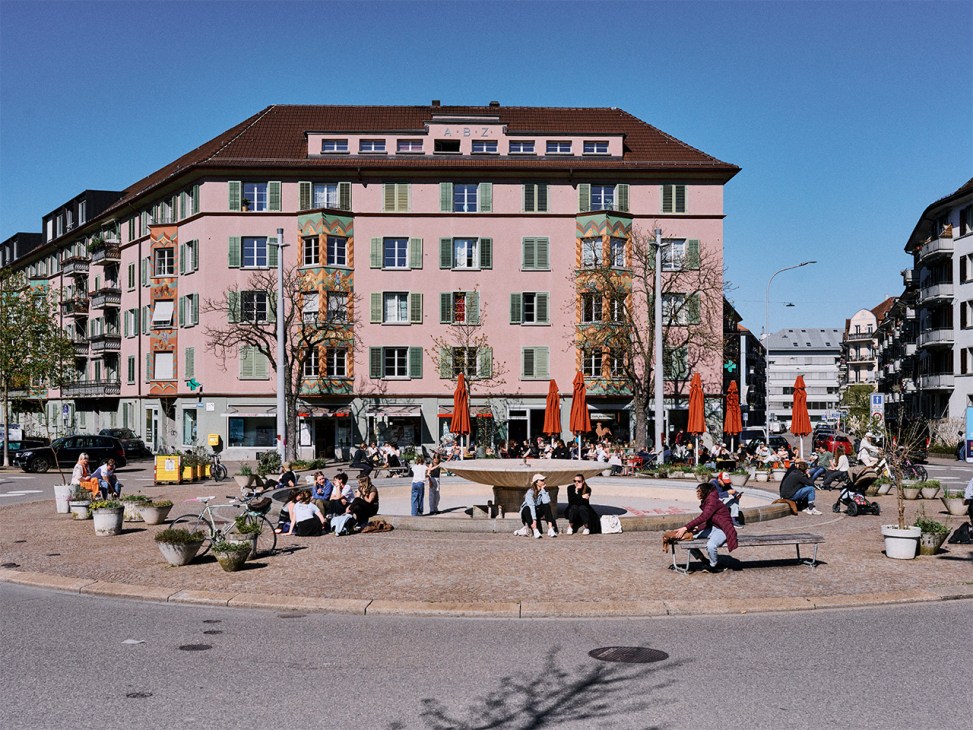
For the first time in almost two decades, Zürich has a new mayor. After 17 years, Corine Mauch, the first woman to hold the role, has stepped down. Her successor, Raphael Golta, also comes from the Social Democratic Party. The city has moved even further to the left politically, with seven members of the municipal government now coming from left-wing parties. Golta faces several challenges, from a cycling network that’s causing headaches for everyone (including cyclists) to the ongoing problem of creating more affordable housing.
Read more
▼
The latter is the issue that continues to dominate. In 2025, however, there was a little progress: 2,977 apartments were completed in new developments, 347 more than in 2024. Yet the vacancy rate remains exceptionally low at 0.1 per cent, amounting to just 235 empty flats across the entire city.
If housing is Zürich’s biggest weakness, public transport is undoubtedly its world-beating strength. In March the city said auf Wiedersehen to the last high-floor trams of the Tram 2000 generation. Since then, every tram has been low-floor – a significant step forward when it comes to accessibility. Meanwhile, the largest timetable overhaul in history was introduced to better reflect current travel patterns. The changes involved the renumbering of well-known routes and passengers required a considerable adjustment period. Replacing about 2,500 signs almost overnight was also a reminder of something that Zürich does exceptionally well: make complex changes look effortless.
Voters approved measures to make public transport more affordable too. In the future, they will pay just CHF365 (€399) a year for a travel pass, compared with the current price of CHF813 (€889). All of this for a network that’s so beloved that some 60 per cent of commuters use it to get to work. And Zürich remains remarkably safe. Crime fell by 8 per cent in 2025.
As its population continues to grow, the city’s two major newspapers (Tages Anzeiger and NZZ) provide world-class journalism, while the lake offers one of the best ways to relax during the warmer months.
Adopt: Sunday shopping. Zürich allows only four shopping Sundays a year, making each feel like a major event.
Drop: Early closing hours. Finding a meal after 22.00 remains surprisingly difficult in Switzerland’s largest city.
Population: 450,000 (1.7 million in the metropolitan area)
Bicycle modal share: 11 per cent
Proportion of commutes by public transport: 56 per cent
Number of social-housing units: 60,539
Average monthly net salary: CHF6,790 (€7,413)
Number of international destinations served by the city’s airport: 212
View Monocle’s complete city guide to Zürich
5.
Sydney
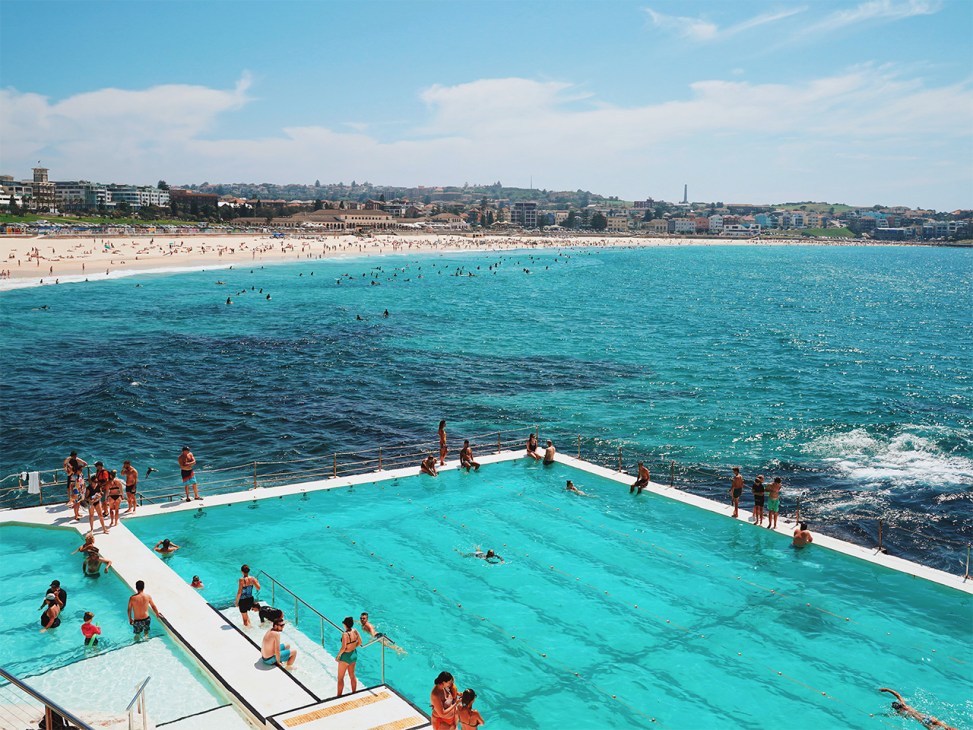
Sydney’s comeback has been 20 years in the making. Though its natural assets – from its vast harbour to its more than 100 beaches – have always assured Australia’s largest city a high baseline lifestyle, for decades there has been the pervading sense that it was past its prime, had lost the global spotlight and was squandering its enormous potential. However, successive state governments have found the courage to commit to ambitious infrastructure projects with big budgets. Sydney has felt like a construction site for years but the makeover is almost complete.
Read more
▼
George Street, the city’s main artery, has been pedestrianised, pumping energy into the surrounding environment, boosting safety and giving the city centre a fresh vibrancy. The street is also the nexus of the new light rail lines, which have brought trams back into Sydney’s public-transport mix. The metro – Australia’s only mass rapid-transit rail – is also reshaping the city and the way that Sydneysiders traverse it. The network will also link up with Western Sydney International Airport when it opens next year.
Innovation abounds, from the state gallery’s gleaming Sanaa-designed wing to Kengo Kuma’s tornadic tower in Chinatown. But Sydney’s most striking new building is the New Sydney Fish Market, the southern hemisphere’s largest market of its kind, which opened in January this year. It’s also the linchpin of the Bays Precinct urban-renewal project.
Novelty can’t solve all of Sydney’s issues. Rocketing land prices are driving up rents and causing cultural collateral damage. The city’s formerly glorious live-music scene is one casualty of many. And the New South Wales government’s zeal for fun-stifling over-regulation means that it sometimes feels as though you’re having a great night out despite, not because of, the city. If it continues to polish off its rough edges, Sydney risks losing its laid-back charm.
Still, Australia’s sleeping beauty has reawakened from its self-imposed slumber and has never looked or felt better. But cities are shaped by people, not projects. The final piece of the puzzle is Sydneysiders themselves. It’s up to them to get back out there and ensure that their home finally lives up to its reputation.
Adopt: More positivity. Sydneysiders love to play down their own city – it often feels like they are trying to pre-empt criticism.
Drop: Vacant tenancies. Commercial landlords have kept increasing rents, leading to an exodus of beloved businesses.
Population: 5.7 million in the metropolitan area
Average hours of sunshine per year: 2,468
Average monthly net salary: AU$5,930 (€3,630)
Bicycle modal share: 1 per cent
Number of public swimming pools: 350
Price of a flat white: AU$4.50 (€2.75)
Urban green space: 41 per cent
View Monocle’s complete city guide to Sydney
4.
Vienna


Vienna is used to welcoming the world but this year the city has outdone itself. In May it staged the Eurovision Song Contest for the third time. The contest remains one of the largest globally televised events with about 200 million people tuning in every year and the 2026 iteration showcased once again why the Austrian capital is the consummate host. The past year also saw the inaugural World Tramdriver Championship, Vienna Design Week and countless UN, Opec and International Atomic Energy Agency meetings. Meanwhile, people are beginning to take notice of the city’s vineyards and excellent municipal swimming pools too.
Read more
▼
Vienna continues to adapt its architectural heritage, with work beginning on the transformation of the Funkhaus, the former radio headquarters of national broadcaster ORF, into a mixed-use residential and hospitality development. Meanwhile, in March, Villa Beer by modernist architect-designer Josef Frank opened its doors to the public for the first time after an extensive restoration.
Repairs and refurbishment have also been at the heart of the city’s celebrated social-housing programme, initially begun in the 1920s when the collapse of empire precipitated an acute housing shortage. Construction has continued ever since. Not only have the authorities built five new schemes comprising some 400 flats over the past 12 months, they also renovated 11 complexes in 2025 alone. And that’s despite cuts of about €200m in social welfare, including minimum-income support and pension benefits.
At the same time, officials have stepped up their efforts to overhaul the city’s heating infrastructure and move residents towards district heating – which is more efficient than other solutions and central to a pledge to make Vienna carbon neutral by 2040, a decade ahead of the EU’s target. The challenge remains to decommission some 500,000 gas boilers still in use across half of the city’s households. Elsewhere, city hall has launched a new funding scheme for food businesses even as more culinary projects and festivals – such as Popchop, which stages events everywhere from the Museum of Applied Arts to the Funkhaus – continue to multiply.
Adopt: Longer Sunday opening hours. Parts of the city are catatonic on the Sabbath. We would like to be out and about.
Drop: Restriction of voting rights for mayoral elections to Austrian citizens. Over a third of Vienna’s population are non-Austrians.
Population: 2 million (3.2 million in the metropolitan area)
Average hours of sunshine per year: 2,048
Bicycle modal share: 11 per cent
Number of social housing units: 220,000
Proportion of commutes by public transport: 34 per cent
Number of international destinations served by the city’s airport: 198
View Monocle’s complete city guide to Vienna
3.
Lisbon


While some of Lisbon’s recent success is down to its natural advantages – its many hours of sunshine, vibrant food scene and stunning architecture – much of it is the culmination of a decade or so of good governance and hard work. Consistent investment in public transport has resulted in an expansive system that incorporates the metro, trams and river boats. City hall recently announced the first new tram line to be built in almost 70 years. The arrival of electric bikes has begun to change local habits and defy the challenges imposed by the city’s hilly terrain, with the number of regular journeys by bicycle increasing by 500 per cent between 2011 and 2021. Meanwhile, Lisbon airport continues to act as a key hub for those crossing the Atlantic or travelling to Africa, aided by long-standing relations with the Portuguese-speaking world.
Walking through Lisbon, it quickly becomes obvious how a healthy independent retail scene can help to make a city great. Lisboetas adore local farmers’ markets, buying a newspaper at a kiosk or visiting one of the many historic independent shops that are protected under municipality-led programme Lojas Com História. The city’s cultural offering continues to grow, with museums such as the new Centre de Arte Moderna (CAM) at the Gulbenkian Foundation and international fairs such as Arco drawing a cool, creative set from across the globe.
Lisbon has long ranked as one of the safest cities in the world, enhancing its allure as a place to visit or relocate to. However, there is work to be done to ensure that it doesn’t become a victim of its own success. A rise in new arrivals has put pressure on services and last year’s deadly funicular crash and nationwide blackout tested Lisbon’s resilience and social fabric.
As with many European capitals, housing remains a pinch point, with the pace of construction lagging in relation to demand, meaning that choice is often linked to your tax bracket. The challenge ahead is to bridge the gap between the interests of locals and those of expats when it comes to the cost of living, before Lisbon becomes two cities in one.
Adopt: Proper crossings over the Tejo, with ferries and boats that are efficient, electric and frequent.
Drop: Tuk-tuks, which disrupt traffic and block trams full of commuters, while adding visual clutter and noise pollution.
Population: 550,000 (3 million in the metropolitan area)
Average hours of sunshine per year: 2,806
Urban green space: 25 per cent
Bicycle modal share: 1.9 per cent
Cost of monthly travel card: €40.50
Number of international destinations served by the city’s airport: 144
View Monocle’s complete city guide to Lisbon
2.
Copenhagen
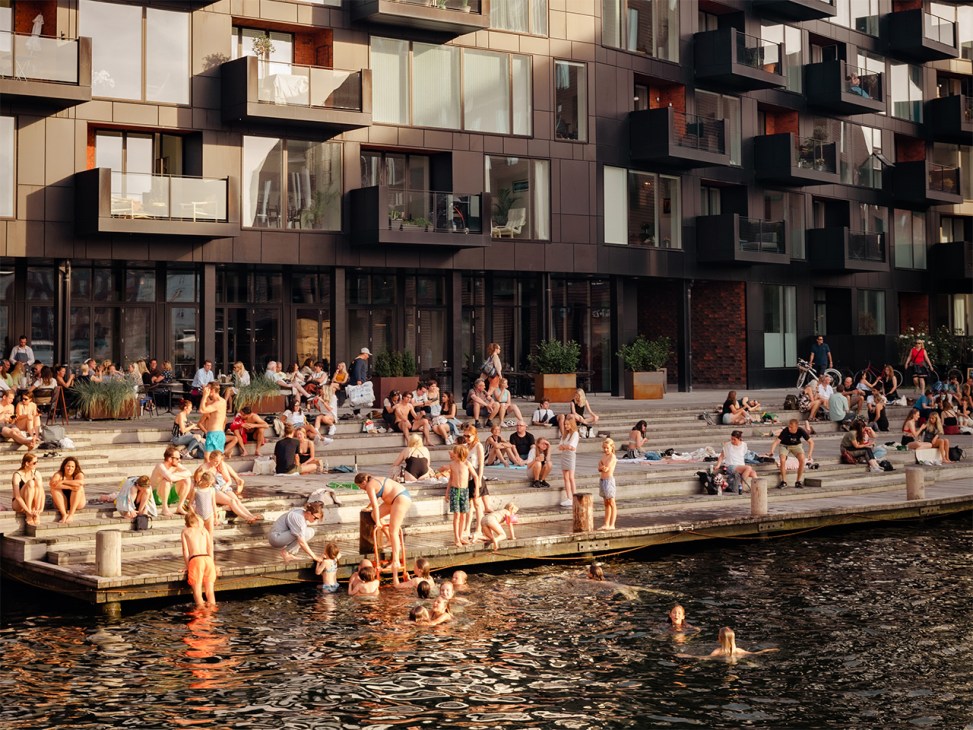
In November 2025 there was an earthquake in Copenhagen – a political one, in which the Social Democrats lost control of the city for the first time in more than 100 years. The Socialist People’s Party and the Red-Green Alliance, both on the far left of the political spectrum, were the major winners of the municipal election. On the new council’s agenda are the cost and availability of housing, climate change and a push to rid the centre of pesky cars.
Copenhageners should have faith in such initiatives. After all, this is the place that revolutionised urban cycling before exporting its ideas worldwide. It’s also a city with high social capital and trust, as well as the all-important desire not to rest on its laurels.
Though voters punished the Social Democrats for the high cost of living in March’s general election, in which they lost 12 seats, you wouldn’t know that it’s a problem judging by Copenhagen’s booming restaurant scene and the many retail options in the city centre and the Bridge Quarters. This remains an amazing city in which to shop and eat (before 22.00, at least). Copenhageners look and feel affluent, and are far more comfortable displaying their wealth than they used to be.
One thing that the new council has done is restrict hotel development in the city – in response to the housing shortage but also to the feeling that tourism has become overwhelming. Getting around has never been easier, especially since the recent extension to the 24/7 Metro (with more to come). Copenhagen continues to have very low crime rates, while the ongoing developments in Nordhavn, Sydhavn and Refshaleøen show that it still wants to grow, while pursuing better ways of living for its inhabitants.
Two lifestyle trends are of note. First, communal living is on the up. Increasing numbers of Copenhageners are putting their names down for housing with shared spaces, formalised communities and social dining. Second, the Danes have a seemingly insatiable lust for winter bathing and saunas. Copenhagen has experienced a sauna boom over the past couple of years and waiting lists for winter bathing clubs are ever growing. As ever, leisure time is well spent in the Danish capital.
Adopt: Better theatre and music offerings. Copenhagen has the talent and population to support a more flourishing scene.
Drop: The restricted housing market. Ensuring a wider variety and cost of homes should be part of future urban planning.
Population: 1.4 million (2.2 million in the metropolitan area)
Protected bicycle infrastructure: 398km
Proportion of commutes by public transport: 20 per cent
Average monthly net salary: DKK32,425 (€4,355)
International destinations served by the city’s airports: 191
Urban green space: 30 per cent
Bicycle modal share: 29 per cent
View Monocle’s complete city guide to Copenhagen
1.
Tokyo


In fractious times, Tokyo is an outlier for its stability, calm and security. Young children walk to school unaccompanied by their parents, huge events take place every week without major disorder, and crime rates are consistently low. Despite its size, the Japanese capital retains an old-fashioned sense of community. Young people are taught to be considerate. Individual excellence is celebrated but even sporting megastars are expected to stay humble. It would be hard to replicate Tokyo’s modus operandi but we can certainly admire it. So much of this lies in patterns of behaviour that are internalised from birth: quiet voices on public transport; the patient queues on the subway platform; the glass of water and oshibori hand towel at the start of a meal.
Yuriko Koike, Tokyo’s 73-year-old governor, is one of the most powerful figures in Japanese politics. Now deep into her third four-year term, she has steered Tokyo through the pandemic, its troubled Olympic Games and several typhoons. From her office in Nishi Shinjuku, she oversees a city with a $2.5trn (€2.1trn) GDP, a population of 14 million and a dizzying transport network.
The city plays the long game when it comes to transport and construction projects. The complex reconfiguration of busy Shinjuku station won’t be completed until the 2040s. JR East has reinvented an overlooked pocket of Shinagawa to create a new neighbourhood called Takanawa Gateway City. Architect Kengo Kuma has contributed the swirly Museum of Narratives.
The sharp increase in tourism has, however, had an impact on life in Tokyo, with visitors now popping up in the quietest corners of the city. While Tokyo’s population has become noticeably more diverse, there have been attendant challenges for residents. The rise in the cost of living has hit Japan’s citizens and, with the yen at historic lows, fewer are travelling overseas.
Kindness abounds in daily interactions and in a hospitality culture that tugs at the heartstrings. Tokyo should celebrate being such a well-mannered metropolis but its exemplary conduct is never taken for granted. Three (quiet) cheers for this exhilarating city.
Adopt: More support for Tokyo’s shotengai shopping streets, which are at the heart of so many city neighbourhoods.
Drop: The proliferation of QR-code menus. It might help with communication but doesn’t enhance the restaurant experience.
Population: 9.95 million (37 million in the metropolitan area)
Proportion of commutes by public transport: 57 per cent
Murder rate: 0.23 per 100,000 people
Number of cinemas: 167 (in the metropolitan area)
International destinations served by the city’s airports: 120
Urban green space: 20 per cent
Bicycle modal share: 13 per cent
View Monocle’s complete city guide to Tokyo
*Airport schedules updated June 2026
The Amble EV is gearing up to reinvent the way we drive
We have been promised a paradigm shift in personal mobility for some time – so where is it? Electric vehicles still only account for about a quarter of global car sales and car-share schemes, self-driving cars and the micro-car revolution all seem to have stalled. Automotive design is stuck in a rut, with European manufacturers often retreating to retro ideas, while Chinese manufacturers chart their conservative path (can you tell a BYD from an Xpeng?). Meanwhile, all are competing on battery range even though most journeys are less than 10km, and vehicles are increasing in size just as urban planners push to reclaim the streets for humans.
But here comes a potential game changer. Dreamt up by Portuguese former investment banker José António Uva, Amble is a low-cost electric four-seater. Uva is the visionary behind farmhouse hotel São Lourenço do Barrocal on his family’s wine estate in eastern Alentejo. When it opened in 2016, it seemed an unpromising location for a high-end independent hotel but Barrocal has become the resort of choice for visitors to Portugal seeking impeccable hospitality in a design-conscious yet authentic setting.

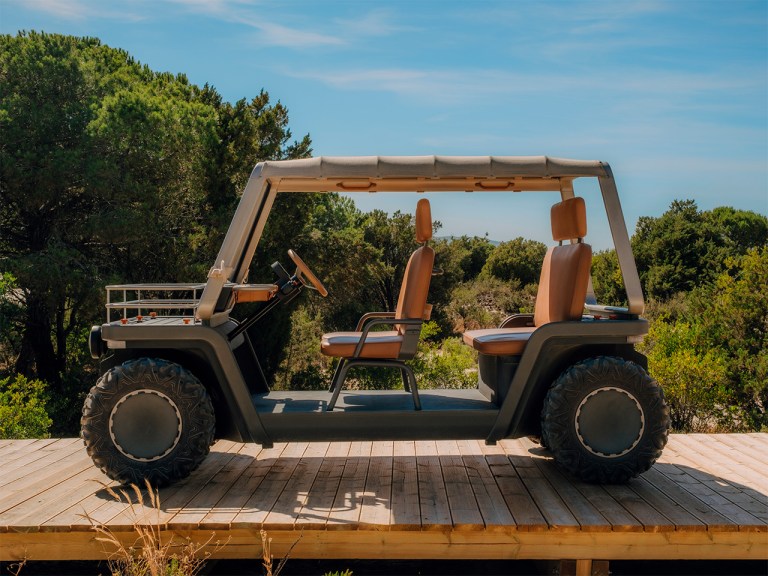


“I’m not really an off-the-shelf kind of person,” he tells Monocle when we meet over dinner at Lisbon restaurant Rosamar. Which brings us to Amble. Uva hopes that this vehicle, which resembles a funky Mars rover, will address one of his biggest bugbears: hospitality carts, those moonlighting golf buggies that resort hotels use to ferry guests and supplies.
“As soon as I opened Barrocal, I realised that there was a problem,” he says. “Those carts are the first touchpoint for guests but they never match the beauty of the landscapes or the architecture that you find in top independent hotels.” They are also notoriously unreliable. They don’t have adequate suspension so are uncomfortable (particularly if you sit in the back) and their image has hardly been enhanced by their association with a certain world leader.
Speaking to other resort owners across the globe, Uva realised that he was not alone in feeling dissatisfied by what was on offer. But it’s a long way from a mild irritation concerning your hotel’s mise en scene to a pre-production car such as the one that you see here. Fortunately, Uva is a man with a boundless capacity for project management. He is the kind of person who gives you his undivided attention but is also somehow simultaneously solving a dozen problems. “My wife says that I like tackling tricky projects,” he says, with a shrug. “But my experience is that a complicated, large project is as much work as a complicated, small project.”
This is where Lisbon enters the story. Serendipitously, key members of what is now the Amble team were already living in the city, having been drawn there by its dynamism and celebrated lifestyle. Among them was designer Julian Hönig. While at Audi, he had overseen the A4, Q3 and RSQ models, before working at Lamborghini; he had recently moved from California, where he had served as one of the lead designers on the Apple Watch, the Apple Vision Pro and the never fully realised Apple Car.
Uva’s son happened to be in the same class at school as Hönig’s. “I am not spiritual in that way but I do find that you end up crossing paths with the right people when you are looking for something,” says Uva of encountering one of the world’s leading product designers outside the school gates.
Hönig didn’t take much persuading. “I had already talked with an Apple designer friend a few years ago about golf carts because it was obvious that no one cared about them design-wise, so I was excited about the idea,” he tells me the next day at an exclusive viewing of the first Amble at Uva’s new coastal resort, Na Praia, soon to open just north of Comporta. “But then I realised that, if we do a street-legal version, we could go from selling to resorts to selling to gated communities and all the way to urban mobility. And that would make this really meaningful.”
Hönig confides that he once turned down Elon Musk when he was approached to join Tesla – but what about his old boss? Would the late Apple CEO Steve Jobs have approved of Amble? “That’s a good question,” he says, pausing. “Apple is good at finding the essence of products but without being naive.” He compares Amble to the MacBook in the way that its design fits the materials and how these materials are treated. “With Amble, we worked a lot on keeping straight shapes. The windscreen is flat and the tubes only curve in one direction.”
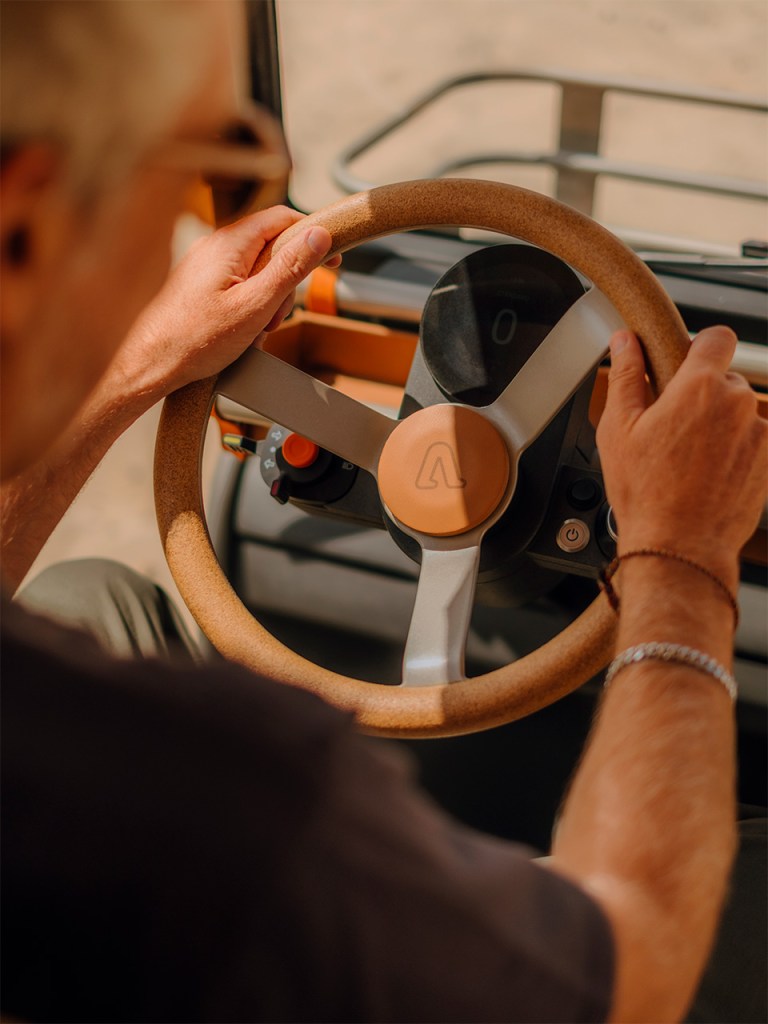
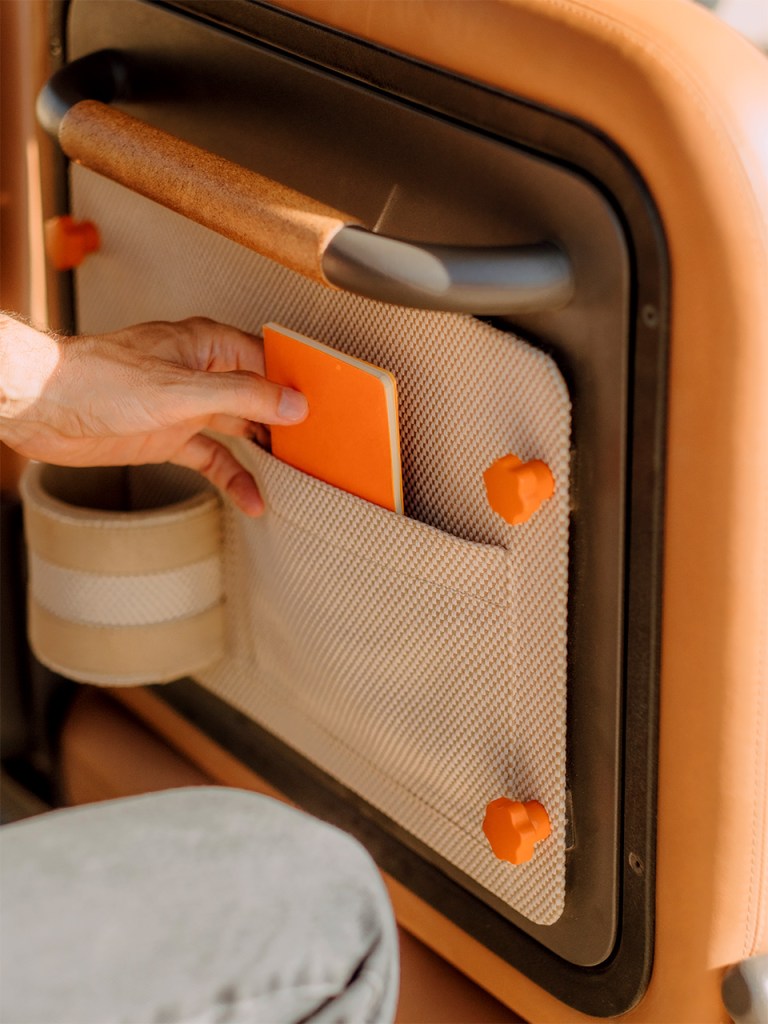


Michael Tropper, a friend of Hönig’s from design school in Graz, came on board soon afterwards. “We have always stayed in touch and connected so well on a creative and personal level,” says Tropper, as the duo sit outside with Monocle, soaking up the sun at Na Praia. He seems to be the more reserved of the two; this is reflected in the under-the-radar approach of Forpeople, the creative studio that he co-founded with offices in London and Amsterdam. They tell us that they share a “quite old-fashioned”, total-design approach to their work, which means that they are as at home shaping brands as working in industrial design.
Tropper was a part of Ford’s advanced-design team (back when the company owned Aston Martin) and Forpeople has the likes of Arc’teryx among its clients. He also worked with Chinese EV giant NIO to create its innovative, community-focused brand universe.
Ever since he designed interiors for British Airways, one of Forpeople’s first clients, Tropper has had a deep respect for the world of hospitality. “When you work on an airline seat, you have to consider the experience of travelling,” he says. “Car designers don’t necessarily think like that: for them, it’s more about the object. But in hospitality, you factor in all of these things. One of our mantras at Amble is ‘Let’s not make it automotive’.”
He and Hönig began designing in May 2021 with a simple flat platform, which houses the batteries but also allows for modularity. In terms of influences, they cite Nasa’s Lunar Rovers and are fans of the original Fiat Panda by Giorgetto Giugiaro and Aldo Mantovani, which combines an almost brutalist simplicity with an engaging personality. “It’s very important to have an emotional factor,” adds Hönig. “Before it turns a wheel, a vehicle must have presence. Car designers often make things too complicated and too aggressive but we bring experiences from furniture, product and interface design, then also a bit of the car world.”
They were joined by an associate of Hönig’s, Adrien Roose, the co-founder of Belgian e-bike company Cowboy, who also lives in Lisbon (and had coincidentally already met Uva at a farmers’ market). Having foreseen the market for e-bikes a decade ago, Roose sensed that the time was right for Amble. “Your second car shouldn’t be a second car,” he tells me as we inspect Amble One outside, among the dunes of the Atlantic coast. “It can be one of these instead.”
Like all prototypes or pre-production models, the car that you see here is a work in progress but, on a brief test drive, Monocle was impressed by the oomph that it had as it ascended relatively steep inclines. That pep will be all the more potent on the production version, thanks to the work of Francois-Xavier Delage, the chief technology officer.
Delage has the perfect CV for Amble, having worked as the lead engineer on a championship-winning car for Renault’s Formula 1 team, before moving on to help create Renault’s Twizy micro-EV. While the pre-production model that we drive weighs about a tonne, the production-stage Amble will come in at less than half of that, thanks to Delage’s work. “We want something that can go anywhere in Lisbon, which means up very steep hills,” says Delage. “It can’t be heavy.” The solution was to switch from all-steel to mostly aluminium construction.
According to Uva, the response to Amble from fellow hoteliers has been extremely positive. Mustique Island, Amangiri in the US and Six Senses Les Bordes in the Loire have “expressed strong interest” in the first cars, which are due for delivery next year. Orders for private customers, with delivery scheduled for 2028, are now open via the website. There will initially be no showrooms; servicing will consist of a combination of online tutorials and mail-order spares for the simplest of repairs, a mobile service team and certified partners for more serious jobs.
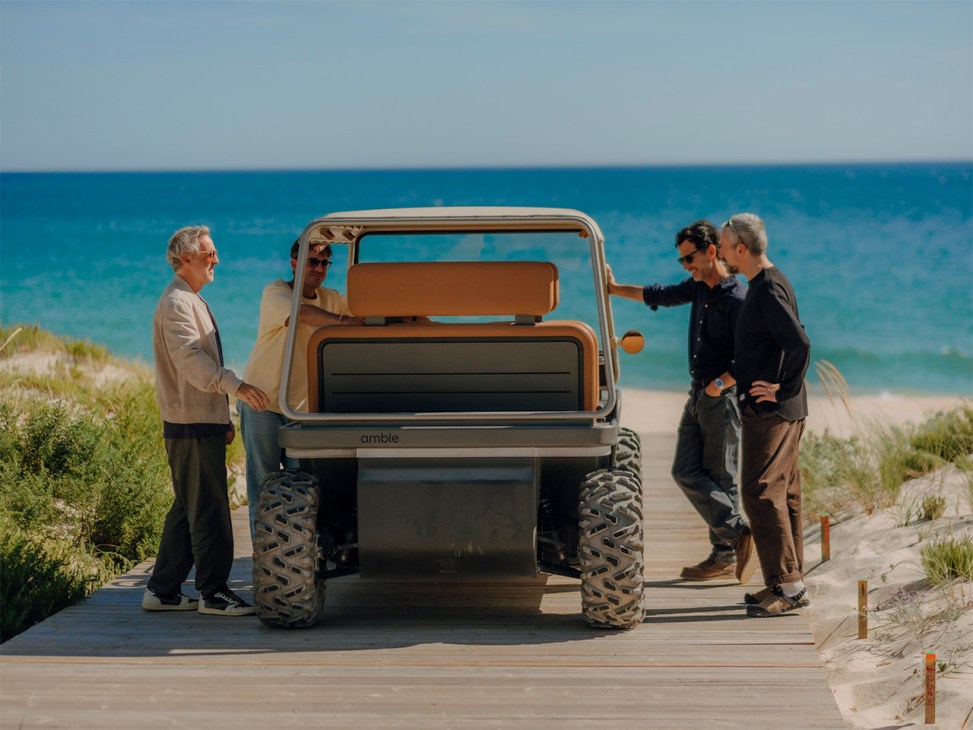
The rollout begins with premium hospitality, where there is a clear demand and Uva has strong connections, before expanding to what the company calls “amble zones”, which include classic holiday destinations such as the Greek islands, southern France, Southeast Asia, the Caribbean and Spain but also residential complexes in Florida and the US West Coast. “What you’re seeing in many of these places is that there’s sort of a trickle-down effect where it starts as a summer-holiday place, the shoulder season grows and it becomes residential, then year-round,” says Uva.
Amble reflects the recent blossoming of Lisbon. The team is currently working on establishing a way to assemble the vehicles in Portugal using as many local components and materials as possible (it even has a cork steering wheel, and materials don’t get much more Portuguese than that), but there is one other way in which it epitomises the nation.
“This is a new phase for Portugal,” says Uva. “We used to make things for other people, for other brands; now we are adding value to what we do with our own products and brands. That’s what we are trying to do with Amble – to create a brand that has authenticity, a sense of community and place, but that will appeal to the world.”
In good company
Amble currently sits in the so-called “heavy-quad” L7E category for road use so drivers require a licence (a licence-free L6E version is being considered). Its modular construction allows for accessorising and adaptation. A pick-up variant is likely – useful for resort staff. The next model, the Amble Two, will be fully enclosed and more suitable for urban use in northern climates.
Amble’s backers are as illustrious as its designers. They include Peter Rive, co-founder of Tesla’s SolarCity, Pete Phornprapha of the Siam Motors Group, Joe Zadeh, a former VP of Airbnb and Ethereum’s Gavin Wood.
driveamble.com
Amble One
Price: €20,000 (plus tax)
Top speed: 65km/h
Range: 100km+
Weight: Less than 450kg
Battery: 11kWh, chargeable via domestic socket
On sale: Now, for delivery in 2028
It takes a village: Three new co-living developments that are bringing generations together
Coop MIL
Montréal
The oldest residents in Montréal’s Coop mil are a globe-trotting bunch. Monocle is lucky to catch 80-year-old Monique Rouxel, who spent half of the harsh Québec winter in Vietnam and Thailand, days before she embarks on a cycling tour of the Laurentian region. The Brittany-born former restaurateur retired after a career serving crêpes to hungry Montréalers (plus a few stints cooking aboard yachts in the Caribbean) that enabled her to transform a one-room village school into her dream retirement home. When grandchildren entered the equation, though, she found it hard to visit them as frequently as she wanted, as the journey to Montréal took three-and-a-half hours. Rouxel decided to move to the big city but much of the property she found there was prohibitively expensive. While she could afford extra-care housing, conversations with visiting friends who lived in such digs confirmed that she had no desire for the rigid pensioner’s life.
“Lunchtime is 12.00 sharp every day because that’s the business model,” she says. “You can count the walkers. The big, heated pool is a plus but I wanted something more dynamic.” Rouxel found what she was looking for in 2016 when friends recruited her to join a planned residential co-operative. The idea appealed to the self-described hippie who left France 50 years ago to join a commune in Québec. “Self-management creates stronger ties than just being neighbours with people who you only cross paths with in the lift,” she says.
Québec is the most co-op friendly province in Canada and Greater Montréal is home to more than 15,000 housing units of this kind. Building one from scratch, however, is no mean feat. Rouxel says that she spent about 500 hours in meetings and workshops to realise the 91-unit project, which opened two years ago in the Outremont area. Now, instead of gripping a walker, Rouxel mounts her bicycle for the 10-minute ride to her son’s house.


Rouxel’s 78-year-old neighbour, Denise Poirier, often walks to the Université de Montréal campus nextdoor, where she is auditing courses on neuroscience. For the retired Radio Canada presenter, now serving on the co-op’s communications committee, co-op life provided an affordable way to return to Montréal after several years of rural life. She revels in the intentionally intergenerational demographics. “Only living among older people isn’t stimulating,” she says. “Being around parents with kids yelling in the courtyard, a mother rocking her baby in the community room – that’s truly living.”
While Rouxel says that she burnt out after five years as co-op president, she is invigorated by phase two: a wing for those with limited mobility. The spirit is co-operative but her involvement is understandably selfish – when built, it’ll allow her to spend even more years happily cooped up in the co-op.
Date opened: 2024
Architects: Pivot – Coopérative d’Architecture
Residents: 150 to 200
Cost of apartment: CA$849 to CA$1,569 (€526-€972) a month with required committee service
Key amenities: Courtyard, community room, bike garage and storage lockers
The Cambridge
Sydney
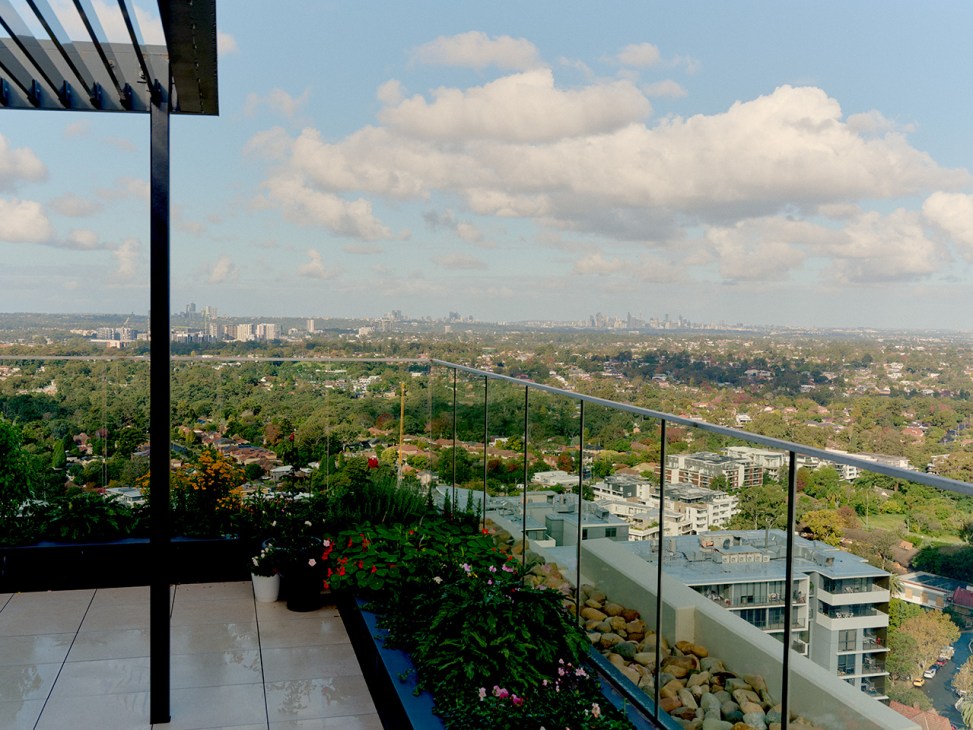


Date opened: November 2025
Architects: Architectus
Number of independent retirement living units: 158
Residential aged-care beds: 132
Price of apartment: Starting at AU$769,000 (€473,000) for a one-bedroom apartment
Key amenities: Pool and fitness centre, hair salon and nail bar, clubhouse and bar, cinema and games room, library and crafts studio, workshop and garden and alfresco lounges
Millennia Village
Seremban, Malaysia
Malaysia is undergoing a rapid demographic shift: by 2048, it is estimated that 14 per cent of its population will be aged 65 or older (up from 8 per cent today). And yet, unlike in many similarly ageing nations, retirement and nursing homes still carry a stigma in Southeast Asian cultures, where it’s traditional for the elderly to live with their younger relatives. While there’s growing demand for purpose-built senior housing and assisted-living residences, these too often fall short on delivering a feeling of community and connection.
“Designing for older people isn’t only about safety features – it’s also about joy,” says Diane Chia, the executive director of Millennia Village, which opened in Seremban, a city about 60km south of Kuala Lumpur, in 2023. The 13-hectare retirement village and lifestyle resort sets itself apart from conventional care homes by catering to visitors as well as residents.
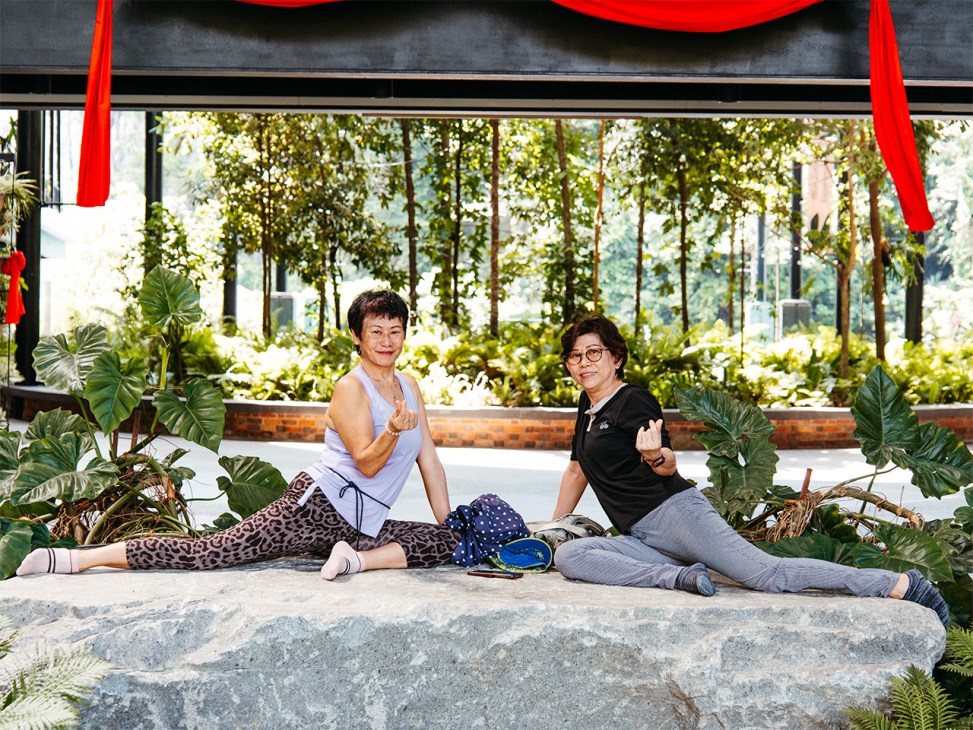
Established by three members of the Chia family and siblings Peter and Susan Ho, the development was conceived as Malaysia’s first active senior-living resort. “The words ‘retirement home’ carry so much weight,” Chia tells Monocle. “They conjure images of people waiting, not living.” Activities (which are open to both residents and visitors) include jungle hikes, yoga, art classes, aqua aerobics and gardening, while the evenings benefit from a focus on socialising, with competitive mahjong sessions taking place in the lounge room and late-night karaoke getting people on their feet. Though people aged between 50 and 75 remain the property’s core demographic, short-term stays, corporate retreats and private events bring in younger visitors, as well as those from further afield.
“When you have different generations living and engaging together, the mood stays vibrant,” says Chia. “Our senior residents are constantly energised by younger guests and family visitors, and there’s something beautiful about that exchange going both ways.”


The village is immersed within the surrounding jungle. “When I first walked through this old granite quarry land, there was this raw, dramatic beauty and I thought that it could be extraordinary,” says chief architect Peter Ho, who used circular clan dwellings of the Hakka Tulou in China’s Fujian as a reference point for the design of the open-air central courtyard that functions as a social anchor. “Fresh air, greenery and birdsong aren’t luxuries,” he says. “They’re fundamental to human wellbeing, especially as we age. When you breathe clean air and move through natural spaces every day, it changes you.”
The village’s 344 guest rooms come in the form of loft-style serviced apartments and multi-room family suites. Materials are selected for both tactility and safety, from slip-resistant flooring to functional but warm lighting. For those who require regular help, plans for a 75-unit assisted-living residence are in the works, along with a plan to build an on-site medical clinic and traditional medicine centre in collaboration with a local hospital.
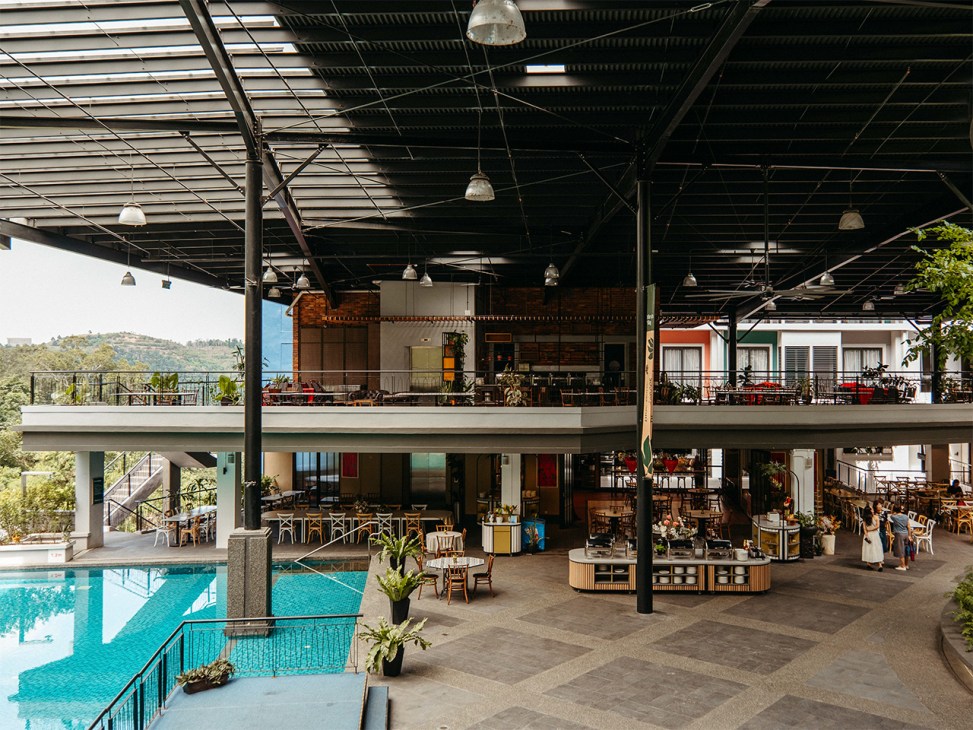
The result is a positive approach to senior living that’s not only attracting locals but also international guests who are looking for a holiday in a facility geared towards people of their age – or just a sunny post-retirement relocation. “The developers and management have decades of experience in building and operating hotels and it shows,” says German retiree Juergen, who is visiting with his wife, Marita. “We’re here for the third time now, each time a little longer than before, and we feel very comfortable. If we ever give up our house in Germany and move into a residence, it will be here.”
millenniavillage.com
Date opened: December 2023
Architects: Peter Ho Architect
Number of independent retirement living units: 344
Price of apartment: Starting from RM6,000 (€1,280) per month for a studio apartment
Key amenities: Wellness services from health consultations to physiotherapy, saltwater infinity pool, all-day dining, 1.2-hectare garden farm, forest trail and rooftop bar
Greetings from the past: A look back at postcards serving as snapshots of history
The postcard, addressed to a department of British Steel in Llanwern, South Wales, is franked Torremolinos, Málaga, 25 November 1975. The picture side features four brightly coloured images of the Costa del Sol: a row of whitewashed houses; a sweeping bay under an azure sky; a crowded beach; and on the sand, beside a faded bullfighting poster, a donkey in a straw hat. The reverse reveals more of the story: “Having a lovely time. The weather is much better than expected. We’re having a lot of fun. There’s plenty of food, drink & entertainment. Unfortunately, Franco has died today & there’s no more entertainment until Sunday evening (no music even). Still, we’re not going to let that spoil it.”
Sue’s trip to the Costa del Sol intersected with the end of Spain’s autocratic rule that had lasted for almost four decades and the postcard in my hand is a tiny witness to that moment. In the years from 1959, Francisco Franco, Spain’s leader, opened up the economy and increased foreign trade, overseeing what has been referred to as the “Spanish miracle”. One aspect of rapid economic growth was the breakneck development of tourist resorts. Beginning with Benidorm, fishing villages were transformed into tourism factories, as high-rise developments mushroomed along the Mediterranean coast, bringing employment, wealth and squadrons of British holidaymakers in search of the sun. In 1975, the year Franco’s death silenced the music on Sue’s holiday, more than 30 million foreign visitors arrived in Spain.
From Alicante, Spain, to Carshalton, Surrey (September 1973)
From Cannes, France, to Lytham, Lancashire (March 1976)
To document these holidays, the production of full-colour Spanish tourist postcards underwent a similar surge, selling in vast numbers. At the time, to take your own photographs was an analogue hobby that required planning and commitment: as a collector, I have seen countless messages on postcards referring to the onerous business of sending rolls of film to be developed, or counting an exact number of photos taken. In a world yet to be flooded with digital images, the picture postcard was an ideal method of sending home a tangible token of a week in the sun. And if the picture on the card was idealised and generic (or showed the wrong hotel), the message on the other side could still be unique and personal. For most European holidaymakers, foreign travel in the 1950s and 1960s was new and exciting. There’s an argument that modern tourism was invented on the Costa Blanca: the Spanish taught themselves how to host masses of foreign visitors, who in turn learnt how to be on holiday.
As the global tourism industry has grown, so too has our visual inventory: every beach, every beauty spot, every meal is now documented. But those evanescent images rest on devices in pockets and servers on different continents; after a change in terms and conditions or new ownership of the platform, who knows how long they might last. When I’m sifting through a box of old postcards from the 1960s and 1970s, flipping between image and message, looking for anything to catch the eye, I’m aware that these small cardboard oblongs have weight both physically and metaphorically. They were built to survive and they still work: the pictures are clear, the messages fresh and immediate. They weren’t addressed to me but speak to me nonetheless. They comprise a vast, touching, fragmented archive of first-hand testimony of what it felt like to travel to the Costas and further afield in that first flush of affordable travel for the masses.
From Monterosso, Italy, to Preston, Lancashire (August 1966)
From Rosas, Spain, to East Dulwich, London (date unknown)
Hotels and tour operators were well aware that these cards represented important viral marketing. Postcards from southern Europe acted, certainly in the earlier part of the era, as personalised testimonials to the advantages of a holiday in the sun. With the brand-new hotel and pool and loungers and happy, tanned customers on the front of the card, the back was left for Tripadvisor-style endorsements. One reads: “Oranges are fresh and sweet. Flowers are grown in profusion here. Hotel has lovely sweet peas in bloom.” Some hotels would offer to send the cards for you, helpfully adding a rubber-stamped image of the hotel so that, even if the photograph was of a beach or donkey or flamenco dancer, the recipient would nevertheless be under no illusion as to which hotel the praise should be attached to.
In those early days, air travel itself was often a new experience, and the humblest package holidaymaker could feel like they were now part of the jet set. A postcard from Formentor, Mallorca, shows a row of women in bikinis sitting on a low wall by the harbour. Addressed to Liverpool, it announces: “You must visit this place, not very expensive, Grace Kelly staying in the next room to us, so we may stay longer.” And, for some, the glamour of the exotic is more explicitly eroticised: who knows what this faraway place in Spain, France, Italy or Greece might offer? Cheeky comments are commonplace, imagined objects of (fleeting) desire include waiters, local boys, local girls, other holidaymakers male or female, anyone in a bikini and, later, anyone out of a bikini.
From Callela de la Costa, Spain, to North Wembley, Middlesex (date unknown)
From El Arenal, Mallorca, to Hove, Sussex (September 1970)
From Malta to Stoke Bishop, Bristol (November 1956)
From Algarve, Portugal, to Portsmouth, Hampshire (April 1972)
From San Sebastián, Spain to Burton-on-Trent, Staffordshire (September 1957)
From Sorrento, Italy, to Widnes, Lancashire (July 1968)
By the 1960s, Italy and France were opening up too. Yes, Cannes, Nice and Monte Carlo had long been the playground of the moneyed, but now the Côte d’Azur was encouraging visitors. Postcards suggest that French tourism was more diverse, with smaller hotels, rentals and camping. Visitors to France could write home on exquisitely composed, beautifully produced photographic cards by publishers such as Yvon, Artaud Frères or Iris. “Isn’t it gorgeous living on fresh melon grapes, wine and cheese?” one from my collection muses.
Iris cards, printed using the mysterious Mexichrome process, were aware of their superior quality, exhorting: “Collectionnez les Cartes Postales!” Collect postcards! And the recipients did. Cards from Italy show lower-rise hotels, crammed in front of or stacked on top of cliffs; they seem to favour high wide-angle shots of beaches, sunbathers little more than dots – a glimpse of modern mass beach tourism but on a slightly less industrial scale. Looking through thousands of these cards, changes in tone emerge: the early wonder of the 1960s sours slightly by the late 1970s. The thrill of “fresh melon grapes wine and cheese” increasingly gives way to cheap alcohol and plenty of it. By August 1977, Brian’s holiday in Palma Nova, Mallorca, sounds plain brutal. “Ossie & I stoned out of our minds on Sunday night, he fell asleep on the pavement. Hotel is okay but the food is the worst I’ve ever had. Head waiter is a bit of a nark so it’s the swimming pool for him.” Yikes.
But innocence is always glimpsed in the rear-view mirror. As early as September 1958, a correspondent sent a black-and-white postcard, a panorama of Benidorm, to South Kensington, complaining that: “The place is now super developed, shops with plate glass doors & self-service groceries, milk bars, Americans & still patches of oil on the beach. Hordes of people, return fare from London & 14 days here for £44!!” The traditional visitor was losing his exclusive hold on the place: the masses were coming and, with them, changes.
A holiday is an attempt to step outside the calendar but, as Sue discovered in Torremolinos in 1975 – and as visitors to the Gulf found in February 2026 – even from your sunlounger the movements of the world are inescapable: political and international events can all too easily upset your idyll. Now, tourism itself is changing: leisure travel is a global industry and its impact is under scrutiny. In 2024, thousands of locals protested in the Canary Islands against overtourism. In Barcelona, protesters called for an end to the overuse by visitors of resources, public spaces and public services.
Time and the turning of the world will chase us all from our poolside reveries eventually. These holiday moments still urge us to snap countless pictures and squirrel them away. The intention might be the same – to capture and share a moment – but often our digital equivalents never see the light of day. More than 50 years have passed since these many millions of postcards were written, sent and received. Yet, by freezing to perfect stillness those beach scenes in Magaluf, flamenco poses, or donkeys in Lloret de Mar, by capturing in ink the fleeting thoughts and feelings of a particular sunburnt holidaymaker at a specific moment, these resilient little cards have, in a small way, held back the deluge and beaten time itself.

From Malgrat de Mar, Spain, to Edinburgh, Scotland (August 1968)
From Torremolinos, Spain, to Kenilworth, Warwickshire (September 1974)
From El Arenal, Mallorca, Spain to Wakefield, Yorkshire (1968)
From Benidorm, Spain, to Dundee, Scotland (September 1971)
From Le Lavandou, France, to Uxbridge, Middlesex (July 1977)
From Benidorm, Spain, to Tiverton, Devon (May 1978)
From Nice, France, to London (September 1978)
From Benidorm, Spain, to Bourne End, Buckinghamshire (July 1973)

From Ibiza, Spain, to the Savoy Hotel Kitchen, London (August 1978)
From Hostal Mayol, Mallorca, Spain, to Fife, Scotland (September 1968)
From Torremolinos, Spain, to Liverpool (February 1978)
From Lloret de Mar, Spain, to Dundee, Scotland (August 1968)
From Cannes, France, to Newtongrange, Midlothian, Scotland (June 1953)
From Cannes, France, to Liverpool (June 1972)
From Torremolinos, Spain, to Accrington, Lancashire (July 1973)
From Mondello, Sicily, to Jersey, Channel Islands (December 1971)