Issues
Interview: Vittorio Angelone on what makes something funny, and permission to laugh
After moving to London from Belfast to train as a classical musician, Vittorio Angelone made the less-than-obvious switch to stand-up. The Italian-Irish comedian has since performed all over Europe and enjoyed sell-out runs at festivals including the Edinburgh Fringe. He’s currently on tour with a new show that pushes boundaries – and buttons. “I sit in a funny place wherein old people call me a woke snowflake and on Tiktok young people call me right-wing,” he tells Monocle.
Angelone is at the coalface of comedy that pushes boundaries; it’s a challenging position to be in at the moment, as puritans are policing what we say and even the most mundane celebrity can find themselves publicly humiliated for a mistimed joke. Here, he explains his philosophy behind making comments on society through comedy. If you don’t get it, maybe that’s your problem.

Have we got too precious about what we can and can’t laugh about?
Some think that this is the case but I don’t agree. It’s good that we’re a bit precious. Comedy doesn’t work unless there’s a sense of preciousness because all jokes are a simple formula: tension and release. For something to be funny, you need people to think, “Are we comfortable talking about this?” As with any other art form, there needs to be a little discomfort for the pay-off to be worth it. If nobody was ever tense or concerned about any topic, nothing would be funny.
But a bigger concern, more than individuals being precious or getting upset, is that people might be laughing at a joke for the wrong reason. An audience, for instance, might be laughing because they agree with the thing that you’re trying to poke fun at. When you’re making fun of bigoted ideas or racist ideas by highlighting them in a certain way, some people might laugh thinking, “Finally, somebody said it.” That means that you have to be strict with yourself and know that not all laughs are the ones that you’re going for.
Does a comedian have a responsibility to make sure that a joke is received in the right way?
This is one of the big frustrations that I have with some big-name Netflix comedians. These comics – and people do it beyond comedy too – say trigger words that make certain audience members think, “Yeah, they’re poking the wasps’ nest.” But they’re not actually saying anything transgressive. They’re just saying the words “immigrant”, “black” or “gay” but none of it means anything because they’re pandering to this false idea of transgression. It frustrates me when comedians say, “It’s just a joke,” or “I’m not making that joke,” when they use these words. You know what sort of laugh you’re getting.
Take Michael McIntyre. There’s a bit in one of his Netflix stand-up comedy specials where he talks about the Northern Irish accent, which I don’t find funny. I grew up in Belfast. He impersonates a Northern Irish person, putting on an accent and going cross-eyed, painting all Northern Irish people as stupid.
Context matters. If someone like Anthony Jeselnik, a US comic who has branded himself as offensive, made that same joke, it would be funny. That’s because the whole point of Jeselnik’s jokes, the reason why people go to his shows, is that he says things that are awful, wrong, offensive and bad. In contrast, McIntyre’s shtick is his presentation of things in a way that suggests that what he’s joking about is something that we all agree on – and that’s why his Northern Irish joke landed so horribly with me. He wasn’t getting a laugh because he was saying something that’s funny for its offensiveness. Rather, he’s getting it because lots of people in the audience think that Northern Irish people are stupid and an accurate representation of them is to be cross-eyed and make noises.
So are there topics that we can’t joke about?
I don’t think there’s anything that I’m allowed to talk about that other people aren’t. That’s not a very interesting way to make art. A broader cultural conversation, with more voices, is always a better one. I’ve seen comedians make jokes about Northern Irish people and be very funny. I’ve seen comedians make jokes about Northern Irish people and be very offensive. It depends on what angle you’re coming from – and this applies to making jokes more broadly, not just stand-up. You need to understand where your perspective comes from and how that comes across to people.
Often, when I make jokes about contentious issues or about groups of people, I’m the butt of the joke and it’s my misunderstanding, my getting it wrong, that is the point of humour. My job is to joke about topics in a way that isn’t mean, nasty or bullying. Whether you’re a comedian or not, a good rule is to ask yourself: would you tell the joke if the people it was about were in the room? If that stops you from making the joke, you shouldn’t go ahead.
What’s the best way to deal with a joke not landing?
It’s important to remember that you can’t determine whether a joke is funny based on one person. I have jokes about broad lgbtq issues and I have had hundreds, if not thousands, of queer audience members laugh hard at them. Still, I’ve had friends in the queer community say that they don’t like the jokes. That’s to be expected of any group of people. No social or cultural group is a monolith. Just because one queer person dislikes my joke, it doesn’t mean that they speak on behalf of the whole community, in the same way that if one person from that community does like it, you can’t assume that making the joke is OK – because they might both be idiots.
Why tell jokes that might push a crowd’s buttons?
People are at their funniest when an audience is taken to a place in their mind where they might be uncomfortable or nervous. It’s exciting when they think, “I’m not sure how I feel about this topic,” before having a big laugh about it. That’s what I’m trying to do. I try to take audiences to places where they might feel discomfort before making them feel good at the end, so that they can maybe think about those things with less trepidation in the future. It means that, hopefully, they’re more comfortable the next time they think about race or gender or sexuality or any number of things where they were once uncomfortable. Through comedy, I can show them that it doesn’t have to be scary and that you can get out the other side without getting it all wrong. But it’s a very hard thing to do and, as long as you’re not deliberately trying to upset someone, you need to have permission to get it wrong.
What role does an audience play when it comes to finding what’s funny?
The audience needs to have permission to get it wrong too. What I love about stand-up comedy is that it’s one of the only art forms where the audience takes the same risk as the performer. For example, if I say a joke that might be deemed controversial, maybe about something that most people wouldn’t admit to thinking or wouldn’t admit to experiencing or wouldn’t admit to being concerned about, then I am opening myself up to embarrassment. If nobody laughs, then I feel like an idiot and I’m ostracised in the room but if everybody laughs, then my making that joke has made the whole room go, “Oh, thank God, someone else feels like that. I was worried that it was just me.”
However, if only one person in the audience laughs, which is the risk that every audience member is taking when they laugh, there are two embarrassed people in the room, me and that person. It’s risky because by laughing you’re saying, “Yes, I agree with what you said,” which means that the person laughing is taking the same risk as the person telling the joke – and that’s what makes telling a joke so exciting and why we need things to be precious about. Without this tension and release, none of it would be very fun.
The Agenda: Design
Retail design: Mexico City
Seeing the light
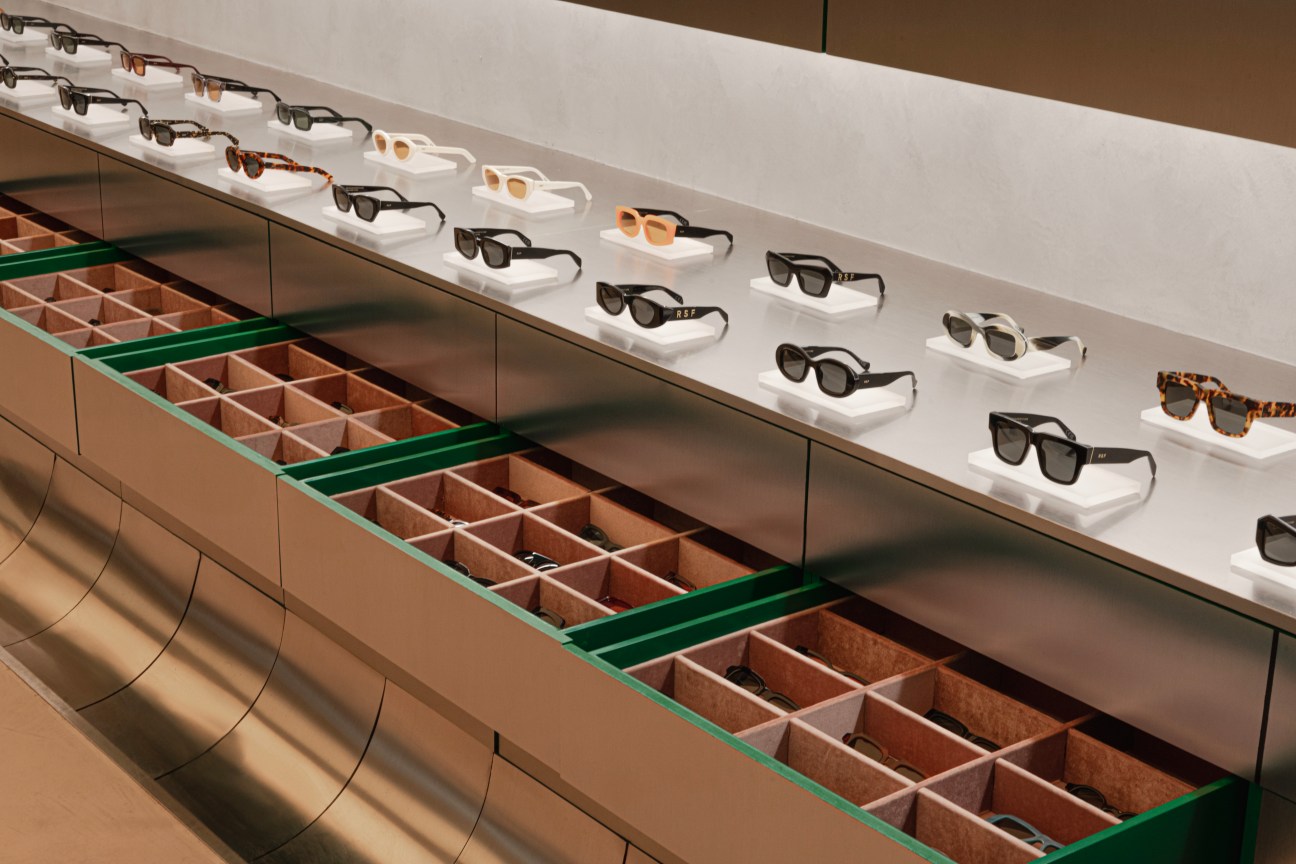
Italian optical retailer Retrosuperfuture is bringing its collection of elegant eyewear to Latin America with the opening of its first flagship shop in Mexico City. For this new retail space in the leafy Condesa neighbourhood, Dutch design studio Cloud has created a stainless steel-clad space. “We took inspiration from the architecture of a bank vault,” says Cloud’s Paul Cournet. “The metal-cladded walls are organised for all types of storage and display, with the centre of the space left as a void.”
It’s a sleek way for the brand’s customers to peruse its collection with a full-length mirror offering buyers a chance to reflect on potential purchases while also bouncing light through the space. The atmosphere within is enhanced by a giant lightbox on the ceiling, which reflects the ambience of a sunset to create a warming retail environment. It’s a combination of features that not only makes a visit here an enjoyable shopping experience but provides Retrosuperfuture with an inviting space in which to build a community. “The central void can be turned into a dance floor, a bar or a stage for performances,” says Cournet. “It’s a new place to gather for the city and for its social experiments, all under the ethereal ceiling.”

On Design
Nic Monisse on: The need to embellish
Do we need urban planners? This question was recently posed to me by a Geneva-based architect who had been tapped to help master-plan the last pocket of undeveloped land within the city’s limits. Explaining why he was involved in the project, he said that the authorities were looking to architects, rather than planners, to mastermind the scheme because the latter typically only operate on one scale. City hall felt that planners too often thought about the big picture, seeing cities as a series of “zones” and “movement corridors”, detached from the people inhabiting and using them.
I tend to agree. A problem that I frequently encountered when I was working as a landscape architect was planners who were more focused on numbers showing how people flowed and moved across a city, rather than what the experience was like on the street. The planning departments that I worked with felt that it was enough to have a diagram that highlighted where a bike lane was and how many people were using it, rather than investigating whether people might want to ride along such a path – or if they were just doing so out of necessity. Interrogating this quality is essential for delivering friendly, liveable cities.
That’s not to say that architects aren’t guilty of focusing solely on their plot (there are plenty who create insular buildings that don’t speak to the surrounding context) but rather that planning, while essential to city making, often misses a trick when those who practice it don’t think holistically and at a range of scales.
Herein lies a solution – doing away with the “specialist”. A good planner, it seems, shouldn’t only be a single-minded, specialised one but a creative with an understanding of architecture, furniture design and sociology. In short, to deliver well-rounded spaces, we need fewer Robert Moses types (the big-picture planner responsible for bulldozing large swaths of Manhattan in the 1960s in the name of efficiency) and more total designers, such as mid-century master Ernesto Rogers, who once declared that he wanted to design everything from “a spoon to a city”.
Taking such an approach should create cities and neighbourhoods that work on multiple levels, with consideration given to everything from the placement of furniture to the positioning of buildings. Geneva – should the architects fully execute their vision – might soon be the perfect example.
Urbanism: Slovakia
New tricks
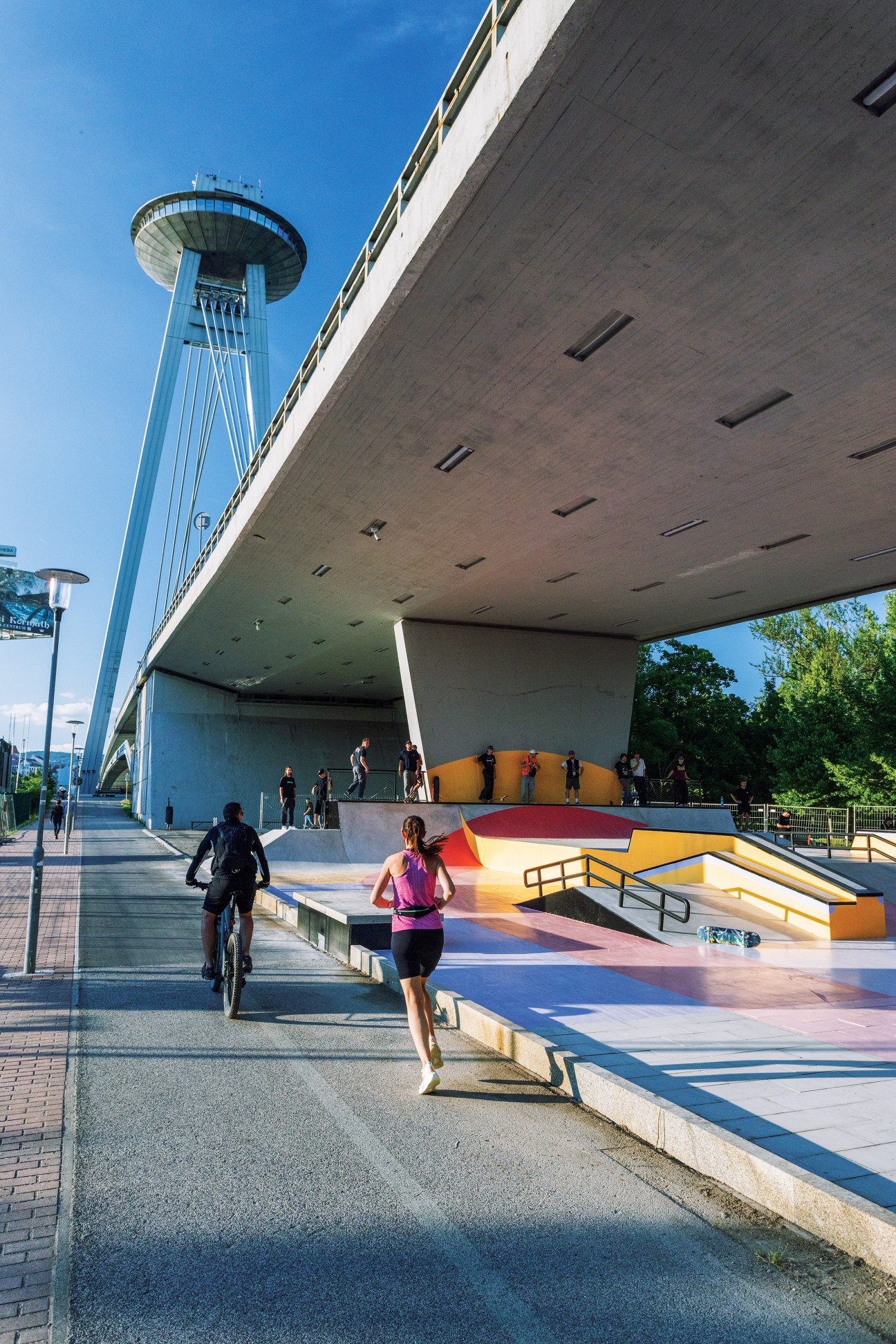
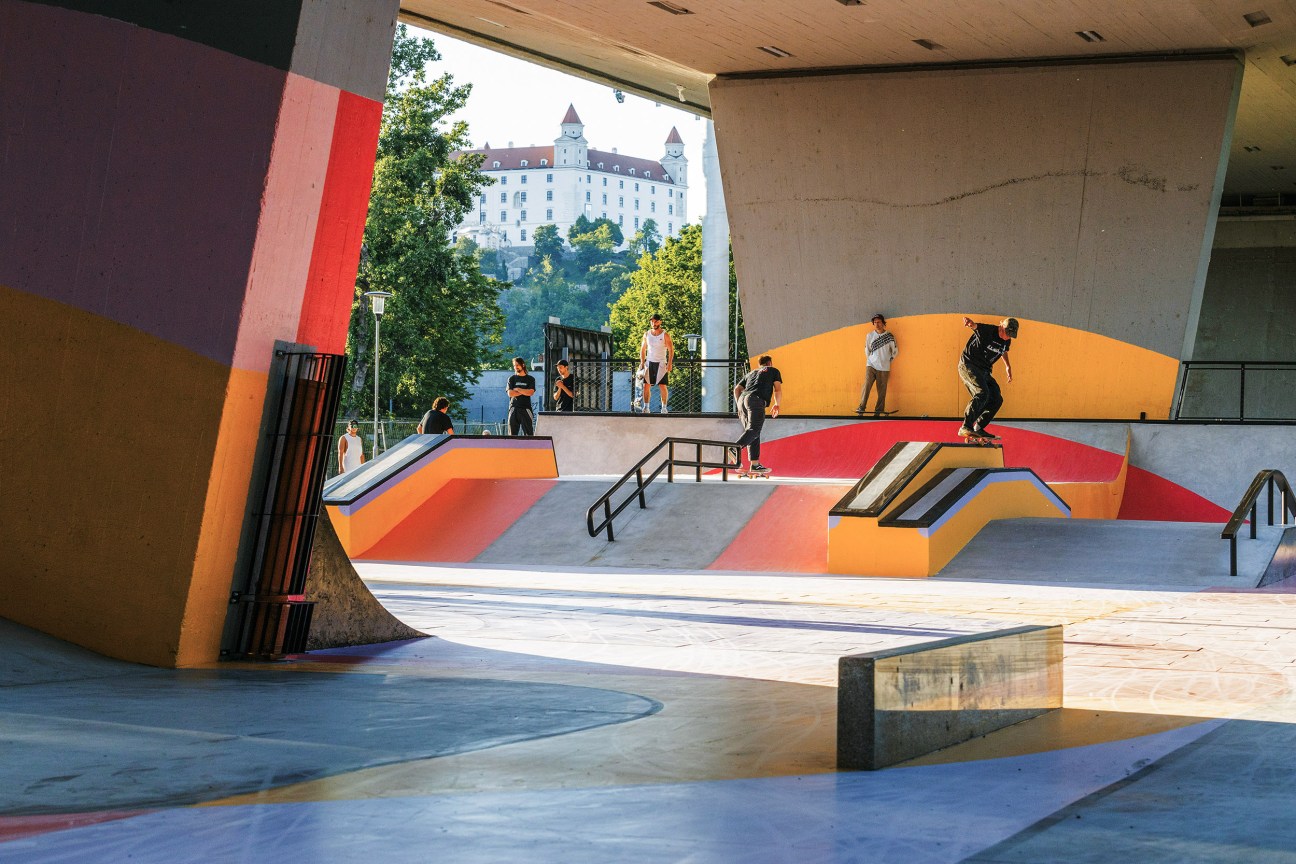
When architect Matúš Vallo was elected as mayor of Bratislava in 2018, he had a “blueprint” for the city that outlined which landmarks needed a revamp. On the list was the Most snp Bridge – or rather, its cavernous underbelly. A plan was hatched to turn the area crossing the Danube into an Olympic-quality skatepark and recreation area, with Czechia-based u/u Studio tasked with the pep up.
“Vallo told us that the city was missing spots for outdoor exercise,” says Martin Hrouda, an architect who runs u/u Studio alongside Jirí Kotal. “The area under the bridge was a brownfield site but it had so many advantages.” However, the protected status of the bridge posed problems to the flow that a skatepark requires. “It was difficult but we incorporated the bridge’s pillars in our design,” says Kotal.
As well as attracting skaters, the development has brightened up what was once a grey zone of neglect. It also underlines the fact that Vallo, now into his second tenure, might just be onto something with his blueprint.
Urbanism: UK
Comfort zone

The busy junction at the heart of London’s Elephant & Castle neighbourhood is the epitome of a car-centric concrete mess. But adjacent to this intersection, the newly revitalised Elephant Park, completed to the design of international firm Gillespies, is providing a much-needed moment of calm.
When Gillespies started work on the project 10 years ago, the green space was surrounded by building sites, says Giacomo Guzzon, the practice’s head of planting. “At night, a gate would be locked to stop people from entering.” Now, when monocle visits on a warm autumn evening, there’s no sign of a gate, with the designers’ ambition to add permeability to the area’s urban fabric fulfilled. “We wanted to allow people to easily walk across the park, to access the shops and restaurants at the bottoms of the tower blocks that front onto it.”
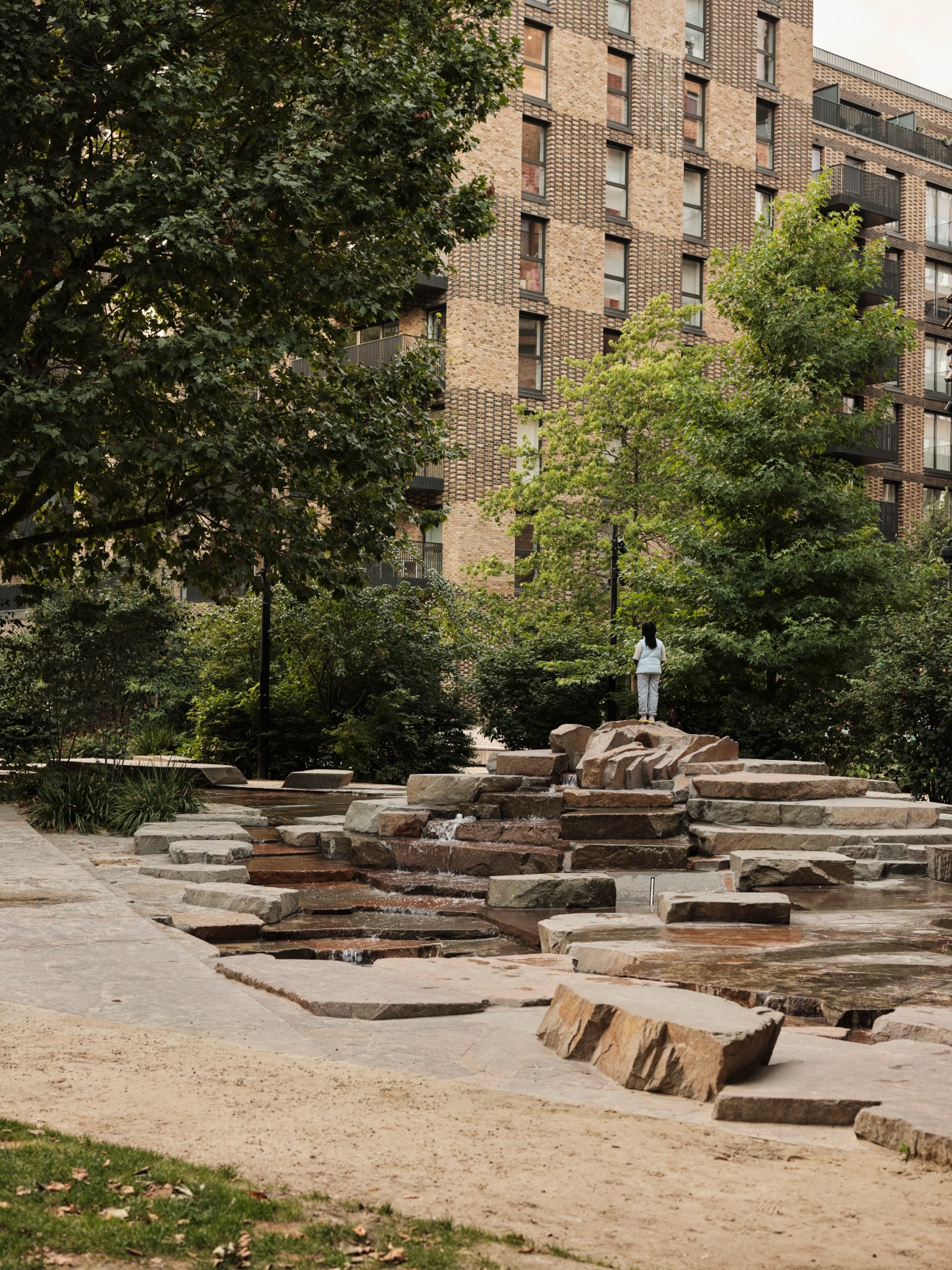
Highlights of the green space include verdant planting that abuts the adjacent cafés and a playground and water-play area that’s a hit with local children. The effect, despite the popularity of both, is instantly calming. “In the evenings, when the kids are gone, it’s soothing to hear the sounds of the water,” says Guzzon. Office workers can often be spotted dipping their bare feet into the water.
This flow of people of all ages and walks of life is a big part of the site’s success, Guzzon explains that this is thanks to the abundance of opportunities for interaction, whether at the café or on the playground. “It’s key to creating lively cities.”
Design: UK
Just the ticket

Too often, when a piece of furniture is made from recycled materials, it can lack the polish associated with virgin finishes. UK designer John Tree’s Billet Chair is a pioneering chair made from 100 per cent recycled post-consumer aluminium. Using material provided by Oslo-based Norsk Hydro, the chair is held together by a clip hidden on the back; its extruded-aluminium profiles are devoid of fixings or adhesives. Its sensitive use of materials and the simplicity of its construction ensure that the chair can be fully recycled again at the end of its life.
johntree.net
Unique aircraft
In the September print edition of monocle magazine, we published an interview with Warja Borges about her brand Unique Aircraft, which, due to a regrettable editorial oversight, contained misquotations of Ms Borges and incorrect information – namely the brand name and relevant project costs. This is the corrected interview.
Warja Borges holds an engineer’s degree in interior architecture. She worked at German studio Reiner Heim Aircraft Interior Design. In 2010 she founded Unique Aircraft. Working with major companies, Borges has designed all kinds of aircraft from smaller business jets to large Boeing/Airbus-type planes for private clients, governments and heads of state.
What is the typical budget range for the aircraft you work on?
Working on a business jet, clients’ requests are mostly refurbishments. Costs range from €500,000 to €2m, including the outfitting. My core business is one-of-a-kind interiors for large aircraft, planning the interior configuration from scratch. The range is huge, depending on the complexity of the interior, technical requirements and materials used; starting at about €30m for narrow body, up to €200m for a wide-body aircraft. The main drivers for the budget are the technology and manpower.
What are the usual (and unusual) requests from clients?
A usual request for a Boeing or Airbus-type aircraft would be a main lounge area with a combination of seating and dining, ensuite master bedroom, galley and crew area, guest seating or bedroom and an additional lavatory. Sometimes we do get the request to implement some beloved items or features.
What is most important when designing an aircraft’s interior?
The basic is to know the certification regulations and limitations and engineering constraints. The focus is on the passengers, their comfort and needs. With this in mind, my approach is holistic, stimulating senses to create an overall and unique flying experience.
unique-aircraft.com
The Agenda: Affairs
The Foreign Desk
Andrew Mueller on: Bibi’s lost opportunity
On 18 October last year, 11 days after Hamas killed more than 1,200 people in Israel, Joe Biden spoke in Tel Aviv and urged Israel to learn from US mistakes after 11 September. “Shock, pain, rage,” he said. “An all-consuming rage. I understand and many Americans understand. But I caution this: while you feel that rage, don’t be consumed by it. After 9/11, we were enraged in the United States. And while we sought justice and got justice, we also made mistakes.”
The first anniversary of 7 October will pass while this issue of monocle is on newsstands. In that time, Israel – specifically Benjamin Netanyahu – has paid little heed to Biden’s counsel. But what if he had? In the immediate aftermath of the massacres, Israel had the world’s sympathy. It also had an opportunity. A full-scale assault on Gaza was perhaps the likeliest option but it wasn’t the only one. Israel would have been entitled to reinforce its border with Gaza. It might reasonably have declared it would hunt down those responsible and deliver them to one kind of judgement or another. And there Israel could have paused.
The media would have had nothing to report but the funerals of Israel’s dead, the sorrow of their families and the plight of the hostages taken by Hamas. It would have bought time for the hostages and placed upon Hamas all the responsibility for their wellbeing. The group might have indulged in the kind of gloating that would have underscored their malevolence. Israel could have asked Hamas’s allies which side they wanted to be seen to be on. The answer might well have strengthened Israel’s recent diplomatic meshing with Arab nations, and further isolated Hamas as insane and intransigent.
Netanyahu has repeatedly floated the line that Israel is fighting on behalf of the democratic ideal against a modern fascism – and on four fronts, if one also counts Hezbollah in Lebanon, the Houthis of Yemen and their patron Iran. He has also complained that Israel, when it defends itself, is held to different standards than other countries. But democracies should be held to different standards, not least by themselves.
Andrew Mueller hosts ‘The Foreign Desk’ on Monocle Radio.
Diplomatic spat
The party’s over
Who vs who:
Brazil vs Nicaragua
What it’s about:
The failure of Brazil’s ambassador to Nicaragua to attend a party. Brasília’s man in Managua, Breno de Souza da Costa, had been invited to a wingding to celebrate the 45th anniversary of Nicaragua’s Sandinista revolution, which toppled ghastly dictator Anastasio Somoza and brought to power Daniel Ortega, currently in his second lengthy stint as Nicaragua’s president and not improving with age. Ambassador da Costa was instructed not to attend by Brazil’s president, Luiz Inácio Lula da Silva (pictured). Ortega then instructed da Costa to pack his bags and, by way of return, Brazil has slung out Nicaragua’s ambassador, Fulvia Patricia Castro Matu.

What it’s really about:
Lula and Ortega are almost exact contemporaries, born two weeks apart in 1945, and would once have been regarded as natural allies: rumbustious leftists who had both taken bold stands against miserable military juntas. Lula still gets on pretty well with other comrades of their generation, especially former Bolivian president Evo Morales and outgoing Mexican president Andrés Manuel López Obrador. But while Lula has – mostly – grown more pragmatic with age, Ortega has made the tediously familiar journey from red-bereted rebel to authoritarian crank. Lula has been especially vexed by Ortega’s harassment of Catholic clergy.
Likely resolution:
It might blow over. There are suggestions that Lula took a free swing at Ortega to deflect criticism that he’d been soft on Venezuelan president Nicolas Maduro – though Lula didn’t acknowledge Maduro’s claims to have won Venezuela’s recent election, he didn’t go as far as some Latin American nations and formally recognise the country’s opposition. Ridiculous and sinister as Ortega is, he is also useful to other Latin American leaders looking to define what they are not.
Water: Ethiopia
Dry outlook
November heralds the onset of the Nile Basin’s dry season but Egyptians and Sudanese are sweating about the months ahead. Operators at the recently completed Grand Ethiopian Renaissance Dam filled its reservoir for the fifth time over the summer, prompting fears that hundreds of millions of people downstream will soon find themselves short of water. Decade-long talks between Cairo and Addis Ababa to negotiate a binding agreement on dam operations broke down in March and show no signs of resuming, while Khartoum is too mired in civil war to participate meaningfully.
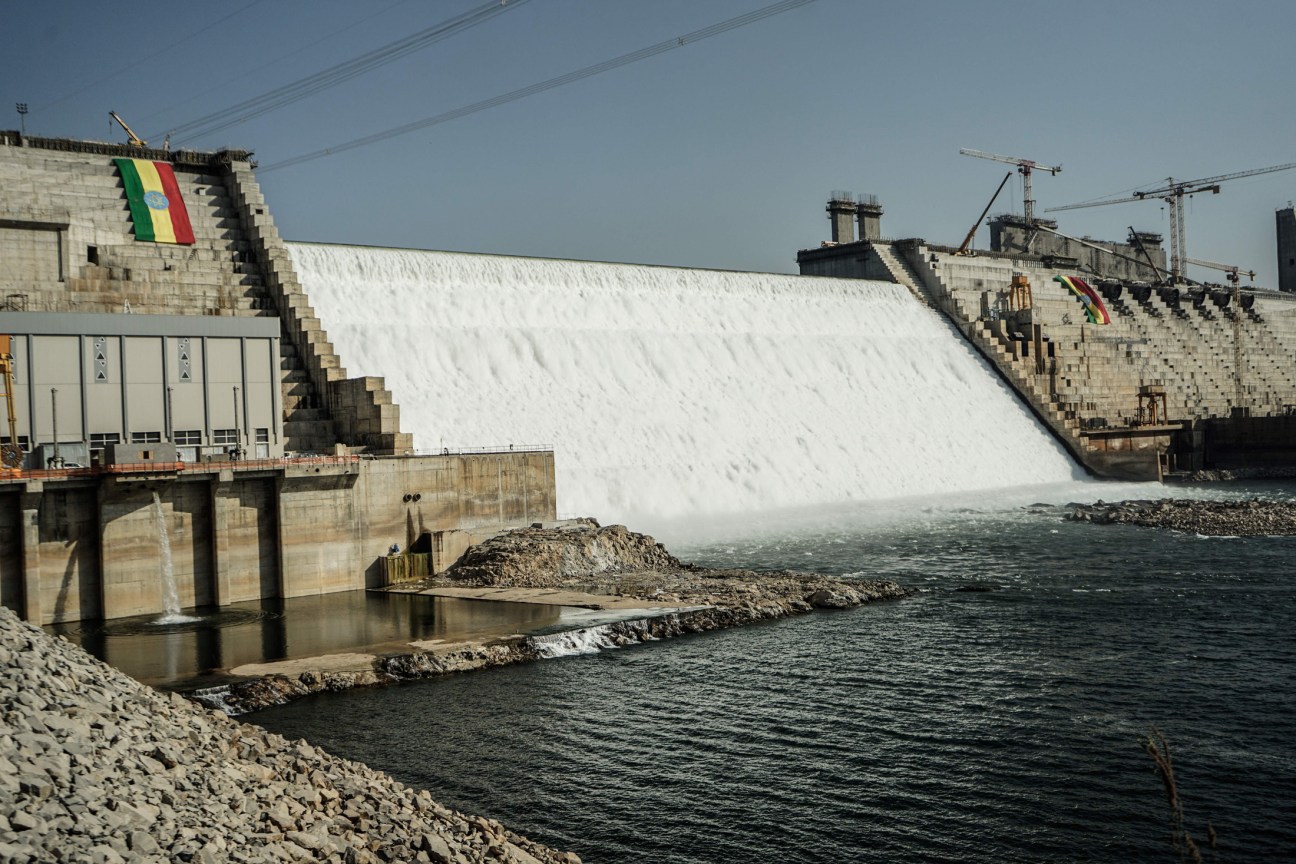
Africa’s largest hydroelectric dam is a source of national pride for Ethiopia, itself emerging from internal conflict and looking to flex its muscles as a regional power player. But Addis’s insistence on acting unilaterally while its downstream neighbours are vulnerable has soured relations. Ethiopia made the surprise announcement to construct the dam in April 2011. Cairo’s latter-day protestations that the project is “illegal” haven’t convinced it to change course.
“Ethiopia has been opaque, Egypt has been dogmatic and Sudan has been caught in the middle,” says Middle East analyst Natasha Hall of the Center for Strategic and International Studies. “Water causes a great deal of anxiety and panic. If there isn’t some kind of trusting relationship between the riparian neighbours, it could simply amount to conflict.” And conflict is something the war-ravaged and drought-ridden region could ill afford.
Immigration: The Netherlands
Too much Dutch?
If you thought the Oranje Legioen at recent international sports events looked overwhelming, brace yourself. In August, the Netherlands welcomed its 18 millionth inhabitant, an event that was represented live on its statistics bureau’s website by a ticking over digital clock. While previous population milestones have been greeted with national jubilation (the song “15 Miljoen Mensen” by Fluitsma & Van Tijn went to number one in the Dutch charts in 1996), the latest met with a more negative response. In fact, Geert Wilders – leader of the far-right Freedom Party, which won the most votes in last year’s general election – said that “the Netherlands is full”.
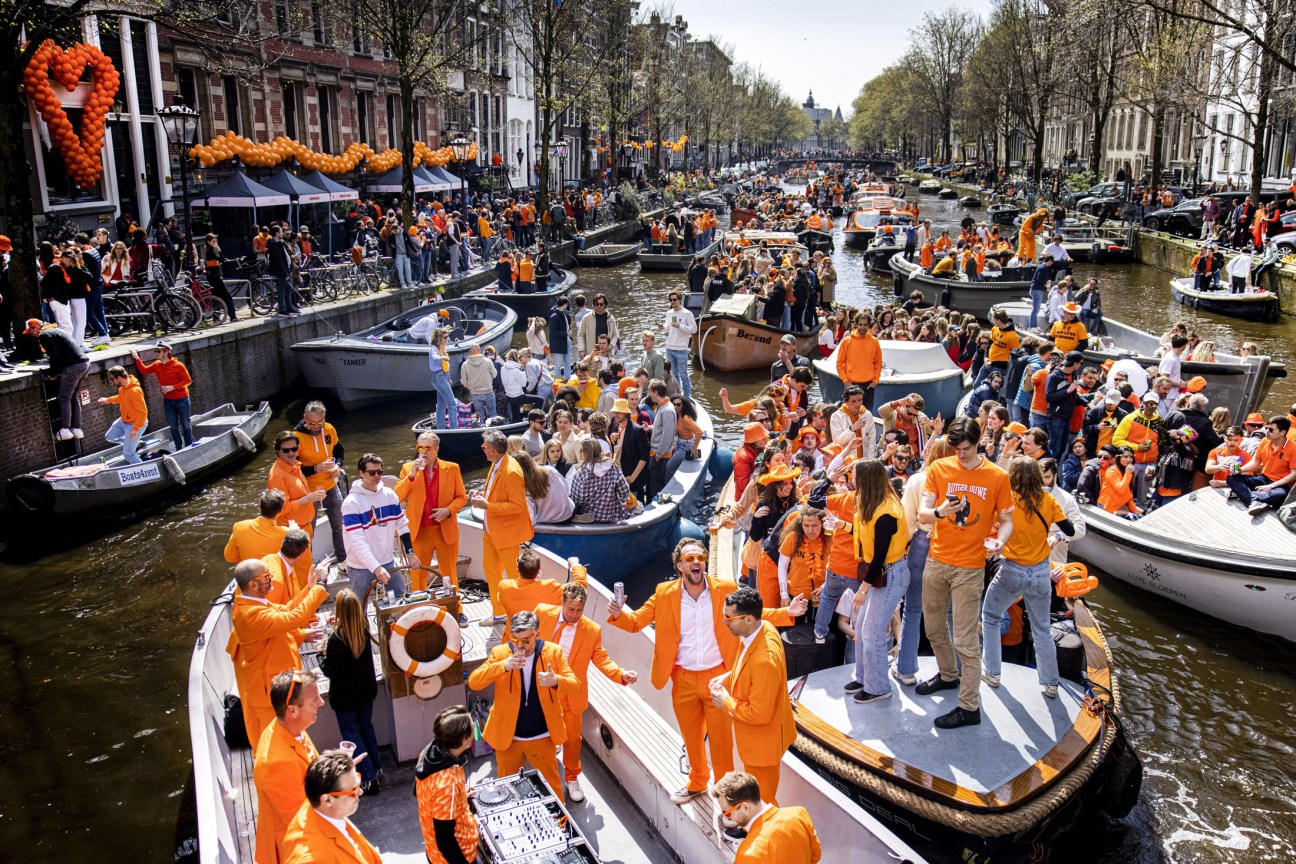
Already Europe’s most densely populated country (excluding Monaco, Vatican City and Malta), the Netherlands is more like a giant city made up of uninterrupted urban sprawl. Its growing population makes it an outlier on the continent, where many nations are struggling with the consequences of depopulation. Its economic success – it is now the EU’s fifth-largest economy – marks it out as unusual too. Immigration has fuelled recent growth but it has also exacerbated a severe housing crisis. More people may mean more workers but it also means more consumers, creating a complex and paradoxical cycle of growth and labour shortages.
Projections suggest the Dutch population could hit 23 million by 2050 – equivalent to squeezing another 19 million people into the UK. Solutions for dealing with this include building vertically and reclaiming more land from the sea, fixes that have worked in other densely populated places, such as Singapore. At the density of the Asian city state, the Dutch could house some 273 million people. Imagine that at a football match.
In The Basket
Sea Eire

In the basket: One multirole naval vessel
Who’s buying: Republic of Ireland
Who’s selling: tbc
Price: €300 million
Delivery date: tbc
The confirmation that Ireland’s modest Naval Service will purchase a multirole vessel is a startling statement of intent by the country’s department of defence. It’s not just that such a ship, able to launch helicopters and deploy troops by sea and air, would be Ireland’s biggest vessel – it might effectively be Ireland’s only vessel. Lately Dublin’s meagre fleet has been substantially marooned by technical issues and personnel shortages. Of its four Samuel Beckett-class patrol ships, only one of them is on duty most of the time; two second-hand patrol ships bought from New Zealand are not yet operational. It would also represent an all-too-rare suggestion of seriousness from Ireland where maritime security is concerned. The country, responsible for 16 percent of the EU’s territorial waters, refuses to join Nato and spends barely 0.2 per cent of its gdp on defence.
Calendar: Global
Diplomatic bag
As memories of the northern hemisphere summer begin to recede from diplomats’ minds, here are a few things that will sharpen them again ahead of a busy end to the year.
1 October
Secretary-General Rutte
Brussels, Belgium
Mark Rutte assumes the Nato hotseat at a critical time for the world’s largest military alliance. With competing blocs forming elsewhere and the potential November election of Donald Trump – who has previously threatened to withdraw the US from the alliance – Rutte will have to deploy all of the political nous that saw him become the Netherlands’ longest-serving prime minister.
6—11 October
44th Asean Summit
Vientiane, Laos
The Association of Southeast Asian Nations, a union of 10 neighbouring states, is becoming increasingly significant as both a collection of rising economic powers and a bulwark against Chinese meddling in the Indo‑Pacific. This year’s summit, to be held in the capital city of one of Asean’s poorest nations, will focus on China as well as Myanmar, a recalcitrant member state currently suffering from a number of humanitarian and political crises.
22—24 October
16th Brics Summit
Kazan, Russia
Over the past year, much has been made by western commentators of the Brics’ supposed malevolent, or at least disruptive, geopolitical intentions. Despite the controversial setting of Russia for this year’s summit, the organisation will be welcoming four new member states in the shape of Egypt, Ethiopia, Iran and the uae. This will swell the ranks of the Brics to nine (Brazil, Russia, India, China and South Africa are already members); meanwhile, up to 17 applicants (including Belarus, Pakistan and Thailand) remain on the waiting list.
What you’ve missed. Autumn 2024.
1.
Hospitality: Hotel
The revamped mountain hotel
The Brecon: Adelboden, Switzerland
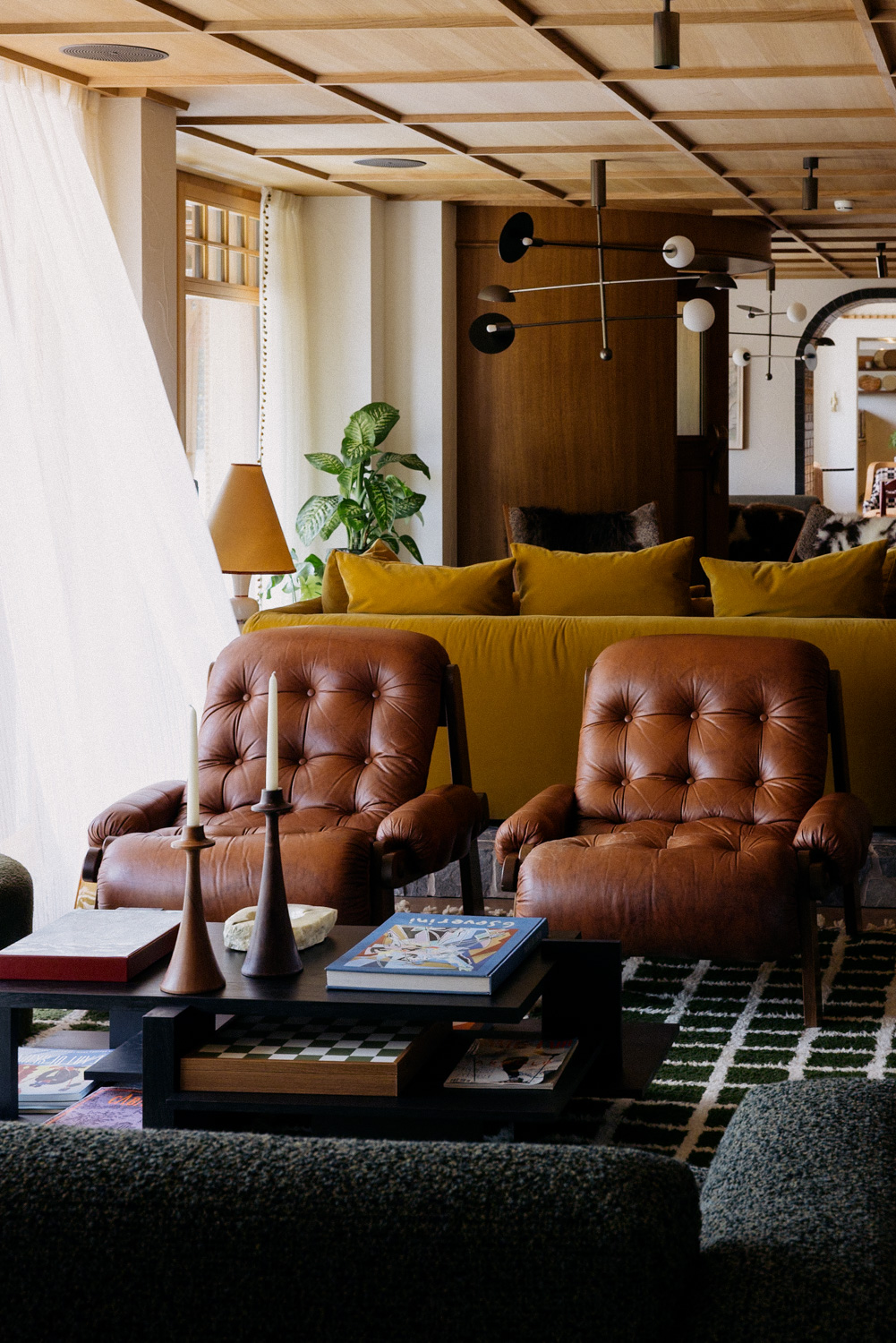
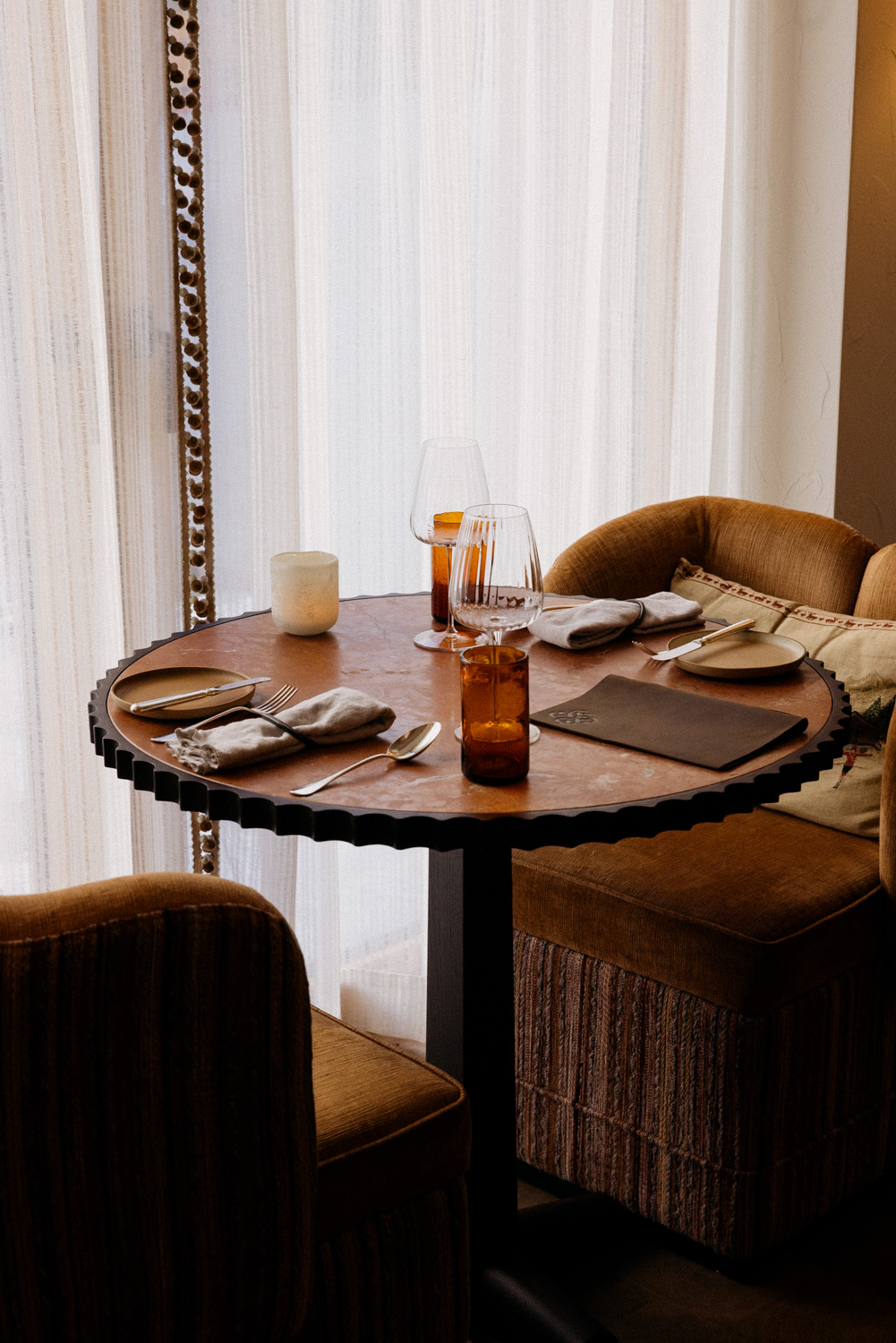
The Swiss alpine village of Adelboden high in the Bernese Oberland is surrounded by fresh water and snow-frosted massifs, and has a down-to-earth approach to hospitality. Snuggled among the fir trees is The Brecon, a chalet-turned-guesthouse built in 1912, which quietly reopened this summer, offering an old-school charm that is a world away from the more homespun corners of Adelboden. Instead, it goes heavy on stone flooring, textured woollen upholstery and leather trims. Its décor has a pared-back palette that allows the eye to wander towards the natural beauty without veering too far from the comforts of a traditional timber-clad Swiss cottage. “My family has been coming to Adelboden since I can remember,” co-owner Grant Maunder tells monocle. “I want guests to feel that sense of staying in a generous home.”
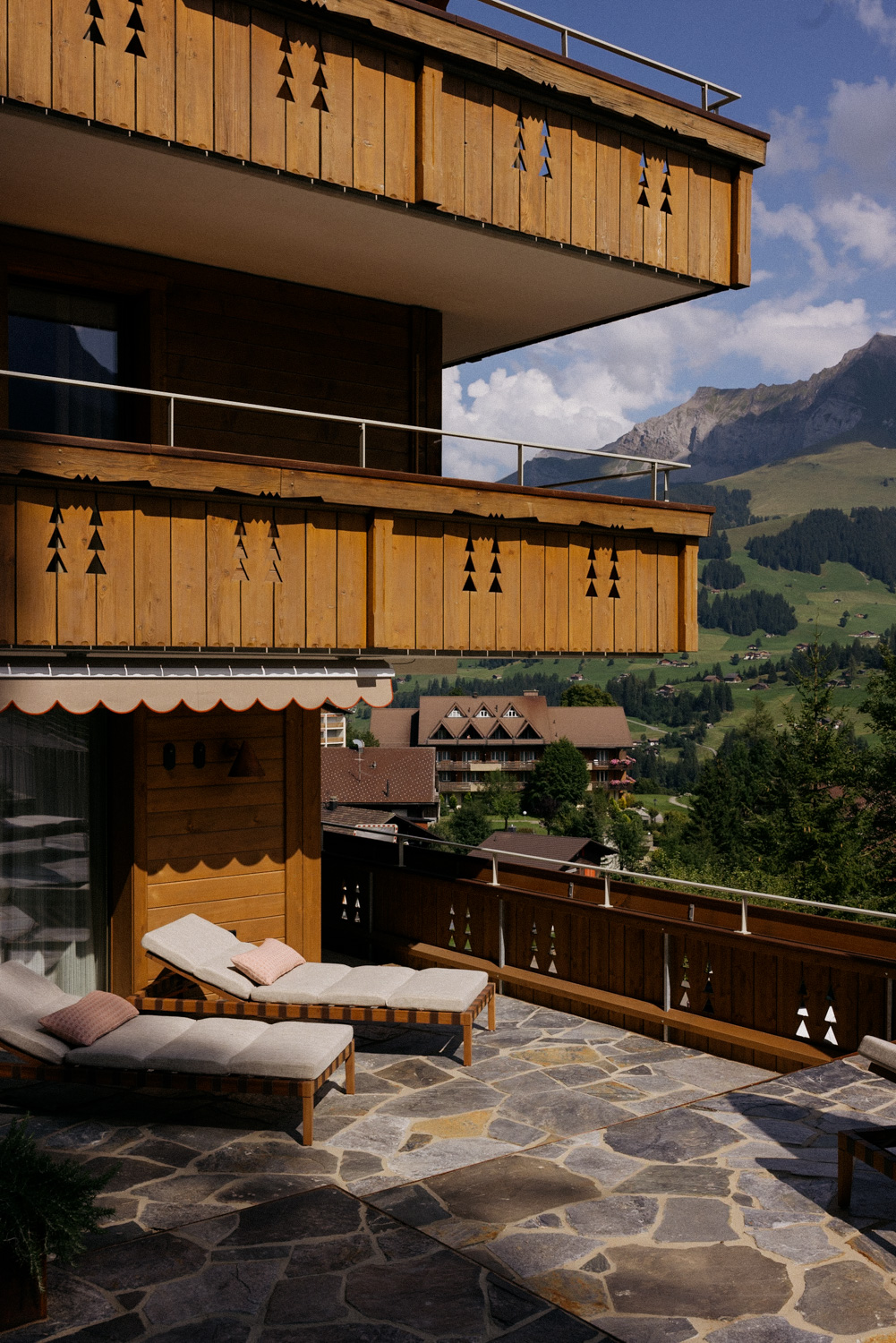
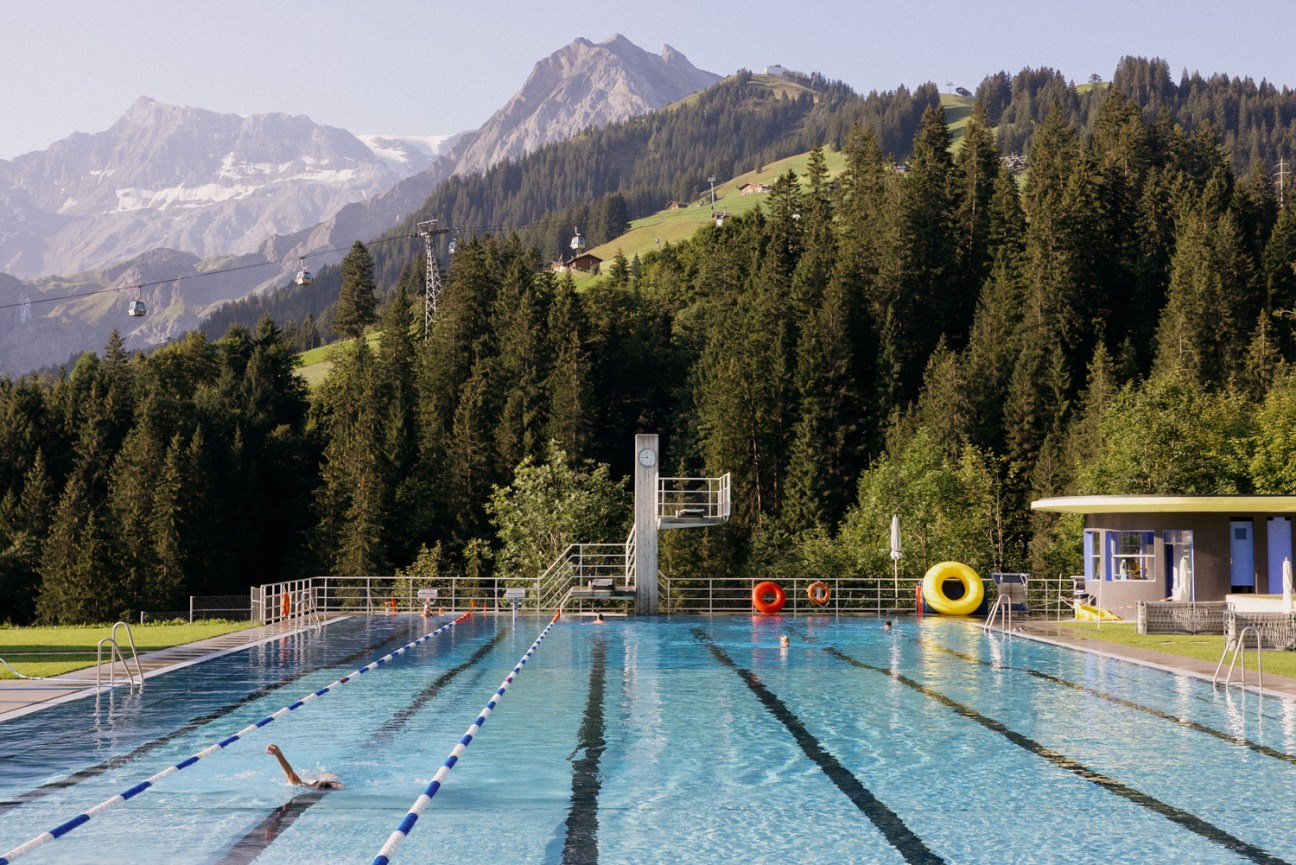
Designed by Amsterdam-based studio Nicemakers, the 22-key retreat, formerly known as Waldhaus (meaning “forest house”), has an Olympic-sized outdoor pool that looks onto the dramatic Wildstrubel mountain range. But the outdoor wonders don’t stop at the view. Days in Adelboden are best spent on the pistes of the region’s three ski areas during the winter months and following the hiking trails during summer – after which you can shrug off the day’s sporting pursuits with a visit to the sauna.
thebrecon.com

2.
Retail: Shop
The department store reimagined
House of Shinsegae: Seoul, South Korea
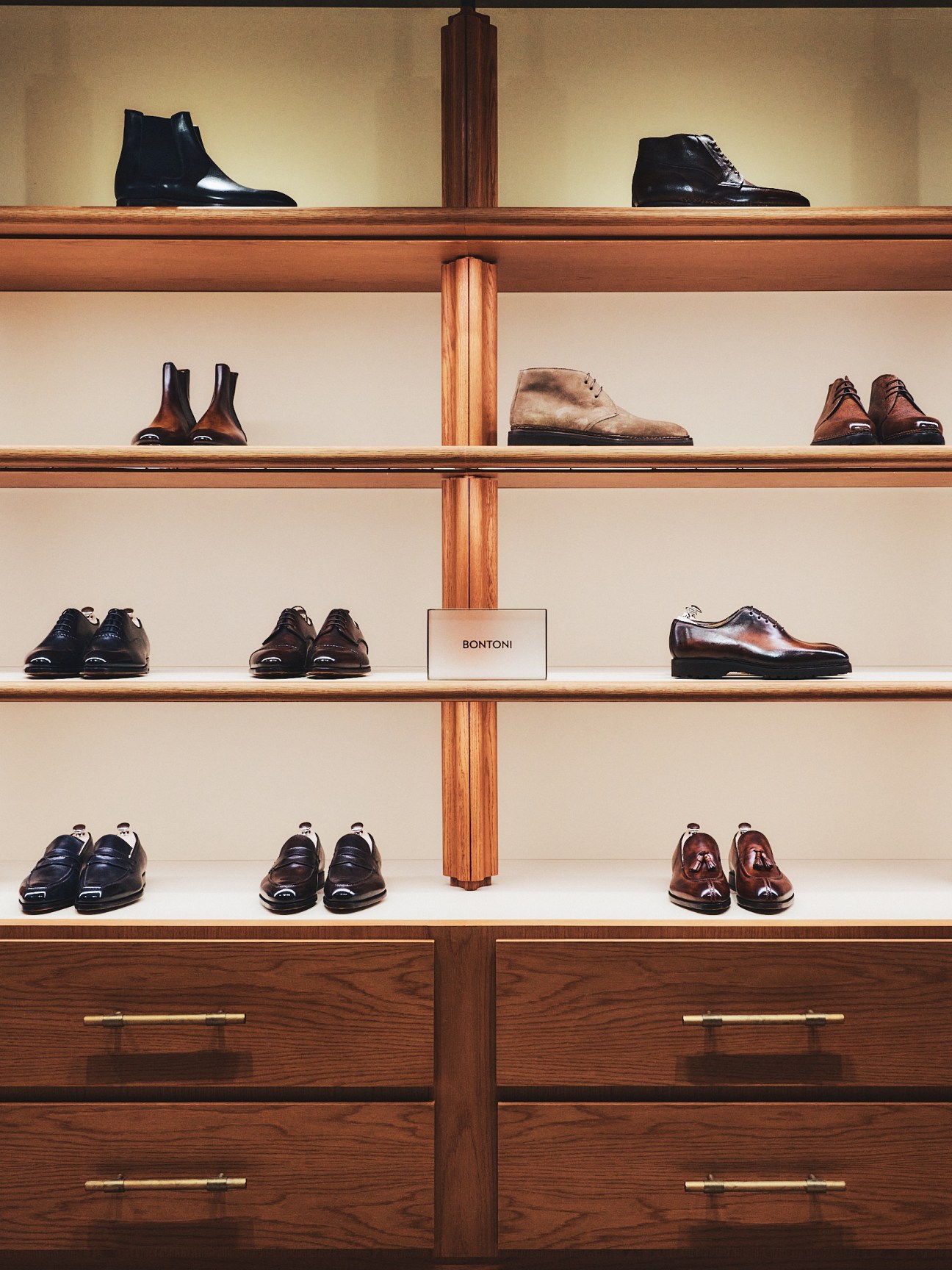
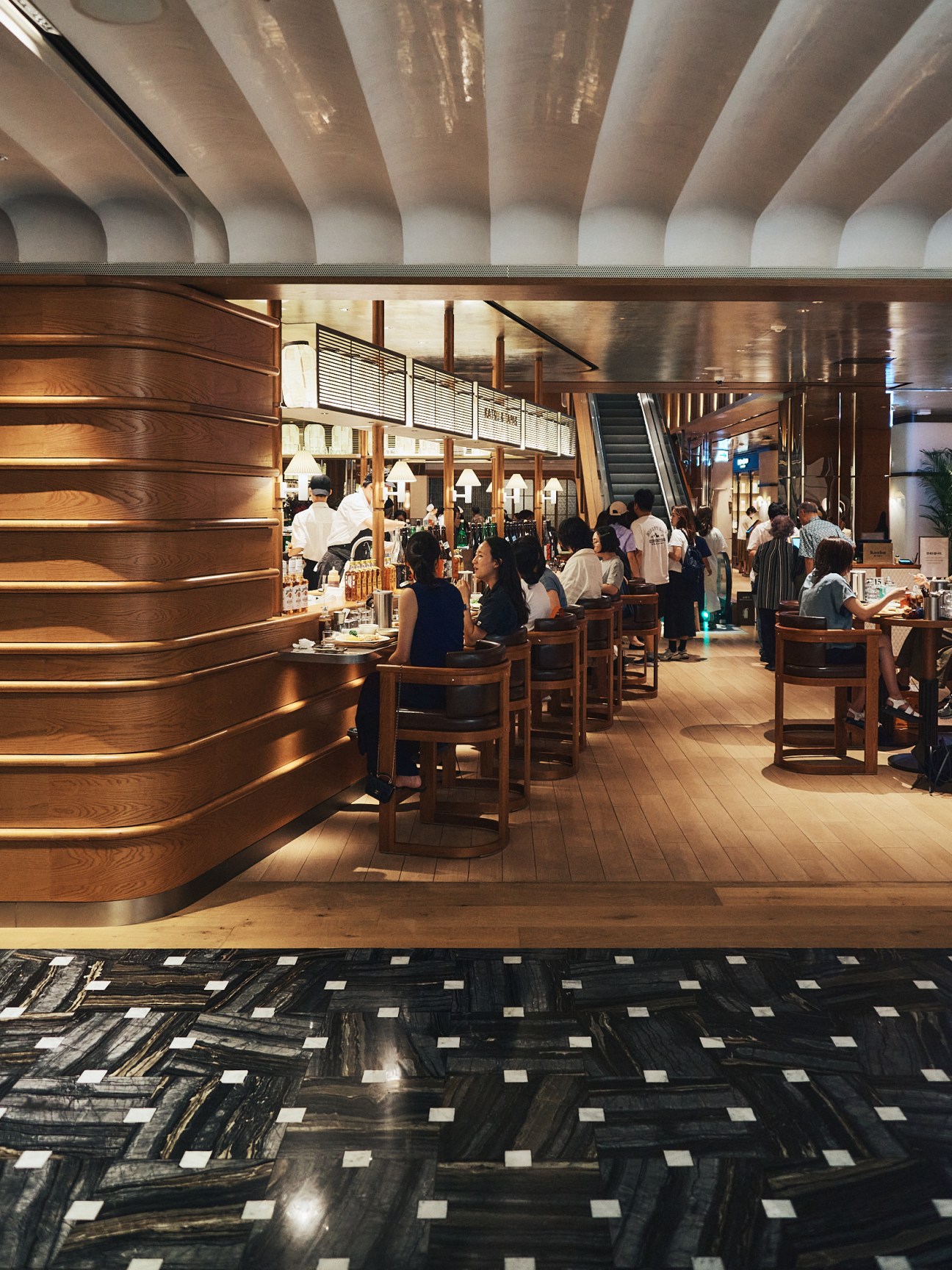
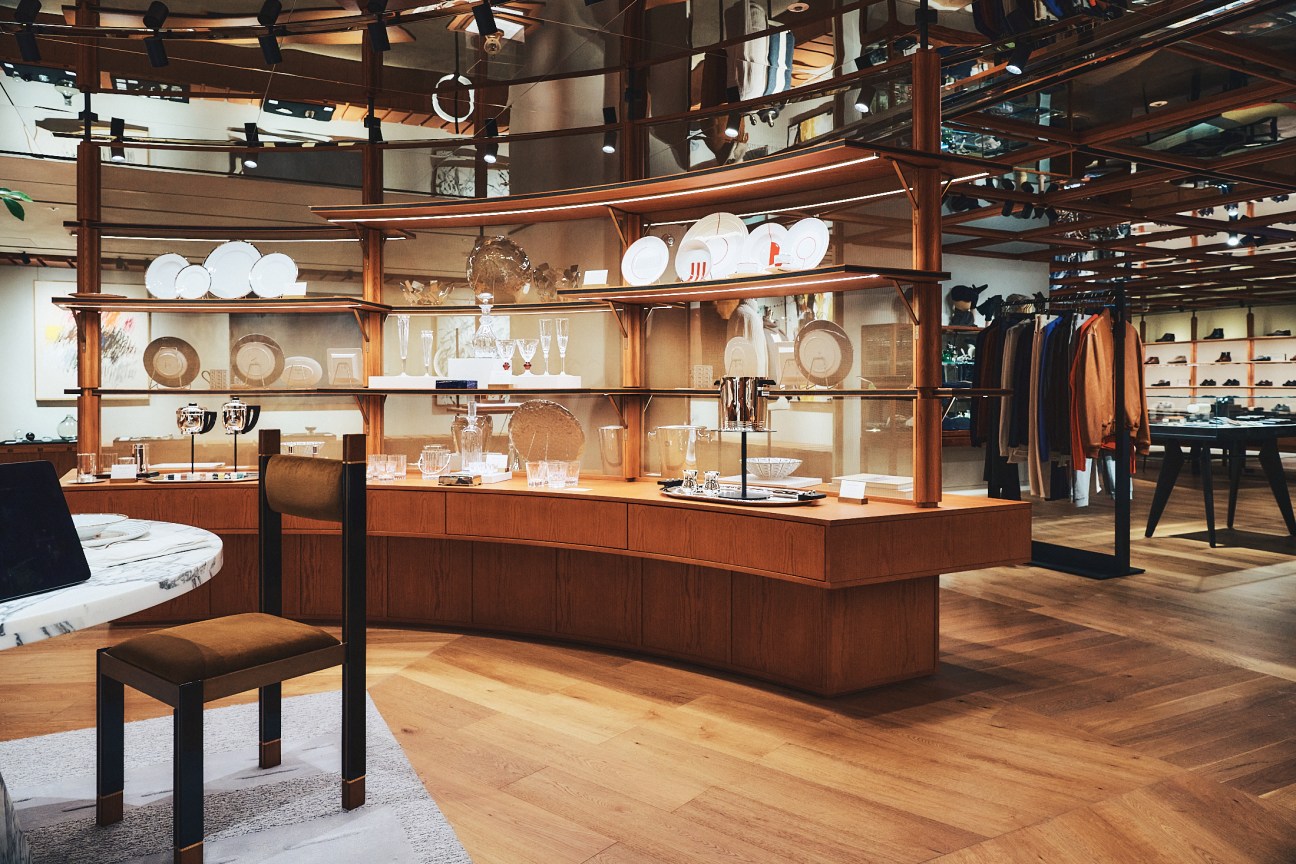
Over the summer, South Korean department store Shinsegae opened the House of Shinsegae, a new food and retail space in Gangnam, Seoul. The vast food hall houses 12 restaurants, a wine shop and a new branch of South Korean multibrand favourite Boontheshop. Casual fare and fine dining are both on offer. You’ll find artisanal pasta and ice cream but most of the restaurants specialise in local and Japanese fare. Head to Kikukawa, the first South Korean outpost of a fourth-generation Tokyo eel-rice specialist, or go to Jaju Hansang to sample Korean dishes dreamed up by Shinsegae’s own Korean Cuisine Research Institute.
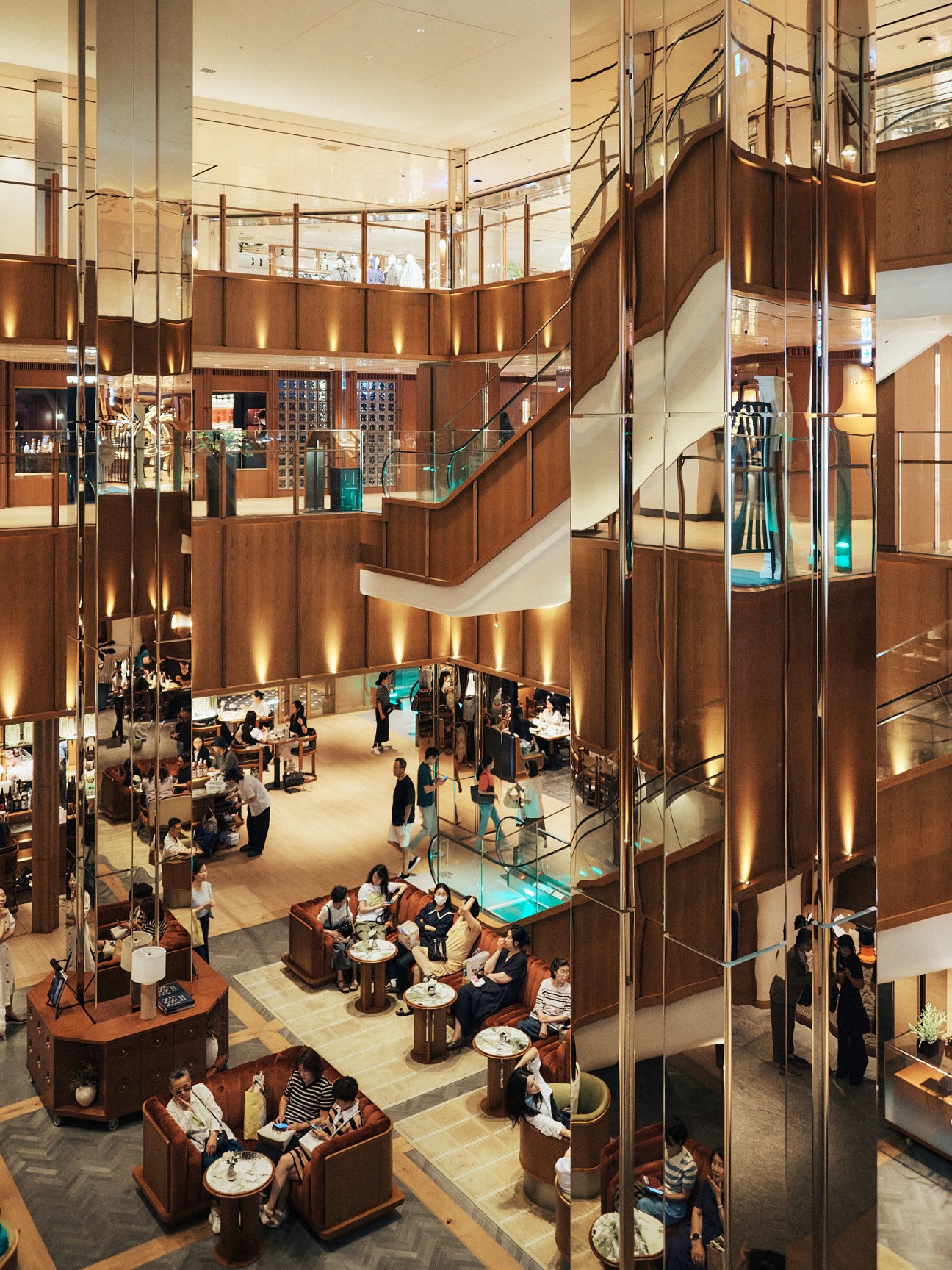
During the renovation, which began in 2021 after the closure of the Shinsegae Duty Free shop, the brand opted for a redesign inspired by luxury hotels. The restaurants and an upper-level mezzanine converge around a central “lobby” with gleaming mirrored columns and tawny-coloured private booths. There isn’t a communal bench table in sight – rather, customers can dine on omakase at kitchen counter seats or in private dining rooms. The lights are dimmed at cocktail hour and House of Shinsegae stays open late, encouraging customers to sit back and sip. The pick of the bunch? Yoon Haeundae Galbi for Korean beef ribs.
shinsegae.com

3.
Hospitality: Hotel
The Riviera revival
Hôtel du Couvent: Nice, France
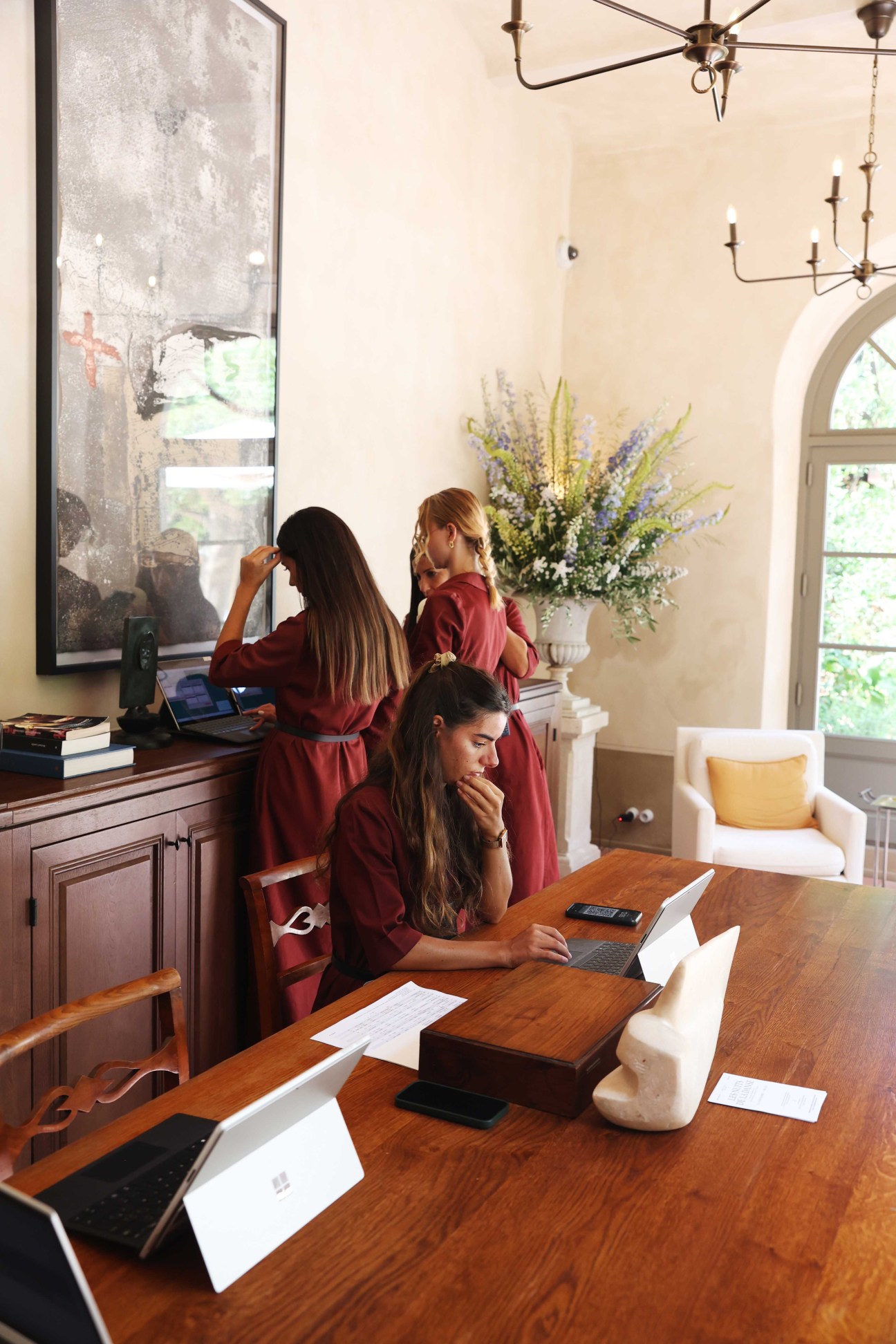
“I’m not a hotelier,” says Valéry Grégo. “I just do hotels.” He does them rather well too – at least, if the 88-key 17th-century convent-turned-hotel in Nice is anything to go by. This isn’t Grégo’s first creative overhaul; his Perseus Group was also behind Les Roches Rouge in Saint-Raphaël and Le Pigalle in Paris. However, it’s a project that brought a lot of pressure. “The mayor called me,” says Grégo. After a persuasive conversation, the hotelier agreed to commit to what would become a 10-year restoration project.
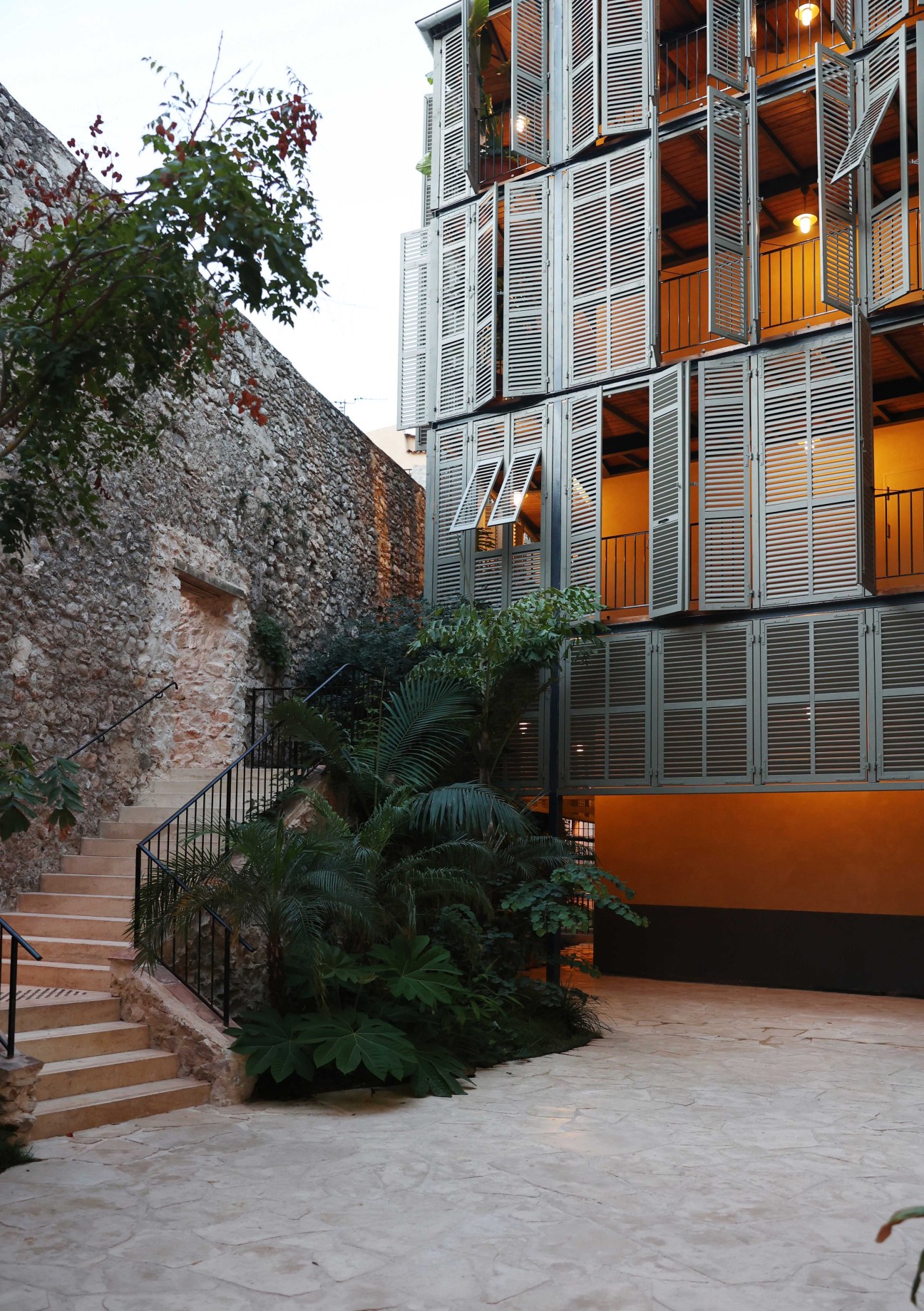
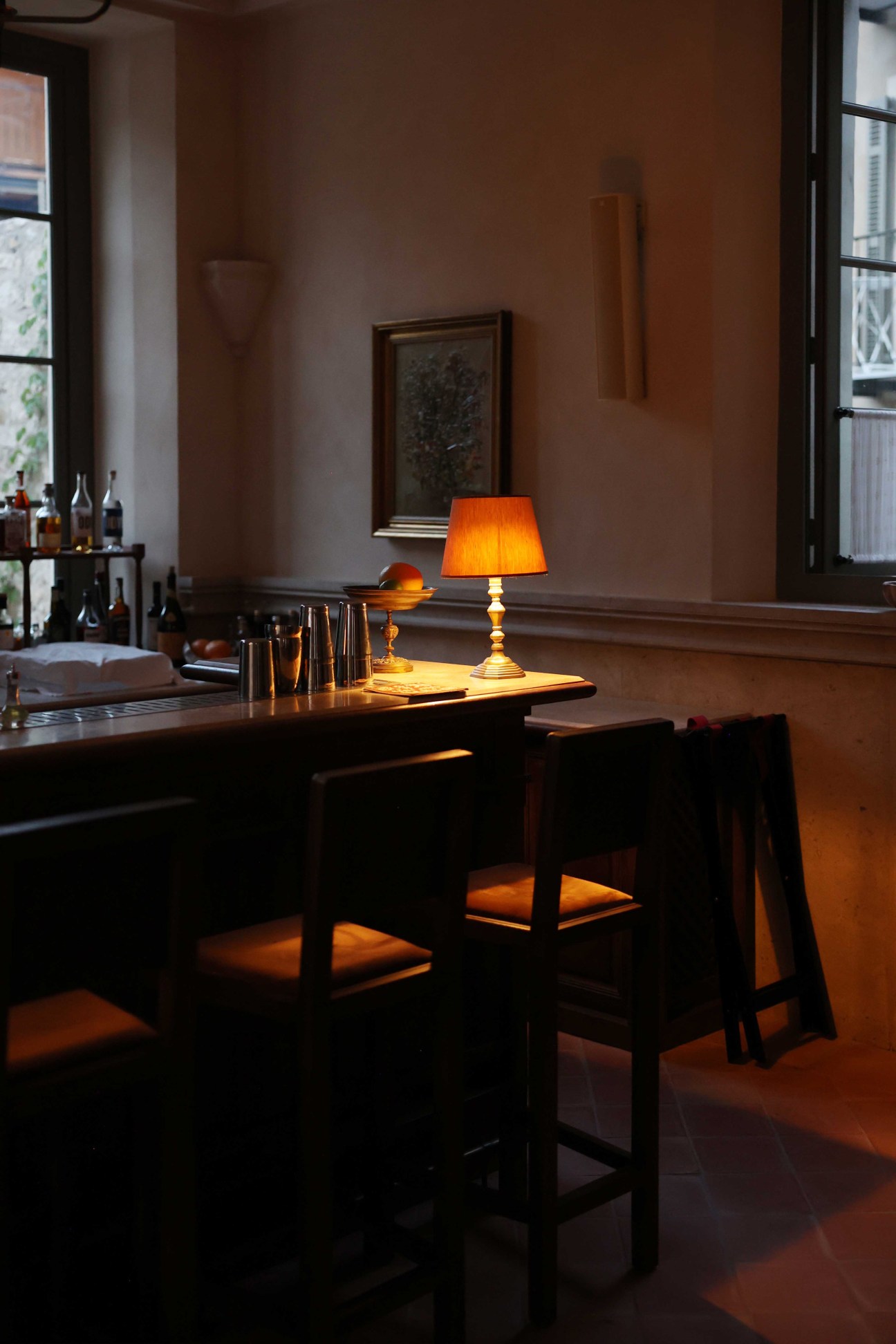
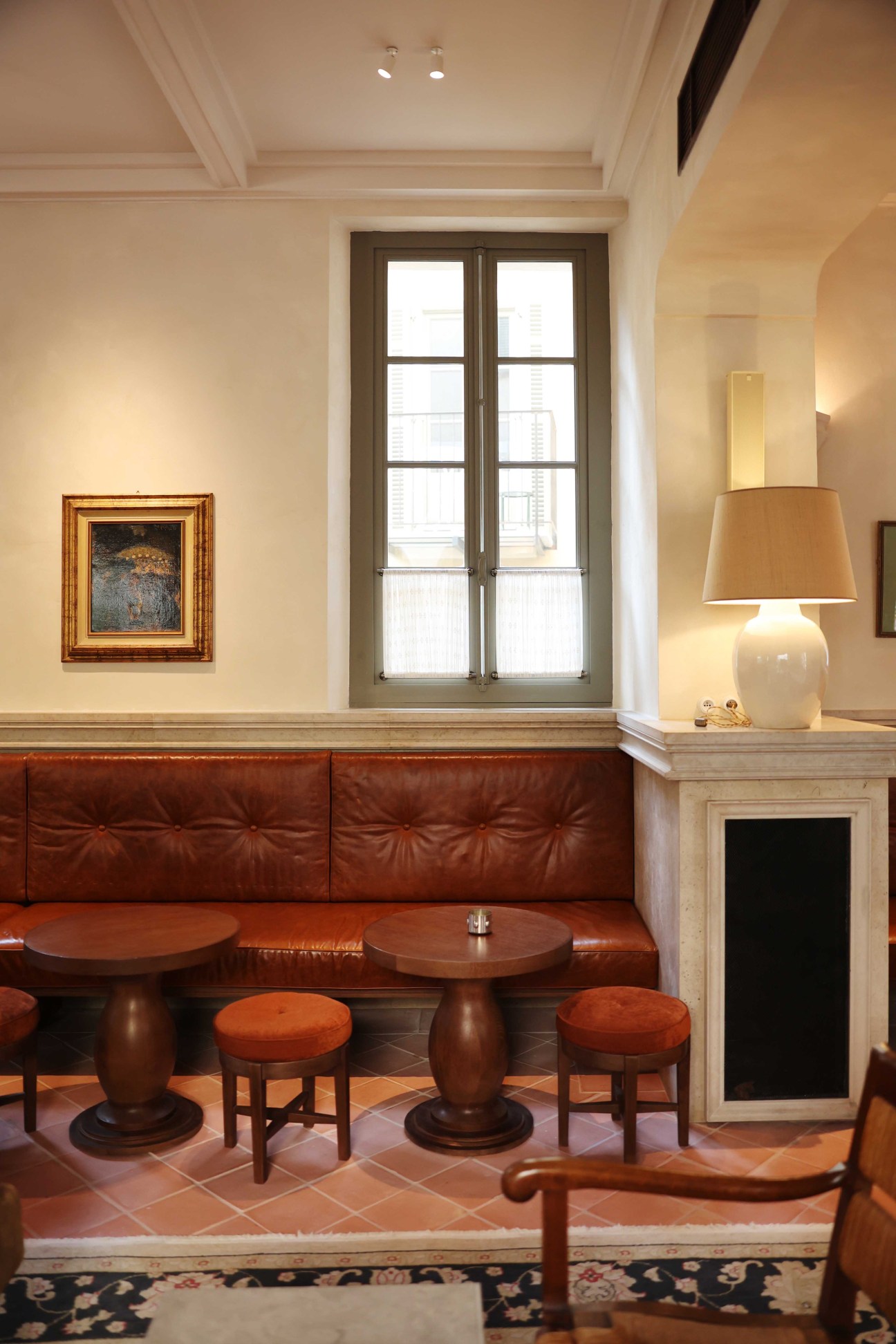
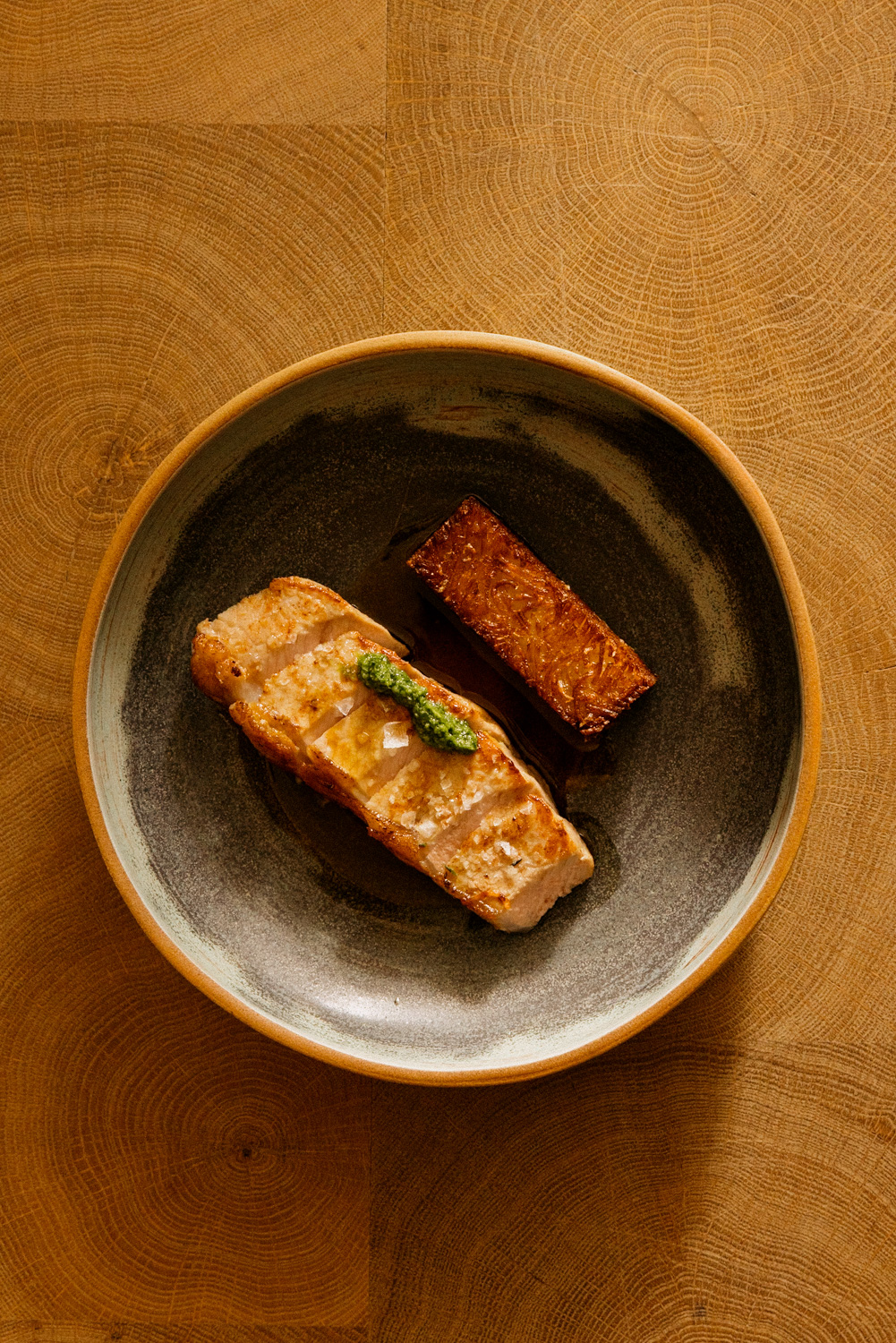
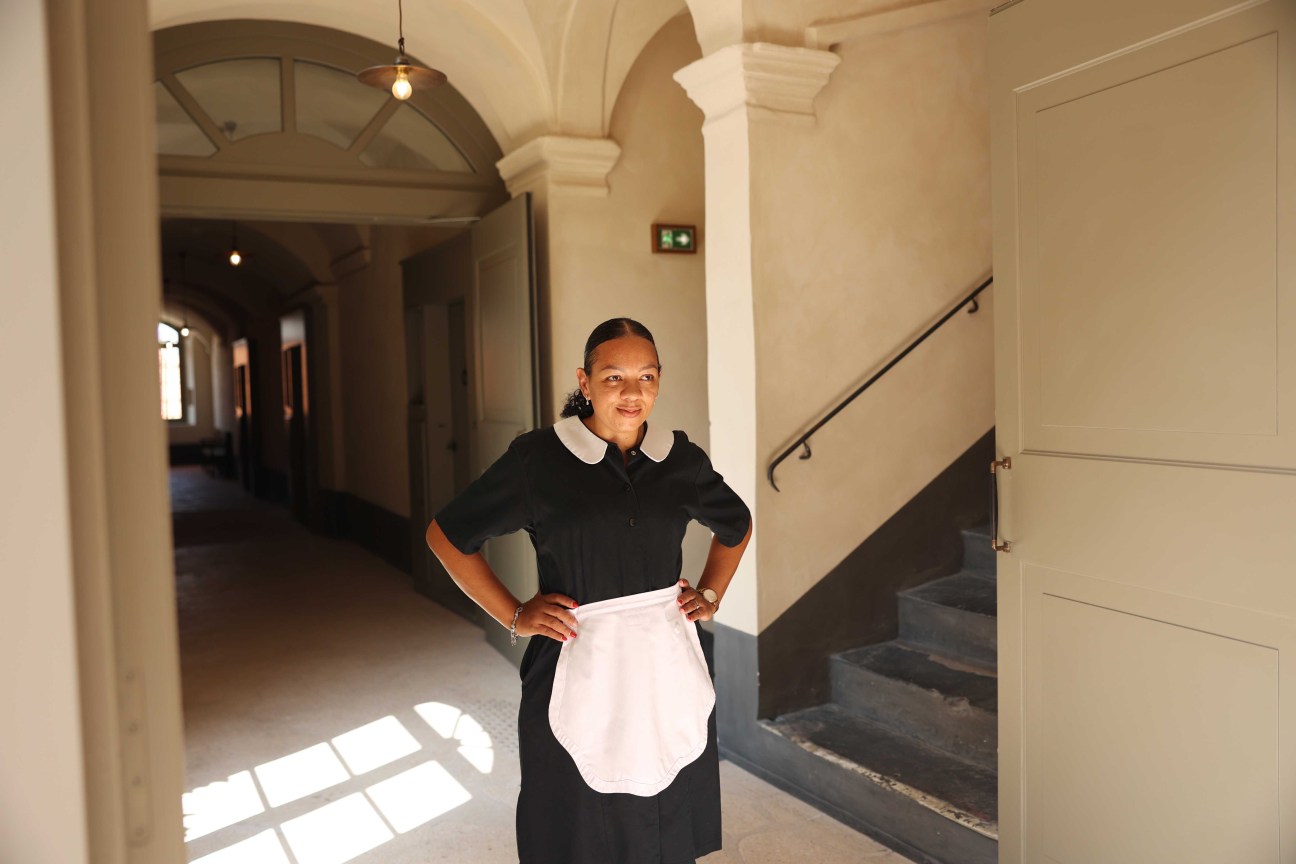
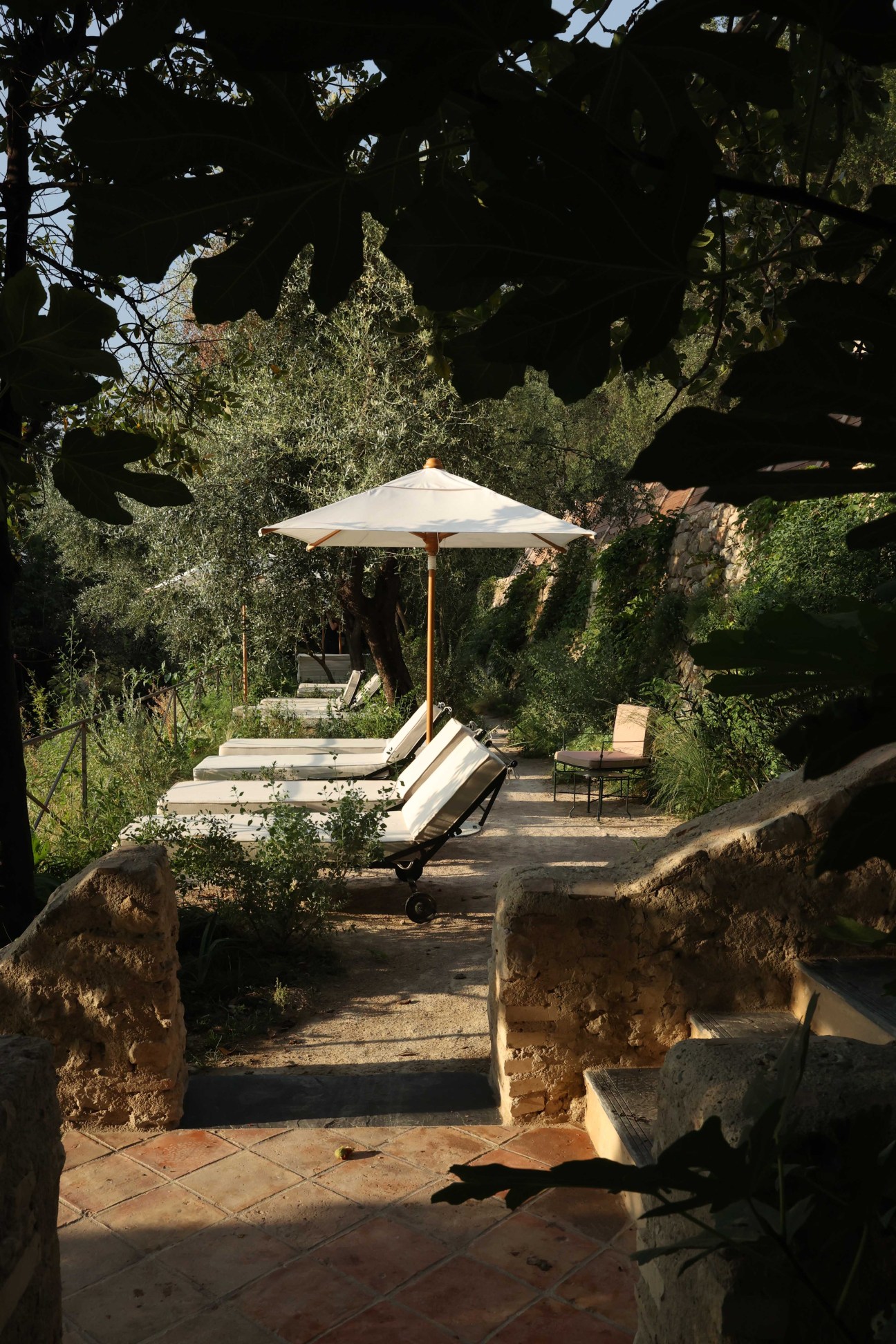
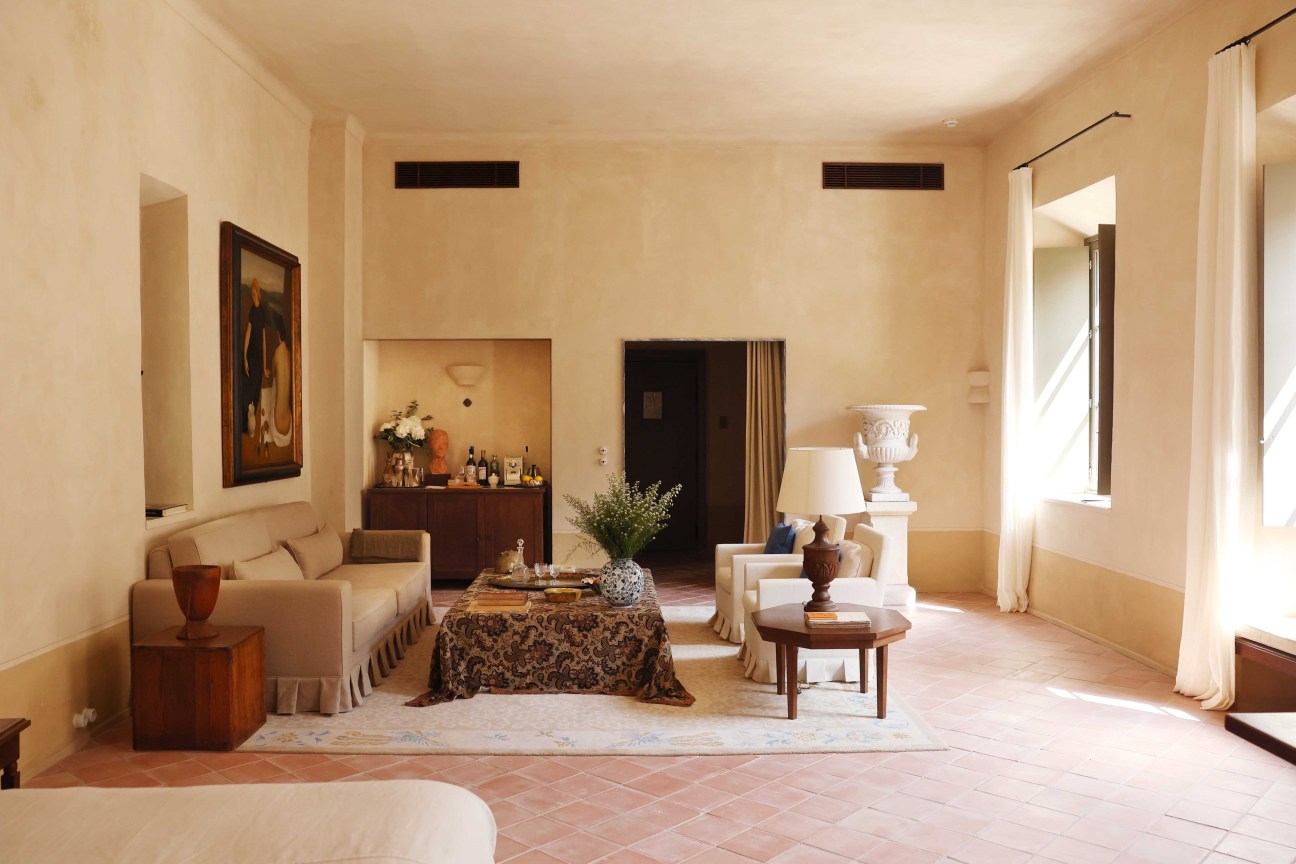
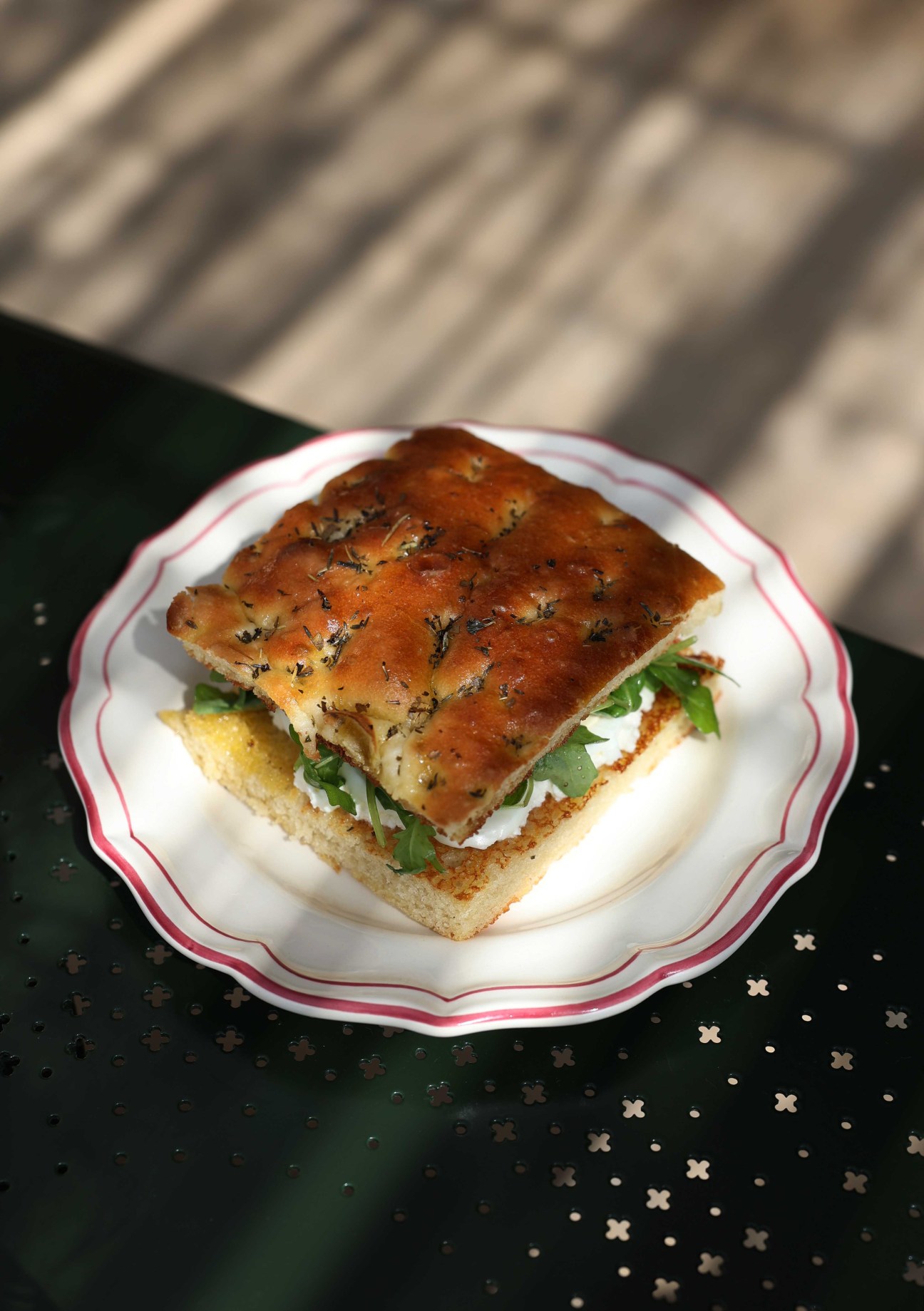
The crumbling building was only part of the brief: creating a community around it was also crucial. Charlotte de Tonnac and Hugo Sauzay of Paris firm Festen were drafted for the interiors: thick, cream-washed walls and terracotta floors and lots of linens, thick-cut marble and vast beds. In the restaurant, chef Thomas Vetele prepares hearty, tasty food made with produce from the area; electric green-pea tarts, fritto misto and rice pudding are on the menu when monocle visits. Perhaps the most special space is the garden – a terraced, stony sanctuary peppered with orange and fennel trees and lined with sweet-smelling jasmine.
hotelducouvent.com


4.
Fashion: Backpack
The bag to grab
Zattu: Japan
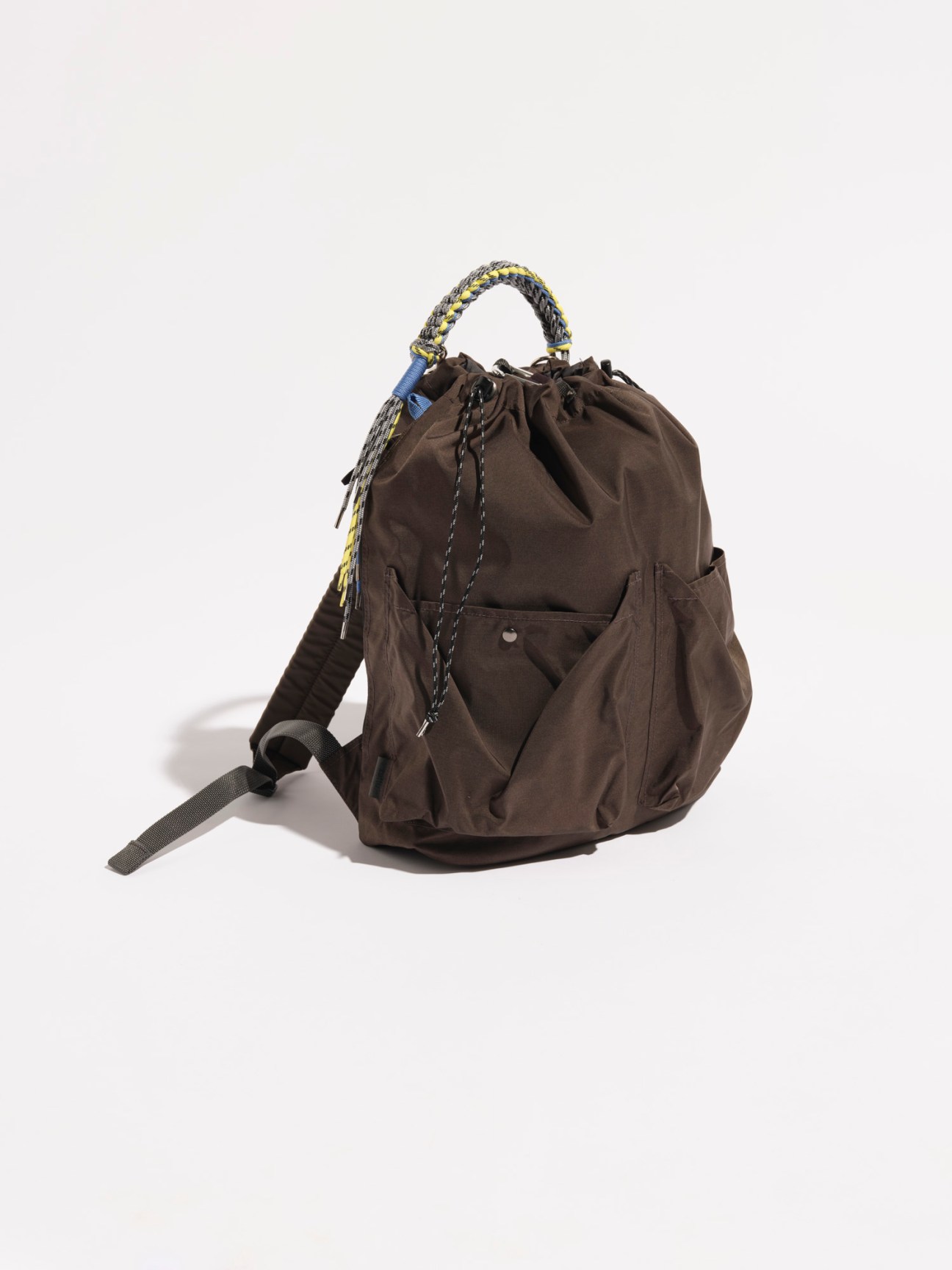
Zattu’s handsome, Japanese-made totes and backpacks are winning fans across the globe for their subtle style and hardy construction. The brand makes its carry-alls out of durable materials including Cordura nylon with plenty of internal pockets, snap buttons on the outside and a distinctive climbing-rope detail. Bag one now before everyone else cottons on to their charms.
zattu.jp
5.
Beauty: Moisturiser
The cream that beauty editors are talking about
Moussse: Switzerland
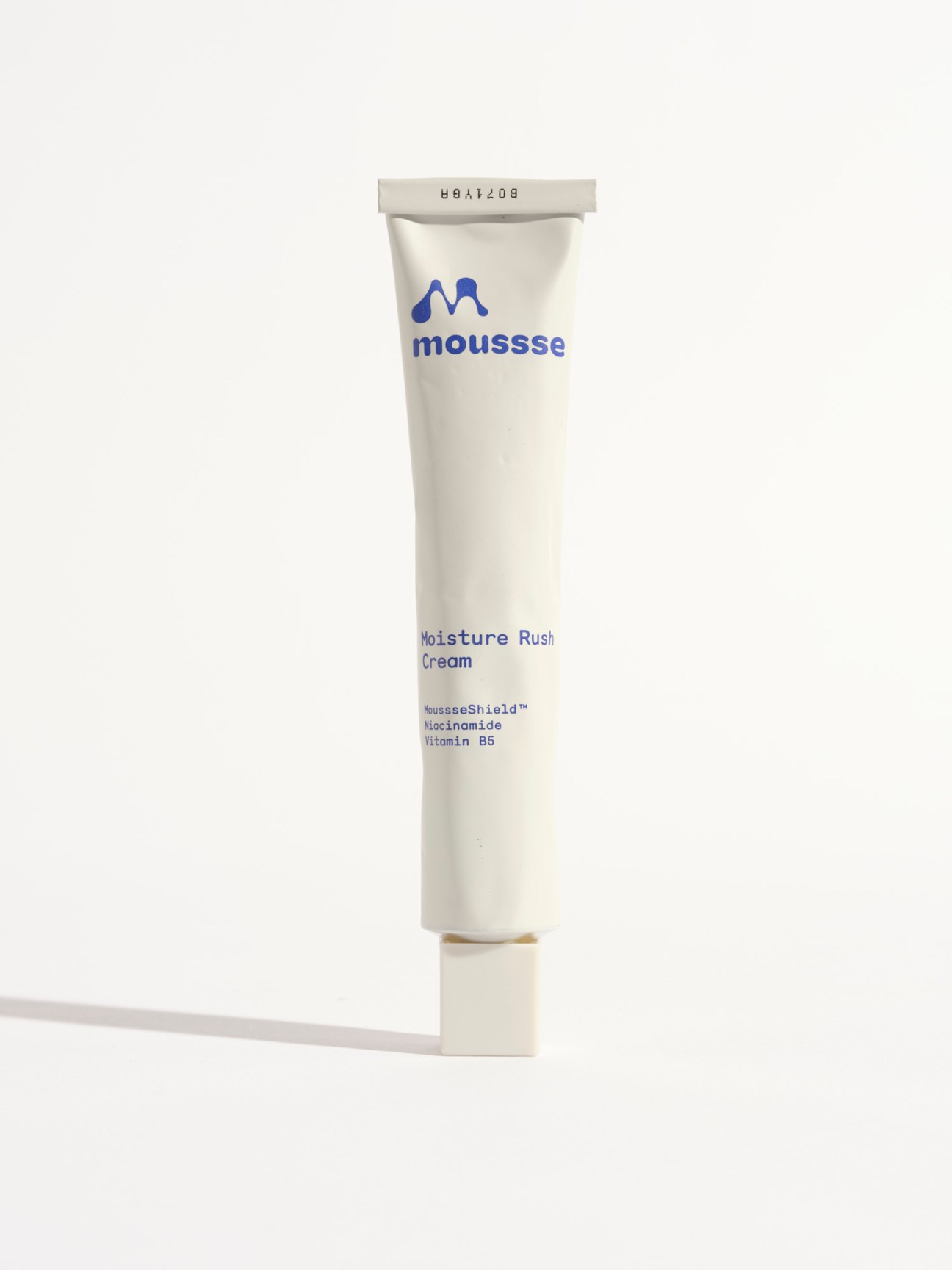
This launch is part of an ambitious new venture by Swiss-based Hélène Guttmann Chammas and Daniel Guttmann, formerly the ceo of Düsseldorf-based Dr Barbara Sturm. It offers targeted skincare for those living in cities. Moussse’s debut is a moisturising cream that protects the skin from pollution, UV radiation, smoke and stress damage.
moussse.com
6.
Furniture: Chair
The perch to purchase
Tangali chair: Italy & India
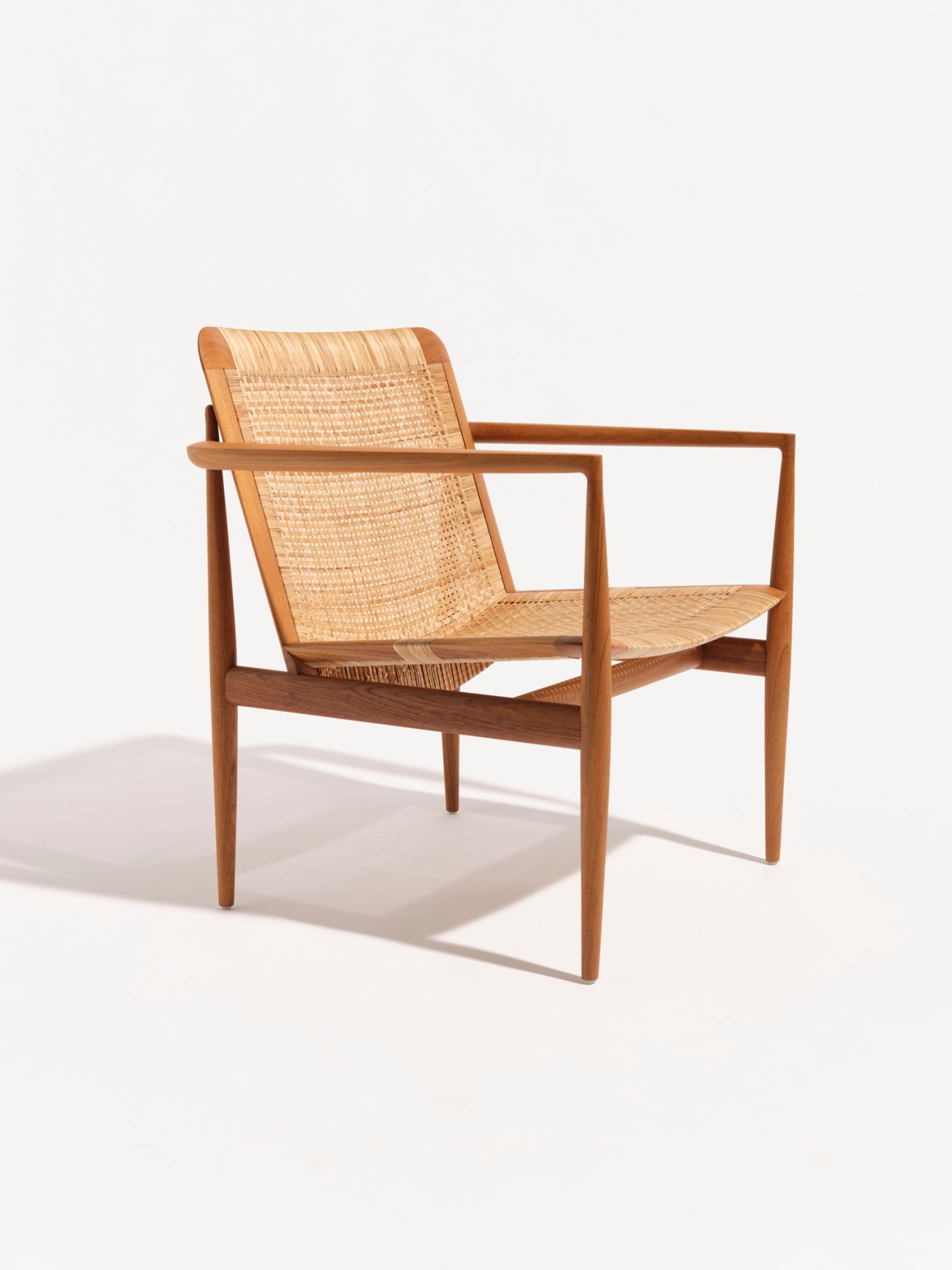
Designed by Milan-based duo Inoda + Sveje, the Tangali modular chair embodies a spirit of collaboration and quality craftsmanship. Produced in India at Phantom Hands, a Bangalore-based workshop, the chair showcases the skill of expert artisans who developed a special cane-weave pattern especially for the seat and backrest of this model.
inodasveje.com
7.
Material: Wood
The 1960s design that collectors crave
Pine furniture: Scandinavia

Long viewed as cheap, pine is changing in people’s perceptions. Today young brands such as Helsinki-based Vaarni are shifting the narrative by using it for tables and chairs in bold forms inspired by mid-century pieces. It’s helping to turn collectors’ attentions to original pine furniture from the 1960s and 1970s. Case in point: this dining chair by Ilmari Tapiovaara from London-based Chase & Sorensen.
chaseandsorensen.com
8.
Culture: Books
The Spanish novel that you need to read
‘Living Things’: Spain
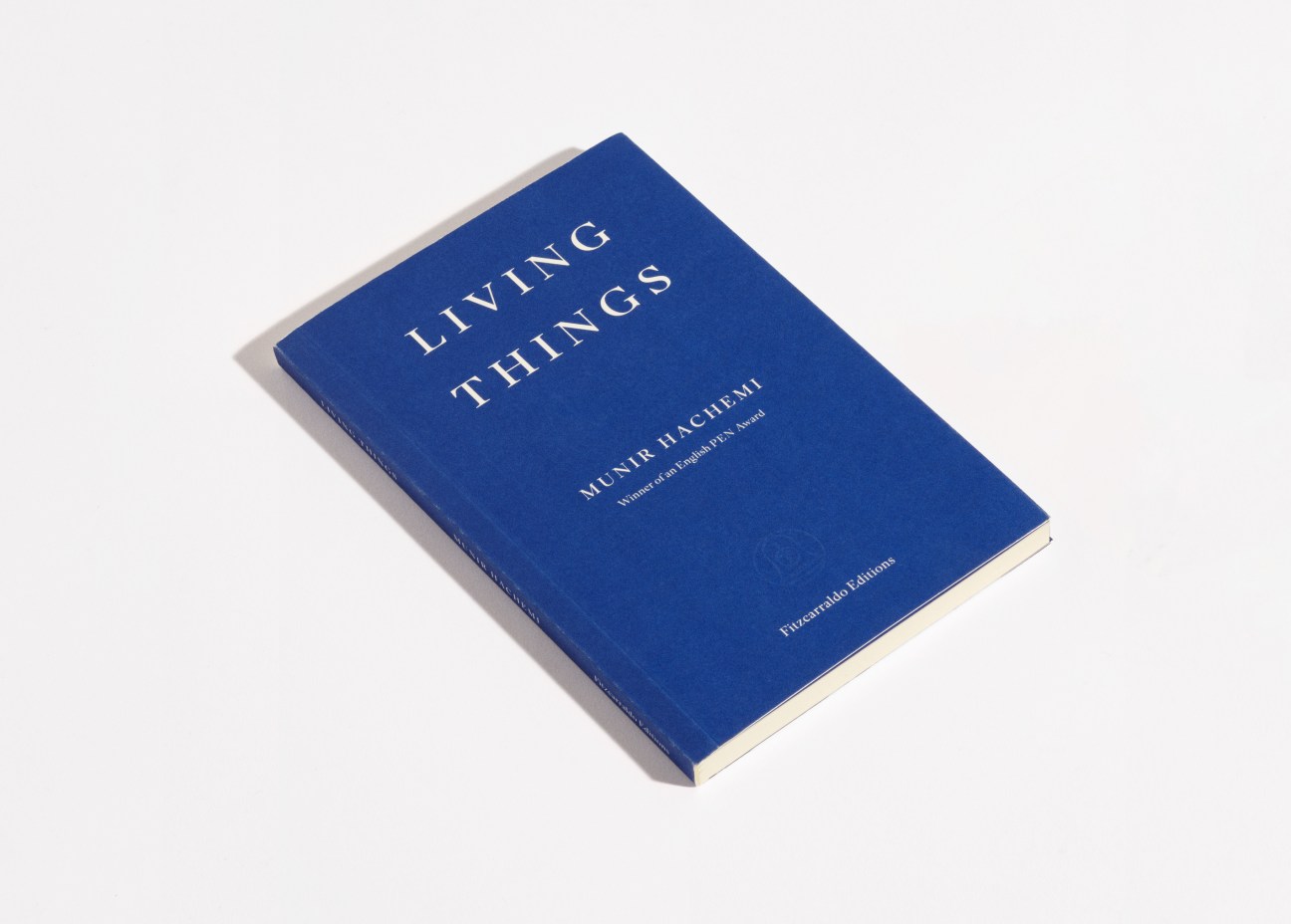
Munir Hachemi’s debut novel wasn’t a hit in Spain when it arrived in 2018 but has since become a sleeper smash. “It was intended to be an ironic kind of autofiction: tribute and parody,” says Hachemi. An English translation is just out. “English is still the most powerful language of the world.”
fitzcarraldoeditions.com
9.
Furniture: Lamp
The illuminating find
Nox light by Astep: Copenhagen, Denmark

Astep’s new Nox lamp combines playful forms with practical portability. Composed of a tubular aluminium body, a mouth-blown opaline glass bulb and a simple, elegant handle, it can be carried and placed wherever light is needed. There’s also a dimmer, allowing it to provide calming mood lighting or serve as a more focused reading light when placed on a bedside table.
astep.design
10.
Design: Packaging
The tinned treats turning heads
Casa Marrazzo: Florence, Italy

Florence-based Auge Design is behind one of 2024’s best rebrands. It has reimagined the look and feel of Casa Marazzo’s tinned tomatoes (and other vegetables), which have been given colourful labels and retro gilded type, reflecting the brand’s 90-year history and southern-Italian roots.
auge-design.com
11.
F&B: Wine
The bottles beloved by those who know
Rosa 32: Saint-Tropez, France

Rosa 32’s founder, Florestan de Rouvray, thinks that Provence has more to offer than just the pink stuff. “The region produces crisp white wines and fragrant reds,” he says. “I wanted the brand to reflect this.” The cuvées are produced on the Massif des Maures but are now on sale in places from Zürich to Saint Barthélemy.
rosa32.com
12.
Aviation: Airport
The US hub worth touching down at
Portland International Airport: Portland, Oregon
US airports have a new bright spot. Following the recent upgrade of New York’s LaGuardia, Portland’s main terminal has been updated with a flair and a mindfulness that feel native to the state. The project, driven by zgf Architects, expands the airport’s capacity while embracing new approaches to design and craft, paired with an empathetic, passenger-focused approach. When monocle visited just before the formal opening, we met our guides amid the loud, liminal space of construction. Stepping through a guarded door felt like crossing a portal into something magnificent. The centrepiece of the new terminal is a wooden roof that both taps into the spirit of the Pacific Northwest and breaks the aesthetic codes of modern airports.

“The wood roof is beautiful but it provides many benefits beyond aesthetics,” says Sharron van der Meulen, managing partner at zgf. “The structure enables long, column-free spans that help to provide clear sightlines for passengers and allow space for future evolutions and expansions without significant construction.”
The locally sourced wood, all from within 500km of the airport, also significantly lowers the terminal’s carbon footprint compared to traditional steel construction. Beyond the airy, open feel, the analogue approach to construction creates something that soothes the senses: unlike cavernous airports where sound travels, the wood dampens noise and creates a subdued, less stressful environment.
According to zgf, that was the goal. The team sought to emphasise positive physiological and psychological outcomes for occupants throughout the space. “We put a lot of thought into how we could leverage biophilic design principles to support a positive passenger and employee experience,” says Van der Meulen. “There’s the roof, of course, but also the 5,000 plants placed around the terminal and the 49 skylights that provide 60 per cent of the terminal’s daylight.” Other barely noticeable touches add to the effect. Loudspeakers for passenger announcements are mounted at head height, rather than booming down from above.
One of the most vivid friction points for air travellers, security, was thought through down to the screening machines that require passengers to remove nothing from their bags. Lighting design and climate control for screening areas were carefully considered – no more sweltering summer queues – as well as the “recomposure” areas with benches and table tops of various heights as travellers proceed through screening.
The empathetic approach doesn’t just apply to travellers. Gene Sandovol, a design partner at the firm, tells me during the walk-through that it thought deeply about the tsa employees, seeing them as important stakeholders, and studied the patterns of their day to figure out how to improve their experience. Even the private screening areas, normally an afterthought in airports, are designed with soothing lighting.
The terminal used future-facing sustainability principles, taking what zgf describes as a “use what you can” approach, carefully analysing existing structures and systems for potential reuse or upgrades. This strategy allowed it to double the terminal’s passenger capacity while achieving a 50 per cent reduction in energy use.
13.
Hospitality: Rental
The beachside house to rent
Kona Kahlua: Melbourne, Australia
Say the words “beach holiday” to anyone who grew up in Australia and they’ll likely picture a very specific house. It will have a skillion roof and taupe-hued bricks. Inside, there might be a blend of flooring – linoleum for the kitchen, parquetry for the living room – watched over by lacquered cabinets, vinyl couches and panelled walls. Tragically, the bathroom might be carpeted. Ever since these beach houses proliferated across Australia in the 1970s, they have defined the summer holidays.
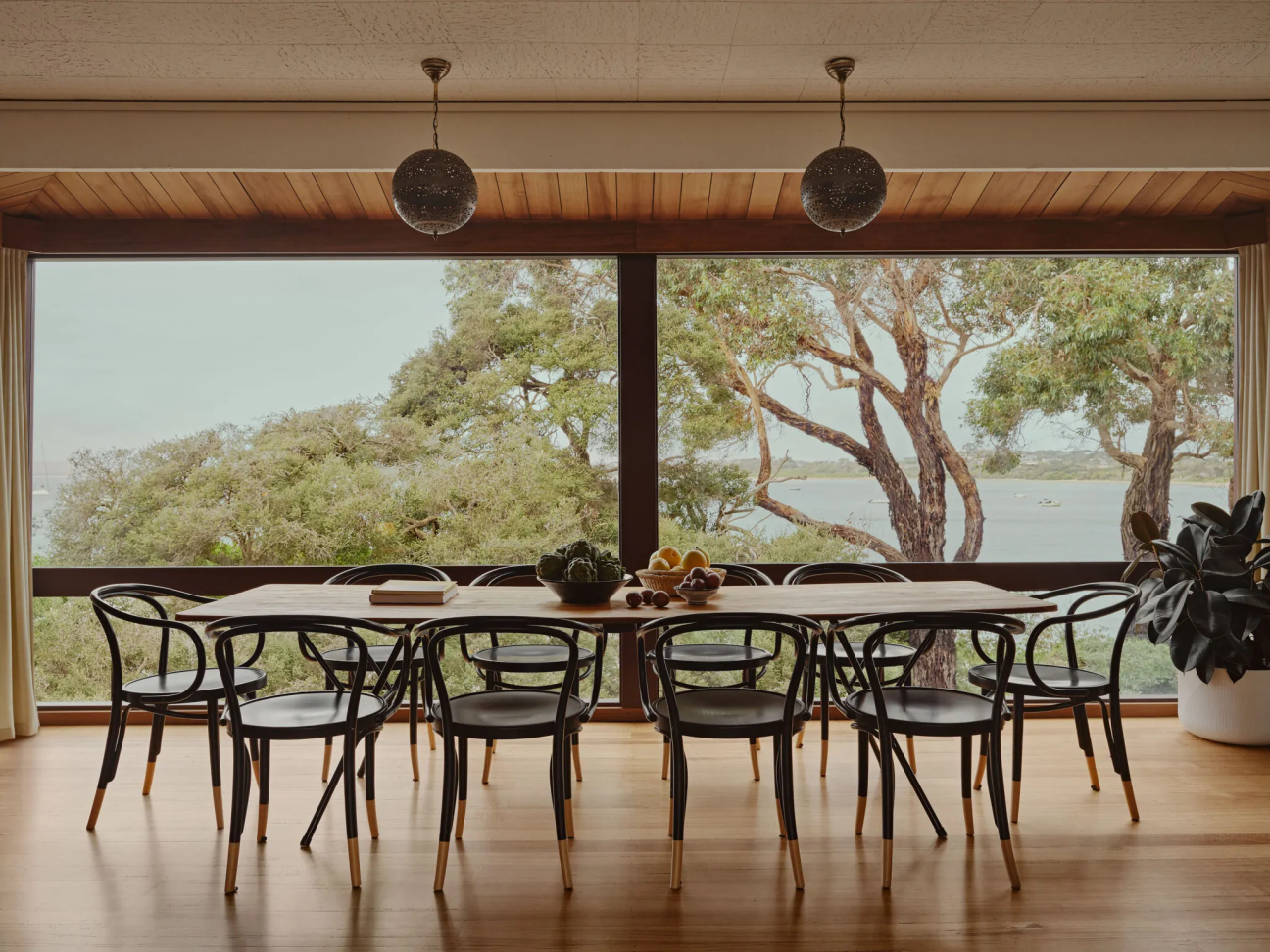
Kona Kahlua in Sorrento, on Victoria’s Mornington Peninsula, is a classic of the genre: a place where later modernism meets the Aussie coast with a generous sprinkling of tiki affection on top. It was recently refurbished, preserving yet enhancing its mid-century chops. “It’s a 1970s gem that’s very practical and comfortable,” owner Siobhan Blewitt tells monocle. “We wanted to protect that integrity, because Sorrento doesn’t need another new house.” Kona Kahlua’s original owners’ love for Hawaii reverberates throughout: from the tiki carvings and bamboo on the walls, beds and doors, to the bathroom’s palm-patterned wallpaper. “It was a luau party house and definitely a slice of the past,” says Blewitt. She and her husband, Chris, retained as much as possible.
Across its five bedrooms and two storeys, Kona Kahlua comfortably accommodates 10. With its sublime views and a backyard spilling straight out onto the sand, it’s primed to keep hosting – and defining – summer beach holidays.
konakahlua.com
14.
Retail: Shop
The Spanish brand with designs on your dwelling
Zara Home: Paris, France
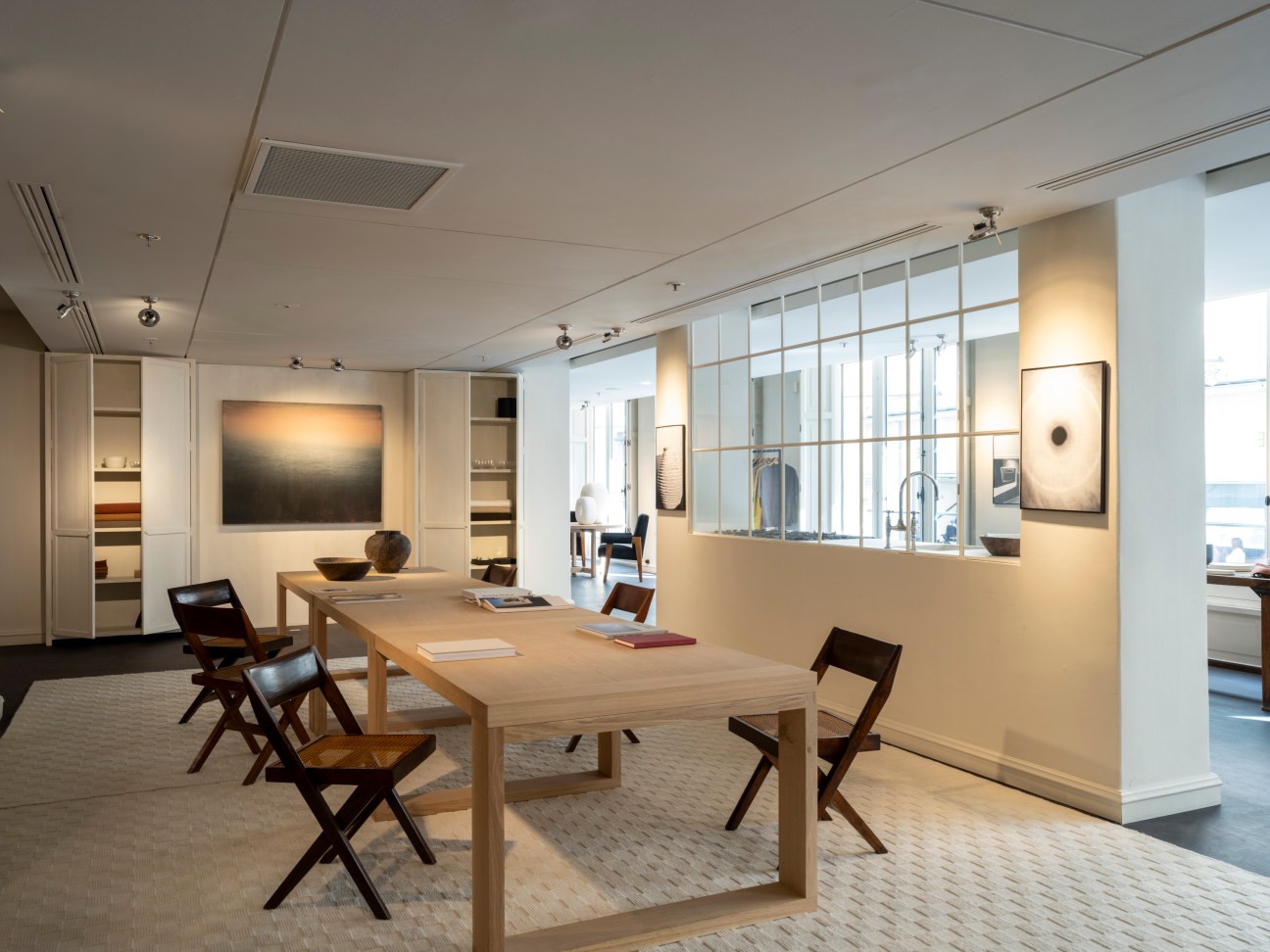
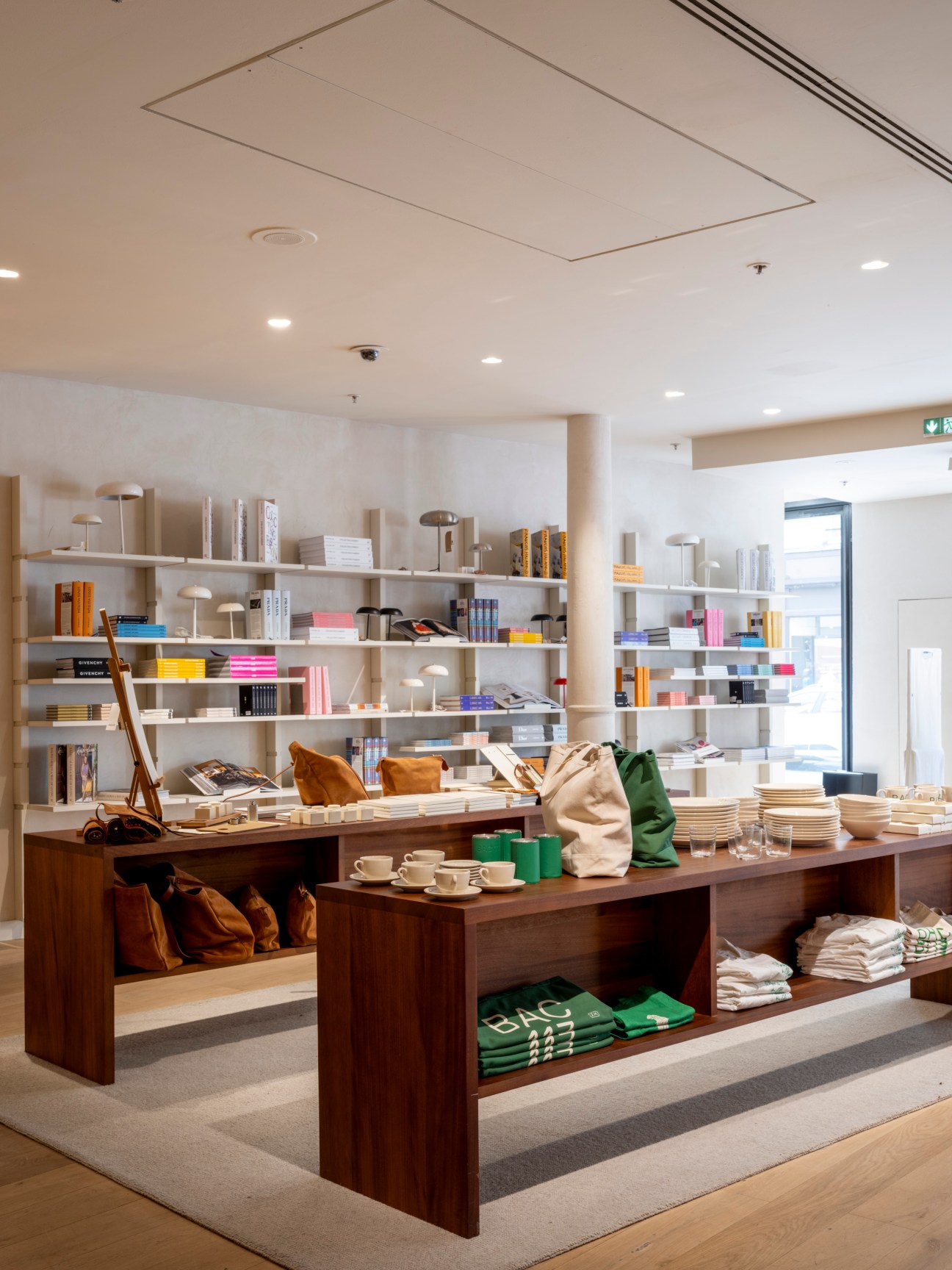
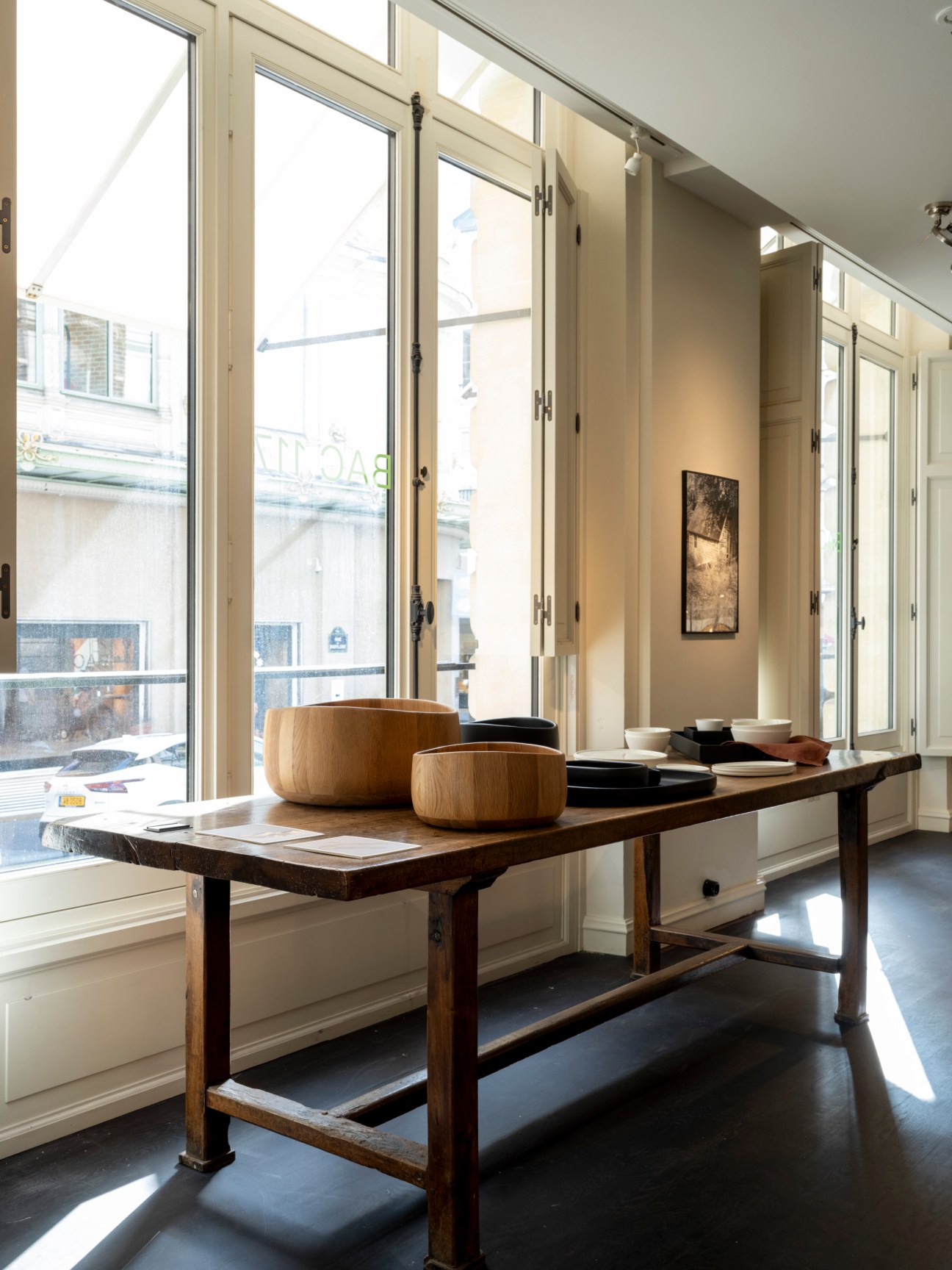
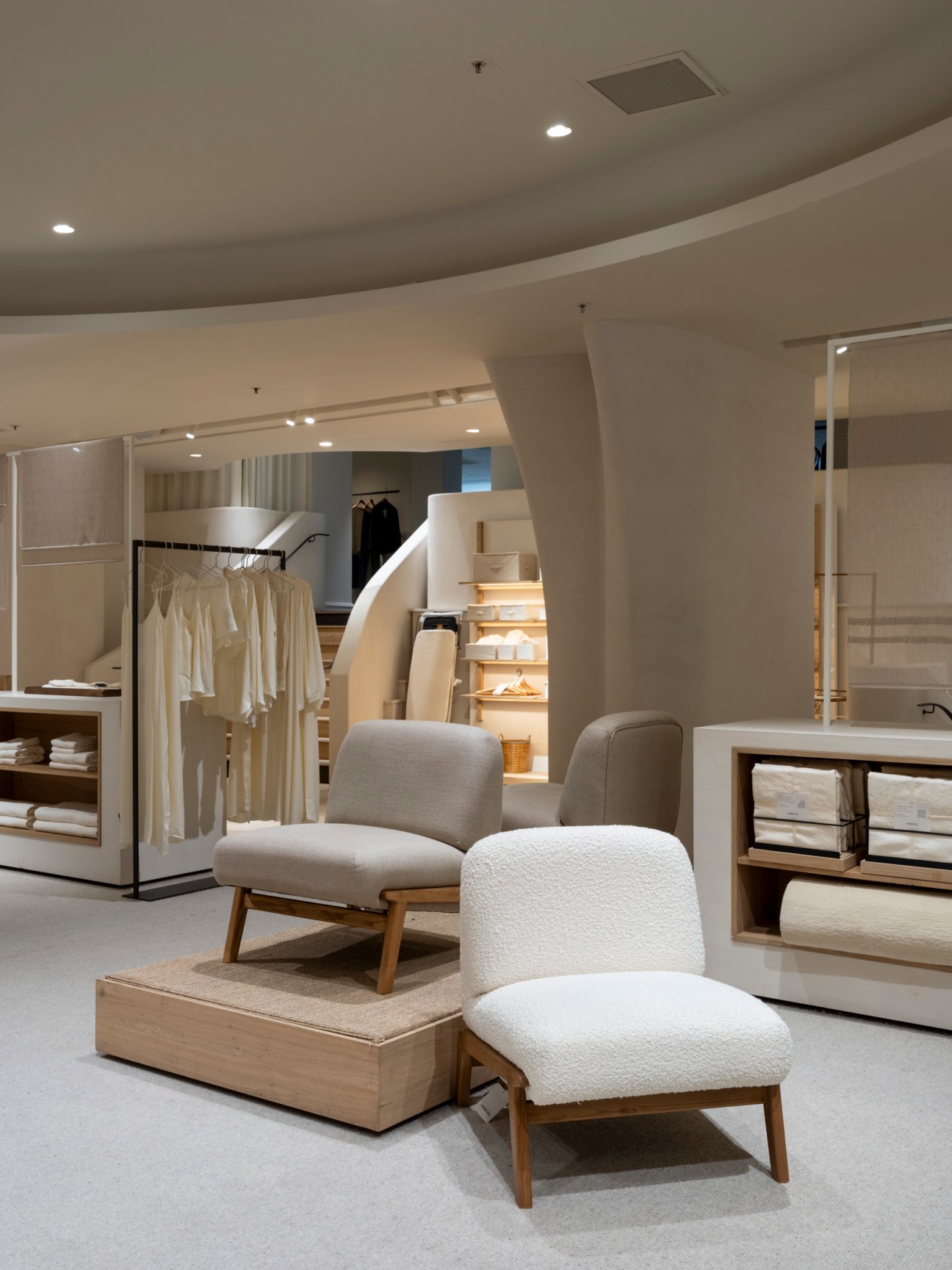
Zara Home’s aim to move upmarket is perfectly reflected in its pop-up flagship at 117 Rue du Bac, which it will occupy until next spring. Nestled in the well-heeled 7th arrondissement, opposite iconic department store Le Bon Marché, the space unfolds over three floors and two mezzanine levels. Guests are greeted with a space for collaborations with those such as florist Nina Charles. There’s a hook-up with Parisian favourite Café Dose for coffee and a snack, a bookshop and a personalised, while-you-watch printing and embroidery service offering monogrammed totes bearing the 117 Rue du Bac branding (courtesy of Atelier Saint-Lazare, winner of a 2024 monocle Design Award).
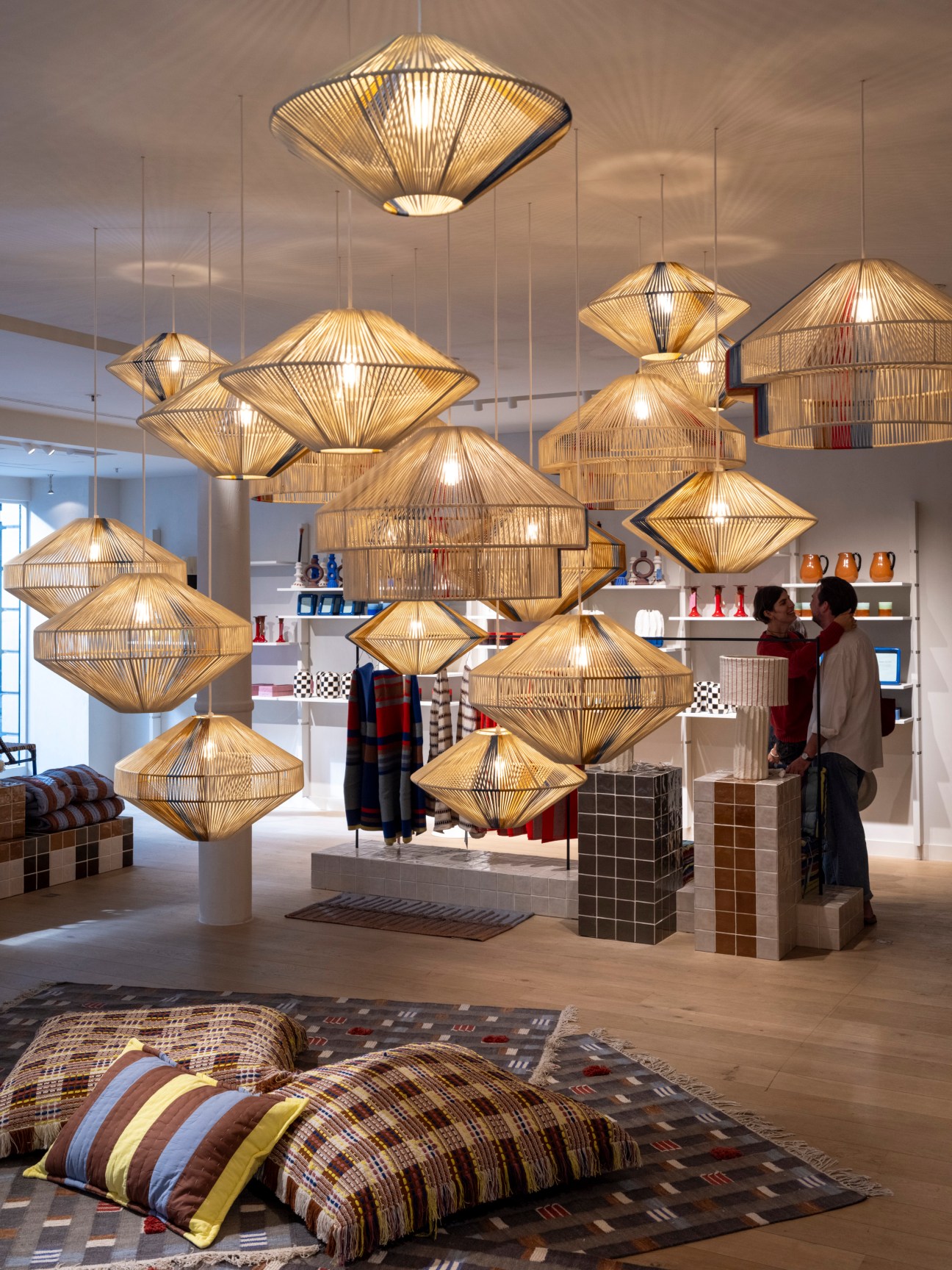
At the top of the restored spiral staircase, you’ll find L’Appartement, a space kitted out like a rather fetching Parisian pied à terre, complete with furniture for Zara Home by Belgian architect and designer Vincent Van Duysen, antiques and design classics from Galerie Patrick Seguin, including a desk by Pierre Jeanneret. Elsewhere you’ll find dressing-room-like spaces housing a sportswear capsule collection, pieces by Zara Woman and smaller “Editions” collections of furniture and homeware. On the lower level, things are a little dimmer: the focus is on bedroom furniture, textiles and a children’s playroom. Inditex-owned Zara Home might have 400 shops in 60 countries but it’s looking particularly at home in Saint-Germain-des-Prés.
zarahome.com
15.
Hospitality: Rental
The smart new rooms above the restaurant
Casa Teo 2: Mexico City, Mexico
Chef and restaurateur Enrique Olvera’s career has been devoted to food – and he has always been attracted by the idea of hotels and hospitality. Running restaurants in Mexico, New York, Los Angeles and Madrid, Olvera is often on the road and uses his trips to workshop what the perfect restaurant with rooms could look like. “I carry a notebook and write down what I would do [if I were to open one],” he says.
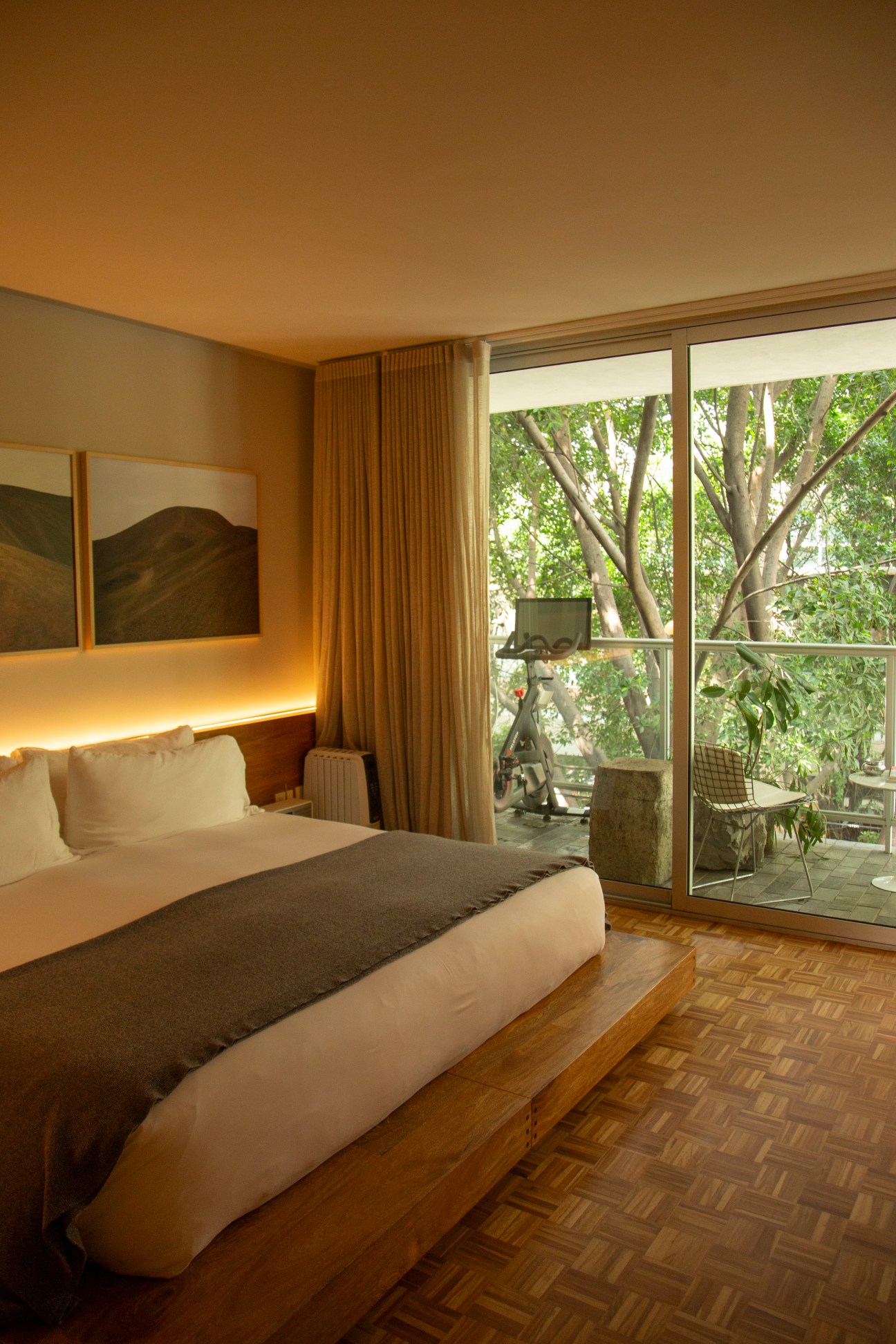
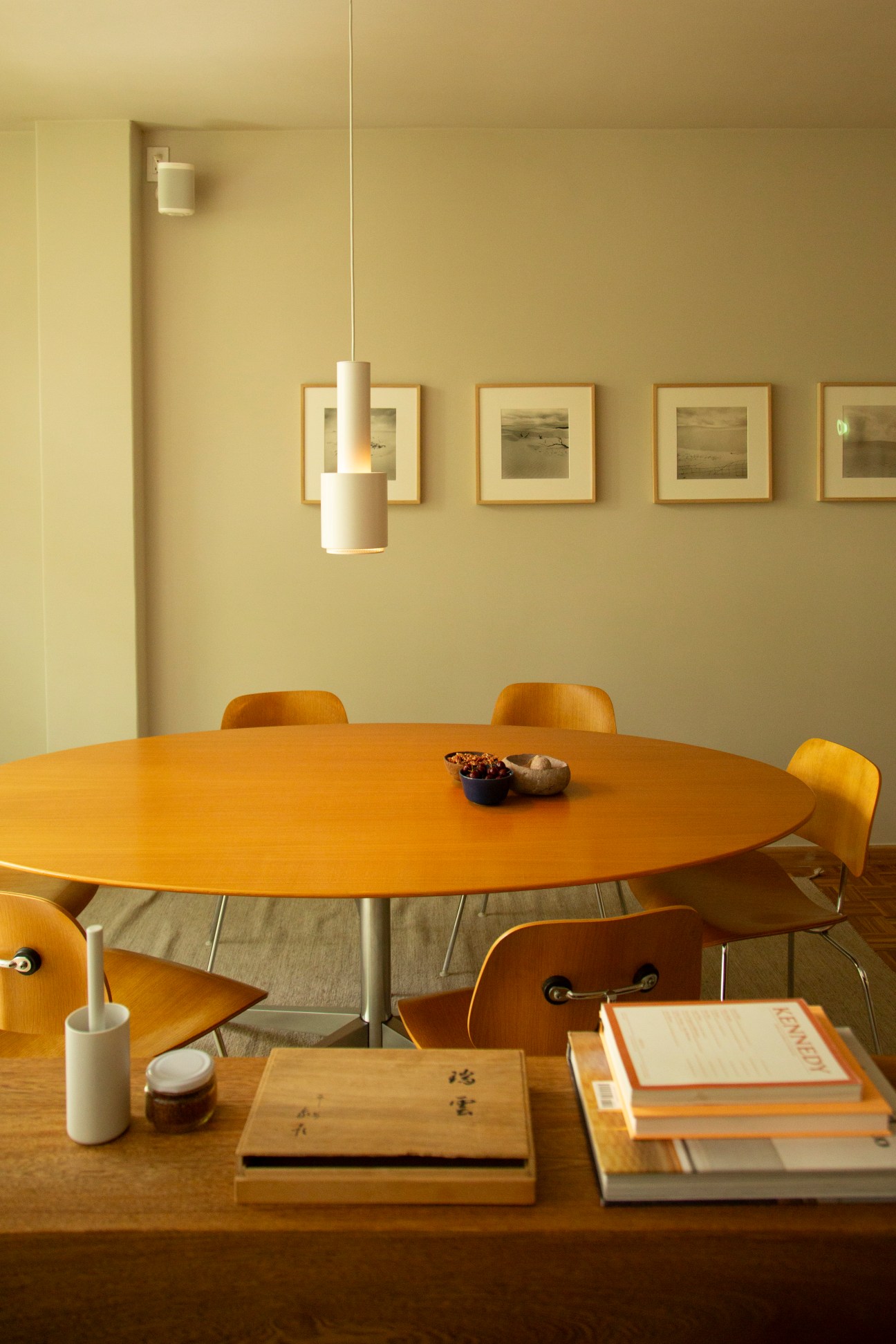
Though a full-blown hotel isn’t on the cards yet, Olvera is creating a series of rentable spaces that serve as extensions of the Olvera brand: both Casa Criollo in Oaxaca and Casa Teo in Mexico City opened recently. What you might have missed was the quiet opening of Casa Teo 2, a new three-bedroom apartment above Olvera’s mezcal bar Ticuchi in Polanco. Inside the third-floor apartment, it’s hard to believe that you’re in one of the world’s busiest cities. The understated rooms have wooden floors and panelling, soft curtains and plenty of plants.
The Mexico City-based chef has always had an eye for interiors, which is evident at his restaurants, such as Pujol. “We always try to have a peaceful atmosphere and use natural materials,” says Olvera, who designed Casa Teo 2 himself and lived there before opening it to the public. Guests checking in will have access to things that Olvera loves: records, coffee and even homemade banana bread, sourdough, fresh yoghurt and fresh mangoes on arrival.
teo.casa
Brand image, urban geese, and the perfect shot – stories of city life and corporate culture
Tyler Brûlé on why brands need to take back control of their image
In the past few weeks, uniforms and guidelines have become leading topics among clients. Over dinner in Zürich, a ceo asked me to find out how a competitor was able to keep staff looking so well groomed while he was fighting a running battle about whether or not female staff should have to shave their legs or if male staff could wear jangly earrings. Meanwhile, in Toronto, a global hospitality group told me that it was struggling to define itself as premium because too many staff members were resisting guidance about what to wear. I keep hearing the same questions: “How did we let things get so baggy? When did we lose our courage to fight for our brand?”
I usually interject with the reminder that the uniform is alive and well in many parts of the world. “But how do we get back to where we were 10 years ago?” clients would ask. In the case of the company in Toronto, I said that it would require its board to jettison some inclusivity initiatives in favour of brand preservation. Such advice used to be met with spasms of wincing but it’s now clear to most that something has to give. Many companies are weighing up how to bolster their customer base and build brand loyalty through superior products and service delivery rather than political gestures. The Toronto executive summed it up best. “We have lost our best people because they were embarrassed by colleagues showing up for their shift in slippers,” he said. “It all happened on our watch.”
Waste not…
Anyone who has recently ventured into a park or spent a day at the beach in Helsinki knows that the city has a problem. Or 5,338 problems, to be precise. That’s how many geese the authorities say have made their home in the city and its leisure areas. Not only can these geese get aggressive but their faeces litter much of Helsinki’s coastline. To make matters trickier, this particular species, the barnacle goose, is protected by the EU, meaning that Helsinki has had to come up with some rather innovative ways to deter them…
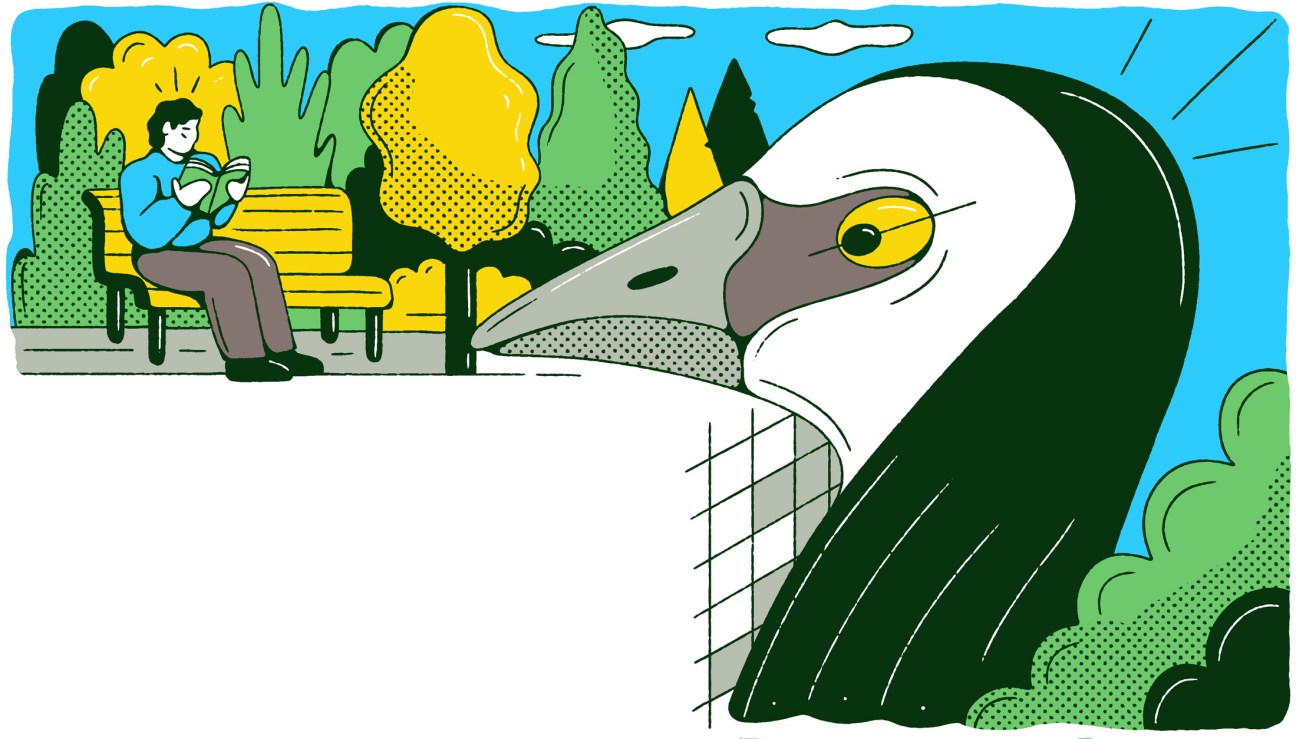
This summer, the Finnish capital experimented with fencing in, not birds, but humans. It turns out that the urban geese, despite having wings to fly with, opt to walk in cities rather than become airborne. However, by installing fences just high enough so that the geese can’t be bothered to jump over them has meant Helsinki has turned to enclosing areas in parks en masse for people to enjoy without the birds bothering them. And, so spoiled are these urban geese that show a preference for manicured lawns, that this has also resulted in the city to curb cutting the grass in certain parks.
Some have suggested a softer strategy: adaptation. If we are to coexist with the geese, let’s at least have better tools. Helsinki recently launched an open competition to design a more effective shovel for the 45 city officials tasked with collecting the geese’s waste. We’re waiting for those results to drop soon.
The government has promised to help as well. In its policy programme, it says it will allow people to hunt for barnacle geese. Some skilful EU-level diplomacy is needed first, but in a country that boasts more than 300,000 active hunters, it would be an effective solution. We’re just not sure how many people would enjoy hanging out in parks with bullets flying around.
Perfect shot

A fleeting visit to the verdant Alpine Austrian town of Bad Ischl might sound like an idyllic trip to the land of The Sound of Music, but reporting trips are never as tranquil as one might imagine. Coordinating the calendars of 12 members of the region’s cultural programme to find a convenient time for a group shot (see page 44) is a challenge in and of itself. The selected time for the photoshoot happened to be during rush hour and the location – chosen for its quaint Austrian spires to create an atmospheric backdrop – happened to be a through road. It made for an amusing episode of role play as a school crossing patrol officer when I found myself halting residents on their way to work, apologising in broken German for blocking their way. Meanwhile the photographer, perched on a rickety stepladder for a privileged viewpoint, took the 10-second break in the traffic to snap as many pictures as possible. When it comes to getting that perfect shot for a monocle feature, we’re prepared to move mountains – and a number of cars.
Editor’s letter: Andrew Tuck on moving forward
Mobility, the way we get from A to B, has become a source of surprising friction. Fisticuffs even. Some of the biggest confrontations are taking place in our cities, where moves to pedestrianise streets and encourage more people to cycle have been met with unusual responses. Politicians have waded into the urbanism debate to depict such seemingly innocent transport shifts as left-wing plots or middle-class conspiracies to deny working folk access to their cars. How did it come to this? And how do you find a way through the politicking and barracking to find a consensus?
These were some of the questions that our foreign editor, Alexis Self, had in mind as he headed to Brussels, a city that’s become a veritable urbanism battleground. After a period that has seen cars removed from much of the downtown area and the creation of numerous new green spaces, most visitors to the city would be impressed by its transformation – the city with a rap for being a bit dull and home to far too many EU bureaucrats is actually a rather splendid cultural capital. Who could be opposed to any of this, one might wonder?
Well, as Alexis discovered, the creation of this walkable, cycle-friendly city was enough to dethrone many politicians in June’s regional parliamentary elections, as parties that had spoken out in favour of car owners over cyclists took the majority of votes. It’s a fascinating report that reveals the complexities and compromises at play in the urban-mobility conversation.

Luckily not all mobility tales end up with ballot-box battles. In our global survey, we also take time to ride Sydney’s new metro line, visit the Detroit of the Balkans and discover how an automobile touring club became a major player catering to Austrian cyclists and running medevac services across the country. Then, in our Design pages, Nic Monisse oversees the assembly of our ideal train set-up, from carriages to stations. (We knew that train set was a good ‘secret Santa’ gift.)
But none of these stories unfold in a vacuum. Every sector of the mobility industry is being shaped by social and legislative pressures. That’s particularly true in the auto trade, where the demand for environmentally cleaner vehicles that don’t cost a fortune and can be driven nippily around congested cities has given rise to a cavalcade of tiny, often electric, options. It’s a similar story when you look at the cargo-bike boom in places such as Switzerland, where people want to get themselves and their shopping home affordably under their own steam. So while this is Monocle’s Mobility Special, it’s also a report on how we want to live – and the innovators making it possible.
But it’s not all horn-honking and bell-ringing. There are also a few stories that unpack very different aspects of what makes a country harmonious. In the Affairs pages, our Bangkok bureau chief, James Chambers, attends Thailand’s school for diplomats and meets the nation’s foreign minister as he investigates how the country keeps its admirable engaged neutrality with the region’s many powers. James even learns how to lay a table for a state banquet. Meanwhile, Ed Stocker visits Lithuania to attend its quadrennial Song Celebration, which this year featured 37,000 people chorusing the nation’s most treasured tunes – a coming together that has delivered an epic and mellifluous Expo.
As ever, though, there’s much more afoot at Monocle than merely making magazines. We are in full planning mode for this year’s Quality of Life Conference, which will take place in Istanbul from Thursday 10 to Saturday 12 October. It’s a moment in the calendar where we bring readers together for a day of talks and debates, peerless hospitality and a deep dive into our host city. You can find all the details at monocle.com/conference or by emailing our head of events, Hannah Grundy, at [email protected]. Whether you arrive via Turkish Airlines or Bosphorus ferry, you will be well looked after.
Finally, if you’d like to send thoughts or clever mobility tips to me or the team, you reach me on [email protected]. Safe travels.
How Bombardier’s Toronto facility is redefining aircraft production (and sunlight)
At a new facility on the northwestern periphery of Toronto Pearson Airport, a fresh approach to aircraft manufacturing is taking off. “It’s a real contrast to the old buildings that we occupied for 30 years,” says Julien Boudreault, the vice-president of project management at Montréal-based aerospace firm Bombardier, which was founded in Québec in 1942.
Opened in May, this is where Bombardier makes its Global 6500 and 7500 series of business and private jets. The manufacturing hub marks several firsts for Canada’s aircraft industry and signals a fresh focus for the storied manufacturer at a time when demand for its planes – from military, government and private clients – is in the ascendant.
Arrayed around the 71,500 sq m facility are jets at various stages of completion. On the morning when Monocle visits, we see electricians tweaking the cabling inside a plane’s wing, while engineers review the underbelly of another. The lozenge-shaped doorway of a third aircraft is undergoing a mechanical inspection.

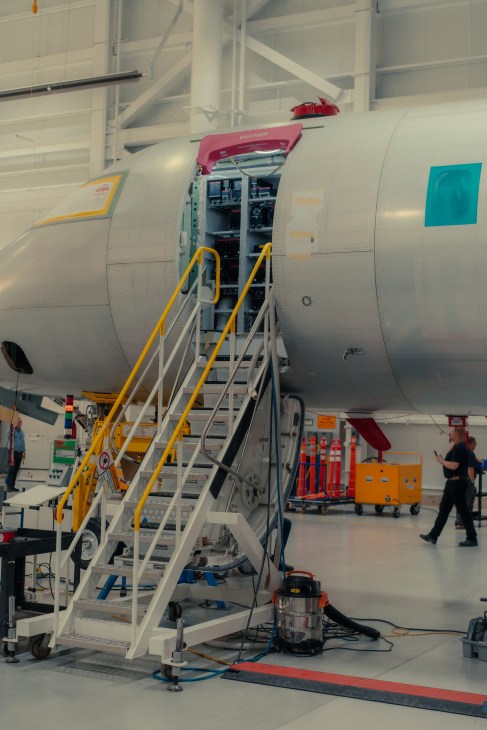

Unusually for a manufacturing hub of this scale and type, the staff members who are hard at work on the production floor aren’t bathed in the glare of artificial lights hanging overhead. “We have unlocked the daylight,” says Lilia Koleva, a partner and architect at Montréal-based practice NEUF, which designed the complex. “Architecturally, that is probably one of our biggest successes here.”
“That might not seem like a lot but it feels significant when you have spent years in facilities that felt like caves, where you never saw the daylight while you worked,” adds Boudreault. Translucent and semi-translucent panels are installed in the windows and hangar doors. Because of innovations in their design, they are as flame-resistant and combustion-proof as panels made from the heavier materials conventionally used in hangar construction, which tend to be impermeable to natural light. “All of a sudden, you get this new world where you can feel the sun and take it all in.”
Smart but seemingly simple architectural interventions such as this can have multiple benefits. The purpose, in this case, is not only to elevate the working conditions on the assembly floor, where most of Bombardier’s 2,000 or so Toronto-based personnel spend much of their time. According to Boudreault, the facility’s design will also boost the mobility and efficiency of the company’s production lines, at a time when demand for its aircraft is booming, following a major overhaul of the wider business in recent years.
Québécois mechanical engineer Joseph-Armand established Bombardier in the 1930s when he built Canada’s first commercially available snow plough. The company was incorporated in 1942 and grew to become one of the country’s best-known manufacturers, producing trains, aircraft and other vehicles. But in 2020, Bombardier sold its train-building and commercial-jet operations to focus on its private, business and defence divisions, as well as on its EcoJet facility, which is developing planes powered by electricity.
Currently, Bombardier’s business is anchored by its Global series of jets. Once assembled in Toronto, the aircraft are flown to Montréal, where their interiors are furnished and finished before delivery. The series has set new standards for the duration that a twin-engine aircraft can stay airborne, as well as for fuel efficiency. In 2019 a Global 7500 aircraft broke an intercity record when it flew more than 15,200km from Sydney to Detroit non-stop, with ample fuel to spare.
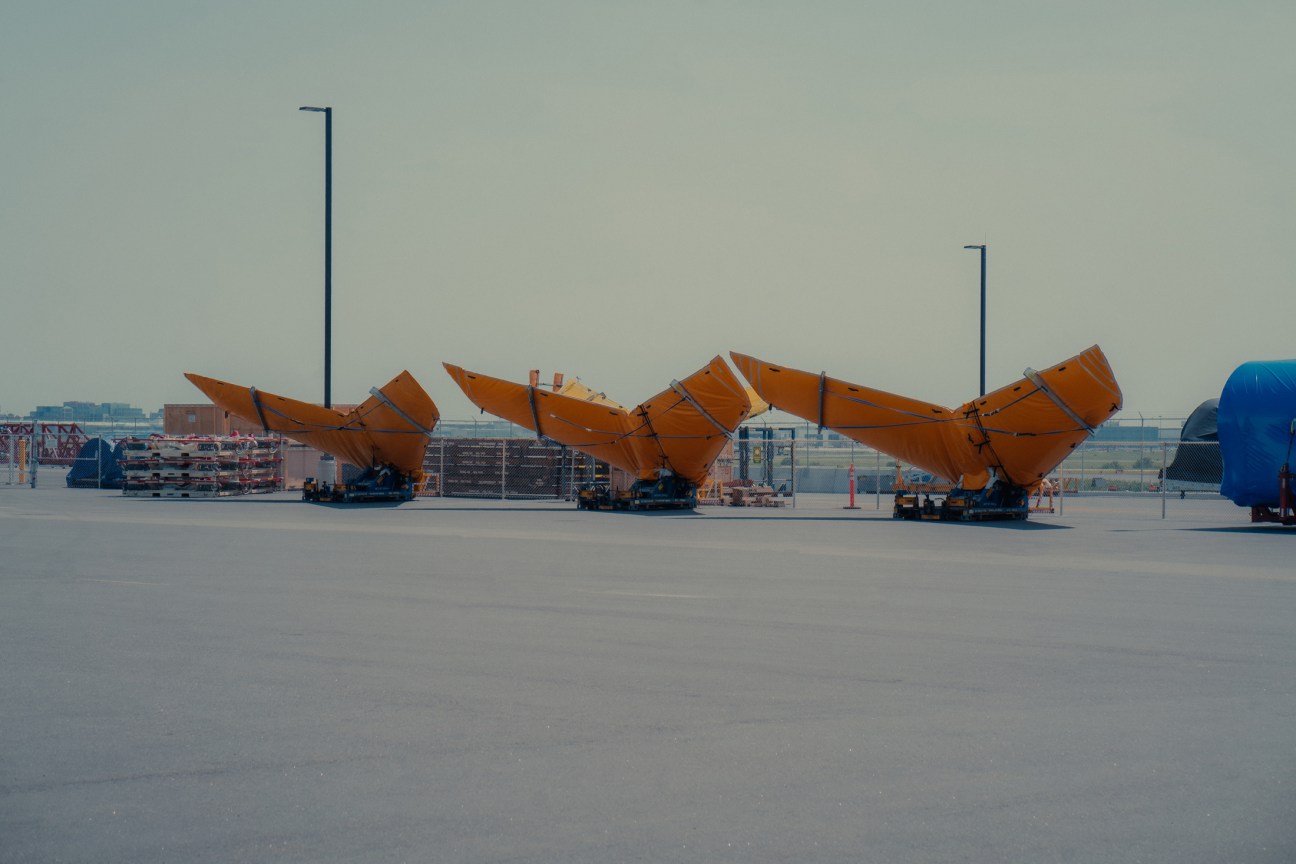

Meanwhile, the Global 6500 model has long been attractive to military and government clients for the high altitudes at which it can fly, as well as for its long lifespan and adaptability for intelligence-gathering and reconnaissance missions. Following the disappearance of Malaysia Airlines Flight 370 in 2014, the Australian military deployed a Global 6500 to search vast areas of the Pacific Ocean. In December 2023, the US military placed an order for three Global 6500s, which it intends to equip as spy planes.
The private-jet use of celebrities and other wealthy people has received criticism in recent years – but even this unwanted scrutiny has increased interest in the Global series. Many prospective clients who are keen to acquire an aircraft that is gentler on the environment are turning to Bombardier. A new addition, the Global 8000, is under development and expected to be airborne late next year.
All of that, says Boudreault, explains why the innovative design of the new Toronto hub, which operates 24 hours a day, is so crucial in allowing Bombardier to play a role in shaping the future of mobility by air. “That’s the science and art of a facility such as this: to be able to meet all of the requirements and generate operational efficiency, as well as a momentum and a flow that works.”
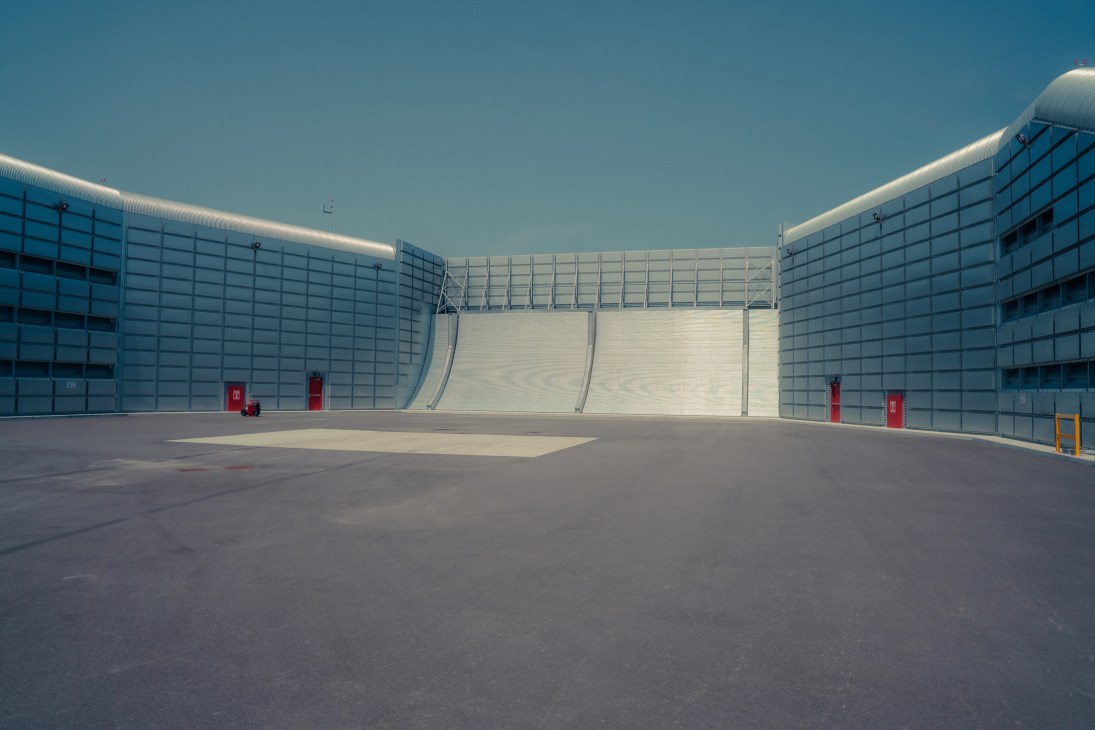

The layout of the hangar allows every aircraft to be moved easily by crane from one stage of the production process to the next, from the attachment of the body to the wings at the beginning to the assembly of the cockpit and the engines. Tool stations and desks for project managers are nestled among the assembly lines; this ensures that parts, tools and other equipment can be retrieved quickly and that questions are answered promptly without the need for engineers to stray too far from the aircraft that they are working on.
Other aspects of the hangar design complement this. Self-service canteens and nicely appointed bathrooms have been built into the hangar’s periphery, meaning that personnel don’t have to take long, winding routes through the complex when they take a break.
“We are always bringing it back to this but a happy workforce is a productive workforce,” says Boudreault. “That’s why it was important for us to bring in all of these other elements and consider things that people wouldn’t expect to find in an ordinary factory.” bombardier.com
Going the distance
Able to fly non-stop for longer, Bombardier’s Global 8000 will open up a new array of routes when it takes to the skies next year.
Australia’s ambitious public-transport plan is cutting commute times in Sydney
Many of the features that make Sydney an astoundingly beautiful city – its dramatic coastline, narrow central streets and low, rolling hills – are the same things that conspire to make it a frustrating place in which to commute. Here, the notion of getting from your doorstep to desk in less than an hour is often so unrealistic that it’s downright fantastical. But that might not be the case for much longer.
The new phase of the Sydney Metro, the City Line, is due to open this month, transforming the way that Sydneysiders move through Australia’s largest metropolis. The multiphase Sydney Metro project, first announced in 2011 and in construction since 2014, is the country’s biggest public-transport plan; an audacious, decades-long effort to deliver Oceania’s first mass rapid-transit system. Its ambition is to connect the city’s outer reaches and second international airport with the central business district – and the crowning jewel is the City Line, with its six new stations.

“It’s one of the biggest public transport projects since the Harbour Bridge, so it’s going to completely transform Sydney,” says Jason Hammond, director for design at Sydney Metro. “It will make the journey easier for everyone using the city, from people coming in for leisure at the weekend to office workers during the day. Sydney won’t know what’s hit it.” The metro is using customised versions of French manufacturer Alstom’s high-speed, driverless Metropolis trains, which arrive at stations at peak hours every four minutes, almost halving travel times for train passengers in the city centre. Hammond is relishing the opportunity to speed up Sydneysiders’ lives. “We’re expecting 264,000 trips on a typical weekday, moving 37,000 people during the morning peak,” he says. “One of the key things is to relieve congestion on existing central business district stations and spread the load across the network.”
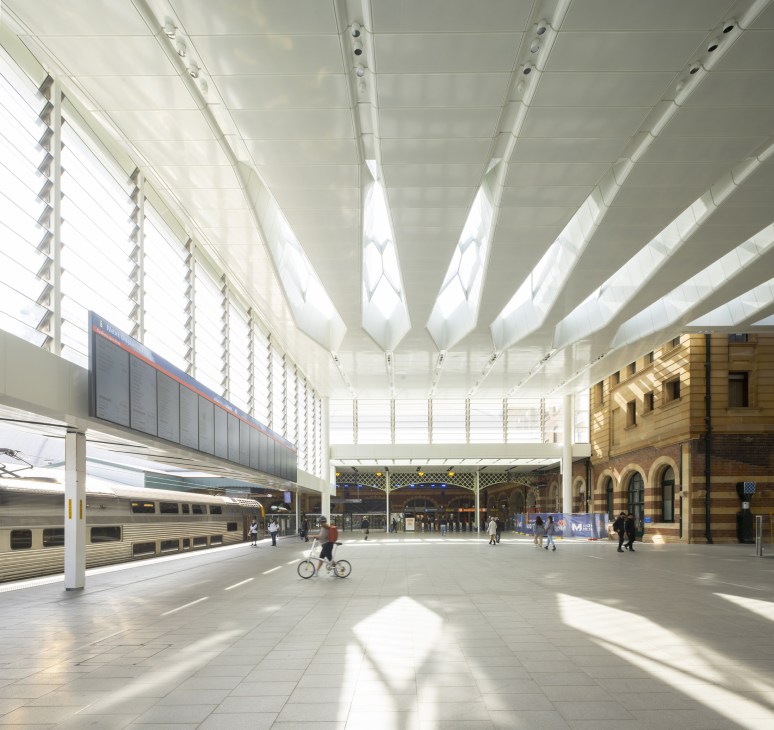
Global architecture firm John McAslan + Partners was selected for two of the most important tasks in the project: designing the new Waterloo Station and upgrading Central Station to become metro-ready (the latter in collaboration with Australian-founded design firm Woods Bagot). In 2012, McAslan delivered the Kings Cross Western Concourse, a global benchmark in station design, and it looked to that success when considering the challenge of untangling the commuting knot at the heart of Central Station. As Australia’s busiest train station and Sydney’s main transport hub, Central Station has weathered an accretion of extensions and additions over the years, but few changes have been as drastic, or as well-received, as McAslan’s.
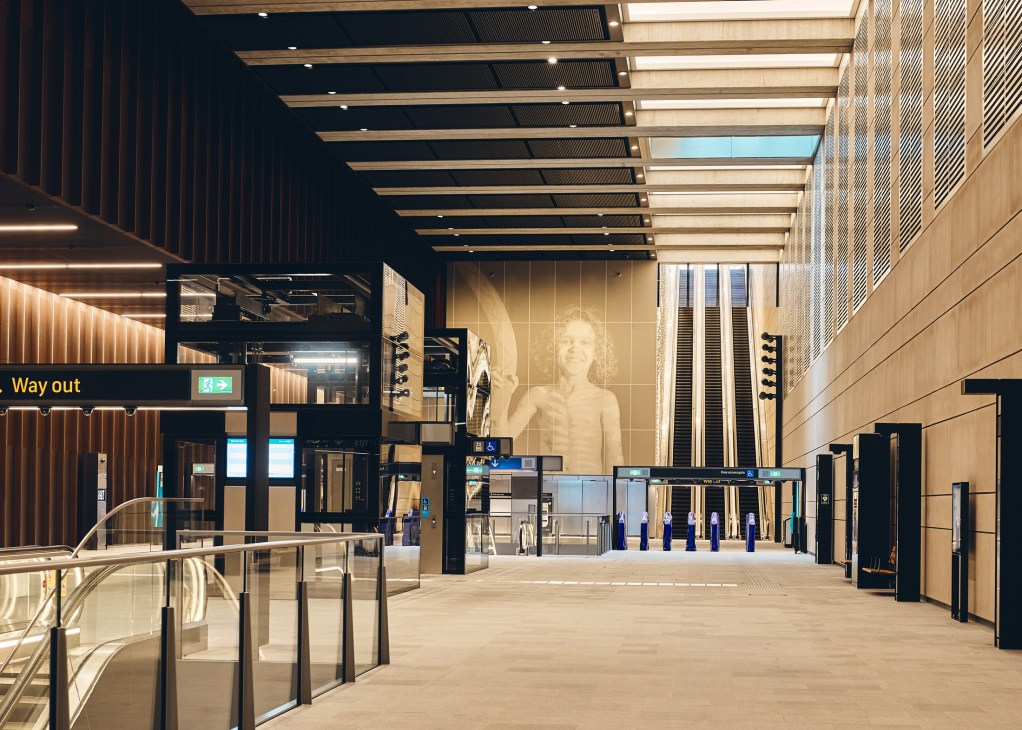
“We tried to help this heritage building sing and be the best version of itself,” says Troy Uleman, director of John McAslan + Partners Sydney, as he and Monocle tap into the newest section of Central Station. “It comes down to that user experience. It’s not just about the station itself or the experience outside the building but how you move through it and use it to connect yourself from place to place.” McAslan’s improvements include a central walkway that, though nominally designed to allow access to the new metro, has also provided escalators and easier access to every train platform in the station. It can be accessed by a new northern concourse set beneath a soaring roof that crests over a cluster of Central Station’s sandstone buildings. “It was about having a great public room for Central Station,” says Uleman. “It’s an organising space that connects to everything.” Crucially for any large station, there’s room for hapless commuters to dither while they figure out which train to catch, without getting in anyone’s way. “We made room for those little places for people to stand in a corner or catch up,” says Uleman.
Nods to the building’s past abound, including the use of arches and sandstone, as well as a custom typeface made with old platform lettering. But the station’s new metro future is alluded to throughout, including in the walls, where engravings of clocks gradually fade away in a representation of Sydney’s timetable-free reality, where the next train is only a few minutes away.
Non-stop service
Sydney’s next milestone will be the opening of a route with six stations linking the city to the new Western Sydney Airport in 2026.
Underground rail in Lagos is paying its way
According to a study by the American Public Transportation Association, transit schemes can create 49,700 jobs per €920m invested. This is something that Lagos – notorious for its traffic and crowded roads – is hoping yields rewards with its €124m investment in urban transport.
The megacity, with more than 16.5 million residents, is in a state of perpetual rush hour, so Lagosians were elated when former president Muhammadu Buhari opened the Blue Line, the first phase of the Lagos Rail Mass Transit system, last year. This 12km rail corridor spanning some of the city’s densest suburbs has now been complemented by the 37km Red Line. Journeys that once took more than two and a half hours have been shaved down to about 35 minutes. With a carrying capacity of some 500,000 passengers daily, the project will have a huge impact on commuters’ lives.
The history of the metro dates to 1983 when the idea was conceived by then state governor Lateef Jakande. Its first phase was due for completion in 1986 but when the government was toppled in a coup in 1985, the junta leader scrapped the initiative. The project was then resuscitated in the 2000s with building works commencing in 2009. Several administrations since it was revived, the project is only now being realised.
The wait has proved timely. Fuel prices have skyrocketed following the removal of a subsidy, increasing the costs of transportation. The metro is not only helping to build the economy but saving residents money.
How mini but mighty microcars are changing the way we drive
The minicar, the microvan, the nanocar – the tiny vehicles that have been cropping up on city roads across the globe have many names. Japan was among the first countries to recognise their virtues, establishing the kei category in 1949. Others have warmed to them too – most notably China, where surging domestic sales of the Wuling Hongguang Mini EV have seen it dethrone the Tesla Model 3 as the world’s best-selling electric vehicle (EV).
With consumers increasingly prioritising energy efficiency, automakers are now offering vehicles that are conspicuously more diminutive than their fuel-guzzling counterparts. Advances in engineering and design have allowed newer microcars to pack more amenities and technology into their bijou frames. Meanwhile, government incentives for compact cars are becoming common, from subsidies in South Korea to preferential parking in Guernsey.
Almost every major automaker has entered the sector, responding to growing demand – particularly from young urbanites, among whom these compact vehicles have become status symbols. They make sense for urban life: they can zip down alleys and squeeze into tight parking spots, and are safer, quieter and less obtrusive than larger vehicles. But they’re not limited to cities. Models such as the Suzuki Hustler and the Kia Ray are built for country drives, while specialedition models including Fiat’s Topolino are perfect for cruising along the Italian Riviera. Here are 10 of the mightiest microcars on the market.
1.
Fiat Topolino
Italy
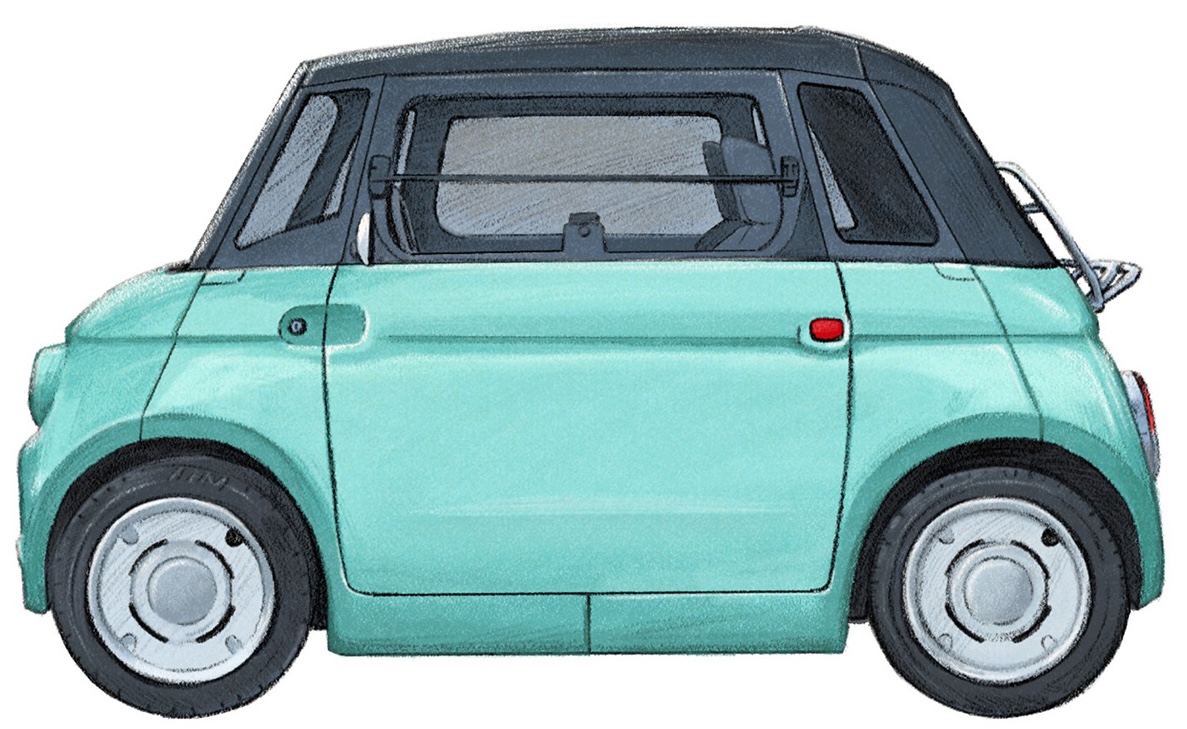
Fiat’s Topolino is a restyled version of the Citroën Ami. Like the original, it’s a two-door, two-seater electric quadricycle, though drivers who want to feel the wind in their hair can choose the Dolce Vita edition, which has a doorless open carriage and a canvas roof. Its name is a nod to the original Fiat 500, which ceased production in 1955 and was widely known as “Topolino” (Mickey Mouse’s Italian moniker). It comes in teal with cream interiors and has a top speed of 45km/h.
2.
Microlino
Switzerland & Italy
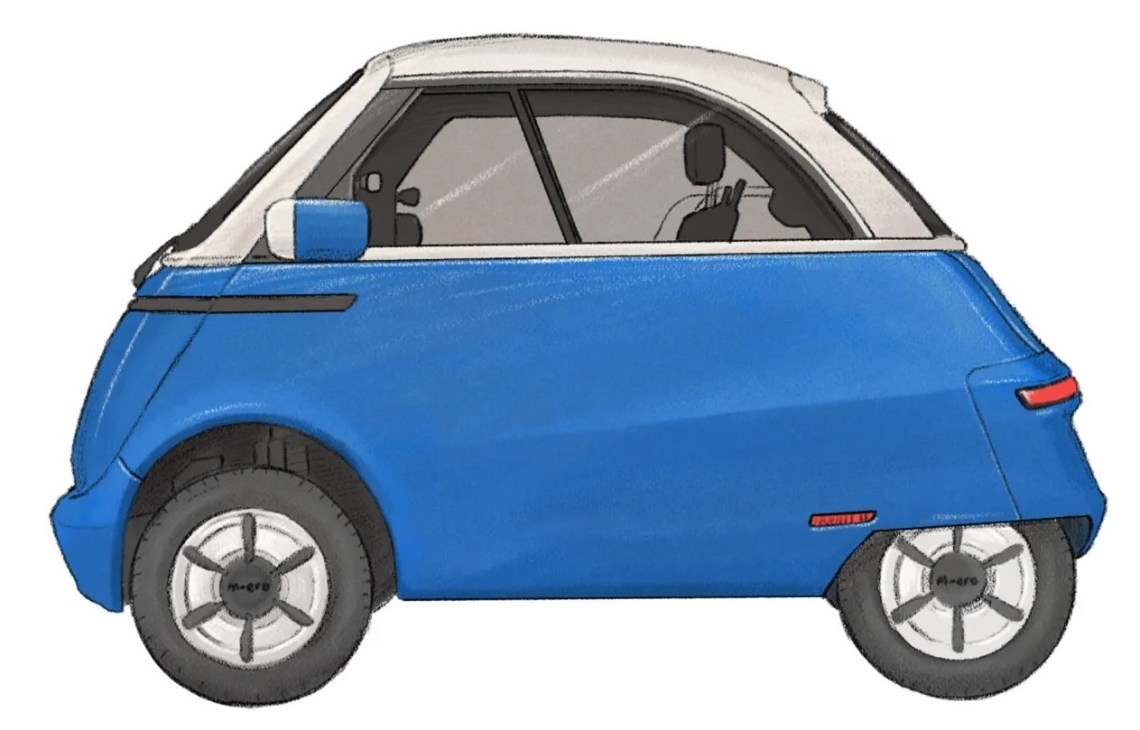
Co-founders Merlin and Oliver Ouboter unveiled their Microlino concept at the Geneva International Motor Show in 2016. Four years later, a redesign resulted in the two-seat, four-wheel EV that’s now produced in Turin. The Microlino can reach 90km/h, though it’s so small that it’s technically classified as a quadricycle. It has a sunroof and comes in various shades of pastel or primary colours, with a glossy or matte finish. Prices range from €16,500 to €23,000.
3.
Daihatsu Copen
Japan

The first generation of the Daihatsu Copen, launched in Japan in 1999, was a two-door roadster with a hard convertible top and bubbly curves suggestive of a children’s toy. The model that’s now in production is slightly more angular but retains the original’s charm and has a top speed of about 170km/h. The Copen – the anglicised form of the Japanese word kopen, a portmanteau of kei and “open” – is a particularly fine example of the light automobile.
4.
Suzuki Ignis
Japan

The Suzuki Ignis is a rare beast: an SUV version of the dinky Japanese kei-class car. It’s reliable and feels roomier than most micro-vehicles, with more than 500 litres of storage when the rear seatbacks are folded. But you won’t buy one for haulage – its main draw is that it’s fun to drive in the city. The 434 option is perfect for more rustic outings, while the new SZ-T version comes with roof rails, 16-inch alloy wheels and side mouldings that are guaranteed to turn heads.
5.
Silence S04
Spain

This two-door hatchback comes in two versions, the faster of which can reach 85km/h. The Silence S04 has the distinction of being one of the first EVs with a removable battery, making charging more convenient – drivers can plug in at home or subscribe to a service allowing them to swap dying batteries for fresh ones at designated stations. Spain’s Silence produces the S04 at a former Nissan factory in Barcelona and Nissan is leading its distribution in Europe.
6.
Tata Magic Iris
India

The Magic Iris is a diesel-powered microvan produced by Tata Motors, one of India’s largest carmakers. It has four seats, a front cab with two doors and a third rear door, and its top speed is 55km/h. It has diamond-shaped headlights and measures a little under three metres in length. It was designed with the domestic market in mind: it’s a safer alternative to the rickshaws and tuk-tuks that are ubiquitous in the country’s megacities.
7.
Wuling Hongguang
Mini EV
China

The two-door, four-seater Wuling Hongguang Mini is the world’s best-selling EV. It’s also one of the cheapest, with the basic model priced at about €4,000. It was launched in 2020 by SGMW, a joint venture between SAIC Motor, Guangxi Auto and General Motors. The wallet-friendly price and a Pantone collaboration that resulted in a series offering three pastel-coloured options have made it especially popular among younger drivers. It can reach a speedy 100km/h too.
8.
Kia Ray EV
South Korea
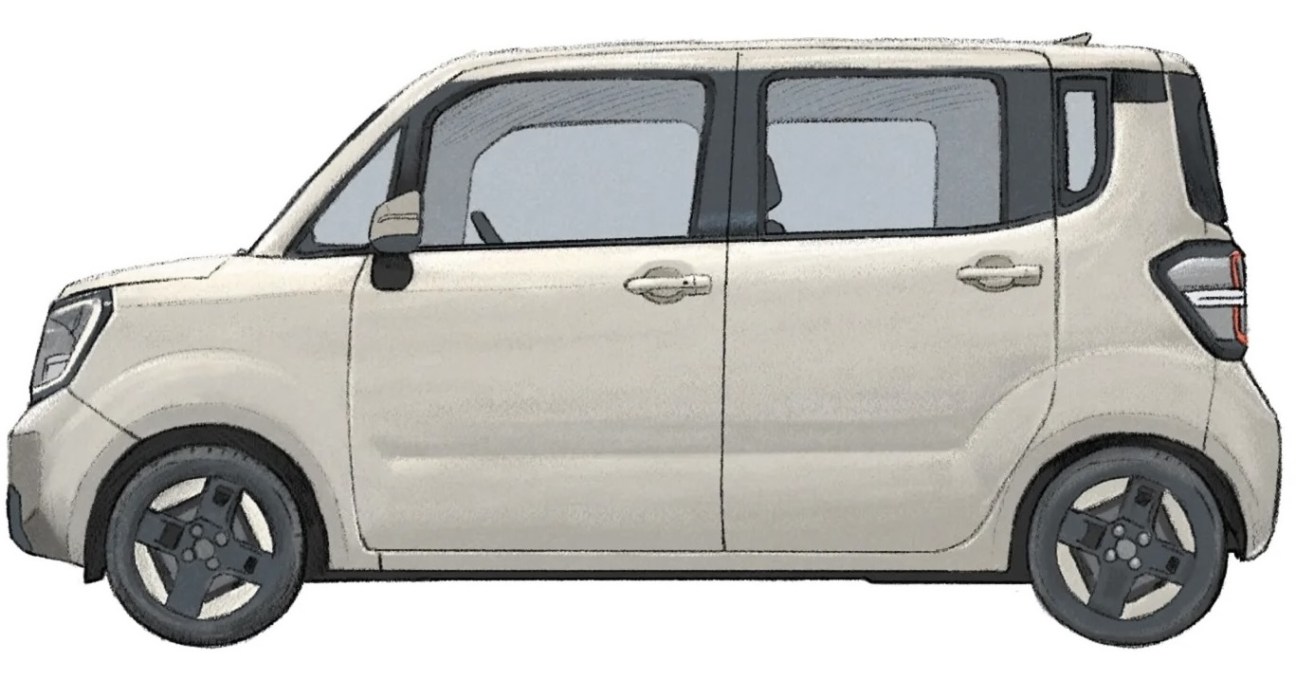
With its large windows and add-ons such as a side tarp that forms a shaded canopy, the Kia Ray will appeal to camping enthusiasts and day-tripping urbanites. In response to the growing demand for EVs in its domestic market, South Korea’s Kia released a new electric edition of this popular compact car in 2023, having discontinued the first EV Ray in 2018. It comes in shades ranging from white to aqua and the interior can be outfitted in either grey or black.
9.
Honda N-One
Japan

On the outside, the second generation of Honda’s N-One kei car is nearly indistinguishable from its predecessor. It has slightly deeper-set headlights, a larger grille and an additional strip of rear lights but most of the changes were reserved for the inside. These include enhanced safety features, extra storage space, usb ports and a sleeker dashboard. A special Style 1 Urban edition, launched in 2022, features two-tone leather seats and a faux-wood dashboard.
10.
Nissan Sakura
Japan

Released in 2022, Nissan’s four-seater Sakura is Japan’s best-selling EV. Nissan has decades of experience in the sector and pioneered the first mass-market EV but this is its first electric kei car. Though narrow, the Sakura’s height allows for plenty of storage space, especially when the backseats are folded flat. It has an impressive top speed of 130km/h and comes in a range of colours, including pink, in honour of Japan’s national flower, the cherry blossom.
“Why I’d rather get lost than let my phone give me directions”
I recently took a work trip to Sussex in southern England. I hadn’t had a chance to check where we were going and just hopped in my colleague’s car. She typed the address into her smartphone, slipped it into a holder on the dashboard and off we went. When I wasn’t following the blue dot on the screen, I was startled by the views. We traversed an exotic-looking heathland. A gothic church loomed over a mysterious hill town. Unexpectedly, I glimpsed the sea. Where were we? I felt as though I was in a foreign land.
This is not how I normally travel. I am one of the few remaining smartphone refuseniks; my phone is a brick. I use Google Maps but only before I set out, so that I can draw a route onto a scrap of paper. In the car, I consult the road atlas. When I’m out on my bike, I tap on the windows of cabs waiting at red lights. I ask bus drivers where to get off. These human interactions now feel very countercultural. But my brief period of Sussex disorientation is now how most people live all the time – unaware of where they are going and in which direction. I do sometimes get lost but I’m usually aware of the general lie of the land. I am mindful of my increasing eccentricity but I believe that not having a sense of where we are is profoundly disempowering. It means that we walk blindly down a dark corridor, guided only by technological corporations with dubious motives.

Several studies have shown that relying on “egocentric navigation” (or turn-by-turn instructions) rather than paper maps is eroding our navigational ability; it’s a “use it or lose it” skill. Indeed, we have our own gps system in our brains: researchers have identified triangular “grid cells” that map territory, rather like longitude and latitude co-ordinates. This is just one way in which we underestimate our own highly sophisticated cognitive capacities in favour of the shiny new technology at our fingertips. Satellite navigation is improving all the time and rarely lets us down. When it does, though, the consequences can feel catastrophic.
Researchers have found clear links between spatial awareness and memory. London taxi drivers who have memorised the city’s entire street plan (known as “The Knowledge”) acquire an enlarged hippocampus – the part of the brain associated with learning and memory. There is also evidence that orientation helps us to remember not just places but events. Neuroscientists believe that, remarkably, parts of our brain also give us the ability to imagine ourselves in, and plan for, the future. In June, scientists based in the UK and US discovered how the brain’s prefrontal cortex and the hippocampus work together to enable us to make decisions by envisaging potential outcomes.
Replacing paper maps with phones feels like progress but are we actually travelling backwards? If we give up our sense of direction, we forfeit agency and control. We might feel liberated but we lack the freedom to explore what lies between A and B. Worst of all, we lose context. That loss is part of a more general disorientation. Children no longer appear to be taught countries and capitals. My own kids are growing up without a clear sense of their place in the world. History for them is a series of unconnected events; music is a playlist of singles, detached from any discernible movement or era. Digital technology is rendering us both tethered and unmoored. We lose the big picture at our peril.
Glaser is a writer, lecturer, radio producer, broadcaster and author whose books include ‘Elitism: A Progressive Defence’.