Issues
Athens’ creative renaissance: Makers, designers and shopkeepers to know
In Athens, the sun shines brightly, the music is extra loud and crowds overflow from cafés and restaurants. This commitment to savouring life’s simple pleasures – good food, good company, good weather – has defined Athenians’ outlook. And today, it seems that the world is taking note and looking to join in on the fun.
This would explain why hotels such as the Grand Bretagne in the centre, the newly opened One & Only resort in the south and many new boutique concepts are booked year round. Athens is becoming a real destination and not just a mere summer stopover for those visiting Paros or Spetses. It has also become the chosen home for an ever-growing group of entrepreneurs and creatives who move here for the sunshine, the food and the cost of living. A renewed sense of optimism is in the air too: the streets are cleaner and busier than before, people smile at strangers more and entire neighbourhoods have been transformed by the opening of new restaurants, bakeries, shops and cultural spaces.


It’s no surprise that the hospitality sector was the first to take off, given the Greeks’ affinity for hosting. But locals have been experimenting beyond food and drink by applying their skills to retail by launching their own fashion brands and setting out to revive craft and manufacturing traditions that have been dormant since the 1980s. This means that when you walk around the Greek capital, whether along the cobbled streets of Plaka or in busy Syntagma Square, you’ll find more than cheap souvenirs and mass-produced fashion. Instead, there is a variety of multi-brand boutiques, concept shops and brand flagships where the owners are likely to greet you in person, share stories behind their designs and tell you about the provenance of their products – the majority of which are proudly “Made in Greece”.
“We’re finally in the right place at the right time,” says Dimitra Kolotoura, co-founder of Zeus + Dione, a luxury ready-to-wear and accessories label. “The economic crisis of the 2010s urged people to start thinking outside the box. In our case, we wanted to do something creative for our country during that difficult time,” says Kolotoura, who co-founded the label with Mareva Grabowski 11 years ago.
Zeus + Dione is a good example of what a modern Greek luxury label looks like, translating classic Greek design and symbolism into modern clothing, supporting artisanal manufacturers across the country and making its presence strongly felt in the city centre. “Within a half-mile radius, you’ll find us in so many different locations, from the GB Corner Shop inside the Grand Bretagne hotel to the Attica department store and our own flagship,” she says. “International customers come to Zeus + Dione to buy something that represents Greece.”

The brand’s own shop is a minimal, compact space on Voukourestiou Street, a prime spot where the historic Athenée café, Pallas theatre and boutiques for the likes of Rolex and Eres are also located. Kolotoura and her team are always on hand to talk customers through the stories of cultural heritage underpinning every choice of fabric: silk produced in the town of Soufli, embroidery from Argos or shearling from Kastoria, nodding to the area’s community of shepherds. “Greeks have distanced themselves from manufacturing but as new opportunities come up, people will want to get involved again,” says Kolotoura. “If you commit to creating high-quality products, recognition will come, people will start to feel proud and they’ll change their preconceptions around Greek-made products. Greeks didn’t want to hear about local labels in the past but I think that we’ve helped change that mentality.” There are signs of this shift across the city centre, where homegrown labels now sit proudly next to shops by established international houses. A stone’s throw from Zeus + Dione, and next to Chanel’s Athens boutique, is the flagship of handbag label Callista, which is owned by Celia Sigalou and Eleni Konstantinidou. “The idea was to create quality leather products with artisanal details so we built our entire team around that [concept],” says Sigalou in reference to the Callista atelier where women make hand-embroidered straps and handles that go on the label’s minimal tote bags. “There was a danger at one point of associating Greek design with folklore. We want to apply traditional craft to modern silhouettes.”
On the other side of the street, you’ll find a sun-filled shop designed to resemble a glamorous 1970s hotel, complete with mesh chairs (reminiscent of the ones found in Athens’ popular outdoor cinemas), colourful tapestries and aquamarine tiles. This is the home of Ancient Greek Sandals, another local label that has achieved international recognition and established itself among the new generation of Athens’ luxury that Athenian brands are achieving, with its footwear collection (beyond the signature summer sandals, you’ll find shearling slippers, ballet flats and more) and curation of other international labels, from Italian sock label Maria La Rosa to Ukrainian outerwear specialist Ienki Ienki. “We have this home and we want to use it to bring friends of the brand together,” says co-founder Christina Martini.


There is even more to discover beyond bustling Syntagma Square. Heading uphill to the heart of Kolonaki, an area that was always populated with high-end boutiques, you’ll find renovated brand flagships, menswear specialists and heritage jewellers scattered amid its narrow streets. The absence of a main shopping thoroughfare makes venturing into Kolonaki a little more adventurous than usual; there is no loud signage so you have to seek out each destination and brave some steep slopes along the way.
Christakis, the area’s historic tailor, is a great place to start. Having operated in the same spot since 1947, the shop is an Athens institution. It’s now run by brothers Christos and Antonis Nyflis, the owner’s grandsons, remains a go-to for lightweight shirting, made-to-measure suiting and pyjamas. The in-house tailor is often found cutting patterns at the back of the shop and the Nyflis’s mother manning the till while they meet clients for one-to-one appointments. “There’s a lot of new business travellers from Europe and the US who have become loyal clients because we offer competitive prices and shorter waiting times,” says Christos. “You can also get a feel of old Athens here. We stick to the original design of the shop so that someone can come in and be reminded of what it is like to visit a traditional shirtmaker.” Indeed, the dark-wood cabinets, stacks of archival sketches and sounds of fabric being cut and steamed transport shoppers back in time.
Across the street, multi-brand boutique The Aesthet brings together a number of Greek womenswear brands under one roof, from Zeus + Dione to summer specialist Ancient Kallos and jewellers Lito and Ileana Makri. “We were the first boutique to bring together local designers in about 2013,” says founder Alexandra Zakka. “Before that we were governed by this xenocentrism and everything was imported.” Zakka, an ambitious entrepreneur, has gone on to open a second shop on the island of Mykonos and plans another in the forthcoming Ellinikon malls in Athens. “There’s ongoing demand from both tourists and locals,” she says. “Given its position, Athens is a great weekend destination and can really deliver when it comes to food, nightlife, history and now shopping. We are calling it the ‘Greek-end’.”
The Kolonaki neighbourhood is also a treasure trove for jewellery lovers, filled with boutiques and showrooms of some of the city’s most renowned jewellers. Ileana Makri is the leader of the pack, known for her namesake line, which is particularly popular with US department stores. Her concept shop, near Kolonaki Square, brings together her own collections with some of the best – and hardest-to-source – names in fashion. You’ll find cabinets of Ileana Makri rings featuring the popular evil eye motif next to pieces by Bibi van der Velden, Sophie Bille Brahe and Marie Lichtenberg; accessories by The Row (elusive founders Mary Kate and Ashley Olsen are fans of Makri’s work) as well as clothes by La Double J. “Nothing is seasonal,” says Myrto Anastassopoulou, Makri’s daughter who works on the shop’s curation. “We don’t see competition – we just want to reflect how people dress and you never just wear one brand. The mix of brands and price points also means that people feel more comfortable to walk in.”


Nikos Koulis has also built an international jewellery business out of Athens with partners in the US, Europe and the Middle East who appreciate his purist design ethos. He is now building a new Kolonaki boutique to create more space for meeting his customers and designing bespoke pieces for them. “A big part of what we do revolves around unique stones,” says Koulis as he opens the safe behind his desk to show off two dazzling, uncut emeralds sourced for this type of commission. “I build a narrative around the stone.” The pieces are produced in a workshop where a multi-generational team of artisans works together. “It’s a family-style office and the ages of our staff range from 25 to 75, with everyone offering their own perspectives and wisdom.”
Fashion discoveries aren’t reserved for the hilly roads of Kolonaki. The older parts of Athens, known as Plaka and Monastiraki, where the streets are narrow and lined with cobblestones, are becoming destinations in their own right. If you’re heading to the Acropolis today, you won’t just find cheap souvenir shops along the way. Though there are still plenty of those around, a corner of Plaka is now also home to Mouki Mou boutique’s new Athens outpost where you can pick up glamorous evening wear by Paris-based Maison Rabih Kayrouz, classic linen tailoring by Apuntob and handcrafted homeware. If you feel like a break, the shop’s terrace also happens to have one of the best views of the city.

A quick stroll around the surrounding area reveals the wave of change taking place in an area that was previously the preserve of tourist traps. After shopping at Mouki Mou, you can also stop at Wine is Fine, one of the many new wine bars and try modern Greek cuisine at Linou Soumpasis & Sia, a favourite of Mouki Mou owner Maria Lemos.


The area is also home to historic, family-run shops that are finally becoming recognised for their meticulously crafted products. Olgianna Melissinos Sandals is one such spot. Discreetly located in a Monastiraki arcade between antique shops and cafés, it offers some of the best made-to-measure leather sandals in town, crafted by owner Olgianna Melissinos, who continues her father’s craft. “I was scared of living up to his name; he was such a character and had a reputation as a sandalmaker but also a poet,” says Melissinos, who now spends her days cycling between her shop and her workshop, where all sandal orders are fulfilled by her and her husband. She is not afraid to experiment with colour and different types of leather, which means that her shop has become the worst-kept secret among discerning travellers who appreciate handmade pieces and classic designs. “We want to highlight that sandals are a sophisticated shoe choice for the summer,” she says. “At the end of the day, sandalmakers in ancient Greece were also politicians,” says Melissinos, who is always on hand to take customers’ measurements and offer personalised recommendations. “The concept of handmade can be quite elitist but I want to make sure that it is as accessible as possible.”
The energy of Athens can be felt throughout the city but nowhere is it more evident than Exarchia, the city’s anarchist quarter, which has now turned into a vibrant, creative hub filled with independent boutiques run by young entrepreneurs, vinyl shops, artists’ studios and bookshops. “There was a time when you weren’t able to walk here at night or leave your car without the windows getting smashed,” says Harilaos Kourtinos Pallas, who has just opened concept shop Aphilo Athens in the area, with visual artist Antigone MacLellan. “When I lived here as a student there was something to discover in every corner but all of a sudden everything was deserted and crime went up in the 2010s. It’s great to see people walking around freely again and tourists exploring the area.”


Aphilo Athens brings together the founders’ creative circle (jewellers working with upcycled materials, designers experimenting with natural dyeing and ceramicists) as well as their own work, which ranges from jewellery to furniture and handcrafted fashion. “This was missing in Athens, where these concepts are usually limited to art galleries,” says Pallas, who custom-made all the furniture in the two-storey shop. “We want to show the skills being revived by young people in Athens.” He is leading by example by introducing his own label, Kyr Lakis, in the shop, created as an homage to his grandfather, a craftsman specialising in traditional Greek block printing. “My mum taught me the craft young,” says Pallas, who now prints his grandfather’s drawings, carved on wooden stamps, cotton shirts, silk scarves and tote bags. “We’re the only family with this heritage and it would have been lost otherwise,” “I want to grow this into a fully fledged lifestyle brand.”
There’s a unanimous urge here to revive traditional Greek craft and a palpable sense of national pride. “We’re seeing this in the design world too,” says Pallas. “People used to throw away mosaics and traditional furniture. They craved that modern, clean look because in the 1990s they couldn’t travel much and felt a bit trapped. Now that the world has opened up, we are able to appreciate our own culture more.”
Pallas’s thoughts are echoed by Christina Christodoulou, founder of shirting brand It’s A Shirt, whose studio-cum-shop is a street away from Aphilo. Her brand is equally intertwined with family heritage; she grew up with a tailor father who now cuts and sews every shirt that is produced by her label. “Up until the late 1980s, my father ran a small production company in Athens and worked with 10 to 15 local clients but most of those brands either closed down or moved production to China,” says Christodoulou, who saw an opportunity to revive her father’s workshop and target the growing group of local and international customers who want to know who makes their clothes. She sources cotton and linen from a factory in Nafpaktos in the west of Greece, which is one of the last cotton producers in the country. “People write to me to say that they can’t wait to travel to Athens to try on the collection,” she says.
The Vathis neighbourhood in the city centre, is being transformed at a similar pace. It was best avoided until a few years ago but for US-born Andria Mitsakos, the neoclassical building that she took over on Anexartisias Square was the perfect location for her by-appointment concept, Anthologist, where she sells clothing, accessories and furniture produced in small workshops in Athens, Cairo and Armenia. Her presence in the area, along with the opening of the Alekos Fassianos Museum nearby, has helped to transform the face of the neighbourhood. “I make most of my bags, belts, ceramics, jewellery, furniture and stained glass all in this country,” she says. “There’s a shift in perspectives and people’s value systems so they’re appreciating tradition again; what’s old is new.”


Mitsakos’s business is shining a light on the plethora of skilled artisans across the city and connecting them with a new European and American clientele, who often come in to commission custom pieces. “Athens is a convergence of cultures,” says Mitsakos. “That’s why I feel strongly about also producing in Egypt where so many Greeks still live, “It’s about cultural preservation. People don’t want cookie-cutter, they want pieces with history and soul.”
And there’s plenty of soul in Athens, given the intimacy of the shopping experiences on offer and the sheer breadth of products and price points available. You could be commissioning furniture in Exarchia one day and picking a stone for a piece of high jewellery or getting a pair of made-to-measure sandals for less than €100 the next, all the while having coffee and a deep conversation with each business’s owner. Locals are grasping this momentum and are determined to maintain it, with more ambitious shop openings, cross-sector collaborations and a new vision of what modern Greek design could look like. “There’s this freshness in our designs that is surely associated with our country,” says Nikos Koulis. “Every time I land in Athens and see the sunshine, I’m so thankful that I live here.”
Address book:
Best for Athenian style:
Zeus + Dione
6 Voukourestiou Street, 10564
Elegant leather bags:
Callista
11 Voukourestiou Street, 10671
Footwear haven:
Ancient Greek Sandals
1 Kolokotroni Street, 10562
One-of-a-kind jewellery:
Nikos Koulis
15 Filikis Eterias, Kolonaki Square, 10673
Meet the tailor:
Christakis
5 Kriezotou, 10671
Made-to-measure sandals:
Olgianna Melissinos
7 Normanou Street, Monastiraki, 10555
Best luxury curation:
Mouki Mou
15 Diogenous, 10556
Best-in-class shirts:
It’s A Shirt
67 Asklipiou, 10680
Craft revival:
Aphilo Athens
49-51 Zoodochou Pigis, 10681
To refuel:
Wine is Fine
6 Vissis, 10551
Post-shopping dinner:
Linou Soumpasis k sia
2 Melanthiou Street, 10554
Read next: The Monocle City Guide to Athens, featuring the very best hotels, restaurants and retail spots
Fashion creatives who are breaking new ground
April
Denmark & South Korea
After Patrik Rolf opened roastery and coffee shop April in Copenhagen in 2020, it quickly became a city institution. Later, when he needed practical workwear for his team, he designed his own and introduced a fashion element to his business. It was a logical move for Rolf, who, having worked for a menswear boutique in Gothenburg, wanted a high-end retail experience to complement his coffee shop. “I see a lot of value in translating the respect for the farm-to-cup chain that we have in the coffee world to other kinds of manufacturing,” he says.

Rolf manufactures his clothing in Seoul, where he opened his second concept shop in 2022. “South Korea has some of the world’s best producers of utility clothing,” he says. When it came to design, he drew inspiration from Japan’s workers’ aesthetic, which prizes function over looks. “The utility approach to clothing is all about durability and everyday use,” says Rolf. “It’s not something that you wear once. We create clothing that you can experience life in.”
aprilcoffeeroasters.com
A-Poc Able Issey Miyake
Japan
Experimentation has been central to the Issey Miyake brand ever since the late Japanese designer presented his first show in New York in 1971. It continues to inform his company, especially at sub-labels such as A-Poc Able, which he founded in 1998. Now led by Yoshiyuki Miyamae, A-Poc Able Issey Miyake is preparing for global expansion, with launches in New York, London and Paris in the works.
Based in Issey Miyake’s building in Tokyo, Miyamae’s 17-strong team works on new textiles and collaborations with creatives from a range of disciplines. Designs begin as paper models, before they are transferred to screens. Computers are used to create a flat piece of fabric that can be worked into a three-dimensional shape using only the heat of steam: Miyamae demonstrates the process on a seemingly shapeless black T-shirt that is teased into complex folds and curves.


Collaborators include artist Tadanori Yokoo and a start-up from Keio University whose new AI algorithm can design clothes with minimal fabric waste. “We wanted to understand what AI is capable of,” says Miyamae (pictured). “It brought fresh perspectives and suggested ideas that we wouldn’t have thought of otherwise.”
Miyamae has also joined forces with Fujifilm and the University of Tokyo to work on a metallic ink that can be printed on film and used for accessories. Another special project is a collaboration with photographer Sohei Nishino, whose diorama of London has been recreated in woven jacquard as a reversible coat; meanwhile, a New York diorama features on a pair of five-pocket trousers. These limited-edition pieces will be available in London from 26 April to mark the arrival of A-Poc Able at the Issey Miyake shop in Mayfair. Miyamae is always pushing fashion’s boundaries but he never forgets about creating desirable clothes. “Beauty is key,” he says.
isseymiyake.com
Clare Waight Keller
Uniqlo: C, Japan

Clare Waight Keller is best known for her work as creative director of French luxury houses Chloé and Givenchy. In Paris, she made her mark with designs that fused romance with utility while driving commercial success. In 2020 she stepped back from high fashion only to take on a new challenge in 2022 in the form of Uniqlo: C, a partnership with the Japanese retail giant that has allowed her grounded approach to design to flourish. Here, she shares her vision for Uniqlo: C and her spring range.
What was the appeal in partnering with Uniqlo?
Uniqlo has been in my life for about 12 years. I discovered it through its work with Jil Sander, who I really admire. This was an amazing opportunity for me to do something similar for the generation that has been following my career. It’s exciting to be able to do something on such a democratic scale. I wanted to bring to the collaboration the femininity of my work at Chloé and my understanding of couture from my time at Givenchy. These are skills that can be adapted to finishings, proportions and fits, even if the clothes are at different price points.
How did your approach to design change?
When you work at a high level of luxury, you’re looking at branding and thinking about a runway show every season, so it’s a slightly different vantage point. But in terms of researching fabrics, colours and silhouettes, the process is very much the same today. It just stays more grounded in reality, instead of being a runway fantasy. That has always been part of my language.
Could you tell us about your new spring collection?
I was mindful that the Uniqlo customer is global and crosses many different climates, so we focused on the idea of layering. I wanted to design a collection that can be worn all year and create a wardrobe that will not only help women look more chic but will also bring a sense of playfulness. That’s why, in the spring collection in particular, you’ll find pops of colour. They complement the neutral base and encourage you to have fun.
uniqlo.com
SS Daley
UK

Liverpool fashion designer Steven Stockey-Daley began the year with a new investor and a runway show at Florence’s Palazzo Vecchio. “Every corner of that city feels like an art gallery,” he says. “We wanted to bring some lightness with our clothes.” The new range pays homage to the tailoring traditions of both Italy and the UK. “The core designs were based around different states of formality and the feeling of seeing Italy the first time,” he adds. This translates into double-pleat trousers and corduroy suits, as well as elegant, waxed-cotton jackets and parkas (pictured).
ssdaley.com
Officine Générale
France

Parisian label Officine Générale is best known for its elegant tailoring but this year it has broadened its scope to the world of beauty with Smoky Olive, a line of fragrance-related products including candles, room scents and hand washes bringing heady aromas such as burnt wood and vetiver. For the label’s founder, Pierre Mahéo, and his wife, Nina Mahéo Haverkamp, scent has always offered comfort and everyday pleasure. The garden of their house in Spain and the seaside pines of Brittany, where Mahéo grew up, became their primary sources of inspiration, translated into a distinctive smoky smell with notes of ginger, rosemary and cedar. The products are all made in France, with candles created using soy and coconut oils, as well as olive-oil soaps crafted using traditional techniques from Marseille.
officinegenerale.com
Fields
South Africa

When Mikael Hanan, co-founder of online fashion retailer Superbalist, launched menswear brand Fields in 2019, he was adamant that his team would work out of its flagship shop in Cape Town. “I enjoy being close to customers,” he says. “We’re trying to prove that we can do it all from here.” Fields also sources fabric and manufactures in the country. At its boutique, shoppers browse a collection of chinos, workwear jackets and cotton crewnecks. The brand mostly takes a classic approach to design but Hanan also ensures that he regularly introduces new colours and limited-edition items (including a collaboration with artist Andile Dylvane), so that his customers always have a reason to return.
fieldsstore.com
The Monocle Design Awards 2024
What makes good design? At Monocle, our view has always been that it involves people and projects that seek to improve quality of life. So it’s only natural that the Monocle Design Awards should build on this outlook, with prizes highlighting the ways in which enjoyable, attractive and practical works can enhance our homes, offices and cities – and help to build communities too.
For this fourth edition of the annual awards, as in previous years, Monocle’s team of editors and correspondents have scoured the globe for those who are setting new benchmarks. There are 50 prizes, presented in no particular order, covering works from six continents and 31 countries. Among the winners are a freshly developed typeface for a West African dialect, a smart airline update from a French high flyer, a zippy new bike from Switzerland and an impressive imprint from Chile.
Our hope is that this listing doesn’t just recognise best practice and acknowledge those making our lives better and more beautiful – but that it serves as a resource too. Want to find out about the ideal architect to work with for your next residential project? The graphic design studio to commission for a packaging update? Or the chair that would perfectly complement your dining room table? Well, read on and find out.
1.
Best portable light
W241 Faro lamp
Sweden

The lighthouse-shaped silhouette of Wästberg’s Faro lamp encapsulates the dimly lit Mediterranean milieu where the Swedish manufacturer and UK architect David Chipperfield found their guiding light: Corrubedo, the vibrant Galician fishing village where you’ll find Chipperfield’s airy Bar do Porto. The portable, rechargeable lamp emanates a particularly gentle glow, the result of its unusual form and sheltered light source. Crafted from aluminium, the sleek piece balances modesty and grandeur. It’s a marriage of Chipperfield’s minimalist style and Wästberg’s flair for crafting lower-energy alternatives to conventional lights. Despite its size, the W241 Faro stands remarkably tall.
wastberg.co
2.
Best Mommunity Initiative
Community Plant Library by One Bite Social
Hong Kong

Though there’s plenty of greenery surrounding Hong Kong, the city can often feel like a concrete jungle. It’s a narrative that One Bite Social, the charity division of architecture and urbanism firm One Bite, set out to change in 2021, when it launched a Community Plant Library in the San Po Kong neighbourhood. “It’s an old industrial area,” says Sarah Mui. “We wanted to use plants to bring the community together.” To do so, Mui and her team spoke to residents and shopkeepers about the vegetation on their streets, from their favourite trees to potted plants. Over six months, installations were designed around a selection of plants, while regular workshops were held on topics such as plant dyes and upcycling coffee grounds.

The project was a hit and spawned two more Community Plant Library initiatives in the Sheung Wan and Sham Shui Po neighbourhoods last year. While all of these initiatives have now wrapped up, their effect is still felt. In Sheung Wan, there is a plant exchange station and continuous engagement within the community.
“Plants connect all ages,” says Mui. “Every mobile Community Plant Library session attracted people of all ages and plants became the connector for conversations.” It’s an outcome that wouldn’t have been possible without One Bite Social’s designs. The project is an example of how small interventions can have lasting benefits.
onebitedesign.com
3.
Best office edition
Zuzulu System by Alki
France

When Basque Country-based industrial design studio Iratzoki Lizaso set out to create a workplace furniture range that would offer intimacy while fostering collaboration, it teamed up with family-run company Alki. The result is the modular Zuzulu space-planning system, named after the traditional seat-cum-table found in the kitchens of Basque farmhouses. Made from oak panels and fabric-upholstered partitions, the system can be rearranged to organise open-plan spaces to meet various needs. Whether you need individual workstations, meeting areas or breakout zones, the possibilities are endless. The system can even be combined with Alki’s other furniture collections. Colourful and full of character, the Zuzulu system will bring a sense of warmth to any work environment.
alki.fr
4.
Best café
Byasa Café
Indonesia

Byasa Café is a relaxed addition to the growing hospitality scene in Bandung, a bustling metropolis that’s a three-hour drive south-east of Jakarta. Set in a generous, open building in the heart of the city’s commercial centre, the café was designed by homegrown architects Studio Asa, with interiors that nod towards refined Japanese minimalism. Yet the mood is unmistakably casual and approachable.
“We wanted to build a space that is not only visually pleasing but also intriguing and stimulating to the senses,” says Studio Asa’s Amelinda Vidyasti. It’s an outlook that led Vidyasti and her co-founder, interior designer Bey Riffandie, to create a series of interconnected spaces that unfold as customers move through the venue. A narrow three-metre-wide passageway, lined with bamboo, leads to the sun-filled heart of the café, which spills out onto a verdant courtyard.
The result? A hospitality outpost where coffee isn’t the only pick-me-up. The urban sanctuary-like atmosphere ensures customers can recharge, feeling far removed from the city despite being in its densely populated centre.
studioasa.id

5.
Best new branding
Cask by Shinanoya
Japan

With almost 100 years of selling food and wine under its belt, grocery company Shinanoya in Tokyo had earned a rebrand. For its new logo, it hired design studio Faa, comprising graphic designer Junichi Ishikawa and creative director-cum-photographer Satoshi Matsuo. Thrilled with the results, the company worked with Faa again on a concept that it had for Toranomon Hills Station Tower. Instead of fruit and meat, this shop would sell prepared food, healthy bento boxes, cheese and wine. Faa came up with the name, Cask, and a compelling logo, complete with an original typeface.
The resulting logo references the ropes that encircle traditional Japanese barrels alongside a circle that evokes a cask or bowl. A nice touch is the posters that hang in the shop (get those on sale alongside the organic rice), which each show one product or glass of wine. “We wanted the posters to be as simple as possible,” says Ishikawa. “Honesty and transparency about where food comes from is important to Shinanoya and we wanted to express that visually.” Faa is barely a year old but is building an impressive portfolio of work. This talented duo aren’t bothered about conventional categories and happily stray into interiors for the likes of Tokyo café brand Parklet. And don’t bother looking for them on social media; they have been too busy to work on that. Just head to Toranomon, select some wine from Cask’s impressive cellar and take in some finely executed branding work.
shinanoya.co.jp
6.
Best floor lamp
G21 by Ligne Roset
France

Connoisseurs of French mid-century design will delight at the news that engineer, designer and interior architect Pierre Guariche’s beautiful pieces are getting a second outing thanks to French furniture manufacturer Ligne Roset. One of the highlights of this line of reissues is the G21 floor standard lamp, which Guariche designed in 1951. The elegant luminaire has a delicate aluminium shade, a slender stem in lacquered brushed brass and a V-shaped base. A sliding peg lets the user adjust the height for greater comfort. All this carries the G21 into the 21st century with credence and grace.
ligne-roset.com
7.
Best shop fit out
Bottega Veneta
Italy

For Italy’s luxury fashion houses, there’s nothing more covetable than a spot in Milan’s Galleria Vittorio Emanuele II. Its newest arrival is Bottega Veneta, which opened an outpost in the 19th-century glass-vaulted arcade in early 2024, transporting customers into the brand’s modernist world. Bottega Veneta’s creative director, Matthieu Blazy, who designed the shop himself, chose to focus on three materials – glass, Italian walnut wood and green Verde Saint Denis marble – highlighting the power of stripping things back and offering a confident, focused point of view.
The result is a space that feels warm and welcoming, with natural materials set in contrast to industrial glass blocks on the walls, while softer touches include plush emerald-green carpets and leather sofas. These furnishings are all part of an existing design language written by Blazy and translated inside Bottega Veneta outposts around the world.


The new Galleria boutique offers a natural continuation of this retail vision, set inside a historic, albeit unusually compact, location. But instead of limiting Blazy, the shop’s size offers opportunities to play with scale – the large curved staircase at the centre has even more visual impact in this small space, for instance – and to highlight one- of-a-kind designs, including a series of Sardine bags, featuring handcrafted ceramic handles. The modular shelving used to divide the space also creates a more intimate, homely feel.
“There are different experiences of space in the store,” says Blazy. “I wanted to express the idea of a domestic interior referring to Italian modernist architecture, and to capture the intimacy and the imagination of getting dressed.” It’s an ambition that Blazy and Bottega Veneta have successfully fulfilled.
bottegaveneta.com
8.
Top school design
International Community School
Iraq
When Lebanese architects Ahmad Beydoun and Ghida Khayat got the call in 2019 to design an international school in Baghdad, they left their jobs in Beirut and formed design studio Muduni – “urban” in Arabic.
Muduni let the school’s form be led entirely by its function. “Most schools separate different-aged students from one another,” says Beydoun. “We wanted to emphasise mixing and playing together.” As a result, the four different buildings – for kindergarten up to high school – congregate around one central space. It works perfectly for the Iraqi capital’s climate, with the buildings shading the courtyard.


The commission wasn’t without its challenges. “The Iraqi education ministry had a lot of specific demands,” says Beydoun. For instance, despite greatly increased safety in Baghdad over the past few years, authorities wanted a thick wall to protect the students. So Muduni made the building’s base into a blast wall, moving all the classrooms upstairs.
Despite this challenge, the resulting building is decidedly playful. A central curved ramp sweeps from the ground floor, creating flying walkways. Beydoun explains that every viewpoint leads the eye to the central, focal space: a large, block-like library. “It’s the main meeting place; we emphasised it to promote reading books and the value that brings to growing up.”
muduni.com
9.
Best community project
Mariam’s Library
Tanzania
When Mai Al Busairi, principal architect and founder of Parallel Studio, tackled the not-for-profit design and build of a library in a rural Zanzibar village, she wanted to ensure it would serve the community well. Rather than creating something she assumed the villagers would want, she asked them what they needed. “The school principal told me that the lack of books makes it hard for the teachers to teach,” says Al Busairi. The pupils also needed a sheltered place to spend time away from the harsh sun in the early afternoon. So the idea for a school library was born.
Prior to the build, Al Busairi spent more than a month on site, monitoring the effect of the sun, wind and rain. This approach led to the creation of walls made from local clay bricks and punctuated with open windows to allow for a through-breeze, opaque fibre sheets to strain the harsh sun, and a cantilever roof to allow rain to run off. “We wanted it to be sustainable,” says Al Busairi. “We didn’t want to add a cost to the school by making them use electricity for the library’s operation.”


The result is a reading refuge where the school’s students, as well as children from the surrounding community, can spend their afternoons soaking up stories. For Al Busairi, the library serves as an example of how an architect’s valuable skills can positively affect under-served communities. She hopes it will motivate her peers back home in Kuwait. “I want to shed light on dedicating a small amount of profit or something beneficial to the people in need.”
para-llel.co
10.
Best lamp
Céramique by Flos
Italy

Italian lighting company Flos has long been known for its ingenious use of glass but this year it made a smashing debut in the world of ceramics. Working with French design scion Ronan Bouroullec, it created Céramique, a fun, sculptural table lamp made up of a single ceramic structure with a fixed light diffuser. Three variations are available with the luminaire angled in different directions (pointing up, down or sideways), allowing variation in lighting configurations. The crystalline lacquered finish comes in three different colourways – mossy green, navy blue and rusty red – all characterful colours that will brighten any space.
flos.com
11.
Best new car
Renault 5 EV
France
When Renault first launched the 5 in the early 1970s, it effectively invented a new breed of car: the small hatchback, perfect for European cities. Its pleasing boxy shape and uniquely sloped rear end resulted in it becoming wildly popular, but by the 1990s it was discontinued. How wonderful it is, then, to have it back now as the 5 EV – remodelled as an electric car but still imbued with that same plucky Renault 5 spirit and with those original design cues very much intact.


This is the case right down to details like the waffle-patterned headliner fabric. But it’s not all just retro design fun, the vehicle is downright practical, with the perfect blend of compactness and utility. The back seats have enough legroom that passengers won’t be complaining to cut field trips short. The boot can easily handle your groceries (though we wouldn’t attempt much more than one large suitcase back there). Want to tow something? You can even do that, dragging up to 500kg behind. The biggest battery version will provide 400km of range as well.
Practicalities aside, Renault hasn’t lost its sense of fun here – there’s even an optional baguette carrier by way of a wicker basket that’s ideally sized to transport your fresh loaf home or to a picnic. In other words, the new Renault 5 is the perfect playful little city car, though you might be inspired to take it further afield as well – in no small part because it will look so damn good doing it.
renault.fr
12.
Best urban intervention
Golden Horn Sports Park
Turkey
On Istanbul’s famous waterfront, the Golden Horn is an inlet of the Bosphorus backed by the city’s best known landmarks. For years it lay derelict, cut off by the main road that runs alongside it. Now, with the opening of the Golden Horn Sports Park, a mixed-use facility designed by husband-and-wife team Ervin and Banu Garip, it is a focus of the city’s social and sporting life.
“Before, you couldn’t walk next to the water,” says Renay Onur, general manager of the Istanbul municipality’s sports facilities. “The idea was to convert the Golden Horn into a place where Istanbullus can walk, play sports and spend recreational time in an uninterrupted way.”
The park covers an area the size of four football pitches and incorporates sports fields, walkways, grassy areas and bases for the city’s rowing, canoeing and sailing federations. The park’s design nods to the Golden Horn’s recent history as Istanbul’s industrial hub, with a skate park located right under a train bridge, while greenery is crammed into the once-barren space.
The project is a testament to the fact that a smartly designed urban landscape can elevate the visual quality of a city while inviting its residents to be healthy and active too. Eleven more waterfront parks are now planned for other unloved parts of Istanbul’s coastline.
yesil.istanbul


13.
Best new museum
Siyadi Pearl Museum
Bahrain
Until the 1920s, when the Japanese invented cultured pearls, a Bahraini pearl necklace was worth as much as a building in Manhattan. This turned the tiny island nation on the Persian Gulf, where divers harvested gems from oyster beds, into a wealthy trading outpost. It’s a heritage celebrated at the newly completed Siyadi Pearl Museum, designed by Anne Holtrop.


The Dutch architect started working on the project in 2016, not long after he moved from Amsterdam to Muharraq (it was commissioned by his now-wife, Palestinian architect Noura Al Sayeh). The site was the Siyadi Majlis, part of the old residence of one of the country’s foremost pearl-merchant families. Holtrop discovered that the building’s history was embedded in its walls – it was constructed using slabs of coral stone and plastered with crushed oyster shells. But half of it had been rebuilt in the 1980s. By clearing this section, Holtrop made way for a new annexe, with rooms that vary in height from two to eight metres and showcase Bahraini pearl jewellery.

Holtrop, who has his studio nearby, uses material experimentation to riff on Bahraini architecture without falling into pastiche. The opaque, sand-casted glass doors, for instance, were inspired by traditional Islamic window screens. “I wanted to let in the light but not the view,” he says. Such an approach has led to the creation of a museum that strikes a balance between the historic and the contemporary – the perfect setting for introducing visitors to the most famous aspect of Bahrain’s cultural heritage.
anneholtrop.nl
14.
Best two-wheeler
Monopole No 1
Switzerland
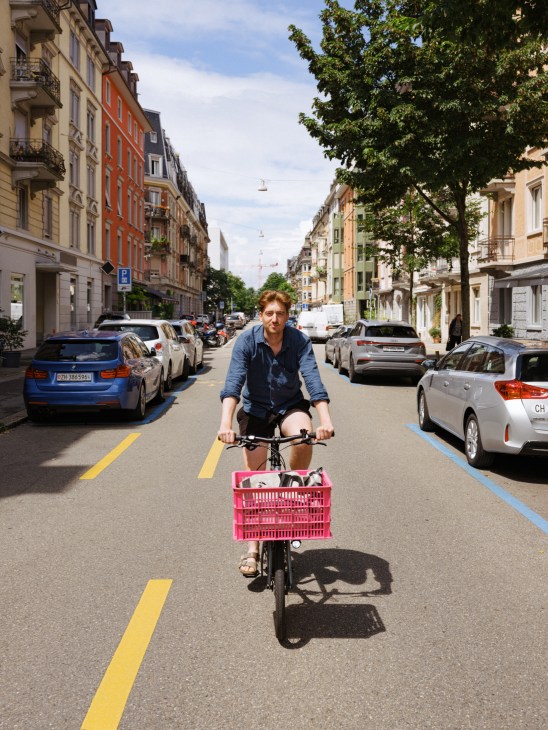
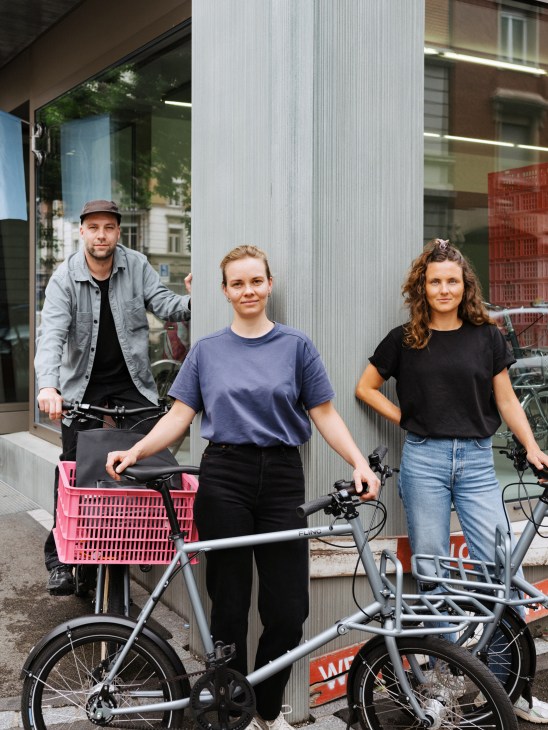
Looking to up your city commute? Then get on the saddle of a Monopole No 01. The newly launched brand’s singular model is designed in Switzerland and manufactured in France, in a superlative marrying of design merit.

The bike’s svelte, hand-welded steel frame, varying wheel diameter and modular cargo racks that have a 30kg capacity – perfect for hauling a weekend bag, groceries or box of wine – results in a functional freewheeler that will carry you for 45km on full charge. And, at just 22kg in weight and 190cm in length, the bike can both transport and be transported. It’s a smart solution to facilitate quiet and clean car-free centres that Monopole addresses with characteristic Helvetic confidence.
monopole.cc
15.
Champion of craft
The Invisible Collection
France

Founded in 2016 by Anna Zaoui, Isabelle Dubern-Mallevays and Lily Froehlicher (who Monocle spoke to below), The Invisible Collection began as an online marketplace to make contemporary interior design more readily available to the public. Today the company has outposts in London, Paris and New York, and regularly collaborates with Chanel’s craft ateliers Le19M and French cultural institution Mobilier National.
Why does Invisible Collection mostly focus on new design?
We saw these incredible designers such as Studio Ashby and Pierre Yovanovitch being appointed by private clients, a hotel or a restaurant to design spaces and furniture. We found it sad that these pieces could be seen in magazines but weren’t being sold elsewhere. Our goal is to give these designs a second life and international reach.
How do you select the designers that you champion?
They tell us about their work and inspirations, and why they create. There’s an element of cultural relevance; the designers and pieces that we select need to stand the test of time too, hopefully to become tomorrow’s collectables. The designers need to have relationships with ateliers – the hands to deliver an idea and a vision. And they need to be able to customise pieces so our clients can modify designs to suit their homes.
theinvisiblecollection.com
16.
Best in brick
Dr Vishnuvardhan Memorial Complex
India
In India, as memorials to demigod actors go, statues set in landscaped gardens are most popular. But an imposing brick and concrete venue on the outskirts of the southern Indian city of Mysuru offers a new take on such tributes. When a memorial for late superstar Vishnuvardhan was proposed, his family insisted on a space that went beyond the norm, to include a venue where the region’s artists could hone their craft. They felt this was in keeping with the actor’s philanthropic bent.


Working to the brief, Bengaluru-based M9 Design Studio created two distinct structures: a sunken gallery to showcase the actor’s life and work, built almost entirely of concrete; and a performing arts venue that uses brick creatively. “Because of their longevity, the choice of materials was obvious to us,” says M9’s founder Nischal Abhaykumar. Highlights include a perforated exterior wall made of brick, which draws on the form of theatre curtains and has been engineered without iron and concrete. Inside, brick has been layered to create texture, while skylights create a diffused warmth.

Since opening in 2023, the venue has been frequented not only by theatre groups and Vishnuvardhan fans, but also schools, which use it as a teaching space. Given the memorial’s mission statement, one could say it has started off on solid ground – thanks, in no small part, to its brick foundation.
mnine.in
17.
Best retrofit
Renata
Brazil
Edifício Renata Sampaio Ferreira, completed in the 1950s by architect Oswaldo Bratke, is one of São Paulo’s most celebrated buildings, thanks in no small part to its impressive façade of cobogós (breeze blocks). The building has been recently retrofitted by Metro Arquitetos, which has transformed the former office building into Renata, a structure that’s open to the public.


Highlights include a café, Nata; the Lágrima bar (inspired by Tokyo jazz bars); the Renata brasserie; and a beach-style third-floor pool that offers views of the city. Commercial spaces have also been transformed into residences, enabling some Paulistas to call the building home; 93 new apartments have been furnished with a mix of modernist Brazilian furniture and Japanese minimalist pieces.

The transformation is significant for the community but it took plenty of effort. “Retrofit is a very specific challenge but it’s a service to the city,” says Metro Arquitetos co-founder Gustavo Cedroni. “With Renata we are preserving something that is unique. Our modernist architecture in Brazil is very relevant but it’s only now that it has become common to restore it.” With a benchmark project like Renata under its belt, expect more historic mid-century Brazilian buildings to get the Metro Arquitetos experience. This will not only preserve the country’s famous architecture but give citizens structures to be proud of again.
metroarquitetos.com.br
18.
Best institutional renovation
US Embassy Campus
Guatemala

The latest diplomatic outpost in Guatemala, the US Embassy, designed by the Miller Hull Partnership, is set on a forested plateau outside Guatemala City. The project is one of 178 that have been constructed in partnership with the US government as part of a push to improve security for American diplomats.


A series of geometric structures, the complex is surrounded by gardens planted with native species. “We drew on the ceremonial and residential planning of Maya cities,” says Miller Hull’s Mathew Albores. The main stone-and-glass building towers above the rest and is clad in brise-soleil to minimise heat gain. In a pleasing contrast, the lower buildings are finished with a granite of different shades and textures. Inside, a triple-height gallery space has views of an outdoor courtyard and forested ravine beyond. “The intent was to create an environment that provides a sense of formal grandeur while at the same time is warm and inviting,” says Albores. The effect is a dignified structure that’s grounded in its locale – an appropriate ambition for embassy architecture, and diplomats themselves.
millerhull.com
19.
Best radio
TechniSat
Germany

TechniSat has built a reputation as a top radio manufacturer with its satellite reception technology, experience in solutions for connecting data and having the broadest line-up in the market. At the forefront of its offerings are the Digitradio 4 IR – a digital hybrid that blends internet radio capabilities with Bluetooth audio streaming – the portable Digitradio 1 and the Techniradio 40 clock radio.
technisat.com
20.
Top dining chair
Villetta by De Padova
Italy

Too often, dining chairs prioritise looks over comfort. The Villetta chair sacrifices neither, instead balancing both of these crucial elements. The charcoal-coloured frame is sourced from solid aniline-dyed ash formed into sleek legs and armrests, plus a generous seat, making for an excellent place from which to relish long meals. And while the form might seem simple, it has been in development since 2016, when the Italian furniture powerhouse De Padova began collaborating with its Milan-based designer, Keiji Takeuchi. That the project has taken eight years is a testament to the brand’s commitment to unhurried processes that uphold quality above all else.
depadova.com; keijitakeuchi.com
21.
Best storage solution
Tylko
Poland

Launched by Benjamin Kuna and Jacek Majewski in 2015, Warsaw-based furniture brand Tylko creates custom-built shelves and wardrobes. “We wanted to do things differently from the outset,” says Majewski. “We identified the main sticking point that many people have with furniture: everyone’s home is built differently.”
Expanding from the initial idea of creating customised products, Tylko has set up an online system that allows customers to construct their shelving and storage units digitally, picking out colours and dimensions that suit their home. “This allows people to use the products for a long time,” says Majewski. “We have been around for 10 years now and people aren’t throwing the shelves away.” He credits Tylko’s longevity to its recognition of the realities of modern lifestyles.
“People are very mobile,” says Kuna. “We have designed the furniture so that it can be disassembled when they are moving house and reassembled multiple times over.” That trait underscores the appeal of Tylko and its refreshing offering of an antidote to the flat-packed furniture industry.
tylko.com
22.
Workshop of choice
La Metropolitana
Mexico

“When we started La Metropolitana, we found that we didn’t have a strong woodworking tradition in Mexico,” says Rodrigo Escobedo, who established the Mexico City-based studio and workshop in 2010 with Alejandro Gutiérrez and Mauricio Guerrero. “We decided to fill that gap.”
The company is known for wooden pieces and bespoke timber projects. Its off-the-shelf chairs can be found around the world, while restaurateurs and retailers from Copenhagen to Chicago are commissioning bespoke pieces. This international presence allows the trio to focus on growing in a more socially responsible way. “The studio and factory has become what we call fabrica escuela,” says Escobedo. “It’s like a factory school, where we teach people how to produce using our methods and technology.”

The studio is also integrating more women into its work processes in a business that is historically male-dominated – about 30 per cent of its workforce is now female. It’s a company that takes a holistic approach to trying to be better – one that other workshops would be wise to follow.
lametropolitana.com
23.
Top game
Uno X Kartell
USA

Design collaborations don’t get much more playful than this: the popular US card game Uno has united with Italian furniture company Kartell to create a design-inspired deck. The cards feature images of Kartell’s most recognisable designs, including the Bookworm shelf by British-Israeli industrial designer Ron Arad and the Louis Ghost chairs and gnome-shaped Attila side table by French designer Philippe Starck. With its clean graphics, simple sans-serif typeface and subdued pastel tones, the deck is a creative reimagining of the iconic game.
Also on the cards though? Beyond the deck, Kartell is releasing a version of its Componibili plastic storage unit – created by Italian modern designer Anna Castelli Ferrieri – with four tiers that echo the four categories of the Uno cards.
kartell.com; creations.mattel.com
24.
Best in the kitchen
J*Gast
Germany


Tobias Petri and Sven Petzold, founders of interior design firm Holzrausch, had long dreamt about better built-in kitchens. When they realised three of their friends from product design and carpentry backgrounds shared the same opinion, they established J*Gast. “The kitchen market is a bit old-school,” says Petri. “You can change worktops and panels but there’s nothing new in the construction.” Working from J*Gast’s Munich showroom, the nimble team is now upending the way they are built.
Traditional built-in kitchens are made with morbidly named “carcasses”, cabinets installed box by box, often with cheap MDF crammed inside. To counter this, J*Gast has patented a lightweight wooden frame that’s fitted to the back wall, with the sides and shelves simply slotted in. It’s an approach that reduces material usage and makes the operation more economical and sustainable.
The kitchens look the part too. Designer Mike Meiré, hired as art director, created the brand identity and selected the colours and materials. Eschewing the standard faux finishes, the worktops come in solid marble, timber or stainless steel.
jgast.com
25.
Best in education
Krabbesholm Højskole
Denmark

Creativity, community and social interaction are at the heart of the teaching at Krabbesholm Højskole in Skive, northern Denmark. The school for adults focuses on courses in art, design, architecture and visual communication. The højskole concept dates back to the 19th century and is uniquely Danish. Partly funded by the government, these schools occupy a special niche between a secondary school and a university, and students of all ages can spend six months to a year receiving a different kind of education in almost any subject – but Krabbesholm, which was founded in 1885, is one of the few that focuses on the creative industries.

There are no exams, no grades and no degrees at the end of it. There aren’t even admission requirements. Students and teachers live at the school, where they are encouraged to participate in community living through singing in the morning assembly, sports activities and philosophical discussions. “It’s human beings we make, not scholars,” says the school’s principal, Caroline Høgsbro. “We have total freedom but you can’t just teach a skill. You have to reflect on what you are doing and put the human being in some sort of context.”

Set in a 16th-century mansion on the edge of a town facing the Skive fjord, the school has gradually expanded over the years to include workshops for carpentry, ceramics, sewing, analogue photography and print-making. And while the school is open to all ages and nationalities, the majority of the 122 students are between the ages of 18 and 24 and from Denmark or Norway. Some of them focus on creating a portfolio to apply to art school but most of them see their time here as part of a gap year, an opportunity to explore crafts they wouldn’t normally have access to.


It’s an outlook tied to another untranslatable Danish word often referenced at Krabbesholm: “dannelse”. Similar to the German “bildung”, it can be defined as a kind of “self-cultivation” – a personal journey involving education and philosophy. This means no subject is taught for its own sake. Instead, they must be connected to their impact on the world, an approach that is helping Krabbesholm deliver a new generation of socially conscious designers.
krabbesholm.dk
26.
Best exhibition
Mise en Page
France
Books are certainly fashionable. Brands such as Chanel, Azzedine Alaïa and Marc Jacobs have gone beyond clothes and handbags to launch their own literary events, city guides and bookshops. So when renowned editor Sarah Andelman, former director of high fashion boutique Colette (which sold books too), was asked to curate an exhibition for Paris’s Le Bon Marché, she decided to bring all of these literary creations together in one place.
The outcome was Mise en Page, a pop-up exhibition that ran from February to April and united products from Andelman’s favourite bookshops: tote bags, T-shirts, stationery, mugs and more. “It’s some of my favourite things from around the world,” says Andelman. “When I’m in New York I always stop at Strand, Pillow-Cat and Books are Magic; I love Cow Books in Tokyo, and in Paris we have Shakespeare and Company, Ofr and Yvon Lambert.” There were exclusive collaborations with fashion brands like Louis Vuitton, Kitsuné and Assouline too, as well as items celebrating the written word.


Occupying multiple floors of the Paris department store, the exhibition featured illustrations from Jean Jullien, whose “paper people” characters popped in windows, while enormous sculptures sat in the middle of the store, next to the Andrée Putman-designed escalators. By making merchandise a feature, the exhibition allowed visitors to buy into the showcase. A savvy move, both culturally and commercially.
lebonmarche.com
27.
Best archival revival
PK4 by Fritz Hansen
Denmark

Despite having been designed in 1952, the PK4 Lounge Chair looks as modern today as it did then. This is particularly appropriate given that Fritz Hansen has put the iconic seat back into production. Designed by Poul Kjaerholm, the PK4 is characterised by its sleek, minimalistic style and architectural form. Today, the chair is crafted with a high-quality stainless-steel frame and a seat and back made from a length of flag halyard rope, making it as durable as it is elegant. Its angular form showcases Kjaerholm’s distinctive style, whose clean lines are able to transcend decades, making the PK4 perfect for any homeowner looking for an heirloom piece that will be a perfect fit for any home.
fritzhansen.com
28.
Leading design gallery
Omet
Mexico
As an architect practising in Mexico City for 25 years, Lorena Vieyra was well placed to gauge the growing interest in Mexican design and seize the momentum. In 2023 she founded Omet to present her homeland’s rich design and craft scene to the world.
“I have seen how design here has evolved over the past decade and have seen talent emerge,” says Vieyra. “I also saw it was an important moment for Mexico in terms of international interest because Mexican designers started looking inward instead of what was going on in Europe and the US.”

Omet’s offerings include home accessories, lighting and furniture that are entirely made in Mexico by local designers including architect Tatiana Bilbao and textile designer Marisol Centeno. A strong sense of craft imbues the pieces on offer with an emphasis on noble materials such as wood and stone sourced from regions including Oaxaca and Puebla.
Vieyra is interested in tapping into a sense of “Mexicanity” that goes beyond local resources and clichéd colourful prints. Instead, she invites contemporary artists and designers to channel their understanding and vision of what it means to be Mexican by reinterpreting their shared heritage.
Since its inception, Omet has launched two collections (with a third under way) and opened a retail outpost in Austin, Texas. “We have set the basis for what we want to do,” says Vieyra. “We have started conversations and brought ideas to the table that we will continue to work on. It’s only the beginning.”
While all of the pieces in Omet’s collection are crafted in Mexico, Vieyra is extending Omet’s platform to Latin American designers too, recognising the need for Mexico to be a craft and design leader in the region. Omet’s work is offering not only a platform for Mexico’s designers and craftspeople but an opportunity for them to be regional and global industry leaders.
omet.co
29.
Best healthcare
Ersta Sjukhus
Sweden
The new hospital-building at Ersta Sjukhus on the island of Södermalm in Stockholm is an airy yet homely space with soaring ceilings and wooden furnishings. “Ersta Sjukhus balances the feeling of a private home and a modern hospital,” says Hanna Philipsson, lead architect on the project with Tengbom, the practice that finalised the hospital plans, which were originally developed by the firm Nyréns Arkitektkontor.

The property connects snugly with the part of the hospital that has been operational since 1864, when it cared for and boarded destitute women and children. It’s this link to buildings and the wider city that defines Tengbom’s work.

In partnership with interior designer Emma Olbers, the practice used ochre-yellow hues inspired by the neighbouring buildings. This interaction between inside and outside is enhanced by the gorgeous views of Stockholm’s rooftops and the waters surrounding the archipelago from the hospital rooms. The large terrace on the sixth floor, where the hospice is located, also encourages outdoor respite. Patients can be wheeled out in their beds and families can gather in nooks where raised flowerbeds offer privacy. Patients can pick wild strawberries or smell fragrant herbs that grow within arm’s reach.

A final touch – a nod to the hospital’s past – is the Marie lamps that are distributed throughout the building, developed by Swedish firm Ateljé Lyktan and inspired by the nurses’ hats worn in the past. The result of this careful combination of details is a hospital that doesn’t just save lives but improves the quality of it for everyone inside.
tengbom.se
30.
Best design bookshop
Hyper Hypo
Greece

The stylish but whimsical bright white and cobalt blue interior of Athens’ hippest – and only – dedicated art and design bookshop is a somewhat perfect reflection of what the small but mighty Hyper Hypo does best. Founders Andreas Kokkino and Stathis Mitropoulos pair their razor-sharp curatorial skills with a natural love for bringing people together in an operation feels as much a bookshop as it does talking shop for the city’s flourishing art and design scene.
In addition to stocking a unique mix of classic and contemporary theoretical texts and art tomes, the Monastiraki shop also hosts events that foster and grow its community – and we’re not just talking about the odd in-store signing. “We’ve done about 50 events over the past two years,” says Kokkino. Alongside collaborations with contemporary galleries such as The Breeder and Carwan, these have included the Greek launch of the legendary Butt magazine and a party for Objects of Common Interest, the New York-based Greek design duo, who launched a book about US sculptor Isamu Noguchi’s relationship with Greece.

Hyper Hypo simply wants to address those who share the same passions and philosophies they do. “We don’t dumb it down, we don’t compromise and we pick hard topics,” says Kokkino. “I think people appreciate that.” Whether it’s hosting the city’s more alternative artists or stocking a slightly racy publication, Hyper Hypo’s confidence that Athens is ready for something a little more provocative has duly paid off – and shows the power of a bookshop to bring people together.
hyperhypo.gr
31.
Top architect: Residential
Point Supreme
Greece

There’s no mistaking a home designed by Point Supreme. Founders Konstantinos Pantazis and Marianna Rentzou have mastered the art of using bold colours to create striking living spaces, whether that’s via azure floor tiles, crimson cabinets or a bright yellow staircase. “Our work is never neutral,” says Pantazis. “We try to create a sense of vibrancy and character.”
But the architects’ playfulness isn’t just limited to colour. Their designs combine materials such as raw concrete, cork cladding and terrazzo flooring to create a collage of textures. These adventurous combinations make Point Supreme stand out in its native Greece. “In Athens, most new architectural projects are grey and black,” says Rentzou. “And on the islands, it’s all beige, stone, wood and white. We think that’s lazy.”

What sets the firm apart is its knack for opening up spaces to reinforce a sense of flow – its properties are often subdivided using sliding partitions, curtains and hanging shelves. “We want our homes to promote social interactions among those occupying them,” says Pantazis. This, he notes, is important in a place like Athens. “It’s a very dense city. So we try to create deep, open views. And the light is usually fantastic, so it makes sense to play on it as much as possible.”

Open, multi-use spaces also nod to Greece’s architectural heritage. “The sense of super-functionality is very Greek,” says Pantazis. “Particularly on the islands, where a single room can be a whole home. There are no divisions between bedroom, kitchen and living room. The result is lively and humane.”
pointsupreme.com
32.
Best Packaging Solution
Acquabox by Monday
South Africa

It’s often the simplest designs that solve the biggest problems. In this case, a portable bag-in-box water dispensing solution that provides easy access to good-quality mineral water. “There are a lot of areas in South Africa where clean water supplies are becoming a big issue,” says Francois Rey, creative director and designer of Monday Design, the Cape Town-based studio that worked with Acquabox on the branding and material sourcing. Large plastic water bottles are readily available around the country but the largest are 10 litres and they’re clunky and awkward to pour.
“In terms of functionality, it’s easy to use,” says Rey, citing the plastic tap as a straightforward but revolutionary pouring solution. When working with Acquabox to design the packaging, the two most important elements Rey considered was making it sustainable (it’s 100 per cent recyclable and the box is unbleached) and keeping costs down. The boxy shape means the cooler can easily be placed on a countertop or slotted inside a fridge. For people who might want to use it outside or take it camping, the exterior acts as a shield against sunlight, which can negatively impact water left in plastic. It’s also far more easily transported than plastic or glass bottles. It’s a prime example of smart packaging design that makes lives easier – we should be thirsty for more such examples.
mondaydesign.co.za; acquabox.co.za
33.
Best airline update
Air France A350
France

Air France has been busy lately, ordering new aircraft and modernising its cabins in a concerted effort to leap ahead of the competition. A case in point is its refurbishment of the Business Class cabins on its A350 fleet. These are being updated and improved to provide closing-door suites with improved storage, nicer finishes and better overall comfort. It also solves a consistency issue. Early A350 deliveries featured an entirely different type of seat to the rest of their long-haul fleet. Meanwhile, 777s are also getting an almost indistinguishable product installed. It’s news that has us particularly excited for the new La Premiere First Class, which is due to be unveiled later this year.
airfrance.fr
34.
Leading urban landscape
Marrinawi Cove
Australia


A pre- or post-work swim at the beach is a cherished daily habit for many Sydneysiders during the year’s warmer months. But since last summer, a convenient new option has allowed the residents and corporate denizens of Sydney’s CBD to incorporate a mid-day ocean swim into their routines too. This is thanks to Marrinawi Cove, a new swimming basin at the northeast edge of Barangaroo – part of the gargantuan and ongoing urban regeneration of the western section of the Sydney Harbour foreshore. It sits in the shadow of the Harbour Bridge, moments from the high-rises of the commercial district.
SMC Marine, which specialises in marine design, construction and engineering, was commissioned by the New South Wales government to convert the cove into a suitable swimming area. It was a considerable challenge: although swimming is common in the outer sections of the harbour, the waters in the centre of the estuary are notoriously shark-filled, congested and were, until recently, unfit for swimming.
After analysing the site conditions and the wave patterns of the inlet, a seawall and shark barrier was installed at the cove, which has the dual effect of attenuating the sometimes rough swell of the harbour while acting as a natural habitat to promote the propagation of native seaweed and marine life. Next came swimming platforms, changing rooms, showers and signage. The result is Sydney’s first “city beach”, which is also the first swimming area west of the Harbour Bridge in more than 50 years. It’s a remarkable work that is having a large lifestyle impact but with a light environmental touch. Unsurprisingly, Sydneysiders have taken to it with immediate gusto.
smcmarine.com.au
35.
Best student project
Fire Extinguisher
Sweden

Given their ubiquity, it’s a shame fire extinguishers aren’t designed with more care, aesthetically and environmentally. This is why this reimagining, courtesy of industrial design student Albin Jonsson caught our eye at this year’s Stockholm Furniture Fair. As part of his studies at Sweden’s Lund University, Jonsson sought to design an update of the fire extinguisher with circularity in mind. “I was curious about the way traditional extinguishers come already pressurised, meaning that in a couple of years they need to be discarded due to loss of pressure,” he says. “I was thinking about alternative solutions and ended up with a manual pump combined with environmentally friendly extinguishing powder, in this case baking soda.” With a sleek steel handle and essential user information on prominent display, this fire extinguisher would slot well into hallways and homes without being too obstructive, yet still offering essential safety.
lunduniversity.lu.se
36.
Best for furry friends
Kanto
Finland

As all dog owners know, what might suit our furry friends isn’t always what’s best for our home decor. That’s something that new Finnish company Kanto is fixing with a range of smart dog beds that were also designed to minimise environmental impact. Our pick of the bunch is the Luoto in Eos Bordeaux Black, which is made using a natural, handwoven fabric by Finnish textile designer Johanna Gullichsen and the same premium European bedding used for humans. Developed using a lot of, ahem, animal testing, you can be sure that Fido won’t give this bed a snub. Our model Twinka (pictured) can attest to the fact that the upcycled fabric, available in Gullichsen’s patterns inspired by Greek mythology, is extremely comfortable
“We tested various materials, shapes and sizes with all kinds of dogs to find something that they liked,” says founder Annu Ansén. The bed’s nest-like design is timeless and unassuming, and fits various interior-design aesthetics. The material itself is allergen-free and void of microplastics, while also being durable and scratch-resistant. Crucially, it’s machine washable too, pairing practicality with style and ensuring that the bed can endure the inevitable canine fits and outbursts. “Dogs are our family members and they deserve the best spot in our living room,” says Ansén. Thanks to Kanto, such a spot can be home to a beautiful work of design too.
studiokanto.com
37.
Leading furniture maker
Frederik Fialin
Germany

Frederik Fialin is a Danish furniture-maker but not exactly of the classical sort. Soon after finishing school in Copenhagen, he moved to Berlin to assist in an artist’s studio. “Manufacturing-wise, it doesn’t get much better than the art world,” he says. “You work with a huge array of materials.” Four years ago, he slowly started marketing his angular, colourful furniture and released his first collection, Assembly 0.1, last autumn. With eight items including a modular bookshelf and a Paul Kjaerholm-inspired lounge table, they can be ordered as they are or be customised.


For those who want to commission a piece, Fialin’s appeal lies in the fact that his designs don’t easily fall into a category. He is wary of Berlin’s industrial and raw-minimalist aesthetic and names mid-century and contemporary masters ranging from Carlo Scarpa to Maarten Van Severen and Yrjö Kukkapuro as influences. “You need a traditional, old-school education,” he says. “Then you can deviate from that.” His spirit of experimentation makes him an appealing creative partner.
frederikfialin.com
38.
Best type development
ADLaM alphabet
Guinea & USA

Spoken by the Fulani, a West African community of more than 40 million people spread across the world, the Pulaar language had no unified writing system and was at risk of extinction. Enter Guinea-born, Portland-based brothers Ibrahima and Abdoulaye Barry. The pair teamed up with Microsoft and New York-based creative agency McCann to develop a digital version of the language, producing its first-ever written alphabet last year.
“For the Fulani, the alphabet wasn’t just a tool for expression, but an operating system for survival,” says Shayne Millington, chief creative officer at McCann. “The risk was that their culture would be swallowed by one that could operate in a digital world.” The brothers worked with the Fulani community to ensure the typography incorporated design elements that represented its culture and weaving patterns from traditional textiles.
To promote its use across the region, the typeface was made available for download on desktop and mobile. McCann and the Barry brothers also worked on books, educational materials and classroom resources. The digitised alphabet has since been welcomed by the Fulani community, with local governments recognising it as an official alphabet. “Our goal was to increase access to the new system and the chances for the language to thrive,” says Millington. The project is a powerful reminder of type’s ability to reflect, and in this case preserve, culture.
mccann.com
39.
Top architect: Retail and hospitality
Norm Architects at Audo
Denmark


Copenhagen-based Norm Architects has, since it was founded in 2008, become known for its sleek hospitality, commercial and retail outfitting. In addition to completing a host of projects in its hometown, the firm is also prolific in Japan. It’s perhaps unsurprising given that there’s a certain sensibility shared between Japanese and Nordic design; one that’s rooted in an authentic commitment to quality, functionality, simplicity and craftsmanship.

Its latest project in Nippon is a showroom for Danish furniture-and-homewares brand Audo Copenhagen – and it sets a benchmark for good retail design. “A core part of the concept behind Audo Copenhagen lies in creating a sense of community,” says Frederik Werner, designer and partner at Norm Architects. Werner oversaw the project, which is defined by warm, earth tones and materials such as concrete and timber. The showroom can also double as an event space and will eventually play host to exhibitions and collaborations celebrating both Japan and Denmark. “We want to find ways for this brand to work closely with kindred spirits,” says Werner. The architect’s ambition goes beyond simply furnishing a space and shows the potential for retail and hospitality locales to be more than just places of commerce – they can be community builders too.
normcph.com, audocph.com
40.
Top Architect: Community
Tosin Oshinowo
Nigeria

Tosin Oshinowo founded Lagos-based design practice Oshinowo Studio in 2013. In recent years she has emerged as a leading voice on architecture and design, thanks to her practice and work as co-curator of events such as the Lagos Biennial. More recently, the Nigerian designer has expanded her work beyond West Africa, curating the most recent iteration of the Sharjah Architecture Triennial and headlining the 2024 Melbourne Design Week.
What are your current priorities as a designer?
I’m conscious of producing work that is respectful of the environment. Thankfully, it’s getting easier to sell this to clients as it comes from a place of strength and beauty. I’m also trying to push alternative building technologies; the sorts of things that the practice showed at the Sharjah Architecture Triennal. Take rammed earth. It’s a materal that comes from a project’s context and leads to healthier buildings. It’s a comfortable material that stays cool during the day.
How do you want to be remembered?
I just want to create architecture that will add value. It’s not about what the a building looks like but rather about how it makes people feel and how useful it is. I’m not fixated on something being iconic, which is a natural thing for architects to focus on. If we practise for the love of adding value, as opposed to the gratifying ourselves by creating iconic buildings, then we will produce much better architecture for cities.
oshinowostudio.com
41.
Best design imprint
Ediciones Puro
Chile


It’s no longer necessary to be in New York or London to make great art and design books. Case in point: Ediciones Puro, a small Chilean publisher with a focus on art, architecture, photography and design. Founded in 2004, Ediciones Puro roots its mission in the spirit of close collaboration. The team works closely with authors and designers to translate their work into high-quality print. Highlights include Obra Gruesa/Rough Work, a publication dedicated to architect Smiljan Radic, and a book of photographs by French-US photographer Justine Graham. Anyone looking to publish their own design-minded monograph would do well to reach out.
puro-chile.cl
42
Top material innovation
Bananatex
Philippines & Switzerland

“We saw the potential to create something better in terms of sustainability and functionality,” says Christian Paul Kägi. The co-founder and creative director of Swiss clothing brand Qwstion, Kägi and his team are behind the textile Bananatex. Made from the abaca banana plant, it was developed for use on the brand’s bags, has a remarkable tear resistance that ensures durability, and its cultivation demands zero watering, pesticides or fertiliser. Abacá plant fibres are extracted, converted into yarn, then knitted into Bananatex. It’s currently produced in the Philippines, where the plant occurs naturally, using Taiwanese textile manufacturing expertise.

The product is now sold as a stand-alone textile.“We created Bananatex for brands and designers who are looking to replace plastics with plants,” says Kägi, adding that it’s not simply a substitute for synthetic materials, but rather a component contributing to positive industry-wide change. It’s an outlook that should be applauded: making eco-friendly material alternatives accessible to make a difference at a global environmental level.
bananatex.info
43.
Most creative work space
ASL Studio
France


Parisian furniture and interiors brand and workshop, A.S.L, is the brainchild of designers Antoine Ricardou, Clémentine Larroumet and Reynald Philippe. Inspired by the studios of creators like Donald Judd and Alvar Alto, it’s no wonder their atelier in the Rue Saint-Lazare of the 9th arrondissement, reflects their love of open spaces and clean lines. “We bought an old jewellery workshop at the back of a courtyard in the centre of Paris and cleaned the entire space to keep its bare shell,” explains Clémentine Larroumet. “We then equipped it with only the functional elements: trestle tables, worktops, kitchen and multifunctional shelves.”


Keeping function at the core of the design has not only made the atelier a calming space to work, but one that encourages dialogue and creativity. “We are convinced that creation comes through experimentation. Everyone must be able to experiment in order to create,” says Antoine Ricardou. “We put in an intaglio press, a ceramic kiln, and tables for painting and drawing. And in the middle of all this, to say welcome, a real functional kitchen for cooking and making coffee all together.” The atelier is a reminder of the importance of ensuring a workplace is kitted out for successful experimentation – while offering moments for team building too.
asl-paris.com
44.
Best manufacturing hub
Hall 4 at MÜHLE
Germany

From its headquarters down to its carefully made products, Germany’s Mühle takes design seriously. Founded as a manufacturer of shaving brushes by Otto Johannes Müller in 1945, it has grown into a leading supplier of high-quality accessories for wet shaving. “Good design is part of our DNA at Mühle. Our creative language aims to be clean and fresh, with a classic touch,” says third-generation owner Andreas Müller, who runs the company with his brother, Christian. This includes a focus on sleek designs made from traditional materials such as chrome-plated metal, anodised aluminium, wood and porcelain. Products, which include razors, shaving brushes and accessories, are stamped with the brand’s logo, featuring the letter “M” juxtaposed with a windmill (Mühle means “mill” in German).

It’s an attention to detail that’s present in Mühle’s newest building, Hall 4, on its campus in Stützengrün. Here, products are packed by hand before being shipped off to customers and suppliers. For the project, Mühle turned to husband-and-wife team Sebastian Thaut and Silvia Schellenberg-Thaut, founders of architecture firm Atelier St in the nearby city of Leipzig. The architects were inspired by the precision of the company’s chrome-plated razors in creating the building’s façade. “We wanted the structure to look sharp, with shiny metal that echoes the style of Mühle’s products,” says Thaut, gesturing at the anodised-aluminium exterior. This contrasts with the softer appearance of its interiors, which are fitted out with locally sourced fir timber. The hall contains an office and an upstairs meeting room, where the Müller brothers can welcome guests and show off new products.


The resulting space is an example of how a company’s headquarters should represent a brand’s identity as much as its products. “Everything from our website to our architecture is a touchpoint. The design needs to be consistent,” says Andreas.
muehle-shaving.com
45
Designer of the year
Studiomake
Thailand


Studiomake’s founder David Schafer finds it easier to tell potential clients what his firm doesn’t do (conventional interior design) than try to explain what it can. There’s no recognisable aesthetic or signature products – only considered solutions. “Everything we design is responding to a specific problem,” says Schafer, whose projects include a reusable restaurant workshop and equipment for Thai coffee brand Roots, a rotating interactive play wall for a community mall, and kinetic shelving for a touring art exhibition. “Unless it’s weird, we’re not even in the room.”


The headcount at Studiomake is split evenly between designers and metal workers under Schafer’s leadership at Baan Sai Ma, a two-storey office, workshop and residence on the outskirts of Bangkok


Studiomake’s biggest current project is a prefabricated, split-level house in the Thai capital. Expected to take three years in total, the design and build could have a significant legacy far beyond its diminutive footprint. Schafer has a dream of creating prefabricated homes in Thailand for export to the US. “I’m interested in mass customisation – the idea that a product can be easy to adapt and suited to different scales, site conditions and life situations,” he says. A range of prefab homes could either become the solution to Schafer’s own specific problem, defining what Studiomake does; or, much more likely, add another string to its already impressive, custom-made bow.
studiomake.com
46.
Best folding chair
Olaio ‘ik’
Portugal

Accommodating extra guests for dinner can present a conundrum for city dwellers without the luxury of ample storage space. Thankfully, Portuguese design brand Olaio has created the “ik” – a foldable functional chair, which is set to be a hit in the domestic environment – and, perhaps, a savvy solution for event and cultural spaces looking to enhance their stock of ease-to-store chairs. Originally founded in 1886 and relaunched in 2016, the brand still looks to honour the art nouveau seats first manufactured in the mid-century. It can be evidenced in this design, which is available in dark freijó wood and light natural ash, with a cane-woven seat making for the perfect party piece that can be folded away, leaving no trace of the festivities.
olaio.pt
47.
Best temporary installation
‘Of Palm’ Pavilion
UAE

Abdalla Almulla, an Emirati architect and founder of Emirati design studio Mula, turned heads at the recent Dubai Design Week. He won the commission for the event’s flagship installation at the centre of the city’s creative district for the duration of the week. “Of Palm” was inspired by – and made from – palm trees, showing the potential of using local materials in a country reliant on imported design.
Tell us about the ideas behind the design of “Of Palm”?
I wanted to create something embedded and sustainable in Emirati culture. The tree has had many roles in society, including for food, fuel and architecture. I liked the idea of using one material source to create multiple functions.
Talk us through the project’s form
It’s a radial pavilion with columns constructed from the trunk and a ceiling made from palm-leaf mats. The idea is to show you can create different parts of architecture through a single tree.
Will more indigenous materials be used in UAE architecture?
I have been highly focused on this in my practice and career. We need to incorporate local materials into construction and think of new ways to develop them with today’s technology. We did this to design the roof for “Of Palm”, using computational technology to map out how many mats would be required to assemble the structure.
dubaidesignweek.ae
48.
Best new brand
Tamart
UK

It was only natural that London-based Amos Goldreich, son of late Israeli architects Tamar de Shalit and Arthur Goldreich, should follow his parents’ footsteps into the design world. Now, following his discovery of an archive of thousands of their photos, paintings, illustrations, plans and designs, he’s continuing their legacy top. In spring 2024, Amos launched Tamart, a furniture brand reimagining the duo’s designs by using British timber.
“The only changes I wanted to bring to the pieces were inspired by my parents’ ethos,” Amos tells Monocle during a visit to his studio. “Their work was always specific to where they were working or lived. So I needed to update the pieces to fit London – the upholstery and carpentry are done locally, and the prototypes are created in the capital.” Tamart’s debut collection is crisscrossed with the pair’s energy. “Because the majority were made for specific projects, each has a story to tell,” says Amos. The Clore lounge chair, ottoman and coffee table designs were originally for a penthouse that De Shalit designed for arts patron Sir Charles Clore in the 1960s, while the Central Stool comes from her student days in London in the 1950s, where she first met Arthur Goldreich.


At the heart of the collection are designs that Amos believes worthy of the international stage. But they also brim with personal and historical connections, making the pieces an appealing addition to any home.
tamartdesign.com
49.
Best adaptive-reuse project
Newlab by Civilian
USA

It is always challenging to deliver a knockout renovation but that is exactly what Nicko Elliott and his partner in work and life, Ksenia Kagner, have achieved with the refit of a robotics company’s headquarters in Michigan. The architect couple run Civilian, a Brooklyn-based design studio. They recently completed their biggest commercial commission yet: the interior outfit of Newlab in Detroit, which was designed by US architect Albert Kahn in 1936.

Civilian’s ambition for the project was to create a space that responded to the site’s social, historical and material context, while also serving its newest users. “This building sat vacant for almost 30 years and had such an interesting past as a book depository for the city’s public schools, as well as a mail-sorting facility,” says Elliott. “It was necessary to pay homage to that.” To do so, existing details have been retained and restored throughout.


But Civilian’s biggest achievement at Newlab is the way that has established visual connections and transitions between different parts of the building. A rosewood-and-stone lobby opens into a buzzing robotics lab, the event space is lined with full-height windows that look into a fabrication area and a collaborative workspace ends with views into the metals-lab workshop. All forms of labour are “elevated and receive the dignity that they deserve,” says Elliott.
civilianprojects.com
50
Best in transit
Zürich Hauptbahnhof
Switzerland


Zürich Hauptbahnhof’s is Switzerland’s busiest train station – and a recent renovation of its oldest building ensures it now serves as a grand entrance to the city. Berne-based Aebi & Vincent Architekten were commissioned by the Swiss Federal Railways (SBB), which gave the architects a complex task and a project that took more than 14 years to finally complete, with the final stage opened to the public at the end of 2023.


The wait has proven to be worth it. The overhaul of the heritage-protected 1871 sandstone building has resulted in the restoration of many historic elements, with the replacement or repair of 500 rosettes, 300 ceiling cassettes, 180 archways, 80 angels, lions, Hermes and Atlas figures. Naturally, for a building of its age, there were some surprises along the way, including the discovery of original marble columns. “These were hidden under 13 different layers of paint,” explains Beatrice Bichsel, head of sbb Real Estate.

Efforts have also been made to create a space that serves commuters and travellers as well as local businesses, ensuring the building remains lively at all times. New ticket offices, retailers (including a branch of Zürich-made soap brand Soeder), health clinics, offices and restaurants. There’s also a newly finished passageway linking the station hall to Bahnhofstrasse, Zürich’s main downtown street.

A highlight is Brasserie Süd, an all-day dining offering courtesy of local duo Nenad Mlinarevic and Valentin Diem. The bright space has instantly become a centre point thanks to its delicious fare, intimate bar and the bright and welcoming interior. “We took inspiration from the menu that Nenad and Valentin created as our starting point, but it was essential for us to work with historic matter and create a balance through the new and old,” explains Deborah Suter of architects Suter Plus who designed the brasserie, which is now filled with businessmen, families and tourists.


The project is a reminder of the power of a transit hub to not only connect its community, but reflect and serve it, too. Zürich Hauptbahnhof has got its groove back, meaning we’d be happy to wait for the next train just a little longer.
aebi-vincent.ch, suterplus.ch
Monocle Design Award
Harry Thaler
Italy

Bolzano-based Harry Thaler has conceived the Monocle Design Awards trophy since the prizes’ inception in 2021. Every year, he has subtly updated the curving timber form that is not only ornamental but practical too: it doubles as a paperweight that would make a perfect addition to any winning designer’s desk.
“Every January I think about the next step [in the trophy’s evolution],” says Thaler. “So, I asked the craftsman who makes it, Martin Klotz, whether we could put all different types of wood together to make this year’s version.” Klotz’s answer? “Of course.”


The duo collected offcuts from Klotz’s Tscherms-based workshop’s floor – mostly scraps from other jobs – and glued them together to form blocks. They then sculpted these into the trophy’s distinctive curved form using a lathe. “We carved it out like a doughnut and then cut it like a cake,” says Thaler.

The approach resulted in a distinctive patterned effect, with the grain and rings of every type of wood, including walnut and ash, visible. The effect is deliberately disorienting. “I wanted the winners to pick it up and wonder how it was made,” says Thaler. It’s a noteworthy ambition: after all, good design should push us to ask questions about how, what and why we make things. It’s appropriate, then, that this outlook is now embodied in the Monocle Design Award itself.
harrythaler.it
Scandinavian minimalism with an inviting generosity
In an industry as fast-paced as fashion, the value of long-term collaboration can easily be forgotten. But some creative relationships deserve to be more than just flings. Stockholm-based luxury fashion label Toteme has called on design and architecture studio Halleroed for 10 years to help create a visual identity for its offices and shops. What started as a commission to design the label’s first office in New York has flourished into a global partnership. Toteme’s co-founder Karl Lindman and Christian Halleröd, his counterpart at Halleroed, have worked together to design shops in London, New York, Los Angeles, Shanghai and Seoul, establishing a design language that is as recognisable as the brand’s signature outerwear and contrast-stitch knits. They have proven that architecture and good interior design can help to define a label. “Our shops have become the physical expression of Toteme as we develop into a global business,” says Lindman.

When Monocle visits Toteme’s Stockholm headquarters in the Stureplan neighbourhood, we find Halleröd sitting across from Lindman – a position you’ll find him in whether the duo are sharing design references or plotting their next project. “With every new shop, we’re getting closer to what Toteme stands for,” says Halleröd. “As interior architects, we try to align with the brands that we partner with by following their work and putting in the research.” When the pair envision a new space, they try to capture Toteme’s aesthetic with neutral palettes and playful antique finds that add warmth and signal that this is far from your average Scandinavian minimalist label. “We want to be generous to our customers,” says Lindman (pictured, on left, with Halleröd). “Their time is important.”

The first design reference that Lindman and Elin Kling, his partner and Toteme co-founder, shared with Halleröd was the work of Donald Judd, the US artist known for his clean colour palettes. “Looking back, I think that it was the first hint of what we would develop together,” says Lindman. A sense of restraint has come to define every boutique that they have since worked on, starting with the brand’s flagship on Stockholm’s Biblioteksgatan 5, designed to resemble a townhouse, complete with a lounge, a walk-in wardrobe and a bedroom. In New York, they went on to design an even more distinctive space in which metal shelving is placed next to striking patterned sofas by Austrian architect and artist Josef Frank. Customers come to replenish their denim and silk shirts but equally to see the vibrant patterns on Frank’s sofas up close and take in the interiors. “The design always remains pure and minimal to reflect Toteme,” says Halleröd.

More recently, the pair worked on the brand’s first London opening. In a Queen Anne revival building on Mayfair’s Mount Street, you’ll find a marble statue from the 1900s by Swedish sculptor Carl Milles, a steel sofa by Australian industrial designer Marc Newson and various items by designers from the 1930s Swedish Grace aesthetic movement, including a coffee table by Otto Schulz and a couch by Olle Engkvist. “Every new project starts with a site visit and broad conversations about the city and Toteme’s place in it,” says Lindman. “The physical space that we work on needs to reflect where the brand is at that given moment. I’m not interested in applying a formula. Every city and neighbourhood is unique and should be treated accordingly.” For Toteme’s co-founder, this process of applying the brand’s design values and Swedish heritage in different contexts is the most exciting part of the retail-expansion process.
Toteme’s next and biggest outpost will open this spring on Melrose Avenue in Los Angeles. Meanwhile, the original Stockholm flagship is currently under renovation and doubling in size. You can expect more Marc Newson pieces; the designer is a fixture in all of the brand’s flagships. For Stockholm’s, Lindman bought a sleek silver cashier desk from the 1990s that was designed for the Skoda boutique in Berlin. And he has become fond of a little ceramic statue of leaping zebras; so far, he has acquired two of these at auction and they are now installed in Stockholm and London. “If you come across another one, please get it for me,” he says.

Halleröd nods, understanding what types of objects appeal to Lindman. “That’s the beauty of our collaboration,” he says. “We have built a common understanding of what we like. We share memories and references so, if I mention a zebra, for example, Christian immediately knows which one I mean.”
As in any long-term relationship, the key to their success seems to be communication. “It’s our job to move different ideas forward, be it materials, techniques or architectural elements,” says Halleröd. “We’re always in dialogue.” According to Lindman, this type of open exchange between trusted partners is “part of evolving the brand while retaining our dna”. “Sometimes the best way to move forward is to be consistent,” he says.
Toteme and the Halleroed studio also share a sense of pride about their Swedish roots, which, in typical Scandinavian fashion, their joint design projects express discreetly. “Eight years ago we found a sofa by functional designer Bruno Mathsson for the first Toteme flagship in Stockholm,” says Halleröd. “We are still finding new pieces from Scandinavian design history. Stockholm is quite clean in terms of lines and colour palettes. It’s not like Paris, where there are decorative layers to the interiors.”
Further nods to their homeland can be found in details such as pewter railings made by Swedish ironmongers or the Milles statue in the London boutique. “We want to bring a minimalist Swedish aesthetic to different parts of the world and highlight the country’s design and art whenever we can,” says Lindman. “These shops are like embassies for us. We put our hearts into these spaces to leave room for emotions and discovery.”toteme-studio.com
Balat: A boisterous district with an undiscovered vibe
Istanbul’s riverside Balat neighbourhood is full of surprises. The working-class area also has preposterously rich history. Once home to the Ottoman Empire’s dense mix of Christians, Muslims and Jews, it emptied out and declined throughout the 20th century, turning into a ramshackle district that became home to Black Sea immigrants and Istanbul’s Roma communities.
Yet Balat has kept its spirit and its style: colourful old townhouses wind up steeply cobbled streets, peopled by boisterous local characters whose celebrations (even weddings) are open to anyone lucky enough to be passing by. Gentrification has arrived here rather happily and has not yet polished away the neighbourhood’s rough edges. You might, for example, spy a hip restaurant or a popular tearoom in the middle of a street of otherwise abandoned buildings.
These contradictions are part of Balat’s charm – and if its grittier side tends to keep bigger crowds of tourists away, so much the better for those of us who are feeling intrepid.
1.
Read
Cornucopia magazine is the cultured Istanbullu’s bible: a gorgeously designed English-language affair covering arts and history. Find a spot on the renovated Golden Horn waterfront to be transported through the rich layers of the city’s story.

2.
Board
One of Istanbul’s great pleasures is taking the public ferry (ignore tourist boats and just get a transport card). Many routes go straight up the Golden Horn, giving you a view of Balat from the water. Jump board at Eminönü.

3.
Stay
Castello Bella’s gilt-framed mirrors, chandeliers and sumptuous furnishings are only surpassed by the view over the water from its balcony suite. The building dates from 1820, when Balat was a beating multicultural heart of the city.
4.
See
The rainbow of tall, narrow houses on Kiremit street is a fine sight, many of them adorned with balconies and intricate metal trelliswork. Nearby are plenty of cafés, shops and the odd street mural to keep you entertained as you wander.

5.
Shop
Orhan Pamuk’s 2014 novel A Strangeness in My Mind captures the changes that districts such as Balat have undergone over the decades. Visit Balat Sahaf, an antiquarian bookseller with shelves full of dusty volumes. Be sure to pick up a historical caricature magazine or something from the shop’s collection of old newspapers.

6.
Eat
Greasy, spicy, satisfying: there is little to match Turkish meatballs, known as köfte, for comfort food. Reward yourself after a morning’s exploration by popping into Köfteci Arnavut, which has served the classic snack to a peerless standard since 1937.
7.
Book
Snag the corner table at seafood specialist Smelt&Co, set in a restored traditional house, for inventive twists on Turkish cuisine. If the weather is kind, try the rooftop terrace for views of Balat and the Golden Horn.

8.
Hear
Many of Balat’s residents are Roma, a minority known for distinctive, joyful music. Roma popstar Kobra Murat lives here – be sure to get a picture if you see him strolling past.

9.
Buy
Yasemin Aslan Bakiri’s glass studio, next to the Bulgarian St Stephen’s church, is filled with brightly coloured pieces that are beautiful, functional and collectable. She works here most days and teaches classes too.
10.
Consider
Byzantium is long fallen and the Hagia Sophia no longer a cathedral but Istanbul is still the seat of the Greek Orthodox Church. The Patriarchate of Constantinople complex includes St George’s church: visit on a Sunday to experience a ceremony unchanged for centuries.

Patience is a virtue: But is waiting in line really worth it?
The queue endures. Back before the misery of coronavirus, there was a spate of people getting in very long lines for fashion drops, over-logoed skatewear and even covetable buns. But then – phew – the pandemic killed the queue. It was replaced by text messages telling you when your time was up (not in grim reaper style, rather that your table was ready). But now? Otherwise sane folk are queueing for loaves of bread like it’s the USSR in the 1970s. People are voluntarily spending whole mornings in formation just to gobble a cream puff. Generation instant gratification has discovered a yearning for a very delayed payoff. This waiting game has even ensnared the worlds of academia and psychology as people ponder what the hell is going on. Not wanting to miss out on the action, or inaction, Monocle gets in line to find out how lust and restraint are intertwined.

Bistro
Cheap as chips
Bouillon Pigalle, Paris
When it comes to classic French bistros, Bouillon Pigalle is a hit with Parisians and visitors alike. Located on Place Pigalle, in the heart of the city’s former red-light district, the queue outside the restaurant regularly snakes around the corner of the block, with waiting times that can exceed an hour.
Waiters in white shirts and black waistcoats serve dishes ranging from soupe à l’oignon and oeuf mayonnaise to the French-cuisine cornerstone steak frites, all at alluring prices. Many of the people queueing outside note that this is a considerable part of the place’s appeal. “I’m queueing today with my flatmates from back home in Germany,” says Stephanie Schachel, a student living in Paris while spending a semester at Sciences Po. “I know this place: it’s cheap but good.” Another queuer, Nicolas Lopez, is also an international transplant to the city and showing visitors around. “I wanted to introduce my family to the concept of a bouillon [a restaurant that serves traditional French cuisine],” he tells Monocle. “I particularly like the saucisse-purée [sausage served with mash]. It’s French and inexpensive.”
Everyone in the queue agrees, Bouillon Pigalle is perfect for an extended lunch with friends, perhaps with a carafe of wine, which here can range from a modest un quart to a supersize jeroboam; again, at prices that are hard to beat. “We are queueing because this place has the esprit bouillon [bouillon spirit],” adds Cécile Vassas. “There’s traditional French cuisine and a convivial brasserie atmosphere inside. And you can always order steak frites.” The consensus is: the queue might be long but once you make it through the door you will be rewarded tenfold.
bouillonlesite.com


Onigiri shop
Banging the drum
Onigiri Bongo, Tokyo
Come rain or shine, there’s always a queue outside Onigiri Bongo, a renowned onigiri [rice ball] shop in Otsuka. At the weekend people have been known to wait for more than six hours. When Monocle visits, the queue is already taking shape at 08.45 – nearly three hours before opening time. The first to arrive get a stool. Everyone in the queue is served green tea and spirits are high.
Bongo’s owner is Yumiko Ukon, a youthful 72-year-old, who has been working six-day weeks for the past 40 years. “I’m the face of this place and I don’t like to disappoint people, particularly my regular customers,” she says. Her late husband started Bongo in 1960; they met after she tried one of his onigiri on a visit to Tokyo. It was love at first bite.
Today, Ukon runs a tight ship with a team that starts work at 07.00 and spends the morning prepping before the doors open at 11.30. Ukon uses rice from Iwafune in Niigata prefecture and a wooden mould to make the ball, adding any of the more than 50 fillings on offer and wrapping it in seaweed. “People crave the taste of home-cooked food”, says Ukon.
Kiyoe and Michiyo from Tokyo are the first in line. They saw Bongo on TV. “It’s fine,” says Kiyoe of the queue. “Women are used to waiting.” Masakazu has come all the way from Shizuoka. “I’ve never waited this long for anything,” he says. He’s planning to order the grilled salmon onigiri, Bongo’s most popular. Sujiko (salted salmon roe) is another favourite, as is egg yolk soaked in soy sauce.
When the restaurant recently relocated, the old interior came too, including the worn counter. “The world is changing but nothing changes here and that’s how people like it,” says Ukon.
2 Chome-27-5 Kitaotsuka, Toshima City, Tokyo


Bagel shop
Running rings
It’s Bagels, London
New York-born photographer Dan Martensen can name supermodels and actors among his subjects but it’s his bagel shop in north London that is turning heads. The idea to bring a slice of New York bagel culture across the pond first began as a passion project. But when the shop opened in 2023 it was clear that the business would become more than a sideshow.

From the moment it opens, a long queue grows outside It’s Bagels on Regent’s Park Road. “It gets a bit lawless,” says the manager, Franklin Arthur. “When we ask people to cross the road, to start a new section of the queue, people start jumping ahead and we don’t know who was there first.” He often has to leave the assembly line to put on a high-vis jacket and control the chaos. The shop hired its first queue manager, so that Arthur will be able to focus on the bagels. “The demand is outrageous,” he says.
A mixture of north London devotees and out-of-town visitors make up the daily queue, which can be 50-people long by midday.
Customers who bring friends and family are helping to drive the queues: when Monocle visits, David Lock has brought his mum, Tricia, visiting from Belfast, to his new favourite spot. Every week, Lock makes the journey from Bermondsey in southeast London to It’s Bagels and describes the occasion as “a bit of a pilgrimage”. But for others in line, the idea that waiting for your bagel makes it taste better divides opinion. “When you wait a long time for something, you have to hope [it meets expectations],” says Freddie Phelops, who is queueing for his first It’s Bagels experience. Another punter, Jack Bergman, welcomes the anticipation. “If you’re waiting 30 minutes for a bagel, it’s always going to taste better.”
itsbagels.com


Recommended reading: 50 books that will stay with you
Much like the people who we encounter in our lives, the books that we read can shape who we are and profoundly affect the way in which we think. It’s hard to say what, exactly, makes one work resonate more than others. Sometimes, it’s the individual who owned a copy of it before we did – as is the case with Kim Jones, the artistic director of Fendi, and his first edition of Virginia Woolf’s Orlando, originally gifted by the writer to her lover, landscape designer Vita Sackville-West. Other times, it’s because it has taught us something practical, like how to cook.
To discover what kinds of books can enrich lives in such ways, we asked 50 key figures – from novelists and chefs to CEOs, photographers, musicians and architects – to recommend one book and tell us why they chose it. The result is an often intimate look into these readers’ minds and at the moments that shaped them. It’s also a guide to some of the best works in the worlds of design, fashion, literature and food. So, no excuses. Take a page out of their book and get reading.
1.
Political Science
Catherine Ashton
‘Essence of Decision’ by Graham Allison
A brilliant description of the models that we use to make decisions that then help us to make better choices in times of crisis.

Ashton served as the UK’s high representative of the Union for Foreign Affairs and Security Policy and first vice-president of the European Commission.
2.
Fiction
Benjamin Moser
‘The Apple in the Dark’ by Clarice Lispector
The Apple in the Dark, which I translated last year, isn’t for those who like their books nice and easy. It’s a slow and agonising trudge but that is also the whole point. Clarice Lispector makes great demands on the reader but offers great rewards too.

Moser is the Pulitzer Prize-winning author of Sontag: Her Life and Work.
3.
Fiction
Kim Jones
‘Orlando’ by Virginia Woolf
One of my passions is first-edition books, especially those written by Virginia Woolf. I’m very lucky to have Vita Sackville-West’s copy of Orlando, as well as Vanessa Bell’s – the two most important women in Woolf’s life.
Jones is the artistic director of Fendi.
4.
Design
John Pawson
‘Architecture of Truth’ by Lucien Hervé
A book that I return to endlessly is Architecture of Truth, Lucien Hervé’s photographic essay about a Cistercian abbey in France. “Light and shade are the loudspeakers of this architecture of truth, tranquillity and strength,” writes Le Corbusier in his preface.

Pawson is an award-winning British architect.
5.
Non-fiction
Fiona Rogers
‘Scumb Manifesto’ by Justine Kurland
Photographer Justine Kurland once said that she wanted her collages to be punk but “nothing could be fussier than hours of sustained concentration… trying to create the most beautiful thing possible”. That idea stayed with me – that art could be both angry and quiet, radical and suburban, redefining and reparative.
Rogers is the Parasol Foundation curator of the Women in Photography project at the V&A.
6.
Non-fiction
Lou Stoppard
‘A Girl’s Story’ by Annie Ernaux
This is one of the books that kick-started my fascination with Annie Ernaux. She is, to me, the perfect writer – ambitious in every project that she undertakes. She never hides behind literary flourishes or trickery and any book that you read after hers will feel like a compromise.

Stoppard is a writer, curator and broadcaster.
7.
Non-fiction
Avery Trufelman
‘300 Arguments’ by Sarah Manguso
I have never read anything like 300 Arguments. It is essentially a series of insights and philosophical asides – the kind of titbits that you would underline in a larger novel. Here, they are presented on their own without a plot to unite them. I turn to it often.

Trufelman is the host of Articles of Interest, a podcast that explores the stories behind the clothes that we wear.
8.
Collected works
Alexis Self
‘Bliss to Be Alive’ by Gavin Hills
I met journalist Gavin Hills on holiday in Cornwall in 1997. A week after I left, he drowned in a cove in an accident; he was 31. His humour and warmth made an impression on six-year-old me but it wasn’t until many years later that I read his work. This collection includes pieces from Somalia, Sarajevo and Disneyland, most of them written for The Face. It is heartwarming and very funny.

Self is Monocle’s foreign editor.
9.
Design
Dorte Mandrup
‘Mask of Medusa’ by John Hejduk
I remember buying this book in Berlin when I was a student. It’s a beautiful, in-depth documentation of John Hejduk’s poetic and original work – not only his architecture but drawings, essays and poems. Reading it, we are reminded that architecture is so much more than the physical form of a building.
Mandrup, a Danish architect, is the founder and creative director of Copenhagen-based Dorte Mandrup Arkitekter.
10.
Fiction
Jennifer Higgie
‘Threshold’ by Ursula le Guin
A moving tale of a supermarket cashier who finds himself in a twilight world in which he slays a dragon to save a village and finds love.

Higgie is an Australian writer living in London. She is the former editor of Frieze magazine.
The Small Literary Publisher
Transit Books
San Francisco

Founded in 2015 by partners Adam and Ashley Levy, this San Francisco-based independent press brings exceptional international literature to US readers. Its diverse roster of global voices includes Nobel Prize winners Jon Fosse (Norway) and Annie Ernaux (France), and Windham Campbell Prize winner Maria Tumarkin (Australia). While working in New York, the duo noticed “a gap between two audiences in America: those who read a lot of US literature and those who were reading literature in translation”, says Ashley. They started thinking about how to bring those two readerships together.
After moving to California, the couple started Transit Books. “Looking back, it has been wonderful,” says Adam. “We still very much feel plugged in to the New York literary world.” Having lived in New York, which he calls “the place of literary consecration in an American context”, the move out West “presented something different. It felt like the right place to take a risk, to try to start something.”
For its first nine years, Transit Books operated out of the couple’s home and published about four titles a year. That number has slowly risen to about 12. As the publishing house has grown, launching new imprints and attracting Nobel Prize winners, the couple have set their eyes on the next chapter by making additional hires and acquiring a bricks-and-mortar office in the Bay Area. “Deep down, we knew that we were onto something,” says Adam.
11.
Fiction
William Patey
‘Tinker Tailor Soldier Spy’ by John le Carré
A brilliantly crafted spy thriller by a writer at the height of his powers. It tells the story of spymaster George Smiley and his efforts to identify a Soviet mole in the UK’s Secret Intelligence Service.

Patey is a former UK ambassador to Afghanistan.
12.
Photography
Alec Soth
‘Ravens’ by Masahisa Fukase
Ravens is a masterpiece of photographic sequencing that I return to whenever I need to remember why I became a photographer.
Soth is a photographer based in Minneapolis.
13.
Biography
Rosh Mahtani
‘Dance, Dance, Otherwise We Are Lost’ by Pina Bausch
The late choreographer Pina Bausch is one of my muses. This book is a treasure trove of interviews and photos from Tanztheater Wuppertal, where she worked. She explores the importance of tension and duality. There is something meditative about reading it time and time again.
Mahtani is the founder of jewellery brand Alighieri.
14.
Food
Erchen Chang
‘Cooking with Scorsese’ by Laura Snoad
This book sits at the intersection between cooking and cinema, inviting 46 experts from the culinary world to select a beloved film that inspires them to cook. Every film provides a window into chefs’ creative process. It makes me feel as though I’m embarking on whirlwind blind dates, getting to know their tastes and passions.

Chang is co-founder and creative director of Bao.
15.
Short stories
Jacob Kenedy
‘The Lady with the Laptop’ by Clive Sinclair
This collection of short stories by my stepdad is full of unexpected cultural collisions and the ironies that result from them. It is beautifully written, darkly amusing and sharply observed, yet also underpinned by a gentle melancholy and profound love.

Kenedy is a chef and the owner of Bocca di Lupo.
16.
Fiction
Robert Bound
‘The Magus’ by John Fowles
The Magus, set on the fictional Greek island of Phraxos, is a weird, wonderful, trippy, sexy and psychotic tale of a young utopian being driven mad by a sorcerer under the baking Saronic sun in the 1960s. It is both a work of postmodern brilliance and a page-turning beach read that will send shivers down the spine despite the heat.

Bound presents Monocle on Culture on Monocle Radio.
17.
Fiction
Inès Longevial
‘Le Blé en Herbe’ by Colette
Colette paints with the written word, giving this text a sense of freedom. Her descriptions of colours are precise and poetic. She uses words as an intoxicating palette, drawing on the sublime and lending it to her characters. Reading this book, I rediscovered the sensuality of nature.

Longevial is a French painter based in Paris.
18.
Culture
Signe Bindslev Henriksen
‘In Praise of Shadows’ by Junichiro Tanizaki
This consists of 16 sections that discuss traditional Japanese aesthetics and the importance of paying attention to the small things that surround us.

Bindslev Henriksen is the co-founder of design studio Space Copenhagen.
19.
Design
Charles O Job
‘Everything but the Walls’ by Jasper Morrison
Jasper Morrison is one of the reasons that I started designing. Nobody else does simple, durable and functional products that are true to their materials like him. He manages to imbue his designs with an unmistakable, agelessly modern aesthetic.

Born in Lagos, Job is a Zürich-based architect and designer.
20.
Food
Ruth Rogers
‘The Essentials of Italian Cooking’ by Marcella Hazan
In the early years of becoming a cook, Marcella taught me so much of what I needed to know.

Rogers owns and runs Michelin-starred restaurant The River Café.
21.
Design
Richard Spencer Powell
‘Grid systems’ by Josef Müller-Brockmann
Josef Müller-Brockmann quite literally wrote the book on what came to be known as the International Typographic Style. This study on how grids aid design is as essential to designers as a dictionary is to writers – and your column widths wouldn’t be the same without it.

Powell is Monocle’s creative director.
22.
Non-fiction
Mariam Kamara
‘Les Identités Meurtrières’ by Amin Maalouf
I’ve never read a book of his that has not resonated with me. This one looks at how identities and allegiances get weaponised and how, in turn, we can become weapons that are then used against other people.

Kamara is a founder and principal of Atelier Masomi in Niamey, Niger.
23.
Historical fiction
Yassmin Abdel-Magied
‘River Spirit’ by Leila Aboulela
It’s difficult for me to choose my favourite book of all time but this is my current one, written by Sudanese writer Leila Aboulela. It’s a fantastic retelling of a pivotal moment in Sudan’s history, which is made all the more chilling by its relevance to today.

Abdel-Magied is a Sudanese–Australian presenter and writer.
24.
Fiction
Josh Fehnert
‘The Ginger Man’ by J P Donleavy
A ribald, at times reprehensible, tale of student misadventure scrawled across gloomy postwar Dublin and latterly a sparkly party in London. It’s a reminder of the power of words to stir, delight, frighten and amuse. Meet your protagonist for this tipsy, frivolous tale, the inimitably named Sebastian Dangerfield.

Fehnert is the editor of Monocle.
25.
Art
Lesley A Martin
‘[2,3]’ by Tauba Auerbach
I never cease to be astounded and delighted by [2,3] by Tauba Auerbach. It’s a prime example of a “book as autonomous artform” – a medium-melting, slipcased set of pop-up sculptures that are masquerading as a book. A book disguised as a sculpture.
Martin is executive director of Printed Matter, a non-profit that promotes artists’ books to bring an increased visibility and appreciation to the field.
26.
Fiction
Brian Dillon
‘The Waves’ by Virginia Woolf
The Waves is Woolf’s most formally intense novel – spoken by six characters, with italicised, near-poetic interruptions – and a delicate but devastating meditation on the fragmentation of a human life. For some reason, I only read it in the summer.

Dillon is an Irish art critic and the UK editor of Cabinet, an art and culture quarterly based in New York.
27.
Art
Susanne Kaufmann
‘Frida Kahlo: The Complete Paintings’ by Andrea Kettenmann
I am a huge admirer of Frida Kahlo’s work and this book not only shows her art in a stunning way but it also describes her as a person. Whenever I look through it, I am inspired by the themes and beautiful colours.

Kaufmann is the founder of the skincare and beauty brand Susanne Kaufmann.
28.
Architecture
Jan Strumiłło
‘How Buildings Learn’ by Stewart Brand
This book is a must for all architects, homeowners and anyone interested in buildings. But there is a caveat: reading it might completely alter the way you feel about design.

Strumiłło is a Polish architect with a Warsaw-based practice and resident architecture fellowship at the Akademie Schloss Solitude, Stuttgart.
The Photo-Book Publishers
Loose Joints
Marseille

Anglo-French couple Lewis Chaplin and Sarah Piegay Espenon’s love of photography and design led them to found Loose Joints in London in 2015. Four years later, they moved the business to Marseille and opened Ensemble. Here, Lewis tells us about the art of book design and why independent publishers should champion new voices.
How did Loose Joints come about?
It began as a place for us to experiment with printed matter, then we started to reach out to other artists. Both of us engage quite a lot with photography in our careers and I’ve been self-publishing zines since I was about 16, so this has always been close to my heart.
What sorts of projects are you attracted to?
Most of our list is contemporary photographic projects – nearly always things that are new or unseen. Among the most important things that we’re looking for are new dialogues about photography and underrepresented voices, as well as people making their first significant statements about the world.
How does book design bring the project together?
Our books always start with the physical examination of what we’ve done before. We go through the paper samples, materials and bindings to give the books an identity through those kinds of physical choices, then let the rest of the design follow.
29.
Fiction
Joanna Biggs
‘A la Recherche du Temps Perdu’ by Marcel Proust
To be read in French or in the Scott Moncrieff translation. A gruelling, lush, strange reading experience that lives on in the mind for a long time, ripening, blooming and bringing pleasure for years.
Biggs is a writer and senior editor at Harper’s Magazine and the author of A Life of One’s Own: Nine Women Writers Begin Again.
30.
Photography
Orély Forestier
‘A Photographic Memory, 1968-1989’ by Peter Schlesinger
I love everything about this book: the colours, the light, the characters and the friendships depicted. The memories evoked conjure a sense of belonging similar to the way people feel about their vacation memories. It’s very moving.

Forestier is a fashion designer and co-founder of La Fetiche, a Glasgow and Paris-based clothing brand.
The Mover and Shaker
Jacaranda Literary Agency
Singapore

When Jayapriya Vasudevan launched Jacaranda Literary Agency in 1997, she was among India’s first agents in the sector. After moving to Singapore, she established the agency’s official headquarters there in 2010. Today her company has a team of four full-time agents representing 40 fiction and nonfiction authors from all over the world. It is the only literary agency in Singapore. “It’s a good place to be because it’s a melting pot of cultures,” she says. “You’re exposed to so many kinds of writing.”
Most of Vasudevan’s clients are from Asia but the agency’s list includes writers from Nigeria, Kenya, Australia and the UK. “We’re not driven by geography as much as by books that we like,” she says. “We bring to our list a fair amount of diversity. We’re interested in regional work.”
Vasudevan has now moved back to Bengaluru, while her colleagues are in the UK, Singapore and New York. Jacaranda’s geographical breadth helps it to discover emerging authors in a variety of countries. Vasudevan says that works in translation have become one of her “biggest joys”. Now that she’s back in India, working remotely for Jacaranda, she has a large list of Indian authors but she has also pushed for first-time translations of English-language authors such as Mitch Albom and Noah Yuval Harari, negotiating contracts for versions of their bestsellers in Bengali, Hindi, Urdu and Tamil. “It’s terribly exciting to do,” says Vasudevan.
31.
Music
Shain Shapiro
‘How Music Works’ by David Byrne
This is an expansive outline of why music matters and why it should feel relevant to all of us. It is a text that I hope everyone will read.

Shapiro is the founder of economics consultancy Sound Diplomacy and director of the non-profit Centre for Music Ecosystems. He is also the author of This Must Be the Place: How Music Can Make Your City Better.
32.
Fiction
Talia Loubaton
‘Belle du Seigneur’ by Albert Cohen
There isn’t anything even close to Cohen’s writing. The freedom and modernity of his style are unique to him. I love the protagonist, Solal. His exuberance, cynicism and pretend vanity make him complex and charismatic.

Loubaton is the creative director and designer of the fashion brand Liberowe.
33.
Fiction
Maja Ganszyniec
‘The Summer Book’ by Tove Jansson
This little gem presents a gentle, universal story about the love between a grandmother and her granddaughter who spend the summer on an island in Finland. It consists of a series of glimpses paired with seemingly chaotic scenes that are almost overwhelming. It’s as if it were woven from spiders’ webs, grass, water and voices heard across from across a field.

Ganszyniec is a Polish designer based in Warsaw.
34.
Philosophy
Perla Servan-Schreiber
‘De l’autre côté du désespoir’ by André Comte Sponville
This book introduces the ideas of Indian sage Svâmi Prajnânpad. His thoughts can be summed up in five words: the joyful acceptance of reality.

Servan-Schreiber was born in Fez and moved to Paris to relaunch Psychologies magazine with her husband, Jean-Louis Servan-Schreiber.
35.
Economics
Tosin Oshinowo
‘Scarcity’ by Fredrik Albritton Jonsson & Carl Wennerlind
A book that looks at how economic scarcity has shaped our modern world, demonstrating that the model wasn’t inevitable. It enlightens on capitalism, consumption and climate change.

Oshinowo is a Nigerian architect and designer based in Lagos.
36.
Psychology
Nora Fehlbaum
‘The Art of Gathering’ by Priya Parker
I’m a firm believer in the office as a place for learning, creative exchange and, yes, meetings. The Art of Gathering has increased my awareness of the signals that we send when organising events. Inspired by this book, at Vitra we have made adjustments to the schedule and location of our management team sessions.

Fehlbaum is the CEO of Swiss furniture brand Vitra.
37.
Poetry
Nada Ghazal
‘The Prophet’ by Kahlil Gibran
Published in 1923 and translated into more than 100 languages, The Prophet has never gone out of print. Consisting of 26 prose poems, it offers profound insights on love, marriage, work, joy and sorrow. It speaks to people at different stages of their lives. The more I read it, the more I see how meaningful it is.

Born in Beirut, Ghazal is the founder and creative director of jewellery brand Nada Ghazal.
38.
Food
Anissa Helou
‘Les Secrets des Cuisines en Terre Marocaine’ by Zette Guinaudeau-Franc
Though Guinaudeau-Franc was French, she became so familiar with Moroccan cuisine that she wrote a book about it. Essential reading for anyone interested in Moroccan food.

Lebanese chef Helou specialises in Mediterranean, Middle Eastern and north African cuisines.
39.
Fashion
Natalie Theodosi
‘Chic Savages’ by John Fairchild
This book takes a behind-the-scenes look at the lives of some of the 20th century’s greatest fashion designers, from Karl Lagerfeld to Giorgio Armani and the high-profile clients who drive their businesses. It brings together observations on class, style and business, all delivered in New York publisher John Fairchild’s humorous, at times cutthroat, style.

Theodosi is Monocle’s fashion director.
40.
Fiction
Jukka Siukosaari
‘Där vi en gång gått’ by Kjell Westö
A masterpiece from a traumatic period in Finland’s history, which begins at the start of 20th century, unfolds through the civil war in 1918 and culminates on the eve of the Winter War in the late 1930s. Westö’s characters are from different parts of Finnish society and bring Helsinki’s past to life, while showing how the capital has grown and changed.

Siukosaari is Finland’s ambassador to the UK.
41.
Design
Nic Monisse
‘A Pattern Language’ by Christopher Alexander
Since its publication in 1977, A Pattern Language has served as a guide for designers seeking to build cities and homes that are lasting in their appeal. It provides a code for breaking down the places we live, showing how small decisions can have big knock-on effects on residents’ quality of life.

Monisse is Monocle’s design editor.
42.
Essays
Laufey
‘Slouching Towards Bethlehem’ by Joan Didion
This book’s title is derived from a poem by William Yeats and it’s a phrase used to describe the slow coming of an apocalyptic revelation that will change the world. That might sound quite heavy but I found the book to be comforting. Joan Didion’s voice kept me company while I adjusted to life after moving alone to Los Angeles.

Laufey is a Grammy Award-winning musician.
43.
Autobiography
Scholastique Mukasonga
‘Night’ by Elie Wiesel
Holocaust survivor Elie Wiesel wrote in order to fight against oblivion. This is what led me to writing too, as a survivor of the Tutsi genocide in 1994 in which 37 members of my family were murdered.

Mukasonga is a French-Rwandan author. In 2012 she won the Prix Renaudot for her first novel, Our Lady of the Nile.
44.
Fiction
Mariana Enriquez
‘Blood Meridian’ by Cormac McCarthy
This is a study of evil and violence like no other. The first time I read it, I didn’t fully understand it but was horrified and shaken. Here, violence is explored in words that are solemn and beautiful.

Argentinian writer Enriquez is the author of nine books, including two short-story collections, The Dangers of Smoking in Bed and Things We Lost in the Fire.
45.
Fiction
Lindsay Johnston
‘The Overstory’ by Richard Powers
This book has haunted me ever since I read it. It lays bare how people view the planet and everything on it as resources that can be used with impunity. It interweaves stories from the perspectives of different characters who all come to realise that action needs to be taken to stop humans devastating Earth.

Johnston is architect director at BDP PATTERN, a UK studio specialising in sports venues.
46.
Fiction
Itamar Vieira Júnior
‘Beloved’ by Toni Morrison
This is one of the most beautiful and important novels of the second half of the 20th century. Literature enables us to exchange roles. When reading or writing, we live the lives of the characters. We peer into their most unfathomable secrets and recognise ourselves in the immensity of our own humanity.

Brazilian writer Vieira Júnior’s novel Crooked Plow was longlisted for the International Booker Prize in 2024.
47.
Non-fiction
Gert Jonkers
‘Personal History’ by Katharine Graham
This is the memoir of a woman who became the publisher of The Washington Post almost by accident and fearlessly steered it through Watergate and so many other huge crises, with the White House on speed dial. A page-turner that’s full of feminism, power, politics, humour and compassion.

Jonkers is the editor in chief and publisher of Fantastic Man, and the associate editor and publisher of The Gentlewoman.
48.
Psychology
Hazel Gardiner
‘The Art of Rest’ by Claudia Hammond
How busy you are was once deemed proportional to success. But there has been a paradigm shift towards living a balanced life for both a healthy body and mind in recent years. This is a necessary, data-driven read for the perpetually fatigued who are looking for permission to stop.

Gardiner is a writer, broadcaster and founder of floral design studio Hazel Gardiner Design.
49.
Fiction
Leslie Jamison
‘Housekeeping’ by Marilynne Robinson
Every few years I reread this book about two orphan sisters. I do so because I want to return to the lucidity of its prose and the integrity of its world. It’s a story about grief and caregiving. Images of icy water, bare skin and the ghosts of violence are set against the profundities of trust and homemaking.

US novelist and essayist Jamison’s latest book, Splinters, is out now, published by Granta.
50.
Photography
Matthew Beaman
‘Subway’ by Bruce Davidson
Bruce Davidson’s use of flash in Subway had seldom been seen before in photo reportage. Harsh and illuminating, his camera pulls travellers out of the darkness, presenting them in stark contrast to their gritty surroundings. Davidson spent five years riding the New York subway in the 1980s, capturing the grit, beauty and humanity of city life.

Beaman is Monocle’s photography director.
The Scene Maker
Casa Bosques
Mexico City

As the owner of Casa Bosques, Mexico City’s premier art bookshop, and founder of the Index Art Book Fair, Jorge de la Garza has been a major influence on the Mexican capital’s publishing scene. Here, he tells us about what elements make a good book and gives us the lowdown on what prompted him to make a life out of print.
What do you look for in a book?
My favourite books are the ones that value every aspect of the reading experience, from the writing and photographs to the editorial design, paper selection and binding. If these elements work together, they elevate the book. As the artist Ulises Carrión stated in his manifesto, “A book is a sequence of spaces… A book is also a sequence of moments. A book is not a case of words, nor a bag of words, nor a bearer of words.”
What made you choose to launch a bookshop and a publishing fair?
It might look like these decisions were planned or deliberate but there was a lot of chance involved. It came down to meeting people who shared my enthusiasm for print, who eventually became business partners or collaborators. I also felt that there was already a vibrant cultural scene in Mexico City but no platforms or bookshops focused on independent publishers or contemporary art.
As the far-right ascends across the continent, what lies ahead for this travelling circus?
“I used to send interns here with a ball of twine,” says Pelle Geertsen, aide to a Danish MEP. We’re at a bar in the Winston Churchill building of the European Parliament (EP) in Strasbourg and Geertsen is explaining how difficult this place can be to navigate. Not that he needs to. This is one of eight meetings over two days to which either Monocle or the interviewee has been late. It doesn’t help that we are in the midst of the penultimate plenary session before what many believe will be the most consequential parliamentary elections in EU history: a four-day spectacle conducted in 24 languages across 27 countries between 6 and 9 June that is expected to result in a surge of support for far-right Eurosceptic parties.
Conversations are snatched in vestibules and photographs hastily taken. But they are always taken. MEPs have a visibility problem and media attention, especially during an election cycle, is eagerly received. So, over two days in Strasbourg, Monocle runs down corridors, up stairs and into lifts. After getting lost nine or 10 times, we begin to find our bearings.
The unnavigability of the EP’s official seat is a long-running joke. If you were being unkind, you could say that this particular institution’s design serves as a pretty on-the-nose metaphor for the wider system. The building’s façade is magnificent: a glassy amphitheatre reaching towards the heavens. But inside, it’s a maze. Spiral staircases skip whole floors while seemingly endless curved corridors quicken your pulse as they deaden your legs.
Several times, members of parliamentary staff approach Monocle asking for directions – surely a sign of desperation.
Or perhaps it’s exasperation. Most of the MEPs, aides, functionaries and even journalists who descend on Strasbourg for four-day stints 12 times a year do not want to be here. Whenever the issue is put to a vote in the chamber, there is overwhelming support for scrapping the seat altogether and consolidating the parliament in Brussels, where the EU’s executive branch, the European Commission, is based. “There isn’t really any democracy in the world that puts its parliament 450km from the executive with which it is supposed to negotiate,” says Daniel Freund, a German Green party MEP.
But then again, the EU isn’t like any other democracy in the world. A union of 27 sovereign nations, its most potent value is arguably symbolic – or, at least, it was when its spiritual predecessor, the European Coal and Steel Community, emerged from the rubble of the postwar continent in 1951. At the time, Franco-German reconciliation was considered the bedrock on which a prosperous Europe would be rebuilt. In this regard, Strasbourg – the capital of Alsace, a region that had been fought over by Paris and Berlin in a succession of increasingly devastating wars – was a powerful emblem of a new age of peaceful co-operation. It began filling up with European institutions in 1949 but only became the EP’s official seat in 1992, a decision that was incorporated into the 1997 Amsterdam Treaty and therefore requires unanimous support among member states to alter. Thus began what many call a “travelling circus”.


Since most of the EU’s business is conducted in Brussels, where there is another larger parliamentary building, and a third of MEPs, as well as almost all of their staff, are based in the Belgian capital, about 6,000 of these people descend on Strasbourg from across the continent. To facilitate this great migration, the EU charters two trains that run from Brussels Midi to Strasbourg via Paris Charles de Gaulle, a journey that takes three hours and costs MEPs €160 each way. Then there’s the paper trail: every plenary session necessitates the transportation of some 750 trunks of MEPs’ personal documents and effects in four articulated lorries. Whenever Monocle meets a parliamentarian in their office, an open trunk sits, usually in the corner of the room, as a reminder of their peripatetic life.
“For MEPs, the question, ‘Where do you live?’ is sometimes difficult to answer,” says Freund. But his situation is relatively straightforward. Freund is based in Brussels, where his children are at school, and either takes the train or drives for five hours between there and Strasbourg or for two hours to Aachen, which is in his constituency. For others, things are more complicated.
Marcel Kolaja, a Czech MEP from the Pirate Party, drives for more than seven hours from his home near Prague to Strasbourg every month. “Having the EC in Brussels and the EP in Strasbourg is like the UK government being in London and parliament being in Glasgow,” he says. “It doesn’t really make sense.” Nikolaj Villumsen, a Danish MEP from the Red-Green Alliance, flies from Copenhagen to Frankfurt Airport, from where he takes a two-and-a-half-hour train journey to Strasbourg, a common route for those travelling from places other than Brussels. “It’s seldom that I talk to people about my work without the conversation leading to how stupid this situation is,” he says.
Brando Benifei, an Italian MEP for the Democratic Party, commutes from his home in La Spezia to Milan, then flies to Frankfurt. He thinks that the EP should consolidate its work in Brussels, whose airport, unlike Strasbourg’s bijou hub, has connections to most of Europe’s large cities. “It could still meet here on a few important occasions,” he says, by way of compromise.
In common with nearly all MEPs, Freund, Kolaja, Villumsen and Benifei have arrangements with hotels in Strasbourg that offer them the same room at a regular rate for their it’s nice to know my way around when I wake up in the morning,” says Villumsen. Freund believes that the parliament’s 6,000-strong entourage is propping up the city’s hospitality sector. “The quality is so questionable,” he says. “It’s of a standard that I have rarely seen anywhere else in Europe. It has to do with this bizarre situation in which hotels are making a living from people staying for just a few nights a month, which doesn’t pay enough to keep things in good shape.”


Strasbourg is a very handsome city. Its largely intact medieval centre is ringed by canals and is home to one of Europe’s finest Gothic cathedrals. But it is doubtful whether these charms could draw enough tourists to support its 103 hotels. Perhaps unsurprisingly, the city’s authorities are vociferous in their support for keeping the EP where it is. Its Green mayor, Jeanne Barseghian, has repeatedly dismissed arguments for moving it all to Brussels – even those relating to the sizeable carbon footprint accrued by MEPs flying to her city every month.
Barseghian’s views reflect those of the French government and its MEPs. The EP is the only EU institution based in France (the Council of Europe and European Court of Human Rights, also in Strasbourg, are distinct from the EU) and the country isn’t about to let it go. Indeed, in what is largely seen as an attempt to shore up its position, Paris is trying to expand the EP’s presence here. There have been long-running attempts to convert an existing office building into a hotel for MEPs and their staff, a move that would then justify the purchase of another site to be turned into offices. The Osmose building next to the parliament was erected on spec by private developers in the hope that the EU would buy it – an idea that was heavily criticised by MEPs. In the end, the French government bought the building for €53.5m and has agreed a deal to lease it to the EP for €700,000 a year.
It is difficult to find a non-French MEP in favour of keeping the Strasbourg seat and impossible to find a French one who is opposed to it. The country’s 79 parliamentarians represent 22 parties of almost every political stripe – from far-left to far-right; from Corsican nationalist to eco-socialist – and yet all are united on this issue. In an office deep in the bowels of the Winston Churchill building, Monocle asks French Green MEP David Cormand whether this is the only subject that he and his compatriots have ever agreed on. “Well, that and the very big trucks,” he says. What “very big trucks”?
“Yesterday parliament passed a resolution authorising the use of mega-trucks, carrying up to 44 tonnes, on European roads,” he says, leaning back in his chair. “France is in the middle of the continent so we will suffer the most from these. All of the French MEPs voted against it.”
This is a salutary lesson in the EP’s work, which at first sounds amusing, then sensible, then quite amusing again. Perhaps that’s why its defenders often have a hard time rousing their audience: they must appeal to the heart using the language of a bureaucracy. My French interlocutors begin by justifying the Strasbourg seat on political grounds, citing historic Girondin principles of decentralisation, but eventually fall back on symbolism. “It is a symbol but if we kill all symbols, what do we have left?” says Cormand. “We will only have a market. We would only deal in business. I don’t want to build that.”


Fabienne Keller, a former Strasbourg mayor and now an MEP for the Renaissance party, is less conciliatory. “There’s no reason to have a vote or anything,” she says. “It’s not a decision to be taken.” She’s blunt but right. In order to change the EU constitution, there needs to be unanimous support from member states and France will never agree to relinquish the EP. So the bloc must find a way to compromise, to muddle through.
This is what the EU does. It is its greatest strength and greatest weakness. MEPs come to Strasbourg to vote on legislation but, in order for laws to even be put before the chamber, their passage must almost be a foregone conclusion. Parliamentarians and commissioners haggle for months, often years, over laws before they reach a position that will allow a majority of MEPs to give their assent. Still, alongside the many regulations, tax codes and subsidies that are rubber-stamped here, radical work is done. While Monocle is in town, the EP passes world-leading legislation regulating artificial intelligence, cleaning up business supply chains and strengthening powers to confiscate criminal assets. It’s not necessarily glamorous but it’s important.
Any pizzazz is provided by power and success, which usually come from the outside.
Whenever someone with political clout visits Strasbourg, their presence stirs the whole estate. This week it’s Finland’s prime minister, Petteri Orpo, who is here to offer his government’s views on pan-European security co-operation. During his speech to the chamber, known as the Hemicycle, there is a hushed deference.
The Hemicycle is an impressive space. Here, the different parliamentary groups occupy seven sections that fan out from the centre, in which stands a solitary podium. The public gallery, two floors above, sweeps around the entire room. Every seat features a neatly positioned pair of headphones into which translators whisper their work. All is bright but not overlit. But no debating takes place here. MEPs can speak for a maximum of one minute, a strange format that journalist Tim Adams once described as preventing “personal anecdotes, specific examples, jokes, argument, passion, anger, thought…” – in other words, any rhetorical device that you might reasonably expect in a parliamentary chamber.
But today there is anger and most of it is coming from one of the EP’s two right-wing groups: Identity and Democracy (ID), made up of far-right parties such as Marine Le Pen’s Rassemblement National, and the European Conservatives and Reformists (ECR), which includes parties such as Giorgia Meloni’s Fratelli d’Italia. These are the Eurosceptics and their presence reflects one of the EP’s most jarring contradictions. They exist in opposition not just to the ruling party but the entire institution. Yet their presence gives the EP a credible claim to being a proper democratic establishment. They are usually easy to spot – or, at least, their apparatchiks are, with their bad suits and cropped hair.

Not all of them, however, are the far-right bogeymen of popular imagination. Monocle meets Alternative für Deutschland’s Gunnar Beck in the MEPs’ bar, which is 25 metres from the entrance of the Hemicycle. He has bouffant hair and wears a tweed jacket, and speaks, unusually for a far-right German MEP, in a posh English drawl. Beck is an expert on European law who taught for many years at London’s School of Oriental and African Studies. He still spends a lot of his time in the UK, from where he gets the train to Paris and then to Strasbourg for plenary sessions. Though his views on immigration or the war in Ukraine offend the consensus here, some might consider his opinions on the workings of the EU quite sensible. “We don’t even have debates on particular subjects,” he says. “No one’s voting behaviour is influenced by what is being said here.”
If the EP is just a chamber of acclamation where there is no debate and legislation is merely rubber-stamped, what is it for? Surely the work of legislating for the bloc could be done solely by the EC, whose 27 members are appointed by the national governments. Then you could do away with the Strasbourg parliament, the chartered trains, the lorries filled with paperwork, the 275 translators – the whole travelling circus. Wouldn’t that be the rational thing to do?
But the EU isn’t really about rationality – not in a procedural sense anyway. It’s about agreement and, therefore, compromise. In this regard, Strasbourg represents both the best and the worst of the entire European project. During our two days there, Monocle is dumbfounded by its architecture, befuddled by its methods and bewildered by its bureaucracy. But we are also moved by the large groups of schoolchildren milling around, humbled by the idea of a 27-nation parliament and surprised by the ragtag nature of MEPs – rather than stale Eurocrats, those who we meet are often idealists, rogues or eccentrics. Maybe you need to have no skin in the game to look at the EP in such romantic terms. Or perhaps having skin in the game is the only way you could do any of this at all.
At the extremes
As the EU heads to the polls, how should the establishment respond to the expected far-right surge? In Brussels and Strasbourg, a coalition of centrists has long held the levers of power. This includes the Socialists and Democrats (S&D), the liberal Renew Europe (RE) and the conservative European People’s Party (EPP), the frontrunner in this year’s elections. But polls suggest that the far-right European Conservatives and Reformists (ECR) and Identity and Democracy (ID) could secure a quarter of the vote. The EPP could find itself having triumphed only to face a main rival from the same side of the political spectrum. Prominent EPP members have so far refused to discuss making deals with the far-right, which could embolden the faction, especially in Germany and France.
Jerry Zagoritis of Campaign Lab thinks that the current coalition will hold but tilt rightwards. “The dynamics will be different,” he says. “The EPP will be the new kingmaker.” While the old coalition will still control the top jobs, he says, temporary right-wing alliances could form to challenge, for example, green initiatives. “The ECR and ID increasingly hold contradictory positions on matters such as Russia,” says Zagoritis, so they might not be united enough to play a pivotal role.
In March, Czech and Belgian authorities claimed that some MEPs had been paid to promote Russian propaganda ahead of the elections. To keep the threat at bay, it’s likely that there will be a repositioning of priorities when campaigning starts in May to address the gripes that are helping the far-right to attract support: the treatment of farmers, concerns over migration and climate-change policies.
How progressive entrepreneurs are attempting to forge a new India
“This is India!” says Monocle’s taxi driver, laughing, as his vehicle pulls out of a deep pothole and enters the smooth, tree-lined lanes of Embassy Boulevard, a gated community in the north of Bengaluru (also known as Bangalore). “It’s a bubble but it keeps some of the chaos at bay,” says Jacqueline Chandra, a Swiss-Australian marketing executive who lives here with her Indian CEO husband and their children. Embassy Boulevard’s neatness verges on the banal but, in 21st-century India, such bastions of cookie-cutter monotony are relished for their order. Chandra is typical of the residents of Bengaluru, the capital of India’s southern state of Karnataka, where about half of the population of 13.6 million consists of migrants. Many are expats; most have flocked to this city from across the subcontinent.
Bengaluru was once known as “The Garden City” but is now widely referred to as “India’s Silicon Valley”. Its transformation from a sleepy town full of lush gardens into one of India’s most economically important cities took just a few decades. The southern city has long placed a premium on education and English is widely spoken here. So when US software companies began looking for low-cost skilled workers, it became a natural talent pool from which to draw. The tax incentives and liberalisation of India’s economy in the 1990s provided fertile ground for homegrown companies such as Infosys, Wipro and TCS. Their example attracted multinationals to Bengaluru, which now boasts about 67,000 registered technology companies and 13,000 start-ups, 43 of which are “unicorns” (valued at more than $1bn). It is also home to 13,200 millionaires, a number that is expected to double in the next 10 years. Today, Karnataka contributes 8.2 per cent of India’s GDP.

This sense of economic opportunity is something that many young Indians (half of the country’s population is under 25) are embracing as campaigning intensifies ahead of a pivotal general election. With some 970 million people going to the polls, it will be the world’s largest-ever democratic exercise. Facilitating a vote involving nearly an eighth of the planet’s population is a huge endeavour, which is why the election is staggered over six weeks, from 19 April to 1 June. Unlike in other democracies that enjoy (or endure) long campaigns, in India the candidates aren’t even announced until a month before polling. If there is one city that’s a microcosm of the nation – with hopeful, young voters embracing the idea of a progressive India, while navigating issues such as poor infrastructure and social stigmas – it is Bengaluru.
Ankit Nagori, who moved to the city from New Delhi, is a classic T-shirt-wearing Bengaluru technology CEO. He cut his teeth as chief business officer at Flipkart (India’s answer to Amazon) and now runs Curefoods, a business with 300 takeaway kitchens and 50 restaurants. “The city is a melting pot,” he says. “It’s a place where people with no hang-ups live.” His view is shared by content creator Jharna Kukreja, who moved here from Mumbai 15 years ago and lives in a 10-storey apartment block with a playground for her children. She loves Bengaluru’s progressive attitudes and the way that the “Who’s your daddy?” background check common in India is not as prevalent here. “Unlike in other parts of the country, where you have to come from a certain family, community or background, you don’t have to be someone to access opportunities here,” she says. To Nagori and Kukreja, Bengaluru represents what a successful 21st-century India could be: egalitarian, outward-looking and economically dynamic. However, like the country as a whole, the city faces many obstacles to future success.
This year the effects of water scarcity will be felt more severely than usual, as Karnataka endures its worst drought in 40 years. Inadequate infrastructure is another significant problem. But ask residents to name the worst thing about Bengaluru and you’re likely to get one answer: traffic. It’s heavy and slow-moving at best and a single breakdown can bring it all to a standstill. “The city grew faster than the infrastructure,” says Venkat K Narayana, the ponytailed CEO of Prestige, one of India’s largest developers, who is based in Bengaluru. “It’s a constant catching-up game.” Prestige’s growth exemplifies the long boom that has transformed the country. In the past 30 years, it has completed projects covering a total of 17 million square metres; this year alone it has a further 14 million square metres in the pipeline. Like most business leaders in Bengaluru, Narayana credits the ruling, right-wing Bharatiya Janata Party (BJP) and its figurehead, prime minister Narendra Modi, with India’s progress. “Growth only happens if there’s infrastructure, stability and consistency,” he says.
But there are increasing concerns that not enough is being done and that if the city can’t get on top of its problems, companies will locate elsewhere. “India is a strange country, ancient and modern at the same time,” Naresh V Narasimhan, principal architect at Venkataramanan Associates, tells Monocle. “On one hand, I have designed a high-spec building for Boeing here that the company said was the best of its kind outside the US. And on the other, all you have to do is get out of your car and your leg falls into a ditch of raw sewage.” Narasimhan led the team that transformed the now-bustling Church Street in the heart of Bengaluru from a “rotting, stinking” mess into what he calls “India’s first truly shared pedestrian street”. While some of the city’s other thoroughfares are clean and buzzing, most are cluttered and in disrepair.


Last May the BJP lost the Karnataka state elections and the opposition Indian National Congress (commonly known as the Congress party) is now in charge. This could be viewed as an attempt by voters to send a message to politicians about their perceived slowness in delivering change. While Bengaluru’s rich get richer, its poor swell in number, mostly as a result of an influx of rural workers; the city’s population has grown by about 400,000 a year since 2020. Yet this sort of electoral flip-flopping has gone on for the past decade across the country and many say that it’s a sign of a healthy democracy. Young BJP MP Tejasvi Surya, who naturally would prefer his party to control Karnataka, attributes Bengaluru’s recent advances to the funding and support that it has received from central government. The 33-year-old rattles off a list of these accomplishments, including 75km of new metro rail, a 268km ring road around the city, 1,500 electric buses and even approval for a long-awaited US consulate. “Because of all of these measures, people of Bengaluru have greatly benefitted from the Modi government,” he says. “This is why the city votes overwhelmingly for the BJP.”

He is right that India’s boom town does seem to favour the ruling party. Despite its popularity, however, the BJP has a defensiveness born of the criticism that Modi’s India often receives, both from within the country’s once-dominant left-wing intelligentsia and from observers beyond its borders. For example, the party has been accused of using state institutions to pursue political rivals. In March, Arvind Kejriwal, Delhi’s chief minister, was arrested on corruption charges, resulting in a protest that brought hundreds onto the capital’s streets.
Many also worry that Modi is trying to turn India into a “Hindu Pakistan”, with full rights and protections only given to the Hindu majority. “I fear for India,” says Brijesh Kalappa, a Supreme Court advocate and former Congress party leader. “Decisions to hurt amity among religions will have long-term consequences.” India is home to more than 200 million Muslims, making it the country with the second-largest Muslim population. But they are a minority compared to its 1 billion Hindus. Modi’s project to reclaim pride in Hindu civilisation has unnerved Muslims and revived fears of civil conflict. He has been criticised for condoning interfaith violence as chief minister of Gujarat in 2002, when widespread Islamophobic riots left more than 1,000 people dead. And his decision in January to consecrate a temple in the city of Ayodhya was seen as highly inflammatory: it was built on a sacred Hindu spot but one that is also the site of a 16th-century mosque destroyed in 1992 by Hindu mobs. Like most places in India, Hindus and Muslims live and work side by side in Bengaluru, though none of the Muslim shopkeepers who Monocle spoke to were willing to comment on the election.
At Bengaluru’s trendy Third Wave coffee shop, however, a group of young office workers say that they don’t see such divisions in their circles. “I have a lot of Christian and Muslim friends,” says 32-year-old Lakshmi Narayan. “We all live in harmony.” Her 39-year-old colleague Jiban Kumar agrees. “As far as any sectarian discord goes, it’s politics and hype,” he says. “The BJP has made developments for the past 10 years. We have seen no corruption or social disharmony.” This view partly reflects Bengaluru’s ability to move beyond India’s ancient divides towards a more peaceful settlement. But there have been exceptions. On 1 March, a homemade bomb exploded at a vegetarian café during lunch hour, injuring eight people. Many initially tried to underplay its link to terrorism but investigations are pointing to the role of Islamist extremists.
“Fear has permeated the community,” says Tanveer Ahmed, a former spokesperson for secular political party Janata Dal Secular (JDS). “The BJP systematically excludes Muslims from holding representative positions. Meanwhile, other parties only allow mostly illiterate or problematic Muslims to lead: individuals who lack education and fail to grasp the complexities of issues or pose challenging questions.” Peculiarly, the jds has now entered into an alliance with the bjp in Karnataka, underscoring not only the elasticity of ideology in India’s politics but also the fact that religious violence – or the threat of it – has become a campaigning tactic for many.
Indeed, most people in Bengaluru only have praise for Modi, his reputation as an antagonist notwithstanding. “Modi is legendary,” says taxi driver Hareesh Kumar, part of a group crowding around a tea stall on a balmy evening. “He’s the one and only gift for India.” MC Shilpacharya, who used to be a goldsmith and now owns his own photocopying shop nearby, agrees. “Because everything is online, Modi has brought digital to India,” he says. Restaurant manager Pradeep Shetty is most impressed by India’s improved standing on the world stage. “Since Modi came to power, everyone knows us,” he says. “He’s doing very good things for the country.”


Unlike in many Indian cities, where people chew over the endless horse-trading of coalition politics, Bengaluru’s business and start-up communities tend to look at politics through a cost-benefit lens. When the going’s good, few want a regime change. Whether Modi is good for India is a touchy subject for the venture capitalists who Monocle meets in a smart building off Church Street. Between conversations, their attention flits to the large, muted CNBC screen – the trademark twitch of 21st-century moneymen.

Karl Mehta is a foreign investor of Indian origin who feels that the West has the wrong idea about the country. “It views nationalism as a negative word because of the trauma of Hitler,” he says. “But being nation first isn’t a bad thing. The US is nation first and nobody questions it. The West doesn’t understand India. We’re a 5,000-year-old civilisation. But for the past millennium, we have been told that our culture and traditions are inferior. Now, India feels proud of its identity.” At a time when the old powers of Europe and the West are failing to get their way on the international stage, the BJP is the party for those trying to shake off the last of India’s postcolonial grievances, a potent attribute in this city of young companies.
There are more Indians than ever with no direct connection to British colonial rule, which ended with independence in 1947, or the decades of socialism that followed it. Of the nearly one billion eligible voters in this election, more than 550 million are under the age of 40. Their worldview developed after 1991, when India’s markets opened to foreign capital. Within a few years, hundreds of millions of Indians suddenly gained access to a wideing machines and laptops) to the modish (Adidas and Armani). Smartphones and digitisation increased financial inclusion. Very poor Indians, who for centuries had been at the mercy of ruthless moneylenders, could instead procure loans directly from banks. Middle-class shopkeepers, used to keeping cash stuffed in mattresses, can now invest in stocks and bonds more easily. “They don’t know much about the freedom movement or Gandhi,” says TV Mohandas Pai, a Zen-like 65-year-old investor and philanthropist. “They’re not bothered. They’re not beaten people who believe in the superiority of the white man. They’re seeing India growing, especially under Modi.”
Pai made a name for himself as a former board member and CFO of Infosys, one of India’s behemothic IT firms. “Modi is in a strong position because most Indians are poor,” he says. “What has he done? He has put roofs over their heads and given them toilets, mobile phones, food and medical help. And he has never backed down on Pakistan or China.” Pai rails against what he calls the “anti-Modi ecosystem” that wants to “save India from itself”, especially when it is fuelled by Indians who live abroad. “Liberalism is making sure that there are multiple voices,” he says. “But I know of people who have said positive things about Modi, then been cancelled. The only ones complaining are those who were kicked out of power or economic refugees who left India. We stayed and built the country. Not the malcontents. We don’t need them. India will stand up for itself.” Conspiracy theorists suggest that there is a movement to stop Modi from flourishing because a strong India challenges the world order. “It’s not a massive conspiracy theory,” says investor Karl Mehta. “It’s just an old colonial mindset, a Western worldview.”
For all the talk of India’s authoritarian backsliding, millions of its diaspora are returning and many are heading for Bengaluru. Prospects in the US and parts of Europe, where taxes and crime rates are far higher than in India, are bleak for young people. But more significantly, the country’s economy is booming: it was recently named the world’s fastest-growing by the executive director of the International Monetary Fund, Krishnamurthy Subramanian. India’s GDP grew by 7 per cent last year and is predicted to grow by 7.6 per cent in 2024. By comparison, most economies in Europe were stagnant or even contracted in 2023. Many Indians who left the country now see more opportunities in their homeland.
Heena Randhawa, who has spent most of her life abroad and is married to an Englishman, left London when her husband got a job in Bengaluru. Though she was a marketing and communications specialist in the UK, she decided to set up an apparel company designing costumes for children. “There are many people who want to come back to India,” she says. “There are so many opportunities and it’s easy to get things done. Opening a business, especially in the creative space, would have been harder in London. It’s so easy to source quality material here. There’s a whole street in Bengaluru full of ribbons and another full of buttons.”


Bengaluru is becoming almost as well known for its micro-breweries – there are about 80 – as it is for its start-ups. Monocle visited two of them and couldn’t find anyone who wasn’t planning to vote for the BJP. The closest things to dissenting voices that we encountered were endorsements with caveats. “I’ll vote for Modi because there’s no other choice,” says 22-year-old software engineer Arnav Mahajan. “We have to settle for the least bad candidate,” says his friend Anjali Sharma. The lack of a strong opposition is a common complaint, including within the Congress party, but even the most anti-BJP activists believe that the party’s victory is a foregone conclusion. The question is how big a mandate Modi will receive and what he will do with it. For those in Bengaluru, India’s city of the future, his stewardship has brought rapid technological and economic advancement.
On the city’s streets, among both rich and poor, there is a sense that this is India’s time – a sentiment that comes across more as joie de vivre than chest-thumping nationalism. The real test for the country’s strongman leader is not the election but how much discomfort the booming economy’s developmental problems will continue to cause. If he can find a way to harness the energy surging through this vast nation while preventing conflict between its religious groups or with its neighbours, India will almost certainly assume its place at the top table of nations within this century. If he cannot, its young population will surely turn away from the BJP. There’s a phrase that Indians use to sum up the country’s bumps and contradictions: “We’re like this only.” “As much as I’d love smooth roads, this is India,” says returnee Randhawa. “And I like its twists and turns.”
Insights from the world’s largest property fair
Monocle was tempted back to the shores of the Med in March for the 2024 iteration of Mipim, the world’s most important real-estate fair, which pulls in more than 20,000 delegates and exhibitors, mostly from Europe and the Middle East. Hosted in Cannes, this is a sales event, a soft-power arena for governments and cities to show what they’re made of, for funds to seek out investment opportunities and for a lot of convivial hospitality. In the space of a few days you can gain a snapshot of the forces shaping the ways our cities will develop and the trends and social powers that are materialising in the built environment.
The mood this year was much improved on 12 months ago. There was a feeling that capital was about to flow again, that more projects were being greenlit and that more companies were returning to in-office working, ready to buoy the market for commercial landlords and boost the prospects for CBDs and retail. And if you are in hotels, data centres or South American malls, it was also all positive. Over the following pages, we’ll introduce you to just a few of the folk we met at Mipim and hear their concerns, ambitions and predictions for the years ahead.
Felicity Black-Roberts
The vice-president of acquisitions and development Europe at Hyatt Hotels Corporation championed the post-pandemic hotel boom on the continent.

“We were surprised at how well the business-traveller sector bounced back after the pandemic. I was faced with doom merchants saying, ‘There’s never going to be another Frankfurt Book Fair, it’s all dead’. But it’s come back. And it’s a testament to how human beings want to do business. They want to be face-to-face, have eye contact, be in the same room. I also think that people coming out of the pandemic realised how much they valued travel. There have been a lot of leisure trips, as well as blended trips where people might be taking their family away for some leisure time and doing some work as part of that. That’s partly driven the increased demand for suites, which often delivers the experience element for those high-end guests who can afford that pricing level.”
Muyiwa Oki
The president of Riba (the Royal Institute of British Architects) was in Cannes to promote British talent, especially around the climate crisis, and reflect on the built environment in an election year.

“I’ve been invited to roundtables by [UK political parties] Labour and the Conservatives. We are making the case that the built environment has a major effect on towns and regions in the country. For example, in the northwest and the West Midlands, we have quite a lot of homes that are not fit for purpose and we’re lobbying for a retrofit strategy, a way of rethinking and reimagining these dilapidated buildings and bringing them up to standard for the future. And that has an effect on jobs, job security, healthcare. So basically, what I’m trying to say, is that the built environment is an indicator of prosperity. And if you invest in it, you invest in income, in the economy. I can feel that people are listening to us and they’re getting the idea that, if we want to solve the big issues when it comes to a global climate emergency, we need to think about the built environment first, because the built environment contributes to about 37 per cent of global greenhouse gases. And there is no pathway to net zero without solving this issue.”


Valdas Benkunskas
The mayor of Vilnius was on the ground to champion the Lithuanian capital and realign people’s focus on the effects of the war in Ukraine on this neighbour of Russia.

“It’s a dangerous situation because a lot of countries and societies in western Europe are just tired of this war. And that’s what the Russians are seeking to do: crush us. Our goal is to say that we won’t forget, we won’t get tired and we will do everything that’s needed until Ukraine wins this war. For us, it’s much easier to do that because Ukraine is closer to us than it is to Portugal or Spain, for example. But still, we believe that Ukraine is not just fighting for themselves. They’re fighting for us as well. So our goal is to help as much as we can and, in Vilnius, we have a lot of people who support this and who understand. Our society doesn’t panic.”
Duncan Swinhoe
The regional managing principal of Gensler, the world’s biggest architecture firm, founded in San Francisco in 1965, had some thoughts on the company’s spiritual home and the future of the office.

“Nvidia [an AI tech company] is the hot topic. Everyone’s talking about Nvidia and its headquarters were designed by Gensler before the pandemic. We’ve just completed the third phase of that building and it’s as far from what you would think of as an office building as you could possibly imagine. It is a future environment that’s designed to facilitate collaboration, to bring innovators together in a super-effective way, in a way that differentiates their space from their competitors’ spaces. And you can see the results. I mean, it’s an incredible building.
“Just to play on the San Francisco conversation a little bit: there has been a lot of negativity around the hollowing out of the CBD but we’ve just moved into a new building there and what’s interesting is that the teams are a full-time presence – they’re in most of the time together, collaborating. And that’s because the space facilitates this – there’s the ability to choose where you want to spend time, for example.”


Belit Onay
The mayor of Hanover had much to say on the challenges of trying to make the city centre car-free by 2030 – especially given that Hanover is a key manufacturing base for Volkswagen.

“About 50 per cent of the population are going with you: they support this idea of having a car-free city centre; they see the necessity of transformation because of the climate crisis that’s hitting our urban areas very hard. But when it comes to cars, Germans are very emotional. After the Second World War, the automotive industry was important for the rebuilding of Germany. What we are doing in Hanover is trying to explain that it’s not about whether you like driving a car or not. It’s more about: how do you want us to organise the city? Do you want areas for parking cars when they could instead be used to host concerts or a space for your family, for your children to play? We don’t talk about the minus; we talk about the plus. We talk about bringing a better quality of life to different neighbourhoods.”
Melanie Leech
We asked the chief executive of the British Property Federation whether there are any reasons to be cheerful in the UK right now.

“Our members are positive. Election years are always quite tricky but people are looking beyond that, to quite a positive future for the UK – lots of long-term plans are being made. And if you look at what’s happening with the best offices in the right locations, then they are doing really well. The retail market is also coming back strongly, for the right assets in the right locations. The living sectors are all doing well. The key thing we need to see from national government is that partnership but also investment. One of the other key inhibitors to getting stuff done is just the lack of resources in local authorities. Part of that is going to be around direct funding but also thinking creatively to tackle major projects. But there are lots of reasons to be optimistic.”
Mehmet Kalyoncu
The founding chair of the Turkish Design Council told us about efforts to rebuild Hatay, the province most damaged in the 2023 earthquakes that destroyed some 300,000 homes and killed 50,000 people.

“After you lose a city, you want to build it back fast but we are focusing on not only how we can create a city again – a historical city, a magical city – but also how we can provide a better standard of urban living. The role of design is critical. But when you have a really big crisis – losing 50,000 people, having rescue teams from at least 60 different countries, not being able to have electricity, utilities – not everybody is thinking design at first, of course. But when the time comes to build the city back, then design really is the most important thing because you cannot make a better city if the planners and designers are not providing the best possible solutions.”
Kelsea Crawford
The co-founder and CEO of Cutwork architecture and design studio, based in Paris, told us about delivering alternative living concepts in Saudi Arabia.
“There’s lot of things to wrap our heads around in the studio in terms of design for the Saudi Arabia project because, culturally, it’s so different to Europe. But the challenge is the same in that people’s lifestyles are evolving – and rapidly. Even six years ago, women [in Saudi Arabia] weren’t allowed to drive. In the next 10 years, I think we will see them leapfrogging in terms of culture to a much more open form of living that’s community-centric. What I’ve also learnt is that there’s a different concept of privacy, of the family and the role of the family and society. Designing for co-living in this context will be different to London or Paris. But therein lies the beauty of being able to design bespoke products for their environment for their local context.”


Laura Viscovich
We asked the executive director of the Holcim Foundation for Sustainable Construction about the future of greener building.
“We believe that sustainable buildings and landscapes must address four interconnected goals: protecting the planet, helping people, contributing to economic prosperity and placemaking. And the latter is vital, because it means that happiness and happy people will be the result of whatever construction is taking place. There are clearly some strong impact-minded stakeholders who are looking to create the narrative around the long-term effect of investing in sustainable construction. Our sponsor is a cement-and-concrete manufacturer and they’ve been doing a lot of work on low-carbon solutions. But the foundation has supported research on different bio-based materials and what we’ve seen is that it’s more about those holistic solutions of retrofit, adaptive reuse and working with existing buildings to find new ways to keep going and serve the communities for many more years.”
Alex Knapp
The chief investment officer for Hines Europe, the global real-estate investment, development and management business, took the market’s temperature.

“The markets feel different this year. We’ve been through a market correction for real estate on par with the early 1990s, or the global financial crisis. So it’s a 20 per cent correction in values across the board. It’s a really material moment and a cyclical reset that happens periodically in real estate – and it feels like we are coming close to the bottom of that cycle. Are we there yet? Are we there in six months? I’m not quite sure. But the mood is changing. For offices, for retail, there are versions of each that are functioning well. So for offices, which is a big topic in the real-estate world and for cities everywhere, the CBDs are very healthy and that gives a foundation for values to eventually increase. The same is true in retail. At this point we’re starting to see occupier levels stabilise, footfall levels rising again and e-commerce penetration flattening, which gives everyone more cause for optimism.”