Issues
The Agenda: Business
Hovercraft: Japan
Bouncing back

As modes of marine travel go, the hovercraft has a pleasurable whiff of yesteryear. Big in the 1960s, it has all but disappeared from view, falling out of favour due to high operating costs. In Japan, however, the hovercraft is about to be revived. Oita prefecture has bought three Griffon 12000TDs and is set to put them into operation before the end of the year. Oita used to have a popular hovercraft, the Oita Hover Ferry, which launched in 1971 and ferried as many as 440,000 passengers a year between the airport and the centre of the city in a swift half-hour. When a new expressway to the airport was built, passenger numbers dwindled and the route was dropped in 2009.
Nine years later the governor realised that the hour-long drive to the airport was a backward step and looked for a way of speeding up the journey. And so, Oita has come full circle with three new 45-knot craft, made by Griffon Hoverwork in the UK, and a sparkling new terminal in Nishi-Oita. Oita has big ambitions for the 30-minute route: the projections are for 300,000 to 400,000 passengers annually and, since it will be the only hovercraft route in Japan (the world’s only other year-round passenger service runs from Portsmouth to the Isle of Wight in the UK), it should attract tourists too. Aside from trips to the airport, weekend excursions around Beppu Bay are planned. The craft have been named by the public as Tanso, Baien and Banri, after three Confucian scholars. The prefecture is anticipating an economic ripple effect to the tune of ¥61.4bn (€379m) over the first 20 years.
E-motors: France
Fresh start
Though most motorcycles still use petrol, the industry is undergoing a transition thanks to entrepreneurs such as Simon Dabadie, founder and CEO of DAB Motors, a boutique electric-motorcycle brand based in Bayonne in southwest France.

An engineer with deep roots in the industry, Dabadie started the company in his garage six years ago. “I wanted to make something disruptive, not just a mobility instrument,” he says. “Humans need emotion and beauty, even in machines. We infuse culture, technology and just the right touch of madness in our designs.”
Initially noticed for its petrol bikes, DAB Motors shifted gears to an electric concept in 2021. “We forgot everything we know about motorcycles. The beauty of electric motorcycles is that you can start from scratch.”
The challenge, however, is scaling production without compromising on design. “We have huge know-how in Europe, in automotive and motorcycle manufacturing,” he says. “I want to keep this local approach when we are manufacturing our bikes. We decided to make fewer products but do them really well.”
With high-profile collaborations with Burberry and the company’s acquisition by Peugeot Motocycles last year, DAB’s presence at the top of a niche market is solid. The company is due to launch a limited-edition run of 400 bikes, the DAB 1a, made at the Peugeot factory in Beaulieu Mandeure.
Dabadie (pictured) hopes that his creations will transform mobility in urban environments. “I would love to see our bikes travelling in cities, solving the problem of noisy scooters and making people smile.”
The Entrepreneurs
Gregory Scruggs on: Wheels of fortune
UK-based Icelandic entrepreneur Gunnlaugur Erlendsson, founder and CEO of tyre start-up Enso, is obsessed with tyres. He sees the topic as an underappreciated issue facing the world’s transition to cleaner transport. Electric vehicles, for all their benefits, are heavier than their non-electric counterparts so they send tyres to the landfill more quickly. That suits the tyre industry, which is eager to simply sell more just fine. Traditional tyres also generate dust particles that worsen air quality and poison waterways. “The world economy runs on tyres but we never really think about them,” says Erlendsson.
He founded Enso in 2016 with a mission to build longer-lasting and less polluting tyres with higher-quality raw materials. After years of research, the company began production at an Algerian plant and subjected the new tyres to a year-long Transport for London trial. They were shown to reduce emissions by 35 per cent and extend EV driving range by 10 per cent, essential improvements for fleet vehicles operating in the UK capital’s Ultra-Low Emission Zone. Today some 1,000 London taxis roll on Enso tyres.
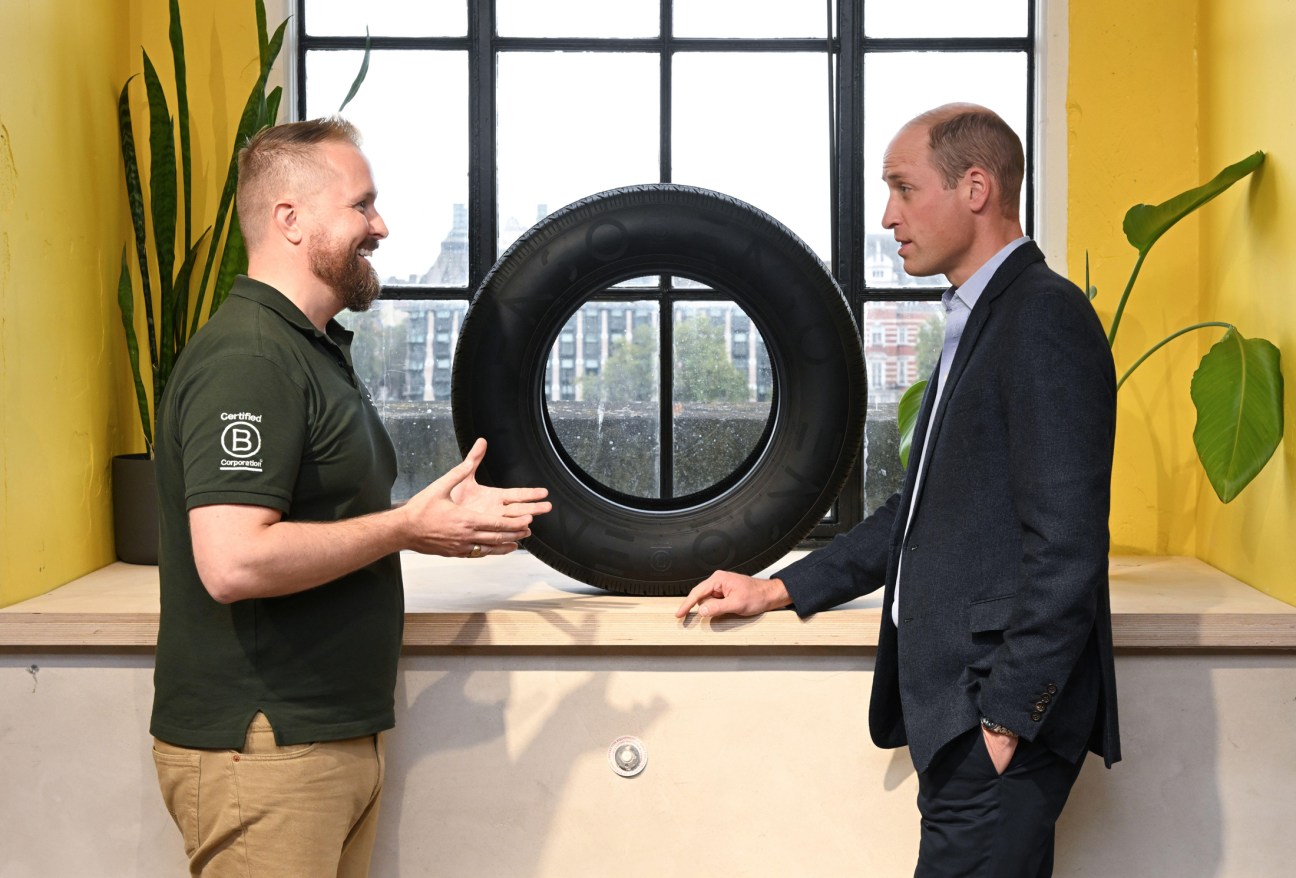
Enso was a 2023 finalist for Prince William’s Earthshot Prize but Erlendsson (pictured, on left, with the prince) has his sights set on market share as much as accolades. By December, Enso tyres will be sold in the US, the world’s second-largest automotive market. In June, Enso signed a letter of intent with the US Export-Import Bank to invest $500m (€463m) in a manufacturing facility slated to open in 2027. At full capacity, the factory could make 20 million tyres, or 8 per cent of the domestic market. No one company currently dominates the US tyre market, which makes it ripe for newcomers. “It’s not enough for us to just develop the technology,” says Erlendsson. “We need to actually put these tyres on the market at scale.”
For more ideas that are gaining traction, listen to Monocle Radio’s business programme, ‘The Entrepreneurs’.
Celebrating the unsung heroes of service
How to live: rewarding service
The winner is…
Why it’s time to recognise those who offer the sunny service that makes getting from A to B a joy.
It’s all well and good for an airline to have a dazzling new Business Class product or a rail company to have ultra-silent sleeper carriages but if you don’t have the staff and service to match, there’s little point in bringing anything new to market.
Off the back of the Olympic Games in Paris, I’ve been thinking that perhaps it is time for a global award programme for superior service. Anyone care to partner with us on this sponsoring this venture? While it’s important to recognise athletes, actors and various performing artists, what about an international awards show for the people on the front lines for brands big and small every day, round the clock? Consumers surely spend more time talking about service that’s outstanding, poor and all points in between than they do the person making millions as the over-engineered brand ambassador.
On a recent train ride, the conductor on Rhätische Bahn (a benchmark in our ‘perfect train’ story) between Chur and St Moritz was so good at his job that he surely would have made the shortlist for ‘best performance on a platform and on board in a challenging environment’. A bewildered woman was shown to the correct carriage and her enormous suitcase carried up the stairs. Disoriented Belgians were shown past the dining car and to their seats. Tickets were inspected with efficiency and just the right amount of sunny chatter. This gentleman lifted the entire tone of the journey. Perhaps it’s time to recognise what passes for a warm welcome and help to raise the status of this most essential sector.
News splash…
Our correspondents report from Japan, where Tokyo’s Sony landmark is finally replaced with a fresh building, Los Angeles, where luxury retail is making moves on Larchmont Village, and London, where empty office blocks are getting a new lease of life.
1.
Sony style
Tokyo
The Sony Building was a Ginza landmark until it was demolished in 2017. The empty space became a temporary urban garden but a new building, Ginza Sony Park, is finally set to open this year. Expectations are high for this hallowed slice of real estate.
2.
Second outing
London
The Canary Wharf Group has unveiled plans for the HSBC tower in London’s business district after the bank moves out in 2026. Large chunks will be removed, making space for terraces and leisure facilities. As cities wonder what to do with empty offices, this approach might just pay off.
3.
Retail upgrade
Los Angeles
Luxury brands are eyeing up Larchmont Village, a friendly, low-key row of booksellers, clothing shops and bakeries in LA. In August a high-end watch store opened in a restored 1920s shop. It is upping the ante – and the rents – in an area where retail has stayed mostly independent.
On the road again
After a deserved summer reset, it’s time to fold up the beach towels. September is a busy month for the Monocle team, and here’s what we have planned.

Our fashion director, Natalie Theodosi, and fashion markets editor, Kyoko Tamoto, will hit all the main stops on the fashion-month circuit and report back from Paris to Milan. We’ll have a European presence on the design front, with our associate editor Grace Charlton attending Paris Design Week between 5 and 14 September, and design editor Nic Monisse holding down the fort at the London Design Festival from 14 to 22 September. And we’ll be keeping track of the rail industry at Innotrans, Berlin’s biannual trade fair on transport, from 24 to 27 September. Catch us if you can.
Election watch: Algeria
Date: 7 September
Type: Presidential
Candidates: President Abdelmadjid Tebboune, who has served Algeria since 2019, is seeking re-election. The principal candidates seeking to stop him are Abdelaali Hassani, leader of broadly Islamist party Movement of Society for Peace (MSP), and Youcef Aouchiche of the Socialist Forces Front. It is assumed that President Tebboune will win easily, though this is due less to the nation’s gratitude for his sagacious rule than the steps that his authoritarian regime has taken to make life difficult for its opponents.
Issues: The nature of President Tebboune’s governance is the subject of consternation, even if it’s not easy to express. Tebboune (pictured) stared down huge demonstrations in 2021 and has grown more stubborn since. Opposition figures and journalists have been harassed and arrested. And, 13 years since the Arab Spring, much of the discontent that motivated it remains unaddressed here: youth unemployment is about 30 per cent.
Comment: It is five years since mass protests forced out 78-year-old Tebboune’s predecessor, the then 82-year-old Abdelaziz Bouteflika. Algeria’s people deserved better than one elderly autocrat replacing another.


The interrogator
Warja Borges
Founder, Unique Aircraft

Borges holds an engineer’s degree in interior architecture. She worked at German studio Reiner Heim Aircraft Interior Design. In 2010 she founded Unique Aircraft. Working with major companies, Borges has designed all kinds of aircraft from smaller business jets to large Boeing/Airbus-type planes for private clients, governments and heads of state.
What is the typical budget range for the aircraft you work on?
Working on a business jet, clients’ requests are mostly refurbishments. Costs range from €500,000 to €2m, including the outfitting. My core business is one-of-a-kind interiors for large aircraft, planning the interior configuration from scratch. The range is huge, depending on the complexity of the interior, technical requirements and materials used. Starting at about €30m for narrow body, up to €200m for a wide-body aircraft. The main drivers for the budget are the technology and manpower.
What are the usual (and unusual) requests from clients?
A usual request for a Boeing/Airbus-type aircraft would be a main lounge area with seating and dining, ensuite master bedroom, galley and crew area, guest seating or bedroom and an additional lavatory. Sometimes we do get the request to implement some beloved items or features.
What is most important when designing an aircraft’s interior?
The basic is to know the certification regulations and limitations and engineering constraints. The focus is on the passengers, their comfort and needs. With this in mind, my approach is holistic, stimulating senses to create an overall and unique flying experience.
unique-aircraft.com
Letters of interest

As calls for an Asian Nato grow louder, world leaders should study their history books to avoid repeating the mistakes of the past. Here’s a quick test. First question: Do you know what Seato stands for? If you said Southeast Asia Treaty Organisation, pat yourself on the back. You’re either a Vietnam War veteran, a baby boomer or a student of political science, or perhaps all three. Acronyms are a dime a dozen in international relations but Seato dropped out of the lexicon in the late 1970s when the Bangkok-based multilateral organisation was dissolved. The anti-communist defence organisation made up of Thailand, Philippines, Pakistan, the US, UK, France, Australia and New Zealand was Asia’s Cold War equivalent to Nato, albeit a much looser alliance. Seato unravelled soon after Washington pulled out of Saigon in 1975. Thai diplomat Pote Sarasin was Seato’s first secretary-general and some of Thailand’s most notable envoys got their first taste of multilateral diplomacy when assigned to the Seato desk. Though the organisation’s HQ is no more, replaced in the 1990s by Thailand’s Ministry of Foreign Affairs, Seato has a legacy. The Asian Institute of Technology (AIT), a postgraduate university north of Bangkok, was founded in the late 1950s as the Seato Graduate School of Engineering. Ambassadors continue to sit on the governing board of the university as part of their posting to Bangkok, though today’s roll call is more ideologically inclusive: France and Canada partake alongside China and Vietnam. In another sign of the times, AIT launched a Belt & Road Centre in 2019. A battle of ideas in classrooms and boardrooms certainly beats war in the seas and straits. Next question. What is Anzus? No, not Aukus. Anzus.
Editor’s letter: Andrew Tuck on making cities work for everyone
In 2007, when we ran the first Quality of Life Survey, the debate about what makes for a good city was contentious but nothing like it is today. The metrics that any organisation uses to rate and rank cities are now picked over and scrutinised by folk keen to unearth bias, or suggest that you sit on some extreme of politics.

I recently travelled to Bratislava with our Vienna correspondent, Alexei Korolyov, to attend an urbanism summit called Start with Children, which posited the benefits for all if you placed kids at the heart of the urban-planning process – will it, for example, make streets safer, reduce childhood illnesses, make the city somewhere that parents will want to raise their offspring? As the various speakers came to the stage, it was clear that this approach had another benefit as a unifying idea, a filter that those on the left and right can often look through and agree on a way ahead: “If it’s really going to make my children’s and my grandchildren’s lives better, I’m in.” Restricting access for vehicles, removing car-parking spaces, can suddenly be seen as fair and needed and not a plot against civil liberties. My fear is that cities are going to face many flashpoints as they try to deliver on climate-change challenges – you can see it in the demonisation of the notion of the 15-minute city and in the attempts to pit cyclists against drivers. What’s key is making everyone welcome in this debate.
Yet we still believe that there is immense value in taking an annual survey of how key cities are performing and looking at how the changes that they are implementing are working out – and if that’s contentious then we are up for the debate. Beyond the city ranking, we dive into lots of other elements of good urban design too. In our Business pages, we look at the work involved in keeping our cities clean – from jet-washing monuments to eradicating graffiti and clearing garbage from our rivers. It’s hard to maintain urban pride if you live in a place where rubbish fills the streets and mindless tagging scars great architecture, so the lessons to be learned in these pages are to be adopted – and sent to your elected officials.
In Design, we look at Urbidermis, a street-furniture company that was originally part of Spanish lighting brand Santa & Cole. Again, the provision of, say, park benches might not be something you have often pondered but, done right, street seating changes the pace at which we take in our cities, offers the weary and old places to linger, and even engineers social encounters. And in this month’s Expo, we look at neighbourhoods that work: places where people have a good place to buy food, a bar to hang out in, a restaurant where they’ll learn your name and a pace of life that offers both calm and excitement. I particularly love our dive into Naples, a city that might struggle on some metrics but which its residents love with a deep passion – you’ll see why when you turn the pages.
The bigger idea of how we begin a conversation about how our cities should function, one that doesn’t descend into opprobrium, is the subject of our illustrated Monocle Manifesto, which unpacks the elements of the social contracts that you need in place so that everyone can go about their day feeling safe, at ease. It contains a series of simple moments of care and attention that hopefully just about everyone can subscribe to.
This is, of course, our double issue, which will be on newsstands for some eight weeks. But we have plenty of other media moments to keep you engaged over the coming weeks and, hopefully, add to your own quality of life. Look out for our Paris Edition and Mediterraneo newspapers for starters. As for the Monocle team, we’ll hopefully be heading off to sample some summer moments in cities slick and alluring, gritty and passionate – though there are a lot of projects and ideas to bring to fruition this summer too. Whatever your plans are, we look forward to keeping you informed and entertained. Have good summers (or winters to our friends south of the equator).
If you would like to send over any ideas, thoughts and recommendations, then feel free to drop me a line at [email protected]. —
12 sandwich recipes that’ll have you rethinking the humble snack
1.
Recipe
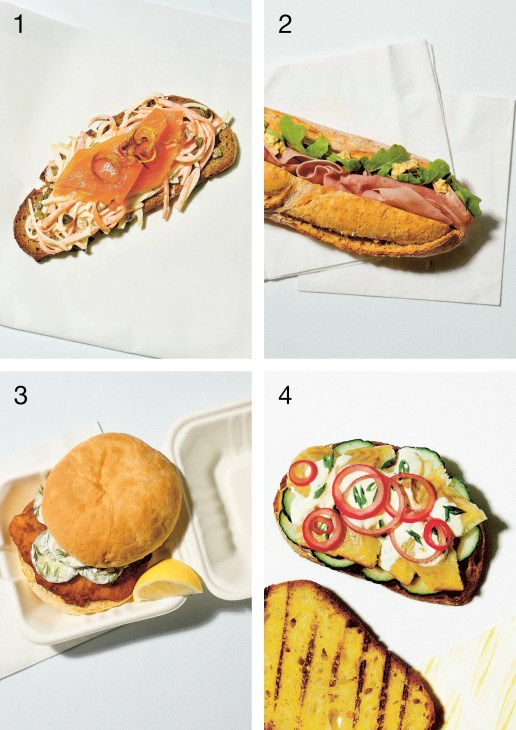
Smoked salmon and celeriac remoulade on rye
Serves 2
Ingredients
For the remoulade
100g celeriac
1 small carrot
3 tbsps mayonnaise
1 tsp Dijon mustard
2 tbsps crème fraîche
2 tsp fresh lemon juice
1 tsp capers, finely chopped
Large pinch of sugar
5g flat-leaf parsley, finely chopped
Salt and ground black pepper
3 tbsps vegetable oil
1 shallot, thinly sliced
A large pinch of salt
2 slices of rye bread
Butter
4 slices of smoked salmon
Method
1. Shred the celeriac and carrot with a vegetable slicer. Mix with the rest of the remoulade ingredients and set aside.
2. Pour the oil into a small frying pan over medium heat. Once the oil is warm, add the shallots. Cook until golden. Then place the fried shallots on kitchen paper and sprinkle with salt.
3. Toast the rye bread, then butter it. Arrange the salmon on top and spoon over the remoulade. Finish with fried shallots.
2.
Recipe
Jambon beurre with mustard and cornichons
Serves 2
Ingredients
25g cornichons, finely chopped
1 small shallot, finely chopped
2 tsps Dijon mustard
30g salted butter, thinly sliced
2 handfuls of rocket, washed, refreshed in cold water and dried in a salad spinner
4 slices (160g) good quality French ham
2 small baguettes
Method
1. Mix the chopped cornichons and shallots with mustard in a small bowl.
2. Open the baguette with a knife horizontally and spread with the mustard mixture. Place the thin slices of cold butter inside.
3. Arrange the rocket and ham on top and serve.
3.
Recipe
Schnitzel bun with cucumber, sour cream and dill dressing
Serves 2
Ingredients
For the salad
½ cucumber, thinly sliced
70g sour cream
5g dill, finely chopped
¼ tsp sea salt
230g pork filets, sliced
For the breadcrumbs
50g Panko breadcrumbs
20g Parmesan cheese, cut into small chunks
2 tbsps plain flour
2 medium eggs, beaten
100ml sunflower oil
100g clarified butter
2 large white bread rolls
Olive oil
2 lemon wedges
Method:
1. Mix all of the salad ingredients together.
2. Place the pork filets between sheets of baking parchment and pound with a meat tenderiser, until 5mm thick. Season with salt and pepper.
3. Blend the cheese and the breadcrumbs in a food processor to form a fine crumb.
4. Fill one tray with flour, one with the beaten eggs, one with breadcrumbs and leave one empty. Gradually heat the oil and clarified butter to 170C.
5. Dust the pork loins with flour, dip into the beaten eggs and coat with breadcrumbs, then lay them on the fourth tray.
6. When the oil is hot, add the schnitzel and fry for two to four minutes each side, until pale golden colour. Once cooked, remove and place on a wire rack.
7. Slice the rolls horizontally, toast and brush with olive oil. Add the schnitzel, a squeeze of lemon juice and the cucumber salad.
4.
Recipe
Smoked eel, horseradish and pickled onion sandwich
Serves 2
Ingredients
For the pickled onions
1 small red onion, thinly sliced
75ml red wine vinegar
15g sugar
2 tbsps water
A large pinch salt
For the horseradish
2 tbsps sour cream
½ tbsp olive oil
20g finely grated horseradish
½ tbsp crème fraîche
1 tbsp red wine vinegar
Pinch of salt
Freshly ground black pepper
5g chives, finely chopped
¼ cucumber, thinly sliced
2-4 filets of smoked eel
4 slices of sourdough bread
Butter
Method
1. Mix the vinegar, sugar and salt together in a small saucepan. Bring to a simmer, stirring continuously, until the sugar and salt dissolves. Pour over the sliced onion and set aside.
2. Mix all the horseradish sauce ingredients until combined.
3. Toast the bread and spread it with butter.
4. Arrange the cucumber across two of the slices of bread, top with the smoked eel and spoon over the sauce. Finish with the pickled onions. Close the sandwich with the other slice of bread and serve.
5.
Recipe
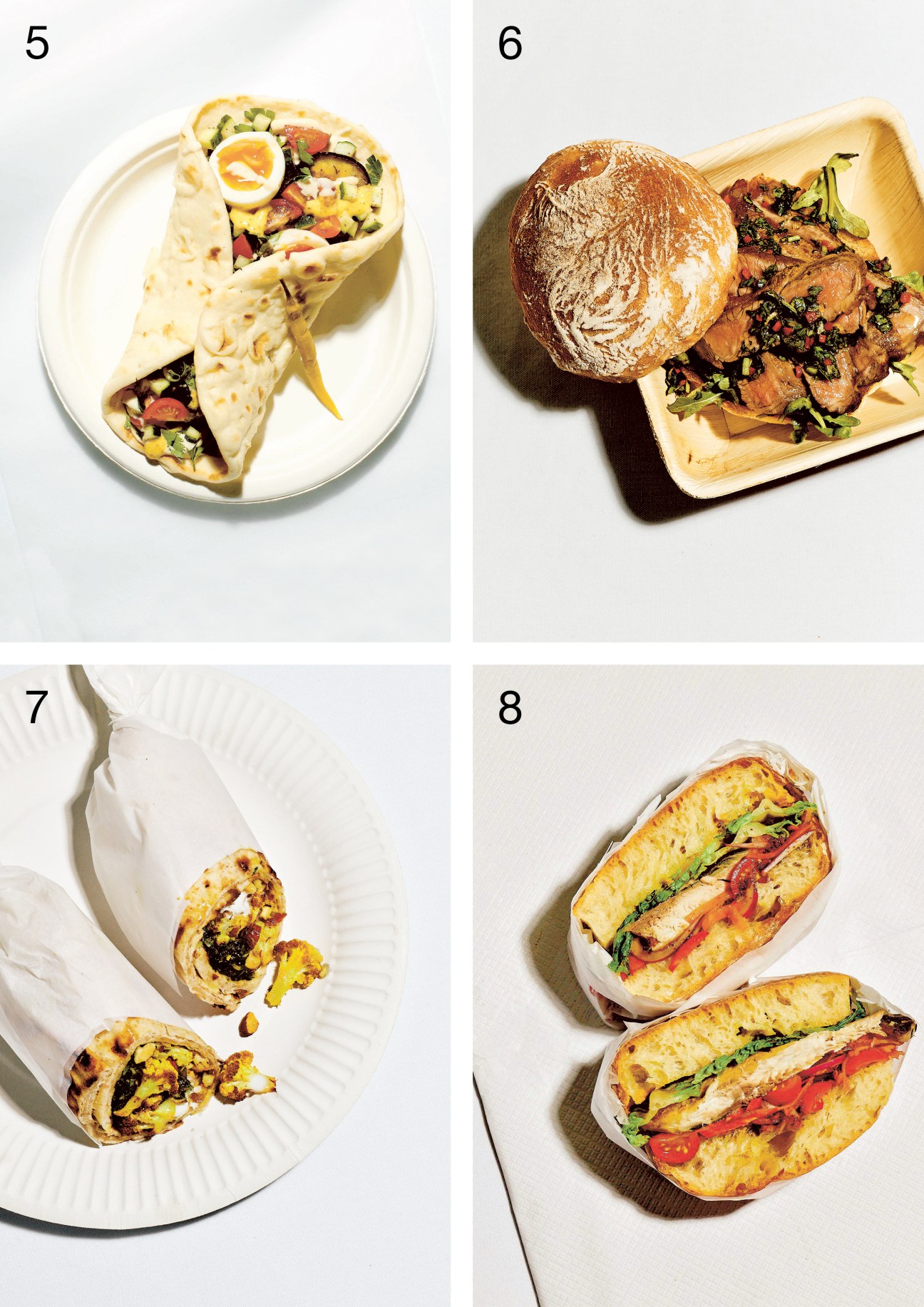
Aubergine, egg, hummus sabich
Serves 2
Ingredients
For an amba-style sauce
1 tbsp olive oil
1 garlic clove, finely grated
100g ripe mango, diced
¼ teaspoon sumac
Juice of 1 lime
1 tsp wholegrain mustard
½ lime, roughly chopped
1½ tbsp water
A large pinch of salt
For the tahini
2½ tbsps tahini
1 tbsp fresh lemon juice
½ sea salt
1 tbsp water
For the salad
6 cherry tomatoes, diced
1 small cucumber, diced
10g flat leaf parsley
2 tsps olive oil
1 tsp lemon juice
2 large pinches of sumac
3 tbsps olive oil
2 medium eggs
2 spoonfuls of hummus
1 aubergine, sliced into 1 cm thick rounds
2 pitta breads
Green chilli pickles to serve
Method
1. Preheat the oven to 200C.
2. Put the amba sauce ingredients into a food processor and blitz until smooth.
3. For the tahini sauce, mix the ingredients together until smooth.
4. Toss the salad ingredients in a bowl and set aside.
5. Mix 3 tbsps of olive oil, the aubergine slices, salt and pepper in a bowl. Arrange on a tray and bake for 10 minutes on each side.
6. Boil the eggs for 7 minutes. Then peel and cut in half.
7. Spoon the salad, hummus, aubergines and eggs into a warm pitta and drizzle over the tahini and amba sauce.
6.
Recipe
Steak sandwich with chimichurri sauce
Serves 2
Ingredients
2 x 200g sirloin steaks, season with salt and pepper
1 tbsp olive oil
2 tbsps butter
For the chimichurri sauce
10g flat leaf parsley, finely chopped
1 medium red chilli, finely chopped
5 tbsps extra virgin olive oil
1 tbsp red wine vinegar
The zest and 1 tbsp juice from an unwaxed lemon
1 clove of garlic, finely grated
1 tsp sugar
½ tsp sea salt
Ground black pepper
2 ciabatta rolls
2 handfuls of rocket
Method
1. Remove the steak from the fridge 30 minutes before the cooking time to bring it back up to room temperature.
2. Heat the olive oil in a very hot pan and cook the steak for 2 minutes on each side. For the last 30 seconds, add the butter and baste the steak. Remove from the pan and place on a chopping board, cover with a piece of foil briefly and let it rest for 5 minutes.
3. While the steak is resting, mix the chimichurri ingredients together, this could be done in a food processor.
4. Slice the rolls in half horizontally and toast in the frying pan that you used to cook the steak.
5. Place the rocket on the bread, slice the steak and arrange it on top of the rocket. If you have any cooking juices on the chopping board, add to the chimichurri sauce. Spoon the sauce over the steak and top with the other half of the bread. Serve immediately.
7.
Recipe
Spiced cauliflower kathi roll with coriander and tamarind chutney
Serves 2
Ingredients
For the spiced cauliflower
250g cauliflower, cut into small florets
1 tsp turmeric powder
1 tsp mustard seeds
1 tsp fennel seeds
½ tsp ground coriander
½ tsp ground cumin
2 garlic cloves, grated
2 tbsps olive oil
For the coriander chutney
50g coriander leaves
1 green chilli, roughly chopped
1 tbsp lemon juice
10g fresh ginger
1 tbsp tamarind sauce
½ tsp salt
2 lemon wedges
30g salted, roasted almonds, roughly chopped
2 rotis
2 tbsps yoghurt
Method
1. Preheat the oven to 200C.
2. Mix the cauliflower and the rest of the ingredients together on a tray. Roast for 10 to 15 minutes.
3. Put all the chutney ingredients in a small food processor and blend into a coarse paste.
4. Remove the cauliflower from the oven, squeeze the lemon juice over the top, add the chopped almonds and toss.
5. Warm the roti in the oven for 2 minutes. Then remove and place some cauliflower in the middle of each flatbread. Spoon over the chutney and yoghurt. Roll and place in the middle of a sheet of greaseproof paper and wrap it up to form a kathi roll. Slice the roll in half and serve.
8.
Recipe
Balik ekmek (Turkish mackerel sandwich)
Serves 2
Ingredients
2 tbsps olive oil
2 mackerel filets
2 ciabatta
1 gem lettuce, washed
2 pinches of pul biber (or Aleppo chilli flakes)
For the salad
½ cucumber, thinly sliced
6 cherry tomatoes
1 small red onion, thinly sliced
1 red chilli, sliced
½ carrot, coarsely grated
Small handful of mint leaves, chopped with a sharp knife (not crushed as this will cause discolouration)
For the dressing
2 tbsps olive oil, plus more to serve
2 tbsps pomegranate molasses
2 tbsps olive oil
2 tbsps fresh lemon juice
2 tsps sumac
½ clove garlic, finely grated
Salt and pepper
Method
1. Pour 1 tbsp of olive oil into a frying pan and pan fry the mackerel, skin side first over a medium heat. Cook each side for 2 minutes. Then set aside.
2. Preheat the grill. Cut the ciabatta in half horizontally and toast. Brush the cut side with olive oil.
3. Put all the dressing ingredients in a jar and shake. Toss the salad ingredients in a bowl and pour over the dressing.
4. Cover one half of the sliced bread with lettuce, then top with the fried mackerel filets. Spoon over the salad mixture and sprinkle with the pul biber.
5. Close the sandwich with the other half of the bread. Wrap in a sheet of greaseproof paper and cut in half.
9.
Recipe
Lobster roll with spicy Marie Rose sauce
Serves 2
Ingredients
400g of cooked lobster
2 sticks of celery, cut into 1cm cubes
Butter
Gem lettuce
2 brioche rolls
Serve with crisps
For the Marie Rose sauce
2 tbsps mayonnaise
1 tbsp ketchup
1 tsp red wine vinegar
10 dashes of Tabasco
2 tsps creamed horseradish
¼ tsp Worcestershire sauce
The juice of ½ a lemon
3g chives
Sea salt and crushed black pepper
Method
1. Shell the cooked lobster and chop the meat into bite size pieces or buy it pre-cooked.
2. Mix all the Marie Rose sauce ingredients together in a bowl and add the lobster meat and cubed celery.
3. Warm the brioche rolls under the grill, slice them open from the top (like a hotdog bun), and spread with butter. Fill generously with the lobster mixture. Add crisps to serve.
10.
Recipe
Bocadillo de calamares with aïoli
Serves 2
Ingredients
150g squid, cleaned and sliced into 1cm rings with tentacles cut into bite size pieces
For the aïoli
2 garlic cloves
1 organic egg yolk
1½ tbsp lemon juice
85ml mild olive oil
1 tsp Dijon mustard
2 tbsps chives, finely chopped
¼ tsp sea salt
For the squid fritters
45g self-raising flour
¼ tsp sea salt
300g cornstarch
75ml sparkling water, ice cold
Sunflower oil
Lettuce leaves, washed
2 lemon wedges
Method
1. Toast the garlic, skin on, in a dry pan, then peel.
2. Whisk the yolk and lemon juice with a stick blender. Add in the oil. Drop in the peeled garlic, mustard, chopped chives and mix. Season with salt.
3. Heat the oil in a deep pot.
4. Place the dry batter ingredients in a bowl and pour in the sparkling water. Whisk lightly. The consistency should resemble single cream.
5. Heat the oven and warm the baguette for a couple of minutes.
6. When the oil reaches 190C, dip the squid in the batter and deep fry for 2 to 3 minutes, until golden brown. Remove from the oil and place on a baking rack. Sprinkle with salt.
7. Slice the warmed baguette open and spread the aïoli inside. Arrange the lettuce and fried squid on top. Finish with a squeeze of lemon juice.
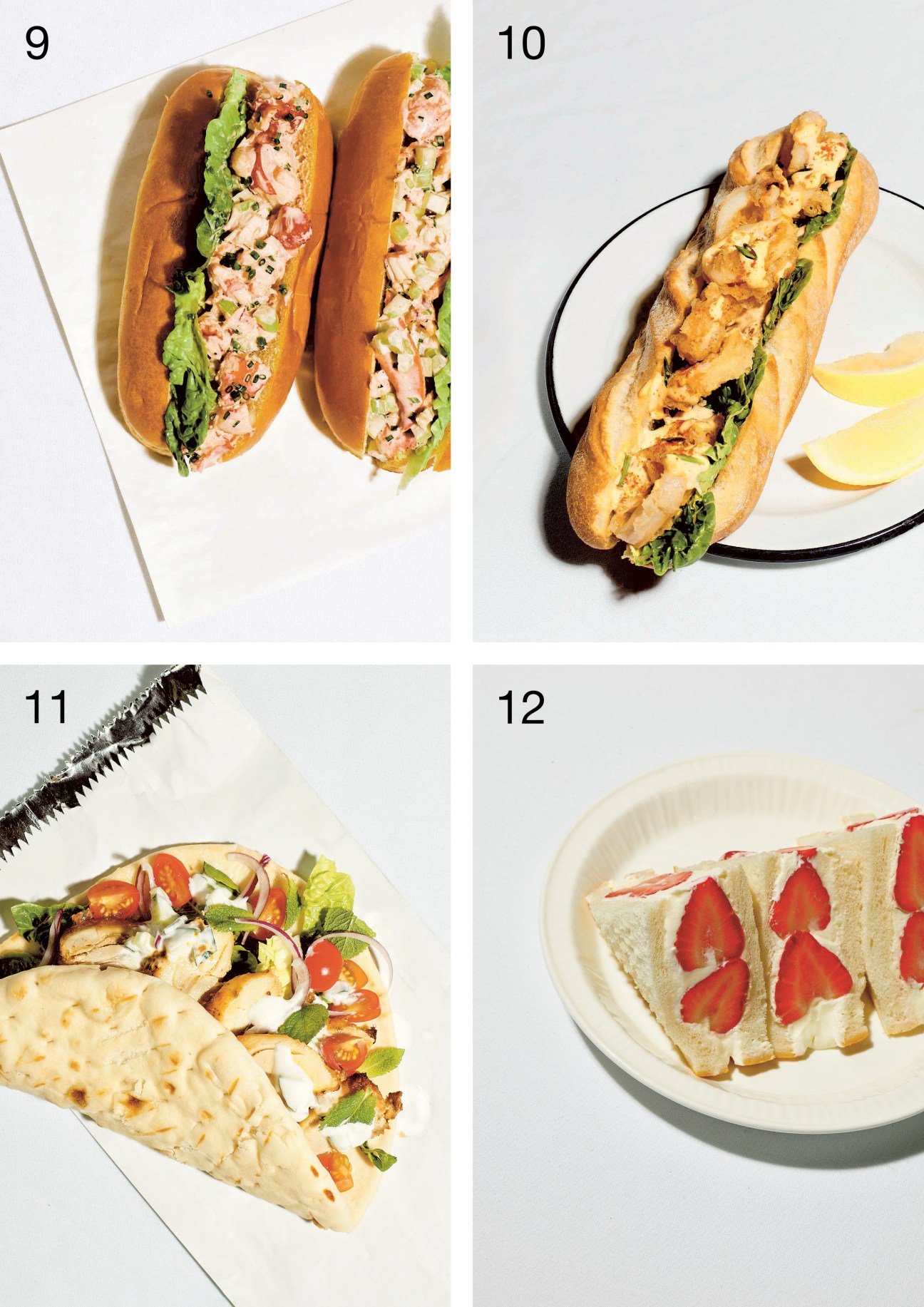
11.
Recipe
Chicken souvlaki
Serves 2
Ingredients
400g skinless chicken thighs
For the marinade
120g Greek yogurt
1 tsp oregano
½ tsp sweet paprika
¼ tsp salt
1 ½ tbsp lemon juice
2 tbsps olive oil
2 garlic cloves, finely grated
For the tzatziki
100g Greek yogurt
½ cucumber
½ garlic, finely grated
1 tbsp olive oil
Salt and pepper
For the salad
½ lemon
6 cherry tomatoes, quartered
¼ red onion, thinly sliced
Handful of mint leaves
A few shredded lettuce leaves
2 pitta breads or flat breads
Method
1. Make the marinade and coat the chicken. Refrigerate for 2 hours or, ideally, overnight.
2. For the tzatziki, half the cucumber and remove its seeds. Finely grate the flesh and squeeze out any water. Mix with the rest of the tzatziki ingredients and season well.
3. Take the chicken from the fridge 30 minutes before cooking. Preheat the grill to 220C. Place a rack over a baking tray lined with foil.
4. Arrange the chicken on the rack and grill for four to five minutes on each side. The meat should be a little charred and the cooking juices should run clear.
5. Remove from the oven and squeeze lemon juice and sprinkle salt over the top.
6. Warm the pitta bread in the oven.
7. Fill the flatbread with tomato, red onion and lettuce, sliced chicken and tzatziki sauce.
12.
Recipe
Fruit sando
Serves 2
Ingredients
4 medium slices of very soft white bread or thinly sliced Japanese shokupan
150ml double cream
2 tbsps caster sugar
16 hulled strawberries (also works with kiwis, grapes or a combination of both)
Method
1. Whip the cream with sugar until it forms soft peaks. Lay out the bread slices and spread half of the cream over the two of them.
2. Arrange the fruit diagonally, corner to corner, in an “x” shape. Cover it with the rest of the cream and top with the other slice of bread.
3. Wrap tightly with cling film and rest in the fridge for 30 to 60 minutes.
4. Using a very sharp, long knife, cut the sandwich, diagonally through the cling film. This will give you 4 small triangle sandwiches.
5. Arrange the sandwich cut side up and serve.
The latest Portuguese farmstead villa offering much-needed escapism in the Algarve
The sun-kissed sandier fringes of the Algarve are a summer success story but the Portuguese region has peaceful patches too. The latest property to provide such sanctuary is Casas da Quinta de Cima, near the Spanish border in the town of Vila Nova de Cacela.
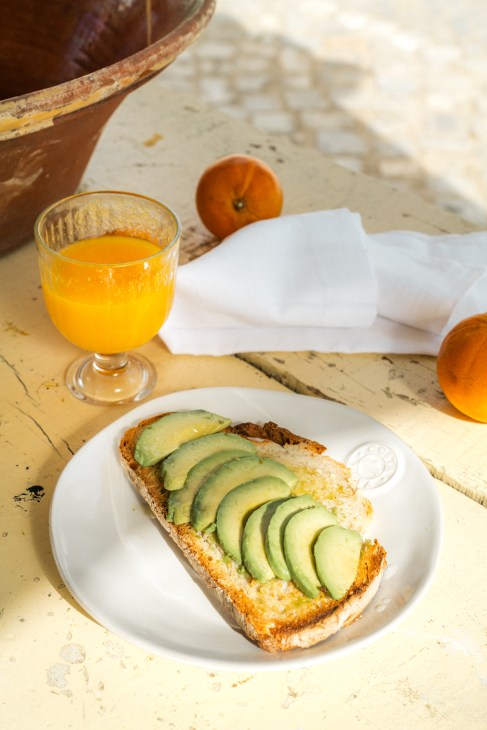
Set back from the sea within the confines of a 50-hectare farm, the country hotel was where owner José Maria Brion, a Portuguese actor, spent his summer holidays as a child. Today the estate, which has been in his family since 1925, is bearded with rugged citrus groves and trees growing avocado and carob. “It’s still a working farm so you’ll have fresh orange juice and homemade granola for breakfast,” says Brion as he takes Monocle on a tour of the grounds.
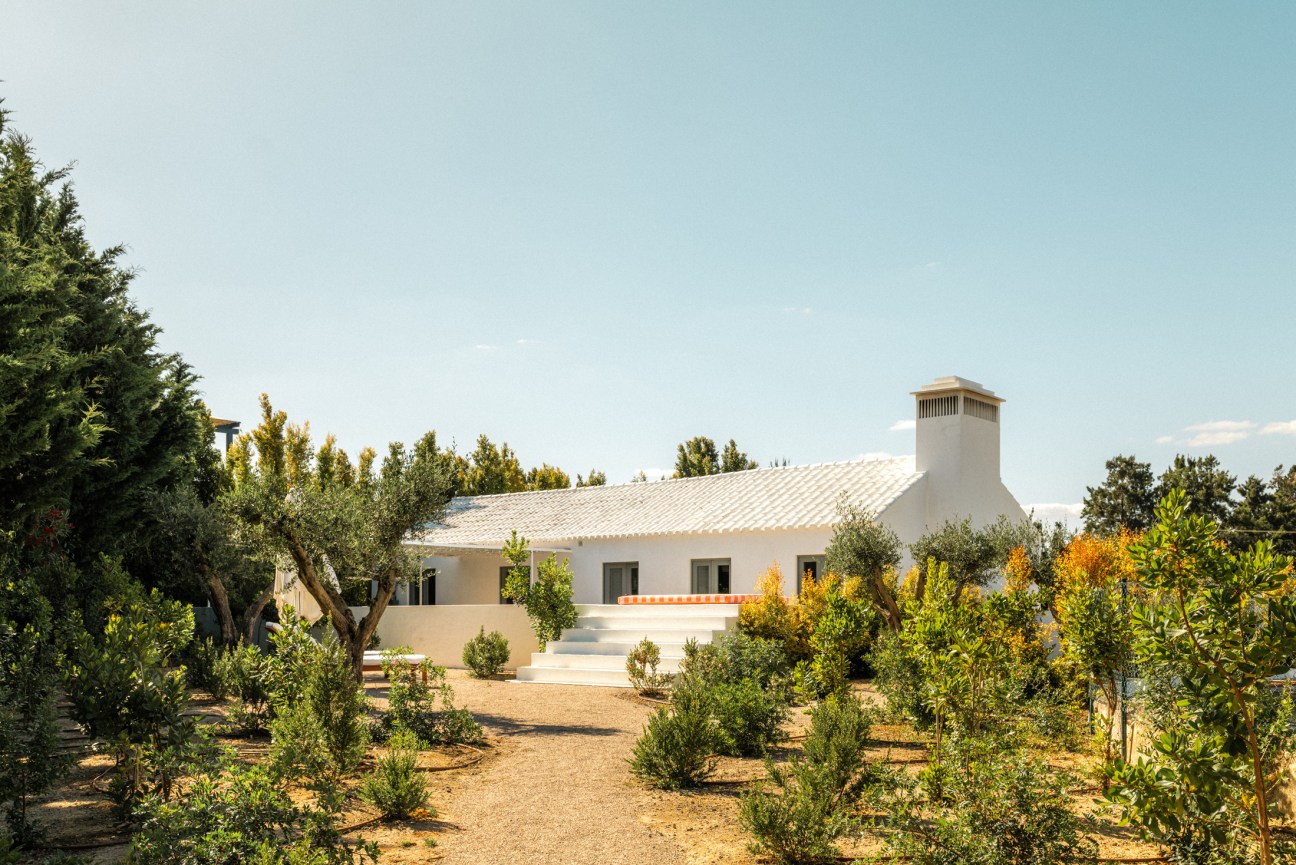
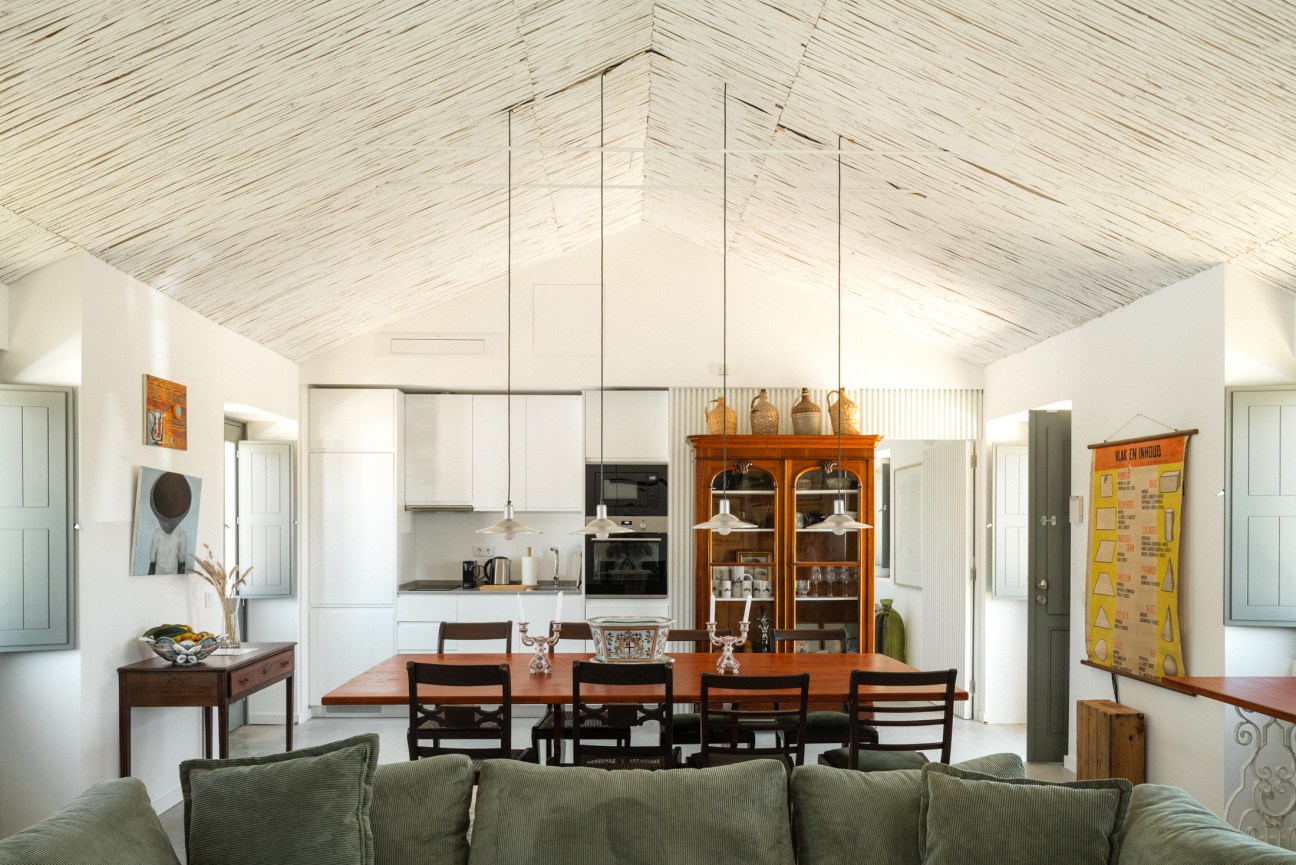
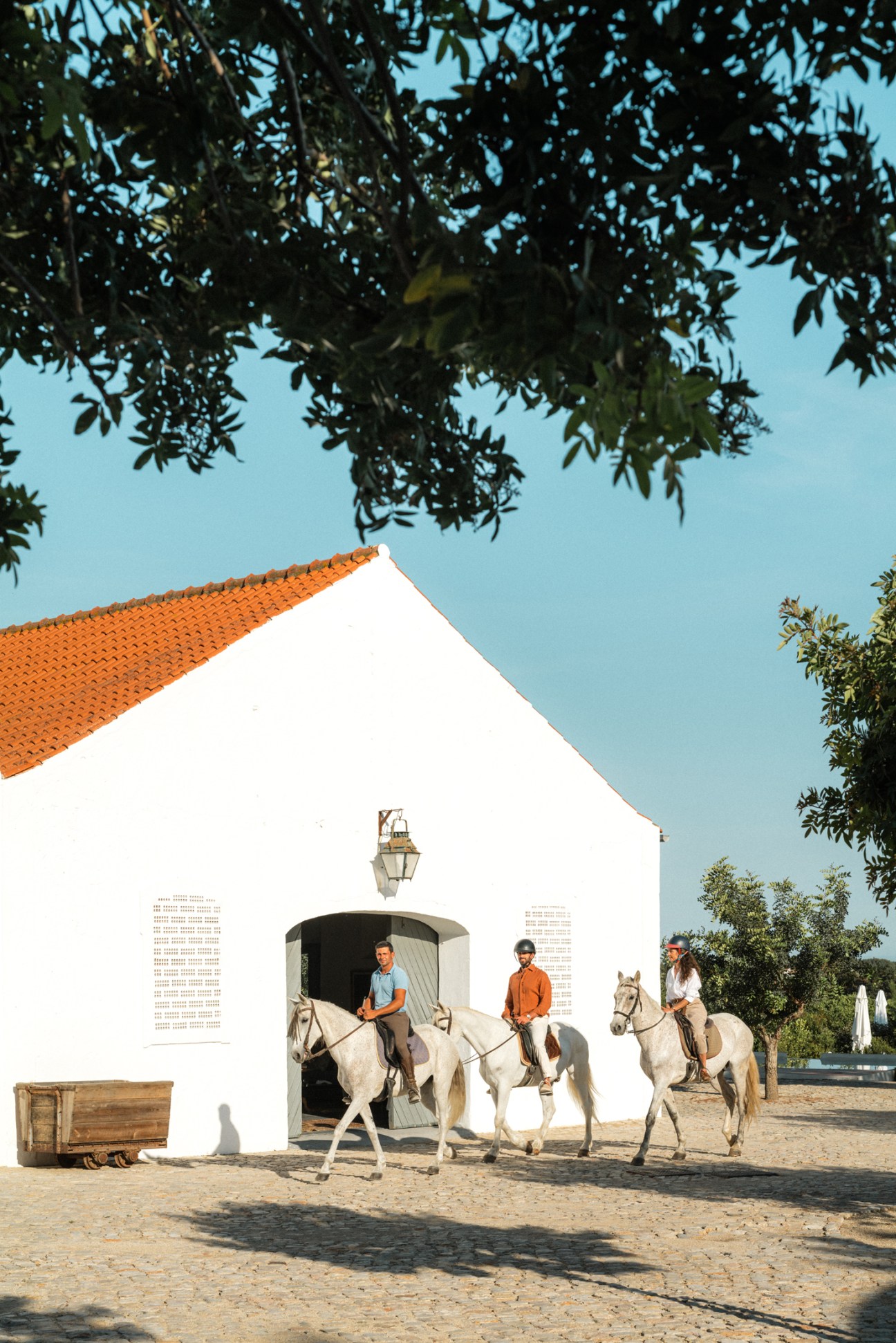
Opened in early 2024, the hotel is centred on a courtyard lined by whitewashed cottages that were once the living quarters of farmhands. With architect João Pedro Falcão de Campos, the aim was to preserve the original character of the buildings, which formed the core of a once important agricultural firm that produced cereals and other crops. “We wanted to share this experience of a forgotten Algarve, which most people don’t see today, one focused on the land, not the sea,” says Brion, squinting in the sun. “For us, it was important to keep things local, not only with the architecture but also the materials we used in the remodelling.”
Nine guestrooms have ceilings lined with traditional strips of cane once commonly used for insulation, while bathrooms are adorned in a brownish marble known as Breccia Tavira, sourced from the area. Large suites feature an enclosed patio off the bedroom, with a private outdoor shower to wash away the sand from the beach, which is a few hundred metres away, past the property’s numerous lemon trees.

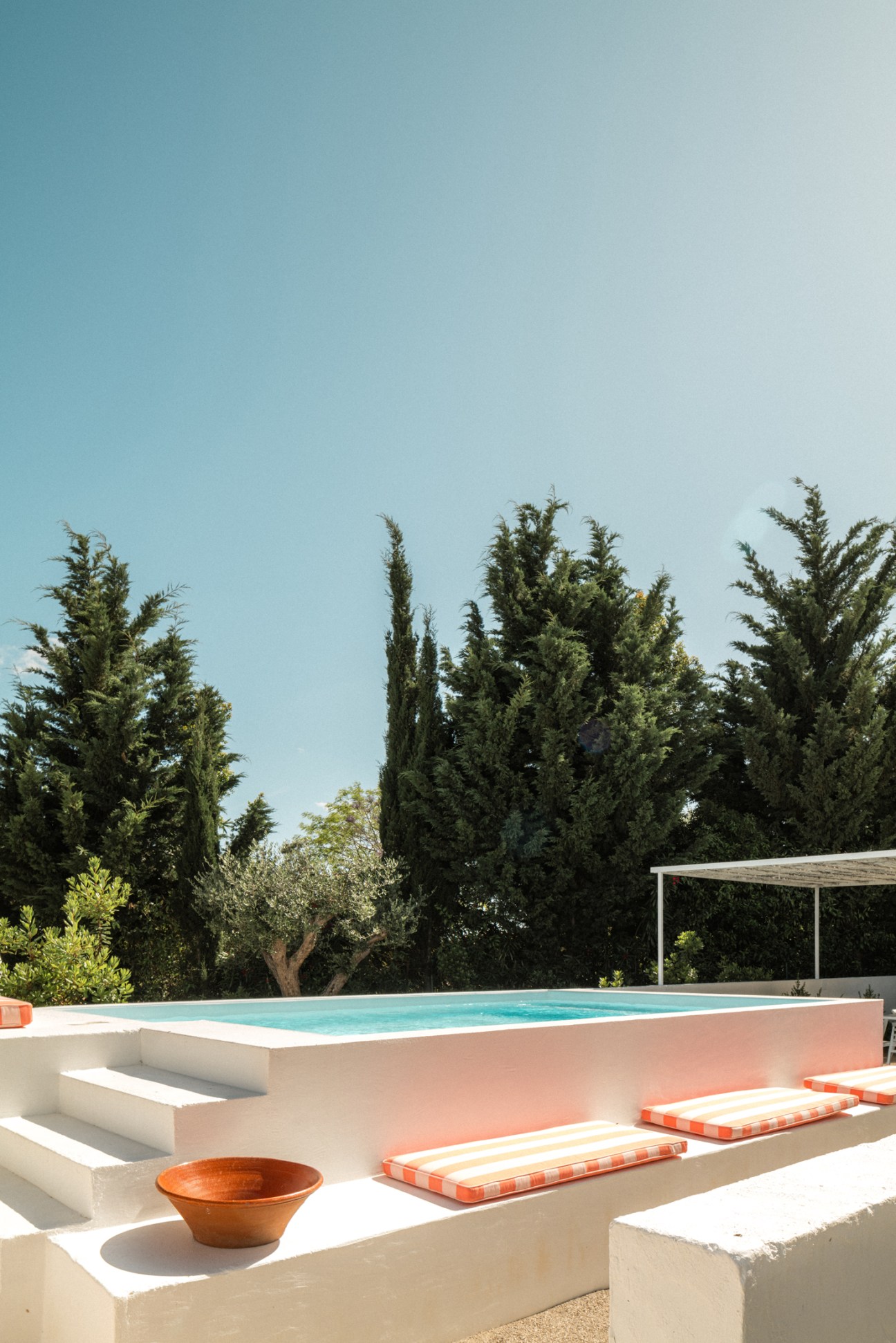
Those seeking privacy can opt to stay on the estate and sun themselves on loungers among blossoming flowers. To beat the heat, there’s a spartan stone pool, formerly the site where workers laundered their clothes. Close by is a circular threshing floor where grain was separated from chaff at harvest time. “Everything has been done to ensure that the original character of the site comes through so guests can envision how life was before,” says Brion.
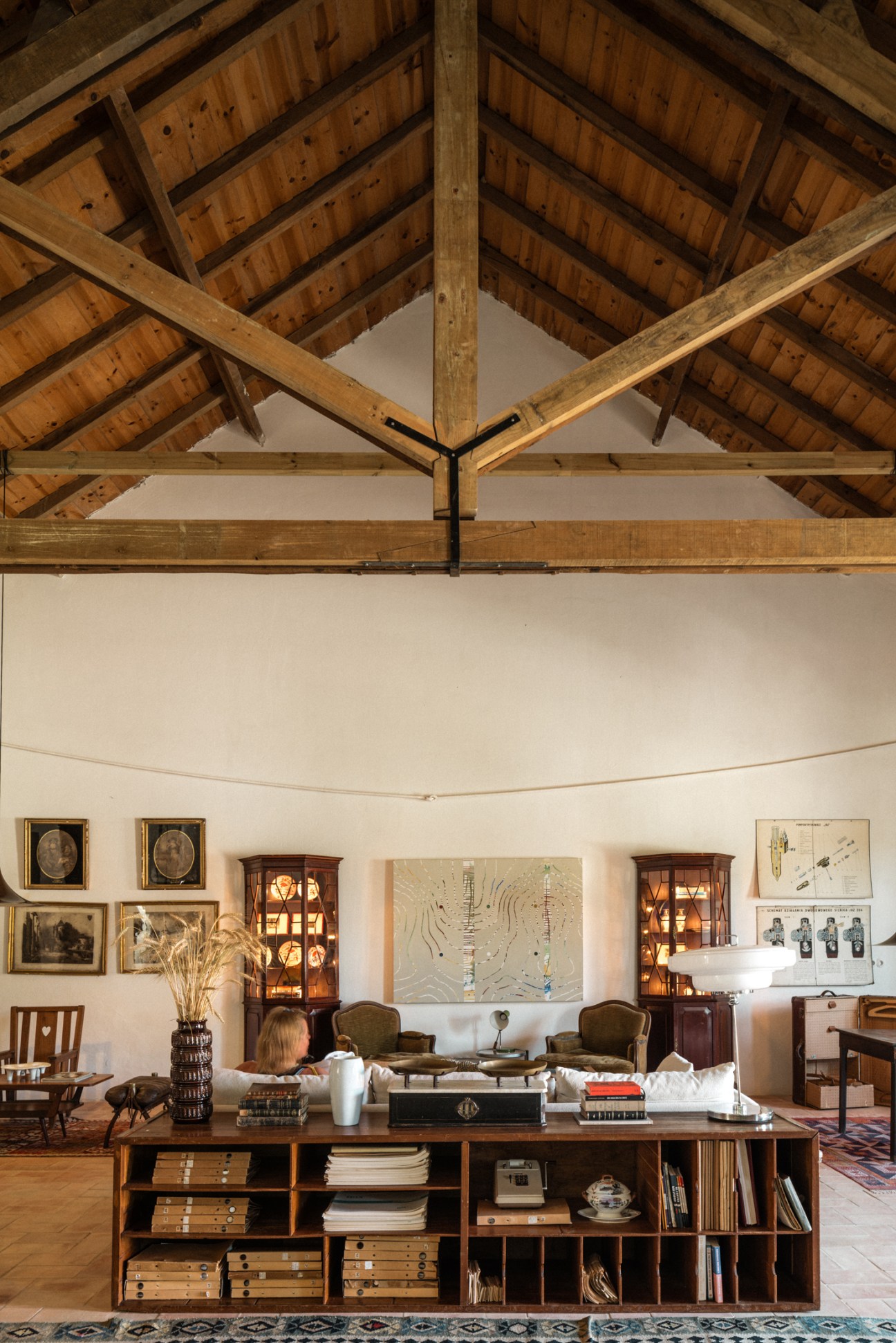
Common areas such as the lobby are decorated with a mix of antique furniture procured from the homes of Brion’s parents and vintage shops (chairs next to the pool bar are mid-century finds previously used in Lisbon’s municipal offices). The reception has a table with stone countertop where workers in the 1950s would sort almonds. Inside a former warehouse, a breakfast room and lounge – complete with honesty bar, sofas and a billiards table – was erected.
The hotel offers two villas, each with a private pool and tastefully decorated interiors, aimed at families. Brion plans to renovate a further section of the estate’s buildings, including the stables, to double the number of guestrooms. “We haven’t included TVs in the rooms,” he says. “If it was up to me, I would make the phone service poor so that people could truly disconnect from their frenetic lives and enjoy the nature here.”
How to get here
Faro Airport: 45-minute drive
Seville Airport: One hour, 45 minutes
Lisbon: Two hours, 45 minutes
Address book
Noélia
This seafood restaurant in nearby Cabanas de Tavira, run by self-taught cook Noélia Jerónimo, keeps it simple with dishes focusing on locally caught fish and hand-picked ingredients.
Praia de Cacela Velha
This wide and picturesque beach sits below an 18th-century fort. It is part of the network of beaches, barrier islands and lagoons that make up Ria Formosa Natural Park.
Salmarim
In next door Castro Marim, owner Jorge Raiado operates a saltpan farm that harvests quality fleur de sel for use by leading Portuguese chefs.
Talking trash: Community efforts and new technology that are keeping our cities clean
A healthy city is not so different from a healthy resident: it grows and adapts, does its best to look after itself and takes care of its hygiene. But at an urban scale, keeping rubbish, dirt and odours under control is a significant challenge. The UN estimates that the world’s cities produce more than 10 billion tonnes of waste a year, with little sign of slowing down.
Look at the big picture (after giving it a good wipe) and it’s clear that solving the problem requires our governments, private companies and residents to work together. Overwhelming as the challenge might sound, Monocle has sifted through the rubbish and found heaps of optimism about the future of our urban hygiene. In the following pages, we present the positive civic initiatives, smart technological innovations and upcycling companies that are keeping our cities clean.
1.
The River Dredgers
Rusken
Oslo
Things become frantic when a volunteer pulls an undetonated grenade out of the river. People scatter; our photographer drops his camera and calls the police. Soon, we hear that the bomb squad is getting involved. Thankfully, Rusken’s finds are rarely so explosive. As the picking crew’s 50 or so orange-clad members make their way up and down Oslo’s Akerselva river in boats or on foot along the banks, the usual suspects emerge: plastic containers, glass bottles, cigarette butts, pouches of snus tobacco, the occasional rusted road sign and the obligatory electric scooter. In about four hours, about 700kg of rubbish is hauled out of the 8km river that cuts through the capital, and which one volunteer describes to us as “the pulse of Oslo”.
The crew’s efforts to keep the river pulsing are appreciated. A soundtrack of applause and thank-yous from passers-by accompanies its work. “This city has been very lucky,” says Jenny Krohn, an Oslo resident for the past 35 years, whose official title is “Rusken general”. “We have been bringing people together to keep Oslo clean since 1976.”
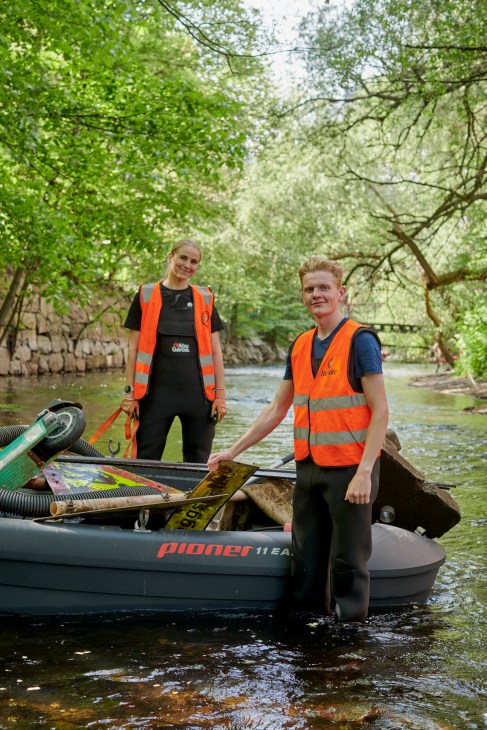
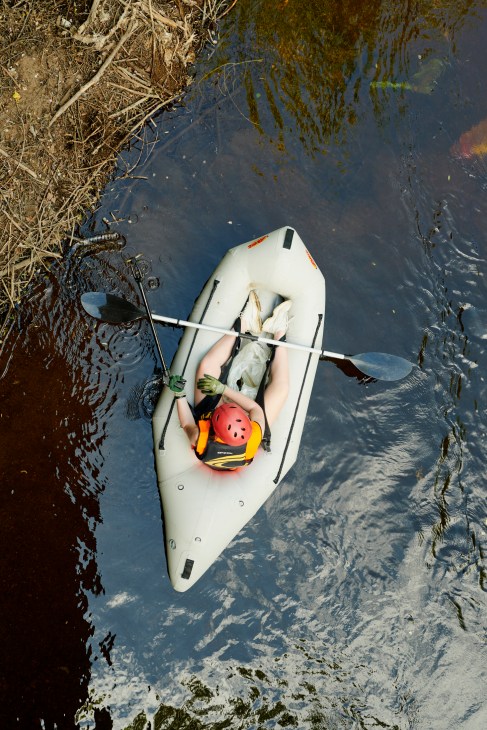
Though Rusken (from the Norwegian word “rusk“, meaning “scrap”) is funded by the Oslo municipality, it operates more or less independently with little in terms of formal resources. Krohn has only two full-time employees, plus three hired seasonally. Still, the small platoon seems to have little trouble mobilising the occasional clean-up army. “The trick is to make yourself look bigger than you are,” says Krohn.
The secret to Rusken’s success is the fact that it taps into Norway’s dugnad tradition: literally meaning “help” or “support”, it refers to a custom of community-driven volunteering with strong connotations of civic duty. Doing your fair share of dugnad to contribute to the health of your community is a central part of Norwegian life. And it’s what allows Rusken’s team of three to do the work of a far bigger organisation.
Later we learn that the police has checked the explosive and identified it as a relatively harmless grenade that releases white smoke. With calm restored, the cleaners continue undeterred. One officer tells us that he’ll return in the evening to fish here (though not for explosives). Thanks in part to Rusken’s work keeping the river clean, the once polluted Akerselva is now thriving with healthy salmon and trout.
The power of dugnad is on full display here. Alongside the volunteering ground troops with their bags and rubbish-pickers, Oslo’s Fjord Cleanup has brought dozens of small boats, which are deftly navigated down the river and used to haul bigger catches. Rusken is also collaborating with Kirkens Bymisjon (Church City Mission) to offer paid work for residents who are struggling with issues such as substance abuse and unemployment.
By 14.00 the troops have dispersed. And there’s a feeling in the air that Oslo’s pulse is beating that bit stronger.
rusken.no
Gomi Hiroi Samurai
Tokyo
You might think that Tokyo’s residents do a good job of keeping their city clean but actor Ikki Goto felt that they needed a reminder to take their litter home. So he teamed up with Keisuke Nakagome to become the Gomi Hiroi (“litter-picking”) Samurai, a double act that takes the message to the streets. Dressed in neo-traditional robes, with trilbies on their heads and baskets on their backs, the duo wield elongated tongs and perform a theatrical clean-up for passers-by. The show, which is sponsored by city businesses, entertains as well as informs. The pair pop up weekly around the area near their office in Ikebukuro and also recruit volunteers, and work with other organisations. In one performance, posted on social media, Goto sets out to fill 10 buckets with cigarette ends, plastic bottles and fast-food wrappers. The aim is to raise awareness along with standards. “We want to make people think twice before they drop their litter,” he says.
gomihiroi-samurai.com
Public Hygiene Council
Singapore
Singapore’s global reputation for cleanliness demands constant vigilance: a stray piece of rubbish could upend it all. The Public Hygiene Council, a non-government group for promoting urban sanitation, has announced that its formerly quarterly “SG Clean Day” – when residents clear litter and sweep streets – will now occur every two months. The aim is to encourage civic mindedness and public awareness of what it takes to keep Singapore tidy. Not only do bank tellers and baristas pick up brooms, but janitors receive a much-needed day off too.
publichygienecouncil.sg
Mayor Eric Adams
New York
New York’s mayor, Eric Adams, came to office on a promise: “Fighting crime, fighting inequality, fighting rats.” The first two might still be works in progress but the city is getting on top of its rodent problem. In 2023 it appointed a dedicated “rat czar”. Initiatives include a side-loading garbage truck, designed in Italy, that will soon collect from new wheelie bins and put an end to bags of rubbish sitting kerbside, while Brooklyn-based Citibin is making enclosures where bins can be stored out of reach of furry residents.
nyc.gov
2.
The Rubbish Collector
Villiger
Zug, Switzerland
All city dwellers know the feeling – the ugly sight of bins overflowing, holding your breath to avoid the smell on your commute and gritting your teeth at the daily grating of trucks struggling to keep up with the ceaseless flow. But one Swiss company might have found a simple solution to make the whole affair more bearable: to take it underground.
It started in founder Paul Villiger’s barn in the canton of Zug, where the self-taught inventor began welding metal pieces together to create new methods of condensing tins for easier recycling. From there, the ideas kept flowing. About five years after founding his eponymous company in 1991, Villiger’s first underground systems were installed in France and the Netherlands. “The initial idea was to limit noise and smells from waste collection in traditional containers,” says Michéle Villiger, who heads the international business. Today, it is a 400-strong family business with a revenue of €40m, exporting its innovative systems worldwide.


With its neat containers that have a minimal footprint and can hold anything from household waste to recyclables, Villiger can eliminate the need for foul-smelling, ugly bins at street level. The fact that these enclosed containers are below ground reduces noise and allows them to take more rubbish than standard bins. “The larger size also reduces the need for collection vehicles, which has a positive effect on noise levels, safety and the environment,” says business manager Michael Friederici. And instead of on specific bin-collection days, residents can throw out their waste at any time of the week.
Villiger’s customers are towns and property developers that benefit from compact waste-management solutions, reducing the need to allocate large spaces to rubbish collection that could otherwise be used for green spaces. The firm has further integrated itself into the waste-management value chain by developing a range of services, including special vehicles to empty containers in just a few minutes. Specific needs are different in every town but Michéle Villiger says that solutions can be adapted to anything from urban geographies to climate and social requirements. Now, from the quaint town of Oberrüti overlooking Lake Zug, Villiger and his team of engineers are already sketching out how the next generation of waste-management systems can make our cities even cleaner.
villiger.com
Trombia
Helsinki
Finnish firm Trombia Technologies has taken street sweepers to the next level with the world’s first autonomous all-electric contraption, Trombia Free. The machine uses Lidar (light detection and ranging) and satellite data to map its environment and can then perform shifts day and night using only 10 per cent of the energy of a traditional street sweeper. And it’s quiet too.
trombia.com
Kärcher
Winnenden, Germany
Those of us who take pride in our patios might know Kärcher as the leading global manufacturer of power sprays since 1935. But the innovative family-run brand also puts its own cleaning techniques to good use when it comes to preserving the façades of historical monuments. Headquartered just outside Stuttgart, since 1980 Kärcher, alongside a team of art restorers, has been cleaning up more than 190 of our cities’ most recognisable monuments, from Berlin’s Brandenburg Gate to the Vatican City’s colonnades. Even the limestone staircase in Paris’s Tuileries Garden has had a face-lift just in time for the city to host the Olympic Games, so it’s a good thing that the Kärcher team has experience of working under pressure.
kaercher.com
Laserflux
Willebroek, Belgium
Removing graffiti can be harmful to buildings that are made from softer stone and older structures too. To tackle this problem, Belgian company Laserflux has developed laser technology that heats up paint, rust and other surface grime, and evaporates it. The technique leaves the underlying material layer untouched because of its higher evaporation temperature. Unlike traditional methods such as sandblasting, the process is quiet and doesn’t cause dirt to fly everywhere, allowing cleaning works to occur without disturbing residents.
laserflux.com
3.
The Plastic Upcycler
Sungai Watch
Bali
In 2005, when Gary Bencheghib was nine years old, he and his family moved from Paris to Bali. The Indonesian island has been his home ever since. As Bencheghib grew up, Bali’s tourism industry boomed and he saw the pollution and environmental damage that accompanied its rapid development. He started taking part in beach clean-ups as a teenager, clearing the mounds of plastic that lined the shore after rainstorms. In 2020, Bencheghib and his siblings established Sungai Watch. What began as a small volunteer effort based on a simple innovation – installing floating barriers to stem the flow of rubbish from Bali’s rivers into the sea – has grown into a global charity with 140 full-time staff and sponsors including WWF and Marriott Indonesia. Sungai Watch runs education programmes in schools and works with village leaders and government officials to tackle Bali’s rubbish problem.
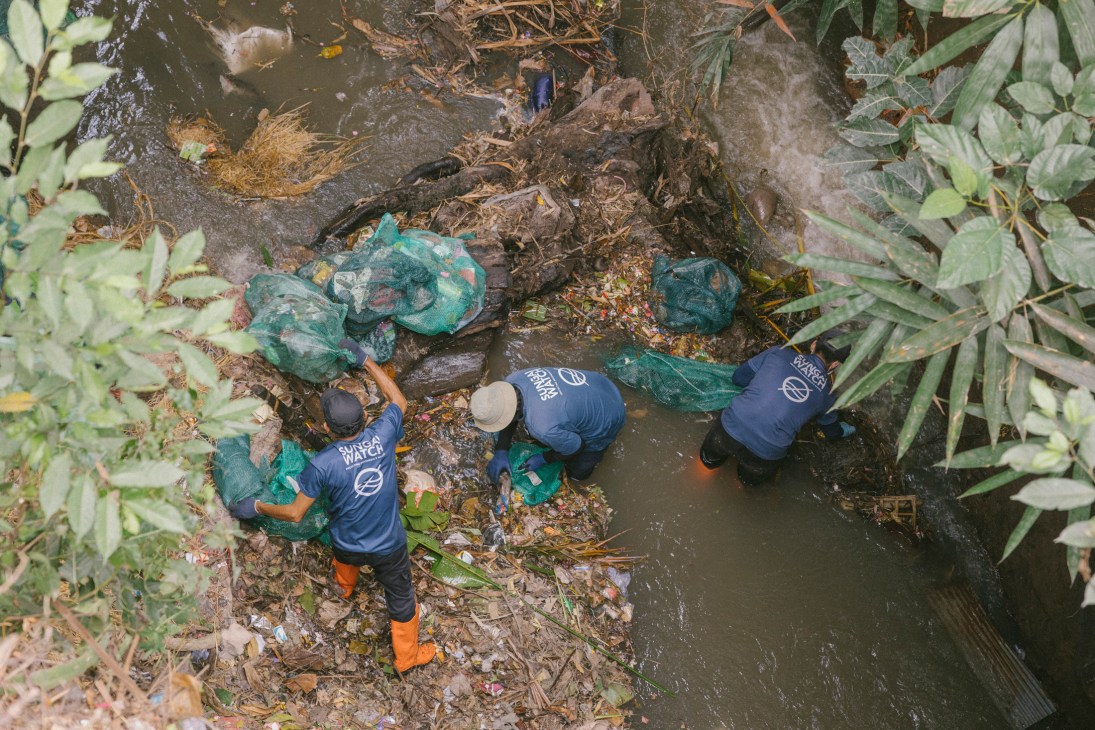
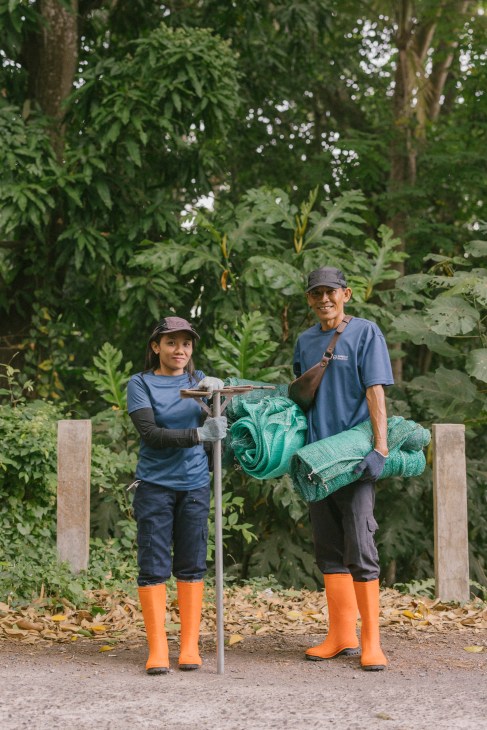
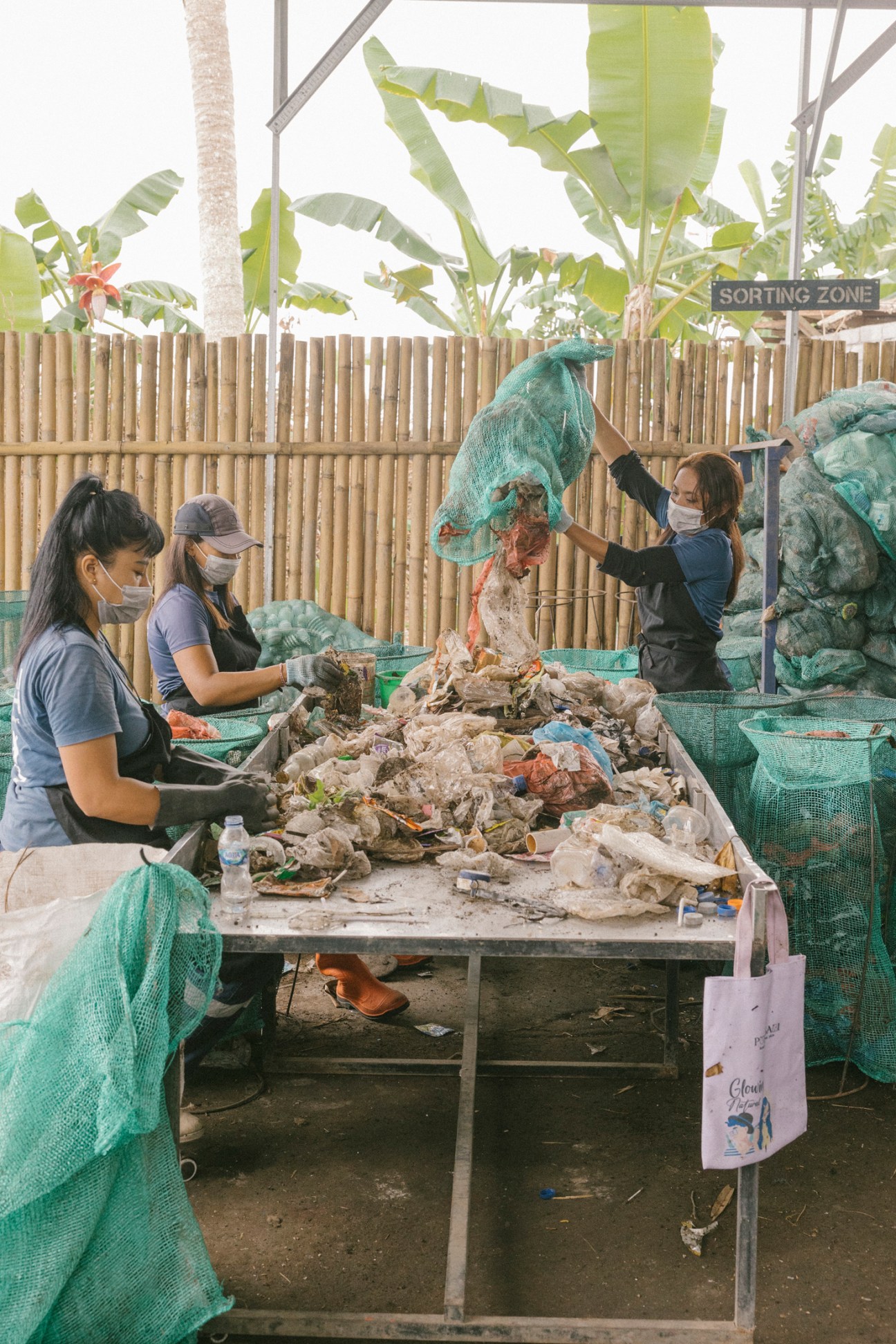
Sungai Watch’s most impressive achievement is perhaps the transformation of the waterways that criss-cross the tropical island. They were once so clogged with rubbish that it was often impossible to see the surface of the water through the blanket of debris. Now, Bali’s canals and rivers run clear, no longer an urban eyesore or health hazard.
As Sungai Watch’s operations expanded – it now has 280 barriers up and running – its stockpile of collected plastic grew too. “Our warehouses quickly filled up,” says Bencheghib. “In Indonesia there isn’t much recycling.” About 10 per cent of plastic waste in Indonesia – the world’s second-largest plastic polluter after China – is recycled. The rest lies in landfills or goes out to sea. Bali has very few recycling facilities.
This was the impetus for Sungai Design, the group’s newest venture, which upcycles waste – plastic bags in particular – and transforms it into furniture. Sungai Design’s first product, the Ombak chair, went on sale in March. US designer Michael Russek crafted the angular lounge chairs in black, blue and white, the original colours of the plastic bags that constitute them. The chairs are numbered, providing information on the locations where the bags were dredged from rivers. The texture and shade of every piece is unique. The Ombak chair costs $960 (€880). Its popularity is a testament to its beautiful design and consumers’ enthusiasm for supporting smart environmental solutions.
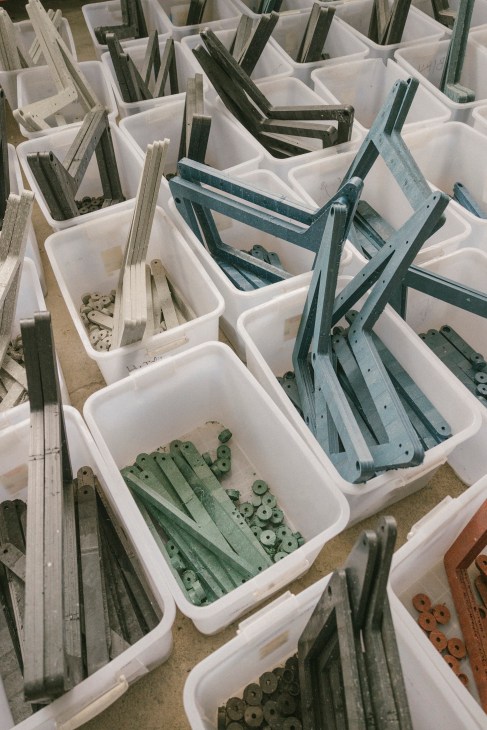
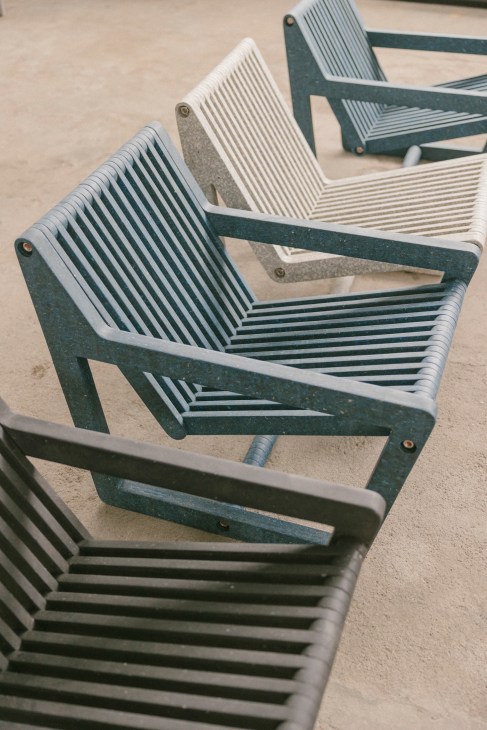
“We felt that we needed a product telling the story of where the plastic has been collected,” says Bencheghib. “Every chair comprises 28kg of plastic that would otherwise have gone into the ocean.” The chair has been selling fast in Indonesia and Sungai’s factory in Bali can barely keep up with demand. The first container of Ombaks was shipped to the US in June. Other products are in the works, including a stool. “We never knew that we’d be making furniture when we started cleaning up,” says Bencheghib. “We have been learning by doing. We’re really excited.”
sungai.watch; sungaidesign.com
Notpla
London
“Convenience doesn’t have to cost the world,” is the motto championed by sustainable start-up Notpla, reflecting its commitment to tackling plastic pollution with innovative seaweed-based packaging that can be composted and biodegraded like a piece of fruit. “To encourage wider adoption, we’re embedding ourselves in the food service, catering and hospitality worlds,” says Notpla’s Niall Russell. In the UK, as well as supplying takeaway delivery firm Just Eat, Notpla has partnered with the Compass Group to replace more than 75 million items of plastic across some 50 entertainment venues. “Through our UK partners we are making inroads across Europe and the US,” says Russell.
notpla.com
Redhouse Studio
Cleveland, USA
Architectural firm Redhouse Studio has joined forces with scientists at Nasa and the Massachusetts Institute of Technology to tackle construction and demolition waste by harnessing the power of mushrooms. Its Biocycler programme involves setting fungi to work devouring and detoxifying anything from wooden floors to asphalt-based roof shingles. This process also creates new, carbon-neutral materials. “Our aim is to make large slabs from these,” says founder Chris Maurer. “They can be as strong as concrete, easy to erect, insulative and fire resistant, while mitigating landfill materials and toxins in the built environment.”
redhousearchitecture.org
Sparklo
Abu Dhabi
Abu Dhabi’s Sparklo is using a rewards system to change recycling habits. It’s a simple concept: fill cities with reverse-vending machines called Sparklomats into which users can feed bottles and cans to earn points to be redeemed as discounts in shops. “It all starts with human behaviour at the point of consumption,” says Sparklo’s CEO, Max Kaplevich. “With this approach, we are treating the root cause instead of just the symptom.” In little more than a year, the company has collected almost 30 million bottles and cans in more than 10 countries and become the Mena region’s largest clean-tech company, helped by partnerships with local governments and big names such as the Coca-Cola Company.
sparklo.com
Coasting it: Beer-mat designs that can build your brand
Summer in the city means enjoying more meals outdoors, so we set our correspondents a quick challenge over the past month: bring back the beer mats and coasters that catch their eye. At Monocle we’re sticklers for the way that a little canny design, a well-chosen hue or material might make the difference between creating something you see, savour and maybe even steal as a memento – and an item that blends into the background. Here are a few of our favourites.
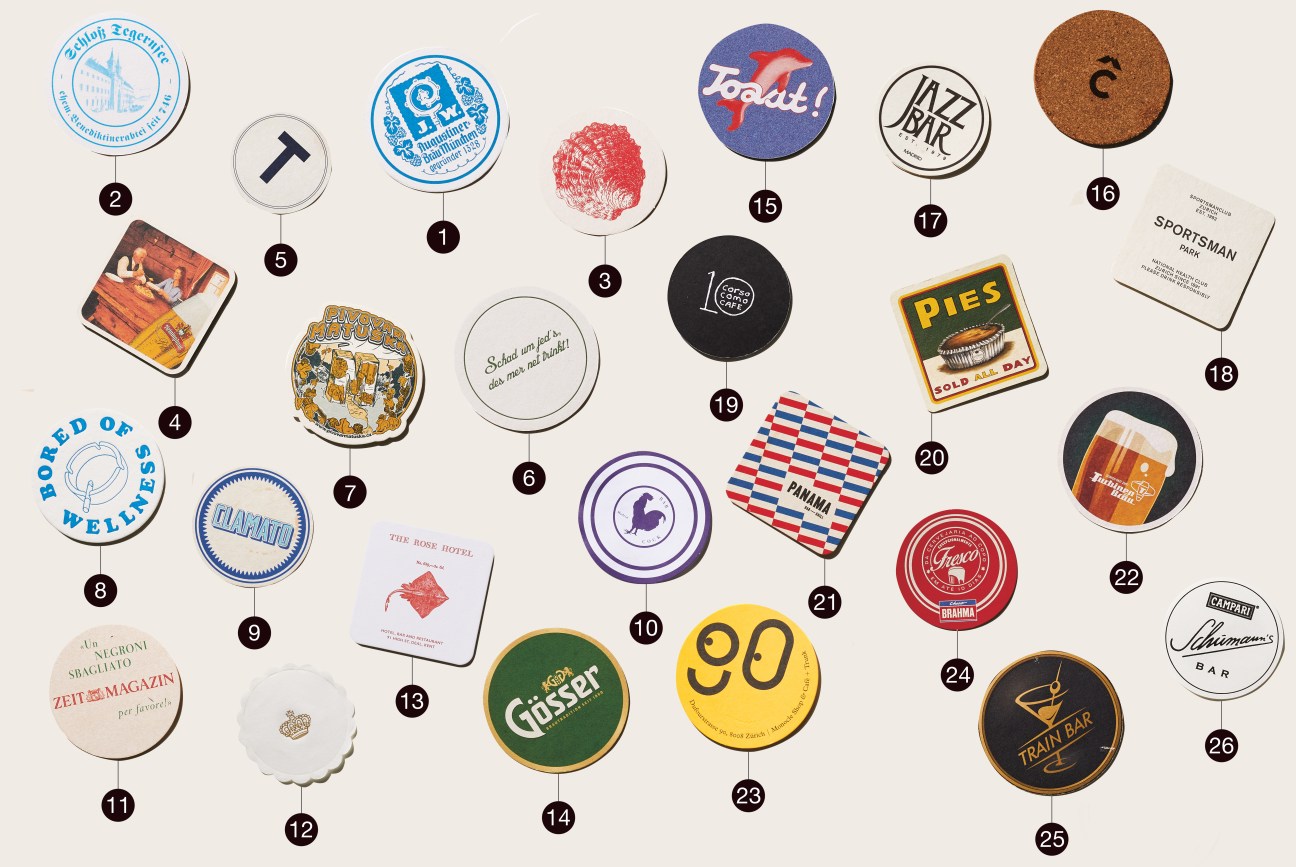
1.
Straight from the Augustiner-Bräustuben in Munich
2.
German gem from Herzoglich Bayerisches Brauhaus
3.
The Cow in London’s Notting Hill
4.
Reininghaus brewery, Graz
5.
Bar Termini, London’s Soho
6.
Privatbrauerei Ulrich Martin in Schonungen. Translation? “It’s a shame for anyone who doesn’t drink!”
7.
Czech mate: Matuška brewery
8.
A tongue-in-cheek number from UK illustrator Mr Bingo
9.
Paris seafood specialist Clamato
10.
Madrid’s Bar Cock is always worth crowing about
11.
Milanese mainstay Bar Basso
12.
Simplicity itself: a scalloped offering from Zürich’s Kronenhalle
13.
The Rose Hotel in Kent
14.
Göss has made beer in Styria, Austria, since 1860
15.
Roter Delfin, Zürich
16.
A corker from JNcQUOI Avenida in Lisbon
17.
Does exactly what it says on the mat, Madrid
18.
Zürich’s Sportsmanclub
19.
10 Corso Como Café Porta Garibaldi, Milan
20.
Mayfair’s Guinea Grill
21.
Panama in Zürich is a favourite with our editors when the mercury rises
22.
Still in Zürich with Turbinen Bräu
23.
This summery number is our own attempt from our café at 90 Dufourstrasse
24.
Companhia Cervejaria Brahma from Brazil
25.
Something from onboard the SBB bar
26.
Munich institution Schumann’s. Grab a spot in the garden at the back and enjoy
How Thailand’s backpacker island is remaining authentic in the spotlight
For better or for worse, Alex Garland’s 1996 novel The Beach (and its 2000 film adaptation) pinned Koh Samui firmly on the backpacker’s map of Southeast Asia. Nearly 30 years on, Thailand’s second-largest island is preparing for another moment in pop culture’s spotlight that symbolises how it has matured into a destination known not only for its white sandy beaches but also its increasingly upmarket bars and hotels.
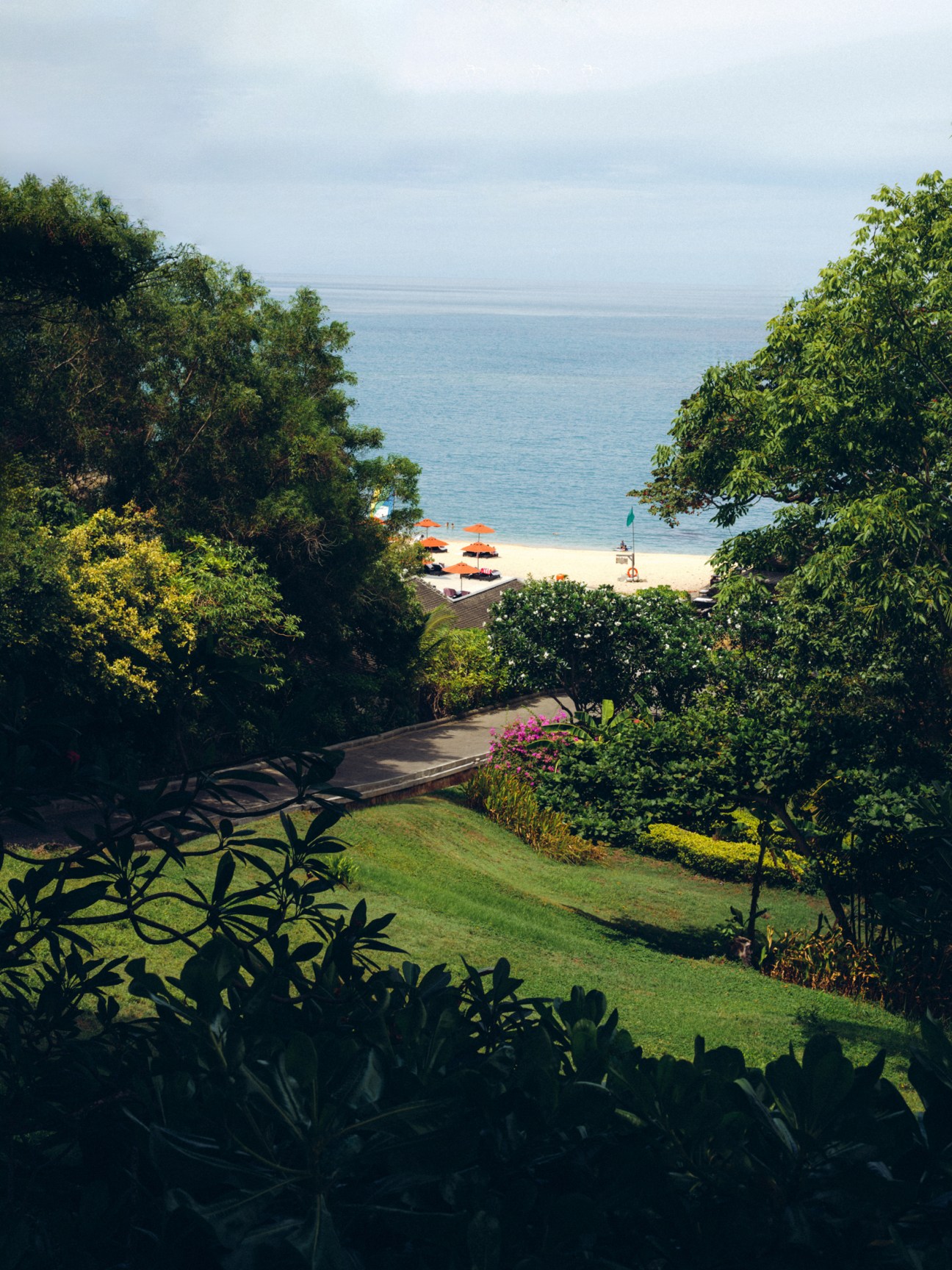
The main action in the third season of hit HBO series The White Lotus was filmed earlier this year at the Four Seasons Resort Koh Samui. The fictional hotel guests who we see on-screen hint at the better-heeled travellers who now occupy the island’s smarter spots along the coastline. Even backpacker haven Chaweng Beach has transformed into a more appealing proposition with the arrival of upmarket hotel brands such as Sala and the newly opened Marasca.

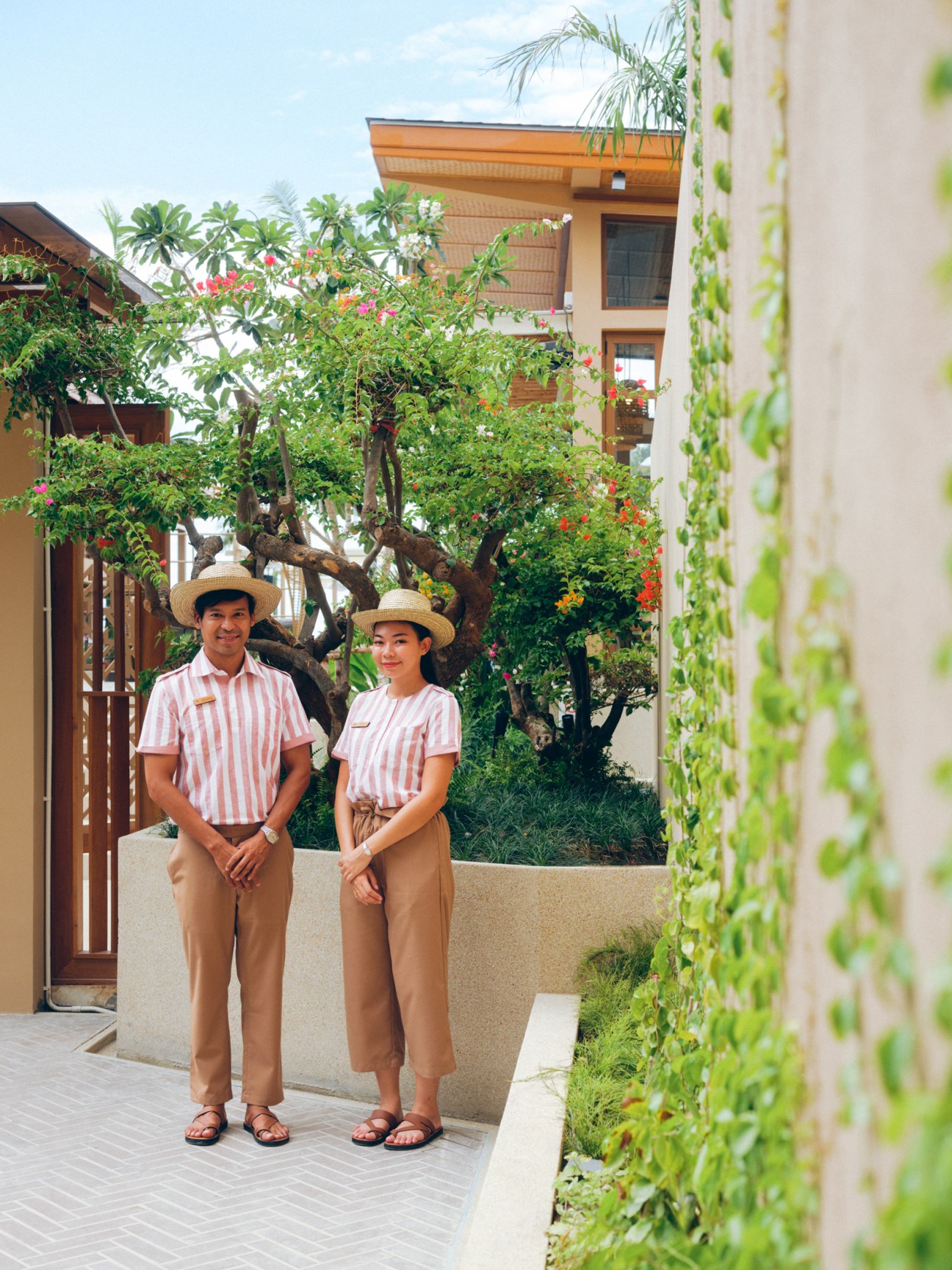
Driving around the entire island takes about one hour, along a 55km main road. The east coast around Chaweng Beach is more developed than the west but it’s still hard to spot a building rising above four storeys (there’s also a 12-metre height restriction on structures close to the beach). “Samui has retained its tropical-island feel,” says Englishman Mark Harrison, hotel manager at Garrya Tongsai Bay, Koh Samui’s first luxury resort. Harrison has worked at Tongsai Bay for more than 20 years and, in that time, he saw the transformation of Thailand’s largest island, Phuket.

The country’s central government wants to turbocharge Koh Samui’s economy in a similar way. Headlines about cruise terminals and land bridges to the mainland are, however, nothing new. Extending the airport runway to allow larger planes to land is the most likely infrastructure project but even that proposal has yet to take off. Bangkok Airways owns Samui International Airport and operates almost every flight to and from the island. A small fleet of 144-seater Airbus A319s flies on the only direct international routes to Hong Kong and Singapore.
Monocle arrives from Bangkok on an ATR 72-600 turboprop with a fun tropical livery. Ticket prices are relatively high by Thai standards but residents get special rates and the hospitality industry is surprisingly sanguine about Bangkok Airways’ near-monopoly. At a time when tropical islands from Phuket to Bali are struggling with overtourism, Bangkok Airways could be Koh Samui’s best defence; a filter against runaway success that might upset the delicate balance that tourism here is striking.
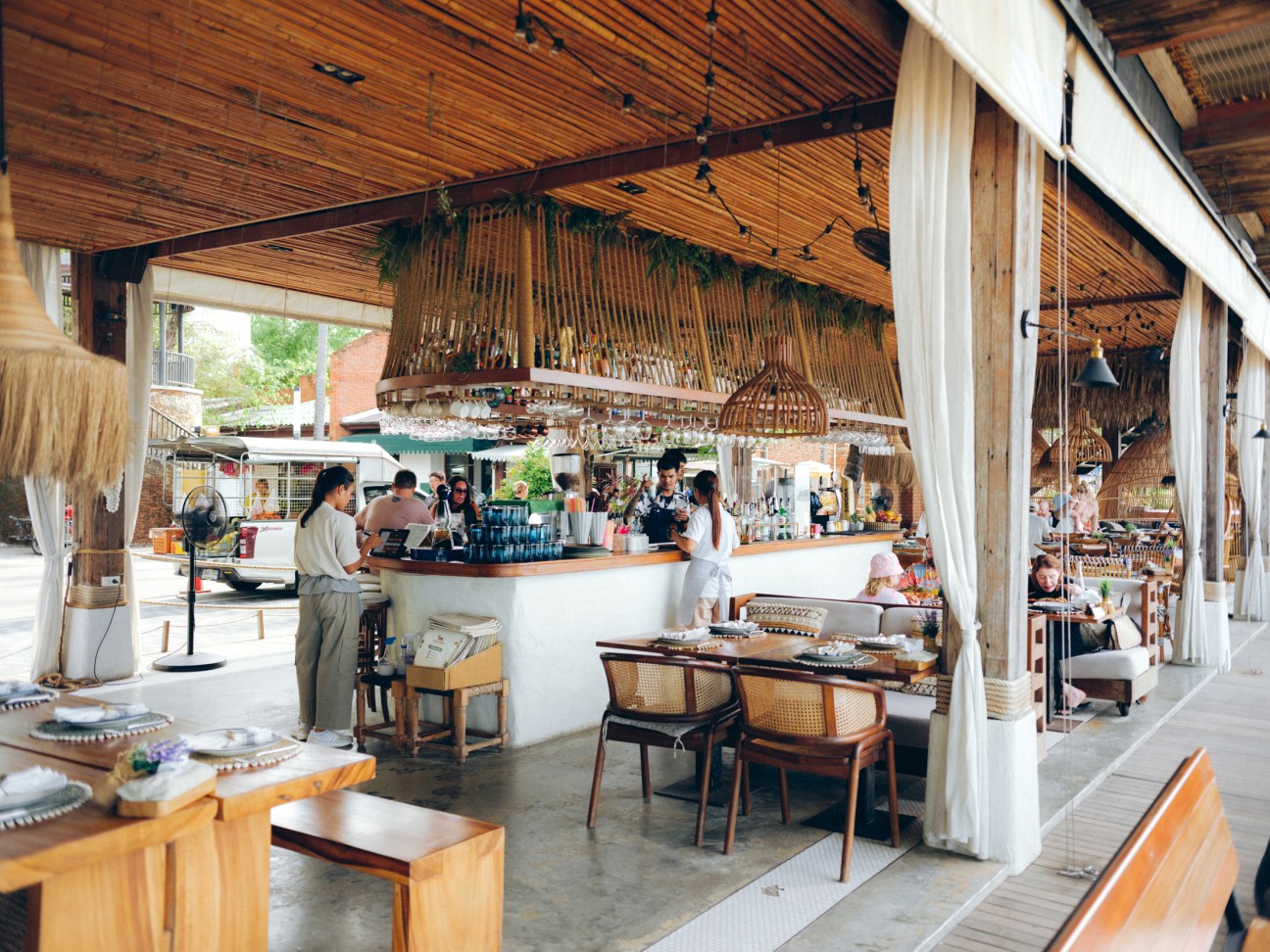
Beach bar Coco Tam’s offers a breezy introduction to Koh Samui’s ever-evolving and increasingly sophisticated hospitality industry. Founder Tam Chotechurangkool started out in the northern beach town of Bophut with an ice-cream stall and two beanbags before graduating to cocktails and adding a coffee shop and restaurant. A new bar will be ready for high season in July and August. “I really want to expand,” Chotechurangkool tells Monocle as we sip fresh juice from young coconuts and gaze out at the Gulf of Thailand. Conscious of the competition, the 40-year-old Bangkok native shares his designs for a Bali-style beach club, which was put on hold by the coronavirus pandemic. “Samui needs another good beach club,” he says.
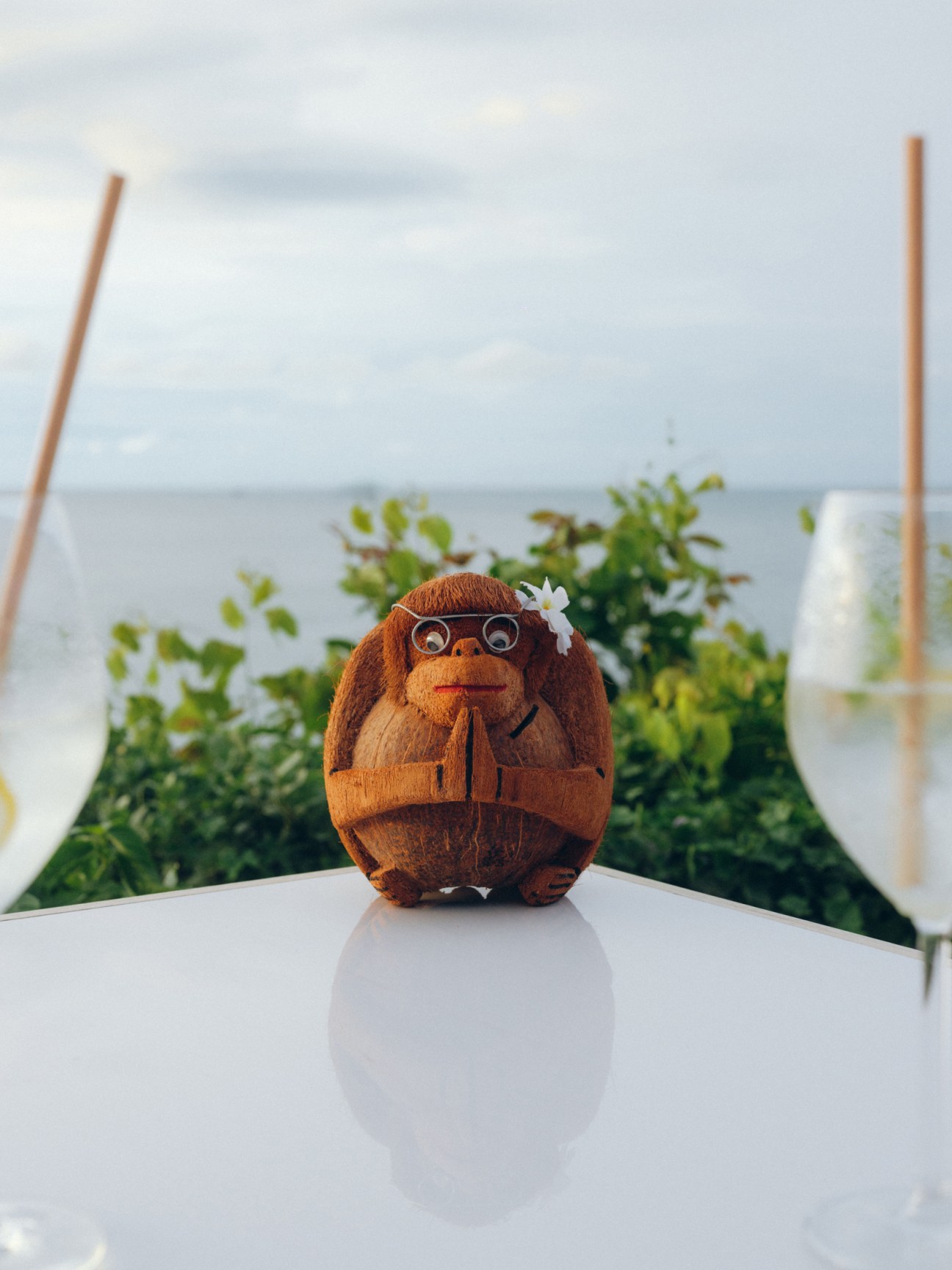
Coco Tam’s is among a small but growing number of bars and restaurants tempting visitors to venture outside of their secluded five-star villas and help the destination feel more connected and complete. Some of the best examples have been opened by newcomers. Australian Leandro Panza arrived in 2016 after quitting his job as executive chef at Sagra in Melbourne. “I was done with it,” says Panza at his seafood restaurant, Two Fishes, which has an ever-changing menu that reflects the catch of the day. Two Fishes recently moved into a purpose-built beachfront building a short drive from the original address in Fisherman’s Wharf. Version two has room for a pizza oven, a pastry station and a table for hand-rolling fresh pasta. There’s also a bar, where you can enjoy wine from the cellar.
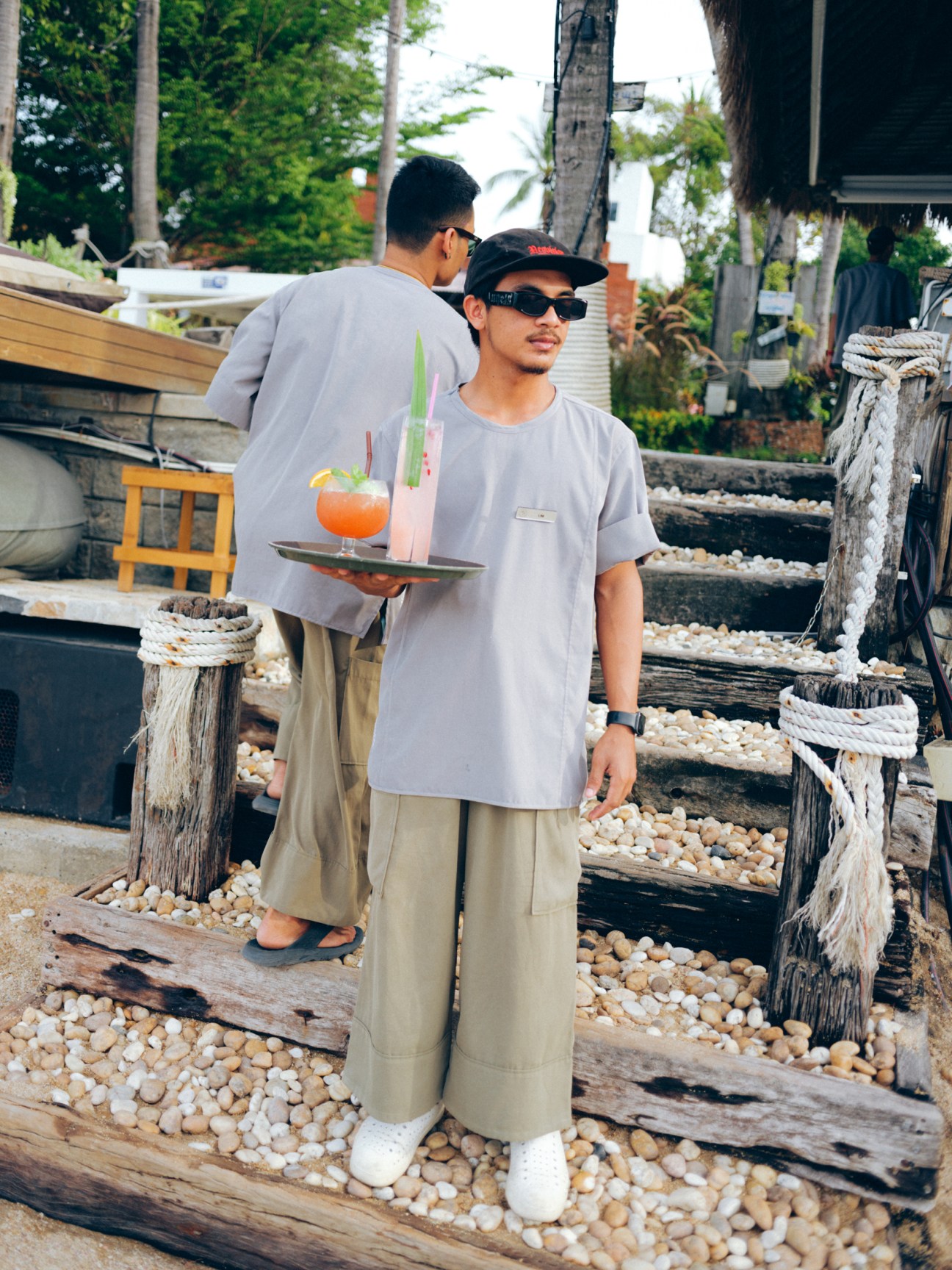
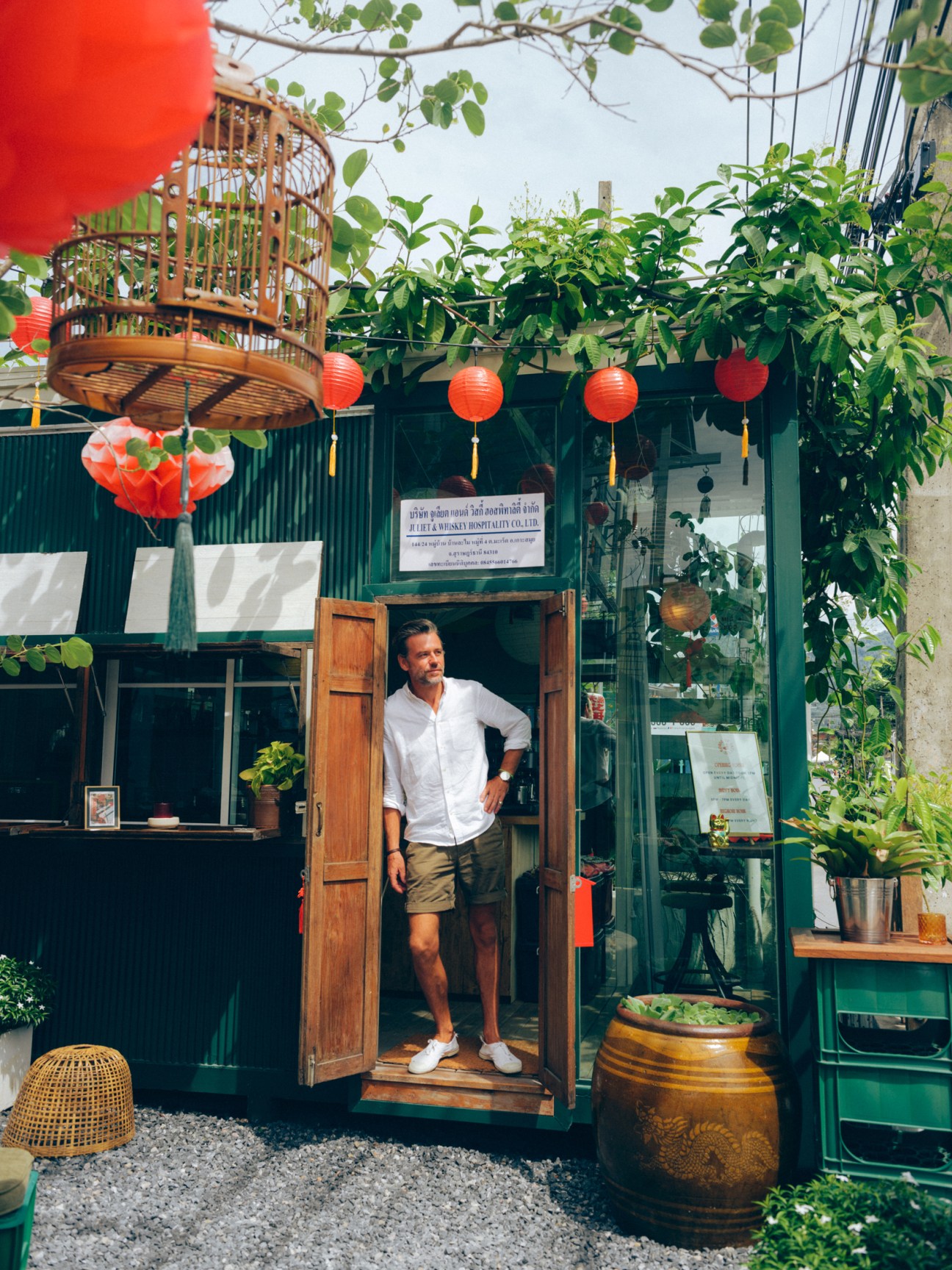
Panza’s passion for his adopted home is shared by fellow Antipodean William Norbert-Munns. The Kiwi entrepreneur moved his family to Koh Samui in 2021 when the strains of operating more than 20 bars and employing 90 staff in Cambodia’s capital, Phnom Penh, prompted his doctor to prescribe him some fresh air and a year of restorative walks along the beach. “More people have come to visit us here in the past three years than in our entire 16-year stay in Cambodia,” he says, looking relaxed in his island uniform of shorts and T-shirt. Unable to sit idle for long, the 46-year-old opened House of Suzy in February. The cocktail bar caters to the residents of Lamai, a neighbourhood that’s popular with French expats (as well as yoga schools and Thai boxing gyms). “Samui is discreet and not flashy,” says Norbert-Munns, who chose Lamai for its international schools and hospitals. During Monocle’s visit, he gives us a peek at his ideas for a family home across the street. He surely won’t be the last to fall for Koh Samui’s tropical-island charms and affordable lifestyle. The White Lotus, when it airs in 2025, is sure to bring a new generation of travellers to Koh Samui but these explorers are more likely to have a bit of money in their back pockets than a rolled-up copy of The Beach.

Getting here
Bangkok Airways was the only airline flying into Koh Samui until May, when Scoot started daily flights from Singapore. International arrivals tend to connect via Bangkok and the short onward leg from either of the Thai capital’s two airports takes just over an hour. Tickets are considered expensive by many Thais, who either swerve Koh Samui or fly to Surat Thani International Airport and transfer via ferry. November is stormy and best avoided.
Koh Samui address book
Stay
Garrya Tongsai Bay
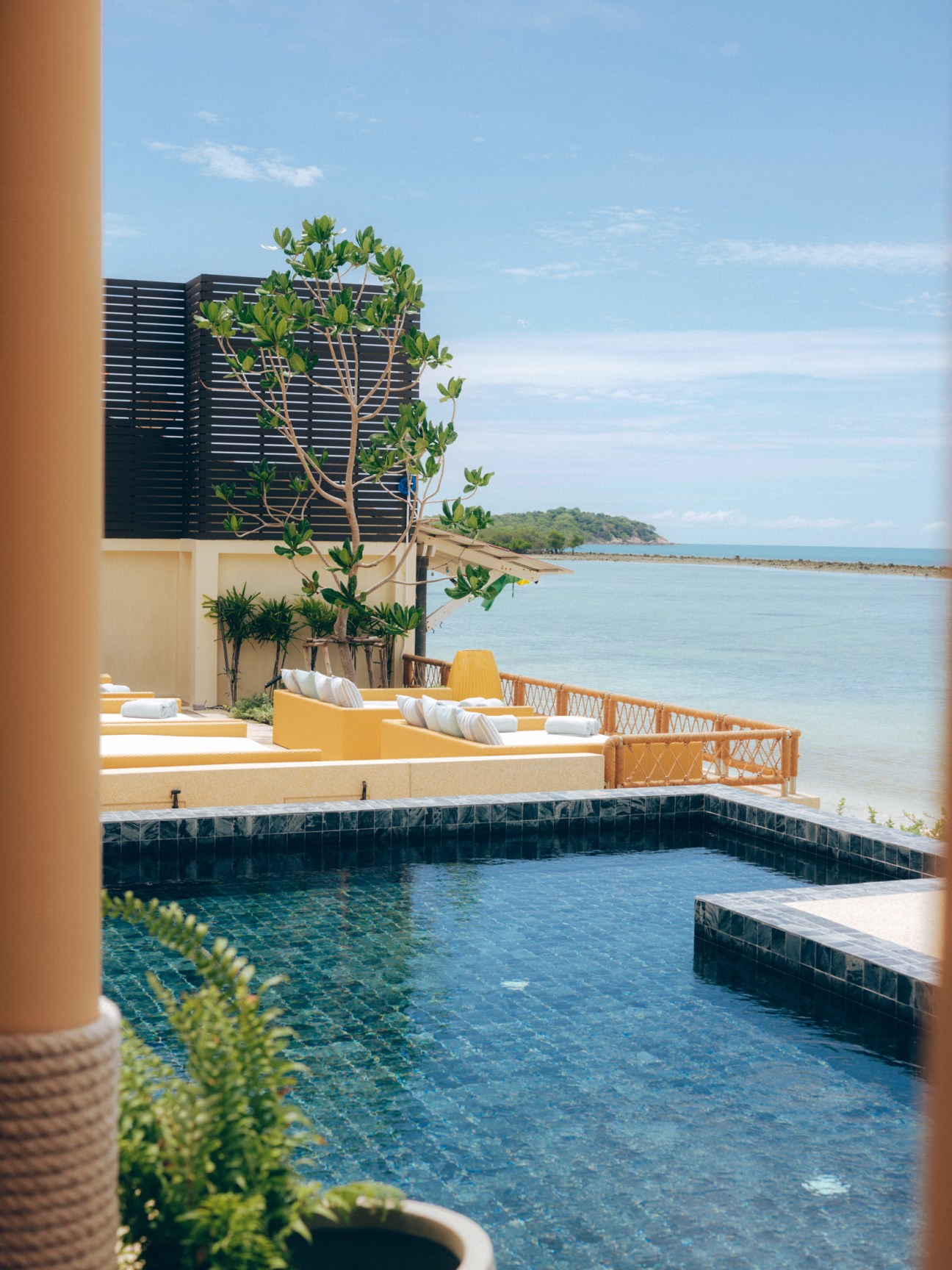
The island’s original five-star resort recently became Thailand’s first Garrya hotel, a boutique brand under the Banyan Group. Its private beach offers one of Koh Samui’s best swimming spots.
garrya.com
Kamalaya
Hotels with private villas are de rigueur on Koh Samui but this tranquil retreat on the southeast coast is particularly salubrious. It’s a sanctuary for flying in, flopping out and forgetting about city life.
kamalaya.com
Shop
Sisters of Siam
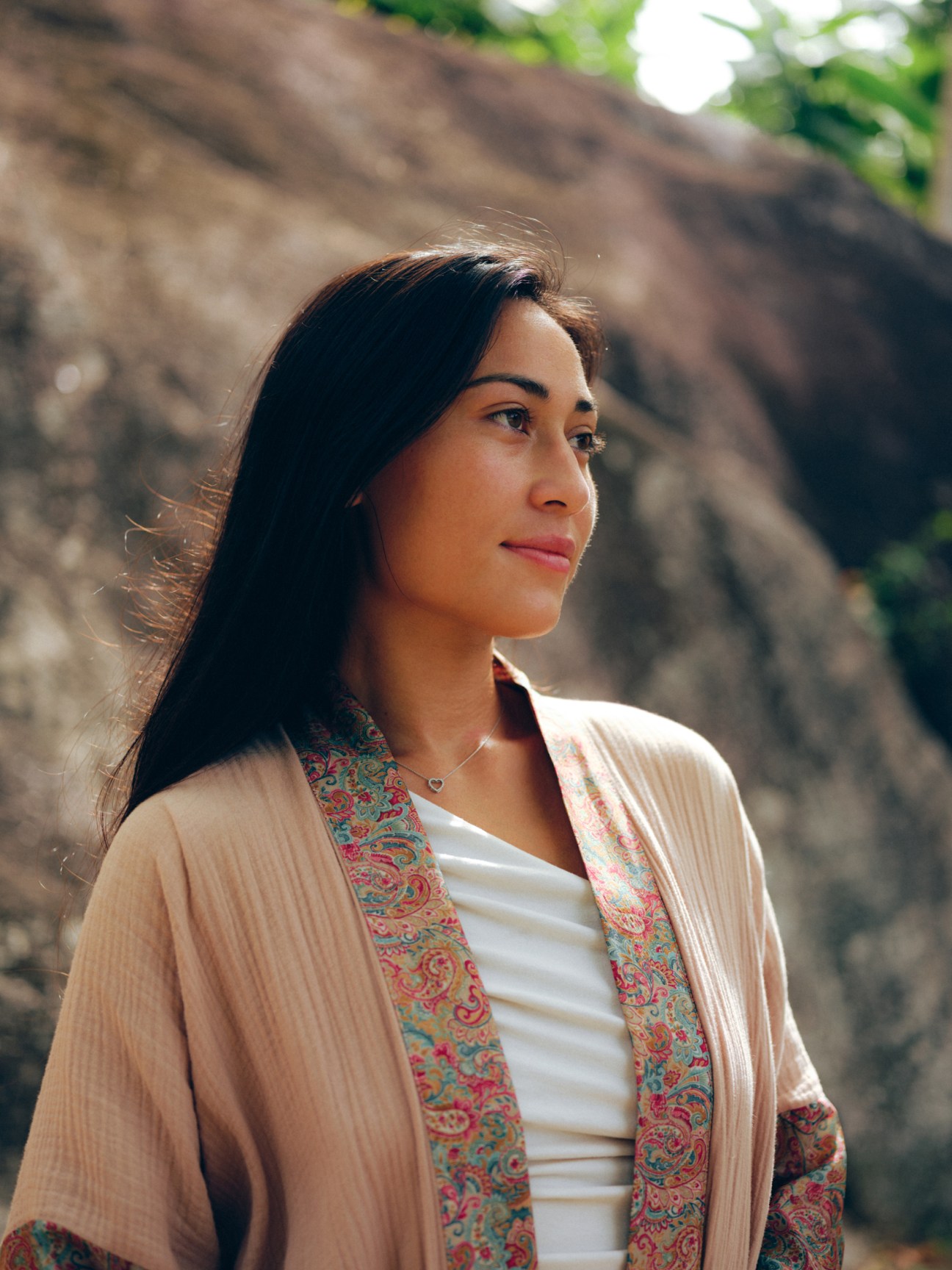
A Samui-born fashion brand specialising in beachwear, founded by Fairlyta Promtho. Select resorts across the island including the Conrad stock its popular, made-in-Thailand kimonos; you’ll also find them in Promtho’s multi-brand boutique in Lamai.
sistersofsiam.com
Samui Health Shop by Lamphu
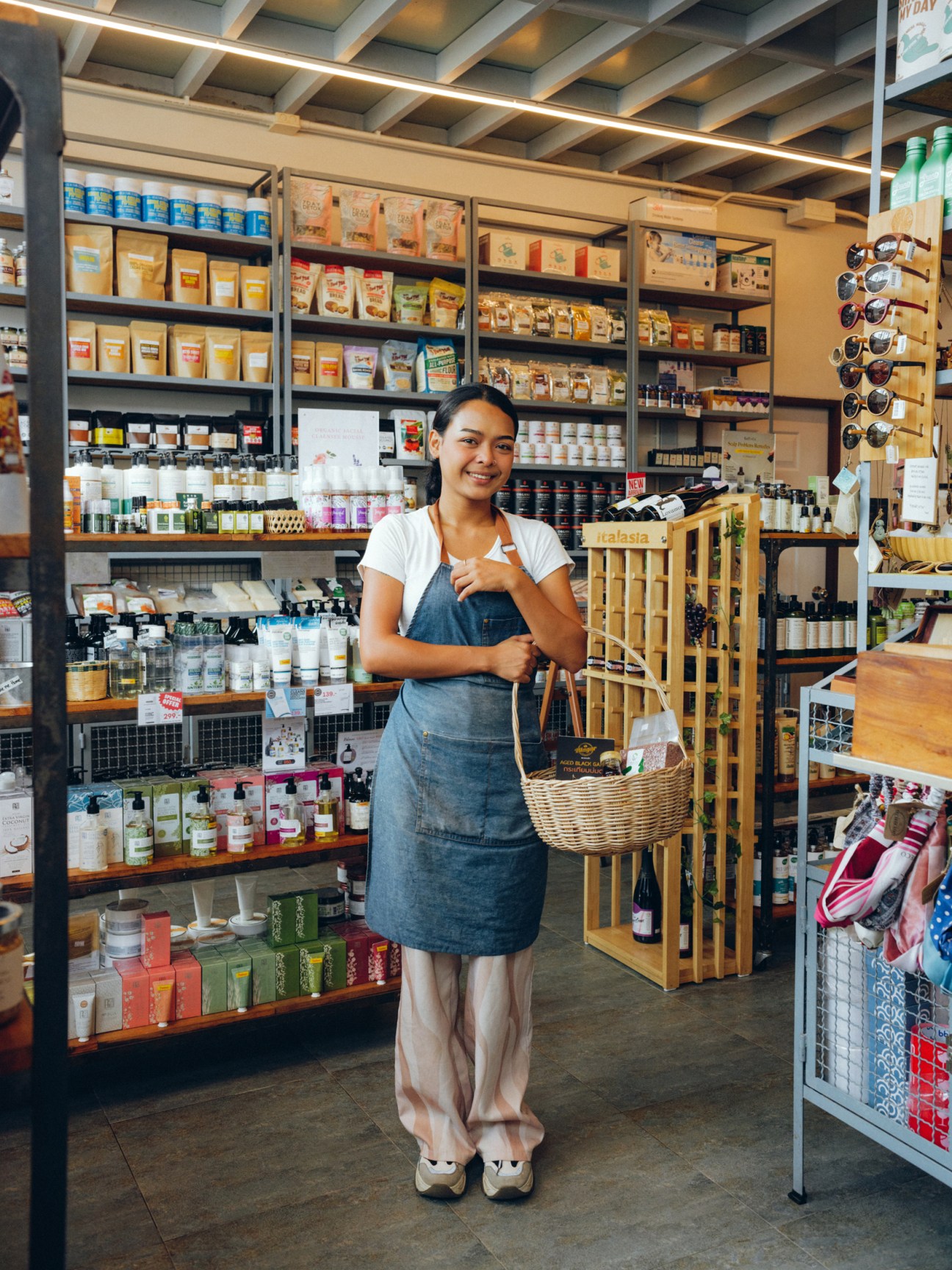
Across the road from Lamphu Kitchen (a go-to lunch spot among cross-legged yogis), this shop stocks a mix of health foods, bathroom essentials and sustainability-minded Thai products.
samuihealthshop.com
Asia Books
Shopping mall Central Festival Samui has a branch of Thailand’s main bookshop chain and there’s also one at Samui’s one-of-a-kind airport. Arrive earlier than you otherwise might to wander along the open-air shopping avenue.
asiabooks.com
Coffee
Local
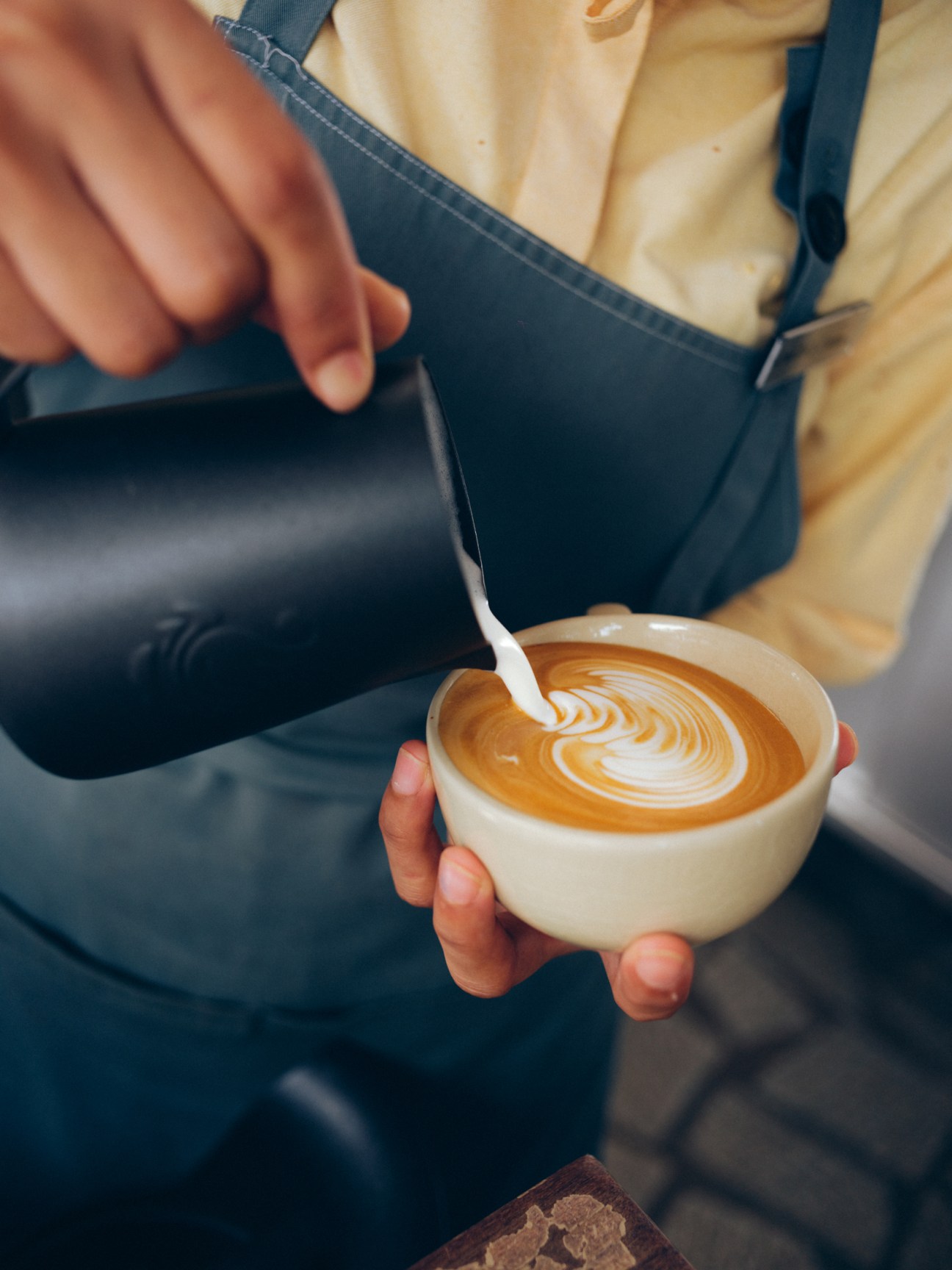
A quiet spot on the water’s edge, Local offers good coffee with an even better view. Boys Organic Coffee in Taling Ngam offers a similar set-up on the opposite end of the island. Head to Flo near Chaweng Beach for a more familiar, in-town experience.
Bo Phut Beach
Eat
Long Dtai
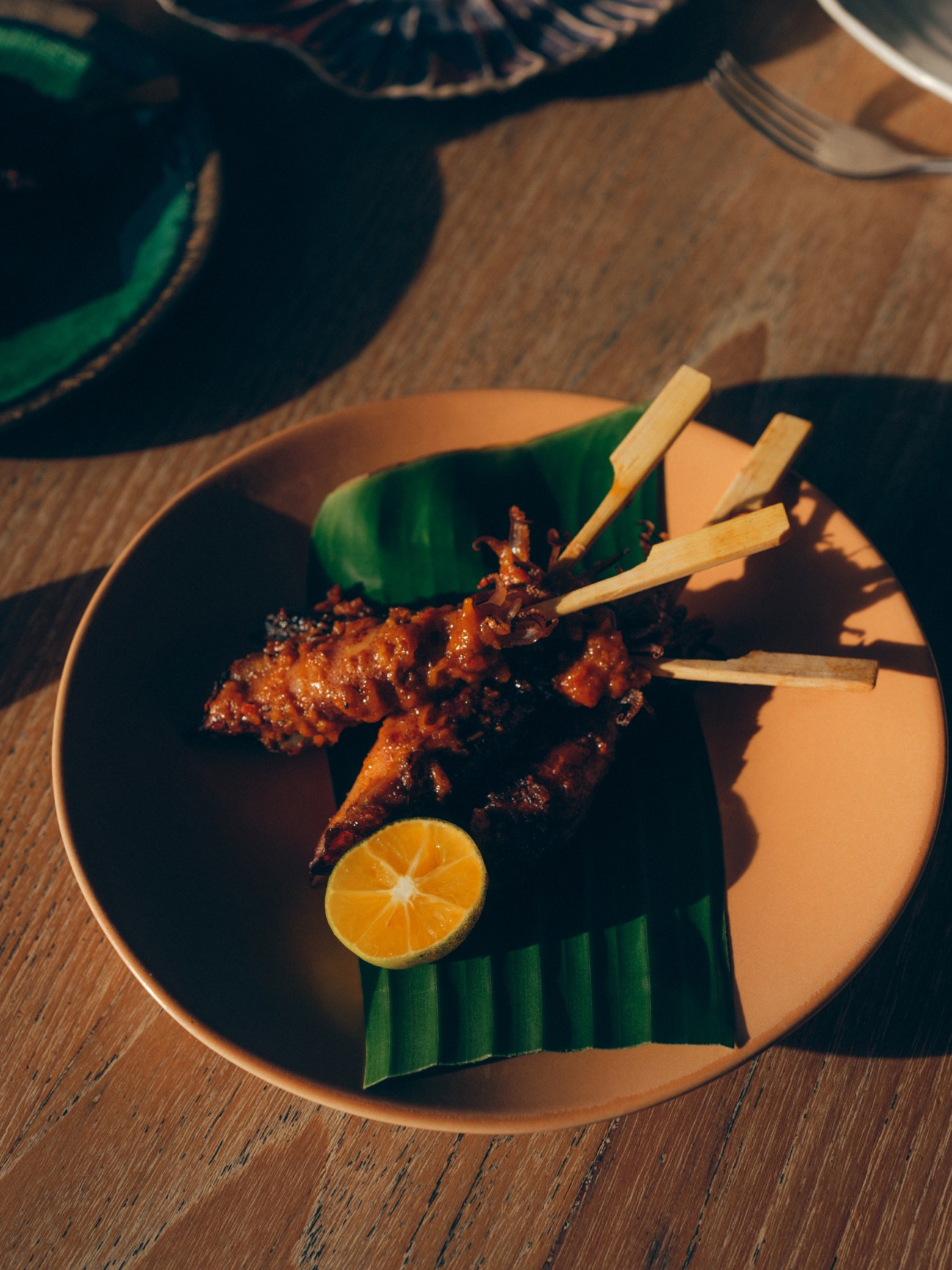
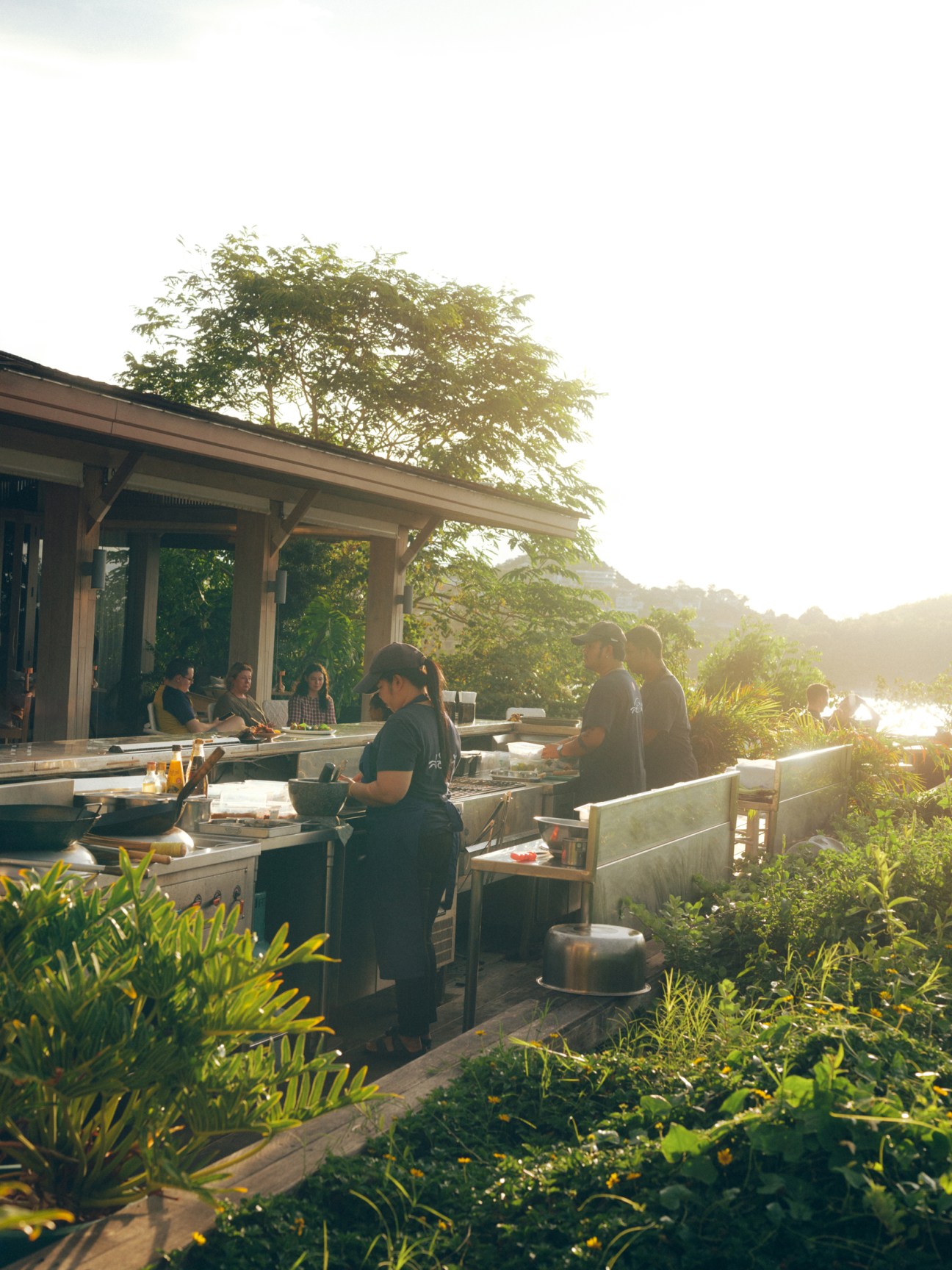
Southern Thai flavours shine at this hotel restaurant, a collaboration between Aussie chef David Thompson and Cape Fahn, a luxury resort that occupies its own private island. Chefs grill skewers and seafood under the stars. The dinner settings are comfortable and casual.
longdtai.com
Vikasa Life Café
Residents and holidaymakers alike swear by the café at this conveniently placed yoga retreat. A healthy, plant-based menu is served with beautiful sea views.
vikasa.com
Something sweet
Lamai Coconut Ice Cream
Coconuts are everywhere on Koh Samui, including in the best ice cream. Lamai Coconut Ice Cream’s flagship café is behind the main street, while its white Suzuki van is usually parked at Lad Koh viewing point. Rossini’s dairy ice cream goes well with a dip at Crystal Beach.
175, 35 Maret, Koh Samui District, Surat Thani 84310
Read next: The Monocle City Guide to Bangkok, featuring the very best hotels, restaurants and retail spots in the Thai capital
Interview: How Edo López’s hospitality group grew from a single diner to a global phenomenon
Edo López is hooked on opening new ventures. “I get addicted to it, because it’s about creating something and each one is different,” he says, over the insistent rhythm of Japanese music playing in his sushi restaurant. “If it was just a case of ‘copy and paste’ then it would be so much easier.” It explains why López’s hospitality empire, the Edo Kobayashi Group, has expanded so rapidly. Starting with Rokai, a tiny Japanese diner in Mexico City in 2013, López now has ventures on three continents, comprising 30 Japanese-influenced restaurants and bars, mostly in Mexico City, plus a ryokan. He also has a hand in more hotspots in cities such as Madrid and Miami, as well as in Shibuya, in the heart of Tokyo. It’s no wonder some are saying that this restaurateur could be the next Nobu.
The name of his group, Kobayashi, comes from his mother’s side of the family. López’s grandparents fled to Tijuana from California in the 1940s at the height of the Second World War, a dark chapter in US history when citizens of Japanese origin came under the suspicion of the government and were put in internment camps. Imagining and opening restaurants, López tells Monocle, is his way of exploring his roots. We meet in Sushi Tatsugoro in the St Regis hotel in Mexico City, which has huge windows behind the counter with a view of the street’s purple-flowered jacaranda trees. Blowing and bright in the spring breeze, these trees were planted in the 1930s at the behest of Tatsugoro Matsumoto, a former gardener to the imperial palace in Tokyo. After emigrating to Mexico, he was hired by Pascual Ortiz Rubio, the president at the time, to give the capital’s main boulevard stateliness and colour.
Mexico City has no shortage of izakayas and Japanese canteens; some add local spice into their rolls and robata. López doesn’t dabble too much in fusion. Instead, he explains, he wanted to share a pure experience of the cuisine and the “simpleness” of dining done well in Japan. It is about being fastidious with ingredients, seasoning and chefs but never fussy.
Behind a sliding door in Mexico City, Le Tachinomi Desu is a standing bar where regulars prop themselves up over crisp wine or Omurice that’s indulgently heavy on the truffle oil. Upstairs is Tokyo Music Bar, where the bartenders mix drinks and spin vinyl. López’s recent opening in Madrid is Mateo Honten, which he describes as a cocktail bar-meets-tavern. His best-loved places capture the easy hospitality of a true Japanese public house; somewhere to drop in and stay late.
Though he started out as a chef, López doesn’t say much about the food. Instead, he steers the conversation to people and places that have inspired him, from the omakase masters he has met and, in some cases, brought onboard, to hunting down the best Japanese restaurant in Bogotá. Here he talks to Monocle about his journey so far and the future of the Edo Kobayashi Group.
You have had a hand in more than 30 restaurants. What inspired the first?
I’ve wanted to run restaurants all my life. With my first opening, Rokai, I wanted to bring purity to Japanese food in Mexico City. I began with just a bar, two tables and a small refrigerator for wine. That was it. At first it was hard but, luckily, the Japanese embassy was only two three blocks away; word spread.
How did you expand from there?
I opened a second place in Mexico City that served only ramen. The next eight restaurants came quickly: I did a joint venture in the States and then four restaurants followed over there. I have the new one in Madrid, and, with my business partners, I’ve done some hotels too.
Has building these restaurants been a way to explore your family roots?
Exactly. I was born in Tijuana and always felt lost in translation. I was a junior Olympic swimmer when I was young; I spent a lot of time around Americans but never felt American. Then, in Tijuana, I wasn’t Mexican, either. I began to work in music and that took me around the world. In every country, I would seek out underground Japanese restaurants or go to the homes of Japanese families. When I opened my own restaurant, I wanted bring that “real” taste here in Mexico. To get it right, I used to smuggle fish into Mexico, carrying it back from Los Angeles in bags. I’d smuggle in wasabi too.
Have you found any connection between Mexican and Japanese food?
I don’t know much about Mexican food. I know what a tortilla is but not how to make one. It’s one of the hardest kitchens in the world. That said, I fell in love with the seasonal approach to food in Japan and that’s found in Mexican cooking too: there’s a season for every ingredient.
Did your investors come in early?
My business partners didn’t come on until I had about 10 restaurants. I began with $50,000 of my own money. Whatever I saved, I put it back in. It was fun, you know, like playing cards – opening another one, another one, another one. At one point I said, “When am I going to fail?” And, of course, you need to fail once.
What advice would you give yourself starting out?
It’s a business but when you have some love for it, it’s going to mess you up. You have to be a little bit of an asshole to have that on you.
Is your ambition to be the next Nobu?
No. I started my first restaurant when I was 32 and now I’m 45. I was a bit too late to the prom for that.
Yet you’re running restaurants on four continents. How do you manage?
You can have a big army but you must have generals you can trust.
Is Mexico City a good place to test an idea?
You can see how many young chefs are working here now. They’re constantly building relationships outside Mexico. Then you have Tao [Group Hospitality], which has opened a Ling Ling here; Nobu is here. I’m proud when people from outside Mexico open here.
What’s next?
I have an exciting opportunity in Mexico City and some offers in Europe and the UAE. To do that, I would be looking back to my first restaurant.
Berluti goes for gold in tailoring for Team France at the 2024 Olympics
When LVMH announced its partnership with the Paris 2024 Olympic Games, it was expected that the houses under its vast portfolio would get involved and add their famous luxury branding to the event. The announcements about Louis Vuitton designing trunks to transport the medals and torches, and jeweller Maison Chaumet designing the medals themselves, came as little surprise. But the choice of Berluti, one of the quieter labels in the lvmh portfolio, to dress Team France during the Olympic and Paralympic opening ceremonies was less expected, even among the Berluti team. “We’re one of the smaller [LVMH] maisons,” says Vanessa Le Goff, Berluti’s collection director. “Dior and Louis Vuitton are usually the big stars, so dressing the French athletes for the Olympic and Paralympic opening ceremonies offers a huge opportunity for us to be more visible.”
For this reason, Le Goff and the members of the atelier she leads in Paris didn’t think twice about taking on the responsibility, despite the challenges it presented: creating more than 1,500 outfits using some 8,000 metres of eco-certified fabrics and catering to each athlete’s body shape to ensure a perfect fit. “We worked from sizes 3XS to 6XL and designed shoes ranging from [European] sizes 35 to 56, which is very new for us,” says Le Goff. “That’s why, from the beginning of the process, we met with the athletes to understand their needs.”
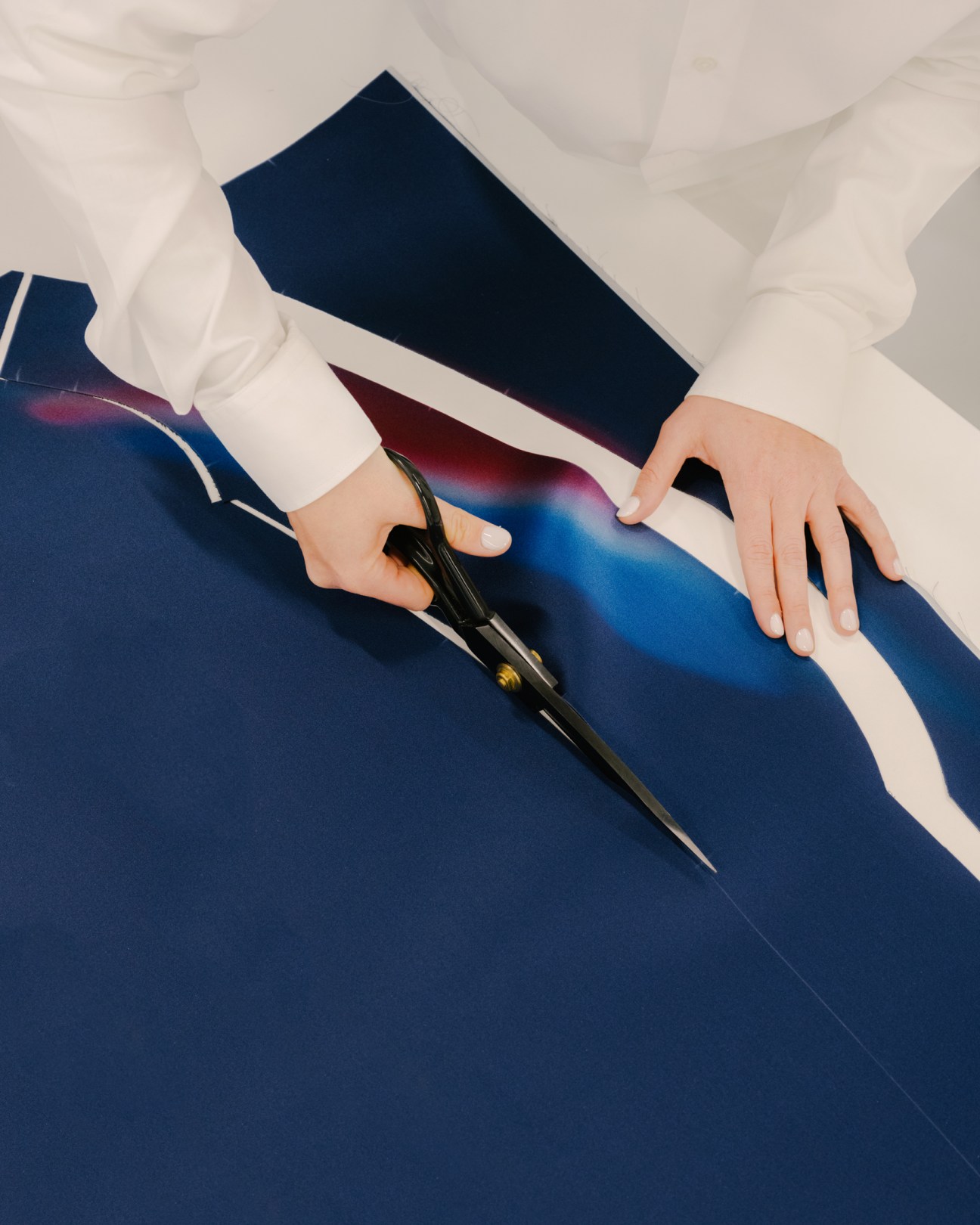


Many of these conversations would go on to inform the final design of the opening ceremony’s uniforms: elegant midnight-blue suits with collars featuring the colours of the French flag, remixed in the house’s trademark patina. Female athletes will wear a sleeveless version of the tuxedo jacket and choose between trousers or a silk wraparound skirt. The looks are finished with Berluti’s signature woven Shadow sneakers in a similar navy hue, or the flexible Lorenzo leather loafers. “From the very beginning of the process, we considered every detail – for instance, we chose a wrap skirt so that it can be altered easily and didn’t use any pleating because it’s uncomfortable for athletes in wheelchairs,” says Le Goff. “And the sleeve length is adjustable to make it easier for athletes. We’re experts in this field and can adjust quickly.”
Knowing that the athletes could be standing in the sun for more than eight hours during the opening ceremony, Le Goff and her atelier’s number-one priority was to ensure Team France’s comfort. It’s why they chose breathable cotton-silk and wool fabrics with added stretch, and why they will spend the days in the lead-up to each ceremony making alterations to fit all 1,500 suits on every athlete individually. “We had to produce many of the pieces before knowing who would make it to the ceremony,” she says. The impeccably fit finished garments are a testament to the craft know-how of Berluti, one of the few houses in Paris still offering bespoke services for men’s shoes at its Rue Marbeuf atelier, as well as tailoring services at its Rue des Sèvres atelier on the Left Bank. “We want to show the house’s exceptional savoir-faire in ready-to-wear but also shoes, which is where the journey started,” adds Le Goff.
That journey began back in 1895, when a young Alessandro Berluti moved from his native Italy to Paris to practise his trade as a shoemaker, starting with lace-up court shoes. His clients included Jean Cocteau, Marcello Mastroianni and Andy Warhol. In the past 15 years, under the leadership of Antoine Arnault (who now serves as chairman of Berluti while also performing a wider role within the LVMH group, with Jean-Marc Mansvelt taking over as ceo), the house began to offer a full look, including leather goods and ready-to-wear. Aside from the technical knowledge that went into constructing the garments, Le Goff also sought to ensure that the designs channelled the sense of elegance synonymous with French and, in particular, Parisian fashion – hence the focus on the deep Tricolore blue, tuxedo dressing and slim silhouettes typical of French-style suiting.

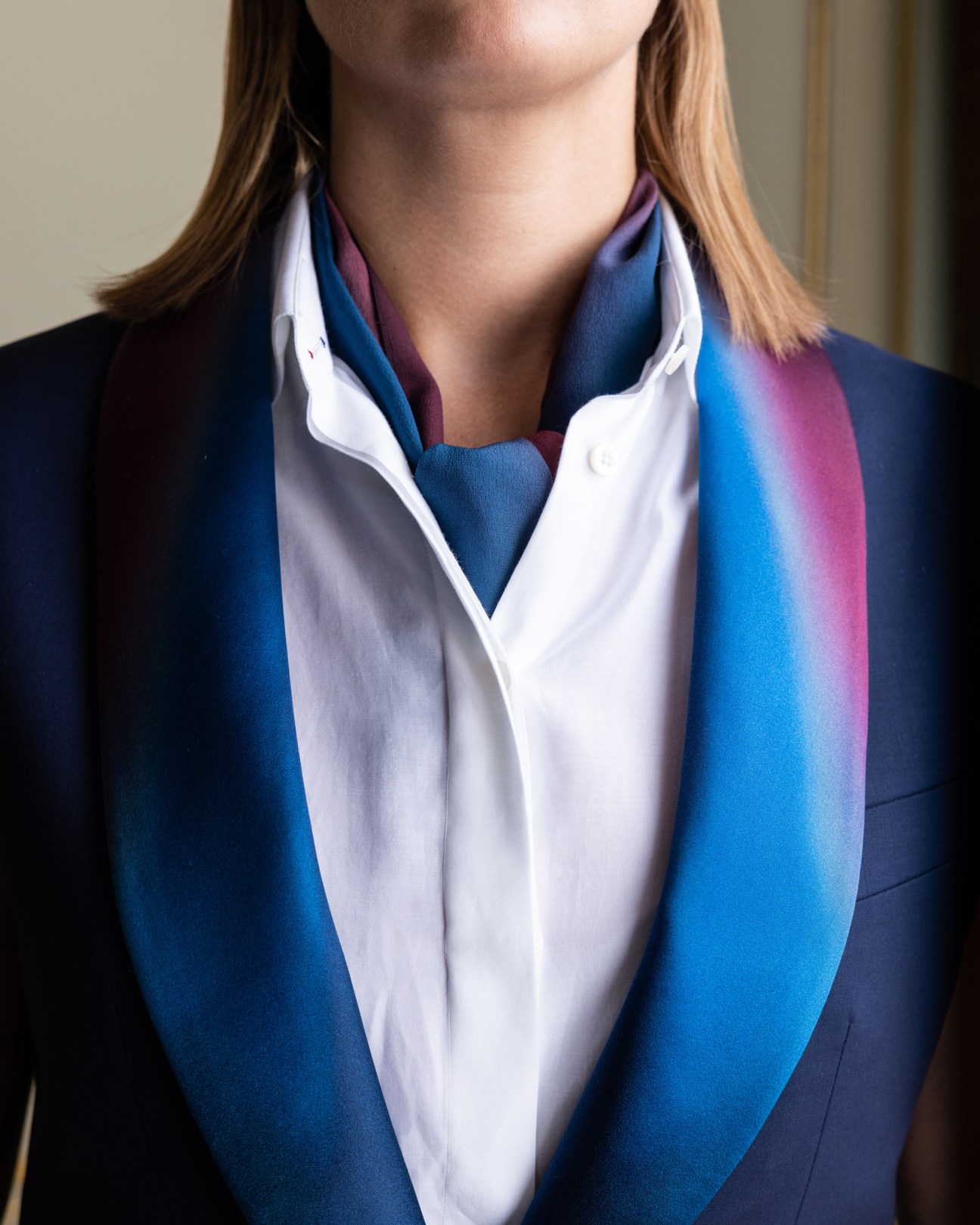
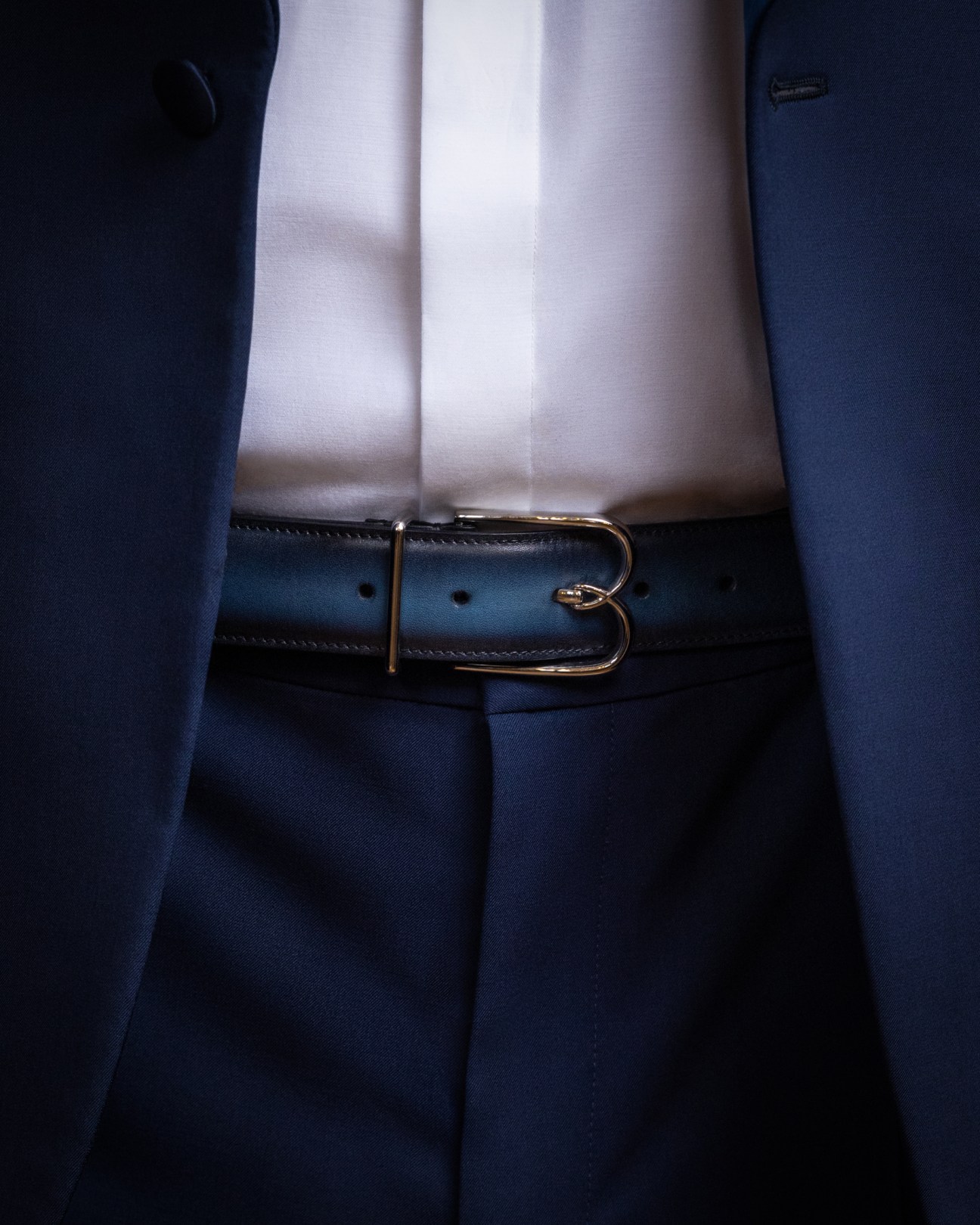
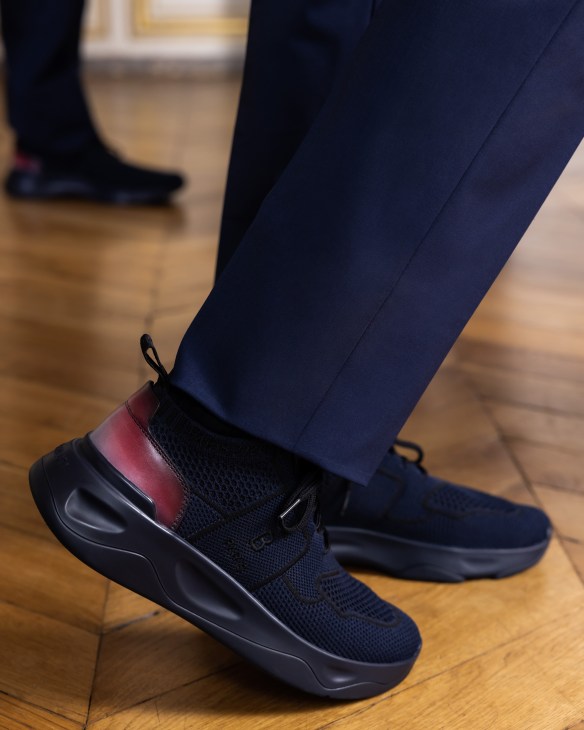
“You have to combine elegance and comfort, while still looking French,” says Le Goff. It’s this concept of “chic à la Française”, she adds, that has been missing from recent Team France uniforms. “The French team wasn’t dressed by a fashion house in the past. You would look at the Italians dressed by Armani and the US team dressed by Ralph Lauren, and the French team said that they didn’t feel they looked as good.” At first, the French athletes accustomed to living in sportswear couldn’t imagine themselves in a sharp suit. But a few fittings with Le Goff’s team were enough to change their mind. “They now feel proud to be dressed by Berluti and it affects their overall mindset.”
As part of the process, Berluti also consulted with the Paris 2024 Organising Committee and the French National Olympic and Paralympic Sports Committees, as well as stylist and former Vogue France editor-in-chief Carine Roitfeld. “It’s important to have an external point of view on the ceremony; it will be watched by billions of people,” says Le Goff. “Carine was a perfect match because she has a very French touch. We have to be proud to be French.” Le Goff hopes that, on the big day, the athletes feel so good in their new suits that they go on to “win a lot of gold medals for France”.
Berluti is coming out as a winner too. When the athletes of Team France walk along the Seine on 26 July for the Olympics’ opening ceremony – and on 28 August down the Champs-Élysées for that of the Paralympics – sporting fans tuning in from across the globe will become more familiar with the brand’s name. “It’s a very niche, very special house – almost like a club,” says Le Goff with a smile. “When you enter our world you fall in love because it isn’t about fashion, it’s about the expertise of the maison: the patinated shoes, the bright leathers that you can’t find anywhere else. It has audacity. We of course hope that now more people will discover this world and come and visit us.”