Issues
On the scent: Five brands to look out for this June
Le Labo Fragrances
Japan
Kyoto’s historic wooden machiya townhouses are not always treated with the respect they deserve. But this hasn’t been the case for a 150-year-old, family-owned former saké brewery by the Kamo river, which has been turned into a new home for New York-based fragrance brand Le Labo Fragrances.
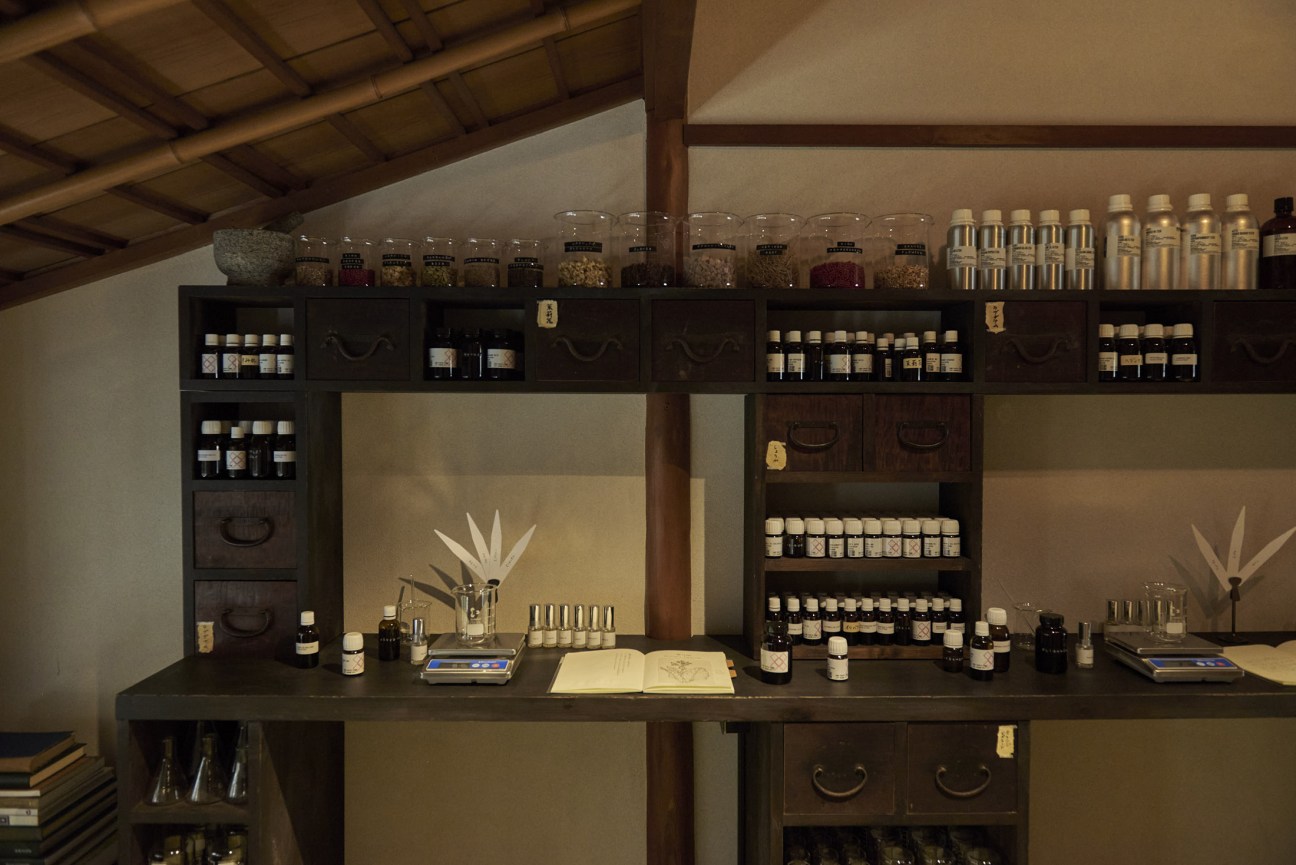
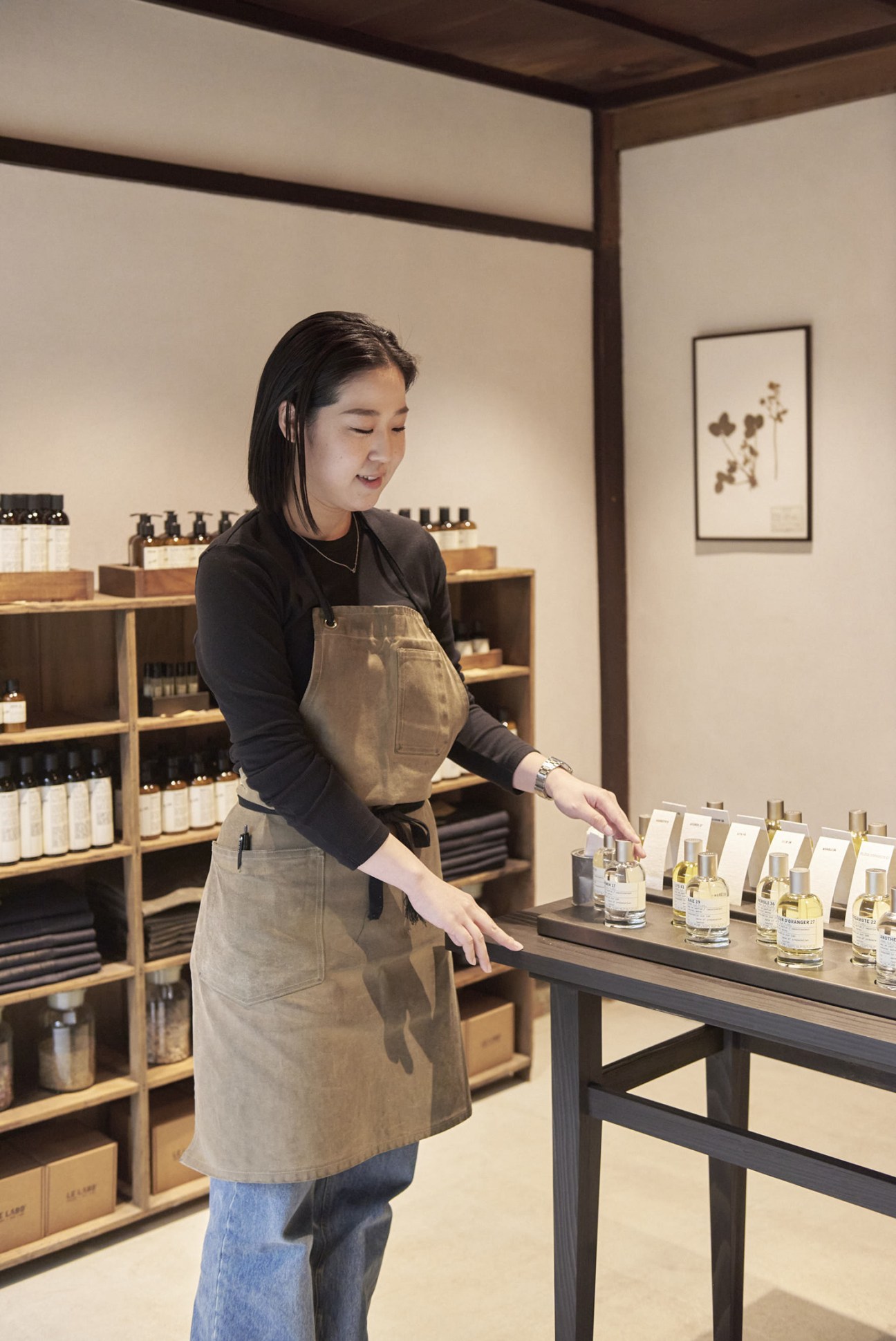
The atmospheric old building has been renovated with a light touch: door frames and walls have been left in a comfortably worn state and nothing feels overly restored. “It was about finding the right balance between preserving the past and bringing in new life,” says Deborah Royer, Le Labo Fragrances’s president and chief creative officer. The courtyard garden has been revived, while the old kura storehouse at the back has been turned into a small coffee stand. A tatami-mat room upstairs hosted a Kyoto calligrapher for the opening and will be used to welcome other craftsmen in the future. “We always try to connect with local artisans,” adds Royer, who tends to opt out of releasing traditional ad campaigns. “We don’t overdo the explanations; we try to [focus] everything around the fragrances.”
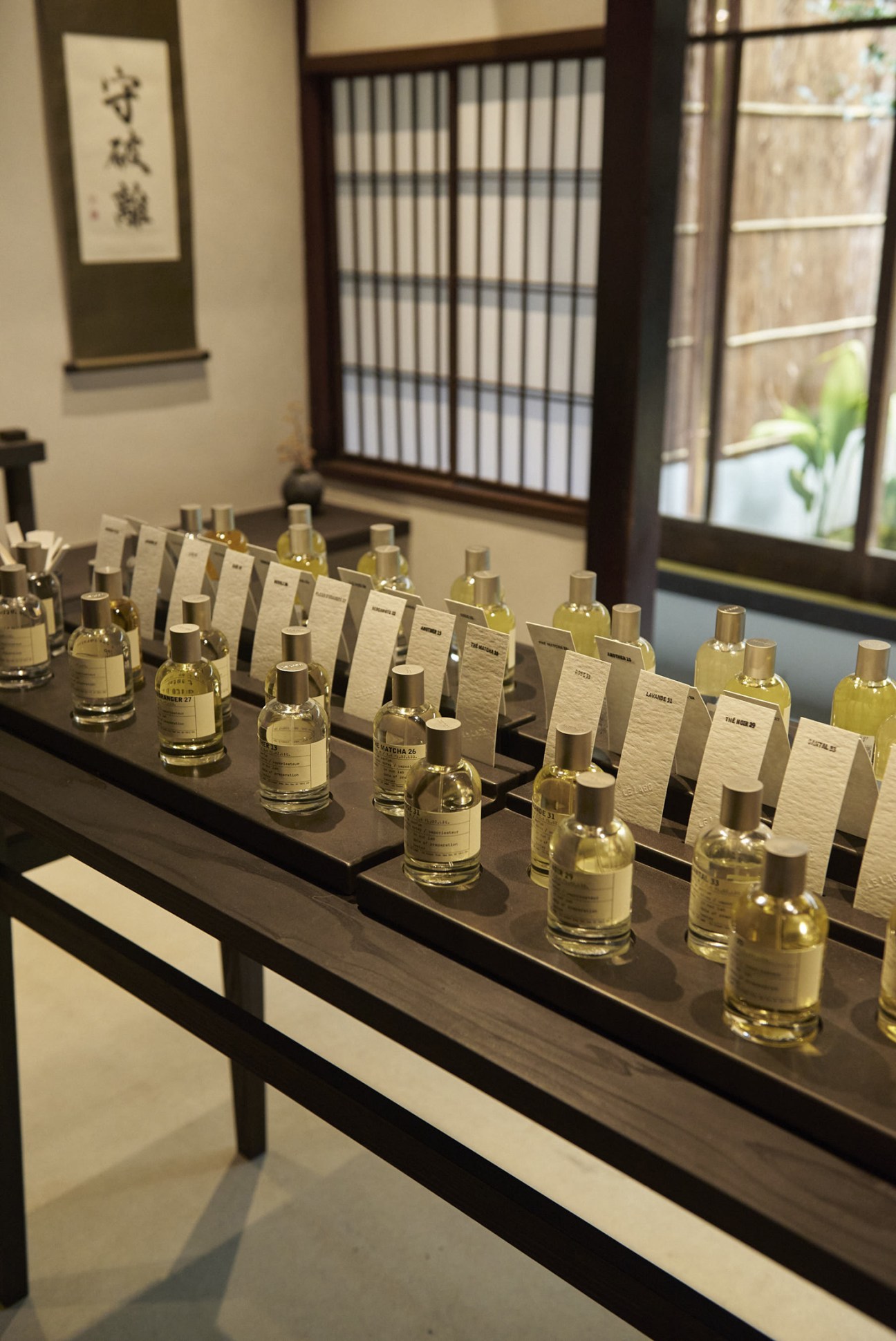
Royer, who grew up on a farm in France, has long had a soft spot for Japan and its wabi sabi aesthetic. “We only use high-quality ingredients and work with small businesses and family-owned farms.” Ingredients come from all over the world, including cardamom from Guatemala, roses from Grasse, bergamot from Italy and sandalwood from a farm in Australia. “There are many similar products in the world, so if we’re going to offer something, it has to be different and resonate with us,” adds Royer, who can spend more than three years developing a fragrance.
Le Labo Fragrances was bought by Estée Lauder in 2014 but Royer is confident that she can retain the brand’s identity. “I feel good about respecting the original intention and focusing on our craft.”
lelabofragrances.com
Santoni
Italy
Italian footwear and accessories label Santoni is going full steam ahead with its expansion plans. After setting up shop in London’s Harrods in 2023, executive president Giuseppe Santoni is now plotting openings in Paris, Zürich and Dallas later this year. “We want to better understand our customers’ needs and offer them the best service available,” says Santoni. “That’s part of the luxury experience. Having this physical touchpoint is the best way to get closer to your consumer.”
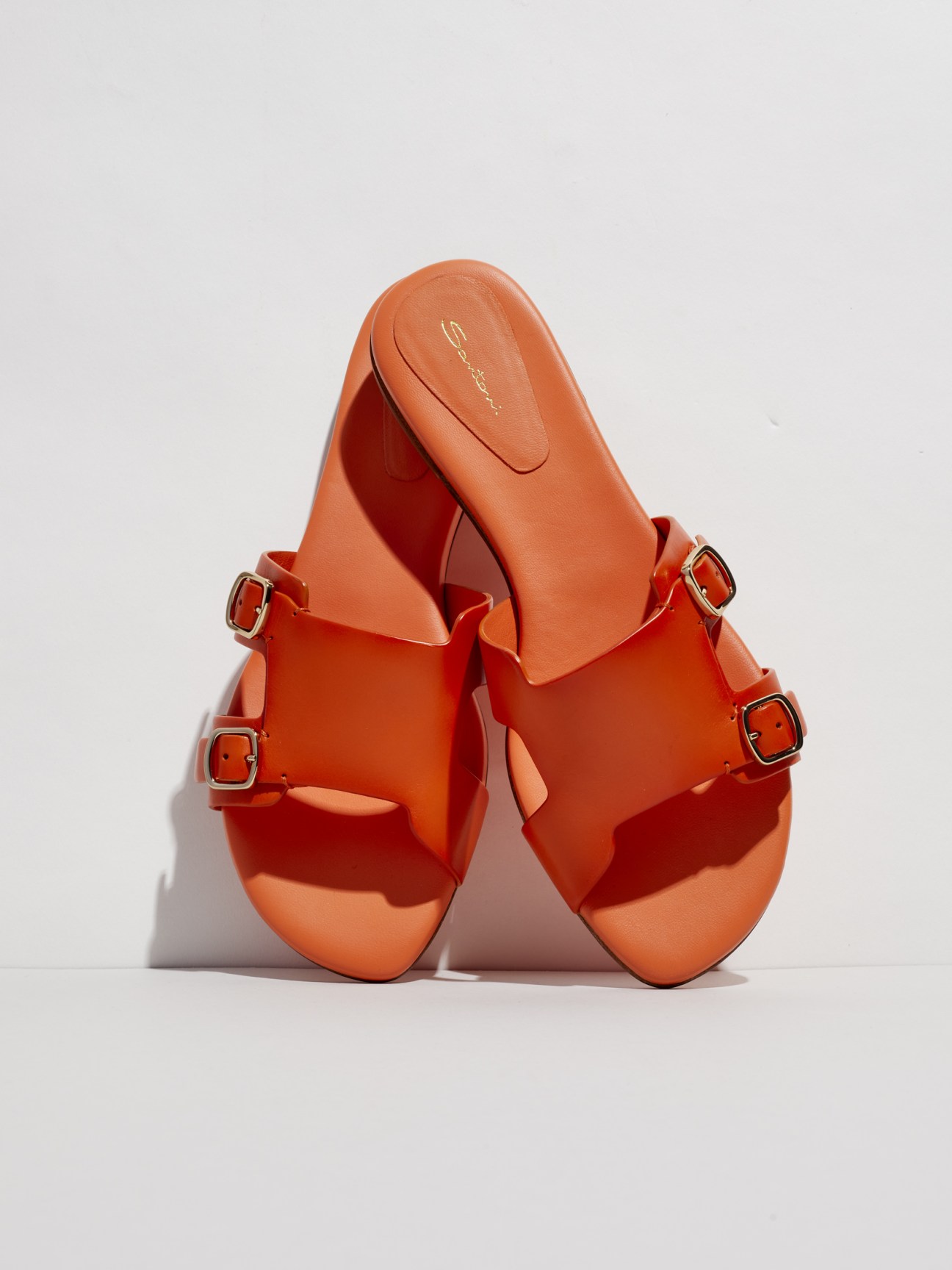
The brand is best known for its smart leather loafers, which are crafted in its own manufacturing facility in Italy’s Marche region. The shoes stand out for their rounded-toe silhouettes, buckle embellishments and nature-inspired colour palettes, and have been enjoying a resurgence as fashion returns to formality. “The younger generation seem to be drawn to them,” adds Santoni. “Trainers are part of everyday life but we can offer more formal shoes that are equally as comfortable by blending craft with innovation.”
Santoni has also been working on expanding its men’s offering, as well as bolstering its women’s and leather-goods ranges. These unisex leather slides, featuring double-buckle straps, make for an elegant off-duty staple.
santonishoes.com
Dior Men’s
France
Accessories have always been a focus for Dior, one of the largest businesses in the LVMH portfolio, with menswear artistic director Kim Jones creating hits including smart shoulder bags for work and modern-day iterations of the Saddle bag. The new Dior Gravity capsule extends to travel-friendly styles and introduces a new type of grained leather, featuring the house’s signature Oblique motif. The material has been used across backpacks, messenger bags and leather goods in a palette of blacks, beiges and khakis. We have our eye on the weekender tote – ideal for short getaways.
dior.com
Avart
Lugano
Alma Veragouth had been dreaming of opening a menswear shop for some time. She had been running Avart, her Lugano-based womenswear boutique for more than a decade when the opportunity to expand came up. It was too good to ignore. “It was difficult to get the space; there were seven other candidates,” says Veragouth. But she prevailed and Avart’s new menswear shop opened its doors earlier this year after six months of renovation work.
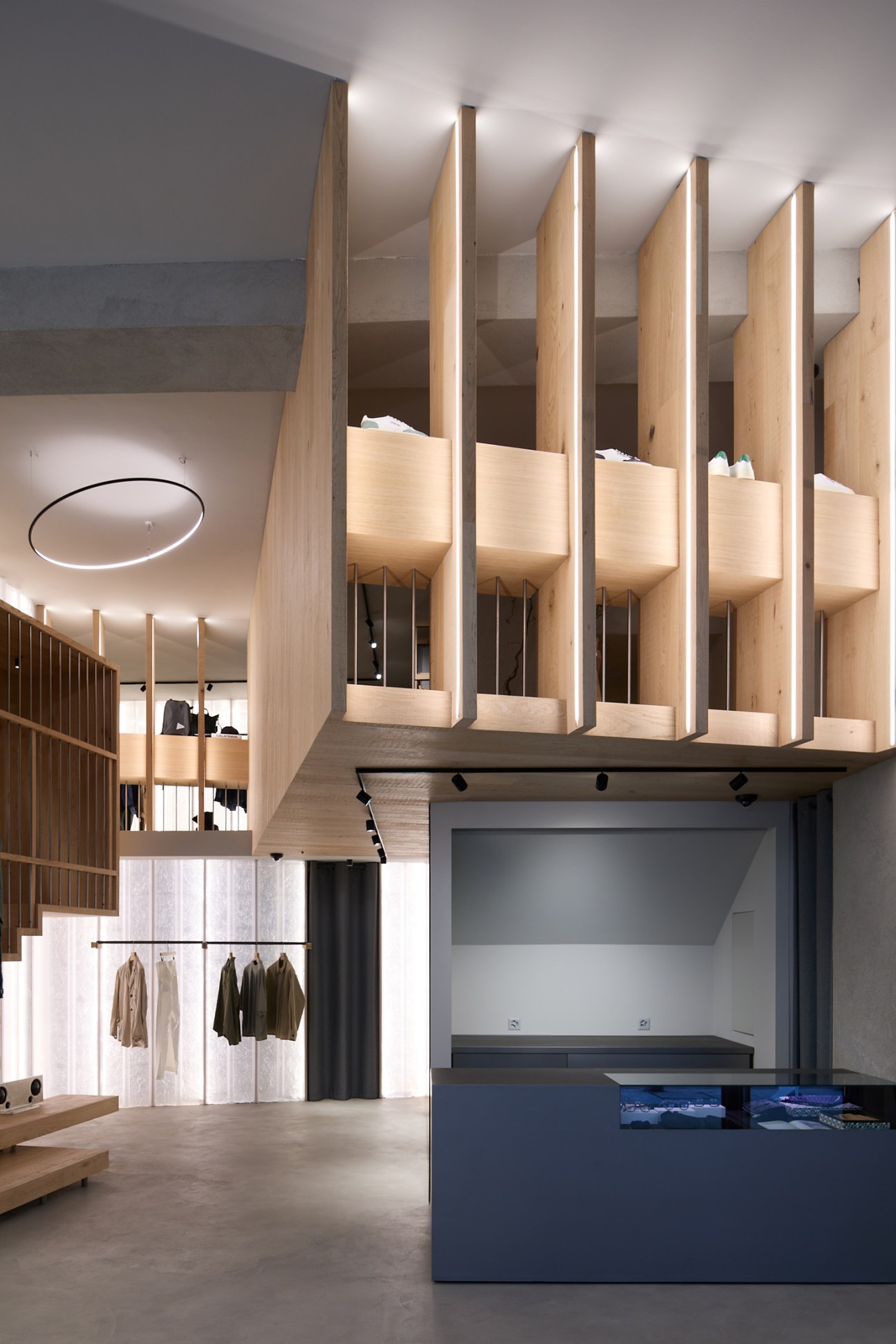
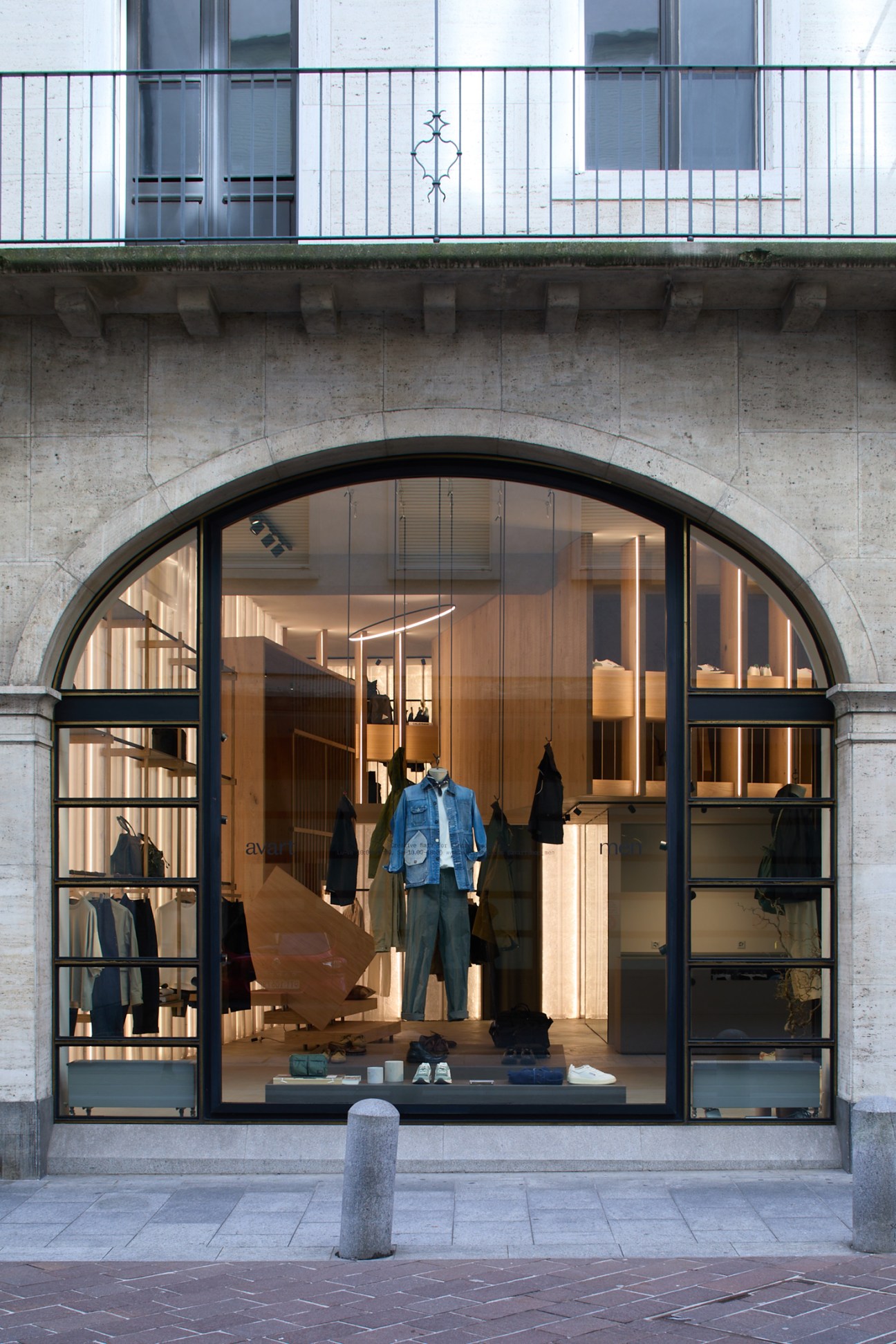
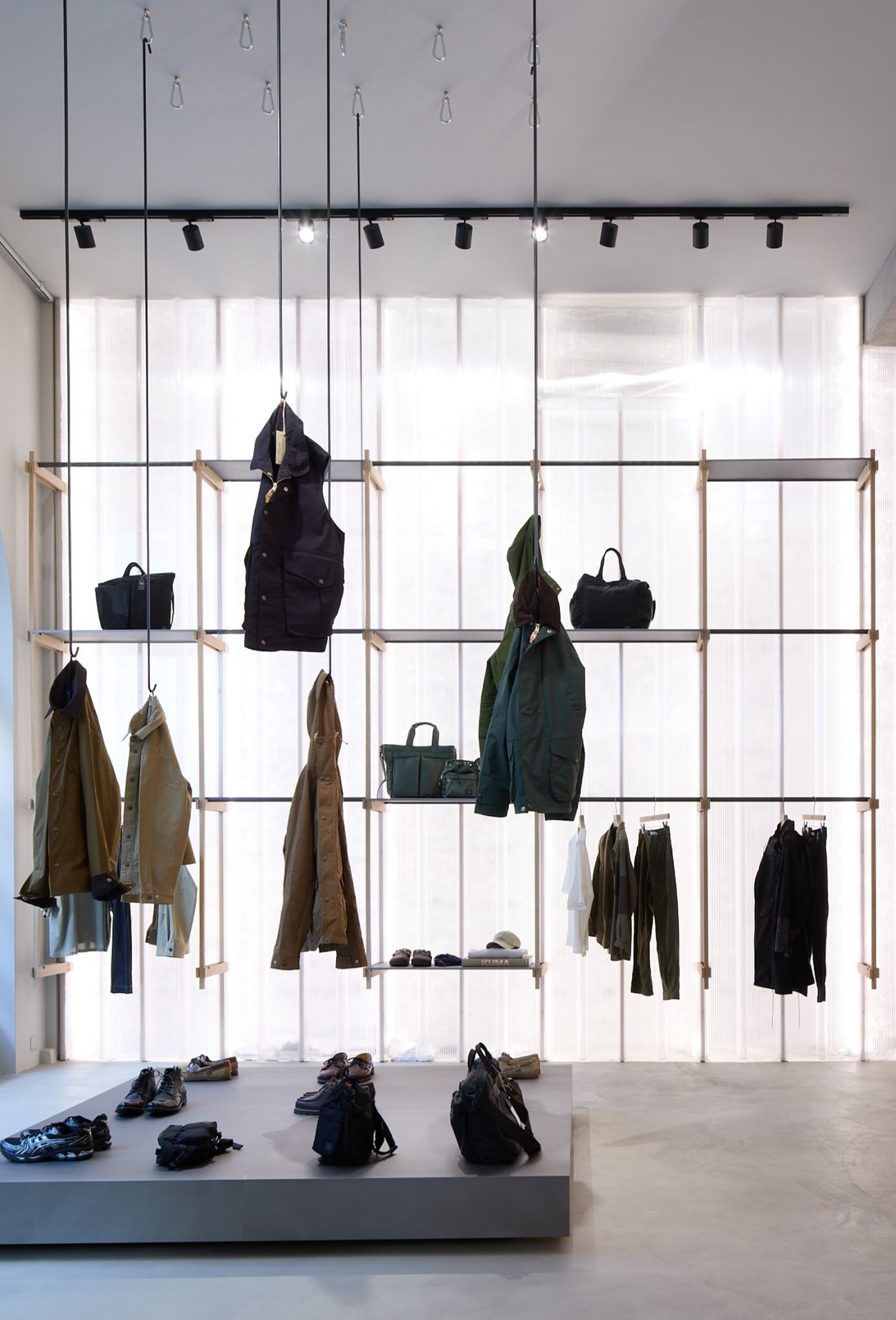
It is housed in an elegant building with huge, curved windows and continues Veragouth’s work of bringing niche, high-end brands to the Italian-speaking Swiss city. Veragouth, who worked in fashion in her native Kazakhstan before moving to Switzerland, picked labels such as Nigel Cabourn, RRL, Studio Nicholson and Salvatore Piccolo for the new boutique. She recently returned from a trip to Japan – part-holiday, part-research mission – and spoke of her deep affinity for Japanese and American brands, pointing to her selection of favourites, including Orslow and Engineered Garments.
She is equally fond of refined interiors and hired renowned designer Bruno Keller to work on the shop’s refit. Keller created a warm space, which includes a mezzanine with wooden accents and recessed neon lighting from Italy’s Viabizzuno. Look out for the area featuring shoes, bags and accessories, and the cosy corner where you can kick back on an Eames lounger with a magazine or book from the shop’s selection. “The idea is to create a multicultural, intellectual space,” says Veragouth.
avart-shop.com
Hermès
France
French luxury house Hermès is delving deeper into the world of beauty, with a growing perfume-and-cosmetics line. It has quickly gained the approval of connoisseurs thanks to its best-in-class formulas, playful colour palettes and pristine packaging. The label recently released Herbes Vives, the third instalment in its H24 perfume line. The scent, created by Swiss perfumer Christine Nagel, evokes the fresh, earthy aromas of the natural world following heavy rainfall. The fragrance blends notes of sorrel, hemp and parsley with pear granita and fresh mint. The perfume’s light-green and refillable glass bottle is also striking.
hermes.com
How Canadian art patron Bruce Bailey is uplifting next-generation talents
Bruce Bailey cuts a striking figure in front of the Chiesa di San Samuele on the opening day of his new exhibition, Beati pacifici: The Disasters of War and the Hope for International Peace, which runs at the same time as this year’s Venice Biennale. Wearing a red suit and vintage Saint Laurent silver loafers, the Toronto-based collector and philanthropist is unafraid to stand out. Though his attire is conspicuous, Bailey has been quietly working to support the Canadian cultural scene and revive the lost practice of the art salon over the past few decades.
The 200 works inside the church are from Bailey’s personal collection, which is usually housed in Ontario, and are illustrative of his wide-ranging taste. The exhibition’s focus on war art was not only intended to document the dark side of human nature. “I want to show that we must take the responsibility to stand up to evil and oppression,” says Bailey. The curation begins with a series of chilling 17th-century etchings by Jacques Callot based on the Thirty Years’ War. “There weren’t any war correspondents in those days,” he adds. “Callot went to the source to depict brutality. He also wrote text below his works, so they’re almost like early versions of comic books.”
From here, Bailey’s selection travels forward in time, passing by some of the greatest envoys armed with paint and a brush, including Francisco Goya and Otto Dix. Visitors are then brought up to the present with Peter Doig’s depiction of Toronto’s famous Rainbow Tunnel and a work by Tyler Bright Hilton, a Canadian artist who Bailey has been supporting.
Art didn’t feature in Bailey’s upbringing. His life changed when he went on a school trip to Europe as a teenager. “I was transfixed when I saw Théodore Géricault’s ‘The Raft of the Medusa’ at the Louvre,” says Bailey. “I didn’t see any other artwork that day.” It was not until he was studying to become a lawyer at university that a small scholarship enabled him to make his first foray into collecting. “I bought three prints by Eric Fischl, Michael Snow and Christopher Pratt for a total of CA$5,000,” he says. “I framed them and put them in my student house. I felt terribly sophisticated.” During his subsequent careers as a lawyer and an investment banker, Bailey was able to add to his collection. It now includes everything from sculpture and film to photography and painting. Ever since his first purchase, however, he has maintained a particular fondness for prints and their collectors. “I find that print buyers are more passionate than other people at art fairs, who are often only there in order to buy trophy pieces by established names.”
Bailey believes that it is important for all budding collectors to look at as much art as possible. “I poke my head into contemporary art galleries no matter where I am in the world,” he says. “For me, the process is not to listen with my ears but to look with my eyes and my heart.” He tries to make decisions about a piece before learning about the artist. By acting on this impulse and buying from artists’ first shows, Bailey was able to become an early collector of work by Thomas Demand, Kiki Smith and Marlene Dumas. “It wasn’t that I was smarter than anyone else,” he says. “I could only afford to buy from artists before they became more well-known and, thankfully, I was able to do this before the game changed.” Bailey laments the recent rise in intermediaries who create a distance between the buyer and an artwork.
These frustrations led Bailey to invest more time into his philanthropic endeavours, including the financial support of the Montréal Museum of Fine Arts and creation of his own arts incubator. The programme champions lesser-known Canadian artists by giving them their first show and pushing them to receive commercial gallery representation. Bailey credits this work with helping to launch the career of Canadian First Nations painter and performance artist Kent Monkman.
Bailey also believes in the power of art to forge connections and aid dialogue between nations. In 2011, the National Gallery of Canada became the official commissioner of the country’s pavilion in Venice. “This shows that the state uses art and music as forms of diplomacy,” he says. While his collection might have started as a group of artworks that captured his imagination, it has evolved to become a gathering point for the community. His art-salon summer garden parties, or fêtes champêtres, aim to build bridges between English- and French-speaking parts of Canada through a shared experience of culture and nature. “It’s a neutral ground where people can enter into conversation and discuss their personal history,” he says.
These interactions help assuage Bailey’s worries about his legacy and the as-yet-unknown future destination of his art. He is reassured by how the collection has brought people together in Canada – and elsewhere in the world. “We all want to seek meaning in our lives,” he says. “Being a collector is not only a question of accumulating art but also how you can then use it to create a better society.” In a similar vein, Bailey believes that you can give people who you pass on the street a “visual treat” by way of a thoughtful or surprising outfit. With his opening dinner at the Venice Biennale approaching, Bailey gets up to return to his hotel. He has, of course, a dramatic costume change to make.
‘Beati pacifici: The Disasters of War and the Hope for International Peace’ runs at Chiesa di San Samuele in Venice until 29 September.
What to expect from Milan Design Week 2024 and beyond
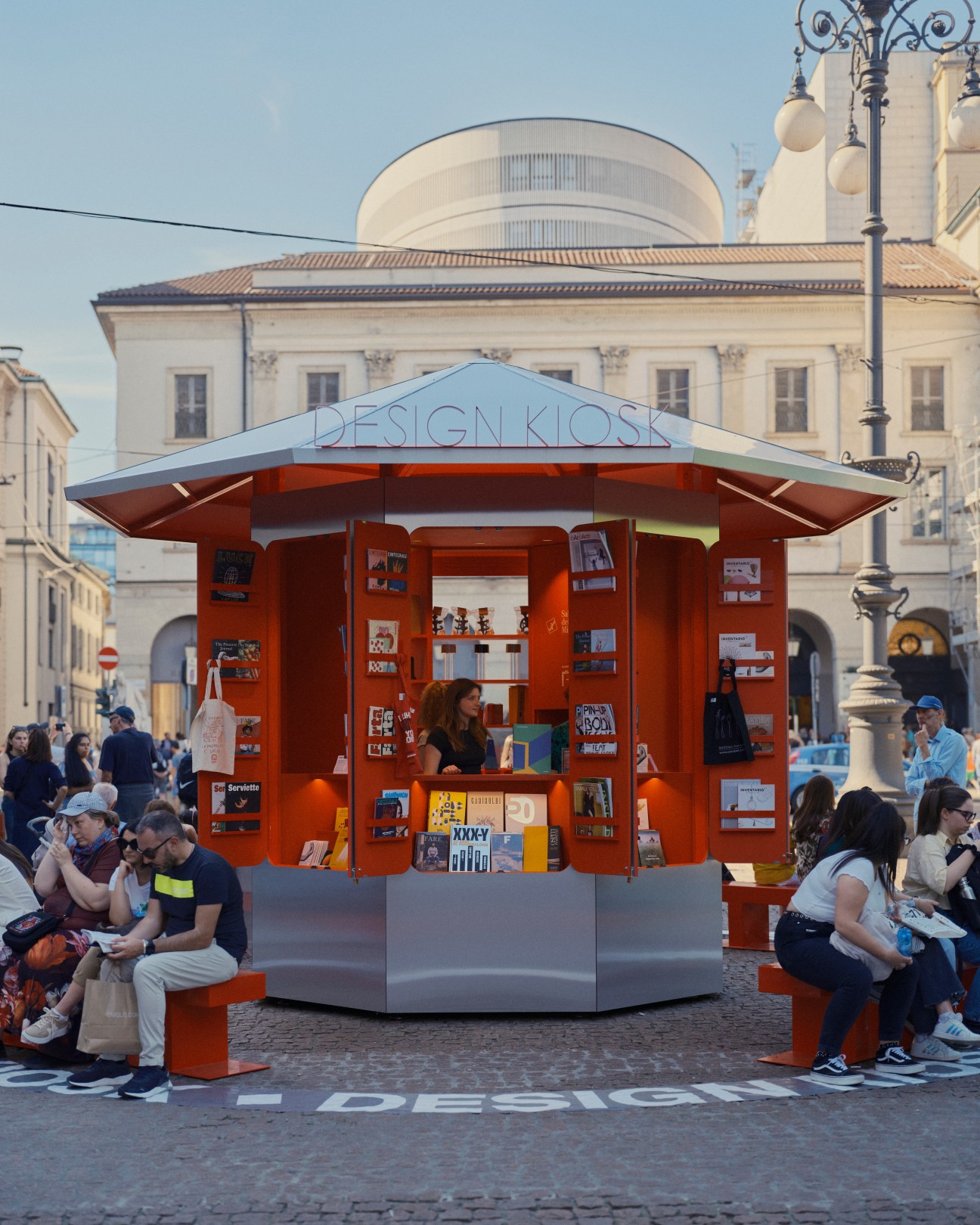
The annual Salone del Mobile is the centrepiece of Milan Design Week and the global industry’s largest and most important trade fair. It’s an event that brings together the biggest names in the sector while also providing a platform for lesser-known voices.
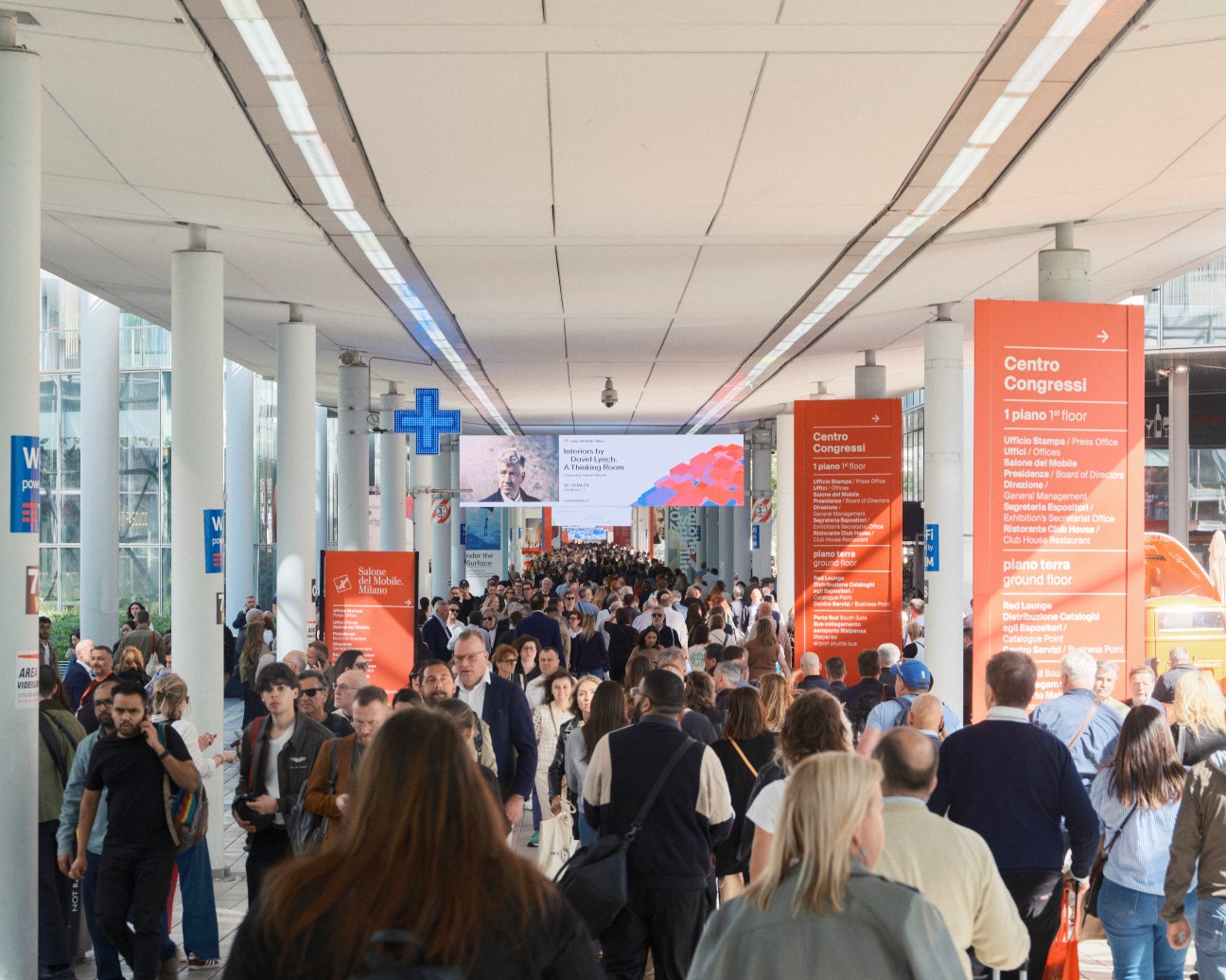
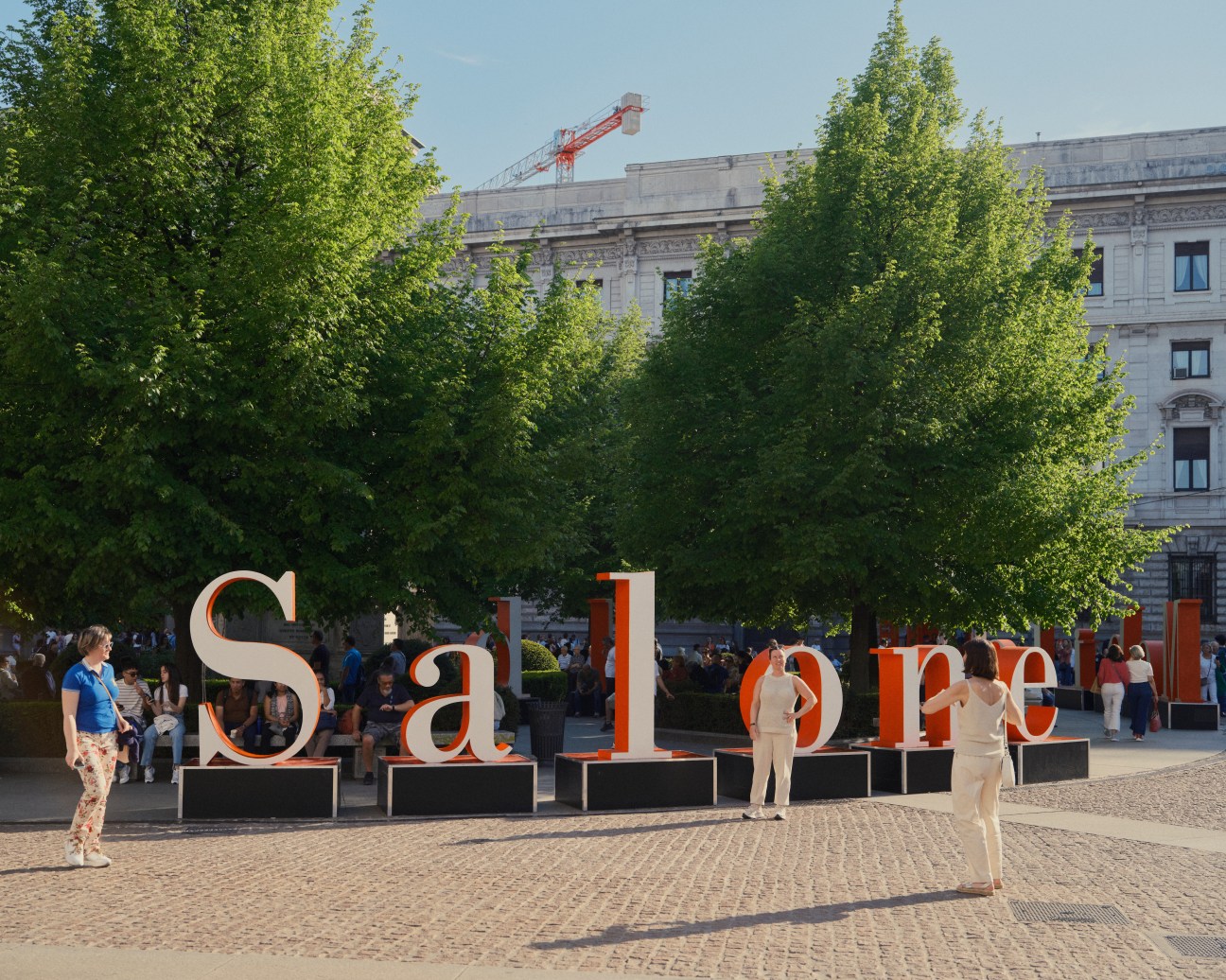
As well as being a launchpad for new product releases, the gathering serves as a bellwether for the evolving priorities of the design and architecture industries. It’s also a vital source of inspiration for practitioners. Here, we speak to some of the movers and shakers who showed their work this year in Milan to find out about their projects and big ideas for 2024 and beyond.
The Creative Director
Samuel Ross
UK
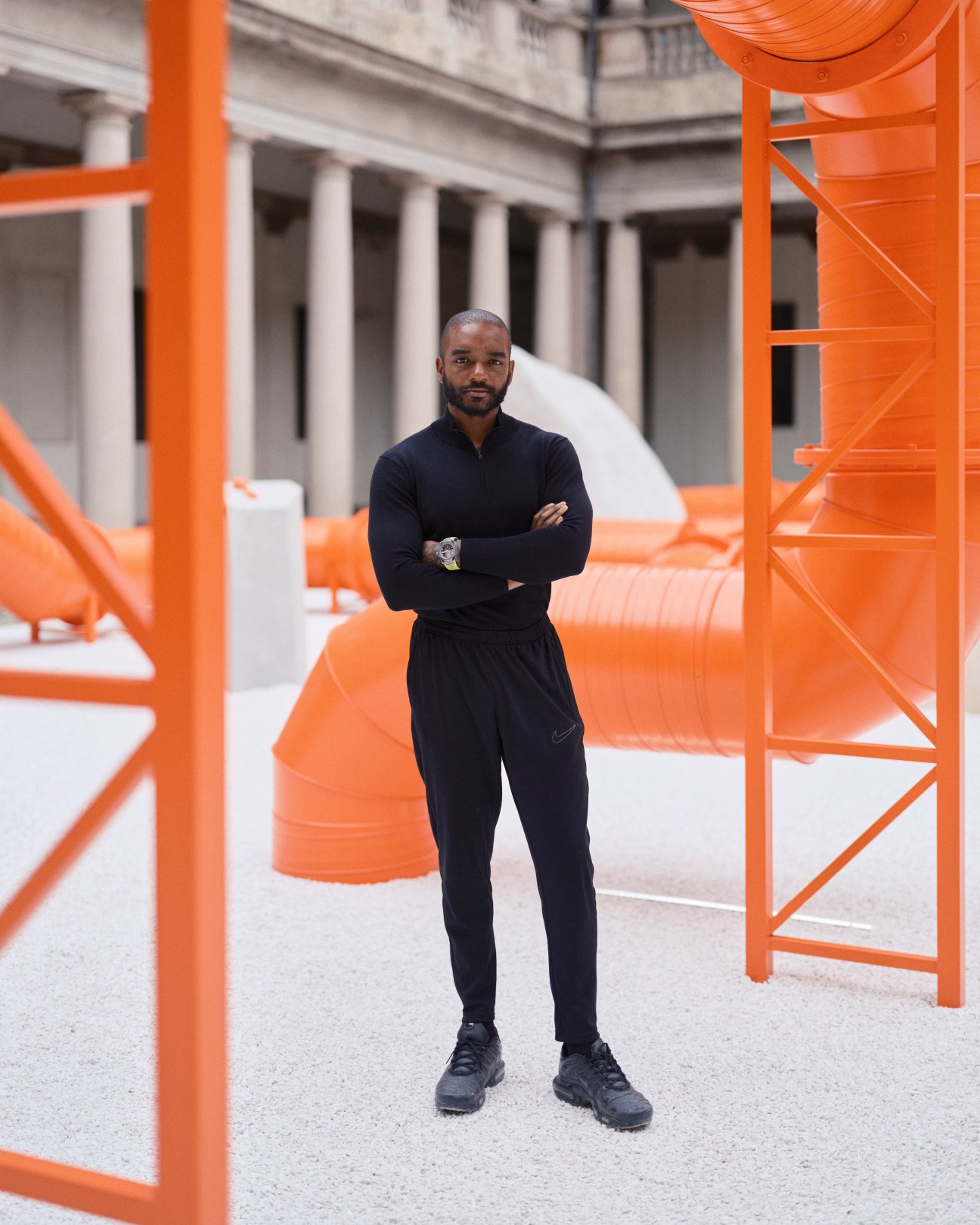
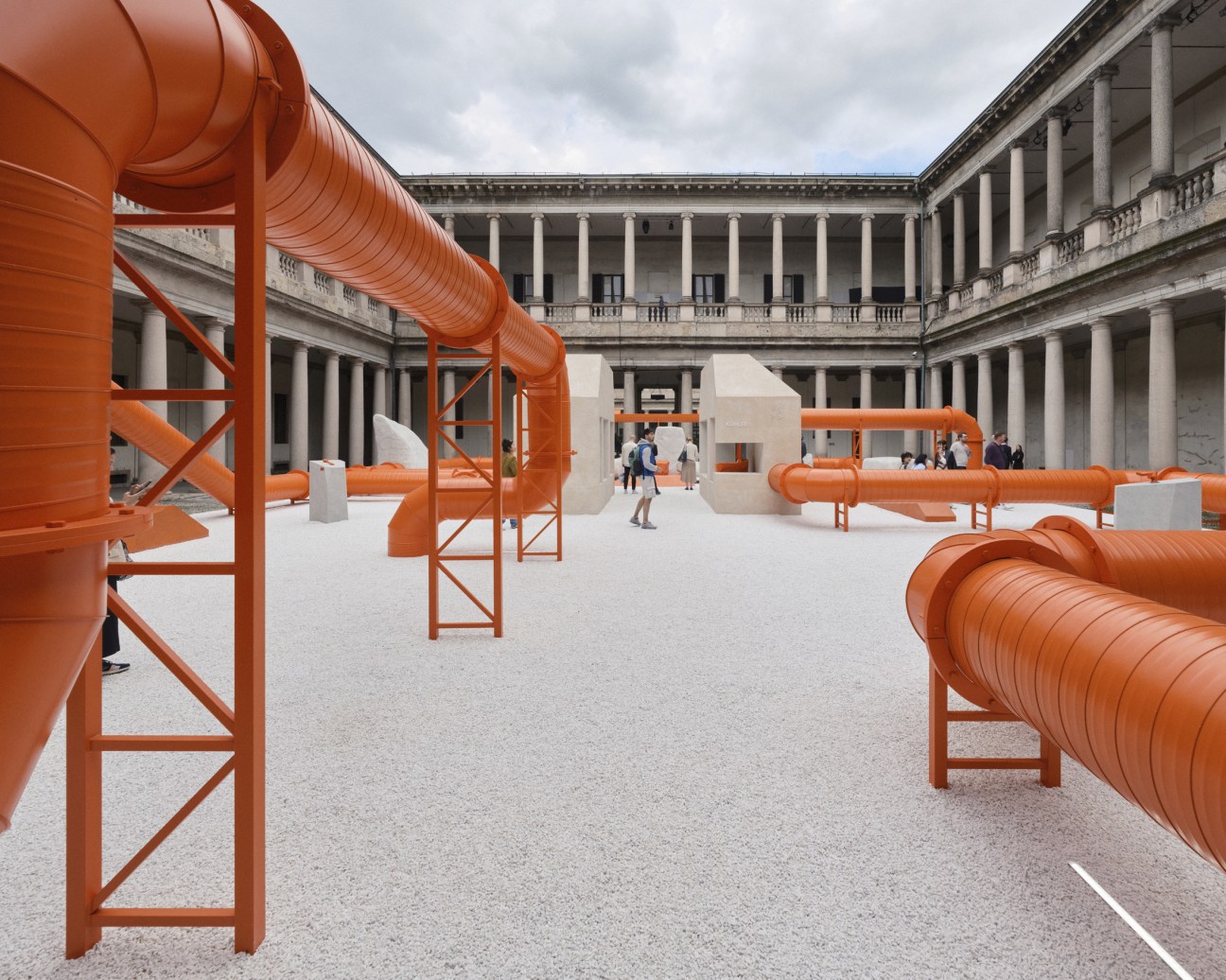
After studying graphic design and illustration – and a stint as Virgil Abloh’s design assistant – Samuel Ross founded sportswear brand A-Cold-Wall* in 2014 and design studio SR_A SR_A in 2019. Over the past 10 years, the British-Caribbean artist and designer has collaborated with industry leaders such as Nike and Apple (who he continues to work with), showcased work at galleries including White Cube in London and New York’s Friedman Benda, and been awarded an mbe for services to fashion. Here, he tells us about his designs for US bathroom brand Kohler, including an aqueduct-inspired installation in a palazzo courtyard during Milan Design Week.
You describe yourself as an artist and designer. Is this distinction between the disciplines important?
If you have decided to dedicate yourself to the creative arts, you need to have different levers that you can pull. Some of those fall under the remit of service design and commercial work. Others are about the desire to contribute to the future index of the history of the arts. It’s like church and state: we have the arts as a complete expression of the self and design as the gift of servitude.
You have worked on everything from watches for Hublot to footwear for Nike. How did your collaboration with Kohler come about?
Our studio’s philosophy is to work with market leaders. When it comes to engineering and the movement of water, which sounds very poetic, the incumbent in North America is Kohler. There’s also something quite special about the fact that the company is now more than 150 years old and has had four generations of independent leadership. Kohler also has a certain elasticity when it comes to how it engages with creativity. This enabled us to have radical conversations around what is often seen as common design.
How did that attitude translate to your work for the brand at Milan Design Week?
I have always been fascinated by the feats of engineering that are hidden within centuries-old aqueducts in places such as Milan and Venice. Through the Kohler partnership, I wanted to explore ideas such as the movement of water and create tension between sculpture and design. That involved taking a step back before going into the design process and asking ourselves, “How do we make this a bigger story than simply designing a toilet, a sink and a faucet?”
Why is it important to have that kind of story?
Designers have an unspoken obligation to break new ground. And while the idea of service isn’t forgotten in any of the decisions that we make, a well-versed, nuanced audience is ultimately looking for a product or object that will elicit a response or evoke an emotion. My duty as an artist and a designer is to put new concepts out there, which comes with a certain level of risk. I also feel a personal obligation to work with these market leaders and try to push concepts through commercial practice. In design, you have to engage in servitude, questioning and inquiry. It’s less about good or bad than about the idea of pulling apart what we know in the hope of moving things forward into a new design moment.
The Astrophysicist
Ersilia Vaudo
Italy
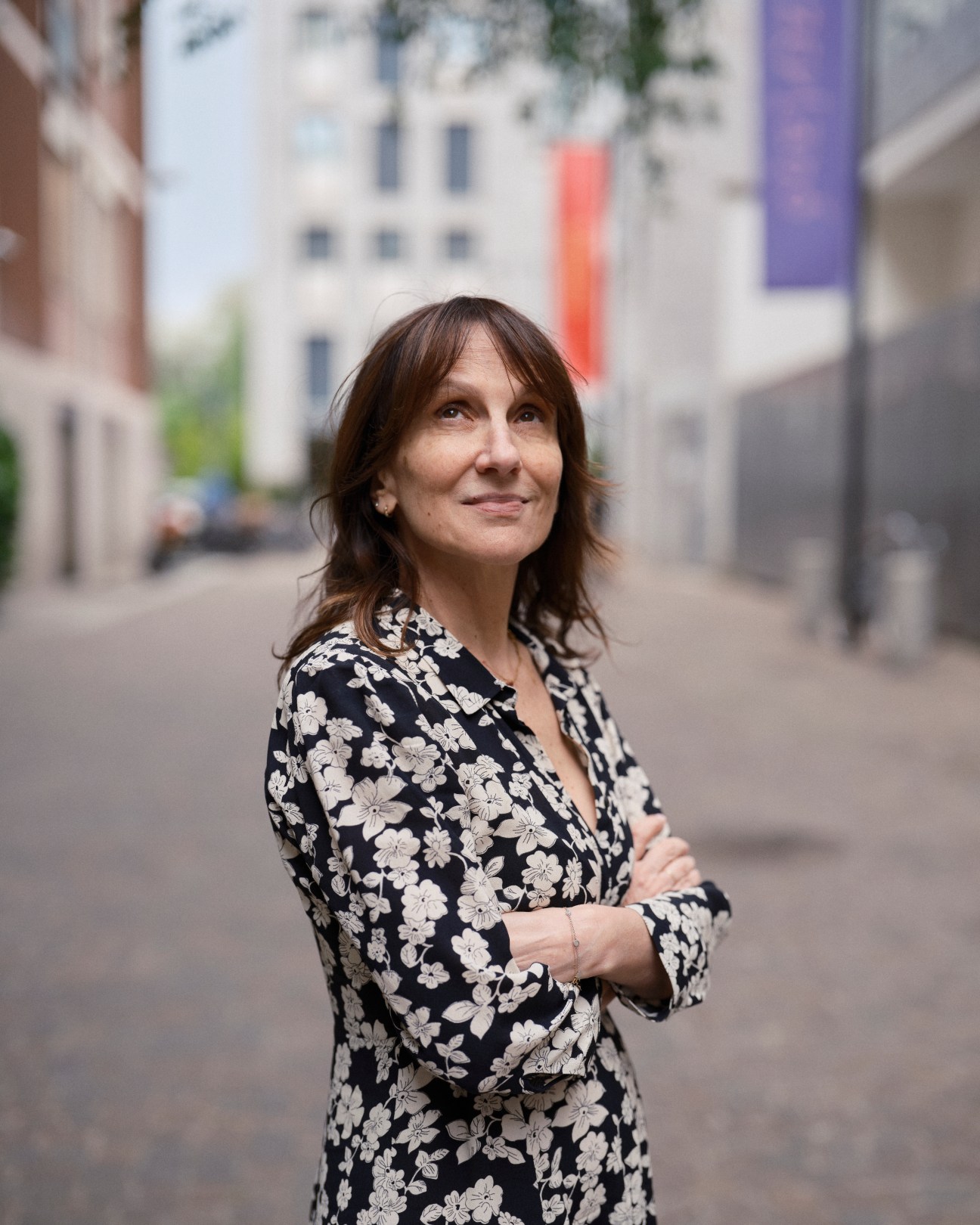
You might not expect to find an astrophysicist hard at work at Milan Design Week but Ersilia Vaudo bucks the trend. For this year’s event, the chief diversity officer of the European Space Agency (ESA) teamed up with architect Benedetta Tagliabue to create the Lune d’acqua lamp for Italian lighting manufacturer Artemide, inspired by the moons of Jupiter and Saturn.
How did the lamp project come about?
My background is in space exploration. I have worked for the ESA for 33 years, shuttling between Paris and the US, where I collaborate with Nasa. A few years ago, Stefano Boeri, the president of the Triennale Milano design museum, asked me to be the main curator of its 23rd international exhibition because I like to talk about science and the inspiration that it gives to people in many other fields. The theme of the exhibition was “Unknown unknowns” – the idea that we don’t know what we don’t know. The show encompassed the disciplines of architecture, art, design and science. That’s where I met architect Benedetta Tagliabue and Carlotta de Bevilacqua, the president and CEO of Artemide. The notion of creating a lamp together evolved from there.
Your lamp is called the Lune d’acqua, Italian for ‘water moons’. Can you tell us what inspired it?
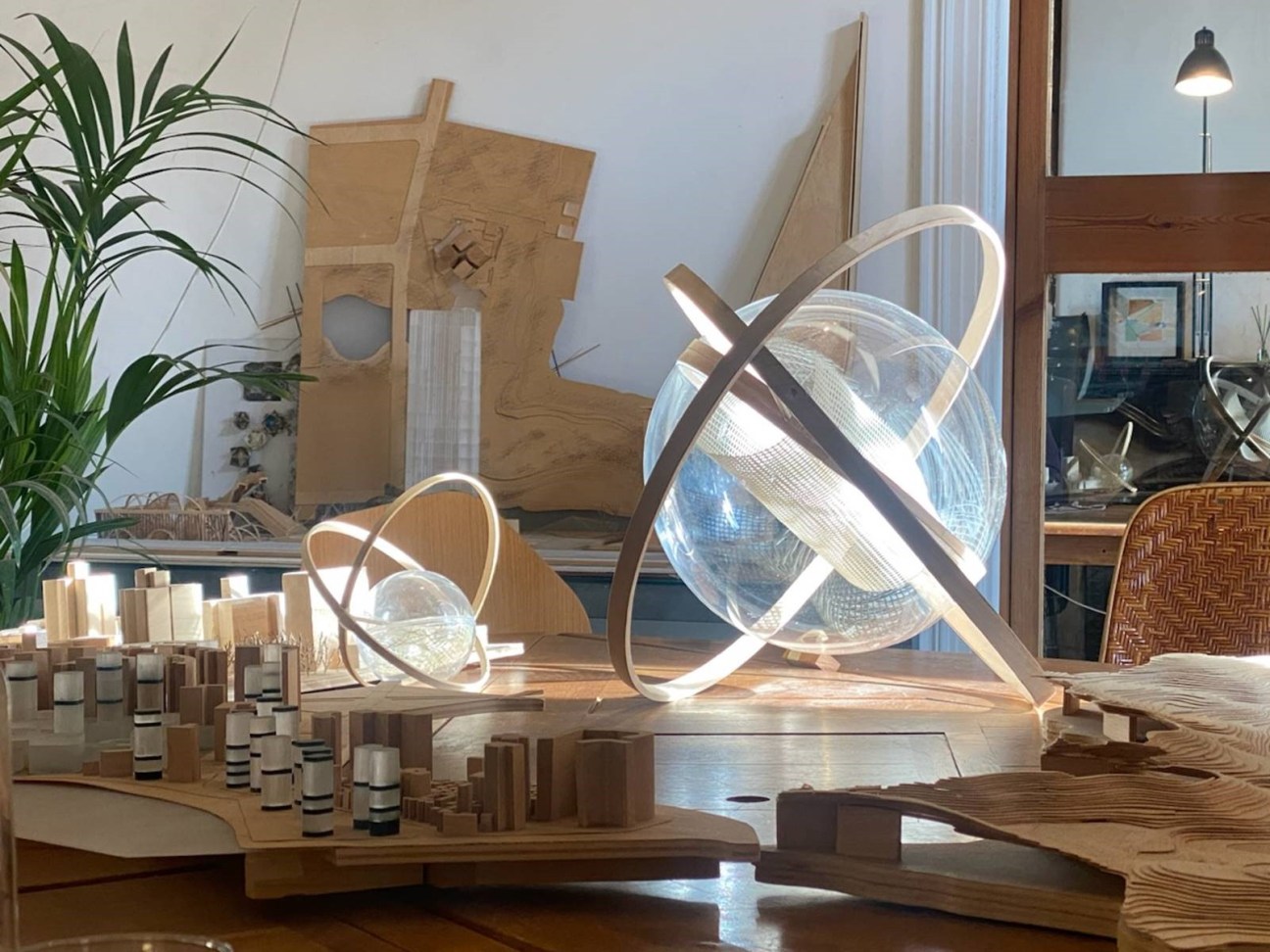
Everything that orbits around a planet is called a moon. Jupiter has 91 of them and three are made from water. These moons are oceans trapped in shallow ice with a metallic core and a lot of hydrothermal activity. Significantly, they are perfect places for life to exist because they have the same sort of conditions that we had at the bottom of our oceans when life started here on our planet. Part of my job at the esa involves studies to uncover the mysteries of these moons. They are magical places where you see this beautiful process of material transformation, in which water goes from solid to liquid states. They’re round too. In space, almost everything is that shape because gravity is the greatest designer and it likes spherical perfection. That was the starting point for the design, which is defined by a central glowing sphere suspended by two rings, which allow it to spin and rotate. It’s about drawing on elements of cosmic design.
What expertise did Artemide bring to the table when it comes to turning this idea from concept into reality?
What is fantastic about the lamp is that we were able to create an effect in which the light that’s emitted appears to bend through space and time. This is thanks to Artemide’s patented fabric-like net of material that has led lights embedded in it. This sits at the centre of the sphere.
Is this project about bringing some of the principles of space exploration into our homes?
We wanted to evoke the sense of belonging to something bigger than us. But we are still human beings living in a complex world and lucky to be part of this planet. Earth is the only home that we have. We hope that this light is not just a design object but a reminder of the privilege and vulnerability of being human.
The Architect
Andrea Caputo
Italy
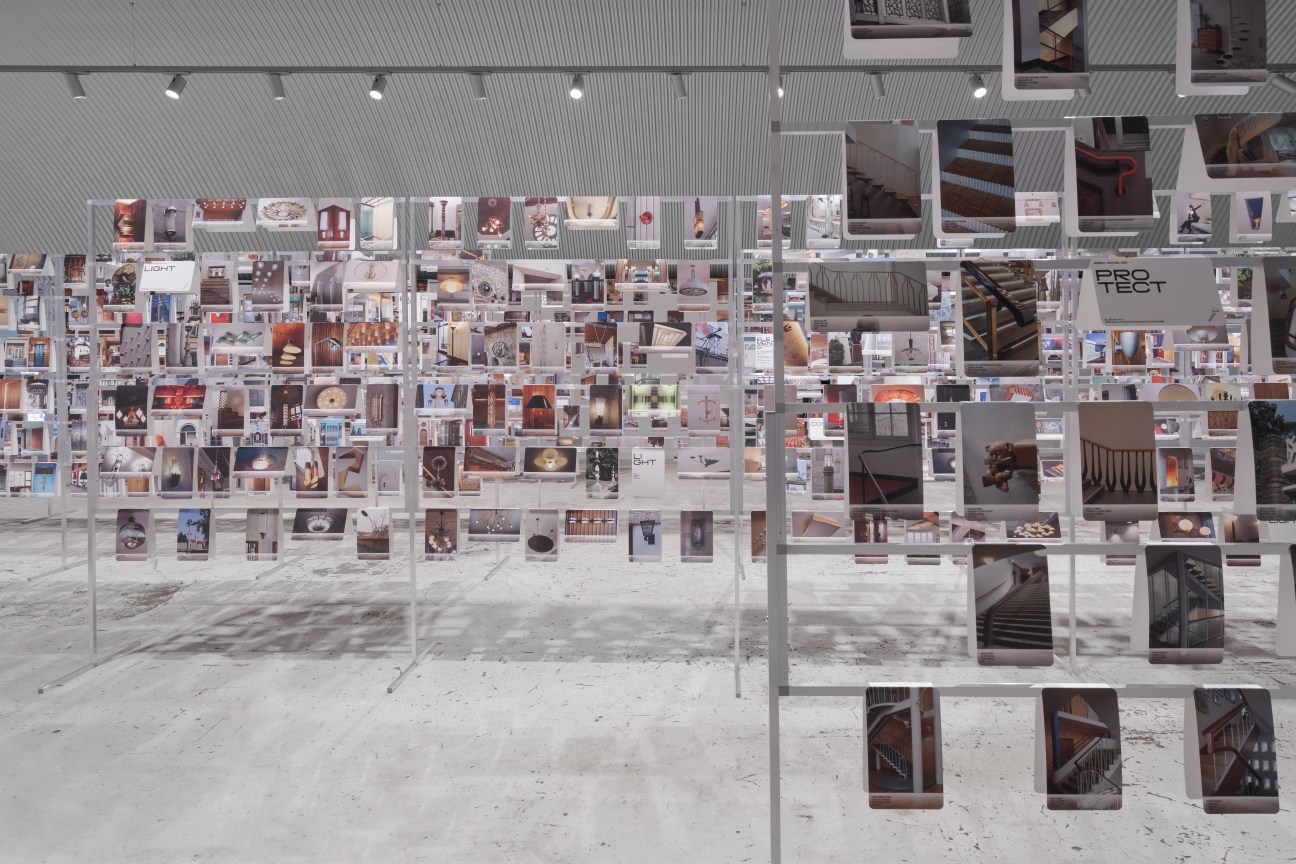
Just north of Milano Centrale station in 30 tunnels leased from the rail yard, you’ll find Dropcity: an as-yet-incomplete architecture and design centre that will ultimately house exhibition areas, libraries, workshops, machinery labs and co-working spaces. Run by architect Andrea Caputo, Dropcity put on 15 exhibitions during Milan Design Week, including a display of 3,000 photos of 20th-century architecture curated by Adam Stech and an installation by Milan’s 6:AM Glassworks. “We want to work with brands but this isn’t a location rental,” says Caputo. Instead, the centre’s civic mission includes sharing ideas and finding better ways for creatives to work together.

How is the transformation of the archways going?
Since January we have been in construction, renewing the tunnels and the space. That’s why we called our showcase during this year’s Milan Design Week In Progress. We were revealing the interior works as they are developing. Some of the spaces have been partially completed and others are going to be finished soon.
What’s your long-term plan?
Dropcity has both a social and a commercial programme. The latter is more about co-working, while the libraries and exhibition spaces are part of the social side. The first phase opens in October. We will have tunnels dedicated to 3D and robotic prototyping for millwork-machinery workshops, with equipment including cnc laser cutters and all kinds of manual tools. We want to create a multifaceted facility: one side will work on things that are related to automation, while another will focus on craftsmanship and materiality. On top of that, we will have an exhibition space that will initially feature Paris-based architecture studio Bruther’s first large-scale retrospective in Italy. The second phase is planned for spring 2025. We will have more laboratories, a materials library and a civic library. We hope to have completed 18 tunnels by then. We have yet to define what the final phase will be but it should be finished in 2026.
What will Dropcity do for the city? Is your aim to reach as many people as possible?
Yes, that’s exactly the point. There’s a neighbourhood scale, a city scale and an international scale. At the neighbourhood scale, we would like to work with local associations and become a library, a small civic space where people can come every day. At the city scale, we want to cater to architects, designers and students so that they can have an accessible space.
Is the plan to use a membership model?
Today, if you’re a designer or an architect and want to produce a large 3D print, you go to a company, you send the file, you pay and then you receive the object. The difference at Dropcity is that we run courses on 3D printing to teach people how to use these machines themselves. You don’t have to do the course to use the printer but you have to show that you’re able to 3D-print with this machinery. It’s about “access to tools”, a mantra from the 1960s that is highly relevant here. Dropcity will be accessible to anyone. It’s just a matter of being willing to be part of it and use the facilities.
The Industrial Designer
Sabine Marcelis
The Netherlands
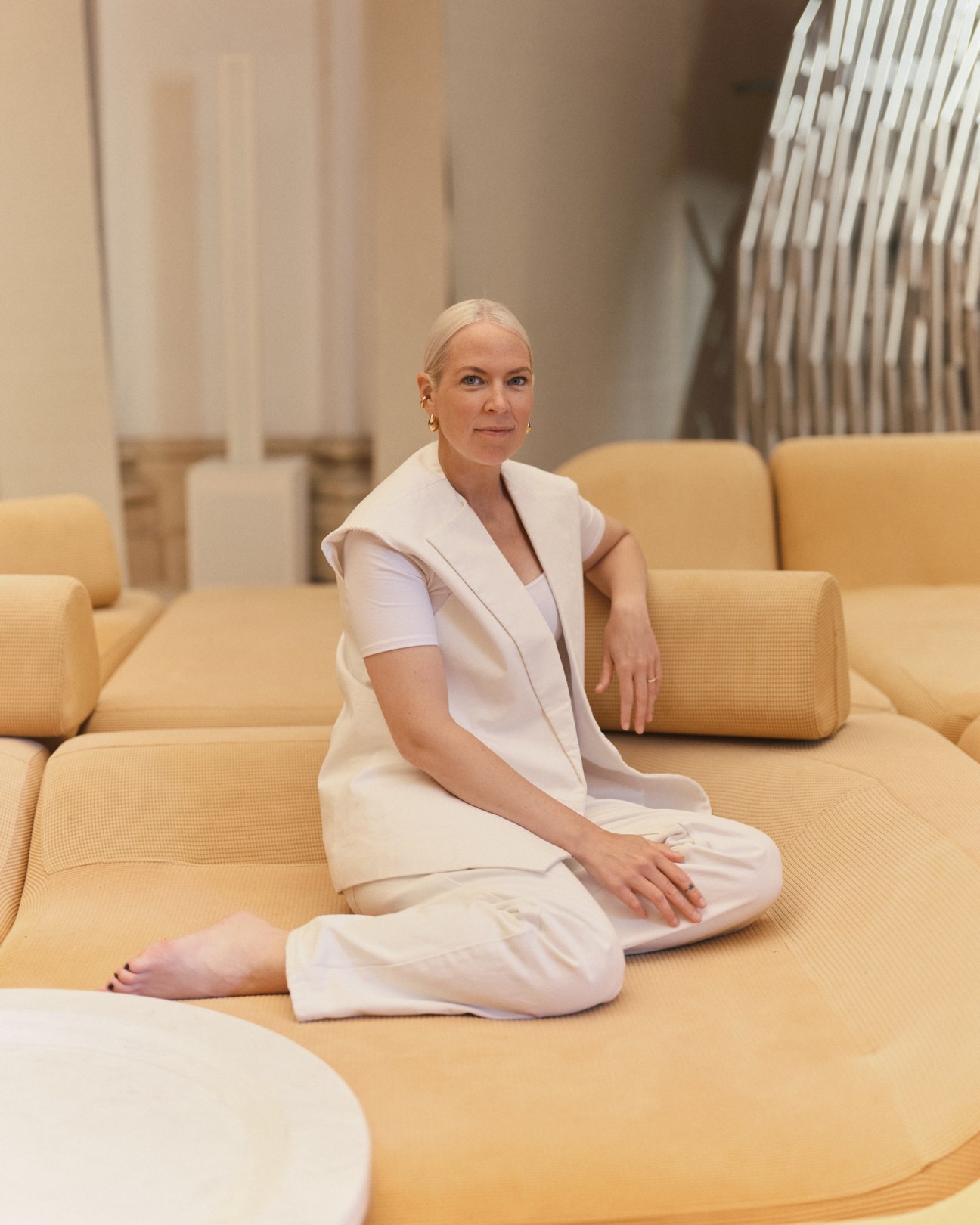
Dutch designer Sabine Marcelis works across scales and media, from civic installations in London to furniture for Danish brand Hem. Last year she was on the selection committee of Design Space Al-Ula’s first residency. The programme invited both Saudi and international creatives, such as France-based Leo Orta and Hall Haus, to make new pieces inspired by the ancient city’s architecture and landscape. With her partner, Paul Cournet, the founder of Rotterdam-based architectural practice Cloud, Marcelis co-curated an exhibition that presented the resulting works at this year’s Milan Design Week.

Why did you bring Al-Ula to Milan?
There are amazing rock formations at a Unesco heritage site called Hegra, near Al-Ula. We wanted to bring the essence of this landscape to Milan so we created a rock-like installation that pulls you into a sort of oasis in an old library. Inside, you’ll find the designs, with a large sofa by Hall Haus as a focal point. The concept was stargazing, inspired by the lack of light pollution in Al-Ula. We couldn’t recreate that in Milan; instead, with the team at Cloud, we made a big light box to sit above the sofa, so that you could enjoy a similar experience.
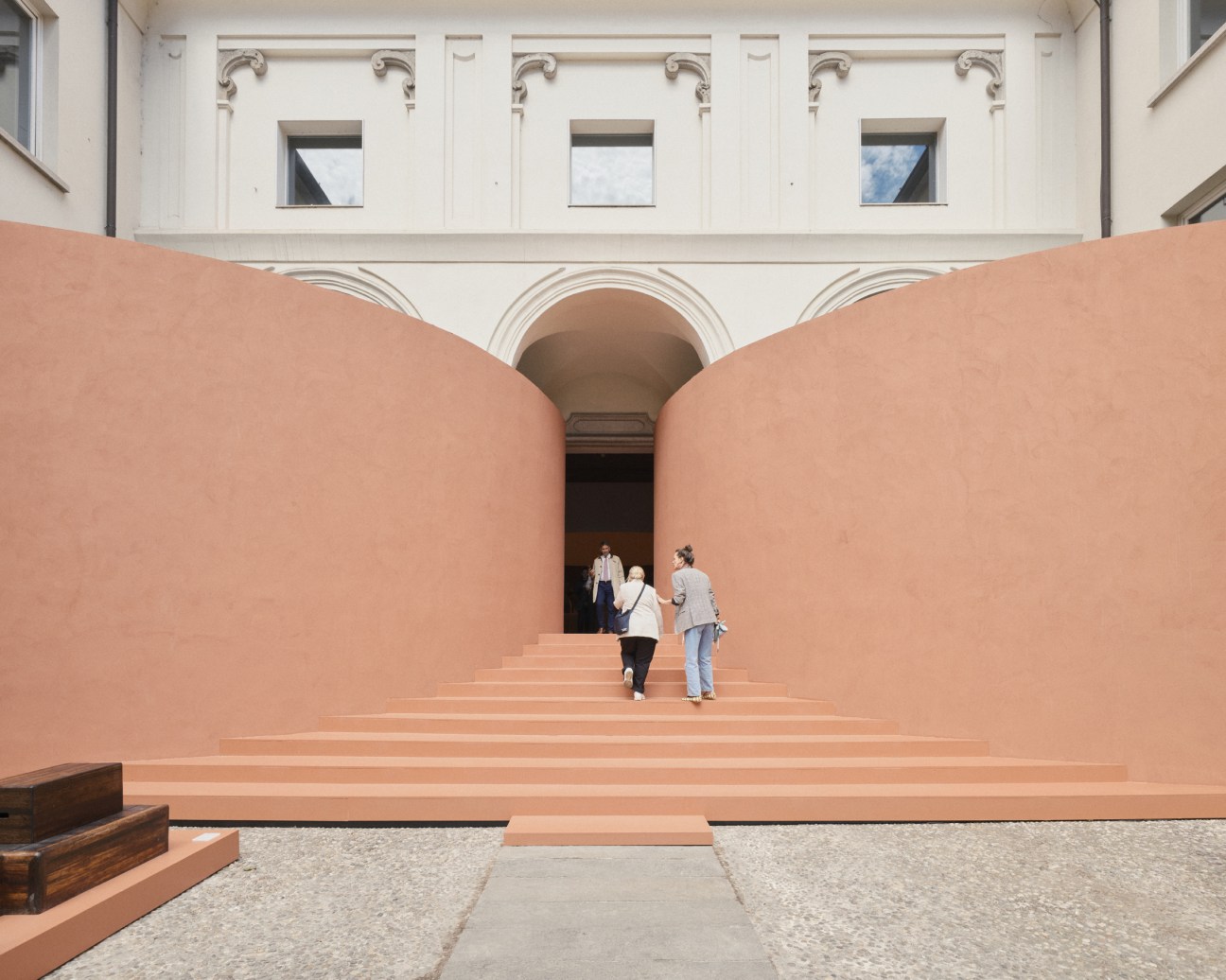
Does that cross-pollination of culture and design highlight the importance of residencies?
That’s the point of doing a residency: you create pieces that are linked to the setting. For the Al-Ula one, we selected designers who we thought would get involved in the Saudi scene. France-based artist and designer Leo Orta is an excellent example of this: he was in Saudi Arabia for a few months and became good friends with some of the country’s makers, who helped him to create furniture with earth and wax that captured the materiality of Al-Ula.
Why is it important to create place-based works?
We’re at a sad moment when everything is starting to look like everything else. If you go to a hotel in Barcelona, there’s a good chance that it’ll be furnished in the same way as another in New York. But there’s something special about being very specific to a place in terms of aesthetic and materiality. There’s plenty to be gained by everyone: designers learn a lot from the residents of a place, who, in turn, learn from the designers. The Al-Ula project is about cultivating a long-term dialogue, not just placing alien pieces in the desert.
Is a residency ultimately more about the making process than the end product?
Yes. I hope that people think carefully about how production is linked to design. I have noticed that there’s a tendency today for creatives to envision designs that are completely removed from how it will ultimately be made. It’s important to stay close to the production process and consider the materials that we use because there are so many new ones being developed. It’s exciting to be able to work with these. Past generations didn’t have access to all the new material science that we have. There should be a reason why things are designed in the way that they are. That involves a deep consideration of production and materials.
The Furniture Designer
Keiji Takeuchi
Japan & Italy
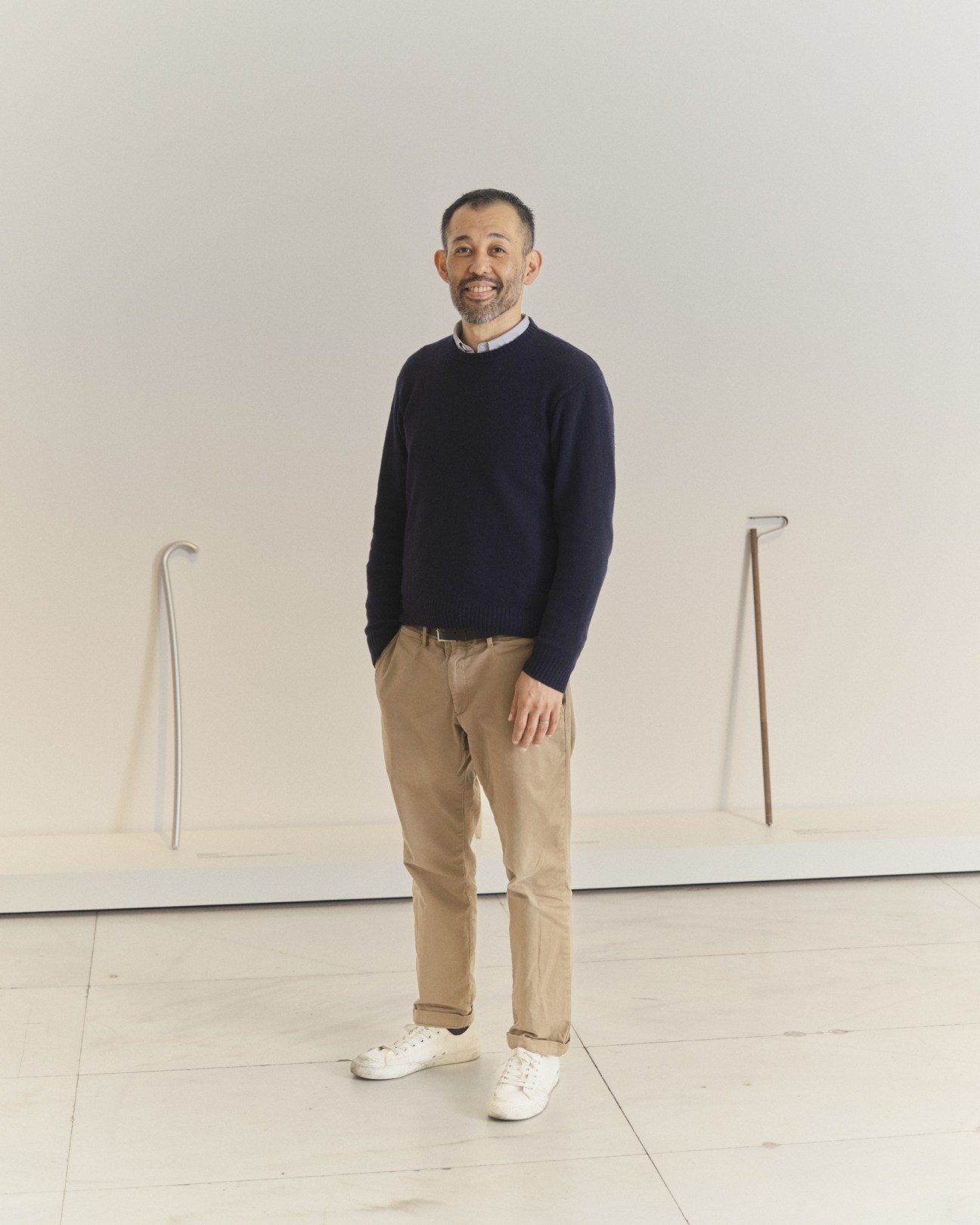
Born in Japan and raised in New Zealand, furniture designer Keiji Takeuchi is now based in Italy, where he runs his namesake studio from Milan. Before establishing his firm in 2015, he studied in Auckland and Paris, and worked in Tokyo for designer Naoto Fukasawa. Takeuchi has designed furniture and products for international brands including Italian furniture giant De Padova, Herman Miller in the US and Portuguese cork specialists Amorim.
Tell us about your approach to design. What is your starting point?
My approach is organic and always adapting but there are a few core principles. I think a lot about materiality and production techniques, which change based on what the brand that I’m working with is capable of and what it needs. But my primary focus is on how people want to use a product and I consider the atmospheric effect that a piece can have on a space.
How do you ensure that your designs take into account your customers’ needs?
We continually ask ourselves how we can make things more intentional and try to figure out the exact purpose of a particular product. Take a chair, for example. When the cantilevered version without four legs was first conceived at the Bauhaus, it explored the idea of emptiness and how to reduce the feeling of clutter that chairs sometimes create. It was about the atmosphere; the technical execution came afterwards. First, you need to know what you want to achieve and make it purposeful, ideally with a little twist or sense of humour.
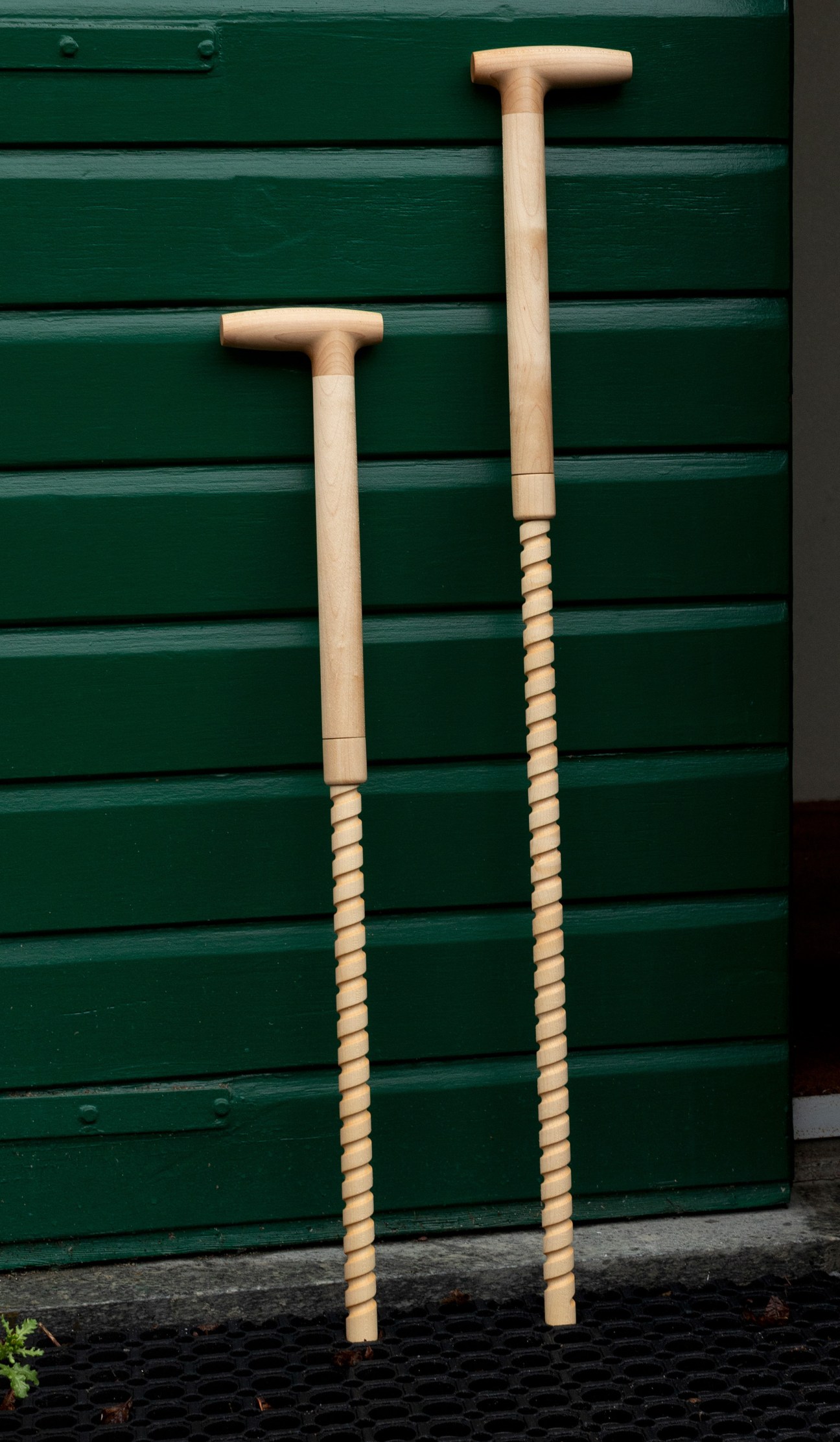
For this year’s Milan Design Week, you curated an exhibition showcasing walking sticks and canes designed by 18 international designers. What drew you to this subject?
I have been thinking about designing walking canes for years. There are a lot of elderly people in Japan and Italy, and I often see them struggling to get up and down steps. In both countries, they use sticks that look and feel quite medical, which I have long felt is horrible. The purpose of a walking stick is to make its user want to walk. It’s not just about physically supporting them. If it’s embarrassing to hold, people won’t want to be seen with it. So they end up not walking, getting weaker and weaker as a result. They lose muscle strength, as well as their appetite for going outside. All of this inspired me to do a show for which designers would create walking sticks and canes that people could take pride in and would be happy to use. I started to talk about the idea with some of my friends, such as Hugo Passos, Jasper Morrison and Julie Richoz, who all agreed that it would be an interesting subject to explore. That’s how they ended up designing canes for the exhibition.
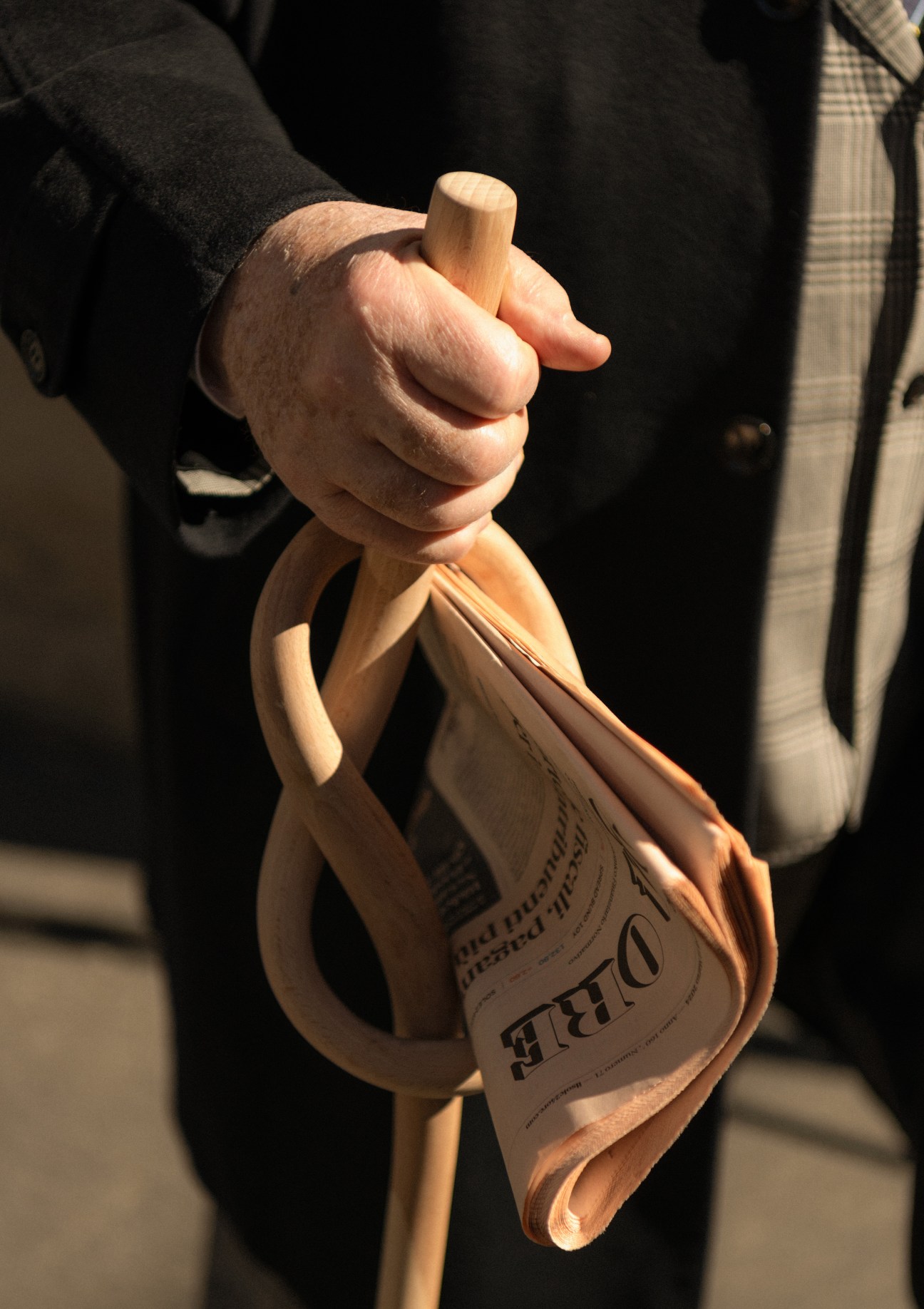
What were you hoping the show would achieve?
It was a great opportunity to send out the message that designers don’t always need to change big things. We can encourage people to see things differently and push boundaries – and maybe create something amazing.
Rising talents
Established by design luminary Marva Griffin Wilshire in 1998, Salone Satellite is a section of Salone del Mobile that is dedicated to promoting the work of emerging creatives. Since its inception, it has helped to launch the careers of luminaries including Felicia Arvid, Sebastian Herkner and Nendo’s Oki Sato. Here, we pick six of our favourites from this year’s crop.
The Design Duo
KT&FS
Japan
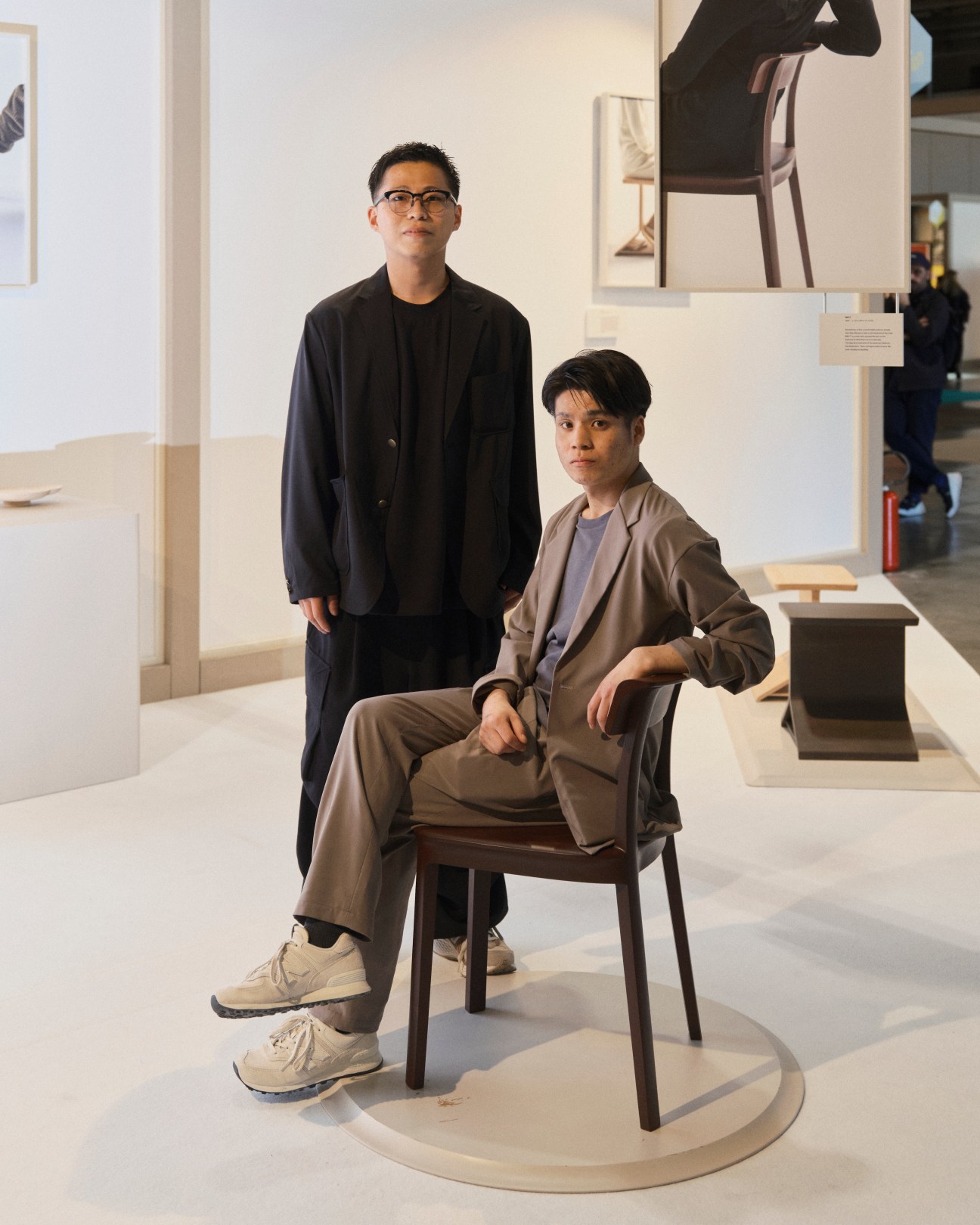
Kobe-based furniture designers Kotaro Tominaga and Futo Sakurai debuted at Salone Satellite this year with Made in Your Habits, a collection of five pieces exploring the interplay between design and everyday rituals. The line-up, featuring a dining chair, a contoured shelf, an angled footrest and more, transforms routine acts into effortlessly ergonomic experiences.
What inspired the Made in Your Habits collection?
The five furniture prototypes are based on routine acts of everyday life, such as sitting and resting. We carefully observed these habits. If the pieces ever find their way into people’s homes, we hope that they will support better habits and behaviours among those who incorporate them into their lives.
What’s your studio’s ethos?
We want to make products that are firmly rooted in reality. To achieve this, we spend a lot of time studying different cultures, customs and production methods. We also value working with our hands: we build all of our prototypes ourselves. It’s part of our philosophy to test the products personally to ensure that they’re right for the user. We like including little surprises in our work too. And we believe that comfort is important if it makes life more satisfying. A piece doesn’t have to be world-changing. There should be a charm that people notice when they use a product.
The Leading Light
Jos van Roosmalen
The Netherlands
An industrial designer by trade, Jos van Roosmalen runs his namesake studio from Rotterdam, where he focuses on lighting, consumer electronics and furniture. At Salone Satellite, he presented work at a collective stand titled Pathways, alongside a host of other Dutch designers. Its aim? To highlight the diversity and quality of the country’s emerging practices.
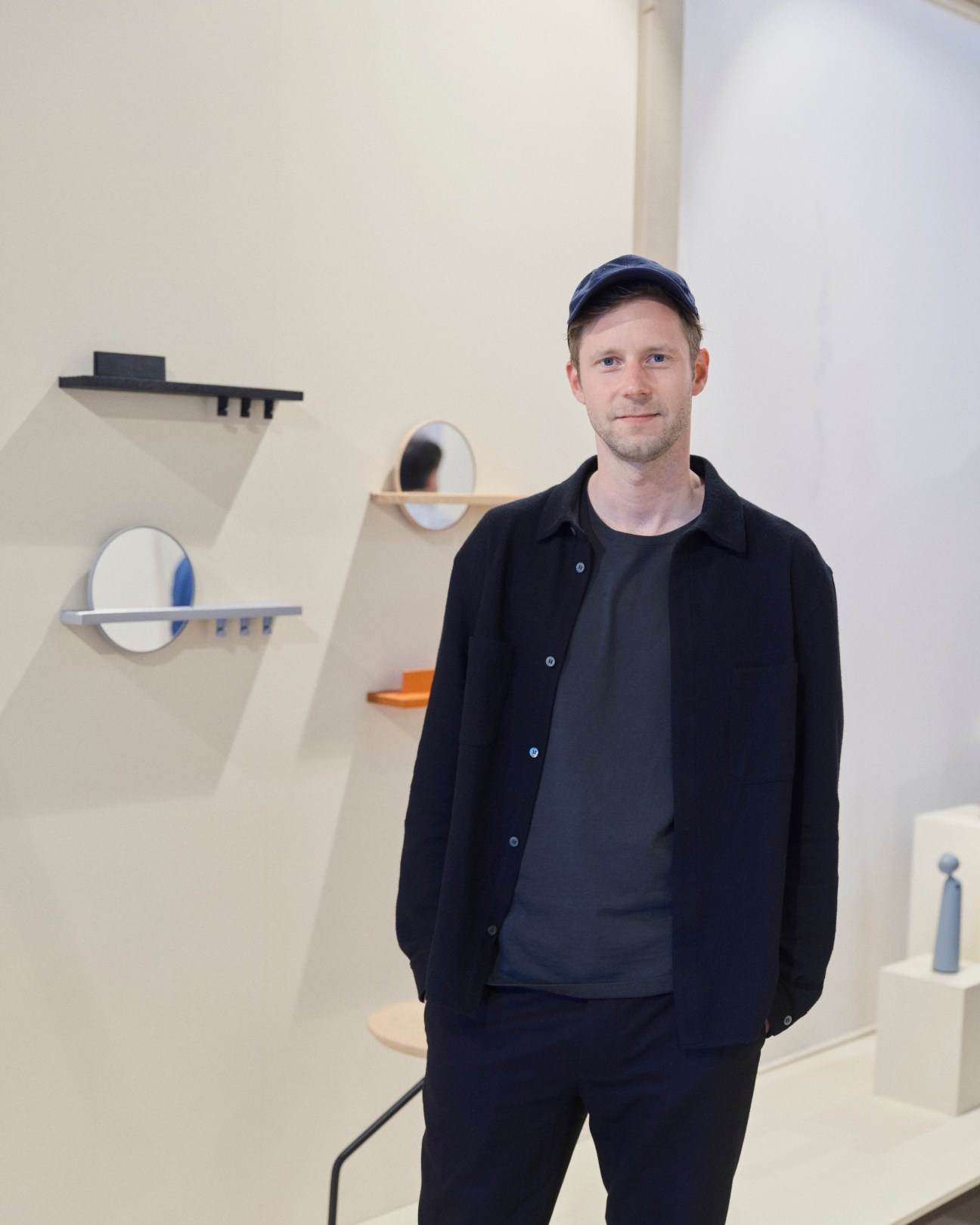
What did you show at Salone Satellite?
It was a series of lighting and furniture pieces. The highlight was the Radial Light, which was designed to have a calming, Zen-like effect. I wanted it to be mesmerising. So I passed light through an acrylic sheet, which resulted in a glow that reminds me of a solar eclipse. And I lifted this light effect off the ground using a frame similar to a painter’s easel.
How would you describe your approach to design?
I like to observe natural light effects that occur during the day, then think about how they can be translated into light fixtures. The concept of domesticating natural light in this way drives my designs. I have worked in-house for large technology companies so have been inspired by industrial design work too. It’s about a sense of refinement and finding new ways to create beautiful results within the constraints of mass-production techniques.
The Playful Perfectionist
Ryan Twardzik
USA
Ryan Twardzik is the founder of Pennsylvania-based design practice Unform Studio, which is known for furniture that is riotous in both colour and form. Its pieces have a sculptural sensibility but are always comfortable and built to last. Here, Twardzik tells us why a designer’s goal should be to create products that become part of the fabric of their owners’ lives.

What sets your design apart?
My work is playful but production-ready. I have an industrial design background so I’m always thinking, “How will this get made?” and “How can this be reproduced at scale?” It’s also about treating form and function with the same respect during the design process. That allows me to make work that is visually striking and pushes the boundaries of form but is still useful as furniture.
Is there a particular issue that you want to address in your work?
When I was in design school, so many of the projects being made by students had to connect to your phone or an app to be usable. But what happens when that technology becomes obsolete in a few years? A chair might go out of style but it won’t go out of use. That’s a commentary on disposable design. You can really love and live with a piece if it has a beautiful form and offers a tactile experience. You’ll keep it for a long time.
The University Students
Cedim
Mexico
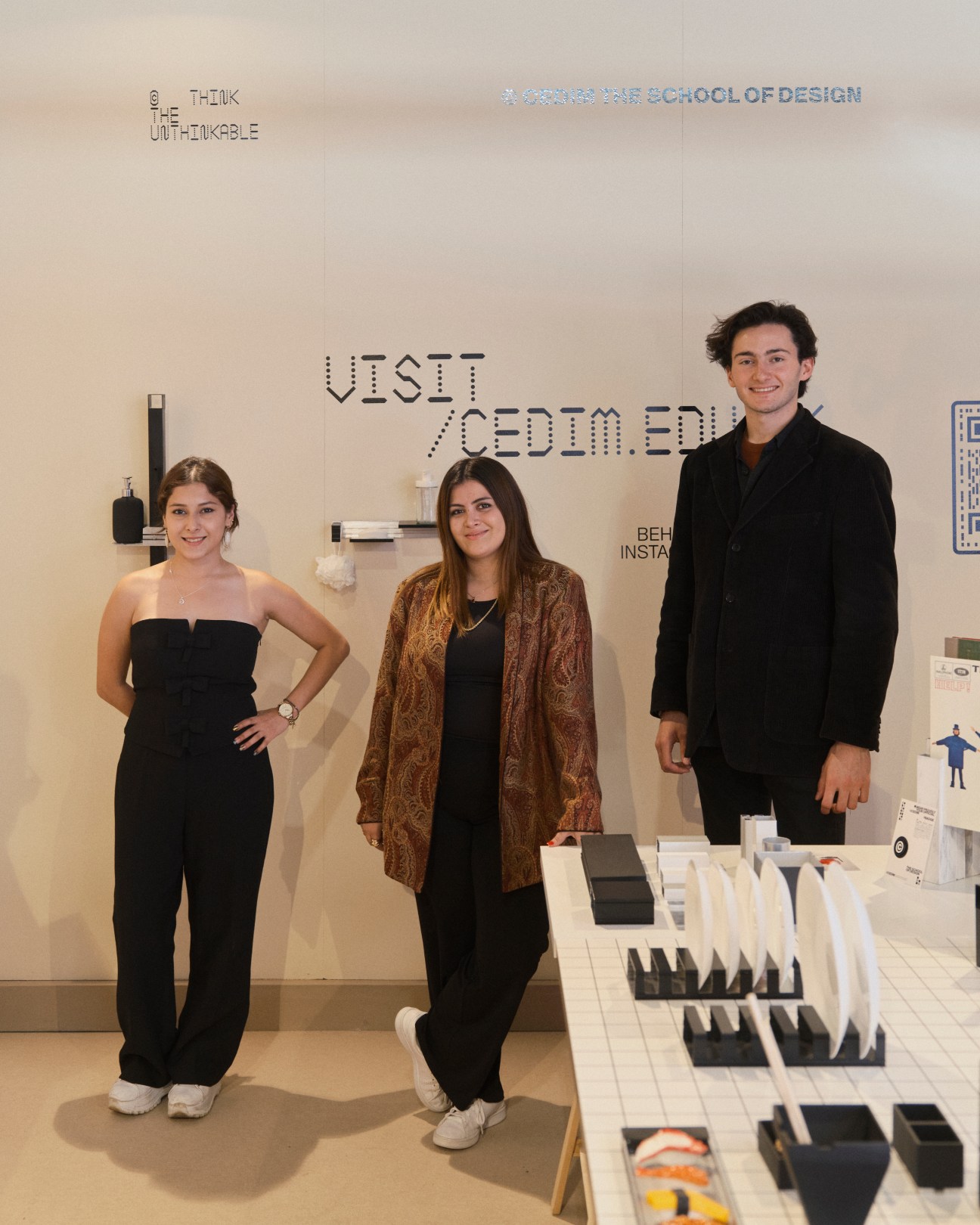
The Centro de Estudios Superiores de Diseño de Monterrey (Cedim) is a leading design and innovation university in Mexico. Its showcase at Salone Satellite, Aluminium in Harmony, presented a wide range of “Made in Mexico” homeware created by its students including Eugenia Gutierrez, Sofía Guerra and Paul Peschard (pictured). The show was organised by Miguel Zertuche, the university’s industrial design and product development co-ordinator, with Andrés Lhima acting as director.
Tell us about the showcase.
We asked our students to use aluminium to develop everyday objects that still have an industrial essence. This involved considering environmental themes and the use of materials, as well as Monterrey’s industrial and natural contexts.
How did you want people to feel when they encountered the students’ pieces?
We hoped that they would find the pieces meaningful, whether or not they were from Monterrey. We wanted the work to reflect our city’s industrial environment, landscapes and architecture. Though the pieces were created by more than 20 students, they all conveyed the essence of the project’s concept when viewed together. We wanted viewers to feel inspired by the fusion of industrial and natural elements, and to see the connection between the design of the pieces and Monterrey’s unique context.
The Post-Postmodernist
Edvin Klasson
Norway
Since establishing his namesake studio in 2016, Oslo-based designer Edvin Klasson has collaborated with both industrial-scale manufacturers and small workshops. At Salone Satellite, he presented four pieces of furniture: a stackable bar stool called Tropo; lounge chair Arp (pictured); side table Passaic; and Python, a compact table lamp that doubles as a cork board.
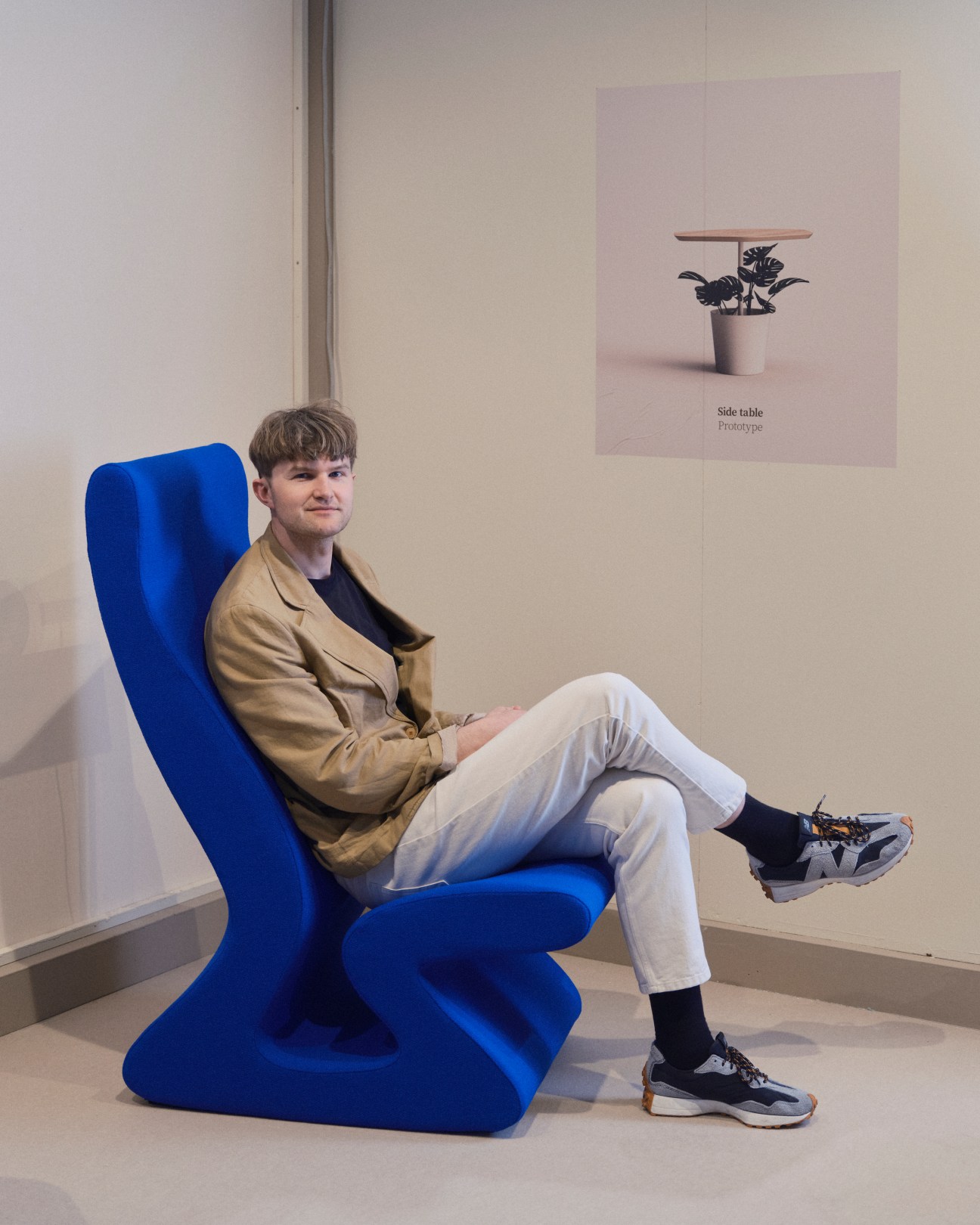
Could you tell us a little about your approach to design?
My work explores symbolism, history and cultural heritage. It can be viewed as an extension of postmodernism. I usually play on personal or collective memories in my work. People are also often surprised by the ergonomic considerations, hidden solutions and double meanings in my designs. My goal is to create products that connect with their users on an emotional level and evoke personal associations rooted in their own experiences. It’s also important to me that they can easily be repaired or disassembled. These priorities are related, as both deal with questions of consumer behaviour and product longevity.
What are the main issues that you want to address with your work?
I’m trying to challenge the concept of Scandinavian design, specifically Norwegian design. I want the industry to move beyond the stereotypical aesthetics of its postwar heyday.
The Cultural Mixer
Selma Lazrak
Morocco & Germany
Moroccan designer Selma Lazrak is based in Munich, where she infuses her furniture and product designs with the symbols and architectural silhouettes of her home country. At this year’s Salone Satellite, she presented three sculptural pieces crafted from natural materials including walnut and travertine.
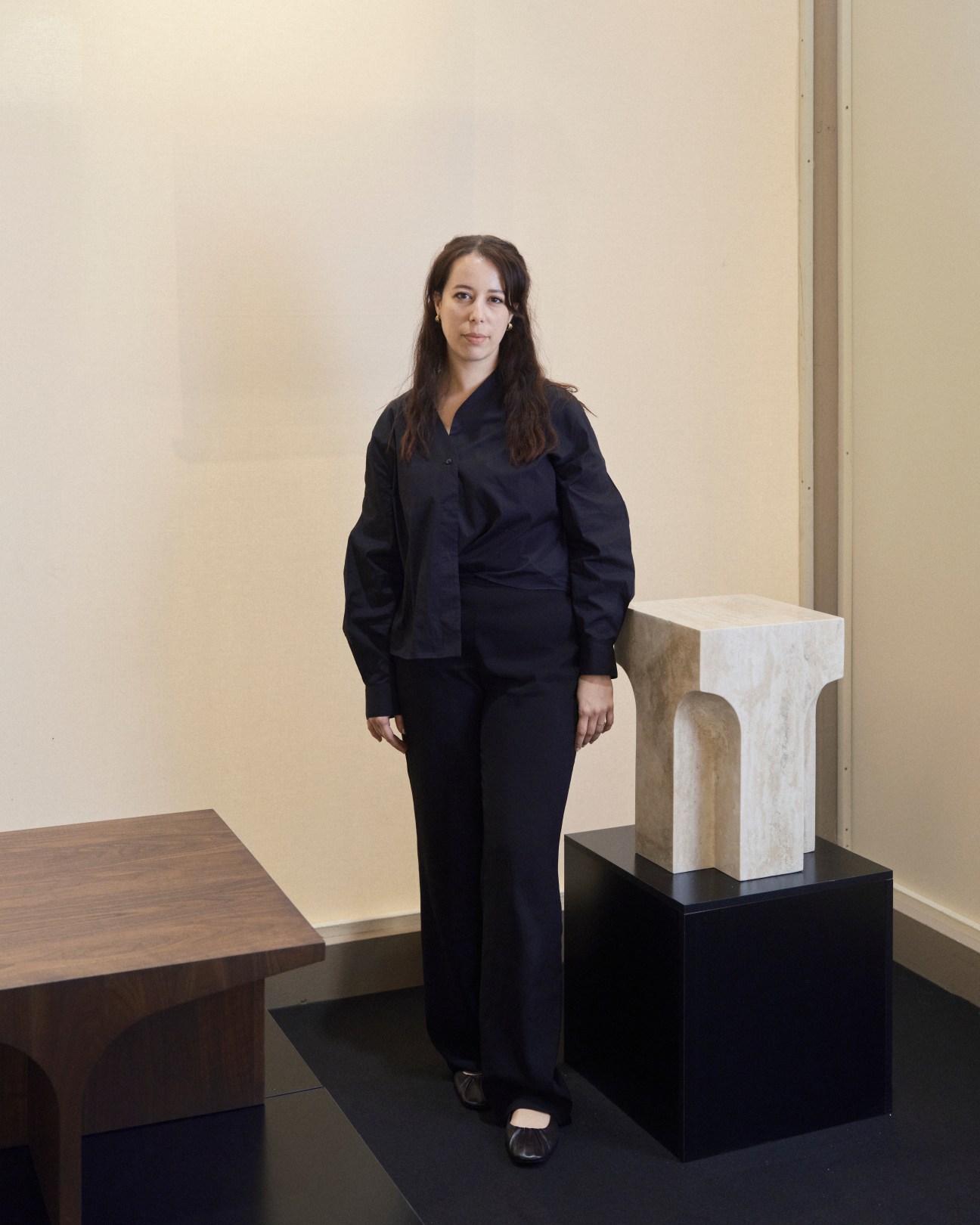
How was your experience at this year’s Salone?
Participating in the fair put me in direct contact with the public and allowed me to explore new avenues, especially in terms of working on scenography, lighting and graphics. As an architect, I found it fulfilling to have a hand in shaping the overall project.
How does your heritage influence you?
It’s a wellspring of inspiration. My current collection draws from Morocco’s rich art and architectural history. It’s also inspired by the materiality and simplicity of its Mediterranean landscapes, particularly its coastlines, mountains and deserts. The aim was to encapsulate the essence of this heritage and land in a unique form. By harmonising angles and curves, solid and empty spaces, and creating an interplay of light and shadows, I brought the intricately carved surfaces to life. The designs are also symmetrical, which heightens the sculptural effect and pays homage to the traditions of Moroccan and Andalusian art, with their arches, columns and precise geometry.
Bang & Olufsen is bringing back a beloved CD player
Built-in obsolescence in technology products is an open secret. As companies include mechanisms designed to feel antiquated just in time for their next release, consumers are left to reckon with the issue – and pick up the tab. In 2023, the UN estimated that individuals produce about 8kg of electronics waste every year, equating to 61.3 million tonnes of discarded computers, phones, cables, batteries and televisions worldwide.
“If we continue to operate the industry in the same way, we’ll have a huge problem,” says Mads Kogsgaard Hansen, head of product circularity and portfolio planning at Bang & Olufsen (this portfolio stretches back almost a century to when the company was founded, in 1925). “We use too many materials for too short a lifespan, motivating consumers to replace their devices early without any concrete reasons. The consequence is the waste being generated and [we need to consider] how to handle the substance of the waste.”
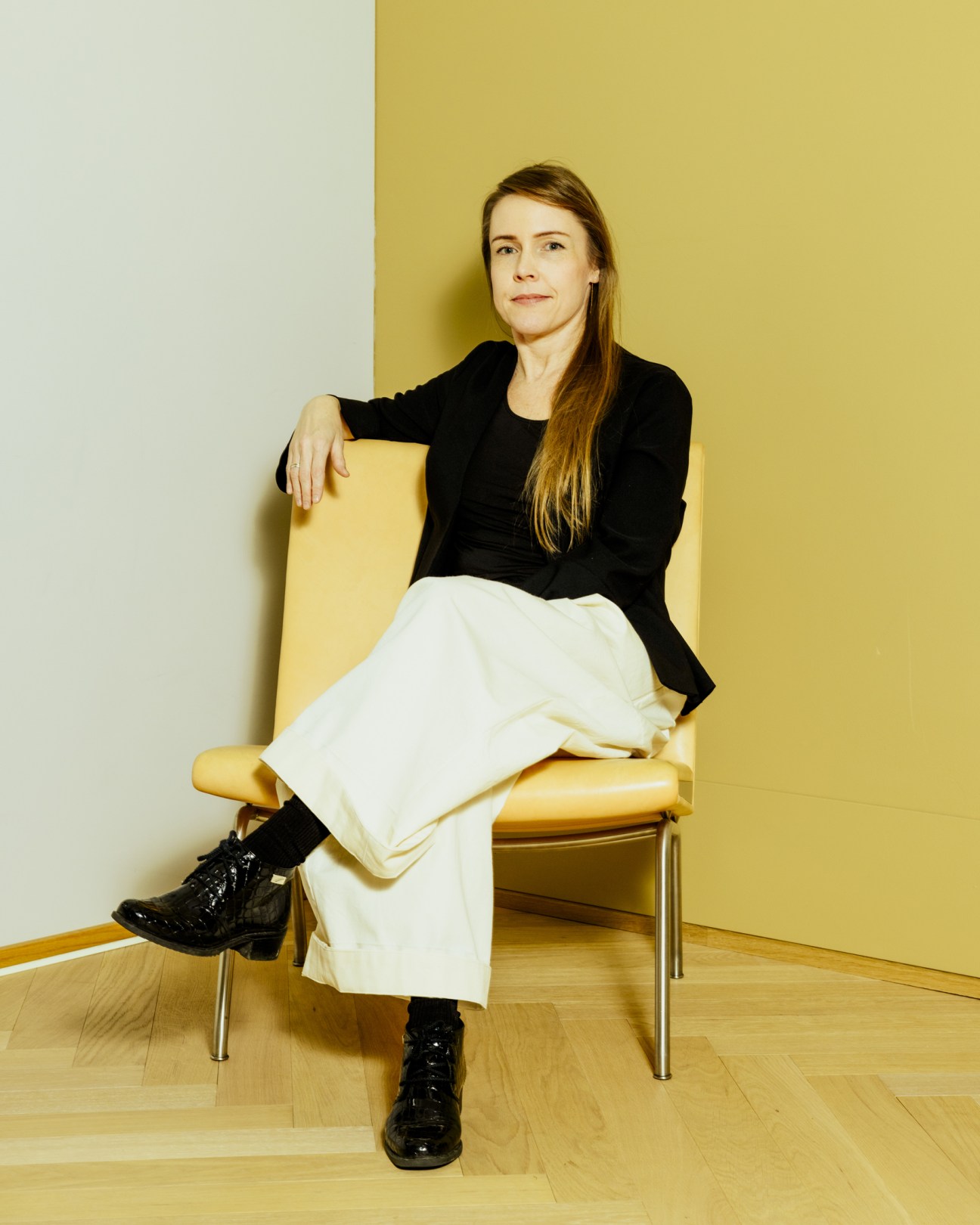

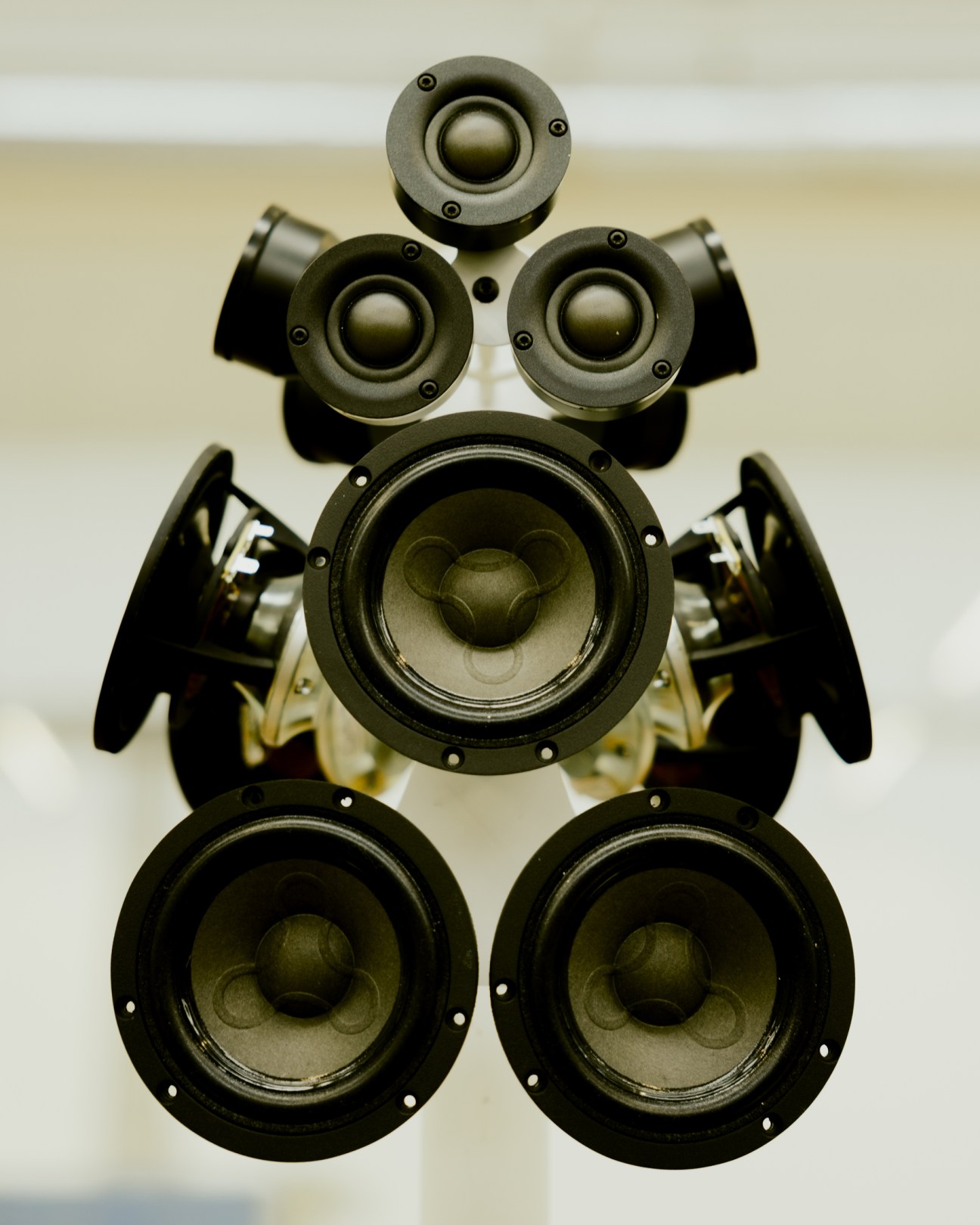
It’s a windy day in Struer, on the Danish peninsula of Jutland, and Kogsgaard Hansen is walking Monocle through Bang & Olufsen’s Factory 3. Here, technicians are busy sourcing and taking apart Beosound 9000 CD players, originally designed by the late British industrial designer David Lewis in the 1990s. The Bang & Olufsen team have purchased the CD players from their previous owners to refurbish as part of Kogsgaard Hansen’s Recreated Classics Programme, a project that began in 2020 with the revisiting of the 4000c turntable from 1972; this year, it will release 200 refurbished Beosound 9000c CD players.
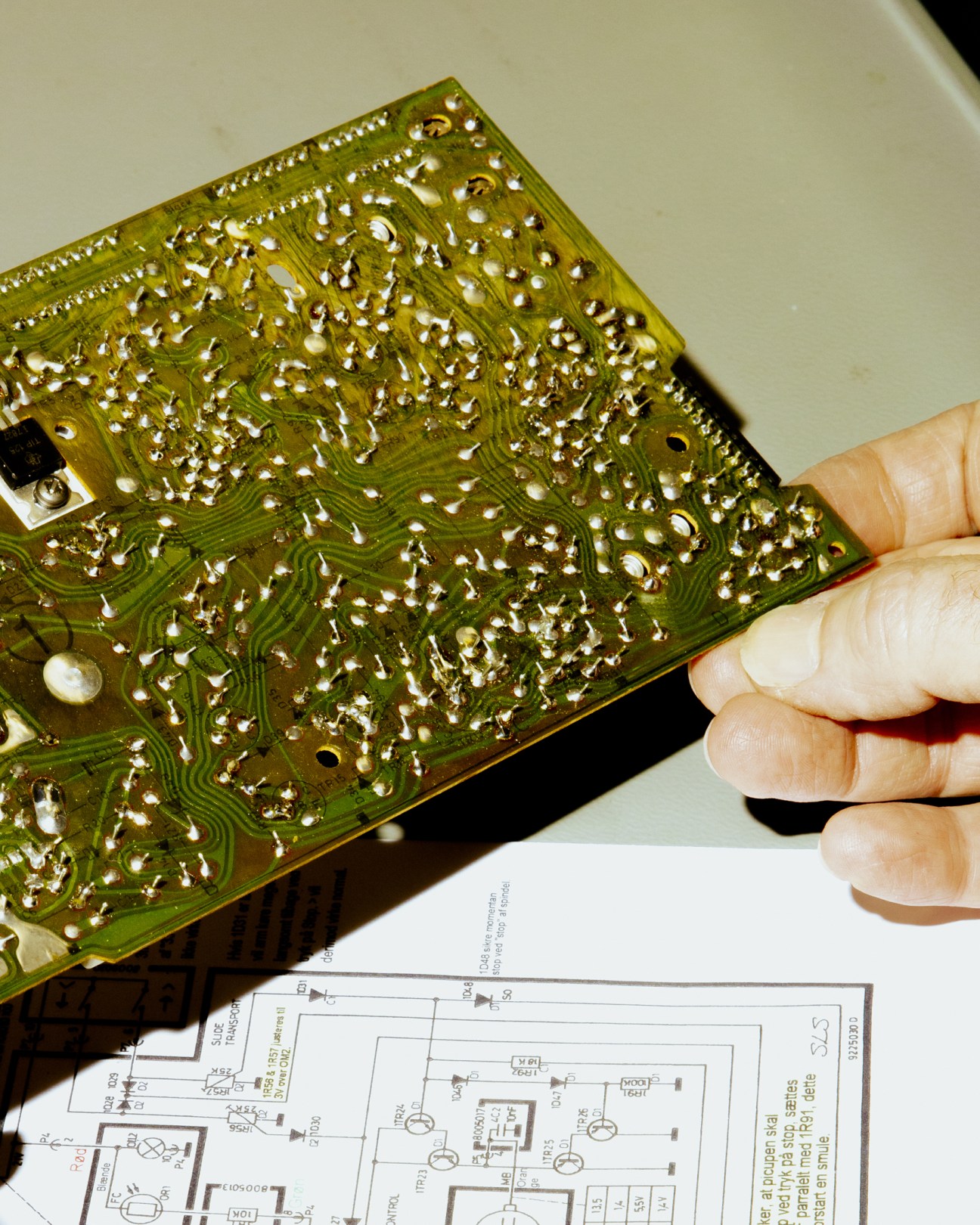
Considering Lewis’s futuristic-looking design, with its sleek aluminium-and-glass surfaces, it seems anachronistic to watch these devices being painstakingly taken apart, cleaned and fixed by hand. Across the factory floor, boxes brimming with metal parts are carefully organised and stacked. “The refurbished products coming out of the workshop are often better than the new ones because they’ve been reassessed with knowledge that we didn’t have when we first launched them,” adds Kogsgaard Hansen, as he explains that, for example, the laser reader is always replaced during the restoration process as it is the mechanism most likely to be faulty. “We need to make sure that we’re future-proofing as well, so we replace the parts that often have a reduced lifespan or might malfunction down the line. There is a long list of proactive fixes that we can make thanks to the experience that lies in the building and in our team.”
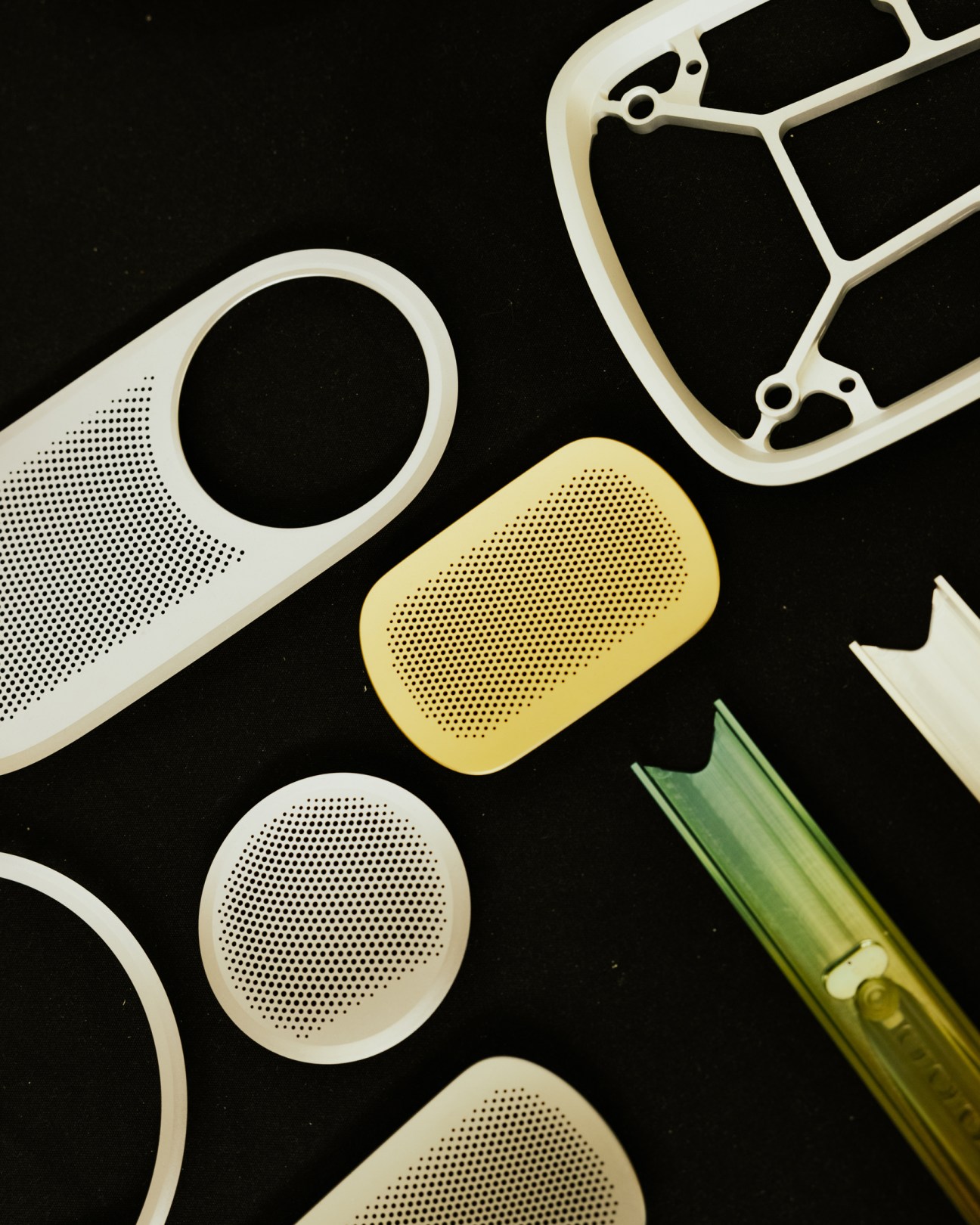

Erik Vennevold, manager of technical assembly, worked on the original Beosound 9000 in 1996 and has nearly 30 years of experience fixing them. “When we started making the Beosound 9000, it was said that the acceleration of the CD-grabbing mechanism was faster than a Ferrari,” he says, demonstrating how the CD player silently whizzes at speed between the six albums encased in glass. When the technology was first introduced, the idea of seamlessly gliding between different albums and genres was unheard of, a kind of prototype for a shuffle playlist before the age of digital streaming. Today, Vennevold is in charge of passing down his accrued technical know-how to a team of Bang & Olufsen engineers tasked with reassembling the CD players using original equipment from the 1990s that was brought up from storage especially for this project.
“Bang & Olufsen has always been challenging the status quo – no one thought that a CD player could look like anything but a black box”
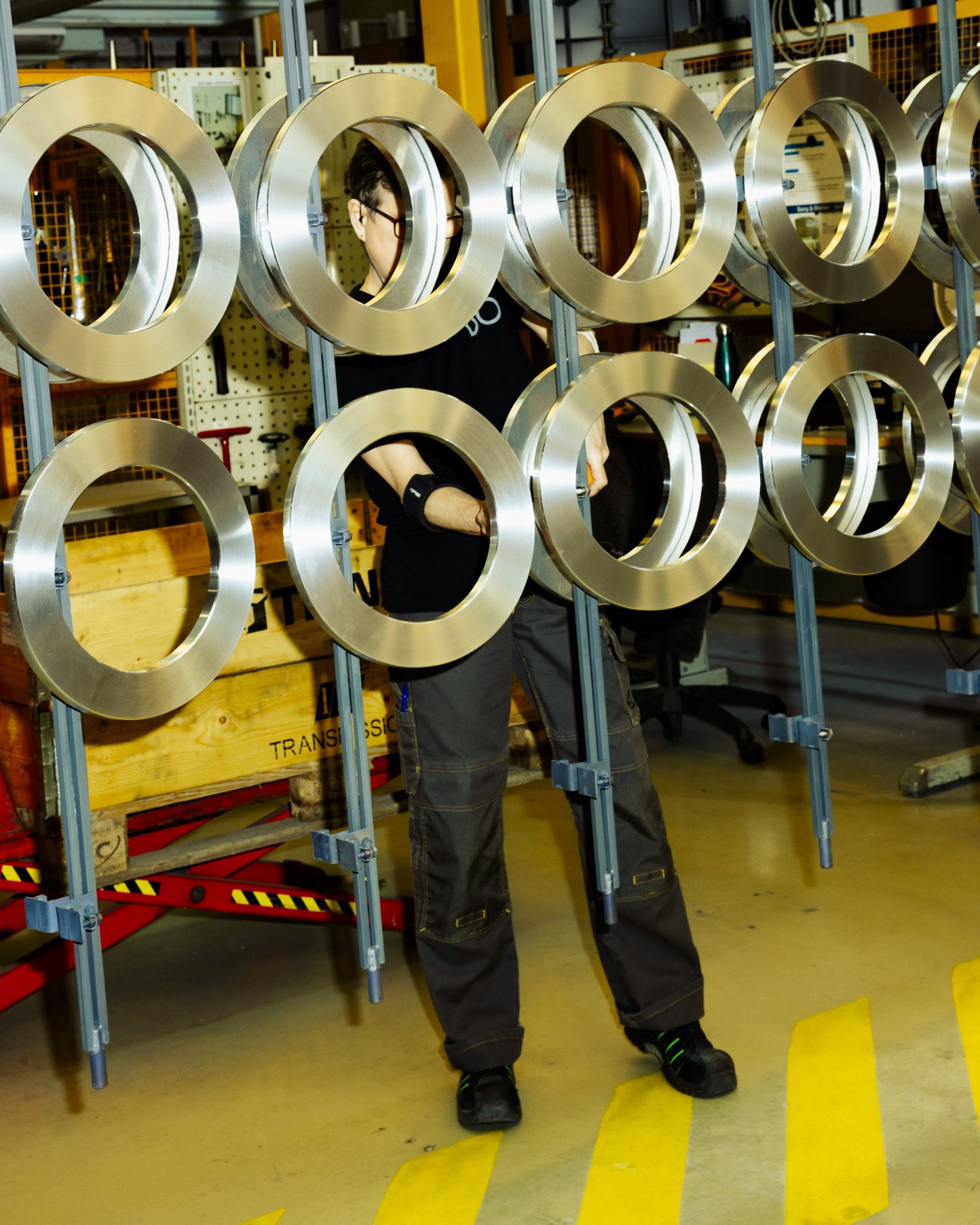
After the manual disassembly in Factory 3, the aluminium parts are sent to the nearby Factory 5, where they can be milled, polished and painted black to look as good as new. Often the cabinets show scratches and marks on the panes. For aluminium, this is an easily rectifiable problem but the glass lids, in this instance, are being fitted from new materials so as not to compromise the overall quality of the design. Compared to the rather old-fashioned and analogue craft taking place in Factory 3, Factory 5 is where Japanese robotic arms engage in a hypnotic pas-de-deux to bend, polish, stretch, press, fold and mill aluminium into the recognisable Bang & Olufsen shapes. The sound of machinery whirring and clanging can be heard as metal is crushed and moulded into shapes of sound systems, speakers and TVs, at times with the help of a press that can exert the weight of 117 tonnes (the equivalent of about 30 Asian elephants). On one side of the cavernous space, rows of metal parts are being dipped into vats of bubbling liquid to achieve the all-important anodising step of manufacturing: the electro-chemical process that creates a scratch-resistant surface.

Tiina Karjalainen Kierysch, Bang & Olufsen’s head of design, joins monocle for this section of the tour. Despite being based in Copenhagen, Karjalainen Kierysch makes the four-hour train journey to Struer to visit the factories frequently. “It’s nice to be more hands-on because many of the prototypes are perfected here, in dialogue with the factory. Sometimes even a small detail, such as a polished edge, can enhance an object’s desirability,” she says, leading us through the labyrinthine layout and greeting technicians. “From a design point of view, Bang & Olufsen has always been designing the future, challenging the status quo. Before the Beosound 9000, no one thought that a CD player could look like anything but a black box.
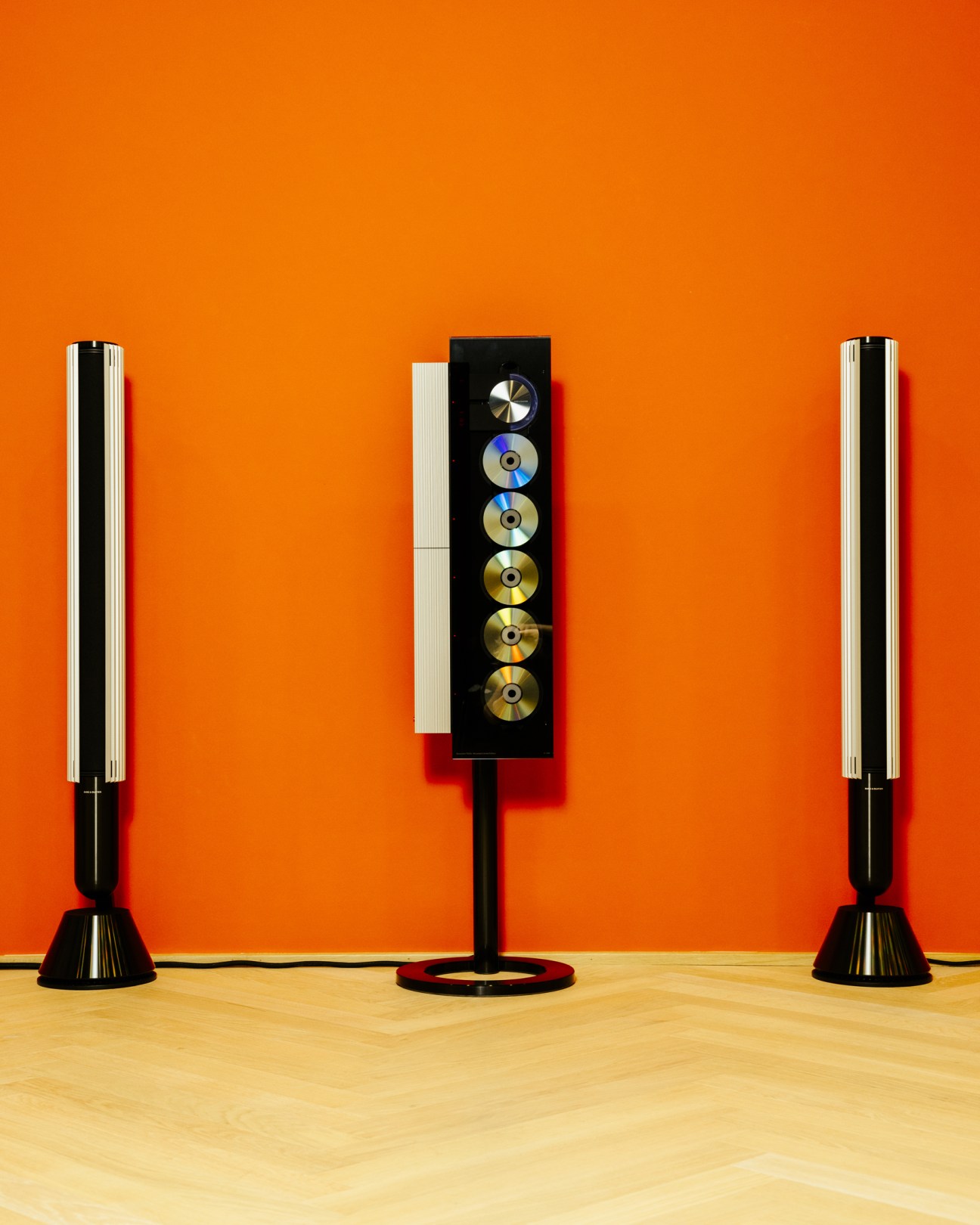
As we leave the busy factory floor, it’s time to see the refurbished Beosound 9000c in action. The CD player is placed on a matching black aluminium footstand, in tandem with a pair of Beolab 28 speakers from the 2020s that can be wirelessly paired to the CD player. Through refurbishment and the addition of a Beoconnect Encore converter box, 21st-century advances can be introduced to a design from the 1990s, a compelling manipulation of time and the linear progress of technological knowledge. “All of us on the design team were reluctant to change it too much because we liked the brutalism of the simple lines. There’s everything you need and nothing you don’t,” says Karjalainen Kierysch. “So for this recreated version, we kept the integrity of the lines and the materials but we inverted the colours by reanodising the aluminium parts in black.”
As the Beosound 9000c stands proud, its Lewis design looks as futuristic and slick as ever, with its six CDs on display to offer a glimpse of its owner’s musical taste, be it 1950s Ethiopian jazz or 1990s grunge. As a design, it’s a sculptural piece capable of commanding attention in any space. As a piece of technology, it provides an opportunity to dig out old CDs and engage in a more ritualistic approach to listening to music once more.

“We’re hoping to show that a second life is not a compromise but actually that it is sometimes a more attractive option,” says Kogsgaard Hansen. “We’re trying to demonstrate a different way of thinking about electronics.” This might be more difficult to argue in favour of when it comes to old, broken wired headphones with dated aesthetics but it is certainly an interesting proposition regarding a well-crafted collector’s item from the 1990s. Perhaps, then, the only cure to obsolescence is simple design that transcends time.
Ready for a revival?
Here three more Bang & Olufsen designs that we would love to see come out of the archive:
1. Hyperbo 5 RG Steel
The Bauhaus-inspired 1934 design is a compelling early example of sound-as-furniture.
2. Beovision Capri TV
A 1959 television set on teak wood legs, inspired by Danish modernism.
3. Beocom 6000
Designed in 1998 by Henrik Sørig Thomsen, this telephone makes a stylish case for having a landline.
Bruno Pavlovsky on Chanel’s enduring success recipe: ‘It’s brand first’
Ever since Gabrielle “Coco” Chanel designed one of her first garments in 1916 – a belted silk-jersey blouse that looks as current today as it did then – her fashion house has been shaping our understanding of modern luxury and leading the way for the rest of the industry. Its pioneering role has rarely been contested over the past century but in today’s rapidly expanding, globalised fashion ecosystem, the power of the Chanel brand has reached new heights: record-breaking revenues (the company reported a 17 per cent sales increase in 2022), a loyal clientele showing no resistance to increasing prices, a network of some of the world’s best artisans and a recent exhibition at London’s Victoria and Albert Museum (V&A) that broke all of the institution’s visitor records. Chanel moves with finesse between the highest echelons of luxury and pop culture, niche and mainstream, old and new.
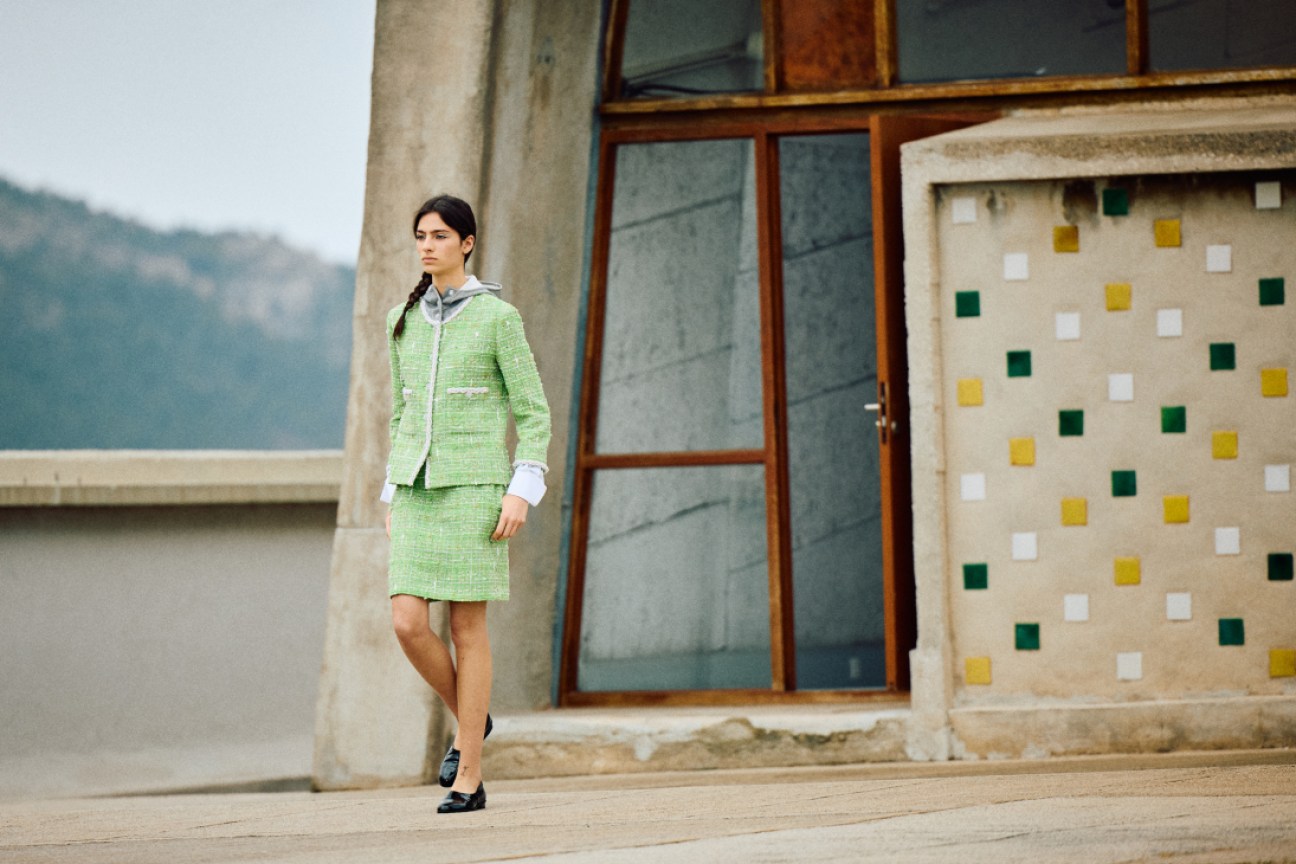
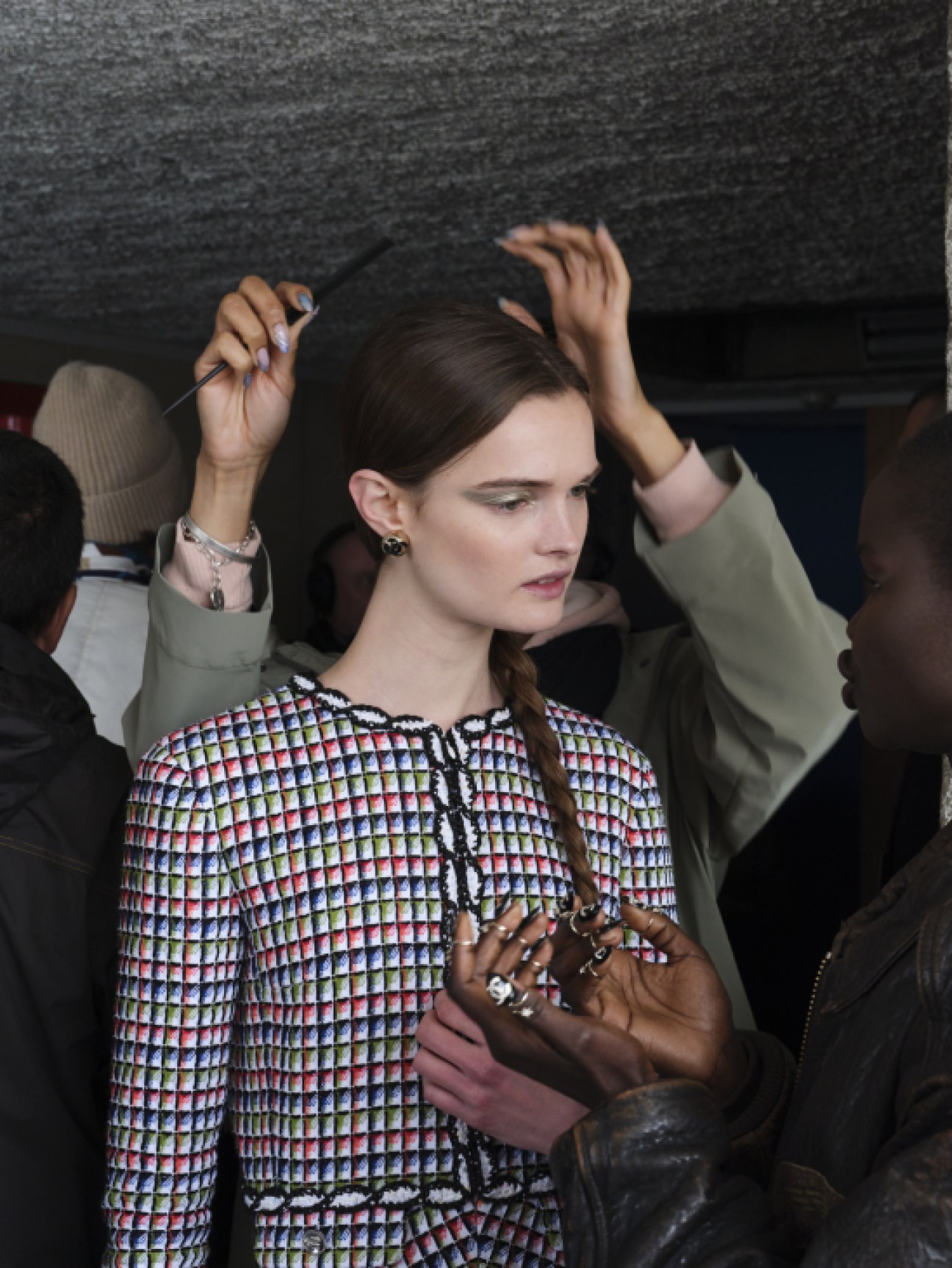
Many wonder how it has managed to achieve this kind of success at a time when its competitors have struggled to stay relevant and found themselves in a cycle of constant reinvention. For Bruno Pavlovsky, Chanel’s president of fashion since 2002, it all comes down to people: those making collections using age-old craft techniques, the experts selling them, the customers who appreciate them enough to spend money on them and the designers – led by the label’s inimitable creative director, Virginie Viard – weaving new ideas and dreams into every garment. That’s why Pavlovsky has stayed committed to the in-person experience at every level, from the company’s retail strategy and its continued investment in artisan workshops to its ambitious runway shows that celebrate not just new collections but also art, culture and the power of social gatherings. It is Chanel’s respect for fashion’s traditional values that has made it one of the world’s fastest-growing luxury businesses.
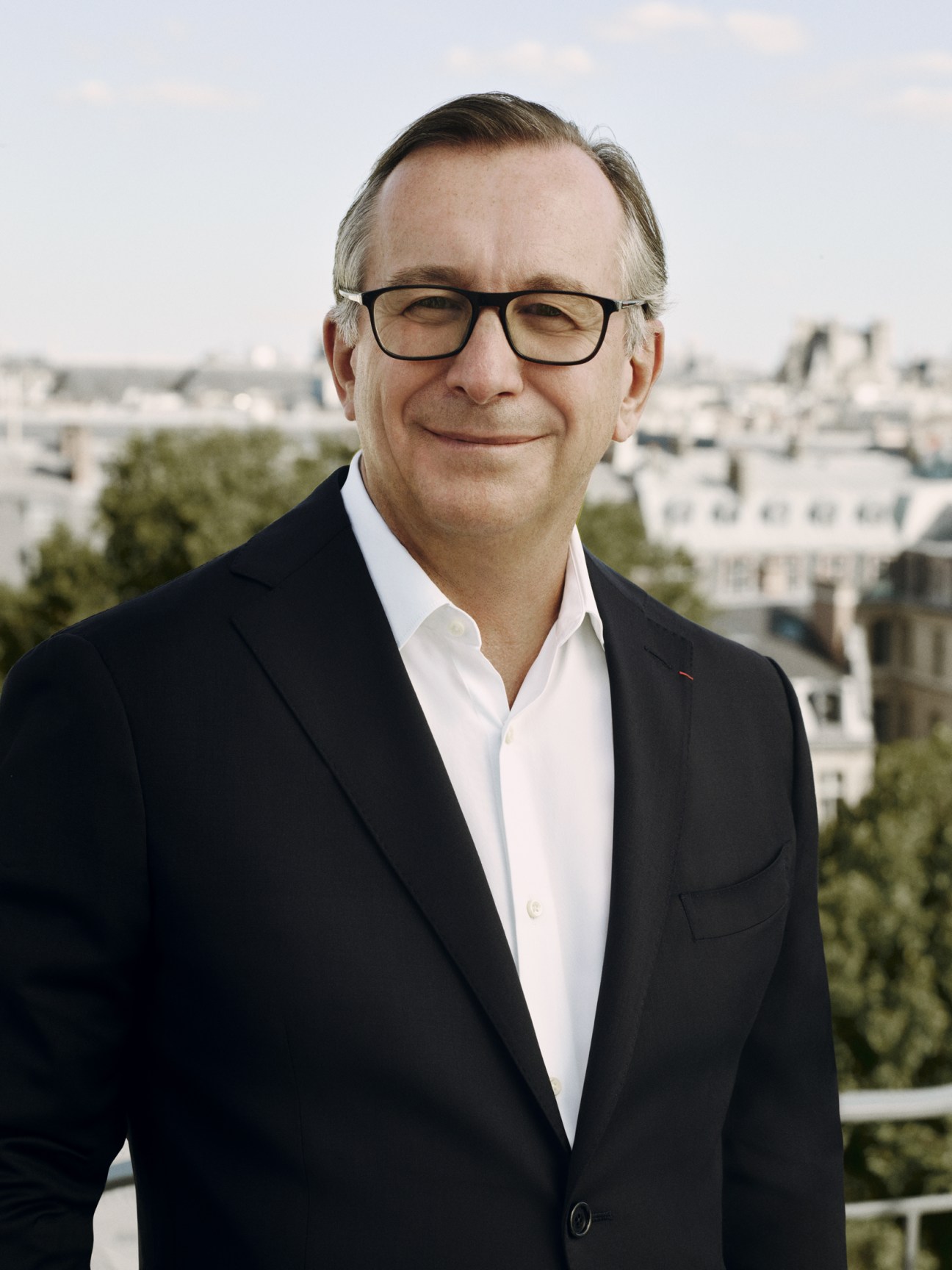
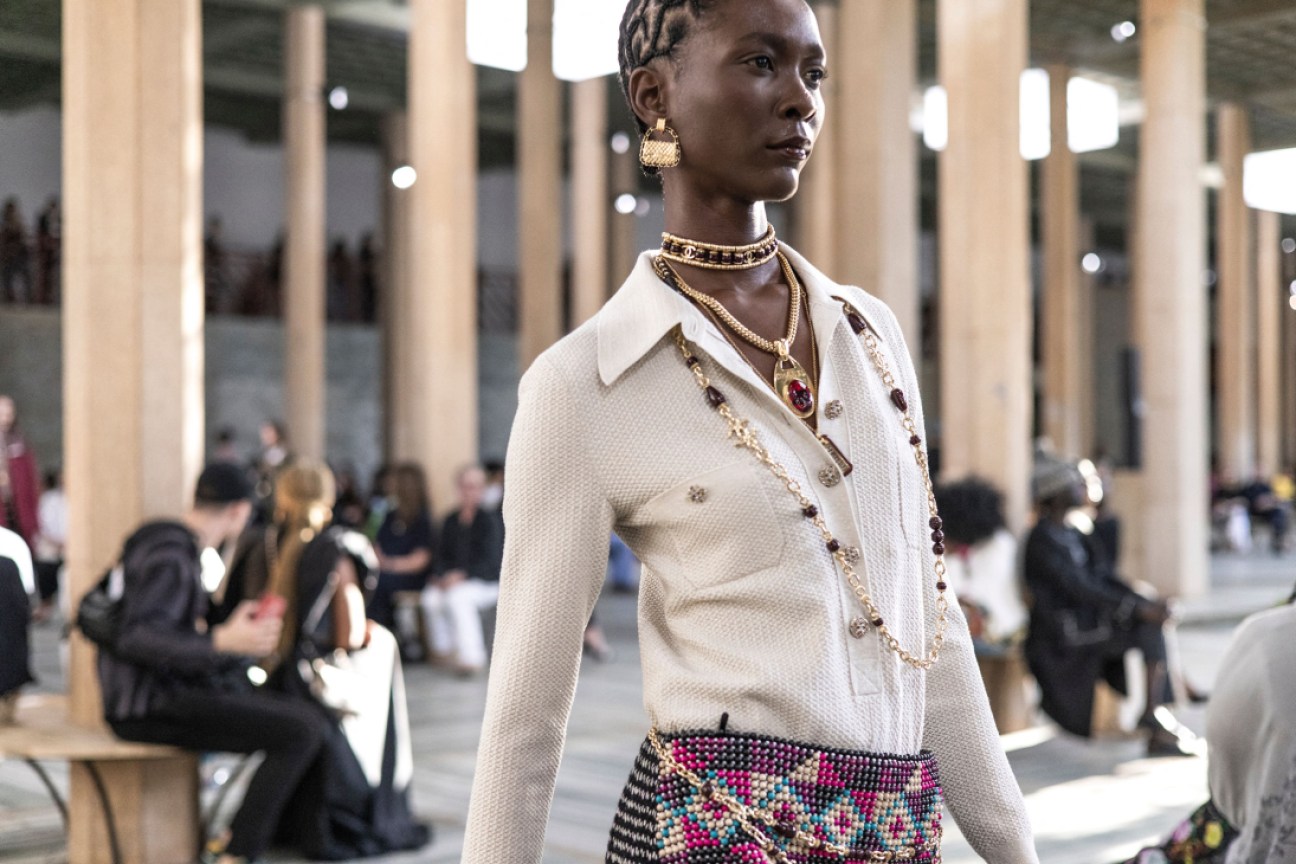
Over the past two years, Pavlovsky and Viard have doubled down on Chanel’s belief in the value of in-person gatherings, flying clients to unexpected destinations around the world and making substantial investments in the cities that host them. The house has always taken its collections on the road but at the end of 2022 it opened a new chapter by flying editors, ambassadors and clients to Dakar to present its Métiers d’art collection. “We are embracing new destinations that we don’t know about,” says Pavlovsky. “And we are clear about the need to understand a place, speak to locals and learn. By going on this adventure, we have also been able to evolve our designs and take more risks. This is important for our customers. Otherwise, our shows would start to look alike and things would feel mechanical. You have to push boundaries and be audacious.”
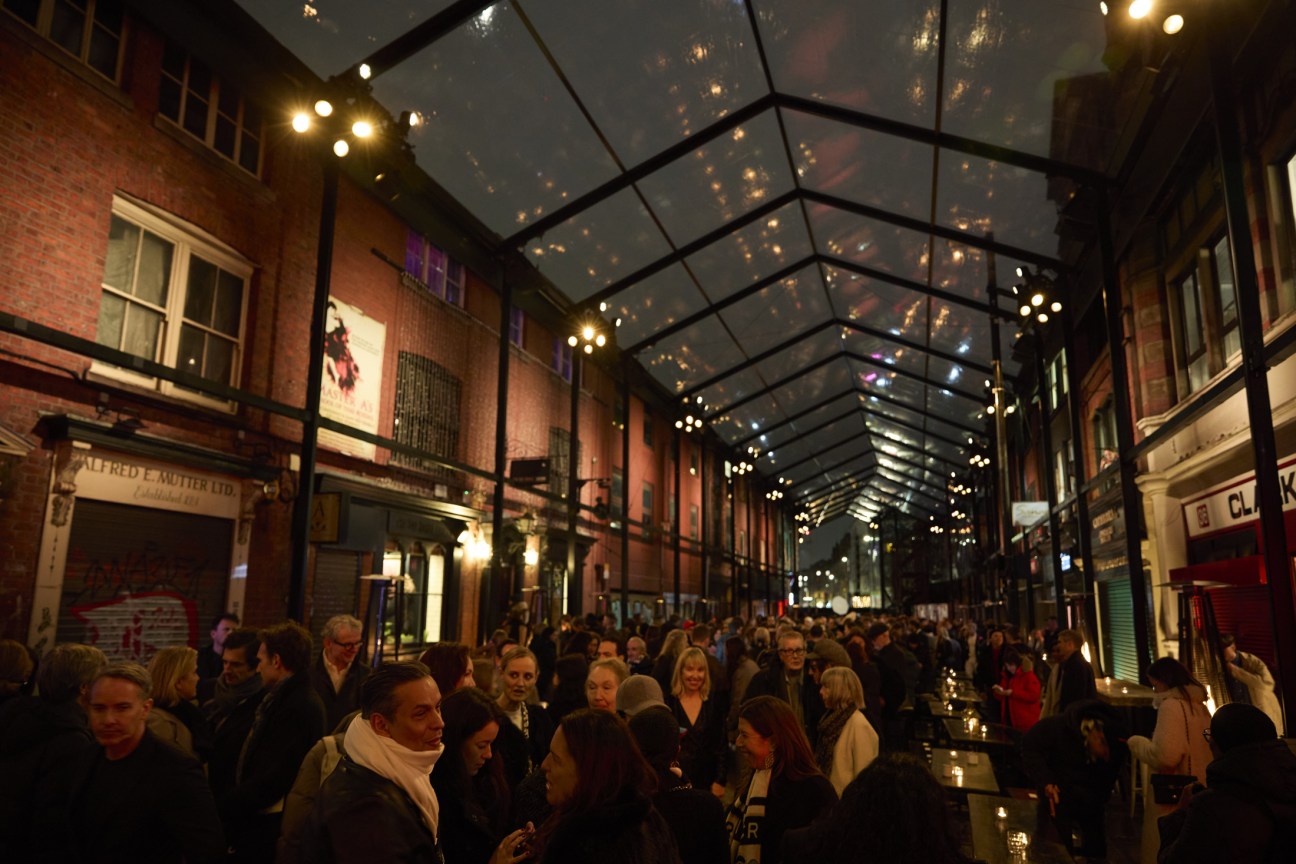
In December 2023 the journey continued to Manchester, where the brand hosted a literary event with novelist Jeanette Winterson, treated guests to a Manchester United match at Old Trafford football stadium and put on a runway show on Thomas Street. The team even went as far as to embroider teapots on lace and scouted young Mancunians from the street to walk the show. “Given the history of manufacturing in the city, its links to music and its creative energy, we thought, ‘Why not?’” says Pavlovsky. “When we speak about energy, we’re not only talking about luxury and beauty but the energy coming from the people, the city and the social changes happening.”
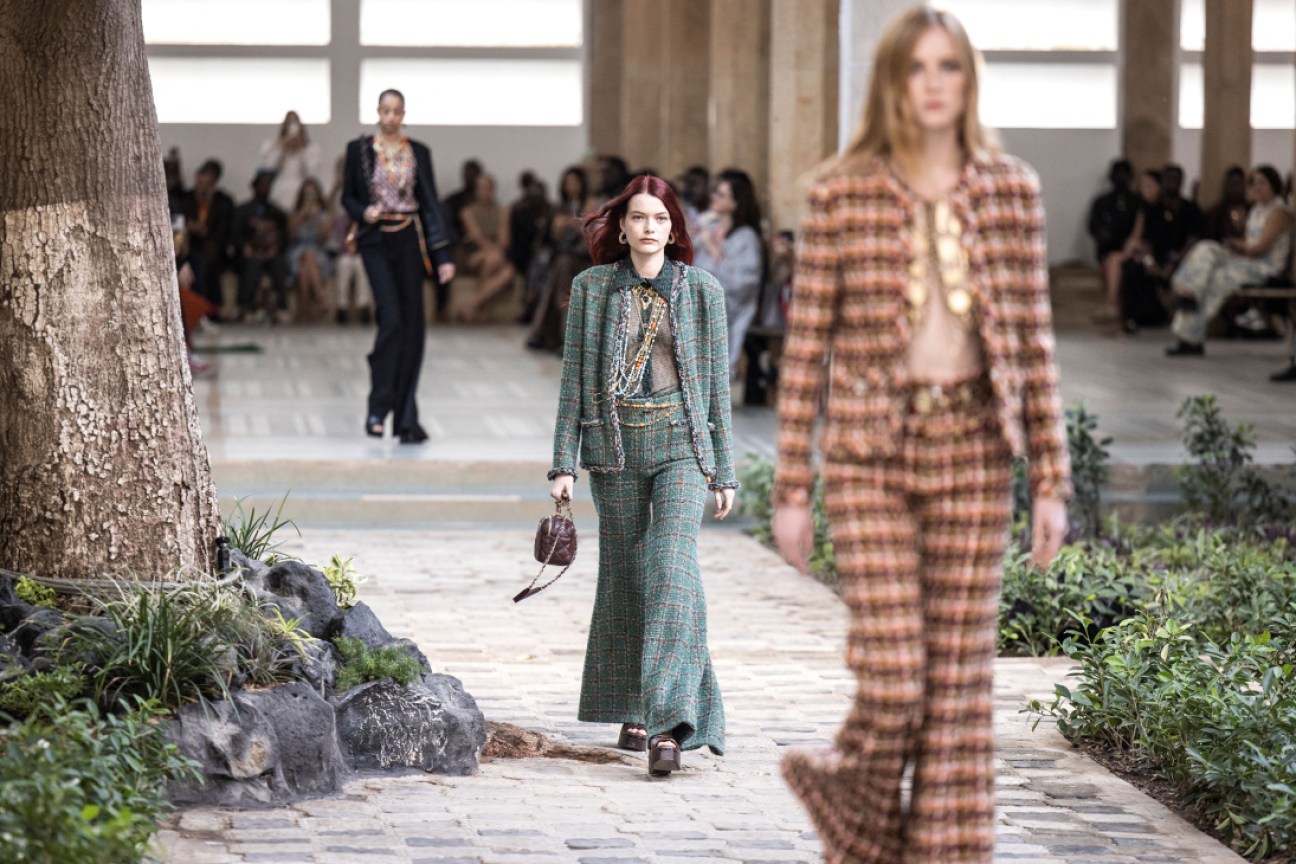
This May the house moved on to the French port city of Marseille to present its new cruise collection, an annual range dedicated to all things sunny. “After Manchester, we couldn’t go back to somewhere like St Tropez,” says Pavlovsky. “That would have been too easy, too obvious. It doesn’t mean that we’re not interested in the usual cities but there’s something intriguing about going off the beaten track and connecting with local creatives to build something new together.”
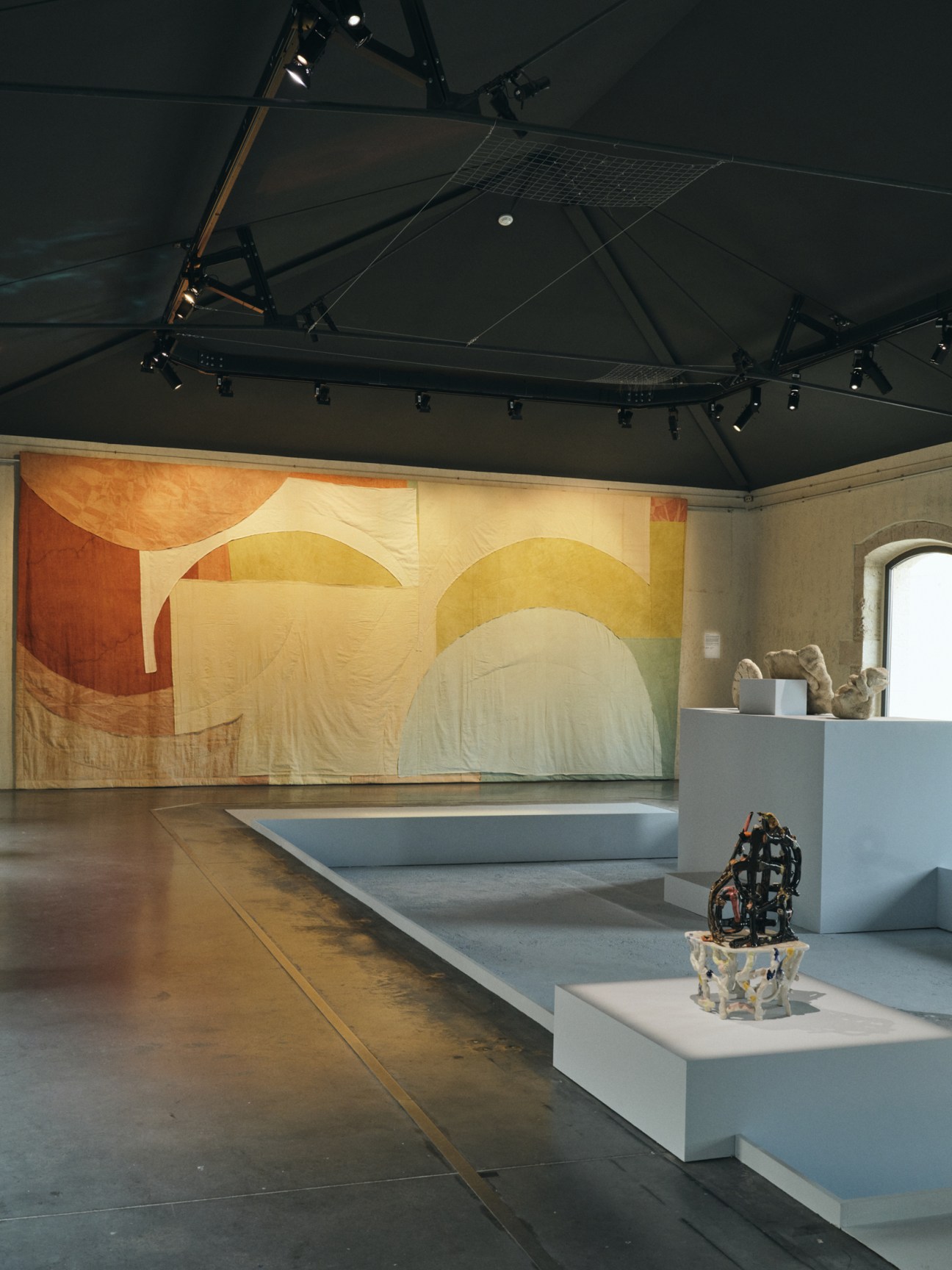
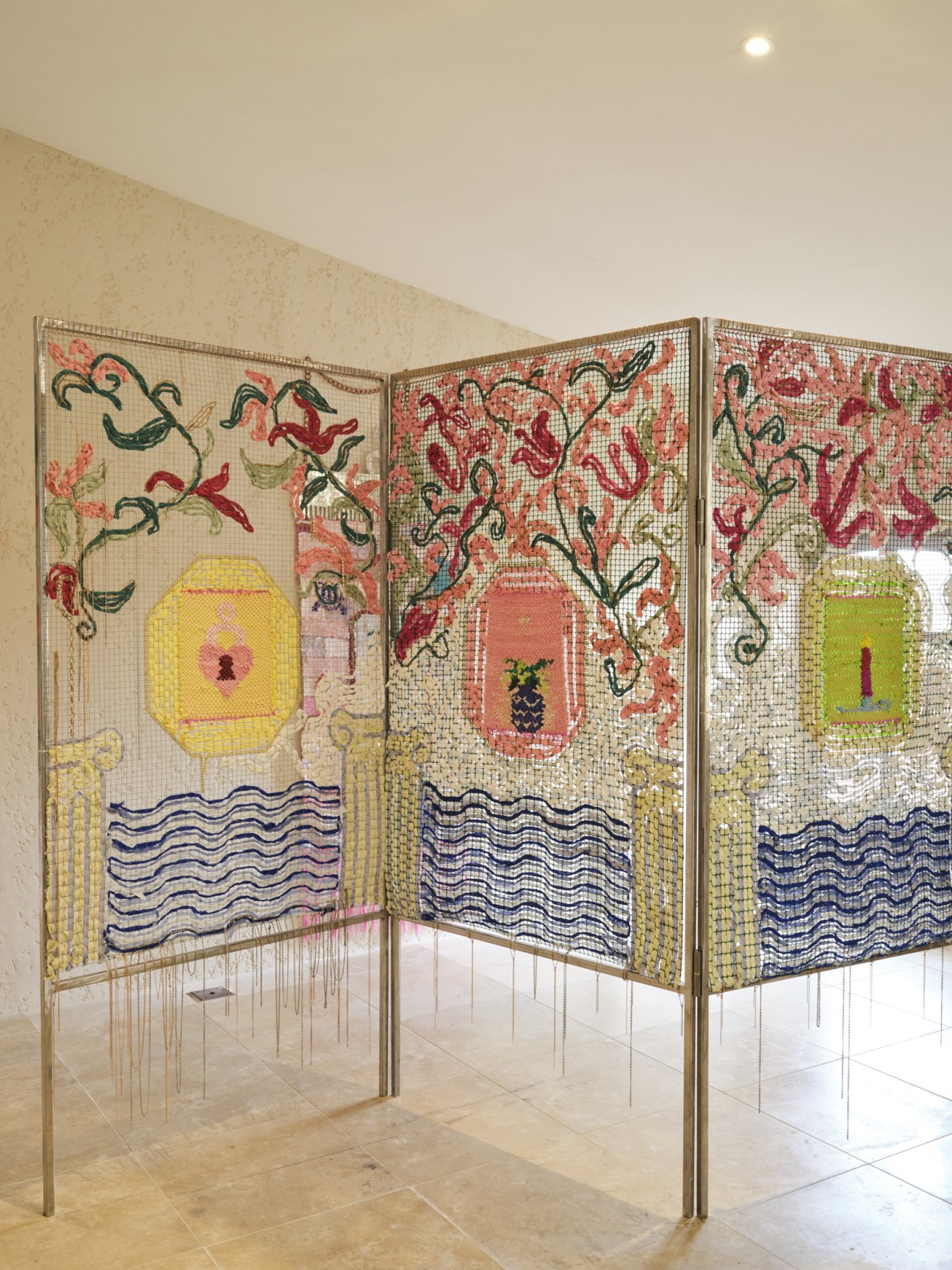
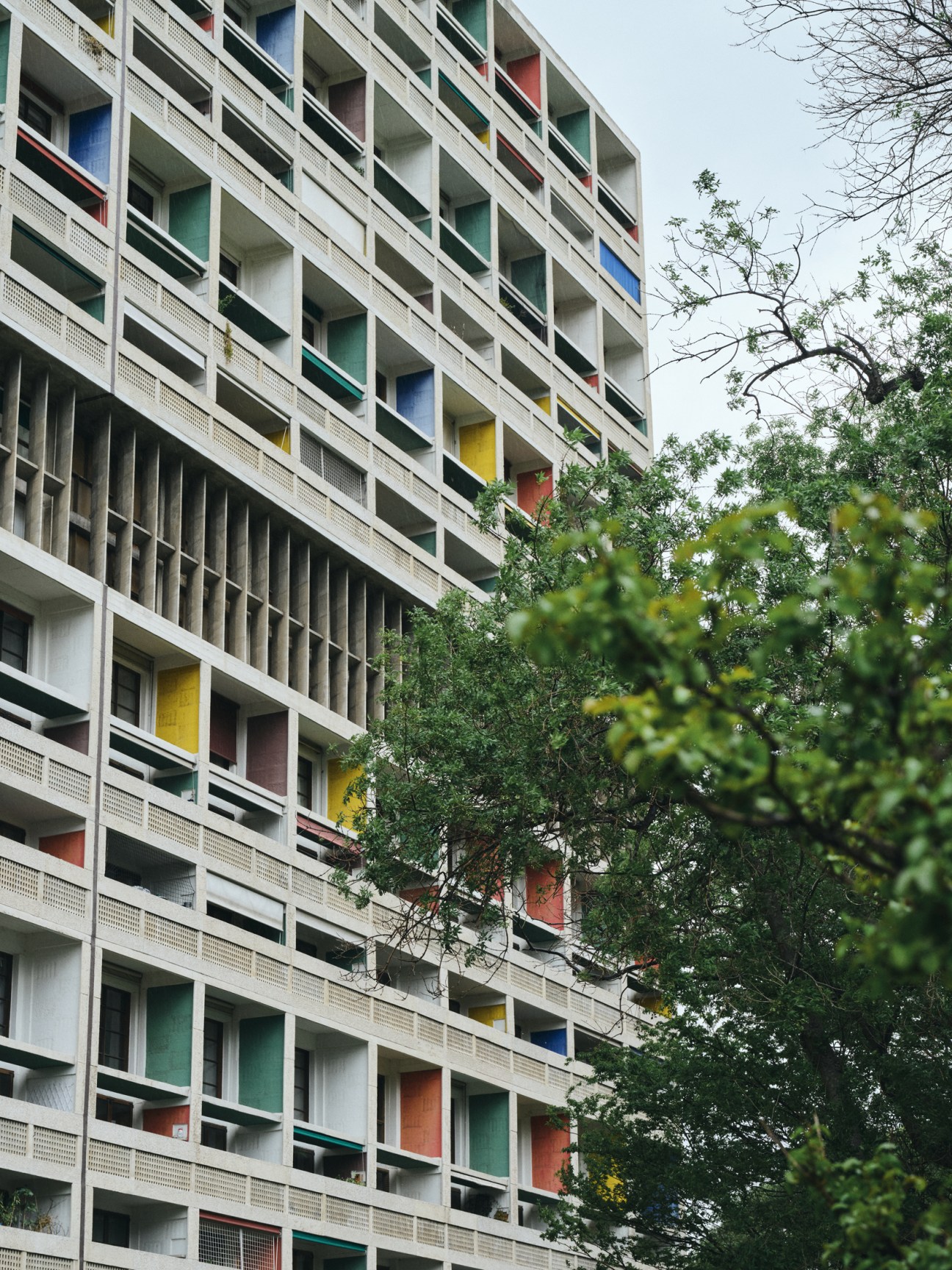
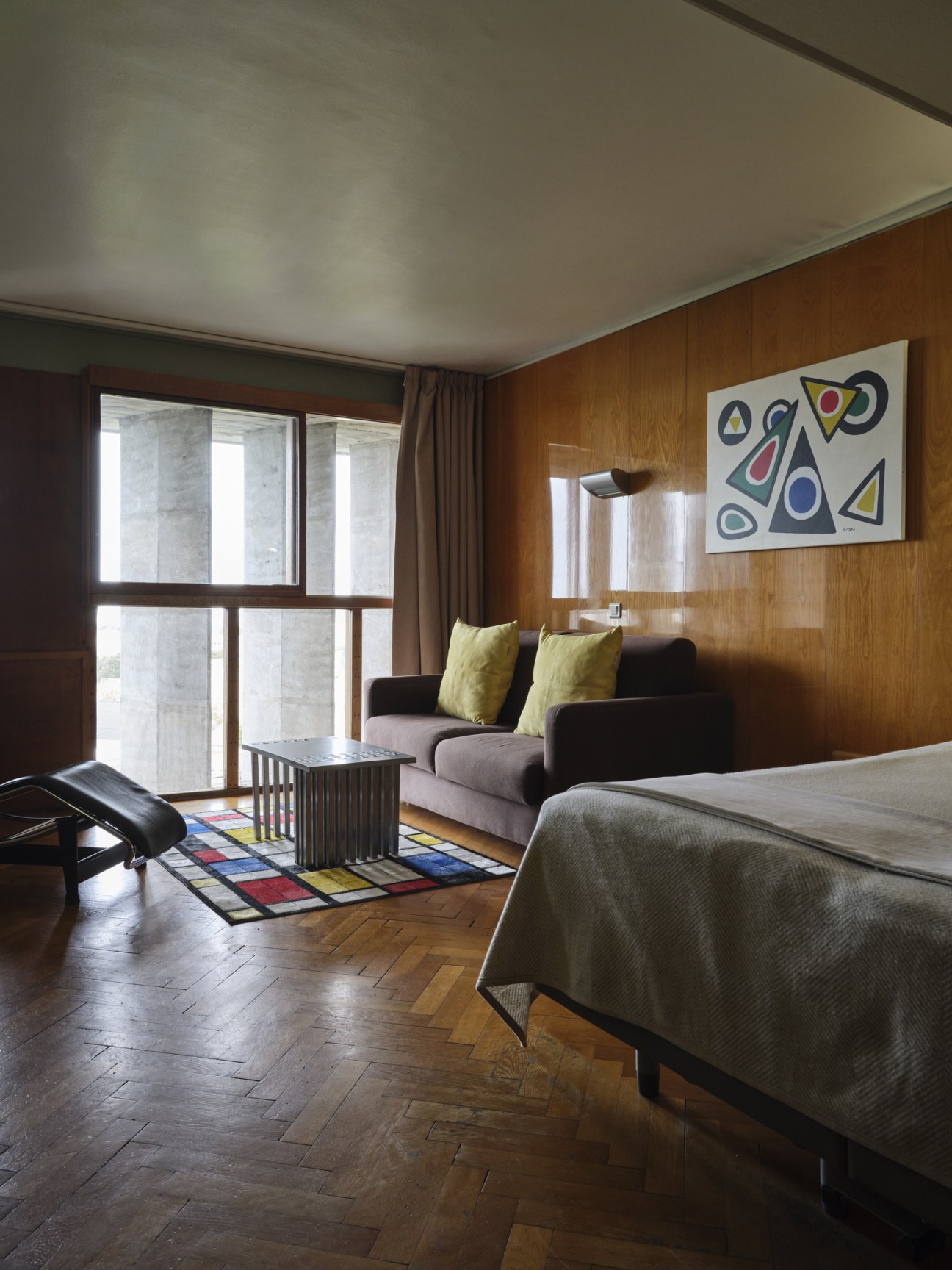
In this spirit of togetherness, Chanel and Le19M, the home of the Métiers d’art, held an exhibition in Marseille to highlight local artists, host workshops and spark discussions about the ties between the city’s creative scene and the artisanal practices that inform the brand’s collections. It took place at the Fort Saint-Jean, one of the sites of the Mucem (Museum of the Civilisations of Europe and the Mediterranean), while a runway show was held at the Le Corbusier-designed Cité Radieuse, celebrating the new cruise collection, as well as Marseille’s ties to modernist architecture, its creative spirit and its Mediterranean landscapes.
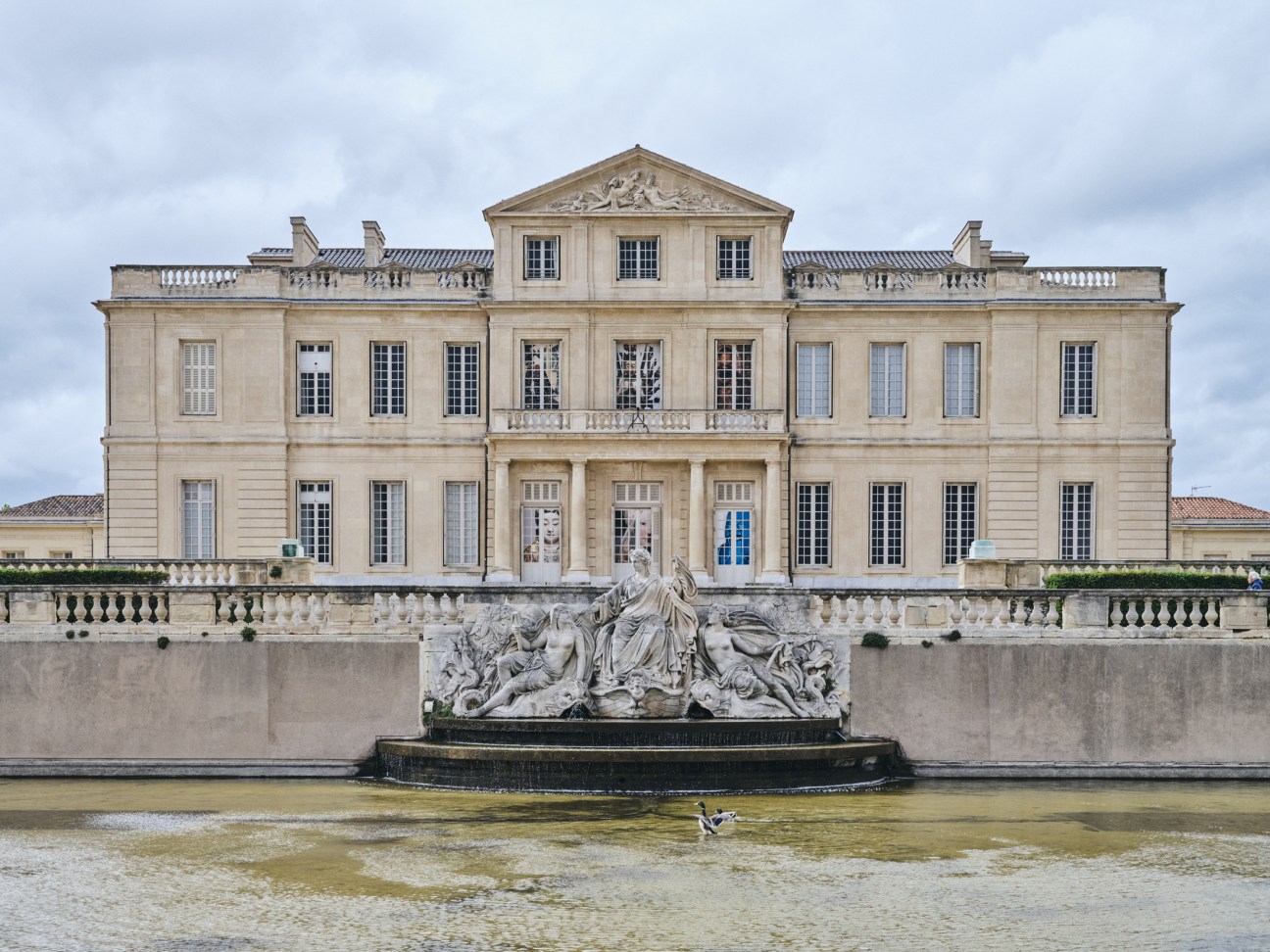
Such gatherings build momentum for the cities that they spotlight, with immediate financial rewards. Chanel’s three-day visit resulted in an £8m (€9.4m) boost for Manchester, while local creatives, from chefs to music producers and artists, were given extra visibility. It illustrated how luxury firms can use fashion’s soft power and give back to communities.
Pavlovsky, who is also the president of the Fédération de la Haute Couture et de la Mode, French fashion’s governing body, is committed to championing the house’s heritage, which is inextricably linked to the cultural life of Paris and the traditions of haute couture. Twice a year, Chanel hosts the most in-demand show in the city’s haute-couture calendar, with clients flying in from across the globe to place orders. It’s a full schedule and every event has its own purpose in the well-oiled Chanel machine.
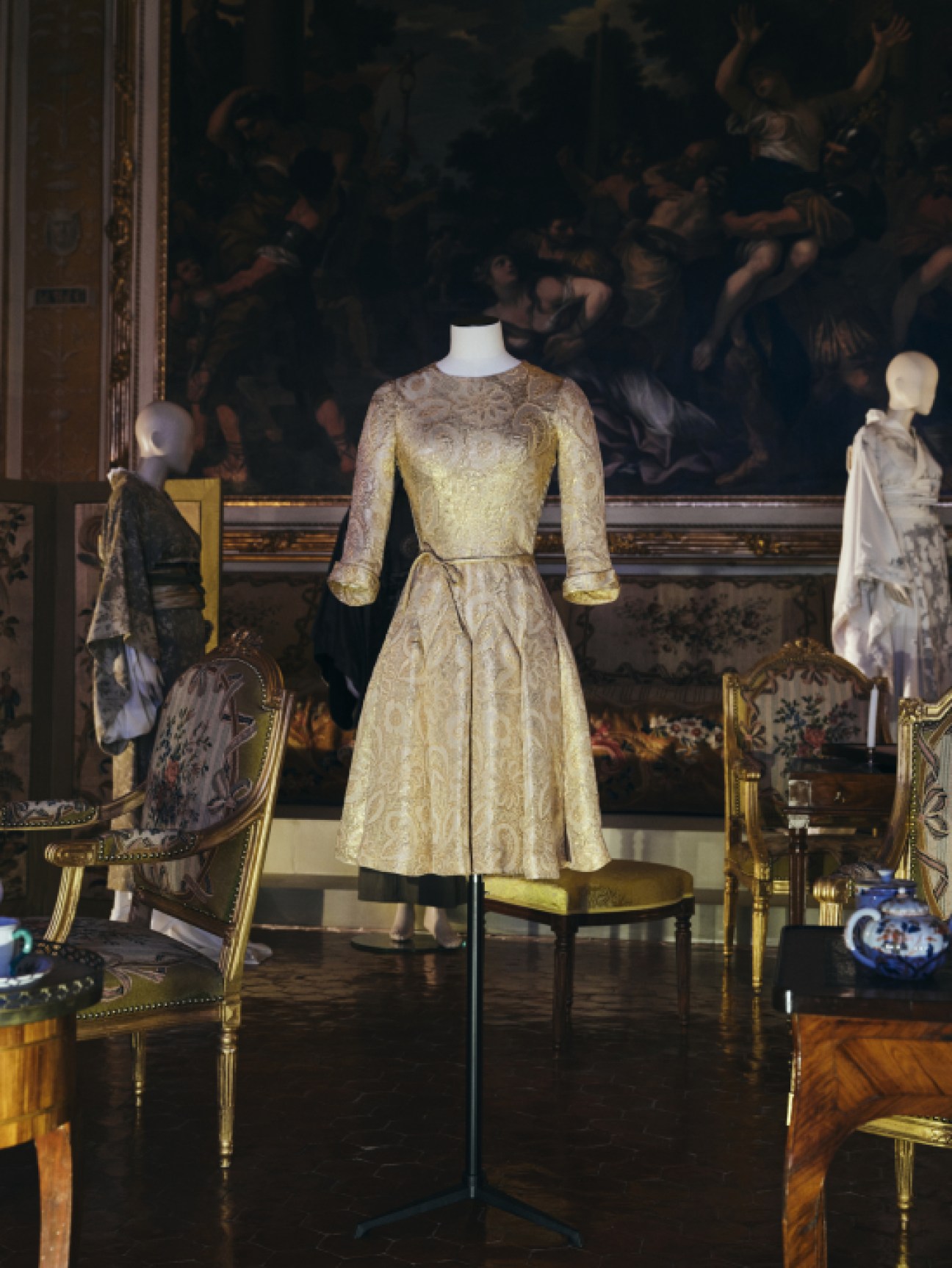
“Couture represents the brand of yesterday, the brand of today and the brand of tomorrow,” Pavlovsky tells monocle from his black-and-white Paris office. The house has just staged its spring haute-couture show, an elegant homage to dance and a grand production that included a huge Chanel button descending from the ceiling. “Couture is pure creation,” he says. “It’s instinctive. It’s about doing the best you can. Everything is special: the trailer, the music, the way in which people are welcomed. Though it’s a business that’s limited in nature, it’s huge in terms of its effect on our image, the transmission of craft and our relationship-building with customers. There’s nothing nostalgic about it. You can project the idea of couture onto the future. Chanel wouldn’t be Chanel without it.”
Respecting this tradition is also a way for the company to honour its founder, who only used to design haute couture. “You need to understand the beginning of the story,” says Pavlovsky. “There’s always something new to discover, even for us.” He adds that interest in the history of the house has recently infiltrated the mainstream, as proven by the record ticket sales for the V&A’s Gabrielle Chanel: Fashion Manifesto exhibition, which explored the founder’s story. There has also been an increasing number of biopics about Paris’s leading couturiers, Chanel included. “There’s interest in our origins,” says Pavlovsky. “There’s a gap where we can share a lot more about the roots of the brand.”
He is, however, acutely aware of the macroeconomic challenges facing the sector. “Luxury isn’t protected from geopolitical crises,” says Pavlovsky. But he has no intention of scaling down the house’s ambitions. His aim is to safeguard its future by thinking beyond sales and deepening its relationships with its customers and ambassadors, who range from rapper Kendrick Lamar to actor Tilda Swinton. “It’s about people and finding the right creative synergies,” he says, adding that the company had no commercial ties to any of the cities that it recently started relationships with. “There’s no boutique in Dakar, Manchester or Marseille.”

Putting commercial interests second might seem too idealistic for a brand in the business of selling luxury goods but Pavlovsky is sure that it’s the right way to go. Chanel has repeatedly proven that it has no issues when it comes to moving product (there are waiting lists for the classic 2.55 flap bags, for example, and its beach and ski collections are always in high demand) so its teams can focus on staying creative. “If the customers feel comfortable, they’ll shop,” says Pavlovsky. “The first objective of a boutique is to help them engage with our collections, develop relationships with our shop staff and understand why our products are unique, why they are sophisticated – and why they’re expensive. Selling comes second.”
This is also why he has stayed committed to the physical boutique experience, forgoing online retail, even when the latter model was at its zenith. Pavlovsky must surely feel vindicated now that the cracks in the e-commerce sector are showing and companies are rushing back to physical sales. “Going into a shop gives you the opportunity to talk to our experts and better understand what our products are about,” he says. “That can’t be replicated on a screen. When you’re selling bags at €10,000, this is crucial. You need to be able to talk about the craft, the design and the sophistication. If you just go online and click a few buttons, you’re not respecting the work that went into the product.”
Customers of all ages have embraced the in-store experience, visiting Chanel shops in every city that they travel to, and many are willing to wait in long queues to enter. “It’s a good problem to have but I’m not sure that it’s the best experience,” says Pavlovsky. “We want our customers to feel privileged, so we’re talking with our teams around the world to understand what we’re doing right and what needs to be improved. The way to address issues in London won’t necessarily work in Hong Kong or New York: you’re dealing with different numbers, crowds and cultural preferences.” The answer might lie in new service propositions, rather than simply rolling out new boutiques. “A shop is the physical representation of the brand,” says Pavlovsky. “We often talk about the idea of ‘one boutique, one story’, which is something that takes a lot of effort to achieve. We want to protect that, rather than opening a lot of doors and becoming accessible everywhere.”

The opening of Le19M in 2022 gave Chanel another way to engage with its audience in a physical space. The new building in Aubervilliers, on the outskirts of Paris, was designed by Marseillais architect Rudy Riccioti. It houses 12 artisan workshops that Chanel has acquired over the years, including embroiderer Lesage, specialist shoemaker Massaro and milliner Maison Michel. There’s also a gallery space where visitors can sign up to attend craft workshops and view exhibitions.
“It was the right moment to establish a unique location where you can see all of the different crafts that support the creation of fashion,” says Pavlovsky. “In just two years, we have been able to recruit more than 200 people, train even more and start a dialogue with other countries [about craft]. People can come into the gallery, feel welcome and participate. It’s a place with good vibes. And after such a successful opening, we have been thinking even more about what comes next and the transmission of these skills.”
The future is looking bright for Chanel and its many ventures. It’s only a matter of time before more artisans move into Le19M, more memories are created in cities around the world and more clients go on the hunt for the perfect quilted leather handbag. Pavlovsky makes it all look effortless but running “a place with good vibes” is no mean feat, especially today, when brands across the industry are grappling with issues such as excess inventory, overexposure and executive exits.
But just as it did in the early 20th century, when it championed the jersey over stiff corsetry, Chanel is charting its own path, offering a different perspective on what it means to be a brand of the future – it has to do with treating people well, committing to quality and opening up to the world. “People are changing and the world is too,” says Pavlovsky. “So you have to respond with creativity, and by being the best that you can possibly be.”
chanel.com
How the iconic Cantonese Luk Yu Tea House stands the test of time
Hong Kong has fickle tastes, notoriously high rents and a blink-and-you’ll-miss-it food scene. That’s what makes the enduring appeal of Luk Yu Tea House – a stalwart of the city’s central business district that recently celebrated its 90th anniversary – so exceptional. This three-storey Cantonese restaurant on Stanley Street serves steamy parcels of dim sum in the mornings and sizzling stir-fries after the sun sets. So what’s the secret behind its longevity?
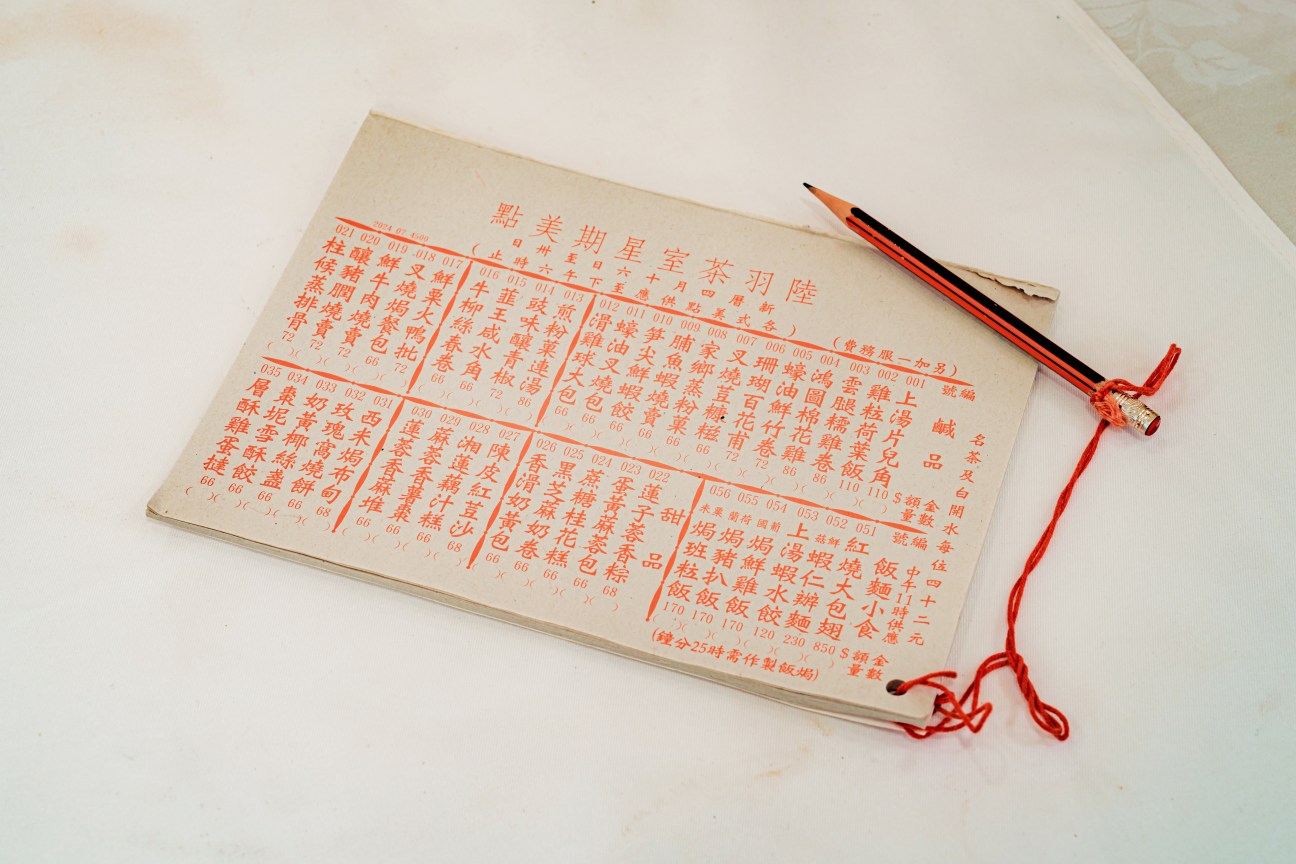

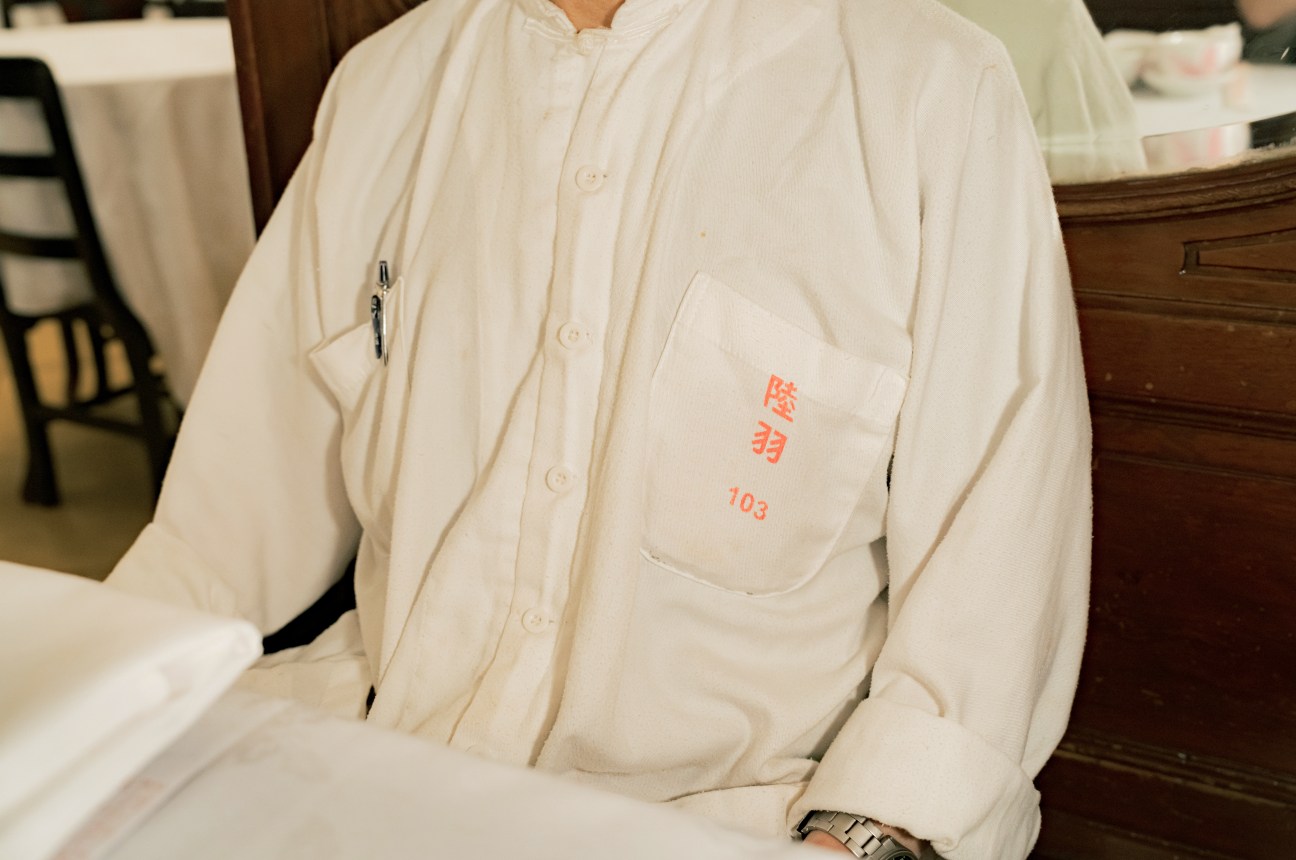
“Times change and sometimes we are forced to change with them,” says Luk Yu Tea House’s manager, Mr Ng, who, in keeping with a fairly common aversion to publicity among those who work in Hong Kong’s older restaurants and cafés, only tells Monocle his family name. “But we try our best to keep everything the same. And we always use the best ingredients.” Another improbable demonstration of the tea house’s commitment to consistency is the fact that the same head chef has presided over its kitchen for more than 50 years.
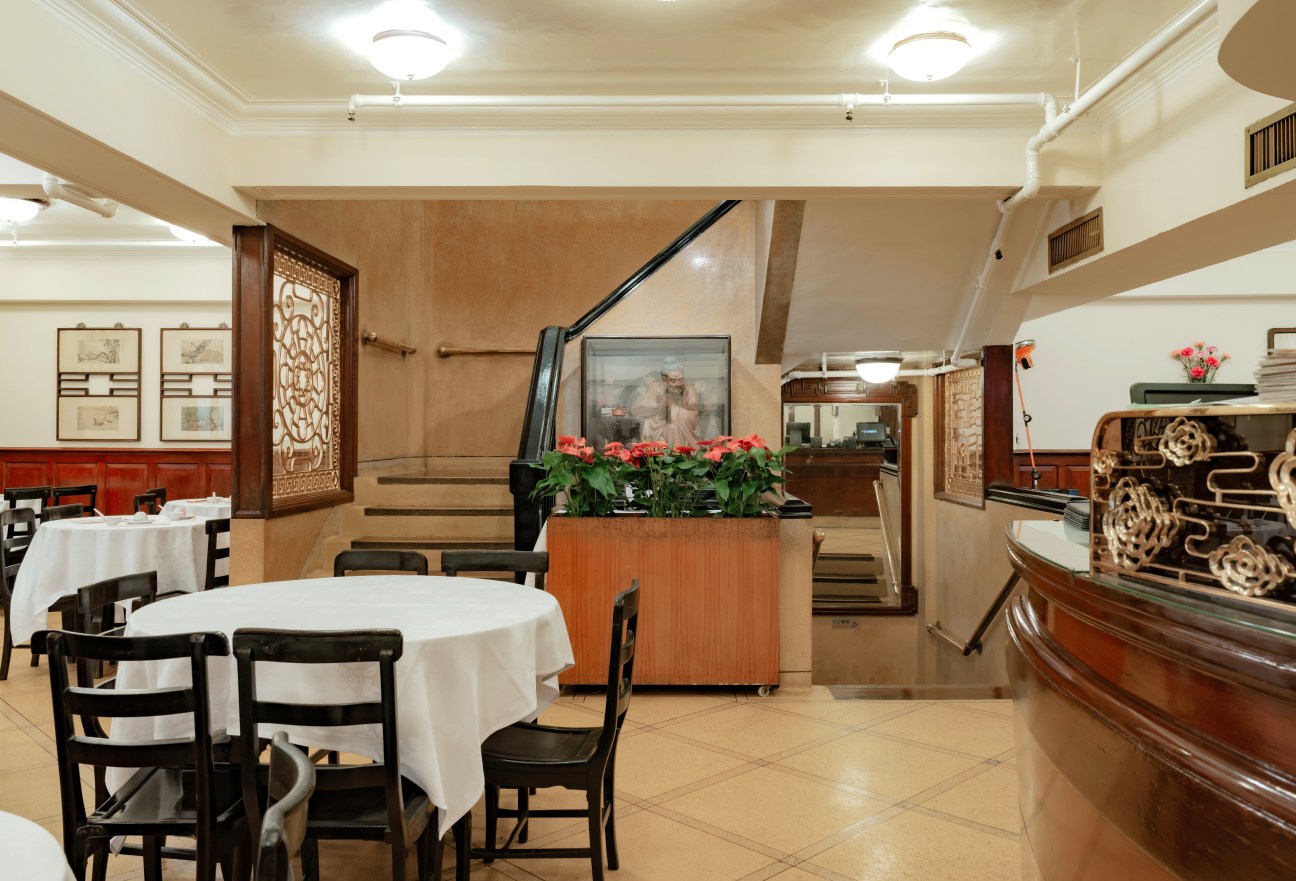
The restaurant’s extensive menu continues to swear by traditional dishes, such as pig-lung and almond soup (better than it sounds), prawn toast and crispy sticky rice. This adherence to heritage also extends to the decor, which is a combination of Chinese shan shui (landscape) paintings and calligraphy with heavy, seemingly bombproof teak furniture that has survived since colonial times. It’s this permanence and Luk Yu’s popularity across generations that has helped it to buck the trends.
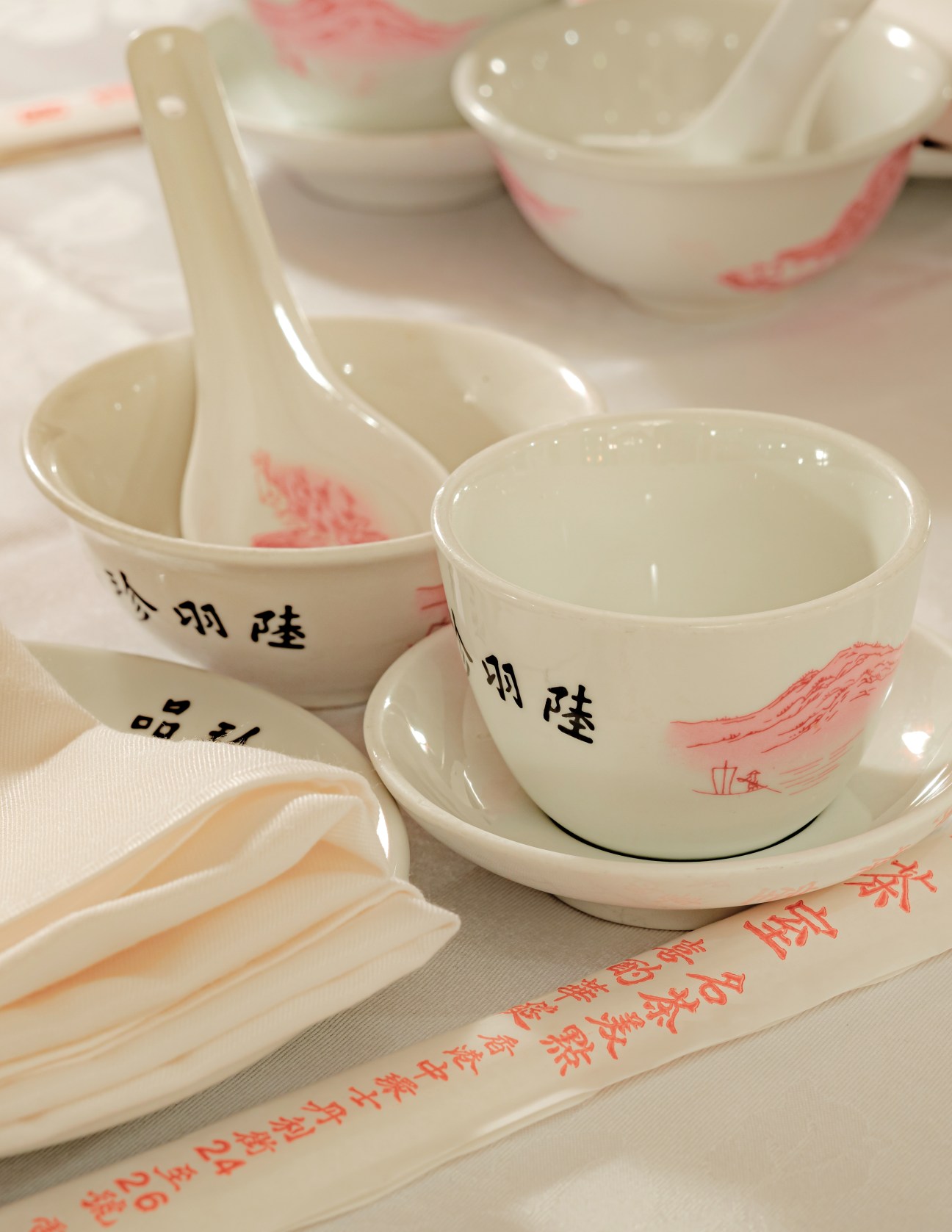
Date founded: 1933
Signature dish: Pig-liver ‘siu mai’
Covers: 250
Employees: 85
Known for: Cantonese dim sum, colonial-era interiors and CBD location.
How it held out: Consistency. Luk Yu Tea House focuses on sourcing the best ingredients for the traditional recipes on its long-running menu.
Inventory – Tech Corner
We get up close and personal with the latest wearable and portable technology.
1

Smart Swim 2
Form
These goggles from Form have an illuminated display that shows you statistics such as pace, distance and heart rate. Meanwhile, its digital compass will keep you heading in the right direction when you’re open-water swimming.
formswim.com
2

Watch 2
Oneplus
Smartwatches have long been plagued by charging issues: all those nifty features require a lot of juice. Oneplus’s Watch 2 makes clever use of a dual-OS set-up to extend its battery life to up to 100 hours. It also has plenty of fitness features and a handsomely unfussy design.
oneplus.com
3
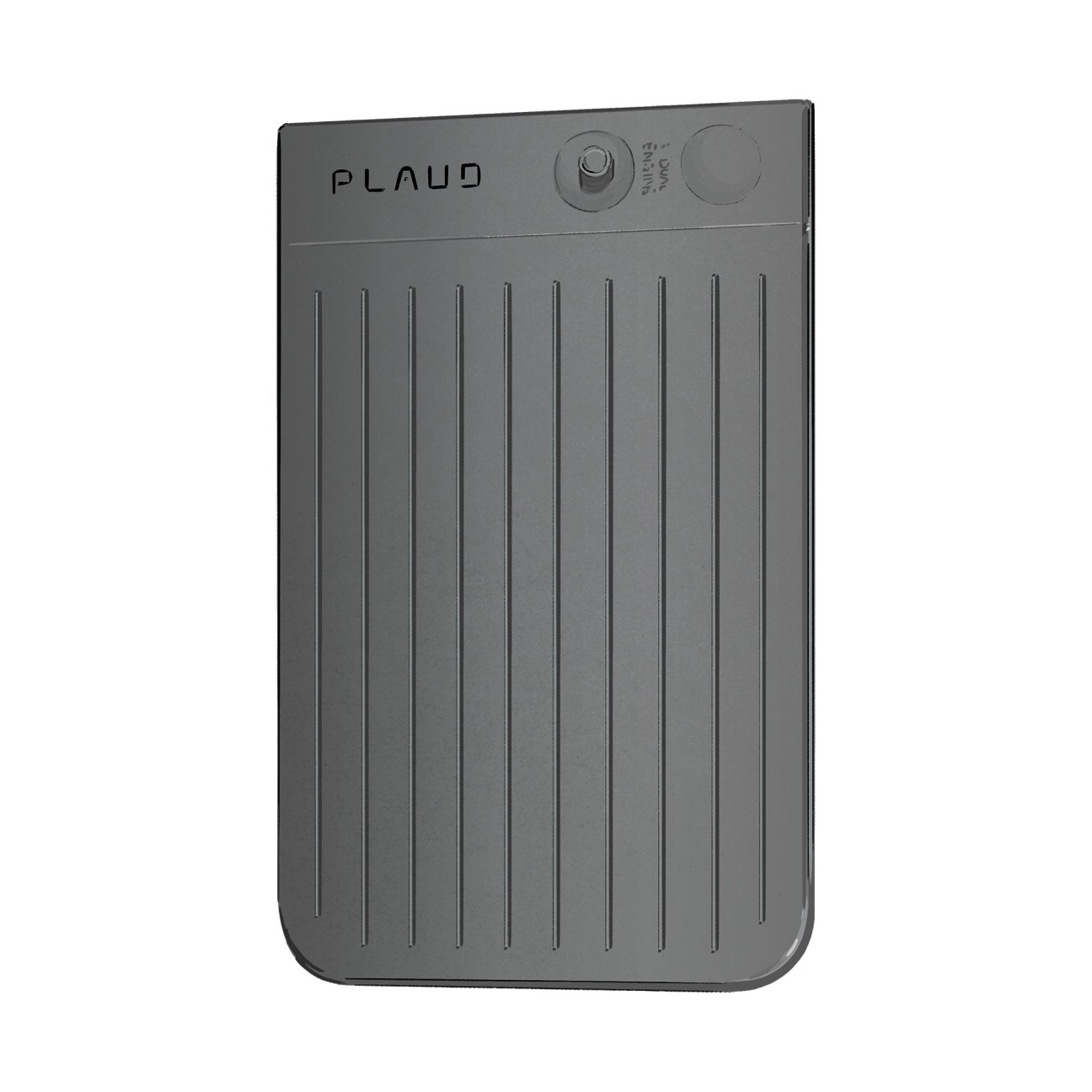
Note
Plaud
This digital recorder is roughly the size of a credit card. It has its own mics but can attach magnetically to the back of a smartphone to record calls. It can also transcribe audio and summarise conversations.
plaud.ai
4

Ear (a)
Nothing
Nothing’s new earbuds, available in black, white and sunshine yellow, offer excellent noise-cancelling but are so keenly priced that you’d assume that they didn’t. Their small charging case makes them superbly pocketable.
nothing.tech
WRITER: David Phelan
Illustration: Yusuke Saitoh
The most anticipated hotel openings to keep on your radar
Palazzo Ventidue
Puglia
Berlin residents Manuel Strebinger and Stefan Davids fell for Nardò after chancing upon the town during a trip to the southern Italian region of Puglia. Despite being just a 10-minute drive from pristine turquoise waters, the town feels less undermined by the waves of tourism than many places closer to the coast. “For me, it was one of the most authentic towns in Puglia,” says Strebinger. “It’s still very chilled and there’s a nice international crowd.”
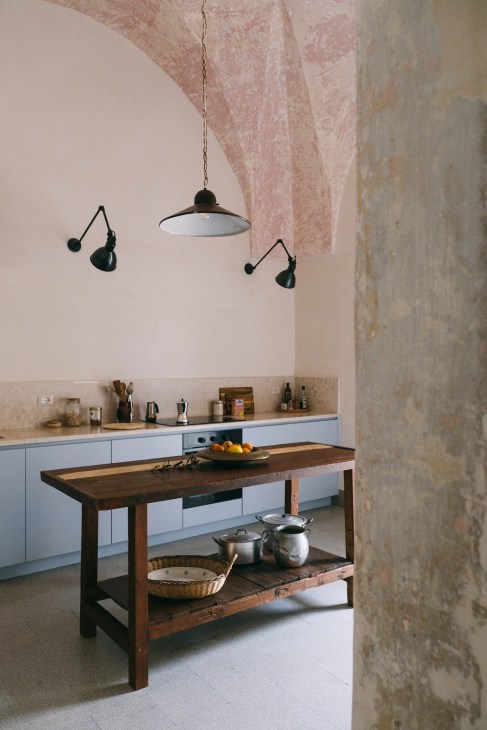
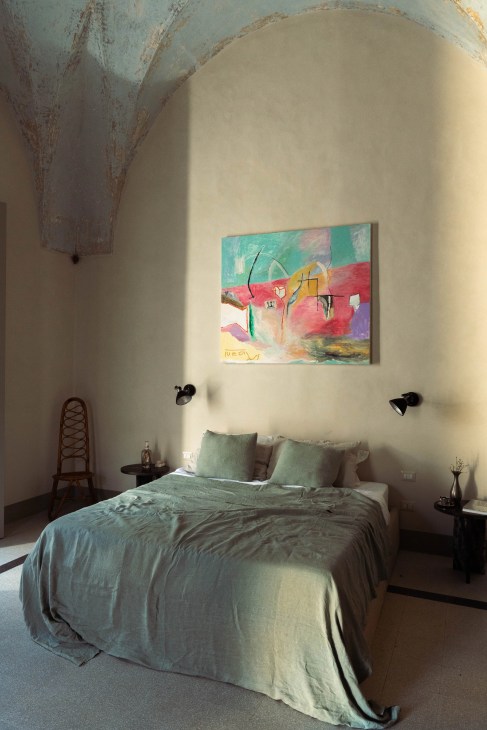
The couple invested in a 300 sq m property called Palazzo Ventidue, restoring it and filling it with art and vintage furniture. Sleeping up to eight in three bedrooms, the rental property opened to the public last year (on dates the couple aren’t in town, that is). Working with architect Luigi Albano, Strebinger and Davids had the original paintwork on the vaulted ceilings exposed and installed a stunning marble table made by local artisans. There is a rotating collection of paintings by the likes of Angola’s Ál Varo Tavares D’Guilherme and Lisa Vogel from Germany too, plus a terrace from which to take it all in. “All in all, it’s quite minimal,” says Strebinger. “But also respecting the place and the surroundings.”
palazzoventidue.com
Teranka
Formentera
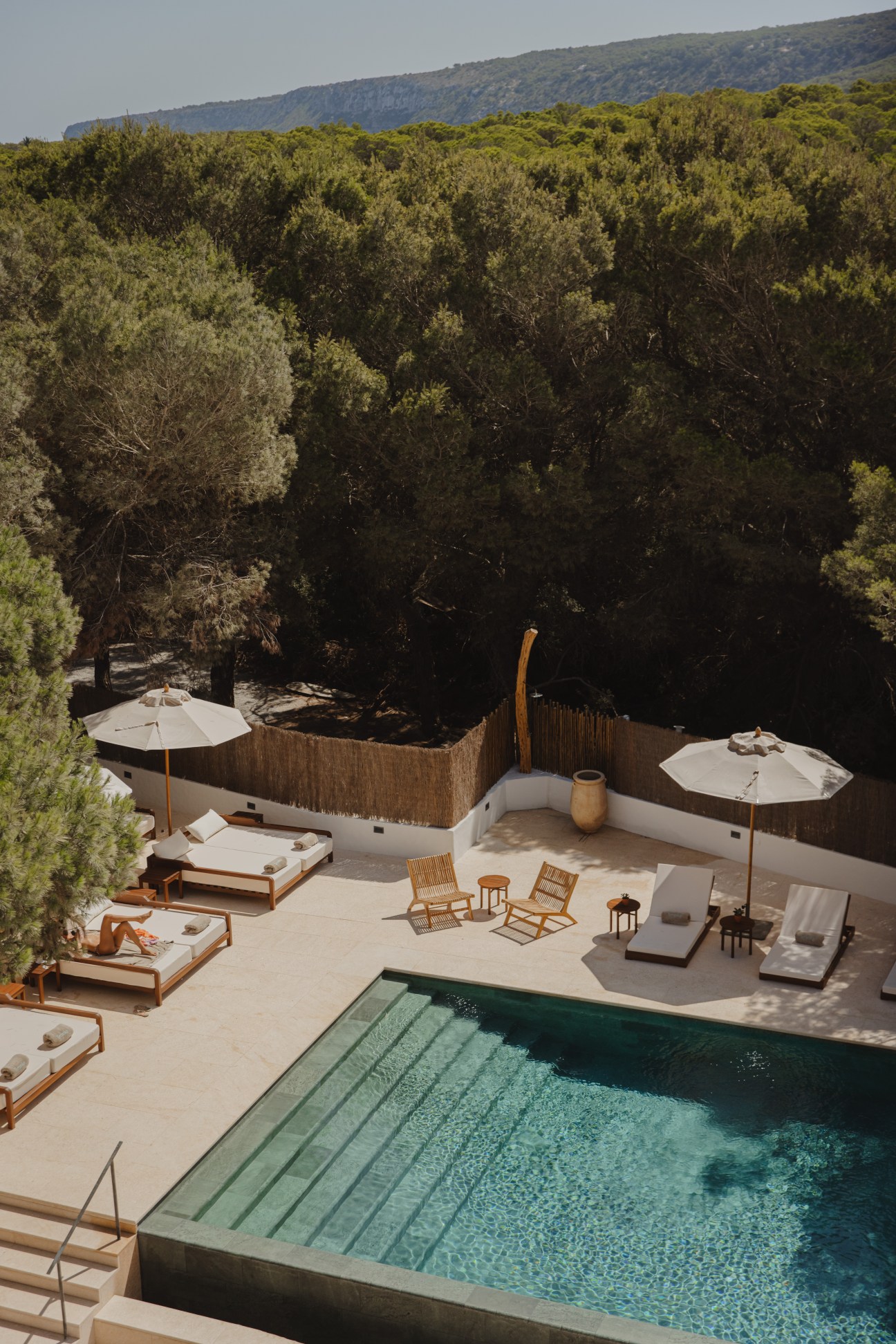
This laidback bolthole – perched amid a rugged pine forest on the smallest and wildest of the Balearic islands – is accessible only by boat. There are 35 guest rooms and suites spread across three stone-hewn buildings, Mar (sea), Tierra (earth) and Cielo (sky), each with art-filled interiors and an abundance of natural light. In between wild swimming and hiking through fig and pine trees, guests can sign up for activities including meditation, yoga and pilates classes. As the sun sets, the hotel’s rooftop becomes the preferred spot for sundowners, tapas and seasonal crudo, before guests wander down to the terrace for the best in fresh island fare, which often means grilled pulpo, fat prawns and sizzling Iberian pork.
teranka.com
Lilou Hotel
Hyères
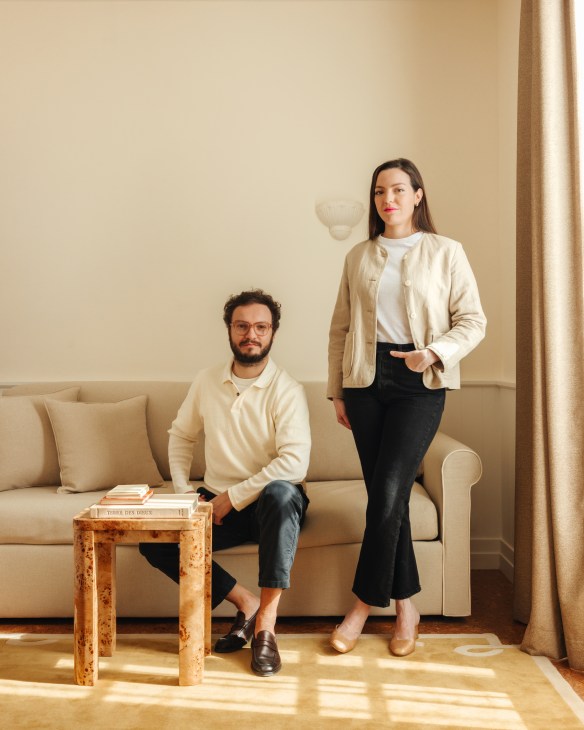
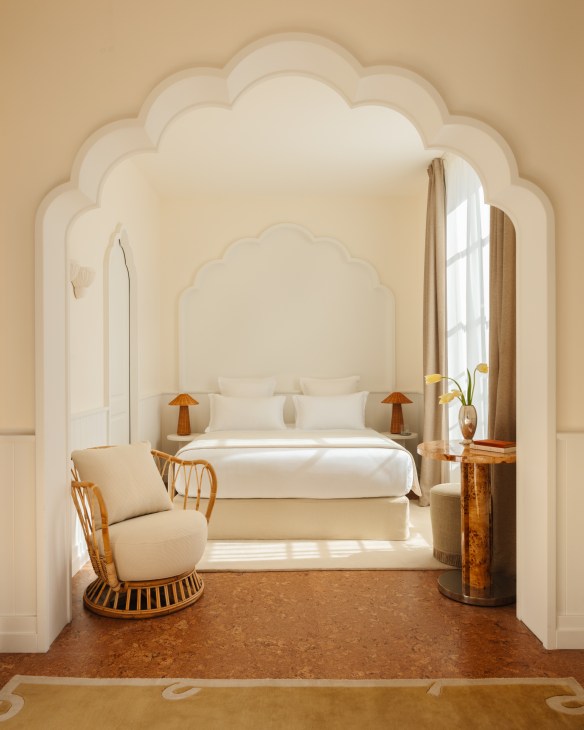
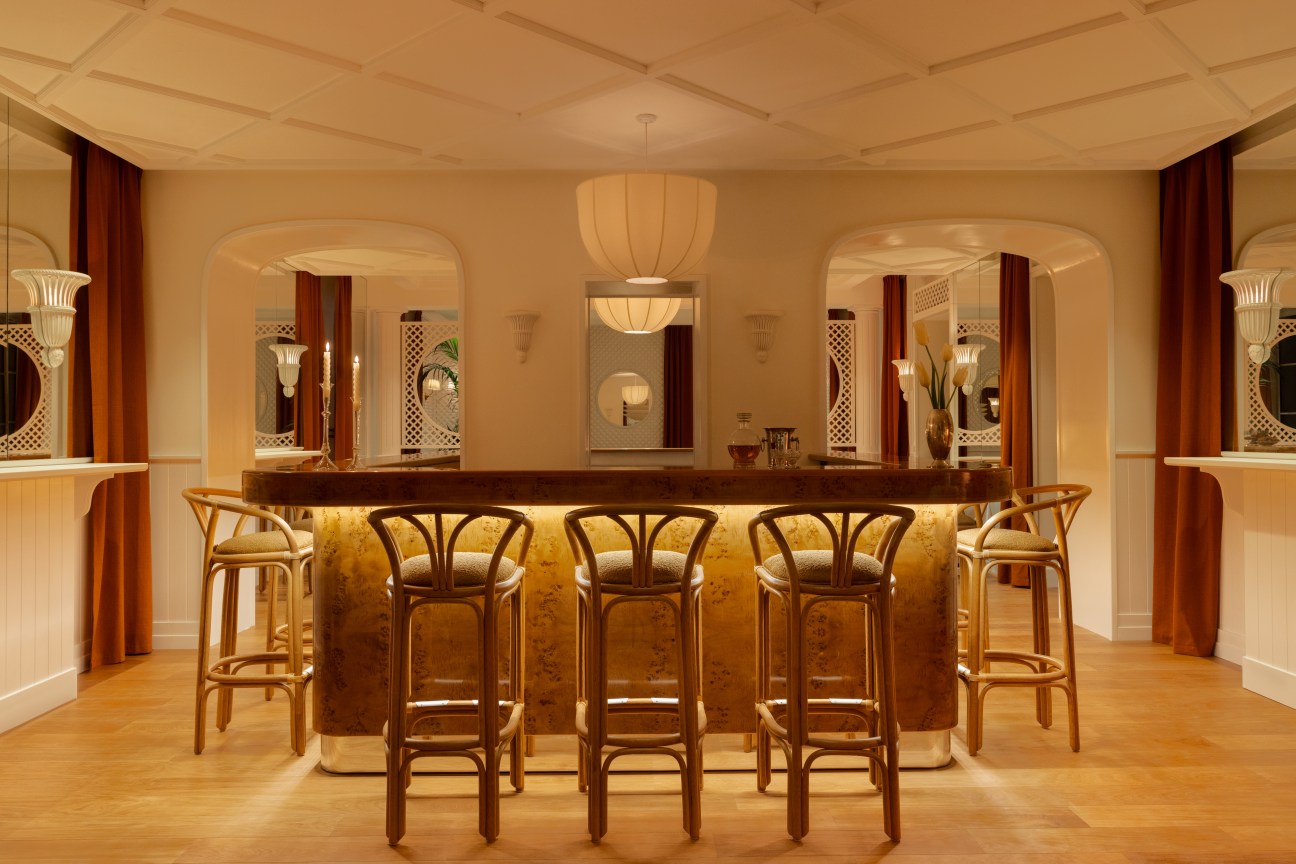
This hotel in Hyères is an homage to the glory days of the French seaside hideaway. Formerly the Hôtel du Parc, this Haussmann-style gem from the 1890s opened its doors in April 2024, following a three-year transformation by hoteliers Lisa and David Pirone (pictured). Despite its grand setting, there is a warmth and conviviality here. “Lilou is just like its name: easygoing and global,” David tells Monocle. “We wanted to create a place where people love to gather.” The lounge has seagrass wallpaper and white trellises, comfy rattan sofas upholstered in textured fabrics and a long palatial bar made in burr poplar veneer. There’s no reception per se; guests are instead greeted by a charming front-of-house team and encouraged to make themselves at home. The restaurant and kitchen lead out to a terrace adorned with Palladian columns and trailing vines. The 37 guest rooms feature works by 14 emerging and established artists from the region.
lilouhotel.fr
The Fifth Avenue Hotel
New York
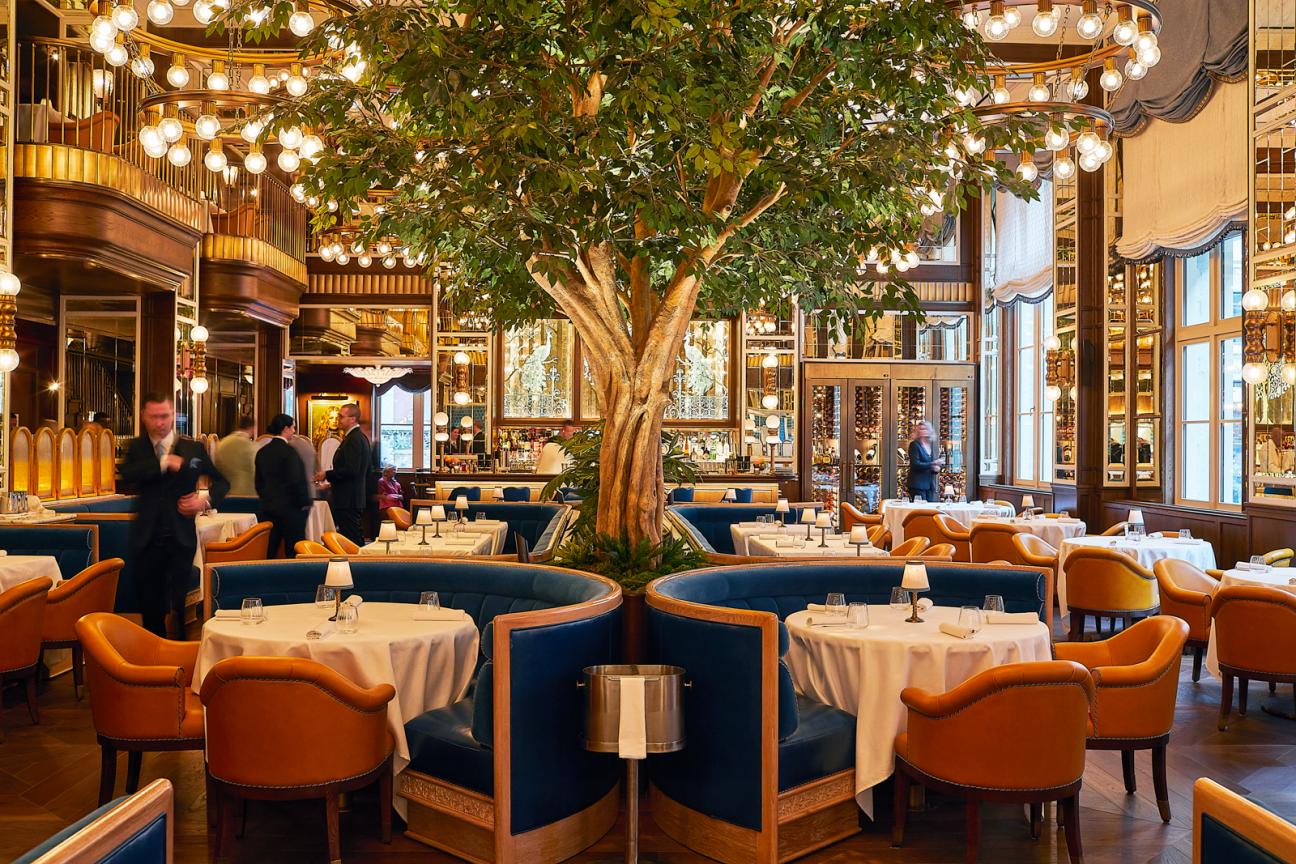
On a busy corner in Manhattan’s NoMad, The Fifth Avenue Hotel straddles a 19th-century mansion and a contemporary 24-storey glass tower. Designed by Martin Brudnizki, the Swedish architect also responsible for the riotously colourful Broadwick in London, this property is anything but dull. Its 153 guest rooms feature emerald-green walls, bubblegum-pink couches and mustard-yellow curtains. At restaurant Café Carmellini, diners are taken to old-world New York via velvet booths and mirrored walls. Dishes such as rabbit primavera and duck tortellini have been dreamed up by US chef Andrew Carmellini. In the Portrait Bar, guests can sip punchy cocktails containing unlikely combinations, from sesame-oil washed whisky to cherry bark vanilla bitters. Everything here is amped up and all the better for it.
thefifthavenuehotel.com
Hotel Bella Grande
Copenhagen
The new Bella Grande sits in a building close to Copenhagen City Hall and has been a hotel since 1899. Alongside its 108 guest rooms and suites, it features an Italian-style interior courtyard and a buzzing Italian restaurant, Donna. “For inspiration, we went to Italy and found a Venetian palazzo with an atrium, with natural lighting, gorgeous arrangements of flowers and peach-coloured walls,” says Malene Bech-Pedersen, who revamped the interiors along with Mette Bonavent of design agency Tonen. For those who want to spread out, there are family rooms and junior suites, plus two larger suites with private roof terraces.
hotelbellagrande.com
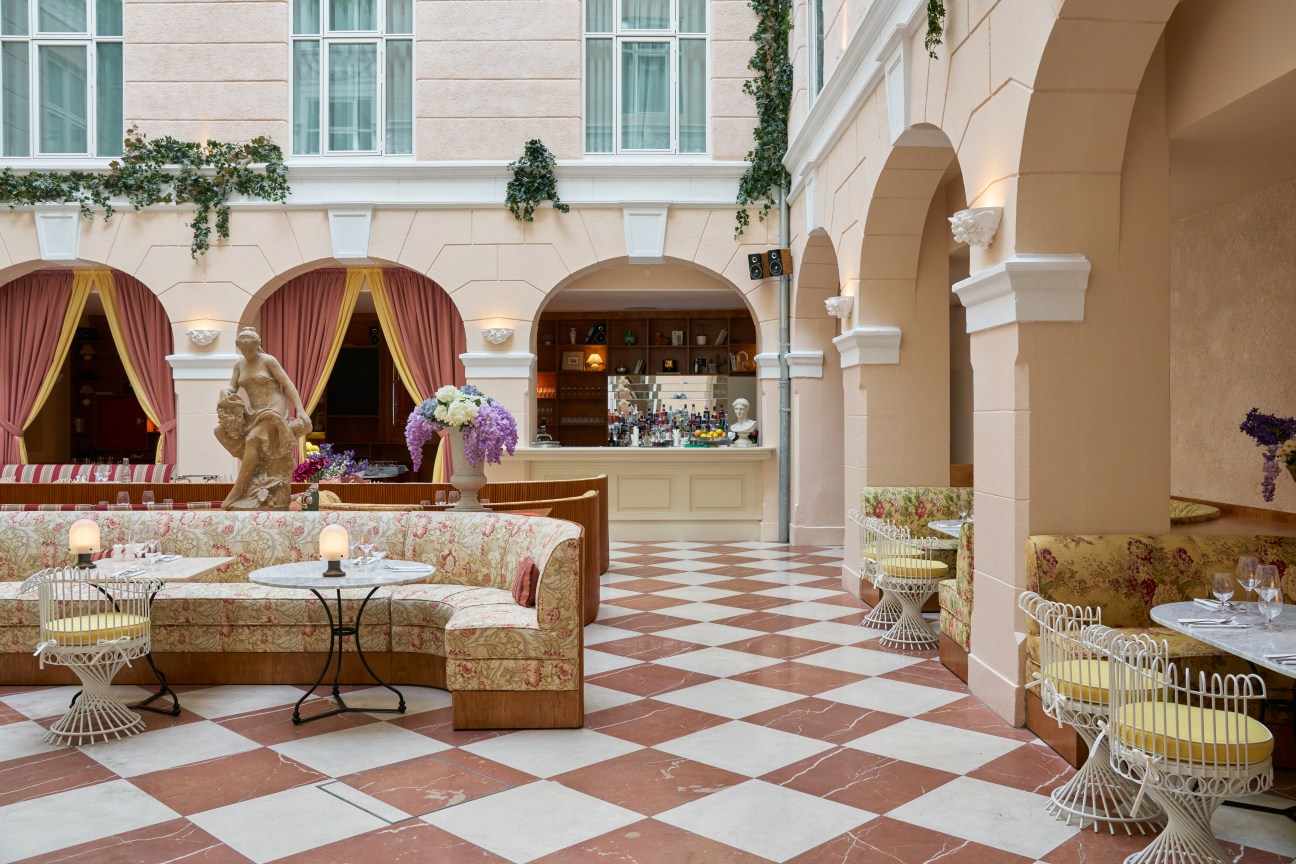
The Japanese capital’s five-star legend is closing its doors for a timely refresh
Ever since it opened, audaciously, on the top 14 floors of Kenzo Tange’s newly completed Shinjuku Park Tower in 1994, Park Hyatt Tokyo has enjoyed a mystique like no other hotel in the Japanese capital. Few establishments emit their pheromones so effectively. From day one, people in Tokyo and the fortunate travellers who came through its doors, knew that this place was special. The location was always unusual but its sense of detachment only added to the allure and gave guests the Tokyo they dreamed of. There is no better view of the city or of the tangle of streets below. From this sky-high eyrie, the uneven jumble is transformed into a mesmerising tapestry that stretches out as far as the eye can see.
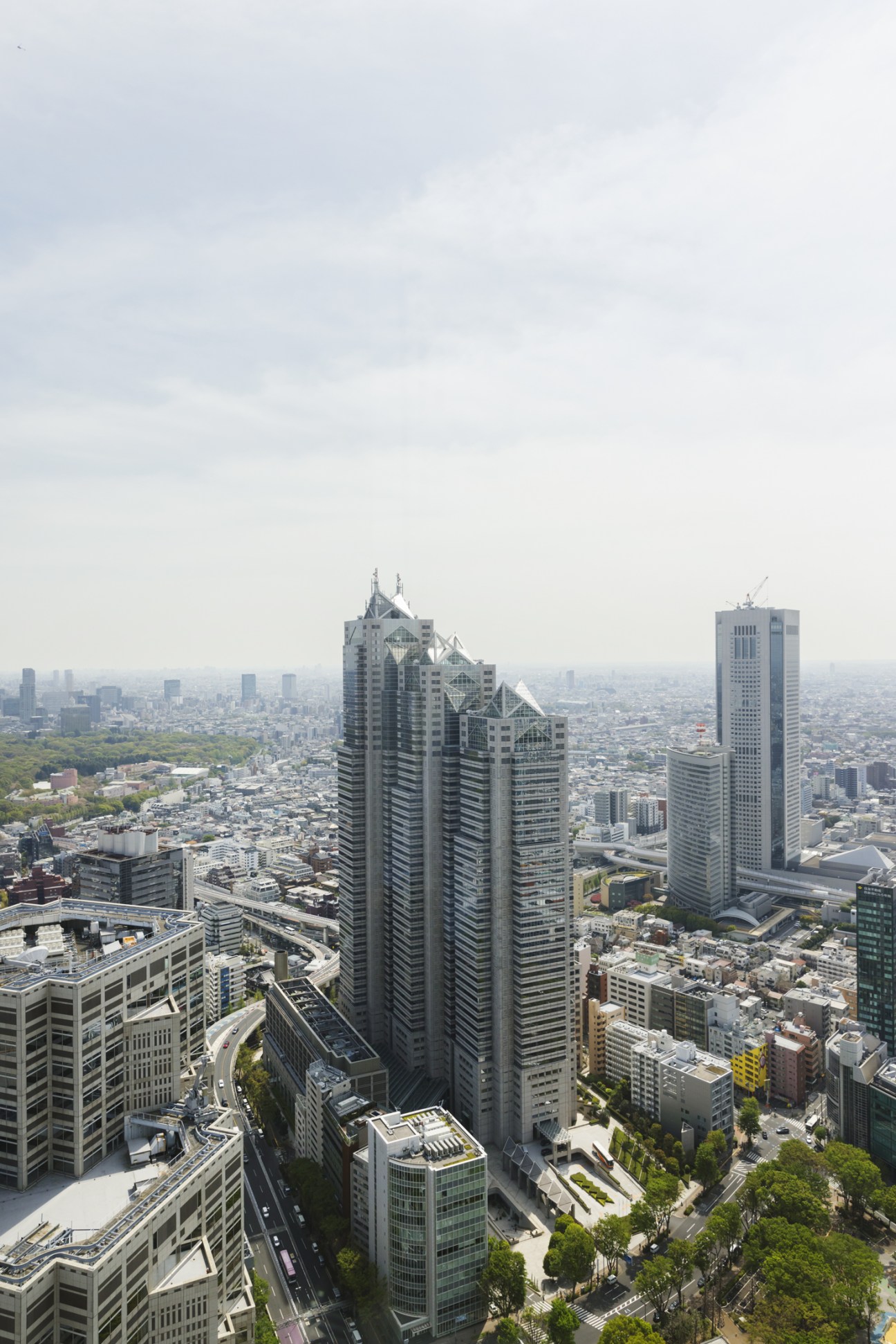
Now, after 30 memorable years, the 177-room hotel has closed its doors for a lengthy period of refurbishment. The last of the guests have gone, the packers have boxed up the artworks and 350 of the best-trained staff in the business have been dispatched to other properties and temporary offices. A chapter in Tokyo’s story has, for now, come to a close.
French architecture and interiors studio Jouin Manku has been commissioned to lead the design refresh. Its plans are still under wraps but the hotel is at pains to reassure customers that the much-loved restaurants and public areas will be “restored rather than transformed”. Even now, slow-growing bamboo is being nurtured in a nursery in Okinawa, ready to reinvigorate the bamboo grove that flourishes, unexpectedly, on the 41st floor.
The big change will come in the rooms. While many guests still appreciate the analogue charm of a proper light switch and a Braun alarm clock, others are seeking more mod cons and an updated experience. Being able to cast from a mobile device to a television wasn’t an issue in 1994. Priorities have shifted.
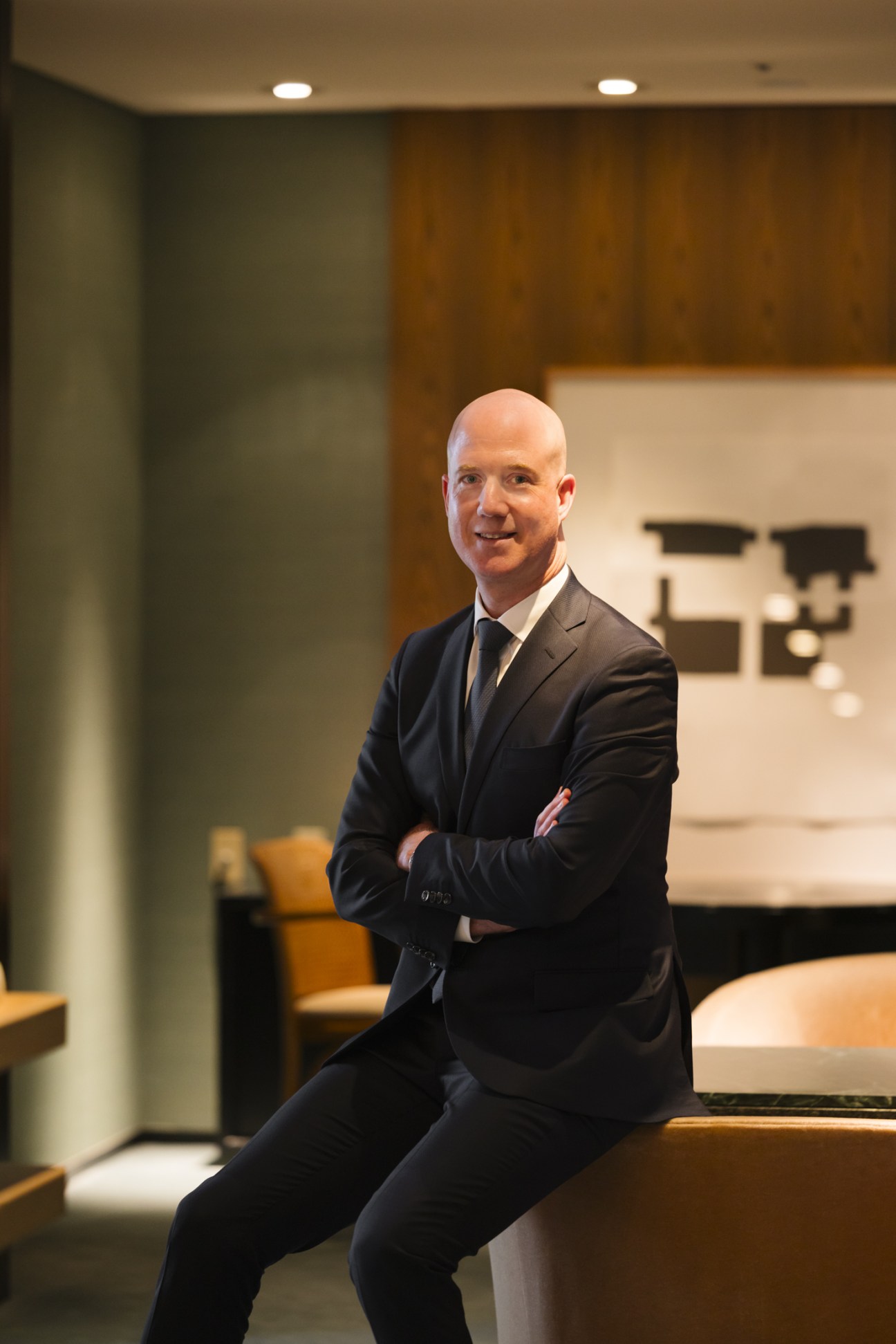
It is a fine balance that the hotel’s general manager, Fredrik Harfors, is well aware of. “Certain things change over time, such as guest behaviour and expectations,” he says. “How we do things at the hotel needs to evolve too, so we see this as an opportunity for a reset, a pause while we do some housekeeping.” Deluged by questions from loyal customers about what the redesign will entail, Harfors has had to steer the process with the aplomb of a seasoned diplomat.
Those who have never set foot in the hotel or been to Tokyo will know the Park Hyatt as the setting for Sofia Coppola’s irresistible 2003 film Lost in Translation. Drenched in the atmosphere of the city at that exact moment, the film still inspires people to come here. Guests will point to their own favourite hotel details: the whistling gush as the lifts speed skywards or those views that reveal Tokyo’s immensity (and, on a clear day, Mount Fuji). For many it will be the warmly elegant service, honed over three decades, the sheer glamour of dinner and timbrous jazz at the New York Grill, or the hush that settles on the bedroom corridors. “This hotel could be completely full and you’ll only realise when you see people at breakfast,” says Harfors. Enveloped in this vertiginous cocoon, the worries of daily life seem far away.
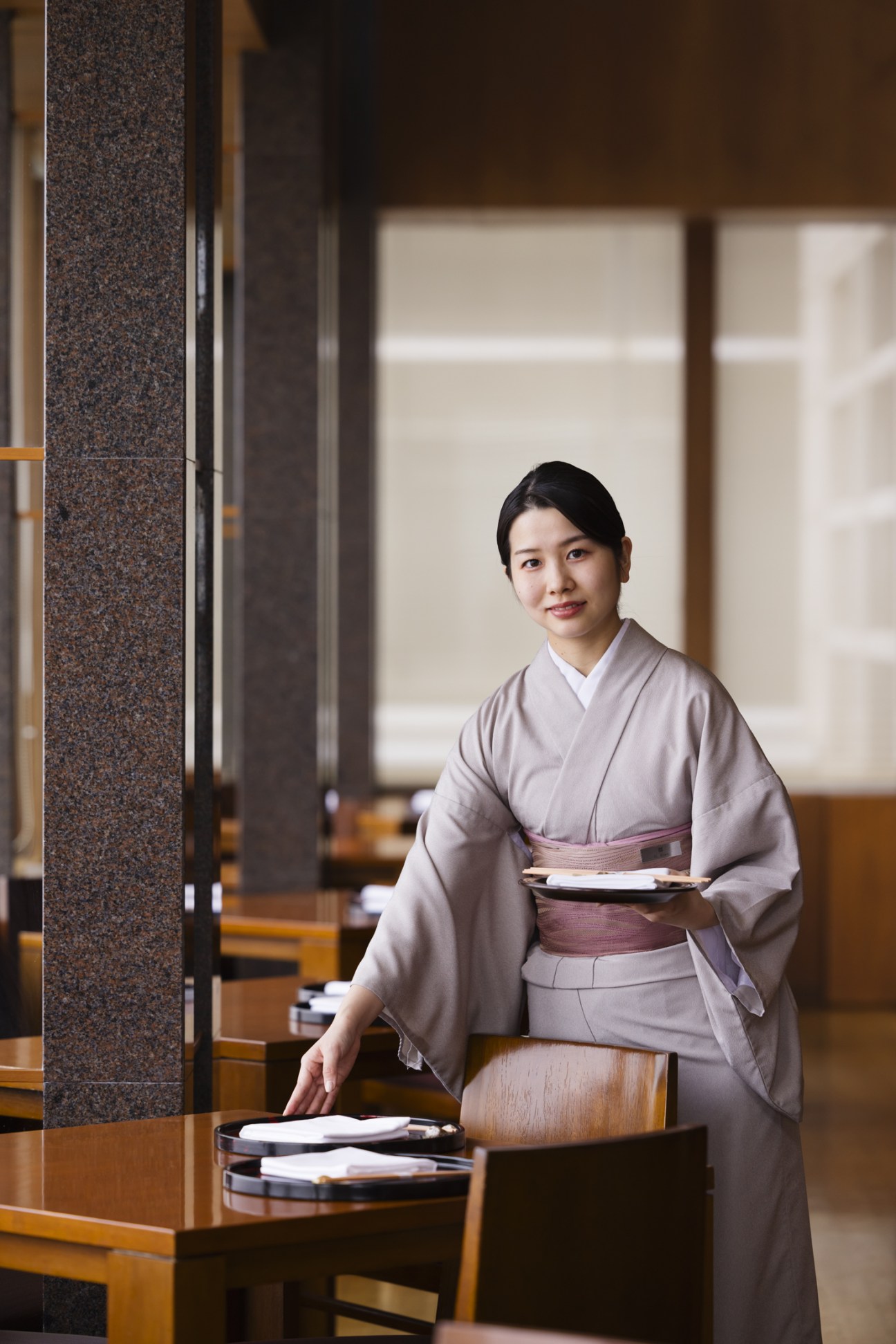
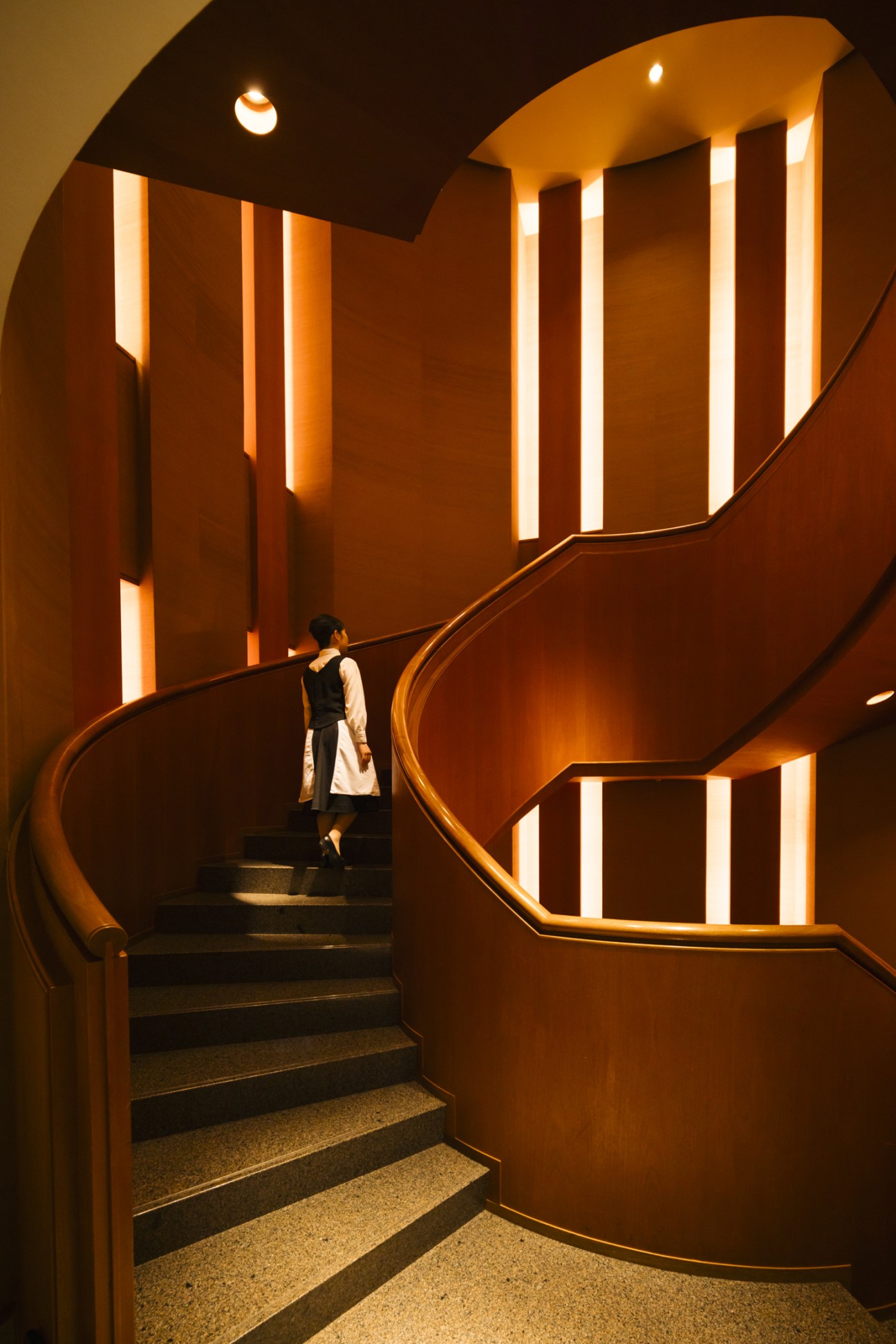
Design has always been core to the hotel’s appeal: a coming together of one of Japan’s greatest postwar architects with the Hong Kong-based interior designer John Morford – at the height of his powers – and a visionary building owner, energy utility company Tokyo Gas. Such a company might not suggest the last word in hospitality but Morford once said, “Their soul is in the hotel.” The owners had the good sense to stand back and let the creative talents get on with their work.
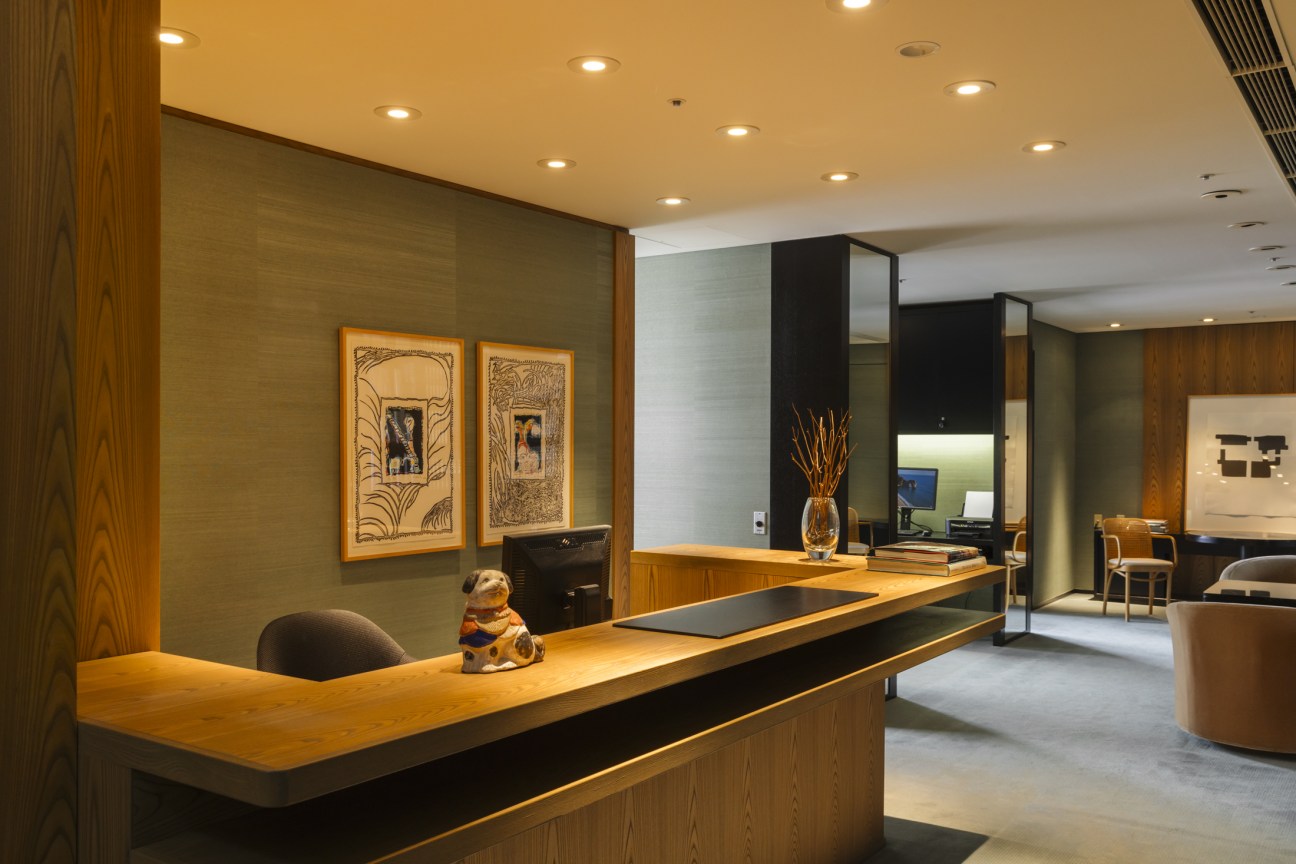
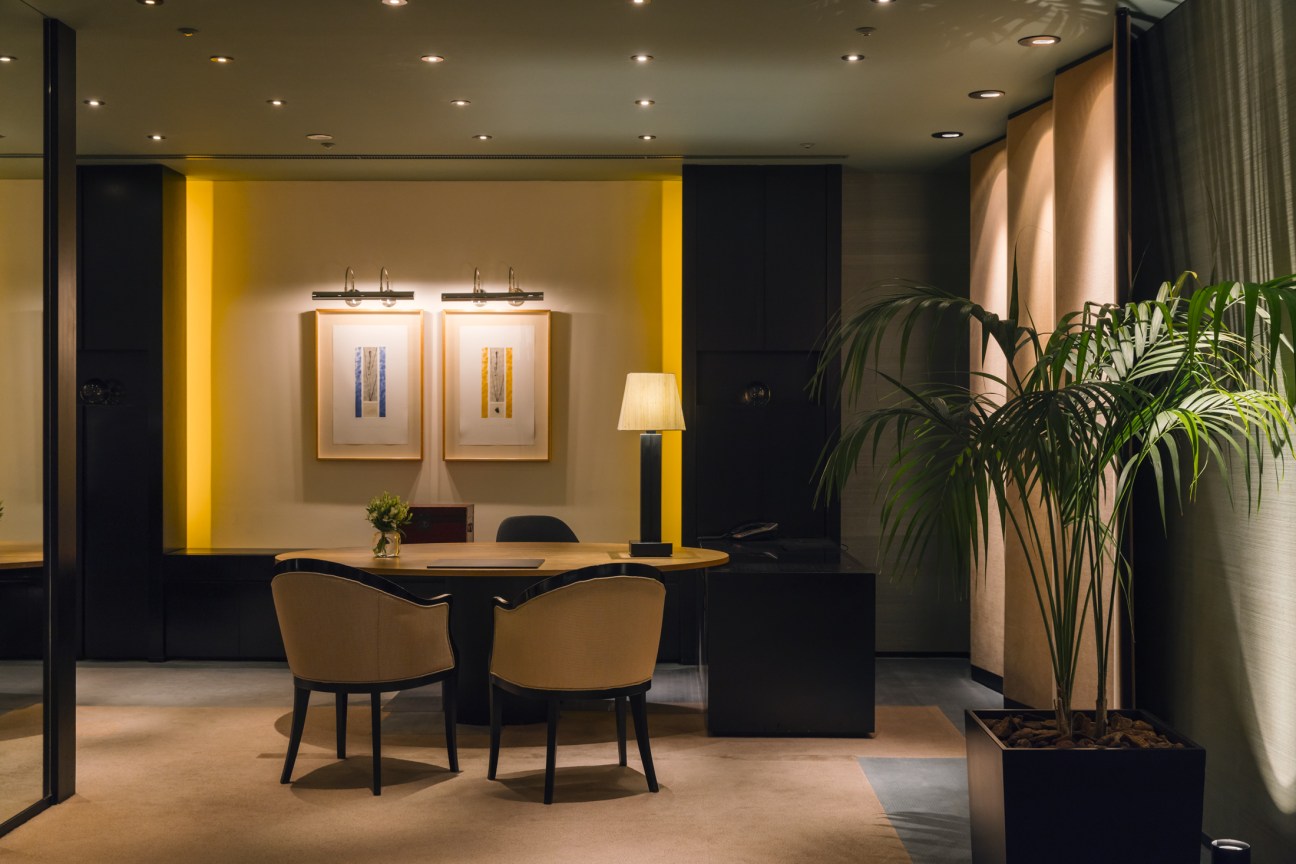
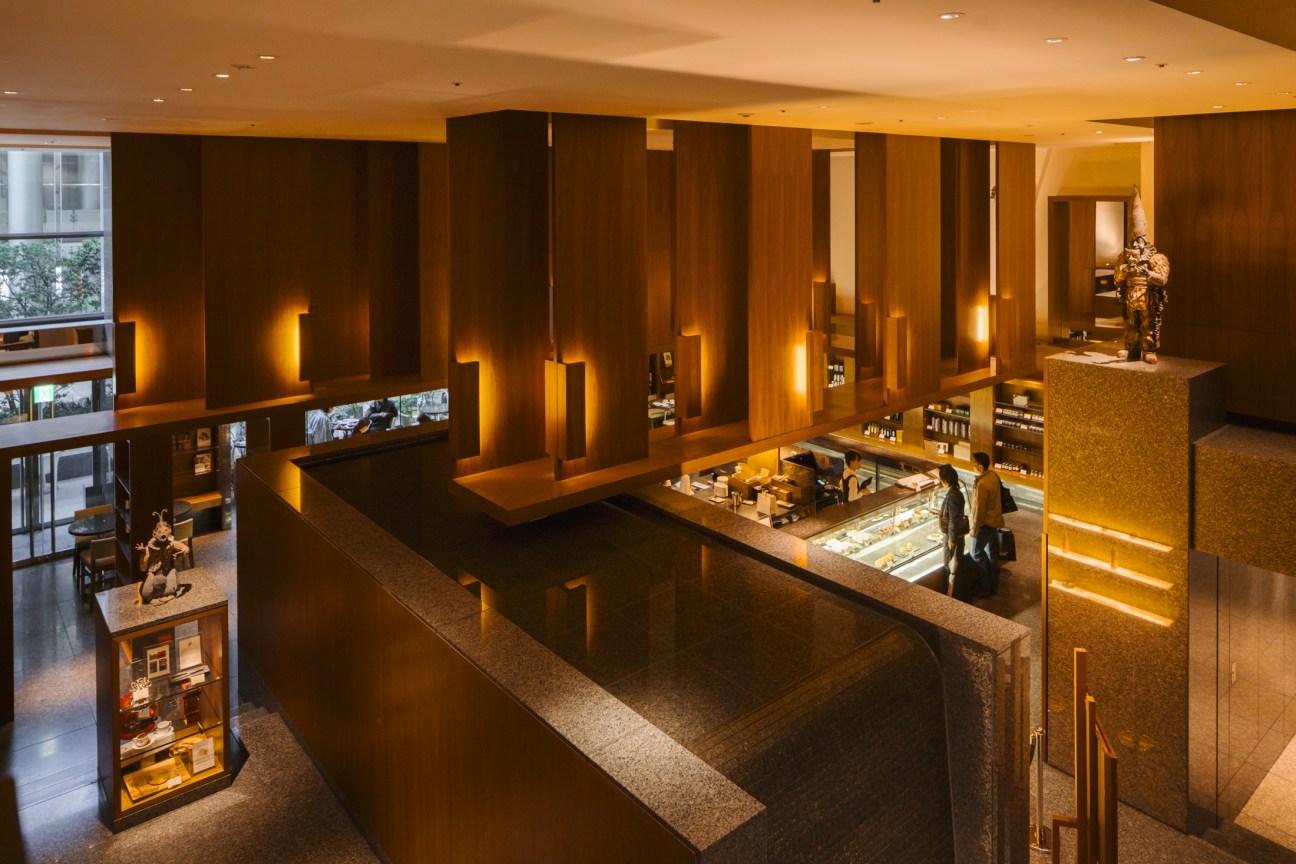
Tange’s stark building, a 235-metre-tall hulk of granite and glass, was the ideal scene-setter, an example of the architect’s ability to express Tokyo’s gargantuan prowess in structural form. (He also designed Tokyo’s epic City Hall next door to the Park Hyatt.) Putting a hotel on top of an office block is common practice today but at that time it was a bold move, unseen in Tokyo.
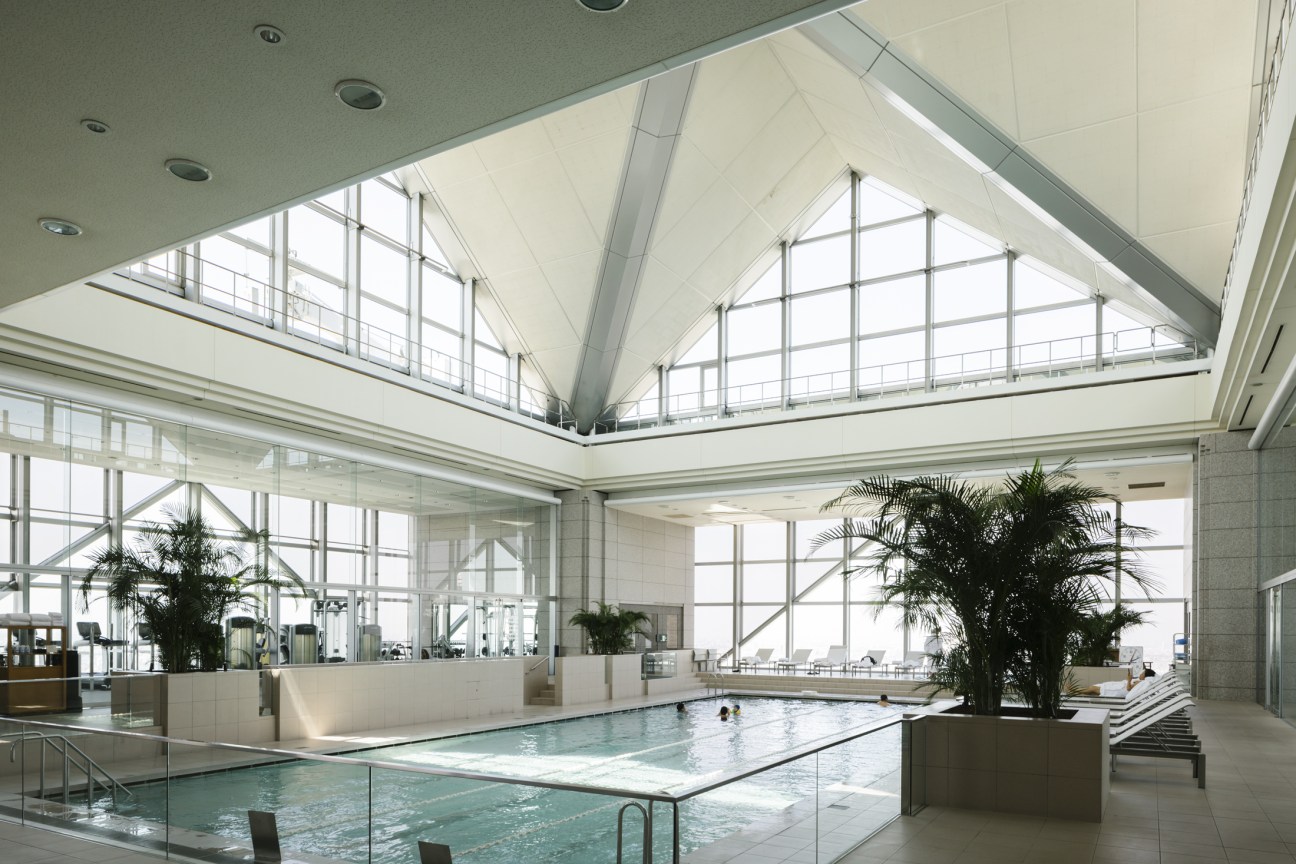
The tower’s staggered three-peak design, unmissable on the skyline, created an intriguingly convoluted layout that allows for dazzling views and dark corners too. Each of the pyramidal summits has its own feature: the Peak Lounge on the 41st floor, the much-photographed swimming pool on the 47th and – some might say – the crowning glory, the New York Bar & Grill on the 52nd. Tange gave the front face of the tower a slimline appearance, which was intended to minimise the loss of sunlight on the children’s park across the street.
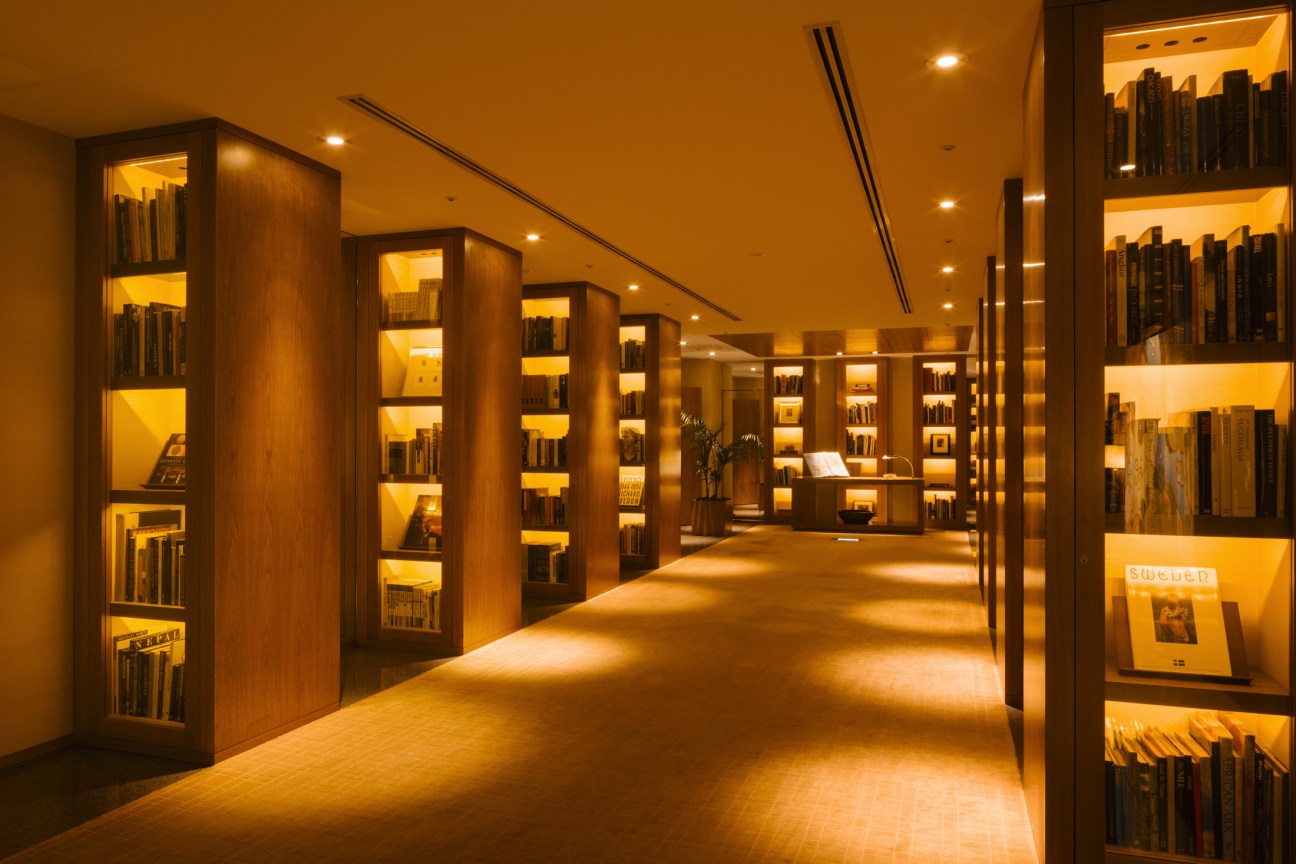
John Morford’s touch is everywhere and not just in the sage-coloured fabric on the walls or the atmospheric lighting (he always insisted on doing his own). He took care of every detail, down to choosing the library’s 2,000 books and setting out where each would be placed on shelves and in rooms. Today, that interior work would likely be divided up but Morford was given complete control. He once compared the idea of carving up the design of a hotel to commissioning a piece of music and then asking five composers to each write a part.
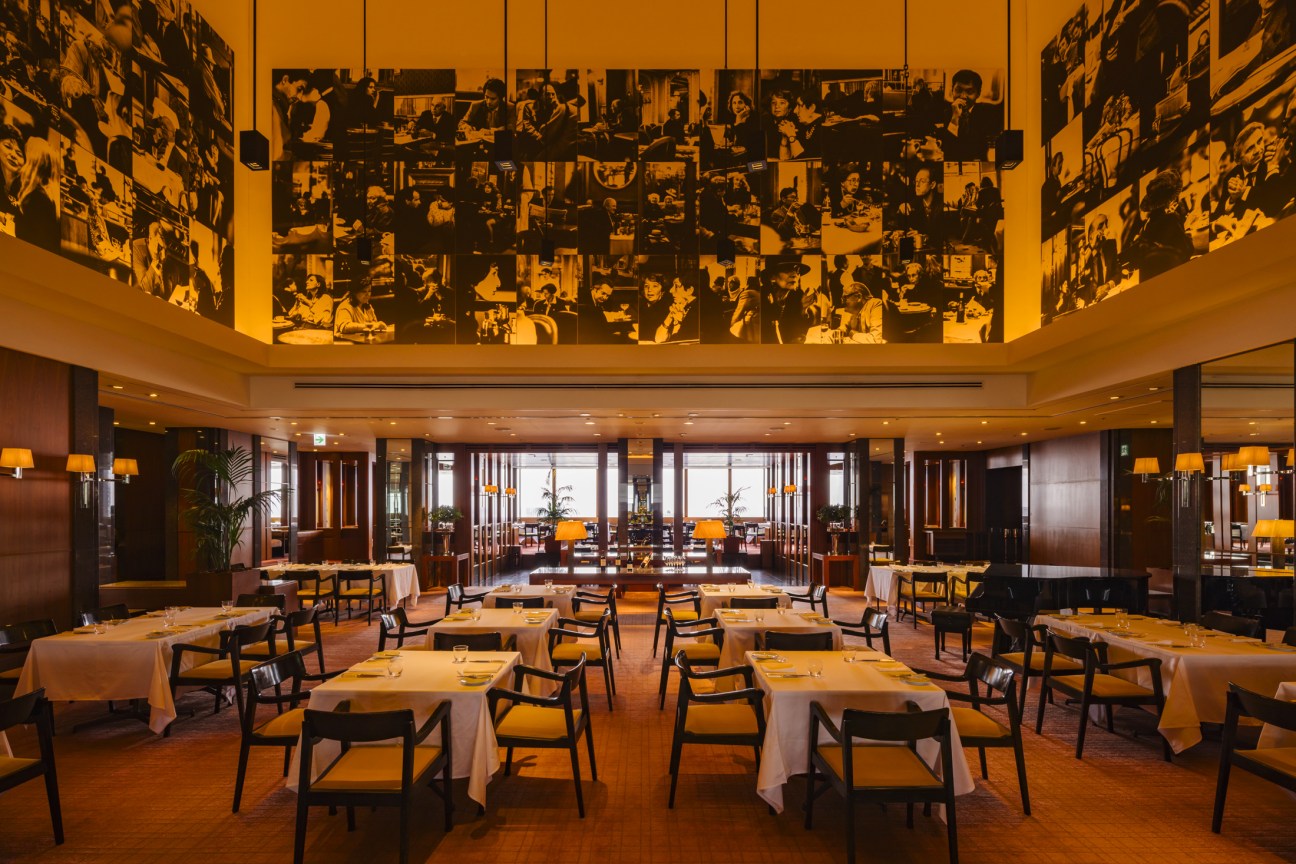
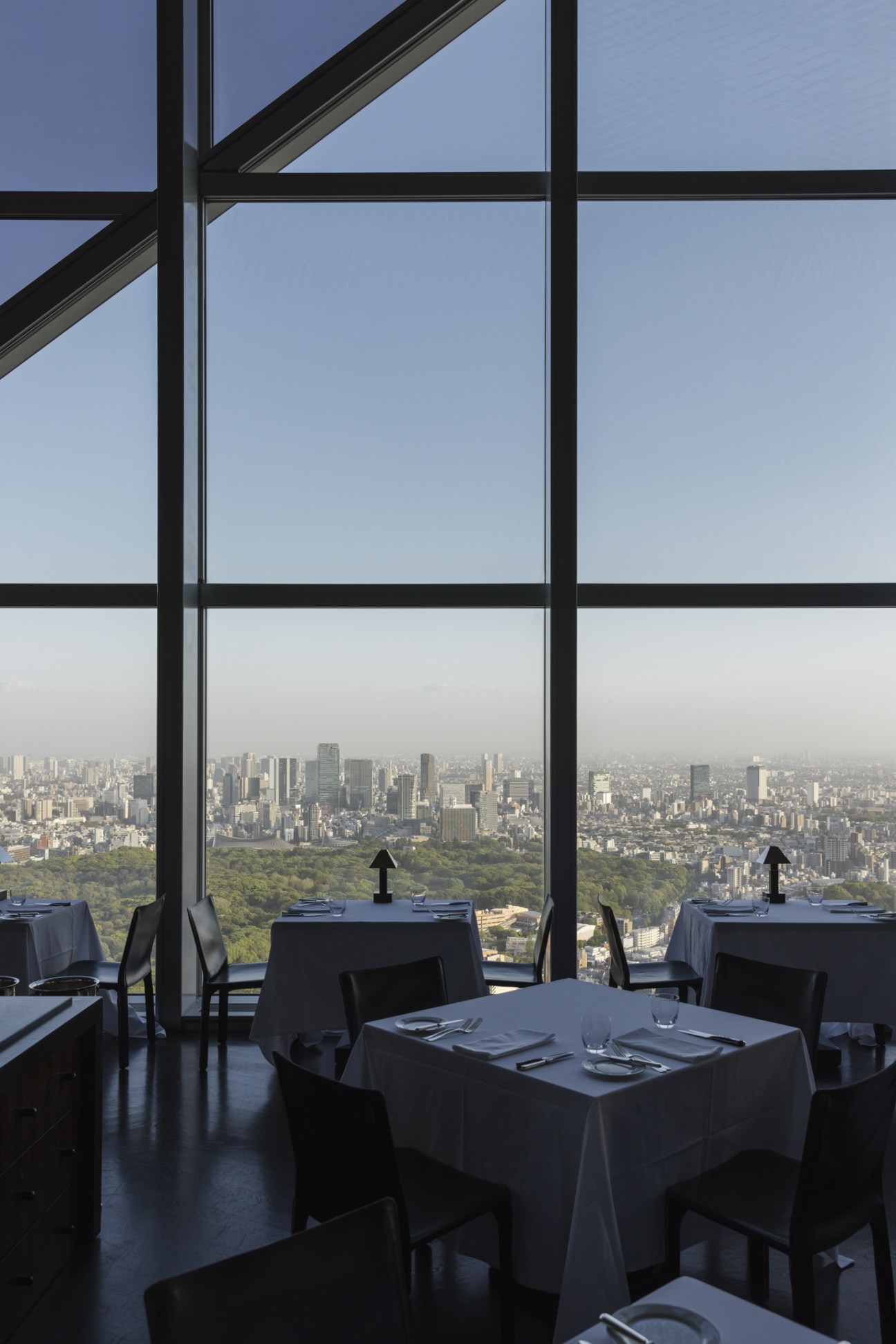
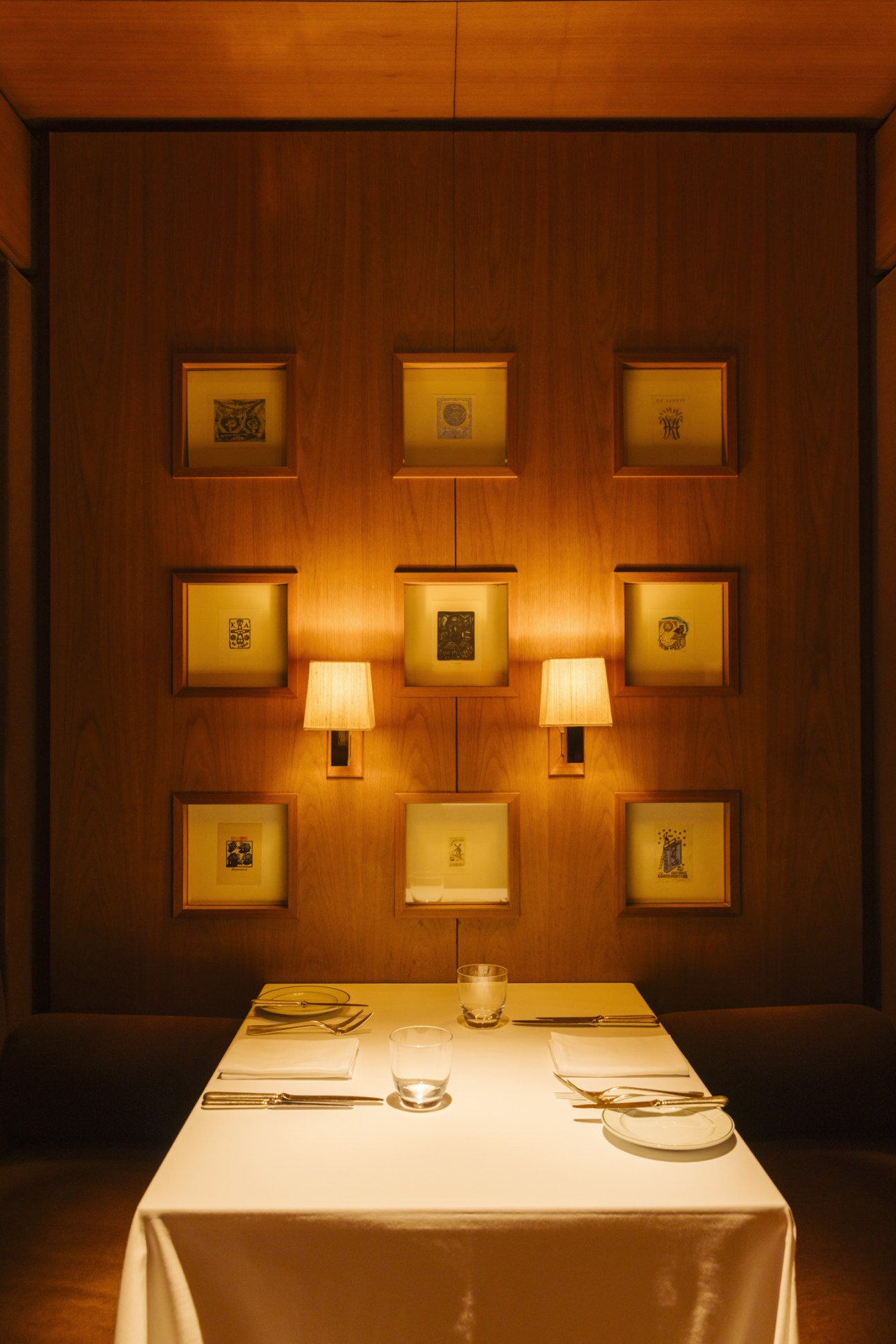
The Park Hyatt has always had a strong local clientele, providing the backdrop to countless business lunches, afternoon teas, weddings, birthdays, parties and proposals (hundreds of those and only one refusal apparently). For well-heeled members of the spa and gym (politicians and popstars among them), a swim in the scenic pool is a fixture of daily life. They are now on the hunt for a refuge until the hotel reopens in the second half of 2025.
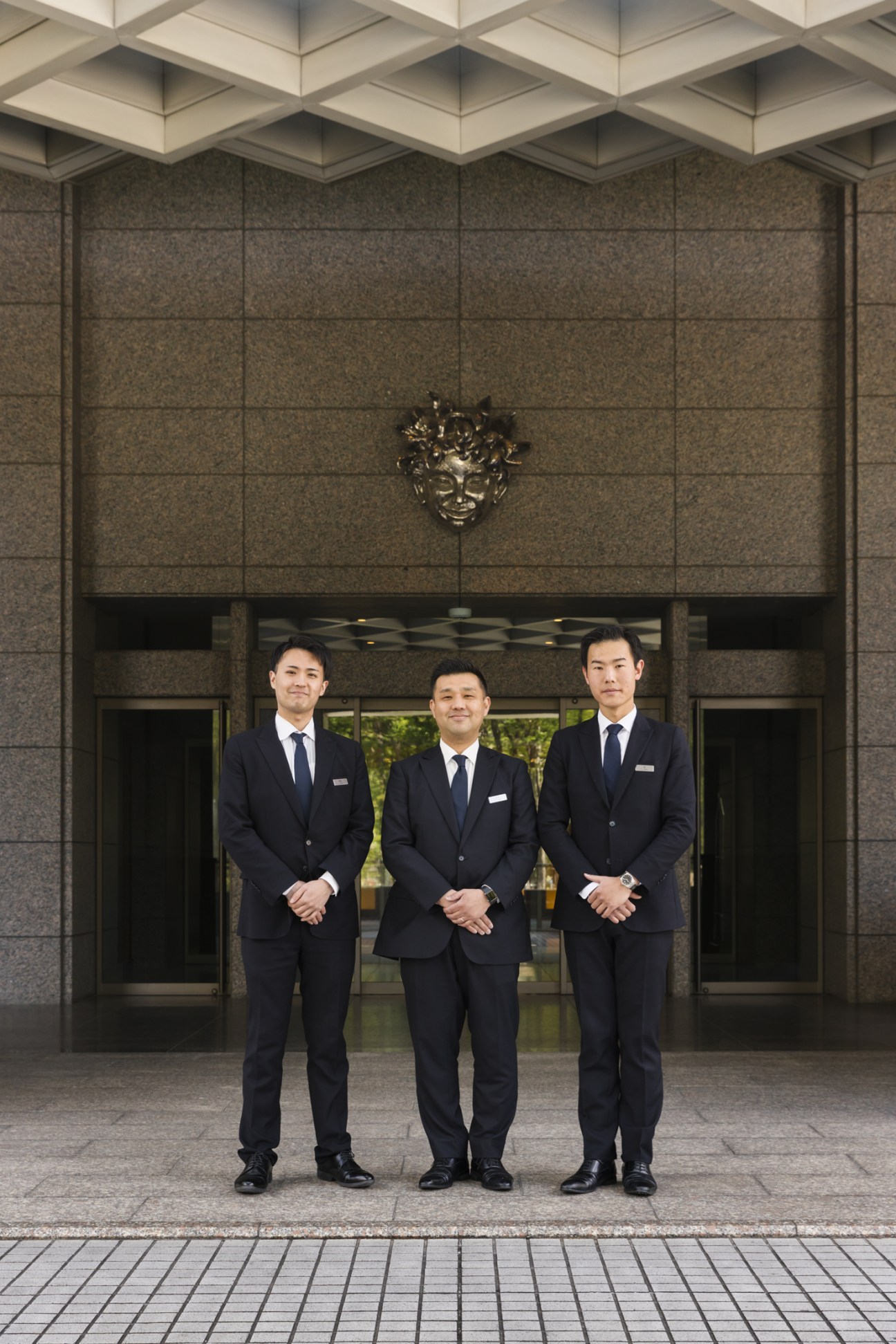
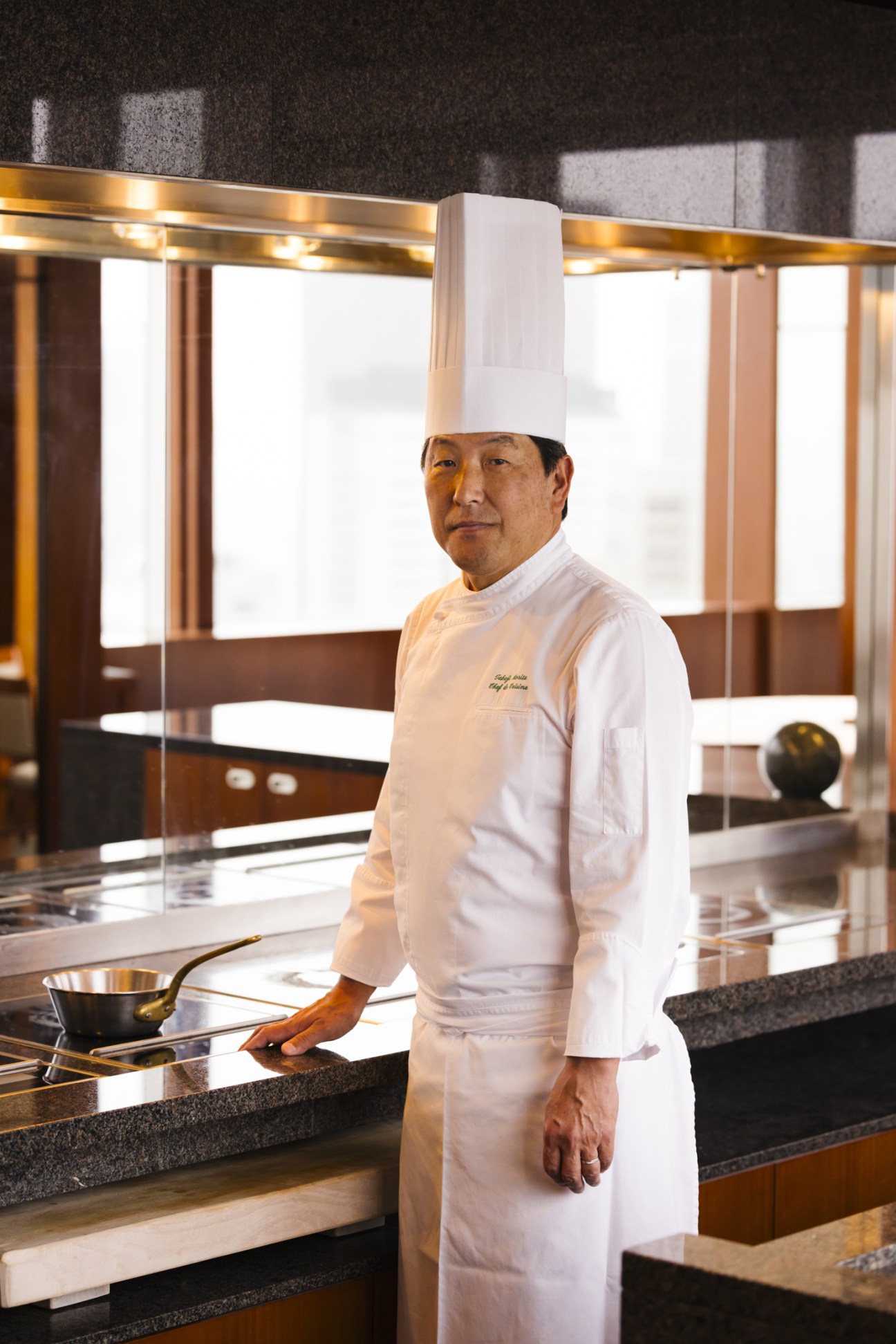
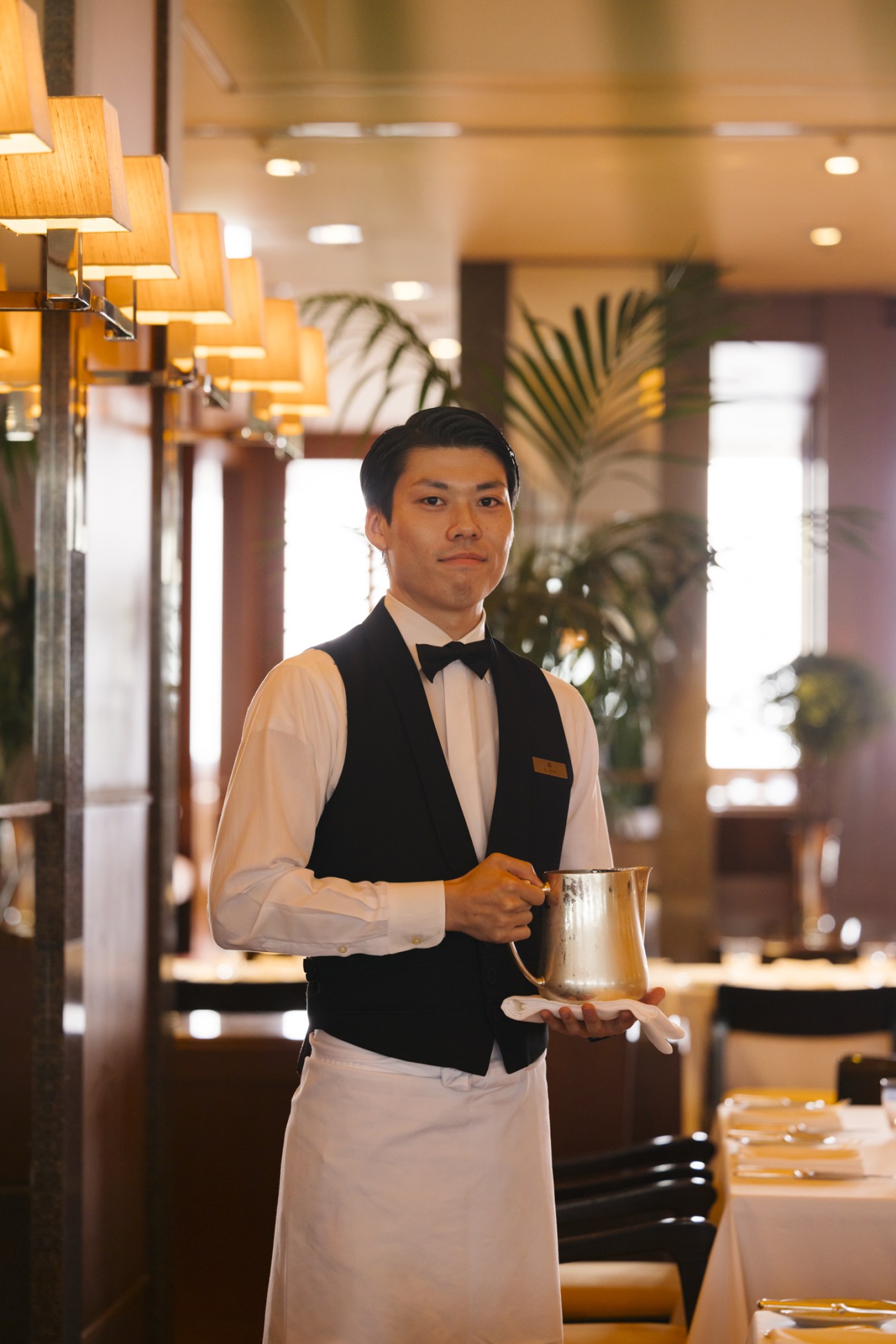
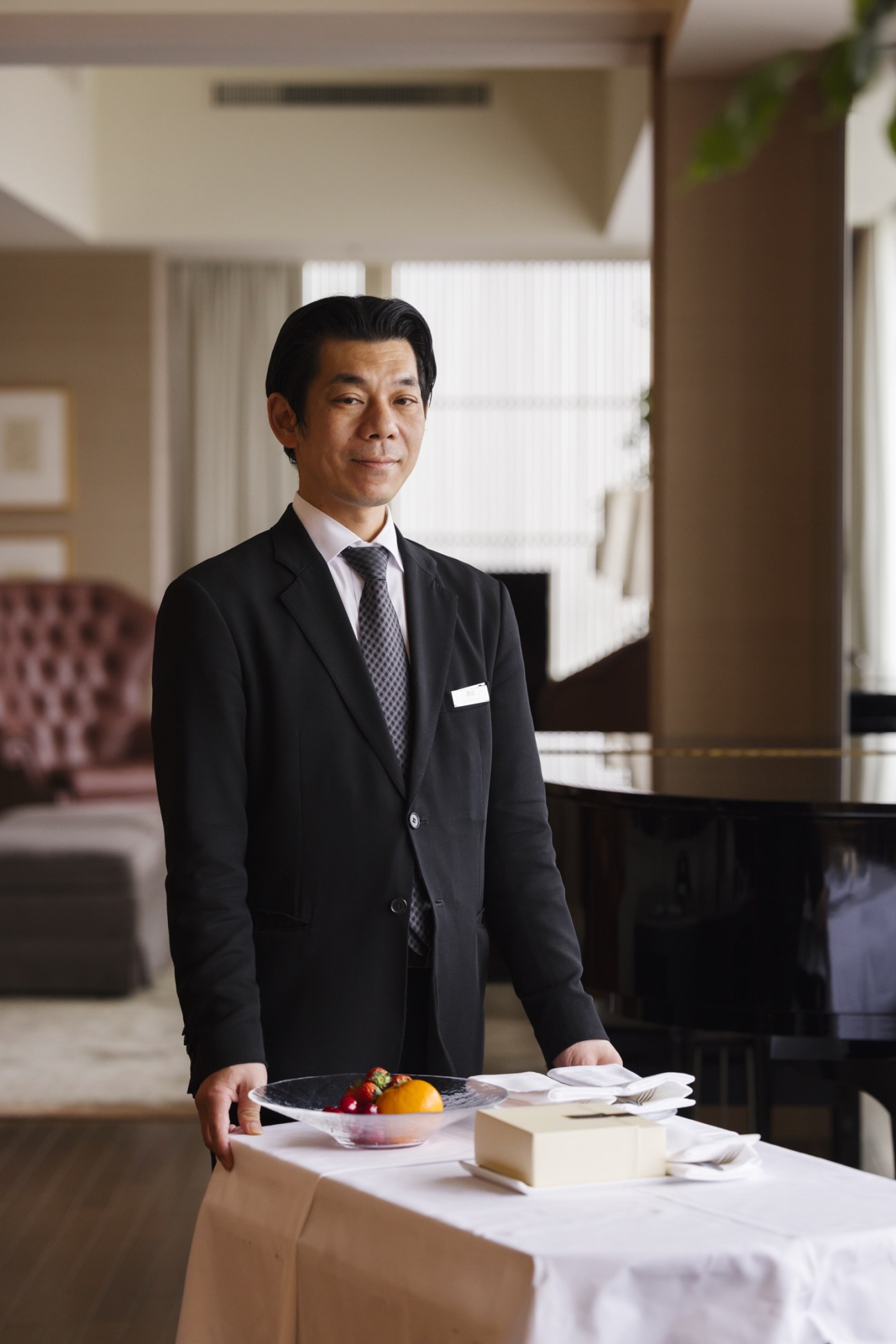
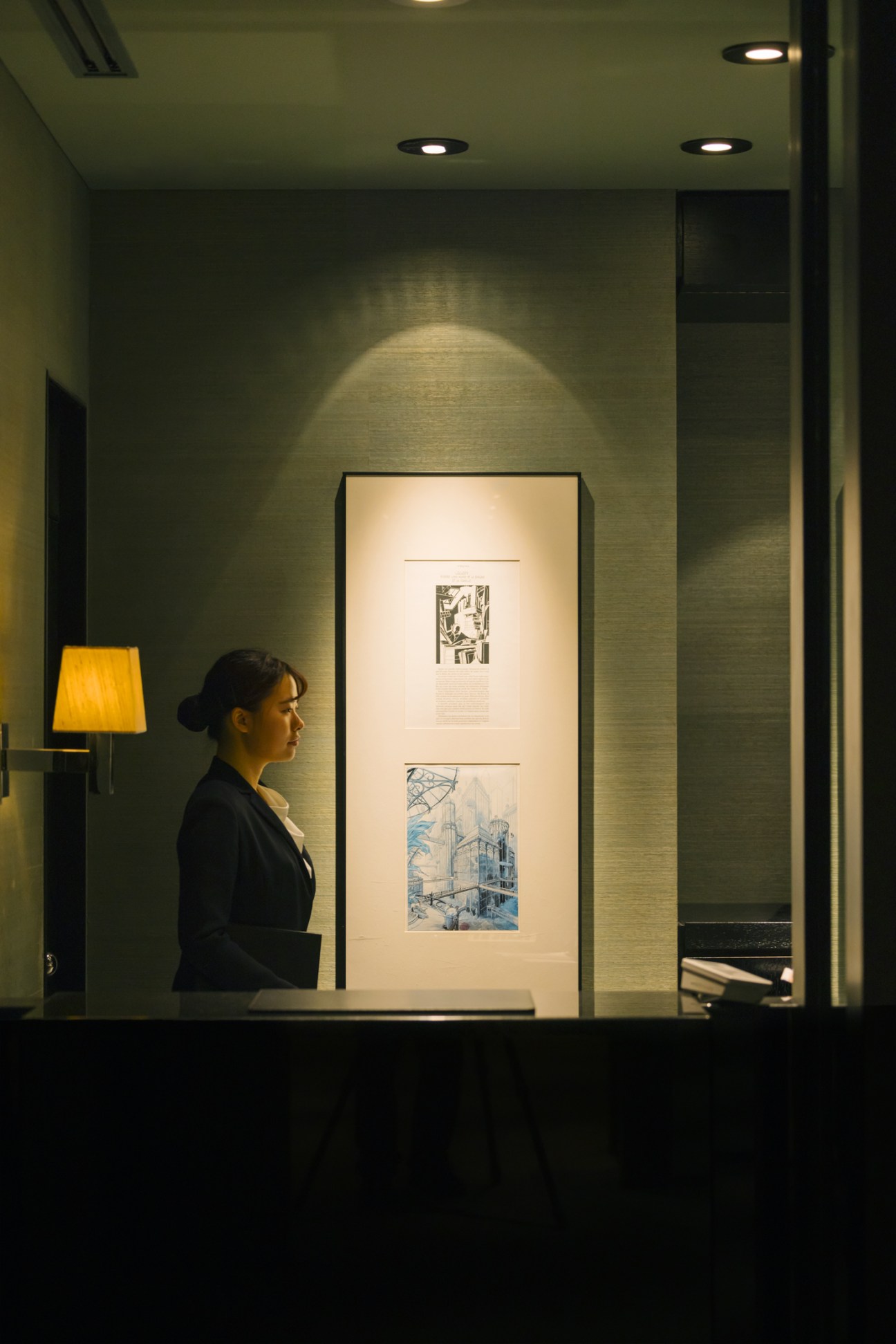
Peep behind the curtains here and the dedication and kindness of the staff is revealed: chefs who head out to the coast at an unearthly hour to see how fishermen handle their catch, concierges who manage the most challenging requests with charm, doormen who turn out to be senior members of staff happy to pitch in where needed and give some training to younger colleagues, an events adviser who can recall with perfect clarity the décor of a party back in 1994. Many of the staff – the Park Hyatt’s greatest asset – have been at the hotel since the opening and the sense of family is strong. Consistency across the board has been key to the hotel’s enduring success. Everything else in the city might succumb to change but diners know that the New York Grill will still have Caesar salad, mashed potato and wagyu steak on the menu.
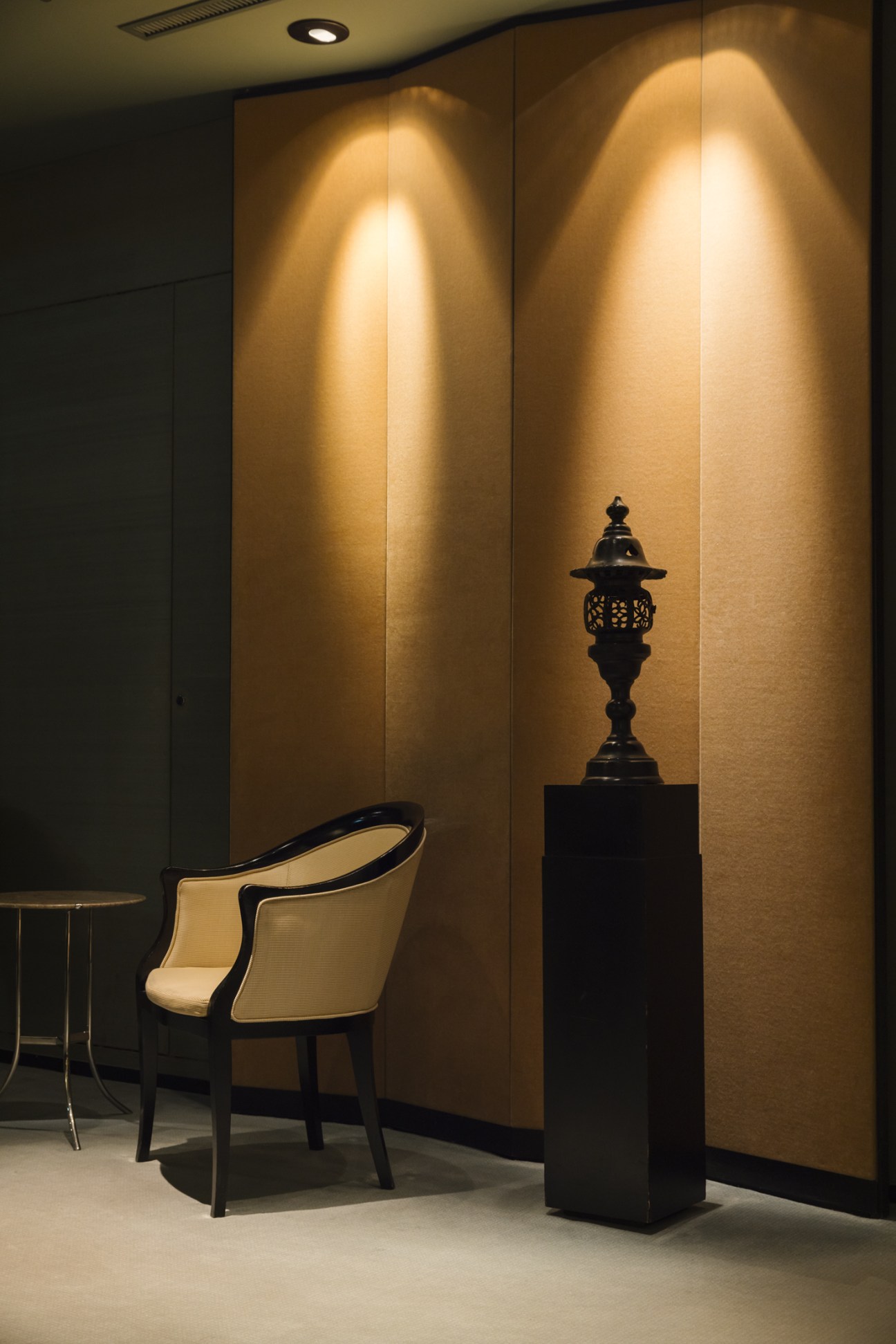
Early 1990s interiors and architecture are as unheralded as mid-century design once was, suffering from being dated enough to look tired but too recent to seem worth preserving. There has inevitably been some anxiety about fracturing Park Hyatt Tokyo’s singular, highly specific picture. On announcing the commission, Patrick Jouin and Sanjit Manku said that their intention is “to create an elegant and unique design experience for guests while respecting John Morford’s original vision”.
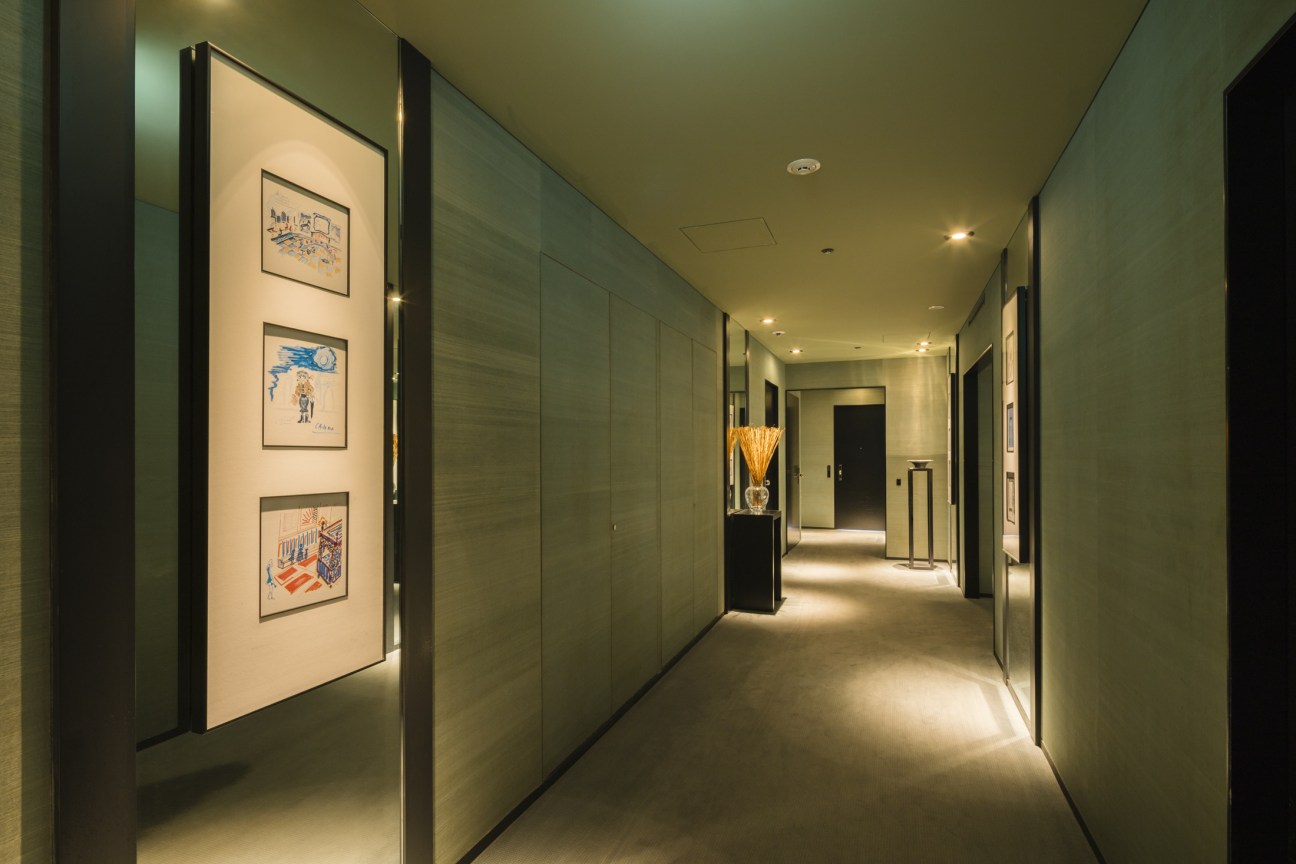
The opening of the Park Hyatt announced the arrival of international luxury hotels in Tokyo and for a long time it had no rivals. Tokyo’s tourism situation could hardly be more different today. In 1994 there were fewer than 3.5 million visitors to Japan; there will be more than 30 million this year and the Japanese government would like to see 60 million a year by the end of the decade.
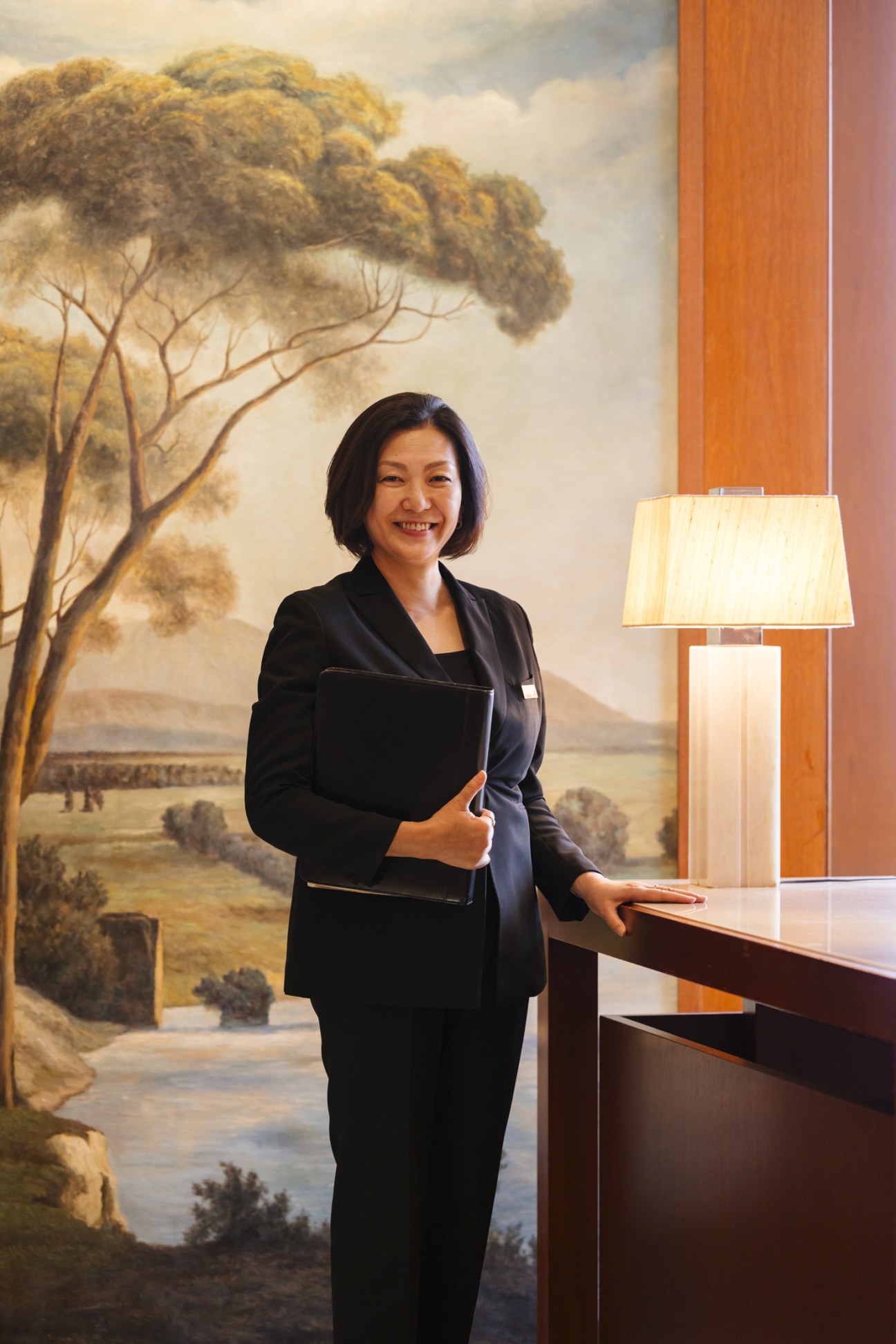
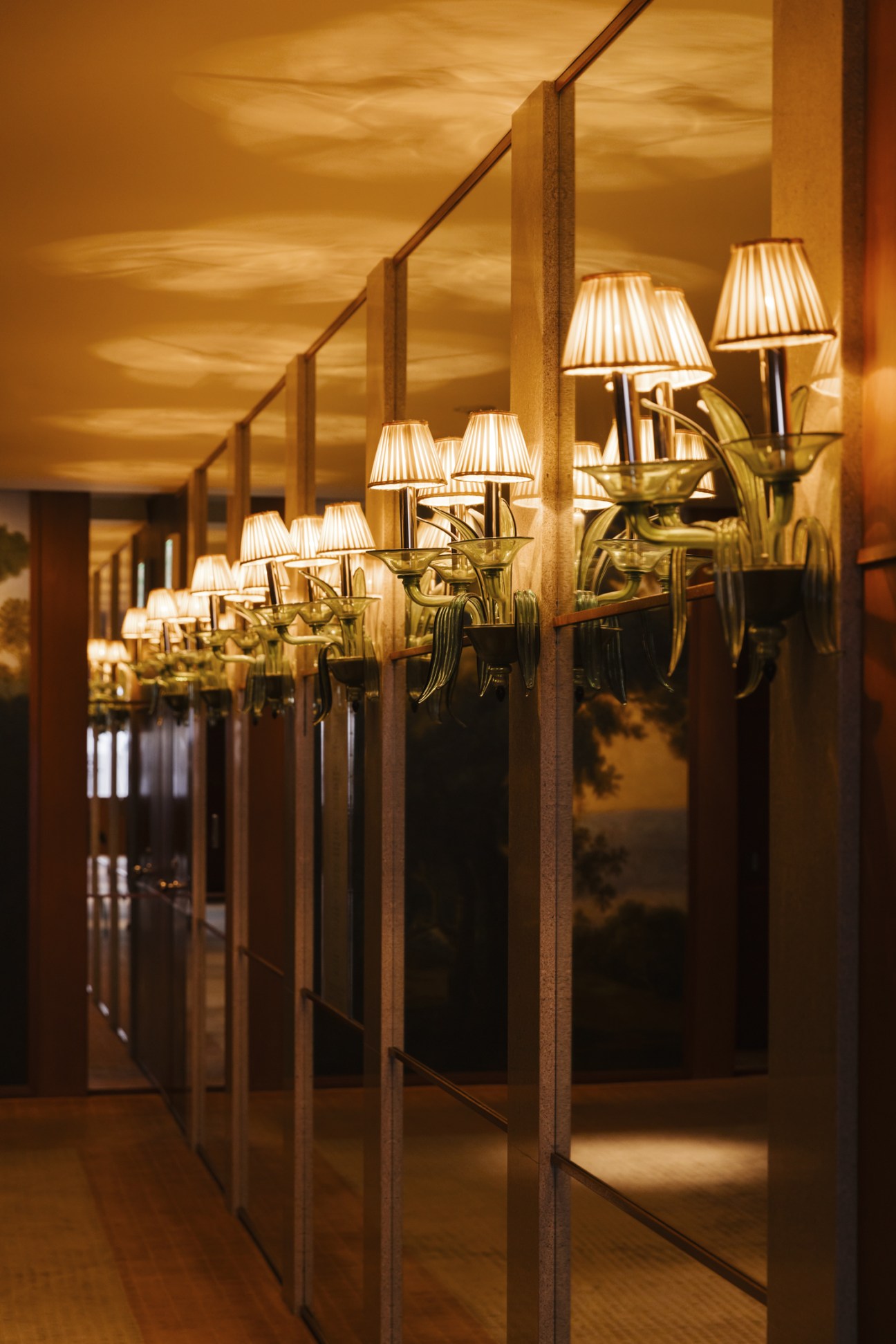
Hundreds turned out for the hotel’s “appreciation night” in April, just before the closure. It was a classic Park Hyatt evening of delicious food, good cheer and top-drawer singers giving it their all in the bar. Guests greeted staff as old friends and new connections were forged. Baseball legends mingled with artists who had made their own contributions to the hotel. The weather was obligingly clear and, after a radiant sunset, even the moon shone pink. Regulars who have been in the restaurant 100 times were still trying to capture the view.
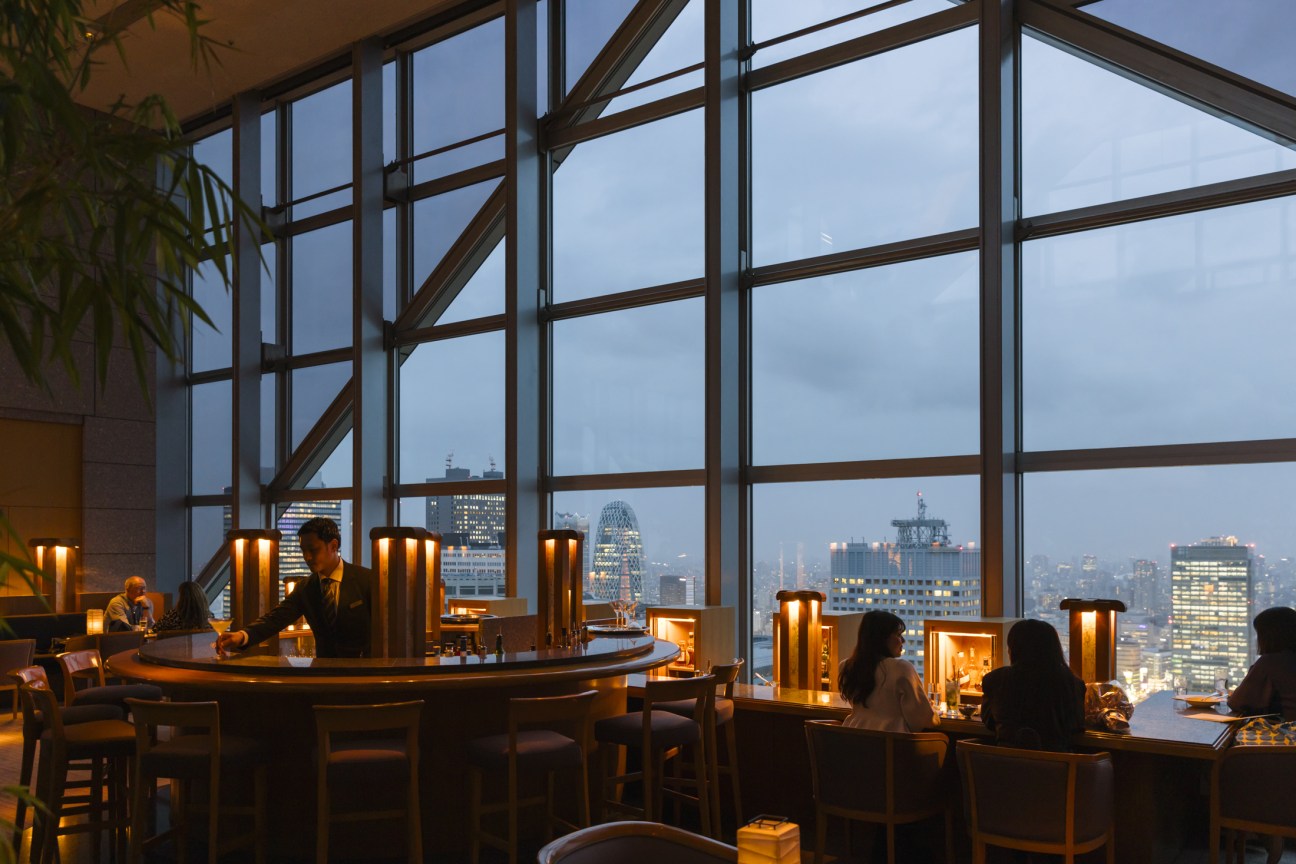

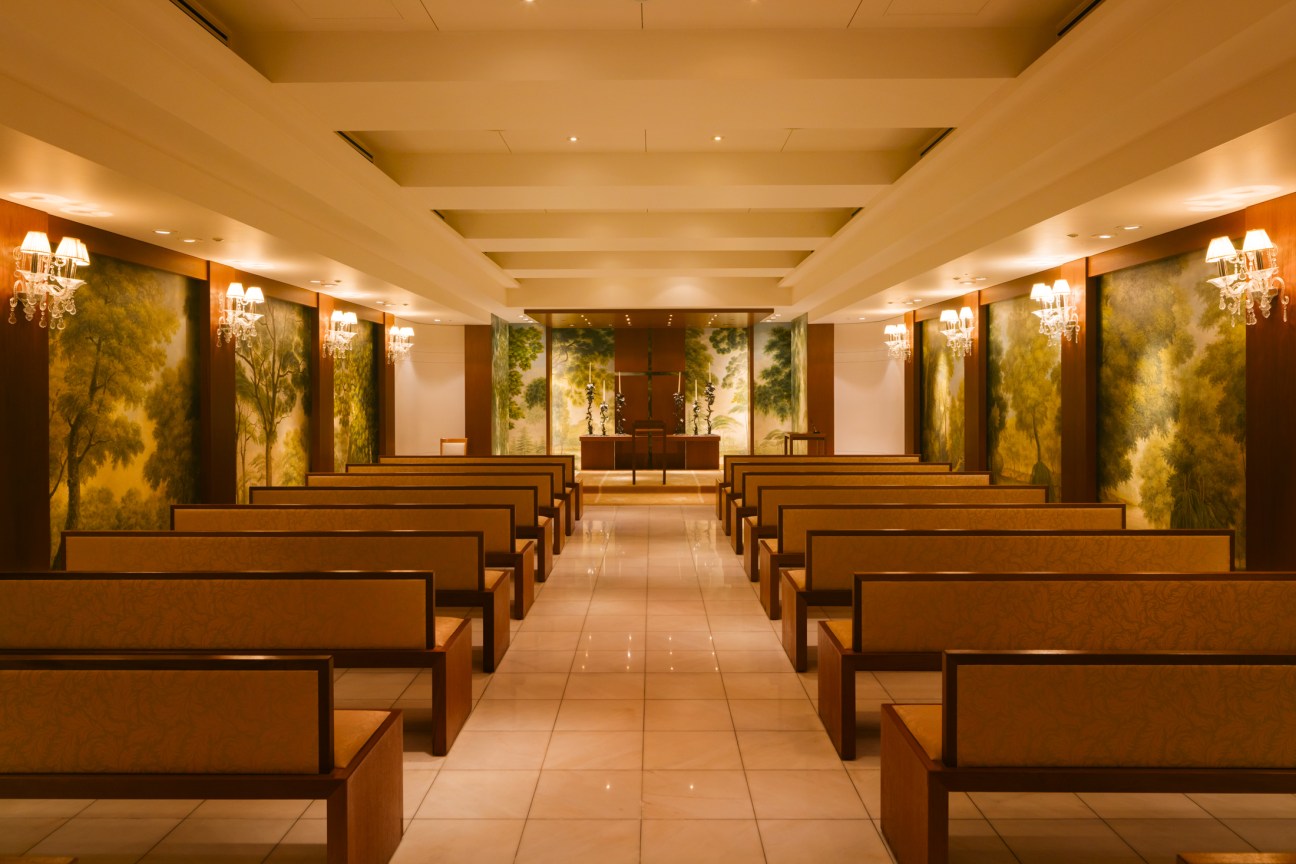
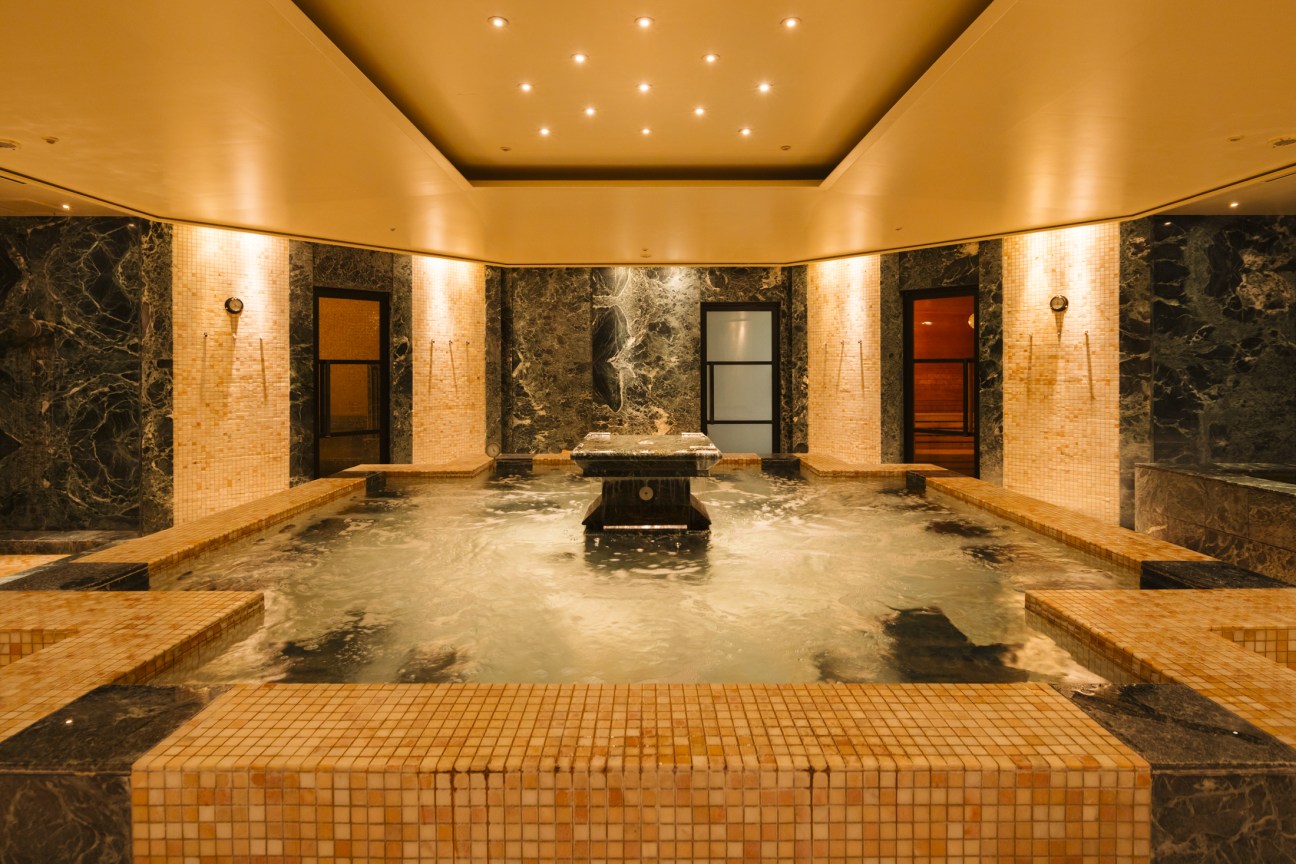
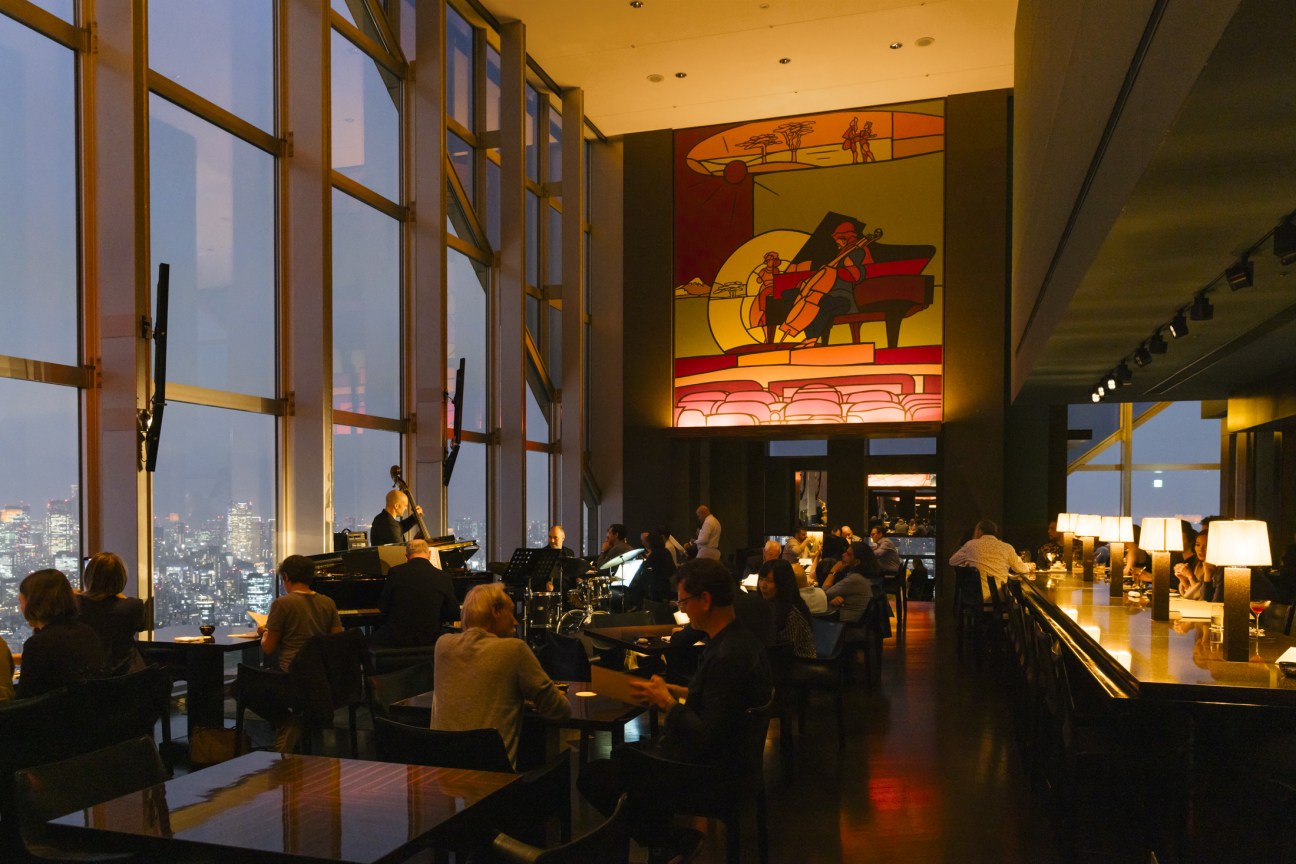
Morford once said that a good hotel experience “begins down the street”, which is certainly true here. Driving towards the Park Hyatt and pulling up to the understated, almost austere, entrance is never less than a thrill. Its temporary absence will be felt by many. Fashions change and numerous new luxury hotels have opened in Tokyo – each with their own charms – but the Park Hyatt never rushed to respond. It has always been uniquely itself – and all the better for it.
The Park Hyatt guest book
Tyler Brûlé
Monocle’s editorial director and chairman
“You’re in Tokyo so often – so why don’t you have an apartment there?” is a question that has come up a lot and, over the years, I have often thought about investing in a neat little set-up on a quiet side street of Aoyama, something slightly more grand in Futako-Tamagawa or even a little beachside spot in Hayama. In the end, I have always been deterred by the cost, the fuss, the commitment to be in Tokyo and, most importantly, the prospect of having to say goodbye to room 4701 at the Park Hyatt. […] I’m not quite sure how 4701 will be reborn in a little over a year but, in the meantime, this is a fond thank you for the memories.
Colin Nagy
Global brand marketeer and writer
There’s much to appreciate about Park Hyatt Tokyo’s refined aesthetic and ambience, from the dramatic whoosh of air in the elevators to the transitions between the bright morning light of the Peak Lounge and the dark, introspective library. […] I’d venture to say that that is why some of the world’s best creatives and thinkers hold it in such high regard.
Harumi Kurihara
Cookery writer
My husband and I have been staying at the hotel since it first opened. The head of food and beverage at the time was an old friend. […] I love the refined simplicity of the space and the warmth of the staff. The food is wonderful but I always particularly enjoyed Kozue, where you can really feel the seasons through the beautiful dishes and saké cups. It’s always a pleasure.
Kurihara, one of Japan’s best-known cookery writers, has published 150 cookbooks and sold 32 million copies.
Mieko Yuki
Ceramic artist
John Morford saw my work in a book he found in Ginza. There was a picture of a jester I’d made that he liked. He said he wanted to work with me and asked someone to contact me. […] I feel very grateful to John Morford. He gave me the chance to be what I am today.
Yuki spent four years at the Royal Ballet School in London before becoming an actor and ceramic artist in Japan. Her playful works are visible throughout the hotel.
Hiroko Koshino
Fashion designer
The Park Hyatt Tokyo was a short drive from my office so I went to see the hotel out of curiosity shortly after it opened. I had my 60th birthday party there. […] I’ve always felt a sense of Japanese harmony in the overall hospitality. When I stayed at the hotel, I was so impressed by the wonderful bedmaking. The sculptures are beautiful too. I think it was one of the first hotels to incorporate art; it struck me as a unique element that made the most of the talents of its creators.
Koshino has been a fashion designer for more than 60 years; her sisters Junko and Michiko are also designers.
The colourful story behind the Danish paint giant’s state-of-the-art coatings
Farrow & Ball is known for its outré colour names that include “Elephant’s Breath”, “Arsenic” and “Dead Salmon” but the company that owns the UK paint-maker has more than the luxury interiors market covered. Hempel A/S, a 109-year-old Danish company that owns various brands such as Crown, also manufactures cutting-edge coatings including those that adorn London’s Tower Bridge, the Louvre Abu Dhabi and Amsterdam’s Schiphol Airport. Elsewhere, its innovations can be glimpsed on the exteriors of oil rigs and gas platforms, as well as wind-turbine blades and ship’s hulls. All are rigorously formulated to reduce drag and pollution, and dazzle for far more than their hue.
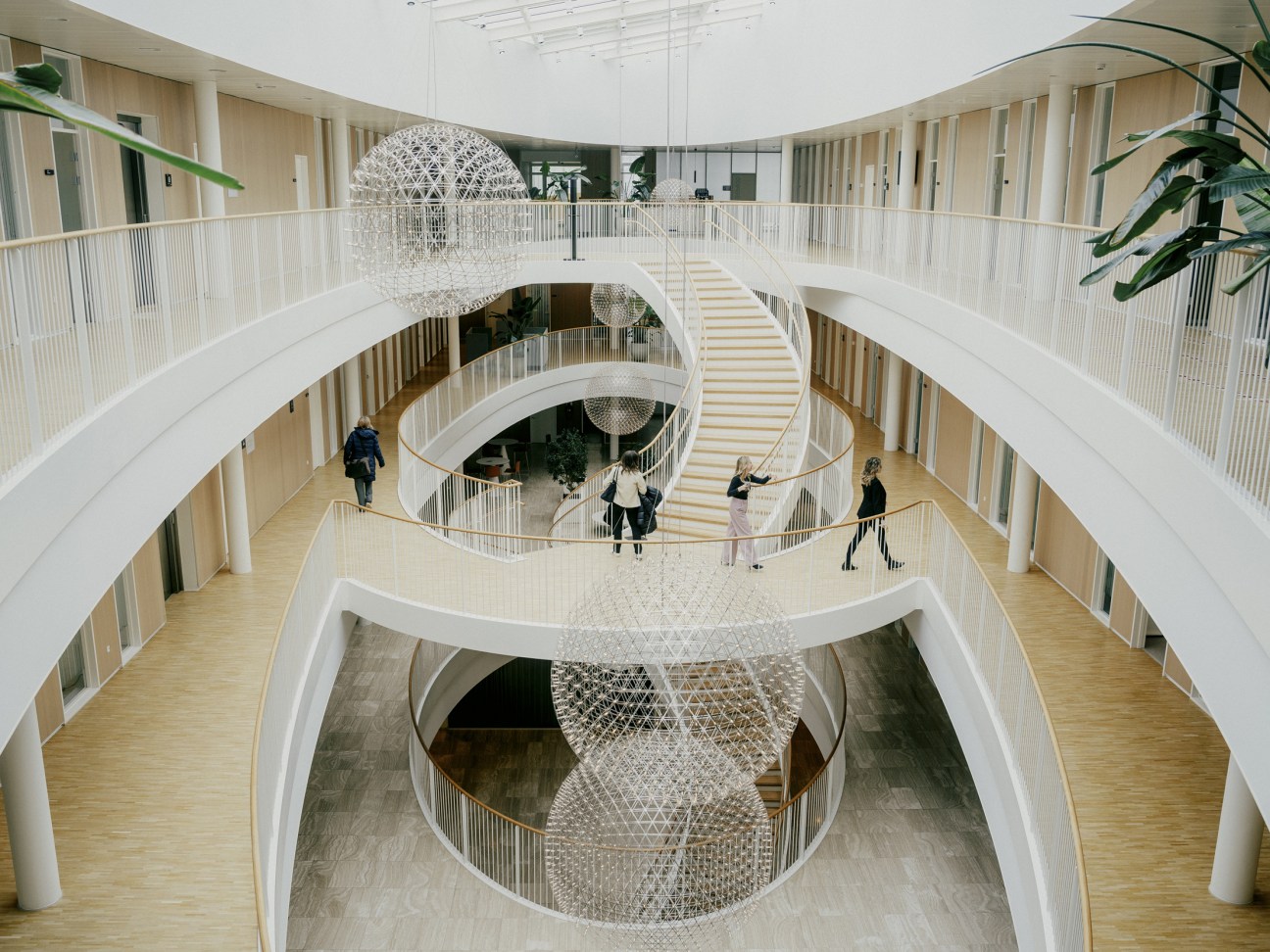
Watching paint dry has never been this fascinating or this lucrative: in 2023, Hempel’s revenue grew by a record 13.7 per cent to €2.4bn. “Our marine business has seen huge growth in the past three years,” says Michael Hansen, Hempel group president and CEO, when Monocle meets him just north of Copenhagen at the company’s headquarters in Lundtofte. “Shipping is experiencing a paradigm shift. The focus now is on the environment and decarbonisation. Our marine coatings are here to help these organisations achieve their goals and if we can solve the biggest challenges facing the wind-energy industry, there is potential for real growth there too.”
The technicians in the research and development technology centre downstairs are busy tackling these issues. As we don anti-static overshoes, goggles and white coats, formulations specialist Camilla Holmberg informs photographer Mathias Eis that, due to the solvents used, this is an ATEX (“explosive atmosphere”) zone. For safety reasons, he’ll need to shoot at a minimum height of 80cms.
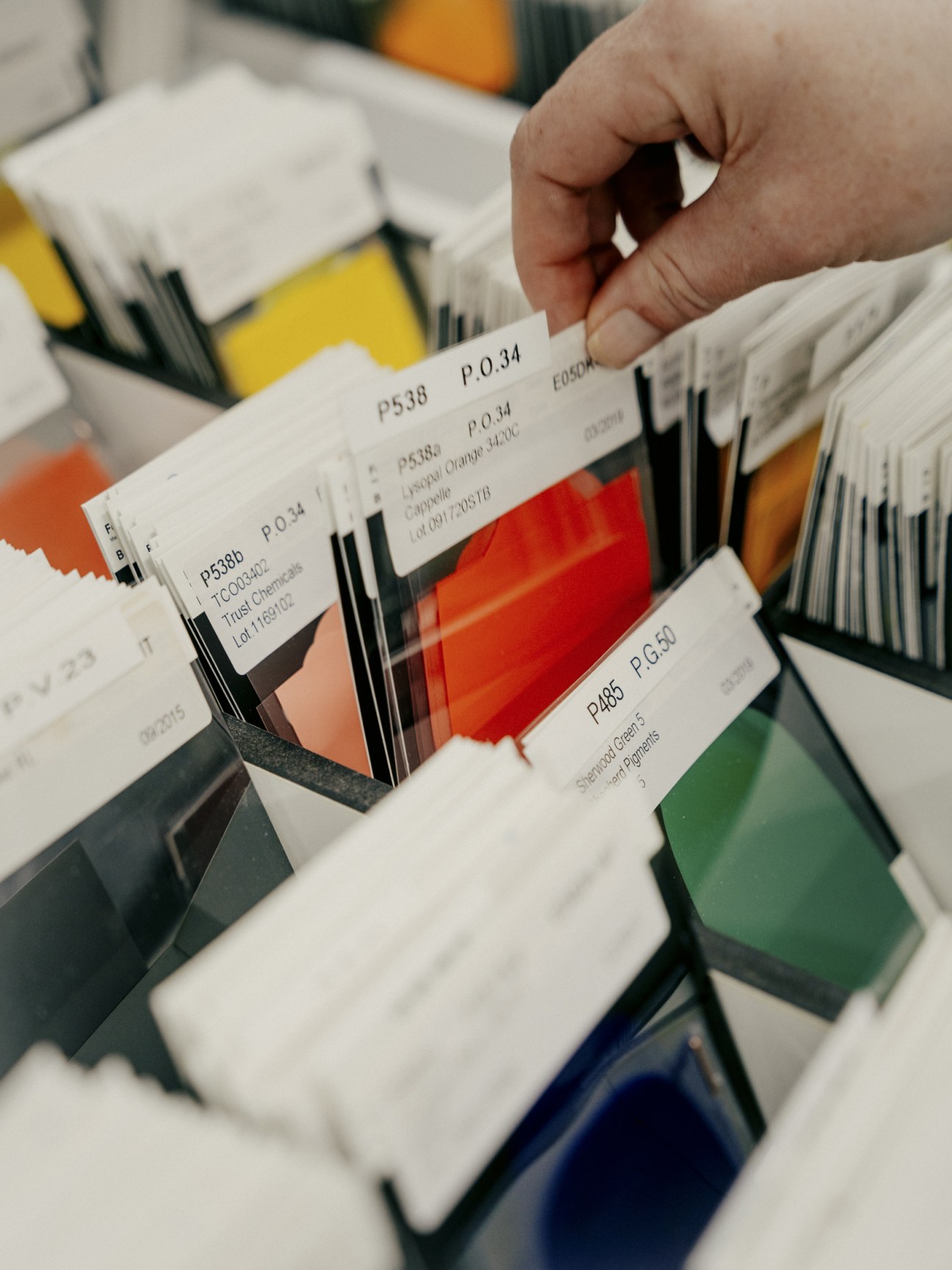
First we visit the Colour Room, which is painted the most neutral of greys, where colours can be assessed under all sorts of lighting conditions. Next, Holmberg hands me a tongue of polyurethane paint that is used to coat the blades of wind turbines. Rain is an existential threat to offshore wind farms. In testing, Hempel subjects the blades to its helicopter-engined weather simulator and they come out looking like they’ve been gnawed by a colony of vicious rabbits. The paint’s rubbery texture counteracts this by enhancing wind resistance and providing protection against adverse conditions. Another of its miracle paints can help to maintain the integrity of burning buildings by puffing up to 50 times its original volume. It can withstand temperatures of 500c and is typically used for oil refineries but also coats the steel frame of Schiphol Airport.

Hansen is particularly proud of Hempel’s newer marine coatings: one protects hull interiors against brutal cargos while also being easy to clean, enabling a quick turnaround in ports; another super-slippery, self-polishing, silicone-based external paint can reduce drag, and therefore fuel usage, by more than 17.7 per cent. There’s even a special paint to smooth over vertical welds on a ship’s outer hull. “This is really cool because welds are structural and you can’t grind them down,” says Hansen, taking nerdy delight in the details. “Using our paint on welds alone can reduce fuel consumption by 2 to 3 per cent. And it’s biocide-free, so it’s non-toxic.” To demonstrate the challenges faced when applying marine paints, Holmberg shakes a bottle of tomato ketchup. “To paint a ship, you need to be able to spray it but it mustn’t run or drip,” she says. “Just like ketchup when you shake it out of the bottle, it has to flow with the perfect consistency.”
In this context, Hansen’s move from shipping to paint, after 19 years at Danish shipping giant Maersk, doesn’t seem like such an odd career change. As he notes, Hempel started out in 1915 and Maersk was its first major customer. It was responsible for formulating the trademark “Maersk blue”. There are similarities between the company’s founders too. “Like Maersk, JC Hempel was a very entrepreneurial, outward-looking and innovative man: he went into the Middle East and Asia in the 1960s, for example,” says Hansen. “In addition to this, he firmly believed in moral responsibility.”
This mindset led Jørgen Christian Hempel, who died 1986 aged 91, to effectively give away his fortune in 1948 when he created the Hempel Foundation, which is still the sole owner of the company. “He did it primarily to protect the group from a hostile takeover but over the past 20 years it has grown as a philanthropic foundation, giving more and more to charity,” says Hansen. Many of Denmark’s larger organisations, such as Lego, Maersk and Carlsberg, have separate charitable foundations but it is rarer for an entire company to be owned and run by them. It does have implications when the company needs to raise funds, though. “True, it means that we have to live from our own retained earnings but we want to be the industry leader in sustainability. For that, it is an advantage to have the foundation’s long-term approach. Above all, the fact that our dividends go to philanthropy gives the people who work here a huge sense of purpose.”
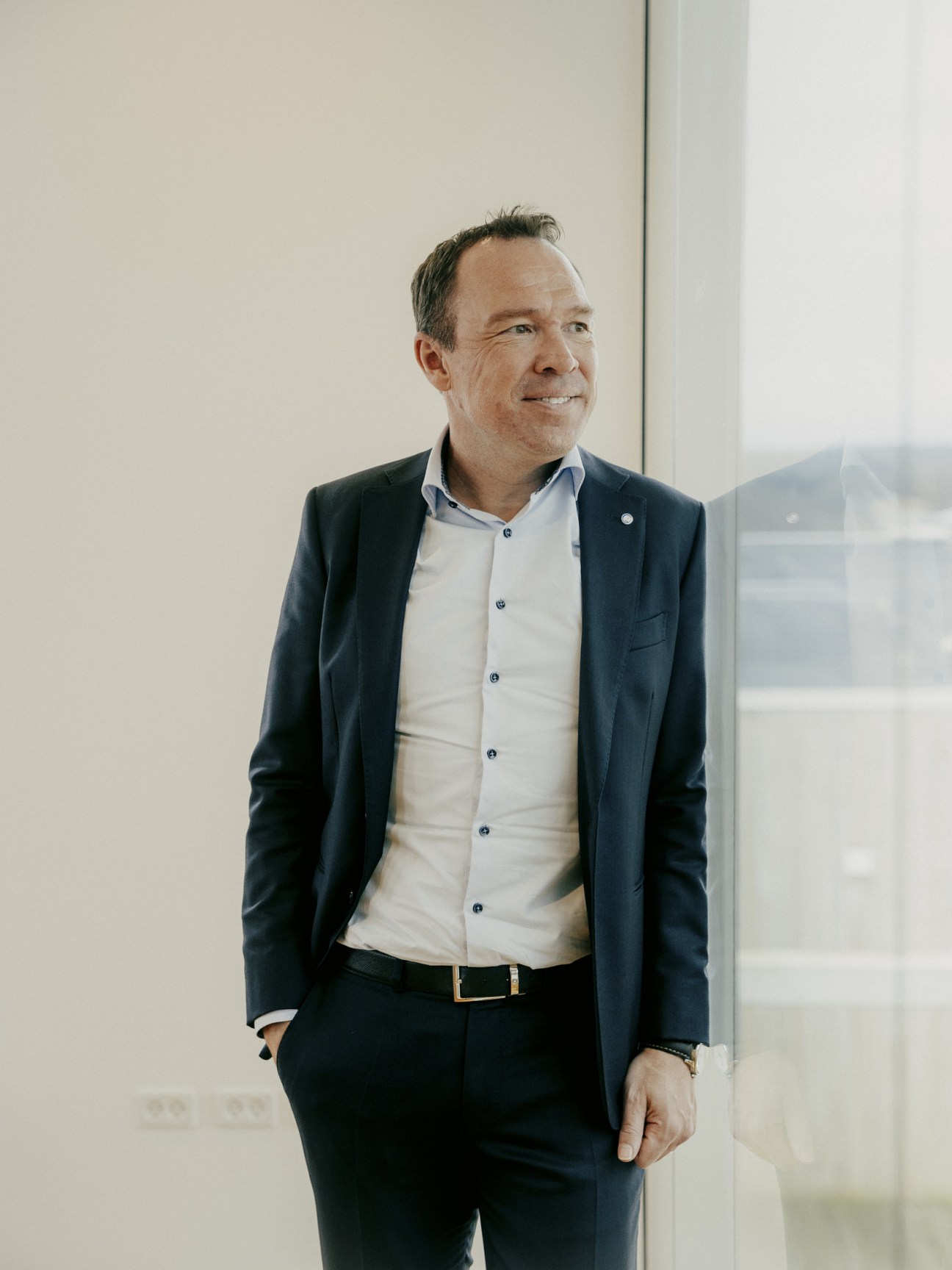
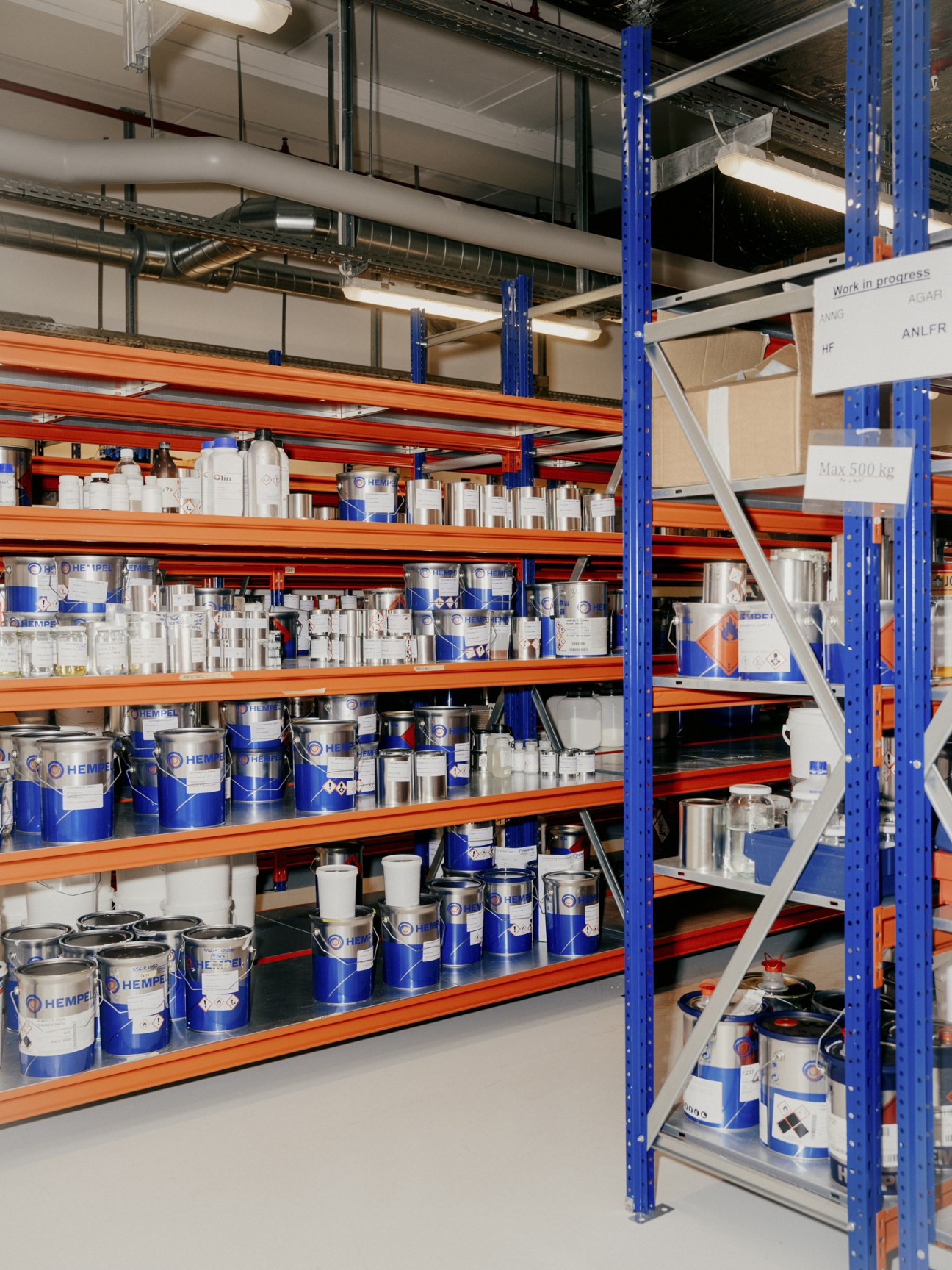
“The foundation is a major reason why so many people are drawn to roles at Hempel,” says Pernille Fritz Vilhelmsen, chief people and culture officer. “When we go to work, we know that our proceeds are not going straight to shareholders or an owner but towards doing good. It is a unique proposition in terms of employer branding and we do use it in recruitment.”
This purpose-driven loyalty is one of the reasons why Hempel is considered to be among the best companies in Denmark to work for. Its HQ is appealing too. Built by Swedish architects Sweco, it has a central spiral staircase that emulates a can of paint being stirred. There is a fully staffed canteen and working hours are flexible. “Our Danish business is [financially] insignificant but we are still inspired by the country’s values,” says Hansen, who took over the top post a year-and-a-half ago. “We put our people first because innovation doesn’t come from nowhere. It also makes sense to be in Denmark. It’s easy to reach the rest of the world from Copenhagen; the reputation for quality of life here means that we attract overseas talent; and we have access to educated labour.” Since 2017 the Hempel Foundation has supported a science and technology centre within The Danish Technical University (DTU) that specialises in sustainable coating solutions. Once they have concluded their studies, many graduates join the organisation.
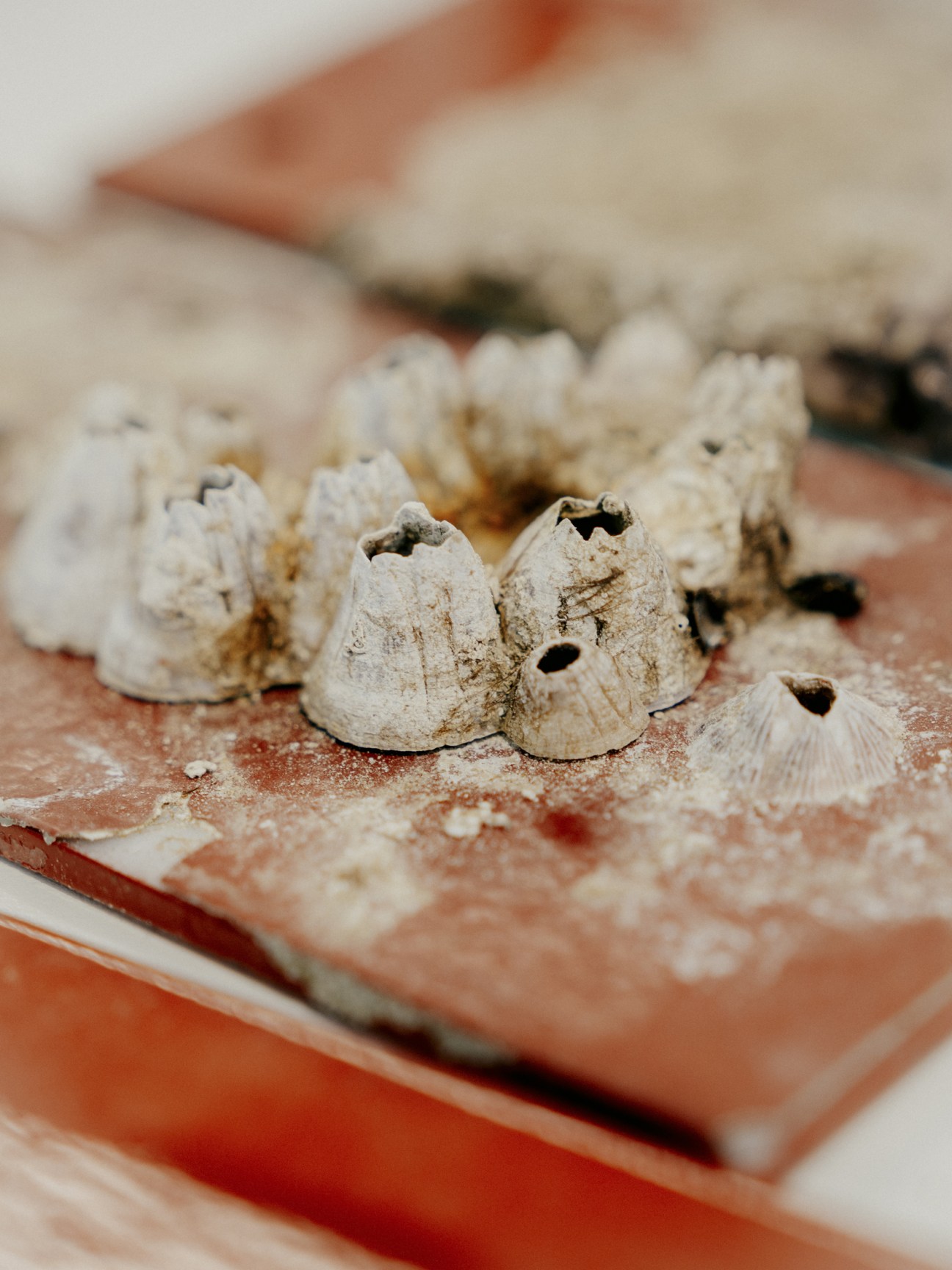
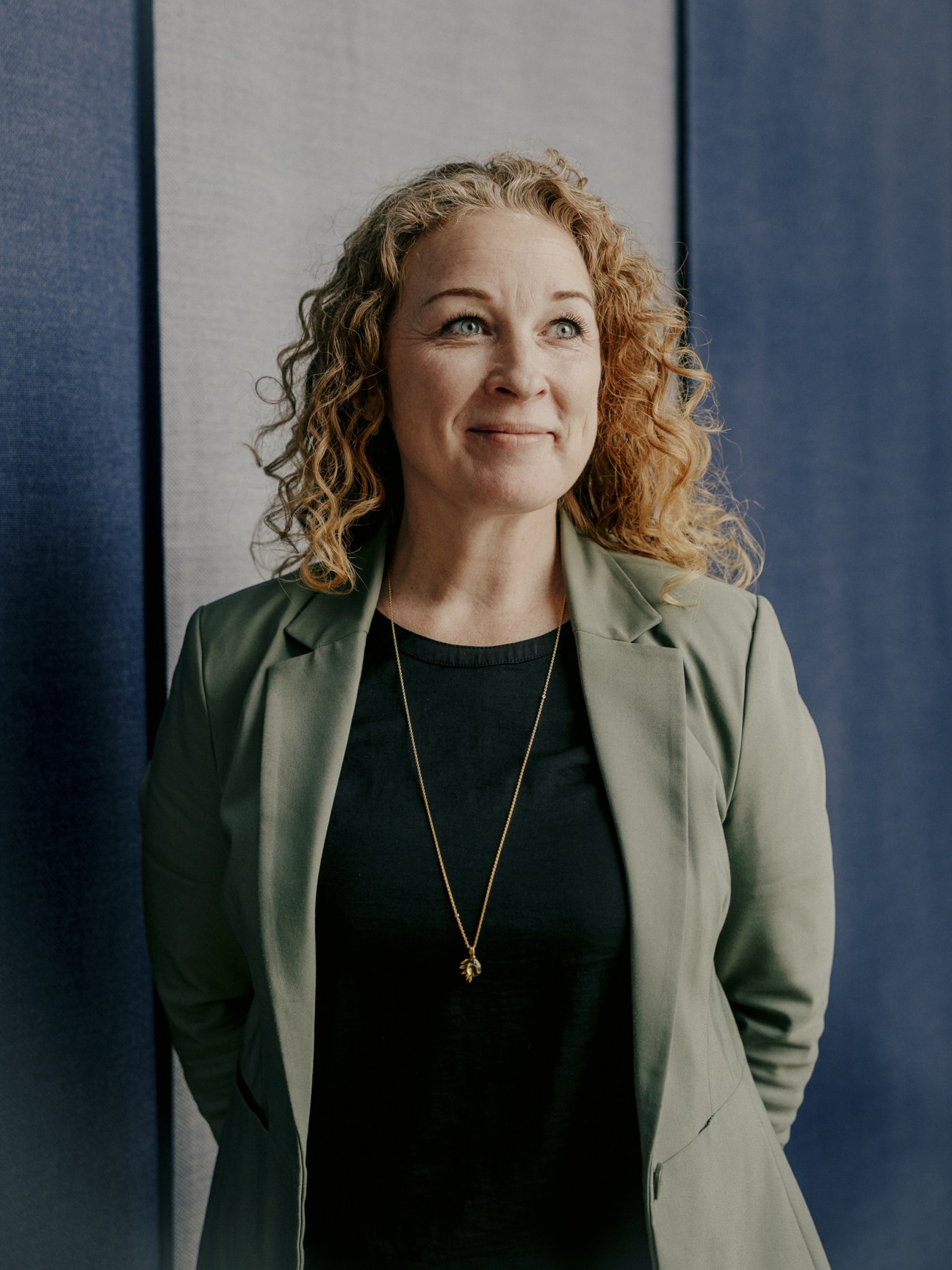
Hempel’s business is divided into four sectors. Besides its marine, infrastructure and energy ventures, it also runs a decorative operation. Under this umbrella is paint and wallpaper company Farrow & Ball, which was founded in 1946 in Dorset, England, where it is still based. In 2021 it was bought by Hempel from US private-equity firm Ares for a reported €580m. The decorative arm also includes Crown Paints and JW Ostendorf in Germany. Farrow & Ball showrooms and Crown Decorating shops make up some of the 200 or so high street shops that Hempel runs in the UK. “Sometimes I wonder why we aren’t solely available online but the painting and decorating industry is surprisingly conservative,” says Hansen. “It turns out that professionals love to come into the shops for a cup of coffee before they start their day. It’s a big part of the appeal.” The decorative sector boomed during the coronavirus pandemic but has been hit by energy and material price hikes over the past two years. “There are still real challenges,” says Hansen. “Decorative hasn’t recovered yet.”
Ana Henriques, Hempel’s executive vice-president, head of decorative, is partly responsible for nurturing the sector back to health. Henriques joined the company from AB InBev in New York and has faith that the consumer brands can innovate their way back to greater revenues. “Farrow & Ball has always been a pioneer: we were the first to have showrooms rather than just traditional paint shops,” says Henriques.
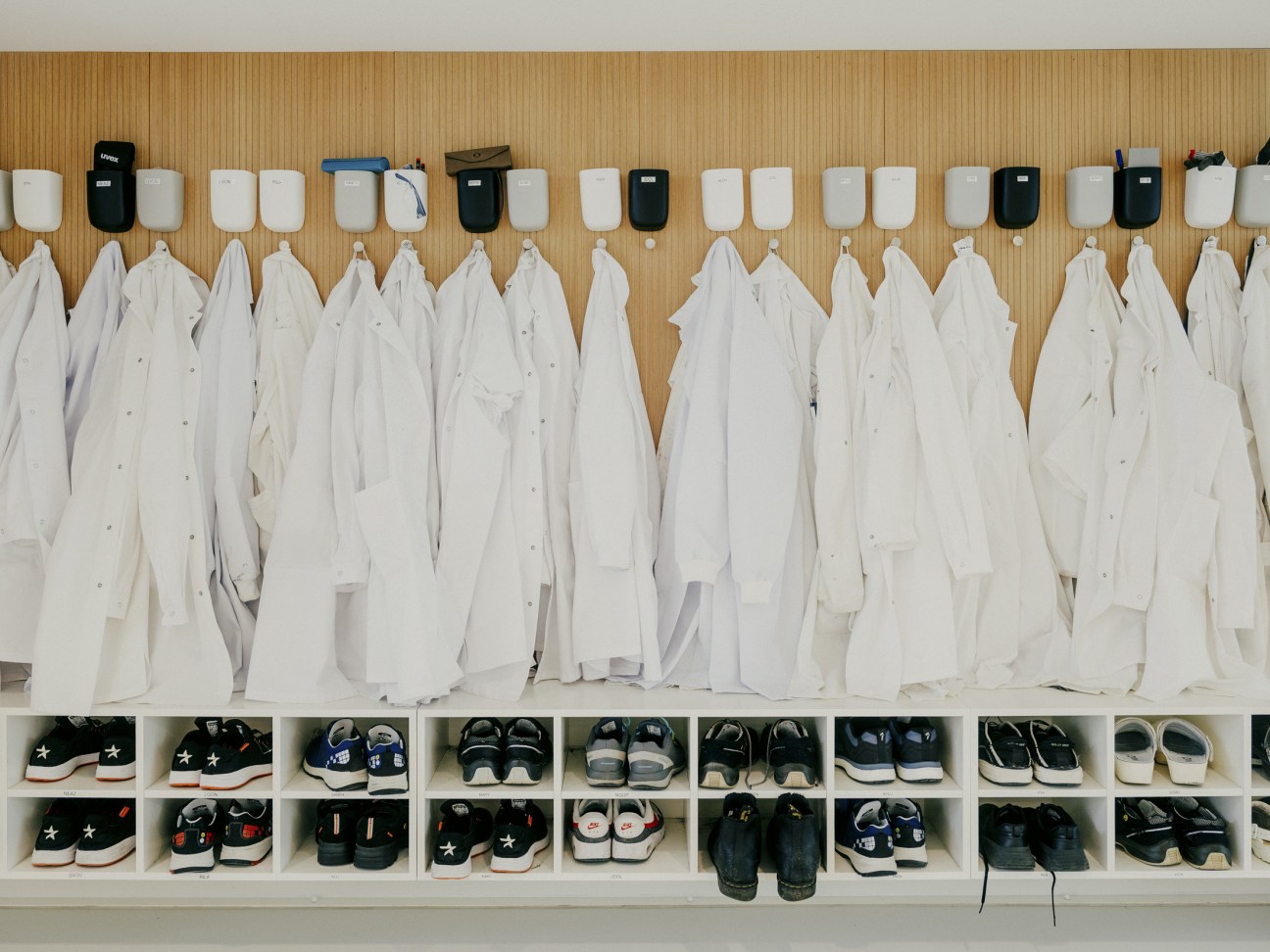
“We have also embraced working with colour consultants, e-commerce and collaborating with designers. These days we are very well connected with influencers and a have a more-than-two-million-strong following on social media. But what comes first is the quality of our products, which are known for their richness and depth of colour.” In total, Farrow & Ball uses 12 different pigments to blend its 132 current shades. Historically, pigments would have come from a wide range of unusual sources: “India Yellow”, for instance, was once made from the urine of cows fed on a diet of mango leaves. Today they are all chemically created. The company is in the middle of gently revamping its colour range – something that happens every five years. The expectation this year is that surfaces that were painted at the height of the coronavirus pandemic will be looking a little tatty. “It has been a while since everyone redecorated,” says Henrique.
The air that we breathe in our homes and offices is a major topic among Danish architects right now. Volatile organic compounds (VOC), which are released when paint is applied, and over the longer term, are of particular concern. “Farrow & Ball was the first company to go 100 per cent water-based,” says Henriques. “People want their homes to feel healthy: they don’t want the smell of paint to linger, which means that they are going for low VOC options [Farrow & Ball paints are low-trace VOC – the best rating]. They also want to use colour to create specific moods.”
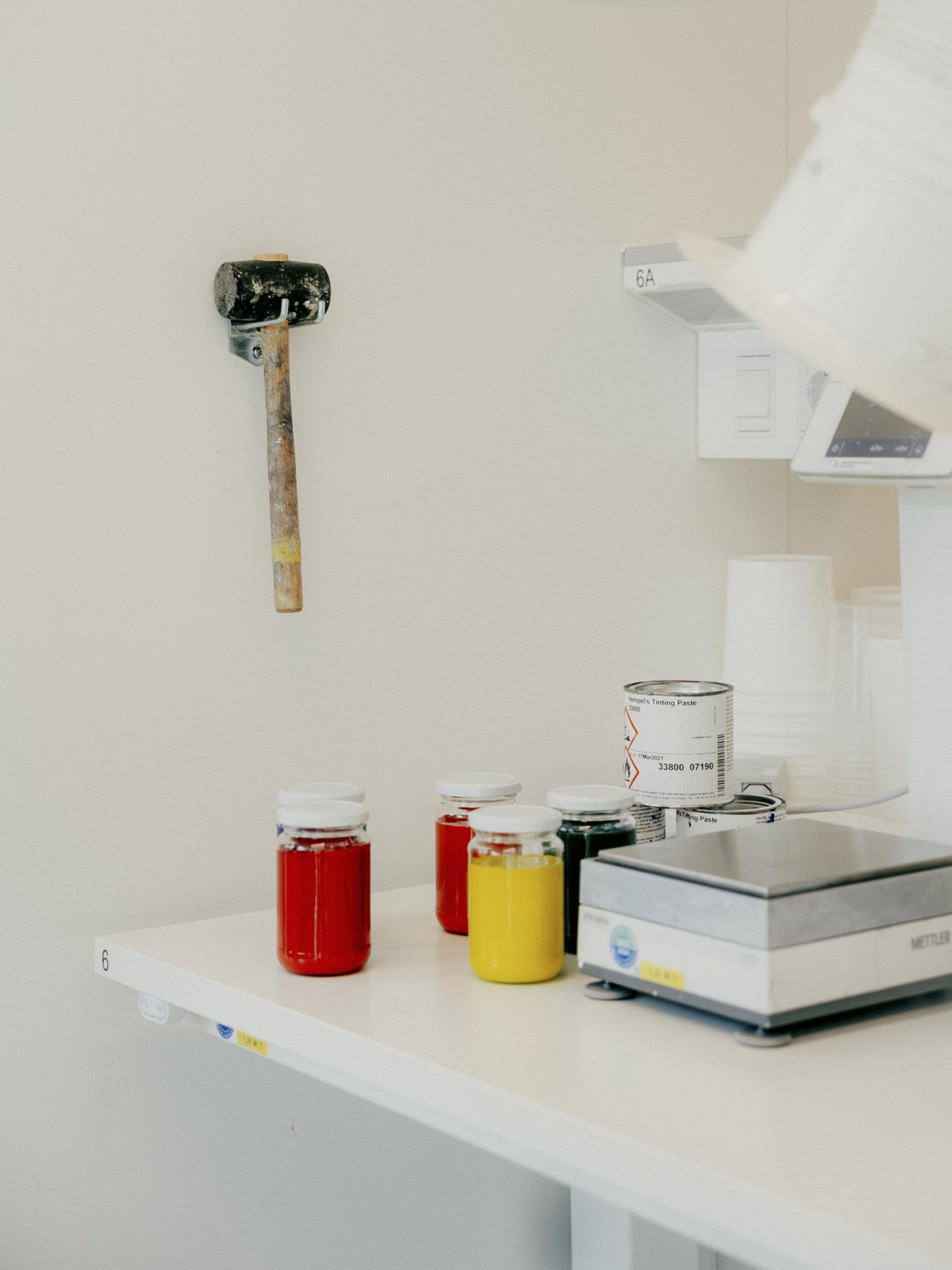
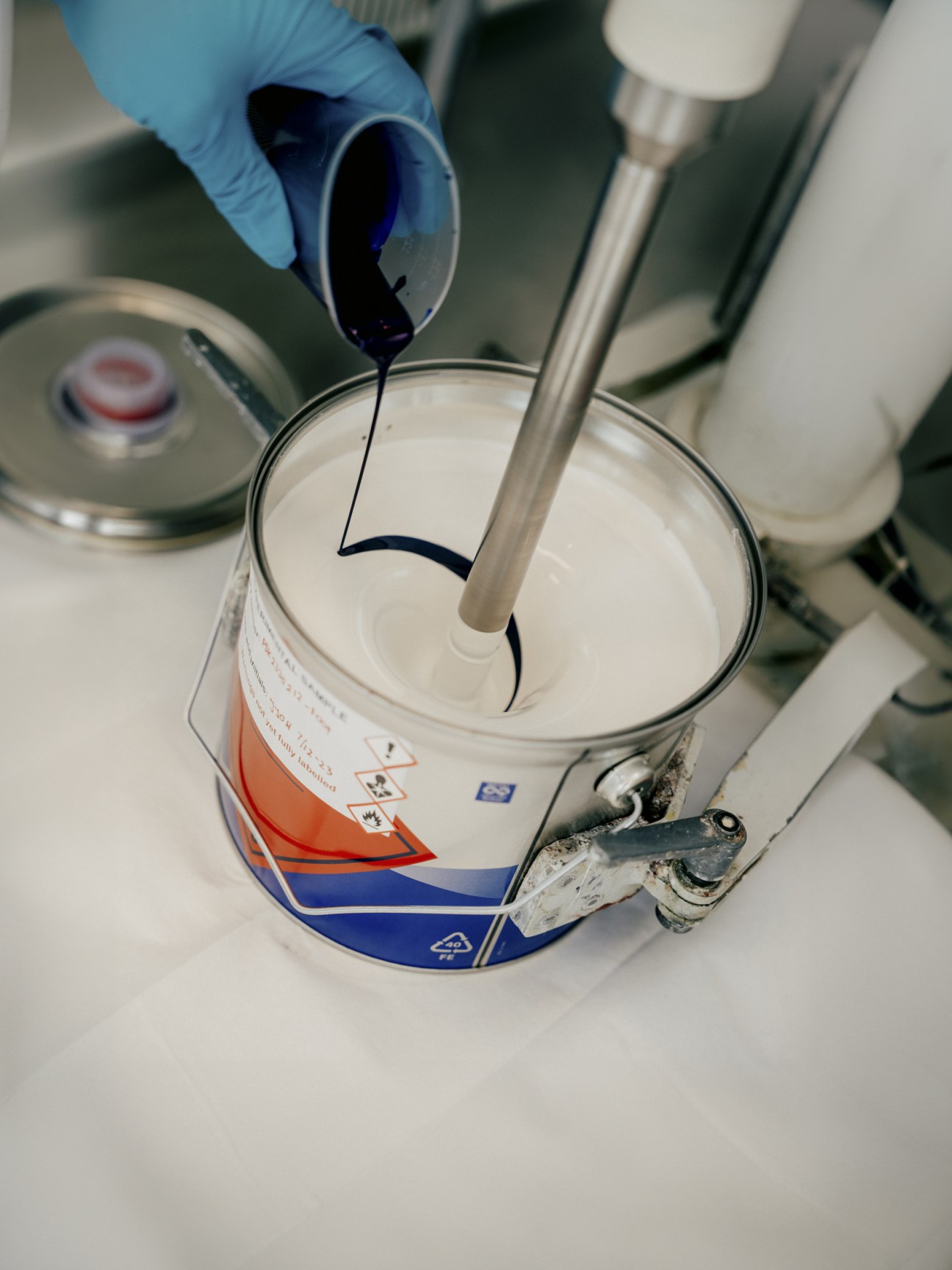
Hempel by numbers
Employees: 7,500 in total (including 400 in the Danish HQ, 1,600 in the UK and 1,000 in China).
Total amount of paint produced: More than 400 million litres in 2023.
Number of Hempel paint shades: 6,500
Number of factories: 26; plus 15 R&D centres.
Branding: The Hempel logo represents the helix of a stirred can of paint.
The Hempel Foundation: Has total assets of €848m and donated more than €24m in 2023.
Customers can enlist the help of Farrow & Ball’s colour-consultancy service, which sees a representative visit homes to suggest a palette of calming tones or energising combinations. Before the end of the year the company will also offer an upgraded virtual service. It will then be possible to scan rooms, furniture included, on your phone and see the effect of different paints.
As a global company, Hempel employs a cross-cultural approach to colour and finish. “We have colour-trend teams who keep an eye on textiles, fashion, ceramics and social media,” says Henriques. “For instance, customers in the Middle East look for external paint in natural shades, you won’t see dark colours on houses and finishes need to withstand sand erosion. Cooler climates tend to like yellowish hues. In hotter climates, where the use of whiter indoor lighting is more widespread, colours appear differently. Big, bold reds are having a moment in Germany but in Scandinavia everything is white. Different countries are also drawn to different textures: in the US, smooth surfaces appeal whereas in Germany more ‘movement’ is allowed.” Even the way in which professionals work with Hempel varies. “In Germany, people prefer to use an oval paint bucket so that they can dip the roller straight in, unlike in other places, where they use trays.”
Looking ahead, the popularity of cold greys is waning and warmer tones might be returning to favour. But right now, Henriques detects a definite lust for coatings with depth. “Very rich green is having a bit of a moment,” she says, nodding emphatically.
The Greek members’ club that’s courting favour with the nation’s elites
Athens is well known for its chaos and hedonism. Perhaps that’s why the neatly tended Tatoï Club, nestled beyond the urban bustle in the suburb of Acharnes, feels so refreshing. The white, single-storey building, recently redesigned by Kois Architecture, doesn’t give much away from the road but there’s plenty to divert members inside. Spread over 100,000 sq m, the club offers 15 tennis courts, most of which are clay and meet the highest professional standards, as well as two for padel. There is a guesthouse and two swimming pools: one for families and another for adults only. Landscape practice H Pangalou & Associates has overseen the grounds, whose botanical gardens and lavender fields reflect the rugged terrain of the nearby Mount Parnitha in their choice of plants.
Members’ clubs remain a rarity in Greece so Vizantiou had the enviable task of visiting others around the world as part of her research. “We didn’t follow anyone else’s model,” she says. “Instead, we created our own. We didn’t find a place in Europe that matches our approach to sport, socialising, food and family.”
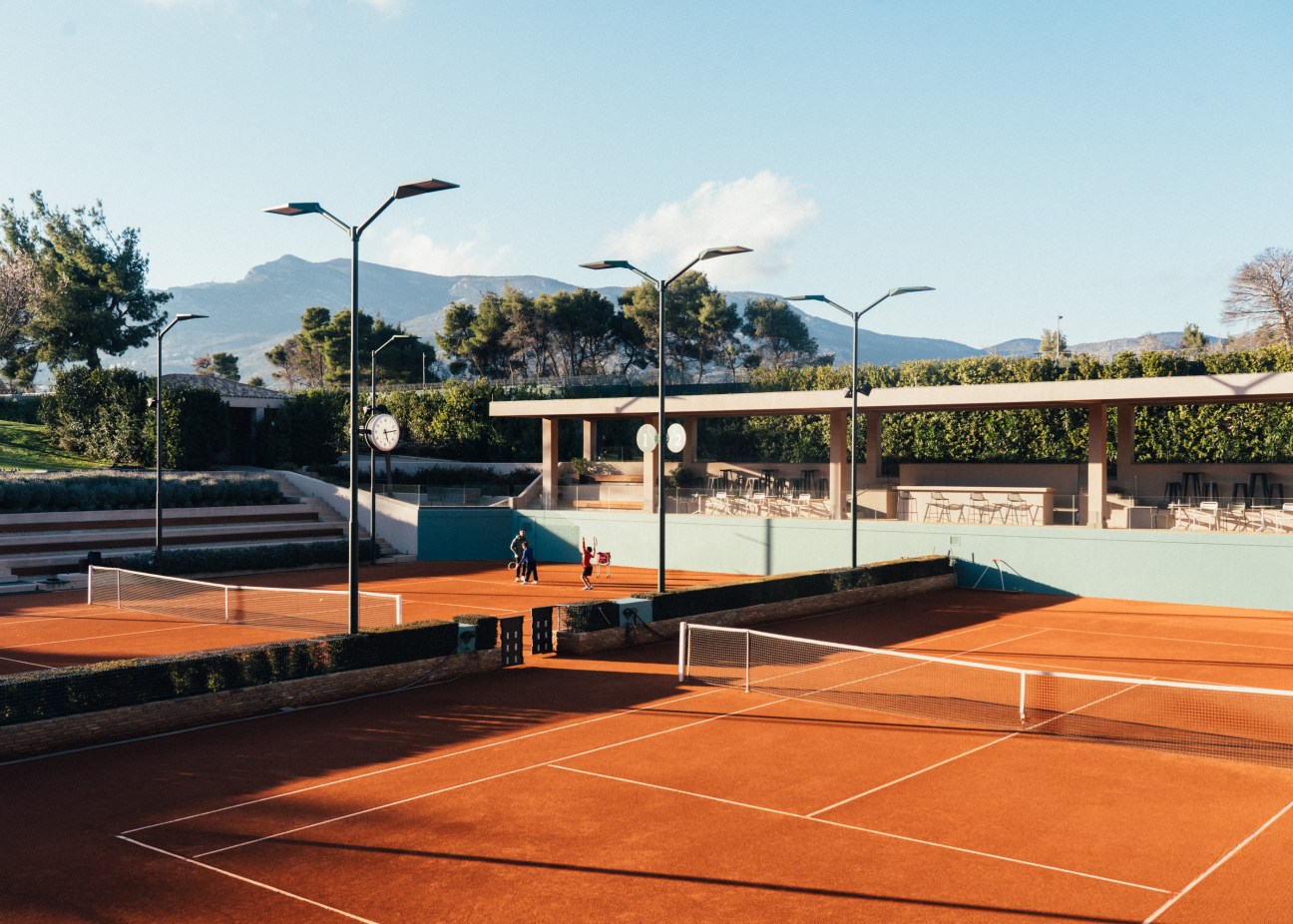
A simple premise underpins all that goes on at the Tatoï Club. “We wanted to create a sports-and-wellness space that would make both its members and its team proud,” says Vizantiou. Accordingly, the club is open to ideas and strives to evolve according to members’ needs. When it launched, the initial focus was on tennis; now, there are more activities and a greater family feel. You can book a personal trainer, join a fitness class (Vizantiou recommends the yoga sessions next to the lake), receive personalised nutrition plans, book in for cryotherapy or treat yourself to an Augustinus Bader facial.

You might even pick up a new hobby. “There are food classes in our cookhouse,” says Vizantiou. “You can stargaze with us in the summer or join the running, book or theatre group. There are clubs within the club. Members can forge new friendships, which isn’t always easy after a certain age.”
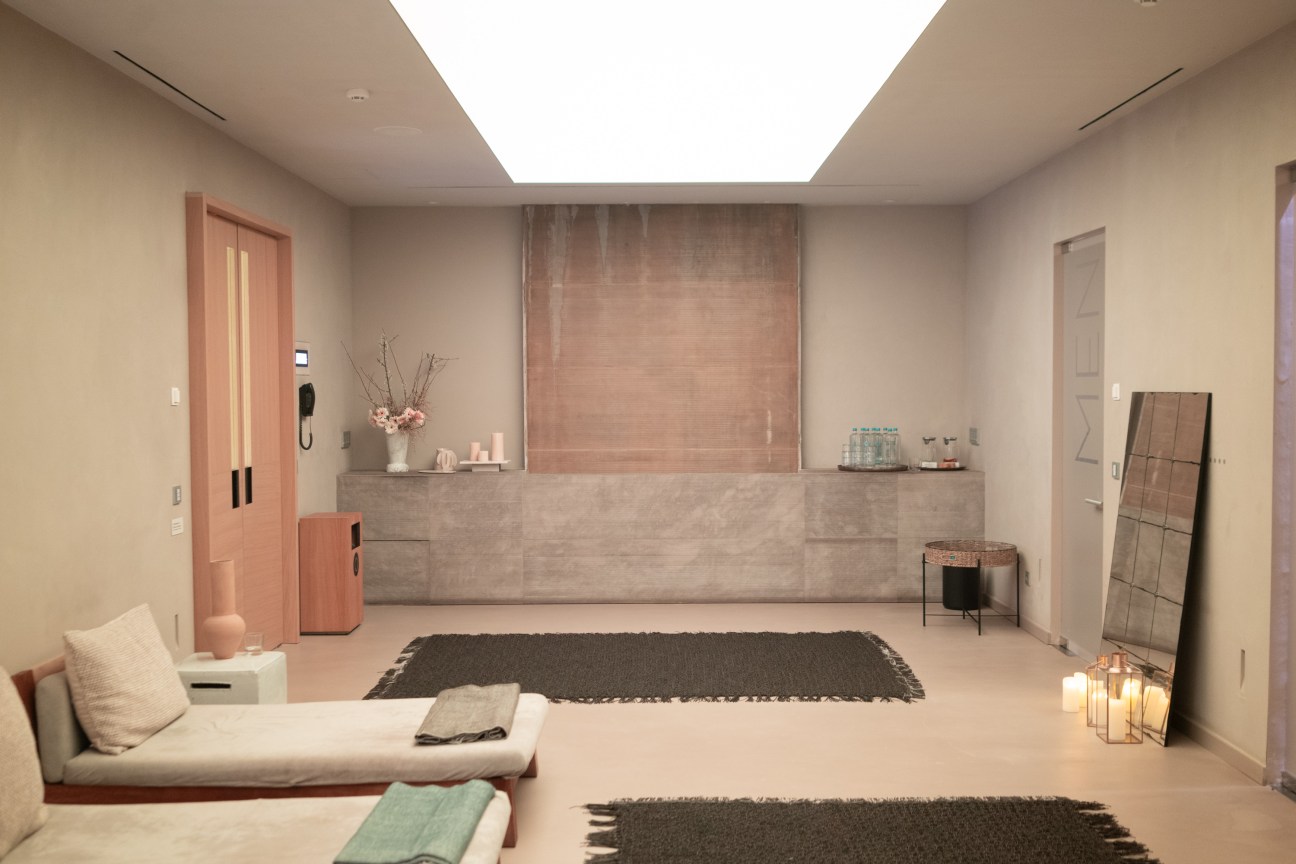
The club’s restaurant has a lot to offer too. The serene, sun-filled space features wooden furniture, neutral hues and the scent of freshly cut flowers, bringing elements of the natural world inside. “No matter where you are, you should be able to see daylight and feel in touch with nature,” says Vizantiou. The menu’s simple, hearty dishes range from freshly prepared vegetables to seafood risotto. These are made using organic ingredients, much of which are from the farm nextdoor. “We believe in growing our own fruits and vegetables without chemicals,” says Vizantiou. “That’s why we made a huge investment in our own farm. It might not make commercial sense but it aligns with our purpose. We grow a lot of seasonal produce – such as apples, tomatoes, strawberries and aubergines – and these cover most of our menu’s needs.”


The Tatoï Club team also bakes its own bread (try a slice of the carob-flour loaf) and makes broths, gelatos and cakes in-house. Restaurant staff make a point of knowing every member by name and familiarising themselves with their personal nutrition plan (if they have one). “Our members want to keep educating themselves,” says Vizantiou. “They understand the importance of investing in themselves, not just by playing sport but also by finding new hobbies and taking care of what they eat.”


Personalised service and attention to detail are central to the Tatoï Club experience. A dedicated team is always on hand to reposition out-of-place pillows and replace anything that has broken. The club also caters to its members’ children, with dedicated kitchen areas in which to prepare their meals, playgrounds for them to play in and various activities for them to get stuck into. Stroll around the club and you’ll hear their laughter and see long tables at which family members from across several generations break bread together.
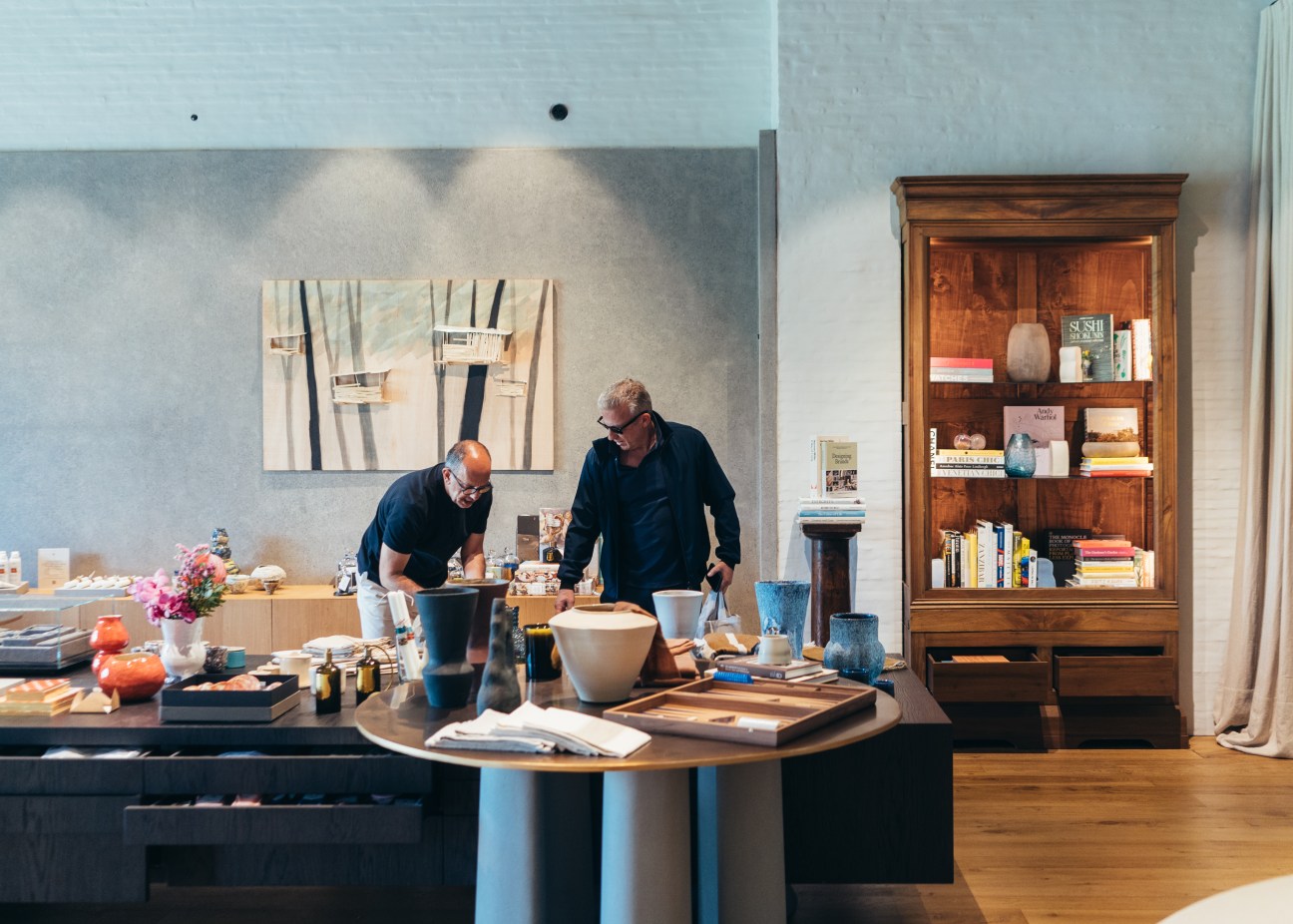
By catering to families and establishing personal relationships with members, Vizantiou and her team have struck a fine balance between luxury and providing a friendly, welcoming atmosphere. You immediately feel at home but have access to a standard of facilities and services that you might expect at a five-star hotel. That’s why, over the years, its community has grown from 50 to 450 families (there’s a long waiting list). And the club is continuing to evolve. A larger spa is in the works, while the guesthouse facilities are being renovated. “We are listening to our members, observing their needs and emotions, and changing accordingly,” says Vizantiou. “That’s the magic of this place.”
tatoiclub.com
Simple pleasures
Rules at members’ clubs can be rather arcane but the Tatoï Club is refreshingly unfussy. Membership is currently only by referral but there are plans to expand this to international markets in the near future. Non-members are, however, welcome to stay in the club’s guesthouse for €600 a night to enjoy its sport and wellness retreats – a perfect way to sample what’s on offer.