Issues
Paris 2024 Olympics: Athlete profiles
The International Olympic Committee often points out that it isn’t countries competing at its events but National Olympic Committees (NOCS). And it probably still likes to think of the Games as a competition for gifted amateurs rather than professionals – admirable, perhaps, but not entirely true.
In Paris this summer, about 10,500 athletes from 206 NOCS will test their skills in 32 sports across 329 events, aiming to bag one (or more) of the 5,084 medals that are up for grabs. To assist them, their countries (sorry, NOCS) employ the full might of their sporting-industrial complexes – for example, Canada spent about €1.6m for every swimming medal that it won in Tokyo. They do this because victory at the Olympics proves that you’re the best in the world – and that’s an invaluable soft-power tool.
Here are seven athletes vying to bring home something shiny for their compatriots this summer.
1
The Fencer
Alexandra Ndolo
Kenya
Heavy rain has left the running track at Nairobi’s Nyayo National Stadium unusable and marabous stalk the wet lawn. The athletics qualifiers are delayed and people are huddling with tea and mandazi, a sort of cardamom-spiced doughnut. Among them is 37-year-old fencer Alexandra Ndolo. Neither the grey sky nor the long wait has dampened her mood. After all, she has already secured her ticket to Paris and will be the first Olympian to represent Kenya in the sport.
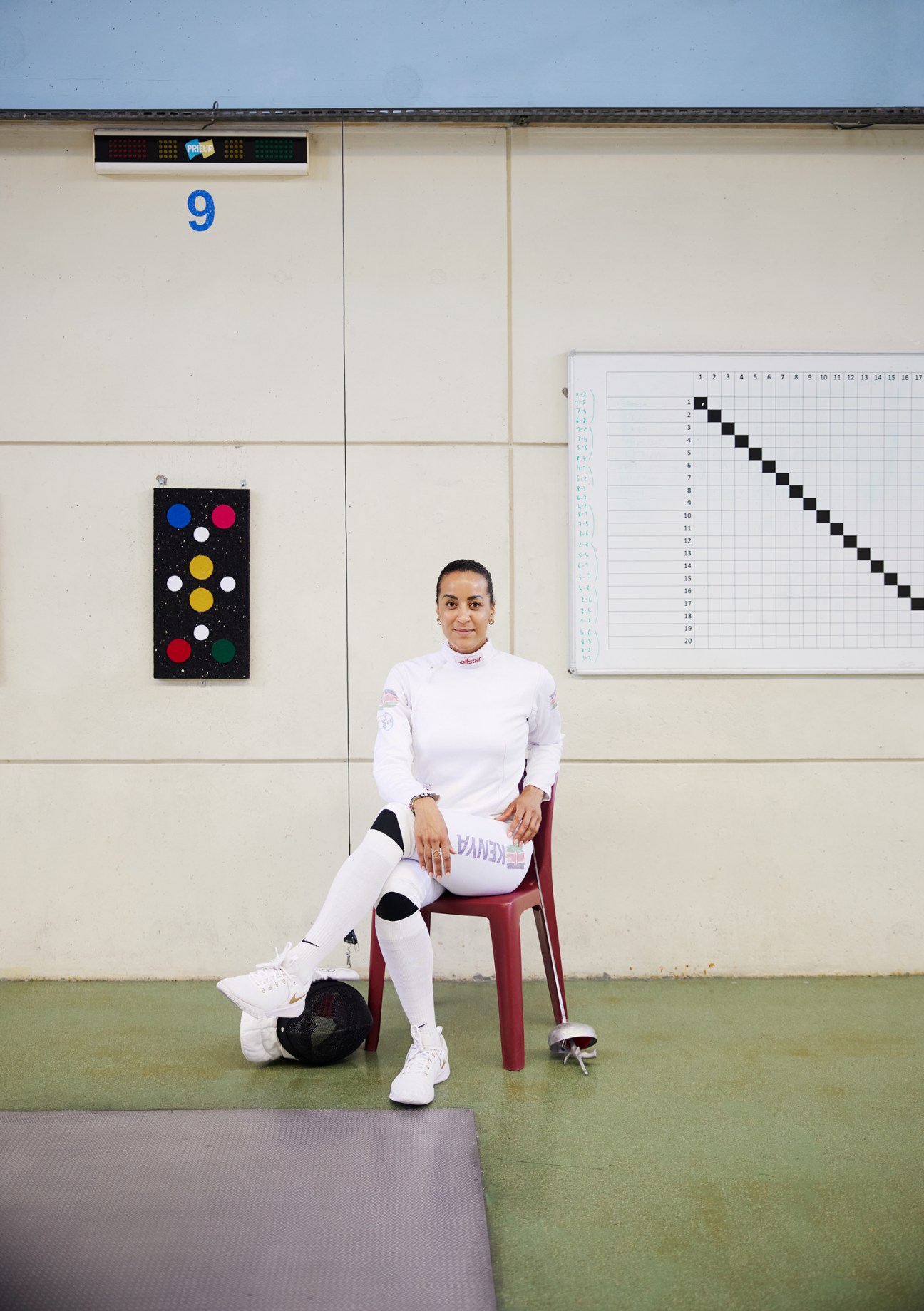
Ndolo was born to a Kenyan father and a Polish mother, and raised in northern Bavaria. She took up modern pentathlon at school, where her agility was quickly recognised. When she was 14 she was offered a place at a fencing boarding school, though her parents had to turn it down for financial reasons. But Ndolo persevered and became a professional fencer at the age of 21. She then enlisted in the Bundeswehr to become a “sports soldier” (nearly a third of Germany’s Olympic athletes are in the army) a few years later. “Basic training was interesting,” she says. “I realised that I could push my physical limits further than I thought.” This stood her in good stead. In 2017 she won silver at the European Fencing Championship, then another silver at the Fencing World Championships in 2022.
After competing for Germany for 15 years, Ndolo decided to represent Kenya instead. The move was partly born of her emotional connection to her late father but she also felt that she could make a bigger difference by representing a nation that had almost no fencing tradition. In 2019 she co-founded the Kenya Fencing Federation. “What I love about this country is that people will appreciate anyone who is representing them, no matter what the sport is,” she says. “And now that I have qualified for the Paris Olympics, they are really excited.”
What Kenyan fans might lack in fencing expertise, they make up for in enthusiasm. At the stadium, the crowd gives Ndolo a warm welcome. “I am so proud that Kenya can take a fencer to the Olympics,” says the compere, former 400m hurdler Rose Tata-Muya. As she leaves, the receptionist at Ndolo’s gym calls out, “Make us shine over there.”
2
The Kite Foiler
Max Maeder
Singapore
Max Maeder grew up on the water. The 17-year-old was born in Singapore to a mixed-heritage family – his father is Swiss, while his mother is Singaporean – but he spent much of his childhood on Sulawesi, an Indonesian island east of Borneo. There, at the diving resort that his family owns, Maeder tried kitesurfing for the first time at the age of six. Just five years later he was ready to start competing. By then, however, he had switched to kite foiling, a slightly different, more advanced form of the sailing sport, which, along with Maeder, will be making its Olympic debut this summer in France.

As in kitesurfing, the foil kite harnesses wind power but the sailor stands on a board that glides like a magic carpet as high as a metre above the water, with a hydrofoil (a structure comprising a mast and two wings) below. This allows for even greater speeds than kitesurfing. Maeder compares the hydrofoil mechanism to an “underwater aeroplane”. With enough wind power from the kite, it pushes the board high, helping it to glide. In the right conditions, sailors can reach speeds of up to 80km/h.
“As soon as I got up on the hydrofoil and started floating above the surface of the water, I was immediately infatuated,” says Maeder, recalling his first few years in the sport. “I enjoyed it more and more.”
Maeder was home-schooled, which gave him a schedule that was flexible enough to let him fit in some training around studying. He spent his formative years glued to the board and, like a foil kite in a gusty harbour, his career soon began to soar. In August 2023 he claimed the Formula Kite gold medal at the World Sailing Championships in the Netherlands; the following month he clinched Singapore’s first gold at the quadrennial Asian Games. And he capped off the year by winning the Youth Sailing World Championships, held in the Brazilian resort of Armação dos Búzios.
When Monocle meets Maeder, he is in Hyères in the south of France, training for the Formula Kite World Championships in May – an important lead-up event to Paris 2024. “It’s a great privilege and I’m excited to compete,” he says. “I feel pride for the nation and all of the things that come with being an athlete preparing for his debut at the Olympics. In other words, I’m no different from the other competitors.”
Maeder is one of a small number of athletes who Singapore will be sending to the Olympics this summer. Since the country began participating in the Games in 1948, it has won a total of five medals: two bronze, two silver and one gold. For much of his athletic career, Maeder didn’t even consider the Olympics as a possibility because kite foiling hadn’t yet been accepted as an official discipline. Now he is preparing to compete in races off the coast of Marseille, where many of the water-based sports will be hosted this summer. Despite his youth, he is already a seasoned professional. “In terms of experience, I am no longer a rookie,” he says, laughing.
3
The Long Jumper
Ivana Spanovic
Serbia
Ivana Spanovic is used to racking up firsts. In 2013 she became the first Serbian to win a medal at the World Athletics Championships. Then she became the first to win gold at the World Athletics Indoor Championships in 2018. Last year, in Budapest, she became the world champion in the women’s long jump – and, naturally, the first Serbian track-and-field athlete to win an outdoor world title. This summer, Spanovic will be Serbia’s best hope for another first: a gold medal in an Olympic athletics event. The stakes are high. She will be 34 by the start of the Games so Paris is likely to be her last tilt at the title.
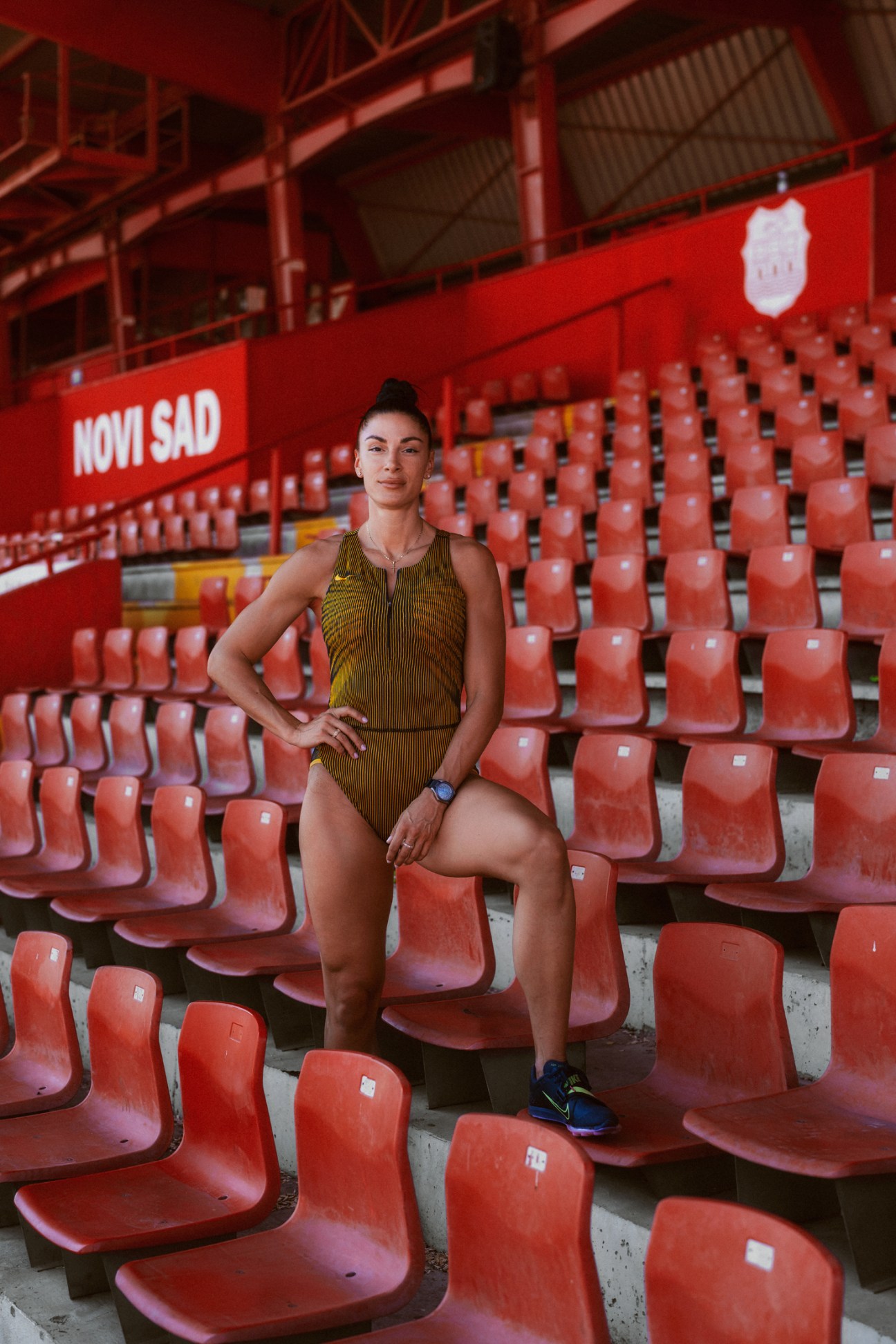
But as she prepares for her fifth Olympics, Spanovic insists that she isn’t feeling the pressure. “I’m enjoying competing more than ever,” she tells Monocle from a training camp in Dubai. “I became the world long-jump champion at the age of 33 with a new personal best and a national record. That was a validation of smart, dedicated work. I’m looking forward to bringing the same energy to Paris in the race for the only gold medal that I’m missing.”
Spanovic considers her two decades of experience to be her “greatest ally”, though she has endured plenty of misfortune along the way. In 2017, for example, she narrowly missed gold at the World Championships when what could have been a winning jump was foiled by the number on her vest coming loose and marking the sand. Such mishaps have taught her to “control emotions and be calm until the next chance comes along”. Adopting this approach, she says, helped her to claim her first world indoor title six months later.
Spanovic is Serbia’s biggest athletics star but she remains a member of her local club in Novi Sad. She tells Monocle that she wants to “stay and live in the country, and involve Serbian people, making them feel proud and inspired”. She has certainly achieved that – and never more so than on those electric nights at Belgrade Arena in 2017 and 2022, when she won gold medals at the European and then world indoor championships, respectively. “Those were my favourite and most emotional competitions,” she says. Spanovic might have to add to that list if she manages to see out her career with a final gold medal in Paris.
4
The Archer
Satsuki Noda
Japan
Under grey skies at her first world championships, Japanese archer Satsuki Noda faced the ultimate challenge. Locked in a tight quarterfinal against South Korean Olympic medallist Kang Chae-young, she found herself in a single-arrow tie-breaker with Olympic qualification on the line. When Kang shot true, Noda not only had to match her 10 points (a bull’s eye) but produce a better score. Drawing her bow, she delivered her arrow with precision: it traversed the 70-metre distance to land centimetres closer to the centre than her opponent’s, securing her a ticket to Paris. “To win that shoot-off on a double 10 filled me with happiness and gave me a huge confidence boost,” says Noda, who took home a bronze medal.

A little more than six months since that day in Berlin, Monocle visits Noda at the Ajinomoto National Training Centre in Tokyo’s Kita ward. In the open-air shooting range, the 23-year-old practises alongside her fellow national team members. She exudes calm from one arrow to the next. “In competitions, I try to keep a smile on my face,” says Noda. “It helps me to remain calm. A frown or strained look can pull you down. In archery, mistakes happen. There’s no such thing as the perfect match, so you can’t let an error hold you back.”
This focus has helped her to remain grounded after an impressive rise through the ranks. Having taken up the sport in high school, Noda enrolled on the archery programme at Kindai University in Osaka. There, she developed the strength, form and technique that yielded her a national title while she was still a student. “The aim is to avoid even the slightest deviations,” she says. “Once you lose your form, it begins to affect your scores.”
Her footwear of choice is Nike’s Air Force 1. The bestselling streetwear staple, originally designed as a basketball shoe, has been her competition trainer since university. “The sole is firm and almost completely flat, which provides a stable base,” she says. Three years after watching the Tokyo Olympics as a university student, Noda will stand shoulder to shoulder with the world’s best archers. “Paris will be my first Olympics but, regardless of that, I aim to have a challenger mindset.”
5
The Judoka
Leonardo Gonçalves
Brazil
In common with many Brazilians, Leonardo Gonçalves’s first sporting passion was football but it was judo that made him a star. In Paris, the 28-year-old martial artist will make his Olympic debut competing in a sport that has brought his country 24 medals – the most of any discipline – since 1964, when it was first introduced to the Games. While sports such as football or volleyball are more commonly associated with Brazil, it’s likely that most of the nation’s spectators will have their eyes trained on the 15 separate events on the judo mat this summer.
Gonçalves, who will be competing in the 100kg category, hails from Iguape, a municipality with a population of about 31,000 in the countryside outside São Paulo. In 2016 he moved to the southern city of Porto Alegre to train at the Sogipa Club, one of the nation’s most celebrated judo centres. When Monocle asks Gonçalves why Brazil excels at the sport, he explains that the country also does well in other martial arts, such as jiu-jitsu – a phenomenon that he attributes to large-scale Japanese immigration in the first half of the 20th century. “Our judo is similar to the version in Japan,” he says. “The people who came to Brazil influenced the sport heavily. In my city, for example, there’s a significant Japanese community. We learnt judo from them, adding a special Brazilian touch.”

Gonçalves’s pre-Paris schedule is intense. Monocle meets him at a training session in the city of Pindamonhangaba as he prepares for the World Judo Championships in Abu Dhabi in May. “We will train hard for these championships,” he says. “But our main focus is the Olympics.”
Though Gonçalves will be part of a large and promising Brazilian contingent in Paris this summer, he says that it’s not easy being an athlete in his country. “We go through a lot to become professionals,” he says. “Not everyone manages to get support.” While the country needs to do better when it comes to grass-roots funding, especially among poorer communities, there will be no lack of enthusiasm when the 185cm-tall judoka takes to the mat in the French capital, hoping to secure his country’s 25th medal in the sport.
6
The Wrestler
Zhan Beleniuk
Ukraine
Zhan Beleniuk is a Ukrainian Greco-Roman wrestler, Olympic gold medallist and member of parliament. He isn’t the only one mixing sport and politics in his country: former heavyweight champion boxer Vitali Klitschko is currently the mayor of Kyiv, while footballer Andriy Shevchenko, winner of the 2004 Ballon d’Or, ran for parliament after retiring.
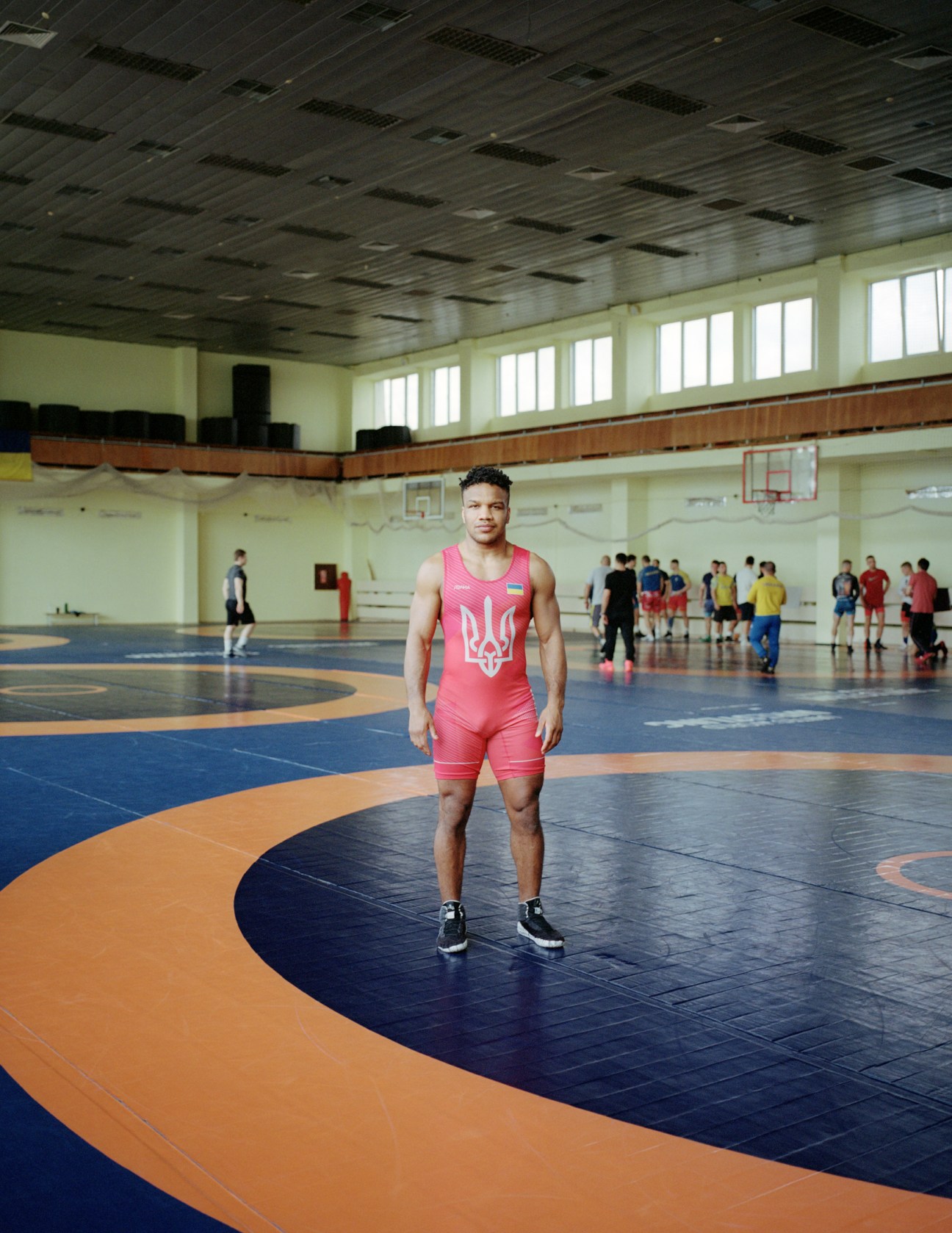
“When a country goes through such difficult, heart-breaking moments, it’s natural for people to become involved in politics,” says Beleniuk. This summer in Paris, three years after winning gold at the Tokyo Olympics in 2021, he will carry the expectations of his war-torn nation on his shoulders.
Born to a Ukrainian mother and Rwandan father in Kyiv shortly before the collapse of the ussr in 1991, Beleniuk’s childhood was marked by the economic turmoil that faced the newly independent former Soviet states. Further shock came when his father died during the Rwandan civil war. “But my childhood was filled with love,” he says. “I didn’t feel those responsibilities weighing down on me. Instead, my mother and grandmother shielded me and gave me the space to grow and develop.”
The pivotal moment that changed Beleniuk’s life came almost by chance. “When I was nine years old, my friend took me along to his sports club, where I tried out Greco-Roman wrestling,” he says. “From then on, I haven’t looked back.” Beleniuk began winning medals at international championships in 2009. Nine years later, he won his first Olympic medal: a silver at the Rio Games.
After the pro-European revolution that shook Ukraine’s politics in 2014, Beleniuk became a high-profile advocate for the pro-democracy movement. “As a representative of this country and a black Ukrainian, I understand my responsibility to counter Russia’s disinformation,” he says. “They are seeking to paint my country as a racist, fascist place and discredit it on the international stage.”
Ukraine’s first black MP has been a member of delegations travelling to Africa, a continent where pro-Russian sentiment remains relatively strong. “Many there still see us as Russia’s younger brother,” says Beleniuk. “They don’t understand what Ukraine is or who Ukrainians are.”
Another place where Beleniuk is seeking a shift in attitudes is at the International Olympic Committee (IOC). The body recently ruled that Russians could compete at Paris 2024 as neutral athletes, undoing a ban on their participation that was put in place in 2022. “If the reason for the ban hasn’t gone away, why has the IOC gone back on it?” asks Beleniuk. “Many of those athletes are involved in Russia’s propaganda machine. There is no place for them at international competitions.”
Beleniuk tells Monocle that, like any athlete, he is dreaming of winning a gold medal this year in Paris. “But more importantly, I want to represent my country with dignity,” he says. “I’m proud of what I have achieved for Ukraine. It’s thanks to the country and its people that I’m here.”
7
The Surfer
Sanoa Olin
Canada
The Seine isn’t exactly known for its world-class waves so a village in French Polynesia will host the surfing heats at this year’s Games. Riding the swell at Teahupo’o, Tahiti, will be Sanoa Olin, the first Canadian surfer to compete at an Olympic level. “If it’s big and bombing, you can’t think about tactics,” she says, referring to the area’s unforgiving waves. “It’s more about focusing on what’s within my control, making it as simple as possible and connecting with the ocean.”

When the Olympics added surfing to its roster in 2020, Canada failed to make the cut. The sport remains rather niche in the country but the town of Tofino, on the western coast of Vancouver Island, has become a somewhat unlikely surfing hub over the past few decades. About a fifth of residents of the small fishing community regularly paddle out. Olin learned to surf against the backdrop of Tofino’s mossy pine forests and snow-capped mountains. That might sound idyllic but the water there is deathly cold, hovering at about 8c – rubber boots, a hood and a thick wetsuit are essential parts of Olin’s training armoury. “Still, we get waves every day of the year,” says the surfer.
Olin will have little need for her wetsuit in Tahiti. She qualified for the Olympics at a competition in Chile last October, posting a higher wave score than that of the reigning gold medallist, US surfer Carissa Moore. There’s an appealing urgency in Olin’s style. She tends to cut her board back and forth against the lip of the wave, trailed by a spit of sea spray. It’s as if, even in the more clement waters of the Tropics, she is trying to keep herself moving, to stay warm.
Team Canada might only have one surfer participating in this Olympics but Olin’s presence could help to bring new momentum to the sport at home. “It underscores the fact that surfers can also be professional athletes,” she says. The waves in Tofino lack the height or temperature of those in California but Olin’s efforts to get the most out of them taught her a thing or two about resilience. “It’s about always trying to see the positives,” she says. “And finding the excitement in everything, whatever the conditions.”
British singer-songwriter Jacob Collier on defying the boundaries of genre
Jacob Collier springs through an assault course of cameras, lights, speakers and a dragnet of cables to alight at the grand piano, jolting it into life with the strutting chords of “Wherever I Go”, a choice cut from his new record. The photographer snaps away, sensing an instant win, as Collier drops his quiff to the keys and allows the riff to dissolve into some romantic Ravel, some dramatic Debussy – like a slight Liberace, pantomiming emotion, just for fun, in his trademark technicolour clobber.
It’s a press day for the release of Djesse Vol. 4, the latest in a run of albums, each an exquisite exercise in the young Londoner’s voyage through genres of pop music and beyond: self-written and self-produced but bedecked with dream duets and star collaborators. So do you just text Chris Martin or John Legend? “Oh, well, everyone’s busy,” says Collier with a chuckle. “Some are my friends, or became friends making these records. But I really seek to learn and want to jam with people who light me up.”
Thinking of Collier’s journey through the music world – often seen as loaded with more booby-traps and snake pits than an Indiana Jones adventure – calls to mind, say, a line of cartoon dynamite fizzing inexorably towards a comedy explosion that spells “genius”. Collier, not yet 30 years old, has won six Grammys and, at this year’s ceremony, played with Joni Mitchell in a celebration of the great Canadian artist’s 80th birthday. Collier has also worked with singers such as Shawn Mendes, John Mayer and Oumou Sangaré, film tsar Hans Zimmer and music’s Zeus, Quincy Jones.
The CV
1994: Born in London
2004-2010: Singing in works from Mozart to Benjamin Britten while attending Mill Hill County High School
2011: Begins releasing Youtube videos of songs such as Stevie Wonder’s “Isn’t She Lovely” that feature Collier’s trademark virtuosity
2016: Releases debut album “In My Room”, almost entirely composed and played by Collier
2017: Wins the first of six Grammy Awards
2018: Releases Djesse Vol. 1, featuring Laura Mvula and Hamid El Kasri
2024: Accompanies Joni Mitchell on “Both Sides Now” at the 66th Grammy Awards and releases Djesse Vol. 4
Of course, people want to search for the source of such prodigious talent. “My earliest memory is sitting on my mother’s lap, looking up and seeing the violin above me being played,” says Collier. His mother, Suzie, is a violinist, conductor and teacher, and, naturally, took her micro-Mozart to concerts as she brought up her three children. “I was probably about two years old when I’d watch my mother conduct. That feeling of someone jumping off the ground and raising their arms – and then the music would begin. Part of it is about process, accuracy, dictation, yes, but you’re also throwing around permission, joy, questions and answers,” adds Collier, conducting his own memories with sweeping hands.
Collier is kinetic when he talks music. He won’t be drawn on genre (“I hadn’t really heard of genre until I was 16”) or musical terminology. Instead, Collier talks in colours, textures, weights, materials. “Yeah, I love telling an orchestra that it needs a bit more wool.” He also loves playing live – surely a good way of keeping such an insatiable musical mind limber. He’ll break off a number to improvise a piano solo or guitar riff and is now famous for his “audience choirs”, in which tens of thousands of fans, after being divided into musical parts, will provide gigantic, self-affirming choruses to the songs that they love. At least 77 dates, stretching from São Paulo to Seoul, await on Collier’s current monster world tour. No wonder he likes someone else to do the singing now and again.
So how do you make a record with artists as musically diverse as your highly classically trained mum, with her arpeggios and descending minor sevenths, and the groundbreaking grime artist Stormzy? “Well, it depends,” says Collier with a shrug. “But really, as you know, they’re both legends.” Just like that. A world of grand pianos, and more Grammys, surely awaits.
The World Meteorological Organization’s secretary-general brings a new way of leadership
Whenever a thunderstorm breaks out over Lake Geneva, Celeste Saulo is happy. The Argentinian, who has led the United Nations’ World Meteorological Organization (WMO) since the beginning of the year, is the first woman to hold the position. She researched and taught at the University of Buenos Aires, where she headed the meteorology department. “I love weather forecasting, where I can combine mathematics, physics and modelling,” says Saulo. But she realised that something was missing. “We published studies but there was no connection between the research and the weather service.” At that time, the Argentinian National Meteorological Service was under the control of the country’s air force. Together with a group of colleagues, Saulo pushed for its independence from the military, which they achieved in 2007. Soon afterwards, she was offered the position of director. “I thought, this is how I can bring these two communities together, research and weather forecasting,” she says.
Scientists are sometimes reluctant to move into the field of management and finance but Saulo felt comfortable. As director of Argentina’s National Meteorological Service, she became the country’s permanent representative to the WMO and began to understand how, as a member state, Argentina could influence the organisation’s decisions. She quickly rose through the ranks, becoming a member of the executive council and, later, vice-president. In June 2023, Saulo won a landslide victory to become secretary-general, receiving 71 more votes than the runner-up, Wenjian Zhang of China.
Everyone says that, since her victory, the organisation has been gripped by a spirit of optimism. She is the first person from the Americas to lead the WMO. “Argentina is a middle-income country,” says Saulo. “This means that we can speak to both industrialised and developing countries on an equal footing.” She comes from a weather service where she always had to fight for budget and that experience gives her the ability to help countries in a similar situation. One of the things that many poor countries need help with is building efficient warning systems for extreme weather events. The WMO wants to see such systems installed in all member states by the end of 2027.
“You can only build a system like this if you work with stakeholders who don’t come from the meteorological world,” says Saulo. In addition to the weather service and the hydrological service, civil defence, television and the Red Cross also play an important role. Saulo wants to strengthen the role of the national weather services and the hydrological services. There are still many countries where governments do not pay much attention to these. “We want to increase their visibility because they are key to the development of countries,” she says. In order to increase economic productivity, for health and for a secure food supply, reliable information on weather, climate and water is vitally important.
In her role as secretary-general, Saulo often comments on climate change. When it comes to the subject, she chooses every word carefully. Saulo recalls the early research of Japanese-American meteorologist and Nobel Prize winner Syukuro Manabe into climate change, which he published in 1969. “And nothing happened because economic power has so much more influence than science,” she says. The WMO has been contributing to climate research for a long time, and the organisation’s research programmes measure emissions of greenhouse gases, especially CO2 and methane. But there are still gaps in their knowledge. “To be honest, we don’t yet understand very well how forests store carbon,” says Saulo. “We have to measure it.” The forests in the Amazon region, for example, store carbon in a different way to those in Canada or Africa.
The scientist does not want to interfere in the politics of individual countries but she does want to clearly warn about the dangers of climate change. On a cold spring day, she looks out at snowy peaks from the window of her Geneva office. The meteorologist says that she felt overwhelmed by the way Switzerland welcomed her. Geneva is great in many ways: everything works so well. “But it’s important not to forget that the world isn’t all like that,” she adds.
This article was syndicated from ‘Neue Zürcher Zeitung’.
Identity politics: The controversial rebranding of Portugal’s government logo
It’s not often that a debate over branding and graphic identity grips an entire nation. But this has been the case in Portugal since May 2023, when the socialist administration of António Costa unveiled a new visual identity for government communications: a pared-back take on the country’s flag (the old government logo was an intricate distillation of the ensign).
Matters came to a head in March this year when, in the lead-up to the general elections, the newly commissioned logo and bespoke typeface became political weapons for the right. The opposition (now incumbent) right-wing Social Democratic Party equated the design with a lack of patriotism and accusations of wanting to rewrite history. “It fuelled a discourse that the right was looking to rally behind,” says Eduardo Aires, founder of Studio Aires and the man behind the design. “There was a focus on literalness and the official symbols of the nation.”
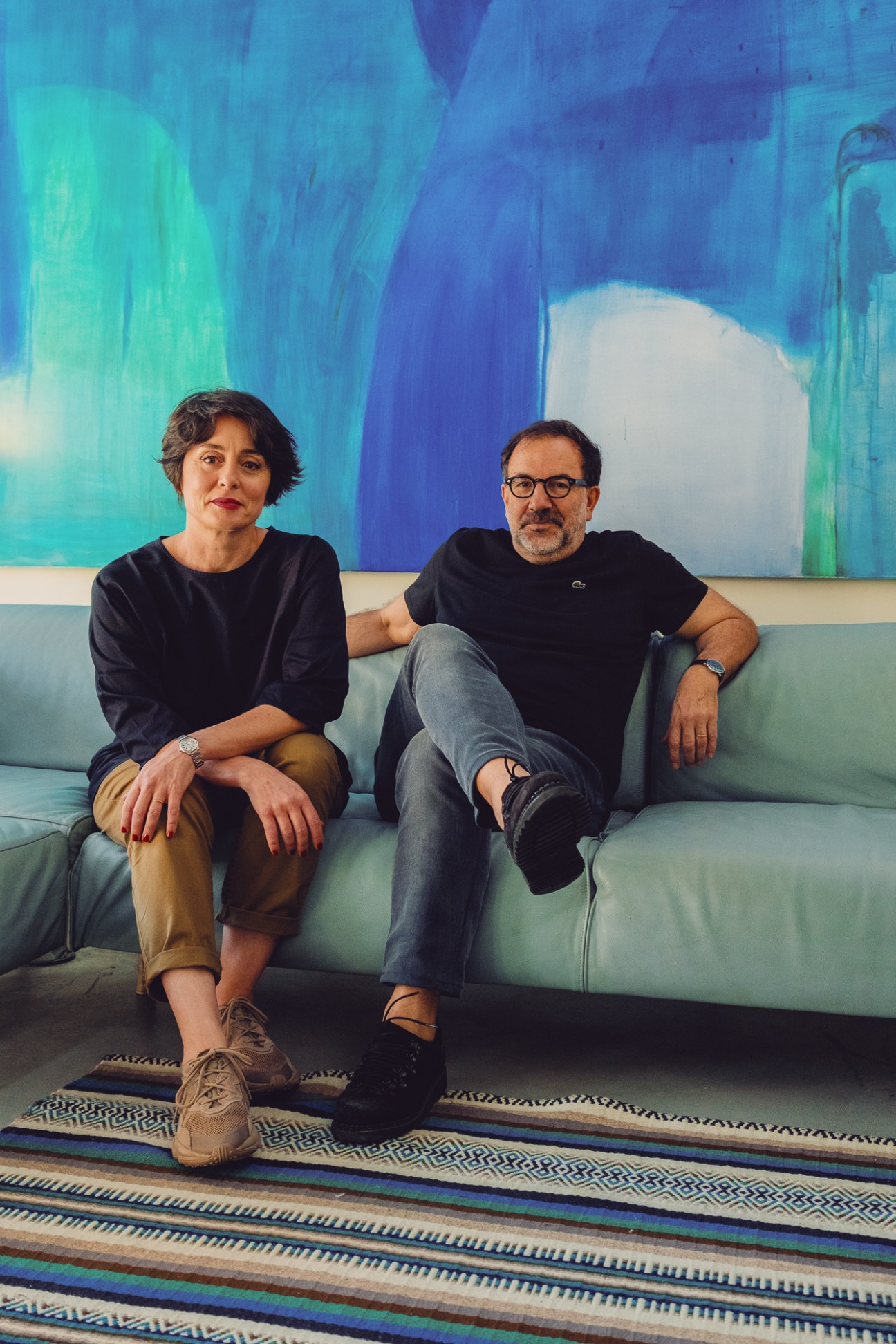
When Monocle visits Aires in his studio-cum-home in Porto, the new government has just announced that it is abandoning Aires’s work and reverting to the old logo. “After the prime minister had named the 17 new members of his cabinet, the first key issue to be debated, and the first decision the new government made, had to do with design. That’s unprecedented.”
As we sit in the living space of the converted factory, it’s evident that this is a man who considers every project on its merits and makes no decision by accident. Now aged 61, Aires is Portugal’s leading graphic designer: a multiple award winner, internationally recognised. He’s also one of the brains behind the visual identities of renowned clients such as the City of Porto and the Amorim Group.
Despite the prominence of the project, Aires applied his usual methodology. For him, this was the only way to ensure that he could be objective about the work. “I like to create multifaceted teams to help me deconstruct and understand the task at hand,” says Aires. “Depending on the project, I gather together geographers, geologists, historians, poets and curators, so that I can have a polyhedral vision of it all.”

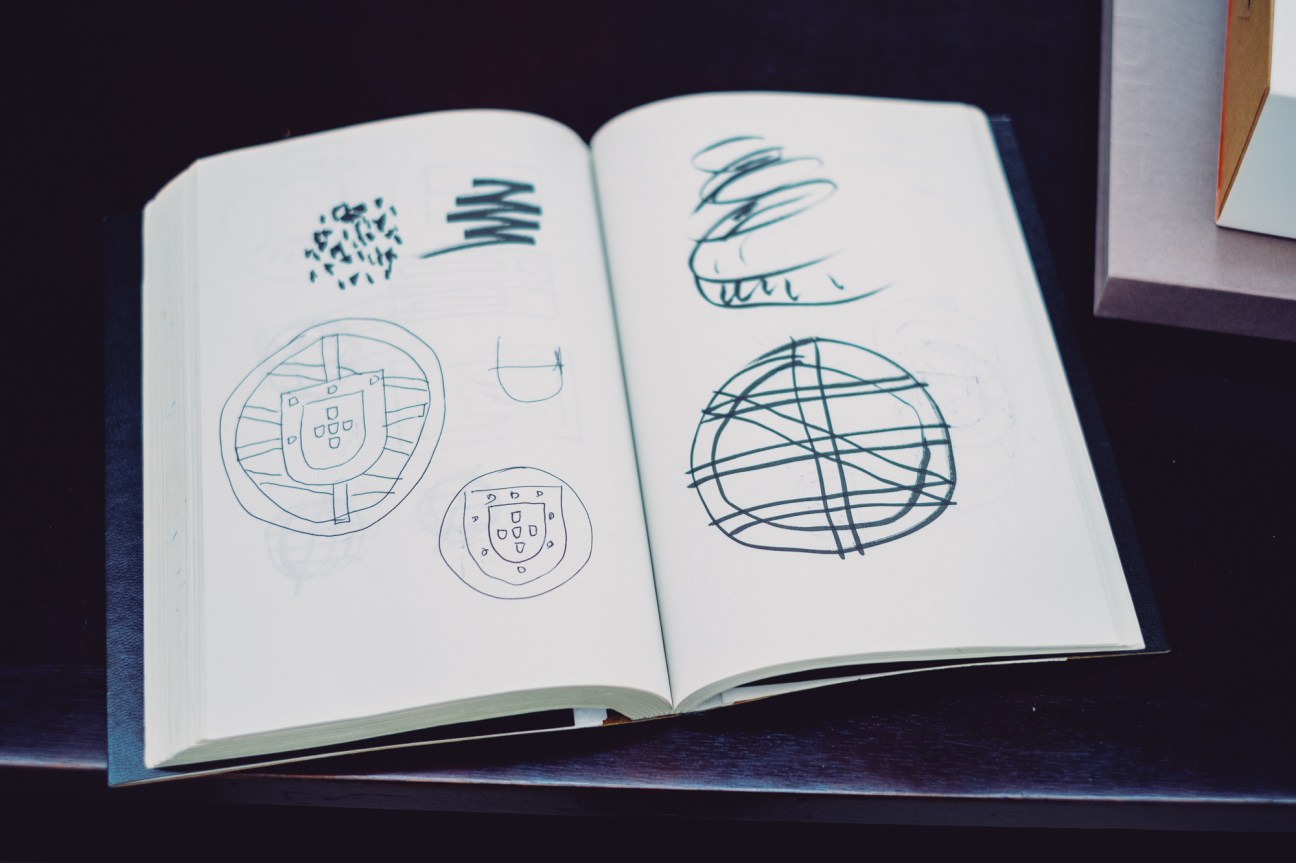
Together with his team, Aires pored through textbooks, archives and looked at the branding of other nations to establish benchmarks. He turned to the governments of the Netherlands, the UK and Switzerland, as well as taking lessons from the corporate world, from the likes of Deutsche Bank, where simple graphic branding has been deployed to convey messages of reliability and strength.
Aires’s research highlighted, for him, the need to go back to basics when creating a brand to represent the Portuguese people. “There’s inclusivity in simplicity,” he says. “By stripping down the more intricate elements of the flag, I was able to find a solution that is perhaps more representative of all Portuguese people, regardless of religious beliefs, gender or political preferences.” The result? A modern, simplified take on the Portuguese flag: a green block, a yellow circle in the middle and a red block. Accompanying it was a bespoke typeface, Portuguesa Serif, which was devised by designer Dino dos Santos. “There was a lot of work on creating serif and sans serif versions, combining heritage with modernity,” says Aires.
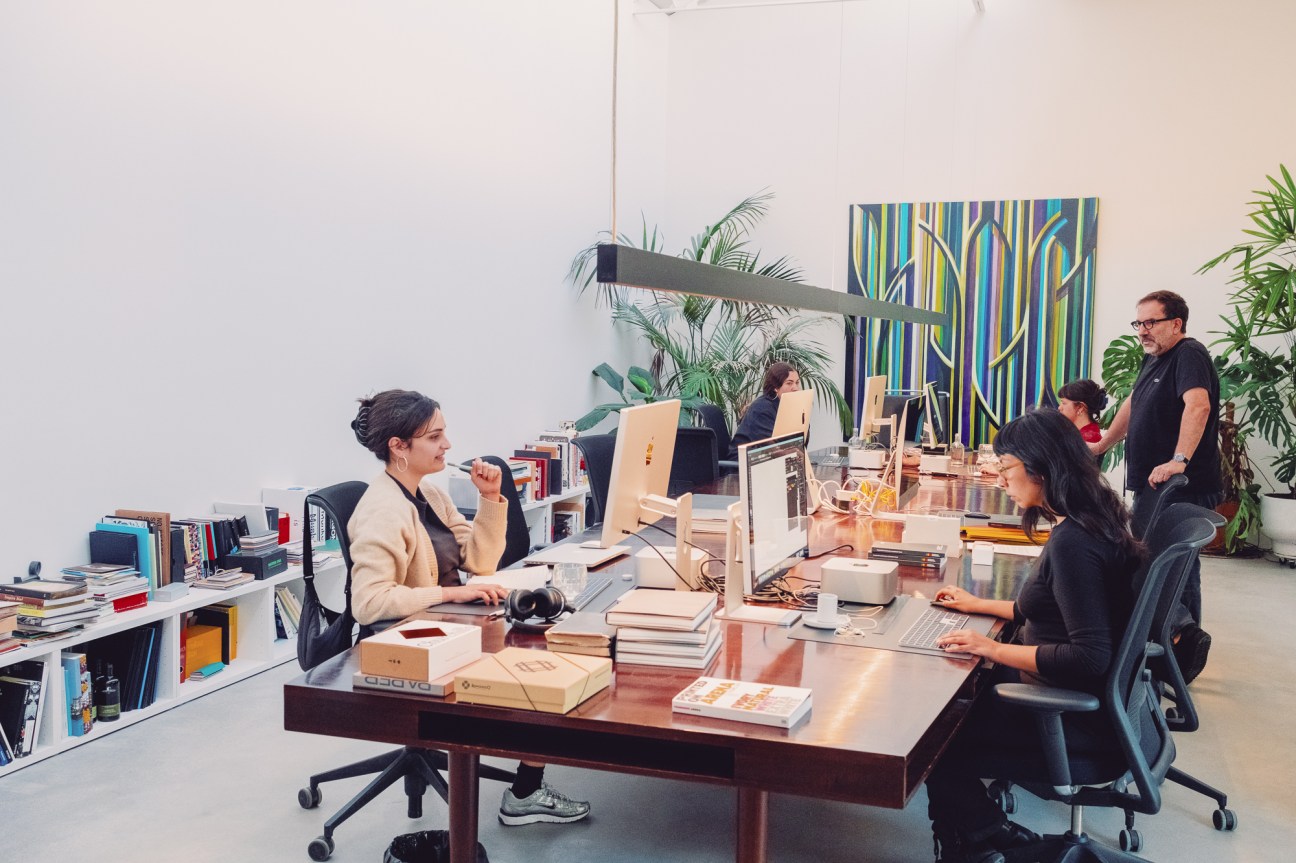
There’s no question about the power that graphic and visual design has in our everyday lives. But, despite its importance, it’s still a profession that has no official union representing it in Portugal, which means that some commentators refuse to take it seriously. When Aires’s design was being used as part of a culture war during the election campaign, for instance, prime-time television hosts described the work as “childlike” and “easy”. “There’s this idea that anyone with a spare 30 minutes can be a designer, when in fact these so-called ‘simple designs’ have countless hours of complex work and research to support them,” says Aires. For him, it was lonely to face that criticism with few coming to his defence when the work was unveiled. “My client, the previous Portuguese government, stood quiet because it was in the middle of campaigning for re-election. And because there is no designers’ union, there wasn’t an authority figure who could come and put a stop to unfounded criticism.”
Dos Santos’s work, Aires says, was essential. In the age of disinformation, having a bespoke typeface that can only be used in government communications makes it easier to differentiate between what’s official and what’s fabricated. “We saw a glimpse of that before the elections, when the previous government announced the state budget, which was described by many as well organised and easy to read through,” says Aires. “We used the Portuguesa font, which played a huge role in making it accessible to all.” The hope was that the typeface would itself become synonymous with Portugal. “Unfortunately, there was not enough time to show all that we could achieve with this typeface. Our work was walked back before it even had a chance.”


Aires’s design might now sit in an archive and won’t be used by the government but the designer is optimistic that it will still have a legacy. “This will become a case study in years to come. From a professional point of view, no one had done this level of research into a nation’s branding before,” says Aires. “I hope that it will be studied in design schools across the globe for being one of the benchmarks in the field, which was entirely dismissed based on politically fuelled misconceptions, not on a professional basis.”
As Aires is walking through the inner courtyard of his studio, seeing Monocle out, he reflects on the career he chose for himself. “To design is a noun and a verb. It’s the constant search for good shape, to differentiate from one another and to add value. That’s what makes me happy.” Would he change anything despite the recent controversy? “My father, who’s 88 years old, called me to congratulate me and say: well done son, you managed to make design, for the very first time, a topic of national significance.”
Meta’s news ban in Canada is disrupting the country’s media outlets

Earlier this year I joined the judging panel of a journalism prize to assess submissions from across Canada. It was a particularly interesting time to review the country’s news output, not only because of the sheer range of stories covered – from record-breaking wildfires to the end of a prime-ministerial marriage and the run-up to a general election – but because of the additional hurdle that its newsrooms have faced in publishing their work online.
This August will mark a year since California-based technology conglomerate Meta, which owns Facebook and Instagram, began blocking access to news stories on those platforms in Canada. The move was in response to the Online News Act, which Justin Trudeau’s government passed last June with the intention of compelling Big Tech companies to pay for the journalism that is shared on their platforms. At time of writing, it’s a stalemate: neither Ottawa nor Meta seem willing to relent.
“The ban has created an internet news blind spot for Canadians,” says Brett Caraway, a professor of media economics at the University of Toronto. “Many of the smaller news publishers in this country were heavily reliant on Facebook and Instagram to drive traffic to their websites, which allowed them to generate both subscription and advertising revenues.” That model – for now, at least – is no longer an option.
However, while some outlets continue to suffer, particularly smaller ones, several independent newsrooms have worked around the ban in nimble and imaginative ways. It has energised publishers to engage more meaningfully with their readers – through live talks and events, additional or special editions of their publications and thoughtful editorial campaigns – rather than simply viewing them as points in a social-media dataset. Audiences have noted and rewarded the effort.
As wildfires approached the city of Yellowknife in the Northwest Territories last August, its 20,300 residents were ordered to evacuate. In the absence of reliable local information on Meta’s platforms, independent outlets filled the gap. Founded by five journalists in 2017, Cabin Radio, which is funded by advertisers in the city, decided to broadcast wildfire updates 24 hours a day. Eight months later, it was receiving 700,000 visits to its website every month in a province with a population of 44,000. Plans for an additional FM service, intended to reach more remote audiences, are now in motion.
Other outlets, such as The West End Phoenix, a monthly paper based in Toronto, and The Tyee, a website launched 20 years ago that covers the Pacific province of British Columbia, have experienced growth in their readerships too. “Visits to our website have recovered since the ban,” says Jeanette Aegeson, The Tyee’s publisher. “We have long thought that owning our channels of engagement is the best strategy and this experience has just strengthened that conviction.”
The direct revenue that The Tyee has generated, she says, has allowed it to add journalists to its team and broaden the scope of its coverage. “Social-media platforms can be useful when it comes to reaching new readers. But we should be trying to establish more direct connections with our audiences, on channels that can’t get ripped out from under us. It’s never a good thing when a trillion- dollar US corporation invites another country’s news media to weave itself into its social-media platforms and then dumps them.”
It will take time to assess the full effect of Meta’s Canadian news ban. But it is clear that the standoff cannot continue indefinitely, particularly in an already-delicate media environment. If a resolution to the dispute feels elusive, the story of how some independent newsrooms have not only survived but thrived is an instructive one.
Lewis is Monocle’s Toronto correspondent.
A peek into ‘snack bars’: The hidden gem of Japan’s nightlife
It’s late afternoon in Tokyo and Yukako Ishihara is in her sunakku (snack bar), preparing for the evening ahead. “I went to university to work in film and theatre but eventually learned that drinking and dining are the ultimate forms of entertainment,” says the 45-year-old, adjusting the cat pin on her kimono’s obi. “People arrive weary but they go home in good spirits, ready to tackle whatever tomorrow brings.”
Concealed behind a heavy sliding door, Ishihara’s eight-seat establishment (which, in true Japanese fashion, she prefers to keep unnamed) stands in a mid-century row of bars and cafés in Tokyo’s Meguro ward. Measuring all of 16 sq m, the space is wrapped in perforated plywood panels, with red stools spread along an L-shaped counter.
The sunakku first emerged in Japan in the early 1960s. While taking on various forms, drinking dens of this kind have traditionally centred on the hospitality and entertainment provided by a proprietress known as a mama-san. Early iterations featured modest interiors, single-beverage menus and simple food, and while bottle-keep services and karaoke have become synonymous with this type of bar over the years, the characters behind the counter have remained a key drawcard. For many, the presence of a seasoned mama-san with a wealth of life experience is essential to a sunakku but, in recent years, young women and men, some in their twenties, have been opening their own takes on the genre. “There are all kinds of mama-sans,” says Ishihara. “What matters most is that they do things in their own way. My customers like the fact that, for better or for worse, I’m upfront in the way that I communicate with them.”
Despite the new interest from younger people, snack-bar numbers are falling across Japan. In cities such as Tokyo, their central locations and modest setups have often left them at the mercy of urban development. But woven into the social fabric of neighbourhoods, they continue to play an important role after dark, functioning as “third places” where communities are nurtured, hidden from the view of passers-by.
As soon as Ishihara’s sunakku opens at 18.00, her skills in the art of conversation come to the fore. Drawing regulars and first-time customers alike into her orbit, she starts a sprawling discussion that spans the 1980s playlist, late-night dining tips and local folklore. Working alone, she takes orders, prepares gourmet dishes and serves a selection of natural wines, all while building a strong rapport with her customers. “I once worked at a restaurant where the highest level of service involved understanding people’s needs without them saying a word,” says Ishihara. “But at another establishment, I was taught that quality service was about creating the kinds of relationships in which customers were comfortable with casual conversation. That seemed far more feasible to me.”
The success of this approach can be seen in the mix of customers, from all walks of life, who regularly come to see Ishihara. Creating a space with the familiarity of a friend’s house and the warmth of a welcoming community, she provides a refuge in which to unwind from city life. “Some people are fussy about the definition of a ‘real’ sunakku and what that entails,” she says. “I don’t mind whether you call this a sunakku or not. My goal is to give people somewhere they can have a good time and a drink, and relieve their stress before returning home.”
Read next: The Monocle City Guide to Tokyo, featuring the best hotels, restaurants and retail spots in the Japanese capital
Affairs agenda: Drones in modern warfare, Norway’s business-minded prince and the US election
Andrew Mueller on…
Morality in global conflict
Every nation that has waged war and every non-state militia that has sallied similarly forth has done so advertising its virtuousness. To illustrate the same point from the other direction: nobody has marched into battle declaring that their cause is ridiculous, their motives mendacious and that their victory would be an atrocious travesty against sense and justice. But the two conflicts attracting most of the world’s attention – in Ukraine and the Middle East – both appear to demonstrate a growing belief that the moral high ground has become redundant real estate. Russia’s assault upon Ukraine is as open-and-shut a case as has been brought before the court of global opinion. Russia attacked a sovereign state that had done it no harm and posed it no threat. Russia was widely and correctly condemned. Russia simply does not care.
Israel was certainly within its rights to respond forcefully to Hamas’s murderous assault last October: indeed, it would have been derelict not to. Though Israel has shrouded its punishment of Gaza in self-congratulatory praise for the Israel Defence Forces as the world’s “most moral army”, its indifference to Palestinian casualties has incurred the opprobrium not only of the usual suspects but also its staunchest allies. About all of which Israel has appeared serenely unbothered. Both countries might have calculated that in a polarised world, there is simply no point in trying to win anyone over. It may be tempting, therefore, for those nations that – for all their own manifold failings – do still hope to uphold some notion of a global order underpinned by elementary decency, to conclude that the world has descended into a conscienceless, Hobbesian free-for-all and that there is no point in even pretending to look like the good guys.
Any such inclinations should be resisted. There is an argument that the current global precariousness is actually a consequence of amorality. It has been plausibly suggested that the US’s flight from Afghanistan in 2021 was interpreted in Moscow and Tehran as a signal that the forceful export of American values had been superseded by a creed of ruthless self-interest, encouraging Russia to believe that there would be no consequences to a move on Ukraine and Iran to accelerate its regional pot-stirring – very much including the encouragement of Hamas. It is arguable that the most urgent reasons for any state – but especially the US – to maintain its idealism are in fact cynical: that while doing the right thing is the right thing to do, it might also be the best means of discouraging others from doing the wrong.
Andrew Mueller is host of ‘The Foreign Desk’ on Monocle Radio. Listen live at monocle.com/radio or download as a podcast.
Weapons – Iran
Cheap shots
Shahed drones made up much of the airborne armada that Iran flung at Israel in April. Its most notorious model, the Shahed-136, isn’t the swiftest or most sophisticated unmanned aerial vehicle but it doesn’t need to be. Shaheds are designed to be sent on one-way missions, carrying up to 40kg of explosives to targets within a 1,500km range of their launch site. They are also relatively inexpensive, perhaps as little as €20,000 a unit. Even if all that a Shahed does is draw a single $450,000 (€420,000) Sidewinder missile from an enemy F-35, it has put its operator comfortably in front.
The Shahed drone is a product of scarcity. Western-led sanctions meant that Iran had to build it using commonplace technology and it’s guided by components that can be sourced online. It became well known in 2019, when Iran’s Houthi proxies in Yemen launched them at Saudi oil refineries, causing severe damage. The drones have since been employed by Iranian allies across the Middle East and by Russia against Ukraine (Russia calls the Shahed-136 the Geran-2). In February leaked documents from an Iranian company linked to the country’s defence ministry suggested that Russia had bought thousands of Shaheds, plus the right and means to manufacture them domestically in a facility in Tartarstan. Russia paid in gold – nearly four tonnes of it.
“The Shahed isn’t very different to other loitering munitions and one-way attack drones in terms of its airframe, propulsion, configuration and warhead options,” Justin Bronk, senior research fellow for airpower and technology at the Royal United Services Institute, tells Monocle. “Where it does differ is its resistance to gps jamming and the large scale of production.” Expect to see more of this deadly drone in conflicts present and future.
Tourism – Asia
Walking the line
Decades-long efforts to thaw relations on the Korean peninsula were scuppered in December when Kim Jong-un declared that North Korea and South Korea were, in fact, “hostile to each other”. Since then the North has reportedly rebuilt its dismantled guard posts within the demilitarised zone on the border and, in April, its troops were spotted laying mines within the area.
But Pyongyang’s power flex has also left Seoul concerned about its image as a tourism destination. And that might explain why South Korea then launched 10 peace-themed trails across border towns in the Gyeonggi and Gangwon provinces. Here, visitors can take in the region’s remarkably unspoilt nature – or marvel at the security apparatus that surrounds it.
Trade – Oslo
Crown to business
When state-owned enterprise Innovation Norway organises trips for Norwegian companies looking to do business abroad, it sends along a secret weapon: Crown Prince Haakon. The 50-year-old royal is a regular fixture at the head of the country’s trade efforts – and one whose soft-power appeal opens doors. “He’s a very effective magnet,” Håkon Haugli, CEO of Innovation Norway, tells Monocle on the sidelines of an April mission to the US’s West Coast. Busy executives at the likes of Amazon, Apple, Google, Microsoft, Nvidia and Salesforce make time in their schedules when a crown prince offers to visit their corporate headquarters – more willing, perhaps, than if it were just a trade minister who came knocking (for the record, Norway’s ministers covering trade, industry and digitalisation were here too).

Beyond HRH’s star power, the heir to the Norwegian throne is a keen participant known to ask probing questions and engage with ceos. It’s a role that helps the businesses behind Brand Norway, eager to sell solutions for electric cars, maritime transport and digital services to friendly powers such as Germany, the US and the UK – all three of these Nato allies have received Norwegian business delegations in the past 18 months. Turning a run-of-the-mill trade delegation into a royal visit, with all the pomp and circumstance it entails, is an effective statecraft for growing GDP. In San Francisco, venture capitalists inked contracts to fund Norwegian start-ups. “This recipe works,” says Haugli.
Politics ––– Ljubljana
Q&A
Natasa Pirc Musar
President of Slovenia
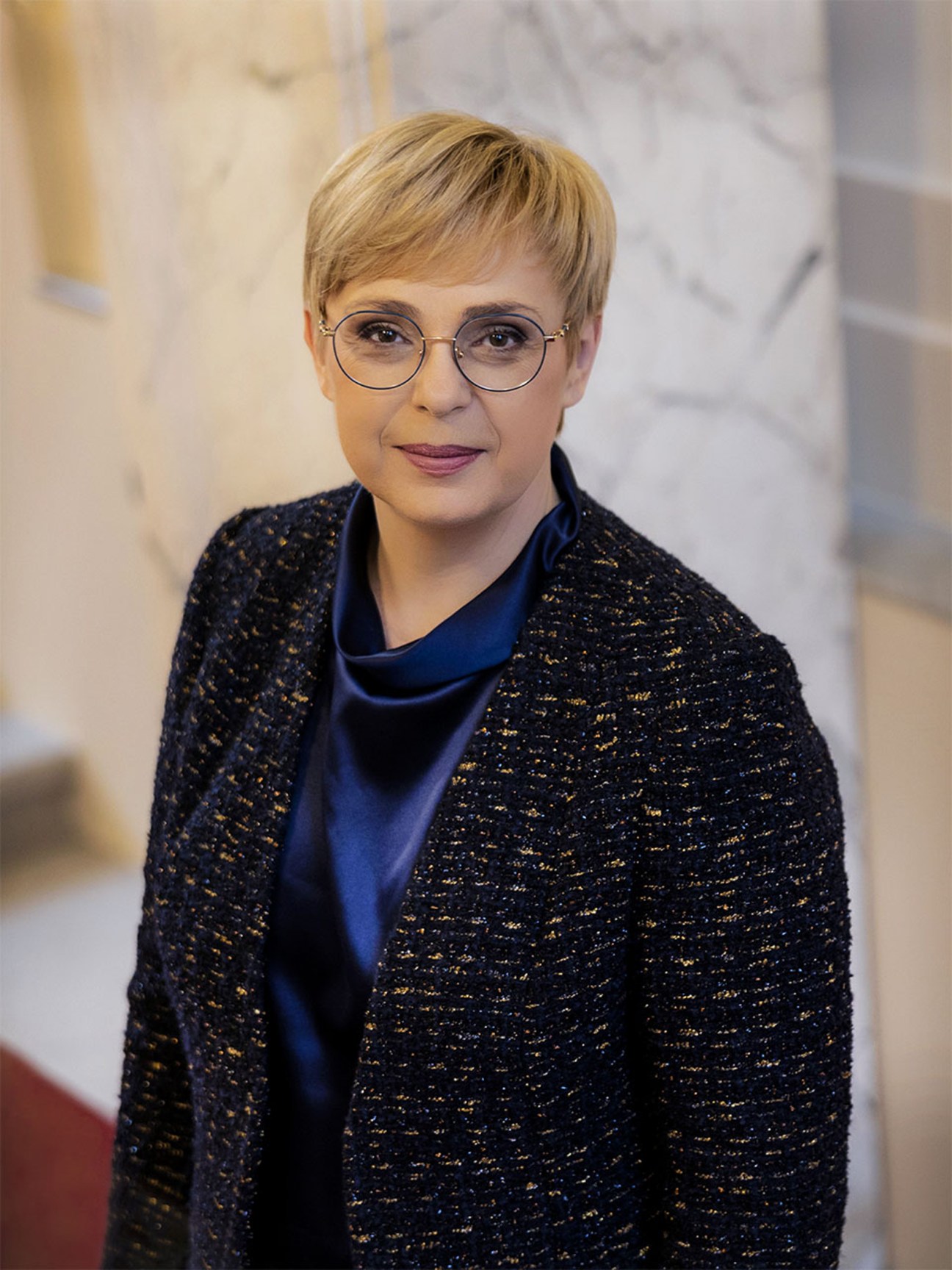
Slovenia’s head of state is a lawyer, journalist and former information commissioner. Monocle meets her at April’s Delphi Economic Forum.
Slovenia is a non-permanent member of the UN Security Council: what can you do in such a position?
What I am watching at the UN right now hurts me really badly. The UN was supposed to be a beacon of peace and security. When I was a young girl and there was conflict, there were the blue helmets. Today we have 55 armed conflicts going on and the UN is not doing its job.
Is reform possible, given that the Security Council’s permanent members – the US, UK, France, Russia and China – must agree?
Everything is in the hands of the Security Council and the veto power is abused daily. One step could be that the countries whose actions are being debated do not get the right to vote.
Could other former Yugoslav countries play more of a role as mediators between Serbia and Kosovo?
Definitely. The most important part of cohabitation between Serbia and Kosovo is to admit that minorities have rights. Being a lawyer, I believe that the law is always part of the solution.
How optimistic is it possible to be about a long-term settlement between them?
If you stop dialogue, if you stop discussion, the solutions are not going to be there.
Design agenda: Mobility aids reimagined and Gucci’s game-changing furniture reissue
nic monisse on…
Widening perspectives
It’s common to hear that a designer entered the profession because they wanted to create a better world for others. It’s an outlook reflected in our interview series from Milan Design Week (see here), where Japanese-born Keiji Takeuchi explained that he’s “always thinking about people” when he’s working. It’s a notion reflected in his exhibition dedicated to the creation of walking sticks and canes that restore dignity to their users.
The show is a breath of fresh air in a world where it can be challenging for designers producing at scale. When populations are so varied, it can be easy to forget to design for the quieter sections of society and simply tick the “people” box by relying on demographic data that doesn’t capture the nuances of lifestyle and culture.
A solution to encourage broader consideration for people might be found in Enzo Mari, who currently has an exhibition dedicated to his work at the Design Museum in London. A prolific designer, artist and educator of the 20th century, Mari was intent on bringing good design to a broad section of people through modularity and mass production. But he was also set on encouraging the next generation of designers to create with empathy.
To do so, he developed a board game with Milanese furniture manufacturer Danese. Originally created for children, “Living” featured eight packs of cards representing lifestyle factors such as profession, possessions and desires; these could be combined to create a fantasy life. By playing the game with his university students, Mari encouraged them to “think about real people, forgetting abstract and flat statistics”.
For any designer looking to broaden their perspective, running a similar exercise might not only be invigorating but also inspire new, life-improving projects for people who need them most. Takeuchi wouldn’t have designed the walking stick if he hadn’t been thinking of those beyond his typical audience of high-end consumers. Who knows, perhaps he played Mari’s game to get to such a headspace.
Fairs – Saudi Arabia
Desert form
There’s a benefit to creating temporary architectural structures: doing so allows designers to test ideas before putting them into permanent forms. It’s an opportunity that architecture practice KWY Studio has been afforded by Desert X Alula. The biannual design festival, hosted in the Saudi Arabian desert, commissions the Lisbon-based architects to design the visitor centre for every iteration of the event.
It’s an opportunity that has allowed KWY Studio to regularly riff on variations of its own architectural themes. In 2024, for instance, “the courtyard entrance experience is further refined”, says KWY Studio founder Ricardo Gomes. “In 2020 it was a simple passage; in 2022 a transitional space through adjacent yards; and in 2024 it’s a generous entrance hall that initially frames a monumental panorama.”
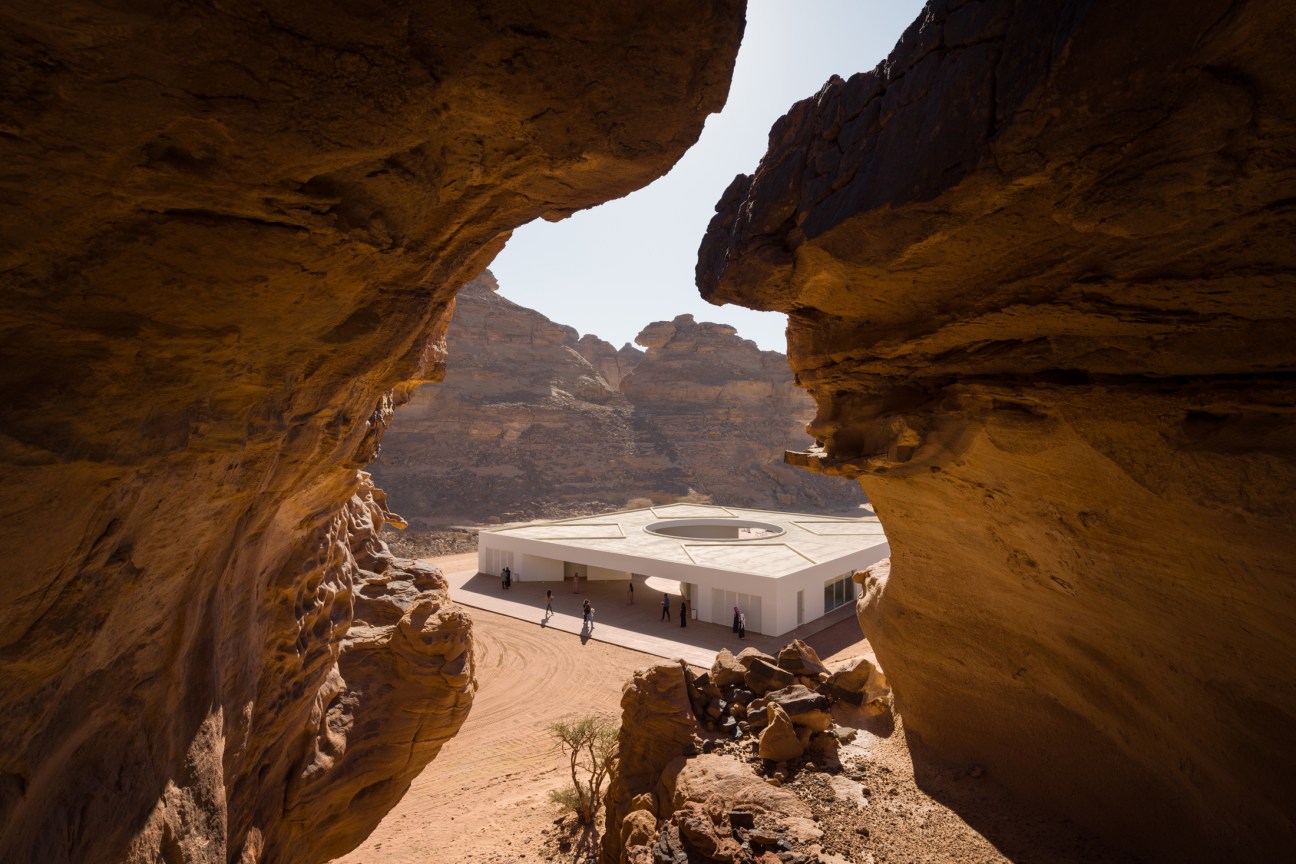
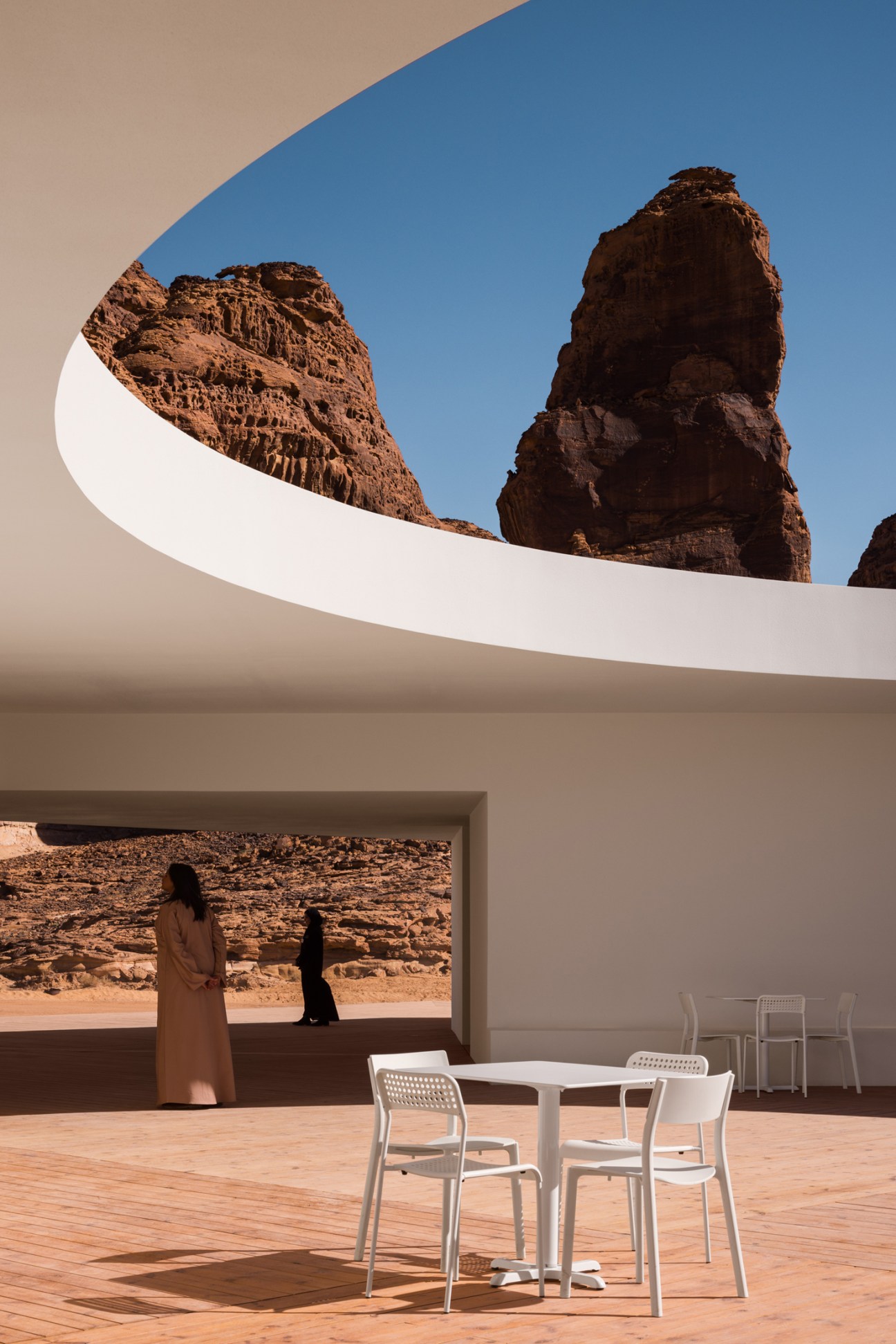
Located at the end of a narrow canyon, this year’s structure is set between rock formations, with views of the surroundings framed by apertures in the space. It’s a design outcome ensuring that this temporary pavilion makes the most of a permanent landscape, all thanks to a series of design moves trialled over a number of years.
For more on design in Alula, turn to our interview with Sabine Marcelis here.
Interiors – Milan
Inside knowledge
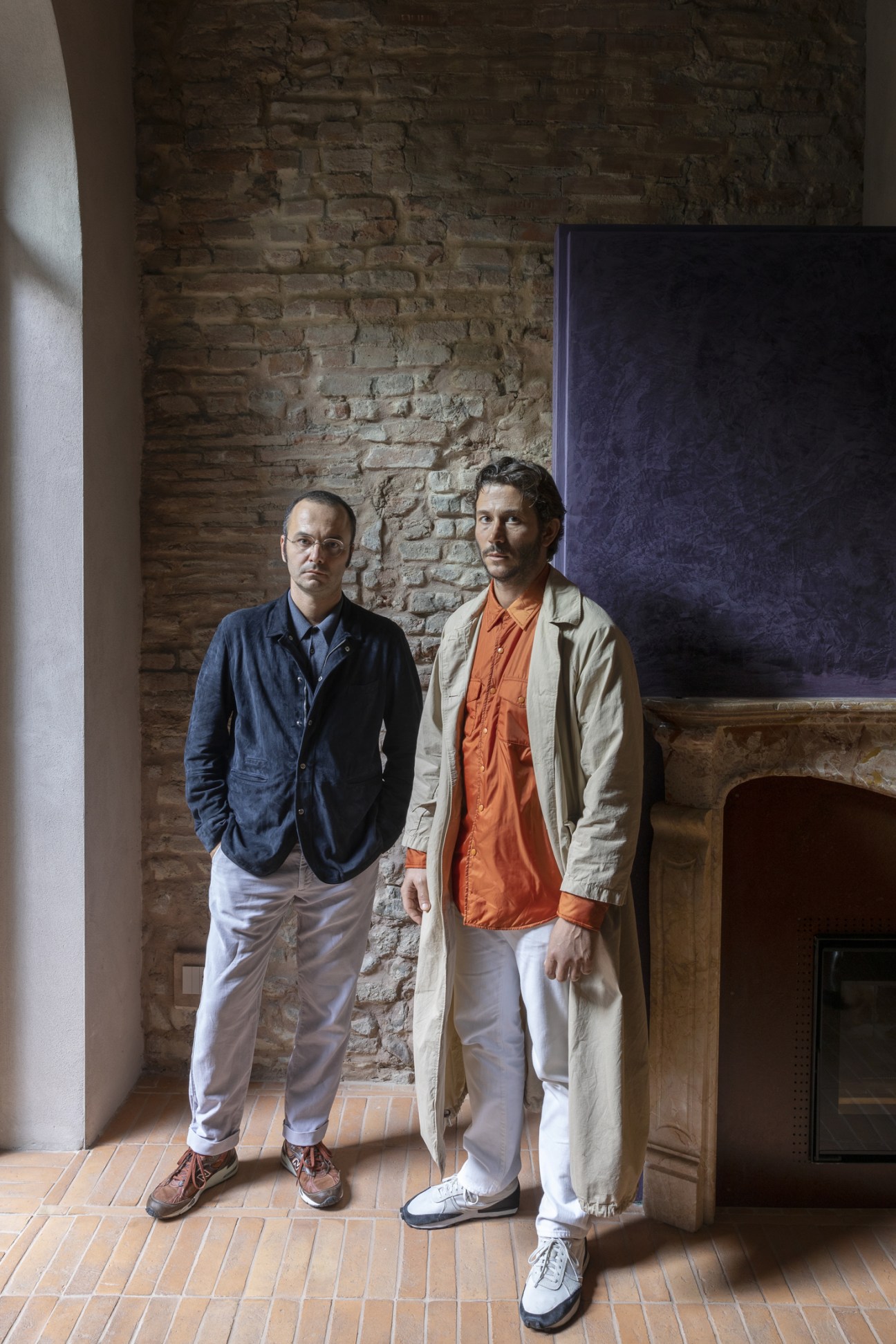
Founders of Milan-based Eligo Studio, Domenico Rocca and Alberto Nespoli (pictured, on right, with Rocca), met during the 2010 edition of Salone del Mobile. “Domenico was working in Berlin, I was in Amsterdam, yet we were both fans of the Italian artisan tradition,” says Nespoli.
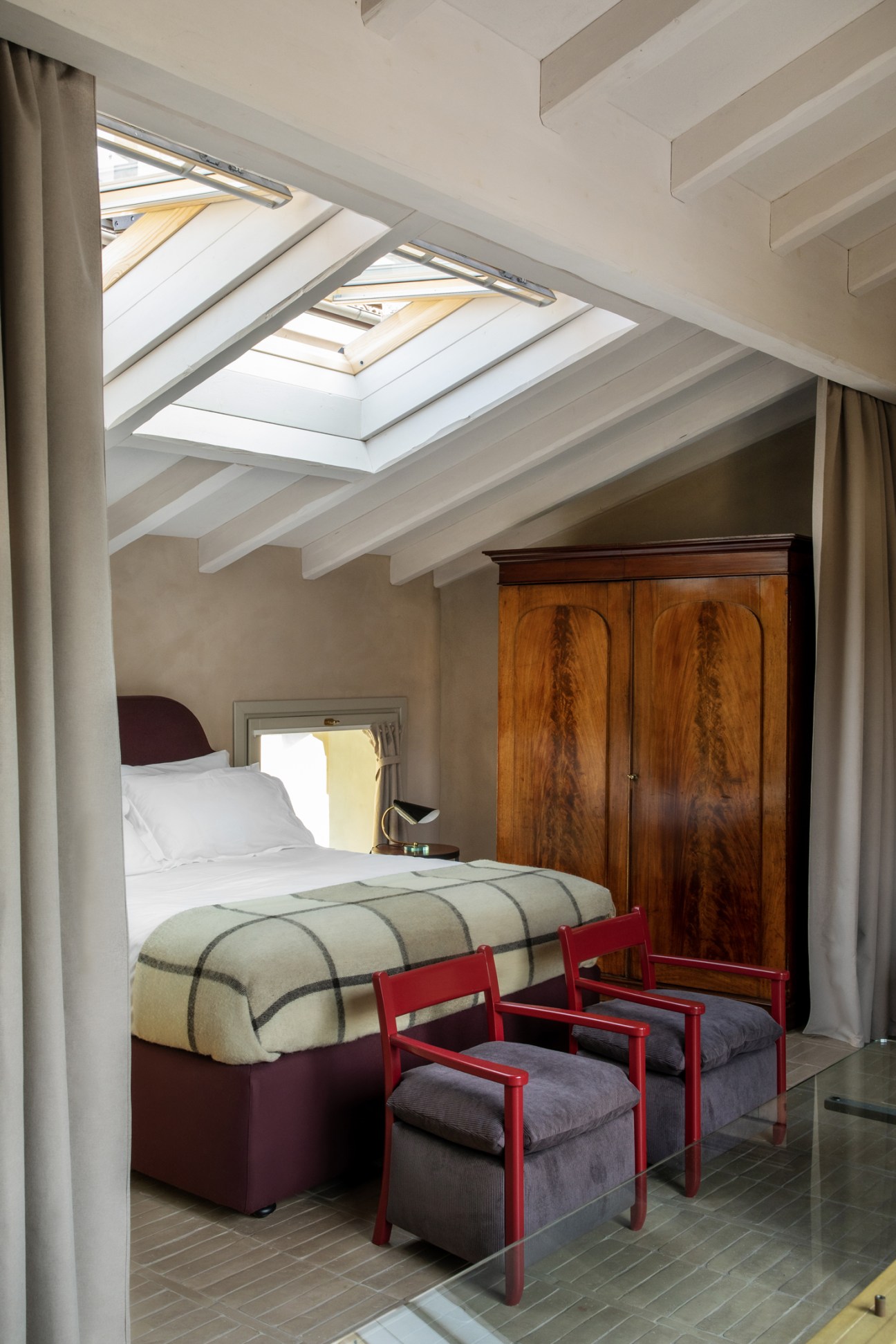
In 2012 the pair, graduates of Milan’s Polytechnic University, created a company specialising in interior design as well as a range of furnishings that are often incorporated into commissions. “Our work transmits a very Italian language that emphasises the aesthetic sensibilities associated with the masters of Italian design and makes it contemporary,” says Nespoli. “They were often working with artisan workshops and we want to preserve that.”
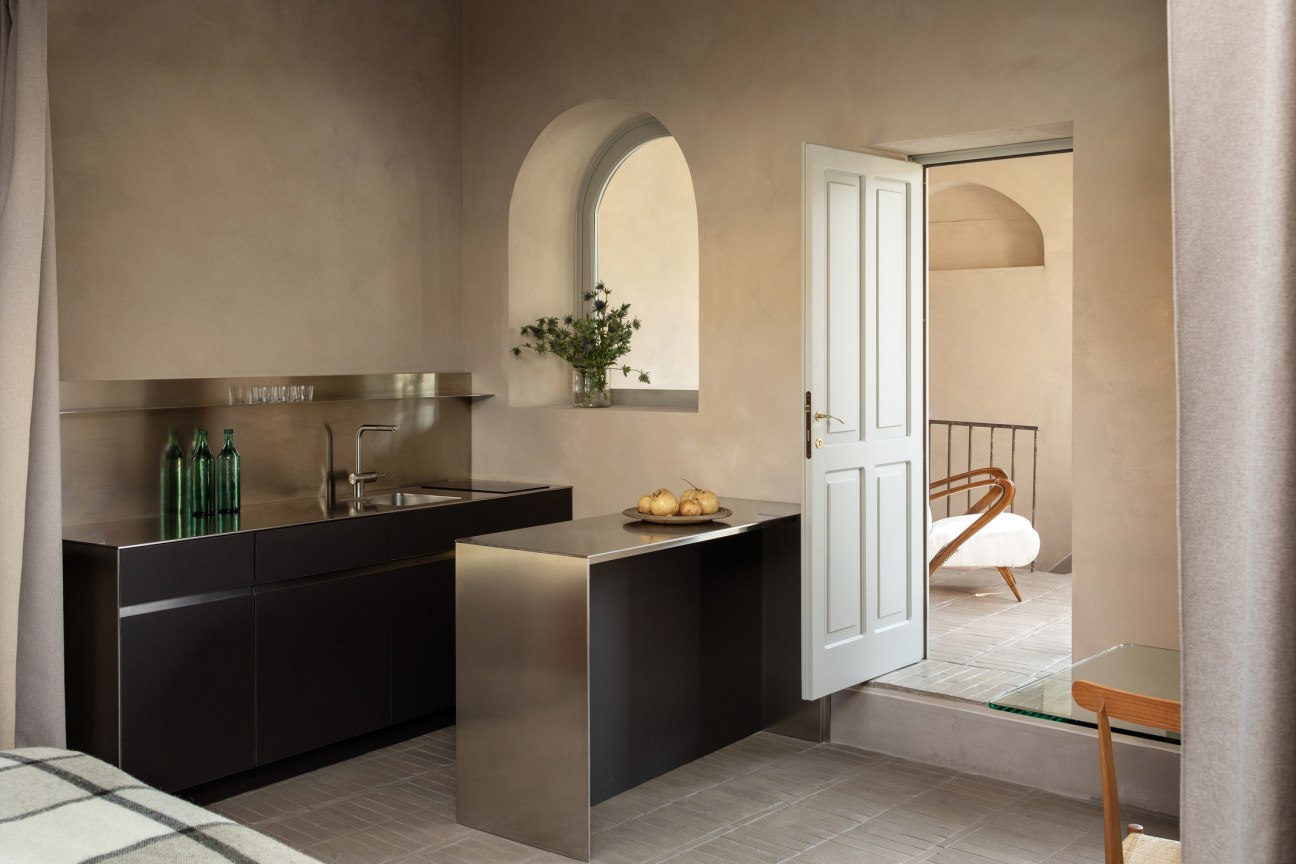
The result is a studio that produces custom furniture – including its Chiavari chair in cherry and beechwood, an update of a classic made by Ligurian craftsmen – and residential renovations such as a 1960s brutalist Milanese apartment and the boutique hotel Locanda La Concia in Reggio-Emilia. “We want to recognise the history of a place and enhance it,” says Nespoli. Those looking to commission a contemporary practice built on historical foundations would do well to tap the duo.
eligostudio.it
Furniture – Milan
Range of style
Emiliano Salci and Britt Moran, co-founders of Milanese design practice Dimorestudio, have a new furniture line to join their in-house Dimoremilano brand. Launched during Milan Design Week in April – where it was shown at a beautiful gypsum workshop – the Interni Venosta collection features seven initial pieces. The name is a reference to the inspiration of Milanese industrial designer Carla Venosta, who was particularly active in the 1970s and 1980s.

The works, which have been manufactured by Tuscany’s Fabbri Services, have some of the same angular touches as the pair’s previous designs, with a dominance of wood, steel and glass. The collection includes everything from a double bed and room divider to a beautiful table and chair set where the seats, when pushed under the table, appear as one cohesive piece. Billed by its founders as “simple, honest, concise”, Interni Venosta references everything from Donald Judd to Bauhaus. With our appetites whetted, we can expect more additions to the collection during 2024.
dimorestudio.eu
Furniture – Milan
Making history
During Milan Design Week, Italian fashion house Gucci reissued five iconic furniture pieces in creative director Sabato de Sarno’s signature Rosso Ancora, a deep-red hue that signifies a new chapter in the Florentine brand’s history.
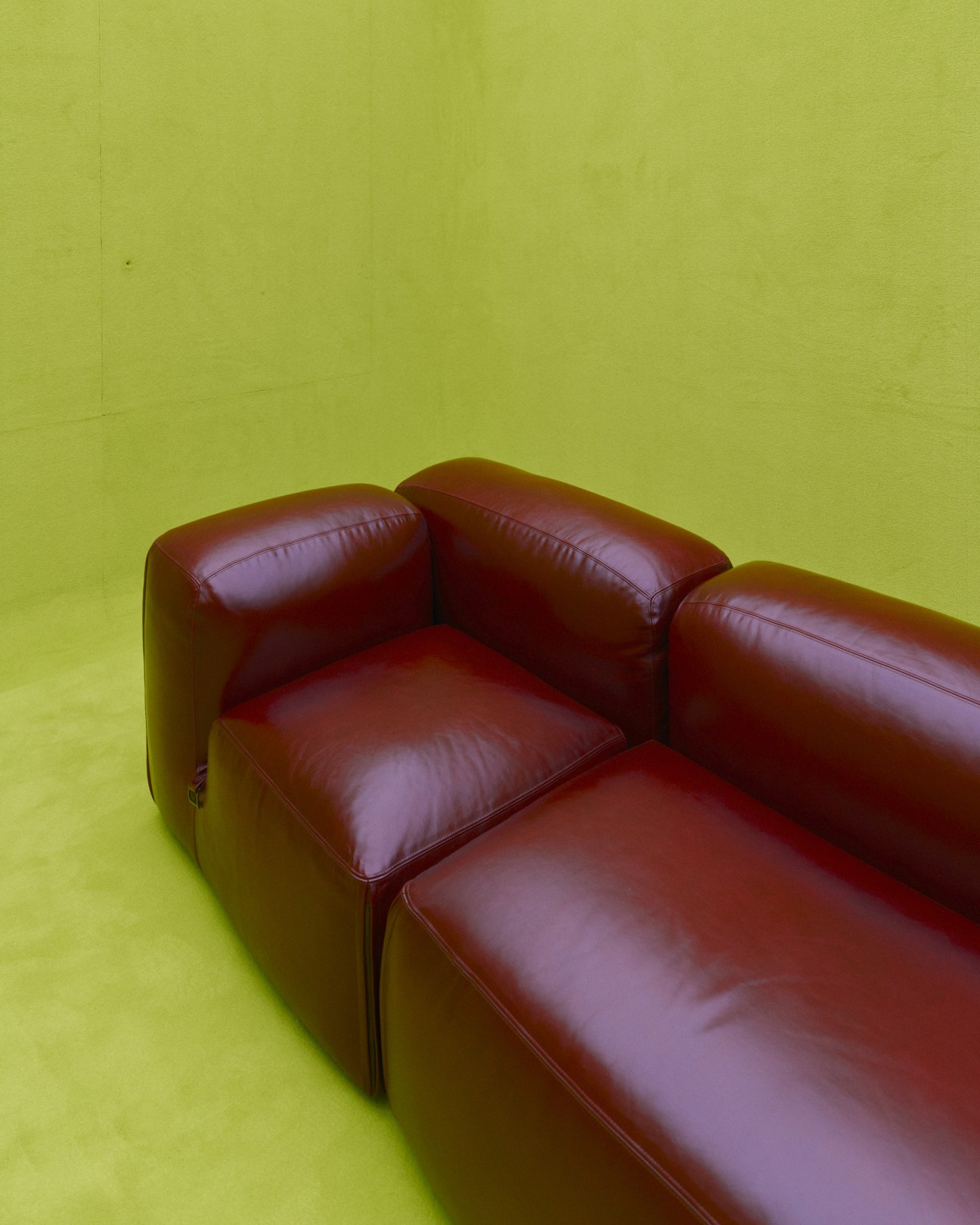

Set against a bright-green backdrop by Spanish architect Guillermo Santomà, the pieces included a Mario Bellini Le Mura couch for Tacchini from the 1970s and the Storet chest of drawers by Nanda Vigo, conceived for Acerbis in 1994.
An impressive blend of recognisable names in conversation with some of the country’s most notable furniture manufacturers, this is the Italian design scene at its most scintillating.
gucci.com
Exhibitions – Melbourne
Q&A: Ella Saddington
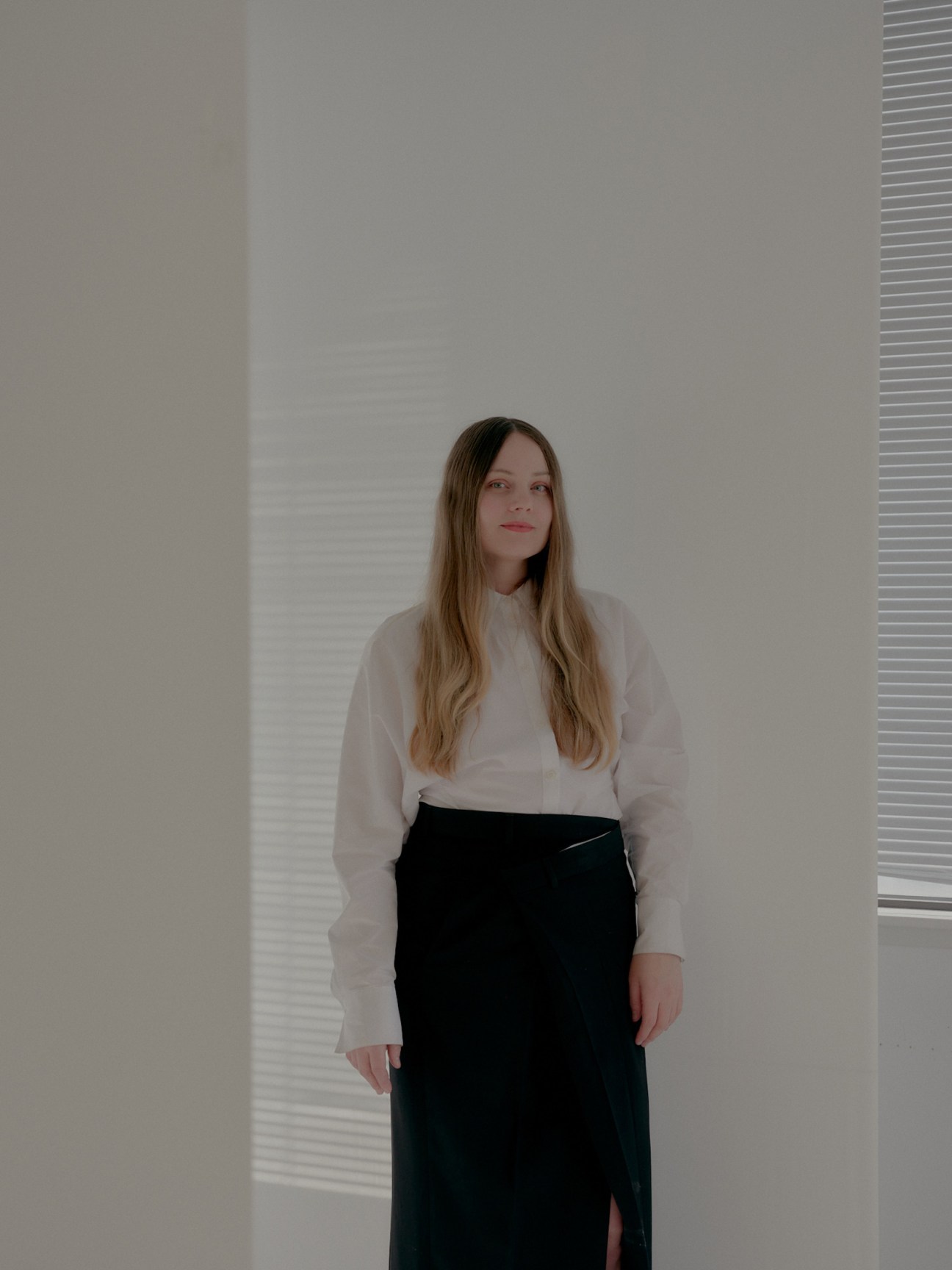
Ella Saddington is a Melbourne-based multi-disciplinary designer and curator of the Material Matters exhibition at Melbourne Design Week. The showcase aims to bring together designers to consider how they might better use materials to build a more sustainable world.
designweek.melbourne
What’s the end goal for ‘Material Matters’?
We are looking at how we might integrate the materials presented here into a commercial solution so that we can start thinking about real-world applications, rather than showcasing the material in a static exhibition.

How do you strike a balance between presenting research and presenting finalised material solutions?
This show is about bringing designers together to share their wins but also their failures. A lot of the practices are in the early stages of innovation but then there are also plenty of market-ready solutions.
What are some of the highlights from the show?
There’s a secondary school programme that has created bio-based polymers out of coffee grounds. There’s also a large, structurally insulated panel system made from hemp and a textile-recovery company that has created solutions out of its waste streams, which it’s supplying to manufacturers in the area.
Manufacturing – Italy
Feet of clay
Lombardy has long been home to brick and tile makers, thanks to the clay soils of the Po floodplain. Terracotta tilemaker Fornace Brioni has, since 1920, been using clay to make its wares. Now under the direction of a fourth generation, Alessio and Alberto Brioni, the firm is upping its design credentials.


This year it has produced two new products. The first, in partnership with architecture firm Snøhetta, is a wall-tile system called Void. The design aims to reduce the amount of material used in production. The result? A scalloped, rather than flat, surface that casts gentle shadows as light moves across it. It’s a poetic product that complements the contribution of designer Cristina Celestino (pictured), who has created Fluviale, a hand-painted tile in blue-green and earthy hues, in partnership with Fornace Brioni. “The brushstrokes compose a pattern,” says Celestino. “It celebrates the movement that animates the plant world beneath the water’s surface.”
Both products are a reminder that there are always new ways of looking at classics – even the terracotta tile.
fornacebrioni.it
Homeware – Japan
Stuff of dreams
The taima-fu textile holds a sacred place in Japanese culture. A natural fine hemp, it has long been used for Shinto priests’ garments. Now, with the launch of Majotae 9490, it’s set to be a staple in the bedroom.
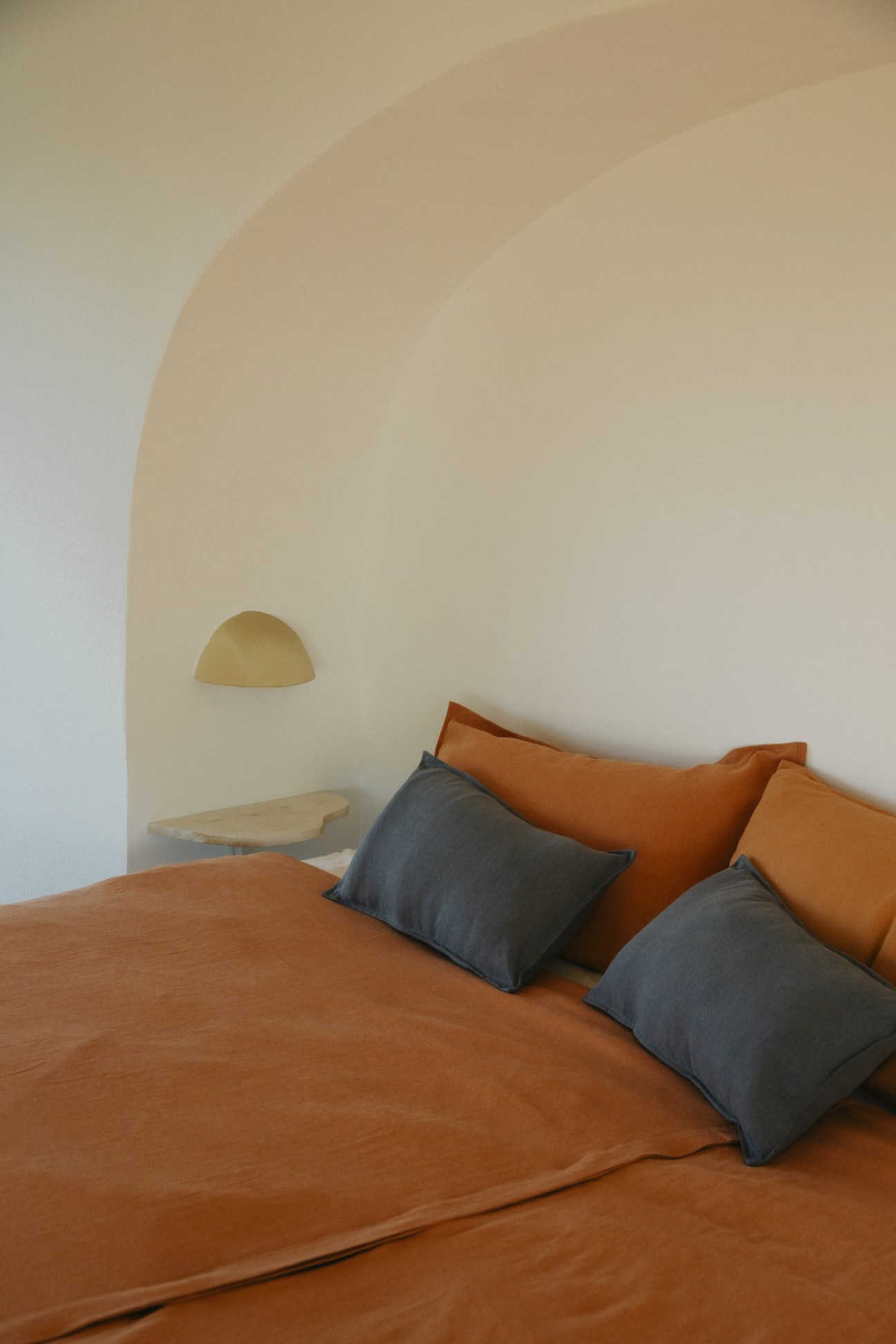
The new brand, an offshoot of Tokyo-based hemp business Majotae, has designed a range of sheets, duvet covers and pillow slips in collaboration with Teruhiro Yanagihara Studio, an interdisciplinary practice based between Kobe and Arles. Together, they developed new weaving technology to create a smoother and softer take on the original taima-fu textile, while still maintaining its thermo-regulating, antibacterial and odour-resistant properties.
The outcome is a luxurious set of bedding that will make it appealing to go to bed early every night, which is appropriate given that the “9490” number featured in the brand’s name nods to the average number of sleeps in a person’s lifetime.
majotae9490.com
Business agenda: Supermarket success stories and a new frontier in data storage technology
Supermarket 1 – Canary Islands
The way of the dinosaur
In April the Canary Islands-based DinoSol supermarket group bought six new locations, bringing its total number of shops to more than 250 across five Spanish islands. What’s behind the brand’s success? “I always say that it’s due to working a lot,” Javier Puga, the group’s CEO, tells Monocle. “We are aggressive on pricing and have worked hard to renovate shops and train our staff to provide excellent service.”

The supermarket offered an average of 1,300 product discounts a month in 2023. Its business model combines the conventional SuperDino- and HiperDino-branded shops, where the margins are lower, with the more expensive HiperDino Express offerings in the Canaries’ tourist areas. The latter makes up about a third of its outposts and provides the bulk of its profits.
HiperDino has also stayed true to its roots. Alongside positioning itself as a progressive player committed to getting more women into the workplace and discussing food waste, it has invested heavily in the local food market. Puga says that 40 per cent of products sold are from the Canaries, which works well for overheads. This helped to bolster sales figures to €1.46bn last year and increase its share of the market to 26 per cent, ahead of both Lidl and Spanish giant Mercadona.
It’s quite a turnaround for a chain that was sold to venture capitalists in 1996 and endured many unhappy years. The owners, the Domínguez brothers, were able to buy back the Canary side of what had been a national business in 2012. The CEO says that DinoSol hopes to grow by up to 10 per cent this year. “We have another nine signed [supermarket] projects in construction.” Puga adds that he is eyeing expansion into southern Morocco and Spanish-speaking Equatorial Guinea, alongside some of peninsular Spain’s tourist spots.
Supermarket 2 – USA
Shop around
Food retailers in the US had a bumper 2023, with sales at major supermarkets reaching about $846bn (€786bn). Yet the sector is shifting, with shoppers now being catered to by online retailers and independent bricks-and-mortar food shops – and the big brands are taking stock.
Though US supermarket profits were in good health last year, in-store sales at big-format stores fell slightly. In response, many retailers are rolling out smaller iterations of their shops. In March, Austin-based Whole Foods announced the first of several new smaller supermarkets set to open this year in New York. Another big retailer, Trader Joe’s, trialled its first smaller-scale Pronto concept in New York earlier this year. Michigan-based Meijer, Colorado’s Natural Grocers and Arizona’s Sprouts Farmers Market are making similar moves.

“It’s a newer idea in the US and Canada,” says David Soberman, a professor of marketing, at the University of Toronto’s Rotman School of Management, noting that the format has long been a staple elsewhere. Tesco, the UK’s largest retailer, debuted its Express supermarkets in 1994. “It’s an opportunity to extend the brand among younger adults who live in cities and don’t want to have to get in a car and drive to do their shopping.”
Smaller city outposts tend to promote their own in-house products more prominently than their bigger-box, out-of-town locations too, Soberman adds. So existing neighbourhood food retailers that stock goods by independent producers won’t necessarily be competing for a piece of the same pie.
The Entrepreneurs
Laura Kramer on…
Shooting for the moon
As the founder, chair and CEO of Lonestar Data Holdings, based in St Petersburg, Florida, Chris Stott and his team are aiming to do something that has never been done before: establish commercial data centres on the moon. Lonestar will operate on, in and around the lunar surface, which, it says, provides a safe place to store the company’s payloads. Stott is aware that this idea will raise eyebrows. “Data centres on the moon sounds insane,” he says. “But every day we create 2.5 quintillion bytes of new data, more than the day before. And we were close to losing it all, it almost happened.”
The aim is to store and safeguard humanity’s knowledge by protecting it from cyber threats, natural disasters and all the risks in between. Stott got the idea at a conference in 2018 after the NotPetya malware was deployed. “A few months after that cyber weapon got loose, in the early stages of the Russian-Ukrainian conflict, I was approached by people looking for somewhere to store data safely,” he says. A veteran in the aerospace industry, Stott has spent his career looking to the skies, from launching rockets with Boeing and McDonnell Douglas to helping to run space projects for Lockheed Martin. “I was a space entrepreneur before it was trendy.”
Following successful tests involving virtual data centres, Lonestar’s first physical off-planet data centre is scheduled to launch later this year. The infrastructure is transported to space using conventional rockets. SpaceX provides the launch services and, once in orbit, Intuitive Machines or companies like it take the equipment to the moon using lunar landers.
For more out-of-this-world business ideas, tune in to our weekly radio show, ‘The Entrepreneurs’, or download as a podcast.
Mohamed Gnabaly is harnessing the power of the Olympics to regenerate his city
It’s a 15-minute walk along the Seine from Île-Saint-Denis’s 19th-century town hall to the high-rises of the new Olympic Village. This meandering route serves as a reminder of the challenges and opportunities that lie before Mohamed Gnabaly, the 39-year-old mayor of this riverine island in Paris’s long-neglected northeastern suburbs. Shuttered factories appear at regular intervals – vestiges of its bygone industrial heyday. The town hall is empty too. It’s still under renovation, having been set ablaze during last summer’s nationwide riots that followed the police killing of a teenager of North African descent. Gnabaly and his team have since been working out of a cramped temporary office in an old job centre around the corner.

But as the mayor takes in the view from a new pedestrian bridge linking his island constituency to the rest of the 21-hectare Olympic Village, he sees a landscape that is ripe with promise. “We’re a small island with a population of 8,500, spanning 85 nationalities,” says Gnabaly, who grew up on Île-Saint-Denis after his Senegalese parents moved to Paris in the late 1960s. “Unemployment is at about 30 per cent and we have a social-housing rate of 60 per cent. All of this makes it easier for us to try new things, to be a kind of laboratory for broader change and development. The Olympics have given us a chance to enhance that process and to speed up some of the regeneration projects that we have already initiated.”
Foremost among these is a new mixed-use eco district that has reimagined an area of the island previously known for its decrepit warehouses. Inaugurated by Gnabaly in 2017, this car-free zone has since been integrated into the Olympic Village, which also spans the neighbouring municipalities of Saint-Denis and Saint-Ouen. It has now become a key feature of the Paris Olympic Committee’s ambition to leave a lasting social, environmental and sporting legacy. Once the Games are over, the district will provide 1,000 new lodgings in an area at the sharp end of Paris’s housing crisis. Of these, 40 per cent will be reserved for social housing. The zone will also offer 50,000 sq m of new business premises, an arts and culture precinct, an aquatics centre, a hotel and 7.3 hectares of public space, including three hectares of parks.
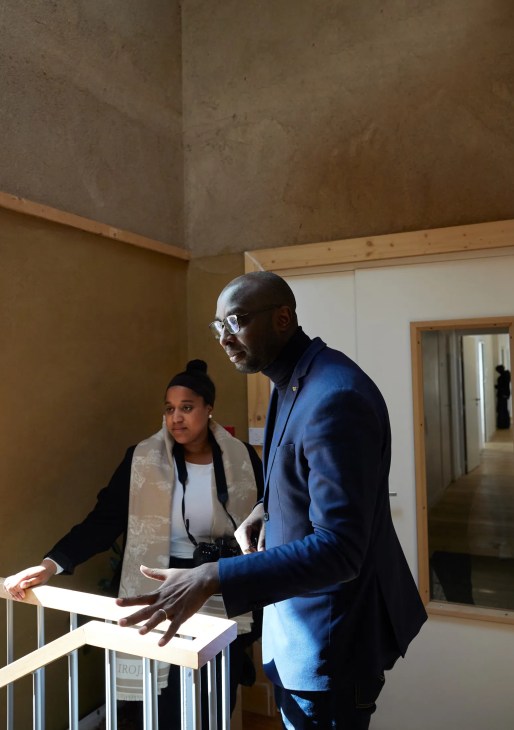
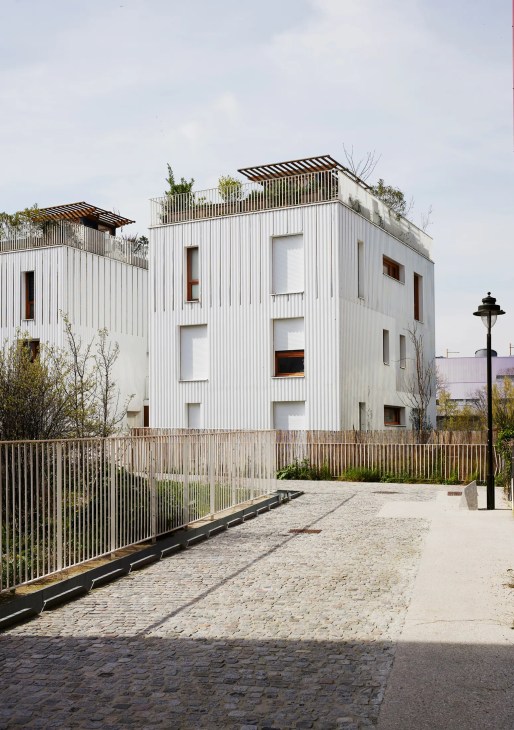
During the district’s development, there has been an emphasis on using sustainable, low-carbon biomaterials, while residential blocks have been fitted with efficient thermal heating. “We can create the city of tomorrow,” says Gnabaly as he guides Monocle along a leafy artery through the district, stopping to greet residents or point out new social enterprises. “The Olympics have provided a lot of the infrastructure but, for the rest, I am counting on us.”
It’s a lofty vision but the tall, bespectacled Gnabaly looks up to the challenge. Born in 1985 as the third of six children, he spent his early years in Goutte-d’Or in the 18th arrondissement, a working-class neighbourhood denigrated as a “no-go area” by some Parisians. At the age of six, his family moved to Île-Saint-Denis. A bright student, he obtained a master’s in finance from a Parisian business school before stints in Mexico City, New York and London as an investment banker. He returned in 2009, stricken with what he describes as “island sickness”. Two years later, he and five childhood friends founded Novaedia, an organic urban-farming co-operative that hires and trains people who have fallen out of the workforce.
Gnabaly admits that he used to have little regard for traditional politics. But in 2014, Green party stalwart Michel Bourgain, who was then the mayor of Île-Saint-Denis, spotted the young social entrepreneur’s potential and convinced him to become one of his deputies. Gnabaly was tasked with handling employment and social economy. After Bourgain retired for health reasons in 2016, Gnabaly, who was then 30 years old, took the reins as mayor with the backing of more than 72 per cent of the council. In doing so, he became one of the Île-de-France region’s youngest-ever mayors. In the 2020 municipal elections, Gnabaly, who wasn’t affiliated with any political party at the time, was re-elected with almost 50 per cent of the vote.
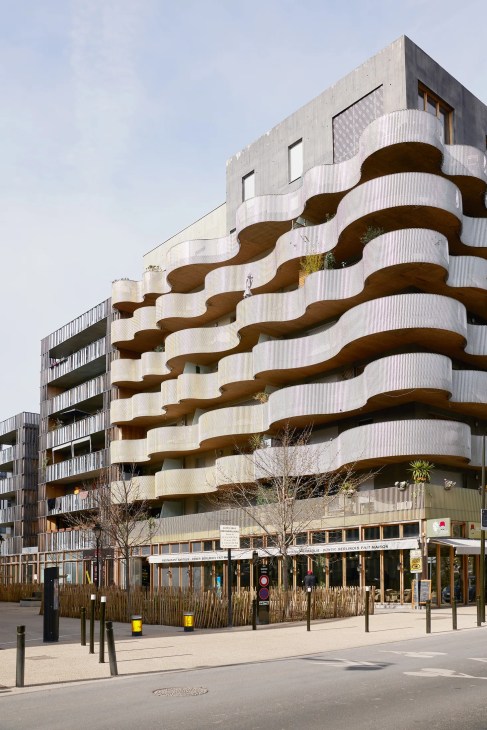
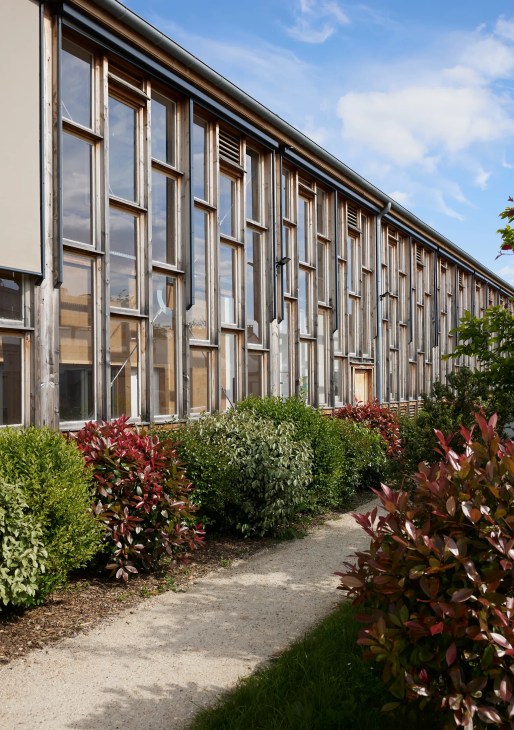
In many ways, he has sought to continue Bourgain’s legacy. His predecessor served as mayor for 15 years. “Michel had a clear urban plan,” says Gnabaly. “He was already working on energy issues, on mobility, on creating more natural spaces. However, our society wasn’t quite ready yet. I have shown up at a time when these are popular subjects so have perhaps been in a better position to push some of these things forward.”
When Gnabaly was first elected in 2016, he set himself the goal of ensuring that 50 per cent of ingredients used in meals provided by Île-Saint-Denis’s three municipal schools were comprised of organic ingredients, more than double what was being used at the time. Having achieved that by the time of his re-election, he raised the target to 100 per cent by 2026. Today all of the municipality’s 800 daily school meals are made in a single central kitchen using 90 per cent organic ingredients.
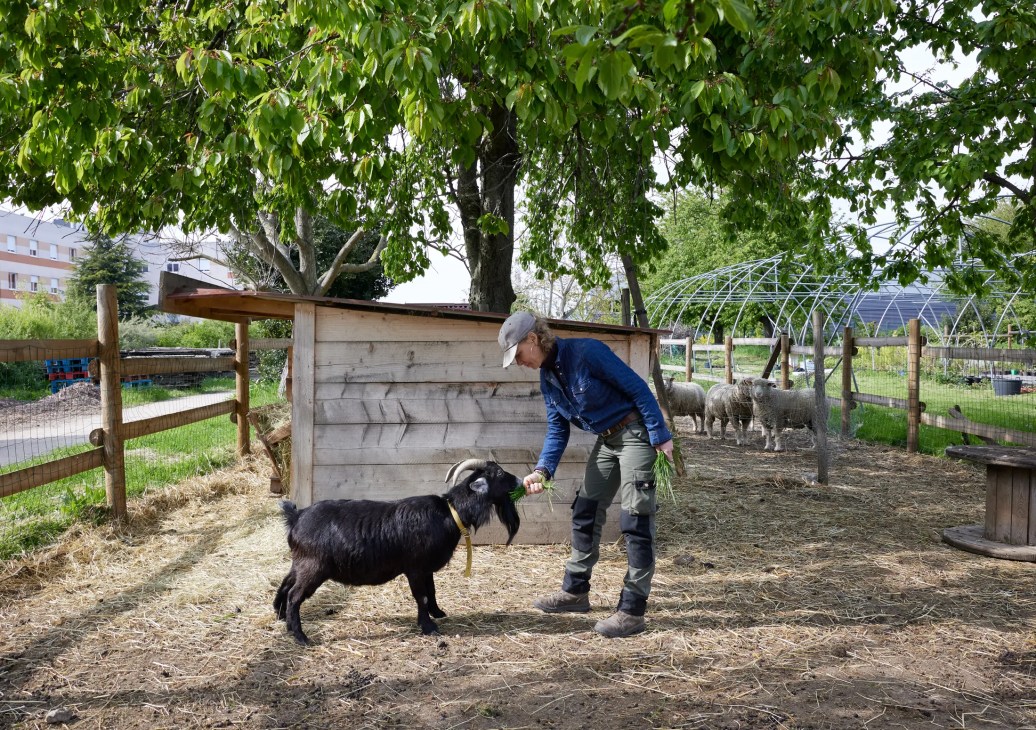

In 2019, alongside the mayors of Stains, Saint-Denis and Bondy, Gnabaly lodged a legal complaint against the French government for “unequal treatment” and “territorial discrimination”, highlighting the lower levels of funding and staffing that the Seine-Saint-Denis administrative area received compared to other, wealthier parts of the city. Several other mayors joined the suit, helping to build a movement that played a significant role in the government’s decision to make the Seine-Saint-Denis department the focus of its Olympic legacy project. About 80 per cent of the €7.1bn budget allocated to Paris 2024 projects has been invested in the department, which remains both one of the youngest and poorest in the country. The area’s mayors, including Gnabaly, have been a key part of a decision-making process that has focused more on improving residents’ lives rather than on grandiose building projects.
Meanwhile, Novaedia has continued to expand, with Gnabaly still serving as general director, though its premises have moved to the neighbouring commune of Stains to avoid any conflict of interest while he is in public office. The organisation’s new home centres around a €4m multipurpose building made from recycled and bio-based materials. It currently provides employment to more than 40 young people, 80 per cent of whom come from Seine-Saint-Denis. Among other things, the 1.3-hectare site comprises an organic farm, cooking laboratories, an incubator for sustainable start-ups and an in-house restaurant. “We are profitable because we operate a multi-activity business: urban agriculture, catering, urban logistics, training and workshops,” says Gnabaly. “We have shown that it is possible to create sustainable jobs in our region at every level, from farm to plate.”
As mayor, Gnabaly has also opened the door to other organisations that seek to push the envelope of what he calls “popular ecology”. Among these is Halage, a nonprofit that specialises in social integration through ecological initiatives. In 2018, with the support of the municipality, Halage took over a 3.6-hectare industrial wasteland in the north of Île-Saint-Denis, sandwiched between the island’s municipal park and a bird sanctuary. Halage has regenerated its once-polluted soil, created a thriving flower business and provided another valuable source of jobs and training to hundreds of people in “difficult situations”, as site co-ordinator Quentin Metge puts it. “Gnabaly has been a tremendous ally,” he tells me outside one of the site’s capacious greenhouses, where some of the first spring flowers are just starting to bloom. “He is completely in sync with what we are doing and vice versa.”
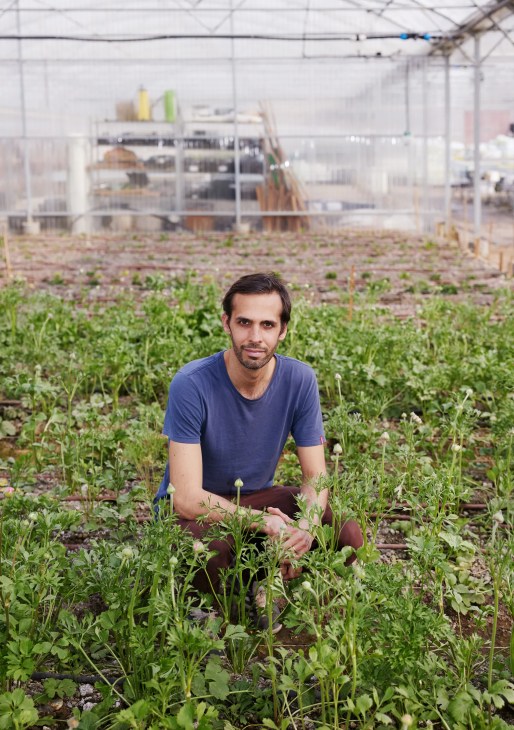
But while the Games have undoubtedly increased Gnabaly’s political stock (he led Emmanuel Macron on a tour of the Olympic Village for its inauguration in late February), they have also provided his opponents with ammunition. Several have invoked the spectre of gentrification and the Olympics’ notorious history of unfulfilled promises in other host cities. Grievances include traffic disruptions, which have affected businesses in the area, and fears about air pollution.
Gnabaly has often sought to counter such complaints by emphasising some of the new developments’ less glamorous aspects, including the construction of an antinoise barrier on the busy A86 highway, which bisects the island, and the replacement of overhead power cables with underground ones. Then there’s the long-awaited renovation of several existing public sports structures, including the island’s only stadium, which has been bestowed with a new athletics track, and a previously run-down indoor sports complex that athletes will use during the Games for boxing, gymnastics and basketball training. In a further bid to make the Olympics feel less abstract for the community, the mayor has also guaranteed every Île-Saint-Denis resident a free ticket to an event.
Nevertheless, he concedes that his long view of the Games’ legacy has not always been an easy sell in an area where most people are preoccupied with more immediate problems. “I wouldn’t say that the feeling towards the Games is negative but it’s certainly not ‘Wow!’” says Gnabaly. “People have basically been living on a building site for the past five years. They are tired of all the construction. We have been careful not to be insensitive to this. At the same time, we haven’t had many complaints because most people have come to understand that this is all going to be for them.”
But some residents are unconvinced by their mayor’s optimism. “The Olympics won’t bring us anything,” says Salim Ben, who works at a halal butchery in the eco district. “If anything, it will destroy our community a little bit.” Namani Cyrille, the owner of the boutique African hair salon next door, is more ambivalent. “I was based in Saint-Ouen before and had a well-established clientele that followed me,” she says, braiding a customer’s hair. “But it would be tricky to set up shop here without that. Also, some of the new businesses won’t be accessible to a significant part of the population. I saw it happening in Saint-Ouen, which has gentrified enormously. People are already being pushed out.”
Gnabaly concedes that gentrification is what concerns most residents. “It’s an issue,” he says. “To a degree, it’s something that is already beyond the control of municipal mayors. But we can put mechanisms in place to protect ourselves.” As well as allocating the lion’s share of the eco district’s new units for social housing, Gnabaly has capped their sale prices at €3,500 per square metre of living space, more than 35 per cent lower than a similar cap imposed on the Saint-Ouen section of the Olympic Village.
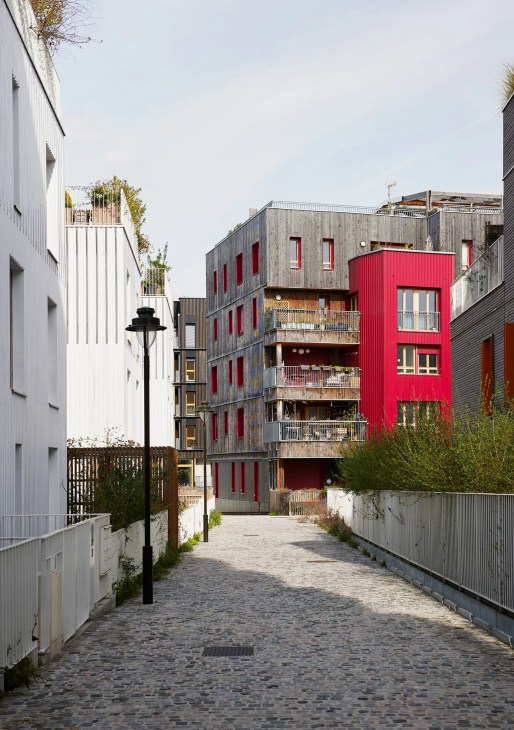
The initiative that excites him most is participatory housing. Residents are included in the planning and architectural decisions concerning their building and its common areas. In 2018, alongside public-development institution Plaine Commune, the municipality completed a four-storey block in the heart of the eco district, built using low-carbon timber with a façade of recycled sheet metal. More are expected to follow after the Games. “This was the first building in the whole Seine-Saint-Denis department where we mixed social rentals, social home ownership and private housing,” says Gnabaly, leading Monocle into the building. Inside, we are met by Laurette, who rents one of the 26 units. “We make all decisions together here,” she says. “Everyone has the same rights. Even with the construction work going on outside, we’re good here.”
For Gnabaly, creating a common language has been essential to the success of such ventures. “As a community, we share a strong social and environmental conscience,” he says. “It has become something almost innate.” This common language is also key to understanding the mayor’s optimism about Île-Saint-Denis’s post-Olympic trajectory. “I know how to speak to people’s lived realities,” he says. “That’s what so much of my work has been focused on and how we’ll ensure that we all move forward together.”
We take the elevator up to the communal terrace, which doubles as a rooftop garden. The island is so narrow here that we can see the Seine on both sides of us. Gnabaly points out the top of the Eiffel Tower in the distance, beyond the gleaming Olympic Village. “When I talk about the city of tomorrow, I’m interested in the life within it,” he says. “We have put a lot of work into creating a village spirit here – real links between people, a sense of closeness.” He takes a moment to admire the view, his eyes squinting a little in the bright afternoon sun. “It’s very pretty, isn’t it?”