Issues
The Grand Palais director on the fragile art of renovation
Didier Fusillier has one of the most prestigious cultural roles in France. As chairman of the Réunion des Musées Nationaux, he oversees 18 museums, including as director of Paris’s celebrated Grand Palais. Fusillier took the helm in September 2023 after being selected by Emmanuel Macron. One of his first and most pressing tasks has been overseeing the completion of the Grand Palais’ renovation, under way since 2021. And he has key deadlines to meet: a partial reopening must occur by July so that the palace can host the fencing and taekwondo events for the Paris 2024 Olympic Games. No pressure then.
“France has a robust tradition of restoring its monuments and this is no different,” says Fusillier. His hope is that the updated space will feel current, with a dynamic programme ensuring that no two visits to the Grand Palais are comparable. “Our collection will be abundant and ephemeral. But what really sticks in our collective memory when it comes to the Grand Palais is the building itself. The iconic roof is like a compass that Parisians use to orientate themselves around the city.”
Synonymous today with the Belle Époque – a period in the late 19th century of unrivalled industrial progress – the Grand Palais is crowned with Europe’s largest glass roof. The art nouveau exhibition hall was constructed in 1900 for the Universal Exposition trade show and rolled out the red carpet for most innovative technological advancements at the turn of the century.
Fusillier’s career began in less grand cultural circumstances, in the town of Maubeuge. There, in the 1990s, he found himself at the centre of a push to make the arts more open and democratic. Today, France’s Association des Scènes Nationales constitutes 77 public cultural institutions in mid-sized towns, including Maubeuge, where Fusillier began his career as director of performing arts space Le Manège. “At that time, my native town was a matrix of experimentation,” he says. “Belgian theatre director Ivo van Hove came to Maubeuge because everything was eccentric and unpredictable.”
Fusillier wants to bring that same spirit of inclusivity to the Grand Palais, where entry to some of its spaces will be free. “The most important thing is that culture in Paris is shared,” he adds. “I want young people to grow up coming to the Grand Palais and then to bring their children later in life. There will be something for everyone – and enough going on – to keep visitors here for the entire day.”
At 72,000 sq m and with vast swaths of surrounding greenery, the Grand Palais is the biggest space that Fusillier has ever worked in – it eclipses even the Palace of Versailles. Here, he will configure the empty canvas with the same flair for experimentation he has possessed since he first entered the industry. “It’s like a construction game,” he says. “With a space this flexible, we want to rethink its purpose. I’d like to stage operas, dance, theatre and concerts, because who else in metropolitan Paris has a space this big to play with?” As the light streaming through the ornate glass roof shifts with the sun, a visit to the Grand Palais offers a snapshot in time. “I’ve never had the opportunity to work somewhere so dependent on the seasons.”
As well as being reinstated as the host of Paris+ par Art Basel and providing the runway space for Chanel’s collections during various fashion weeks (the French luxury house pledged €25m towards the renovation), the Grand Palais will also exhibit works from the Centre Pompidou during its own five-year renovation from 2025. This coming together of cultural domains – everything from fashion and design to art and sport – indicates the scope of ambition that will drive Fusillier throughout his tenure here. “I want to channel all of these artistic influences into the reopening of the Grand Palais,” he adds. À bientôt à Paris, everybody.
The CV
1990: Founds avant garde arts centre Le Manège Maubeuge in his home town
1998: Becomes managing director of Lille 2004, a cultural programme that recognised Lille as the European Capital of Culture
2013: Named artistic director of the Berges de Seine in Paris
2015: Becomes president of the Grande Halle de la Villette, an arts and culture centre in northeast Paris
2019: Creates the 18th edition of Nuit Blanche, Paris’s annual night-time arts festival
2023: Appointed president of the Réunion des Musées Nationaux in Paris
Editor’s letter: Andrew Tuck on pages worth owning
And the winner is? Well, there are 50 of them in our annual Design Awards, brought to page each year by Nic Monisse, our design editor. The reason that we originally wanted to enter the fray when it comes to bestowing accolades in this realm is that we felt that too many good projects were being overlooked – and perhaps too many garlands were being draped around the necks of the same recipients in the same few design outposts. Using our global outreach and our usual focus on simple solutions, honest materials and a quality of life for all, we hope that the line-up of talent that appears in this issue will delight and surprise – and nudge along projects and plans that sit on your agendas (whether revamping your company’s HQ or remaking your domestic setting).
There’s another list to pore over in this issue – and one that in many ways intersects with the world of design. In what turned into an epic and revealing project, we have asked 50 academics, designers, photographers and writers to pick the one book that they think you should own (seeing as some of them have chosen rare first editions, you might need to go for more affordable alternatives unless you have intentions of switching your career to become a cat burglar).

We’ve always, for selfish and wise reasons, been champions of print but the idea for this project went further. In recent months we started to come across numerous beautiful books produced as passion moves, or as limited runs, and realised that the book world was seeing the arrival of a wave of innovative publishers. When we were recently in Warsaw, for example, we met Filip Niedenthal, a former editor of Vogue Polska, who has now turned to books with his imprint 77 Press. He was enthused about the potential to deliver innovation between the covers. In Singapore, our correspondent Naomi Xu Elegant told us about Jayapriya Vasudevan, an agent shaking up the Asian literary landscape. And then we had a visit in London from celebrated typographer Erik Spiekermann, who, back home in Berlin, has an impressive letterpress set-up, where he resets and reprints limited-edition versions of novels and some factual books. It’s called TOC – The Other Collection – and he is part of a team that includes designer Susanna Dulkinys, author Irene Dische and publisher Birgit Schmitz. Every book gets a new jacket, which is based on a fabric that connects to the story, the topic and the author. Clearly it was time for us to help everyone make a new library – and ask the well-read what should be on its shelves.
One of the best parts of being on a magazine is when everyone comes together to make a story work: a writer who creates a narrative that’s well reported and enticing, matched with photography that sings and a page design that feels innovative without being painfully verbose (we want you to read with ease). I hope that this chorus of effort has come to the fore in this month’s Expo.
As someone who has bought quite a few print editions, I have always been interested in the idea of ownership. If you buy a painting, it’s yours. But an edition, even if it’s numbered and signed, and made by the artist – is that just a step up from a poster? You rarely dwell on this for long as even if you buy a print that’s one of 100, the chances of walking into a house and seeing “your” picture are pretty slim. Until now. Working with Edition VFO in Zürich, we tracked down where the prints from one of its editions ended up. The cast of owners and their stories explains this part of the almost democratic section of the art market with ease. And, yes, they are also a celebration of ink, paper and print – to this day the most powerful way to tell a story.
We hope that you enjoy this issue. And you can always let me know your thoughts by dropping me an email at [email protected]. Ideas for future awards? Books we should know about? Multiple musings? Send them our way.
Interview: Nuria Cruelles, Loewe perfumer
Over the past decade, Loewe has transformed from a dormant Spanish heritage brand into one of the world’s most relevant luxury houses. This is largely thanks to its creative director, Jonathan Anderson, and the many ways in which he has revitalised the house’s fashion business, with mesmerising runway shows in Paris, a growing range of accessories and a commitment to artisanal production.
Now, customers are equally excited about discovering the brand’s perfume and home-scent collections. Driving the momentum is Nuria Cruelles, the nose behind Loewe Perfumes. Cruelles, who also trained as an oenologist, grew up smelling the delicate floral notes of Loewe Aire on many women in her native Spain. Today, she has been working to give the brand’s original perfumes a new lease of life, as well as creating fresh hits. Much like Anderson, she has a flair for rule-breaking and is known to experiment with the most unconventional ingredients. She tells monocle about the new formulas that she has been concocting and explains how she created one of the most sought-after home fragrance lines using nothing but the humble ingredients in her kitchen.
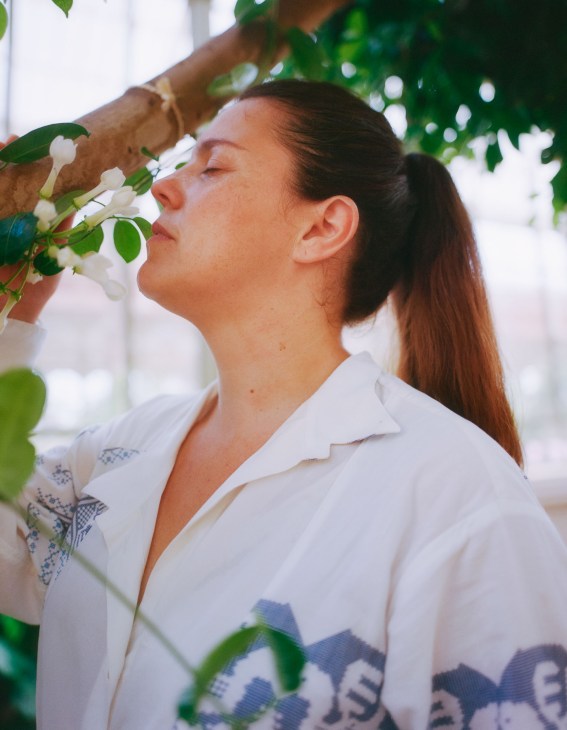
What drew you to the world of perfumery?
As a child, I always found myself trying to guess what perfumes people were wearing. Over time, it became an obsession. I started by studying chemistry because being a perfumer is all about blending different ingredients and understanding chemical reactions. A perfume is alive. I spent some time travelling around Europe and, when I returned to Spain, Loewe called. It’s a dream to work for the only luxury Spanish brand.
What does Loewe and the global recognition that it has received in the past decade mean for Spain?
We’re all so proud. Through Loewe, we can show the world who we are, what we can do and the crafts that we specialise in. That’s why we want to highlight ingredients from Spain in our perfumes.
Tell us about the new collection that you have been working on and its ties to Spain.
The idea was about having a single ingredient define a whole collection. We began by thinking about Spain and how to incorporate more of our values in the perfumes. The country is easily associated with the Mediterranean and aromatic scents but we wanted something even more special so we used rockrose from the south of Spain. It’s a very rustic, balsamic odour. It’s like discovering a rough diamond and having to polish it. When we are distilling it, we choose the cleaner, fresher facets of the ingredient to tailor it to our needs. We turned it into something sophisticated. It’s like gastronomy – a chef can take a few basic elements and create art.
Do you try to keep a dialogue going between the fashion and perfume sectors of the business?
Jonathan Anderson has always respected my expertise and what I can bring to the table. At the same time, his collections inspire us: the shapes, the colours and the textures of the clothes that you see on the runway all inform the perfumes.
Was the process of creating home scents very different to the way that you create perfumes?
We wanted to ensure a point of differentiation between the two. I wanted to use singular elements: the leaves of tomatoes, beetroot, cucumber. Translating this type of formula into candles that smell good when you burn them requires real skill. It’s like architecture: the simplest structures are usually the most complex.
What scents would you recommend for different moments at home?
For relaxing in a bath, try the oregano line – it’s calming, like lavender. If you’re hosting a dinner, go for one of the tomato, cucumber or sweet-pea candles, something that matches the food. For the bedroom, I recommend our wasabi candle and the honeysuckle room spray.
Do broader market trends influence your work?
We want to be trendy but we don’t follow trends. The key is to choose an ingredient and work around it. Dress it up and use it to create different textures and feelings. The perfume talks to you and it will tell you what it needs. You just need to listen.
Could you tell us about the day-to-day process of creating new formulas?
To create, you need peace and time. That’s why I recently decided to move from the centre of Barcelona to the countryside. Now I grow tomatoes in my backyard. I wake up every morning to water them and I’m always walking barefoot with my children. You might smell the soil after the rain, along with some patchouli or magnolias that happen to be behind you, and you immediately get inspired. If certain smells work together in nature, I try them in the laboratory.
What’s your advice for someone who wants to find their signature scent?
At Loewe, we offer a rainbow of options so you can choose different ones for different occasions. You can also combine them and create your own essence. Everyone can be an alchemist.
perfumesloewe.com
Editor’s letter: Andrew Tuck on meeting with approval
Let’s start with the final pages of this issue: the Expo. We have recently been interviewing candidates for the role of travel editor and I’ve found myself launching into some rather detailed explanations of what makes for a perfect Monocle hotel or restaurant story. I stress that we, of course, want to apprise people of the latest openings but that we are also just as happy to put the spotlight on an establishment that has navigated the decades untouched. That sometimes a simple three-star with a good owner can outshine the five-star joint run by a global chain. How modest but delicious food can satiate more than a laborious 20-course tasting menu. That luxury comes in many guises. I might have left a few candidates just wishing that we wanted to run the same style of reviews that you see in other titles.
But from now on, if asked to explain our perspective, I will simply hand over this issue and ask people to drink in the restaurants that made our Expo. Commissioned by our editor, Josh Fehnert, it’s a story that looks at “hospitality holdouts” – establishments that have triumphed with consistency, tradition and the knowledge that sometimes all you have to do is nothing much at all. Just before we send any issue to print, we do a final run through of all the pages. This month everyone ended up staring at the tempting dishes from the likes of Kronenhalle in Zürich and The Odeon in New York, hoping to somehow be transported to their dining rooms; to find themselves eating the perfect smørrebrød and having a lunchtime glass of red.

What these establishments also have in common is a reputation for well-oiled hospitality; knowing how to welcome people in from the rain or a harried day to slowly restore their usual ease. This theme of being hospitable runs throughout the issue – and not just in the realm of restaurants and hotels. We also have a masterclass on the broader subject of hospitality delivered as 50 lessons. Because how you treat people, how you greet and take care of folk, is a discipline that needs to be perfected by every airport chief, diplomat, business owner, receptionist and mayor. The steps you are willing to take to be a good host reveal everything about your qualities and beliefs. It speaks to who you really are.
This issue is also our Fashion Special and, as always, these pages have been elegantly stitched together by our fashion director, Natalie Theodosi. Just as in our coverage of travel, when it comes to fashion we also have a different take on what makes for the perfect mix of stories. Of course, we want to offer some suggestions on brands and shops that really should be on your radar but we also want to take you behind the scenes and into the boardrooms and ateliers where you get to see how businesses are really made. So in addition to a peerless Fashion Top 25, Natalie delivers a series of stories that explore the remaking of Jil Sander by design duo Lucie and Luke Meier, the revival of Piaget and how APC is planning to become a total lifestyle brand. It’s a complete look.
Monocle has been back on the road this year and we’ll be in Hong Kong for the latest edition of The Chiefs summit on Wednesday 27 and Thursday 28 March. We hope you can join us (ticket details at monocle.com). And the squad will be at numerous trade, design, diplomatic and urbanism events across the coming weeks too. We look forward to sharing some monocle-style hospitality with you soon. Until then, have a great month.
If you have ideas for stories, recommendations for forgotten hospitality holdouts or even a few style tips, feel free to contact me at [email protected].
Subtle spring looks with the season’s best combinations

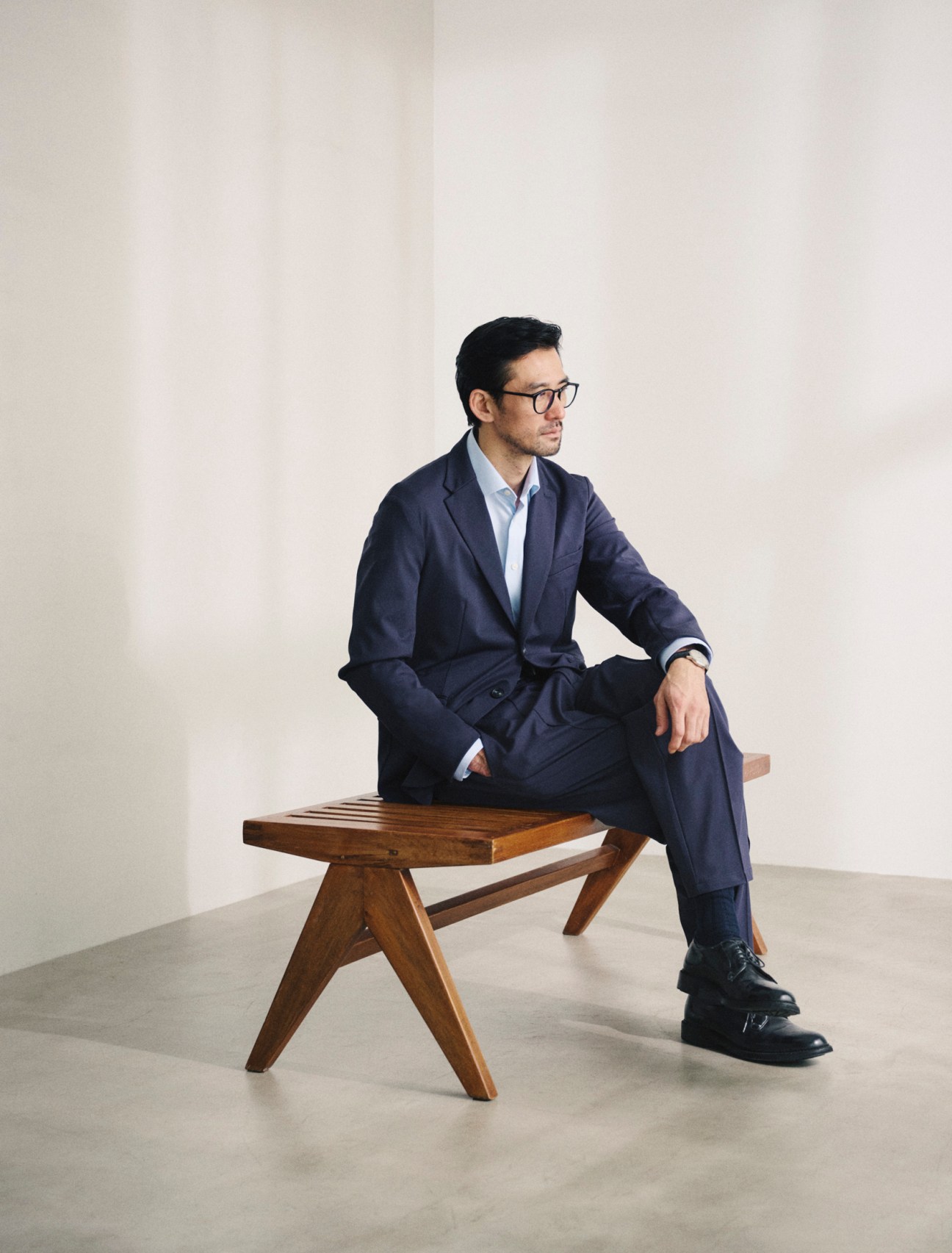
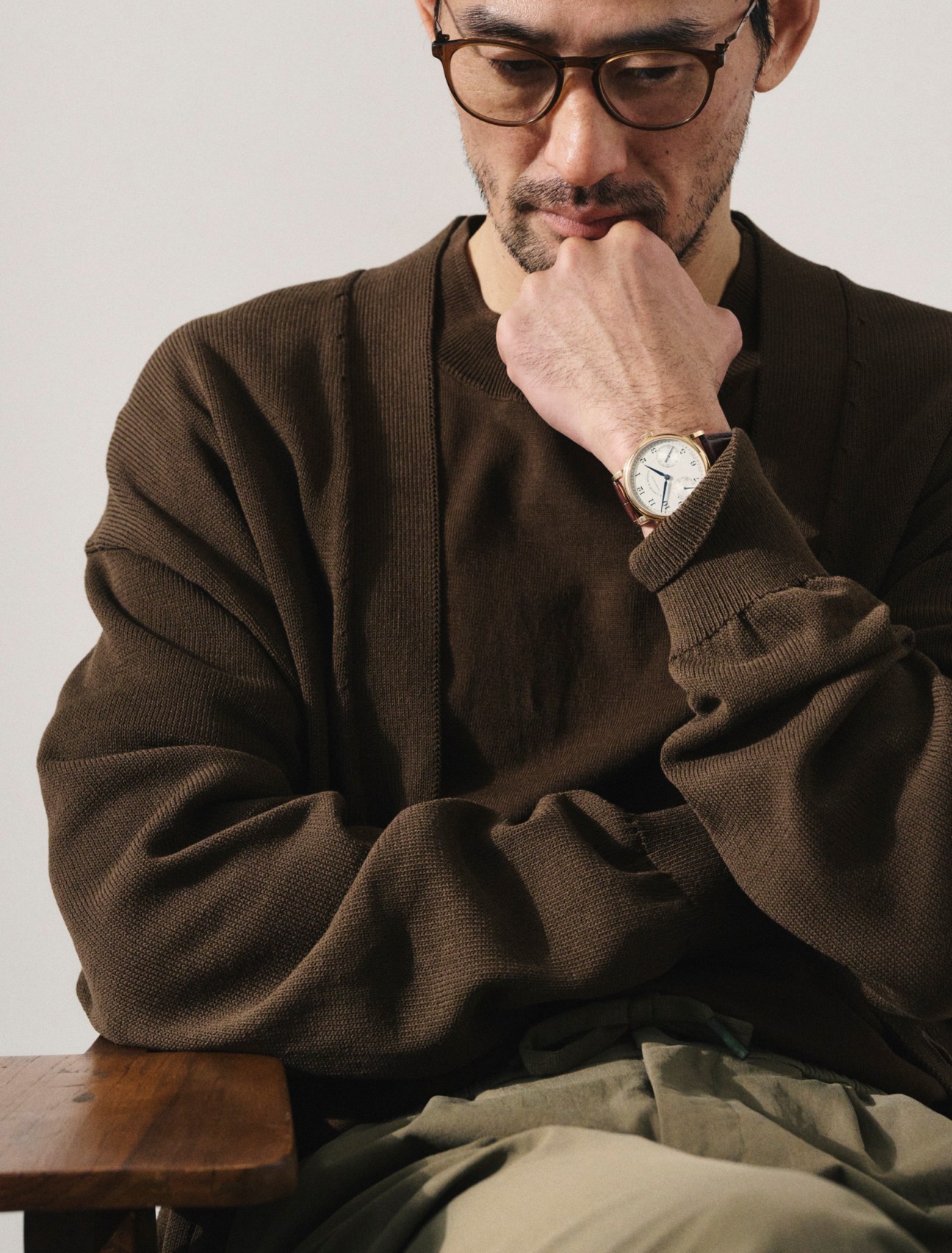
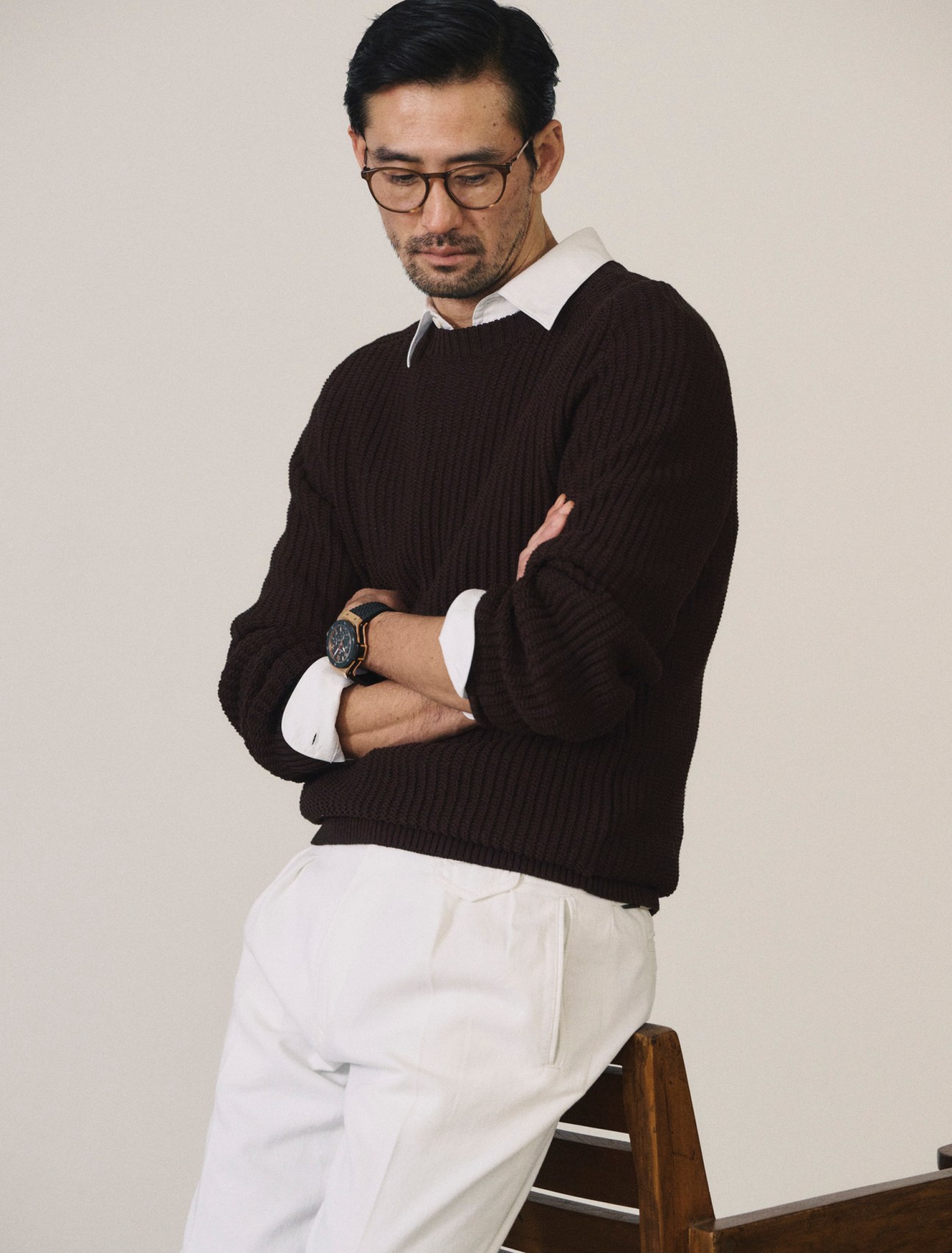
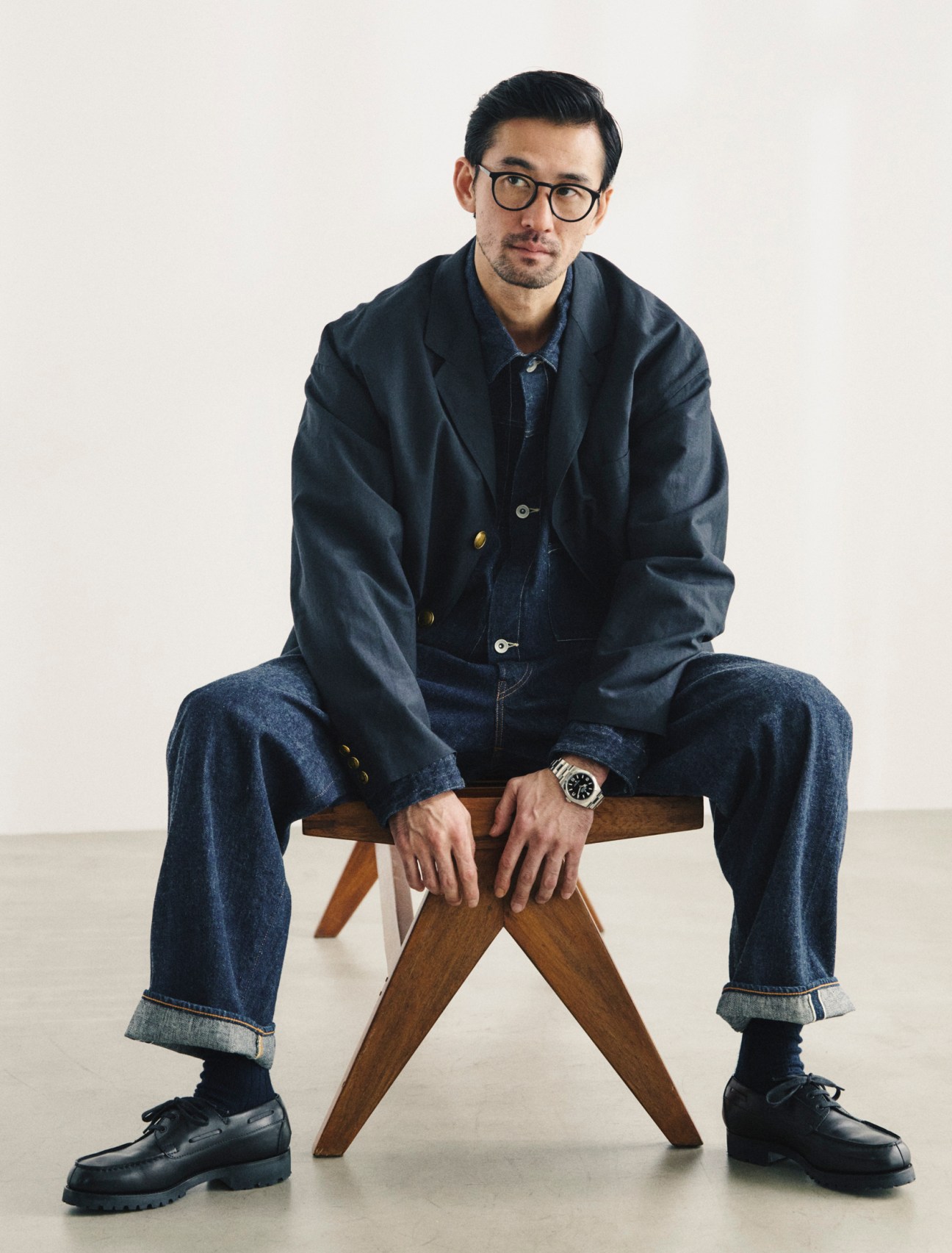
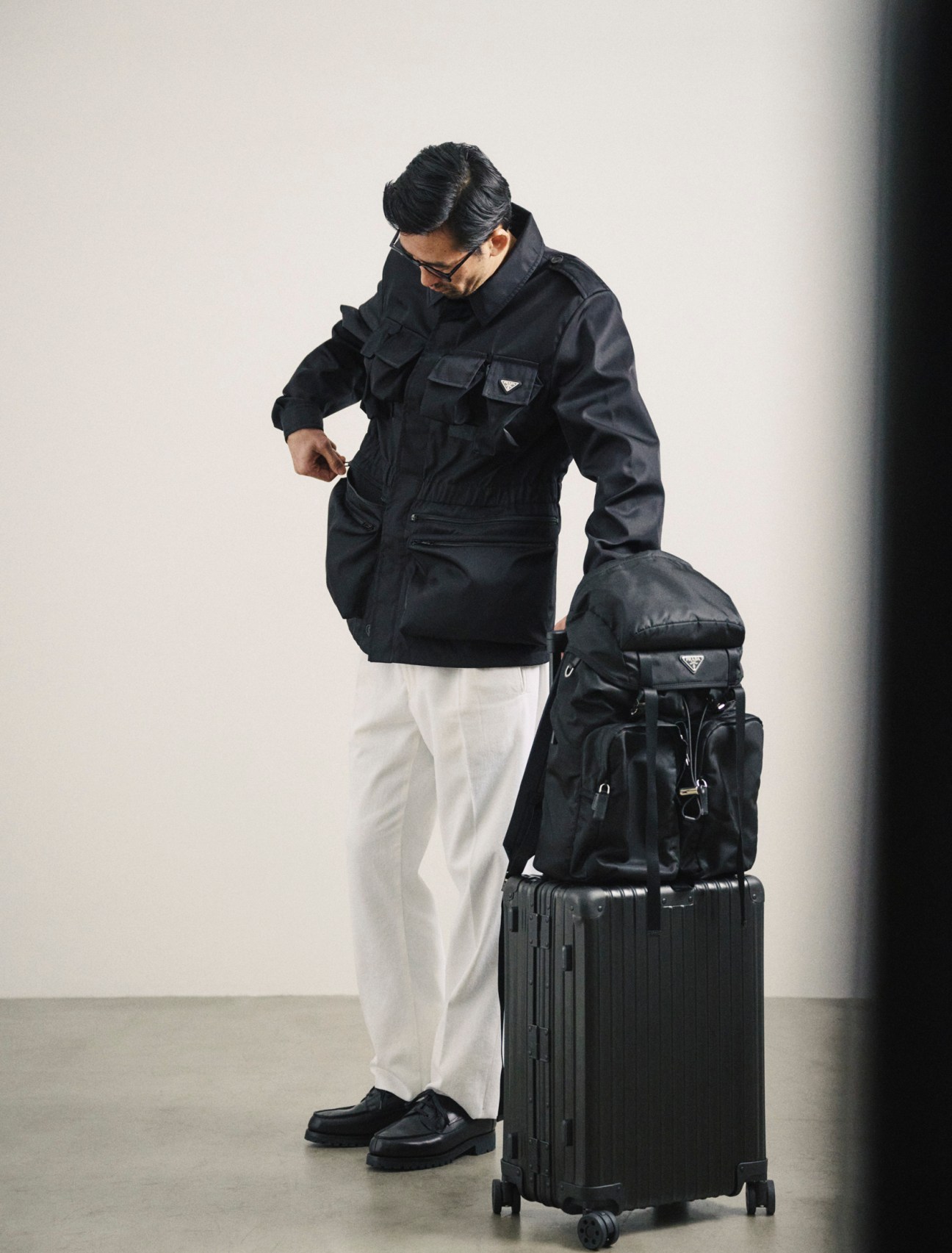

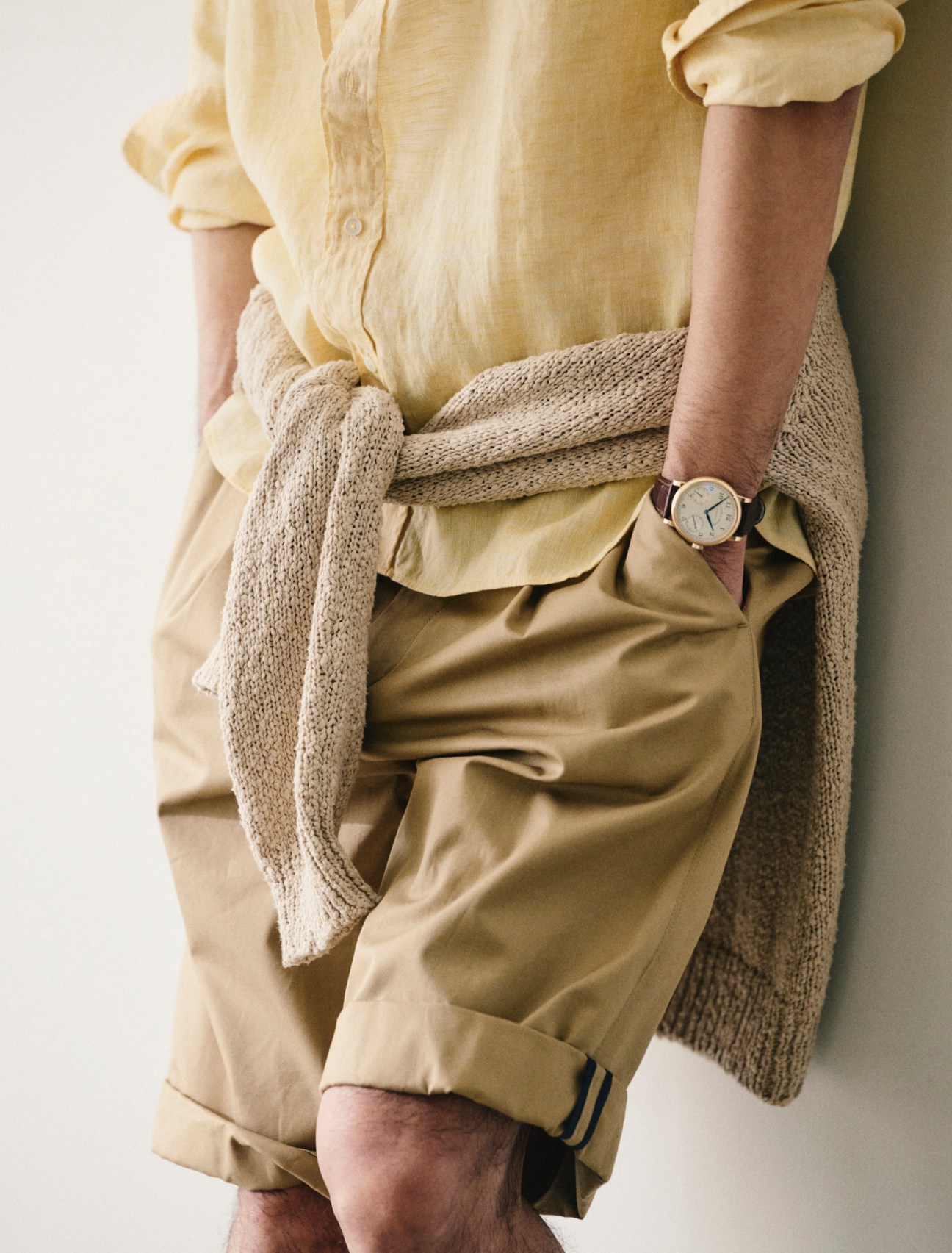
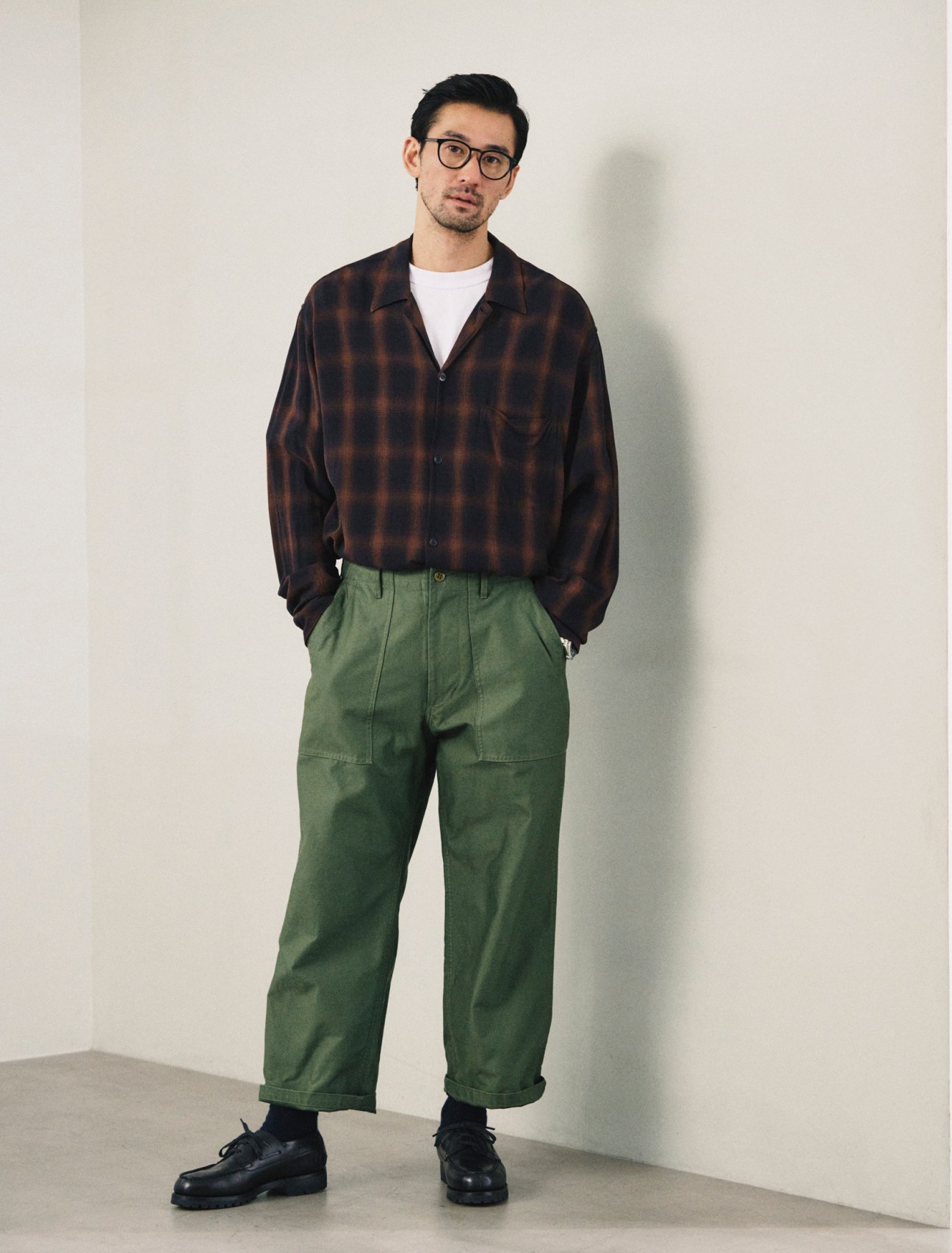
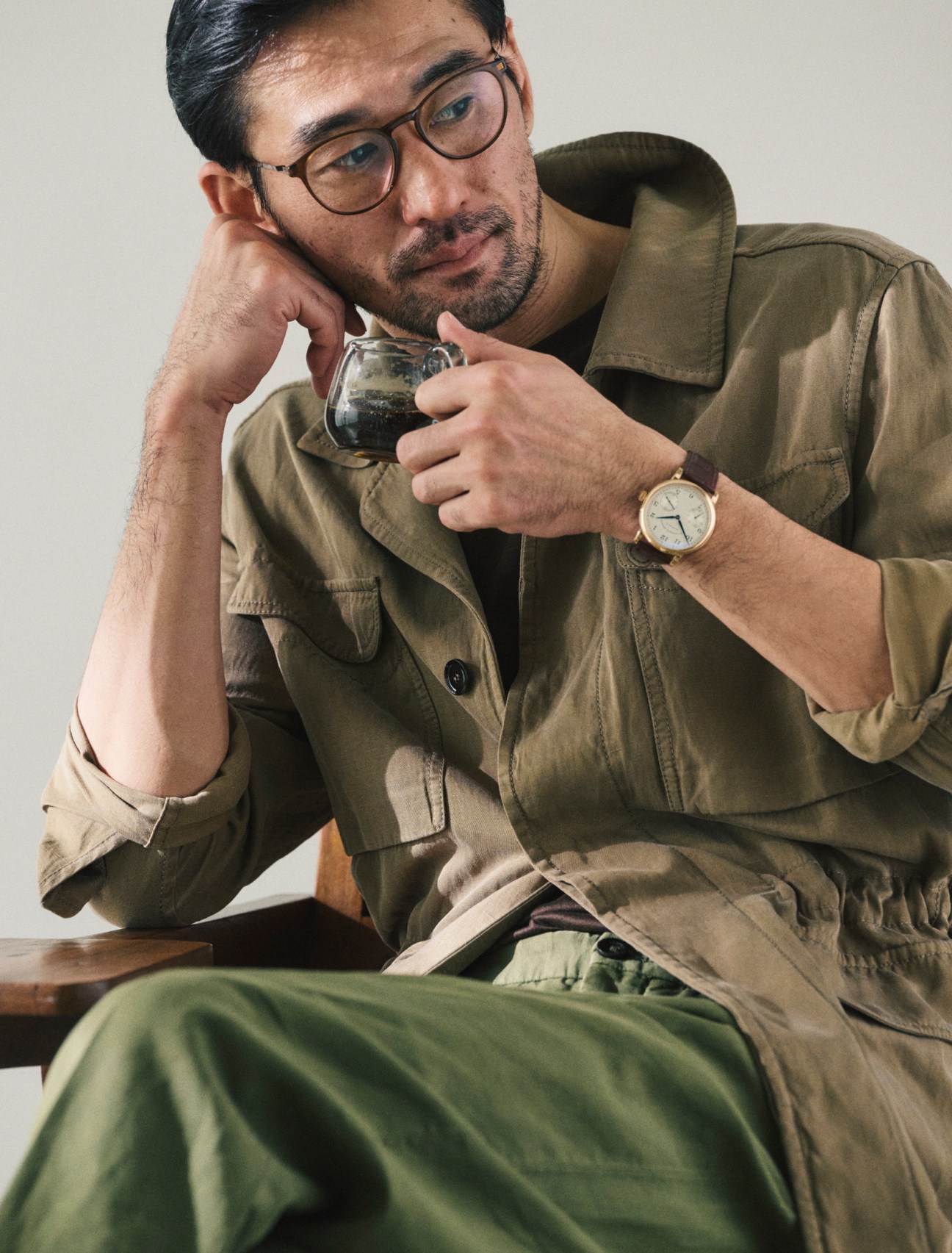
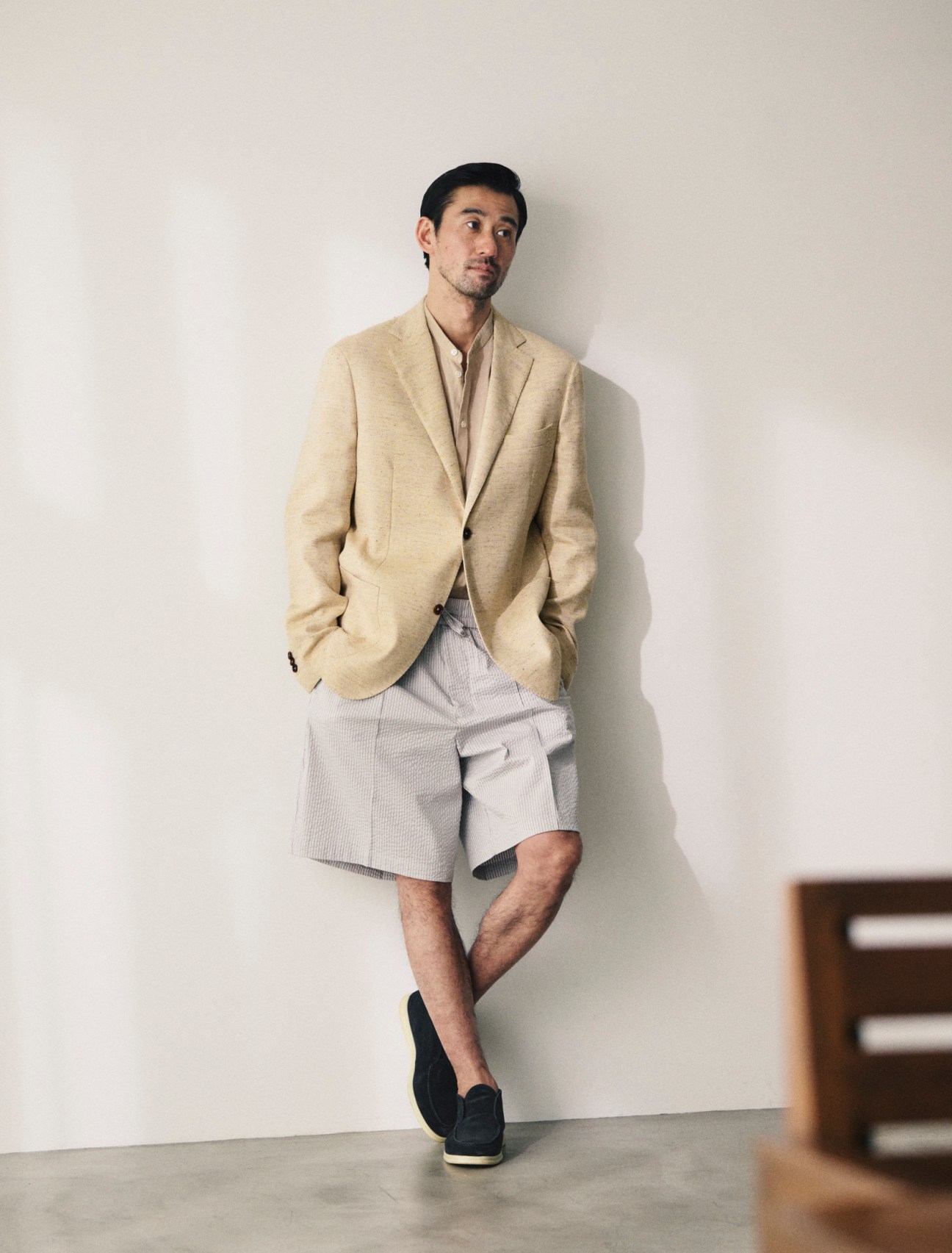
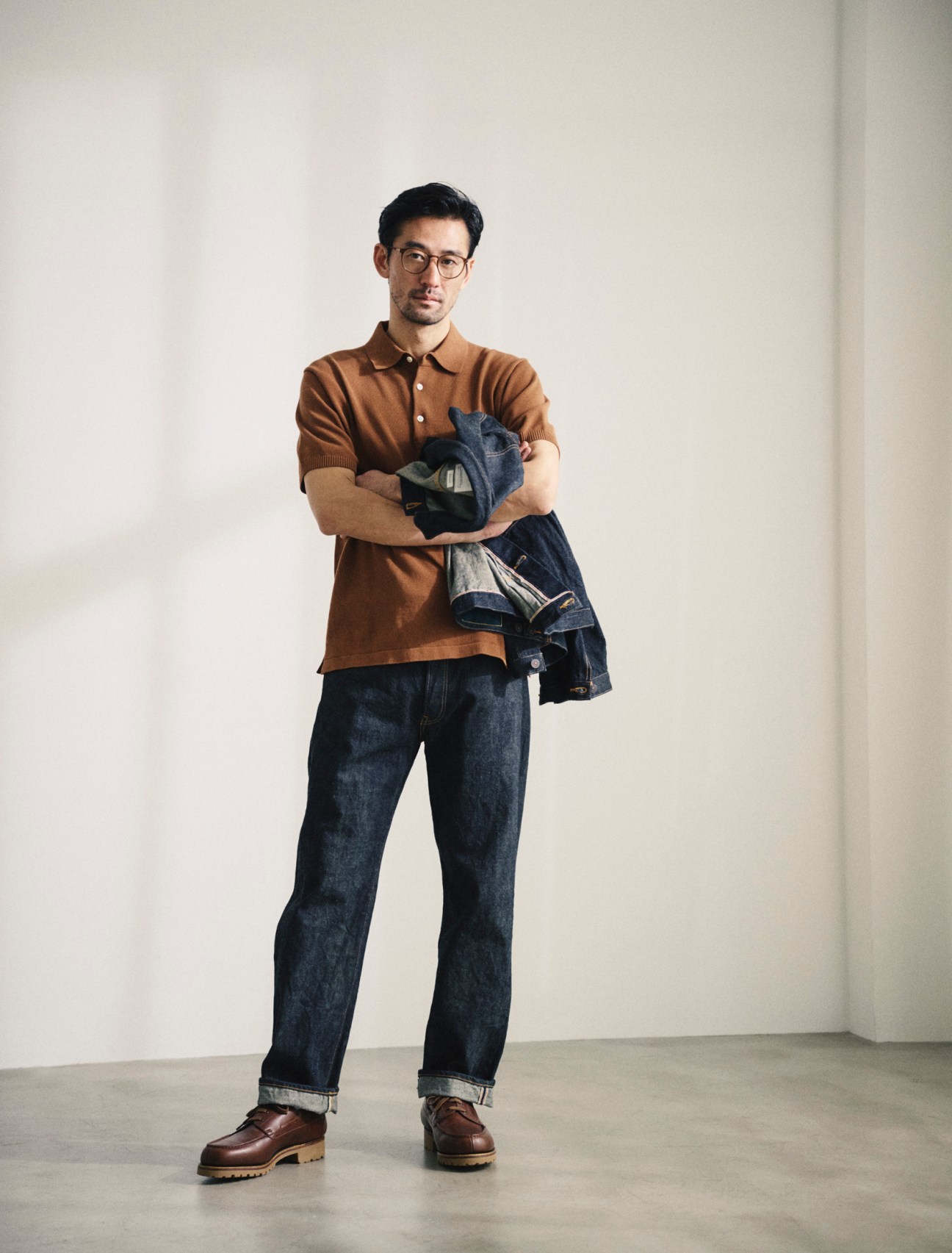
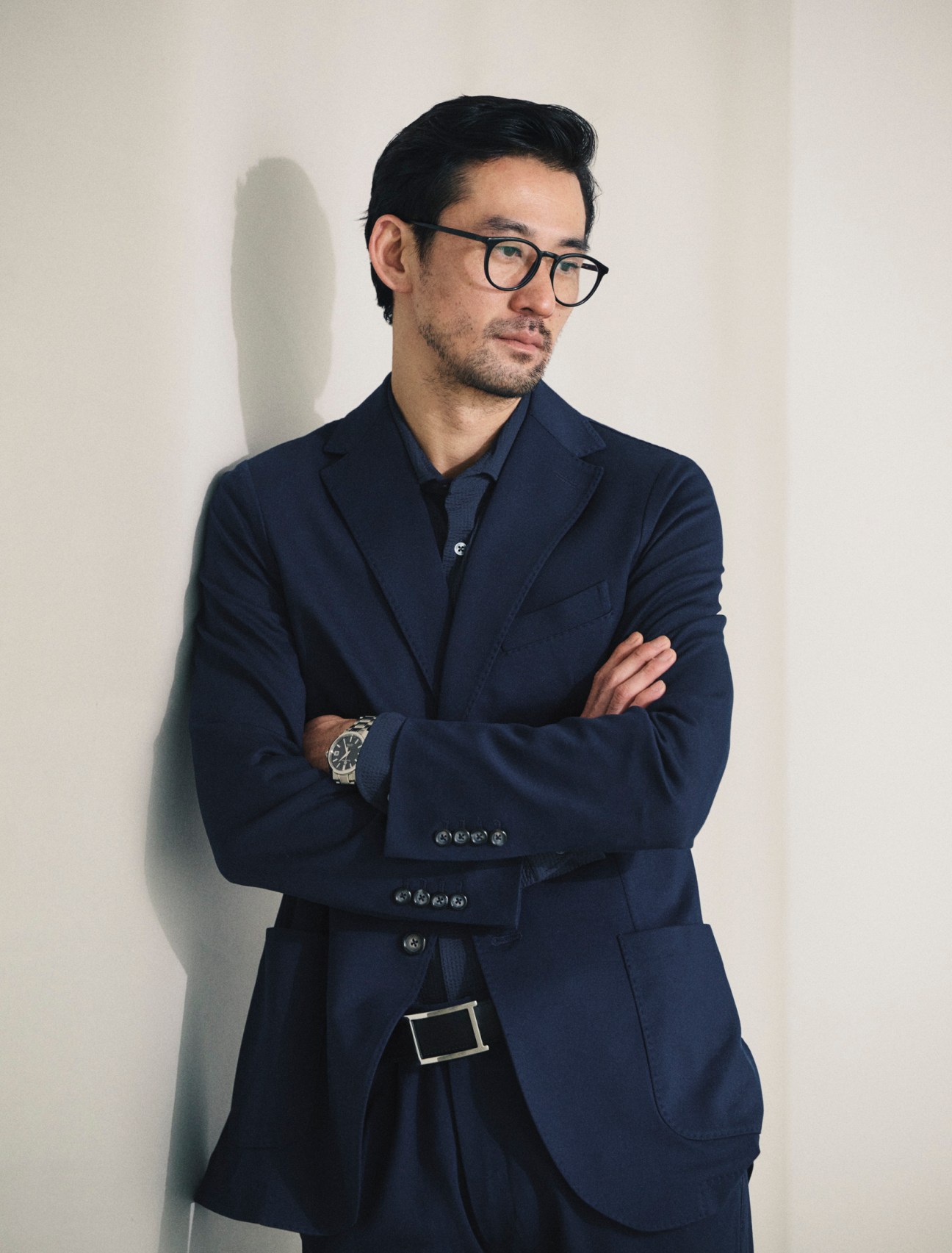

Model: Ikken Yamamoto
Grooming: Kenichi Yaguchi
Producer: Shigeru Nakagawa
The diplomacy agenda: A Q&A with Lithuania’s prime minister Ingrida Simonyte
Democracy
In the public eye
USA
Would you ever willingly sit in on a council meeting? What if you were paid to? This is roughly the question that inspired the Documenters programme, an initiative launched by Chicago’s City Bureau journalism lab in 2018 to increase awareness of local democracy by training and paying residents to take notes, live-tweet and even video-record public meetings.
The positive effects are manifold. By offering training and cash incentives, the programme encourages civic engagement while providing those out of work with an income; it also makes life easier for cash-strapped journalists too busy to sit in on every meeting. The programme has proven a success and expanded nationwide, partnering with news outlets in 11 cities. More than 2,200 documenters have been trained, covering some 5,000 meetings for an outlay of about $600,000 (€550,000).
documenters.org
Geopolitics
Continental shift
Italy

The Young Italian-African Diplomatic Fellows Programme brings African diplomats aged under 35 to Rome to study international relations at the Luiss School of Government. The programme is part of an effort by Rome to win hearts and minds in Africa in 2024. It complements the €5.5bn Mattei Plan, which aims to boost economic ties with Africa in exchange for helping to control illegal immigration.
Italy’s prime minister, Giorgia Meloni, has staked her success on stopping immigrants crossing the Mediterranean. But many African leaders, including Moussa Faki, chair of the African Union, have criticised what some see as its neo-colonial pretensions. The Young Italian-African programme, meanwhile, is unequivocally a soft-power tool. Raffaele Marchetti, professor of international relations at Luiss, says that it will allow “fellows to exchange ideas, opinions, and enrich each other’s training”.
Tourism
Business or pleasure?
Russia
The foreign-holiday options of Russians have dwindled these past couple of years. One place is rolling out the welcome mat, however. The first post-pandemic tourists to enter North Korea were Russians, who must have enjoyed the novelty of visiting the fiefdom of a belligerent pariah who terrorises his neighbours and crushes internal dissent. Though North Korea is a niche destination, this expedition is indicative of warm relations between Pyongyang and Moscow. These other popular spots for Russians have geo-strategic subtexts too.
1.
Turkey
With about six million visits by Russians in 2023, Turkey seems an unlikely first choice – it has Nato’s second-largest military. However, since Russia attacked Ukraine in 2022, Turkey has tried to maintain a relationship: Turkish Airlines and Aeroflot still fly in both directions.
2.
United Arab Emirates
Trade between Russia and the UAE continued to grow in the 12 months following the invasion of Ukraine and an estimated 500,000 Russians have relocated to the country. Russian tourism to Dubai in particular has been booming.
3.
Egypt
Egypt’s resorts have long been popular with Russians. The affection goes all the way to the top – in January, presidents Putin and Abdel Fattah el-Sisi took part in a joint video event to inaugurate a Russian-built power unit in Egypt.
Politics Q&A
Ingrida Simonyte
Prime minister, Lithuania
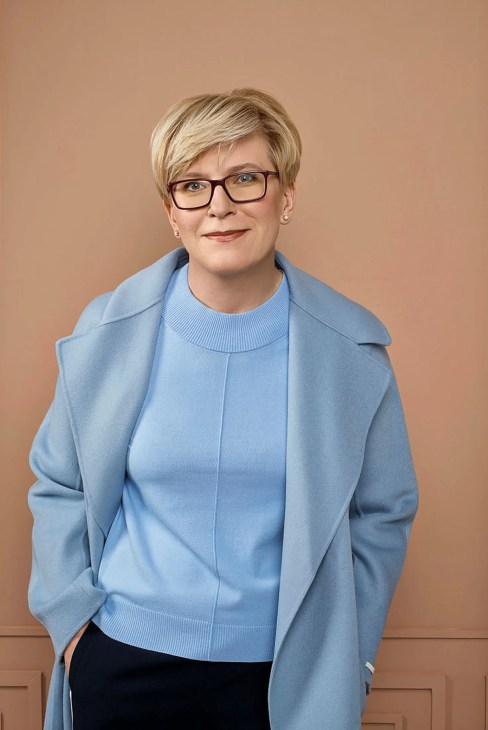
Ingrida Simonyte has been prime minister of Lithuania since 2020 and is a candidate in the country’s presidential election in May.
Do you feel like there is still an East-West divide in how seriously Europe takes the threat posed by Russia?
There is a very different sense of the probability of something happening – of Putin trying to test Nato’s Article 5.
The Estonian intelligence service’s annual report assessed that Russia is planning for armed conflict with the West in the next decade – how do you see it?
Is there political will in Russia for confrontation with Nato? Definitely, yes. But as long as they are stuck in Ukraine, they have quite a challenge.
You hosted Volodymyr Zelensky earlier this year. What is a leader-to-leader conversation with him like?
He knows that Lithuania is doing a lot but we have limited capacities in providing, for example, jet fighters. But our role is important in terms of persuading others not to lose time in contemplation, saying they cannot provide Ukraine this or that, and then, at the end of the day, providing it but with a significant loss of Ukrainian lives.
Lithuania and the Baltic states will always live alongside Russia. Is there hope of that arrangement ever being amicable?
Russia has never rethought its past. It is a colonialist country and we were a colony of Russia for a number of years. It’s not good to have neighbours who are a permanent threat to your existence – but I don’t see it being any other way.
Politics
Cash for questions
USA
Sasha Issenberg on a longstanding US democratic scheme that’s increasingly being abused by big spenders.
Any American already bored by their presidential choices might want to consider moving to California, where the same primary ballot that invited voters to ratify two of the same frontrunners as last time included a question over which they certainly had not been stewing over for years: “Do you support an overhaul of the state’s mental-health system that will require borrowing $6.4bn [€5.9bn] to build new treatment beds?” Proposition 1 is part of a distinctively American form of democracy known as the citizen-led initiative, through which voters can place a question on the ballot or call for a referendum on a law signed by the governor. This direct democracy has its roots in an 1888 trip to Europe by journalist and labour leader JW Sullivan, who returned smitten by the cantonal Landsgemeinde he observed in Switzerland, where every adult male citizen had the opportunity to introduce a law for consideration.
Sullivan toured the US to persuade fellow populists and progressive reformers that a “peaceful revolution” of direct democracy could be a useful counterweight that corporations, especially the nascent railroad industry, wielded through lobbyists in state capitals. South Dakota adopted the initiative in 1898 and other states – both liberal and conservative – followed. Nowhere, however, has the initiative become as central to policy-making as in California, where this autumn, alongside the presidential ballot, voters are likely to rule on matters as varied as zoning for new oil drilling and whether to establish a state institute for pandemic preparedness.
These races stand to be unusually costly. In 2020 rideshare and delivery apps Uber, Doordash and Lyft together spent $205m (€189m) to pass Proposition 22, which classifies their drivers as independent contractors under state law. The only campaigns in US history that have spent more on an election belong to presidential candidates. The need to educate citizens on matters that would otherwise be left to professional lawmakers has also produced an oddly paper-intensive corner of an increasingly digital political sphere. To qualify for the California ballot, one must collect 546,651 signatures, on petitions typically delivered to the secretary of state’s office by the truckload. Once approved, the full text of the proposals appears in a newsprint guide mailed to voters; Proposition 1 filled 68 pages of dense type. The ballot itself, which includes terse (and aggressively negotiated) summaries of the initiatives, presents its own reading assignment: in November 2022, Los Angeles voters had to navigate five pages of choices.
“Through the citizen-led initiative, voters can place a question on the ballot or call for a referendum on a law signed by the governor”
Republican politicians in conservative states, where in recent years voters have enacted left-leaning policies to raise the minimum wage and protect abortion rights, are pushing reforms that would make it harder to change state law via direct vote. Liberal critics see the converse happening in Democrat-controlled states, where corporations often have their best shot to change policy by outspending at the ballot. “A tool that was created to give citizens power is becoming a way to pass unpopular things,” says Chris Melody Fields Figueredo of the leftist Ballot Initiative Strategy Center. Both sides are forced to grapple with an irony that would have staggered Sullivan as he promoted the “Swiss model”. The mechanism is increasingly off-limits to all but the most well-funded interests: it can cost up to $10m (€9.2m), paid largely to lawyers and signature collectors, just to place a measure on the California ballot.
Issenberg is author of ‘The Lie Detectives: In Search of a Playbook for Winning Elections in the Disinformation Age’, published by Columbia Global Reports.
In the basket
All systems go
In the basket: 10 KM-SAM Block II surface-to-air missile systems
Who’s buying: Saudi Arabia
Who’s selling: South Korea
Price: €2.95bn
Delivery date: TBC

South Korea’s defence industry is continuing its bull run. This deal alone is worth more than the country’s entire annual arms exports as recently as 2020 – and it follows a similarly hefty order for the same system from the United Arab Emirates in 2022.
The KM-SAM, also known as the Cheongung, is a medium-range missile pretty obviously seen by the Saudis principally as a counter to further aerial incursions from Iran’s Houthi proxies in Yemen.
The boon in South Korean arms exports is partly a consequence of the war in Ukraine. With many of the more established manufacturers now overstretched, South Korean kit has become valued not merely for its quality but also for the relative speed with which it can be delivered (Poland in particular has been a prodigious customer, ordering South Korean tanks, artillery and aircraft).
Ironically – indeed, outrageously – South Korea refused an earlier request for the KM-SAM from Ukraine, a country that could surely put it to good use.
New US legislation aimed at reducing social media addiction
Utah isn’t always seen as a beacon for progressivism but on 1 March the US state introduced a law that could provide a benchmark for combating what many believe is a public health emergency. The Social Media Regulation Act aims to restrict social media use among under-18s by requiring them to obtain parental permission to open an account, imposing a curfew between 22.30 and 06.30, and compelling technology companies to remove “addictive” features from their platforms. Whether or not internet use is addictive is debatable; it does not feature in the American Psychiatric Association’s Diagnostic and Statistical Manual of Mental Disorders. Indeed, the fact that laws restricting internet use on the basis of addiction are being passed without scientific support lends credence to those who argue that they are nothing more than the product of a moral panic.
But when you hear professionals discuss “real” addiction, the parallels are chilling. Anna Lembke, a Stanford University psychiatrist, says that addiction “begins with intermittent use, then progresses into daily use, and then progresses into consequential use”. There is now widespread belief that social media and internet use is inhibiting children’s development – socially, emotionally and even physically. “Kids who are heavily into video games and social media fall behind socially due to a lack of face-to-face interaction,” says Mike Bishop, a clinical psychologist who runs Summerland Camps, an organisation in the US that offers practical treatment for technology addiction in young people.
Summerland Camps runs retreats for 12- to 21-year-olds at which all devices are prohibited. “There’s no minimum amount of screen activity that you need to live,” Bishop tells Monocle. But unlike with other addictions, it is understood that technology “addicts” will go back to using as soon as they leave. “We treat it more like someone who has a problem with overeating.” Bishop’s advice for concerned parents is to ask their children to track their screen time themselves. “We asked kids to convert the time they spend on their devices each week into the US minimum wage and then look at how much money they would save over a typical working lifetime for their retirement fund,” he says. “For most of them it was in the millions of dollars.
Abstinence is also the antidote favoured by Hector Hughes, co-founder of Unplugged, a company that operates 20 digital-detox rental properties in the UK (a number that it plans to double this summer). When guests arrive at one of the stylishly minimal huts, they place their devices in a box with a padlock, the key for which stays in a sealed envelope. Hughes says that some families renting the properties are keen to use the novelty of a phone-free holiday to spark a behavioural change in their children.
Laws like the one passed in Utah aim to spark that change from on high. Whether or not they succeed, public opinion seems to be turning away from a belief that unfettered access to the internet is an inevitability of modern life, towards one where its use, especially among young people, is legislatively proscribed. “When the car came out, it took us 50 years to come up with a seatbelt,” says Hughes. Bishop puts it in starker terms: “We’re going to look back at this time and compare it to how we saw smoking in the 1920s.”

Monocle’s three-day roadtrip along South Africa’s Atlantic coast
South Africa’s west coast stretches more than 1,000km from Cape Town to the mouth of the Orange river and neighbouring Namibia. Despite the cool sea temperatures, people shoal here for the white-washed fishing towns skirting cerulean bays, as well as the blankets of wildflowers that bloom in spring. Inland, Swartland is known for its olive groves and vineyards. Here, independent winemakers are winning over critics and drinkers alike with citrussy chenins and spicy syrahs.
In recent years, new residents have joined the road-trippers in search of a more idyllic life – not to mention fresh retailers, makers and entrepreneurs ready to cater to them. Monocle takes the wheel for a trip across the rugged region from Cape Town North to Paternoster, then inland and back south past Malmesbury, Wellington to Simondium and back. Ready? Let’s hit the road.
Day one
Cape Town — Yzerfontein — Paternoster
Monocle is passing the seaside apartment blocks and windswept beaches visible from the R27 highway as Cape Town recedes in the rear-view mirror. By Melkbosstrand, the clutter of buildings and stop-start traffic lights has fallen away to reveal seemingly endless sand dunes and wildlife reserves that stretch out along the coast. Our first stop is Rosemead Artisan in Yzerfontein. Its founders, chefs Brett and Anli Nortier, escaped the hustle and bustle – and higher rents – of Stellenbosch to open, as Brett puts it, “a small community bakery”.

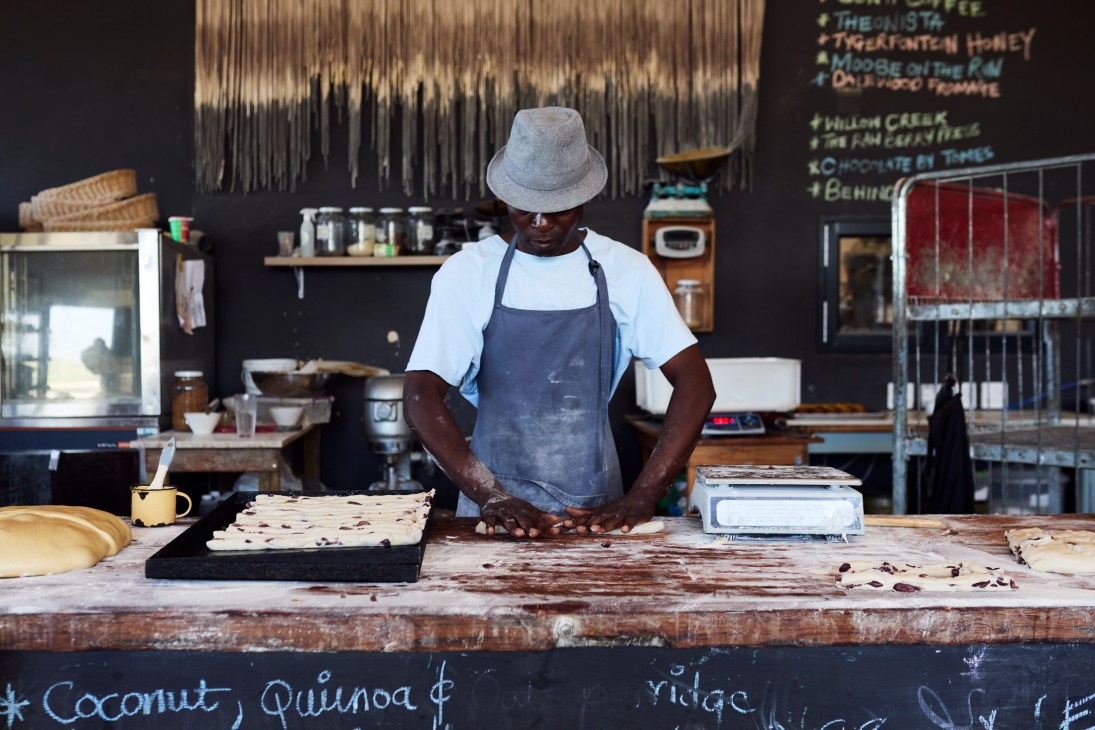
Before you enter the corner café, just a few minutes’ drive from the beach, you’ll catch a buttery waft of croissant and the reassuring aroma of freshly baked loaves. Taste either and you’ll soon realise why this is the sort of neighbourhood joint that tempts day-trippers to make the 85km journey from Cape Town. During the high season (December and January), queues snake out the door for a seat. But things move quickly here. Brett tells us about a customer who stopped in recently and queued for carrot cake despite having a rather pressing flight to catch (he made it, cake in his hand luggage). Grab a seat in the stripped-back, concrete-floored space, order a pastel de nata and watch as the baker’s hands dart and glide across the floured surface at the open pastry counter.
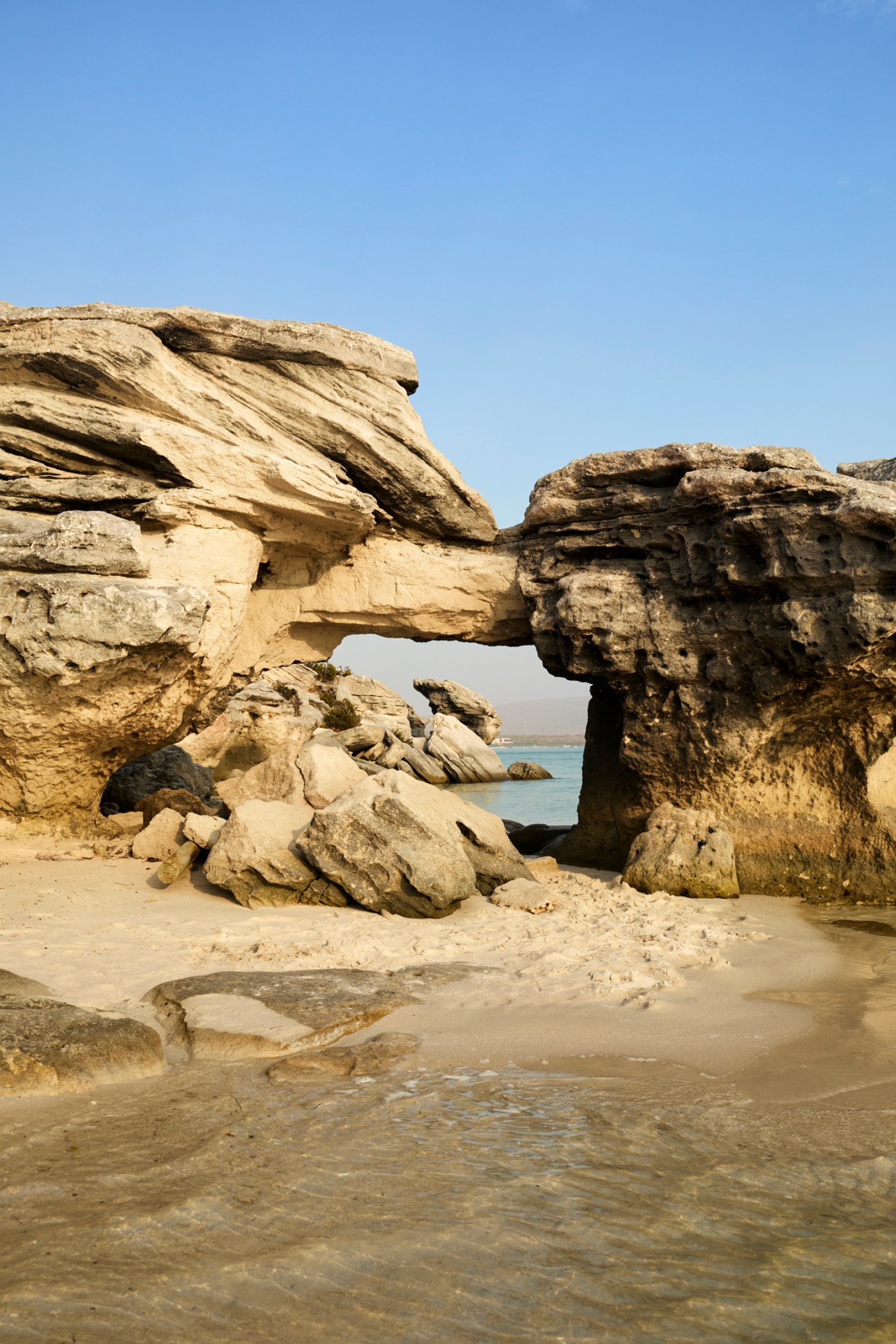
Back on the R27, we spy giraffes’ heads poking through the canopy at Buffelsfontein, a wildlife reserve that skirts the highway. Off the main road, once we pass through the unlovely industrial area of Vredenburg, we’re back in a postcard-pretty coastal idyll. The white-washed fishermen’s cottages seem to shimmer like the silvery scales of the Cape’s abundant tuna: we’re in Paternoster, one of the oldest settlements on South Africa’s west coast.
Being here means that we can try Dispens, a farm shop and all-day restaurant from food-writer turned chef Kobus van der Merwe. Paternoster has grown in recent years but there’s still a slow rhythm to life here. “There has been a massive property boom,” says Van der Merwe. He has seen the town attract talent in increasing numbers since he moved here 13 years ago and opened Dispens in a small, tin-roofed former shark-liver-oil factory. Today things are rather different. Pull up a seat in the courtyard for rooibos tea and a scone freckled with deliciously salty seaweed or, if you have more time on your hands, try Wolfgat, Van der Merwe’s restaurant a few streets over.
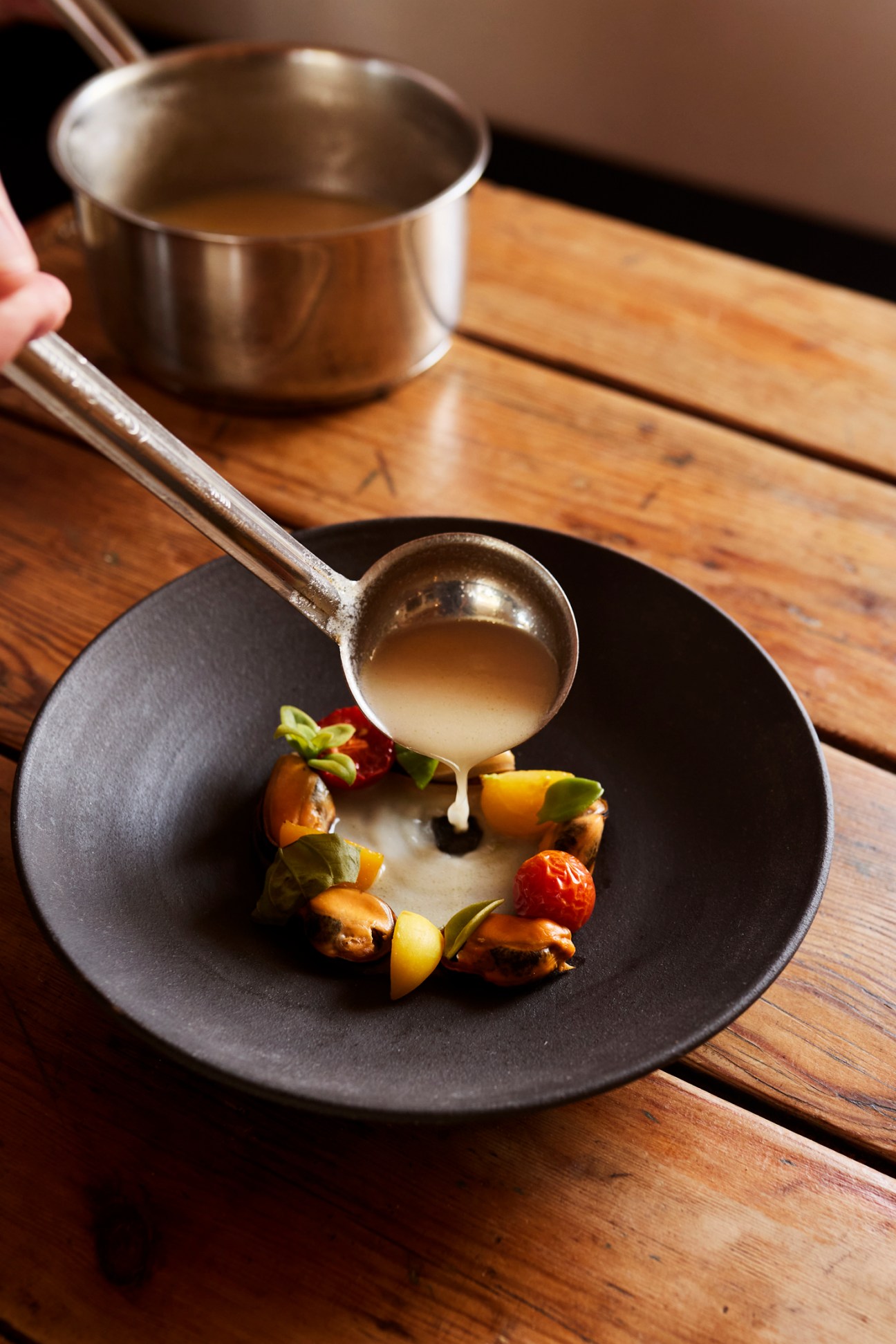
Set in a cottage above a bay, Wolfgat is less a stopover and more a destination: bookings can fill up months in advance. Despite its top billing in “best restaurant” lists, the place is unpretentious and set around a simple dining room riven with wooden beams and flanked by a shady terrace. The menu is heavy on seafood, including succulent mussels, tender Cape bream and foraged delicacies such as dune spinach. “The menu is inspired by the history of this coastline,” says Van der Merwe, who we meet in the restaurant kitchen. After lunch, we recommend you roll down to the beach for an invigorating dip or walk. Want to stick around for longer? Stay overnight at the Strandloper, a glass-fronted hotel overlooking the sea.
Address book:
Breakfast: Rosemead Artisan Bakery
Corner of Park and Volstruis Street, Yzerfontein, 7351
Eat: Dispens
Corner of St Augustine Road and R45, 1 St Augustine Rd, Paternoster, 7381
Eat and drink: Wolfgat
wolfgat.co.za
Stay: Strandloper
strandloperocean.com
Day two
Hopefield — Malmesbury — Riebeek-Kasteel
In the morning, we head back onto the R27 and through Hopefield, stopping for breakfast at the Hopefield Market at the Foodie Hub, which comes to life with local producers on Saturdays. We’re heading inland to Riebeek-Kasteel, a neat town surrounded by mountains that mark the heart of Swartland. Here, we check in at Kokos Huis, a new lodge in a 200-year-old farm building with terracotta floors and old shutters. The structure has been overhauled by Andorran hotelier Prisca Llagostera.
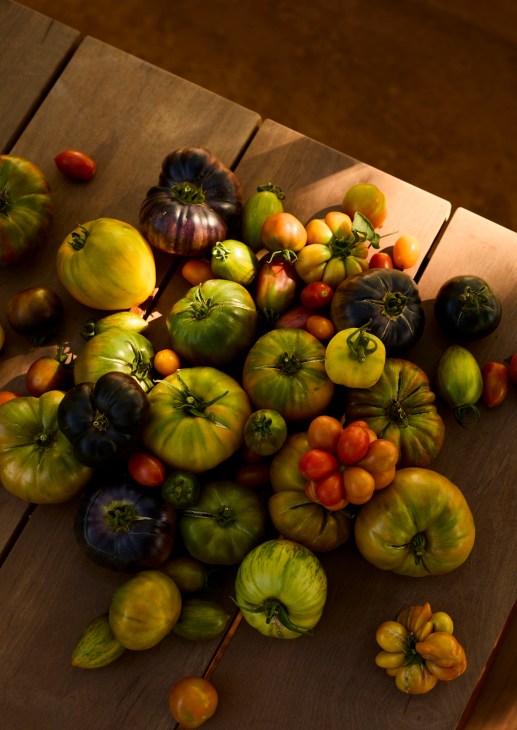
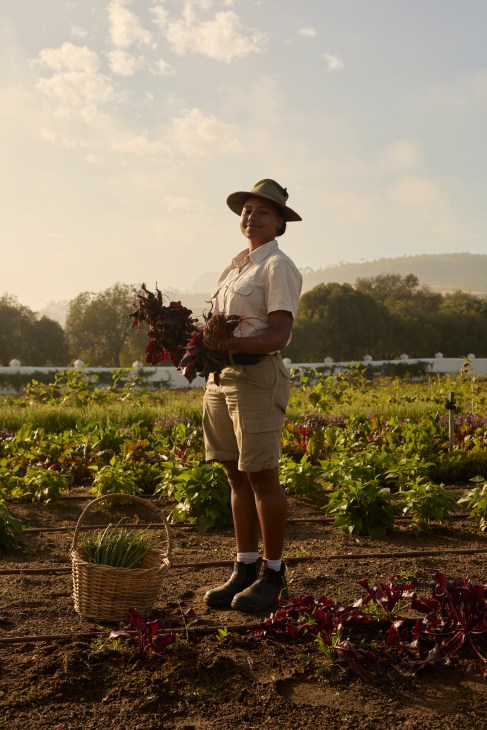
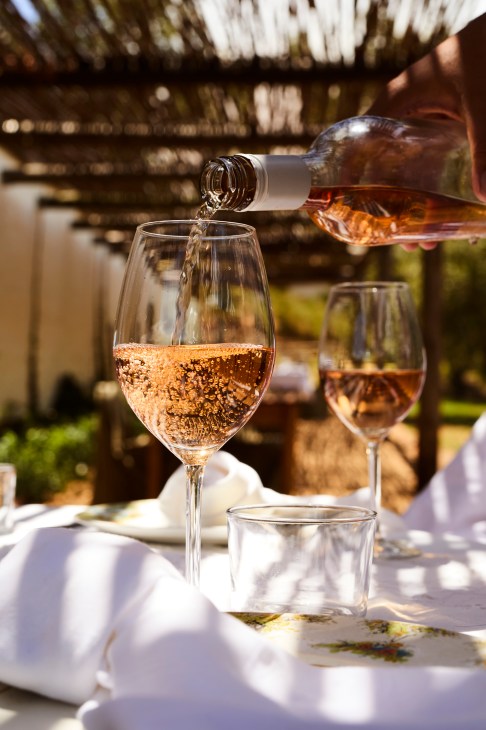
“It has a lot of soul,” says Llagostera of the building she helped painstakingly restore. Inside, the cosy rooms have low ceilings decked out in muted linens and illuminated by dappled light from woven lampshades. In the rear courtyard, there’s an inky pool lined with tasselled umbrellas and palm trees. Llagostera moved to Riebeek-Kasteel after she fell in love with a winemaker (and the region). “The cellars are full of personality,” she says. Be sure to make appointments at some of them. Monocle’s favourites include The Sadie Family Wines, Swerwer Wines and AA Badenhorst. The latter lets out homely farm cottages with sweeping vineyard views, should you plan on lingering longer. If you’re in town on a Thursday or Friday, visit the farm for its famed pizza night. Not all of the cellars are open all of the time, and almost all of them are appointment-only. But if you’re simply looking for a selection of the very best bottles, you’ll find most of them at the Wine Kollective, a tiny hole-in-the-wall shop right on the edge of town. It’s stacked with the region’s best and hardest-to-find vintages. Grab a few before settling down for dinner and drinks under the stars at Kokos Huis.

Address book:
Breakfast: Hopefield Market
hopefield-market-pop-up.business.site
Eat and drink: AA Badenhorst, Malmesbury
aabadenhorst.com
Shop: The Wine Kollective, Riebeek-Kasteel
thewinekollective.co.za
Stay: Kokos Huis, Riebeek-Kasteel
kokoshuis.com
Day three
Wellington — Simondium — Cape Town
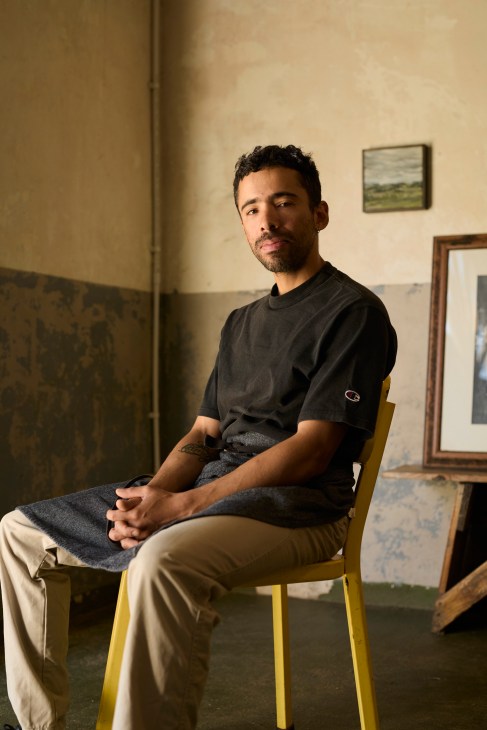
Our final morning drive takes us to Wellington and FiftyFive Croissants for a breakfast coffee and pan au chocolat. Set in a white gabled building with a sunny terrace, the café makes seeded sourdough and croissants loaded with cheese and bacon. It also stocks essentials, including coffee and eggs. Be sure to leave ample room for lunch at Vygie though. The restaurant is set on lush grounds wedged deep in the mountains and down a bumpy road. Partners Rose and AJ Williams, who previously worked in art and fashion (and now catering), opened the restaurant on Rose’s father’s farm when they moved to Wellington in 2021. Occupying a large, open-air brick building that was once a foaling barn, the space is also home to multiple artist studios, one of which belongs to Rose.
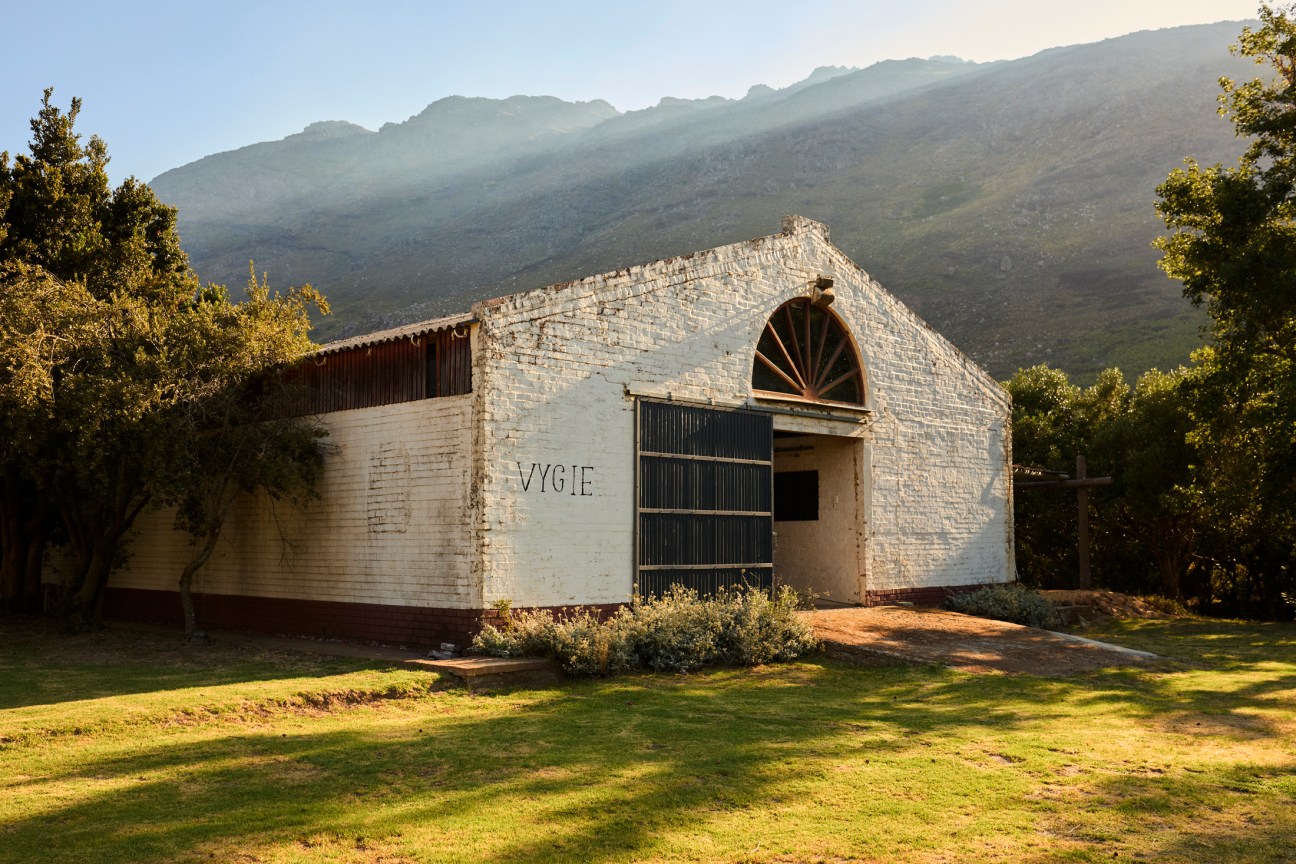
The best seat at Vygie is on the lawn or down by the babbling stream. The menu is served family style, with dishes such as marmalade roast chicken and pasta stuffed with roasted butternut squash and spinach. For dessert there’s seasonal fruit tart or ice cream. “We love making cakes,” says Rose, who has seen an influx of people to the area. “There’s a lot of space for creativity [here] and a strong community who appreciate hard work and good taste.”

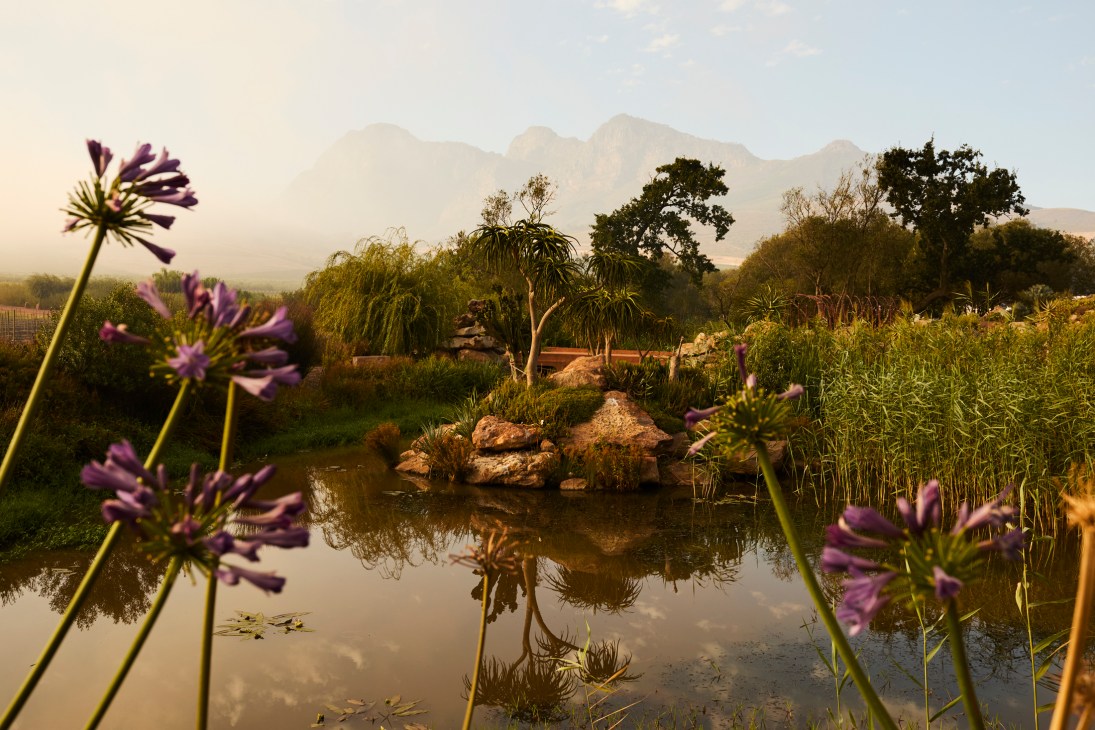
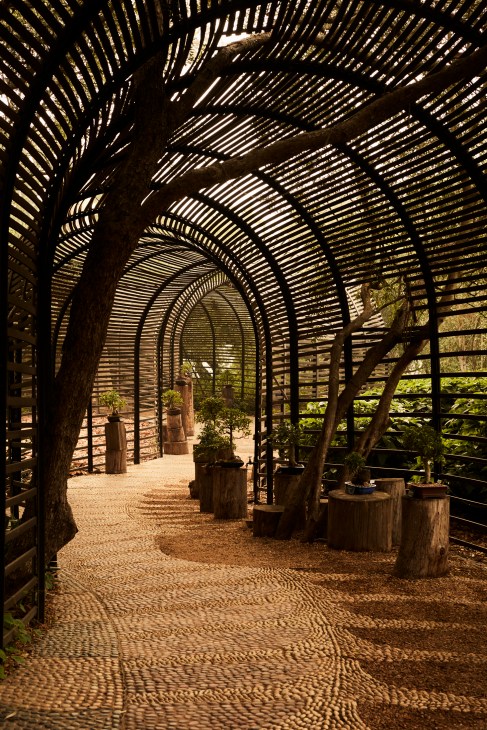
We head back to Kokos Huis for our effects before taking the N1 to our final stop, Babylonstoren, a farm outside Stellenbosch. Set up by former magazine editor Karen Roos, the property features several revamped farm cottages with green shutters, thick walls, white Scandi-style furniture and floor-to-ceiling glass windows that overlook the garden. There’s plenty to do, from baking courses to wine tasting and a shop stuffed with local linens and crockery. You can hike to the top of the koppie (a small hill) or splash around in the farm pool. Have dinner at Babel, the farm’s restaurant, which serves seasonal plates and salads so pretty it almost seems a shame to eat them. But it’s in the evenings, once the day visitors leave, that Babylonstoren really shines. Grab a glass and take an evening stroll around the gardens, through rows of citrus trees and past the shimmering fronds of the cycads in the shadow of Swartland’s rolling hills. You won’t want to head home.
Address book:
Breakfast: FiftyFive Croissants
36 Bain Steet, Wellington, 7654
Eat and drink: Vygie
Bovlei Road, Wellington, 7654
Stay: Babylonstoren, Simondium
babylonstoren.com
Monocle’s itinerary
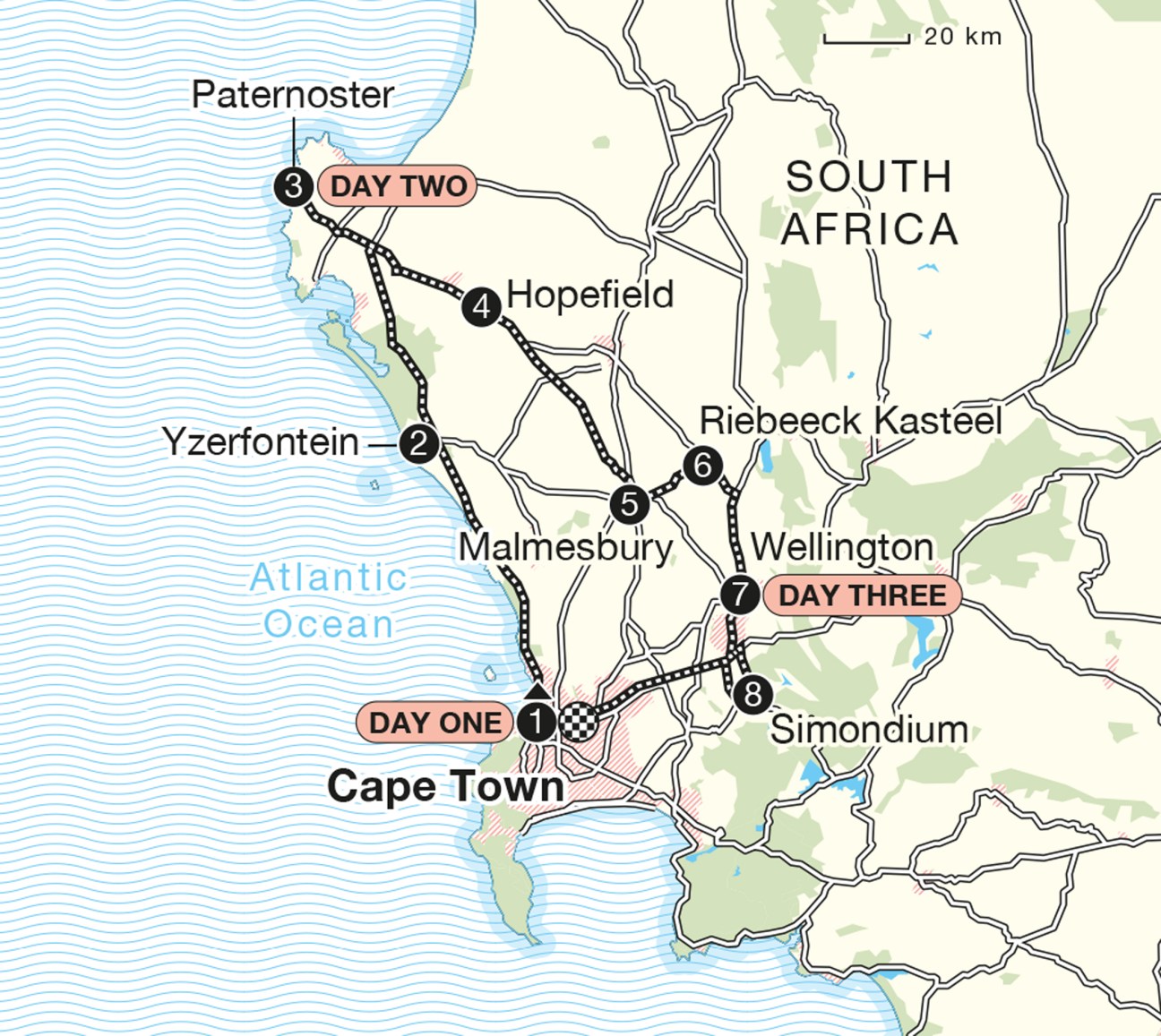
Our journey by car takes us north from Cape Town, along South Africa’s Atlantic coast. We travel 150km, past Yzerfontein to pretty Paternoster, where we spend the first night. Then we head inland to hilly Swartland to the small settlements and farm-dotted foothills of Hopefield, then on to Malmesbury and Riebeek-Kasteel for the night. The next day, we go south to complete the loop, taking in Wellington and Simondium, 60km east of Cape Town for a clear run back to the airport. We recommend a minimum of three days for the trip.
Dadaocheng: One of the Taiwanese capital’s oldest and most atmospheric corners
Dadaocheng is the oldest part of Taipei and one of its best-preserved areas. Its illustrious past as a rice-trading centre during the late Qing Dynasty in the 19th century left a grand architectural legacy. This district on the eastern banks of the Tamsui river has an unexpectedly baroque feel, with architecture and streetscapes dating back to Taipei’s time as a Japanese colony.
Today these streets are a backdrop to some of the best under-the-radar independents in the city, including bookshops, restaurants and tearooms, as well as the many street-food delights to be found along the revived wharf. It’s a neighbourhood with more than its fair share of diversions. Here are a few of our Dadaocheng favourites.
1.
Read
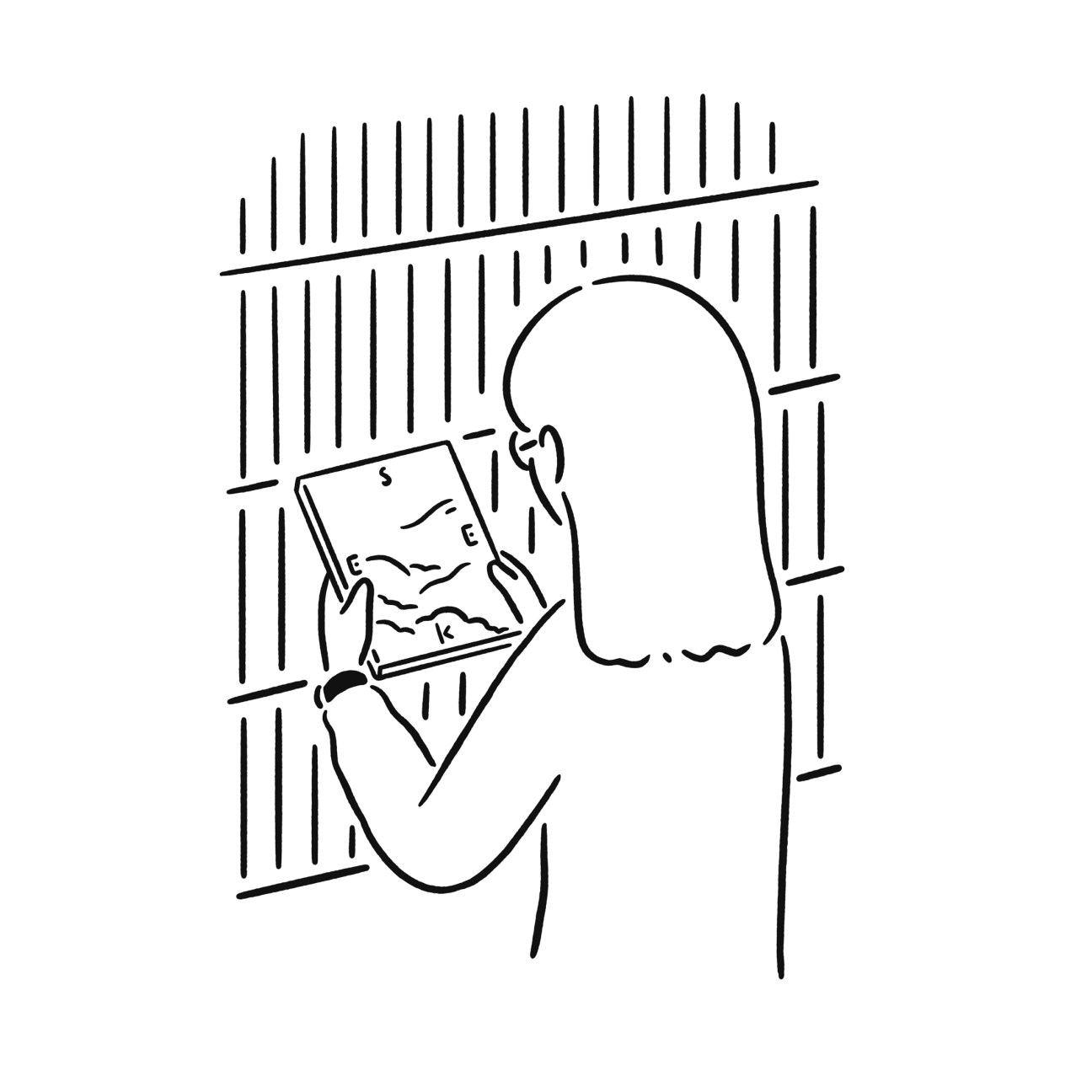
Seek, an English-language travel and culture magazine from Taipei journalist Sheena Lee. Pick up the latest copy – and a coffee too – at Kuo’s Astral Bookshop.
2.
Stay
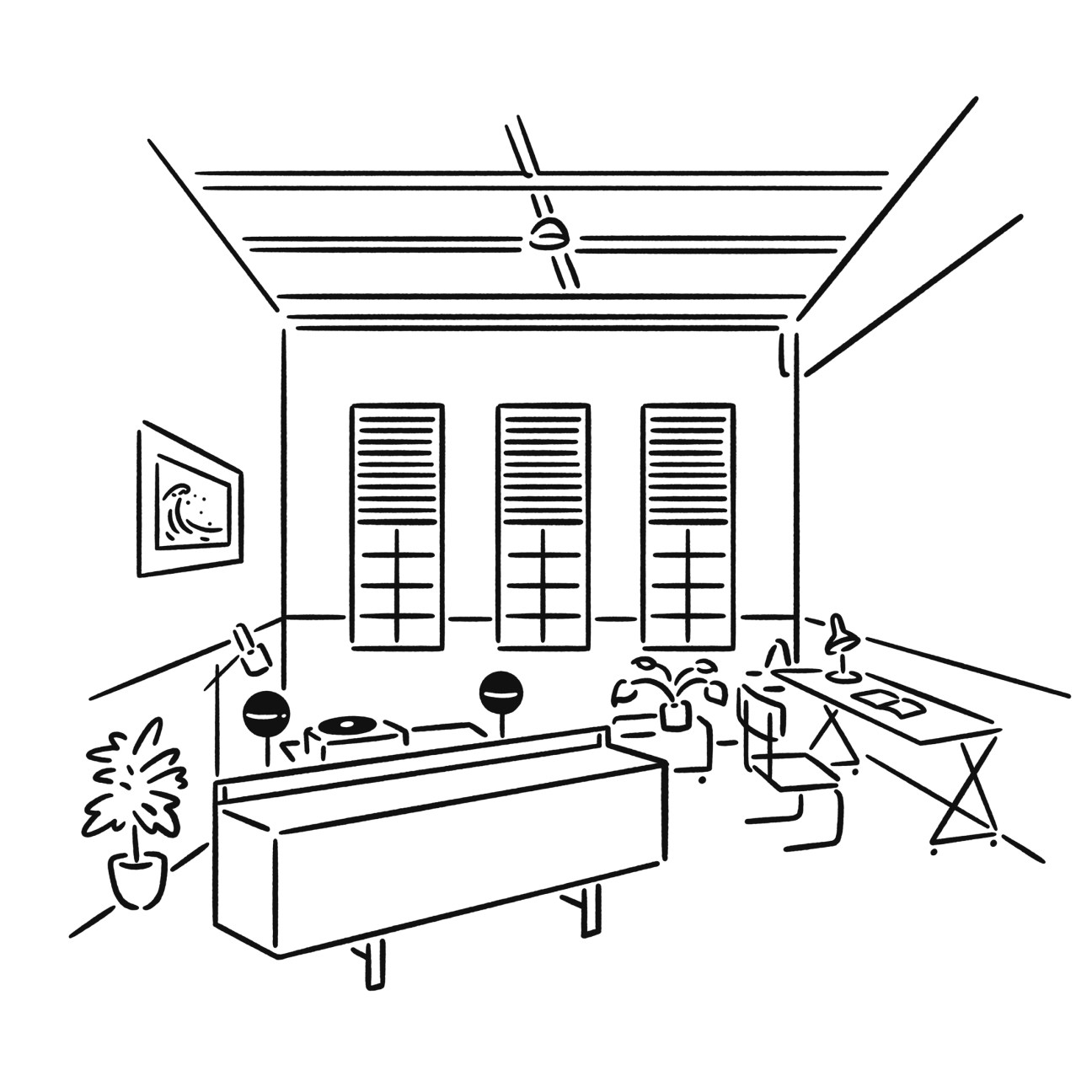
Originn Space is a petite inn in a century-old mansion with just a handful of rooms. The third-floor suite has a six-metre vaulted ceiling riven with cypress beams.
3.
See
The AS Watson Building from 1917 was the first Western-style pharmacy on the island. The stone-cut façade now houses a bookshop and tea house.

4.
Try
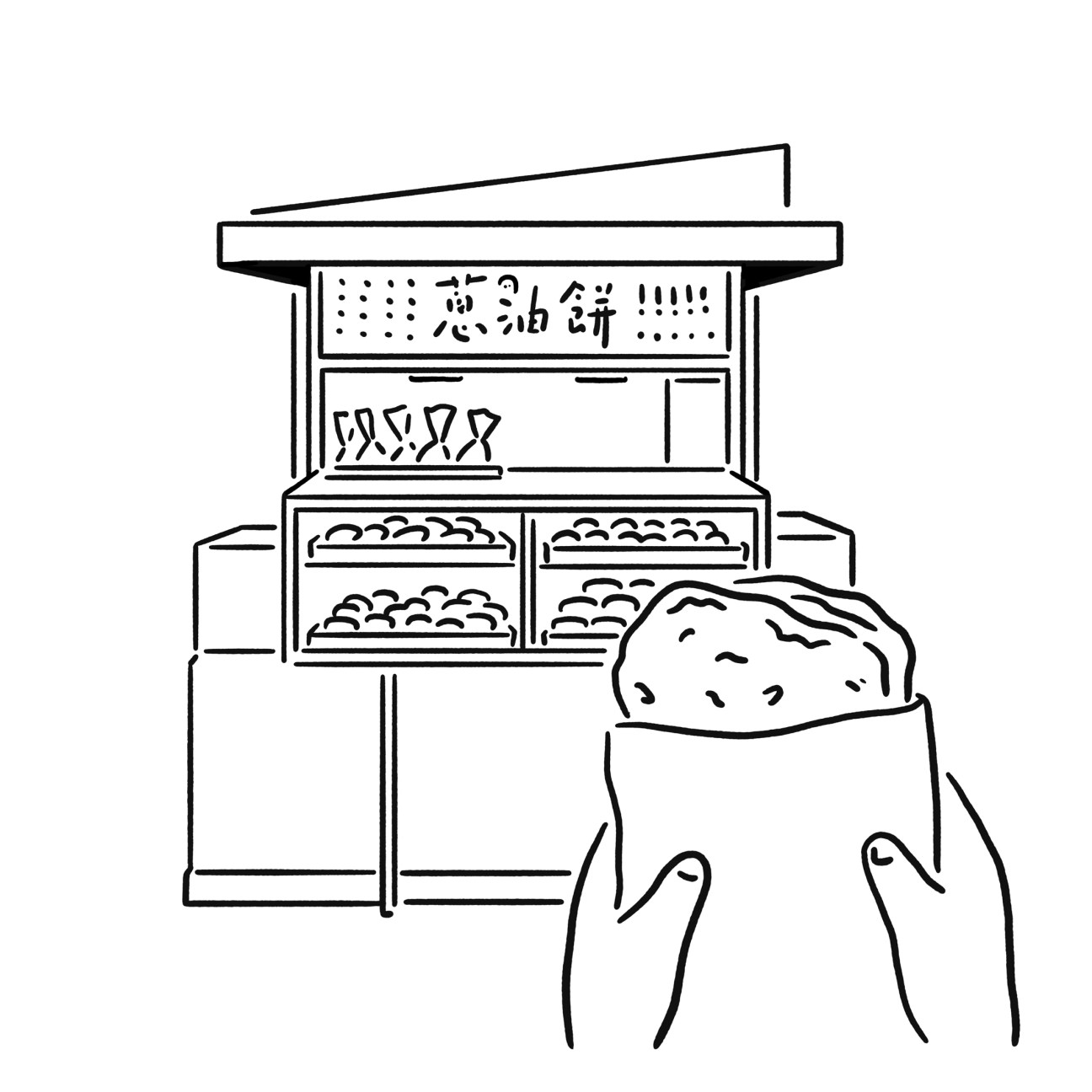
A pancake hot from the griddle at the Yongle Scallion Pancake stall. Enjoy it coated with sweet soy sauce and topped with egg and a dash of white pepper. Then have a doughnut for afters.
5.
Shop
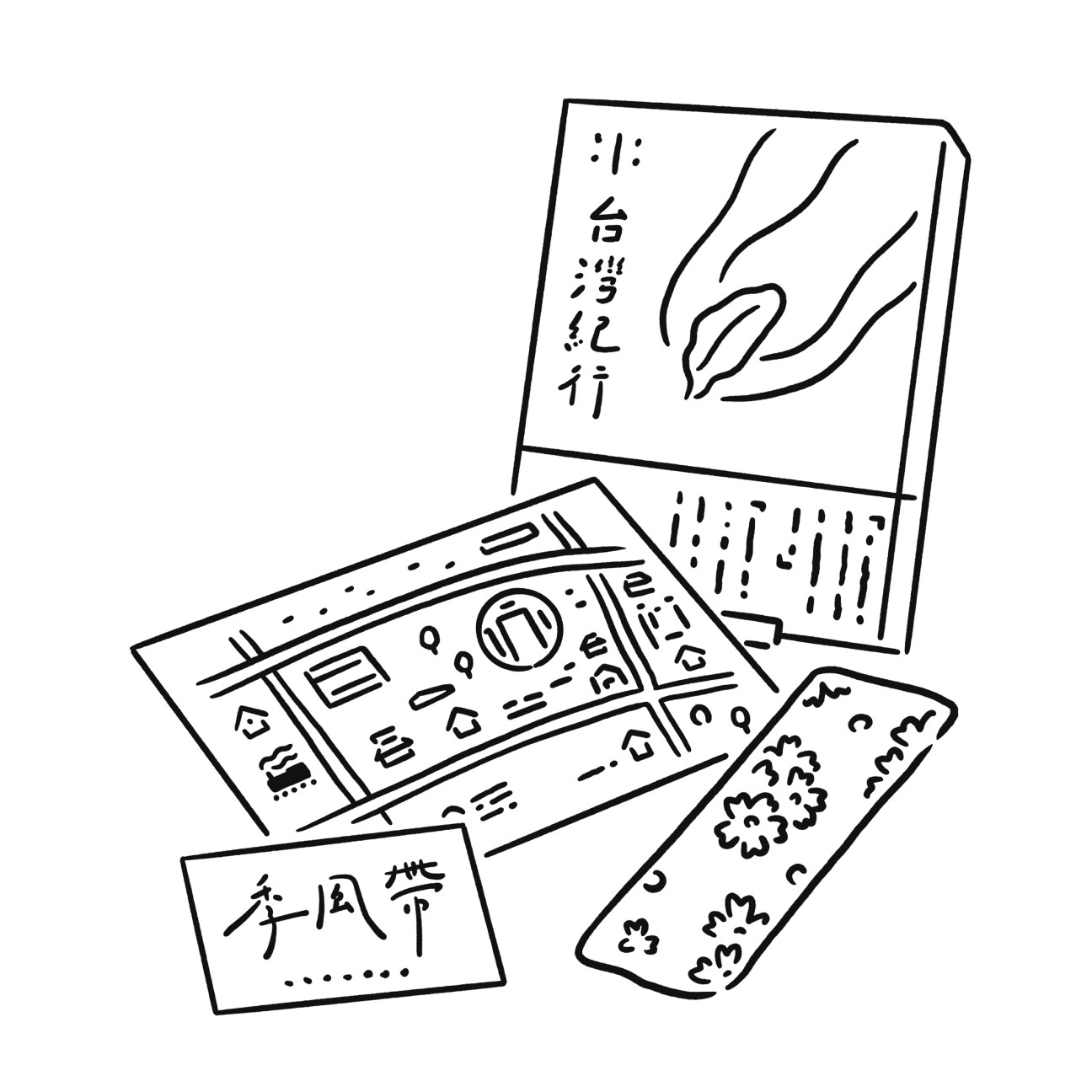
Monsoon Books – an independent tucked into the second floor of an unassuming shoe shop – specialises in the work of Asian authors. It’s great for a guidebook, illustrated postcard or tasteful bookmark.
6.
Order
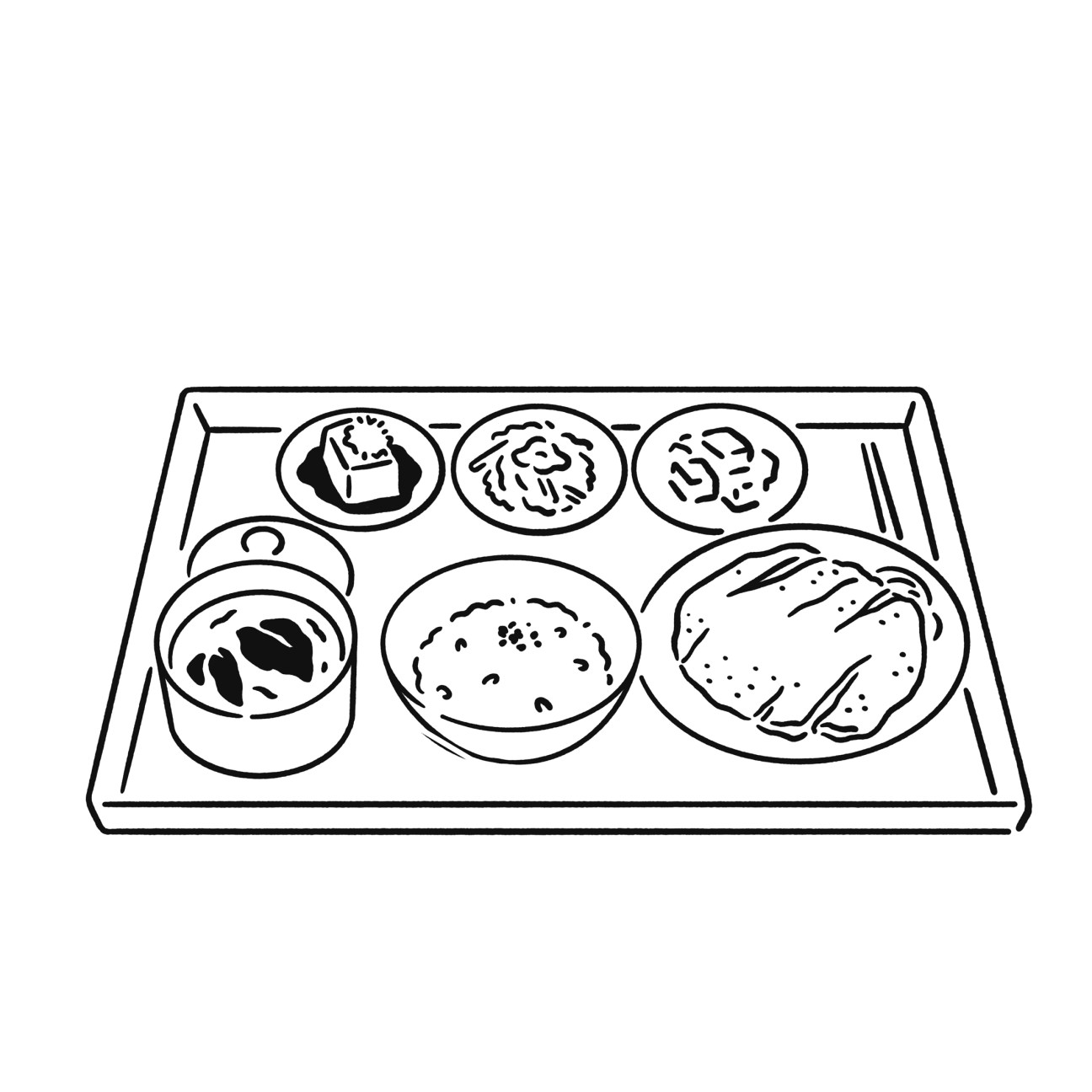
The roast chicken, soup and freshly milled Tainong No 71 rice at Rice and Shine is not to be missed. Drizzle soy and hot lard over the rice and order the iced black tea flavoured with maqaw (mountain pepper).
7.
Visit
The riverside Dadaocheng Wharf Pier 5 Container Market has plenty to recommend it. Hire a bike to explore, or board a boat to see the city from the river. For a snack, try a Hong Kong waffle at the smartly branded I Love Bow concession.

8.
Drink
Tea, of course. You’re in Taiwan. Preferably at the South Street Delight Tea House. The “oriental beauty” is a fermented oolong with a honeyed taste, served with dried fruit and sweet-bean petit fours.

9.
Take home
Wooden tchotchkes, bamboo spice baskets or a rattan granny basket (all the rage here) from the Gao Jian Bucket Shop.

10.
Don’t miss
The Love God, a 40cm statue – one of 600 deities represented in the Xia Hai City God Temple – is known for his matchmaking skills. People flock from all over Taiwan to seek his supernatural guidance and spiritual approval.

Illustrations: Hao-Yan
What’s on our itinerary: Shops and hotels to add to your list
Warren Street Hotel
New York
British-born hotel company Firmdale Hotels has opened its 11th property, an oasis of blue steel and sunny yellow on a red-brick block in Tribeca. “We love Crittall windows; it’s such a classic look,” says co-founder and creative director, Kit Kemp, who used the same windows at the firm’s fêted Manhattan hotels, Crosby Street and the Whitby. “It looks as good in Paris as it does downtown.”
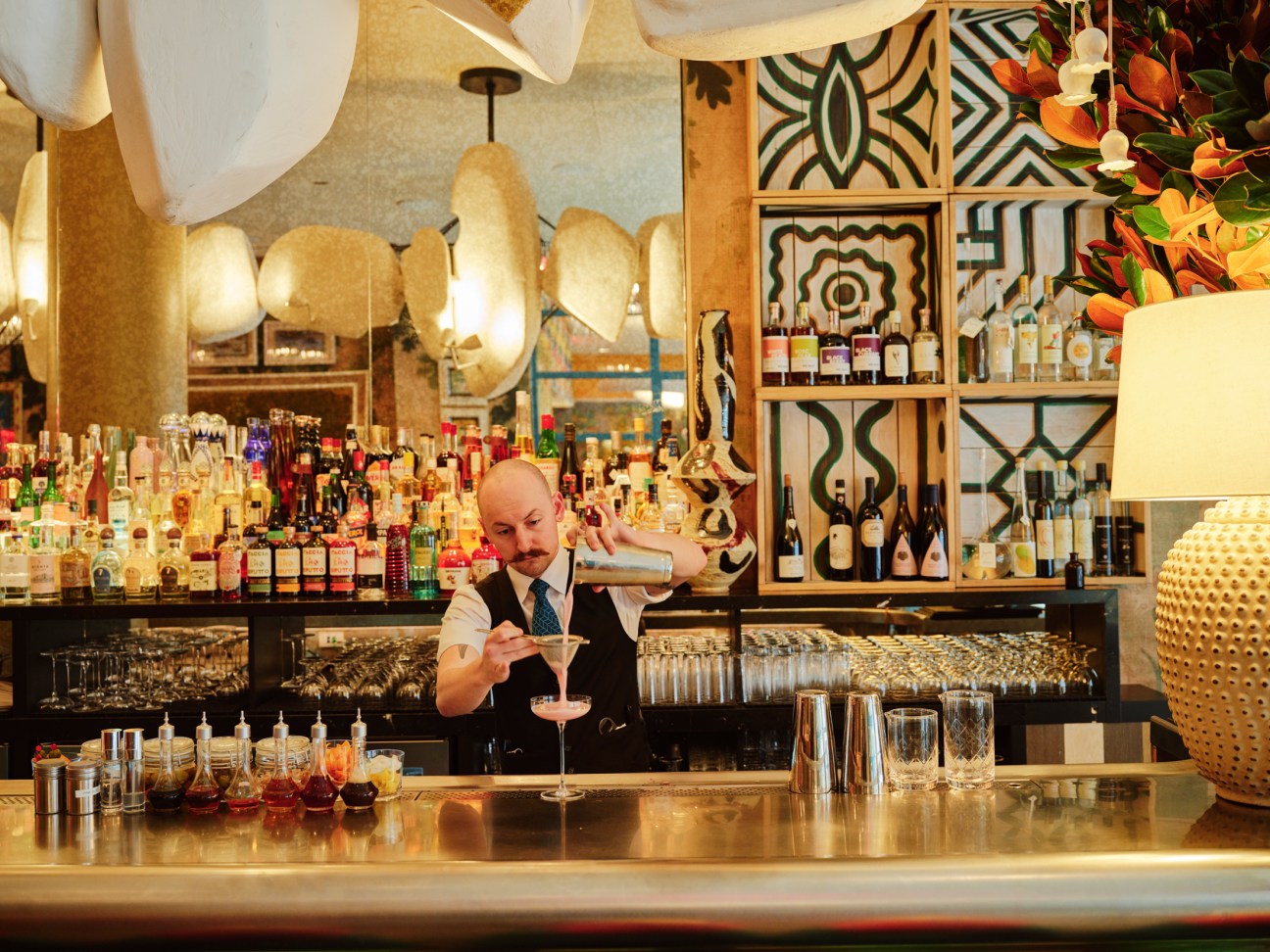

The interior is unmistakably Kemp too: a mishmash of patterns and wallpapers in a range of colours and textures. It’s a cacophonous clash that shouldn’t work but does. “All the pieces speak to one another,” says Kemp of the collage she created with her daughters, Willow and Minnie, who work in graphic design and architecture, respectively. The property is a breath of fresh air in a neighbourhood that has welcomed an influx of galleries but long lacked any decent independent hotels. “It still has a village feel about it,” says Kemp, who looked to the area’s textile trade for inspiration.
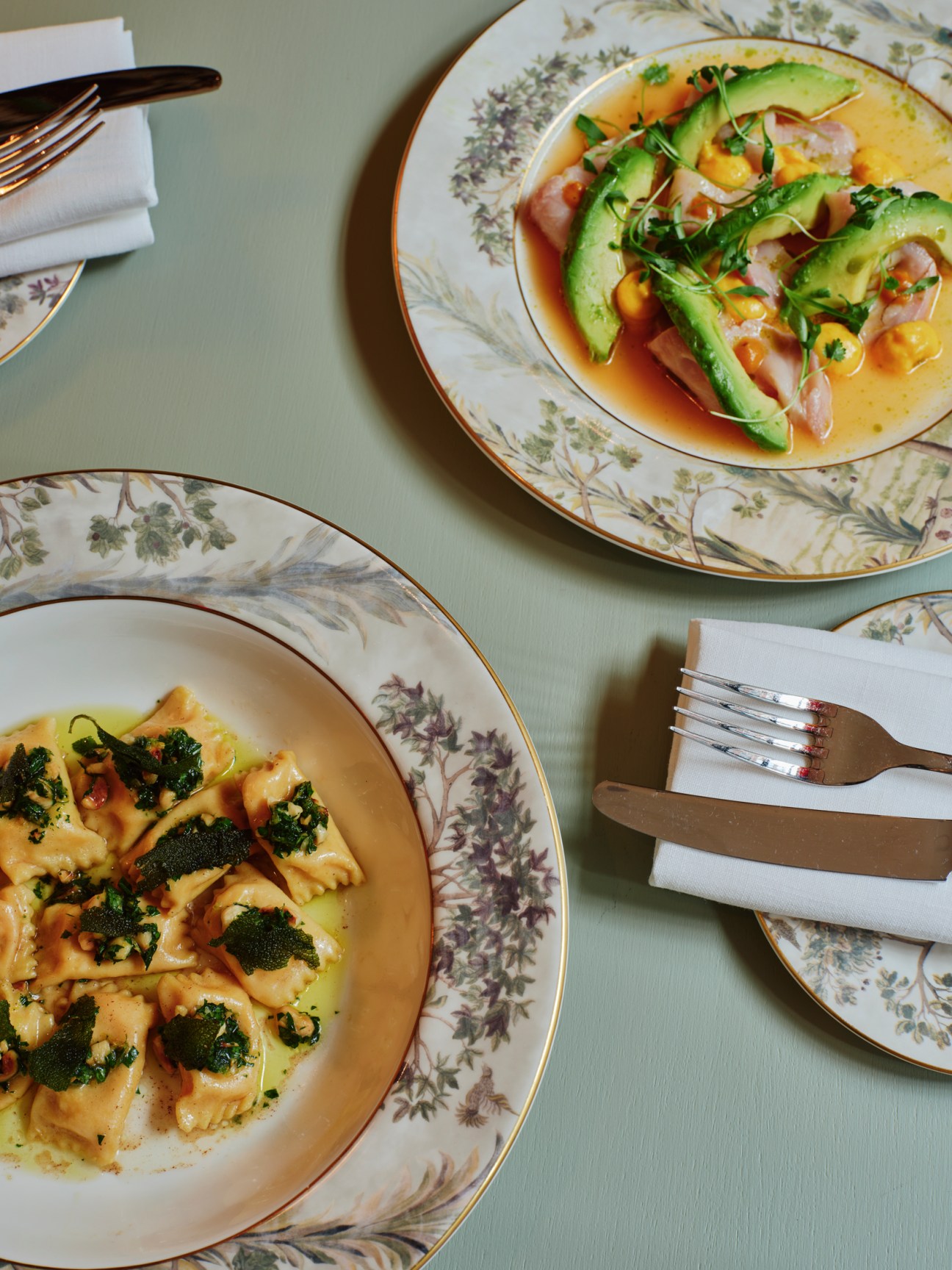

The 69 guest rooms are decorated with brightly-hued curtains and carpets, and wallpapers. You’ll find almost 1,000 artworks throughout the hotel, from creatives such as Argentinian designer Cristián Mohaded and Ugandan artist Sanaa Gateja. The downstairs drawing room is open only to guests and there are snug sofas and a fireplace by which to hunker down. The brasserie serves wild mushroom risotto, scallops and strip steak au poivre, as well as a decadent afternoon tea with macarons, scones, clotted cream and champagne. “I remember going with my mother or family for afternoon tea,” says Kemp. “It was always very special and spoiling. It’s lovely to bring that in.”
firmdalehotels.com
Q&A
New York
Kit Kemp
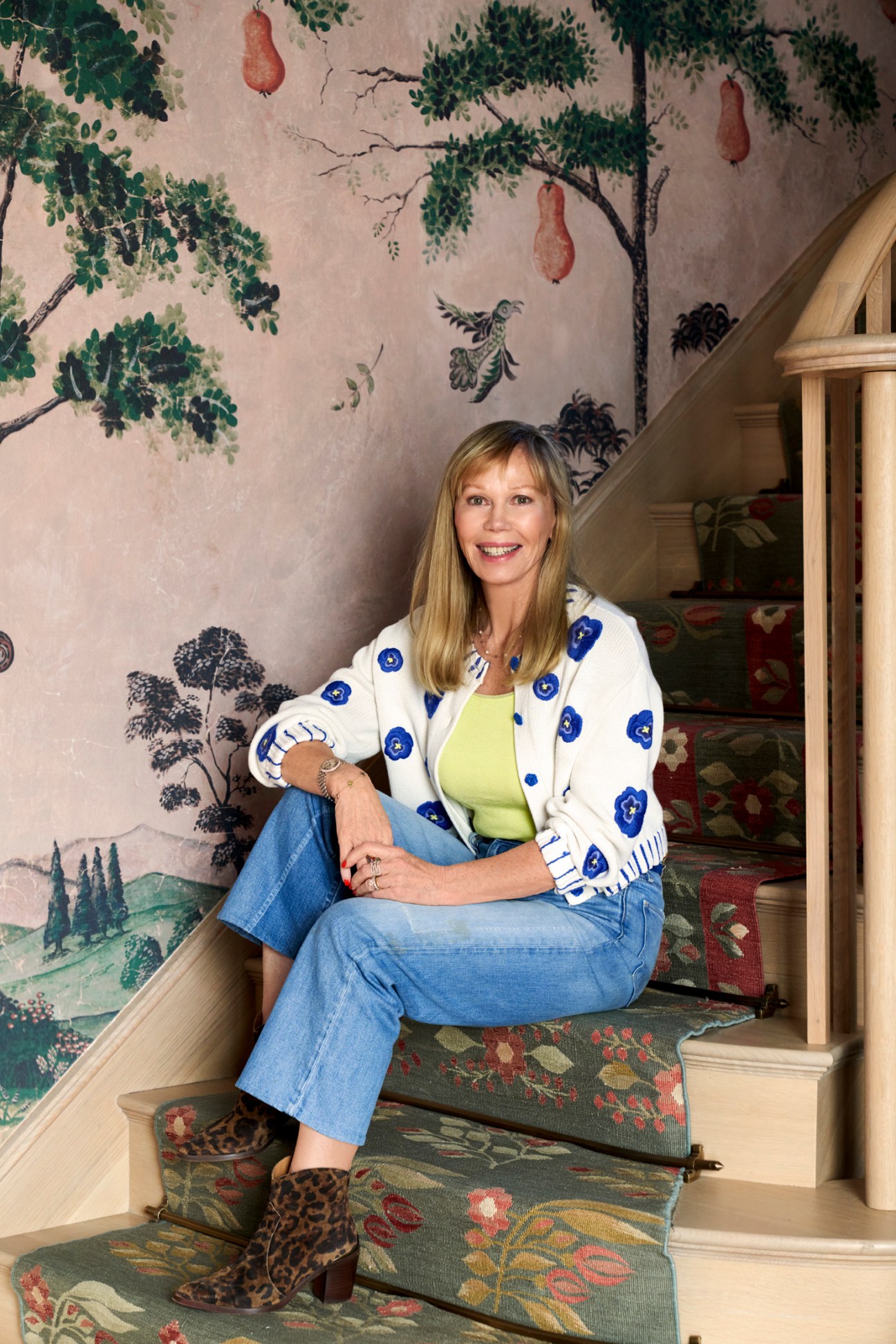
Firmdale’s co-founder and creative director on her latest New York hotel opening.
Why downtown?
We have the Whitby in Midtown and Crosby Street in Soho, and Tribeca just felt exciting. Over the past 10 years, we’ve seen it change, with lots of people living there rather than in massive sky-rise buildings. It has a good buzz. Other than the Greenwich, there wasn’t a hotel that had character, so there was room for a hotel, brasserie and bar like ours.
What about the building?
It was a gap between two buildings. We brought in the blue with the yellow at the top, so it always looks like summer. We wanted something cheerful.
Each of the 69 rooms is different from the last. Why?
Some of the rooms have a similar scheme vertically but everything else is quite different. If you’re travelling and you go into a white-painted room, it can feel terribly cold. As soon as you have linen on the walls, it suddenly feels fabulous; you are tucked up and safe.
Kopria Florist
Athens
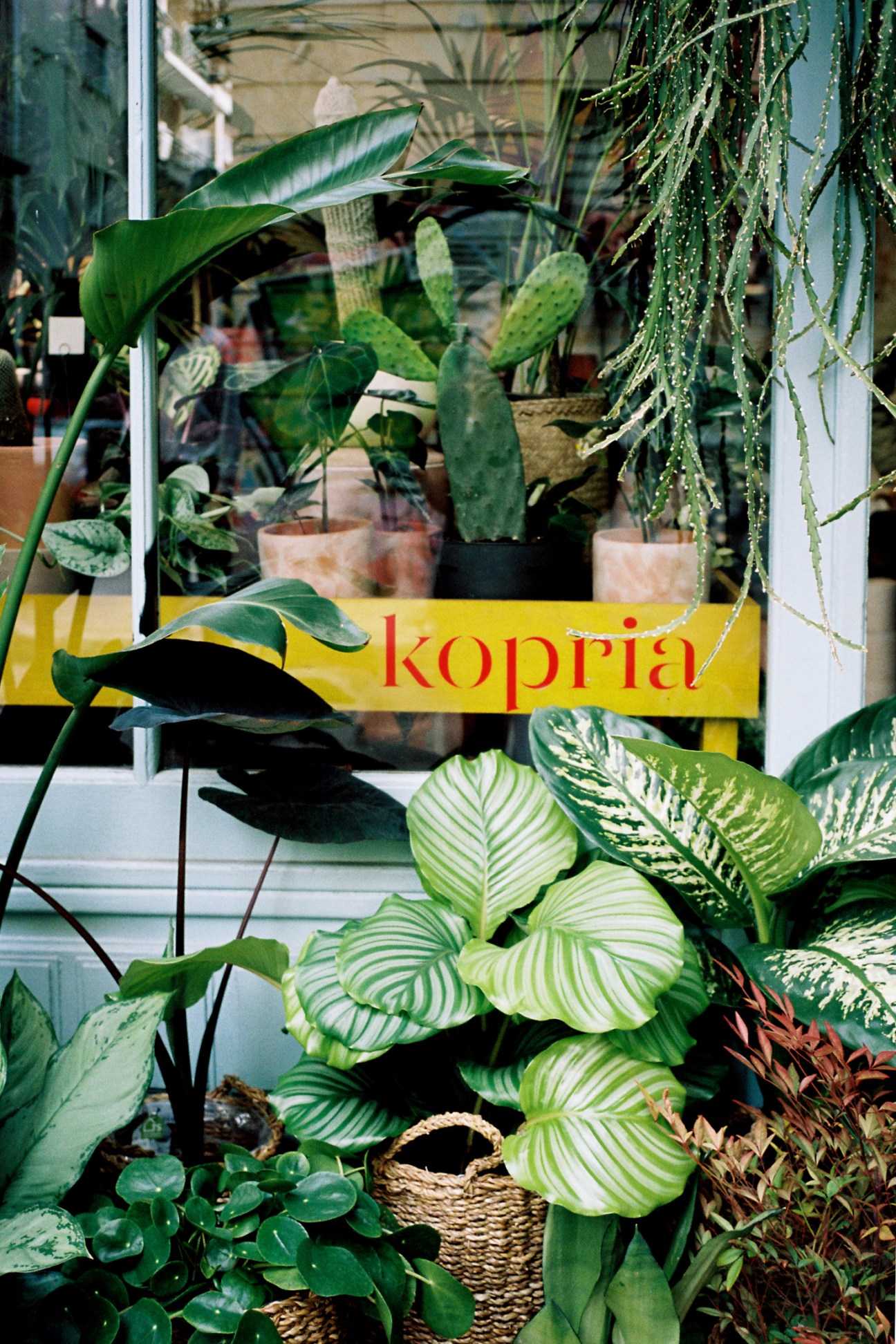
Plant shop and flower studio Kopria opened in the heart of the lively Exarchia neighbourhood in 2018 is growing a budding fan club of locals and regulars from further afield. Alongside the usual line-up of hard-to-kill houseplants and outdoor varieties, its small team has a penchant for the unusual; Kopria stocks an array of oddly shaped cacti and other curiosities that would be difficult to find at your average city garden centre. The business is growing in other senses too: its flower arrangements can be spotted adorning some of the Greek capital’s most high-profile hotels and restaurants. The shop, which boasts an appropriately inviting tropical interior, also sells a small range of international design magazines, plus ceramics by Athenian makers and handmade Japanese garden tools. A snip, if you ask us.
30 Eresou, 106 80
Retail safari
Seoul
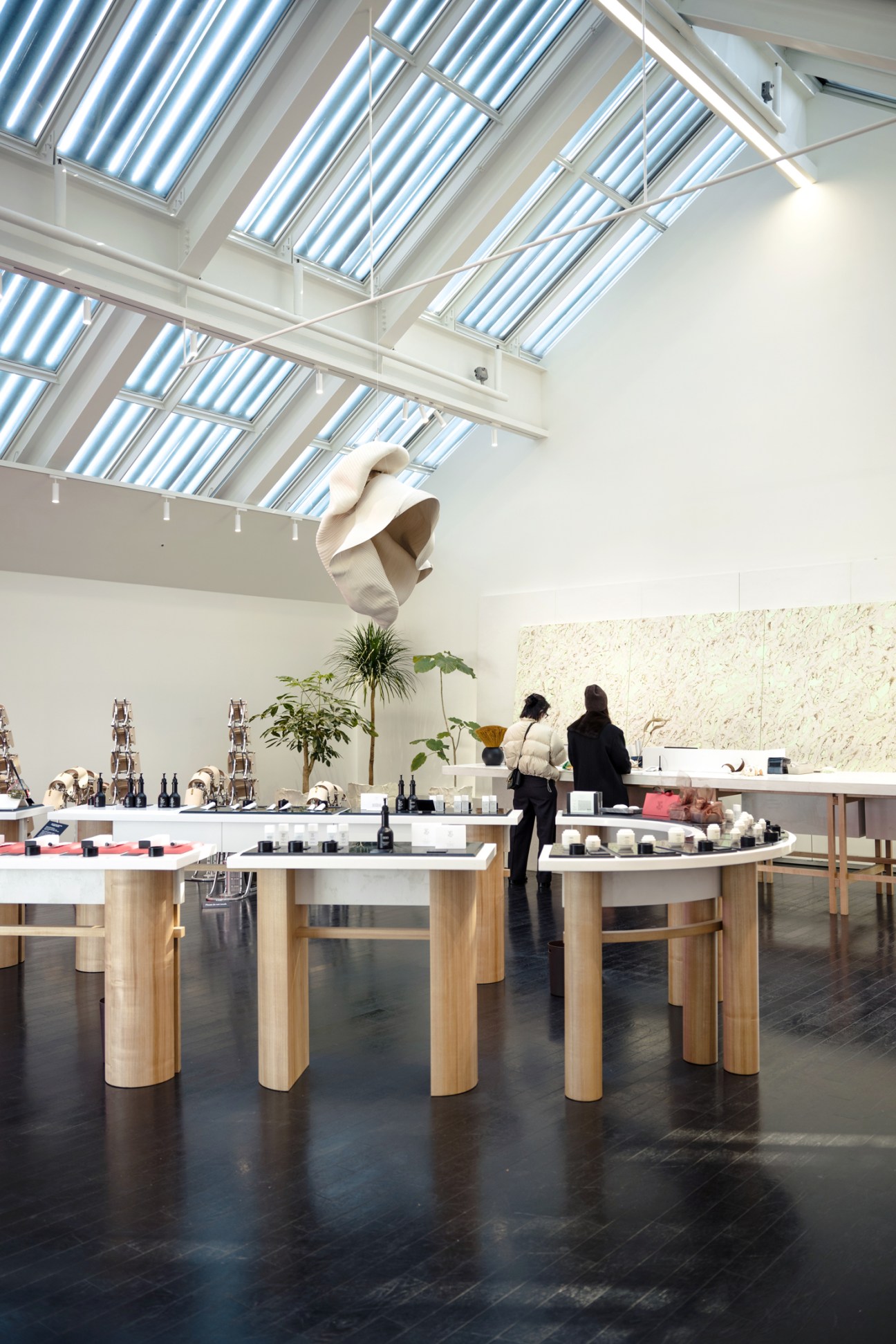
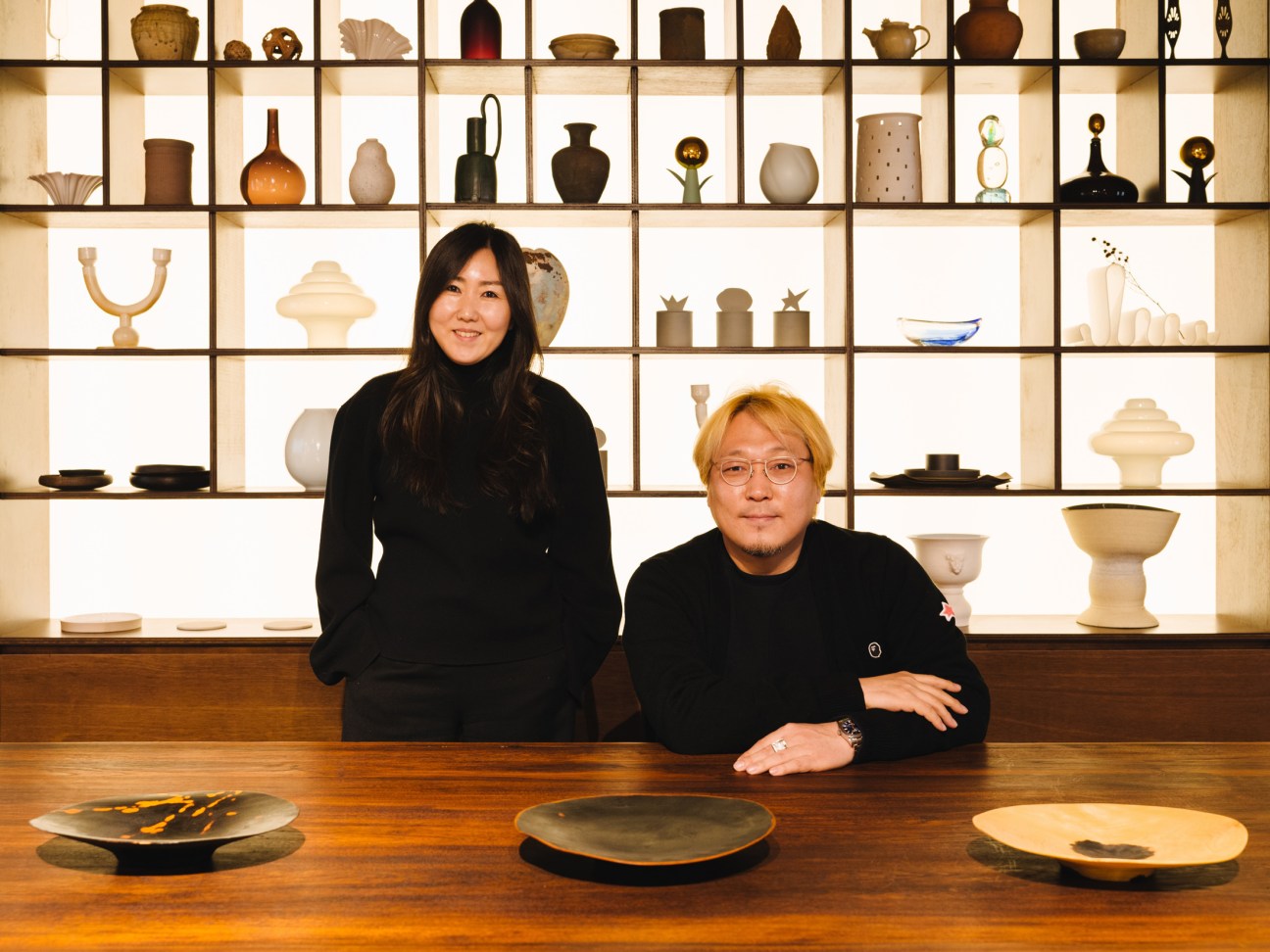
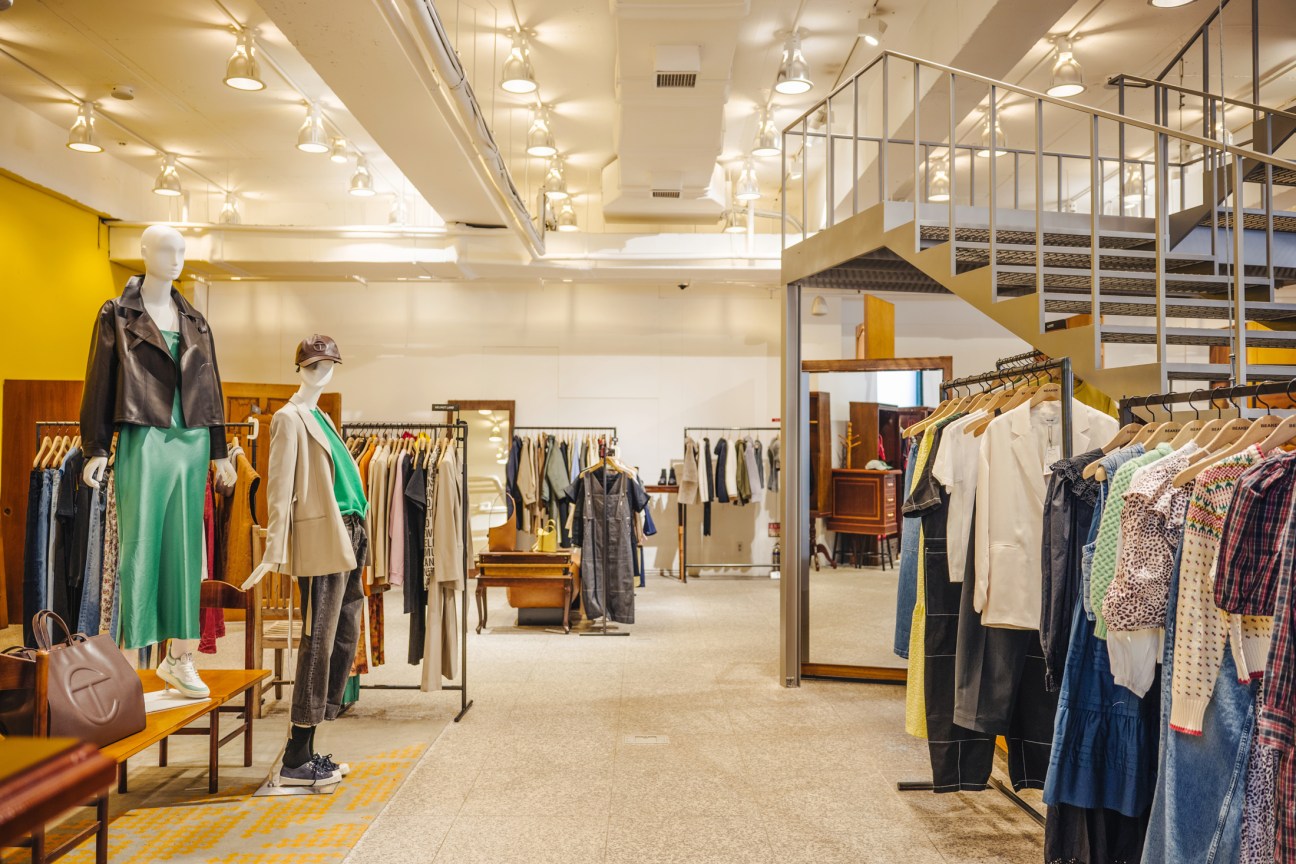
Start by walking around serene Seochon – one of Seoul’s oldest neighbourhoods – the streets of which are lined with hanok houses and quaint alleyways. Near Gyeongbokgung Palace, you’ll find Parlour, which has a great selection of men’s shoes, plus clothing from Seoul and abroad. Head to the Arumjigi Culture Keepers Foundation if you’re a fan of contemporary handicraft – the shop stocks everything from silver chopsticks to lacquerware jewellery boxes inspired by traditional designs. Pay a visit to antique art dealer The Store from Tong-In, which celebrates its centenary this year and is just a 15-minute walk away, in the historical Insa-dong district. Chapter 1 sells furniture and homeware, while earthenware maker Soilbaker is known for its clay bowls and ttukbaegi crockery. In need of a little pampering? Visit Tamburins, the cosmetics label owned by Gentle Monster, which has its flagship shop in Seongsu. Next, head to Hannam-dong, where the city’s best-dressed gather for people-watching and coffee. Drop in at menswear brand Pottery to pick up a few shirts, which are cut to allow for ease of movement. Finally, near the Hannam post office is Handle With Care, a winsome arts and crafts shop so small you might miss it. Don’t.
Nobis Hotel
Palma
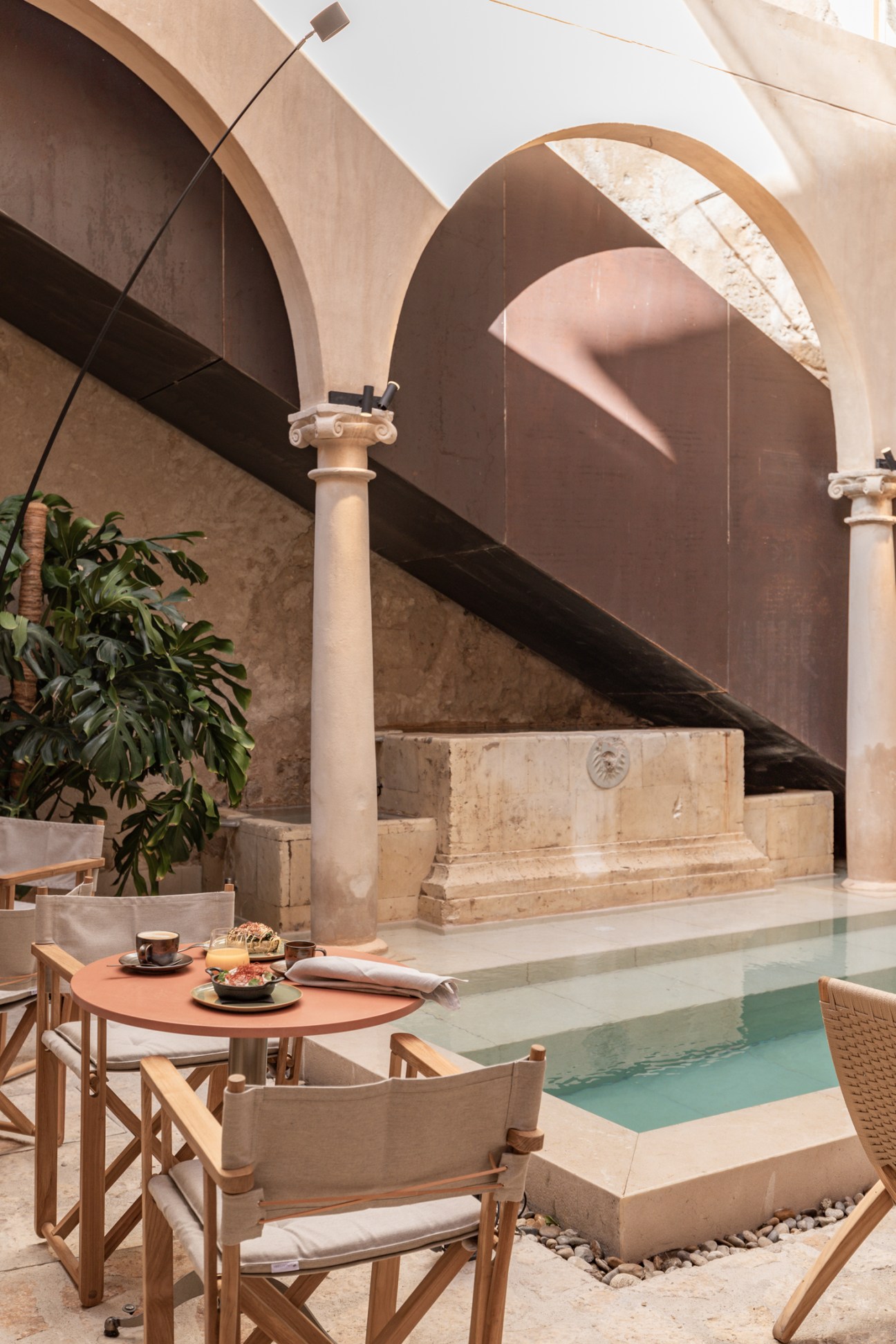
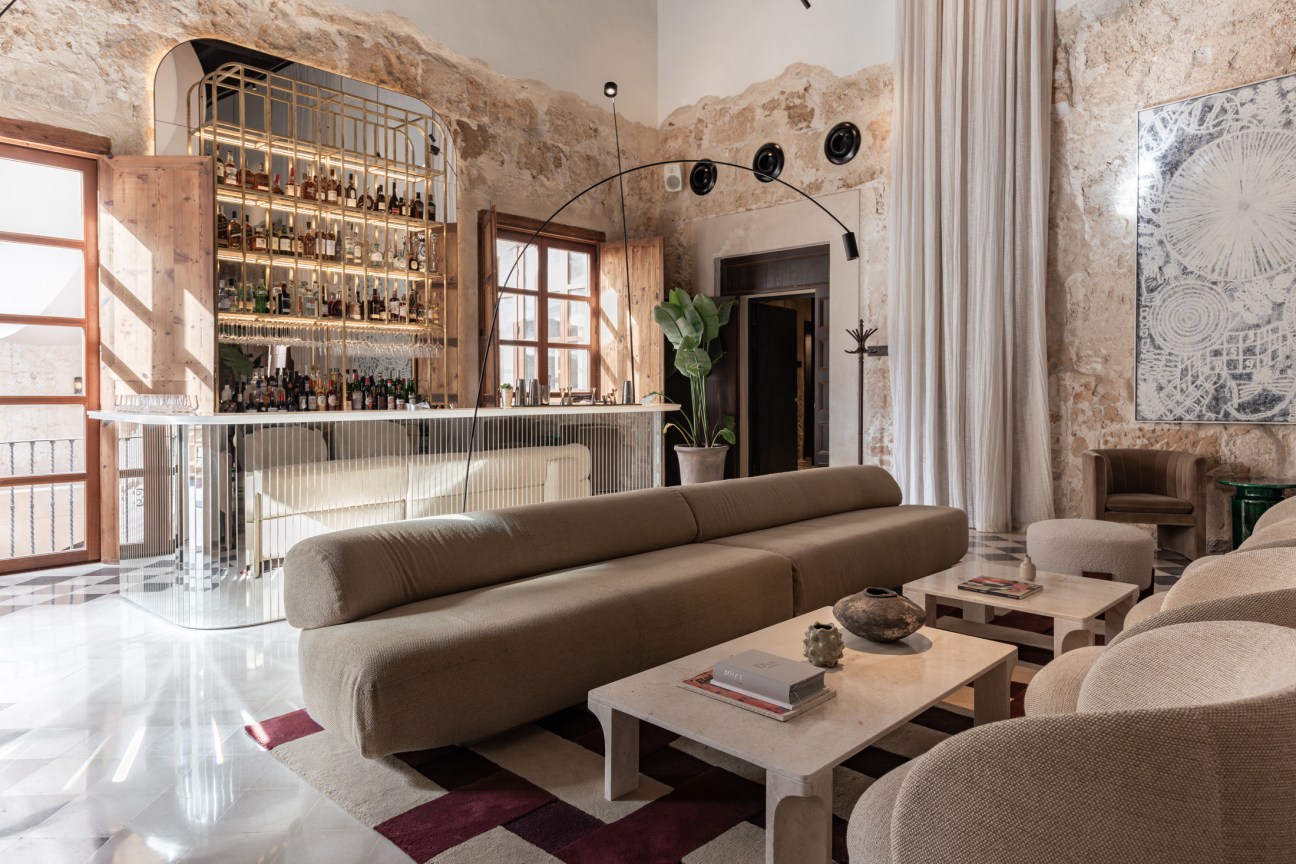
Swedish hotel group Nobis has opened a second outpost in Palma de Mallorca. In 2021 it unveiled its popular Concepció by Nobis project. Its latest space, though, pitches a little higher and has the advantage of being housed in a 12th-century palace, with a large courtyard and roof terraces that offer elevated spots for drinks, sunbathing and escape. The building’s Moorish roots inspired Swedish interior designer Wingårdhs, plus architecture firms Jordi Herrero Arquitectos and Eduardo Garcia Acuña Arquitecto, to employ a riad vibe, with water elements at play on the ground floor. Restaurant, Noi, is already pulling in locals keen to enjoy Mallorcan chef Xema Álvarez’s smart menu. But our favourite space is the high-ceilinged Mirall Bar. Its in-house creations include the Pruna, made with Trigo Limpio vodka, plum spirit, plum, fino (Spanish sherry) and lavender.
nobishotel.es