Issues
Hirokazu Kore-eda on creating ‘Monster’
Japanese film-maker Hirokazu Kore‑eda, who was born in Tokyo in 1962, is internationally admired as a storyteller who mixes the tough and the tender. Titles such as Nobody Knows (2004), the Palme d’Or-winning Shoplifters (2018) and Broker (2022) present compelling characters, often thrown together and acting as a family, who collaborate to rise above their strange, straitened lives with courage and charm. His latest film, Monster (2023), centres on two boys, Minato and Yori, and an accusation of school bullying and the ramifications it has on careers, family and friendships. Kore‑eda, who normally writes and directs, took this story from screenwriter Yuji Sakamoto. The score, meanwhile, comes courtesy of the late, great Ryuichi Sakamoto and is a beautiful soundtrack for an entrancing drama about authority and the expectations of how boys should be boys.
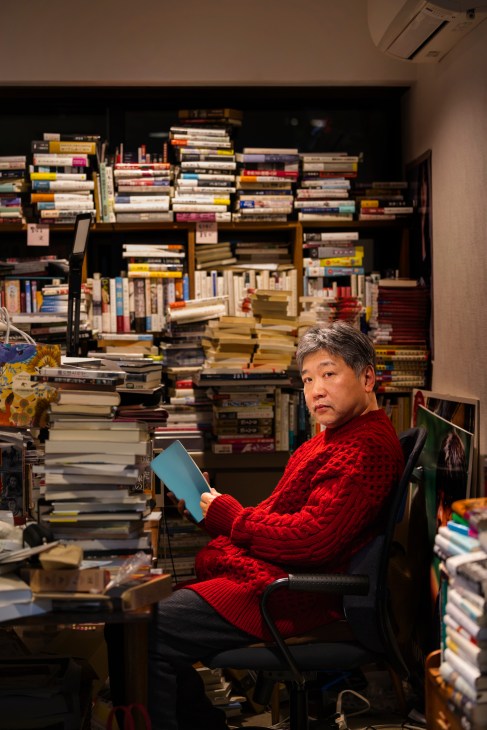
RB: You normally write the scripts for your films but for Monster, Yuji Sakamoto wrote the screenplay. The film still feels very much part of your emotional and thematic world, though. How did it start?
HK: I’ve always been a fan of Yuji Sakamoto’s dramas. While he’s mainly worked in TV and myself in film, we’ve handled similar subject matter: families of the perpetrators of crime or the idea of neglect. We both felt a similarity and hoped that we would get to work together. So with this, Yuji Sakamoto and the producer, Genki Kawamura, had started developing the idea for the film and once they had the plot, Sakamoto-san gave it to me to read and I happily accepted.
RB: Your film is titled Monster and while we see carelessness and callousness on-screen, audiences might leave the cinema with an enduring impression of love and compassion. Do you see plenty of love and compassion in the world or do you make films as a barrier against their opposites?
HK: I’m not as optimistic as to suggest that there’s “plenty” but at the same time I’m not making these films because the world is so awful. There are things in the real world that are hidden: people, things and situations that we don’t get to see. I try to shed a light on them. Film can contribute to society and I want to make that contribution.
RB: Monster shows the same events told from multiple perspectives, which unfold as different stories. Is it a film about stories and storytelling? Telling us that we need to look at all viewpoints to reach the truth of the matter?
HK: It’s impossible, isn’t it, for human beings to see things from all perspectives? So the film’s structure helps us to realise how uncertain, ambiguous and frightening the truth that we believe in can really be. And how frightening it can be when we decide that someone is a monster.
RB: One way of arriving at that truth is through the performances. You’re known for getting such naturalistic work from your cast, even while casting children who might be less easy to direct. How do you achieve that?
HK: Usually, we don’t have to do any preparation with the child actors – I feed them their lines on-set and explain what’s going on. But I couldn’t really do that here as there’s too much conflict in the characters of Minato and Yori. So I worked with them to create their characters. We had talks from a group that supports LGBT children, we had a school nurse come to teach them about how the body develops at that age and I really wanted them to understand the script. At the same time, the boys were playing together, eating together, making friends with each other. They also grew up as they grew as actors on set.
RB: Ryuichi Sakamoto wrote the music and it’s a beautiful, minimal score. How did you work with him, on what would sadly be his final film soundtrack?
HK: Well, he wasn’t well when I approached him and, as he couldn’t really speak, we wrote to each other. At first, when I still didn’t know whether he was going to accept the project or not, I set the film to his music. I made a cut with a soundtrack made up of tracks from his previous albums. I know that some composers wouldn’t have appreciated that but I sent that to him. I was relieved when he said that the film was interesting and that, as he watched it, he had already come up with ideas and would write some music – if I liked it, I should use it, if I didn’t, not to worry. All this he was writing to me. The collaboration I had been dreaming of for many years had come true.
RB: There appears to be a critique of forms of rigidity, silence and restraint in the film. These are qualities, or problems, that some associate with old-fashioned Japanese hierarchies. Has the film been critiqued in a similar way by Western and Japanese media?
HK: I’ve read reviews and reactions from several countries and they’re surprisingly similar. There hasn’t been this sense of, “Oh, it’s quite Japanese so it’s hard to understand.” I thought that the story of this closed society of the school and the way that good and evil are almost reversed in that situation might be something that struck Western audiences as implausible. But that hasn’t happened, to my relief. But then there’s the ending. Both in Japan and overseas – and even when I first screened it at Cannes Film Festival – a surprising number of people asked me, “Are they dead or alive?” They wanted to be able to set their minds at rest. I wasn’t expecting that.
The season’s cultural highlights, from thrilling page-turners to the reissue of an electro classic
Books

Wandering Stars
Tommy Orange
Tommy Orange made a splash in 2018 with his debut novel, There There, which followed Native American characters in Oakland, California, the author’s hometown. Expectations are high, then, for Wandering Stars, which serves as both a prequel and a sequel. The book centres on multiple generations of a family and the fallout of the 1864 Sand Creek massacre, in which more than 230 Cheyenne and Arapaho people were killed by the US Army.
‘Wandering Stars’ is out now

Headshot
Rita Bullwinkel
The appeal of a novel about teenage girl boxers risks being limited to those in and around the ring. But Headshot punches above its weight. Rita Bullwinkel’s second book – following her collection of short stories, Belly Up – centres on eight young women competing in a tournament in Reno, Nevada. It’s a taut tale of intimacy, violence, control, joy and desire.
‘Headshot’ is out now

The Morningside
Téa Obreht
The third novel from the Belgrade-born US author of The Tiger’s Wife and Inland began as a short story in The Decameron Project, an anthology commissioned in 2020 by The New York Times Magazine. It unfolds in a not-too-distant future in a place called Island City and follows 11-year-old Silvia, who together with her mother is forced to leave their home and move into a high-rise managed by her aunt. There, Silvia begins to unearth a few troubling family secrets.
‘The Morningside’ is out now
Film
Drift
Anthony Chen
Stories of refugees tend to tread a familiar path. Director Anthony Chen quietly circumvents clichés with Drift, which follows the well-to-do daughter of an upper-class Liberian family forced to flee to Greece after conflict catches up with them. The film rests on the pathos of Cynthia Erivo’s performance – she is an actress who can make anything look enthralling.
‘Drift’ is released on 24 March

Love Lies Bleeding
Rose Glass
Gym manager Lou (Kirsten Stewart) falls hard and fast for bodybuilder Jackie (Katy O’Brian) – and their love affair may be their only respite from the drama of her small-town gangster family. Dripping in 1980s dirtbag Americana aesthetics, the film is a pounding and aggressive melodrama from the director of horror film Saint Maud.
‘Love Lies Bleeding’ is released on 19 April
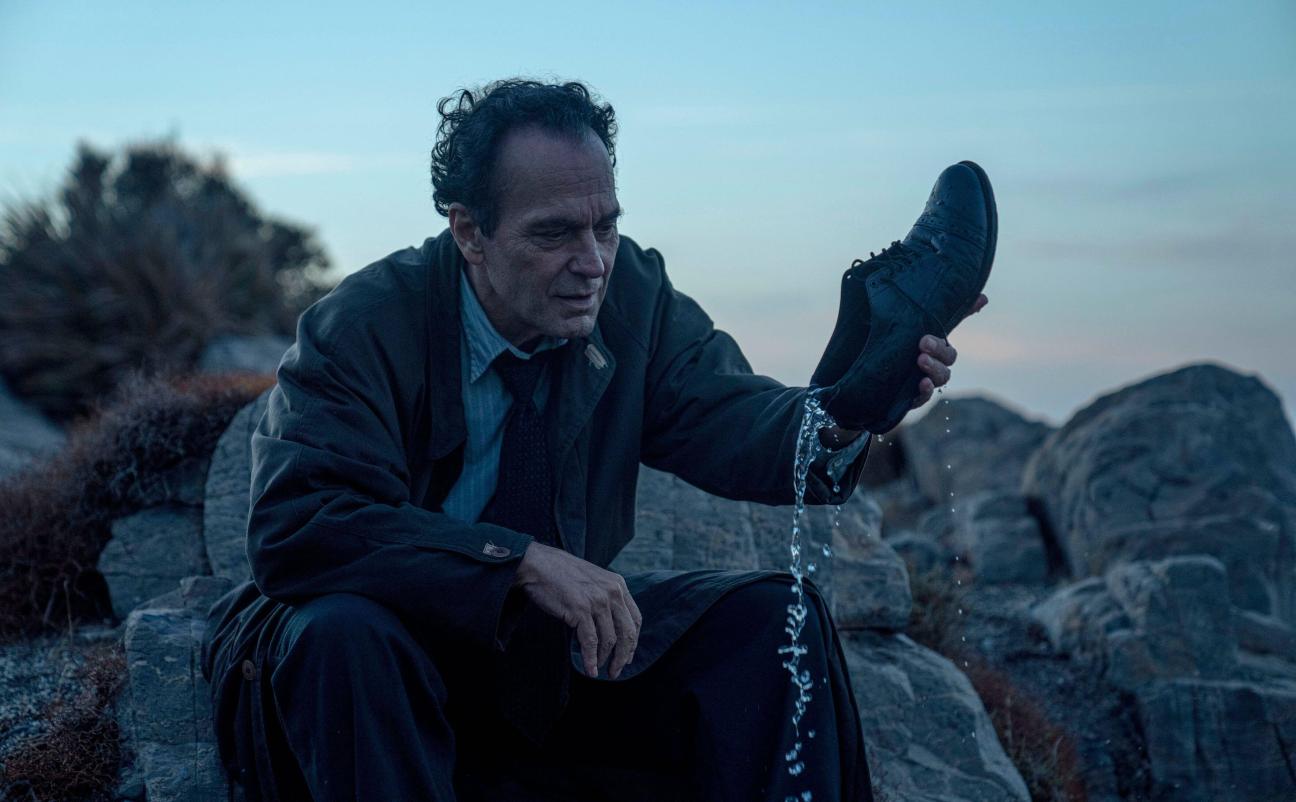
Close Your Eyes
Víctor Erice
Spanish film-maker Víctor Erice has never made a bad movie. Now, after a long absence, he has returned with what’s, on the surface, a mystery film about the disappearance of an actor. Look deeper, though, and you’ll find an exploration of memory, identity and their intersection with cinema.
‘Close Your Eyes’ is released on 12 April
Art

Willem de Kooning e l’Italia
Gallerie dell’Accademia di Venezia, Venice
Dutch-American expressionist painter Willem de Kooning bookended the 1960s with two trips to Italy. On the first, he met Cy Twombly and experimented with his expressive “Rome” drawings; the second saw him attempt sculpture for the first time. The effect of these brief visits permeated throughout his late career, as this ambitious retrospective illustrates in suitably broad brushstrokes.
From 17 April to 15 September

Theaster Gates: Afro-Mingei
Mori Art Museum, Tokyo
As a committed Japanophile, artist Theaster Gates has brewed his own saké, explored the mingei movement and engaged with Tokoname ceramic traditions across two decades. While the work created for the Chicago-born polymath’s first major exhibition in Japan will reflect a deep love for his host country, don’t expect his art to be watered-down. Gates has always responded to such occasions, using his platform to present explorations of Black American identity.
From 24 April to 1 September
Fix: Care and Repair
Museum of Finnish Architecture and the Design Museum, Helsinki
This show celebrates the fine art of maintenance, from the careful restoration of buildings to the beauty of the time-worn. Five early-career artists, chosen via an open call, were tasked with expanding the central theme to encompass poetry, architectural theory, social inclusion and more. Their collected works will act as a reminder that maintenance is about more than just quick fixes; it’s about nurturing the good things in life.
From 26 April to 31 December
Music
Moon Safari
Air
The French electronic duo’s 1998 debut album still feels fresh today, from the serene “La femme d’argent” to the vocoder paradise of “Sexy Boy”. Belatedly celebrating 25 years since its release, Air have reissued Moon Safari with added live sessions, unreleased demos and a documentary film.
The ‘Moon Safari’ 25th anniversary edition is out now
Las Mujeres ya no Lloran
Shakira
The Colombian pop diva is back with her first album since 2017’s El Dorado. Its name references her recent hit single “Music Sessions, Vol 53”, a collaboration with Argentinian producer Bzrp, on which she sings “women no longer cry, women make money”. The record’s catchy hooks and pithy lyrics prove Shakira is still a force in pop.
‘Las Mujeres ya no Lloran’ is released on 22 March

A La Sala
Khruangbin
The Houston trio’s fourth album is more subdued than previous releases. Highlights include “Pon Pón”, a mixture of African disco and distorted guitars, and the sensual “Todavía Viva”.
‘A La Sala’ is released on 5 April
TV
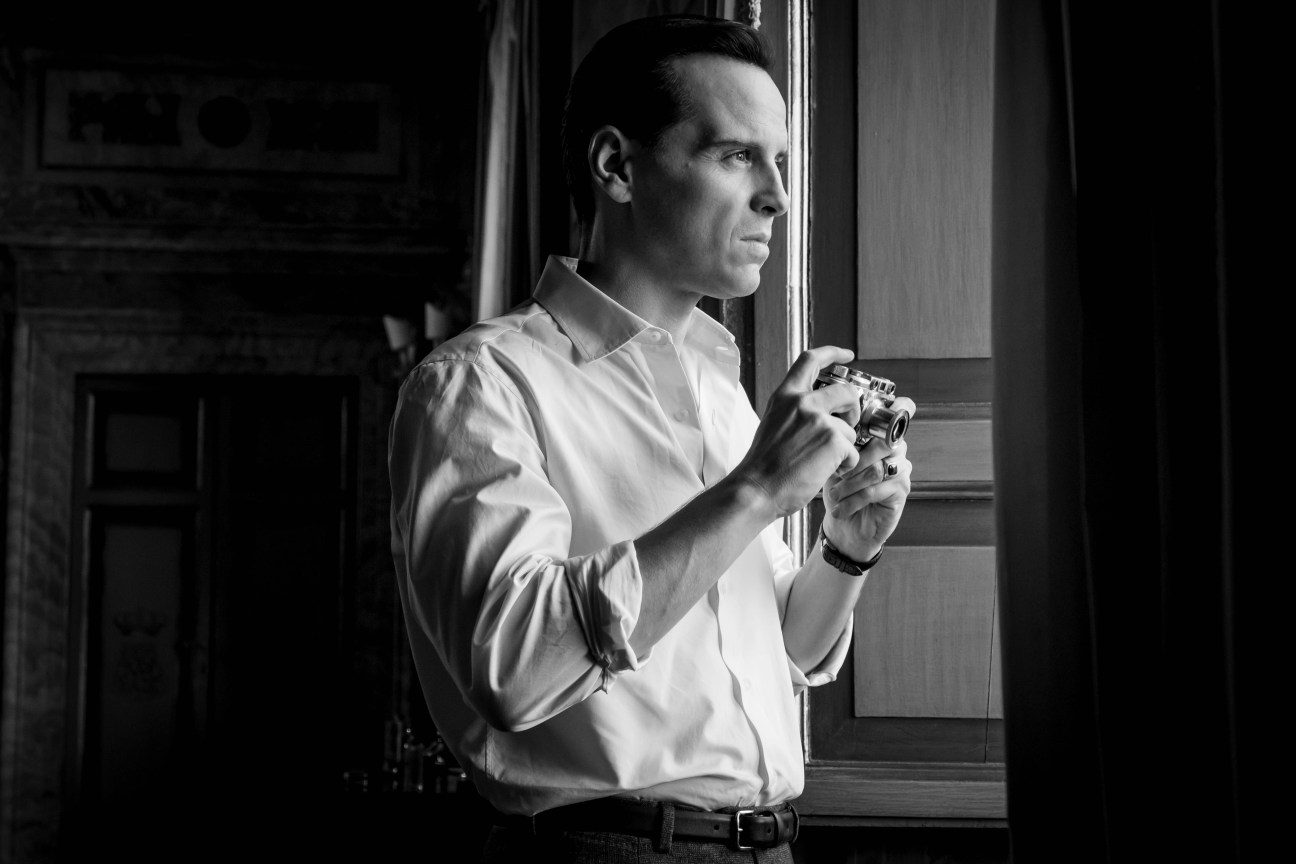
Ripley
Netflix
Andrew Scott plays the titular character in this adaptation of Patricia Highsmith’s novel The Talented Mr Ripley. Its eight episodes follow Ripley’s journey from the US to Italy, where he is embroiled in fraud, murder and deceit.
‘Ripley’ is released on 4 April
Sugar
Apple TV+
Colin Farrell is busy. Alongside Batman spin-off The Penguin, this year also sees him starring in and producing Sugar, a subversive series about a private detective investigating the disappearance of a Hollywood producer’s granddaughter.
‘Sugar’ is released on 5 April
The Veil
Hulu
Equal parts captivating spy thriller and Thelma & Louise, this fascinating look into the global espionage community follows two women on the road from Istanbul to London via Paris.
‘The Veil’ is released on 30 April
Plots of adrenaline
Thrillers to read
Global
Great thrillers have you rooting for characters up against the odds and keep you hopeful even when things seem to be taking a turn for the worse. The best of the new crop, listed here and chosen by crime-fiction aficionado Paul Burke, share these qualities.
1.
The Shadow Network
Tony Kent
UN super-agent Joe Dempsey and London lawyer Michael Devlin are on the trail of The Monk, leader of a cabal dedicated to wrecking the world order. Fighting this global threat is a war on many fronts, from the US to the Middle East – and the pace never lets up.
Published by Elliott & Thompson
2.
The New Couple in 5B
Lisa Unger
New Yorkers Rosie and Chad Lowan inherit an apartment in the iconic Windermere building. The residents are welcoming, the portents less so. Rosie witnesses a biker die in a crash just as the good news arrives, The Windermere’s aged doorman is ever present and its gruesome history emerges when a neighbour is found dead. It’s an unsettling, haunting read.
Published by Park Row
3.
Smoke Kings
Jahmal Mayfield
A racist murder leads Nate Evers to exact revenge for his cousin’s death in Jahmal Mayfield’s powerful debut. When Evers and friends kidnap the descendants of hate-crime perpetrators and demand reparations, it’s not long before white supremacists and a racist cop are on their trail. This is an excoriating account of open wounds in US race relations.
Published by Melville House
4.
A Spy Like Me
Kim Sherwood
This Bond-not-Bond franchise sequel features Double-O agents scouring for terrorists while searching for missing service legend James Bond. Fast, sassy fun, this is Fleming for the 21st century.
Published by Hemlock Press
5.
On the Run
Max Luther
In Max Luther’s latest, Alex Drayce, disillusioned ex-cop turned bodyguard for hire, searches for a businessman’s missing daughter in Las Vegas. Framed for murder, hunted by the law and the mob, Drayce fights back. Underestimate him at your peril – the self-aware Reacher type has a similar deadly skillset.
Published by Canelo
Paul Burke hosts ‘Crime Time FM’.
Whatever happened to the art of hospitality?
Global education rates have never been higher but there’s a skills gap that’s getting wider. Certain softer skills – the ability to read a room, put others at ease, offer a drink or diffuse a difficult situation – are vanishing from our collective repertoire, whether in a presidential palace, boardroom or shop.
This is, in part, an issue of practice and it’s no surprise that we’re a little rusty. In the private sector, entertaining, training and travel budgets are being slashed to cut costs and preserve profits. At a state level, insular nations are selling off embassies and cutting back on diplomatic staff in a bid to tighten their purse strings.
Technology, ostensibly a tool for greater efficiency, has compounded the problem. In the rush to automate and appear innovative – and rely on the internet for all our interactions – have we lost a little of the human touch? Artificial intelligence can analyse data but can it put people at ease? Instant messaging can transmit information but what message might a crisp, handwritten invitation or taking someone out to lunch send?
1.
Off-grid solutions
Make room for private moments
To solve thorny problems, we need radical candour. The right setting can promote this – think Camp David, with its off-the-record conversations and spitting fire, where negotiators can get to know each other and build a rapport. Leaders need space to chew over hard-to-navigate issues and find solutions away from the flashbulbs.
So let’s be mindful of efficiency for its own sake. One might easily ask, “Who needs an office when you can join a call from your kitchen table? Who needs a deal-sealing dinner with clients when you can send the contracts over by email? Who needs a newspaper when you can scan the headlines on social media? Who needs an ambassador when you could run a killer social-media campaign?”
It’s a slippery slope and every substitution can diminish national brands and small businesses alike; it’s disappointment by a thousand cuts. The solution? We need to get out more.
Great leaders – of countries, cities or companies – already know the inherent value that honed hospitality skills can add to their work. They know that presentation and how they treat people have knock-on effects and that the architecture of their office, where they decide to manufacture their product and how they treat guests can tell a story about who they are and what they stand for.
So read on for 50 lessons in hospitality that we have gleaned on the road and across our reporting. We offer tips on how we can all be a little more attentive, whether we are chairing a global debate or just throwing a decent dinner party. Let’s enrol you in Monocle’s hospitality school. It’s time to narrow that skills gap.
2.
Words to the wise
Master another language

A president (or any leader) with a confident command of another language sends a bigger, more outward-looking message to the world about the nation or organisation that they represent. In politics, having someone at the fore who can switch codes, acknowledge and appreciate difference, and still be patriotic is a helpful bulwark against nativism. Polyglots can win points for a flawless address but can also tune in to mutterings from the other side, should things get fractious.
3.
News and views
Stay informed

What you read matters. Clickbait is a little like junk food: consume too much of it too often and the effects will start to show. A good media diet will give you perspective and remind you that others know more than you about a lot of things. Lively journalism can inspire, inform and entertain. And it needn’t be just hard news. France does breezy morning radio better than most, while picking up a newspaper such as Les Echos will whisk you into fresh conversations beyond what you’ll find in the Anglophone news cycle.
4.
Friendly disposition
Be diplomatic

Investing in outreach is important if you want to succeed on the world stage. Finland’s diplomatic saunas spring to mind: many of the country’s embassies and consulates abroad come with a wood-panelled space in which to slough off formalities and forge human connections. While some countries are flogging embassies and cutting staff, the smarter ones realise that friendships would soon evaporate without them.
5.
Conversation starter
Don’t be dull
Spin a decent yarn and say something interesting. Don’t worry, you don’t need to be a comedian to crack a joke or a novelist to tell a story. “How are you?” isn’t an invitation to recount everything that has happened to you today in detail. Be selective and find a thread; be enthusiastic about something and tell people what you think. You’ll get much more back from engaged interlocutors.
6.
Right on target
Be direct
It’s not always cheeky to ask for what you want. Most people will be happy to meet you in the middle if you request something graciously and in good faith. Whether you’re trying to negotiate a deal, secure a job or a commission, or just get a little information, it’s often best to ask. That doesn’t mean butting in or being brassy – far from it. It’s all about being certain of what you’re after and getting to the point.
7.
Go offline
Meet in person
Pleased to e-meet you? Really? Online communication can be useful for getting things done and exchanging information but peeling yourself away from the screen and meeting people matters much, much more. So prioritise forging some proper connections. Some conversations lose their nuance when they’re typed up and require a phone call, while others simply deserve to happen in person.
8.
Building a brand
Get the look
Establishing a clear identity is crucial, whether you’re a state or a business. On a national level, we’re fans of how Japan and Switzerland present themselves (in everything from flags to flag carriers) but the city of Porto is also setting a benchmark. Designer Eduardo Aires’s azulejo-inspired illustration and marque are being rolled out across Portugal’s second city, offering a coherent sense of place. In terms of companies, look to the understated service at Chanel’s shops, whether in Beijing or Bal Harbour, Florida.
9.
Medium is the message
Give it meaning

Doesn’t a crisp invitation or a thoughtfully jotted “thank you” message – with flowers or that book you mentioned over lunch – mean so much more than a text or email? Isn’t that the way to make people feel welcomed and acknowledged? The message itself is important but so is what the embossing, foiling and finishes convey. This is true whether you’re hosting a corporate event or an intimate gathering. This is what making an effort and a fuss over people looks like. Welcome to the fold.
10.
People power
Read the room

Here’s a subtler lesson that’s glaringly absent from the world’s common-sense curricula: be observant and assertive. Cultivate an ability to spot when tempers need cooling in a discussion or pulses set racing in a lagging pitch. Then there’s having the wherewithal to intervene: to intercept a drink that’s bound for someone who doesn’t need it or to rescue a person who is trapped in a boring conversation. The best hosts can see when service slips, a staffer isn’t at their best or when a quiet word is needed.
11.
Host with the most
Lay on a party
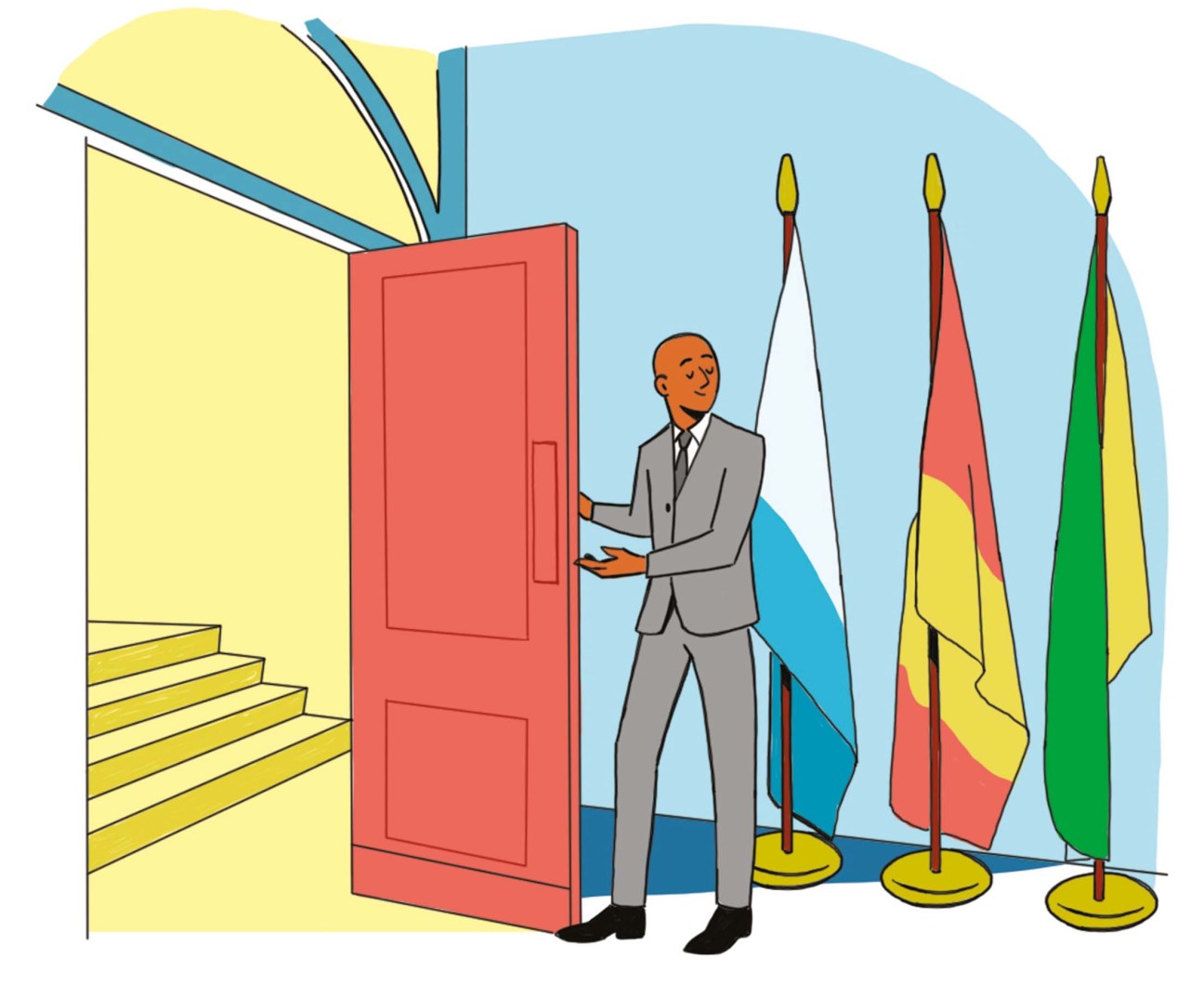
Embassy bashes can open the doors to a nation’s best bits and drop subtle clues about the diplomats’ wider mission (to entertain as well as persuade, to win friends as well as advance interests). An ambassador who can host a spot-on lunch and knows the power of their national dish, deftly placed design and liberally poured drinks is an invaluable resource. A smart residence helps too. Decisions must be made at a national level to invest in embassies with pull and outreach that resonates. Global influence starts here.
12.
Heat of the moment
Take the temperature
Keep an eye on the thermometer: don’t wait until people start keeling over with heatstroke or succumb to frostbite. Ensure that there’s an outside space where people can cool off or smoke too. Have a few nice bottles of white and something bubbly in the fridge for special occasions (or ordinary events that need livening up). Red wine is perfect for a sit-down dinner but beware of passing out glasses of it over nice carpets.
13.
In you come
Start at the door
Whether you’re running a restaurant or hosting an office bash for clients, a smooth front-of-house operation starts at the door. A smiling face and an an assured knowledge of who’s coming (as well as how to address them and pronounce their names) are good places to start. Taking coats and bags, transferring dripping umbrellas to holders and directing bubbly drinks to expectant hands should all happen smoothly.
14.
Mix it up
Have other interests
If your work involves regular meetings and events, there’s a good chance that you’ll have industry fatigue after the umpteenth conversation in an airless trade-show hall. So why not show that there’s more to you than your job title? Why can’t you be both a furniture-brand founder and an avid wine enthusiast? Or an ambassador and an amateur fly fisherman? Or, perhaps, a CEO-cum-female kickboxing champion?
15.
Learn for the best
Get back to school

Every nation should have a hospitality school and some good reasons to enrol (such as fair pay and jobs at the end). Think of the soft-power coup of Switzerland’s world-renowned schools that turn out polite, multilingual students who take the precision that their country is known for to hotels in cities from Sydney to San Francisco. The ability to set a table or spot when someone’s glass is dry is a life skill.
16.
Meet and greet
Learn people’s names

Sounds simple, right? Then why don’t more people have the knack? It’s a great courtesy to introduce a new acquaintance to someone with their name and a relevant, polished précis. It also signals that you have made the effort to listen to what they have to say. Avoid those toe-curling conversations in which one person reaches fruitlessly to retrieve a lost name. Be assertive and introduce yourself. Oh, and the golden rule: never guess (Julia, Jessica, Janet?). When it doubt, it’s best just to ask.
17.
Food for the soul
Break bread together
Many companies have closed their staff canteens in the dull pursuit of efficiency but, however you slice it, eating al desko is extremely crummy. Why not invest in a decent dining room and acknowledge that companies (and countries) need a budget to wine and dine clients and visitors? Great food and something refreshing to drink, as well as a change of scenery, can work wonders in ending a stalemate.
18.
Personal touch
Master the fundamentals

Another easy to deploy but often overlooked win is to reacquaint yourself and your staff with some time-honoured meeting tips. Smile, make eye contact and have a firm handshake (in some parts of the world, this will vary). Then ask some standard questions. Is there anything that you need? Are you thirsty? It’s incredible how many organisations leave visitors waiting, dry-mouthed, in airless meeting rooms.
19.
Take note
Put pen to paper

Some masterful waiters can commit 20 orders to memory (all three courses and drinks too) but if you know that you’re not possessed of such mnemonic powers, then just take notes. Don’t be afraid to scribble down some pointers in a handsome, linen-bound notebook by the likes of the Geesthacht-based Leuchtturm1917. It’s good to commit fleeting thoughts to paper and carrying a notebook also signals that you’re ready to listen.
20.
Ready, steady, go…
Make the first move

Set up a club, a company, a campaign – whatever you want. That’s how things get done. Having some skin in the game shows that you’re serious about what you do and that you’re not all talk. It’s also a quick way to convene people who agree with you and help them feel a part of something bigger. Being a leader is about rallying people around your idea and creating your own community.
21.
Keep the peace
Hold something back
Knowing more than you let on – and being a little mysterious now and then – can be advantageous in hospitality as in life. You might know something juicy or have the inside track on a situation but it never hurts to have a poker pace. The softly-softly approach to getting your way can help everyone else save face and allow you to get your way. Nobody likes a scene.
22.
Lead by example
Hit the shop floor
A healthy sense of responsibility that cuts across all parts of a business can be useful. It’s always heartening to see an owner on the restaurant floor or a CEO overseeing the finer points of an event. An understanding of people’s roles and how it all works is invaluable. Training sometimes involves telling people how to do things but there’s no substitute for showing people how it’s done.
23.
Be mindful of others
Adjust your volume
Turn it up if you’re in boisterous crowd and down if you’re sharing sensitive information. If you’re taking a call, retreat to somewhere suitable, such as between train carriages, outside or a meeting room. Phones, tablets and laptops, even when used with headphones, should be inaudible to those around you. Whether you’re a train conductor, head waiter or CEO, it’s up to you to institute such common decencies.
24.
Go with the flow
Prepare for the unexpected
Rules are a starting point but we also all need to be alive to opportunity, willing to change plans and embrace the delightful dynamism of an evening, event, supper or summit that goes off-script. As the host, it’s your responsibility to set the tone and alter arrangements if the energy sinks or intervene when itineraries shift and new situations unfold. Your guests will thank you for it.
25.
Smell of success
Sniff it out

It’s easy to forget how persuasive a good odour can be. A fresh, woody incense stick by Kyoto-based Shoyeido or scented paper from Montrouge-based Papier d’Arménie can dissipate a musty smell, while some rules (no fish in the company canteen, please) can keep the office smelling fresh. Parisian firm Sézane gets things just right; its parcels arrive spritzed with (rather than soused in) a subtle lemony scent.
26.
Nurture and nature
Clean up
Great hosts understand that good service isn’t a matter of ticking boxes and that there are countless ways to show it. What about leaving a bench outside your business for people to perch on for a natter? Or gardening a little beyond your own patch to spruce up your neighbourhood? And getting a handle on that graffiti? How about supporting local charities or giving a little time to worthwhile causes? It could be as simple as helping to keep your street litter-free and the shutters painted, or putting a few charming pot plants outside.
27.
Take a back seat
Be driven

A chauffeur who knows the city’s back streets and history, can answer questions and advise on a table is an invaluable resource when you’re in town for business, especially if they have an alternative route to the airport. Having a driver (and perhaps a small entourage) also sets a certain tone. Meanwhile, visitors often get their first taste of a new city from their taxi ride from the airport. Wouldn’t a few words of another language, some help with luggage, a smooth ride and a clean car send a better signal?
28.
Dial it down
Get the light right

LEDs might be energy efficient but they’re far from a fix for the scourge of bad lighting. Overlighting a space is the fastest way to make everyone in it feel uncomfortable and look bad. Opt instead for dim, flattering, low-wattage alternatives and lamps with shades – perhaps a Hase TL reading light from Kalmar Werkstätten or a floor lamp by Paavo Tynell. The mood should evoke intimacy, not an interrogation.
29.
Dine and wine
Set the table for success…
Start with some reassuringly weighty flatware, such as the Kay Bojesen Grand Prix collection, anything from Portuguese firm Cutipol or Japanese brand Sunao. Opt for linen napkins, elegant white plates from Astier de Villatte or something functional from Norwegian firm Figgjo. Add a Reiko Kaneko vase with fresh blooms as the centrepiece and brassy Skultuna candle holders to cast a warm glow.
30.
Friends with benefits
…and seat people well
Thoughtful place setting can work wonders. It shows that you have considered who might enjoy an evening next to who. Will that writer enjoy a conversation with your editor friend and might saucy Sally hit it off with randy Ralph? Let’s see. If things head south, you can always readjust with a quick seating change. Otherwise, sit back and survey the people who you have brought together.
31.
Curiosity pays off
Ask questions
Try to find out about others. We have all been monopolised by a new acquaintance who tells us everything we didn’t need to know about their new car or troubles with their mother-in-law in painstaking detail. Spare us. We need a little more journalistic rigour in our lives and to ask more questions – proper ones that make people think. Speaking of which, if you meet someone who doesn’t return the favour after you’ve asked them three questions, they probably aren’t very pleasant anyway.
32.
Nobody does it better
Hire Italian waiters

Really. Or at least take some lessons in how service is done in Italy. It always comes with a smile, genuine affection and a sense of flair in the delivery. Italian waiters won’t hide a wince when you add parmesan to seafood, pour ketchup on your calzone or order a cappuccino after noon – and that’s fine too. Being hospitable needn’t mean giving everyone everything. It can be about politely reminding people of the rules.
33.
Hands free
Hang up

Don’t look at your phone when you’re in company. It’s rude and it probably doesn’t hold the answers that you’re yearning for. Be in the moment. There are few things more dull than the sight of people staring at a member of their group who can’t find something in their files. Put it away, on silent. Even having the thing face-down on a table is a reminder of tedious to-do lists, messages to respond to and people to call.
34.
Tune in
Listen and learn

Productivity culture has made us feel as though every moment must be seized – but don’t forget to breathe now and again. The object of conversation shouldn’t be to get to the end as quickly as possible, so give people some time. Connection often comes from dropping your guard and going off-script. Seizing on an interesting or unexpected nugget of information can take you down exciting and unexpected avenues.
35.
Shake things up
Make a cocktail

Personally mixing up a treat for your guests will make an impression. If you’re entertaining people at home, have the kit and ingredients that you need on hand to dash out a French 75 or a tart gimlet while conducting a conversation. Stay a cocktail or two behind your guests to maintain the veneer of control (and in case any final food prep needs administering).
36.
First things first
Get off to a good start

First impressions count. If you’re a business, you’ll make it with the foyer, the fresh flowers on your reception desk and the smile behind it. If you’re running a restaurant, it’ll be with the gleaming windows, tended planters and hand-painted signs. For an airport, it’s the smiling immigration staff (the UAE and New Zealand do this well). Getting off on the right foot makes everything that comes after that little bit easier.
37.
In praise of analogue
Use your common sense

How many times have you spotted the terror on the face of a teller or young waiter when the internet flickers and a payment system or booking platform crashes? Technology sometimes makes mountains out of molehills and a little common sense can help. Understand the end goal. The app’s down? Apologise, jot down the reservation in a ledger, show these nice people to their table and be done with it.
38.
Warm welcome
Think of others
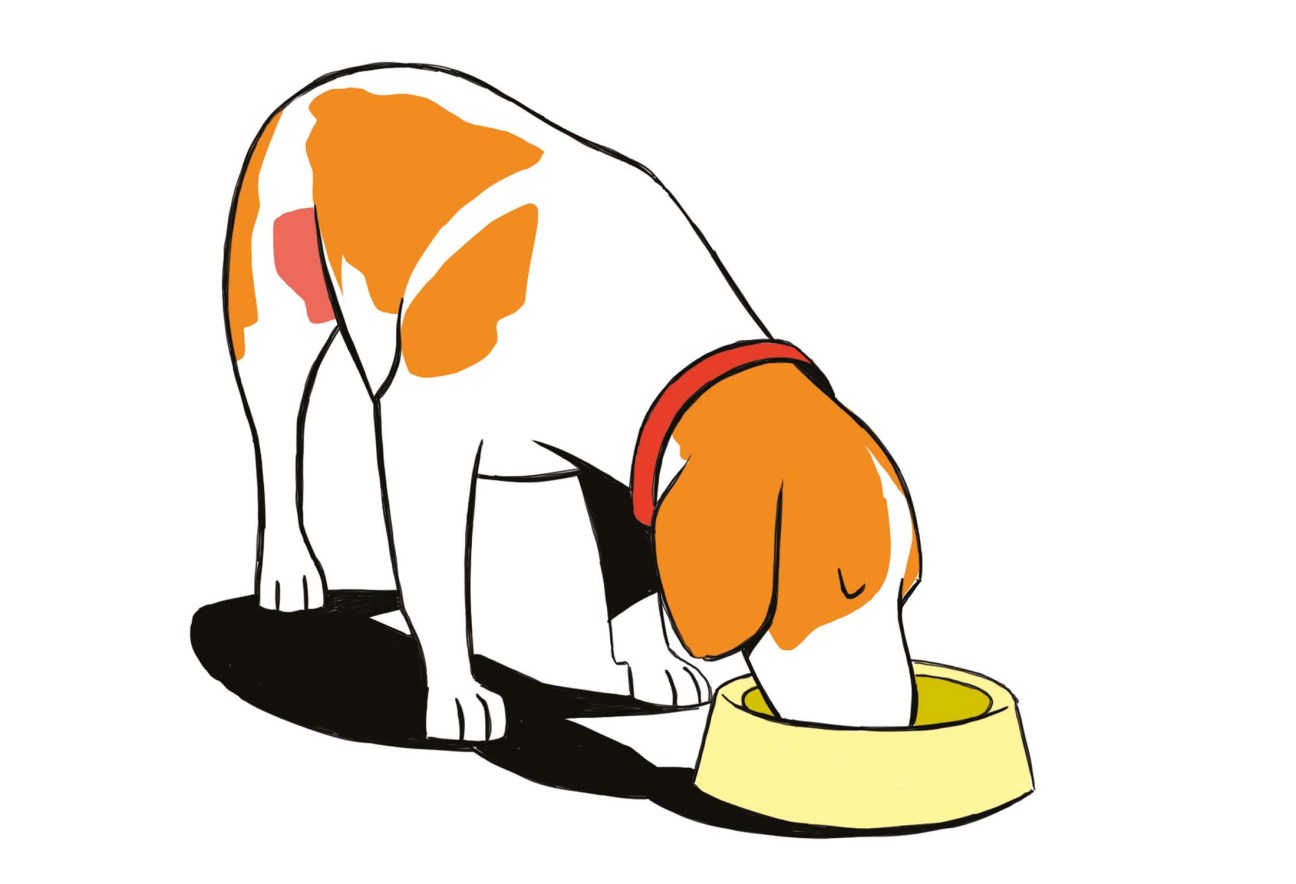
A bowl of water for the pooch? A place for older visitors to sit and wait? Something to keep the children entertained (not a noisy tablet, mind)? Being a little circumspect about who is passing through your doors and offering something for them shows care and attention to detail. And don’t forget: considering canine comfort can be an excellent way to display your humanity. Hospitality for all, please. Now there’s a good boy.
39.
Get out and about
Travel more

Experiencing new places in person will broaden your horizons and remind you that the world is a big and beautiful place that can introduce you to fresh opportunities and better benchmarks. Whether you’re a diplomat or a business leader seeking to test the market in a new city, there’s no substitute for breathing the fresh air of an unfamiliar land. And if it just happens to be Kyoto in the spring, then so be it.
40.
Keep others in mind
Get to the point

Be realistic about meeting times. Yes, of course I’d be delighted to meet you for a coffee. No, we won’t need three hours. Being presumptuous with other people’s time is a surefire way to annoy them. If you’re pitching, keep things short and to the point (if they like you, you’ll probably be asked to stick around and explain things anyway). And know your audience. How likely is it that the CEO, editor in chief or minister in front of you has half a day to hear you out? A little consideration saves everyone time.
41.
Back to basics
Show some respect
Hospitality doesn’t mean the same thing everywhere. What happened to the idea of forging a career in hospitality, as many unflappable oldsters still do in southern Europe, rather than treating service as something for low-paid students or unskilled labour? We need to respect the industry more and offer fair remuneration and career progression. We also need to see that automation isn’t always best.
42.
Make the cut
Suit yourself
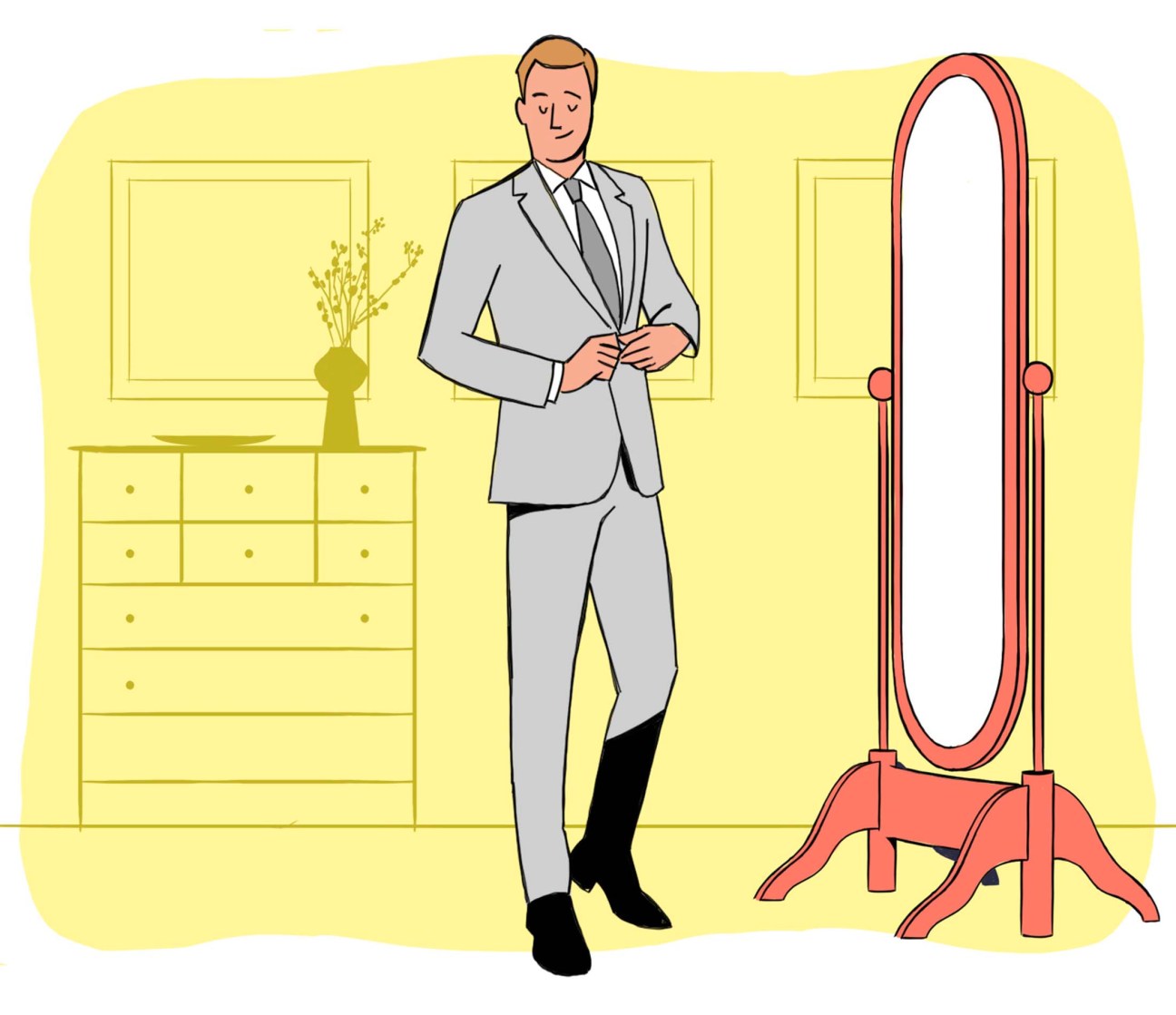
As the era of athleisure slouches towards the horizon, it’s time to think a little more smartly about presentation. Making an effort in your appearance shows respect for the people who you meet and drops some subtle cues about your attention to detail. A leather-soled brogue from Heschung, Ludwig Reiter or Alden will help you stand taller and a little deft tailoring will improve both your posture and outlook.
43.
Remember your manners
Come bearing gifts
If you’re invited somewhere, arrive with a gift: a good bottle of wine, a tasteful bouquet, the best loaf of bread in town or something thoughtful for your host. Politely present it, then let it go. If someone’s rustling up a dinner, it’s possible that they have a drinks pairing in mind and they don’t need your rundown on the subtleties of cave-made Georgian wine or the artisanal vinegar or mead you’ve sourced. Pop a cork in it.
44.
Keep and eye on the clock
Punctuality matters
Good timekeeping shows respect for the person you’re meeting. An occasional delay is sometimes inevitable but reputation matters. As Mark Twain once said, if you get a reputation as an early riser you can sleep until noon. That holds true in the wider world: get to work, meetings and engagements on time and people will quickly forgive you for inadvertently keeping them waiting once in a blue moon. The only exception? If you’re arriving for dinner at a friend’s house, it’s fine to be 15 minutes late.
45.
In good taste
Craft matters

The things with which we surround ourselves influence how we feel and reveal something of our outlook. Can a company claim to be responsible if it makes its wares cheaply in far-off factories? Doesn’t a European hotel hit a bum note when it claims to support local craftspeople but sources its crockery from China? Buying and backing local talent tells a story about where your priorities lie.
46.
Making friends
Be a good neighbour
Here is another easy win. If you’re running a bakery, make sure that the people nextdoor are well catered for with fresh buns and crusty loaves. Offer a discount to your loyal supporters and do your best to keep your community happy. Wonderful things can happen when you forge a community.
47.
Home sweet home
Put people at ease
If you’re hosting people overnight, you’ll need to kit out a spare room. Don’t worry, we have you covered. Plump for some soft pillows from Frette on a Schramm mattress and pressed sheets by Danish fabric firm Tekla, topped with an Eleanor Pritchard throw. Provide fresh soap and shampoo too (not half-finished ones pinched from a hotel), as well as a fluffy Imabari towel and a pair of cotton-linen room shoes by Kontex.
48.
Good design
Make your spaces work
Architecture sets a mood. What feels more miserly than a space where the windows won’t open? Whether it’s a residence or a workplace, the ingredients of a good building never change: plenty of light, natural materials and finishes, and a little texture always work. The Danish embassy in London, the Norwegian outpost in Stockholm and the Brazilian embassy in Rome are just some of the fine examples of spaces where generous proportions strike the right balance between grandeur and intimacy.
49.
Keep the party going
Stay the course
It’s a common misconception, especially in certain parts of the Gulf, that service should be servile. Not a bit of it. A great host is your equal, there to guide you with authority and charm. And if the evening’s heading for an after-dinner dance or karaoke bar, the host should lead the way and set the tone (and perhaps step up to sing the first tune).
50.
Trust in others
Keep an open mind

Making a concession to another point of view can move mountains and create goodwill. Whether it’s quibbling over an invoice or hammering out a complex deal, negotiations take trust. It’s also important not to jump to conclusions and then dig in. Give those who you disagree with the benefit of the doubt. Thinking the best of people is a life skill and you’ll meet more good ones than bad ones in the end – trust us.
New Line House: A carefully rethought modernist home in the Sydney suburbs
After the Second World War, many young families pursuing the Australian Dream of owning a detached home on a quarter-acre (1,012 sq m) block built their houses on the bushland fringing the country’s cities. By the 1960s there were countless companies capitalising on this ambition. A leader among them was Pettit + Sevitt. Established in 1961, the home-builder was prolific in Sydney’s northern suburbs, creating houses that were revolutionary at the time. It employed top architects to design compact, modular components that could be adapted to (often difficult) on-site conditions, such as uneven or sloping terrain.


“These houses were really beautifully designed,” says Sydney-based architect Eva-Marie Prineas, who founded her namesake studio in 2004. “They still have great bones but some elements feel a little flimsy now. So many have been knocked down.” Fortunately, there are some design buffs willing to commission architects, such as Prineas, to reimagine Pettit + Sevitt homes for contemporary living.
Studio Prineas recently renovated one such residence, New Line House, in the Sydney suburb of East Ryde. Overlooking Lane Cove National Park, it was a Pettit + Sevitt Lowline model, an award-winning project home designed by architect Ken Woolley in the early 1960s. Positioned to preserve the site’s natural slope, the original single-level building was flat-roofed with Oregon-wood ceiling beams and boxy cedar windows. “When I started on the project, I didn’t want to touch anything,” says Prineas. “But the house wasn’t working in the way you need a contemporary home to function, in terms of flow, space or its connection to the garden.”

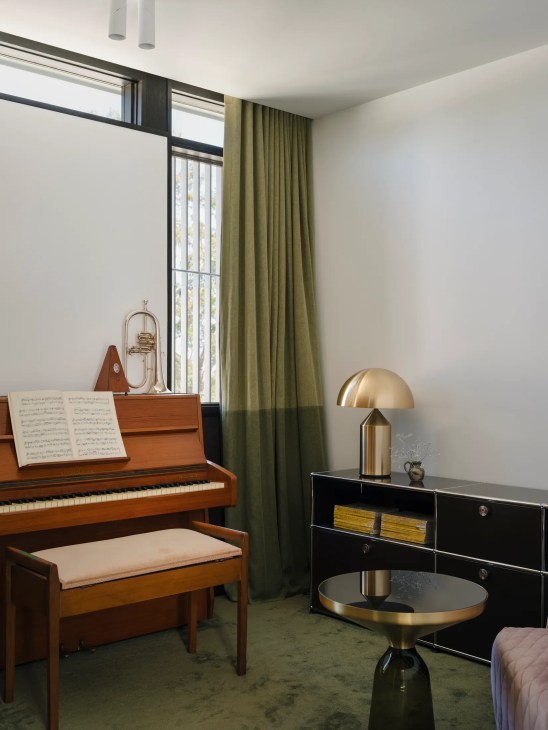
The architect’s solution was to keep the outline of the home compact – an approach at odds with the suburban-development trend of flattening blocks and prioritising large building footprints. She decided to go up, instead of out. “We knew that we had to change the plan but we tried to keep the home’s original character,” says Prineas. The roof was removed and another floor added but the original beams were carefully restored. Upstairs, four bedrooms and a sitting room can now comfortably accommodate a family and guests, while the ground level has been opened up to make room for a kitchen, a dining room and multiple sitting areas. Meanwhile, a new wine cellar and a home cinema are tucked behind the existing garage, which nestles into the hillside.

Prineas also designed and commissioned bespoke furniture and cabinetry to make the most of the home’s small footprint, including custom wardrobes in the main bedroom, shelving in the living areas, a walk-in pantry and a bathroom vanity. “Bespoke furniture will always give you more control,” she says of her decision to make custom additions to the home. “It allows you to get the right materiality and proportions for the space. And it means that you don’t have to try to fit a square peg in a round hole.”
Pettit + Sevitt timeline
1961: Brian Pettit and Ron Sevitt establish their namesake development company
1962: Architects Ken Woolley and Michael Dysart design the first Pettit + Sevitt split-level house
1967: Woolley’s Lowline B wins the Australian Institute of Architects award
1978: Original Pettit 1 Sevitt closes
2010: Ron’s widow, Val Sevitt, relaunches Pettit + Sevitt with an updated version of the Lowline
To complement the carpentry and bespoke fit-out, Prineas carefully selected the furniture and homeware in the residence. Louis Poulsen PH5 lights hang above the tiled kitchen island and Le Corbusier-designed Lampe de Marseille Mini Nemo wall lamps illuminate the living room; around the dining-room table are Scape chairs by modernist furniture designer Grant Featherston. “I made every decision while remembering what the house was and is,” says Prineas, explaining why she chose to focus on iconic mid-century wares.
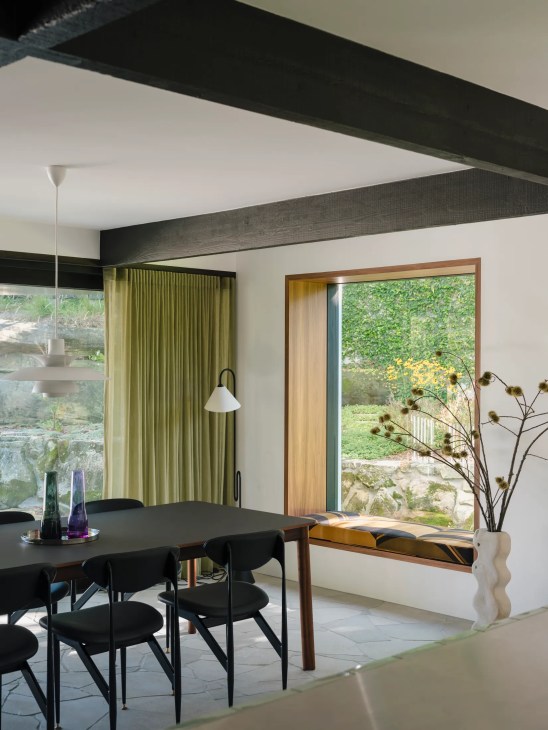

The original developer devoted plenty of attention to landscaping and the gardens. Prineas continued this, working to find ways to enhance the connection between the interior and exterior. The home now has pockets of greenery on the rooftops that can be glimpsed from the bedrooms, while a small internal courtyard breaks up the sitting rooms downstairs – a decision that has as much to do with improving cross-ventilation as with the notion of bringing the outside in.
Limestone paving extends seamlessly from the living spaces to the patio and veranda, visually linking the indoors and outdoors. “We wanted to connect the home with the garden and the rocky outcrop that tumbles down the slope, because it’s a special part of the site,” says Prineas. “If people were doing a new subdivision now, they would take the rocks out.”
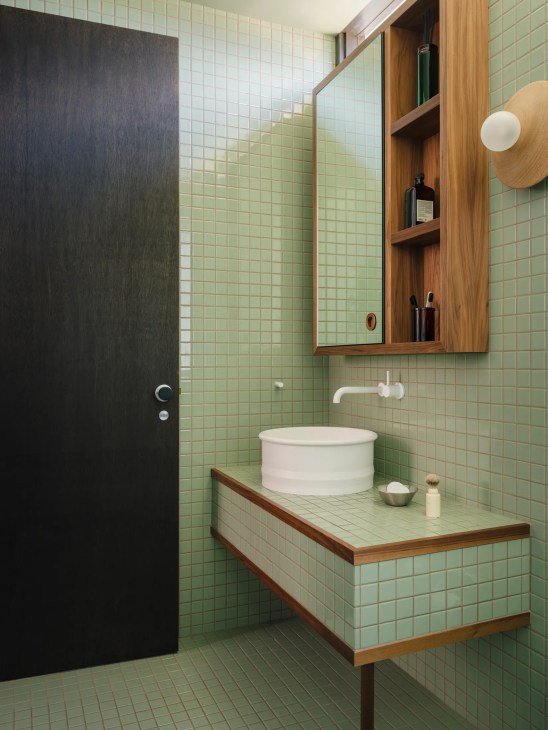

Such choices have helped to protect the legacy of Pettit + Sevitt, ensuring that the firm’s once pioneering ideas – the importance of the outdoors and natural light, and the need for quality suburban architecture – live on. “The original house was more than 50 years old,” says Prineas. “It hadn’t had a renovation and was no longer functional. Hopefully, we have been able to give the home another 50 years.”
Three solutions-focused professionals tell us how they are rethinking the way we live
Essay 1: Urbanism
Living with water
Landscape architect Kotchakorn Voraakhom on how cities can adapt to rising sea levels.
Growing up in Bangkok in the 1980s, I loved the presence of water in my day-to-day life. With the tropical climate came flash floods during the rainy season but this was just part of living in a delta city. Then, in 2011, a severe flood overwhelmed Bangkok and what had been an occurrence you could adapt to became an unimaginable disaster. The scale of the flooding was due to climate change but also the city’s own mismanagement. Hundreds died and millions lost their homes – and much of this was avoidable. After that I asked myself, “What can I do?”
I was a landscape architect. I had graduated a few years before and was aware of the effect that ageing infrastructure, combined with climate change, had on my city. Bangkok is home to more than 10 million people, including me, and welcomes over 20 million tourists every year – that’s a lot of people for a city only two metres above sea level. And, as was becoming increasingly clear, not only was Bangkok prone to flooding, it was sinking.
The exponential growth of skyscrapers and an influx of inhabitants in the past 40 years has stretched the city to its limits. After 2011 most agreed that natural disasters on this scale would only become more regular and intense. Once upon a time, the farmers who had lived in the delta managed to integrate these natural cycles into their work. They would build adaptable housing raised above the ground, use natural materials and approach water as a part of their practice.
During the early urbanisation of Bangkok, these methods were pushed aside. The mantra was: out with the old, in with the new. The new in question was based on the Western model of urbanisation. Concrete and a dense urban environment were seen as the key to a new, prosperous Thailand.
By forcing a one-size-fits-all approach on the city, we lost touch with our past. Though these new amenities provided comfort and ease to many people in Bangkok, it was also deeply at odds with the Thai climate. Concrete didn’t allow the water to drain away, unlike the porous wetlands, making roads prone to flooding. Policymakers looked to other big cities, often in Europe and the US, to manage their own disasters, forgetting how different their climates were. They built dams and irrigation canals, and tried to extract the water from the ground. These expensive projects proved ineffective in a crisis. Water, which had once been a natural part of the environment, was now a problem to be solved. Building with fear in mind – the fear of water in the public space, the fear of flooding, the fear of nature – brought us the calamity of 2011. In the making of a modern Bangkok, we had forgotten to include what was beneficial about the old ways in which we did things. Sometimes you have to look back to move forward.
With that in mind, I changed my own designs and practice. Where I came from has been essential to the way that I approach the world. I’ve been rethinking the spaces we use in cities, especially when it comes to reintegrating greenery. What spaces, like rooftops, can be better utilised to make an urban environment like Bangkok more pleasant for the people who live there? To me, modern design means that these constructions will live in harmony with the surrounding environment for years to come. As a landscape architect I am just one part of that shift.
Climate change is frightening. It feels like an impossible challenge and it often implies fundamentally changing the way we have progressed over the past 50 years. When looking at climate change, people often prefer to shift the blame. Everyone knows that cities are huge carbon emitters. A way to avoid the problem, and what many cities do, is to buy up carbon credits or replant trees. These solutions, beyond being outright ineffective, also avoid any kind of concrete change. Redesigning the environment, on the other hand, is more costly in the short term but becomes a way of reclaiming the problem as a solution.
If, as a landscape architect, I can bring one stone to the edifice, making people’s lives easier and safer, that’s a huge step. I’ve detailed my own approach to water because that is where I’m from and a part of who I am. Now it’s time for other ambitious people at the frontier of the struggle against climate change to look at what problems their cities are facing.
Too often in our globalised world we want to forget where we come from. What could be heat in Mumbai or drought in La Paz is a question of readapting rather than forcing the places to adapt to you. Pessimism is easy so look for optimism because that’s where change can happen. I hope that the next generation of policymakers, designers and landscape architects can, like me, look at the world and see solutions rather than problems.
About the author:
Voraakhom teaches landscape design at Chulalongkorn University and is the founder and chief executive at Landprocess, a Bangkok-based firm that addresses climate uncertainty.
Essay 2: Quality of life
In praise of Warsaw
Polish journalist Mateusz Mazzini on why everyone should move to the Polish capital.
Praise should never come on the basis of a single observation. Rather, the hype needs to be confirmed from an array of vantage points. Those wanting to assess the quality of life in Poland’s capital are, therefore, in luck, as Warsaw offers a multitude of perspectives. One can glance over the expanse of the city, now made up of almost two million inhabitants, from the viewing terrace of Varso Tower, a recently opened skyscraper that is also the tallest building in the EU. Standing at 230 metres high, this is a good place from which to begin one’s assessment of Warsaw’s attributes – both old and new.
Recent additions to the landscape include the Museum of Modern Art, a new footbridge over the mighty Vistula and the southward expansion of the city’s tram network. But in Warsaw, the old is never far from the surface. The Palace of Culture and Science, a Stalin-era skyscraper, remains a point of reference for everybody, while Three Crosses Square, with its neo-renaissance Saint Alexander Church at its centre, and the adjacent, boutique-filled Mokotowska Street are the fashionable heart of the city.
Those afraid of heights can take a more down-to-earth approach. If the word on the street is that Warsaw is booming and attracting investors, tourists and expats – well, let’s walk that talk. Despite the fact that Poles are drivers to the point of addiction, and many consider their vehicle a part of the family, the city authorities have been making considerable strides in transforming Warsaw into a more pedestrian-friendly city. If you’re of a subterranean inclination, communist-era underground passages are magical labyrinths of kiosks and one-stop shops for newspapers, warm soup and doughnuts. For a city whose population swells by 12 per cent during the working week, Warsaw’s public-transport network is relatively problem-free by European standards. OK, buses do get stuck in traffic more than they probably should but trams offer an obstacle-free ride. Though it only has two lines, the metro is reliable and regular, running for 20 hours a day. The second line, crossing the Vistula, is the latest addition to the network, with three more expected to open by 2050. Tired of wondering how many trains you will have to let pass before you can squeeze onto a packed carriage every morning? Exhausted by countless turns and staircases you have to take before reaching the right platform? Well, move to Warsaw: there is no commuter drama here. The system might be relatively underdeveloped but at least it’s easy to navigate.
Still sceptical? Let’s look at the data. According to a report by Oxford Economics, a research consultancy, in 2022, Warsaw had the highest GDP growth of any major
European city and is projected to hold this record until at least 2026. Much of this success is due to young entrepreneurs who are flocking to the city. Unexpectedly, Brexit is one of the causes of Warsaw’s international success. As Poland marks the 20th anniversary of its accession to the EU, it is reaping the rewards of what initially seemed a curse – outward migration that is now making a sharp U-turn. After joining the single market, many Varsovians feared an irreversible brain drain as thousands of young people, with little opportunity to put their talents to good use at home, left for Europe’s (mostly the UK’s) best universities. Now they are returning en masse, bringing expertise and disposable income with them. All of the major technology unicorns around the world have Polish researchers and coders driving their expansion. Come and find out why that’s the case. Or better yet, move your company here. With one of Europe’s highest average attainments in mathematics and two out of three Poles able to communicate in professional English, there is a robust workforce to make good use of. Artificial intelligence might be on everybody’s mind these days but the intelligence that underpins Warsaw’s economy is anything but artificial.
Warsaw, in common with any thriving city, does not lack in growing pains. Housing is scarce and average prices have recently exceeded those in Madrid, Manchester, Rotterdam and Genoa. The city also struggles with air pollution, especially in winter. Some municipal investments
are late and chaotic: the tram expansion, aimed at linking the city’s southern district with the centre, is a result of the public lagging behind the private. Warsaw has been expanding rapidly in recent years but to call it an “organic development” would simply be code for a lack of official planning. Hundreds of thousands of Varsovians have a comfortable space in which to live but no ability to commute to work other than drive. A rapid population growth, especially in the suburbs, has exposed the lack of easily accessible childcare provision, with more than 2,000 of the city’s inhabitants not getting a place in pre-school in 2022.
But enough with hard data. Let’s talk about experience. What does it really feel like to live in Warsaw? As a foreign-educated, binational writer with a past that includes living in the UK, Spain and Italy, the simplest answer that I can come up with is that Warsaw feels European. Yet the Europeanness of Warsaw is radically different to that of Paris, Amsterdam or Milan – and that’s only for the better. Contrary to the Western metropolises, collapsing under the burden of outdated infrastructure and with city centres deprived of native inhabitants, Warsaw is a city that puts its people first. There is a financial argument to be made here too; this is a very affordable city by European standards. A 90-day public transport pass costs €68, compared to €778 in London, €259 in Paris and €303 in Amsterdam. Higher education is free. The overall cost of living might be rising but it is still considerably lower than in most Western European cities; indeed, Warsaw is cheaper to live in than Prague, Budapest and Bratislava, the other major urban centres in the region.
Beyond money, there is that intangible currency: excitement. Unlike other places, which attempt to capitalise on their past, Poland’s capital is betting on its future. Young people throng the streets, sipping good coffee (yes, finally) before dining in some of the most interesting restaurants in Central and Eastern Europe. Memories of a monocultural, grey and boring city are long gone. The wider metropolitan area has more than 300,000 foreign-born residents. Maybe you should consider joining them?
Warsaw has its fair share of problems but there are none that cannot be solved with better policy planning, much of which is already in the pipeline. Unlike older cities, with their solidified landscapes, here almost everything is (relatively) new and fresh so even drastic changes come at a lower price. Car-snarled city centre? The city council is planning to declare most of it car-free in the near future. Pollution? Urban grants to co-finance heating- system replacements are among the most efficient in the country. A shortage of childcare options? Warsaw is already spending more than €1.5bn a year on educational endeavours, including early education. Lack of affordable housing? This is expected to change with the incoming government; Vienna is constantly presented as a role model for the built environment. If you copy, use the best blueprint.
Unlike Berlin, Paris and London, which increasingly resemble open-air theme parks for tourists, with economies dependent on easy money from low-skilled services and property markets dominated by short-term rentals, Warsaw invites you on a journey that will not lead to a dead end. There is much to be discovered, accomplished and invented here, and the city needs all the help that it can get to make it happen. Two years ago it opened its arms to more than 350,000 Ukrainians fleeing Putin’s invasion and many remained, having established businesses, resumed academic careers and even started families. For a city, and even a country, which had remained almost entirely ethnically homogenous since the end of the Second World War, this was a major change, indeed one that many feared. But Ukrainians, and before them Belarusians, as well as members of many other diasporas – Irish, Turks, Americans, Italians – have not only found a place that they could quickly call home but have contributed to this city becoming Europe’s hope for the future.
The people of Warsaw are no strangers to adversity. In 1944, after the Nazis destroyed almost 85 per cent of the city by setting it alight in revenge for the Warsaw Uprising, there were only 1,000 people left out of a pre-war population of 1.3 million. They survived with no shelter, food or water, only with dreams of rebuilding what had been lost. Eight decades later, Warsaw has risen from the ashes and its never-say-die attitude has become a significant part of its identity. This city rebuilt itself from nothing. If you feel like your own life needs a new spirit, look no further.
About the author:
Mazzini is a Warsaw-based reporter, writing for Gazeta Wyborcza and Polityka. He covers western and southern Europe as well as the Global South. His writing has appeared in The Washington Post, Foreign Policy, Foreign Affairs, El País and others.
Essay 3: Geopolitics
The future is small
Armenia’s former president Armen Sarkissian on the power of small states.
It is not yet fully understood that we are living in a world that is dramatically different from the one that we inhabited even 30 years ago. This radically changed environment has created a unique opportunity for small countries. Maybe not for every small state but for the ones that are also smart states. The idea of soft power was created by a good friend of mine, Professor Joseph Nye from the Kennedy School at Harvard. He was analysing the hard power of the US, which is its military and its economy, and its soft power, which is its values, freedom and culture. But there is another power, which is smart power. Smart power is power that is always focusing on the future, not the past – and small countries are very well equipped for that. If you look at any index of national performance, most of the top 10 states will be small. If you look at GDP per capita, a lot of small states are far ahead of the big ones. People live much better in small, smart states.
I have been prime minister and president of a small country. That size enables you to make sharp decisions. In the classical world, the most important thing had been the scale of the state: its military and economic power. But the dimension of the future is smartness – and technology. The Uae is one of the great small smart states in this respect. The world’s only artificial intelligence (AI) university is in Masdar City in Abu Dhabi.
We are already used to the idea that multinational companies are effectively virtual small states. Google is a small state. Apple is a small state. And their effect is huge: it is an open question whether the US government has more influence on Facebook or the other way around. Soon, small states such as Estonia, Denmark, Ireland, Switzerland and Singapore will be able to produce immense new technological advances. In the future, the power of technology, the power of science, is going to be dominant. It has always been difficult for small states to survive without the patronage and protection of large nations but the military power of the future will not be so dependent on size. AI will allow a small state to have a powerful military presence. You won’t need 100 million people to have an army of one million because that army can consist of drones. This is why I have been lobbying to create an organisation of small, smart states: the S20. We are past thinking that small states are just an entourage to bigger ones.
About the author:
Sarkissian was president of Armenia from 2018 to 2022, and prime minister from 1996 to 1997. His latest book is The Small States Club: How Small Smart States Can Save the World.
Interview: Kyriakos Mitsotakis on his hopes for Athens
Kyriakos Mitsotakis is a member of the club of political leaders who have won two elections in the same calendar year – indeed, in his case, inside five weeks. In May 2023, Mitsotakis’s centre-right New Democracy party (ND), in power since 2019, was not quite re-elected. It won the most seats in the Hellenic Parliament but fell just short of an outright majority. Mitsotakis, fancying his chances under a revised electoral system, called for another election in June 2023 and nabbed ND the majority that it needed to govern.
This apparent embrace of centrist pragmatism by Greece seemed colossally unlikely as recently as a decade ago. Greece was devastated by the European debt crisis of 2009. The national economy was reduced by a quarter. Unemployment cleared 25 per cent; nearer 60 per cent for those under 25. Perhaps 500,000 people – about one Greek in 20 – left the country. Among those who stayed, there was ready appetite for the theory that three monumental bailouts from the EU and/or the IMF, and the brutal austerity measures attached, were more part of the problem than they were of any solution.
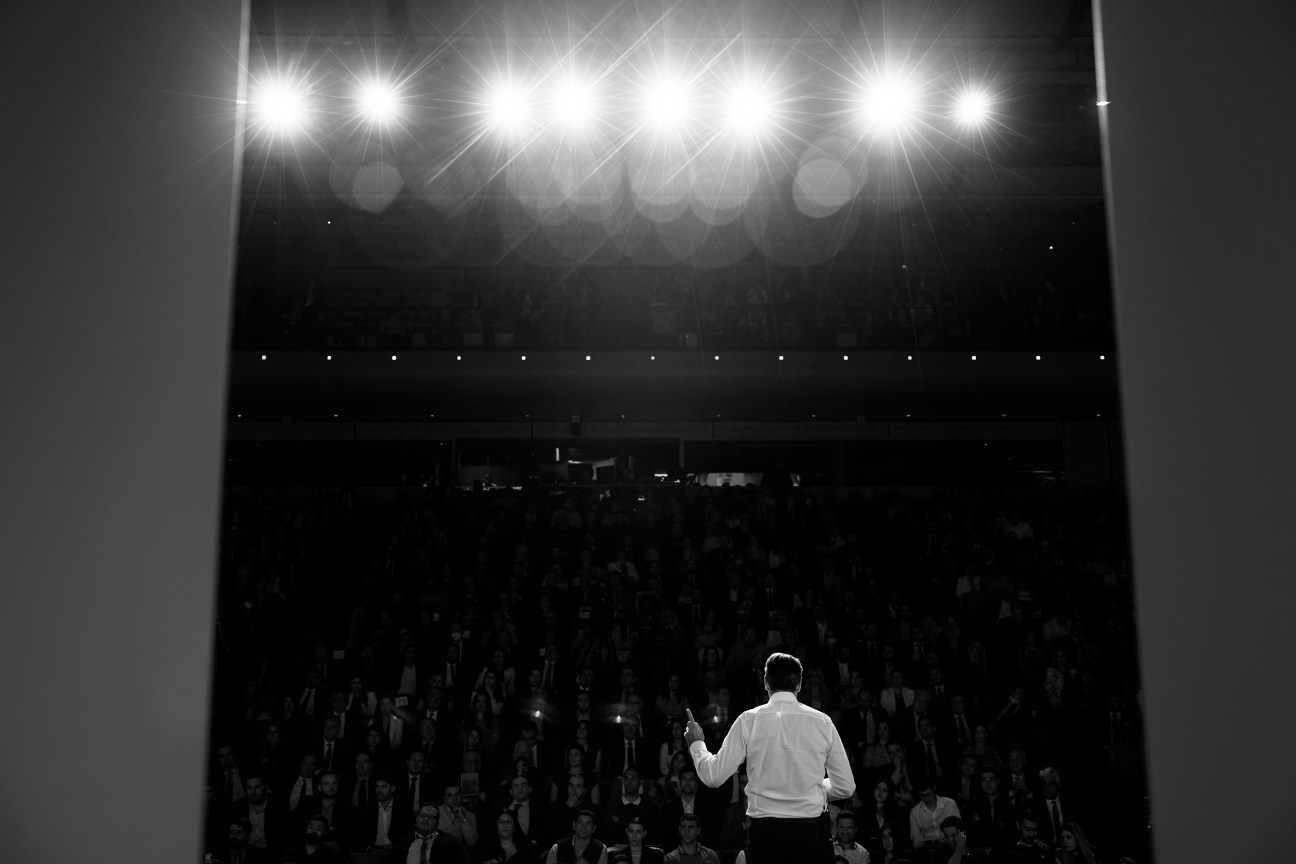
Greece embraced populism in 2015, when two elections that year established an unlikely coalition between the left-wing Syriza party and the right-wing Independent Greeks. The results of introducing their ideas to reality were such that by 2019, Greece was willing to deliver a landslide to Mitsotakis, an establishment archetype – a Harvard Business School MBA, a former banker and consultant, and scion of a Greek political dynasty. Mitsotakis’s father, Konstantinos, was prime minister in the early 1990s; his sister, Dora Bakoyannis, foreign minister from 2006 to 2009; his nephew, Kostas Bakoyannis, mayor of Athens from 2019 to 2023.
Monocle sits down with Mitsotakis at the 2024 Munich Security Conference.
M: In February 2024 you steered the legalisation of same-sex marriage through Greece’s parliament. That was a first for an Orthodox Christian country – and not an easy win. Why now? Was it one of those things where you think in a couple of years nobody will remember why they were angry about it?
KM: I’m very happy and very privileged that as the leader of a centre-right conservative – but also progressive – party, we were the ones who brought this piece of legislation in front of parliament and got it through with a very strong majority. I’m also happy because we had the opportunity to explain to Greek society what this bill is really all about. For the first time, we actually heard from those who are deeply affected by the fact that marriage equality was not recognised in Greece. I even told my parliamentary group something that another conservative had said – that marriage, at the end of the day, is a conservative institution and I’m voting for this not in spite of being a conservative but because I’m a conservative. And I can say that the level of public debate was very mature. I think public opinion has swung in support of this legislation but we treated those who disagreed with great respect. Within my party, I never used the whip – our MPs chose freely and I’m happy that more than two thirds [of parliament] ended up supporting the bill.
On policy:
M: Did you see this as an isolated act of progress or does it fit into a broader programme of rebuilding, reconstruction – even modernisation – of Greece, versus where you were 10 or 12 years ago in the depths of the debt crisis?
KM: Oh, very much the latter. I’ve made my second term about what I call a multi-dimensional modernisation programme. This includes issues related to human rights but extends way beyond that. My goal has always been to make Greece a true European country – and why not surpass the European average in those indices where we can be a protagonist? So this is a long-term programme. We’ve had to deal with the past decade, which robbed us of a quarter of our gdp, and we are gradually catching up, though we need to accelerate the pace of growth. At the end of the day, it is about growth – but it is also about equitable growth. That’s why I focus so much on making sure that our policies are just and that the wealth we create is spread evenly. So my focus is on wages, on improving the minimum wage and improving the average wage. I’ve set very clear targets about what I want to achieve over the next four years – and we’re on track to reach those targets.
M: Were you surprised, then, when the EU parliament took a bit of a swing at Greece [in a resolution on 7 February on the rule of law and media freedom in Greece]? It’s non-binding but nonetheless very critical of backsliding on rule of law and press freedom. Greece does have the lowest ranking of any EU country in the World Press Freedom index too. Are these areas where work still needs to be done?
KM: May I be a little bit blunt? This report is a joke. It puts Greece under [some] African dictatorships in terms of press freedom. Anybody who has travelled to Greece and taken a look at our media landscape knows that we have the highest number of radio stations in Europe [per capita], a very vibrant TV scene, lots of newspapers, most of which criticise the government. I’m not saying we’re perfect but I am saying that the European Parliament report was bogus and only the result of a deeply politicised European Parliament that simply wanted to take a swing at a very strong party within the epp [European People’s Party] family.
At the end of the day, the gold standard in terms of rule-of-law classification is that annual report by the European Commission. They are the guardians of the rule of law; they pass the final judgement. And [in that] we have been improving. Yes, there are issues that we need to address. Justice needs to move faster. There are issues raised by the rule-of-law report regarding the ability of journalists to operate in Greece. We think that there is ample room for them to do their job but we will take their recommendations very seriously. But, sorry, we’re talking about a politicised report by the European Parliament that is full of accusations which are not true. It was a political act.
M: Nevertheless, was the scandal attending the bugging of phones by Greece’s intelligence service, the EYP, not something of a wake-up call? They were tapping journalists, politicians, officials, at least one bishop. Did that suggest to you that some aspects of the state had gone a bit haywire?
KM: I acknowledge that mistakes were made. And what, for example, was not mentioned in that European Parliament report was that we actually changed the law; we passed a very tight system regarding lawful surveillance. And we’ve also gone very hard in terms of making sure that any unlawful surveillance software cannot be sold or operated. Of course, it was a wake-up call, and we acknowledge the mistake. But what I cannot accept is the fact that no one is acknowledging that we’ve made progress on that front – or at least the European Parliament isn’t; the Commission has acknowledged that progress has been made. But this was not just a Greek problem – and I really don’t understand why when Spain was facing similar problems, no one was raising them, yet the finger was pointed at Greece.
Having said that, I will continue to work for a well-functioning democracy that is inclusive – and our track record supports the idea that we have made progress on that front. In elections last year, we were re-elected to power with an overwhelming majority. And I’m unapologetic about being a moderate, centrist politician. And I don’t think you would expect someone who does not define themselves as a centrist politician leading a centre-right party to legislate marriage equality. I mean, these are not the sort of things that the hard-right politicians of this world do.
On press freedom:
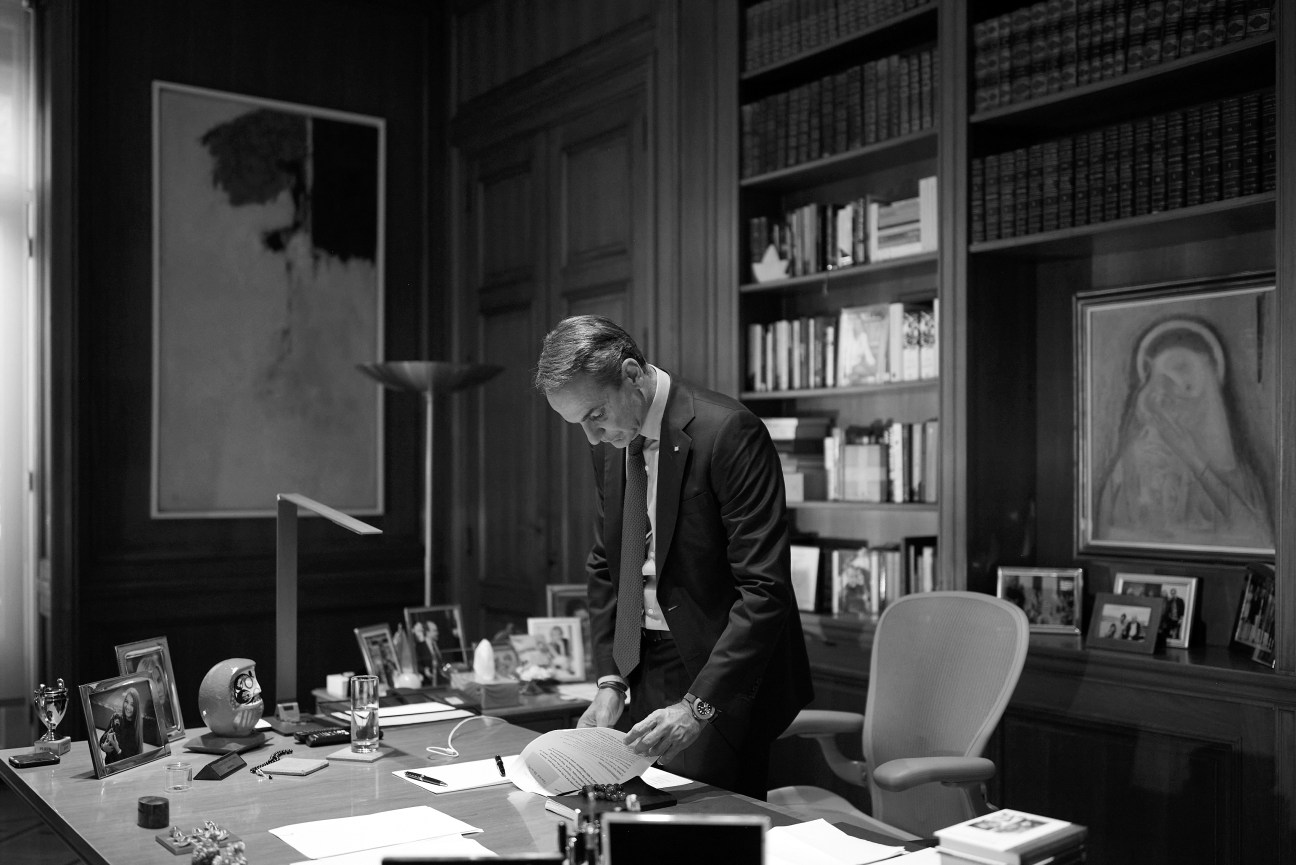
M: Does Greece need to take its own defence more seriously, especially at sea? For all that it’s a smallish country, it controls 21 per cent of the global merchant fleet in terms of tonnage, which is an extraordinary statistic. Greek-owned or Greek-operated ships have been attacked by the Houthis in the Red Sea. We know that one Hellenic Navy frigate has been dispatched, though we believe that it doesn’t have anti-ballistic capacity. Does Greece need to become more of a naval power commensurate with its status as a great maritime nation?
KM: First of all, let me point out that Greece is spending 3 per cent of its gdp on defence. And we have been consistently above the 2 per cent Nato threshold even during the very difficult years of the economic crisis. The reason was simple: there was never a peace dividend in Greece, as we always faced a larger, occasionally rather aggressive neighbour. We felt that we always needed a credible deterrence capability, and we will, of course, continue to do so. That is not true for many other European countries. And I think that, as Europe, we are paying the price now of under-investing consistently in our defence capabilities.
Now, you’re right to point out that the Greek merchant fleet is a global powerhouse. And that is why we never shied away from our responsibility to protect freedom of navigation and why we will be having a presence – a ship will sail very soon, fully equipped with all the necessary technology to protect itself, and it will go to the Red Sea. And we are also the ones assuming control of the European operation Aspides, meaning “shields”, which works in conjunction with Operation Prosperity Guardian in the Red Sea.
Now in terms of strengthening our navy, we have a rather capable navy but we’re also investing heavily in terms of upgrading our naval capabilities. The first of the three ultra-modern frigates we ordered from France will be arriving. It’s already at sea; it will be part of the Greek navy next year. And, of course, we’re looking at the future of naval deterrence, including unmanned ships and submarines. So what we want to do is to make sure that, as a big spender on defence, we also develop our own technological capabilities. But this isn’t just relevant for Greece; it’s also relevant for Europe. I fully agree with the comments made by [European Commission president] Ursula von der Leyen that we will need to spend more on defence. But we also need to be smarter about when we spend on defence. There is still very little joint procurement, there is still a colossal fragmentation of the defence industry in Europe and, regardless of what happens in the US, the Ukraine war should have been – and is, to a certain extent – a wake-up call, from the big projects such as air defence to the mundane issues of producing enough shells for artillery, which many people didn’t think necessary but proves to be indispensable in a prolonged ground war.
On defence:
M: There is, of course, a frequently volatile region immediately to Greece’s north. Would it not contribute to the security of the Balkans if Kosovo felt surer of its place in the world? And would Greek recognition of Kosovo’s independence not help with that?
KM: We have been proponents of the European path of the Western Balkans since what we call the Thessaloniki Declaration back in 2003. So it has been 21 years. And since then we have not made as much progress as we would like. But the Ukraine war has brought the issue of European enlargement again to the forefront. Now, we’ve been very, very clear in terms of trying to facilitate the dialogue between Pristina and Belgrade. And we’ve also been very frank with both. I’ve been frank – I was recently visiting President Vucic [of Serbia], I saw Albin Kurti [prime minister of Kosovo] and I have very good relations with them. Both need to take a step back at some point and stop pointing fingers at each other if we want to make some real progress. But Greece’s position for the foreseeable future is not going to change.
M: You were talking earlier about what you’ve been able to accomplish as a nominally centre-right politician. Against the backdrop of what has been tried in Greece and elsewhere in Europe since the economic crisis, many countries have wondered how to tackle populism, which does tend to peak at moments of crisis, often insisting that there are simple solutions to complex problems. But however often the populists are proved wrong, they never quite die out. Is any part of your programme exportable? Is there a cure for populism?
KM: I don’t think there is a general template for combating populism – and all political systems have their own peculiarities and their own electoral laws. In our case, we’ve been able to form a single-party government, whereas in other countries coalitions are a necessity. But maybe I have a few thoughts to share on this topic. At the end of the day, you need to understand that the grievances that fuel the populist response are real grievances, whether they have to do with income inequality or with people feeling lost in a globalised world.
M: Do you think they’re always real grievances, though? Aren’t some populist eruptions animated largely by fantasies?
KM: Even if that is the case, grievances related to income inequality are very real – just look at the numbers. At the end of the day, it is usually about the economy. There are people who feel that they have been left behind. I mean, look at farmers – we’ve had farmers protesting in Greece. It’s very easy if you’re living in a big city to say, “Who are these guys with their tractors showing up on our streets if we give them so much support?” But I think that’s a simplistic question. When we looked at the problem in detail, we realised that we needed to do something – for example, about the electricity prices that farmers pay. And we found a solution to give them a better electricity price. Because if they are not competitive, and if they stopped doing what they do, this would create huge consequences, not just for the safety of our food supplies, but also for regional cohesion.
I would say that quite a few of the grievances are real. I’m not talking about the conspiracy theories but there is something there that needs to be acknowledged. And, you know, there has been enough finger-pointing by the Davos – or Munich Security Conference – elites at those people. And that never works. That attitude of [dismissing people as] “deplorables”, for lack of a better word, is a complete catastrophe.
When it comes to real solutions, what we have done, I call it “the new triangulation”. Be clearly pro-growth, reasonably lower taxes while maintaining fiscal discipline, attract investments, simplify the business environment, create jobs. So a liberal approach on the economy that puts a lot of faith in private entrepreneurship and what I call a “responsible patriotism” approach when it comes to issues of foreign policy. So we were tough with Turkey, we increased the deterrence posture and we managed the migration problem reasonably well. I think this caters well to the more conservative aspect but we can also be rather progressive when it comes to social policy – raising the minimum wage beyond what many people expected, coming up with strategies for those who are less privileged and doing marriage equality.
Now, all of that opens up new possibilities for a moderate centre-right party but we [the New Democracy party] have also had another advantage. Greece actually elected the populists to power. It was a strange alliance of hard-left and hard-right populists, and it was a disaster. People still remember that. But when you’re in your second term, you don’t compete with who was in power five years ago; you have to solve real problems. You have to be honest, you have to acknowledge your mistakes but you still have to deliver. And we are delivering, especially when it comes to the economy. If you do all that, people will give you the benefit of the doubt. In our case, they voted for us again.
On populism:
M: Greece’s economy is recovering but how hamstrung are you still by a shortage of workers? You’ve pushed through legislation that will regularise 30,000 unregistered labourers, but how short is Greece of the workforce it needs?
KM: Well, who would have thought that you would be asking me this question five years ago, when we had unemployment that was about 20 per cent? Our unemployment is now about 9 per cent, which is better but it still needs to be addressed, in the same way that we’re now beginning to have a housing problem because property prices are going up. In our case, we have issues in agriculture and we have issues in construction. Occasionally, we have issues in services but the tourism sector is good at finding labour.
So what we’re offering is: in exchange for a policy that actually protects the borders and does not outsource to smugglers the decision regarding who will come into the European Union, we wanted to open legal pathways to migration. So bilateral deals with various countries – for example Egypt, India and Vietnam – that will bring in labour through legal pathways in an organised manner. Also, we want to start offering more tailor-made visas for those who would like to come to Greece. And what we saw during the coronavirus pandemic was that the digital nomads – [some of] the people who read Monocle – actually found the idea of setting up shop and working in Greece very interesting, because at the end of the day it is also about quality of life. Greece offers a pretty good proposition when it comes to attracting these kinds of people.

M: Is there something here in terms of tackling populism as well? Populism is very often tied to some sort of paranoia about immigration – do you think that the problem there is not so much that people fear or dislike immigration but that they’re worried about the appearance of disorder, the idea that there’s no programme, nobody in charge?
KM: I think you’re right. But Greece has been in various respects a success story when it comes to integration. Look at, for example, the Albanians who came to Greece in the 1990s. They have second-generation children who were born in Greece; they are Greek citizens, they go to Greek schools; they consider themselves Greek. I would say that it’s a success story overall. And even now – yes, Greece was a relatively homogeneous society, but you learn from people who are different. Probably the best basketball player in the world, Giannis Antetokounmpo, is a Greek of Nigerian origin. He doesn’t look like a traditional Greek but he is Greek at heart and plays for the national team. But you don’t have to be a basketball star for Greece to treat you well.
So the question is, how do you expand this attitude towards those people who want to live in Greece and consider Greece their home – and for those who come to Greece and obtain asylum in Greece. They are welcomed – and they should be welcomed in Greece, because we also have real needs in terms of our labour market. And we are a society, also, of people who have emigrated. So we know something about what it means and how painful it is to leave home in search of a better future. I think we can find the right balance.
For more insights from the Munich Security Conference, plus Monocle’s take on global affairs and diplomacy, listen to our weekly podcast ‘The Foreign Desk‘. Or listen to Monocle Radio.
The business agenda: Manufacturing cranes in the US, Colombia’s hospitality scene and the business of Tracht
Manufacturing – USA
Tall orders
While the security of global shipping routes has preoccupied governments around the world in recent months, the US has also swung its attention to another fixture of its maritime infrastructure: cargo cranes at its ports.

A 2023 newspaper report alleged that US officials were concerned that technology woven into the cranes that lift containers from ship to shore might be harvesting data on the US’s maritime economy. The majority of these contraptions are manufactured in China: Shanghai-based firm ZPMC makes 70 to 80 per cent of the world’s cargo cranes. The claims have been refuted but in February the US government announced a $20bn (€18.4bn) investment in its port infrastructure, with a focus on reviving its largely dormant crane-manufacturing sector.
The return of US crane production is set to take shape over the next five years, meaning that domestic manufacturing will do much of the heavy lifting in a sector of the US economy that currently generates $5.4trn (€5trn) every year.
Monocle comment: There’s a fine balance between security and paranoia. Trade barriers damage as well as protect.
Audio – Austria
Sound effects
Professional-grade audio equipment has long ceased to be the preserve of radio journalists and sound engineers, and established audio hardware companies are investing heavily in versatile and easy-to-use microphones and recorders.

One of them, Austrian Audio, emerged as a reaction to off-shoring. In 2017, when AKG – Austria’s celebrated maker of microphones and headphones – was acquired by South Korean giant Samsung and closed its facilities in Vienna, a group of its engineers stayed behind and set up on their own. “We wanted to create something new but respectful of our heritage,” says Austrian Audio’s Perry Damiri.
Though it caters to entry-level creators, its biggest sellers are expensive microphones used in the world’s best recording studios and concert halls.
Transport – Canada & USA
Spark and ride
For school students across North America, there is one sound every morning that makes the heart either sink or sing: the trundling arrival of a bright yellow school bus. But a quiet overhaul to one of North America’s most recognisable forms of transport is under way at a new manufacturing plant built and operated by Blue Bird, the firm that debuted the famous buses in the 1920s.
The facility, in the US state of Georgia, opened a year ago to cater to the soaring demand from school districts across the US and Canada for electric buses, rather than diesel. The plant has the capacity to produce almost 5,000 buses a year.
School buses are well-suited to electrification. Fixed routes make them ideal for range-limited EVs and the periods outside the school run give plenty of charging time. They also ensure cleaner air for children, which has encouraged education authorities to start electrifying fleets. By 2032 it’s estimated that almost half of school buses will be electric, which will make the school run less arduous – for the environment, at least.
Publishing – Ibiza
Creative outlet
When Sonja van der Hagen settled in Ibiza after a career at German furniture firm Dedon, she was excited to discover a rich community of artists, artisans and architects, yet many were struggling to be seen and heard. So her new book, Made in Ibiza: a Journey into the Creative Heart of the White Island, lands like a celebratory lifeline. On an island where superclubs and summer crowds cast shadows, she hopes her compendium of Balearic creativity will inspire more people to buy local.

How much did your perception of Ibiza change while researching the book?
Everyone knows the “party island” cliché but it was reassuring to discover an almost-invisible creative community and delve into thousands of years of history. But we had to dig for information, highlighting how little these layers are available. More needs to be done to honour the island’s artistic spirit.
How can you encourage island visitors to ‘give back’?
I wanted to connect people to the quality of island products by showing the integrity of the people behind them. I enlisted journalists to get to the heart of their stories, some of which stretch back generations. All contribute to Ibiza’s identity.
What advice do you have for others hoping to find the right publisher for their own book project?
Be ready: have a good concept; make the presentation shine; be prepared to adapt. Most importantly, find a publisher that understands your vision and shares your passion.
The Entrepreneurs
Laura Kramer on…
Pure shores
Nestled on Tierra Bomba Island, a breezy boat ride away from Cartagena, Blue Apple Beach isn’t your run-of-the-mill retreat. As the first island resort worldwide to earn B Corp status, it’s aiming to be a game-changer in Colombia’s hospitality scene.

Founder Portia Hart (pictured) didn’t set out to save the planet when she opened the doors in 2016. “I just wanted to start a company that sold rosé on the beach with good music and nice food,” she tells Monocle. Originally from the UK, Hart followed the sun to the south of France where she worked for almost a decade before finding her way to the Caribbean coast of Colombia. “I wanted to live somewhere where there was a sense of optimism.”

Hart, whose mother is from Trinidad and Tobago, immediately felt a sense of belonging. “Everybody looked like they could be my cousin. For once it wasn’t hard to buy makeup or to find a hairdresser,” she says. “The country was coming out of a dark time and everyone was enthusiastic and starting businesses with no money.”
Today, Blue Apple Beach has 11 bedrooms and the hotel is a love letter to Hart’s years in the Côte d’Azur, with its beach club, Mediterranean-Caribbean fusion restaurant and a DJ who spins European and Latin house tunes.
Hart has three other ventures, including a non-profit focused on job creation through waste management and glass recycling. At the heart of it all is a commitment to creating vibrant businesses that play a role in the neighbourhood. “A huge part of being a sustainable business is the human side,” she says. “It can be something that improves the quality of life in the community.”
For more inspiring business stories, tune in to ‘The Entrepreneurs‘ at monocle.com/radio
Fashion – Austria
Back on tracht
The biannual Fesch traditional costume trade fair is held in Salzburg and attracts about 200 brands and 1,500 shop buyers – all of which are focused on what is now a growing market for long-established Alpine and Tracht dress (think lederhosen, dirndls and some seriously good hats).
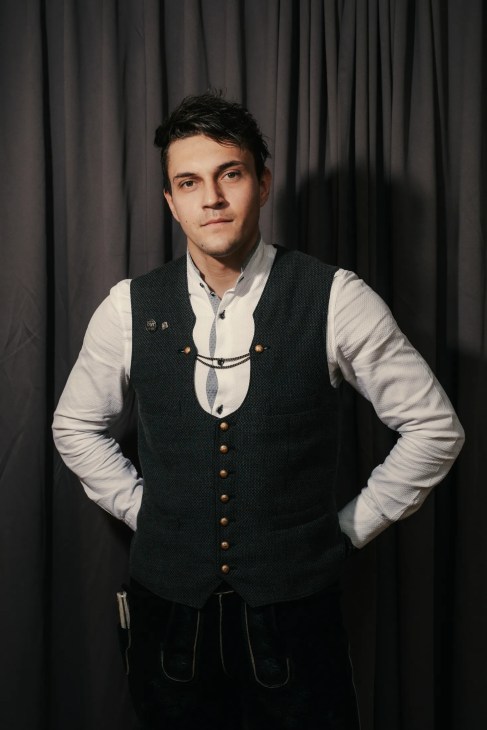

What started as a village uniform that was sported by 16th-century peasants across Bavaria, Austria and South Tyrol has been elevated to a focus of fashion shows, premium shops and bespoke fittings. It’s also an industry that to this day supports a world of impeccable craftsmanship and a network of family-owned ateliers.
And as the ceremonial costume has ceased to be a symbol of political affiliation, today’s Trachten have found function as an urban alter-ego. “On the streets of Munich, it’s not unusual to see Bavarian jackets on dress-down Fridays,” says Sebastian Haufellner, head of buying at longstanding Bavarian department store Lodenfrey. It’s all a joyful way of holding on to a sense of identity.

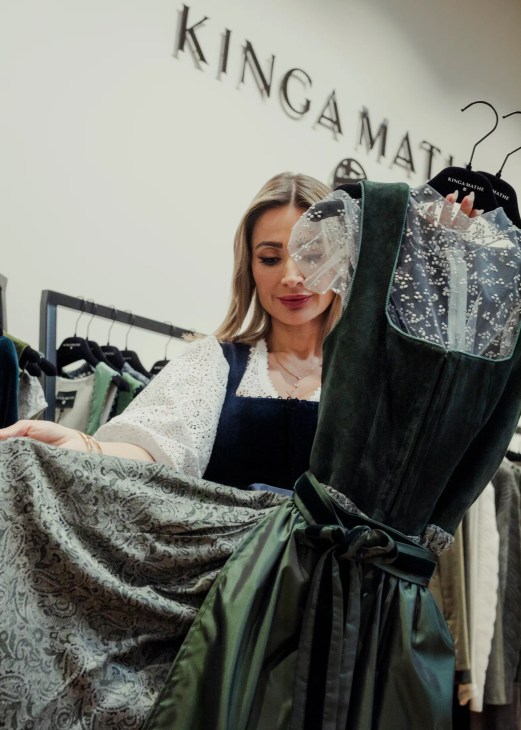
A Bangkok food emporium’s recipe for success
Gourmet Market’s flagship in Bangkok is a giant food emporium found inside the city’s premier shopping mall, Siam Paragon. Every morning, staff form a line at the end of each aisle to greet the first customers of the day with a cheerful sawadee. This sizeable welcoming party makes food shopping feel like a royal visit. A repeat performance after lunch involves dancing to music.
“An exceptional customer experience is crucial to food retail because there are so many options,” says Ploychompu Umpujh, who heads up Gourmet Market’s 17 branches and the rest of the food department at The Mall Group, one of Bangkok’s leading mall operators. “We have to consistently improve and think beyond what the customer wants.”
Supermarket shopping might have been boiled down to an exact science in many parts of the world but in Thailand the pie charts and schematics come with five-star service and lashings of entertainment. At Gourmet Market, a handful of floor staff are trained to guide customers through fresh produce and groceries, giving ordinary items the star treatment usually associated with fine wine and premium cuts of meat. Then there’s the “you hunt, we cook” scheme, with chefs on hand to whip up a recipe for customers using ingredients sourced from the supermarket.
“Food appreciation is in our DNA,” says Umpujh, before rattling through a shopping list of supporting reasons. These include Thailand’s diverse cuisine and cooking styles, a service mindset, the dominance of agricultural exports and the central role of food in daily life. “Have you eaten?” is a popular way of saying hello. And the likely response is, “Yes, I have but I’m starting to get peckish.”
Beyond the fun and frivolity, putting food on Thai plates is big business. The department that Umpujh leads contributes the largest slice of the Mall Group’s overall revenue and Gourmet Market plans to double in size in five years, primarily via shop expansions. It’s fair to say that Bangkok’s premium supermarkets are home to some of the freshest concepts in food retail.
From left to right:
1.
Adithep Saomok, Sales representative, fruit, “Durian season begins in April – I can’t wait.”
2.
Napaporn Wongmas, Assistant general manager, Gourmet Eats, “Joined Umpujh’s team a year ago but she has been with the company for more than 15 years.”
3.
Thanida Limsirivallop, General manager of merchandising, Gourmet Eats, “When international food brands come to Thailand, she’s in charge of bringing them to us first.”
4.
Rewadee Arunyakanont, Assistant manager, Gourmet Market, “She handles promotions and the planogram system; in other words, how products are placed on the shelves.”
5.
Yarnintorn Temiyaputra, General manager of operation, Gourmet Market, Siam Paragon, “He looks after all of the operations at the flagship store, from customer service to controlling the area where suppliers come to drop off products every morning.”
6.
Pongsak Oransuwanchai, Group general manager, supermarket merchandising (food), “He goes to the local street-food stalls to convince the owners to come into malls.”
7.
Pakawat Chintacanun, Group general manager, supermarket merchandising, “Industry veteran who knows everything about the fresh department and seasonal products.”
8.
Watsakarn Pongsanguansuk, Group general manager, supermarket merchandising (grocery), “A proven executor. When asked for different merchandising from abroad, she always makes things happen.”
9.
Saknarin Kamphrommee, Sales representative, fruit, “Fresh fruit and vegetables generate the most sales.”
10.
Rapeepan Sawangchang, Section manager Gourmet Fresh, “Apples are our biggest sellers and cherries sell really well on promotion.”
11.
Panita Haritaworn, General manager, marketing, Gourmet Market and Gourmet Eats, “Very creative, a good leader and not scared to try new things.”
12.
Chidchanok Boonchamnan, Assistant general manager, marketing, Gourmet Market, “She mainly looks after Gourmet Market’s many events. End of the year and Songkran in April are the most important.”
Read next: The Monocle City Guide to Bangkok, featuring the very best hotels, restaurants and retail spots in the Thai capital
Refueling in midair: A multinational aerial combat training designed to simulate the ‘chaos of combat’
In April 2024 writer Christopher Lord and photographer Jason Koxvold joined a refuelling exercise with the UK and US air forces in the skies over Las Vegas. A mid-flight refuel requires precise manoeuvring thousands of metres up in the air and there is very little room for error. In light of the recent US military KC-135 aerial refuelling tanker crash in Iraq, which killed all six crew members, we are publishing this story to give readers insight into the delicate process.
We’re onboard an Airbus A330, cruising at 20,000 feet above the Las Vegas Strip. With its rows of economy seats and in-flight entertainment in the armrests, the plane resembles a typical commercial aircraft; in reality, however, it’s a flying petrol pump with 137,500 litres of jet fuel sloshing around in its fuselage. At the controls are pilots from the UK’s Royal Air Force (RAF), who are monitoring the radio for incoming squadrons of US and UK fighter jets. These will fly in and refuel from the tanker in mid-air, before moving on to a simulated aerial battle over the desert. The refuelling is part of a training mission called Exercise Red Flag, and mirrors the US-UK operations that have been taking place in Yemen since the start of the year as the two nations co-operate to target Houthi positions.
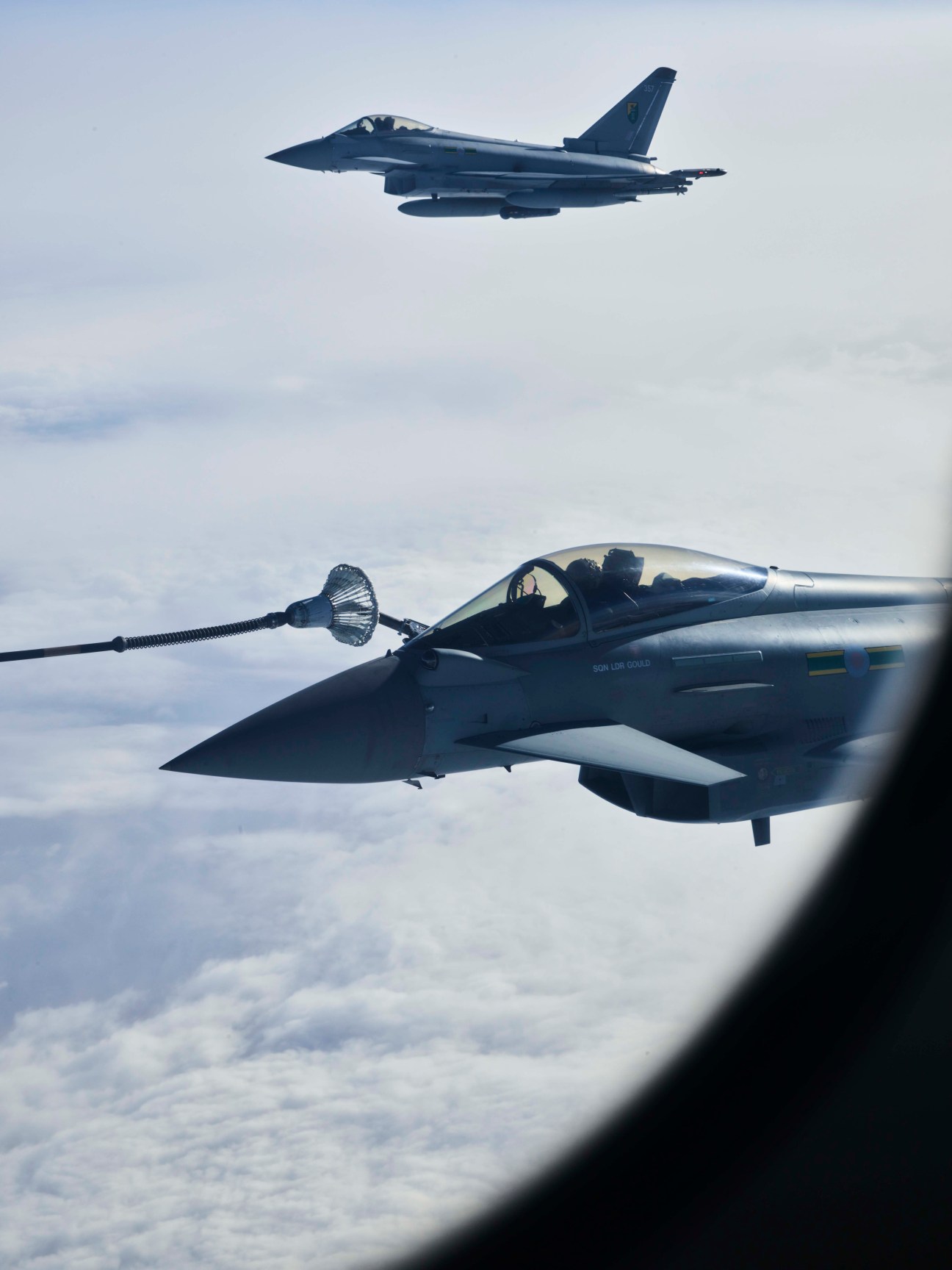
“Aerial refuelling used to be done with just a grappling hook and a hose,” says Wing Commander Paul Summers, squadron leader on the RAF Voyager air tanker. The process has remained fairly analogue: a probe with a nozzle at the end emerges from the wing of the Voyager and waggles about in the wind. From about 1km behind us, a squadron of US Marines in F-35S comes into view. They line up in formation, matching the speed of the tanker so that, aside from barely perceptible tremors caused by turbulence, they appear perfectly still. Then one of the aircraft drifts closer and lines up to connect to the probe.
“Joining a tanker is a fine art,” Flight Lieutenant Simon Tofrik tells Monocle. The RAF pilot has hooked up his Eurofighter Typhoon in mid-air on missions out of Cyprus. There is no autopilot to do the job for the airmen. “You have to ensure that you’re not using too much fuel chasing down the tanker,” he says. “The trick is not to look at the nozzle.”
Though it’s a delicate manoeuvre, aerial refuelling is often crucial. Most bombers and fighter jets carry only a few hours’ worth of fuel, limiting how far they can fly. In an era of fast-moving theatres of combat emerging around the world – and with not enough naval aircraft carriers to send to all of them – the tankers pick up the slack, allowing planes to travel across large distances into the heart of battle. Monocle has been invited to observe a day of joint operations by the US, UK and Australian air forces as part of Exercise Red Flag. It’s a show of unity by three allies linked by the Aukus defence pact but also an opportunity for their respective militaries to practise working together in conditions that simulate what one aerial commander calls “the chaos of combat”.
Exercise Red Flag has been held every year since the end of the Vietnam War at Nellis Air Force Base, just north of Las Vegas. It was started after strategists at the Pentagon realised that novice pilots were flying into battle inexperienced and performing dismally in air-to-air combat. Aside from the occasional whoosh of a passing jet, most of the gamblers and croupiers working the casino tables below are oblivious to the deft military exercises happening overhead.

This year’s exercise involves a series of aerial battles between a friendly blue team and an enemy red team. On the runway at Nellis are rows of aircraft painted in the black and icy-blue colours of Chinese and Russian forces. These are flown by US pilots briefed on how the air forces of these “near-peer competitors” – nations of comparable military might – tend to operate in combat. In addition to airborne operations, the 2024 exercise is also about better integrating how the three allies support each other logistically, from mid-air tankering to retooling aircraft on the ground. The F-35S and ageing B-2 stealth bombers lined up for take-off on the runway still pack a formidable punch but it is becoming increasingly likely that the potential conflicts of the future will be fought and won on the strength of logistics and integration.
An often-heard phrase among US military strategists is the “tyranny of distance”, which refers to the challenge of getting units and supplies across the Pacific in the event of, say, a surprise attack by China on Taiwan. It’s 10,000km from Los Angeles to Taipei and the vastness of this oceanic theatre is provoking a fundamental shift in military thinking after 20 years in which the US and its allies built and commanded their forces from impregnable bases across the Middle East. Such fortresses simply won’t make sense on small Pacific islands that are surrounded by ocean. “If we built everything up in one location, we would be vulnerable,” says Colonel Eric Winterbottom, the US commander of Exercise Red Flag, who we meet at the flight line at Nellis as, one after the other, RAF Typhoons erupt into takeoff. “We need to be able to move around rapidly. It’s a change of mindset and how we conduct our logistics.”

The future, says Winterbottom, requires a more dispersed network of tiny outposts, where aircraft are launched and maintained across multiple locations. There must also be a nimbler attitude to getting equipment and people around, with the job shared among allies. Agile Combat Employment, as the strategy is called, underpins Exercise Red Flag.
“It’s about learning how our allies operate – and learning to understand their accents as well,” says Australian Flight Lieutenant Dan Armstrong. The F-35 pilot is waiting for his plane, which is emblazoned with the kangaroo insignia of the Royal Australian Airforce, to be readied for flight. “There were the same problems operating in the Pacific during the Second World War. There’s a lot of water and not many runways so there’s a long logistical tail wherever you go.” The plane’s flight engineer, Harrison Littrich, tells Monocle that his job in the field is as much about ensuring supply chains for parts and maintenance as keeping the planes aloft.

To maintain a footprint in the Pacific, the US has been deploying equipment and troops among allies, from northern Australia to South Korea, and is hacking away jungle on long-mothballed runways. Tinian, an airbase in the Mariana Islands and a US territory, which last saw action during the Second World War, is expected to reopen by the end of the year. Unlike in previous conflicts, US forces cannot rely on unfettered access to Pacific Island nations, many of which are now being courted by Beijing as it seeks to secure its own access.
Brad Martin, head of supply chains in defence at the Rand Corporation, argues that the US couldn’t effectively manage a conflict in the Pacific without being able to sustain the fight from American soil. This, he says, is weakening its military deterrence. “You need the ability to move things around faster than the enemy can figure out where you’re going,” says Martin.
From the window of the RAF Voyager, we watch a formation of British Typhoons finish up at the pump, then peel elegantly away into the clouds. Commander Summers says that with theatres emerging in the Middle East and the Pacific, there is a growing need for more tankers in the air and the RAF has started to train retired commercial pilots for the job. “If you want to project air power, then you need tankers,” says Summers. “As the saying goes among our US allies, ‘Nobody kicks ass without tanker gas.’”
Unarmed and dangerous: Evaluating the effectiveness of Hybrid COE
Hybrid warfare is a 21st-century security buzzword. It describes the use of both conventional and unconventional methods to inflict damage on your opponent, and can involve anything from cyberattacks and election interference to the use of non-state actors in combat or the sabotage of critical infrastructure.
“We in the West did not take these threats seriously at first, which is why we are on the defensive,” Teija Tiilikainen, director of the Helsinki-based European Centre of Excellence for Countering Hybrid Threats (Hybrid COE), tells Monocle. “We were caught off-guard.” Hybrid COE, which describes itself as a “do tank”, is an autonomous organisation founded in 2017 with a remit to provide expertise and training to its 35 participating states – essentially all the EU and Nato member states with the exception of Albania – to help them counter hybrid threats.
But what does “counter” mean in this context? If hybrid warfare is an extension of conventional warfare, shouldn’t the West respond to these attacks with ones of its own? For example, why hasn’t the West launched a cyberattack against Russia as a response to those it has suffered at the hands of the country and its proxies? “The West has a disadvantage because we want to uphold a rules-based international order and the rule of law but our opponents are not bound by the same rules,” says Tiilikainen.
In other words, if the West wanted to fight fire with fire, it would have to renounce its core values, which is exactly what its opponents, such as Russia and China, want. But if it can’t strike back, how can it ever win the war? Indeed, it looks a lot like Hybrid COE is simply putting out fires instead of preventing them. For example, election interference has been an issue since at least the 2016 US presidential poll and yet, eight years and nearly two election cycles later, it is still a major threat to democracy. And there is probably more disinformation being spread by state- sponsored actors today than there was then.
Hybrid COE argues that victory in hybrid warfare does not look like normal victory. “We cannot fully stop cyberattacks or attacks on critical infrastructure such as gas pipelines and data cables,” says Tiilikainen. “But we can stop them from destabilising our societies by improving our resilience.” This is exactly what Hybrid COE’s 41 experts from 16 different countries do – study what exploitable weaknesses its participating states have and then work out how to make sure that they stop being weaknesses. This can involve sponsored initiatives such as educating populations to recognise fake news, like Finland does as part of its national curriculum, as well as promoting backup energy sources or advocating for a more agile legislative process to stop the weaponisation of migration. “It’s a cat-and-mouse game,” says Tiilikainen. “The enemy, just like us, is always looking for new vulnerabilities.”
Resilience is important but it is not enough. Western societies are based on openness and freedom, and so will always be susceptible to those looking to exploit these things. The West needs a credible deterrent against hybrid operations. “Western countries need to learn to put a price tag on these acts,” says Tiilikainen. “That means responding with sanctions as well as naming and shaming.” It is doubtful, however, that naming and shaming, or sanctions for that matter, will prevent hybrid attacks. The West needs a firmer response. There is talk within Nato of making it clear that a hybrid attack will trigger the alliance’s collective defence clause, Article 5, which is currently reserved for armed attacks. But it is unclear what this would mean in practice. Perhaps the alliance wants it to remain ambiguous. Either way, there will come a time when it must act. Hybrid warfare has changed the nature of conflict – it’s time the West moved from the defensive to the offensive.