The Entrepreneurs
What makes a healthy workspace? At Novolife’s Bangkok HQ, blurring the line between office and outdoors goes a long way
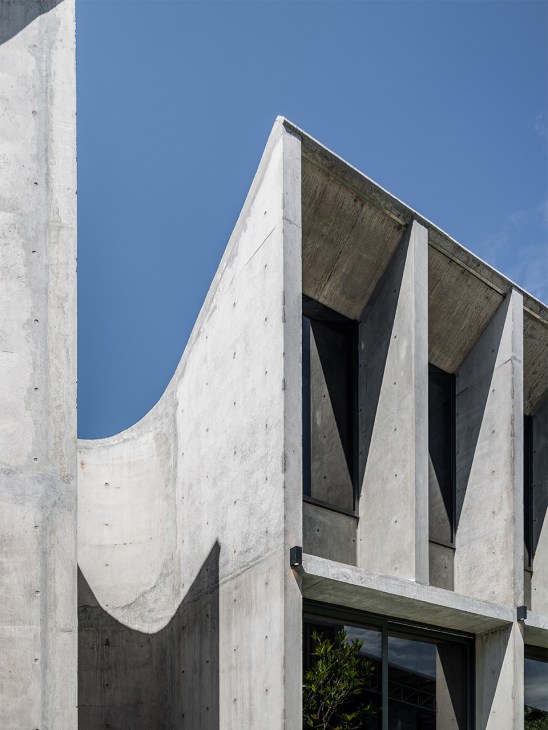
“It’s somewhere between indoors and outdoors,” says Danai Surasa. “People can remain connected to daylight, fresh air, the landscape and weather throughout the working day.” The co-founder of Bangkok-based Studio Krubka is explaining his firm’s design for the new HQ of natural pharmaceutical company Novolife on the outskirts of the Thai capital. The striking concrete building has lofty curved roofs and large, rectangular apertures – some of them windows, others portals to a verdant internal courtyard.
This blurring of boundaries between inside and out is a reflection of the company’s entrepreneurial aspirations. “Novolife develops products using Thai herbs and natural ingredients with the aim of supporting people’s wellbeing,” says Soyploy Phanich, Surasa’s fellow co-founder. “So we started with a simple question: if wellbeing is central to what the company produces, how can it also become part of the everyday working environment?”
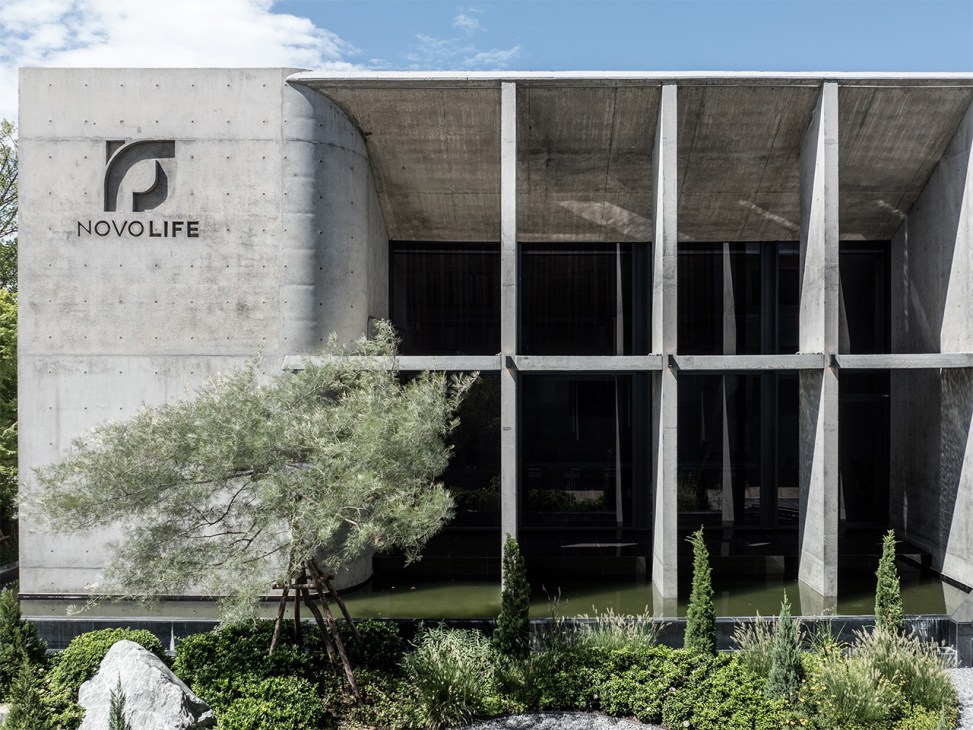
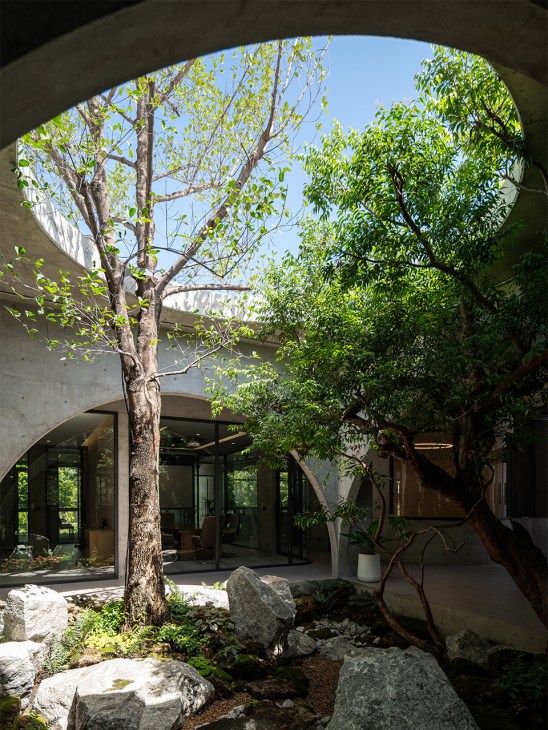
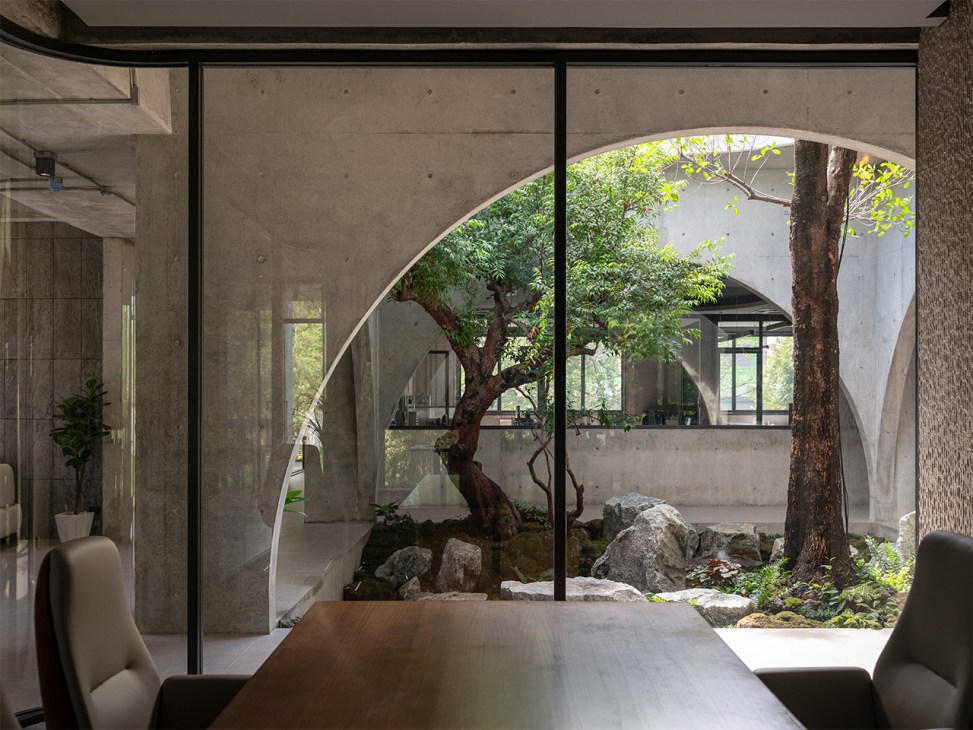
The answer came in a layout that prompts people to encounter the lush courtyard as they move through the building. This is supported by a restrained colour palette that directs the eye to the leafy gardens – an effect that is enhanced by shifting light, weather and temperatures, all of which become accomplices to the architecture. “This workplace can feel different from one moment to the next, even though the building itself remains the same,” says Phanich. This environmentally minded approach is enhanced by the materiality and construction processes. The concrete was made using locally sourced aggregates without extensive chemical additives, while a reusable steel formwork shapes the structure.
Though the building has a strikingly minimalist concrete form, it also pays tribute to Thailand’s vernacular wooden architecture. Life in a Southeast Asian climate means dealing with heavy rainfall, so the office has a traditional bowed butterfly roof that channels rainwater to a central collecting spine. “Thai architecture has long developed ways of responding to the region’s heavy rain and tropical climate,” says Surasa. “We wanted to reinterpret that in a modern way.”
The building makes a compelling case for the beauty of a workplace shaped around nature and connected to the environment, while retaining something in common with the business inhabiting it. “A workplace should reflect the same ideas as the people developing the products,” says Surasa.
studiokrubka.weebly.com
What Willy Wonka and 14 other fictional characters can teach you about business
Feeling lost and in need of fresh ideas? As well as entertainment and escapism, fiction can offer unlikely role models, cautionary tales and business proposals to inspire the budding founder. Stepping into Monocle’s office today for their annual appraisal are fifteen of literature’s most promising entrepreneurial minds.

1.
The solopreneur
Noddy
‘Noddy and Friends’, Enid Blyton
Though Noddy arrived in Toytown naked as the day that he was carved out of wood, he’s soon joined by the incessant, irksome sound of the jingling bell on his hat. Noddy spots an opening for an affable taxi driver and, in his trusty colourful car, he drives his friends to the shops and pockets plenty of sixpence coins. Successful start-ups need sticky customers and a business moat. Noddy has both. Parp, parp!

2.
The boardroom bully
Vito Corleone
‘The Godfather’, Mario Puzo
Olive-oil importer and company co-founder Vito Corleone is a champion of “Made in Italy” products. His role as a community leader has helped to hone his investment instincts, giving him insight into a range of sectors, including cinema and hospitality (though he remains a sceptic of new pharmaceutical enterprises). Steering his corporation with a steady hand, Corleone is a formidable dealmaker and font of Old World business wisdom.

3.
The trend forecaster
Cruella de Vil
‘The Hundred and One Dalmatians’, Dodie Smith
London socialite, fashionista and original nepo baby Cruella de Vil has a penchant for extravagant outerwear and a gift for spotting trends. The quintessential disruptor, De Vil has a killer instinct – but a long-term strategist, she is not. Even so, while her procurement systems are resource-intensive, criminal and highly unlikely to be approved by Peta, there’s no doubt that she slays.

4.
The killer dealmaker
Patrick Bateman
‘American Psycho’, Bret Easton Ellis
Investment banker Patrick Bateman specialises in mergers and acquisitions. A natural dealmaker and sharply observant, he is ruthlessly efficient at identifying underperforming assets, particularly the competencies of other colleagues. Bateman has perfected the art of appearing extremely busy while doing remarkably little. With a deeply concerning work-life balance, however, the chances of him making partner are slim.

5.
The power broker
Mrs Bennet
‘Pride and Prejudice’, Jane Austen
Business is all about networking and no one knows that better than Mrs B. An eager micromanager, she puts her children on the only path guaranteed to pay-worthy dividends: marrying well. She does eventually yield excellent results: three out of five daughters married off; two of them, incidentally, quite content. And who cares if the family loses respect for you along the way?
6.
The idealist
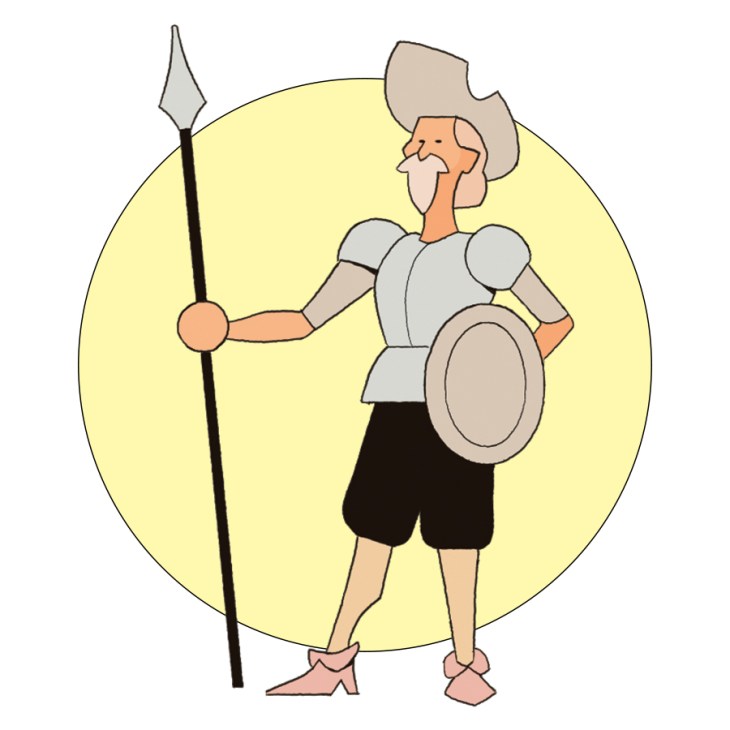
Don Quixote
‘Don Quixote’, Miguel de Cervantes
Despite having no qualifications or prior experience, Don Quixote has built an empire around solving imaginary problems. Services include giant-slaying and princess-rescuing. Commercial results are harder to defend, with most ventures ending in injury or property damage. While his initial goals might be described as quixotic, his brand has survived for more than four centuries and become an industry benchmark.

7.
The marketing maverick
Willy Wonka
‘Charlie and the Chocolate Factory’, Roald Dahl
Willy Wonka’s (Great Glass) elevator pitch is simple: making and selling chocolate. When it comes to moonshot lunacy, coupled with a side order of unapologetic disregard for convention, Wonka was fiction’s pre-emptive answer to Elon Musk. Though a pioneer of experiential, immersive marketing, his disregard for health and safety protocols and contempt for workers’ rights surely mean that there’s a court case heading for Wonka Ltd.

8.
The scalable start-up
The Very Hungry Caterpillar
‘The Very Hungry Caterpillar’, Eric Carle
The Very Hungry Caterpillar runs a rapidly scaling catering company, developing all-you-can-eat dining concepts for social butterflies. Revenue is difficult to establish but consumption metrics are outstanding. Though the peckish larval hero has been occasionally accused of self-serving behaviour, he demonstrates an exceptional appetite for expansion. And when his business model becomes unsustainable, he always seems to find room to metamorphose.
9.
The hustler
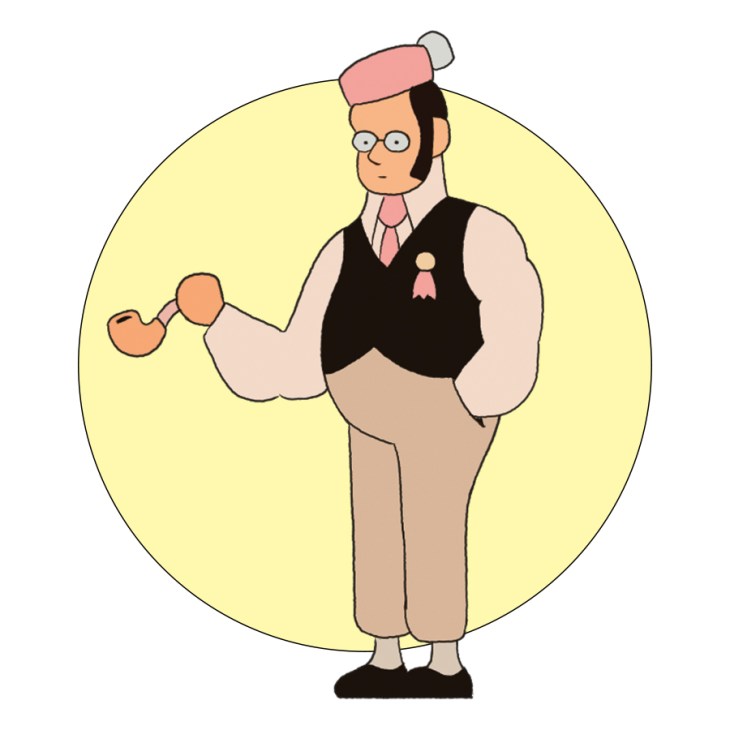
Monsieur Homais
‘Madame Bovary’, Gustave Flaubert
Thanks to his contributions to the local paper detailing his unquantifiable exploits, Monsieur Homais’s shop is also a burgeoning media empire. With a talent for self-promotion, it’s of little consequence that he unnecessarily amputates a leg or plays a role in the untimely death of Emma Bovary. Any press is good press and failure is no obstacle to professional advancement – nor to being awarded the Légion d’honneur.
10.
The suave strategist
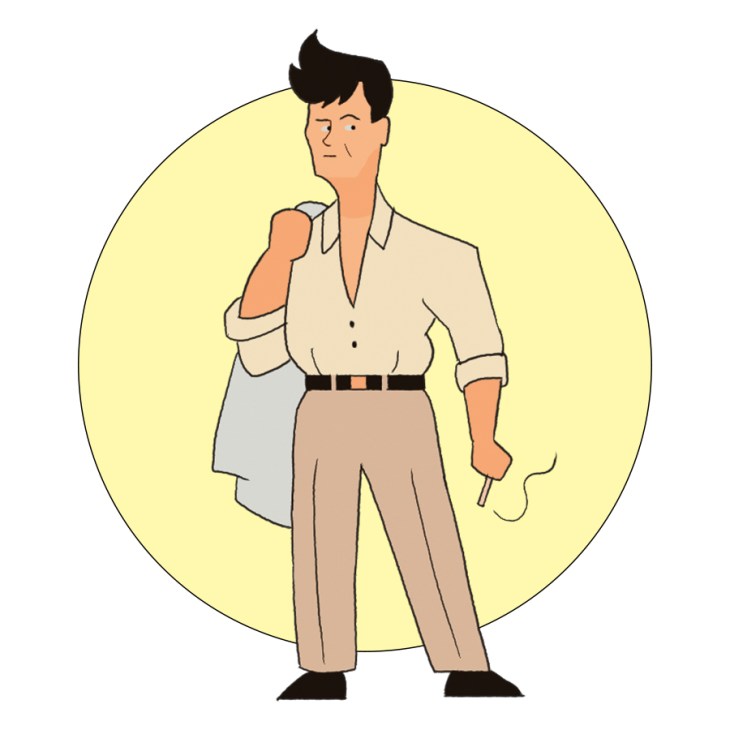
Tom Ripley
‘The Talented Mr Ripley’, Patricia Highsmith
The founder of a personal-branding agency for high-net-worth individuals with entrepreneurial ambitions, Tom Ripley identifies the habits that got successful people where they are and offers clients an unusually immersive route to replicating their achievements. Ripley’s talent for spotting affluent markets is second to none and client confidentiality impeccable, though his approach to succession planning is somewhat questionable.

11.
The effective altruist
John Hammond
‘Jurassic Park’, Michael Crichton
The owner of genetic-engineering tech start-up InGen has never let the money change him. An animal lover – particularly of the primordial variety – John Hammond has realised his dream of giving back by opening a theme park. His maximalist approach has undeniably led to some slightly brash decisions around park safety but his R&D has produced invaluable lessons in navigating unpredictability.
12.
The big-picture visionary
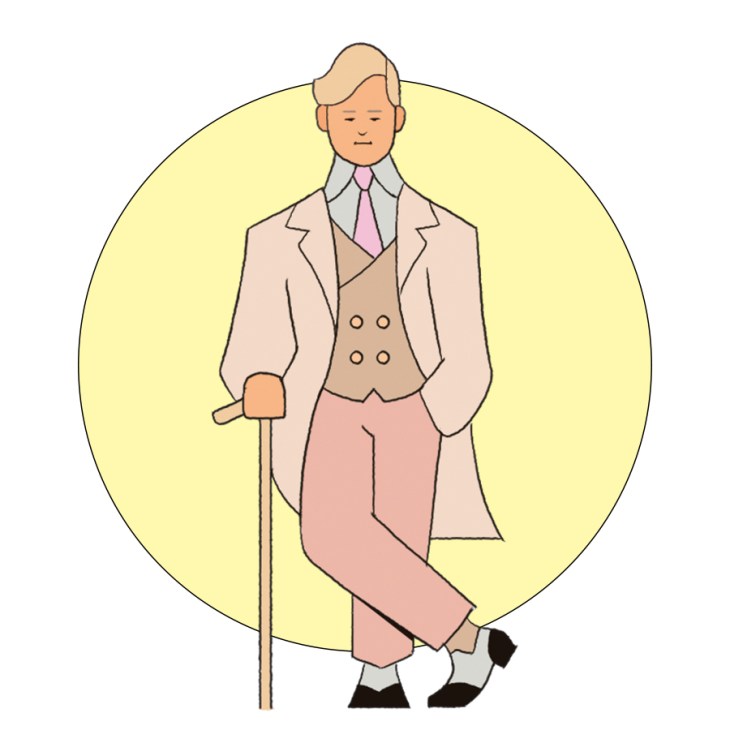
Jay Gatsby
‘The Great Gatsby’, F Scott Fitzgerald
Jay Gatsby understands that respectability can be bought, however squalid the means by which you made your stack. KPIs met include a fancy mansion in an up-and-coming district, a gleaming Rolls-Royce, a social circle of the wealthy and fabulous and, if only briefly, the woman of his dreams. All of which goes some way towards making up for the eventual realisation – in fact, as in fiction – that you can’t always have everything.

13.
The stress-management case study
Ebenezer Scrooge
‘A Christmas Carol’, Charles Dickens
An early poster boy for The 5am Club, Ebenezer Scrooge is steadfastly devoted to the fortunes of his counting house. Ultimately, that dedication turns his story into a cautionary tale about the perils of workplace burnout. Finding the right business coach, whether of this earth or the spectral sort, can transform both personal productivity and office culture.

14.
The professional networker
The Wife of Bath
‘The Canterbury Tales’, Geoffrey Chaucer
Alison of Bath has established a strong position in the textile world, producing cloth good enough to rival the finest makers of Ypres and Ghent. But it’s her substantial parallel portfolio in marriage that is the story worth retelling on The Diary of a CEO. Five husbands have given her experience in assets and leverage, along with a sharp instinct for negotiating favourable terms.

15.
The sustainability champion
Mrs Lovett
‘Sweeney Todd: The Demon Barber of Fleet Street’, Stephen Sondheim and Hugh Wheeler
Mrs Lovett’s innovative supply chain offers hyper-local sourcing and negligible transport costs, fed by a steady supply of raw material. She has great success converting increased supply into consumer demand: footfall rises, margins improve, input costs remain low and waste is minimal. But in a world of heightened food-safety legislation, the principal risk here is regulatory.
Can individuality be scaled? Elie Khouri shares a blueprint for luxury hospitality from Dubai to Paros
Elie Khouri has spent much of his career doing something that successful executives often become reluctant to try: starting again. Across three decades, he helped build the Middle East media operations of Omnicom – the global marketing and communications group behind some of the world’s largest advertising and media agencies – from eight employees to more than 2,000. In 2017, Khouri embarked on a new chapter, founding Vivium, a Dubai-based office through which he invests in and builds businesses across property, hospitality, design and more.
At the age of 62, the French-Lebanese businessman is now in the middle of perhaps his most entrepreneurial chapter yet. In the past few years, Vivium has created boutique hotel brand Luura and design business Atelio. It has also expanded its luxury-property interests through a partnership with Sotheby’s International Realty and begun turning Khouri’s private collection of works by more than 300 artists into a public institution. What links them is his conviction that judgement, design and culture can be commercially valuable – and, more challengingly, scaled.
There’s a clue to Khouri’s approach within his home at Jumeirah Bay. He bought a mansion within the Bulgari Residences, gutted its interiors and – mirroring his career – started again. Vintage Brazilian furniture and contemporary art now sit together according to his own precise edit. Khouri insists that he’s not starting afresh. “I don’t reinvent myself,” he says. “I always keep building on what I’ve learnt.”
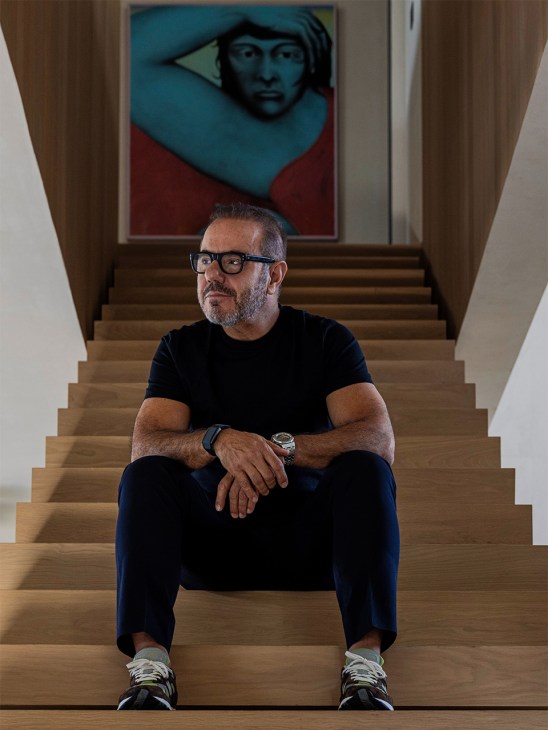
He believes that he was behaving entrepreneurially long before he began deploying his own capital through Vivium. At Omnicom, he launched a digital business in 2000, created new ventures within the group and devised ways to retain talented staff, including giving Rolexes to high performers. His willingness to toss out conventional playbooks defines Vivium. Rather than treating its investment areas as separate asset classes, Khouri sees an ecosystem. Property teaches him about place and architecture; design adds materials and craftsmanship; art supplies cultural depth. Combine them, he says, and you have a hotel, a showroom or an art institution.
Luura is the clearest test. Its first property, a 39-suite hotel in Paros, opened this summer. Khouri had originally travelled to Greece intending to develop and sell villas but found the proposition strangely unsatisfying. “What’s the point in doing beautiful things and then letting go of them?” he asks. He’s betting that travellers are tiring of standardised luxury. “The big brands are losing because they become too commercial, too much the same – copy and paste.” The difficulty is whether something that’s deliberately individual can be scaled. Khouri wants dozens of Luuras but has refused to franchise the brand. Instead, he intends to retain an ownership interest in every hotel.
Another recent venture, Atelio, applies that philosophy to furniture, art and collectable design. Its A/P Room platform also has a wider ambition: to give designers from the Middle East and North Africa a vehicle to become known (and, crucially, sell) beyond the region. Meanwhile, he hopes that the Elie Khouri Art Foundation, which is currently being developed in the UAE, will turn two decades of private collecting into a public-facing institution, giving something back to the country in which he has lived for 35 years. He credits the nation with giving him the “freedom to be an entrepreneur”.
Khouri thinks that though the UAE is respected for property, tourism, commerce and culture, Europe still does not regard it as “a place for ideas”. He wants the next generation of businesses in the Emirates to export concepts rather than merely import them. Luura is already looking beyond Greece to Italy and Spain, while a second Paros property and an Athens outpost are in development.
By his own admission, Khouri no longer needs to work. But his appetite is far from diminished. “The question is not about making money,” he says. “The question is about making a difference. I will not stop because I always want to create something and make it amazing.” Perhaps, then, his entrepreneurship isn’t about starting over – it’s more to do with never quite being finished.
Elie Khouri’s CV
1964: Born in Beirut
1975: Neighbourhood trader during civil war in Lebanon; becomes a fashion entrepreneur, selling clothes to fund his education
1983: Bachelor of business admin, American University of Beirut
1986: Master of business admin, American University of Beirut
1988: Joins BBDO in Cyprus
1996: Associate managing director, Impact BBDO, Beirut office
2001: Managing director and founder, OMD MENA, Dubai
2006: CEO, Omnicom Media MENA
2017: Founder and chairman, Vivium
2019: Chairman, Omnicom Media Group MENA
2023: Founder, Atelio design group
‘We’ve given people a licence to play.’ How Singaporean label Beyond The Vines successfully rebranded around fun
One of Rebecca Ting’s fondest childhood memories is taking the bus to her artist father’s studio after school. “My sisters and I would hang out there the whole day, playing with his spray cans, watercolours and tools,” she says. “We had a lot of freedom as children.” It was in these moments that play became instinctive to her – something that she has developed as a defining tenet of Beyond The Vines (BTV), a Singapore-based multidisciplinary studio and label that she founded with her husband, Daniel Chew.
“As adults, we tend to take things seriously and forget how to play and be curious,” she tells Monocle, as she welcomes us to her office, which is packed with enticing items such as a slinky that doubles as a pencil holder. “You don’t have to teach a child to play. Give them anything and they will find a way to entertain and engage themselves – and end up learning something from it.”
Play, to Ting, is a creative act, which is why in BTV’s shops customers can customise bags and phone straps with accessories, stickers and charms. It’s also part of the brand’s activations. Last year, employees hopped onto monster trucks during the Songkran water festival in Bangkok, dousing the crowd with water hoses while dispensing specially designed towels.
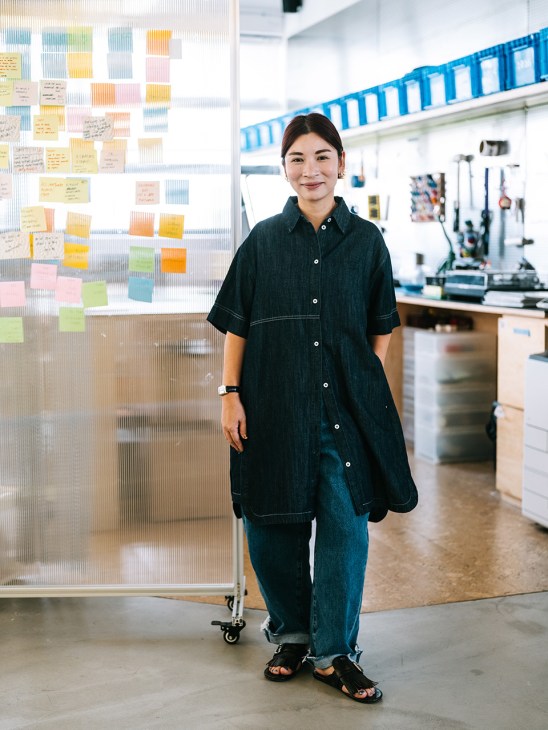
This focus on fun is fairly new. In 2019, BTV was “very cold”, says Ting, before she decided to take a risk, pressing play on a complete rebrand. “I came to realise that the brand needed to be true to who we are,” she says. “We were a chaotic bunch, yet we were so serious in the shop.” Ting considered it a gamble. “I didn’t know if the rebrand would make an impact,” she says. “It could still have fallen flat.”
The new look introduced bold colours to BTV for the first time. Once again, Ting’s design approach was shaped by personal experience. “I would see my dad spend years on an art piece that would eventually go to one owner,” she says. “I’d always felt that more people should be able to appreciate something so beautiful and it developed my belief that good design should be accessible to everyone.”
It worked: the brand’s distilled design approach resonated with a wider audience and its Dumpling bag, a nylon crossbody satchel, was soon flying off the shelves. Customers love its fresh take on an under-explored material and its functional features. The bag is lightweight, water-resistant, packable and comes in a spectrum of colourways that express BTV’s tenets of play and curiosity.
Today, BTV has a presence in many of Asia’s fashion centres, including Bangkok, Tokyo, Manila and Shanghai. “We’ve had to learn from the ground up all over again,” says Ting. “The countries in Asia are all so different. The only thing that unites us is our love of rice.” Notable disparities include the Thai sidestepping of orange and brown hues because of their associations with the robes of Buddhist monks, while the Chinese covet brighter tones in the summer. To understand the nuances of each market, Ting has hired local staff and continuously tweaks her products to suit local tastes – such as lengthening bag straps for Japan to go over the padded jackets that are popular during the colder months.
Ting admits that opening in so many different markets has been hard work but the brand continues to grow, with revenues increasing tenfold since the rebrand. BTV’s other great strength has been recognising the zeitgeist. “A large part of our Asian upbringing is about keeping things under control and that’s why we are quite serious,” says Ting. “But we’ve given people a licence to play. I’ve seen it in my own crew: when I give them permission to play, it brings out even more of their creativity.”
Rebecca Ting’s CV
2015: Launches Beyond The Vines as a womenswear line, with Daniel Chew
2020: Rebrands as a design studio
2024: Opens first flagship shop outside Singapore, in Bangkok
2025: First permanent shop in Tokyo
2026: Debuts Shanghai shop
Why entrepreneurs are flocking to A Coruña, Spain’s slow-living boomtown
“For a watchmaker, I have a rather peculiar sense of time,” says David Rodríguez (known locally as Nemesio) as he welcomes us inside his workshop. It’s a small space stacked with vintage timepieces and trinkets, its walls lined with industrial memorabilia. As the city’s official timekeeper, his daily chores include winding up the town hall’s clock tower. Visiting Nemesio seems like an ideal way to get a sense of A Coruña, Galicia’s northernmost port city. “I go at my own pace,” he says. “My life is my time,” he adds, chuckling about reviews complaining about his intermittent opening hours.
In many ways, Nemesio embodies the generation slowly reshaping this small city of about 250,000 inhabitants (the wider urban region has about 650,000). After a spell living abroad, he is embracing the comfort and predictability of a city still considered peripheral. “As Coruñeses, we like that the city isn’t so mainstream – there’s a sense of calm,” he says.
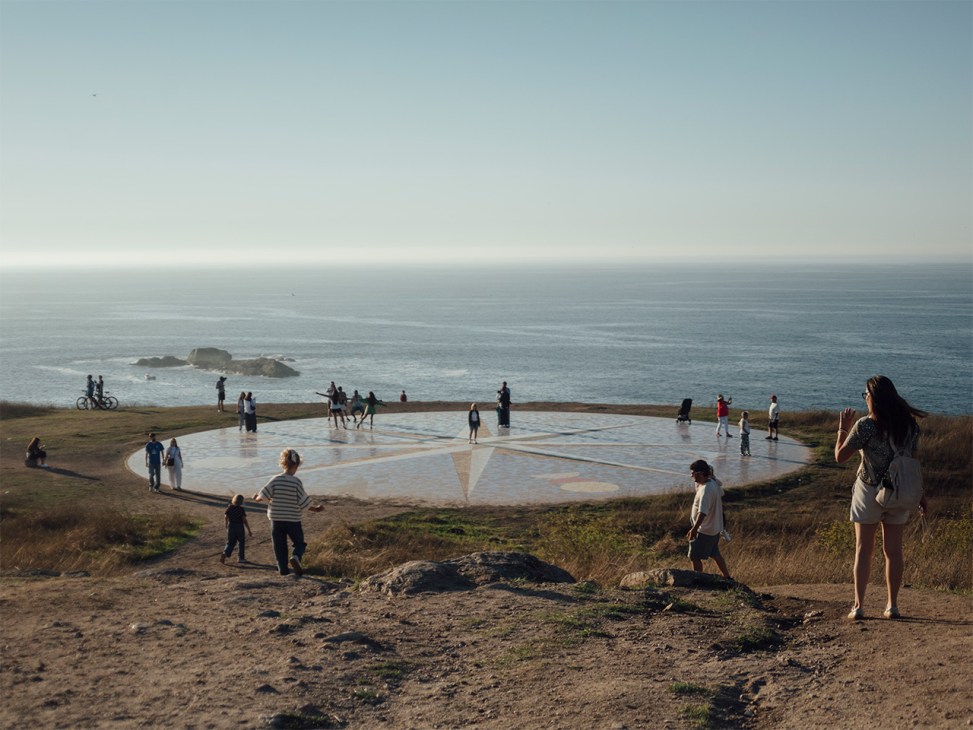
A Coruña might be a three-and-a-half-hour high-speed rail journey from Spain’s capital but in recent years it has become a destination in its own right. No conversation about A Coruña can ignore the retail fashion giant Inditex, whose HQ, including those of Zara, sits in the satellite town of Arteixo. Inditex recently reported record sales, up 7.6 per cent to €19.75bn. The spending power of its 5,500 locally based workers – with a median age of 31 – has tempted entrepreneurs to set up speciality coffee shops, smart restaurants and wine bars here. New cycle lanes are being installed.
Many smaller Spanish cities are grappling with brain drain and ageing populations but A Coruña has the “Zarasmus” crowd – a local epithet that nods to Inditex’s cosmopolitan clique of employees and visitors, and the Erasmus European student-exchange programme. There’s a diaspora effect too. Many of the creative minds who pass through the company end up putting down roots here with independent ventures of their own.
Yolanda Estévez started Knitbrary in 2011 after working for Zara Home and Galician fashion brand Adolfo Domínguez. Her firm, whose wares she describes as “hand-knitted to order”, sold more than 750 pieces last year, with stockists across northern Europe, the US and Japan. Estévez works with about 60 artisans; a long-standing presence in Peru helped the entrepreneur evade the shock of US tariffs on the EU by securing cheaper market access from a US-Peruvian bilateral trade agreement.


“I’m a fighter when it comes to creating kinship and promoting talent in Galicia,” she says, pointing to recent collaborations with ceramicist Verónica Moar and work for prominent films (including a custom piece made for Javier Bardem in Bunker). “If we don’t build ourselves up, who will?” she asks. She sees a clear flow-on effect from both international and local suppliers passing through the city to pitch to Inditex, which has created an ecosystem of specialists in areas from packaging to tags and accessories such as buttons and zips. “It’s not the easiest time for smaller brands,” she says, acknowledging the effect that rising shipping costs are having, especially between Europe and Asia. “But this means that we need to cultivate more synergies at home.”
Spritely and straight-talking, Estévez stands out. Galicians, according to an old stereotype, are supposed to be cautious and are famed for their ambiguity. An aphorism claims that when meeting one on the stairs, you might never know whether they are heading up or down. But many, with characteristic wit, will counter that Galicians know where they are going: it’s just the onlooker or outsider who’s confused.
“Things might move more slowly,” says Danish designer Henrik Tjaerby. “But that’s just because people take a more considered approach.” He built his 210 sq m studio here in 2022 after 14 years as a design manager at Zara Home. He recalls sourcing wood from Finsa, Galicia’s forestry giant, when he was a student in Denmark. “I planned to stay for two years but suddenly there were so many reasons to remain” – not least of which were his Galician wife and children. “This must be one of the most affordable places to live in Europe,” he adds. “My rural studio feels like it’s in the middle of nowhere but it’s only 20 minutes from the city centre.”
With his Italian-born co-designer and in-house weaver, Leo Perina, Tjaerby is busy imagining and manufacturing bespoke chairs, sofas and wooden lighting designs, mainly for Swedish and UK clients. A recent collaboration with The Mindcraft Project uses eucalyptus trees in durable chair designs that are fit for wetter climates.


“I might have started my studio rather late [Tjaerby is 48] but I have a big space and the luxury of being able to say no to uninspiring clients, simply because I’m not trying to cover costs all of the time,” he says. “No designer wants to be pushed into places where they don’t want to be.”
Ismael Blanco Bouza, who heads up urban- and social-renewal think-tank Deloga with Eva Garabal Nieto, tells Monocle that the city is in a “golden era”. He points to the upcoming establishment of Spain’s first national AI regulatory body, moving into the portside La Terraza building, as well as the relocation and reclassification of the historic port, which will reimagine about 800,000 sq m of land for mixed use.
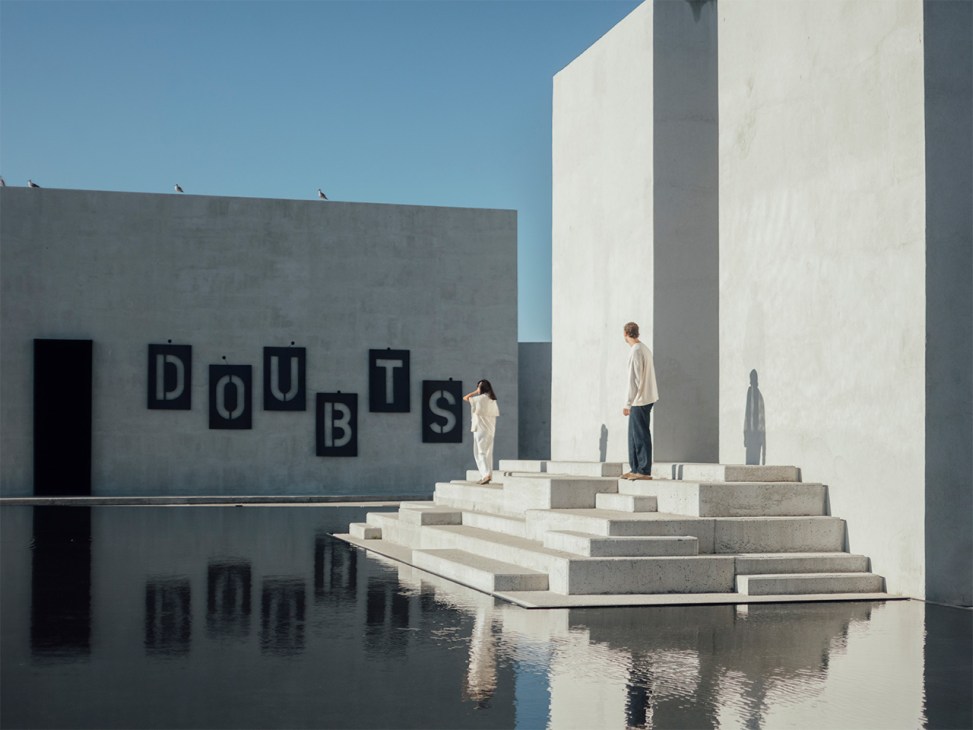
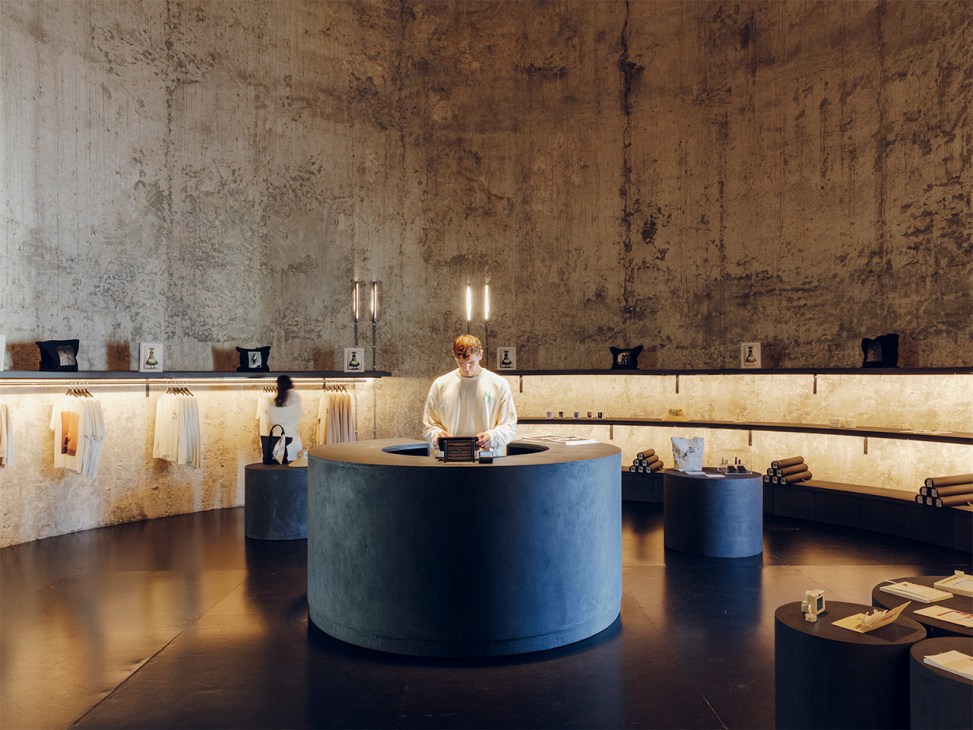
Part of that future is visible in the form of the Marta Ortega Pérez (MOP) Foundation, from the family behind the ever-present Inditex. It started with a temporary exhibition to celebrate the photography of Peter Lindbergh that had more than 110,000 visitors. This encouraged its founder – who is Inditex’s non-executive chairperson and successor in waiting, and, at 42, one of the world’s wealthiest women – to expand her project into a permanent fixture. It includes a library of more than 5,500 titles, accessible to a new generation of fashion-minded entrepreneurs, as well as a café and a shop. Alongside a repurposed cement factory, the exhibition space is wrapping an impressive Paolo Roversi retrospective during Monocle’s visit.
“This might be a peripheral city but it’s connected to global markets and talent,” says Blanco Bouza. In July a public-private partnership between Inditex and the A Coruña Tourism Consortium was announced, with the former investing €1.5m in boosting international flight connections to London, Lisbon, Paris and Istanbul. Typically for the firm, the announcement was low key. “Galician culture is more reserved and less given to public displays than in other parts of Spain,” says Blanco Bouza. “The Gallego is more discreet. The culture is to work hard and speak little, to let actions speak for themselves.”
This mantra is front and centre as Monocle enters the gates of Inditex. Our invitation comes with caveats slightly different from when we last visited in 2016, when photography was forbidden – an indication of Ortega Pérez’s open style of stewardship, though information is still offered as background only, no direct quotes. The vast complex, interconnected by air bridges and ample corridors, reflects the scale and speed at which Zara functions.


Zara is renowned for dropping two collections into its worldwide network of shops every week. Lesser known is the creative process behind the clothing or the way that young designers from across the globe rely on experienced Galician seamstresses. We see people with tape measures slung over their shoulders printing shirt patterns onto paper and adjusting them on mannequins. The space feels more like a university – combining hand-sewn with hi-tech – than a retail juggernaut. Recent visitors include Anna Wintour, Luca Guadagnino and John Galliano, underlining its pull as a place for talent and ideas, as well as speedy production and mass-market dominance.
Back in the city centre, A Coruña’s subtle transformation continues. Marcos López Blanco and Agustín Álvarez González head up Ismo, a project that enlists teams of craftspeople to restore heritage buildings. “Part of the change in the city is coming from summer travellers seeking destinations with less scorching heat,” says González. Both see the restorative work as an obligation to their city but there is criticism from some corners about the place changing beyond recognition. “It’s manageable just as it is,” says González. To assuage anxieties around cost-of-living pressures, A Coruña’s mayor, Inés Rey, announced a cap on rental prices. There have been investments in the bus network and a new regional station to address the traffic too.


One of Deloga’s projects involves the plaza in front of a former four-storey retailer from 1911, a collaboration with UK property investor and developer Brodee, which acquired the building in June. The purchase came with a promise to restore the building and surrounding streets and plaza. “There’s a human scale to the city that is attractive for life and business,” says Brodee founder Daniel Brownlee, pointing to the city’s retail backbone. “People talk about the region’s insular character but having a personal connection [his wife is Spanish], I always found that I was very welcome. There’s attention to detail, a quality in the response.”
Next to the building, in the San Andrés plaza, Marta Expósito has just opened New York-inspired pizzeria Los Fortuna with her partner, Manuel Paz. Their background in branding helped them to open successful bars and restaurants in Mallorca but they recently returned to their native Galicia. “Many of the places opening up are just younger renditions of the businesses that have always coloured the streets of A Coruña: bars, cafeterias, shops,” says Expósito.
Beneath its humbleness, the city takes pride in living well while never making a song and dance about it. For businesses, this level-headedness offers confidence and stability. Another local adage casts a playful light on its character. “As Vigo works,” the saying goes, “Pontevedra sleeps, Santiago prays and A Coruña has fun.”
Three things to help you make it in Galicia
Key industries
The region is home to wood supplier Finsa. Retail and fashion giant Inditex shores up the textile industry. There’s a growing technology sector, thanks to respected university UDC and Inditex-adjacent services. Food brands such as Bonilla a la Vista crisps have crunched their way into international markets.
Doing business
A common gripe is the time lag and poor co-ordination when it comes to securing building and business licences. A fast-track electronic system allows you to register companies in 24 hours but a multi-licence project can take several months. Proficiency in Spanish or Gallego, which has co-official status in the region, is recommended.
Looking to the future
The MOP Foundation highlights an appetite for art. Tourism is on the rise, coupled with the port redevelopment, so the city will demand more design, construction and service industries soon. It also needs more green spaces.
Correction, 7 October 2026: An earlier version of this article stated that Gallego was a local dialect. The article has been updated to reflect that it is its own language with co-official status in Galicia.
A Brazilian trend forecaster on why real-world research always beats algorithms
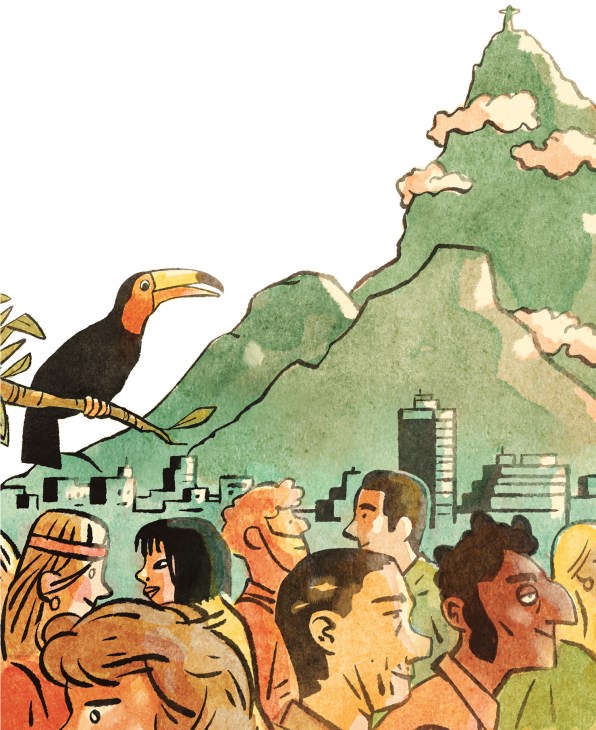
We often say that there are 100 Brazils inside Brazil. It’s just one country but, as it’s roughly the same size as Europe, there’s a pluralism of consumer habits. Then there’s the fact that we have a more mixed history than other large nations. This means that Brazil has every hair type in the world, every body shape and every skin tone. This is what makes it so fascinating from a consumer-research perspective.
But how can you know the consumer when Brazilians are so varied? I have been working in trend forecasting for 15 years, learning how to anticipate what consumers are yet to vocalise. We’re looking for what’s changing in life and what we’re consuming culturally that will spark new desires. There are no algorithms as precise as trend-assisted research.
Take wellness for example. It’s a huge thing and always trending but now we’re also talking about wellness burnout. Gen Z have realised that there will be no supplement that can buy them a house. Nobody can keep up with the intensity of our product-driven society, nobody has the discipline to take all the supplements and put on all the creams. Younger people are less indulgent, less liberal with their image online and going out less in general. Many of them are even shying away from the digital space. So we’re always trying to look for that new twist and shift. And I’m going to be very controversial here by saying that I think the future of my industry is to keep ourselves as analogic as possible.
Another peculiarity of Brazilians is that we are novelty seekers. We are curious. We want to try new things, new flavours, new textures. Globally, the health and beauty industries invest the most in novel trends because the market is eager to know the next big thing.
Though online might seem the obvious place for trending material, the key aspect of consumer awareness is paying attention to what’s around us by getting our heads out of our phones. Otherwise, we end up missing the fundamentals of talking to people, going places and observing. The same is true of artificial intelligence. If I ask the best AI to predict trends, it will show me what’s already out there. The invaluable component of trend forecasting is your own repertoire of connections, references, memories and tastes that you have built throughout your life. There is no short cut for that.
As told to Monocle writer and researcher Blake Matich.
Sheet happens: This Greek start-up is turning old hotel bedding into staff uniforms
Working in hotels gave 33-year-old entrepreneur Emma Efmorfidi a close-up view of the hospitality industry’s waste problem. After seeing first-hand “how many towels and sheets are thrown away”, she says that she began to ponder how worn-out materials might be given another life. “I thought, ‘What happens to a sheet when it’s no longer white enough, soft enough or spotless enough for a five-star hotel room?’” A few years later, that question became the starting point for This Was a Sheet, the Athens-based company that she founded in 2023 with her husband, environmental engineer Odysseas Ioannidis.
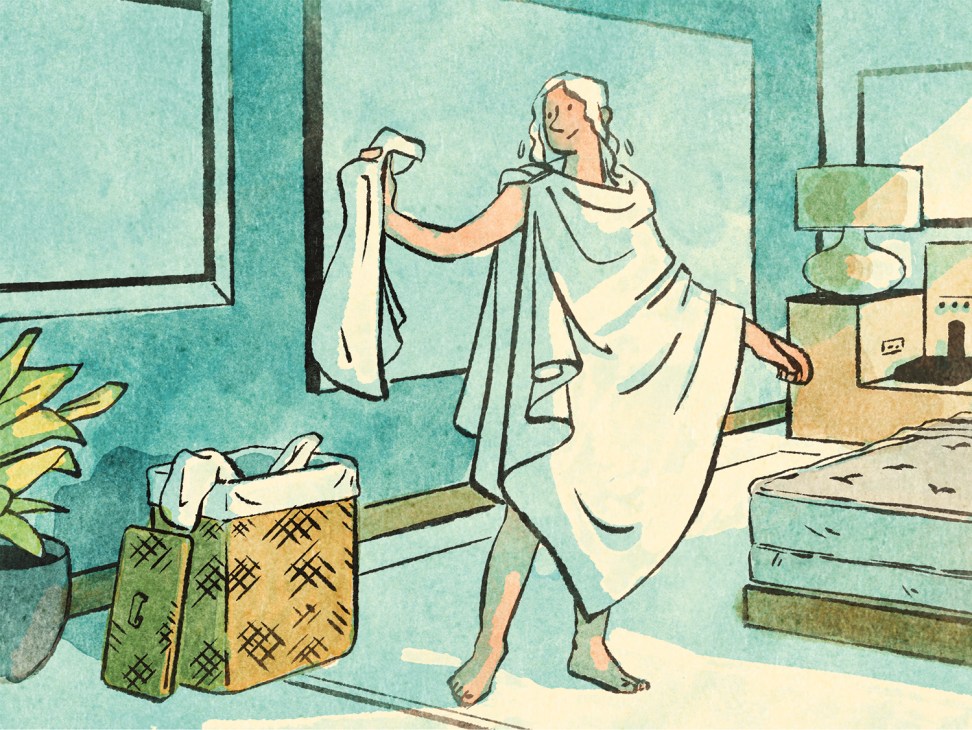
The firm works with more than 120 hotels in Greece, as well as select laundry companies, to turn discarded hotel linen into staff uniforms, slippers and laundry bags. “This Was a Sheet” is printed on the back of the uniforms so the clothes convey the message. “When guests read it, they often ask about the initiative,” says Efmorfidi, whose team of eight works in a small atelier in the north-Athens suburb of Kifissia, cutting, sewing and dying materials before turning them into made-to-order uniforms and other hospitality products. “It’s not just a footnote on the hotel website’s sustainability section and hotel owners appreciate that.”
Some hotels send their unwanted linen directly to This Was a Sheet, while the rest are sourced through laundry companies. The cutting, sewing and dyeing process, performed by a team of eight, takes three to four weeks and no two pieces are identical. “Different material compositions absorb dyes differently, meaning colours vary,” says Efmorfidi.
Making luxury hotels comfortable with that imperfection has been a big challenge. “We’re not competing with perfect uniforms,” she says. “We’re connecting two polluting worlds: hospitality and fashion.”
thiswasasheet.com
This Was a Sheet in numbers
Towels discarded in Greece in 2024: 305,800
Number of towels saved: 30,000
Average lifecycle of hotel linen in Greece: 250 washes
Number of sheets saved: 10,000
Number of hotel collaborations: More than 120
A designer’s advice on finding clarity in your career and life: Take that sabbatical
Once, when I was a student, I travelled with my friends from my hometown of Merano to Morocco. On a beach in Agadir, I met a couple who were on a sabbatical – a year off work – with their family. I thought, “I want to do that.” The idea stayed with me for the next 30 years. When I turned 50, my wife, my children and I decided that it was finally the moment.
My aim for the trip was to be a kid again. When you’re a child, you think in the moment. I had been working since I was 15, always thinking about new projects. It’s hard to even switch off on an ordinary holiday: you spend the first few days still thinking about work, before you slowly unwind, only to spend the last few thinking about it again. So I knew that to achieve my goal, I would have to cut off completely.
My sabbatical took a year and a half to organise. I had to slowly wind down my operations. I run a design studio as a solo practitioner so it was straightforward in some ways but I still had to speak to colleagues and clients. I deleted apps from my phone, cleared out my wardrobe. I wanted to close the door with certainty so that when departure day came, I could think of nothing but the road ahead. I knew that such a feeling of freedom would only be possible if I shut everything else down.
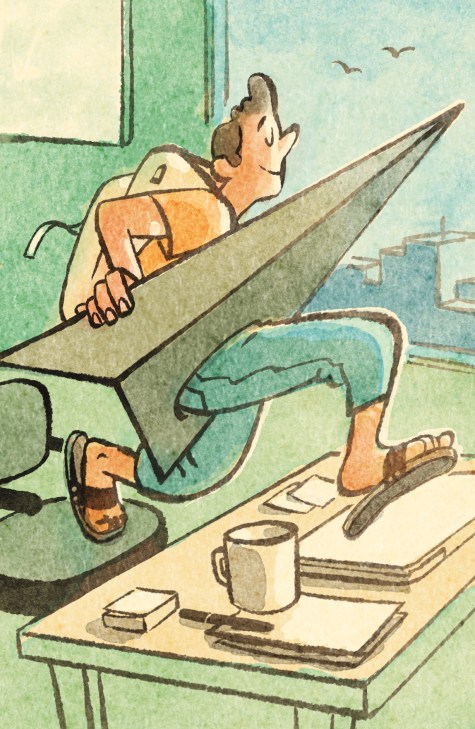
Over 10 months, we travelled through Italy, France, Spain and Portugal, then on via Dubai to Indonesia, Thailand, New Zealand and the US, before returning to Europe. It all went so fast. We stayed in each place for about a month. It mattered enormously to arrive somewhere and stay still, to make a home of it – new routines, a regular coffee spot, faces that you start to recognise. Every day felt like an ordinary one, just without the hard work. Part of the plan was to do nothing job-related at all: no visiting design museums or galleries, no wandering into buildings to study the architecture. It wasn’t always easy to break years of habit but I had gone on this sabbatical because I wanted to change something. I emptied my head – in a good way.
On my return, I didn’t want to change my job or my life. I wasn’t thinking of opening a coffee shop. I love what I do. The difference is that I can do it better now. I’m quicker and sharper. It feels like the start of my career again. Everything has been cleared out so I can begin filling back up. I was scared to return but the phone has started ringing and the jobs are coming in – only now I bring a new freshness to them and have double the energy. Ask me again in a while, though. I might need another sabbatical. Maybe in eight years.
As told to Nic Monisse.
Step aside, Barcelona and Madrid – entrepreneurs are choosing Valencia as their home base
It’s morning on Carrer de la Nau, a pedestrianised street in central Valencia’s old town. A postman stops for a chat with the owner of a clothing shop as he drops off a package. Tourists are sipping iced lattes in a speciality coffee shop around the corner. The terrace of Mesón El Molino is abuzz with locals ordering plates of pan con tomate, tortilla and ham sandwiches for esmorzaret, a mid-morning breakfast tradition that has so far successfully fended off the almost-inevitable arrival of brunch cafés.
“Valencia has all the amenities that you would expect from a big city but with the atmosphere of a close-knit neighbourhood where everything is right on your doorstep,” says Laura Albiach, when we meet in her shoe shop, Ona Negra, which opened in 2021. Around us, shelves showcase the best in Spanish footwear, including Barcelona-based Naguisa, Madrid’s Magro Cardona and Elche-based Ángel Alarcón. “I really believe in vida de barrio,” she adds, using a common Spanish term that roughly translates as “neighbourhood life”. She adds, “People don’t just come here to shop: we spend time chatting, I give them advice and I listen to them. There’s a real sense of trust.”


Valencia has long been one of Spain’s most creative cities but, in recent years, its profile has been raised even further thanks to titles such as World Design Capital and European Green Capital. Since 2022, the city has hosted its own fashion week – an event that’s held every autumn to turn the spotlight on Mediterranean brands, from historic names such as Devota & Lomba (a ready-to-wear label conceived by an architect and a tailor that’s earned an array of awards) to resort-wear specialists including Anthias. The retail scene – a mix of local shops and multibrand boutiques including Chapeau that stock labels such as Celine, Saint Laurent and Miu Miu – is tempting luxury shoppers.
Though Valencia is still recovering from devastating floods that tore through neighbouring towns in October 2024, it continues to grow faster than Barcelona – 15,000 residents settled here in 2025, which has pushed the relatively small city towards the one-million-inhabitant mark. Among these arrivals is a wave of entrepreneurs who are bringing fresh energy to the city’s streets. The Marina has been transformed into a business, technology and education hub, making it one of the most promising tech ecosystems in Europe. According to Startup Valencia, a non-profit network founded in 2017, the city is now home to more than 1,650 start-ups in sectors such as health, climate and fintech. Meanwhile, Spanish creatives and makers are also choosing to settle in Valencia, setting up homegrown fashion boutiques, jewellery studios and design spaces that draw on a long history of craftsmanship, while adding a contemporary edge.
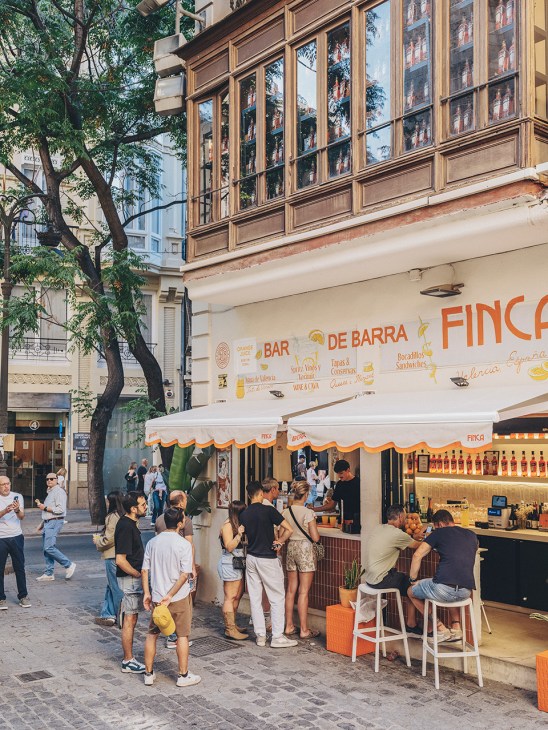
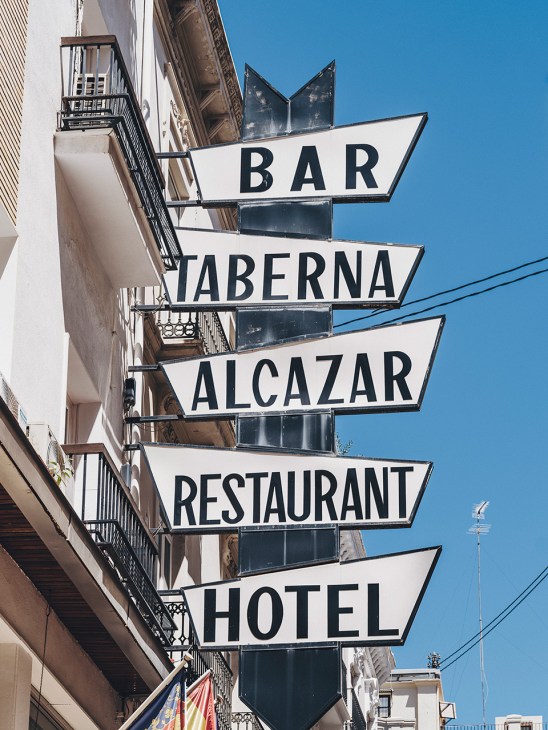
Albiach is one such business owner. After more than 10 years in Madrid, in 2021 she left her job in a multinational retail corporation and returned to her hometown to bring together her two passions: shoes and independent retail. “I wanted to open a local business but with a modern twist,” she says, noting that she couldn’t find many of the Spanish footwear brands that she loves in the city’s more traditional shoe shops. “As a native of Valencia and with Alicante being the shoemaking capital of Spain and home to a thriving industry, I have always believed in craft.”
Paula Romero also made the trip back home following a stint in Barcelona. After leaving the Catalan capital with her partner, Vicente Montaner, Romero founded her lifestyle brand, Perenne, and opened a shop near the botanical gardens. Flanked by a florist, a deli and a tapas bar, Perenne occupies a former leather shop on a lively street that houses a mix of traditional and newer businesses. Customers – mostly local residents on their daily stroll – are curious and open to innovative ideas, says Romero. “Barcelona has a well-established retail ecosystem but the pace is so fast that if you don’t keep up, you will get left behind,” she says, as she welcomes Monocle into her light-filled space. “Valencia, on the other hand, moves at a more leisurely pace than Barcelona and allows you to be the first at something, to introduce something new.”


This sense of possibility, combined with a strong history of manufacturing, led designer Jaime Hayon, one of Spain’s top designers, to settle in the city almost 15 years ago, somewhat by accident. Living a fast-paced life in London, Hayon came here to work on one of his designs for porcelain brand Lladró – and stayed. “I wanted to come back to Spain but I didn’t want to go to Barcelona or Madrid,” he says. “For a long time, Valencia was sold quite badly. But in the past 10 years, there’s been a big shift in how things are perceived. People arriving now are full of enthusiasm – they come and never leave.”
With an increasing number of people settling here permanently, rents have increased by almost 10 per cent year on year. There’s a sense that Valencia needs to preserve its character and traditions before it’s too late. In response, businesses and designers are championing local crafts and traditions. “Customers feel a strong connection to our products,” says Montaner. “Perenne’s scents take you back to your childhood when you were out in the orange groves, in the orchard, smelling fig trees or jasmine. Those things are ingrained in the surrounding environment and the people who live here.”
A short walk away, jewellery designer Candela Blasco, a native of Castellón, is similarly rooted in a Mediterranean ethos. After moving to Valencia, she studied jewellery design at EASD design school and her shop, Candela en Rama, sits just down the street from there. Designed by Valencian architects Enne Estudio, the shop features a wall of ceramic tiles by Cerámica a Mano Alzada and terracotta lamps by Barroluz, while an olive branch hangs above the counter like a sculpture. The adjacent workshop where Blasco works looks out onto the street, allowing passersby to observe a process that’s usually kept out of sight. “Candela en Rama is built on a few pillars: the Mediterranean and the sense of tranquillity it brings, craftsmanship and ceramics – which is something that represents our community – and the identity of Valencia,” says Blasco.
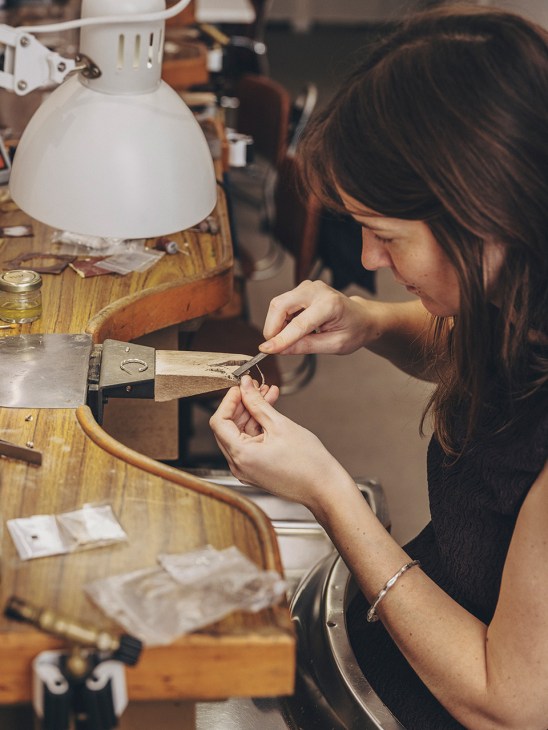
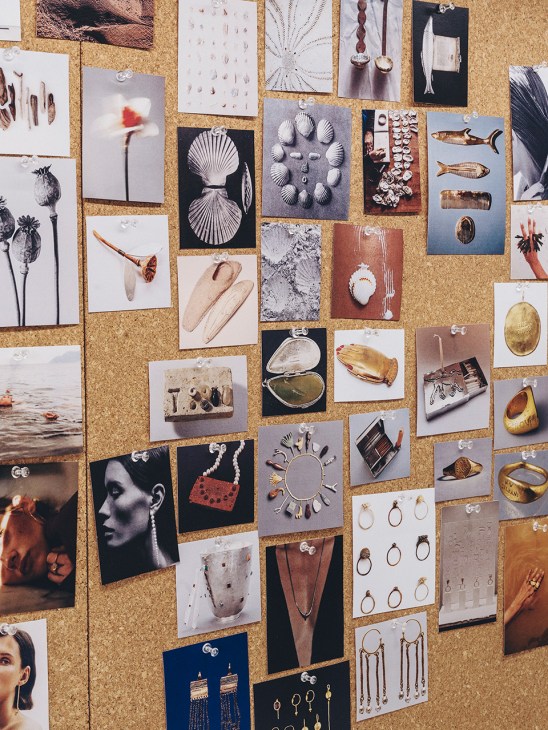
One collection, Sembra (Spanish for “sow”), reflects the brand’s strong links to the city: Blasco designed a series of jewels in the shape of grains of rice, referencing the wedding tradition of throwing rice on the bride and groom. “It’s a collection that really moves locals because they identify with it so strongly but visitors also find it very beautiful because they feel that it captures the essence of what Valencia is all about,” she says, referencing the city’s “infectious warmth” and accessibility.
As one of the most bicycle-friendly places in Spain and with 48 per cent of trips made on foot, Valencia is a true 15-minute city – and this benefits small street-level businesses. In Ona Negra, one customer sporting a pair of green sandals that she bought here a few days ago stops to say hello and show off her purchase. “In Valencia,” says Albiach, as she waves goodbye, “life is lived on the street.”
Valencia address book
Jardines del Turia
Where to go for a run before work
The park along the Turia riverbed is Valencia’s green lung, running through the city and passing under bridges.
Calles Pintor López, C/ de Sant Pius V
Fiveo
Where to get a coffee on your way in
Fashion retailer Fiveo recently added a café round the corner from its shop.
fiveostore.com


Seligra
Where to buy a suit
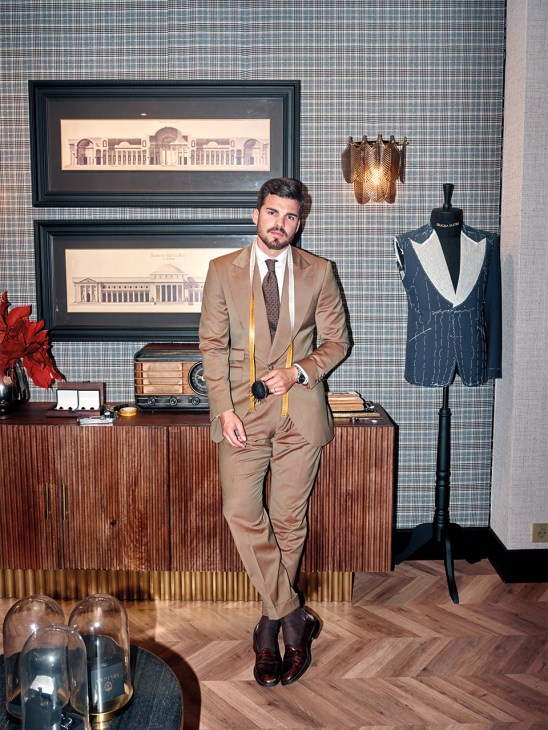
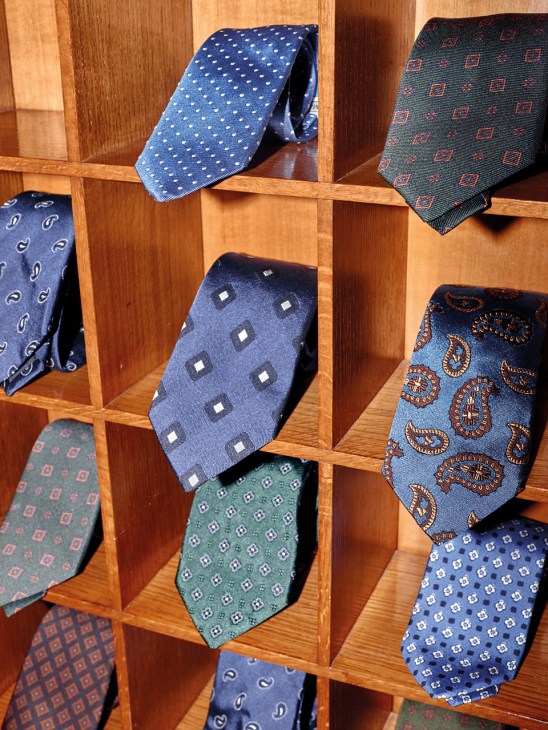
Victor Seligra founded this shop in 1965 and went on to become one of Spain’s most prominent tailors. It’s now run by his grandson Adrián.
seligra.eu
Chapeau
Where to find a smart pair of loafers
An edit of international brands such as Saint Laurent, Celine and Moncler.
chapeauvalencia.com
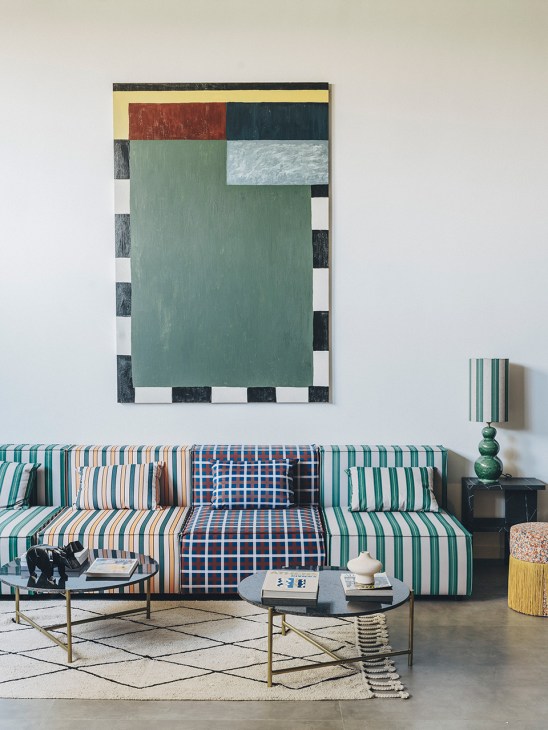
Really Nice Things
Where to pick up design gems
A respected interior-design studio that has been championing local artisans since 2006.
reallynicethings.es
Bar La Pilareta
Where to go for an after-work drink
This emblematic tapas bar specialises in seafood dishes including the typical Valencian clochinas mussels.
barlapilareta.es
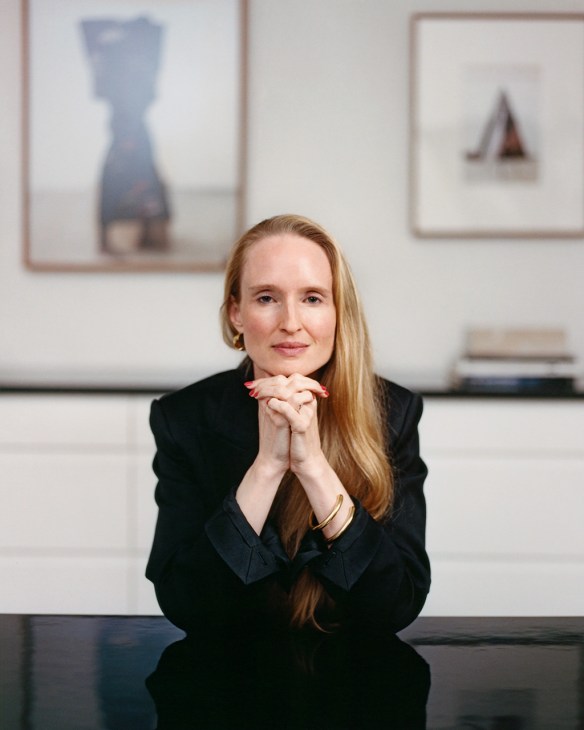
‘Fashion needs to make less.’ Another Tomorrow founder Vanessa Barboni Hallik wants fashion to avoid obsolescence
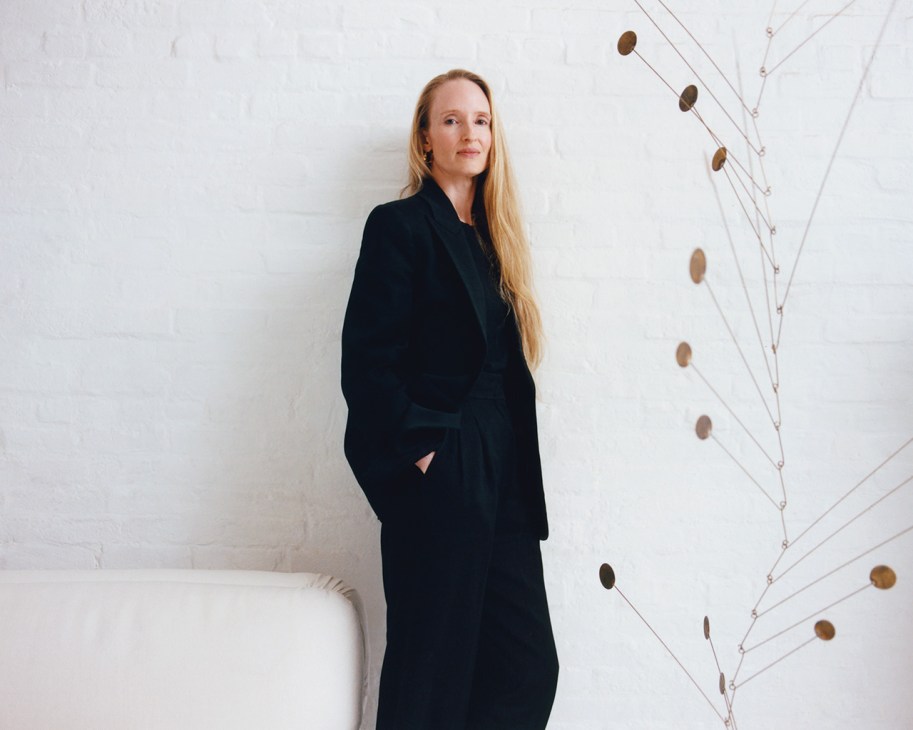
After a long career in finance with Morgan Stanley, Vanessa Barboni Hallik left to become the founder and co-CEO of Another Tomorrow, a luxury fashion brand that wants to change how the industry does business. Six years in, the New York label is establishing a model of what’s possible: embracing timeless style over relentless seasonality, while building on better farming practices, recycled materials and humane production. The result, Hallik says, is a stronger brand that also delivers much-needed ideas for change. In an equally contrarian move, she is open-sourcing the model so that the wider industry can adopt initiatives that the brand is helping to pioneer.
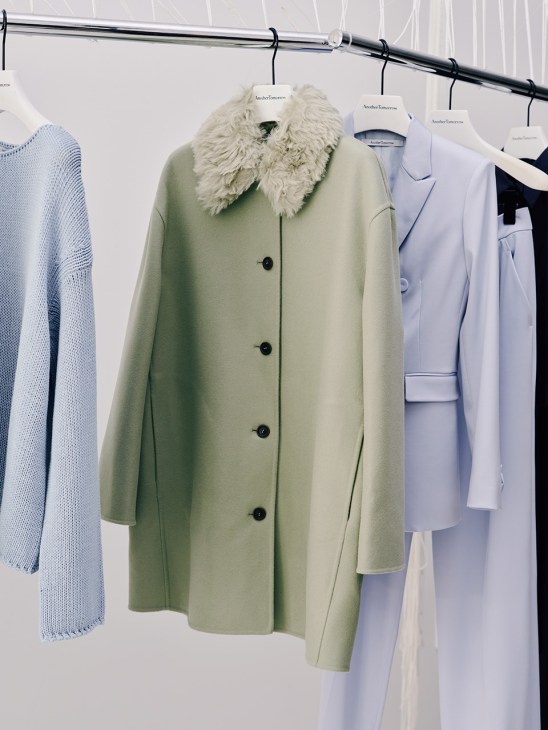
Another Tomorrow’s minimalist, sharply tailored collections prove that ambitious sustainability can produce exceptional clothes. The brand recently launched a Paris pop-up at Galeries Lafayette with interiors made from regenerated materials in collaboration with Milan-based designer Patricia Urquiola and retail furniture-maker Cimento. The temporary boutique comes at a moment of expansion for the brand, with new retail locations planned for Abu Dhabi, Dallas, Dubai and London, alongside its flagship downtown shop in New York and a second headquarters and showroom in Paris. It’s a promising indication that Another Tomorrow’s forward-looking approach is finding an enthusiastic audience.
What drew you from finance to fashion?
My parents drilled into me that a sense of purpose and service to a larger cause were fundamental and I was always trying to figure out how I was going to merge my upbringing with my day job. When I went to a conference on business and social responsibility, a speaker touched on the many problems facing the fashion industry. I suddenly realised the magnitude and complexity of fashion’s issues and that the industry didn’t seem to have a vision for how to solve them.
Why did you think that the fashion industry was in need of a different business model?
I was familiar with so many industries from my finance days, where I had witnessed a lot of progress. In energy, renewables were already taking off and costs were coming down. In automotive, there was huge change, with companies such as BMW taking control of their pre-owned-vehicle markets – which was a big inspiration for Another Tomorrow to maintain its own second-hand-clothing market. Even the food industry is a great example: the ideas of provenance, regenerative agriculture and organic practices have been making headway for decades. Yet fashion wasn’t improving. I thought that it was a deeply under-appreciated systems problem.
What does fashion need to change to improve its environmental impact?
At Another Tomorrow, we have learnt that regenerative sourcing and circularity hold the greatest promise for our model. For the industry as a whole, it comes down to improving farming practices, reusing raw materials at the sourcing level, prioritising natural materials and drastically reducing reliance on petrochemical sources. Fashion needs to make less. Overproduction must be significantly reduced and we need business models that don’t rely on planned obsolescence.
How does Another Tomorrow’s pop-up at Galeries Lafayette offer a microcosm of the brand’s ethos?
We’re working with partners who share our values. Patricia Urquiola, who’s a real pioneer in regenerated materials, designed modular-grid furnishings manufactured by Cimento, which uses stone powder and organic elements to transform discarded materials into new ones. Like fashion, architecture is one of the world’s most resource-intensive industries but we’re showing that a circular approach can produce beauty and functionality – the same principle that we apply to our collections.
Fashion is a notoriously risky industry. What made you believe that Another Tomorrow could succeed?
When you have such an industry, you need high gross margins to compensate for it. That puts pressure on costs and, especially in an unregulated environment, most companies start cutting corners – on environmental standards and workers’ pay. Our business model addresses that risk, which is why the product itself is evergreen and timeless, rather than subject to the seasonality that fashion usually pursues.
Why embrace an open-source model in such a competitive and traditionally secretive industry?
If people had a choice, they would choose Another Tomorrow. That’s where the brand name comes from and it’s a viable blueprint for how the industry can evolve. More collaboration and openness are required so we can all advance together – such as with Kering, with whom Another Tomorrow has a reciprocal and open relationship on sourcing. What’s needed in the industry is radical transformation – but the problems are solvable.
How to launch and build a business that matters
1.
Follow your purpose
No job has to be a forever job, so let what matters to you determine where you go next.
2.
Stay an outsider
People who are new to an industry can see possibilities to which insiders are often blind.
3.
Borrow shamelessly
Look to other industries for ideas and adapt their innovations to your own.