
The Entrepreneurs
How Bic has kept the ball rolling for 75 years – and what it has planned for the future
It’s highly likely that there are several Bic pens in your house – and you almost certainly will have no idea how they got there. Perhaps you bought a box of them years ago or swiped a handful from the stationery cupboard at work. Or maybe you found them at the bottom of a tote bag that you were handed at some conference or other. It’s also possible that you possess – again by means that you no longer recall – a Bic lighter and even a few Bic razors.
The French company, founded in 1945, is a paradox. It has sold billions of its products yet no one remembers buying them. Bic biros in particular have become a sort of collective possession. Most people wouldn’t think twice about picking up one of someone else’s; few would much care if theirs was swiped.

“One of the cool things about representing this brand is that I am with our consumers all day long,” says Gonzalve Bich, Bic’s 46-year-old CEO. “People will get up in the morning and shave with our razor. And then they will use our pen at work. Maybe when they get back home, they’ll light a scented candle with our lighter.”
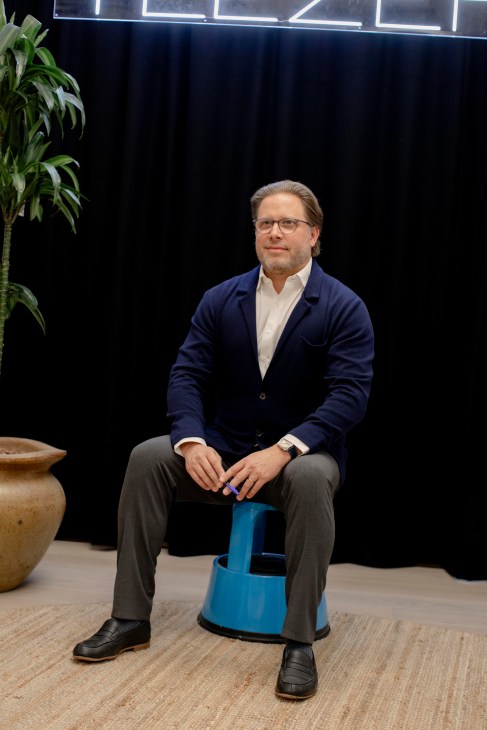
Bich meets Monocle at the London offices of Tangle Teezer, a hairbrush manufacturer that Bic acquired late in 2024 for €200m. Bich sees it as a congruent addition to a line-up of brands known for simple yet elegant everyday items. Also among Bic’s current portfolio are lines of stationery, digital notebooks and temporary tattoos (Bic Sport, its windsurfing offshoot, was sold in 2019).
In some respects, it’s surprising that Bic has survived, let alone prospered. Developments in technology, fashion and society over the past couple of decades almost resemble a conspiracy to destroy the company: keyboards supplanting pens; beards coming back in style, slicing razor sales; the number of smokers falling, reducing demand for lighters. But the company has weathered evolving habits through its strategy of fiercely protecting the brand while selectively expanding its offering.
Bich, whose father oversaw the family firm from 1993 to 2006, has been its CEO since 2018. When he steps down later this year, his successor probably won’t be a Bich – but the company has had leaders from outside the family before. Bic was founded in 1944 by his Italian-French grandfather Marcel Bich, who bought the patent for the ballpoint pen from a Hungarian inventor called László Bíró. (The fact that both of their names have become synonymous with that invention attests to their success.) Marcel was the beau ideal of the eccentric European aristocrat: an heir to an obscure baronetcy who collected art, ordered his shoes from Church’s in Northampton and enjoyed 12-metre yacht racing, underwriting several unsuccessful attempts to win the America’s Cup.
As Bich tells it, his grandfather refused to accept that cheap, everyday products couldn’t be stylish. “He was obsessed with design, form and function,” says the CEO. “He was very much of the philosophy that perfection is when you can’t take anything more away, rather than asking, ‘How much can we add?’ I think that we still stand for that idea. The original Bic Cristal pen remains one of our bestsellers 80 years later.”
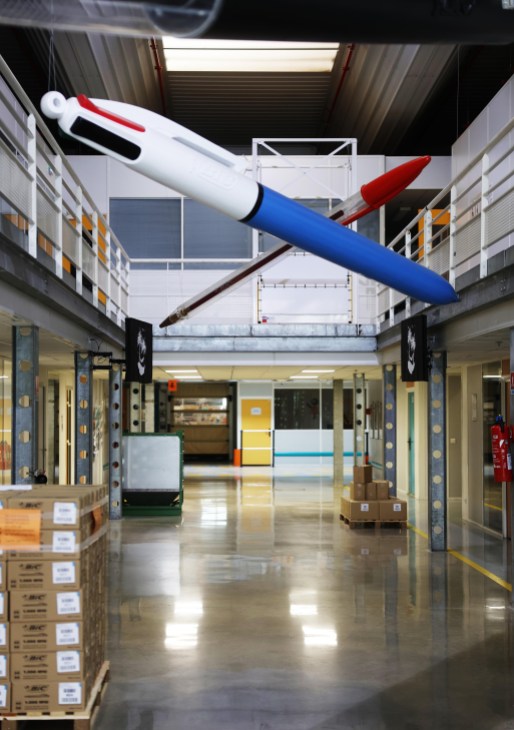
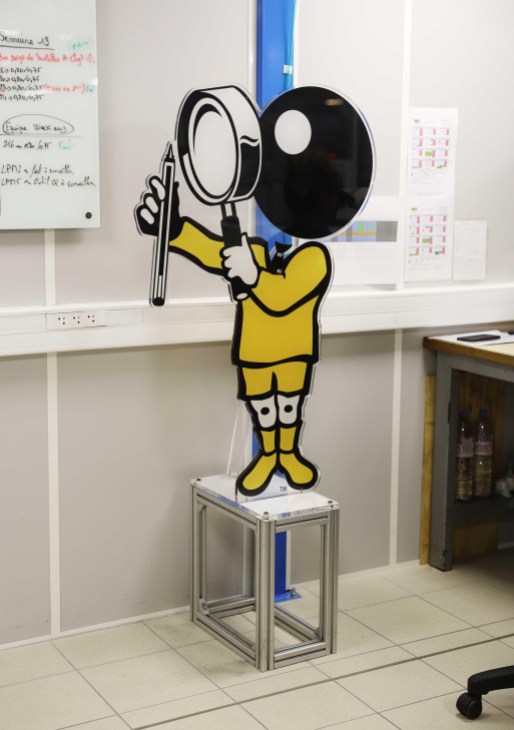
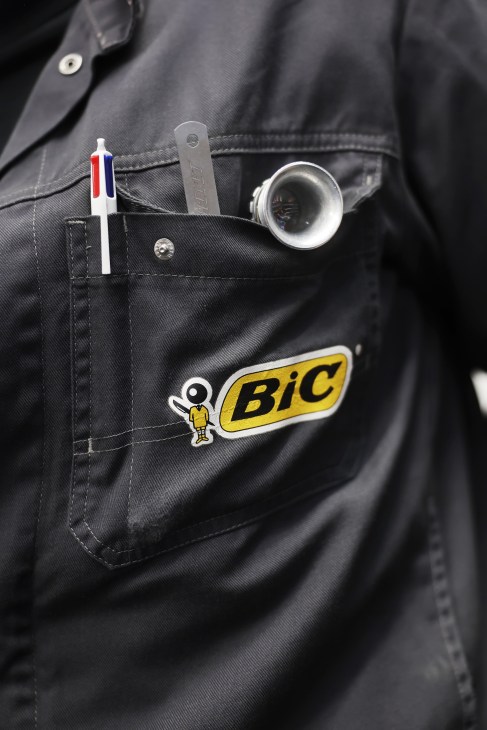
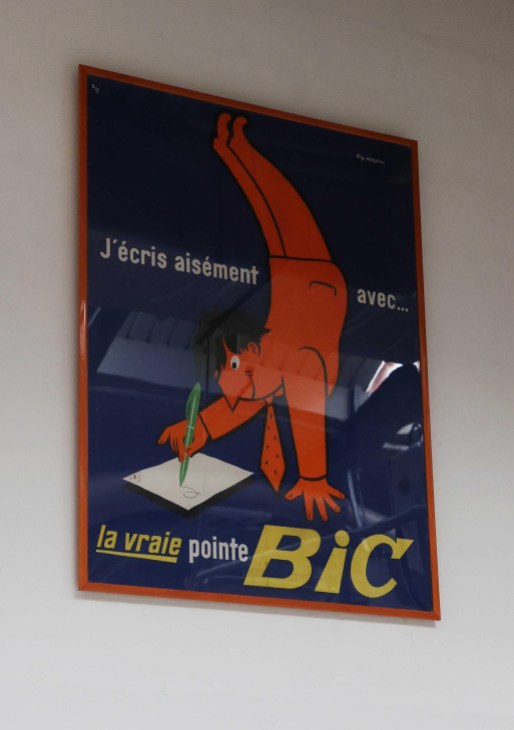
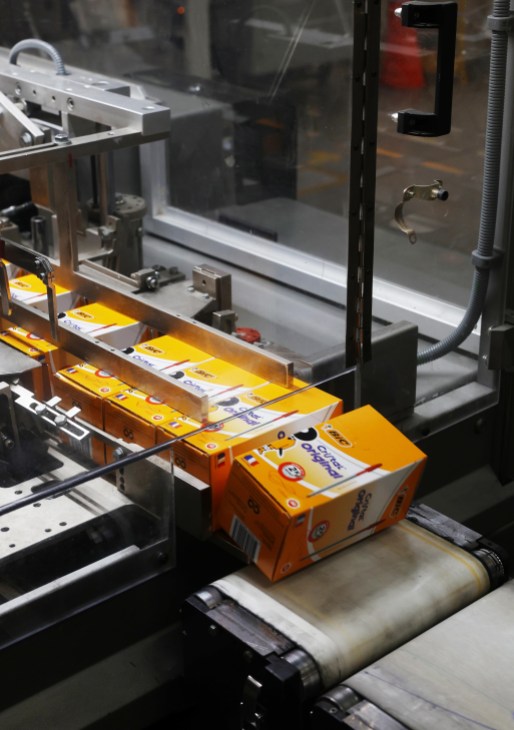
Like other Bic products, the Cristal pen is still made in France, at least for European consumers. Though the company now manufactures on five continents, it considers its Frenchness to be crucial. Bic’s HQ looks out on Boulevard Périphérique, a ring road in the Paris suburb of Clichy. Monocle is given a tour of the site by Clémence, the premises co-ordinator, who previously worked on the factory floor in the ink and cartridge workshop. Raw materials enter the facility at its southern end; finished, boxed-up pens exit at its north. Around the complex, we frequently spot the company’s cartoon avatar, Bic Boy: a schoolchild with a nib for a head, designed in the 1960s by Raymond Savignac. Bic boasts that it makes 25.4 million products every day across the globe. Watch the digital display atop a machine tracking how many red-ink Bic Cristals are being cranked out and this claim becomes eminently believable. The shift today began at 06.30. It is a tick after 11.00 and 44,723 more red Bic Cristals are on their way out into the world, possibly to terrorise the essays of the lackadaisical students of 44,723 weary teachers. (A Bic Cristal, assuming that you don’t lose it, will write for 3km. That’s a lot of statements to the effect of, “Disappointing… See me after class.”)
It is mesmerising to witness the precision and complexity involved in the manufacture of everyday items that will barely be spared a second thought once they leave here. The ball in the top of a Bic pen is made from tungsten carbide, which is polished with diamond paste and powder to give it its shape. To demonstrate how dense the 1.2 millimetre balls are, a Bic technician passes around a small milk-carton-like bottle containing about 500,000 of them. It is only half-full but weighs almost 2.4kg.
Each of these balls will soon be mounted in a brass nib and connected to the plastic tube that holds the pen’s ink. This tubing is extruded in a single length through metal trenches of cooling water at 200 metres per minute – so fast that Monocle can’t see the translucent material moving – before being sliced to pen length by a furiously whirring blade.
Some of the machinery is designed and built in-house. “It’s something that we feel strongly about,” says Clémence. “When you have an idea, it’s better to do it yourself.” Quality control stations put randomly selected components to work, cranking out spirograph-style patterns to ensure that all of the pens are working as they should. On one such station, there’s a picture of Bic Boy scrutinising a nib through a magnifying glass.

These days the idea of a “disposable” plastic product seems less like a beguilingly modernist selling point than a crime against the environment. Back at Tangle Teezer in London, Bich tells Monocle about Bic’s move towards recyclable products and packaging. In the past five years, he says, the company has gone from using 20 per cent recycled, reusable or compostable packing materials to 85 per cent – and is aiming for 100 per cent. “But we can only do that when it doesn’t affect the quality or technical characteristics of the product,” he says. “You don’t want the barrel of the pen snapping in half because we have used some kind of substandard recycled plastic.”
When Bich became Bic’s CEO, the company was grinding through what was, by its standards, a low ebb. Its 2017 annual report described, with an almost audible wince, “A Challenging Year with Unprecedented Levels of Volatility”. “Things were still working,” says Bich. “But they weren’t working quite as well as they had been. There’s that optimisation curve: once you go past it, things start getting painful and we were there.”
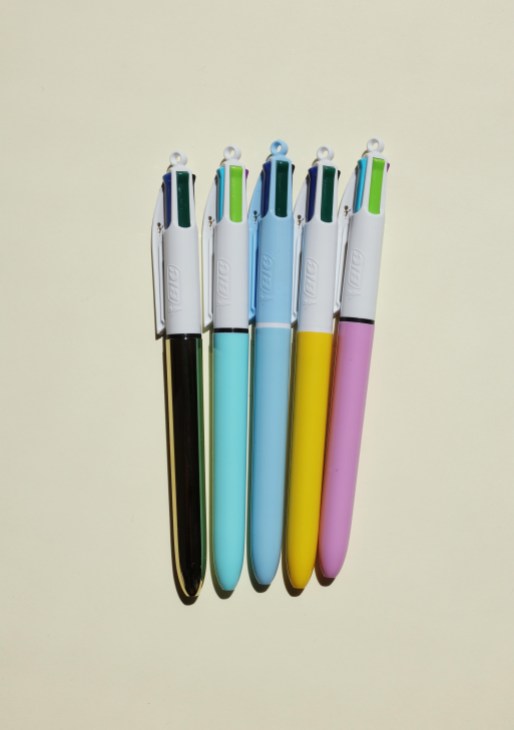
So Bich implemented “Horizon”, the first global strategic plan in Bic’s history. “We told our team, ‘You’re no longer just a maker and brand of pens. You’re a human expression company,’” he says. That meant diversifying, with forays into other products such as digital notebooks. “We opened up what we should be working on and what problems we should be solving for the consumer.”


Corporate history, however, is strewn with the carcasses of much-loved brands that, dissatisfied with the customers they had, chased after others who proved illusory. “That’s fair,” says Bich. “But if the consumer says, ‘This is just a commoditised product and I don’t care about brand A or brand B, or how it feels,’ then you have lost that battle. As long as you’re still the best-loved brand and most recognisable product, you can put it in Lagos, São Paulo, Tokyo, New York or wherever you want.”
After leaving Bic, Bich plans to concentrate on the foundation that he has launched to support families that, like his own, are contending with the challenges facing children with autism. “It will be about sharing experiences and perspectives, always with the goal of strengthening the family unit and ultimately the community,” he says, “It will yield better outcomes for everyone involved.”
Nevertheless, he sounds sorry to be departing and closes our interview with some advice that he would like to share with his successor.“Always respect the past,” he says. “Those things that made the tree strong, the nutrients in the soil in which the roots are buried, the flowers around the tree – cherish them and make them grow. And follow your intuition. You have to deal with data when you’re running an organisation this big – I have terabytes of it to look at and all sorts of experts to consult – but at the end of the day humans are the ones who make the ultimate choices. Investment A or investment B? Packaging colour A or packaging colour B? Trusting your instincts over the long term as a leader is incredibly important.”
bic.com
1988
Launch of the short-lived Bic perfume, which ceases production in 1991.
1990
Launch of a range of decorated lighters, joined the following year by Bic’s first electronic lighter.
1992
Bic purchases the US correction product Wite-Out to help its pen users correct their mistakes.
1994
French launch of the Bic Twin Lady bi-blade, a razor aimed at women, in pastel shades.
1997
Bic consolidates the correction product market by buying Tipp-Ex.
2001
The Metropolitan Museum of Art in New York adds the Bic Cristal to its permanent collection (the Bic Maxi lighter follows in 2005).
2004
Launch of the Bic Soleil razor for women and the Bic 3 – a triple-bladed implement – for men.
2017
Launch of Ubicuity, a collection of outdoor furniture made from recycled pens through a partner called Plas Eco.
2018
Launch of temporary tattoo marker BodyMark. (Four years later, Bic acquires Canada’s Inkbox and US decal brand Tattly.)
2019
Launch of Made for You, Bic’s first gender-neutral razor.
Marseille’s historic grape juice kiosk is pressing ahead once more
Marseillais entrepreneur Yannis Amokreze shelved his day job in fashion and set out to save his family’s grape-juice kiosk near Vieux Port in 2022. Once a mainstay of the Occitanie diet, jus de raisin was long touted as a healthy alternative to wine that could help to detoxify the liver – but the thirst for the drink dried up after the advent of mass-produced juices in the 1950s. Today, thanks to an increasingly health-conscious customer market and a rising demand for alcohol-free beverages, Station Uvale du Palais is pressing ahead and turning a profit. The family business, which was established in 1943 by a cousin of Amokreze’s uncle Eugène, is the only survivor of the area’s original eight stations uvales.
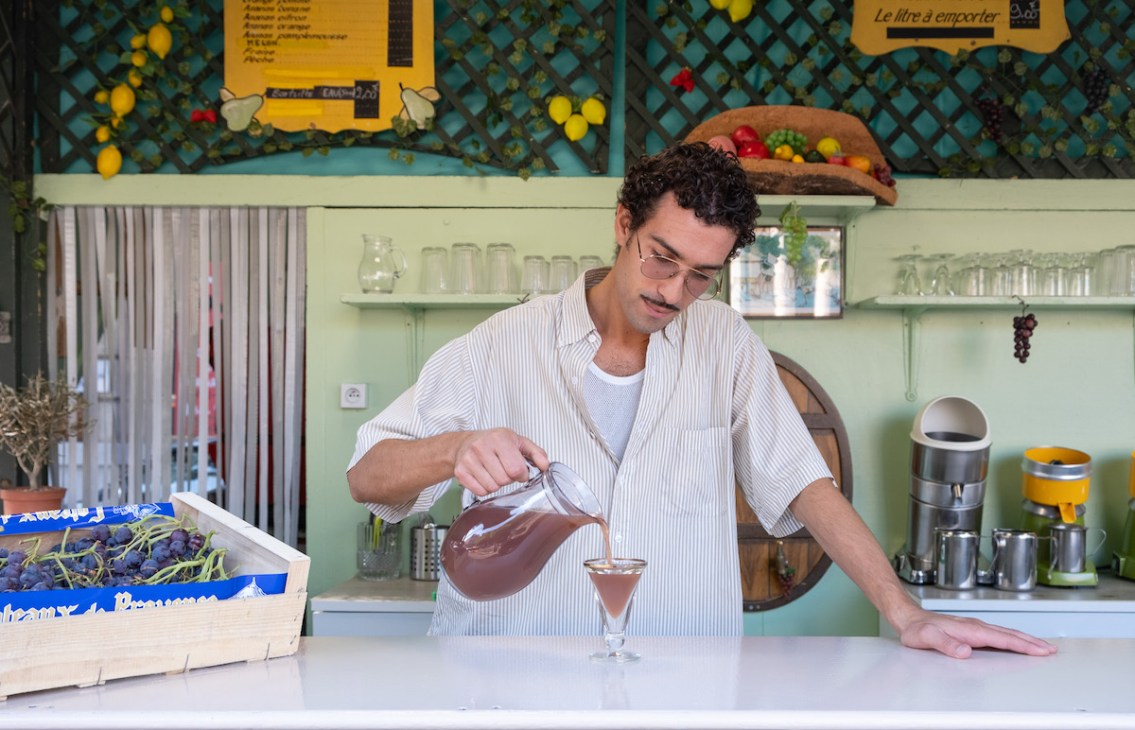
“I often welcome three generations from the same family,” he says. “ The elders come to honour a childhood memory, while the younger people discover something new.” The entrepreneur has maintained the profitability of his kiosk by favouring short distribution channels and working with seasonal fruit from local growers. Amokreze also takes a very personal approach. “For more than 40 years my family has worked with Jacques Daussant, a grape supplier based in Vaucluse,” he tells Monocle. The former president of the now defunct Fédération Française des Stations Uvales, Daussant was the original supplier for several of the country’s kiosks.

During high season, Amokreze visits Daussant’s vineyards every week to harvest the grapes that he presses by hand. “It’s an artisanal economy on a human scale,” he says, his pink-stained hands hinting at the morning’s graft. “It’s intense, absorbing work.”
Benefitting from mineral-rich soils and the warm Mediterranean climate, Amokreze harvests the region’s black muscat, white chasselas, Alphonse-Lavallée and cardinal grapes between August and October to create his jus de raisin. But the third-generation owner of Station Uvale du Palais also has an eye on modernising the Marseillais tradition. So he also presses melons, peaches, oranges, lemons, pineapples and grapefruit, expanding the kiosk’s business potential as people increasingly seek out alternatives to the sugary stuff found in supermarkets.
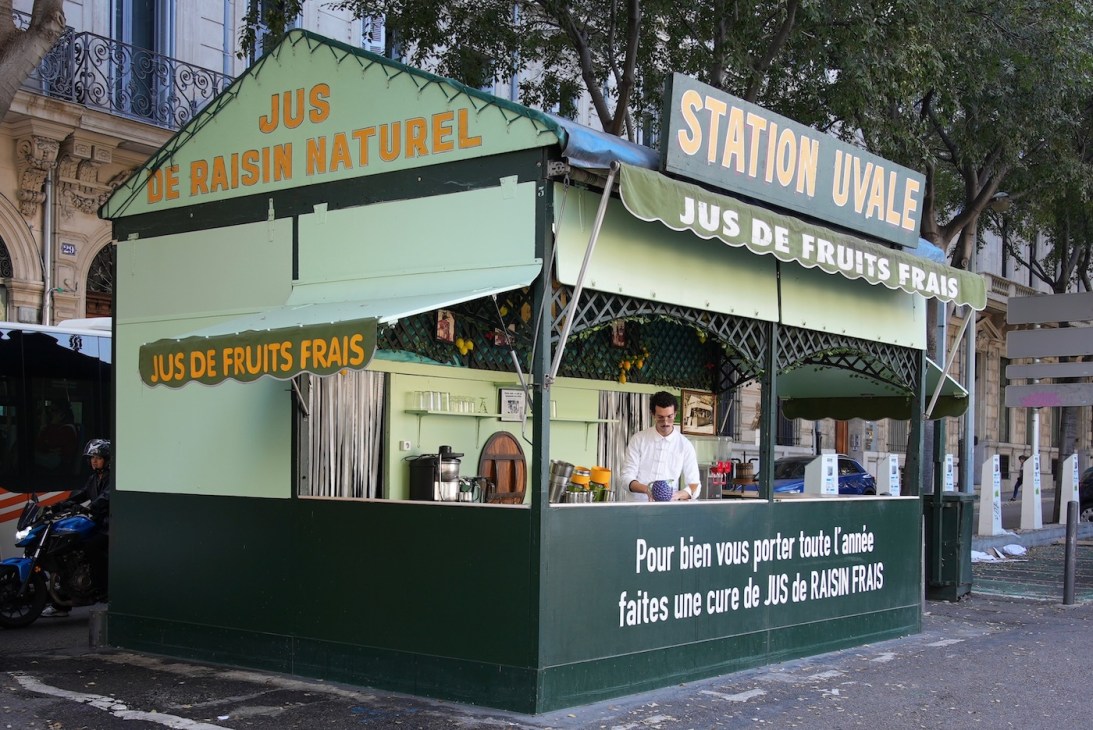
Served from a welcoming, green wooden kiosk, Amokreze’s juice isn’t an endeavour to scale then flip. He is determined to maintain the personability of service that his aunt and uncle worked hard to create. “You don’t only come to drink juice,” he says. “You come to share a moment at the counter.”
Does the future of fashion start with these six new materials?
Many in the fashion sector are determined to do better for the environment. The future of materials presents a major opportunity on this frontier – creating fabrics that can be produced without using the dyes or chemicals that pollute waterways. It’s also about crafting clothes that are hardy enough to go the distance and remain objects of value season after season – instead of contributing to the tonnes of textile waste that end up in landfills every year.
1.
Ventile
Developed in Manchester during the Second World War to keep pilots warm and dry if they ended up in the sea, Ventile is an admittedly vintage innovation – indeed, it was used in outerwear worn by the first climbers to scale Everest. Yet the hardy waterproof material is now remaking the world of wet-weather gear. In 2017, Swiss textile firm Stotz & Co acquired the Ventile brand, giving it a new lease of life. The material is enjoying a stylish renaissance: it’s now more commonly found on the catwalk than in combat situations.
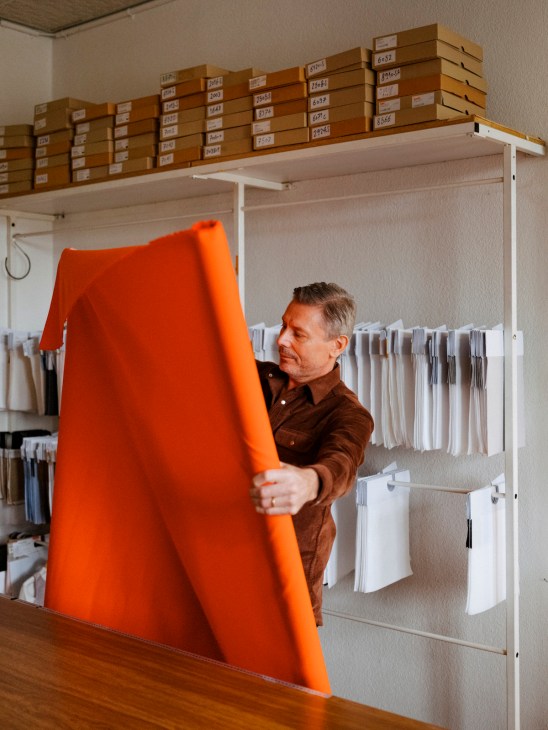
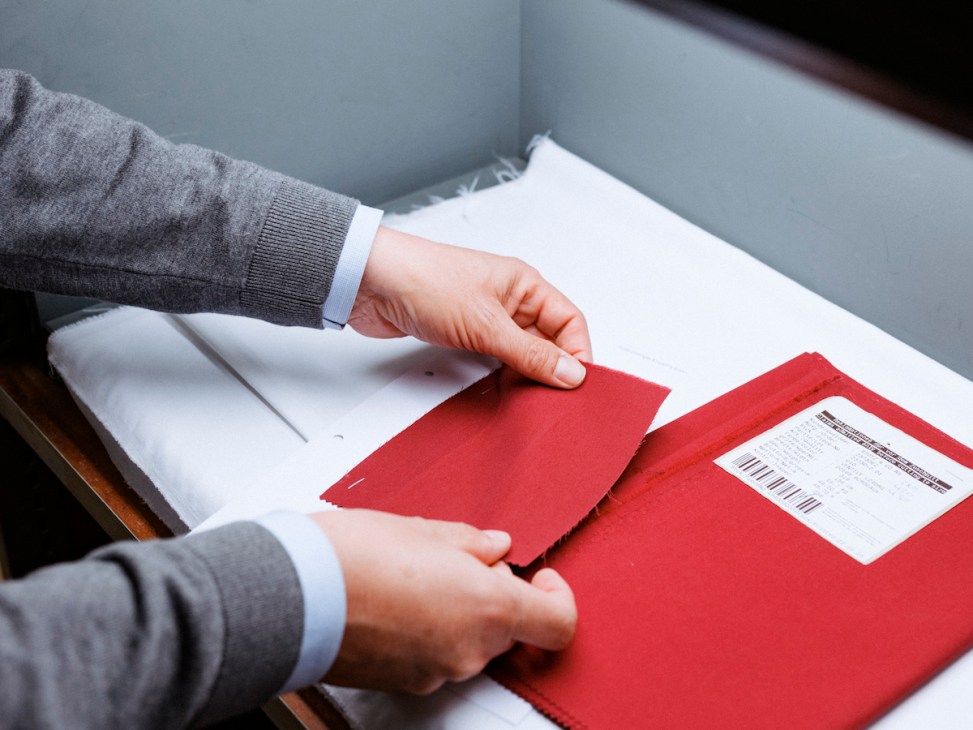
According to Daniel Odermatt, Stotz & Co’s brand director, Ventile’s big sell is that it is waterproof without relying on harmful “forever chemicals”, or PFAs. Woven from long-staple organic cotton, its fibres pull tightly together when it comes into contact with water, keeping moisture out. Though polluting, PFAs were historically the industry standard and were used in a wide range of waterproof outdoor clothing, including in popular materials such as Gore-tex. Now, though, the tide is turning: in the past year, several US states have banned their use in consumer goods and the EU has signalled plans to roll out similar measures. Brands are looking for alternatives.
As a result, demand for Ventile has soared in recent years, says Odermatt from his office overlooking the Limmat river in Zürich. “In 2023, Stone Island wanted a technical fabric in all-natural fibres. So it came to us.”
While Ventile is still used for limited runs of British and Swedish military immersion suits, the order book is now dominated by fashion brands. Lemaire, CP Company, A Kind of Guise and Loewe have all featured the material in their recent outerwear collections.
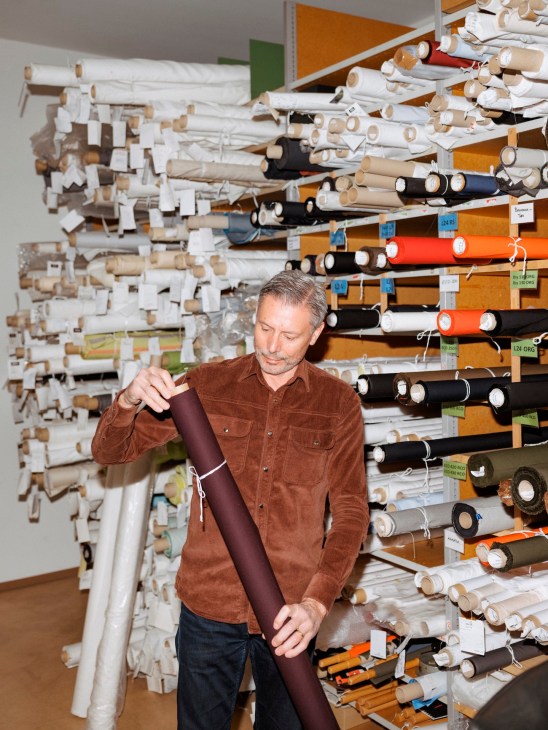
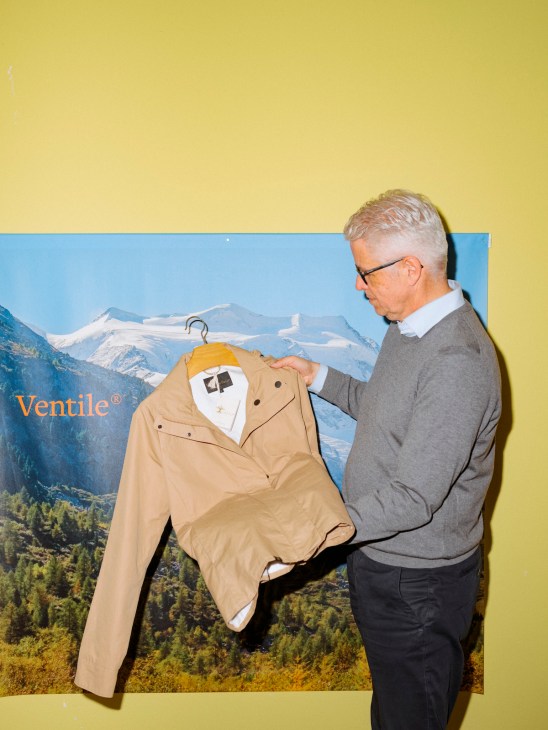
Though a mid-20th-century invention, Ventile still seems surprisingly ahead of the curve. To demonstrate its waterproofing credentials, Odermatt shows monocle two large containers stacked on top of each other; the one above is full of water, while the one below is empty. A sliver of Ventile fabric separates the two. “The fibre swells roughly 10 per cent so it gets waterproof,” he says. Though the material creates an effective barrier for water droplets, it also offers an impressive degree of breathability. Odermatt pumps air into the bottom container and Monocle watches as bubbles pass up through the Ventile and into the water above.
There’s still a big hurdle for many brands, says Odermatt: the cost. The process of making Ventile involves the use of expensive cotton and a laborious manufacturing timeline that includes weaving in northern Italy and dyeing in northern Bavaria. Odermatt says that he would consider some Asian manufacturing further down the line.
For now, however, Ventile is a proudly European product. “We are the benchmark,” says Odermatt. The transformation of its fortunes is indicative of European fashion brands’ restless search for materials that can give them an edge over the competition.
2.
Cozterra
Developed by Singaporean materials company Xinterra, Cozterra is a fabric treatment that sequesters carbon dioxide from the air. Twenty T-shirts embedded with Cozterra can capture the same amount of carbon dioxide as a mature tree in a single day; the carbon is then converted into a harmless substance when the tops are washed. Clients include Singaporean activewear label Zoda and Brazilian clothing brand Malwee.
cozterra.com
3.
Eco Nasi
Made in Kenya from pineapple waste, Eco Nasi is a sustainable alternative to leather that has the look and feel of the real thing without the need for water-intensive, carbon-emitting treatments. Founded by Kenyan entrepreneur Olivia Okinyi, the Nairobi-based company makes good use of the natural abundance of hard-wearing cellulose in pineapples.
econasi.com
4.
Solea
From Madrid-based textile innovator Pyratex, Solea is a series of cotton fabrics that offers an important upside for European buyers: every strand is traceable to its point of origin on the continent. With strict EU regulations on tracking water use and labour conditions, clients are assured that the Spanish fabrics are made from cotton grown near Seville and comply with Europe’s high standards.
pyratex.com
5.
RCO100
Catering to fashion brands including Alexander McQueen and Vivienne Westwood, Swiss company Säntis Textiles has developed a machine named RCO100 to recycle cotton waste into yarns with the durability and feel of premium virgin cotton. Cutting out the use of chemicals, fresh cotton production and the need for water, the yarn can be used for canvas, denim, twills and more.
saentis-textiles.com
6.
Desserto cactus leather
Retaining leather’s patina and strength, the humble cactus is the base for Mexican entrepreneurs Adrián López Velarde and Marte Cázarez’s vegan leather, Desserto. Thanks to the dry conditions in which cacti grow, the textile is sustainable, humidity resistant and has few inconsistencies in the grain, earning it attention from the likes of Adidas, BMW and LVMH.
desserto.com.mx
Bristell Aircraft’s smooth ride from passion project to global player
About 15 years ago, Czech aircraft designer Milan Bristela saw a significant jump in the maximum speed at which small planes could travel. “But when I saw the pilots getting out of these aircraft, they would be complaining about back pain,” he says. “We realised that there was no plane on the market that was providing a speedy and comfortable ride. So we decided to focus on the ergonomics and spaciousness of the cockpit to make people feel more relaxed and safe.”
Leaving his corporate job in 2007, Milan teamed up with his son, Martin, and went on to found their own business, Bristell, to address this gap in the market. “At first, the idea was really just to build a few aeroplanes a year,” Martin tells Monocle. “We thought that it would basically be about playing with this idea – and that it would be our job, yes, but also our hobby.”

But what began as a passion project in a small, rented workshop space has become Bristell, one of the world’s premium lightweight aircraft manufacturers. Employing about 140 engineers, designers and mechanics, it now has an impressive production floor in a 10,000 sq m factory in southeastern Czechia where aircraft are built from scratch.
The company produces more than 110 two-seater planes composed of lightweight aluminium per year. The aircraft pass through a complex process of welding and assembling before being fitted with engines in a cavernous hangar. The finished planes are dispatched to customers in countries from the US to Germany, for training pilots or as private aircraft for customers looking to crisscross long distances with ease.

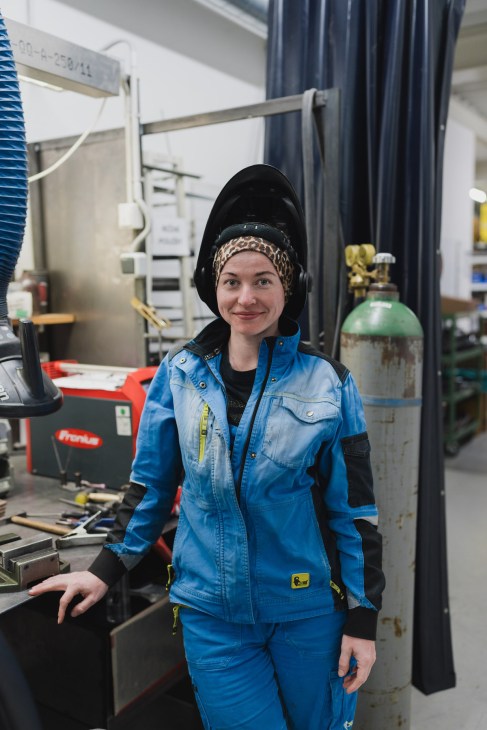
“Every day, when I come into work, I take a walk through the factory to see what everyone is up to,” Milan tells Monocle. “My son and I developed every plane that is being constructed here as a prototype. We know exactly how long it takes to put them together because we build all of the models first with our own hands.”
Like his father, Martin is closely involved in the day-to-day running of the company. “I make my way through this place once or twice a day too,” he says. “It means we can keep our eye on the quality and make improvements as quickly as possible.”
Creativity and ingenious engineering comes naturally to the duo. “I built my first tractor when I was in secondary school,” says Milan. “In communist-era Czechia, you would have to wait years to earn enough money to buy things such as a tractor but we needed them to grow food. So I decided to build one myself. It was a metre wide, two metres long and had a car engine and gearbox. It allowed me to help with farming our land.”

For both father and son, keeping aviation manufacturing based in Czechia is also a matter of national pride. “Our country has a strong tradition when it comes to aircraft manufacturing and design,” says Martin. “The airfield that we operate out of is owned by aircraft manufacturer Let, which was founded just before the Second World War. About 40km away, we have Zlin, which is famous around the world for how well its planes perform in aerobatic competitions.”

“Our mentality is all about creativity,” Milan says of his countrymen and women. “It allows us to develop new things quickly.”

Three entrepreneurs who switched careers after being inspired by something in their kitchens
1.
Leon Foo
Singapore
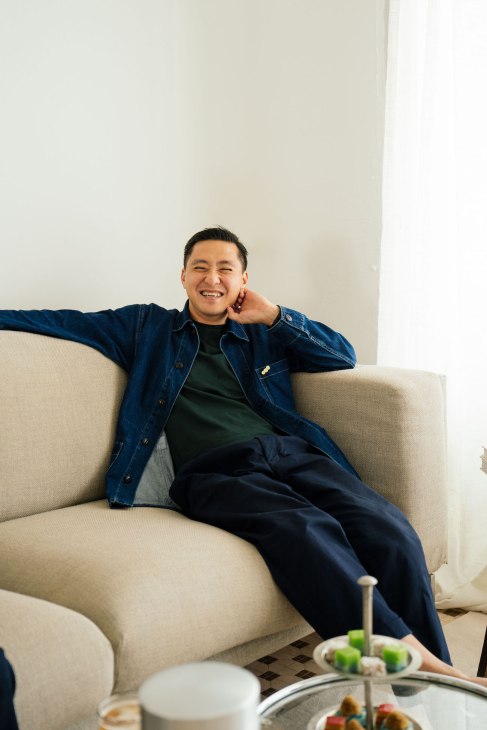
Singaporean entrepreneur Leon Foo left behind a career in accountancy to found his roastery, PPP Coffee, in 2009. But that wasn’t the end of his journey. “In 2018 I discovered how controlling the temperature, pressure and solubility of a coffee machine would create an opportunity to transpose features from a £15,000 industrial machine into a £300 capsule one,” says Foo.
This led to the launch of the Morning Machine in 2018. The Nespresso-capsule-compatible contraption allows users to control the temperature, pressure and water-to-coffee ratio through an app. “We are still one of the very few companies that are laser-focused on coffee drinkers looking for convenience,” he says.
Last year, Foo followed up the Morning Machine with the Morning Dream, which helps home brewers froth café-grade milk with precision. “We hope to become the Spotify of the coffee world. Just like how the streaming platform connects artists to listeners, we hope to connect roasters with coffee drinkers.”
drinkmorning.com
2.
Shiza Shahid
USA

In 2012, Pakistani entrepreneur Shiza Shahid and Pakistani activist Malala Yousafzai founded the Malala Fund, which lobbied for funding for young women to access education, especially in countries where there are significant barriers. Shahid’s next solution was to a more domestic issue. Upon migrating to the US at the age of 18, she found an outdated kitchenware industry in which items were riddled with toxic chemicals. She launched cookware brand Our Place in 2019 alongside her husband, Amir Tehrani.
“At the time, the kitchenware industry felt exclusive – we leaned into inclusivity,” says Shahid, who wanted her brand’s imagery to show the product in kitchens with more realistic, messier dishes. She was determined to prove that the kitchenware industry didn’t need to rely on sometimes toxic PFAs (chemicals widely used for their grease-resistant properties). “Our Place holds more than 200 patents but much of the sector is still doing things the old way,” she says.
Its next foray is into kitchen appliances. “The UK market loves air fryers but most are made from plastic and coated in Teflon,” says Shahid. Her version is made from stainless steel and glass and uses a patented, non-toxic Thermakind coating.
fromourplace.co.uk
3.
Gen Terao
Japan
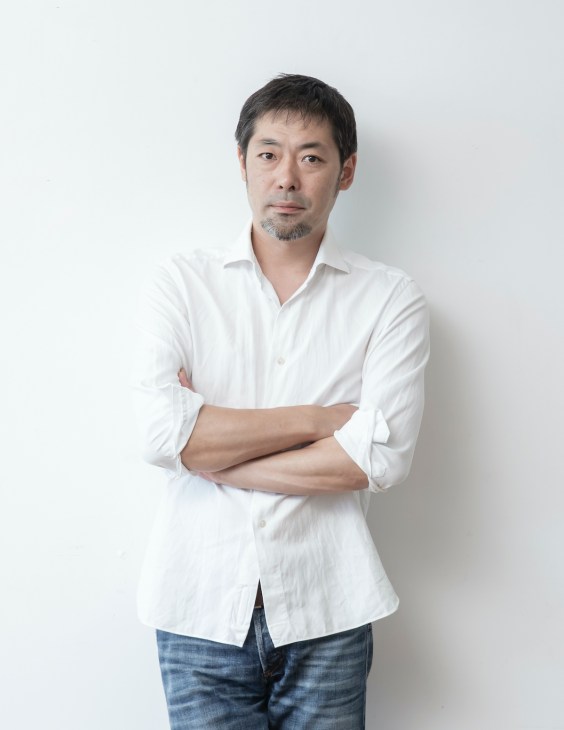
Rock musician-turned-entrepreneur Gen Terao founded home appliance brand Balmuda in 2003. “We realised that many kitchen appliances were just made for convenience,” he says. Tokyo-based Terao wanted to create something stylish as well as functional. Among a line-up that includes coffee makers and hot plates, the bestselling product is the much-copied toaster (two million sold and counting), which steams bread with precise temperature control to achieve a crispy exterior and a soft, pillowy interior.
Terao is more inspired by his travels than by market research. “I see my music career as fundamentally the same as my work in kitchenware,” he says. “In my time as a musician, my perspective shifted. I moved from wanting to be the most popular hitmaker to aspiring to build a company that could genuinely contribute to people’s lives.
Whether I’m holding a guitar or a screwdriver, these are tools that allow me to create something meaningful.” The toaster has been given a reboot this autumn, with better temperature control for perfect crunchiness, while the design “keeps the essence of the current toaster with a little more elegance”.
Innovative entrepreneurs Ari S Heckman and Charles Brun bring fresh visions to hospitality and eyewear markets
1.
Ari S Heckman
Ash
While most US hospitality brands would be looking for big-city locations, Ash is taking a different path, opening in North American cities overlooked by larger companies. The four properties (a fifth opens this summer in Richmond, Virginia) are the work of Ari S Heckman. Part architect and part interior designer, he is also a property developer, furniture buyer and hotelier. He runs a creative studio in New York – a city where, pointedly, he doesn’t run a hotel.
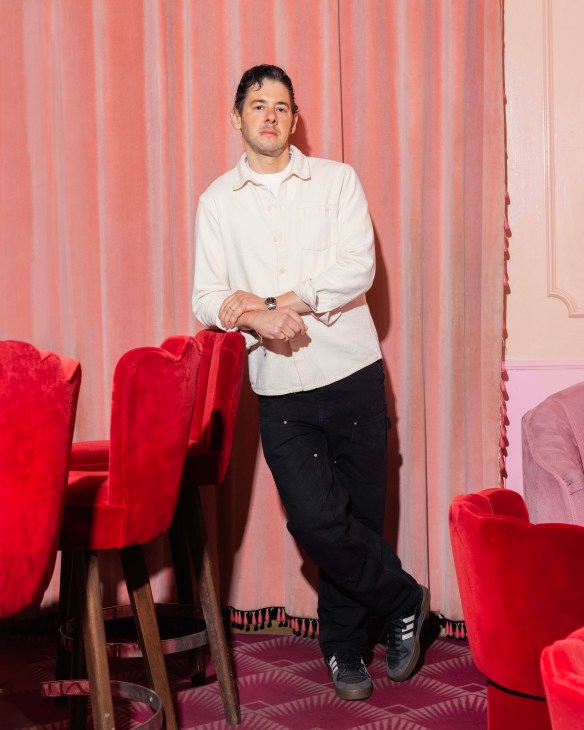
Heckman seeks out what he calls “underdog” cities with overlooked building stock. In 2014, Ash’s first hotel, The Dean, opened in a former brothel in Providence, Rhode Island’s state capital. (It was renamed The Neptune in May 2025.) The Siren in Detroit resides in a 13-storey Italianate Renaissance-style skyscraper, which Ash restored to its 1920s period glory (when the city, perhaps not quite uniquely, was known as “the Paris of the Midwest”). Hotel Ulysses embraces Baltimore’s Gilded Age stateliness with a touch of camp, says Heckman, in homage to hometown filmmaker John Waters.
Ash’s shops sell vintage ashtrays, pyjamas and umbrellas, as well as a selection of custom furniture and bath products. Meanwhile, Ash Staging outfits homes for sale or rent in the hotter New York and Los Angeles property markets. Monocle sat down with Heckman to find out more.
What drew you to the hotel business?
Vibrant cities always have at least one great hotel. They become a living room or embassy for their city – they’re more than just a place for lodging. People used to go to hotels just to send a telegram. I lamented that I grew up in the era of postwar suburbanisation. I was mystified that we had vibrant, walkable urban environments all over the country – not just in New York – and hollowed them out. I found that scandalous and depressing. But I came of age during the first wave of urban revitalisation, which has been an animating force for my career. The prospect of participating in the comeback of the American city by being a hotelier excited me.
Your hotels have a cinematic quality. Was that intentional?
I want a guest to walk through the front doors and feel an all-encompassing attention to detail. Our scent is filtering through the air; the playlist matches the time of day. Every detail of the interior, from the furniture to the wall finishes, feels super keyed into the building that you’re standing in. The lighting is just so. Those attributes create this sense of fantasy and escapism, which is our value proposition. Obviously, it’s a priority that everyone gets a good night’s sleep but it should feel as though you’re going on a vacation within a vacation or on a trip within your business trip. You’re on set and living in this immersive world. I want to build multifaceted snow globes that someone can inhabit when they visit us.
Any favourite designers or furniture makers for your interiors?
Everything is custom or vintage. I love acquiring found objects and antiques, so we’re constantly shopping around the world. At our properties you can’t just identify where something came from off the shelf, other than maybe the plumbing fixtures – and we sometimes custom-design even those. For a hotel, that’s a maniacal approach. It’s why the projects take so long. Often something is particular to a hotel and it will never be made again.
Why underdog cities?
Global cities have become like expensive luxury goods. Creators and coolness have been pushed out. Underdog cities have become the places where culture is being made and nightlife is happening. Opening a hotel in Baltimore or Detroit – I like the idea of changing people’s perception and creating a sense of discovery. Then we become a partial catalyst for other new openings around us. I’m so attracted to cities because they have this unique kinetic energy: activity becomes contagious, like a flywheel effect. That’s harder in a suburb.
So no Ash country retreat?
Never say never. We are urban-focused but I am interested in other types and styles of hospitality. I would love to do an old motel project. We’re also looking at international growth and expansion to Europe and Latin America. Europe has some fascinating markets and gateway cities such as Genoa and Naples. Even Rome. We model our approach on European hospitality. We’re definitely looking beyond just underdog cities. I like underdog buildings and neighbourhoods too – places where you’re reimagining or doing something unexpected. The definition is becoming more elastic as we mature but the ethos is the same.
ash.world
2.
Charles Brun
Izipizi
“It’s a friendship story,” says Charles Brun, who co-founded French eyewear brand Izipizi in 2010 with former schoolmates Xavier Aguera and Quentin Couturier. “It’s also a family story.” The trio, who grew up together in Lyon, drew inspiration from their stylish mothers, who lamented the lack of off-the-peg but well-designed spectacles available at petrol stations and pharmacies. “Our idea at the time was to design and create cool reading glasses,” says Brun.
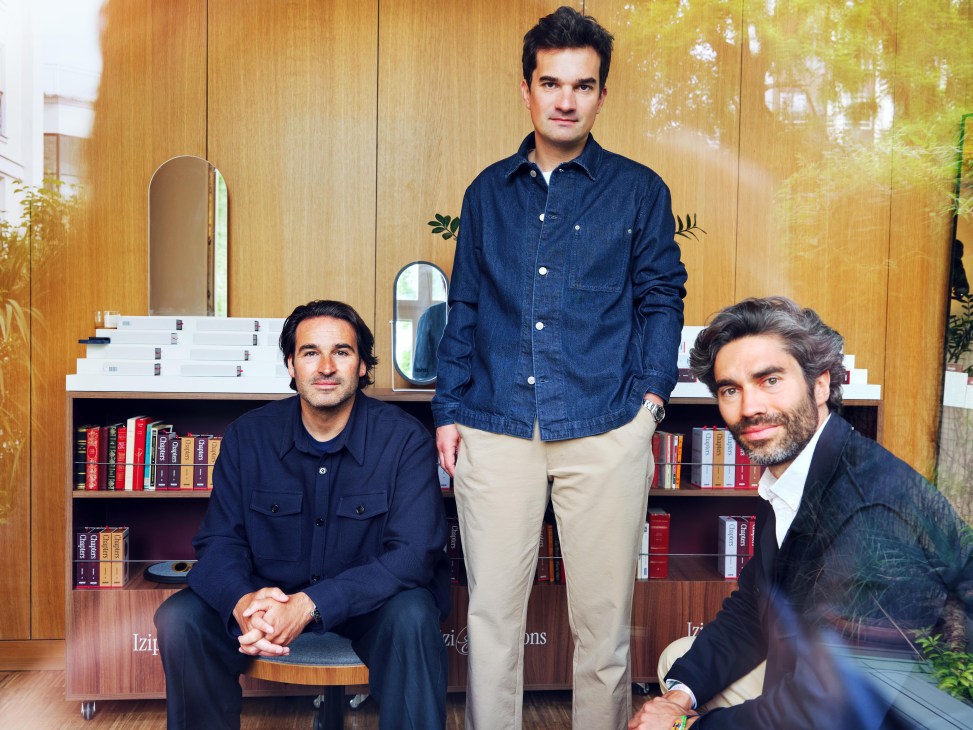
Now, 15 years later, the brand is setting its sights on further expansion into the US market. “We love working out of here,” says Brun as he whizzes Monocle through Izipizi’s New York office. It’s not quite as big and impressive as Izipizi House – the company’s HQ in Paris, which has a sunny courtyard – but it’s a nice space for the US arm, which has a team of eight employees. Brun used to travel frequently between France and the US but since appointing Jonathan Crespo – formerly global senior director at Oliver Peoples – as Izipizi’s North America CEO in 2024, he now visits just once a month.
Izipizi has a warehouse outside Chicago and the sunnies and specs are now stocked in more than 600 shops in the US, with more partnerships on the way (including with Goop). The brand is also testing the waters with Amazon, which will stock a core collection for a six-month trial. It’s more mass-market than usual for Izipizi, which has mostly leaned towards niche, independent stockists so far – but Brun believes that if you want to bring a European brand into the US market, you have to adapt. “We realised that everybody buys things on Amazon, including our customers,” he says.
This is all part of the plan to improve Izipizi’s footprint. “We believe that the US should be our biggest market,” says Brun. Approximately 75 per cent of the brand’s sales are concentrated in Europe but America is the brand’s largest market outside the continent. The team is meeting brokers and agents in New York to scout out locations for potential retail spaces. (Los Angeles and Miami are expected to follow.)
When the friends first launched the brand, they favoured selective distribution. “We wanted to be in the best shops around the world,” says Brun. The first major retail breakthrough came when Colette, the iconic Parisian concept shop founded by Colette Roussaux, agreed to stock their wares. “Colette understood the need for stylish options,” he says. The resulting exposure helped them to stake out space in the market. “During fashion week, tastemakers and buyers from across the globe would visit to see what products were featured,” says Brun.
Izipizi expanded into other Parisian retailers including Merci and Le Bon Marché. It secured spots in London in department stores such as Harrods and Selfridges, as well as in Asia, which now represents about 10 per cent of the brand’s global turnover. South Korea and Japan are major markets. When it launched a collaboration with New York-based Engineered Garments in Tokyo, the line sold out in three days. But Izipizi turned down many proposals from larger chains. “We didn’t want to damage the brand,” says Brun. “We were in the mindset of building it step by step and making sure that we had the best shops.”
What sets the company apart is that it offers sophistication while keeping products affordable, with an average pair costing about €50 or €60. The brand has also remained relevant by offering new riffs on classic designs, as well as dropping fresh products and collections. One big bet is a range developed with a Swiss researcher for those who struggle to fall asleep. The glasses block blue light, aiding the brain’s natural melatonin levels and helping people to doze off. Izipizi tested them on 300 insomniacs over the course of three months. “Eighty per cent of them told us that they loved it,” says Brun.
Another focus for the brand is sustainability. It has cut the carbon emissions of producing its glasses nearly in half since 2019, becoming B-Corp certified in 2023. By the end of 2025, the company is aiming for all of its eyewear to be made from bio-based materials. For the past 12 years, it has worked with a family-owned supplier in Taiwan. “We chose it because of its values,” says Brun, who sees this as one of the brand’s best decisions – not least because of the tariffs that the US has imposed on countries including China. “Our philosophy is not to overreact,” says Brun. “Step back, observe and take time before making a decision.”
Expansion is crucial for Izipizi but so is staying true to its principles. Despite being available in 90 countries and more than 7,500 shops, the brand is trying to preserve the close-knit, family-like atmosphere that fuelled its launch 15 years ago. “It has been a wonderful adventure and we want it to continue,” says Brun. He believes that a successful company is built on a strong team. “Without partners, I would be nothing. Izipizi wouldn’t be ‘easy peasy’.”
izipizi.com
Why selling a brand is about getting back to basics
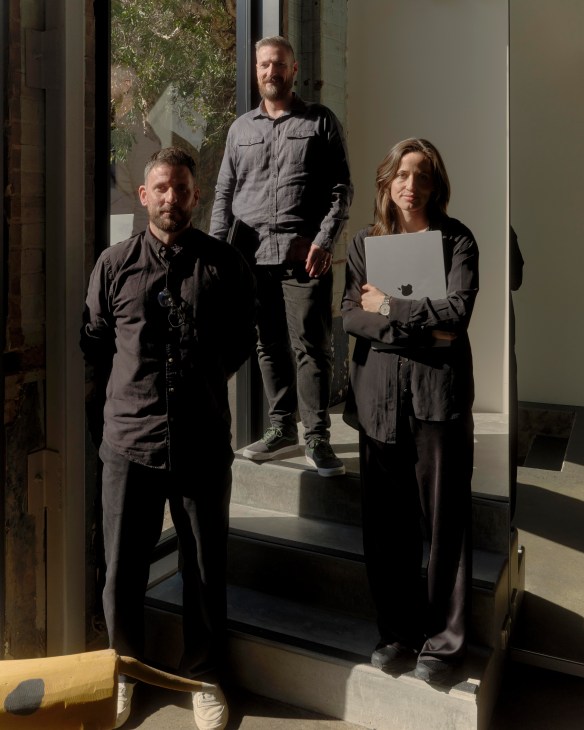
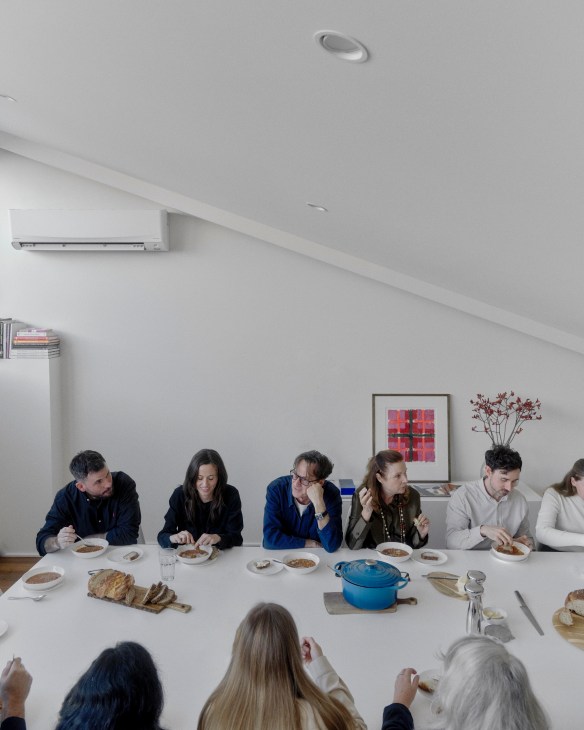
“Terence Conran would say, ‘It’s better for customers if everything is designed with a single pair of eyes and a singular vision,’” says Mark Landini. After starting his career in London and working for the likes of Fitch & Co – and then as creative director of the Conran Design Group – the Sydney-based designer founded Landini Associates with his wife and managing director, Rikki, in 1993. Today they have 24 employees, four children and Chester, a Staffordshire terrier-sheepdog mix, who is the most vocal presence at the firm’s office in Surry Hills.
Over the course of more than 30 years, the studio has become renowned for developing cohesive brands across retail, hospitality, beauty and more. Despite its current standing, however, it had less polished beginnings. The initial idea for the practice came about after a night of drinking.
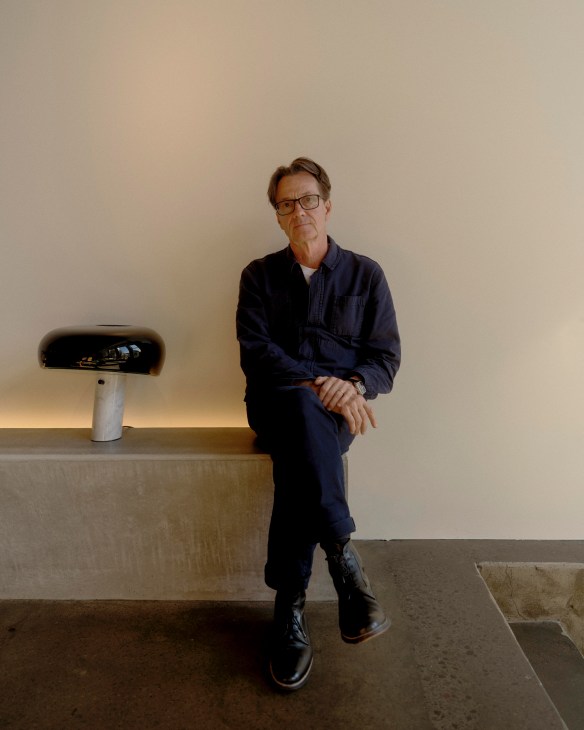
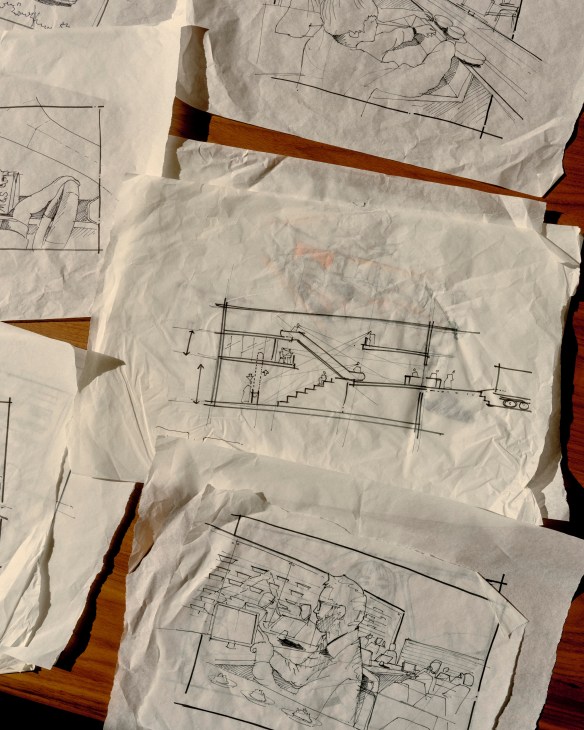
Landini, who had long worked for Conran, had been offered a partnership in an architectural design outfit in Sydney but realised within a few weeks that it wasn’t for him. “We bought a couple of bottles of cheap champagne from a shop called Liquorland,” he says. “About two bottles in, I wrote a letter to the managing director of Liquorland and said, ‘Your bottle shops are rubbish. You’ll never have any credibility in wine. You need to start a wine shop.’”
Landini never imagined that he would receive a response but the phone rang within days and a relationship began. This eventually led to him designing the company’s new fleet of wine shops known as Vintage Cellars, then reinvigorating the Liquorland brand. “We had our first clients,” says Landini.
The practice has since become renowned for reviving and reinventing brands, with a broad church of clients. Supermarket firms Aldi and Esselunga, fashion labels Glassons and Petit Pli, Australian tea retailer T2, cosmetics brand Jurlique and even McDonald’s are now on Landini Associates’ books. And while the clients and the end products are substantially different, there is a consistent approach across the firm’s creative process.

“We have this thing called the blindfold test,” says Landini. “The idea is that if you were kidnapped, blindfolded and then taken to a brand’s space, you should be able to recognise exactly where you are as soon as the blindfold comes off.”
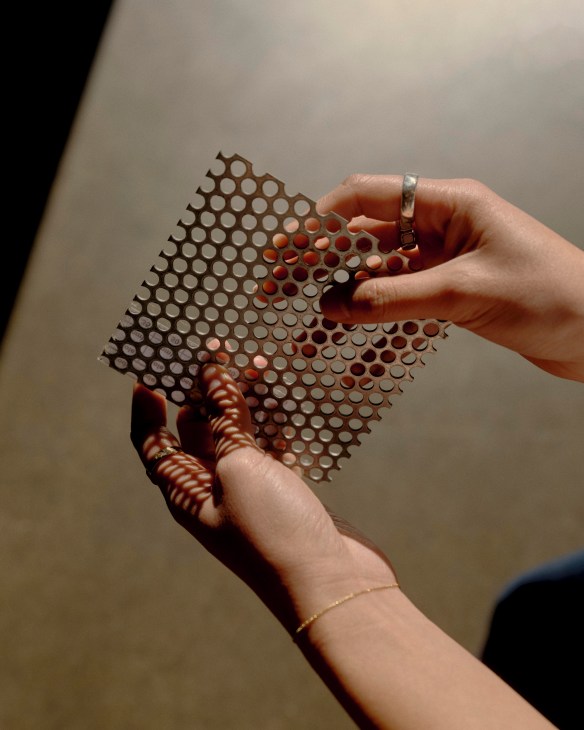
The designer explains that to create such a space, his team – regardless of who the client might be – works to build physical spaces that are neutral in form, allowing the product to become the most important element. “If you can find a way of creating an environment that celebrates the product and the brand is immediately recognisable, then you have passed the blindfold test.”
However, the blindfold test is only worthwhile if the brand in question has a clear core idea. “The word ‘brief’ means short and precise. That’s why when you write a brief for a company, it should be brief,” says Landini.
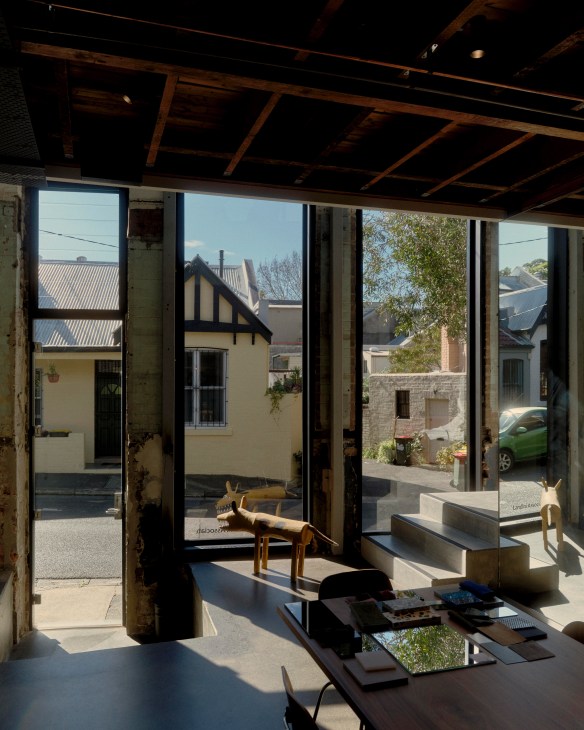
Three projects of note
“We don’t have a fixed list of client services,” says Landini. As a result, a job might encompass everything from identity evolution and graphic design to interiors, lighting, signage, packaging and uniforms, as well as the digital experience. What does unite the firm’s projects, however, is the approach taken: identifying a single driving idea, often distilled to a few words. Here we outline three Landini Associates projects to show how the company works across scale, industries and business requirements.
1.
Esselunga
Supermarket, Italy
Driving idea: ‘Dimmi’
(Italian for ‘tell me’)
“We had worked in Canada for 15 years with Loblaws supermarket, starting with Maple Leaf Gardens, and it introduced us to the Caprottis in Italy,” says Landini. The Caprotti family owns supermarket chain Esselunga, which began in the country’s north and now comprises 192 shops. It also has the highest turnover per square metre of any supermarket globally.
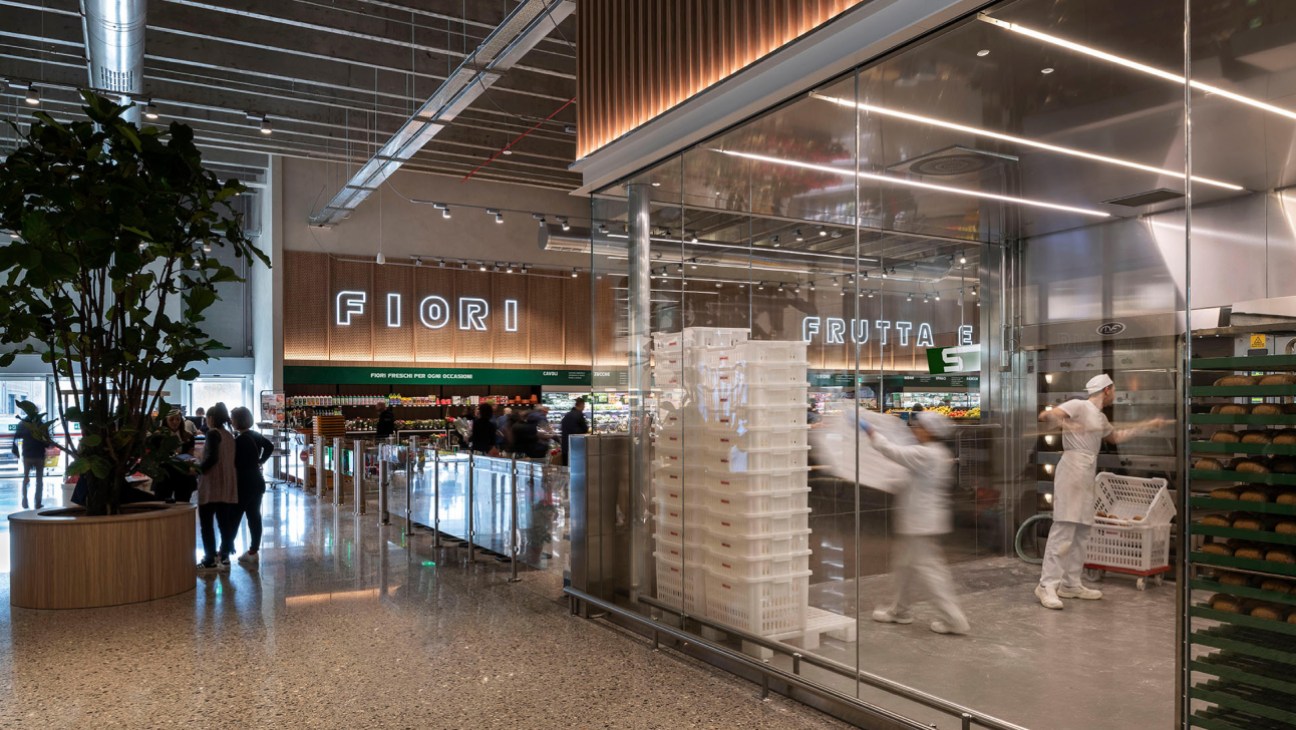
“It started with the notion of dimmi, which means ‘tell me’ in Italian,” says Landini, explaining that the driving idea for the project was to show the work that goes into Esselunga’s products. “We did this by putting the bakers, pasticceri, salumerie and chefs in a glass box at the front of the shop to expose customers to the wonders of what they do.”
2.
Jurlique
Cosmetics, Australia
Driving idea: Biodynamic Beauty
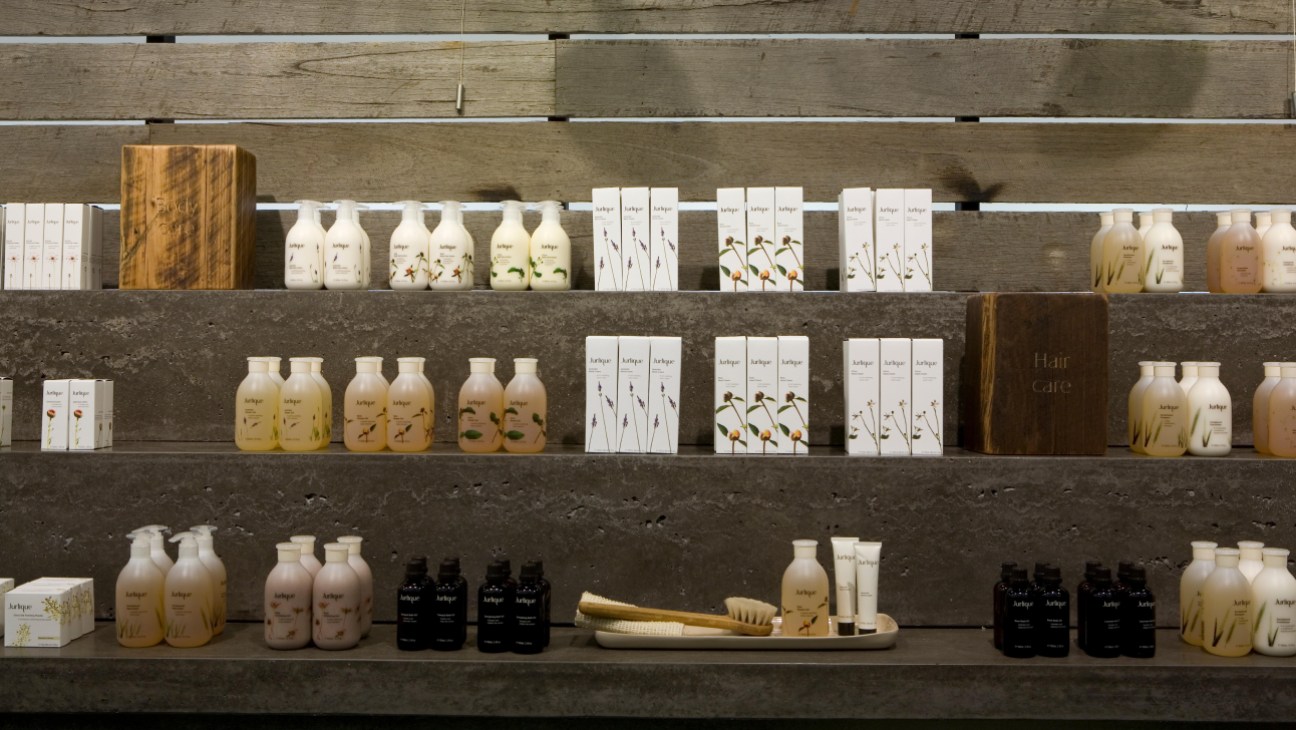
Landini Associates was commissioned by Australian biodynamic skincare company Jurlique to reinvigorate the brand. “We started by visiting its flower farm in South Australia,” says Landini. “It was obvious to me that if it wanted to make the brand big, it had to celebrate the smallness of it – to tell the story of the biodynamic farm.” The Landini team went on to create a logo, packaging and shop fit-outs inspired by the shed on the farm.
3.
McDonald’s
Fast food, USA
Driving idea: Make McDonald’s cool again
Landini Associates developed “Project Ray”, which has been rolled out over the past 10 years. The first shop to be overhauled as part of the initiative was the Admiralty Station outpost in Hong Kong. One of the busiest McDonald’s locations in the world, it serves an astonishing 1,200 customers per hour.

“The brief was basically to make McDonald’s cool for millennials,” says Landini, who made a point of developing uniforms that would be equally at home in a nightclub and on the production line. “We also changed the furniture and turned the lights down.”
Oaxaca Aerospace’s Mexican-built plane has beaten the odds and is ready for takeoff
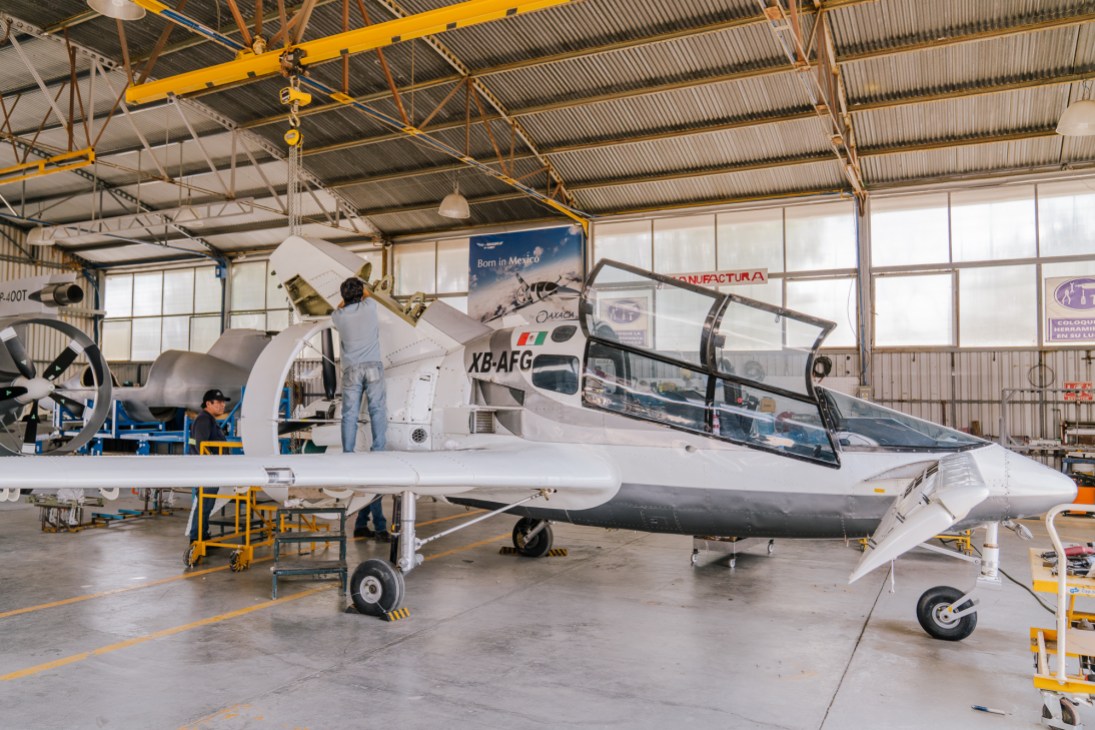
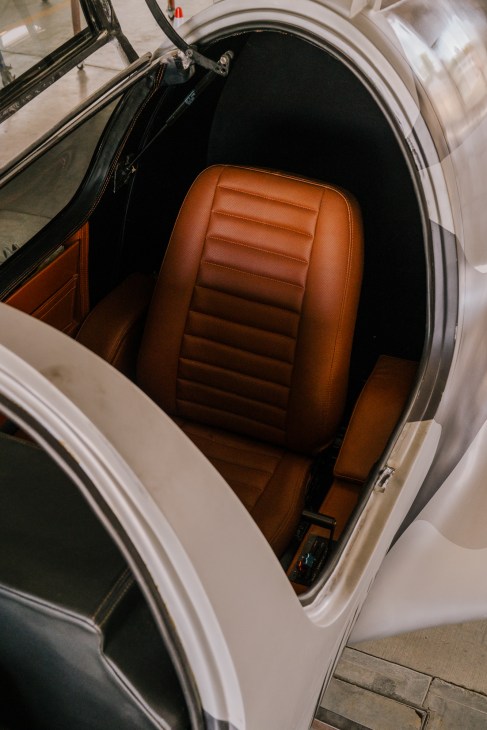
Based between the Mexican capital and Oaxaca City, the Fernández clan – best known for transportation business Traylfer – is developing and building a “Made in Mexico” aircraft in a country not well known for its plane-making prowess. The family’s Oaxaca Aerospace has built a series of prototypes for its diminutive Pegasus jet, with its distinctive “canard” formation (small wings at the front) and large ducted propeller at the back. The impressive PE-210A was followed by this year’s P-400T, unveiled at the Famex aerospace fair in Mexico City.

Rodrigo Fernández is the family business’s second-generation leader. The general manager says that Oaxaca Aerospace, which foresees military and civilian applications for its planes, is now ready for takeoff. The next step is to conduct further flight testing, with the goal of eventually converting the family factory that lies about a 20-minute drive from Oaxaca City into a production line for a full-fledged international plane developer.
How did Oaxaca Aerospace come about?
We’re a family business and my father is its president. For many years we specialised in fabricating trailers for transporting cargo. We have been making them for 40 years. My father has always loved aviation and has been up in those small, stripped-back Cessna planes that don’t have much technology. At some point, he wondered, “Why can’t we make a plane like this in Mexico?” and decided to do it. He began gathering together engineers and then we made our first drawings – that was in 2011. We had our first prototype by 2015 and began testing.
Was it difficult to develop and build an aeroplane in Mexico?
Yes, because there isn’t much of an industry here when it comes to making aircraft. Mexico has focused on the maintenance and manufacturing of parts, rather than on the design side. So it has been hard to find experts in aeronautics. We had to look overseas to universities and to retired people to help us keep the project moving forward. We do our wind-tunnel testing in Madrid, for example.

Have you identified a market for the Pegasus?
Our market is principally made up of emerging countries. We’re not about to take on advanced countries that have aircraft that are much more complex and sophisticated. Our proposal is more about military observation and safety missions, pilot training and things like these. There are a lot of countries in Latin America, as well as in Asia and elsewhere, that require this type of aircraft for these types of missions. If we can build a plane that has a low cost for maintenance and operation, it will be very attractive.
How far are you planning to go?
The dream is to eventually sell our planes across the globe and for the company to grow. We would also like to sell executive planes, such as a seven-seater.
aeronavespegasus.com
Steps to success
1. Believe in what you do: Passion can take you a long way. In this case, a family’s love of aviation trumped the lack of an established industry.
2. Find the right people: Don’t be afraid to look abroad. Gather experts around you wherever they are in the world.
3. Know your market: Oaxaca Aerospace knows that its offering can’t compete with advanced jets so it is creating its own niche.
Read more from Monocle’s 2025 Mexico Survey:
- Inside Mexico’s creative gold rush: four high-growth industries to watch
- Three game-changing developments about to transform Mexico City
- Entrepreneurs to watch: the forward-thinkers making new paths in Mexican industries
- Eight ideas for Mexican businesses that are ripe for the taking
- Meet the self-starters behind the clever hospitality boom in Oaxaca City
- The entrepreneurial trailblazers revitalising Guadalajara’s art scene
Bringing industry back: Werkstadt Zürich’s model for city-centre manufacturing
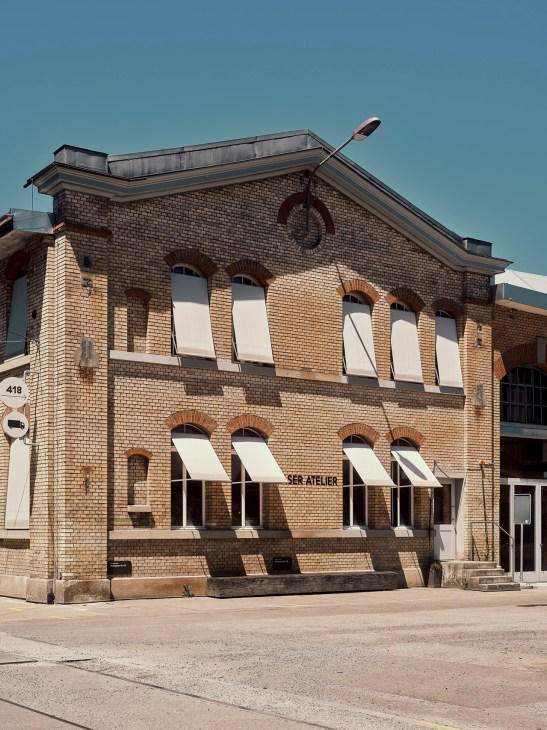
At the edge of Zürich’s historic Altstetten neighbourhood, in an area adjacent to one of Europe’s busiest rail hubs, industry is in full bloom. Monocle is inside a cavernous brick building for a “Factory Friday” open-house event on the Schweizer Bundesbahn (SBB) Werkstadt Zürich campus. The reinvention of this former SBB maintenance hall, known as Halle Q, is the first step in a wider transformation of the former railway-operations area into a thriving urban factory that offers space for businesses of various kinds to operate right in the city centre, rather than being banished to the outskirts.

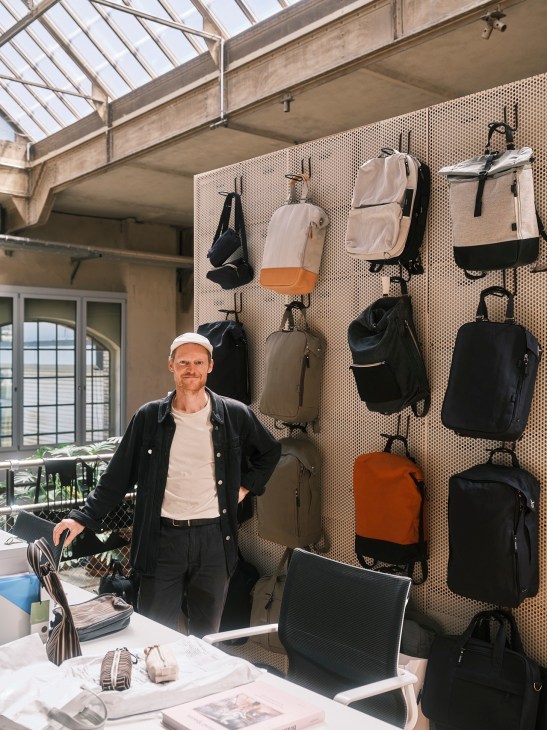
“Assembly and manufacturing can work in an urban setting,” says Christian Kaegi, whose company, Qwstion, uses banana-plant fibres to create its bags. When Werkstadt Zürich opened in 2024, Qwstion was one of its first tenants. On the last Friday of every month, members of the public are invited for a behind-the-scenes look at the design, manufacturing and repair facilities of 10 businesses. About a third of Werkstadt Zürich’s tenants now participate in Factory Friday, helping to show how things are made.
“Today there is a disconnect between the products that people consume, how they are made and what they are made from,” says Kaegi, who now runs the open-house initiative to make production more transparent to those outside the industries.
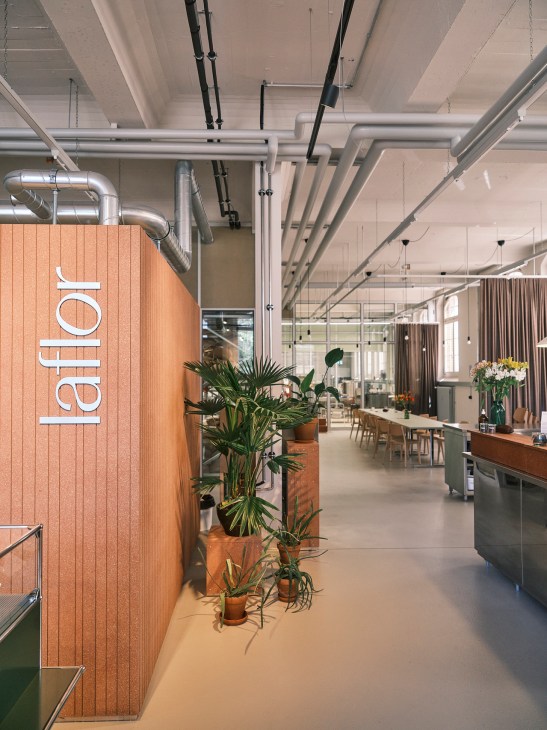
As well as Qwstion’s facilities, Werkstadt Zürich is home to natural cosmetics label Soeder, gin distillery Deux Frères and young chocolatier Laflor. Each of these companies was born and bred in Switzerland’s largest city. The development is a result of a federal mandate for SBB to generate returns from its substantial property portfolio and a policy strategy by local politicians to preserve zones for urban production in the centre of Zürich, rather than allowing it to be dominated solely by white-collar offices and housing, says Ben Pohl, an urban designer from Denkstatt Sàrl.
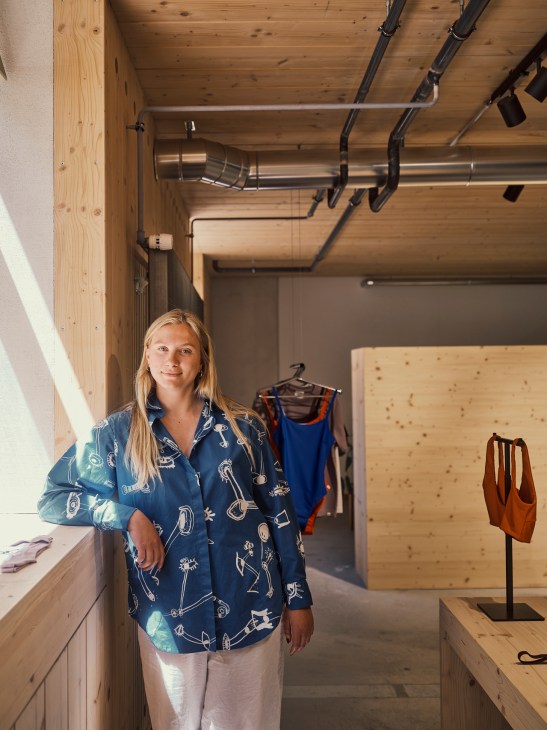
In 2016, Denkstatt Sàrl – now also a tenant at Werkstadt Zürich – and fellow Zürich-based urban designers kcap were commissioned to define and then design the project,” says Pohl. “One of the main reasons for their failure is a lack of a proper place to scale.” That’s why Werkstadt Zürich’s spaces range from modest 100 sq m rooms to 3,000 sq m units with eight-metre-high ceilings, giving tenants plenty of room to grow.
They held a series of workshops with nascent and would-be urban manufacturers who helped to inform the design. The idea was to build a learning ecosystem that would support planners, the owner and tenants as part of a thriving whole.
“It is a community for creation,” says Andreas Fehr, co-founder of apparel company Neumühle, another business that has joined the hub. Though factories disappeared from most European city centres decades ago, Werkstadt Zürich is encouraging entrepreneurs to base themselves in the heart of Zürich once again.
Flow Hive is the beekeeping startup that simplified honey harvesting and scaled globally
Third-generation beekeeper Cedar Anderson was frustrated by the labour-intensive process of extracting honey from his hives. So, in 2015, he and his father set about developing a device that could make apiculture easier and accessible to more people. Ten years on, the Andersons are reinventing the industry with Flow Hive, a mechanism that allows honey to be withdrawn with ease.

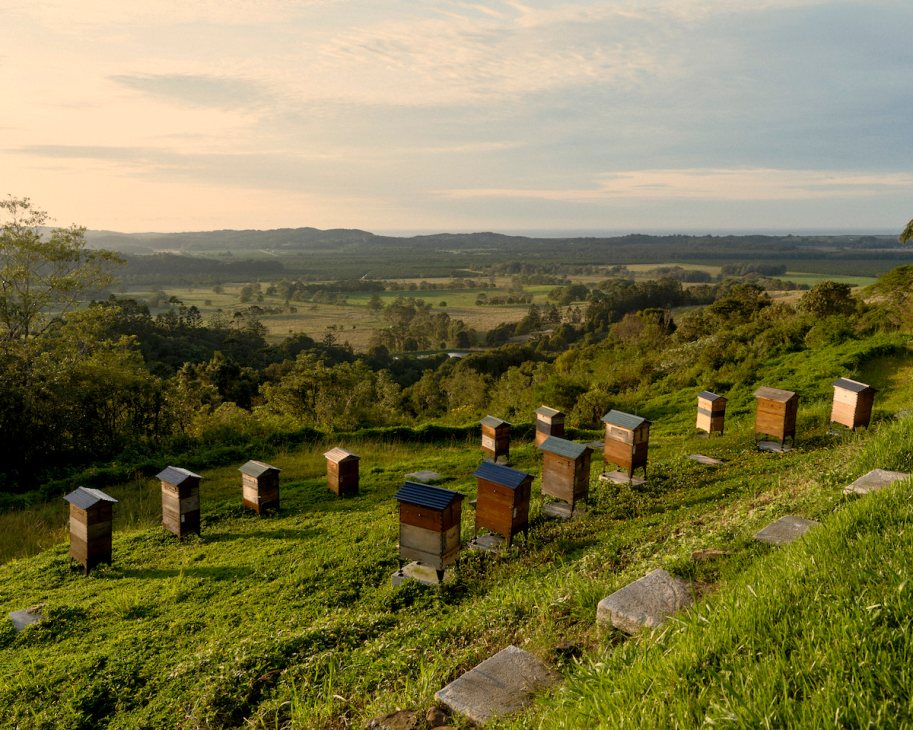
At the heart of the product is a series of rectangular plastic frames, which bees fill with wax and store honey inside, just as they would a honeycomb. To collect its contents, the beekeeper inserts a “flow key” into the top of the hive and turns it, causing the honeycomb cells inside to break. Golden honey then flows through sealed channels inside the frame and out through tubes into collection jars. Unlike conventional apiaries, which require complex equipment to extract honey from hives, the Andersons’ solution requires minimal fuss.
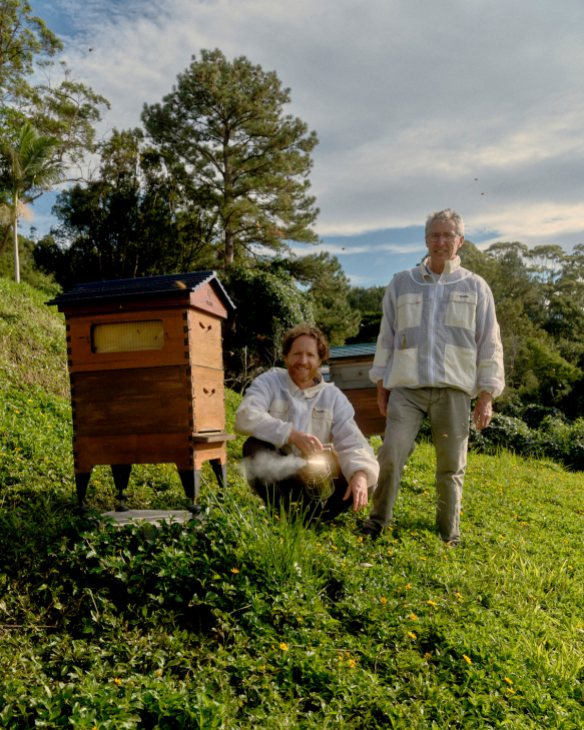
While the contraption was originally aimed at the commercial honey-making industry (it is capable of holding as much as 20kg), the Andersons soon realised that the streamlined process that Flow Hive offers would appeal to urban beekeepers too.
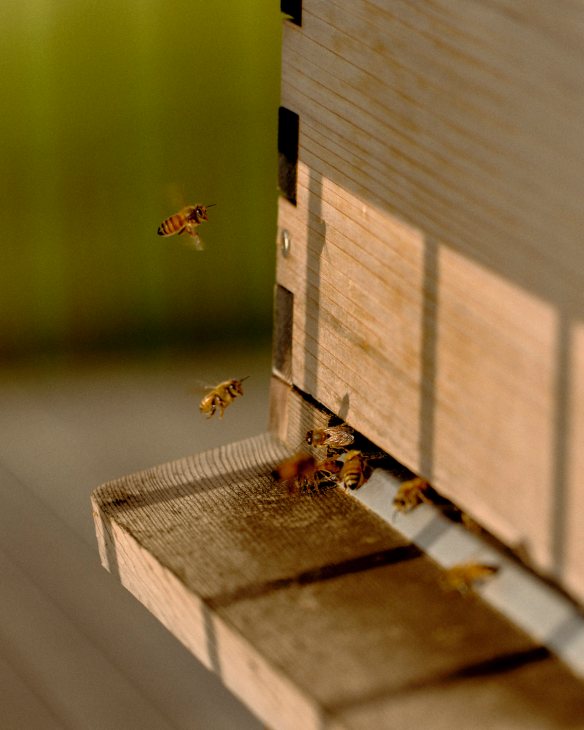
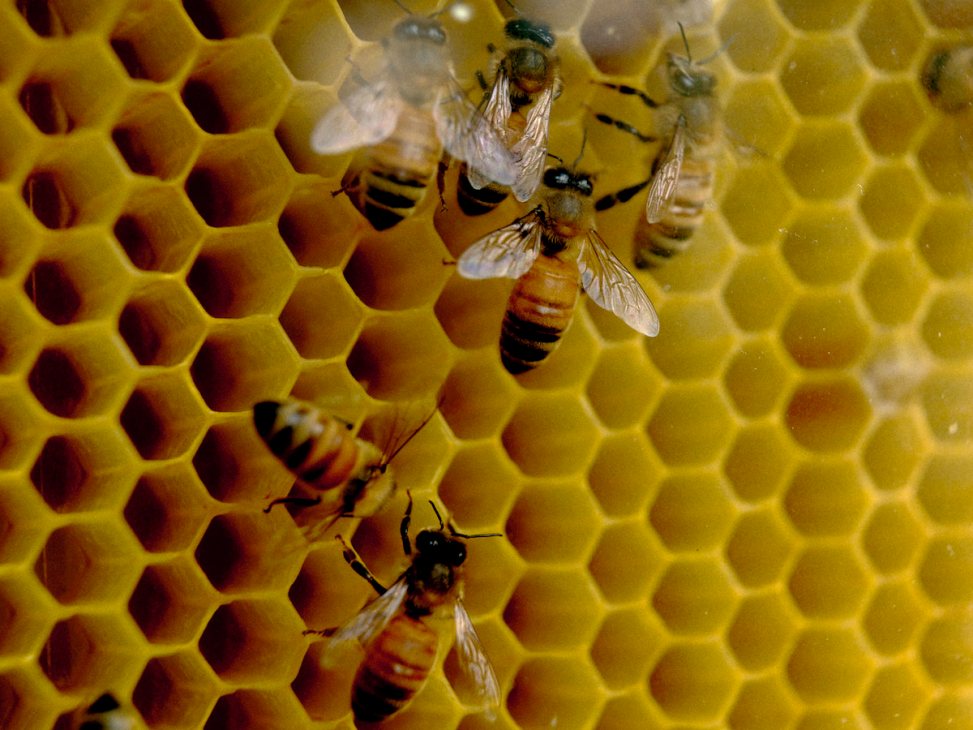
From humble beginnings in a tin shed, Flow Hive has built a global business with thoughtful design and environmental awareness. More than 100,000 Flow Hives have been installed in 130 countries, turning rooftops, balconies and suburban gardens into havens for pollinators. What began as a father-son side project now employs more than 50 staff, with its headquarters still nestled among the gum trees of their farm. Its manufacturing process has scaled efficiently, combining traditional joinery with streamlined digital production of honeycomb frames, allowing the business to meet surging demand.
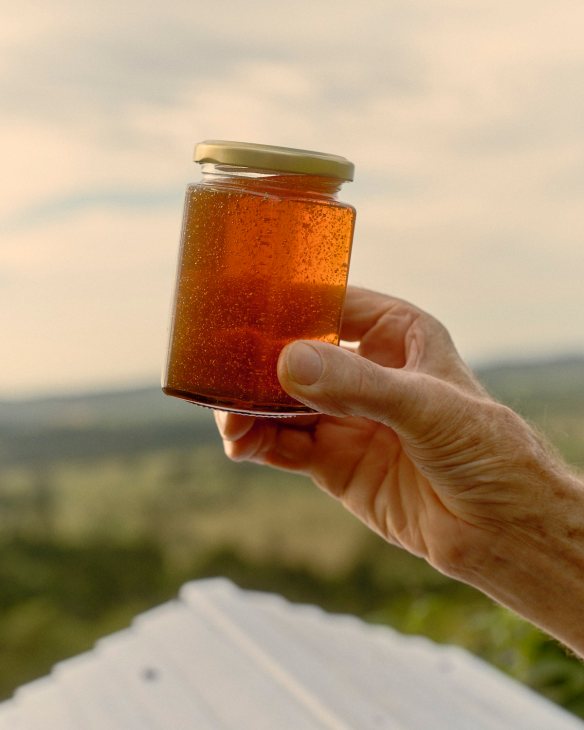
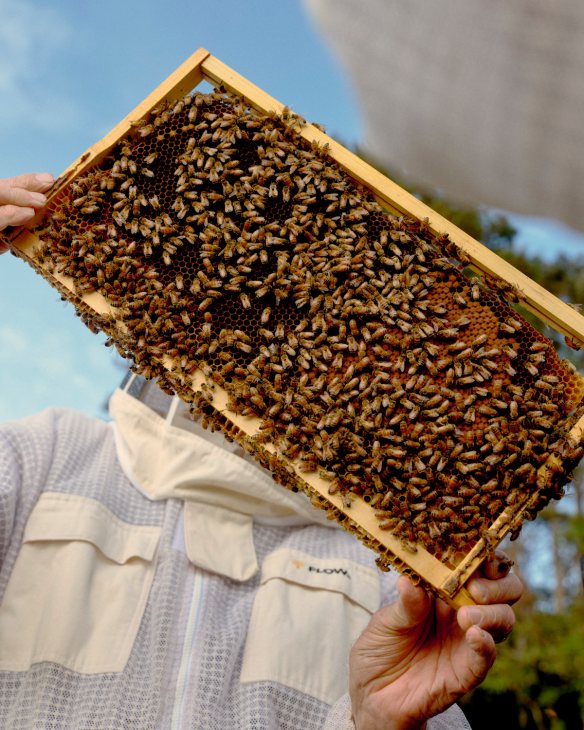
The firm has also expanded its range to include pollinator-friendly gardening products, embedding itself within the climate-conscious home-and-garden movement. In redefining how we harvest honey, it has also reframed what it means to be a modern manufacturer: local, thoughtful and purpose-driven. Business is busier than ever.